FEATURE: A Buyer’s Guide: Part Forty: Dusty Springfield

FEATURE:


A Buyer’s Guide

Part Forty: Dusty Springfield

___________

FOR the fortieth part of A Buyer’s Guide…

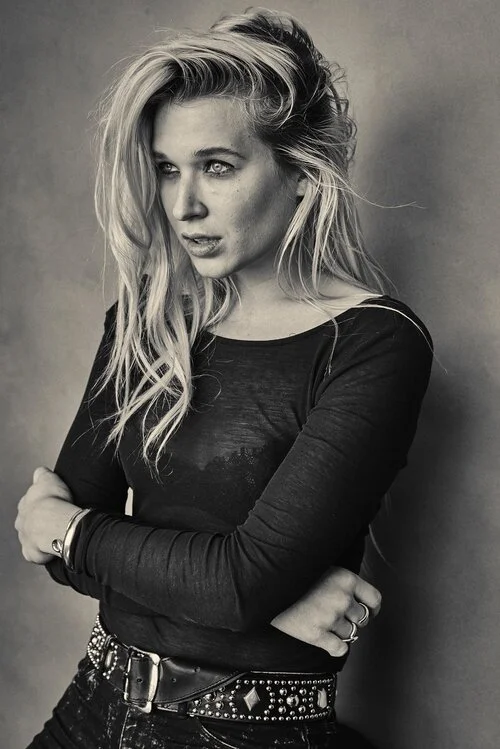
 PHOTO CREDIT: Vivienne

I wanted to select the work of one of Britain’s greatest artists. Dusty Springfield is a true legend, and, through her career, she released some utterly amazing and engrossing music. If you need a bit of information about her first, this Wikipedia article will guide you:

Mary Isobel Catherine Bernadette O'Brien OBE (16 April 1939 – 2 March 1999), professionally known as Dusty Springfield, was an English pop singer and record producer whose career extended from the late 1950s to the 1990s. With her distinctive mezzo-soprano sound, she was an important singer of blue-eyed soul and at her peak was one of the most successful British female performers, with six top 20 singles on the US Billboard Hot 100 and sixteen on the UK Singles Chart from 1963 to 1989. She is a member of the Rock and Roll Hall of Fame and UK Music Hall of Fame. International polls have named Springfield among the best female rock artists of all time. Her image, supported by a peroxide blonde bouffant hairstyle, evening gowns, and heavy make-up, as well as her flamboyant performances, made her an icon of the Swinging Sixties.

Born in West Hampstead in London to a family that enjoyed music, Springfield learned to sing at home. In 1958 she joined her first professional group, The Lana Sisters, and two years later formed a pop-folk vocal trio, The Springfields, with her brother Tom Springfield, and Tim Feild. They became the UK's top selling act. Her solo career began in 1963 with the upbeat pop hit "I Only Want to Be with You". Among the hits that followed were "Wishin' and Hopin' " (1964), "I Just Don't Know What to Do with Myself" (1964), "You Don't Have to Say You Love Me" (1966), and "Son of a Preacher Man" (1968)”.

To nod to a phenomenal artist, I have selected her four albums that are a must-hear/buy, in addition to one that is a bit underrated. I also take a look at her final-released album, and I recommend a Dusty Springfield book that makes for useful reading. Here are the essential works of…

A music icon.

___________

The Four Essential Albums


Ev'rything's Coming Up Dusty

Release Date: 8th October, 1965

Label: Philips

Producer: Johnny Franz  

Standout Tracks: Won’t Be Long/Oh No !Not My Baby/I Can’t Hear You

Buy: https://www.discogs.com/sell/release/2035368?ev=rb

Stream: https://open.spotify.com/album/2Hba8F0toyYAF7pn4yOXu8?si=iQvkvAU0R62c00_U3Ey9aQ

Review:

Dusty Springfield's second British LP was roughly equivalent to the American You Don't Have to Say You Love Me album, which appeared ten months later in the United States and had the title hit and one other song ("Little by Little") added, and three of the U.K. edition's songs stripped off. The British version also appeared as a gatefold, filled with a series of beautiful photographs and extensive notes. More to the point, this second album presented a more mature Dusty Springfield, doing songs by Leslie Bricusse and Anthony Newley, Randy Newman and co., although all of the material here -- even "Who Can I Turn To," from the musical The Roar of the Greasepaint -- still has a soulful edge. Moreover, she scales new heights of passion on Rod Argent's "If It Don't Work Out" and the ethereal "That's How Heartaches Are Made," and seems close to bursting her lungs on Gerry Goffin and Carole King's "I Can't Hear You." A little more than half of this album -- mostly the up-tempo numbers -- was recorded with her on-stage backing group the Echoes, and they have a nice, lean band sound that was also a departure from the lushly orchestrated, outsized production of her early singles sides. The whole record comes off as perhaps the greatest Motown album that was never made by Motown, and has a pleasing unity in its British form that the U.S. version lacks. Ev'rything's Coming Up Dusty has been reissued twice on CD, first in 1990 from BGO Records and again, in 1998, from Philips Records in England, augmented with eight bonus tracks, all songs that she recorded in September of 1964 with producer Shelby Singleton and arranger Ray Stevens, most of which turned up in America on the Ooooooweeee! album, but three of which were unreleased in England until the issue of the Philips CD" - AllMusic

Choice Cut: Doodlin'

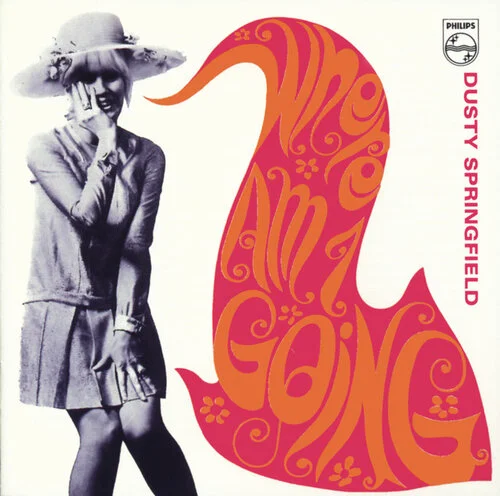
Where Am I Going?
Release Date: 27th October, 1967

Label: Philips

Producers: Johnny Franz/Dusty Springfield (on Chained to a Memory)

Standout Tracks: Don't Let Me Lose This Dream/Chained to a Memory/If You Go Away

Buy: https://www.discogs.com/sell/list?master_id=170792&ev=mb

Stream: https://open.spotify.com/album/4jdPgMWBBKtiQi7uEqfSW1?si=9dX9g0a5S8-M4QTnejpXHA

Review:

Where Am I Going? is a phenomenal album by Dusty Springfield, and though it doesn't have any American chart hits made famous by the icon, it would have been a blessing had every single performance here conquered the Top 40. The LP cover is great -- a black-and-white photo of a smiling Springfield with wide-brimmed hat, mini skirt, and a comic book quotation in psychedelic off-pink and orange asking Where Am I Going? The music inside, with strings and orchestration, is a relentless delight. The Pat Williams arrangement of Bobby Hebb's "Sunny" with conductor Peter Knight reveals a touch of the James Bond riff, a definite sign of the times. One can hear the wondrous voices of Madeline Bell and Lesley Duncan, the backing vocals blending perfectly with the orchestration in songs like "I Can't Wait Until I See My Baby's Face" and "Don't Let Me Lose This Dream." "Where Am I Going?" is as perfectly surreal as its title suggests -- imagine Julie Andrews in The Sound of Music twirling around in the windmills of Springfield's mind. This is not the driving pop of "I Only Want to Be with You" or "Wishin' & Hopin'," this is symphonic adult contemporary. "They Long to Be Close to You" is the serious and dramatic blues that the Carpenters aspired to develop. "Welcome Home" is out-of-this world rhythm & blues told with authority. It and other tracks from Where Am I Going? puts Springfield in that elite class reserved for the best of Janis Joplin, Etta James, and Ella Fitzgerald -- female vocalists who found notes in niches of songs that were unavailable to lesser mortals. While Springfield was filling the airwaves in America with "The Son of a Preacher Man" toward the end of 1968, a band called Vanilla Fudge had "Take Me for a Little While" on the U.S. charts, but their disc was issued in July of 1967 and their success in the States was a delayed reaction. Dusty Springfield takes that great composition and turns it into snappy pop with an amazing vocal. Add "If You Go Away" and the musicians on these grooves take the listener on a wild ride running the gamut of genres without disrupting Where Am I Going?'s flow. This is a tremendous and often forgotten masterpiece in the repertoire of Dusty Springfield which deserves more attention. It truly is the record which keeps on giving” – AllMusic

Choice Cut: (They Long to Be) Close to You

Dusty in Memphis

Release Date: 18th January, 1969

Labels: Atlantic (U.S.)/Philips (Worldwide)

Producers: Jerry Wexler/Arif Mardin/Tom Dowd

Standout Tracks: Just a Little Lovin’/Breakfast in Bed/The Windmills of Your Mind

Buy: https://www.discogs.com/sell/list?master_id=74378&ev=mb

Stream: https://open.spotify.com/album/5FRB5oQaHxlDNe6gMGuzu2?si=34lpFanfQquzwLqsgJi5Bg

Review:

Despite its status as a classic record, Dusty in Memphis had less than auspicious beginnings. By 1968 La Springfield had scored a string of chart successes with what she called 'big ballady things' and her decision to make an album in Memphis, home of hard edged R 'n' B grooves, was viewed with puzzlement by many.

Teaming up with the crack production/arrangement team of Jerry Wexler, Tom Dowd and Arif Mardin (responsible for Aretha Franklin's Atlantic classics) also proved a bit much initially for Springfield, whose confidence in her vocal abilities was never very high. Worried that the session musicians would think she was a sham and unnerved by singing in the same vocal booth as used by Wilson Pickett, Dusty's relationship with her producers became strained, with Wexler claiming he never got a note out of her during the initial sessions in Memphis.

You'd never know this from the recorded evidence though. Springfield unsurprisingly resists any temptation to do an Aretha, instead relying on understatement, timing and delivery rather than vocal firepower. The songs (all by Brill building denizens) are all top notch, and Springfield's interpretation of them is peerless, almost to the point that it's tempting to slap a preservation order on them to stop any attempts at future covers from the likes of Sharleen Spiteri. Likewise Mardin's sensitive blend of Bacharach poise and Memphis funk provides the perfect frame for Dusty's blue eyed soul.

'Son of A Preacher Man' and 'Breakfast in Bed' hum with a potent mix of vulnerability and knowing desire; though both songs are pretty much ingrained in the psyche of anyone of a certain age, they still retain a hefty emotional charge. On the other hand, Randy Newman's 'I Don't Want to Hear It Anymore' and 'I Can't Make It Alone' must rank amongst the finest ballad performances you're likely to hear, and Springfield even makes the cod psychedelic inanities of Michel Legrand's 'The Windmills of Your Mind" seem almost meaningful.

The cover boasts a sticker proclaiming that this record made it into Rolling Stone's Coolest records of All Time Top 10. Don't let that put you off; if you have ears, you need this album..” – BBC

Choice Cut: Son of a Preacher Man

Cameo

Release Date: February 1973 (U.S.)/May 1973 (U.K.)

Label: ABC Dunhill Records

Producers: Steve Barri/Brian Potter/Dennis Lambert

Standout Tracks: Who Gets Your Love/I Just Wanna Be There/Learn to Say Goodbye

Buy: https://www.discogs.com/sell/list?master_id=256973&ev=mb

Stream: https://open.spotify.com/album/42QGez2quv3TGMUKbFJU3d?si=q8SmCWk-TyGgdlQlI8M1PQ  

Review:

When Dusty Springfield takes on "Easy Evil" by frivolous songwriter Alan O'Day -- the man who wrote "Rock & Roll Heaven" and sang "Undercover Angel" -- you understand she can do no wrong here. The production and the performance is top notch. "Mama's Little Girl" sounds like it inspired Gamble & Huff's Elton John hit "Mama Can't Buy You Love," which came six years after this, the brilliance of Gamble and Huff clearly influencing Steve Barri and company. The choice of material is wonderful; David Gates' "The Other Side of Life" shows how a song of his can blossom outside of the confines of his hit group, Bread. All 12 titles are sublime pop, some of the best Lambert and Potter you'll find anywhere. What a hook they wrote for this artist with "Comin' and Goin'," and what heart! It moves and grooves like one of those album tracks you wish was beat into your head on a daily basis by Top 40 radio. Ashford & Simpson can be very proud of "I Just Wanna Be There"; Springfield just claims the tune as her own, with horns and backing vocals creating the wave for her magical voice to ride. Audiences can get caught up in the hit records of an artist, and often they fail to seek out the material they never got familiar with. Universal's Hip-O label has re-released Cameo under the new title Beautiful Soul with additional tracks. It hopefully will get people to hear Dusty Springfield take Willie Hutchison's "Who Could Be Loving You Other Than Me" to another realm. Just a wonderful, wonderful record” – AllMusic

Choice Cut: Mama’s Little Girl

The Underrated Gem


White Heat

Release Date: December 1982

Label: Casablanca

Producers: Howard Steele/Dusty Springfield

Standout Tracks: I Don't Think We Could Ever Be Friends/I Am Curious/Losing You (Just a Memory)

Buy: https://www.discogs.com/sell/list?master_id=356921&ev=mb

Stream: https://open.spotify.com/album/0crnMQvNEVdezBBlvKSGgq?si=PPVU1c4KQdCdk-zlVkU1Xg

Choice Cut: Don’t Call It Love

The Final Album


Faithful (Recorded in 1971)

Release Date: 7th April, 2015 (U.S.)/13th April, 2015 (U.K.)

Label: Real Gone Music (recorded for Atlantic Records)

Producer: Jeff Barry

Standout Tracks: I'll Be Faithful/Live Here with You/You’ve Got a Friend

Buy: https://www.discogs.com/sell/list?master_id=1038705&ev=mb

Review:

Unlike Dusty in Memphis and A Brand New Me, Faithful was neither recorded in a major hotbed of soul music, nor produced by a crew with serious soul bona fides. (Barry was just coming off a stint writing for cartoon bubblegummers the Archies, while songwriter Bloom had scored a hit of his own in 1970 with the calypso-flavored “Montego Bay.”) Nevertheless, the songs and instrumentation on the album are simpatico with Springfield’s loose yet controlled style, and are varied enough to show all her faces.  On the one hand are the great belters, like angsty dancefloor filler “Haunted” and tough-as-nails “Natchez Trace,” which proves Dusty could turn on hard rock vocals as naturally as Janis Joplin or Ann Wilson.

The best song on the album, however, is the blue-burning groove of “I Believe in You.” Springfield starts the song with seemingly off-hand phrasing, backed with a few stray piano, bass, and organ notes. The arrangement gradually begins to ground itself and swell in size, throwing in backing vocals, drums, and rumbling horns, but never loses its fragile grandeur. Album closer “I Found My Way Through the Darkness” shares a similar quality, its superficial looseness and busyness enrobing a deceptively tight construction. Together, the pair of tracks recalls the low-key epics and dirt-floor mysticism of Van Morrison’s Tupelo Honey or the Band’s Music from Big Pink, transcending the mere terrificness of the rest of the album to become something almost holy” – Rebeat Mag

Choice Cut: Make It with You

The Dusty Springfield Book


Dancing with Demons: The Authorised Biography of Dusty Springfield

Authors: Penny Valentine/Vicki Wickham

Publication Date: 5th April, 2001

Publisher: Hodder Paperbacks

Synopsis:

Dusty Springfield led a tragic yet inspiring life, battling her way to the top of the charts and into the hearts of music fans world-wide. Her signature voice made songs such as, "I Only Want to Be With You," "Son of A Preacher Man," and "You Don't Have to Say You Love Me," international hits. In Dancing With Demons, two of her closest friends, Valentine and Wickham, capture, with vivid memories and personal anecdotes, a Dusty most people never glimpsed in this no-holds-barred yet touching portrait of one of the world's true grand dames of popular music” – goodreads.com

Order: https://www.amazon.co.uk/Dancing-Demons-Authorised-Biography-Springfield/dp/0340766743

FEATURE: Too Good to Be Forgotten: Songs That Are Much More Than a Guilty Pleasure: Avril Lavigne - Sk8er Boi

FEATURE:


Too Good to Be Forgotten: Songs That Are Much More Than a Guilty Pleasure

Avril Lavigne - Sk8er Boi

___________

I may have to bring in a bit of Wikipedia…

information, as I am not sure whether there are many articles specifically dedicated to Avril Lavigne’s 2002 hit, Sk8er Boi. The Pop-Punk gem was popular when it was released and reached number-eight here in the U.K. I was at university when the song came out and, having not heard of Lavigne before, I was intrigued. I feel the first few years of the twenty-first century saw a transformation in terms of Pop music. Some were quite harsh on Lavigne as they saw her as a bit lightweight or cheesy but, to me, she managed to combine clever and memorable Pop hooks with some Punk attitude and teenage angst. Before I go on, here is some information and critical reception for Sk8er Boi:

Sk8er Boi" (pronounced "skater boy") is a song by Canadian singer-songwriter Avril Lavigne, released as the second single from her debut album, Let Go (2002). It was written by Lavigne and The Matrix (Scott Spock, Lauren Christy, and Graham Edwards), and produced by The Matrix. The song is a power pop and pop punk track, which lyrically tells a story told from the singer's viewpoint about her rocker boyfriend and a girl he knew in high school who rejected him because he was a skateboarder and she was a snob.

The song was well-received by critics, with most commending its hook, calling the song "funny" and "clever". It also received a Grammy nomination for Best Female Rock Vocal Performance at the 2003 edition. Commercially, "Sk8er Boi" was a success, reaching the top-ten in more than ten countries, such as Australia, New Zealand, the United Kingdom and the United States (becoming Lavigne's second top ten single on the Billboard Hot 100 chart) and sold over 1.8 million copies worldwide. According to Spin, "Sk8er Boi" has the 5th best pop-punk chorus of the 21st century.

"Sk8er Boi" received critical acclaim for its production. In a review for the album Let Go, Christina Saraceno of Allmusic called "Sk8er Boi" a "terrific power pop bounce", highlighting the song as a "track pick". Brendan Schroer of Sputnikmusic praised the track, writing that Lavigne "brings another injection of infectious vocal work, peppy but not overbearing." Nick Reynolds of BBC Music called it "brilliant", considering the song "a classic high energy pop song with crunchy guitars and a great hook." He also praised its tale, calling it "as slick and clever as an episode of Buffy. It bowls you over with its energy and sticks in your mind."[14] Pat Blashill of Rolling Stone agreed, calling it "seventeen-year-old Lavigne's signature moment," further adding: "Over a rush of nouveau-punk guitar chords, she narrates a funny story line, but none of it would matter if Lavigne didn't have a voice, equal parts baby girl and husky siren, that seems capable of setting off car alarms several city blocks away”. Christina Saraceno of Allmusic wrote of Lavigne that in "Sk8er Boi" "she shows her lyrical shortcomings".

I think 2002’s Let Go is an album that deserves some new focus. It gained some mixed reviews when it was released and, nearly twenty years later, I think that it sounds pretty solid and impressive! I reckon the album suffers a bit because a few of its best and biggest songs are right near the top – Complicated, Sk8er Boi, and I’m with You are in the opening third. That said, there are some great tracks throughout the album - and I respect and really like the fact Lavigne co-wrote the tracks and puts her own stamp on things.

At the time, bands like Green Day and Blink-182 were bringing out these Pop/Post-Punk albums that were getting more critical respect. There is naivety and some lyrical shortfalls on Let Go but, in my view, there is a lot of fun, humour and emotion. Lavigne does wear her heart on her sleeve on some songs and, whilst some might criticise some weaker lyrics, I think that the songs are very honest and human. I feel Sk8er Boi is a song that came in for a lot of criticism because of its throwaway and slightly silly nature. Many see the song as a guilty pleasure or one of the less-than-impressive cuts from the Pop-Punk movement of the time. I know that a lot of people are listening to Avril Lavigne’s Let Go now and maybe seeing things that people didn’t back in 2002. One can definitely hear modern artists that are inspired by her sound. The Canadian songwriter’s most-recent album, Head Above Water, was released in 2019 and, whilst not her best work, is worth listening to. I am glad she is still making music. My personal favourite album from hers is the debut and, with a song like Sk8er Boi on it, one definitely need to have a listen and a deeper dive! This is what Pitchfork wrote about the song when they reviewed the Let It Go album in 2018:

Second single “Sk8er Boi” is Lavigne at her most pugnacious, snarling the chorus in tight harmony with herself over power chords that sound like they’ve been popped in the microwave until sizzling. It’s also the album’s most developed example of storytelling, though that isn’t saying much: A high school beauty queen can’t appreciate her local diamond in the rough, and she’s left to watch him rock out on MTV with a triumphant Lavigne by his side while she nurses her baby in suburban hell. It sounds like Taylor Swift’s “You Belong With Me” as if written by a normal teenager instead of a precocious musical cyborg”.

If you have turned your nose up at Avril Lavigne or slated songs like Sk8er Boi in the past then I would encourage people to take another listen and give it a shot. It is much more than a guilty pleasure. It is a great song that has plenty of punch and humour that means, the minute you start to play it, you will…

FIND yourself singing along.

FEATURE: Modern Heroines: Part Twenty-Nine: The Staves

FEATURE:


Modern Heroines

PHOTO CREDIT: Graham Tolbert 

Part Twenty-Nine: The Staves

___________

THIS is quite timely…

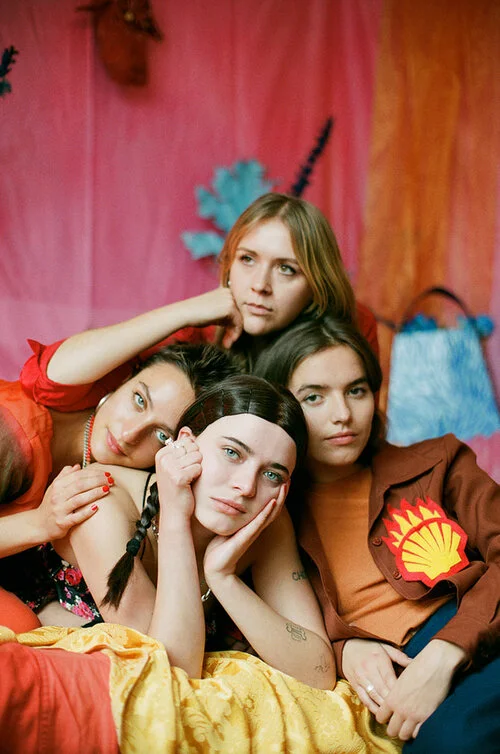
as The Staves are releasing their new album, Good Woman, on 5th February. You can pre-order it. I would encourage people to do so, as it is going to be a beautiful and extraordinary album! It is their first since 2017’s The Way Is Read (an album they released with the Indie/Classical Chamber sextet, yMusic) – I will bring in a review for that album very soon. If you do not know The Staves, then you can follow them on Twitter. They are one of the finest groups we have in Britain and, in my view, they are legends of the future. The Staves are an Indie-Folk trio consisting sisters Emily, Jessica and Camilla Staveley-Taylor. Hailing from Watford, I have been following them since they put out Dead & Born & Grown in 2012. Even though Good Woman is the trio’s first album in five years, they have been busy since then with touring and personal responsibilities. In January 2020, The Staves announced that Emily Staveley-Taylor would not take part in touring following the birth of her daughter. I think that is one reason why there has been a slight delay/hiatus. Good Woman is produced by John Congleton. As you can see, the American producer-in-demand has worked with a host of artists and, judging by what we have heard from Good Woman, I think he has helped strengthen and heighten The Staves’ sound. I am going to bring in a couple of interviews before I finish up – and I’ll end with a career-spanning playlist at the very end -, but I want to quickly nod back to The Way Is Read, as it is an album I really love and feel everyone should dig out.

In their review, AllMusic had this to say:

The Way Is Read pairs indie folk singing sisters the Staves with indie/classical chamber sextet yMusic, a group that had already recorded with musicians like John Legend, Ben Folds, and Dirty Projectors prior to the project. A true collaborative effort, it brings together original songs by the Staves and reworked versions of yMusic compositions, and was co-produced by the Staves' Jessica Staveley-Taylor and yMusic violinist Rob Moose. The result is neither a folk album nor a classical one -- not that these acts ever fit squarely into either of those camps to begin with -- falling more into the realm of experimental chamber pop. It opens with an elegant a cappella harmony track ("Hopeless"), followed by a much more turbulent, mostly instrumental one ("Take Me Home"). The third track, "Trouble on My Mind," balances the two in an arrangement that draws focus to the vocal melody and harmonies while offering rich, energized accompaniment. It also holds some beautiful musical climaxes where sustained three-part vocal harmonies are lifted by arpeggiated strings. The rest of the record continues to rotate orchestrated songs with more abstract compositions that incorporate voice. The former impress in the same way that yMusic's 2015 album with Ben Folds, So There, did. There, they also seamlessly filled the spaces where a rock combo or folk group would traditionally be expected, making it their own and challenging genre boundaries without detracting from the songs. That trick speaks more to their musicality than restraint -- the parts and arrangements on both albums are far from simple. Here, that fact is more apparent on a song like "All My Life," with its butterfly-like whimsicality passing a lot of notes around the ensemble. It's easier to overlook on an atmospheric entry like "Courting Is a Pleasure," which employs shifting drones and ornamental solos under the Staves' vocals. The Way Is Read's sequencing, which mixes songs and connective tissue, sometimes within and across tracks, has the effect of an album-length work, if one with distinct tunes. Perhaps its biggest achievement is that it so often seems the work of a single group of nine”.

Before I bring things up to date, I want to source from an interview that was conducted to promote Dead & Born & Grow. It is interesting discovering about the musical upbringing of The Staves and how their music is perceived:

Now much is spoken of your voices, obviously, and how well they intertwine with each other, but I’ve had the album a while now and what I’ve been trying to do is pick apart your voices because I think it’s interesting that where you can, each of your voices has its own character. That’s something that you must recognise in yourselves, and how do you use that? Yeah, that’s a really strange one because when we sing together, they’re so similar, like when we’re recording I find it difficult to tell who’s singing what – like the other day, we were recording for this demo or something and I was like, ‘oh no, I’m singing the wrong note there’, so went back and re-recorded it and it still sounded wrong, then I was like, ‘oh, that’s not me!’ I was listening to it so convinced that it was, then I was like, ‘ah, Milly, you were wrong!’ So that’s really weird; when we do sing on our own, like you say, I do think we have really different voices. We tend to sit in the same place, like Milly and Jess tend to do the higher harmonies and I do the lowest - that’s where our ranges are at - but then when we swap that around, like on ‘Gone Tomorrow’ I sing the highest harmony, I dunno… it seems to bring a different quality to it, somehow.

We did try it with Milly singing the highest one and it just sounded different, I mean, neither one is better, but I think it’s really interesting to play around with that and play with where we wouldn’t naturally go to, to create something interesting. The vocal arrangements are something that we’re always working on, and we try not to go for the easiest, trying to push ourselves to do something interesting and I think the important thing is trying to ration the harmonies; you don’t want them to be overkill. You want those moments where they come together to be special, to highlight something particular, like a lyrical moment in the song, or… We try and just use them as instruments. I think when we started out, just doing covers, we’d break them down to either just a capella, or with very minimal guitar, so we’d have to sing the guitar section, or string section and we’ve always seen our voices as instruments. It’s just another kind of arrangement to go in with everything else.

I’m sure you girls have got a real back catalogue of covers that you’ve done over the years that your family say, ‘oh, do that one for us – - Yeah!

Are there old favourites that you like to revisit with the family? Oh yeah; our parents used to sing with some of their friends, and they used to sing ‘Helplessly Hoping’ by Crosby, Stills and Nash and we all sing that and the guitar comes out if we’re at home together. And Joni Mitchell, what did we sing of hers? ‘Carey’ and ‘Case of You’, ‘Big Yellow Taxi’ and all of that stuff; Dylan’s ‘Lay Lady Lay’ and oh, Neil Young’s ‘After the Gold Rush’, but the trio version that Emmylou Harris, Dolly Parton and Linda Ronstadt used to do, on the piano. Oh God, loads!

I bet it’s quite indulgent, singing those songs after you’ve been singing your own for some time – - It’s great, great fun, yeah.

 Now I do mean this in the nicest possible way: I’ve had trouble sleeping recently, and your album has become the album I put on to get myself into a sleep-like state, very quickly – - You phrased that very well, thank you!

I do mean it as a compliment though, I really do!! It’s a silencer, it silences the brain and draws you in to the narrative. Did you ever imagine the album being listened to in different environments, and was there a particular place that it would resonate best? Well, good question; I don’t know if I did think about that really but I suppose that everyone’s a music fan, and listens to music in different ways. Most music I listen to is through my headphones, quite a personal experience of music, but not always, obviously. I don’t know; I think it’s quite a driving album somehow, particularly songs like ‘Eagle Song’ and ‘In the Long Run’ remind me of being on the road and things like that. But quite a few people say they listen to it to kind of – I don’t know – relax them, and at first it’s like ‘Oh, our album sends you to sleep – fine!’ but then I think it’s really nice, there’s something very primal about being read to as a child, or lullabies, being sung to, is a deeply comforting experience and I think you can get that from an album. There are certain albums that I love, like getting ready for bed, that – I dunno, transport you somewhere, to a safe place and put you to rest from the cares of the day, so I am glad…!”.

I think that Good Woman is shaping up to be The Staves’ finest and most moving album. I will be interested to hear the rest of the tracks and see whether, whilst working with John Congleton, they have brought in any new sounds and production additions/layers. I want to bring in a great and deep interview from the BBC. They talked about the lead-up to The Staves recording Good Woman, in addition to how the album came together:

Late last year, The Staves carefully placed a microphone at one end of a barn, walked to the very far corner, and started recording.

The distance was necessary because the sisters - Emily, Camilla and Jessica - were planning to scream one line over and over, until their throats were raw: "I'm a good woman."

It's a lyric that gives the band's third album its title: A statement of confidence and defiance, after a turbulent couple of years that left the trio questioning themselves and their career.

Their lives were turned upside down in summer 2018, when they suddenly and unexpectedly lost their mother, Jean, a former teacher who had encouraged them to follow their dream of making music.

Her death came just two weeks after their grandmother died. Within a month, Camilla had broken up with her long-term boyfriend in Minneapolis, and found herself moving back to the UK.

"It was kind of like a double kick in the stomach," says the singer.

Devastated and grief-stricken, they took a "big break, and stepped away from everything", says middle sister Jessica - only for some people to say they were making a mistake.

"We were made to feel like we weren't good enough as a band," says Jessica. "Almost like we'd had our moment, and lost our sheen."

To break the creative impasse, The Staves abandoned their plans to self-produce the record and called in Grammy-winning studio veteran John Congleton.

While previous producers had focused on the sisters' spell-binding harmonies, Congleton - who has worked with Phoebe Bridgers, St Vincent and Angel Olsen - was more concerned with their state of mind.

"He said, 'You guys are in a really interesting place in your lives, and I think you've got something important to say - so I really want to help you figure out how to say it,'" recalls Emily.

"That really stopped me in my tracks because no-one's said that to us before. It gave us confidence and faith in the songs."

Across the album, song titles like Paralysed and Failure tell a story of doubt and depression and self-criticism. But the first single, Trying, carries the core message - of not giving up, even when it's a "struggle to be a good person".

"All we are trying to do is try - and we're all messing up along the way," says Jessica, "but hopefully we're learning, too."

The band were so enamoured with the song that they wanted it to be the title track. Their label had other ideas.

"They said 'trying' doesn't sell records," Emily recalls. "We were like, 'Nothing sells records, mate, just let us do what we want.'"

Eventually, they were dissuaded by the marketing team.

"They thought it might invite negative reviews," says Camilla, doing a perfect impression of a self-important rock critic: "The Staves were 'trying' to be good, but it didn't work”.

I want to finish up soon (I promise!), but I came across an interview transcript from when the group spoke with Jill Riley of The Current's Morning Show (from late last year). Not only do we learn about how The Staves are spending their time in lockdown…we get an insight into how their changing lives fed into Good Woman:

JILL: And so you were able to get some ideas together for a new record and stay in touch, but you know, a few years can go by and it's pretty incredible how fast things can change, or the amount of big life events can happen within that time period. You know, you talked about your sister Emily being a mother now. And what are some of the things that really, you know, changed for you ladies, but also maybe informed the new record?

JESSICA: Well, I think, I mean, if we're talking about the last three years, which it's kind of been since we started writing new songs for this album, and the fact that we had been in America and then in London. I mean, politically, there was a lot going on at the time.

CAMILLA: Both sides.

JESSICA: In the two places.

JILL: In both, yeah, right!

CAMILLA: Yeah. Yeah.

JESSICA: We don't even need to say what, but there's been lots happening, and so, I mean, like, that's been going on.

And I think, you know, obviously, in personal lives, there's been relationships. I mean, all the kind of stuff that happens in life, and I think that a big thing that has to be mentioned is that two years ago, we lost our mum very suddenly, and it's been the biggest thing for us to — I think we still haven't really wrapped our heads around it, when something like that happens. So that's kind of, it's kind of the main thing that has happened, but in a way, the record isn't really about that, because a lot of it was written before that happened, but of course, that's such a huge part of our life, and then, not long after we lost Mum, Emily found out she was pregnant. So it was like this kind of—

CAMILLA: All these things being thrown up.

JESSICA: Amazing new life, to bring into the family, and she's had a baby girl, and so I think there's these themes of womanhood that came up, and obviously, intrinsically, the fact that we are women. But themes of motherhood and sisterhood and womanhood just felt so present, and the song, "Good Woman," Camilla had started and had sent all the demos for, just kind of kept rising to the top of album titles, and it just felt like this has to be, this has to be the one. It feels like what it is to be a good woman and all those things. It just felt like it made the most sense for us.

CAMILLA: Yeah.

JILL: And for the time when we'll see you back on the road. I mean, not just you guys, but like, when we're able to see bands hit the road again, because, like you said, you know, the touring industry is on pause, and you know, to be able to also accept and kind of grieve that, that's there's just nothing you can do about it but wait. And I just wonder, while you haven't been able to tour, is there something that you've done to sort of fill the time? Or a new hobby? Or have you done something that you didn't think that you would ever do?

JESSICA: (to Camilla) Well, you've been quite creative, haven't you?

CAMILLA: OK, so I don't know how other musicians have done it, but when kind of proper lockdown happened over here, I was just very — maybe because we'd kind of been in album mode and had just finished an album, I just couldn't be inspired to make any music, so instead, I did literally anything but. So I knitted. I made a patchwork quilt. I made chutney. (laughs) I infused alcohol with various things. Yeah! I did origami.

JESSICA: You made loads of nice totebags. I started doing tie-dying.

CAMILLA: Yeah, tie-dying.

JESSICA: Lots of cooking. I watched lots of TV. A lot!

(laughter)

JESSICA: I think I watched the whole of "Dawson's Creek."

JILL: Oh, yes! (laughter)

JESSICA: I think I watched the whole of "One Tree Hill." I don't know why.

CAMILLA: You're a disgrace.

JESSICA: I think there was something about going back to like, nostalgic things that made you feel safe and cozy. I don't know if you have a similar thing. I don't know if it's kind of possible for everyone to have the freedom to do those things and to sit on their bottom all day and watch "Dawson's Creek." But, like, even the food I was eating, I felt I kind of regressed and wanted to eat things that we used to eat when we were kids, like cheese on toast, what we call it over here, but it was just, put some cheese on some toast, a "grilled cheese”.

I will wrap things here. I was keen to spotlight The Staves, not only because they are one of the best groups we have in the country, but because Good Woman is out very soon. They are an amazing force of nature and, when you hear interviews they have conducted, you cannot help but laugh and feel warmed by their wit and natural bond! I have no doubt in predicting that Watford’s The Staves will be…

ICONS of the future.

FEATURE: Music Technology Breakthroughs: Part Seven: The TASCAM Portastudio

FEATURE:


Music Technology Breakthroughs

xxx.jpg

Part Seven: The TASCAM Portastudio

___________

FOR this edition of Music Technology Breakthroughs…

xxxx.jpg

 PHOTO CREDIT: @joshsorenson/Unsplash

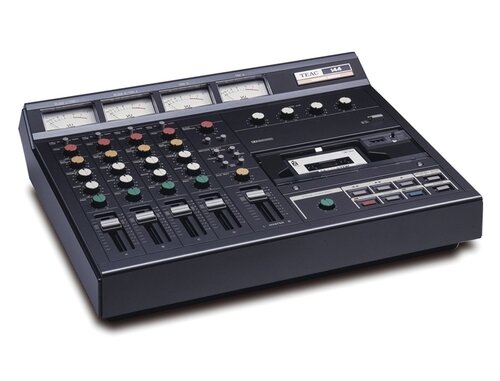
I am looking at something that, on the surface, seems quite basic and taken for granted! I want to bring in an article that looks at the endurance of 4-track recording. The TASCAM Portastudio vastly changed the way artists could record. Although it is still used – or similar models -, there has been a wider move towards something more high-tech and digital. That said, one can hear so many artists relying on the ease, convenience and warmth that you get from the TASCAM Portastudio. Before moving on, this Wikipedia article provides some historical background:

The TASCAM Portastudio was the world's first four-track recorder based on a standard compact audio cassette tape. The term portastudio is exclusive to TASCAM, though it is generally used to describe all self-contained cassette-based multitrack recorders dedicated to music production. The Portastudio, and particularly its first iteration, the Teac 144, is credited with launching the home-recording wave, which allowed musicians to cheaply record and produce music at home, and is cited as one of the most significant innovations in music production technology.

The Teac 144 Portastudio made its debut in 1979, at the annual meeting of the Audio Engineering Society. It was followed by several other models by TASCAM, and eventually by several other manufacturers.

For the first time it enabled musicians to affordably record several instrumental and vocal parts on different tracks of the built-in four-track cassette recorder individually and later blend all the parts together, while transferring them to another standard, two-channel stereo tape deck (remix and mixdown) to form a stereo recording.

The Tascam Portastudio 244, introduced in 1982, improved upon the previous design with overall better sound quality and more features, including: dbx noise reduction, dual/concentric sweepable EQ's, and the ability to record on up to 4 tracks simultaneously.

In general, these machines were typically used by musicians to record demos, although they are still used today in lo-fi recording. The analog portastudios by TASCAM (a division of TEAC) and similar units by Fostex, Akai, Yamaha, Sansui, Marantz, Vestax, Vesta Fire, TOA, Audio-Technica, Peavey, and others generally recorded on high-bias cassette tapes. Most of the machines were four-track, but there were also six-track and eight-track units. Some newer digital models record to a hard disk, allowing for digital effects and up to 32 tracks of audio”.

I am not sure how sophisticated recording equipment was pre-1979, but it is clear that the TASCAM Portastudio provided greater options and a better sound for artists. That did not mean that, upon its introduction, artists forsook the studio and recorded everything on this device. By the same token, it was not used as a novelty. It became an important go-to for many musicians. I want to bring in an interesting article that charts the use of the TASCAM Portastudio through the decades. Its development and popularity through the 1980s is interesting to read:

In the meantime, musicians seized upon the hitherto unparalleled creative freedom offered by this new ‘Porta[-ble]Studio’. Bruce Springsteen recorded his entire 1982 folk-noir album ‘Nebraska’ at home, using just two cheap Shure SM57 microphones and his newly acquired TEAC 144.

Its successor, the Tascam 244, improved over the diosync in having dbx noise reduction (helping offset the inherent hiss of tape), a two-band, four-knob sweepable EQ, two headphone sockets (one for the engineer, one for the talent), and an electronic tape counter. The four tracks of the 244 were also labelled 1, 2, 3 and 4, replacing the diosyncratic A, B, C and D of the 144.

In 1986 came the machine that enthusiasts regularly hail as the ‘king of the four-tracks’ – the Tascam 246 Portastudio. Comprehensively specified and built like the proverbial tank, this mighty machine offered an unparalled swathe of essential recording and mixing features. It had six channels, so multiple inputs could be routed through the mixer, and it could record on all four tracks of the cassette tape simultaneously.

The 246 also debuted Tascam’s new two-speed tape deck (3.75 inches per second vs standard 1.875ips), whereby the transport could be run at twice the normal speed in order to capture better quality audio. This was still some way off the 15ips of a professional 2-inch reel-to-reel tape machine, but the increase in fidelity for home recording was welcome!.

Even though technology became more advanced through the 1990s, there was still desire and demand for the TASCAM Portastudio:

The 1990s saw the rise of digital recording undermining magnetic tape’s dominant position in home studios. Other companies, such as Yamaha and Fostex, launched rival four- and eight-track machines, each trumping the others with improved features or price points in a race for market dominance.

There was still time for some more classic Tascam tape models during the ’90s, such as the 488MKII and the 424MKIII, featuring digital-style functionality – custom location points, ‘rehearsal’ mode, hands-free punch in/out – before the new millennium ushered in the first all-digital Portastudio.

The original cassette hardware Portastudios still endure. With one million Portastudios sold since the launch of the 144, thousands of working examples are still bought and sold on the secondhand market today. The immediacy and vintage vibe of a cassette-based four-track Portastudio delivers the same thrills it always did.

Famous Portastudio users over the years include Bootsy Collins, Wu-Tang Clan, Lou Reed, Aztec Camera’s Roddy Frame (who wrote a song simply called ‘Portastudio’ for his 2006 solo album ‘Western Skies’, in which he sings of “still screwing around with my Portastudio”) and Lady Gaga, who in 2009 described her first Portastudio as “probably the best gift that my dad ever gave me”.

A new generation of Instagram-friendly musicians are incorporating original Portastudios into their digital workflows, using the analogue mic preamps for ‘flavour’, the mixer and EQ section for arranging and sweetening outboard gear, and employing the cassette section for real-life tape loops.

There’s still no quicker or easier method for musicians to capture their ideas. Power up, plug in, press record – that’s lightning bottled again”.

I am not sure whether, today, artists are using four-track recorders for their songs. Maybe there is a split between mainstream acts (and those with a glossier sound) compared to D.I.Y. and bedroom artists. I will end with an article from Reverb, who have illuminated the way 4-track recording has fed into some incredible work:

4-track recordings by some of the biggest names in rock, alternative, and electronic music carried both the charm and lore: Bruce Springsteen's Nebraska, grittily recorded on his 144 and salvaged from his jacket pocket; PJ Harvey's tape-turned-proper-release 4-Track Demos; Ween's warped, Portastudio-grown The Pod; Aphex Twin's first full-length, Selected Ambient Works 85–92, tracked at home on cassette with self-constructed instruments, by Richard D. James' telling at least.

In addition to the raw, homespun sound, many music makers wanted to stretch the limits of the technology. Why not bounce those 4-tracks down and layer more on top, like their heroes at Abbey Road? Use the limitations to spark creativity.

In a review of the Teac 144, Reverb user Trey Y. said he bought one of these "Earth-changing" machines as soon as they came out.

"Suddenly I was able to create beautifully produced demos that were almost as good as studio masters. It was easy to learn and extremely powerful," he writes. "Despite having only four tracks, I was able to ping-pong huge numbers of tracks and create music that was as elaborate as anything produced by The Beatles in their heyday."

There was a downside: Dubbing tape hiss on top of itself over and over again will build up to cacophony. But whether bedroom producers were making the most of what they had or willfully leaning into lo-fi aesthetics, 4-track recordings were in full bloom”.

There are few examples of music hardware that have benefited artists and changed the game more than the TASCAM Portastudio. Perhaps it is not as prevalent and widespread as it was in the 1980s and 1990s, but one can look at modern recording more sophisticated technology and chart things back to the TASCAM Portastudio. It is a humble and stunning device that must have been this enormous revelation and breakthrough back in 1979. I can only imagine the sense of possibility and excitement when it was announced and, in time, became better known and widely used! For artists who want to put down a quick and easy demo with very few layers, the 4-track recorder is invaluable. It is a shame that there is so much reliance on digital technology; a certain charm and history has been removed from music. Maybe there are a lot of artists who prefer older technology. No matter. It is obvious that the TASCAM Portastudio was a remarkable and seismic shift that created ripples that are…

STILL being felt today.

FEATURE: The Lockdown Playlist: Songs About the Natural World and the Environment

FEATURE:


The Lockdown Playlist

PHOTO CREDIT: @rayhennessy/Unsplash 

Songs About the Natural World and the Environment

___________

I know a couple of radio stations…

ll.jpg

 PHOTO CREDIT: @bhairankar/Unsplash

have put out playlists and features regarding songs that pertain to the environment (in terms of celebration and raising awareness about climate change) and nature - I have also sprinkled in some sounds of nature. I am inspired by the recent series of Winterwatch, and the fact that the show is educational, comforting and revealing. I have been fascinating by nature and the environment since I was a child so, for this Lockdown Playlist, here are a collection of songs that refer to those areas. Many of the songs will be familiar to you, though I am sure there are some that are not going to a bit new. There is quite a broad range of tracks in the playlist that are sure to…

 PHOTO CREDIT: @v2osk/Unsplash

PROVIDE a blend of urgency and relaxation.

FEATURE: Turn Back the Pages: The Music Book Club

FEATURE:


Turn Back the Pages

PHOTO CREDIT: @sincerelymedia/Unsplash 

The Music Book Club

___________

WHILST there are plenty of great…

 PHOTO CREDIT: @qmikola/Unsplash

vinyl subscription services and there is a lot of focus on record shops, how often does one spend the same timer extolling the virtues of music books?! Maybe people hold their own music book clubs, but I cannot find any subscription services or sites that provide music lovers with monthly recommendations. What would be cool is a website that recommended the best new music books and put together packages and gifts that could be sent out. I think music literature is fascinated and varied, and it can be as immersive and as addictive as vinyl. From splendid biographies to reference books and those that look at particular periods of music, there is a vast wealth of music literature available! I love subscription services where one can get vinyl bundles and single albums and, every year, we highlight the best albums. Whilst one does see similar lists for music books, there is not the same sort of exposure and prominence. I would be interested to hear whether people hold virtual music book clubs and meetings where they can discuss a biography or reference book, but one suspects that it is quite rare. I think some of the most pleasurable and enlightening moments around music have come when reading an engrossing book.

There are some great book subscription boxes depending on your tastes but, again, I am not sure there are music-specific ones. Whilst one can find music books in record shops and many dedicate a section of the store to the best new ones out, one mostly has to look online when it comes to getting music literature. I try and keep abreast of the new music books by checking websites like The Guardian, but there are so many that I am missing out on. I always get a bit annoyed when I behind everyone when it comes to stumbling upon a must-read music book. Last year was a good one for music books and, looking at best of lists from Rolling Stone, to Pitchfork, there were some magnificent one released! Maybe it would be a case of doing a mixed subscription or bundle where one gets a vinyl and book every month. I would like to see a podcast or series appear online that focuses on music books, as I feel they are vastly underrated and overlooked compared to albums. I shall leave things in a minute but, whether it is a biography or a book that concentrates on the New Romantic era like Dylan Jones’ Sweet Dreams, one can learn so much and be educated in a way that you cannot when hearing an album. Perhaps it is just me, but I feel there is an appetite for music books. Whether you are a casual music fan, or someone obsessed by it, there are amazing new and older books that you’ll want to own. With a world of choice out there, having a service or website that exclusively refers to music books and tailors suggestions to each music lover would be amazing! It does not (as far as I can see) exist right now but, if a music book club or subscription service were to exist, I feel that so many people…

WOULD be up for it!

FEATURE: The Lockdown Playlist: Go with the Flow: Twenty-Five Years of Queens of the Stone Age

FEATURE:


The Lockdown Playlist

Go with the Flow: Twenty-Five Years of Queens of the Stone Age

___________

RATHER than provided a detailed feature…

xxxx.jpg

 PHOTO CREDIT: Jim Dyson/Getty Images

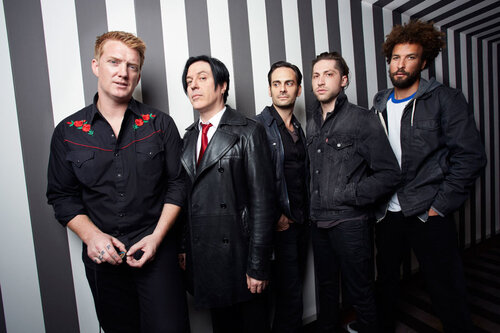
with history, quotes and reviews about Queens of the Stone Age, I am starting with a Lockdown Playlist concerning the fact this year marks twenty-five years since one on my favourite bands formed. I think Queens of the Stone Age are the finest Rock band in the world right now, and across seven studio albums they have established themselves as a hugely powerful force. Led by ‘The Ginger Elvis’, Josh Homme, I love everything the band have put out! Before moving on, here is some Wikipedia information regarding Queens of the Stone Age:

Queens of the Stone Age (commonly abbreviated QOTSA) is an American rock band formed in 1996 in Palm Desert, California. The band was founded by vocalist and guitarist Josh Homme, who has been the only constant member throughout multiple line-up changes. The current line-up consists of Homme alongside Troy Van Leeuwen (guitar, lap steel, keyboard, percussion, backing vocals), Michael Shuman (bass guitar, keyboard, backing vocals), Dean Fertita (keyboards, guitar, percussion, backing vocals), and Jon Theodore (drums, percussion).

Formed after the dissolution of Homme's previous band Kyuss,[1] Queens of the Stone Age developed a style of riff-oriented, heavy rock music. Their sound has since evolved to incorporate a variety of different styles and influences, most notably including collaborations with Screaming Trees lead singer Mark Lanegan and Foo Fighters frontman and former Nirvana drummer Dave Grohl”.

I am going to do a few features in the coming weeks focusing on various aspects and albums from the band. Right now, here is a selection of their best songs that, I feel, is a good way into the band and overview of their work. I am not sure whether they are going to follow 2017’s Villains with another album. There are no definite plans either way but, having barely dropped a step since they formed in 1996, there is going to be huge demand for new Queens of the Stone Age material! Here is a Lockdown Playlist filled with some of the finest cuts from…

THE Palm Desert-formed legends.

FEATURE: I Won’t Let You Do It: Kate Bush’s Night of the Swallow

FEATURE:


I Won’t Let You Do It

IN THIS PHOTO: Kate Bush on 14th September, 1982 at a record signing at Virgin Megastore on Oxford Street in London for her album, The Dreaming/PHOTO CREDIT: Peter Still/Getty Images

Kate Bush’s Night of the Swallow

___________

I have sort of looked at…

Night of the Swallow when I discussed the decision to release There Goes a Tenner, and Suspended in Gaffa from The Dreaming. The former was the third to single from the album. It was released as a seven-inch single in the U.K. and Ireland only – in Europe and Australia, Suspended in Gaffa was released as the single. I think that the latter track is strong and more chart-worthy, so I asked why the decision was made to release There Goes a Tenner as a single in the U.K. Because of the Irish themes and sounds of Night of the Swallow, it was released as a single in Ireland in late-1983 - making it the fifth and final release from The Dreaming. When the single was released, around one-thousand copies were made with a picture sleeve; the seven-inch vinyl was pressed in England and the sleeve was produced in Ireland. It was a single that did not do well. I really love Night of the Swallow, and not only is it one of the best tracks from The Dreaming, I think the song is one of Bush’s very finest. Its B-side, Houdini, is my favourite Kate Bush song – and that might have made for a more successful single. Night of the Swallow was the first of two (the other being Sat in Your Lap) to be recorded for the album.

It was mostly recorded at Abbey Road Studios in spring 1981 over several sessions. The Irish musicians section was recorded in Ireland; Bush worked there with them overnight. I know Bush has a lot of love for the song and spoke fondly about it and the musicians (including Liam O'Flynn – uilleann pipes, penny whistle, Seán Keane – fiddle, and Dónal Lunny – bouzouki). I have seen Night of the Swallow appear high in lists of Bush’s best songs. I am surprised that the singles from The Dreaming did not do that well. Maybe people were not transitioning to the sound of Kate Bush embracing new directions and sounds. She was evolving as an artist and producer; it must have come as quite a shock for many people. Before wrapping up, I want to bring in an article from the Kate Bush Encyclopaedia, where we discover more about the song’s lyrical content. Bush herself explains the origins of Night of the Swallow:

The lyrics concern a smuggler planning his next clandestine journey, Bush takes on the role of his lover, who begs him not to go ('I won't let you do it. If you go, I'll let the law know'). The song ends with the smuggler speaking in defiance ('Would you break even my wings, like a swallow. Let me, let me go').

“Unfortunately a lot of men do begin to feel very trapped in their relationships and I think, in some situations, it is because the female is so scared, perhaps of her insecurity, that she needs to hang onto him completely. In this song she wants to control him and because he wants to do something that she doesn't want him to she feels that he is going away. It's almost on a parallel with the mother and son relationship where there is the same female feeling of not wanting the young child to move away from the nest. Of course, from the guys point of view, because she doesn't want him to go, the urge to go is even stronger. For him, it's not so much a job as a challenge; a chance to do something risky and exciting. But although that woman's very much a stereotype I think she still exists today. (Paul Simper, 'Dreamtime Is Over'. Melody Maker (UK), 16 October 1982)

Ever since I heard my first Irish pipe music it has been under my skin, and every time I hear the pipes, it's like someone tossing a stone in my emotional well, sending ripples down my spine. I've wanted to work with Irish music for years, but my writing has never really given me the opportunity of doing so until now. As soon as the song was written, I felt that a ceilidh band would be perfect for the choruses. The verses are about a lady who's trying to keep her man from accepting what seems to be an illegal job. He is a pilot and has been hired to fly some people into another country. No questions are to be asked, and she gets a bad feeling from the situation. But for him, the challenge is almost more exciting than the job itself, and he wants to fly away. As the fiddles, pipes and whistles start up in the choruses, he is explaining how it will be all right. He'll hide the plane high up in the clouds on a night with no moon, and he'll swoop over the water like a swallow.

Bill Whelan is the keyboard player with Planxty, and ever since Jay played me an album of theirs I have been a fan. I rang Bill and he tuned into the idea of the arrangement straight away. We sent him a cassette, and a few days later he phoned the studio and said, "Would you like to hear the arrangement I've written?"

I said I'd love to, but how?

"Well, Liam is with me now, and we could play it over the phone."

I thought how wonderful he was, and I heard him put down the phone and walk away. The cassette player started up. As the chorus began, so did this beautiful music - through the wonder of telephones it was coming live from Ireland, and it was very moving. We arranged that I would travel to Ireland with Jay and the multi-track tape, and that we would record in Windmill Lane Studios, Dublin. As the choruses began to grow, the evening drew on and the glasses of Guiness, slowly dropping in level, became like sand glasses to tell the passing of time. We missed our plane and worked through the night. By eight o'clock the next morning we were driving to the airport to return to London. I had a very precious tape tucked under my arm, and just as we were stepping onto the plane, I looked up int the sky and there were three swallows diving and chasing the flies. (Kate Bush Club newsletter, October 1982)”.

I really love Night of the Swallow, and I think it boasts one of Bush’s best vocals and compositions. Through The Dreaming, I think Bush hit a peak when it came to lyrics. So many songs on the album take you into their own world. Night of the Swallow boasts some incredible lines. My favourite lines are so evocative and unusual: "With a hired plane/And no names mentioned/Tonight's the night of the flight/Before you know/I'll be over the water/Like a swallow/There's no risk/I'll whisk them up in no moonlight/And though pigs can fly/They'll never find us/Posing as the night/And I'm home before the morning”. If there was ever to be another ‘best of’ Kate Bush album, I definitely think Night of the Swallow should feature! It is a fabulous song that was sort of overlooked as a single and, as many people do not dig into The Dreaming like they do Hounds of Love, I think a lot of the songs are under-appreciated. Night of the Swallow is a beautiful and powerful track that…

LINGERS long in the mind.

FEATURE: The January Playlist: Vol. 5: Hope and Judgment in the Garden of Eden

FEATURE:


The January Playlist

IN THIS PHOTO: Billie Marten 

Vol. 5: Hope and Judgment in the Garden of Eden

__________

THIS is another terrific week…

 IN THIS PHOTO: Arlo Parks

for music, as there are some exceptional releases in the fold! Not only are there awesome new cuts from Billie Marten, FKA twigs/Headie One/Fred again.., Arlo Parks, MALKA, and Imelda May/Noel Gallagher (ft. Ronnie Wood). There are also songs from Ben Howard, King Gizzard and the Lizard Wizard, Poppy Ajudha, Goat Girl, Weezer, and YONAKA. Throw into the mix Selena Gomez/Rauw Alejandro, Tom Jones, and Celeste, and there is something for everyone! If you need a kick and some energy to get this weekend going, then I think that the tracks below have it covered! It is a bit of a cold and wet one but, with some wonderful tracks to enjoy, things are set to get…

 IN THIS PHOTO: Ben Howard

A bit brighter.

ALL PHOTOS/IMAGES (unless credited otherwise): Artists

__________

Billie Marten Garden of Eden

FKA twigs, Headie One, Fred again.. - Don't Judge Me

Arlo Parks - Hope

Imelda May, Noel Gallagher  (ft. Ronnie Wood) - Just One Kiss

MALKA Reach Out

PHOTO CREDIT: Roddy Bow

Ben Howard - What a Day

King Gizzard and the Lizard Wizard O.N.E.

Poppy Ajudha Weakness

dsss.jpg

PHOTO CREDIT: Holly Whitaker

Squid (ft. Martha Skye Murphy) Narrator

YONAKA Seize the Power

Goat Girl Anxiety Feels

Weezer Bird with a Broken Wing

Tom JonesNo Hole in My Head

Benin City - Freaking You Out

dddd.jpg

Kynsy - Elephant in the Room

Porter Robinson Look at the Sky

PHOTO CREDIT: Ali Cherkis

Half Waif - Orange Blossoms

CelesteTonight Tonight

Fredo (ft. Dave) - Money Talks

Selena Gomez, Rauw Alejandro - Baila Conmigo

Rag'n'Bone Man - All You Ever Wanted

LAOISEGravy

PHOTO CREDIT: Robert Ashcroft

The Killers C’est La Vie

PHOTO CREDIT: Adrian Vitelleschi-Cook

Do Nothing - Uber Alles

Blu DeTiger Vintage 

Alicai HarleyPut It on You

Pale Waves You Don’t Own Me

cccccc.jpg

Jaz KarisMistake

Morcheeba - Sounds of Blue

Lili Caseley Faded Love

Gracie Convert - Stay

Amber Prothero Insecurity Lies

Julia Stone (ft. Matt Berninger) - We All Have

Nasty Cherry - Lucky

Tune-Yards - hold yourself.

PHOTO CREDIT: Graeme Mitchell for The New Yorker

Madlib - Loose Goose

Molly Hammar - DOUCHEBAG

PJ Harvey - Catherine - Demo

JoJo - American Mood

SOPHIE - UNISIL

ffff.jpg

Natalie Bergman - Talk to the Lord

yyyyy.jpg

PHOTO CREDIT: Ira Chernova for Rolling Stone

Jenny Lewis & Serengeti - Vroom Vroom

FEATURE: Second Spin: Will Smith – Big Willie Style

FEATURE:


Second Spin

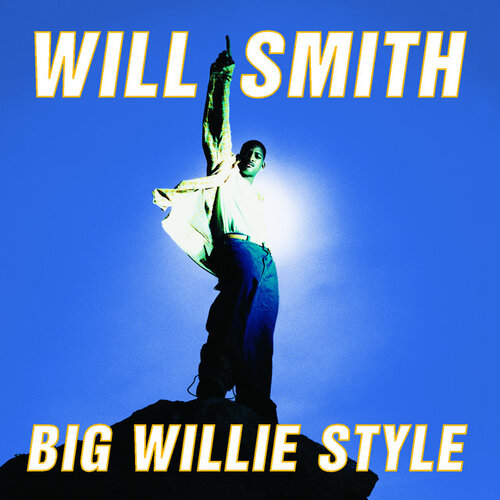
Will Smith – Big Willie Style

___________

I feel there can be…

 IN THIS PHOTO: Will Smith in 1997’s Men in Black

a degree of criticism and judgement when it comes to Rap and Hip-Hop. There are artists who are cutting-edge and quite political who are seen as essential and supreme. There are also those whose material is different, where their style is not quite as edgy and hard-hitting. I think they can get a lot of flak. Having released five albums with DJ Jazzy Jeff, Big Willie Style was Will Smith’s debut solo album. Released on 25th November, 1997, it did divide critics. I love the work he did with DJ Jazzy Jeff, and I think one of the most notable elements of that partnership was the production and music from DJ Jazzy Jeff. Smith’s lyrics were great, but there were fears that him stepping out solo would result in a weaker sound. To be fair, I think there is not a huge leap between the work he created as The Fresh Prince. Maybe the compositions are less intriguing and inventive, but there is that commercial element that meant, in 1997, the album sold really well. Big Willie Style was a commercial success. Reaching a peak position of number-eight on the US Billboard 200 chart, it remained on the chart for a total of ninety-nine weeks. On the U.K. chart, the album entered at number-sixty-three in December 1997 -  remaining in the top 100 for twenty-nine weeks. I guess Smith didn’t have the same sort of popularity in the U.K. as the U.S. but, with huge films like Bad Boys, and Independence Day under his belt, he definitely had a fanbase here.

I think that Big Willie Style should be re-evaluated. I feel that, as 1997 was a year when some hefty and serious albums were released – like Radiohead’s OK Computer -, maybe there was a feeling that Smith’s music did not fit in or was too commercial. His album did spawn great singles like Gettin' Jiggy wit It, and Miami. Big Willie Style was the first to be released by Smith since 1993's Code Red, the last by the duo DJ Jazzy Jeff & The Fresh Prince. With excellent production from Poke & Tone - Poke (Jean-Claude Olivier) and Tone (Samuel Barnes) - and Smith co-writing on tracks, I think Big Willie Style is a solid album that can elicit plenty of pleasure and memories! Non-singles like Candy, and It's All Good are great and, whilst some tracks do suffer from having too many writers and producers in the mix, the album as a whole is balanced and consistent. With the inclusion of the title theme from Men in Black at the end of the album, I feel that helped a little when it came to bringing in sales and recognition. It is sad that there were some mixed and negative reviews. Big Willie Style was released the year after the long-running sitcom, The Fresh Prince of Bel-Air, ended. Maybe there was a feeling that Smith was prime for attack because of his popularity - and the fact he was not as ‘real’ and edgy of many of his peers. This is what NME wrote when they reviewed Big Willie Style:

Essentially, then, he is the Cliff Richard of rap and to criticise his latest album for not being sufficiently hardcore would naturally be plain daft. So, we'll just have to condemn it on the rather more elementary level that it is explicitly awful instead.

As he helpfully advises us on the intro track, 'Big Willie Style' is all about Smith proving that, while many young rappers may pretend to live in wealth and luxury, he's doing it for real. So blimmin' ner ner. The only thing is, while there's a certain gritty appeal to the whippersnapper's scheming and dreaming, as the likes of 'Y'All Know' and 'Chasing Forever' slurp through the speakers, we learn that Smith's yuppified discourse is sorely lacking in any ambition. Rather, over a feeble backdrop of (same-)old funk snippets, he bumbles lazily about buying his girlfriend a present in Tokyo, how he'd quite like it if his child grew up to be a doctor and that he's been working very hard recently, and therefore feels like driving his snazzy car to the beach today.

Yes! All of these thoughts and more are rattling round in his brain! For sure! When he thrusts the multiple splendours of life under the microscope, a barmy whirlwind of telling stuff emerges, it does!

But, hey, we said we weren't going to snipe at Smith for his mainstream ways, didn't we? OK, instead, we'll just guffaw loudly at the fact that he's actually called a track 'Keeping It Real', cringe painfully through his excruciating version of Cameo's 'Candy' and come over all amazed because there's nary a redeeming feature on show here.

"Rub your eyes and behold the big Willie," boasts Smith on one track. To which the only fitting reply can be, "Yeah, right, now put it away”.

I have a lot of time and appreciation for Will Smith’s debut album. Maybe 1999’s follow-up, Willennium, was a more successful and tougher album – one can definitely hear a bit more edge and progression. In a more positive review, this is what AllMusic had to say:

Will Smith wisely decided not to change his style too much on Big Willie Style, the first record he released since becoming a major movie star with appearances in Independence Day and Men in Black. Instead of trying to toughen his image, Smith continued with the friendly, humorous pop-rap that has been his trademark since He's the DJ, I'm the Rapper. Of course, he gives the music a glossy modern sheen (ironically based on early-'80s funk) in order to prove that he's still hip -- and it works. Sure, there's filler scattered all the way the through the album, but the best moments -- the disco-thumping "Gettin' Jiggy Wit It," the Larry Blackmon duet "Candy," the ballad "I Loved You," and the riotous "Men in Black" -- rank among his best singles”.

If you have not heard Will Smith’s music - or skipped ahead and missed out Big Willie Style - then go back and spin it, as it’s a truly great album. I think that it has a blend of toughness and seductiveness that shows the various sides to Smith as a performer and writer. The singles are incredible, but there is plenty to be discovered away from them. Although some critics have panned the album and feel it is not genuine Hip-Hop/Rap, I argue that Big Willie Style boasts…

AMPLE charm and quality.

FEATURE: Far from the Maddened Crowd: Keeping Festivals Alive for 2022

FEATURE:


Far from the Maddened Crowd

PHOTO CREDIT: @dannyhowe/Unsplash 

Keeping Festivals Alive for 2022

___________

THERE is a lot of anger around at the moment…

 PHOTO CREDIT: @anniespratt/Unsplash

as there are doubts whether the Government will support festivals and ensure that they can return in 2022. It is inevitable that there will not be a lot of live music this year – one cannot blame the organisers at all. What everyone wants is a support package put in place for small and large festivals so that next year can be the best and busiest yet for festivals. Glastonbury announced that this year’s festival will not take place. On 22nd January, NME ran a report that suggested we may see something small-scale come from Worthy Farm in September:

Glastonbury founder Michael Eavis has said he is considering holding a smaller event in September after it was confirmed that the coronavirus pandemic has forced the festival’s cancellation for the second year running.

Speaking to LBC, Eavis said he hoped to hold a smaller event later in the year to belatedly mark the 50th anniversary of Glastonbury – which was originally set to take place last year.

“I would like to do something in September. I would like to do something smaller somewhere around the anniversary date of when we started, which was the 18th of September 1970,” he said. “I would like to consider possibly doing something around that time.”

When asked if it could involve big-name acts who have previously performed at Glastonbury, Eavis said: “Yes, but I do need to get reassurance from the ethics people.”

A smaller event could potentially take the form of Glastonbury’s annual Pilton Party – a one-off concert held at Worthy Farm every September to thank workers and local people for their help in organising the festival.

Announcing yesterday’s cancellation, Michael and Emily Eavis said: “In spite of our efforts to move Heaven & Earth, it has become clear that we simply will not be able to make the Festival happen this year. We are so sorry to let you all down”.

Maybe festival bosses will be able to stream a pared-down version this year. They won’t be able to have a crowd there but, as there is so much anxiety and loss, providing some form of live music from sites around the country would seem better than nothing. I do feel that we will see all planned festivals scrapped in 2021 because, with no assurance when live music can return in a large-capacity sense, organisers cannot take the risk. I have seen a lot of anger online recently because there are genuine concerns that festivals might not be able to return next year because of financial issues. Glastonbury might be okay but, if a lot of people ask for a refund on tickets that were bought for last year’s event, then that may hit their aspirations for 2022. I do feel like a loyal fanbase will want to attend Glastonbury next year, so that should be okay. There are hopes that big artists will stream from Glastonbury, and there will be optimism for a 2022 revival and huge celebration. Other festivals do not have the same popularity and security. Festivals will want to get going as soon as it safe; organisers say festival planning is impossible without cover. This article from The Guardian explains more:

Many festivals are not insured for communicable diseases and the insurance market is not offering Covid-19 cover for cancellation and business interruption. In response to the Glastonbury cancellation, the culture secretary, Oliver Dowden, said on Thursday: “We continue to help the arts on recovery, including problems around getting insurance.” It is not clear whether insurance was a factor in the Glastonbury organisers’ decision.

PHOTO CREDIT: @covertnine/Unsplash 

A commitment to backing an insurance scheme would be a substantial change in policy for the government. On 10 December, Liberal Democrat MPs wrote to the secretary of state urging him to underwrite contingency insurance.

In a response dated 13 January and seen by the Guardian, digital and culture minister Caroline Dinenage said that the government was “not yet convinced by the evidence presented to date that insurance intervention is the right form of support for the events sector nor that this is the right time to consider it”.

The “evidence of market failure specific to [Department for Digital, Culture, Media and Sport] sectors must be clearly demonstrated and robust”, she said. Evidence given at a recent parliamentary inquiry hearing into the future of British music festivals after the pandemic said the vast majority would vanish if faced with a second barren year.

Asked whether the government position on backing an indemnity scheme had changed since Dinenage’s letter, a DCMS spokesperson said: “We are in regular dialogue with public health experts to agree a realistic return date for festivals and other large events. Once we are confident we have this, we will be working with organisers to unlock the barriers they face to restarting – including challenges getting insurance”.

Things are quite precarious right now, and there is rightful complaint and tension from festival organisers and live music fans alike. I am writing this article on 22nd January - so there may well be some development in the next few weeks. Download Festival is still hoping to go ahead, though I do not realistically see how any festival can go ahead this year in any large sense – maybe Download will only admit a small number of people? Music fans are desperate for good news regarding festivals next year. We want small and large festivals to come back, so financial support is paramount! I do hope that the Government provide backing and help, as it is a shame that, when we were hoping to return to festivals this year, things have been pushed back a year. When festivals return next year, one can guarantee that we will see crowds…

PHOTO CREDIT: @tonyphamvn/Unsplash 

FLOCK in their thousands.

FEATURE: The Lockdown Playlist: Phil Collins at Seventy

FEATURE:


The Lockdown Playlist

llll.jpg

PHOTO CREDIT: Stian Roenning 

Phil Collins at Seventy

___________

IN this birthday Lockdown Playlist…

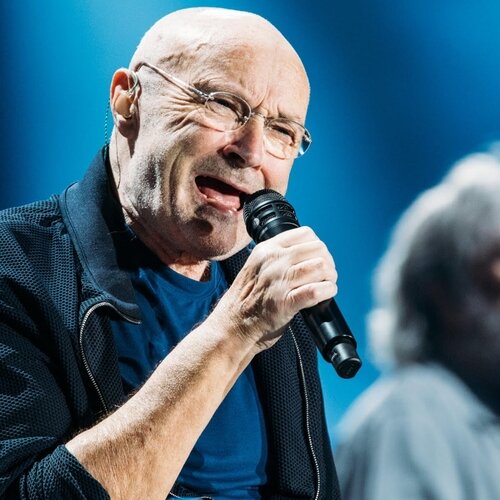
 IN THIS PHOTO: Phil Collins with Genesis

I am focusing on an artist that divides people. I am not a massive fan of Phil Collins, but there are albums and songs of his that I really like. He has a huge fanbase and, as a solo artist and part of Genesis, he has been responsible for so many terrific songs. Ahead of his seventieth birthday tomorrow (30th January), I would give him a nod. Like I have done with other Lockdown Playlists, rather than me skimping on details, I thought I would bring in a chunk of Wikipedia - it assists when it comes to highlighting why Collins is such a successful and important artist:

Philip David Charles Collins LVO (born 30 January 1951) is an English drummer, singer, songwriter, and record producer, best known as the drummer/singer of the rock band Genesis and for his solo career. Between 1982 and 1990, Collins scored three UK and seven US number-one singles in his solo career. When his work with Genesis, his work with other artists, as well as his solo career is totalled, he had more US Top 40 singles than any other artist during the 1980s. His most successful singles from the period include "In the Air Tonight", "Against All Odds (Take a Look at Me Now)", "One More Night", "Sussudio", "Take Me Home", "Two Hearts", "A Groovy Kind of Love" (featured in the film Buster), "I Wish It Would Rain Down", and "Another Day in Paradise".

Born and raised in west London, Collins played drums from the age of five and completed drama school training, which secured him various roles as a child actor. He then pursued a music career, joining Genesis in 1970 as their drummer and becoming lead singer in 1975 following the departure of Peter Gabriel. Collins began a solo career in the 1980s, initially inspired by his marital breakdown and love of soul music, releasing a series of successful albums, including Face Value (1981), No Jacket Required (1985), and ...But Seriously (1989). Collins became "one of the most successful pop and adult contemporary singers of the '80s and beyond". He also became known for a distinctive gated reverb drum sound on many of his recordings. In 1996, Collins left Genesis to focus on solo work; this included writing songs for Disney’s Tarzan (1999) for which he received an Oscar for Best Original Song for “You'll Be in My Heart”. He rejoined Genesis for their Turn It On Again Tour in 2007. Following a five-year retirement to focus on his family life, Collins released an autobiography in 2016 and completed his Not Dead Yet Tour in 2019.

PHOTO CREDIT: Justin Ma Photography

Collins's discography includes eight studio albums that have sold 33.5 million certified units in the US and an estimated 150 million worldwide, making him one of the world's best-selling artists. He is one of only three recording artists, along with Paul McCartney and Michael Jackson, who have sold over 100 million records worldwide both as solo artists and separately as principal members of a band. He has won eight Grammy Awards, six Brit Awards (winning Best British Male Artist three times), two Golden Globe Awards, one Academy Award, and a Disney Legend Award. He was awarded six Ivor Novello Awards from the British Academy of Songwriters, Composers and Authors, including the International Achievement Award. He received a star on the Hollywood Walk of Fame in 1999, and was inducted into the Songwriters Hall of Fame in 2003 and the Rock and Roll Hall of Fame as a member of Genesis in 2010. He has also been recognised by music publications with induction into the Modern Drummer Hall of Fame in 2012, and the Classic Drummer Hall of Fame in 2013”.

If you are not overly-familiar with Phil Collins’ music, have a listen to the assorted songs below as it is a pretty good overview. Even though not everyone is a fan of his music, there are songs in his catalogue that we all know and sing along to! Ahead of his seventieth birthday tomorrow, I was keen to, through a Lockdown Playlist, wish Phil Collins…  

MANY happy returns.

FEATURE: Spotlight: Griff

FEATURE:


Spotlight

Griff

___________

THERE are some names that have…

been highlighted by a lot of people in the music industry as ones to watch. One such name is Griff. Perhaps the biggest honour was her coming fifth in BBC’s Sound of 2021. Before moving on and bringing in a couple of other interviews, I want to quote from the BBC article - one that spotlights an incredible and promising talent:

How do you write a song about heartbreak when you've never had your heart broken?

For 19-year-old pop singer Griff, the answer is simple: Just look around you.

"There's lots of scenarios where you can experience heartbreak," she explains. "It doesn't have to be romantic.

"Like if a friend moves away, or you lose a family member. When someone leaves your life, you feel like there's a black hole there."

So, on the moving piano ballad Good Stuff, she sings about missing the foster children who passed through her family's home in Hertfordshire. On Didn't Break It Enough, she's blindsided by the lingering affection for someone who betrayed her.

Her sparse, dramatic songs about being a "hormonal teenager" have already won her a legion of loyal fans - not least the 160 music critics, DJs and musicians who voted her into fifth place on the BBC Music Sound of 2021 list”.

Born Sarah Faith Griffiths, she was schooled in soul and gospel music by her Jamaican father and Chinese mother, before falling in love with Taylor Swift's Fearless album when she was eight years old.

"It was such a contrast to all the stuff I'd been brought up on," she recalls. "The pop sensibility, and the fact she was singing about teenage stuff: It was my first memory of realising I loved pop music."

Griff had her first recording session at the age of 10, "just doing embarrassing things in a band". By the time she left school, she'd signed a deal with Warner Music, releasing her first single in July 2019, two weeks after she finished her A-Levels.

Despite the restrictions of the pandemic, she's already enjoyed a meteoric rise - ending 2020 by soundtracking Disney's Christmas advert, and receiving a personal endorsement from Taylor Swift after recording a cover of Exile, from the star's Folklore album.

"Honestly, this whole year feels super, super-surreal," laughs the singer, who calls the BBC from the bedroom where she produces all of her own music (complete with a limited edition Taylor Swift "Baby Taylor" guitar on the wall).

"I still feel like I should be doing my homework”.

You started making music when you were still at school. Did your homework suffer?

I was actually a very good student! But, especially towards the end of my school career, I was doing my A-Levels in the morning, then travelling into London, doing a studio session, coming back home, doing a quick economics essay, then doing it all over again. It was like a split life I was living.

Mirror Talk was one of those stop-you-in-your-tracks debut singles. What made you choose it as your first release?

It's not your conventional love song. It's kind of about having melodramatic breakdowns by yourself, and your relationship with yourself, rather than other people. And there's literally two elements in the track - so it was super-sparse and felt different to everything else out there.

We put it out literally two weeks after my last exam, and Annie Mac premiered it [on BBC Radio 1]. It was my first ever radio play and, for me, that was like, "Woah, this is really happening."

Pop music has become a lot braver about tackling mental health, with artists like Halsey and Ariana Grande discussing depression and self-image. That's got to be healthy.

Definitely. It makes sense to have songs that tap into what people are really feeling, instead of this inflated, glossy ideal of what we should be feeling.

You've been compared to Billie Eilish and Lorde and Taylor Swift. Do you hear those references in your music?

Definitely! It's the biggest compliment ever. Lorde is probably my number one inspiration. But it's quite scary to think people would make those comparisons. I feel like I've got impostor syndrome and I've just been winging it until this point.

This has been a very strange year for anyone trying to launch a music career. All the things you're supposed to do - concerts, showcases, festivals, TV and radio appearances - have pretty much been off the cards. How have you found it?

It's been the best-worst year ever. I've been fortunate in that I've been busy. But I also feel like I'm just sitting in my music room and filming myself. Social media's suddenly much more important. So there's a lot more stuff to do: Influencer kind-of things, that I never thought I'd have to do as a musician.

What have you got up your sleeve for 2021?

Honestly, I'm playing it by ear. I've actually been writing loads over lockdown - maybe a hundred songs - but I never know if they're good or not! Hopefully, I'll release a single in January, and an EP in March or May”.

Despite the fact Griff is getting a lot of love and focus now, her The Mirror Talk E.P. arrived in 2019. She has been on the scene a little while and, every year, she is making some big steps. I think she is going to be one of the main artists to keep an eye out for in 2021! I will finish off with a couple of interviews but, if you are new to Griff, I would advise you to check out her social media channels (links are at the bottom) and investigate. I really love her sound and how she is accessible and relatable but sounds so different to many of her peers. I want to bring in an interview from The Face, where we discover some revealing insights:

20%: At what point, did you realise you’d be able to do what you love for a living?

I think I started to realise it when there was a bit of industry interest I think, like I started doing sessions with anyone that would do one with me and I think that made my music go around a little bit and yeah it was crazy hearing that publishers and record labels wanted to work with me and I didn’t really know what that meant. I think I only knew it would be a career for me when I signed when I was 17 but I was still in school so I had just finished my A‑Levels.

40%: What kind of emotions and experiences influence your work?

I draw inspiration a lot from any relationships I’ve had in my life whether that’s like friends, family or a relationship with myself, because I think even though most of the stuff I write will end up sounding like a love song a lot of isn’t actually a romantic relationship it’s just kind of about the feelings I have towards different things and people. I think you can always twist that into a generic kind of sounding love song that everyone can identify with.

60%: What can artists do to help save the world?

Woah, that’s such a big question. I don’t know, I would argue that every artist is kinda saving the world a little bit, like as long as anything they put out someone’s enjoying it I feel like you’re saving a part the world and your allowing someone to escape from their mundane every day and like enter a different world.

If you’re talking about like all the problems in the world, I don’t know I guess artists these days should stand for something and be passionate about issues in the world and like where they are passionate about something should speak up about it”.

I will wrap up soon, but I found an interesting article from Bringin’ It Backwards, as it is quite detailed and illuminating. There are a few passages that caught my attention:

It didn’t take long for GRIFF to begin embracing her difference, in music and in life. A rotating cast-list of foster children passed through the Griffiths household, where she still lives, probably fifteen in total. “It teaches you something about selfless love,” she says of having so many foster siblings. “The first is and always was going to be the hardest to say goodbye to when they went to be adopted.” She was eight years old. “And I was the only girl, and the youngest. You learn not to be the focus of attention, really quickly.”

There is something in the music of GRIFF that speaks of a wisdom far beyond her years. Though Mirror Talk addresses her generation’s anxious relationship with self-perception, set against a spinetingling spider’s web of beats, she is pleasingly devoid of neuroses. “That doesn’t mean I haven’t been around them, though,” she says. GRIFF could not wait to get out of school. “Teenage girls can be hard to be around all the time,” she says, “I found my place but eventually, by the time it came to leave, that was just me and my best friend, who is now at St Martins.”

Being mixed race left her, she says “kind of not feeling like anything. I’m used to being around white girls but I’m so obviously not. I am a bit of a white girl but I never will 100% be because I look so different and I am so different. The Chinese family would come around and I’m obviouslay so westernised and removed from that. Then the black side comes round and I’m not really in touch with that, either. You’re always in this weird limbo.”

All these esoteric emotional states would be parlayed directly into the quizzical nature of her music, married to a natural ear for a pop hook. GRIFF’s production and song-writing skills were honed at home, utilising her brother’s computer software and the family piano after school. “It came naturally,” she says. “But writing music, actually, is kind of a ridiculous thing. Every day you’re expected to reinvent eight notes and marry them to a new concept.”

She found her well was deep for conjuring new worlds in song and soon attracted the attention of a family friend who began encouraging to her seek contacts in the industry. Her only worry, on signing a deal just prior to heading into the big bad world from school was that something so beloved, such a safe space for her, would now be swallowed by the machine. “My biggest fear was that music was a hobby before and it was so exciting to do, especially when school was awful. It was such a relief to go home and write. My fear was that it suddenly wouldn’t be a hobby anymore. Would the ideas still be there”.

I am not sure whether an album is planned for the near-future from Griff - though I know there will be new singles and releases soon. She is an astonishing talent; a musician who has a very prosperous and bright future ahead. If you are new to her work, rectify that deficiency now and check her out! It only takes a single song to realise that Griff is…

AN incredible young artist.

_______________

Follow Griff

ccc.jpg

FEATURE: All Hail the PopMaster: The Iconic Ken Bruce at Seventy

FEATURE:


All Hail the PopMaster

PHOTO CREDIT: BBC 

The Iconic Ken Bruce at Seventy

___________

I have written about Ken Bruce before…

 IN THIS PHOTO: Ken Bruce with the late great Sir Terry Wogan

but, upon discovering he is seventy on Tuesday (2nd February), I wanted to salute a radio icon. I will bring in some Wikipedia before I get to me diving into the legendary PopMaster quiz. Make sure you tune into Bruce’s weekday BBC Radio 2 show from 09:30. I am not sure whether the station are planning anything big on Tuesday to mark Ken Bruce’s seventieth but, having been at the station for so long, there will be a wave of love for him! Here is some history one of the greatest broadcaster who has ever lived:

Kenneth Robertson Bruce (born 2 February 1951) is a Scottish broadcaster who is best known for hosting his long-running weekday mid-morning show on BBC Radio 2 since 1986.

Bruce was born and raised in Glasgow, Scotland. He attended Hutchesons' Boys' Grammar School, Glasgow, before training as a chartered accountant, Bruce's first job was washing cars. He began his broadcasting career with the Hospital Broadcasting Service in Glasgow.

Bruce became a staff announcer for BBC Radio 4 Scotland and after BBC Radio Scotland launched in November 1978, became one of the original presenters of Nightbeat alongside Iain Purdon. Charles Nove subsequently joined the presentation rota. He also presented a Saturday morning show.

In 1980, he took on the mid-morning slot and then, in 1983, he presented a daily afternoon entertainment show. He hosted his mid-morning show on the BBC World Service in the late 1980s.

 In January 1985, Bruce replaced Terry Wogan on the breakfast programme, being replaced himself by Derek Jameson in April 1986. Following Wogan's death in 2016, his tenure of the show became the oldest for a presenter still living. He then began his first stint on the mid-morning show which lasted until the end of March 1990, when he took over the late show until the end of that year. He then hosted the early show throughout 1991, and on 6 January 1992 he returned to the mid-morning slot,[4] where he remains today. As of 14 January 2019, Bruce follows Zoe Ball at 9:30 am and is followed by Jeremy Vine at 12 noon. On Thursday 1 August 2019 it was announced that his show had become the most popular radio programme in the UK, with 8.49m daily listeners, following a fall in the popularity of Zoe Ball's breakfast show”.

Go and buy the PopMaster book if you are a music fan and want a good quiz. Not to discount the rest of Ken Bruce’s illustrious career and great radio work, but I don’t feel that he would mind! Every weekday morning, millions stop what they are doing to tune into the national institution that is PopMaster (you can check out episodes on the podcast). If you do not know about the long-running quiz, then here is some more detail:

PopMaster has run as a feature of Bruce's show since 16 February 1998. With questions set by music expert Phil Swern, it offers a DAB radio for successfully completing the 3 in 10 bonus round. If the listener fails, they are awarded a Bluetooth speaker (replacing the previous consolation prize of an mp3 player). An earlier consolation prize, a 'Space' radio, has been known to appear on eBay, to Bruce's amusement. The losing contestant is given a T-shirt with 'One Year Out' printed across the front (a catchphrase Bruce uses in the quiz when a contestant trying to place the year a song was in the charts is out by one year). This 'prize' replaced a CD wallet as of 27 February 2012.

 The public phone-in PopMaster quiz was suspended after airing on 18 July 2007. A celebrity version was quickly introduced on 20 July 2007, and continued until 18 January 2008. "3 in 10" was not played in the celebrity version and there was no tie-breaker in the event of a draw. It was rumoured that members of the public would be able to play again before Christmas 2007, however this did not happen. Following an announcement by Bruce on 7 January 2008, the normal format returned on 21 January 2008. The game returned with new dramatic, orchestral and guitar based jingles”.

I love Ken Bruce’s BBC Radio 2 show, and I think that PopMaster is merely the jewel in the weighty crown! He is so warm and funny that one cannot help but be charmed and in awe of the Scottish icon. I hope that he remains at the station for many more years to come - as there is such a huge amount of affection for him. I am going to finish off with a recent bit of news regarding Bruce supporting the charity, Autistica:

We are thrilled to announce that BBC Radio 2 presenter Ken Bruce is supporting our Radio 4 appeal this month. Listen out to hear Ken's story and reasons for supporting Autistica.

PHOTO CREDIT: BBC

Ken's son Murray is eighteen, he was diagnosed with autism aged three. Ken is keen to help others understand the unique contribution that people like his son can make to society with the right support. By presenting our appeal, he hopes that Radio 4 listeners can make more of a difference to every autistic person by supporting research.

"A gift of £30 would involve a family like mine in a research trial to test a new anxiety therapy to address fears of uncertainty. This research could lead to a new NHS service ensuring autistic people have access to better therapies and ultimately saving lives. Murray has proved to me that we should never limit our expectations of autistic people”. Ken Bruce”.

Ahead of his seventieth birthday on Tuesday, I wanted to do a small nod to a man who means so much to so many people (me included). His incredible show is a lifeline to many and, for serious music lovers, pitting out wits against PopMaster is an absolute weekday must! Ken Bruce is a legend of the airwaves who brings joy to millions. Let us all hope that he is in our radio lives…

FOR so many years more!

FEATURE: Bittersweet Symphony: Heading Back to the Nineties

FEATURE:


Bittersweet Symphony

Heading Back to the Nineties

___________

I am going to bring in a couple of…

playlists that celebrate the best of the 1990s. This is not related to anything but, as most of the current music news is quite down and dark, I thought I would throw a nostalgic glance back to the 1990s. I cover the decade quite a bit when it comes to assessing albums and highlighting great songs - but I think that the entire decade as a whole is one that has brought my huge nourishment and positivity at a very tough time. There is a downside to the nostalgia and realising that, alas, we cannot all go back to the ‘90s and live there is a safer bubble than we have at the moment! Although today’s music is amazing and varied, I think there is something inherently uplifting and exciting about the 1990s. Fearne Cotton hosts a Sounds of the 90s show that brings together some of the best of the decade. Whilst most of the songs are Pop, there is a variety where we get to reveal in the warm glow and brilliance of the decade. I think, if one wants to feel happier and get some energy back, you can search for various 1990s-themed playlists on streaming sites. Rather than it being purely escapist and a way of hiding from the situation we are all in, I have been remembering just how broad the ‘90s was.

I think most people associate the time with Pop and movements like Grunge. Apart from the known hits and big songs of the 1990s, there are some overlooked gems that you need to check out. I think that Pop music today is vastly different to what it was like in the 1990s. I feel modem Pop is less reliant on big choruses and energy; it is more complex and layered. I think modern Pop is great, but there is something wonderfully spirited and timeless about the Pop songs of the ‘90s. Aside from Grunge ruling up to about 1994, there was the might and rivalry that came with Britpop. In Britain, we had great Rock bands like Elastica and Sleeper; there were legendary bands in America like The Smashing Pumpkins and Weezer. It is almost impossible to get on tip of all the different scenes and movements that formed and grew throughout the 1990s. Hip-Hop started its dominance in the 1980s, but it was still a massive force in the 1990s with bands like Beastie Boys and Public Enemy releasing sensational, world-beating albums. I think there were so many different configurations and aspects to 1990s’ music. I want to quote from a udiscovermusic. article from 2019, where they discuss various notable highlights of the decade:

Most female-fronted rock bands didn’t chart as well, but they did deal in a cultural currency that produced a vibrant feminist-rock scene. Hole drew attention to Love’s contemporaries, including Bikini Kill, Babes In Toyland, Bratmobile and, later, Sleater-Kinney. Then there was L7. All flying-V riffs, head-banging hair, and “screw you” lyrics, L7 (along with Mudhoney) helped pioneer grunge before grunge broke. And after it did, the group’s 1992 album, Bricks Are Heavy, won acclaim for skilfully toeing the line between the grunge, alternative and riot grrrl worlds.

Towards the decade’s end, a rise of feminism (and female spending power) in 90s music would trickle up the pop charts. This led to an explosion of multi-platinum singer-songwriters: Sarah McLachlan, Alanis Morissette, Sheryl Crow, Lisa Loeb, Paula Cole, Fiona Apple, Jewel and the lone woman of colour, Tracy Chapman. All of the above (less Morissette) also appeared on the inaugural Lilith Fair tour, McLachlan’s answer to Lollapalooza. It became the best-selling touring festival of 1997.

Meanwhile, the louder alt.rock scene assumed the space left by heavy metal. Industrial music’s Nine Inch Nails and Marilyn Manson, rap-rock’s Rage Against the Machine and Faith No More, the funk-centric Red Hot Chili Peppers and Primus, as well as the transcendent rock of The Smashing Pumpkins and Jane’s Addiction – all capitalised on the new thirst for angst. In this new environment, even a reissue of ‘Mother’, by the dystopian goth-metal beast Glenn Danzig, became a hit. Perry Farrell, Jane’s Addiction’s eccentric frontman, became a nexus for this phenomenon in 90s music when he created the then-quixotic Lollapalooza festival (its name a Webster dictionary deep cut meaning “extraordinarily impressive”) in the auspicious year of 1991.

After a decade of jock-versus-nerd narratives, being weird became cool, with grunge’s influence permeating into the aesthetics of fashion. Movies such as Cameron Crowe’s Seattle-centric Singles, Ben Stiller’s Reality Bites and Allan Moyle’s Empire Records jumped on board to celebrate the virtues of outsiders.

But Billboard’s new accounting actually had its greatest impact on R&B and hip-hop, revealing the two genres’ growing relationship with one another. The 90s kicked off with New Jack Swing in full effect, its most effective purveyors being Bell Biv DeVoe, Al B Sure, Keith Sweat and Boys II Men. As New Jack Swing waned, R&B embraced a soul-and-groove sound typified by Janet Jackson, D’Angelo, Erykah Badu, Usher, Toni Braxton and Mary J Blige.

But they had some competition. During the 90s, many rap acts were hitting not just the Hot 100 charts, but also Billboard’s R&B charts. This was helped by singers such as Lauryn Hill and TLC, who integrated hip-hop into their sounds. In particular, Mariah Carey’s 1995 collaboration with Ol’ Dirty Bastard on ‘Fantasy’ became a defining moment in this crossover period in 90s music.

Hip-hop had become so pervasive because it was so dynamic; its growth spurt precipitated an intriguing assortment of subgenres. Public Enemy, Queen Latifah, Arrested Development, A Tribe Called Quest, Cypress Hill and OutKast were waxing intellectually on social issues. And Public Enemy got alternative music’s seal of approval with Chuck D’s cameo on Sonic Youth’s ‘Kool Thing’. Some rappers, such as Salt-N-Pepa, MC Hammer, Coolio, Will Smith and, later, Missy Elliot, focused on cutting anthemic jams primed for the pop charts. Others were grabbing the masses by the jugular”.

I would advise people to listen to an  NPR Music podcast, where we get a real insight into the highs and lows of the decade! I don’t think that everything released in the ‘90s was brilliant. There was some lame Pop and novelty hits that are best left where they were. Britpop sort of died out by 1997, and I think the most joyous time of the 1990s was between 1990-1995 – not to say it was all dark after that, but there was a notable change. Just look at polls from Rolling Stone, Pitchfork, and PASTE, and we get an insight into the sheer weight of brilliance and diversity that was present throughout the 1990s!

It is bittersweet being nostalgic about the ‘90s and realising that we cannot go back or escape there in any real way. That said, I think one can spend a few hours listening to the best music of the time without feeling too sad about its passing. There is such variegation and range, one can feel invigorated and comforted by so many wonderful sounds and artists. If you have resisted the Nineties or feel that other decades provide greater satisfaction, spend a bit of time immersed in all the great music that came through in the ‘90s. It is strange to think that the decade started thirty-one years! I was six when the 1990s began, and I can recall having my eyes and mind opened to a world of music that made such a huge impact! I think that, when it comes to modern-day influence, the 1990s can be heard widely. Pop artists today like Rina Sawayama and Dua Lipa have taken from various bits of the ‘90s for their most-recent albums. I can hear the decade a lot in Pop in general, but one need only to listen to a lot of the Hip-Hop and Rock music coming out to understand how important and influential the ‘90s is. It has been nice immersing my senses in the music of the best decade for music. It has given me a glow and a chance to revisit with childhood memories. That said, there is the slight pang of loss when the music stops; maybe remembering happy memories makes the stress of today seem a little more pronounced. Whilst too much nostalgia can be dangerous and a bad thing, I think that a pleasing dip into the calm waters of the 1990s can do a lot to…

 SOOTH the soul and lighten the load.

FEATURE: (Brief) Moments of Pleasure: Kate Bush on TikTok

FEATURE:


(Brief) Moments of Pleasure

IN THIS PHOTO: Kate Bush during a performance of Babooshka on the Dr. Hook television special 

Kate Bush on TikTok

___________

WHEN it comes to Kate Bush’s music…

 IMAGE CREDIT: TikTok

it is best enjoyed on its proper form: putting on a vinyl and letting it run from the beginning to the end. I know that vinyl sales are going up, though that doesn’t necessarily mean that people are buying Bush’s albums on vinyl more and playing them in full. I would like to think that is what is happening, though streaming services and the Internet means that people can get her songs in isolation and listen to snippets of them. I have heard of TikTok, but it is not a service that I use. In short (appropriately), TikTok is a video-sharing platform that is used to make a variety of short-form videos, from genres like dance, comedy, and education - the videos have a duration from three seconds to one minute. I am all for Bush’s music appearing as widely as possible – so that people can get hold of it and it reaches a larger audience. As you will see (from the videos I have included), there are people using Kate Bush songs in their short videos. Some would debate whether people hearing these songs leads to a discovery of her catalogue, but it is additional exposure (which is always good). NME investigates how a lot of younger listeners have found Bush’s work and are linking it to videos they have made:

However, this is definitely not the case for every viral vintage tune. Take Kate Bush’s 1980 banger ‘Babooshka’, for example. 200,000 TikTok videos have featured the song in some form or other (including a trending cover for which actor and musician Tobee Paik adds metal guitar) and Twitter is flooded with Gen-Zers delighted at having discovered Kate’s discography. Even 18 Year-Old Tennessee-based TikTok fantatic Sydney Rose White (aka @rosebewhite on the app), whose video using the sound has accrued more than 344,000 likes, admits to NME that she had never “heard of her or listened to any of her stuff before”.

@itshannahowo

i leik my makeup today >:3 ##foryou

♬ Babooshka - Kate Bush

Kate Bush has quickly settled into her rightful place on so-called ‘WitchTok’, with ‘Babooshka’ soundtracking content about tarot cards, love potion making and gothic-inspired videos with dramatic outfit changes, not too dissimilar from her original music video. This is down to the success of TikTok’s personalised ‘For You’ page, which like any algorithm-driven success story reflects your own tastes back at you. Or, as TikTok’s Communications Lead Barney Hooper puts it to us, it’s “powered by a recommendation system that delivers content that is likely to be of interest to a particular user, based on a combination of factors”.

Naturally when this happens, the song’s popularity is quickly boosted by those desperate to prove that they listened to the track before it was TikTok approved. A quick search of “Kate Bush TikTok” on Twitter and you’re met with a wall of disgruntled fans fuming at the song’s revived mainstream popularity. They then take to TikTok to attempt to assert their superiority, and in turn only make it more viral.

Beyond the science of production, songs such as ‘Babooshka’ and ‘Starman’ were made in a time when music videos were a big deal. Songs were more likely to be written with a visual element in mind, making them far easier for TikTokkers to come up with trending concepts or use them to soundtrack scroll-stopping transitions. ‘The Leanover”s opening humming lends itself to an exaggerated satisfied smile as TikTokers lip-sync along to the track, casting themselves in the lead role of their own mini music videos”.

Maybe using the same song for various videos can seem like overkill! Certainly, if you hear Running Up That Hill (A Deal with God) on dozens of videos, then the impact can lessen! In an article from DAZED, we learn that sharing beloved songs can have a negative impact:

In September, Idaho dad-of-two and skateboarder @420doggface208, aka Nathan Apodaca, drank cranberry juice while skateboarding on his morning commute to the soundtrack of “Dreams” by Fleetwood Mac. The short clip became instant meme fodder, and got a nod from the band themselves. The song re-entered the charts for the first time and enjoyed an 88.7 per cent increase in streams. Fleetwood Mac’s frontwoman Stevie Nicks said she was ‘happy’ about the sudden second wind. Though they weren’t the bands original Gen X consumers, Millennial Mac lovers cling to the 00s indie archetype that this music taste once denoted and call them their own. Hypocriticial? Pot, Kettle? Who said that? Still, Millennial music fans were less than thrilled. “It was cool to like Fleetwood Mac until TikTok ruined it, like they do with every single thing they touch,” one exemplary tweet read.

Similar reactions followed with other major cultural reference points. Kate Bush – “not the kate bush reverb mixes on Tiktok. I truly cannot take it anymore.” Muse – “TikTok’s suddenly discovering muse. gen z this song is from TWO THOUSAND AND SIX”)”.

In The Telegraph, they argued how artists like Kate Bush being added to TikTok is not a bad thing. If her catalogue is there, it means that more have access to it - and it hasn’t killed her albums or made them less valuable. I, personally, think that it good that Kate Bush’s music is on a new platform. It means that people who might not have discovered her will be adding her to their playlists and seeking out her music. There is nothing to say that people will just listen to Bush on streaming services and are not buying her albums. Even through her entire catalogue is not on TikTok, hearing various songs will get people invested and seeking out more of her stuff! There are a lot of fans who are a bit annoyed that these incredible tracks are either being used in videos that are a bit silly; Bush’s Babooshka seen as witch-like and strange casts in a very distinct and unfair light. Artists like David Bowie have been made available on TikTok, so that people can dip into his catalogue and use that music in their videos. There is an argument that modern music cannot breed innovative and risk-taking artists like Bush ands Bowie, as people are watching short videos and creating playlists – how often would a modern artist who is bold and experimental be popular on these formats? I do feel like we are seeing fewer artists who are true innovators and are making music that defies convention. Maybe that is a sign of the times in which we live. However, if young listeners ands artists get to hear Kate Bush’s music on sites like TikTok, maybe that will get them invested in her albums and, in turn, compel them to make music that pushes boundaries. On a personal level, I think Bush’s music enriches so many people. It is interesting to see how her work takes off on TikTok. I think we will see more and more songs and videos. It is a shame that there is not a link on TikTok to Bush’s albums so that one can hear a snippet of a song and then check out the album it is from. That is a minor quibble. I think that it is wonderful that people are discovering Kate Bush and getting these moments of pleasure , however brief…

IN THIS PHOTO: Kate Bush in 1989/PHOTO CREDIT: John Carder Bush

THEY may be.

FEATURE: Spotlight: The Lathums

FEATURE:


Spotlight

The Lathums

___________

FORGIVE me if this is a bit scattershot…

but, when speaking about The Lathums, I want to bring in a few interviews that will jump information and chronology around. Some may say that the Wigan band are established and are not rising artists, but I think they are on the cusp of major success and are one of 2021’s bands to watch closely. I have been following their music for a while and feel they have the talent and originality to go a long way. They are sure to be festival headliners in a few years! Consisting of Alex Moore on vocals/rhythm guitar, Scott Concepcion on lead guitar, Johnny Cunliffe on bass guitar and Ryan Durrans on drums, they put out their E.P., Ghosts, on 31st October last year – appropriately in time so one could enjoy it on Hallowe’en. I love that E.P. and its opening track, I See Your Ghost, was one of my favourite from last year. I think that, rather than me keep it brief, I will take from a few interviews that provide us with some background and insight into one of the U.K.’s finest young bands. When they spoke with Far Out Magazine last year, we learned more about their background and a particular big break:

Most college bands begin as an excuse for an extracurricular activity, one that usually leads to nowhere but only three years ago did The Lathums form and they’ve already played an arena show supporting Gerry Cinnamon and sold out thousands of tickets in their own right—but none of this feels overhyped. I fact, the band are exceedingly relaxed about the situation, confident that they’ve earned their position.

“We started with Lewis who was the first bassist in 2017,” drummer Ryan Durrans says about the group’s origin. “Then let’s say that he left, then we got another bassist in called Johnny, ‘Johnny One’ let’s call him and then he decided to not continue. Then we get bass man John in to fill the one and only spot to slap the bass. That was in like late 2018, we’d maybe been going a year,” Durrans added.

One significant breakthrough moment came when Tim Burgess of The Charlatans stumbled upon one of their songs last summer and, at the last minute, asked if they would play his stage at Kendal Calling. A showing sign at how fast the last twelve months have been and, one that hasn’t been lost on frontman Alex Moore. “I think it was the year before, Kendal was two years ago,” Moore said before being corrected by a bandmate that it was 2019 and sincerely adding, “Honestly, time is flying so quick like a good few years has just become one,” this is an indictment into how jam-packed their life has become since that moment.

The Lathums are a band who wants to stay away from being pigeon-holed or deemed as being the heir to The Verve—simply due to their shared birthplace—they want to be their own entity and live in their own lane, and a fast one at that. “I just feel like we’re so different to everybody and we’re not like anybody else. It’s not annoying but we’re not an indie band, we’re just a different entity. We are a band and a guitar band but I don’t think there’s been anything like us and I don’t think there ever will be anything like us,” Moore stated defiantly.

Moore understands that being four lads in a guitar band from Wigan is going to make people jump to conclusions about their sound before they’ve even listened to them and revealed that he, himself, “makes a judgement before making any research and then I find out later on that I actually like something,” he admitted”.

It is a shame that so much of the momentum that was built up late in 2019 and early in 2020 was cut short by the pandemic. There would have been this excitement in the camp – at the start of 2020 – that the year held great things and they would tour the country. Instead, they had a somewhat quieter 2020. In October, the band spoke with the BBC, and it seems that, although they could have been angry and upset, the break and downtime has afforded them some time to reflect:

After finishing a sold-out tour in February, the Wigan group were supposed to be gigging with Blossoms and Weller, and building their buzz by taking their highly-strung indie poetry around the UK. "Just literally up and down the country just playing here, there and everywhere," Moore says.

It was meant to be non-stop. "Now it's non-start," quips guitarist Scott Concepcion.

Every artist has been in the same boat, of course, and The Lathums have managed to make some progress during the pandemic.

The enforced break from the road did allow the band to take stock, he says. "In a weird way, with how the world halted for a little bit, we had time to reflect and focus and see what we needed to do and have a bit of time to write. In fact a lot of time to write."

Although he says he has used his songwriting "to escape from it all" in recent months, the mood of the band - and the world - have crept in.

"Now that none of us can do anything at all - it's been taken away from us - it's thinking about what really matters in life and how we take things for granted. I wrote a tune about that actually.

What do we take for granted? "Just little things. Just a basic thing, like a hug, or meeting up with people, and talking and that”.

Go and check out The Lathums and their incredible music. I have put all the links at the bottom. Whilst last year was a bit of a bust, I think gigs will resume later this year; that will give the band a chance to get their material out there. Many will ask whether the band will follow Ghosts with an album this year. I guess the lads will want to gig before they bring out a new E.P. or album but, in lockdown, perhaps that has provided them with fresh impetus and inspiration. I want to end up by bringing in an NME interview. I have brought in the questions where they were asked about The Coral’s James Skelly producing Ghosts, and how they have handled a lack of gigs during the pandemic:

In just two years, the jangly guitar outfit have amassed a huge following, signed to Island Records (U2, The Streets and Ariana Grande), packed out an American diner at Kendal Calling thanks to a last-minute call from Tim Burgess, supported Blossoms, sold out two headline tours in a matter of minutes and scored a Number One single in the vinyl charts with ‘All My Life’. Phew.

There’s shades of Arctic Monkeys in their rise and in the spine-tingling ‘All My Life’ (which has amassed over two million listens on Spotify), the tumbling Smiths-style anthem ‘Fight On’ and jangly single ‘The Great Escape’. But the fun is only just getting started…

Another indie legend, The Coral’s James Skelly came on board to produce your last EP. How have you found working with him?

Alex: “It felt like being on work experience really for musicians. It’s kind of like learning your trade. He’s dead good with us James as well because he’s kind of been there and done it. He’s already had this journey. He always says if ‘you need any guidance or advice or anything just give me a text’ and that gave us a lot of confidence. He knows that we’re screwed on and very on to the music. When we go in the studio, we know what songs we’ve got and how we’re gonna portray them and get them across and James soaks up that information.”

Scott: “Sometimes he tells us to tone it down a little bit because we go overboard sometimes. He just adds a bit of class.”

The pandemic has had a devastating impact on the live circuit this year. How have you coped with it?

Scott: “At first it was like a crushing blow because we had loads of gigs lined up but after we’d got over the initial bitterness of it all, we just realised that we could just go in the studio after lockdown had been lifted and record the tunes that we had. So silver linings.”

Alex: “Everyone is in the same position though aren’t they? We were very lucky because we had just signed our record deal and we could just sit in our rooms and write songs for weeks and weeks. There was a good momentum going for us before COVID but I don’t think it’s stopped to be honest. Everyone is just more raring to go. Obviously it’s a really horrible time for everybody but I feel like it’s put things into perspective, what we take for granted, even just going to a gig. I think it’ll make people realise when we come back, what’s actually important”.

If you have not heard of The Lathums or you have dipped into their music but not invested too much time, I would advise you to spend a few more moments with them. I love what they are putting out! They are smart, sharp, and can create hooks and choruses that lodge into the brain. The band are really tight, so every song has this incredible professionalism - but, happily, there is a bit of raggedness that is nice to hear! They are going to go a long way but, with a way to go until live music swings back, the band will be keen for as many people as possible to hear their work. Do go and do that and show The Lathums some support. The past year or so has been fairly low-key in terms of gigs but, when things open up again, I know that they will…

MAKE up for lost time.

_____________

Follow The Lathums

FEATURE: Vinyl Corner: Kanye West – My Beautiful Dark Twisted Fantasy

FEATURE:


Vinyl Corner

Kanye West – My Beautiful Dark Twisted Fantasy

___________

ALTHOUGH one cannot always agree with…

 PHOTO CREDIT: W. VanDerper/Def Jam

what Kanye West says and his political ruminations, one cannot fault the music from the man! He has created some of the best albums of the past couple of decades. I admire his creativity and innovation. He is definitely a Hip-Hop pioneer and, debatably, one of his finest moments came in the form of his fifth studio album, My Beautiful Dark Twisted Fantasy, of 2010. The album celebrated its tenth anniversary in November - and I think it is one that still reverberates and moves people today. With enormous songs like POWER, Monster, and All the Lights in the pack, My Beautiful Dark Twisted Fantasy is a classic, no doubt! More than that, the album is a complete work that is so full of ambition and different sounds. Some critics have likened the album to an artist’s palette and approach – a work that has different styles; much like we differentiate different artistic movements. I would advise people buying My Beautiful Dark Twisted Fantasy on vinyl, as it is well worth investment – and the vinyl is good value for an album that runs in at nearly seventy minutes! Rather than give a big background to the album and the sort of themes that inspired the album, I want to bring in a couple of reviews and a great article that looks back at My Beautiful Dark Twisted Fantasy ten years after its release. 2010 was a year where West was not exactly overly-popular with the media and the public. The album was conceived during West's self-imposed exile in Oahu, Hawaii, at Avex Honolulu Studio following a period of legal and public image controversy.

West took to the stage  after Taylor Swift was awarded Best Female Video at the 2009 MTV Video Music Awards (claiming Beyoncé should have won the award and not Swift, I believe). He was horrified with the ensuing media response. Amid the widespread negative response to his behaviour, his scheduled tour with Lady Gaga to promote his previous album, 808s & Heartbreak, was cancelled. Maybe West felt that he needed to reinvent himself or immerse himself in work and deliver and album that would get his reputation back on peak and help him to win back some respect and affection. He definitely did that with the masterful My Beautiful Dark Twisted Fantasy! I love the album and every track has its own skin and relevance. I am a big fan of sampling, and we get to hear so many different artists and older songs fused together superbly. Take Devil in a New Dress, which contains samples of Will You Love Me Tomorrow by Carole King and Gerry Goffin (performed by Smokey Robinson); Hell of a Life contains samples of She's My Baby, written by Sylvester Stewart (and performed by The Mojo Men) – it samples of Stud-Spider by Tony Joe White and portions of Iron Man, written by Terence Butler, Anthony Iommi, John Osbourne, and William Ward (performed by Black Sabbath)! In article from last year, High Snobiety reflected on the impact and importance of My Beautiful Dark Twisted Fantasy:

Prior to MBDTF, West had carved out a lane of nerdy blue-collar rap and DIY production. In fact, for a long time, his industry peers respected him more for his beats than his raps. This all changed with his 2004 debut album The College Dropout, which put the Chicago-raised rapper on the map with his quirky backpack raps. His subsequent albums, Late Registration (2005), Graduation (2007), and 808s & Heartbreak (2008), only solidified the certainty that Kanye was onto something great.

“And so what did we get? An album with so many great bars that it pleased hip-hop heads. An album with so many catchy hooks and melodies that it pleased the masses. An album with so much opulence in its production that it pleased producers, composers, and music snobs alike,” Cuchna tells us. “It's hard to make a case against the album. It's bulletproof. And Kanye's ability to actually pull an album like this off and achieve his goal (he did win back the public, generally speaking) speaks to his creative powers, and why he's a level above most working artists today.”

Speaking on the Dissect podcast, Cuchna boldly stated, "My Beautiful Dark Twisted Fantasy elevated hip-hop into another stratosphere, and cemented Kanye West as one of the world's premier artistic visionaries [...] The irony of Twisted Fantasy's legacy is that while it's influence is often stated, it's rarely heard, as few (if any) have the imagination and skill required to replicate it. Hundreds of years from now, Twisted Fantasy will be among the finest artifacts of the 21st century."

In the ultimate realization of a troubled genius with a lot to get off his chest, MBDTF Kanye abandoned the stripped-down approach of 808s in favor of maximalist production, grandiose ideas, far-flung samples, and, most importantly, sincere storytelling. “What sometimes gets lost in all of Twisted Fantasy's decadence is the very vulnerable storyline that runs through the album, as Kanye examines fame under a microscope, trying to make sense of how everything he worked to achieve could suddenly be taken away”.

I am going to finish off soon, but I want to introduce a couple of reviews – just to show how critics have reacted to such a phenomenal album. This is what AllMusic wrote when they assessed My Beautiful Dark Twisted Fantasy:

“As fatiguing as it is invigorating, as cold-blooded as it is heart-rending, as haphazardly splattered as it is meticulously sculpted, My Beautiful Dark Twisted Fantasy is an extraordinarily complex 70-minute set of songs. Listening to it, much like saying or typing its title, is a laborious process. In some ways, it's the culmination of Kanye West's first four albums, but it does not merely draw characteristics from each one of them. The 13 tracks, eight of which are between five and nine minutes in length, sometimes fuse them together simultaneously. Consequently, the sonic and emotional layers are often difficult to pry apart and enumerate. Nothing exemplifies its contrasting elements and maniacal extravagance as much as "All of the Lights." Rattling, raw, synthetic toms are embellished with brass, woodwinds, and strings. It’s a celebration of fame ("Fast cars, shooting stars") and a lament of its consequences ("Restraining order/Can't see my daughter"). Its making involved 42 people, including not one but two French horn players and over a dozen high-profile vocalists, only some of which are perceptible. At once, the song features one of the year's most rugged beats while supplying enough opulent detail to make Late Registration collaborator Jon Brion's head spin. "Blame Game" chills more than anything off 808s & Heartbreak.

Sullen solo-piano Aphex Twin plays beneath morose cello; with a chorus from John Legend, a dejected, embittered West -- whose voice toggles between naturally clear-sounding and ominously pitched-down as it pans back and forth -- tempers wistfully-written, maliciously-delivered lines like "Been a long time since I spoke to you in a bathroom, ripping you up, fuckin' and chokin' you" with untreated and distinctively pained confessions like "I can't love you this much." The contrast in "Devil in a New Dress," featuring Rick Ross, is of a different sort; a throwback soul production provided by the Smokey Robinson-sampling Bink, it's as gorgeous as any of West's own early work, yet it's marred by an aimless instrumental stretch, roughly 90 seconds in length, that involves some incongruent electric guitar flame-out. Even less explicable is the last third of the nine-minute "Runaway," when West blows into a device and comes out sounding something like a muffled, bristly version of Robert Fripp's guitar. The only thing that remains unchanged is West's lyrical accuracy; for every rhyme that stuns, there's one deserving of mockery from any given contestant off the The White Rapper Show. As the ego and ambition swells, so does the appeal, the repulsiveness, and -- most importantly -- the ingenuity. Whether loved or loathed, fully enjoyed or merely admired, this album should be regarded as a deeply fascinating accomplishment”.

If you have been wary of Kanye West in the past or are not sure about his music, I would definitely urge you to give My Beautiful Dark Twisted Fantasy some time. One does not need to know about Hip-Hop or West’s career to appreciates what the album says. It is packed with so many great musicians and sounds that one needs to come back a few times before everything absorbs and is fully realised. I will end by bringing in a Pitchfork review from 2010:

The haunted, Aphex Twin-sampling "Blame Game" bottoms out with a verse in which Kanye's voice is sped up, slowed down and stretched out. The effect is almost psychotic, suggesting three or four inner monologues fighting over smashed emotions. It's one of many moments on the record where West manipulates his vocals. Whether funneling some of his best-ever rhymes through a tinny, Strokes-like filter on "Gorgeous" or making himself wail like a dying cyborg in the final minutes of "Runaway", he uses studio wizardry to draw out his multitudes. Tellingly, though, he doesn't get the last word on the album. That distinction goes to the sobering tones of Gil Scott-Heron's 1970 spoken-word piece "Comment #1", a stark take on the American fable. "All I want is a good home and a wife and children and some food to feed them every night," says Scott-Heron, bringing the fantasy to a close.

On "POWER", Kanye raps, "My childlike creativity, purity, and honesty is honestly being crowded by these grown thoughts/ Reality is catching up with me, taking my inner child, I'm fighting for custody." The lines nail another commonality between the rapper and his hero. Like Michael, Kanye's behavior-- from the poorly planned outbursts to the musical brilliance-- is wide-eyed in a way that most 33 year olds have long left behind. That naivety is routinely battered on Twisted Fantasy, yet it survives, better for the wear. With his music and persona both marked by a flawed honesty, Kanye's man-myth dichotomy is at once modern and truly classic. "I can't be everybody's hero and villain, savior and sinner, Christian and anti Christ!" he wrote earlier this month. That may be true, but he's more willing than anyone else to try”.

One can argue that West was just as striking on his debut album, The College Dropout (2004), or its follow up, Late Registration (2005). I feel My Beautiful Dark Twisted Fantasy was him on another level! Go and listen to the album and, if you can, pick up the vinyl and experience one of the best releases of the 2010s – if not the very best! I think there are plans for West to release his tenth studio album, DONDA, some time this year - although there have been some delays and rumours that may mean we have to wait a while longer. Whilst we await that, investigate the staggering My Beautiful Dark Twisted Fantasy and…

IMMERSE yourself in its genius.

FEATURE: The Lockdown Playlist: Great Techno Cuts

FEATURE:


The Lockdown Playlist

PHOTO CREDIT: @nickxshotz/Unsplash 

Great Techno Cuts

___________

FOR this genre-specific Lockdown Playlist…

 PHOTO CREDIT: @bantersnaps/Unsplash

I am heading into Techno territory. I have picked some great tunes from across the Techno spectrum that can give you a boost and lift and, on the more ambient songs, relax and chill. It is a pain being inside and not being allowed out much but, as things will start to improve, I think we have something to look forward to this year. If you need some tracks to occupy some time and improve your mood, then have a listen to the songs before and I am sure they will do the trick! Even if you are not a big Techno fan, I think there are tracks in this playlist that will appeal to you and stay in the mind. Have a listen to a few newer Techno cuts in addition to…

 PHOTO CREDIT: @wildlittlethingsphoto/Unsplash

SOME real classics.

FEATURE: An Ocean of Potential: Will We Ever See the Expansion of Kate Bush’s Fish People Label?

FEATURE:


An Ocean of Potential

IN THIS PHOTO: Kate Bush in 2005/PHOTO CREDIT: Trevor Leighton 

Will We Ever See the Expansion of Kate Bush’s Fish People Label?

___________

BECAUSE there has been…

 IN THIS PHOTO: Kate Bush in a promotional photo for 2011’s Director’s Cut/PHOTO CREDIT: John Carder Bush

a slight redesign and fresh paint of coat added to Kate Bush’s official website, one sees the logo for her record label, Fish People, at the centre. I am not sure whether I have covered this before, but many artists set up their own record labels. There are a number of reasons for this. In many cases, they wants to have greater control of their career and the possibility of bringing other artists into their roster (and nurture their career). Many people may not realise that there is a Fish People record label that Bush runs and has released albums on. I will bring in an article from the Kate Bush Encyclopaedia, which provides some useful background:

Record label run by Kate Bush since 2011. It is not known why she chose this name.

The label's first release was Director's Cut (FPCD001 and FPLP001 in the UK), quickly followed by re-releases of The Dreaming (FPCD002), Hounds Of Love (FPCD003), The Sensual World (FPCD004), The Red Shoes (FPCD005) and Aerial (FPCD006). Later in 2011, Fish People released 50 Words For Snow (FPCD007 and FPLP007).

In 2012, Fish People released a 10" vinyl picture disc of Lake Tahoe for Record Store Day. The next year, a 10" vinyl picture disc of Running Up That Hill 2012 Remix was released.

In 2016, Fish People released the live album Before The Dawn. In 2018, the box sets called Remastered followed.

Kate Bush about Fish People

Why not? I thought it was a bit of fun. What's great is the reaction from some people. When I first suggested it I think a lot of people weren't sure if I was being serious, which I think is exactly the sort of reaction you want, really, isn't it? (...) I just thought it was a bit of fun, rather than a very lofty or serious name. (Interview with Ken Bruce, BBC Radio 2, 9 May 2011)

I am fascinated by artists who establish their own label and release music on it. For Bush, I think there was this need for more autonomy and say regarding her music. Even though EMI, by the time she set up Fish People, were used to gaps between albums and the way she worked, I can see why she would not want any pressure or timetable. The working relationship was good between Bush and EMI but, without a friend or a close ally at the label by 2011, there was no real reason Bush would stick around. By having her own label, she answers to herself and can take time when it comes to putting out a new album – even though it has been nearly a decade since 50 Words for Snow arrived. Bush put out the Remastered series through Fish People, and I think having her albums re-released and mastered/mixed to a more specific personal specification was important. I wonder whether she will put out another greatest hits package. It has been a while since we have seen a compilation. I think a twenty-or-so-song ‘best of’ would be very welcomed.

I do think we will get at least one more studio album from Bush before retirement, but I think wonder whether there was expectation from EMI for her to release older material or work in a way that was not fitting or appealing. Maybe the reverse was true: she wanted to put out older albums before embarking on any new projects. There are recordings from the past that many would love to see out there. From the performances tapped during 1979’s The Tour of Life – which would be magnificent in a boxset if they could get a clean recording -, to some of the studio outtakes and demos that have not seen the light of day, I feel fans would jump at the chance to buy them! I have talked before about what is left in her archives and why some new releases of The Kick Inside (1978), Lionheart (1978), Never for Ever (1980), and The Dreaming (1982) with any outtakes and rare snippets would introduce her to a new audience and give us a fonder insight into her working process. Not only would it be intriguing to see whether Bush releases any non-studio albums through Fish People or looks back in the vaults…I wonder whether we will see any other artists signed. There are a lot of new acts who hold Bush as an idol. Rather than sign artists who sound like her, I think there are musicians whose music she could feed to a larger audience were they were signed to Fish People.

gtujh.jpg

 IMAGE CREDIT: Fish People/Kate Bush

I am not suggesting that Bush would produce their albums because, whilst she is an exceptional producer, she has not really produced for other people. Maybe Bush does not listen to a lot of new music, though I think she has an exceptional ear and eclectic taste. A full cupboard of Fish People artists would be something special to see! I do think we will see a few more releases through Fish People. In addition to the odd studio album or two, I feel there will be some more remastering or retrospection. Bush has remained a little mysterious regarding her label and whether it would take on a bigger role. I feel we will see some movement and expansion in years to come which, invariable, brings us back to the long-asked question as to when, if at all, we will get another Kate Bush album. Maybe the pandemic and the restrictions inherent means Bush has not been able to record much – perhaps next year is more likely regarding the potential for new material. Almost a decade after Kate Bush’s official website relaunched and we saw the banner of ‘Fish People’ appear, I wonder whether the fish will grow legs and walk on the land…in the sense that it will be more than a vessel for Bush music. Perhaps we will get some news or movement from Bush through 2021 but, in a rough year, she will want to keep safe and low-key as possible. I am fascinated by Fish People: from the name and the logo, through to the hordes of artists who would kill to be in Bush’s stable, I am going to keep my eyes and ears peeled! Some might say that the label will stay modest and solely for the purposes of giving Bush more flexibility and control but, when it comes to her and what she might do next, you can…

ppp.jpg

 PHOTO CREDIT: Fish People/Kate Bush

NEVER rule it out!