FEATURE: The Lockdown Playlist: The Best of Bob Marley

FEATURE:


The Lockdown Playlist
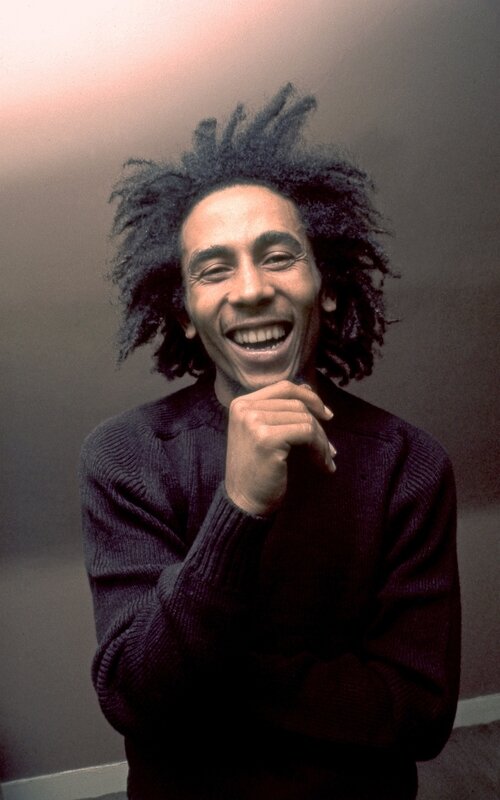
The Best of Bob Marley

___________

AS is traditional with these birthday…

IN THIS PHOTO: Bob Marley in 1979/PHOTO CREDIT: Glen La Ferman 

Lockdown Playlists, I am going to bring in a chunk of information from Wikipedia that provides information about the artist; I will then move onto the playlist itself at the very end of the feature. The artist in question is the late Reggae icon, Bob Marley. Today (6th February) would have been his seventy-sixth birthday - and I think there has been a real gap in the world since Marley died in 1981. He is a hugely important and inspirational artist who, in his short life, left such a mark on the world! Here is some detail regarding the legendary Bob Marley:

“Robert Nesta Marley, OM (6 February 1945 – 11 May 1981) was a Jamaican singer, songwriter, and musician. Considered one of the pioneers of reggae, his musical career was marked by fusing elements of reggae, ska, and rocksteady, as well as his distinctive vocal and songwriting style. Marley's contributions to music increased the visibility of Jamaican music worldwide, and made him a global figure in popular culture for over a decade. Over the course of his career Marley became known as a Rastafari icon, and he infused his music with a sense of spirituality. He is also considered a global symbol of Jamaican music and culture and identity, and was controversial in his outspoken support for the legalization of marijuana, while he also advocated for Pan-Africanism.

Born in Nine Mile, British Jamaica, Marley began his professional musical career in 1963, after forming Bob Marley and the Wailers. The group released its debut studio album The Wailing Wailers in 1965, which contained the single “One Love/People Get Ready”; the song was popular worldwide, and established the group as a rising figure in reggae. The Wailers subsequently released eleven further studio albums; while initially employing louder instrumentation and singing, the group began engaging in rhythmic-based song construction in the late 1960s and early 1970s, which coincided with the singer’s conversion to Rastafarianism. During this period Marley relocated to London, and the group embodied their musical shift with the release of the album The Best of The Wailers (1971).

The group attained international success after the release of the albums Catch a Fire and Burnin’ (both 1973), and forged a reputation as touring artists. Following the disbandment of the Wailers a year later, Marley went on to release his solo material under the band’s name.[10] His debut studio album Natty Dread (1974) received positive reception, as did its follow-up Rastaman Vibration (1976). A few months after the album’s release Marley survived an assassination attempt at his home in Jamaica, which prompted him to permanently relocate to London. During his time in London he recorded the album Exodus (1977); it incorporated elements of blues, soul, and British rock, enjoyed widespread commercial and critical success”.

To mark what would have been Marley’s seventy-sixth birthday, this Lockdown Playlist is an assortment of his very best tracks. Marley moved a lot of people in his lifetime and, almost forty years since his death, it is clear his genius and legacy…

STILL burns bright.

FEATURE: What Is the Solution? Financing Artists, Songwriters and Grassroots Venues

FEATURE:


What Is the Solution?

PHOTO CREDIT: @tijsvl/Unsplash 

Financing Artists, Songwriters and Grassroots Venues

___________

ONE of the things that I cover a lot…

xx.jpg

 IN THIS PHOTO: Tim Burgess

on my site is grassroots venues and streaming. Both are in the news again because, whilst venues are shut and streaming sites are not providing artists and songwriters with enough money, there is a struggle that cannot only potentially impact the future of live music; it can also damage existing artists in terms of their ability to continue and survive. I want to draw from a couple of articles because, whilst there is determination from those in the music industry to see change, we need Government support and businesses to step up. The music world was thrown into chaos because of the pandemic. It meant that venues had to close and, for artists who gain a lot of revenue from gigs, they were forced to look elsewhere for a financial stream. In terms of streaming platforms, the business model still means that, whilst the companies earn a lot of money as companies, a lot of the money is going straight to the labels and not to the artists and songwriters. I know it is hard to divide the pie equally but, as the actual talent are getting paid far less than labels, it seems that 2021 is a year when change needs to happen very quickly. Musician Tim Burgess wrote for The Guardian last week. He outlined the extent of the disparity and issue:

“The basic point is that the UK music industry contributed an estimated £5.8bn to the economy in 2019, but artists are maybe not seeing as much of that as they should. Almost 5m vinyl albums were sold in 2020, the most since way back when we released our debut LP in the early 90s. There’s hope and excitement in the gloom, but there’s also an elephant in the gloom. That elephant’s name is streaming. To understand the issues better, it might help if we imagined trying to explain the way it works to someone back in 1995.

PHOTO CREDIT: @lastly/Unsplash 

“OK, so for a penny under a tenner a month, you’ll have access to pretty much every record ever made, to listen to whenever you want. It’s like you own the music but you kind of don’t.” I’m guessing our person in 1995 would be mightily impressed.

There is much made of the sums paid to artists as a result of all this – yes, they get a cut, and millions of people stream every day, right? – right, but these sums usually go to 26 decimal places, and the first four digits are often 0.000.

Gary Numan recently said that he made £37 from a million streams of one of his songs. Again, he wasn’t griping about the money due to him, but painting a picture of what it’s like for a new artist who couldn’t hope to get a fraction of those plays. Let’s say 25,000 people streamed that artist’s latest track. As popular as that might make them seem, it wouldn’t buy them a coffee in the shop where they had to work a second job because their income from music was so meagre.

The thing is, streaming has taught us that people are willing to pay for music. Spotify had total revenues of $7.4bn in 2019. A lot of that money goes to major labels rather than directly to artists, so they’re part of the equation too. Tom Gray and the Broken Record campaign (pretty sure they supported us at the Rayleigh Pink Toothbrush in 1992) have done some sterling work in holding the platforms and labels to account, but it’s an uphill struggle.

PHOTO CREDIT: @hakimr/Unsplash

Julian Knight MP, chair of the digital, culture, media and sport committee, recently called in the major record labels to discuss streaming. He asked one of them whether they had cut royalty rates to artists after a deal with Spotify. He wasn’t happy with the answer. “You are in front of a parliamentary select committee now,” he said. “In the past, with the likes of Google, Facebook, YouTube and Twitter, we have found them to be frankly dissembling and not being in any way [clear]. So far I have to say you are beating them to the prize in terms of lack of clarity and lack of actual openness to a parliamentary committee.” I don’t know about you, but that doesn’t give me a lot of faith that they’re going to be open to changing things”.

I am not sure what the instant answer is regarding parity and something that will benefit everyone. I know that there are wheels in motion regarding discussion about streaming and improving the situation. With every new article and outcry from the music industry, it enforces the seriousness of how things really are. I am not sure what the long-term impact of the pandemic will be regarding musicians’ survival and streaming, but there is a growing desire for dialogue and action. Not only is there a massive issue concerning streaming and how it pays new and established artists; venues are also threatened right now. Two sources of revenue for artists are under threat right now.

 PHOTO CREDIT: @bantersnaps/Unsplash

Many of the larger venues will survive and be okay this year. The same cannot be said for a lot of the grassroots venues. As this NME article shows, there is one politician at least who understands the gravity of the reality many venues face:

“Greater Manchester Mayor Andy Burnham has suggested that the “big players” of the music industry should pay a levy to support grassroots music venues through the coronavirus pandemic.

Speaking as part of Independent Venue Week’s Culture Panel last week (January 28), Burnham said the industry had a responsibility to protect beleaguered venues which have faced the threat of financial ruin.

“The industry has to pay a levy to support grassroots venues, because that is their talent production ground. They are the junior football clubs of the country. That’s where the talent comes through,” he said.

Burnham said that the closure of venues would be “like closing junior grassroots football clubs and then expecting English football to still be strong.”

Backing the idea, Music Venue Trust CEO Mark Davyd explained that a number of European countries tax the music industry to finance grassroots music development.

“We would rather see the industry organise itself into such a model,” he said, per the BBC.

PHOTO CREDIT: @overdriv3/Unsplash 

“We believe the skills and expertise available in our industry could quickly develop such a programme to be an effective model of investment into new talent.

The MVT has continued to work to protect and preserve live music in the UK during the coronavirus pandemic, which has forced live music spaces across the country to close their doors. Back in November, the organisation launched a campaign to save 30 UK venues that were still in danger of being lost forever in the wake of coronavirus restrictions.

Having already secured over £80 million in donations and government grants this year through their #SaveOurVenues campaign – securing the futures of over 400 UK grassroots venues until March 31, 2021 – the MVT moved to aid 24 venues that have been “unable to access sufficient funding” and have been “added to a ‘red list’ of venues in imminent danger of permanent closure”.

Let’s hope that there is extra financing from the Government and bigger businesses to ensure that most of our valued grassroots venues will be okay. We all also hope that streaming sites look at how much they are paying artists and songwriters and, on that basis, alter things. I think that awareness continues to be raised but, beyond that, we all have our fingers crossed that there will be consultation and good news this year. Last week, NME published a piece of news that one hopes will be picked up by the Government:

“Leading figures across the live events industries have called on the UK Government to maintain the 5 percent VAT rate on ticket sales, which was introduced to help the struggling sector last year.

The new appeal has been delivered in a letter, signed by industry figures representing thousands of businesses across the UK, to Chancellor Rishi Sunak ahead of March’s budget.

The tax reduction was initially introduced in July last year, but the prolonged closures of venues due to the coronavirus pandemic means that they are yet to directly benefit. It is now feared that the VAT rate could now rise to 20 percent, striking a direct blow to beleaguered venues”.

One possible way that some venues may be able to open with a reduced capacity is through something called a ‘health passport’. This article explains more:

“After the coronavirus pandemic made the majority of live gigs impossible over the past 10 months – bar some socially distanced shows outside of lockdown – the industry is now looking for ways to reopen live music in a safe manner. Now, it’s been announced that start-up comany You Check will be trialling a new digital health passport app – collaborating with the Music Venue Trust and approved by the government’s Department for Digital, Culture, Media and Sport”.

The trials are currently planned at London’s 100 Club and The Exchange in Bristol for March with events at 25 per cent capacity with two sets of tests on the same people, before trialling at other spaces across the country with a hope to gradually building up capacity”.

It is good that there are developments an some glimmers of hope with venues at least. Whilst they may not be able to properly open until later this year, solutions are being discussed. I do have a fear for their solidity and safety if they cannot reopen fully soon, and if the Government does not pledge more financial support to ensure that live music can swing back post-pandemic. Artists and venues are facing a crisis right now and, with no confirmation as to when venues can reopen at their full capacity, let’s hope that those in power…

sss.jpg

 PHOTO CREDIT: @wesleyphotography/Unsplash

DO the right thing.

FEATURE: Vinyl Corner: J Dilla - Donuts

FEATURE:


Vinyl Corner

fff.jpg

J Dilla - Donuts

___________

THIS instalment of Vinyl Corner…

IN THIS PHOTO: J Dilla in his home studio/PHOTO CREDIT: Raph Rashid

is all about an album that turns fifteen on 7th February. If you have not experienced the late J Dilla’s Donuts, then you need to get involved! I would encourage everyone to buy it on vinyl, as it is such a magnificently rich and broad album filled with so many different sounds and samples. It is one of the last great sampling records in my opinion – something that was more synonymous with Hip-Hop of the 1980s and 1990s. Donuts is a largely instrumental album – there are short vocal snippets and phrases from various samples -, and it contains thirty-one tracks (that was how old J Dilla was at the time). Whereas a lot of sample-heavy albums are full songs with several samples in each track, Donuts is a collection of very short songs (between one and one-and-a-half minutes for the most part) where you get these amazing sketches and layers that all work wonderfully alongside one another. It is like you are scrolling through radio stations or a playlist and getting all these very different and intriguing songs! Despite the brilliance and originality of Donuts, there is sadness and tragedy behind the album. As we learn from Wikipedia, J Dilla was very ill in hospital for much of the recording – he died on 10th February, 2006 (Donuts was released on his thirty-second birthday):

“In 2002, J Dilla had been diagnosed with thrombotic thrombocytopenic purpura (TTP), an incurable disease of the blood, while also battling lupus, which had been diagnosed a year previously. According to close friend and fellow producer Karriem Riggins, the impetus for Donuts came during an extended hospital stay in the summer of 2005.

In the December 2006 issue of The Fader, J Dilla's mother, Maureen Yancey, a former opera singer, spoke of watching her son's daily routine during the making of Donuts:

I knew he was working on a series of beat CDs before he came to Los Angeles. Donuts was a special project that he hadn't named yet. This was the tail end of his "Dill Withers" phase, while he was living in Clinton Township, Michigan. You see, musically he went into different phases. He'd start on a project, go back, go buy more records and then go back to working on the project again.

I saw him all day, everyday. I would go there for breakfast, go back to Detroit to check on the daycare business I was running, and then back to his house for lunch and dinner. He was on a special diet and he was a funny eater anyway. He had to take 15 different medications, we would split them up between meals, and every other day we would binge on a brownie sundae from Big Boys. That was his treat.

I didn't know about the actual album Donuts until I came to Los Angeles to stay indefinitely. I got a glimpse of the music during one of the hospital stays, around his 31st birthday, when [friend and producer] House Shoes came out from Detroit to visit him. I would sneak in and listen to the work in progress while he was in dialysis. He got furious when he found out I was listening to his music! He didn't want me to listen to anything until it was a finished product.

He was working in the hospital. He tried to go over each beat and make sure that it was something different and make sure that there was nothing that he wanted to change. "Lightworks", oh yes, that was something! That's one of the special ones. It was so different. It blended classical music (way out there classical), commercial and underground at the same time”.

It is such a shame that J Dilla (James Dewitt Yancey) did not live long enough to see the impact his album had and the way it inspired Hip-Hop. From tracks being taken from Donuts and used on the T.V. to other Hip-Hop artists borrowing its beats, this exceptional album is still providing nourishment and fascination after all of these years. I want to finish by bringing in an article but, before then, AllMusic’s review of Donuts:

“Donuts was made on a hospital bed and in a home studio, on a stripped-down setup with a stack of vinyl. Released on its maker's 32nd birthday, three days before he passed away, the album has a resonance deeper than anyone could've hoped for or even imagined. Some who were close to Dilla have said that there are hidden messages in the samples, the track titles, and who knows where else. It's impossible not to speculate about some things, like the track titled "Don't Cry," the looped "broken and blue" from a version of "Walk on By," the presence of Eddie Kendricks singing "My people, hold on," or the fact that there are 31 tracks, a possible signal that Dilla survived a little longer than he expected. Then again, for every possible message, there are two or three elements that could've been designed to throw any analysis off its trail. After all, if there's one single image that the disc brings to mind, it's that of Dilla goofing off, having fun with some of his favorite records, and messing with some heads in the process. (And you could probably make the album's title out to be a metaphor for the circle of life, but sometimes a donut is just a donut.)

Armed with sources that are either known to novice sample spotters or only the most seasoned diggers -- surprisingly, the former greatly outweighs the latter -- Dilla's also just as likely to leave his samples barely touched as he is to render them unrecognizable. It's fitting that Motown echoes, a predominant theme, are often felt, from the use of Dionne Warwick's Holland-Dozier-Holland-written "You're Gonna Need Me" (on "Stop"), to the shifting waves of percussion plucked from Kendricks' "People... Hold On" (on "People"), to the Stevie-like piano licks within Kool & the Gang's "The Fruitman" ("The Diff'rence"). Most of the tracks fall into the 60-90 second range. It's easy to be overwhelmed, or even put off, by the rapid-fire sequence, but it's astounding how so many of the sketches leave an immediate impression. By the third or fourth listen, what initially came across as a haphazard stream of slapped-together fragments begins to take the shape of a 44-minute suite filled with wistful joy. Like everything else Dilla has ever done, Donuts is not defining; in fact, elements of its approach bare the apparent influence of Jaylib collaborator Madlib. His mode has always been too slippery and restlessly progressive to be equated with any one track or album, but Donuts just might be the one release that best reflects his personality”.

Even if you are not a Hip-Hop fan and are a bit unsure about digging too deep, I would advise you to listen to Donuts as it is so accessible and varied. The sounds and sensations one gets from the album are so heady and memorable. It is a unique and hugely impressive album that is moving people fifteen years after its release. In 2016, Observer Music looked back on Donuts ten years after its release. The article consisted a fascinating discussion between figures who reflected on an awesome album:

“Participating in the discussion were renowned funk/soul/hip-hop DJ and Stones Throw CEO Peanut Butter Wolf, Stones Throw recording artist, veteran jazz drummer and longtime Dilla friend Karriem Riggins, acclaimed electronic music maverick Adam Dorn, who does business as Mocean Worker, and Jeff Parker, the mighty guitarist from Chicago post-rock legends Tortoise”.

“In your opinion, do you think Dilla had this magnum opus in his mind or was the creation of these beats done on a more cathartic level or therapeutic level for him that summer he was in the hospital?

Riggins: He would make the beats from his hospital bed at Cedar-Sinai. At that point, he wasn’t mobile.

Wolf: I think the pain and suffering he dealt with off and on through his final years contributed to the album he created coming out the way it did, but when he gave me the first Donuts demo on CD, he was in between hospital stays. He was in my car with Madlib and I and we were going record shopping and he just gave it to me to play in the car. I had released the Beat Konducta volume 1 & 2 album a few months before (which is Madlib’s instrumental hip-hop alias) and I later felt like maybe he gave me that as his own version of Beat Konducta.

So the story goes the album was named as such because Jay loved donuts. But what was the true meaning behind the title?

Wolf: The “donuts” thing was just another tongue-in-cheek thing that Dilla did. I don’t think he really thought too hard about calling his album Donuts. I don’t even to this day know if it was supposed to be an instrumental album or a beat tape for rappers, but I damn near begged him to let me release it as an instrumental album and he agreed. But the “donut” thing could be his ode to unhealhty food (he called another one of his beat tapes “Pizza man”) or it could be because he knew that J Rocc and I loved spinning 45s when we went on the road with him and Madlib, and Dilla sampled from 45s for most of that album. “Donuts” is a nickname for 45s cuz of the hole in the middle. We’d all go to Rockaway Records in Silverlake/Glendale and get our fix of 45s and I believe that’s the record store where the majority of the samples from Donuts came from.

How does Donuts look on your ends a decade later?

Dorn: It’s amazing to witness because now it’s long enough ago that guys don’t even know why they’re playing behind the beat the way they are. Like they don’t even know the records that inspired this in the first place. That freaks me out the most. Combine that with churches churning out players and you have a rebirth of musicianship. 

Jeff Parker: We were all giant fans of that record in Tortoise, man. I mean, we all loved Dilla in general. But that record blew everybody’s minds. We had all been following Dilla’s music, and whenever he dropped anything we were curious to know what it was going to sound like and one of us would go out and get it. It was a very exciting time.

For me personally, it wasn’t anything I expected it to sound like. It was totally different from the stuff that he had been doing. When I first put it on, I was actually kind of put off by it. I was like, “Yo, man, where’s the smooth beats? Where’s the space?” (laughs) Especially comparing it to all of his other stuff, I was like, “Man, what is this?” But the more and more I listened to it, and like the most intriguing music, hearing it over and over again eventually it became like one of my favorite things I had ever heard, still to this day. I was actually just listening to it very recently and I always hear new things every time I listen to it”.

I shall leave things there, as I would point people in the direction of the album – either on vinyl or streamed – and its myriad sounds. Ahead of its fifteenth anniversary, I was eager to spotlight an album that has a huge legacy and has been celebrated by critics far and wide. I hope, on 7th February, people around the world spin Donuts and raise a glass to remember…

THE remarkable J Dilla.

FEATURE: Talk of the Town: The Chrissie Hynde Telecaster and a Pledge to Get More People to Pick Up a Guitar

FEATURE:


Talk of the Town

jj.jpg

PHOTO CREDIT: ddp USA/Rex/Shutterstock 

The Chrissie Hynde Telecaster and a Pledge to Get More People to Pick Up a Guitar

___________

AMONG all the bad news and lack of positive rays…

xxxx.jpg

 PHOTO CREDIT: Fender

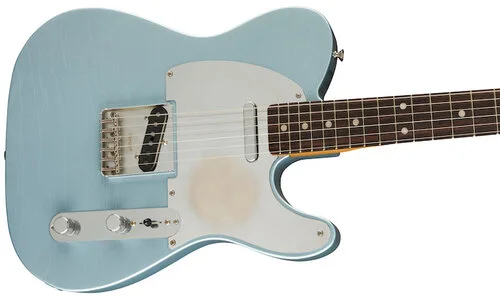
in the music industry right now, there are these interesting stories that take the mind in a different direction. It has been a pretty heavy year already for music in terms of bad news – what with venues still closed -, but I am always cheered by something a little more positive. One of my favourite musicians, Chrissie Hynde, has launched her own guitar. This NME article explains more:

“The Pretenders frontwoman’s team-up with the US instruments manufacturer, which was announced yesterday (February 2), pays homage to the Ice Blue Metallic Telecaster she purchased in New York City nearly 40 years ago.

Since the release of the band’s self-titled debut album (1980), Hynde has played the guitar on many subsequent studio records and live tours.

Fender’s new Chrissie Hynde Telecaster, released as part of the company’s Artist Signature Series, allows fans worldwide to embody the axe-playing prowess of The Pretenders’ leader for the very first time.

According to an official description, the guitar “serves the unmistakable look and feel of Hynde’s treasured ’65 Telecaster model”. The new instrument features an alder body in Faded Ice Blue Metallic Road Worn lacquer finish, vintage-style ’50s single-coil Tele pickups voiced to match Hunde’s original set as well as a 6-stainless steel barrel saddle bridge.

Justin Norvell, EVP Fender Products, said it was “a true honour” to bring the singer’s “legendary” guitar to life, adding: “Chrissie really wanted this model to be as faithful as possible to its original.”

You can watch an official demonstration video above and find further information at Fender’s official website”.

I wonder whether this development will inspire other artists and we will see more guitars to enter the market. I do not play the instrument myself, but I do have an appreciation of a great guitar. I think that other signature series have been released, but rather than this news being something that can benefit Fender and Chrissie Hynde, I think that it will lead many people to pick up a guitar. In 2018, we learned that half of the guitar-buying public were women. I am not the only one that is asking whether women are the future of guitar music. Anna Calvi, and St. Vincent are two of my favourite guitar players of the moment - and St. Vincent already has her own collection. I wonder whether we will see an Anna Calvi series. She has spoken about her guitar heroes before; she talked with Guitar World last year about her early idols and her dream guitar:

“I’d say my initial guitar hero was Jimi Hendrix. I saw some footage of him playing at Woodstock, I must have been around nine years old and I thought he sounded amazing. It got me really excited. If I could meet any musician from history, it would definitely have to be him. Just to be in the same room and see him play would be magical. When I was a bit older, I got into Jeff Buckley, I really loved his approach to guitar, as well as [jazz and] fusion-style players John McLaughlin and Django Reinhardt.”

“I got my dream guitar when I was 14 and it’s the same guitar I play now – a 1994 Telecaster. It just sounds so pure and beautiful, better than anything else I’ve played. I’m monogamous when it comes to guitars. I haven’t changed anything on it, though I do sometimes wish it had a whammy bar because they can be a lot of fun".

I do think that more young women have picked up a guitar over the past few years, and this will (hopefully) continue unabated. It is pleasing that more people in general are finding the guitar. Maybe things will drop off during lockdown, but I do think that we should be encouraging as many people as possible to play an instrument. I feel that there are some great Rock bands and guitarists at the moment, though there is still a dominance of other sounds and styles. Maybe we have passed the golden age of guitar bands and players…that is not to say things have died down in that respect. I do feel that many people will have an appetite for the guitar and creativity now that we are in lockdown and, post-pandemic, I think many bands will form and we will see a surge in guitar sales. After the news about Chrissie Hynde’s special Fender, I would really like to see some more artists partner with guitar companies. I feel Hynde herself will influence a lot of people to play guitar but, as we look to a year with potentially no festivals or live gigs, maybe there is not the same impetus and allure. Things are bad now for many people, but I have heard of many people practicing an instrument when they would not otherwise have even considered it. Maybe Chrissie Hynde and this latest great launch will not single-handedly kickstart a new band of people buying electric (and acoustic) guitars but I think, through this year and going forward, we will see…

 A real boom and amplification.

FEATURE: I Drift with Dunes: Kate Bush’s Egypt

FEATURE:


I Drift with Dunes

Kate Bush’s Egypt

___________

I want to focus on a Kate Bush song…

that does not get a lot of attention. I don’t think I went into a lot of depth about Egypt when I marked Never for Ever’s fortieth anniversary last year. It is, perhaps, not one of the best songs from that album - though I feel it warrants a lot more consideration and focus. I want to bring in an article that goes into depth regarding Egypt. It is an interesting song for sure, though how successful lyrically and musically it is has divided people. I really love Bush’s vocal on the song and the sort of atmosphere that she summons. The Kate Bush Encyclopaedia gives us some background and information regarding one of her lesser-known songs.

“Song written by Kate Bush. She described the song as 'an attempted audial animation of the romantic and realistic visions of a country'. The song was premiered during the Christmas Special in 1979 and released on the album Never For Ever in 1980.

“'Egypt' is an attempted audial animation of the romantic and realistic visions of a country. (Kate Bush Club newsletter, September 1980)

The song is very much about someone who has not gone there thinking about Egypt, going: "Oh, Egypt! It's so romantic... the pyramids!" Then in the breaks, there's meant to be the reality of Egypt, the conflict. It's meant to be how blindly we see some things - "Oh, what a beautiful world", you know, when there's shit and sewers all around you. (Kris Needs, Fire in the Bush. Zigzag (UK), 1980)”.

Appearing at the end of Never for Ever’s first side – just after the superior All We Ever Look For -, maybe Egypt is a bit of a side-ender that is not in the same class as Babooshka, Army Dreamers, and Breathing. At 4:10, Egypt is one of the longest songs in Never for Ever, and it is often listed alongside Violin as one of the weaker efforts on the album. I really love Egypt and, whilst it was strange seeing the song on Kate Bush’s Christmas special – the song got its premier there in 1979 -, I think the best way to enjoy the song is on the album - and after a run of four terrific songs on Never for Ever’s opening side. I want to bring in the excellent Dreams of Orgonon, who have gone deep with Egypt. There are some compelling insights:

“Having just completed her triumphant European tour, Kate Bush was entering her imperial phase. Instead of working with producer Andrew Powell and the band of her first two albums again, she established control of her work by appointing herself co-producer with Jon Kelly, and finally using her own band for a whole LP. The result was a more authored album than her first two, one with the mark of its creator in its every facet. Never for Ever is a weird step forward: for one thing, it’s much more in line with the synthesizer music that was beginning to surface in British pop. It’s the album where she discovers her long-term ally, the Fairlight, a classic synth which would direct much of her music.

Never for Ever’s interest in soundscapes is greater than that of its predecessors, sometimes letting songwriting take a backseat to more spatial ideas of music and composition.  The technology of music takes greater import in her work as she starts composing with synths. Never for Ever is the point where Bush’s songs start sounding like their concepts. Rather than only singing about the magical forces of the universe, she’s now able to implement its sounds into her music.  Now in addition to her idiosyncratic vocals and unorthodox compositions, she has the technology to match her songs too.

Speaking of “strange creatures,” let’s talk about “Egypt” (the song more than the country, although we’ll be talking about the latter soon). Its treats the country as an enigma: it is seductress, serpent and sigil. “She’s got me with that feline guise/got me in those desert eyes,” the chorus says, “Oh, I’m in love with Egypt.” Bush’s Egypt is that of Ancient One of the Pharaohs, necropolises and the Sphinx, which Bush refers to in the best fucking lyric ever with “my pussy queen knows all my secrets.” The perception of Egypt is occidental: Bush is captivated by the myth of Egypt, the country that’s found in history books rather than the one that actually exists on the Sinai Peninsula. She’s dealing with iconography more than actual lived history once again. Falling into the pervasive Western trope of depicting Eastern landscapes minus the people (The Lion King, anyone?), she sings about an unpopulated landscape, a playground for colonizers rather than a place where people live. In his classic text Orientalism, Edward Said describes the East as “a theatrical stage affixed to Europe,” where the interests of Western imperial powers are acted out. The ever-theatrical Kate Bush operates similarly.

wwww.jpg

This is no surprise given that “Egypt” was the first new song written for Never for Ever (“Violin” was recycled from the Phoenix years). It’s oddly shaped and difficult to parse — it sounds outright unfinished, with its sparse lyric and chorus. More than likely it was written in between Lionheart and the Tour of Life, as it made its first appearance on that tour, where it was introduced as visual spectacle instead of an album track. As a result the song is more something to be seen than heard, as it was originally written for the stage. In concert, Bush strove up to the audience draped in full Cleopatra-meets-Captain-Marvel, draped in the red, blue, and gold livery, heralded by pipes and Preston Heyman’s powerful drumming. The subsequent performance is tense and distant — its frantic arrangement keeps it from getting dull, and it’s more driving and catchy than its record counterpart. The tour’s punchy and often acoustic arrangements give “Egypt” more weight than it would later have, and the song would be worse off without it.

Yet therein lies the problem of “Egypt”: in striving to dispel myths of Egypt, it imitates them. Musically it’s host to a number of caricatures found in Western imitations of “Oriental” music: the live versions of the song have this zig-zaggy four-note riff which is akin to plenty of Hollywood scores for epic movies set in Southern Asia or Northern Africa (note this was shortly before Raiders of the Lost Ark was released). It’s not just a crass idea of what European musicians think Egyptian music sounds like; it’s a tacky-sounding riff as well. Paddy Bush’s strumento de porco doesn’t help much with its ringing scrape of a sound either (“Oriental” music sounds like things been scraped on other things, didn’t you know?)”.

I have argued how many of Kate Bush’s deeper cuts have not been explored and played on the radio. Even if Egypt is not in many peoples top-twenty, I think it is a bit of an underrated gem. I think Bush’s vocal is sublime; Preston Heyman’s percussion gives the song rumble and mystique, whilst Paddy Bush adds plenty of atmosphere with the strumento de porco (which he deployed on Kashka from Baghdad from 1978’s Lionheart) and backing vocals. I feel what makes it is the addition of the Prophet 5 from Mike Moran. The Prophet 5 came out in January 1978. It was the last synthesizer made by the Sequential Circuits Corporation (SCI). Sounds were produced through voltage-controlled oscillators rather than digital samples. The collection of sounds and vocals is quite heady and, though the intentions behind the track are not necessarily realised, it was Bush pushing her ambition and stepping into territory few other artists were exploring at the time! Even Bush’s less successful songs were far more interesting and original than what was happening around her. I don’t think I have ever heard Egypt played on the radio. It is long overdue an outing! If you have not heard the song before then check it out and, if you can, play Never for Ever in its entirety and…

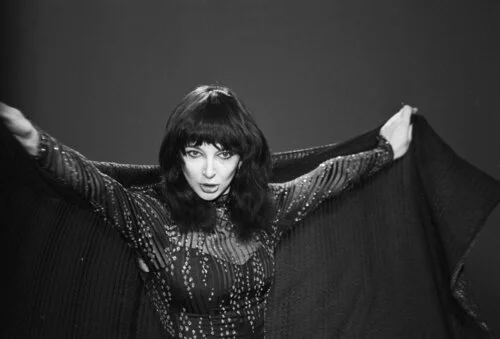
 IN THIS PHOTO: Kate Bush signing Never For Ever at London's Virgin Megastore/PHOTO CREDIT: Chas Sime/Getty Images

EXPLORE a hugely fascinating and broad album.

FEATURE: The Lockdown Playlist: Tracks Featured on Song Exploder: 2014-2017 (Inclusive)

FEATURE:


The Lockdown Playlist

Tracks Featured on Song Exploder: 2014-2017 (Inclusive)

___________

IN an age where streaming means that…

ILLUSTRATION CREDIT: Carlos Lerma

so many people pick at songs and only listen to them for a few seconds, having a podcast that is dedicated to forensic and passionate discussion about a single track seems like it would be deemed to fail! Conversely, Song Exploder is a massive success. Artists are invited to discuss and explain a song of theirs. In an episode from 27th January, HAIM reflected on Summer Girl:

“HAIM appeared on the latest episode of Hrishikesh Hirway’s Song Exploder podcast. The Los Angeles band was joined by producers Ariel Rechtshaid and Rostam to discuss the genesis of their 2019 single “Summer Girl,” from last year’s Women in Music Pt. III. Listen to the full episode below.

In the episode, the sisters talk about how Rechtshaid’s cancer diagnosis informed the songwriting, referencing Lou Reed’s “Walk on the Wild Side,” trying to get Bono to sing on the track, and more.

Women in Music Pt. III is up for the 2021 Grammy Award for Album of the Year. HAIM were also nominated for Best Rock Performance for “The Steps.” Last month, the group shared a remix of “3AM” by Toro y Moi.

Find “RIYL: Haim’s Women in Music Pt. III” over on the Pitch”.

For this Lockdown Playlist, I have included songs from the series. I would advise people to check out the Song Exploder podcast, and you will get a new appreciation for music and what goes into writing and creating a song. Perhaps, ironically, I am only including the songs featured on Song Exploder - though I would advise people to listen to the corresponding episodes. I am taking episodes from 2014-2017 inclusive for the first feature; I will bring it up to date for the second. Here is a fantastic selection of…

WONDERFUL and interesting tracks.

FEATURE: Groovelines: Fleetwood Mac – Rhiannon

FEATURE:


Groovelines

IN THIS PHOTO: Fleetwood Mac’s Stevie Nicks in a U.S. recording studio in 1975/PHOTO CREDIT: Fin Costello

Fleetwood Mac – Rhiannon

___________

I have not done this feature…

 PHOTO CREDIT: Fin Costello/Getty Images

for quite a while and, with an absence of good news and too much happening in the music industry (compared to usual), I want to spend some time examining a classic track. I also realise that I have featured Fleetwood Mac a couple of times in the past couple of weeks – in the previous feature, I used them as an example of an older act who are doing well on streaming sites; perhaps (unintentionally) burying newer artists who need the streaming revenue. Because Fleetwood Mac released Rhiannon on 4th February, 1976, what better way to mark its forty-fifth anniversary than to look inside the song?! In fact, we refer to the song as ‘Rhiannon’, but I think that its full title is Rhiannon (Will You Ever Win). I wanted to write about the track, as I adore Stevie Nicks’ songwriting and, when she and her then-boyfriend Lindsey Buckingham first appeared on Fleetwood Mac’s eponymous album of 1975, I think her songwriting helped transformed the band. Rhiannon was released in February 1976 in the U.S., whilst it came out in the U.K. a couple of months later. Nicks discovered the Rhiannon character through a novel called Triad by Mary Bartlet Leader. The novel is about a woman named Branwen who is possessed by another woman named Rhiannon. Nicks wrote three of the eleven tracks on Fleetwood Mac – including the exceptional Landslide -, and I think she would hit her peak on 1977’s Rumours on songs like Dreams.

Rhiannon is rightfully considered one of Fleetwood Mac’s classics; it hit number-eleven in the U.S. in June 1976. I love the combination of beauty and haunting tones in Rhiannon and how tight the band sound. There would be tensions by the time of Rumours, yet they sound so solid and harmonious throughout Fleetwood Mac. Last year, there was news that Stevie Nicks was considering a film based around the Rhiannon song:

““Last year, I made a pitch to everybody that when this Fleetwood Mac tour is over, I’m taking next year off because I want to work on my Rhiannon book/movie,” she said, with the film said to be based on the classic Welsh myths that inspired the original song.

“And I want to maybe work with some different producers… I don’t know what I want to do! I just know that I don’t want a tour!”

“I have some Rhiannon poetry that I have written over the last 30 years that I’ve kept very quiet,” she explained.

“I’m thinking, ‘Well here I have all this time and I have a recording setup.’ And I’m thinking I’m going to start doing some recording. I’m going to start putting some of these really beautiful poems to music, and I have the ability to record them. So that’s on my to-do list”.

I want to bring in an article from Louder Sound, who told the story behind the bewitching and fascinating Rhiannon:

“It makes sense that what has become Stevie Nicks’s signature song was inspired by a kind of ancient magic. Bibliomancy, a mystical practice dating back to the 1700s, holds that if a book is picked up and opened to a page at random, the first word or sentence one sees will reveal some kind of epiphany. But the book that Nicks picked up in 1974 – one that would eventually help launch her into superstardom – didn’t exactly seem full of divine promise.

“It was just a stupid little paperback that I found somewhere at somebody’s house, lying on the couch,” Nicks says more than 40 years on. “It was called Triad [written by Mary Leader] and it was all about this girl who becomes possessed by a spirit named Rhiannon. I read the book, but I was so taken with that name that I thought: ‘I’ve got to write something about this.’ So I sat down at the piano and started this song about a woman that was all involved with these birds and magic.

“I still have the cassette tape of when I was first writing it,” she continues. “Lindsey [Buckingham, Nicks’s musical and then romantic partner] came in and I said: ‘We have to go to a park and record the sound of birds rising.’ And he looked at me like I was crazy. And I said: ‘Don’t you think Rhiannon is a beautiful name?’ And he said: ‘Yeah, it is a beautiful name.’”

True to its witchy beginnings, in time the song would reveal deeper significance. “I come to find out, after I’ve written the song, that in fact Rhiannon was the goddess of steeds, maker of birds,” Nicks explains. “Her three birds sang music, and when something was happening in war you would see Rhiannon come riding in on a horse.

Joining the rest of Fleetwood Mac in Sound City Studios in Los Angeles, the pair were nervous and excited about their new roles with the band. Of the magic moment when they first harmonised with Christine McVie, Mick Fleetwood later said there was an “undeniable sensation of rightness” about the vocal sound. “It was if Merlin himself could not have concocted a spell more perfect.”

And the spell extended to Rhiannon. With Buckingham’s finger-picked guitar line, an offbeat snaky groove from Fleetwood and bassist John McVie, and ethereal background vocals, Nicks’s raw piano demo magically came to life.

“What the band does, and have always done,” she says, “is take the skeleton of a song and flesh it out. They arrange right underneath my little skeleton.”

In the years since, Rhiannon has been covered by everyone from Waylon Jennings to Taylor Swift to countless American Idol hopefuls. And it remains a staple in the reunited Mac’s shows in 2015. Along the way, the strange magic from that bit of bibliomancy has continued to surprise Nicks.

“Years later, somebody sent me a set of four books written by a lady named Evangeline Walton,” she says. “She spent her whole life translating The Mabinogion and the story of Rhiannon. She lived in Tuscon. I went there in 1977, after Rhiannon had been a big huge hit. Her house was totally Rhiannon. She spent her whole life on the story. She never married. She had in essence almost become Rhiannon. And it was trippy”.

On its forty-fifth anniversary tomorrow (4th February), I hope that Rhiannon is played a lot, as it is a magnificent song! I will be interested to see if Nicks peruses her mooted projects and anything comes to light this year. Although I love Fleetwood Mac as a whole, I have always had a soft spot for Stevie Nicks and her songwriting majesty. Whilst she has penned many classics for Fleetwood Mac, I think that Rhiannon is among…

HER very best moments.

FEATURE: Spotlight: Maggie Lindemann

FEATURE:


Spotlight

Maggie Lindemann

___________

DESPITE the fact Maggie Lindemann…

has been recording since she was a teenager, I think her latest work, the PARANOIA E.P., is her biggest statement. It has won some very positive reviews – I will bring one in at the end -, but it is important to learn more about the twenty-two-year-old Texan-born artist. In this 2019 interview from Hypebae, we learn about Lindemann’s start and musical influences:

“You’re originally from Texas, would you say that your background in the South has impacted you on a personal level, how and in what ways?

Yeah, I feel like being from the South you’re just raised with more of this Southern hospitality. I try to be really respectful and always say “please” and “thank you.” I always feel like I have a lot of respect for my elders.

Can you break down how you found yourself in the entertainment industry?

When I first started making music I was 16 and now I’m 20. Throughout my career, I’ve grown a lot and come to terms with who I am. I’ve grown and so has my music. In the beginning, I was making music that was a lot different than the music I’m making now. That’s just because I’m growing up and I’m finding my own sound. [At the start] I didn’t really know what kind of music I wanted to make and I was just kind of doing whatever in the moment. But now I’m a little bit more sure of myself and my music and it shows because I’m more honest.

Can you share the differences you’ve found between living and working in Los Angeles to doing the same in Texas?

When I lived in Texas I was just in high school living with my family, so there’s a big difference. Now living in Los Angeles, I’m actually working. It’s different because I was living with my family so I didn’t have to work to pay for rent or go and get groceries or go get basic things to live. So, it’s definitely a big shift, now I have to pay my bills and make sure everything is paid on time and go to the grocery store [to] go shopping for myself. I’m working all the time so it’s definitely a big difference. I had to grow up quicker I guess.

In the past you’ve shared that Lana Del Rey and BANKS influence you, do you have any other influences? How do they influence you?

When I was younger I listened to a lot of Christina Aguilera, Gwen Stefani, Britney Spears. Actually, this is so random but when the Katy Perry movie came out, that really inspired me to want to sing even more — because I saw how much she went through with her family and going into labels that declined her. They literally told her “no” and she kept going and became one of the biggest names in pop. That really inspired me to want to become a singer and work hard, and it just made me think “people go through all that to get to where they are, so I have a chance”.

I have listened to PARANOIA quite a bit and, whilst I am familiar with singles like Knife Under My Pillow, songs such as Different have caught my ear and stayed in my mind. I want to draw from an interview from Celebmix from late last year, where Lindemann was asked about a couple of songs from the E.P. - in addition to how it feels to be personal in her lyrics:

“Knife Under My Pillow gives listeners an insight into your experience with paranoia, despite how upbeat the track is it’s quite a personal look into something which impacts you significantly. It was the first track to be released from the EP and your first of 2020; how did you find the response to it from fans?

The response was really good! You never know what to expect when you release a song, especially when the new stuff you’re doing is so different. But I’m really excited and finally feel confident in my music, so it’s nice to see people being so positive about it!

Latest single Scissorhands is a powerful, beat driven number and one we’ve interpreted as being about the inability to get close to others without hurting them. Can you tell readers more about the story behind the track?

The story is based off of Edward Scissorhands. I love that movie and always felt like he was super relatable to me, so decided to write about him haha. He’s so misunderstood and forced to conform to this basic world and then when he can’t, they shun him. I have felt so out of place for a really long time and felt like I can never get close to people.

Do you ever find it hard making yourself so open/exposed to the listeners through the lyrics you’ve written? Or is it easier for you to write about personal experiences or feelings you’ve felt?

I do sometimes. I have a bad tendency to overshare because my anxiety freaks out and will tell me to just keep talking, so in sessions that’s actually super helpful lol. But I do find it way easier and helpful to write about personal stuff”.

I think Maggie Lindemann’s music has progressed since her earliest days, and she is shaping up to be one of the most interesting, engaging and powerful artists in the world. I would recommend people check out her music, as it is not necessarily tailored for a niche audience and demographic. In an interview with EUPHORIA., Lindemann was asked about her lockdown experiences and whether music provides a form of escape:

“What’s your personal favorite track on the EP?

I feel like I connect with most is probably “Different.” I just always felt like those lyrics have been me for so long. I mean all the other lyrics on Paranoia are more in the moment. A lot of those feelings are maybe gone or not as a prominent. But “Different” is definitely the one that I feel like I’ve just related to the most for the longest time.

You’ve moved houses, so has the paranoia you’d been experiencing gone away a little or has getting stuck at home over lockdown made things difficult?

Moving has definitely helped a lot with the paranoia. I started writing this EP in June-July 2019, so much before the pandemic while I was still at the old house and I don’t really feel paranoia in my apartment now. So that aspect of paranoia has ebbed, however, I’m constantly anxious about other things. I always wonder “is my boyfriend going to leave me?,” “is everyone going to hate me suddenly?” and writing about it helps me deal with it better; putting it out into words and putting music to it.

Would you say music is an escape for you?

Yeah, definitely. I think it helps a lot. It’s like a therapy session. In therapy when you have to talk about something that’s hard for you, you are dreading it because you don’t want to bring up that emotion. But at the end of the session, I feel relieved because instead of ignoring it and pushing it to the back my mind, I’ve addressed it and spoken about it. It’s uncomfortable but it helps.

What’s one message you hope listeners take away from your music?

I just want for people to feel like they like know me more personally. When I listen to someone I want to feel like I know them, so I hope people have that kind of connection with me and feel like they can relate to me through my music”.

There are a couple of features I want to end with, just to provide more depth and detail regarding Maggie Lindemann and her incredible music. I think she has developed from a purely Pop artist to a more rounded one in recent years – bringing in more Rock elements. One might compare her in that sense to Miley Cyrus but, to me, I think it has been a natural evolution. We learn more about this in an interview with Billboard:  

“Paranoia has arrived nearly six years into Lindemann’s career, and it’s for the best that she waited. “I didn't know who I was yet -- I was still growing up,” she says of her early days in the business. As she experimented, Lindemann formed and scrapped ideas for an EP over the years. It wasn’t until early 2020 that she felt the timing was right, and she completed the project during the pandemic. “I'm glad that I didn't put out an EP before this one, because looking back on it, I would be disappointed in myself if I had a pop EP out and then switched genres completely,” she says.

At 22 years old, Lindemann is also remarkably mature about her journey. She’s glad to be making more interesting music now, but she doesn’t disparage her pop past. (“I like pop music, too, but the energy in rock and alternative music is so different.”) She still wears pink, though it’s more likely to appear on her person in the form of streaked hair than a feathered dress.

Lindemann's EP cleverly covers a range of styles, though all of the songs are more or less in the rock lane. “Some are a little more metal-leaning, some are more punk, but they're all sonically in the same world,” she explains. Lindemann found inspiration in Gwen Stefani and No Doubt, Avril Lavigne and Paramore -- as well as Evanescence and Flyleaf, which is why you might suddenly find yourself transported to the inside of a Hot Topic upon hearing a song like "Loner" (“Yeah, I'm a loner/ And I like it that way/ I like a dark room/ With nobody but pain!”). The tracks are nostalgic, but not cheesy or inauthentic; Lindemann’s voice and production are the real deal.

Paranoia was released via Caroline Records and Lindemann’s own label, swixxzaudio, which she formed after leaving 300 Entertainment. "I wanted to have more control over what I was doing," she says, asserting that the Caroline crew is mostly hands-off when it comes to A&R and creative decisions. “It feels more like teamwork, rather than having someone telling me what's going to happen”.

I will wrap up soon, but I mentioned how I would bring a review in for PARANOIA. I think the E.P. is an impressive release and one that will bring new fans Lindemann’s way. In their write-up, this is what Melodic Magazine noted:

“The EP begins with three of the four previously released singles.  We still get goosebumps when we hear “Knife Under My Pillow,” which opens up PARANOIA, as we relive the anxiety and fear that Maggie describes on the track.  The panic only increases after the track ends, though, coming in as loud and as clear as ever on the proceeding track, “GASLIGHT!”  Out of all the tracks on the EP, “GASLIGHT!” is the one that goes the hardest; you cannot shake the screams that Siiickbrain contributes to the track.  Luckily, “Scissorhands” is able to cut some of the tension we still feel after “GASLIGHT!,” focusing on a narrative that is still tragic, but not as devious.

Halfway through the EP, we have “Crash and Burn” and “Loner.”  Maggie’s pleading timbre works so well on these tracks, where she describes different forms of isolation.  On “Crash and Burn,” for instance, we hear about a relationship that is being left for dead.  How are you expected to work things out when the other person always walks away?  On the other hand, maybe being alone is not such a bad thing – a concept we hear on “Loner.”  Between hasty guitar riffs and heavy walls of sound, Maggie proudly boasts about how independent she feels when she is alone, making us see “loners” in a better light.

The last portion of PARANOIA begins with “Love Songs.”  The acoustic track is a stand-out moment on the EP, as it takes us to a safer, quieter space.  We hear just how pure and sincere Maggie’s voice really is, and fall in love with the sentiments she presents.  Even though the track is almost over too soon, its elegance stays with us as we move to the next track, “Different.”  While the rhythms and beats pack a punch, the melodies that Maggie sings are light and smooth; we are reminded just how well she can balance the strong and the subtle.

Appropriately so, the EP concludes on the notion of strength with “It’s Not Your Fault.”  The track represents all of the themes we have heard on the EP thus far, such as love, independence, and tragedy.  Out of everything, though, we cannot help but identify with the song’s relentless vibes; we stand with Maggie, and support the concept of doing what is right for yourself.

In the end, PARANOIA does live up to all of the hype.  The EP is an extension of the singles that were released last year, creating a fiery, pop punk world that you just have to be a part of.  While I wish there was more space for songs like “Love Songs” on the EP, I appreciate all that the EP has to offer.  Overall, Maggie came in very strong with PARANOIA, and I am excited to find out what she will create for her debut album”.

If you have not discovered the music of Maggie Lindemann, then I could definitely recommend it. I think that she will continue to grow stronger and more ambitious as an artist; stepping into new territory and delivering even finer songs. At just twenty-two, she has accomplished so much already but, having not long released a popular E.P., she will want to…

DRIVING forward.

_______________

Follow Maggie Lindemann

FEATURE: Vinyl Corner: Gorillaz – Gorillaz

FEATURE:


Vinyl Corner

Gorillaz – Gorillaz

___________

I don’t think I have featured…

too many albums from the first few years of the twenty-first century for Vinyl Corner. On 26th March, it will be twenty years since Gorillaz launched their eponymous album. Gorillaz reached number-three in the U.K. and number-fourteen in the U.S.. It has sold over seven-million copies worldwide. I think that Gorillaz is an album that you should grab on vinyl, as it sounds terrific and contains some of the band’s best material. I am not sure whether there are plans for a twentieth anniversary vinyl release, so keep your eyes open for that! I will bring in a couple of reviews for Gorillaz in a minute but, before then, a little history regarding the formation of the group. Here is some background about a group who, twenty years later, are still going strong:

“Musician Damon Albarn and comic book creator Jamie Hewlett met in 1990 when guitarist Graham Coxon, a fan of Hewlett's work, asked him to interview Blur, a band Albarn and Coxon had recently formed. The interview was published in Deadline magazine, home of Hewlett's comic strip, Tank Girl. Hewlett initially thought Albarn was "arsey, a wanker"; despite becoming acquaintances with the band, they often did not get on, especially after Hewlett began seeing Coxon's ex-girlfriend Jane Olliver. Despite this, Albarn and Hewlett started sharing a flat on Westbourne Grove in London in 1997. Hewlett had recently broken up with Olliver and Albarn was at the end of his highly publicised relationship with Justine Frischmann of Elastica.

The idea to create Gorillaz came about when Albarn and Hewlett were watching MTV. Hewlett said, "If you watch MTV for too long, it's a bit like hell – there's nothing of substance there. So we got this idea for a cartoon band, something that would be a comment on that." The band originally identified themselves as "Gorilla" and the first song they recorded was "Ghost Train" which was later released as a B-side on their single "Rock the House" and the B-side compilation G Sides. The musicians behind Gorillaz' first incarnation included Albarn, Del the Funky Homosapien, Dan the Automator and Kid Koala, who had previously worked together on the track "Time Keeps on Slipping" for Deltron 3030's eponymous debut album”.

I love how the singles are sprinkled through Gorillaz so that you get these well-known tracks and then a deeper cut next to it. With Re-Hash, 5/4, and Tomorrow Comes Today opening the album, Gorillaz begins with a mighty punch and awesome trio! Damon Albarn wrote most of the album tracks alone (that would change for future albums), and he made sure that he was not just repeating what he did with Blur. Clint Eastwood, I feel, is their defining track - and it is one of the fines from the first decade of the twenty-first century. I can listen to Gorillaz from start to finish and, not only does it bring back great memories; there is also this this sense of reveal as tracks and moments that you may have missed years ago blossom and bloom. Although I think their follow-up album, 2005’s Demon Days, is a more solid and memorable album, I really love 2001’s Gorillaz.

I am going to finish soon, but I wanted to bring in a couple of positive reviews before then. This is what AllMusic noted in their review:

“It's tempting to judge Gorillaz -- Damon Albarn, Tank Girl creator Jamie Hewlett, and Dan "The Automator" Nakamura's virtual band -- just by their brilliantly animated videos and write the project off as another triumph of style over substance. Admittedly, Hewlett's edgy-cute characterizations of 2-D, Gorillaz' pretty boy singer (who looks a cross between the Charlatans' Tim Burgess and Sonic the Hedgehog), sinister bassist Murdoc, whiz-kid guitarist Noodle, and b-boy drummer Russel are so arresting that they almost detract from Gorillaz' music. The amazing "Thriller"-meets-Planet of the Apes clip for "Clint Eastwood" is so visually clever that it's easy to take the song's equally clever, hip-hop-tinged update of the Specials' "Ghost Town" for granted. And initially, Gorillaz' self-titled debut feels incomplete when Hewlett's imagery is removed; the concept of Gorillaz as a virtual band doesn't hold up as well when you can't see the virtual bandmembers. It's too bad that there isn't a DVD version of Gorillaz, with videos for every song, à la the DVD version of Super Furry Animals' Rings Around the World. Musically, however, Gorillaz is a cutely caricatured blend of Albarn's eclectic Brit-pop and Nakamura's equally wide-ranging hip-hop, and it sounds almost as good as the band looks. Albarn has fun sending up Blur's cheeky pop on songs like "5/4" and "Re-Hash," their trip-hop experiments on "New Genious" and "Sound Check," and "Song 2"-like thrash-pop on "Punk" and "M1 A1." Despite the similarities between Albarn's main gig and his contributions here, Gorillaz isn't an Albarn solo album in disguise; Nakamura's bass- and beat-oriented production gives the album an authentically dub and hip-hop-inspired feel, particularly on "Rock the House" and "Tomorrow Comes Today." Likewise, Del tha Funkee Homosapien, Miho Hatori, and Ibrahim Ferrer's vocals ensure that it sounds like a diverse collaboration rather than an insular side project. Instead, it feels like a musical vacation for all parties involved -- a little self-indulgent, but filled with enough fun ideas and good songs to make this virtual band's debut a genuinely enjoyable album”.

I want to introduce SLANT’s review, because they make some interesting points:

“Re-Hash,” like much of the album, is reminiscent of Beck’s unique casserole of styles, mixing acoustic guitars, drum machines and turntables. The track cascades into a peculiar harmony between Hatori and Albarn. Snapshot memories are tainted with hi-tech new-millenium paranoia on “Tomorrow Comes Today,” one of the most radio-friendly tracks on the album: “The verdict doesn’t love our soul/The digital won’t let me go.” The garage guitar-driven “5/4” features fuzzy bass and bizarrely lovelorn lyrics: “She made me kill myself…She turned my dad on!” “M1 A1” is infused with the brilliant synth-heavy score of the ‘80s B-flick Day of the Dead and is, like “5/4,” a rocking reminder of what Blur’s 13 could have been.

Del brings his old-school rap meets quasi-spiritual rhymes to the horny hip-pop number “Rock the House” and the lead single, “Clint Eastwood.” (A flashy two-step remix of the latter track can be found at the end of the album as well). Most of Gorillaz comes off as a beautiful sonic experiment, deftly blending dub, hip-hop, and good ol’ fashioned rock n’ roll. “Sound Check (Gravity)” lays bulky hip-hop beats and Albarn’s distorted (and often incomprehensible) vocals over subtle strings and haunting keyboards, while “Punk” is a faithful ode to Clash-era punk rock. “19-2000” is the perfect summer song from a near-perfect summer album, with balmy lyrics to suit: “Keep a mild groove on…Get the cool shoeshine.” Not bad for a band that doesn’t even exist”.

Ahead of its twentieth anniversary in March, go and grab a copy of Gorillaz on vinyl, as it is a phenomenal album that introduced the world to a legendary band. I worried that the birth of Gorillaz signalled the end of Blur but, happily, they are still together and there is desire in the camp to record new material in the future. It just goes to show that, when it comes to Damon Albarn, there are…

NO limits to his talent!

FEATURE: The Lockdown Playlist: Laura Marling's Best Cuts

FEATURE:


The Lockdown Playlist

Laura Marling’s Best Cuts

___________

ON her thirtieth birthday last year…

xxx.jpg

I did put out a Laura Marling playlist. Since then, she has released the incredible album, Song for Our Daughter, so I wanted to revisit and revise - I have included some songs from her project with Mike Lindsay, LUMP. Marling is one of my favourite artists ever, and each album she brings out seems to be stronger than the last! At just thirty-one (as of 1st February), she is one of the finest songwriters in the world. I am always captivated by her maturity and incredible ability to stun the senses. Marling has such an affinity for language. If you do not catch her chat on The Adam Buxton Podcast from last year - when she was promoting Song for Our Daughter -, then make sure you investigate, as it is a wonderful episode! To salute a sensational songwriter and musician, this Lockdown Playlist is an assortment of a modern icon’s very best tracks. If you are not familiar with the work of Laura Marling, then I think the songs below give you a great representation of an artist who seems…

TO astonish more with every album that she releases!

FEATURE: A Pseudonym to Fool Them: Another Plea to Radio Stations to Play a Wider Range of Kate Bush Tracks

FEATURE:


A Pseudonym to Fool Them

zzzzz.jpg

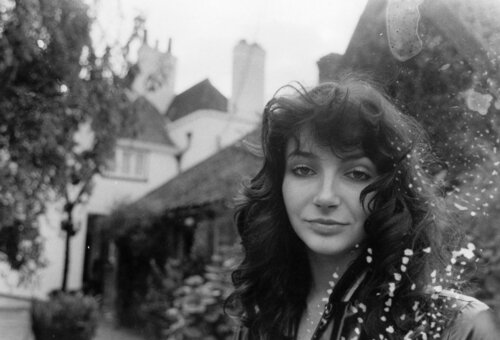
IN THIS PHOTO: Kate Bush goes through her Babooshka routine in 1980

Another Plea to Radio Stations to Play a Wider Range of Kate Bush Tracks

___________

I paraphrased a line…

from Kate Bush’s song, Babooshka (the line is, “A pseudonym to fool him…”), as it seems like, when her name comes up on radio station playlists, we hear the same songs played! I wonder whether, if they were presented with a Kate Bush song not played that had a different artist’s name attached (as an experiment), stations would play them without reservation!  I don’t mean to keep returning to this subject but, as one tends to hear the recognisable and oft-played Kate Bush songs on the radio, I feel it is worth coming back for another swing. I know it is not the be-all-and-end-all having a selection of her songs favoured, but I think radio is almost as powerful as streaming when it comes to how people discover music. Look at her Spotify page, and I can see a correlation between the songs played a lot of radio and those popular on the streaming site. Maybe the most-streamed Bush song, Wuthering Heights, is not played as much as several cuts from Hounds of Love (on the radio), but I do feel like some of her non-singles and deeper cuts would get more streams and focus were they played on the radio more. Apologies if there is a radio station that does play the lesser-heard Kate Bush songs, but I listen to radio a lot and, from bigger stations on the BBC through to local stations, it does seem to be a case of songs like Running Up That Hill (A Deal with God), Cloudbusting and Hounds of Love (from Hounds of Love), and singles such as Sat in Your Lap (from The Dreaming), and Babooshka (from Never for Ever) almost being played in rotation!

I think there is this assumption that the bigger tracks should be played because these are the ones that are recognisable and, if we play something that has not been heard, people will balk or turn the station off. There are other legendary artists who are reduced to a small selection of songs, though I feel Kate Bush is restricted in a way that few others are. I listen to BBC Radio 6 Music and BBC Radio 2 a lot and, whilst her music does get featured a fair deal, the same songs come up time and time again – I can pretty much narrow it does to six or seven songs when the stations say that a Bush song is coming up next! The only time one will hear something more off-piste and under-played is when a caller requests that song. I don’t think there is a limitation regarding the songs that can be played from Kate Bush; stations will have most of her catalogue on their systems to play. It is strange that such a narrow collection of songs should be played. Bush is not an artist who is inaccessible and can only be appreciated through her singles. Even if we talk about singles, there are so many that are not played. Maybe one will hear Wuthering Heights from The Kick Inside, yet the rest of the album is ignored – and it such a wonderful and rich album!

Think about Lionheart and, though I have heard In Search of Peter Pan, and Hammer Horror played on the radio, one will usually hear Wow – and the remainder of the album goes untouched. Move to Never for Ever and, although Babooshka, Army Dreamers, and Breathing get airtime, consider all the other tracks and how great they are – I think the only other tracks from that album I have heard played are Delius (Song of Summer), and Violin. The Dreaming has one or two songs played on the radio – Sat in Your Lap, and maybe The Dreaming -, but there are so many terrific songs that have never been played! Hounds of Love’s first side is probably the most-played on the radio. One single, The Big Sky, almost never gets played, through I think songs like Running Up That Hill (A Deal with God), and Cloudbusting are played a lot more than any other Kate Bush song. They are both fantastic, but it gets very boring when they are played to death and the rest of Bush’s remarkable catalogue is left out! One can look at albums released after Hounds of Love and, for the most part, we will hear the singles and not the deeper cuts. I don’t think I have heard any non-singles from The Sensual World before. I have heard The Red Shoes’ Why Should I Love You? once but, whilst the singles are rarely played, they tend to be the ones people go to for radio airplay.

Aerial is a double album whose second side is a suite of songs, so maybe not the best choice for radio focus. That said, whilst the single, King of the Mountain, gets the odd spin, not a lot else does – perhaps one or two of the other tracks on that first disc have been spun? I can forgive a lot of 50 Words for Snow being ignored, as the songs on the album are quite long and I am not sure how many radio edit versions there are. Away from the studio albums, there are great B-sides (like Under the Ivy), rarities and covers that do not get touched. One might say that radio stations play the more popular and known songs because that is what people like and are familiar with. That is the same logic as giving someone the same meal all of the time because that is what they like, even when they have tried nothing else! I do feel like radio stations are picky eaters when it comes to Kate Bush. Listen through her albums and there is a world of pleasure, treasure and diversity that many people have never heard. I think, if there was a change, then people would listen to Bush’s albums as a whole and other songs would be streamed more. My fear is that a certain demographic will associate Kate Bush with a few tracks that, let’s be fair, have been played a lot and are becoming overly-familiar! With there being new documentaries or many well-known podcasts out there, it is hard to get her wider body of work to the masses. Like David Bowie, The Beatles or any classic act, I think the biggest revelations occur happen when you go beyond the obvious and…

DIG a lot deeper.

FEATURE: A Buyer’s Guide: Part Forty: Dusty Springfield

FEATURE:


A Buyer’s Guide

Part Forty: Dusty Springfield

___________

FOR the fortieth part of A Buyer’s Guide…

 PHOTO CREDIT: Vivienne

I wanted to select the work of one of Britain’s greatest artists. Dusty Springfield is a true legend, and, through her career, she released some utterly amazing and engrossing music. If you need a bit of information about her first, this Wikipedia article will guide you:

“Mary Isobel Catherine Bernadette O'Brien OBE (16 April 1939 – 2 March 1999), professionally known as Dusty Springfield, was an English pop singer and record producer whose career extended from the late 1950s to the 1990s. With her distinctive mezzo-soprano sound, she was an important singer of blue-eyed soul and at her peak was one of the most successful British female performers, with six top 20 singles on the US Billboard Hot 100 and sixteen on the UK Singles Chart from 1963 to 1989. She is a member of the Rock and Roll Hall of Fame and UK Music Hall of Fame. International polls have named Springfield among the best female rock artists of all time. Her image, supported by a peroxide blonde bouffant hairstyle, evening gowns, and heavy make-up, as well as her flamboyant performances, made her an icon of the Swinging Sixties.

Born in West Hampstead in London to a family that enjoyed music, Springfield learned to sing at home. In 1958 she joined her first professional group, The Lana Sisters, and two years later formed a pop-folk vocal trio, The Springfields, with her brother Tom Springfield, and Tim Feild. They became the UK's top selling act. Her solo career began in 1963 with the upbeat pop hit "I Only Want to Be with You". Among the hits that followed were "Wishin' and Hopin' " (1964), "I Just Don't Know What to Do with Myself" (1964), "You Don't Have to Say You Love Me" (1966), and "Son of a Preacher Man" (1968)”.

To nod to a phenomenal artist, I have selected her four albums that are a must-hear/buy, in addition to one that is a bit underrated. I also take a look at her final-released album, and I recommend a Dusty Springfield book that makes for useful reading. Here are the essential works of…

A music icon.

___________

The Four Essential Albums


Ev'rything's Coming Up Dusty

Release Date: 8th October, 1965

Label: Philips

Producer: Johnny Franz  

Standout Tracks: Won’t Be Long/Oh No !Not My Baby/I Can’t Hear You

Buy: https://www.discogs.com/sell/release/2035368?ev=rb

Stream: https://open.spotify.com/album/2Hba8F0toyYAF7pn4yOXu8?si=iQvkvAU0R62c00_U3Ey9aQ

Review:

“Dusty Springfield's second British LP was roughly equivalent to the American You Don't Have to Say You Love Me album, which appeared ten months later in the United States and had the title hit and one other song ("Little by Little") added, and three of the U.K. edition's songs stripped off. The British version also appeared as a gatefold, filled with a series of beautiful photographs and extensive notes. More to the point, this second album presented a more mature Dusty Springfield, doing songs by Leslie Bricusse and Anthony Newley, Randy Newman and co., although all of the material here -- even "Who Can I Turn To," from the musical The Roar of the Greasepaint -- still has a soulful edge. Moreover, she scales new heights of passion on Rod Argent's "If It Don't Work Out" and the ethereal "That's How Heartaches Are Made," and seems close to bursting her lungs on Gerry Goffin and Carole King's "I Can't Hear You." A little more than half of this album -- mostly the up-tempo numbers -- was recorded with her on-stage backing group the Echoes, and they have a nice, lean band sound that was also a departure from the lushly orchestrated, outsized production of her early singles sides. The whole record comes off as perhaps the greatest Motown album that was never made by Motown, and has a pleasing unity in its British form that the U.S. version lacks. Ev'rything's Coming Up Dusty has been reissued twice on CD, first in 1990 from BGO Records and again, in 1998, from Philips Records in England, augmented with eight bonus tracks, all songs that she recorded in September of 1964 with producer Shelby Singleton and arranger Ray Stevens, most of which turned up in America on the Ooooooweeee! album, but three of which were unreleased in England until the issue of the Philips CD" - AllMusic

Choice Cut: Doodlin'

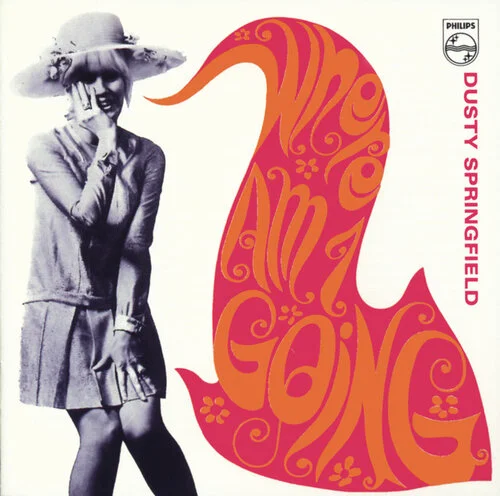
Where Am I Going?

Release Date: 27th October, 1967

Label: Philips

Producers: Johnny Franz/Dusty Springfield (on Chained to a Memory)

Standout Tracks: Don't Let Me Lose This Dream/Chained to a Memory/If You Go Away

Buy: https://www.discogs.com/sell/list?master_id=170792&ev=mb

Stream: https://open.spotify.com/album/4jdPgMWBBKtiQi7uEqfSW1?si=9dX9g0a5S8-M4QTnejpXHA

Review:

“Where Am I Going? is a phenomenal album by Dusty Springfield, and though it doesn't have any American chart hits made famous by the icon, it would have been a blessing had every single performance here conquered the Top 40. The LP cover is great -- a black-and-white photo of a smiling Springfield with wide-brimmed hat, mini skirt, and a comic book quotation in psychedelic off-pink and orange asking Where Am I Going? The music inside, with strings and orchestration, is a relentless delight. The Pat Williams arrangement of Bobby Hebb's "Sunny" with conductor Peter Knight reveals a touch of the James Bond riff, a definite sign of the times. One can hear the wondrous voices of Madeline Bell and Lesley Duncan, the backing vocals blending perfectly with the orchestration in songs like "I Can't Wait Until I See My Baby's Face" and "Don't Let Me Lose This Dream." "Where Am I Going?" is as perfectly surreal as its title suggests -- imagine Julie Andrews in The Sound of Music twirling around in the windmills of Springfield's mind. This is not the driving pop of "I Only Want to Be with You" or "Wishin' & Hopin'," this is symphonic adult contemporary. "They Long to Be Close to You" is the serious and dramatic blues that the Carpenters aspired to develop. "Welcome Home" is out-of-this world rhythm & blues told with authority. It and other tracks from Where Am I Going? puts Springfield in that elite class reserved for the best of Janis Joplin, Etta James, and Ella Fitzgerald -- female vocalists who found notes in niches of songs that were unavailable to lesser mortals. While Springfield was filling the airwaves in America with "The Son of a Preacher Man" toward the end of 1968, a band called Vanilla Fudge had "Take Me for a Little While" on the U.S. charts, but their disc was issued in July of 1967 and their success in the States was a delayed reaction. Dusty Springfield takes that great composition and turns it into snappy pop with an amazing vocal. Add "If You Go Away" and the musicians on these grooves take the listener on a wild ride running the gamut of genres without disrupting Where Am I Going?'s flow. This is a tremendous and often forgotten masterpiece in the repertoire of Dusty Springfield which deserves more attention. It truly is the record which keeps on giving” – AllMusic

Choice Cut: (They Long to Be) Close to You

Dusty in Memphis

Release Date: 18th January, 1969

Labels: Atlantic (U.S.)/Philips (Worldwide)

Producers: Jerry Wexler/Arif Mardin/Tom Dowd

Standout Tracks: Just a Little Lovin’/Breakfast in Bed/The Windmills of Your Mind

Buy: https://www.discogs.com/sell/list?master_id=74378&ev=mb

Stream: https://open.spotify.com/album/5FRB5oQaHxlDNe6gMGuzu2?si=34lpFanfQquzwLqsgJi5Bg

Review:

“Despite its status as a classic record, Dusty in Memphis had less than auspicious beginnings. By 1968 La Springfield had scored a string of chart successes with what she called 'big ballady things' and her decision to make an album in Memphis, home of hard edged R 'n' B grooves, was viewed with puzzlement by many.

Teaming up with the crack production/arrangement team of Jerry Wexler, Tom Dowd and Arif Mardin (responsible for Aretha Franklin's Atlantic classics) also proved a bit much initially for Springfield, whose confidence in her vocal abilities was never very high. Worried that the session musicians would think she was a sham and unnerved by singing in the same vocal booth as used by Wilson Pickett, Dusty's relationship with her producers became strained, with Wexler claiming he never got a note out of her during the initial sessions in Memphis.

You'd never know this from the recorded evidence though. Springfield unsurprisingly resists any temptation to do an Aretha, instead relying on understatement, timing and delivery rather than vocal firepower. The songs (all by Brill building denizens) are all top notch, and Springfield's interpretation of them is peerless, almost to the point that it's tempting to slap a preservation order on them to stop any attempts at future covers from the likes of Sharleen Spiteri. Likewise Mardin's sensitive blend of Bacharach poise and Memphis funk provides the perfect frame for Dusty's blue eyed soul.

'Son of A Preacher Man' and 'Breakfast in Bed' hum with a potent mix of vulnerability and knowing desire; though both songs are pretty much ingrained in the psyche of anyone of a certain age, they still retain a hefty emotional charge. On the other hand, Randy Newman's 'I Don't Want to Hear It Anymore' and 'I Can't Make It Alone' must rank amongst the finest ballad performances you're likely to hear, and Springfield even makes the cod psychedelic inanities of Michel Legrand's 'The Windmills of Your Mind" seem almost meaningful.

The cover boasts a sticker proclaiming that this record made it into Rolling Stone's Coolest records of All Time Top 10. Don't let that put you off; if you have ears, you need this album..” – BBC

Choice Cut: Son of a Preacher Man

Cameo

Release Date: February 1973 (U.S.)/May 1973 (U.K.)

Label: ABC Dunhill Records

Producers: Steve Barri/Brian Potter/Dennis Lambert

Standout Tracks: Who Gets Your Love/I Just Wanna Be There/Learn to Say Goodbye

Buy: https://www.discogs.com/sell/list?master_id=256973&ev=mb

Stream: https://open.spotify.com/album/42QGez2quv3TGMUKbFJU3d?si=q8SmCWk-TyGgdlQlI8M1PQ  

Review:

“When Dusty Springfield takes on "Easy Evil" by frivolous songwriter Alan O'Day -- the man who wrote "Rock & Roll Heaven" and sang "Undercover Angel" -- you understand she can do no wrong here. The production and the performance is top notch. "Mama's Little Girl" sounds like it inspired Gamble & Huff's Elton John hit "Mama Can't Buy You Love," which came six years after this, the brilliance of Gamble and Huff clearly influencing Steve Barri and company. The choice of material is wonderful; David Gates' "The Other Side of Life" shows how a song of his can blossom outside of the confines of his hit group, Bread. All 12 titles are sublime pop, some of the best Lambert and Potter you'll find anywhere. What a hook they wrote for this artist with "Comin' and Goin'," and what heart! It moves and grooves like one of those album tracks you wish was beat into your head on a daily basis by Top 40 radio. Ashford & Simpson can be very proud of "I Just Wanna Be There"; Springfield just claims the tune as her own, with horns and backing vocals creating the wave for her magical voice to ride. Audiences can get caught up in the hit records of an artist, and often they fail to seek out the material they never got familiar with. Universal's Hip-O label has re-released Cameo under the new title Beautiful Soul with additional tracks. It hopefully will get people to hear Dusty Springfield take Willie Hutchison's "Who Could Be Loving You Other Than Me" to another realm. Just a wonderful, wonderful record” – AllMusic

Choice Cut: Mama’s Little Girl

The Underrated Gem


White Heat

Release Date: December 1982

Label: Casablanca

Producers: Howard Steele/Dusty Springfield

Standout Tracks: I Don't Think We Could Ever Be Friends/I Am Curious/Losing You (Just a Memory)

Buy: https://www.discogs.com/sell/list?master_id=356921&ev=mb

Stream: https://open.spotify.com/album/0crnMQvNEVdezBBlvKSGgq?si=PPVU1c4KQdCdk-zlVkU1Xg

Choice Cut: Don’t Call It Love

The Final Album


Faithful (Recorded in 1971)

Release Date: 7th April, 2015 (U.S.)/13th April, 2015 (U.K.)

Label: Real Gone Music (recorded for Atlantic Records)

Producer: Jeff Barry

Standout Tracks: I'll Be Faithful/Live Here with You/You’ve Got a Friend

Buy: https://www.discogs.com/sell/list?master_id=1038705&ev=mb

Review:

“Unlike Dusty in Memphis and A Brand New Me, Faithful was neither recorded in a major hotbed of soul music, nor produced by a crew with serious soul bona fides. (Barry was just coming off a stint writing for cartoon bubblegummers the Archies, while songwriter Bloom had scored a hit of his own in 1970 with the calypso-flavored “Montego Bay.”) Nevertheless, the songs and instrumentation on the album are simpatico with Springfield’s loose yet controlled style, and are varied enough to show all her faces.  On the one hand are the great belters, like angsty dancefloor filler “Haunted” and tough-as-nails “Natchez Trace,” which proves Dusty could turn on hard rock vocals as naturally as Janis Joplin or Ann Wilson.

The best song on the album, however, is the blue-burning groove of “I Believe in You.” Springfield starts the song with seemingly off-hand phrasing, backed with a few stray piano, bass, and organ notes. The arrangement gradually begins to ground itself and swell in size, throwing in backing vocals, drums, and rumbling horns, but never loses its fragile grandeur. Album closer “I Found My Way Through the Darkness” shares a similar quality, its superficial looseness and busyness enrobing a deceptively tight construction. Together, the pair of tracks recalls the low-key epics and dirt-floor mysticism of Van Morrison’s Tupelo Honey or the Band’s Music from Big Pink, transcending the mere terrificness of the rest of the album to become something almost holy” – Rebeat Mag

Choice Cut: Make It with You

The Dusty Springfield Book


Dancing with Demons: The Authorised Biography of Dusty Springfield

Authors: Penny Valentine/Vicki Wickham

Publication Date: 5th April, 2001

Publisher: Hodder Paperbacks

Synopsis:

“Dusty Springfield led a tragic yet inspiring life, battling her way to the top of the charts and into the hearts of music fans world-wide. Her signature voice made songs such as, "I Only Want to Be With You," "Son of A Preacher Man," and "You Don't Have to Say You Love Me," international hits. In Dancing With Demons, two of her closest friends, Valentine and Wickham, capture, with vivid memories and personal anecdotes, a Dusty most people never glimpsed in this no-holds-barred yet touching portrait of one of the world's true grand dames of popular music” – goodreads.com

Order: https://www.amazon.co.uk/Dancing-Demons-Authorised-Biography-Springfield/dp/0340766743

FEATURE: Too Good to Be Forgotten: Songs That Are Much More Than a Guilty Pleasure: Avril Lavigne - Sk8er Boi

FEATURE:


Too Good to Be Forgotten: Songs That Are Much More Than a Guilty Pleasure

Avril Lavigne - Sk8er Boi

___________

I may have to bring in a bit of Wikipedia…

information, as I am not sure whether there are many articles specifically dedicated to Avril Lavigne’s 2002 hit, Sk8er Boi. The Pop-Punk gem was popular when it was released and reached number-eight here in the U.K. I was at university when the song came out and, having not heard of Lavigne before, I was intrigued. I feel the first few years of the twenty-first century saw a transformation in terms of Pop music. Some were quite harsh on Lavigne as they saw her as a bit lightweight or cheesy but, to me, she managed to combine clever and memorable Pop hooks with some Punk attitude and teenage angst. Before I go on, here is some information and critical reception for Sk8er Boi:

“Sk8er Boi" (pronounced "skater boy") is a song by Canadian singer-songwriter Avril Lavigne, released as the second single from her debut album, Let Go (2002). It was written by Lavigne and The Matrix (Scott Spock, Lauren Christy, and Graham Edwards), and produced by The Matrix. The song is a power pop and pop punk track, which lyrically tells a story told from the singer's viewpoint about her rocker boyfriend and a girl he knew in high school who rejected him because he was a skateboarder and she was a snob.

The song was well-received by critics, with most commending its hook, calling the song "funny" and "clever". It also received a Grammy nomination for Best Female Rock Vocal Performance at the 2003 edition. Commercially, "Sk8er Boi" was a success, reaching the top-ten in more than ten countries, such as Australia, New Zealand, the United Kingdom and the United States (becoming Lavigne's second top ten single on the Billboard Hot 100 chart) and sold over 1.8 million copies worldwide. According to Spin, "Sk8er Boi" has the 5th best pop-punk chorus of the 21st century.

"Sk8er Boi" received critical acclaim for its production. In a review for the album Let Go, Christina Saraceno of Allmusic called "Sk8er Boi" a "terrific power pop bounce", highlighting the song as a "track pick". Brendan Schroer of Sputnikmusic praised the track, writing that Lavigne "brings another injection of infectious vocal work, peppy but not overbearing." Nick Reynolds of BBC Music called it "brilliant", considering the song "a classic high energy pop song with crunchy guitars and a great hook." He also praised its tale, calling it "as slick and clever as an episode of Buffy. It bowls you over with its energy and sticks in your mind."[14] Pat Blashill of Rolling Stone agreed, calling it "seventeen-year-old Lavigne's signature moment," further adding: "Over a rush of nouveau-punk guitar chords, she narrates a funny story line, but none of it would matter if Lavigne didn't have a voice, equal parts baby girl and husky siren, that seems capable of setting off car alarms several city blocks away”. Christina Saraceno of Allmusic wrote of Lavigne that in "Sk8er Boi" "she shows her lyrical shortcomings".

I think 2002’s Let Go is an album that deserves some new focus. It gained some mixed reviews when it was released and, nearly twenty years later, I think that it sounds pretty solid and impressive! I reckon the album suffers a bit because a few of its best and biggest songs are right near the top – Complicated, Sk8er Boi, and I’m with You are in the opening third. That said, there are some great tracks throughout the album - and I respect and really like the fact Lavigne co-wrote the tracks and puts her own stamp on things.

At the time, bands like Green Day and Blink-182 were bringing out these Pop/Post-Punk albums that were getting more critical respect. There is naivety and some lyrical shortfalls on Let Go but, in my view, there is a lot of fun, humour and emotion. Lavigne does wear her heart on her sleeve on some songs and, whilst some might criticise some weaker lyrics, I think that the songs are very honest and human. I feel Sk8er Boi is a song that came in for a lot of criticism because of its throwaway and slightly silly nature. Many see the song as a guilty pleasure or one of the less-than-impressive cuts from the Pop-Punk movement of the time. I know that a lot of people are listening to Avril Lavigne’s Let Go now and maybe seeing things that people didn’t back in 2002. One can definitely hear modern artists that are inspired by her sound. The Canadian songwriter’s most-recent album, Head Above Water, was released in 2019 and, whilst not her best work, is worth listening to. I am glad she is still making music. My personal favourite album from hers is the debut and, with a song like Sk8er Boi on it, one definitely need to have a listen and a deeper dive! This is what Pitchfork wrote about the song when they reviewed the Let It Go album in 2018:

“Second single “Sk8er Boi” is Lavigne at her most pugnacious, snarling the chorus in tight harmony with herself over power chords that sound like they’ve been popped in the microwave until sizzling. It’s also the album’s most developed example of storytelling, though that isn’t saying much: A high school beauty queen can’t appreciate her local diamond in the rough, and she’s left to watch him rock out on MTV with a triumphant Lavigne by his side while she nurses her baby in suburban hell. It sounds like Taylor Swift’s “You Belong With Me” as if written by a normal teenager instead of a precocious musical cyborg”.

If you have turned your nose up at Avril Lavigne or slated songs like Sk8er Boi in the past then I would encourage people to take another listen and give it a shot. It is much more than a guilty pleasure. It is a great song that has plenty of punch and humour that means, the minute you start to play it, you will…

FIND yourself singing along.

FEATURE: Modern Heroines: Part Twenty-Nine: The Staves

FEATURE:


Modern Heroines

PHOTO CREDIT: Graham Tolbert 

Part Twenty-Nine: The Staves

___________

THIS is quite timely…

as The Staves are releasing their new album, Good Woman, on 5th February. You can pre-order it. I would encourage people to do so, as it is going to be a beautiful and extraordinary album! It is their first since 2017’s The Way Is Read (an album they released with the Indie/Classical Chamber sextet, yMusic) – I will bring in a review for that album very soon. If you do not know The Staves, then you can follow them on Twitter. They are one of the finest groups we have in Britain and, in my view, they are legends of the future. The Staves are an Indie-Folk trio consisting sisters Emily, Jessica and Camilla Staveley-Taylor. Hailing from Watford, I have been following them since they put out Dead & Born & Grown in 2012. Even though Good Woman is the trio’s first album in five years, they have been busy since then with touring and personal responsibilities. In January 2020, The Staves announced that Emily Staveley-Taylor would not take part in touring following the birth of her daughter. I think that is one reason why there has been a slight delay/hiatus. Good Woman is produced by John Congleton. As you can see, the American producer-in-demand has worked with a host of artists and, judging by what we have heard from Good Woman, I think he has helped strengthen and heighten The Staves’ sound. I am going to bring in a couple of interviews before I finish up – and I’ll end with a career-spanning playlist at the very end -, but I want to quickly nod back to The Way Is Read, as it is an album I really love and feel everyone should dig out.

In their review, AllMusic had this to say:

“The Way Is Read pairs indie folk singing sisters the Staves with indie/classical chamber sextet yMusic, a group that had already recorded with musicians like John Legend, Ben Folds, and Dirty Projectors prior to the project. A true collaborative effort, it brings together original songs by the Staves and reworked versions of yMusic compositions, and was co-produced by the Staves' Jessica Staveley-Taylor and yMusic violinist Rob Moose. The result is neither a folk album nor a classical one -- not that these acts ever fit squarely into either of those camps to begin with -- falling more into the realm of experimental chamber pop. It opens with an elegant a cappella harmony track ("Hopeless"), followed by a much more turbulent, mostly instrumental one ("Take Me Home"). The third track, "Trouble on My Mind," balances the two in an arrangement that draws focus to the vocal melody and harmonies while offering rich, energized accompaniment. It also holds some beautiful musical climaxes where sustained three-part vocal harmonies are lifted by arpeggiated strings. The rest of the record continues to rotate orchestrated songs with more abstract compositions that incorporate voice. The former impress in the same way that yMusic's 2015 album with Ben Folds, So There, did. There, they also seamlessly filled the spaces where a rock combo or folk group would traditionally be expected, making it their own and challenging genre boundaries without detracting from the songs. That trick speaks more to their musicality than restraint -- the parts and arrangements on both albums are far from simple. Here, that fact is more apparent on a song like "All My Life," with its butterfly-like whimsicality passing a lot of notes around the ensemble. It's easier to overlook on an atmospheric entry like "Courting Is a Pleasure," which employs shifting drones and ornamental solos under the Staves' vocals. The Way Is Read's sequencing, which mixes songs and connective tissue, sometimes within and across tracks, has the effect of an album-length work, if one with distinct tunes. Perhaps its biggest achievement is that it so often seems the work of a single group of nine”.

Before I bring things up to date, I want to source from an interview that was conducted to promote Dead & Born & Grow. It is interesting discovering about the musical upbringing of The Staves and how their music is perceived:

“Now much is spoken of your voices, obviously, and how well they intertwine with each other, but I’ve had the album a while now and what I’ve been trying to do is pick apart your voices because I think it’s interesting that where you can, each of your voices has its own character. That’s something that you must recognise in yourselves, and how do you use that? Yeah, that’s a really strange one because when we sing together, they’re so similar, like when we’re recording I find it difficult to tell who’s singing what – like the other day, we were recording for this demo or something and I was like, ‘oh no, I’m singing the wrong note there’, so went back and re-recorded it and it still sounded wrong, then I was like, ‘oh, that’s not me!’ I was listening to it so convinced that it was, then I was like, ‘ah, Milly, you were wrong!’ So that’s really weird; when we do sing on our own, like you say, I do think we have really different voices. We tend to sit in the same place, like Milly and Jess tend to do the higher harmonies and I do the lowest - that’s where our ranges are at - but then when we swap that around, like on ‘Gone Tomorrow’ I sing the highest harmony, I dunno… it seems to bring a different quality to it, somehow.

We did try it with Milly singing the highest one and it just sounded different, I mean, neither one is better, but I think it’s really interesting to play around with that and play with where we wouldn’t naturally go to, to create something interesting. The vocal arrangements are something that we’re always working on, and we try not to go for the easiest, trying to push ourselves to do something interesting and I think the important thing is trying to ration the harmonies; you don’t want them to be overkill. You want those moments where they come together to be special, to highlight something particular, like a lyrical moment in the song, or… We try and just use them as instruments. I think when we started out, just doing covers, we’d break them down to either just a capella, or with very minimal guitar, so we’d have to sing the guitar section, or string section and we’ve always seen our voices as instruments. It’s just another kind of arrangement to go in with everything else.

I’m sure you girls have got a real back catalogue of covers that you’ve done over the years that your family say, ‘oh, do that one for us – - Yeah!

Are there old favourites that you like to revisit with the family? Oh yeah; our parents used to sing with some of their friends, and they used to sing ‘Helplessly Hoping’ by Crosby, Stills and Nash and we all sing that and the guitar comes out if we’re at home together. And Joni Mitchell, what did we sing of hers? ‘Carey’ and ‘Case of You’, ‘Big Yellow Taxi’ and all of that stuff; Dylan’s ‘Lay Lady Lay’ and oh, Neil Young’s ‘After the Gold Rush’, but the trio version that Emmylou Harris, Dolly Parton and Linda Ronstadt used to do, on the piano. Oh God, loads!

I bet it’s quite indulgent, singing those songs after you’ve been singing your own for some time – - It’s great, great fun, yeah.

 Now I do mean this in the nicest possible way: I’ve had trouble sleeping recently, and your album has become the album I put on to get myself into a sleep-like state, very quickly – - You phrased that very well, thank you!

I do mean it as a compliment though, I really do!! It’s a silencer, it silences the brain and draws you in to the narrative. Did you ever imagine the album being listened to in different environments, and was there a particular place that it would resonate best? Well, good question; I don’t know if I did think about that really but I suppose that everyone’s a music fan, and listens to music in different ways. Most music I listen to is through my headphones, quite a personal experience of music, but not always, obviously. I don’t know; I think it’s quite a driving album somehow, particularly songs like ‘Eagle Song’ and ‘In the Long Run’ remind me of being on the road and things like that. But quite a few people say they listen to it to kind of – I don’t know – relax them, and at first it’s like ‘Oh, our album sends you to sleep – fine!’ but then I think it’s really nice, there’s something very primal about being read to as a child, or lullabies, being sung to, is a deeply comforting experience and I think you can get that from an album. There are certain albums that I love, like getting ready for bed, that – I dunno, transport you somewhere, to a safe place and put you to rest from the cares of the day, so I am glad…!”.

I think that Good Woman is shaping up to be The Staves’ finest and most moving album. I will be interested to hear the rest of the tracks and see whether, whilst working with John Congleton, they have brought in any new sounds and production additions/layers. I want to bring in a great and deep interview from the BBC. They talked about the lead-up to The Staves recording Good Woman, in addition to how the album came together:

“Late last year, The Staves carefully placed a microphone at one end of a barn, walked to the very far corner, and started recording.

The distance was necessary because the sisters - Emily, Camilla and Jessica - were planning to scream one line over and over, until their throats were raw: "I'm a good woman."

It's a lyric that gives the band's third album its title: A statement of confidence and defiance, after a turbulent couple of years that left the trio questioning themselves and their career.

Their lives were turned upside down in summer 2018, when they suddenly and unexpectedly lost their mother, Jean, a former teacher who had encouraged them to follow their dream of making music.

Her death came just two weeks after their grandmother died. Within a month, Camilla had broken up with her long-term boyfriend in Minneapolis, and found herself moving back to the UK.

"It was kind of like a double kick in the stomach," says the singer.

Devastated and grief-stricken, they took a "big break, and stepped away from everything", says middle sister Jessica - only for some people to say they were making a mistake.

"We were made to feel like we weren't good enough as a band," says Jessica. "Almost like we'd had our moment, and lost our sheen."

To break the creative impasse, The Staves abandoned their plans to self-produce the record and called in Grammy-winning studio veteran John Congleton.

While previous producers had focused on the sisters' spell-binding harmonies, Congleton - who has worked with Phoebe Bridgers, St Vincent and Angel Olsen - was more concerned with their state of mind.

"He said, 'You guys are in a really interesting place in your lives, and I think you've got something important to say - so I really want to help you figure out how to say it,'" recalls Emily.

"That really stopped me in my tracks because no-one's said that to us before. It gave us confidence and faith in the songs."

Across the album, song titles like Paralysed and Failure tell a story of doubt and depression and self-criticism. But the first single, Trying, carries the core message - of not giving up, even when it's a "struggle to be a good person".

"All we are trying to do is try - and we're all messing up along the way," says Jessica, "but hopefully we're learning, too."

The band were so enamoured with the song that they wanted it to be the title track. Their label had other ideas.

"They said 'trying' doesn't sell records," Emily recalls. "We were like, 'Nothing sells records, mate, just let us do what we want.'"

Eventually, they were dissuaded by the marketing team.

"They thought it might invite negative reviews," says Camilla, doing a perfect impression of a self-important rock critic: "The Staves were 'trying' to be good, but it didn't work”.

I want to finish up soon (I promise!), but I came across an interview transcript from when the group spoke with Jill Riley of The Current's Morning Show (from late last year). Not only do we learn about how The Staves are spending their time in lockdown…we get an insight into how their changing lives fed into Good Woman:

“JILL: And so you were able to get some ideas together for a new record and stay in touch, but you know, a few years can go by and it's pretty incredible how fast things can change, or the amount of big life events can happen within that time period. You know, you talked about your sister Emily being a mother now. And what are some of the things that really, you know, changed for you ladies, but also maybe informed the new record?

JESSICA: Well, I think, I mean, if we're talking about the last three years, which it's kind of been since we started writing new songs for this album, and the fact that we had been in America and then in London. I mean, politically, there was a lot going on at the time.

CAMILLA: Both sides.

JESSICA: In the two places.

JILL: In both, yeah, right!

CAMILLA: Yeah. Yeah.

JESSICA: We don't even need to say what, but there's been lots happening, and so, I mean, like, that's been going on.

And I think, you know, obviously, in personal lives, there's been relationships. I mean, all the kind of stuff that happens in life, and I think that a big thing that has to be mentioned is that two years ago, we lost our mum very suddenly, and it's been the biggest thing for us to — I think we still haven't really wrapped our heads around it, when something like that happens. So that's kind of, it's kind of the main thing that has happened, but in a way, the record isn't really about that, because a lot of it was written before that happened, but of course, that's such a huge part of our life, and then, not long after we lost Mum, Emily found out she was pregnant. So it was like this kind of—

CAMILLA: All these things being thrown up.

JESSICA: Amazing new life, to bring into the family, and she's had a baby girl, and so I think there's these themes of womanhood that came up, and obviously, intrinsically, the fact that we are women. But themes of motherhood and sisterhood and womanhood just felt so present, and the song, "Good Woman," Camilla had started and had sent all the demos for, just kind of kept rising to the top of album titles, and it just felt like this has to be, this has to be the one. It feels like what it is to be a good woman and all those things. It just felt like it made the most sense for us.

CAMILLA: Yeah.

JILL: And for the time when we'll see you back on the road. I mean, not just you guys, but like, when we're able to see bands hit the road again, because, like you said, you know, the touring industry is on pause, and you know, to be able to also accept and kind of grieve that, that's there's just nothing you can do about it but wait. And I just wonder, while you haven't been able to tour, is there something that you've done to sort of fill the time? Or a new hobby? Or have you done something that you didn't think that you would ever do?

JESSICA: (to Camilla) Well, you've been quite creative, haven't you?

CAMILLA: OK, so I don't know how other musicians have done it, but when kind of proper lockdown happened over here, I was just very — maybe because we'd kind of been in album mode and had just finished an album, I just couldn't be inspired to make any music, so instead, I did literally anything but. So I knitted. I made a patchwork quilt. I made chutney. (laughs) I infused alcohol with various things. Yeah! I did origami.

JESSICA: You made loads of nice totebags. I started doing tie-dying.

CAMILLA: Yeah, tie-dying.

JESSICA: Lots of cooking. I watched lots of TV. A lot!

(laughter)

JESSICA: I think I watched the whole of "Dawson's Creek."

JILL: Oh, yes! (laughter)

JESSICA: I think I watched the whole of "One Tree Hill." I don't know why.

CAMILLA: You're a disgrace.

JESSICA: I think there was something about going back to like, nostalgic things that made you feel safe and cozy. I don't know if you have a similar thing. I don't know if it's kind of possible for everyone to have the freedom to do those things and to sit on their bottom all day and watch "Dawson's Creek." But, like, even the food I was eating, I felt I kind of regressed and wanted to eat things that we used to eat when we were kids, like cheese on toast, what we call it over here, but it was just, put some cheese on some toast, a "grilled cheese”.

I will wrap things here. I was keen to spotlight The Staves, not only because they are one of the best groups we have in the country, but because Good Woman is out very soon. They are an amazing force of nature and, when you hear interviews they have conducted, you cannot help but laugh and feel warmed by their wit and natural bond! I have no doubt in predicting that Watford’s The Staves will be…

ICONS of the future.

FEATURE: Music Technology Breakthroughs: Part Seven: The TASCAM Portastudio

FEATURE:


Music Technology Breakthroughs

xxx.jpg

Part Seven: The TASCAM Portastudio

___________

FOR this edition of Music Technology Breakthroughs…

xxxx.jpg

 PHOTO CREDIT: @joshsorenson/Unsplash

I am looking at something that, on the surface, seems quite basic and taken for granted! I want to bring in an article that looks at the endurance of 4-track recording. The TASCAM Portastudio vastly changed the way artists could record. Although it is still used – or similar models -, there has been a wider move towards something more high-tech and digital. That said, one can hear so many artists relying on the ease, convenience and warmth that you get from the TASCAM Portastudio. Before moving on, this Wikipedia article provides some historical background:

“The TASCAM Portastudio was the world's first four-track recorder based on a standard compact audio cassette tape. The term portastudio is exclusive to TASCAM, though it is generally used to describe all self-contained cassette-based multitrack recorders dedicated to music production. The Portastudio, and particularly its first iteration, the Teac 144, is credited with launching the home-recording wave, which allowed musicians to cheaply record and produce music at home, and is cited as one of the most significant innovations in music production technology.

The Teac 144 Portastudio made its debut in 1979, at the annual meeting of the Audio Engineering Society. It was followed by several other models by TASCAM, and eventually by several other manufacturers.

For the first time it enabled musicians to affordably record several instrumental and vocal parts on different tracks of the built-in four-track cassette recorder individually and later blend all the parts together, while transferring them to another standard, two-channel stereo tape deck (remix and mixdown) to form a stereo recording.

The Tascam Portastudio 244, introduced in 1982, improved upon the previous design with overall better sound quality and more features, including: dbx noise reduction, dual/concentric sweepable EQ's, and the ability to record on up to 4 tracks simultaneously.

In general, these machines were typically used by musicians to record demos, although they are still used today in lo-fi recording. The analog portastudios by TASCAM (a division of TEAC) and similar units by Fostex, Akai, Yamaha, Sansui, Marantz, Vestax, Vesta Fire, TOA, Audio-Technica, Peavey, and others generally recorded on high-bias cassette tapes. Most of the machines were four-track, but there were also six-track and eight-track units. Some newer digital models record to a hard disk, allowing for digital effects and up to 32 tracks of audio”.

I am not sure how sophisticated recording equipment was pre-1979, but it is clear that the TASCAM Portastudio provided greater options and a better sound for artists. That did not mean that, upon its introduction, artists forsook the studio and recorded everything on this device. By the same token, it was not used as a novelty. It became an important go-to for many musicians. I want to bring in an interesting article that charts the use of the TASCAM Portastudio through the decades. Its development and popularity through the 1980s is interesting to read:

“In the meantime, musicians seized upon the hitherto unparalleled creative freedom offered by this new ‘Porta[-ble]Studio’. Bruce Springsteen recorded his entire 1982 folk-noir album ‘Nebraska’ at home, using just two cheap Shure SM57 microphones and his newly acquired TEAC 144.

Its successor, the Tascam 244, improved over the diosync in having dbx noise reduction (helping offset the inherent hiss of tape), a two-band, four-knob sweepable EQ, two headphone sockets (one for the engineer, one for the talent), and an electronic tape counter. The four tracks of the 244 were also labelled 1, 2, 3 and 4, replacing the diosyncratic A, B, C and D of the 144.

In 1986 came the machine that enthusiasts regularly hail as the ‘king of the four-tracks’ – the Tascam 246 Portastudio. Comprehensively specified and built like the proverbial tank, this mighty machine offered an unparalled swathe of essential recording and mixing features. It had six channels, so multiple inputs could be routed through the mixer, and it could record on all four tracks of the cassette tape simultaneously.

The 246 also debuted Tascam’s new two-speed tape deck (3.75 inches per second vs standard 1.875ips), whereby the transport could be run at twice the normal speed in order to capture better quality audio. This was still some way off the 15ips of a professional 2-inch reel-to-reel tape machine, but the increase in fidelity for home recording was welcome!.

Even though technology became more advanced through the 1990s, there was still desire and demand for the TASCAM Portastudio:

“The 1990s saw the rise of digital recording undermining magnetic tape’s dominant position in home studios. Other companies, such as Yamaha and Fostex, launched rival four- and eight-track machines, each trumping the others with improved features or price points in a race for market dominance.

There was still time for some more classic Tascam tape models during the ’90s, such as the 488MKII and the 424MKIII, featuring digital-style functionality – custom location points, ‘rehearsal’ mode, hands-free punch in/out – before the new millennium ushered in the first all-digital Portastudio.

The original cassette hardware Portastudios still endure. With one million Portastudios sold since the launch of the 144, thousands of working examples are still bought and sold on the secondhand market today. The immediacy and vintage vibe of a cassette-based four-track Portastudio delivers the same thrills it always did.

Famous Portastudio users over the years include Bootsy Collins, Wu-Tang Clan, Lou Reed, Aztec Camera’s Roddy Frame (who wrote a song simply called ‘Portastudio’ for his 2006 solo album ‘Western Skies’, in which he sings of “still screwing around with my Portastudio”) and Lady Gaga, who in 2009 described her first Portastudio as “probably the best gift that my dad ever gave me”.

A new generation of Instagram-friendly musicians are incorporating original Portastudios into their digital workflows, using the analogue mic preamps for ‘flavour’, the mixer and EQ section for arranging and sweetening outboard gear, and employing the cassette section for real-life tape loops.

There’s still no quicker or easier method for musicians to capture their ideas. Power up, plug in, press record – that’s lightning bottled again”.

I am not sure whether, today, artists are using four-track recorders for their songs. Maybe there is a split between mainstream acts (and those with a glossier sound) compared to D.I.Y. and bedroom artists. I will end with an article from Reverb, who have illuminated the way 4-track recording has fed into some incredible work:

“4-track recordings by some of the biggest names in rock, alternative, and electronic music carried both the charm and lore: Bruce Springsteen's Nebraska, grittily recorded on his 144 and salvaged from his jacket pocket; PJ Harvey's tape-turned-proper-release 4-Track Demos; Ween's warped, Portastudio-grown The Pod; Aphex Twin's first full-length, Selected Ambient Works 85–92, tracked at home on cassette with self-constructed instruments, by Richard D. James' telling at least.

In addition to the raw, homespun sound, many music makers wanted to stretch the limits of the technology. Why not bounce those 4-tracks down and layer more on top, like their heroes at Abbey Road? Use the limitations to spark creativity.

In a review of the Teac 144, Reverb user Trey Y. said he bought one of these "Earth-changing" machines as soon as they came out.

"Suddenly I was able to create beautifully produced demos that were almost as good as studio masters. It was easy to learn and extremely powerful," he writes. "Despite having only four tracks, I was able to ping-pong huge numbers of tracks and create music that was as elaborate as anything produced by The Beatles in their heyday."

There was a downside: Dubbing tape hiss on top of itself over and over again will build up to cacophony. But whether bedroom producers were making the most of what they had or willfully leaning into lo-fi aesthetics, 4-track recordings were in full bloom”.

There are few examples of music hardware that have benefited artists and changed the game more than the TASCAM Portastudio. Perhaps it is not as prevalent and widespread as it was in the 1980s and 1990s, but one can look at modern recording more sophisticated technology and chart things back to the TASCAM Portastudio. It is a humble and stunning device that must have been this enormous revelation and breakthrough back in 1979. I can only imagine the sense of possibility and excitement when it was announced and, in time, became better known and widely used! For artists who want to put down a quick and easy demo with very few layers, the 4-track recorder is invaluable. It is a shame that there is so much reliance on digital technology; a certain charm and history has been removed from music. Maybe there are a lot of artists who prefer older technology. No matter. It is obvious that the TASCAM Portastudio was a remarkable and seismic shift that created ripples that are…

STILL being felt today.

FEATURE: The Lockdown Playlist: Songs About the Natural World and the Environment

FEATURE:


The Lockdown Playlist

PHOTO CREDIT: @rayhennessy/Unsplash 

Songs About the Natural World and the Environment

___________

I know a couple of radio stations…

ll.jpg

 PHOTO CREDIT: @bhairankar/Unsplash

have put out playlists and features regarding songs that pertain to the environment (in terms of celebration and raising awareness about climate change) and nature - I have also sprinkled in some sounds of nature. I am inspired by the recent series of Winterwatch, and the fact that the show is educational, comforting and revealing. I have been fascinating by nature and the environment since I was a child so, for this Lockdown Playlist, here are a collection of songs that refer to those areas. Many of the songs will be familiar to you, though I am sure there are some that are not going to a bit new. There is quite a broad range of tracks in the playlist that are sure to…

 PHOTO CREDIT: @v2osk/Unsplash

PROVIDE a blend of urgency and relaxation.

FEATURE: Turn Back the Pages: The Music Book Club

FEATURE:


Turn Back the Pages

PHOTO CREDIT: @sincerelymedia/Unsplash 

The Music Book Club

___________

WHILST there are plenty of great…

 PHOTO CREDIT: @qmikola/Unsplash

vinyl subscription services and there is a lot of focus on record shops, how often does one spend the same timer extolling the virtues of music books?! Maybe people hold their own music book clubs, but I cannot find any subscription services or sites that provide music lovers with monthly recommendations. What would be cool is a website that recommended the best new music books and put together packages and gifts that could be sent out. I think music literature is fascinated and varied, and it can be as immersive and as addictive as vinyl. From splendid biographies to reference books and those that look at particular periods of music, there is a vast wealth of music literature available! I love subscription services where one can get vinyl bundles and single albums and, every year, we highlight the best albums. Whilst one does see similar lists for music books, there is not the same sort of exposure and prominence. I would be interested to hear whether people hold virtual music book clubs and meetings where they can discuss a biography or reference book, but one suspects that it is quite rare. I think some of the most pleasurable and enlightening moments around music have come when reading an engrossing book.

There are some great book subscription boxes depending on your tastes but, again, I am not sure there are music-specific ones. Whilst one can find music books in record shops and many dedicate a section of the store to the best new ones out, one mostly has to look online when it comes to getting music literature. I try and keep abreast of the new music books by checking websites like The Guardian, but there are so many that I am missing out on. I always get a bit annoyed when I behind everyone when it comes to stumbling upon a must-read music book. Last year was a good one for music books and, looking at best of lists from Rolling Stone, to Pitchfork, there were some magnificent one released! Maybe it would be a case of doing a mixed subscription or bundle where one gets a vinyl and book every month. I would like to see a podcast or series appear online that focuses on music books, as I feel they are vastly underrated and overlooked compared to albums. I shall leave things in a minute but, whether it is a biography or a book that concentrates on the New Romantic era like Dylan Jones’ Sweet Dreams, one can learn so much and be educated in a way that you cannot when hearing an album. Perhaps it is just me, but I feel there is an appetite for music books. Whether you are a casual music fan, or someone obsessed by it, there are amazing new and older books that you’ll want to own. With a world of choice out there, having a service or website that exclusively refers to music books and tailors suggestions to each music lover would be amazing! It does not (as far as I can see) exist right now but, if a music book club or subscription service were to exist, I feel that so many people…

WOULD be up for it!

FEATURE: The Lockdown Playlist: Go with the Flow: Twenty-Five Years of Queens of the Stone Age

FEATURE:


The Lockdown Playlist

Go with the Flow: Twenty-Five Years of Queens of the Stone Age

___________

RATHER than provided a detailed feature…

xxxx.jpg

 PHOTO CREDIT: Jim Dyson/Getty Images

with history, quotes and reviews about Queens of the Stone Age, I am starting with a Lockdown Playlist concerning the fact this year marks twenty-five years since one on my favourite bands formed. I think Queens of the Stone Age are the finest Rock band in the world right now, and across seven studio albums they have established themselves as a hugely powerful force. Led by ‘The Ginger Elvis’, Josh Homme, I love everything the band have put out! Before moving on, here is some Wikipedia information regarding Queens of the Stone Age:

“Queens of the Stone Age (commonly abbreviated QOTSA) is an American rock band formed in 1996 in Palm Desert, California. The band was founded by vocalist and guitarist Josh Homme, who has been the only constant member throughout multiple line-up changes. The current line-up consists of Homme alongside Troy Van Leeuwen (guitar, lap steel, keyboard, percussion, backing vocals), Michael Shuman (bass guitar, keyboard, backing vocals), Dean Fertita (keyboards, guitar, percussion, backing vocals), and Jon Theodore (drums, percussion).

Formed after the dissolution of Homme's previous band Kyuss,[1] Queens of the Stone Age developed a style of riff-oriented, heavy rock music. Their sound has since evolved to incorporate a variety of different styles and influences, most notably including collaborations with Screaming Trees lead singer Mark Lanegan and Foo Fighters frontman and former Nirvana drummer Dave Grohl”.

I am going to do a few features in the coming weeks focusing on various aspects and albums from the band. Right now, here is a selection of their best songs that, I feel, is a good way into the band and overview of their work. I am not sure whether they are going to follow 2017’s Villains with another album. There are no definite plans either way but, having barely dropped a step since they formed in 1996, there is going to be huge demand for new Queens of the Stone Age material! Here is a Lockdown Playlist filled with some of the finest cuts from…

THE Palm Desert-formed legends.

FEATURE: I Won’t Let You Do It: Kate Bush’s Night of the Swallow

FEATURE:


I Won’t Let You Do It

IN THIS PHOTO: Kate Bush on 14th September, 1982 at a record signing at Virgin Megastore on Oxford Street in London for her album, The Dreaming/PHOTO CREDIT: Peter Still/Getty Images

Kate Bush’s Night of the Swallow

___________

I have sort of looked at…

Night of the Swallow when I discussed the decision to release There Goes a Tenner, and Suspended in Gaffa from The Dreaming. The former was the third to single from the album. It was released as a seven-inch single in the U.K. and Ireland only – in Europe and Australia, Suspended in Gaffa was released as the single. I think that the latter track is strong and more chart-worthy, so I asked why the decision was made to release There Goes a Tenner as a single in the U.K. Because of the Irish themes and sounds of Night of the Swallow, it was released as a single in Ireland in late-1983 - making it the fifth and final release from The Dreaming. When the single was released, around one-thousand copies were made with a picture sleeve; the seven-inch vinyl was pressed in England and the sleeve was produced in Ireland. It was a single that did not do well. I really love Night of the Swallow, and not only is it one of the best tracks from The Dreaming, I think the song is one of Bush’s very finest. Its B-side, Houdini, is my favourite Kate Bush song – and that might have made for a more successful single. Night of the Swallow was the first of two (the other being Sat in Your Lap) to be recorded for the album.

It was mostly recorded at Abbey Road Studios in spring 1981 over several sessions. The Irish musicians section was recorded in Ireland; Bush worked there with them overnight. I know Bush has a lot of love for the song and spoke fondly about it and the musicians (including Liam O'Flynn – uilleann pipes, penny whistle, Seán Keane – fiddle, and Dónal Lunny – bouzouki). I have seen Night of the Swallow appear high in lists of Bush’s best songs. I am surprised that the singles from The Dreaming did not do that well. Maybe people were not transitioning to the sound of Kate Bush embracing new directions and sounds. She was evolving as an artist and producer; it must have come as quite a shock for many people. Before wrapping up, I want to bring in an article from the Kate Bush Encyclopaedia, where we discover more about the song’s lyrical content. Bush herself explains the origins of Night of the Swallow:

“The lyrics concern a smuggler planning his next clandestine journey, Bush takes on the role of his lover, who begs him not to go ('I won't let you do it. If you go, I'll let the law know'). The song ends with the smuggler speaking in defiance ('Would you break even my wings, like a swallow. Let me, let me go').

“Unfortunately a lot of men do begin to feel very trapped in their relationships and I think, in some situations, it is because the female is so scared, perhaps of her insecurity, that she needs to hang onto him completely. In this song she wants to control him and because he wants to do something that she doesn't want him to she feels that he is going away. It's almost on a parallel with the mother and son relationship where there is the same female feeling of not wanting the young child to move away from the nest. Of course, from the guys point of view, because she doesn't want him to go, the urge to go is even stronger. For him, it's not so much a job as a challenge; a chance to do something risky and exciting. But although that woman's very much a stereotype I think she still exists today. (Paul Simper, 'Dreamtime Is Over'. Melody Maker (UK), 16 October 1982)

Ever since I heard my first Irish pipe music it has been under my skin, and every time I hear the pipes, it's like someone tossing a stone in my emotional well, sending ripples down my spine. I've wanted to work with Irish music for years, but my writing has never really given me the opportunity of doing so until now. As soon as the song was written, I felt that a ceilidh band would be perfect for the choruses. The verses are about a lady who's trying to keep her man from accepting what seems to be an illegal job. He is a pilot and has been hired to fly some people into another country. No questions are to be asked, and she gets a bad feeling from the situation. But for him, the challenge is almost more exciting than the job itself, and he wants to fly away. As the fiddles, pipes and whistles start up in the choruses, he is explaining how it will be all right. He'll hide the plane high up in the clouds on a night with no moon, and he'll swoop over the water like a swallow.

Bill Whelan is the keyboard player with Planxty, and ever since Jay played me an album of theirs I have been a fan. I rang Bill and he tuned into the idea of the arrangement straight away. We sent him a cassette, and a few days later he phoned the studio and said, "Would you like to hear the arrangement I've written?"

I said I'd love to, but how?

"Well, Liam is with me now, and we could play it over the phone."

I thought how wonderful he was, and I heard him put down the phone and walk away. The cassette player started up. As the chorus began, so did this beautiful music - through the wonder of telephones it was coming live from Ireland, and it was very moving. We arranged that I would travel to Ireland with Jay and the multi-track tape, and that we would record in Windmill Lane Studios, Dublin. As the choruses began to grow, the evening drew on and the glasses of Guiness, slowly dropping in level, became like sand glasses to tell the passing of time. We missed our plane and worked through the night. By eight o'clock the next morning we were driving to the airport to return to London. I had a very precious tape tucked under my arm, and just as we were stepping onto the plane, I looked up int the sky and there were three swallows diving and chasing the flies. (Kate Bush Club newsletter, October 1982)”.

I really love Night of the Swallow, and I think it boasts one of Bush’s best vocals and compositions. Through The Dreaming, I think Bush hit a peak when it came to lyrics. So many songs on the album take you into their own world. Night of the Swallow boasts some incredible lines. My favourite lines are so evocative and unusual: "With a hired plane/And no names mentioned/Tonight's the night of the flight/Before you know/I'll be over the water/Like a swallow/There's no risk/I'll whisk them up in no moonlight/And though pigs can fly/They'll never find us/Posing as the night/And I'm home before the morning”. If there was ever to be another ‘best of’ Kate Bush album, I definitely think Night of the Swallow should feature! It is a fabulous song that was sort of overlooked as a single and, as many people do not dig into The Dreaming like they do Hounds of Love, I think a lot of the songs are under-appreciated. Night of the Swallow is a beautiful and powerful track that…

LINGERS long in the mind.

FEATURE: The January Playlist: Vol. 5: Hope and Judgment in the Garden of Eden

FEATURE:


The January Playlist

IN THIS PHOTO: Billie Marten 

Vol. 5: Hope and Judgment in the Garden of Eden

__________

THIS is another terrific week…

 IN THIS PHOTO: Arlo Parks

for music, as there are some exceptional releases in the fold! Not only are there awesome new cuts from Billie Marten, FKA twigs/Headie One/Fred again.., Arlo Parks, MALKA, and Imelda May/Noel Gallagher (ft. Ronnie Wood). There are also songs from Ben Howard, King Gizzard and the Lizard Wizard, Poppy Ajudha, Goat Girl, Weezer, and YONAKA. Throw into the mix Selena Gomez/Rauw Alejandro, Tom Jones, and Celeste, and there is something for everyone! If you need a kick and some energy to get this weekend going, then I think that the tracks below have it covered! It is a bit of a cold and wet one but, with some wonderful tracks to enjoy, things are set to get…

 IN THIS PHOTO: Ben Howard

A bit brighter.

ALL PHOTOS/IMAGES (unless credited otherwise): Artists

__________

Billie Marten – Garden of Eden

FKA twigs, Headie One, Fred again.. - Don't Judge Me

Arlo Parks - Hope

Imelda May, Noel Gallagher  (ft. Ronnie Wood) - Just One Kiss

MALKA – Reach Out

PHOTO CREDIT: Roddy Bow

Ben Howard - What a Day

King Gizzard and the Lizard Wizard – O.N.E.

Poppy Ajudha – Weakness

dsss.jpg

PHOTO CREDIT: Holly Whitaker

Squid (ft. Martha Skye Murphy) – Narrator

YONAKA – Seize the Power

Goat Girl – Anxiety Feels

Weezer – Bird with a Broken Wing

Tom Jones – No Hole in My Head

Benin City - Freaking You Out

dddd.jpg

Kynsy - Elephant in the Room

Porter Robinson – Look at the Sky

PHOTO CREDIT: Ali Cherkis

Half Waif - Orange Blossoms

Celeste – Tonight Tonight

Fredo (ft. Dave) - Money Talks

Selena Gomez, Rauw Alejandro - Baila Conmigo

Rag'n'Bone Man - All You Ever Wanted

LAOISE – Gravy

PHOTO CREDIT: Robert Ashcroft

The Killers – C’est La Vie

PHOTO CREDIT: Adrian Vitelleschi-Cook

Do Nothing - Uber Alles

Blu DeTiger – Vintage 

Alicai Harley – Put It on You

Pale Waves – You Don’t Own Me

cccccc.jpg

Jaz Karis – Mistake

Morcheeba - Sounds of Blue

Lili Caseley – Faded Love

Gracie Convert - Stay

Amber Prothero – Insecurity Lies

Julia Stone (ft. Matt Berninger) - We All Have

Nasty Cherry - Lucky

Tune-Yards - hold yourself.

PHOTO CREDIT: Graeme Mitchell for The New Yorker

Madlib - Loose Goose

Molly Hammar - DOUCHEBAG

PJ Harvey - Catherine - Demo

JoJo - American Mood

SOPHIE - UNISIL

ffff.jpg

Natalie Bergman - Talk to the Lord

yyyyy.jpg

PHOTO CREDIT: Ira Chernova for Rolling Stone

Jenny Lewis & Serengeti - Vroom Vroom