FEATURE: A Buyer’s Guide: Part Forty-One: Siouxsie and the Banshees

FEATURE:


A Buyer’s Guide

ll.jpg

PHOTO CREDIT: Costello/Redferns/Getty Images 

Part Forty-One: Siouxsie and the Banshees

___________

THIS is another feature that is quite timely…

 PHOTO CREDIT: Pennie Smith

as Siouxsie and the Banshees formed in 1976 – that means the band are forty-five this year. It is a pleasure to feature this hugely important band in A Buyer’s Guide. Formed by vocalist Siouxsie Sioux and bass guitarist Steven Severin, the band were initially associated with the Punk scene; they quickly progressed and changed to create something Post-Punk and more experimental. Their debut album, The Scream, was released in 1978 to widespread critical acclaim. During their career, Siouxsie and the Banshees released eleven studio albums and thirty singles. The band experienced several line-up changes, with Siouxsie and Severin being the only constant members. They disbanded in 1996. To honour a vastly interesting and always-inspiring band, this A Buyer’s Guide is dedicated to…

fff.jpg

THEIR very best work.

______________

The Four Essential Albums


The Scream

Release Date: 13th November, 1978

Label: Polydor

Producers: Siouxsie and the Banshees/Steve Lillywhite

Standout Tracks: Pure/Helter Skelter/Metal Postcard (Mittageisen)

Buy: https://www.discogs.com/sell/list?master_id=42280&ev=mb

Stream: https://open.spotify.com/album/3uMr78kOScjc6eLHMYcVl4?si=bD7cUQMCSHyDTsiFbY80ew

Review:

After building up an intense live reputation and a rabid fan base, Siouxsie and the Banshees almost had to debut with a stunner -- which they did, "Hong Kong Garden" taking care of things on the singles front and The Scream on the full-length. Matched with a downright creepy cover and a fair enough early producing effort from Steve Lillywhite -- well before he found gated drum sounds -- it's a fine balance of the early band's talents. Siouxsie Sioux herself shows the distinct, commanding voice and lyrical meditations on fractured lives and situations that would win her well-deserved attention over the years. Compared to the unfocused general subject matter of most of the band's peers, songs like "Jigsaw Feeling," "Suburban Relapse," and especially the barbed contempt of "Mirage" are perfect miniature portraits. John McKay's metallic (but not metal) guitar parts, riffs that never quite resolve into conventional melodies, and the throbbing Steven Severin/Kenny Morris rhythm section distill the Velvet Underground's early propulsion into a crisper punch with more than a hint of glam's tribal rumble. The sheer variety on the album alone is impressive -- "Overground" and its slow-rising build, carefully emphasizing space in between McKay's notes as much as the notes themselves, the death-march Teutonic stomp of "Metal Postcard," the sudden near-sunniness of the music (down to the handclaps!) toward the end of "Carcass." The cover of "Helter Skelter" makes for an unexpected nod to the past -- if it's not as completely overdriven as the original, Siouxsie puts her own definite stamp on it and its sudden conclusion is a great moment of drama. It's the concluding "Switch" that fully demonstrates just how solid the band was then, with McKay's saxophone adding just enough of a droning wild card to the multi-part theatricality of the piece, Siouxsie in particularly fine voice on top of it all” – AllMusic

Choice Cut: Hong Kong Garden

Kaleidoscope

Release Date: 1st August, 1980

Labels: Polydor/PVC (original U.S. release)/Geffen (1984 U.S. reissue)

Producers: Nigel Gray/Siouxsie and the Banshees

Standout Tracks: Tenant/Christine/Red Light

Buy: https://www.discogs.com/sell/list?master_id=42315&ev=mb

Stream: https://open.spotify.com/album/5jynqY8ZyDoeqrIfYSwF8P?si=cQjx9ftTTWqVX7G1DuGEGA

Review:

A member of the 'Bromley' contingent, responsible for the birth of London's early punk explosion, Siouxsie Sioux was foremost a scenester, but by 1979 she was older and wiser in many ways. Her band, The Banshees, had fought tooth and nail for their recording contract, following John Peel's championing; then following two corruscating yet somewhat disappointing albums both the guitarist and drummer jumped ship. Talk about a cloud with a silver lining...

The silver came in the form of who was drafted in to replace Kenny Morris and John McKay. Firstly Siouxsie brought in the man who was to prove her life's work partner; Budgie. Fresh from transforming the Slits from - surprise, surprise - punk scenesters to post punk icons, this multi-talented drummer then proceeded to add a layer of sophistication to the band's back line.

Next up were the guitarists. Prior to becoming a full-time member, John McGeoch was making his name with those other post punk icons, Magazine. His flanged arpeggios proved a perfect foil to the newer direction of Eastern-tinged songs that were now replacing the sub-Patti Smith-isms that had dragged down previous efforts. Also on board was the Pistols' underrated axeman, Steve Jones, who added much-needed muscle.

With Police producer, Nigel Gray, also on board to smooth out the edges, Kaleidoscope was to propel the Banshees into the major league and to also prove that they had chart potential aplenty. This was where their first hits finally emerged; "Happy House" - dripping with sarcasm - and "Christine", the proto-goth template that was such a burden in later years.

But every track is taut and smoothly seductive. From the psychedelic synth swoops of ."Tenant", to the weirdly atmospheric "Lunar Camel". Kaleidoscope was where Siouxsie came of age…” – BBC

Choice Cut: Happy House

Juju

Release Date: 6th June, 1981

Labels: Polydor/PVC (original U.S. release)/Geffen (1984 U.S. reissue)

Producers: Nigel Gray/Siouxsie and the Banshees

Standout Tracks: Into the Light/Arabian Knights/Night Shift

Buy: https://www.roughtrade.com/gb/siouxsie-and-the-banshees-e391454b-12ce-4714-a030-03be62edf747/juju

Stream: https://open.spotify.com/album/5OEum65e1HMGX51Ifu51Wb?si=jA_BZm7zRTeKn6-yo7jiHQ

Review:

One of the band's masterworks, Juju sees Siouxsie and the Banshees operating in a squalid wall of sound dominated by tribal drums, swirling and piercing guitars, and Siouxsie Sioux's fractured art-attack vocals. If not for John McGeoch's marvelous high-pitched guitars, here as reminiscent of Joy Division as his own work in Magazine, the album would rank as the band's most gothic release. Siouxsie and company took things to an entirely new level of darkness on Juju, with the singer taking delight in sinister wordplay on the disturbing "Head Cut," creeping out listeners in the somewhat tongue-in-cheek "Halloween," and inspiring her bandmates to push their rhythmic witches brew to poisonous levels of toxicity. Album opener "Spellbound," one of the band's classics, ranks among their finest moments and bristles with storming energy. Siouxsie's mysterious voice emerges from dense guitar picking, Budgie lays into his drums as if calling soldiers to war, and things get more tense from there. "Into the Light" is perhaps the only track where a listener gets a breath of oxygen, as the remainder of the album screams claustrophobia, whether by creepy carnival waterfalls of guitar notes or Siouxsie's unsettling lyrics. "Arabian Nights" at least offers a gorgeously melodic chorus, but after that the band performs a symphony of bizarre wailings and freaky imagery. As ominous as the cacophony is on its own, close attention to Siouxsie's nearly subliminal chants paints a scarier picture. A passage such as "I saw you...a huge smiling central face with eyes and lips cut out but smiling and eating lots of other lips" doesn't exactly brighten one's day. Siouxsie is full of such quips throughout the album's running time, but her delivery packs as much punk as her message. Her attack-the-world dynamic range on "Voodoo Dolly" predates and out-weirds Björk's similar styling years later. McGeoch, Budgie, and bassist Steven Severin deserve just as much credit for crafting an original sound that would inspire a diverse group of future bands from Ministry to Placebo. All the while, producer Nigel Gray maintains the sense that the album is an immediate, edgy performance unfolding right in front of the listener. The upfront intensity of Juju probably isn't matched anywhere else in the catalog of Siouxsie and the Banshees. Thanks to its killer singles, unrelenting force, and invigorating dynamics, Juju is a post-punk classic” – AllMusic

Choice Cut: Spellbound

Hyæna

Release Date: 8th June, 1984

Labels: Polydor/Geffen (U.S.)

Producers: Siouxsie and the Banshees/Mike Hedges

Standout Tracks: Dazzle/Take Me Back/Bring Me the Head of the Preacher Man

Buy: https://www.discogs.com/sell/list?master_id=42373&ev=mb

Stream: https://open.spotify.com/album/323iuhvsRRZap4VcT2F9Zf?si=h2-hSgTnRn-lzpFbHIhYlA

Review:

Broadening the eclectically experimental landscape of 1982's Kiss in the Dream House with the occasional string arrangement and a spacious sound mix, Siouxsie and the Banshees' Geffen debut nicely bridges the gap between the band's handful of more-punk-than-pop early releases and their run of new wave, radio-friendly hits from the late '80s and early '90s. And though echoes of classic albums like Kaleidoscope and JuJu are heard in dark and menacing tracks such as "Bring Me the Head of the Preacher Man" and "Blow Your House Down," the emphasis here is on layered arrangements and pop tunes disguised as art-house production numbers ("Dazzle"); tasteful horn and keyboard parts expand the group's guitar-dominated sound and provide Siouxsie with an airy and dreamlike backdrop in which to fully display her considerable vocal talents. Siouxsie further refines things by also including a generous share of fleet and gothic-tinged pop numbers like "Belladonna," "Running Town," and the band's hit cover of "Dear Prudence." Anchored by the signature sound of Steven Severin's guitar-like bass and Budgie's exotically adept percussion work, Hyaena qualifies as one of Siouxsie and the Banshees' finest moments” – AllMusic

Choice Cut: Swimming Horses

The Underrated Gem

Superstition

Release Date: 10th June, 1991

Labels: Polydor/Geffen (U.S.)

Producer: Stephen Hague

Standout Tracks: Fear (of the Unknown)/Shadowtime/The Ghost in You

Buy: https://www.roughtrade.com/gb/siouxsie-and-the-banshees-e391454b-12ce-4714-a030-03be62edf747/superstition-b96fe2d4-6bf0-4562-b5f0-4b237b6e2ae7/lp-x2?channable=409d92696400323330333136f1&gclid=Cj0KCQiAmL-ABhDFARIsAKywVae3kwVNaP_0qiGzjZxod_HcQbx6RbR5f2co_SLA5GFuVjt-hp_AwJ0aAgGWEALw_wcB

Stream: https://open.spotify.com/album/0MNKE093cSDfCrABTCCXwP?si=7-KgiFvlTi-MZuROzs-Etg

Review:

Superstition followed after a three-year hiatus and found the band, somewhat bizarrely, teaming up with producer Stephen Hague (Pet Shop Boys, New Order) and his synthpop touches are evident throughout. This is a sleek affair, to be sure, but not one without its charms. 'Kiss Them For Me' features what is probably Sioux's finest-ever vocal performance and the song's streamlined and glittering features helped propel the single into the US Billboard charts for the first time in their lengthy career. As with 'Cry' and 'Drifter' there are flashes of the old Banshees but in the main, Superstition is daubed with Hague's fingerprints. However, as evidenced on the bouncing 'Silver Waterfalls', there are moments when the band and producer's ideas coalesce to create something quite special” – The Quietus

Choice Cut: Kiss Them for Me

The Final Album


The Rapture

Release Date: 16th January, 1995/14th February, 1995 (U.S.)

Labels: Polydor/Geffen (U.S.)

Producers: Siouxsie and the Banshees/John Cale

Standout Tracks: Stargazer/Not Forgotten/The Rapture

Buy: https://www.roughtrade.com/gb/siouxsie-and-the-banshees-e391454b-12ce-4714-a030-03be62edf747/the-rapture-d50203b5-c31e-44b8-a13a-59b7bdd35527

Stream: https://open.spotify.com/album/0w03cDwFhaT9BKE12PSvMJ?si=HHS4UBfiTl69fWp4Sun5UA

Review:

It would have been easy to write off the Banshees after the so-so Superstition, especially given the fact that it came after two uneven and disappointing albums (including the unnecessary covers collection Through the Looking Glass) Frankly, one of punk's most consistently invigorating acts seemed to have run their course. Sure enough, The Rapture proved to be their final recording. The surprise is that it's a career highpoint. The band deny, incidentally, that they knew this was to be their last album. Quite how Siouxsie, Severin and Budgie rediscovered their chemistry is a moot point - some credited producer John Cale, who worked on four tracks - but rediscover it they did. Despite nods to the band's past in the savage "Not Forgotten," the real gems are the sunny-side-up "O, Baby" (when did Siouxsie ever sound so genuinely happy?) and an 11-minute title-track that is as dazzling as anything they have ever performed. A classic case of leaving the scene on a high note, and a fitting final chapter from one of punk's finest, and most dignified, bands” – AllMusic

Choice Cut: O Baby

The Siouxsie and the Banshees Book


Siouxsie and the Banshees' Peepshow: 132 (33 1/3)

Author: Dr. Samantha Bennett

Publication Date: 18th October, 2018

Publisher: Bloomsbury Academic USA

Synopsis:

In 1978, Siouxsie and the Banshees declared 'We don't see ourselves in the same context as other rock'n'roll bands.' A decade later, and in the stark aftermath of a devastating storm, the band retreated to a 17th-century mansion house in the deracinated Sussex countryside to write their ninth studio album, Peepshow. Here, the band absorbed the bygone, rural atmosphere and its inspirational mise en scène, thus framing the record cinematically, as Siouxsie Sioux recalled, 'It was as if we were doing the whole thing on the set of The Wicker Man'.

Samantha Bennett looks at how Siouxsie and the Banshees' Peepshow is better understood in the context of film and film music (as opposed to popular music studies or, indeed, the works of other rock'n'roll bands). Drawing upon more than one hundred films and film scores, this book focuses on Peepshow's deeply embedded historical and aesthetic (para)cinematic influences: How is each track a reflection of genre film? Who are the various featured protagonists? And how does Peepshow's diverse orchestration, complex musical forms, atypical narratives and evocative soundscapes reveal an inherently cinematic record? Ultimately, Peepshow can be read as a soundtrack to all the films Siouxsie and the Banshees ever saw. Or perhaps it was the soundtrack to the greatest film they never made” – Bloomsbury

Order: https://www.amazon.co.uk/Siouxsie-Banshees-Peepshow-Book-132-ebook/dp/B07H35CZPB

FEATURE: Music Technology Breakthroughs: Part Eight: The Fairlight CMI

FEATURE:


Music Technology Breakthroughs

Part Eight: The Fairlight CMI

___________

THROUGH the course of this series…

I have discussed software and hardware technological breakthroughs in music. Today, I want to look at the Fairlight CMI. In terms of models, we have Series I: 1979–1982, Series II: 1982–1985, and Series III: 1985–1989. I am going to include a playlist at the end of the feature that compiles songs where the Fairlight CMI plays a part. Before moving on to quote from an article that highlights huge songs that have employed the Fairlight CMI, here is some history about a piece of technology that helped transformed music:

The Fairlight CMI (short for Computer Musical Instrument) is a digital synthesizer, sampler, and digital audio workstation introduced in 1979 by Fairlight. It was based on a commercial licence of the Qasar M8 developed by Tony Furse of Creative Strategies in Sydney, Australia. It was one of the earliest music workstations with an embedded digital sampler, and is credited for coining the term sampling in music. It rose to prominence in the early 1980s and competed with the Synclavier from New England Digital.

In the 1970s, Kim Ryrie, then a teenager, had an idea to develop a build-it-yourself analogue synthesizer to be called the ETI 4600, for his family's magazine Electronics Today International (ETI). Ryrie was frustrated by the limited number of sounds that the analogue device could make. After his classmate, Peter Vogel, graduated from high school and had a brief stint at university in 1975, Ryrie asked Vogel if he would be interested in making "the world's greatest synthesizer" based on the recently announced microprocessor. He recalled: "We had long been interested in computers - I built my first computer when I was about 12 - and it was obvious to me that combining digital technology with music synthesis was the way to go."

In December that year, he and Vogel formed a house-based company to manufacture digital synthesizers. They named it Fairlight after the hydrofoil ferry passing before Ryrie's grandmother's home in Sydney Harbour. The two planned to design a digital synthesizer that could create sounds reminiscent of acoustic instruments (physical modelling synthesis). They initially planned to make an analogue synth that was digitally controlled, given that the competing Moog analog synthesizer was difficult to control.

After six months, the pair met Motorola consultant Tony Furse. In association with the Canberra School of Electronic Music, Furse built a digital synthesizer using two 8-bit Motorola 6800 microprocessors, and the light pen and some of the graphics that would later become part of the Fairlight CMI. However, the machine was only able to create exact harmonic partials, sounding sterile and inexpressive.

Vogel and Ryrie licensed Furse's design, mainly for its processing power, and decided to use microprocessor technology instead of analogue synthesis. Over the next year, the duo made what Ryrie called a "research design", the bulky, expensive, and unmarketable eight-voice synthesizer QASAR M8, which included a two-by-two-by-four foot processing box and a keyboard.

By 1978, Vogel and Ryrie were making "interesting" but unrealistic sounds. Hoping to learn how to synthesize an instrument by studying the harmonics of real instruments, Vogel recorded about a second of a piano piece from a radio broadcast. He discovered that by playing the recording back at different pitches, it sounded much more realistic than a synthesized piano. He recalled in 2005:

It sounded remarkably like a piano, a real piano. This had never been done before ... By today's standards it was a pretty awful piano sound, but at the time it was a million times more like a piano than anything any synthesizer had churned out. So I rapidly realised that we didn't have to bother with all the synthesis stuff. Just take the sounds, whack them in the memory and away you go.

Vogel and Ryrie coined the term sampling to describe this process.[9] With the Fairlight CMI, they could now produce endless sounds, but control was limited to attack, sustain, decay and vibrato. According to Ryrie, "We regarded using recorded real-life sounds as a compromise - as cheating - and we didn't feel particularly proud of it." They continued to work on the design while making money by creating office computers for Remington Office Machines, which Ryrie described as "a horrendous exercise, but we sold 120 of them".

I can only imagine how musicians reacted to the news of the Fairlight CMI and what it could do to music! Prior to 1979, there was technology that allowed musicians some sonic freedom - but nothing quite as revolutionary and fascinating as the Fairlight CMI. We all know a great song where we hear a sample/sound from a Fairlight CMI. My favourite is Kate Bush’s Babooshka – which I will bring in soon –, that has the sound of breaking glass on it.

In the U.K., Peter Gabriel was among the first people to utilise and promulgate the Fairlight CMI. I want to introduce a fascinating article from the Science+ Media Museum, that outlines notable songs that have used the Fairlight CMI. I have selected a few:

Can you hear this sweet sound at the beginning of ‘San Jacinto’? It’s not a real marimba. It’s a sound produced by a Fairlight CMI.

Peter Gabriel owned the first Fairlight CMI in the UK, and was the first musician here to release an album featuring its sounds. Initially, he was assisted by Peter Vogel, one of the Fairlight’s designers, who was primarily interested in the use of digital synthesis to reproduce the sounds of acoustic instruments.

The Fairlight did indeed out a wide range of pre-recorded sounds of acoustic instruments at your fingertips: an ‘orchestra for sale’, according to the first sales slogan.

“Insert a systems disc in the left-hand drive, a library disc in the right, and you can explore a world of sound limited only by your imagination”

⁠—Giles Dawson, New Scientist magazine, 1983

Musicians at the time were concerned about being replaced, but in the end they needn’t have worried: the sound quality was good, but not enough to replace the real thing. However, the Fairlight’s capability went far beyond the reproduction of acoustic instruments; there was another feature that transformed this synthesizer in a mainstay of electronic music.

The Fairlight was also presented as a compositional tool, a technology to allow you to explore your creativity and ideas well beyond what was possible before. In addition to the reproduction of acoustic instruments, in fact, the Fairlight allowed musicians to incorporate any type of sound into their music: it officially began the era of digital sampling. This opportunity was what attracted Kate Bush the most: “What really gets me about the Fairlight is that any sound becomes music. You can actually control any sound that you want by sampling it and then playing it.”

Inspired by Peter Gabriel’s experiments with everyday objects, the singer started to use sampling in Never for Ever (1980), assisted by Richard Burgess. The album features the sounds of footsteps on stairs, buzzing insects, and cocking rifles. But the most famous is the sound of breaking glass that punctuates the first song, ‘Babooshka’. Can you imagine transforming your favourite sound into a musical pattern that you can play on a keyboard?

The development of sound technologies increased the quality of pre-recorded orchestral sound and decreased the price of digital synthesizers. From the 1990s, more accessible synths and samplers hit the market, offering crisper variations of ORCH2.

The term ‘orchestra hit’ describes a synthesized sound effect that layers the sound of numerous orchestral instruments to create a dramatic staccato note. Today, this effect can be found in all sorts of digital mixers, and appears in many 90s teen-pop classic hits including Britney Spears’ ‘Lucky’ and the Backstreet Boys’ ‘It’s Gotta Be You’. It is also the symbol of the Fairlight’s legacy, going far beyond the use of pre-recorded orchestral sounds in popular music.

The first digital sampling synthesizer opened the way to a new era of music production: an era where we can generate and manipulate sounds from computers, create music from any source of sound, and make music together in different spaces and times. All these new opportunities originated from a machine that embodied the origins of our contemporary digital culture. A culture where anyone can explore a world of sound limited only by our imagination”.

It is a shame that the Fairlight CMI is not used more widely today. Perhaps it is seen as a bit clunky and old-fashioned. As technology allows for sampling and a range of sounds, maybe the innovation of the Fairlight CMI seems quaint and limited today. That said, the In 2015, the Fairlight CMI was inducted into the National Film and Sound Archive's Sounds of Australia collection. As you will hear from the playlist at the end (and the songs I have already included), the Fairlight CMI was this transformative breakthrough that artists were keen to employ! If people do not use the Fairlight CMI a lot today…

ITS influence and legacy has been established.

FEATURE: Too Good to Be Forgotten: Songs That Are Much More Than a Guilty Pleasure: Men at Work – Down Under

FEATURE:


Too Good to Be Forgotten: Songs That Are Much More Than a Guilty Pleasure

Men at Work – Down Under

___________

SOMETIMES when I am selecting songs…

for this feature, there is some contention as to whether that song is a guilty pleasure or it is more accepted. I think, in the case of Down Under by Men at Work, it falls more into the guilty pleasure camp; in the sense I have seen it appear on polls and lists (of guilty pleasure songs). I really love it, and I think it is one of those tracks that cannot help but to lift you up! Men at Work are an Australian rock band formed in Melbourne in 1979. Founding member was Colin Hay on lead vocals and guitar. After playing as an acoustic duo with Ron Strykert, he formed the group with Strykert playing bass guitar, and Jerry Speiser on drums. They were then joined by Greg Ham on flute, saxophone, and keyboards, with John Rees on bass guitar (Strykert then switched to lead guitar). Originally released in 1980 as the B-side to their first local single, Keypunch Operator, Down Under (and Keypunch Operator) was written by Colin Hay and Ron Strykert. The first version was recorded before Men at Work signed to Columbia; the widely-known version was then released on Columbia in 1981 as the third single from their debut album, Business as Usual. Like so many of the songs I include in this feature, Down Under was a big hit. It reached the top spot in Men at Work’s native Australia; it went to number-one in Canada in October 1982.

Down Under went on to sell over two-million copies in the U.S. Here in the U.K., the song topped the charts in January and February 1983. Down Under is a patriotic song in Australia, where it remains popular and beloved. I don’t feel anyone should consider the track a guilty pleasure. It is a fascinating song that is a lot deeper than many people give it credit for. I want to bring in a bit from Wikipedia, as we get some insight into Down Under’s lyrics:

The lyrics to "Down Under" depict an Australian man travelling the globe, who meets people who are interested in his home country. The story is based in part on singer Colin Hay's own experiences, including a prominent reference to a Vegemite sandwich (a popular snack in Australia), which derived from an encounter, during Hay's travels abroad, with a baker who emigrated from Brunswick, Melbourne. Hay has also said that the lyrics were partly inspired by Barry Humphries' character Barry McKenzie, a comically stereotypical Australian who tours abroad.

Slang and drug terms are featured in the lyrics. They open with the singer travelling in a fried-out Kombi, on a hippie trail, head full of zombie. In Australian slang "fried-out" means overheated, "Kombi" refers to the Volkswagen Type 2 combination van, and having "a head full of zombie" refers to the use of a type of marijuana. "Hippie trail" refers to a subcultural tourist route popular in 1960s and 70s which stretched from Western Europe to South-East Asia. The song also contains the refrain, where beer does flow and men chunder. To "chunder" means to vomit.

Speaking to Songfacts about the overall meaning of the lyrics, Hay remarked:

The chorus is really about the selling of Australia in many ways, the overdevelopment of the country. It was a song about the loss of spirit in that country. It's really about the plundering of the country by greedy people. It is ultimately about celebrating the country, but not in a nationalistic way and not in a flag-waving sense. It's really more than that.

The promotional video comically plays out the events of the lyrics, showing Hay and other members of the band riding in a VW Kombi van, eating muesli with a 'strange lady', eating and drinking in a café, and lying in an opium den. The band are moved along at one point by a man in a shirt and tie who places a 'Sold' sign in the ground. The exterior shots for the music video were filmed at the Cronulla sand dunes in Sydney. The band are seen carrying a coffin across the dunes at the end. This, Hay has explained, was a warning to his fellow Australians that their country's identity was dying as a result of overdevelopment and Americanization. Hay has also stated that the same ominous sentiment lies behind the choral line, Can't you hear that thunder? You'd better run; you'd better take cover”.

I like the fact there is a mixture of political and social commentary on Down Under, in addition to some humour and lightness.

I would urge people to check out the Business as Usual album – where Down Under was taken from -, as it is a great record filled with amazing songwriting! I think that Colin Hay is one of the more underrated songwriters in music history – one can feel his genius throughout Business as Usual. I feel there should be some re-evaluation regarding Down Under. It is an amazing song and one that is among my favourites ever. On the surface, it may come off as a bit bare and lacking in any real depth. Listen to the song more carefully and with greater attention and you will see revealed this wonderful song. I will wrap up soon, but I wanted to shine a light on a song that has appeared on lists of guilty pleasures – in the sense that people feel a bit ashamed embracing and adoring such a track openly. Forty years after its release, and there is still so much love and respect for Down Under. If you have not heard the track, then give it a spin and I guarantee it will burrow into your brain in a good way! Also check out Business as Usual because it is a magnificent album; Down Under is just one pearl from it. Rather than it being a guilty pleasure, Down Under, instead, is…

<

A real pearl.

FEATURE: The Lockdown Playlist: Songs from Albums That Have Sold More Than Thirty Million Copies

FEATURE:


The Lockdown Playlist

Songs from Albums That Have Sold More Than Thirty Million Copies

___________

THIS might appear quite niche and random…

for a Lockdown Playlist, but I have been thinking about those immense albums that everyone is familiar with and I am wondering whether, in years to come, they will still be selling loads and reaching people. For albums that have sold more than thirty million copies, I think there is this sense of status and brilliance that will survive the ages. As per Wikipedia, I have compiled songs from albums that have sold more than thirty million copies as of 27th January, 2021 (these are claimed sales and not certified figures). I am not just focusing on the bracket of thirty million-plus; I am also looking at those that have sold more than forty million copies. Many people will own copies of the album listed, though some might be a bit surprised and discover a new album. There is a nice assortment of artists and sounds so, for this Lockdown Playlist, I have combined songs from some of the…

fff.jpg

BIGGEST albums ever.

FEATURE: Too Good to Be Forgotten: Songs That Are Much More Than a Guilty Pleasure: Simply Red - Stars

FEATURE:


Too Good to Be Forgotten: Songs That Are Much More Than a Guilty Pleasure

Simply Red - Stars

___________

I am including this particular songs as…

Simply Red’s album, Stars, turns thirty in September. The fourth album from the band, it spawned five singles - including the top-ten hits, Stars, and For Your Babies. The album was a massive success, particularly in the U.K. It has been certified twelve-times platinum. The album was on the shortlist of nominees for the 1992 Mercury Prize (it lost out to Primal Scram’s Screamadelica). I think that the band get a reputation as being a little bit lame or cheesy, perhaps. Maybe it is an age thing, but I feel there is a generational shift when it comes to Simply Red. I have seen Stars’ title track called a guilty pleasure. Even though it has a natural sing-along quality, there are many who feel it is a bit sickly and naff. I really like Simply Red and, though I do not like all of their songs, I have plenty of time for the classics! Think about the Stars album and it opens with two cracking tracks: Something Got Me Started, and Stars. The title song became the first single from the album to make the U.K. top-ten, reaching number-eight in December 1991. Although Stars is a big song that many of us know, there are a lot of people that dismiss it and think that it is this guilty pleasure. Grabbing from Wikipedia, and Stars has gained some positive assessment:

AllMusic editor Jon O'Brien called the song "wistful dreamy". Billboard described it as a "midtempo crooner". Writing for CultureSonar, Ellen Fagan wrote, "This exquisite ballad references a couple who love one another but are unlikely to walk off into the sunset together for various reasons. Because of that, both are destined to walk away reeling. The video released with the song is a vintage '80s masterpiece of surrealism; the whole package emerges as a mournful tune with a yearning, otherworldly feel." Dundee Courier noted it as a "slowie".Music & Media commented that "the title track of their new album has numerous allusions, including references to Mick Hucknall's own road to fame and to the stars in the European flag. This soulful pop song confirms the position of the red-headed singer at the top, close to the galactic stars."

Pop Rescue stated that Hucknall "hits those notes with perfection in the chorus, resulting in a wonderfully warm and catchy track." Karla Peterson from The Press-Courier called it "swooning" and said the track is "one of the most open-hearted love songs Hucknall has ever written." In 2014, Luke Turner from The Quietus noted that the song itself "holds up wonderfully." He added that "there's not a huge amount going on, but that's what makes it work: piano, terrific drums, layers of vocals, and a load of bonus hints of chorus snuck in amongst the verses." In his review of the Stars album, Richard Paton from Toledo Blade described "Stars" as a "soulful groove". Johnny Dee from Smash Hits said the song is "superb".

Maybe there are other Simply Red songs that are held in less warm regard and affection. Perhaps it also the case of Simply Red dividing people, whereas Stars might be a song that most can get behind. I would disagree. I have seen plenty of unfair criticism for a song that is incredibly strong and accomplished. From Mick Hucknall’s soulful performance to the stunning performance from the band, Stars’ title cut is one of the best songs from the early-‘90s. Nearly thirty years after it was released into the world, and the brilliant Stars still elicits emotions and reaction. I can understand why some are not massive fans of Simply Red, as there are songs in their catalogue that are not brilliant. Whilst I do struggle with some of their numbers, I feel Stars is one of their very best songs - and one that warrants celebration. Plenty of people have lauded the track, though there are plenty who have been unkind and see it as this guilty pleasure. If you have been a bit negative about Stars and think that it is a song that is overrated, then give it another spin and…

LET it work its magic.

FEATURE: The Lockdown Playlist: Tracks Featured on Song Exploder: 2018-2021 (Inclusive)

FEATURE:


The Lockdown Playlist

Tracks Featured on Song Exploder: 2018-2021 (Inclusive)

___________

IN an age where streaming means that…

so many people pick at songs and only listen to them for a few seconds, having a podcast that is dedicated to forensic and passionate discussion about a single track seems like it would be deemed to fail. Conversely, Song Exploder is a massive success. Artists are invited to discuss and explain a song of theirs. In an episode from 27th January, HAIM reflected on Summer Girl:

HAIM appeared on the latest episode of Hrishikesh Hirway’s Song Exploder podcast. The Los Angeles band was joined by producers Ariel Rechtshaid and Rostam to discuss the genesis of their 2019 single “Summer Girl,” from last year’s Women in Music Pt. III. Listen to the full episode below.

In the episode, the sisters talk about how Rechtshaid’s cancer diagnosis informed the songwriting, referencing Lou Reed’s “Walk on the Wild Side,” trying to get Bono to sing on the track, and more.

Women in Music Pt. III is up for the 2021 Grammy Award for Album of the Year. HAIM were also nominated for Best Rock Performance for “The Steps.” Last month, the group shared a remix of “3AM” by Toro y Moi.

Find “RIYL: Haim’s Women in Music Pt. III” over on the Pitch”.

For this second related Lockdown Playlist, I have included songs from the series between the years 2018 up to the HAIM episode. I would advise people to check out the Song Exploder series and you will get a new appreciation for music and what goes into writing and creating a song. Perhaps ironically, I am only including the songs featured on Song Exploder, though I would advise people to listen to the corresponding episodes. Here is a fantastic selection of…

WONDERFUL and interesting tracks.

FEATURE: Storms Over America: Watching from Above: Kate Bush’s Hello Earth from Hounds of Love

FEATURE:


Storms Over America

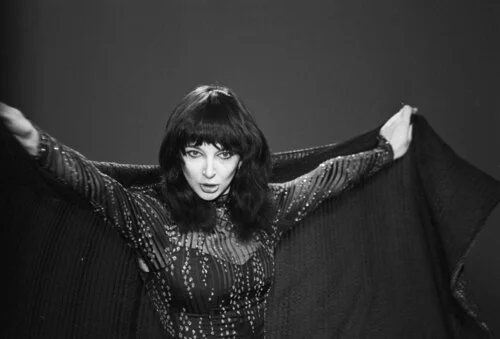
IN THIS PHOTO: Kate Bush in a water tank at Pinewood Studios whilst filming visuals for The Ninth Wave’s And Dream of Sheep

Watching from Above: Kate Bush’s Hello Earth from Hounds of Love

___________

WHILST I have written…

quite a few features regarding Hounds of Love and various songs from it, I do not think I have heavily featured one of the standout tracks from the album, Hello Earth. It is the penultimate track on the album, and it appears on the conceptual suite, The Ninth Wave. Though I can appreciate The Ninth wave as a cohesive piece that is best heard in one sitting, I do think that the seven songs from that side are well worth investigation on their own merit. To me, Hello Earth is one of the most moving and stirring songs that Bush ever wrote! I will delve more into the lyrics soon but, before then, I will bring in some information and background about a stunning song. It is to the Kate Bush Encyclopaedia for assistance:

Song written by Kate Bush. Originally released on her fifth studio album Hounds Of Love. Sixth track of The Ninth Wave suite. The choral section, performed by the Richard Hickox Singers, is taken from a Georgian folk song called 'Zinzkaro' ('By The Spring'), which Kate heard performed by the Vocal Ensemble Gordela on the soundtrack of Werner Herzog's 1979 film Nosferatu The Vampyre.

'Hello Earth' was a very difficult track to write, as well, because it was... in some ways it was too big for me. [Laughs] And I ended up with this song that had two huge great holes in the choruses, where the drums stopped, and everything stopped, and people would say to me, "what's going to happen in these choruses," and I hadn't got a clue.

We had the whole song, it was all there, but these huge, great holes in the choruses. And I knew I wanted to put something in there, and I'd had this idea to put a vocal piece in there, that was like this traditional tune I'd heard used in the film Nosferatu. And really everything I came up with, it with was rubbish really compared to what this piece was saying. So we did some research to find out if it was possible to use it. And it was, so that's what we did, we re-recorded the piece and I kind of made up words that sounded like what I could hear was happening on the original. And suddenly there was these beautiful voices in these chorus that had just been like two black holes.

In some ways I thought of it as a lullaby for the Earth. And it was the idea of turning the whole thing upside down and looking at it from completely above. You know, that image of if you were lying in water at night and you were looking up at the sky all the time, I wonder if you wouldn't get the sense of as the stars were reflected in the water, you know, a sense of like, you could be looking up at water that's reflecting the stars from the sky that you're in. And the idea of them looking down at the earth and seeing these storms forming over America and moving around the globe, and they have this like huge fantasticly overseeing view of everything, everything is in total perspective. And way, way down there somewhere there's this little dot in the ocean that is them. (Richard Skinner, 'Classic Albums interview: Hounds Of Love. Radio 1 (UK), aired 26 January 1992)”.

There are upas and downs and myriad emotions on The Ninth Wave. I think that, occurring near the end of the story, Hello Earth has a sense of dreaminess and optimism among its more dreaded moments. After the propulsive and Irish-infused Jig of Life, Hello Earth takes the pace down a bit and it is a lot more choral-like and tender. I like the verse where Bush sings about holding one hand up and blotting the Earth out. It is almost like she is seeing a reflection of the planet from the sea and blocking it out, or she is looking down from very high and watching herself in the sea waiting to be rescued. The opening is one of the most captivating segments of The Ninth Wave: “"Columbia now nine times the speed of sound/"Roger that, Dan, I've got a solid TACAN locked on, uh, TACAN twenty-three"/"The, uh, tracking data, map data and pre-planned trajectory are all one line on the block"/"Roger your block decoded". I love the mixture of the dramatic and child-like on Hello Earth. The song’s heroine has this fascination with Earth and its beauty, but there is also this rather epic and sweeping aspect to the song. I think that Bush’s lyrics were at their most poetic and original on Hounds of Love. One of my favourite passages is this: “Watching storms/Start to form/Over America./Can't do anything/Just watch them swing/With the wind/Out to sea”.

IN THIS PHOTO: Kate Bush being carried off stage during a performance of Hello Earth during Before the Dawn in 2014

I was not lucky enough to attend Kate Bush’s live residency, Before the Dawn, in 2014 and witness Hello Earth mounted for the stage almost thirty years after it was released. It must have been staggering and hugely emotional seeing the song brought to life in such a way. I like the fact that, on the song, there is a continuation of the Irish tones and sounds heard on Jig of Life – with Liam O'Flynn on uillean pipes, and Donal Lunny on bouzouki. The addition of  The Richard Hickox Singers combines magnificently. One gets such a rich and heady brew that provokes the imagination and makes the senses tingle! I was keen to come back to Hounds of Love because, whilst it was great to celebrate its thirty-fifth anniversary last year, I wanted to go deeper with one of the album’s very best songs. I usually listen to The Ninth Wave as a suite, so I never really stop and dissect each track and think about their story. There is sadness and heartbreak on Hello Earth, but I think there is that feeling that help is coming and things are going to work out for the heroine – after the terrifying earlier stages of The Ninth Wave, the listener is as relieved as they are entranced. Listening to Hello Earth so many years after I first heard it…

STILL has such a powerful effect.

FEATURE: Second Spin: The Divine Comedy - Fin de Siècle

FEATURE:


Second Spin

The Divine Comedy - Fin de Siècle

___________

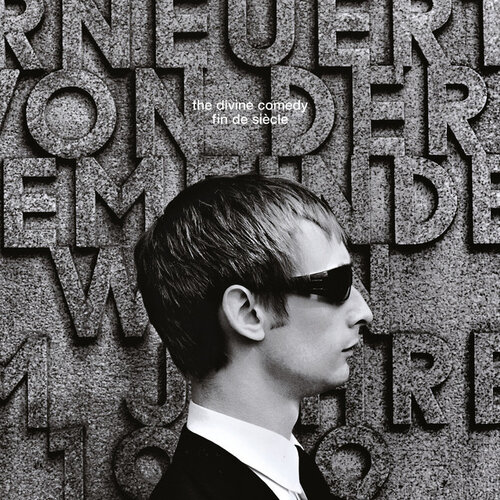
I first discovered The Divine Comedy…

oo.jpg

when they released their third studio album, Promenade, in 1994. The band is essentially Neil Hannon and a rotation of musicians. I love Hannon’s songwriting and perspective and, by the time Fin de Siècle arrived in 1998, I was properly invested! The sixth studio album, Fin de Siècle followed the remarkable A Short Album About Love. I think many consider Fin de Siècle to be the weakest album from The Divine Comedy to that point. The album peaked at number-nine in the U.K. It is a great and rounded work that is very rewarding and interesting. I wanted to include it here as it remains underrated and underappreciated. I am going to bring in a couple of reviews soon but, before then, I wonder why some dismissed it or felt it was weaker than previous albums from The Divine Comedy. The first single, Generation Sex, was released on 14th September, 1998, and it typically humorous and incredibly smart! I think it is one of the best songs from The Divine Comedy but it is the huge hit, National Express, that people associate with Fin de Siècle. Released on 25th January, 1999, I remember buying the single and really loving it – I had heard it on the radio a lot and was hooked by its catchiness! Many critics felt that Neil Hannon was sneering at the working-class population and being classist.

In fact, National Express was his observations from using the coach service and typical scenes that many of us would also have witnessed – nothing in the way of taking a shot at those less-well-off! Away from those singles, there is plenty of quality to be found. With ten tracks, there is very little wastage. Thrillseeker is a magnificent song, whilst I love the grandeur of Sweden. Here Comes the Flood is stirring and contains some of Hannon’s most biblical and memorable images. Although Fin de Siècle does not scale the same heights as 1996’s Casanova, I do think that it is primed for re-evaluation. This is what AllMusic wrote in their review:

The songs on Fin de Siècle, though pleasant, don't quite scale the heights Neil Hannon has before: nothing is as arresting as A Short Album About Love's "In Pursuit of Happiness," though "Commuter Love," the grandiose, wind-swept "The Certainty of Chance," and especially the rainy-day funeral song "Life on Earth" make attempts, as does the song that jumps out at you the most, in line with Hannon's past work, "Sweden." Its '60s-movie oom-pah pomp and bombast that introduces each verse is fabulous. But otherwise, Hannon's done better. More unfortunate, Jon Jacobs' engineering seems fine, but his mix is convoluted, muted, as if Hannon's wry voice and the various lugubrious blends of sounds Jobi Talbot scores -- of woodwinds, brass, strings, guitar, and timpani-like drums -- were all trapped in a sandwich bag, fighting to get out where ears are.

Where such mellifluous tones should tickle, tease, dazzle, and sometimes outright startle, outside of those yelping parts of "Sweden," it's all a little muffled. Still, it's hard to stop laughing at Hannon's suit-wearing, minor send-up of the storied English gentleman, like a man who is a playboy jet-setter but also affects uptight, fastidious manners. And there's still much to swing on here. Talbot is a fabulously imaginative arranger -- surely the LP's biggest saving grace -- and Hannon's songs thus seem to spiral toward dramatic conclusion no matter what. Best of all, Fin de Siècle largely diminishes the Scott Walker whispers that have shadowed his every move, if not actually erasing them. In the end, Hannon is the one you want at your party, sitting at an end table, smoking, drinking your most expensive booze, slyly winking at the ladies, and sizing up the crowd like an international spy. Give the man his due, style is his middle name. You can bet he's got unbelievable chat-up lines”.

Twenty-three years after its release, and I think that Fin de Siècle has a lot going for it. The songwriting is mature and consistently engaging. Hannon manages to mix humour, deep emotions and flights of fancy seamlessly. I think his voice is as rich and powerful as ever. Perhaps a lot of people argue whether National Express is a song that jabs at the working classes, but I don’t think it does. It is a classic from The Divine Comedy that one cannot help but sing along with.

Back Seat Mafia highlighted and reassessed Fin de Siècle back in 2014:

Neil Hannon (the man who effectively is The Divine Comedy), cut a unique dash through the British music in the mid 90s, as his almost imperceptible rise to near-fame ran parallel to the Brit-pop movement, meant that he sometimes got lumped in with the unwashed masses.

Foppish, louche and possessing a more sophisticated musical mind than his more straight-forward peers, Hannon had built himself a career by stealth. Every studio album was just a little better than the last, with a few more sales and with his minor coup of getting the job of writing the theme music for Father Ted, Hannon’s music had found it’s way into the hearts and minds of music fans who recognised a classy tune when they heard one.

Yet still a proper ‘hit’ single eluded The Divine Comedy. When Fin de Siècle was released in 1998, there were the usual modest sales, but it looked as though they were still as far away from mainstream success as ever. Then came the freak (some would say ‘novelty’) hit that was “National Express” and suddenly The Divine Comedy were enjoying airplay and top-ten singles.

As it happens, though it’s a fine pop-tune, “National Express” is one of the lesser tracks on Fin de Siècle. From the majesty of “Life on Earth” and “The Certainty of Chance” to the admire-from-afar style romance of “Commuter Love”, to the social commentary of “Generation Sex”, Fin de Siècle is a well rounded and mature album, a world away from those that were making guitar singalongs for the hard-of-thinking. Particularly impressive is the faux-Bond Theme that is “Thrillseeker”, which finds Hannon in particularly bombastic vocal form and the strangely compelling “Sweden”. The weak point of the album is the over-stretched “Eric the Gardener”, which could have been a cracking tune, if only it’s duration had been halved.

In many ways, Fin de Siècle is The Divine Comedy’s most diverse and fully-realised album. After this they had a big hit with a compilation, national embarrassment Robbie Williams claimed they were his favourite band for a full week, they lost their way a little and have been spending the last five years trying to regain the heady heights of 1998 and 1999”.

If you have not heard Fin de Siècle, then seek the album out and I guarantee that you will enjoy it! It is such a broad album, one will find a song that suits them. Maybe The Divine Comedy released better albums, yet I maintain Fin de Siècle is a masterful work with a lot to love. I think I bought the album when it came out in 1998, and it was great hearing songs that I had not heard and discovering a new side to Neil Hannon and his songwriting. Fin de Siècle is an underrated and discussed album that I am happy to play…

TIME and time again.

FEATURE: The February Playlist: Vol. 1: The Return of Cardi B

FEATURE:


The February Playlist

jjj.jpg

Vol. 1: The Return of Cardi B

__________

THIS week’s Playlist is a little quieter…

zzzz.jpg

 IN THIS PHOTO: Hayley Williams

in terms of the number of tracks, but it is pretty exciting in terms of the biggest songs. There is new music from Cardi B, Hayley Williams, The Staves, Foo Fighters, H.E.R., Death from Above 1979, Victoria Monét, Ben Howard, Black Country, New Road, and Pixey. There are also cuts from Julien Baker, and Chet Faker – so there is something in there for anyone! If you require a bit of a boost and some energy to get you through a chilly and wet weekend, then I hope that the songs below do the job and can get you moving! It is another great week for new music so, if you require some tunes to provide a kick, then I think that there is more than enough…

aaaa.jpg

IN THIS PHOTO: Foo Fighters

TO enjoy here.

ALL PHOTOS/IMAGES (unless credited otherwise): Artists

__________

kkk.jpg

PHOTO CREDIT: AB+DM

Cardi B Up

sssss.jpg

PHOTO CREDIT: Lindsey Byrnes

Hayley Williams My Limb

ffff.jpg

H.E.R. - Fight For You (From the Original Motion Picture Judas and the Black Messiah)

jjj.jpg

The Staves - Failure

qqq.jpg

Death from Above 1979 - One + One

xxx.jpg

 Foo Fighters Making a Fire

cccc.jpg

Victoria Monét - F.U.C.K

xxx.jpg

Ghetts (ft. Pa Salieu & BackRoad Gee) - No Mercy

zzzz.jpg

Ben Howard - Crowhurst's Meme

zzzz.jpg

Black Country, New Road - Opus

mmm.jpg

Pixey Electric Dream

jjjj.jpg

Chet Faker Get High

llll.jpg

The Weather Station Separated

qqqq.jpg

PHOEBE ∆X∆ Bed

mmm.jpg

Daya Bad Girl

cccc.jpg

Stereolab - Household Names

xxxx.jpg

Julien Baker Favor

xxxc.jpg

VC Pines Smoke Without Fire

xxxx.jpg

The Snuts Somebody Loves You

qqqq.jpg

FINNEAS - American Cliché

ffff.jpg

PHOTO CREDIT: Netti Hurley

Puma BlueAlready Falling

rrr.jpg

TV Priest Saintless

xxx.jpg

PHOTO CREDIT: Olivia Bee

Rostam - These Kids We Knew

xxxx.jpg

The Aces - Sleepy Eyes

vbjj.jpg

Charlotte Clark Odyssey

ssss.jpg

SG Lewis (ft. Nile Rodgers) - One More

cccc.jpg

Ruby FrancisStuck Right Here

zzz.jpg

Priya RaguChicken Lemon Rice

kkk.jpg

Sad Night Dynamite - Smoke Hole

FEATURE: The Lockdown Playlist: The Best of Bob Marley

FEATURE:


The Lockdown Playlist

The Best of Bob Marley

___________

AS is traditional with these birthday…

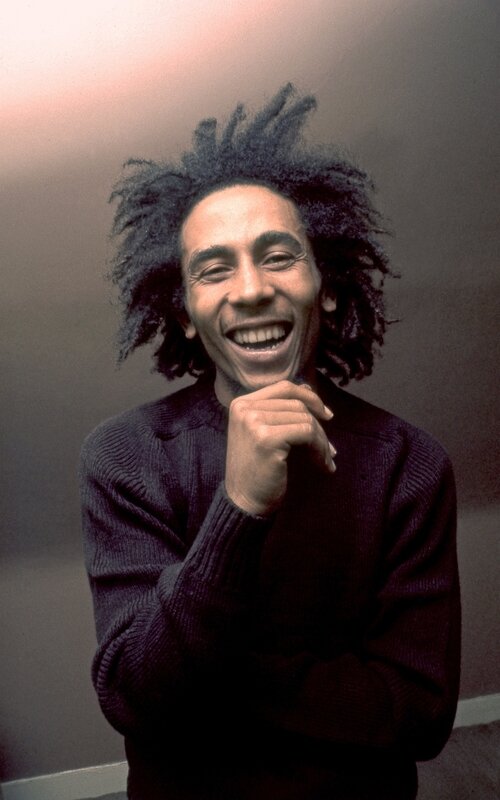
IN THIS PHOTO: Bob Marley in 1979/PHOTO CREDIT: Glen La Ferman 

Lockdown Playlists, I am going to bring in a chunk of information from Wikipedia that provides information about the artist; I will then move onto the playlist itself at the very end of the feature. The artist in question is the late Reggae icon, Bob Marley. Today (6th February) would have been his seventy-sixth birthday - and I think there has been a real gap in the world since Marley died in 1981. He is a hugely important and inspirational artist who, in his short life, left such a mark on the world! Here is some detail regarding the legendary Bob Marley:

Robert Nesta Marley, OM (6 February 1945 – 11 May 1981) was a Jamaican singer, songwriter, and musician. Considered one of the pioneers of reggae, his musical career was marked by fusing elements of reggae, ska, and rocksteady, as well as his distinctive vocal and songwriting style. Marley's contributions to music increased the visibility of Jamaican music worldwide, and made him a global figure in popular culture for over a decade. Over the course of his career Marley became known as a Rastafari icon, and he infused his music with a sense of spirituality. He is also considered a global symbol of Jamaican music and culture and identity, and was controversial in his outspoken support for the legalization of marijuana, while he also advocated for Pan-Africanism.

Born in Nine Mile, British Jamaica, Marley began his professional musical career in 1963, after forming Bob Marley and the Wailers. The group released its debut studio album The Wailing Wailers in 1965, which contained the single “One Love/People Get Ready”; the song was popular worldwide, and established the group as a rising figure in reggae. The Wailers subsequently released eleven further studio albums; while initially employing louder instrumentation and singing, the group began engaging in rhythmic-based song construction in the late 1960s and early 1970s, which coincided with the singer’s conversion to Rastafarianism. During this period Marley relocated to London, and the group embodied their musical shift with the release of the album The Best of The Wailers (1971).

The group attained international success after the release of the albums Catch a Fire and Burnin’ (both 1973), and forged a reputation as touring artists. Following the disbandment of the Wailers a year later, Marley went on to release his solo material under the band’s name.[10] His debut studio album Natty Dread (1974) received positive reception, as did its follow-up Rastaman Vibration (1976). A few months after the album’s release Marley survived an assassination attempt at his home in Jamaica, which prompted him to permanently relocate to London. During his time in London he recorded the album Exodus (1977); it incorporated elements of blues, soul, and British rock, enjoyed widespread commercial and critical success”.

To mark what would have been Marley’s seventy-sixth birthday, this Lockdown Playlist is an assortment of his very best tracks. Marley moved a lot of people in his lifetime and, almost forty years since his death, it is clear his genius and legacy…

STILL burns bright.

FEATURE: What Is the Solution? Financing Artists, Songwriters and Grassroots Venues

FEATURE:


What Is the Solution?

PHOTO CREDIT: @tijsvl/Unsplash 

Financing Artists, Songwriters and Grassroots Venues

___________

ONE of the things that I cover a lot…

xx.jpg

 IN THIS PHOTO: Tim Burgess

on my site is grassroots venues and streaming. Both are in the news again because, whilst venues are shut and streaming sites are not providing artists and songwriters with enough money, there is a struggle that cannot only potentially impact the future of live music; it can also damage existing artists in terms of their ability to continue and survive. I want to draw from a couple of articles because, whilst there is determination from those in the music industry to see change, we need Government support and businesses to step up. The music world was thrown into chaos because of the pandemic. It meant that venues had to close and, for artists who gain a lot of revenue from gigs, they were forced to look elsewhere for a financial stream. In terms of streaming platforms, the business model still means that, whilst the companies earn a lot of money as companies, a lot of the money is going straight to the labels and not to the artists and songwriters. I know it is hard to divide the pie equally but, as the actual talent are getting paid far less than labels, it seems that 2021 is a year when change needs to happen very quickly. Musician Tim Burgess wrote for The Guardian last week. He outlined the extent of the disparity and issue:

The basic point is that the UK music industry contributed an estimated £5.8bn to the economy in 2019, but artists are maybe not seeing as much of that as they should. Almost 5m vinyl albums were sold in 2020, the most since way back when we released our debut LP in the early 90s. There’s hope and excitement in the gloom, but there’s also an elephant in the gloom. That elephant’s name is streaming. To understand the issues better, it might help if we imagined trying to explain the way it works to someone back in 1995.

PHOTO CREDIT: @lastly/Unsplash 

“OK, so for a penny under a tenner a month, you’ll have access to pretty much every record ever made, to listen to whenever you want. It’s like you own the music but you kind of don’t.” I’m guessing our person in 1995 would be mightily impressed.

There is much made of the sums paid to artists as a result of all this – yes, they get a cut, and millions of people stream every day, right? – right, but these sums usually go to 26 decimal places, and the first four digits are often 0.000.

Gary Numan recently said that he made £37 from a million streams of one of his songs. Again, he wasn’t griping about the money due to him, but painting a picture of what it’s like for a new artist who couldn’t hope to get a fraction of those plays. Let’s say 25,000 people streamed that artist’s latest track. As popular as that might make them seem, it wouldn’t buy them a coffee in the shop where they had to work a second job because their income from music was so meagre.

The thing is, streaming has taught us that people are willing to pay for music. Spotify had total revenues of $7.4bn in 2019. A lot of that money goes to major labels rather than directly to artists, so they’re part of the equation too. Tom Gray and the Broken Record campaign (pretty sure they supported us at the Rayleigh Pink Toothbrush in 1992) have done some sterling work in holding the platforms and labels to account, but it’s an uphill struggle.

PHOTO CREDIT: @hakimr/Unsplash

Julian Knight MP, chair of the digital, culture, media and sport committee, recently called in the major record labels to discuss streaming. He asked one of them whether they had cut royalty rates to artists after a deal with Spotify. He wasn’t happy with the answer. “You are in front of a parliamentary select committee now,” he said. “In the past, with the likes of Google, Facebook, YouTube and Twitter, we have found them to be frankly dissembling and not being in any way [clear]. So far I have to say you are beating them to the prize in terms of lack of clarity and lack of actual openness to a parliamentary committee.” I don’t know about you, but that doesn’t give me a lot of faith that they’re going to be open to changing things”.

I am not sure what the instant answer is regarding parity and something that will benefit everyone. I know that there are wheels in motion regarding discussion about streaming and improving the situation. With every new article and outcry from the music industry, it enforces the seriousness of how things really are. I am not sure what the long-term impact of the pandemic will be regarding musicians’ survival and streaming, but there is a growing desire for dialogue and action. Not only is there a massive issue concerning streaming and how it pays new and established artists; venues are also threatened right now. Two sources of revenue for artists are under threat right now.

 PHOTO CREDIT: @bantersnaps/Unsplash

Many of the larger venues will survive and be okay this year. The same cannot be said for a lot of the grassroots venues. As this NME article shows, there is one politician at least who understands the gravity of the reality many venues face:

Greater Manchester Mayor Andy Burnham has suggested that the “big players” of the music industry should pay a levy to support grassroots music venues through the coronavirus pandemic.

Speaking as part of Independent Venue Week’s Culture Panel last week (January 28), Burnham said the industry had a responsibility to protect beleaguered venues which have faced the threat of financial ruin.

“The industry has to pay a levy to support grassroots venues, because that is their talent production ground. They are the junior football clubs of the country. That’s where the talent comes through,” he said.

Burnham said that the closure of venues would be “like closing junior grassroots football clubs and then expecting English football to still be strong.”

Backing the idea, Music Venue Trust CEO Mark Davyd explained that a number of European countries tax the music industry to finance grassroots music development.

“We would rather see the industry organise itself into such a model,” he said, per the BBC.

PHOTO CREDIT: @overdriv3/Unsplash 

“We believe the skills and expertise available in our industry could quickly develop such a programme to be an effective model of investment into new talent.

The MVT has continued to work to protect and preserve live music in the UK during the coronavirus pandemic, which has forced live music spaces across the country to close their doors. Back in November, the organisation launched a campaign to save 30 UK venues that were still in danger of being lost forever in the wake of coronavirus restrictions.

Having already secured over £80 million in donations and government grants this year through their #SaveOurVenues campaign – securing the futures of over 400 UK grassroots venues until March 31, 2021 – the MVT moved to aid 24 venues that have been “unable to access sufficient funding” and have been “added to a ‘red list’ of venues in imminent danger of permanent closure”.

Let’s hope that there is extra financing from the Government and bigger businesses to ensure that most of our valued grassroots venues will be okay. We all also hope that streaming sites look at how much they are paying artists and songwriters and, on that basis, alter things. I think that awareness continues to be raised but, beyond that, we all have our fingers crossed that there will be consultation and good news this year. Last week, NME published a piece of news that one hopes will be picked up by the Government:

Leading figures across the live events industries have called on the UK Government to maintain the 5 percent VAT rate on ticket sales, which was introduced to help the struggling sector last year.

The new appeal has been delivered in a letter, signed by industry figures representing thousands of businesses across the UK, to Chancellor Rishi Sunak ahead of March’s budget.

The tax reduction was initially introduced in July last year, but the prolonged closures of venues due to the coronavirus pandemic means that they are yet to directly benefit. It is now feared that the VAT rate could now rise to 20 percent, striking a direct blow to beleaguered venues”.

One possible way that some venues may be able to open with a reduced capacity is through something called a ‘health passport’. This article explains more:

After the coronavirus pandemic made the majority of live gigs impossible over the past 10 months – bar some socially distanced shows outside of lockdown – the industry is now looking for ways to reopen live music in a safe manner. Now, it’s been announced that start-up comany You Check will be trialling a new digital health passport app – collaborating with the Music Venue Trust and approved by the government’s Department for Digital, Culture, Media and Sport”.

The trials are currently planned at London’s 100 Club and The Exchange in Bristol for March with events at 25 per cent capacity with two sets of tests on the same people, before trialling at other spaces across the country with a hope to gradually building up capacity”.

It is good that there are developments an some glimmers of hope with venues at least. Whilst they may not be able to properly open until later this year, solutions are being discussed. I do have a fear for their solidity and safety if they cannot reopen fully soon, and if the Government does not pledge more financial support to ensure that live music can swing back post-pandemic. Artists and venues are facing a crisis right now and, with no confirmation as to when venues can reopen at their full capacity, let’s hope that those in power…

sss.jpg

 PHOTO CREDIT: @wesleyphotography/Unsplash

DO the right thing.

FEATURE: Vinyl Corner: J Dilla - Donuts

FEATURE:


Vinyl Corner

fff.jpg

J Dilla - Donuts

___________

THIS instalment of Vinyl Corner…

IN THIS PHOTO: J Dilla in his home studio/PHOTO CREDIT: Raph Rashid

is all about an album that turns fifteen on 7th February. If you have not experienced the late J Dilla’s Donuts, then you need to get involved! I would encourage everyone to buy it on vinyl, as it is such a magnificently rich and broad album filled with so many different sounds and samples. It is one of the last great sampling records in my opinion – something that was more synonymous with Hip-Hop of the 1980s and 1990s. Donuts is a largely instrumental album – there are short vocal snippets and phrases from various samples -, and it contains thirty-one tracks (that was how old J Dilla was at the time). Whereas a lot of sample-heavy albums are full songs with several samples in each track, Donuts is a collection of very short songs (between one and one-and-a-half minutes for the most part) where you get these amazing sketches and layers that all work wonderfully alongside one another. It is like you are scrolling through radio stations or a playlist and getting all these very different and intriguing songs! Despite the brilliance and originality of Donuts, there is sadness and tragedy behind the album. As we learn from Wikipedia, J Dilla was very ill in hospital for much of the recording – he died on 10th February, 2006 (Donuts was released on his thirty-second birthday):

In 2002, J Dilla had been diagnosed with thrombotic thrombocytopenic purpura (TTP), an incurable disease of the blood, while also battling lupus, which had been diagnosed a year previously. According to close friend and fellow producer Karriem Riggins, the impetus for Donuts came during an extended hospital stay in the summer of 2005.

In the December 2006 issue of The Fader, J Dilla's mother, Maureen Yancey, a former opera singer, spoke of watching her son's daily routine during the making of Donuts:

I knew he was working on a series of beat CDs before he came to Los Angeles. Donuts was a special project that he hadn't named yet. This was the tail end of his "Dill Withers" phase, while he was living in Clinton Township, Michigan. You see, musically he went into different phases. He'd start on a project, go back, go buy more records and then go back to working on the project again.

I saw him all day, everyday. I would go there for breakfast, go back to Detroit to check on the daycare business I was running, and then back to his house for lunch and dinner. He was on a special diet and he was a funny eater anyway. He had to take 15 different medications, we would split them up between meals, and every other day we would binge on a brownie sundae from Big Boys. That was his treat.

I didn't know about the actual album Donuts until I came to Los Angeles to stay indefinitely. I got a glimpse of the music during one of the hospital stays, around his 31st birthday, when [friend and producer] House Shoes came out from Detroit to visit him. I would sneak in and listen to the work in progress while he was in dialysis. He got furious when he found out I was listening to his music! He didn't want me to listen to anything until it was a finished product.

He was working in the hospital. He tried to go over each beat and make sure that it was something different and make sure that there was nothing that he wanted to change. "Lightworks", oh yes, that was something! That's one of the special ones. It was so different. It blended classical music (way out there classical), commercial and underground at the same time”.

It is such a shame that J Dilla (James Dewitt Yancey) did not live long enough to see the impact his album had and the way it inspired Hip-Hop. From tracks being taken from Donuts and used on the T.V. to other Hip-Hop artists borrowing its beats, this exceptional album is still providing nourishment and fascination after all of these years. I want to finish by bringing in an article but, before then, AllMusic’s review of Donuts:

Donuts was made on a hospital bed and in a home studio, on a stripped-down setup with a stack of vinyl. Released on its maker's 32nd birthday, three days before he passed away, the album has a resonance deeper than anyone could've hoped for or even imagined. Some who were close to Dilla have said that there are hidden messages in the samples, the track titles, and who knows where else. It's impossible not to speculate about some things, like the track titled "Don't Cry," the looped "broken and blue" from a version of "Walk on By," the presence of Eddie Kendricks singing "My people, hold on," or the fact that there are 31 tracks, a possible signal that Dilla survived a little longer than he expected. Then again, for every possible message, there are two or three elements that could've been designed to throw any analysis off its trail. After all, if there's one single image that the disc brings to mind, it's that of Dilla goofing off, having fun with some of his favorite records, and messing with some heads in the process. (And you could probably make the album's title out to be a metaphor for the circle of life, but sometimes a donut is just a donut.)

Armed with sources that are either known to novice sample spotters or only the most seasoned diggers -- surprisingly, the former greatly outweighs the latter -- Dilla's also just as likely to leave his samples barely touched as he is to render them unrecognizable. It's fitting that Motown echoes, a predominant theme, are often felt, from the use of Dionne Warwick's Holland-Dozier-Holland-written "You're Gonna Need Me" (on "Stop"), to the shifting waves of percussion plucked from Kendricks' "People... Hold On" (on "People"), to the Stevie-like piano licks within Kool & the Gang's "The Fruitman" ("The Diff'rence"). Most of the tracks fall into the 60-90 second range. It's easy to be overwhelmed, or even put off, by the rapid-fire sequence, but it's astounding how so many of the sketches leave an immediate impression. By the third or fourth listen, what initially came across as a haphazard stream of slapped-together fragments begins to take the shape of a 44-minute suite filled with wistful joy. Like everything else Dilla has ever done, Donuts is not defining; in fact, elements of its approach bare the apparent influence of Jaylib collaborator Madlib. His mode has always been too slippery and restlessly progressive to be equated with any one track or album, but Donuts just might be the one release that best reflects his personality”.

Even if you are not a Hip-Hop fan and are a bit unsure about digging too deep, I would advise you to listen to Donuts as it is so accessible and varied. The sounds and sensations one gets from the album are so heady and memorable. It is a unique and hugely impressive album that is moving people fifteen years after its release. In 2016, Observer Music looked back on Donuts ten years after its release. The article consisted a fascinating discussion between figures who reflected on an awesome album:

Participating in the discussion were renowned funk/soul/hip-hop DJ and Stones Throw CEO Peanut Butter Wolf, Stones Throw recording artist, veteran jazz drummer and longtime Dilla friend Karriem Riggins, acclaimed electronic music maverick Adam Dorn, who does business as Mocean Worker, and Jeff Parker, the mighty guitarist from Chicago post-rock legends Tortoise”.

In your opinion, do you think Dilla had this magnum opus in his mind or was the creation of these beats done on a more cathartic level or therapeutic level for him that summer he was in the hospital?

Riggins: He would make the beats from his hospital bed at Cedar-Sinai. At that point, he wasn’t mobile.

Wolf: I think the pain and suffering he dealt with off and on through his final years contributed to the album he created coming out the way it did, but when he gave me the first Donuts demo on CD, he was in between hospital stays. He was in my car with Madlib and I and we were going record shopping and he just gave it to me to play in the car. I had released the Beat Konducta volume 1 & 2 album a few months before (which is Madlib’s instrumental hip-hop alias) and I later felt like maybe he gave me that as his own version of Beat Konducta.

So the story goes the album was named as such because Jay loved donuts. But what was the true meaning behind the title?

Wolf: The “donuts” thing was just another tongue-in-cheek thing that Dilla did. I don’t think he really thought too hard about calling his album Donuts. I don’t even to this day know if it was supposed to be an instrumental album or a beat tape for rappers, but I damn near begged him to let me release it as an instrumental album and he agreed. But the “donut” thing could be his ode to unhealhty food (he called another one of his beat tapes “Pizza man”) or it could be because he knew that J Rocc and I loved spinning 45s when we went on the road with him and Madlib, and Dilla sampled from 45s for most of that album. “Donuts” is a nickname for 45s cuz of the hole in the middle. We’d all go to Rockaway Records in Silverlake/Glendale and get our fix of 45s and I believe that’s the record store where the majority of the samples from Donuts came from.

How does Donuts look on your ends a decade later?

Dorn: It’s amazing to witness because now it’s long enough ago that guys don’t even know why they’re playing behind the beat the way they are. Like they don’t even know the records that inspired this in the first place. That freaks me out the most. Combine that with churches churning out players and you have a rebirth of musicianship. 

Jeff Parker: We were all giant fans of that record in Tortoise, man. I mean, we all loved Dilla in general. But that record blew everybody’s minds. We had all been following Dilla’s music, and whenever he dropped anything we were curious to know what it was going to sound like and one of us would go out and get it. It was a very exciting time.

For me personally, it wasn’t anything I expected it to sound like. It was totally different from the stuff that he had been doing. When I first put it on, I was actually kind of put off by it. I was like, “Yo, man, where’s the smooth beats? Where’s the space?” (laughs) Especially comparing it to all of his other stuff, I was like, “Man, what is this?” But the more and more I listened to it, and like the most intriguing music, hearing it over and over again eventually it became like one of my favorite things I had ever heard, still to this day. I was actually just listening to it very recently and I always hear new things every time I listen to it”.

I shall leave things there, as I would point people in the direction of the album – either on vinyl or streamed – and its myriad sounds. Ahead of its fifteenth anniversary, I was eager to spotlight an album that has a huge legacy and has been celebrated by critics far and wide. I hope, on 7th February, people around the world spin Donuts and raise a glass to remember…

THE remarkable J Dilla.

FEATURE: Talk of the Town: The Chrissie Hynde Telecaster and a Pledge to Get More People to Pick Up a Guitar

FEATURE:


Talk of the Town

jj.jpg

PHOTO CREDIT: ddp USA/Rex/Shutterstock 

The Chrissie Hynde Telecaster and a Pledge to Get More People to Pick Up a Guitar

___________

AMONG all the bad news and lack of positive rays…

xxxx.jpg

 PHOTO CREDIT: Fender

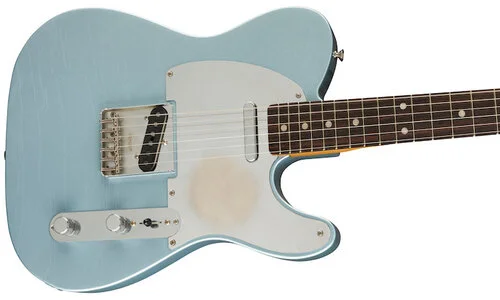
in the music industry right now, there are these interesting stories that take the mind in a different direction. It has been a pretty heavy year already for music in terms of bad news – what with venues still closed -, but I am always cheered by something a little more positive. One of my favourite musicians, Chrissie Hynde, has launched her own guitar. This NME article explains more:

The Pretenders frontwoman’s team-up with the US instruments manufacturer, which was announced yesterday (February 2), pays homage to the Ice Blue Metallic Telecaster she purchased in New York City nearly 40 years ago.

Since the release of the band’s self-titled debut album (1980), Hynde has played the guitar on many subsequent studio records and live tours.

Fender’s new Chrissie Hynde Telecaster, released as part of the company’s Artist Signature Series, allows fans worldwide to embody the axe-playing prowess of The Pretenders’ leader for the very first time.

According to an official description, the guitar “serves the unmistakable look and feel of Hynde’s treasured ’65 Telecaster model”. The new instrument features an alder body in Faded Ice Blue Metallic Road Worn lacquer finish, vintage-style ’50s single-coil Tele pickups voiced to match Hunde’s original set as well as a 6-stainless steel barrel saddle bridge.

Justin Norvell, EVP Fender Products, said it was “a true honour” to bring the singer’s “legendary” guitar to life, adding: “Chrissie really wanted this model to be as faithful as possible to its original.”

You can watch an official demonstration video above and find further information at Fender’s official website”.

I wonder whether this development will inspire other artists and we will see more guitars to enter the market. I do not play the instrument myself, but I do have an appreciation of a great guitar. I think that other signature series have been released, but rather than this news being something that can benefit Fender and Chrissie Hynde, I think that it will lead many people to pick up a guitar. In 2018, we learned that half of the guitar-buying public were women. I am not the only one that is asking whether women are the future of guitar music. Anna Calvi, and St. Vincent are two of my favourite guitar players of the moment - and St. Vincent already has her own collection. I wonder whether we will see an Anna Calvi series. She has spoken about her guitar heroes before; she talked with Guitar World last year about her early idols and her dream guitar:

I’d say my initial guitar hero was Jimi Hendrix. I saw some footage of him playing at Woodstock, I must have been around nine years old and I thought he sounded amazing. It got me really excited. If I could meet any musician from history, it would definitely have to be him. Just to be in the same room and see him play would be magical. When I was a bit older, I got into Jeff Buckley, I really loved his approach to guitar, as well as [jazz and] fusion-style players John McLaughlin and Django Reinhardt.”

“I got my dream guitar when I was 14 and it’s the same guitar I play now – a 1994 Telecaster. It just sounds so pure and beautiful, better than anything else I’ve played. I’m monogamous when it comes to guitars. I haven’t changed anything on it, though I do sometimes wish it had a whammy bar because they can be a lot of fun".

I do think that more young women have picked up a guitar over the past few years, and this will (hopefully) continue unabated. It is pleasing that more people in general are finding the guitar. Maybe things will drop off during lockdown, but I do think that we should be encouraging as many people as possible to play an instrument. I feel that there are some great Rock bands and guitarists at the moment, though there is still a dominance of other sounds and styles. Maybe we have passed the golden age of guitar bands and players…that is not to say things have died down in that respect. I do feel that many people will have an appetite for the guitar and creativity now that we are in lockdown and, post-pandemic, I think many bands will form and we will see a surge in guitar sales. After the news about Chrissie Hynde’s special Fender, I would really like to see some more artists partner with guitar companies. I feel Hynde herself will influence a lot of people to play guitar but, as we look to a year with potentially no festivals or live gigs, maybe there is not the same impetus and allure. Things are bad now for many people, but I have heard of many people practicing an instrument when they would not otherwise have even considered it. Maybe Chrissie Hynde and this latest great launch will not single-handedly kickstart a new band of people buying electric (and acoustic) guitars but I think, through this year and going forward, we will see…

 A real boom and amplification.

FEATURE: I Drift with Dunes: Kate Bush’s Egypt

FEATURE:


I Drift with Dunes

Kate Bush’s Egypt

___________

I want to focus on a Kate Bush song…

that does not get a lot of attention. I don’t think I went into a lot of depth about Egypt when I marked Never for Ever’s fortieth anniversary last year. It is, perhaps, not one of the best songs from that album - though I feel it warrants a lot more consideration and focus. I want to bring in an article that goes into depth regarding Egypt. It is an interesting song for sure, though how successful lyrically and musically it is has divided people. I really love Bush’s vocal on the song and the sort of atmosphere that she summons. The Kate Bush Encyclopaedia gives us some background and information regarding one of her lesser-known songs.

Song written by Kate Bush. She described the song as 'an attempted audial animation of the romantic and realistic visions of a country'. The song was premiered during the Christmas Special in 1979 and released on the album Never For Ever in 1980.

“'Egypt' is an attempted audial animation of the romantic and realistic visions of a country. (Kate Bush Club newsletter, September 1980)

The song is very much about someone who has not gone there thinking about Egypt, going: "Oh, Egypt! It's so romantic... the pyramids!" Then in the breaks, there's meant to be the reality of Egypt, the conflict. It's meant to be how blindly we see some things - "Oh, what a beautiful world", you know, when there's shit and sewers all around you. (Kris Needs, Fire in the Bush. Zigzag (UK), 1980)”.

Appearing at the end of Never for Ever’s first side – just after the superior All We Ever Look For -, maybe Egypt is a bit of a side-ender that is not in the same class as Babooshka, Army Dreamers, and Breathing. At 4:10, Egypt is one of the longest songs in Never for Ever, and it is often listed alongside Violin as one of the weaker efforts on the album. I really love Egypt and, whilst it was strange seeing the song on Kate Bush’s Christmas special – the song got its premier there in 1979 -, I think the best way to enjoy the song is on the album - and after a run of four terrific songs on Never for Ever’s opening side. I want to bring in the excellent Dreams of Orgonon, who have gone deep with Egypt. There are some compelling insights:

Having just completed her triumphant European tour, Kate Bush was entering her imperial phase. Instead of working with producer Andrew Powell and the band of her first two albums again, she established control of her work by appointing herself co-producer with Jon Kelly, and finally using her own band for a whole LP. The result was a more authored album than her first two, one with the mark of its creator in its every facet. Never for Ever is a weird step forward: for one thing, it’s much more in line with the synthesizer music that was beginning to surface in British pop. It’s the album where she discovers her long-term ally, the Fairlight, a classic synth which would direct much of her music.

Never for Ever’s interest in soundscapes is greater than that of its predecessors, sometimes letting songwriting take a backseat to more spatial ideas of music and composition.  The technology of music takes greater import in her work as she starts composing with synths. Never for Ever is the point where Bush’s songs start sounding like their concepts. Rather than only singing about the magical forces of the universe, she’s now able to implement its sounds into her music.  Now in addition to her idiosyncratic vocals and unorthodox compositions, she has the technology to match her songs too.

Speaking of “strange creatures,” let’s talk about “Egypt” (the song more than the country, although we’ll be talking about the latter soon). Its treats the country as an enigma: it is seductress, serpent and sigil. “She’s got me with that feline guise/got me in those desert eyes,” the chorus says, “Oh, I’m in love with Egypt.” Bush’s Egypt is that of Ancient One of the Pharaohs, necropolises and the Sphinx, which Bush refers to in the best fucking lyric ever with “my pussy queen knows all my secrets.” The perception of Egypt is occidental: Bush is captivated by the myth of Egypt, the country that’s found in history books rather than the one that actually exists on the Sinai Peninsula. She’s dealing with iconography more than actual lived history once again. Falling into the pervasive Western trope of depicting Eastern landscapes minus the people (The Lion King, anyone?), she sings about an unpopulated landscape, a playground for colonizers rather than a place where people live. In his classic text Orientalism, Edward Said describes the East as “a theatrical stage affixed to Europe,” where the interests of Western imperial powers are acted out. The ever-theatrical Kate Bush operates similarly.

wwww.jpg

This is no surprise given that “Egypt” was the first new song written for Never for Ever (“Violin” was recycled from the Phoenix years). It’s oddly shaped and difficult to parse — it sounds outright unfinished, with its sparse lyric and chorus. More than likely it was written in between Lionheart and the Tour of Life, as it made its first appearance on that tour, where it was introduced as visual spectacle instead of an album track. As a result the song is more something to be seen than heard, as it was originally written for the stage. In concert, Bush strove up to the audience draped in full Cleopatra-meets-Captain-Marvel, draped in the red, blue, and gold livery, heralded by pipes and Preston Heyman’s powerful drumming. The subsequent performance is tense and distant — its frantic arrangement keeps it from getting dull, and it’s more driving and catchy than its record counterpart. The tour’s punchy and often acoustic arrangements give “Egypt” more weight than it would later have, and the song would be worse off without it.

Yet therein lies the problem of “Egypt”: in striving to dispel myths of Egypt, it imitates them. Musically it’s host to a number of caricatures found in Western imitations of “Oriental” music: the live versions of the song have this zig-zaggy four-note riff which is akin to plenty of Hollywood scores for epic movies set in Southern Asia or Northern Africa (note this was shortly before Raiders of the Lost Ark was released). It’s not just a crass idea of what European musicians think Egyptian music sounds like; it’s a tacky-sounding riff as well. Paddy Bush’s strumento de porco doesn’t help much with its ringing scrape of a sound either (“Oriental” music sounds like things been scraped on other things, didn’t you know?)”.

I have argued how many of Kate Bush’s deeper cuts have not been explored and played on the radio. Even if Egypt is not in many peoples top-twenty, I think it is a bit of an underrated gem. I think Bush’s vocal is sublime; Preston Heyman’s percussion gives the song rumble and mystique, whilst Paddy Bush adds plenty of atmosphere with the strumento de porco (which he deployed on Kashka from Baghdad from 1978’s Lionheart) and backing vocals. I feel what makes it is the addition of the Prophet 5 from Mike Moran. The Prophet 5 came out in January 1978. It was the last synthesizer made by the Sequential Circuits Corporation (SCI). Sounds were produced through voltage-controlled oscillators rather than digital samples. The collection of sounds and vocals is quite heady and, though the intentions behind the track are not necessarily realised, it was Bush pushing her ambition and stepping into territory few other artists were exploring at the time! Even Bush’s less successful songs were far more interesting and original than what was happening around her. I don’t think I have ever heard Egypt played on the radio. It is long overdue an outing! If you have not heard the song before then check it out and, if you can, play Never for Ever in its entirety and…

 IN THIS PHOTO: Kate Bush signing Never For Ever at London's Virgin Megastore/PHOTO CREDIT: Chas Sime/Getty Images

EXPLORE a hugely fascinating and broad album.

FEATURE: The Lockdown Playlist: Tracks Featured on Song Exploder: 2014-2017 (Inclusive)

FEATURE:


The Lockdown Playlist

Tracks Featured on Song Exploder: 2014-2017 (Inclusive)

___________

IN an age where streaming means that…

ILLUSTRATION CREDIT: Carlos Lerma

so many people pick at songs and only listen to them for a few seconds, having a podcast that is dedicated to forensic and passionate discussion about a single track seems like it would be deemed to fail! Conversely, Song Exploder is a massive success. Artists are invited to discuss and explain a song of theirs. In an episode from 27th January, HAIM reflected on Summer Girl:

HAIM appeared on the latest episode of Hrishikesh Hirway’s Song Exploder podcast. The Los Angeles band was joined by producers Ariel Rechtshaid and Rostam to discuss the genesis of their 2019 single “Summer Girl,” from last year’s Women in Music Pt. III. Listen to the full episode below.

In the episode, the sisters talk about how Rechtshaid’s cancer diagnosis informed the songwriting, referencing Lou Reed’s “Walk on the Wild Side,” trying to get Bono to sing on the track, and more.

Women in Music Pt. III is up for the 2021 Grammy Award for Album of the Year. HAIM were also nominated for Best Rock Performance for “The Steps.” Last month, the group shared a remix of “3AM” by Toro y Moi.

Find “RIYL: Haim’s Women in Music Pt. III” over on the Pitch”.

For this Lockdown Playlist, I have included songs from the series. I would advise people to check out the Song Exploder podcast, and you will get a new appreciation for music and what goes into writing and creating a song. Perhaps, ironically, I am only including the songs featured on Song Exploder - though I would advise people to listen to the corresponding episodes. I am taking episodes from 2014-2017 inclusive for the first feature; I will bring it up to date for the second. Here is a fantastic selection of…

WONDERFUL and interesting tracks.

FEATURE: Groovelines: Fleetwood Mac – Rhiannon

FEATURE:


Groovelines

IN THIS PHOTO: Fleetwood Mac’s Stevie Nicks in a U.S. recording studio in 1975/PHOTO CREDIT: Fin Costello

Fleetwood Mac – Rhiannon

___________

I have not done this feature…

 PHOTO CREDIT: Fin Costello/Getty Images

for quite a while and, with an absence of good news and too much happening in the music industry (compared to usual), I want to spend some time examining a classic track. I also realise that I have featured Fleetwood Mac a couple of times in the past couple of weeks – in the previous feature, I used them as an example of an older act who are doing well on streaming sites; perhaps (unintentionally) burying newer artists who need the streaming revenue. Because Fleetwood Mac released Rhiannon on 4th February, 1976, what better way to mark its forty-fifth anniversary than to look inside the song?! In fact, we refer to the song as ‘Rhiannon’, but I think that its full title is Rhiannon (Will You Ever Win). I wanted to write about the track, as I adore Stevie Nicks’ songwriting and, when she and her then-boyfriend Lindsey Buckingham first appeared on Fleetwood Mac’s eponymous album of 1975, I think her songwriting helped transformed the band. Rhiannon was released in February 1976 in the U.S., whilst it came out in the U.K. a couple of months later. Nicks discovered the Rhiannon character through a novel called Triad by Mary Bartlet Leader. The novel is about a woman named Branwen who is possessed by another woman named Rhiannon. Nicks wrote three of the eleven tracks on Fleetwood Mac – including the exceptional Landslide -, and I think she would hit her peak on 1977’s Rumours on songs like Dreams.

Rhiannon is rightfully considered one of Fleetwood Mac’s classics; it hit number-eleven in the U.S. in June 1976. I love the combination of beauty and haunting tones in Rhiannon and how tight the band sound. There would be tensions by the time of Rumours, yet they sound so solid and harmonious throughout Fleetwood Mac. Last year, there was news that Stevie Nicks was considering a film based around the Rhiannon song:

“Last year, I made a pitch to everybody that when this Fleetwood Mac tour is over, I’m taking next year off because I want to work on my Rhiannon book/movie,” she said, with the film said to be based on the classic Welsh myths that inspired the original song.

“And I want to maybe work with some different producers… I don’t know what I want to do! I just know that I don’t want a tour!”

“I have some Rhiannon poetry that I have written over the last 30 years that I’ve kept very quiet,” she explained.

“I’m thinking, ‘Well here I have all this time and I have a recording setup.’ And I’m thinking I’m going to start doing some recording. I’m going to start putting some of these really beautiful poems to music, and I have the ability to record them. So that’s on my to-do list”.

I want to bring in an article from Louder Sound, who told the story behind the bewitching and fascinating Rhiannon:

It makes sense that what has become Stevie Nicks’s signature song was inspired by a kind of ancient magic. Bibliomancy, a mystical practice dating back to the 1700s, holds that if a book is picked up and opened to a page at random, the first word or sentence one sees will reveal some kind of epiphany. But the book that Nicks picked up in 1974 – one that would eventually help launch her into superstardom – didn’t exactly seem full of divine promise.

“It was just a stupid little paperback that I found somewhere at somebody’s house, lying on the couch,” Nicks says more than 40 years on. “It was called Triad [written by Mary Leader] and it was all about this girl who becomes possessed by a spirit named Rhiannon. I read the book, but I was so taken with that name that I thought: ‘I’ve got to write something about this.’ So I sat down at the piano and started this song about a woman that was all involved with these birds and magic.

“I still have the cassette tape of when I was first writing it,” she continues. “Lindsey [Buckingham, Nicks’s musical and then romantic partner] came in and I said: ‘We have to go to a park and record the sound of birds rising.’ And he looked at me like I was crazy. And I said: ‘Don’t you think Rhiannon is a beautiful name?’ And he said: ‘Yeah, it is a beautiful name.’”

True to its witchy beginnings, in time the song would reveal deeper significance. “I come to find out, after I’ve written the song, that in fact Rhiannon was the goddess of steeds, maker of birds,” Nicks explains. “Her three birds sang music, and when something was happening in war you would see Rhiannon come riding in on a horse.

Joining the rest of Fleetwood Mac in Sound City Studios in Los Angeles, the pair were nervous and excited about their new roles with the band. Of the magic moment when they first harmonised with Christine McVie, Mick Fleetwood later said there was an “undeniable sensation of rightness” about the vocal sound. “It was if Merlin himself could not have concocted a spell more perfect.”

And the spell extended to Rhiannon. With Buckingham’s finger-picked guitar line, an offbeat snaky groove from Fleetwood and bassist John McVie, and ethereal background vocals, Nicks’s raw piano demo magically came to life.

“What the band does, and have always done,” she says, “is take the skeleton of a song and flesh it out. They arrange right underneath my little skeleton.”

In the years since, Rhiannon has been covered by everyone from Waylon Jennings to Taylor Swift to countless American Idol hopefuls. And it remains a staple in the reunited Mac’s shows in 2015. Along the way, the strange magic from that bit of bibliomancy has continued to surprise Nicks.

“Years later, somebody sent me a set of four books written by a lady named Evangeline Walton,” she says. “She spent her whole life translating The Mabinogion and the story of Rhiannon. She lived in Tuscon. I went there in 1977, after Rhiannon had been a big huge hit. Her house was totally Rhiannon. She spent her whole life on the story. She never married. She had in essence almost become Rhiannon. And it was trippy”.

On its forty-fifth anniversary tomorrow (4th February), I hope that Rhiannon is played a lot, as it is a magnificent song! I will be interested to see if Nicks peruses her mooted projects and anything comes to light this year. Although I love Fleetwood Mac as a whole, I have always had a soft spot for Stevie Nicks and her songwriting majesty. Whilst she has penned many classics for Fleetwood Mac, I think that Rhiannon is among…

HER very best moments.

FEATURE: Spotlight: Maggie Lindemann

FEATURE:


Spotlight

Maggie Lindemann

___________

DESPITE the fact Maggie Lindemann

has been recording since she was a teenager, I think her latest work, the PARANOIA E.P., is her biggest statement. It has won some very positive reviews – I will bring one in at the end -, but it is important to learn more about the twenty-two-year-old Texan-born artist. In this 2019 interview from Hypebae, we learn about Lindemann’s start and musical influences:

You’re originally from Texas, would you say that your background in the South has impacted you on a personal level, how and in what ways?

Yeah, I feel like being from the South you’re just raised with more of this Southern hospitality. I try to be really respectful and always say “please” and “thank you.” I always feel like I have a lot of respect for my elders.

Can you break down how you found yourself in the entertainment industry?

When I first started making music I was 16 and now I’m 20. Throughout my career, I’ve grown a lot and come to terms with who I am. I’ve grown and so has my music. In the beginning, I was making music that was a lot different than the music I’m making now. That’s just because I’m growing up and I’m finding my own sound. [At the start] I didn’t really know what kind of music I wanted to make and I was just kind of doing whatever in the moment. But now I’m a little bit more sure of myself and my music and it shows because I’m more honest.

Can you share the differences you’ve found between living and working in Los Angeles to doing the same in Texas?

When I lived in Texas I was just in high school living with my family, so there’s a big difference. Now living in Los Angeles, I’m actually working. It’s different because I was living with my family so I didn’t have to work to pay for rent or go and get groceries or go get basic things to live. So, it’s definitely a big shift, now I have to pay my bills and make sure everything is paid on time and go to the grocery store [to] go shopping for myself. I’m working all the time so it’s definitely a big difference. I had to grow up quicker I guess.

In the past you’ve shared that Lana Del Rey and BANKS influence you, do you have any other influences? How do they influence you?

When I was younger I listened to a lot of Christina Aguilera, Gwen Stefani, Britney Spears. Actually, this is so random but when the Katy Perry movie came out, that really inspired me to want to sing even more — because I saw how much she went through with her family and going into labels that declined her. They literally told her “no” and she kept going and became one of the biggest names in pop. That really inspired me to want to become a singer and work hard, and it just made me think “people go through all that to get to where they are, so I have a chance”.

I have listened to PARANOIA quite a bit and, whilst I am familiar with singles like Knife Under My Pillow, songs such as Different have caught my ear and stayed in my mind. I want to draw from an interview from Celebmix from late last year, where Lindemann was asked about a couple of songs from the E.P. - in addition to how it feels to be personal in her lyrics:

Knife Under My Pillow gives listeners an insight into your experience with paranoia, despite how upbeat the track is it’s quite a personal look into something which impacts you significantly. It was the first track to be released from the EP and your first of 2020; how did you find the response to it from fans?

The response was really good! You never know what to expect when you release a song, especially when the new stuff you’re doing is so different. But I’m really excited and finally feel confident in my music, so it’s nice to see people being so positive about it!

Latest single Scissorhands is a powerful, beat driven number and one we’ve interpreted as being about the inability to get close to others without hurting them. Can you tell readers more about the story behind the track?

The story is based off of Edward Scissorhands. I love that movie and always felt like he was super relatable to me, so decided to write about him haha. He’s so misunderstood and forced to conform to this basic world and then when he can’t, they shun him. I have felt so out of place for a really long time and felt like I can never get close to people.

Do you ever find it hard making yourself so open/exposed to the listeners through the lyrics you’ve written? Or is it easier for you to write about personal experiences or feelings you’ve felt?

I do sometimes. I have a bad tendency to overshare because my anxiety freaks out and will tell me to just keep talking, so in sessions that’s actually super helpful lol. But I do find it way easier and helpful to write about personal stuff”.

I think Maggie Lindemann’s music has progressed since her earliest days, and she is shaping up to be one of the most interesting, engaging and powerful artists in the world. I would recommend people check out her music, as it is not necessarily tailored for a niche audience and demographic. In an interview with EUPHORIA., Lindemann was asked about her lockdown experiences and whether music provides a form of escape:

What’s your personal favorite track on the EP?

I feel like I connect with most is probably “Different.” I just always felt like those lyrics have been me for so long. I mean all the other lyrics on Paranoia are more in the moment. A lot of those feelings are maybe gone or not as a prominent. But “Different” is definitely the one that I feel like I’ve just related to the most for the longest time.

You’ve moved houses, so has the paranoia you’d been experiencing gone away a little or has getting stuck at home over lockdown made things difficult?

Moving has definitely helped a lot with the paranoia. I started writing this EP in June-July 2019, so much before the pandemic while I was still at the old house and I don’t really feel paranoia in my apartment now. So that aspect of paranoia has ebbed, however, I’m constantly anxious about other things. I always wonder “is my boyfriend going to leave me?,” “is everyone going to hate me suddenly?” and writing about it helps me deal with it better; putting it out into words and putting music to it.

Would you say music is an escape for you?

Yeah, definitely. I think it helps a lot. It’s like a therapy session. In therapy when you have to talk about something that’s hard for you, you are dreading it because you don’t want to bring up that emotion. But at the end of the session, I feel relieved because instead of ignoring it and pushing it to the back my mind, I’ve addressed it and spoken about it. It’s uncomfortable but it helps.

What’s one message you hope listeners take away from your music?

I just want for people to feel like they like know me more personally. When I listen to someone I want to feel like I know them, so I hope people have that kind of connection with me and feel like they can relate to me through my music”.

There are a couple of features I want to end with, just to provide more depth and detail regarding Maggie Lindemann and her incredible music. I think she has developed from a purely Pop artist to a more rounded one in recent years – bringing in more Rock elements. One might compare her in that sense to Miley Cyrus but, to me, I think it has been a natural evolution. We learn more about this in an interview with Billboard:  

Paranoia has arrived nearly six years into Lindemann’s career, and it’s for the best that she waited. “I didn't know who I was yet -- I was still growing up,” she says of her early days in the business. As she experimented, Lindemann formed and scrapped ideas for an EP over the years. It wasn’t until early 2020 that she felt the timing was right, and she completed the project during the pandemic. “I'm glad that I didn't put out an EP before this one, because looking back on it, I would be disappointed in myself if I had a pop EP out and then switched genres completely,” she says.

At 22 years old, Lindemann is also remarkably mature about her journey. She’s glad to be making more interesting music now, but she doesn’t disparage her pop past. (“I like pop music, too, but the energy in rock and alternative music is so different.”) She still wears pink, though it’s more likely to appear on her person in the form of streaked hair than a feathered dress.

Lindemann's EP cleverly covers a range of styles, though all of the songs are more or less in the rock lane. “Some are a little more metal-leaning, some are more punk, but they're all sonically in the same world,” she explains. Lindemann found inspiration in Gwen Stefani and No Doubt, Avril Lavigne and Paramore -- as well as Evanescence and Flyleaf, which is why you might suddenly find yourself transported to the inside of a Hot Topic upon hearing a song like "Loner" (“Yeah, I'm a loner/ And I like it that way/ I like a dark room/ With nobody but pain!”). The tracks are nostalgic, but not cheesy or inauthentic; Lindemann’s voice and production are the real deal.

Paranoia was released via Caroline Records and Lindemann’s own label, swixxzaudio, which she formed after leaving 300 Entertainment. "I wanted to have more control over what I was doing," she says, asserting that the Caroline crew is mostly hands-off when it comes to A&R and creative decisions. “It feels more like teamwork, rather than having someone telling me what's going to happen”.

I will wrap up soon, but I mentioned how I would bring a review in for PARANOIA. I think the E.P. is an impressive release and one that will bring new fans Lindemann’s way. In their write-up, this is what Melodic Magazine noted:

The EP begins with three of the four previously released singles.  We still get goosebumps when we hear “Knife Under My Pillow,” which opens up PARANOIA, as we relive the anxiety and fear that Maggie describes on the track.  The panic only increases after the track ends, though, coming in as loud and as clear as ever on the proceeding track, “GASLIGHT!”  Out of all the tracks on the EP, “GASLIGHT!” is the one that goes the hardest; you cannot shake the screams that Siiickbrain contributes to the track.  Luckily, “Scissorhands” is able to cut some of the tension we still feel after “GASLIGHT!,” focusing on a narrative that is still tragic, but not as devious.

Halfway through the EP, we have “Crash and Burn” and “Loner.”  Maggie’s pleading timbre works so well on these tracks, where she describes different forms of isolation.  On “Crash and Burn,” for instance, we hear about a relationship that is being left for dead.  How are you expected to work things out when the other person always walks away?  On the other hand, maybe being alone is not such a bad thing – a concept we hear on “Loner.”  Between hasty guitar riffs and heavy walls of sound, Maggie proudly boasts about how independent she feels when she is alone, making us see “loners” in a better light.

The last portion of PARANOIA begins with “Love Songs.”  The acoustic track is a stand-out moment on the EP, as it takes us to a safer, quieter space.  We hear just how pure and sincere Maggie’s voice really is, and fall in love with the sentiments she presents.  Even though the track is almost over too soon, its elegance stays with us as we move to the next track, “Different.”  While the rhythms and beats pack a punch, the melodies that Maggie sings are light and smooth; we are reminded just how well she can balance the strong and the subtle.

Appropriately so, the EP concludes on the notion of strength with “It’s Not Your Fault.”  The track represents all of the themes we have heard on the EP thus far, such as love, independence, and tragedy.  Out of everything, though, we cannot help but identify with the song’s relentless vibes; we stand with Maggie, and support the concept of doing what is right for yourself.

In the end, PARANOIA does live up to all of the hype.  The EP is an extension of the singles that were released last year, creating a fiery, pop punk world that you just have to be a part of.  While I wish there was more space for songs like “Love Songs” on the EP, I appreciate all that the EP has to offer.  Overall, Maggie came in very strong with PARANOIA, and I am excited to find out what she will create for her debut album”.

If you have not discovered the music of Maggie Lindemann, then I could definitely recommend it. I think that she will continue to grow stronger and more ambitious as an artist; stepping into new territory and delivering even finer songs. At just twenty-two, she has accomplished so much already but, having not long released a popular E.P., she will want to…

DRIVING forward.

_______________

Follow Maggie Lindemann

FEATURE: Vinyl Corner: Gorillaz – Gorillaz

FEATURE:


Vinyl Corner

Gorillaz – Gorillaz

___________

I don’t think I have featured…

too many albums from the first few years of the twenty-first century for Vinyl Corner. On 26th March, it will be twenty years since Gorillaz launched their eponymous album. Gorillaz reached number-three in the U.K. and number-fourteen in the U.S.. It has sold over seven-million copies worldwide. I think that Gorillaz is an album that you should grab on vinyl, as it sounds terrific and contains some of the band’s best material. I am not sure whether there are plans for a twentieth anniversary vinyl release, so keep your eyes open for that! I will bring in a couple of reviews for Gorillaz in a minute but, before then, a little history regarding the formation of the group. Here is some background about a group who, twenty years later, are still going strong:

Musician Damon Albarn and comic book creator Jamie Hewlett met in 1990 when guitarist Graham Coxon, a fan of Hewlett's work, asked him to interview Blur, a band Albarn and Coxon had recently formed. The interview was published in Deadline magazine, home of Hewlett's comic strip, Tank Girl. Hewlett initially thought Albarn was "arsey, a wanker"; despite becoming acquaintances with the band, they often did not get on, especially after Hewlett began seeing Coxon's ex-girlfriend Jane Olliver. Despite this, Albarn and Hewlett started sharing a flat on Westbourne Grove in London in 1997. Hewlett had recently broken up with Olliver and Albarn was at the end of his highly publicised relationship with Justine Frischmann of Elastica.

The idea to create Gorillaz came about when Albarn and Hewlett were watching MTV. Hewlett said, "If you watch MTV for too long, it's a bit like hell – there's nothing of substance there. So we got this idea for a cartoon band, something that would be a comment on that." The band originally identified themselves as "Gorilla" and the first song they recorded was "Ghost Train" which was later released as a B-side on their single "Rock the House" and the B-side compilation G Sides. The musicians behind Gorillaz' first incarnation included Albarn, Del the Funky Homosapien, Dan the Automator and Kid Koala, who had previously worked together on the track "Time Keeps on Slipping" for Deltron 3030's eponymous debut album”.

I love how the singles are sprinkled through Gorillaz so that you get these well-known tracks and then a deeper cut next to it. With Re-Hash, 5/4, and Tomorrow Comes Today opening the album, Gorillaz begins with a mighty punch and awesome trio! Damon Albarn wrote most of the album tracks alone (that would change for future albums), and he made sure that he was not just repeating what he did with Blur. Clint Eastwood, I feel, is their defining track - and it is one of the fines from the first decade of the twenty-first century. I can listen to Gorillaz from start to finish and, not only does it bring back great memories; there is also this this sense of reveal as tracks and moments that you may have missed years ago blossom and bloom. Although I think their follow-up album, 2005’s Demon Days, is a more solid and memorable album, I really love 2001’s Gorillaz.

I am going to finish soon, but I wanted to bring in a couple of positive reviews before then. This is what AllMusic noted in their review:

It's tempting to judge Gorillaz -- Damon Albarn, Tank Girl creator Jamie Hewlett, and Dan "The Automator" Nakamura's virtual band -- just by their brilliantly animated videos and write the project off as another triumph of style over substance. Admittedly, Hewlett's edgy-cute characterizations of 2-D, Gorillaz' pretty boy singer (who looks a cross between the Charlatans' Tim Burgess and Sonic the Hedgehog), sinister bassist Murdoc, whiz-kid guitarist Noodle, and b-boy drummer Russel are so arresting that they almost detract from Gorillaz' music. The amazing "Thriller"-meets-Planet of the Apes clip for "Clint Eastwood" is so visually clever that it's easy to take the song's equally clever, hip-hop-tinged update of the Specials' "Ghost Town" for granted. And initially, Gorillaz' self-titled debut feels incomplete when Hewlett's imagery is removed; the concept of Gorillaz as a virtual band doesn't hold up as well when you can't see the virtual bandmembers. It's too bad that there isn't a DVD version of Gorillaz, with videos for every song, à la the DVD version of Super Furry Animals' Rings Around the World. Musically, however, Gorillaz is a cutely caricatured blend of Albarn's eclectic Brit-pop and Nakamura's equally wide-ranging hip-hop, and it sounds almost as good as the band looks. Albarn has fun sending up Blur's cheeky pop on songs like "5/4" and "Re-Hash," their trip-hop experiments on "New Genious" and "Sound Check," and "Song 2"-like thrash-pop on "Punk" and "M1 A1." Despite the similarities between Albarn's main gig and his contributions here, Gorillaz isn't an Albarn solo album in disguise; Nakamura's bass- and beat-oriented production gives the album an authentically dub and hip-hop-inspired feel, particularly on "Rock the House" and "Tomorrow Comes Today." Likewise, Del tha Funkee Homosapien, Miho Hatori, and Ibrahim Ferrer's vocals ensure that it sounds like a diverse collaboration rather than an insular side project. Instead, it feels like a musical vacation for all parties involved -- a little self-indulgent, but filled with enough fun ideas and good songs to make this virtual band's debut a genuinely enjoyable album”.

I want to introduce SLANT’s review, because they make some interesting points:

Re-Hash,” like much of the album, is reminiscent of Beck’s unique casserole of styles, mixing acoustic guitars, drum machines and turntables. The track cascades into a peculiar harmony between Hatori and Albarn. Snapshot memories are tainted with hi-tech new-millenium paranoia on “Tomorrow Comes Today,” one of the most radio-friendly tracks on the album: “The verdict doesn’t love our soul/The digital won’t let me go.” The garage guitar-driven “5/4” features fuzzy bass and bizarrely lovelorn lyrics: “She made me kill myself…She turned my dad on!” “M1 A1” is infused with the brilliant synth-heavy score of the ‘80s B-flick Day of the Dead and is, like “5/4,” a rocking reminder of what Blur’s 13 could have been.

Del brings his old-school rap meets quasi-spiritual rhymes to the horny hip-pop number “Rock the House” and the lead single, “Clint Eastwood.” (A flashy two-step remix of the latter track can be found at the end of the album as well). Most of Gorillaz comes off as a beautiful sonic experiment, deftly blending dub, hip-hop, and good ol’ fashioned rock n’ roll. “Sound Check (Gravity)” lays bulky hip-hop beats and Albarn’s distorted (and often incomprehensible) vocals over subtle strings and haunting keyboards, while “Punk” is a faithful ode to Clash-era punk rock. “19-2000” is the perfect summer song from a near-perfect summer album, with balmy lyrics to suit: “Keep a mild groove on…Get the cool shoeshine.” Not bad for a band that doesn’t even exist”.

Ahead of its twentieth anniversary in March, go and grab a copy of Gorillaz on vinyl, as it is a phenomenal album that introduced the world to a legendary band. I worried that the birth of Gorillaz signalled the end of Blur but, happily, they are still together and there is desire in the camp to record new material in the future. It just goes to show that, when it comes to Damon Albarn, there are…

NO limits to his talent!

FEATURE: The Lockdown Playlist: Laura Marling's Best Cuts

FEATURE:


The Lockdown Playlist

Laura Marling’s Best Cuts

___________

ON her thirtieth birthday last year…

xxx.jpg

I did put out a Laura Marling playlist. Since then, she has released the incredible album, Song for Our Daughter, so I wanted to revisit and revise - I have included some songs from her project with Mike Lindsay, LUMP. Marling is one of my favourite artists ever, and each album she brings out seems to be stronger than the last! At just thirty-one (as of 1st February), she is one of the finest songwriters in the world. I am always captivated by her maturity and incredible ability to stun the senses. Marling has such an affinity for language. If you do not catch her chat on The Adam Buxton Podcast from last year - when she was promoting Song for Our Daughter -, then make sure you investigate, as it is a wonderful episode! To salute a sensational songwriter and musician, this Lockdown Playlist is an assortment of a modern icon’s very best tracks. If you are not familiar with the work of Laura Marling, then I think the songs below give you a great representation of an artist who seems…

TO astonish more with every album that she releases!

FEATURE: A Pseudonym to Fool Them: Another Plea to Radio Stations to Play a Wider Range of Kate Bush Tracks

FEATURE:


A Pseudonym to Fool Them

zzzzz.jpg

IN THIS PHOTO: Kate Bush goes through her Babooshka routine in 1980

Another Plea to Radio Stations to Play a Wider Range of Kate Bush Tracks

___________

I paraphrased a line…

from Kate Bush’s song, Babooshka (the line is, “A pseudonym to fool him…”), as it seems like, when her name comes up on radio station playlists, we hear the same songs played! I wonder whether, if they were presented with a Kate Bush song not played that had a different artist’s name attached (as an experiment), stations would play them without reservation!  I don’t mean to keep returning to this subject but, as one tends to hear the recognisable and oft-played Kate Bush songs on the radio, I feel it is worth coming back for another swing. I know it is not the be-all-and-end-all having a selection of her songs favoured, but I think radio is almost as powerful as streaming when it comes to how people discover music. Look at her Spotify page, and I can see a correlation between the songs played a lot of radio and those popular on the streaming site. Maybe the most-streamed Bush song, Wuthering Heights, is not played as much as several cuts from Hounds of Love (on the radio), but I do feel like some of her non-singles and deeper cuts would get more streams and focus were they played on the radio more. Apologies if there is a radio station that does play the lesser-heard Kate Bush songs, but I listen to radio a lot and, from bigger stations on the BBC through to local stations, it does seem to be a case of songs like Running Up That Hill (A Deal with God), Cloudbusting and Hounds of Love (from Hounds of Love), and singles such as Sat in Your Lap (from The Dreaming), and Babooshka (from Never for Ever) almost being played in rotation!

I think there is this assumption that the bigger tracks should be played because these are the ones that are recognisable and, if we play something that has not been heard, people will balk or turn the station off. There are other legendary artists who are reduced to a small selection of songs, though I feel Kate Bush is restricted in a way that few others are. I listen to BBC Radio 6 Music and BBC Radio 2 a lot and, whilst her music does get featured a fair deal, the same songs come up time and time again – I can pretty much narrow it does to six or seven songs when the stations say that a Bush song is coming up next! The only time one will hear something more off-piste and under-played is when a caller requests that song. I don’t think there is a limitation regarding the songs that can be played from Kate Bush; stations will have most of her catalogue on their systems to play. It is strange that such a narrow collection of songs should be played. Bush is not an artist who is inaccessible and can only be appreciated through her singles. Even if we talk about singles, there are so many that are not played. Maybe one will hear Wuthering Heights from The Kick Inside, yet the rest of the album is ignored – and it such a wonderful and rich album!

Think about Lionheart and, though I have heard In Search of Peter Pan, and Hammer Horror played on the radio, one will usually hear Wow – and the remainder of the album goes untouched. Move to Never for Ever and, although Babooshka, Army Dreamers, and Breathing get airtime, consider all the other tracks and how great they are – I think the only other tracks from that album I have heard played are Delius (Song of Summer), and Violin. The Dreaming has one or two songs played on the radio – Sat in Your Lap, and maybe The Dreaming -, but there are so many terrific songs that have never been played! Hounds of Love’s first side is probably the most-played on the radio. One single, The Big Sky, almost never gets played, through I think songs like Running Up That Hill (A Deal with God), and Cloudbusting are played a lot more than any other Kate Bush song. They are both fantastic, but it gets very boring when they are played to death and the rest of Bush’s remarkable catalogue is left out! One can look at albums released after Hounds of Love and, for the most part, we will hear the singles and not the deeper cuts. I don’t think I have heard any non-singles from The Sensual World before. I have heard The Red ShoesWhy Should I Love You? once but, whilst the singles are rarely played, they tend to be the ones people go to for radio airplay.

Aerial is a double album whose second side is a suite of songs, so maybe not the best choice for radio focus. That said, whilst the single, King of the Mountain, gets the odd spin, not a lot else does – perhaps one or two of the other tracks on that first disc have been spun? I can forgive a lot of 50 Words for Snow being ignored, as the songs on the album are quite long and I am not sure how many radio edit versions there are. Away from the studio albums, there are great B-sides (like Under the Ivy), rarities and covers that do not get touched. One might say that radio stations play the more popular and known songs because that is what people like and are familiar with. That is the same logic as giving someone the same meal all of the time because that is what they like, even when they have tried nothing else! I do feel like radio stations are picky eaters when it comes to Kate Bush. Listen through her albums and there is a world of pleasure, treasure and diversity that many people have never heard. I think, if there was a change, then people would listen to Bush’s albums as a whole and other songs would be streamed more. My fear is that a certain demographic will associate Kate Bush with a few tracks that, let’s be fair, have been played a lot and are becoming overly-familiar! With there being new documentaries or many well-known podcasts out there, it is hard to get her wider body of work to the masses. Like David Bowie, The Beatles or any classic act, I think the biggest revelations occur happen when you go beyond the obvious and…

DIG a lot deeper.