FEATURE: A Buyer’s Guide: Part Forty-Two: The Beautiful South

FEATURE:


A Buyer’s Guide

Part Forty-Two: The Beautiful South

___________

FOR the next part of this feature…

I am going to select a band/artist who is still going - as I realise the past couple have concerned artists no longer in operation. The same can be said for The Beautiful South. They are one of my favourite bands ever and, in my view, they are underrated and do not get the credit they deserve. If you are a bit new to The Beautiful South then here is a bit of information:

The Beautiful South were an English pop rock group formed in 1988 by Paul Heaton and Dave Hemingway, two former members of the Hull group The Housemartins, both of whom performed lead and backing vocals. Other members throughout the band's existence were former Housemartins roadie Sean Welch (bass), Dave Stead (drums) and Dave Rotheray (guitar). The band's original material was written by the team of Heaton and Rotheray.

After the band's first album (recorded as a quintet), they were joined by a succession of female vocalists. All of the following artists performed lead and backing vocals alongside Heaton and Hemingway – Briana Corrigan for albums two and three after appearing as a guest vocalist on one, followed by Jacqui Abbott for the fourth to seventh albums, and finally Alison Wheeler for the final three Beautiful South albums”.

In recommending The Beautiful South, I have selected four of their albums that you should get involved with; one that is underrated and warrants new inspection, in addition to their final studio album – I also list a book that makes for helpful reading. Here are the must-own albums from…

ddd.jpg

THE amazing The Beautiful South.

_____________

The Four Essential Albums


Welcome to the Beautiful South

Release Date: October 1989

Labels: Go! Discs/Elektra

Producers: Mike Hedges/The Beautiful South

Standout Tracks: I'll Sail This Ship Alone/You Keep It All In/Oh Blackpool

Buy: https://www.roughtrade.com/gb/the-beautiful-south/welcome-to-the-beautiful-south

Stream: https://open.spotify.com/album/0YcVvB5MOlk3QLH5wcNpn4?si=UsJyCMsYS3OP7lpsysj4_A

Review:

The Beautiful South's 1989 debut would be important if only to mark the partial continuance of the Housemartins' legacy. But when vocalist Paul Heaton and drummer Dave Hemmingway greeted the world with Welcome to the Beautiful South, the handshake came with a Cheshire grin. Nothing in the Beautiful South was as it seemed. Where there was jaunty, jazzy pop, crossed fingers warned of murderous lyrics. If a single featured a fluttering flute, it was filled with familial terror. "Woman in the Wall," featuring one of the year's most memorable melodies and Heaton's plaintive lead vocal, also featured lines like "He'd enjoyed the thought of killing her before" and "when the rotting flesh began to stink." But even in the album's most gruesome moments, the streak of cynical, caustic sarcasm running through it was as clear as crop circles. This fact only made Welcome's twee goodness that much more fun, for with each well-placed barb it further proved what the Housemartins had started: pop didn't have to be stupid” – AllMusic

Choice Cut: Song for Whoever

Choke

Release Date: 13th November, 1990

Label: Go! Discs

Producers: Mike Hedges/The Beautiful South

Standout Tracks: My Book/Let Love Speak Up Itself/I Hate You (But You're Interesting)

Buy: https://www.discogs.com/sell/list?master_id=36201&ev=mb

Stream: https://open.spotify.com/album/2F8dMI1DLUSc8bOh3pj594?si=hONA8sBqTWCQ5ZVpNCSaOg

Review:

And with that ends the template for the album, an album which seems determined to give Morrissey a run for his money. 'My Book'’s instrumental work might be refreshingly jazzy for an indie fan, but again the lyrics stand out, with “there was going to be a film but the camera person slipped”, “we've had some ugly babies but none were quite like you” and “it looks as if the nose and chin are definitely here to stay” being the highlights. The video’s worth checking out, too. 'I Think The Answer’s Yes's beautiful trumpet melodies and piano harmonies show that the band has more than one creative avenue, and their ability to compliment yet not distract from…

“I'm walking through these pastures

I'm picking up sweet fruit

I'm shaking hands with people

That previously I'd shoot”

…is a brilliant display of restraint mixed with creativity. But this album isn’t all about grumpy-old-man English sarcasm.

The Beautiful South’s only number 1 hit in the UK, and possibly the best example of Heaton’s strong storylines, 'A Little Time' tells the story of the end of a relationship, perfectly presenting feelings of anger, indecision, hate and despair, all to the background of lush keyboard and guitar arrangements, with no clichés whatsoever. Seemingly written for Briana’s voice, the pair pull off a heart-achingly emotional performance, creating the best track on the album by far, and possibly the band’s best song.

Moving away from ruined lives and relationships, 'I’ve Come For My Award' enters the world of business and dodgy-dealings. The guitar lines sound very much like they were lifted from a Smiths album, and then given some of the band’s trademark jazzy swagger, and the lyrics, as ever, are exemplary; “I took on your free enterprise and your pretty little shops; walked in with empty bags, and walked out with the lot”.

Choke was a reference to the number of bands who put out a promising debut, only to follow with an absolute disaster. Perhaps this album was titled with a degree of irony in mind; The Beautiful South’s second offering does nothing of the sort. Three tracks from this album made the band’s first best of, Carry on up the Charts, and the album itself hit number 2 in England. A must for any fan, but also a great starting point too” – Sputnikmusic

Choice Cut: A Little Time

0898 Beautiful South

Release Date: 30th March, 1992

Label: Go! Discs

Producers: Jon Kelly/The Beautiful South

Standout Tracks: We Are Each Other/36D/Bell Bottomed Tear

Buy: https://www.roughtrade.com/gb/the-beautiful-south/0898

Stream: https://open.spotify.com/album/1I1mX0fymdB9SWCGAhLETr?si=par87RHGQmCB-0IMntP_ww

Review:

Mr. Heaton and Dave Rotheray, the co-composer and guitarist, use songs as a format for dialogue between singers. The approach worked in the group's biggest British hit, the 1990 single "A Little Time," which featured Mr. Hemingway and Ms. Corrigan as former lovers exchanging their regrets. The finest moment on the new album may be "Bell Bottomed Tear," in which the same pair again portray vulnerable lovers. The recurring lines "There's a tear, there's a tear, not through confusion, through fear" give drama to romantic angst. The dialogue format further emphasizes the democratic mix of voices within the group, a technique Mr. Heaton learned from American rhythm-and-blues, in which men and women talk back to each other while in musical harmony.

Using Ms. Corrigan's chirpy passion, Mr. Hemingway's boyish murmur and his own torchy voice, Mr. Heaton has perfected the sort of vocal arrangements he had experimented with on the group's two previous albums. The vocalists don't sound like soul singers, but they do sing soulfully. The Beautiful South is now able to present emotional contrasts throughout the album's various pop styles, ranging from 50's dance beat to British music-hall patter.

In this nonconformist pop, old conventions are twisted into new shapes, as suggested by the album's first cut, "Old Red Eyes Is Back," a play on the title of a Frank Sinatra album from the 1960's. The group's quirky and political sensibility enables it to address emotions and nuances often oversimplified in rock. The Beautiful South succeeds by emphasizing the pop group as a collective of individual eccentricities. Its name is evocative of an idealized place; a fitting notion for a group whose music charts new territory in pop” – The New York Times

Choice Cut: Old Red Eyes Is Back

Blue Is the Colour

Release Date: 21st October, 1996

Labels: Go! Discs/Ark 21

Producer: Jon Kelly

Standout Tracks: Don't Marry Her/Blackbird on the Wire/Liars' Bar

Buy: https://www.discogs.com/sell/list?master_id=36217&ev=mb

Stream: https://open.spotify.com/album/14CFxfus4QKYtVW8oQkbp2?si=fSXZLy78TZapngjHy60jCg

Review:

"Don't marry her... f**k me." Light, dreamy pop that includes lines like this may knock the listener over. An added feature is the various ways vocal duties are shared by Jacqueline Abbot, Dave Hemingway, and Paul Heaton. Finely produced, it should be noted that the knob-twiddler here was Jon Kelly (Bob Dylan, Paul McCartney, Tori Amos, Kate Bush). Beautiful South reminds one of the blunt simplicity of some of the Ann Magnuson-sung Bongwater, but much more accessible. Dulcet harmonies with casual bar talk rewritten as poetry. "Have fun/And if you can't have fun/Have someone else's fun." The songs here transform spite and hurt into tuneful gems. "The whole place is pickled/The people are pickles for sure/And no one knows if they've done more here/Than they would do in a jar." Yes, yes, yes. Next time your significant other does you significant pain, just put Blue Is the Colour on for a few spins. It will be more healing than a public drunk and save you any day-after embarrassment” – AllMusic

Choice Cut: Rotterdam (Or Anywhere)

The Underrated Gem


Quench

Release Date: 12th October, 1998

Label: Go! Discs

Producers: Paul Heaton/Jon Kelly

Standout Tracks: How Long's a Tear Take to Dry?/Perfect 10/The Table

Buy: https://www.discogs.com/sell/list?master_id=36281&ev=mb

Stream: https://open.spotify.com/album/4z0lsUMEXG9X7cT2YPzmjg?si=OYBXLS1fRxy0a9fNNgRIMQ

Review:

In what has become a familiar pattern, Quench, the Beautiful South's sixth regular album release (not counting the singles compilation Carry on Up the Charts), entered the British charts at number one in October 1998, following the number two success of its single, "Perfect 10," while in the U.S. its release was delayed until July 1999, when it made no commercial impression at all. As usual, Paul Heaton and his comrades take a jaundiced look at the world while crooning melodically over pop, rock, and cocktail jazz tracks. The CD booklet contains only one photograph, an out-of-focus shot of a barroom, and as the album's title implies, Quench is awash in alcohol. Its most telling self-portrait may be "Look What I Found in My Beer," in which Heaton views his musical career as his salvation from alcoholism and self-loathing. "Look what I found in the mic," he sings, "An end to screwed-up drinking and a Paul I actually like." But he often uses metaphors to get across his viewpoint, notably on such songs as "The Slide," "The Table," and "Window Shopping for Blinds." Singer Jacqueline Abbott serves as his foil and expands the dramatic possibilities, especially on the album-closing "Your Father and I," in which parents tell conflicting stories about a child's conception and birth, only to conclude, "Your father and I won't tell the truth." If the Beautiful South's early work mixed biting sarcasm with pop riffs, Quench finds the group playing in less of a pop style, while Heaton's lyrics have become more bitter and self-pitying, but no less witty. Still, American recognition continues to seem unlikely for a writer who likes to make puns involving Peter Lorre and a lorry (that's a truck to us Yankees)” – AllMusic

Choice Cut: Dumb

The Final Album


Superbi

Release Date: 15th May, 2006

Label: SonyBMG

Producer: Ian Stanley

Standout Tracks: The Rose of My Cologne/When Romance Is Dead/Bed of Nails

Buy:  https://www.discogs.com/sell/list?master_id=148012&ev=mb

Stream: https://open.spotify.com/album/5AFcQ40OOmpX0pKzNb0t0o?si=_x793fggR1yFYgik44LN_Q

Review:

Heaton has always been that most British of songwriters, and that tradition continues here, from the celebration of that famously rain sodden city of Manchester (“If rain makes Britain great, then Manchester is greater”), or the vicious disillusionment on the duet of The Cat Loves The Mouse, those very English emotions of disappointment and melancholy are fully on display.

Best of all is the pithily accurate ballad When Romance Is Dead. Although anyone who’s just embarked on married life should probably not listen to the song, Heaton’s tale of a couple growing apart will be recognised by more than a few people – “you know when romance is dead, that deathly cold blast from his side of the bed”. It’s an excellent song, superbly sung by both Wheeler and Hemingway.

Other nice touches include the brass band on The Next Verse and the country jamboree feel of From Now On, just two examples of the revitalising effect that producer Ian Stanley (former member of Tears For Fears and producer of Tori Amos‘ finest moment Little Earthquakes) has obviously had on the album. The lovely ballad Bed Of Nails is another example of Heaton at his finest, the gorgeous melody hiding some typically clever lyrics.

Obviously, the Beautiful South are never going to be the most fashionable group in the world, and there’s a good chance that Superbi will sell to their fanbase without making any big splashes in the chart. Yet Paul Heaton and company have never been particularly bothered about being hip, and Superbi is another example of this most resolutely British of bands quietly getting on with what they do best” – MusicOMH

Choice Cut: Manchester

The Beautiful South Book


Last Orders at the Liars Bar: the Official Story of The Beautiful South

Author: Mike Pattenden

Publication Date: 8th April, 1999

Publisher: Orion

Synopsis:

Since they formed in 1989, The Beautiful South have become on of the biggest selling acts in the UK. Their greatest hits album compilation was, for a while, the fastest selling release in the UK , and their album "Blue is the Colour" sold 1.5 million copies. They have also run up 17 hit singles. This book is the authorized story of The Beautiful South. Mike Pattenden, of "The Times", "Vox" and "Arena", has been granted access behind the scenes to the band themselves and their associates, both past and present, in order to tell the story of the last decade. From the early days of Norman Cook and The Housemartins, right up to the released of the new album in the autumn of of 1998; from Paul Heaton's outspoken left-wing politics with attitude to his twin obsessions of Sheffield United and Italian football; from the acrimonious split from Go! Discs to a profile of the city of Hull, its pubs, and its influence on the several members of the and who were born and bred there, "The Liar's Bar" is a definitive book about The Beautiful South” – Amazon.co.uk
Read/Buy: https://www.amazon.co.uk/Last-Orders-Liars-Bar-Beautiful/dp/057506739X/ref=sr_1_1?dchild=1&keywords=the+beautiful+south&qid=1612163865&s=books&sr=1-1

FEATURE: Too Good to Be Forgotten: Songs That Are Much More Than a Guilty Pleasure: M People - Moving on Up

FEATURE:


Too Good to Be Forgotten: Songs That Are Much More Than a Guilty Pleasure

M People - Moving on Up

___________

PERHAPS this is a case of…

the band being a guilty pleasure rather than the song. That said, as with every song I include in this feature, I have seen M People’s Moving on Up described as a guilty pleasure. I think there are some that feel the Manchester-formed band are reserved for a certain audience and that their songs are not that great. I really like M People and, when it comes to the best song from them, I would say Moving on Up is right up there – I think that One Night in Heaven tops Moving on Up. I will get to looking at the song itself in a minute. The two songs from M People that I have just mentioned were included on their second album, Elegant Slumming. Released in 1993, the album stunned the music world by winning the Mercury Music Prize in 1994 – beating off competition from the likes of Blur, Pulp, and Primal Scream. In one of the biggest years for Britpop, an album with a more House/Soul feel went on to scoop a huge prize. Elegant Slumming is one of those albums from the ‘90s that does not get talked about too much. As a 2015 review from Sputnik Music explains, it is a pity that Elegant Slumming does not get the same attention as Britpop albums from the time:

M People’s Elegant Slumming has no legacy. Despite spawning nothing but top 10 hits (including two US dance number ones) and going triple platinum, Elegant Slumming’s diva house doesn’t fit in with the britpop ascendancy narrative prescribed to 1993. With Blur’s Modern Life is Rubbish and Suede’s debut album setting the stage, 93 was the primer to Britpop’s formal 94 breakthrough. M People on the other hand, were too pop and too frivolous to have any serious stake in the times. It’s been quietly forgotten about and it’s only real claim to a legacy today might be that it upset Blur’s Parklife for the 1994 Mercury Music Prize.

It’s a shame because as a pop-dance album Elegant Slumming might even surpass Soul II Soul’s Club Classics Vol. One as the most solid full length the genre produced. Opening with the mighty “One Night in Heaven”, which I can only assume used to send packed clubs into bedlam, M People present their key strength in Heather Small’s powerful, distinctive vocals. She sounds amazing deliver the confident get-the-***-outs of “Movin On Up” (“Take it like a man baby if that’s what you are”) as she does calm and collected on the quiet storm “Love’s in My Soul”. Mike Pickering and Paul Herd take up their role as shadowy producers and turn in beats that bear the distinct marks of early 90’s pop-dance (were producers passing around keyboard patches or something?) but make room for live saxophone and flute solos to spice things up. Smooth R&B joint “Natural Thing” and the proto-Remedy “La Vida Loca” also guaranteed interest once the singles have been left behind.

While maybe not an essential listen, Elegant Slumming is proof positive that there was more happening in the UK in ‘93 than boys making guitar sounds. If you need a blast of early 90s diva-house but don’t want to be as obvious as C+C Music Factory or Snap!, reach for M People’s Elegant Slumming”.

Released on 13th September, 1993, Moving on Up is the second single from the album. With Heather Small providing sensational vocals, one cannot help but be hooked on such a powerful and catchy song!  Reaching number-two on the U.K. chart, there was a lot of love for the song, that is for sure! I don’t think one should consider M People or Moving on Up as a guilty pleasure. They are a terrific band, and it is impossible to listen to Moving on Up without feeling energised. The song has received some praise through the years. I want to refer to a Wikipedia article regarding the acclaim Moving on Up has garnered:

AllMusic editor Keith Farley described the song as a "nu-disco slant" in his review of the Elegant Slumming album. Another editor, Jose F. Promis called it "electrifying".  Larry Flick from Billboard wrote that frontwoman Heather Small and the band "deftly blends state-of-the-charts club trends with a reverence for classic Motown and R&B sounds. After one spin, you'll be humming the chorus for a week, which is the mark of a true smash.” In 2017, BuzzFeed listed the song at number 63 in their list of The 101 Greatest Dance Songs Of the '90. Anderson Jones from Entertainment Weekly called it a number "that has set disco balls spinning across Europe". Dave Sholin from the Gavin Report commented that "excitement about this uptempo winner is spreading fast and one listen should explain why.”

 John Hamilton from Idolator noted the song as "a confident pop-soul kiss-off", adding that "its funky sax and Small’s pissed-off vocals combined to create nothing short of a club classic, one that provided ample opportunity for gay and straight clubbers alike to bust a move on dancefloors across the nation."[9] Australian music channel Max placed "Moving On Up" at number 565 in their list of 1000 Greatest Songs of All Time in 2011. Music & Media wrote that "the '90s will be type-cast as the age of retro, both in rock and in dance. These people restore Funky Town as the capital of good old disco. A floor filler annex airplay hit is born!". The Network Forty called it a "perfect uptempo fun springtime" song. Newcastle Journal said the single "was one of the best releases of the year." Reading Evening Post described it as "funky". Steve Pick from St. Louis Post-Dispatch wrote, "You can hear a straight line from the Stereo MC's "Connected" to this, a deep, in-the-pocket groove featuring a jazzy, funky break in the middle and, of course, subtle tenor saxophone honks. The big difference, aside from the fact that this one isn't quite as catchy, is the presence of a big-voiced disco diva whose alto tones conjure up dim memories of Donna Summer, especially on the soaring, nearly exuberant chorus." Mark-Leon Thorne from Woroni called it a "classic anthem"”.

I really love Moving on Up and feel that it has not aged through the years. Anyone can hear the song fresh and bond with it. If you have not played one of M People’s biggest hits for a while, then play it loud and…

GET the body moving.

FEATURE: Music Technology Breakthroughs: Part Nine: The Compact Disc

FEATURE:


Music Technology Breakthroughs

xxx.jpg

IN THIS PHOTO: A Philips technician gives a demonstration on how to use the new compact disc (C.D.) on 7th March, 1981 in Paris/PHOTO CREDIT: AFP/Getty Images

Part Nine: The Compact Disc

___________

FOR this instalment of Music Technology Breakthroughs…

aaaa.jpg

 PHOTO CREDIT: @brett_jordan/Unsplash

I am turning to something that many malign and may not consider to be that great. Vinyl and cassette sales are rising at the moment, whereas it seems like the compact disc has stalled somewhat. I think that most music lovers prefer vinyl over compact disc, and there is this retro love of cassettes – many artists are putting albums out on this format still. I think that the last year was a bad one for the humble compact disc:

The Recording Industry Association of America (RIAA) just released its midyear compilation of recorded music industry sales data for 2020. Although the numbers follow trends that have existed in the industry for a few years, they hit a couple of important milestones: music downloads now bring in less revenue than physical products, and CDs are all but dead.

CDs represent the most astonishing change since last year. In 1999, at the music industry’s all-time revenue peak, CDs garnered $13 billion in sales, or almost 90% of music industry revenue. As file-sharing began to take its toll on the industry and revenues fell, CDs were the main casualty. Last year CDs only brought in $614 million or 5.5% of total revenue.

CDs’ year-over-year decreases in revenue hovered around the 20% from the mid-2000s until last year. But the downturn from the first half of 2019 to the first half of 2020 was 48%; CD sales were cut almost in half over the last year. CDs brought in only $130 million during the first half of this year; that’s only 2.3% of total industry revenue. CDs are now worth less to the industry than every category of music distribution other than tiny ones like ringtones and music video downloads”.

zzz.jpg

 PHOTO CREDIT: @homajob/Unsplash

I want to bring in an article that looks at the history of the compact disc and why it was such a step forward in terms of technology and convenience:

The story of the CD started way back in 1957 with experiments involving the rudimentary video disc by the Italian Antonio Rubbiani, that stimulated an entire generation of scientists to think along the lines of digital technology.

Almost 12 years after this, Philips started work on the Audio Long Play (ALP) disc that used the laser technology and which rivaled the traditional analogue vinyl records. The ALP discs played for longer times and occupied less space than their vinyl counterparts.

Under the guidance of the technical director (audio) in Eindhoven, the Philips team tried many experiments with the digital disc technology, including the idea of quadraphonic sound that required a disc as big as 20 cm in diameter. These experiments were later abandoned.

However, in 1978, the project took off on a more serious note and Philips launched the Compact Disc Project. The aim of the Compact Disc Project was for the new format to eventually replace both the analogue video equipment and the Compact Cassette Tape. Both were popular technologies at the time, that had been in use and established for a good many years.

The name for the project (decided in 1977), Compact Disc Project, was chosen by Philips with the hope that it would bring to peoples’ minds, the Compact Cassette’s success. Philips, by then, had started paying more heed to the work done by its digital audio research department. All this research into the project led to a very interesting juncture.

Philips, having already released the commercial laser disc player in to the market, was ahead of its competitors in terms of the physical design of the compact disc. However, Philips lacked the experience of digital audio recording to develop the compact disc any further.

On the other hand, Sony, that was also working alongside to develop the Compact Disc, had exactly the opposite problem to contend with. Whereas it had over a decade of experience in developing and implementing the best digital audio circuitry, it lacked the know-how to make the actually physical CD.

As a result of these developments, in 1979, during a conference in Japan,  Philips and Sony stunned the world with the announcement that both the companies would jointly develop the Compact Disc. Thus, a new deal was forged, and the two companies worked together for the next few years.

In the year 1980, Philips and Sony, in general acceptance of certain specifications regarding the CDs, brought out the Red Book. The name was attributed to the colour of the cover of the first publication.

The Red Book contained specifications that included the size of the disc, the recording details, the sampling, and other standards, many of which remain unchanged even today.

The CDs could be played in stereo systems, had a diameter of 120mm (making it portable and smaller than the vinyl record), and could hold an immense amount of data, much more than the vinyl record or the cassette did.

The size of the CD has an interesting story to it: Philips’ idea of a 115mm CD had to be shelved because Sony insisted that the longest musical performance should fit on to the disc, which was Beethoven’s entire 9th Symphony, at 74 minutes, and the size of the CD was increased to 120mm.

Soon after, Sony and Philips parted ways and started working separately, trying to produce their own CD-drive equipment. The first commercial CD drive was released a month earlier by Sony on 1st of October 1982, making it a notable event in the history of CD development. The CDP-101 Compact Disc Player by Sony hit the market first in Japan, followed by Europe. It did not reach the shores of America until the early part of 1983.

Sony beat Philips once again for a second time when it released the first portable CD player in the year 1984. The time was ripe for commercial CDs to make a foray into the market. The first commercial CD to be pressed was Visitors by ABBA, the Swedish pop group. Soon after this, the first album, Billy Joel’s 52nd Street, followed.

In spite of the concerns of the major music labels, the popularity of CDs soared and over a thousand different singles and albums were released in the first year alone”.

eeee.jpg

Maybe it is the case the compact disc is not really as relevant now as it was but, from 1982 until today, it has been a big part of people’s lives. Compact discs are on sale and artists still release their music on this format. I guess, with digital revolution and popularity, music hardware and physical formats are going to struggle a little. We have read about the history of the compact disc. I was interested to know when it started to really take off and hit its peak. This NBC News articles provides more examination:

The digital music revolution officially hit 30 years ago, on Oct. 1, 1982. While you may be surprised to learn that the heralds of the coming age were, in fact, the Bee Gees, it probably comes as less of a shock to learn that Sony was at the very heart of it. After years of research and an intense period of collaboration with Philips, Sony shipped the world's first CD player, the CDP-101. Music — and how we listen to it — would never be the same.

Today the CD player might be seen as something of a relic, since our smartphones, iPods and satellite radios provide seamless access to not only our entire music libraries, but to nearly every artist or track available. We can dictate any song or album to an app and have it playing in seconds, or download a new single by visiting an artist's Facebook page.

In such a world, the idea of carrying around a disc loaded with just 10 or 12 tracks and switching it out every hour sounds positively stone-age. But the MP3 and streaming media are not just the CD's replacements, but its descendants. The future of music in fact made its unofficial debut, believe it or not, in the hands of the Bee Gees.

It was on the BBC show Tomorrow's World in 1981 that the Bee Gees publicly demonstrated CD technology (and a new album, Living Eyes) for the first time. Artists were excited about the format — the prospect of a high-quality, track-separated, non-degrading medium was enticing, though many were still skeptical of digital encoding. But music industry heavies like David Bowie and renowned conductor Herbert von Karajan were quick to embrace it, and soon the likes of Dire Straits would hit a million sales and cement the CD's position as the new standard for music.

It wasn't until later in the '80s that things really took off. Dire Straits' Brothers In Arms sold a million CDs in 1985, suggesting that the format had finally hit its stride. It wasn't long before other artists were selling millions upon millions of their albums in CD format. The Discman, introduced in 1984, and the CD-ROM format, enabling computers to read the discs, further accelerated uptake.

The rest, as they say, is history. Since that time, hundreds of billions of CDs have been shipped and sold — the numbers are near-impossible to track, since the easily duplicated digital data led to an enormous increase in piracy and counterfeiting, not to mention the billions of copies and mix-CDs made by normal users.

cccc.jpg

 Music CDs peaked in 2000 with global sales estimated at around 2.5  billion. Soon (legal) digital downloads began to replace physical media for many music buyers. Though its numbers are on the decline, CDs are still produced today on the order of hundreds of millions, and it will be many years yet before the world's CD factories shut their doors.

The size and shape of the CD, as well as its capacity, portability, and versatility, have been a major factor in how music has been developed and consumed for decades. Albums were written to fill it, new formats like the DVD were made in imitation of it, and entire new trends in media resulted from it. The Compact Disc started the digital revolution for music in the '70s, and we're still feeling the effects”.

I am going to end with an article that charts the rise and fall of the compact disc. I am a big fan of the C.D. - even if some others feel it is outdated and clunky. Whilst one cannot have the same listening experience as vinyl, a compact disc offers portability and cost saving. I got my first single on compact discs in the 1990s. I really liked the fact that this was technology more reliable than the cassette in many ways – it was less difficult to damage and one, if buying an album, could skip tracks easily. It was a very big part of my music-listening life – and the compact disc remains important to me and so many other people.

The Guardian examined the fortunes of the compact disc back in 2015. They made some interesting points regarding how its success has sort of faded since the heyday:

By the 1990s, the CD reigned supreme. As the economy boomed, annual global sales surpassed 1bn in 1992 and 2bn in 1996, and the profit margins were the stuff of dreams. The CD was cheaper than vinyl to manufacture, transport and rack in stores, while selling for up to twice as much. Even as costs fell, prices rose. “It was simple profiteering,” says Stephen Witt, whose new book How Music Got Free chronicles the industry’s vexed relationship with the MP3. “[Labels] would cut backroom deals with retailers not to let the price drop. The average price was $14 and the cost had gotten down almost to a dollar, so the rest was pure profit.”

Jon Webster bristles at this claim. “What’s fair? The public says. Supply-and-demand says. There were ignorant campaigns by the likes of the Sun and the Independent on Sunday saying that these things cost a pound to make. Well, that’s like saying a newspaper costs 3p to produce. That doesn’t include the creativity and the marketing and the money it costs to make the actual recordings.”

Whether or not the prices were justified, CDs sold in their billions and flooded the industry with cash like never before. This enabled labels to invest more heavily in new talent – Campkin suggests that Britpop might not have happened without the CD windfall – but it also funded misguided A&R frenzies, wasteful marketing and excessive pay packets. “In the 90s we were awash with profitability and became fat, to be honest,” says Webster.

cccc.jpg

PHOTO CREDIT: David Brandon Geeting

The fall of the CD, like its rise, began slowly. When file-sharing first took off with Napster in 1999 and 2000, CD sales continued to ascend, reaching an all-time peak of 2.455bn in 2000. Tech-savvy, cash-poor teenagers stopped buying them but most consumers didn’t want (or know how) to illegally download digital files on a slow dial-up connection. So the market remained steady, artificially buoyed by aggressive discounting.

It was the 2001 launch of the iPod, an aspirational premium product which made MP3s portable, that turned the tide. “Before that the MP3 was an inferior good,” Witt says. “Once you had the iPod, the CD was an inferior good. It could get cracked or lost, whereas MP3 files lasted.” Not pure, not perfect, but sound for ever.

The compact disc has proved surprisingly tenacious. It still dominates markets such as Japan, Germany and South Africa; it makes for a better Christmas present than an iTunes voucher; and it has some hardcore enthusiasts. Jeff Rougvie is even planning to set up a boutique CD label to reissue rare and out-of-print albums. “It defies conventional wisdom but so did Ryko at the time. There’s an audience.” But, insists Stephen Witt: “It’s dying. It will go obsolete like the floppy disc did. It just always takes a little more time than you’d think”.

Next year marks forty years since the commercial compact disc was released into the world. I think they will be in circulation for many years to come. It must have been hugely exciting for consumers and artists alike when the compact disc was launched. I still think there are years left in the honest and enduring compact disc. Even if other forms and technologies have taken its place, one cannot argue that, in its day, the compact disc enjoyed…

aaaa.jpg

 PHOTO CREDIT: @brett_jordan/Unsplash

A magnificent regency.

FEATURE: MTV at Forty: Could the Station Be Rebooted for the Twenty-First Century?

FEATURE:


MTV at Forty

Could the Station Be Rebooted for the Twenty-First Century?

___________

EVEN though MTV is not forty…

until 1st August, I am going to put out a few features before then that explore music videos. Not that MTV is just about music videos but, in its earliest days, it was a vital portal for music lovers. Before then, there was not really anywhere one could see music videos from big artists of the day. Now, we almost take the form for granted - and there are countless videos on platforms like YouTube. I do think that it is sad that there was this MTV decline in the first few years of this century. I guess, after the boom of the 1980s and 1990s, there was going to be a downturn. From 1995 to 2000, MTV played 36.5% fewer music videos. There, perhaps, was less demand for the form; a certain novelty had worn off. Maybe viewers were bombarded and hooked on videos so, inevitably, that led to a lack of demand and popularity. One can discover more about MTV as, at its peak, it was a sensation! I remember discovering MTV in the early-1990s, where I saw many iconic videos there for the first time. As a fan of the charts and catching up with the trending music of the time, I felt that MTV provided a visualisation and expansion of the music I was listening to. Even though MTV launched in 1981, prior to launch, the network was first tested on 1st December, 1977, as Sight on Sound. The channel started off by airing music videos and related programming as guided by television personalities known as ‘video jockeys’ (V.J.s).

In future features, I am going to go into various periods of MTV and the development of the music video. I don’t think the necessity and importance of music videos has really changed in the four decades since MTV was launched. Maybe streaming is a more important platform but, given the fact there are far more artists now than there were in 1981, I feel that the music video is more prevalent and popular. Some might debate that MTV changed its format because the music video was less important and was not broad enough. This sort of returns to my features regarding a genuine lack of music television. One cannot realistically say that there is no need for music television. Whilst we have streaming and radio helping to promote artists, music television allows them to perform and talk about their latest release. Top of the Pops went off air in 2006. I think it is a shame that music television has become rarer. There are so many great music videos released every month; they sort of get buried on YouTube and many people miss out. Music news is divided between various websites and platforms, so it can be hard getting on top of it and keeping up with what is happening. Rather than do something nostalgic and try and reboot MTV exactly as it was in 1981, I think that a modern launch that broadens the station would be great.

There is not going to be the same giddiness there was in the early years regarding videos and their power but, rather than feature purely all the best new videos, there could be a mix of the classic and fresh. Throw into the mix so many music documentaries and older shows that could be brought to a new audience. MTV could also encourage new music shows and, with very few music shows in the U.K. and U.S., having a weekly show that is an absolute must-see would be popular. Maybe it would not be realistic to abandon the reality programmes and current schedule of MTV and go back to it purely being about music because, as the years have rolled on, technology has allowed instant access to videos, music and information that was not available back in 1981. It will be sad to think that, come August, people will mark four decades of MTV with mixed feelings. There is going to be the celebration of a channel that, for well over a decade, was hugely important and influential. There were problems, for sure. The lack of Black artists featured on the station – as in videos by Black artists – was something that was tackled and eventually rectified. I guess changing tastes and culture meant that MTV would lose its shine and uniqueness. A lot has altered since MTV declined and started to broadcast reality shows. Modern music is busy, bright and diverse and, with so many great artists, videos and developments sprouting up, I do think that a dedicated music channel is necessary. Perhaps an MTV relaunch would not need the fanfare it did on 1st August, 1981, though I do feel like it has a bigger place now than it did years ago.

I am going to finish off by bringing in an article published four years ago to mark MTV at thirty-six. Even though it became less about videos at a certain point, its legacy and cool is clear:

MTV has tried to bring back some of their past music programming in some form or another over the last few years. ‘Unplugged’ and ‘120 Minutes’ were both revived in the early 2010s, but ended up either being relegated to specials on the MTV website. Attempts at bringing back music videos in the early hours of the morning failed. This week, it was announced that ‘Total Request Live,’ the music video countdown show that premiered in 1998 and gave rise to boy bands like The Backstreet Boys, *NSYNC and 98 Degrees, and bubblegum pop princesses like Britney Spears and Christina Aguilera, would be making a return in October.

MTV has been a pioneer in music television and cultural programming. Early on, the channel was a force in the music industry, popularizing the music video and launching the careers of many artists along the way. Though it has gotten away from the music programming it was once known for, its ability to break boundaries has continued to guide the channel’s current programming. MTV might not be the musical influencer that it once was and probably never will be again, but it will always be remembered for what it has done, no matter what comes next”.

I am eager to explore MTV more fully as we get closer to its fortieth anniversary. At a time when we are embracing music more and, in my view, music videos are still hugely relevant and important, dusting off MTV in some form and injecting it with new life and purpose seems sensible to me! By blending the old and new and tailoring the station more to the modern world – not, as I mentioned, simply doing something retro -, I think it could be a success. Given all the MTV gave and how good it was back in its day, when we celebrate its fortieth anniversary in the summer, it would be a shame to think of it…

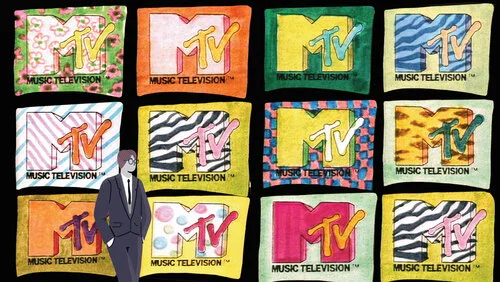
 IMAGE CREDIT: Candy Kugel

AS an irrelevant thing of the past.

FEATURE: Groovelines: Bon Jovi - Livin' on a Prayer

FEATURE:


Groovelines

Bon Jovi - Livin' on a Prayer

___________

I was tempted to feature…

Bon Jovi’s third studio album, Slippery When Wet, in Vinyl Corner. The album turns thirty-five in August and, from that 1986-released album, I will select its best-loved track for deeper study. Livin’ on a Prayer is considered one of the biggest tracks of the 1980s. On an album that featured other big hits like You Give Love a Bad Name, and Wanted Dead or Alive, I think the New Jersey-based band were in terrific form! They never hit the same peak they did on Slippery When Wet; I wonder what it was about that album and time period. With Jon Bon Jovi, Richie Sambora and Desmond Child in excellent form as songwriters, we got an album with some stunning hits and deeper cuts that are realty strong too. I am going to bring in a piece of Wikipedia information about Livin’ on a Prayer and its legacy soon. It is said that Bon Jovi did not original version of the song. Lead guitarist Sambora convinced him the song was good…so they reworked it with a new bassline (recorded by Hugh McDonald), different drum fills and the use of a talk box (to include it on Slippery When Wet). It is another case of a band member seeing the potential of a song but the original sketch not being quite realised. I am glad that there was discussion and experimentation because, upon its release, Livin’ on a Prayer became a huge smash!

The song spent two weeks at number-one on the Mainstream Rock Tracks chart; four weeks at number-one on the Billboard Hot 100. It also hit number-four on the U.K. chart. A recent article came out that revealed how Jon Bon Jovi was not a fan of one of the band’s biggest hits:

Richie Sambora called Jon Bon Jovi an "idiot" for not realizing the potential of "Livin' on a Prayer" when they wrote it.

"I remember walking out of the room with Richie," the singer told The Irish Times, "and I said, ‘Eh, it’s okay. Maybe we should just put it on a movie soundtrack.’ Richie looked at me and said, ‘You’re an idiot. It’s really good.’ I said, ‘I just don’t know where it’s going.’ But it didn’t have that boom-boom-boom bassline yet, so it sounded more like the Clash.

“That song, God bless it," he continued. "But, my God, who knew? Not us, I can assure you. It was created on a day when none of us had any ideas. We just had a conversation, and it came out of that. I’m sure happy my name’s on it!”

Released as the second single from Bon Jovi's 1986 album, Slippery When Wet, "Livin' on a Prayer" became their second consecutive No. 1 single and sold 3 million copies. The song not only bought him a house, he added, “it bought a lot of people houses.”

A year and a half ago, during a Q&A session on his Runaway to Paradise cruise, Bon Jovi said his doubts about "Livin' on a Prayer" stemmed from his belief that it "didn’t sound like anything. You know, ‘Runaway’ had eight notes, like a lot of songs on the radio at the time. Even ‘[You Give Love a] Bad Name’ was reminiscent of other songs that were on the radio. ‘Livin’ on a Prayer’ didn’t sound like anything. So, I was sort of indifferent. I thought, ‘Well, it’s different, but is it a rock song? Is it us?'”.

It is a good job Sambora had a good ear and identified Livin’ on a Prayer as a promising gem! In the almost thirty-five years since its release, the track has become this anthem and fan favourite. At the time of writing this feature (3rd February), the song’s video has amassed 759,929,460 views on YouTube. In terms of its impact, Livin’ on a Prayer has been lauded and celebrated through the years:

In 2006, online voters rated "Livin' on a Prayer" No. 1 on VH1's list of The 100 Greatest Songs of the '80s. More recently, in New Zealand, "Livin' on a Prayer" was No. 1 on the C4 music channel's show U Choose 40, on the 80's Icons list. It was also No. 1 on the "Sing-a-long Classics List". After Bon Jovi performed in New Zealand on January 28, 2008 while on their Lost Highway Tour, the song re-entered the official New Zealand RIANZ singles chart at number 24, over twenty years after the initial release.

Australian music TV channel MAX placed this song at No. 18 on their 2008 countdown "Rock Songs: Top 100". In 2009, the song returned to the charts in the UK, notably hitting the number-one spot on the UK Rock Chart.

In 2010, it was chosen in an online vote on the Grammy.com website over the group's more recent hits "Always" and "It's My Life" to be played live by the band on the 52nd Grammy Awards telecast.

In the Billboard Hot 100 Anniversary 50, "Livin' on a Prayer" was named as 46 in the All time rock songs. After the song was released for download, the song has sold 3.4 million digital copies in the US as of November 2014.

The song, including its original ending, is also playable on the music video games Guitar Hero World Tour and Rock Band 2. The song was re-worked and made available to download on November 9, 2010 for use in the Rock Band 3 music gaming platform to take advantage of PRO mode which allows use of a real guitar / bass guitar, and standard MIDI-compatible electronic drum kits / keyboards in addition to up to three-part harmony or backup vocals.

In November 2013, the song made its return to the Billboard Hot 100 at number 25, due to a viral video.

In 2017, ShortList's Dave Fawbert listed the song as containing "one of the greatest key changes in music history".

I want to look at a great article that dove deep inside Livin’ on a Prayer and discussed the relationship between the band and producer Bruce Fairbairn; how the song came together and what its lyrics mean. I am not going to include the entire Stereogum article, but there are some fascinating segments that caught my eye:

According to Bon Jovi, the trio wrote “Livin’ On A Prayer” “on a day when none of us had any ideas.” They got to talking about all their backgrounds. Bon Jovi and Sambora had both grown up working-class in New Jersey. Bon Jovi’s high-school girlfriend had stayed with him as he tried to land a record contract. (They got married in 1989, and they’re still together now.) Desmond Child had worked as a cabdriver in New York in the ’70s, when he was dating Maria Vidal, one of the singers in his group Desmond Child & Rouge. Vidal worked in a diner, and her coworkers nicknamed her Gina because she looked like the actress Gina Lollobrigida. (Maria Vidal’s highest-charting single, 1984’s “Body Rock,” peaked at #48.)

When Child first came up with the “Livin’ On A Prayer” lyrics, the song told the story of a couple named Johnny, Child’s birth name, and Gina. Bon Jovi knew that wouldn’t work, since his name was Jon. The song had to be third-person. Child changed the guy’s name to Tommy, which is a better name anyway. (When I was six, I made one of my worst decisions ever, insisting that I wanted to go by “Tom” instead of “Tommy.” “Tommy” sounds so much cooler. Fuck.)

The band and Fairbairn kept working on “Livin’ On A Prayer,” layering on more and more ideas: The synth-drone intro, the blazing guitar leads, the whoa-whoa-whoa talkbox riff. Fairbairn and Sambora found that talkbox while digging around in Sambora’s box of guitar effects. (From what I’ve read, the talkbox — a device built on a clear plastic chord that goes from your mouth to the guitar — really hurts to use. It makes your skull vibrate and your eyes feel like they’re going to explode. I love that.) The sound that the weird machine conjures — like a giant evil robot doing the bass voice in a street-corner doo-wop group — gives the song a whole new cinematic dimension.

The finished version of “Livin’ On A Prayer” is light-years beyond that demo. The song only really works if it’s all drama, if it explodes out of the speaker. However long it took, the band turned “Livin’ On A Prayer” into a perfect engine of drama. They shaped it into a true soul-shaking cheap-seats howler.

Tommy and Gina are pure archetype. Tommy used to work on the docks, but the union’s been on strike, and he’s down on his luck. It’s tough. So tough. Tommy can’t support himself and his girl, and he can’t even express himself artistically, since he’s got his six-string in hock. Gina works the diner all day, working for her man. She dreams of running away, but when she cries in the night, Tommy whispers, “Baby, it’s OK.” And then: “Someday.” That “someday” is a mythical time when things won’t be so hard. Tommy and Gina don’t know whether this time will ever arrive, but they have to believe in it. They have to believe they’re halfway there.

PHOTO CREDIT: Patrick Harbron 

Bon Jovi himself has said that “Livin’ On A Prayer” was a response to the Reagan era and the suffering that so many people were going through. Reagan certainly did everything in his power to cripple organized labor in America; maybe that’s why Tommy’s union was on strike. But the lyrical concerns of “Livin’ On A Prayer” aren’t tied to any particular moment in history. They’re elementally simple, like an early-’60s girl-group song.

The music, on the other hand, is extremely of its moment. Even more than “You Give Love A Bad Name,” “Livin’ On A Prayer” is a terrifying display of supercharged ’80s pop-metal that just goes for the car-stereo jugular. The production is so clean you could eat off of it. The synths and guitars glitter and gleam. The bassline and the simplistic drum-stomp are practically disco. Everything on the song works as a hook. The verses sound like choruses, and the choruses sound like suns exploding”.

I am not a massive fan of Bon Jovi, but I do love their Slippery When Wet album and the signature song, Livin’ on a Prayer. Whilst the album is not just about this track, I think it is so weighty and important that one cannot help but discuss and dissect it! From the dissatisfaction from Jon Bon Jovi when he was presented with the song, to the fact that the band have played it in stadiums to generations of fans ever since its release, Livin’ on a Prayer has a wonderful success story behind it! You may say you dislike the song but, once that chorus kicks in, you are helpless to resist…

SINGING along loudly.

FEATURE: Spotlight: Jazmine Sullivan

FEATURE:


Spotlight

aaaa.jpg

PHOTO CREDIT: Malike Sidibe for New York Magazine 

Jazmine Sullivan

___________

A lot of my Spotlight features…

ajauaj.jpg

concern artists who are just starting out and do not have a massive fanbase. Jazmine Sullivan has established quite a big fanbase already and, whilst she has not been in music for that many years, she has already achieved so much. That said, there are so many people who do not know about it – hence why she is in Spotlight. I am going to bring in a couple of reviews for her fourth studio album, Heaux Tales. Released in January, it is one of her most accomplished works. If you do not know about Sullivan, then here is some information from Wikipedia:

Jazmine Marie Sullivan (born April 9, 1987) is an American singer-songwriter. Born and raised in Philadelphia, Pennsylvania, her debut album, Fearless, was released in 2008 to commercial and critical success. The record topped Billboard's Top R&B/Hip-Hop Albums chart and was certified gold by the Recording Industry Association of America (RIAA). It spawned four singles, including "Need U Bad" and "Bust Your Windows", both of which peaked in the top 40 of the Billboard Hot 100 chart and the former of which became Sullivan's first and only number one on the Billboard Hot R&B/Hip-Hop Songs chart.

Sullivan followed this with her second studio album, Love Me Back, in 2010, which was received favorably by critics. After taking a three-year break, Sullivan signed with RCA Records and released her first studio album under the label, Reality Show, in 2015, and it became her second album to peak at number one on the Top R&B/Hip-Hop Albums chart”.

I am a fan of all of her work but, as Heaux Tales is new and, in my view, the best representation and strongest work from Jazmine Sullivan, then I am going to focus on that. Before I introduce some positives reviews for that album, there are a couple of interviews that caught my eye. Sullivan spoke with The Guardian recently - and we learned more about her background and music progression:

Her first two albums, 2008’s Fearless and 2010’s Love Me Back, strongly bore this out while extending her range into disco, tango and reggae. Critical respect and 12 Grammy nominations have followed in the years since, and though household name recognition has not, several of Sullivan’s songs became R&B standards. Her 2010 single Holding You Down (Goin’ in Circles) was given a new lease of life a decade on when Megan Thee Stallion used it is the foundational sample for Circles, the opening cut from the Houston rapper’s hit 2020 album Good News.

In 2011, she announced her retirement from the music industry in a series of emotional tweets, later admitting that her confidence as an artist had crumbled to the extent that she would not accept show bookings. But since her return in 2014, Sullivan has morphed into the finest songwriter and storyteller in R&B. On 2015’s underrated masterpiece, Reality Show, her focus was on sharply constructed character studies, and this month’s Heaux Tales EP further examines sex, money and the mediated image of modern Black womanhood in Sullivan’s most confident work to date. “I want to kind of get to the root of why people do certain things,” she says. “That’s more important than the outcome. As a society, we focus on the outcome, and we label people based off that, but we don’t really know the meat of the story of why people are the way they are.”

She comes from a lineage of female creators – her grandmother was a poet and church evangelist, and her mother wrote plays (“always very Bible-based and Christian-based”) – and her childhood was spent growing up in Philadelphia’s Strawberry Mansion, a historic museum where her father gave guided tours. It was a private and restricted upbringing: Sullivan remembers only seeing other children at school, and spending much of her time at home watching Disney and making up stories to entertain herself.

“It was an interesting process we went through as kids,” she recalls. “Where we actually lived was on the third floor, pretty much all the way up in the attic – where the slaves lived. Whenever my dad was doing tours we kind of had to retreat, and we pretty much only came down to eat. And usually the people on the tours were, you know, white people. And we had to hide and retreat up to the slave quarters!”.

I must admit that Heaux Tales is the first Jazmine Sullivan album I have truly immersed myself in. I love the combination of those spoken word portions and the fuller songs. In a way, it has a feel of a mixtape, but it more conversational and expansive. I do think that Heaux Tales is an album everyone needs to listen to. Just before getting to some reviews, I was captured by an interview from Vulture. Sullivan discussed why Heaux Tales was quite challenging to make:

Heaux Tales was harder to make than the albums that preceded it. Sullivan’s not quite sure why. “I’m not gonna lie. I had a hard time even singing,” she says. “Creatively, things didn’t come as natural this time. It’s natural that artists will have droughts sometimes as writers, but I don’t know. I just know it was not as easy this time.” She’s also butting up against some fans’ expectations. “I read something earlier today where [a commenter] was adamant, like, ‘I’m not getting this project! I don’t know who this woman is,’ ” she says. “And I was just like, Okay, it’s not for her. That’s cool. But some other people will be able to relate to it. Everybody won’t get it.” Many R&B listeners aren’t likely to be disappointed. The album fuses the messy and the tender and the insecure the way SZA did on Ctrl four years ago and Lauryn Hill did on Miseducation. Sullivan’s voice is bigger and broader than both of theirs, capably teasing out whines with bravado. Heaux Tales is already a New York Times critic’s pick and topped NPR’s list of most anticipated 2021 albums.

I wonder aloud if this album was trickier because she’s in love now. Her early music, including and especially her breakout single, “Bust Your Windows,” made heartache her signature. Is it harder to write to that expectation when you’re happy? Sullivan’s boyfriend is a musician-writer-producer. The day we talk, he woke up early to shovel the snow in front of her house so her band could come over. “We moved fast,” she says of the relationship. “But we were probably just on the same page. We don’t mind talking things out. We know we don’t know everything, and that’s where a good relationship starts. You’re open to learning.” But make no mistake. “If I choose,” she adds, laughing, “I can write about heartaches because I could just pull from the many heartaches I’ve had in my life”.

I am keen to wrap things up but, just before, I really had to bring in some reviews. When they sat down to listen to Heaux Tales, this is what CLASH had to say:

Utilising spoken word segments to align each chapter within the album’s framework, Jazmine aims to explore “today’s women standing in their power...” Linking together sexual openness with a frank take on materialism, ‘Heaux Tales’ bristles with independence, from the opening words of ‘Bodies’ through to those closing notes.

The peaks have an Alpine quality. ‘Pick Up Your Feelings’ is sensational, while Ari Lennox features on the wonderfully infectious ‘On It’. A record that stakes a claim to its own pasture, ‘Heaux Tales’ dares to be different, with Jazmine’s perfectionist streak balanced against occasionally raw, intimate use of sonics.

As such, Anderson .Paak’s raucous appearance on ‘Pricetags’ is offset by moments of genuine tenderness, such as closing track – and previous single - ‘Girl Like Me’, a soothing meditation on femininity that allows Jazmine’s vocal styles to pirouette against H.E.R.

The spoken word segments act as much more than mere skits, with those prose elements illuminating key thematic aspects of her work. A record whose internal structure feels both delicate and immediately engaging, ‘Heaux Tales’ thrives through its proclamation of the unexpected, with Jazmine leading her assembled cast on to fresh ground.

Ending such a lengthy wait for new material was never going to be easy, but Jazmine Sullivan makes her Everest-like task look deceptively simple. A woman speaking her truth in poetic, soulful fashion, ‘Heaux Tales’ could be her defining chapter”.

I have been listening to Heaux Tales a fair bit the past few weeks, and I can recommend it to pretty much everyone. I am looking forward to seeing where Jazmine Sullivan heads next. In their review of Heaux Tales, this is what Pitchfork observed:

All over Heaux Tales, Sullivan contends with what can be lost and gained through sex, from a secure sense of self (“Get it together, bitch,” she tells herself on “Bodies.” “You gettin’ sloppy.”) to crazed pleasure (“I spend my last ’cause the D bomb,” she proudly admits on “Put It Down”). The colloquial bursts of specificity in these vignettes are a feat of songwriting, and the restraint a power-vocalist like Sullivan shows in her delivery is as important. Sometimes her voice is choppy and conversational, sometimes it sounds like rapping, and it’s almost always a delight to sing along to. On this album, she’s both Deena Jones and Effie White; she can be an easy-listen or an all-consuming one. From the crinkly opening run on “Put It Down,” her most powerful singing is mixed into the background, as if to render her a little less superhuman.

zzzz.jpg

R&B has long offered women space to voice their sexual appetites, from the foundational dirty blues songs like Lucille Bogan’s “Shave ’Em Dry” in 1935 (“Say I fucked all night and all the night before, baby/And I feel just like I want to fuck some more”) to Adina Howard’s 1995 hit “Freak Like Me.” After six years between projects, Sullivan joins the ranks of today’s R&B and R&B-adjacent stars like Summer Walker and SZA, who have updated the genre with music that complicates desire with messy reality. Old archetypes like The Gold Digger and new ones like The Instagram Baddie begin to crumble away, leaving fuller women in their wake. Sullivan’s friend Amanda Henderson told the Philadelphia Inquirer that she was nervous to include her revelation on Heaux Tales, but has since found relief in the number of fans who have connected to it. Even in the way Sullivan’s Tiny Desk was arranged—with lush instrumental breaks, opportunities for her background singers to take the spotlight, and a guest appearance from H.E.R.—it is clear Heaux Tales is communal”.

Go and investigate one of the finest artists in music right now. I think Jazmine Sullivan has a long career ahead of her - and, when things settle down regarding the pandemic, I hope she gets to the U.K. and can do some touring here. One only needs to listen to her music for the shortest time to understand that Sullivan is…

A magnificent artist.

______________

Follow Jazmine Sullivan

aaaa.jpg

FEATURE: It’s Me, Cathy! Will It Finally Be Kate Bush’s Time for Inclusion in the Rock & Roll Hall of Fame?

FEATURE:


It’s Me, Cathy!

ooo.jpg

IN THIS PHOTO: Kate Bush during 2014’s Before the Dawn/PHOTO CREDIT: Ken McKay/Rex 

Will It Finally Be Kate Bush’s Time for Inclusion in the Rock & Roll Hall of Fame?

___________

BACK in 2018…

lll.jpg

 IN THIS PHOTO: Kate Bush during 1979’s The Tour of Life/PHOTO CREDIT: Max Browne

Kate Bush was among the nominees for inclusion in the Rock & Roll Hall of Fame. This year, as Under the Radar Mag explain, she is in the mix again with some legends:

Nominees for the 2021 induction to the Rock and Roll Hall of Fame have been announced. They include Kate Bush, Foo Fighters, The Go-Go’s, New York Dolls, JAY-Z, Tina Turner, Devo, Carole King, Rage Against the Machine, LL Cool J., Fela Kuti, Todd Rundgren, and more. The full list is below.

To be eligible an artist needs to have released their first album or single at least 25 years ago. First time nominees include Foo Fighters (which is their first year of eligibility), JAY-Z (which is also his first year of eligibility), Mary J. Blige, Fela Kuti, The Go-Go’s, Iron Maiden, and Dionne Warwick. Whereas Rage Against the Machine, Kate Bush, Devo, Tina Turner, Chaka Khan, Todd Rundgren, New York Dolls, Carole King, and LL Cool J have been nominated in previous years.

Turner was previously inducted as a duo with Ike Turner, Carole King was previously inducted as a songwriter with Gerry Goffin, and Foo Fighters’ Dave Grohl was previously inducted with Nirvana.

Fans can vote for their favorite nominees at the Rock & Roll Hall of Fame website and have until April 30 to do so. The inductees will be revealed in May, with a live ceremony planned for the fall.

Rock & Roll Hall of Fame 2021 Nominees:

Mary J. Blige
Kate Bush
Devo
Foo Fighters
The Go-Go’s
Iron Maiden
JAY-Z
Chaka Khan
Carole King
Fela Kuti
LL Cool J
New York Dolls
Rage Against the Machine
Todd Rundgren
Tina Turner
Dionne Warwick
”.

At the time of me writing this (11th February), Bush is quite low out of the nominees so, as it stands, would not win enough public votes for inclusion. I do hope that things change between now and April. I was shocked when she was not inducted into the Rock & Roll Hall of Fame a few years back. There are some who would argue that Bush has not really defined herself as a Rock artist. Look at the fifteen names above, and one can see Dionna Warwick, Fela Kuti, LL Cool J, Carole King, Chaka Khan, JAY-Z, and Mary J. Blige – can one really class them as ‘Rock’?” I think that Kate Bush’s impact and innovation since her debut album has warranted her a spot among those already inducted into the Rock & Roll Hall of Fame. I saw a lot of support for her on social media when the announcement was made on Wednesday. This year’s list of nominees is really strong - but I do think that Bush’s brilliance and obvious impact on other musicians should be noted and rewarded.

Of course, it is not the be-all-and-end-all being in the Rock & Roll Hall of Fame. She has accrued many honours through her career so, if she was overlooked for a second time in four years, then that would not be too devastating. My five choices from the names above would be Kate Bush, The Go-Go’s, Tina Turner,  Chaka Khan, and Rage Against the Machine. There is still a way to go and many more votes will come in. I have written various features pertaining to Bush’s influence and how she is one of these artists who continues to shape music and resonate with a new generation. In terms of her albums, one can hear so many evolutions and sounds. I think, purely as a producer and sonic innovator, she is stronger than many artists nominated this year for a Rock & Roll Hall of Fame inclusion. Also, consider live shows like The Tour of Life, and Before the Dawn and how iconic they were. From the experimental nature of The Dreaming (1982), to the peerless Hounds of Love (1985), through to the double album of Aerial (2005), Bush has covered so much ground! It is not only her music that makes her a worthy name for the Rock & Roll Hall of Fame. She is a very independent artist and has forged her own path since the start of her career. Her grounded and warm personality has made her an international treasure; there are few who would argue against Bush making it into the Rock & Roll Hall of Fame. Even though she is in the lower placings of the fifteen artists so far, with a bit of a push and drive, maybe Kate Bush can soar high…

IN the public vote.

FEATURE: The February Playlist: Vol. 2: With a Love Story, We’re Good

FEATURE:


The February Playlist

zzzz.jpg

IN THIS PHOTO: Dua Lipa 

Vol. 2: With a Love Story, We’re Good

__________

THIS is one of those weeks…

sss.jpg

 IN THIS PHOTO: Taylor Swift

where it is a bit quiet again - but there are some tracks from pretty big names. There is new music from Dua Lipa, Taylor Swift, Kings of Leon, Liz Phair, Nipsey Hussle/JAZ-Z, Sia, Middle Kids, and slowthai (ft. Dominic Fike, Denzel Curry). There is also music from Cherry Glazerr, Django Django, Kelly Rowland, Biig Piig, Pale Waves, Erica Banks (ft. Travis Scott), Phife Dawg (ft. Busta Rhymes, Redman), Headie One (ft. Burna Boy), Deap Vally (ft. KT Tunstall & Peaches), MistaJam/Kelli-Leigh, Gordi/Alex Lahey, and Jacob Banks. There is something in the mix for everyone so, if you need a boost and some good music to get you into the weekend, then I think there is more than enough to do the job! Maybe things will heat up this month regarding the number of big songs coming out. That said, there are some huge names in this Playlist, so I guess one cannot complain! It is an interesting blend of new tracks, so take some time out and…

aaaa.jpg

 IN THIS PHOTO: Kelly Rowland

TAKE a listen.

ALL PHOTOS/IMAGES (unless credited otherwise): Artists

__________

cccc.jpg

Dua LipaWe’re Good

aaa.jpg

Taylor Swift - Love Story (Taylor’s Version)

zzz.jpg

Liz Phair Hey Lou

iuui.jpg

Kings of Leon Echoing

xxx.jpg

PHOTO CREDIT: Norberto Garcia

Nipsey Hussle, JAZ-Z What It Feels Like

cccc.jpg

slowthai (ft. Dominic Fike, Denzel Curry) Terms

xxxx.jpg

Middle Kids - Cellophane (Brain)

zzzz.jpg

Sia - 1+1

aaaa.jpg

Kelly Rowland Black Magic

ffff.jpg

Django DjangoFree from Gravity

dddd.jpg

PHOTO CREDIT: Walter W. Brady

Cherry Glazerr - Big Bang

cccc.jpg

Kodak Black Every Balmain

dddd.jpg

Rita Ora x Imanbek (ft. David Guetta, Gunna) - Big

gggg.jpg

P!nk, Willow Sage Hart - Cover Me In Sunshine

rrrr.jpg

Biig PiigCuenta Lo

dddd.jpg

GIRLI What a Shame!

jjj.jpg

Pale Waves Fall to Pieces

ttt.jpg

Clap Your Hands Say Yeah Dee, Forgiven

cccc.jpg

Birdy Loneliness

mmm.jpg

PHOTO CREDIT: Charlie Millar

Otzeki Unthunk

vvvv.jpg

Jacob Banks - Parade

ccc.jpg

Lizzie Reid Company Car

nnn.jpg

PHOTO CREDIT: New Archive

Major Murphy - In the Meantime

sdiduidid.jpg

PHOTO CREDIT: Anna Hedges

Leah Nobel - Beginning Middle End (From Netflix’s To All the Boys: Always and Forever)

ffff.png

Lil Mosey Enough

ooo.jpg

Abbie Ozard - breakdowns

ppp.jpg

PHOTO CREDIT: Emily Talbot

KAHLLA - Thread

sss.jpg

Architects - Meteor

cccf.jpg

The Vaccines - High Horse (Cosy Karaoke)

xxxx.jpg

Dry Cleaning Strong Feelings

ffff.jpg

ARTWORK CREDIT: Barbora Mrazkova

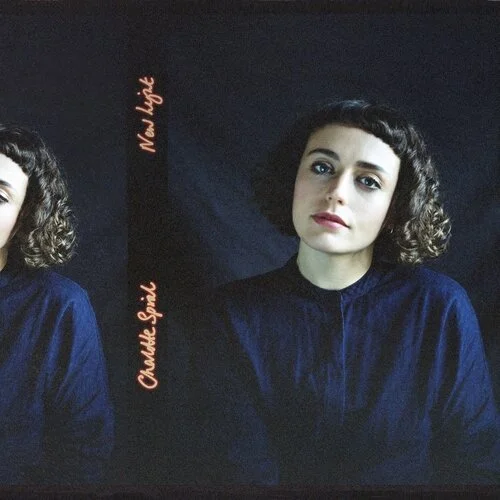
Charlotte Spiral New Light

jjj.jpg

A Winged Victory for the Sullen (ft. Adam Bryanbaum Wiltzie & Dustin O'Halloran) - Total Perspective Vortex

dddd.jpg

Bea Anderson - Easy

ssss.jpg

Sharon Van Etten - On Your Way Now

dddd.jpg

PHOTO CREDIT: Nick McKinlay

Gordi, Alex Lahey - Dino's 

kkk.jpg

Deap Vally (ft. KT Tunstall & Peaches) - High Horse

poop.jpg

Phife Dawg (ft. Busta Rhymes, Redman) - Nutshell Pt. 2

lll.jpg

PHOTO CREDIT: Danny North

Headie One (ft. Burna Boy) - Siberia

kkkkk.jpg

Erica Banks (ft. Travis Scott) - Buss It

lllkk.jpg

LAOISE - Healthy

ooo.jpg

MistaJam, Kelli-Leigh - Good - Extended Mix

sksdsik.jpg

I Am Boleyn - Just Friends

mmmm.jpg

Iraina Mancini - Deep End

jjj.jpg

PHOTO CREDIT: Chris Shelley

Alaina Castillo - stfu (i got u) 

FEATURE: Second Spin: Jill Scott – The Light of the Sun

FEATURE:


Second Spin

aaaa.jpg

Jill Scott – The Light of the Sun

___________

I wanted to take a closer look…

at Jill Scott’s fourth studio album, The Light of the Sun, as it was an album recorded after Scott's four-year break from her music career and the departure from her former label, Hidden Beach Recordings. The Light of the Sun was recorded at several studios and produced primarily by Scott and JR Hutson - a songwriter and producer who had previously worked on her 2007 record, The Real Thing: Words, and Sounds Vol. 3. I think the album marked a bit of a departure, as it was more improvisational and, sonically, it trod more in  Neo-Soul territory than her previous work. Released on 21st June, 2011, I feel some people undervalued The Light of the Sun. It is an album that sounds great ten years after its release! One can approach it new and get something from it or, if you have not heard it in a while, revisit it and the music will definitely make an impact. In terms of choosing a definitive Jill Scott album, I would say her 2000 debut, Who Is Jill Scott? Words and Sounds Vol. 1, is it. I feel The Light of the Sun is one of her more underrated efforts; it definitely warrants some new inspection. Containing great tracks like Blessed, and So in Love, it is a tremendous album that provided plenty of highlights! I wonder whether Scott will release another album as her fifth studio album, Woman, arrived in 2015 – let’s hope she does follow it up at some point, as she is an exceptional songwriter and poet.

I want to bring in a few reviews for The Light of the Sun: two that are more mixed, and one that is positive and gets to the real heart of the album. In their review, this is what Rolling Stone noted:

It's impossible not to root for Jill Scott. The 'Illa- delphian R&B vet is a self-described "grande dame queen beast" in a genre of models, putting her often-messy personal struggles right up front. The Light of the Sun, Scott's first disc since splitting up with her (now-ex) drummer, recalls that relationship with jazzy, good-natured candor on "Quick." Elsewhere, Scott assays life back on the market in her trademark warm and inviting, if rarely thrilling, neo-soul style – from the old-school hip-hop jam "Shame," which excoriates a man who didn't want her, to the jazz poem "Womanifesto," an ode to her "strong legs that stroll off the 33 bus" and desire for "the rhythm of my space." Scott proves it's a nice place to spend time”.

It is a pity that many reviewers did not expend more words or provide a higher rating to a terrific album from Jill Scott. In a similarly brief look, The Independent were a little muted:

Jill Scott is perhaps best known now as Precious Ramotswe in The No. 1 Ladies' Detective Agency, and spends an increasing amount of time acting.

Perhaps too much time: judging by The Light Of The Sun, she's expending precious little energy on songwriting and recording, allowing her natural inclination to extemporise far too free a rein. Hardly any of the 15 tracks is developed much beyond a languid soul-jazz vamp, over which Scott asserts her right to personal fulfillment, and celebrates her position as "a grown woman, making decisions and choices, utilising everything inside of me, my soul, my heart, my mind, my voices," etc. The earlier tracks have a certain focus – "Shame" has a great shuffle-funk groove, and the Anthony Hamilton duet "So In Love" lopes coolly like a Bill Withers cut – but things soon dissolve into a sticky puddle of self-regard”.

I have a lot of time and affection for Scott’s The Light of the Sun. It is a rewarding album that has so many interesting songs. My favourite is, perhaps, the sweeping and emotional Hear My Call – though the whole album is pretty terrific. In their review, AllMusic pointed out some positivise:

Jill Scott has been through many changes since 2007's The Real Thing: Words & Sounds, Vol. 3: a divorce, a brief but intense love affair that produced a child, acting roles in Tyler Perry's Why Did I Get Married? and Hounddog, her starring role in HBO's The No. 1 Ladies' Detective Agency, and signing with Warner Bros. The Light of the Sun is a record of the rocky road to empowerment. Scott and Lee Hutson, Jr. are the album's executive producers; they also collaborate in songwriting and arrangements on numerous selections. Opener "Blessed," produced by Dre & Vidal, kicks it off in slippery, hip-hop soul style; a harp, strings, and a fluttering dubwise bassline underscore the shuffling rhythm. Scott expresses spoken and sung gratitude for and about her new baby, career, life, and support system. Poetry and song are woven with elegance in a nocturnal groove. The hit pre-release single "So in Love," produced by Kelvin Wooten, is a modern Philly soul fan's dream, with its lithe, fingerpopping bassline, shimmering drums, and seeming bliss arising between Scott and Anthony Hamilton, who turn in a grand duet performance. "Shame" (featuring Eve & the A Group), is grand, old-school funk with killer backing vocals that range from P-Funk-esque vocal choruses to doo wop with sampled classic ska as Scott raps defiantly with Eve.

One of the sleepers on the set is the stunning "La Boom Vent Suite," a sultry number produced by Scott and Hutson. It's a militant, funky soul, kiss-off tune, that declares: "I've been waiting for so long/but somebody else has been sniffing at my dress." "Hear My Call" is literally a prayer for healing; with its elegantly arranged strings, it's as heartfelt and humble as desperate need can be. There is one misstep here: "So Gone (What My Mind Says)" didn't require Paul Wall's tired, generic, boastful rapping to work. That said, the rhythm collision with human beatbox Doug E. Fresh on "All Cried Out Redux," complete with ragtime piano sample, is a novelty number that works. After the album's first third, it's all Scott, and (mostly) all sublime. The sparsely produced "Quick" (produced by Wayne Campbell) records the heartbreak in the brief relationship that produced her son. "Making You Wait" is another self-determination anthem that addresses romance, with spacious Rhodes and synth strings weaving beats together. Scott lays down the spoken word "Womanifesto" that recalls the poetry of her early career, just before the steamy, sexual "Rolling Hills" touches on jazz, blues, and late-'70s soul with effortless ease to close it. On The Light of the Sun, Scott sounds more in control than ever; her spoken and sung phrasing (now a trademark), songwriting, and production instincts are all solid. This is 21st century Philly soul at its best”.

I think that everyone should check out Jill Scott’s amazing The Light of the Sun. It is an album that sounds stronger the more you listen; maybe that accounts for some more mixed reviews back in 2011. Considering the passion and power that one can hear on the album, let’s hope that we hear a lot more music…

FROM the incredible Jill Scott!

FEATURE: The Lockdown Playlist: The Best of Peter Gabriel

FEATURE:


The Lockdown Playlist

vv.jpg

PHOTO CREDIT: Felix Clay for The Guardian 

The Best of Peter Gabriel

___________

AS it is Peter Gabriel’s…

 PHOTO CREDIT: Geffen Records

birthday today (13th February), I wanted to put out a Lockdown Playlist that contains his best songs. I marked Gabriel’s seventieth birthday last year but, as he is one of my favourite artists, I thought I would revisit a legend. Like I have done for many birthday-related Lockdown Playlists, I want to bring in some Wikipedia information:

Peter Brian Gabriel (born 13 February 1950) is an English singer, songwriter, musician, record producer and activist. He rose to fame as the original lead singer of the progressive rock band Genesis. After leaving Genesis in 1975, he launched a successful solo career with "Solsbury Hill" as his first single. His 1986 album, So, is his best-selling release and is certified triple platinum in the UK and five times platinum in the U.S. The album's most successful single, "Sledgehammer", won a record nine MTV Awards at the 1987 MTV Video Music Awards and, according to a report in 2011, it was MTV's most played music video of all time.

Gabriel has been a champion of world music for much of his career. He co-founded the WOMAD festival in 1982. He has continued to focus on producing and promoting world music through his Real World Records label. He has also pioneered digital distribution methods for music, co-founding OD2, one of the first online music download services. Gabriel has also been involved in numerous humanitarian efforts. In 1980, he released the anti-apartheid single "Biko". He has participated in several human rights benefit concerts, including Amnesty International's Human Rights Now! tour in 1988, and co-founded the Witness human rights organisation in 1992. Gabriel developed The Elders with Richard Branson, which was launched by Nelson Mandela in 2007.

Gabriel has won three Brit Awards—winning Best British Male in 1987, six Grammy Awards, thirteen MTV Video Music Awards, the first Pioneer Award at the BT Digital Music Awards, the Q magazine Lifetime Achievement, the Ivor Novello Award for Lifetime Achievement, and the Polar Music Prize. He was made a BMI Icon at the 57th annual BMI London Awards for his "influence on generations of music makers". In recognition of his many years of human rights activism, he received the Man of Peace award from the Nobel Peace Prize laureates in 2006, and Time magazine named him one of the 100 most influential people in the world in 2008. AllMusic has described Gabriel as "one of rock's most ambitious, innovative musicians, as well as one of its most political". He was inducted into the Rock and Roll Hall of Fame as a member of Genesis in 2010, followed by his induction as a solo artist in 2014. In March 2015, he was awarded an honorary doctorate from the University of South Australia in recognition of his achievements in music”.

To salute a musical pioneer and one of the greatest artists ever, this Lockdown Playlist is a career-spanning one packed with Peter Gabriel diamonds! If you are not aware of Gabriel or have only heard a few songs, then this playlist will provide some guidance. Whilst he recorded some wonderful songs with Genesis, I am only including his post-Genesis work here. Sit back and enjoy songs from…

THE amazing Peter Gabriel.

FEATURE: The Blossoming of the Last Living Rose: PJ Harvey’s Let England Shake at Ten

FEATURE:


The Blossoming of the Last Living Rose

PJ Harvey’s Let England Shake at Ten

___________

THERE are some great albums celebrating…

 PHOTO CREDIT: Cat Stevens

big anniversaries this year. One that I was keen to mark is the tenth anniversary of PJ Harvey’s Let England Shake. The eighth studio album from the iconic Harvey, it was released on 14th February, 2011 by Island Records. Even though production commenced around the time of White Chalk's release in 2007, Let England Shake is a move away from a more piano-heavy sound. The album was written over a two-and-a-half-year period; recorded in five weeks at a church in Dorset during April and May 2010. One can feel a certain sense of atmosphere and gravity on the album. Whether that was because of the recording setting or a conscious effort from Harvey to make something very different to White Chalk, I am not sure. Upon its release, Let England Shake received plaudits. Not only did many include it among their favourite albums of 2011; In September 2011, it won the the Mercury Prize - It was PJ Harvey's fourth nomination overall (including 2001's winner, Stories from the City, Stories from the Sea); making her the most successful artist in the prize's history. Let England Shake won Album of the Year at the 2012 Ivor Novello Awards. PJ Harvey’s most-recent studio album is 2016’s The Hope Six Demolition Project - and it was another terrific release. One can buy Let England Shake from Rough Trade…and I wonder, like she has done with some of her classic albums, there will be a new release with demos included – like we have seen with Dry, To Bring You My Love, and Stories from the City, Stories from the Sea.

I think, ten years after its release, Let England Shake has grown in stature and importance. It is an album that has immediacy and instant impact, but one listens through the years and discovers new things. It is one of PJ Harvey’s best albums; one that should be cherished and studied for years to come. Before rounding things off, I want to bring in a couple of reviews for Let England Shake. Firstly, an interesting interview from Uncut has caught my attention. Harvey was asked about the album and what it represented to her:

For me the most important thing is to hopefully create and achieve what I desire at the onset of the project. And I’m quite a good judge myself of whether I’ve managed to do that or not. And it’s not often that I will make a record like Let England Shake, where I know after I’ve finished writing it that that’s a very strong piece of work and I couldn’t have done any better. That doesn’t happen very often. Having said that, I knew that for me, White Chalk was an album like that, too. I had a very clear idea of what I was setting out to do with that piece and I felt that I did it, and I think it’s a really strong album. For me it’s a very successful album! But in terms of how many it sells it doesn’t make sense at all.”

Ask what was the first mystical inkling she had of the mood and direction of the album and she is quick to steer the conversation back on-message.

 “I had wanted for many, many years to begin to explore my feelings towards the wider world in song, to what goes on that we read about and hear about through the news. I’ve always been very affected by what’s happening in the world. Profoundly so. I feel so moved by things every day. And such a feeling of impotence, like we all do. What can you possibly do to change anything? I’d long wanted to be able to start to bring these feelings into songs and I didn’t know how. And I also knew that I would have to do it very well or not do it all. It’s such a dangerous tightrope to walk. I really didn’t want to write bad songs on such important matters. And often your heart can be in the right place, but that doesn’t mean you’re going to do good work. So I was very wary of that.

“Part of the reason this album happened was that, as a writer, I was finally at the stage where I was more confident that I could carry it off. I had more craft of language at my disposal than I had before. And it was that coupled with the greater sense of urgency and frustration, and that feeling of impotence. It was those two things that made me think, ‘OK, if I’m feeling this profoundly moved, upset, frustrated by what’s happening, can I use that in song?’”

 Throughout Let England Shake there are echoes and allusions to earlier artists wrestling with national disgrace, from the seedy homesickness of “The Last Living Rose”, recalling both “The Queen Is Dead” and William Blake, through to the chords of “The Dark Places” echoing “There Is A Light That Never Goes Out”, and “The Colour Of The Earth” picking up something of The Clash’s “Straight To Hell”. Polly herself has suggested that two major inputs were the dreamy devastation of The Doors and the bilious poetry of the first two Pogues albums. Founding Pogue Spider Stacy is touchingly gobsmacked at the suggestion of influence.

“I am beyond flattered that she should have been listening to us while making a record of such beauty as Let England Shake. There is no one else like her. She’s peerless, one of the very few contemporary artists in any discipline whose clarity and profundity of vision have sharpened and deepened over the years to a point where she now seems to be working in a field defined only by herself. Her empathy, her erudition, the sense of the connection between blood and clay and the bones and roots of the world echo something that could so nearly be lost, but is always somewhere to be found, hovering in the air or lying in the soil below us: the dark red life of these rainy islands”.

I am keen to round things off soon but, as Let England Shake is such an acclaimed and brilliant album, it is wise to reference a couple of reviews. In their review, this is what AllMusic had to say:

PJ Harvey followed her ghostly collection of ballads, White Chalk, with Let England Shake, an album strikingly different from what came before it except in its Englishness. White Chalk's haunted piano ballads seemed to emanate from an isolated manse on a moor, but here Harvey chronicles her relationship with her homeland through songs revolving around war. Throughout the album, she subverts the concept of the anthem -- a love song to one's country -- exploring the forces that shape nations and people. This isn't the first time Harvey has been inspired by a place, or even by England: she sang the praises of New York City and her home county of Dorset on Stories from the City, Stories from the Sea. Harvey recorded this album in Dorset, so the setting couldn't be more personal, or more English. Yet she and her longtime collaborators John Parish, Mick Harvey, and Flood travel to the Turkish battleground of Gallipoli for several of Let England Shake's songs, touching on the disastrous World War I naval strike that left more than 30,000 English soldiers dead.

 Her musical allusions are just as fascinating and pointed: the title track sets seemingly cavalier lyrics like "Let's head out to the fountain of death and splash about" to a xylophone melody borrowed from the Four Lads' "Istanbul (Not Constantinople)," a mischievous echo of the questions of national identity Harvey explores on the rest of the album (that she debuted the song by performing it on the BBC's The Andrew Marr Show for then-Prime Minister Gordon Brown just adds to its mischief). "The Words That Maketh Murder" culminates its grisly playground/battleground chant with a nod to Eddie Cochran's anthem for disenfranchised '50s teens "Summertime Blues," while "Written on the Forehead" samples Niney's "Blood and Fire" to equally sorrowful and joyful effect. As conceptually and contextually bold as Let England Shake is, it features some of Harvey's softest-sounding music. She continues to sing in the upper register that made White Chalk so divisive for her fans, but it's tempered by airy production and eclectic arrangements -- fittingly for an album revolving around war, brass is a major motif -- that sometimes disguise how angry and mournful many of these songs are. "The Last Living Rose" recalls Harvey's Dry-era sound in its simplicity and finds weary beauty even in her homeland's "grey, damp filthiness of ages," but on "England," she wails, "You leave a taste/A bitter one." In its own way, Let England Shake may be even more singular and unsettling than White Chalk was, and its complexities make it one of Harvey's most powerful works”.

I hope there are other features being written about the tenth anniversary of Let England Shake, as it is such a compelling album. When they sat down to judge the album, The Guardian offered the following:

Scrupulously avoiding the usual cliches that arise with self-consciously English music – Kinksy music-hall observations, eerie pagan folkisms, or shades of Vaughan Williams – the central sound is guitars, wreathed in echo that makes them seem as if they're playing somewhere in the middle distance. Around them are scattered muzzy electric piano, smears of brass, off-kilter samples and musical quotations: a reference to Eddie Cochran's Summertime Blues somehow works its way into The Words That Maketh Murder, while an incessant trumpet reveille sounds during The Glorious Land, out of tune and time with the rest of the song. Somewhere along the way, the Four Lads have vanished – instead, their song's incongruously perky melody is played on a xylophone – but on Written on the Forehead, she performs a similar trick with an even more unlikely source – reggae singer Niney the Observer's Blood and Fire, a deceptively cheery paean to imminent apocalypse. Its weird juxtaposition of subject matter and mood infect the whole song, which is possessed both of a beautiful melody and a lyric about people trying to escape a rioting city and drowning in sewage.

Meanwhile, Harvey's voice certainly has its dramatic moments, as when it rockets into boy-soprano territory during On Battleship Hill, or unexpectedly takes on a carefully enunciated mock-aristocratic mien. But frequently what it most obviously evokes is a rather cool ambivalence. When she debuted her new high register on White Chalk, it sounded tremulous and spooked: here it's almost blank-eyed as she details The Words That Maketh Murder's battlefield carnage: soldiers falling "like lumps of meat", trees hung with severed limbs. It's a curious idea, but it's a masterstroke. Rock songwriters don't write much about the first world war, but, perhaps understandably, when they do, they have a tendency to lay it on a bit thick: you end up with songs like the Zombies' The Butcher's Tale, so ripe it sounds more like the work of a fromagier. Harvey clearly understands that the horror doesn't really need embellishing: her way sounds infinitely more shocking and affecting than all the machine-gun sound effects in the world.

You're left with a richly inventive album that's unlike anything else in Harvey's back catalogue. That, she told Marr last year, is the point: "My biggest fear would be to replicate something I've done before." Let England Shake sounds suspiciously like the work of a woman at her creative peak. Where she goes from here is, as ever, anyone's guess”.

With the poetry of Harold Pinter and T.S. Eliot cited as influences, as well as the artwork of Salvador Dalí and Francisco de Goya, the music of The Doors, The Pogues, and The Velvet Underground and the films of Stanley Kubrick, Ken Loach and Ari Folman, Let England Shake draws from a broad palette. In addition, Harvey discussed researching the history of conflict, including the Gallipoli Campaign, and reading modern-day testimonies from civilians and soldiers in Iraq and Afghanistan. One can feel all this history, culture and politics running through an extraordinary album. Ten years after is release, PJ Harvey’s wonderful Let England Shake

STRIKES a chord and moves the listener hugely

FEATURE: The Lockdown Playlist: An Alternative Valentine’s Day Mix

FEATURE:


The Lockdown Playlist

PHOTO CREDIT: @evertonvila/Unsplash 

An Alternative Valentine’s Day Mix

___________

BECAUSE it is…

 PHOTO CREDIT: @evertonvila/Unsplash

Valentine’s Day on Friday, I wanted to put together a collection of love songs. As it is going to be the first where people are locked down and it is going to be strange, in terms of the songs in the mix, I have combined some classic love tracks together with some that are more alternative and, perhaps, not entirely in true spirit of the day. If you are being inundated with Valentine’s Day songs or feel that this year calls for something less mushy and sickly, then I think this Lockdown Playlist will do the job. Here are some more conventional love songs alongside those which have a bit…

 PHOTO CREDIT: @sahandbabali/Unsplash

OF spice and cynicism to them.

FEATURE: Framing Britney Spears: Will We Ever Hear from the Pop Superstar Again?

FEATURE:


Framing Britney Spears

lllllll.jpg

Will We Ever Hear from the Pop Superstar Again?

___________

THROUGH the years…

zzz.jpg

 PHOTO CREDIT: Image Group LA/Walt Disney Television via Getty

I have talked about Pop music and how it has changed. I think it has become more about variety and emotional exploration rather than hooks and big choruses. That may be a slight against older Pop but, actually, I prefer that sound. I do think something has been missing from music for a long time. One of my favourite Pop stars from the ‘90s and early-2000s is Britney Spears. I like all of her work. To me, she was one of the last Pop artists who could provide something quite emotive but also deliver these huge tunes that remained in the memory. It has been a tough past few years for her and, now, there is a documentary out that gives us an insight into the tribulation of Spears. Framing Britney Spears has been released through Hulu in the U.S. I want to bring in a review from The Guardian. They explain why now is a particularly relevant time for the arrival of Framing Britney Spears:

In a brisk, bracing 75 minutes, Framing Britney combs through the mountain of archival Britney material – coming of age just before the internet, she was a heavily documented star from the start – from her childhood in smalltown Kentwood, Louisiana, to the cascading highlights of her career: tinkering in the studio, the smash success of … Baby One More Time and Oops I Did It Again, mass fascination over her relationship with the ‘NSync boybander Justin Timberlake, marriage to backup dancer Kevin Federline, mass fascination with her fitness as a mother, breakdown.

Much of the film is dedicated to explaining the legal concept of conservatorship – a court-appointed guardianship usually for elderly or infirm people – and subtly (or, with a couple of first-person interviews, not so subtly) arguing against the arrangement that places Britney’s father, Jamie Spears (according to the film, a largely absent figure in her life until money was concerned), in control of a 39-year-old pop star still raking in millions. Adam Streisand, a Los Angeles-based lawyer who specializes in conservatorship arrangements, recalls in the film a meeting with Spears at the Beverly Hills Hotel immediately after her involuntary psychiatric hold in January 2008 – an event heavily documented by paparazzi at the time – in which the singer reportedly accepted the conservatorship on one condition: that the conservator not be her father. (The court subsequently barred Streisand from representing Spears on grounds of inability to seek counsel based on a sealed medical report, and appointed the lawyer Samuel D Ingham III to represent her instead; as of 2016, Ingham had collected $2m in fees from Spears’ estate).

The film is another notch in a string of slow-rolling, ever-expanding reconsiderations of American celebrity culture, and particularly the female tabloid figures of the 90s and aughts, one facilitated by the larger #MeToo retelling of sex, power and the spectra of traumas faced by women, partly by the simple passage of time. From films such as the Oscar-winning OJ: Made in America to Lorena Bobbitt, such revision relies less on new information than simply staring hard enough at the existing record. Asif Kapadia’s delicate, harrowing documentary Amy compiled audio recordings and home video to capture the rise and frenzied fall of Amy Winehouse, victim of a similar, and concurrent, frenzy of paparazzi sharks, lucrative tabloid coverage and public derision, even as her musical talent remained esteemed.

In 2008, fresh into her conservatorship, Jamie Spears allowed MTV documentary cameras to film Britney, who offered one of her few public takes on the arrangement to date: “If I wasn’t under the restraints that I’m under right now, with all the lawyers and doctors, and people analyzing me every day, and all that kinda stuff – if that wasn’t there, I’d feel so liberated, and feel like myself,” she said. Much of the discussion on Framing Britney will hinge on the controversy of her guardianship, the growing #FreeBritney movement. But there is a second point in the typical Britney “all that kinda stuff” that demands attention, too – an indictment of all of us, sitting in plain sight”.

At thirty-niner, Spears is hardly an artist who should retire and would lack any sort of modern appeal! Her last album, Glory, was released in 2016. I do feel that there is still a lot of demand for her music. I have always admired her as an artist and the way she has approached her career. It is clear that Spears is going through an especially tough period of her life. With legal issues still looming large, it could be a long time before she has freedom and is clear of her troubles. Perhaps music is at the back of Spears’ mind, though I feel it would be a shame if her conservatorship battle was the final chapter as it were – if her legacy was more about this than her music.

There are going to be many who says Spears is a minor footnote in Pop history and many of her albums have not been that well received. She has split critics art various points of her career, but I feel that she has had this enormous impact on popular culture. I want to bring in a section from Britney Spears’ Wikipedia page, just so one can get a sense of what she has done for music – and the huge array of artists who cite her as an influence:

Referred to as the "Princess of Pop", Spears was credited as one of the "driving force[s] behind the return of teen pop in the late 1990s". Rolling Stone's Stacy Lambe explained that she "help[ed] to usher in a new era for the genre that had gone dormant in the decade that followed New Kids on the Block. [...] Spears would lead an army of pop stars... built on slick Max Martin productions, plenty of sexual innuendo and dance-heavy performances. [She became] one of the most successful artists of all time — and a cautionary tale for a generation, whether they paid attention or not." Glamour magazine contributor Christopher Rosa described her as "one of pop music's defining voices. [...] When she emerged onto the scene in 1998 with ...Baby One More Time, the world hadn't seen a performer like her. Not since Madonna had a female artist affected the genre so profoundly."  

Billboard's Robert Kelly observed that Spears's "sexy and coy" vocals on her debut single "...Baby One More Time" "kicked off a new era of pop vocal stylings that would influence countless artists to come." In 2020, Rolling Stone ranked the song at number one on a list of the 100 Greatest Debut Singles of All Time and Rob Sheffield described it as "One of those pop manifestos that announces a new sound, a new era, a new century. But most of all, a new star [...] With "...Baby One More Time", [Spears] changed the sound of pop forever: It's Britney, bitch. Nothing was ever the same.

Alim Kheraj of Dazed called Spears "one of pop's most important pioneers". After eighteen years as a performer, Billboard described her as having "earned her title as one of pop's reigning queens. Since her early days as a Mouseketeer, [Spears] has pushed the boundaries of 21st century sounds, paving the way for a generation of artists to shamelessly embrace glossy pop and redefine how one can accrue consistent success in the music industry." Entertainment Weekly's Adam Markovitz described Spears as "an American institution, as deeply sacred and messed up as pro wrestling or the filibuster." In 2012, she was ranked as the fourth VH1's 50 Greatest Women of the Video Era show list.VH1 also cited her among its choices on the 100 Greatest Women in Music in 2012 and the 200 Greatest Pop Culture Icons in 2003. In 2020, Billboard ranked her eight on its 100 Greatest Music Video Artists of all-time list.

aaa.jpg

IN THIS PHOTO: Grimes/PHOTO CREDIT: Ben Grieme 

Spears's work has influenced numerous artists including Katy Perry,Meghan Trainor, Demi Lovato, Kelly Key, Kristinia DeBarge, Little Boots, Charli XCX, Marina Diamandis, Tegan and Sara, Pixie Lott, Grimes, Selena Gomez, Hailee Steinfeld, Pabllo Vittar, Tinashe, Victoria Justice, Cassie, Leah Wellbaum of Slothrust, The Saturdays, Normani, Miley Cyrus, Cheryl, Lana Del Rey, Ava Max, Billie Eilish, Sam Smith, and Rina Sawayama. During the 2011 MTV Video Music Awards, Lady Gaga said that Spears "taught us all how to be fearless, and the industry wouldn't be the same without her." Gaga has also cited Spears as an influence, calling her "the most provocative performer of my time." Before Spears joined The X Factor, Simon Cowell explained that he is "fascinated by [Britney]. The fact that she's one of the most talked about – not just pop stars – but people in the world today, means that you've got this star power. [...] She's still hot, she's still having hit records and she's still controversial, there's a reason for that." Marina Diamandis named Spears as the main influence behind her album Electra Heart. Lana Del Rey has said that the music video for "Toxic" inspires her. Spears has had a direct influence on singer Porcelain Black's work after growing up around her music as a child. Black describes her music as a "love child between" Marilyn Manson and Spears. Rita Ora's music video for "Only Want You" was inspired by Spears's "Everytime" music video, and said in a stories from Instagram, "Hey @britneyspears this was for you because I love you so. Pay homage to the ones who inspire! #icon”.

I think Framing Britney Spears is an important documentary; I would suggest people seek it out. I would like to see one in the future that discusses her impact as a Pop phenomenon and the brighter side of her legacy – where there is more focus on the music as much as anything else. It would be sad if her career stopped here because, whether you like her music or not, one cannot argue against her influence on other artists. Since the documentary came out, Spears has taken to social media to say that she needs to lead a normal life and spend time out. This gives us hope that she will return in the future and get back on the stage. Let us hope that, when it comes Britney Spears and music, that there is…

MORE to come in the future.

FEATURE: In Conversation: Envisaging a Kate Bush Interview Series

FEATURE:


In Conversation

fff.jpg

 IN THIS PHOTO: Kate Bush captured in 1978/PHOTO CREDIT: Gered Mankowitz 

Envisaging a Kate Bush Interview Series

___________

I have discussed Kate Bush…

 IN THIS PHOTO: Journalist Tom Doyle

as an interviewee beforehand, and I will continue to explore various sides to her as an interview subject. Whilst she provided a lot of interviews early in her career, there was a bit of a dip after Hounds of Love (1985) and before Aerial (2005). On her most recent album, 50 Words for Snow (2011), there was quite a nice selection of interviews. As is the way with journalists and broadcasters, they were asking very similar questions so, unsurprisingly, we got very similar answers! It is still great hearing Bush talk about her music, as she is so engaging and interesting. I wonder whether we will get to see or hear Bush interviewed again, as there is always talk as to whether another album will arrive. It is back to the MOJO Collectors’ Series edition that arrived last year. I have been fascinated by the magazine and all the different features. Right near the back of the magazine is a piece by Tom Doyle. When Bush’s Remastered albums came out in 2018, Doyle discovered pensées on the making of Bush’s studio albums – they exist on four hours of interview tapes. I always feel that Bush’s words and interviews are as important as her songs. Whilst there have been a few releases in the past where we got to hear Bush interviewed, there has not been a definitive collection of her interviews from 1978 to the present day.

Maybe these interviews could be sprinkled through corresponding albums; so that we get the 1978 interviews on releases of The Kick Inside, and Lionheart, whilst the ones from 1989 appear on The Sensual World. I know Bush put her albums out in 2018, but I feel releases with interviews and outtakes/demos would be wonderful! Reading Tom Doyle’s feature made me realise that there is still gold in the archives that people would eat up! The feature centres on Bush’s interaction with Doyle in 2005. They spoke for four hours. I wonder whether there is a tape of the interview, as it would be a wonderful thing to hear. I believe exerts were published by MOJO in an interview feature, but one of the interesting things about print interviews is that there is often so much unused that is as revealing as what we actually read! Doyle starts by describing how Bush discovered a world of sound on Never for Ever in 1980 when she utilised the Fairlight CMI. From the breaking glass on Babooshka, to the bodhran beats on Army Dreamers, this technology enabled Bush to unleash what was in her imagination previously; she could bring it to the surface! The Fairlight provided Bush with the access to experimentation and a wider palette. Bush told Doyle in 2005 how important it was experiment and broaden her work and, whilst she couldn’t always clearly articulate what was in her mind, she had this determination and passion that would not rest.

Bush co-produced Never for Ever with Jon Kelly. Her previous two albums saw her take more of a back seat so, with experience under her belt, she was in a better position to take charge. Bush explained how visual Never for Ever was  and (how music) was a case of trying to solidify something quite tangential. Bush also explained how painstaking production and a sense of control could afford her the freedom she required in order to bring the most from her music. Doyle also takes us back to 1972, when a then-thirteen-year-old came into the world of Brian Bath – he would work with Bush until Hounds of Love in 1985. He was invited by Bush’s brother, Paddy, and he was stunned by the chord progressions and how different the songs were. Bush revealed to Doyle how there was dissatisfaction with her second album, Lionheart, as she has to record and release it less than a year after The Kick Inside. Whilst her debut was a result of accumulating songs that she had been working on since the age of twelve or thirteen, there was little time to create new tracks for a second album. Flip to Hounds of Love, and it saw Bush retreated back to her home at East Wickham Farm. She was using professional studios before then and, as she told Doyle, this was not entirely preferable or a happy experience.

 IN THIS PHOTO: Kate Bush in 1985/PHOTO CREDIT: Guido Harari

The quiet and peace she got from this setting allowed her to be self-disciplined; something that benefited her as a songwriter and a producer – after the experience of her previous album, 1982’s The Dreaming, Hounds of Love was much less stressful (on The Dreaming, she recorded at several different studios). There are great revelations from Tom Doyle’s feature, as he reflected on the 2005 marathon interview where Bush was taking a look back at her career so far. She noted how there was humour on Hounds of Love – for instance, the backing vocals on the title track (“Ow, ow, ow”) are, literally, the hounds of love yowling. From Bush revealing her annoyance of the Sony 32-track digital tape recorded she used for 1993’s The Red Shoes (“Shitty digital tape”), to her explaining a gap of twelve years between that album and Aerial (“I have the real tendency to want to overdo things”), it must have been fascinating being shown around her house and getting that sort of access! Bush discussed how she was not completely easy with opening up her private life to public scrutiny. She also was asked about the time between albums and, whilst she admitted that the recording was hard and she could have released more albums, it clearly shows that a lot of care had gone into making her music.

It sort of brings me back to my idea about a new Kate Bush documentary and how there is all this interview material in the vaults that could be explored. I assume there is a clean recording of the four-hour chat between Tom Doyle and Kate Bush in 2005 that could be scored and tied to a bit about Aerial. There was a multi-part interview Bush conducted with Mark Radcliffe, though it seems like most of that recording has been taken off of YouTube. I know there is a lot of recorded interview material that was available online that has been taken off. There is also a lot of stuff that was recorded for a print interview that was never used – simply because there was so much of it. I like the idea of, either through a documentary or a new compilation, hearing all of Kate Bush’s interviews from 1978 to 2011. I think we can learn so much about her as a songwriter and person by listening to these interviews. It is a shame that there are ones that were online that no longer are, and that there is so much brilliance – like Doyle’s long interview with Bush – that remains unheard or abridged through text. I feel every Kate Bush interview is a wonderful thing so, in the future, it would be awesome to have access to them all. Being able to open up these interviews to the fans would give us all access to…

SO much untapped gold.

FEATURE: Spotlight: Lola Lennox

FEATURE:


Spotlight

PHOTO CREDIT: Daniella Midenge

Lola Lennox

___________

OVER the past few weeks…

PHOTO CREDIT: Daniella Midenge

I have discussed and spotlighted some promising Pop artists. One name to look out for this year is Lola Lennox. The daughter of the legendary Annie Lennox, songs like La La Love Me (her latest) highlights someone who is going to go far. Maybe aimed more at a BBC Radio 1 or 2 audience – Pop that is a bit more youth-oriented -, I feel that she has crossover appeal. I don’t think that the modern Pop music has a great deal of energy and positivity but, with artists like Lola Lennox delivering fresh and punchy Pop, there is hope of a revival. I really like her background and current sounds. Before moving to interviews, I want to bring in her biography:

For as long as her memory can take her, Lola Lennox has always been drawn to music. Not just listening to it but making it; a then eight-year-old Lola decided to sign up for singing lessons at her school. Even as a child, Lola wanted to foster her passion for music.

She joined the choir, performed in school plays and tried every ‘flavor’ of music from classical to jazz to theatrical. It quickly became her favorite thing to do. “Music spoke so directly to me at such a young age,” says Lola, “It was a great outlet for me.”

Lola, who started playing piano at age seven, earned a place at The Royal Academy of Music as a vocalist, but decided after a short time she wasn’t meant to stay. Around the age of 15, Lola started writing her own songs. She initially kept this information to herself, stealing down to the basement and writing about whatever was consuming her at the time. “It wasn’t technically advanced, but lyrically it was honest and emotional. Some of my early music is really quite sweet.” Her love of writing songs developed from there. When working on her own, Lola often sits at her piano working on melodies, and then vowels that will work with those melodies. “It is like a jigsaw puzzle, trying to connect each sound with a word that can build a story. On a good day, it just falls out, and I don’t even realize.”

Lola’s mother is Grammy and Academy Award winning artist Annie Lenox. Her father is film maker/producer Uri Fruchtmann. Lola never felt her parents were different, however. “I don’t think I ever thought my parents were unusual, but I knew they had ‘inspiring’ jobs. “I remember going to the Roundhouse in London where my mum was shooting a music video for “A Whiter Shade of Pale.” I knew there was something exciting and fun going on.”

Now living in Los Angeles by way of London, and working alongside top songwriters such as Eg White (Florence & the Machine, Sam Smith), Dan Wilson (Adele) and Dan Muckala (Leona Lewis, LeAnn Rimes), Lola is creating songs that bridge the gap between nostalgia and modernity.

Lola has four singles that will be released over the course of the year. They bring her emotion, her ideas and her passions to life, almost like getting a peek into a diary. “My main objective is to connect with people through a real emotional expression. Songwriting is very comfortable for me, it is a release I am grateful to have.”

Her first single, “In the Wild,” [Writers: Lola Lennox & Jon Green, Producer: Jon Green] reflects a toxic relationship that was still fresh in Lola’s mind during a songwriting session. “The verses depict a depressive, grey city, a suffocating feeling. The chorus is a dreamscape, fantasizing about letting go of the issues to make something better. I thrive in nature, so it was important to me to have the chorus reflect that landscape.”

The next release is the ardently raw “Pale,” [Writers: Writers: Lola Lennox & Andy Stochanski, Producer: Dan Muckala. Additional Production & Mix: Scott Salinas] a plaintive song about grief. “I had lost someone really close to me and the sorrow was so intense. The words just fell out of me. When grieving, all the colors of the world feel like they’ve been sucked away. You can’t see life in a vibrant way anymore.” 

The groovy “LaLaLove Me” [Writers: Lola Lennox & Carl Ryden, Producer: Dan Muckala] comes next, a girly daydream that pays homage to the 60s girl group sound.

The last track is the hooky “Back at Wrong” [Writers: Lola Lennox, Ben Schofield & Dan Muckala, Producer: Dan Muckala. Additional Production & Mix: Wayne Wilkins] about another toxic relationship but with much more drama.

“There is fighting and loving, and knowing you shouldn’t keep going back. The song has a bluesy feel, and the groove punches you in the heart.” Continues Lola, “These tracks are really personal stories from my life. They’re honestly from my heart and a true intimate expression.

In addition to her solo music, Lola was honored to be asked by Simon Fuller to collaborate with Goldfrapp’s Will Gregory on the soundtrack for the Discovery Channel’s Serengeti docu-series. This was a much different approach than Lola was used to, since these songs were guided by what was happening on the screen.

Each animal featured in the series had its own song, which Lola sang, as well as providing lyrics for the Hyena and the Elephant. “The ‘Hyena Song’ is my favorite. It’s very emotional to me because the Hyena mother sacrifices her life for the pride. The daughter has to take over as leader, and you can literally see her sadness. I was very moved by their story.”

Lola has many more of her own stories to tell.

After the first four singles come out, she plans to go back in to the Studio to finish a full album of songs. Clearly, Lola knows what it’s like to make a living as a musician. “I’ve seen first-hand how much passion, diligence and creativity you have to devote to having a career in music. I am willing to work hard and go deeply into the process. My goal is to touch people with my songs, to let them know they’re not alone and that I’ve felt a certain way too. I wasn’t in the greatest place with self-worth as a younger person and it took writing songs to help me express who I was inside. Music allows you to find your real self”.

I wanted to bring in all that information because, looking ahead at the rest of the year, and it seems like we will get an album from Lennox. With a string of individual and interesting singles under her belt, I feel like we will get something more comprehensive by the summer – maybe her mother might feature on a song or two!

Rather than compare Lola Lennox with her iconic mum, one has to judge Lola Lennox on her own merits. The two are very different artists - though it is clear that her mother has been hugely influential and supportive. I want to bring in an interview from People from 8th February, 2020. They spoke to Lennox about her great single, Into the Wild:

On Saturday, the singer — who is the eldest daughter of former Eurythmics frontwoman Annie Lennox — dropped the ethereal music video for her new single “In the Wild,” which was inspired by past heartbreak.

“It was one of those toxic relationships where you love someone so much, but it’s wrong and you’re not meant to be together and you’re not happy in it,” Lennox, 30, tells PEOPLE. “In the song, the verses are depicting the suffocation of the relationship and being in this gritty, cityscape. And in the choruses, it’s going into, ‘Let’s go to the wild and into nature and let go of these complexities that we’ve somehow fallen into.'”

“In the Wild” is just the beginning for Lennox, who plans to release three more songs titled “Back at Wrong,” “LaLaLove Me” and “Pale” in the coming months before eventually putting out a full album.

Of the forthcoming new music, she says, “Some are upbeat, and some are intimate and more of a ballad.”

“I kind of go across the spectrum of feeling and emotion with the music I create,” Lennox says. “So I’m really excited to switch it up whenever I release new music.”

ddd.jpg

PHOTO CREDIT: Lucas 

“There’s a thread, of course, of correlation,” she adds. “But as human beings we all have a spectrum of emotions and a spectrum of stories and things that we go through in life. So I want to cover all those bases.”

No matter what, though, there is one thing that remains consistent throughout all her songs: vulnerability.

“I think that’s the most potent way that you can really connect to listeners, is being very honest,” she says. “I love music that really comes from the heart and is a real window into somebody’s personal lives. I find that is the most touching, so I wouldn’t do anything other than that.”

Someone who knows a thing or two about showing vulnerability through music is Lennox’s mom, Annie, 65, whom she credits for teaching her that the “strongest thing is about connectivity and passion to what you do.”

“Like, having so much love for making something that it’s the best it can be and will inspire and touch people and maybe help people,” she explains. “She’s such a tuned in and inspired person”.

I will bring stuff up to date in a minute, as I feel this year is going to be a defining one for Lola Lennox. I am not sure when she will get to perform again – things are looking pretty fraught when it comes to festivals and live music. I do feel we will see some gigs this year, though it may be the case that Lennox will put out an album instead of hope that live music will return soon – her debut E.P. is coming soon.

Music Week ran a great feature about Lennox recently. Not only do we learn more about her early life, but we also discover how lockdown has been for her:

Lennox grew up surrounded by music – largely Eurythmics’ legendary synth pop catalogue – and dreamt of making it on her own from a young age. She began playing piano at seven, and remembers begging for extra singing lessons at school. By 15, she was writing songs and later sang soprano in The Royal Academy Of Music. In February this year, she introduced her soulful, impassioned pop sound with a ballad titled In The Wild, which was soon followed by a performance with her mum for the One World: Together At Home concert for an audience of 270 million.

“It felt like a really nice gathering of positive energy where music was really lifting the spirits of the people watching,” she smiles.

The singer has since spent much of this year in her home studio with her musician boyfriend Braeden Wright, and while 2020 might not be the most conventional year in which to launch a pop career, she hasn’t found too many surprises so far. “Being around my mum making music and touring from when I was little, I did see the meaning it was giving her,” she says. “It wasn’t a conscious decision of, ‘My mum does this, so I’m going to’. I just felt something strong when I was listening to music and I was naturally drawn to it.”

PHOTO CREDIT: Daniella Midenge 

Lennox speaks with self-assurance and determination, qualities that informed her decision to self-release her music via her label La Lennoxa. “I’m definitely learning a lot and it’s totally different to writing and being an artist, you have to put your business hat on and that’s been cool and empowering,” she says.

Empowerment is at the centre of Lennox’s artistry and as she readies her debut EP, she is calling for more representation of women in the industry. “I want to see more female producers, mixers and co-writers,” she says. “Those [areas are] so dominated by men. Women have a unique ability to tune into emotion and, by proxy, make great art. I want to see more women doing that. It doesn’t have to be a man’s world”.

If you have not discovered Lola Lennox or heard her music, then investigate her social media channels and check out the music she has released so far. Ahead of an E.P., there has been a lot of attention thrown her way. She is an ambitious and exciting young artist that has gained a lot of love from big BBC stations already. I am interested to see where she will head next and what an E.P. might offer. There are some great solo artists pushing ahead this year; I think Lennox will be among the very best and acclaimed. It is early days for her but, on the evidence of the music she has released already, it seems that her future is…

PROMISING and bright.

________________

Follow Lola Lennox

FEATURE: The Lockdown Playlist: The Best of Sheryl Crow

FEATURE:


The Lockdown Playlist

PHOTO CREDIT: William DeShazer

The Best of Sheryl Crow

___________

ON 11th February…

yyyy.jpg

it is Sheryl Crow’s birthday and, even though I put out a playlist of her hits in the past, this one is going to be more expansive. I am a big fan of Crow and, in 2019, she put out the studio album, Threads. She has said that it would be her last, but I’d like to think that Crow has not retired from recording and we will hear more music in the future. I cherished her music in the ‘90s and felt she was among the very finest artists around. Below are some of those songs that I listened to on repeat; there are some great songs from later in her career. Ahead of her birthday on Thursday, this Lockdown Playlist is dedicated to…

THE magnificent Sherly Crow.

FEATURE: Vinyl Corner: Carole King - Tapestry

FEATURE:


Vinyl Corner

ffff.jpg

Carole King - Tapestry

___________

THIS Vinyl Corner is special…

 IN THIS PHOTO: Carole King poses with the four GRAMMYs she won for Tapestry, March 1971/PHOTO CREDIT: Jim McCrary/Redferns

as I am revisiting a very iconic and loved album. Also, Carole King’s Tapestry turns fifty on 10th February, so I was eager to mark such an important occasion. If you do not own this album on vinyl, then I would urge people to buy it. I wonder why the album was not remastered and re-released to commemorate its fiftieth anniversary because, at the moment, one cannot pick up a copy that readily and inexpensively. That said, Tapestry is such a fantastic album that shelling out a little bit more for the vinyl is well worth the investment! I will bring in a couple of reviews for Tapestry soon, but, first, it is worth exploring this amazing album. Tapestry is the second studio album by King, released on Ode Records and produced by Lou Adler. It is the eighty-first best-selling album of all time with over ten million copies sold worldwide. It has been certified Diamond by the RIAA and it received four Grammy Awards in 1972, including Album of the Year. Tapestry was one of those albums that I grew up listening to. Although I love the rarer cuts on that album, I think It’s Too Late is my favourite; it may be one of my favourite songs ever. I first heard that song when I was in primary school, and I was moved and struck by it. I Feel the Earth Move, Will You Love Me Tomorrow?, and (You Make Me Feel Like) A Natural Woman are the other notable and standout tracks on the album.

If you dig deeper, one will find so many treasures and memorable tracks. Home Again, Way Over Yonder, and You’ve Got a Friend are other remarkable tracks. The title track is phenomenal, and, in fact, there is not a weak or slight moment across the album. Fifty years after its release and I feel Tapestry is inspiring songwriters - and  will continue to do so for years to come. Whilst I think Carole King is a singular talent, I can hear elements of her in other artists. I want to bring in a review from AllMusic, who had this to say when they assessed the 1971-released Tapestry:

Carole King brought the fledgling singer/songwriter phenomenon to the masses with Tapestry, one of the most successful albums in pop music history. A remarkably expressive and intimate record, it's a work of consummate craftsmanship. Always a superior pop composer, King reaches even greater heights as a performer; new songs like the hits "It's Too Late" and "I Feel the Earth Move" rank solidly with past glories, while songs like "Will You Still Love Me Tomorrow," and "(You Make Me Feel Like) A Natural Woman" take on added resonance when delivered in her own warm, compelling voice. With its reliance on pianos and gentle drumming, Tapestry is a light and airy work on its surface, occasionally skirting the boundaries of jazz, but it's also an intensely emotional record, the songs confessional and direct; in its time it connected with listeners like few records before it, and it remains an illuminating experience decades later”.

There are a lot of people who have not heard Tapestry or are unaware of the music of Carole King. Although she wrote Will You Love Me Tomorrow?, and Smackwater Jack alongside Gerry Goffin, and (You Make Me Feel Like) A Natural Woman with Goffin and Jerry Wexler, I feel it is King’s solo contributions that hit hardest – although some may disagree. Carole King turns seventy-nine on 9th November, so there will be this two-day celebration: first for the iconic songwriter, then for a classic album that turns fifty. Before wrapping up, I want to source heavily from a Pitchfork review of Tapestry. It goes into real depth and provides some great information:

Tapestry was King’s second album as a bandleader, primary songwriter, unvarnished singer, and tentative recording artist—an American master of melody whose introspection became a phenomenon. At 29, she had been in the music industry for over a decade, outlasting the sea change away from bubblegum music and towards the singer-songwriter. She was skeptical of stardom. (“I didn’t think of myself as a singer,” King has said, and having written for Aretha, who could blame her?) She had also divorced her lyricist. Gathering her daughters, Louise and Sherry, and her cat, Telemachus, King moved cross-country to the Hollywood Hills, where she undertook the time-honored pop-music tradition of self-reinvention by way of self-discovery. In time, she grew spiritual, becoming a follower of the artistically beloved Swami Satchidananda. Crucially, she finally began to write her own lyrics in earnest, penning more than half the songs, and all of the peaks, of Tapestry alone.

King’s lyrics are a testament to the potential of the simplest phrases when heightened by an uncluttered arrangement and an unfettered truth, the definition of classic. “You’re beautiful,” “you’ve got a friend,” “you’re so far away”—her words are conversational, economic, and nearly telepathic, as if reading our collective mind. In songs that mix girl-group longing, Broadway balladeering, blues, soul, and wonder, Tapestry used the room itself as an instrument. The producer, King’s longtime publisher Lou Adler, wanted it to sound like the understated and sought-after demos she recorded when writing for other artists, with the tactile intimacy of a woman at the piano singing straight to you. The result was precise but not overly manicured. Owing to her newfound spirituality, there is a sweet serenity to Tapestry. Here was a ’50s rock’n’roller from Brooklyn having journeyed through the ’60s to become a ’70s lady of the Canyon, making music that seemed to elude time completely.

The songs of Tapestry are like companions for navigating the doubts and disappointments of everyday life with dignity. Having composed hundreds of singles for others, King knew what they needed: raw feeling, careful phrasings, a little sparkle. She lets her voice break to show that it’s alive. The soulful “It’s Too Late”—co-written with Toni Stern, a then-unknown lyricist who King called “a quintessential California girl”—feels like a grown-up girl-group anthem, wherein the best part of breaking up is, it turns out, clarity. The gospel-tinged backing vocals of “Way Over Yonder,” sung by Merry Clayton, charge its calm with resilience, dreaming of “true peace of mind” and “a garden of wisdom.” By 1971, King was not only practicing yoga but teaching it at the Integral Yoga Institute, and an attendant sense of collectedness carries Tapestry. The Broadway-ready “Beautiful,” which came to King while riding the subway, is a loving-kindness meditation banged out to a Gershwin-like orchestra of piano chords: an appeal to the world to choose a positive outlook, to put forth what you’d like to receive.

Though barely promoted by King herself, Tapestry spent 15 weeks as the No. 1 album in the U.S. upon its release, and stayed on the charts for five years. King won four Grammys for Tapestry in 1972, more than anyone had ever received at once, and it was the first time that the New York award ceremony was broadcast live on television. But King didn’t attend to collect the awards herself. She chose to remain in California with her newborn third child, Molly, instead.

It’s telling: There’s an unmistakable maternal energy to Tapestry. Throughout King’s career, she has recalled moments when her responsibilities merged, in which she’d have her baby in the playpen at the studio or be breastfeeding in between takes. Toni Stern has said that, while writing for Tapestry, King would be “playing the bass with her left hand and diapering a baby with her right.” King herself said that having kids kept her “grounded in reality,” which is audible in every loosely calibrated note of Tapestry. Her next artistic achievement was a collection of children’s music, 1975’s Really Rosie, in collaboration with author Maurice Sendak. A reworking of “Where You Lead”—rewritten, King has said, to sound less submissive—became the theme song to the mother-daughter sitcom “Gilmore Girls,” sung by King and her daughter Louise.

But there was nothing light about a woman who came of age in the ’50s controlling her destiny, constructing and reconstructing her existence at will, choosing a life of both home and adventure, of heart and mind, and narrating her multitudes, the tapestry of her experience, with popular song. If it feels light, that is a feat; it feels comforting, that is a gift. For all the teen-dreaming of those early Goffin-King tunes, there’s little fantasy on Tapestry: It’s real life”.

Ahead of its fiftieth anniversary on Wednesday, I want to encourage people to go and buy one of the greatest albums that has ever been released. Although Carole King may not have released an album as affecting and brilliant as Tapestry after 1971, I think that people should define her by the one album, as she has released some terrific work through the years. There are some titanic albums turning fifty this year – including Joni Mitchell’s Blue -, but I wanted to celebrate one of my all-time favourite albums. It is such a beautiful and timeless release and, whilst some feel the lyrics are a bit light, I feel that does disservice to Tapestry. Maybe the album does not make the earth move under my feet, but it comes…

PLENTY damn close!

FEATURE: Groovelines: R.E.M. – Losing My Religion

FEATURE:


Groovelines

R.E.M. – Losing My Religion

___________

FOR the new editions of Groovelines…

I am deep-diving into songs that are celebrating anniversaries. On 19th February, 1991, R.E.M. released one of their best-loved singles. Losing My Religion is one of their most enduring and popular songs and, thirty years after its release, it still holds the power to move and stun people. The first single from the band’s seventh studio album, Out of Time (which was released on 12th March, 1991), I am still besotted by Losing My Religion. With Out of Time, R.E.M.'s status grew from that of a cult band to a massive international act. Whilst tracks like Radio Song, and Shiny Happy People have divided people regarding their status and popularity, I think that Losing My Religion is a song that everyone can agree is a classic! Losing My Religion was an unlikely hit for the group, receiving huge airplay on radio as well as gaining focus on MTV and VH1 due to its critically acclaimed music video – which I shall finish up with. The song became R.E.M.'s highest-charting hit in the United States, reaching number-four on the Billboard Hot 100. Even though the band were not sure about releasing Losing My Religion as a single because it is quite unusual and uncommercial, it is clear their decision paid off – the song is one of the most popular of the 1990s; it moves you to your very core.

 IN THIS PHOTO: R.E.M. (from left): Mike Mills, Michael Stipe, Peter Buck and Bill Berry in 1991/PHOTO CREDIT: Frank Ockenfels

In terms of the inspirations behind the song and how it developed, songfacts provides some insight:

The title is a variation on the Southern expression "lost my religion," meaning something has challenged your faith to such a degree you might lose your religion. The song has nothing to do with religion, but the title is significant: If you are "losing your religion" over a person, you are losing faith in that person and questioning the relationship.

R.E.M. lead singer Michael Stipe wrote the lyrics, which he has said are about "obsession" and "unrequited love," which is powerful and dangerous combination. Throughout the song, he is baring his soul, searching for hidden meaning and hopeful signs, but driving himself mad in the process.

"I love the idea of writing a song about unrequited love," he told Top 2000 a gogo. "About holding back, reaching forward, and then pulling back again. The thing for me that is most thrilling is you don't know if the person I'm reaching out for is aware of me. If they even know I exist. It's this really tearful, heartfelt thing that found its way into one of the best pieces of music the band ever gave me."

This song has its origins in guitarist Peter Buck's efforts to try learn to play the mandolin. When he played back recordings of his first attempts, he heard the riff and thought it might make a good basis for a song. Explaining how the song came together musically, Buck told Guitar School in 1991: "I started it on mandolin and came up with the riff and chorus. The verses are the kinds of things R.E.M. uses a lot, going from one minor to another, kind of like those 'Driver 8' chords. You can't really say anything bad about E minor, A minor, D, and G - I mean, they're just good chords.

We then worked it up in the studio - it was written with electric bass, drums, and mandolin. So it had a hollow feel to it. There's absolutely no midrange on it, just low end and high end, because Mike usually stayed pretty low on the bass. This was when we decided we'd get Peter (Holsapple) to record with us, and he played live acoustic guitar on this one. It was really cool: Peter and I would be in our little booth, sweating away, and Bill and Mike would be out there in the other room going at it. It just had a really magical feel”.

I will bring in a couple of articles soon but, picking from Wikipedia, and one can see how Losing My Religion has been received:

"Losing My Religion" became R.E.M.'s biggest hit in the U.S., peaking at No. 4 on the Billboard Hot 100. The single stayed on the chart for 21 weeks. It topped both the Billboard Album Rock Tracks and Modern Rock Tracks charts, for three and eight weeks respectively, also personal bests for the band on both charts. It charted at number 19 on the UK Singles Chart, and peaked at No. 16 and No. 11 in Canada and Australia, respectively. Mills said years later, "Without 'Losing My Religion', Out of Time would have sold two or three million [copies], instead of the ten [million copies] or so it did.

But the phenomenon that is a worldwide hit is an odd thing to behold. Basically that record was a hit in almost every civilised country in the world.” The success of "Losing My Religion" and Out of Time broadened R.E.M.'s audience beyond its original college radio fanbase. When asked at the time if he was worried that the song's success might alienate older fans, Buck told Rolling Stone, "The people that changed their minds because of 'Losing My Religion' can just kiss my ass."

The single placed second in the Village Voice Pazz & Jop annual critics' poll, behind Nirvana's "Smells Like Teen Spirit". R.E.M. was nominated for seven awards at the 1992 Grammy Awards. "Losing My Religion" alone earned several nominations, including Record of the Year and Song of the Year. The song won two awards, for Best Pop Performance by a Duo or Group with Vocals and Best Short Form Music Video. In 2004, Rolling Stone listed the song at No. 169 on its list of the "500 Greatest Songs of All Time". In 2007, the song was listed as No. 9 on VH1's 100 Greatest Songs of the 90s. In 2009, Blender ranked it at No. 79 on its list of "The 500 Greatest Songs Since You Were Born". The song is also included on The Rock and Roll Hall of Fame's list of 500 Songs that Shaped Rock and Roll”.

The long-running and wonderful series, Song Exploder, is available to see on Netflix. The idea is that songwriters discuss a single track of theirs and go into depth. Last year, Losing My Religion was featured on the show – as this article explains:

Losing My Religion” will be prominently featured in Episode 3, Season 1, launching tonight, October 2, with R.E.M. opening up about the influences behind the life-changing track alongside hits from Lin-Manuel Miranda (Hamilton), Alicia Keys &, Ty Dolla $ign.

This monumental episode marks the first time in many years all 4 original members: Michael Stipe, Mike Mills, Peter Buck & Bill Berry, have together recorded interviews about the band. In addition, the band will be releasing their ‘Losing My Religion’ EP digitally to mark the occasion.

“‘Losing My Religion’ was kind of a mistake. The fact that it became what it became is still puzzling to all of us,” Michael Stipe shared in the official series trailer.

The song first appeared on R.E.M.’s Out Of Time album, which has sold more than 18 million copies worldwide. The track reached No. 4 on the Billboard Hot 100 in June of 1991. It remains the band’s highest-charting single and one of their four Top 10 hits.

Song Exploder is hosted and executive produced by Hrishikesh Hirway with filmmaker Morgan Neville, with the series taking a deep dive into the creative process with songwriters and artists, from a song’s first inception to its creation and lasting influence”.

Not only is the song incredible, but its music video is powerful and evocative. One can read an article from Rolling Stone, where director Tarsem Singh is asked about his experiences. Despite the fact Singh was inexperienced, he pulled off this triumph:

Twenty-five years ago, R.E.M. released Out of Time, which eventually sold over four million copies in the United States and transformed longtime college radio darlings into a mainstream concern. It was the album’s first single “Losing My Religion” that definitively turned the group to artistic and commercial leaders of the burgeoning alternative rock movement. Up until this point, the group’s singer Michael Stipe had directed their music videos, or had entrusted them to people rooted in the art world like Robert Longo, James Herbert and Jem Cohen. Stipe had also stated publicly that he would never lip sync in a video — a claim he backed up in every video during the band’s first ten years.

Though the band and their label sensed that this was their potential crossover moment, they selected Tarsem Singh to direct “Losing my Religion.” Singh (credited as just Tarsem) was finishing up film school at the Art Center College of Design in Pasadena while nearing the age of 30 and selling cars in the summer to afford tuition. He had previously directed only two videos for record labels — for Suzanne Vega and En Vogue — but the young director managed an artistic triumph. “Losing My Religion” would go on to win six MTV Video Music Awards, including Best Video and Best Direction as well as the Grammy for Best Short Form Video”.

The video for Losing My Religion is a thing of wonder:

Michael Stipe's dancing ties the video together as he moves like he is in the throes of revelation, a contrast to all the other characters who are barely moving. He wasn't supposed to dance: The treatment had him singing lines from various poses, but when they shot it that way, it didn't work at all. This put director Tarsem Singh's grand production in jeopardy; he was so upset, he went to the bathroom and threw up. When he emerged, Stipe said, "Let me try to dance."

There was no choreography - Stipe just let the spirit move him, and the results were sublime. He says his dancing is a mashup of Sinead O'Connor's moves in her "The Emperor's New Clothes" video and David Byrne's gyrations in his "Once In A Lifetime" performances.

Stipe remembers being hot and bothered when recording his vocal. His heartfelt lyric needed a certain feel that was hard to achieve in the studio, so he recorded a lot of takes. He wasn't happy with the engineer, who seemed out of it. "I was very upset," he told Top 2000 a gogo. "I also got really hot because I was all worked up, so I took my clothes off and recorded the song almost naked”.

I shall leave things there but, thirty years since its release, I was interested to learn more about R.EM.’s Losing My Religion. It is a track I remember fondly from childhood, and its pull and passion still infuses my senses and stays in the memory! It is a masterpiece from a band who, whilst sadly no longer together, created these incredible songs that resonated with…

SO many people

FEATURE: Modern Heroines: Part Thirty: Rico Nasty

FEATURE:


Modern Heroines

Part Thirty: Rico Nasty

___________

IN the thirtieth edition of Modern Heroines…

I am spending some time extolling the music of Rico Nasty. Maria-Cecilia Simone Kelly was born on 7th May, 1997. The American rapper, songwriter and singer hails from Maryland. I am not going to say too much myself because, with some great interviews out there and positive reviews for her album of last year, Nightmare Vacation, I thought they could do the talking (I am, as usual, going to end with a playlist of her best songs at the end). I am a fan of the incredibly powerful female artists coming through like Rico Nasty, IAMDDB, and Bree Runway - who are producing such scintillating and timeless music. I think that Rico Nasty is definitely going to be an icon of the future. At just twenty-three, she has already made big strides and is releasing music of the highest order! I want to start by quoting a few sections from an NME interview conducted last year:

We all know the world isn’t all sunshine and rainbows: it’s OK to get a little nasty sometimes. And Rico Nasty is the 23-year-old Maryland native dominating the macho rap world, all while injecting a bit of punk realness along her way to stardom. With hustle, braggadocio and immense talent, women are now running rap with a sense of community spirit; Cardi B, Megan Thee Stallion, Rico and more are sticking together and trailblazing with wildly original artistry”.

Now with six mixtapes under her belt – from 2014’s icy ‘Summer’s Eve’ to 2019’s frenetic ‘Anger Management’ with Beats – a shiny deal with Atlantic Records and an ever-growing fan base, it’s the perfect time to solidify her sound with her debut album, ‘Nightmare Vacation’. Nasty’s known for coining the term “sugar trap”, blending hardcore, gruff vocals and grungy hooks with softer, computerised beats. She describes the new album, due for release this month, as “sugar trap on steroids”.

With her androgynous nature and outlandish style, Rico has been an icon for outcasts for years. This, she says, is because she was once an outcast like her fans. The mosh pit became her outlet, and she was able to find herself as she flailed around with fellow super turned-up teens at her first Rolling Loud Festival, one of the biggest rap events in the world, held all over America. “When someone’s an outcast looking for a safe space,” she says, “they walk around like, ‘Where the weirdos go!’ And it’s like, ‘Hey! Go to a Rico Nasty show’.”

It’s fair to say that Rico is a part of a contemporary musician revolution of amazing female rappers (sorry, “bad bitches”). With Cardi B and Nicki Minaj sitting pretty atop of a cool roster of modern talent, this century’s female rappers don’t seem to fight as much as the ’90s ladies did. In the space of a decade, female rappers went from trying to kill each other (literally – see Lil Kim and Foxy Brown’s infamous feud) to having each other’s back and showing love across the whole community”.

If you have not discovered the music of Rico Nasty, then I would urge you to seek it out, as one does not need to be a big fan of Rap or Hip-Hop to appreciate it. Nasty has a mixture of styles and sounds that means her music is individual and fresh. She has grown and matured as an artist through the years and, with her being so young, I do feel that her best years lie ahead. It is fascinating watching the rise of such an incredible and passionate artist; one who will inspire a lot of other artists and people around the world. I want to bring in an interview from Interview Magazine, where Rico Nasty spoke with Carina Imbornone. There were a couple of questions-and-answers that caught my eye:

IMBORNONE: How has it felt growing up alongside your music career?

NASTY: When I first introduced myself to my fans, I was 17, 18. The things I wanted in life were different. What I expected from people and how I wanted to be treated as a person were different. Fans who listened to my music when they were 17, 18—now we’re all 23 and 24 together. You might have had a whole group of friends that you hung out with when you first heard about me, and now you’re not hanging out with them. So it’s just that but in album form. Shit is changing. The world is changing.

ppp.jpg

IMBORNONE: Could you describe your technique, “Primal Screaming Therapy?”

NASTY: By releasing all the tension inside of you, that’s like a therapy session. A lot of people would describe this as going in a room and screaming or going in the bathroom and holding your breath. Those are small forms of primal scream therapy. People go to the mountains, they go to a place where it’s very quiet and they bare it all right there, and a lot of people say that when they’re done, they feel a lot better. They feel relief. I know that shit sounds redundant. How are you going to bring yourself all the way up to calm down? But sometimes when you’re on edge and you work a crazy job or you don’t sleep a lot or you don’t eat a lot, your temper—it can be fucking crazy. People have done it since the beginning of time, just going into remote places and screaming. It sounds fucking crazy.

IMBORNONE: How does this process relate to your music?

NASTY:  Well, originally, when I was doing rage, and I was making all that type of music, I would go in the studio, and I would fucking scream my heart out on some ad-libs and it felt good. I know it sounds crazy, but I think that’s what’s wrong with everybody. We feel like somebody’s watching us all the time. We’re always so like, “Oh, I can’t do that. I’m going to look crazy.” But it’s like, “Bro, fuck it. Go crazy, bitch. People are crazy all the fucking time.” You can look crazy in private. It’s okay if you’re by yourself. Who’s going to judge you, god? Being a millennial, I was like, “Wait a minute. Did I just come up with something different?” And, of course, it’s not new. That’s how I found out about Arthur Janov and Primal Screaming. I used the cover of his book for the cover art for Anger Management.

IMBORNONE: Are there any artists who are on the come up right now that you really love and you want to see succeed in music?

NASTY: Flo Milli. I want to see this bitch win 110%. It’s something about her. She’s such a fucking sweetheart, but her shit is hard. You know, my best friend, she has the best music taste ever, hands-down. Two weeks ago in quarantine, I’m in her room, and she played this girl named Tia Corine, and I don’t want to say that Tia is up-and-coming, because I don’t know how long she’s been rapping, but I like her. I’ve got my eyes on her too. Listen to Lotto or Chanel. She’s fire. Oh, and Hook. I-L-Y Hook. She’s very different. She’s refreshing. She reminds of Lil B but on fire. Like, if Lil B and Chief Keef had a baby and it was a girl, that’s her”.

This takes me to the debut album from Rico Nasty, Nightmare Vacation. It arrived in December of last year - and it really scuppered my best of the year lists! I was not expecting such a huge and important album to come that late in the year but, with Nightmare Vacation, Rico Nasty delivered the goods! I am going to wrap up by bringing in a couple of interviews for that album. You can go and stream it now and experience something incredibly impressive. This is what The Guardian wrote in their review:

If 2020 is our nightmare vacation from normal life, then Maryland 23-year-old Rico Nasty is an entertainingly misfit holiday rep. On her debut album, after a string of mixtapes under various alter egos, the rapper (real name Maria-Cecilia Simone Kelly) delivers track after track of pummelling catharsis – an aggro punk-rap party to pop the lid on an airless 12 months.

Nasty emerged in the emo-showered SoundCloud rap era (she nods to that with rapper Trippie Red on the track Loser), but builds on the rap-metal intensity of her 2019 release Anger Management, screeching and invoking moshpits (STFU) like the Joker by way of Joan Jett. There are songs, too, that pinpoint hyperpop (iPhone; OHFR?), this year’s buzzy, catch-all term for candied pixelations of J-pop, EDM, hip-hop, rock and chipmunk vocals that is aesthetically rooted in the 00s (and is either the coolest thing to happen on TikTok or is like what Hudson Mohawke was making 10 years ago).

The result is an invigorating if disorientating listen, as Nasty hurtles from a seductive trap tête-à-tête with Aminé (Back and Forth) into songs resembling Korn (Girl Scouts, Let It Out). To some this will sound like a gimmick; to others it’s the future. Either way, it’s refreshing to hear the once-maligned nu-metal genre revitalised: Nasty’s 2018 breakthrough Smack a Bitch, remixed here, comes off like a riposte to the misogynist bands of that era. Her music is heavier and more raging than them all”.

I am interested to see where Nasty goes from her and what direction her music takes. I feel, with some artists who are hyped and have put out some promising music, there can be a lot of expectations regarding a debut album. With Rico Nasty, she stepped up to the plate and produced one of last year’s finest albums! When they assessed Nightmare Vacation, DIY observed the following:

Teaming up with several established contemporaries, Rico flourishes when going toe-to-toe with her peers. Feature highlights come in the form of the ‘00s-leaning ‘Losers’, featuring Trippie Redd, which calls back to teen-flick classic Mean Girls with the lyrics “We’re going shopping loser get in” and the Aminé-featuring ‘Back & Fourth’ which sees the duo’s vocals effortlessly flowing together. But its the hard-as-fuck remix of 2018 single ‘Smack A Bitch’ that stands out, with Rico teaming up with fellow female rappers ppcocaine, Sukihana and Rubi Rose for a snarling reworking that will rile up even the most chilled-out listener.

However, flying solo is where Rico clearly excels, and across the 15-track album, she lets rip. ‘Let It Out’ is a biting punk-tinged thrasher, while ‘OHFR?’, one of the many bangers where 100 gecs’ Dylan Brady hops on production duties, sees Rico tearing into her haters as she growls “fuck how you feel” in her signature brash vocals. ‘Pussy Poppin’ sees her refreshing her sugar-trap style as she spits fire about getting it on in a saccharine tone over the bass-heavy beat. ‘Check Me Out’ oozes confidence as she growls over dark-tinged piano chords, while ‘No Debate’ sees a slightly more reserved Rico flexing her musical muscles over an infectiously dance-a-long ready beat. Jumping between her kaleidoscopic influences, Rico’s determined flow remains the driving force throughout every track, effortlessly guiding the differing beats with her cutting lyrical delivery, and proving why she’s considered one of the best in the biz.

Biting and abrasive in the best kind of ways, ‘Nightmare Vacation’ finds an artist stepping up into the hype that’s been surrounding her for years, and delivering on it tenfold. It will chew you up and spit you out, and you’ll love every minute of it”.

Spend some time discovering and immersing yourself in Rico Nasty and her amazing music. I shall leave things there but, like all the female artists I include in this feature, I really do think that Rico Nasty is a legend of the future. She has released so much incredible music so young, I know that she will go from strength to strength. Given all I have said, miss out on her music…

AT your peril!

FEATURE: Lost on Some Horizon: Kate Bush’s The Kick Inside at Forty-Three: The Man with the Child in His Eyes

FEATURE:


Lost on Some Horizon

Kate Bush’s The Kick Inside at Forty-Three: The Man with the Child in His Eyes

___________

IN a song-specific …

ffff.jpg

feature to mark forty-three years of Kate Bush’s debut album, The Kick Inside, I want to spend some time diving into one of its best-known songs. The Man with the Child in His Eyes is a much-storied and celebrated songs, and, to this day, we do not truly know who the true inspiration is behind the song. The Kick Inside was released on 17th February, 1978, whilst The Man with the Child in His Eyes was released as the second single (in the U.K.) on 26th May, 1978. Before investigating the song in more detail, I am fascinated by the background to the album and what was happening in 1977. I have written features before regarding how Bush was discovered and the role Pink Floyd’s David Gilmour played in getting her music to a big label. Bush recorded The Man with the Child in His Eyes in 1975, and it is staggering to think that she was only thirteen when she wrote the song – and sixteen when she recorded it! The Kick Inside remains this unique and very striking album that arrived in February 1978 – at a time when the music scene was, perhaps, not highlighting and encouraging artists like Bush. In terms of music tragedy, we said goodbye to Marc Bolan (T. Rex), Elvis Presley, and three members of Lynyrd Skynyrd in a plane crash: Cassie Gaines, Ronnie Van Zant and Steve Gaines.

In terms of the albums that were released in 1977, we saw legendary records from David Bowie (Low, and “Heroes”), Television (Marquee Moon), Fleetwood Mac (Rumours), Iggy Pop (Lust for Life), Sex Pistols (Never Mind the Bollocks, Here’s the Sex Pistols), and Steely Dan (Aja). It was quite male-dominated but, in terms of sounds, one could not easily see anyone like Bush around! Even though her songs were written before she headed into the studio in the summer of 1977, I know that artists like Bowie and Steely Dan inspired her – and one can feel a bit of them in various songs on The Kick Inside. 1977 was a very strange and important year and, when Bush was recording her beautiful and hugely evocative songs at AIR Studios in London, I don’t think the world was prepared for anyone quite like her! When The Kick Inside arrived in February 1978, things were still very male-dominated; Rock and Punk were more prominent than Pop. Even though Bush’s music is not simple Pop – it is more experimental and Baroque -, it wasn’t necessarily embraced by everyone. Of all the amazing songs on the album, few are more touching and gorgeous than The Man with the Child in His Eyes. To think of a thirteen-year-old Bush writing such moving and mature words is staggering! The song received the Ivor Novello Award for Outstanding British Lyric in 1979. I can fully understand why, because Bush managed to write a song that has mystery, drama and love at its heart.

Maybe there is not a specific ‘man’ in her mind; there have been theories as to whom Bush was thinking of when she wrote one of her finest songs. I want to bring in an article from the Kate Bush Encyclopaedia, that gives us some information regarding a masterpiece of a song:

The inspiration for 'The Man With the Child in His Eyes' was really just a particular thing that happened when I went to the piano. The piano just started speaking to me. It was a theory that I had had for a while that I just observed in most of the men that I know: the fact that they just are little boys inside and how wonderful it is that they manage to retain this magic. I, myself, am attracted to older men, I guess, but I think that's the same with every female. I think it's a very natural, basic instinct that you look continually for your father for the rest of your life, as do men continually look for their mother in the women that they meet. I don't think we're all aware of it, but I think it is basically true. You look for that security that the opposite sex in your parenthood gave you as a child. (Self Portrait, 1978)

I just noticed that men retain a capacity to enjoy childish games throughout their lives, and women don't seem to be able to do that. ('Bird In The Bush', Ritz (UK), September 1978)

Oh, well it's something that I feel about men generally. [Looks around at cameramen] Sorry about this folks. [Cameramen laugh] That a lot of men have got a child inside them, you know I think they are more or less just grown up kids. And that it's a... [Cameramen laugh] No, no, it's a very good quality, it's really good, because a lot of women go out and get far too responsible. And it's really nice to keep that delight in wonderful things that children have. And that's what I was trying to say. That this man could communicate with a younger girl, because he's on the same level. (Swap Shop, 1979)“.

Reaching number-six on the U.K. chart, The Man with the Child in His Eyes is a song that takes the breath. With her voice quite deep and straight, I think we get something different to other songs on The Kick Inside. I like the fact Bush employed different vocal approaches on various songs. In terms of lyrics, one picks over every line and imagines what Bush is singing: “I hear him, before I go to sleep/And focus on the day that's been/I realise he's there/When I turn the light off and turn over/Nobody knows about my man/They think he's lost on some horizon/And suddenly I find myself/Listening to a man I've never known before/Telling me about the sea/All his love, 'til eternity/Ooh, he's here again/The man with the child in his eyes/Ooh, he's here again/The man with the child in his eyes/He's very understanding/And he's so aware of all my situations/And when I stay up late/He's always waiting, but I feel him hesitate/Oh, I'm so worried about my love/They say, "No, no, it won't last forever”/And here I am again, my girl/Wondering what on Earth I'm doing here/Maybe he doesn't love me/I just took a trip on my love for him/Ooh, he's here again/The man with the child in his eyes/Ooh, he's here again/The man with the child in his eyes”. Ahead of The Kick Inside’s forty-third anniversary, I wanted to highlight a song that is so rich and complex. Bush casts herself as a lover/mother/daughter; the hero seems to exist only in her mind, yet Bush projects so much concern and real emotion. Listening to it now, and I am still affected by the vocals, the stirring lyrics and the subtle-yet-powerful orchestration that causes shivers and swells! Not to go back to age but, realising Bush was thirteen when she wrote such a profound song is…

ALMOST too hard to comprehend.