FEATURE: Music Technology Breakthroughs: Part Ten: The Tape Recorder

FEATURE:


Music Technology Breakthroughs

xxx.jpg

IN THIS PHOTO: EMI BTR2 machines in a BBC recording room (12th November, 1961)

Part Ten: The Tape Recorder

___________

IN the tenth part…

xxx.jpg

of Music Technology Breakthroughs, I wanted to look an older and quite basic piece of technology that revolutionised music consumption. The tape recorder is obsolete and taken for granted now, but  it was a game-changer. I have already covered compact discs and the Sony Walkman an in this feature. I think that, alongside them, the tape recorder was instrumental in changing how we view and listen to music. I will move on and bring in an article that discusses how magnetic tape has impacted music. Before then, an article from Wikipedia that provides some history and detail regarding the tape recorder:

An audio tape recorder, also known as a tape deck, tape player or tape machine or simply a tape recorder, is a sound recording and reproduction device that records and plays back sounds usually using magnetic tape for storage. In its present-day form, it records a fluctuating signal by moving the tape across a tape head that polarizes the magnetic domains in the tape in proportion to the audio signal. Tape-recording devices include the reel-to-reel tape deck and the cassette deck, which uses a cassette for storage.

The use of magnetic tape for sound recording originated around 1930 in Germany as paper tape with oxide lacquered to it. Prior to the development of magnetic tape, magnetic wire recorders had successfully demonstrated the concept of magnetic recording, but they never offered audio quality comparable to the other recording and broadcast standards of the time. This German invention was the start of a long string of innovations that have led to present-day magnetic tape recordings.

Magnetic tape revolutionized both the radio broadcast and music recording industries. It gave artists and producers the power to record and re-record audio with minimal loss in quality as well as edit and rearrange recordings with ease. The alternative recording technologies of the era, transcription discs and wire recorders, could not provide anywhere near this level of quality and functionality.

Since some early refinements improved the fidelity of the reproduced sound, magnetic tape has been the highest quality analog recording medium available. As of the first decade of the 21st century, analog magnetic tape has been largely replaced by digital recording technologies”.

Magnetic tape brought about sweeping changes in both radio and the recording industry. Sound could be recorded, erased and re-recorded on the same tape many times, sounds could be duplicated from tape to tape with only minor loss of quality, and recordings could now be very precisely edited by physically cutting the tape and rejoining it. In August 1948, Los Angeles-based Capitol Records became the first recording company to use the new process.[25]

Within a few years of the introduction of the first commercial tape recorder, the Ampex 200 model, launched in 1948, American musician-inventor Les Paul had invented the first multitrack tape recorder, bringing about another technical revolution in the recording industry. Tape made possible the first sound recordings totally created by electronic means, opening the way for the bold sonic experiments of the Musique Concrète school and avant garde composers like Karlheinz Stockhausen, which in turn led to the innovative pop music studio-as-an-instrument recordings of artists such as Frank Zappa, The Beatles and The Beach Boys.

Tape enabled the radio industry for the first time to pre-record many sections of program content such as advertising, which formerly had to be presented live, and it also enabled the creation and duplication of complex, high-fidelity, long-duration recordings of entire programs. It also, for the first time, allowed broadcasters, regulators and other interested parties to undertake comprehensive logging of radio broadcasts for legislative and commercial purposes, leading to the growth of the modern media monitoring industry.

Innovations, like multitrack recording and tape echo, enabled radio programs and advertisements to be pre-produced to a level of complexity and sophistication that was previously unattainable and tape also led to significant changes to the pacing of program content, thanks to the introduction of the endless-loop tape cartridge.

While they are primarily used for sound recording, tape machines were also important for data storage before the advent of floppy disks and CDs, and are still used today, although primarily to provide an offline backup to hard disk drives”.

Not only was the tape recorder used in music; it as utilised in politics, broadcasting and so many other spheres and industries. Some criticise cassettes and tape as a format, but they are still being used today. Despite the dreaded problem of tapes being caught in recorders and players, I think they are pretty sturdy and compact. I want to draw from an interesting article that charted the beginnings of the tape recorder and how it evolved and became more commonplace:

When electrical equipment manufacturer AEG introduced the Magnetophon K1 in Berlin in 1935, more than five decades had passed since Thomas Edison's groundbreaking phonograph. Many had explored the idea of recording sound electromagnetically, however it was the development of a unique tape head, in concert with a plastic tape coated in iron powder, that proved the breakthrough.

Although the first recordings were noisy and didn't sound any better than shellac records, AEG and tape manufacturer IG Farben were encouraged by a new possibility: the ability to cut and splice. Recordings could thus be edited and altered unlike ever before. In 1936 the first-ever concert was committed to magnetic tape in Ludwigshafen: a recording of the London Symphony Orchestra.

Radio manufacturer Max Grundig soon recognized the potential of the tape recorder, namely on the mass market. In 1951, his company introduced the first affordable home tape recorder, the Reporter 500L. The innovation earned the admiration of the man known as the father of the German economic miracle and Finance Minister Ludwig Erhard, pictured here with Grundig (left).

The new tape recorder aimed at everyday consumers - the Telefunken Magnetophon 300, pictured here in 1963 - soon became battery powered and cable free, making it possible for people to enjoy their music anywhere, anytime.

With no commercial interests, music fans could now record concerts for repeated home listening, and then share the recordings with friends - like this young man at an open air festival at Burg Alsfeld in central Germany in the 1970s.

German pop star Nicole had a hi-fi reel-to-reel tape recorder in her living room. The Eurovision Song Contest winner from 1982 was able to listen to demo songs presented to her for consideration in the comfort of her own home.

Tape recording was now common place and other companies worldwide began to develop and manufacture their own equipment. In 1974 American singer Neil Sedaka planned to record in Frankfurt, however when the engineer played the piano accompaniment - recorded previously in the US - it sounded muffled and distorted, as the tape from the US was incompatible with the European device.

Meanwhile, digital recording supplanted the analogue tape machine. Even the digital audio tape (DAT) faded from studios and living rooms, as the CD and then MP3 took over - rendering the old "tape salad" to the attic and the history books”.

Magnetic tape and the tape recorder developed through the years. I think it directly lead to the MP3 and more portable forms of music listening that we use widely today. I guess this sort of ties in with my examination of the compact disc and the Sony Walkman. They are evolutions of the tape recorder and the cassette/magnetic tape. The tape recorder not only changed music and the way we digested it, but it provided so many people and industries…

SO many possibilities.

FEATURE: To Where the Mellow Wallows: Kate Bush’s Underrated In the Warm Room

FEATURE:


To Where the Mellow Wallows

ppp.jpg

IN THIS PHOTO: Kate Bush in an outtake from the Lionheart cover shoot/PHOTO CREDIT: Gered Mankowitz

Kate Bush’s Underrated In the Warm Room

___________

IN a future feature…

oooo.jpg

 IN THIS PHOTO: Kate Bush in 1978/PHOTO CREDIT: Gered Mankowitz

I am looking ahead to the thirty-fifth anniversary of the Kate Bush greatest hits album, The Whole Story. I am positing an alternate greatest hits collection and one that has a selection of lesser-heard tracks - and ones that are worthy of more love. I have talked about underrated Bush tracks that some overlook or do not mention. In the Warm Room is from 1978’s Lionheart. On an underrated albums, I think some have been unkind regarding In the Warm Room. It is not as accomplished as Symphony in Blue, but I like the fact that, as she did on The Kick Inside, there is this sensual song that mixes some great lyrics with some that are sillier and a bit more unusual. Before bringing in an article that is a little mixed towards the song, the Kate Bush Encyclopaedia provides some background:

Kate was asked to perform on the children's TV programme Ask Aspel, where she wanted to present the new song 'In The Warm Room', but the BBC felt this song was too explicitly sexual, so she opted for Kashka From Baghdad instead. As a result, there are no televised performances of 'In The Warm Room'. The song, however, was performed during the Tour of Life and one of these performances ended up in the Live In Germany TV special.

“I'm always getting accused of being a feminist. Really I do write a lot of my songs for men, actually. In fact, 'In The Warm Room' is written for men because there are so many songs for women about wonderful men that come up and chat you up when you're in the disco and I thought it would be nice to write a song for men about this amazing female. And I think that I am probably female-oriented with my songs because I'm a female and have very female emotions but I do try to aim a lot of the psychology, if you like, at men. (Personal Call, BBC Radio 1, 1979)”.

I do like the fact that Bush had this positive attitude towards men and wrote songs from the male gaze. Some might accuse her of not being a feminist, but that would be unfair. I feel many of Bush’s earlier tracks were unconventional and were very much from her perspective. The language on In the Warm Room mixes elements of the tender and absurd. I really love Bush’s vocal on the song and, whilst it is not strong enough to consider a lost single, it is a track that one does not hear a lot – one of those cuts that we should reinspect. Dreams of Orgonon had this to say about In the Warm Room:

One of the quietest songs on the album is “In the Warm Room,” also one of the album’s acoustic songs. It fills the “Feel It” spot on the album, the one exclusively-piano song. “Feel It” used its slot on the album to explore sexual desire and seeking pleasure in ambiguous circumstances. “In the Warm Room” is just a dead end — a treacly, inept dirge of a love song. It actually is what male rock critics (a tautology if ever there was one) said her other songs were. It’s the nadir of the album, and a self-evident career low for Bush.

If this song sounds male gazey, that is intentional. Bush claimed she often wrote songs for men, giving them what they want, specifically citing “In the Warm Room.” Such a decision is backwards for Bush, who’s always been a tad conservative in her outlook but manages to hides it behind radically conceptual songwriting (she’s stronger at navigating aesthetics than politics). And it’s just banal here — it’s depressing to see someone who once wrote a musical suicide note for an incestuous woman settling for writing a song about a dude who likes to get laid with spooky dames.

Bush plays it with such po-facedness too: the song crawls, shapelessly wandering in various modes of A (switching between major and minor) as Bush croons the lyrics in a warmed over Billie Holiday impression. It’s terribly lumpy too — it’s difficult to outline a verse-and-chorus structure for this because there’s no tension or reward. “In the Warm Room” is trying incredibly hard to do nothing at all, while coming across as extremely self-serious.

This is what tips it over into the sublimely ridiculous. I mean, who can sing these lyrics with a straight face? How can you make “you’ll fall into her like a pillow/her thighs as soft as marshmallows/say hello to the warm musk of her hollows” work? This is a patently awful lyric and the best singer in the world couldn’t (and indeed can’t) make it work. It doesn’t help that the rest of the lyrics are nonsense like “but when you do/it’ll feel like kicking a habit.” “In the Warm Room” crawls, but it’s gobsmackingly silly”.

jjjj.jpg

 COVER PHOTO CREDIT: Gered Mankowitz

I do agree that there are some silly lyrics, but I think that gives the song its charm! Bush was a teenager when she wrote the song, so one could not expect the same sort of language and maturity we heard on albums like Hounds of Love, and The Sensual World. The simplicity of the composition allows the vocals to take the spotlight. I feel In the Warm Room is a far stronger song than it is given credit for. As I say, I will be putting some of the undervalued songs together in a feature - I feel many people focus on Kate Bush’s hits and do not spend time with deeper cuts. If you are a Kate Bush fan and have not listened to In the Warm Room, then give it a spin. The Lionheart album is a brilliant one; it never really gets the respect it has earned. Listening to In the Warm Room, and one rarely hears songs as charged and sensual as this today. We have the odd love song like it, but there has been a tempering over the years. I have a lot of love and time for Bush’s first couple of albums; I appreciate her use of language and how she articulates passion and lust. In the Warm Room is this immersive asnd tingling song that, despite a few weaker thoughts, is a terrific track! I am not sure what the eponymous room is or where it is located, but it does sound…

QUITE a special and beguiling place.

FEATURE: Groovelines: Whitney Houston - I Wanna Dance with Somebody (Who Loves Me)

FEATURE:


Groovelines

cccc.jpg

Whitney Houston - I Wanna Dance with Somebody (Who Loves Me)

___________

THERE are a couple of reasons why…

cccc.jpg

I want to include Whitney Houston’s I Want to Dance with Somebody (Who Loves Me) in Groovelines. For one, there is a planned biopic that has the same title (albeit without the parentheses included). Also, it comes from an album that is very underrated. Her Whitney album arrives on 2nd June, 1987, and it features huge hits like I Want to Dance with Somebody (Who Loves Me), and So Emotional. Not only does one hear Houston’s full emotional and vocal range through the album; I also think that the non-singles are very strong and get overlooked. Whitney is one of those great albums that deserves more love. I think I Want to Dance with Somebody (Who Loves Me) is one of the standout tracks of the 1980s. The track was a huge success, topping the charts in thirteen countries including Australia, Italy, Germany and the U.K. In the U.S., it became her fourth consecutive number-one single and sold over one million copies - making it her first Platinum single in the U.S. and her biggest hit in that country at the time. The single was released on 2nd May  1987. I don’t think that it has aged at all. It still sound so compelling and uplifting. I will round off by looking ahead to the biopic and Houston’s legacy. I wanted to bring in some information regarding the success and popularity of one of Whitney Houston’s greatest tracks:

"I Wanna Dance with Somebody (Who Loves Me)" was released as the first single from Houston's second studio album at the beginning of May 1987. It entered the Billboard Hot 100, the issue dated May 16, 1987, at number 38, her highest debut in the 1980s. Six weeks later, it reached the top spot of the chart, making it Houston's fourth number-one single in the United States, the issue date of June 27, 1987 ― the same day that Houston's album Whitney debuted at number one on the Billboard 200 (formerly "Top Pop Albums") the first time ever by a female artist. It remained there for two weeks, spent nine weeks in the top ten (more than any other song that year) and spent 18 weeks on the chart. The song reached number one on the Hot 100 Single Sales chart for two weeks, and on the Hot 100 Airplay chart for three weeks, her longest run at that time. The single also peaked at number one on the Hot Adult Contemporary and the remixed dance / club version by Steve Thompson and Michael Barbiero became Houston's first chart-topper on the Billboard Hot Dance/Club Play Songs, staying on the top position of the charts for three weeks and two weeks, respectively. In addition, it reached a peak of two on the Billboard Hot R&B/Hip-Hop Songs chart (formerly "Hot Black Singles"), the issue date of July 4, 1987. It remained at that position for two weeks, behind "I Feel Good All Over" by Stephanie Mills (which never made the Hot 100), and spent 15 weeks on the R&B chart.

cc.jpg

 On July 28, 1987, the single was certified Gold by the Recording Industry Association of America (RIAA), for shipment of 1,000,000 copies of the single, and re-certified Platinum, making it Houston's first single to achieve that feat, for the same shipment on February 13, 1989, with the change of the RIAA certification criteria for singles. (The number of sales required to qualify for gold and platinum discs was higher prior to January 1, 1989. The thresholds were 1,000,000 units (gold) and 2,000,000 units (platinum), reflecting a decrease in sales of singles. It placed at number four on the Billboard Year-End Top Pop Singles chart for 1987. In Canada, the song debuted at 74 on the RPM Top 100 Singles chart, the issue dated May 9, 1987, and reached the top of the chart on July 4, 1987. It was ranked second on the RPM Year-End Top 100 Singles chart for 1987. The single was later certified Gold by the Canadian Recording Industry Association (CRIA) on February 29, 1988”.

Whitney Houston died on 11th February, 2012 - so it has been just over nine years since we lost her. It was a huge blow to the music world as Houston has inspired so many other artists. I will talk more about I Want to Dance with Somebody (Who Loves Me) to end, but many are looking ahead to the biopic. Hollywood Reporter give us more details:

Anthony McCarten, the writer behind Queen biopic 'Bohemian Rhapsody,' will pen the screenplay, while Stella Meghie, who was behind the Issa Rae romance 'The Photograph,' will direct.

Where do broken hearts go? To Sony Pictures.

After a protracted bidding war, Sony and its TriStar division have won rights to I Wanna Dance With Somebody, the musical biopic of singer Whitney Houston.

ccc.jpg

PHOTO CREDIT: Ebet Roberts/Redferns/Getty Images

A theatrical commitment was part of the deal, and Sony is setting a Thanksgiving 2022 release.

Anthony McCarten, the writer behind Queen biopic Bohemian Rhapsody, will pen the screenplay, while Stella Meghie, who was behind the Issa Rae romance The Photograph, will direct.

The project has the backing of Houston’s estate as well as music producer Clive Davis. Pat Houston will produce the movie on behalf of the Houston Estate, along with Davis, Primary Wave Music’s Larry Mestel, Denis O’Sullivan and McCarten.

Houston is one of the best-known recording artists of all time, selling more than 200 million records worldwide, with hit songs that include "Saving All My Love for You," "How Will I Know" and "I Wanna Dance With Somebody." She also starred in and recorded original music for 1992 blockbuster hit The Bodyguard. She died in 2012 at 48.

“Whitney just makes you want to get out of your seat and sing and dance!" said TriStar head Nicole Brown in Tueday’s announcement. “She is anthemic in every way. Anthony McCarten has bottled that up in his masterful screenplay bringing this beloved legend to life in a way we’ve never seen her - funny, exhilarating, aspirational, complex and incredibly human. Add to that Stella Meghie, a diehard fan, who is so gifted at telling beautiful, modern, feminine tales. With the guidance of Pat Houston, the legendary Clive Davis, Larry Mestel, Denis O’Sullivan, and Jeff Kalligheri, we have the absolute dream team to create the ultimate celebration of Whitney’s incredible life and musical achievements.”

Sony made it a point to underline that importance of keeping this movie project in theaters.

“Musically driven films have always held a special place in theaters and this remarkable story will help further our fierce commitment to the theatrical experience,” said Josh Greenstein, president of Sony Motion Picture Group.

While it’s unclear how deep the biopic will go into Houston’s many personal issues, Davis said the biopic will go far.

“From all my personal and professional experience with Whitney from her late teenage years to her tragic, premature death, I know the full Whitney Houston story has not yet been told,” said Davis. “I am so glad that Anthony McCarten has committed to a no-holds-barred, musically rich screenplay that finally reveals the whole Whitney, whose vocal genius deeply affected the world while she bravely battled the demons that were to be her undoing”.

I really love I Want to Dance with Somebody (Who Loves Me), and it is my favourite Whitney Houston song. It is one of the 1980s’ finest singles and, as I said, a song that sounds great now. I do not hear I Want to Dance with Somebody (Who Loves Me) played on too many radio stations. It does get played now and then, but not as much as it should be. It is a song that everyone can feel joyed by and, as a display of Whitney Houston’s talent, she is near her peak. Written by George Merrill Shannon Rubicam and released to huge acclaim, go and listen to this magnificent song! The more one listens to and dives deep into I Want to Dance with Somebody (Who Loves Me), the more one understand it is…

SUCH an infectious gem.

FEATURE: A Third Summer of Love? Looking Ahead to Live Music in 2022

FEATURE:


A Third Summer of Love?

mm.jpg

PHOTO CREDIT: @michaelbenz/Unsplash 

Looking Ahead to Live Music in 2022

___________

I think that we can all agree…

aaaa.jpg

 PHOTO CREDIT: @dwell_in/Unsplash

that live music is unlikely to return in any major way this year. I think there are plans for socially-distanced gigs and some smaller-scale gigs a bit later this year. Whatever happens from the summer onwards, I don’t think it will be a proper or satisfactory return to live music. So many festivals will be called off, and it seems probable many venues will be operating at a seriously reduced capacity until next year. Although there is a lot of uncertainty, stress and struggle in the live music sector, many are looking to next year and imagining a much more prosperous 2022. It would be nice to think that we could all get back to gigs by the autumn, though things are looking shaky on that front. I feel that, as next year will be the first full year since 2019 where live music and festivals have occurred, there should be some sort of larger celebration. Musicians, venues and festivals organisers will be raring to go, that is for sure! If the Government can provide financing and support for the live music industry to ensure that we can have a full 2022, then I think there will be this explosion of gigs and festivals. That said, what with the ongoing issues with visa-free touring for musicians on the continent, maybe there will be a spanner in the works before then. The BBC reported on the story recently:

The EU has insisted it was the UK government's choice to end visa-free touring for musicians on the continent, following an outcry from performers.

Officials in Brussels told the BBC that the UK "refused" a plan that would have let musicians tour without visas.

ccc.jpg

PHOTO CREDIT: @josephtpearson/Unsplash 

The response came after Downing Street re-affirmed that its own "ambitious" proposals had been rejected by the EU.

The EU's Brexit negotiator Michel Barnier said the result was one of the "inevitable consequences" of Brexit.

"I very much regretted that the British didn't have more ambition for people's mobility," Mr Barnier told reporters on Thursday.

From last March, we made fairly ambitious proposals in terms of mobility, including for specific categories such as journalists, performers, musicians and others," he went on. "But you need to be two to make a deal."

Pressure has been mounting on the two sides to negotiate an exemption to the new restrictions for musicians, with performers and crews saying livelihoods could be at risk.

Since Brexit, British musicians and crews are no longer guaranteed visa-free travel and may need extra work permits to play in certain European countries.

Under the terms of the deal, British bands can tour Europe for up to 90 days in a 180-day period. But tours in Germany and Spain, for instance, will now require extra visas for paid work, while those in France and The Netherlands will not.

An EU spokesperson told the BBC: "The UK has chosen to no longer allow the free movement of EU citizens to the UK. It also refused to include a chapter on mobility in the agreement.

"These choices inevitably mean that travel between the EU and the UK - including for business purposes - will no longer be as easy as it was while the UK was a member state."

He added that the UK "refused to include a commitment on visa-free short stays", which could have meant people like musicians, sportspeople and journalists would not have needed individual visas”.

jjjj.jpg

 PHOTO CREDIT: Gie Knaeps/Getty Images

Not to detour away from the more positive, but there is some doubt regarding musicians in the E.U. and what damage will be caused to the music industry after Brexit. Radiohead’s Colin Greenwood wrote a feature for The Guardian explaining how vital European touring was for his band – and how vital it is for musicians at the moment:

What will playing in Europe be like now, after Brexit? I spoke to several old friends who’ve had years of experience planning Radiohead tours. Adrian, our touring accountant, said it will be more clunky and expensive. Before Brexit, a carnet (a list of goods going in and out of the country) was just needed for Norway and Switzerland. Now it would be more like playing South America, where each country has its systems for dealing with “third countries” like us. Adrian said a £10,000 guitar would need a carnet that would cost about £650 plus VAT. The costs of travel and accommodation are already high, and the extra paperwork and expenses would rise quickly for a touring orchestra.

Reading this as a musician who wants to jump on the Eurostar and go play, my heart sinks at all the new costs and kerfuffle – and I’m lucky enough to afford it. I’m worried for all the brilliant crew who have carried us as a band for nearly 30 years. They are our family on tour, many from Europe themselves, and need to be able to travel freely and work with companies across the world. All the incredible staging, sound and lighting companies from the UK that drive lots of the European festivals might find it that much harder to compete with EU alternatives. And the Dutch, German and French technicians we’ve used for decades might find it’s not worth the candle to work here.

What about the solo cellist who is going to play in Berlin for a couple of hundred euros, and sees her carnet will cost more than the fee? Will the promoter in Berlin think twice about the costs and hassle of booking her rather than an artist from the EU? What about a young violinist from Vienna who dreams of studying at one of the prestigious UK music schools, and now feels discouraged to tangle with Brexit’s “specialised expertise”? This is a tragedy of deferred dreams”.

xxx.png

 PHOTO CREDIT: Getty Images

I hope we do not see that much sacrifice and loss when it comes to valued musicians and technical crew. I think that it is paramount live music is allowed to return as strongly as possible next year! It all gets me to thinking how best to mark a year that will be like no other. I am not sure how many venues and festivals will be lost between now and next year, but I would like to think there will be a pretty strong scene raring to go. It has been over thirty years since the second Summer of Love. I feel that 2022 could be this Summer of Love – some fifty-five years since the first. There will be the delight and relief of getting back to normal life. The appetite for live music will be headier than ever before, and we will see more live events than at any other time. On top of that, I feel a lot of the anger we feel right now towards the Government will manifest itself in a huge amount of connection between the public. Maybe the circumstances of the speculative 2022 Summer of Love will not be the same as the other two – in the sense that there is quite a bit of drug-taking and controversy. What I can see is a similar sense of ecstasy and abandonment, but done in a more lawful way. It is clear that the fever at live gigs will be immense. I can see a lot of underground clubs opening up - summer 2022 could be one of the most electric and explosive ever. Of course, this is just my prediction…so it might be way off of the mark. In any case, after such a terrible last year, many are already looking ahead to next year and picturing the scenes and possibilities! Maybe there will be a few gigs here and there before we get back to normal. I don’t think we can realistically make big plans until next year. A 2022 Summer of Love would be amazing. For music lovers – who have been without a fix of gigs for a long time -, a massive celebration and busy year for live music is...

ssss.jpg

 PHOTO CREDIT: @kristsll/Unsplash

WHAT we all need and hope for!

FEATURE: Melody Maker: Modern Music and a Deficit of Memorable Hooks and Big Choruses

FEATURE:


Melody Maker

aaa.jpg

PHOTO CREDIT: @dollargill/Unsplash 

Modern Music and a Deficit of Memorable Hooks and Big Choruses

___________

SOME may argue against my assertion…

qqq.jpg

 PHOTO CREDIT: @brucemars/Unsplash

that modern music is missing something in the way of memorable hooks and catchy choruses. I do not feel that Pop music alone is to blame. Whilst I feel that modern music is hugely impressive and vastly varied, I can struggle to name too many songs that have grabbed me with a great melody or a beefy chorus! Maybe this is to do with the flood of new music and how it is harder to process everything. When I was young, I was buying more music than I do now, debatably. I was experiencing artists purely through the radio and music T.V., so it was easier to narrow down and focus; it was harder for artists to get a stoplight and listenership compared to today. I think that music now is as interesting as any time in history. Streaming and social media means that pretty much anyone can post any music. This means, for the music love, that there is so much choice! One need not exclusively listen to radio to find their new favourite artists. I guess there is an argument to suggest that quantity has sacrificed some form of quality. I am not arguing against the quality of modern music. I think that is a subjective thing. One can debate modern music is stronger than any other year; someone else can have an opposite viewpoint. I do think that Pop music especially has strengthened over the past couple of years in some ways. Whilst there is not a return to the more joyful sound we experienced years ago – maybe going back to the mid-‘00s for the end of that period -, there is slightly more positivity and less introspection (though there is still not enough upbeat).

kkk.jpg

 PHOTO CREDIT: @dustintramel/Unsplash

Perhaps artists have to feel they have to be more personal or immediate in order to get attention in a hugely competitive market. I have no end of appreciation for the inventiveness of modern music and how artists continue to push boundaries. I am not sure about other people, but most of the music I remember from my childhood and teenager years possessed a U.S.P. Whether that was a joyful chorus that made you sing along or a melodic sensibility that instantly lodged in the memory, I feel there is less of that now. I cannot recall many songs from the past few years that have provided me a joyful rush or I keep spinning because there is this addictive hook. There are articles that suggest modern Pop is dreadful; others point to research that says Pop is sadder and slower. I do think that, since these articles were published, there has been a minor recovery and rehabilitation in Pop music. Look wider afield to other genres and tastes and one is not short of fast and fresh music that aims to get the listener engaged and moving. I feel one of the big issues is that there is so much music around today, one can miss a genuinely captivating track in a sea of alternative options. In a wider sense, there has been a turn away from more joyful and positive music. This article of 2018 talks about music becoming wordier and more homogenous.  

qqq.jpg

 PHOTO CREDIT: @musichq/Unsplash

To me, Pop music is still suffering from a lack of diversity, whereas the rest of the sound spectrum is pretty broad and eclectic. My big downer on modern music is the disappearance and decline of genres that were synonymous with hooks and insatiably melodies. There are great modern artists injecting Disco into their work but, as a scene, that sort of died out in the 1980s. The same is true of Funk and Soul. Comparing Pop trends, and the 1980s and 1990s were more uplifting and hook-rich than, say, most of the Pop music from the past twenty years (I would argue Pop was still golden until about 2005; there was a distinct drop after that). You could argue that modern politics and the state of the world is hardly the best inspiration for music that is bright and optimistic! The world has always been in a bad state and, through every decade, we have had to face challenges and enormous upheaval! Also, I am not strictly talking about Pop music and upbeat sounds. Time was when Rock music was at the forefront and one could find plenty of catchy licks and riffs. My main reason for writing this feature was to see whether, twenty years from now, a lot of what we are listening to now will be passed down to the next generation. I think the best albums of the past couple of decades will endure and inspire. I think albums such as To Pimp a Butterfly by Kendrick Lamar (released in 2015) is one of the greatest records ever.

I think songs like Only for Tonight by Pearl Charles are examples of shining lights. I would love to hear more tracks like this - as this lodges in the head and has plenty of energy and delight! I know there are other similar songs around, but I would say that this track is one of the more memorable, melodically-pleasing and hook-fantastic of recent times. I shall wrap things up soon. Many might disagree with what I have said regarding modern music. Maybe an evolution and shift is a good thing. I like how artists have put sounds of 1980s Pop and classic Disco into their songs but, with this being fairly uncommon, I do think there is a bit of a void. There is nothing to suggest that a post-pandemic music scene will continue as it is now. We might see a new sort of Britpop wave or an interesting new movement that catches us all by surprise. I wanted to discuss melody, hooks and choruses, as I have not seen many current articles that investigate it. If anyone has examples of songs that might give me pause for thought then let me know. As I say, it can be hard keeping abreast of everything and discovering new gems. Perhaps we will see new styles, genres and sounds pop up in the next few years that place greater emphasis on classic melodies and choruses that you recall years from now. One can never rule this out so, if that were to happen, it would be…

kkk.jpg

 PHOTO CREDIT: @omarlopez1/Unsplash

VERY interesting to see.

FEATURE: Too Good to Be Forgotten: Songs That Are Much More Than a Guilty Pleasure: Girls Aloud - Sound of the Underground

FEATURE:


Too Good to Be Forgotten: Songs That Are Much More Than a Guilty Pleasure

Girls Aloud - Sound of the Underground

___________

ONE may point out that…

Girls Aloud’s debut single, Sound of the Underground, is celebrated and not a song that is considered to be a guilty pleasure. I would disagree. I have seen it included on Amazon’s top guilty pleasure songs, and it has popped up in a couple of other articles regarding songs that are, perhaps, not ones you want to shout about loving. Sound of the Underground featured on the band’s debut album of the same name – and I will bring in a review of that album soon. Following Girls Aloud's (Cheryl Cole, Nadine Coyle, Sarah Harding, Nicola Roberts and Kimberley Walsh) formation on the ITV1 reality television show, Popstars: The Rivals, Sound of the Underground was released just sixteen days later on 16th December 2002. The song became 2002’s Christmas number-one in the U.K., spending four consecutive weeks at the top. The song also reached number-one in Ireland. I will bring in some reaction and reception for the song soon. I wanted to mention the music video. It was recorded in an empty London warehouse days after Girls Aloud were formed. I think it is a really striking and powerful video, in spite of the fact that it is quite simple. Sound of the Underground, far from being a guilty pleasure, is one of the best songs from the early-2000s. I think that girl groups were probably past their most relevant and extraordinary by 2002, so it would not have been a shock if Girls Aloud failed or produced music that was quite generic and bland.

I think Girls Aloud succeeded right from the off and provided this song that has so much vim and pizzazz. Written by Miranda Cooper, Niara Scarlett and Brian Higgins, I feel Sound of the Underground is a tremendous track. There was criticism and controversy when the song was released, as some felt it was a cover song and others, including Pete Waterman, felt that the group had not sung on the track. Maybe it is a compliment regarding the strength of the track and the performances. It was pretty tough for them having to navigate backlash and questions so early on but, nineteen years after its release, and Sound of the Underground stands as one of the great Pop debut singles:

"Sound of the Underground" received a positive response from most music critics. It "proved a first: it was a reality pop record that didn't make you want to do physical harm to everyone involved in its manufacture." A review for Girls Aloud's debut album stated that the song has "become a pulsating pop classic with a modern, metallic beat, catchy chorus and just the right amount of sleaze." The song was further described as "an enticing blend of spiky guitars and Fatboy Slim beats topped off with an irresistibly catchy chorus." Michael Osborn said that "Sound of the Underground" offers "a fresh tune that has no intentions of following the road to seasonal schmaltzville." An article from The Guardian called the song "an icy confection very different from the normal run of girl-band things."

"Sound of the Underground" and another Xenomania production, Sugababes' "Round Round", have been called "two huge groundbreaking hits", credited with reshaping British pop music for the 2000s. Peter Robinson wrote, "Instead of what would become the predictable 'victory lap' ballad, here was an upbeat attitude-soaked celebration of life, partying, and being young." In 2003, "Sound of the Underground" was voted Best Single at the Disney Channel Kids Awards. The Telegraph placed the song at number 15 on a list of 100 songs that defined the 2000s, while NME included it at number 39. Spinner.com named "Sound of the Underground" the eighth best British song of the 2000s”.

I do not want to detour too far from Sound of the Underground but, considering their debut album of the same name, and I think it should have received some better reviews. I am not a massive fan of Girls Aloud, although I can identify their debut album is stronger than many people gave it credit for. In their review, this is what the BBC said:

Girls Aloud totally trounced their boyband rivals One True Voice with their debut the single (and album opener) "Sound Of The Underground", which sounded better than anyone could have expected. Punchy, sassed-up pop over driving neo drum and bass beats captured the formula of the day and has set the tone for much of what's to come next.

The follow up, "No Good Advice", chases hot on its heels with more brassy and in-your-face lyrics of defiance and determination. They may not have written the tracks themselves but someone made the right choice of writer.Sugababes collaborator Brian Higgins injects an element of instant-catchy-cool to the songs without going overboard in trying to shape uber-chic dance floor hits.

Starting an album with your first two singles can be a sign to expect a rapid decline in qualitysoon after, but again the Girls prove us wrong."Some Kind Of Miracle" is superficial pop at its purest.With a vocal hook that gnaws its way into your brain and leaves you afflicted with a tendency to repeat it again and again in your head, it must qualify for future chart success.

Alison Clarkson, a.k.a. 90s popstar Betty Boo, also gets roped in on song scribing duties for "Mars Attack" and the electro stomping "Boogie Down Love". She stamps her trademark quirky 60s style sound effects over rocking beats for two of the album's finer moments.

At 15 tracks long, Sound Of The Underground does seem drag on towards the end but don't let that detract you from the fact that this really is an impressive debut. Only time will tell if they are set to take the mantle as the new Spice Girls or slip rapidly down pops dumper as the new Hear'Say. But their debut album is sure to shut up at least some of their cynics, myself included”.

Even though Girls Aloud disbanded in 2013, I think they enjoyed a long and successful career and, no doubt, inspired modern girl groups like Little Mix. I think that 2002 was an interesting year for Pop music. There was a definite transition and shift and, whilst some feel that year cannot compete with the best of the 1990s, songs such as Sound of the Underground make a case for the defence. Rather than judge the track as a guilty pleasure – maybe because people inherently think girl groups are a bit weaker and plastic -, have a listen to it again. The song gets inside the head pretty quickly, but there is plenty of depth and nuance that will keep you coming back – also check out Girls Aloud’s debut album to get a bigger impression of what they were about back then. When it comes to songs that mark you out as a great group, then Sound of the Underground is…

A pretty impressive debut.

FEATURE: The February Playlist: Vol. 3: Fill A Gasoline-Fuelled Test Drive of Jealousy

FEATURE:


The February Playlist

ssss.jpg

IN THIS PHOTO: Mahalia 

Vol. 3: Fill A Gasoline-Fuelled Test Drive of Jealousy

__________

THIS is yet one more week…

aaa.jpg

IN THIS PHOTO: Haim 

where there are not that many huge songs and major artists in the pack. There are a lot of great songs out this week but, among the big hitters is Mahalia (ft. Rico Nasty), Haim (ft. Taylor Swift), Ariana Grande, Kelly Rowland, Ghetts (ft. Dave, Hamzaa and Wretch 32), Crowded House, Arab Strap, and ANDREW W.K. There are also top tracks from José González, Matt Berninger, The Lottery Winners (ft. Sleeper), Wyvern Lingo, Tash Sultana, Black Honey, and Dawn Richard. There is plenty of variation for everyone. If you need some awesome music to get you into the weekend, then have a listen to the songs and I am sure they will give you a proper kick! It is going to be a warmer weekend than ones of recent weeks, so enjoy it with some new tunes from some…

aaaa.jpg

 IN THIS PHOTO: Ariana Grande

FANTASTIC artists.

ALL PHOTOS/IMAGES (unless credited otherwise): Artists

__________

qqq.jpg

 PHOTO CREDIT: Katie McCurdy for FADER

Mahalia (ft. Rico Nasty) - Jealous

zz.jpg

Haim (ft. Taylor Swift) - Gasoline

zzzz.jpg

Ariana Grande - test drive

aaa.jpg

Kelly Rowland Flowers

eeee.jpg

The Lottery Winners (ft. Sleeper) Bad Things

r.jpg

Arab Strap - Here Comes Comus!

qqqq.jpg

Ghetts (ft. Dave, Hamzaa and Wretch 32) - Little Bo Peep

uuu.jpg

ANDREW W.K. Babalon

vvvv.jpg

PHOTO CREDIT: Shervin Lainez

The Antlers - Just One Sec

sss.jpg

José González - El Invento

xxx.jpg

Ella Henderson, Tom Grennan Let’s Go Home Together

idcuidf.jpg

The Lounge Society - Cain's Heresy

sss.jpg

Will Joseph Cook (ft. chloe moriondo) - Be Around Me

eeee.jpg

Wyvern Lingo Sydney

ooo.jpg

Crowded House - To the Island

qqq.jpg

PHOTO CREDIT: GG McG

Tash Sultana Blame It on Society

aaaa.jpg

Lainey Wilson - Sayin' What I'm Thinkin'

aaaa.jpg

Carly Pearce29

dudud.jpg

PHOTO CREDIT: Dylan Johnson

Samantha CrainBloomsday

aaaa.jpg

Field Music No Pressure

jjj.jpg

Alfie Templeman - Everybody’s Gonna Love Somebody

ssss.jpg

Black Honey Disinfect

lll.jpg

Hayley Mary - Would You Throw a Diamond?

qqqq.jpg

PHOTO CREDIT: Tré Koch

RodéAre You Thinking of Me?

djdj.jpg

SG Lewis Fall

aaaa.jpg

Yoshi Flower - Faking Sleep

ccc.jpg

Lost GirlsMenneskekollektivet

cvv.jpg

PHOITO CREDIT: Memorials of Distinction

Porridge Radio x Piglet - Let's Not Fight !

nnn.jpg

Dawn Richard Bussifame

xxxx.jpg

Camden Cox Under the Water

cccc.jpg

Amy Shark (ft. Keith Urban) - Love Songs Ain't for Us

zzzz.jpg

Olivia Holt Do You Miss Me

zzzz.jpg

Sarah ProctorThe Breaks

uuu.jpg

Grace Daviesi met a boy online

dddd.jpg

Matt Berninger - Let It Be

wwwww.jpg

PHOTO CREDIT: Jack McKain

Paul Woolford, Amber Mark - HEAT

FEATURE: Do It Again: The Lockdown Playlist: The Best Steely Dan Covers

FEATURE:


Do It Again

kkk.jpg

IN THIS PHOTO: Walter Becker (left) and Donald Fagen of Steely Dan 

The Lockdown Playlist: The Best Steely Dan Covers

___________

AS it would have been…

jjj.jpg

 IN THIS PHOTO: Walter Becker performing at Madison Square Garden, New York on 18th August, 1993/PHOTO CREDIT: David Corio/Redferns

the seventy-first birthday of Steely Dan’s Walter Becker today (20th February), I wanted to mark his memory – he sadly died in 2017. Before getting to a very special playlist, I want to bring in some information regarding Steely Dan:

Once upon a time, there were two boomers, Donald and Walter, who both grew up in slightly different parts of the Greater New York Metropolitan Area. That being said, the neighborhoods they were from should not be confused with the Manhattan of Broadway shows, Wall Street, Greenwich Village and Harlem. The streets of their youth, though just a few miles from these wonders, were for the most part, placid and suburban.

Nevertheless, like many folks back then, they were afflicted with a needling agitation just below the surface of everyday reality. This was, at least in part, because of the Cold War and the constant, looming threat of a global, nuclear holocaust.

Unlike many schoolboys of their place and time - the late 1950s and early 1960s - Donald and Walter liked to read literary novels and listen to jazz records. Sports, not so much. On the other hand, like many American boys of their time, they had a healthy enthusiasm for baseball, baseball players and Topps bubble gum, the gum that came with baseball cards in each package: Flip ‘em, scale ‘em. trade ‘em, collect ‘em.

Music, though, was the thing. Before they were out of high school, Donald had taught himself jazz piano and Walter had become adept at both bass and guitar.

After meeting as students at Bard College in upstate New York, they began writing songs together on the piano in the common room of Walter’s dormitory. By then, in addition to jazz music, they had independently become enamoured of Chicago blues, soul music and, to an extent, the vibrant subculture that embraced the British Invasion, Bob Dylan and, as the Coen brothers have put it, the “new freedoms”. All these things, plus, for good or ill, a natural, shared drollery, were already apparent in their music and lyrics.

When classmate Terence (Boona) Boylan scored an album contract with Columbia Records, he asked the boys to join his session band at Jerry Ragovoy’s midtown Manhattan studio, the Hit Factory, where they got to work with the legendary drummer Herb Lovelle and listen to the “Ragman” tell funny stories about his life in the music business.

In 1968, the duo found cheap digs in pre-gentrification Brooklyn, on President Street in Park Slope, where they sat around on ancient, shabby couches and plotted their assault on the music business. Amazingly, they soon got a gig touring as part of the backup band for early sixties hitmakers Jay and the Americans. The group had a production company, whatever that is, in the famous Brill Building, a once vibrant hive of songwriting talent that had now transitioned into a skeevy, decadent phase. Working with the group on the road and in the studio, the boys got to hear Jay and the fellows tell some even raunchier, funnier stories about the music business and also meet some actual gangsters.

One of the Americans, Kenny Vance, managed to place one of their tunes on a Barbara Streisand album that featured songs by the new, groovy generation of writers. Donald and Walter also played sessions for Vance’s Brooklyn crony Gary Katz. By the early seventies, they had worked with many top NYC session pros including drummer Buddy Saltzman, bassist Chuck Rainey, pianists Paul Griffin and Artie Butler, and guitarists Elliot Randall, Dom Troiano, Ricky Zehringer (later Derringer) and Jeff “Skunk” Baxter. The boys had come a long way from lower middle class suburbia to an even lower, hustler-class existence in the now extinct and forgotten commercial studio culture of midtown.

In 1971, with the city degenerating into a vile Gomorrah of debt and porn, the lads relocated to sunny Los Angeles where Gary Katz, now an A&R man for ABC/Dunhill Records, had secured them a sweet though under-paid job as staff songwriters for the label, one of the last to employ house writers to develop material for the artists on the roster. At that time, ABC was concentrating on “singles acts” aimed at the pre-teen and teen markets with artists such as Tommy Roe, The Grass Roots and Hamilton, Joe Frank and Reynolds. Officially tasked with writing pop tunes for these artists, Donald and Walter secretly began to the assemble a band to act as a vehicle for their “special material”. With Katz’s help, they began to import players from the east coast.

mmm.jpg

PHOTO CREDIT: Michael Ochs Archives 

Early in 1972, the original Steely Dan group - guitarist Denny Dias, guitarist Jeff Baxter, drummer Jim Hodder, and with Donald and Walter on keyboards and bass respectively - started rehearsing in an unfinished wing of the ABC building. Several weeks later, the group began recording their first album at Village Recorders in West Hollywood with engineer Roger Nichols, whose previous job was as a “pile walker” at the San Onofre Nuclear Generating Station. After being informed that ABC expected the group to tour extensively upon the album’s completion, Donald, whose intermittent panic disorder precluded him from fronting a band at that time, insisted on finding another singer/frontman, and David Palmer was added to the group.

Can’t Buy A Thrill, released that November, hit right out of the box, yielding two hit singles, “Do It Again” and “Reelin’ In The Years”, which featured a notable solo by guest guitarist Elliot Randall. A third single, “Dirty Work”, with a vocal by David Palmer, also got a lot of airplay. Steely Dan was on its way to fame and, after a few more years of penury and forced servitude, fortune”.

In memory of Walter Becker, rather than put out a collection of Steely Dan’s best songs – which I have done more than once -, I thought I would compile some awesome cover versions of their songs. This is a Lockdown Playlist where other artists tackled the beloved music of one of the music world’s finest ever acts. I think it is an appropriate nod to the magnificent and much-missed genius…

THAT was Walter Becker.

FEATURE: Second Spin: Lenny Kravitz - Are You Gonna Go My Way

FEATURE:


Second Spin

aaaa.jpg

Lenny Kravitz - Are You Gonna Go My Way

___________

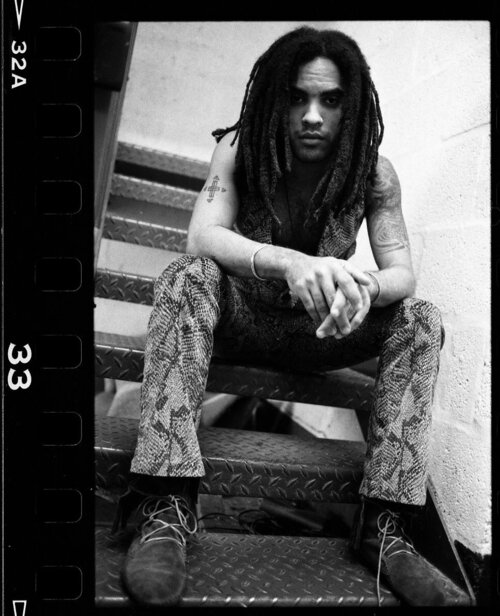
I have featured Lenny Kravitz before …

ssss.jpg

when I included his 1991 album, Mama Said, in Vinyl Corner. It is, perhaps, his greatest album and one that includes incredible songs such as It Ain't Over 'til It's Over, and Always on the Run. I think that the follow-up, Are You Gonna Go My Way, of 1993 is less regarded and seen as weaker than Mama Said. I feel that it has been positively reviewed by some, though others feel it lacks the importance and consistency of Mama Said. I think the first Lenny Kravitz album I experienced when growing up was Are You Gonna Go My Way. Its title track was a single I remember fondly and, before I bring in a couple of reviews for the album, a little background is required. Recorded at Waterfront Studios, Hoboken, New Jersey, whilst some fee that Are You Gonna Go My Way is one of Kravitz’s best works, there are reviews that are pretty mixed. Apart from the title track, one does not hear too much from the album. Believe, and Just Be a Woman are other particularly strong cuts from the album. Are You Gonna Go My Way has been very successful, not only in the United States but also worldwide - particularly in Europe and South America. It reached number-twelve on the Billboard 200 and number-one in the U.K. It is a shame that there has been some mixed reception among the acclaim for Kravitz’s third studio album.

I think it is the non-singles that strike hardest on Are You Gonna Go My Way. Sugar, and Sister are sublime, whilst My Love is one of his very finest tracks. I think 1993 was one of the most important years for music in my view. That is when I was really immersing myself in the sounds of the times. Released on 9th March, 1993, Are You Gonna Go My Way was a big album when I was at middle school. Pop Matters reviewed the Deluxe edition of Are You Gonna Go My Way in 2013 – they gave it a mixed review:

The ghost of Led Zeppelin appears now and then on the actual album, but its presence is strongest on these demos and b-sides. The non-album single/Reality Bites soundtrack cut "Spinning Around Over You" has such a characteristically Jimmy Page riff, it's surprising he didn't sue for royalties. Maybe the irony of it might have been too much even for him. Not all of this can be laid on Kravitz' door, as guitarist Craig Ross certainly added his own Page-isms to the mix. On b-side "Someone Like You", Kravitz, Ross, and company use a guitar tone straight out of Page's book to pay homage to the Beatles, with a huge dollop of "She Said She Said", Lennonesque vocal doubling, and a dash of the "I got blisters on my fingers" echoed background voicing from "Helter Skelter". It works because the sources are so strong, not because the resulting song is a masterpiece on its own.

On Are You Gonna Go My Way, those steps happened again and again. Listen to the organ work and arrangements by Henry Hirsch and Kravitz on "Believe"; they're straight out of the John Paul Jones handbook, but Led Zeppelin never went for that sort of deep soul. Same with that Jimmy Page guitar from Craig Ross on "Is There Any Love in Your Heart" -- those ultra-talented Brits could play funk, but the meld here is Kravitz's own kind of nasty beast. The debt to John Lennon on a song like "My Love" is a little different, as the vocal tricks, doubling, and range make it harder to hear that the mix of blues rock and Beatlesque harmonies Lenny Kravitz crafts is one of his own.

This was not a perfect album in 1993, and its problems remain the same 20 years later. There are still some songs that feel half-baked if beautifully played and recorded; "Eleutheria", for instance, has one of the strongest vocal performances on any of his records, but the limp reggae backing track is a nightmare. Even the sublime organ from Michael "Ibo" Cooper of genre stalwarts Third World can't rescue it from Maxi Priest b-side territory. To close the record with it was criminal”.

I have a lot of respect for Lenny Kravitz. I think some of his later work lacks a certain depth and memorability, but his first three albums are sublime. From his masterful 1989 debut, Let Love Rule, to Mama Said (which is thirty in April), and 1993’s Are You Gonna Go My Way, the New York-based Kravitz was in incredible form!

I want to bring in a review from AllMusic. Although they note clear influences for Kravitz, they highlight positives on Are You Gonna Go My Way:

The cover indicates that Are You Gonna Go My Way is Lenny Kravitz's bid for rock stardom. Designed in the style of an early-'70s record, it features Kravitz in hippie clothing, apparently exposing himself to a photographer -- in other words, he's a dangerously sexy counterculture rebel. That may have been true in 1970, but in 1993, he simply sounds like a weird sideshow exhibit, the man who never lived past 1973. Of course, it's easy to make such potshots, but Kravitz opens himself up to such attacks. No other artist, especially a successful one, has been quite so devoted to the past and ignorant of the present. Since he has considerable talent for songcraft and production, Kravitz isn't nearly as bad as he could be, and Are You Gonna Go My Way is just as enjoyable and more accomplished than its predecessors. This time around, Hendrix is his chief influence, as evidenced by the roaring title track, and he does expand that with his traditional Lennon, Curtis Mayfield, and Prince obsessions. Song for song, it's his most consistent album, although by the end of the record, his painstaking reproduction of classic rock sounds begins to appear a bit too studied, suggesting that Kravitz may have hit a creative wall. Nevertheless, that does nothing to diminish the enjoyment of this record”.

I will end up by sourcing from a great article from udiscovermusic from last year:

In many ways, his third studio album, Are You Gonna Go My Way, released on 9 March 1993, is a homage record. In much the same way that poets write homages in tribute to their mentors, Are You Gonna Go My Way takes the very best of 60s and 70s rock, soul, R&B and reggae, from Jimi Hendrix and Led Zeppelin to The Beatles and Al Green, Bill Withers and Curtis Mayfield, to craft a tight, compelling album.

Even with his penchant for vintage analogue equipment, clothing and musical styles, Are You Gonna Go My Way is very much a product of the sampling culture of the 90s. And while Kravitz had already tasted success with his first two albums, Are You Gonna Go My Way – and its title track – proved he was no mere nostalgia merchant.

As a black musician who wailed on guitar, Kravitz was faced with immediate comparisons to Jimi Hendrix. With his phase-shifter guitar in hand, declaring himself “the chosen, the one come to save the day” in the indelible music video, it was hard to argue otherwise.

Comparisons aside, from the infectious opening riffage over a pounding snare drum, to the fuzz lead over phased-out guitars during the coda, it was clear that Kravitz had penned a rock classic with ‘Are You Gonna Go My Way’.

Hailed as the new Gen Xer rock star, Kravitz didn’t confine his talents to guitar-driven rock. The chameleonic multi-instrumentalist, who produced, wrote and arranged the album, also paid tribute to his soul, funk and R&B heroes. ‘Come On And Love Me’ has a funky Prince vibe, while ‘Heaven Help’ has the sparse instrumentation and hopeful hopelessness of Bill Withers. Elsewhere, the subtle horns on ‘Sugar’ bring to mind Al Green, while the strings on both ‘Sugar’ and ’Sister‘ evoke Curtis Mayfield. Kravitz even dabbles with reggae on ‘Eleutheria’, a tribute to the Bahamian island Eleuthera, to which he would eventually move.

Kravitz continues his homage with the album’s second track and single ‘Believe’. The song begins with an organ intro reminiscent of John Paul Jones’ Hammond coda on Led Zeppelin’s ‘Your Time Is Gonna Come’, and also features that chime-like, Beatles guitar tone you can hear so much of on Abbey Road”.

If you have not heard Lenny Kravitz’s Are You Gonna Go My Way, ensure that you check out an album that boasts some terrific songs. Maybe it is best-known for its titular single, but there is not a weak or wasted moment on Are You Gonna Go My Way. I feel that it is an album that has received some unfair criticism and, in some cases, a half-hearted pat on the back. The more you listen to Are You Gonna Go My Way, the more phenomenal it gets! I feel that Lenny Kravitz’s third studio album is deserving of…

NEW evaluation.

FEATURE: The Lockdown Playlist: Kurt Cobain at Fifty-Four: Prime Nirvana

FEATURE:


The Lockdown Playlist

cccc.jpg

IN THIS PHOTO: Kurt Cobain (left) with his Nirvana bandmates, Krist Novoselic (back) and Dave Grohl (right) in New York City on 11th January, 1992/PHOTO CREDIT: Michael Lavine

Kurt Cobain at Fifty-Four: Prime Nirvana

___________

I have been doing a few…

mmm.jpg

birthday Lockdown Playlists lately. It is always bittersweet marking the birthday of artists who are no longer with us. Because it would have been Kurt Cobain’s fifty-fourth birthday on 20th February, I wanted to put together some of his best work together. Here is some information about the iconic Nirvana frontman:

Kurt Donald Cobain (February 20, 1967 – April 5, 1994) was an American singer-songwriter and musician, best known as the guitarist, primary songwriter and frontman of the rock band Nirvana. Through his angst-fueled songwriting and anti-establishment persona, Cobain's compositions widened the thematic conventions of mainstream rock music. He was often heralded as a spokesman of Generation X and is considered to be one of the most influential musicians in the history of alternative rock.

Born in Aberdeen, Washington, Cobain formed the band Nirvana with Krist Novoselic and Aaron Burckhard in 1987 and established it as part of the Seattle music scene which later became known as grunge. After signing with major label DGC Records, Nirvana found global success with "Smells Like Teen Spirit" from their critically acclaimed second album Nevermind (1991). Although Cobain was hailed as the voice of his generation following Nirvana's sudden success, he resented this, believing his message and artistic vision had been misinterpreted by the public. In addition to "Smells Like Teen Spirit", Cobain wrote many notable songs for Nirvana, including "About a Girl", "In Bloom", "Come as You Are", "Lithium", "Polly", "Something in the Way", "All Apologies", and "Heart-Shaped Box".

During the last years of his life, Cobain struggled with heroin addiction and chronic health problems such as depression. He also struggled with the personal and professional pressures of fame, as well as his marriage to musician Courtney Love. In March 1994, Cobain overdosed on a combination of champagne and Rohypnol, and subsequently entered an intervention and underwent a detox program. On April 8, 1994, Cobain was found dead at his home in Seattle at the age of 27; police concluded he had died on April 5 from a self-inflicted shotgun wound to the head.

Cobain was posthumously inducted into the Rock and Roll Hall of Fame, along with Nirvana bandmates Krist Novoselic and Dave Grohl, in their first year of eligibility in 2014. Rolling Stone included Cobain in its lists of the 100 Greatest Songwriters of All Time, 100 Greatest Guitarists, and 100 Greatest Singers of All Time. He was ranked 7th by MTV in the "22 Greatest Voices in Music". In 2006, he was placed 20th by Hit Parader on their list of the "100 Greatest Metal Singers of All Time”.

To mark his birthday and give a salute to a musician who is still sorely missed, this is an assortment of prime Nirvana tracks. Maybe you will discover a couple of new tracks you have not heard. Not only was Kurt Cobain one of the greatest songwriters of his generation, but he is a hugely inspiring and important human who many looked up to – so many people still do. To honour that, this is a Lockdown Playlist packed…

WITH Nirvana gold.

FEATURE: Come Into My World: Super Eight: The Greatest Videos of Michel Gondry

FEATURE:


Come Into My World

ooo.jpg

Super Eight: The Greatest Videos of Michel Gondry

___________

IN this feature…

kkkkk.jpg

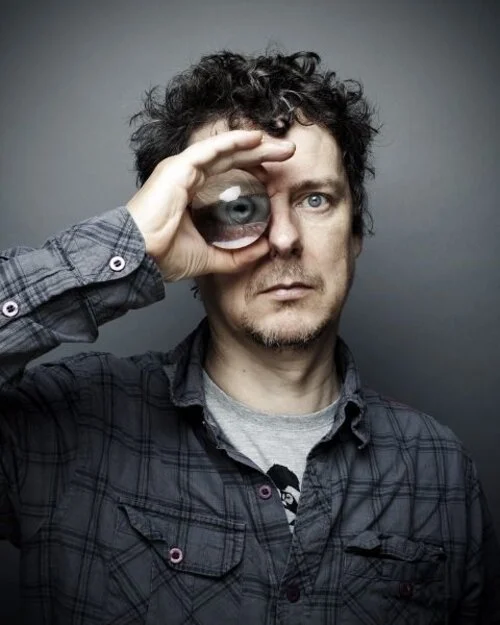
I am spotlighting one of the most innovative and stunning music video directors ever. I am looking at the sensational and hugely imaginative videos of the fifty-seven-year-old French genius, Michel Gondry. I am going to finish by bringing in his best eight music videos. Before then, I want to introduce some Wikipedia information:

His career as a filmmaker began with creating music videos for the French rock band Oui Oui, in which he also served as a drummer. The style of his videos for Oui Oui caught the attention of music artist Björk, who asked him to direct the video for her song "Human Behaviour". The collaboration proved long-lasting, with Gondry directing a total of eight music videos for Björk.

Other artists who have collaborated with Gondry on more than one occasion include Daft Punk, The White Stripes, The Chemical Brothers, The Vines, Steriogram, Radiohead, and Beck. Gondry's video for Lucas Secon's "Lucas with the Lid Off" was nominated in the Best Music Video (short form) category at the 37th Grammy Awards, (one of two Gondry music videos nominated that year along with Sinéad O'Connor's Fire On Babylon).

Gondry has also created numerous television commercials. He pioneered the "bullet time" technique later adapted in The Matrix in the 1996 "Smarienberg" commercial for Smirnoff vodka, as well as directing a trio of inventive holiday-themed advertisements for clothing retailer Gap”.

I sort of explored music video directors in 2019; I have featured Gondry before. Rather than merely repeat myself, I wanted focus in on his very best videos - in addition to providing a little bit of interview information.

In this interview from 2004, we learn more about Gondry’s musical tastes – he also speaks about his filmmaking experiences and influences:

Much of the world at large has been introduced to Michel Gondry via the quirky visual stylings he has instilled in music videos by the likes of Beck, Bjork, The Foo Fighters, Massive Attack, Daft Punk, Kylie Minogue, The Rolling Stones, The White Stripes, and others. He also has two feature length films under his belt, 2001's Human Nature and Eternal Sunshine of the spotless mind, both of which have been collaborations with screenwriter Charlie Kaufman.

Yet despite his visual prowess, Gondry actually has quite an interesting musical background that goes far beyond the dreamlike visages of his videos and films. His father was a jazz musician, his mother plays piano, and his grandfather invented the Clavoline, one of the earliest synthesizers. Oh yeah, Gondry himself is a rather adept drummer and formed the '80s French indie-New Wave combo Oui Oui. In fact, he still breaks out on the downbeat from time to time, although now his rhythm making has become more of a hobby. "Yeah, yeah, although I admit that a couple of years ago I tried to invent a rhythm. Which I did, but it's not very interesting," he laughs. "I was just happy to sit down [behind the drums] and invent something new”.

xxx.jpg

 Gondry's failure to create a new, life changing rhythmic interlude aside, has the director taken anything from his eclectic musical background and applied it to his filmmaking experiences? "I don't know," he says with a gleam in his eye and a sly grin on his face. "I mean it's all in me. The fact that you mentioned my parents; it must be what's in my genes. I guess it's there. I think my brother and I, when we were little kids our parents immersed us into pop culture. Duke Ellington and Serge Gainsbourg were like the heroes of our family. And I think ultimately it made us, when we got to an age when we could make a living, we could say what we remembered, only we'd kind of mesh with the culture around us. I don't know if that makes sense, but I think it helped us. Sometimes it's good that you have a background that has nothing to do with you, 'cause you create your own world. And sometimes it's good that there is nothing to conflict at this moment. But in terms of music, maybe you would see more of that in my work with music videos than film. It's more about my input in the film would be more how to shoot people in a way…when I started to do music video, I hated the music videos with people showing off or being like macho or like a pop star. I think when I try to shoot people, I try to be on an equal level with them and get that feeling of connecting. So it's more on that level in terms of my background influences”.

Because I am such a fan of Gondry’s work, I wanted to come back to his videos and highlight a director with an imagination and mind like no other! I have not ranked these seven videos in order of which I think is best. Instead, it is a spread of his best work that shows what an immense talent he is! If you like these videos, then take some time online investigating Michel Gondry’s work. Here are some exceptional examples from one…

THE greatest music video director ever.

____________

Kylie MinogueCome Into My World (2002)

aaa.jpg

Lucas Lucas with the Lid Off (1994)

ppp.jpg

BjörkArmy of Me (1995)

kkk.jpg

Daft PunkAround the World (1997)

hf.jpg

The White StripesThe Hardest Button to Button (2003)

lll.jpg

Cibo Matto - Sugar Water (1996)

bb.jpg

RadioheadKnives Out (2001)

ii.jpg

The Chemical Brothers Star Guitar (2002)

lll.jpg

FEATURE: Old Ideas: The Ways We Pigeonhole Music Lovers of a Certain Age

FEATURE:


Old Ideas

aaaa.jpg

PHOTO CREDIT: @raflfc/Unsplash

The Ways We Pigeonhole Music Lovers of a Certain Age

___________

I was listening to Lauren Laverne’s BBC Radio 6 Music…

xxx.jpg

 PHOTO CREDIT: @tkirkgoz/Unsplash

show recently, and she had a guest on in his eighties that was invited to select songs. During the conversion, it became clear that we judge music fans of a certain age. The caller explained how, even though he was older, he enjoyed music from different years and artists. I guess, technically, older people are getting younger in terms of their tastes. What I mean is that someone in their eighties now would have grown up on newer music than the generation before - so it means a lot of the old-age clichés are redundant. I think we feel older people like easy-going music and artists like Frank Sinatra. That is true for some but, in a wider sense, why do we assume older people only listen to music from the 1940s and 1950s and do not have any consciousness of music since then?! In the same vein, we do not pigeonhole young people when it comes to their tastes. Maybe some feel that younger people only listen to BBC Radio 1 and middle-aged solely BBC Radio 2. The sort of ageism prejudice persist to this day, and it makes for interesting exploration. I do not think any artists explicitly markets their music for a specific demographic. Maybe a lot of the fresh Pop artists aim for a younger market, but even they would say that their music should not be limited in such a way. In the same way, artists who appear on radio stations with an older demographic are not limiting themselves to that age band.

xxvc.jpg

 IN THIS PHOTO: Rhianna/PHOTO CREDIT: James Devaney/GC Images

It is a shame that there is still this sort of patronising attitude around. I shall explore older people and musical tastes soon. There is some rationale as to why people rigidly define older people and their tastes. Drawing from an article in The Verge from 2018, and they discussed research that revealed when our most important age is when it comes to musical exploration and admiration:

New York Times analysis of Spotify data has found that the songs we listen to during our teen years set our musical taste as adults.

For men, the most important period for forming musical taste is between the ages of 13 to 16. Men were, on average, aged 14 when their favorite song was released. For women, the most important period is between 11 and 14, with 13 being the most likely age for when their favorite song came out. It also found that childhood influences were stronger for women than men and the key years for shaping taste were tied to the end of puberty.

The NYT analyzed every Billboard chart-topping song released between 1960 and 2000. Citing Radiohead’s “Creep” as an example, the NYT found the song is the 164th most popular song among 38-year-old men. These men would have been around 14 years old at the time the song was released in 1993, making that selection consistent with the analysis. “Creep” isn’t even in the top 300 songs for those born 10 years earlier or 10 years later. Meanwhile, “Just Like Heaven” by The Cure was released in 1987 and is popular with women aged 41, who would have been 11 at the time of the song’s release.

cccc.jpg

PHOTO CREDIT: @kurbanova/Unsplash 

There is some very interesting data that discusses why we gravitate towards certain genres depending on our age:

"Whereas the first musical age is about asserting independence, the next appears to be more about gaining acceptance from others."

As we settle down and middle age begins to creep in, the last musical age, as identified by the researchers, is dominated by 'sophisticated' -- such as jazz and classical -- and 'unpretentious' -- such as country, folk and blues.

Researchers write that both these dimensions are seen as "positive and relaxing" -- with 'sophisticated' indicating the complex aesthetic of high culture that could be linked to social status and perceived intellect, while 'unpretentious' echoes sentiments of family, love and loss -- emotionally direct music that speaks to the experiences most will have had by this life stage.

"As we settle into ourselves and acquire more resources to express ourselves -- career, home, family, car -- music remains an extension of this, and at this stage there are aspects of wanting to promote social status, intellect and wealth that play into the increased gravitation towards 'sophisticated' music," said Rentfrow, "as social standing is seen as a key 'life challenge' to be achieved by this point."

"At the same time, for many this life stage is frequently exhausted by work and family, and there is a requirement for relaxing, emotive music for those rare down times that reflects the other major 'life challenge' of this stage -- that of nurturing a family and maintaining long-term relationships, perhaps the hardest of all”.

xxxx.jpg

 PHOTO CREDIT: @vladizlo/Unsplash

Given that most of us lionise and preserve music of our teenage years and return there, there is some sense in thinking that older music fans would gravitate towards music from their youth. I think the misperception of the older person shaking their fists at new music and chiding youngster for their rubbish tastes needs to be evaluated. I think, as radio stations and the Internet exposes us all to more music and new avenues, it does mean that many older music lovers are as inquisitive and broad-minded as younger people. Stations like BBC Radio 6 Music provides an eclectic playlist. It has no business model when it comes to age and the type of listener it wants to attract. It is open to everyone and, for that reason, listening to Lauren Laverne’s show and her conversation with an older caller with cool tastes was no shock. There is definite ageism in the music industry and, to compound that, I think many radio stations are ageist regarding including certain artists. I feel we need to have more respect for older artists and older listeners. Consider how important music is regarding memory and keeping out past alive. We all, consciously or not, soundtrack various years and moments with songs. For those who suffer from fading memory, music can provide an invaluable key to unlock their past – without music, there is debate as to whether we would store so many memories. I have explored the connection between music and memory before. A lot of older music fans have a much wider passion and sense of musical knowledge than we could appreciate. Modern music offers so much choice and quality…so it is natural that listeners of all ages would open their eyes and ears to it! When it comes to older people, we need to get out of the mindset that they only love old music and have limited tastes. They are, in fact, as cool, passionate and surprising…

zzzz.jpg

PHOTO CREDIT: @brett_jordan/Unsplash

AS music lovers of all ages.

FEATURE: The Lockdown Playlist: The Best of the 2010s

FEATURE:


The Lockdown Playlist

ccc.jpg

PHOTO CREDIT: Kendrick Lamar/PHOTO CREDIT: Ellis Parrinder/Camara Press/Redux 

The Best of the 2010s

___________

I have been looking through my Lockdown Playlists…

zzzz.jpg

 IN THIS PHOTO: Beyoncé

and I can’t recall having done one containing the best tracks of the 2010s. Maybe I have and it has got lost but, in any case, I am doing it now. I think many overlook the last decade in terms of the range and quality of music. There was so much brilliant music released. I have compiled some of the very best tracks from the decade; proof that there was more than enough genius to be found. If you are a bit listless and need some energy and motivation, I hope that these songs help out. Here are some pearls from the 2010s that should keep you uplifted or, when the mood is slightly more down, provide some form of comfort or reflection. If you have forgotten the tracks that scored and soundtracked the 2010s, then have a listen to the playlist and you’ll discover…

aaaaa.jpg

 IN THIS PHOTO: Robyn

SOME real treats.

FEATURE: Room to Leave It Open: Kate Bush and the Long-Held Misconception of Perfectionism

FEATURE:


Room to Leave It Open

ppp.jpeg

PHOTO CREDIT: Brian Aris 

Kate Bush and the Long-Held Misconception of Perfectionism

___________

THIS is a slightly different angle…

aaaa.jpg

when it comes to a Kate Bush feature. I cannot recall whether I have explored this in depth but, through the years, there has been this label applied to Bush: the idea that she is a perfectionist, and that is why albums take so long to arrive and come together. Bush has said herself how she is not a perfectionist. One of the reasons why she recorded Director’s Cut (2011) and redid songs from The Sensual World (1989), and The Red Shoes (1993), was because she was dissatisfied with elements of those albums. Maybe it was the production sound or something lacking from the original recordings. It is interesting that people consider Bush to be a perfectionist. Her music is exceptional and hugely accomplished, but I think the reason why she does quite a few takes and spends a long time on songs is to get the sound right. That might sound like perfectionism, but I don’t think music can be seen as perfect or without flaws. Bush’s lyrics and music is unique and has so much depth, so it is only natural that she would spend a lot of time working on the music and making sure the final product is as good as it could be! If she was honest with herself, Bush would say that all of her albums could be improved or changed in some form. I want to bring in a few articles where terms of like ‘perfectionist’ have been used to describe Kate Bush.

Every time there is a delay between albums, people always feel that Bush is crafting away at every song meticulously in order to achieve that golden sound. She has said how lyrics come together pretty fast; it is the production and recording that takes the longest time. Rather than an overly-precise approach to music, I think Bush is trying to make her music as rich and interesting as possible. She has a great love of sound and how one experiences an album. As we can see from this BBC article in 2011, Bush has addressed the idea that she is a perfectionist:

An album of reworked songs, Director's Cut, is released later this month.

The collection features material from her Sensual World and Red Shoes albums, released in 1989 and 1993 respectively.

A new version of Deeper Understanding was released as a single in April, with a video starring Robbie Coltrane, Noel Fielding and Frances Barber.

Speaking to Radio Four's Front Row arts programme, the singer denied she was a perfectionist in the recording studio.

"I don't think I am," she said. "People have said this, but I don't think I really want anything to be perfect.

"I think it's important that things are flawed," she continued”.

"That's what makes a piece of art interesting sometimes - the bit that's wrong or the mistake you've made that's led onto an idea you wouldn't have had otherwise."

Bush described her new material as "work in progress", but was unwilling to say when it might see the light of day.

"Even if I was able to talk about it now, it might completely change in a few weeks and so would no longer be relevant”.

I think Bush picked up on something interesting. Songs change all the time and, maybe, it is that constant sense of curiosity that keeps her going. She will start with an idea of a song and, as time goes on, she will notice things not working or ideas that could heighten a particular track. Rather than trying to make her music sound perfect, Bush wants to record music that is different and memorable. I wonder whether Bush will do another Director’s Cut, where she reworks other albums and gives them a new take. When The Guardian provided recommendations of Bush’s albums, they used the P-word when highlighting 1986’s greatest hits, The Whole Story:

Ever the perfectionist, Bush is constantly rearranging her catalogue, her oeuvre ever-evolving like a living, breathing organism, and here there is Wuthering Heights with a newly recorded vocal, as well as a new song, Experiment IV, whose scary sci-fi video Bush directed (and which was subsequently banned by Top of the Pops)”.

Another article from The Guardian highlighted the 2007 track, Lyra, and noted how it was a song that came together quickly:

A single by default, not design: it charted on downloads from the soundtrack album of The Golden Compass alone. Belying Bush’s reputation as a pernickety studio perfectionist, it apparently took 10 days to write and record. It’s not her greatest song, but its ambient synth and choral backing is luscious and enveloping”.

I think, rather than Kate Bush being a perfectionist, there is a confidence that means her music does take longer to coalesce. In an article from The Independent, a couple of interesting passages stood out:

“She was fastidious about getting things right,” recalls The Dubliners’ John Sheahan. “I remember playing the [tin] whistle. She was saying ‘this is absolutely beautiful but when you get to this note can you just slide up’. She was a real perfectionist.”

“Kate is quite secure in her own self-confidence,” Palmer told me in 2018. “But with many artists you have to make them feel loved. If you want them to do something again you’ll say, ‘oh it’s my fault’. You want to turn any comment you might have into something positive”.

Bush has said how she wants to create interesting music, hence this quest and sense of experimentation. I guess it is not a bad thing to be called a perfectionist – as Bush is often incorrectly referred to as being reclusive more -, but I think that word gets used too much to explain why albums take a long time to come out. One cannot say perfectionism is the reason why there has not been a follow-up to 2011’s 50 Words for Snow. One can argue that, were it not for Bush’s approach and confidence, we would not get the same quality. That said, were the writing and recording quicker and looser, then we might have seen more albums from her. Even though Bush kicks herself when it comes to album releases, knowing how good her music is, we wouldn’t have it…

lll.jpg

 PHOTO CREDIT: Rex

ANY other way.

FEATURE: Spotlight: Pearl Charles

FEATURE:


Spotlight

mmm.jpg

Pearl Charles

___________

I know that I have been featuring a lot of women…

mmm.jpg

 PHOTO CREDIT: Cherokee Presley

in this feature lately, and I will move on to male artists soon. In fact, it is female solo artists who have been on my radar mostly. I was very keen to feature Pearl Charles as she released the sensational album, Magic Mirror, on 15th January. I will come to that album soon but, just before, I want to bring in some introduction and interviews; so that we can get a better sense of Pearl Charles and her songwriting. I think that she is going to go a long way in the music industry. Her track, Only for Tonight, is one of the finest I have heard in a long time! With great ABBA vibes and an insatiable sound, it is a song that I think more artists should follow – as it would elevate the industry and brighten the sound of modern music! Signed to Kannine Records, here is some biography regarding the brilliant Pearl Charles:

Charles has been playing music since she was 5 years old. At 18, she formed country duo The Driftwood Singers with Christian Lee Hutson, singing and playing guitar and autoharp. At 22, she joined garage rock band The Blank Tapes as drummer. After two fun-filled years immersed in the rock and roll lifestyle, she decided it was time to pursue her own songwriting, and began developing the songs that formed 2015′s eponymous debut EP.  Drawn to poppy hooks and catchy choruses, Charles draws on what she loves about the 60s, 70s and 80s while developing her unique style as a solo artist.

In 2018, Pearl released debut album, Sleepless Dreamer, which Rough Trade described as “The best country pop we’ve heard in years” and Buzzfeed called her “A modern June Carter meets Lana Del Rey.”  With the upcoming release of the follow up, Magic Mirror, out January 15, 2021, Pearl leans into furthering her own brand of country-disco.

“As if Tom Petty were riding shotgun, Charles and band capture a certain Southern California essence” – LA TIMES

“Bursting with blues-rock and blissed-out psychedelia” – PITCHFORK”.

I have been following Charles’ music for a little while now and I think that her best is yet to come. That said, Magic Mirror is a fantastic album that showcases a huge talent and some wonderful sounds. I am eager to highlight Charles and how she started making music. When she spoke with The Forty-Five, we find out about her beginnings and musical influences:

Tell us about how you started making music

I was four years old when my older sister started piano lessons and I begged my parents to let me take lessons too. They told me if I still wanted to when I turned five they would let me, and the rest is history! From there I got really into musical theatre and started voice and guitar lessons as well. Eventually I sort of diverted off the path of musical theatre (I got in trouble for smoking pot at a classmate’s house whose father was a famous country singer/songwriter, but that’s a long story for another time!) and went more into the world of rock’n’roll and playing in bands which I do think is where I was meant to be.

We’re getting some serious ABBA/Fleetwood Mac vibes from your music. What did you listen to growing up?

Though I definitely heard those bands when I was growing up, I didn’t actually really get into Fleetwood Mac or ABBA until I was in my 20s. My introduction to those bands were mostly just as oldies radio hits, so it wasn’t until I got more deeply into discovering and making music myself that I was able to appreciate the level of musicianship and songwriting both those bands exhibit. Growing up I listened to a lot of classic country and singer/songwriters as well as classic rock bands because that’s what my parents exposed me to. The Beatles, Bob Dylan, Leonard Cohen, John Prine and Hank Williams are some of the quintessential ones that come to mind. I remember the first CD I bought for myself was Eagles Greatest Hits.

You have an incredible home in Joshua Tree, California. Many artists before you have headed to the desert to record because they feel it has a mystical energy. What has your experience been as a creative in an environment like that?

Joshua Tree is such a magical place! My first experiences going out there were with my family when they bought a really unique house (it was built by the first Native American Playboy Bunny) in the area about 13 years ago. That was the place where I first felt really drawn to revisit the classic country music my mom had shown me when I was young, some of the artists I mentioned earlier and others like Patsy Cline, Loretta Lynn and Merle Haggard. It was only later that I found out about the significance of Gram Parsons and felt that somehow his spirit had guided me in the right direction. There is just this peaceful, calming feeling out there, you truly feel connected to the earth and surrounded by nature, whether it’s the plants, the animals or the stars. It’s those moments where you feel so small in the world, but in the best possible way, that make Joshua Tree an artistic and spiritual Mecca”.

Even though 2021 has sort of just begun, I think that Pearl Charles’ Magic Mirror is one of the finest albums so far! It is an amazing collection of songs that everyone can appreciate. Back in November, Charles spoke with Lippy and highlighted how Magic Mirror is different from her other music:

Tell us a little about the upcoming album... what was it you wanted to do with ‘Magic Mirror’ that you haven’t explored on previous releases?

One thing that really sticks out to me about this album compared to some of my past releases is the fact that I recorded it with my live band instead of exclusively using session musicians. On my last record I used members of Father John Misty’s band, who are all absolutely incredible players, but the process this time was much more personal. Not only had my band and I spent the last few years traveling the country and the world together playing the songs live on the road and working them out through various demos, but also because of the time we all spent together in the van where I got to share so many of the songs and artists that are so important to me and whose style and vibe I want to attempt infuse into my albums. Though we still used some session players to fill out the album, all of whom are amazing and bring their own voices to the mix, having the basis of the album be my go-to guys (and some of my absolute best friends) made it very special for me.

cccc.jpg

 How do you view the current state of country music in America? How important is it to keep young people invested in country and folk?

I think there has been some rightful backlash to the idea of country and folk in recent days for having a history of not being as inclusive as it should be, in both the telling of its history and on the industry side of things in the past and the present, which is more than completely valid. That’s part of why I think it is really important to keep people of all ages engaged and interested in these genres! In truth, all roots music comes from a mix of racial and ethnic backgrounds (black, white and beyond), and continues to be made by a diverse group of people, both historically and currently. We need to tell that story honestly and open up the industry to support and lift up the contributions of people who previously did not have their stories told or honoured in these genres.

Your upcoming album ‘Magic Mirror’ has been described as a “feel good album”. How important is it to you to make up-lifting music in these potentially dark times?

Well, as I’m talking to you we’re getting some pretty good news out here in the US, so the album almost takes on new meaning! Rather than fighting to maintain optimism as we once were, it is more cautiously celebratory perhaps. Though we still have a long way to go, we are at the dawn of a new, hopefully much brighter era. To answer your question beyond just the political implications, George Jones once said, “When you're happy you enjoy the music. When you're sad, you understand the lyrics.” I think something that is somewhat unique about my albums is that although they can come across as “feel good” on a casual listen (which don’t get me wrong, I love!), if you dig in more deeply to the lyrics sometimes there is something definitely deeper, and at times darker, lurking underneath the surface. That is the beauty of this album for me really, the fact that it can fit your mood no matter how you’re feeling. There’s a song and a vibe for every emotion and it’s kind of choose your own adventure in terms of how the listener feels like approaching and engaging with the record on any given day. Though I do love making songs you can just zoom out and bop your head along to, it’s also important to me to say something, so it’s kind of the best of both worlds!”.

Before bringing in a positive review for Magic Mirror, I want to quote a couple of other interviews. In this interview from BN1 Magazine, we get an idea of what comes next for Charles:

Does the freedom of being a solo artist outweigh the pressures it can bring?

Though being a solo artist has its challenges, I do think as someone who has a very clear artistic vision for the music, the message and the aesthetic of my project, being able to really be in full control of executing that vision is so rewarding and well worth the extra pressure. That being said, taking care of yourself and your mental health is really important as a bandleader as well, because you can push yourself really hard trying to make the dream come alive and we have to remember to stop and take the time to take care of ourselves!

I imagine Magic Mirror was largely composed and produced during 2020 and all its complications. Did this give you any unexpected benefits? For starters, working with other people must be a challenge…

I actually wrote the album before the pandemic, so it’s been interesting to see how the record has remained relevant, and maybe even become more so, throughout such a drastic global shift. The challenges that have been presented for me have had less to do with the actual music making part this time around, since we were able to complete the record before lockdown, and more to do with the adaptation to the new way of supporting the record. Since we can’t tour or do a lot of the normal promotional things we would do, we’ve had to readjust and focus our energy on creating digital content and spreading the word online instead of through playing shows.

What’s next after the album release? Are you going to sit back until you can tour again, or are there new challenges ahead?

I have already been chipping away at a ton of new songs and hope to release some new music later this year if everything goes as planned, though I think we’ve all learned that we can’t necessarily rely on anything going as planned! I’ve also been writing songs for a side project with my boyfriend that I mentioned earlier and hopefully we’ll be able to do some recording for that as well, so I will definitely be keeping busy until we’re able to get back out on the road and tour again!”.

It must have been hard putting together and releasing an album during such a strange time. I feel that there is going to be a lot of touring and exposure post-pandemic. Magic Mirror is an optimistic album that we all need. When she spoke with Flaunt, Pearl Charles was asked about pandemic times and trying to produce great music:

Is it harder to find creative inspiration when times are tough or does it get you through the tough times?

I think it gets you through the tough time. I hate to say that being emotionally fraught creates better music. But there’s definitely a lot of inspiration when you’re feeling down. I mean that’s how it is for me, and I think that’s true for a lot of people. It’s just a different kind of inspiration when you’re feeling happy. I don’t think it’s a tradeoff that you have to be unhappy to make good art or good music. But I think when you are feeling down, music is therapeutic whether it’s listening to it or making it and talking about how you feel—getting it off your chest. Creating something beautiful with something that has caused you pain is a way to take control and have that power over that and not let it have the power over you.

What do you hope to see in the crystal ball for Pearl Charles in 2021?

I really hope that we can get on the road because the band is really good live. I think that people are going to want to see it. I’m excited to show it to people, but if it’s just through livestreams, that’s what we’ll do. As I said, the most important thing to me is keeping everyone safe and healthy and getting through the pandemic. I know we’re going to be making new music. Having this new place in Joshua Tree, we have a studio here, and we’re actually going to be able to record ourselves. That’s going to make such a huge difference. I love making records in big fancy studios and all that, but there’s something to be said about being able to wake up in your own space and create”.

kkkk.jpg

I would urge people to listen to Magic Mirror as it is a sensational album that deserves to be heard by as many people as possible. In their review, this is what The Line of Best Fit noted:

It’s impossible to not connect the Abba-dots on kick-starter “Only For Tonight”. As the melody delivers on all fronts - ear-worm settling in for the long haul - Charles greets us by looking back upon a one night stand, lamenting she “shouldn’t have played this like a man.” By erupting like a confetti canon coming at you the moment you walk into your house, a feeling sweeps over, ready to carry the party onward.

Notably, there’s now echoes of the sun-drenched California sparkle of Fleetwood Mac, Tom Petty et al - motioning to an express reach upwards for Charles and who she, as an artist, is now. No doubt, the romantic realisations within, particularly of “when I see your face it’ll be the last time I do / it’s easier to live this lie than to tell the truth” (“What I Need”) has also contributed to this new gloss - after all, when the truth feels so poignant, let it shimmer to make it more digestible.

Even on her self-titled debut EP, which dug its hands into the world of blues, there was a wish to reflect, and it feels like the steps made between then and now - the living of life, and figuring out her place in this world - has led to an evolution into a ‘70s radio-rock revival sound, featuring more swaying pedal steel and twanging clavichord en masse - with a delectable delivering of harmonies stacking where prudent.

The lack of reference to any of the issues involved in our ‘new reality’ creates the idea of a dream world, where life can once again by led without the ticking of a doomsday clock - especially following a week of (more) erupting political discourse; this glamour-tinged world of Charles’, reaches out and is telling you to ‘live in the past for a bit’ feels welcome.

While Magic Mirror's sparkling-sheen portrays the acceptance of life - Pearl Charles' diary, flinging open its pages to question long-drawn-out loves - the inclusivity means the eyes staring back from Magic Mirror flit between both yours and hers, all aided by her cool and breezy nature”.

It is still early days for Pearl Charles, though I think she has shown such promise through Magic Mirror. When things calm down regarding the pandemic, she will be able to tour and get her music out to the masses. I have been listening to Magic Mirror quite a bit lately and, during a bad time, the album has helped lift my mood. Pearl Charles’ career has been a fascinating one so far. I cannot wait to see…

WHERE it goes next.

____________

Follow Pearl Charles

xxxx.jpg

FEATURE: Vinyl Corner: The Cure – Disintegration

FEATURE:


Vinyl Corner

aaaa.jpg

The Cure – Disintegration

___________

FOR this round of Vinyl Corner…

kk.jpg

I am featuring a band that I have not covered much through the years. I can take or leave some of The Cure’s albums, but I acknowledge how important Disintegration is. Their eighth studio album, it was released on 2nd May, 1989 by Fiction Records. The album marked a return to the band’s more introspective Gothic Rock style the band had laid down in the early-1980s. I think Robert Smith, the band’s leader, was looking to deliver an album that was more effecting, deep and important. Smith was also experimenting more with hallucinogenic drugs during the making of Disintegration (in part due to The Cure’s burgeoning commercial success) – this had a strong influence on the production and sound of the album. I would advise people to buy the album on vinyl, as it is a terrific work that deserves to be heard by everyone. Although it can be a heavy listen, there is a lot to love and cherish. Smith was very depressed prior to the recording of Disintegration, knowing that he would be thirty in a year. He was of the opinion that masterpieces in Rock had been completed well before the band members reached such an age. Whilst Lovesong, Pictures of You, and Lullaby are more accessible songs, there are tracks on Disintegration that are a bit heavier and take longer to reveal themselves. That is what I like about Disintegration: it fuses these songs that instantly hook you; there are others which grow and bloom the more you listen to them.

Even though Smith felt the band had become stadium rock and sort of sold out when Disintegration was released, the album is often viewed as one of the best ever. It frequently appears on polls of the greatest albums of all-time. I will bring in a fairly recent interview with Robert Smith – he spoke with Rolling Stone in 2019 on the thirtieth anniversary of Disintegration. I want to introduce a couple of reviews for the album; just to show you what critics make of The Cure’s masterpiece. This is what AllMusic noted in their review:

Expanding the latent arena rock sensibilities that peppered Kiss Me, Kiss Me, Kiss Me by slowing them down and stretching them to the breaking point, the Cure reached the peak of their popularity with the crawling, darkly seductive Disintegration. It's a hypnotic, mesmerizing record, comprised almost entirely of epics like the soaring, icy "Pictures of You." The handful of pop songs, like the concise and utterly charming "Love Song," don't alleviate the doom-laden atmosphere. The Cure's gloomy soundscapes have rarely sounded so alluring, however, and the songs -- from the pulsating, ominous "Fascination Street" to the eerie, string-laced "Lullaby" -- have rarely been so well-constructed and memorable. It's fitting that Disintegration was their commercial breakthrough, since, in many ways, the album is the culmination of all the musical directions the Cure were pursuing over the course of the '80s”.

The more one listens to Disintegration, the bigger the effect it has. It is a magnificent album and one, thirty-two years after its release, still makes an impression on me! I want to introduce a portion of Pitchfork’s review:

It’s no wonder this was meaningful to a lot of teenagers: The sheer emotional grandeur of tracks like that opener, “Plainsong,” make a great match for the feeling that everything in your life is all-consumingly important, whether it’s your all-consuming sadness, joy, longing, or whatever. And yet Disintegration is not a very teenagey album. It’s not an emo whine, and it’s not a big miserablist mope, either; one of its most popular tracks, “Lovesong,” was written by Smith as a wedding present for his wife. “I will always love you,” it keeps promising—not the way you sing that in a giddy love song, but like it’s a grave, solemn, bloody commitment. It was a top 10 hit in the U.S.

This is the thing: The album has a reputation as some huge, dark, crushingly depressive experience. It’s not entirely unearned. If you want to be crushingly depressed with Disintegration, or frustrated, or self-loathing, it’ll embrace you right back. But it’ll embrace other things, too. A whole lot of this album’s appeal is that it’s comforting, practically womblike—big, warm, slow, full of beauty and melody and even joy. The trick, I think, is how well it serves as a soundtrack to that feeling that everything around you is meaningful, whether it’s beautiful or horrible or sublime: This is an album for capital-R Romantics, not sulkers. It’s muscular (like on the title track), wistful (“Pictures of You”), ghostly (“Closedown”), seething (“Fascination Street”), and yeah, morose, but what’s striking is how each of those qualities can reach really, really far into your gut. It’s not a record for the dead-inside: Get far enough into this album, and I will almost guarantee you will feel some shit”.

I think that Disintegration has grown and matured through the years, in the sense that it seems to reveal more and it sounds even more brilliant now. That may strange but, years after I first heard the album, and it does stun and move me. Robert Smith discussed the thirtieth anniversary of Disintegration with Rolling Stone:

This year marks the 30th anniversary of Disintegration. You recently played the full album in Australia. What strikes you about those songs now?

It’s probably one of two or three albums that meant something in the broader cultural sense than just, like, “another Cure album.” It happened at a particular time, and I suppose it had the right combination of songs and it meant a lot to a lot of people. I actually wanted to do the 40th anniversary of Three Imaginary Boys instead, but I was overruled, so we did Disintegration, which is probably the wise thing to do.

When was the last time you sat down with the record?

I think when I did the remaster for Disintegration in 2010 was the first time I’d listened to the album since we’d made it. At that point I thought, “Yeah, I get now why people were drawn into it.” It’s a really nice balance of big and small in a funny way. It manages to hang together in a way that on paper it really shouldn’t. And when we played it through earlier this year, when we were rehearsing it, I kind of felt that again. I sort of remembered. I thought, “Yeah, it’s actually really cleverly put together. I kind of knew what I was doing briefly”.

Since you’re writing a new album now, did you get a new perspective on Disintegration?

At the same time we were rehearsing Disintegration, we were running through songs for the new album that we’re recording this year. I think that helped the band. It’s certainly helped me light the way. While I think [Disintegration] is a great album, and I’m never going to think, “If only I’d done this, if only I could have done that,” because that would be foolish, it helped me to see how it was constructed. So it wasn’t done in a purposeful way, but I had an overview of the whole thing in my head before we played the first note I knew how I wanted it to start and I knew what I wanted it to feel like by the time we ended. That informed the recording of the new album. So for that reason, it was a good thing to do”.

Go and buy Disintegration on vinyl, as it is a magnificent record and, debatably, the finest The Cure have ever put out. Even though Disintegration arrived at the end of the 1980s, there is no doubt that it is…

ONE of the best of the decade.

FEATURE: The Lockdown Playlist: Brian Holland at Eighty: The Essential Holland-Dozier-Holland

FEATURE:


The Lockdown Playlist

 IN THIS PHOTO: Martha & The Vandellas

Brian Holland at Eighty: The Essential Holland-Dozier-Holland

___________

THIS is another birthday Lockdown Playlist…

kkk.jpg

 IN THIS PHOTO: Brian Holland

but not one concerning an artist. The legendary songwriter Brian Holland was born on 15th February, 1941. He is best known as a member of Holland–Dozier–Holland: the songwriting and production team that was responsible for much of the Motown sound and numerous hit records by artists such as Martha & The Vandellas, The Supremes (it is sad that we lost The Supremes’ Mary Wilson recently), the Four Tops, and The Isley Brothers. Holland, along with Lamont Dozier, served as the team's musical arranger and producer. He has written or co-written one-hundred-and-forty-five hits in U.S. and seventy-eight in the U.K. To mark his eightieth birthday tomorrow, here is a collection of the best of Holland–Dozier–Holland. If you are not familiar with the work of Lamont Dozier, Brian and Eddie Holland, then I hope this provides a useful guide. Happy eightieth birthday to the great Brian Holland. Here is an assortment of classic tracks that he wrote alongside his brother and Lamont Dozier. These songs made a big impact upon their release but, more than that, they will…

aa.jpg

 IN THIS PHOTO: Holland-Dozier-Holland

STAND the test of time.

FEATURE: Hey Nineteen: Marking the Survival and Growth of BBC Radio 6 Music

FEATURE:


Hey Nineteen

xxxx.jpg

IN THIS PHOTO: BBC Radio 6 Music’s Lauren Laverne and Mary Anne Hobbs (the photo was taken pre-social distancing)/PHOTO CREDIT: BBC 

Marking the Survival and Growth of BBC Radio 6 Music

___________

I am a little premature…

lll.jpg

when it comes to celebrating the nineteenth birthday of BBC Radio 6 Music - as that does not happen until 11th March. I wanted to discuss why the station continues to grow in popularity and pull in huge listening figures. It is hard to think that, as we look ahead to nineteen years of one of the best and most eclectic radio stations in the world, it was threatened with closure not that long ago! In 2010, the station was faced with closure; seen as expendable amidst, I guess, cost-cutting measures. The Guardian reflected on that event five years later:

BBC 6 Music, home to presenters Lauren Laverne, Elbow’s Guy Garvey and Jarvis Cocker, will pass a landmark anniversary in the next few days, although it is not one likely to prompt wild celebrations on air.

It will be five years since the BBC tried to axe the fledgling digital station and replace it with a spin-off version of Radio 2.

The decision prompted a wave of unprecedented listener protest – its Facebook campaign an early demonstration of the power of social media – joined by star names such as David Bowie and Mark Ronson, and its own presenters.

After management was forced into a U-turn by the BBC Trust the fortunes of the station have blossomed. Its audience has since tripled, and in the final quarter of 2014 hit 2 million listeners a week, overtaking its long established sister station, Radio 3.

xxxx.jpg

IN THIS PHOTO: Mark Radcliffe (who presents weekend breakfasts with Stuart Maconie)/PHOTO CREDIT: BBC 

Now the target is 2.5 million listeners for the station, which the BBC said five years ago had “relatively few unique listeners to BBC radio” and whose audience of 30- to 50-year-olds were well served by commercial radio.

Jeff Smith, head of music for Radio 2 and 6 Music, said 90% of its output today is not heard on any other UK station, with a mix of indie disco, edgier entries in rock’s back catalogue and championing of new artists such as US folk star Father John Misty.

If the station lacked focus in its early years when it promised an enervating mixture of archive and album tracks, it now pursues a different mantra, “celebrating the alternative spirit in popular music since the 1960s”.

Paul Rodgers, head of programmes for 6 Music, said it was an “important phrase defining what the station is about” but admitted it is a “slippery one”.

“I’m loathe to get into a musical definition of it. Which bit of the Human League is the alternative spirit? You can see I’m struggling,” he said.

Other 6 Music presenters also spoke out, including Adam Buxton and Tom Robinson. Cerys Matthews, the former lead singer of Catatonia who joined the station in 2009, recalled appearing on BBC1’s Breakfast programme to debate the closure with then BBC chief operating officer, Caroline Thomson.

“I remember saying, yes there’s a need for the BBC to lose weight but you don’t cut your little finger off, you get fit,” said Matthews. “Threatening to shut 6 Music was a ridiculous way to save money.”

But even given the scale of support, Kershaw was taken aback when the decision was reversed four months later. “In my mind it was rock’n’roll versus the suits,” she said. “And the suits always had the last word.”

Aside from being the best free marketing the station ever had, the threat of closure and its subsequent rescue gave its DJs a new-found confidence. A few years previously its then controller Lesley Douglas had looked to expand its appeal with personalities such as Russell Brand and George Lamb”.

ccc.jpg

 IN THIS PHOTO: BBC Radio 6 Music’s Steve Lamacq/PHOTO CREDIT: BBC

It seems amazing that there was even the feintest possibility of BBC Radio 6 Music not existing. Since its scare, the listening figures continued to grow! The personality and passion of the presenters, tied with a mix of more alternative and mainstream music, ensured that they were not only safe but blossoming! This article from The Guardian of 2014 reflected on a stunning year for the station:

Lauren Laverne has helped the BBC Radio 6 Music to its biggest-ever audience of nearly 2 million listeners.

6 Music had an average weekly audience of 1.99 million listeners in the third quarter of 2014 and extended its lead over Radio 3, according to official Rajar listening figures published on Thursday.

Laverne, the station’s mid-morning DJ, presented its most popular show with 868,000 listeners.

In a sign of the changing way people are listening to the radio, a record 27% of listening for 6 Music was online or via smartphone and tablet apps, the most of any station and more than four times the industry average of 6.4%.

The new audience figures come a week after Labour MP Tom Watson said 6 Music, which is currently available only on digital, should be given Radio 3’s valuable FM slot because it had more listeners.

6 Music has more than tripled its audience since the BBC said it would close the station in 2010, only to be given a reprieve by the BBC Trust after an unprecedented protest by listeners.

A number of its presenters all had record audiences in the last quarter, including Shaun Keaveny’s breakfast show, Mark Radcliffe and Stuart Maconie’s afternoon programme, Marc Riley, Huey Morgan and Mary Anne Hobbs”.

zzz.jpg

 IMAGE CREDIT: BBC

In the years since BBC Radio 6 Music became secure and proved how popular and needed it was, things have got better and better. There is clear loyalty among the broadcasters and everyone at the station. There are some broadcasters who have been at the station since the first day – including Chris Hawkins -; one can tell how much the station means to them. I think the sense of family comes through. The listeners are, really, like one big family; in turn, the presenters and producers are like old friends. BBC Radio 6 Music has that warmth and sense of comfort that is drawing in new people every day. Last year, the station achieved a new high with its listening figures:

Congratulations to BBC Radio 6 Music, who scored a record RAJAR of 2.556 million, up 1.6% year-on-year and up 2.8% on the prior quarter. Its previous record was 2.53m two years ago. The RAJAR period covers the 6 Music Festival in Camden, an event that station head Paul Rodgers correctly predicted would help ratings.

James Purnell, director of BBC Radio and Education, said: “It’s wonderful that listeners have granted BBC Radio 6 Music the top spot as the UK’s biggest digital only station by tuning in in record numbers. It’s no surprise that the station’s brilliant presenters and talented teams are proving a winning formula with their love and passion for music.”

The station’s weekday breakfast show with Lauren Laverne had it biggest audience ever with 1.3 million listeners, according to the latest RAJARs. There were also RAJAR records for Mark Radcliffe & Stuart Maconie at weekend breakfast and Steve Lamacq on weekday afternoons. In other good news, Lamacq will be back on air on June 1 after a period of absence following medical advice”.

I am not sure whether this year will see a bit of a stall in regards the growth of the family based, but I do think that more and more people have been coming to the station, as BBC Radio 6 Music offers something truly broad and fascinating. From regular features to the recent Soundscapes for Wellbeing, the station continues to adapt and innovate. Last year, BBC Radio 6 Music appointed Samantha Moy as its head:

Samantha Moy has been named as the new head of station for BBC Radio 6 Music.

Moy has been 6 Music’s head of content commissioning since 2018, having previously worked as the station’s network editor.

Paul Rodgers, currently senior head of commissioning for 6 Music, is leaving the BBC this summer.

Lorna Clarke, BBC controller of pop, said: “Using her wide range of experience in broadcast production, Sam will continue to evolve this exciting radio station that means so much to music lovers. ”

Moy said: “I’m privileged and honoured to be appointed to lead BBC Radio 6 Music – a radio station made for and made by music lovers. The relationship with our audience has gone from strength to strength, as our brilliant presenters, supported by our talented production teams, have provided the perfect combination of music, conversation and connection during these challenging times. I’m proud to lead this fantastically creative and inspiring team, who I know feel as passionately about 6 Music as I do”.

aaaa.jpg

 IN THIS PHOTO: BBC Radio 6 Music’s Matt Everitt and Shaun Keaveny (the photo was taken pre-social distancing)/PHOTO CREDIT: BBC

From Chris Hawkins waking us all up, to Lauren Laverne picking up the baton, the station has these incredible broadcasters who wouldn’t be anywhere else! I listen right through the day on BBC Radio 6 Music and, as it gets to Shaun Keaveny from Mary Anne Hobbs, one is definitely enriched and entertained. I shall not go through all the broadcasters on the station…suffice it to say that one needs to tune in (if they have not done so far); follow the station on Twitter, Facebook; go check out their YouTube channel. During the past year, we have all faced change and restrictions that we were not expecting. Radio, more than ever, has become a portal of calm and company. So many people live alone, so tuning into BBC Radio 6 Music and hearing the dedicated roster of broadcasters keep us distracted and cared for has been a lifeline. BBC Radio 6 Music is keen to involve the listeners as much as possible, whether that is through features or opportunities where they can submit music and mixes – including Lauren Laverne’s Social Recall. Ahead of marking nineteen years of the world’s greatest radio station, I feel it can continue to build. I think that next year is going to be an especially huge one for BBC Radio 6 Music. Not only will they celebrate the big twentieth anniversary in March but, with the pandemic having passed – let’s hope! -, it will be a chance for the station to bring back its annual festival – it has not happened this year because of the pandemic.

didudiu.jpg

 IN THIS PHOTO: Arlo Parks

There will be other celebrations planned but, between then and now, I feel BBC Radio 6 Music will keep on wrapping us all warm and providing an essential source of strength. From the Beastie Boys delivering a festive takeover back in December, to Arlo Parks in the chair as the station’s current Artist in Residence, there is something for everyone! I have discovered so many artists and albums through BBC Radio 6 Music, in addition to some older songs that I had forgotten about. There has been some criticism through the years that the station was too guitar-based and Indie when it came to its playlist tastes. I think they have broadened dramatically since 2002; one can tune into the station and hear everything and anything! There are no limits and boundaries when it comes to the music played on BBC Radio 6 Music. I will leave things there, but I wanted to get in first and offer thanks and appreciation to everyone at BBC Radio 6 Music who, through such a tough time, have managed to deliver shows of the highest order! As we start to see signs of improvement and normality, BBC Radio 6 Music will be there to help us to the other side. I wanted to get there ahead of anyone else when it comes to marking nineteen years of BBC Radio 6 Music because, on 11th March, there will be a lot of love pouring in. Everyone hopes that the station will be in our lives…

FOR many years and decades to come.

FEATURE: Shot Into the Killer Storm: Kate Bush’s The Kick Inside at Forty-Three: A Truly Outstanding Title Track

FEATURE:


Shot Into the Killer Storm

PHOTO CREDIT: Gered Mankowitz 

Kate Bush’s The Kick Inside at Forty-Three: A Truly Outstanding Title Track

___________

I have some of Kate Bush’s…

lyrics tattooed on my arms. A couple of lines are from The Kick Inside’s opening track, Moving, whilst the others are from its closing track. The Kick Inside’s exceptional title track is one I have explored before but, as the album is forty-three on 17th February, I wanted to revisit it. The lines I have tattooed from that song are “You must lose me like an arrow/Shot into the killer storm”. That visual is so powerful and beautiful. Before moving on, a little bit of detail regarding The Kick Inside, in terms of its story and why Kate Bush decided to write about the subject she did:

“The lyrics were inspired by a traditional folk song called "Lucy Wan". According to Paddy Bush, at the time of recording the song there were some experiments where actual sections from "Lucy Wan" were taken and processed and used in a very unusual way”.

The song The Kick Inside, the title track, was inspired by a traditional folk song and it was an area that I wanted to explore because it's one that is really untouched and that is one of incest. There are so many songs about love, but they are always on such an obvious level. This song is about a brother and a sister who are in love, and the sister becomes pregnant by her brother. And because it is so taboo and unheard of, she kills herself in order to preserve her brother's name in the family. The actual song is in fact the suicide note. The sister is saying 'I'm doing it for you' and 'Don't worry, I'll come back to you someday.' (Self Portrait, 1978)

That's inspired by an old traditional song called 'Lucy Wan.' It's about a young girl and her brother who fall desperately in love. It's an incredibly taboo thing. She becomes pregnant by her brother and it's completely against all morals. She doesn't want him to be hurt, she doesn't want her family to be ashamed or disgusted, so she kills herself. The song is a suicide note. She says to her brother, 'Don't worry. I'm doing it for you.' (Jon Young, Kate Bush gets her kicks. Trouser Press, July 1978)”.

It is perhaps not surprising that, even on her debut album, Bush was drawing inspiration from such unusual sources. I think The Kick Inside is the perfect way to end her debut album, as we get this sort of haunting pause as the sister, who has written a suicide note, says that by the time you (the brother) reads it, she will be gone. I think the lyrics on the title track are among the most stirring and memorable Bush has ever written. There are passages in the song that really grab your imagination and provoke wonderful images. Even though it is not among her most romantic lyrics, I do really like the opening verse: “I've pulled down my lace and the chintz/Oh, do you know you have the face of a genius?/I'll send your love to Zeus/Oh, by the time you read this/I'll be well in touch”.

 PHOTO CREDIT: Chris Walter/WireImage/Getty Images

One follows the story in the song and, whilst it deals with a tough subject and something quite unorthodox, there is this emotion and sadness. The impossible situation the sister is put into is heartbreaking: “No more under the quilt/To keep you warm/Your sister I was born/You must lose me like an arrow/Shot into the killer storm”. On an album overflowing with brilliant songs and richness, I think The Kick Inside is one of my favourites. Bush’s voice is so versatile and strong right through the song. She manages to convey sacrifice, pain and tenderness. Whilst the composition is quite simple, I think it is really affecting and effective. The language used throughout is like nothing like you’d expect from another songwriter: “You and me on the bobbing knee/Didn't we cry at that old mythology he'd read!/I will come home again, but not until/The sun and the moon meet on yon hill”. I want to write a few short features about various songs and aspects of The Kick Inside. I think Kate Bush’s debut album is still underrated and, forty-three years after its release, it remains startling, hugely original and wonderous! If you have not heard the album, make sure you do, as it is a magnificent piece of work. I wanted to highlight the title track, as it is a sensational thing of beauty, loss and, well…incest. Bush has always pushed boundaries with her song and, whilst The Kick Inside could have come across odd on paper, she makes it work wonderfully. It just leaves it to me to wish a happy anniversary to…

A simply wonderful album.

FEATURE: Modern Heroines: Part Thirty-One: Aldous Harding

FEATURE:


Modern Heroines

PHOTO CREDIT: Max Lester 

Part Thirty-One: Aldous Harding

___________

I am very eager to include…

 PHOTO CREDIT: Chris Colls for Interview Magazine

Aldous Harding in this part of Modern Heroines, as she is an artist who is going to be a legend and icon of the future. Born Hannah Sian Topp, she is a New Zealand Folk singer-songwriter, based in Cardiff, Wales. I have been following Aldous Harding music since she released her eponymous debut in 2014. She then followed that with 2017’s Party. I think those first two albums are remarkable, but she really hit a high on Party. It was one of the best albums of that year; critics remarking how her mannered delivery and remarkable voice was striking. Others talked about the shifting moods and how there is this blend of raw and the more tender. That is pretty much true of her latest album: 2019’s amazing Designer. I am not sure whether Harding has plans this year for a fourth album, though there is a definite demand for her amazing music. I am going to end with a playlist of the best tracks from her three studio albums at the very end, though I want to concentrate on Designer. It is an album that is impossible to forget and ignore. If you have not heard it yet, then go and pick up a copy. I am going to draw a couple of reviews in for that album but, first, some interviews that were conducted in 2019. We learn more about the Designer album and Harding as an artist.

I want to borrow a lot from an interesting interview Under the Radar published:

Growing up with musician parents, Harding, an animal lover, toyed with the idea of studying veterinary sciences. In her 20s, when she did decide to make music her career, she quickly revealed herself a prodigious talent with her 2014, self-titled, goth-folk debut. By the time Party, her sophomore effort was ready for release; she was signed to tastemaker label 4AD. Party received international acclaim and made several of 2017's Best Of lists and the following year won her New Zealand's prestigious Taite Music Prize. She is now in it for the long haul.

Harding is talking about starting her new tour and being nervous—New York is cold and she fears she might fall ill. "I mean if I have to sing 'Zoo Eyes' with a cold, it's not going to be so good," she says with lightness. During her last tour, she became obsessed with how the show must look. She appeared possessed by the different vocal characters her songs called out and wore impossibly pristine white ensembles throughout. "I'm a little unsure what to expect this time," she says. "I have a plan but we'll just have to see. I'm as curious as everyone else I think." As it turns out, she needn't have worried too much. She's the toast of the town when she performs in New York, and later in Washington D.C. where NPR's Bob Boilen is all praise for her.

 Harding wrote most of Designer's songs on her last tour, going straight into the studio last summer and reuniting with producer John Parish after her 100-date tour. In playing Party, it became clear to her what kind of songs might be missing from her repertoire so she willed them into being with her pen. "Damn" was the last song to be written; she knew that the album needed a "lull before the lull" (just past mid-point on the album, before a set of four heavier-themed songs) and she wanted a self-portrait of herself as an artist.

"I was pretty terrible about that song," she explains. "John was asking me every day, 'Did you manage to write a song last night? You know you did say you would have it today.' I had to keep my head down, put my hand up and say, 'John, I hear you.' And he would say, 'I know I trust you but we're two days away, now would be the time.'... I had to just sit with it and figure it out."

When she finally gave the song to Parish it was almost nine minutes long. "I knew that wasn't going to fly but I presented it to him in that way, and then we sort of made a unanimous call on which verses to remove," she says. "I can tell I was lazy, instead of saying what I was trying to say I was kind of over indulgent."

The finished song, however, is perfectly formed. A sparse piano ballad that channels Vashti Bunyan, with a lolling rhythm as if in a rowboat, on a lake with only the gentle breeze for company; it brings an enormous sense of wellbeing. It's vaunted by her poetic lyricism, as she astutely employs the image of a tambourine as a metaphor of her as music-maker. "Damn a shammy, I'd thought I'd made a tambourine," for when she presumably got it wrong and didn't have a song.

Knowing the effort she now places on her songwriting and sometimes at the expense of others she apologizes: "Sorry I was late and you didn't get your weekend." Yet she ends with a playful revelation: other times songs can come to her without any agonizing, without even trying—"Damn it, Hanny/When you jump up and down/Your chains almost sound/Like a tambourine." Harding might be guarded and at times come across as dour but Designer is warm and full of humor.

There's a general levity that pervades the whole album, pointing to an artist, growing into their craft and personal life, yet comfortable with their difficult choices. The first two songs "Fixture Picture" and title track "Designer" both reconcile choosing art over matters of the heart—"better to live with melody and have an honest time," she sings on "Fixture Picture." There is a cheekiness to "Treasure," and you wonder if she's found a new love when she purrs: "I've got my eye on you now treasure."

For three years, Harding who now resides in the UK, was part of one of Lyttelton, New Zealand's most famous pairings—inextricably tied to its folk scene's resident heartthrob Marlon Williams. He recently had a cameo in A Star Is Born, as the Roy Orbison upstart. Williams, who now resides in LA, had a hand in producing Harding's debut and has talked openly about their relationship, claiming they will "always be tied together." She sang on his last album, the duet "Nobody Gets What They Want Anymore," though when first approached, she told him to "go find someone else." In the end she did capitulate. They appear to have a loving respect for each other, but an even higher regard for their métier. The song is about their breakup”.

Designer was featured in many end-of-year lists in 2019; it has won incredible plaudits and praise. It is no surprise when you listen to it! There is something very natural and seamless when you listen to Harding, though her songs and delivery have all these different contours and layers. It is a fascinating brew! When she spoke with The Line of Best Fit, we learned more about her songwriting process and the sense of expectation that built after 2017’s Party:

Harding’s stories are in her songs; they are weaved through their lyrics and sung through all of the voices inside of her. Not to say she literally has lots of voices inside of her, that is. Just that each song has its own and each of them is what comes out along with the words. Many of the songs on Designer, she started writing while on the road with Party. One of these, "Pilot", she added into setlists, including her show at Islington Assembly Hall in London at the tail end of 2017.

Its lyrics strongly paint the picture of time on the road, of certain ill habits Harding found herself falling into on the road to battle thoughts, which she would then get angry with herself for. Whether for having them or realizing them is left up to "Pilot", Designer’s closing track; ellipses before the next chapter. The song has references to sadness and Albert Camus; an existential, absurdist philosopher who claims that ‘he who despairs of the human condition is a coward.’

"Pilot" took 15 minutes to write. “I was having a strange series of conversations with myself,” says Harding. “I realised I was a creature of habit. ‘Pilot’ was me laying it all out and going, 'This is what I think is going on.'" Moods. Fears, anxieties, sadnesses… addictions? "I don't know if I was writing out of emotion or necessity, because I was living it. I can't be the person doing and the person watching at the same time.” It was a confession, she adds, to everyone. “This is just what it is, it’s how I am sometimes,” she further confesses. “A lot of the time”.

Since Party’s release in 2017, it’s the world who has been watching. Despite this, Harding refuses to write for anyone but herself. “My obsession at the moment is producing things that make other people feel in an interesting, listenable way." She rightfully classes this as good work. "I like the feeling of if I write something that seems interesting and John will go, 'That's a good track,' and I'll go 'Right?' Not like, 'Yeah, I'm great', but like it makes sense. Like, he sees it, right? He felt that, right? I like that feeling because everybody deserves to feel good at something."

Anyone who has seen Harding perform live has felt it, too. They’ve seen it. She inspires feelings of disarmament, catharsis, otherworldliness. “I'm an incredibly sensitive person, I think that's clear,” she says, her lips forming more words before they surface. “I'm also very strong, but as for the sensitive side, you couldn't pick a stranger thing for a shy, paranoid person to do.”

Harding lives in the moment, for the now. She has to; her world has rapidly expanded fairly quickly and expects people will continue wanting to know it all. The key is to try to not think about it so much. “You can think yourself into a corner. You can think yourself around the world,” she says knowingly. “In the end, it doesn't matter. If it matters⸺you know, people matter, love matters⸺it can't matter that much, because it wouldn't arrive and disappear the way it does and it wouldn't let us lay with it in the interim.”

Every morning after waking, Aldous Harding slips on a pair of headphones and meditates to prepare for the day ahead. Unapologetically, she allows her art to apply as much pressure as it receives; sharing, but by design”.

I am going to end up with some reviews, as I said, but there are a lot of fascinating interviews available that I could not leave alone. I genuinely believe Aldous Harding is going to be around for many years - and she is already inspiring artists. In terms of her songwriting, there are few as consistent and spellbinding as her.

Whilst her music is definitely awe-inspiring, as she explained in an interview with The Guardian, her intention was never to make music that made this huge artistic statement:

Her recent album, Designer, also has a foot twisting gently in the realm of pop, although its catchy songs still have wrigglier, murkier lyrical roots. Take the sweet guitar-pop of The Barrel, full of puzzling phrases such as “show the ferret to the egg” and more emotional ones, such as “when you have a child, so begins the braiding/ And in that braid you stay”. Her ever-changing voice also leads the mood of the songs: gently heavenly on Weight of the Planets, sadly stern on Heaven Is Empty. On the title track, Harding sings the lyric “give up your beauty” with relish.

She has never tried to make art that’s arresting, she says. “All I ever wanted to do was to do something interesting.” But she will admit that she’s “trying to work out what’s missing in music. I’m trying to hold your focus as an unremarkable person trying to do something remarkable.”

And she’s doing this while there’s an aversion in her generation to admitting that you’re even trying, she says. Why does she think this? “Because there is so much to lose. It’s like when people go to acting school and someone will say, ‘Now, I want you to scream at the top of your lungs’ and they don’t want to. They don’t want to watch themselves fail.” Fail at what? Harding’s look lingers in my head long after I leave. “Fail at what is basically being human”.

I would urge everyone to listen to of Aldous Harding’s music, although Designer is a pretty good starting place. It is an album that still impacts me some two years or so after it came out. Unsurprisingly, critics were keen to heap praise on a remarkable album. This is what AllMusic observed:

The New Zealand singer/songwriter's third studio effort, and her second time working with producer and frequent PJ Harvey collaborator John Parish, Designer eschews the post-last call darkness of 2017's Party for something a bit sunnier, though no less peculiar. Aldous Harding remains an enigma; she's an elusive but captivating presence who can invoke both a nervous giggle and a slack-jawed tear via her careful pairing of abstract lyrics and subtle hooks. Her off-kilter songs have something in common with the knotty confections of Welsh pop innovator Cate Le Bon, but Harding's willingness to wrap her sibylline words in such agreeable melodies gives her a bit of an advantage. Take the opening stanza of the easy-on-the-ears "Zoo Eyes," which wonders "Why? What am I doing in Dubai?/In the prime of my life/Do you love me?," or the closing verse of the spare and heartbreaking "Heaven Is Empty": "If a big cold bird tried to bring me a baby/I feel I would get on its back/kissing his neck/breathing the down/kissing the down/and whisper softly/I don't want entry/that place is empty." Both songs exude a sort of existential malaise, but also a propensity towards transference. Harding has stated in interviews that her ideas are, simply put, just ideas, and more often than not it's her inclination to simply run with them rather than search for deeper meaning. Still, there are sharp observations to be found throughout the LP's nine tracks -- "When you jump up and down your chains almost sound like a tambourine" -- and incisive examples of pop acumen -- "The Barrel" is a warm '70s pop gem that just happens to contain impenetrable lyrics and feature a mesmerizing video of a dancing Harding dressed in what looks like a nun's habit with a tube of toothpaste for a hat that eventually disappears and is replaced by a garish blue monster mask. A singular talent, Harding seems to have hit her stride on album number three, and while the darkness of previous efforts is still pervasive, Designer feels like a summer record, though it's probably best suited for dusk”.

aaa.jpg

I am going to wrap up soon but, just before I do, I want to bring in a glowing review from The Guardian:

For anyone braced for a further explosion of oddness, the strangest thing about Designer might be how disarmingly pretty it is. The staginess of Harding’s vocals has been slightly toned down, although she is still wont to sing with a curious enunciation, as if she’s invented her own accent. The tunes are sweetly charming. The music, meanwhile, is drawn in soft, warm tones: piano, Mellotron, fingerpicked nylon-strung acoustic guitar, subtle shadings of woodwind and brass, gently pattering congas. It occasionally sounds like a lost Laurel Canyon singer-songwriter album from the immediately post-psychedelic era – there’s a faintly lysergic shimmer to the tempo shifts and pregnant pauses of the title track – and occasionally like the work of Leslie Feist. The emotional temperature seems to drop midway through, with Damn’s hushed six and a half minutes ushering in a shadowy, twilit mood that lingers to the album’s conclusion, but even then the songs are draped with graceful, inviting melodies: driven by the muffled tick-tock of an ancient-sounding drum machine playing a vaguely Latin pattern, Weight of the Planets is particularly lovely.

“The lyrics are cryptic almost to the point of impenetrability and are clearly going to keep Harding’s army of online interpreters busy for some time: relatable everyday incidents are swallowed up by bizarre imagery. If it’s hard to say what Treasure or Zoo Eyes are actually about – “I made it again to the Amazon, I’ve got to erase the same as the others” opens the former, while the latter concludes with repeated demands to know “what am I doing in Dubai?” – a distinct sense of disquiet and darkness seeps through the splintered imagery, scraping unsettlingly against the music.

She alludes to something grim and bloody in the lyrics of Treasure, completely at odds with its breezy musical setting; the honeyed vocals and beautiful harmonies of opener Fixture Picture conceal a bleak worldview: “You can’t be pure and in love.” Even if you don’t feel like spending hours trying to unpick what she’s on about, there’s something oddly compelling about the contrasts.

Making an album that’s both captivating and indecipherable is no mean feat. What seems like the work of an unbiddable artist, operating according to her own baffling internal logic, turns out to be something rather more finely wrought: the fractured and confusing weighed out against the straightforwardly appealing, the darkness balanced by airy light. It’s a strange world that Harding has created, but it’s also an inviting one”.

I am looking forward to seeing what comes next for Aldous Harding and in what direction her music travels. Although many are keen for another album from her, perhaps lockdown and these current times have not been conducive to the sort of music Harding wants to make. She is this remarkable all-round artist who has a stunning voice and can write music that captivates all the senses. In my opinion, her songs are…

AMONG the most beautiful of modern times.