FEATURE: Too Good to Be Forgotten: Songs That Are Much More Than a Guilty Pleasure: The Offspring - Pretty Fly (For a White Guy)

FEATURE:


Too Good to Be Forgotten: Songs That Are Much More Than a Guilty Pleasure

zzzz.jpg

The Offspring - Pretty Fly (For a White Guy)

___________

I need to start every one of these features…

iiio.jpg

by saying that I do not buy into the notion that there are ‘guilty pleasure’ songs. The reason I started this feature is to defend songs that have been labelled as guilty pleasures. I think that everything is valid - and one should not feel embarrassed about anything. One song that I have seen appear on lists of guilty pleasure songs is The Offspring’s Pretty Fly (For a White Guy). It definitely divided people at my school when the song arrived in 1998. I think there was this rise in Pop-Punk bands that were not quite serious; whose songs were not as gritty and real as Grunge and Alternative acts that recently ruled. Pretty Fly (For a White Guy)  is the fourth track from the Californian band’s fifth studio album, Americana (1998). It was the first single from the album. It The song peaked at number fifty-three on the US Billboard Hot 100; number-five on the Billboard Hot Mainstream Rock Tracks chart and number-three on the Billboard Modern Rock Tracks chart. The song also reached number-one in ten countries. I will bring in an article that takes a closer look at the music video for the song – one that seemed fine back in 1998 but, in 2021, it might be problematic if a band put out something similar! I am not a huge fan of The Offspring, though I fondly remember the Americana album. In frontman Dexter Holland, they had a charismatic frontman who could write interesting songs. I like The Kids Aren't Alright, and Why Don’t You Get a Job? To me,  Pretty Fly (For a White Guy)  is the band’s best track.

It is a shame the Americana album did not get better reviews. I think it is an album that has some really strong singles, but the rest of the album is a bit patchy. This is what AllMusic wrote when they reviewed the album:

With integrity intact and a hearty combination of poppy punk and wit throughout, the Offspring's fifth album is a raucous ride through America as seen through the eyes of a weary, but still optimistic, young kid. Riffs on political correctness, '70s radio fodder, and suburban disquiet are spread thick on Americana. If the band's targets seem a bit simple and predictable, its music rarely is. The SoCal roots aren't played to a fault, the blend of salsa and alterna-rock sounds natural, and the Offspring pretty much laugh at their culture, as well as themselves, the entire time. Best track is "Pretty Fly (For a White Guy)," which manages to bridge Def Leppard and Latin hip-hop (and the musical timeline they represent) and, in the process, disrobes Middle America's average white teen's quick fascination with and instant disposability of a once-regional heritage. With Americana, the Offspring are merely contributing their part”.

If you have dismissed Pretty Fly (For a White Guy) or thought it was a bit of a joke song, I would recommend you listen again! It does have humour, but I also think that it is a strong song that does not sound too dated.

I think a lot of my old school friends who disliked Pretty Fly (For a White Guy) back in 1998 have softened to the song now. If one takes it as a bit of a novelty song or something not taking itself too seriously, I think you can enjoy The Offspring’s smash. The band were not really trying to be hardcore or as reputable as a lot of other Rock and Punk bands. I want to source from a Kerrang! article that provides us with some facts and figures regarding The Offspring and their best-known song:

0.09

The video’s White Guy is portrayed by actor Guy Cohen, who ended up being chosen for the role after Offspring frontman Dexter Holland’s first choice, Seth Green, was unavailable. Green had played a similar role in the teen comedy Can’t Hardly Wait that summer. Cohen ended up going out on tour with the band and coming out during that song, doing silly dances to rapturous response. ​“I do The Running Man, I do the Roger Rabbit, I get down on the floor and freak the ground – oh man, people just explode!” he told Spin. Check out this live performance from 1999 featuring Cohen really going for it, as well as a lot of focus on Higgins X‑13, the band’s touring backup singer and percussionist and unofficial fifth member.

0.49

While Dexter, Noodles and guitarist Greg K have been with the band consistently for three and a half decades, they’ve been through a few drummers. Original drummer James Lilja left in 1987 to become an oncologist. Last year he was on trial for malpractice, when a juror had a heart attack, and Lilja saved his life. This led to a mistrial ruling, as the jurors would find it hard not to be biased. This is Ron Welty, the Offspring’s second sticksman, who joined at just 16 years old and spent another 16 with the band before leaving in 2003 to start his own band, Steady Ground. Atom Willard of Rocket From The Crypt, Angels And Airwaves and Against Me!-fame joined for four years, and in 2007 current drummer Pete Parada, formerly of Face To Face and Saves The Day, took over.

1.17
The ​‘Give it to me, baby’ vocals are performed by Nika Futterman and Heidi Villagran. Futterman is now a successful voice actress who has worked on pretty much every big deal animated show out there, including voicing Asajj Ventress in Star Wars: The Clone Wars.

1.30
The target of the song, as Dexter told 
Spin, is young men who ​“are from, like, Omaha, Nebraska – regular white-bread boys, but who act like they’re from Compton. It’s so fake and obvious that they’re trying to have an identity. I wanted to write a song where people in high school would go, ​‘I know exactly who this guy’s talking about: so-and-so in third period.’ And he’ll like it too. That’s kind of the beauty: making fun of people who don’t know they’re being made fun of.”

2.21
The sun-soaked technicolour look of the whole video was at the time something of a trademark of director 
McG, best known for making the two Charlie’s Angels films. McG was also briefly the frontman of Sugar Ray, a band he went on to direct videos for, as well as Sugar Ray and Korn. He made Terminator: Salvation, This Means War and The Babysitter, and executive-produced The OC (the first season of which is untouchably good).

2.35
Barely shown at any point in this video is bassist Greg K, who formed the band with Dexter in the early ​’80s after the two of them met doing cross-country together in school. Greg does very few interviews and is the most reclusive member of the band, which may explain the lack of close-ups
”.

There are a lot of people who dislike Pretty Fly (For a White Guy) and feel the song is a guilty pleasure – if they decide to listen to it at all! I think it is a track that is funny, catchy and has a great chorus. The video might appear a bit too raunchy or un-P.C. now, but I feel it is the perfect visual for a goofy song that documents a bit of a hopeless loser. Rather than pick away at Pretty Fly (For a White Guy) and be too harsh, put the song up and…

rrrr.jpg

 PHOTO CREDIT: Columbia

PUMP it up loud.

FEATURE: Live and Kicking: The Continuing Excellence and Importance of Later... with Jools Holland

FEATURE:


Live and Kicking

iiii.jpg

The Continuing Excellence and Importance of Later... with Jools Holland

___________

I have said before how it is a shame…

xxxx.jpg

 IN THIS PHOTO: Jools Holland with Arlo Parks

there are not many music television shows around! Once was the time when there was quite a selection for the music fan. I guess, with streaming and the fact we can see music videos online, there is less necessity. I think that it is a relief that we have one long-standing music show in the form of Later... with Jools Holland. The fact that it has been running since 1992 shows that there is an appetite for a good and broad music show! During lockdown, it has been a portal for those who want to experience live music. Even though the format of the show has had to adapt for the pandemic, as Music Week write, the series has been a real lifeline:

Fifty-seven series in, and Later… With Jools Holland has become more important than ever.

The show returns on BBC Two at 10pm on Friday (February 19) with Arlo Parks as the main guest picking favourite moments from the archive, along with performances by Kings Of Leon and Sleaford Mods.

“It's always been a very popular show with our audience, and actually even more popular this past year,” Jan Younghusband, BBC Music TV head of commissioning, told Music Week. “It's one of those situations where, by not being able to do it as normal, it has been really entertaining and interesting having guests using the archive, alongside live performance and introducing new talent.

“It still has the same DNA, but the ability to add these archive choices has been very profound. We've been able to seek out some great performances that haven't been seen for a long time – quite extraordinary things. It's added a whole new layer to the programme. One day, we'll all be back in the studio, but I'm sure we will keep that element going, bringing deep archive to the audience.”
These six episodes are a bonus run for Later…, which will then return for another series in May.

The main guests for this latest series include Arlo Parks and Moses Boyd (who appeared together on Music Week’s cover last year), along with Tom Jones, Laura Mvula, Years & Years’ Olly Alexander and, for an edition tied in with Comic Relief, Lenny Henry. Other artists set to perform include Music Week cover star Rag’N’Bone Man, Peggy Seeger, Pa Salieu, Wolf Alice and Dry Cleaning.

“There are some very exciting young stars coming through,” said Younghusband. “In the tradition of Later…, there's always been the pop star at one end of the room and the brand new person you've never heard of at the other end of the room.

Rag’N’Bone Man started off with us, now he’s a big star. The BBC likes to feel that, by nurturing talent, they come up through radio and television. Later… With Jools Holland has had an enormous role in the debuts of so many of the great talents that we have.”

Last year’s guests on the show included Christine And The Queens, Dizzee Rascal, Ellie GouldingGregory Porter, Guy Garvey, Michael Kiwanuka, Robert Plant, Sam Smith and Celeste, alongside performances from Laura MarlingFontaines DC, Declan McKenna, Koffee, The Lathums and Joesef.

While it obviously helps that people are stuck at home, ratings have been strong for Later… in the past year, including a record result of 4.56 million viewers for Jools’ Annual Hootenanny on New Year’s Eve. The programme featured new and archive performances from artists including Celeste, Roisin Murphy and Ella Eyre.

This current bonus series shows the BBC’s commitment to live music, according to Younghusband.

“It has never been a more challenging and catastrophic time for our industry,” she told Music Week. “We felt that what we should try and do is make more live music happen. So we added this February run of six episodes, and then there will be a further run of six in May.

“Right now, we're in a very serious time and our audience is locked down at home. We want to make sure that we're doing our job by bringing them great music, young talent and the stars of the moment, which is what the show does”.

As Jools Holland’s music series turns thirty next year, I hope there will be other shows commissioned. I think there is a great demand for live performance and spotlighting of great new artists. Watching Later... with Jools Holland and you get an experience and buzz that you cannot get from YouTube or streamed gigs. I look forward to a new series in May and I know that so many people have been lifted by Later... with Jools Holland. It is great that the success and popularity of Later... with Jools Holland continues, but it makes me wonder why there are not calls for alternative music shows – given the fact that there is clear demand for the format. Maybe this is something that will be rectified post-pandemic. Ever since the ‘90s, I have been watching the series and discovering so many great artists. I think I found The White Stripes through Later... with Jools Holland – or was alerted to the fact they were seriously good live performers at least! Now that we do not have Top of the Pops or Saturday morning music shows on television, Later... with Jools Holland remains a survivor and treasured show. Let’s hope that there is many more years left in Later... with Jools Holland. It is now, as it always was, a wonderful…

TELEVISION institute!

FEATURE: The Lockdown Playlist: Thirty-Five Years of the Manic Street Preachers

FEATURE:


The Lockdown Playlist

aaa.jpg

IN THIS PHOTO: James Dean Bradfield, Nicky Wire and Sean Moore 

Thirty-Five Years of the Manic Street Preachers

___________

WHILST I have been doing a lot of…

jjj.jpg

 IN THIS PHOTO: Manic Street Preachers in 1993 (with Richey Edwards, bottom left)./PHOTO CREDIT: David Tonge/Getty Images

birthday Lockdown Playlists, this one is more to do with an anniversary. As the incredible Manic Street Preachers formed in 1986, I thought I would celebrate thirty-five years of the Welsh legends with a career-spanning playlist. Before then, I want to bring in a Wikipedia article regarding the band and their success:

Manic Street Preachers are a Welsh rock band formed in Blackwood in 1986. The band consists of cousins James Dean Bradfield (lead vocals, lead guitar) and Sean Moore (drums, percussion, soundscapes), plus Nicky Wire (bass guitar, lyrics). They are often colloquially known as "the Manics". They form a key part of the 1990s Welsh Cool Cymru cultural movement.

Following the release of their debut single "Suicide Alley", the band was joined by Richey Edwards as co-lyricist and rhythm guitarist. The band's early albums were in a punk vein, eventually broadening to a greater alternative rock sound, whilst retaining a leftist political outlook. Their early combination of androgynous glam imagery and lyrics about "culture, alienation, boredom and despair" has gained them a loyal following and cult status.

With their debut album, Generation Terrorists, the Manic Street Preachers proclaimed it would be the "greatest rock album ever", as well as hoping to sell "sixteen million copies" around the world, after which they would split up. Despite (or due to) the album's failure to meet this level of success, the band carried on with their career. The group became a trio again after Richey Edwards disappeared in February 1995. The band went on to gain critical and commercial success despite his absence. Edwards was legally "presumed dead" in 2008.

Throughout their career, the Manics have headlined several festivals including Glastonbury, T in the Park, V Festival and Reading, won eleven NME Awards, eight Q Awards and four BRIT Awards.They have been nominated for the Mercury Prize in 1996 and 1999, and have had one nomination for the MTV Europe Music Awards. The group has reached number 1 in the UK charts three times: in 1998, with the album This Is My Truth Tell Me Yours and the single "If You Tolerate This Your Children Will Be Next", and again in 2000 with the single "The Masses Against the Classes". They have sold more than ten million albums worldwide”.

Because one of the world’s great bands are marking thirty-five years together this year, this Lockdown Playlist is a selection of their best songs. If you need a reminder of how great the Manic Street Preachers are, then I know the tracks below will…

REFRESH the memory.

FEATURE: The Whole Story: That Difficult Second Novel: Reimagining a Kate Bush Greatest Hits Collection

FEATURE:


The Whole Story: That Difficult Second Novel

xxxx.jpg

Reimagining a Kate Bush Greatest Hits Collection

___________

THIS is a feature that sort of comes…

xxxx.jpg

hot on the heels of other ones I have written regarding Kate Bush and greatest hits collections. Later this year, The Whole Story celebrates its thirty-fifth anniversary. That was the first collection of her best songs and it followed the success of 1985’s Hounds of Love. I have argued before that radio stations tend only to play Bush’s singles and the bigger hits. We occasionally hear some lesser-played songs but that tends to be very rare. I am looking forward to The Whole Story’s anniversary, as it will be good to highlight an album that I would urge people to buy. So many terrific songs are on that album, and I wonder whether there will be a revision or reissue closer to the anniversary in November. Rather than a simple reissue of that album with no additions, it would be great to see a collection of Kate Bush’s songs that do not get a lot of airing. Rather than it being a selection of deeper cuts, combining some of those rare tracks with some better-known ones would be perfect. I am not sure whether it would see like a follow-up to The Whole Story or an entirely new album, but I think there should be a reimagining where we get a twelve-track album or songs that are brilliant but get less exposure. Kate Bush did put out an album of rarer tracks in 2018, but these were mostly B-sides and covers. There are so many album tracks that I would like to see on an album. It would not technically be a ‘greatest hits’ collection; maybe a reversion of the remastered albums in 2018, where we got to hear these songs that are beautiful but very people know about. I am going to present my idea of a new The Whole Story; perhaps a ‘difficult second novel’ or a cult classic..

Feel It

dddd.jpg

Album: The Kick Inside

Release Date: 17th February, 1978

Producer: Andrew Powell

Label: EMI

The Wedding List

rrr.jpg

Album: Never for Ever

Release Date: 8th September, 1980

Producers: Kate Bush/Jon Kelly

Label: EMI

And Dream of Sheep

xxx.jpg

Album: Hounds of Love

Release Date: 16th September, 1985

Producer: Kate Bush

Label: EMI

Reaching Out

ssss.jpg

Album: The Sensual World

Release Date: 16th October, 1989

Producer: Kate Bush

Label: EMI

Watching You Without Me

xxx.jpg

Album: Hounds of Love

Release Date: 16th September, 1985

Producer: Kate Bush

Label: EMI

The Kick Inside

dddd.jpg

Album: The Kick Inside

Release Date: 17th February, 1978

Producer: Andrew Powell

Label: EMI

Symphony in Blue

bb.jpg

Album: Lionheart

Release Date: 12th November, 1978

Producer: Andrew Powell

Label: EMI

Among Angels

mmm.jpg

Album: 50 Words for Snow

Release Date: 21st November, 2011

Producer: Kate Bush

Label: Fish People

Pull Out the Pin

nnn.jpg

Album: The Dreaming

Release Date: 13th September, 1982

Producer: Kate Bush

Label: EMI

Rubberband Girl

xzzz.jpg

Album: The Red Shoes

Release Date: 1st November, 1993

Producer: Kate Bush

Label: EMI

How to Be Invisible

dudud.jpg

Album: Aerial

Release Date: 7th November, 2005

Producer: Kate Bush

Label: EMI  

Houdini

nnn.jpg

Album: The Dreaming

Release Date: 13th September, 1982

Producer: Kate Bush

Label: EMI

FEATURE: Groovelines: Gil Scott-Heron - The Revolution Will Not Be Televised

FEATURE:


Groovelines

kkk.jpg

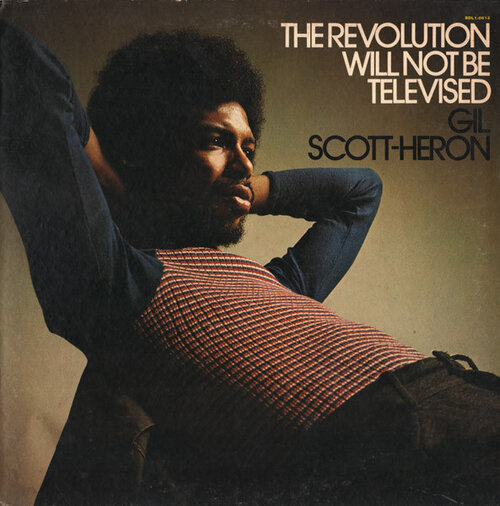
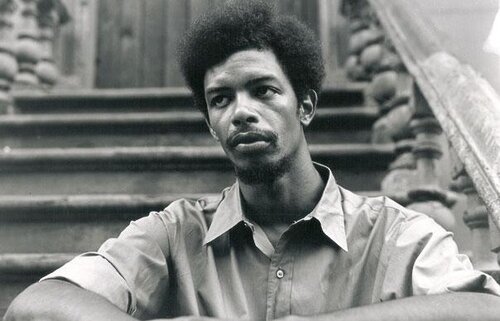
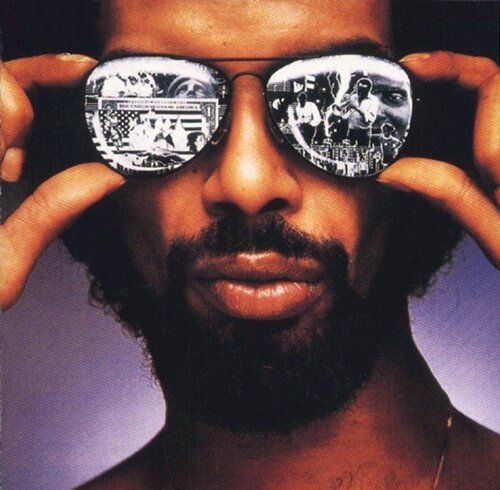
Gil Scott-Heron - The Revolution Will Not Be Televised

___________

I want to bring in a few articles…

kkk.jpg

regarding this song, as I can not do it true justice on my own. The Revolution Will Not Be Televised is a glorious by Gil Scott-Heron. Scott-Heron first recorded it for his 1970 album, Small Talk at 125th and Lenox. A re-recorded version, with a full band, was the B-side to Scott-Heron's first single, Home Is Where the Hatred Is (from his album Pieces of a Man (1971). As the album turns fifty very soon, I wanted to spotlight a truly incredible piece of music.  The song's title was originally a popular slogan among the 1960s’ Black Power movements in the United States. The song was inducted to the National Recording Registry in 2005. I am going to source from a few articles that tell us the story of The Revolution Will Not Be Televised and why it remains so important and powerful. If you have not heard the Pieces of a Man album, I would advise you to seek it out. This is what AllMusic said when they tackled it:

Gil Scott-Heron's 1971 album Pieces of a Man set a standard for vocal artistry and political awareness that few musicians will ever match. His unique proto-rap vocal style influenced a generation of hip-hop artists, and nowhere is his style more powerful than on the classic "The Revolution Will Not Be Televised." Even though the media -- the very entity attacked in this song -- has used, reused, and recontextualized the song and its title so many times, the message is so strong that it has become almost impossible to co-opt. Musically, the track created a formula that modern hip-hop would follow for years to come: bare-bones arrangements featuring pounding basslines and stripped-down drumbeats. Although the song features plenty of outdated references to everything from Spiro Agnew and Jim Webb to The Beverly Hillbillies, the force of Scott-Heron's well-directed anger makes the song timeless. More than just a spoken word poet, Scott-Heron was also a uniquely gifted vocalist. On tracks like the reflective "I Think I'll Call It Morning" and the title track, Scott-Heron's voice is complemented perfectly by the soulful keyboards of Brian Jackson. On "Lady Day and John Coltrane," he not only celebrates jazz legends of the past in his words but in his vocal performance, one that is filled with enough soul and innovation to make Coltrane and Billie Holiday nod their heads in approval. More than three decades after its release, Pieces of a Man is just as -- if not more -- powerful and influential today as it was the day it was released”.

Not to mangle a great piece of writing, but Medium documented the origins of The Revolution Will Not Be Televised and the events leading up to its creation. The beginnings occurred at a time of racial struggle and injustice in the United States:

When Gil returned to campus in September of 1969, the school was on the verge of revolt. As a rural school, too far away from urban unrest, Lincoln University didn’t experience the explosive rage blowing up on other black campuses such as Howard University or Morgan State. But there was plenty of anger directed at the conservative school administration, which looked down on political demonstrations and some of the free-form creativity taking place on campus. The school had started admitting female students only the year before, and some of the older students and faculty were still resentful at the changes taking place on campus. But Gil and his friends kept pushing for even more change.

Among them was Carl Cornwell, a student who occasionally jammed with the Black and Blues, a band fronted by Gil. He was also a member of a jazz quintet that played a lot of contemporary music by Herbie Hancock and McCoy Tyner. Called the Harrison Cornwell Limited after Cornwell and trumpeter Joe Harrison, the group had originally included Brian Jackson, until Gil snatched him away to play with the Black and Blues. Cornwell, whose father taught at Lincoln, grew up in town and was imbued with the school’s pride and heritage. But once he became a student, he saw firsthand that the college was lacking essential services and wasn’t responsive enough to the needs of students.

At midnight one Friday in November 1969, at the end of a rehearsal, Cornwell’s group was packing up their instruments when drummer Ron Colbert started having an asthma attack and his inhaler wasn’t helping him catch a breath. The group walked to the school infirmary but it was closed. So they took Ron back to his room. By the time the ambulance arrived, it was too late. “He died in my arms,” remembers Cornwell. “I’ll never forget it.”

ooo.jpg

The tragedy could have been avoided if the infirmary had been staffed and open around the clock. Colbert’s death brought to a head some issues that had been simmering for years: Gil’s neighbor in his freshman dorm had died of an aneurism that had gone untreated after being detected, and several students had had their medical problems misdiagnosed by the campus doctor.

When Gil returned on Sunday night from a weekend in New York City, he quickly found out about Ron’s death and decided to take action, demanding adequate medical facilities. The student body united around the demands, especially after the administration started to claim that Colbert may have been getting high, though there was no evidence that the young man used drugs.

I would advise people to check out the full article. I wonder whether there will ever be a T.V. series or short around The Revolution Will Not Be Televised; one that uses the song as a central focus and features events in politics and society from late-1960s America. Perhaps there has been something produced; I think the political events of the late-1960s and how they resonated with people like Scott-Heron is fascinating.

By 1970, Gil had written a few dozen poems that worked as song lyrics, most of them political and social commentary such as “Brother,” “Who Will Pay Reparations on My Soul?” and one song that will define him forever. That spring, he and Brian and some friends were sitting around watching TV one night in one of the dorms when a news report came on about a demonstration. The newscasters started talking about how many people were taking part. “We said, ‘People ought to get out there and do something; the revolution won’t be televised,” Gil later recounted. “A cat said, ‘You ought to write that down.”

Over the next few weeks, Gil started writing down lyrics in his notebook, and he and Brian started paying more attention to what was actually being shown on television. They noticed the commercials, and the friends commented to each other on the insidiously persuasive power of ads for everything from toilet cleaner to breakfast cereal. The contrast between the commercials and the demonstrations in the streets could not have been more glaring: one was on TV, and the other was live. When he was finished writing, he titled the poem “The Revolution Will Not Be Televised”.

Whether you consider The Revolution Will Not Be Televised to be an epic performance poem or a song, I feel it is one of the most potent and fascinating recordings in history.

iooo.jpg

I want to source from an article from Open Culture. We get a n interview exert from Gil Scott-Heron where he discussed The Revolution Will Not Be Televised:

One might think Scott-Heron’s classic spoken-word testament “The Revolution Will Not Be Televised” speaks for itself by now, but it still creates confusion in part because people still misconstrue the nature of the medium. Why can’t you sit at home and watch journalists cover protests and revolts on TV? If you think you’re seeing “the Revolution” instead of curated, maybe spurious, content designed to tell a story and gin up views, you’re fooling yourself.

But Scott-Heron also had something else in mind—you can’t see the revolution on TV because you can’t see it at all. As he says above in a 1990s interview:

The first change that takes place is in your mind. You have to change your mind before you change the way you live and the way you move. The thing that’s going to change people is something that nobody will ever be able to capture on film. It’s just something that you see and you’ll think, “Oh I’m on the wrong page,” or “I’m on I’m on the right page but the wrong note. And I’ve got to get in sync with everyone else to find out what’s happening in this country.”

If we realize we’re out of sync with what’s really happening, we cannot find out more on television. The information is where the battles are being fought, at street level, and in the mechanisms of the legal process. “I think that the Black Americans are the only real die-hard Americans here,” Scott-Heron goes on, “because we’re the only ones who’ve carried the process through the process…. We’re the ones who marched… we’re the ones who tried to go through the courts. Being born American didn’t seem to matter.” It still doesn’t, as we see in the killings of George Floyd and Breonna Taylor and so many before them, and in the grievous injuries and deaths from unconstitutional, military-grade police escalations nationwide since”.

I am going to wrap up soon but, just before, I wanted to highlight an essay by Marcus Baram. It helps answer misconceptions about the song and why The Revolution Will Not Be Televised is such a timeless poetic work – a mandate that could be applied to society today and how there is still huge inequality:

In the song, Gil recites advertising slogans for some of America’s most famous brands-- Coca-Cola, Listerine, Hertz, Dove, Exxon--totems of the consumer culture of the 1950s and 1960s which had inculcated themselves into the country’s mythology and folklore. And he name-checks popular TV shows and movie stars—“Green Acres,” “The Beverly Hillbillies,” Natalie Wood, Steve McQueen--the demigods of America’s popular culture. His voice dripping with sarcasm, Gil mocks their triviality and insignificance because when the revolution comes, “black people will be in the street looking for a better day,” because “there will be no highlights on the 11 o’clock news.” He continues: The revolution will not go better with Coke The revolution will not fight the germs that cause bad breath The revolution WILL put you in the driver's seat The revolution will not be televised WILL not be televised, WILL NOT BE TELEVISED The revolution will be no re-run brothers The revolution will be live Long before he stepped into a recording studio, Gil already saw the poem as a song, a classic 12-bar blues track. And the next year, when he worked on his first album, “Small Talk at 125th and Lenox,” he recorded the lyrics to the poem, accompanied by congas and bongo drums, in front of a small group of friends sitting on folding chairs in a studio in midtown Manhattan.

kj.jpg

 It was later re-recorded with a full band, including his pal Brian Jackson on flute, as the B-side to his 1971 single, “Home Is Where The Hatred Is” for an album produced by Bob Thiele, who had also worked with John Coltrane and poets like Jack Kerouac. The song and the album were an early example of a creative work going viral, decades before the launch of Twitter and Facebook. It didn’t get much airplay on radio, due to its incendiary lyrics, but it spread by word of mouth in black neighborhoods around the country, in campus coffee shops and nightclubs in West Philadelphia, Harlem, Watts, Chicago’s South Side, and Atlanta. Poet Nikki Giovanni remembers seeing Gil perform the song at a store in Harlem and feeling encouraged that his voice--strong, black, political, poetic--was out there, shaping the minds of his generation. The song became an anthem for a revolutionary era, honored as one of the top 20 political songs in history, and compared to Allan Ginsberg’s “Howl” and Bob Dylan’s “Subterranean Homesick Blues.” Later, it became recontextualized and distorted into a message that became the medium again as a slogan on T-shirts and endless headlines that misunderstood the original meaning of the song. In a bitter irony, Gil himself allowed the song to be coopted and used in a TV ad for Nike back in 1994, a decision he always regretted. At the time he was battling a drug addiction and desperate for money, so he accepted director Spike Lee’s request to let rapper KRS-One transform the lyrics into an ode to basketball to help sell the sneaker giant’s new Air Jordans. Until his death in 2011, Scott-Heron was alternately proud of the song’s power and resonance but also frustrated by the way its meaning had been consistently misunderstood by many listeners who took the song’s title literally, that the revolution won’t be aired live on television. But what Gil meant in the song, and it’s obvious from hearing the lyrics, is that you have to be active, you can’t be a passive participant in the revolution. When the revolution happens, you’re going to have to be in the streets. If you want to make change in society, you have to get off your ass and take action. You just can’t sit on your couch and watch it on TV”.

Just ahead of the fiftieth anniversary of Gil Scott-Heron’s Pieces of a Man album (it was recorded in April and released later in the year), I wanted to dissect an incredible musical work. It is sad that, in some ways, society and relations have not progressed since the late-1960s; how there is still  such injustice. Of course, The Revolution Will Not Be Televised is not only inspired by racial injustice but, as we are still living in a time where there is such horror and a lack of progression, one cannot help but extrapolate various words and lines from the track and apply them to the here and now. The Revolution Will Not Be Televised is a remarkable work that, over fifty years since its introduction…

MOVES and inspires all the senses.

FEATURE: The February Playlist: Vol. 4: The Last Man on Earth Standing on Shattered Ground

FEATURE:


The February Playlist

ccc.jpg

IN THIS PHOTO: Wolf Alice 

Vol. 4: The Last Man on Earth Standing on Shattered Ground

__________

THE final weekend in February…

aaaa.jpg

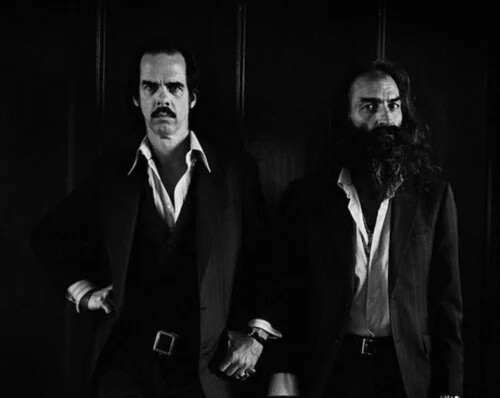
 IN THIS PHOTO: Nick Cave & Warren Ellis

has gifted treats in the form of some seriously big songs. Not only are there new tracks from Wolf Alice, Nick Cave & Warren Ellis, The Horrors, Greentea Peng, Wyvern Lingo, Green Day, The Offspring, Chloe x Halle, Leon Bridges/Keite Young, Zara Larsson, Julien Baker, Noname, Marianne Faithfull (with Warren Ellis), Maxïmo Park, Alice Cooper, Novelist, and NewDad. We also have songs from Sarah Close, Pop Smoke, Jade Bird, Ben Howard, Nils Frahm, Becca Mancari, Cosmia, and Baby Queen. It is a busy and exciting week for new music. If you require some kick and energy to get you into the weekend, then I think this week delivers the goods…

aaaa.jpg

 IN THIS PHOTO: The Horrors

IN spades.

ALL PHOTOS/IMAGES (unless credited otherwise): Artists

__________

ssss.jpg

PHOTO CREDIT: Jordan Hemingway

Wolf Alice - The Last Man on Earth

sssss.jpg

Nick Cave & Warren Ellis - Shattered Ground

aaaa.jpg

The Horrors - Lout

aaaa.jpg

Greentea Peng - Nah It Ain’t the Same

aaaaa.jpg

Green Day - Here Comes the Shock

aaaa.jpg

Cautious Clay Roots

ssss.jpg

Leon Bridges, Keite Young - Like a Ship

aaaa.jpg

Kero Kero Bonito - The Princess and the Clock

www.jpg

Chloe x Halle - 80/20

ssss.jpg

Zara Larsson - Look What You've Done

ereee.jpg

Coach Party - Everybody Hates Me

wwww.jpg

The Offspring - Let the Bad Times Roll

ouououo.jpg

PHOTO CREDIT: Alysse Gafkjen

Julien BakerHeatwave

ssss.jpg

Maxïmo Park The Acid Remark

ssss.jpg

Alice Cooper Hail Mary

ssss.jpg

Novelist Wagwan

aaaaa.jpg

Wyvern LingoThere’s a Place

qqqqq.jpg

Pop Smoke AP

wwww.jpg

PHOTO CREDIT: Mikey Massey/Hyperbeast

Cosima BACKSEAT DRIVERS

xxxxxx.jpg

Baby QueenThese Drugs

ddddd.jpg

PHOTO CREDIT: Ali Cherkis

Half Waif - Party’s Over

ZZZZ.jpg

Sinead Harnett - Last Love

rrrr.jpg

Millie Turner - Concrete Tragedy

aaaa.jpg

PHOTO CREDIT: Laurie Barraclough

Wyldest Wilting

cccxxccc.jpeg

PHOTO CREDIT: Jamie Moore

NewDad Slowly

jjjj.jpg

Cariss Auburn Daydream

saa.jpg

Sarah CloseForgive or Forget

aaaaa.jpg

Jade Bird - Open up the heavens

sssss.jpg

PHOTO CREDIT: Jake Michaels

Real Estate - Half a Human

QQQQQ.jpg

Dropkick Murphys - Middle Finger

aaaa.jpg

Lindsay Munroe - Need a Ride

qqq.jpg

Maisie PetersJohn Hughes Movie

qqqq.jpg

PHOTO CREDIT: Graham Tolbert

Flock of Dimes - Price of Blue

ju.jpg

Bobbi Arlo FEEL IT

frr.jpg

Madison Beer Blue

aaaaa.jpg

Ben HowardFar Out

sss.jpg

Tiana BlakeInterruption

uuuu.jpg

Issey Cross - Boys Make Promises

aqq.jpg

Josie ManCuts & Bruises

aaaa.jpg

Architects, Mike KerrLittle Wonder

ssss.jpg

Charlotte SandsSpecial

ssss.jpg

Aleyna Tilki - Retrograde

aaaaa.jpg

Noname - Rainforest

x.jpg

PHOTO CREDIT: Rosie Matheson

Marianne Faithfull (with Warren Ellis) - She Walks in Beauty

sssss.jpg

Bizzare x Giggs - BADMAN

zzzzz.jpg

PHOTO CREDIT: Mustafah Abdulaziz for The New York Times

Nils Frahm - O I End

xxxxs.jpeg

Becca Mancari - Annie

xs.jpg

PHOTO CREDIT: Brantley Gutierrez

Dinosaur Jr. - I Ran Away

nnn.jpg

Lydia Luce - Never Been Good

FEATURE: The Lockdown Playlist: Nigel Godrich at Fifty

FEATURE:


The Lockdown Playlist

ssss.jpg

Nigel Godrich at Fifty

___________

I like doing birthday Lockdown Playlists…

dddd.jpg

 IN THIS PHOTO: Nigel Godrich with Ultraista (with Joey Waronker and Laura Bettinson)

as it allows me to focus on the work of a particular artist and open my eyes to their brilliance. Today, I am celebrating one of the greatest producers in the world. Nigel Godrich is fifty on 28th February, so I wanted to salute a producer who I first discovered from listening to Radiohead’s OK Computer back in 1997. I am going to end with a playlist of songs that Godrich has either produced, assisted, mixed, engineered, performed or worked on. Before then, I want to bring in some Wikipedia information about the great man:

Nigel Godrich was born in Westminster, London, the son of Victor Godrich, a BBC sound supervisor, and Brenda Godrich. He was educated at William Ellis School in North London, where he shared classes with his friend and future Zero 7 member Henry Binns. Godrich began playing guitar, inspired by Jimi Hendrix and Frank Zappa. He became interested in sound engineering and studied at the School of Audio Engineering. After graduating, Godrich became a junior staff member at the Audio One studio complex, working primarily as a tea boy.

After the closure of Audio One, Godrich became the house engineer at RAK Studios, where he became a tape operator for producer John Leckie, with whom he worked on albums by Ride and Denim. In 1995, Godrich left RAK to work with Binns on electronic dance music at their collective Shabang studio.

 Godrich first worked with Radiohead when Leckie hired him to engineer two songs for their 1994 EP My Iron Lung. The band nicknamed him "Nihilist", approving of his efforts to take their sound in new directions. He went on to engineer Radiohead's second album The Bends (1995), working under Leckie as producer. When Leckie left the studio to attend a social engagement, Radiohead and Godrich stayed to record B-sides; one of the songs intended for a B-side, "Black Star", was instead included on the album. In 1995, Godrich produced Radiohead's charity single "Lucky", plus the B-sides "Bishop's Robes" and "Talk Show Host", released on the "Street Spirit (Fade Out)" single.

Radiohead invited Godrich to produce their third album, OK Computer (1997). Working in improvised studios without supervision, he and the band learned as they went, and credited the open process with the record's success. In 2013, Godrich told the Guardian: "OK Computer was such a big thing for me because I was given power for the first time. Some of these incredibly intelligent and insightful people said 'do what you want' to me so I worked my arse off for them and together we did something that represents where we all were at the time. And it stuck for some reason. People got it, so that changed my life.”

Godrich has produced every Radiohead studio album since, and won the Grammy Award for Best Engineered Non-Classical Album for Hail to the Thief (2003). Godrich's father died during the recording of Radiohead's ninth album, A Moon Shaped Pool (2016); Godrich wrote: "Making this album was a very intense experience for me. I lost my dad in the process. Hence a large piece of my soul lives here in a good way”.

To nod to a legendary producer on his fiftieth birthday, here are some remarkable songs that Nigel Godrich has played a part in. As an innovator, mixer, engineer., musician and producer, I think that he is one…

OF the finest of his generation.

FEATURE: Second Spin: Mariah Carey - Butterfly

FEATURE:


Second Spin

xxxx.jpg

Mariah Carey - Butterfly

___________

I wanted to feature…

ssss.jpg

 PHOTO CREDIT: Frank Micelotta/Hulton Archive

Mariah Carey’s sixth studio album, Butterfly, here because it still gets a lot of stick from some quarters. The follow-up to the phenomenal Daydream of 1995, Butterfly is a terrific release. I don’t think one needs to be a Mariah Carey fan to appreciate the songs and the variety throughout the album. Released on 16th September, 1997, Butterfly contained Hip-Hop and Urban Adult Contemporary sounds plus  some softer and more contemporary melodies. Mariah Carey worked with many fantastic Hip-Hop producers and rappers such as Sean ‘Puffy’ Combs, Q-Tip, Missy Elliott and the Trackmasters. With the latter acts producing most of the album, Butterfly deviated from the contemporary sound of Carey's older work. I like how Butterfly is sort of symbolic in its title: the artist coming out of her cocoon and turning into this bright and liberated wonder. Pushing away from the Pop sound of her earliest albums, Carey was utilising R&B and Hip-Hop more – to great and hugely memorable effect right through the album. During her marriage to Tommy Mottola, Carey had little control over the creative and artistic steps she took on her albums. After their divorce midway through the album's conception, she was able to reflect her creative maturity and evolution in the album's writing and recording. With terrific singles like Honey, and Butterfly, I think Carey’s sixth studio album is one that deserves more attention now. It got some great reviews in 1997, but there are some sources that have been unkind towards it.

I want to bring in a feature from Essence from 2017. They marked twenty years of Butterfly in 2017. We hear from collaborators Da Brat, Stevie J, Krayzie Bone and Mariah Carey herself. I want to bring in some sections that caught my eye:

Of course she’s technically “pop,” in the purest sense of the word. With ten platinum studio albums, 34 Grammy Nominations, countless Billboard hits and a slew of other record-breaking achievements, she is undoubtedly one of the most popular and prolific artists of all time.

But she didn’t choose that. It was kind of inevitable, right? Her voice alone —its palpability, its singularity— primed her for a career of singing chart-topping hits. She couldn’t help it.

It’s the other connotation of “pop” that doesn’t quite fit and feels more determined —the one that makes you think of bubblegum— light, generic, lacking substance or burden. The kind of label we give to artists who can create anthems, but rarely get intimate. That’s where Mariah gets off the train.

To not define (or to not at least offer a careful disclaimer) when calling Mariah “pop” is to ignore her legacy of delivering masterfully written music that’s personal, profound and soulful —the antithesis of the typical pop music formula. While songs like “Love Takes Time” and “One Sweet Day” from her earlier albums hinted at Carey’s desire to go deeper, it was 1997’s Butterfly that solidified the rhythm and blues quotient in her music and presented her as a vulnerable and self-reflective artist ready to break free.

With Butterfly, she created a classic. More than a branding tool, the butterfly became synonymous with Carey, and for a good reason. The imagery of a vibrant, spirited thing with incomparable beauty and an unpredictable wingspan, was the perfect mascot for Carey’s unprecedented range as a musician and an artist —her dynamic voice, so striking and distinct, it could only be something crafted by the Divine. Not to mention the butterfly’s process of becoming —its life cycle, its transition while cocooning, the stages of egg, caterpillar and then butterfly— served as an idyllic symbol for a woman on the brink of emerging.

Stevie J: “She was just being herself [when we worked together]. She was married at a young age, so you know she had really began to find herself and the woman she wanted to be. It’s a great thing for a woman when she gains her independence, so I didn’t really see anything other than just her being a happy, spirited person. We would have our Cristal and our wine and just be writing smashes.”

Da Brat: “Once she broke away from the cocoon, she spread her wings and flew on her own. She was ready to handle her own life. The ‘Honey’ video showed her escaping from an island. ‘Butterfly’ (the song) is self-explanatory. She came into herself. The album was soulful because that’s who she was. Behind all the glam, she was hood, still a kid, knew all of the lyrics to all rap songs… and just wanted to express herself in her own way. Her words are her truth. ‘Breakdown,’ just listen to the words. She joined forces with her favorite hip-hop homies who she knew she had great creative chemistry with and soared even higher.”

With the exception of “The Beautiful Ones,” a remake of Prince’s song, Mariah wrote or co-wrote each track on Butterfly. Carey’s former manager and American Idol judge, Randy Jackson reportedly stated that out of the “Big 3” (Whitney, Celine and Mariah) Mariah is the only one who also writes her own music. And according to her collaborators she really, really writes.

Stevie J: “When you have someone with that type of writing ability… Her pen game is lethal.”

Da Brat: “When MC works, she likes to write together with the producer or artist she’s collaborating with. She starts humming melodies, we throw ideas in the pot, different scenarios, rhymes, ad-libs, harmonies and then a masterpiece is crafted.”

Mariah: “I love writing, sometimes more than singing. There’s something about it. I love poetry.  I love writing melodies. I love collaborating with other writers. When I’m not doing it, I don’t feel like myself.”

Even though it received mostly positive reviews upon its release, there were some more mixed and negative ones. This is what NME wrote in their review:

Or maybe not. Still, we're not a million miles away from that sort of downward-spiralling, because Mariah's seventh album is a bruising diary of personal despair. Like Spiritualized's 'Ladies And Gentlemen...', it's a graphic depiction of a collapsing relationship.

You see, Mariah may have sold enough records to buy a lifetime's supply of platinum-coated elephants, but in the past year she has suffered a much-publicised divorce, as well as being the focus of some intense speculation regarding the nature of her relationship with 'pop genius' Sean 'Puffy' Combs. Needless to say, as a result 'Butterfly' is 65 minutes of gruelling angst.

Still, for an album that will doubtless propel Mariah ever nearer to that magic 100 million mark, it contains some truly great scenes. During 'Babydoll', we find Mariah alone and paranoid in her hotel suite in the early hours of the morning ("I'll have a little more wine/And I'll try to drink you/Out of my head"), while minutes later she's forgetting all about her marriage and getting frisky with a stranger on, er, 'The Roof' ("I couldn't bear to let you go yet/So I threw caution to the wind").

By this point, we're naturally reeling under the sheer weight of it all, and counting our blessings that the soundtrack to this emotional extremity is so reassuringly bland. Let's face it, in Jason Pierce's hands this would have been the most traumatic record of all time. Luckily, with the aid of Puffy and the odd Prince cover, most of Mariah's traumas are washed away in a stream of anaemic synthesisers and medium-paced ballads.

Which is why this album will sell approximately 1,000 times more copies than 'Ladies And Gentlemen...'. And why it's not that bad being Mariah Carey - even if your life is falling apart”.

I think I must have heard Butterfly when it came out in 1997. I liked Daydream in 1995, and I was hooked on singles like Fantasy. I was not a huge Mariah Carey fan prior to that, but I had new respect for her when her sound developed and shifted. I think Butterfly is a great album that deserves a lot of praise.

In a more positive review, this is how AllMusic reflected on an album that is seen as an R&B classic:

Upon its release, Butterfly was interpreted as Mariah Carey's declaration of independence from her ex-husband (and label president) Tommy Mottola, and to a certain extent, that's true. Butterfly is peppered with allusions to her troubled marriage and her newfound freedom, and the music is supposed to be in tune with contemporary urban sounds instead of adult contemporary radio. Nevertheless, it feels like a Mariah Carey album, which means that it's a collection of hit singles surrounded by classy filler. What is surprising about Butterfly is the lack of up-tempo dance-pop. Apart from the Puffy Combs-produced "Honey," Butterfly is devoted to ballads, and while they are all well-crafted, many of them blend together upon initial listening. Subsequent plays reveal that Carey's vocals are sultrier and more controlled than ever, and that helps "Butterfly," "Break Down," "Babydoll," and the Prince cover, "The Beautiful Ones," rank among her best; also, the ballads do have a stronger urban feel than before. Even though Butterfly doesn't have as many strong singles as Daydream, it's one of her best records, illustrating that Carey is continuing to improve and refine her music, which makes her a rarity among her '90s peers”.

Butterfly debuted at number-one at the US Billboard 200 selling 236,000 copies in the first week after its release. It maintained that position for one week and remained in the top-twenty for twenty-one weeks; it stayed in the chart for fifty-five weeks. Butterfly was certified five-times platinum by the Recording Industry Association of America (RIAA), denoting shipments of five-million copies. It is one of the most successful albums of the 1990s so, if you ignored it when it came out or were not really aware of it, then check out Butterfly. Breakdown (ft. Krayzie Bone and Wish Bone) is my highlight, perhaps, but I love Honey, My All, and Babydoll. Spend some time and spin an album that is considered…

A classic from the 1990s.


FEATURE: The Dreaded C-Word: Has the Idea of the Concept Album Died Out?

FEATURE:


The Dreaded C-Word

xxxxxxxxxxx.jpg

 Has the Idea of the Concept Album Died Out?

___________

WHILST there have been some terrific albums…

cccc.jpg

released through the years, there have been some changes and declines that are worrying. Not to say that the concept album has been a big thing through the ages and has really slumped. I do feel that we saw more concept albums in the 1970s and years gone by. In 2004, The Streets released the majestic A Grand Don't Come for Free. is a Rap opera and concept album that follows the story of its protagonist's relationship with a girl named Simone, alongside the mysterious loss of £1,000 from his home (the eponymous ‘grand’). I think the concept had a bad reputation when it was done a lot by Prog-Rock acts as they went on for ages and were quite pretentious. I think there have been some concept albums over the last few years, but it is quite rare to hear them that often. When done right, a concept album can provide so much drama, cinema and wonderful moments. Rather than put together a selection of songs without a unifying theme, it is interesting when there is this story and overarching thread. Not that it is a pure concept album, but I was interested to hear news about Kacey Musgraves’ upcoming album. Rather than it being a straight or commercial album, as we can see from this article in The Line of Best Fit, Musgraves has combined modern politics with ancient tragedies:

Kacey Musgraves, who won four Grammys in 2019, two of which were album awards for Golden Hour, hasn't released new music since featuring on Troye Sivan's updated version of "Easy" in December last year, but in a new interview with Rolling Stone, Musgraves reveals some information about her new album set for release later this year.

vvvvv.jpg

PHOTO CREDIT: Eric T. White 

Musgraves has been working with producer Daniel Tashian, and revealed to Rolling Stone that she was inspired by tragedies after listening to Bach’s "Komm, süßer Tod, komm selge Ruh", which led her to think about Greek tragedies, Romeo and Juliet and the classic three-act narrative.

She said, "This last chapter of my life and this whole last year and chapter for our country - at its most simple form, it’s a tragedy. And then I started looking into why portraying a tragedy is actually therapeutic and why it is a form of art that has lasted for centuries. It’s because you set the scene, the audience rises to the climax of the problem with you, and then there’s resolve. There’s a feeling of resolution at the end. I was inspired by that."

Having been inspired by that structure, Musgraves started to group her 39 songs written over the past few years into acts, which allowed the album to take shape. She told Rolling Stone, "It’s crazy because you have to just wait on it. You can’t ask for it."

After grouping the songs, she realised she needed another song to represent the "crescendo of the climax".

Musgraves added of the track styles, "I mean, looking at the list of songs, we have some that venture into, like, a Bill Withers land. We’ve got that synth stuff that we always loved. And we’ve got some Eagles or America territory. There’s a little bit of a dance vibe."

The singer/songwriter and Tashian went back and forth in the interview on ideas for a song called "Star-Crossed". Tashian said he was looking for an "epic kind of feeling", while Musgraves threw out words including "Anthemic", "ballad", and "uptempo, sad dance song". Later in the piece, it's revealed that Musgraves is considering getting Carlos Santana to play on the song”.

ccc.jpg

I am a fan of Kacey Musgraves’ work, so I will be interested to see what comes out. I am not sure whether we will see great concept albums coming in the future or whether the format will cease to exist. The BBC wrote about concept albums to check out that are not mad and pretentious. There are some classics that refute the notion that the concept album is ridiculous and overblown. I think a concept album can be loose and does not have to be very prescriptive and precise. Listen to The Wall by Pink Floyd or The Beach Boys’ Pet Sounds, and they are very different. Whether it is an album with a general concept that allows for a larger subject to be explored or we have an album that tells a story with chapters and distinct beats, I think that there is definite scope and promise. I am not sure what Kacey Musgraves will do in terms of her concept and how the album unfolds, but it should give inspiration and ideas to other artists. In any case, I feel that a lot of artists and albums are pretty unambitious and do not really grab you. Despite the fact that the concept album gets a bad rap, if it is done right and has an interesting angle, then I feel it can rank alongside any other album. Even though the phenomenon is not as widespread as it was decades ago, I feel there is…

ooo.jpg

STILL life left in the concept album.

FEATURE: Modern Heroines: Part Thirty-Three: Jorja Smith

FEATURE:


Modern Heroines

ppp.jpg

PHOTO CREDIT: Sarah Lee

Part Thirty-Three: Jorja Smith

___________

EVEN though she has released…

zzzz.jpg

PHOTO CREDIT: Bolade Banjo for THE FACE

one studio album so far, I think that Jorja Smith is going to be an icon of the future. She is definitely equipped to fulfil such lofty predictions. It seems that music is her main passion; she has this drive and dedication that is wonderful to see. Born on 11th June, 1997 in Walsall, West Midlands, Smith is a stunning artist who has won huge acclaim. Her debut album, Lost & Found, was released in 2018 to massive applause. Smith won the BRITs Critics' Choice Award. In 2019, she was named Best British Female Artist at the 2019 BRIT Awards; she was also nominated for the Grammy Award for Best New Artist. Lost & Found was nominated for the Mercury Prize in 2018. I will end by sourcing from an interview where Smith discusses new music/future plans. I first heard about Jorja Smith when she put out her Project 11 E.P. back in 2016. I will draw in some songs from Lost & Found through this feature but, as it is important to learn more about Smith, I want to quote from some interviews – I will also source a couple of positive reviews for Lost & Found. I have been a massive fan of Smith’s music for a long time now and I think she has one of the most expressive and beautiful voices in the world. She is influenced by artists like Amy Winehouse, Sade, and Nina Simone – she cites Winehouse’s 2003 debut, Frank, as a hugely influential album. Despite these influences, Smith is very much her own artist!

aaaa.jpg

I want to borrow from an interview Smith conducted with GQ back in 2018. We discover more about her beginnings and why, with such talent and promise, she is pushing away the temptation to sign with a major label:

Within a week of uploading her debut single to SoundCloud, Jorja Smith went viral. It was January 2016. She was 18, unsigned and had been working in Starbucks since moving to London from Walsall, in the West Midlands, six months before. There was no big label push, no video, no PR campaign. But still, “Blue Lights” blew up, with shoutouts from Skrillex and Stormzy catapulting Smith towards half a million streams and into the sights of every A&R in the country.

Smith’s mellifluous voice marked her out as a rare talent, but even more exemplary was the songwriting. Sampling Dizzee Rascal’s “Sirens”, Smith was inspired to write the song while working on an A-level essay: “Is Postcolonialism Still Present In Grime Music?” The result is a scathing study of the police prejudice she’d seen her young black male friends face, with Smith repeatedly reassuring the listener that “There’s no need to run if you’ve done nothing wrong.” Her timing was bang on. Six months later the track would be played at a Black Lives Matter rally in Birmingham after the movement picked up wind in Britain.

The 21-year-old’s big break came, however, when Drake played “Blue Lights” on his OVO Sound Radio. Now on the rapper’s radar, Smith received a message from Drake in the summer of 2016 requesting a collaboration: a dream for any emerging artist. She said no. “It was a really sick song,” she says now, “but I wasn’t feeling it.” Almost a year later, after a breakup made her see the song anew, she changed her mind. Despite being “a bit offended by it at first, because he thought, ‘Maybe she doesn’t want to work with me,’” Drake gave Smith not one, but two features on his multi-record-setting 2017 mixtape More Life.

Smith is still purposefully unsigned. “I don’t know any different,” she says, “and it’s been going very well.” Would she take a major deal? “Not right now,” she says. “I like having as much control as I can. It’s my life, so I need to be doing what I want and making what I love without someone else dictating to me.”

This desire to do things her own way is tempered by a cautiousness rarely seen in today’s young female stars. The pouting selfies Smith shares to her 1.3 million Instagram followers might suggest that she’s brimming with stage-school bravado, but in person Smith is softly spoken and shy. While she loves performing, she hates “people hearing my talking voice”. And despite levels of hype that would be enough to inflate even the most modest of egos, for Smith, this year has been something of a pleasant surprise: “I didn’t have any expectations for the album, because I didn’t want to be disappointed.”

When asked what has been her made-it moment of 2018 – this glorious, golden year in her career – Smith replies, “I don’t think I’ve had it yet, no. I’ve still got a lot of work to do”.

I am really interested learning about Jorja Smith’s start and how she got into music. It is evident that her music has progressed since her debut single and earliest days. What strikes me about Smith is how assured she sounds in everything she has put out!

Drawing from an interview from The Guardian, we learn more about her teenage years and why fame does not appeal to Smith:

Her teenage years brought insecurity, about her looks and, at times, about being mixed race. “All my friends were white, they were all slim and had long hair,” says Smith. “I didn’t want to have big lips or a bum. In school you’re so confined to a small space and the boys like the blonde girls and they didn’t like me. But it’s all right, I got over it.”

Music became more serious when, at the age of 15, she was bought a MacBook. On the program GarageBand, Smith would record covers and upload videos to YouTube; one of these, her take on Alex Clare’s Too Close, found her a manager. After school, she left Walsall for south London, where she lived with relatives and took a job in Starbucks. All the while, Smith was writing, putting out tracks on Soundcloud, and it was one of these – Where Did I Go? – that found its way to Drake. He made contact on Instagram, said the song had kept him sane on a long flight, and asked her to do a duet on a song called Get It Together. Smith, scarcely believably, said no, because in her words: “I didn’t write it, I didn’t know what I was talking about.” But she changed her mind a year later and the track appeared on his ubiquitous 2017 mixtape More Life.

aaaa.jpeg

 Smith’s success is all the more astonishing for the detail that she isn’t backed by a major label. There’s a simple reason for that: she doesn’t much like being told what to do. That clear-headedness could be seen at the Observer’s photo shoot. “If I don’t like something, I won’t wear it,” says Smith, who has now changed into her travelling outfit of a Mondrian-ish Nike tracksuit, with her hair scraped back into a tight bun. She giggles: “I have a lot of control, yeah.

That’s fame, I suggest. “Don’t want to be famous,” Smith shoots back. “I’m not famous. People” – she pauses, picks her words – “know about me. No, do you know what? I don’t have goals or bucket lists because I don’t like being disappointed. But famous? Famous is like Rihanna. I’m not Rihanna. I’ve got a lot of work to do. I’d like to be successful. That’s what I’d like. And happy.”

As for what’s next, Smith just wants to get back to writing. “Or else I’ll never put out another album. And this year I will write more stuff”.

Since that interview, there has definitely been movement in Smith’s camp. I will bring in a more recent interview but, just before that, there is one more interview that caught my eye.

Smith spoke with SSENSE back in October and was asked some interesting questions (which provoked some pretty intriguing answers):

On a day-to-day basis, what kind of scenarios make your blood boil?

Anything. You could look at me funny and I would get pissed off at you.

What fills you with joy, brings you to tears, gives you goosebumps?

I cry at any film, when someone’s dying or if there is an empowering moment. I watched The Florida Project recently and that last scene, I was in tears.

Do you believe in fate?

No.

Do you have any regrets?

No.

Have you ever had your heart broken?

No.

When did you last break someone else’s heart?

I can’t remember when, and I don’t really care. I’m the kind of person that will take a lot of shit from somebody, but once I end it, it’s done.

Do you ever feel lonely?

I like being on my own.

What kind of legacy do you want to leave behind?

A strong one. I want people to remember me for my music. Hopefully I won't do anything crazy that they’ll remember me for.

What are the biggest distractions in your life?

My phone. To be honest, I’m easily distracted. I find it hard to focus. Even on stage, I’m constantly thinking about other stuff. It could be something that I last said to someone and I’ll keep recalling it in my head. I’m trying to deal with it, I’m trying to learn how to be calmer and not let my mind wander so much but I find it difficult. I think it’s related to my obsessive streak, getting too fixated on things.

What would be your perfect day?

The perfect day would start with me waking up and understanding that Joel might sleep in. I’m horrible, usually if I’m awake that means he has to be awake. I’ll make myself a cup of tea, let him sleep and not freak out and think he’s dead—that’s happened before. Once he’s up, we’ll make some music together and then go for a long walk. I like walking, if it’s the perfect day then nobody will stop us for a photo because he always has to take it and I feel bad. I’m really conscious of time, so I would try my best to be patient and go with the flow, but I would know exactly what time we’d be going for food. I’d get dressed up and we’d go out for lots of food, with all the courses and more. I love sushi and he likes lobster. Then we’d go for a night walk and run around central London. That’s what we do sometimes, or he runs off”.

Just before I round off and highlight why Lost & Found is such a remarkable album, I have discovered a recent interview from The Face. We learn what Smith has been doing since lockdown - and whether we will get a follow-up to 2018’s Lost & Found:

She’s been busy during lockdown, too. In June, Smith released a cover of St. Germain’s Rose Rouge as part of legendary jazz label Blue Note Records’ Re:imagined project. She followed it the next month with By Any Means, a Roc Nation-released charity single inspired by her attendance at a Black Lives Matter protest. The video, shot in Smith’s hometown of Walsall in the West Midlands, featured Black-led radio station No Signal, on which she appeared during a Wray & Nephew-indebted clash with Burna Boy in September (the pair going up against each other to select their favourite songs).

In early October, she rounded off the end of summer by ­dropping the visuals for her brilliant, carnival-ready single Come Over, featuring Popcaan. Inspired by a guy who was longing her off, the video sees the singer situated in her own anime-inspired comic book world, soaring through the streets on a motorbike as she sings about waiting for that call, both she and the guy unsure as to what the other is really feeling. The track spent almost the entirety of October in the UK charts and the video had racked up almost four million views by the end of the month. It’s one of the pieces of work that she views as signalling the growth of Jorja Smith.

jjj.jpg

“I feel like from Rose Rouge, to By Any Means, to Come Over, that I’m on a shift,” she says. ​“A real shift.”

That shift will be there for all to hear on her second album – and, before that, an EP, due for release early next year. My portion of doubles demolished, Smith says she’ll treat me to a sneak preview. There are limited drinks in the fridge so she grabs a bottle of flat Champagne, mixes it with apple juice (sounds weird, actually alright), hands me a glass and presses play on her phone.

“The EP’s changed so many times, but now I’ve finally got it,” she says as the never-before-heard-by-outsiders music fills her flat. Whatever the changes behind the scenes, you can tell that she’s feeling it: singing along, flitting between tracks, turning up the volume, struggling to tell me which she loves the most.

From the tracks I hear, it’s clear that Smith’s next project is an amalgamation of the people and topics she really cares about. Each song sounds entirely different: there’s a house‑y tune in there, a little jazz, a little of the slower-paced sound for which she was, before Be Honest, best known. One that particularly stands out is a remix of Peng Black Girls by south-east London rapper ENNY, which is essentially a love letter to Black women. Another was inspired by one of Smith’s younger fans, whose mum passed out at one of her shows.

I get the impression that Smith is not naturally at ease in the spotlight.

“I don’t like anything outside my house,” she agrees. ​“I like being on stage but that’s all I like. I don’t like anything else. I love everyone, but I just like being by myself. That’s why I used to go home quickly after school.” She even considered whether it was wise for her stage and real names to be the same. ​“I thought, why the fuck didn’t I change my name? Why did I give myself my actual government name?” she asks herself now. Because that means ​“I can’t switch off. There’s nothing to differentiate. But I don’t know what the difference would be? Maybe I wouldn’t be Jorja Smith?”

She tells me about a farm she recently bought near Walsall, ​“a massive field, with horses, where I’m going to build a studio. Because I’m not going to be there all the time, I’ll invite loads of kids – kids I used to babysit, and these twins I went to school with that sing, and be like: ​‘Look, on a Thursday you can go here.’” She plans to enlist her dad as studio manager.

“In this whole lockdown, I realised who I was and who I am,” she states firmly, interview and Trinidadian meal over. ​“I feel like you’re going to see growth, a lot of growth,” she concludes, beaming. ​“The evolution of Jorja Smith”.

I am keen to wrap things up but, when I said that Jorja Smith is going to be an icon of the future, I meant it! A lot of that comes from the beauty and quality that we heard on her debut album. It is such a realised and fascinating album that, almost three years since its release, is moving me hugely. It is a wonderful record that is worth buying. In their review, this is what AllMusic had to say:

Within two-and-a-half years of uploading "Blue Lights," Jorja Smith crashed the Top 40 in her native U.K., recorded with and opened for Drake, racked up a bunch of Top Ten U.K. indie singles, appeared on the Black Panther soundtrack, and won the Brit Critics' Choice Award. She also received additional acknowledgments via the MOBO Awards and BBC Music Sound of 2017. These and other developments and accolades increased anticipation for Smith's debut album. With one-third of the independently released Lost & Found previously issued, its arrival is somewhat anticlimactic on first contact, but the known and new material coalesce into an assured and complete debut. Had Smith arrived in the post-new jack swing '90s, her work would have been classified as hip-hop soul, what with the streetwise, wise-beyond-her-years perspective, captivatingly raw emotional content -- with an aching, slightly coarse voice to match -- and favoring of breakbeats and mellow, slightly rugged grooves. Standout "Blue Lights" inevitably reappears with its mournful rumination about the terror of racial (racist) profiling.

Other than that cut and "Lifeboats (Freestyle)," on which Smith raps metaphorically about inequality and turning a blind eye to those in need, Lost & Found focuses on romantic pitfalls and impasses. In multiple instances -- the opening title track and following "Teenage Fantasy," two highlights -- she frets about lovers who don't want what she wants, and otherwise regrets wasted time, miscommunication, and dead ends, only rarely looking back with a low degree of fondness. A powerful tool for repairing a broken heart and indicative of an even brighter future, Lost & Found is satisfying and promising at once”.

There is so much to discover in Lost & Found. It is an album that demands repeated listens. I would also advise people to listen and read interviews Smith has conducted, as her past is really interesting. I believe she has the desire and ability to go incredibly far and influence a lot of other artists.

I will finish off by quoting from Pitchfork’s review of Lost & Found. They make some really interesting observations:

But Smith’s wanderings extend far beyond the personal, and it’s this insight and curiosity that elevate her work. “Blue Lights,” her 2016 debut single, resurfaces here; its heartbreaking and transporting take on police brutality and racial profiling remains a remarkable feat of storytelling. This time, Smith’s questions are posed rhetorically, to illuminate injustice: “What have you done?/There’s no need to run/If you’ve done nothing wrong/Blue lights should just pass you by.” “Lifeboats (Freestyle)” is a spoken-word take on privilege, income disparity, and the failures of the welfare state. “So why are all the richies staying afloat?/See all my brothers drowning even though they’re in the boat/Mothership ain’t helpin’ anyone,” she raps with the swagger of a young Lauryn Hill, indicting her government for its treatment of marginalized citizens and mishandling of the refugee crisis.

It’s not surprising that Smith resents comparisons to other artists, but her link to Hill is clear. Another wildly talented, young, black woman looking for clarity in a world built for everyone but her, Hill used her music to transform her pain into salvation. Just three years younger now than Hill was when The Miseducation of Lauryn Hill was released, Smith shares her predecessor’s wounded takes on the world’s injustices and compulsion to search for deep truths.

On Miseducation’s luminous title track, Hill sings what could be Smith’s battle cry: “Deep in my heart, the answer, it was in me/And I made up my mind to define my own destiny.” On Lost & Found, Smith is defining her own destiny. In the process, she confirms that she is special and rare, an asker of impossible but necessary questions”.

Even though she has not been  on the scene for a very long time, I feel that Jorja Smith is going to be a huge star. Smith recently launched Tearjerker: She presents a series of healing, emotional music. Immerse yourself in a world of soothing orchestral music, piano, strings and soundtracks to bring you comfort and escape. Go and listen to that, as we learn more about artists that influence Smith. I expect that we will hear developments in the coming weeks regarding a new E.P. and, maybe later this year, we will get a long-awaited and anticipated second album. With such a stunning voice, beautiful soul and incredible talent, Jorja Smith is…

ONE of Britain’s finest and most-promising artists.

FEATURE: The Fifth Wave: Will Kate Bush’s Before the Dawn Live Album Ever Come to Spotify and Other Streaming Sites?

FEATURE:


The Fifth Wave

kkk.jpg

Will Kate Bush’s Before the Dawn Live Album Ever Come to Spotify and Other Streaming Sites?

___________

ON 25th November, 2016…

IN THIS PHOTO: Kate Bush during her Before The Dawn residency at The Eventim Apollo, Hammersmith on 26th Aug, 2014/PHOTO CREDIT: Ken McKay/REX 

the live album of Kate Bush’s 2014 residency, Before the Dawn, turns five. It is an album that I own on vinyl, and I feel like it was deliberately excluded from streaming sites so that one gets the vinyl and gets a more physical feel; like they are at the gig themselves. I am not one of the fortunate ones who attended any of the twenty-two nights Bush performed in Hammersmith. The reception was vastly positive and wild. It was her return to the stage since 1979. She had performed live between 1979 and 2014, but Before the Dawn was her first large-scale and hugely conceptual show since The Tour of Life in 1979. If you are not familiar with Before the Dawn, here is some background:

Announced on 21 March 2014, Before The Dawn was the first set of live dates by Kate Bush since the Tour Of Life in 1979. Originally, 15 live dates were announced. A pre-sale ticket allocation took place on 26 March for fans who had signed up to her website in previous months (and years). After this pre-sale, a further seven dates were added due to the high demand. Tickets went on sale to the general public on 28 March and most of them were sold out within 15 minutes. All dates took place at the Eventim Apollo in London (UK). The tour was a critical and commercial success, with all shows sold out.

Before The Dawn was a multi-media performance involving standard rock music performance, dancers, puppets, shadows, maskwork, conceptual staging, 3D animation and an illusionist. Bush spent three days in a flotation tank for filmed scenes that were played during the performance and featured dialogue written by novelist David Mitchell. Also involved with the production were Adrian Noble, former artistic director and chief executive of the Royal Shakespeare Company, lighting designer Mark Henderson and Italian Shadows Theatre company Controluce Teatro d'Ombre. The illusionist was Paul Kieve, the puppeteer Basil Twist, the movement director Sian Williams and the designer Dick Bird. The video and projection design was by Jon Driscoll”.

The band playing with Kate Bush on stage consisted of David Rhodes (guitar), Friðrik Karlsson (guitar, bouzouki, charango), John Giblin (bass guitar, double bass), Jon Carin (keyboards, guitar, vocals, programming), Kevin McAlea (keyboards, accordion, uilleann pipes). Omar Hakim (drums), Mino Cinélu (percussion). Backing vocalists were Sandra Marvin, Jacqui DuBois, Jo Servi, Bob Harms and Albert McIntosh. Some actors were involved as well: Ben Thompson played Lord of the Waves, Stuart Angell played Lord of the Waves and the painter's apprentice, Christian Jenner played the blackbird's spirit, Jo Servi played witchfinder and Albert McIntosh appeared as painter. Supporting actors were Sean Myatt, Richard Booth, Emily Cooper, Lane Paul Stewart and Charlotte Williams”.

 PHOTO CREDIT: Ken McKay/REX 

Whereas other albums have been released on vinyl and they are also available on streaming sites, the thing with Before the Dawn is that it is not on streaming sites. The best thing one can do is buy the vinyl/C.D. and experience something exhilarating and hugely important:

In March 2014 Kate Bush announced plans to perform 15 shows in London in August and September that year, her first live shows since 1979. The shows sold out so quickly that a further 7 were immediately added, with all shows selling out in 15 minutes. Kate’s own website crashed with the demand. The first night of the shows prompted a complete media frenzy with the Evening Standard declaring that the show was “an extraordinary mix of magical ideas, stunning visuals, attention to detail and remarkable music – she was so obviously, so unambiguously brilliant, it made last night something to tell the grandchildren about.” Later that year the show won the special Editor’s award at the highly prestigious London Theatre Awards, the only contemporary music show to do so. Before The Dawn is released on CD and vinyl – 3 CDs and 4 vinyl. The conceptual heart of the show is reflected in the CD format, which is split over 3 discs centred around the two integral pieces – The Ninth Wave and A Sky Of Honey. CD1 ends with the pivotal track King Of The Mountain which bridges into The Ninth Wave suite of songs on CD2. The album was produced by Kate Bush. Nothing on the record was re-recorded or overdubbed”.

I do feel that it is a little strange that we do not really have any Kate Bush live performances on streaming sites. All of her studio albums are there. I guess, as she had her Fish People label set up by 2016, she got more say where Before the Dawn was released and what form it would take. Coming up to its fifth anniversary, it would be great not only to have a reissue of the live album with some extras – maybe in the form of photos and extras -, but having it on streaming sites would provide access to more people. There is also nothing from Bush’s The Tour of Life too - I do think that her live performances are among her most sensational and memorable. I will talk more about Before the Dawn as an album and why one should buy it soon. Whilst one cannot get the same sort of connection hearing the album as being at the show, you can get a semblance of the scale and size of the residency. Pitchfork gave Before the Dawn a positive assessment when they reviewed the live album:

Live albums are meant to capture performers at their rawest and least inhibited, which doesn’t really apply to Before the Dawn. Bush is a noted perfectionist best known for her synthesizer experiments and love of obscure Bulgarian choirs, but her recent work has skewed towards traditional setups that reunite her with the prog community that fostered her early career. With marks to hit and tableaux to paint, the 2014 shows were more War of the Worlds (or an extension of 2011’s Director’s Cut) than Live at Leeds. But never mind balls-out revamps of Bush’s best known songs; with the exception of tracks from Hounds of Love, none of the rest of the setlist had ever been done live—not even on TV, which became Bush’s primary stage after she initially retired from touring. These songs weren’t written to be performed, but internalized. Occupying Bush’s imagination for an hour, and letting it fuse with your own, formed the entirety of the experience. Hearing this aspic-preserved material come to life feels like going to sleep and waking up decades later to see how the world has changed.

PHOTO CREDIT: Ken McKay/REX  

“Jig of Life” is the midpoint of Before the Dawn, and its crux. It forms the part in “The Ninth Wave” where Bush’s character is exhausted of fighting against drowning, and decides to succumb to death. A vision of her future self appears, and convinces her to stay alive. “Now is the place where the crossroads meet,” she chants, just as her (then) 56-year-old voice channels her 27-year-old one. Despite her alleged taste for burning one, Bush’s voice has gained in power rather than faded with age. It’s deeper now, and some of the songs’ keys shift to match, but it’s alive and incalculably moving, still capable of agile whoops and tender eroticism, and possesses a newfound authority. When she roars lustily through opener “Lily” and its declaration that “life has blown a great big hole through me,” she sets up the stakes of Before the Dawn’s quest for peace. In Act One, she’s running from the prospect of love on “Hounds of Love” and “Never Be Mine,” and from fame on “King of the Mountain,” where she searches for Elvis with sensual anticipation. She asks for Joan of Arc’s protection on “Joanni,” matching the French visionary’s fearlessness with her own funky diva roar, and sounds as if she could raze the world as she looks down from “Top of the City.”

Rather than deliver a copper-bottomed greatest hits set, Bush reckons with her legacy through what might initially seem like an obscure choice of material. Both Acts Two and Three take place in transcendent thresholds: “The Ninth Wave”’s drowning woman is beset by anxiety and untold pressures, with no idea of where to turn, mirroring the limbo that Bush experienced after 1982’s The Dreaming. That suite’s last song, the cheery “The Morning Fog,” transitions into Aerial’s “Prelude,” all beatific bird call and dawn-light piano. The euphoric, tender “A Sky of Honey” is meant to represent a perfect day from start to finish, filled with family and beautiful imperfections. “Somewhere in Between” finds them atop “the highest hill,” looking out onto a stilling view, and Bush’s eerie jazz ensemble anticipates the liminal peace of Bowie’s Blackstar. “Not one of us would dare to break the silence,” she sings. “Oh how we have longed for something that would make us feel so… somewhere in between”.

I cannot embed any of the songs from Before the Dawn, as there are not even good recordings on YouTube. I admire Bush wants to keep the recordings on vinyl/C.D. She does not really want the experience to be diluted through digital channels. That approach was wise back in 2016, but I know that having Before the Dawn on streaming platforms would also encourage people to buy the vinyl – as they can have a taste and, upon hearing the great production and performances, will want to own it in physical form. It is strange to think that it is coming up for five years since Kate Bush put out that amazing live album. I have my vinyl copy, though I hanker for quick access to the amazing tracks. One can download the album through Apple, so there is that digital form (I think you have to pay for the whole album; not sure if you can buy individual tracks); one cannot get the album through Spotify or other platforms. I would be happy to buy the album on Spotify, though maybe there is the fear people will get it for free or just play various tracks – rather than experience Before the Dawn as a single, cohesive listen. We shall see what transpires this year. No matter what form you listen to Before the Dawn on, it only takes a few minutes to realise that it is…

ONE hell of a listening event!

FEATURE: Reading, Writing and Arithmetic: How Likely Is the Return of the Summer Festival in 2021?

FEATURE:


Reading, Writing and Arithmetic

zzzz.jpg

IMAGE CREDIT: @OfficialRandL 

How Likely Is the Return of the Summer Festival in 2021?

___________

ALTHOUGH it seems quite ambitious…

news broke today that the Reading and Leeds Festival will go ahead in August. After the Government have given us good news regarding lockdown lifting – all social restrictions may go on 21st June -, there is a hurry to plan gigs and festivals safely. NME provide details of the return of one of the country’s most-popular festivals:

Reading and Leeds Festival has confirmed that it will be going ahead this summer, after the government outlined plans for England to gradually exit lockdown by the end of June.

Posting on social media, festival organisers told fans they “can’t wait to get back in the fields”, alongside a clip which shared footage of classic performances from past years.

“Reading and Leeds 2021. Following the government’s recent announcement, we can’t wait to get back to the fields this summer. LET’S GO,” they wrote in a tweet.

The festival is set to take place in its traditional August Bank Holiday weekend slot, which this year falls between 27 and 29 August. Headline performances will come from the likes of Liam GallagherStormzyPost MaloneCatfish & The Bottlemen and Queens of The Stone Age.

It comes after the government confirmed that they will “aim to remove all legal limits on social contact” by June 21. Before that, outdoor hospitality, such as pubs and outdoor dining, could reopen on April 12, with indoor hospitality following on May 17.

The latter date is also the first point where live events could return, however, limited capacities and social distancing may still be required. After June 21, all other restrictions should be removed – however, the roadmap is contingent on vaccinations going to plan, COVID-19 variants not causing new problems, and the infection rate lowering”.

Whilst infection rates are going down and deaths are falling, that is not to say that we will all be able to get together on 21st June. Things can change between now and then; the situation can get worse and we might all have to go back into lockdown. I hope that things will be okay, and it is a shame that festivals like Glastonbury have already announced they will not happen this year. I guess, if there is testing and vaccination passports provided, then people can go to the Reading and Leeds festival. It sounds like the organisers want to get full capacity happening and have everyone together. It seems like a gamble to greenlight the festival when things could scupper optimism in the next few months. I do hope that the festival goes ahead, though it is a bit risky committing when there are no guarantees. Many people will want to get back into a field and enjoy live music once more. If we all behave and infection rates decline every week, then there is no reason why Reading and Leeds cannot happen. I guess it is a combination of doing the sums, reading the news and hoping that we will be in a much better situation by June. With an August date set, many people are gearing up for the first real live music of 2021. If it can happen – even in some reduced form – then it will salvage this year for many people. I just fear that there may be a spike in infections between now and June – that would mean the roadmap is revised and it will be tight regarding festivals. If it things can go ahead regarding Reading and Leeds, then it is going to be…

aaaa.jpg

 PHOTO CREDIT: @aranxa_esteve/Unsplash

A massive relief.

FEATURE: The Lockdown Playlist: Erykah Badu at Fifty

FEATURE:


The Lockdown Playlist

lll.jpg

PHOTO CREDIT: Anthony Barboza/Getty 

Erykah Badu at Fifty

___________

FOR this birthday Lockdown Playlist…

lll.jpg

 PHOTO CREDIT: Robert Maxwell

I am featuring an artist who I love a lot. Erykah Badu is a tremendous artist and her debut album, Baduizm, is one of my favourites. That was released in 1997. Her fifth studio album, New Amerykah Part Two (Return of the Ankh), was released in 2010. I hope we have not heard the last of the extraordinary Badu. I want to bring in some Wikipedia information that provides details about a musical titan:

Erica Abi Wright (born February 26, 1971), known professionally as Erykah Badu (/ˈɛrɪkə bɑːˈduː/), is an American singer-songwriter, record producer and actress. Influenced by R&B, 1970s soul, and 1980s hip hop, Badu became associated with the neo soul subgenre in the 1990s and 2000s along with artists like D'Angelo. She has been called the Queen of Neo soul. Badu's career began after she opened a show for D'Angelo in 1994 in Fort Worth; record label executive Kedar Massenburg was highly impressed with her performance and signed her to Kedar Entertainment. Her first album, Baduizm, was released in February 1997. It spawned four singles: "On & On", "Appletree", "Next Lifetime" and "Otherside of the Game". The album was certified triple Platinum by the Recording Industry Association of America (RIAA). Her first live album, Live, was released in November 1997 and was certified double Platinum by the RIAA.

Her second studio album, Mama's Gun, was released in 2000. It spawned three singles: "Bag Lady", which became her first top 10 single on the Billboard Hot 100 peaking at #6, "Didn't Cha Know?" and "Cleva". The album was certified Platinum by the RIAA. Badu's third album, Worldwide Underground, was released in 2003. It generated three singles: "Love of My Life (An Ode to Hip-Hop)", "Danger" and "Back in the Day (Puff)" with 'Love' becoming her second song to reach the top 10 of the Billboard Hot 100, peaking at #9. The album was certified Gold by the RIAA. Badu's fourth album, New Amerykah Part One, was released in 2008. It spawned two singles: "Honey" and "Soldier". New Amerykah Part Two was released in 2010 and fared well both critically and commercially. It contained the album's lead single "Window Seat", which led to controversy”.

I will bring in the playlist itself soon. Before then, I came across an interesting article from The New Yorker of 2016. They highlighted the Godmother of Soul. A few interesting sections stood out to me:

More often, though, Badu’s love life has inspired curiosity, along with jokes about her supposedly mystical power over men. During an interview on BET, she acknowledged the chatter: “There’s an urban legend that says, If you get involved with Erykah Badu, you’ll change gods, wear crocheted pants, and all this other stuff.” (“Crocheted pants” was a reference to the rapper Common, whose music and outfits grew notably more outré when he dated Badu, in the early aughts. He has admitted that she did buy him a pair of knitted trousers, but insists that the ill-fated decision to wear them for a photo shoot was his alone.) Badu once wrote a song called “Fall in Love (Your Funeral),” in which she uses the rumors to create a negative-psychology pickup line. “See, you don’t wanna fall in love with me,” she coos, while sending precisely the opposite message: of course you do.

Badu is that rare veteran musician who claims to harbor no ill feelings toward the music industry. But she concedes that she has sometimes been disappointed by the reaction to her later albums, none of which have had as big an impact as her début. “I thought ‘Mama’s Gun’ was my apex,” she said. “Nobody else thought so.” In fact, critics loved it, but it sold about half as many copies as “Baduizm.” With “Worldwide Underground,” her funky and digressive 2003 album, sales dropped by half again.

In musical terms, though, “Worldwide Underground” was a new beginning: Badu, once known for her meticulous recordings, was adopting a looser, more spontaneous approach. Her songs typically start as grooves, which inspire her to hum along, and then mumble along; she fits words to the melody by transcribing her own mumbles, using a method that she can’t quite explain. James Poyser, a producer and a keyboardist who is one of Badu’s closest collaborators, describes her as a canny and sometimes mysterious editor. As they record, she might discard a promising session without explanation, or suddenly get excited about an old musical sketch that Poyser doesn’t even remember. He has learned that her judgments tend to be correct. During the sessions for “Worldwide,” Badu often recorded him when he was just fooling around. When he hears his parts of the album now, he wants to fix them. “Part of me cringes,” he says. “But it’s just raw, and it works.”

Her evolving recordings doubtless reflect her evolving live show, which has grown markedly less solemn in the years since she first brought her incense sticks to Nickelodeon. On her 1997 live album, she paused to explain one of her oversized rings to the crowd. “This is an ankh—an ankh is an ancient Kemetic symbol,” she said. “The word ‘Kemet’ is the original name for Egypt.” Nowadays, she wears her esoteric knowledge more lightly, and often she prefers teasing to teaching. She might interrupt her own songs with electronic noises, or stop and start her musicians over and over, mimicking an old-school bandleader. (“One time!”) Years ago, during a show at the Apollo Theatre, she tarried so long at a theremin that the crowd grew puzzled, then amused, then annoyed, and then finally resigned—willing to wait for as long as it took for Badu to do whatever she was doing. In 2014, she opened for the comedian Dave Chappelle at Radio City Music Hall—or, rather, closed for him, since her performance didn’t start until half an hour after his gig was finished. Just about everyone stayed, including Chappelle, who watched from the wings for an hour as she and her band stitched together earthy funk and otherworldly pop”.

To mark the fiftieth birthday (on 26th February) of the legendary Erykah Badu, I wanted to compile her greatest recordings together. If you are new to her music, have a listen to the tracks and I am sure they will make an impact. I think that her songs are…

SO strong, soulful and wonderful.

FEATURE: Spotlight: Molly Payton

FEATURE:


Spotlight

aaaa.jpg

Molly Payton

___________

I am jealous of Molly Payton

aaa.jpg

as she, I believe, is back in her native New Zealand and is going to do some tour dates this month. Keep abreast of her social media channels (the links are at the bottom). I am not sure when she will be playing in London and the U.K. – she moved to London as a teenager -, but it is heartening to feel that she may be able to perform live very soon! I want to bring in some interviews, as it provides a greater examination of a brilliant musical talent. Payton’s recent E.P., Porcupine, gained some great reviews (I will quote from one later); it signals an artist who is primed for big things. Even if this year looks brighter for her in terms of gigs and exposure, last year was quite disruptive. In this interview with F word. Magazine, Molly Payton spoke with Rachel Edwards about her year - and whether she was yearning to get back on stage:

Whilst 2020 has most of the world desperately holding onto their last few marbles, 19 year old singer songwriter Molly Payton has kept her head firmly screwed on. It’s already October but for Molly the year is nowhere near over as the indie sensation prepares to release her latest EP ‘Porcupine’.

The singer, who draws inspiration from rock and roll bands of the '60s and '70s, quite literally flew onto the London music scene three years ago when she moved from her hometown in New Zealand with just her mum and a dream of making it as a musician. Two years later and she had her first EP under her belt and had begun to establish a place for herself on the indie scene by supporting alt-rock bands like ‘Palace’.

Her deep, rich tones mean that you’d be forgiven for assuming you’re listening to the voice of someone twice her age but pay attention to the lyrics and you’ll soon be drawn into the world of teenage angst, friendship, love and heartbreak typical of girls her age. In essence, she writes as a type of cathartic release as she navigates the precarious space between adolescence and adulthood.

R.E: I love your raw honesty, it’s refreshing. How did you deal with feeling lonely during lockdown?

M.P: (Laughs) Well I can’t obviously sleep around anymore. That was definitely just a time in my life when I was feeling a bit mad and going out a lot. I now approach everything in a very different way - I’ve calmed down a lot in the last six or seven months. I’ve got really great friends so I spend time with them when I can.

R.E: Did you find that during the intense lockdown period you were still able to be creative?

M.P: God no! I had writers block for the first time in my life. Before lockdown I was writing two or three songs a week and then during lockdown I think I wrote two songs over three months. I was sitting on my second EP and I had six or seven songs from the States so I felt no pressure at the time to be creating a lot and I just let myself sit in my lack of creativity for a while. And now I’m back to it and it feels great...

R.E: Do you miss playing live right now?

M.P: I miss it a lot! I got to the point where I was comfortable with gigging and I was really enjoying it because for a while at the beginning it was the most terrifying thing in the world. But I’d finally started to enjoy it and then of course lockdown started. I just miss that feeling when you finish a set and put your guitar down and everyone’s going crazy...then you walk backstage and it’s quiet and you still have all of the adrenaline.

R.E: Do you have any rituals before you go on stage?

M.P: I usually have exactly two pints and a shot of tequila before I go on stage and I don’t eat dairy. I think I quite like the feeling that every gig’s different. If I had too many rituals it would start to feel like a job.

R.E: I feel like a lot of your songs epitomise different stages of love and heartbreak. What is some advice you give someone who's going through heartbreak?

M.P: Just give it time. There is no cure for heartbreak - I think the only thing you can do is just give things time and try not to drink or smoke too much and look out for yourself. And remember, the best best revenge is being happy - that's the only thing you can do.

R.E: It's so true. The more you focus on yourself the better, after something goes badly wrong.

M.P: The best advice I can give is that when you're with someone, make sure you don't make them your whole life. I'm really lucky. Music makes me so happy. So now when I'm with someone and something goes wrong it’s okay because I'm going to the studio. So it’s finding things that make you feel like you have a purpose when you're separate of someone, you know?

R.E: Yeah, I think that's really good advice. And do you have any big dreams or goals for the future?

M.P: Just to keep doing music. Everything’s a bit uncertain at the moment because I'm kind of in the process of thinking about moving out and trying to find somewhere to live. I've been lucky that I've been able to stay with my mum for so long. She's the most supportive parent ever. I love her very much. I guess my goal is just to earn enough from music to make it my only job, you know, so it can just be all I do. And then there’s the whole I'd love to be famous and go on tour. But bare minimum, you know?”.

aaaa.jpg

PHOTO CREDIT: Hayleigh Longman for NOTION

It must have been quite a shift and change of pace for Payton to move from New Zealand to London! I am not sure whether the two compare – I have never been to New Zealand -, but that sort of change must have been quite a shock to the system. Payton was asked about that move when she was interviewed by Ones to Watch last year:

The New Zealand-born artist moved to London with her mum when she was sixteen. The plan was to stay for only a short stint, but when Molly's music started taking off that turned into two years (and counting). While Molly had been writing songs and singing for a while at that stage, she hadn't yet considered making it a career. "In New Zealand I just never really thought of it as a possibility," she explains. Back then, the main Kiwi artists she knew that had made it big were a couple of bands her parents liked, and Lorde. And while she notes that's changing, it wasn't until she'd trekked halfway across the world that pursuing music felt like a tangible possibility. "Moving to London," she explains, "I was meeting people who it just happened to."

Those people were the likes of bedroom pop turned breakout rock star beabadoobee, and Oscar Lang, who's signed with The 1975's label Dirty Hit. Alongside Molly, they're part of a crew of talented young London creatives, the kind that make you feel very old and uncool. "They were a really influential group," Molly says. "I definitely wouldn’t have done anything if I hadn’t met them. Just being around young people like that who’ve made what they want to happen was really good for me, to see that it’s possible."

While Molly's mates may have helped nudge her in the right direction, she's clearly got the talent to make on her own strength, as evidenced on her debut EP Mess. Released earlier this year and produced by Oscar, it's a collection of fuzzy acoustic-leaning tracks, inspired by the likes of Jeff Buckley and Leonard Cohen. They're like wrapping yourself in a warm blanket of nostalgia and show off a voice that could melt steel.

Now Molly's just released her second EP, Porcupine. This time round she's taking notes from the 90s bands she has on repeat, including Nirvana and Pavement. It's aided by the fact after an extensive two-year search, she's finally got a band of her own to flank her on stage and in the studio. The result is a slick collection of fuller, grungier tracks, the kind you can imagine swaying to in a dingy underground club with sweat lining the walls.

sss.jpg

PHOTO CREDIT: Zachary Sunman 

Did moving to London change how you wrote at all?

To be honest I was 16 when I moved here, and in [home country] New Zealand I was quite a shy kid. I hadn’t experienced much, then was suddenly thrust into this crazy world. Because the school I went to here, and the people I was mixing with, were so far away from any kind of world I’d experienced before. It was very different, very intense. Going out all the time, having freedom for the first time in my life - and very suddenly - was a bit scary. I don’t know if it changed my style of writing, I think that happened more through writing heaps and getting better. But my sound would’ve changed if I'd stayed in NZ. I met different people, and that would’ve changed the subject matter. It’s hard to say. I don’t even know if I'd be writing if I’d stayed in NZ. It’s a bit nuts to think about, y'know.

Do you miss New Zealand?

So much. I miss my family, and how fucking pretty it is. London’s beautiful but it’s beautiful in a sad way. Everything about London makes me feel melancholy.

I lived in London for six years, so know what you mean.

Maybe it’s because I've watched too many films. I always feel like I’m in a movie here, whereas in New Zealand I feel like a human being. It’s also that weird feeling of separation here where no one knew me before. When I moved here, I had this freedom to be who I wanted to be, which was really fun for a while. I was like, 'I’m gonna be confident, that’s my thing now.' Which was great, and it’s nice to have that thing of, 'No one knows that embarrassing thing I did when I was a kid.' But after a while you miss having that. I’ve got four siblings, and I’m the baby. So just missed getting teased. And Christmas. I had Christmas on my own. In London. It was so sad. My mum was back in New Zealand”.

I am going to finish up soon but, before I get to a review, I just want to source from an interesting interview I came across. Still Listening went deep with Molly Payton, where we learned about the sonic shift on Porcupine from her first E.P., Mess:

Eliot Odgers: First I just wanted to say that I really love your new EP. It sounds really good. This new EP seems a bit heavier than your last one. What inspired that change?

Molly Payton: Well, I've always listened to more bands than singer-songwriters. I think when I first moved here I didn't really have access to a band so I wrote songs that I could play live which, at the time, was on my own. So once I met my band, which was when I recorded the second EP, I realised I could transfer myself into a heavier sound.

Eliot Odgers: So do you feel like you're going to stay in this kind of sound or do you think you would change to something else? Say — electronic music?

Molly Payton: I think my sound will probably continue to develop. I mean, every time I think I've got a solid taste in music or figured myself out, I end up changing my entire personality and look and sound. So, yeah, I'm sure it will develop into something new.

Eliot Odgers: So with this new EP, and I think your first EP, you worked with Oli Barton-Wood?

Molly Payton: Yeah, just the second EP. The first one I did with Oscar Lang.

ouuy.jpg

PHOTO CREDIT: Zachary Sunman

Eliot Odgers: Speaking of the new EP, what’s the origin behind the name?

Molly Payton: Porcupine! So we've got like two stories for this. The official one that I was saying earlier on was that it's about like defence mechanisms and stuff. When you've been hurt so many times that you start to keep people at arm's length.

Eliot Odgers: Yeah.

Molly Payton: But the other one, which is where I first had the idea, is at the time I was writing the EP so by last summer when I just kind of left high school, I had bleached my hair for probably two years to the point where it was falling out and then I dyed it black and it all broke off — like the top part of it all broke off. So I had a ring of spikes around the back of my head. For a good like six months of my life, everybody used to say I look like a hedgehog. So yeah porcupine!

Eliot Odgers: Nice! Well, yeah, I think they might be doing gigs out that way. Or I might be wrong.

Molly Payton: They already are. They’re already open!

Eliot Odgers: Oh really? That's great.

Molly Payton: Yeah, finally! I miss gigging so much. What was that politician recently who was saying “Oh you're having a hard time? Just get a real job”?

Eliot Odgers: Nice! So do you have plans to release something next year potentially, like a debut?

Molly Payton: Absolutely I am! I think we've built a good amount of momentum from these EPs and I want to move on pretty quickly. I mean, I know why I write constantly.

Eliot Odgers: Are there any plans to release your EPs on vinyl? Do you collect records?

Molly Payton: That's the dream! But financing it doesn't seem justifiable just yet.

Eliot Odgers: Of course. I think one day you could definitely put them both out on like a double EP type thing.

Molly Payton: Yeah, that would be great”.

I will wrap things up soon but, just before, it is worth bringing in a review for the magnificent Porcupine. Check the E.P. out if you have not done so already. When they reviewed the E.P., this is what When the Horn Blows remarked:

Molly Payton’s second EP ‘Porcupine’ goes bigger and louder, while still retaining some of her previous acoustic flare.

It may be the presence of Francobollo, her new live band, which has added a little more bite at times. Those anthems combine nicely with the acoustic sound of debut EP ‘Mess’, which reappears here, reflecting the different sides Molly offers.

Opener ‘Warm Body’ introduces us to the larger sound this time. “He’s got a problem so he’s just my type,” she sings, turning the tables on the way some men write about women. While this pre-release single may cite ‘shitty poetry’ and ‘a thing for wasting my time’, its anything but.

The 90s influences take a back seat for the Joy Division sound on ‘How To Have Fun’, where Molly criticises ‘cool’ with soaring vocals and a catchy chorus aimed at big venues. It may not be cool to impress others, but this track is definitely exciting.

‘I’m Too Smart’ is a change in pace, an acoustic flavour more like the sound of ‘Mess’. The 19-year-old uses the uncertainty of being a teenager as a recurring theme, like when Molly sings “life’s so good when you know what you want” in ‘Planet Holiday’.

Another great anthem emerges in ‘Going Heavy’, with its moody bedroom-pop sound perfect for beabadoobee fans. Molly sings “everybody wants to be somebody” - on this evidence, she could.

Softer ‘Rodeo’ closes the EP, adding a little more space to the timeless conflict of being a teenager, unsure where life goes, and musing “I know I shouldn’t feel this, but I do”. While Molly might question “Am I wasting my time?”, you won’t be wasting yours hearing what she has to say.

While the title is about the battle to keep people away, ‘Porcupine’ will pull in an audience who acknowledge you sometimes need to ride the bad to get to the good. This EP is an image of where Molly Payton is now, and its somewhere cool – and that’s not a bad thing, this time”.

I am excited to see Molly Payton progress and growth as an artist! She is a really fascinating talent, so do check her out and support her music. I think we will see an album this year but, with two E.P.s under her belt in fairly quick succession – both came out last year -, one can forgive her for taking a bit of time out and resting! If you are in New Zealand, you may be fortunate enough to catch her perform live soon. Molly Payton has achieved so much already, but I think 2021 will be…

A pretty good year.

_____________

Follow Molly Payton

aaa.jpg

FEATURE: Vinyl Corner: Rush - Moving Pictures

FEATURE:


Vinyl Corner

llllo.jpg

Rush - Moving Pictures

___________

BECAUSE the Canadian band Rush…

nnn.jpg

 IN THIS PHOTO: Rush in 1981/PHOTO CREDIT: Lynn Goldsmith

released their eighth studio album, Moving Pictures, on 12th February, 1981, I wanted to mark forty years of a classic. After touring to support their previous album, Permanent Waves (1980), the band began writing and recording new material in August 1980 with co-producer Terry Brown. They continued to write songs with a more radio-friendly format, featuring tighter song structures and songs of shorter length compared to their early albums. I wanted to bring in a few reviews and an interesting article about Moving Pictures. This is another case where the vinyl edition of Moving Pictures is a little dear. I would urge people to buy it, as it is an impressively memorable and wonderful album from Rush! In their review, this is what AllMusic wrote:

Not only is 1981's Moving Pictures Rush's best album, it is undeniably one of the greatest hard rock albums of all time. The new wave meets hard rock approach of Permanent Waves is honed to perfection -- all seven of the tracks are classics (four are still featured regularly in concert and on classic rock radio). While other hard rock bands at the time experimented unsuccessfully with other musical styles, Rush were one of the few to successfully cross over. The whole entire first side is perfect -- their most renowned song, "Tom Sawyer," kicks things off, and is soon followed by the racing "Red Barchetta," the instrumental "YYZ," and a song that examines the pros and cons of stardom, "Limelight." And while the second side isn't as instantly striking as the first, it is ultimately rewarding. The long and winding "The Camera Eye" begins with a synth-driven piece before transforming into one of the band's more straight-ahead epics, while "Witch Hunt" and "Vital Signs" remain two of the trio's more underrated rock compositions. Rush proved with Moving Pictures that there was still uncharted territory to explore within the hard rock format, and were rewarded with their most enduring and popular album”.

I am relatively uninitiated when it comes to Rush, but I do really love Moving Pictures. It is an album that I have been listening to for a bit recently. I really enjoy the songs. I think that Red Barchetta is my favourite – though each of the seven tracks is excellent! This is what Classic Rock noted when they reviewed Moving Pictures:

“The best known song on the album, and probably the band’s most popular song ever, is “Tom Sawyer”. The song was co-written by Canadian lyricist Pye Dubois, who gave a poem to the band entitled “Louis the Lawyer” and asked if the band would be interested in putting it to music. Peart then added “the themes of reconciling the boy and man in myself, and the difference between what people are and what others perceive them to be”, by using the American literary metaphor. Musically, this steady but complex song incorporates a heavy use of synths, differing time signatures and accessible melodies. “Limelight” was another hit off the album, which portrays Peart’s uneasiness with fame. It contains one of rock music’s most famous riffs, delivered by Lifeson in a perfectly cultivated crunch of distorted guitar that sounds as good as any sound he had ever cultivated. Peart’s lyrics speak of his slight disillusionment with fame and the growing intrusions into his personal life, complete with Shakespearian references.

The tour-de-force of the album is the fantastic “Red Barchetta”, a vivid action story about a joyride in a car taken during a dystopian future where such actions are unlawful. The song was inspired by the futuristic short story “A Nice Morning Drive,” by Richard Foster, published in 1973, which Peart adapted with his own love of classic automobiles. A true classic jam, this complex song was recorded in one take and contains some of the best bass playing by Lee, who really shines on this track.

Moving Pictures was the first Rush album to top the Canadian album charts and nearly did the same in the US and the UK, reaching the Top 3 in both those countries. The album went on to reach quadruple platinum status world wide and it still sounds as fresh and relevant, multiple decades after its release. During Rush’s 2010–11 Time Machine Tour, the album was played live in its entirety for the first and only time”.

Just before rounding things off, I want to source from an interesting article that looked back on a magnificent album. Some wonderful albums turn forty this year; I think that Rush’s Moving Pictures is among the best:

As had always been the case where rock was concerned, function and form were of inarguable importance in 1981. If you’re predisposed to like certain kinds of music, and certain bands who exemplify certain kinds of music, it’s perfectly reasonable to seek signifiers so you can align yourself with your chosen tribe. Prog rock had represented a deeply engraved line in the sand – more of a fissure – even in its grandiloquent heyday, and it is generally accepted that punk ushered it smartly off the premises (though nothing is ever quite so cut-and-dried).

Certainly, by 1981, it didn’t seem at all unreasonable to conclude that the hirsute “dinosaur” rock bands who had tottered at inordinate length across prop-littered stages were laughably antithetical to the antsy, sharply-etched, pop-conscious combos who succeeded them. Concision was a key differentiator, whether this applied to song duration, hairstyle or hem width. But it would be wrong to assume that all old prog hounds were grimly set in their ways by the tail end of the 70s, deaf to the alarms raised by the changing guard, heedlessly blundering towards an unlamented demise behind the Diminishing Returns store. Rush, for one, had been listening very carefully indeed.

‘Red Barchetta’, meanwhile, is an open-road parable inspired by Richard Foster’s 1973 short story A Nice Morning Drive, and set in a future which now doesn’t seem too far away, in which cars powered by fossil fuels become outlawed relics. It is clearly written from a health-and-safety-gone-mad perspective (“A brilliant red Barchetta from a better, vanished time”), and the dichotomy it now presents, pitting aesthetics and visceral thrills against the custodianship of the planet, may be a discussion for another day. As an overall composition, however, it’s a Rush cornerstone, with guitarist Alex Lifeson supplying a pointillist constellation of glittering harmonics.

‘YYZ’, named for the identification code of Toronto Pearson International Airport, is another Rush lynchpin: a jackhammer, bravura instrumental with a tritone interval straight from the King Crimson playbook. To these ears, it contains Lifeson’s finest recorded solo, an ecstatic, middle-Eastern ululation of whammy-bar-assisted dips and swoops.

Best of all, ‘Limelight’ rides in on such an appealing, immediate and compact riff that it can only be classed as pop music… albeit pop music with a characteristically insular lyrical agenda (“One must put up barriers to keep oneself intact… I can’t pretend a stranger is a long-awaited friend”), and, as it’s Rush, bars of 7/8. In many ways, it’s a song that defines them: decent, diffident men, permanently enshrined in memory on the world’s stages but bemused by the devil’s bargain that this always entailed”.

Go and get Moving Pictures on vinyl if you can. Stream the album if not, as it is a really fantastic listen. Rush has been awarded fourteen Platinum and three multi-Platinum albums in the U.S., plus seventeen Platinum albums in their native Canada. They have been nominated for seven Grammy Awards. The band was inducted into the Canadian Music Hall of Fame in 1994 and the Rock & Roll Hall of Fame in 2013. Take some time out to listen to Moving Pictures and immerse yourself in…

ONE of Rush’s finest albums.

FEATURE: Best of British: Why Kate Bush Is the Finest Female Artist This Country Has Ever Produced

FEATURE:


Best of British

dddd.jpg

IN THIS PHOTO: Bush performing Room for the Life on the Tour of Life in 1979/PHOTO CREDIT: Max Browne 

Why Kate Bush Is the Finest Female Artist This Country Has Ever Produced

___________

I have sort of touched upon this…

kkkk.jpg

 IN THIS PHOTO: Kate Bush on the Hounds of Love music video shoot in 1985/PHOTO CREDIT: John Carder Bush

in other Kate Bush features. I have argued why Bush needs to be made a Dame and how, over forty-five year since her first professional recording, she is one of the most influential artists in the world. Some might say that it is a bit of a no-brainer in terms of Bush being the greatest British female artist ever. Maybe it would be more contentious taking it international as some would say Joni Mitchell is a more influential and successful artist. I could argue against that but, when it comes to British women, we have some stunning talent. I am a huge fan of Annie Lennox, Amy Winehouse, and Dusty Springfield. There have been so many terrific and influential British women through the musical years; we have so many stunning female artists coming through right now. I am going to finish with a playlist of Bush’s greatest tracks. Before then, I want to bring in a Wikipedia segment that highlights the artists who Bush has inspired. I have already highlighted the awards Bush has won but, through the years, she has been nominated for thirteen  British Phonographic Industry accolades (winning for Best British Female Artist in 1987) and has been nominated for three Grammy Awards. In 2002, Bush was recognised with an Ivor Novello Award for Outstanding Contribution to British Music. Bush was also appointed a C.B.E. in the 2013 New Year Honours for services to music. In 2017, she was nominated for induction in the 2018 Rock & Roll Hall of Fame - she has also been nominated this year. I think every award she has been nominated for and won has been very much deserved as her music has impacted so many people through the years!

In terms of those who have been inspired by Kate Bush, it does make for very varied and impressive reading:

Musicians who have cited Bush as an influence include Beverley Craven, Regina Spektor,Ellie Goulding, Charli XCX, Tegan and Sara, k.d. lang, Paula Cole, Kate Nash, Bat for Lashes, Erasure, Alison Goldfrapp of Goldfrapp, Rosalía, Tim Bowness of No-Man, Chris Braide, Kyros, Aisles, Neil Hannon of The Divine Comedy, Darren Hayes, Grimes, and Solange Knowles. Nerina Pallot was inspired to become a songwriter after seeing Bush play "This Woman's Work" on Wogan. Coldplay took inspiration from "Running Up That Hill" to compose their single "Speed of Sound". In 2015, Adele stated that the release of her third studio album was inspired by Bush's 2014 comeback to the stage.

In addition to those artists who state that Bush has been a direct influence on their own careers, other artists have been quoted expressing admiration for her work including Tori Amos, Annie Lennox, Björk, Florence Welch, Little Boots, Elizabeth Fraser of Cocteau Twins, Dido, Sky Ferreira, St. Vincent, Lily Allen, Anohni of Antony and the Johnsons, Big Boi of OutKast, Stevie Nicks, Steven Wilson, Steve Rothery of Marillion, and André Matos. According to an unauthorised biography, Courtney Love of Hole listened to Bush among other artists as a teenager. Tricky wrote an article about The Kick Inside, saying: "Her music has always sounded like dreamland to me.... I don't believe in God, but if I did, her music would be my bible".

jjj.jpg

IN THIS PHOTO: Florence Welch (Florence and the Machine )

Suede front-man Brett Anderson stated about Hounds of Love: "I love the way it's a record of two halves, and the second half is a concept record about fear of drowning. It's an amazing record to listen to really late at night, unsettling and really jarring". John Lydon, better known as Johnny Rotten of the Sex Pistols, declared her work to be "beauty beyond belief. Rotten once wrote a song for her, titled "Bird in Hand" (about exploitation of parrots) that Bush rejected. Bush was one of the singers whom Prince thanked in the liner notes of 1991's Diamonds and Pearls. In December 1989, Robert Smith of The Cure chose "The Sensual World" as his favourite single of the year, The Sensual World as his favourite album of the year and included "all of Kate Bush" plus other artists in his list, "the best things about the eighties".

Apologies if I repeat myself in terms of articles sources and points raised, but I am thinking about the fact that Bush has influenced so many artists and people through her career! Even though Bush has Irish roots (her mother was Irish), many think of her as a quintessentially British artist. One might ask why now I am making a case for Kate Bush being the all-time greatest British female artist. I keep coming back to this absence of documentaries about her and a real disservice. It seems remiss that there has not been more attention about Bush because, the more you know about, the more one understands how varied and original her music is!

I am going to wrap things up soon, but I want to quote from an article from The New Yorker from 2018. I have sourced from it before, but I think Margaret Talbot raises really great cases. Not just in terms of influence but, as someone who is not necessarily a completist, she has rediscovered new layers in Bush’s music:

Kate Bush, the English singer-songwriter, is one of those who have held fast without shrinking, so it is curious and instructive to see how certain cultural signifiers have been trotted out over the years to diminish her. Certainly, she’s had her share of respect and even adoration. Prince, Peter Gabriel, and Elton John collaborated on songs with her, and she has inspired younger talents; Tori Amos, Björk, Joanna Newsom, St. Vincent, Perfume Genius, and Mitski are all heirs. Every year, around the world, people get together by the hundreds to dance in public to Bush’s “Wuthering Heights”—a goofy but heartfelt tribute to her interpretive dance moves in the song’s glorious freak flag of a video. She’s got credit for her pioneering use of the Fairlight synthesizer, in the eighties, and the headset microphone onstage, for producing her own albums, and for evolving an ahead-of-its-time sound that combined heavy bass with the ethereal high notes, swoops, and screeches of her own remarkable voice. She is a dark-haired, dark-eyed beauty, and critics have always noticed that.

jjj.jpg

Yet, with this listen, I discovered that I really liked the animalistic cacophony of “Get Out of My House”—for all it suggested about how few fucks Bush gave when it came to getting radio play or charming people in any conventionally girlish way, and for its brazen strangeness. And I loved a song called “Suspended in Gaffa.” It starts with a tinny music-hall bounce that swells into a rich, chunky rhythm, accented with a chirping, distorted vocal that sounds trippy and modern. The lyrics, about seeing God or achieving some creative peak, only to have the vision snatched away, were inspired by Bush’s Catholic upbringing. The title is a reference to sticky black gaffer tape—a metaphor for frustrating ensnarement. But it also sounds, marvellously, like a geographical location in which a character from a Paul Bowles novel might be immured.

And then there was the extraordinary “Hounds of Love.” Bush’s voice is deeper and more resonant than on earlier records, the use of the synthesizer is more assured, and the experiments are never awkward, as Bush’s sometimes can be. When “Hounds of Love” came out, in 1985, I was in graduate school, at Harvard, and my mother had just had a stroke that robbed her of most of her speech. I’d soon be leaving school for a year to help take care of her. But, in the meantime, I’d walk home from Widener Library every day in a pen-and-ink drawing of a Cambridge November, the metallic smell of incipient snow permanently in the air, and when I got to my apartment with the sloping floors in Central Square—sometimes before I’d removed my winter coat or said more than hello to my boyfriend—I’d put “Hounds of Love” on the turntable, turn it up very, very loud, and wait for the galloping drum loops and the salty-sweet emotional rush of Bush’s vocals to comfort and exalt me.

When it got to the end of the first side, I’d lift the needle up and put it right back at the first track, “Running Up That Hill,” the song with the pounding beat and irresistible synthesizer hook about “making a deal with God” so that men and women might “swap our places” and feel what it was like to be one another. Those songs always evoked the possibility of a headlong happiness that seemed, at that moment, wholly out of reach. Something about the particular way that they projected roiling human emotions onto images from the natural world—thunder, the big sky, clouds that looked like Ireland, the little fox, caught by dogs, who let her take him in her hands—was liberating and uplifting to me. I don’t think that I ever listened to the second side, the song cycle “The Ninth Wave,” and maybe that’s just as well, for, as gorgeous as it is, it’s also about the saddest set of songs that I have ever heard.

One secret of Bush’s artistry is that she has never feared the ludicrous—she tries things that other musicians would be too careful or cool to go near. That was apparent from the very first lines of “Wuthering Heights”—“Out on the wiley, windy moors / we’d roll and fall in green / You had a temper like my jealousy / too hot, too greedy.” When she wrote that song, she hadn’t yet read the Emily Brontë novel; she’d only caught the end of a TV adaptation. But of course she got the essence of the book, sucked it in, and transmogrified it in her teen-aged soul, and she knew how to keen those lyrics like a ghost ceaselessly yearning”.

Because Bush is our greatest British female artist, I do hope that there is more media attention and love. Not just in terms of documentaries, but texts and albums that explore her work and enormous legacy in greater depth. I think that Kate Bush is our most esteemed and amazing female artist; a status that will…

NEVER change.


FEATURE: A Buyer’s Guide: Part Forty-Three: Green Day

FEATURE:


A Buyer’s Guide

xxxxx.jpg

PHOTO CREDIT: Pamela Littky

Part Forty-Three: Green Day

___________

THIS edition of A Buyer’s Guide…

cccc.jpg

 PHOTO CREDIT: Catherine McGann/Getty Images

concerns a band that I listened to a lot when I was in sixth-form college. I really like what Green Day have done through their career. They formed thirty-five years ago, so I thought that it is a perfect opportunity to explore their work! Here is some information regarding the iconic Rock/Pop-Punk band:

Green Day is an American rock band formed in the East Bay of California in 1986 by lead vocalist and guitarist Billie Joe Armstrong and bassist and backing vocalist Mike Dirnt. For much of the band's career, they have been a trio with drummer Tré Cool, who replaced John Kiffmeyer in 1990 before the recording of the band's second studio album, Kerplunk (1991). Touring guitarist Jason White became a full-time member in 2012, but returned to his role as a touring member in 2016. Green Day was originally part of the late-'80s/early-'90s punk scene at the DIY 924 Gilman Street club in Berkeley, California. The band's early releases were with the independent record label Lookout! Records. In 1994, their major-label debut Dookie, released through Reprise Records, became a breakout success and eventually shipped over 10 million copies in the U.S. Green Day is credited alongside fellow California punk bands NOFX, Sublime, Bad Religion, the Offspring, Rancid, and Jawbreaker with popularizing mainstream interest in punk rock in the U.S.

xxxx.jpg

PHOTO CREDIT: Talia Herman/The Guardian

Though the albums Insomniac (1995), Nimrod (1997), and Warning (2000) did not match the success of Dookie, they were still successful with the former two reaching double platinum status while the latter achieved gold. Green Day's seventh album, a rock opera called American Idiot (2004), found popularity with a younger generation, selling six million copies in the U.S. Their next album, 21st Century Breakdown, was released in 2009 and achieved the band's best chart performance. It was followed by a trilogy of albums, ¡Uno!, ¡Dos!, and ¡Tré!, released in September, November, and December 2012, respectively. The trilogy did not perform as well as expected commercially in comparison to their previous albums largely due to lack of promotion and Armstrong entering rehab. Their twelfth studio album, Revolution Radio, was released in October 2016 and became their third to debut at No. 1 on the Billboard 200. The band's thirteenth studio album, Father of All Motherfuckers, was released on February 7, 2020”.

Here are my suggestions of the band’s essential albums; one that is underrated and warrants some new light. I also list their current album and suggest a book that is worth exploring. If you need some guidance regarding Green Day, then I hope my tips…

xxxx.jpg

 PHOTO CREDIT: Frank Maddocks

HELP out in some way.

_________________

The Four Essential Album


Dookie

asss.jpg

Release Date: 1st February, 1994

Label: Reprise

Producers: Rob Cavallo/Green Day

Standout Tracks: Longview/Welcome to Paradise/When I Come Around

Buy: https://www.roughtrade.com/gb/green-day/dookie-cb1abe0a-5341-4f91-9399-bc4028d57fa1

Stream: https://open.spotify.com/album/4uG8q3GPuWHQlRbswMIRS6?si=MOGk_yYkSqGDuTD90_ir_Q

Review:

Green Day couldn't have had a blockbuster without Nirvana, but Dookie wound up being nearly as revolutionary as Nevermind, sending a wave of imitators up the charts and setting the tone for the mainstream rock of the mid-'90s. Like Nevermind, this was accidental success, the sound of a promising underground group suddenly hitting its stride just as they got their first professional, big-budget, big-label production. Really, that's where the similarities end, since if Nirvana were indebted to the weirdness of indie rock, Green Day were straight-ahead punk revivalists through and through. They were products of the underground pop scene kept alive by such protagonists as All, yet what they really loved was the original punk, particularly such British punkers as the Jam and Buzzcocks. On their first couple records, they showed promise, but with Dookie, they delivered a record that found Billie Joe Armstrong bursting into full flower as a songwriter, spitting out melodic ravers that could have comfortably sat alongside Singles Going Steady, but infused with an ironic self-loathing popularized by Nirvana, whose clean sound on Nevermind is also emulated here. Where Nirvana had weight, Green Day are deliberately adolescent here, treating nearly everything as joke and having as much fun as snotty punkers should. They demonstrate a bit of depth with "When I Come Around," but that just varies the pace slightly, since the key to this is their flippant, infectious attitude -- something they maintain throughout the record, making Dookie a stellar piece of modern punk that many tried to emulate but nobody bettered” – AllMusic

Choice Cut: Basket Case

Nimrod

sssss.jpg

Release Date: 14th October, 1997

Label: Reprise

Producers: Rob Cavallo/Green Day

Standout Tracks: Nice Guys Finish Last/Hitchin’ a Ride/Walking Alone

Buy: https://www.roughtrade.com/gb/green-day/nimrod

Stream: https://open.spotify.com/album/3x2uer6Xh0d5rF8toWpRDA?si=B80pMCFKQjeLTVD_yHQ0IQ

Review:

And those aren’t even the hits – the booze-hound’s lament of Hitchin’ A Ride, Nice Guys Finish Last’s cynical punk rush, the gooey, ​’50s-tinged love ballad that is Redundant, all songs that sum up and show off each of Green Day’s various sides at their very strongest. Then there’s the ridiculous parp-fest of King For A Day, a song that’s become a 15-minute chunk of their live show, involving a brass section dressed as fruit, because fruit. You almost forget that the acoustic Good Riddance (Time Of Your Life) – a song used as the reflective soundtrack to everything from England getting knocked out of the 1998 World Cup, to newsreels of Princess Diana after her death – is on there, tucked away one track from the end.

Most of all, Nimrod is Green Day’s best album because of where it found them. It’s still got the scrappy, street-smart songwriting and caustic bar philosopher’s songwriting of Dookie, but there’s also the overpowering confidence that would – eventually – give the world something as ambitious as American Idiot” - Kerrang!

Choice Cut: Good Riddance (Time of Your Life)

Warning

kkkk.jpg

Release Date: 3rd October, 2000

Label: Reprise

Producers: Green Day/Rob Cavallo (exec.)

Standout Tracks: Waiting/Minority/Macy’s Day Parade

Buy: https://www.discogs.com/sell/list?master_id=68821&ev=mb

Stream: https://open.spotify.com/album/3ifIxGNsG1XmLdoanRRIWB?si=ro49EmOKR9e81Q4wQOGDEg

Review:

By 2000, Green Day had long been spurned as unhip by the fourth-generation punks they popularized, and they didn't seem likely to replicate the MOR success of the fluke smash "Good Riddance (Time of Your Life)." Apparently, the success of that ballad freed the band from any classifications or stigmas, letting them feel like they could do anything they wanted on their fifth album, Warning. They responded by embracing their fondness for pop and making the best damn album they'd ever made. There's a sense of fearlessness on Warning, as if the band didn't care if the album wasn't punk enough, or whether it produced a cross-platform hit. There are no ballads here, actually, and while there are a number of punchy, infectious rockers, the tempo is never recklessly breakneck. Instead, the focus is squarely on the songs, with the instrumentation and arrangements serving their needs. It's easy to say that Green Day have matured with this album, since they've never produced a better, more tuneful set of songs, or tried so many studio tricks and clever arrangements. However, that has the wrong connotation, since "mature" would indicate that Warning is a studious, carefully assembled album that's easier to admire than to love. That's not the case at all. This is gleeful, unabashed fun, even when Billie Joe Armstrong is getting a little cranky in his lyrics. It's fun to hear Green Day adopt a Beatlesque harmonica on "Hold On" or try out Kinks-ian music hall on "Misery," while still knocking out punk-pop gems and displaying melodic ingenuity and imaginative arrangements. Warning may not be an innovative record per se, but it's tremendously satisfying; it finds the band at a peak of songcraft and performance, doing it all without a trace of self-consciousness. It's the first great pure pop album of the new millennium” – AllMusic

Choice Cut: Warning

American Idiot

mmm.jpg

Release Date: 21st September, 2004

Label: Reprise

Producers: Rob Cavallo/Green Day

Standout Tracks: Jesus of Suburbia; Give Me Novacaine/She’s a Rebel/Wake Me Up When September Ends

Buy: https://www.discogs.com/sell/list?master_id=33161&ev=mb

Stream: https://open.spotify.com/album/5Qhn2FpGWmTjCuntF09j7g?si=2vxZ8iupSJiGHQ6zcuem5g

Review:

"Nobody cares," Armstrong screams shrilly in "Homecoming", one of the album's two extended set pieces, and the line gets at American Idiot's greatest feat, besides its revitalization of Green Day's songwriting. Rather than preach, it digs out the fuse buried under mountains of 7-Eleven styrofoam trash, the cultural livewire that's grown cold in the shadow of strip-mall economics. Armstrong's characters are just misunderstood and disaffected individuals, told to get lost by a nation of fair and balanced sitcom watchers. They're apathetic suburbanite kids, grown up to find that life in the longview sucks.

"Jesus of Suburbia" and the accompanying epic "Homecoming" are American Idiot's summarizing ideological and musical statements. Bookends, they respectively establish and bitterly conclude the record's storyline. Musically, they roll rapid-fire through vignettes of enormous drum fill rock, plaintive piano, Johnny Rotten impressions, and surprisingly strong harmonies. "Suburbia" references the melodies of "All the Young Dudes" and "Ring of Fire"; "Homecoming" surveys both the Ramones and the Police's "Born in the 50s"; and both songs owe their form and pacing to The Who. The album does drag on occasion-- the labored pacing of "Wake Me Up When September Ends" is a little too much, the price of ambition. But then there's "She's a Rebel", a simplistically perfect anthem of the sort the band's vapid followers (or their handlers) would likely muck up with string sections.

For all its grandiosity, American Idiot keeps its mood and method deliberately, tenaciously, and angrily on point. Music in 2004 is full of well-meaning but pan-flashing sloganeers whose tirades against the government-- whether right or wrong-- are ultimately flat, with an overarching sense that what they're saying comes packaged with a spoil date of November '04. Though they do fling their share of surface insults, Green Day frequently look deeper here, not just railing against the political climate, but also striving to show how that climate has negatively impacted American culture. Ultimately, American Idiot screams at us to do something, anything-- a wake-up call from those were once shared our apathy” – Pitchfork

Choice Cut: American Idiot

The Underrated Gem

Insomniac

mmm.jpg

Release Date: 10th October, 1995

Label: Reprise

Producers: Rob Cavallo/Green Day

Standout Tracks: Stuck with Me/Geek Stink Breath/Walking Contradiction

Buy: https://www.discogs.com/sell/list?master_id=68787&ev=mb

Stream: https://open.spotify.com/album/7d3nOmFvL51roNElAdpi9d?si=wZzWI3JBRLGnvtCO3tlBrA

Review:

After Dookie, Green Day were faced with a variety of options. Poised to take over the world if only they re-wrote another alterna-anthem like “Basket Case,” the band took a step back and looked through their back catalog. In order to fill the stadiums they were about to play with a full sound, the band bumped up their guitars, streamlined their songs and looked back to stadium rocking power-pop/hard-rock acts like Cheap Trick. Each song on Insomniac is catchy in its own right, the harmonies are near surgical in their precision and the band tightened their playing immensely. If Dookie was the band’s emotional and intellectual breakthrough, Insomniac is their big rock record, and never is it more apparent than in opener “Armatage Shanks” or the extended, speed-riffing, grandiose intro of “Panic Song.” Once again, however, it’s the band’s branching out into a more general ’90s alternative blend of punk, hard rock and metal that gain the most attention. “Geek Stink Breath” is a gritty tribute to the band’s meager past, and “Brain Stew” is their antisocial, self-loathing, tongue-in-cheek simple rocker, with its stop-time riffage. While the band would have been hard-pressed to top Dookie, the album coalesces with the perfect pop chorus of “Walking Contradiction,” cementing the album permanently in the history of rock ’n’roll”Alternative Press

Choice Cut: Brain Stew/Jaded

The Latest Album

bbb.jpg

Release Date: 7th February, 2020

Label: Reprise

Producers: Butch Walker/Chris Dugan/Green Day

Standout Tracks: Fire, Ready, Aim/Oh Yeah!/Meet Me on the Roof

Buy: https://www.amazon.co.uk/Father-All-Green-Day/dp/B07XGMY4PT

Stream: https://open.spotify.com/album/7ij8wQxCAexZiXZbMOHcxE?si=ylPmh6buTRq159vn8UUV-w

Review:

Fitting this bright palette, Green Day revel in a decidedly lighthearted vision of teenage wasteland, piling on razor hooks, corn-syrup guitar crunch, and hand-clap drum bash, rarely stooping to inject these oft-blazing tunes with much in the way of bile or ballast. When they do channel all-American angst, the tone is winking and wistfully matter-of-fact, rendering adolescent rage as a fun, formal gesture. “Graffitia” riffs on Eddie Cochran’s “Summertime Blues” and Summer of Love pop as it looks back longingly at the glory days of Bay Area punk; the album’s big anthem is knowingly titled “I Was a Teenage Teenager”; its catchiest tune is called “Sugar Youth,” and sugar-sharp it is, an absolute masterclass in Cali-core hooksmanship.

Things slow down for “Junkies on a High,” a torpid, bluesy grind that brings out the incipient fear and loathing that still lurks just below the surface of one of Green Day’s most fun albums. Father of All… is a bountiful act of recovered rock memory, an effortlessly affirming argument that the first mosh pit or car radio contact high you get when you’re 13 years old can be enough to sustain you long into life. It’s a deep, deep thing, and, in a sense, a defiant and subtly political statement, too: Even after the coup that installs Ivanka Trump as president for life, James Brown and the Buzzcocks will still be there for you” – Rolling Stone

Choice Cut: Father of All…

The Green Day Book


Nobody Likes You: Inside the Turbulent Life, Times, and Music of Green Day

ssss.jpg

Author: Marc Spitz

Publication Date: 2nd December, 2010

Publisher: Sphere

Synopsis:

Attempting to track Green Day's career trajectory can be a very tedious, a very obvious task. You can touch upon the surprises, the fall-outs, the backlashes, and you'd still be treading well-worn ground. Maybe this is why Marc Spitz is due acknowledgement for not only profiling the band's long, arduous journey through the mainstream and up from their Bay Area upbringing in some refreshing views and detailed accounts -- but for doing this all within 200 pages, roughly.

Nobody Likes You: Inside the Turbulent Life, Time, and Music of Green Day talks to an awful lot of people not named Mike Dirnt, Tre Cool, and Billie Joe Armstrong -- and as the book progresses you realize this is perfect. Who better to tell the tales than the characters that surrounded them through everything? Everyone from Jello Biafra and Fat Mike (and Punknews.org's own illustrious editor Aubin!) to family members and ex-girlfriends are quoted, giving their takes on the Bay Area punk scene or Billie Joe's star power or what have you. Plenty material here provides thorough insight into the members' personal upbringings, including interesting tidbits like Billie Joe's singing lessons in his early childhood and even an eventual 7" the pre-pubescent frontman put out on his teacher's record label.

With the band's mainstream success providing plenty press already, the book focuses a nice portion of the story on their Lookout! days. A brief history of the band's first label is given but with enough detail to give a healthy scope on the situation of the time. Fair regards are made towards some of the band's first tours, as well as the hometown following they amassed after a number of shows and EPs -- a popularity that hit a stunning peak at Kerplunk!'s release, probably even greater than fans developed after the fact realize.

From there we're granted constant behind-the-scenes access to the band's record label dealings and studio recordings, with the struggle between the family life and the rock star life always looming over the pages, something Spitz pulls down occasionally to give the story its obligatory tension. We're taken all the way through American Idiot and that album acting as the catalyst for the band's second (or so) explosion of popularity. Even the lost album recorded between Warning: and American Idiot -- a supposed return to the band's roots -- is mentioned with some quotes from sources close to the band/recording; unfortunately the book gives no hint as to whether those recordings will ever see a public release” – Punknews.org

Order:  https://www.amazon.co.uk/Nobody-Likes-You-Inside-Turbulent/dp/0751538655

FEATURE: The Lockdown Playlist: The Best of Nina Simone

FEATURE:


The Lockdown Playlist

xxx.jpg

The Best of Nina Simone

___________

THIS Lockdown Playlist…

mmm.jpg

 PHOTO CREDIT: Jack Robinson/Hulton Archive - Getty Images

is a nod to a legend of music. Although Nina Simone died in 2003, she has this enormous legacy. As today (21st February) would have been her eighty-eighth birthday, I wanted to compile some of her greatest songs. I am not going to go into a lot of depth regarding Nina Simone as I might do that in another feature down the line. In any case, here is a little bit of biography and background:

The sixth of eight children born to a poor family in Tryon, North Carolina, Simone initially aspired to be a concert pianist. With the help of a few supporters in her hometown, she enrolled in the Juilliard School of Music in New York City. She then applied for a scholarship to study at the Curtis Institute of Music in Philadelphia, where she was denied admission despite a well-received audition, which she attributed to racial discrimination. In 2003, just days before her death, the Institute awarded her an honorary degree.

To make a living, Simone started playing piano at a nightclub in Atlantic City. She changed her name to "Nina Simone" to disguise herself from family members, having chosen to play "the devil's music" or so-called "cocktail piano". She was told in the nightclub that she would have to sing to her own accompaniment, which effectively launched her career as a jazz vocalist. She went on to record more than 40 albums between 1958 and 1974, making her debut with Little Girl Blue. She had a hit single in the United States in 1958 with "I Loves You, Porgy". Her musical style fused gospel and pop with classical music, in particular Johann Sebastian Bach, and accompanied expressive, jazz-like singing in her contralto voice”.

To mark the birthday of a music icon, this Lockdown Playlist is a selection of amazing Nina Simone songs. In my view, she is one of the greatest singers who ever lived – something that is proven in songs I have chosen! If you have heard of Nina Simone before but have not really checked out many of her albums, I would urge people to…

DO some further exploring.

FEATURE: Modern Heroines Part Thirty-Two: Kate Stables of This Is the Kit

FEATURE:


Modern Heroines

zzz.jpg

PHOTO CREDIT: Philippe Lebruman

Part Thirty-Two: Kate Stables of This Is the Kit

___________

FOR this part of…

xxx.jpg

Modern Heroines, I had to clarify in the title. This Is the Kit is the project of Kate Stables but, as she has other musicians in the band, I didn’t want there to be ambiguity. This feature is dedicated to women in music who are going to go on to inspire a lot of other musicians and enjoy great success. I will come to focus on This Is the Kit’s fifth studio album, Off Off On – it was released in October of last year. This Is the Kit perform regularly in various configurations from duo to quintet, with the core band consisting of Kate Stables (vocals/guitar/banjo), Rozi Plain (bass/vocals), Neil Smith (guitar), and Jamie Whitby-Coles (drums). I was a big fan of This Is the Kit’s fourth studio album, Moonshine Freeze, of 2017. I am going to concentrate on Off Off On, as it is the new album. That said, as I do with every Modern Heroines subject, there will be a playlist at the end that collates the best songs from all of their albums. In terms of sound, This Is the Kit are a mix of Folk and Alternative. The band have won praise from BBC Radio 6 Music heavily. Various broadcasters have featured the brilliant music of Kate Stables but, going forward, I think This Is the Kit’s albums will get wider exposure. The reason I have included This Is the Kit in Modern Heroines is because Stables is one of the most exciting and engaging songwriters in music.

She has a great voice, but I think her songwriting digs deeper than most. She has this ability to conjure music that sounds simple of the surface but, the more you listen, the more comes to the fore. Before bringing in a couple of reviews for Off Off On, it is worth getting some interview context. Stables spoke with CLASH last year and was asked about getting the record finished with lockdown looming:

The new album was recorded at Real World studios near Bath in March. You must have been cutting it fine ahead of the national lockdown?

We just skidded our way in under the garage door, but I didn’t really even see it coming. I think everyone else in the band - they’re a bit better at reading newspapers than me - every morning would be like ‘this is looking a bit weird guys’ and I’d be all ‘ah it’s alright, it’s just another flu, let’s get on with it.’ And then I was really proved wrong and it was a real shock. We were just kind of in studio bubble world and not thinking about the outside world very much and then look what happened.

Given the way it took you by surprise, did you manage to actually complete the record before the world just stopped?

We finished the recording session. We did the full number of days we’d planned to do and got 97% of it done. All that remained was mixing and editing, and a few overdubs which I could do at home. We also sent it to a few friends [Aaron Dessner of The National and Thomas Bartlett, better known as Doveman] to add some touches, so the bulk of it was all done. It was just the mixing, the final phase, that had to happen long distance. It feels like some unlikely car chase scenario where you just miss the tree falling onto you. We’ve been quite lucky.

You have a different producer this time around, Josh Kaufman, and would it be fair to say that the vocal sound is pretty different for you?

I’m someone that always makes a fuss about reverb but Josh, god bless him, put his foot down. There are less effects than there were - we sort of came to a compromise - but I’m really pleased that he insisted because it makes it different. I think my main problem with reverb is that at a gig, when the sound engineer doesn’t know your music, they just decide to put loads on because you’re a female. That’s where my reflex against reverb comes from, but when it’s used carefully and thoughtfully it’s obviously a really great tool.

As ‘Off Off On’ nudges 2018’s ‘Moonshine Freeze’ into the distance, I wonder how you feel about past records? Do you listen back to them at all or consign them to the past?

Well, they’re all like time capsules or family photo albums; there’s these nice documents of what you did with these people at that time, but I don’t listen much to my past albums.

Obviously there’s the fact that I’ve just been working on this new album and so I’ve been listening to it because of that, but I also feel like I’ve been listening to it a bit more than I usually do because I miss the band and it’s just nice to hear them”.

As much as I love the music and vocals of This Is the Kit, I think it is the lyrics that leave the biggest impression. There is this obliqueness that some could see as evasive – Stables does write from a personal space but a lot of the lines are not as direct as one might expect. When she spoke with NME, Stables discussed her lyrical approach:

Your lyrics are quite abstract. Is that a protective layer – because you don’t want to divulge specifics – or just how you naturally express yourself?

“I think it’s how I naturally express myself. Anyone who’s ever asked me to write something that isn’t a song – anyone who’s ever received a letter or an email from me – knows that I’m not a tidy writer, it’s lists of words and gobbledegook. But there is an element of privacy. I think a songwriter shouldn’t have to explain themselves or explain their songs. I just like being left to interpret a song, and I like leaving people to interpret my songs.”

‘This Is What You Did’ mirrors the circularity of an anxiety attack. What can you tell us about that track?

“‘Why am I putting everyone through the stressful experience of listening to this song?’ For a lot of people – me included – writing songs is a kind of exorcism. You say things out loud to get them said and out of the way, and then they almost don’t exist anymore. It breaks whatever power they had over you. So that song is about looking at the voices you hear and trying to work out how much of it is other people’s judgements, and how much is our own negativity. Anxiety is a circular thing – there is that vortex we can get trapped in sometimes – and the song has these loops that mirror the mind-loops in the words.”

The title track deals with the death of a friend…

“Yes, in part it’s about this experience in a hospital and the idea of someone leaving and how we come to terms with that – putting ourselves in that position: what it would be like to know you’re on your way out. And the rhythms and the routines that happen in and out of a hospital room, and the light that changes, and the daily cycles of being in this one place. Places or images are often my inspiration for songs. For me, I just see this particular hospital, and the kind of light in it, and the bulbs that blink on the machinery”.

I think that Off Off On was one of last year’s best albums. It is definitely worth buying if you do not have it already. I am not sure what the future holds for This Is the Kit, but I think we will see many more albums and huge international recognition. Just before moving on to some reviews, there was an interesting interview from NBHAP that delved deeper into themes explored on the record – including modern day living, imagery and spirituality:

The ‘identity disease’ has been a prominent feature of our society since forever and the need for people to define themselves has hit its peak when branding personalities became the new goal of advertising. Humans like to categorise and build systems to put other people into. It is a necessary action to stay healthy since otherwise we would constantly be overwhelmed by the amount of uncategorised information we receive on a daily basis through our interactions with strangers, colleagues or friends and the amount of digital information but right now, and times before, it is also one of the most problematic issues we have.

zzz.jpg

 “I think probably everyone carries experiences and knowledge and know-how within but sometimes it needs to be unlocked or woken up by a certain situation and sometimes we have to re-learn stuff. Quite often as human beings we forget the lessons we learn and we forget the skills we’ve acquired through our lives but also throughout the history of mankind. I feel like there are so many things that we could be doing and be aware of but we choose not to.

It’s really easy to feel like it’s futile and we’re just going around in circles but I actually think that it’s a spiral: we sort of come back to the same point as before but we’re a little bit further along. We go round and we’re kind of in the same place but we have made some progress. It does feel quite repetitive, though and we’re like ‘Oh god, really?! We’re in this political situation again, hasn’t anyone learned how to do this yet”.

I should really move on and introduce some reviews for the remarkable Off Off On. It is an album that deserves a lot of love and listening.

In their review, this is what The Independent noted:

The fifth album from Kate Stables’ This is the Kit was crafted with the band at an isolated cottage in the Brecon Beacons, before being recorded in Wiltshire. So far, so 2020. Except this was before Covid took hold.

It’s uncanny, then, just how appropriate the title of the album, Off Off On, feels given the stop-start nature of lockdowns in this Covid year. The themes too, of resilience and starting again (“Started Again”), homesickness, needing space, and the perennial question of the work/life balance (“Slider”), love and solitude (“Shinbone Soap”), and anxiety (“This is What You Did”) could not be more pertinent.

“This is What You Did” is, to me, the single of the year, and not just for its conception as a “panic attack kind of song”, but for its brilliantly infectious melody and distinct folk-flavoured groove. While the hypnotically circling banjo and relentlessly propulsive beat create a feeling of unease, Stables’ overlapping vocals cleverly conjure the negative voices that can be hard to shake. Flourishes of saxophone and off-beat electric guitar add to the suffocation, which she evocatively describes, “Is it holding you down, this great weight? And it’s flattening/ And it’s breaking you up, all your frequency shattering”.

Fascinatingly, Stables tends to gauge what her songs need from playing them at gigs, and you can hear how much those rehearsal sessions in Wales gained the album: an energy harnessed straight from the live setting”.

Just before bringing things to a close and giving you a playlist featuring the best This Is the Kit cuts, I will quote from a review from The Line of Best Fit:

This Is The Kit have always been connoisseurs of creating slow building tension. In a song that feels reminiscent of 2017’s Moonshine Freeze, the band crescendo into a chant of “rocks and water” - again a nod to the location the album was created in, but also an example of finding the beauty in simplicity. This is the way the album has been produced - simply but magnificently. Producer Josh Kaufman - New York-based musician, Hold Steady collaborator and member of Bonny Light Horseman and Muzz - has elevated the album, finding the perfect mix of chaotic and smooth.

An exciting cacophony of instruments pop up throughout the record - on “Slider” there’s subtle saxophone from Lorenzo Prati, on “No Such Thing” brass creates a jazzy and elegant tone, and woodwind springs up in “Coming To Get You Nowhere” as Stables repeats the line “energy, energy, please”.

The themes are as diverse as the instruments, ranging from sadness to power. “Slider” is a tribute to a friend who passed away after being ill in hospital. Delicate vocals overlay a melancholic saxophone, as lyrics explore both sides of every phrase, revealing the new perspective that arrives after trauma: “Making time / losing time”, “To be held / and to hold”. In antithesis, “Was Magician” is a story of a young woman reaching her full powers. Based on the books of author Ursula K. Le Guin, Stables has delivered a quietly compelling call to action for her generation.

The album ends on a nearly seven minute reminder to “Keep Going”, a sentimental and heartening song that encourages hope and the promise of a better future. It is at its core, the message everyone needs to hear this year”.

Make sure you familiarise yourself with the work of Kate Stables and This Is the Kit. Her music is amazing; I do feel that she has a very long and interesting career ahead of her. Her sound is very much her own but, at the same time, it can be appreciated by everyone – as you will hear…

IN the playlist.

FEATURE: Too Good to Be Forgotten: Songs That Are Much More Than a Guilty Pleasure: Robbie Williams – No Regrets

FEATURE:


Too Good to Be Forgotten: Songs That Are Much More Than a Guilty Pleasure

mm.jpg

Robbie Williams – No Regrets

___________

THIS is going to be a fairly short…

ppp.jpg

edition of Too Good to Be Forgotten: Songs That Are Much More Than a Guilty Pleasure. I am featuring Robbie Williams’ 1998 single, No Regrets. There is not a lot of information regarding the song, but I know that a lot of people think of Williams’ music as a guilty pleasure. I have seen No Regrets included as a guilty pleasure on some lists. I am a fan of his first two solo albums. I think I bought his debut, Life Thru a Lens, in 1997. It was a confident and accomplished album from the former Take That member. It must have been hard stepping away from such a successful and big band to go alone. Co-writing with Guy Chambers on most songs on the album, I think that album is one worth exploring if you have not done already. With singles like Angels, and Let Me Entertain You scoring high chart positions, Life Thru a Lens was a commercial success for Williams. There was no real sophomore slump on his follow-up, I've Been Expecting You. If the cover for his debut saw Williams drowned in cameras and looking quite serious, I've Been Expecting You featured Williams as a James Bond-like figure with a cheeky look. I do think that I've Been Expecting You is a more confident album than his debut in fact. There are great songs right through the album. From Strong, Millennium, to She’s the One, there are so many moods and highlights to be discovered!

In their review of the album, this is what AllMusic had to say:

A more mature, calculated album from a pop star who's often gloried in being immature and spontaneous, I've Been Expecting You may suffer from comparisons to its excellent predecessor, but it also finds Robbie Williams weathering the sophomore storm quite well. While Williams' debut was infectious and outrageous, the second is indeed a more studied album. The opener, "Strong," begins very well, with the spot-on lyrics: "My breath smells of a thousand fags/And when I'm drunk I dance like me Dad," and "Early morning when I wake up/I look like Kiss but without the makeup." Many of the tracks on I've Been Expecting You show an undeniable growth, both in songwriting and in artistic expression; two of the highlights, "No Regrets" and "Phoenix From the Flames," are sensitive, unapologetically emotional songs that may not be as immediately catchy as those on his debut, but pack a greater punch down the road. Williams does indulge his sense of fun occasionally, playing up James Bond during the transcontinental hand-waver "Millennium" (which samples Nancy Sinatra's theme for You Only Live Twice), and simply roaring through "Win Some Lose Some" and "Jesus in a Camper Van”.

No Regrets was released on 30th November, 1998 as the second single from I've Been Expecting You. This song is in particular about his time in (and departure from) his former band Take That. It is also about past relationships. The single reached number-four in the U.K. and it went on to sell over 200,000 copies, being certified Silver by the BPI. It must have been hard putting out a single about his time with Take That. There would have been critics compared Williams to the band; others who were noting his solo material was not quite as strong. That said, I think Williams’ material matched the best of Take That. No Regrets seems like a song that sees Williams comfortable with his decisions and enjoying no freedom and success. If you have been a bit hesitant to embrace Robbie Williams’ music in the past, I would say that I've Been Expecting You is a good album to get involved with. No Regrets is my favourite song from the album, as it is one of Williams’ best vocal performances and strongest set of lyrics. Written with Guy Chambers, No Regrets is one of the finest songs from the 1990s in my view. So many people dislike the song or feel that, as it is from Williams, it is a bit naff and lightweight. The fact he had Neil Hannon and Neil Tennant providing backing vocals shows that No Regrets is a strong song with plenty to appreciate – the two legendary artists add something wonderful on their brief turns. Rather than it being a guilty pleasure, No Regrets is a fantastic track that should be played more. Take a moment to set No Regrets aside and…

GIVE it some time and love.