FEATURE: Mystery White Boy: Looking Ahead to the Jeff Buckley Biopic, Everybody Here Wants You

FEATURE:


Mystery White Boy

gggg.jpg

 PHOTO CREDIT: Michel Linssen/Redferns

Looking Ahead to the Jeff Buckley Biopic, Everybody Here Wants You

___________

ON 17th November…

aaa.jpg

 PHOTO CREDIT: Martyn Goodacre/Getty Images

Jeff Buckley turns fifty-five. It is all the more tragic that he will not be around to celebrate that birthday. The iconic artist died in 1997 and, since his death, so many artists have cited him as an influence. His solo completed studio album, Grace, was released in 1994; a posthumous album, Sketches for My Sweetheart thew Drunk, was released in 1997. I love the compilation albums out there and great live albums such as Mystery White Boy. Since his death, there have been plans for a biopic; nothing has really come to pass in terms of an authoritative and accurate rendition of his life and career. Now, as we learn, that is to be rectified:

A new official Jeff Buckley biopic is in the works, and is being co-produced by the late singer’s mother.

Everybody Here Wants You has support from the Buckley estate and promises to be “the only official dramatisation of Jeff’s story”.

Buckley will be played by Reeve Carney (Spiderman: Turn Off the Dark, The Rocky Horror Picture Show: Let’s Do the Time Warp Again) as Variety reports, and filming is set to star later this year.

Buckley’s mother Mary Guibert will co-produce the film alongside Alison Raykovich, the manager of the singer’s estate.

Guibert said in a statement: “This will be the only official dramatisation of Jeff’s story which I can promise his fans will be true to him and to his legacy. Thankfully, my determination to assemble all the right participants, no matter how long it took, is about to culminate in the best way possible.”

Richard Story of Sony Music Entertainment, owners of Buckley’s music, added: “Jeff Buckley was a once-in-a-lifetime artist whose music touched people’s hearts and changed their lives.

“Sony Music has been honoured to bring Jeff’s music to the world and now, Everybody Here Wants You is providing a unique opportunity to introduce Jeff to a whole new generation of fans.”

Since his death, a number of films have been made about his life and career. 2012 saw the release of Greetings From Tim Buckley, which saw Gossip Girl actor Penn Badgley starring as the late singer. It followed his early struggles to forge a recording career as he grapples with the overbearing legacy of his musician father”.

I am massive Jeff Buckley fan, and I think that he was one of these once-in-a-generation talents who left us too soon (he died at the age of thirty). I have talked about music biopics recently and how there is an upcoming Amy Winehouse project – another peerless artist who died so young. I think that we will get a lot of insight into Buckley’s life and how he went from playing cafes and small venues to being this huge international star. It is interesting that, arguably, Buckley’s work gained greater appreciation in the U.K. and Europe than it did in the U.S. The Californian artist was respected and loved in the U.S., but I feel that he got more acclaim and passion outside of the country. I am looking forward to the biopic, as it is going to be with the blessing of Buckley’s mother. I hope that it opens new eyes and ears to the magic of Buckley’s music! Even though he died in 1997, there has been so much love and focus on his music since then. It makes one wonder where Buckley could have gone had he lived. Rather than imagine, I know that there will be new celebration and fascination towards his music. Everybody Here Wants You is  a long-awaited look into the highs and lows of Buckley’s life and career.

I wonder how honest the biopic will be and whether we will get the full picture. I know that Buckley was diagnosed with Bipolar Affective Disorder and there were some hard times he endured. The next year or two will see some great biopics emerge, though few will be as fascinating as Everybody Here Wants You. The magnificent Buckley’s legacy lives on and, in his short life, he achieved so much and touched so many people. I don’t think we will see a male artist as singularly talented and original as Buckley for many years to come (if at all). The biopic will provide an illustration of Buckley’s gifts and how hard he worked to get where he did. Although he sort of resented the fame and attention when his career took off, some of his live gigs are so spellbinding – the audience completely enraptured by this angelic and powerful voice. I wonder whether Everybody Wants You will look at Buckley performing at small cafes in New York before Columbia signed him. Will there be any mention and look at his death, or will there be more of a focus on the Grace release in 1994? I think there will be a look at his younger years, his coming to the mainstream and his final months. I am very excited, and I know that so many new fans will be created when people see the biopic. I think Everybody Here Wants You will show that, since Jeff Buckley died, there has been…

NOBODY quite like him.

FEATURE: The March Playlist: Vol. 1: Serotonin for the Pain

FEATURE:


The March Playlist

aaaa.jpg

IN THIS IMAGE: St. Vincent

Vol. 1: Serotonin for the Pain

__________

THIS is an exciting week…

zzz.jpg

 IN THIS PHOTO: girl in red

as we have new material from St. VincentPay Your Way in Pain is the first single from her upcoming sixth studio album, Daddy’s Home. There is also new music from girl in red, Laura Mvula, Sharon Van Etten/Big Red Machine, AJ Tracey, Jane Weaver, Drake, James, Kings of Leon, No Rome (ft. Charli XCX & The 1975), Japanese Breakfast, Zara Larsson, Evanescence, Middle Kids, Rhiannon Giddens (with Francesco Turrisi), and Gabrielle - and many more besides. It is quite a busy and interesting week for new music so, if you need a bit of a boost and spirit lift, then there should be enough in this Playlist to keep you occupied and elevated. It is good to have a new tune from St. Vincent but, more than that, looking at this week’s best selections and there is so much variety and quality. Listening to the songs below is the ideal way to…

rrrr.jpg

 IN THIS PHOTO: AJ Tracey/PHOTO CREDIT: Chris Almeida

GET the weekend started.

ALL PHOTOS/IMAGES (unless credited otherwise): Artists

__________

zzz.jpg

PHOTO CREDIT: Zackery Michael

St. VincentPay Your Way in Pain

xxxx.jpg

PHOTO CREDIT: Chris Almeida

girl in redserotonin

sss.jpg

Laura MvulaSafe Passage

dss.jpg

Sharon Van Etten, Big Red Machine A Crime (By Big Red Machine)

xxx.jpg

AJ Tracey Anxious

xxx.jpg

PHOTO CREDIT: Calvin Klein

Maroon 5 (ft. Megan Thee Stallion) - Beautiful Mistakes

xxx.jpg

PHOTO CREDIT: Prince Williams/WireImage

Drake What’s Next

sss.jpg

PHOTO CREDIT: Trust A Fox Photography

James All the Colours of You

sa.jpg

No Rome (ft. Charli XCX & The 1975) - Spinning

ssss.jpg

Japanese Breakfast - Be Sweet

qaaa.jpg

RAY BLK (ft. Giggs) - Games

aaa.jpg

Pale Waves - You Don’t Own Me

dee.jpg

Kings of Leon Stormy Weather

ssss.jpg

PHOTO CREDIT: Ciaran O'Brien

Ailbhe Reddy, Sacred AnimalsCity Unfolds

ccc.jpg

Ladyhawke & BROODS - Guilty Love

aaaa.jpg

Zara LarssonNeed Someone

zaa.jpg

Gabrielle Falling

zzz.jpg

Ashe & FINNEAS - Till Forever Falls Apart

zzz.jpg

Bebe Rexha Sacrifice

zzaa.jpg

Charlotte Lawrence - You

aaaa.jpg

Emotional Oranges (ft. Biig Piig) - Body & Soul

zzz.jpg

Brittany Howard, Fred again.., Joy Anonymous - Stay High again..

cv.jpg

Blu DeTiger - Toast with the Butter

xx.jpg

Jane Weaver Sunset Dreams

ss.jpg

The Lottery WinnersLockdown Lover

xxx.jpg

Flo Milli Back Pack (Flora the Explorer)

zzz.jpg

Billy Nomates Petrol Fumes

bbb.jpg

Tom Grennan - Make My Mind Up

ssss.jpg

Porter RobinsonMusician

zzz.jpg

Winona Oak (ft. ELIO) - Nobody Loves Me

fsss.jpg

PHOTO CREDIT: Drew Anthony Smith

Bill Callahan & Bonnie Prince Billy (ft. Sir Richard Bishop) - She Is My Everything

zaa.jpg

PHOTO CREDIT: Sequoia Ziff

Bess Atwell - Co-op

XXX.jpg

PHOTO CREDIT: Maxime Imbert

Nuha Ruby Ra - Cruel

cccc.jpg

Runrummer No Point

c.jpg

Arab Strap Tears on Tour

nmm.jpg

Pom Pom SquadLUX

ggg.jpg

PHOTO CREDIT: Seth Caplan

Elizabeth & the Catapult thirsty

ccc.jpg

Tate McRae slower

cccc.jpg

Una Healy - Swear It All Again

xc.jpg

Firebeatz (ft Kelli-Leigh) On Top of Mine

xxx.jpg

Alfa Mist - Organic Rust

ccc.jpg

PHOTO CREDIT: Oliver Vanes

India Jordan - ‘And Groove’

xxx.jpg

PHOTO CREDIT: Chad McLean

MettePetrified

aaaa.jpg

PHOTO CREDIT: Imogen Wilson

Middle Kids - Stacking Chairs

aaaa.jpg

Rhiannon Giddens (with Francesco Turrisi) - Waterbound

xcxcx.jpg

PHOTO CREDIT: Matthew Wordell

Blood Lemon - Black-Capped Cry

vccc.jpg

Valerie June - Fallin' 

vcx.jpg

Evanescence - Better Without You

aaaa.jpg

Sloan Peterson - Moon & Back

vxx.png

narolane (Denise Chaila, God Knows & MuRli) - Water

sss.jpg

ella jane - bored&blind  

qqqq.jpg

The Streets - Who's Got the Bag (21st June)

aaaa.jpg

Jlin x SOPHIE - JSLOIPNHIE

eee.jpg

Bruno Mars, Anderson .Paak, Silk Sonic - Leave the Door Open

FEATURE: Lonely Hearts Club: Is the Band Market in Decline?

FEATURE:


Lonely Hearts Club

zzzz.jpg

IN THIS PHOTO: Brighton’s YONAKA are one of the most exciting bands in the U.K. 

Is the Band Market in Decline?

___________

A couple of articles have come out…

dddd.jpg

 PHOTO CREDIT: @yannispap/Unsplash

in the past couple of weeks that have made me think about bands and whether the market is as productive and exciting as it once was. I think there has been a move away from the band-led dominance we saw back in the 1990s (and even the decade after that). This is not to say that bands are non-existent today. From Wolf Alice to Foo Fighters, there are some great examples. I do feel there has been a dwindling. Maybe certain genres are in favour and solo artists have greater flexibility when it comes to their sound. There are a load of great bands at the moment that are worthy of attention. I have highlighted some like The Lounge Society, and YONAKA. I like The Lathums too, and there seems to be a nice mix of rising groups and established bands. As NME reported, Maroon 5’s Adam Levine has observed a lack of new bands:

Adam Levine has said in a new interview that he is disappointed that there “aren’t any bands any more”.

The Maroon 5 frontman was speaking to Apple Music’s Zane Lowe this week following the arrival of the band’s new collaboration with Megan Thee Stallion, ‘Beautiful Mistakes’.

Levine spoke in the interview about Maroon 5’s breakthrough in 2002 with their debut album ‘Songs About Jane’, telling Lowe that he had been re-watching old music videos from that era with his daughter.

ccc.jpg

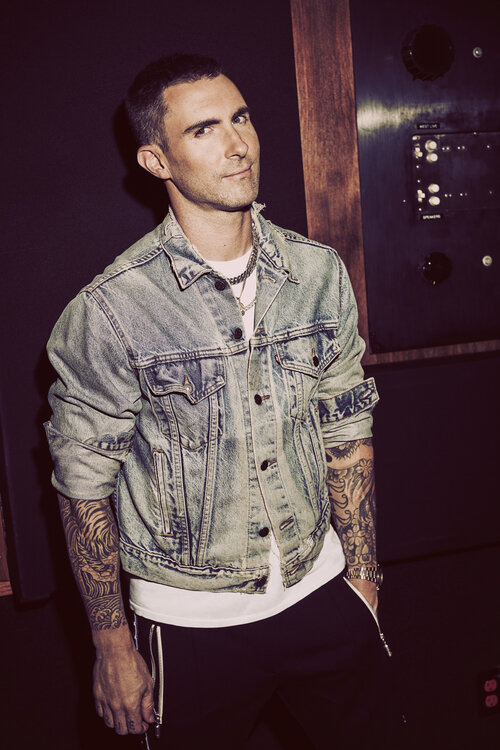
IN THIS PHOTO: Adam Levine 

Levine then said he remembers how “when the first Maroon 5 album came out there were still other bands”, adding: “I feel like there aren’t any bands any more, you know?”

“That’s the thing that makes me kind of sad, is that there were just bands,” he continued. “There’s no bands any more, and I feel like they’re a dying breed. And so I kind of, in a weird way, as far as … I mean, there still are plenty of bands, and maybe they’re not in the limelight quite as much, or in the pop limelight, but I wish there could be more of those around”.

I cannot agree that bands are rare these days. I will admit that there are fewer bands coming through that have impressed me – compared to a few years back -, but it is hard to fight the dominance of the solo market. I think bands were more popular decades ago because there were strong scenes and communities. There was a fruitful Alternative Rock wave and Grunge. We had Britpop, and there was a wave of interesting bands that came around just after the 1990s that created rivalry and some wonderful albums. Whilst there has not been quite the same fervency in the last decade or so, I feel that may change in the coming year or so. I think that lockdown especially will compel bands to form and there will be this appetite for live music from bands.

xxxx.jpg

 IN THIS PHOTO: Alice Cooper/PHOTO CREDIT: Jenny Risher

To me, you cannot get the same live experience from a solo artist or duo that you can from a band. Perhaps that is all-sweeping, though there is some truth to it. Another article that caught my eye pertains to Rock music today. I feel a lot of the best bands from years back were Rock bands. Maybe there were some great Pop groups around (and some good R&B girl groups), but a lot of my favourite groups were playing Rock. I do concede that this is an area of music that has seen a tapering-off. Another NME related to Gene Simmons (KISS) claiming that Rock is dying – this was defended by Alice Cooper:

Alice Cooper has bit back at Gene Simmons after the KISS bassist recently claimed that rock music is “dead”.

Simmons first courted controversy with similar comments in 2014, and doubled down on the remarks in a new interview which arrived last month.

“Rock is dead. And that’s because new bands haven’t taken the time to create glamour, excitement and epic stuff,” Simmons told Gulf News.

“I mean, Foo Fighters is a terrific band, but that’s a 20-year-old band. So you can go back to 1958 until 1988. That’s 30 years. During that time, we had Elvis [Presley], The Beatles, Jimi Hendrix, Rolling Stones, on and on.”

He went on to suggest that popular bands exist, but that doesn’t mean they’re “iconic and legacy and for all-time”.

xxx.jpg

PHOTO CREDIT: @framemily/Unsplash 

But Cooper sees the opposite, defiantly telling NME that a new generation of rock stars are currently preparing for greatness in their own homes.

“Gene Simmons – I would like him to do my taxes because he’s a businessman and that’s valid, but I guarantee you right now that in London somewhere, in garages, they’re learning Aerosmith and Guns ‘N’ Roses,” he said.

“There’s a bunch of 18-year-kids in there with guitars and drums and they’re learning hard rock. It’s the same with the United States: there’s all these young bands that want to resurge that whole area of hard rock.”

“We’re not at the Grammys; we’re not in the mainstream. Rock’n’roll is outside looking in right now, and that gives us that outlaw attitude,” Cooper said”.

I think that there is a definite change in Rock. Although there are some good Rock bands, there is not the same excitement, rebellion and anthems as there were years ago. I don’t think we will see any iconic bands or leads come through in the next few years. I like a lot of bands coming through, as they are broader and more diverse than many from the past. Maybe I am wrong, but I feel Rock will continue and provide interesting bands - though we will never return to the giddy highs when there was a load of awesome bands penning these epic songs. That is not to say that the band market is dying out. It is not as populous and popular as it was, but I feel we will get a shift and growth when the pandemic has passed. Hopefully, live music will be back soon enough and, as bands have formed in lockdown and some interesting acts have come through in this past year, we will get this new wave. After such a tough year, this is what we all…

qqq.jpg

 IN THIS PHOTO: Wolf Alice/PHOTO CREDIT: Alex Lake

WANT to see.

FEATURE: Life in the Fast Lane: The Success of Olivia Rodrigo and drivers license

FEATURE:


Life in the Fast Lane

zzzz.jpg

 PHOTO CREDIT: Universal Music/Erica Hernandez

The Success of Olivia Rodrigo and drivers license

___________

YOU get these songs that come about…

aaaa.jpg

 PHOTO CREDIT: Universal Music/Erica Hernandez

every few years that take the charts by storm or get a load of media attention. There does seem to be a division between the biggest mainstream stars and those underground artists. Some would say that the latter produces more enduring music - and they warrant more attention. I do think that there is too much focus on the biggest Pop stars and not enough on those smaller acts whose music is more original and stirring. In the case of Olivia Rodrigo, she has sort of come from nowhere with the success of drivers license. As much as I hate the lower-case lettering and the lack of appropriate punctuation in the title (so there is an apostrophe after the ‘r’ in ‘drivers’), one cannot argue against the popularity and success of her new hit. Music Week reported on a huge chart success:

A week free of any suitably heavyweight challengers means Olivia Rodrigo strolls comfortably to a seventh consecutive week at No.1. Drivers License has now enjoyed the longest uninterrupted run at the top of the charts since Dance Monkey's 11-week spell at the end of 2019.  A further 46,404 chart sales (44,533 from streams) mean the American teenager's cumulative sales to date top half a million for the first time”.

It might be cynical to suggest that the absence of big acts releasing singles is the reason for her success. Maybe she would not be at the top of the charts if there was a big challenge, but drivers license has resonated and is a modern Pop gem. I am interested to see what comes next for the American actress and singer. I am going to wrap this up fairly soon, but it is worth bringing in a couple of features/interviews.

I will end with an NME interview Rodrigo conducted. Before then, The Independent looked inside a modern Pop smash hit:

Olivia Rodrigo is one of the biggest success stories of 2021 so far, after her first single debuted at number 1 on the Billboard Hot 100.

In many ways, Rodrigo is your average 17-year-old. She makes music, fangirls over Taylor Swift and spends a lot of her time on TikTok.

She even spent her teenage years writing One Direction fan fiction, something she told Official Big Top 40 was “embarrassing” when she became friends with Niall Horan.

If that provides any clue as to Rodrigo’s rapid rise from unknown teenager to pop sensation, there’s also her debut single “Drivers License”, which is currently the biggest song in the world.

But why is “Drivers License” so big? Well, that’s partly to do with the alleged story behind the song, which has been widely speculated upon by users of TikTok.

The song and video follow Rodrigo as she drives around a suburban neighbourhood after receiving her driving license, something she was encouraged to do by the real-life subject of the song.

However, the song seems to suggest that Rodrigo’s love interest has since moved on, as the lyrics go: “You’re probably with that blonde girl / Who always made me doubt / She’s so much older than me”.

We will have to see how long drivers license remains road-worthy in the charts and whether it is a one-off success for Olivia Rodrigo. I feel she has the momentum to release more successful singles. Maybe she will not rise to the same levels as artists like Dua Lipa and Taylor Swift, but drivers license has put her in the fast lane. In this NME interview, Rodrigo discusses the creation of drivers license and how she has reacted to its massive success:

The response to ‘Drivers License’ has been, quite simply, ridiculous. What was it like to smash all these records?

“It’s absolutely surreal, I truly don’t feel like my brain can process all of it, I see all the numbers, but it doesn’t really sink in totally, I’m sort of in a state of disbelief. But the craziest thing to me is also seeing the song being heard in real life. People send me videos of them driving and they get to a stoplight and the person next to them is blasting ‘Drivers License’ in their car, and I’ve got a couple of videos of people who’ll be on walks around their neighbourhood and a specific house will be blasting ‘Drivers License’ through the windows!”

Tell us about writing ‘Drivers License’ – how long did it take to write?

“I wrote the verses and the chorus in an hour. I was in in my living room, and it was a really emotional, cathartic experience for me. I wrote it, and I remember putting my head down on the keys and crying as it was so emotional, and it really evoked that reaction out of me. Then I took it to my producer Dan Nigro, who’s an incredible songwriter and we collaborate a lot. I was like, ‘What do you think about this? I think it’s a really great song that I wrote.’ And Dan is very hard to please ­– if I play a song he doesn’t like he’s like, ‘I don’t like it, write a better one!’ So when I took it to him and he really loved it, I knew that it was something special. We then wrote the bridge together and fixed up some of the verses and the chorus, and polished it up together, and he put his master production on it and there you have it.”

Were there any musical touchstones or artists who inspired it?

“I was super inspired by Gracie Abrams when I was writing the song. Before I sat down to write ‘Drivers License’ I was driving around listening to her EP ‘Minor’, and it’s all these break-up songs about a relationship and I was just crying to her EP. When I got home, I had all these emotions bottled up, and it brought up all these knots I’d been trying to push down for a long time, and so she definitely inspired me to write this song. And I think some of the production is sort of referenced a little bit in my song too”.

I shall leave it there, but I wanted to react to the huge popularity of drivers license. As of the time of writing this (4th March) the song was still at the top of the charts – that could all change by the time this is published. Whether you like the song or not, one cannot argue that there is something about it that has struck people and impacted them. From the success and record-breaking smash of drivers license, it will be interesting to see…

WHAT comes next for the new Pop sensation.

FEATURE: Kate Bush The Kick Inside: In-Depth and Kate Bush: Song by Song: 2021 and a Bumper Year (Already) for Kate Bush Literature

FEATURE:


Kate Bush The Kick Inside: In-Depth and Kate Bush: Song by Song

sss.png

2021 and a Bumper Year (Already) for Kate Bush Literature

___________

WE are only in March…

xxxx.jpg

but there has already been a wave of literature released regarding Kate Bush! Last year was pretty busy in that sense since a few magazines were released that spotlighted Bush’s amazing work. It has been nearly a decade since 50 Words for Snow was released (November 2011), yet there is still an enormous fascination with her work. At the weekend, there was news through that a couple of new Kate Bush books are arriving. One, Kate Bush The Kick Inside: In-Depth, is available on Amazon Kindle from 12th March:

For Kate Bush, and indeed many in her strong fanbase, The Kick Inside is the album that started it all. Her 1978 debut was certainly attention grabbing; it propelled her to fame and got the ball rolling for a phenomenal career as a much appreciated musician and admired female talent. With the iconic 'Wuthering Heights', the young Kate had captured people's imagination with her original songwriting style and of course, her unique voice. In this book, music author Laura Shenton MA LLCM DipRSL offers an in depth perspective on The Kick Inside from a range of angles including how the album came to be, how it was presented and received at the time (live as well as on record), and what it means in terms of Kate Bush's legacy today. As the author explains: “Basically, the book covers how the album was made, what was going on with the music in terms of the artist's intentions, how it did musically and commercially and what happened next.” The narrative is essentially driven by contemporary interviews with the artists with small bits of music theory where relevant... in some cases they delve into the structure / key signatures / time signatures, based on the original sheet music without straying away from being an engaging read for non-musicians”.

d.jpg

It is exciting that my favourite album of all-time is getting deep treatment. I will definitely give it a read when it comes out. I already have Kate Bush On Track: Every Album, Every Song, and it does what it says on the cover. Although there is a new book out that is another track by track guide, it is a useful addition. The Kate Bush News website provided some more details regarding both books – and what fans can expect in terms of new information:

Rather unexpectedly, no less than three Kate Bush books have already come along in rapid succession from smaller UK publishers in 2021. Hot on the heels of the “Kate Bush On Track: Every Album, Every Song” book by Bill Thomas (see news item and brief review here) there are two more slim paperback titles being released in March about Kate’s work.

First up is “The Kick Inside: In-depth” by Laura Shenton (Wymer Publishing). The press release states that “The Kick Inside is one of our first four titles in our In-depth series launched in March 2021. The book takes an in-depth look at the album; the history behind it; the story about its creation; the songs, as well as detailed discographies listing release variations around the world….author Laura Shenton MA LLCM DipRSL offers an in-depth perspective on The Kick Inside from a range of angles including how the album came to be, how it was presented and received at the time (live as well as on record), and what it means in terms of Kate Bush’s legacy today.“

eeee.jpg

 The publishers were kind enough to send me on a review copy and the author sets out her approach in the preface – that no weighty personal opinions or analysis will be included from her, rather that “throughout this book you’re going to see lots of quotes from vintage articles.” And this 112 page book is indeed a rich smorgasbord of quotes; from interviews, articles, KBC fan club magazines, TV appearances and promotional materials – a resource writers and researchers now enjoy thanks to the vast archives of fan-curated info on the likes of Gaffaweb and the Kate Bush Encyclopedia site. All quotes are cited up front right there in the text.

In fact, the author relies so much on the quotes to do the heavy-lifting of narrating the story of Kate’s first album that perhaps she assumed they cover the whole album “in-depth”. This approach falls short of that; the songs L’Amour Looks Something Like You, Feel it and Room For The Life aren’t even discussed, which is a pity. There is a lot to be said for the tried and trusted track-by-track approach most other books take when considering albums. On the plus side, while I originally wondered why so much space was given to discussing Lionheart and that album’s singles, it actually feels very appropriate in the light of the later pages covering the Tour of Life – a big part in the story of The Kick Inside, after all. I only noticed a couple of factual errors in the text (not every song from The Kick Inside was performed in the 1979 shows – Oh To Be In Love wasn’t) and the 8-page photo section includes some nice photos of the various album cover and single cover variations from 1978/79. The book is published 12th March 2021 (priced at £14.99) and can be ordered direct from the publishers at the Wymer Publishing site here or on Amazon Kindle edition here.

aaa.jpg

The second book, “Kate Bush: Song by Song” by John Van Der Kiste, is one I have yet to see a copy of myself, but has already been delivered to some fans via Ebay and other sites. This is a 164 page paperback, that seems remarkably similar in structure and approach to the recent Bill Thomas book in that it “provides a thorough examination of the songs on all her singles, albums, and occasional recorded collaborations with other artists.” I’ll update this article with my thoughts about the book when I’ve seen a copy, but this again features a spread of 50 colour photographs and unlike the Thomas and Shenton books appears to include article citations in the endnotes section for those wanting to read further. Kate Bush: Song by Song by John Van Der Kiste (priced at £18.00) can be ordered from the publisher, Fonthill Media here or on Amazon UK here”.

It is always great having new Kate Bush literature out there! Maybe the new collections will not offer much in the way of revelation, although they were definitely worth buying. More people will discover her work and diehard fans will snap them up! I wonder whether this run will continue and we will get more in terms of books. I don’t think Bush herself will ever write memoirs or an autobiography, though we may get some photobooks or some more reference guides. Ahead of any music in the future, it is likely other projects will come to light. I am sure we will get a greatest hits collection or compilation come about. Few would have predicted – even after the magazine features last year – that we’d have three Kate Bush-related books out already in 2021! It goes to show that, year on year, when it comes to Kate Bush’s music and brilliance, the appetite is huge. Regards this year and Kate Bush books, I predict that there is…

xxx.jpg

 MORE to come.

FEATURE: The Lockdown Playlist: The Best of Guy Garvey and Elbow

FEATURE:


The Lockdown Playlist

cvvv.jpg

PHOTO CREDIT: Thomas Butler/The Guardian 

The Best of Guy Garvey and Elbow

___________

BECAUSE is the frontman of one…

ffff.jpg

of my favourite bands celebrates his birthday on 6th March, I thought this Lockdown Playlist could be all about him. Guy Garvey is the leader of Elbow and, for his forty-seventh birthday, I wanted to combine his finest work into a playlist. Before that, I want to bring in some information regarding the Bury-born Garvey:

Amongst other work, Garvey produced and recorded the I Am Kloot album Natural History (2001). Alongside Elbow keyboard player Craig Potter he also produced I Am Kloot's single "Maybe I Should" (2005, not associated with any album), their Mercury Music Prize nominated 2010 album Sky at Night and their 2013 album Let It All In. Elbow were themselves Mercury Music Prize nominees, in 2011, for the album Build a Rocket Boys! and won the prize in 2008 for their album "The Seldom Seen Kid". In addition, Garvey made an appearance on Massive Attack's 2010 album record Heligoland.

He is a member of the British Academy of Songwriters, Composers and Authors (BASCA) In April 2012 Garvey became a patron of the Manchester Craft and Design Centre. In recognition of his outstanding contribution to music he received, in July of the same year, an honorary doctorate from Manchester Metropolitan University, to become a Doctor of Arts.

Garvey has been a presenter on BBC 6 Music since 2007(Sunday afternoon 2 pm to 4 pm, British time) and previously presented a show on Sunday evenings on XFM. He had a monthly column in the now-defunct listings magazine City Life and is a patron of the Mines Advisory Group (MAG), the Manchester-based charity responsible for clearing war zones of mines and munitions worldwide.

In 2015, Garvey presented Music Box, an iPlayer-exclusive series covering emerging and established bands.

In 2015, Garvey announced that he would be releasing his first solo studio album while continuing his duties as Elbow's lead songwriter. The resulting album, Courting the Squall, was released on 30 October 2015, by Polydor Records in the UK. On 27 October 2015 Garvey appeared on BBC Two's Later... with Jools Holland, where he performed "Angela's Eyes" and "Belly of the Whale".

Here are some brilliant cuts from the Guy Garvey/Elbow back catalogue. As the band put out their eighth studio album,. Giants of All Sizes, in 2019, it may not be too long until we get another album from the incredible Elbow. As you will see from this playlist, Elbow and Guy Garvey (as a writer and singer)…

SEEM to get better and better.

FEATURE: Putting It on the Record: Apple Music’s Behind the Songs

FEATURE:


Putting It on the Record

lll.jpg

IN THIS PHOTO: Charli XCX/PHOTO CREDIT: Ira Chernova for METAL

Apple Music’s Behind the Songs

___________

THIS will be a short feature…

aaa.png

IN THIS PHOTO: Niall Horan/PHOTO CREDIT: Christian Tierney 

but I am interested in the anatomy of songs and how albums come together. I have been looking back some of the Classic Albums shows and the brilliant records featured. It is good to know more about albums and how artists assembled songs. From the rumination period through to concept and release, I don’t think that we get to hear about songwriting and the process - in an age where we are streaming and flicking through tracks quite hastily. There are those who spend time with music and have that passion and curiosity. Last week, Music Week told us news about an interesting new series/portal from Apple Music:

Apple Music has launched Behind The Songs, a home on the streaming platform to highlight and celebrate songwriters, producers and session musicians.

The portal will allow songwriters and publishers to participate in regularly updated editorial features and promotions with Apple Music.

It will also feature Apple Music original video content, including Lyrics To Live By and The Stories Behind The Songs, featuring artist-writers including Niall HoranDua Lipa, Charli XCX, Arlo Parks, Tones And I, Sam Smith, and more.

Behind The Songs also highlights creators through Apple Music's playlist brands Songbook and Behind The Boards.

Spotify recently launched its Noteable platform as a hub for songwriters.

Behind The Songs will be fully searchable in Apple Music. It will appear for any subscriber searching for “Songwriter” or “Songwriters”.

aaa.jpg

IN THIS PHOTO: Nile Rodgers/PHOTO CREDIT: David Yeo/The Guardian 

Apple Music radio shows including Nile Rodgers’ Deep Hidden Meaning will also support the songwriting community.

“Apple Music has, above all, continued to invest deeply in the songwriting community and its various components, and Behind The Songs is a new place we can call home,” said Nile Rodgers. “I’ve loved bringing the stories of today’s most inspiring songwriters to life on my Deep Hidden Meaning radio show, and Apple Music been able to spotlight the best of what’s next with their resolute support of The Ivors Academy and the Rising Star Award.”

Behind the Songs is also the base for Apple Music’s partnership with the Ivors Academy, including the Rising Star Award With Apple Music at The Ivors”.

There has been a lot of criticism aimed at streaming services because they are not paying artists enough. Things are worse when it comes to songwriters and session musicians. Many are receiving a pittance…and I feel a lot of focus is on the artist and not the musicians and songwriters behind the tracks. This new service is going to be fascinating, as it sort of returns to that Classic Albums idea of taking apart tracks and getting to know more about the songwriters and musicians involved. The fact there is a series solely about lyrics is also pretty cool! I hope that it helps when it comes to streaming sites and adjusting their payment structure. I do feel that streaming is great, though the biggest problem is how little artists and musicians get.

eee.png

 IMAGE CREDIT: Song Exploder

I guess that is sort of a side-track, but I feel that the Behind the Songs hub will re-examine not only the importance of music and how we should listen; there should be a shift to the songwriters and sessions musicians and how valuable they are! The announced artists cover quite a spectrum. I am especially interested to hear from Charli XCX, Dua Lipa and Arlo Parks – three of the most-popular modern artists. Maybe I am not looking hard enough, because I don’t feel there are that many songwriting/lyrics podcasts/series. There is the exceptional and long-running Song Exploder. I love how they speak with artists and focus on one track. That sort of attention and exploration is what I really love! One cannot say that the market is crowded regarding portals like Behind the Songs and series such as The Stories Behind the Songs. Even if you are not a big fan of modern Pop, I think The Stories Behind the Songs and Lyrics to Live By will offer a lot to pique your curiosity! I feel that songwriters, session musicians and producers are relatively unsung heroes regarding the success of artists. Maybe they are not totally ignored; there tends to be less attention and love thrown their way. Apple Music is trying to rectify this with their portal. The series’ seems really fascinating, so I will have a listen for sure. If you love your music and want to know the tales behind the songs then…

aaa.jpg

 IN THIS PHOTO: Dua Lipa/PHOTO CREDIT: David LaChapelle for Rolling Stone 

BE sure to do the same.

FEATURE: At the Chime of a City Clock: Nick Drake’s Bryter Layter at Fifty

FEATURE:


At the Chime of a City Clock

zzzzz.jpg

Nick Drake’s Bryter Layter at Fifty

___________

AMONG the wonderful albums turning fifty…

tttt.jpg

this year, I wanted to mark the anniversary of Nick Drake’s Bryter Layter. Drake would be unaccompanied on his third and final album, Pink Moon, of 1972. It is an album that sounds very different to Five Leaves Left, and Bryter Layter. For the masterful Bryter Layter, Drake was accompanied by part of the British Folk Rock group Fairport Convention and John Cale from The Velvet Underground, in addition to Beach Boys musicians Mike Kowalski and Ed Carter. Initially scheduled for release in November 1970, with U.K. promotional copies being sent out at the time, unhappiness with the artwork meant that the album was held over into the following year. Three of my favourite Nick Drake songs are on Bryter Layter: At the Chime of a City Clock, Fly, and Northern Sky. I think Bryter Layter is such a beautiful and rich album, one can come to it new and discover so much. I will finish by bringing in a couple of reviews for the album. Before then, I want to bring in an interesting article that talks about the recording and release of Bryter Layter. It makes for interesting reading:

Bryter Layter remains my favorite album of Drake’s, and I’m far from alone in singing its praises. Drake’s first English-language biographer, Patrick Humphries, calls it “Drake’s masterpiece.” Both Boyd, and the album’s engineer, John Wood, told journalist Arthur Lebow, who wrote the liner notes to Drake’s Fruit Tree box, that Bryter Layter is the only perfect album they made. “It’s one of those albums that I can listen to without ever thinking, ‘I should have done this better,’” Boyd has said. “I enjoy it every time I hear it.” 

Thanks to Boyd and Wood, Bryter Layter is Drake’s most sonically rich album and a prime example of the late-’60s, early-’70s British folk sound that both Boyd and Wood — who also worked with John Martyn, Fairport Convention, and the Incredible String Band, among others — were so instrumental in shaping.

But the true greatness of Bryter Layter lays in Drake's songwriting. On his second release, Drake produced some of his most evocative lyrics and captivating melodies. As Unterberger put it:

Critics…identify Drake’s “peak” at their peril, but it may be that Bryter Layter was his most accessible work. From a purely musical viewpoint, it’s his most diverse, with Dave Pegg and Dave Mattacks from Fairport Convention providing most of the rhythm section work, and appearances by John Cale and Richard Thompson; female soul singers Doris Troy and Pat Arnold even do backup vocals… [and] Robert Kirby again adds some beautiful classical-influenced orchestral arrangements.

Despite the impression among some fans that Bryter Layter’s more accessible sound came about over Drake’s objections, those who worked with him make clear that Drake’s single-minded focus on his music meant that little was done without his full approval, particularly by the time the recording for Bryter Layter commenced. “Since Five Leaves Left, I think Nick had become a little more assertive in the studio,” Wood explained in the liner notes to the reissue of Fruit Tree. “He was laying down a bit more what he wanted when the takes first went down. When we did Five Leaves Left, he wouldn’t come out initially and state what he felt. I think he as a little bit more upfront when we did Bryter Layter.” 

“I know I shouldn’t, but I still get depressed by supposition that Joe and myself somehow destroyed this album against Nick’s wishes,” Kirby has said. “Nick always had the final word. He made the decisions…. [Bryter Layter] was a conscious effort on his part to be more commercial…. Bryter Layter is 100 percent Nick’s work and how he wanted it at that time.” 

Part of Drake, Boyd, and Wood’s shared plan to make Bryter Layter more accessible was the addition of rhythm section, which was lacking on Five Leaves Left. “There was an underlying feeling that Bryter Layter needed to be a bit more accessible in some ways,” Wood told Uncut. “Five Leaves Left is fairly formal in its structures. A rhythm section would give the album a wider appeal.” 

According to Pegg, the sessions for Bryter Layter were loose and happy: 

It was a very exciting record for me to be involved in…you got things like a brass section, people like Ray Warleigh there. There were some really interesting players on some of that stuff. Most of it was done live, and it was done fairly quickly. You'd have the benefit of the arrangements that Robert Kirby did — he was a fantastic arranger, who had a really original approach.... It was a noticeable development from learning the stuff at The Angel, which was all very skeletal. Joe was more or less in charge of it in the studio. It was very much Joe and John Wood and Robert Kirby. It was actually a very fun thing to do. All those Bryter Layter tracks. You got a real buzz off what was happening, which is not always the way with recording. Moments of great joy in the studio very rarely happen…. Bryter Layter was certainly one of my best and most enjoyable experiences at Sound Techniques.

Despite Drake’s push for a contemporary sound and commercial success with Bryter Layter, he wasn’t exactly thinking in the mainstream pop idiom. According to friends and family, the albums that inspired Drake were somewhat esoteric: Robert Johnson’s King of The Delta Blues Singers, Randy Newman’s debut, Love’s Forever Changes, Tim Buckley’s Goodbye and Hello, and Van Morrison’s Astral Weeks. With the exception of the spartan King of the Delta Blues Singers — whose sound would factor into Drake’s final album, Pink Moon — all the records that influenced Drake blended folk and jazz influences with pop and orchestral instrumentation in eclectic and unpredictable ways.

“All the strings and the flutes and horn arrangements, he and Robert worked those out together,” Boyd told Classic Album Sundays’ Colleen “Cosmo” Murphy in 2013. “He definitely [wanted it that way]. There’s no question that Nick was fully engaged in that process with Robert. And when Robert an arrangement, [Drake] was always happy. [It was] gone over in great detail before Nick brought it in [to the studio].”

Wood remembers being thrilled with the material that Drake earmarked for his second album. “I thought the quality had upped,” he said in the Fruit Tree liner notes. “I loved it. It was just great fun to record…. It’s the quality of the playing and the quality of the people you’re working with that matters, and Bryter Layter has that quality in spades”.

I have brought in a lot of that article, but I would recommend people read the entire thing, as one get real insight into a magnificent album. I think Bryter Layter is still moving and hugely impressive fifty years after its release! All three of Nick Drake’s albums have won a lot of praise, though I think Bryter Layter was the first that got more widespread acclaim. Many prefer the simplicity and bareness of Pink Moon, though I love the additional instruments and layers of Bryter Layter. In their review, this is what AllMusic observed:

With even more of the Fairport Convention crew helping him out -- including bassist Dave Pegg and drummer Dave Mattacks along with, again, a bit of help from Richard Thompson -- as well as John Cale and a variety of others, Drake tackled another excellent selection of songs on his second album. Demonstrating the abilities shown on Five Leaves Left didn't consist of a fluke, Bryter Layter featured another set of exquisitely arranged and performed tunes, with producer Joe Boyd and orchestrator Robert Kirby reprising their roles from the earlier release. Starting with the elegant instrumental "Introduction," as lovely a mood-setting piece as one would want, Bryter Layter indulges in a more playful sound at many points, showing that Drake was far from being a constant king of depression. While his performances remain generally low-key and his voice quietly passionate, the arrangements and surrounding musicians add a considerable amount of pep, as on the jazzy groove of the lengthy "Poor Boy." The argument could be made that this contravenes the spirit of Drake's work, but it feels more like a calmer equivalent to the genre-sliding experiments of Van Morrison at around the same time. Numbers that retain a softer approach, like "At the Chime of a City Clock," still possess a gentle drive to them. Cale's additions unsurprisingly favor the classically trained side of his personality, with particularly brilliant results on "Northern Sky." As his performances on keyboards and celeste help set the atmosphere, Drake reaches for a perfectly artful reflection on loss and loneliness and succeeds wonderfully”.

I will end things by quoting from Pitchfork and their thoughts regarding a Nick Drake masterpiece:

Ironically, it was initially conceived as his "up" album, a poppy rejoinder to Five Leaves Left. Five Leaves was pastoral, written in the wooded confines of Cambridge. Layter was written in London, and was meant to reflect urbanity. It did, but only from the perspective of Drake's one bloodshot eye, peering out cautiously at the world. Over woolly saxophone on "At the Chime of a City Clock", he confesses "I stay indoors beneath the floors and talk with neighbors only/ The games you play make people say you're either weird or lonely". Over the peppy horn charts of "Hazey Jane II", Drake sings lightly of how it feels "when the world it gets so crowded that you can't look out the window in the morning." The city, on Bryter Layter, is one long harsh unpleasant noise occurring outside. Nothing good or stimulating seems to happen there.

The music, however, is brighter—this is the Nick Drake you can hear reflected in latter-period Belle and Sebastian. He rehearsed with a band for the first time, including other members of Fairport Convention, and the result is the most fulsome studio recording he ever managed. Some of the arrangement decisions remain bewildering—the gospel backup vocals, jazz-comping guitar and noodling piano crowding the space on "Poor Boy" remain as jarring now as they were when the album was released. On "Fly" and "Northern Sky", Drake worked with John Cale, and you can hear a more natural dynamic in their collaboration. It's either a shame or a relief they didn't work together longer: "Fly" and "Northern Sky" are the two most affecting songs on Bryter, but it's also likely Cale introduced Drake to heroin”.

Happy fiftieth anniversary to the stunning Bryter Layter. I think that we will be discussing and dissecting it fifty years from now. From the perfect opening of Introduction, the brilliant conclusion of Sunday, Bryter Layter is ten tracks of wonder and some of the most astonishing lyrics ever penned. Go and check out Bryter Layter and let the songs…

ENVLOPE you in their wonder and beauty.

FEATURE: Get Him to Swap Our Places: The Emotional Impact and Importance of Kate Bush’s Music

FEATURE:


Get Him to Swap Our Places

eee.jpg

PHOTO CREDIT: Guido Harari 

The Emotional Impact and Importance of Kate Bush’s Music

___________

I didn’t want to repeat myself and talk about…

tttt.jpg

 IN THIS PHOTO: A promotional image for the smash Channel 4 series, It’s a Sin/PHOTO CREDIT: Channel 4

Kate Bush’s music and how it has been used in T.V. shows and film. She does not often give permission for her music to be used, so it is always striking when you hear it on the screen. I was going to write why more of her songs are not used and why we do not hear less-heard Bush songs scoring various shows and films – it always seems to be the more obvious tracks. I love Hounds of Love as an album but, following news last year that Andy Samberg got permission to use Cloudbusting in a film he was in, I wonder whether it goes back to my feature about radio playlists and the fact most stations focus heavily on albums like Hounds of Love (Cloudbusting appears on that album). I would love to see rarer songs and tracks from other albums appear on the screen. The fact Bush does not provide permission to use her music much might limit that in the future. I can understand why producers and filmmakers are drawn to her music. This all ties in with a recent story about how Running Up That Hill (A Deal with God) was used in the new T.V. series, It’s a Sin. This article explains more:

One of the most searingly affecting uses of Kate’s music on a television series in recent memory was on the phenomenally successful Channel 4 drama series, “It’s a Sin“. The acclaimed five-part miniseries, written by Russell T Davies, is set from 1981 to 1991 in London and depicts the lives of a group of gay men and their friends who lived during the HIV/AIDS crisis in the United Kingdom. The drama was the most-watched in Channel 4’s history. In a feature in today’s Guardian newspaper, Davies and director Peter Hoar discuss the 80s music used in the soundtrack, and how Kate personally gave permission for the use of Running Up That Hill for the episode:

Peter Hoar: I knew I was being cheeky putting Kate Bush in. Russell had written [songs] in and everyone knew that as they were in the script and were going to be paid for. Others such as Kate Bush hadn’t. But this song felt right. We initially had it over the scene with them all sat around the table. I’m glad it’s not there now as the song is saying the same thing as that scene. They’re sat there just thinking: we don’t know what to do. Jill is taking responsibility, but what can they say? That song is about women and men swapping places, and certainly the idea of taking someone’s place is pertinent. It could have been any of them. Ritchie hasn’t been perfect, but he’s done nothing wrong. He’s behaved in a way that he had every right to. It just so happens that in this particular instance there was something else going on and he fell foul of it. He regrets it, as you can see, but he’s proud in lots of ways.

Russell T Davies: We took the song off at one point, do you remember? Someone said they weren’t sure about it and Peter very kindly took it off. The whole scene fell apart.

Peter Hoar: And then, of course, the wonderful Kate Bush gave Russell permission to use it directly.

Russell T Davies: You do have to ask permission and she doesn’t often give it”.

The fact is that Running Up That Hill (A Deal with God) has made such an impact on so many people. I know the song has been covered extensively…and it seems that the messages and beauty of the song reaches far and wide. Without knowing it, Kate Bush writes these mini-symphonies that resonates with people in different communities and walks of life!


Hounds of Love is a particularly striking example of an album that has had a huge impact on so many people. It is not just how her vocals and how expressive she is. Think about the scope of that album and the fact that the second side, The Ninth Wave, is this evocative and stunning suite. The first half of the album has these wonderfully rich love songs that are filled with fantastic sounds and language that could only emanate from Kate Bush. She has a way of penning songs that speak to everyone and have this rare power. I might explore this more in future features; I feel Bush, as a writer and performer, can hit people harder than any other artist. Her love songs are diverse and incredibly moving. Move away from that, and Bush’s pioneering and endlessly eclectic work has enriched and inspired so many people. It is when you hear a song like Running Up That Hill (A Deal with God) on the screen scoring such an important scene that it can take on a new life and meaning. I think songs like this have a flexibility and resonance that mean it can accompany so many different shows and scenes and elicit different emotions. Although it was her music videos that caught my eye, it is the way the songs make one feel that stays with me. I have been listening back to Hounds of Love and getting a new appreciation for the sheer sense of confidence and cinema that runs through it.

yyyy.jpg

 IN THIS PHOTO: Kate Bush snapped on 23rd October, 1983/PHOTO CREDIT: Sunday Mirror/Mirrorpix/Getty Images

It is a sumptuous and hugely accomplished album. If one listens through Bush’s back catalogue, you will find so many songs on each album that opens up the heart and mind! I would be interested to see whether any other Kate Bush songs feature in films ort T.V. shows in the future. Of course, she would have to approve and be a fan of the production; I know there is a new generation of writers and creators who are being affected by Bush’s music and know that various songs are perfect for a particular scene. Maybe Bush herself wrote with visuals in mind. I think a lot of screenwriters are creating scenes with Bush’s music in their thoughts. I wonder whether Russell T Davies went into writing It’s a Sin knowing that he wanted to include Running Up That Hill (A Deal with God) somewhere. I guess many artists have the ability to write songs that influence so many different people. Kate Bush’s songs seem to go deeper than most and have this enormous emotional strength. I shall leave it there, but I was interested reading about It’s a Sin and Running Up That Hill (A Deal with God). From T.V. shows and films through to small bedrooms and whole communities, Kate Bush’s music has spoken to so many people! Whether you hear a Kate Bush song for the first time or have heard it countless times, it is this incredible sound that is…

ioo.jpg

 PHOTO CREDIT: Gered Mankowitz

SO moving and entrancing.


FEATURE: The Lockdown Playlist: International Women's Day 2021 Playlist

FEATURE:


The Lockdown Playlist

a.jpg

IN THIS PHOTO: Kelis 

International Women's Day 2021 Playlist

___________

EVEN though it is not…

zzz.jpg

 IN THIS PHOTO: Madonna/PHOTO CREDIT: Michel Linssen/Referns

International Women’s Day until 8th March, I wanted to get ahead and put together a Lockdown Playlist with songs from phenomenal women past and present (it is actually two playlists; such was the wealth of brilliance I had to include!). It is impossible to include all the women who have made an impression on me; though I wanted to cover as many artists as possible. You will be familiar with a lot of the artists below - but there may be some that you are fresh to. I hope that radio stations around the world dedicate a sizeable proportion of time to female artists on 8th March. I grew up around so many wonderful women of music; inspired by their voices and incredible tracks. To honour great women past and current, this special Lockdown Playlist contains…

ppp.jpg

 IN THIS PHOTO: Anna Calvi/PHOTO CREDIT: Eva Pentel

SO much tremendous music.

FEATURE: An Early Temperature Check: Early Mercury Prize Nominees Predictions

FEATURE:


An Early Temperature Check

qqqq.jpg

IN THIS PHOTO: Arlo Parks’ debut album, Collapsed in Sunbeams, was released earlier this year to huge critical acclaim/PHOTO CREDIT: @arloparks

Early Mercury Prize Nominees Predictions

___________

MAYBE it is a bit early…

dddd.jpg

to start predicting which artists will be nominated for a Hyundai Mercury Prize later in the year. If you are new to the ceremony and which albums are eligible, here is some guidance from the Mercury Prize website:

The Hyundai Mercury Prize promotes the best of UK music and the artists who produce it. This is done through the celebration of the 12 ‘Albums of the Year’, recognising artistic achievement across a range of contemporary music genres.

It is the music equivalent to the Booker Prize for literature and the Turner Prize for art.

The main objectives of the Prize are to recognise and celebrate artistic achievement, provide a snapshot of the year in music and to help introduce new albums from a range of music genres to a wider audience.

General

1.1 All forms of contemporary music from Great Britain and Ireland are eligible for the Mercury Prize.

1.2 Albums only qualify for entry.

1.3 The album must have a digital release date between Saturday 20 July 2019 and Friday 17 July 2020 inclusive (although entries must be received by 20 May 2020). Entries received after 20 May 2020 will not be considered for the 2020 Mercury Prize”.

It is quite timely bringing up the Mercury Prize as, last week, it was announced the BRIT Awards and Mercury Prize would change its eligibility criteria. Rina Sawayama was not shortlisted for a Mercury Prize last year for her debut album, SAWAYAMA. She has brought about important change for the Mercury Prize and BRIT Awards. This BBC article reveals more:

A pop star who was told she was "not British enough" to enter The Brits and the Mercury Prize has won a reversal in the awards' eligibility rules.

Rina Sawayama was told she could not compete for the prizes last year, because she was not a British citizen.

The singer, who has lived in the UK for 26 years, has now won the right to compete, after meeting award bosses.

zz.jpg

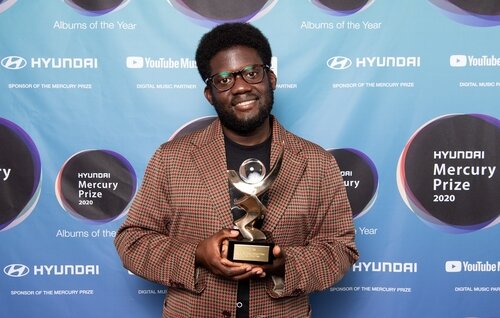
IN THIS PHOTO: Michael Kiwanuka with the Hyundai Mercury Prize 2020 Album of the Year at the Langham Hotel on 24th September, 2020 in London (he won for his third album, KIWANUKA)/PHOTO CREDIT: Jeff Spicer/Getty Images for the Hyundai Mercury Prize 

Under new rules, artists who have been resident in the UK for more than five years qualify for the main prizes.

Sawayama holds indefinite leave to remain in the UK, but retains a Japanese passport to maintain ties with her family, including her father, who live in her country of birth.

As Japan does not allow dual citizenship, she cannot have a British passport. That led to her critically-acclaimed debut album, also called Sawayama, being ruled ineligible for last year's Mercury Prize.

"It was just heartbreaking," she told BBC News.

"I think a lot of immigrants feel this way - where they assimilate and they become part of the British culture... and to be told that we're not even eligible to be nominated is very othering”.

I am looking ahead to the Mercury Prize, as I know it will be held and we will be able to get the artists and audience together! A lot of fabulous albums will arrive between now and when the middle of July (when the cut-off point is). I am not going to do these in chronological order but, taking albums that were released after the cut-off last year in July to now, there are some albums that I think are contenders for the Mercury Prize. I am going to revise this feature in June - but I want to make some early predictions now…

sseee.jpg

 IN THIS IMAGE: The cover for slowhai’s latest album, TYRON

Slowthai’s TYRON is one of this year’ s biggest albums. I think it is a strong contender for a shortlist inclusion. Here is what NME wrote in their review:

Because, yes, there is a cloud hanging over ‘TYRON’. Every interview preceding its release has found Slowthai sifting through the fall-out from his appearance at NME Awards in early 2020. You know the story by now: he was named Hero of the Year at the London bash, seemed a little worse for wear, made grubby remarks to comedian Katherine Ryan and got into an altercation after an audience member shouted that he was a “misogynist” (Ryan later said on Twitter that “he didn’t make me uncomfortable” and told Slowthai, “I knew you were joking”).

The rapper, who nonetheless apologised to Ryan, told VICE last September that he saw the ensuing social media firebomb as in-keeping with the classism that he’d faced throughout his career: “A lot of the people who were so quick to speak badly of me were people who, the whole time I’ve been doing well, have stereotyped me. ‘It’s a matter of time ‘til he does something’, you know?” With the album’s muted second half, he chips away at the caricature to reveal a timeworn but true self-portrait.

On the woozy, acoustic guitar-led ‘push’, he shares a vivid image from a simpler time: “Meet me at the back of the bus / Beep-beep with my hat and my gloves.” Groovy album highlight ‘focus’, with its booming beat, plaintive piano and chopped-up backing vocals, aches with the admission: “No-one I can lean on so I’m limping with a walking stick”. Yet on the same track he also remembers what really matters: “I miss my brothers; I miss my fam as well / Everybody else can go and fuck themselves”.

Arlo Parks’ debut studio album, Collapsed in Sunbeams, is a remarkable work from one of the greatest artists in the country. I love her album and music, and I feel that Collapsed in Sunbeams is guaranteed a place at the Mercury Prize table! I would be shocked if it were omitted. Critics were hugely impressed by Parks’ debut. This is what The Guardian remarked:

The lyrics, meanwhile, tackle distinctly 21st-century anxieties. An lot of pop in recent years has attempted to deal with body image, mental-health issues or problems with sexual identity; so much so that you don’t have to be a terrible cynic to make out the sound of boxes being ticked. That isn’t the case here: Parks writes with a diaristic tone that suggests lived experience rather than a self-conscious desire to tackle the burning issues of the day. She has a great turn of phrase – “wearing suffering like a spot of bling”; “the air was fragrant and heavy with our silence”, “shards of glass live in this feeling” – and a desire to be, as she puts it, “both universal and hyper-specific”.

If you were minded to nitpick, you might suggest that she’s rather better at the latter than the former, that the broad brushstrokes lean a little on self-help platitudes of the “you gotta trust how you feel inside” variety. Her real skill lies in observing small, telling details: the depressed friend whose overload of makeup leaves her looking “like Robert Smith”; the “artsy couple” she watches arguing in the street on Caroline, “strawberry cheeks flushed with defeated rage”; or in the sudden switch to a blunt, colloquial tone. “You know when college starts again you’ll manage,” she counsels a friend struggling to live at home on For Violet. “I wish your parents had been kinder to you,” she tells an ex whose struggle with her sexuality scuppers their relationship”.

Mogwai scored a number-one this week with As the Love Continues. It is a terrific album from the Glasgow band (and it is their tenth studio album), and I feel that the positive reviews and strength of the album means it is more than worthy of being on the Mercury Prize shortlist. I want to bring in The Quietus’ view of Mogawi’s stunning new record:

The record is underpinned by the simplistic, lax drum grooves, rock beats played at medium tempos without much variation, taking the pulse of psych or dance music and transposing it to a washy post-rock haze. This gives a lot of space for them to try some weird sounds and variations: electronic bleeps on ‘Here We, Here We, Here We Go Forever’ or the sweeping strings of ‘Midnight Flit’ stir up a whole spectrum of emotions using totally different palettes, anchored by the common pulse. At the edge of all of these, the sound is sometimes a little distorted, wobbly or unclear. They’ve employed a little noise rock before on vintage tracks like ‘I Love you, I’m Going to Blow Up Your School’, but previously always as an assault; now it’s become a little flourish.

This lands them with a record that’s impressively cohesive and outright weird at times, flirting with all the styles the’ve worked with over the years. The temptation for Mogwai has been to make smoother, calmer music recently, more in line with their soundtrack work. This record seems to fly in the face of that. But they’ve clearly learned a lot from their moody soundscapes, even if they break from the ambience by employing the cut and thrust of their earlier rock work, retaining momentum, lending urgency to these ideas and texture”.

Released in August 2020, Kelly Lee Owens’ Inner Song is a fabulous album that should be included in this year’s Mercury shortlist. I adore the Welsh Electronic artist’s latest album. This is what The Guardian noted when they sat down with the album:

Delayed to show “solidarity” with record shops threatened by Covid, Kelly Lee Owens’s second album finds the banging techno DJ venturing further into the realm of electronic pop. The digitals are still on point. Arpeggi’s creepy retro-futurism recalls Boards of Canada and earlier electronic experiments in Germany in the 1970s.

But when Owens was on tour with Four Tet, Kieran Hebden urged her to stop hiding her singing voice under a bushel. Now some actual songs – such as the resolute, sad banger On, or L.I.N.E. (Love Is Not Enough) – find the Welsh musician in full coo. The sweetness is deceptive: L.I.N.E. weighs up the compromises people make in relationships; solitude, she concludes, beats warping your essence.

Owens’s is not the only voice elevating this album: Welsh legend John Cale contributes to the brooding Corner of My Sky. Alongside relationship breakdown and the death of her grandmother (the coolly arpeggiating Jeanette), climate apocalypse gets a workout too. The writing of Melt! predates the news that the Greenland ice sheet lost 1m tonnes of ice per minute last year, but its union of ominous digital bubbling and thumping dancefloor nous makes for a deadly and timely tune”.

In October last year, Róisín Murphy launched her fifth studio album, Róisín Machine. There are a couple of Irish acts I am highlighting for Mercury consideration this year – the prize has not included that many Irish artists through the years. The energy, innovation and passion through Róisín Machine makes it a sure-fire award-worthy album! This is an album that received so much love across the board. I want to borrow from a positive review in Pitchfork:

“Incapable” is brittle, its Eurodisco rhythm sharpened into snaps and claps. Murphy unloads a history of emotional distance. She knows all about that warm Moroder/Summer swoon: “I get that there’s a sensation/Though I don’t know what it means.” She can’t feel love. “I should try and play my part,” she reproves herself, but alas, all she’s ever felt is a feverish chill. And this is what it sounds like, percussion prickling like goosebumps, when your damage hardens into a visage. She falls through a trapdoor into full disco fever. “Narcissus” marries Greek myth and a dance beat better than Xanadu ever did: Its pools of rippling strings evaporate into prance music for chatterbox Echo and selfie-obsessed Narcissus, characters familiar to anyone who’s ever waited in line for a nightclub powder room.

Disco fuels another gem: “Murphy’s Law,” a shimmering ode to a lack of self-control that she sings in a register as deep as the groove. The song is not a cover of Cheri’s insouciant 1982 boogie standard of the same name, and it is also not “Bad Girls,” though it definitely shares some DNA, but it is as good as either of them. The nerve! And one more: “Jealousy,” shorn of more than half its original 12" length, starts in thrall to that destructive emotion and stays there. “Jealousy!” she chants, as if demanding her own humanity, while the track surmounts a second great buildup, bookending “Simulation” as if to say the real drama is always human. After all the triumphs and tragedies of trying to connect to herself and other people in the dark, she finds a role she was born to play: succinct dancefloor truth-teller, a character smart enough to see the worst about herself and clever enough to make it irresistible. Róisín Murphy aims her tracks at the stars. With Róisín Machine, she’s become one”.

I am going to omit (unintentionally) a few great British and Irish albums that will be among the runners when the Mercury Prize shortlist is named in the summer. I assume that it will be similar to last year, in the sense that albums need to be submitted by May and the eligibility date runs from July last year to the middle of this July. Debut albums make the Mercury Prize more varied and interesting. I think that new artists deserve the award more than most. Beabadoobee’s Fake It Flowers is a great album that should be nominated. The twenty-year-old was born in the Philippines (and is based in London), so she should be eligible for inclusion after Rina Sawayama’s campaign. NME were glowing when they reviewed Fake It Flowers:

Opener ‘Care’ has a dreamy start but that lasts scarcely 20 seconds before a jackhammer of a chorus clatters in. That force similarly decimates ‘Dye It Red’, ‘Worth It’ and, most notably, ‘Charlie Brown’, where the ferocity of Nirvana’s ‘In Utero’ explodes with Bea’s  own unbridled rage – it’s fierce enough to leave Snoopy a shaking, snivelling mess.

To her credit, she’s unafraid to embrace the cliche of being born in the wrong generation. Last year, Bea told NME quite bluntly that she “wants to live in the ‘90s” – and why the hell not? The orchestral overtones to the Smashing Pumpkins-sized ‘Sorry’ hark back to a time when rock bands were unafraid of spaffing production budgets, while the grunge-pop chorus of ‘Together’ is Elastica-sized chorus for a new generation. To pillage the past for inspiration is not uncommon, but few enjoy their joyride as much as Bea does.

The sonic evolution is bolstered by lyricism that traces her ability to communicate emotions bluntly – largely about the ups and downs of romance. Spiteful ripostes run through ‘Further Away’ (“They say the moon’s far away but your brain’s further”), but the make-up on ‘Horen Sarrison’ is sweet in a way that only young love can be, as the lush sounds of Blur’s ‘The Universal’ swell in the background; “You are the smell of pavement after the rain / You are the last empty seat on a train”. On ‘Charlie Brown’ she confronts the periods of self-harm that she endured, towering above but never forgetting those days”.

Even though there is just under five months’ worth of albums to come that could be included in the Mercury Prize’s shortlist, there have been plenty released since July that have caught my eye. SAULT were not nominated for UNTITLED (Black Is). That was released in June last year. Maybe it was not put forward for consideration by their label; it was a big omission. They followed that up with UNTITLED (Rise). Not a lot is known about the band as they do not do much press; people do not know who they are. They are, we know, a British band (so they should be eligible). The Guardian highlighted how amazing UNTITLED (Rise) is:

Straight away you realise you’re in the presence of something special. The first three songs function as brilliantly constructed dance tracks and keep messing with the listener’s emotions. Strong features beats spiked with explosions of dubby echo, an intricate mesh of Nile Rodgers-ish guitar and a terrific breakdown inspired by Brazilian batucada percussion. You could take its lyrics as straightforward paeans to dancefloor transcendence – “we’re moving forward tonight … we want better tonight” – but, as a later, noticeably more caustic track puts it, you know they ain’t, particularly in the light of what follows. Fearless is supremely funky, but the flurries of disco strings don’t communicate excitement so much as anxiety, the words shifting from defiance to something more troubled: “And it hurts on the inside.”

I Just Want to Dance, meanwhile, really is a paean to dancefloor transcendence, but it never allows you to forget what the song’s protagonist might be attempting to escape: the sound is claustrophobic and clattering, the words demanding “why do my people always die?”. There’s a great, jarring moment where the whole thing skids to a halt – like someone hitting the stop button on a turntable – before grinding back to life, the beat temporarily, disorientatingly out of time.

From its fierce opening salvo to its deceptively mellow conclusion – the sweetness of Little Boy’s piano-led melody, vocal delivery and children’s choir countered by the righteous anger in its lyrics – Untitled (Rise) hardly yields highlights because the quality never wavers: whoever’s involved, it feels like they’ve been galvanised to the top of their game. It manages to be as lyrically unflinching as the music is compelling – not the easiest balance to achieve, as acres of terrible protest songs historically attest. You’d call it the album of the year if its predecessor wasn’t just as good”.

The Cribs released their wonderful eighth studio album, Night Network, back in November. Solo artists have won the Mercury Prize most over the past five years, though Wolf Alice did win in 2018 for Visions of a Life. They might be releasing another album this year, so they may well be on the shortlist once more! Wakefield’s The Cribs are high in my mind when it comes to albums that will be shortlisted for a Mercury Prize this year. CLASH had this to say when they reviewed Night Network:

In many ways, eighth album ‘Night Network’ – their first since the finalisation of their management divorce – is a love letter to their fans, an unrelenting series of indie rock bangers built to be heard live, loud, and in your face. Curiously, though, it opens with the coy, palatial doo-wop harmonies of ‘Goodbye’, a song that doubles as a two fingered salute to their ex-management team, and a riposte to music industry machinations.

‘Running Into You’ is the point where the album truly begins, with its shuddering chords and yearning vocals. ‘Screaming Into Suburbia’ is practically a mission statement writ anew, while ‘Never Thought I’d Feel Again’ is consumed by the release, the sheer relief they must have felt going back into the studio again.

It’s a head-long rush of supreme indie rock, unashamedly adding pop elements to their underground heroes. As the ride progresses you’ll pick out Motown stompers and slick 70s pop moves, while ‘Under The Bus Station Clock’ has a touch of soul to it. ‘In The Neon Night’ feels like a Beatles homage in place, while ‘She’s My Style’ could even be a B-side to the ‘Men’s Needs…’ era.

The sound of a band resurgent, ‘Night Network’ will have you falling in love with The Cribs all over again. Tapping into their core sounds and core values, it finds the band emerging from their legal troubles triumphant, relishing the vitality of being able to make music together, in the same room, at the same time. An invigorating experience as punk as it is poetic, it’s a fantastic ride from start to finish”.

Working Men’s Club’s eponymous debut album is another that I think is a shoo-in for a shortlist nod. It would be great to see the young band honoured for their debut. This is what Loud and Quiet wrote in their review of Working Men’s Club:

Syd Minsky-Sargeant, Working Men’s Club’s bracingly outspoken teenage frontman, will not entertain the idea that his outfit are a Manchester band, despite forming there at music college. You wonder whether he’s protesting too much; the spectres of The Fall and of peak New Order hang heavy over this ten-track debut on Heavenly, regardless of the fact that the band cut their teeth in Calder Valley community hubs like Hebden Bridge’s Trades Club and Todmorden’s Golden Lion. There is, in fairness, now a stronger connection with Sheffield, with Ross Orton handling production duties and Moonlandingz guitarist Mairead O’Connor part of a new four-piece lineup that confirms Minsky-Sargeant as the group’s lynchpin.

Working Men’s Club is an album born of personal and political tumult, and it speaks to the singularity of their leader’s musical vision that it feels so cohesive, given the clashes of egos between himself and former members of the band and also taking into account that his lyrics wander – sharply, specifically furious one minute (‘Cook a Coffee’ takes scathing aim at the BBC’s Andrew Neil) and frustratingly unoriginal the next (‘Be My Guest’’s “Let me out, let me scream out!” is teenage angst 101). The record is scored through with a brooding urgency that breathes new life into well-worn influences, particularly on early single ‘Teeth’ and the foreboding post-punk maelstrom of ‘A.A.A.A.’. There’s subtle variation to the central palette of dark synths and clanging guitars; both opener ‘Valleys’ and ‘John Cooper Clarke’ flirt with doomy disco, whilst ‘Outside’ and closer ‘Angel’ hint at stylistic restlessness – slower in pace, broader in scope.

Working Men’s Club is nothing we haven’t heard before, but the sheer force of Minsky-Sargeant’s conviction makes it difficult to resist”.

There are half a dozen other albums I want to list/nominate as potential inclusions in the Mercury Prize shortlist. Fontaines D.C. were nominated last year for their debut, Dogrel (they lost out to Michael Kiwanuka’s KIWANKUA). I feel their sophomore album, A Hero's Death (released last July), might get them a second nod in as many years. Maybe not quite as brilliant as their debut, I still think A Hero’s Death is deserving of serious recognition! One of the many five-star reviews for the album came from The Guardian:

That sense of freedom is what gives the album its range: it can be scary and bewildering to do whatever you want, but fulfilling, too. There’s an admiring nod to “freaks who dare live life not as a climbing stair”, and a brilliantly economical (self?) portrait of a man resisting his public perception: “Snowman coal’d / Pigeonholed / Cooed to death / Pilgrim soul.” Sometimes the freedom is evoked wordlessly: the snotty joy in the way Chatten lets vowels roll round his throat in Living in America, almost gargling them. Their influences are perhaps living in America, too: you can variously detect the pallor of early Interpol, the swagger of early Strokes, vocal harmonies from doo-wop or the Beach Boys, and, on I Was Not Born, an update of I’m Waiting for the Man.

Where the band really pull themselves together is the title track, their best song yet. Steadily chucking out pearls of wisdom like basketballs at an arcade, Chatten is now a dad, uncle, brother, teacher and pal rolled into one, the sort of man that all boys and girls need throughout their lives. His mantra, “life ain’t always empty”, is the bedrock of this exceptional album: sometimes empty, yes, but not always. With poetry suffusing both lyrics and music, Fontaines DC capture being young in all its excitement and challenges, its confidence and despair: those years where it feels like you’re trying to find a foothold with your hands. It’s not easy, but then what great album, or life, ever is?”.

Bringing it back to new albums and, earlier this month, Ghetts released the sublime Conflict of Interest. The incredible MC and Grime artist is a veteran of the game, but I think he has released his finest work with Conflict of Interest. Rap and Grime are not genres that have fared overly-well regarding Mercury Prize wins. I feel that might be threatened later this year. The Forty-Five had their say regarding one of 2021’s biggest albums:

His versatility in tone and topic extends to the music: rich instrumentation swoops in to lift the genre’s usual minimalism. Piano, bass guitar, strings, and horns sit happily among grime surroundings, and complement Ghetts’ cinematic writing. Yet the understated tracks hold the greatest power. ‘Hop Out’ pairs starker beats with a moving and conflicted recollection of schoolboy car theft. The cold urban rush of ‘Proud Family’ counters warm lyricism about fatherhood, ghostly guests linger on the spectral backing of ‘Autobiography’, and answerphone messages on ‘Dead To Me’ frame the lost contact of a once-close friend. All the while, despite its Dickensian scope, Ghetts’ writing stays sharp and sophisticated: “I ain’t phoned to say a change gon’ come, that’s what Sam sung.”

‘Conflict Of Interest’ is Ghetts’ wee small hours moment as much as it is his major label bigtime. Either way, he keeps his cool: the record’s expansive soundscape and storytelling deserve several long listens, yet its fresh outlook hints at an exciting future for grime. Fame and nostalgia pose no threat to an artist able to embrace conflicting identities. “You see when I feel cornered, all I do is think of before / I drive back to the house I struggled in,” he says, and Ghetto, Ghetts, and Justin are all in the car together, riding in harmony”.

I think we will see more bands on the 2021 shortlist compared to recent years. I am not sure what will happen between now and July; there will be a lot of tremendous British and Irish albums that could change my views! I do think that Shame’s second studio album, Drunk Tank Pink, will be in with a shot of shortlisting. Released back in January, the South London band are deserving of one of the biggest music awards in the British calendar. NME were keen to have their say:

Shame’s debut was defined by the dark humour and snark that formed the very spine of the record. That tone is dialled back somewhat on ‘Drunk Tank Pink’, but there are still some laughs to be had. “This is the last time, Acid Dad!” roars the frontman on the chorus of ‘Water In The Well’, a song with a B-52s groove that references the band’s trip to rural Scotland for peace and quiet, when they were unexpectedly presented with a techno party led by producer Makeness’ dad.

This is massive leap on from ‘Songs Of Praise’ – ‘Drunk Tank Pink’ is more ambitious and more accomplished than its predecessor, showcasing a band brimming both with ideas and the confidence to pull them off.

As with the pink room Steen wrote much of the record in sounds, there’s an oddly comforting claustrophobia here. ‘Great Dog’ – the shortest song on the album and a frenetic, scuzzy punk rollicker – is underpinned by a needling guitar drone that’s uncomfortable and urgent, almost made inaudible by the wall of sound around it. ‘Harsh Degrees’ batters the eardrums in a similar manner, sounding like it’s on the brink of collapse as Eddie Green and Sean Coyle-Smith’s guitars do discordant battle with each other”.

The penultimate album I want to mention is Sleaford Mods’e eleventh studio album, Spare Ribs. Showing no dip in quality after all these years, Jason Williamson and Andrew Fearn have, perhaps, released their greatest album. Rolling Stone remarked the following when reviewing Spare Ribs:

“Spare Ribs, the Mods’ 11th LP since they formed in 2007, is a veritable a la carte menu of outrages. Sick of hipsters who fetishize the blue-collar existence? Check out “Nudge It,” which kicks off with Amy Taylor of Amyl and the Sniffers growling “Gimme, gimme,” then descends into a clattering evisceration of “fucking class tourists.” Tired of crooked, elitist politicians who only care about their pockets? Pop on “Short Cummings,” a sneeringly obscene takedown of Dominic Cummings, chief adviser to the prime minister of the United Kingdom. On the verge of murdering your entire family in a lockdown-induced haze? You’ve got “Top Room,” which “talks about the daily ordeals of dealing with lockdown at home, having everybody at home every day,” according to Williamson. It also contains the lyric “I think I want something to come out of my phone that ain’t there,” which is an all-too-accurate take on social media malaise.

Written partly during lockdown, the record features some of the least-annoying songs about the pandemic recorded since the initial outbreak in 2019. And that’s heavy praise, considering some of the truly treacle-shellacked tracks that oozed into the zeitgeist last year. In addition to “Top Room,” there’s also “Glimpses,” which touches on how the world stood still when the pandemic first hit (“The air’s got space and glow in clouds now”), and “Out There,” which homes in on the bleak, empty bizarreness of early quarantine days. “You kind of half expect Tom Cruise to be running around the corner at any point,” Williamson said of the deserted streets and the dystopian quality of the era. That track also aims the finger at conservatives who seem to always blame foreigners for their myriad problems. “Although [Covid] obviously came from a foreign country, I think it’s a bit deeper than that,” Williamson said. “But there seemed to be this view that immigrants were bringing it over, which is just stupid.”

Cue up this acerbic romp through society’s various and sundry ills the next time you feel the towering tidal wave of universal anger descending — which will be, likely, in about five minutes”.

Normally, when it comes to the Mercury Prize, you have a selection of mainstream acts, new artists and a range of genres. There is always a Jazz inclusion and albums that people consider to be ‘outsiders’. I have not really named any so far…and it may be the case that obvious examples come to light later in the year regarding genres like Jazz and those that do not normally earn a Mercury Prize win. In terms of an album that is deserving of inclusion on the shortlist but might be an outside bet is Anna B Savage’s A Common Turn. Released back in January, this is a fantastic album from the London artist. CLASH made some interesting observations when they reviewed the acclaimed A Common Turn:

Over the last five years, Savage has built things up from the ground again to rekindle her passion for music and for herself. “I started to like myself again,” she explains in a press release, and ‘A Common Turn’ openly explores this vulnerable five-year period with authenticity and poise. The overarching theme of birds poetically binds her myriad of experiences together, revealing highs and lows, arduous journeys but also bright, joy enriching colours – just like birds.

‘Corncrakes’ channels Laura Marling style acoustic guitars with Savage’s melancholic lament on her experiences with self-doubt: “I don’t know if this is even real / I don’t feel things as keenly as I used to.” The most impressively produced track on the album ‘Dead Pursuits’ carries this theme of self-doubt to Savage’s own creative process as an artist. Dynamics are then utilised intuitively in ‘Baby Grand’ to convey a motif based around a relationship – its accompanying music video allows for an even more poignant experience.

Savage fuses her classical upbringing with electronic elements in the boldly experimental track ‘Two’ before ‘A Common Tern’ – which also boasts an impressive accompanying video – marks one of the most important moments of the album. It explores Savage escaping toxicity, both with her partner and the toxic relationship she’d built with herself, which coincides with a sighting of the titular common tern that offered a form of grace and freedom from her struggle.

Internal experiences with sexual pleasure are recounted in vivid detail in ‘Chelsea Hotel #3’. The album’s final two tracks ‘Hotel’ and ‘One’ allow William Doyle’s production inputs to come to the fore, rounding off proceedings with nods to Phoebe Bridgers and Anna Calvi.

This is a gem of an album. Personal, honest and highly emotive, it tackles big questions; but most of all, it dares to be vulnerable. ‘A Common Turn’ is undoubtedly one of the most notable releases of 2021 so far, marking a very impressive and well-earned return to music for Anna B Savage”.

It is a way until we get to the Mercury Prize deadline and we learn which dozen albums have been shortlisted. I have mooted some possibilities. I think a few of them at least are definitely going to be included among the riders. There is over four months’ worth of albums to come, so things are going to change. Looking at albums due between now and July, and I think there are some that could be included in a future Mercury Prize shortlist prediction feature: Jane Weaver’s Flock, Royal Blood’s Typhoons, Squid’s Bright Green Field, and Wolf Alice’s Blue Weekend among them! I wanted to look forward to a music award show that will look very different this year compared to last year. I will be curious to see who is shortlisted in the summer as the Mercury Prize inclusions always throw up…

uuuuu.jpg

 IN THIS PHOTO: Anna B Savage

SURPRISES and twists.

FEATURE: Spotlight: Tash Sultana

FEATURE:


Spotlight

ooo.jpg

PHOTO CREDIT: Ian Laidlaw for NME

Tash Sultana

___________

AS their fantastic…

aaaa.jpg

album, Terra Firma, came out on 19th February, I think it is a good time to laud the magnificent Tash Sultana. The twenty-five-year-old Melbourne native (who identifies as non-binary and uses ‘they’/’them’ pronouns) released the celebrated Flow State in 2018. Terra Firma has picked up some great reviews and, to me, it is one of this year’s strongest albums. I would encourage people to buy the album, as Sultana is one of the most eclectic and strongest musicians in the world:

Tash Sultana release their second album on Lonely Land Records, via Sony Music. The follow up to the critically acclaimed Flow State from two years ago, Terra Firma is a 14 track album.

Returning to earth after the dizzying heights of success, Terra Firma is the sound of a more content and grounded Tash. Spiritually, the album finds the artist reconnecting to their roots, reminding themselves who they are and what it means to be human. Musically however, its 14 tracks take root into far-reaching sonic territory. Almost every note on Terra Firma was once again composed, arranged, performed, engineered and produced by Tash. But to kick-start a new era, the solo star – for the first time – opened themselves up to collaborators, starting with a 10-day writing session with fellow ARIA-winning Australian musician Matt Corby and producer Dann Hume (Courtney Barnett, Amy Shark, Angus and Julia Stone)”.

I am going to bring in a couple of reviews for Terra Firma to round off. Before then, a couple of recent interviews caught my eye. I am intrigued by Tash Sultana. One suspects that they would rather not be promoting and doing the media rounds; as we are isolated and the pandemic is not going anywhere, they seems more open to interviews. I love how laidback they are. Their music, though, is so layered and nuanced. One can hear an album like Terra Firma and go back again and again to discover new things.

It is not surprising that Tash Sultana is so accomplished. Having picked up the guitar as a very small child, they then progressed to busking and has been honing her chops for years now. I think they are going to be a huge star of the future. With each release, we can see more of their genius and incredible songwriting. Sultana’s voice, reported to be around six octaves, allows them so much flexibility as an artist. It is one of the most versatile and stunning voices I have heard in a long time. It is exciting seeing where Sultana will head in years to come. With such a strong album out, I just had to include Tash Sultana in Spotlight! I want to quote from an NME interview from late last year. We got to hear how Sultana was handling lockdown and how their second alum was coming along:

Sultana is seeing the upsides of lockdown. Without it, they would have been juggling an overseas tour with wrapping up and releasing ‘Terra Firma’. Now, with dates cancelled, and “an extension for the album, which is fucking great”, Sultana can focus on one thing at a time. “I’ll be spending until July finishing this thing off. Hang with my partner, my dog and go to the studio. I needed to learn how to slow the fuck down.”

aaaa.jpg

PHOTO CREDIT: Dara Munnis

The album title ‘Terra Firma’ itself hints at Sultana’s newfound groundedness. “Terra firma is the ground, the earth, you put your feet on it to remember where you are, what you’re from,” they explain. “It’s a reminder that we are only human at the end of the day. Part of one big system and no one really knows the answers to how and why.”

When restrictions do ease, domestic touring will likely be first to fire back up. “But actually leaving the country or being allowed into another one?” says Sultana. “It’s going to take a while. I don’t reckon that anyone’s going to be playing gigs in 2020. It’s all good for people to give the green light on bringing the gathering thing back but it’s the fear among people. It will take a bit of time for people to not be scared anymore of big crowds.”

Sultana wanted to help to keep their fans active and positive. They’ve got other #iso tips, too. “I’ve done some pretty intensive work on myself for the last little while,” they say. “When you’re anxious, that’s a very high arousal state so you want to combat that with something that’s very low arousal every day, maybe once, maybe twice, could be 10 minutes, 15 minutes. Practicing piano is a low arousal for me, or scales on the guitar.

“For people feeling anxious and shit, this is the perfect time to learn an instrument or start drawing or painting. Mental stimulation is important. Social stimulation is important! So we can’t see each other much but you can get on the phone. Imagine dealing with this 100 years ago? That would have been really fucking hard.”

When things normalise, unsurprisingly, Sultana has a plan. “I don’t go out and I don’t have beers but, my god, I’m gonna go out and have a fucking beer when this is finished. Like, I actually will actually go out. I will have a beer”.

I am pleased that Sultana might get to play some gigs very soon. As things are better and less bleak in Australia right now, it would be encouraging to see live music swing back. There will be a definite hunger for Tash Sultana in their homeland. As we learn from an interview from The Guardian from a few weeks back, the road to stability and success has been a tough one for Sultana:

Eight years after the Australian singer strummed and sung their way out of a seven-month-long drug-induced psychosis; seven years since becoming a solo busking sensation on Melbourne’s Bourke Street Mall; five years after a bedroom performance of their psychedelic-reggae song Jungle clocked a million YouTube views in five days (it’s now had more than 94m); 2.5 years since becoming the first artist without a debut album release to sell out three dates at London’s Brixton Academy; and a year after slipping an engagement ring on their girlfriend’s finger during a Maldives holiday, Sultana is revelling in a groundedness that saturates every note of their dreamy sophomore album, Terra Firma.

“I’m just being and experiencing and loving and trying to be better at everything I do – trying to be kinder, trying to speak nicer, think nicer, play better, sing better, organise better … and that just applied across to the music side of things and that became Terra Firma.

“Terra Firma is a projection of my earth, my universe – so it’s the story of how I’ve gotten to being 25.”

As the story goes, Sultana’s grandfather gave them a guitar at the age of three. By 13, they were using a fake ID to play open mic nights around Melbourne, turning up at school “smelling of cigarettes and beer”. Teachers warned: “Your grades are slipping, you’re not going to amount to anything”, but despite a psychotic breakdown, Sultana finished year 12 and took to busking with their one-person band set-up (electric guitar, RC-30 loop station, milk crates and trolley) and a work ethic that before long saw them land a manager, release their first EP, Notion, stun Australian festival crowds, and score two songs in Triple J’s 2016 Hottest 100 (including Jungle at No 3).

Word was spreading about the diminutive, barefoot multi-instrumentalist with a six-octave range (trying to sing along to Sultana’s songs is an exercise in humility) who could send crowds ballistic with layered looping, Hendrix-esque guitar solos, panpipe beatboxing and acrobatic leaps. Sultana played Coachella in 2018, four months before releasing their debut album, Flow State (named for the trance they slip into while performing), which won an Aria for best blues and roots album.

The road to stardom was peppered with burnout, a loss of privacy and mental health struggles. In late 2017, Sultana hit the reset button, writing on Instagram: “I thought I was going to die from the shadow my mind cast.”

With the help of a therapist, naturopath, yoga and surfing, Sultana turned to sobriety and a supplements regime.

These days, Sultana says: “I’m just a bit of a loner – I socialise when I want to or when I need to. When I go out and see people and their eyes start rolling to the back of their heads, I just smokebomb and leave and go to bed. I’m convinced that nothing good happens after midnight.”

Covid willing, Sultana is playing Womadelaide in March and Bluesfest in April, and has European dates booked later in the year, although the musician concedes those have a “slim to none” chance of going ahead. “The kicks in the gut don’t hurt so much any more. You almost expect nothing, so that when things do happen, you’re just, ‘Wow!’ It really happened!’”.

I will bring things to a close very soon. First, I want to show how the media have been responding to the terrific Terra Firma. This is what DORK had to offer when they sat down when they heard the album:

The title directly translates as ‘firm ground’ and perfectly situates Sultana in their career right now. Having transformed from busker to in-demand performer, it inspires a need to return to earth after the dizzying heights of success. ‘Crop Circles’ shows this effortlessly as honeyed vocals melt into the smooth instrumentals to create an unwinding, relaxing melody. Sultana builds layer upon layer in multi-dimensional jams like ‘Coma’, creating a truly hypnotic wall of sound.

Playing with a combination of soul, funk, RnB, folk, rock, and hip hop, ‘Terra Firma’ is a true mix: “Aretha Franklin meets Bon Iver meets John Mayer meets whatever,” they explain. To describe ‘Terra Firma’ as an effortless listen is to ignore the deeper significance of the philosophical questions, as it asks: “But where’s the wisdom? Where’s the knowledge?”

With such depth, it’s an album that both reveals and rewards”.

I have been listening to Terra Firma a bit, and I am finding so much comfort and strength from the album. It is such a stunning album. I am sure I will be coming back to it throughout the year. Even though Tash Sultana is amazing through Terra Firma, I think they will get stronger as the years go by.

aaaa.jpg

I want to bring in another positive review for Terra Firma. It is an album that has been getting a lot of love and affection:

For an artist that developed much of their sound on an instantly recognisable diet of guitar licks and loops, Sultana embraces a broadening of their sound here. “Crop Circles” goes jazz and welcomes that full band sound that now accompanies the traditional solo artist when playing live. With its horns and jazz piano, “Crop Circles”, is an early but completely welcome highlight. Meanwhile, “Greed”, an obvious commentary on wealth distribution in society, features a couple verses of near rap delivered bars. That’s all before the chorus is sung in Sultana’s trademark slinky styling.

The album, even with its highs like “Beyond the Pine”, “Sweet & Dandy” and “Willow Tree ft. Jerome Farah”, does at times leave you feeling like you’re listening to the same song on repeat. This isn’t to say it’s a negative. If anything it proves the consistency of Sultana as an holistic artist. But, despite the across-the-board quality of Terra Firma, the lack of noticeable style change across the majority of the album does detract from the listener’s ability to enjoy the album continually from cover to cover”.

Now, taking what I just said with a grain of salt, the tracks on Terra Firma that do break away in sound – like all five and half minutes of “Coma” – could go down as some of Sultana’s all time great songs. With its wandering, almost Bon Jovi “Wanted Dead or Alive” sound in the opening four minutes, before a cataclysmic crescendo, “Coma” is almost certain to become a fan favourite once live shows return.

With much of the Tash Sultana we’ve come to know and love protruding prominently throughout Terra Firma, there’s enough quality and licks of pure class to make you wonder just how far the Tash Sultana juggernaut could go”.

If you have not discovered the music of Tash Sultana, seek them out and explore what they have put out so far. I hope that they get to come to the U.K. when things are safer – Sultana has a pretty healthy fanbase here. I shall leave things there…but I was eager to spotlight an artist I have been following for a couple of years now. Listening to Tash Sultana’s music and one can hear so much…

FIRE, soul and passion.

____________

Follow Tash Sultana

xzxxx.jpg

FEATURE: Future Masters: The Ongoing Cultural Impact of The Beatles

FEATURE:


Future Masters

aaa.jpg

 The Ongoing Cultural Impact of The Beatles

___________

THERE have been a couple of recent…

ssss.jpg

 PHOTO CREDIT: Harry Hammond/V&A Images/Getty Images

bits of news related to The Beatles (John Lennon, Paul McCartney, George Harrison and Ringo Starr) which has caught my eye. The band formed over sixty years ago…and it is amazing that they are still resonating as wide and hard as they do! It is testament to the incredible songwriting and universality of the songs that means new generations are falling for the world’s greatest band. Later in the year, we will finally get to see Peter Jackson’s film/documentary, The Beatles: Back: it will rewrite some misconceptions about those fraught recording sessions around the time of Let It Be. I think there is this feeling that the band were so divided and tense – one of the reasons why they called it quits in 1970. Whilst there is some truth to that, actually, there were talks of another albums (after they recorded Abbey Road); a feeling that things could continue. The film will show the band laughing and bonding, in addition to laying down some timeless tracks! Before coming to the main crux of the feature, fans of Paul McCartney’s lyrics have something to be excited about come November. The Lyrics: 1956 to the Present looks set to be a fascinating tome:

In this stunning, intimate self-portrait from one of the greatest songwriters of all time, Paul McCartney traces his life from boyhood to the present day through the lyrics to 154 iconic songs, together with captivating commentary and never-before-seen photographs, drafts and letters.

'More often than I can count, I've been asked if I would write an autobiography, but the time has never been right. The one thing I've always managed to do, whether at home or on the road, is to write new songs. I know that some people, when they get to a certain age, like to go to a diary to recall day-to-day events from the past, but I have no such notebooks. What I do have are my songs, hundreds of them, which I've learned serve much the same purpose. And these songs span my entire life.'

asyhsatsyu.jpg

PHOTO CREDIT: Penguin Random House 

In this extraordinary book, with unparalleled candour, Paul McCartney recounts his life and art through the prism of 154 songs from all stages of his career - from his earliest boyhood compositions through the legendary decade of The Beatles, to Wings and his solo albums to the present. Arranged alphabetically to provide a kaleidoscopic rather than chronological account, it establishes definitive texts of the songs' lyrics for the first time and describes the circumstances in which they were written, the people and places that inspired them, and what he thinks of them now. Presented with this is a treasure trove of material from McCartney's personal archive - drafts, letters, photographs - never seen before, which make this also a unique visual record of one of the greatest songwriters of all time.

We learn intimately about the man, the creative process, the working out of melodies, the moments of inspiration. The voice and personality of Paul McCartney sings off every page. There has never been a book about a great musician like it”.

I am sorely tempted to buy the collection, as it would provide me an insight into some of those early songs with The Beatles. I think that all of the band were great songwriters - though I have always gravitated towards McCartney style and variety. I know quite a bit about his work with The Beatles. We will get some unique insight into these treasured songs when the book comes out. Not only is there still a massive appetite for The Beatles and songwriters like Paul McCartney; they are still making a huge impact on musicians and people decades after they split.

This takes me to an interesting bit of news. There is now an option for one to study a Masters in The Beatles at the University of Liverpool. The BBC explains more:

Fans of The Beatles are being invited to study for a master's degree in the Fab Four at the University of Liverpool.

Students on The Beatles: Music Industry and Heritage MA course will learn about the group's influence on popular music and culture, its programme leader said.

Dr Holly Tessler said it was "unique" because it explored the band's legacy.

There is also a focus on heritage and tourism in Liverpool and the UK, she said.

The course - which starts in September - is aimed at people "currently working, or considering pursuing a career in, the music and creative industries", said a university spokesman.

According to the course description, students will be able to visit sites in Merseyside which featured in the group's early years.

Dr Tessler, a Beatles expert, said she was "absolutely delighted" to bring formal study of the Beatles to the University of Liverpool's Department of Music and Institute of Popular Music.

"What makes this MA unique is its focus on The Beatles in a future-facing way, considering the legacy's influence on the music and creative industries, in popular culture, and within heritage, culture and tourism in the 21st Century," she said”.

Students of the postgraduate qualification will also consider how the band's influence could be replicated in different places, industries and contexts around the world, the university said.

It's not the first time a Beatles MA has been offered in the city”.

I know there are current options at universities to do dissertations on The Beatles, but the fact there is now something more comprehensive shows that the band have this cultural impact and legacy that is enormous! Not only can one study the music and the influence the band have had; they will also get a history and cultural lesson about society in the 1960s. I think that, now more than ever, the importance of The Beatles is clear. I feel that that there is so much to learn and treasure. The fact there are new projects coming out regarding the band – in addition to that Paul McCartney lyrics book – shows their genius is still burning bright. It will be interesting to see whether any other artists will get the same treatment regarding courses specifically about them. Maybe there are few that have the same reputation as The Beatles, but I think it is fascinating having specific bands and artists optioned as a Masters. I am looking forward to the Peter Jackson project at the end of August, and I know we will see new books, documentaries and projects regarding The Beatles for decades to come. Now that The Beatles are being honoured by a university in their home city, there will be new fascination and discovery regarding the iconic band. There are fewer higher salutes…

THAN that.

FEATURE: Vinyl Corner: Talk Talk - The Colour of Spring

FEATURE:


Vinyl Corner

xxxx.jpg

Talk Talk - The Colour of Spring

___________

I want to bring in a couple of reviews…

ccc.jpg

for Talk Talk’s third studio album, The Colour of Spring, in a bit. Released on 1st March, 1986, I was wondering whether there would be a thirty-fifth anniversary release for the album – the anniversary is here, so I guess not! I cannot see any special editions, though it would be interesting to see if there is one out there (let me know). In terms of the music, The Colour of Spring was a break from the synthesised Pop of the band’s earliest albums. There was an emphasis on guitars, pianos, and organs. There is a more natural sound through the album. Whilst that may have surprised some fans in 1986, I think it was a needed evolution for Talk Talk and it works really well through The Colour of Spring. I would encourage people to buy The Colour of Spring on vinyl because it is such a fantastic album. Life’s What You Make It, and Living in Another World are two of the best songs Talk Talk ever created. Talk Talk would follow The Colour of Spring with the genius Spirit of Eden in 1988 – perhaps the finest album they ever put out. Because Talk Talk formed in 1981, I wanted to mark forty years of their formation alongside thirty-five years of one of the best albums of the 1980s. I think that The Colour of Spring is a good starting place if you are new to Talk Talk. One might say to go back to the start, though I think there is an accessibility to The Colour of Spring that has made the album so enduring. The Colour of Spring became the band's highest-selling non-compilation studio album - reaching the top-twenty in numerous countries, including the U.K. (where it reached number-eight and stayed in the charts for twenty-one weeks).

I will wrap things up soon enough, but I want to source a couple of reviews for the mighty and beautiful The Colour of Spring. This is what AllMusic wrote in their review:

With It's My Life, Talk Talk proved that they could pull off an entire album of strong material. With The Colour of Spring, they took it one step further, moving to a near-concept song cycle, following the emotional ups and downs of relationships and pondering life in general. Musically, they built on the experimental direction of the previous album with interesting rhythms, sweeping orchestration, complex arrangements, and even a children's chorus to create an evocative, hypnotic groove. Though the songs were catchier on the earlier efforts and the ambient experimentation was more fully achieved later on, The Colour of Spring succeeded in marrying the two ideas into one unique sound for their most thoroughly satisfying album”.

I do like how there was this marked shift between 1984’s It’s My Life, and The Colour of Spring. The band – Mark Hollis, Lee Harris ands Paul Webb at the core – are phenomenal throughout, and I especially love Hollis’ vocal performances on The Colour of Spring. When Classic Pop wrote when they reviewed a simply marvellous album:

The watchword for album three is ‘organic’. “That whole synth side – get it in the bin!”, Hollis told interviewer Jim Irvin in 1997 about its change of direction. He was similarly combative about synthetic instruments a decade earlier, no doubt angering Electronics And Music Magazine as he proclaimed to their journalist: “I absolutely hate synthesisers. If they didn’t exist, I’d be delighted.”

The band were happy to excise all vestiges of synth-pop from their sound and The Colour Of Spring would become their biggest-selling album. It sits at the apex of the melodic, conventional songwriting approach of their first two albums and the more experimental ambience of remaining efforts Spirit Of Eden and Laughing Stock. The perfect midpoint, in fact, and often underappreciated amid the remarkable affection in which those last two LPs are held.

As would become de rigueur for Talk Talk, the album was painstakingly assembled in the studio with a huge array of guest musicians. At their most focused, Hollis and co-writer Friese-Greene would be in the studio in 12-hour shifts, six days a week, during sessions that lasted nine months.

Texturally, piano, organ and guitar dominate as the band imbue a more natural musicality into lyrical preoccupations with pastoral themes. Hollis namechecked classical composers Debussy, Satie and most prominently Bartók throughout recording sessions, with all contemporary influences given short shrift.

A Tomorrow Never Knows for the 80s, Life’s What You Make It is built on an unwavering rocking 10-note piano riff that continues throughout the whole song. As the track ebbs and flows, stunning piano and guitar solos flash into the mix while that underlying riff continues beneath, the skeleton of an iconic anthem-in-the-making. Band manager Keith Aspden was concerned the album lacked a hit, so Hollis and Friese-Greene answered the challenge with this. Job done.

On the haunting April 5th, Hollis loses himself in almost wordless reverie. There’s an abrupt change of pace for the pulsating Jean-Paul Sartre-inspired Living In Another World, with Winwood whipping up a maelstrom on Hammond. Mark Feltham – later to work with Oasis – supplies bluesy harmonica. There’s a gritty defiance to the percussive Give It Up and Hollis brings his love of Bartók to bear on the striking intro to Chameleon Day, which morphs into an echo-drenched piano ballad boasting one of the singer’s most dynamic performances; hushed whisperings one minute, gut-wrenching roars the next”.

I am a relatively new fan of Talk Talk – having discovered them properly a few years back -, but I really love The Colour of Spring and how it impacts you. With all eight tracks written by producer Tim Friese-Greene and Mark Hollis, there is not a weak or wasted moment on the album! It does not matter whether you are a huge fan of Talk Talk or are fairly new to the band. One should grab a copy of The Colour of Spring, put the needle down, and immerse themselves in…

SUCH a wonderful album.

FEATURE: One for the Record Collection! Essential March Releases

FEATURE:


One for the Record Collection!

sssss.jpeg

Essential March Releases

___________

ALTHOUGH the first couple of months…

ssss.jpg

 IN THIS PHOTO: Arab Strap/PHOTO CREDIT: Kat Gollock

of 2021 have been a little quiet regarding new albums, things are picking up. That is not to say there has been a lack of great albums so far this year; it is just that there have been ups and downs regarding the consistency of albums coming out. As we look ahead to March, I wanted to highlight great albums arriving that you will want to own. I will start by suggesting albums worth owning that are released on 5th March. I would suggest people pre-order Arab Strap’s As Days Get Dark, as the songs that have been released from it so far are terrific. The Scotsman sat down and reviewed the album:

For evidence that Arab Strap are older, wiser and utterly unrepentant, listen no further than opening track The Turning of Our Bones, with its stealthy, gothic guitar, squalling saxophone, ominously circling strings and synth handclaps forming a seductive backdrop to Moffat’s narrative “about resurrection and shagging.”

The dynamic created by Moffat’s eye-watering poetry and Middleton’s atmospheric soundtracks is more expertly wrought than ever. Heady disco strings soundtrack Fable of the Urban Fox’s parable on racism. Another Clockwork Day’s catalogue of online porn (“wearing nothing but a new postcode”) is teamed with pastoral picking and mournful melodica (is there any other kind?) Tears on Tour ponders the triggers for teardrops from raw, uncomprehending bereavement to “the Muppet movie, Frozen, Frozen 2” over some surprising Mark Knopfler-style burnished blues guitar.

One album that I am really excited about is Jane Weaver’s Flock. I think everyone should pre-order a copy, as Weaver’s music is among the most interesting and memorable out there. It is shaping up to be one of 2021’as finest albums:

Flock is the record that Jane Weaver always wanted to make, the most genuine version of herself, complete with unpretentious Day-Glo pop sensibilities, wit, kindness, humour and glamour. A consciously positive vision for negative times, a brooding and ethereal creation.

The album features an untested new fusion of seemingly unrelated compounds fused into an eco-friendly hum; pop music for post-new-normal times. Created from elements that should never date, its pop music reinvented. Still prevalent are the cosmic sounds, but Flock is a natural rebellion to the recent releases which sees her decidedly move away from conceptual roots in favour of writing pop music. Produced on a complicated diet of bygone Lebanese torch songs, 1980's Russian Aerobics records and Australian Punk.

Amongst this broadcast of glistening sounds is The Revolution Of Super Visions, an untelevised Mothership connection, with Prince floating by as he plays scratchy guitar; it also features a funky whack-a-mole bass line and synth worms. It underlines the discordant pop vibe that permeates Flock and concludes on Solarised, a super-catchy, totally infectious apocalypse, a radio-friendly groove for last dance lovers clinging together in an effort to save themselves before the end of the night.

The musician’s exposure to an abundance of lost records served as a reminder that you still feel like an outsider in this world and that by overcoming fears you can achieve artistic freedom. Jane Weaver continues to metamorphise.

Bonus CD features new and exclusive versions from Jane Weaver’s studio. It comes with CD and Rough Trade exclusive LP Version only”.

Another big release that is coming out on 5th March is Kings of Leon’s When You See Yourself. If you are a fan of the band, go and pre-order their upcoming eighth album. As the band explained in an interview with NME from last month, they wanted to make sure they got the album right and were not rushed:

Kings Of Leon frontman Caleb Followill has suggested that the band’s forthcoming new album ‘When You See Yourself’ will be their most “personal” record yet in terms of its lyrics.

The Tennessee four-piece will release their latest LP on March 5, nearly four-and-a-half years on from 2016’s ‘Walls’.

Followill and his drummer brother Nathan have now previewed ‘When You See Yourself’, which had its original release date delayed last year due to the coronavirus pandemic, in a new interview with The Sun.

“The decision to put it out now was our answer to the fact we aren’t able to tour right now. Hopefully by summer we can make the shows we are booked to play,” Nathan said.

“People can’t see live shows right now, so the next best thing is new music for them to listen to. Putting it out was our way of saying ‘thank you’ to our fans for their patience.”

Speaking about the album, Caleb said that he and his bandmates made use of the extra time to put the finishing touches to the record, saying “we weren’t rushing it out”.

“We got to make sure we were happy with everything and go back to critique little things we wanted to hear in there,” he said.

In terms of the lyrics, Caleb suggested that ‘When You See Yourself’ is the band’s most “personal” album yet, saying: “I try to write and convince myself that I’m writing about something else but a vein of my personal life flows through these songs”.

sssss.jpg

Jumping to 19th March, and Loretta Lynn’s Still Woman Enough arrives. The Country legend is preparing to release her fiftieth album. As this Pitchfork article explains, it is a hugely important album:

Loretta Lynn has announced the new album Still Woman Enough, which arrives on March 19 via Legacy. Marking her 50th studio album, the 13-song collection celebrates women in country music and includes new compositions along with reinterpretations of songs from throughout Lynn’s catalog. The album also features appearances from Margo Price, Tanya Tucker, Reba McEntire, and Carrie Underwood. Check out the music video for “Coal Miner’s Daughter Recitation” below and scroll down for the cover art and tracklist.

“I am just so thankful to have some of my friends join me on my new album. We girl singers gotta stick together," Loretta Lynn said in a statement. “It’s amazing how much has happened in the 50 years since ‘Coal Miner’s Daughter’ first came out and I’m extremely grateful to be given a part to play in the history of American music”.

Make sure you pre-order the album, because it is primed to be full of gold and wonderful collaboration. Rough Trade provide more details:

The American music icon's 50th studio album (excluding her 10 studio duet collaborations with Conway Twitty), Still Woman Enough celebrates women in country music. From her homage to the originators, Mother Maybelle Carter and the Carter Family (via her cover of "Keep On The Sunny Side") through a new interpretation of her very first single, "I'm A Honky Tonk Girl," Loretta Lynn acknowledges her role in the continuum of American country music with a special collaboration with Reba McEntire and Carrie Underwood ("Still Woman Enough"), and duets with Margo Price ("One's On The Way") and Tanya Tucker ("You Ain't Woman Enough"), sharing the musical torch with some of the brightest lights and biggest stars in contemporary country music. The album premieres 13 new Loretta Lynn recordings, intimate and electrifying performances of a career-spanning selection of songs illuminating different aspects of her repertoire. The collection is centred around Loretta's original compositions - from new songs like "Still Woman Enough" (which shares its title and attitude with her 2002 autobiography and was cowritten with her daughter, Patsy Lynn Russell) through fresh interpretations of classics including "I'm a Honky Tonk Girl" (her first single, originally released March 1960), "You Ain't Woman Enough" (the title track for her first #1 Billboard Hot Country Album in 1966), "My Love" (from 1968's Here's Loretta Lynn), "I Wanna Be Free" (1971) and a deeply emotional "Coal Miner's Daughter Recitation," commemorating the 50th anniversary of the release of her signature song (October 5, 1970) and album (January 4, 1971)”.

Finishing off with albums from 26th March, and there are a few that are well worth some pennies. I am looking ahead to the release of Evanescence’s The Bitter Truth. I want to bring in an interesting interview from Rolling Stone where the band’s lead, Amy Lee, discussed her life and her band’s new record:

I’m not going to rush,” says Lee, 38. “I’m just trying to live in the moment, feeding my soul with the music.”

When the band began making a concerted effort to work on new material last year, their one rule was that there would be no rules. They began with a wealth of material and inspiration, along with a couple decade-old songs that finally feel ripe for release. Since August, when her U.S.-based bandmates took tour buses to join her in Nashville (guitarist Jen Majura has remained in Germany), they’ve been powering through the rest of the album.

“The energy was just amped,” Lee says. “We were in there on fire. Now, the guys are back at their homes, and I am wading through the aftermath of all the music, piecing it together and finalizing the record.” In some ways, she says, lockdown has been a blessing: “The upside of this time is that I’ve had to buckle down and focus. Even on the days that I don’t want to, I come out here and I go, ‘Let’s do this. Let’s finish the album.’ ”

Every rock era has been defined by how few women have been able to break through to the mainstream, and Lee felt isolated even as her operatic mezzo-soprano became one of rock’s definitive voices. At one radio show, a DJ introduced the band by admitting that he had “jacked off” to the Fallen album cover, a close-up of Lee’s face. After the first song and a few minutes of simmering rage, Lee called him out. At another show, she interrupted her performance to confront a few members of the mostly male audience who were chanting “Show your tits.”

It took until this year for Lee to feel comfortable expressing her opinion on politics, speaking out in interviews against Donald Trump and the police killing of George Floyd. On “Use My Voice,” released as a single this summer, she makes it clear she’s no longer willing to stay quiet: “Drown every truth in an ocean of lies,” she sings. “Label me bitch because I dare to draw my own line/Burn every bridge and build a wall in my way/But I will use my voice”.

One of the smaller bands releasing a new album in March is The Antlers. Green to Gold is an album that I am thinking about pre-ordering the album. It is sounding like it’s going to be magnificent:

Highly anticipated record from New York's act The Antlers, their first new music in seven music. Perhaps what distinguishes Green to Gold from the rest of The Antlers’ canon is its arrival at a kind of quiet normalcy after a number of rather anxious records. Conceived and written almost entirely in the morning hours, Green to Gold is the easily their most luminous record to date.

Following 2014’s Familiars,it looked unsure as to whether there would even be another Antlers album, after the onset of singer and primary songwriter Peter Silberman’s auditory problems. Affecting his left ear, it was a condition that left him struggling to cope with commonplace noises. He was subsequently diagnosed with lesions on one of his vocal cords, requiring surgery for their removal and vocal therapy to retrain his voice to sing. Following a relocation to upstate New York and the 10th anniversary tour of 2009's 'Hospice', Silberman was rejuvenated and rediscovered the impulse to create new Antlers music. Of Silberman’s unique vocals, The Guardian wrote “His multi-octave voice is as intense as Jeff Buckley’s or Anohni’s, but it’s vulnerable without being precious or cloying”.

aaaaa.jpg

 PHOTO CREDIT: Pooneh Ghana

I am going to finish up by recommending people pre-order tUnE-yArDs’ sketchy. If you do not know about tUnE-yArDs, they are an American, Oakland, California–based music project of musician Merrill Garbus, with long-time collaborator, bassist Nate Brenner. Make sure you pre-order sketchy:

Tune-Yards’ last release I can feel you creep into my private life, was a self-reflexive question mark at the end of a decade of outspoken, polyphonic indie music. From 2009 to 2018, Tune-Yards (both Merrill and her partner and collaborator Nate Brenner) released four critically acclaimed albums, travelled the world relentlessly to play live shows, and composed the psychedelic score to Boots Riley's surrealist cinematic masterpiece Sorry To Bother You. "We had really been non-stop hustling," Merrill reflects. "And when we're hustling, we're complicit in all of the systems that I really don't believe in."

Interrogating these systems and her role within them had left Merrill feeling heavy with grief and lost about how to move forward. The duo pressed on, inspired by the Beastie Boys Book and Questlove’s Creative Quest, and began jamming daily for hours in their home rehearsal studio “like athletes”. They ditched computer screens for live instruments (Merrill on drums, Nate on bass) and before long full songs started to emerge.

Unlike the lyrical introspection of previous outing I can feel you..., on sketchy. Merrill balances self-inspection and reflection with bombastic rallying cries, reminiscent of the furious tones of early days Tune-Yards. The result is a colourful and joyous record with lyrics that cut to the bone. "I started remembering that people come to us to be entertained, to move, to feel joy. And together, I think, we can wake up”.

Although the rate of album releases will increase as we go into spring and summer, there are some really good ones due in March! I think that there may be some new additions and changes, as one cannot predict whether all of the albums announced will be released on the date published. They are correct as of the time of writing this feature (23rd February). If you were unsure which albums are worth snapping up next month, then I hope that the guide above will…

POINT you in the right direction.

FEATURE: A Buyer’s Guide: Part Forty-Four: Chaka Khan

FEATURE:


A Buyer’s Guide

aaaa.jpg

Part Forty-Four: Chaka Khan

___________

AHEAD of her sixty-eighth birthday…

kkk.jpg

 IN THIS PHOTO: Chaka Khan performs at ChicagoFest in 1981 (the year before she quit Rufus to devote herself full-time to her solo career)/PHOTO CREDIT: Chicago Sun-Times

on 23rd March, I wanted to feature the inimitable and legendary Chaka Khan in A Buyer’s Guide. I think she is one of the greatest Funk and Soul artists who has ever lived. Her twelfth studio album, Hello Happiness, was released in 2019; Khan is showing no signs of slowing down! She is also in the running for induction into the Rock & Roll Hall of Fame this year. Before running down the essential works of Chaka Khan, here is some Wikipedia background to a musical icon:

Yvette Marie Stevens (born March 23, 1953), better known by her stage name Chaka Khan, is an American musician, singer and songwriter. Her career has spanned nearly five decades, beginning in the 1970s as the lead vocalist of the funk band Rufus. Known as the "Queen of Funk", Khan was the first R&B artist to have a crossover hit featuring a rapper, with "I Feel for You" in 1984.[2] Khan has won ten Grammy Awards and has sold an estimated 70 million records worldwide.

With Rufus, she achieved four gold singles, four gold albums, and two platinum albums. In the course of her solo career, Khan achieved three gold singles, three gold albums, and one platinum album with I Feel for You. She has collaborated with Ry Cooder, Robert Palmer, Ray Charles, Quincy Jones, Guru, Chicago, De la Soul, Mary J. Blige, among others. In December 2016, Billboard magazine ranked her as the 65th most successful dance artist of all time. She was ranked at No. 17 in VH1's original list of the 100 Greatest Women of Rock & Roll. She has been nominated for induction into the Rock and Roll Hall of Fame three times as a solo artist and four times as a member of Rufus featuring Chaka Khan; the first time in 2012 as a member of Rufus”.

If you need a guide to Chaka Khan’s music and which albums are worth buying, then I hope that this feature can help out. Take a look below and revel in the brilliance of a titanic artist who we hope will be making music…

wwww.jpg

FOR a long time yet.

____________

The Four Essential Albums


What Cha' Gonna Do for Me

xxxx.jpg

Release Date: 15th April, 1981

Label: Warner Bros.

Producer: Arif Mardin

Standout Tracks: We Can Work It Out/Any Old Sunday/And the Melody Still Lingers On (Night in Tunisia)

Buy: https://www.discogs.com/sell/list?master_id=111878&ev=mb

Stream: https://open.spotify.com/album/6elTNQdWmobPp0QGEPwPMc?si=iR0NVCUWR6WENc79lmNEPw

Review:

As a vocalist, Chaka Khan is the one of the very few who often doesn't need great material to prosper. Thankfully, on What Cha' Gonna Do for Me that isn't the case. Teaming again with Arif Mardin, slowly but surely the two began to craft an even more successful and innovative sound. This effort not only bests the work before it, but it is Mardin's most fulfilling production since 1974's Average White Band. The cover of "We Can Work It Out" gets a brash and funky Stevie Wonder-style arrangement, with Gregory Phillanganes doing great synth work. The biggest hit here is the melodic title track and has Khan's patented mix of sexiness and intelligent phrasing. The best song here, "I Know You, I Live You," displays the brilliant bass and drum team of Anthony Jackson and Steve Ferrone, whose innovation all but rendered Rufus obsolete. Their pounding yet refined sound is also on "We've Got Each Other," a hooky and propulsive duet with Khan's brother Mark Stevens. The ambitious and much loved "And the Melody Still Lingers On (Night in Tunisia)" had Mardin and Khan creating pithy lyrics that paid homage to '40s jazz legends as well as all other subsequent musical geniuses. The track features a clavitar solo from Herbie Hancock, Dizzy Gillespie, and an "excerpted" solo break from Charlie Parker. Throughout What Cha' Gonna Do for Me, Mardin seems to get amazing vocals from Khan and has he certainly had fun playing with her voice. What Cha' Gonna Do for Me is arguably the best effort of their partnership” – AllMusic

Choice Cut: What Cha' Gonna Do for Me

Chaka Khan

vvvv.jpg

Release Date: 17th November, 1982

Label: Warner Bros.

Producer: Arif Mardin

Standout Tracks: Tearin' It Up/Slow Dancin' (ft. Rick James)/Twisted

Buy: https://www.discogs.com/sell/release/1081764

Stream: https://open.spotify.com/album/7ndE9iVFDmgIRey7SyZv3G?si=0dVu625NRnOJjpu9aa5eBw

Review:

An excellent album from Chaka Khan, mixing tingling uptempo tunes with her characteristic soaring, glorious vocals. "Got to Be There" reached number five on the R&B charts, but it actually wasn't the album's high point. That was the marvelous "Be Bop Medley," which later led hardcore jazz purist Betty Carter to proclaim Khan the one female singer working outside the jazz arena with legitimate improvising credentials” – AllMusic

Choice Cut: Got to Be There

I Feel for You

tttt.jpg

Release Date: 1st October, 1984

Label: Warner Bros.

Producers: Arif Mardin/Robbie Buchanan/John Robie/Russ Titelman/David ‘Hawk’ Wolinski/James Newton Howard/David Foster/Humberto Gatica/Joe Mardin

Standout Tracks: This Is My Night/My Love Is Alive/Through the Fire

Buy: https://www.discogs.com/sell/list?master_id=42018&ev=mb

Stream: https://open.spotify.com/album/08yanJqA75TPyDowCXvvPU?si=qs2sZWoJT1uG66zPBng89Q

Review:

Lost (albeit understandably) amid the title track’s meteoric impact were nine other fantastic songs. “This Is My Night,” the album’s opening shot, is a compelling tune, filled with the excitement of promises to be fulfilled by the subsequent songs. Any album as dominated by dance tracks as I Feel For You is usually brought to an unqualified dead end by its obligatory ballads, but both “Stronger Than Before” (one of the only latter day Bacharach-Bayer Sager ditties that doesn’t sound like warmed over Christopher Cross) and “Through The Fire” (recently sampled and Chipmunkesized a la Cam’ron’s “Oh Boy” on Kayne West’s “Through the Wire”) are legitimate high points in Chaka’s solo career. The album’s most confounding track, “Chinatown,” falls into that odd territory between sincerity and parody. The lyrics, a pre-Lost in Translation attempt to turn Eastern mysticism into the language of romantic inconclusiveness, document just about every corny cultural stereotype imaginable (as when she calls her indifferent lover “some crazy Fu Manchu”—and I sincerely hope that I’m wrong in my interpretation of “eyes that I can’t see, they stare me down”). But Chaka, former Black Panther, belts it like the final verse of “Home.”

Finally, the stuttering, acid-tongued “Caught In The Act,” what with its venomous jilted-lover lyrics and incongruous Speak & Spell synth riff, reconciles Chaka’s drive for pop-crossover success and slavish genuflection to Mother Jazz (her follow up album Destiny would include another tasty electro-jazz funk riff with “Tight Fit,” as well as the unabashedly Down Beat-baiting “Coltrane Dreams”). Al Jarreau’s High Crime LP (also released in 84) covers this same territory, most notably in the now standard “Sticky Wicket.” But where Jarreau’s buttery voice tends to expose the jazz-pop hybrid’s inherent blandness by only adding another layer of aural lubrication, Chaka’s angry rasp holds the listener down by the nape of their neck like fly paper. Which she does in every track on the album and which is why, rockists be damned, I Feel For You is a true pop touchstone” – SLANT

Choice Cut: I Feel for You

CK

ggggg.jpg

Release Date: 22nd November, 1988

Label: Warner Bros.

Producers: Russ Titelman/David Frank/Chaka Khan/Prince/Chris Jasper

Standout Tracks: Soul Talkin’/Eternity/I’ll Be Around

Buy: https://www.discogs.com/Chaka-Khan-CK/master/111897

Stream: https://open.spotify.com/album/7sCnguNPlXb67fQEdgWaIN?si=Sb8qw9ooQmSe4oPGtsGOoQ

Review:

A first-class release, despite the fact that it didn't pack the normal commercial punch. But it had excellent production, many outstanding selections, and uniformly dazzling, booming, triumphant vocals from Khan. She currently speaks with disdain about the record business, and it's probably due to the relative failure of great records like this to break out and really enjoy the success they merit that's disillusioned her” – AllMusic

Choice Cut: Signed, Sealed, Delivered (I'm Yours)

The Underrated Gem


Chaka

kk.jpg

Release Date: 12th October, 1978

Label: Warner Bros.

Producer: Arif Mardin

Standout Tracks: Love Has Fallen on Me/Life Is a Dance/I Was Made to Love Him

Buy: https://www.discogs.com/sell/list?master_id=109436&ev=mb

Stream: https://open.spotify.com/album/2lvaLIoEg3hwL2dybu6zTC?si=HrDdo6NuTjen5OzPqhAB6A

Review:

Still very much an integral part of Rufus, Chaka Khan set the charts on fire with her debut solo release. The first single was the R&B chart-topper "I'm Every Woman," an Ashford & Simpson track with Khan lighting up the lyric with her tantalizing vocals. "Life Is a Dance," the second release, doesn't quite compare to its predecessor, but it still made the R&B Top 40. The sentimental ballad "Roll Me Through the Rushes" is poetically engaging, and despite never being released as a single, it became a mainstay of radio. Although Khan had much credibility from her association with Rufus, this album demonstrated that the dynamic vocalist could hold her own ground alone” – AllMusic

Choice Cut: I’m Every Woman

The Latest Album


Hello Happiness

ooo.jpg

Release Date: 15th February, 2019

Labels: Diary/Island

Producers: Switch/Sarah Ruba

Standout Tracks: Don't Cha Know/Like Sugar/Ladylike

Buy: https://www.discogs.com/sell/list?master_id=1500088&ev=mb

Stream: https://open.spotify.com/album/1QRhPsupQCDlD9EwTWumSA?si=_JQcqw5KRaWhaIu8NOqUHw

Review:

The album arrives at an interesting juncture in Khan’s career. In 2016, still reeling from the death of her friend Prince, Khan, along with her sister, checked into rehab to treat an addiction to painkillers, stating she “knew it was time to take action to save our lives”. That sense of clarity permeates the album’s title track, where Khan joyously sings “Music makes me say goodbye sadness, hello happiness” over an elastic bass line and chunky synths. She struts around the melody before finally letting go with a sky-rocketing cry of “Wanna dance, wanna dance” that makes the song feel sweaty. That sensation continues into the throbbing, disco-tinged Like a Lady, while the irresistible funk of lead single Like Sugar cleverly creates pockets of space for Khan’s rip-roaring vocal interjections to fade in and out, as if she’s having so much fun dancing she forgot to step up to the mic.

The album sags, however, when the production starts to encroach on the star. Don’t Cha Know is essentially an instrumental, with darting sonic textures, samples of crowd noise and a screeching central riff that drowns everything else out. The otherwise enjoyable Too Hot, in which Khan purrs her way through a lyric about feeding her hunger, is constantly interrupted by a juddering synth that sounds like it crept in from a different, less interesting song. Thankfully, Hello Happiness returns to what it does best.

The closing Ladylike is the album’s quietest moment, with a simple guitar riff and distant percussion carrying a song that effortlessly reminds you of Khan’s influence, on everyone from Whitney Houston to modern R&B practitioners such as Ella Mai. It ends, as it should, with Khan front and centre” – The Guardian

Choice Cut: Hello Happiness

The Chaka Khan Book


Chaka!: Through the Fire

oo.jpg

Authors: Chaka Khan/Tonya Bolden   

Publication Date: 30th April, 2004

Publisher: Rodale Press

Synopsis:

Rolling Stone compared it to melted caramel, and Miles Davis compared it to his horn.

Chaka Khan's scorchingly soulful voice first dazzled most of us back in 1974 with Rufus and "Tell Me Something Good," and most recently in her Grammy Award-winning performance in Standing in the Shadows of Motown, singing "What's Going On?" with the Funk Brothers. Over the years, she's had twelve number-one hits and nine number-one albums. Over one hundred appearances on the Billboard charts. Nineteen Grammy nominations and eight Grammy wins. Her achievements in the music industry are legendary, and like her twenty albums, they're well-known to the public.

But the private side of Chaka, the story of what fame and fortune have cost her-- and taught her-- hasn't been told before. In Chaka! Through the Fire, Chaka Khan gives us the whole story of the woman behind the diva and reveals her high and low points. A happy early childhood in a loving, creative home was shattered by escalating fights between her parents. When they finally split, Chaka's father disappeared without even a goodbye, leaving Chaka bewildered, bereft, and blaming her mother. She reconnected with her dad in her teens, finding that he was as liberal and permissive a parent as her mother was strict. Chaka started experimenting with drugs and joined the Black Panthers. Soon after, she fronted for a band called Rufus.

They hit it big with "Tell Me Something Good," and Chaka's stardom was launched. But life on the road was grueling, and as the years went by, the pressures grew. Chaka turned to alcohol and drugs to numb the pain of failed relationships, the guilt of leaving her kids to be raised by Grandma, the resentment she felt about the exhausting demands of her career. It wasn't until things got very bad that she started to see the patterns. All the things she had suffered through in her childhood and swore never to do to her kids-- well, she was doing them.

That's when she began the work of turning it all around. These days, she's still a musical powerhouse, but she's making sure there's time for family, too. She's drug-free. She's started her own record label and has also started a foundation to help women and children in need. Remarkably, Chaka has remained a true wild child despite all the changes: a fiercely independent woman who never compromised her spirit.

Chaka Khan is one of the foremost vocalists of our time and has won recognition in many music genres. She has received countless awards and has worked with some of music's biggest talents, including Miles Davis, Prince, and Dizzy Gillespie. She currently resides in London and Los Angeles.

Tonya Bolden is a magna cum laude baccalaureate of Princeton University. In addition to the many books she has authored, she has also collaborated on Eartha Kitt's Rejuvenate! and contributed text to Diana Ross's Diana Ross: Going Back” – Amazon.co.uk

Buy: https://www.amazon.co.uk/Chaka-Through-Fire-Khan/dp/1579548261/ref=sr_1_1?crid=19702B6P9U92R&dchild=1&keywords=chaka+khan&qid=1613565792&s=books&sprefix=chaka+%2Caps%2C172&sr=1-1

FEATURE: Fruit Underneath My Red Shoes: Kate Bush’s Eat the Music

FEATURE:


Fruit Underneath My Red Shoes

ooo.jpg

Kate Bush’s Eat the Music

___________

HERE is a song I have sort of looked at before…

kkk.jpg

 IN THIS PHOTO: Kate Bush in a promotional photo for Eat the Music in 1993

but not really gone into any depth. When I discussed the 1993 Kate Bush film, The Line, the Cross, the Curve, I did mention Eat the Music and how brilliant its visuals are. The Red Shoes remains a very underrated album; there are wonderful songs like Eat the Music that do not get that much focus. I hardly hear it played on the radio – that is a shame when you consider its quality. From the Kate Bush Encyclopaedia, one can learn more about Eat the Music:

Song written by Kate Bush. It was originally released as the lead single for The Red Shoes in the USA on September 7, 1993, while everywhere else in the world Rubberband Girl was released. In the UK, a small handful of extremely rare 7" and promotional CD-singles were produced, but were recalled by EMI Records at the last minute. A commercial release followed in the Summer of 1994 in the Netherlands and Australia, along with a handful of other countries. The song's lyrics are about opening up in relationships to reveal who we really are inside”.

With some great bass work from John Giblin, some top valiha work from Justin Vali and Paddy Bush, and some fantastic brass injected into the song, I love how exotic and exciting Eat the Music is. The third track on The Red Shoes – after Rubberband Girl, and And So Is Love -, we got so much variation and life. Rubberband Girl opens The Red Shoes with panache; there is something more emotive with And So Is Love, before Eat the Music gives us some groove and carnival. It is a Baila (a form of music, popular in Sri Lanka and among Goan Catholics) song that sits between two softer tracks on the album – Moments of Pleasure follows Eat the Music.

Some reviewers were not keen to hear Eat the Music when it came out, as they felt Bush made a bit of a mess with the food metaphors; the imagery was a little clumsy and basic. I like lines line “Does he conceal/What he really feels?/He's a woman at heart/And I love him for that/Let's split him open” and “Like a pomegranate/Insides out/All is revealed/Not only women bleed”. We definitely get a lot of fruits thrown into the mix (blender?). Mixing emotional and romantic imagery with fruit imagery, it is a really interesting song. I must admit that I am not sold on every line, but one cannot help but get caught up in the beautiful sound of the track! The video is bright, colourful and joyful…and I think The Red Shoes is one of Kate Bush’s most interesting periods. Whilst the album is not one of her finest, she was still very experimental - and we get these wonderful songs like Eat the Music. I definitely think that it is worthy of some fresh ears and inspection. My favourite lines might be “Take a papaya/You like a guava?/Grab a banana/And a sultana/Rip them to pieces/with sticky fingers/Split the banana”. Even though Eat the Music only reached ten in the US Alternative Airplay (Billboard) chart, I think it is a great song that could have fared well in the U.K. Rubberband Girl was released here instead.

In an interview with Future Music in 1993, Bush went track-by-track on The Red Shoes and talked about Eat the Music:

This track, laden with trummpets andl light percussion, has a very Latin American feel which actually stems from the music of Madagascar. "It uses a small guitar called a 'caboss' which is one of the instruments Paddy (Bush, Kate's brother) discovered and brought back with him. He's very into ethnic music of all kinds and has always contributed a lot of ideas to the albums - he helped bring in some authentic players and the track started off with bass guitar which was then replaced by an acoustic bass - but that sounded a bit too Latin. The horn section's real, of course."

The decision not to release this track as the first single from the album represents one of the few times Kate has been influenced by outside opinions in this respect -the interest in Rubberband Girl winning out in this case”.

Although there are stronger songs on The Red Shoes, Eat the Music is a treat that offers a lot of delight and vivid imagery. I want to leave with another incredible passage from the song: “All emotion/And with devotion/You put your hands in/What ya thinking?/What am I singing?/A song of seeds/The food of love/Eat the music”. If you have not heard Eat the Music or have sort of avoided The Red Shoes, give the song a good listen (also make sure you watch the video). Bush would come back after 1993 with 2005’s Aerial: an album where she seemed renewed and re-inspired. If The Red Shoes was a slight dip in quality and consistency, one could definitely still find gems. Eat the Music proved that Kate Bush was still delivering unique, unusual and simply…

ssss.jpg

 ALBUM PHOTO CREDIT: John Carder Bush

BEAUTIFUL songs.

FEATURE: Modern Heroines: Part Thirty-Four: Zara Larsson

FEATURE:


Modern Heroines

eee.jpg

Part Thirty-Four: Zara Larsson

___________

FOR this part of Modern Heroines…

cccc.jpg

I am taking some time to spotlight a major Pop artist who I feel will continue to rise. Zara Larsson achieved national fame in Sweden for winning the 2008 season of the talent show, Talang (the Swedish version of the Got Talent format). In 2012, Larsson signed with the record label TEN Music Group and subsequently released her debut compilation recording, the extended play, Introducing, in January 2013. I am going to talk about her upcoming album, Poster Girl, and bring in a couple of fairly recent interviews. Out on 5th March, Poster Girl is going to be one of the biggest Pop albums of this year. NME provide more details:

The record, which follows the Swedish pop star’s 2017 album ‘So Good’, is set to land on March 5 via Black Butter.

The new album follows Larsson’s recent single ‘Talk About Love’, a collaboration with Young Thug.

“‘Talk About Love’ is about that phase before two people work out what they are to one another,” Larsson explained of the new track.

“That specific window is so beautiful and fragile, as soon as you start asking ‘are we doing this?’ or ‘how do *you* feel?’, for some people that ruins the magic. ‘Talk About Love’ is savouring that moment before you have to decide”.

If you are not a big fan of mainstream Pop, I would say to give Zara Larsson a chance. She is far stronger than many of her peers; her music is not reserved for a narrow market – one does not feel like she is marketing for streaming hits and popularity.

So Good was an album that won praise with many critics. Released in 2017, it was the sophomore album from Larsson. This is what AllMusic wrote when they assessed the album:

Living up to its title, So Good -- the sophomore set from Swedish singer Zara Larsson -- arrived after a two-year promotional rollout that followed the release of her debut, 2014's 1. Her slow climb toward the upper pop strata occupied by Rihanna, Sia, and Tove Lo -- the artists whose vocals Larsson most closely echoes -- began in 2015 with the quadruple-platinum number one single "Lush Life," an effective dose of tropical pop that rides the surf with a playful whistle and undeniable bounce. Quickly following with the skittering staccato of MNEK duet "Never Forget You," Larsson scored another hit. Two subsequent album highlights -- the bass-blasted "Ain't My Fault" and "I Would Like" -- provided additional examples of her strong voice and confident attitude. By the time fifth single -- the Ty Dolla $ign-featuring, Charlie Puth-penned title track -- arrived in 2017, a third of So Good had been unveiled. Despite the significant time gap, So Good remains a tight vision full of romantic drama, youthful abandon, and a strong sense of female empowerment. "TG4M" ("too good for me") basks in the sun with a piña colada in hand, part of a Girl's Only weekend with Daya and Hailee Steinfeld, while the WizKid-featuring, Stargate-produced "Sundown" invites Sia to the moonlight island party.

When the party ends, the uplifting "What They Say" provides a comforting shoulder to lean on. Amongst the feel-good party jams, heartfelt surprises provide more emotional sustenance. "Make That Money Girl" is a slow-builder that turns the bad gal toughness of Rihanna into a girl power anthem with a message that demands self-reliance and vision, going so far as reminding listeners that "you can be the next female president." When Larsson delves even deeper, the results are refreshing. Album closer "I Can't Fall in Love Without You" is a beautiful sendoff. Set to Jesper Nordenström's piano accompaniment, the track is a sweeping and heartfelt expression, the most vulnerable and pure on So Good. Fun and engaging, Larsson made one of the better pop albums of 2017. Like contemporaries Daya, Steinfeld, Bebe Rexha, and Dua Lipa, Larsson delivers polished R&B-influenced pop gems that shine bright like diamonds while maintaining a too-cool-for-school factor that helps to distinguish her from the bubblegum”.

I want to bring in a few interviews, as it provides some detail and background on Zara Larsson. I think she is one of the most interesting and original artists in the mainstream right now. From what we have heard from Poster Girl, the album is shaping up to be pretty strong and broad.

I want to quote from TIME and an interview they conducted in 2019. They highlight the fact that Larsson is more than a Pop star. She is a role model:

But as she’s grown up at the center of attention, Larsson, 21, has made one thing clear: she’s about much more than just dance music. She’s an outspoken feminist who promotes sexual health without compromising her fun-loving image. She started out by speaking candidly in blog posts and on social media when she was younger. Last fall, she signed on as a face of Durex for an AIDS prevention campaign.

“I would definitely like to think of myself as a role model,” Larsson says. “Again, I’m a person; I’m not perfect, but I don’t think anyone expects me to be,” she adds, recognizing that existing in such a public space means making mistakes. “Ruin My Life” received some criticism upon its release from fans who didn’t think the message tallied with Larsson’s progressive image. But Larsson sees it differently. “I don’t want to encourage people to stay in a relationship… that isn’t good for you, but I think we’ve all been there at least once,” she reflects. It wasn’t her first experience with negativity on social media, either, as she has been subject to online abuse in response to expressions of her feminism”.

kkk.jpg

 PHOTO CREDIT: Erik Henriksson

I would advise everyone to check out Poster Girl when it arrives. As we learn from HELLO, there is quite a variation and sonic/emotional spread on the album:

"I feel that this album has a lot of everything in there. Some beautiful ballads, some sassy songs: the vibe is very fun and dance-friendly. It’s a bit more grown-up, naturally, as my last album was when I was a teenager and now, I’m a young woman. So, it’s me writing about life, and life is high and low, a lot of emotions are there. I think my focus, in general, is probably love. I like to write about that, but in a sexy way."

Zara first discovered music at the age of five, when her mum gave her one of Carola Häggkvist’s albums, she is a huge musician in Sweden. "She is a-ma-zing, my first biggest idol. She sings in Swedish, too, so I could understand what she was saying, rather than Whitney Houston, Celine Dion, Beyoncé – and all of the others I also listened to."

Zara’s first break came when, aged ten, she won Talang (2008), the Swedish version of Britain’s Got Talent. "I was so nervous, but also excited, as it was my first time being on a big stage. It went by very quickly, unfortunately, because it’s not like The X Factor, where you are on there every week. It was the audition, the semi-final and the final."

Her life pretty much went back to normal after the competition, until she released Uncover in 2013. "It became really successful. I think some people thought, 'Wait, that’s the girl from the talent show?'. So I think it did help me, because it’s a fun story and connects me to something, but it was also the first time I felt that I had really done something, and it wasn’t just a show”.

I am going to wrap things up soon. First, I want to source from an in-depth interview NME published recently. It is likely that Zara Larsson would have been introduced to new listeners. I have been listening to her music a lot more. I think that she has a long and very successful career ahead of her. Poster Girl is shaping up to be an intriguing album:

If you didn’t already think that Larsson is head over heels in love – she recently said “it’s just not legal to feel this good” – ‘Poster Girl’, her third album, would seem to make it pretty plain. The record begins with the blissful shimmer of her 2020 single ‘Love Me Land’, on which she sings: “Never thought I would love again / Here I am, lost in Love Me Land.” Other highlights include the soulful bop ‘I Need Love’ – “like an addict needs a drug,” she purrs – and ‘Need Someone’, which features the wonderfully self-assured couplet: “I’m happy I don’t need someone / I’m happy, but I want you.” The penultimate track ‘FFF’ turns out to be shorthand for “falling for a friend”.

Still, Larsson politely deflects my suggestion that ‘Poster Girl’ is a kind of concept album about entering into a joyous new relationship after a break-up. Back in August 2019, amid internet rumours that she’d split from her boyfriend, the model Brian Whittaker, Larsson shared an Instagram meme that read: “When you get your heartbroken but it’s OK because the street’s been waiting for you to be single again.” Later that month, she confirmed to People magazine that she was indeed “single right now”.

It has been a pretty busy and illuminating past five years for the modern Pop icon. That said, there have been peaks and troughs regarding success and chart positions:

It didn’t take long for international success to follow. Appearing on the cover of NME in late 2016, she told us in no uncertain terms: “I want as many people as possible to go to my concert.” In 2015 and 2016 she sent no fewer than six singles into the UK Top 20, including the skittering ‘Never Forget You’, a duet with London singer MNEK; the club-ready Tinie Tempah collaboration ‘Girls Like’; and the utterly irresistible ‘Lush Life’, one of the best pop songs of the decade. Then, in 2017, she partnered with Clean Bandit for the chart-topping dance banger ‘Symphony’. It still ranks among both acts’ career highlights, Larsson’s emotional vocals adding some red-blooded grit to Clean Bandit’s precision-tooled beats.

Since then, Larsson’s chart positions outside of Sweden haven’t been as sky-high – her last four singles didn’t crack the UK top 10 – but her pop star stock remains premium. “And at this point I just want people to hear my new music and I want to stop being so scared of how it’s going to go,” she says. “Because honestly, what could go wrong? That I sell one album. If that happens, I’ll make another one – that’s how I see it now. And that’s how I’ve been seeing it the whole time I was growing up in this industry.

“But because my first [global] album was ‘So Good’ – literally! – I felt pressured, I really did. And then eventually, I was like, ‘Nah, you can’t keep going on like this because the longer you wait to release this album, the less people are gonna care anyways. So just fucking release it because it’s great, it’s fun and it’s my form of escapism.”

sss.png

Larsson spoke about writing and working alongside women; how there is this sexism and there is a division in perception when it comes to multitalented men and women:

Larsson co-wrote songs for ‘Poster Girl’ with singer-songwriters Julia Michaels (who’s American) and Kamille (British), and says that she never wants to be the only woman in a songwriting session. But to this day she’s never worked with a female producer – something she finds “so sad”. Part of the problem, she says, is the way the music industry legitimises a certain brand of male bravado. “I’ve met guys who are like: ‘I’m a producer, I’m a photographer, I’m a stylist, I’m an investor, I’m a director, I’m a lighting guy’,” she says. “And everyone’s like: ‘Yeah man, yeah you are!’ And it’s like, how can you really be all that? But when a girl says she’s a producer or good at making beats, people won’t even believe her.”

Larsson says she’s in a fortunate position compared to many female artists, because her international label, Epic Records, is headed up by a woman, Chair and CEO Sylvia Rhone. “I fucking love Sylvia and I feel like she understands me,” Larsson says. “But it’s very rare to have a woman, especially a woman of colour, sitting in a boss’s chair. And the difference is, from my perspective, that she’s just less like a baby.”

Her disarming frankness makes me laugh. “No, honestly! I’ve dealt with so many men in this industry – executives – that you just need to baby a lot,” Larsson continues. “But when a man says ‘I don’t want that to happen’ and walks out of the meeting, people don’t call him a baby. They call him ‘passionate’. Eugh”.

I shall tie things up now but, ahead of the release of her third studio album, Poster Girl, I wanted to promulgate the music of Zara Larsson, as she is going to keep gaining traction and produce great music. Whilst there are a lot of generic and rather manufactured Pop artists around right now, Zara Larsson is a fascinating artist…

DOING things her own way.

FEATURE: Music Technology Breakthroughs: Part Eleven: Digital Music Streaming

FEATURE:


Music Technology Breakthroughs

ooo.jpg

PHOTO CREDIT: @wesleyphotography/Unsplash

Part Eleven: Digital Music Streaming

___________

THIS is more of a software/digital breakthrough…

xxx.jpg

 PHOTO CREDIT: @zarakvg/Unsplash

and one that might divide people. In previous features, I have talked about streaming sites and how there needs to be an overhaul of how they pay artists and how they run. I am not going to concentrate on one streaming site. Instead, I wanted to highlight the evolution of music streaming and how it has changed the industry. I am going to end with some positives, as there are a lot of problems and issues with streaming. We still buy physical music, but I think streaming and digital music offered people a world of sounds they might have not otherwise have experienced. There are issues regarding payment and how artists are compensated but, for me and so many other people, one can access so much music! It has made my listening tastes broader and more adventurous. Whilst I have an issue with how artists are paid, it would be hard to have a modern climate where there was not streaming. It seems romantic having to buy every album we want to listen to and paying for every single. I think that many people would listen to music less and discover far fewer artists if they had to pay quite a lot for every album and release. Whilst not a perfect system, streaming was a logical and necessary evolution. I want to bring in an article that charts the early days of file-sharing and music streaming:

Before the invention of the iPod, there was the late 1980s creation of the MP3 -- “a means of compressing a sound sequence into a very small file, to enable digital storage and transmission.” And although it’s far from the only audio file format available today, its introduction prompted a larger conversation about the digital transfer and consumption of music.

That was seen as an opportunity by Shawn Fanning, John Fanning, and Sean Parker -- the people who invented Napster: “a simple, free peer-to-peer (P2P) file-sharing service,” and perhaps the first of its kind to have a household name, which rose to multi-million usership by 2001, the same year the iPod was unveiled. Dann Albright of MakeUseOf hypothesizes that its alignment with the market penetration of MP3 players could be a major factor contributing to Napster’s rise to fame. Plus, it was free. Apple didn’t unveil the iTunes Store until 2003, and even then, each song cost $0.99. Sure, it came with a price tag -- but it was legal”.

I want to go into more depth regarding the history and development of digital music by sourcing from MIXDOWN. Whilst the earliest streaming and file-sharing days were exciting and a real breakthrough, there were legal issues:

Way back in 1999 when the Y2K bug had everyone gripped in a vice of fear, a peer-to-peer music sharing website by the name of Napster started gaining traction amongst American college students, who used the online service to share MP3 files of songs amongst one another for free. One of the most notable features of Napster was that it provided a platform for music lovers to not only download albums for free, but also gain access to rare live versions, alternate cuts, and demo versions of their favourite artists. While this was celebrated amongst impoverished music lovers and students alike, institutions began to take note and started blocking Napster from their online networks; however, many students found a way around this, with a reported 61% of online traffic from college servers coming directly from MP3 file sharing.

After the demise of Napster, it was evident that while free peer-to-peer music sharing was an extremely contentious practice within the music industry, online music sharing was certainly a direction worth exploring. In 2003, Apple launched the iTunes Store, an online music library to be used in conjunction with their flagship MP3 player, the futuristic (albeit antiquated by today’s standards) iPod. Users were able to download a full catalogue of music for the mere price of $0.99 per song, proving iTunes to be a viable business model and somewhat of a step forward from Napster. While online piracy services such as Frostwire and Limewire were still available to the public, you practically had to give your computer a terminal illness from all the malware and viruses on the services just to download a single Radiohead song, which led to more and more people flocking to Apple’s iTunes service.

In 2005, music streaming services were again flung to the forefront of public attention with Pandora. By fusing the streamlined interface of iTunes with related musical characteristics, Pandora created an online service which recommended new music based on a user’s listening history, allowing users to bookmark artists and discover new acts. While it certainly took a while to gain traction, Pandora influenced several modern streaming services including Spotify, and by 2013, the website had over 200 million users, demonstrating its influence to the modern world of streaming.

The mid-to-late 2000’s also saw the rapid rise and fall of MySpace, a social network which provided indie musicians with a platform to stream their music to interested users for free. While the company would soon fade to obscurity in 2009 with the rising dominance of Facebook, MySpace played a huge role in launching the careers of several UK indie acts, including Lily Allen and Arctic Monkeys. These days, MySpace has rebranded itself solely as a music streaming service, though it is somewhat overshadowed by more prominent music streaming sites. These prominent streaming services are almost impossible to avoid given their dedication to advertising, another facet of the industry that contributes to the increasing popularity of such sites”.

xxx.jpg

 PHOTO CREDIT: @fixelgraphy/Unsplash

Spotify is probably the most-modern and used streaming platform we have today. Launched on 23rd April, 2006, one feels that the next few years will see a new site that irons out the problems regarding payment; focuses on compensating artists and songwriters and creating this fairer platform. Whether you are pro or against streaming, as this feature explains, it offers us so much choice – that can have its negatives in addition to positives:

Most streaming platforms offer up an astonishing library of songs, albums and playlists. All of these songs can theoretically be played by every user at one time over the internet, no matter where they are, and no matter what device they are using. From a technical standpoint, streaming works by sending (or, well, streaming) information from a server to an individual player. The actual song exists on the server as a raw file. Raw files are huge and detailed, so they have to be compressed in order to travel over the internet instantaneously. When the stream reaches your device, it will decode the compressed information using an app or plugin.

Because the raw files are compressed for transmission, some argue that music streaming is lower quality than other formats like CDs, vinyl records, or even digital downloads. This is broadly true. Spotify’s default streaming quality is 160 kbps. A regular MP3 file is normally 320 kbps (the same as Spotify’s optional “high quality streaming” setting). CDs are usually 1,411 kbps.

The success of music streaming has proven that listeners do not necessarily prize quality over quantity and convenience. The sheer number of songs available, and the ease of finding and listening to them is the real appeal. And it’s become so popular, that the whole industry has had to reorganise around it: in 2019, streaming numbers topped a trillion for the first time in history, and in March, it was estimated that 80% of revenue from recorded music was generated by streaming”.

xx.jpg

 PHOTO CREDIT: @justdushawn/Unsplash

One can look online and discover articles that discuss the drawbacks of streaming and how it is not a perfect system. I am going to end with some positive notes. Though I understand that streaming and music-sharing is a breakthrough and huge shift from listening to music purely through physical devices, we are a few years off of seeing a balanced and ethical market. NPR highlighted issues with streaming sites in a feature from 2019:

It's tough to recall a time when listening to music — and making it — wasn't completely synonymous with streaming. The idea of filling an iPod up with carefully selected digital files almost feels like a distant memory, though it wasn't that long ago that these kinds of players, and the digital library of songs you built through them, embodied the future of music. (For what it's worth, Apple still sells one.) These days, streaming services offer music fans a tantalizing premise: Instant, limitless access to music from all over the world and across history, for a small monthly fee. Or for free, as long as you're cool with advertisements cutting into the experience.

But beyond these contractual idiosyncrasies, the bedrock structure for streaming services' royalty payouts tilts the entire system towards those who, in some ways, need it least. Spotify and Apple Music's model for determining who gets what from their services is known as "pro rata," which means that rights-holders are paid according to market share; how their streams stack up against the most popular songs in a given time period. The people who hold the rights to the most listened-to tracks, then, stand to make the most. "The 'pro rata' model is perceived as being inherently objective and fair, however, it doesn't take into account different user behaviors," says Will Page, Spotify's Chief Economist. "Arguably, it does produce an efficient outcome in that every stream is worth the same and it is relatively cost-efficient to manage."

sss.jpg

PHOTO CREDIT: @briant_raw/Unsplash 

As a consequence, streaming isn't just changing consumption habits, but how people write music altogether — with songs becoming shorter and shorter, for instance. The independent distributor CD Baby's DIY Musician blog suggests that if musicians want to optimize their music for the streaming age, they might want to explore changing the structure of their song to have the chorus hit listener's ears first, in the vein of Post Malone's "Better Now."

Advocates also point to Bandcamp as an alternative model that's beloved by the people who use it. On it, artists and their labels can directly upload their songs, and fans directly support artists they love, follow their work, and post gushing odes about their favorite tracks. Unlike Spotify and Apple Music, the service not only enables listeners to stream songs, but also allows both artists to set the price for their work and listeners to name a price to own the songs. It has an editorial arm, Bandcamp Daily, where music fanatics dish about under-the-radar artists and scenes (on Bandcamp) flourishing around the world, and newsletters that keep you abreast about what your favorite label's just released, and digital tracks and vinyl records that your friends have been into lately.

xxxcc.jpg

IMAGE CREDIT: Bandcamp

Compared to a behemoth like Spotify, Bandcamp is not unlike a city's independent record store compared to a Best Buy (at least, back when it even stocked music) — a place that attracts a more engaged listener. "I think if you're a fan, knowing that your money is going directly to the artist and supporting them, there's something really awesome about that, and that's probably what inspires people to pay more for something online," says Garcia. But realistically, Bandcamp doesn't do the numbers that Spotify does, in both subscribers and revenue. "Bandcamp, you can see each and every single penny where it came from and where it went," Krukowski says. "So financially there's absolutely no mystery at all. Of course, the numbers are radically different. Spotify at this point is an important part of our music income, and Bandcamp is not yet”.

Compared to the other musical breakthroughs I have covered, there are more problems and arguments associated with streaming. Starting off with relatively simple file-sharing way back, we now have sites like TIDAL and Spotify that offers anyone a huge library of music. I think that the format will improve through the years and problems that exist now will be addressed asnd rectified – including charging everyone who wants to stream music; ensuring that more money is given to artists and songwriters. The reason I wanted to highlight music streaming is because I have not only discovered many new artists through this method, but I have also connected with a lot of older music. I do like buying physical music but, as that can be expensive if you are a major music fan, streaming allows us all to expand our horizons. It is very convenient and accessible. Whilst it will never replace physical music completely, it is clear there is a demand for digital platforms and digesting music this way. Whether you love it or hate it, streaming and digital music has transformed the industry and out listening habits. If the platform bosses can act regarding their payment structures and address concerns that have been raging for years, then I think there will be less scrutiny and criticism around. For the sake of artists, songwriters and music lovers everyone, let us hope that they...

GET there sooner rather than later!

FEATURE: When I Was Older: Billie Eilish: The World's a Little Blurry and the Music Documentary

FEATURE:


When I Was Older

xxx.jpg

IMAGE CREDIT: Apple TV + 

Billie Eilish: The World's a Little Blurry and the Music Documentary

___________

THERE has been a lot of activity…

aaaa.jpg

 IMAGE CREDIT: Hulu

over the past year regarding music documentaries and biopics. Andra Day stars in The United States vs. Billie Holiday, whilst there are plans for an Amy Winehouse biopic. I think there are others in the pipeline – including Madonna’s biopic, which she will direct -, and it will be interesting to see how the biopics fare with critics. It can be hard capturing the artist’s truth and making the film accessible and popular. If one were to be too graphic or open, then that means it could be censored or some audiences would balk. I do think that some biopics hold back because the artist’s life is pretty unconventional or, to some, controversial. When a music biopic is done right it is naked with the facts but it does not sensationalise or needlessly push itself in a provocative manner. Music documentaries are not immune from getting the balance wrong when it comes to honesty vs. commercial appeal. A great music documentary stays in the mind and teaches us more about an artist. I was moved by the reaction to the Framing Britney Spears documentary. I have been a fan of hers since the start, and the news developments regarding guardianship and how her finances are being handled is heartrbreaking. I am going to bring in a couple of reviews for the new documentary, Billie Eilish: The World's a Little Blurry. Huge stars from Taylor Swift (Miss Americana) to Lady Gaga (Five Foot Two) have had documentaries about them produced. The tabloids and social media can misrepresent an artist or, often, that artist does not feel comfortable being so open with the media and fans online.

What has come from the Britney Spears documentary and subsequent reaction is how she was mistreated and the sort of sexism she had to endure. Arguably, Billie Eilish is one of the biggest artists in the world. A Pop innovator and inspirational figure, the nineteen-year-old from Los Angeles has a massive future ahead. Whilst it is not as shocking or revealing as the Britney Spears documentary, it is a balanced and honest look at one of the most original and interesting artists of our age. I want to bring in bits of a review from The Guardian regarding Billie Eilish: The World's a Little Blurry:

These are not myths; as captured in RJ Cutler’s mesmerizing and generous Apple TV+ documentary The World’s a Little Blurry, Eilish did, indeed, spend these supersonic teenage years at her family’s modest house in Los Angeles; she and Finneas do compose their music in his bedroom with such organic sibling telepathy it seems almost too casual to be the omnipresent dark-pop hits Bad Guy or Bury a Friend. But over the course of nearly two and a half hours, The World’s a Little Blurry offers a fascinating rejoinder to any cynicism that this could be image maintenance for a teenage superstar. The verité-style documentary, filmed from late 2018 through Eilish’s Grammys sweep in 2020 (11 awards, including album of the year), observes an enviably talented and more enviably self-possessed young woman handling the twin rocketships of superstardom and adolescence with astounding awareness, if not always control.

The trust afforded to Cutler (The War Room, The September Issue) by Eilish’s family – mom Maggie Baird and father Patrick O’Connell, both near-constant presences – is evident. The camera roves through the family home, dropping in on family arguments (Maggie and Finneas, and then Eilish, arguing over the latter’s reluctance to make an “accessible” hit) and Eilish’s bedroom the morning of her Grammy nominations. The film glides on the always-magnetic juxtaposition of superstardom weirdness with relatability – Eilish DM-ing her idol, Justin Bieber, posting to her millions of Instagram followers, selecting her signature baggy couture outfits for tour; Eilish studying for her driver’s permit, complaining about her family’s lame cars, or groaning when her father compares new music to a Duncan Sheik song.

It also includes all the promises of authenticity we’ve come to expect from modern music documentaries: quiet moments, the stress of touring, the vertigo of rapid-onset fame, work process competency porn. But whereas Taylor Swift’s Miss Americana, released last year on Netflix, often felt like a meticulous, if entertaining, propaganda project, The World’s a Little Blurry portrays an artist for whom the idea of “authenticity” is both artistically important and for filming, passé.

Its strongest element, aside from Eilish herself, is the generosity and empathy afforded to the experience of fandom. Eilish, so devoted to Bieber as a 12-year-old that Baird considered putting her in therapy, speaks fluently of the hyper-intense adoration lobbed at her by millions, predominantly teenage girls. When she breaks down for a full 30 seconds upon meeting him, in one of The World’s a Little Blurry’s best scenes, it may as well be any one of the crying, alight faces in her crowds. The chasmic emotion, the consuming devotion for your artistic heroes, the way it makes even the darkest recesses of your brain feel temporarily OK – that, for Eilish, her fans, and viewers, is strikingly real”.

In another review, this is what Will Gompertz observed and noted for the BBC:

There is archive talent show footage, in which we see a very young Billie singing, Finneas providing harmony, her mum playing the guitar, and her dad on the keyboard. Maybe it is with the benefit of hindsight, but brand Billie appears to have been something Maggie and Patrick had envisaged from day one: a star not so much born as conceived by her parents.

Both children were home-schooled and shown how to write and produce songs. They encouraged them to make music together, which they duly did, with Finneas's bedroom acting as their HQ.

"My family is the reason I'm the way I am" Billie says, over a clip showing her at around two years old sitting on a piano stool next to Finneas as their mother excitedly announces off-camera "your first duet!"

Everything seems pretty laid back and really tense at the same time. The dream has become reality. Billie's career is taking off, record execs are sitting on Finneas's bed as he plays them a backing track while his little sister, sitting cross-legged at the end of the bed, sings while looking at the lyrics on her smartphone.

Nobody says much, but everything you need to know about the music business is captured in that one scene.

zzzz.jpg

PHOTO CREDIT: Apple TV + 

Billie comes across as a lovely, caring person, with her own physical and psychological challenges to overcome. She has the courage to share some of her darkest thoughts and fears in her songs, she is an artist wearing her heart and soul on the sleeve of her record.

There is a foreboding sense in this film of we've seen all this before, it is Act One of a three-act story.

You can't help but think of the recently released Britney Spears documentary, she was a talented teenager who had a lot of parental input but whose life and mental health suffered under the pressure of fame and expectation.

Turning a person into a product works for just about everybody except for the artist. It is the epitome of a Faustian pact, with an important exception: it is rarely the teenage prodigy who does the deal.

Billie Eilish: The World's A Little Blurry is a refreshingly candid, intelligent documentary, if a little a long, which leaves you wondering if a life of relentless celebrity and trying to please everybody but yourself is actually a good plan.

You wonder exactly whose dream is coming true?

I found it sad rather than uplifting, but the music is exceptional and so is the woman making it”.

apapa.jpg

PHOTO CREDIT: Apple TV + 

The documentary comes ahead of an autobiography in May that is going to make for fascinating reading. Eilish also has some songs ready for a new album. Following from the remarkable 2019 debut, WHEN WEALL FALL ASLEEP, WHERE DO WE GO?, I think that we will get other compelling music documentaries through this year. It can be difficult putting out a documentary as it can be quite exposing or create some negative reaction. Music and interviews can only tell so much, so documentaries like Billie Eilish: The World's a Little Blurry are informative and have an element of objectivity – in the sense the artist can have control and rewrite some misperceptions. I am looking forward to seeing what comes next and whether we will get other big artists putting out their stories in the form of documentaries. I feel this year is going to be one of the biggest for Billie Eilish. With a documentary, autobiography and possible second album due, she will go from a superstar to a global megastar! Where biopics can be disjointed and false and some documentaries can be a little self-serving, redacted or empty, with Billie Eilish: The World's a Little Blurry, Eilish and RJ Cutller…

GOT the balance right.