FEATURE: Music Technology Breakthroughs: Part Twelve: The Solid-Body Electric Guitar

FEATURE:


Music Technology Breakthroughs
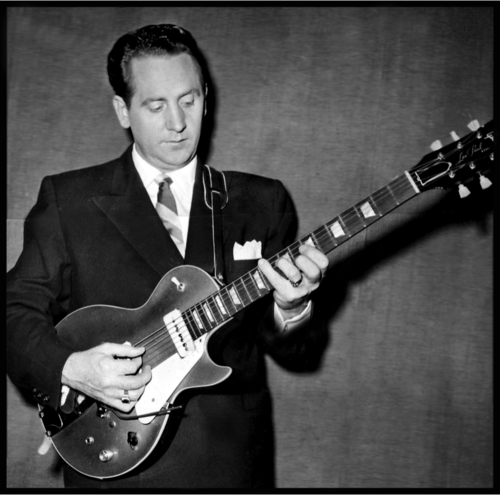
ssss.jpeg

IN THIS PHOTO: Les Paul and his namesake guitar 

Part Twelve: The Solid-Body Electric Guitar

___________

THIS is one of the more complicated…

uuu.jpeg

 IN THIS PHOTO: Les Paul with ‘The Log’

parts of this feature, as I am featuring an instrument that transformed the sound of music. Rather than take a look at the history of the electric guitar, I am interested in a particular innovator and period. I was grabbed when I read a Vogue feature concerning innovations and breakthroughs in music. Similar to my feature, they have listed a range of technologies – from modern revelations to classic pioneering movements. They raised an interesting period of the electric guitar:

“When, in 1941, Les Paul added a neck, strings, tuners, and homemade pickups to a 4-by-4 pine slab that he dubbed the Log, audiences balked. They weren’t prepared to see a musician wrest melodies from a solid block of wood, so Paul added false sides to give it a more familiar shape. That and the instrument’s rich, sustaining tone won over showgoers. It would take Paul another decade to convince the Gibson Guitar Corporation to mass-produce a solid-body electric guitar, but Gibson debuted a model in 1952, named, of course, for Les Paul. As rock ’n’ roll exploded, the electric guitar—cheap, loud, and relatively easy to play—became one of the most popular means of musical expression”.

I don’t think people realise just how important and transformative Les Paul was. Whilst there are claims others were working on the idea of a solid-body electric guitar in 1981/1982, I think many feel that Les Paul was the real force behind that guitar breakthrough. One can look at the artists who have used a Les Paul guitar through the years.

I will go into more detail regarding that side. First, a little bit of background regarding the origins of Les Paul’s solid-body electric guitar:

“Les was in New York in 1941 and his guitar-playing career had taken off but he was haunted by the beautiful sound of his rail guitar. He had friends at the Epiphone factory who let him have access to their guitar-making equipment on Sundays when the factory was closed. Les worked tirelessly on creating an electrically amplified guitar that didn’t have feedback and provided volume, tone and sustain that he could control.

Les took a 4 x 4 piece of pine and strung it like a guitar, added his homemade pickups, a bridge, a Virola tailpiece, strings and the neck of an Epiphone Broadway guitar. He got the sound he wanted and called it “the Log”.

When he took the “Log” to a nightclub to play, the audience was unimpressed. Les was determined and so he then took an old Epiphone guitar, sawed it in half and gave his Log Epiphone “wings” so it would look more like a guitar. He then took the Log with wings to the same nightclub, played a few tunes and the audience couldn’t stop talking about the “new sound.” Les concluded, “People hear with their eyes.”

Les was so confident after that with his “Log” guitar that he took it to show some of the Epiphone executives, but they weren’t interested. He later took his invention to Gibson, where they laughed and called the Log “a broomstick with pickups.” It took another ten years for Gibson to accept the idea of a solid body electric guitar. In 1951, Gibson called Les and worked closely with him to design and build what has become the Gibson Les Paul solid body electric guitar. The first models were sold in 1952, and remain one of the top selling guitars in the world”.

Les Paul died in 2009 at the age of ninety-four. As a guitar maker and musician, he left a huge legacy. The New York Times wrote about the great Lester William Polsfuss when he passed:

“Les Paul, the virtuoso guitarist and inventor whose solid-body electric guitar and recording studio innovations changed the course of 20th-century popular music, died Thursday in White Plains, N.Y. . He was 94.

The cause was complications of pneumonia, the Gibson Guitar Corporation and his family announced.

Mr. Paul was a remarkable musician as well as a tireless tinkerer. He played guitar alongside leading prewar jazz and pop musicians from Louis Armstrong to Bing Crosby. In the 1930s he began experimenting with guitar amplification, and by 1941 he had built what was probably the first solid-body electric guitar, although there are other claimants. With his guitar and the vocals of his wife, Mary Ford, he used overdubbing, multitrack recording and new electronic effects to create a string of hits in the 1950s.

Mr. Paul’s style encompassed the twang of country music, the harmonic richness of jazz and, later, the bite of rock ’n’ roll. For all his technological impact, though, he remained a down-home performer whose main goal, he often said, was to make people happy.

The Gibson company hired Mr. Paul to design a Les Paul model guitar in the early 1950s, and variations of the first 1952 model have sold steadily ever since, accounting at one point for half of the privately held company’s total sales. Built with Mr. Paul’s patented pickups, his design is prized for its clarity and sustained tone. It has been used by musicians like Led Zeppelin’s Jimmy Page and Slash of Guns N’ Roses. The Les Paul Standard version is unchanged since 1958, the company says. In the mid-1950s, Mr. Paul and Ms. Ford moved to a house in Mahwah, N.J., where Mr. Paul eventually installed both film and recording studios and amassed a collection of hundreds of guitars.

“Honestly, I never strove to be an Edison,” he said in a 1991 interview in The New York Times. “The only reason I invented these things was because I didn’t have them and neither did anyone else. I had no choice, really”.

The Gibson Les Paul has evolved through the years, and there have been various signature models and variations. Some of my favourite musicians wield a Gibson Les Paul – including Slash and Pete Townshend. Although the Fender Esquire is now regarded as the first solid-body guitar, I think that Les Paul’s 1941 design is one of the most important moments in music history. He was inducted into the National Inventors Hall of Fame. It is fascinating to read how Les Paul came across the idea for a solid-body electric guitar and how people reacted to it. It must have been quite startling and strange in 1941. With nothing like it on the market, it must have appeared quite unwieldy and impractical! Of course, there was refinement through the years…but one has to look to 1941 and a moment that would, eventually, change music. I shall leave things here. I have covered various pieces of hardware and software in this feature without touching on a particular instrument. I think we all take the electric guitar for granted and many do not consider it to be that much of a breakthrough. The fact that a musician and innovator suggested a solid-body electric guitar eighty years ago, to me, was a massive moment. Whether you consider Les Paul to be the creator of the first solid-body electric guitar or someone else, the design itself was an important concept. Now, guitar like the Gibson Les Paul is synonymous and played by musicians around the world. Few would have guessed in 1941 (or 1952 when the solid-body guitar became more of a commercial reality) that we would be talking so passionately about this invention after eight decades! Although many will pass it by, I think Les Paul’s 1941 solid-body electric guitar proposition is…

zzz.jpg

 IN THIS PHOTO: Les Paul at Carnegie Hall in 2005.PHOTO CREDIT: Colin Archer/Associated Press

AN anniversary worth celebrating.

FEATURE: Second Spin: India.Arie - Voyage to India

FEATURE:


Second Spin

ssss.jpg

India.Arie - Voyage to India

___________

I have featured India.Aria before…

j.jpg

when I covered her amazing debut album, Acoustic Soul, for Vinyl Corner. That was definitely a fantastic and huge memorable debut that has so many great songs on it! When it came to the anticipated follow-up, the results were perhaps not quite as immediate to some. I think that Voyage to India is a phenomenal album, and one that has been underrated. It was released on 24th September, 2002. Whilst there are no songs on the album quite as stunning as Video, or Brown Skin, I think that her second album has plenty of gems on it! I will bring in a couple of reviews for the album soon. If you are new to India.Arie, I would say to start with Acoustic Soul and then move on to Voyage to India. I think that songs like The Truth, and Get It Together are amazing. Voyage to India debuted at number-six on the Billboard 200 and at number-one on the Top R&B/Hip-Hop Albums chart, selling 109,000 copies in its first week. It was certified platinum by the Recording Industry Association of America (RIAA) in 2006. At the 2003 Grammy Awards, it won Best R&B Album; the single, Little Things, won Best Urban/Alternative Performance. Maybe there was a weight of expectation after the success and impact of Acoustic Soul – some critics feeling that India.Arie’s second album was not quite as moving and fresh. I have seen negative reviews for Voyage to India. Uncut gave it one star; Q gave it two stars.

It has received this weird mix of serious acclaim and others writing it off. In a three-star review, this is what Rolling Stone wrote:

“With her second album, Voyage To India. Arie seems more and more like a soulful, self-reflexive version of Tracy Chapman. As with her 2001 debut, Acoustic Soul, Voyage to India is all about the integrity of the acoustic guitar and saying Important Things about life. Arie produced or co-produced nearly all of these mellow, meditative songs -- a collection of bright acoustic guitars, sumptuous bass lines, earthy midrange singing and lyrics that often have the deep emotions and romantic notions of a teenage girl's diary. On "Complicated Melody," she says of her man, "If he were a song, he'd be a complicated melody/That complicated fellow he/I almost cannot sing it on key." The melodies on this album aren't so complicated, but Voyage to India has a similar proud beauty”.

I suppose there is this pressure with the second album. The artist has to prove that the debut was not a fluke and that they have the originality and consistency to come up with something special. Many want a repeat of that debut – so that they are not disappointed -, whereas others are critical if an artist copies their first album. India.Arie’s Voyage to India is a marvellous album and I think, if you have not heard the album, you will not be disappointed.

In a positive review, AllMusic had a lot of love for one of the best releases of 2002.

“Despite an excellent debut, India.Arie still had much to prove with her second record. Several of her neo-soul compatriots, from D'Angelo to Erykah Badu to Macy Gray, had faltered with sophomore albums, and it appeared she may have already said everything she had to say on Acoustic Soul. That anticipation, and trepidation, is exactly what makes Voyage to India such a beautiful surprise; it's a record that easily equals her debut, boasting better vocal performances but also better songwriting and accompanying production. As on her debut, there is a marked balance of organic and artificial: an acoustic guitar paces many tracks, though the edges are shorn off for a digital feel; the beats are often sampled, but there are still plenty of handclaps and fingersnaps; and the arrangements are simple yet obviously very polished. The improvement in her songwriting is most obvious from the first three tracks (after the short intro). The themes driving "Little Things" (keeping it simple), "Talk to Her" (the importance of honesty, warmth, and communication in relationships), and "Slow Down" (taking life one day at a time) certainly have been covered already, many times even, but India.Arie writes with a fresh perspective that makes it sound as though she's the first to broach the topic. And, finally, her delivery is the best of any neo-soul vocalist, barring only the incomparable Jill Scott, alternately earnest and playful and sexy and questing. It all adds up to one of the most glowing comebacks of the year (if she ever left), an important record whose stamp -- the Motown logo -- isn't the only thing it has in similarity with a classic LP by Marvin Gaye or Stevie Wonder”.

Rather than repeat what she did on Acoustic Soul, Voyage to India is India.Arie maturing and evolving as an artist. This is something the BBC remarked upon when they assessed the Colorado-born artist’s second album:

“Voyage to India was a strong follow-up. In 18 short months, its maker had matured. Although Arie often sings like a love-struck family-centered teenager, her vocals are confident and assured. This album’s 12 tracks are linked with short acoustic interludes: Growth, Healing, and Gratitude. Arie’s straightforward sincerity stops this all being mawkishly or new age.

The album’s lead single, Little Things, was based on a subtle phrase from the 1977 track Hollywood by Rufus and Chaka Khan. Like everything here, the lift is discreet and in the best taste. The Truth, a simple reflection on the contradictions of love, is arguably the album’s finest moment. Cataloguing the reasons she loves her partner, she lists, among others, the way her man treats his mother, before concluding, "Love from personal to universal, when most of all, it’s unconditional." When the digital beats step up a little on Slow Down, it comes almost as a surprise. Get It Together – subsequently to be heard in the 2004 animated film Shark Tale – is sweet and touching.

Arie won two Grammys for Voyage to India – Best Urban/Alternative Performance for Little Things and Best R&B Album. It was compared to the best work of her Motown predecessors Marvin Gaye and Stevie Wonder. She, like them, had complete artistic freedom at the label. Although it never really breaks a sweat and at times it sounds a little clinical – The Times once said that her records sounded as if they had been conceived in a laboratory – it’s a swooning, mellow hour in the company of a true talent. Supported by her freewheeling live performances, Voyage to India reached the US top 10, and, while only scraping to 89 in the UK, it bolstered India.Arie’s reputation as one of the finest singers and writers of the early 00s”.

I shall leave things there. I was disappointed when I saw some negative and mixed reviews for Voyage to India. One does not hear India.Arie played as much as she should be. Her music is beautiful and very much her own. I hope that stations play her more in the future! Voyage to India is a magnificent album that I would ask people to…

SPEND some time investigating.

FEATURE: The Lockdown Playlist: Discovery at Twenty: The Best of Daft Punk

FEATURE:


The Lockdown Playlist

mmm.jpg

PHOTO CREDIT: Sony Music

Discovery at Twenty: The Best of Daft Punk

___________

SOME may say I am very late marking…

ppp.jpg

 PHOTO CREDIT: Sony Music

the split of Daft Punk. After twenty-eight years together, Guy-Manuel de Homem-Christo and Thomas Bangalter are calling it quits. Many people have put out playlists to celebrate the duo; many others have paid tribute in their own way. This is how Pitchfork reported the news of the breakup on 22nd February:

“Daft Punk, the Parisian duo responsible for some of the most popular dance and pop songs ever made, have split. They broke the news with an 8-minute video titled “Epilogue,” excerpted from their 2006 film Electroma. Asked if Daft Punk were no more, their longtime publicist Kathryn Frazier confirmed the news to Pitchfork but gave no reason for the breakup.

Thomas Bangalter and Guy-Manuel de Homem-Christo formed Daft Punk in Paris in 1993, helping to define the French touch style of house music. Their debut album, 1997’s Homework, was a dance music landmark, featuring classic singles “Around the World” and “Da Funk.” By the release of its follow-up, Discovery, in 2001, the duo had taken to making public appearances in the robot outfits that became their trademark. The singles “One More Time” and “Harder, Better, Faster, Stronger” cemented them as global superstars. Their imprint in the popular imagination continued to deepen in subsequent years, with records including third album Human After All, live LP Alive 2007, and the Tron: Legacy soundtrack album.

Twenty years into their career, Daft Punk blew up once more with “Get Lucky,” the lead single of their 2013 album Random Access Memories. The ubiquitous track sold millions of copies around the world and won two Grammys for the duo and guests Nile Rodgers and Pharrell Williams, both of whom also featured on follow-up single “Lose Yourself to Dance.” Random Access Memories earned Daft Punk a further three Grammys, including Album of the Year, and the ceremony hosted one of the last stagings of their spectacular live show. “When you know how a magic trick is done, it’s so depressing,” Bangalter told Pitchfork in a 2013 Cover Story. “We focus on the illusion because giving away how it’s done instantly shuts down the sense of excitement and innocence”.

Not only did I want to pay tribute to the magnificent Daft Punk; I wanted to mark twenty years of their second album, Discovery (it was released on 12th March 2001). To me, it remains an underrated album and one that I would encourage people to check out. To mark both a big anniversary of a great album and the sad end of a legendary musical duo, this Lockdown Playlist is…

aaaa.jpg

ALL about the incredible Daft Punk.

FEATURE: International Women’s Day 2021: My Six Favourite Female Artists

FEATURE:


International Women’s Day 2021

sss.jpg

IN THIS PHOTO: Beyoncé 

My Six Favourite Female Artists

___________

FOR this feature…

sssaasds.jpg

 IN THIS PHOTO: Kate Bush/PHOTO CREDIT: Trevor Leighton

I wanted to highlight some seriously amazing women who have made a major impression on me. It is International Women’s Day on Monday, so I am highlighted my six favourite female artists and selecting a few of their albums. I have chosen their ‘best’ album (if that the same as the album I think people should start with then I have selected the one that has received the greatest acclaim), the album to begin with, one that is less obvious but worth exploring, in addition to a classic cut. I also put in a playlist for each. It is a bit like a Buyer’s Guide but the format is slightly different. We will celebrate and salute so many great women in music on Monday but, now, I was eager to spotlight six brilliant artists who, for different reasons, have resonated with me through the years. Here is some fantastic music from…

ooo.jpg

 PHOTO CREDIT: Richard Avedon/©The Richard Avedon Foundation

SOME awesome women.

______________

Beyoncé


The Finest Album


Lemonade

zzzz.jpg

Release Date: 23rd April, 2016

Producers: Beyoncé/Diplo/Kevin Garrett/Jeremy McDonald/Ezra Koenig/Jack White/MeLo-X/Diana Gordon/Boots/DannyBoyStyles/Ben Billions/Mike Dean/Vincent Berry II/James Blake/Jonathan Coffer/Just Blaze/Mike Will Made It

Labels: Parkwood/Columbia

Standout Tracks: Hold Up/Don’t Hurt Yourself/Formation

Review:

“The personal cannot help but overshadow the political when dealt with so forcefully. On the film released on HBO to coincide with this album, Beyoncé does not pull her punches: throwing away her wedding ring, wielding a baseball bat with venom, committing suicide, dripping water, destroying cars… all of this is nothing next to the venom exhibited in the music, and songs.

"So what are you going to say at my funeral now that you've killed me?” she asks. “Here lies the body of the love of my life whose heart I broke without a gun to my head. Here lies the mother of my children both living and dead. Rest in peace, my true love, who I took for granted."

The culmination of the spooked Pray You Catch Me and Hurt Me, Don’t Hurt Yourself features licks from rock stalwart Jack White. The distortion and fury, and occasional breaks of restraint from White work, brutally and wonderfully.

Elsewhere, Daddy Lessons mixes New Orleans jazz with a country beat for reasons best known to itself, and swings like Boris Johnston hanging from a telegraph wire. Sandcastles, meanwhile, sounds like another Coldplay-collaboration-in-waiting (fortunately bereft of Coldplay), not bad as such – actually, really good. It feels a little obligatory, like every Beyoncé album has to contain one or two torch ballads (the other is Forward, featuring James Blake). Her voice though, in its rawness of emotion and tear duct-filling emotion, pushes at the boundaries of what is considered acceptable. Likewise, 6 Inch where her voice starts to crack and falter, sounding oddly vulnerable.

In a week where we have has to come to terms with the loss of one more explosive and unpredictable and talented and genius pop star, it is so reassuring to know that Beyoncé is still among us – and from the sounds of this – has still yet to reach her peak. Both Prince and Nina Simone (whose voice also features here) passed away on April 21. Sometimes it feels like Beyoncé is determined to pick up the mantles of both” – The Independent

Key Cut: Freedom

Where the Start


Destiny's Child

zzz.jpg

Release Date: 17th February, 1998

Producers: Mathew Knowles (exec.)/Tim & Bob/Sylvia Bennett-Smith/Jerry Duplessis/Jermaine Dupri/Rob Fusari/Che Greene/Vincent Herbert/Wyclef Jean/KLC/Jay Lincoln/Mark Morales/O'Dell/Cory Rooney/Terry T/Craig B/Carl Washington/D'Wayne Wiggins

Labels: Columbia/Music World

Standout Tracks: No, No, No Part 2/With Me Part I/With Me Part II

Review:

“Destiny's Child isn't quite just another debut album from an R&B girl group. The quartet worked with Wyclef Jean and Jermaine Dupri among others, and their voices sound beautiful together. Still, much of the album sounds indistinguishable from all the other female groups out there. When Destiny's Child does sound different, as on the single "No, No, No, Pt. 2," they're more than competent” – AllMusic

Key Cut: No, No, No Part I

A Deeper Dive


I Am... Sasha Fierce 

zzzz.jpg

Release Date: 12th November, 2008

Producers: Bama Boyz/Bangladesh/D-Town/Darkchild/Ian Dench/Blac Elvis/Toby Gad/Sean Garrett/Amanda Ghost/Andrew Hey/Jim Jonsin/Beyoncé Knowles/Harold Lilly/Dave McCracken/Rico Love/Ramon ‘REO’ Owen/Stargate/Tricky Stewart/Ryan Tedder/The-Dream/Wayne Wilkins

Labels: Columbia/Music World

Standout Tracks: If I Were a Boy/Halo/Broken-Hearted Girl

Review:

“Having transitioned into a more grown-up sound, Beyoncé has gotten conceptual on us: Her third album offers two discs, a collection of heartfelt ballads credited to Beyoncé and a danceable set credited to "Sasha Fierce," the pop diva's more brash, lady-empowering alter ego. Though some of the slow songs have thoroughly memorable tunes, the lyrics are full of bland self-affirmation and saggy lines like "You're everything I thought you never were." But the "Sasha" disc boasts Beyoncé's most adventurous music yet: She rides frothy techno on "Radio," turns out modal-sounding hooks over 808 bass on "Diva" and juices the eerie, Nine Inch Nails-style beats of "Video Phone" with lines like "Press 'record' and I'll let you film me." Another plus: The girl who blew up going all melismatic has never sung with more restraint than she does on Sasha” – Rolling Stone

Key Cut: Single Ladies (Put a Ring on It)

A Classic Cut


Crazy in Love

cccc.jpg

Release Date: 18th May, 2003

From the Album: Dangerously in Love (2003)

Producers: Rich Harrison/Beyoncé Knowles

_________

Madonna


The Finest Album


Ray of Light

zzzz.jpg

Release Date: 23rd February, 1998

Producers: Madonna/William Orbit/Patrick Leonard/Marius de Vries

Labels: Maverick/Warner Bros.

Standout Tracks: Drowned World/Substitute for Love, Ray of Light/Nothing Really Matters

Review:

“Returning to pop after a four-year hiatus, Madonna enlisted respected techno producer William Orbit as her collaborator for Ray of Light, a self-conscious effort to stay abreast of contemporary trends. Unlike other veteran artists who attempted to come to terms with electronica, Madonna was always a dance artist, so it's no real shock to hear her sing over breakbeats, pulsating electronics, and blunted trip-hop beats. Still, it's mildly surprising that it works as well as it does, largely due to Madonna and Orbit's subtle attack. They've reined in the beats, tamed electronica's eccentricities, and retained her flair for pop melodies, creating the first mainstream pop album that successfully embraces techno. Sonically, it's the most adventurous record she has made, but it's far from inaccessible, since the textures are alluring and the songs have a strong melodic foundation, whether it's the swirling title track, the meditative opener, "Substitute for Love," or the ballad "Frozen." For all of its attributes, there's a certain distance to Ray of Light, born of the carefully constructed productions and Madonna's newly mannered, technically precise singing. It all results in her most mature and restrained album, which is an easy achievement to admire, yet not necessarily an easy one to love” – AllMusic

Key Cut: Frozen

Where the Start


Madonna

zzzz.jpg

Release Date: 27th July, 1983

Producers: John ‘Jellybean’ Benitez/Mark Kamins/Reggie Lucas/Butch Jones

Labels: Sire/Warner Bros.

Standout Tracks: Lucky Star/Holiday/Everybody

Review:

“Madonna vaguely criticized her debut’s sonic palette while promoting its follow-up, 1984’s Like a Virgin, but its focus is part of what makes the album so memorable, so of a time and place. She would soon become known for ritual pop star metamorphosis, but with a clearly defined musical backdrop, Madonna was able to let shine her biggest asset: herself. The way Madonna’s early collaborators talk about her—even the ones who take issue with her, like Reggie Lucas, who wrote “Borderline” and “Physical Attraction” and produced the bulk of the album—often revolves around her decisiveness, her style, the undeniability of her star quality. Some of these songs, like the self-penned workout “Think of Me,” aren’t all that special, but Madonna telling a lover to appreciate before she vacates is so self-assured, the message carries over to the listener. And when the material’s even better, like on “Borderline,” the passionate performance takes it over the top.

Maybe the New York cool kids rolled their eyes at the Midwest transplant after she blew up, but she had effectively bottled their attitude and open-mindedness and sold it to the MTV generation (sleeve of bangles and crucifix earrings not included). Innocent as it may look now, compared to the banned bondage videos and butt-naked books that followed, Madonna was a sexy, forward-thinking record that took pop in a new direction. Its success showed that, with the right diva at the helm, music similar to disco could find a place in the white mainstream—a call to the dance floor answered by everyone from Kylie to Robyn to Gaga to Madonna herself. After venturing out into various genre experiments and film projects, when Madonna needs a hit, the longtime queen of the Dance Songs chart often returns to the club. This approach doesn’t always work, as her last three records have shown, but you can’t fault her for trying to get back to that place where heavenly bodies shine for a night” – Pitchfork

Key Cut: Borderline

A Deeper Dive


Bedtime Stories

xxxx.jpg

Release Date: 25th October, 1994

Producers: Madonna/Dallas Austin/Babyface/Dave ‘Jam’ Hall/Nellee Hooper

Labels: Maverick/Sire/Warner Bros.

Standout Tracks: Survival/Secret/Human Nature

Review:

“Almost all of the aggressive beat and groove combinations that defined Erotica are absent with the exceptions of “I’d Rather Be Your Lover”—a side that deliciously weds Ndegeocello’s bass playing (and rap) to Madonna’s smoky mezzo-soprano—and “Human Nature.” The latter track, a stinging rebuke toward Madonna’s Erotica/Sex naysayers, would have been better served up as a B-side as its petulant script threatened to fracture the more demure, introspective air Madonna embodied on Bedtime Stories. Thankfully, the surrounding song stock buffers and neutralizes its antagonistic energy. Musically though, “Human Nature” is an interesting piece with it being erected around the Main Source hip-hop banger “What You Need”—Main Source themselves had loaned a portion of their cut from the jazz musician Walter Maynard Ferguson’s selection “Spinning Wheel.” “Human Nature” represents one of Bedtime Stories’ multiple arrangements that contain clever sample traces or interpolations, along with “I’d Rather Be Your Lover” (Lou Donaldson),  “Inside of Me” (Aaliyah, The Gap Band, Gutter Snypes), “Forbidden Love” (Grant Green), and “Sanctuary” (Herbie Hancock).

Lyrically, Bedtime Stories showcases Madonna’s keen pen that captures the elusive emotional space between strength and vulnerability through love songs or semi-autobiographical entries. “Survival,” “Love Tried to Welcome Me” and “Sanctuary” are undeniable canonical highlights” – Albumism

Key Cut: Take a Bow

A Classic Cut


Vogue

ffff.jpg

Release Date: 27th March, 1990

From the Album: I'm Breathless: Music from and Inspired by the Film Dick Tracy (1990)

Producers: Madonna/Shep Pettibone

_____________

Joni Mitchell


The Finest Album


Blue

ddd.jpg

Release Date: 22nd June, 1971

Producer: Joni Mitchell

Label: Reprise

Standout Tracks: Blue/River/A Case of You

Review:

“And so it is with Blue, Mitchell’s fourth album. It has, as the title suggests, a melancholy atmosphere, one that functions on two levels: one personal, the other universal. It feels as much like the diary entries of a woman written in the wake of a breakup as it does a more general statement about a generation reeling after a series of shocks (Altamont, Manson, RIP the Fabs). Blue evokes the mourning after the nights of free-love before. If The Beatles’ split was symptomatic of the failure of the youth to come together, Blue felt like the net result. Orphaned by the death of the hippie nation, Mitchell was left to ponder a future alone, minus the comfort of community. Blue introduced a new paradigm for rock: the solo singer-songwriter confessing her woes, making her way in the world alone, without the solace of a band.

Blue invites such fanciful commentary. It feels like poetry set to music, and even though many of the lyrics are simple (“All I really, really want our love to do is to bring out the best in me and you,” from the opening track All I Want), often the music seems to be accommodating the words. As a consequence, the melodies, tracked by Mitchell’s swooping, soaring vocals, can be so hard to follow that it’s almost a miracle anyone can remember them, let alone the artist.

And yet that’s exactly what did happen: these songs became indelibly stamped on the minds of Americans and young people everywhere, isolated and bewildered at the start of a new decade. Carey (which was, tune-wise, Big Yellow Taxi’s slight return), the title-track and The Last Time I Saw Richard may have been highly personal, with speculation that they were about, respectively, former beaus James Taylor, David Blue and her ex-husband; A Case Of You may have been as private as a love letter; and Little Green, about giving up a child for adoption, may have been excoriating autobiography. Nevertheless, these songs, sparsely arranged on piano, acoustic guitar and Appalachian dulcimer, delivered with a jazzy looseness and enhanced by the sustained mood of quiet despair, soon became the property of everyone” – BBC

Key Cut: Carey

Where the Start


Ladies of the Canyon

ssss.jpg

Release Date: April 1970

Producer: Joni Mitchell

Labels: Reprise/Warner Bros.

Standout Tracks: For Free/Ladies of the Canyon/Big Yellow Taxi

Review:

“This wonderfully varied release shows a number of new tendencies in Joni Mitchell's work, some of which would come to fuller fruition on subsequent albums. "The Arrangement," "Rainy Night House," and "Woodstock" contain lengthy instrumental sections, presaging the extensive non-vocal stretches in later selections such as "Down to You" from Court and Spark. Jazz elements are noticeable in the wind solos of "For Free" and "Conversation," exhibiting an important influence that would extend as late as Mingus. The unusually poignant desolation of "The Arrangement" would surface more strongly in Blue. A number of the selections here ("Willy" and "Blue Boy") use piano rather than guitar accompaniment; arrangements here are often more colorful and complex than before, utilizing cello, clarinet, flute, saxophone, and percussion. Mitchell sings more clearly and expressively than on prior albums, most strikingly so on "Woodstock," her celebration of the pivotal 1960s New York rock festival. This number, given a haunting electric piano accompaniment, is sung in a gutsy, raw, soulful manner; the selection proves amply that pop music anthems don't all have to be loud production numbers. Songs here take many moods, ranging from the sunny, easygoing "Morning Morgantown" (a charming small-town portrait) to the nervously energetic "Conversation" (about a love triangle in the making) to the cryptically spooky "The Priest" (presenting the speaker's love for a Spartan man) to the sweetly sentimental classic "The Circle Game" (denoting the passage of time in touching terms) to the bouncy and vibrant single "Big Yellow Taxi" (with humorous lyrics on ecological matters) to the plummy, sumptuous title track (a celebration of creativity in all its manifestations). This album is yet another essential listen in Mitchell's recorded canon” – AllMusic

Key Cut: Woodstock

A Deeper Dive


Clouds

aaaa.jpg

Release Date: 1st May, 1969

Producers: Joni Mitchell/Paul A. Rothchild

Label: Reprise

Standout Tracks: Tin Angel/Chelsea Morning/The Fiddle and the Drum

Review:

“Clouds (1969) is the introduction to Mitchell's real deal, shaking folk tradition and giving off a little humor and spirit. The album sounds casual. Lyrically, she was transitioning from the era's de facto hippie sensualism (colors! the weather! vibes!) to the classically prosodic style (Keats! Cohen!) she'd become known for. The album's biggest signs of life are two of her most famous songs-- the kicky "Chelsea Morning", which is about as straightforward as Mitchell ever got, and "Both Sides Now". Though she'd known burden and heartache plenty by her still-tender age (she'd borne a child alone and in secret after dropping out of art school and married singer Chuck Mitchell in order to make a family; he changed his mind a month later and she put the baby up for adoption) she sounds a bit too young and chipper to be singing about disillusionment. Still, Clouds was a landmark, and she landed a Grammy for Best Folk Performance” – Pitchfork

Key Cut: Both Sides, Now

A Classic Cut


Help Me

zzzz.jpg

Release Date: March 1974

From the Album: Court and Spark (1974)

Producer: Joni Mitchell

 _____________

Kate Bush


The Finest Album


Hounds of Love

aaaaa.jpg

Release Date: 16th September, 1985

Producer: Kate Bush

Label: EMI

Standout Tracks: Running Up That Hill (A Deal with God)/Hounds of Love/Hello Earth

Review:

“Using her voice, both through various effects generators and as a lead vocalist, she has devised a mechanism whereby some of her more quirky - and sometimes irritating - vocal mannerisms can be integrated into the album as orchestral elements, giving them a real context.

True, here and there, as in 'Hounds Of Love', her vocal comes close to the moment of grate-ness that signifies a mite too much mannerism for comfort, but several hearings show it to be more or less in context.

One track in particular 'And Dream Of Sleep' seems to me to sum up the strengths of the album. Actually it's a simple piano-accompanied ballad, evoking that moment of despair when you can't sleep and want to, but it is made by the melody the orchestration, (simple interpolations on bouzouki by Donal Lunny and whistle by John Sheahan), and the imagery: *If they find me racking white horses/They'll not take me for a buoy.* Now where did that come from? And the last line *Ooh their breath is warm/And they smell like sleep/And they say they take me home/Like poppies heavy with seed.* Poppies heavy with seed! Yes!

Which is another way of saying that many of the songs here are evocative not explicit, the words used are imagistic and mercurial in their choice, and deployment. They come from the apparently vast store of references that Kate Bush has accumulated through reading, seeing, listening, touching... Good grief! Almost lost it there!

But there is a truth in the over-statement, that the album touches on, let's say, areas that most others don't, without ever really becoming absolutely specific - in 'Mother Stands For Comfort' for example, there is reference to the murderer, the madman. But is it literal or figurative?

Some people may not be mad about the idea of songs that reveal themselves as a range of possibilities of meaning rather than statements, but personally I like it - in the right hands. It's not vagueness, it's simple the use of words that are loaded with meanings depending on the angle from which you approach them. The other side of this is the strength of the production, the careful architecture of the noise. There is a great density here, a richness.

Irish people will derive amusement and interest from two elements, the Irish influence in the music, some of which was recorded here (arrangements by Bill Whelan) and the song 'Waking The Witch', the third track in a remarkable series of dream evocations that open side two. *Bless me father for I have sinned.* she sings. *I question your innocence* he thunders in reply. Ah yes!

'Hounds Of Love' has continued to invite repeated listens, and (a good sign) keeps on revealing new responses, and showing the intent of the various accentricities. There are a few other singles there, but it's not really that king of album. It's a very powerful and, dare I say it, female album, and I'll be a plying it long than most” – Hot Press   

Key Cut: The Big Sky

Where the Start


The Kick Inside

zzz.jpg

Release Date: 17th February, 1978

Producer: Andrew Powell

Labels: EMI (U.K.)/Harvest (U.S.)

Standout Tracks: Moving/The Man with the Child in His Eyes/Them Heavy People

Review:

“Strange Phenomena” is equally awed, Bush celebrating the menstrual cycle as a secret lunar power and wondering what other powers might arrive if we were only attuned to them. She lurches from faux-operatic vocal to reedy shriek, marches confidently in tandem with the strident chorus and unleashes a big, spooky “Woo!,” exactly as silly as a 19-year-old should be. As is “Oh to Be in Love,” a baroque, glittering harpsichord romp about a romance that brightens the colors and defeats time.

She only fails to make a virtue of her naivety on “Room for the Life,” where she scolds a weeping woman for thinking any man would care about her tears. The sweet calypso reverie is elegant, and good relief from the brawnier, propulsive arrangements that stood staunchly alongside Steely Dan. But Bush shifts inconsistently between reminding the woman that she can have babies and insisting, more effectively, that changing one’s life is up to you alone. The latter is clearly where her own sensibilities lie: “Them Heavy People,” another ode to her teachers, has a Woolf-like interiority (“I must work on my mind”) and a distinctly un-Woolf-like exuberance, capering along like a pink elephant on parade. “You don’t need no crystal ball,” she concludes, “Don’t fall for a magic wand/We humans got it all/We perform the miracles.”

The Kick Inside was Bush’s first, the sound of a young woman getting what she wants. Despite her links to the 1970s’ ancien régime, she recognized the potential to pounce on synapses shocked into action by punk, and eschewed its nihilism to begin building something longer lasting. It is ornate music made in austere times, but unlike the pop sybarites to follow in the next decade, flaunting their wealth while Britain crumbled, Bush spun hers not from material trappings but the infinitely renewable resources of intellect and instinct: Her joyous debut measures the fullness of a woman’s life by what’s in her head” – Pitchfork  
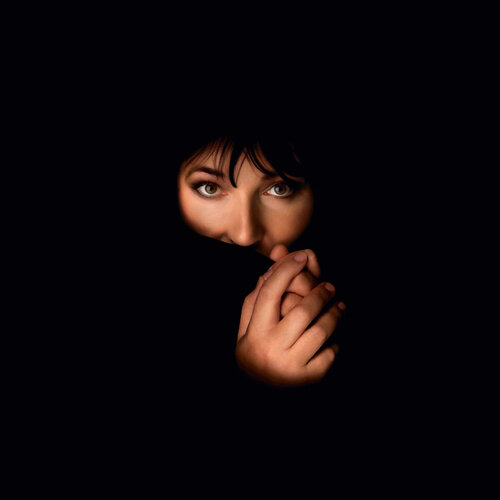
Key Cut: Wuthering Heights

A Deeper Dive


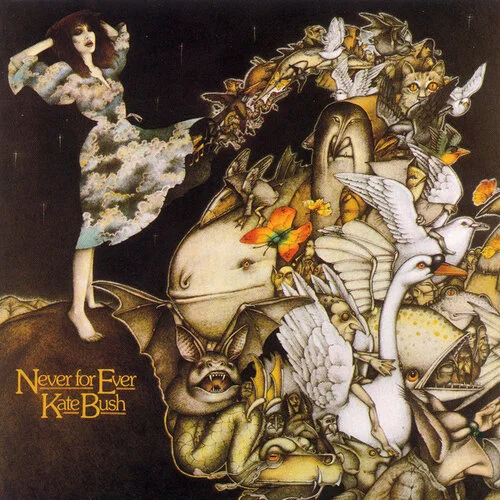
Never for Ever

dddd.jpg

Release Date: 8th September, 1980

Producers: Kate Bush/Jon Kelly

Labels: EMI (U.K.)/EMI America (U.S.)/Harvest (Canada)

Standout Tracks: The Wedding List/Army Dreamers/Breathing

Review:

“You listen to all of these records in sequence and good as The Kick Inside is, it’s just very apparent that the songwriting has gone up a gear with Never Forever. Strident, diverse, and intense Never Forever is the last Bush album with batshit mental prog art, the last album with an outside producer (though she co-produced with Jon Kelly), and the last record before she started using her beloved Fairlight synthesiser/sampler. It was also her third album in three years, that preempted the first meaningful gap in her career - you could point at the ways in which it predicts The Dreaming and call it a transitional album, but the truth is Never for Ever feels like the [apotheosis] of Leotard-era Kate Bush. The songs are just dazzlingly strong and distinctive. There are singles: ‘Babooska’ is a lot of fun, and the closing one-two of the eerie ‘Army Dreamers’ and the apocalyptic ‘Breathing’ is remarkable. But there’s a hell of a lot of little-remembered gold amongst the album tracks: the breakneck ‘Violin’ and tongue-in-cheek murder ballad ‘The Wedding List’ are really extraordinarily good pieces of songwriting” – Drowned in Sound

Key Cut: Babooshka

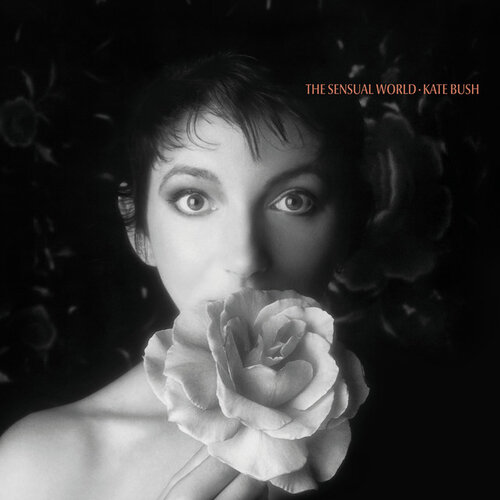
A Classic Cut


This Woman’s Work

gggg.jpg

Release Date: 20th November, 1989

From the Album: The Sensual World (1989)

Producer: Kate Bush

_____________

Björk


The Finest Album


Post

cccc.jpg

Release Date: 13th June, 1985

Producers: Björk/Nellee Hooper/Graham Massey/Tricky/Howie B

Labels: One Little Indian/Elektra

Standout Tracks: Hyper-ballad/It’s Oh So Quiet/Isobel

Review:

“After Debut's success, the pressure was on Björk to surpass that album's creative, tantalizing electronic pop. She more than delivered with 1995's Post; from the menacing, industrial-tinged opener, "Army of Me," it's clear that this album is not simply Debut redux. The songs' production and arrangements -- especially those of the epic, modern fairy tale "Isobel" -- all aim for, and accomplish, more. Post also features Debut producer Nellee Hooper, 808 State's Graham Massey, Howie B, and Tricky, who help Björk incorporate a spectrum of electronic and orchestral styles into songs like "Hyperballad," which sounds like a love song penned by Aphex Twin. Meanwhile, the bristling beats on the volatile, sensual "Enjoy" and the fragile, weightless ballad "Possibly Maybe" nod to trip-hop without being overwhelmed by it. As on Debut, Björk finds new ways of expressing timeworn emotions like love, lust, and yearning in abstractly precise lyrics like "Since you went away/I'm wearing lipstick again/I suck my tongue in remembrance of you," from "Possibly Maybe." But Post's emotional peaks and valleys are more extreme than Debut's. "I Miss You"'s exuberance is so animated, it makes perfect sense that Ren & Stimpy's John Kricfalusi directed the song's video. Likewise, "It's Oh So Quiet" -- which eventually led to Björk's award-winning turn as Selma in Dancer in the Dark -- is so cartoonishly vibrant, it could have been arranged by Warner Bros. musical director Carl Stalling. Yet Björk sounds equally comfortable with an understated string section on "You've Been Flirting Again." "Headphones" ends the album on an experimental, hypnotic note, layering Björk's vocals over and over till they circle each other atop a bubbling, minimal beat. The work of a constantly changing artist, Post proves that as Björk moves toward more ambitious, complex music, she always surpasses herself” – AllMusic

Key Cut: Army of Me

Where the Start


Debut

xxxx.jpg

Release Date: 5th July, 1993

Producers: Nellee Hooper/Björk

Labels: One Little Indian/Elektra

Standout Tracks: Venus as a Boy/Big Time Sensuality/Violently Happy

Review:

“The first three tracks are built from hypnotic loops. On 'Human Behaviour' a swampy kettle drum jazz vibe circles around Bjork's rasping larynx, trying to find a melody but eventually settling for the search. 'Crying' swims on a niggling piano riff, while the wonderful 'Venus As A Boy' creates an Arabic mantra. Here, as on most of the album, the tonsil gymnastics are kept to a minimum, but it's still a vastly disarming sound: a voice only a lifetime of Marlboro abuse or a guttural foreign language where people have names like Gudmundsdottir could create.

There's a bonkers part in 'There's More To Life Than This', though, where she sounds positively possessed. Allegedly recorded live in the Milk Bar toilets, a muffled house beat chunders away somewhere in the distance amid giggling chatter, then a door is closed and Bjork is left to sing alone about nicking boats and sneaking off into the night. This woman is quite patently barmy.

But even this is ill preparation for 'Like Someone In Love'. Accompanied only by 80-year-old harpist Corki Hale, it's the kind of tearful ballad you'd expect to find in the sad interlude of some crackly old black and white Judy Garland film. More fun, madness and surprise follows - the pulsating grind of 'Big Time Sensuality' and 'Violently Happy' plus the sweet unearthly breeze of 'One Day' which ripples along to baby gurgles and ambient fizzes.

This is an album that believes music can be magical and special. It will either puzzle you or pull you into its spell. And if you fall into the latter category, 'Debut' will make every other record you own seem flat, lifeless and dull by comparison” – NME   

Key Cut: Human Behaviour

A Deeper Dive


Volta

aaaa.jpg

Release Date: 1st May, 2007

Producers: Björk/Timbaland/Danja/Mark Bell/Damian Taylor

Labels: One Little Indian (U.K.)/Polydor (Europe)/Elektra/Atlantic (N.A.)

Standout Tracks: Wanderlust/The Dull Flame of Desire/Declare Independence

Review:

“Once again finding harmony and creating alchemy between seeming opposites, on Volta Björk is bold but thoughtful, delicate yet strong, accessible and avant. The intricacy and complexity of projects like Medúlla and Drawing Restraint 9 suggested that she might have left the more direct side of her work behind, but Volta's opening track and lead single, "Earth Intruders," puts that notion to rest: the song literally marches in, riding a bubbling, ritualistic beat courtesy of Timbaland and Konono No. 1's electric thumb-pianos. Björk howls "Turmoil! Carnage!" like incantations over the din, and after several albums' worth of beautiful whispers, it's a joy to hear her raise her voice and volume like this. "Wanderlust" follows and provides the yin to "Earth Intruders"' yang, its horns and brooding melody giving it the feel of a moodier, more contemplative version of "The Anchor Song." These two songs set the tone for the rest of Volta's pendulum-like swings between sounds and moods, all of which are tied together by found-sound and brass-driven interludes that give the impression that the album was recorded in a harbor -- an apt metaphor for how ideas and collaborators come and go on this album. Timbaland's beats resurface on "Innocence," another of Volta's most potent moments; a sample of what sounds like a man getting punched in the gut underscores Björk's viewpoint that purity is something powerful, not gentle. Antony and the Johnsons' Antony Hegarty lends his velvety voice to two outstanding but very different love songs: "The Dull Flame of Desire" captures swooning romance by pairing Björk and Hegarty's voices with a slowly building tattoo courtesy of Lightning Bolt drummer Brian Chippendale; "My Juvenile," which is dedicated to Björk's son Sindri, closes Volta with a much gentler duet. Considering how much sonic and emotional territory the album spans -- from the brash, anthemic "Declare Independence," which sounds a bit like Homogenic's "Pluto," to "Pneumonia" and "Vertebrae by Vertebrae," which are as elliptical and gentle as anything on Vespertine or Drawing Restraint 9 -- Volta could very easily sound scattered, but this isn't the case. Instead, it finds the perfect balance between the vibrancy of her poppier work in the '90s and her experiments in the 2000s” – AllMusic

Key Cut: Earth Intruders

A Classic Cut


Jóga

xxx.jpg

Release Date: 15th September, 1997

From the Album: Homogenic (1997)

Producers: Björk/Mark Bell

_____________

PJ Harvey


The Finest Album


To Bring You My Love

aaaa.jpg

Release Date: 27th February, 1995

Producers: Flood/John Parish/PJ Harvey

Label: Island

Standout Tracks: To Bring You My Love/C'mon Billy/Send His Love to Me

Review:

“Following the tour for Rid of Me, Polly Harvey parted ways with Robert Ellis and Stephen Vaughn, leaving her free to expand her music from the bluesy punk that dominated PJ Harvey's first two albums. It also left her free to experiment with her style of songwriting. Where Dry and Rid of Me seemed brutally honest, To Bring You My Love feels theatrical, with each song representing a grand gesture. Relying heavily on religious metaphors and imagery borrowed from the blues, Harvey has written a set of songs that are lyrically reminiscent of Nick Cave's and Tom Waits' literary excursions into the gothic American heartland. Since she was a product of post-punk, she's nowhere near as literally bluesy as Cave or Waits, preferring to embellish her songs with shards of avant guitar, eerie keyboards, and a dense, detailed production. It's a far cry from the primitive guitars of her first two albums, but Harvey pulls it off with style, since her songwriting is tighter and more melodic than before; the menacing "Down by the Water" has genuine hooks, as does the psycho stomp of "Meet Ze Monsta," the wailing "Long Snake Moan," and the stately "C'Mon Billy." The clear production by Harvey, Flood, and John Parish makes these growths evident, which in turn makes To Bring You My Love her most accessible album, even if the album lacks the indelible force of its predecessors” – AllMusic

Key Cut: Down by the Water

Where the Start


Dry

kkk.jpg

Release Date: 30th March, 1992

Producers: Head/Rob Ellis/PJ Harvey

Label: Too Pure

Standout Tracks: O Stella/Dress/Fountain

Review:

“These extreme contrasts confused critics at the time: Dry played like a feminist statement but she refused the label, wondering why anyone remarked on her sexual lyrics when plenty of rock and blues bands had gone further before her. Mostly dressed in black, her hair scraped back severely, she seemed to eschew image, but then posed topless on the cover of NME. She insisted that there was no depth to the lyrics, and professed to being baffled by people’s attempts to interpret them, but her considered use of female archetypes to depict a woman’s fall and subsequent vengeance told a different story. All of these things were true at once, part of her distancing push-and-pull. As she told Spin in ’93, “The biggest protection you can have is if people think they’ve got you and they haven’t got you at all.”

She pulls the same trick on Dry’s scumbag subject, going into the record's vengeful second half. She’s Delilah to his Samson on “Hair,” flattering him into submission and cutting off his mane. “I’ll keep it safe,” she sings, sounding emboldened by power, before flipping on a knife edge, realizing: “You’re mine.” The bass zooms as if mapping the swift transfer of power; the rhythm section pounds like Samson’s impotent rage. “Joe” is the record’s most manic moment. There’s no quiet-loud shift, just pure piledriver dynamics as she spits nails at the treachery she’s experienced: “Always thought you’d come rushing in to clear the shit out of my eye/Joe, ain’t you my buddy, thee?”

But rather than commit bloody murder as you might expect, she retreats on “Plants and Rags,” “[easing] myself into a body bag,” and finding solace at home: “Who thought they could take away that place?” she asks as the violin swirls to a deranged squall. Her love of Slint comes through on the menacing fretboard harmonics of “Fountain,” where she washes herself clean and a Jesus-like figure shrouds her modesty in leaves. On “Water,” her first utterance of the word sounds like she’s dying of thirst. By the chorus, when she’s walked into the sea, invoking Mary and Jesus again, she sounds as though the crashing waves are emanating from her own throat” – Pitchfork

Key Cut: Sheela-na-gig

A Deeper Dive


Uh Huh Her

kkk.jpg

Release Date: 31st May, 2004

Producer: PJ Harvey

Label: Island

Standout Tracks: The Pocket Knife/The Desperate Kingdom of Love/Seagulls

Review:

“Even though she's not quite as overt about it as Madonna or David Bowie, PJ Harvey remains one of rock's expert chameleons. Her ever-changing sound keeps her music open to interpretation, and her seventh album, Uh Huh Her, is no different in that it departs from what came before it. Uh Huh Her -- a title that can be pronounced and interpreted as an affirmation, a gasp, a sigh, or a laugh -- is, as Harvey promised, darker and rawer than the manicured Stories from the City, Stories from the Sea. That album was a bid for the mainstream that Harvey said she made just to see if she could; this album sounds like she made it because she had to. However, despite the playful tantrum "Who the Fuck?" and the noisy mix of pent-up erotic longing and frustration that is "The Letter," Uh Huh Her isn't the Rid of Me redux that one might envision as a reaction to the previous album's gloss. Instead, Harvey uses some of each of the sounds and ideas that she has explored throughout her career. The gallery of self-portraits, juxtaposed with snippets of Harvey's notebooks, gracing Uh Huh Her's liner notes underscores the feeling of culmination and moving forward. The results aren't exactly predictable, though, and that's part of what makes songs like "The Life and Death of Mr. Badmouth" interesting. Earlier in Harvey's career, a track like this probably would have exploded in feral fury, but here it simmers with a crawling tension, switching atmospheric keyboards for searing guitars. Indeed, keyboards and odd instrumental flourishes abound on Uh Huh Her, making it the most sonically interesting PJ Harvey album since Is This Desire? Lyrically, heartache, sex, and feminine roles are still Harvey's bread and butter, but she manages to find something new in these themes each time she returns to them. "Pocket Knife" is an especially striking example: a beautifully creepy murder ballad, the song conjures images of hidden feminine power -- a pocketknife concealed by a wedding dress -- as well as lyrics like "I'm not trying to cause a fuss/I just wanna make my own fuck-ups." "You Come Through," meanwhile, is nearly as direct and vulnerable as anything that appeared on Stories from the City, Stories from the Sea. Uh Huh Her isn't perfect; the track listing feels top-loaded, some of the later songs, such as "Cat on the Wall" and "It's You" come close to sounding like generic PJ Harvey (if such a thing is possible), and the minute-long track of crying seagulls is either a distraction or a palate cleanser, depending on your outlook. Still, Uh Huh Her does so many things right, like the gorgeous, Latin-tinged "Shame" and the stripped-down beauty of "The Desperate Kingdom of Love" (one of a handful of short, glimpse-like songs that give the album an organic ebb and flow), that its occasional stumbles are worth overlooking. Perhaps the most nuanced album in PJ Harvey's body of work, Uh Huh Her balances her bold and vulnerable moments, but remains vital” – AllMusic

Key Cut: Shame

A Classic Cut


This Is Love

zzzz.jpg

Release Date: 8th October, 2001

From the Album: Stories from the City, Stories from the Sea (2000)

Producers: Rob Ellis/Mick Harvey/Sam Cunningham

FEATURE: Inside the Other Sides: Ten Brilliant Kate Bush B-Sides

FEATURE:


Inside the Other Sides

zzzz.jpg

Ten Brilliant Kate Bush B-Sides

___________

I guess the idea of a B-side…

wwwww.jpg

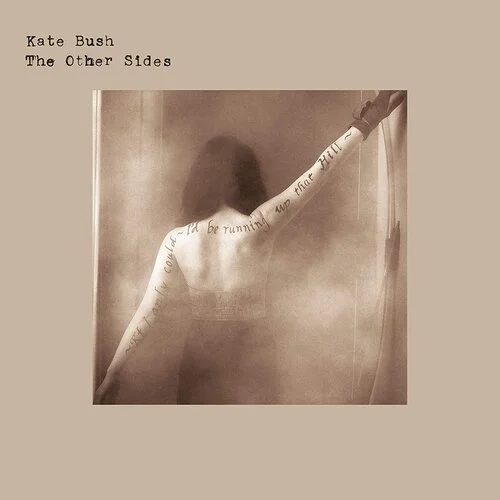
is obsolete when we have streaming. I think some artists put out B-sides when they release stuff to vinyl but, as most are just putting out albums and singles on streaming sites, the concept has sort of faded out. I used to love buying singles, as you usually got a remix of that track and at least one B-side. If some artists’ B-sides were a bit boring or didn’t warrant much focus, I think that Kate Bush is someone who would pop out some really interesting B-sides. There are some where you wonder why they were not released as singles themselves. As Kate Bush’s The Other Sides was released on 8th March, 2019, I wanted to mark two years of that album. I would urge people to buy it, as it is a terrific release. I am not sure if one can buy a vinyl copy of this album. You can get the vinyl as part of the Remastered in Vinyl IV set, but I am not sure whether you can get it standalone. As Classic Pop wrote in their review from 2019, The Other Sides is worth getting:

“After the fanfare of the reissue of two CD and four vinyl Kate Bush Remastered boxsets last November, as well as separate remastered versions of every album, Kate Bush now releases The Other Sides B-sides and rarities compilation as a 4CD set.

This material was already available within the Kate Bush Remastered CD Box 2, which may trigger a few grumbles from completists who bought that pricey set purely to obtain it. Yet more casual Bush fans will find plenty here to treasure.

The first CD offers 12″ remixes of Bush hymns such as Running Up That Hill, The Big Sky and Hounds Of Love, but it’s the two CDs of non-chronological B-sides that inevitably intrigue. She has always been about quality control, but it’s hard to believe that these gems were mere flip-sides.

xxxx.jpg

You Want Alchemy, the B-side to 1994’s The Red Shoes, is a breathy reverie, a delirious exhalation of joy. Under The Ivy, which backed Running Up That Hill, is a fragile piano-led meditation. Cloudbusting B-side Burning Bridge is a fever dream lifted by choral voices.

Verging on the twee, 1993’s Home For Christmas is a shoo-in for an anaemic cover on the next Yuletide John Lewis advert, should their evil marketing bods catch wind of it. It’s a rare Bush misstep: far more typical is Passing Through Air, a crystalline meditation that was the flip to Army Dreamers.

The final CD gathers covers: a husky sigh through Elton John’s Rocket Man, a charged murmur of Marvin Gaye’s Sexual Healing, plus folky ruminations (always her first love) and Irish airs and rebel songs. Bush can even make Elton’s much-mocked Candle In The Wind sound poetic and profound rather than the sentimental hogwash it truly is: she simply inhabits the song, as she inhabits all that she sings. Tremendous”.

I wanted to highlight ten fantastic Kate Bush B-sides. Many of her B-sides are not available on streaming services and, as they hold so much intrigue and power, I wonder whether they will be made available (one can listen to some selections from The Other Sides on Spotify, but there are only nine tracks in total; you can get the tracks on YouTube). To nod to Kate Bush and her ability to create these unique and arresting B-sides, I have put together her ten best…

_________________

The Empty Bullring

eeee.jpg

A-Side: Breathing

Release Date: 14th April, 1980

Album: Never for Ever

Label: EMI

Buy: https://www.amazon.co.uk/Breathing-Empty-Bullring-7-Vinyl/dp/B004706XKU

Ran Tan Waltz

aaaa.jpg

A-Side: Babooshka

Release Date: 27th June, 1980

Album: Never for Ever

Label: EMI

Buy: https://www.amazon.co.uk/Babooshka-Vinyl-single-Vinyl-Single-waltz/dp/B0040642BI

Lord of the Reedy River (Originally by Donavon)

aaaa.jpg

A-Side: Sat in Your Lap

Release Date: 21st June, 1980

Album: The Dreaming

Label: EMI

Buy: https://www.amazon.co.uk/Your-Lord-Reedy-River-Vinyl/dp/B003SGZQLG

Under the Ivy

aaaa.jpg

A-Side: Running Up That Hill

Release Date: 5th August, 1985

Album: Hounds of Love

Label: EMI

Buy: https://www.amazon.co.uk/Running-That-Hill-Under-Vinyl/dp/B0055SDOKK

My Lagan Love (Trad.)

zzzz.jpg

A-Side: Cloudbusting

Release Date: 14th October, 1985

Album: Hounds of Love

Label: EMI

Walk Straight Down the Middle

zzzz.jpg

A-Side: The Sensual World

Release Date: 18th September, 1989

Album: The Sensual World

Label: EMI

Be Kind to My Mistakes

zxx.jpg

PHOTO CREDIT: Guido Harari 

A-Side: This Woman’s Work

Release Date: 20th November, 1989

Album: The Sensual World

Label: EMI

Buy: https://www.amazon.co.uk/This-Womans-Work-KATE-BUSH/dp/B003YXSLE2

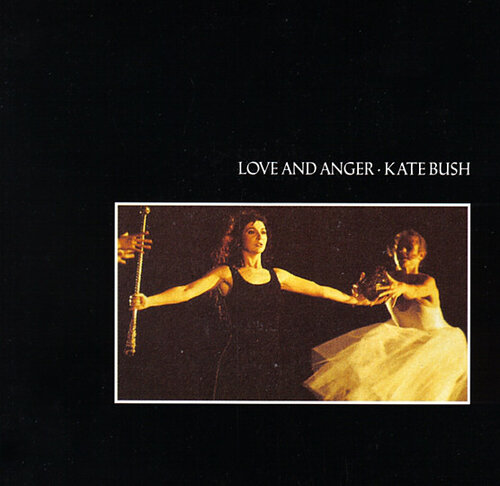
One Last Look Around the House Before We Go

zz.jpg

A-Side: Love and Anger

Release Date: 26th February, 1990

Album: The Sensual World

Label: EMI

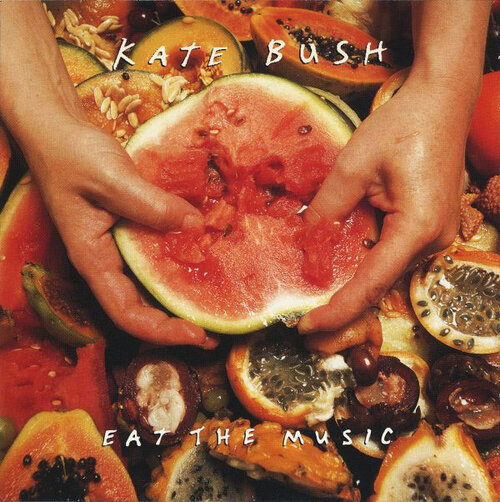
Show a Little Devotion

cccc.jpg

A-Side: Eat the Music

Release Date: 15th November, 1993

Album: The Red Shoes

Label: EMI

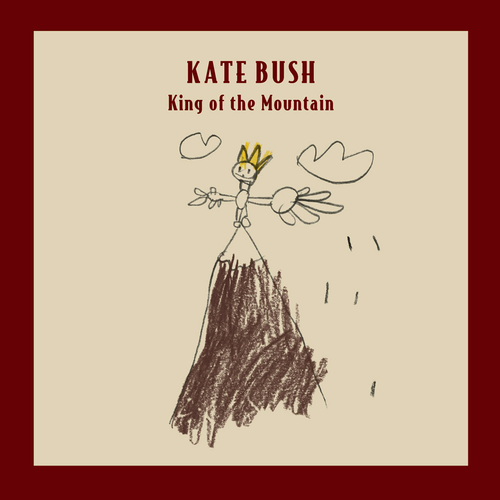
Sexual Healing (Marvin Gaye/Odell Brown/David Ritz)

zzzz.png

A-Side: King of the Mountain

Release Date: 24th October, 2005  

Album: Aerial

Label: EMI

FEATURE: Purple Reign: Five Years Gone: Prince’s Essential Works

FEATURE:


Purple Reign

nhhh.jpg

PHOTO CREDIT: Jeff Katz/The Prince Estate 

Five Years Gone: Prince’s Essential Works

___________

THIS is ahead of time…

asss.jpg

but, in 2016, we lost some terrific musicians. Aside from David Bowie, we lost another icon in the form of Prince. He died on 21st April and, ahead of the fifth anniversary, I wanted to put out some Prince-related features. I will let you know what this one is about but, just before, it is worth giving you some information about The Purple One:

“Prince Rogers Nelson (June 7, 1958 – April 21, 2016) was an American singer-songwriter, multi-instrumentalist, record producer, dancer, actor, and director. He is widely regarded as one of the greatest musicians of his generation. Considered a guitar virtuoso, he was well known for his eclectic work across multiple genres, flamboyant and androgynous persona, and wide vocal range which included a far-reaching falsetto and high-pitched screams.

Prince's innovative music integrated a wide variety of styles, including funk, R&B, Latin, country, rock, new wave, classical, soul, synth-pop, psychedelia, pop, jazz, industrial, and hip hop. He pioneered the Minneapolis sound, a funk rock subgenre that emerged in the late 1970s. He was also known for his prolific output, releasing 39 albums during his life, with a vast array of unreleased projects left in a vault at his home after his death; it is believed that the vault contains dozens of fully produced albums and over 50 music videos that have never been released, along with various other media. He released hundreds of songs both under his own name and multiple pseudonyms during his life, as well as writing songs that were made famous by other musicians, such as "Nothing Compares 2 U" and "Manic Monday". Estimates of the complete number of songs written by Prince range anywhere from 500 to well over 1,000.

 Born and raised in Minneapolis, Minnesota, Prince signed a recording contract with Warner Bros. Records at the age of 19. Prince went on to achieve critical success with the innovative albums Dirty Mind (1980), Controversy (1981), and 1999 (1982). His sixth album, Purple Rain (1984), was recorded with his backup band the Revolution, and was the soundtrack to his film acting debut of the same name. Purple Rain spent six consecutive months atop the Billboard 200. Prince won the Academy Award for Best Original Song Score. After disbanding the Revolution, Prince went on to achieve continued critical success with Sign o' the Times (1987). In the midst of a contractual dispute with Warner Bros in 1993, he changed his stage name to the unpronounceable symbol Logo. Hollow circle above downward arrow crossed with a curlicued horn-shaped symbol and then a short bar (known to fans as the "Love Symbol"), and was sometimes referred to as the Artist Formerly Known as Prince or simply the Artist. He signed with Arista Records in 1998 and began referring to himself by his own name again in 2000. After returning to mainstream prominence following a performance at the Grammy Awards ceremony in 2004, he scored six US top ten albums over the following decade. Joni Mitchell said of Prince, "He's driven like an artist. His motivations are growth and experimentation as opposed to formula and hits."

In mid-life, Prince reportedly experienced considerable pain from injuries to his body (mainly hips) sustained through his dynamic stage performances (which included leaping off speaker stacks in high heels), and was sometimes seen using a cane. In April 2016, at the age of 57, Prince died of an accidental fentanyl overdose at his Paisley Park home and recording studio in Chanhassen, Minnesota. Prince sold over 150 million records worldwide, ranking him among the best-selling music artists of all time. His awards included the Grammy President's Merit Award, the American Music Awards for Achievement and of Merit, the Billboard Icon Award, an Academy Award and a Golden Globe Award. He was inducted into the Rock and Roll Hall of Fame in 2004, the UK Music Hall of Fame in 2006, and the Rhythm and Blues Music Hall of Fame in 2016”.

To mark five years since his death, the first feature I want to put out is quite a general one. I am recommending the ten essential Prince albums, a great compilation album, a book that is worth investigating, in addition to finishing with a playlist of all his best tracks – much like I do with A Buyer’s Guide (albeit slightly longer and more expansive). Here is a guide to the best albums of Prince: surely one of the…

oo.jpg

FINEST musicians who ever lived.

______________

Dirty Mind

aaaa.jpg

Release Date: 8th October, 1980

Label: Warner Bros.

Producer: Prince

Standout Tracks: When You Were Mine/Do It All Night/Uptown

Buy: https://www.roughtrade.com/gb/prince/dirty-mind

Stream: https://open.spotify.com/album/3Cijd5OjHeWBm97DsPHpgs?si=n-BUAvBgTAysEwXU5IQTGQ

Review:

“Right before the onslaught of AIDS, “Head” was mighty strong stuff, but even it couldn’t compare to the next track: a 93-second punkabilly ditty that abruptly cuts off right as its bridge peaks, as if caught in flagrante. “Sister” celebrates incest like the rest of the record toys with sexual identity; it’s blatantly performative, yet Prince invests so much into it that it’s impossible to definitively conclude whether he fucked his sister or is merely fucking with us. The music matches this instability; his trebly guitar chords may be fast and furious like the Ramones, but the time signature keeps flipping to trip up ears and feet.

The final kiss-off, “Partyup,” denounces President Carter’s 1980 reinstatement of draft registration. Prince’s fury is both straightforward (“How you gonna make me kill somebody I don’t even know?)” and efficiently metaphorical (“Because of their half-baked mistakes/We get ice cream, no cake”). Meanwhile, the track—in-the-pocket on the bottom but liberatingly loose on top—finds the pleasure in getting thoroughly pissed off, especially during its ’60s-worthy closing chant: “You’re gonna hafta fight your own damn war/ ’Cause we don’t wanna fight no more.”

“Partyup” earns its “revolutionary rock‘n’roll” self-proclamation even though it, like most everything else on the album, is pretty much uncut funk with louder guitars and tunes so catchy you can’t deny the pop. Yet the attitude on this homemade landmark album, which was originally intended as a demo, couldn’t be purer punk: Dirty Mind rejects labels, restrictions, and authority. That’s why, despite its many colors, the music comes across so gloriously black; why Prince’s aura is so righteously flaming; why the singing wraps its pervy purple raincoat around what’s feminine. Prince was the kind of guy who couldn’t be boxed in by anything, so Dirty Mind has him rebelling against even his relatively ordinary and modest early success.

That may have lost him a few fans. The album never went platinum in the U.S. like its predecessor or 11 of the albums that followed, and even “Uptown” narrowly missed the Hot 100. But his willful aberrance also earned him a new kind of audience, one that would also support the Clash, Grace Jones, Culture Club, Rick James, Madonna, Michael Jackson, Talking Heads, Frankie Knuckles, and all the other super freaks of ’80s rock, soul, pop, and dance music. Disco’s so-called death resurrected and radicalized Prince’s already restless definition of self. Here, he becomes everything – Pitchfork

Choice Cut: Dirty Mind

Controversy

wwww.jpg

Release Date: 14th October, 1981

Label: Warner Bros.

Producer: Prince

Standout Tracks: Sexuality/Private Joy/Let’s Work

Buy: https://www.roughtrade.com/gb/prince/controversy-37c9e880-3ce8-45ee-9077-d3812d38cd57

Stream: https://open.spotify.com/album/68qpubhEKJPAKgWarrqfoA?si=QBWIRTGERMCpLlEDscIQJw

Review:

“After “Controversy,” the LP’s high point is an extended bump-and-grind ballad, “Do Me, Baby,” in which the singer simulates an intense sexual encounter, taking it from heavy foreplay to wild, shrieking orgasm. In the postcoital coda, Prince’s mood turns uncharacteristically dark. He shivers and pleads, “I’m so cold, just hold me.” It’s the one moment amid all of Controversy‘s exhortatory slavering in which Prince glimpses a despair that no orgasm can alleviate.

Despite all the contradictions and hyperbole in Prince’s playboy philosophy, I still find his message refreshingly relevant. As Gore Vidal wrote in The Nation recently: “Most men, given the opportunity to have sex with 500 different people, would do so gladly. But most men are not going to be given the opportunity by a society that wants them safely married, so that they will be docile workers and loyal consumers” – Rolling Stone

Choice Cut: Controversy

1999 (as Prince & The Revolution)

xxxx.jpg

Release Date: 27th October, 1982

Label: Warner Bros.

Producer: Prince

Standout Tracks: Little Red Corvette/Delirious/International Lover

Buy: https://www.amazon.co.uk/1999-Deluxe-Prince/dp/B07XPL65PQ

Stream: https://open.spotify.com/album/3U1ht9EdWEI9nMvaqdQI67?si=lJbkhS0aQLyKV88gBakxtQ

Review:

“With Dirty Mind, Prince had established a wild fusion of funk, rock, new wave, and soul that signaled he was an original, maverick talent, but it failed to win him a large audience. After delivering the sound-alike album, Controversy, Prince revamped his sound and delivered the double album 1999. Where his earlier albums had been a fusion of organic and electronic sounds, 1999 was constructed almost entirely on synthesizers by Prince himself. Naturally, the effect was slightly more mechanical and robotic than his previous work and strongly recalled the electro-funk experiments of several underground funk and hip-hop artists at the time. Prince had also constructed an album dominated by computer funk, but he didn't simply rely on the extended instrumental grooves to carry the album -- he didn't have to when his songwriting was improving by leaps and bounds. The first side of the record contained all of the hit singles, and, unsurprisingly, they were the ones that contained the least amount of electronics. "1999" parties to the apocalypse with a P-Funk groove much tighter than anything George Clinton ever did, "Little Red Corvette" is pure pop, and "Delirious" takes rockabilly riffs into the computer age. After that opening salvo, all the rules go out the window -- "Let's Pretend We're Married" is a salacious extended lust letter, "Free" is an elegiac anthem, "All the Critics Love U in New York" is a vicious attack at hipsters, and "Lady Cab Driver," with its notorious bridge, is the culmination of all of his sexual fantasies. Sure, Prince stretches out a bit too much over the course of 1999, but the result is a stunning display of raw talent, not wallowing indulgence” – AllMusic

Choice Cut: 1999

Purple Rain (as Prince & The Revolution)

aaaa.jpg

Release Date: 25th June, 1984

Label: Warner Bros.

Producers: Prince and the Revolution

Standout Tracks: Let’s Go Crazy/I Would Die 4 U/Purple Rain

Buy:  https://www.amazon.co.uk/Purple-Rain-Prince-Revolution/dp/B000002L68

Stream: https://open.spotify.com/album/7nXJ5k4XgRj5OLg9m8V3zc?si=QAd6sx9pSwGZe17yBYSzBQ

Review:

“Which brings us to the album’s title track, the epic and uncharacteristic arena jam “Purple Rain.” Prince here is part preacher, part guitar god. So deeply embedded in arena rock is this song that Prince reportedly called Jonathan Cain and Neal Schon of Journey to ask their blessing (and to ensure they wouldn’t sue over the song’s proximity to “Faithfully”). “Purple Rain” is a baptism, a washing clean of sins and a chance at redemption, even if the words don’t make any sense, (and to most people they don’t) the vastness of the arrangement, the grandiosity of the soloing, the pleading of the vocals reaches you, makes you cry, makes you feel free.

With Purple Rain, Prince bursts forth from the ghetto created by mainstream radio and launches himself directly onto the Mt. Rushmore of American music. He plays rock better than rock musicians, composes better than jazz guys, and performs better than everyone, all without ever abandoning his roots as a funk man, a party leader, a true MC.  The album and film brought him a fame greater and more frightening than even he imagined and he would eventually retreat into the reclusive and obtuse inscrutability for which he ultimately became known. But for the 24 weeks Purple Rain spent atop the charts in 1984, the black kid from the midwest had managed to become the most accurate expression we had of young America’s overabundance of angst, love, horniness, recklessness, idealism, and hope. For those 24 weeks at least, Prince was one of us” – Pitchfork

Choice Cut: When Doves Cry

Parade (Music from the Motion Picture. Under the Cherry Moon)  (as Prince & The Revolution)

ffffsssss.jpg

Release Date: 31st March, 1986

Labels: Paisley Park/Warner Bros.

Producer: Prince

Standout Tracks: Girls & Boys/Mountains/Sometimes It Snows in April

Buy: https://www.amazon.co.uk/Parade-Music-Motion-Picture-Cherry/dp/B000002L9B

Stream: https://open.spotify.com/album/54DjkEN3wdCQgfCTZ9WjdB?si=4mMVsnQPQ3-1bBmZxbbM1g

Review:

“Undaunted by the criticism Around the World in a Day received, Prince continued to pursue his psychedelic inclinations on Parade, which also functioned as the soundtrack to his second film, Under the Cherry Moon. Originally conceived as a double album, Parade has the sprawling feel of a double record, even if it clocks in around 45 minutes. Prince & the Revolution shift musical moods and textures from song to song -- witness how the fluttering psychedelia of "Christopher Tracy's Parade" gives way to the spare, jazzy funk of "New Position," which morphs into the druggy "I Wonder U" -- and they're determined not to play it safe, even on the hard funk of "Girls and Boys" and "Mountains," as well as the stunning "Kiss," which hits hard with just a dry guitar, keyboard, drum machine, and layered vocals. All of the group's musical adventures, even the cabaret-pop of "Venus de Milo" and "Do U Lie?" do nothing to undercut the melodicism of the record, and the amount of ground they cover in 12 songs is truly remarkable. Even with all of its attributes, Parade is a little off-balance, stopping too quickly to give the haunting closer, "Sometimes It Snows in April," the resonance it needs. For some tastes, it may also be a bit too lyrically cryptic, but Prince's weird religious and sexual metaphors develop into a motif that actually gives the album weight. If it had been expanded to a double album, Parade would have equaled the subsequent Sign 'o' the Times, but as it stands, it's an astonishingly rewarding near-miss” – AllMusic

Choice Cut: Kiss

Sign o' the Times

dfdf.jpg

Release Date: 30th March, 1987

Labels: Paisley Park/Warner Bros.

Producer: Prince

Standout Tracks: Sign o' the Times/Housequake/If I Was Your Girlfriend

Buy: https://www.roughtrade.com/gb/prince/sign-o-the-times-remastered

Stream: https://open.spotify.com/album/1XsXHctYSQNyAd9BANCk2B?si=Dso5v8ucRwuDBgD4SLnNFQ

Review:

“Sign O' The Times is the double album that confirmed Prince's greatness and signalled his slow decline (though no one knew it at the time). It coincided with yet another step back from the outside world and his retreat to the Paisley Park complex being constructed in Minneapolis. Prospero was on his island. It's ironic that Sign O' The Times was a calling card during his battle for creative independence, because if it had not been for the meddling of the dreaded Warner Brothers – against which he would wage a long, seemingly futile, conflict – the album may never had made it out at all.  Of all the losses during the festival of death our fragile psychologies constructed in 2016, Prince is the one that still upsets me. I have a terrible habit of listening to music and saying, "It's all very well, but it's not Prince, is it?" I know it's a self-defeating tic, but there you go. He was, no doubt, a distillation of James Brown, Jimi Hendrix, Sly Stone, Marvin Gaye, Stevie Wonder, George Clinton and Rick James, yet these influences do not diminish him - he remains ineluctably Prince. Conversely, no Sign O' The Times means no Outkast, no Pharrell, no Kanye, no Drake and no Frank Ocean” – GQ

Choice Cut: U Got the Look

Lovesexy

qqqqq.jpg

Release Date: 10th May, 1988

Labels: Paisley Park/Warner Bros.

Producer: Prince

Standout Tracks: Lovesexy/Glam Slam/I Wish U Heaven

Buy: https://www.amazon.co.uk/Lovesexy-Prince/dp/B000002LE6

Stream: https://open.spotify.com/album/49YqSdLkadJY5RADpR3LsZ?si=t9nKf3dGTL-tgOjZQzQLHA

Review:

“Don’t get the idea that the Minneapolis provocateur has abandonded his galvanizing ways. The nude shot on the cover may be his way of dramatizing the intimate revelation of the album’s key themes--but it’s also a way to guarantee extra attention. The danger in the cover is that it becomes a cause celebre and detracts from the album’s seriousness of purpose.

Much of the music is built around a radical gospel vision reminiscent of Marvin Gaye’s sex ‘n’ salvation testimonials. If some of the songs would be welcome at a church social, there’s enough R-rated imagery in others to keep the LP out of most rectory libraries.

Among the latter: the slow dancing “When 2 R in Love,” the only hold-over from Prince’s funny and funky “Black” album, the widely publicized collection whose release was postponed in favor of this one.

Through most of “Lovesexy,” the beat continues relentlessly--sometimes (as in “Dance On”) in a mocking way that laments society’s reluctance to deal with troubling issues.

In the somewhat documentary style of “Sign ‘O’ the Times,” the track looks at a society under seige: heartbreak in foreign battles (“Grenade launcher roars in a television sky / Tell me how many young brothers must die”) and on American streets (“Little talk Johnny blew the big score / The gang nailed his feet to a wooden floor”).

In the midst of this frantic pace, the tender “I Wish U Heaven” seems all the more endearing. With much of the showstopping intimacy and grace of the Police’s “Every Breath You Take,” the track stands as a moment of refuge and quiet among the tales of heaven and hell.

If Prince has always been a bit too radical for Grammy voters, “Lovesexy"--his most focused and consistently appealing album since “Purple Rain"--may finally be the work that brings him the record industry’s top award” – Los Angeles Times

Choice Cut: Alphabet St.

Diamonds and Pearls (Featuring The New Power Generation)

jkkjjkjkkj.jpg

Release Date: 1st October, 1991

Labels: Paisley Park/Warner Bros.

Producer: Prince

Standout Tracks: Thunder/Cream/Money Don't Matter 2 Night

Buy: https://www.discogs.com/sell/list?master_id=97248&ev=mb

Stream: https://open.spotify.com/album/6dRctIZQKuZCSSoR6QBBv9?si=vIfnUiBvQcmi8ZwRkT5fHg

Review:

“There is, of course, the title song—the twinkling locket-pop ballad that both Cam’ron and Lil Wayne eventually rapped over. One of those songs they’ll play at weddings until we stop using diamond engagement rings and the ocean runs out of pearls. It’s Prince at his best, blending dizzying romance with an undercurrent of danger. He opens up: “This will be the day/That you will hear me say/That I will never run away.” It’s a utopian promise he knows he can’t keep, an incantation he hopes will become true if he utters it out loud. “Love must be the master plan,” he says, echoing a clichéd sentiment that so many before him have uttered. But Prince had the gift of making you believe whatever he said.

As with all the greatest pop stars, Prince was a master at simplifying life’s most complicated emotions into catchphrases. He encompassed lust, jealousy, fear, spirituality, avarice, the impulse to run away, and the need to strip everything to its core—sometimes literally, sometimes figuratively.  The man who believed in everlasting love died alone and childless, adored by almost the entire world. A song like “Diamonds and Pearls” illustrates why. For all the flamboyance and idiosyncrasy, Prince just wanted the same things as everyone else” – Pitchfork

Choice Cut: Diamonds and Pearls

[Love Symbol] (Featuring The New Power Generation)

aaaaa.jpg

Release Date: 13th October, 1992

Labels: Paisley Park/Warner Bros.

Producers: Prince and the New Power Generation

Standout Tracks: Sexy M.F./The Morning Papers/7

Buy: https://www.amazon.co.uk/Love-Symbol-Prince-Power-Generation/dp/B000006L4R

Stream: https://open.spotify.com/album/03JxJZCOK54jmkrhlDczlA?si=b9CnFUTKQmuY8pFnfMNrZg

Review:

“The New Power Generation is the most talented and versatile band Prince has ever fronted, and they fulfill their potential on The Love Symbol Album. Although the NPG factored heavily on Diamonds and Pearls, it still sounded like a solo Prince album. Symbol sounds like a band performing together, working off of each other's strengths and weaknesses. Opening with the dance smash "My Name Is Prince" and the deep funk of "Sexy M.F.," The Love Symbol Album has Prince's best dance tracks since The Black Album. But Prince wasn't content; he decided to run the gamut of modern pop/R&B/dance, and the music is uniformly accomplished and excellent. Unfortunately, he also decided to make a "rock soap opera," so the music is saddled with ridiculous lyrics and annoying sound bridges by Kirstie Alley. However, The Love Symbol Album has some of the finest, most inventive music of Prince's career” – AllMusic

Choice Cut: My Name Is Prince

The Gold Experience (as The Artist (Formerly Known as Prince)

ffff.jpg

Release Date: 26th September, 1995

Labels: Warner Bros./NPG

Producer: Prince

Standout Tracks: Now/Eye Hate You/Gold

Buy: https://www.discogs.com/sell/list?master_id=113851&ev=mb

Stream: https://open.spotify.com/album/7JdnQ7zCfqETcLgS94d3ks?si=_09rQYjQQrmsfhykUfodRA

Review:

“In case you’re wondering, all his classic contradictions are still firmly in place. On the poppy political broadside “We March,” he cautions men not to call women bitches, then a few tracks later breaks his own commandment in the anti-love ditty “Billy Jack Bitch.” On “I Hate U,” the soulful first single, he sings, “I hate you…. ’cause I love you, girl,” which sums up the Princely persona in a nutshell. He loves his women and his colleagues, but he can’t allow them a dominant role in his life or his work. He loves the perks of stardom but has gone out of his way to reduce his own public profile to that of a virtual unknown. Add to all this a long-standing fascination with paradox, irony and subtle parody, and you get The Gold Experience in all its contrarian glory.

Like Michael Jackson, our erstwhile Prince has plenty to scream about, but he’s nowhere near as dour about it as Elvis Presley’s son-in-law. Instead he tries to have as much fun as possible while following his own schizoid genius as it dances along the precarious divide between the sacred and the profane.

As usual, the attempts at rap come off as part satire and part celebration of the form. The gutter feminism of “Pussy Control” is earnestly phrased in the goofy syntax of the butt-loving Sir Mix-a-Lot, while the rabblerousing lyrics of “Now” are delivered in the twangy drawl of Arrested Development’s Speech. But the most powerful revelation among this grab bag of edgy rhythms and melodies comes during the deceptively gentle “Shy.” Its rhythm track recalls the imaginative noodling of “Kiss” leavened with the melodic idiosyncrasies of a Joni Mitchell ballad but leaves a more indelible impression than either. The male protagonist of “Shy” lands alone in Los Angeles and starts wandering the town in search of, well, poetry in motion” – Rolling Stone

Choice Cut: The Most Beautiful Girl in the World

The Prince Compilation


The Very Best of Prince

uuu.jpg

Release Date: 31st July, 2001

Label: Warner Bros.

Producers: Prince/The Revolution/The New Power Generation

Standout Tracks: 1999/When Doves Cry/Raspberry Beret

Buy: https://www.amazon.co.uk/Very-Best-Prince/dp/B00005M989

Stream: https://open.spotify.com/album/5oQClEU6YXiVoaz4ZTmOOO?si=0lYfmSatS96B6bJqH_I5yQ

Review:

“Even geniuses (maybe especially geniuses) are taken for granted, not seen as geniuses, or only appreciated in small doses. Which is a grandiose way of saying that, no matter how partisans may complain, there are many listeners out there that don't want to delve into the deliriously rich catalog of Prince and would rather spend time with a single disc of all the hits -- especially since the first singles compilation was botched, spread too thin over two discs and sequenced as if it were on shuffle play. That doesn't mean that 2001's The Very Best of Prince is perfect, even if it is a better hits overview than its predecessor. First of all, Prince had so many hits, and so many of them were so good, that 17 tracks couldn't possibly summarize everything great. After all, this doesn't have Top Ten hits like "Delirious," "Pop Life," "I Could Never Take the Place of Your Man," or "The Most Beautiful Girl in the World" (or the number one "Batdance," for that matter, continuing Batman being unofficially written out of his discography), nor does it have such great second-tier hits as "Take Me With U" and "Mountains," or B-sides like "Irresistible Bitch" and "Erotic City," let alone album tracks. What is here are the big songs -- "1999," "Little Red Corvette," "When Doves Cry," "Kiss," and so on -- all presented in their single edits. And, frankly, that's enough to make this a dynamite collection, perfect for those that just want one Prince disc, and a good, solid listen of some of his best. Besides, this trumps both Hits discs by including "Money Don't Matter 2 Night," his best single never to reach the Top 10” – AllMusic

Choice Cut: Purple Rain

The Prince Book


The Beautiful Ones

vvvv.jpg

Author: Prince

Publication Date: 29th October, 2019

Publisher: Cornerstone

Synopsis:

“Lovingly curated from Prince’s personal archives, The Beautiful Ones gathers writings, photographs and lyric sheets together in a sumptuous volume that highlights the Purple One’s restless creativity. The perfect companion to an exceptional career and a book that no self-respecting Prince fan can do without. 

The Beautiful Ones is the deeply personal account of how Prince Rogers Nelson became the Prince we know: the real-time story of a kid absorbing the world around him and creating a persona, an artistic vision, and a life, before the hits and the fame that would come to define him.

The book will span from Prince’s childhood to his early years as a musician to the cusp of international stardom, using Prince’s own writings, a scrapbook of his personal photos, and the original handwritten lyric sheets for many of his most iconic songs, which he kept at Paisley Park. The book depicts Prince’s evolution through deeply revealing, never-before-shared images and memories and culminates with his original handwritten treatment for his masterwork, Purple Rain.

The memoir will be framed by Piepenbring’s riveting, moving introduction about his short but profound collaboration with Prince in his final days - a time when Prince was thinking deeply about how to reveal more of himself and his ideas to the world, while retaining the mystery and mystique he’d so carefully cultivated - and by annotations that provide context to the book’s images” – Waterstones

Buy: https://www.waterstones.com/book/the-beautiful-ones/prince/9781780899176

FEATURE: Pretty Please: Dua Lipa: The Modern Pop Superstar and Privacy

FEATURE:


Pretty Please

aaa.jpg

 Dua Lipa: The Modern Pop Superstar and Privacy

___________

I will keep this fairly brief…

aaa.jpg

 PHOTO CREDIT: Bryan Derballa for Rolling Stone

but there was an interview in the Los Angeles Times where we seemingly get a contrasting focus on Dua Lipa. Labelled very much as a modern Pop superstar, her more private and mysterious side is also discussed. I am still thinking about the documentary, Framing Britney Spears, and how tough it has been for Spears through her career. Alongside the battle she has regarding her finances and conservatorship, she has also faced so much press intrusion, sexism and unpleasantness. I do worry about modern Pop artists who grow big and then have to face intrusion. This is not anything new. For decades, this has been how things have been for popular artists. Dua Lipa talked about how she is subjected to paparazzi all of the time and, when she comes out of the gym, there are people waiting to take her photo. Not only is it intimidating, but it is also not flattering. On Instagram, she can curate her own image and redress the balance in that sense. Unfortunately, because artists have to promote themselves and keep their online presence strong, that means they are more exposed and enjoy less privacy. With a massive Instagram audience, Lipa is subject to negative feedback and those who attack her image. As is the same with so many major artists, the persona we see through their music is very different to the one that people see behind closed doors.

Some might say that this kind of pressure and lack of privacy is what artists sign up for and is unavoidable in the digital age. Many artists try and ween themselves off of social media and need to take breaks. This does not only apply to Dua Lipa, but one wonders how easy it is to detach and disconnect from social media when promotion has to be so intense. Artists are putting to much effort into promotion, social media is an inevitably big part of that. Dua Lipa is someone who is portrayed as a bit of a jet-setter and this huge star, but so much of that is fabricated or exaggerated. Whilst she has to do promotional shoots and we do see these quite provocative and sexy images, that is to do with her work and her expression herself. I have looked online today (4th March) and seen so many tabloid stories from the past day or so commenting on Dua Lipa in L.A. I think she was out with her boyfriend and we got all these captions about her looks and sex appeal. The fact that she has to handle the press and headlines nearly every time she step outside is one of the worst things about modern life! Couple press hassle with trolls online and the sort of split opinions she gets when she posts anything to Instagram and it can have a really bad effect on her mental-health. I am using Dua Lipa as an example as she has been profiled recently; that divide between a very successful and famous artist and someone who is private and keen to remain grounded – she is also quite mysterious and there are sides to her that we do not know.

I guess my feature is extending now beyond a general rule for Pop artists and more towards expectations placed on women. I will source from an interesting interview Dua Lipa provided to The Guardian last year. I don’t think that, in terms of their private lives being under scrutiny, comparably big male artists have the same experience as women do. There is so much focus on appearance, personal lives and their social media content. Not that one can draw too many comparisons between Dua Lipa and Britney Spears, but one cannot help about the pressures a modern Pop phenomenon of today faces. Is it possible for Dua Lipa and artists like her to remain private or be shielded from the worst of social media?! The Guardian highlighted how Britney Spears was hounded - and they noted the way the media exploited and sexualised her:

“Spears carried the extra burden of embodying America’s psychotic contradictions over sex for young women – dress sexy but be virginal, convey that you want it but never, God forbid, know what you want, let alone get it; tread as closely to the line of actual sex as possible but never cross it. She rocketed to fame in an era, as the Times critic Wesley Morris astutely points out in the film, when Bill Clinton’s scandalous affair with the White House intern Monica Lewinsky – another big tabloid story whose heroes and villains have been revised with the passage of time and #MeToo – brought the lewd discussion of sex, and the specter of sex panic, back into the public sphere (and tasteless Jay Leno jokes).

Memory is a hazy, gauzy thing. You can remember, intellectually and in tabloid snippets, the frenzy over Spears in the mid-to-late aughts, but not recall the galling starkness of its imagery – a woman hunted and literally hounded by men across Los Angeles, the harried, vertigo-inducing funhouse of camera flashes. Spears’s meltdown was mundane enough to merit a category – what has Britney Spears lost this year? – on the gameshow Family Feud (answers included her mind, her children and her dignity). That detail was probably not memorable enough in 2008; it’s unforgettably crude now”.

zzzz.jpg

Future Nostalgia came out last year and it was listed as one of the finest albums of 2020. I love how there was the odd tender and emotional moment but, more than anything, it was a fun album where Dua Lipa was writing from her own experiences. Inevitably, some people questioned some of her lyrics and highlighted various songs. One has to wonder if a male artist would have attracted the same sort of judgment. When she spoke with The Guardian last April, she discussed the need for greater kindness; how there is a double standard when it comes to women in music:

“Reflecting pop’s long game, Lipa won the Grammy for best new artist in 2019. The backlash took flight. “People being like: ‘She’s been fucking best new artist for so long and she doesn’t deserve that, blah blah blah,’” she recalls. “There were times that I felt people were being so mean that when someone recognised me and said: ‘I really like your music,’ I’d be like: ‘Oh my God, not everyone hates me!’” She says this with self-aware melodrama, though it echoes recent sentiments from Billie Eilish and Britney Spears: how dismal it must feel to see your hard work burned up by hatred

Lipa hopes the #BeKind movement sparked by Caroline Flack’s death might improve online discourse. “The scrutiny not just on social media but in the media, especially towards women, is so intense and unkind and really trying to get a rise out of people,” she says. “The tabloids know very well what they’re doing, and it really affects everyone. You have to be made out of steel to not let words get to you. It’s so sad that we have to learn lessons from somebody’s death.”

ccccc.jpg

IN THIS PHOTO: Dua Lipa/PHOTO CREDIT: David LaChapelle for Rolling Stone 

Had Lipa tried to recreate New Rules for album two, “I’d just be in a vicious cycle”, she says. She says she struggled to find her “lyrical language” on her debut, feeling more at ease writing sad songs. “I learned that I could write happy songs that are still really authentic and have the possibility of being cool and not seen as bubblegum.” Most striking is how she sings about sex: mutually pleasurable, orgasmic transcendence mirrored in dazzling disco reveries. On Good in Bed, she nonchalantly celebrates “all that good pipe in the moonlight” from a toxic ex-with-benefits. “Everybody thinks that as a woman, you have to be so careful about how you portray yourself or how you talk about sex, and everything has to be really sweet,” she says mockingly. “It’s just very colloquial and how I chat with my mates.”

Women’s work is always undermined, says Lipa. “We all have to work a little bit harder to be taken seriously, but it’s not something that we’re not used to doing,” she says, rolling her eyes and grinning. She has pointedly described Future Nostalgia as “fun” even though she knows that is exactly the stick critics use to beat it with; that women in pop are only judged as “authentic” when they are weeping by the piano. “Time always tells,” she shrugs. “And in the meantime, I’ll just work for people to take me seriously”.

I do have this concern for artists like Dua Lipa who want to make important and challenging music, but there is always this sense of blowback and criticism. She wants to keep her privacy and not be misperceived, though the constant media focus and the perils of social media make that very hard. The better and more popular comes the more focus comes her way. She is a very inspiring artist and great songwriter, and I hope that she gets time to decompress and enjoy some time in private before she has to think about touring or another album. As much anything, I hope that the Framing Britney Spears documentary makes the media and people online think twice about they treat popular artists - and what can happen when artists are hounded. There is no doubting Dua Lipa is a massive artist who is among the hardest-working and influential of the past decade. This Billboard article documents how the iconic Kylie Minogue has nothing but praise for Lipa:

“Kylie Minogue had super high praise for her "Real Groove" collaborator Dua Lipa in an essay for Time magazine's "Next 100 Most Influential People" issue.

"Dua Lipa is a shining star, blazing a dazzling trail through the pop cosmos," wrote Minogue about Lipa, who sports a gauzy, off-the-shoulder, floor-length pink dress on the cover. "Just under four years ago, she released the first of her two albums. Today, she is dancing hand in hand with the zeitgeist, having carved with laser-like precision her place in the cultural landscape."

Minogue recalled zooming into Dua's orbit for the November gig, describing the production as "spectacular and inclusive, somehow both future and retro," with the "Don't Start Now" singer's "instantly recognizable voice stamped all over clever songwriting." Used to being the center of attention, Minogue said she enjoyed hanging out on the periphery and watching the younger star, whose famously tireless work either shone through.

"'You have to work hard to make a bit of luck,'" Minogue said Dua Lipa's father told her when she was younger. "It seems she listened. Her achievements are all the more remarkable given that she is 25 years of age".

There is no doubting Dua Lipa will be an icon of the future and she will get more popular and accomplished. With that will come more media attention and pressure. I hope that for her, and other artists in the same sort of professional and success position, that there is a change of attitude after the pandemic. Maybe this is me being naïve, but it is clear that some changes need to be made – not just in the press but on social media. I think we all hope Dua Lipa can be afforded more privacy and lead her life and career in…

HER own way.

FEATURE: Mystery White Boy: Looking Ahead to the Jeff Buckley Biopic, Everybody Here Wants You

FEATURE:


Mystery White Boy

gggg.jpg

 PHOTO CREDIT: Michel Linssen/Redferns

Looking Ahead to the Jeff Buckley Biopic, Everybody Here Wants You

___________

ON 17th November…

aaa.jpg

 PHOTO CREDIT: Martyn Goodacre/Getty Images

Jeff Buckley turns fifty-five. It is all the more tragic that he will not be around to celebrate that birthday. The iconic artist died in 1997 and, since his death, so many artists have cited him as an influence. His solo completed studio album, Grace, was released in 1994; a posthumous album, Sketches for My Sweetheart thew Drunk, was released in 1997. I love the compilation albums out there and great live albums such as Mystery White Boy. Since his death, there have been plans for a biopic; nothing has really come to pass in terms of an authoritative and accurate rendition of his life and career. Now, as we learn, that is to be rectified:

“A new official Jeff Buckley biopic is in the works, and is being co-produced by the late singer’s mother.

Everybody Here Wants You has support from the Buckley estate and promises to be “the only official dramatisation of Jeff’s story”.

Buckley will be played by Reeve Carney (Spiderman: Turn Off the Dark, The Rocky Horror Picture Show: Let’s Do the Time Warp Again) as Variety reports, and filming is set to star later this year.

Buckley’s mother Mary Guibert will co-produce the film alongside Alison Raykovich, the manager of the singer’s estate.

Guibert said in a statement: “This will be the only official dramatisation of Jeff’s story which I can promise his fans will be true to him and to his legacy. Thankfully, my determination to assemble all the right participants, no matter how long it took, is about to culminate in the best way possible.”

Richard Story of Sony Music Entertainment, owners of Buckley’s music, added: “Jeff Buckley was a once-in-a-lifetime artist whose music touched people’s hearts and changed their lives.

“Sony Music has been honoured to bring Jeff’s music to the world and now, Everybody Here Wants You is providing a unique opportunity to introduce Jeff to a whole new generation of fans.”

Since his death, a number of films have been made about his life and career. 2012 saw the release of Greetings From Tim Buckley, which saw Gossip Girl actor Penn Badgley starring as the late singer. It followed his early struggles to forge a recording career as he grapples with the overbearing legacy of his musician father”.

I am massive Jeff Buckley fan, and I think that he was one of these once-in-a-generation talents who left us too soon (he died at the age of thirty). I have talked about music biopics recently and how there is an upcoming Amy Winehouse project – another peerless artist who died so young. I think that we will get a lot of insight into Buckley’s life and how he went from playing cafes and small venues to being this huge international star. It is interesting that, arguably, Buckley’s work gained greater appreciation in the U.K. and Europe than it did in the U.S. The Californian artist was respected and loved in the U.S., but I feel that he got more acclaim and passion outside of the country. I am looking forward to the biopic, as it is going to be with the blessing of Buckley’s mother. I hope that it opens new eyes and ears to the magic of Buckley’s music! Even though he died in 1997, there has been so much love and focus on his music since then. It makes one wonder where Buckley could have gone had he lived. Rather than imagine, I know that there will be new celebration and fascination towards his music. Everybody Here Wants You is  a long-awaited look into the highs and lows of Buckley’s life and career.

I wonder how honest the biopic will be and whether we will get the full picture. I know that Buckley was diagnosed with Bipolar Affective Disorder and there were some hard times he endured. The next year or two will see some great biopics emerge, though few will be as fascinating as Everybody Here Wants You. The magnificent Buckley’s legacy lives on and, in his short life, he achieved so much and touched so many people. I don’t think we will see a male artist as singularly talented and original as Buckley for many years to come (if at all). The biopic will provide an illustration of Buckley’s gifts and how hard he worked to get where he did. Although he sort of resented the fame and attention when his career took off, some of his live gigs are so spellbinding – the audience completely enraptured by this angelic and powerful voice. I wonder whether Everybody Wants You will look at Buckley performing at small cafes in New York before Columbia signed him. Will there be any mention and look at his death, or will there be more of a focus on the Grace release in 1994? I think there will be a look at his younger years, his coming to the mainstream and his final months. I am very excited, and I know that so many new fans will be created when people see the biopic. I think Everybody Here Wants You will show that, since Jeff Buckley died, there has been…

NOBODY quite like him.

FEATURE: The March Playlist: Vol. 1: Serotonin for the Pain

FEATURE:


The March Playlist

aaaa.jpg

IN THIS IMAGE: St. Vincent

Vol. 1: Serotonin for the Pain

__________

THIS is an exciting week…

zzz.jpg

 IN THIS PHOTO: girl in red

as we have new material from St. Vincent. Pay Your Way in Pain is the first single from her upcoming sixth studio album, Daddy’s Home. There is also new music from girl in red, Laura Mvula, Sharon Van Etten/Big Red Machine, AJ Tracey, Jane Weaver, Drake, James, Kings of Leon, No Rome (ft. Charli XCX & The 1975), Japanese Breakfast, Zara Larsson, Evanescence, Middle Kids, Rhiannon Giddens (with Francesco Turrisi), and Gabrielle - and many more besides. It is quite a busy and interesting week for new music so, if you need a bit of a boost and spirit lift, then there should be enough in this Playlist to keep you occupied and elevated. It is good to have a new tune from St. Vincent but, more than that, looking at this week’s best selections and there is so much variety and quality. Listening to the songs below is the ideal way to…

rrrr.jpg

 IN THIS PHOTO: AJ Tracey/PHOTO CREDIT: Chris Almeida

GET the weekend started.

ALL PHOTOS/IMAGES (unless credited otherwise): Artists

__________

zzz.jpg

PHOTO CREDIT: Zackery Michael

St. Vincent – Pay Your Way in Pain

xxxx.jpg

PHOTO CREDIT: Chris Almeida

girl in red – serotonin

sss.jpg

Laura Mvula – Safe Passage

dss.jpg

Sharon Van Etten, Big Red Machine – A Crime (By Big Red Machine)

xxx.jpg

AJ Tracey – Anxious

xxx.jpg

PHOTO CREDIT: Calvin Klein

Maroon 5 (ft. Megan Thee Stallion) - Beautiful Mistakes

xxx.jpg

PHOTO CREDIT: Prince Williams/WireImage

Drake – What’s Next

sss.jpg

PHOTO CREDIT: Trust A Fox Photography

James – All the Colours of You

sa.jpg

No Rome (ft. Charli XCX & The 1975) - Spinning

ssss.jpg

Japanese Breakfast - Be Sweet

qaaa.jpg

RAY BLK (ft. Giggs) - Games

aaa.jpg

Pale Waves - You Don’t Own Me

dee.jpg

Kings of Leon – Stormy Weather

ssss.jpg

PHOTO CREDIT: Ciaran O'Brien

Ailbhe Reddy, Sacred Animals – City Unfolds

ccc.jpg

Ladyhawke & BROODS - Guilty Love

aaaa.jpg

Zara Larsson – Need Someone

zaa.jpg

Gabrielle – Falling

zzz.jpg

Ashe & FINNEAS - Till Forever Falls Apart

zzz.jpg

Bebe Rexha – Sacrifice

zzaa.jpg

Charlotte Lawrence - You

aaaa.jpg

Emotional Oranges (ft. Biig Piig) - Body & Soul

zzz.jpg

Brittany Howard, Fred again.., Joy Anonymous - Stay High again..

cv.jpg

Blu DeTiger - Toast with the Butter

xx.jpg

Jane Weaver – Sunset Dreams

ss.jpg

The Lottery Winners – Lockdown Lover

xxx.jpg

Flo Milli – Back Pack (Flora the Explorer)

zzz.jpg

Billy Nomates – Petrol Fumes

bbb.jpg

Tom Grennan - Make My Mind Up

ssss.jpg

Porter Robinson – Musician

zzz.jpg

Winona Oak (ft. ELIO) - Nobody Loves Me

fsss.jpg

PHOTO CREDIT: Drew Anthony Smith

Bill Callahan & Bonnie Prince Billy (ft. Sir Richard Bishop) - She Is My Everything

zaa.jpg

PHOTO CREDIT: Sequoia Ziff

Bess Atwell - Co-op

XXX.jpg

PHOTO CREDIT: Maxime Imbert

Nuha Ruby Ra - Cruel

cccc.jpg

Runrummer – No Point

c.jpg

Arab Strap – Tears on Tour

nmm.jpg

Pom Pom Squad – LUX

ggg.jpg

PHOTO CREDIT: Seth Caplan

Elizabeth & the Catapult – thirsty

ccc.jpg

Tate McRae – slower

cccc.jpg

Una Healy - Swear It All Again

xc.jpg

Firebeatz (ft Kelli-Leigh) – On Top of Mine

xxx.jpg

Alfa Mist - Organic Rust

ccc.jpg

PHOTO CREDIT: Oliver Vanes

India Jordan - ‘And Groove’

xxx.jpg

PHOTO CREDIT: Chad McLean

Mette – Petrified

aaaa.jpg

PHOTO CREDIT: Imogen Wilson

Middle Kids - Stacking Chairs

aaaa.jpg

Rhiannon Giddens (with Francesco Turrisi) - Waterbound

xcxcx.jpg

PHOTO CREDIT: Matthew Wordell

Blood Lemon - Black-Capped Cry

vccc.jpg

Valerie June - Fallin' 

vcx.jpg

Evanescence - Better Without You

aaaa.jpg

Sloan Peterson - Moon & Back

vxx.png

narolane (Denise Chaila, God Knows & MuRli) - Water

sss.jpg

ella jane - bored&blind  

qqqq.jpg

The Streets - Who's Got the Bag (21st June)

aaaa.jpg

Jlin x SOPHIE - JSLOIPNHIE

eee.jpg

Bruno Mars, Anderson .Paak, Silk Sonic - Leave the Door Open

FEATURE: Lonely Hearts Club: Is the Band Market in Decline?

FEATURE:


Lonely Hearts Club

zzzz.jpg

IN THIS PHOTO: Brighton’s YONAKA are one of the most exciting bands in the U.K. 

Is the Band Market in Decline?

___________

A couple of articles have come out…

dddd.jpg

 PHOTO CREDIT: @yannispap/Unsplash

in the past couple of weeks that have made me think about bands and whether the market is as productive and exciting as it once was. I think there has been a move away from the band-led dominance we saw back in the 1990s (and even the decade after that). This is not to say that bands are non-existent today. From Wolf Alice to Foo Fighters, there are some great examples. I do feel there has been a dwindling. Maybe certain genres are in favour and solo artists have greater flexibility when it comes to their sound. There are a load of great bands at the moment that are worthy of attention. I have highlighted some like The Lounge Society, and YONAKA. I like The Lathums too, and there seems to be a nice mix of rising groups and established bands. As NME reported, Maroon 5’s Adam Levine has observed a lack of new bands:

“Adam Levine has said in a new interview that he is disappointed that there “aren’t any bands any more”.

The Maroon 5 frontman was speaking to Apple Music’s Zane Lowe this week following the arrival of the band’s new collaboration with Megan Thee Stallion, ‘Beautiful Mistakes’.

Levine spoke in the interview about Maroon 5’s breakthrough in 2002 with their debut album ‘Songs About Jane’, telling Lowe that he had been re-watching old music videos from that era with his daughter.

ccc.jpg

IN THIS PHOTO: Adam Levine 

Levine then said he remembers how “when the first Maroon 5 album came out there were still other bands”, adding: “I feel like there aren’t any bands any more, you know?”

“That’s the thing that makes me kind of sad, is that there were just bands,” he continued. “There’s no bands any more, and I feel like they’re a dying breed. And so I kind of, in a weird way, as far as … I mean, there still are plenty of bands, and maybe they’re not in the limelight quite as much, or in the pop limelight, but I wish there could be more of those around”.

I cannot agree that bands are rare these days. I will admit that there are fewer bands coming through that have impressed me – compared to a few years back -, but it is hard to fight the dominance of the solo market. I think bands were more popular decades ago because there were strong scenes and communities. There was a fruitful Alternative Rock wave and Grunge. We had Britpop, and there was a wave of interesting bands that came around just after the 1990s that created rivalry and some wonderful albums. Whilst there has not been quite the same fervency in the last decade or so, I feel that may change in the coming year or so. I think that lockdown especially will compel bands to form and there will be this appetite for live music from bands.

xxxx.jpg

 IN THIS PHOTO: Alice Cooper/PHOTO CREDIT: Jenny Risher

To me, you cannot get the same live experience from a solo artist or duo that you can from a band. Perhaps that is all-sweeping, though there is some truth to it. Another article that caught my eye pertains to Rock music today. I feel a lot of the best bands from years back were Rock bands. Maybe there were some great Pop groups around (and some good R&B girl groups), but a lot of my favourite groups were playing Rock. I do concede that this is an area of music that has seen a tapering-off. Another NME related to Gene Simmons (KISS) claiming that Rock is dying – this was defended by Alice Cooper:

“Alice Cooper has bit back at Gene Simmons after the KISS bassist recently claimed that rock music is “dead”.

Simmons first courted controversy with similar comments in 2014, and doubled down on the remarks in a new interview which arrived last month.

“Rock is dead. And that’s because new bands haven’t taken the time to create glamour, excitement and epic stuff,” Simmons told Gulf News.

“I mean, Foo Fighters is a terrific band, but that’s a 20-year-old band. So you can go back to 1958 until 1988. That’s 30 years. During that time, we had Elvis [Presley], The Beatles, Jimi Hendrix, Rolling Stones, on and on.”

He went on to suggest that popular bands exist, but that doesn’t mean they’re “iconic and legacy and for all-time”.

xxx.jpg

PHOTO CREDIT: @framemily/Unsplash 

But Cooper sees the opposite, defiantly telling NME that a new generation of rock stars are currently preparing for greatness in their own homes.

“Gene Simmons – I would like him to do my taxes because he’s a businessman and that’s valid, but I guarantee you right now that in London somewhere, in garages, they’re learning Aerosmith and Guns ‘N’ Roses,” he said.

“There’s a bunch of 18-year-kids in there with guitars and drums and they’re learning hard rock. It’s the same with the United States: there’s all these young bands that want to resurge that whole area of hard rock.”

“We’re not at the Grammys; we’re not in the mainstream. Rock’n’roll is outside looking in right now, and that gives us that outlaw attitude,” Cooper said”.

I think that there is a definite change in Rock. Although there are some good Rock bands, there is not the same excitement, rebellion and anthems as there were years ago. I don’t think we will see any iconic bands or leads come through in the next few years. I like a lot of bands coming through, as they are broader and more diverse than many from the past. Maybe I am wrong, but I feel Rock will continue and provide interesting bands - though we will never return to the giddy highs when there was a load of awesome bands penning these epic songs. That is not to say that the band market is dying out. It is not as populous and popular as it was, but I feel we will get a shift and growth when the pandemic has passed. Hopefully, live music will be back soon enough and, as bands have formed in lockdown and some interesting acts have come through in this past year, we will get this new wave. After such a tough year, this is what we all…

qqq.jpg

 IN THIS PHOTO: Wolf Alice/PHOTO CREDIT: Alex Lake

WANT to see.

FEATURE: Life in the Fast Lane: The Success of Olivia Rodrigo and drivers license

FEATURE:


Life in the Fast Lane

zzzz.jpg

 PHOTO CREDIT: Universal Music/Erica Hernandez

The Success of Olivia Rodrigo and drivers license

___________

YOU get these songs that come about…

aaaa.jpg

 PHOTO CREDIT: Universal Music/Erica Hernandez

every few years that take the charts by storm or get a load of media attention. There does seem to be a division between the biggest mainstream stars and those underground artists. Some would say that the latter produces more enduring music - and they warrant more attention. I do think that there is too much focus on the biggest Pop stars and not enough on those smaller acts whose music is more original and stirring. In the case of Olivia Rodrigo, she has sort of come from nowhere with the success of drivers license. As much as I hate the lower-case lettering and the lack of appropriate punctuation in the title (so there is an apostrophe after the ‘r’ in ‘drivers’), one cannot argue against the popularity and success of her new hit. Music Week reported on a huge chart success:

“A week free of any suitably heavyweight challengers means Olivia Rodrigo strolls comfortably to a seventh consecutive week at No.1. Drivers License has now enjoyed the longest uninterrupted run at the top of the charts since Dance Monkey's 11-week spell at the end of 2019.  A further 46,404 chart sales (44,533 from streams) mean the American teenager's cumulative sales to date top half a million for the first time”.

It might be cynical to suggest that the absence of big acts releasing singles is the reason for her success. Maybe she would not be at the top of the charts if there was a big challenge, but drivers license has resonated and is a modern Pop gem. I am interested to see what comes next for the American actress and singer. I am going to wrap this up fairly soon, but it is worth bringing in a couple of features/interviews.

I will end with an NME interview Rodrigo conducted. Before then, The Independent looked inside a modern Pop smash hit:

“Olivia Rodrigo is one of the biggest success stories of 2021 so far, after her first single debuted at number 1 on the Billboard Hot 100.

In many ways, Rodrigo is your average 17-year-old. She makes music, fangirls over Taylor Swift and spends a lot of her time on TikTok.

She even spent her teenage years writing One Direction fan fiction, something she told Official Big Top 40 was “embarrassing” when she became friends with Niall Horan.

If that provides any clue as to Rodrigo’s rapid rise from unknown teenager to pop sensation, there’s also her debut single “Drivers License”, which is currently the biggest song in the world.

But why is “Drivers License” so big? Well, that’s partly to do with the alleged story behind the song, which has been widely speculated upon by users of TikTok.

The song and video follow Rodrigo as she drives around a suburban neighbourhood after receiving her driving license, something she was encouraged to do by the real-life subject of the song.

However, the song seems to suggest that Rodrigo’s love interest has since moved on, as the lyrics go: “You’re probably with that blonde girl / Who always made me doubt / She’s so much older than me”.

We will have to see how long drivers license remains road-worthy in the charts and whether it is a one-off success for Olivia Rodrigo. I feel she has the momentum to release more successful singles. Maybe she will not rise to the same levels as artists like Dua Lipa and Taylor Swift, but drivers license has put her in the fast lane. In this NME interview, Rodrigo discusses the creation of drivers license and how she has reacted to its massive success:

“The response to ‘Drivers License’ has been, quite simply, ridiculous. What was it like to smash all these records?

“It’s absolutely surreal, I truly don’t feel like my brain can process all of it, I see all the numbers, but it doesn’t really sink in totally, I’m sort of in a state of disbelief. But the craziest thing to me is also seeing the song being heard in real life. People send me videos of them driving and they get to a stoplight and the person next to them is blasting ‘Drivers License’ in their car, and I’ve got a couple of videos of people who’ll be on walks around their neighbourhood and a specific house will be blasting ‘Drivers License’ through the windows!”

Tell us about writing ‘Drivers License’ – how long did it take to write?

“I wrote the verses and the chorus in an hour. I was in in my living room, and it was a really emotional, cathartic experience for me. I wrote it, and I remember putting my head down on the keys and crying as it was so emotional, and it really evoked that reaction out of me. Then I took it to my producer Dan Nigro, who’s an incredible songwriter and we collaborate a lot. I was like, ‘What do you think about this? I think it’s a really great song that I wrote.’ And Dan is very hard to please ­– if I play a song he doesn’t like he’s like, ‘I don’t like it, write a better one!’ So when I took it to him and he really loved it, I knew that it was something special. We then wrote the bridge together and fixed up some of the verses and the chorus, and polished it up together, and he put his master production on it and there you have it.”

Were there any musical touchstones or artists who inspired it?

“I was super inspired by Gracie Abrams when I was writing the song. Before I sat down to write ‘Drivers License’ I was driving around listening to her EP ‘Minor’, and it’s all these break-up songs about a relationship and I was just crying to her EP. When I got home, I had all these emotions bottled up, and it brought up all these knots I’d been trying to push down for a long time, and so she definitely inspired me to write this song. And I think some of the production is sort of referenced a little bit in my song too”.

I shall leave it there, but I wanted to react to the huge popularity of drivers license. As of the time of writing this (4th March) the song was still at the top of the charts – that could all change by the time this is published. Whether you like the song or not, one cannot argue that there is something about it that has struck people and impacted them. From the success and record-breaking smash of drivers license, it will be interesting to see…

WHAT comes next for the new Pop sensation.

FEATURE: Kate Bush The Kick Inside: In-Depth and Kate Bush: Song by Song: 2021 and a Bumper Year (Already) for Kate Bush Literature

FEATURE:


Kate Bush The Kick Inside: In-Depth and Kate Bush: Song by Song

sss.png

2021 and a Bumper Year (Already) for Kate Bush Literature

___________

WE are only in March…

xxxx.jpg

but there has already been a wave of literature released regarding Kate Bush! Last year was pretty busy in that sense since a few magazines were released that spotlighted Bush’s amazing work. It has been nearly a decade since 50 Words for Snow was released (November 2011), yet there is still an enormous fascination with her work. At the weekend, there was news through that a couple of new Kate Bush books are arriving. One, Kate Bush The Kick Inside: In-Depth, is available on Amazon Kindle from 12th March:

“For Kate Bush, and indeed many in her strong fanbase, The Kick Inside is the album that started it all. Her 1978 debut was certainly attention grabbing; it propelled her to fame and got the ball rolling for a phenomenal career as a much appreciated musician and admired female talent. With the iconic 'Wuthering Heights', the young Kate had captured people's imagination with her original songwriting style and of course, her unique voice. In this book, music author Laura Shenton MA LLCM DipRSL offers an in depth perspective on The Kick Inside from a range of angles including how the album came to be, how it was presented and received at the time (live as well as on record), and what it means in terms of Kate Bush's legacy today. As the author explains: “Basically, the book covers how the album was made, what was going on with the music in terms of the artist's intentions, how it did musically and commercially and what happened next.” The narrative is essentially driven by contemporary interviews with the artists with small bits of music theory where relevant... in some cases they delve into the structure / key signatures / time signatures, based on the original sheet music without straying away from being an engaging read for non-musicians”.

d.jpg

It is exciting that my favourite album of all-time is getting deep treatment. I will definitely give it a read when it comes out. I already have Kate Bush On Track: Every Album, Every Song, and it does what it says on the cover. Although there is a new book out that is another track by track guide, it is a useful addition. The Kate Bush News website provided some more details regarding both books – and what fans can expect in terms of new information:

“Rather unexpectedly, no less than three Kate Bush books have already come along in rapid succession from smaller UK publishers in 2021. Hot on the heels of the “Kate Bush On Track: Every Album, Every Song” book by Bill Thomas (see news item and brief review here) there are two more slim paperback titles being released in March about Kate’s work.

First up is “The Kick Inside: In-depth” by Laura Shenton (Wymer Publishing). The press release states that “The Kick Inside is one of our first four titles in our In-depth series launched in March 2021. The book takes an in-depth look at the album; the history behind it; the story about its creation; the songs, as well as detailed discographies listing release variations around the world….author Laura Shenton MA LLCM DipRSL offers an in-depth perspective on The Kick Inside from a range of angles including how the album came to be, how it was presented and received at the time (live as well as on record), and what it means in terms of Kate Bush’s legacy today.“

eeee.jpg

 The publishers were kind enough to send me on a review copy and the author sets out her approach in the preface – that no weighty personal opinions or analysis will be included from her, rather that “throughout this book you’re going to see lots of quotes from vintage articles.” And this 112 page book is indeed a rich smorgasbord of quotes; from interviews, articles, KBC fan club magazines, TV appearances and promotional materials – a resource writers and researchers now enjoy thanks to the vast archives of fan-curated info on the likes of Gaffaweb and the Kate Bush Encyclopedia site. All quotes are cited up front right there in the text.

In fact, the author relies so much on the quotes to do the heavy-lifting of narrating the story of Kate’s first album that perhaps she assumed they cover the whole album “in-depth”. This approach falls short of that; the songs L’Amour Looks Something Like You, Feel it and Room For The Life aren’t even discussed, which is a pity. There is a lot to be said for the tried and trusted track-by-track approach most other books take when considering albums. On the plus side, while I originally wondered why so much space was given to discussing Lionheart and that album’s singles, it actually feels very appropriate in the light of the later pages covering the Tour of Life – a big part in the story of The Kick Inside, after all. I only noticed a couple of factual errors in the text (not every song from The Kick Inside was performed in the 1979 shows – Oh To Be In Love wasn’t) and the 8-page photo section includes some nice photos of the various album cover and single cover variations from 1978/79. The book is published 12th March 2021 (priced at £14.99) and can be ordered direct from the publishers at the Wymer Publishing site here or on Amazon Kindle edition here.

aaa.jpg

The second book, “Kate Bush: Song by Song” by John Van Der Kiste, is one I have yet to see a copy of myself, but has already been delivered to some fans via Ebay and other sites. This is a 164 page paperback, that seems remarkably similar in structure and approach to the recent Bill Thomas book in that it “provides a thorough examination of the songs on all her singles, albums, and occasional recorded collaborations with other artists.” I’ll update this article with my thoughts about the book when I’ve seen a copy, but this again features a spread of 50 colour photographs and unlike the Thomas and Shenton books appears to include article citations in the endnotes section for those wanting to read further. Kate Bush: Song by Song by John Van Der Kiste (priced at £18.00) can be ordered from the publisher, Fonthill Media here or on Amazon UK here”.

It is always great having new Kate Bush literature out there! Maybe the new collections will not offer much in the way of revelation, although they were definitely worth buying. More people will discover her work and diehard fans will snap them up! I wonder whether this run will continue and we will get more in terms of books. I don’t think Bush herself will ever write memoirs or an autobiography, though we may get some photobooks or some more reference guides. Ahead of any music in the future, it is likely other projects will come to light. I am sure we will get a greatest hits collection or compilation come about. Few would have predicted – even after the magazine features last year – that we’d have three Kate Bush-related books out already in 2021! It goes to show that, year on year, when it comes to Kate Bush’s music and brilliance, the appetite is huge. Regards this year and Kate Bush books, I predict that there is…

xxx.jpg

 MORE to come.

FEATURE: The Lockdown Playlist: The Best of Guy Garvey and Elbow

FEATURE:


The Lockdown Playlist

cvvv.jpg

PHOTO CREDIT: Thomas Butler/The Guardian 

The Best of Guy Garvey and Elbow

___________

BECAUSE is the frontman of one…

ffff.jpg

of my favourite bands celebrates his birthday on 6th March, I thought this Lockdown Playlist could be all about him. Guy Garvey is the leader of Elbow and, for his forty-seventh birthday, I wanted to combine his finest work into a playlist. Before that, I want to bring in some information regarding the Bury-born Garvey:

“Amongst other work, Garvey produced and recorded the I Am Kloot album Natural History (2001). Alongside Elbow keyboard player Craig Potter he also produced I Am Kloot's single "Maybe I Should" (2005, not associated with any album), their Mercury Music Prize nominated 2010 album Sky at Night and their 2013 album Let It All In. Elbow were themselves Mercury Music Prize nominees, in 2011, for the album Build a Rocket Boys! and won the prize in 2008 for their album "The Seldom Seen Kid". In addition, Garvey made an appearance on Massive Attack's 2010 album record Heligoland.

He is a member of the British Academy of Songwriters, Composers and Authors (BASCA) In April 2012 Garvey became a patron of the Manchester Craft and Design Centre. In recognition of his outstanding contribution to music he received, in July of the same year, an honorary doctorate from Manchester Metropolitan University, to become a Doctor of Arts.

Garvey has been a presenter on BBC 6 Music since 2007(Sunday afternoon 2 pm to 4 pm, British time) and previously presented a show on Sunday evenings on XFM. He had a monthly column in the now-defunct listings magazine City Life and is a patron of the Mines Advisory Group (MAG), the Manchester-based charity responsible for clearing war zones of mines and munitions worldwide.

In 2015, Garvey presented Music Box, an iPlayer-exclusive series covering emerging and established bands.

In 2015, Garvey announced that he would be releasing his first solo studio album while continuing his duties as Elbow's lead songwriter. The resulting album, Courting the Squall, was released on 30 October 2015, by Polydor Records in the UK. On 27 October 2015 Garvey appeared on BBC Two's Later... with Jools Holland, where he performed "Angela's Eyes" and "Belly of the Whale".

Here are some brilliant cuts from the Guy Garvey/Elbow back catalogue. As the band put out their eighth studio album,. Giants of All Sizes, in 2019, it may not be too long until we get another album from the incredible Elbow. As you will see from this playlist, Elbow and Guy Garvey (as a writer and singer)…

SEEM to get better and better.

FEATURE: Putting It on the Record: Apple Music’s Behind the Songs

FEATURE:


Putting It on the Record

lll.jpg

IN THIS PHOTO: Charli XCX/PHOTO CREDIT: Ira Chernova for METAL

Apple Music’s Behind the Songs

___________

THIS will be a short feature…

aaa.png

IN THIS PHOTO: Niall Horan/PHOTO CREDIT: Christian Tierney 

but I am interested in the anatomy of songs and how albums come together. I have been looking back some of the Classic Albums shows and the brilliant records featured. It is good to know more about albums and how artists assembled songs. From the rumination period through to concept and release, I don’t think that we get to hear about songwriting and the process - in an age where we are streaming and flicking through tracks quite hastily. There are those who spend time with music and have that passion and curiosity. Last week, Music Week told us news about an interesting new series/portal from Apple Music:

“Apple Music has launched Behind The Songs, a home on the streaming platform to highlight and celebrate songwriters, producers and session musicians.

The portal will allow songwriters and publishers to participate in regularly updated editorial features and promotions with Apple Music.

It will also feature Apple Music original video content, including Lyrics To Live By and The Stories Behind The Songs, featuring artist-writers including Niall Horan, Dua Lipa, Charli XCX, Arlo Parks, Tones And I, Sam Smith, and more.

Behind The Songs also highlights creators through Apple Music's playlist brands Songbook and Behind The Boards.

Spotify recently launched its Noteable platform as a hub for songwriters.

Behind The Songs will be fully searchable in Apple Music. It will appear for any subscriber searching for “Songwriter” or “Songwriters”.

aaa.jpg

IN THIS PHOTO: Nile Rodgers/PHOTO CREDIT: David Yeo/The Guardian 

Apple Music radio shows including Nile Rodgers’ Deep Hidden Meaning will also support the songwriting community.

“Apple Music has, above all, continued to invest deeply in the songwriting community and its various components, and Behind The Songs is a new place we can call home,” said Nile Rodgers. “I’ve loved bringing the stories of today’s most inspiring songwriters to life on my Deep Hidden Meaning radio show, and Apple Music been able to spotlight the best of what’s next with their resolute support of The Ivors Academy and the Rising Star Award.”

Behind the Songs is also the base for Apple Music’s partnership with the Ivors Academy, including the Rising Star Award With Apple Music at The Ivors”.

There has been a lot of criticism aimed at streaming services because they are not paying artists enough. Things are worse when it comes to songwriters and session musicians. Many are receiving a pittance…and I feel a lot of focus is on the artist and not the musicians and songwriters behind the tracks. This new service is going to be fascinating, as it sort of returns to that Classic Albums idea of taking apart tracks and getting to know more about the songwriters and musicians involved. The fact there is a series solely about lyrics is also pretty cool! I hope that it helps when it comes to streaming sites and adjusting their payment structure. I do feel that streaming is great, though the biggest problem is how little artists and musicians get.

eee.png

 IMAGE CREDIT: Song Exploder

I guess that is sort of a side-track, but I feel that the Behind the Songs hub will re-examine not only the importance of music and how we should listen; there should be a shift to the songwriters and sessions musicians and how valuable they are! The announced artists cover quite a spectrum. I am especially interested to hear from Charli XCX, Dua Lipa and Arlo Parks – three of the most-popular modern artists. Maybe I am not looking hard enough, because I don’t feel there are that many songwriting/lyrics podcasts/series. There is the exceptional and long-running Song Exploder. I love how they speak with artists and focus on one track. That sort of attention and exploration is what I really love! One cannot say that the market is crowded regarding portals like Behind the Songs and series such as The Stories Behind the Songs. Even if you are not a big fan of modern Pop, I think The Stories Behind the Songs and Lyrics to Live By will offer a lot to pique your curiosity! I feel that songwriters, session musicians and producers are relatively unsung heroes regarding the success of artists. Maybe they are not totally ignored; there tends to be less attention and love thrown their way. Apple Music is trying to rectify this with their portal. The series’ seems really fascinating, so I will have a listen for sure. If you love your music and want to know the tales behind the songs then…

aaa.jpg

 IN THIS PHOTO: Dua Lipa/PHOTO CREDIT: David LaChapelle for Rolling Stone 

BE sure to do the same.

FEATURE: At the Chime of a City Clock: Nick Drake’s Bryter Layter at Fifty

FEATURE:


At the Chime of a City Clock

zzzzz.jpg

Nick Drake’s Bryter Layter at Fifty

___________

AMONG the wonderful albums turning fifty…

tttt.jpg

this year, I wanted to mark the anniversary of Nick Drake’s Bryter Layter. Drake would be unaccompanied on his third and final album, Pink Moon, of 1972. It is an album that sounds very different to Five Leaves Left, and Bryter Layter. For the masterful Bryter Layter, Drake was accompanied by part of the British Folk Rock group Fairport Convention and John Cale from The Velvet Underground, in addition to Beach Boys musicians Mike Kowalski and Ed Carter. Initially scheduled for release in November 1970, with U.K. promotional copies being sent out at the time, unhappiness with the artwork meant that the album was held over into the following year. Three of my favourite Nick Drake songs are on Bryter Layter: At the Chime of a City Clock, Fly, and Northern Sky. I think Bryter Layter is such a beautiful and rich album, one can come to it new and discover so much. I will finish by bringing in a couple of reviews for the album. Before then, I want to bring in an interesting article that talks about the recording and release of Bryter Layter. It makes for interesting reading:

“Bryter Layter remains my favorite album of Drake’s, and I’m far from alone in singing its praises. Drake’s first English-language biographer, Patrick Humphries, calls it “Drake’s masterpiece.” Both Boyd, and the album’s engineer, John Wood, told journalist Arthur Lebow, who wrote the liner notes to Drake’s Fruit Tree box, that Bryter Layter is the only perfect album they made. “It’s one of those albums that I can listen to without ever thinking, ‘I should have done this better,’” Boyd has said. “I enjoy it every time I hear it.” 

Thanks to Boyd and Wood, Bryter Layter is Drake’s most sonically rich album and a prime example of the late-’60s, early-’70s British folk sound that both Boyd and Wood — who also worked with John Martyn, Fairport Convention, and the Incredible String Band, among others — were so instrumental in shaping.

But the true greatness of Bryter Layter lays in Drake's songwriting. On his second release, Drake produced some of his most evocative lyrics and captivating melodies. As Unterberger put it:

Critics…identify Drake’s “peak” at their peril, but it may be that Bryter Layter was his most accessible work. From a purely musical viewpoint, it’s his most diverse, with Dave Pegg and Dave Mattacks from Fairport Convention providing most of the rhythm section work, and appearances by John Cale and Richard Thompson; female soul singers Doris Troy and Pat Arnold even do backup vocals… [and] Robert Kirby again adds some beautiful classical-influenced orchestral arrangements.

Despite the impression among some fans that Bryter Layter’s more accessible sound came about over Drake’s objections, those who worked with him make clear that Drake’s single-minded focus on his music meant that little was done without his full approval, particularly by the time the recording for Bryter Layter commenced. “Since Five Leaves Left, I think Nick had become a little more assertive in the studio,” Wood explained in the liner notes to the reissue of Fruit Tree. “He was laying down a bit more what he wanted when the takes first went down. When we did Five Leaves Left, he wouldn’t come out initially and state what he felt. I think he as a little bit more upfront when we did Bryter Layter.” 

“I know I shouldn’t, but I still get depressed by supposition that Joe and myself somehow destroyed this album against Nick’s wishes,” Kirby has said. “Nick always had the final word. He made the decisions…. [Bryter Layter] was a conscious effort on his part to be more commercial…. Bryter Layter is 100 percent Nick’s work and how he wanted it at that time.” 

Part of Drake, Boyd, and Wood’s shared plan to make Bryter Layter more accessible was the addition of rhythm section, which was lacking on Five Leaves Left. “There was an underlying feeling that Bryter Layter needed to be a bit more accessible in some ways,” Wood told Uncut. “Five Leaves Left is fairly formal in its structures. A rhythm section would give the album a wider appeal.” 

According to Pegg, the sessions for Bryter Layter were loose and happy: 

It was a very exciting record for me to be involved in…you got things like a brass section, people like Ray Warleigh there. There were some really interesting players on some of that stuff. Most of it was done live, and it was done fairly quickly. You'd have the benefit of the arrangements that Robert Kirby did — he was a fantastic arranger, who had a really original approach.... It was a noticeable development from learning the stuff at The Angel, which was all very skeletal. Joe was more or less in charge of it in the studio. It was very much Joe and John Wood and Robert Kirby. It was actually a very fun thing to do. All those Bryter Layter tracks. You got a real buzz off what was happening, which is not always the way with recording. Moments of great joy in the studio very rarely happen…. Bryter Layter was certainly one of my best and most enjoyable experiences at Sound Techniques.

Despite Drake’s push for a contemporary sound and commercial success with Bryter Layter, he wasn’t exactly thinking in the mainstream pop idiom. According to friends and family, the albums that inspired Drake were somewhat esoteric: Robert Johnson’s King of The Delta Blues Singers, Randy Newman’s debut, Love’s Forever Changes, Tim Buckley’s Goodbye and Hello, and Van Morrison’s Astral Weeks. With the exception of the spartan King of the Delta Blues Singers — whose sound would factor into Drake’s final album, Pink Moon — all the records that influenced Drake blended folk and jazz influences with pop and orchestral instrumentation in eclectic and unpredictable ways.

“All the strings and the flutes and horn arrangements, he and Robert worked those out together,” Boyd told Classic Album Sundays’ Colleen “Cosmo” Murphy in 2013. “He definitely [wanted it that way]. There’s no question that Nick was fully engaged in that process with Robert. And when Robert an arrangement, [Drake] was always happy. [It was] gone over in great detail before Nick brought it in [to the studio].”

Wood remembers being thrilled with the material that Drake earmarked for his second album. “I thought the quality had upped,” he said in the Fruit Tree liner notes. “I loved it. It was just great fun to record…. It’s the quality of the playing and the quality of the people you’re working with that matters, and Bryter Layter has that quality in spades”.

I have brought in a lot of that article, but I would recommend people read the entire thing, as one get real insight into a magnificent album. I think Bryter Layter is still moving and hugely impressive fifty years after its release! All three of Nick Drake’s albums have won a lot of praise, though I think Bryter Layter was the first that got more widespread acclaim. Many prefer the simplicity and bareness of Pink Moon, though I love the additional instruments and layers of Bryter Layter. In their review, this is what AllMusic observed:

“With even more of the Fairport Convention crew helping him out -- including bassist Dave Pegg and drummer Dave Mattacks along with, again, a bit of help from Richard Thompson -- as well as John Cale and a variety of others, Drake tackled another excellent selection of songs on his second album. Demonstrating the abilities shown on Five Leaves Left didn't consist of a fluke, Bryter Layter featured another set of exquisitely arranged and performed tunes, with producer Joe Boyd and orchestrator Robert Kirby reprising their roles from the earlier release. Starting with the elegant instrumental "Introduction," as lovely a mood-setting piece as one would want, Bryter Layter indulges in a more playful sound at many points, showing that Drake was far from being a constant king of depression. While his performances remain generally low-key and his voice quietly passionate, the arrangements and surrounding musicians add a considerable amount of pep, as on the jazzy groove of the lengthy "Poor Boy." The argument could be made that this contravenes the spirit of Drake's work, but it feels more like a calmer equivalent to the genre-sliding experiments of Van Morrison at around the same time. Numbers that retain a softer approach, like "At the Chime of a City Clock," still possess a gentle drive to them. Cale's additions unsurprisingly favor the classically trained side of his personality, with particularly brilliant results on "Northern Sky." As his performances on keyboards and celeste help set the atmosphere, Drake reaches for a perfectly artful reflection on loss and loneliness and succeeds wonderfully”.

I will end things by quoting from Pitchfork and their thoughts regarding a Nick Drake masterpiece:

“Ironically, it was initially conceived as his "up" album, a poppy rejoinder to Five Leaves Left. Five Leaves was pastoral, written in the wooded confines of Cambridge. Layter was written in London, and was meant to reflect urbanity. It did, but only from the perspective of Drake's one bloodshot eye, peering out cautiously at the world. Over woolly saxophone on "At the Chime of a City Clock", he confesses "I stay indoors beneath the floors and talk with neighbors only/ The games you play make people say you're either weird or lonely". Over the peppy horn charts of "Hazey Jane II", Drake sings lightly of how it feels "when the world it gets so crowded that you can't look out the window in the morning." The city, on Bryter Layter, is one long harsh unpleasant noise occurring outside. Nothing good or stimulating seems to happen there.

The music, however, is brighter—this is the Nick Drake you can hear reflected in latter-period Belle and Sebastian. He rehearsed with a band for the first time, including other members of Fairport Convention, and the result is the most fulsome studio recording he ever managed. Some of the arrangement decisions remain bewildering—the gospel backup vocals, jazz-comping guitar and noodling piano crowding the space on "Poor Boy" remain as jarring now as they were when the album was released. On "Fly" and "Northern Sky", Drake worked with John Cale, and you can hear a more natural dynamic in their collaboration. It's either a shame or a relief they didn't work together longer: "Fly" and "Northern Sky" are the two most affecting songs on Bryter, but it's also likely Cale introduced Drake to heroin”.

Happy fiftieth anniversary to the stunning Bryter Layter. I think that we will be discussing and dissecting it fifty years from now. From the perfect opening of Introduction, the brilliant conclusion of Sunday, Bryter Layter is ten tracks of wonder and some of the most astonishing lyrics ever penned. Go and check out Bryter Layter and let the songs…

ENVLOPE you in their wonder and beauty.

FEATURE: Get Him to Swap Our Places: The Emotional Impact and Importance of Kate Bush’s Music

FEATURE:


Get Him to Swap Our Places

eee.jpg

PHOTO CREDIT: Guido Harari 

The Emotional Impact and Importance of Kate Bush’s Music

___________

I didn’t want to repeat myself and talk about…

tttt.jpg

 IN THIS PHOTO: A promotional image for the smash Channel 4 series, It’s a Sin/PHOTO CREDIT: Channel 4

Kate Bush’s music and how it has been used in T.V. shows and film. She does not often give permission for her music to be used, so it is always striking when you hear it on the screen. I was going to write why more of her songs are not used and why we do not hear less-heard Bush songs scoring various shows and films – it always seems to be the more obvious tracks. I love Hounds of Love as an album but, following news last year that Andy Samberg got permission to use Cloudbusting in a film he was in, I wonder whether it goes back to my feature about radio playlists and the fact most stations focus heavily on albums like Hounds of Love (Cloudbusting appears on that album). I would love to see rarer songs and tracks from other albums appear on the screen. The fact Bush does not provide permission to use her music much might limit that in the future. I can understand why producers and filmmakers are drawn to her music. This all ties in with a recent story about how Running Up That Hill (A Deal with God) was used in the new T.V. series, It’s a Sin. This article explains more:

“One of the most searingly affecting uses of Kate’s music on a television series in recent memory was on the phenomenally successful Channel 4 drama series, “It’s a Sin“. The acclaimed five-part miniseries, written by Russell T Davies, is set from 1981 to 1991 in London and depicts the lives of a group of gay men and their friends who lived during the HIV/AIDS crisis in the United Kingdom. The drama was the most-watched in Channel 4’s history. In a feature in today’s Guardian newspaper, Davies and director Peter Hoar discuss the 80s music used in the soundtrack, and how Kate personally gave permission for the use of Running Up That Hill for the episode:

Peter Hoar: I knew I was being cheeky putting Kate Bush in. Russell had written [songs] in and everyone knew that as they were in the script and were going to be paid for. Others such as Kate Bush hadn’t. But this song felt right. We initially had it over the scene with them all sat around the table. I’m glad it’s not there now as the song is saying the same thing as that scene. They’re sat there just thinking: we don’t know what to do. Jill is taking responsibility, but what can they say? That song is about women and men swapping places, and certainly the idea of taking someone’s place is pertinent. It could have been any of them. Ritchie hasn’t been perfect, but he’s done nothing wrong. He’s behaved in a way that he had every right to. It just so happens that in this particular instance there was something else going on and he fell foul of it. He regrets it, as you can see, but he’s proud in lots of ways.

Russell T Davies: We took the song off at one point, do you remember? Someone said they weren’t sure about it and Peter very kindly took it off. The whole scene fell apart.

Peter Hoar: And then, of course, the wonderful Kate Bush gave Russell permission to use it directly.

Russell T Davies: You do have to ask permission and she doesn’t often give it”.

The fact is that Running Up That Hill (A Deal with God) has made such an impact on so many people. I know the song has been covered extensively…and it seems that the messages and beauty of the song reaches far and wide. Without knowing it, Kate Bush writes these mini-symphonies that resonates with people in different communities and walks of life!


Hounds of Love is a particularly striking example of an album that has had a huge impact on so many people. It is not just how her vocals and how expressive she is. Think about the scope of that album and the fact that the second side, The Ninth Wave, is this evocative and stunning suite. The first half of the album has these wonderfully rich love songs that are filled with fantastic sounds and language that could only emanate from Kate Bush. She has a way of penning songs that speak to everyone and have this rare power. I might explore this more in future features; I feel Bush, as a writer and performer, can hit people harder than any other artist. Her love songs are diverse and incredibly moving. Move away from that, and Bush’s pioneering and endlessly eclectic work has enriched and inspired so many people. It is when you hear a song like Running Up That Hill (A Deal with God) on the screen scoring such an important scene that it can take on a new life and meaning. I think songs like this have a flexibility and resonance that mean it can accompany so many different shows and scenes and elicit different emotions. Although it was her music videos that caught my eye, it is the way the songs make one feel that stays with me. I have been listening back to Hounds of Love and getting a new appreciation for the sheer sense of confidence and cinema that runs through it.

yyyy.jpg

 IN THIS PHOTO: Kate Bush snapped on 23rd October, 1983/PHOTO CREDIT: Sunday Mirror/Mirrorpix/Getty Images

It is a sumptuous and hugely accomplished album. If one listens through Bush’s back catalogue, you will find so many songs on each album that opens up the heart and mind! I would be interested to see whether any other Kate Bush songs feature in films ort T.V. shows in the future. Of course, she would have to approve and be a fan of the production; I know there is a new generation of writers and creators who are being affected by Bush’s music and know that various songs are perfect for a particular scene. Maybe Bush herself wrote with visuals in mind. I think a lot of screenwriters are creating scenes with Bush’s music in their thoughts. I wonder whether Russell T Davies went into writing It’s a Sin knowing that he wanted to include Running Up That Hill (A Deal with God) somewhere. I guess many artists have the ability to write songs that influence so many different people. Kate Bush’s songs seem to go deeper than most and have this enormous emotional strength. I shall leave it there, but I was interested reading about It’s a Sin and Running Up That Hill (A Deal with God). From T.V. shows and films through to small bedrooms and whole communities, Kate Bush’s music has spoken to so many people! Whether you hear a Kate Bush song for the first time or have heard it countless times, it is this incredible sound that is…

ioo.jpg

 PHOTO CREDIT: Gered Mankowitz

SO moving and entrancing.


FEATURE: The Lockdown Playlist: International Women's Day 2021 Playlist

FEATURE:


The Lockdown Playlist

a.jpg

IN THIS PHOTO: Kelis 

International Women's Day 2021 Playlist

___________

EVEN though it is not…

zzz.jpg

 IN THIS PHOTO: Madonna/PHOTO CREDIT: Michel Linssen/Referns

International Women’s Day until 8th March, I wanted to get ahead and put together a Lockdown Playlist with songs from phenomenal women past and present (it is actually two playlists; such was the wealth of brilliance I had to include!). It is impossible to include all the women who have made an impression on me; though I wanted to cover as many artists as possible. You will be familiar with a lot of the artists below - but there may be some that you are fresh to. I hope that radio stations around the world dedicate a sizeable proportion of time to female artists on 8th March. I grew up around so many wonderful women of music; inspired by their voices and incredible tracks. To honour great women past and current, this special Lockdown Playlist contains…

ppp.jpg

 IN THIS PHOTO: Anna Calvi/PHOTO CREDIT: Eva Pentel

SO much tremendous music.

FEATURE: An Early Temperature Check: Early Mercury Prize Nominees Predictions

FEATURE:


An Early Temperature Check

qqqq.jpg

IN THIS PHOTO: Arlo Parks’ debut album, Collapsed in Sunbeams, was released earlier this year to huge critical acclaim/PHOTO CREDIT: @arloparks

Early Mercury Prize Nominees Predictions

___________

MAYBE it is a bit early…

dddd.jpg

to start predicting which artists will be nominated for a Hyundai Mercury Prize later in the year. If you are new to the ceremony and which albums are eligible, here is some guidance from the Mercury Prize website:

“The Hyundai Mercury Prize promotes the best of UK music and the artists who produce it. This is done through the celebration of the 12 ‘Albums of the Year’, recognising artistic achievement across a range of contemporary music genres.

It is the music equivalent to the Booker Prize for literature and the Turner Prize for art.

The main objectives of the Prize are to recognise and celebrate artistic achievement, provide a snapshot of the year in music and to help introduce new albums from a range of music genres to a wider audience.

General

1.1 All forms of contemporary music from Great Britain and Ireland are eligible for the Mercury Prize.

1.2 Albums only qualify for entry.

1.3 The album must have a digital release date between Saturday 20 July 2019 and Friday 17 July 2020 inclusive (although entries must be received by 20 May 2020). Entries received after 20 May 2020 will not be considered for the 2020 Mercury Prize”.

It is quite timely bringing up the Mercury Prize as, last week, it was announced the BRIT Awards and Mercury Prize would change its eligibility criteria. Rina Sawayama was not shortlisted for a Mercury Prize last year for her debut album, SAWAYAMA. She has brought about important change for the Mercury Prize and BRIT Awards. This BBC article reveals more:

“A pop star who was told she was "not British enough" to enter The Brits and the Mercury Prize has won a reversal in the awards' eligibility rules.

Rina Sawayama was told she could not compete for the prizes last year, because she was not a British citizen.

The singer, who has lived in the UK for 26 years, has now won the right to compete, after meeting award bosses.

zz.jpg

IN THIS PHOTO: Michael Kiwanuka with the Hyundai Mercury Prize 2020 Album of the Year at the Langham Hotel on 24th September, 2020 in London (he won for his third album, KIWANUKA)/PHOTO CREDIT: Jeff Spicer/Getty Images for the Hyundai Mercury Prize 

Under new rules, artists who have been resident in the UK for more than five years qualify for the main prizes.

Sawayama holds indefinite leave to remain in the UK, but retains a Japanese passport to maintain ties with her family, including her father, who live in her country of birth.

As Japan does not allow dual citizenship, she cannot have a British passport. That led to her critically-acclaimed debut album, also called Sawayama, being ruled ineligible for last year's Mercury Prize.

"It was just heartbreaking," she told BBC News.

"I think a lot of immigrants feel this way - where they assimilate and they become part of the British culture... and to be told that we're not even eligible to be nominated is very othering”.

I am looking ahead to the Mercury Prize, as I know it will be held and we will be able to get the artists and audience together! A lot of fabulous albums will arrive between now and when the middle of July (when the cut-off point is). I am not going to do these in chronological order but, taking albums that were released after the cut-off last year in July to now, there are some albums that I think are contenders for the Mercury Prize. I am going to revise this feature in June - but I want to make some early predictions now…

sseee.jpg

 IN THIS IMAGE: The cover for slowhai’s latest album, TYRON

Slowthai’s TYRON is one of this year’ s biggest albums. I think it is a strong contender for a shortlist inclusion. Here is what NME wrote in their review:

“Because, yes, there is a cloud hanging over ‘TYRON’. Every interview preceding its release has found Slowthai sifting through the fall-out from his appearance at NME Awards in early 2020. You know the story by now: he was named Hero of the Year at the London bash, seemed a little worse for wear, made grubby remarks to comedian Katherine Ryan and got into an altercation after an audience member shouted that he was a “misogynist” (Ryan later said on Twitter that “he didn’t make me uncomfortable” and told Slowthai, “I knew you were joking”).

The rapper, who nonetheless apologised to Ryan, told VICE last September that he saw the ensuing social media firebomb as in-keeping with the classism that he’d faced throughout his career: “A lot of the people who were so quick to speak badly of me were people who, the whole time I’ve been doing well, have stereotyped me. ‘It’s a matter of time ‘til he does something’, you know?” With the album’s muted second half, he chips away at the caricature to reveal a timeworn but true self-portrait.

On the woozy, acoustic guitar-led ‘push’, he shares a vivid image from a simpler time: “Meet me at the back of the bus / Beep-beep with my hat and my gloves.” Groovy album highlight ‘focus’, with its booming beat, plaintive piano and chopped-up backing vocals, aches with the admission: “No-one I can lean on so I’m limping with a walking stick”. Yet on the same track he also remembers what really matters: “I miss my brothers; I miss my fam as well / Everybody else can go and fuck themselves”.

Arlo Parks’ debut studio album, Collapsed in Sunbeams, is a remarkable work from one of the greatest artists in the country. I love her album and music, and I feel that Collapsed in Sunbeams is guaranteed a place at the Mercury Prize table! I would be shocked if it were omitted. Critics were hugely impressed by Parks’ debut. This is what The Guardian remarked:

“The lyrics, meanwhile, tackle distinctly 21st-century anxieties. An lot of pop in recent years has attempted to deal with body image, mental-health issues or problems with sexual identity; so much so that you don’t have to be a terrible cynic to make out the sound of boxes being ticked. That isn’t the case here: Parks writes with a diaristic tone that suggests lived experience rather than a self-conscious desire to tackle the burning issues of the day. She has a great turn of phrase – “wearing suffering like a spot of bling”; “the air was fragrant and heavy with our silence”, “shards of glass live in this feeling” – and a desire to be, as she puts it, “both universal and hyper-specific”.

If you were minded to nitpick, you might suggest that she’s rather better at the latter than the former, that the broad brushstrokes lean a little on self-help platitudes of the “you gotta trust how you feel inside” variety. Her real skill lies in observing small, telling details: the depressed friend whose overload of makeup leaves her looking “like Robert Smith”; the “artsy couple” she watches arguing in the street on Caroline, “strawberry cheeks flushed with defeated rage”; or in the sudden switch to a blunt, colloquial tone. “You know when college starts again you’ll manage,” she counsels a friend struggling to live at home on For Violet. “I wish your parents had been kinder to you,” she tells an ex whose struggle with her sexuality scuppers their relationship”.

Mogwai scored a number-one this week with As the Love Continues. It is a terrific album from the Glasgow band (and it is their tenth studio album), and I feel that the positive reviews and strength of the album means it is more than worthy of being on the Mercury Prize shortlist. I want to bring in The Quietus’ view of Mogawi’s stunning new record:

“The record is underpinned by the simplistic, lax drum grooves, rock beats played at medium tempos without much variation, taking the pulse of psych or dance music and transposing it to a washy post-rock haze. This gives a lot of space for them to try some weird sounds and variations: electronic bleeps on ‘Here We, Here We, Here We Go Forever’ or the sweeping strings of ‘Midnight Flit’ stir up a whole spectrum of emotions using totally different palettes, anchored by the common pulse. At the edge of all of these, the sound is sometimes a little distorted, wobbly or unclear. They’ve employed a little noise rock before on vintage tracks like ‘I Love you, I’m Going to Blow Up Your School’, but previously always as an assault; now it’s become a little flourish.

This lands them with a record that’s impressively cohesive and outright weird at times, flirting with all the styles the’ve worked with over the years. The temptation for Mogwai has been to make smoother, calmer music recently, more in line with their soundtrack work. This record seems to fly in the face of that. But they’ve clearly learned a lot from their moody soundscapes, even if they break from the ambience by employing the cut and thrust of their earlier rock work, retaining momentum, lending urgency to these ideas and texture”.

Released in August 2020, Kelly Lee Owens’ Inner Song is a fabulous album that should be included in this year’s Mercury shortlist. I adore the Welsh Electronic artist’s latest album. This is what The Guardian noted when they sat down with the album:

“Delayed to show “solidarity” with record shops threatened by Covid, Kelly Lee Owens’s second album finds the banging techno DJ venturing further into the realm of electronic pop. The digitals are still on point. Arpeggi’s creepy retro-futurism recalls Boards of Canada and earlier electronic experiments in Germany in the 1970s.

But when Owens was on tour with Four Tet, Kieran Hebden urged her to stop hiding her singing voice under a bushel. Now some actual songs – such as the resolute, sad banger On, or L.I.N.E. (Love Is Not Enough) – find the Welsh musician in full coo. The sweetness is deceptive: L.I.N.E. weighs up the compromises people make in relationships; solitude, she concludes, beats warping your essence.

Owens’s is not the only voice elevating this album: Welsh legend John Cale contributes to the brooding Corner of My Sky. Alongside relationship breakdown and the death of her grandmother (the coolly arpeggiating Jeanette), climate apocalypse gets a workout too. The writing of Melt! predates the news that the Greenland ice sheet lost 1m tonnes of ice per minute last year, but its union of ominous digital bubbling and thumping dancefloor nous makes for a deadly and timely tune”.

In October last year, Róisín Murphy launched her fifth studio album, Róisín Machine. There are a couple of Irish acts I am highlighting for Mercury consideration this year – the prize has not included that many Irish artists through the years. The energy, innovation and passion through Róisín Machine makes it a sure-fire award-worthy album! This is an album that received so much love across the board. I want to borrow from a positive review in Pitchfork:

““Incapable” is brittle, its Eurodisco rhythm sharpened into snaps and claps. Murphy unloads a history of emotional distance. She knows all about that warm Moroder/Summer swoon: “I get that there’s a sensation/Though I don’t know what it means.” She can’t feel love. “I should try and play my part,” she reproves herself, but alas, all she’s ever felt is a feverish chill. And this is what it sounds like, percussion prickling like goosebumps, when your damage hardens into a visage. She falls through a trapdoor into full disco fever. “Narcissus” marries Greek myth and a dance beat better than Xanadu ever did: Its pools of rippling strings evaporate into prance music for chatterbox Echo and selfie-obsessed Narcissus, characters familiar to anyone who’s ever waited in line for a nightclub powder room.

Disco fuels another gem: “Murphy’s Law,” a shimmering ode to a lack of self-control that she sings in a register as deep as the groove. The song is not a cover of Cheri’s insouciant 1982 boogie standard of the same name, and it is also not “Bad Girls,” though it definitely shares some DNA, but it is as good as either of them. The nerve! And one more: “Jealousy,” shorn of more than half its original 12" length, starts in thrall to that destructive emotion and stays there. “Jealousy!” she chants, as if demanding her own humanity, while the track surmounts a second great buildup, bookending “Simulation” as if to say the real drama is always human. After all the triumphs and tragedies of trying to connect to herself and other people in the dark, she finds a role she was born to play: succinct dancefloor truth-teller, a character smart enough to see the worst about herself and clever enough to make it irresistible. Róisín Murphy aims her tracks at the stars. With Róisín Machine, she’s become one”.

I am going to omit (unintentionally) a few great British and Irish albums that will be among the runners when the Mercury Prize shortlist is named in the summer. I assume that it will be similar to last year, in the sense that albums need to be submitted by May and the eligibility date runs from July last year to the middle of this July. Debut albums make the Mercury Prize more varied and interesting. I think that new artists deserve the award more than most. Beabadoobee’s Fake It Flowers is a great album that should be nominated. The twenty-year-old was born in the Philippines (and is based in London), so she should be eligible for inclusion after Rina Sawayama’s campaign. NME were glowing when they reviewed Fake It Flowers:

“Opener ‘Care’ has a dreamy start but that lasts scarcely 20 seconds before a jackhammer of a chorus clatters in. That force similarly decimates ‘Dye It Red’, ‘Worth It’ and, most notably, ‘Charlie Brown’, where the ferocity of Nirvana’s ‘In Utero’ explodes with Bea’s  own unbridled rage – it’s fierce enough to leave Snoopy a shaking, snivelling mess.

To her credit, she’s unafraid to embrace the cliche of being born in the wrong generation. Last year, Bea told NME quite bluntly that she “wants to live in the ‘90s” – and why the hell not? The orchestral overtones to the Smashing Pumpkins-sized ‘Sorry’ hark back to a time when rock bands were unafraid of spaffing production budgets, while the grunge-pop chorus of ‘Together’ is Elastica-sized chorus for a new generation. To pillage the past for inspiration is not uncommon, but few enjoy their joyride as much as Bea does.

The sonic evolution is bolstered by lyricism that traces her ability to communicate emotions bluntly – largely about the ups and downs of romance. Spiteful ripostes run through ‘Further Away’ (“They say the moon’s far away but your brain’s further”), but the make-up on ‘Horen Sarrison’ is sweet in a way that only young love can be, as the lush sounds of Blur’s ‘The Universal’ swell in the background; “You are the smell of pavement after the rain / You are the last empty seat on a train”. On ‘Charlie Brown’ she confronts the periods of self-harm that she endured, towering above but never forgetting those days”.

Even though there is just under five months’ worth of albums to come that could be included in the Mercury Prize’s shortlist, there have been plenty released since July that have caught my eye. SAULT were not nominated for UNTITLED (Black Is). That was released in June last year. Maybe it was not put forward for consideration by their label; it was a big omission. They followed that up with UNTITLED (Rise). Not a lot is known about the band as they do not do much press; people do not know who they are. They are, we know, a British band (so they should be eligible). The Guardian highlighted how amazing UNTITLED (Rise) is:

“Straight away you realise you’re in the presence of something special. The first three songs function as brilliantly constructed dance tracks and keep messing with the listener’s emotions. Strong features beats spiked with explosions of dubby echo, an intricate mesh of Nile Rodgers-ish guitar and a terrific breakdown inspired by Brazilian batucada percussion. You could take its lyrics as straightforward paeans to dancefloor transcendence – “we’re moving forward tonight … we want better tonight” – but, as a later, noticeably more caustic track puts it, you know they ain’t, particularly in the light of what follows. Fearless is supremely funky, but the flurries of disco strings don’t communicate excitement so much as anxiety, the words shifting from defiance to something more troubled: “And it hurts on the inside.”

I Just Want to Dance, meanwhile, really is a paean to dancefloor transcendence, but it never allows you to forget what the song’s protagonist might be attempting to escape: the sound is claustrophobic and clattering, the words demanding “why do my people always die?”. There’s a great, jarring moment where the whole thing skids to a halt – like someone hitting the stop button on a turntable – before grinding back to life, the beat temporarily, disorientatingly out of time.

From its fierce opening salvo to its deceptively mellow conclusion – the sweetness of Little Boy’s piano-led melody, vocal delivery and children’s choir countered by the righteous anger in its lyrics – Untitled (Rise) hardly yields highlights because the quality never wavers: whoever’s involved, it feels like they’ve been galvanised to the top of their game. It manages to be as lyrically unflinching as the music is compelling – not the easiest balance to achieve, as acres of terrible protest songs historically attest. You’d call it the album of the year if its predecessor wasn’t just as good”.

The Cribs released their wonderful eighth studio album, Night Network, back in November. Solo artists have won the Mercury Prize most over the past five years, though Wolf Alice did win in 2018 for Visions of a Life. They might be releasing another album this year, so they may well be on the shortlist once more! Wakefield’s The Cribs are high in my mind when it comes to albums that will be shortlisted for a Mercury Prize this year. CLASH had this to say when they reviewed Night Network:

“In many ways, eighth album ‘Night Network’ – their first since the finalisation of their management divorce – is a love letter to their fans, an unrelenting series of indie rock bangers built to be heard live, loud, and in your face. Curiously, though, it opens with the coy, palatial doo-wop harmonies of ‘Goodbye’, a song that doubles as a two fingered salute to their ex-management team, and a riposte to music industry machinations.

‘Running Into You’ is the point where the album truly begins, with its shuddering chords and yearning vocals. ‘Screaming Into Suburbia’ is practically a mission statement writ anew, while ‘Never Thought I’d Feel Again’ is consumed by the release, the sheer relief they must have felt going back into the studio again.

It’s a head-long rush of supreme indie rock, unashamedly adding pop elements to their underground heroes. As the ride progresses you’ll pick out Motown stompers and slick 70s pop moves, while ‘Under The Bus Station Clock’ has a touch of soul to it. ‘In The Neon Night’ feels like a Beatles homage in place, while ‘She’s My Style’ could even be a B-side to the ‘Men’s Needs…’ era.

The sound of a band resurgent, ‘Night Network’ will have you falling in love with The Cribs all over again. Tapping into their core sounds and core values, it finds the band emerging from their legal troubles triumphant, relishing the vitality of being able to make music together, in the same room, at the same time. An invigorating experience as punk as it is poetic, it’s a fantastic ride from start to finish”.

Working Men’s Club’s eponymous debut album is another that I think is a shoo-in for a shortlist nod. It would be great to see the young band honoured for their debut. This is what Loud and Quiet wrote in their review of Working Men’s Club:

“Syd Minsky-Sargeant, Working Men’s Club’s bracingly outspoken teenage frontman, will not entertain the idea that his outfit are a Manchester band, despite forming there at music college. You wonder whether he’s protesting too much; the spectres of The Fall and of peak New Order hang heavy over this ten-track debut on Heavenly, regardless of the fact that the band cut their teeth in Calder Valley community hubs like Hebden Bridge’s Trades Club and Todmorden’s Golden Lion. There is, in fairness, now a stronger connection with Sheffield, with Ross Orton handling production duties and Moonlandingz guitarist Mairead O’Connor part of a new four-piece lineup that confirms Minsky-Sargeant as the group’s lynchpin.

Working Men’s Club is an album born of personal and political tumult, and it speaks to the singularity of their leader’s musical vision that it feels so cohesive, given the clashes of egos between himself and former members of the band and also taking into account that his lyrics wander – sharply, specifically furious one minute (‘Cook a Coffee’ takes scathing aim at the BBC’s Andrew Neil) and frustratingly unoriginal the next (‘Be My Guest’’s “Let me out, let me scream out!” is teenage angst 101). The record is scored through with a brooding urgency that breathes new life into well-worn influences, particularly on early single ‘Teeth’ and the foreboding post-punk maelstrom of ‘A.A.A.A.’. There’s subtle variation to the central palette of dark synths and clanging guitars; both opener ‘Valleys’ and ‘John Cooper Clarke’ flirt with doomy disco, whilst ‘Outside’ and closer ‘Angel’ hint at stylistic restlessness – slower in pace, broader in scope.

Working Men’s Club is nothing we haven’t heard before, but the sheer force of Minsky-Sargeant’s conviction makes it difficult to resist”.

There are half a dozen other albums I want to list/nominate as potential inclusions in the Mercury Prize shortlist. Fontaines D.C. were nominated last year for their debut, Dogrel (they lost out to Michael Kiwanuka’s KIWANKUA). I feel their sophomore album, A Hero's Death (released last July), might get them a second nod in as many years. Maybe not quite as brilliant as their debut, I still think A Hero’s Death is deserving of serious recognition! One of the many five-star reviews for the album came from The Guardian:

“That sense of freedom is what gives the album its range: it can be scary and bewildering to do whatever you want, but fulfilling, too. There’s an admiring nod to “freaks who dare live life not as a climbing stair”, and a brilliantly economical (self?) portrait of a man resisting his public perception: “Snowman coal’d / Pigeonholed / Cooed to death / Pilgrim soul.” Sometimes the freedom is evoked wordlessly: the snotty joy in the way Chatten lets vowels roll round his throat in Living in America, almost gargling them. Their influences are perhaps living in America, too: you can variously detect the pallor of early Interpol, the swagger of early Strokes, vocal harmonies from doo-wop or the Beach Boys, and, on I Was Not Born, an update of I’m Waiting for the Man.

Where the band really pull themselves together is the title track, their best song yet. Steadily chucking out pearls of wisdom like basketballs at an arcade, Chatten is now a dad, uncle, brother, teacher and pal rolled into one, the sort of man that all boys and girls need throughout their lives. His mantra, “life ain’t always empty”, is the bedrock of this exceptional album: sometimes empty, yes, but not always. With poetry suffusing both lyrics and music, Fontaines DC capture being young in all its excitement and challenges, its confidence and despair: those years where it feels like you’re trying to find a foothold with your hands. It’s not easy, but then what great album, or life, ever is?”.

Bringing it back to new albums and, earlier this month, Ghetts released the sublime Conflict of Interest. The incredible MC and Grime artist is a veteran of the game, but I think he has released his finest work with Conflict of Interest. Rap and Grime are not genres that have fared overly-well regarding Mercury Prize wins. I feel that might be threatened later this year. The Forty-Five had their say regarding one of 2021’s biggest albums:

“His versatility in tone and topic extends to the music: rich instrumentation swoops in to lift the genre’s usual minimalism. Piano, bass guitar, strings, and horns sit happily among grime surroundings, and complement Ghetts’ cinematic writing. Yet the understated tracks hold the greatest power. ‘Hop Out’ pairs starker beats with a moving and conflicted recollection of schoolboy car theft. The cold urban rush of ‘Proud Family’ counters warm lyricism about fatherhood, ghostly guests linger on the spectral backing of ‘Autobiography’, and answerphone messages on ‘Dead To Me’ frame the lost contact of a once-close friend. All the while, despite its Dickensian scope, Ghetts’ writing stays sharp and sophisticated: “I ain’t phoned to say a change gon’ come, that’s what Sam sung.”

‘Conflict Of Interest’ is Ghetts’ wee small hours moment as much as it is his major label bigtime. Either way, he keeps his cool: the record’s expansive soundscape and storytelling deserve several long listens, yet its fresh outlook hints at an exciting future for grime. Fame and nostalgia pose no threat to an artist able to embrace conflicting identities. “You see when I feel cornered, all I do is think of before / I drive back to the house I struggled in,” he says, and Ghetto, Ghetts, and Justin are all in the car together, riding in harmony”.

I think we will see more bands on the 2021 shortlist compared to recent years. I am not sure what will happen between now and July; there will be a lot of tremendous British and Irish albums that could change my views! I do think that Shame’s second studio album, Drunk Tank Pink, will be in with a shot of shortlisting. Released back in January, the South London band are deserving of one of the biggest music awards in the British calendar. NME were keen to have their say:

“Shame’s debut was defined by the dark humour and snark that formed the very spine of the record. That tone is dialled back somewhat on ‘Drunk Tank Pink’, but there are still some laughs to be had. “This is the last time, Acid Dad!” roars the frontman on the chorus of ‘Water In The Well’, a song with a B-52s groove that references the band’s trip to rural Scotland for peace and quiet, when they were unexpectedly presented with a techno party led by producer Makeness’ dad.

This is massive leap on from ‘Songs Of Praise’ – ‘Drunk Tank Pink’ is more ambitious and more accomplished than its predecessor, showcasing a band brimming both with ideas and the confidence to pull them off.

As with the pink room Steen wrote much of the record in sounds, there’s an oddly comforting claustrophobia here. ‘Great Dog’ – the shortest song on the album and a frenetic, scuzzy punk rollicker – is underpinned by a needling guitar drone that’s uncomfortable and urgent, almost made inaudible by the wall of sound around it. ‘Harsh Degrees’ batters the eardrums in a similar manner, sounding like it’s on the brink of collapse as Eddie Green and Sean Coyle-Smith’s guitars do discordant battle with each other”.

The penultimate album I want to mention is Sleaford Mods’e eleventh studio album, Spare Ribs. Showing no dip in quality after all these years, Jason Williamson and Andrew Fearn have, perhaps, released their greatest album. Rolling Stone remarked the following when reviewing Spare Ribs:

“Spare Ribs, the Mods’ 11th LP since they formed in 2007, is a veritable a la carte menu of outrages. Sick of hipsters who fetishize the blue-collar existence? Check out “Nudge It,” which kicks off with Amy Taylor of Amyl and the Sniffers growling “Gimme, gimme,” then descends into a clattering evisceration of “fucking class tourists.” Tired of crooked, elitist politicians who only care about their pockets? Pop on “Short Cummings,” a sneeringly obscene takedown of Dominic Cummings, chief adviser to the prime minister of the United Kingdom. On the verge of murdering your entire family in a lockdown-induced haze? You’ve got “Top Room,” which “talks about the daily ordeals of dealing with lockdown at home, having everybody at home every day,” according to Williamson. It also contains the lyric “I think I want something to come out of my phone that ain’t there,” which is an all-too-accurate take on social media malaise.

Written partly during lockdown, the record features some of the least-annoying songs about the pandemic recorded since the initial outbreak in 2019. And that’s heavy praise, considering some of the truly treacle-shellacked tracks that oozed into the zeitgeist last year. In addition to “Top Room,” there’s also “Glimpses,” which touches on how the world stood still when the pandemic first hit (“The air’s got space and glow in clouds now”), and “Out There,” which homes in on the bleak, empty bizarreness of early quarantine days. “You kind of half expect Tom Cruise to be running around the corner at any point,” Williamson said of the deserted streets and the dystopian quality of the era. That track also aims the finger at conservatives who seem to always blame foreigners for their myriad problems. “Although [Covid] obviously came from a foreign country, I think it’s a bit deeper than that,” Williamson said. “But there seemed to be this view that immigrants were bringing it over, which is just stupid.”

Cue up this acerbic romp through society’s various and sundry ills the next time you feel the towering tidal wave of universal anger descending — which will be, likely, in about five minutes”.

Normally, when it comes to the Mercury Prize, you have a selection of mainstream acts, new artists and a range of genres. There is always a Jazz inclusion and albums that people consider to be ‘outsiders’. I have not really named any so far…and it may be the case that obvious examples come to light later in the year regarding genres like Jazz and those that do not normally earn a Mercury Prize win. In terms of an album that is deserving of inclusion on the shortlist but might be an outside bet is Anna B Savage’s A Common Turn. Released back in January, this is a fantastic album from the London artist. CLASH made some interesting observations when they reviewed the acclaimed A Common Turn:

“Over the last five years, Savage has built things up from the ground again to rekindle her passion for music and for herself. “I started to like myself again,” she explains in a press release, and ‘A Common Turn’ openly explores this vulnerable five-year period with authenticity and poise. The overarching theme of birds poetically binds her myriad of experiences together, revealing highs and lows, arduous journeys but also bright, joy enriching colours – just like birds.

‘Corncrakes’ channels Laura Marling style acoustic guitars with Savage’s melancholic lament on her experiences with self-doubt: “I don’t know if this is even real / I don’t feel things as keenly as I used to.” The most impressively produced track on the album ‘Dead Pursuits’ carries this theme of self-doubt to Savage’s own creative process as an artist. Dynamics are then utilised intuitively in ‘Baby Grand’ to convey a motif based around a relationship – its accompanying music video allows for an even more poignant experience.

Savage fuses her classical upbringing with electronic elements in the boldly experimental track ‘Two’ before ‘A Common Tern’ – which also boasts an impressive accompanying video – marks one of the most important moments of the album. It explores Savage escaping toxicity, both with her partner and the toxic relationship she’d built with herself, which coincides with a sighting of the titular common tern that offered a form of grace and freedom from her struggle.

Internal experiences with sexual pleasure are recounted in vivid detail in ‘Chelsea Hotel #3’. The album’s final two tracks ‘Hotel’ and ‘One’ allow William Doyle’s production inputs to come to the fore, rounding off proceedings with nods to Phoebe Bridgers and Anna Calvi.

This is a gem of an album. Personal, honest and highly emotive, it tackles big questions; but most of all, it dares to be vulnerable. ‘A Common Turn’ is undoubtedly one of the most notable releases of 2021 so far, marking a very impressive and well-earned return to music for Anna B Savage”.

It is a way until we get to the Mercury Prize deadline and we learn which dozen albums have been shortlisted. I have mooted some possibilities. I think a few of them at least are definitely going to be included among the riders. There is over four months’ worth of albums to come, so things are going to change. Looking at albums due between now and July, and I think there are some that could be included in a future Mercury Prize shortlist prediction feature: Jane Weaver’s Flock, Royal Blood’s Typhoons, Squid’s Bright Green Field, and Wolf Alice’s Blue Weekend among them! I wanted to look forward to a music award show that will look very different this year compared to last year. I will be curious to see who is shortlisted in the summer as the Mercury Prize inclusions always throw up…

uuuuu.jpg

 IN THIS PHOTO: Anna B Savage

SURPRISES and twists.

FEATURE: Spotlight: Tash Sultana

FEATURE:


Spotlight

ooo.jpg

PHOTO CREDIT: Ian Laidlaw for NME

Tash Sultana

___________

AS their fantastic…

aaaa.jpg

album, Terra Firma, came out on 19th February, I think it is a good time to laud the magnificent Tash Sultana. The twenty-five-year-old Melbourne native (who identifies as non-binary and uses ‘they’/’them’ pronouns) released the celebrated Flow State in 2018. Terra Firma has picked up some great reviews and, to me, it is one of this year’s strongest albums. I would encourage people to buy the album, as Sultana is one of the most eclectic and strongest musicians in the world:

“Tash Sultana release their second album on Lonely Land Records, via Sony Music. The follow up to the critically acclaimed Flow State from two years ago, Terra Firma is a 14 track album.

Returning to earth after the dizzying heights of success, Terra Firma is the sound of a more content and grounded Tash. Spiritually, the album finds the artist reconnecting to their roots, reminding themselves who they are and what it means to be human. Musically however, its 14 tracks take root into far-reaching sonic territory. Almost every note on Terra Firma was once again composed, arranged, performed, engineered and produced by Tash. But to kick-start a new era, the solo star – for the first time – opened themselves up to collaborators, starting with a 10-day writing session with fellow ARIA-winning Australian musician Matt Corby and producer Dann Hume (Courtney Barnett, Amy Shark, Angus and Julia Stone)”.

I am going to bring in a couple of reviews for Terra Firma to round off. Before then, a couple of recent interviews caught my eye. I am intrigued by Tash Sultana. One suspects that they would rather not be promoting and doing the media rounds; as we are isolated and the pandemic is not going anywhere, they seems more open to interviews. I love how laidback they are. Their music, though, is so layered and nuanced. One can hear an album like Terra Firma and go back again and again to discover new things.

It is not surprising that Tash Sultana is so accomplished. Having picked up the guitar as a very small child, they then progressed to busking and has been honing her chops for years now. I think they are going to be a huge star of the future. With each release, we can see more of their genius and incredible songwriting. Sultana’s voice, reported to be around six octaves, allows them so much flexibility as an artist. It is one of the most versatile and stunning voices I have heard in a long time. It is exciting seeing where Sultana will head in years to come. With such a strong album out, I just had to include Tash Sultana in Spotlight! I want to quote from an NME interview from late last year. We got to hear how Sultana was handling lockdown and how their second alum was coming along:

“Sultana is seeing the upsides of lockdown. Without it, they would have been juggling an overseas tour with wrapping up and releasing ‘Terra Firma’. Now, with dates cancelled, and “an extension for the album, which is fucking great”, Sultana can focus on one thing at a time. “I’ll be spending until July finishing this thing off. Hang with my partner, my dog and go to the studio. I needed to learn how to slow the fuck down.”

aaaa.jpg

PHOTO CREDIT: Dara Munnis

The album title ‘Terra Firma’ itself hints at Sultana’s newfound groundedness. “Terra firma is the ground, the earth, you put your feet on it to remember where you are, what you’re from,” they explain. “It’s a reminder that we are only human at the end of the day. Part of one big system and no one really knows the answers to how and why.”

When restrictions do ease, domestic touring will likely be first to fire back up. “But actually leaving the country or being allowed into another one?” says Sultana. “It’s going to take a while. I don’t reckon that anyone’s going to be playing gigs in 2020. It’s all good for people to give the green light on bringing the gathering thing back but it’s the fear among people. It will take a bit of time for people to not be scared anymore of big crowds.”

Sultana wanted to help to keep their fans active and positive. They’ve got other #iso tips, too. “I’ve done some pretty intensive work on myself for the last little while,” they say. “When you’re anxious, that’s a very high arousal state so you want to combat that with something that’s very low arousal every day, maybe once, maybe twice, could be 10 minutes, 15 minutes. Practicing piano is a low arousal for me, or scales on the guitar.

“For people feeling anxious and shit, this is the perfect time to learn an instrument or start drawing or painting. Mental stimulation is important. Social stimulation is important! So we can’t see each other much but you can get on the phone. Imagine dealing with this 100 years ago? That would have been really fucking hard.”

When things normalise, unsurprisingly, Sultana has a plan. “I don’t go out and I don’t have beers but, my god, I’m gonna go out and have a fucking beer when this is finished. Like, I actually will actually go out. I will have a beer”.

I am pleased that Sultana might get to play some gigs very soon. As things are better and less bleak in Australia right now, it would be encouraging to see live music swing back. There will be a definite hunger for Tash Sultana in their homeland. As we learn from an interview from The Guardian from a few weeks back, the road to stability and success has been a tough one for Sultana:

“Eight years after the Australian singer strummed and sung their way out of a seven-month-long drug-induced psychosis; seven years since becoming a solo busking sensation on Melbourne’s Bourke Street Mall; five years after a bedroom performance of their psychedelic-reggae song Jungle clocked a million YouTube views in five days (it’s now had more than 94m); 2.5 years since becoming the first artist without a debut album release to sell out three dates at London’s Brixton Academy; and a year after slipping an engagement ring on their girlfriend’s finger during a Maldives holiday, Sultana is revelling in a groundedness that saturates every note of their dreamy sophomore album, Terra Firma.

“I’m just being and experiencing and loving and trying to be better at everything I do – trying to be kinder, trying to speak nicer, think nicer, play better, sing better, organise better … and that just applied across to the music side of things and that became Terra Firma.

“Terra Firma is a projection of my earth, my universe – so it’s the story of how I’ve gotten to being 25.”

As the story goes, Sultana’s grandfather gave them a guitar at the age of three. By 13, they were using a fake ID to play open mic nights around Melbourne, turning up at school “smelling of cigarettes and beer”. Teachers warned: “Your grades are slipping, you’re not going to amount to anything”, but despite a psychotic breakdown, Sultana finished year 12 and took to busking with their one-person band set-up (electric guitar, RC-30 loop station, milk crates and trolley) and a work ethic that before long saw them land a manager, release their first EP, Notion, stun Australian festival crowds, and score two songs in Triple J’s 2016 Hottest 100 (including Jungle at No 3).

Word was spreading about the diminutive, barefoot multi-instrumentalist with a six-octave range (trying to sing along to Sultana’s songs is an exercise in humility) who could send crowds ballistic with layered looping, Hendrix-esque guitar solos, panpipe beatboxing and acrobatic leaps. Sultana played Coachella in 2018, four months before releasing their debut album, Flow State (named for the trance they slip into while performing), which won an Aria for best blues and roots album.

The road to stardom was peppered with burnout, a loss of privacy and mental health struggles. In late 2017, Sultana hit the reset button, writing on Instagram: “I thought I was going to die from the shadow my mind cast.”

With the help of a therapist, naturopath, yoga and surfing, Sultana turned to sobriety and a supplements regime.

These days, Sultana says: “I’m just a bit of a loner – I socialise when I want to or when I need to. When I go out and see people and their eyes start rolling to the back of their heads, I just smokebomb and leave and go to bed. I’m convinced that nothing good happens after midnight.”

Covid willing, Sultana is playing Womadelaide in March and Bluesfest in April, and has European dates booked later in the year, although the musician concedes those have a “slim to none” chance of going ahead. “The kicks in the gut don’t hurt so much any more. You almost expect nothing, so that when things do happen, you’re just, ‘Wow!’ It really happened!’”.

I will bring things to a close very soon. First, I want to show how the media have been responding to the terrific Terra Firma. This is what DORK had to offer when they sat down when they heard the album:

“The title directly translates as ‘firm ground’ and perfectly situates Sultana in their career right now. Having transformed from busker to in-demand performer, it inspires a need to return to earth after the dizzying heights of success. ‘Crop Circles’ shows this effortlessly as honeyed vocals melt into the smooth instrumentals to create an unwinding, relaxing melody. Sultana builds layer upon layer in multi-dimensional jams like ‘Coma’, creating a truly hypnotic wall of sound.

Playing with a combination of soul, funk, RnB, folk, rock, and hip hop, ‘Terra Firma’ is a true mix: “Aretha Franklin meets Bon Iver meets John Mayer meets whatever,” they explain. To describe ‘Terra Firma’ as an effortless listen is to ignore the deeper significance of the philosophical questions, as it asks: “But where’s the wisdom? Where’s the knowledge?”

With such depth, it’s an album that both reveals and rewards”.

I have been listening to Terra Firma a bit, and I am finding so much comfort and strength from the album. It is such a stunning album. I am sure I will be coming back to it throughout the year. Even though Tash Sultana is amazing through Terra Firma, I think they will get stronger as the years go by.

aaaa.jpg

I want to bring in another positive review for Terra Firma. It is an album that has been getting a lot of love and affection:

“For an artist that developed much of their sound on an instantly recognisable diet of guitar licks and loops, Sultana embraces a broadening of their sound here. “Crop Circles” goes jazz and welcomes that full band sound that now accompanies the traditional solo artist when playing live. With its horns and jazz piano, “Crop Circles”, is an early but completely welcome highlight. Meanwhile, “Greed”, an obvious commentary on wealth distribution in society, features a couple verses of near rap delivered bars. That’s all before the chorus is sung in Sultana’s trademark slinky styling.

The album, even with its highs like “Beyond the Pine”, “Sweet & Dandy” and “Willow Tree ft. Jerome Farah”, does at times leave you feeling like you’re listening to the same song on repeat. This isn’t to say it’s a negative. If anything it proves the consistency of Sultana as an holistic artist. But, despite the across-the-board quality of Terra Firma, the lack of noticeable style change across the majority of the album does detract from the listener’s ability to enjoy the album continually from cover to cover”.

Now, taking what I just said with a grain of salt, the tracks on Terra Firma that do break away in sound – like all five and half minutes of “Coma” – could go down as some of Sultana’s all time great songs. With its wandering, almost Bon Jovi “Wanted Dead or Alive” sound in the opening four minutes, before a cataclysmic crescendo, “Coma” is almost certain to become a fan favourite once live shows return.

With much of the Tash Sultana we’ve come to know and love protruding prominently throughout Terra Firma, there’s enough quality and licks of pure class to make you wonder just how far the Tash Sultana juggernaut could go”.

If you have not discovered the music of Tash Sultana, seek them out and explore what they have put out so far. I hope that they get to come to the U.K. when things are safer – Sultana has a pretty healthy fanbase here. I shall leave things there…but I was eager to spotlight an artist I have been following for a couple of years now. Listening to Tash Sultana’s music and one can hear so much…

FIRE, soul and passion.

____________

Follow Tash Sultana

xzxxx.jpg

FEATURE: Future Masters: The Ongoing Cultural Impact of The Beatles

FEATURE:


Future Masters

aaa.jpg

 The Ongoing Cultural Impact of The Beatles

___________

THERE have been a couple of recent…

ssss.jpg

 PHOTO CREDIT: Harry Hammond/V&A Images/Getty Images

bits of news related to The Beatles (John Lennon, Paul McCartney, George Harrison and Ringo Starr) which has caught my eye. The band formed over sixty years ago…and it is amazing that they are still resonating as wide and hard as they do! It is testament to the incredible songwriting and universality of the songs that means new generations are falling for the world’s greatest band. Later in the year, we will finally get to see Peter Jackson’s film/documentary, The Beatles: Back: it will rewrite some misconceptions about those fraught recording sessions around the time of Let It Be. I think there is this feeling that the band were so divided and tense – one of the reasons why they called it quits in 1970. Whilst there is some truth to that, actually, there were talks of another albums (after they recorded Abbey Road); a feeling that things could continue. The film will show the band laughing and bonding, in addition to laying down some timeless tracks! Before coming to the main crux of the feature, fans of Paul McCartney’s lyrics have something to be excited about come November. The Lyrics: 1956 to the Present looks set to be a fascinating tome:

“In this stunning, intimate self-portrait from one of the greatest songwriters of all time, Paul McCartney traces his life from boyhood to the present day through the lyrics to 154 iconic songs, together with captivating commentary and never-before-seen photographs, drafts and letters.

'More often than I can count, I've been asked if I would write an autobiography, but the time has never been right. The one thing I've always managed to do, whether at home or on the road, is to write new songs. I know that some people, when they get to a certain age, like to go to a diary to recall day-to-day events from the past, but I have no such notebooks. What I do have are my songs, hundreds of them, which I've learned serve much the same purpose. And these songs span my entire life.'

asyhsatsyu.jpg

PHOTO CREDIT: Penguin Random House 

In this extraordinary book, with unparalleled candour, Paul McCartney recounts his life and art through the prism of 154 songs from all stages of his career - from his earliest boyhood compositions through the legendary decade of The Beatles, to Wings and his solo albums to the present. Arranged alphabetically to provide a kaleidoscopic rather than chronological account, it establishes definitive texts of the songs' lyrics for the first time and describes the circumstances in which they were written, the people and places that inspired them, and what he thinks of them now. Presented with this is a treasure trove of material from McCartney's personal archive - drafts, letters, photographs - never seen before, which make this also a unique visual record of one of the greatest songwriters of all time.

We learn intimately about the man, the creative process, the working out of melodies, the moments of inspiration. The voice and personality of Paul McCartney sings off every page. There has never been a book about a great musician like it”.

I am sorely tempted to buy the collection, as it would provide me an insight into some of those early songs with The Beatles. I think that all of the band were great songwriters - though I have always gravitated towards McCartney style and variety. I know quite a bit about his work with The Beatles. We will get some unique insight into these treasured songs when the book comes out. Not only is there still a massive appetite for The Beatles and songwriters like Paul McCartney; they are still making a huge impact on musicians and people decades after they split.

This takes me to an interesting bit of news. There is now an option for one to study a Masters in The Beatles at the University of Liverpool. The BBC explains more:

“Fans of The Beatles are being invited to study for a master's degree in the Fab Four at the University of Liverpool.

Students on The Beatles: Music Industry and Heritage MA course will learn about the group's influence on popular music and culture, its programme leader said.

Dr Holly Tessler said it was "unique" because it explored the band's legacy.

There is also a focus on heritage and tourism in Liverpool and the UK, she said.

The course - which starts in September - is aimed at people "currently working, or considering pursuing a career in, the music and creative industries", said a university spokesman.

According to the course description, students will be able to visit sites in Merseyside which featured in the group's early years.

Dr Tessler, a Beatles expert, said she was "absolutely delighted" to bring formal study of the Beatles to the University of Liverpool's Department of Music and Institute of Popular Music.

"What makes this MA unique is its focus on The Beatles in a future-facing way, considering the legacy's influence on the music and creative industries, in popular culture, and within heritage, culture and tourism in the 21st Century," she said”.

Students of the postgraduate qualification will also consider how the band's influence could be replicated in different places, industries and contexts around the world, the university said.

It's not the first time a Beatles MA has been offered in the city”.

I know there are current options at universities to do dissertations on The Beatles, but the fact there is now something more comprehensive shows that the band have this cultural impact and legacy that is enormous! Not only can one study the music and the influence the band have had; they will also get a history and cultural lesson about society in the 1960s. I think that, now more than ever, the importance of The Beatles is clear. I feel that that there is so much to learn and treasure. The fact there are new projects coming out regarding the band – in addition to that Paul McCartney lyrics book – shows their genius is still burning bright. It will be interesting to see whether any other artists will get the same treatment regarding courses specifically about them. Maybe there are few that have the same reputation as The Beatles, but I think it is fascinating having specific bands and artists optioned as a Masters. I am looking forward to the Peter Jackson project at the end of August, and I know we will see new books, documentaries and projects regarding The Beatles for decades to come. Now that The Beatles are being honoured by a university in their home city, there will be new fascination and discovery regarding the iconic band. There are fewer higher salutes…

THAN that.