FEATURE: The Lockdown Playlist: The Best of the JUNO Awards for Best Selling Album/Album of the Year/Best Album

FEATURE:


The Lockdown Playlist

aaaa.jpg

The Best of the JUNO Awards for Best Selling Album/Album of the Year/Best Album

___________

THIS Lockdown Playlist might appear…

aaa.jpg

to be slightly niche but on 10th March, 1996, Alanis Morisette’s Jagged Little Pill won Album of the Year at the JUNO Awards (it won five JUNOs in total). The JUNO Award for Album of the Year is an annual award presented by the Canadian Academy of Recording Arts and Sciences for the best album released in Canada. It has been awarded since 1975 (although it was the award for Best Selling Album from 1975 to 1979). From 1999 to 2002, it was awarded under the name of Best Album. To mark twenty-five years of one of the 1990s’ biggest albums being given a prestigious award in Morisette’s home nation, I want to compile a playlist of songs from albums that have been awarded the Best Selling Album/Album of the Year/Best Album at the JUNO Awards. This Lockdown Playlist is an interesting collection of tracks from albums that…

aaaa.jpg

WERE big in Canada.

FEATURE: The Lockdown Playlist: Neneh Cherry’s Greatest Cuts

FEATURE:


The Lockdown Playlist

ddd.jpg

PHOTO CREDIT: Sarah Lee/The Guardian 

Neneh Cherry’s Greatest Cuts

___________

I do like a birthday Lockdown Playlist…

qq.jpg

and, as Neneh Cherry, celebrates her birthday today (10th March), I want to compile her best songs. I a big fan and have been following her since the 1990s. I think her debut album, Raw Like Sushi of 1989, is one of the best of the decade. If you do not know much about Neneh Cherry, then here is some information:

Neneh Mariann Karlsson (born 10 March 1964), better known as Neneh Cherry, is a Swedish singer-songwriter, rapper, occasional DJ and broadcaster. Her musical career started in London in the early 1980s, where she performed in a number of punk and post-punk bands in her youth, including The Slits and Rip Rig + Panic.

Cherry has released five studio albums under her own name. Her first, Raw Like Sushi, was released in 1989 and peaked at number three on the UK Album Chart, thanks in large part to the worldwide hit single "Buffalo Stance". Her second studio album was 1992's Homebrew. Four years later she released Man, with her next studio album, Blank Project, coming in 2014. Her most recent album, Broken Politics, was released in 2018.

In addition to releasing these studio albums, she formed the band cirKus in 2006 and has collaborated with The Thing, releasing an album entitled The Cherry Thing in 2012.

Cherry has won two Brit Awards and an MTV Europe Music Award (with Youssou N'Dour). She has also been nominated for a Grammy Award”.

To nod to one of the finest artists and songwriters in the world, this Lockdown Playlist is a collection of Neneh Cherry gold. I may have done a similar playlist before but, as I do not need much of an excuse to talk about Cherry, I wanted to put together a new playlist for her birthday. Sit back and enjoy some…

SERIOUSLY brilliant music.

FEATURE: After International Women’s Day… Greater Equality for Women in Music

FEATURE:


After International Women’s Day…

zzz.jpg

IN THIS PHOTO: Megan Thee Stallion is one of the brightest names in music. Her debut album, Good News, was released in November 2020 to huge acclaim/PHOTO CREDIT: Victoria Will/Invision/AP

Greater Equality for Women in Music

___________

YESTERDAY (8th)…

eeee.jpg

 IN THIS PHOTO: Dry Cleaning/PHOTO CREDIT: Ed Miles for DIY

was International Women’s Day. I was listening to BBC Radio 6 Music, as they dedicated the entire day to female artists. So many other stations were saluting great women in music. There were also a few articles published that caught my eye. Despite the fact we got this day of celebration for women, there was also call for equality and better representation. In music, there is no doubt that some of the best music of the moment is being made by women. In fact, I think that the finest music is coming from women. I was hoping that radio stations would balance their playlists a bit more after International Women’s Day. Whilst there has been some improvements on some stations, I don’t think many have a fifty-fifty split. Most stations, from what I can see, have two-thirds male artists/bands. There is some deviation on various shows, but one only need check the schedules of most radio stations to see that men outweigh women in terms of exposure. Some might say that Pop music’s biggest artists are men – or the most commercially successful at least -, so that would account for it. Most radio stations do not purely rely on the Pop charts and are more varied with their output. I listen to BBC Radio 1 a little bit and, whilst they are not as male-leaning as stations like Radio X, one could argue why more women are not included. I think there are so many great female Pop artists that are being excluded but, more than that, one can break away genres and realise that the way things are regarding radio playlists requires overhaul.

zzzz.jpg

 IN THIS PHOTO: Maren Morris/PHOTO CREDIT: Emma McIntyre/Getty Images

Others might contest stations play the artists who are most popular, so if men are in the majority then this reflects chart positions and sales. An article from The Guardian yesterday showcases how, even though we marked International Women’s Day, there is still imbalance in Pop and at award ceremonies:

The music industry continues to marginalise women, according to the latest instalment of a landmark US survey on representation in pop.

In 2020, women were outnumbered on the US Billboard charts by men at a ratio of 3.9 to 1, according to the USC Annenberg Inclusion Initiative’s annual study of the Billboard Hot 100 year-end chart.

Women including Dua Lipa, Maren Morris, Doja Cat and Megan Thee Stallion made up 20.2% of the 173 artists that appeared on the chart in 2020, dropping from 22.5% in 2019 – and a high of 28.1% in 2016.

“It is International Women’s Day everywhere, except for women in music, where women’s voices remain muted,” said Dr Stacy L Smith, who led the survey. “While women of colour comprised almost half of all women artists in the nine years examined, there is more work needed to reach inclusion in this business.”

The number of women working among the 449 songwriters responsible for the most popular songs in the US in 2020 had also dropped to 12.9% from 14.4% in 2019. On last year’s year-end Hot 100 chart, 65% of songs did not feature any women songwriters – the highest level of exclusion since the survey began in 2012.

ddd.jpg

IN THIS PHOTO: Mariah Carey 

Women also remained woefully underrepresented as producers in 2020, making up just 2% of the 198 production credits on hit songs – compared with 5% a year prior, which was a high in the survey’s history.

Representation dropped further among women of colour, with only Mariah Carey – as co-producer of All I Want for Christmas Is You – credited with producing a song that made the 2020 Billboard Hot 100 year-end chart, albeit one first released in 1994.

The Inclusion Initiative report also surveyed Grammy nominations from 2013 to 2021 in the five major categories. The representation of women had increased fairly steadily year-on year, rising to a high of 28.1% in this year’s ceremony, which takes place in Los Angeles this Sunday.

There were nearly four times as many women nominated for a Grammy in the five major categories in 2021 as there were in 2013. The rise is potentially a result of the Recording Academy instituting in 2018 a task force to address anti-women bias after then-president Neil Portnow made widely criticised remarks on how women needed to “step up” if they wanted to be recognised on the same level as their male counterparts”.

Although there are positives signs at the Grammys, I feel that there is still a way to go. Many have argued dispensing with gender-specific categories at award shows. It is good news that some festivals are going ahead this year. One big fear is that many will not commit to a gender-equal bill. Glastonbury is not happening in 2021; this was one of very few festivals that announced a fifty-fifty split on their bill before the pandemic shut down live music.

aaa.jpg

 PHOTO CREDIT: @hannynaibaho/Unsplash

I hope things improve regarding radio playlists, as I think a lot of festival bookings are made off of the back of these stations. The statistics are alarming across the broad! From festival line-ups/headliners to playlists through to female songwriters seen in the Pop charts, not much has changed over the past few years. As this article explores, female producers (especially those of colour) are in the vast minority:

Women producers – and particularly women of colour – are virtually erased from the music industry”, says Stacy L Smith, founder of the Annenberg Inclusion Initiative, commenting on the latest figures. “Only 5% of the songs in our sample spanning nine years of popular music had a woman producer. Harnessing the opportunity to showcase women’s talent and their creative contributions is essential if the record business wants to reach equality”.

The report also references the Women In The Mix initiative launched by the US Recording Academy, which encourages artists, labels and others in the industry to pledge that “at least two women will be considered in the selection process every time a music producer or engineer is hired”. This initiative seems to be having no effect when it comes to the hits, the new report concludes”.

Let’s hope that a lot of the unity and fantastic music we heard played on International Women’s Day will provoke changes in the industry; awareness raised of the statistics and an encouragement to bring more women into the studios. Radio playlists need to aim for gender equality, as do festival and award shows. There is a wealth of female talent out there across all genres. Those who say men dominate because they are creating the best and most important music. That is patently not true. The breadth, ability and variation of music made by women is out there but is not being played enough or featured on prominent Spotify playlists. Fantastic music made by women (and women of colour) is not being recognised; studios are still male-heavy. I hope that those in the industry and those who can make changes pledge to do so…

WHEN the pandemic is over.

FEATURE: Spotlight: The Lounge Society

FEATURE:


Spotlight

cccc.jpg

PHOTO CREDIT: Piran Aston

The Lounge Society

___________

I have been focusing a lot on…

zzzzz.jpg

PHOTO CREDIT: Piran Aston

solo female artists for many of my Spotlight features lately, so I thought it was time I introduced a great band. The Lounge Society are a terrific young band who are already making waves. It must be frustrating not to be able to play gigs and get the music out there. They are so energetic and fresh; one suspects this current lockdown has been a pretty tough time for them! With hopes that gigs can resume in the summer, I bet they are gearing up to make up for lost time! I want to bring in a few interviews they have conducted – just so we can get to know they better and see where they are heading next. In June last year, the band spoke with New Sounds Mag. We got to discover how they sort of got started: 

Hailing from Hebden Bridge, The Lounge Society are a post punk group I caught merely by accident. They were supporting another group (The Wants), and blew them out the water (even if it was only to 30 people – shameful). Their set consisted of a myriad of sounds, collageing a number of influences atop of each other. I quoted the below about their performance:

‘One track sounds a bit like the Talking Heads covering The Beatles ‘Taxman’. The bass line is quite close admittedly, although it is made up for in their delivery. An erratic, off kilter, funky guitar is up centre, and the vocals are post punky. A bit like Mark E Smith of ‘The Fall’. No surprises when they are northern based. I don’t like to put names to it as they change faster than Bowie’s hair did. Another track has these psychedelicy, yet krautrockey sounds all over it in the guitar pedals. Try combining Neu with the opening cut on The Small Faces ‘Ogdens Nut Gone Flake’. All I can say is I think Dan Carey would get a kick out of recording them”.

I think that they are releasing the E.P., Silk for the Starving, on 18th June. That will be very interesting to hear. Their new single, Cain’s Heresy, is a terrific cut that signals great things for the guys. In another introduction feature, the band recall memories from their first show:

FTR: For those who don’t know who are The Lounge Society?

Four misfits, from the West Yorkshire moors. The antidote to the 1975.

FTR: What can you remember about your first show?

Fucking awful haircuts. It was at our local ‘The Golden Lion’ in Todmorden which is a great venue. Musically we were actually quite ‘Loungey’ then which we certainly aren’t now. Safe to say both the trims and the tunes have improved. We owe that venue a lot, really set us on our path.

FTR: Why do you make music? Why not another art form?

To us music was the only real option. Done right, it can be pretty bloody powerful. It’s what we all love doing, and it’s a hell of a lot better than sitting on our arses in front of the telly”.

I would encourage people to follow The Lounge Society on social media if you have not done so already. All the links are at the bottom. I think that the northern band will have a very successful and productive 2021, despite the fact things are still on-hold for a few more months at least.

I was interesting to discover more about the group’s songwriting process and what it is like being based in an area of the country synonymous with great music. The band spoke to Gourmet Gigs about those points:

Who is the songwriter and who writes the lyrics?

It’s a really collaborative process. Usually one of us will play a guitar riff at rehearsal and we just jam it until something comes of it and then over time we’ll change bits to get it perfect. The lyrics usually come last but we often spend months working on them. A lot of the lyrics to our songs that we’ve played live for ages have changed three or four times.

And where do you go to rehearse?

We rehearse up in Archie’s attic. We owe Archie’s parents (and neighbours) a hell of a lot for letting us make a racket.

Hebden Bridge and in general the Calder Valley has build up quite a rep for music. Do you feel this has had an influence on you? Do you feel like you are part of a music community? Why do you think that there is so much talent around where you live?

Local bands have definitely influenced us. Going to the early Orielles’ gigs at our local venue in Hebden Bridge, The Trades, inspired us all massively – that’s what made us want to be in a band really. The idea of getting out of the valley and into the cities like Manchester has definitely been a cause of young people to form bands to play at venues in Manchester.

ssss.jpg

Right now is it difficult while everyone is isolating… but how are you coping? Are you writing, or rehearsing via Zoom or whatever?

We’re all doing alright, we’ve been having sporadic video chats to discuss ideas and plans for the future. All of us have all been getting ideas together so that when we can get back to rehearsing again we can hopefully get some new stuff written quite quickly.

When lockdown is over, what’s The Lounge Society’s next step?

Getting back to gigging, writing and rehearsing is definitely our priority but also recording single two and hopefully getting that out as soon as possible.

If you could choose, which festivals would you like to perform at?

We’re all huge fans of Green Man Festival which has sadly just been cancelled but we’re hoping to play there, along with other festivals, next year”.

I shall wrap things up in a bit, but I want to bring in an interesting feature from NME. I think that The Lounge Society are one of those bands that can live up to the hype. They have their own sound and direction and, when it comes to making an early impression, the guys have definitely wasted no time in making themselves heard!

I think The Lounge Society are a quintessential live band. I reckon they are going to be feeling the stress of a lack of gigs more than most bands. That said, they are brewing great music in lockdown and, when gigs do resume, the demand to see them will be huge! I will finish by bringing in an NME interview. The band were asked about their connection to live music and what happens next for them:

You mentioned making a dent in everything you do, that certainly comes through in the listen, you could say there’s a lot of bands sounding the same in the post-punk sphere…

“Absolutely and I think we’re trying to be as far from that as possible. We all believe that music should have an impact if you have that opportunity, music can be a real force for change or at least change within the listener at the very least. To try and have an impact was our goal, so we set out with the direct lyrics and the driving tune to get what we want to express as clearly as possible. We didn’t want to warm into anything, we wanted to get out of the gates as quickly and as dramatically as possible.”

Your identity as a band does embrace a locality, is that important to you?

“We try to filter our local geography and the nature of where we are into our music. From the physical landscape, especially in winter, the brutal rolling hills and the driving rain to being in the valley which obviously does have a disconnect from other areas, you can feel stuck at times however nice it can be, it does become a little bubble that you can feel trapped in. There is a sense of making your own fun, as a teenager it’s almost your duty. Rehearsing and writing songs was where we got most of our joy from, just being mates leaving school and focussing on the band felt amazing. We’ve tried to keep that energy and spirit through everything we do.”

xxxx.jpg

PHOTO CREDIT: Piran Asto 

Your music is very much written for live shows, have the circumstances made you more determined to keep that energy and spirit alive in the recordings?

“We’ve had to grit our teeth a little bit without having the energy of an audience in front of us and we’ve had to create that ourselves. Recently when we’ve been rehearsing we’ve essentially been gigging to one another and putting everything into it. When we’re writing and rehearsing tunes we have to imagine there’s an audience in front of us but we’ve doubled down and put as much energy into everything as we possibly can despite there not being anyone in the room.”

It’s still very early days but what are the next steps now?

“We want to build things up but we also want to keep people on their toes, we don’t have much intention of repeating ourselves and so if we can keep it fresh in most things we do then we’ve accomplished our main goal. I think we set out to make sure people can’t really put their finger on us, we like to keep people guessing while still being true to ourselves which is a big task but we give it a go. For example our first two tracks are both very separate in terms of the instrumentation and vibe, we’re hoping to do that a third time and forever really”.

Do yourself a favour and investigate the amazing The Lounge Society. I think they are one of this year’s most-promising acts. Judging what they have delivered so far, and I know they are going to be a band who endure and influence others in years to come! When the lockdown doors are unlocked and The Lounge Society are unleashed into the wild, that will be…

sss.jpg

QUITE something to witness!

___________

Follow The Lounge Society

aaaa.jpg

FEATURE: Two Bosses: The Renegades: Born in the USA Podcast

FEATURE:


Two Bosses

z.jpg

The Renegades: Born in the USA Podcast

___________

THIS is a little extra feature for a Tuesday…

zzz.jpg

 PHOTO CREDIT: Rob DeMartin/Spotify via AP

as I have been interested by the new podcast, Renegades: Born in the USA. It features ‘The Boss’, Bruce Springsteen, and another boss: the former President of the U.S.A., Barack Obama. Although it seems like an unlikely partnership, the two are compelling and comfortable with one another. Last month, the news was announced that the podcast was launching. This article from The Guardian explains more:

Barack Obama and Bruce Springsteen have teamed up to produce a podcast, they announced on Monday, with the first two episodes available immediately.

Renegades: Born in the USA features the politician and the rockstar musing over their backgrounds, music and their “enduring love of America”, according to Spotify, which is hosting the podcast.

Given the name recognition of its two hosts, Renegades is likely to be the Obama family’s latest big podcasting hit, following the success of Michelle Obama’s podcast in 2020.

“On the surface, Bruce and I don’t have a lot in common,” Obama said in a trailer for the podcast.

“He’s a white guy, from a small town in Jersey. I’m a Black guy of mixed race, born in Hawaii. He’s a rock’n’roll icon. I’m … not as cool.”

Despite those differences, the pair formed a friendship after meeting during Obama’s 2008 presidential campaign, and have recorded eight episodes of conversation.

Spotify released the first two episodes of Renegades on Monday, along with a teaser video showing Obama and Springsteen sitting in front of microphones, surrounded by guitars and recording equipment.

“In our own ways, Bruce and I have been on parallel journeys, looking for a way to connect our own individual searches for meaning, truth and community with the larger story of America,” Obama says in the trailer.

“And over the course of a few days, all just a few miles from where he grew up, we talked.

“What we discovered during these conversations was that we still share a fundamental belief in the American idea. Not as an act of nostalgia, but as a compass for the hard work that lies before us”.

A few episodes have gone up already, and it is great to hear Springsteen and Obama discuss race, being outsiders, in addition to American music. Although I have seen a couple of reviews claiming the podcast is quite dull, I think it is really interesting and informative. It is a great podcast with two huge names. There is no ego or wrestling for attention during Renegades: Born in the USA. In their review, this is what The Times noted:

Two instalments have been released so far from the eight-episode series which is part of the deal Obama and his wife have struck with Spotify. The format is familiar from a thousand other podcasts: two friends shooting the breeze about their lives and the issues of the day. When the two friends are a former president of the United States and one of the biggest rock stars in the world and the setting is Springsteen’s New Jersey farmhouse, it’s all a bit different.

One episode deals with race, the other with Obama and Springsteen’s “unlikely” friendship. The idea is that they get along because both grew up as outsiders: Obama because of his race and unconventional childhood in Hawaii; Springsteen because of the difficult childhood that sprang from his father’s schizophrenia and his grandparents’ eccentric child-rearing. However, as soon as they get on to politics it’s obvious this is the real reason they’re pals. Both share a pragmatic, optimistic, civically responsible liberalism. Springsteen’s idea that “you are a part of a general flow of history and as such what is happening and what has happened is part of your responsibility” is pure Obama and might almost have come from one of his campaign speeches.

Both are able to find the heart in a kind of liberal politics which may sound too technocratic or moderate to be really emotional. Springsteen also speaks convincingly about racism and the race riots he watched in his town as a teenager in a way that sounds sincere, unlike some of the blandly worthy stuff provided by some Hollywood celebrities on the issue.

The production is unimpeachably classy and unobtrusive use is made of the audio medium. Springsteen plays a fragment of his song My Hometown, which adds nice emotional heft. When Obama mentions playing by the sea as a child in Hawaii there is the tasteful sound of waves. This, inevitably, is part of the problem. You know before you listen that it will all be a little too slick. Obama is a master of trailing tantalising but uncontroversial details of his private life. So he recalls that his burgeoning friendship with Springsteen featured a night at the White House singing Broadway songs together, with Springsteen on the piano (“there were libations involved . . . there was drinkin’ ”). The trip the men took on a luxury yacht with Oprah Winfrey and Tom Hanks in 2017 is left unmentioned”.

I wanted to keep this fairly brief, only to recommend people listen in. I think it can be risky when a huge musician launches a podcast but, with Springsteen possessing natural warmth and gravitas, there is plenty to enjoy. Barack Obama is equally fascinating and natural. I hope that the run of Renegades: Born in the USA is quite long, and we get to hear many more episodes. Based on the episodes so far, Renegades: Born in the USA is born to run (sorry!). Not only is it a podcast where you will learn more and find out quite a bit about Springsteen and Obama; you will also keep coming back to the episodes and discovering new things. If you have not heard Renegades: Born in the USA, then check it out as it makes for…

INTRUIGING and essential listening.

FEATURE: Vinyl Corner: Lily Allen - Alright, Still

FEATURE:


Vinyl Corner

sssss.jpg

Lily Allen - Alright, Still

___________

IT seems hard to believe that…

xxxx.jpg

Lily Allen’s debut album, Alright, Still, is fifteen on 13th July! I remember it coming out and being struck on the album from the start. After being rejected by several record labels, Allen signed to London Records, who eventually lost interest in her, leading her to meet production duo Future Cut and sign to Regal Recordings. It is amazing, also, to think that there was not big interest in her from the start, as she has an amazing sound and songwriting style. I like how broad Alright, Still is. With mixings of Pop, Hip-Hop, Ska and Reggae, it is an album that appealed to a wide listenership. I will bring in a couple of positive reviews for Allen’s incredible debut album soon. Smile, and LDN are two bright and huge songs that were pretty much everywhere in 2006. Although it is quite hard to find Alright, Still on vinyl, I would encourage people to seek it out (Allen has discussed why she has not repressed her albums to vinyl). There are so many great tracks on the album. Apart from the big hits, Knock 'Em Out, Not Big, and Shame for You are also clear highlights. Alright, Still debuted at number-two in the U.K., selling 62,701 copies in its first week. The British Phonographic Industry (BPI) certified it triple-platinum on 14th  March, 2008. It is a fantastic album that everyone should pick up! Lily Allen released her fourth studio album, No Shame, in 2018 – it was justly nominated for the Mercury Prize. Alright, Still was nominated for Best Alternative Music Album at the 50th Grammy Awards; I am surprised it was not shortlisted for a Mercury Prize in 2006 (maybe it was released too close to the cut-off date for inclusion). This is what Pitchfork wrote when they reviewed Lily Allen’s incredible debut:

But to say that Alright, Still is interesting because it's an accomplished mainstream pop debut made by somebody who started out with broadband and an internet addiction is perhaps too facile a reading. The other day a friend was talking about a development unique to this era-- the differences between peoples' carefully cultivated online personas and their real-life selves. One might inform the other, or reject it, or reform it, or cannibalize it completely, but there's always a push/pull at the center, and the task of managing and reconciling all that on a personal level is a relatively new thing. It's just a hunch, but I think maybe one of the bonus reasons Alright, Still is compelling is because it inadvertently makes gestures to that whole phenomenon.

It's a through-the-looking-glass trajectory that begins with a MySpacer who's got great tunes, good stories, and a funny way with commas, and it ends with a slickly produced pop album that isn't all that far apart from pretty much any other UK female pop singer in terms of packaging and presentation. Somewhere between those two points is truth, somewhere behind it all is real-life messiness, and I think people are enjoying figuring it out, not to mention having another familiar co-ordinate from which to put it all together.

Musically, ska, reggae, and calypso are her major touchpoints. From the dub-inflected kiss-off track "Not Big" to the skanking "Friend of Mine", there's not a lot here that doesn't use a horn sample or a guitar chug as its launching off point. As evidenced by the poison-penned "Smile" and the MySpace hit "LDN", Allen's appeal is in the way she combines those spacious, rolling sounds with A+ pop structures. When she operates outside of that comfort zone, the results are generally still of a high order, if not a bit more erratic. "Littlest Things" is a supple piano-tickler that provides one of Allen's sweetest lyrical moments while simultaneously leaving Ms. Dynamite in the dust on the R&B balladeering front, while "Everything's Just Wonderful" is the exuberant bit of cocktail pop that Geri Halliwell unsuccessfully spent her entire solo career trying to procure. Less favorably, the Madchester-flavored anthem-by-numbers "Take What You Take" reveals what Allen might sound like if she ever decided to make a run for the title of Britain's female Robbie Williams. (Perhaps not coincidentally, it's also the source of her weakest lyric.)”.

I will wrap things up soon. Before then, I want to source from one more review. AllMusic observed the following when they listened to Alright, Still:

Like most British pop, Lily Allen's debut album, Alright, Still, overflows with impeccably shiny, creative productions. However, Allen attempts to set herself apart from the likes of Rachel Stevens, Natasha Bedingfield, and Girls Aloud with a cheeky, (mostly) amusing vindictive streak in her lyrics that belies the sugarcoated sounds around them. You know exactly what she means when she says her ex is "not big whatsoever" on "Not Big"; later, she revels in being the one that got away on "Shame for You." However, this nice-then-naughty approach is at its best on Alright, Still's singles, which open the album in a one-two-three punch. Another ex-boyfriend kiss-off, "Smile," has a silky verse melody that just barely conceals her spite, which finally spills over on the chorus: "At first, when I see you cry/It makes me smile." But even here, Allen keeps her revenge sweet -- she sounds like she's singing about how ice cream or puppies or being in love makes her smile, which gives the song an extra sting. "Knock 'Em Out" is an even sassier, more stylized battle of the sexes than the Streets' "Fit But You Know It" (and could very well be the response from the girl in Mike Skinner's song).

And "LDN" is a glorious summer confection, even if "it's all lies" underneath the Lord Kitchener sample and "sun is in the sky" chorus. Alright, Still's production and arrangements, courtesy of Greg Kurstin, Mark Ronson, and Futurecut, balance Allen's tart observations with a backdrop of pop-grime beats and freewheeling, feel-good ska that makes her sound playful and kittenish instead of just catty. While the album doesn't exactly go downhill after its opening salvo, it does lose some steam, particularly with "Take What You Take," a song that feels out of character with the rest of Alright, Still because it's uncharacteristically dull, and "Alfie," which falls especially flat as the album's final song. Allen softens her tough-girl pose more successfully on "Little Things," a ballad that celebrates the mundane moments of a dying relationship ("You'd take me out shopping and all we'd buy was trainers/As if we ever needed anything to entertain us") and "Everything's Just Wonderful," where "bureaucrats that won't give me a mortgage" are the targets of her ire instead of a previous (or soon-to-be previous) boyfriend. As with Nellie McKay (another young, opinionated woman eager to make herself the maverick in her chosen style of music), the dichotomy between Allen's sweet sound and ironic lyrics could be seen as either witty or clever-clever. Still, enough of Alright, Still works -- as pure pop and on the meta level Allen aims for -- to make the album a fun, summery fling, and maybe more. [The U.S. version of Alright, Still includes a remix of "Smile" and the 50 Cent parody "Nan You're a Window Shopper" as well as U-MYX software, which allows listeners to make their own remixes of "Smile" and "Knock 'Em Out" -- not an essential addition, but a surprisingly fun one nonetheless.]”.

Go and grab Alright, Still on vinyl is you can, as it is a wonderful album of many different moods and sounds. I think that it remains Allen’s best album. I feel that it is one of the best albums from the first decade of the twenty-first century. If you cannot find Alright, Still on vinyl then go and stream it or buy it on C.D. After almost fifteen years in the world, Alright, Still, remains…

SUCH a confident, busy and exciting album.


FEATURE: The Lockdown Playlist: Deep Pockets: Gaz Coombes at Forty-Five

FEATURE:


The Lockdown Playlist

zzz.jpg

Deep Pockets: Gaz Coombes at Forty-Five

___________

BECAUSE the fantastic Gaz Coombes

xxxx.jpg

 IN THIS PHOTO: Gaz Coomes alongside Supergrass’ Danny Goffey (left) and Mick Quinn/PHOTO CREDIT: Gie Knaeps/Getty Images

turns forty-five tomorrow (8th March), I wanted to do a Lockdown Playlist of his best tracks. The lead of the Oxford band, Supergrass, I grew up listening to his music. The first single from 1997’s In It for the Money, Going Out, turned twenty-five recently. I get these pangs of nostalgia listening to classic Supergrass. That said, the band are still together, so that sense of loss is mitigated – let’s hope that Coombes, Danny Goffey, Mick Quinn and Rob Coombes will play together again soon. Coombes has enjoyed a successful solo career - I think that he stepped away from the Supergrass sound for his solo work. To honour a great songwriter and music legend, here is a selection of the best Supergrass tunes, together with a healthy smattering of solo Gaz Coombes tracks. Happy forty-fifth birthday to a tremendous songwriter and artist…

I respect greatly.

FEATURE: The View from the Afternoon: Looking Ahead to Shaun Keaveny’s Five-Hundredth BBC Radio 6 Music Afternoon Show

FEATURE:


The View from the Afternoon

xxxx.jpg

IN THIS PHOTO: Shaun Keaveny (right) with Matt Everitt (photo taken pre-social distancing)/PHOTO CREDIT: BBC

Looking Ahead to Shaun Keaveny’s Five-Hundredth BBC Radio 6 Music Afternoon Show

___________

I think this applies to other presenters…

on BBC Radio 6 Music like Chris Hawkins, Lauren Laverne and Mary Anne Hobbs. Because, when one listens to Shaun Keaveny’s show between one and four every weekday afternoon there is the episode number, I know that his five-hundredth episode is fast-approaching. As there was a line-up change from the start of 2019, a few presenters will be marking their five-hundredth show shortly. I might give a nod to Laverne and other broadcasters who have reached that big number in a new slot. It doesn’t feel that long ago when there was a schedule change at BBC Radio 6 Music. I remember going to Shaun Keaveny’s last breakfast show in 2018. It was held at Maida Vale Studios with a selected audience. Then, there was no idea how the new shows would take hold and what the new line-up sounds like. I start my mornings with Chris Hawkins, before staying tuned for Lauren Laverne and then Mary Anne Hobbs. I then listen to Keaveny until four, and I then sort of tune in and out for the rest of the afternoon. One reason why I wanted to specifically highlight Shaun Keaveny – apart from the fact we can tell the exact date he broadcasts his five-hundredth show in the afternoon (22nd March) – is that he has recently battled Coronavirus. I think that his stamina is amazing and, like everyone at the station, there is clear dedication and passion for the job! He would be the first to point out that he has not been present to record all five-hundred shows. Between illness and days off, he has a little way to go until he can mark five-hundred shows himself.

xxx.jpg

 IN THIS PHOTO: Lauren Laverne (who broadcasts between 7:30 and 10:30 every weekday morning) with actor, musician and activist, Riz Ahmed (photo taken pre-social distancing)/PHOTO CREDIT: BBC

I listen every afternoon because, whilst things are so hard and unsure, he is providing a lot of laughs and entertainment. I love the fact Chris Hawkins plays awesome music and lifts us in the early part of the morning. Lauren Laverne then raises the energy and is an infectious and hugely popular broadcaster. Mary Anne Hobbs keeps things eclectic and fascinating before things hand to Shaun Keaveny – there he hands the clammy baton to Steve Lamacq at four. I remember seeing Keaveny talking to audience members after he closed his final breakfast show at Maida Vale. He was emotional and tired, and I think it was the right time to move slots. I know that he has been grateful to have more sleep and time with his family. I am thinking of doing a salute to Lauren Laverne and BBC Radio 6 Music as a whole, as I think each broadcaster marking five-hundred shows should mark it with something special – whether that is with a cool playlist or something celebratory. It is a shame that guests cannot come to the studio to record episodes, though I am sure a lot of people online will give their thanks and messages to each presenter. On Monday, 22nd March, it might not seem like a big deal to Keaveny himself…but he and his team have delivered an incredible afternoon show over the past two-and-a-bit years! I think everyone at the station has had to adapt to a very tough situation regarding the pandemic. They have turned up and delivered these shows that have helped us all and brought us together.

zzzz.jpg

 IN THIS PHOTO: Mary Anne Hobbs hosts her show between 10:30 a.m. and 1 p.m. every weekday/PHOTO CREDIT: BBC

It would be great for everyone to give themselves a pat on their back on their five-hundredth show. Apart from Keaveny himself, there is the music news with Matt Everitt (check out his excellent, The First Time with… series). He is broadcasting from his home whilst there are restrictions. His daily dose of music news is always important and interesting! Seeing how many corners of the industry have struggled over the past year, there has been less positivity than usual. Whilst Everitt has not done face-to-face interviews and would, I am sure, prefer to meet musicians in the flesh, he has done a sterling job! When Everitt is away, Georgie Rogers presents the music news (sometimes Siobhán McAndrew delivers the news. She is also excellent and someone who deserves more time on the station). I hope that she gets more time on the station, as I really like her style. The entire time, whilst divided, have provided this sense of togetherness and family. With some old features – such as the listener-involving Small Claims Court – joining together with newer ones (the Gold Soundz half-hour goes from one to half-one), the show is always changing and strengthening….though it is the sense of familiarity that keeps so many tuned in. Whether it is Keaveny’s deliberate (or sometimes accidental) dead air and impressions, or the bond between him and Matt Everitt, there are many more years ahead! A larger congratulations to Chris Hawkins, Lauren Laverne, Mary Anne Hobbs and anyone else at BBC Radio 6 Music who is looking ahead to their five-hundredth show. Big applause to Keaveny ahead of a milestone. The entire station has been a real lifeline to us all during the pandemic. Listeners around the world are so grateful for…

jjjj.jpeg

 IN THIS PHOTO: Georgie Rogers and Shaun Keaveny sharing a touching moment at Maida Value Studios on 14th December, 2018 after Keaveny’s final breakfast show/PHOTO CREDIT: @GeorgieRogers

SO much energy, warmth and positive company.

FEATURE: The Lockdown Playlist: Songs About Hair

FEATURE:


The Lockdown Playlist

zzzzz.jpg

PHOTO CREDIT: @eugenechystiakov/Unsplash 

Songs About Hair

___________

BECAUSE an end to lockdown…

aaaa.jpg

 PHOTO CREDIT: @awcreativeut/Unsplash

has been announced for 21st June, many people are looking ahead. One of the earliest dates for relaxation is 12th April. That is when, among other businesses, hairdressers and barbers can reopen. After many months without access to a haircut, so many of us are excited about the possibility of sleeker and less messy hair! It is a small victory in a year that has been very difficult and without much optimism. Of course, things can change, and it may be the case that businesses have to wait longer to reopen (if infections rise and there is another spike). Let’s hope that things go according to plan! In honour of the announcement that we can get our hair cut soon enough, this Lockdown Playlist is about hair and songs associated with a good head of hair! I am not sure about anyone else, but the possibility of a haircut in a month or so is…

aaaa.jpg

 PHOTO CREDIT: @averieclaire/Unsplash

A big source of relief.

FEATURE: Too Good to Be Forgotten: Songs That Are Much More Than a Guilty Pleasure: Daryl Hall & John Oates - Maneater

FEATURE:


Too Good to Be Forgotten: Songs That Are Much More Than a Guilty Pleasure

ccc.jpg

Daryl Hall & John Oates - Maneater

___________

I have not included that many…

cccc.jpg

hits from the early-1980s in this feature. Whilst I always have to start by qualifying I do not believe in guilty pleasures, others certainly do. There are these songs that have a reputation as being a bit cheesy; like one has to feel slightly embarrassed about loving! I have seen Daryl Hall & John Oates’ Maneater appear on lists of guilty pleasure songs. To me, it is one of the best songs of their career; maybe one of the strongest songs from the early-1980s. Before going into more detail, here is some more information about the classic track:

Maneater" is a song by the American duo Hall & Oates, featured on their eleventh studio albumH2O (1982). It reached number one on the Billboard Hot 100 chart on December 18, 1982.

Released on the duo’s 1982 record, H2O, “Maneater” is certainly one of the most well-known Hall & Oates songs of all time. To date, the track has more than 130 million views on YouTube. While the concept of the song on paper is dark and bleak, the song itself reads as more playful than film noir. The idea of a “maneater” is, in the end, cartoonish, of course. Nevertheless, the idea of danger runs throughout the track’s lyrics”.

Many people either do not know about Daryl Hall & John Oates, or they have avoided their music. H2O is a solid and endlessly intriguing album with hits like One on One, and Family Man. Maneater opens the album and ensures that the listener is hooked from the start!

I love Daryl Hall’s led vocal blending with John Oates’ backing and guitar. The video is pretty cool too. We see a woman walking down a red staircase. The band playing in a dimly lit studio with shafts of light projecting down on them. The members step in and out of the light for their lip sync. A young woman in a short party dress is shown in fade-in and fade-out shots, along with a black jaguar (hence the song line). It is a great video for a song which is far stronger than many have given it credit for! Last year, John Oates spoke with American Songwriter about the creation of Maneater and its enduring popularity:

Maneater” begins with a bouncy bass line that immediately offers energy and joy. It’s a bit of an odd introduction but soft keyboards, a bright guitar and a crooning saxophone melody quickly follow the bass. Next, Daryl Hall’s voice sparks up, beginning the first verse. Hall describes a character worth steering clear of — the maneater. “Watch out boy, she’ll chew you up,” he tells us. But what, exactly, does he mean? What is a maneater?

We caught up with one half of the duo, John Oates, to ask him about the origin of the song and the meaning behind the song’s subject. We discussed the literal meaning of the chorus, whether he knows any actual maneaters and from where his gift of songwriting might originate.

There are lots of rumors, but I have to ask, is “Maneater” really about a woman or New York City?

Well, it was about New York City, after the fact. I got the idea for the song because there was a woman who was very — she was beautiful but had a very foul, you know, vocabulary. It was the juxtaposition of this great beauty with this foul mouth that really kind of sparked an idea to me that she would chew you up and spit you out. But neither Daryl nor I wanted to write a song that was anti-women or negative toward women. So, what we did was we transpose that initial idea and use New York City in the ’80s as a metaphor. New York City became the maneater, the city that would chew you up and spit you out. And that is really what the song is truly about.

When did you and Daryl start writing “Maneater”?

Well, I can’t tell you for sure, it was so long ago. One thing I will tell you, though, is that our natural schedule turned out such that we’d always seem to record in the late fall. There was a reason for that. Because we would tour in the spring through the summer and we would write in the late summer and early fall and then we’d record in the late fall. So, my guess is that song was either written in the late summer or early fall of 1982, the year the record came out. 

Is there something that’s particularly magical to you about the song “Maneater” after all these years?

That particular song? Well, all the songs are magical, in a way, because they all came from nothing. That’s what songwriting is all about. That’s why I like American Songwriter so much because the magazine can really get deep and delve into the psyche and the motivation that songwriters seem to have and really explain and expose songwriters on their process. And I think that’s interesting. The beauty that songwriters and the skill that songwriters seem to have is that they can take things that are happening in the world, whether they’re emotional or physical or literal, and they can somehow translate that into music and some sort of musical expression that people can relate to. That’s what songwriters do and that’s what makes it so unique”.

I am going to wrap up soon, but I found an interesting article from Stereogum. The feature discusses possible angles of misogyny in the song and reassess – not believing that there are any negative tropes that one would find in songs of that period:

I don’t believe Oates. “Maneater” sure seems like an ode to a gold-digging femme fatale, a pop-music archetype that’s been at the center of plenty of songs. The woman, a lean and hungry type who only comes out at night, is ready to tear apart any guy with more money than self-control: “A she-cat tamed by the purr of a Jaguar,” “The beauty is there, but a beast is in the heart.” None of that sounds much like a city to me.

That whole image is a classic misogynist trope, but “Maneater” never really judges the woman at its center. Instead, it seems to admire her drive and her magnetism, maybe to the point of envy. Like Kim Carnes’ “Bette Davis Eyes,” “Maneater” is structured as a warning. But just as in “Bette Davis Eyes,” Hall’s narrator knows that he’s not going to convince anyone to stay away from this woman, and he seems to look at her with a kind of awe. “I wouldn’t if I were you,” Hall sings. I don’t believe Hall, either.

Musically, “Maneater,” just like “I Can’t Go For That (No Can Do)” before it, does great things with brittle, itchy minimalism. The song has mood and momentum in equal measures. It surrounds that big Supremes beat with delay-drenched keyboard tones and icy, skanky guitar strokes. Charlie DeChant’s saxophone solo, the closest thing that the song has to a bridge, is effective atmosphere — an eerily echoing growl-purr with its own sense of momentum and its own climax. The end of the song repeats the chorus a few too many times, and I don’t think much of Hall’s vocal ad-libs. But “Maneater” works. It’s hard, sharp, memorable pop music.

aaaa.jpg

IN THIS PHOTO: Daryl Hall & John Oates in 1982/PHOTO CREDIT: REX USA/Andre Csillag

The “Maneater” video builds on that atmosphere. Hall stares at the camera, his face half in shadow and his hair perfectly in place. He looks like a poster on a hairdresser’s wall. John Oates and GE Smith are the comic relief — leaning into the camera, their eyes suspiciously darting all over the place, to hit the backing vocals. We don’t see too much of the maneater herself — just some high heels prowling down a sidewalk, or a pair of eyes that fade into extreme close-up. Those eyes blur into the eyes of an actual panther, who also wanders around the set. 

I’ll tell you what, though: That panther looks cool as hell. In the moment that MTV was taking over pop music, little moments like that mattered.

“Maneater” stayed at #1 for longer than any previous Hall & Oates hit. It’s the duo operating at their absolute peak. Hall & Oates weren’t done after “Maneater.” They’ll be in this column again”.

I have a lot of time and respect for Daryl Hall & John Oates and songs like Maneater. I am writing various features about MTV’s fortieth anniversary before August. I will look at some of the best videos featured on the network. I think that Maneater was pivotal when it came to MTV’s image and popularity back near the start. Some of dismissed the song as defining the worst aspects of 1980s’ music; others (rightly) highlight what a strong and worthy song it is! The fact it is played and so popular almost forty years since its release shows that people have a real appetite and affection for Maneater. Rather than a guilty pleasure, this is yet another song one should play loud…

zzzz.jpg

AND sing along to!

FEATURE: Modern Heroines: Part Thirty-Five: Rhiannon Giddens

FEATURE:


Modern Heroines

xxxx.jpg

PHOTO CREDIT: Paola Kudacki for The New Yorker 

Part Thirty-Five: Rhiannon Giddens

___________

FOR this instalment of Modern Heroines…

xxx.jpg

I am including an artist who has not only produced some brilliant solo work; she has also worked in a number of different acts. I think that Rhiannon Giddens is already a legend, but I feel her stature will grow ever larger in years to come. She is a marvellous artist who has created some of the most beautiful and important music of the past fifteen years or so. If you are not familiar with Giddens, then hear is some Wikipedia information:

Rhiannon Giddens (born February 21, 1977) is an American musician. She is a founding member of the country, blues and old-time music band Carolina Chocolate Drops, where she is the lead singer, fiddle player, and banjo player.

Giddens is a native of Greensboro, North Carolina, an alumna of the North Carolina School of Science and Mathematics, and a 2000 graduate of Oberlin Conservatory at Oberlin College, where she studied opera.

In addition to her work with the Grammy-winning Chocolate Drops, Giddens has released two solo albums: Tomorrow Is My Turn (2015) and Freedom Highway (2017). Her latest album, There Is No Other (2019), is a collaboration with Italian multi-instrumentalist Francesco Turrisi. She appears in the Smithsonian Folkways collection documenting Mike Seeger's final trip through Appalachia in 2009, Just Around The Bend: Survival and Revival in Southern Banjo Styles – Mike Seeger’s Last Documentary (2019). In 2014, she participated in the T Bone Burnett-produced project titled The New Basement Tapes along with several other musicians, which set a series of recently discovered Bob Dylan lyrics to newly composed music. The resulting album, Lost on the River: The New Basement Tapes, was a top-40 Billboard album”.

I am going to finish this feature with a selection of Giddens tracks. You do not need to be a fan of Bluegrass to appreciate her music. There are elements of Folk and other genres. Her lyrics are spellbinding and immersive, whilst her voice is one of the richest and most expressive in music. I will come to news of an upcoming album. First, I want to bring in an interview from The Guardian from back in 2018. They spoke to Giddens as she was curating the Cambridge Folk Festival. She discussed the issue of race in genres like Folk and Bluegrass; we learn more about a terrific songwriter, innovator and musician:

“‘We’re all racist to some degree,” says Rhiannon Giddens. “Just like we’re all privileged to some degree. I have privilege in my system because I’m light-skinned. I hear people say, ‘I didn’t have it easy growing up either.’ But when did it become a competition?”

As someone on a mission to bridge such divides, Giddens thinks about this stuff a lot. The Grammy-winning singer and songwriter was born to a white father and a black mother in Greensboro, North Carolina, in the late 1970s. Her parents married only three years after the landmark Loving v Virginia decision, which reversed the anti-miscegenation laws that had made interracial marriage illegal. Their union was still shocking enough that her father was disinherited.

While much has changed in the 40 years that Giddens has been alive, her latest album, Freedom Highway, is a powerful testament to the inequality and injustice that remain. It opens with At the Purchaser’s Option, a devastating track inspired by an 1830s advert for a female slave whose nine-month-old baby could also be included in the sale. “It was kind of a statement to put that one first,” says Giddens. “If you can get past that, you’ll probably survive the rest.”

One curious issue for the singer-songwriter is her audience: it’s largely white. “Trying to penetrate the black community has been really difficult,” she says. “It’s not enough to produce the work – you then have to connect it to the audience. Like the ballet: the lead ballerina is black. Here’s an opportunity for black girls to connect with someone on stage who looks like themselves. So what can be done to get them among this audience?”

To this end, she hopes to get more involved with the production side of the industry, just as curating the Cambridge folk festival gave her a way to exert some influence. She has often felt that Britain appreciates the breadth of American roots music more than the US. “I love the UK folk scene. In the States, nobody knows what to do with me. There’s still a very narrow definition of Americana.”

In a provocative speech at the bluegrass industry’s annual awards last September, she asked: “Are we going to acknowledge that the question is not how do we get diversity into bluegrass, but how do we get diversity back into bluegrass?” Giddens believes the true African American experience still isn’t taught in schools. “I made it through an entire year of North Carolina history and never heard about the Wilmington Massacre. It’s not a story people want to tell, because nobody wants to face the facts of how horrible it was”.

Whilst 2017’s Freedom Highway is my favourite Rhiannon Giddens work, I loved the collaborative 2019 album with Francesco Turrisi, There Is No Other. I want to source an interview from that album but, first, news of new work from the duo:

Their last album together, There Is No Other, still regularly finds its way on to my turntable so news of another album from Rhiannon Giddens and Italian multi-instrumentalist Francesco Turrisi is worth celebrating.

The new release, titled They’re Calling Me Home, will be released April 9 on Nonesuch Records. Giddens and Turrisi, who both live in Ireland when they aren’t on tour, have been there since March 2020 due to the pandemic.  The two ex-pats found themselves drawn to the music of their native and adoptive countries of America, Italy, and Ireland during the lockdown.  Exploring the emotions brought up by the moment, Giddens and Turrisi decamped to Hellfire, a small studio on a working farm outside of Dublin, to record these songs over six days.  The result is They’re Calling Me Home, a twelve-track album that speaks of the longing for the comfort of home as well as the metaphorical “call home” of death, which has been a tragic reality for so many during the COVID-19 crisis”.

Aside from winning numerous awards and being hailed by so many people, I think that there is a very long future for Giddens. I think that she is going to inspire a lot of people to get into music. Let’s hope that she will be able to perform live this year, as there are so many people who want to hear her on the stage.

If you missed There Is No Other, then it is an album that is worth checking out. This is what The Guardian wrote when they reviewed the album:

What There Is No Other resembles is a 21st-century version of Shirley Collins and Davy Graham’s Folk Roots, New Routes, the landmark 60s folk-rock record that showed how unusual musical connections on paper could sound utterly natural in the service of song. Giddens’ instruments are the minstrel banjo, octave violin, viola and her wide-open, rangy, contralto voice, which adds succour to songs such as civil rights activist Oscar Brown Jr’s Brown Baby (“As you grow up I want you to drink from the plenty cup”) and well-known traditionals such as Wayfaring Stranger, covered famously by Emmylou Harris and Johnny Cash.

Noticeably, Giddens swaps around its verses, putting the one about missing her mother upfront, leaving the father for later. She also revisits Little Margaret, a variant of one of the Child Ballads, Sweet William, which she used to sing with the Carolina Chocolate Drops. Again, the female protagonist is front and centre, with agency, and Turrisi’s glorious echoing rhythms on the daf (a Middle Eastern frame drum resembling an Irish bodhrán) provide extra menacing power.

Italian ballad Pizzica di San Vito and opera aria Black Swan fit seamlessly into the mix, and for an album recorded in only five days, it wallops with impact. Giddens is going supernova, and it’s a blistering thing”.

I shall leave things there, but I would encourage people to do some research and read more about Rhiannon Giddens and her story. Her music is incredible and, whilst I have included a selection of my favourite tracks (of hers), do some deeper digging and you will be hooked. Giddens, in my view, is definitely…

AN icon of modern music.

FEATURE: Groovelines: Eagles – Hotel California

FEATURE:


Groovelines

xxxx.jpg

Eagles – Hotel California

___________

IN the next part of this feature…

xxxx.jpg

I am going to spotlight a song from a female band. Today, I am investigating the most-famous song by the Eagles. Their fifth studio album, Hotel California, was released in 1976 – it celebrates its forty-fifth anniversary in December. I think its title track is one of the best songs ever. I will come to a couple of interesting articles soon but, first, some information from Wikipedia:

Hotel California" is the title track from the Eagles' album of the same name and was released as a single in February 1977. Writing credits for the song are shared by Don Felder (music), Don Henley, and Glenn Frey (lyrics). The Eagles' original recording of the song features Henley singing the lead vocals and concludes with an extended section of electric guitar interplay between Felder and Joe Walsh.

The song is considered the most famous recording by the band, and in 1998 its long guitar coda was voted the best guitar solo of all time by readers of Guitarist. The song was awarded the Grammy Award for Record of the Year in 1978. The lyrics of the song have been given various interpretations by fans and critics alike, the Eagles themselves describing the song as their "interpretation of the high life in Los Angeles". In the 2013 documentary History of the Eagles, Henley said that the song was about "a journey from innocence to experience... that's all..."

aaaa.jpg

The Eagles won the 1977 Grammy Award for Record of the Year for "Hotel California" at the 20th Grammy Awards in 1978.

The song is rated highly in many rock music lists and polls; Rolling Stone magazine ranked it number 49 on its list of "The 500 Greatest Songs of All Time". It was named one of The Rock and Roll Hall of Fame's 500 Songs that Shaped Rock and Roll. At the induction of the Eagles into the Rock and Roll Hall of Fame in 1998, all seven former and present members of the band reunited to perform "Hotel California".

The song's guitar solo was voted the best solo of all time by readers of Guitarist magazine in 1998, and was ranked 8th on Guitar Magazine's Top 100 Guitar Solos.[38] The song was also included in the music video game Guitar Hero World Tour. It was ranked the number 1 in the list of the best 12-string guitar songs of all times by Guitar World magazine in 2015”.

There is so much to dissect and enjoy when it comes to Hotel California. Opening an album with a song that is six-and-a-half-minutes might not seem like the best idea in order to keep people interested! I feel many would have considered the Eagles to be a very different band prior to 1976. I know Hotel California took them in a slightly different direction; the title track was certainly more ambitious than anything they had put out before.

From Hotel Yorba to Hotel California, there have been songs written about different (somewhat unglamorous) locations. I have always wondered what the Eagles’ masterpiece is all about. The lyrics are so evocative and stunning. I often wonder what would happen if someone tried to make a music video about the song now – as Hotel California is so cinematic and begs for some classic scenes! I want to bring in an article from the BBC, where we get some more insight into a stunning track:

The senior Eagles, Glenn Frey and Don Henley, quietly tolerated Walsh's destruction but when it was their turn to write about what life on the road meant to them, the result was much less literal - and it made an enormous fortune rather than costing a small one.

Don Henley had been playing with the phrase "Hotel California" for some time, but to become a song, it had to go through the regimented process the band had adopted by the mid-1970s. The Eagles were not yet at the point of communicating via lawyers, but they were referring to one another by surname.

Another Eagles guitarist, Don Felder, was tasked with recording instrumental snatches onto tape and submitting them to Frey and Henley in hope of their approval. He had been doing this at home in Los Angeles' Topanga Canyon, but while on tour he took a call from his wife Susan, who had recently given birth.

It was a short call: "We're moving." Relaxing in their garden, she had noticed that the blanket she was lying on with the baby was next to a nest of rattlesnakes. Susan and son flew immediately to a rented beach house in Malibu; Don joined them and that evening duly began recording a suggestion for a song.

A snake in an apparently idyllic garden is the kind of on-the-nose image that would have fitted right in with what his rhythm track was to become. The chords he strummed followed a pattern closer to flamenco than to rock, but played on the off-beat, which gave the song its working title of Mexican Reggae when Frey and Henley granted it the nod.

As for the words the pair added, they describe a weary traveller who's lured into a "lovely place" of grotesque characters: it's glamorous and creepy and it seems he can never escape”.

I want to end with an interview article from 2010. Sound on Sound went in-depth regarding Hotel California. They spoke with Producer Bill Szymczyk about the experience of recording such an epic and timeless track:

Ostensibly, a song about a luxury hotel visit that crosses over to the dark side, but really an allegory about American materialism and excess — as well as the decadent LA lifestyle that many musicians experienced during the mid‑'70s — 'Hotel California' was a pivotal track for the Eagles.

At a time when punk was starting to explode and album‑oriented rock was all the rage, the song not only topped the US singles chart and scooped the Grammy for 'Record Of The Year'; it also established the theme of — and lent its name to — the Eagles' autobiographical, multi‑platinum LP that, courtesy of guitarist Bernie Leadon's replacement by Joe Walsh, saw the band make the transition from country rock to mainstream rock while achieving their greatest critical and commercial success. So, it's interesting that the track itself underwent three different versions before emerging in the form that everyone knows.

ccc.jpg

PHOTO CREDIT: RB/Redferns/Getty Images 

"The first version we recorded was just a riff,” says Bill Szymczyk, who earned a 'Producer Of The Year' Grammy for his efforts producing and engineering the album. "However, once Don Henley began to write the lyrics, it turned out to be in the wrong key. So, then we recorded it in the right key with largely the same instrumentation and a smattering of lyrics, but after we'd developed the song a little more and Henley and Frey had fine‑tuned the lyrics, we came to find out the tempo was too fast. When we recorded it the third time, that was the charm.”

The first two versions of 'Hotel California' were recorded in LA, the third and final one was cut in Miami, and as with the rest of the album, the band members recorded live together in both studios.

"Meisner's bass was gobo'd off and I'd take it direct as well as through a small Ampeg amp,” Szymczyk recalls. "Henley, on the other hand, I tried to keep as open as possible, so I didn't use a drum booth. However, I did use iso booths for the acoustic guitars and there were gobos for the electrics. The miking all depended on what the song and the sound called for. I'd change the mics constantly, and so when people ask me, 'What mic did you use on that?' I have no clue at this point. The only thing that was consistent was a pair of Neumann KM84s that I discovered to be the absolute best setup on acoustic guitars. As far as the guitar amps went, it was a case of whatever worked.'

xxxx.jpeg

PHOTO CREDIT: Trevor Dallen 

"For the drums, like everybody else I'd put a [Shure] SM57 on the snare. Then there'd be [an AKG] D88 on the kick and either Sennheiser 414s or perhaps [Neumann] U87s on the snare — I'd change every now and then to see if something else sounded better, and as I've said, I'd use a total of eight or nine mics on the kit. For vocals, I'd use 67s and 87s.”

Although Szymczyk shared the Hotel California engineering credit with Allan Blazek, Bruce Hensal and Ed Mashal, those three men were actually his assistants.

"Having come up as an engineer and gotten stiffed on many credits, I made sure that everybody got credit on the records I produced,” he explains. "And as with all of them, the Eagles recorded together as a band on Hotel California. Remember, this was before the days of build‑a‑record, where you start with a click track and then do things piece by piece. We may have gone back and replaced a guitar or keyboard part, but my way of doing things was to record numerous takes, select the five or six best ones and use the very best parts from all that. So I did a lot of two‑inch tape editing, and I know for sure that on 'Hotel California' there were 33 edits on the two‑inch master.

"By the time we recorded the third version, we'd pretty much refined what we wanted and everything was set, including the arrangement and the tempo. I had a system where I'd pull all five takes off however many reels there were, and I'd put them all on a master reel. Then I'd cue it up and listen to all five intros and pick one; listen to all five verses and pick one; and then go back and physically lop it together. The band members would be there to pick things, and then, when I started editing, I'd make them go play pool.

“At this stage in their career, the Eagles were pursuing perfection, and in the process of editing I'd hear, 'Well, see if you can do that, Coach,' which was my nickname back then. This might refer to replacing one drum fill with another fill that was a little better, so there'd be an edit at the front and an edit at the end. That's the kind of perfection we were dealing with — the stuff people now do in Pro Tools every day. Still, it wasn't hard to retain my objectivity. To me, the objectivity and the creativity went into the actual recording of the five tracks, then I'd turn from a creator into an editor, before we then took care of overdubbing lead guitars at a later date.”

Mixed in Criteria's Studio C, Hotel California was released in December 1976 and spent a total of eight weeks atop the Billboard 200 en route to selling more than 16 million copies in the US alone. 'New Kid In Town' topped the singles chart in February 1977, followed by the title track that May, which shifted a million units within three months of its release”.

I wanted to discuss a song that I have loved since childhood. I play it now and then and I am always riveted! The lead vocal by Don Henley is tremendous. The guitar work from Don Felder and Glenn Frey is exquisite, as is the backing of Joe Walsh and Randy Meisner. After almost forty-five years, the song still makes people wonder and speculate. With a mixture of Rock and Reggae elements, Hotel California is both inviting/laid-back and exhilarating. It was clear, with the song and Hotel California album, the Eagles were aiming and flying very high. Not only did they achieve that; I think that album is their greatest work. That is thanks, in no small part, down to its…

SUBLIME title track.

FEATURE: A Buyer’s Guide: Part Forty-Five: Mogwai

FEATURE:


A Buyer’s Guide

opo.jpg

PHOTO CREDIT: Antony Crook 

Part Forty-Five: Mogwai

___________

THIS is pretty timely…

nnn.jpg

 PHOTO CREDIT: Brian Sweeney

as Mogwai released their tenth studio album, As the Love Continues, last month. It was another terrific release from the Scottish band. Go and buy the album as it is really terrific. Just before moving on, here is some Mogwai information:

Mogwai (/ˈmɒɡwaɪ/) are a Scottish post-rock band, formed in 1995 in Glasgow. The band consists of Stuart Braithwaite (guitar, vocals), Barry Burns (guitar, piano, synthesizer, vocals), Dominic Aitchison (bass guitar), and Martin Bulloch (drums). Mogwai typically compose lengthy guitar-based instrumental pieces that feature dynamic contrast, melodic bass guitar lines, and heavy use of distortion and effects.

The band were for several years signed to Glasgow label Chemikal Underground, and have been distributed by different labels such as Matador in the US and Play It Again Sam in the UK, but now use their own label Rock Action Records in the UK, and Temporary Residence Ltd. in North America. Mogwai were championed by John Peel from their early days, and recorded seven Peel Sessions between 1996 and 2004 Peel also recorded a brief introduction for the compilation Government Commissions: BBC Sessions 1996–2003”.

If you are new and need a bit of a guide to the Scottish band, I have recommended their essential albums, an underrated one that people should check out, plus their new studio album (as I cannot find a book about Mogwai, I have had to leave this usual section out). Here is a feature that suggests the best work of…

xddd.jpg

A legendary group.

_____________

The Four Essential Albums


Mogwai Young Team

aaaa.jpg

Release Date: 21st October, 1997

Label: Chemikal Underground

Producers: Paul Savage/Andy Miller

Standout Tracks: Like Herod/Tracy/Mogwai Fear Station

Buy: https://mogwai.bandcamp.com/album/young-team-deluxe-edition-digital-album

Stream: https://open.spotify.com/album/3sHB5AiFaJEOCAqh3taqGX?si=gv1p6y3zQciBRrGO-tM31Q

Review:

Young Team, Mogwai's first full-length album fulfills the promise of their early singles and EPs, offering a complex, intertwining set of crawling instrumentals, shimmering soundscapes, and shards of noise. Picking up where Ten Rapid left off, Mogwai use the sheer length of an album to their advantage, recording a series of songs that meld together -- it's easy to forget where one song begins and the other ends. The record itself takes its time to begin, as the sound of chiming processed guitars and murmured sampled vocals floats to the surface. Throughout the album, the sound of the band keeps shifting, and it's not just through explosions of noise -- Mogwai isn't merely jamming, they have a planned vision, subtly texturing their music with small, telling details. When the epic "Mogwai Fears Satan" draws the album to a close, it becomes clear that the band has expanded the horizons of post-rock, creating a record of sonic invention and emotional force that sounds unlike anything their guitar-based contemporaries have created” – AllMusic

Choice Cut: Yes! I Am a Long Way from Home

Come On Die Young

aaaa.jpg

Release Date: 29th March, 1999

Labels: Chemikal Underground/Matador

Producer: Dave Fridmann

Standout Tracks: Punk Rock:/Kappa/Christmas Steps

Buy: https://www.roughtrade.com/gb/mogwai/come-on-die-young-eeb8bff5-98c5-4d58-9a54-8f866ac78fd6

Stream: https://open.spotify.com/album/2ge6eVAMFNWS5srqDbudEq?si=bE2_JbUJQ8uXg4_Per9uGw

Review:

So much instrumental rock music is often described as “soundtracks to movies that don’t exist,” but Come On Die Young always felt like the unofficial score to a film that did. Four months after the album was released, The Blair Witch Project hit theaters, and my memories of each tend to blur into one: there’s the shared desolate woodlands setting (the album was recorded at Dave Fridmann’s Tarbox Road Studios in Upstate New York) and chilly, frosty-breath atmosphere (thanks to Fridmann’s uncharacteristically stark, I-can’t-believe-it’s-not-Albini production), never mind the fact that Come On Die Young’s eerie cover shot of bassist Dominic Aitchison could easily pass for a still from the film. And most tellingly, like Blair Witch, Come On Die Young moves at a slow, subtle, incremental pace that can test one’s patience and make one long for the high-voltage immediacy of Young Team, but oh-so gradually ratchets up the tension. The heart-palpitating payoff finally arrives in the form of late-album colossi “Ex-Cowboy” and “Christmas Steps”, which once again see Mogwai charting new extremes of effects-pedal abuse, but without overwhelming the songs’ expertly chiseled definition.

That sense of discipline is all the more apparent when wading through the bounty of bonus material on this deluxe edition. While none of the demos here differ dramatically from their finished versions, you get a clearer picture of just how much studious fine-tuning went into the final tracklist: in its original form, “Christmas Steps” was a couple of minutes shorter, before the band wisely decided to stretch out its nerve-wracking build-up even longer; a rough-sketch version of “Punk Rock:” suggests even this seemingly simple composition underwent a few passes before achieving the right spectral ambience. (“Hugh Dallas”, meanwhile, would have been a keeper on any other Mogwai release, but its breathy Braithwaite vocal and elegiac sway drift a bit too closely to “Cody”.)Pitchfork

Choice Cut: Cody

Happy Songs for Happy People

zzzz.jpg

Release Date: 17th June, 2003

Labels: Play It Again Sam/Matador

Producers: Tony Doogan/Mogwai

Standout Tracks: Hunted by a Freak/Kids Will Be Skeletons/Stop Coming to My House

Buy: https://www.roughtrade.com/gb/mogwai/happy-songs-for-happy-people  

Stream: https://open.spotify.com/album/1k2uLH7mwB72zbepvM8rR4?si=OnwPfZQxQNW5ZpuS4Z4UAg

Review:

So, is this fourth LP really the sound of the Scottish sound-sculptors going soft on us? Hardly. 'Happy...' is filled with paranoid song titles and a defiant refusal to compromise artistically. It tweaks the hushed blueprint of 2001's 'Rock Action' LP and the result is their most intriguing, beautiful and dazzling record to date.

'Kids Will Be Skeletons' is a good indication of where their post-rockin' heads are at. Melodies weave around a brewing fuzz-storm whilst chords collide and the whole thing slips in and out of consciousness like Slint having a rather nice wet dream. Elsewhere, 'Hunted By A Freak' and 'Killing All The Flies' weld lush electronic passages onto spiraling guitars whereas 'I Know You Are But What Am I?' sees digital beats cascading around lonely piano stabs.

It's often complex, but this isn't over-studied music that appeals only to people with a PhD in Beards. Mogwai aren't the sort of band to harp on about how they achieved a neat atonal effect by restringing their guitars with Jim O'Rourke's pubic hair. In fact, their melodies are often as simple as nursery rhymes because this what works best emotionally. Even when they do rock out and bully the FX pedal marked 'JesusChristThatHurts', the sonic peaks are woven into the fabric of the music rather than left to leap out at you.

By the time 'Stop Coming To My House' erupts, like Sigur Ros being buried beneath their own iceberg, you realise that Mogwai are special. They have that ability to experiment wilfully, yet still appeal to an audience beyond three beret-wearing twats down in Hoxton. Most importantly, they're still striving to recreate the beautiful sounds that bounce around their brains. And until they really do mellow out and release their 'Blur: Aren't Actually That Bad After All' clothing range, we're in for an increasingly thrilling ride” – NME

Choice Cut: Ratts of the Capital

Every Country's Sun

xxx.jpg

Release Date: 1st September, 2017

Label: Rock Action

Producer: Dave Fridmann

Standout Tracks: Party in the Dark/Crossing the Road Material/Every Country's Sun

Buy: https://www.roughtrade.com/gb/mogwai/every-country-s-sun

Stream: https://open.spotify.com/album/1cdL73aldXp2CEpdKXUcqP?si=cxECFf-gTlSR3NIgn0gJ8w

Review:

New bands make great music in their third decade together, but  continues the particularly strong form they’ve been in since 2013’s  on their ninth studio album, Every Country’s Sun. It’s built, as ever, on the Scots’ familiar instrumental tropes. Sometimes the album is pensive or disturbing. Elsewhere, it’s hymnal and graceful (Coolverine), or brutal (1,000 Foot Face). It’s not so much as quiet-then-loud as the sound of transcendental near-silence gradually erupting into a sonic nuclear meltdown . However, their signature sound is constantly and slightly evolving, as they curate their canon-like sculptors, for ever chipping away to perfect the smallest detail. Synthesiser rhythms mingle with the trademark guitars. , the most outright pop song of Mogwai’s career, features rarely heard  vocals: the song blasts a New Order-like bassline through a psychedelic haze to reach a euphoric chorus (“Hungry for a peace of mind …”). As ever, it’s music that seeks to somehow navigate a pathway through life’s eternal chaos” – The Guardian

Choice Cut: Coolverine

The Underrated Gem

Mr. Beast

nnn.jpg

Release Date: 6th March, 2006

Labels: Play It Again Sam/Matador

Producers: Tony Doogan/Mogwai

Standout Tracks: Travel Is Dangerous/Friend of the Night/We’re No Here

Buy: https://www.roughtrade.com/gb/mogwai/mr-beast

Stream: https://open.spotify.com/album/12lwDzvs23w1e8EKa5zQoC?si=07udSY8NT1K-RSHrR_jO0A

Review:

Possibly the most accessible yet sophisticated album Mogwai has released, Mr. Beast strips away most of the electronic embellishment of their recent work in favor of a back-to-basics sound that returns to and expands on the approach they pioneered on Young Team. Mr. Beast is also a surprisingly spontaneous-sounding album -- in the best possible sense, its freshness makes it feel like a recorded practice session and also helps give relatively delicate pieces like "Team Handed" the same amount of impact that heavy, searing tracks like the closer, "We're No Here," have. Interestingly, more of Mr. Beast tends toward the former kind of song than the latter; "Friend of the Night," "Emergency Trap," and the glorious, slow-burning album opener, "Auto-Rock," give the album an unusually refined, even elegant feel that is underscored by the prominent use of piano and lap steel in the arrangements. On songs like "Acid Food" and the magnificent "I Chose Horses" -- which features cavernously deep bass and spoken word vocals by Tetsuya Fukagawa from the Japanese hardcore band Envy -- Mr. Beast feels downright pastoral. However, Mogwai doesn't give up their heavy side entirely, as the aforementioned "We're No Here" and "Glasgow Mega-Snake" show; any song that has either "mega" or "snake" in the title should rock, and this one does, kicking off with a claustrophobic snarl of guitars that makes this one of the most intense pieces Mogwai has ever recorded. Mr. Beast manages to be immediate without sounding dumbed-down” – AllMusic

Choice Cut: Glasgow Mega-Snake

The Latest Album


As the Love Continues

xxx.jpg

Release Date: 19th February, 2021

Labels: Rock Action/Temporary Residence Limited

Producer: Dave Fridmann

Standout Tracks: To the Bin My Friend, Tonight We Vacate Earth/Dry Fantasy/Fuck Off Money

Buy: https://www.roughtrade.com/gb/mogwai/as-the-love-continues

Stream: https://open.spotify.com/album/7a6DbfLdir3tz1U8xmCzaM?si=tLvrdt8ISt-lM8pNTVjsSQ

Review:

Mogwai are a busy band. Many acts nearing the end of their third decade would be forgiven for slowing their pace, for being selective in their output, and even for running out of ideas. Not Mogwai. This will be their fourth studio album in the last 10 years - a decade which has also seen them release three EPs, two live albums, a lovingly compiled six LP best-of, one remix album, and five original scores - albums which themselves have been critically acclaimed in their own right.

Originally set to be recorded in the US, the pandemic of 2020 saw the band relocate to the Worcestershire countryside, while producer Dave Fridmann worked remotely from across the Atlantic. An unusual setup, in an unusual year, but the results are startlingly focussed; ‘As The Love Continues’ sees Mogwai cover diverse sonic ground, drawing from many of their most interesting and successful creative peaks from previous albums.

Opening track ‘To The Bin My Friend, Tonight We Vacate Earth’ is as huge as they've ever sounded; taking a simple, dramatic melody and gradually adding layers upon layers of shimmering clamour, while ‘Dry Fantasy’ adds a glorious analogue synth lead to an albeit more tentative backing track. ‘Fuck Off Money’ is vast - distorted cymbals slowly and malevolentally overpowering the track in five and a half minutes of blissful noise - while ‘Midnight Flit’, featuring contributions from Nine Inch Nails' Atticus Ross, is a superbly crafted synthetic journey, built on a solid rhythmic structure but beatufully adorned with keys and pizzicatto strings. ‘Ceiling Granny’, possibly the best titled track of the year, isn't post-rock - it's ROCK, in capital letters - bringing to mind Scottish peers Teenage Fanclub and Idlewild more than Slint or Explosions In The Sky.

Penultimate track ‘Supposedly, We Were Nightmares’ recalls the less Krauty moments of sometime label-mates The Phantom Band, before the perfectly titled ‘It's What I Want To Do, Mum’ sounds exactly like a band who have been together since their teens, and are still creating music they are excited and energised by.

Over their 25 years as a band, Mogwai have grown self-assured in both their abilities and their limitations, and while some bands struggle to fit all their influences into a distinct whole, Mogwai confidently defy post-rock conventions and stick to what they're good at; taking simple melodies and rhythms and garnishing them with an epic grandiosity.

‘As The Love Continues’ is Mogwai at their best, and is possibly their most consistent record since 2006's ‘Mr Beast’. Their mums should be proud” – CLASH

Choice Cut: Ritchie Sacramento

FEATURE: Music Technology Breakthroughs: Part Twelve: The Solid-Body Electric Guitar

FEATURE:


Music Technology Breakthroughs

ssss.jpeg

IN THIS PHOTO: Les Paul and his namesake guitar 

Part Twelve: The Solid-Body Electric Guitar

___________

THIS is one of the more complicated…

uuu.jpeg

 IN THIS PHOTO: Les Paul with ‘The Log’

parts of this feature, as I am featuring an instrument that transformed the sound of music. Rather than take a look at the history of the electric guitar, I am interested in a particular innovator and period. I was grabbed when I read a Vogue feature concerning innovations and breakthroughs in music. Similar to my feature, they have listed a range of technologies – from modern revelations to classic pioneering movements. They raised an interesting period of the electric guitar:

When, in 1941, Les Paul added a neck, strings, tuners, and homemade pickups to a 4-by-4 pine slab that he dubbed the Log, audiences balked. They weren’t prepared to see a musician wrest melodies from a solid block of wood, so Paul added false sides to give it a more familiar shape. That and the instrument’s rich, sustaining tone won over showgoers. It would take Paul another decade to convince the Gibson Guitar Corporation to mass-produce a solid-body electric guitar, but Gibson debuted a model in 1952, named, of course, for Les Paul. As rock ’n’ roll exploded, the electric guitar—cheap, loud, and relatively easy to play—became one of the most popular means of musical expression”.

I don’t think people realise just how important and transformative Les Paul was. Whilst there are claims others were working on the idea of a solid-body electric guitar in 1981/1982, I think many feel that Les Paul was the real force behind that guitar breakthrough. One can look at the artists who have used a Les Paul guitar through the years.

I will go into more detail regarding that side. First, a little bit of background regarding the origins of Les Paul’s solid-body electric guitar:

Les was in New York in 1941 and his guitar-playing career had taken off but he was haunted by the beautiful sound of his rail guitar. He had friends at the Epiphone factory who let him have access to their guitar-making equipment on Sundays when the factory was closed. Les worked tirelessly on creating an electrically amplified guitar that didn’t have feedback and provided volume, tone and sustain that he could control.

Les took a 4 x 4 piece of pine and strung it like a guitar, added his homemade pickups, a bridge, a Virola tailpiece, strings and the neck of an Epiphone Broadway guitar. He got the sound he wanted and called it “the Log”.

When he took the “Log” to a nightclub to play, the audience was unimpressed. Les was determined and so he then took an old Epiphone guitar, sawed it in half and gave his Log Epiphone “wings” so it would look more like a guitar. He then took the Log with wings to the same nightclub, played a few tunes and the audience couldn’t stop talking about the “new sound.” Les concluded, “People hear with their eyes.”

Les was so confident after that with his “Log” guitar that he took it to show some of the Epiphone executives, but they weren’t interested. He later took his invention to Gibson, where they laughed and called the Log “a broomstick with pickups.” It took another ten years for Gibson to accept the idea of a solid body electric guitar. In 1951, Gibson called Les and worked closely with him to design and build what has become the Gibson Les Paul solid body electric guitar. The first models were sold in 1952, and remain one of the top selling guitars in the world”.

Les Paul died in 2009 at the age of ninety-four. As a guitar maker and musician, he left a huge legacy. The New York Times wrote about the great Lester William Polsfuss when he passed:

Les Paul, the virtuoso guitarist and inventor whose solid-body electric guitar and recording studio innovations changed the course of 20th-century popular music, died Thursday in White Plains, N.Y. . He was 94.

The cause was complications of pneumonia, the Gibson Guitar Corporation and his family announced.

Mr. Paul was a remarkable musician as well as a tireless tinkerer. He played guitar alongside leading prewar jazz and pop musicians from Louis Armstrong to Bing Crosby. In the 1930s he began experimenting with guitar amplification, and by 1941 he had built what was probably the first solid-body electric guitar, although there are other claimants. With his guitar and the vocals of his wife, Mary Ford, he used overdubbing, multitrack recording and new electronic effects to create a string of hits in the 1950s.

Mr. Paul’s style encompassed the twang of country music, the harmonic richness of jazz and, later, the bite of rock ’n’ roll. For all his technological impact, though, he remained a down-home performer whose main goal, he often said, was to make people happy.

The Gibson company hired Mr. Paul to design a Les Paul model guitar in the early 1950s, and variations of the first 1952 model have sold steadily ever since, accounting at one point for half of the privately held company’s total sales. Built with Mr. Paul’s patented pickups, his design is prized for its clarity and sustained tone. It has been used by musicians like Led Zeppelin’s Jimmy Page and Slash of Guns N’ Roses. The Les Paul Standard version is unchanged since 1958, the company says. In the mid-1950s, Mr. Paul and Ms. Ford moved to a house in Mahwah, N.J., where Mr. Paul eventually installed both film and recording studios and amassed a collection of hundreds of guitars.

“Honestly, I never strove to be an Edison,” he said in a 1991 interview in The New York Times. “The only reason I invented these things was because I didn’t have them and neither did anyone else. I had no choice, really”.

The Gibson Les Paul has evolved through the years, and there have been various signature models and variations. Some of my favourite musicians wield a Gibson Les Paul – including Slash and Pete Townshend. Although the Fender Esquire is now regarded as the first solid-body guitar, I think that Les Paul’s 1941 design is one of the most important moments in music history. He was inducted into the National Inventors Hall of Fame. It is fascinating to read how Les Paul came across the idea for a solid-body electric guitar and how people reacted to it. It must have been quite startling and strange in 1941. With nothing like it on the market, it must have appeared quite unwieldy and impractical! Of course, there was refinement through the years…but one has to look to 1941 and a moment that would, eventually, change music. I shall leave things here. I have covered various pieces of hardware and software in this feature without touching on a particular instrument. I think we all take the electric guitar for granted and many do not consider it to be that much of a breakthrough. The fact that a musician and innovator suggested a solid-body electric guitar eighty years ago, to me, was a massive moment. Whether you consider Les Paul to be the creator of the first solid-body electric guitar or someone else, the design itself was an important concept. Now, guitar like the Gibson Les Paul is synonymous and played by musicians around the world. Few would have guessed in 1941 (or 1952 when the solid-body guitar became more of a commercial reality) that we would be talking so passionately about this invention after eight decades! Although many will pass it by, I think Les Paul’s 1941 solid-body electric guitar proposition is…

zzz.jpg

 IN THIS PHOTO: Les Paul at Carnegie Hall in 2005.PHOTO CREDIT: Colin Archer/Associated Press

AN anniversary worth celebrating.

FEATURE: Second Spin: India.Arie - Voyage to India

FEATURE:


Second Spin

ssss.jpg

India.Arie - Voyage to India

___________

I have featured India.Aria before…

j.jpg

when I covered her amazing debut album, Acoustic Soul, for Vinyl Corner. That was definitely a fantastic and huge memorable debut that has so many great songs on it! When it came to the anticipated follow-up, the results were perhaps not quite as immediate to some. I think that Voyage to India is a phenomenal album, and one that has been underrated. It was released on 24th September, 2002. Whilst there are no songs on the album quite as stunning as Video, or Brown Skin, I think that her second album has plenty of gems on it! I will bring in a couple of reviews for the album soon. If you are new to India.Arie, I would say to start with Acoustic Soul and then move on to Voyage to India. I think that songs like The Truth, and Get It Together are amazing. Voyage to India debuted at number-six on the Billboard 200 and at number-one on the Top R&B/Hip-Hop Albums chart, selling 109,000 copies in its first week. It was certified platinum by the Recording Industry Association of America (RIAA) in 2006. At the 2003 Grammy Awards, it won Best R&B Album; the single, Little Things, won Best Urban/Alternative Performance. Maybe there was a weight of expectation after the success and impact of Acoustic Soul – some critics feeling that India.Arie’s second album was not quite as moving and fresh. I have seen negative reviews for Voyage to India. Uncut gave it one star; Q gave it two stars.

It has received this weird mix of serious acclaim and others writing it off. In a three-star review, this is what Rolling Stone wrote:

With her second album, Voyage To India. Arie seems more and more like a soulful, self-reflexive version of Tracy Chapman. As with her 2001 debut, Acoustic Soul, Voyage to India is all about the integrity of the acoustic guitar and saying Important Things about life. Arie produced or co-produced nearly all of these mellow, meditative songs -- a collection of bright acoustic guitars, sumptuous bass lines, earthy midrange singing and lyrics that often have the deep emotions and romantic notions of a teenage girl's diary. On "Complicated Melody," she says of her man, "If he were a song, he'd be a complicated melody/That complicated fellow he/I almost cannot sing it on key." The melodies on this album aren't so complicated, but Voyage to India has a similar proud beauty”.

I suppose there is this pressure with the second album. The artist has to prove that the debut was not a fluke and that they have the originality and consistency to come up with something special. Many want a repeat of that debut – so that they are not disappointed -, whereas others are critical if an artist copies their first album. India.Arie’s Voyage to India is a marvellous album and I think, if you have not heard the album, you will not be disappointed.

In a positive review, AllMusic had a lot of love for one of the best releases of 2002.

Despite an excellent debut, India.Arie still had much to prove with her second record. Several of her neo-soul compatriots, from D'Angelo to Erykah Badu to Macy Gray, had faltered with sophomore albums, and it appeared she may have already said everything she had to say on Acoustic Soul. That anticipation, and trepidation, is exactly what makes Voyage to India such a beautiful surprise; it's a record that easily equals her debut, boasting better vocal performances but also better songwriting and accompanying production. As on her debut, there is a marked balance of organic and artificial: an acoustic guitar paces many tracks, though the edges are shorn off for a digital feel; the beats are often sampled, but there are still plenty of handclaps and fingersnaps; and the arrangements are simple yet obviously very polished. The improvement in her songwriting is most obvious from the first three tracks (after the short intro). The themes driving "Little Things" (keeping it simple), "Talk to Her" (the importance of honesty, warmth, and communication in relationships), and "Slow Down" (taking life one day at a time) certainly have been covered already, many times even, but India.Arie writes with a fresh perspective that makes it sound as though she's the first to broach the topic. And, finally, her delivery is the best of any neo-soul vocalist, barring only the incomparable Jill Scott, alternately earnest and playful and sexy and questing. It all adds up to one of the most glowing comebacks of the year (if she ever left), an important record whose stamp -- the Motown logo -- isn't the only thing it has in similarity with a classic LP by Marvin Gaye or Stevie Wonder”.

Rather than repeat what she did on Acoustic Soul, Voyage to India is India.Arie maturing and evolving as an artist. This is something the BBC remarked upon when they assessed the Colorado-born artist’s second album:

Voyage to India was a strong follow-up. In 18 short months, its maker had matured. Although Arie often sings like a love-struck family-centered teenager, her vocals are confident and assured. This album’s 12 tracks are linked with short acoustic interludes: Growth, Healing, and Gratitude. Arie’s straightforward sincerity stops this all being mawkishly or new age.

The album’s lead single, Little Things, was based on a subtle phrase from the 1977 track Hollywood by Rufus and Chaka Khan. Like everything here, the lift is discreet and in the best taste. The Truth, a simple reflection on the contradictions of love, is arguably the album’s finest moment. Cataloguing the reasons she loves her partner, she lists, among others, the way her man treats his mother, before concluding, "Love from personal to universal, when most of all, it’s unconditional." When the digital beats step up a little on Slow Down, it comes almost as a surprise. Get It Together – subsequently to be heard in the 2004 animated film Shark Tale – is sweet and touching.

Arie won two Grammys for Voyage to India – Best Urban/Alternative Performance for Little Things and Best R&B Album. It was compared to the best work of her Motown predecessors Marvin Gaye and Stevie Wonder. She, like them, had complete artistic freedom at the label. Although it never really breaks a sweat and at times it sounds a little clinical – The Times once said that her records sounded as if they had been conceived in a laboratory – it’s a swooning, mellow hour in the company of a true talent. Supported by her freewheeling live performances, Voyage to India reached the US top 10, and, while only scraping to 89 in the UK, it bolstered India.Arie’s reputation as one of the finest singers and writers of the early 00s”.

I shall leave things there. I was disappointed when I saw some negative and mixed reviews for Voyage to India. One does not hear India.Arie played as much as she should be. Her music is beautiful and very much her own. I hope that stations play her more in the future! Voyage to India is a magnificent album that I would ask people to…

SPEND some time investigating.

FEATURE: The Lockdown Playlist: Discovery at Twenty: The Best of Daft Punk

FEATURE:


The Lockdown Playlist

mmm.jpg

PHOTO CREDIT: Sony Music

Discovery at Twenty: The Best of Daft Punk

___________

SOME may say I am very late marking…

ppp.jpg

 PHOTO CREDIT: Sony Music

the split of Daft Punk. After twenty-eight years together, Guy-Manuel de Homem-Christo and Thomas Bangalter are calling it quits. Many people have put out playlists to celebrate the duo; many others have paid tribute in their own way. This is how Pitchfork reported the news of the breakup on 22nd February:

Daft Punk, the Parisian duo responsible for some of the most popular dance and pop songs ever made, have split. They broke the news with an 8-minute video titled “Epilogue,” excerpted from their 2006 film Electroma. Asked if Daft Punk were no more, their longtime publicist Kathryn Frazier confirmed the news to Pitchfork but gave no reason for the breakup.

Thomas Bangalter and Guy-Manuel de Homem-Christo formed Daft Punk in Paris in 1993, helping to define the French touch style of house music. Their debut album, 1997’s Homework, was a dance music landmark, featuring classic singles “Around the World” and “Da Funk.” By the release of its follow-up, Discovery, in 2001, the duo had taken to making public appearances in the robot outfits that became their trademark. The singles “One More Time” and “Harder, Better, Faster, Stronger” cemented them as global superstars. Their imprint in the popular imagination continued to deepen in subsequent years, with records including third album Human After All, live LP Alive 2007, and the Tron: Legacy soundtrack album.

Twenty years into their career, Daft Punk blew up once more with “Get Lucky,” the lead single of their 2013 album Random Access Memories. The ubiquitous track sold millions of copies around the world and won two Grammys for the duo and guests Nile Rodgers and Pharrell Williams, both of whom also featured on follow-up single “Lose Yourself to Dance.” Random Access Memories earned Daft Punk a further three Grammys, including Album of the Year, and the ceremony hosted one of the last stagings of their spectacular live show. “When you know how a magic trick is done, it’s so depressing,” Bangalter told Pitchfork in a 2013 Cover Story. “We focus on the illusion because giving away how it’s done instantly shuts down the sense of excitement and innocence”.

Not only did I want to pay tribute to the magnificent Daft Punk; I wanted to mark twenty years of their second album, Discovery (it was released on 12th March 2001). To me, it remains an underrated album and one that I would encourage people to check out. To mark both a big anniversary of a great album and the sad end of a legendary musical duo, this Lockdown Playlist is…

aaaa.jpg

ALL about the incredible Daft Punk.

FEATURE: International Women’s Day 2021: My Six Favourite Female Artists

FEATURE:


International Women’s Day 2021

sss.jpg

IN THIS PHOTO: Beyoncé 

My Six Favourite Female Artists

___________

FOR this feature…

sssaasds.jpg

 IN THIS PHOTO: Kate Bush/PHOTO CREDIT: Trevor Leighton

I wanted to highlight some seriously amazing women who have made a major impression on me. It is International Women’s Day on Monday, so I am highlighted my six favourite female artists and selecting a few of their albums. I have chosen their ‘best’ album (if that the same as the album I think people should start with then I have selected the one that has received the greatest acclaim), the album to begin with, one that is less obvious but worth exploring, in addition to a classic cut. I also put in a playlist for each. It is a bit like a Buyer’s Guide but the format is slightly different. We will celebrate and salute so many great women in music on Monday but, now, I was eager to spotlight six brilliant artists who, for different reasons, have resonated with me through the years. Here is some fantastic music from…

ooo.jpg

 PHOTO CREDIT: Richard Avedon/©The Richard Avedon Foundation

SOME awesome women.

______________

Beyoncé


The Finest Album


Lemonade

zzzz.jpg

Release Date: 23rd April, 2016

Producers: Beyoncé/Diplo/Kevin Garrett/Jeremy McDonald/Ezra Koenig/Jack White/MeLo-X/Diana Gordon/Boots/DannyBoyStyles/Ben Billions/Mike Dean/Vincent Berry II/James Blake/Jonathan Coffer/Just Blaze/Mike Will Made It

Labels: Parkwood/Columbia

Standout Tracks: Hold Up/Don’t Hurt Yourself/Formation

Review:

The personal cannot help but overshadow the political when dealt with so forcefully. On the film released on HBO to coincide with this album, Beyoncé does not pull her punches: throwing away her wedding ring, wielding a baseball bat with venom, committing suicide, dripping water, destroying cars… all of this is nothing next to the venom exhibited in the music, and songs.

"So what are you going to say at my funeral now that you've killed me?” she asks. “Here lies the body of the love of my life whose heart I broke without a gun to my head. Here lies the mother of my children both living and dead. Rest in peace, my true love, who I took for granted."

The culmination of the spooked Pray You Catch Me and Hurt Me, Don’t Hurt Yourself features licks from rock stalwart Jack White. The distortion and fury, and occasional breaks of restraint from White work, brutally and wonderfully.

Elsewhere, Daddy Lessons mixes New Orleans jazz with a country beat for reasons best known to itself, and swings like Boris Johnston hanging from a telegraph wire. Sandcastles, meanwhile, sounds like another Coldplay-collaboration-in-waiting (fortunately bereft of Coldplay), not bad as such – actually, really good. It feels a little obligatory, like every Beyoncé album has to contain one or two torch ballads (the other is Forward, featuring James Blake). Her voice though, in its rawness of emotion and tear duct-filling emotion, pushes at the boundaries of what is considered acceptable. Likewise, 6 Inch where her voice starts to crack and falter, sounding oddly vulnerable.

In a week where we have has to come to terms with the loss of one more explosive and unpredictable and talented and genius pop star, it is so reassuring to know that Beyoncé is still among us – and from the sounds of this – has still yet to reach her peak. Both Prince and Nina Simone (whose voice also features here) passed away on April 21. Sometimes it feels like Beyoncé is determined to pick up the mantles of both” – The Independent

Key Cut: Freedom

Where the Start


Destiny's Child

zzz.jpg

Release Date: 17th February, 1998

Producers: Mathew Knowles (exec.)/Tim & Bob/Sylvia Bennett-Smith/Jerry Duplessis/Jermaine Dupri/Rob Fusari/Che Greene/Vincent Herbert/Wyclef Jean/KLC/Jay Lincoln/Mark Morales/O'Dell/Cory Rooney/Terry T/Craig B/Carl Washington/D'Wayne Wiggins

Labels: Columbia/Music World

Standout Tracks: No, No, No Part 2/With Me Part I/With Me Part II

Review:

Destiny's Child isn't quite just another debut album from an R&B girl group. The quartet worked with Wyclef Jean and Jermaine Dupri among others, and their voices sound beautiful together. Still, much of the album sounds indistinguishable from all the other female groups out there. When Destiny's Child does sound different, as on the single "No, No, No, Pt. 2," they're more than competent” – AllMusic

Key Cut: No, No, No Part I

A Deeper Dive


I Am... Sasha Fierce 

zzzz.jpg

Release Date: 12th November, 2008

Producers: Bama Boyz/Bangladesh/D-Town/Darkchild/Ian Dench/Blac Elvis/Toby Gad/Sean Garrett/Amanda Ghost/Andrew Hey/Jim Jonsin/Beyoncé Knowles/Harold Lilly/Dave McCracken/Rico Love/Ramon ‘REO’ Owen/Stargate/Tricky Stewart/Ryan Tedder/The-Dream/Wayne Wilkins

Labels: Columbia/Music World

Standout Tracks: If I Were a Boy/Halo/Broken-Hearted Girl

Review:

Having transitioned into a more grown-up sound, Beyoncé has gotten conceptual on us: Her third album offers two discs, a collection of heartfelt ballads credited to Beyoncé and a danceable set credited to "Sasha Fierce," the pop diva's more brash, lady-empowering alter ego. Though some of the slow songs have thoroughly memorable tunes, the lyrics are full of bland self-affirmation and saggy lines like "You're everything I thought you never were." But the "Sasha" disc boasts Beyoncé's most adventurous music yet: She rides frothy techno on "Radio," turns out modal-sounding hooks over 808 bass on "Diva" and juices the eerie, Nine Inch Nails-style beats of "Video Phone" with lines like "Press 'record' and I'll let you film me." Another plus: The girl who blew up going all melismatic has never sung with more restraint than she does on Sasha” – Rolling Stone

Key Cut: Single Ladies (Put a Ring on It)

A Classic Cut


Crazy in Love

cccc.jpg

Release Date: 18th May, 2003

From the Album: Dangerously in Love (2003)

Producers: Rich Harrison/Beyoncé Knowles

_________

Madonna


The Finest Album


Ray of Light

zzzz.jpg

Release Date: 23rd February, 1998

Producers: Madonna/William Orbit/Patrick Leonard/Marius de Vries

Labels: Maverick/Warner Bros.

Standout Tracks: Drowned World/Substitute for Love, Ray of Light/Nothing Really Matters

Review:

Returning to pop after a four-year hiatus, Madonna enlisted respected techno producer William Orbit as her collaborator for Ray of Light, a self-conscious effort to stay abreast of contemporary trends. Unlike other veteran artists who attempted to come to terms with electronica, Madonna was always a dance artist, so it's no real shock to hear her sing over breakbeats, pulsating electronics, and blunted trip-hop beats. Still, it's mildly surprising that it works as well as it does, largely due to Madonna and Orbit's subtle attack. They've reined in the beats, tamed electronica's eccentricities, and retained her flair for pop melodies, creating the first mainstream pop album that successfully embraces techno. Sonically, it's the most adventurous record she has made, but it's far from inaccessible, since the textures are alluring and the songs have a strong melodic foundation, whether it's the swirling title track, the meditative opener, "Substitute for Love," or the ballad "Frozen." For all of its attributes, there's a certain distance to Ray of Light, born of the carefully constructed productions and Madonna's newly mannered, technically precise singing. It all results in her most mature and restrained album, which is an easy achievement to admire, yet not necessarily an easy one to love” – AllMusic

Key Cut: Frozen

Where the Start


Madonna

zzzz.jpg

Release Date: 27th July, 1983

Producers: John ‘Jellybean’ Benitez/Mark Kamins/Reggie Lucas/Butch Jones

Labels: Sire/Warner Bros.

Standout Tracks: Lucky Star/Holiday/Everybody

Review:

Madonna vaguely criticized her debut’s sonic palette while promoting its follow-up, 1984’s Like a Virgin, but its focus is part of what makes the album so memorable, so of a time and place. She would soon become known for ritual pop star metamorphosis, but with a clearly defined musical backdrop, Madonna was able to let shine her biggest asset: herself. The way Madonna’s early collaborators talk about her—even the ones who take issue with her, like Reggie Lucas, who wrote “Borderline” and “Physical Attraction” and produced the bulk of the album—often revolves around her decisiveness, her style, the undeniability of her star quality. Some of these songs, like the self-penned workout “Think of Me,” aren’t all that special, but Madonna telling a lover to appreciate before she vacates is so self-assured, the message carries over to the listener. And when the material’s even better, like on “Borderline,” the passionate performance takes it over the top.

Maybe the New York cool kids rolled their eyes at the Midwest transplant after she blew up, but she had effectively bottled their attitude and open-mindedness and sold it to the MTV generation (sleeve of bangles and crucifix earrings not included). Innocent as it may look now, compared to the banned bondage videos and butt-naked books that followed, Madonna was a sexy, forward-thinking record that took pop in a new direction. Its success showed that, with the right diva at the helm, music similar to disco could find a place in the white mainstream—a call to the dance floor answered by everyone from Kylie to Robyn to Gaga to Madonna herself. After venturing out into various genre experiments and film projects, when Madonna needs a hit, the longtime queen of the Dance Songs chart often returns to the club. This approach doesn’t always work, as her last three records have shown, but you can’t fault her for trying to get back to that place where heavenly bodies shine for a night” – Pitchfork

Key Cut: Borderline

A Deeper Dive


Bedtime Stories

xxxx.jpg

Release Date: 25th October, 1994

Producers: Madonna/Dallas Austin/Babyface/Dave ‘Jam’ Hall/Nellee Hooper

Labels: Maverick/Sire/Warner Bros.

Standout Tracks: Survival/Secret/Human Nature

Review:

Almost all of the aggressive beat and groove combinations that defined Erotica are absent with the exceptions of “I’d Rather Be Your Lover”—a side that deliciously weds Ndegeocello’s bass playing (and rap) to Madonna’s smoky mezzo-soprano—and “Human Nature.” The latter track, a stinging rebuke toward Madonna’s Erotica/Sex naysayers, would have been better served up as a B-side as its petulant script threatened to fracture the more demure, introspective air Madonna embodied on Bedtime Stories. Thankfully, the surrounding song stock buffers and neutralizes its antagonistic energy. Musically though, “Human Nature” is an interesting piece with it being erected around the Main Source hip-hop banger “What You Need”—Main Source themselves had loaned a portion of their cut from the jazz musician Walter Maynard Ferguson’s selection “Spinning Wheel.” “Human Nature” represents one of Bedtime Stories’ multiple arrangements that contain clever sample traces or interpolations, along with “I’d Rather Be Your Lover” (Lou Donaldson),  “Inside of Me” (Aaliyah, The Gap Band, Gutter Snypes), “Forbidden Love” (Grant Green), and “Sanctuary” (Herbie Hancock).

Lyrically, Bedtime Stories showcases Madonna’s keen pen that captures the elusive emotional space between strength and vulnerability through love songs or semi-autobiographical entries. “Survival,” “Love Tried to Welcome Me” and “Sanctuary” are undeniable canonical highlights” – Albumism

Key Cut: Take a Bow

A Classic Cut


Vogue

ffff.jpg

Release Date: 27th March, 1990

From the Album: I'm Breathless: Music from and Inspired by the Film Dick Tracy (1990)

Producers: Madonna/Shep Pettibone

_____________

Joni Mitchell


The Finest Album


Blue

ddd.jpg

Release Date: 22nd June, 1971

Producer: Joni Mitchell

Label: Reprise

Standout Tracks: Blue/River/A Case of You

Review:

And so it is with Blue, Mitchell’s fourth album. It has, as the title suggests, a melancholy atmosphere, one that functions on two levels: one personal, the other universal. It feels as much like the diary entries of a woman written in the wake of a breakup as it does a more general statement about a generation reeling after a series of shocks (Altamont, Manson, RIP the Fabs). Blue evokes the mourning after the nights of free-love before. If The Beatles’ split was symptomatic of the failure of the youth to come together, Blue felt like the net result. Orphaned by the death of the hippie nation, Mitchell was left to ponder a future alone, minus the comfort of community. Blue introduced a new paradigm for rock: the solo singer-songwriter confessing her woes, making her way in the world alone, without the solace of a band.

Blue invites such fanciful commentary. It feels like poetry set to music, and even though many of the lyrics are simple (“All I really, really want our love to do is to bring out the best in me and you,” from the opening track All I Want), often the music seems to be accommodating the words. As a consequence, the melodies, tracked by Mitchell’s swooping, soaring vocals, can be so hard to follow that it’s almost a miracle anyone can remember them, let alone the artist.

And yet that’s exactly what did happen: these songs became indelibly stamped on the minds of Americans and young people everywhere, isolated and bewildered at the start of a new decade. Carey (which was, tune-wise, Big Yellow Taxi’s slight return), the title-track and The Last Time I Saw Richard may have been highly personal, with speculation that they were about, respectively, former beaus James Taylor, David Blue and her ex-husband; A Case Of You may have been as private as a love letter; and Little Green, about giving up a child for adoption, may have been excoriating autobiography. Nevertheless, these songs, sparsely arranged on piano, acoustic guitar and Appalachian dulcimer, delivered with a jazzy looseness and enhanced by the sustained mood of quiet despair, soon became the property of everyone” – BBC

Key Cut: Carey

Where the Start


Ladies of the Canyon

ssss.jpg

Release Date: April 1970

Producer: Joni Mitchell

Labels: Reprise/Warner Bros.

Standout Tracks: For Free/Ladies of the Canyon/Big Yellow Taxi

Review:

This wonderfully varied release shows a number of new tendencies in Joni Mitchell's work, some of which would come to fuller fruition on subsequent albums. "The Arrangement," "Rainy Night House," and "Woodstock" contain lengthy instrumental sections, presaging the extensive non-vocal stretches in later selections such as "Down to You" from Court and Spark. Jazz elements are noticeable in the wind solos of "For Free" and "Conversation," exhibiting an important influence that would extend as late as Mingus. The unusually poignant desolation of "The Arrangement" would surface more strongly in Blue. A number of the selections here ("Willy" and "Blue Boy") use piano rather than guitar accompaniment; arrangements here are often more colorful and complex than before, utilizing cello, clarinet, flute, saxophone, and percussion. Mitchell sings more clearly and expressively than on prior albums, most strikingly so on "Woodstock," her celebration of the pivotal 1960s New York rock festival. This number, given a haunting electric piano accompaniment, is sung in a gutsy, raw, soulful manner; the selection proves amply that pop music anthems don't all have to be loud production numbers. Songs here take many moods, ranging from the sunny, easygoing "Morning Morgantown" (a charming small-town portrait) to the nervously energetic "Conversation" (about a love triangle in the making) to the cryptically spooky "The Priest" (presenting the speaker's love for a Spartan man) to the sweetly sentimental classic "The Circle Game" (denoting the passage of time in touching terms) to the bouncy and vibrant single "Big Yellow Taxi" (with humorous lyrics on ecological matters) to the plummy, sumptuous title track (a celebration of creativity in all its manifestations). This album is yet another essential listen in Mitchell's recorded canon” – AllMusic

Key Cut: Woodstock

A Deeper Dive


Clouds

aaaa.jpg

Release Date: 1st May, 1969

Producers: Joni Mitchell/Paul A. Rothchild

Label: Reprise

Standout Tracks: Tin Angel/Chelsea Morning/The Fiddle and the Drum

Review:

Clouds (1969) is the introduction to Mitchell's real deal, shaking folk tradition and giving off a little humor and spirit. The album sounds casual. Lyrically, she was transitioning from the era's de facto hippie sensualism (colors! the weather! vibes!) to the classically prosodic style (Keats! Cohen!) she'd become known for. The album's biggest signs of life are two of her most famous songs-- the kicky "Chelsea Morning", which is about as straightforward as Mitchell ever got, and "Both Sides Now". Though she'd known burden and heartache plenty by her still-tender age (she'd borne a child alone and in secret after dropping out of art school and married singer Chuck Mitchell in order to make a family; he changed his mind a month later and she put the baby up for adoption) she sounds a bit too young and chipper to be singing about disillusionment. Still, Clouds was a landmark, and she landed a Grammy for Best Folk Performance” – Pitchfork

Key Cut: Both Sides, Now

A Classic Cut


Help Me

zzzz.jpg

Release Date: March 1974

From the Album: Court and Spark (1974)

Producer: Joni Mitchell

 _____________

Kate Bush


The Finest Album


Hounds of Love

aaaaa.jpg

Release Date: 16th September, 1985

Producer: Kate Bush

Label: EMI

Standout Tracks: Running Up That Hill (A Deal with God)/Hounds of Love/Hello Earth

Review:

Using her voice, both through various effects generators and as a lead vocalist, she has devised a mechanism whereby some of her more quirky - and sometimes irritating - vocal mannerisms can be integrated into the album as orchestral elements, giving them a real context.

True, here and there, as in 'Hounds Of Love', her vocal comes close to the moment of grate-ness that signifies a mite too much mannerism for comfort, but several hearings show it to be more or less in context.

One track in particular 'And Dream Of Sleep' seems to me to sum up the strengths of the album. Actually it's a simple piano-accompanied ballad, evoking that moment of despair when you can't sleep and want to, but it is made by the melody the orchestration, (simple interpolations on bouzouki by Donal Lunny and whistle by John Sheahan), and the imagery: *If they find me racking white horses/They'll not take me for a buoy.* Now where did that come from? And the last line *Ooh their breath is warm/And they smell like sleep/And they say they take me home/Like poppies heavy with seed.* Poppies heavy with seed! Yes!

Which is another way of saying that many of the songs here are evocative not explicit, the words used are imagistic and mercurial in their choice, and deployment. They come from the apparently vast store of references that Kate Bush has accumulated through reading, seeing, listening, touching... Good grief! Almost lost it there!

But there is a truth in the over-statement, that the album touches on, let's say, areas that most others don't, without ever really becoming absolutely specific - in 'Mother Stands For Comfort' for example, there is reference to the murderer, the madman. But is it literal or figurative?

Some people may not be mad about the idea of songs that reveal themselves as a range of possibilities of meaning rather than statements, but personally I like it - in the right hands. It's not vagueness, it's simple the use of words that are loaded with meanings depending on the angle from which you approach them. The other side of this is the strength of the production, the careful architecture of the noise. There is a great density here, a richness.

Irish people will derive amusement and interest from two elements, the Irish influence in the music, some of which was recorded here (arrangements by Bill Whelan) and the song 'Waking The Witch', the third track in a remarkable series of dream evocations that open side two. *Bless me father for I have sinned.* she sings. *I question your innocence* he thunders in reply. Ah yes!

'Hounds Of Love' has continued to invite repeated listens, and (a good sign) keeps on revealing new responses, and showing the intent of the various accentricities. There are a few other singles there, but it's not really that king of album. It's a very powerful and, dare I say it, female album, and I'll be a plying it long than most” – Hot Press   

Key Cut: The Big Sky
Where the Start


The Kick Inside

zzz.jpg

Release Date: 17th February, 1978

Producer: Andrew Powell

Labels: EMI (U.K.)/Harvest (U.S.)

Standout Tracks: Moving/The Man with the Child in His Eyes/Them Heavy People

Review:

Strange Phenomena” is equally awed, Bush celebrating the menstrual cycle as a secret lunar power and wondering what other powers might arrive if we were only attuned to them. She lurches from faux-operatic vocal to reedy shriek, marches confidently in tandem with the strident chorus and unleashes a big, spooky “Woo!,” exactly as silly as a 19-year-old should be. As is “Oh to Be in Love,” a baroque, glittering harpsichord romp about a romance that brightens the colors and defeats time.

She only fails to make a virtue of her naivety on “Room for the Life,” where she scolds a weeping woman for thinking any man would care about her tears. The sweet calypso reverie is elegant, and good relief from the brawnier, propulsive arrangements that stood staunchly alongside Steely Dan. But Bush shifts inconsistently between reminding the woman that she can have babies and insisting, more effectively, that changing one’s life is up to you alone. The latter is clearly where her own sensibilities lie: “Them Heavy People,” another ode to her teachers, has a Woolf-like interiority (“I must work on my mind”) and a distinctly un-Woolf-like exuberance, capering along like a pink elephant on parade. “You don’t need no crystal ball,” she concludes, “Don’t fall for a magic wand/We humans got it all/We perform the miracles.”

The Kick Inside was Bush’s first, the sound of a young woman getting what she wants. Despite her links to the 1970s’ ancien régime, she recognized the potential to pounce on synapses shocked into action by punk, and eschewed its nihilism to begin building something longer lasting. It is ornate music made in austere times, but unlike the pop sybarites to follow in the next decade, flaunting their wealth while Britain crumbled, Bush spun hers not from material trappings but the infinitely renewable resources of intellect and instinct: Her joyous debut measures the fullness of a woman’s life by what’s in her head” – Pitchfork  

Key Cut: Wuthering Heights

A Deeper Dive


Never for Ever

dddd.jpg

Release Date: 8th September, 1980

Producers: Kate Bush/Jon Kelly

Labels: EMI (U.K.)/EMI America (U.S.)/Harvest (Canada)

Standout Tracks: The Wedding List/Army Dreamers/Breathing

Review:

You listen to all of these records in sequence and good as The Kick Inside is, it’s just very apparent that the songwriting has gone up a gear with Never Forever. Strident, diverse, and intense Never Forever is the last Bush album with batshit mental prog art, the last album with an outside producer (though she co-produced with Jon Kelly), and the last record before she started using her beloved Fairlight synthesiser/sampler. It was also her third album in three years, that preempted the first meaningful gap in her career - you could point at the ways in which it predicts The Dreaming and call it a transitional album, but the truth is Never for Ever feels like the [apotheosis] of Leotard-era Kate Bush. The songs are just dazzlingly strong and distinctive. There are singles: ‘Babooska’ is a lot of fun, and the closing one-two of the eerie ‘Army Dreamers’ and the apocalyptic ‘Breathing’ is remarkable. But there’s a hell of a lot of little-remembered gold amongst the album tracks: the breakneck ‘Violin’ and tongue-in-cheek murder ballad ‘The Wedding List’ are really extraordinarily good pieces of songwriting” – Drowned in Sound

Key Cut: Babooshka

A Classic Cut


This Woman’s Work

gggg.jpg

Release Date: 20th November, 1989

From the Album: The Sensual World (1989)

Producer: Kate Bush

_____________

Björk


The Finest Album


Post

cccc.jpg

Release Date: 13th June, 1985

Producers: Björk/Nellee Hooper/Graham Massey/Tricky/Howie B

Labels: One Little Indian/Elektra

Standout Tracks: Hyper-ballad/It’s Oh So Quiet/Isobel

Review:

After Debut's success, the pressure was on Björk to surpass that album's creative, tantalizing electronic pop. She more than delivered with 1995's Post; from the menacing, industrial-tinged opener, "Army of Me," it's clear that this album is not simply Debut redux. The songs' production and arrangements -- especially those of the epic, modern fairy tale "Isobel" -- all aim for, and accomplish, more. Post also features Debut producer Nellee Hooper, 808 State's Graham Massey, Howie B, and Tricky, who help Björk incorporate a spectrum of electronic and orchestral styles into songs like "Hyperballad," which sounds like a love song penned by Aphex Twin. Meanwhile, the bristling beats on the volatile, sensual "Enjoy" and the fragile, weightless ballad "Possibly Maybe" nod to trip-hop without being overwhelmed by it. As on Debut, Björk finds new ways of expressing timeworn emotions like love, lust, and yearning in abstractly precise lyrics like "Since you went away/I'm wearing lipstick again/I suck my tongue in remembrance of you," from "Possibly Maybe." But Post's emotional peaks and valleys are more extreme than Debut's. "I Miss You"'s exuberance is so animated, it makes perfect sense that Ren & Stimpy's John Kricfalusi directed the song's video. Likewise, "It's Oh So Quiet" -- which eventually led to Björk's award-winning turn as Selma in Dancer in the Dark -- is so cartoonishly vibrant, it could have been arranged by Warner Bros. musical director Carl Stalling. Yet Björk sounds equally comfortable with an understated string section on "You've Been Flirting Again." "Headphones" ends the album on an experimental, hypnotic note, layering Björk's vocals over and over till they circle each other atop a bubbling, minimal beat. The work of a constantly changing artist, Post proves that as Björk moves toward more ambitious, complex music, she always surpasses herself” – AllMusic

Key Cut: Army of Me

Where the Start


Debut

xxxx.jpg

Release Date: 5th July, 1993

Producers: Nellee Hooper/Björk

Labels: One Little Indian/Elektra

Standout Tracks: Venus as a Boy/Big Time Sensuality/Violently Happy

Review:

The first three tracks are built from hypnotic loops. On 'Human Behaviour' a swampy kettle drum jazz vibe circles around Bjork's rasping larynx, trying to find a melody but eventually settling for the search. 'Crying' swims on a niggling piano riff, while the wonderful 'Venus As A Boy' creates an Arabic mantra. Here, as on most of the album, the tonsil gymnastics are kept to a minimum, but it's still a vastly disarming sound: a voice only a lifetime of Marlboro abuse or a guttural foreign language where people have names like Gudmundsdottir could create.

There's a bonkers part in 'There's More To Life Than This', though, where she sounds positively possessed. Allegedly recorded live in the Milk Bar toilets, a muffled house beat chunders away somewhere in the distance amid giggling chatter, then a door is closed and Bjork is left to sing alone about nicking boats and sneaking off into the night. This woman is quite patently barmy.

But even this is ill preparation for 'Like Someone In Love'. Accompanied only by 80-year-old harpist Corki Hale, it's the kind of tearful ballad you'd expect to find in the sad interlude of some crackly old black and white Judy Garland film. More fun, madness and surprise follows - the pulsating grind of 'Big Time Sensuality' and 'Violently Happy' plus the sweet unearthly breeze of 'One Day' which ripples along to baby gurgles and ambient fizzes.

This is an album that believes music can be magical and special. It will either puzzle you or pull you into its spell. And if you fall into the latter category, 'Debut' will make every other record you own seem flat, lifeless and dull by comparison” – NME   

Key Cut: Human Behaviour

A Deeper Dive


Volta

aaaa.jpg

Release Date: 1st May, 2007

Producers: Björk/Timbaland/Danja/Mark Bell/Damian Taylor

Labels: One Little Indian (U.K.)/Polydor (Europe)/Elektra/Atlantic (N.A.)

Standout Tracks: Wanderlust/The Dull Flame of Desire/Declare Independence

Review:

Once again finding harmony and creating alchemy between seeming opposites, on Volta Björk is bold but thoughtful, delicate yet strong, accessible and avant. The intricacy and complexity of projects like Medúlla and Drawing Restraint 9 suggested that she might have left the more direct side of her work behind, but Volta's opening track and lead single, "Earth Intruders," puts that notion to rest: the song literally marches in, riding a bubbling, ritualistic beat courtesy of Timbaland and Konono No. 1's electric thumb-pianos. Björk howls "Turmoil! Carnage!" like incantations over the din, and after several albums' worth of beautiful whispers, it's a joy to hear her raise her voice and volume like this. "Wanderlust" follows and provides the yin to "Earth Intruders"' yang, its horns and brooding melody giving it the feel of a moodier, more contemplative version of "The Anchor Song." These two songs set the tone for the rest of Volta's pendulum-like swings between sounds and moods, all of which are tied together by found-sound and brass-driven interludes that give the impression that the album was recorded in a harbor -- an apt metaphor for how ideas and collaborators come and go on this album. Timbaland's beats resurface on "Innocence," another of Volta's most potent moments; a sample of what sounds like a man getting punched in the gut underscores Björk's viewpoint that purity is something powerful, not gentle. Antony and the Johnsons' Antony Hegarty lends his velvety voice to two outstanding but very different love songs: "The Dull Flame of Desire" captures swooning romance by pairing Björk and Hegarty's voices with a slowly building tattoo courtesy of Lightning Bolt drummer Brian Chippendale; "My Juvenile," which is dedicated to Björk's son Sindri, closes Volta with a much gentler duet. Considering how much sonic and emotional territory the album spans -- from the brash, anthemic "Declare Independence," which sounds a bit like Homogenic's "Pluto," to "Pneumonia" and "Vertebrae by Vertebrae," which are as elliptical and gentle as anything on Vespertine or Drawing Restraint 9 -- Volta could very easily sound scattered, but this isn't the case. Instead, it finds the perfect balance between the vibrancy of her poppier work in the '90s and her experiments in the 2000s” – AllMusic

Key Cut: Earth Intruders

A Classic Cut


Jóga

xxx.jpg

Release Date: 15th September, 1997

From the Album: Homogenic (1997)

Producers: Björk/Mark Bell

_____________

PJ Harvey


The Finest Album


To Bring You My Love

aaaa.jpg

Release Date: 27th February, 1995

Producers: Flood/John Parish/PJ Harvey

Label: Island

Standout Tracks: To Bring You My Love/C'mon Billy/Send His Love to Me

Review:

Following the tour for Rid of Me, Polly Harvey parted ways with Robert Ellis and Stephen Vaughn, leaving her free to expand her music from the bluesy punk that dominated PJ Harvey's first two albums. It also left her free to experiment with her style of songwriting. Where Dry and Rid of Me seemed brutally honest, To Bring You My Love feels theatrical, with each song representing a grand gesture. Relying heavily on religious metaphors and imagery borrowed from the blues, Harvey has written a set of songs that are lyrically reminiscent of Nick Cave's and Tom Waits' literary excursions into the gothic American heartland. Since she was a product of post-punk, she's nowhere near as literally bluesy as Cave or Waits, preferring to embellish her songs with shards of avant guitar, eerie keyboards, and a dense, detailed production. It's a far cry from the primitive guitars of her first two albums, but Harvey pulls it off with style, since her songwriting is tighter and more melodic than before; the menacing "Down by the Water" has genuine hooks, as does the psycho stomp of "Meet Ze Monsta," the wailing "Long Snake Moan," and the stately "C'Mon Billy." The clear production by Harvey, Flood, and John Parish makes these growths evident, which in turn makes To Bring You My Love her most accessible album, even if the album lacks the indelible force of its predecessors” – AllMusic

Key Cut: Down by the Water

Where the Start


Dry

kkk.jpg

Release Date: 30th March, 1992

Producers: Head/Rob Ellis/PJ Harvey

Label: Too Pure

Standout Tracks: O Stella/Dress/Fountain

Review:

These extreme contrasts confused critics at the time: Dry played like a feminist statement but she refused the label, wondering why anyone remarked on her sexual lyrics when plenty of rock and blues bands had gone further before her. Mostly dressed in black, her hair scraped back severely, she seemed to eschew image, but then posed topless on the cover of NME. She insisted that there was no depth to the lyrics, and professed to being baffled by people’s attempts to interpret them, but her considered use of female archetypes to depict a woman’s fall and subsequent vengeance told a different story. All of these things were true at once, part of her distancing push-and-pull. As she told Spin in ’93, “The biggest protection you can have is if people think they’ve got you and they haven’t got you at all.”

She pulls the same trick on Dry’s scumbag subject, going into the record's vengeful second half. She’s Delilah to his Samson on “Hair,” flattering him into submission and cutting off his mane. “I’ll keep it safe,” she sings, sounding emboldened by power, before flipping on a knife edge, realizing: “You’re mine.” The bass zooms as if mapping the swift transfer of power; the rhythm section pounds like Samson’s impotent rage. “Joe” is the record’s most manic moment. There’s no quiet-loud shift, just pure piledriver dynamics as she spits nails at the treachery she’s experienced: “Always thought you’d come rushing in to clear the shit out of my eye/Joe, ain’t you my buddy, thee?”

But rather than commit bloody murder as you might expect, she retreats on “Plants and Rags,” “[easing] myself into a body bag,” and finding solace at home: “Who thought they could take away that place?” she asks as the violin swirls to a deranged squall. Her love of Slint comes through on the menacing fretboard harmonics of “Fountain,” where she washes herself clean and a Jesus-like figure shrouds her modesty in leaves. On “Water,” her first utterance of the word sounds like she’s dying of thirst. By the chorus, when she’s walked into the sea, invoking Mary and Jesus again, she sounds as though the crashing waves are emanating from her own throat” – Pitchfork

Key Cut: Sheela-na-gig

A Deeper Dive


Uh Huh Her

kkk.jpg

Release Date: 31st May, 2004

Producer: PJ Harvey

Label: Island

Standout Tracks: The Pocket Knife/The Desperate Kingdom of Love/Seagulls

Review:

Even though she's not quite as overt about it as Madonna or David Bowie, PJ Harvey remains one of rock's expert chameleons. Her ever-changing sound keeps her music open to interpretation, and her seventh album, Uh Huh Her, is no different in that it departs from what came before it. Uh Huh Her -- a title that can be pronounced and interpreted as an affirmation, a gasp, a sigh, or a laugh -- is, as Harvey promised, darker and rawer than the manicured Stories from the City, Stories from the Sea. That album was a bid for the mainstream that Harvey said she made just to see if she could; this album sounds like she made it because she had to. However, despite the playful tantrum "Who the Fuck?" and the noisy mix of pent-up erotic longing and frustration that is "The Letter," Uh Huh Her isn't the Rid of Me redux that one might envision as a reaction to the previous album's gloss. Instead, Harvey uses some of each of the sounds and ideas that she has explored throughout her career. The gallery of self-portraits, juxtaposed with snippets of Harvey's notebooks, gracing Uh Huh Her's liner notes underscores the feeling of culmination and moving forward. The results aren't exactly predictable, though, and that's part of what makes songs like "The Life and Death of Mr. Badmouth" interesting. Earlier in Harvey's career, a track like this probably would have exploded in feral fury, but here it simmers with a crawling tension, switching atmospheric keyboards for searing guitars. Indeed, keyboards and odd instrumental flourishes abound on Uh Huh Her, making it the most sonically interesting PJ Harvey album since Is This Desire? Lyrically, heartache, sex, and feminine roles are still Harvey's bread and butter, but she manages to find something new in these themes each time she returns to them. "Pocket Knife" is an especially striking example: a beautifully creepy murder ballad, the song conjures images of hidden feminine power -- a pocketknife concealed by a wedding dress -- as well as lyrics like "I'm not trying to cause a fuss/I just wanna make my own fuck-ups." "You Come Through," meanwhile, is nearly as direct and vulnerable as anything that appeared on Stories from the City, Stories from the Sea. Uh Huh Her isn't perfect; the track listing feels top-loaded, some of the later songs, such as "Cat on the Wall" and "It's You" come close to sounding like generic PJ Harvey (if such a thing is possible), and the minute-long track of crying seagulls is either a distraction or a palate cleanser, depending on your outlook. Still, Uh Huh Her does so many things right, like the gorgeous, Latin-tinged "Shame" and the stripped-down beauty of "The Desperate Kingdom of Love" (one of a handful of short, glimpse-like songs that give the album an organic ebb and flow), that its occasional stumbles are worth overlooking. Perhaps the most nuanced album in PJ Harvey's body of work, Uh Huh Her balances her bold and vulnerable moments, but remains vital” – AllMusic

Key Cut: Shame

A Classic Cut


This Is Love

zzzz.jpg

Release Date: 8th October, 2001

From the Album: Stories from the City, Stories from the Sea (2000)

Producers: Rob Ellis/Mick Harvey/Sam Cunningham

FEATURE: Inside the Other Sides: Ten Brilliant Kate Bush B-Sides

FEATURE:


Inside the Other Sides

zzzz.jpg

Ten Brilliant Kate Bush B-Sides

___________

I guess the idea of a B-side…

wwwww.jpg

is obsolete when we have streaming. I think some artists put out B-sides when they release stuff to vinyl but, as most are just putting out albums and singles on streaming sites, the concept has sort of faded out. I used to love buying singles, as you usually got a remix of that track and at least one B-side. If some artists’ B-sides were a bit boring or didn’t warrant much focus, I think that Kate Bush is someone who would pop out some really interesting B-sides. There are some where you wonder why they were not released as singles themselves. As Kate Bush’s The Other Sides was released on 8th March, 2019, I wanted to mark two years of that album. I would urge people to buy it, as it is a terrific release. I am not sure if one can buy a vinyl copy of this album. You can get the vinyl as part of the Remastered in Vinyl IV set, but I am not sure whether you can get it standalone. As Classic Pop wrote in their review from 2019, The Other Sides is worth getting:

After the fanfare of the reissue of two CD and four vinyl Kate Bush Remastered boxsets last November, as well as separate remastered versions of every album, Kate Bush now releases The Other Sides B-sides and rarities compilation as a 4CD set.

This material was already available within the Kate Bush Remastered CD Box 2, which may trigger a few grumbles from completists who bought that pricey set purely to obtain it. Yet more casual Bush fans will find plenty here to treasure.

The first CD offers 12″ remixes of Bush hymns such as Running Up That Hill, The Big Sky and Hounds Of Love, but it’s the two CDs of non-chronological B-sides that inevitably intrigue. She has always been about quality control, but it’s hard to believe that these gems were mere flip-sides.

xxxx.jpg

You Want Alchemy, the B-side to 1994’s The Red Shoes, is a breathy reverie, a delirious exhalation of joy. Under The Ivy, which backed Running Up That Hill, is a fragile piano-led meditation. Cloudbusting B-side Burning Bridge is a fever dream lifted by choral voices.

Verging on the twee, 1993’s Home For Christmas is a shoo-in for an anaemic cover on the next Yuletide John Lewis advert, should their evil marketing bods catch wind of it. It’s a rare Bush misstep: far more typical is Passing Through Air, a crystalline meditation that was the flip to Army Dreamers.

The final CD gathers covers: a husky sigh through Elton John’s Rocket Man, a charged murmur of Marvin Gaye’s Sexual Healing, plus folky ruminations (always her first love) and Irish airs and rebel songs. Bush can even make Elton’s much-mocked Candle In The Wind sound poetic and profound rather than the sentimental hogwash it truly is: she simply inhabits the song, as she inhabits all that she sings. Tremendous”.

I wanted to highlight ten fantastic Kate Bush B-sides. Many of her B-sides are not available on streaming services and, as they hold so much intrigue and power, I wonder whether they will be made available (one can listen to some selections from The Other Sides on Spotify, but there are only nine tracks in total; you can get the tracks on YouTube). To nod to Kate Bush and her ability to create these unique and arresting B-sides, I have put together her ten best…

_________________

The Empty Bullring

eeee.jpg

A-Side: Breathing

Release Date: 14th April, 1980

Album: Never for Ever

Label: EMI

Buy: https://www.amazon.co.uk/Breathing-Empty-Bullring-7-Vinyl/dp/B004706XKU

Ran Tan Waltz

aaaa.jpg

A-Side: Babooshka

Release Date: 27th June, 1980

Album: Never for Ever

Label: EMI

Buy: https://www.amazon.co.uk/Babooshka-Vinyl-single-Vinyl-Single-waltz/dp/B0040642BI

Lord of the Reedy River (Originally by Donavon)

aaaa.jpg

A-Side: Sat in Your Lap

Release Date: 21st June, 1980

Album: The Dreaming

Label: EMI

Buy: https://www.amazon.co.uk/Your-Lord-Reedy-River-Vinyl/dp/B003SGZQLG

Under the Ivy

aaaa.jpg

A-Side: Running Up That Hill

Release Date: 5th August, 1985

Album: Hounds of Love

Label: EMI

Buy: https://www.amazon.co.uk/Running-That-Hill-Under-Vinyl/dp/B0055SDOKK

My Lagan Love (Trad.)

zzzz.jpg

A-Side: Cloudbusting

Release Date: 14th October, 1985

Album: Hounds of Love

Label: EMI

Walk Straight Down the Middle

zzzz.jpg

A-Side: The Sensual World

Release Date: 18th September, 1989

Album: The Sensual World

Label: EMI

Be Kind to My Mistakes

zxx.jpg

PHOTO CREDIT: Guido Harari 

A-Side: This Woman’s Work

Release Date: 20th November, 1989

Album: The Sensual World

Label: EMI

Buy: https://www.amazon.co.uk/This-Womans-Work-KATE-BUSH/dp/B003YXSLE2

One Last Look Around the House Before We Go

zz.jpg

A-Side: Love and Anger

Release Date: 26th February, 1990

Album: The Sensual World

Label: EMI

Show a Little Devotion

cccc.jpg

A-Side: Eat the Music

Release Date: 15th November, 1993

Album: The Red Shoes

Label: EMI

Sexual Healing (Marvin Gaye/Odell Brown/David Ritz)

zzzz.png

A-Side: King of the Mountain

Release Date: 24th October, 2005  

Album: Aerial

Label: EMI

FEATURE: Purple Reign: Five Years Gone: Prince’s Essential Works

FEATURE:


Purple Reign

nhhh.jpg

PHOTO CREDIT: Jeff Katz/The Prince Estate 

Five Years Gone: Prince’s Essential Works

___________

THIS is ahead of time…

asss.jpg

but, in 2016, we lost some terrific musicians. Aside from David Bowie, we lost another icon in the form of Prince. He died on 21st April and, ahead of the fifth anniversary, I wanted to put out some Prince-related features. I will let you know what this one is about but, just before, it is worth giving you some information about The Purple One:

Prince Rogers Nelson (June 7, 1958 – April 21, 2016) was an American singer-songwriter, multi-instrumentalist, record producer, dancer, actor, and director. He is widely regarded as one of the greatest musicians of his generation. Considered a guitar virtuoso, he was well known for his eclectic work across multiple genres, flamboyant and androgynous persona, and wide vocal range which included a far-reaching falsetto and high-pitched screams.

Prince's innovative music integrated a wide variety of styles, including funk, R&B, Latin, country, rock, new wave, classical, soul, synth-pop, psychedelia, pop, jazz, industrial, and hip hop. He pioneered the Minneapolis sound, a funk rock subgenre that emerged in the late 1970s. He was also known for his prolific output, releasing 39 albums during his life, with a vast array of unreleased projects left in a vault at his home after his death; it is believed that the vault contains dozens of fully produced albums and over 50 music videos that have never been released, along with various other media. He released hundreds of songs both under his own name and multiple pseudonyms during his life, as well as writing songs that were made famous by other musicians, such as "Nothing Compares 2 U" and "Manic Monday". Estimates of the complete number of songs written by Prince range anywhere from 500 to well over 1,000.

 Born and raised in Minneapolis, Minnesota, Prince signed a recording contract with Warner Bros. Records at the age of 19. Prince went on to achieve critical success with the innovative albums Dirty Mind (1980), Controversy (1981), and 1999 (1982). His sixth album, Purple Rain (1984), was recorded with his backup band the Revolution, and was the soundtrack to his film acting debut of the same name. Purple Rain spent six consecutive months atop the Billboard 200. Prince won the Academy Award for Best Original Song Score. After disbanding the Revolution, Prince went on to achieve continued critical success with Sign o' the Times (1987). In the midst of a contractual dispute with Warner Bros in 1993, he changed his stage name to the unpronounceable symbol Logo. Hollow circle above downward arrow crossed with a curlicued horn-shaped symbol and then a short bar (known to fans as the "Love Symbol"), and was sometimes referred to as the Artist Formerly Known as Prince or simply the Artist. He signed with Arista Records in 1998 and began referring to himself by his own name again in 2000. After returning to mainstream prominence following a performance at the Grammy Awards ceremony in 2004, he scored six US top ten albums over the following decade. Joni Mitchell said of Prince, "He's driven like an artist. His motivations are growth and experimentation as opposed to formula and hits."

In mid-life, Prince reportedly experienced considerable pain from injuries to his body (mainly hips) sustained through his dynamic stage performances (which included leaping off speaker stacks in high heels), and was sometimes seen using a cane. In April 2016, at the age of 57, Prince died of an accidental fentanyl overdose at his Paisley Park home and recording studio in Chanhassen, Minnesota. Prince sold over 150 million records worldwide, ranking him among the best-selling music artists of all time. His awards included the Grammy President's Merit Award, the American Music Awards for Achievement and of Merit, the Billboard Icon Award, an Academy Award and a Golden Globe Award. He was inducted into the Rock and Roll Hall of Fame in 2004, the UK Music Hall of Fame in 2006, and the Rhythm and Blues Music Hall of Fame in 2016”.

To mark five years since his death, the first feature I want to put out is quite a general one. I am recommending the ten essential Prince albums, a great compilation album, a book that is worth investigating, in addition to finishing with a playlist of all his best tracks – much like I do with A Buyer’s Guide (albeit slightly longer and more expansive). Here is a guide to the best albums of Prince: surely one of the…

oo.jpg

FINEST musicians who ever lived.

______________

Dirty Mind

aaaa.jpg

Release Date: 8th October, 1980

Label: Warner Bros.

Producer: Prince

Standout Tracks: When You Were Mine/Do It All Night/Uptown

Buy: https://www.roughtrade.com/gb/prince/dirty-mind

Stream: https://open.spotify.com/album/3Cijd5OjHeWBm97DsPHpgs?si=n-BUAvBgTAysEwXU5IQTGQ

Review:

Right before the onslaught of AIDS, “Head” was mighty strong stuff, but even it couldn’t compare to the next track: a 93-second punkabilly ditty that abruptly cuts off right as its bridge peaks, as if caught in flagrante. “Sister” celebrates incest like the rest of the record toys with sexual identity; it’s blatantly performative, yet Prince invests so much into it that it’s impossible to definitively conclude whether he fucked his sister or is merely fucking with us. The music matches this instability; his trebly guitar chords may be fast and furious like the Ramones, but the time signature keeps flipping to trip up ears and feet.

The final kiss-off, “Partyup,” denounces President Carter’s 1980 reinstatement of draft registration. Prince’s fury is both straightforward (“How you gonna make me kill somebody I don’t even know?)” and efficiently metaphorical (“Because of their half-baked mistakes/We get ice cream, no cake”). Meanwhile, the track—in-the-pocket on the bottom but liberatingly loose on top—finds the pleasure in getting thoroughly pissed off, especially during its ’60s-worthy closing chant: “You’re gonna hafta fight your own damn war/ ’Cause we don’t wanna fight no more.”

“Partyup” earns its “revolutionary rock‘n’roll” self-proclamation even though it, like most everything else on the album, is pretty much uncut funk with louder guitars and tunes so catchy you can’t deny the pop. Yet the attitude on this homemade landmark album, which was originally intended as a demo, couldn’t be purer punk: Dirty Mind rejects labels, restrictions, and authority. That’s why, despite its many colors, the music comes across so gloriously black; why Prince’s aura is so righteously flaming; why the singing wraps its pervy purple raincoat around what’s feminine. Prince was the kind of guy who couldn’t be boxed in by anything, so Dirty Mind has him rebelling against even his relatively ordinary and modest early success.

That may have lost him a few fans. The album never went platinum in the U.S. like its predecessor or 11 of the albums that followed, and even “Uptown” narrowly missed the Hot 100. But his willful aberrance also earned him a new kind of audience, one that would also support the Clash, Grace Jones, Culture Club, Rick James, Madonna, Michael Jackson, Talking Heads, Frankie Knuckles, and all the other super freaks of ’80s rock, soul, pop, and dance music. Disco’s so-called death resurrected and radicalized Prince’s already restless definition of self. Here, he becomes everythingPitchfork

Choice Cut: Dirty Mind

Controversy

wwww.jpg

Release Date: 14th October, 1981

Label: Warner Bros.

Producer: Prince

Standout Tracks: Sexuality/Private Joy/Let’s Work

Buy: https://www.roughtrade.com/gb/prince/controversy-37c9e880-3ce8-45ee-9077-d3812d38cd57

Stream: https://open.spotify.com/album/68qpubhEKJPAKgWarrqfoA?si=QBWIRTGERMCpLlEDscIQJw

Review:

After “Controversy,” the LP’s high point is an extended bump-and-grind ballad, “Do Me, Baby,” in which the singer simulates an intense sexual encounter, taking it from heavy foreplay to wild, shrieking orgasm. In the postcoital coda, Prince’s mood turns uncharacteristically dark. He shivers and pleads, “I’m so cold, just hold me.” It’s the one moment amid all of Controversy‘s exhortatory slavering in which Prince glimpses a despair that no orgasm can alleviate.

Despite all the contradictions and hyperbole in Prince’s playboy philosophy, I still find his message refreshingly relevant. As Gore Vidal wrote in The Nation recently: “Most men, given the opportunity to have sex with 500 different people, would do so gladly. But most men are not going to be given the opportunity by a society that wants them safely married, so that they will be docile workers and loyal consumers” – Rolling Stone

Choice Cut: Controversy

1999 (as Prince & The Revolution)

xxxx.jpg

Release Date: 27th October, 1982

Label: Warner Bros.

Producer: Prince

Standout Tracks: Little Red Corvette/Delirious/International Lover

Buy: https://www.amazon.co.uk/1999-Deluxe-Prince/dp/B07XPL65PQ

Stream: https://open.spotify.com/album/3U1ht9EdWEI9nMvaqdQI67?si=lJbkhS0aQLyKV88gBakxtQ

Review:

With Dirty Mind, Prince had established a wild fusion of funk, rock, new wave, and soul that signaled he was an original, maverick talent, but it failed to win him a large audience. After delivering the sound-alike album, Controversy, Prince revamped his sound and delivered the double album 1999. Where his earlier albums had been a fusion of organic and electronic sounds, 1999 was constructed almost entirely on synthesizers by Prince himself. Naturally, the effect was slightly more mechanical and robotic than his previous work and strongly recalled the electro-funk experiments of several underground funk and hip-hop artists at the time. Prince had also constructed an album dominated by computer funk, but he didn't simply rely on the extended instrumental grooves to carry the album -- he didn't have to when his songwriting was improving by leaps and bounds. The first side of the record contained all of the hit singles, and, unsurprisingly, they were the ones that contained the least amount of electronics. "1999" parties to the apocalypse with a P-Funk groove much tighter than anything George Clinton ever did, "Little Red Corvette" is pure pop, and "Delirious" takes rockabilly riffs into the computer age. After that opening salvo, all the rules go out the window -- "Let's Pretend We're Married" is a salacious extended lust letter, "Free" is an elegiac anthem, "All the Critics Love U in New York" is a vicious attack at hipsters, and "Lady Cab Driver," with its notorious bridge, is the culmination of all of his sexual fantasies. Sure, Prince stretches out a bit too much over the course of 1999, but the result is a stunning display of raw talent, not wallowing indulgence” – AllMusic

Choice Cut: 1999

Purple Rain (as Prince & The Revolution)

aaaa.jpg

Release Date: 25th June, 1984

Label: Warner Bros.

Producers: Prince and the Revolution

Standout Tracks: Let’s Go Crazy/I Would Die 4 U/Purple Rain

Buy:  https://www.amazon.co.uk/Purple-Rain-Prince-Revolution/dp/B000002L68

Stream: https://open.spotify.com/album/7nXJ5k4XgRj5OLg9m8V3zc?si=QAd6sx9pSwGZe17yBYSzBQ

Review:

Which brings us to the album’s title track, the epic and uncharacteristic arena jam “Purple Rain.” Prince here is part preacher, part guitar god. So deeply embedded in arena rock is this song that Prince reportedly called Jonathan Cain and Neal Schon of Journey to ask their blessing (and to ensure they wouldn’t sue over the song’s proximity to “Faithfully”). “Purple Rain” is a baptism, a washing clean of sins and a chance at redemption, even if the words don’t make any sense, (and to most people they don’t) the vastness of the arrangement, the grandiosity of the soloing, the pleading of the vocals reaches you, makes you cry, makes you feel free.

With Purple Rain, Prince bursts forth from the ghetto created by mainstream radio and launches himself directly onto the Mt. Rushmore of American music. He plays rock better than rock musicians, composes better than jazz guys, and performs better than everyone, all without ever abandoning his roots as a funk man, a party leader, a true MC.  The album and film brought him a fame greater and more frightening than even he imagined and he would eventually retreat into the reclusive and obtuse inscrutability for which he ultimately became known. But for the 24 weeks Purple Rain spent atop the charts in 1984, the black kid from the midwest had managed to become the most accurate expression we had of young America’s overabundance of angst, love, horniness, recklessness, idealism, and hope. For those 24 weeks at least, Prince was one of us” – Pitchfork

Choice Cut: When Doves Cry

Parade (Music from the Motion Picture. Under the Cherry Moon)  (as Prince & The Revolution)

ffffsssss.jpg

Release Date: 31st March, 1986

Labels: Paisley Park/Warner Bros.

Producer: Prince

Standout Tracks: Girls & Boys/Mountains/Sometimes It Snows in April

Buy: https://www.amazon.co.uk/Parade-Music-Motion-Picture-Cherry/dp/B000002L9B

Stream: https://open.spotify.com/album/54DjkEN3wdCQgfCTZ9WjdB?si=4mMVsnQPQ3-1bBmZxbbM1g

Review:

Undaunted by the criticism Around the World in a Day received, Prince continued to pursue his psychedelic inclinations on Parade, which also functioned as the soundtrack to his second film, Under the Cherry Moon. Originally conceived as a double album, Parade has the sprawling feel of a double record, even if it clocks in around 45 minutes. Prince & the Revolution shift musical moods and textures from song to song -- witness how the fluttering psychedelia of "Christopher Tracy's Parade" gives way to the spare, jazzy funk of "New Position," which morphs into the druggy "I Wonder U" -- and they're determined not to play it safe, even on the hard funk of "Girls and Boys" and "Mountains," as well as the stunning "Kiss," which hits hard with just a dry guitar, keyboard, drum machine, and layered vocals. All of the group's musical adventures, even the cabaret-pop of "Venus de Milo" and "Do U Lie?" do nothing to undercut the melodicism of the record, and the amount of ground they cover in 12 songs is truly remarkable. Even with all of its attributes, Parade is a little off-balance, stopping too quickly to give the haunting closer, "Sometimes It Snows in April," the resonance it needs. For some tastes, it may also be a bit too lyrically cryptic, but Prince's weird religious and sexual metaphors develop into a motif that actually gives the album weight. If it had been expanded to a double album, Parade would have equaled the subsequent Sign 'o' the Times, but as it stands, it's an astonishingly rewarding near-miss” – AllMusic

Choice Cut: Kiss

Sign o' the Times

dfdf.jpg

Release Date: 30th March, 1987

Labels: Paisley Park/Warner Bros.

Producer: Prince

Standout Tracks: Sign o' the Times/Housequake/If I Was Your Girlfriend

Buy: https://www.roughtrade.com/gb/prince/sign-o-the-times-remastered

Stream: https://open.spotify.com/album/1XsXHctYSQNyAd9BANCk2B?si=Dso5v8ucRwuDBgD4SLnNFQ

Review:

Sign O' The Times is the double album that confirmed Prince's greatness and signalled his slow decline (though no one knew it at the time). It coincided with yet another step back from the outside world and his retreat to the Paisley Park complex being constructed in Minneapolis. Prospero was on his island. It's ironic that Sign O' The Times was a calling card during his battle for creative independence, because if it had not been for the meddling of the dreaded Warner Brothers – against which he would wage a long, seemingly futile, conflict – the album may never had made it out at all.  Of all the losses during the festival of death our fragile psychologies constructed in 2016, Prince is the one that still upsets me. I have a terrible habit of listening to music and saying, "It's all very well, but it's not Prince, is it?" I know it's a self-defeating tic, but there you go. He was, no doubt, a distillation of James Brown, Jimi Hendrix, Sly Stone, Marvin Gaye, Stevie Wonder, George Clinton and Rick James, yet these influences do not diminish him - he remains ineluctably Prince. Conversely, no Sign O' The Times means no Outkast, no Pharrell, no Kanye, no Drake and no Frank Ocean” – GQ

Choice Cut: U Got the Look

Lovesexy

qqqqq.jpg

Release Date: 10th May, 1988

Labels: Paisley Park/Warner Bros.

Producer: Prince

Standout Tracks: Lovesexy/Glam Slam/I Wish U Heaven

Buy: https://www.amazon.co.uk/Lovesexy-Prince/dp/B000002LE6

Stream: https://open.spotify.com/album/49YqSdLkadJY5RADpR3LsZ?si=t9nKf3dGTL-tgOjZQzQLHA

Review:

Don’t get the idea that the Minneapolis provocateur has abandonded his galvanizing ways. The nude shot on the cover may be his way of dramatizing the intimate revelation of the album’s key themes--but it’s also a way to guarantee extra attention. The danger in the cover is that it becomes a cause celebre and detracts from the album’s seriousness of purpose.

Much of the music is built around a radical gospel vision reminiscent of Marvin Gaye’s sex ‘n’ salvation testimonials. If some of the songs would be welcome at a church social, there’s enough R-rated imagery in others to keep the LP out of most rectory libraries.

Among the latter: the slow dancing “When 2 R in Love,” the only hold-over from Prince’s funny and funky “Black” album, the widely publicized collection whose release was postponed in favor of this one.
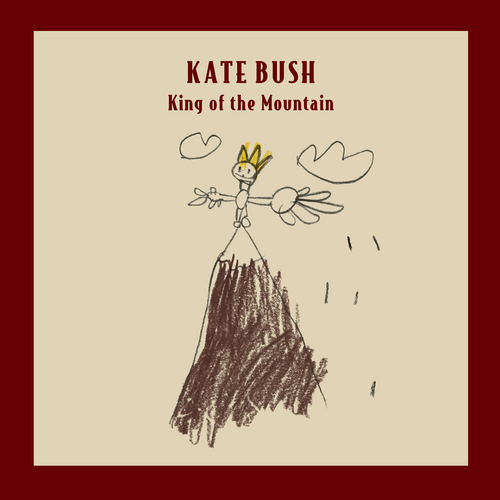
Through most of “Lovesexy,” the beat continues relentlessly--sometimes (as in “Dance On”) in a mocking way that laments society’s reluctance to deal with troubling issues.

In the somewhat documentary style of “Sign ‘O’ the Times,” the track looks at a society under seige: heartbreak in foreign battles (“Grenade launcher roars in a television sky / Tell me how many young brothers must die”) and on American streets (“Little talk Johnny blew the big score / The gang nailed his feet to a wooden floor”).

In the midst of this frantic pace, the tender “I Wish U Heaven” seems all the more endearing. With much of the showstopping intimacy and grace of the Police’s “Every Breath You Take,” the track stands as a moment of refuge and quiet among the tales of heaven and hell.

If Prince has always been a bit too radical for Grammy voters, “Lovesexy"--his most focused and consistently appealing album since “Purple Rain"--may finally be the work that brings him the record industry’s top award” – Los Angeles Times

Choice Cut: Alphabet St.

Diamonds and Pearls (Featuring The New Power Generation)

jkkjjkjkkj.jpg

Release Date: 1st October, 1991

Labels: Paisley Park/Warner Bros.

Producer: Prince

Standout Tracks: Thunder/Cream/Money Don't Matter 2 Night

Buy: https://www.discogs.com/sell/list?master_id=97248&ev=mb

Stream: https://open.spotify.com/album/6dRctIZQKuZCSSoR6QBBv9?si=vIfnUiBvQcmi8ZwRkT5fHg

Review:

There is, of course, the title song—the twinkling locket-pop ballad that both Cam’ron and Lil Wayne eventually rapped over. One of those songs they’ll play at weddings until we stop using diamond engagement rings and the ocean runs out of pearls. It’s Prince at his best, blending dizzying romance with an undercurrent of danger. He opens up: “This will be the day/That you will hear me say/That I will never run away.” It’s a utopian promise he knows he can’t keep, an incantation he hopes will become true if he utters it out loud. “Love must be the master plan,” he says, echoing a clichéd sentiment that so many before him have uttered. But Prince had the gift of making you believe whatever he said.

As with all the greatest pop stars, Prince was a master at simplifying life’s most complicated emotions into catchphrases. He encompassed lust, jealousy, fear, spirituality, avarice, the impulse to run away, and the need to strip everything to its core—sometimes literally, sometimes figuratively.  The man who believed in everlasting love died alone and childless, adored by almost the entire world. A song like “Diamonds and Pearls” illustrates why. For all the flamboyance and idiosyncrasy, Prince just wanted the same things as everyone else” – Pitchfork

Choice Cut: Diamonds and Pearls

[Love Symbol] (Featuring The New Power Generation)

aaaaa.jpg

Release Date: 13th October, 1992

Labels: Paisley Park/Warner Bros.

Producers: Prince and the New Power Generation

Standout Tracks: Sexy M.F./The Morning Papers/7

Buy: https://www.amazon.co.uk/Love-Symbol-Prince-Power-Generation/dp/B000006L4R

Stream: https://open.spotify.com/album/03JxJZCOK54jmkrhlDczlA?si=b9CnFUTKQmuY8pFnfMNrZg

Review:

The New Power Generation is the most talented and versatile band Prince has ever fronted, and they fulfill their potential on The Love Symbol Album. Although the NPG factored heavily on Diamonds and Pearls, it still sounded like a solo Prince album. Symbol sounds like a band performing together, working off of each other's strengths and weaknesses. Opening with the dance smash "My Name Is Prince" and the deep funk of "Sexy M.F.," The Love Symbol Album has Prince's best dance tracks since The Black Album. But Prince wasn't content; he decided to run the gamut of modern pop/R&B/dance, and the music is uniformly accomplished and excellent. Unfortunately, he also decided to make a "rock soap opera," so the music is saddled with ridiculous lyrics and annoying sound bridges by Kirstie Alley. However, The Love Symbol Album has some of the finest, most inventive music of Prince's career” – AllMusic

Choice Cut: My Name Is Prince

The Gold Experience (as The Artist (Formerly Known as Prince)

ffff.jpg

Release Date: 26th September, 1995

Labels: Warner Bros./NPG

Producer: Prince

Standout Tracks: Now/Eye Hate You/Gold

Buy: https://www.discogs.com/sell/list?master_id=113851&ev=mb

Stream: https://open.spotify.com/album/7JdnQ7zCfqETcLgS94d3ks?si=_09rQYjQQrmsfhykUfodRA

Review:

In case you’re wondering, all his classic contradictions are still firmly in place. On the poppy political broadside “We March,” he cautions men not to call women bitches, then a few tracks later breaks his own commandment in the anti-love ditty “Billy Jack Bitch.” On “I Hate U,” the soulful first single, he sings, “I hate you…. ’cause I love you, girl,” which sums up the Princely persona in a nutshell. He loves his women and his colleagues, but he can’t allow them a dominant role in his life or his work. He loves the perks of stardom but has gone out of his way to reduce his own public profile to that of a virtual unknown. Add to all this a long-standing fascination with paradox, irony and subtle parody, and you get The Gold Experience in all its contrarian glory.

Like Michael Jackson, our erstwhile Prince has plenty to scream about, but he’s nowhere near as dour about it as Elvis Presley’s son-in-law. Instead he tries to have as much fun as possible while following his own schizoid genius as it dances along the precarious divide between the sacred and the profane.

As usual, the attempts at rap come off as part satire and part celebration of the form. The gutter feminism of “Pussy Control” is earnestly phrased in the goofy syntax of the butt-loving Sir Mix-a-Lot, while the rabblerousing lyrics of “Now” are delivered in the twangy drawl of Arrested Development’s Speech. But the most powerful revelation among this grab bag of edgy rhythms and melodies comes during the deceptively gentle “Shy.” Its rhythm track recalls the imaginative noodling of “Kiss” leavened with the melodic idiosyncrasies of a Joni Mitchell ballad but leaves a more indelible impression than either. The male protagonist of “Shy” lands alone in Los Angeles and starts wandering the town in search of, well, poetry in motion” – Rolling Stone

Choice Cut: The Most Beautiful Girl in the World

The Prince Compilation


The Very Best of Prince

uuu.jpg

Release Date: 31st July, 2001

Label: Warner Bros.

Producers: Prince/The Revolution/The New Power Generation

Standout Tracks: 1999/When Doves Cry/Raspberry Beret

Buy: https://www.amazon.co.uk/Very-Best-Prince/dp/B00005M989

Stream: https://open.spotify.com/album/5oQClEU6YXiVoaz4ZTmOOO?si=0lYfmSatS96B6bJqH_I5yQ

Review:

Even geniuses (maybe especially geniuses) are taken for granted, not seen as geniuses, or only appreciated in small doses. Which is a grandiose way of saying that, no matter how partisans may complain, there are many listeners out there that don't want to delve into the deliriously rich catalog of Prince and would rather spend time with a single disc of all the hits -- especially since the first singles compilation was botched, spread too thin over two discs and sequenced as if it were on shuffle play. That doesn't mean that 2001's The Very Best of Prince is perfect, even if it is a better hits overview than its predecessor. First of all, Prince had so many hits, and so many of them were so good, that 17 tracks couldn't possibly summarize everything great. After all, this doesn't have Top Ten hits like "Delirious," "Pop Life," "I Could Never Take the Place of Your Man," or "The Most Beautiful Girl in the World" (or the number one "Batdance," for that matter, continuing Batman being unofficially written out of his discography), nor does it have such great second-tier hits as "Take Me With U" and "Mountains," or B-sides like "Irresistible Bitch" and "Erotic City," let alone album tracks. What is here are the big songs -- "1999," "Little Red Corvette," "When Doves Cry," "Kiss," and so on -- all presented in their single edits. And, frankly, that's enough to make this a dynamite collection, perfect for those that just want one Prince disc, and a good, solid listen of some of his best. Besides, this trumps both Hits discs by including "Money Don't Matter 2 Night," his best single never to reach the Top 10” – AllMusic

Choice Cut: Purple Rain

The Prince Book


The Beautiful Ones

vvvv.jpg

Author: Prince

Publication Date: 29th October, 2019

Publisher: Cornerstone

Synopsis:

Lovingly curated from Prince’s personal archives, The Beautiful Ones gathers writings, photographs and lyric sheets together in a sumptuous volume that highlights the Purple One’s restless creativity. The perfect companion to an exceptional career and a book that no self-respecting Prince fan can do without. 

The Beautiful Ones is the deeply personal account of how Prince Rogers Nelson became the Prince we know: the real-time story of a kid absorbing the world around him and creating a persona, an artistic vision, and a life, before the hits and the fame that would come to define him.

The book will span from Prince’s childhood to his early years as a musician to the cusp of international stardom, using Prince’s own writings, a scrapbook of his personal photos, and the original handwritten lyric sheets for many of his most iconic songs, which he kept at Paisley Park. The book depicts Prince’s evolution through deeply revealing, never-before-shared images and memories and culminates with his original handwritten treatment for his masterwork, Purple Rain.

The memoir will be framed by Piepenbring’s riveting, moving introduction about his short but profound collaboration with Prince in his final days - a time when Prince was thinking deeply about how to reveal more of himself and his ideas to the world, while retaining the mystery and mystique he’d so carefully cultivated - and by annotations that provide context to the book’s images” – Waterstones

Buy: https://www.waterstones.com/book/the-beautiful-ones/prince/9781780899176

FEATURE: Pretty Please: Dua Lipa: The Modern Pop Superstar and Privacy

FEATURE:


Pretty Please

aaa.jpg

 Dua Lipa: The Modern Pop Superstar and Privacy

___________

I will keep this fairly brief…

aaa.jpg

 PHOTO CREDIT: Bryan Derballa for Rolling Stone

but there was an interview in the Los Angeles Times where we seemingly get a contrasting focus on Dua Lipa. Labelled very much as a modern Pop superstar, her more private and mysterious side is also discussed. I am still thinking about the documentary, Framing Britney Spears, and how tough it has been for Spears through her career. Alongside the battle she has regarding her finances and conservatorship, she has also faced so much press intrusion, sexism and unpleasantness. I do worry about modern Pop artists who grow big and then have to face intrusion. This is not anything new. For decades, this has been how things have been for popular artists. Dua Lipa talked about how she is subjected to paparazzi all of the time and, when she comes out of the gym, there are people waiting to take her photo. Not only is it intimidating, but it is also not flattering. On Instagram, she can curate her own image and redress the balance in that sense. Unfortunately, because artists have to promote themselves and keep their online presence strong, that means they are more exposed and enjoy less privacy. With a massive Instagram audience, Lipa is subject to negative feedback and those who attack her image. As is the same with so many major artists, the persona we see through their music is very different to the one that people see behind closed doors.

Some might say that this kind of pressure and lack of privacy is what artists sign up for and is unavoidable in the digital age. Many artists try and ween themselves off of social media and need to take breaks. This does not only apply to Dua Lipa, but one wonders how easy it is to detach and disconnect from social media when promotion has to be so intense. Artists are putting to much effort into promotion, social media is an inevitably big part of that. Dua Lipa is someone who is portrayed as a bit of a jet-setter and this huge star, but so much of that is fabricated or exaggerated. Whilst she has to do promotional shoots and we do see these quite provocative and sexy images, that is to do with her work and her expression herself. I have looked online today (4th March) and seen so many tabloid stories from the past day or so commenting on Dua Lipa in L.A. I think she was out with her boyfriend and we got all these captions about her looks and sex appeal. The fact that she has to handle the press and headlines nearly every time she step outside is one of the worst things about modern life! Couple press hassle with trolls online and the sort of split opinions she gets when she posts anything to Instagram and it can have a really bad effect on her mental-health. I am using Dua Lipa as an example as she has been profiled recently; that divide between a very successful and famous artist and someone who is private and keen to remain grounded – she is also quite mysterious and there are sides to her that we do not know.

I guess my feature is extending now beyond a general rule for Pop artists and more towards expectations placed on women. I will source from an interesting interview Dua Lipa provided to The Guardian last year. I don’t think that, in terms of their private lives being under scrutiny, comparably big male artists have the same experience as women do. There is so much focus on appearance, personal lives and their social media content. Not that one can draw too many comparisons between Dua Lipa and Britney Spears, but one cannot help about the pressures a modern Pop phenomenon of today faces. Is it possible for Dua Lipa and artists like her to remain private or be shielded from the worst of social media?! The Guardian highlighted how Britney Spears was hounded - and they noted the way the media exploited and sexualised her:

Spears carried the extra burden of embodying America’s psychotic contradictions over sex for young women – dress sexy but be virginal, convey that you want it but never, God forbid, know what you want, let alone get it; tread as closely to the line of actual sex as possible but never cross it. She rocketed to fame in an era, as the Times critic Wesley Morris astutely points out in the film, when Bill Clinton’s scandalous affair with the White House intern Monica Lewinsky – another big tabloid story whose heroes and villains have been revised with the passage of time and #MeToo – brought the lewd discussion of sex, and the specter of sex panic, back into the public sphere (and tasteless Jay Leno jokes).

Memory is a hazy, gauzy thing. You can remember, intellectually and in tabloid snippets, the frenzy over Spears in the mid-to-late aughts, but not recall the galling starkness of its imagery – a woman hunted and literally hounded by men across Los Angeles, the harried, vertigo-inducing funhouse of camera flashes. Spears’s meltdown was mundane enough to merit a category – what has Britney Spears lost this year? – on the gameshow Family Feud (answers included her mind, her children and her dignity). That detail was probably not memorable enough in 2008; it’s unforgettably crude now”.

zzzz.jpg

Future Nostalgia came out last year and it was listed as one of the finest albums of 2020. I love how there was the odd tender and emotional moment but, more than anything, it was a fun album where Dua Lipa was writing from her own experiences. Inevitably, some people questioned some of her lyrics and highlighted various songs. One has to wonder if a male artist would have attracted the same sort of judgment. When she spoke with The Guardian last April, she discussed the need for greater kindness; how there is a double standard when it comes to women in music:

Reflecting pop’s long game, Lipa won the Grammy for best new artist in 2019. The backlash took flight. “People being like: ‘She’s been fucking best new artist for so long and she doesn’t deserve that, blah blah blah,’” she recalls. “There were times that I felt people were being so mean that when someone recognised me and said: ‘I really like your music,’ I’d be like: ‘Oh my God, not everyone hates me!’” She says this with self-aware melodrama, though it echoes recent sentiments from Billie Eilish and Britney Spears: how dismal it must feel to see your hard work burned up by hatred

Lipa hopes the #BeKind movement sparked by Caroline Flack’s death might improve online discourse. “The scrutiny not just on social media but in the media, especially towards women, is so intense and unkind and really trying to get a rise out of people,” she says. “The tabloids know very well what they’re doing, and it really affects everyone. You have to be made out of steel to not let words get to you. It’s so sad that we have to learn lessons from somebody’s death.”

ccccc.jpg

IN THIS PHOTO: Dua Lipa/PHOTO CREDIT: David LaChapelle for Rolling Stone 

Had Lipa tried to recreate New Rules for album two, “I’d just be in a vicious cycle”, she says. She says she struggled to find her “lyrical language” on her debut, feeling more at ease writing sad songs. “I learned that I could write happy songs that are still really authentic and have the possibility of being cool and not seen as bubblegum.” Most striking is how she sings about sex: mutually pleasurable, orgasmic transcendence mirrored in dazzling disco reveries. On Good in Bed, she nonchalantly celebrates “all that good pipe in the moonlight” from a toxic ex-with-benefits. “Everybody thinks that as a woman, you have to be so careful about how you portray yourself or how you talk about sex, and everything has to be really sweet,” she says mockingly. “It’s just very colloquial and how I chat with my mates.”

Women’s work is always undermined, says Lipa. “We all have to work a little bit harder to be taken seriously, but it’s not something that we’re not used to doing,” she says, rolling her eyes and grinning. She has pointedly described Future Nostalgia as “fun” even though she knows that is exactly the stick critics use to beat it with; that women in pop are only judged as “authentic” when they are weeping by the piano. “Time always tells,” she shrugs. “And in the meantime, I’ll just work for people to take me seriously”.

I do have this concern for artists like Dua Lipa who want to make important and challenging music, but there is always this sense of blowback and criticism. She wants to keep her privacy and not be misperceived, though the constant media focus and the perils of social media make that very hard. The better and more popular comes the more focus comes her way. She is a very inspiring artist and great songwriter, and I hope that she gets time to decompress and enjoy some time in private before she has to think about touring or another album. As much anything, I hope that the Framing Britney Spears documentary makes the media and people online think twice about they treat popular artists - and what can happen when artists are hounded. There is no doubting Dua Lipa is a massive artist who is among the hardest-working and influential of the past decade. This Billboard article documents how the iconic Kylie Minogue has nothing but praise for Lipa:

Kylie Minogue had super high praise for her "Real Groove" collaborator Dua Lipa in an essay for Time magazine's "Next 100 Most Influential People" issue.

"Dua Lipa is a shining star, blazing a dazzling trail through the pop cosmos," wrote Minogue about Lipa, who sports a gauzy, off-the-shoulder, floor-length pink dress on the cover. "Just under four years ago, she released the first of her two albums. Today, she is dancing hand in hand with the zeitgeist, having carved with laser-like precision her place in the cultural landscape."

Minogue recalled zooming into Dua's orbit for the November gig, describing the production as "spectacular and inclusive, somehow both future and retro," with the "Don't Start Now" singer's "instantly recognizable voice stamped all over clever songwriting." Used to being the center of attention, Minogue said she enjoyed hanging out on the periphery and watching the younger star, whose famously tireless work either shone through.

"'You have to work hard to make a bit of luck,'" Minogue said Dua Lipa's father told her when she was younger. "It seems she listened. Her achievements are all the more remarkable given that she is 25 years of age".

There is no doubting Dua Lipa will be an icon of the future and she will get more popular and accomplished. With that will come more media attention and pressure. I hope that for her, and other artists in the same sort of professional and success position, that there is a change of attitude after the pandemic. Maybe this is me being naïve, but it is clear that some changes need to be made – not just in the press but on social media. I think we all hope Dua Lipa can be afforded more privacy and lead her life and career in…

HER own way.