FEATURE: Inspired By… Part One: Prince

FEATURE:


Inspired By…

zzzz.jpg

Part One: Prince

___________

IN a new feature…

qqqq.jpg

 PHOTO CREDIT: Michael Ochs Archives

I am starting off with an artist who I have written about a lot over the past couple of weeks. Because we mark five years since Prince died in April, I wanted to kick off Inspired By… with him. This feature looks at a great artist/band and, at the end, I compile a playlist of artists who have been influenced by them. In the case of Prince, there are articles that list artists who wouldn’t be where they are without him. NME put out an article, as did GQ (they focused more on style). Articles like this and this highlight artists or songs that owe a debt to Prince. Because of that, this playlist is stuffed with eclectic musicians who have an element of The Purple One. This playlist includes artists who are inspired by Prince in addition to songs that have more than a droplet of his sound. Enjoy this playlist that shows that Prince’s genius and legacy…

sss.jpg

 PHOTO CREDIT: Lester Cohen/WireImage

WILL continue strong for decades.

FEATURE: The Lockdown Playlist: The Best of Babyface

FEATURE:


The Lockdown Playlist

z.jpg

 PHOTO CREDIT: Jenna Watson/Indystar

The Best of Babyface

___________

EVEN though his birthday…

k.jpg

is not until 10th April, I wanted to do a Lockdown Playlist about Babyface and the awesome songs he has written or produced. If you do not know about him, here is some information:

Kenneth Brian Edmonds (born April 10, 1959), better known by his stage name Babyface, is an American singer, songwriter, and record producer. He has written and produced over 26 number-one R&B hits throughout his career and has won 11 Grammy Awards. He was ranked number 20 on NME's 50 of The Greatest Producers Ever list”.

I am taking a selection of song that he wrote/co-wrote or produced. It is amazing to think about the array of tracks he has been involved with and the fact that a lot of people do not know about him. I guess producers and songwriters do not get the same sort of focus and media attention as the artists themselves. In honour of a great and hugely original songwriter/producer/artist, this Lockdown Playlist is all about…

zzzz.jpg

 IN THIS PHOTO: Babyface and Toni Braxton/PHOTO CREDIT: Alberto E. Rodriguez/Getty Images

THE amazing Babyface.

FEATURE: The Fine Purple: Kate Bush and Prince

FEATURE:


The Fine Purple

xxxx.jpg

 IN THIS PHOTO: Kate Bush in 1993

Kate Bush and Prince

___________

I am doing a run of Prince features…

qqqq.jpg

 IN THIS PHOTO: Prince in 1993/PHOTO CREDIT: Lynn Goldsmith

through March and into April. On 21st April, it will be five years since the world lost Prince. Although that date is quite a way off, I though that a feature or two a week would just about get close to exploring the man’s genius and why he is so influential. Rather than focus on Prince solely, I want to mention him alongside Kate Bush. I think it is one of the great missed opportunities that Kate Bush and Prince did not work together more. There are these collaborations that you hear and wonder what could have been if more songs had come from those artists. I am going to get to the song from Kate Bush’s The Red Shoes where Prince features. I think the two are sort of kindred in a way, in terms of their talent and musical diversity. Bush did joke, when she was interviewed by Matt Everitt in 2016 (she was reflecting on the loss of Prince) how, by the time she had got an album together, Prince would have been on world tours, had a film or two out and an album! Maybe the two were different in terms of the speed in which they worked - though there was a clear respect and affection between them that would have been fascinating to hear exploited and explored more. I will come to the song, Why Should I Love You?, where one can hear Prince’s touch and direction in spades.

wwww.jpg

Just before then, I want to bring in a feature from Far Out Magazine from last December. They compared the differences in productivity and working practices – and how Bush felt when Prince died:

Of course, their approach to music was another huge difference between the two. Prince was tirelessly prolific, relentlessly slaving away in the studio or, if not, he was out on tour with the band. Bush, however, famously works at her own pace and is more than happy to take her time making sure her creations are perfect before letting out into the universe. Due to the contrasting working methods, when Kate Bush and Prince did end up working together in 1991, the chances of the collaboration ending in success felt relatively slim. The result of their time together was the track ‘Why Should I Love You’ which, depending on who you speak to, is either the definition of mercurial artistry or a song that you try your hardest to forget in order to retain your love for Prince and Kate Bush. To say the material splits the audience is an understatement.

On reflection, Bush certainly stepped more into the world of Prince more than he entered hers. Prince had been an ardent admirer of the work of Kate Bush for years but the two had never crossed paths before 1990, a time when he was in London Town to takeover Wembley Arena and two of music’s truest artists would finally meet backstage. After blowing the roof off the arena, Bush and Prince bonded over a mutual respect for one another’s music and the meeting went so well that Bush asked him to collaborate almost instantaneously. Putting her pitch forward, all she requested was for Prince to provide a few backing vocals to a song she had already created. Bush had, at the time, recently recorded the track in full at Abbey Road Studios and hoped Prince could add that special touch to take it up a notch.

eeeeeee.jpg

IN THIS PHOTO: Kate Bush in 1993/PHOTO CREDIT: Guido Harari  

Following his tragic death in 2016, Bush was left devastated and painfully wrote: “He was the most incredibly talented artist. A man in complete control of his work from writer and musician to producer and director. He was such an inspiration. Playful and mind-blowingly gifted. He was the most inventive and extraordinary live act I’ve seen. The world has lost someone truly magical. Goodnight dear Prince.”

She later opened up further to BBC 6 Music’s Matt Everitt, saying: “He was really playful and really sweet. What a talented man, what an artist. I think it’s a terrible loss that he should go at such a young age, it’s incredibly sad. He was so prolific, he used to make me laugh because whilst I was working on an album, he would have done 2 world tours, a couple of albums and a film”.

The story of Why Should I Love You? is an interesting one. The demo that Bush produced is very different to the one that we hear on The Red Shoes! There are some who are dissenting when it comes to their opinion and whether Prince spoiled the track or added too much. Others look at how, after receiving a lot of layers from Prince when the track was sent to him, Bush has to mould the song that sounded more like her. I think that there was clear trust and friendship between the two. The fact two such huge artists collaborated on a song is amazing!

It is an interesting story regarding how Kate Bush came to meet and work with Prince. VICE explored the story in a feature from 2016 (not long after Prince died):

Bush was in a strange place when she met the Purple One. Her close friend and guitarist Alan Murphy had just died of AIDS-related pneumonia, she was going through the motions of a relationship breakdown, and was teetering on the cusp of a break from music, which, when it came, would actually last for 12 years. Prince, on the other hand, was going through one of his many spiritual rebirths. He had just emerged from the murky shadows of The Black Album, a creation he withdrew a week after release because he was convinced it was an evil, omnipotent force. He vaulted out of that hole, into a period of making music that was upbeat, pop-tinged and pumped up. In essence, the two artists’ headspaces could not really have been in more opposite places; Prince, artistically baptised and ready to change the world, and Kate Bush, surrounded by a fog of melancholia and disarray.

Prince had been a huge Kate Bush admirer for years. In emails exchanged in 1995 between Prince’s then-engineer Michael Koppelman and Bush’s then-engineer Del Palmer, Koppelman says that Prince described her as his “favourite woman”. But despite both artists being active since the 70s, it wasn’t until 1990 that they actually met in real life. Bush attended a Prince gig at Wembley during his monumental Nude Tour, asked to meet him backstage, and the rest is God-like genius collaboration history.

Perhaps it was the sheer distance between their headspaces at the time that led to what happened. Bush asked Prince to contribute a few background vocals to a song called “Why Should I Love You”, which she had just recorded in full at Abbey Road Studios. But when Prince received the track, he ignored the intructions and dismantled the entire thing like a crazed mechanic taking apart old cars on his backyard. He wanted to inject himself into the very heart of it, weaving his sound amongst her sound, giving it a new soul entirely. As Koppelman explains, “We essentially created a new song on a new piece of tape and then flew all of Kate's tracks back on top of it… Prince stacked a bunch of keys, guitars, bass, etc, on it, and then went to sing background vocals.”

Even today, the track is divisive, with some heralding it as a slice of profound art, and others filling fan forums with long rants that essentially boil down to: “It’s tripe.” But two decades later, we can look upon the final version with something resembling objectivity. It’s an endlessly fascinating creation that continues to sparkle with strangeness, forever flitting between blissfulness and an almost painful sadness upon every listen. Even the lyrics reveal an inner turmoil: “Have you ever seen a picture of Jesus laughing? Mmm, do you think he had a beautiful smile?” Kate Bush’s soaring voice wavers, as if she’s asking Prince to convince her”.

aaaa.jpg

PHOTO CREDIT: Guido Harari 

As this insightful article outlines, there was a member of the Kate Bush camp who was a big fan of Why Should I Love You? and the songs/vocals that appear:  

Del Palmer, Kate’s former partner and longtime engineer and bass player, spoke about the track to Future Music in 1993:

“This one actually was recorded in collaboration with Prince – Kate went to see him at a gig and was flattered to be asked to meet him after the show, when they discussed a collaboration. Unable to physically get together in the same room, they swapped multi-track tapes, with a slave reel returning from Prince’s Paisley Park studio covered in vocals, guitar solos and keyboards. The problem then was to put the track back together into something resembling its original form while retaining the best of what Prince had done. He hadn’t added one of the vocal parts which would have been particularly good for him, so it basically took two years to put it back together. What’s left is his lead guitar, some digital synths and some chorus vocals. Then Lenny Henry came in to do a vocal on the end – he’s really got a great voice and ought to be doing a serious record of his own“.

aaaa.jpg

IN THIS PHOTO: Prince in 1993/PHOTO CREDIT: Lynn Goldsmith 

Like when Prince worked with Madonna (on the track, Love Song, from her 1989 album, Like a Prayer), I think there was more life in the Bush-Prince collaboration sphere. Bush did ‘return the favour’ and provided vocals for Prince later, but it would have been awesome hearing Prince and Bush on a more sensual or less fulsome track. I feel he could have been perfect on a 50 Words for Snow track. I sort of wonder whether an approach was made or, as the songs on that record are not as spirited and funky as some we hear on The Red Shoes, whether Bush felt that Prince would not be a great fit. I want to end with another snippet from the feature I have just sourced from. Maybe it should not be a surprise that the Prince camp were blown away getting to work with Kate Bush. Such is her reputation and quality, even artists like Prince are honoured! Prince’s engineer Michael Koppelman recalled his experience:

It’s funny because Prince knew I was a huge KB fan. He was too, but not like me. The first time I asked him if he liked Kate Bush he said, she’s my favorite woman. I also made him a tape of all the KB b-sides, which fucking rule. When The Sensual World came out he had someone go get it and we listened to it in the studio. He didn’t dig it that much, but I knew you can’t always tell right away with a Kate album. TSW grew on me, but it is still not her best effort. This Woman’s Work is a masterpiece, though, and makes the whole album worth it. But I digress. Prince is weird, and a couple stories in this post prove it. I may be tooting my own horn here, but Prince has a weird ego. I think *part* of his motivation to work with Kate was the fact that I worshipped her, and he knew it would impress me that he could call her on the phone and work on her music and shit.

deeee.jpg

IN THIS PHOTO: Kate Bush in 1993/PHOTO CREDIT: Guido Harari   

ANYWAY, what led up to the phone conversation above: one day Prince’s assistant, Therese, told me as we were talking on the phone that Kate Bush had called. Therese also knew I was a big Kate fan. Then, in the studio that day, Prince said, guess who I talked to today. Me, being stupid and unable to keep my mouth shut, said, Kate Bush? Prince got a little miffed, and said How did you know that? And I said Therese told me, and he said, hmm, I should dock here for that. At that point I knew I fucked up and tried to say, no, she just knew I’m a big fan. As a side note, I told Therese that Prince was a little pissed that she had told me that, and she apologized to him. Therese is a really cool person. So, Prince tells me that he and Kate are going to work on a tune together. He also told me that while they were talking he told her that his engineer would rather work with her than him. (I thought, wow, Prince and Kate Bush talking about me!)”.

I think that Why Should I Love You? sounds great as a demo, but Prince’s input and aura does inject and sprinkle it with his particular magic. Some of the song’s lyrics are really interesting: “The fine purple/The purest gold/The red of the Sacred Heart/The grey of a ghost/The "L" of the lips are open/To the "O" of the Host/The "V" of the velvet/Of all of the people in the world/Why should I love you?/There's just something 'bout you/There's just something 'bout you/Of all the people in the world/Why should I love you?”. Maybe it is not the best cut from The Red Shoes, but I just love the fact that The Purple One, Prince, and Kate Bush shared an audio space! It brings me back to what could have come after 1993 (or 1996, when you consider Bush worked with Prince again then) and, if he were alive now, whether the two would be joining forces. On a brilliant (and underrated) album from Kate Bush, Prince added…

A touch of purple, red and gold.

FEATURE: Second Spin: Guns N' Roses -  Chinese Democracy

FEATURE:


Second Spin

sss.jpg

Guns N' Roses -  Chinese Democracy

___________

BY the time…

dddd.jpg

 IN THIS PHOTO: Axl Rose of Guns N’ Roses/PHOTO CREDIT: Martin Philbey/Getty Images

Guns N’ Roses got to their sixth studio album, the band were vastly different to the ones who wowed fans and critics on their 1987 debut, Appetite for Destruction. Fortunately, it seems like there is more harmony and a sense of hope in the band’s camp. I suspect that, when lockdown is through, they will tour and there will be new music. When Chinese Democracy was released in 2008, it arrived after a huge delay and strife. It was the first Guns N' Roses album since the 1993 covers album, "The Spaghetti Incident?", and the first album of original studio material since Use Your Illusion I and Use Your Illusion II, of 1991. Chinese Democracy is an album that was delayed by personnel and legal problems. As we can tell from Wikipedia, the classic line-up of Guns N’ Roses was way in the past:

In the mid-1990s, amid creative and personal differences, guitarists Slash and Gilby Clarke, bassist Duff McKagan, and drummer Matt Sorum all had departed. Only Rose and keyboardist Dizzy Reed remained. In 1997, they began work on the album with guitarists Robin Finck and Paul Tobias, bassist Tommy Stinson, drummer Josh Freese, and keyboardist Chris Pitman. The lineup shifted several times, incorporating guitarists Buckethead, Richard Fortus and Ron "Bumblefoot" Thal and drummers Bryan "Brain" Mantia and Frank Ferrer. Guitarists Brian May and Dave Navarro, vocalist Sebastian Bach, and producers including Mike Clink, Youth, Sean Beavan, Eric Caudieux, Roy Thomas Baker and Caram Costanzo worked on the album across 15 studios. The band recorded dozens of songs, and suggested they could release them across multiple albums”.

There is a huge history and a lot of backstory to Chinese Democracy that is probably not that relevant. I wanted people to see the album less of a mess and disaster – as many have – and see the quality that is in there. I think the title track, Better, Street of Dreams, and I.R.S. are brilliant. There are at least half a dozen (of fourteen tracks) that are superb. I would say there are a few weak tracks but the remainder is solid. I will bring in two contrasting reviews to end things. Before bringing in some critical opinion, it is worth noting how Chinese Democracy fared in terms of sales:

Best Buy purchased 1.3 million copies of Chinese Democracy from UMG before release and pledged not to return unsold copies. The album was released on November 22, 2008, in Germany, Switzerland, and Austria. It was released the following day worldwide, except for the United Kingdom, where it was released on November 24.

Chinese Democracy debuted at number three on the US Billboard 200 chart, selling 261,000 copies in its first week, well below expectations. It debuted at number two on the UK Albums Chart. Second-week US sales dropped significantly and it fell from #3 to #18 on the Billboard chart: a 78% drop. The programming director at KLOS-FM said the low sales were due to the holiday season release and lackluster lead single. Critics also cited Rose's lack of promotional appearances as a factor.

After selling 21,000 copies in its sixth week and charting at #30, Chinese Democracy was certified Gold, passing the 500,000-shipped mark on January 7, 2009. It was certified Platinum by the RIAA on February 3, 2009, having shipped one million copies in the United States. It placed 55th on the 2009 Billboard 200 Year End charts”.

From that, it would appear that this hyped album was a bit of a disaster. I actually think the fact many critics put Chinese Democracy in their top-fifty albums of 2008 shows that there was love for it. I would not place the album near the band’s very best work; I do feel that it is a solid album that has plenty to appreciate. If Chinese Democracy was not near the gold standard Guns N’ Roses reached in the late-1980s and early-1990s then it was an impressive release none the less. I am not sure whether the band have plans to release any more material. Since 2016, Slash and Duff McKagan have been back in the fold – so one can never rule out a new album from the guys. In a rather mixed review, Pitchfork wrote the following about Chinese Democracy:

Perhaps the most striking aspect of Chinese Democracy is that it's about the fifth-most shocking Guns N' Roses album. Sure, it's difficult to endure both Use Your Illusions in one sitting, but there's something fascinating about how the bombastically lonely "Estranged" could share disc space with the junior-high politicking of "Civil War", "Yesterdays"' concise, sepia-toned pop, and the critic-baiting tantrum "Get in the Ring". Had that record been a career-ender, it would've been a fitting finale. Instead, Axl took 17 years to, we hoped, explore new textures, manipulate songwriting conventions, seek out challenging collaborators, or delve into unfamiliar genres for inspiration. Yet on the way to being this decade's Sgt. Peppers, Chinese Democracy became its Be Here Now-- a record of relatively simple, similar songs overdubbed into a false sense of complexity in a horrorshow of modern production values.

It's that flaw which ultimately delivers the fatal blow. Even if Chinese Democracy had dropped a decade previous, it would still sound dated. 1996 appears to be the cut-off point for sonic inspiration, a time when the height of electronic and rock synergy in pop music involved having an acoustic guitar and a drum machine on the same track. Fans deserve better than hearing Axl trying to fight with post-NIN nobodies like Stabbing Westward and Gravity Kills for ideas. "Better" and the closing "Prostitute" feature memorable, fluid melodies, but are tied to rudimentary Roland tracks that Steven Adler could've replicated in his sleep, and while "I.R.S." sports an Illusion-sized chorus, it's dampened by empty conspiracy theorizing.

To that point, Chinese Democracy is inevitably and sadly limited in scope to the actual making of Chinese Democracy. Apart from a handful of appropriately vague love songs, Axl seems convinced that the only thing that's mattered to us over the past 17 years was anticipating whether "Riad and the Bedouins" might ever see its proper release. Anyone outside of Axl's inner circle appears lumped into some royal "you" and thrust into a meta exercise to be held up as evidence of a defiantly achieved victory: "All things are possible/ I am unstoppable," "No one ever told me when I was alone/ They just thought I'd know better," and most pointedly, "It was a long time for you/ It was a long time for me/ It'd be a long time for anyone/ But looks like it was meant to be”.

Although AllMusic did not rave about Chinese Democracy, they did highlight how it is good. It is an album that is more of a grower compared to some of the band’s earlier work. I really like Chinese Democracy and I think it has received some slating that it does not deserve. I want to bring in a few passages of AllMusic’s extensive review:

Such maniacal indulgence is ridiculous but strangely understandable: Rose received unlimited time and money to create this album, so why not take full advantage and obsess over every last detail? The odd thing is, he spent all this time and money on an album that is deliberately not a grand masterpiece -- a record that pushes limits or digs deep -- but merely a set of 14 songs. Compared to the chaotic Use Your Illusion, Chinese Democracy feels strangely modest, but that's because it's a single polished album, not a double album so overstuffed that it duplicates songs. Modest is an odd word for an album a decade-plus in the making, but Axl's intent is oddly simple: he sees GNR not as a gutter-rock band but as a pomp-rock vehicle for him to lash out against all those who don't trust him, whether it's failed friends, lapsed fans, ex-lovers, former managers, fired bandmates, or rock critics. Chinese Democracy is the best articulation of this megalomania as could be possible, so the only thing to quibble about is his execution, which occasionally is perplexing, particularly when Rose slides into hammy vocal inflections or encourages complicated guitar that only guitarists appreciate (it's telling that the only memorable phrases from Robin Finck, Buckethead, or Bumblefoot or whoever are ones that mimic Slash's full-throated melodic growl). Even with these odd flourishes, it's hard not to marvel, either in respect or bewilderment, at the dense, immaculate wall of god knows how many guitars, synthesizers, vocals, and strings.

The production is so dense that it's hard to warm to, but it fits the music. These aren't songs that grab and hold; they're songs that unfold, so much so that Chinese Democracy may seem a little underwhelming upon its first listen. It's not just the years of pent-up anticipation, it's that Axl spent so much time creating the music -- constructing the structure and then filling out the frame -- that there's no easy way into the album. That, combined with the realization that Axl isn't trying to reinvent GNR, but just finishing what he started on the Illusions, can make Chinese Democracy seem mildly anticlimactic, but Rose spent a decade-plus working on this -- he deserves to not have it dismissed on a cursory listen. Give it time, listening like it was 1998 and not 2008, and the album does give up some terrific music -- music that is overblown but not overdone.

True, those good moments are the songs that have kicked around the Internet for the entirety of the new millennium: the slinky, spiteful "Better," slowly building into its fury; the quite gorgeous if heavy-handed "Street of Dreams"; "There Was a Time," which overcomes its acronym and lack of chorus on its sheer drama; "Catcher in the Rye," the lightest, brightest moment here; the slow, grinding "I.R.S."; and "Madagascar," a ludicrous rueful rumination that finds space for quotations from Martin Luther King amidst its trip-hop pulse. These aren't innovations; they're extensions of "Breakdown" and "Estranged," epics that require some work to decode because Axl forces the listener to meet him on his own terms. This all-consuming artistic narcissism has become Rose's defining trait, not letting him move forward, but only to relentlessly explore the same territory over and over again. And this solipsism turns Chinese Democracy into something strangely, surprisingly simple: it won't change music, it won't change any lives, it's just 14 more songs about loneliness and persecution. Or as Axl put it in an apology for canceled concerts in 2006, "In the end, it's just an album." And it's a good album, no less and no more”.

If you are a Guns N’ Roses fan and put Chinese Democracy aside, give it another listen as there are some great songs on it. If you have never heard the album or wrote it off when it was released, spend a bit of time with it. It is not perfect by any means, but it is a very interesting album. I do not usually put out two Second Spin features of a weekend, but I have come across some solid albums that have not received their just acclaim. In spite of some weaker tracks, Chinese Democracy offers up…

MORE than a few treasures.

FEATURE: A Buyer’s Guide: Part Forty-Six: James Taylor

FEATURE:


A Buyer’s Guide

xxxx.jpg

PHOTO CREDIT: Dan Hallman/Invision/AP 

Part Forty-Six: James Taylor

___________

FOR this week’s A Buyer’s Guide…

x.jpg

 PHOTO CREDIT: Michael Ochs Archives/Getty Images

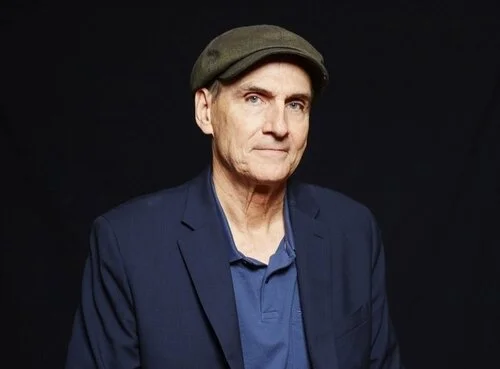
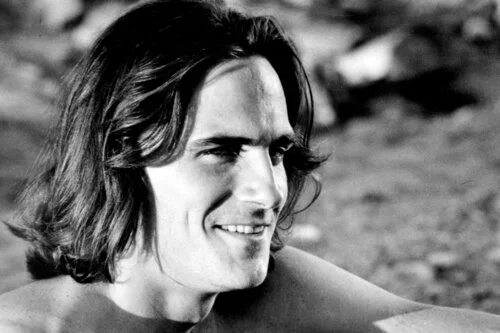
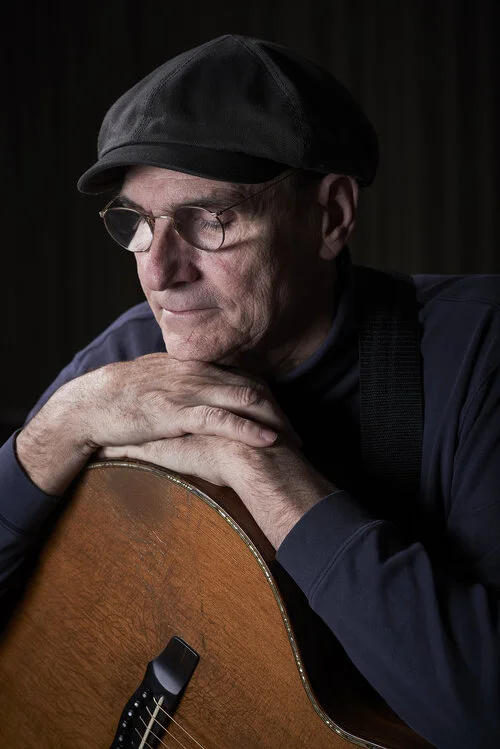
I wanted to throw some attention the way of James Taylor. I think that he remains quite underrated, despite the fact that he is a hugely successful artist. I have been listening to his music since childhood and I really love his vocal style and his phenomenal lyrics. Here is some more information regarding the phenomenal James Taylor:

James Vernon Taylor (born March 12, 1948) is an American singer-songwriter and guitarist. A five-time Grammy Award winner, he was inducted into the Rock and Roll Hall of Fame in 2000. He is one of the best-selling music artists of all time, having sold more than 100 million records worldwide.

Taylor achieved his breakthrough in 1970 with the No. 3 single "Fire and Rain" and had his first No. 1 hit in 1971 with his recording of "You've Got a Friend", written by Carole King in the same year. His 1976 Greatest Hits album was certified Diamond and has sold 12 million US copies. Following his 1977 album JT, he has retained a large audience over the decades. Every album that he released from 1977 to 2007 sold over 1 million copies. He enjoyed a resurgence in chart performance during the late 1990s and 2000s, when he recorded some of his most-awarded work (including Hourglass, October Road, and Covers). He achieved his first number-one album in the US in 2015 with his recording Before This World.

He is known for his covers, such as "How Sweet It Is (To Be Loved by You)" and "Handy Man", as well as originals such as "Sweet Baby James”.

In order to help provide some guidance regarding his work, I have recommended his best four albums, one that is underrated, his latest album – there is also a James Taylor-related book that should provide some useful reading. Here are the James Taylor albums…

xxx.jpg

 PHOTO CREDIT: Joby Sessions - Guitarist Magazine/Future/Getty Images

THAT you need to own.

______________

The Four Essential Albums


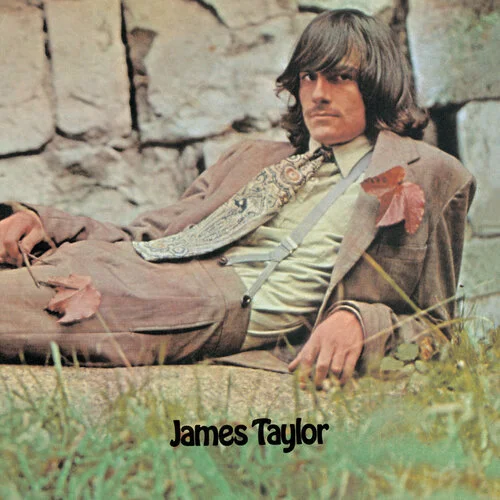
James Taylor

ww.jpg

Release Date: 6th December, 1968

Label: Apple

Producer: Peter Asher

Standout Tracks: Knocking 'Round the Zoo/Carolina on My Mind/Night Owl

Buy: https://www.discogs.com/sell/list?master_id=68205&ev=mb

Stream: https://open.spotify.com/album/67zzo0nNsK1dR94u5lhH3C?si=E3AuMdtSQs2v-PitiZTQsQ

Review:

James Taylor was the first artist to be signed to record on the Beatles' short-lived vanity Apple label. In late 1968, Taylor's sophisticated self-titled disc foreshadowed the introspective singer/songwriter genre that dominated pop music in the early and mid-'70s. Although often touted as his debut, this release is chronologically Taylor's second studio outing. James Taylor and the Original Flying Machine -- an EP recorded a year earlier -- contains rudimentary versions of much of the same original material found here. The album is presented with two distinct sides. The first, in essence, presents a unified multi-song suite incorporating several distinctly Baroque-flavored links connecting the larger compositions. The second is a more traditional collection of individual tunes. This unique juxtaposition highlights Taylor's highly personal and worldly lyrics within a multidimensional layer of surreal and otherwise ethereal instrumentation. According to Taylor, much of the album's subject matter draws upon personal experience. This is a doubled-edged blessing because the emphasis placed on the pseudo-blues "Knocking 'Round the Zoo" and the numerous other references made to Taylor's brief sojourn in a mental institution actually do a disservice to the absolutely breathtaking beauty inherent in every composition. Several pieces debuted on this release would eventually be reworked by Taylor several years later. Among the notable inclusions are "Rainy Day Man," "Night Owl," "Something in the Way She Moves," and "Carolina in My Mind." Musically, Taylor's decidedly acoustic-based tunes are augmented by several familiar names. Among them are former King Bees member Joel "Bishop" O'Brien (drums) -- who had joined Taylor and Danny "Kootch" Kortchmar in the Original Flying Machine -- as well as Paul McCartney (bass), who lends support to the seminal version of "Carolina in My Mind." The album's complex production efforts fell to Peter Asher -- formerly of Peter and Gordon and concurrent head of Apple Records A&R department. The absolute conviction that runs throughout this music takes the listener into its confidence and with equal measures of wit, candor, and sophistication, James Taylor created a minor masterpiece that is sadly eclipsed by his later more popular works” – AllMusic

Choice Cut: Something in the Way She Moves

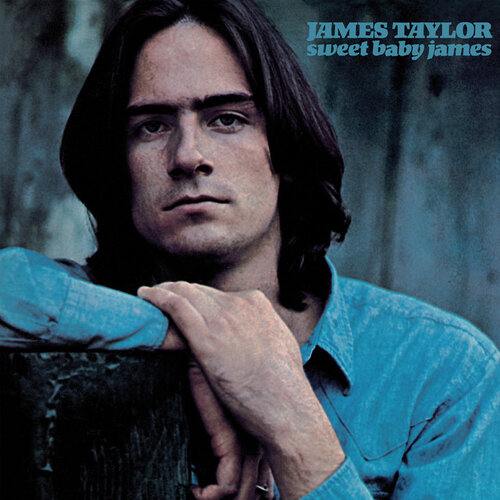
Sweet Baby James

xxxx.jpg

Release Date: February 1970

Label: Warner Bros.

Producer: Peter Asher

Standout Tracks: Sweet Baby James/Sunny Skies/Country Road

Buy: https://www.discogs.com/sell/release/1708761

Stream: https://open.spotify.com/album/1HiG0ukRmFPN13EVcf98Jx?si=1zF4YJjBQBSDjvILUQx4Yw

Review:

Peter Asher (formerly at Apple with Taylor) produced this album, as well as Taylor’s first, and, one can hear, let Taylor have free rein this time. Echoes of the Band, the Byrds, country Dylan and folksified Dion abound, yet somehow Taylor pulls through it all with a very listenable record that is all his own. The gentle, intelligent manipulation of piano, steel guitar, fiddle and a few brass arrangements alone deserve a close listening to by any erstwhile producers.

And it is hard to fault Taylor’s lyrics. “Sweet Baby James,” with its “cowboys waiting for summer/his pastures to change” and “Fire and Rain” with its “Sweet dreams and fire machines in pieces on the ground” are just a few of the images that Taylor develops. Throughout, his vocal stance is low-key and perfectly matched to the country-styled guitar work. No acute solos or overstressed melodies appear as musicians and vocalist together manage to mandala their way through Taylor’s persistent lonely prairie/lovely Heaven visions that, at times, work their way up to the intensity of a haiku or the complexity of a parable

Taylor only shifts from this stance a couple of times. “Oh Baby, Don’t You Loose Your Lip On Me” is less than two minutes long; bluesy yet random, it sounds like studio hi-jinks used to fill out an album. But the other exception, “Steam Roller,” is a different story. Here Taylor is earthy and lowdown with definitely crude electric guitar behind him as he moans “I’m gonna inject your soul with some sweet rock and roll and shoot you full of rhythm and blues.” Then a miasmic, brass riff to make sure things stay tough, followed by a particularly timely and potent couple of verses: “I’m a napalm bomb for you baby/stone guaranteed to blow your mind/ and if I can’t have your love for my own sweet child/there won’t be nothing left behind.” A double-entendre tour-de-force pulled off effortlessly.

This is a hard album to argue with; it does a good job of proving that his first effort was no fluke. This one gets off the ground just as nicely, as Taylor seems to have found the ideal musical vehicle to say what he has to say” – Rolling Stone

Choice Cut: Fire and Rain

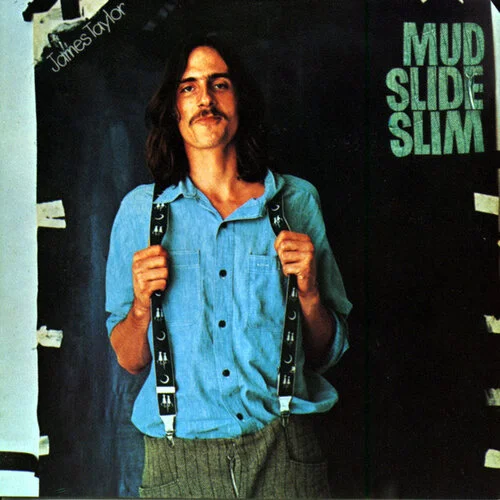
Mud Slide Slim and the Blue Horizon

aaaa.jpg

Release Date: April 1971

Label: Warner Bros.

Producer: Peter Asher

Standout Tracks: Love Has Brought Me Around/You Can Close Your Eyes/Long Ago and Far Away

Buy: https://www.discogs.com/sell/list?master_id=68209&ev=mb

Stream: https://open.spotify.com/album/0h8hazllDADHsrSpcQCltk?si=6z7jBZFQR_mXEy4crlGWeg

Review:

James Taylor's commercial breakthrough in 1970 was predicated on the relationship between the private concerns expressed in his songs and the larger philosophical mood of his audience. He was going through depression, heartbreak, and addiction; they were recovering from the political and cultural storms of the '60s. On his follow-up to the landmark Sweet Baby James, Taylor brought his listeners up to date, wisely trying to step beyond the cultural, if not the personal, markers he had established. Despite affirming romance in songs like "Love Has Brought Me Around" and the moving "You Can Close Your Eyes" as well as companionship in "You've Got a Friend," the record still came as a defense against the world, not an embrace of it; Taylor was unable to forget the past or trust the present. The songs were full of references to the road and the highway, and he was uncomfortable with his new role as spokesman. The confessional songwriter was now, necessarily, writing about what it was like to be a confessional songwriter: Mud Slide Slim and the Blue Horizon served the valuable function of beginning to move James Taylor away from the genre he had defined, which ultimately would give him a more long-lasting appeal” – AllMusic

Choice Cut: You’ve Got a Friend

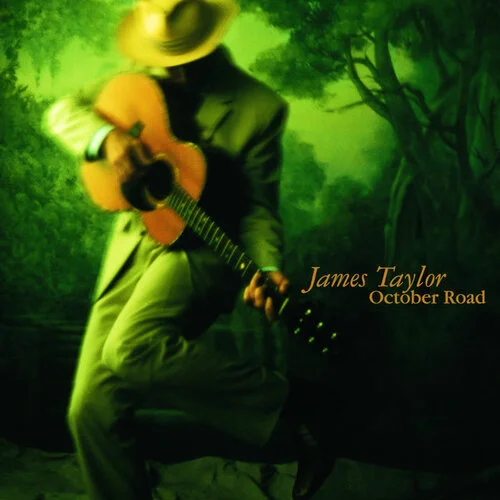
October Road

zzzz.jpg

Release Date: 13th August, 2002

Label: Columbia

Producer: Russ Titelman

Standout Tracks: On the 4th of July/Belfast to Boston/Caroline I See You

Buy: https://www.amazon.co.uk/October-Road-180-gm-vinyl/dp/B00TGJ6JE2/ref=sr_1_1?crid=R5TD42Z0ZERK&dchild=1&keywords=james+taylor+october+road+vinyl&qid=1614757784&sprefix=October+Road+james%2Caps%2C159&sr=8-1

Stream: https://open.spotify.com/album/3RHJNmuwD0fnwccBv2HTif?si=I2-TOs7FRfqgMXGoq14EDg

Review:

Even during his well-documented years of excess, the saccharine sweetness of James Taylor's voice served him well. Now 54 and as mellow as his music, Taylor's first album since 1997's Grammy-winning Hourglass (its progress was halted by his third marriage and the theft of his original lyrics) finds him thoroughly reinvigorated. That voice is in fine fettle, Ry Cooder guests on the title track, and Taylor's morose version of Have Yourself a Merry Little Christmas was an American hit post-September 11. Relaxed as he sounds, Taylor is a hard worker, too. He whistles away at the close of Whenever I'm Ready, creates a weird backing to Mean Old Man and dissects gun running and tribal feuds on the penny whistle-infused Belfast to Boston. He can even do pop: Carry Me on My Way has a chorus so huge and obvious that Westlife could cover it and neither party would lose face” – The Guardian

Choice Cut: October Road

The Underrated Gem


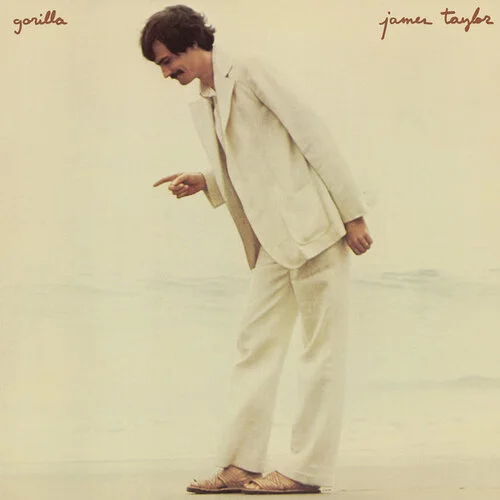
Gorilla

zzzz.jpg

Release Date: May 1975

Label: Warner Bros.

Producer: Russ Titelman/Lenny Waronker

Standout Tracks: Mexico/How Sweet It Is (To Be Loved by You)/Sarah Maria

Buy: https://www.discogs.com/sell/list?master_id=68234&ev=mb

Stream: https://open.spotify.com/album/0x491s63vRDvG25x2Fzrny?si=c4hGyFYzRkahUM19JZpLoQ

Review:

A radical improvement on its predecessor, Gorilla – helmed by Russ Titelman and Lenny Waronker – turns out to be Taylor’s finest album since Mud Slide Slim and the Blue Horizon, even if it’s never quite as interesting overall as that album. Gorilla would also revive Taylor’s fortunes on pop radio, giving him his first Top 40 solo single in nearly three years (not counting his turn as wife Carly Simon’s duet partner on her Hotcakes single “Mockingbird’) with its breezy Top Five remake of Marvin Gaye’s “How Sweet It Is (To Be Loved by You),” which unexpectedly reveals Taylor to be a surprisingly effective lite-soul crooner. The disc also sports a second Taylor classic in the Jimmy Buffett-like tropical pop of “Mexico,” with guest harmonies from Graham Nash and David Crosby. (The song would surprisingly only peak at #49, missing the Top 40, but remains one of Taylor’s most beloved lesser hits, as well as his one of his best up-tempo outings.) But there are other highlights here as well among the album cuts, including “Lighthouse,” the funky “Angry Blues” (featuring a guest appearance from Little Feat’s Lowell George), the torchy “You Make It Easy,” the mellow “Music,” and the catchy yet sparse ballad “Wandering,” featuring James backed only by his guitar and Nick DeCaro’s accordion” – The Great Albums

Choice Cut: I Was a Fool to Care

The Latest Album


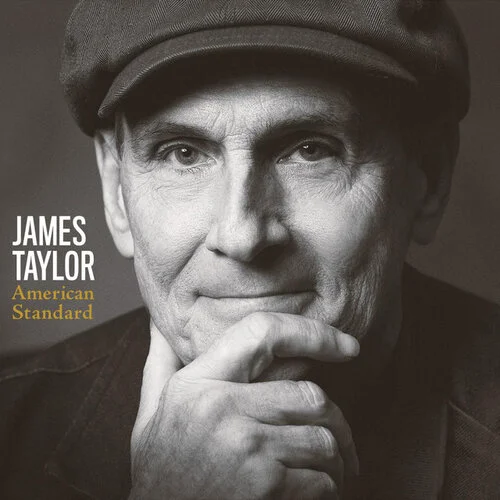
American Standard

xx.jpg

Release Date: 28th February, 2020

Label: Fantasy

Producers: Dave O'Donnell/John Pizzarelli/James Taylor

Standout Tracks: Moon River/God Bless the Child/Ol’ Man River

Buy: https://www.amazon.co.uk/American-Standard-James-Taylor/dp/B0833VRR3T/ref=sr_1_2?dchild=1&keywords=james+taylor+American+Standard&qid=1614758698&quartzVehicle=1550-1368&replacementKeywords=james+taylor+american&sr=8-2

Stream: https://open.spotify.com/album/0wwpYXYdn6MSrWHZv4nyFh?si=640gOaQvQKCVNUVVKz_OZw

Review:

The kindly demeanour and treacle soft voice – not to mention the lofty honours in art and culture bestowed on him to celebrate 50 years of plucking heartstrings clean out of our chests – belie James Taylor’s troubled history. There have been heroin addictions, serious mental illness and no shortage of heartbreak in this 100-million-selling story, so it’s perhaps little wonder he finds difficulty in pouring himself into new material. 2015’s Before This World was his first album of original material in 13 years, and that took a stint of intense self-isolation to complete. Instead, he’s largely spent the millennium lending his pastoral folk tones to cover songs, from Christmas classics to the evergreens of Motown, soul and Fifties rock’n’roll. He’s become the Michael Buble it’s OK to get married to.

His 19th album turns his acclaimed arpeggios to the world of music theatre, raiding the likes of Breakfast at Tiffany’s, Guys and Dolls and Show Boat for tracks he can make swoon or swing. For Taylor, it’s like building an open goal out of cast recording albums – his “Moon River” drifts languidly by on dappled eddies of acoustic and reed, his “Ol’ Man River” is all supine Dixie delicacy, his “Almost Like Being in Love” (from Brigadoon) is the sort of Mississippi folk hammock of a tune that Mark Twain, had he been a man of notes rather than letters, might have writ.

The ballads are bread and butter; it’s when Taylor reinterprets the livelier – and cheesier – showtunes that his artistry shines. “Sit Down, You’re Rockin’ the Boat” shifts between Boston blues verses and choruses of gentle ragtime, “Pennies From Heaven” becomes a rat pack swing-along and Oklahoma!’s “The Surrey With The Fringe On Top” suddenly oozes folk class. The album’s highlight is Taylor’s gossamer take on South Pacific’s “You’ve Got to Be Carefully Taught”, bringing a 21st-century poignancy and warning to a story of inherited prejudice: “You’ve got to be taught before it’s too late/ Before you are six, or seven, or eight/To hate all the people your relatives hate."

Beyond the musicals of his youth, Taylor dips into jazz age classics made famous by names such as Billie Holiday and Glenn Miller – “Nearness Of You”, “Teach Me Tonight”, “God Bless The Child”, “My Heart Stood Still” – which he uses as interludes of sunset samba, draped with Bacharach horns and Carmen Miranda bongos. They’d give the record a cruise ship pallor, if Taylor didn’t exude such ineffable charm throughout. Expect reassurance rather than revelation and you’ll find the lesser-worn pages of the American songbook elegantly traced” – The Independent

Choice Cut: Sit Down, You’re Rockin’ the Boat

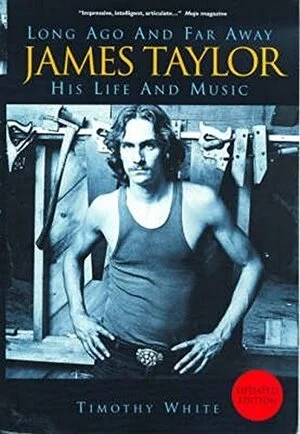
The James Taylor Book


Long Ago and Far Away: James Taylor His Life and Music: Long Ago and Far Away: His Life and Music

qqq.jpg

Author: Timothy White

Publication Date: 3rd May, 2011

Publisher: Omnibus Press

Synopsis:

Rich with insights from Paul McCartney, Carly Simon, Sting, Danny Kootch Kortchmar, the entire Taylor family and many other key figures around James Taylor and his music.

Dispelling myth and rumour, Long Ago and Far Away examines the roots of Taylor's mental anguish and his recurring battles with heroin and alcohol. This is an epic family history, an exploration of the real stories behind Fire and Rain and the rest of the songs, as well as a frank account of Taylor's days on the Apple record label, the financial disaster of his Greatest Hits album deal and the deaths and divorces that have haunted his life” – Amazon.co.uk

Buy:  https://www.amazon.co.uk/Long-Ago-Far-Away-Taylor/dp/1849387737/ref=sr_1_1?dchild=1&keywords=james+taylor+book&qid=1614758900&s=books&sr=1-1

FEATURE: Too Good to Be Forgotten: Songs That Are Much More Than a Guilty Pleasure: Natasha Bedingfield – Unwritten

FEATURE:


Too Good to Be Forgotten: Songs That Are Much More Than a Guilty Pleasure

wwwe.jpg

Natasha Bedingfield – Unwritten

___________

AS I say with all songs…

dddd.jpg

that I include in this feature, I do not buy the notion of a guilty pleasure: a song that one cannot really happily admit to loving. Taken from her 2004 album of the same name, Unwritten was a big hit for Natasha Bedingfield. I was not a massive fan of a lot of the Pop music being made in 2004. It was sort of past the peak of Britney Spears and Christina Aguilera. There were some interesting new acts, but I think Pop has enjoyed stronger periods. I liked the Unwritten album, as it was a lot of personality throughout. Bedingfield wrote all of the tracks on the albums; helping to give it a natural sense of truth and conviction. This is what AllMusic said about Unwritten:

In September 2004 Natasha Bedingfield debuted smashingly in the United Kingdom. Her first record, Unwritten, went to number one almost immediately and the glowing response established her as an instant pop star. Her ascent mirrored the sudden popularity of brother Daniel Bedingfield in 2001, when his bedroom production "Gotta Get Through This" rocketed similarly up the charts. For Natasha, it's "Single" and the near-perfect "These Words (I Love You, I Love You)" -- tracks that merge the rhythms and flavors of hip-hop and R&B with unique melodies and Bedingfield's vocal confidence -- "Single," for example, suggests Kelly Clarkson's 2003 single "Miss Independent." Bedingfield co-writes all but one song on Unwritten, working with songwriters like Guy Chambers (Robbie Williams), Andrew Frampton (S Club 7), and Danielle Brisebois. And she stays remarkably poised throughout, selling some of the album's weaker arrangements with the dusky grain at the top end of her vocal. "Silent Movie" and "Piece of Me" make moves typical of pop in the 21st century -- the former actually sounds like a Williams song, while the latter tries to energize its chorus with blaring guitars. But it's Bedingfield who does the energizing, intersecting Pink's knowing swagger with the confessional exuberance of youth (typified in the blurted "I love you I love you/I love you I love you!"'s of "These Words"). Even when Unwritten emulates the trends, its tendency to play out like a personal diary put to beats and keys saves it from the soundalike pile”.

I don’t think one should think of a song like Unwritten as a guilty pleasure.  In 2019, Bedingfield released her fourth studio album, Roll with Me - and I hope there is more music to come. Maybe there are slightly stronger songs on Unwritten – such as another big hit, These Words -, but the title cut is a great and memorable song. The third single from her debut album, Unwritten is catchy and stands up to repeated listens. The song reached number-five in the U.S. and it was very popular across U.S. radio. Although Unwritten did not fare as well in the U.K. as These Words, the song did get to number-six. It is amazing that Bedingfield did better in the U.S. than the U.K. It is clear that Unwritten took on a new life and has made a big impact:

Bedingfield performed this song at the Concert for Diana. Bedingfield performed this, along with "Pocketful of Sunshine" in the season 7 finale of Degrassi: The Next Generation. It is the theme song to the globally popular MTV series, The Hills. Bedingfield later re-recorded another, slower version of "Unwritten" with production team Carney for use in the final episode of The Hills. A 2019 remix version appears as the theme song in The Hills sequel series, The Hills: New Beginnings. "Unwritten" has been featured in the following motion pictures: Ice Princess, Because I Said So and The Sisterhood of the Traveling Pants. 2006 World Champion figure skater Kimmie Meissner has done multiple exhibition programs to the song as well.[citation needed] It is featured on the episode "Welcome to the Dollhouse", from the series Pretty Little Liars. In 2006, the Bratz released a cover of the song on a special edition of their soundtrack album, Bratz: Forever Diamondz.

The song appears in the video games Karaoke Revolution Presents: American Idol Thrillville: Off the Rails and as downloadable content for Rock Band 4, while the Johnny Vicious remix appears in Dance Dance Revolution SuperNova 2 along with its original video. The song was used for the Pantene television and radio advertisements[3] in English-speaking and other markets between 2006 and 2008, and in France, Spain, Poland, Indonesia, Malaysia, Vietnam and the Philippines.

Unwritten has become a common song used to celebrate graduation due to its uplifting message about the future.

It is amazing that Unwritten was released seventeen years ago! I remember the song coming out when I was at university, and I liked it from the moment I heard it. I am not a massive Natasha Bedingfield fan, but I do appreciate her debut album and I think that her songwriting is accomplished. I think her voice has that nice mix of power and tenderness, and a lot of people can find strength and inspiration from Unwritten. As the song has appeared on more than one list of guilty pleasures songs, I thought I would rewrite things in that sense and spotlight a good song. For those who maintain a song like Unwritten is a guilty pleasure, I would say that the Natasha Bedingfield hit is…

MUCH better than that.

FEATURE: I’m Not the Only One: Is It Time for the BRITs to Change Its Gendered Categories?

FEATURE:


I’m Not the Only One

aaa.jpg

IN THIS PHOTO: Sam Smith, who identifies as non-binary, has been excluded from the gendered categories at this year’s BRIT Awards 

Is It Time for the BRITs to Change Its Gendered Categories?

___________

ALTHOUGH there has been some progression…

lll.jpg

at music award ceremonies in terms of gender and racial balance (in terms of who is nominated), there are still areas where improvement is required. The GRAMMYs were criticised for years because of a lack of women and BAME artists being nominated. They have made some big steps over the past year or two but, with The Weeknd boycotting them after being snubbed, they still have to deal with fallout and blowback. The BRITs has faced some problems this week as Sam Smith has been excluded. This article from The Guardian explains more:

Sam Smith, the pop singer whose gender identity is non-binary, has been excluded from the gendered categories at the 2021 Brit awards.

The awards system has maintained its usual artist categories, with prizes for British solo male and British solo female. That means there is no room for Smith, who uses they and them as their pronouns since coming out as non-binary in September 2019. They said at the time: “After a lifetime of being at war with my gender I’ve decided to embrace myself for who I am, inside and out.”

Their album Love Goes is eligible for the British album of the year award. It reached No 2 in the UK chart on release in October 2020, and remained in the Top 40 until last week.

In a statement on Instagram, Smith said: “The Brits have been an important part of my career … Music for me has always been about unification not division. I look forward to a time where awards shows can be reflective of the society we live in. Let’s celebrate everybody, regardless of gender, race, age, ability, sexuality and class.”

A Brit awards spokesperson later responded, saying: “Sam is an extraordinary British artist and we agree with what they have said today. The Brits are committed to evolving the show and the gendered categories are very much under review. But any changes made to be more inclusive need to be just that - if a change unintentionally leads to less inclusion then it risks being counterproductive to diversity and equality. We need to consult more widely before changes are made to make sure we get it right”.

The awards have made changes to the eligibility criteria this year, allowing non-British citizens to be nominated in British categories providing they have been a permanent resident for more than five years.

The change means that pop singer Rina Sawayama, who holds Japanese citizenship but has lived in the UK for more than 25 years, is eligible, and has been nominated for the rising star award alongside rapper Pa Salieu and pop singer Griff. She was deemed ineligible for the 2020 Mercury prize on citizenship grounds, a decision she described as “very upsetting”. The Mercury prize has also now updated its eligibility criteria to match that of the Brits”.

It sounds like there will be changes in the next couple of years. Whether it means the BRITs organisers will a Best Non-Binary Artist category or dispense with the gendered categories, I don’t know. It does seem strange that, at a time when there are so many non-binary/gender-fluid artists, award ceremonies do need to adapt.

Maybe it is outdated to separate male and female artists when there could be a single category. Some say that, if that were the case, then there is a danger of women being under-represented and overlooked. The BRITs has faced a problem with a lack of female artists being nominated in the past. Last year, The Guardian detailed a serious oversight and issue:

Because Brits eligibility doesn’t just depend on artists releasing music during the previous 12 months, but Top 40 success. This disadvantages female performers, who are being signed and promoted at an inferior rate: as industry reporter Rhian Jones identifies in her assessment of this year’s Brits, 2019 analysis by former Basca CEO Vick Bain of UK labels’ public-facing rosters found that fewer than 20% of actively promoted current signings were women. Unlike rap, in which DIY paths to the mainstream are de rigueur, pop as an art form relies on scale and infrastructure that an individual can’t create for herself.

The Brits could change its rules so that any British music released over the past 12 months might be considered – an opportunity to recognise our considerable creative influence over the bottom line – but as is often the case with music’s power brokers, they are shifting the blame, stating that the longlist was pulled from Official Charts Company data. This amounts to passing the buck from left hand to right: major labels produce the bulk of what goes in the charts. They also take turns running the Brits (this year, it’s Universal). Their voting representatives almost always tip their own product. And so the pool shrinks”.


The BRITs faced a #BritsSoWhite controversy of 2016 when it failed to nominate any Black artists. They then diversified its voting committee. In 2020, its 1,445 members comprise 49% female and 24.5% BAME voters. The BRITs Rising Star 2021 trio is the most diverse – and I think, interesting – for years. It is going to be a hotly-contested category and, whilst I think Rina Sawayama will win, the fact all the nominees are non-white artists is a move in the right direct - and the artists are all very different and primed for big things in the future. We can see how the BRITs has reacted to negative press and clear lack of diversity. Let’s hopes that Sam Smith’s snub compels the award committee to make some alternations. Some would argue that Smith’s latest album, Love Goes, of last year was not going to be in the running for nominations. I do think that last year’s BRITs was a triumph, in the sense that we saw more BAME and female artists nominated and winning awards. Non-binary artists are not a silent voice and reserved to a few people. Perhaps Sam Smith is one of the most high-profile. One has to ask that, if there are changes regarding gender categories, then what about trans artists. Maybe it is complex to change the entire system and overhaul things but, as there are so many important non-binary artists, it is clear that the BRITs (and all other award ceremonies) need to…

RESPOND proactively.

FEATURE: Music Technology Breakthroughs: Part Thirteen: MIDI (Musical Instrument Digital Interface)

FEATURE:


Music Technology Breakthroughs

dddd.jpg

Part Thirteen: MIDI (Musical Instrument Digital Interface)

___________

I might wrap this feature up…

zzzz.jpg

 PHOTO CREDIT: Getty Images

in a few weeks, as there are only a certain number of technological breakthroughs that have occurred in music history! So far, I have covered music software, instruments and technology that has changed the industry and the way we enjoy music. Today, I am featuring a breakthrough that, despite some flaws and criticism, has made a big impact through the years. MIDI (Music Instrument Digital Interface) is a fascinating conception. If you are unfamiliar with MIDI, here is some useful history and information:

MIDI (/ˈmɪdi/; an acronym for Musical Instrument Digital Interface) is a technical standard that describes a communications protocol, digital interface, and electrical connectors that connect a wide variety of electronic musical instruments, computers, and related audio devices for playing, editing and recording music.The specification originates in a paper titled Universal Synthesizer Interface, published by Dave Smith and Chet Wood, then of Sequential Circuits, at the October 1981 Audio Engineering Society conference in New York City.

A single MIDI link through a MIDI cable can carry up to sixteen channels of information, each of which can be routed to a separate device or instrument. This could be sixteen different digital instruments, for example. MIDI carries event messages; data that specify the instructions for music, including a note's notation, pitch, velocity (which is heard typically as loudness or softness of volume); vibrato; panning to the right or left of stereo; and clock signals (which set tempo). When a musician plays a MIDI instrument, all of the key presses, button presses, knob turns and slider changes are converted into MIDI data. One common MIDI application is to play a MIDI keyboard or other controller and use it to trigger a digital sound module (which contains synthesized musical sounds) to generate sounds, which the audience hears produced by a keyboard amplifier. MIDI data can be transferred via MIDI or USB cable, or recorded to a sequencer or digital audio workstation to be edited or played back.

A file format that stores and exchanges the data is also defined. Advantages of MIDI include small file size, ease of modification and manipulation and a wide choice of electronic instruments and synthesizer or digitally-sampled sounds. A MIDI recording of a performance on a keyboard could sound like a piano or other keyboard instrument; however, since MIDI records the messages and information about their notes and not the specific sounds, this recording could be changed to many other sounds, ranging from synthesized or sampled guitar or flute to full orchestra. A MIDI recording is not an audio signal, as with a sound recording made with a microphone.

Prior to the development of MIDI, electronic musical instruments from different manufacturers could generally not communicate with each other. This meant that a musician could not, for example, plug a Roland keyboard into a Yamaha synthesizer module. With MIDI, any MIDI-compatible keyboard (or other controller device) can be connected to any other MIDI-compatible sequencer, sound module, drum machine, synthesizer, or computer, even if they are made by different manufacturers.

MIDI technology was standardized in 1983 by a panel of music industry representatives, and is maintained by the MIDI Manufacturers Association (MMA). All official MIDI standards are jointly developed and published by the MMA in Los Angeles, and the MIDI Committee of the Association of Musical Electronics Industry (AMEI) in Tokyo. In 2016, the MMA established The MIDI Association (TMA) to support a global community of people who work, play, or create with MIDI”.

I am always curious to do some background reading and research regarding innovations and wonderful inventions that have changed music. I was a little unfamiliar when it came to MIDI and how it started out. In terms of history, Music Radar wrote a brilliant feature on the thirtieth anniversary of MIDI in 2012. As it turns forty next year, it is fascinating going back to its humble beginnings:

Absolutely no sound is sent via MIDI, just digital signals known as event messages, which instruct pieces of equipment. The most basic example of this can be illustrated by considering a controller keyboard and a sound module. When you push a key on the keyboard, the controller sends an event message which corresponds to that pitch and tells the sound module to start playing the note. When you let go of the key, the controller sends a message to stop playing the note.

Of course, the MIDI protocol allows for control over more than just when a note should be played. Essentially, a message is sent each time some variable changes, whether it be note-on/off (including, of course, exactly which note it is), velocity (determined by how hard you hit the key), aftertouch (how hard the key is held down), pitchbend, pan, modulation, volume or any other MIDI-controllable function.

The key feature of MIDI when it was launched was its efficiency: it allowed a relatively significant amount of information to be transmitted using only a small amount of data. Given the limitations of early '80s digital data transmission methods, this was essential to ensure that the reproduction of musical timing was sufficiently accurate.

mm.jpg

 Manufacturers quickly adopted MIDI and its popularity was cemented by the arrival of MIDI-compatible computer hardware (most notably the built-in MIDI ports of the Atari ST, which was released in 1985). As weaknesses or potential extra features were identified, the MIDI Manufacturers Association updated the standard regularly following its first publication.

The most common criticisms of the MIDI protocol relate to timing issues. Although MIDI was efficient by the standards of the early '80s, it is still undeniably flawed to some extent. There is some degree of jitter (variation in timing) present in MIDI, resulting in discernible sloppiness in recording and playback.

Perhaps even more obvious to most of us is latency, the delay between triggering a function (such as a sound) via MIDI and the function being carried out (in this case the sound being reproduced). The more information sent via MIDI, the more latency is created. It may only be in the order of milliseconds, but it's enough to become noticeable to the listener”.

Whilst I have sourced a part of the feature that signalled weaknesses of MIDI and its limitations, there are many more pluses than negatives. I want to end up with a BBC feature that highlights how important MIDI was.

I think we will see more features next year on the fortieth anniversary. In 2012, the BBC were keen to explore the history and legacy of MIDI:

It's 30 years since the development of technology that allowed synthesisers and drum machines to be connected to computers - and since then MIDI (Musical Instrument Digital Interface) has revolutionised the world of music recording.

If you really want to appreciate Pink Floyd's track Shine on You Crazy Diamond, aficionados claim, it's best to have it on vinyl.

The sounds of the synthesisers burst through the crackle on the record as the guitar and drums set a heavy, rolling rhythm.

But despite the awesome creativity of the music, the sound betrays a major limitation to the way electronic musical instruments were controlled at the time.

"You could play one keyboard with your right hand and another keyboard with your left hand," says Dave Smith, a synthesiser manufacturer from California who was working on the issue back then.

"But [musicians] couldn't play more than one at the same time because there was no way of electrically interconnecting them," he remembers.

What Smith did next would transform the way recording studios worked, and create a revolution in music and recording production.

ccc.jpg

 He persuaded manufacturers to adopt a common format which allowed their synthesisers to be controlled externally - by another keyboard potentially made by a rival manufacturer, or even by a computer.

It was called Musical Instrument Digital Interface (MIDI) and would soon become the industry standard for connecting different makes of synthesisers, drum machines, samplers and computers.

The development opened up a "whole new era of music processing", as Dave Smith puts it.

"What MIDI did is it allowed the first home studios to be born," he says.

"The computers were fast enough to be able to sequence notes, control the number of keyboards and drum machines at the same time… it kind of opened up a whole new industry."

It was a breakthrough that would have the same kind of impact on popular music as the electrification of guitars decades earlier.

The wide availability of the format and its ease of use helped redefine pop music in the 1980s - giving it a strong electronic feel and spawning many of the contemporary music genres that followed.

Alex Paterson's co-producer Dom Beken remembers how MIDI allowed anyone to create "massive soundscapes".

"Those electronic pioneers and those people who might have been punks before could now just make stuff that people would go mad to on the dance floor," he says.

For Dave Smith, MIDI could only become a success if every manufacturer adopted it - "we had to give it away", he says.

The universality of the format was perhaps an early example of what now gets called "open source" technology - MIDI's backers intended it to be a free gift to the world which allowed anyone access.

Three decades on, and MIDI is still going strong - remaining one of the core components of professional recording and music production”.

I shall end things there but, as I look to the coming weeks and what can be included in Music Technology Breakthroughs, I was keen to spotlight MIDI and its beginnings. There are some weaknesses to MIDI, but it has transformed music technology over the decades. Given all MIDI has given to the music world, I feel it was more than worthy of…

A fond salute.

FEATURE: Kickstarting Something Beautiful… Why We Need to See the Finding Kate Coffee Table-Style Book in the World

FEATURE:


Kickstarting Something Beautiful…

xxx.jpg

 PHOTO CREDIT: Michael Byrne and Marius Herbert

Why We Need to See the Finding Kate Coffee Table-Style Book in the World

___________

I was not going to do so many Kate Bush features…

zzzz.jpg

 PHOTO CREDIT: Michael Byrne and Marius Herbert

this past week but, as there has been a high degree of activity in terms of news, I could not hold back! Every time I publish a feature regarding a new Kate Bush book/magazine spread, another one comes to light! Maybe it is the demand for new music from her, or fans wanting to pay tribute to a remarkable artist…whatever it is, it is brilliant to see exciting new books come to the fore. As Kate Bush News have hardly taken breath this past year because of all of the various books, magazines and Kate Bush-related titbits, I shall let them reveal an exciting project in Finding Kate:

A pair of creative collaborators from Ireland, Michael Byrne and Marius Herbert, have today launched a Kickstarter campaign to realise their goal of publishing a rather unique and beautiful book which “visually and textually celebrates the genius and the music of Kate”. The book is titled: Finding Kate and is described as a visual celebration of the music of Kate Bush. This is an unofficial book, not associated with Kate herself, but Michael has been a long time fan and admirer of both Kate’s music – I’ve seen some pieces from the book and the writing is strong, obviously written with care and from a fan’s perspective. The illustrations promise to be “exciting illustrated visuals that will be new to her fans.” As with book crowdfunding campaigns of this sort, rewards for backers include having your name printed inside the book as a funder.

xxxx.jpg

PHOTO CREDIT: Michael Byrne and Marius Herbert 

From the launch site: “Michael has been a long time fan and admirer of both Kate Bush’s music and creative spirit and in this book ‘Finding Kate’ he picks a selection of his own particular favourite ‘Kate’ songs, each one visually conceptualised as double page spreads with accompanying text detailing some song facts, together with his own personal insights into the music – all beautifully digitally illustrated by Marius. Plus there will be other interesting Kate related content and also a history by decade of her recorded work to date.”

“This will be a large coffee table style book with a page size of 300mm x 300mm (12 inches square). It will be a premium production and will contain 96 pages + cover of text and lavishly produced illustrations of different styles to the following spec:

·        Casebound (hardback)

·        Size 300mm x 300mm

·        Threadsewn

·        Laminated picture wrap cover

·        Head & tail bands

·        Printed end sheets

·        Printed throughout on top quality 170gsm Gardamatt Silk paper.

It will be printed & produced to the highest standards by one of Europe’s leading book printers based in Italy and will ship worldwide”.

pp.jpg

I am going to keep this short because, as much as anything, I want people to support the book. As of writing this (13th March, 14:34), the book has received £1,124 of its £19,149 goal. I am going to pledge and, if you are a new Kate Bush fan or a diehard, this is a book that sounds awesome - one that you definitely need to own. The rewards for those who pledge are attractive:

To try reach our funding target we have come up with a series of 4 personalised and inspiring tiered REWARD PACKAGES aimed at fans of Kate, all of which will be exclusive to backers at the Kickstarter stage, with the ultimate being an opportunity for two people to feature individually in a spread with the lady herself!

All prices quoted for the Rewards packages INCLUDE cost of delivery to you if you live in Ireland, United Kingdom and the European Union. Backers outside of these destinations will be charged an extra €10 at the checkout to cover additional delivery costs”.

I have said – when writing about Kate Bush books and gaps in the market – how there are areas that should be filled. I would like to see a book that explores her albums in a beautiful hardback where we have detailed looks at the tracks, chart positions; pictographic representation of the instruments used and little illustrations that brings her music to life in a new way. Similarly, there has been a relative absence of photobooks through the years.

In fact, the excellent KATE: Inside the Rainbow by her brother, John Carder Bush, was published over five years ago (in 2015). There has not been a good photobook since then and, given the amount of great photographs there are of Bush and the photographers she has worked with, it seems like there needs to be something happen in that area. Two exciting coffee table books, WOW! by Gered Mankowitz, and The Kate Inside by Guido Harari are excellent. They are both quite expensive…so I wonder whether Finding Kate will be closer in price to the John Carder Bush book (£35-£40) or the coffee table books (over £100 for the standard edition of The Kate Inside; nearly £400 for WOW!). 2020 and this year has seen several books and magazine features dedicated to Bush. That is going to grow this year, and, to my mind, I don’t think there has been as much fervent passion and representation of the enormous love that is held for her for many years! Her fanbase continues to grow and, with the Dubliners Michael Byrne and Marius Herbert giving us a glimpse into a beautiful book they have clearly passionately worked on for a long time, more people will pick up Kate Bush’s music after picking up that book - I guess that is one of their aims at least. Let’s hope it can reach its target in the next fifty-nine days (it seems like it will!), as I would love to grab a copy. I would say that we will not see another Kate Bush book or magazine feature published in the coming weeks but, as I have made that proclamation before, I shall happily stay quiet and…

sss.png

 IN THIS PHOTO: Kate Bush in 1979/PHOTO CREDIT: Gered Mankowitz

HOPE that I am wrong!

FEATURE: The Lockdown Playlist: The Brilliance of Quincy Jones

FEATURE:


The Lockdown Playlist

xxxx.jpg

PHOTO CREDT: Art Streiber/AUGUST 

The Brilliance of Quincy Jones

___________

I will include some female artists…

xzzz.jpg

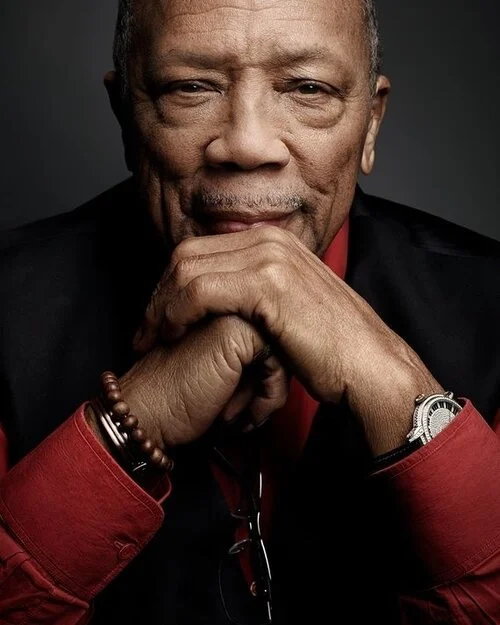
in my birthday Lockdown Playlists. I had to mark Quincy Jones’ eighty-eight birthday tomorrow (14th March). There is virtually no corner of music that has not been lifted by Jones and his magic touch. I wanted to bring in some biography regarding an iconic producer and musicians:

Quincy Jones, in full Quincy Delight Jones, Jr., byname “Q”, (born March 14, 1933, Chicago, Illinois, U.S.), American musical performer, producer, arranger, and composer whose work encompasses virtually all forms of popular music.

Jones was born in Chicago and reared in Bremerton, Washington, where he studied the trumpet and worked locally with the then-unknown pianist-singer Ray Charles. In the early 1950s Jones studied briefly at the prestigious Schillinger House (now Berklee College of Music) in Boston before touring with Lionel Hampton as a trumpeter and arranger. He soon became a prolific freelance arranger, working with Clifford Brown, Gigi Gryce, Oscar Pettiford, Cannonball AdderleyCount BasieDinah Washington, and many others. He toured with Dizzy Gillespie’s big band in 1956, recorded his first album as a leader in the same year, worked in Paris for the Barclay label as an arranger and producer in the late 1950s, and continued to compose. Some of his more successful compositions from this period include “Stockholm Sweetnin’,” “For Lena and Lennie,” and “Jessica’s Day.”

Back in the United States in 1961, Jones became an artists-and-repertoire (or “A&R” in trade jargon) director for Mercury Records. In 1964 he was named a vice president at Mercury, thereby becoming one of the first African Americans to hold a top executive position at a major American record label.

In the 1960s Jones recorded occasional jazz dates, arranged albums for many singers (including Frank SinatraPeggy Lee, and Billy Eckstine), and composed music for several films, including The Pawnbroker (1964), In the Heat of the Night (1967), and In Cold Blood (1967). Jones next worked for the A&M label from 1969 to 1981 (with a brief hiatus as he recovered from a brain aneurysm in 1974) and moved increasingly away from jazz toward pop music. During this time he became one of the most famous producers in the world, his success enabling him to start his own record label, Qwest, in 1980.

Jones’s best-known work includes producing an all-time best-selling album, Michael Jackson’s Thriller (1982), organizing the all-star charity recording “We Are the World” (1985), and producing the film The Color Purple (1985) and the television series The Fresh Prince of Bel-Air (1990–96). In 1993 he founded the magazine Vibe, which he sold in 2006.

Throughout the years, Jones worked with a “who’s who” of figures from all fields of popular music. He was nominated for more than 75 Grammy Awards (winning more than 25) and seven Academy Awards and received an Emmy Award for the theme music he wrote for the television miniseries Roots (1977). He received a Kennedy Center Honor in 2001 and the National Medal of Arts in 2010. In 2013 Jones was inducted into the Rock and Roll Hall of Fame”.

To mark the eighty-eighth birthday of a titan of music, the Lockdown Playlist is a selection of songs where Quincy Jones has a credit (either as composer, conductor, arranger or producer). As you will see, he worked with some enormous artists through the decades. Here is a selection of…

SOME of the very best.

FEATURE: And the Award Goes to… A Look at Four Big GRAMMY Categories

FEATURE:


And the Award Goes to…

dsss.jpeg

 IN THIS PHOTO: Brittany Howard is nominated for five GRAMMYs, including Best Rock Performance for Stay High/PHOTO CREDIT: David McClister 

A Look at Four Big GRAMMY Categories

___________

THIS coming Sunday (14th)…

aaa.jpg

 IN THIS PHOTO: Coldplay are nominated for Album of the Year for 2019’s Everyday Life/PHOTO CREDIT: Atlantic Records

the GRAMMYs will take place. It is another year where things are very strange. Although it is going to be a ceremony where a lot of the nominees are remotely connected, the music nominated this year is phenomenal. I am not going to include all categories in this feature (as there are so many!). I wanted to feature four of the biggest categories, say a little about each album/artist and then predict my winner – how accurate I will be is yet to be seen! Looking at the Album of the Year, Record of the Year, Best New Artist, and Best Rock Performance, I think we will see female talent clean up. In fact, this year is especially positive when it comes to female representation and balance. I am interested to see who will win across the broad; I think the hotly-contested award for song and album will be intense. I think that the Rock nominees are especially intriguing. Ahead of the GRAMMYs on Monday, here is a brief rundown of the exceptional talent in…

aaa.png

 IN THIS PHOTO: Dua Lipa is nominated for six GRAMMYs, including Record of the Year for Don’t Start Now/PHOTO CREDIT: Hugo Comte

FOUR important and privileged categories.

___________

Album of the year


Jhené Aiko Chilombo

z.jpg

Release Date: 6th March, 2020

Labels: ArtClub/ARTium/Def Jam

Producers: Jhené Aiko/Fisticuffs/Lejkeys/Micah Powell/Heavy Mellow

Review:

In fact, one of Chilombo’s many highlights is “None Of Your Concern,” which the couple recorded and released last year while broken up. It’s a bracingly honest and sometimes explicit postmortem on their romance, and it’s one of many unflinching moments on the album. Recording in Hawaii in the wake of her breakup from Sean, Aiko incorporated the sound of crystal alchemy singing bowls tuned to specific chakra frequencies as a mode of healing. If that sounds serene, the lyrics are strikingly raw. “You muhfuckin’ right, I’m bitter/ You muhfuckin’ right, I’m triggered,” Aiko sings over zoned-out keyboard chords and trap drums on early single “Triggered,” one of many elegant reunions with longtime producers Fisticuffs and Lejkeys. On the ghostly “Speak,” she taunts, “I’m moving on I’m putting on my favorite dress, the one you hated/ Said I looked naked in.” Alongside H.E.R. on “B.S.,” she continues the offensive: “It seem like I give so much and don’t get nothin’ back/ I really thought it was love but you’re so fuckin’ wack.”

The original Chilombo tracklist maintains this vibe for an hour. Even brief stylistic detours like the languid funk track “Tryna Smoke” and the John Legend duet “Lightning & Thunder” — a retro soul update similar to Rihanna’s “Love On The Brain” — sound like natural outgrowths of the album’s world. “I know life’s a bitch, but she could at least give me head sometimes,” she memorably quips on the former, and seemingly every track offers up some similarly memorable lyric, often broadcasted in the song titles. On the sparse “Define Me” she proclaims, “You cannot define me.” On the acoustic “Born Tired” she sums up her exhaustion: “Baby, I was born tired.” Few images this year are more evocative than Aiko as the “Pussy Fairy on the way.” By the time Ty Dolla $ign shows up for the thumping and surprisingly upbeat but still fundamentally misty closer “Party For Me,” Aiko has completed one of the most accomplished R&B albums in recent memory” – Stereogum

Standout Tracks: Triggered (freestyle)/ B.S. (ft. H.E.R.)/Pray for You

Choice Cut: None of Your Concern

Black Pumas Black Pumas (Deluxe Edition)

s.jpg

Release Date: 21st June, 2019

Label: ATO

Producers: Jon Kaplan/Adrian Quesada

Review (Standard Edition):

Possessing a voice that can slide into the slipstream with ease, Burton lends an elegant elasticity to Quesada’s tightly layered productions. Occasionally the producer/guitarist performs this trick in reverse—“Sweet Conversations,” the album’s dreamy denouement, draws upon a demo Burton recorded at home—but the core of the album lies in how the singer helps shape aural paintings into songs, providing them with warmth and a slight trace of spaciness.

Burton may command attention with his sweet, plaintive voice, but Quesada’s densely woven tapestries are the key to Black Pumas. Inspired by RZA’s crate-digging productions for the Wu-Tang Clan extended universe, Quesada relies on scratchy drum loops, hits of strings, funky electronic pianos, and fuzz guitar. Actual samples may be rare but the fact that the guitarist cobbled together all of this on his own is admirable, particularly when he marshals all of his skill on one cut. The minor-key march “Fire” gains gravity from its blend of ghostly organs and guitar twang, “Stay Gold” shimmers with the sultriness of a heat wave, and “Black Moon Rising” unfurls with a hushed sense of spectacle.

At these moments, which are the best Black Pumas has to offer, the duo’s flair for drama is so stirring, they can seem acutely cinematic. As appealing as this Technicolor sound may be, it can’t quite hide the seams created when the duo stitched their two sensibilities together in the studio. Burton’s misty introspection can give Quesada’s soulful prowess an ethereal edge, yet it can sometimes suggest the whole enterprise is little more than snazzy pastiche. While there may be pleasure in such a patchwork of sound, particularly when it’s done with such style and verve, the assemblage bears a pointed sense of insularity. Burton sings about interior voyages and the tracks were usually constructed by no more than two musicians; it’s music made at home, for home listening. That’s all well and good, since the duo has considerable skill, but this existential lonerism underscores a chasm between the pair and their influences. Unlike the icons of the era they find so inspiring, Black Pumas rarely look outside of themselves” – Rolling Stone

Standout Tracks: Colors/Fire/Old Man

Choice Cut: Black Moon Rising

Coldplay Everyday Life

xxx.jpg

Release Date: 22nd November, 2019

Labels: Parlophone/Atlantic

Producers: Rik Simpson/Dan Green/Bill Rahko/Angel Lopez/Federico Vindver/Max Martin

Review:

The song’s accompanying A-side single – and the record’s centrepiece – ‘Orphans’, details hope amid the bleak narrative of the Syrian civil war. It’s the album’s obvious lead single, thrust with a slinky bassline, syncopated Afrobeat percussion and spirited choral sing-a-longs. We’ve had our fill of “woops” and “woo-hoos” across the band’s ‘A Head Full of Dreams’ though. You’re tempted to think: Please, no more.

Thankfully, penultimate track ‘Champion of the World’ (which uses the emotive guitar hook from ‘Los Angeles, Be Kind’, the work of the late Scott Huchison’s Owl John side project) rescues an otherwise trailing part two of ‘Everyday Life’. It’s a slow-burning ballad dedicated to believing in yourself, replete with the widescreen indie rock flair reminiscent of Doves’ ‘There Goes The Fear’. The closing title track, with its blooming strings and repeated chants of “Hallelujah”, sets you up for a ‘Fix You’-style cry fest but slightly short-circuits the whole thing. Still, it’s an interesting decision for a band that trades in build-and-release euphoric pop – and maybe that’s the point.

Ultimately, ‘Everyday Life’ is something of a confounding experiment. On the one hand it’s full of eclectic sounds and ideas – an Iranian poem interlude here (‘Bani Adam’), a country-blues musing on gun control there (‘Guns’) – that offer a welcome respite from Coldplay tropes. True, these songs are sometimes more exciting in theory than in practise (not something you’d have said of, for instance, the Brian Eno-assisted ‘Viva La Vida’), but ‘Everyday Life’ regularly steps to the left-field, proving that Coldplay are more adventurous than they’re often given credit for” – NME

Standout Tracks: Daddy/Orphans/Everyday Life

Choice Cut: Champion of the World

Jacob Collier Djesse Vol. 3

z.jpg

Release Date: 14th August, 2020

Label: Hajanga Records

Producer: Jacob Collier

Review:

The third album in Jacob Collier's ambitious Djesse series, 2020's Djesse, Vol. 3 finds the acclaimed British singer, songwriter, and instrumentalist exploring a vibrant mix of contemporary R&B, vintage-inspired funk, and hip-hop, all woven together by his kaleidoscopic electronic-based production. The set follows Collier's previous Djesse albums and again features a bevy of guest artists. This time out, he joins forces with Jessie Reyez and T-Pain on the kinetic "Count the People," Mahalia and Ty Dolla $ign on the lushly emotive "All I Need," and Tori Kelly on the swaggeringly soulful "Running Outta Love." We also get equally compelling contributions by Kimbra, Daniel Caesar, and Kiana Ledé. These are all gorgeously rendered songs that again underline Collier's reputation as a pop virtuoso, ably bringing together his love of '70s soul, jazz, EDM, and hooky pop” – AllMusic

Standout Tracks: In My Bones (ft. Kimbra and Tank and the Bangas)/All I Need (ft. Mahalia and Ty Dolla Sign)/Running Outta Love (ft. Tori Kelly)

Choice Cut: Time Alone with You (ft. Daniel Caesar)

Haim Women in Music Pt. III

zz.jpg

Release Date: 26th June, 2020

Label: Columbia

Producers: Danielle Haim/Rostam Batmanglij/Ariel Rechtshaid

Review:

When their lengthy tour supporting Something to Tell You ended, the women of HAIM found themselves in inescapable crises. Alana's best friend died; Este struggled with her health- and career-threatening Type 1 diabetes; and Danielle had the double whammy of post-tour depression and her partner Ariel Rechtshaid's cancer diagnosis. They confronted these issues head-on in their life and in their music, and the directness -- and genuine emotion -- of Women in Music Pt. III adds welcome depth to their catchy, genre-mashing songs. On "The Steps," a portrait of partners who go from crashing into each other to taking it all in stride, the roaring guitar lick and honeyed harmonies can't hide the poignancy when Danielle sings "I can't understand/Why you don't understand me." "Don't Wanna," a slick blend of warm '70s atmosphere and peppy brass hits straight out of late-'80s pop, is just as vulnerable as "FUBT," which strips its fears and devotion down to just Danielle's voice and guitar. HAIM document every step of their journey on Women in Music Pt. III with an unflinching honesty that reaps rich rewards. They sound intimately familiar with depression in all its states, whether they're turning away from the wearying, pointless challenge to prove themselves to men in media and the music industry on "Man from the Magazine," sinking into isolation on the oddly comforting standout "I Know Alone," or emerging from the darkness on "Now I'm in It," a slow-building anthem that could be the album's statement of purpose. Women in Music Pt. III's creative process echoes its feeling of growing agency. For the first time, Danielle took on production duties alongside Rechtshaid and Rostam Batmanglij, and impressionistic touches like the seagulls and alarm clocks that embellish "Up from a Dream" or the way the guitar and saxophones drift through "Los Angeles" echo Batmanglij's dreamy musical memoir Half-Light. HAIM let each song and each mood be exactly what it needs to be, making for a collection of moments that are more interesting and real than if they'd attempted a more uniform sound across the album. The band's love for the '90s is as strong as ever on the Roxette-like "Another Try" and "3 AM"'s flirty homage to the era's R&B. Their singer/songwriter and folk-pop roots get their due on "Hallelujah" and the gorgeous "Leaning on You," a pair of songs that unite the sisters' voices and struggles in perfect harmony. The lightness HAIM use to combat the heavy things going on in their lives reaches its peak at the album's end: Written in the wake of Rechtshaid's diagnosis, "Summer Girl," taps into memories of the good times to get through the bad ones and borrows the effortlessness of Lou Reed's "Walk on the Wild Side," but trades that song's aloofness for unconditional love. Sprawling and intimate, breezy and affecting, Women in Music Pt. III is a low-key triumph” – AllMusic

Standout Tracks: Los Angeles/Gasoline/3 AM

Choice Cut: The Steps

Dua Lipa Future Nostalgia

ll.jpg

Release Date: 27th March, 2020

Label: Warner

Producers: Jeff Bhasker/Jason Evigan/KozIan Kirkpatrick/SG Lewis/Lindgren/The Monsters & Strangerz/Stuart Price/Take a Daytrip/TMS/Andrew Watt

Review:

The likes of Prince, Moloko and Chic have their fingerprints all over these 11 songs. It’s peak disco-revivalism, with “Levitating” feeling right at home in a roller disco. But it never feels like she’s copying other people’s homework. Even when she’s sampling INXS on “Break My Heart” or White Town on “Love Again”, her creative voice is always at the forefront, building fantastic bangers.

“Pretty Please” is a stripped-back slow burner that lets the thumping bass and shimmering guitars take you to a dancefloor right before the lights come up. “Hallucinate”, meanwhile, is a blissful early ‘00s club floor-filler. The kind that gets limbs and sweat flying everywhere with abandon. “Cool” is the only real misstep. It lacks that Dua Lipa personality; as though you could quite easily paste someone else’s vocals in and it’d still be a perfectly fine summer bop.

It’s the kind of unabashed frankness of tunes like “Good In Bed”, featuring a line about getting the “good pipe in the moonlight”, that drives a great Dua Lipa song. From the title track's “I know you ain’t used to a female alpha” to the dismantling of the patriarchy on “Boys Will Be Boys”, it’s this approach that makes her tunes more than just club bangers. Even when she swings to socio-political issues, it fits seamlessly.

Bores argue that all pop music is copy-paste manufactured, but if that’s true, then why doesn't all pop music sound this incredible? Future Nostalgia is an artist in total control. It’s built on such an addictive carefree spirit that it’s hard not to let loose and go with it. The greatest pop star of this generation? That’s for you to decide. But Future Nostalgia makes a very convincing argument that Dua Lipa just might be” – The Line of Best Fit

Standout Tracks: Don’t Star Now/Physical/Levitating

Choice Cut: Break My Heart

Post Malone Hollywood’s Bleeding

qqqq.jpg

Release Date: 6th September, 2019

Label: Republic

Producers: Andrew Watt/BloodPop/Brian Lee/Carter Lang/DJ Dahi/Emile Haynie/Frank Dukes/Happy Perez/Jahaan Sweet/Louis Bell/Matt Tavares/Nick Mira/Post Malone/Wallis Lane

Review:

Post Malone, post breakup, brought us his new single ‘Circle’ just last week, appearing as a promise that he would not disappoint on his third studio album ‘Hollywood’s Bleeding’.

Refusing to remain bound by genre, he collaborated with Tame Impala’s leading man Kevin Parker to create a lethargic yet serene sounding track which presets the albums recurring theme of an unresting love.

Unsurprisingly, with the bold range which Post Malone wishes to exhibit on this record, this is simply one of the 10 features in this 17 track galore, which includes the likes of Da Baby, Future, Halsey, Meek Mill, Lil Baby, SZA, Swae Lee and Young Thug.

When anticipating an onset of kicks, snares, and high hats, his acoustic vocal start to the album feels somewhat unsettling; it isn't until a minute in when he gives us what we want, or rather what we expect. ‘Hollywood’s Bleeding’ is an inverted ode to the city, which as Post Malone describes it, inhibits “vampires that want to suck the life from you”.

Beginning the album in a realm familiar to the listener, allows for a more exciting adventure into the unfamiliar parts of the rest of the album. A tip of the hat to the good, moving on to the great.

Heavy pop punk with a light 50’s influence is an uncommon pairing done seamlessly in song ‘Allergic’, the meaning of which accompanies the albums more vengeful tone, however camouflaged in a light hearted and wistful production. It is a style which seems to reflect the imagery of the album cover itself - that at the end of it all, Post manages to rise above it.

What takes the album on a bit of a disappointing turn is ‘Internet’. Composed and written by Kanye West, its oddly placed string accompaniment and lyrics boasts the sentiment of apathy and ignorance. The strings by themselves? Moving, inspiring and touching. However, set against the lyrics it becomes disjointed, unusual and strange.

It’s a two minute interlude which can be easily forgotten in order to enjoy the rest. The most thrilling parts of the album come from its experimental nature, pushed furthest in ‘Take What You Want’ which features both Ozzy Ozbourne and Travis Scott. A collaboration which proves to be an explosive track featuring some insane guitar shredding.

Of course, among this, Post Malone still provides us with a sprinkling of the classics: bitches, butts and Millie on wrists, it’s appeasing. But for the most part, he created an insightful and eclectic record which is a testament to his versatility and willingness to do exactly what he wants CLASH

Standout Tracks: Saint-Tropez/Goodbyes (ft. Young Thug)/Wow

Choice Cut: Circles

My Predicted Winner


Taylor Swift – folklore

xss.jpg

Release Date: 24th July, 2020

Label: Republic

Producers: Aaron Dessner/Jack Antonoff/Taylor Swift

Review:

Swift’s longest lyrical obsession is the loss of innocence, a theme she makes fairly devastating here. Set to high piano flurries, Seven switches between hopscotch-rhyme verses about childhood rituals, and pleading, choral depictions of herself at seven, “in the weeds, before I learned civility,” she sings. “I used to scream ferociously / Any time I wanted.” What conditioning beat out of her as a girl, it beat back in decades later: the tense, slippery Mad Woman traces the self-perpetuating cycle of women being angered by being labelled angry – both massively improve on Lover’s slightly facile gender inequality treatise, The Man, because they’re personal, not projections. Later she recalls naive young love, “back when we were still changing for the better”, then, on Illicit Affairs, willingly entering into a deceitful relationship with someone who “showed me colours you know I can’t see with anyone else”.

The self-awareness that Swift displayed on Lover deepens in Folklore, where she subtly considers the murky line between corruption and complicity, between being a victim and a catalyst. The recriminations are fewer, the fights fairer, and her sense of responsibility in them greater. The seismic shocks of her Reputation-era rude awakening about her public image are still felt: “I can change everything about me to fit in,” she sings on Mirrorball, a gorgeous pedal steel wooze made with Jack Antonoff. Yet she tentatively asserts what’s at her core: the deep dedication she sings about on the resonant, minimalist Peace, and the abiding romanticism of Invisible String.

Lockdown has been a fruitful time for this sort of soul-searching, the absence of much in the way of new memory-formation triggering nostalgic reveries and regrets. This strange summer of arrested development is steadily ending. Folklore will endure long beyond it: as fragmented as Swift is across her eighth album – and much as you hope it doesn’t mark the end of her pop ambitions – her emotional acuity has never been more assured” - The Guardian

Standout Tracks: the 1/the last great american dynasty/betty

Choice Cut: cardigan

Record of the Year


Beyoncé Black Parade

x.jpg

Release Date: 19th June, 2020

Label: Parkwood

Producers: Beyoncé/Derek Dixie

Black Pumas Colors

rrr.jpg

Release Date: 16th April, 2019

Label: ATO

Producers: Jon Kaplan/Adrian Quesada

DaBabyRockstar (feat Roddy Ricch)

diudfiu.jpg

Release Date: 17th April, 2020

Labels: Interscvope/SCMG

Producer: SethInTheKitchen

Doja Cat Say So

aa.jpg

Release Date: 24th January, 2020

Labels: Kemosabe/RCA

Producer: Tyson Trax

Dua Lipa Don’t Start Now

xxxx.jpg

Release Date: 31st October, 2019

Label: Warner

Producer: Ian Kirkpatrick

Post Malone Circles

xxxx.jpg

Release Date: 30th August, 2019

Label: Republic

Producers: Post Malone/Louis Bell/Frank Dukes

Megan Thee Stallion – Savage (feat Beyoncé)

xxxx.png

Release Date: 7th April, 2020

Labels: 1501 Certified/300

Producer: J. White Did It

My Predicted Winner


Billie Eilish everything i wanted

zzz.jpg

Release Date: 13th November, 2019

Labels: Darkroom/Interscope

Producer: Finneas O'Connell

Best New Artist


Ingrid Andress

xxxx.jpg

Phoebe Bridgers

qqq.jpg

Noah Cyrus

aaaa.jpg

D Smoke

wwww.jpg

Doja Cat

qqq.jpg

KAYTRANADA

sisdid.jpg

Megan Thee Stallion

aaaa.jpg

My Predicted Winner


CHIKA

ssss.jpg
 

Best Rock Performance


Fiona AppleShameika

z.jpg

Release Date: 17th April, 2020

Label: Epic/Clean Slate

From the Album: Fetch the Bolt Cutters (2020)

Producers: Fiona Apple/Amy Aileen Wood/Sebastian Steinberg/Davíd Garza

Big Thief Not

gggg.jpg

Release Date: 13th August, 2019

Label: 4AD

From the Album: Two Hands (2019)

Producer: Andrew Sarlo

Phoebe Bridgers Kyoto

z.jpg

Release Date: 9th April, 2020

Label: Dead Oceans

From the Album: Punisher (2020)

Producers: Tony Berg/Ethan Gruska/Phoebe Bridgers

Haim The Steps

zzz.jpg

PHOTO CREDIT: Reto Schmid

Release Date: 3rd March, 2020

Label: Columbia

From the Album: Women in Music Pt. III (2020)

Producers: Danielle Haim/Rostam Batmanglij/Ariel Rechtshaid

Grace PotterDaylight

aaaa.jpg

Release Date: 25th October 2019 (Album)

Label: Fantasy

From the Album: Daylight (2019)

My Predicted Winner

Brittany Howard Stay High

z.jpg

Release Date: 16th July, 2019

Label: ATO

From the Album: Jaime (2019)

Producer: Brittany Howard

FEATURE: Groovelines: Billie Holiday - Strange Fruit

FEATURE:


Groovelines

s.jpg

 Billie Holiday - Strange Fruit

___________

I am not going to put too much…

aaaa.jpg

 PHOTO CREDIT: Atlantic Records 

of my own words into this Groovelines, as Strange Fruit is a song that has been written about my various different sources. I am just about to bring in a feature that mentions how the song plays a pivotal role in a film that has just earned its lead, Andra Day, a Golden Globe for her portrayal of Billie Holiday. I am a huge fan of the Jazz icon, and many consider Strange Fruit to be her finest moment and most haunting song. Holiday was imbued with such range as a singer; I don’t think she managed to strike such a chord as she did with Strange Fruit. I will quote from USA Today and their feature about a song that, eighty-two years after its release, remains relevant and stirring:

In March 1939, a then-23-year-old Billie Holiday closed out her set at New York's Cafe Society with a song she hadn't performed before: "Strange Fruit."

Written by Jewish schoolteacher Abel Meeropol, the song was a mournful dirge for Black victims of lynchings in the Jim Crow-era South, vividly likening their bodies to fruit "hanging from the poplar trees."

"The bulging eyes and the twisted mouth," she sung slowly and deliberately. "Scent of magnolias, sweet and fresh / then the sudden smell of burning flesh."

At first, Holiday was worried about how it'd be received. "As she should have been – audiences out for an evening of fun suddenly found themselves confronted by a highly dramatic performance of a song that was by all accounts shocking and painful," says John Szwed, author of "Billie Holiday: The Musician and the Myth." "As time went by, she came to see the song as a test for her audiences."

'United States vs. Billie Holiday': Andra Day tapped into jazz legend's 'trauma'

"Strange Fruit" is central to Lee Daniels' new drama "The United States vs. Billie Holiday" (now streaming on Hulu), which traces the FBI's efforts to silence Holiday (Andra Day) because of the song. For more than a decade, Federal Bureau of Narcotics chief Harry Anslinger (Garrett Hedlund) targeted her with drug arrests and effectively barred her from the nightclub circuit after an 18-month prison term. She died of liver disease in 1959 at age 44.

"Jazz already had a reputation for being incendiary but then you have this incredible singer who is performing a song that makes people leave the club shaken, where people were either bursting into rapturous applause or into racist heckling," says arts and culture writer Aida Amoako. "The potential to be a powerful song that highlighted racial injustice was a potential recognized both by Holiday and the authorities, so whereas Holiday wanted to grow that potential, the FBI wanted to squash it."

"Strange Fruit" struck a chord with the singer, says music journalist J'na Jefferson. "A few years before recording the song, her father died after being denied medical care for a serious illness. It could have been prevented had he been white. So for her to sing about Black people being killed for being who they are adds another layer of personal context to the song as a whole. I’m sure it was incredibly cathartic in addition to being brave."

Weeks after she first played the song live, Holiday approached her label, Columbia Records, about recording it. Fearing backlash, they declined, but she soon found a home for it at independent label Commodore Records.

"For mainstream institutions – record labels, radio stations – the song was too hot to touch," says David Margolick, author of "Strange Fruit: Billie Holiday and the Biography of a Song." "Beyond a group of left-wing progressives, largely white, most people wouldn't have known the song. The Black press barely mentioned it: It was too radioactive even for them."

And the song continues to resonate today. "We may not be witnessing 'Black bodies swinging in the Southern breeze,' but we have camera phones that prove that Black people are still dying for simply existing," Jefferson says. "We still have to march and protest in order to make a point that things are still unfair for people who look like George Floyd and Breonna Taylor and Elijah McClain and Nina Pop and Tony McDade. The issue remains the same and it’s unfortunate that this is still the reality of our country, but hopefully with greater awareness of social and racial injustices, we can move toward a more tolerant future.

"I hope to one day live in a world where I can listen to 'Strange Fruit' and say, 'I’m glad this doesn’t keep happening”.

I want to source from another feature that cover similar ground in a second. It must have been very odd for radio stations and listeners to hear a song like Strange Fruit in 1939. I can understand why radio stations felt the song was a bit shocking. In many ways, Strange Fruit is as powerful as any speech by civil rights leaders of the 1950s and 1960s. Not to take anything away from Dr. Martin Luther King or any the key figures from the movement; Strange Fruit has this staggering resonance and emotional hit that affects everyone who hears it.

ssss.jpg

It is interesting hearing about the inspiration behind the Billie Holiday classic. In this interesting feature, we hear about the song’s humble beginning and how there was some mixed reaction to Strange Fruit in some sectors:

Holiday may have popularized "Strange Fruit" and turned it into a work of art, but it was a Jewish communist teacher and civil rights activist from the Bronx, Abel Meeropol, who wrote it, first as a poem, then later as a song.

His inspiration? Meeropol came across a 1930 photo that captured the lynching of two Black men in Indiana. The visceral image haunted him for days and prompted him to put pen to paper.

After he published "Strange Fruit" in a teachers union publication, Meeropol composed it into a song and passed it onto a nightclub owner, who then introduced it to Holiday.

When Holiday heard the lyrics, she was deeply moved by them — not only because she was a Black American but also because the song reminded her of her father, who died at 39 from a fatal lung disorder, after being turned away from a hospital because he was a Black man.

Because of the painful memories it conjured, Holiday didn't enjoy performing "Strange Fruit," but knew she had to. “It reminds me of how Pop died,” she said of the song in her autobiography. “But I have to keep singing it, not only because people ask for it, but because 20 years after Pop died, the things that killed him are still happening in the South.”

While civil rights activists and Black America embraced "Strange Fruit," the nightclub scene, which was primarily composed of white patrons, had mixed reactions. At witnessing Holiday's performance, audience members would applaud until their hands hurt, while those less sympathetic would bitterly walk out the door”.

aaaa.jpg

It is not only amazing to read what impact Strange Fruit had when its release. Think about the ensuing years and decades, and the song’s messages and performance is still being discussed. In a deep article from 2019, the BBC talked about the legacy of Strange Fruit:

Strange Fruit was not the first popular song to deal with race. Fats Waller’s Black and Blue had come out 10 years earlier, and Lead Belly recorded The Bourgeois Blues in the same month Holiday recorded Strange Fruit. But Strange Fruit stands out among protest songs for its graphic content and subsequent commercial success. Tad Hershorn, an archivist at the Rutgers Institute of Jazz Studies, tells BBC Culture: “It was such an in-your-face type of protest song [that it] really gained her fame outside of Harlem … it did really leave both the singer and the audience no place to hide.”

This bold confrontation helped galvanise a movement that would eventually alter the course of US history. Anti-lynching campaigners sent Strange Fruit to congressmen to encourage them to propose a viable anti-lynching bill. A review in Time Magazine referred to the song as “a prime piece of musical propaganda for the NAACP”. Ahmet Ertegun, who later co-founded Atlantic Records, called it “a declaration of war … the beginning of the civil rights movement”. Strange Fruit also brought its creators unwanted attention. In 1940 Meeropol, a socialist, was called to testify before a committee investigating communism and asked whether the US Communist Party had paid him to write Strange Fruit. Journalist Johann Hari suggests that while stories of Holiday’s drug use had already been circling, her first performance of Strange Fruit put her firmly on the radar of Harry Anslinger, the notorious head of the Federal Bureau of Narcotics.

For some, Strange Fruit and Holiday’s personal life are inextricable: the aspects of her biography that made her the embodiment of a tragic jazz heroine are the source of the haunting quality of her voice. Despite the fact that Holiday never witnessed a lynching (contrary to what the 1972 Diana Ross film Lady Sings the Blues shows), Strange Fruit still evoked the racial injustice that she felt killed her father, Clarence, who was refused medical treatment at a Texas hospital.

But as Strange Fruit has become separated from Holiday’s personal life over the decades, it has also become distanced from the specific horror of lynching. “It's come to sort of represent racism generally,” Margolick tells BBC Culture. “Every once in a while there’s some horrific moment but lynching has become kind of a metaphor and, in that sense, the song has become more metaphorical than literal over the decades.”

Many musicians have covered, sampled, adapted Strange Fruit, the most famous being Nina Simone in 1965, while Kanye West sampled Simone’s cover for his 2013 track Blood on the Leaves. In 2017, British singer Rebecca Ferguson announced she would only accept the invitation to sing at then President-elect Trump’s inauguration if she could sing Strange Fruit. For Lordi, its unending power lies in the way it “distills the fact of racial violence so unmistakably. It’s shorthand for ‘What is a song I can think of that most powerfully indicts the ongoing legacy of racial violence in this country and across the world?’”

In 2002, Strange Fruit was added to the National Registry of the Library of Congress, immortalising it as a song of great significance to the musical heritage of the US. Holiday died in 1959 and Meeropol in 1986 – but their collaboration has endured, its capacity to shock never waning. It has inspired musicians since to sing about injustice with candour and the awareness that a song can be a timeless impetus for social change.

“There’s something that’s still very radioactive about the song.” says Margolick. “It’s still relevant because race is still relevant. It’s on the front pages of our newspapers every day. The impulses that [Meeropol] was talking about are still very much with us”.

From its beginnings with Jewish schoolteacher Abel Meeropol to Billie Holiday translating the incredible work into this civil rights anthem, Strange Fruit is such a fascinating and hugely impactful song. Given the fact that Holiday has just been portrayed on screen by Andra Day and Strange Fruit plays an important part, I had to include it in this feature.  Maybe there was some mixed reception to the song in the late-1950s/early-1960s, but I think we can all agree now that Strange Fruit is…

A mesmeric work of genius.

FEATURE: Keep Groovin’ Love Record Stores and the Continuing Vinyl Explosion

FEATURE:


Keep Groovin’

t.jpg

IN THIS PHOTO: Georgia is the Love Record Stores 2021 Ambassador/PHOTO CREDIT: Wendy Barrett/Press 

Love Record Stores and the Continuing Vinyl Explosion

___________

A lot of the news that we are receiving…

sksks.jpg

 PHOTO CREDIT: @amartino20/Unsplash

regarding music is negative or uncertain. When it comes to festivals, there is good news in the sense that many might be able to restart this year. Let’s hope that the pandemic does not disturb some optimistic ambitions. One thing that is not being temporised or disrupted by the pandemic is vinyl sales. I will come to that soon but, to tie in with that, earlier this week, we learned that the Love Record Stores day campaign is back for its second year. This NME article explains more:

The Love Record Stores campaign is returning for a second year in September following last year’s hugely successful fundraising drive for independent record stores across the UK.

Over £1 million in sales was taken during the inaugural Love Record Stores Day in June 2020, with the initiative being launched to support record stores who, like many other businesses, have faced difficult trading conditions throughout the coronavirus pandemic.

Love Record Stores 2021 will be held on September 4, its organisers have confirmed today (March 11). It’s hoped that given the UK government’s recent announcement of its ‘roadmap’ out of coronavirus lockdown – which could see a total lifting of restrictions by June 21 at the very earliest – music fans will be able to visit and support their local or favourite record stores in-person for this year’s fundraising event.

Georgia has been appointed as this year’s Love Record Stores ambassador, taking over the role from Tim Burgess.

“I’m not just a fan of records: I’ve bought them, sold them, swapped them and collected them. Records and record shops have always been such a significant part of my life,” the London-based artist, producer and former record store employee said in a statement.

“I couldn’t be more excited to be an ambassador for Love Record Stores 2021 – I can’t wait to celebrate and honour the history of record shops and get the next generation into buying records.”

You can find out more about Love Record Stores 2021 here”.

c.jpg

 PHOTO CREDIT: @rocinante_11/Unsplash

There is exciting stuff happening regarding record stores this year. This year’s Record Store Day takes place on 12th June. Let’s hope that shops can open to full capacity and, just a couple of weeks shy of all social restrictions being lifted (let’s hope), it will be a bigger turnout than last year’s. I have written a lot about vinyl because I feel that it is important to note when there is something positive or a development that warrants attention. One may imagine that restricted physical shopping would haemorrhage the success of vinyl. Conversely, there seems to be no end to the popularity of vinyl! Maybe it is the tactile nature of a record and the fact that one gets a different listening experience compared to digital. It is good that Love Record Stores 2021 has been green-lit, as many smaller record shops have struggled to keep going. Online shopping has helped but, like many, that has only slightly helped them to stay afloat. Music Week published an article this week that discussed the latest positive news regarding vinyl sales:

While the pandemic has clearly hurt CD sales in the last year as HMV and record shops were forced to close, multiple lockdowns have not reduced vinyl sales. Far from it: according to exclusive Official Charts Company data, vinyl album sales for the year to date (chart week nine) stand at 748,077 units, an increase of 7.8% compared to the same period last year.

The growth has continued in tandem with digital consumption – year-to-date audio streams hit 20.7 billion last week (up 5.4% year-on-year).

Looking back to the momentum in 2020, Q4 vinyl sales were up 25% year-on-year. The annual increase for 2020 was 11.5% (4.8 million units) amid an overall physical decline of 24.6% to 21.1m units.

z.jpg

PHOTO CREDIT: @victrola/Unsplash 

According to major label execs interviewed for our 2020 analysis feature in the all-new monthly Music Week, the continued growth in vinyl last year suggests an increase in the number of people now playing LPs.

“I think people were spending more time at home and investing in a turntable,” said Charles Wood, Sony Music UK’s VP of market planning and media. “Vinyl had a great year last year – it would have been even better if we were able to get more of it. Across all majors, there are relatively long lead times now to replenish stock.”

“With people being at home, vinyl is certainly one of the things they have turned to for pleasure and enjoyment,” added David Hawkes, MD of Universal Music UK’s Commercial Division. “So it doesn’t surprise me at all that the magic of vinyl has played a big part [during the pandemic].”

“As the streaming market’s matured, you’re starting to see some of the consumption change,” said Derek Allen SVP, commercial at Warner Music. “It is possibly a lockdown phenomenon, with people just becoming nostalgic and listening to music they used to listen to.

“This whole ownership culture that has been discovered by the younger generation is what is driving vinyl consumption, alongside the diehards who used to have their record collection sat in the corner gathering dust. The vital thing is that it's a massive opportunity for catalogue divisions across the industry. That is partly what's driving it – people are filling all the gaps [in their collections]. These are the opportunities, and the demand is there.”

Warner Music’s Rhino label had the No.1 vinyl album last year with Fleetwood Mac’s Rumours. There were also strong new or recent releases in the Top 10 vinyl chart for the year, including Harry StylesKylie MinogueAC/DCIdles and Arctic Monkeys.

aaa.jpg

IN THIS PHOTO: Kylie Minogue/PHOTO CREDIT: Dave Benett 

“The kind of people that are still buying records are hardcore music fans,” said Proper Music MD Drew Hill. “The casual music fan has probably moved to become a streaming consumer. The people buying physical probably went to a lot of gigs. The fact that no one's been able to spend any money on buying a gig ticket for a year now, it means that there’s more money coming into the recorded music business.

“So maybe someone who bought one record a week or two records a month is buying twice what they were buying before, just because they've got more money to spend. Lockdown has been a disaster for the live side of the business, but the physical side has potentially been protected by the fact that those hardcore music fans have got a little bit more money and a lot more time. If you can't go out in the evening and go to the pub or go to a gig, then maybe you want to listen to some more records”.

This is all very heartening and encouraging! I think that compact discs will struggle to succeed and resonate when many people are relying on streaming services and others prefer vinyl. It can be hard to compete against the digital tide. For that reason, discovering news that vinyl is in good shape should give heart to the industry and record stores. With Love Record Stores and Record Store Day highlighting the importance of our local vinyl vendor, I would not be surprised if there was even better news to report later in the year. I myself prefer vinyl to digital, as you feel like you have this real and precious thing in your possession. Putting a record on the turntable and dropping the needle is a pleasure I will never tire of! Some record shops are battling for survival but, across the country, many are reporting good news. Whether people are ordering online or they are participating in a click-and-collect service, music lovers are not turning their back on vinyl. At a strange and difficult time, this is…

q.jpg

 PHOTO CREDIT: @priscilladupreez/Unsplash

REALLY inspiring to hear.

FEATURE: By the Cover of Darkness: Kate Bush’s Interpretation of Lord of the Reedy River

FEATURE:


By the Cover of Darkness

mmm.jpg

IN THIS PHOTO: Kate Bush in 1981/PHOTO CREDIT: Janette Beckman 

Kate Bush’s Interpretation of Lord of the Reedy River

___________

WHEN I did a feature…

nnnn.jpeg

about Kate Bush’s B-sides, rarer tracks and gems, I did look at Lord of the Reedy River then. I want to go into a bit more depth, as it is a cover version – I don’t think her interpretative qualities are highlighted enough! One of my favourite B-sides/covers is this pearl. It was recorded in May/June 1981 at Townhouse Studios, London as the B-side to Sat in Your Lap. That single is forty later in the year, so I felt it was important to discuss its very different-sounding B-side. This article from the Kate Bush Encyclopaedia provides more information:

Song written by Donovan Leitch. Originally recorded by Donovan, it was released on his 1971 studio album 'H.M.S. Donovan'. Kate Bush covered the song on the B-side of her 1981 single Sat In Your Lap.

Kate about 'Lord Of The Reedy River'

I've always wanted to do one of his songs because I've admired his music and his voice for years. I decided to do this song and through a coincidence it started happening. Someone asked me what I was doing for the B side while we were watching a Crystal Gayle show on TV. I was telling them I was going to do this Donovan song and all of a sudden Crystal Gayle said "...and now my very special guest is Donovan" and you know we hadn't seen him on TV for years and years. It was really like it was right. (...) And he came into the studio and did some backing vocals which is really great because I've always wanted to work with him. (Sally James, Almost Legendary Pop Interviews, cop. 1981. ISBN 090600828X”.

xxxx.jpg

I am a big fan of Kate Bush’s B-sides. I think it shows as much curiosity and variety as her studio tracks. I have argued why people do not play the B-sides. I know many have been put onto a remastered album that was released a few years back, but I think there is so much brilliance in her B-sides and covers – that is before you have even got to the music we are all much more familiar with! I love Lord of the Reedy River, as Bush’s voice sound so still and emotional. It is a beautiful performance without much backing at all. One places themselves by a river or out in the open air. One is powerless to let the song swim over them! I will draw things to a close in a bit. Before then, I want to source from an article on the Songs of Orgonon website regarding Lord of the Reedy River. Some interesting observations were made:

And yet the song works as a unit of Bush’s Dreaming era. The sensuous, place-centered ethos of “Lord of the Reedy River” is the sort of thing Bush explores throughout her four albums we’ve read about. The mythical aspect of Bush’s work has never departed, nor has her tendency to explore complex subjects through a perspective of searing childlike simplicity (one of the most useful critical tools for exploring the endemic truths of myth). Simplicity isn’t inherently equivalent to reductivism — simple truths have fractal implications. Certainly “Lord of the Reedy River” is both unostentatious and unnerving. Creeping into the senses through such channels of voice and harmony is as erotic as folk songs get.


 In keeping with Bush’s explorations of psychological emancipation, “Lord of the Reedy River” fits in with Bush’s recent musings on transformations and desire. Who amongst us doesn’t at some point get so horny they turn into a swan? (I’ve read your posts, Kate Bush Forums.) It’s a treatment of childhood fantasy as a realization of deep-rooted desires.

Bush niftily makes the song hers. She appears to be the only performer on the track, whose only instrumentation appears to be Bush’s Fairlight. Bush’s vocal is soft and throaty at once — she recorded it by the Townhouse’s disused swimming pool so her voice could “reflect” the water. Perhaps most crucial to the cover’s functionality is Bush’s change of pronouns from third person to first person — “she fell in love with a swan” becomes “I fell in love with a swan.” The result is Kate Bush singing about getting topped by a swan, the sort of surreal psychosexuality that appears in her later snowman-fucking song “Misty.” Nonetheless, Bush’s cover makes it feel like Leda’s story has come full circle, shaping her narrative into a love story of the sublime and the authorial presence of a woman”.

I will leave it there. I wanted to spotlight a Kate Bush song that not many people have heard. I think it is among her most beautiful and haunting vocal performances. It is a stunning thing and, if you have not heard it, go and check it out. Lord of the Reedy River demonstrates how broad Bush was as an artist (and still is). You listen to the song, close your eyes and imagine yourself with her…

IN a very special place.

FEATURE: The March Playlist: Vol. 2: How Does It Feel to Be Addicted?

FEATURE:


The March Playlist

xx.jpg

IN THIS PHOTO: Jorja Smith 

Vol. 2: How Does It Feel to Be Addicted?

__________

HERE is another big week…

xx.jpg

 IN THIS PHOTO: London Grammar

that is packed with interesting music. There is new music from Jorja Smith, London Grammar, Paul Weller, Gwen Stefani, and YONAKA. There are excellent reworkings of songs by IDLES, and Dominic Fike; some tops cuts from The Anchoress (ft. James Dean Bradfield), and Gretta Ray. We also have music from Everything Everything, Phoebe Bridgers, Hannah Peel, Aldous Harding, and Kele. It is a week where some seriously awesome tunes have come to the fore. If you need a kick and appropriate impetus to get you into the weekend, then this packed Playlist should do the job! Have a listen to the best…

iudud.jpg

 IN THIS PHOTO: Dominick Fike

OF this week.

ALL PHOTOS/IMAGES (unless credited otherwise): Artists

__________

xcxx.jpg

Jorja Smith Addicted

zz.jpg

London Grammar How Does It Feel

www.jpg

Gwen StefaniSlow Clap

z.jpg

YONAKA - Ordinary

ddd.jpg

PHOTO CREDIT: Frank Ockenfels 3

Phoebe BridgersSummer’s End – Spotify Singles

s.jpg

PHOTO CREDIT: Autumn de Wilde

Jenny Lewis, Serengeti - Idiot

sss.jpg

Sharon Van Etten Peace Signs (BY IDLES)

x.jpg

Paul McCartney - The Kiss of Venus III Imagined: Dominic Fike

a.jpg

The Anchoress (ft. James Dean Bradfield) - The Exchange

s.jpg

Tony Allen, Ben Okri, Skepta - Cosmosis

s.jpg

Paul Weller Glad Times

aaa.jpg

Noah Cyrus July - Spotify Singles

ssa.jpg

Gretta Ray Bigger Than Me

zxx.jpg

Hiss Golden Messenger - If It Comes in the Morning

a.jpg

Everything Everything SUPERNORMAL

c.png

Kele - The Heart of the Wave

aa.jpg

Selena Gomez (ft. Myke Towers) - Dámelo To’

zzz.jpg

Hannah Peel Carbon Cycle

zzz.jpg

Lucy Dacus - Thumbs

a.jpg

Darius Rucker My Masterpiece

eee.jpg

Rochelle Jordan - NEXT 2 YOU

a.jpg

Low Island I Do It for You

xxx.jpg

Mollie Collins, Ruth Royall - Remedies

zz.jpg

Ibeyi - Recurring Dream

zz.jpg

Tiggs Da Author Suitcase of Sins

zzz.jpg

Ingrid Andress - Lady Like

xx.jpg

Jacob Banks Found

ssss.jpg

Lauren FaithIt’s All a Blur

x.jpg

AJ Mitchell - CAMERAS ON

xxx.jpg

Valerie June Smile

xx.jpg

Nubiyan Twist, Ria Moran Morning Light

aaa.jpg

Matilda Cole Stay Awake

xx.jpg

Lula WilesTelevision

x.jpg

Savannah Conley Not Where I’m Going

s.jpg

Dylan Cartlidge - Anything Could Happen

c.jpg

Matt Berry Aboard

xxx.jpg

spill tab PISTOLWHIP

zz.jpg

PHOTO CREDIT: Adrian Vitelleschi Cook

Do NothingKnives

d.jpg

Amber Burgoyne Only to You

c.jpg

Kasai - Drunk Diary, Weed & Liquor

xxxx.jpg

D Smoke Sade – Spotify Singles

f.jpg

Wild Youth Can’t Say No

x.jpg

Lilly Ahlberg Young Forever

xxxx.jpg

Allison PonthierCowboy

ddd.jpg

Leyla BlueGasoline

c.jpg

Aldous Harding - Revival

xxx.jpg

PHOTO CREDIT: Colin Medley

U.S. Girls - Junkyard

cccc.jpg

Jordan Rakei - Lover, You Should’ve Come Over

m.jpg

PHOTO CREDIT: Ellyn Jameson

Johanna Samuels - Single File

qaaqq.jpg

Gengahr - Under the Skin

xxxx.jpg

Naomi Banks - Moving On

ssss.jpg

PHOTO CREDIT: David Cortes

Crumb - Trophy

FEATURE: Modern Heroines: Part Thirty-Six: Halsey

FEATURE:


Modern Heroines

qwqw.jpg

Part Thirty-Six: Halsey

___________

I like to keep quite…

mmmm.jpg

a broad spread when it comes to Modern Heroines. In terms of genres, there are so many great female artists that are shaping up to be iconic. Either that, or they are hugely influential and important. I am including Halsey as I have been revisiting her 2020 album, Manic. I will get to a review of that album soon. I also want to bring in a few interviews so that we can learn more about a great artist. Before that, here is some background information about Halsey:

Ashley Nicolette Frangipane born September 29, 1994), known professionally as Halsey (/ˈhɔːlzi/ HAWL-zee), is an American singer and songwriter. Gaining attention from self-released music on social media platforms, she was signed by Astralwerks in 2014 and released her debut EP, Room 93, later that year.

Halsey's debut studio album Badlands (2015) reached no. 2 on the US Billboard 200. Her second album Hopeless Fountain Kingdom (2017) topped the chart, and her third album Manic (2020) peaked at number two. She has had two no. 1 singles on the Billboard Hot 100, "Closer", a collaboration with The Chainsmokers, and "Without Me". The single "Bad at Love" reached the top-five. 

Halsey has sold over one million albums. She is noted for her distinctive singing voice. Her awards and nominations include four Billboard Music Awards, one American Music Award, one GLAAD Media Award, an MTV Video Music Award, and two Grammy Award nominations. She was included on Time magazine's annual list of the 100 most influential people in the world in 2020. Aside from music, she has been involved in suicide prevention awareness, sexual assault victim advocacy, and racial justice protests”.

I loved last year’s Manic, and songs such as clementine, You should be sad, and Without Me are still in my mind. It is a fantastic third album from Halsey; showing that she gets stronger and more explorative with each release. I love how stirring and impactful the album is, even after the first listen. This is what The Line of Best Fit observed in their review:

Powerhouse singles; the ghostly and empowering heartbreak ode "Without Me", and the tribal lament of "Graveyard", all pitch into the romantic side of Halsey's life, but it's the moments that edge away from heartbreak and instead focus upon just who she is and where she's been that offer the most.

More specifically, the diamond in the beautiful rough closer, "9:29". The most brazen in its admission of the world through Halsey's eyes, it's a listing of her life to date, apt given the title, as per the intro studio talk of her joking, her birthday. The perfect bookend to a story that's refused to sugar-coat any truth, it cleverly twists vitriolic statements that refuse to let the world take any more of her.

Perfectly attuning the musical accompaniment to the sentiment, "3am" is the kind of alt-rock number that sinks into your head with the ease of idea of that last pint, lamenting the lonely point of a difficult night. At the same time, "You Should Be Sad" trots in a country number, sticking close to the frameworks of what the hollering voice of a broken heart the genre has always been.

Strategically placed throughout are interlude appearances from a spectrum of artists; up-and-coming Floridian rapper Dominic Fike, '90s icon Alanis Morrisette and one-fifth of K-Pop behemoths BTS, Suga, singing in his native tongue. Unspeakably few artists could string together all the above facets together. There's deep honesty, generation-spanning genre-hoping, guest appearances, and an unlikely sense of cohesion: that's all just part of who Halsey is.

Even the use of pop culture references (quotes from films Eternal Sunshine Of The Spotless Mind and Jennifer's Body create the cinematic drama, befitting a story rife with truth) and samples, adds to the flowing spine that underpins the album with a wild charm. Manic revels in the explorative genre-pop bombast, letting the delicates twinkle, and the snarls bare their teeth; yet it's the soul that shines dominantly. It's her most complete work to date”.

Not to ignore Halsey’s work pre-Manic – I will put out a playlist at the end which is career-spanning -, but it is her most-recent album and I think that it signals a very big future. It is such a rich and interesting album that does have some tough moments and songs that take you aback. There is also a lot of light and variation.

mm.jpg

As a songwriter, I think that Halsey is one of the most accomplished and underrated in modern music. In an interview with The Times, we learn more about a curious and fascinating artist:

“I think of myself as obnoxious and reckless and spontaneous and loud,” she says. “But I’ve made some different friends in the past year, and they’re, like, ‘Actually, you’re pretty quiet and thoughtful.’ And I’m, like, ‘I am?’ I think that’s why I became a musician, in an attempt to become the person I was convinced I was.”

A seriously big deal in America, Halsey has made slower progress here, though she is upgrading to arenas for the British leg of her world tour next February. Back home, she has topped both the singles and album charts, and emerged as a force to be reckoned with. The daughter of an African-American father and a mother of Italian, Irish and Hungarian descent, she is bisexual, has openly discussed mental health issues and is a passionate advocate of women’s and LBGT rights. This has, predictably, got her in trouble. But trouble tends to seek her out, she says, and always has.

“In third grade, I did my summer reading project on The Green Mile by Stephen King, and wrote a book report about rape and convicts, racism and the criminal justice system. And other kids were doing Narnia! I got in so much trouble. The teacher was, like, ‘I can’t let you present this to the class.’”

A self-confessed “empathy bomber” who in her songs addresses her sexuality, drug use, relationships and depression with no filter, Halsey now has hundreds of thousands of young fans indirectly calling on her services. Unsurprisingly, there are drawbacks, as she discovered when she read her poem about her own and others’ experience of violence and sexual assault at the 2018 Women’s March in New York. “When I did it, there were 2,000 people in front of me, and no one was listening or paying attention — if you watch it, there was barely even a cheer at the end. I felt defeated. I had written this poem, I thought it was going to matter.

“I definitely flip-flop between disassociatedness and being hyper-present. There’s really no in-between. But if I’m guarded and give you nothing, and you need something, you’re going to go and find it somewhere else — and I have no control over it. It becomes about digging up old clickbait, and I’ve then created that problem for myself”.

I do not think one has to be a fan of Pop music to appreciate Halsey. There are artists who get labelled as ‘Pop’ acts, but they are much broader and harder to define. Whether you have had the same experiences as Halsey or are new to the music, it does not take long for the songs to resonate – and they will linger in the mind.

I want to grab from another couple of interviews or so before wrapping up. When Halsey spoke with The Guardian last year, we learn more about Manic in addition to Halsey’s (Ashley Nicolette Frangipane) upbringing:

Manic is more than a breakup record, then – it is the aftermath of years of feeling beholden to lovers, collaborators and the public. It was made while Halsey, who has bipolar disorder, was in a manic state. (“That’s not a punchline,” she quips.) On Clementine, she sings: “I’m constantly having a breakthrough, or a breakdown.” The song is named after Kate Winslet’s character in Eternal Sunshine of the Spotless Mind, a key example of the manic pixie dream girl movie trope in which a free-spirited woman loosens up an emotionally stunted man. It samples the line: “I’m just a fucked-up girl looking for my own peace of mind. Don’t assign me yours.”

Halsey’s story often exists adjacent to the men in her orbit. Her first album, Badlands, was made with her producer boyfriend, Lido; her second, Hopeless Fountain Kingdom was about their breakup. She started dating G-Eazy in 2017. They made their love official in joint single Him & I, now G-Eazy’s second-most streamed song, but not even in Halsey’s Top 10. After they split the following year, Halsey released Without Me, in which she seems to take the credit for his success – the chorus goes: “You know I’m the one who put you up there.” She says: “As writers, we have this habit of waiting until something doesn’t hurt any more. On Without Me, I ran into a burning building to find whatever I could before I felt too afraid to speak. I’d gone from being a 19-year-old activist, a sexual badass, to this girl who’s someone’s partner.”

She worries that being a firebrand pushes people away. “It’s hard to figure out when being an activist deflects attention from my art,” she frets. “Sometimes when you’re the centre of ‘having something to say’ you start losing your agency. People don’t wanna hear it.”

She reckons her lack of Grammy nominations this year is because she spoke out against former president Neil Portnow’s comments two years ago, when he said it was women’s responsibility to “step up” if they wanted to excel in the music industry. “I had a lot to say about that, and I am nowhere to be seen on any of those acknowledgments.” Post #MeToo, she has been disappointed by the lack of camaraderie between female pop stars. “Nobody wants to be my friend. They’re scared I’m gonna pop off about something. I’m drama by association. I put myself out there with my peers; I don’t know if people really ever wanted to do the same with me. So I stopped wasting my energy.”

She isn’t coming from the same place as many of those peers. Halsey grew up Ashley Nicolette Frangipane in New Jersey to a white Italian family on her mother’s side and an African-American family on her father’s. Her parents were teenagers when she was conceived. She addresses her dad on Manic’s final song 929 – “the most uncensored song I’ve ever written” – about a lonely night on tour when her dad promised to call and didn’t. After she wrote it, she called him. “We need to make more of an effort to connect,” she says. “It’s hard to have a traditional relationship with your parents when you’re …” The parent? She nods reluctantly. “Kinda. I don’t mean to discredit my parents. I was five when they were my age”.

zzzz.jpg

 PHOTO CREDIT: Masha Mel for CLASH

I want to grab from a great interview in CLASH . Halsey spoke about Manic’s upcoming release (the interview was from January 2020):

It’s been two years since your last album, how are you feeling about the upcoming release?

In terms of the album coming out, it’s been a long lead, which is rare for me; I usually like to announce things and put them out right away - I’m not the type to keep a secret for six months, but here we are! It’s definitely very cathartic.

I’m comforted by the fact that I’ve been sitting with this body of work for so long and I still feel so strong about it and connected to it. You always love the work you did most recently the best, but just because it’s the thing will care about the most doesn’t mean it’s what everybody else will. That can be kind of hard - seeing through that illusion. With this album, though, I do feel really good. It had a very clear identity once it revealed itself.

At first I was intending to write something that was really angry and volatile and angsty and self-deprecating and unreliable. I wanted to write an album about mania, and that’s what my understanding of it was at the time. And I kept sitting down to write like that, but it felt kind of performative. I did some greater self-inventory and self-forgiveness, and then the faucet opened. The writing became easier upon my discovery that I actually get on with my manic self a lot more than I thought I did.

xss.jpg

What came out of that process? What did you find yourself writing about?

The album isn’t a commentary on mental health - the reason I called it ‘Manic’ is because I wrote it manic. Which I’ve never really done before - usually I’m too distracted or too impulsive to wrangle myself into a room and do something productive. It was my first time ‘off’ in a while, and usually I vent a lot of that [energy] into the chaos of my lifestyle and the chaos of my schedule; it brings me comfort because it gives me a way to exhaust that energy.

Having time off - even though I was out promoting ‘Without Me’, which is pretty demanding, but not on tour - I bought a house in LA and built a studio, and surrounded myself with a grand piano, guitars, mandolins, violins, all this accessibility, so that when that behaviour and state of mind came I had something to do with it. Sometimes I’m unable to harness it, but this time I was in the perfect position to do that.

It had been two years since I put out an album and I felt like the public narrative about me was built around me and other people - people I’d dated or people I’d collaborated with. I had very little narrative, zeitgeist presence on my own, because it’d been so long since I’d spoken singularly. I thought it was time to do this sort of re-introduction to me.

How do you handle having so many sides to yourself as an artist?

I don’t do anything but this. I have very few personal relationships, I don’t have many hobbies, I don’t really take vacations; I don’t really do anything but this, all the time. So I’ve committed myself to being two people. I do all the work of the pop star and I do all the work of the alternative homegrown ‘fan relationship’ artist. I do two people’s amount of work.

Most people choose to do the pop star thing or they chose to be the homegrown, touring, fan-connection, base level artist. They pick one and then save the rest of their energy for like having a boyfriend and playing fucking soccer. I don’t really do that, so that’s been quite a task; balancing all of that, and reminding myself and evaluating myself every day, asking: ‘Are you still doing all this because you want to?”.

With news that Halsey is to become a mother soon, I am sure that will shift focus - not just in terms of her work commitment and schedule but her music and lyrical concentration. Not to say that she will completely change approach, though I feel maternity will have an impact for sure. I want to end with a fairly recent interview from late last year. Vogue spoke with Halsey about a new collection of poetry, I Would Leave Me If I Could:

In January, after the release of Halsey’s third album, Manic, she was slated to hit the road for one of her biggest tours yet. But instead, the pop singer, born Ashley Frangipane, found her plans on pause. Like much of the world, she has spent most of this year at home—and she’s embraced the coziness. In fact, when we speak in the days leading up to the presidential election, Halsey is peak hygge, flaunting her newly shaved head, wearing a Barbie-esque Biden-Harris sweatshirt, and bundled in a giant plush blanket. “I look like, I don't know, a gym teacher or something,” Halsey quips on Zoom from an office in Los Angeles, where she lives.

Yet the multi-hyphenate never gets too comfortable. Halsey has remained quite busy: She has been on the front lines of the Black Lives Matter protests, landed her first acting gig in the forthcoming Sydney Sweeney–produced series The Players Table, performed alongside Bruce Springsteen for a remote COVID-19 benefit for her home state of New Jersey, and filmed a conversation series with Senator Bernie Sanders. Tomorrow, she releases her debut collection of poemsI Would Leave Me If I Could.

yyyy.jpg

Earlier this year you announced that you were going to do a press blackoutHas it ended?

Oh, I’m barely doing interviews again. You’re just special. I’m only doing interviews when I have something very specific to talk about. I’m not doing interviews just purely for the intention of having a larger profile: I don’t want a larger profile. I’m not saying that I don’t want one at all. I love what I do. I can’t control [my profile] sometimes—it grows out of proportion and makes me feel really, really helpless. I gave a lot away in the beginning, and it didn’t help me. So I’ve got to take care of me now. Also, I sound like an asshole in print, and I don’t mean to. All the YouTube comments on my video interviews are like, “Oh my gosh, she’s so nice. I thought she was such an asshole.” I’m like, “It’s because you read something!” That’s probably just the Jersey in me.

You’re about to release your debut poetry collection, I Would Leave Me If I Could. How did you come up with its title?

It’s from a really old poem that I wrote when I was 18. The title comes from the idea of feeling trapped with yourself, the idea that most people who are in your life are there because of obligation or convenience, and that everyone will leave eventually. And that reflective moment of, “Yeah, I get it. I’d probably leave me, too, if I could.”

In the book, there are a lot of allusions to sexual misconduct and assault. How difficult was it for you to be able to revisit those experiences? Why did you think it was important to write about them?

Well, I definitely cut a lot of shit out, that’s for sure, because I do have to create boundaries for myself. A lot of this book is about relationships, betrayal, abandonment, and interpersonal communication. When you read a poem about something that happened to me when I was eight, maybe it’ll help you better understand the poem about something that happened to me when I was 24. Also, ever since I did the Women’s March speech, I’m not afraid of talking about sexual assault or misconduct. It’s far more common than any of us realize. So I do think it’s important to include it.

Have you started working on a follow-up to Manic, or do you plan to release a new body of work next year?

I’m kind of just taking some time. This is the longest I’ve ever spent at home, so I’m always making stuff. With albums, it’s like I wake up one day and all of a sudden, I know 16 songs I want to write. Then I start them, and it’s done. I’m doing what I do before I make an album—I call it “collecting.” I’m watching movies, reading books, and collecting inspiration”.

I shall leave it here, but I wanted to highlight an incredible artist who is going to be making amazing music for years to come! From 2015’s impressive debut album, Badlands, to now, it has been one hell of a career so far! Although the incredible Halsey has already accomplished so much, I feel that…

THE very best is yet to come.

FEATURE: Second Spin: Toni Braxton – Toni Braxton

FEATURE:


Second Spin

zzz.jpg

Toni Braxton – Toni Braxton

___________

I am doing a Lockdown Playlist about Babyface…

xxx.jpg

very soon, as people do not realise how many tremendous songs he has written or produced! I have been spinning the amazing Breathe Again a lot lately. Written by Babyface, it was the second single from 1993’s Toni Braxton. Of course, a lot of the song’s success is because of the awesome vocal performance by Braxton herself. Before getting down to the album itself, I want to set aside some space to highlight how Breathe Again was received by critics:

Breathe Again" received mostly positive reviews from music critics. Ron Wynn of AllMusic picked the song as a highlight from the album, writing that "Braxton's husky, enticing voice sounds hypnotic on the track." According to Daryl Easlea of BBC Music, the song "fully established Braxton," calling it "a delicate ballad that refused to resort wholly to cliché, it is brought to life by Braxton’s dreamy, breathy delivery." Larry Flick from Billboard described it as "a yearning, R&B-framed ballad." He added, "Once again, her vocal is expressive and moving—mostly due to an unusual willingness to let some rough-edged notes mingle with the sweet diva-like tones. Braxton's earthy personality makes her seem more accessible than a lot of other chest-pounding singers." Also Mitchell May of Chicago Tribune was very positive, writing that "the way her voice throbs when she sings, 'I can't stop thinking about you,' conveys a sense of despair and longing that is rare." John Martinucci from Gavin Report described it as "melancholy". People magazine called the song "haunting", writing that, "The quaver in her voice says more about love's promise and deceit than many singers manage in a career.” John McAlley of Rolling Stone called it "the album's best material", writing that "Braxton's love hangover has reached ludicrously epic proportions." Steve Pick from St. Louis Post-Dispatch noted that "here's another sad love song from a sultry alto singer who seems to be getting the best of the LaFace production team's work this year. This pretty tune benefits greatly from Braxton's ability to hint at the over-the-top histrionics she never quite falls into. As a result, it's both smooth and edgy." James Hunter from Vibe said that Babyface's writing on "Breathe Again" "gives the deserving future star melodic peaks and valleys to explore with her gorgeously detailed, unconceited voice".

I love that song, and I feel Toni Braxton has many other tracks that have the same sort of power and memorability. Another Sad Love Song, Seven Whole Days, Love Affair, and I Belong to You are tremendous tracks. I don’t feel there are many weak spots on the album. Released on 13th July, 1993, Toni Braxton’s debut studio album was one that I remember fondly. Breathe Again is my favourite song from the album, though there are so many gems throughout. In terms of its success and sales, the album did really well:

“Toni Braxton debuted at number 36 on the Billboard 200 and later spent two non-consecutive weeks atop the chart as well as three non-consecutive weeks atop the Top R&B/Hip-Hop Albums chart. It has sold 5,135,000 copies in the United States and 10 million copies worldwide. The album was primarily produced by L.A. Reid, Babyface, and Daryl Simmons. The first single, "Another Sad Love Song", peaked at numbers seven and two on the Billboard Hot 100 and R&B Singles charts, respectively. The album's second single, "Breathe Again", peaked in the top five of both the Hot 100 and R&B charts and at number two on the UK Singles Chart. Other singles were released from Toni Braxton in 1994, including "You Mean the World to Me", "Seven Whole Days", and the double A-side "I Belong to You"/"How Many Ways".

The album received positive reviews and earned Braxton several awards, including three Grammy Awards (for Best New Artist and two consecutive awards for Best Female R&B Vocal Performance in 1994 and 1995). She also won two American Music Awards (for Favorite Soul/R&B New Artist and Favorite New Adult Contemporary Artist) in 1994 and another one in 1995 (for Favorite Soul/R&B Album)”.

What gets to me is how mixed the reviews are. Her 1996 follow-up, Secrets, was received better (thanks in small part because of the megahit, Un-Break My Heart), but I feel many overlooked Toni Braxton as a merely ‘promising’ album. The album is solid, full of personality and variation. This is what Rolling Stone wrote in their 1993 review:

“Braxton had her coming out with "Love Shoulda Brought You Home," a modest hit from last year's Boomerang soundtrack. A slow-groove saga of betrayal and infidelity, the song revealed Braxton's vocal promise and established her image as a feisty survivor in the face of heartbreak. Its popularity did not, however, prefigure the explosive success of Toni Braxton, her debut album. Credit that to the album's skyrocketing first single. "Another Sad Love Song" – with its dynamic vocal, gargantuan hook and clever song-with-in-a-song lyric – surely ranks with "The End of the Road," "I'm Your Baby Tonight" and "Every Little Step" as one of LaFace's greatest triumphs. "Another Sad Love Song" reinforces Braxton's lovelorn persona, as do several other midtempo ballads that L.A., Babyface and Daryl Simmons have front-loaded into Toni Braxton. Indeed, by the time you've gotten through the album's best material – "Breathe Again" (the second single), "Seven Whole Days" and "Love Shoulda Brought You Home" – Braxton's love hangover has reached ludicrously epic proportions.

Certainly, Braxton has got chops and spunk ("I ain't down with o.p.p.," she snaps on "Love Affair"). And, yes, there are a handful of songs in which she gets to do the do. But there's not a poet in the house among LaFace's family of writer-producers – no Smokey Robinson, no Linda Creed. And for all its polish, too much of the music on Toni Braxton mistakes melodrama for passion and set pieces for soul”.

I feel that, all these years later, people should reinspect Toni Braxton’s amazing debut. Last year’s Spell My Name received positive reviews. It shows that, almost three decades since her debut album, Braxton has plenty of life, lease and purpose. I think she will be making albums for many years more. I have a lot of love for her 1993 debut. In a positive review, this is what AllMusic noted:

Toni Braxton is both an elegant and earthy songstress, nicely balancing those seemingly divergent sentiments on her self-titled debut disc. Braxton's husky, enticing voice sounds hypnotic on "Breathe Again," dismayed on "Another Sad Love Song," and disillusioned on "Love Shoulda Brought You Home." But she's never out of control, indignant, or so anguished and hurt that she fails to retain her dignity. It's a sign of how great the Babyface/L.A. Reid production team was that they didn't settle for a defining mood; they presented Braxton with enough diverse emotional settings to hold the interest of urban contemporary males and females”.

I shall leave it there, though I would advise people to check out Toni Braxton and play the album through. It is an amazing album that has so much to enjoy! From the sultry and emotional Breathe Again to the sexy and powerful How Many Ways, I think the album offers up a lot to enjoy. Toni Braxton has received more acclaimed albums since her debut, but I feel that people should give this amazing introduction…

ANOTHER spin.

FEATURE: The Lockdown Playlist: Tracks with Fairly Long, Incredible Outros

FEATURE:


The Lockdown Playlist

aaaa.jpg

PHOTO CREDIT: @justdushawn/Unsplash

Tracks with Fairly Long, Incredible Outros

___________

FOR this Lockdown Playlist…

zzz.jpg

 PHOTO CREDIT: @nate_dumlao/Unsplash 

I want to focus on songs whose intros are quite long but awesome. I have looked at outros in general, but not those that allow the song to breathe (or keep the energy) up to the end. I think intros and outos are really difficult, so it can be quite tricky deciding whether you should keep them short or stretch them out a bit (I am counting outros from over a minute long for this feature). Some of my favourite songs have quite long outros so, in a bit of a change, this Lockdown Playlist is a celebration of those artists who were not afraid to let a song run past the point most people were expecting! Sit back and enjoy a playlist of songs whose intros are…

aaaa.jpg

 PHOTO CREDIT: @icons8/Unsplash

PRETTY memorable ones .

FEATURE: Near Wild Heaven: R.E.M.’s Out of Time at Thirty

FEATURE:


Near Wild Heaven

a.jpg

R.E.M.’s Out of Time at Thirty

___________

WHILST one can easily name five R.E.M. albums…

qqqq.jpg

 PHOTO CREDIT: Frank Ockenfels III

that are classic and universal – I would say Murmur (1983), Reckoning (1984), Lifes Rich Pageant (1986), Document (1987), and Automatic for the People (1992) are obvious ones; there are a couple more that you can include -, many feel that there was this golden run by the band from Athens, Georgia that was sort of interrupted by Out of Time in 1991. Released after 1988’s Green and before 1992’s Automatic for the People, on 12th March, 1991, R.E.M. put out their seventh studio album. Maybe some feel the album is too commercial/less cult or not as raw or original as other albums in their cannon. As Wikipedia write, Out of Time took R.E.M. to the big time:

With Out of Time, R.E.M.'s status grew from that of a cult band to a massive international act. The record topped the album sales charts in both the United States and the United Kingdom, spending 109 weeks on U.S. album charts and enjoying two separate spells at the summit, and spending 183 weeks on the British charts and a single week at the top. The album has sold more than four and a half million copies in the United States and more than 18 million copies worldwide”.

I really love Out of Time and, thirty years after its release, it has not lost any of its impact on me! Some dismiss the opening track, Radio Song; others do not like Near Wild Heaven, or Shiny Happy People; some feel that lesser-discussed songs like Low, Half a World Away, and Country Feedback do not get the attention they warrant. It is true that R.E.M. sounded very different on Out of Time compared to say, an album like Document. Maybe they were less political or innovative, though I refute claims that the band were consciously making attempts to be commercial or more successful. I feel Out of Time boasts some tremendous songs. Shiny Happy People is my favourite song from the album and, when it was released as a single in May 1991, it definitely lodged itself in my head. To tie in with the thirtieth anniversary of the critical highlight of the album, Losing My Religion, I dedicated a feature to it. I shall not go into depth regarding that song, but I did want to bring in a couple of features regarding Out of Time. Albuism revisited the album on its twenty-fifth anniversary back in 2016:

In 1988, the band signed the first of two mammoth, multi-million dollar deals with major label Warner Bros. Records, who vowed to invest heavily in the group’s worldwide distribution and promotion. Featuring the noticeably more polished, radio-friendly singles “Pop Song 89,” “Stand,” and “Orange Crush,” Green (1988) was their first offering under contract with Warner Bros. and augured the mainstream breakthrough that was just a few years away.

Released in March 1991 amidst the burgeoning alternative rock movement, nearly 10 years after their classic debut single “Radio Free Europe” emerged, Out of Time proved transformative for the band. “It marked the transition from pretty big to really big,” Mills explained to The Guardian in 2014. “Although for us [fame] felt gradual. We were really lucky in that every record up to Automatic For The People (1992) and maybe Monster (1994), sold more than the one before it. So it felt very natural and organic, rather than this big avalanche of notoriety.”

Out of Time also demonstrated that mainstream success was indeed attainable for bands whose DNA and sensibilities were fundamentally indie, paving the way for early-to-mid ‘90s alt-rock megastars like Green Day, Nirvana, Pearl Jam and Smashing Pumpkins in the US, as well as British bands such as Blur, Oasis, and Pulp. In a 1994 Rolling Stone cover story interview, Kurt Cobain declared, “If I could write just a couple of songs as good as what they've written…I don't know how that band does what they do. God, they're the greatest. They've dealt with their success like saints, and they keep delivering great music.” While some fans and pundits admittedly accused R.E.M. of compromising their signature sound and indie-rock cred with Out of Time, Cobain’s sentiments were echoed by the band’s many other musical peers, who recognized and celebrated their undeniable influence, inspiration and integrity, both pre- and post-Out of Time.

Also notable across Out of Time’s eleven songs is the absence of explicitly political lyrics, which have been all but relinquished and replaced by love songs, a nuance that Stipe acknowledged to SPIN Magazine in a 1991 cover story interview: "As a lyricist I shouldn’t be shackled to this image that every song I write has to be about the plight of the homeless or the environment. You can only go so far writing songs like that and get away with it. I can’t do it all the time, and I don’t want to pigeonhole myself into being a political folk singer in a rock band. Every song on this record is a love song. Anything political is just an undercurrent. That’s something we’ve just never done before. I’ve written love songs, but they were pretty obscure and oblique. These songs deal with every kind of love—except maybe love of country."

Unveiled as the lead single three weeks before the album’s release date, the poignant “Losing My Religion,” which eloquently examines obsession and self-doubt in matters of the heart, still stands as R.E.M.’s most successful and recognizable song to date, albeit not necessarily the strongest track on the album. Both the band and Warner Bros. never expected the song to become as ubiquitous as it did, but radio and MTV latched on and propelled the song to stratospheric heights”.

I know that people will mark the album’s thirtieth anniversary as it is an important release and contains more than a couple of R.E.M. classics. In their review of Out of Time, Pitchfork definitely found some positives:

Of course, Out of Time is sometimes remembered as much for its stylistic overreach as much as it is for all that elegance. It’s the album with “Country Feedback,” the rawest expression of sheer remorse the band ever captured on tape, but also the album with “Shiny Happy People,” a song that to this day many R.E.M. diehards would just as soon will out of existence. On one side it’s got bassist Mike Mills’ most sublime lead vocal turn on string-swept “Texarkana”; on the other it’s got KRS-One on “Radio Song” wailing like the Big Bopper over a wacky organ lick. Somehow, making one of the fiercest rappers of his era sound like such a colossal clown remains the album’s most perplexing legacy.

A quarter century removed from its release, though, those missteps are easy to write off as endearing period trappings. If anything, the album now sounds more like the masterpiece it felt just short of at the time, a work nearly on par with its more universally regarded, nocturnal sequel Automatic for the People. Warner Brothers’ anniversary reissue gives the album the usual deluxe treatment, with a second disc of demos mostly of interest for the glimpse they provide into the band’s process. “Losing My Religion,” for instance, is presented as both a somewhat uncertain instrumental and as a lean, string-less rock song. You can also hear Michael Stipe not quite hit the high notes on an early version of “Near Wild Heaven”.

If you have not listened to Out of Time for a while then go and give it a listen. Sadly, R.E.M. split in 2011, but their music lives on and their legacy is immense! Maybe Out of Time is not absolute peak R.E.M., but I feel Bill Berry, Peter Buck, Mike Mills and Michael Stipe are phenomenal throughout the album. Despite some mixed reviews and those who say Out of Time has its flaws, I feel it is important to make a fuss on its thirtieth anniversary. I really feel that Out of Time is…

AN essential and incredible album.

FEATURE: Some Say That Knowledge Is Something Sat in Your Lap: Could There Be a Kate Bush Degree Offered at Universities?

FEATURE:


Some Say That Knowledge Is Something Sat in Your Lap

xxxx.jpg

PHOTO CREDIT: Trinity Mirror/Mirrorpix/Alamy 

Could There Be a Kate Bush Degree Offered at Universities?

___________

I was writing about The Beatles…

jjj.jpg

 IN THIS PHOTO: Kate Bush in a promotional photo for the single, Sat in Your Lap (1981)/PHOTO CREDIT: John Carder Bush

recently regarding the news that the University of Liverpool is offering a Masters where one can study the Fab Four. It is exciting that one can dedicate a lot of time and passion exploring the world and impact of The Beatles. I remember I almost took part in a Kate Bush symposium, This Woman’s Work, back in 2019. It was a special two-day examination of her work where various people would take a topic/area relating to Kate Bush and present it. Everything from gender, sensuality and studio technology was discussed. It is a shame that I was not there, as I would have loved to have been involved – the fact that it was in Scotland meant travelling was a bit of a concern. I feel there will be other symposiums and celebrations in the future. Looking ahead, and one can see many artists and areas of society being moved and influenced by Kate Bush. One might scoff at the notion that Bush can be compared with The Beatles regarding legacy and cultural impact. I am not suggesting that a university offers a Kate Bush Masters; though a degree in her work would be justified. I know that students studying English, Music and other subjects can opt to write a paper or present something regarding Bush and her impact. I think that her brilliance and innovation warrants much deeper inspection.

To me, I think Kate Bush is as compelling and important as any other artist. Maybe she has not enjoyed the popularity of The Beatles, but I think her musical ambition is as broad. From fashion to film through to arts and so many corners of the world, Bush’s music and art has made an impact. I think there would be great uptake were there to be a Kate Bush degree or Masters. I know that one would  learn so much through enrolling in such an endeavour. Like The Beatles, Bush’s music is so varied. I feel she is one of these polymaths and multitalented people who is much more than a mere songwriter. The Beatles did more in terms of their touch on society and how they changed the world of music, but I think Kate Bush is a tremendous producer, creator and original who is inspiring so many people’s. Countless artists cite her as a guide; many people have quoted her as an influence regarding embracing their sexuality or being more expressive and free-spirited regarding their fashion or approach to life. Like the symposium that was held a couple of years back, there could be various modules that explore different aspects of Bush’s world. From her fashion and changing looks through to her production style, incredible vocals and how she is an inspiration to so many female artists, there is definitely a lot to investigate and study!

I shall round things off but, after being compelled by the news there is a Beatles Masters being offered by the University of Liverpool, I wondered about Kate Bush and whether she is on the syllabus at the moment. If not offering a degree course around her career, it would be beneficial if her music and lyrics were integrated into school syllabuses. I am not sure whether English classes include her music and lyrics already, but I do feel there is so much depth to her career; so many people can get so much from it. It might be a bit late for me to do a Kate Bush degree but, for musicians, writers and everyone else, it would offer so much. Over forty years since her career started, she is still influencing people and standing out as a true original. I think there are so many layers and nuances, people are discovering new things about Kate Bush all of the time! She is a truly in her own league! I will leave it there. There are some artists who are so important and fascinating that they are fit for academic study and further education. Maybe it will take a few years to come to fruition but, to me, Kate Bush is definitely someone faculties ands educational bodies should consider for highlighting. By establishing a degree around Kate Bush and her career would not only resonate with people studying it, but it would help bring her music and incredible work…

TO the future generations