FEATURE: The March Playlist: Vol. 3: The Church Girl in a White Dress

FEATURE:


The March Playlist
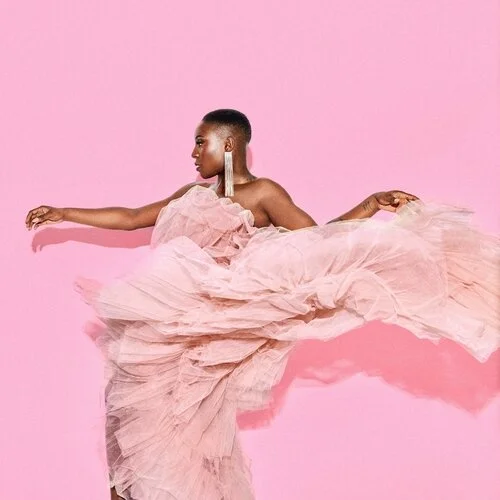
dodudf.jpg

IN THIS PHOTO: Laura Mvula 

Vol. 3: The Church Girl in a White Dress

__________

THIS is a big week…

s.png

 IN THIS PHOTO: Lana Del Rey

where there is new music from Laura Mvula, Lana Del Rey, Cypress Hill, Foxes, The Go! Team, Lucinda Williams, Middle Kids, Lorreta Lynn, Nasty Cherry, Birdy, Lauran Hibberd (with Lydia Night), and Sorry. It is  packed and eclectic week for new music so, if you need a boost and some motivation to get you going today, then the roundup of the best tracks from the past week should set you right! Settle into the weekend with some awesome cuts from the likes of Squid, Charlotte Adigéry, Maddy Storm, Gruff Rhys, Teenage Fanclub, Black Honey, Bugzy Malone (ft. Emeli Sandé) and many more. Get these fantastic tracks…

x.jpg

 IN THIS PHOTO: Middle Kids/PHOTO CREDIT: @imogenwilson_

IN your ears.  

ALL PHOTOS/IMAGES (unless credited otherwise): Artists

__________

zzz.jpg

Laura Mvula – Church Girl

xxx.jpeg

Lana Del Rey – White Dress

xxx.jpg

Cypress Hill - Champion Sound

xxx.jpg

PHOTO CREDIT: Ro Murphy

Foxes – Kathleen

ccc.jpg

The Go! Team - World Remember Me Now

xxx.jpg

Loretta Lynn – I Don’t Feel at Home Anymore

xxx.jpg

Lucinda Williams - Save Yourself

s.jpg

Middle Kids - Today We're the Greatest

xxx.jpg

Mnelia – Senseless

cvvv.jpg

PHOTO CREDIT: Munachi Osegbu for Rolling Stone

Nasty Cherry – Her Body

rrrr.jpg

Sorry - Cigarette Packet

xxxx.jpg

PHOTO CREDIT: Graham Tolbert

Flock of Dimes - Hard Way

mmm.jpg

Lydia Ainsworth - Parade

xxx.jpg

PHOTO CREDIT: Holly Whitaker

Squid - Paddling

ewww.jpg

PHOTO CREDIT: Harvey Pearson

Benjamin Francis Leftwich - Cherry in Tacoma

aaaa.jpg

PHOTO CREDIT: Ingmar Chen

Lightning Bug - The Right Thing Is Hard to Do

aaa.jpg

PHOTO CREDIT: Charlotte Patmore

Black Honey – Back of the Bar

aa.jpg

Birdy – Deepest Lonely

zzz.jpg

Lauran Hibberd (with Lydia Night) - How Am I Still Alive?

xzz.jpg

PHOTO CREDIT: Dan Green/National Theatre of Wales

Gruff Rhys - Loan Your Loneliness

bbb.jpg

Inhaler – Cheer Up Baby

xxcc.jpg

ENNY - Same Old

xcvvv.jpg

Charlotte Adigéry – Bear with Me (and I’ll stand bare before you)

ccc.jpg

glaive - i wanna slam my head against the wall

ju.jpg

Bugzy Malone (ft. Emeli Sandé) - Welcome to the Hood

www.jpg

La Femme - Le Sang De Mon Prochain

ccv.jpg

Alewya x Moses Boyd - The Code (Live Session)

zzzzz.jpg

Tune-Yards - Cannonball (The Breeders)

zzz.jpg

PHOTO CREDIT: Donald Milne

Teenage Fanclub - The Sun Won’t Shine on Me

aaaa.jpg

Maddy Storm – Sleep Deprived

aaa.jpg

Lil Mosey – Try Me

aaa.jpg

Wyldest – Hollow

aaa.jpg

A.A. Williams – Creep

zzz.jpg

Lola Young - Ruin My Make Up

eee.jpg

PHOTO CREDIT: Jared Carolus

Lea Heart – IDK Why

assa.jpg

Greta Van Fleet - Broken Bells

ki.jpg

Cally Rhodes – Call Me Again

zzz.jpg

Addison Rae – Obsessed

zaa.jpg

Lauren Sanderson - Hi.

zaa.jpg

Florene Arman – Out of the Blue

asaa.jpg

KAHLLA - Participant

uu.jpg

Julia Stone - Fire in Me

kkk.jpg

PEACHES - Pussy Mask

sss.jpg

Chloe x Halle - Georgia on My Mind

FEATURE: The Lockdown Playlist: Awesome Songs from 2001

FEATURE:


The Lockdown Playlist

aaa.jpg

Awesome Songs from 2001

___________

I recently put out…

zzz.png

 IN THIS PHOTO: No Doubt in 2001/PHOTO CREDIT: No Doubt Archive

a Lockdown Playlist of songs from albums turning twenty this year. Aside from those incredible albums are awesome singles that are not necessarily from great albums. I might repeat a few songs but, after recently reviewing Gwen Stefani and doing a dig of No Doubt’s albums, I reconnected with my favourite song of theirs: Hey Baby from 2001’s Rock Steady. Doing some more digging, and I was amazed by all the songs from 2001 that have hooky choruses and burrow into the brain! Here are some catchy songs that have already turned twenty this year - or they celebrate an anniversary later in the year. Although some people say that 2001 was not the greatest year for music, as you will hear from the playlist, it was…

zzz.jpg

 IN THIS PHOTO: Aaliyah/PHOTO CREDIT: Arnold Turner/WireImage

QUITE a busy one for catchy tracks.

FEATURE: Second Spin: Blur – Leisure

FEATURE:


Second Spin

ddd.jpg

Blur – Leisure

___________

IT is amazing that Blur’s debut album…

ccc.jpg

 IN THIS PHOTO: Blur in 1991

turns thirty later this year. Released in August 1991 on the Food label, Leisure is considered one of the band’s weaker efforts. There have been some articles since the release that have defended the album and cast it in a new light. Maybe it was not overly-celebrated when it was released but, in the years since, it has aged well - and people have highlighted definite positives. I think a lot of people focus on bigger tracks like There’s No Other Way and She’s So High; they almost discount the rest of the album. I really love the sound of Leisure and, whilst there are a couple of weaker tracks and Blur definitely created better albums, I really like what they did on the debut. It is a compelling and confident effort. I guess one can label a lot of the songs Shoegaze or Pop. The band would evolve and develop their sound on future albums; Leisure remains a fine debut that has not received the plaudits it deserves. In their review, this is what AllMusic had to offer:

"She's So High" and "There's No Other Way" were auspicious debut singles, alternately trancy and melodic, suggesting how shoegazing and baggy beats could be incorporated into pop song structures. Both songs suggested that Blur was capable of a striking debut album, but Leisure wasn't it. Mired by directionless soundscapes and incomplete songwriting, Leisure was nevertheless full of promise. Whenever the group tread close to the warped psychedelia of Syd Barrett, their compositions sprang to life, and "Sing" was an eerie, entrancing minor-key drone reminiscent of the Velvet Underground's "Venus in Furs." Those moments, however, were few and far between on Leisure, since much of the record was devoted to either naïve pop like "Bang" or washes of feedback and effects. From Leisure, it appeared that Blur was only capable of a pair of fine singles, which is what made the complete reinvention of Modern Life Is Rubbish such a surprise. [For the American release of Leisure, SBK Records lopped off one of the album's best songs, "Sing," and shuffled the running order for no apparent reason other than having "She's So High" and "There's No Other Way" appear first.]”.

I am going to bring in a couple of reviews that are more positive or, at the very least, remark how Leisure has grown in strength since its release in 1991. Bad Day, Fool and Come Together are great tracks. I think the album is balanced in terms of where it puts its biggest songs. Maybe the final couple of tracks are not the strongest though, on balance, Leisure is an album that people should seek out ahead of its thirtieth anniversary later in the year. In their assessment (they reviewed the 21 reissue in 2012), this is what Drowned in Sound remarked:

“While the three singles off Leisure attained varying degrees of success. 'She's So High', possibly the missing link between the psychedelic haze of shoegaze and baggy's post-rave comedown, may have only hit the modest heights of number 48 on release but follow-up 'There's No Other Way' scored Blur their first top ten hit, providing the band with what remained their signature tune until the hedonistic 'Girls & Boys' arrived some three years later. 'Bang', the third and final single off Leisure could quite easily be filed under the title 'Blur's great lost 45' were it not for 1992's 'Popscene' pipping it to the post nine months on. Again, not a million miles apart from a lot of the indie/dance crossover acts of the day except for its lyrical savvy ("Bang goes another day, where it went I could not say, now I'll have to wait another week") and incessant pop hook, it's become something of a classic over the years, significantly improving with age.

It's on the less immediate parts of Leisure that a selection of real hidden gems lie in wait. 'Slow Down' takes the fast/slow/quiet/loud formula employed by Dinosaur Jr (later to be tourmates alongside The Jesus & Mary Chain and My Bloody Valentine in 1992) et al for a Home Counties makeover, its riff re-appearing a couple of years later on Modern Life Is Rubbish-45 'Chemical World'. Meanwhile 'Repetition' is arguably the first composition to bear the hallmarks of Graham Coxon's soon-to-become customary guitar sound. The maudlin 'Birthday' and three-songs-in-one 'Come Together' also pour short shrift over those still dismissive of Blur's first long player, 'Fool' too demonstrating Damon Albarn's knack for being able to write a hefty chorus, even back then. Leisure's real highlight comes at its exact midpoint in the shape of 'Sing'. Perhaps best remembered for its inclusion in the soundtrack to Irvine Welsh's 'Trainspotting' and originally only a b-side on the 'She's So High' twelve-inch, even now those simple piano notes causing hairs to stand upright for the song's entire six-minute duration.

While not perfect, Leisure far outweighs the 'clumsy' and 'unfocused' tags it found itself saddled with upon release, and indeed has actually stood the test of time better than some of Blur's most celebrated works, Parklife included. Now, if only someone could tell me whatever happened to The Keatons..?”.

I am going to tie things up soon. I will bring in an NME review snippet soon but, if you are new to Blur or have not listened to them in a while, then start with Leisure. I think Damon Albarn, Graham Coxon, Alex James and Dave Rowntree fused Madchester and Shoegaze on their debut to superb effect. They would grow as performers and songwriters and they underwent a stylistic change after Leisure – bringing in elements of The Kinks and The Beatles. NME reassessed Leisure and had this to say:

“‘Bang’ is a sweet suburban shuffle that open’s Albarn’s net curtain-twitching account, providing the foundations for his best Britpop era observations, while ‘Bad Day’‘s melodica and Albarn’s curiously detached delivery raise it above the early 90s ‘indie dance’ beats is built upon.

while ‘Birthday’ floats by on a cloud of lightning strike guitars and blissed out vocals.

It’s also worth saying a word about ‘I Know’, the double AA side of first single ‘She’s So High’, which replaced ‘Sing’ on the rearranged US tracklisting of ‘Leisure’. It’s not going to win any prizes for its lyrics, but it’s hard to see why the band are apparently ashamed of this neat groove, and it would have been no bad thing if it had sat alongside ‘Sing’ on both sides of the Atlantic (as it did in Japan)”.

I am a massive Blur fan and I do think that Leisure deserves some retrospective acclaim and reinspection. The band would find their sound and feet more on albums such as Leisure’s 1993 follow-up, Modern Life Is Rubbish, and the awesome, ‘90s-defining, Parklife (1994). That said, there are plenty of sparks and brilliant songs on their debut that you should all..

SPEND some time with.

FEATURE: Spotlight: Gretta Ray

FEATURE:


Spotlight

aaa.jpg

PHOTO CREDIT: Kiralee Halgh 

Gretta Ray

___________

EVEN though she is only twenty-three…

zzz.jpg

the fantastic Gretta Ray has been making music for a fair few years now. I became aware of her music a couple of years back. I felt that now was the best time to put her in my Spotlight feature as she has recently released two singles, Readymade and Bigger Than Me - and there is a lot of buzz around the Australian artist. Hailing from Melbourne, the last few years have seen Gretta Ray rise and release music that gets better and better! I am going to bring in a few interviews that provide some useful information about a wonderful songwriter. The first interview I want to bring in is from 2017. Gretta Ray spoke with lip. We learn more about her rise and the progress of her sound:

“When you find yourself singing along to a poetic and emotionally rich ballad on the radio, you might not expect the words to be penned by an eighteen year old girl from Melbourne, fresh out of high school, just embarking on her professional music career. Such is this case with Gretta Ray’s latest single Towers.

‘So now I’m not afraid of heights,’ the songwriter declares at the end of the chorus; and Gretta certainly isn’t, following up her two celebrated singles Drive and Unwind with a track that continues her rise to the top of the Australian music industry.

After winning Triple J’s Unearthed High last year, Gretta Ray has become a familiar name for music fans, her folky-pop voice almost impossible to miss with its high rotation on the airwaves. I recently chatted with Gretta to see how things are going for her now that she has finished high school and can focus on her music full time.

‘I’ve spent a lot of time playing to larger crowds since the Triple J Unearthed win, which has been really amazing, probably my favourite part of the whole thing…’ she tells me, ‘And I’ve been making a lot of important decisions for the future… Just wanting to make sure we make all the rights choices, like who I’m working with, what kinds of things I’m doing, what shows I’m playing… So yes, it’s been a busy but exciting couple of months.’

I ask her where she gets the inspiration for her melodies and lyrics, given that the depth we see goes beyond most teenage experiences.

She says that when writing these songs as compared to her previous EP, she was listening to a lot more pop music, ‘when I opened that door again and started to listen to these melodies and hooks that had been created in modern pop music I found that incredibly helpful to my writing, and having that influence along with all of the poems and books I was studying for English Literature in year 12, meant that I had this ambition to produce songs that were sophisticated lyrically and utilised a lot of the concepts and metaphors that you study in poetry and literature… I was using all of that in the lyrical crafting while trying to incorporate melodic hooks, things that were catchy and things that would stay in people’s heads.  So yeah, the influences for the songs I am writing at the moment, I owe to literature and to pop music.’

Gretta is grateful for the opportunities that winning the Triple J competition has afforded her, but if it seems like she carries herself with the poise of someone who has been doing this for years, it’s because she has. She started her music career at the age of five, singing and touring with the Young Voices of Melbourne choir for twelve years.

I ask her if she has a musical family, and what she remembers best from the soundtrack of her childhood:

‘ Yes,’ she replies, ‘My Dad’s side of the family in particular… Christmas with them consisted of a lot of singing, a lot of harmonies, a lot of playing instruments… I listened to a lot of James Taylor, Joni Mitchell, Sheryl Crow, Paul Simon, Paul Kelly, Missy Higgins. Lots of different kinds of music… They are all amazing artists, all producing amazing records, so its incredible how unconscious those influences were as a kid, because I was so drawn to song writing  and I think now I can look back and really see that in my work as a song writer, I owe a lot to those records and their influence”.

I think that the next year or two will be massive for Ray. She has already released so much magnificent music. Hopefully she will be able to tour this year – keep an eye on her social media channels (links are at the bottom of this feature) – and get this music out to the people.

z.jpg

I just want to introduce a feature from CLASH from 2019. Rather than learn more about her music and latest project, Gretta Ray was asked about her favourite books, films etc. It makes for interesting reading:

“Books...

I gained a lot from Elizabeth Gilbert's Big Magic, which explores her perception of creativity, and talks of it as an outer force.

After reading of her personal experience with things such as writer's block and the pros/cons of success, I feel like I started thinking about creativity in a whole new way.

Film...

I’m not great at making time to watch films, and when I do they tend to be pretty cheesy ones (nothing wrong with that, though!). I feel like one of the only times I do watch films is on planes when there’s not much else to do - on my way home from London last week I watched Almost Famous for the first time, which I loved. I loved Kate Hudson in it, I loved how it captured the chaotic, exhilarating sense of a band being on the road together, all members with the same drive and passion for the music they’re creating.

(I am aware that this film also outlines the huge cons of that touring lifestyle but, focusing solely on the positives I loved it!)

TV Shows...

I just binge watched Dirty John on Netflix, which was great. I’m honestly terrible though, when it comes to movies and TV. I rarely consciously look for anything new. I find myself watching new things solely because friends of mine or the internet tells me to.

If that wasn’t the case I think I’d just watch re-runs of Friends forever. I feel at home and comfy and warm when I watch Friends. And I laugh the whole way through even though I already know exactly what’s going to happen in the next scene. It’s tragic really”.

As I say with all of these Spotlight features, the proof is ion the pudding. People need to check out the music and do some additional research. I will round things off soon. Before then, a recent interesting interview from The Line of Best Fit provided more detail and depth regarding Ray and her latest music:

“Australia’s Gretta Ray falls into this category. Growing up in the suburbs of Melbourne, Ray began writing her own songs when she was seven years old, honing her voice through years of community choir practice. At 16, she was introduced to Josh Barber, a Melbourne producer, who got her into the studio and produced her breakthrough “Drive” - a dreamy, syrupy indie pop ballad about picking up your crush, rolling the windows down and speeding off into the sunset.

Ray is painfully aware of the pitfalls of experiencing so much success so young. “I was so aware that I was young, and still finding my feet, and that I had to take my career a step at a time.” She speaks enthusiastically of the careers of Maggie Rogers and Lorde, artists who have managed to retain an iron grip over their image and their trajectory, despite the disempowering effects of finding success at a young age. Observing Maggie Rogers has been particularly influential, for Ray - after going viral with that Pharrell video, rather than riding the wave, Rogers retreated, and took three years out between releases to work on her debut album. Ray has tried to emulate this decision: “Maggie’s entrance into the music scene was so sudden and intense, it basically happened overnight. And she just left New York, went back to her parent’s house and came back to us when she was completely ready. I love the way she’s able to tell us that story to us through her music - and it doesn’t feel self-involved, it feels careful and contemplative.”

Likewise, after touring with artists like Lianne La Havas and Mumford & Sons and releasing two EPs, 2016’s Elsewhere and 2018’s Here and Now, Ray retreated for two years, to work out who she really was. Her comeback single, released in 2020, was “Passion.” While her previous work lent towards the folky and super-sincere, ‘Passion’ is a rich, wry, country-inflected pop song. Penned with Kyran Daniel, they wrote the song in 7/4 - an unusual time signature, more commonly found in jerky, off-kilter rock bangers like Radiohead’s “Paranoid Android”, or “Them Bones” by Alice in Chains. When applied to a velvety, lovelorn pop song, the effect is striking - it feels like your heart is catching in your chest. Ray relished the challenge of writing “something you could groove to” over a complex time signature: “I became obsessed with it - so many people are making music right now, and if there’s anything you can do to make your music that little bit more challenging, that little bit more complicated, it’s worth doing.”

Referencing ballads that became renegade hits “Somebody That You Used To Know” by Gotye, and “Drivers License” by Olivia Rodrigo, Ray notes that “things are changing so quickly in the music industry”, and that “you never know what’s going to move people.” With a smile, Ray concludes: “I really hope that with anything I ever release, I find a way to do it that amplifies the music in a way that feels authentic. And that it feels good and true to me, as a person and as an artist”.

I am really interested in Australian artist, as I feel it is a part of the world that does not get enough focus. There is so much interesting and brilliant music coming from Australia that warrants more attention and love. More and more people are discovering the work of Gretta Ray. I just know that she has…

A very long career ahead of her.

_____________

Follow Gretta Ray

sss.jpg

FEATURE: The Lockdown Playlist: The Best of Lykke Li

FEATURE:


The Lockdown Playlist

xxx.jpg

The Best of Lykke Li

___________

AS the sensational Lykke Li…

zzzz.jpg

is thirty-five today (18th March), I thought it was a perfect opportunity to compile some of her best songs into a Lockdown Playlist. I recall hearing her amazing debut album, Youth Novels, when it came out in 2008 and being stunned by the song. I like Li’s voice which can come across shy and reserved at times, yet it holds so much power and emotion. 2018’s So Sad So Sexy, her fourth studio album, is another fine work from the Swedish-born artist. I have chosen some of Lykke Li’s best songs, although I would advise people to do a bit of digging and check out as much as you can. Enjoy a selection of terrific tracks from an artist who…

lll.jpg

IS among my very favourite.

FEATURE: Picture Perfect: Under the Ivy: The Etherial & Mysterious Kate Bush

FEATURE:


Picture Perfect

zzzz.jpg

PHOTO CREDIT: Clive Arrowsmith

Under the Ivy: The Etherial & Mysterious Kate Bush

___________

I have enough material for quite a few new…

zzz.jpg

 PHOTO CREDIT: Jeanette Beckman

Kate Bush features, what with the publication of a new book about The Kick Inside, in addition to an interesting MOJO publication that has a collection of Kate Bush articles – including one about The Tour of Life, her ‘wilderness years’ and an unpublished interview from 1981. I will work those into features in the coming weeks. On the cover of MOJO is a gorgeous and eye-opening photograph by Clive Arrowsmith from 1981. There are two wonderful and almost art-like photos he took of Bush (both from the same year). The one on the magazine cover is Bush entwined in ivy. The expression on her face is a little sad. The composition is gorgeous and, when it comes to these standout and definitive photos of Bush, Arrowsmith’s must rank alongside the very best. He provides his memories of the shoot on his website:  

“Kate Bush came the famous Holborn Studios in London for a shoot for Hearst Magazines who had asked me to take  cover photograph for their new magazine Company.    Kate was very definitely the woman of the moment at that time and her career was going from strength to strength all over the world.

She said very little when  she arrived and looked a little sad. Not everyone enjoys promoting their music be doing shoots and I appreciate that. Most performers love it but some find it a necessary evil. I was immediately struck by her striking looks. I sent  the stylist out to get strong theatrical gauze, in different colours, while Kate’s make up was being done,and I asked for some strands of Ivy (more on that in a moment).


Kate was very easy to work with and a calm silence pervaded her while we all worked, after hair and make, I got the stylist to help me by fiddling around with the shape of the blue gauze which I wanted to surround her face.  I set up a blue light behind her, to surround her in blue and to enhance the blue gauze, which contrasted with the red of her lips and her hazel. She was not animated in front of the camera, hardly varying her facial expression while I was shooting, maybe it was me, or she genuinely found it difficult being in front of the camera. I felt as if she was  just enduring the shoot, or that she must have something sad thing on her mind.

She  spoke very little, and then in quite voice and just obey my request that she move this of that way.  After the blue image my team and myself hung the Ivy from a boom  over her head   I directed  the hairdresser from my camera viewfinder to refine the ivy strand arrangement”.

I asked the Magazine Editor why she was so silent and contemplative, she told me later she was upset by something that had happen that morning before she came to the studio. We never found out what it was and I don’t suppose it matters, but you do feel an etherial sadness in these pictures which to this day I find totally captivating. When you are shooting portraits you have to take people as you find them in that moment so I did try and reflect the wistful and ethereal feeling I got from her.  I had been very excited to meet her and had been listening to her music the evening before. Kate is a totally genuine musical artist and these images also capture that very serious aspect of her talent. Although these could be seen as fashion or beauty images Kate’s presence adds such a depth of feeling that they have become an artwork in themselves. Even though I spent that time with her I still feel she is a complete enigma and that I know, no more or less than I did from listening to her music”.

uyhg.jpg

 PHOTO CREDIT: Clive Arrowsmith

The photo above is another gorgeous and almost impossibly beautiful photo of Bush. I am going to explore other photographers like Guido Harari, John Carder Bush, Gered Mankowitz and Claude Vanheye who, between them, have captured these incredible shots that are so striking, memorable and original. I know a lot of artists change through the years and they look different in photos. Compare some early photos of Bush in 1977 and 1978 to Arrowsmith’s portrait of 1981. One can then look at some of the promotional photos for Hounds of Love in 1985 and there is this chameleon-like artist that could transform herself for every photoshoot and person she worked with – though she always retained a very personal look. What I mean is she was never disguising herself. It is testament to photographers like Clive Arrowsmith that he could create such a startling and phenomenal image! It makes me renew my call for a call for a new Kate Bush photobook. Maybe individual photographers would not have enough material to put out a huge volume - though I would love to see a combination of photos through her career from a variety of photographers. Having the ivy-clad Bush on the cover of a book would be phenomenal. It is one of my favourite photos of  her. I just love the combination of her expression and the fact she looks so mystical, otherworldly and goddess-like. It ties into her song, Under the Ivy (which was released as the B-side to Running Up That Hill (A Deal with God), in 1985. I wonder whether she had the Clive Arrowsmith photo in mind when she wrote Under the Ivy, or whether it was a coincidence. Regardless, it is one of the finest photos of Kate Bush. Given the number of hugely impressive and stunning photos of her, that is high praise! Here’s to a great photographer who created…

zzz.jpg

 IN THIS PHOTO: Clive Arrowsmith/PHOTO CREDIT: Clive Arrowsmith

THIS perfect shot.

FEATURE: Prelude to Prologue: How Kate Bush’s Albums Have Impacted Me Through Lockdown

FEATURE:


Prelude to Prologue

zzzz.jpg

How Kate Bush’s Albums Have Impacted Me Through Lockdown

___________

I have been listening to Kate Bush’s music…

zzzz.jpg

 PHOTO CREDIT: Kate Bush

a lot during the pandemic. I think a great deal of people have listened to her music more; many others have discovered it and found it very uplifting. I often think how Bush is coping with lockdown and whether she is okay. Maybe she is not putting together new music; just trying to keep going and get through the other side. I feel that her albums are so enriching and different that everyone gets something different from them. I will discuss my experiences with her music in a bit. I was compelled by an article in GIGWISE, where Lucy Harbron tested her limits and listened to all of Kate Bush’s studio albums (plus The Other Sides) in a single day. The introduction and conclusion is interesting:

“How much of a good thing can kill you? When do the things we love start to smother us? Or at least make us really, really sick of them? It’s a question that the culture of TV show binging has tested us with over and over. So with nothing good left to watch on Netflix and the winter lockdown delusion setting in, for some reason, I decided to test it out with my one true love: Kate Bush.

With little to no interaction with other humans and even less sunlight, what better artist to over-indulge in than Kate Bush, with her discography full of odd story lines, high notes and whispering vocal effect? But could the beautiful madness of Kate ever become too much? For some reason I decided to try it, listening to every song she’s ever made in a single day...

sdiuydy.jpg

Conclusion

As the final album finishes and silence fills my room, I want to say that it was really rewarding to get a clear image of all Kate’s fascinations and inspirations. I could talk about how it’s a crime that we don’t have some weird Kate Bush version of Mamma Mia, like a psychological drama set along to her songs, but honestly, I want to not think about Kate Bush at all, at least for a couple of days...then I’ll press play on 'Babooshka' and relapse into my love all over again”.

I have been doing something similar with Bush’s music. Rather than play all of the albums in a single day, I have been listening to all of her albums in a more forensic way. Before the lockdown, I might have dipping into a few songs and I listened to songs that I love the most. Lately, I have been diving deep into her catalogue and spending a lot more time digesting her work. It is amazing to revisit her albums and feel they affect you. I have written about this before, but Kate Bush’s music has been a lifeline and source of comfort for so many of us. I did not touch (in that feature) on how different and immersive her music is. If you want to be encapsulated and moved by one of the most original artists ever, I would suggest, maybe, spending a few days listening to all of Bush’s albums. I would start, as I have done, with her her debut, The Kick Inside, and work your way to 2011’s 50 Words for Snow.

Not only does one hear and feel Bush grow and change between albums; you also feel like you are part of the music when you listen. When listening to The Kick Inside, it is as though you are in the mind and diary of an extraordinary and passionate young woman! I think the songwriting on her debut is so accomplished and mature. One then hears the ambitious Bush blooming and diversifying her work by the time of her third album, Never for Ever. Hounds of Love – often considered to be her most astonishing work -, is such a cinematic and theatrical collection of songs that blows the mind. It is an album that, when she was listening to all the albums in one day, Harbron was moved by:

“Hounds of Love is a desert island album, housing so many of her best songs. 'Mother Stands For Comfort' still sounds so new and modern, 'Jig of Life' hits harder than usual, and 'Waking The Witch' is… there. By the final notes of 'The Morning Fog' I almost want to applaud, no amount of over-exposure would ever be enough to ruin that masterpiece. Take a bow Kate”.

There are artists who I can listen to and feel better. There are others that make me calmer; some who bring out different emotions. Apart from, maybe The Beatles, there is nobody like Kate Bush - in the sense that I can listen to her albums and they impact me in different ways.

It has been a tough time in lockdown. Music has been a real fountain of safety and security. I have always adored Kate Bush’s music, but I charged myself with investing more time to listening to her albums more fully. Not only that, but I wanted to listen to all of her studio albums and not skim past those that I am not that enamoured of. Whether it is the tenderness and promising spring of The Kick Inside, or the experimental and different-sounding The Dreaming, each album is an incredible work that demands attention and focus! It is almost hard to put into words but, because Bush’s albums are so different and deep, they each provoke different emotions and can hit you in different ways. I have gained a new appreciate for Kate Bush as a writer and performer. I am noticing new details and understanding how much effort and passion goes into each album. Above all, the music is offering strength and hope at a very unsteady time. It makes me wonder about Bush herself and how she is faring right now. We would all like to imagine that new work is being conjured and, when she cannot do a lot away from home, she is recording ideas and looking ahead. Whereas Lucy Harbron wanted to see how she’d feel about Kate Bush by listening to all of her albums in one day, I would say to anyone to hear all of Bush’s albums – not necessarily in one day; spread over a couple/few days is probably more digestible. The music has helped me and created new affection for Bush. It will do the same to you. Maybe it sounds timely and difficult listening to ten studio albums (and any compilations/live albums if you want), but I can promise you that it is…

WELL worth the time.

FEATURE: Ft. X, Y, Z: Are There Too Many Collaborations?

FEATURE:


Ft. X, Y, Z

xxx.jpg

Are There Too Many Collaborations?

___________

I was reading an article…

kkk.jpg

 IN THIS PHOTO: Taylor Momsen of The Pretty Reckless

on the NME website last week and I came across an article that really struck me. The Pretty Reckless’ Taylor Momsen voiced her disapproval of collaborations in the modern time. I have written about collaborations before, so I was interested in what she had to offer:

“The Pretty Reckless‘ Taylor Momsen has shared her dislike for collaborations in the modern era, calling them overdone.

Momsen’s band released their new album ‘Death By Rock And Roll’ last month.

“I didn’t go into this record with the intention of featuring anyone. I never do, that’s not how I think, that’s not how I write songs,” Momsen told Loudwire Nights of her plans going into the new album.

“Collaborations, I think, especially now in today’s paradigm, can be very overdone. They can be used more so as like a marketing tool more than like, an actual artistic collaboration. And that’s something that I don’t personally love, by any means.”

“For me, the songs come first. That’s the core of it, that’s the whole thing,” she added. “The song dictates where it should go and who should be a part of it, and who can elevate the song to the highest level possible”.

I do think that there are a lot of collaborations today. Every week, I do a playlist of all the new songs out that week. I discover so many tracks that feature other artists (take a look at last week’s New Music Friday UK on Spotify to see how many collaborations there were!). I am not against collaborations because, to be honest, there are artists I would like to see together. If a big artist like Dua Lipa or Sleaford Mods can bring great names into the fold to add something special to one of their tracks, then I feel that is okay.

A lot of the best colorations feature artists who have a unique voice and really enrich a track. I think that, if you have more than one collaborator, then it can get a bit crowded. Once was the time when Rap and Hip-Hop were synonymous with songs boasting a lot of names. Now, I think artists are trying to boost their Spotify figures and there is a bit of marketing behind collaborations – in the sense that it can be beneficial for an artist to collaborate with someone else if it boosts their profile and streaming figures. I love a good duet. When you have two voices that share more or less an equal space. I am trying to cast my mind back to recent collaborations that have stayed in my mind. There were some pretty good collaborations last year. I really liked Cardi B and Megan Thee Stallion teaming up for WAP. That is a powerful and popular song that benefits from having two really strong artists working together on a song that is important to them, rather than just collaborating to get streaming numbers up or court attention. Although a little crowded, the Dua Lipa, The Blessed Madonna, Missy Elliott and Madonna Levitating (Remix) boasted some big names that were not wasted. Sleaford Mods and Billy Nomates collaborated on Mods’ new album, Spare Ribs (on the track, Mork n Mindy). I like the new Sharon van Etten covers album and the Paul McCartney covers album. This is a way of a range of artists collaborating on an album without there being too much overspill.

As I said, a great collaboration can do wonders to a song and stay in the head. Whether it is a huge artist like David Bowie on Arcade Fire’s Reflektor or something more akin to a duet, I am not saying we should scrap collaborations. I think that Pop especially is synonymous with collaborations the past few years. In June last year, the BBC published an article that explained why there are so many collaborations:

“The trend looks set to continue in 2020: More than half of this week's top 40 singles (52.5%) are credited to multiple artists.

So why are musicians teaming up so often? There are several reasons.

First of all, the way that artists are credited has changed. When Michael Jackson roped in Eddie Van Halen to play the guitar solo on Beat It, his name didn't appear on the front sleeve or the disc itself. By the time he released Give In To Me in 1991, Slash not only had his photo on the cover, but he received a "featuring" credit on the charts.

That practice has only accelerated as hip-hop, traditionally the most collaborative branch of music, has become the world's most-listened to genre.

Separately, artists have become adept at "gaming" playlists on streaming services like Spotify and Apple Music by creating multiple versions of the same song featuring star guests.

One of last year's biggest hits, Old Town Road by Little Nas X, had six remixes that helped it span genre-based playlists like country (with Billy Ray Cyrus on guest vocals), K-pop (featuring RM from the boyband BTS) and dance music (in collaboration with Diplo).

The side-effect is that collaborations can bring new audiences to an existing song. That's why Doja Cat's smash hit Say So has recently been re-recorded with a guest verse from Nicki Minaj; and Megan Thee Stallion's Savage now comes with added Beyoncé”.

There are some positives to collaborations but, more often than not, there are songs needlessly stuffed with artists or it is just an excuse for popular artists to combine without any real musical reason. Whilst collaborations can be memorable, I don’t think many from the past year or two have stuck in my mind. Maybe it is the material or the unfocused way artists are paired. Songs that have three or four collaborators are especially frustrating! This brings me back to my point regarding dream collaborations. It would be great to hear Dua Lipa and Kylie Minogue join forces; perhaps Fiona Apple and St. Vincent could come up with some special. I would love to hear Kendrick Lamar and Lizzo fuse on song. It would be cool to hear modern stars like Phoebe Bridgers and Julia Jacklin do something. I do genuinely feel that artists can write songs intended just for them and then realise that it would benefit from a particular voice. That can lead to some natural and pleasing collaborations. Today, too often, songs are pointlessly crammed with voices and artists providing a couple of lines or so. It would be good to see genres like Pop cut back on collaborations and, in genes like Rap where there are still quite a few, to be a bit of a limit. When the resultant song is stronger for having collaborators, then that is fine. That is not the case in the majority of tracks. I miss the old days when you had classic duets. Maybe it is a phenomenon that has died out or is hard to execute in the modern age. Rather than having a track with a few collaborators not adding anything, I feel that duets are more powerful and can make a bigger impact. In spite of there being some worthy collaborations, I think that Taylor Momsen is right. They are really everywhere and…

QUITE overdone.

FEATURE: Spotlight: Madison Beer

FEATURE:


Spotlight

wwww.jpg

Madison Beer

___________

FOR this Spotlight feature…

zz.jpg

I am featuring an artist who already has a massive fanbase. The point of this feature is to alert people to great talent; whether that be a rising new band or an artist who has an established fanbase but whose music might be widespread or known by all. For this edition, I am featuring Madison Beer. I am going to mention her new album, Life Support, very soon. I want to bring in a bit of biography about the rising American Pop artist:

“Madison Elle Beer (born March 5, 1999) is an American singer and songwriter. Born to a Jewish family in New York, she began posting covers to YouTube in early 2012. Beer gained substantial media coverage when Justin Bieber posted a link to one of her covers. She released her debut single, "Melodies", in 2013.

In 2018, Beer released her debut EP, As She Pleases. The project was supported by the singles "Dead" and "Home with You", both of which were certified Gold by the RIAA. The following year, Beer signed with Epic Records, later releasing her debut studio album, Life Support in 2021. The album was supported by several singles, including "Selfish", which gained traction on the media sharing app TikTok, leading to the single's RIAA Gold certification.

Aside from her solo work, Beer has voiced the virtual character Evelynn in the League of Legends virtual band K/DA. As a member of the group she has released the internationally charting singles "Pop/Stars" (2018) and "More" (2020). She has also appeared on television series such as Todrick (2015) and RuPaul's Drag Race (2020), and in the film Louder Than Words (2013)”.

Before getting to a review of Life Support, there are a couple of interviews that I wanted to source from. Last month, Madison Beer spoke with GQ - and we got to learn more about one of the most exciting artists of the moment:

“Almost exactly nine years ago, Madison Beer created a YouTube account. It was there where she uploaded a cover of Etta James’ “At Last”, which caught the attention of Justin Bieber and, in turn, kick-started the then 12-year-old’s career. What followed was a  cookie-cutter trajectory for a child star, from a management deal with Scooter Braun to a gig with doll-maker Mattel.

When she was 15, however, everything changed.

First, Beer walked away from her major label, refusing to bow to the Disney-style brand it had in mind for her. Then, she decided to remain an independent artist, taking control of her own image and plotting for success on her own terms. Now, six years, three billion-plus streams, ten million monthly Spotify listeners, one million records sold in the UK alone and a record-breaking EP later, she’s about to release her debut album, Life Support, on 26 February, the anniversary of her YouTube channel.

When was the first time you realised you wanted to be a musician…

I don’t actually have a first memory. I look through all of my baby books and even in kindergarten I would always say a singer or a musician. I do remember that once I started taking singing lessons when I was eight, that’s when I knew I wanted to take it really seriously.

The first time you played in front of a live audience…

I’ve been performing since I was four years old. I used to do these after-school plays where the parents would come and watch. But my first real performance in front of an actual crowd as the artist Madison Beer was Arthur Ashe Kids' Day at the US Open when I was barely 13.

The first time you realised you were any good…

I actually don’t feel like that happened for me until the last three to five years, because I really started figuring out exactly how I wanted to sound and what I could improve. I was a little bit insecure when I first became popular in the industry, because I didn’t feel like I could compete vocally with any of these other artists who were “real singers”. I was always really down on myself about that, so I started really heavily training and figuring out what I had to do to make my voice better. I’ve definitely, over the past few years, felt like I’ve achieved that. Singing the national anthem at the Stanley Cup was a really pivotal moment for me: lots of people saw it and said, “I had no idea you could sing like that,” which was really affirming”.

I only discovered Beer’s music fairly recently, so I am sort of catching up when it comes to her story and progress. I really like Life Support. I feel we will be talking about her in the same way we do massive Pop artists like Ariana Grande. She is only twenty-two, so there is a lot of career ahead of her. I think that Beer will continue to evolve and, when restrictions are lifted, embark on a huge touring schedule.

Madison Beer was interviewed by NME recently. I would advise people to read the entire article, as she discusses mental-health, cosmetic surgery, her career rise, online divisions and much more:

“This is partly due to her colossal social media presence – she has 22.6million followers on Instagram, and 13.7million on TikTok – and partly because she deals with being frequently “cancelled” by confronting the problem herself on Twitter. Beer isn’t a pop star who hides behind PR statements or tries to cultivate old-school mystique.

“You know, sometimes someone will meet me and be like, ‘Wow, you’re much smarter than I thought,’” she tells NME. This might sound like a humblebrag if it weren’t followed by some crushing honesty: “But even though people can sometimes meet me and be pleasantly surprised, it does make me sad as well. For a long time I’ve been trying to prove my intelligence and artistry and the fact that I’m someone who should be taken seriously. That does get a bit exhausting because I shouldn’t have to be constantly proving that to people.”

Beer says she hopes her debut album, ‘Life Support’, will prove once and for all that she’s a “legitimate artist”. It’s definitely strong enough to do so: unfolding languidly over 17 tracks, it’s a bold and ambitious pop-R&B record with lots of surprising moments. Though the sad-eyed ballad ‘Blue’ owes a debt to Lana Del Rey and Beer’s angelic vocals have an Ariana Grande-like quality on ‘Effortlessly’, the overall impression is distinctive, not derivative. Just shy of her 22nd birthday, Beer sounds like an artist who’s pushing herself musically and pouring her heart out in the process.

Beer’s career began in earnest nine years ago when she started posting covers on YouTube. According to industry folklore, Justin Bieber was so impressed with her rendition of Etta James’ ‘At Last’ that he tweeted it, then signed her personally to his record label, Island Records. So at 13 years old, Beer swapped Long Island for Los Angeles, where she still lives today. Bieber also appeared in the video for her 2013 debut single, the perfectly serviceable pop banger ‘Melodies’, and for a time she was managed by his manager, Scooter Braun. But the label’s attempt to mould her into a “very pop, very Disney queen” sat uncomfortably with Beer, and by 2016 she and Island Records had parted ways.

Even the staunchest Madison Beer stan would concede that she is sometimes a polarising online presence. Beer says she has opened Twitter to find #MadisonBeerIsOverParty trending “probably five or six times over the course of the past few years”. It happened most recently last June when Beer had to deny using a Black Lives Matter protest as a photo opportunity. “I will not allow anyone to make me protesting day after day into something it is NOT,” she tweeted, alongside screenshots in which a photographer said he was being “sarcastic” when he told media outlets that his photo of Beer at the rally was a “set-up”.

With all those Gold and Platinum singles to her name, and with the brutally honest ‘Life Support’ here to set the record straight once and for all, what would Madison Beer like to replace the misconceptions about her? “I’d like people to think of me as an artist who stays true to herself,” she says. “And as a mental health advocate, because that’s a really honourable thing that I would really be flattered to take on. I’d also like people to realise that I’m someone who’s been put through the wringer by the industry. It’s been a very long journey for me, and not an easy one, but I’ve come through the other side stronger. I’m definitely a fighter”.

aaa.jpg

If you have not got Life Support then go and get a copy, as it is one of this year’s best Pop albums. It has a lot of different textures and sounds that one cannot compare it to any other album. Madison Beer is very much her own artist and she has so many different shades and moods at her disposal. In their review, this is what Riff Magazine said about Life Support:

“Madison Beer has been waiting a lifetime to release her debut album. The 21-year-old pop singer-songwriter got her record deal almost a decade ago, after posting videos of covers to YouTube and getting the attention of Justin Bieber. Despite all that promise, the moment never arrived and whatever she’d written never surfaced. In the years that followed, Beer switched labels, released a handful of songs, collaborations and an EP, but never a complete body of work. That all changes with Life Support. Released nine years to the day of her original YouTube post, it’s a surprisingly mature, eclectic and smart pop record.

Tracks like “Effortlessly” fall closer to a Grande-influenced R&B ballad, with an orchestral feel. Beer wanted to distinguish herself from her big anthemic tracks with a more well-rounded sound and this track feeds nicely into that realm. She has an impressive vocal range, from a quiet whisper to a confident upper register. “Stay Numb, Carry On” is a slick, restrained track that falls right in the tight grove of the the backbeat. “My mind gets dark and ominous/ Can’t change it that’s just how it is/ At least I’m being honest/ No lie” she sings about letting go of the bitterness and hiding feelings in the aftermath of a broken relationship.

www.jpg

PHOTO CREDIT: Louisa Meng/HYPERBAE 

The synth-heavy “Blue” leans heavier into alt-pop. “I know when to run/ When my makeup does,” Beer sings on a simple but effective lyric. It’s a refrain she repeats a cappella when the beat drops at the end. There’s an effective transition to “Interlude,” a vocal interlude heavy on orchestral drama.

“Stained Glass” features one of the album’s best loops, a heavy but raw drum backbeat with synths and electric guitar that make for an infectious and memorable track. Beer simplifies things on “Emotional Bruises,” a bluesy ballad about an on-again, off-again relationship and the mental roller coaster it takes. “Everything Happens For A Reason” then recalls “Alice In Wonderland” and fuses all of her sounds and styles on Life Support to make for a ballad that’s equal parts throwback and contemporary.

It may have been years in the making, but Madison Beer’s first album is worth the wait for pop fans”.

I will wrap things up, but I was keen to feature an artist who is making big waves and is one of the most interesting young artists coming through.

I just want to introduce one more review for Life Support to show how it is being received. This is how NME assessed the album when they sat down with it:

“The LA-based musician displays these private battles with brutal honesty throughout the record. ‘Effortlessly’, an ethereal tune that couples ‘Dangerous Woman’-era Ariana Grande with spacey art-pop, dissects Beer’s first experiences of taking medication for her mental health, as she breathlessly testifies, “I’m still fading / I can’t save me,” before adding: “[I] used to do these things so effortlessly”. Later, on the bombastic, Twenty One Pilots-style ‘Stay Numb And Carry On’, she admits: “I’ve become emotionless / My heart can’t help but wonder where the feeling is”.

Moments of vulnerability are coupled with resilience, mirroring the journey Beer took while writing ‘Life Support’. ‘Blue’, a sleek slice of synth-laced alt-pop filled with vocal turns worthy of Lana Del Rey, sees Beer wave goodbye to a toxic relationship: “We were like a California sunset, faded to die any minute / Getting rid of you might be the best thing I ever did“. And the Radiohead-influenced ‘Stained Glass’ shows Beer recognising the healing process: “‘Cause you will never know what I’ve been through / You should be a little more gentle”.

This candid lyricism is carried by a host of genres and a bevy of sounds across ‘Life Support’. Mega-watt pop moments, from sex-positive belter ‘Baby’ to icy R&B-flecked ‘Good In Goodbye’, shine the brightest. Elsewhere are more unusual compositions, such as the spooky, Evanescence-style strings on ‘Default’ and the chugging psychedelic rock of ‘Sour Times’, offering intrigue as to where she might go next. And the record is anchored by the likes of ‘Home Sick’, a slow burner with country sensibilities and the ballad ‘Everything Happens For A Reason’.

On a lesser album, the eclecticism might lead to a lack of coherence, but this record is always threaded through with Beer’s diaristic lyricism. With its consistent, gut-punching honesty and witty wordplay, you’ll always find something special on ‘Life Support”.

I think that Madison Beer is a wonderful artist who is a very inspiring person. On the strength of Life Support, I think that her career in rude health. I would not be surprised if you went on to become a Pop icon…

OF the future.

________________

Follow Madison Beer

aaaa.jpg

FEATURE: Bright Young Hopes: The BRITs Rising Star 2021 Nominees

FEATURE:


Bright Young Hopes

xxxx.jpg

IN THIS PHOTO: Pa Salieu has been nominated for the BRITs Rising Star award alongside Rina Sawayama and Griff

The BRITs Rising Star 2021 Nominees

___________

ALTHOUGH the news has been out there…

xxx.jpg

 IN THIS PHOTO: Griff

since last week, I wanted to talk about the trio of names that have been nominated for the BRITS Rising Star. It is an award that is handed to a truly promising talent; one that is primed for big things. The BBC discussed the news last week:

“Griff, Pa Salieu and Rina Sawayama have been nominated for the Brits rising star award, which recognises pop's ones-to-watch for the coming year.

The prize, which was called critics choice until last year, has previously gone to Adele, Celeste and Jorja Smith.

Sawayama's nomination comes after the singer persuaded the Brits to change their eligibility rules last month.

The British-Japanese singer had been excluded because she didn't hold a British passport or dual citizenship.

New rules - announced on the day that voting for the rising star award opened - allow any artist who has been resident in the UK for more than five years to qualify for the main prizes.

"I literally fell to the floor when I found out that I'd been nominated," said the singer.

Griff

Griff is the stage name of 20-year-old Sarah Faith Griffiths, whose evocative and catchy pop songs have already seen her nominated for the BBC Sound Of 2021 award.

She discovered music after hearing Stevie Wonder's Pastime Paradise at the age of five and learned to sing in her church choir; but she says "the first album I think I really loved out of choice was Taylor Swift's Fearless".

Griff had her first recording session at the age of 10, "just doing embarrassing things in a band". By the time she left school, she'd signed a deal with Warner Music, releasing her first single in July 2019, two weeks after she finished her A-Levels.

Last year she took over the Tate Modern for her second ever London show, and provided the song for Disney's Christmas advert.

Pa Salieu

Born in Slough, Pa Salieu Gaye spent his early years in Gambia, living with his grandparents on his family's farm; before moving back to the UK and settling in Coventry.

He started making music at his local youth club (Positive Youth Foundation), and released his debut single Never Had in September 2018.

Not afraid to experiment with different sounds and styles, he draws on everything from dancehall and drill, while incorporating the hand-drummed sounds of his Gambian heritage. "I don't do genres," he said in one interview, "I do everything".

Last November, he released his debut mixtape Send Them To Coventry, full of adventurous, infectious tracks with hard-hitting lyrics about life and death on the "frontline" in Coventry.

Rina Sawayama

Born in Niigata, Japan in 1990, Rina Sawayama moved to London at the age of five with her parents, where she has lived ever since.

She attended a Japanese school, learning calligraphy and dance, and eventually studied politics, psychology and sociology at Cambridge University.


Her first musical venture was a hip-hop group called Lazy Lion, which also featured Theo Ellis from Wolf Alice.

But she struck out as a solo artist in 2013, crafting a futuristic version of pop that incorporates elements of R&B, thrash metal and even Japanese opera.

The star's debut album, simply called Sawayama, was released last year and delves deep into her parents' divorce, her wild teenage years, and the acceptance she found in the LGBTQ+ community.

It has since amassed more than 100 million streams worldwide, and was named one of the albums of the year by NME, the Guardian and the New York Times, which called it "the year's most audacious pop statement".

I think that the names selected this year are among the best there has been for years. In terms of gender and racial diversity, there is a big step forward. The same goes for the range of music on display. One cannot easily link Rina Sawayama, Pa Salieu and Griff! They are all very different and they each are going to make a big imprint on the musical landscape in years to come. Right now, I would say Rina Sawayama is probably the favourite to win. She released her debut, SAWAYAMA, last year. That album has picked up some great acclaim. I am going to bring in a bit of interview background for each of the three artists. Late last year, Rina Sawayama spoke with The Line of Best Fit. We learned more about an incredible and hugely exciting artist:

“For Rina, pop music became a way to connect with people at school. “I joke that I missed out on the whole of the Spice Girls and I really did,” she says. “I got the tail end of it and I loved it, but my thing was when Britney was coming out. And Kylie. I remember the first Number One that I really connected with was 'Kiss Kiss' by Holly Valance. And it was genuinely a way for me to connect with my friends. At that point, I had moved school about four times. I didn't have friends, basically. I remember assembling girls to make an S Club 7 tribute band. That was such an amazing way to get over that cultural barrier that was there.”

zzz.jpg

IN THIS PHOTO: Rina Sawayama 

Bridging that cultural divide was a one-way transaction, though, and Rina remembers her reluctance to ingratiate her Japanese culture into the life that she had begun building for herself in England. This dissonance was further complicated after her parents separated and Rina was left sharing a room with her mother due to financial difficulties. As she entered her teen years, tensions were rising.

SAWAYAMA also explores Rina’s evolving relationship with Japan and Japanese culture. On “Akasaka Sad”, she touches on the lingering spectre of depression and the displacement she sometimes feels when she visits the country. Likewise, “Tokyo Love Hotel”, a song that sounds like the shimmering lights of a cityscape, explores the lack of ownership Rina feels over Japanese culture.

“I've said since the beginning that I don't want to be another stereotype and I don't want to do the same thing that people have heard about Japan,” she says. “I have lived [in the UK] all my life and so I bring a unique perspective. I don't think I'm this 'kawaii' person or whatever it is people want to impose on me. I remember being so careful about my marketing and branding from the beginning to not be that way. I was trying to carve this place out for myself, yet so many people have gone into that [cultural] space and taken so much that I feel, like, should belong to me that's now been weaponised. I can't use that culture anymore as it's then seen as basic. I think other POC think about this. Like when Black culture gets used to make an artist edgy and then they safely retreat back into a different genre. It's so typical of that”.

I am excited to see where Pa Salieu will go and what we might get in future releases. He is a very original and exceptional artist. He spoke with NME earlier in this year. Not only do we learn about his background and move from England to The Gambia (and back); there is a definite nod to a bright future:

“Pa Salieu was born just outside of London, in Slough, but being the eldest of three, a sense of responsibility has always weighed heavily on him. He was sent back to The Gambia, a small country on the coast of West Africa, when he was two to live with his grandparents for five years. His parents needed more time to work and to send money back home while they raised his siblings.

When Pa came back to England, the adjustment was tough. His parents had moved to Hillfields, Coventry, a notoriously low-income section of the city. 14 per cent of neighbourhoods in the city are among the top 10 per cent most deprived in the country.

“Third or fourth week back in England, they told my mum, ‘It’s best to take Pa to another school,’” he recalls in a soft voice, shaking his head. Bullied for his accent, his clothes and his demeanour, Pa’s refusal to shed his love for The Gambia brought him enemies in the schoolyard.

Pa’s voice is strained as he recalls his childhood in Coventry, but his face relaxes, peeking out of the hooded jacket to describe his childhood in The Gambia. “If you’re hungry there, you don’t even need to ask,” he says. “They’ll see and they’ll come and give you food. Everyone shares. We used to call the neighbours down and eat with us on these big plates. At least there’s freedom back home. If you ain’t got no money [in the UK], no one wants to love you. The world is different here.”

Though he’s relentless in his work ethic, he’s also figuring out the first steps in what he hopes to be a lengthy career. And right now, what he wants to reiterate to fans, journalistic, critics, label heads – everyone, really – that expectations put onto him will only disappoint. “The way I put myself through school is the way I will carry on, which is to not exclude myself, but to keep myself away. The music is going to remain from the source it came, so they better not expect anything from me. Surprises, that’s it. This is me, bro.”

Pa deservedly sits atop of the NME 100: he is an example of original, raw musical talent, but just as interested as making a difference in the long run.

“You’re going to hear everything I do,” he says. “Whether it’s music or my work in Gambia. What I do will never disappear”.

I will finish by bringing in an interview Griff. I am especially looking forward to hearing a debut album from her. When she spoke with The Forty-Five earlier in the year, we get a great and intriguing impression of a versatile and compelling artist:

“Just when you think you’ve got Griff sussed, though, she does a 180 on you. The gentle, piano-led ‘Good Stuff’ might sound like a break-up song on the surface, but it’s actually an ode to all the foster children that have passed through her family home over the years. “Why’d you leave me with the good stuff, babe?” she questions on the emotional track but today she’s all smiles when she talks about having new siblings come in and out of her life.

“I got more used to it the more we did it,” she explains. “There was always such a huge age gap between me and the kids, so it was really fun and cute to have little kids running around the house.” The song she wrote about them might focus on these children not living with her anymore, she says that wasn’t a thought she was preoccupied by whenever a new foster child joined her family: “I don’t think that in the moment while they’re staying with you, that you really dwell on the fact they’re not going to be here forever.”

charges did try and copy what she was doing while they were living with her. “They always used to just burst in and start playing,” she laughs. “Or they’ll pick up something and pretend it’s a microphone because they’ve seen me singing.”

zzz.jpg

The 20-year-old’s family environment has generally always been supportive of her and her brothers pursuing creative endeavours. Their dad used to be a gospel singer who would “always sing in church back in his heyday” and pushed them in the direction of music. Griff started playing piano aged six, determined not to be left out of the lessons her elder siblings were getting. It was because of them she took her first steps into producing too, hijacking the copy of Logic her dad had bought for them so she could record the piano covers she learnt to kill time.

The fact that the rising musician has the ability to produce her own tracks is something that’s often celebrated about her – a far too rare instance of a woman in pop music possessing that know-how. She says she was blissfully unaware of the gender divide in that area until she started going to studio sessions, noting sadly that the assumption now is “when you go to the studio, the producer is a guy”.

And has she thought ahead to what a debut album might look like? “It’s just so much music, isn’t it?” she grins. “I want to release an album when everyone’s ready to digest that – especially now we don’t have attention spans for that much music, unless you’re obsessed with an artist.” Though she admits, despite being a child of the streaming generation, full-length records are still important to her and she wants her debut to be “one of the most thought-through pieces of music that I ever put out”.

I am looking ahead to see which of the three amazing artists above will take how the BRITs Rising Star award. They are all worthy. Whilst I have my personal preference, I think all three are very deserving. It just goes to show how much talent there is in Britain right now! The diverse and exciting sounds of Rina Sawayama, Griff and Pa Salieu are definitely worth fonder investigation. All three of them are rising stars who are going to shine bright…

FOR a very long time to come.

FEATURE: Vinyl Corner: Kings of Convenience - Riot on an Empty Street

FEATURE:


Vinyl Corner

q.jpg

Kings of Convenience - Riot on an Empty Street

___________

FOR this Vinyl Corner…

qqq.jpg

I want to spend some time with a duo who I hope will release some new music very soon. Kings of Convenience released Declaration of Dependence in 2009. Erlend Øye and Eirik Glambek Bøe are sensational when they blend their voices together! Maybe it is their Norwegian accents or the affinity they have for the music that makes what they do so affecting and moving. I loved their 2001 debut, Quiet Is the new Loud, but I think Riot on an Empty Street afforded them greater critical acclaim and widespread focus. In terms of the songwriting, maybe they were broader and more focused. Even though the album only reached number forty-nine in the U.K., I feel it is a beautiful album that people should get on vinyl. Despite it not being widely available, there are websites like this where you can pick it up for a reasonable rate. I realise that the past two Vinyl Corners have featured albums that are either not widely available or are only available from fairly obscure places! Next week, I am bringing in an album from the last few years that everyone will be able to buy from a range of sites! I think raising the issue, hopefully, should compel Kings of Convenience and Astralwerks to reprint the album or to redistribute it. As I also say in these features, if you cannot find it on vinyl for an affordable price then go and stream the album or buy the C.D. Although the idea of this feature is to highlight albums that sound perfect on vinyl, the real intent is to get people to listen to the album! One reason why I love Riot on an Empty Street is that it features two song collaborations with the amazing Canadian musician, Feist. Her gorgeous voice adds something special to Know-How, and The Build-Up.

I am going to finish up soon, but I want to highlight a couple of reviews for Kings of Convenience’s second album. This is what AllMusic wrote when they reviewed Riot on an Empty Street:

“Riot on an Empty Street ends a long period of inactivity for Kings of Convenience. During their three-year layoff Erlend Øye could be found making solo records and DJing while Eirik Glambek Boe was finishing his psychology degree. Luckily for fans of beautiful vocals and thoughtful indie pop, they decided to get back together. What this band is all about is the sound of Boe and Øye's voices blended together in harmony. Their first album (in both incarnations) erred on the side of consistency. Here the band seems to have learned the all-important lesson of pace and variety. The arrangements are fuller too with pianos, strings, the occasional electric guitar, and lovely guest vocals on two tracks from Broken Social Scene member Leslie Feist. Not to say that they have gone crazy with change. They still stick pretty closely to the acoustic guitars and vocals path, and the tone of the album is autumnal and restrained as before. They have just added more songs like the gently driving "Misread," the lilting waltz "Stay Out of Trouble," and the downright peppy "I'd Rather Dance With You." Øye's side trip into electronica only rears its head on the non-electronic but modern-sounding "Love Is No Big Truth." No matter what the song, though, when their tender, fragile voices harmonize it can be breathtaking. And heartbreaking. The moment in "Surprise Ice" when Eirik is joined by Erland will raise goose bumps. There are many others like that on Riot, and they are what sells the record. If you sort of liked the first record but wished it was more interesting, that it had more punch of both the sonic and emotional variety, then your wishes have come true”.

There are whispers that the duo might release new music soon, though I think these might be rumours. There is a definite absence at the moment; a desire for their particular brand of stunning music. The second review I want to bring in is from Pitchfork. They made some interesting comments:

“Of course, Riot might have left a bigger impression if that last song title had served as the album's mission statement; the only dancing appropriate to most of these 12 tracks is a slow sway while sitting Indian-style. Indeed, the Kings of Convenience would do well to assimilate more of Øye's electronic leanings into their original sound, rather than merely mining sad troubadours past for inspiration and leaving these tracks as sparse source material for the obligatory remix album. Only "Love Is No Big Truth" appears to take a hack at translating a club bangah into the Kings' delicate language, combining an insistent bass drum, crisp little electric guitar figures, and banjo to construct a passable folk-bred techno.

More experiments of this sort would help the Kings of Convenience update their harmonies-and-fingerpicking sound for a modern world, rather than continuing to exist as a museum piece profiling musicians who like "The Boxer" way too much.

It would also build a bridge to listeners drawn in by Øye's extracurricular activities but who might not be willing to make the leap to as rhythmless an environment as is found in most of Riot on an Empty Street. Should the duo ever decide to cut out the professional remixer middlemen and create the hybrid sound their backgrounds suggest, Kings of Convenience might finally become the rare 6am comedown band that actually sounds like it recorded during this century”.

If you can get hold of Riot on an Empty Street on vinyl then treat yourself – as it is a remarkable album that demands that kind of format. Failing that, listen to the album below and lose yourself in its wonderful songs. From the incredible opening tracks, Homesick, and Misread, through to the hypnotic I'd Rather Dance with You, there is so much to enjoy on the album! Maybe it is lockdown and the way we are perceiving and interpreting music at the moment, but I find myself drawn to the songs in a way I perhaps was not the last time I heard Riot on an Empty Street. I have loved it since its release in 2004 and, in 2021, it still manages to seduce me and infuse the senses. I think that every music fan should surrender to the charms of the magical…

RIOT on an Empty Street.

FEATURE: Inspired By… Part One: Prince

FEATURE:


Inspired By…

zzzz.jpg

Part One: Prince

___________

IN a new feature…

qqqq.jpg

 PHOTO CREDIT: Michael Ochs Archives

I am starting off with an artist who I have written about a lot over the past couple of weeks. Because we mark five years since Prince died in April, I wanted to kick off Inspired By… with him. This feature looks at a great artist/band and, at the end, I compile a playlist of artists who have been influenced by them. In the case of Prince, there are articles that list artists who wouldn’t be where they are without him. NME put out an article, as did GQ (they focused more on style). Articles like this and this highlight artists or songs that owe a debt to Prince. Because of that, this playlist is stuffed with eclectic musicians who have an element of The Purple One. This playlist includes artists who are inspired by Prince in addition to songs that have more than a droplet of his sound. Enjoy this playlist that shows that Prince’s genius and legacy…

sss.jpg

 PHOTO CREDIT: Lester Cohen/WireImage

WILL continue strong for decades.

FEATURE: The Lockdown Playlist: The Best of Babyface

FEATURE:


The Lockdown Playlist

z.jpg

 PHOTO CREDIT: Jenna Watson/Indystar

The Best of Babyface

___________

EVEN though his birthday…

k.jpg

is not until 10th April, I wanted to do a Lockdown Playlist about Babyface and the awesome songs he has written or produced. If you do not know about him, here is some information:

“Kenneth Brian Edmonds (born April 10, 1959), better known by his stage name Babyface, is an American singer, songwriter, and record producer. He has written and produced over 26 number-one R&B hits throughout his career and has won 11 Grammy Awards. He was ranked number 20 on NME's 50 of The Greatest Producers Ever list”.

I am taking a selection of song that he wrote/co-wrote or produced. It is amazing to think about the array of tracks he has been involved with and the fact that a lot of people do not know about him. I guess producers and songwriters do not get the same sort of focus and media attention as the artists themselves. In honour of a great and hugely original songwriter/producer/artist, this Lockdown Playlist is all about…

zzzz.jpg

 IN THIS PHOTO: Babyface and Toni Braxton/PHOTO CREDIT: Alberto E. Rodriguez/Getty Images

THE amazing Babyface.

FEATURE: The Fine Purple: Kate Bush and Prince

FEATURE:


The Fine Purple

xxxx.jpg

 IN THIS PHOTO: Kate Bush in 1993

Kate Bush and Prince

___________

I am doing a run of Prince features…

qqqq.jpg

 IN THIS PHOTO: Prince in 1993/PHOTO CREDIT: Lynn Goldsmith

through March and into April. On 21st April, it will be five years since the world lost Prince. Although that date is quite a way off, I though that a feature or two a week would just about get close to exploring the man’s genius and why he is so influential. Rather than focus on Prince solely, I want to mention him alongside Kate Bush. I think it is one of the great missed opportunities that Kate Bush and Prince did not work together more. There are these collaborations that you hear and wonder what could have been if more songs had come from those artists. I am going to get to the song from Kate Bush’s The Red Shoes where Prince features. I think the two are sort of kindred in a way, in terms of their talent and musical diversity. Bush did joke, when she was interviewed by Matt Everitt in 2016 (she was reflecting on the loss of Prince) how, by the time she had got an album together, Prince would have been on world tours, had a film or two out and an album! Maybe the two were different in terms of the speed in which they worked - though there was a clear respect and affection between them that would have been fascinating to hear exploited and explored more. I will come to the song, Why Should I Love You?, where one can hear Prince’s touch and direction in spades.

wwww.jpg

Just before then, I want to bring in a feature from Far Out Magazine from last December. They compared the differences in productivity and working practices – and how Bush felt when Prince died:

“Of course, their approach to music was another huge difference between the two. Prince was tirelessly prolific, relentlessly slaving away in the studio or, if not, he was out on tour with the band. Bush, however, famously works at her own pace and is more than happy to take her time making sure her creations are perfect before letting out into the universe. Due to the contrasting working methods, when Kate Bush and Prince did end up working together in 1991, the chances of the collaboration ending in success felt relatively slim. The result of their time together was the track ‘Why Should I Love You’ which, depending on who you speak to, is either the definition of mercurial artistry or a song that you try your hardest to forget in order to retain your love for Prince and Kate Bush. To say the material splits the audience is an understatement.

On reflection, Bush certainly stepped more into the world of Prince more than he entered hers. Prince had been an ardent admirer of the work of Kate Bush for years but the two had never crossed paths before 1990, a time when he was in London Town to takeover Wembley Arena and two of music’s truest artists would finally meet backstage. After blowing the roof off the arena, Bush and Prince bonded over a mutual respect for one another’s music and the meeting went so well that Bush asked him to collaborate almost instantaneously. Putting her pitch forward, all she requested was for Prince to provide a few backing vocals to a song she had already created. Bush had, at the time, recently recorded the track in full at Abbey Road Studios and hoped Prince could add that special touch to take it up a notch.

eeeeeee.jpg

IN THIS PHOTO: Kate Bush in 1993/PHOTO CREDIT: Guido Harari  

Following his tragic death in 2016, Bush was left devastated and painfully wrote: “He was the most incredibly talented artist. A man in complete control of his work from writer and musician to producer and director. He was such an inspiration. Playful and mind-blowingly gifted. He was the most inventive and extraordinary live act I’ve seen. The world has lost someone truly magical. Goodnight dear Prince.”

She later opened up further to BBC 6 Music’s Matt Everitt, saying: “He was really playful and really sweet. What a talented man, what an artist. I think it’s a terrible loss that he should go at such a young age, it’s incredibly sad. He was so prolific, he used to make me laugh because whilst I was working on an album, he would have done 2 world tours, a couple of albums and a film”.

The story of Why Should I Love You? is an interesting one. The demo that Bush produced is very different to the one that we hear on The Red Shoes! There are some who are dissenting when it comes to their opinion and whether Prince spoiled the track or added too much. Others look at how, after receiving a lot of layers from Prince when the track was sent to him, Bush has to mould the song that sounded more like her. I think that there was clear trust and friendship between the two. The fact two such huge artists collaborated on a song is amazing!

It is an interesting story regarding how Kate Bush came to meet and work with Prince. VICE explored the story in a feature from 2016 (not long after Prince died):

“Bush was in a strange place when she met the Purple One. Her close friend and guitarist Alan Murphy had just died of AIDS-related pneumonia, she was going through the motions of a relationship breakdown, and was teetering on the cusp of a break from music, which, when it came, would actually last for 12 years. Prince, on the other hand, was going through one of his many spiritual rebirths. He had just emerged from the murky shadows of The Black Album, a creation he withdrew a week after release because he was convinced it was an evil, omnipotent force. He vaulted out of that hole, into a period of making music that was upbeat, pop-tinged and pumped up. In essence, the two artists’ headspaces could not really have been in more opposite places; Prince, artistically baptised and ready to change the world, and Kate Bush, surrounded by a fog of melancholia and disarray.

Prince had been a huge Kate Bush admirer for years. In emails exchanged in 1995 between Prince’s then-engineer Michael Koppelman and Bush’s then-engineer Del Palmer, Koppelman says that Prince described her as his “favourite woman”. But despite both artists being active since the 70s, it wasn’t until 1990 that they actually met in real life. Bush attended a Prince gig at Wembley during his monumental Nude Tour, asked to meet him backstage, and the rest is God-like genius collaboration history.

Perhaps it was the sheer distance between their headspaces at the time that led to what happened. Bush asked Prince to contribute a few background vocals to a song called “Why Should I Love You”, which she had just recorded in full at Abbey Road Studios. But when Prince received the track, he ignored the intructions and dismantled the entire thing like a crazed mechanic taking apart old cars on his backyard. He wanted to inject himself into the very heart of it, weaving his sound amongst her sound, giving it a new soul entirely. As Koppelman explains, “We essentially created a new song on a new piece of tape and then flew all of Kate's tracks back on top of it… Prince stacked a bunch of keys, guitars, bass, etc, on it, and then went to sing background vocals.”

Even today, the track is divisive, with some heralding it as a slice of profound art, and others filling fan forums with long rants that essentially boil down to: “It’s tripe.” But two decades later, we can look upon the final version with something resembling objectivity. It’s an endlessly fascinating creation that continues to sparkle with strangeness, forever flitting between blissfulness and an almost painful sadness upon every listen. Even the lyrics reveal an inner turmoil: “Have you ever seen a picture of Jesus laughing? Mmm, do you think he had a beautiful smile?” Kate Bush’s soaring voice wavers, as if she’s asking Prince to convince her”.

aaaa.jpg

PHOTO CREDIT: Guido Harari 

As this insightful article outlines, there was a member of the Kate Bush camp who was a big fan of Why Should I Love You? and the songs/vocals that appear:  

“Del Palmer, Kate’s former partner and longtime engineer and bass player, spoke about the track to Future Music in 1993:

“This one actually was recorded in collaboration with Prince – Kate went to see him at a gig and was flattered to be asked to meet him after the show, when they discussed a collaboration. Unable to physically get together in the same room, they swapped multi-track tapes, with a slave reel returning from Prince’s Paisley Park studio covered in vocals, guitar solos and keyboards. The problem then was to put the track back together into something resembling its original form while retaining the best of what Prince had done. He hadn’t added one of the vocal parts which would have been particularly good for him, so it basically took two years to put it back together. What’s left is his lead guitar, some digital synths and some chorus vocals. Then Lenny Henry came in to do a vocal on the end – he’s really got a great voice and ought to be doing a serious record of his own“.

aaaa.jpg

IN THIS PHOTO: Prince in 1993/PHOTO CREDIT: Lynn Goldsmith 

Like when Prince worked with Madonna (on the track, Love Song, from her 1989 album, Like a Prayer), I think there was more life in the Bush-Prince collaboration sphere. Bush did ‘return the favour’ and provided vocals for Prince later, but it would have been awesome hearing Prince and Bush on a more sensual or less fulsome track. I feel he could have been perfect on a 50 Words for Snow track. I sort of wonder whether an approach was made or, as the songs on that record are not as spirited and funky as some we hear on The Red Shoes, whether Bush felt that Prince would not be a great fit. I want to end with another snippet from the feature I have just sourced from. Maybe it should not be a surprise that the Prince camp were blown away getting to work with Kate Bush. Such is her reputation and quality, even artists like Prince are honoured! Prince’s engineer Michael Koppelman recalled his experience:

“It’s funny because Prince knew I was a huge KB fan. He was too, but not like me. The first time I asked him if he liked Kate Bush he said, she’s my favorite woman. I also made him a tape of all the KB b-sides, which fucking rule. When The Sensual World came out he had someone go get it and we listened to it in the studio. He didn’t dig it that much, but I knew you can’t always tell right away with a Kate album. TSW grew on me, but it is still not her best effort. This Woman’s Work is a masterpiece, though, and makes the whole album worth it. But I digress. Prince is weird, and a couple stories in this post prove it. I may be tooting my own horn here, but Prince has a weird ego. I think *part* of his motivation to work with Kate was the fact that I worshipped her, and he knew it would impress me that he could call her on the phone and work on her music and shit.

deeee.jpg

IN THIS PHOTO: Kate Bush in 1993/PHOTO CREDIT: Guido Harari   

ANYWAY, what led up to the phone conversation above: one day Prince’s assistant, Therese, told me as we were talking on the phone that Kate Bush had called. Therese also knew I was a big Kate fan. Then, in the studio that day, Prince said, guess who I talked to today. Me, being stupid and unable to keep my mouth shut, said, Kate Bush? Prince got a little miffed, and said How did you know that? And I said Therese told me, and he said, hmm, I should dock here for that. At that point I knew I fucked up and tried to say, no, she just knew I’m a big fan. As a side note, I told Therese that Prince was a little pissed that she had told me that, and she apologized to him. Therese is a really cool person. So, Prince tells me that he and Kate are going to work on a tune together. He also told me that while they were talking he told her that his engineer would rather work with her than him. (I thought, wow, Prince and Kate Bush talking about me!)”.

I think that Why Should I Love You? sounds great as a demo, but Prince’s input and aura does inject and sprinkle it with his particular magic. Some of the song’s lyrics are really interesting: “The fine purple/The purest gold/The red of the Sacred Heart/The grey of a ghost/The "L" of the lips are open/To the "O" of the Host/The "V" of the velvet/Of all of the people in the world/Why should I love you?/There's just something 'bout you/There's just something 'bout you/Of all the people in the world/Why should I love you?”. Maybe it is not the best cut from The Red Shoes, but I just love the fact that The Purple One, Prince, and Kate Bush shared an audio space! It brings me back to what could have come after 1993 (or 1996, when you consider Bush worked with Prince again then) and, if he were alive now, whether the two would be joining forces. On a brilliant (and underrated) album from Kate Bush, Prince added…

A touch of purple, red and gold.

FEATURE: Second Spin: Guns N' Roses -  Chinese Democracy

FEATURE:


Second Spin

sss.jpg

Guns N' Roses -  Chinese Democracy

___________

BY the time…

dddd.jpg

 IN THIS PHOTO: Axl Rose of Guns N’ Roses/PHOTO CREDIT: Martin Philbey/Getty Images

Guns N’ Roses got to their sixth studio album, the band were vastly different to the ones who wowed fans and critics on their 1987 debut, Appetite for Destruction. Fortunately, it seems like there is more harmony and a sense of hope in the band’s camp. I suspect that, when lockdown is through, they will tour and there will be new music. When Chinese Democracy was released in 2008, it arrived after a huge delay and strife. It was the first Guns N' Roses album since the 1993 covers album, "The Spaghetti Incident?", and the first album of original studio material since Use Your Illusion I and Use Your Illusion II, of 1991. Chinese Democracy is an album that was delayed by personnel and legal problems. As we can tell from Wikipedia, the classic line-up of Guns N’ Roses was way in the past:

“In the mid-1990s, amid creative and personal differences, guitarists Slash and Gilby Clarke, bassist Duff McKagan, and drummer Matt Sorum all had departed. Only Rose and keyboardist Dizzy Reed remained. In 1997, they began work on the album with guitarists Robin Finck and Paul Tobias, bassist Tommy Stinson, drummer Josh Freese, and keyboardist Chris Pitman. The lineup shifted several times, incorporating guitarists Buckethead, Richard Fortus and Ron "Bumblefoot" Thal and drummers Bryan "Brain" Mantia and Frank Ferrer. Guitarists Brian May and Dave Navarro, vocalist Sebastian Bach, and producers including Mike Clink, Youth, Sean Beavan, Eric Caudieux, Roy Thomas Baker and Caram Costanzo worked on the album across 15 studios. The band recorded dozens of songs, and suggested they could release them across multiple albums”.

There is a huge history and a lot of backstory to Chinese Democracy that is probably not that relevant. I wanted people to see the album less of a mess and disaster – as many have – and see the quality that is in there. I think the title track, Better, Street of Dreams, and I.R.S. are brilliant. There are at least half a dozen (of fourteen tracks) that are superb. I would say there are a few weak tracks but the remainder is solid. I will bring in two contrasting reviews to end things. Before bringing in some critical opinion, it is worth noting how Chinese Democracy fared in terms of sales:

“Best Buy purchased 1.3 million copies of Chinese Democracy from UMG before release and pledged not to return unsold copies. The album was released on November 22, 2008, in Germany, Switzerland, and Austria. It was released the following day worldwide, except for the United Kingdom, where it was released on November 24.

Chinese Democracy debuted at number three on the US Billboard 200 chart, selling 261,000 copies in its first week, well below expectations. It debuted at number two on the UK Albums Chart. Second-week US sales dropped significantly and it fell from #3 to #18 on the Billboard chart: a 78% drop. The programming director at KLOS-FM said the low sales were due to the holiday season release and lackluster lead single. Critics also cited Rose's lack of promotional appearances as a factor.

After selling 21,000 copies in its sixth week and charting at #30, Chinese Democracy was certified Gold, passing the 500,000-shipped mark on January 7, 2009. It was certified Platinum by the RIAA on February 3, 2009, having shipped one million copies in the United States. It placed 55th on the 2009 Billboard 200 Year End charts”.

From that, it would appear that this hyped album was a bit of a disaster. I actually think the fact many critics put Chinese Democracy in their top-fifty albums of 2008 shows that there was love for it. I would not place the album near the band’s very best work; I do feel that it is a solid album that has plenty to appreciate. If Chinese Democracy was not near the gold standard Guns N’ Roses reached in the late-1980s and early-1990s then it was an impressive release none the less. I am not sure whether the band have plans to release any more material. Since 2016, Slash and Duff McKagan have been back in the fold – so one can never rule out a new album from the guys. In a rather mixed review, Pitchfork wrote the following about Chinese Democracy:

“Perhaps the most striking aspect of Chinese Democracy is that it's about the fifth-most shocking Guns N' Roses album. Sure, it's difficult to endure both Use Your Illusions in one sitting, but there's something fascinating about how the bombastically lonely "Estranged" could share disc space with the junior-high politicking of "Civil War", "Yesterdays"' concise, sepia-toned pop, and the critic-baiting tantrum "Get in the Ring". Had that record been a career-ender, it would've been a fitting finale. Instead, Axl took 17 years to, we hoped, explore new textures, manipulate songwriting conventions, seek out challenging collaborators, or delve into unfamiliar genres for inspiration. Yet on the way to being this decade's Sgt. Peppers, Chinese Democracy became its Be Here Now-- a record of relatively simple, similar songs overdubbed into a false sense of complexity in a horrorshow of modern production values.

It's that flaw which ultimately delivers the fatal blow. Even if Chinese Democracy had dropped a decade previous, it would still sound dated. 1996 appears to be the cut-off point for sonic inspiration, a time when the height of electronic and rock synergy in pop music involved having an acoustic guitar and a drum machine on the same track. Fans deserve better than hearing Axl trying to fight with post-NIN nobodies like Stabbing Westward and Gravity Kills for ideas. "Better" and the closing "Prostitute" feature memorable, fluid melodies, but are tied to rudimentary Roland tracks that Steven Adler could've replicated in his sleep, and while "I.R.S." sports an Illusion-sized chorus, it's dampened by empty conspiracy theorizing.

To that point, Chinese Democracy is inevitably and sadly limited in scope to the actual making of Chinese Democracy. Apart from a handful of appropriately vague love songs, Axl seems convinced that the only thing that's mattered to us over the past 17 years was anticipating whether "Riad and the Bedouins" might ever see its proper release. Anyone outside of Axl's inner circle appears lumped into some royal "you" and thrust into a meta exercise to be held up as evidence of a defiantly achieved victory: "All things are possible/ I am unstoppable," "No one ever told me when I was alone/ They just thought I'd know better," and most pointedly, "It was a long time for you/ It was a long time for me/ It'd be a long time for anyone/ But looks like it was meant to be”.

Although AllMusic did not rave about Chinese Democracy, they did highlight how it is good. It is an album that is more of a grower compared to some of the band’s earlier work. I really like Chinese Democracy and I think it has received some slating that it does not deserve. I want to bring in a few passages of AllMusic’s extensive review:

“Such maniacal indulgence is ridiculous but strangely understandable: Rose received unlimited time and money to create this album, so why not take full advantage and obsess over every last detail? The odd thing is, he spent all this time and money on an album that is deliberately not a grand masterpiece -- a record that pushes limits or digs deep -- but merely a set of 14 songs. Compared to the chaotic Use Your Illusion, Chinese Democracy feels strangely modest, but that's because it's a single polished album, not a double album so overstuffed that it duplicates songs. Modest is an odd word for an album a decade-plus in the making, but Axl's intent is oddly simple: he sees GNR not as a gutter-rock band but as a pomp-rock vehicle for him to lash out against all those who don't trust him, whether it's failed friends, lapsed fans, ex-lovers, former managers, fired bandmates, or rock critics. Chinese Democracy is the best articulation of this megalomania as could be possible, so the only thing to quibble about is his execution, which occasionally is perplexing, particularly when Rose slides into hammy vocal inflections or encourages complicated guitar that only guitarists appreciate (it's telling that the only memorable phrases from Robin Finck, Buckethead, or Bumblefoot or whoever are ones that mimic Slash's full-throated melodic growl). Even with these odd flourishes, it's hard not to marvel, either in respect or bewilderment, at the dense, immaculate wall of god knows how many guitars, synthesizers, vocals, and strings.

The production is so dense that it's hard to warm to, but it fits the music. These aren't songs that grab and hold; they're songs that unfold, so much so that Chinese Democracy may seem a little underwhelming upon its first listen. It's not just the years of pent-up anticipation, it's that Axl spent so much time creating the music -- constructing the structure and then filling out the frame -- that there's no easy way into the album. That, combined with the realization that Axl isn't trying to reinvent GNR, but just finishing what he started on the Illusions, can make Chinese Democracy seem mildly anticlimactic, but Rose spent a decade-plus working on this -- he deserves to not have it dismissed on a cursory listen. Give it time, listening like it was 1998 and not 2008, and the album does give up some terrific music -- music that is overblown but not overdone.

True, those good moments are the songs that have kicked around the Internet for the entirety of the new millennium: the slinky, spiteful "Better," slowly building into its fury; the quite gorgeous if heavy-handed "Street of Dreams"; "There Was a Time," which overcomes its acronym and lack of chorus on its sheer drama; "Catcher in the Rye," the lightest, brightest moment here; the slow, grinding "I.R.S."; and "Madagascar," a ludicrous rueful rumination that finds space for quotations from Martin Luther King amidst its trip-hop pulse. These aren't innovations; they're extensions of "Breakdown" and "Estranged," epics that require some work to decode because Axl forces the listener to meet him on his own terms. This all-consuming artistic narcissism has become Rose's defining trait, not letting him move forward, but only to relentlessly explore the same territory over and over again. And this solipsism turns Chinese Democracy into something strangely, surprisingly simple: it won't change music, it won't change any lives, it's just 14 more songs about loneliness and persecution. Or as Axl put it in an apology for canceled concerts in 2006, "In the end, it's just an album." And it's a good album, no less and no more”.

If you are a Guns N’ Roses fan and put Chinese Democracy aside, give it another listen as there are some great songs on it. If you have never heard the album or wrote it off when it was released, spend a bit of time with it. It is not perfect by any means, but it is a very interesting album. I do not usually put out two Second Spin features of a weekend, but I have come across some solid albums that have not received their just acclaim. In spite of some weaker tracks, Chinese Democracy offers up…

MORE than a few treasures.

FEATURE: A Buyer’s Guide: Part Forty-Six: James Taylor

FEATURE:


A Buyer’s Guide

xxxx.jpg

PHOTO CREDIT: Dan Hallman/Invision/AP 

Part Forty-Six: James Taylor

___________

FOR this week’s A Buyer’s Guide…

x.jpg

 PHOTO CREDIT: Michael Ochs Archives/Getty Images

I wanted to throw some attention the way of James Taylor. I think that he remains quite underrated, despite the fact that he is a hugely successful artist. I have been listening to his music since childhood and I really love his vocal style and his phenomenal lyrics. Here is some more information regarding the phenomenal James Taylor:

“James Vernon Taylor (born March 12, 1948) is an American singer-songwriter and guitarist. A five-time Grammy Award winner, he was inducted into the Rock and Roll Hall of Fame in 2000. He is one of the best-selling music artists of all time, having sold more than 100 million records worldwide.

Taylor achieved his breakthrough in 1970 with the No. 3 single "Fire and Rain" and had his first No. 1 hit in 1971 with his recording of "You've Got a Friend", written by Carole King in the same year. His 1976 Greatest Hits album was certified Diamond and has sold 12 million US copies. Following his 1977 album JT, he has retained a large audience over the decades. Every album that he released from 1977 to 2007 sold over 1 million copies. He enjoyed a resurgence in chart performance during the late 1990s and 2000s, when he recorded some of his most-awarded work (including Hourglass, October Road, and Covers). He achieved his first number-one album in the US in 2015 with his recording Before This World.

He is known for his covers, such as "How Sweet It Is (To Be Loved by You)" and "Handy Man", as well as originals such as "Sweet Baby James”.

In order to help provide some guidance regarding his work, I have recommended his best four albums, one that is underrated, his latest album – there is also a James Taylor-related book that should provide some useful reading. Here are the James Taylor albums…

xxx.jpg

 PHOTO CREDIT: Joby Sessions - Guitarist Magazine/Future/Getty Images

THAT you need to own.

______________

The Four Essential Albums


James Taylor

ww.jpg

Release Date: 6th December, 1968

Label: Apple

Producer: Peter Asher

Standout Tracks: Knocking 'Round the Zoo/Carolina on My Mind/Night Owl

Buy: https://www.discogs.com/sell/list?master_id=68205&ev=mb

Stream: https://open.spotify.com/album/67zzo0nNsK1dR94u5lhH3C?si=E3AuMdtSQs2v-PitiZTQsQ

Review:

“James Taylor was the first artist to be signed to record on the Beatles' short-lived vanity Apple label. In late 1968, Taylor's sophisticated self-titled disc foreshadowed the introspective singer/songwriter genre that dominated pop music in the early and mid-'70s. Although often touted as his debut, this release is chronologically Taylor's second studio outing. James Taylor and the Original Flying Machine -- an EP recorded a year earlier -- contains rudimentary versions of much of the same original material found here. The album is presented with two distinct sides. The first, in essence, presents a unified multi-song suite incorporating several distinctly Baroque-flavored links connecting the larger compositions. The second is a more traditional collection of individual tunes. This unique juxtaposition highlights Taylor's highly personal and worldly lyrics within a multidimensional layer of surreal and otherwise ethereal instrumentation. According to Taylor, much of the album's subject matter draws upon personal experience. This is a doubled-edged blessing because the emphasis placed on the pseudo-blues "Knocking 'Round the Zoo" and the numerous other references made to Taylor's brief sojourn in a mental institution actually do a disservice to the absolutely breathtaking beauty inherent in every composition. Several pieces debuted on this release would eventually be reworked by Taylor several years later. Among the notable inclusions are "Rainy Day Man," "Night Owl," "Something in the Way She Moves," and "Carolina in My Mind." Musically, Taylor's decidedly acoustic-based tunes are augmented by several familiar names. Among them are former King Bees member Joel "Bishop" O'Brien (drums) -- who had joined Taylor and Danny "Kootch" Kortchmar in the Original Flying Machine -- as well as Paul McCartney (bass), who lends support to the seminal version of "Carolina in My Mind." The album's complex production efforts fell to Peter Asher -- formerly of Peter and Gordon and concurrent head of Apple Records A&R department. The absolute conviction that runs throughout this music takes the listener into its confidence and with equal measures of wit, candor, and sophistication, James Taylor created a minor masterpiece that is sadly eclipsed by his later more popular works” – AllMusic

Choice Cut: Something in the Way She Moves

Sweet Baby James

xxxx.jpg

Release Date: February 1970

Label: Warner Bros.

Producer: Peter Asher

Standout Tracks: Sweet Baby James/Sunny Skies/Country Road

Buy: https://www.discogs.com/sell/release/1708761

Stream: https://open.spotify.com/album/1HiG0ukRmFPN13EVcf98Jx?si=1zF4YJjBQBSDjvILUQx4Yw

Review:

“Peter Asher (formerly at Apple with Taylor) produced this album, as well as Taylor’s first, and, one can hear, let Taylor have free rein this time. Echoes of the Band, the Byrds, country Dylan and folksified Dion abound, yet somehow Taylor pulls through it all with a very listenable record that is all his own. The gentle, intelligent manipulation of piano, steel guitar, fiddle and a few brass arrangements alone deserve a close listening to by any erstwhile producers.

And it is hard to fault Taylor’s lyrics. “Sweet Baby James,” with its “cowboys waiting for summer/his pastures to change” and “Fire and Rain” with its “Sweet dreams and fire machines in pieces on the ground” are just a few of the images that Taylor develops. Throughout, his vocal stance is low-key and perfectly matched to the country-styled guitar work. No acute solos or overstressed melodies appear as musicians and vocalist together manage to mandala their way through Taylor’s persistent lonely prairie/lovely Heaven visions that, at times, work their way up to the intensity of a haiku or the complexity of a parable

Taylor only shifts from this stance a couple of times. “Oh Baby, Don’t You Loose Your Lip On Me” is less than two minutes long; bluesy yet random, it sounds like studio hi-jinks used to fill out an album. But the other exception, “Steam Roller,” is a different story. Here Taylor is earthy and lowdown with definitely crude electric guitar behind him as he moans “I’m gonna inject your soul with some sweet rock and roll and shoot you full of rhythm and blues.” Then a miasmic, brass riff to make sure things stay tough, followed by a particularly timely and potent couple of verses: “I’m a napalm bomb for you baby/stone guaranteed to blow your mind/ and if I can’t have your love for my own sweet child/there won’t be nothing left behind.” A double-entendre tour-de-force pulled off effortlessly.

This is a hard album to argue with; it does a good job of proving that his first effort was no fluke. This one gets off the ground just as nicely, as Taylor seems to have found the ideal musical vehicle to say what he has to say” – Rolling Stone

Choice Cut: Fire and Rain

Mud Slide Slim and the Blue Horizon

aaaa.jpg

Release Date: April 1971

Label: Warner Bros.

Producer: Peter Asher

Standout Tracks: Love Has Brought Me Around/You Can Close Your Eyes/Long Ago and Far Away

Buy: https://www.discogs.com/sell/list?master_id=68209&ev=mb

Stream: https://open.spotify.com/album/0h8hazllDADHsrSpcQCltk?si=6z7jBZFQR_mXEy4crlGWeg

Review:

“James Taylor's commercial breakthrough in 1970 was predicated on the relationship between the private concerns expressed in his songs and the larger philosophical mood of his audience. He was going through depression, heartbreak, and addiction; they were recovering from the political and cultural storms of the '60s. On his follow-up to the landmark Sweet Baby James, Taylor brought his listeners up to date, wisely trying to step beyond the cultural, if not the personal, markers he had established. Despite affirming romance in songs like "Love Has Brought Me Around" and the moving "You Can Close Your Eyes" as well as companionship in "You've Got a Friend," the record still came as a defense against the world, not an embrace of it; Taylor was unable to forget the past or trust the present. The songs were full of references to the road and the highway, and he was uncomfortable with his new role as spokesman. The confessional songwriter was now, necessarily, writing about what it was like to be a confessional songwriter: Mud Slide Slim and the Blue Horizon served the valuable function of beginning to move James Taylor away from the genre he had defined, which ultimately would give him a more long-lasting appeal” – AllMusic

Choice Cut: You’ve Got a Friend

October Road

zzzz.jpg

Release Date: 13th August, 2002

Label: Columbia

Producer: Russ Titelman

Standout Tracks: On the 4th of July/Belfast to Boston/Caroline I See You

Buy: https://www.amazon.co.uk/October-Road-180-gm-vinyl/dp/B00TGJ6JE2/ref=sr_1_1?crid=R5TD42Z0ZERK&dchild=1&keywords=james+taylor+october+road+vinyl&qid=1614757784&sprefix=October+Road+james%2Caps%2C159&sr=8-1

Stream: https://open.spotify.com/album/3RHJNmuwD0fnwccBv2HTif?si=I2-TOs7FRfqgMXGoq14EDg

Review:

“Even during his well-documented years of excess, the saccharine sweetness of James Taylor's voice served him well. Now 54 and as mellow as his music, Taylor's first album since 1997's Grammy-winning Hourglass (its progress was halted by his third marriage and the theft of his original lyrics) finds him thoroughly reinvigorated. That voice is in fine fettle, Ry Cooder guests on the title track, and Taylor's morose version of Have Yourself a Merry Little Christmas was an American hit post-September 11. Relaxed as he sounds, Taylor is a hard worker, too. He whistles away at the close of Whenever I'm Ready, creates a weird backing to Mean Old Man and dissects gun running and tribal feuds on the penny whistle-infused Belfast to Boston. He can even do pop: Carry Me on My Way has a chorus so huge and obvious that Westlife could cover it and neither party would lose face” – The Guardian

Choice Cut: October Road

The Underrated Gem


Gorilla

zzzz.jpg

Release Date: May 1975

Label: Warner Bros.

Producer: Russ Titelman/Lenny Waronker

Standout Tracks: Mexico/How Sweet It Is (To Be Loved by You)/Sarah Maria

Buy: https://www.discogs.com/sell/list?master_id=68234&ev=mb

Stream: https://open.spotify.com/album/0x491s63vRDvG25x2Fzrny?si=c4hGyFYzRkahUM19JZpLoQ

Review:

“A radical improvement on its predecessor, Gorilla – helmed by Russ Titelman and Lenny Waronker – turns out to be Taylor’s finest album since Mud Slide Slim and the Blue Horizon, even if it’s never quite as interesting overall as that album. Gorilla would also revive Taylor’s fortunes on pop radio, giving him his first Top 40 solo single in nearly three years (not counting his turn as wife Carly Simon’s duet partner on her Hotcakes single “Mockingbird’) with its breezy Top Five remake of Marvin Gaye’s “How Sweet It Is (To Be Loved by You),” which unexpectedly reveals Taylor to be a surprisingly effective lite-soul crooner. The disc also sports a second Taylor classic in the Jimmy Buffett-like tropical pop of “Mexico,” with guest harmonies from Graham Nash and David Crosby. (The song would surprisingly only peak at #49, missing the Top 40, but remains one of Taylor’s most beloved lesser hits, as well as his one of his best up-tempo outings.) But there are other highlights here as well among the album cuts, including “Lighthouse,” the funky “Angry Blues” (featuring a guest appearance from Little Feat’s Lowell George), the torchy “You Make It Easy,” the mellow “Music,” and the catchy yet sparse ballad “Wandering,” featuring James backed only by his guitar and Nick DeCaro’s accordion” – The Great Albums

Choice Cut: I Was a Fool to Care

The Latest Album


American Standard

xx.jpg

Release Date: 28th February, 2020

Label: Fantasy

Producers: Dave O'Donnell/John Pizzarelli/James Taylor

Standout Tracks: Moon River/God Bless the Child/Ol’ Man River

Buy: https://www.amazon.co.uk/American-Standard-James-Taylor/dp/B0833VRR3T/ref=sr_1_2?dchild=1&keywords=james+taylor+American+Standard&qid=1614758698&quartzVehicle=1550-1368&replacementKeywords=james+taylor+american&sr=8-2

Stream: https://open.spotify.com/album/0wwpYXYdn6MSrWHZv4nyFh?si=640gOaQvQKCVNUVVKz_OZw

Review:

“The kindly demeanour and treacle soft voice – not to mention the lofty honours in art and culture bestowed on him to celebrate 50 years of plucking heartstrings clean out of our chests – belie James Taylor’s troubled history. There have been heroin addictions, serious mental illness and no shortage of heartbreak in this 100-million-selling story, so it’s perhaps little wonder he finds difficulty in pouring himself into new material. 2015’s Before This World was his first album of original material in 13 years, and that took a stint of intense self-isolation to complete. Instead, he’s largely spent the millennium lending his pastoral folk tones to cover songs, from Christmas classics to the evergreens of Motown, soul and Fifties rock’n’roll. He’s become the Michael Buble it’s OK to get married to.

His 19th album turns his acclaimed arpeggios to the world of music theatre, raiding the likes of Breakfast at Tiffany’s, Guys and Dolls and Show Boat for tracks he can make swoon or swing. For Taylor, it’s like building an open goal out of cast recording albums – his “Moon River” drifts languidly by on dappled eddies of acoustic and reed, his “Ol’ Man River” is all supine Dixie delicacy, his “Almost Like Being in Love” (from Brigadoon) is the sort of Mississippi folk hammock of a tune that Mark Twain, had he been a man of notes rather than letters, might have writ.

The ballads are bread and butter; it’s when Taylor reinterprets the livelier – and cheesier – showtunes that his artistry shines. “Sit Down, You’re Rockin’ the Boat” shifts between Boston blues verses and choruses of gentle ragtime, “Pennies From Heaven” becomes a rat pack swing-along and Oklahoma!’s “The Surrey With The Fringe On Top” suddenly oozes folk class. The album’s highlight is Taylor’s gossamer take on South Pacific’s “You’ve Got to Be Carefully Taught”, bringing a 21st-century poignancy and warning to a story of inherited prejudice: “You’ve got to be taught before it’s too late/ Before you are six, or seven, or eight/To hate all the people your relatives hate."

Beyond the musicals of his youth, Taylor dips into jazz age classics made famous by names such as Billie Holiday and Glenn Miller – “Nearness Of You”, “Teach Me Tonight”, “God Bless The Child”, “My Heart Stood Still” – which he uses as interludes of sunset samba, draped with Bacharach horns and Carmen Miranda bongos. They’d give the record a cruise ship pallor, if Taylor didn’t exude such ineffable charm throughout. Expect reassurance rather than revelation and you’ll find the lesser-worn pages of the American songbook elegantly traced” – The Independent

Choice Cut: Sit Down, You’re Rockin’ the Boat

The James Taylor Book


Long Ago and Far Away: James Taylor His Life and Music: Long Ago and Far Away: His Life and Music

qqq.jpg

Author: Timothy White

Publication Date: 3rd May, 2011

Publisher: Omnibus Press

Synopsis:

“Rich with insights from Paul McCartney, Carly Simon, Sting, Danny Kootch Kortchmar, the entire Taylor family and many other key figures around James Taylor and his music.

Dispelling myth and rumour, Long Ago and Far Away examines the roots of Taylor's mental anguish and his recurring battles with heroin and alcohol. This is an epic family history, an exploration of the real stories behind Fire and Rain and the rest of the songs, as well as a frank account of Taylor's days on the Apple record label, the financial disaster of his Greatest Hits album deal and the deaths and divorces that have haunted his life” – Amazon.co.uk

Buy:  https://www.amazon.co.uk/Long-Ago-Far-Away-Taylor/dp/1849387737/ref=sr_1_1?dchild=1&keywords=james+taylor+book&qid=1614758900&s=books&sr=1-1

FEATURE: Too Good to Be Forgotten: Songs That Are Much More Than a Guilty Pleasure: Natasha Bedingfield – Unwritten

FEATURE:


Too Good to Be Forgotten: Songs That Are Much More Than a Guilty Pleasure

wwwe.jpg

Natasha Bedingfield – Unwritten

___________

AS I say with all songs…

dddd.jpg

that I include in this feature, I do not buy the notion of a guilty pleasure: a song that one cannot really happily admit to loving. Taken from her 2004 album of the same name, Unwritten was a big hit for Natasha Bedingfield. I was not a massive fan of a lot of the Pop music being made in 2004. It was sort of past the peak of Britney Spears and Christina Aguilera. There were some interesting new acts, but I think Pop has enjoyed stronger periods. I liked the Unwritten album, as it was a lot of personality throughout. Bedingfield wrote all of the tracks on the albums; helping to give it a natural sense of truth and conviction. This is what AllMusic said about Unwritten:

“In September 2004 Natasha Bedingfield debuted smashingly in the United Kingdom. Her first record, Unwritten, went to number one almost immediately and the glowing response established her as an instant pop star. Her ascent mirrored the sudden popularity of brother Daniel Bedingfield in 2001, when his bedroom production "Gotta Get Through This" rocketed similarly up the charts. For Natasha, it's "Single" and the near-perfect "These Words (I Love You, I Love You)" -- tracks that merge the rhythms and flavors of hip-hop and R&B with unique melodies and Bedingfield's vocal confidence -- "Single," for example, suggests Kelly Clarkson's 2003 single "Miss Independent." Bedingfield co-writes all but one song on Unwritten, working with songwriters like Guy Chambers (Robbie Williams), Andrew Frampton (S Club 7), and Danielle Brisebois. And she stays remarkably poised throughout, selling some of the album's weaker arrangements with the dusky grain at the top end of her vocal. "Silent Movie" and "Piece of Me" make moves typical of pop in the 21st century -- the former actually sounds like a Williams song, while the latter tries to energize its chorus with blaring guitars. But it's Bedingfield who does the energizing, intersecting Pink's knowing swagger with the confessional exuberance of youth (typified in the blurted "I love you I love you/I love you I love you!"'s of "These Words"). Even when Unwritten emulates the trends, its tendency to play out like a personal diary put to beats and keys saves it from the soundalike pile”.

I don’t think one should think of a song like Unwritten as a guilty pleasure.  In 2019, Bedingfield released her fourth studio album, Roll with Me - and I hope there is more music to come. Maybe there are slightly stronger songs on Unwritten – such as another big hit, These Words -, but the title cut is a great and memorable song. The third single from her debut album, Unwritten is catchy and stands up to repeated listens. The song reached number-five in the U.S. and it was very popular across U.S. radio. Although Unwritten did not fare as well in the U.K. as These Words, the song did get to number-six. It is amazing that Bedingfield did better in the U.S. than the U.K. It is clear that Unwritten took on a new life and has made a big impact:

“Bedingfield performed this song at the Concert for Diana. Bedingfield performed this, along with "Pocketful of Sunshine" in the season 7 finale of Degrassi: The Next Generation. It is the theme song to the globally popular MTV series, The Hills. Bedingfield later re-recorded another, slower version of "Unwritten" with production team Carney for use in the final episode of The Hills. A 2019 remix version appears as the theme song in The Hills sequel series, The Hills: New Beginnings. "Unwritten" has been featured in the following motion pictures: Ice Princess, Because I Said So and The Sisterhood of the Traveling Pants. 2006 World Champion figure skater Kimmie Meissner has done multiple exhibition programs to the song as well.[citation needed] It is featured on the episode "Welcome to the Dollhouse", from the series Pretty Little Liars. In 2006, the Bratz released a cover of the song on a special edition of their soundtrack album, Bratz: Forever Diamondz.

The song appears in the video games Karaoke Revolution Presents: American Idol Thrillville: Off the Rails and as downloadable content for Rock Band 4, while the Johnny Vicious remix appears in Dance Dance Revolution SuperNova 2 along with its original video. The song was used for the Pantene television and radio advertisements[3] in English-speaking and other markets between 2006 and 2008, and in France, Spain, Poland, Indonesia, Malaysia, Vietnam and the Philippines.

Unwritten has become a common song used to celebrate graduation due to its uplifting message about the future.

It is amazing that Unwritten was released seventeen years ago! I remember the song coming out when I was at university, and I liked it from the moment I heard it. I am not a massive Natasha Bedingfield fan, but I do appreciate her debut album and I think that her songwriting is accomplished. I think her voice has that nice mix of power and tenderness, and a lot of people can find strength and inspiration from Unwritten. As the song has appeared on more than one list of guilty pleasures songs, I thought I would rewrite things in that sense and spotlight a good song. For those who maintain a song like Unwritten is a guilty pleasure, I would say that the Natasha Bedingfield hit is…

MUCH better than that.

FEATURE: I’m Not the Only One: Is It Time for the BRITs to Change Its Gendered Categories?

FEATURE:


I’m Not the Only One

aaa.jpg

IN THIS PHOTO: Sam Smith, who identifies as non-binary, has been excluded from the gendered categories at this year’s BRIT Awards 

Is It Time for the BRITs to Change Its Gendered Categories?

___________

ALTHOUGH there has been some progression…

lll.jpg

at music award ceremonies in terms of gender and racial balance (in terms of who is nominated), there are still areas where improvement is required. The GRAMMYs were criticised for years because of a lack of women and BAME artists being nominated. They have made some big steps over the past year or two but, with The Weeknd boycotting them after being snubbed, they still have to deal with fallout and blowback. The BRITs has faced some problems this week as Sam Smith has been excluded. This article from The Guardian explains more:

“Sam Smith, the pop singer whose gender identity is non-binary, has been excluded from the gendered categories at the 2021 Brit awards.

The awards system has maintained its usual artist categories, with prizes for British solo male and British solo female. That means there is no room for Smith, who uses they and them as their pronouns since coming out as non-binary in September 2019. They said at the time: “After a lifetime of being at war with my gender I’ve decided to embrace myself for who I am, inside and out.”

Their album Love Goes is eligible for the British album of the year award. It reached No 2 in the UK chart on release in October 2020, and remained in the Top 40 until last week.

In a statement on Instagram, Smith said: “The Brits have been an important part of my career … Music for me has always been about unification not division. I look forward to a time where awards shows can be reflective of the society we live in. Let’s celebrate everybody, regardless of gender, race, age, ability, sexuality and class.”

A Brit awards spokesperson later responded, saying: “Sam is an extraordinary British artist and we agree with what they have said today. The Brits are committed to evolving the show and the gendered categories are very much under review. But any changes made to be more inclusive need to be just that - if a change unintentionally leads to less inclusion then it risks being counterproductive to diversity and equality. We need to consult more widely before changes are made to make sure we get it right”.

The awards have made changes to the eligibility criteria this year, allowing non-British citizens to be nominated in British categories providing they have been a permanent resident for more than five years.

The change means that pop singer Rina Sawayama, who holds Japanese citizenship but has lived in the UK for more than 25 years, is eligible, and has been nominated for the rising star award alongside rapper Pa Salieu and pop singer Griff. She was deemed ineligible for the 2020 Mercury prize on citizenship grounds, a decision she described as “very upsetting”. The Mercury prize has also now updated its eligibility criteria to match that of the Brits”.

It sounds like there will be changes in the next couple of years. Whether it means the BRITs organisers will a Best Non-Binary Artist category or dispense with the gendered categories, I don’t know. It does seem strange that, at a time when there are so many non-binary/gender-fluid artists, award ceremonies do need to adapt.

Maybe it is outdated to separate male and female artists when there could be a single category. Some say that, if that were the case, then there is a danger of women being under-represented and overlooked. The BRITs has faced a problem with a lack of female artists being nominated in the past. Last year, The Guardian detailed a serious oversight and issue:

“Because Brits eligibility doesn’t just depend on artists releasing music during the previous 12 months, but Top 40 success. This disadvantages female performers, who are being signed and promoted at an inferior rate: as industry reporter Rhian Jones identifies in her assessment of this year’s Brits, 2019 analysis by former Basca CEO Vick Bain of UK labels’ public-facing rosters found that fewer than 20% of actively promoted current signings were women. Unlike rap, in which DIY paths to the mainstream are de rigueur, pop as an art form relies on scale and infrastructure that an individual can’t create for herself.

The Brits could change its rules so that any British music released over the past 12 months might be considered – an opportunity to recognise our considerable creative influence over the bottom line – but as is often the case with music’s power brokers, they are shifting the blame, stating that the longlist was pulled from Official Charts Company data. This amounts to passing the buck from left hand to right: major labels produce the bulk of what goes in the charts. They also take turns running the Brits (this year, it’s Universal). Their voting representatives almost always tip their own product. And so the pool shrinks”.


The BRITs faced a #BritsSoWhite controversy of 2016 when it failed to nominate any Black artists. They then diversified its voting committee. In 2020, its 1,445 members comprise 49% female and 24.5% BAME voters. The BRITs Rising Star 2021 trio is the most diverse – and I think, interesting – for years. It is going to be a hotly-contested category and, whilst I think Rina Sawayama will win, the fact all the nominees are non-white artists is a move in the right direct - and the artists are all very different and primed for big things in the future. We can see how the BRITs has reacted to negative press and clear lack of diversity. Let’s hopes that Sam Smith’s snub compels the award committee to make some alternations. Some would argue that Smith’s latest album, Love Goes, of last year was not going to be in the running for nominations. I do think that last year’s BRITs was a triumph, in the sense that we saw more BAME and female artists nominated and winning awards. Non-binary artists are not a silent voice and reserved to a few people. Perhaps Sam Smith is one of the most high-profile. One has to ask that, if there are changes regarding gender categories, then what about trans artists. Maybe it is complex to change the entire system and overhaul things but, as there are so many important non-binary artists, it is clear that the BRITs (and all other award ceremonies) need to…

RESPOND proactively.

FEATURE: Music Technology Breakthroughs: Part Thirteen: MIDI (Musical Instrument Digital Interface)

FEATURE:


Music Technology Breakthroughs

dddd.jpg

Part Thirteen: MIDI (Musical Instrument Digital Interface)

___________

I might wrap this feature up…

zzzz.jpg

 PHOTO CREDIT: Getty Images

in a few weeks, as there are only a certain number of technological breakthroughs that have occurred in music history! So far, I have covered music software, instruments and technology that has changed the industry and the way we enjoy music. Today, I am featuring a breakthrough that, despite some flaws and criticism, has made a big impact through the years. MIDI (Music Instrument Digital Interface) is a fascinating conception. If you are unfamiliar with MIDI, here is some useful history and information:

“MIDI (/ˈmɪdi/; an acronym for Musical Instrument Digital Interface) is a technical standard that describes a communications protocol, digital interface, and electrical connectors that connect a wide variety of electronic musical instruments, computers, and related audio devices for playing, editing and recording music.The specification originates in a paper titled Universal Synthesizer Interface, published by Dave Smith and Chet Wood, then of Sequential Circuits, at the October 1981 Audio Engineering Society conference in New York City.

A single MIDI link through a MIDI cable can carry up to sixteen channels of information, each of which can be routed to a separate device or instrument. This could be sixteen different digital instruments, for example. MIDI carries event messages; data that specify the instructions for music, including a note's notation, pitch, velocity (which is heard typically as loudness or softness of volume); vibrato; panning to the right or left of stereo; and clock signals (which set tempo). When a musician plays a MIDI instrument, all of the key presses, button presses, knob turns and slider changes are converted into MIDI data. One common MIDI application is to play a MIDI keyboard or other controller and use it to trigger a digital sound module (which contains synthesized musical sounds) to generate sounds, which the audience hears produced by a keyboard amplifier. MIDI data can be transferred via MIDI or USB cable, or recorded to a sequencer or digital audio workstation to be edited or played back.

A file format that stores and exchanges the data is also defined. Advantages of MIDI include small file size, ease of modification and manipulation and a wide choice of electronic instruments and synthesizer or digitally-sampled sounds. A MIDI recording of a performance on a keyboard could sound like a piano or other keyboard instrument; however, since MIDI records the messages and information about their notes and not the specific sounds, this recording could be changed to many other sounds, ranging from synthesized or sampled guitar or flute to full orchestra. A MIDI recording is not an audio signal, as with a sound recording made with a microphone.

Prior to the development of MIDI, electronic musical instruments from different manufacturers could generally not communicate with each other. This meant that a musician could not, for example, plug a Roland keyboard into a Yamaha synthesizer module. With MIDI, any MIDI-compatible keyboard (or other controller device) can be connected to any other MIDI-compatible sequencer, sound module, drum machine, synthesizer, or computer, even if they are made by different manufacturers.

MIDI technology was standardized in 1983 by a panel of music industry representatives, and is maintained by the MIDI Manufacturers Association (MMA). All official MIDI standards are jointly developed and published by the MMA in Los Angeles, and the MIDI Committee of the Association of Musical Electronics Industry (AMEI) in Tokyo. In 2016, the MMA established The MIDI Association (TMA) to support a global community of people who work, play, or create with MIDI”.

I am always curious to do some background reading and research regarding innovations and wonderful inventions that have changed music. I was a little unfamiliar when it came to MIDI and how it started out. In terms of history, Music Radar wrote a brilliant feature on the thirtieth anniversary of MIDI in 2012. As it turns forty next year, it is fascinating going back to its humble beginnings:

“Absolutely no sound is sent via MIDI, just digital signals known as event messages, which instruct pieces of equipment. The most basic example of this can be illustrated by considering a controller keyboard and a sound module. When you push a key on the keyboard, the controller sends an event message which corresponds to that pitch and tells the sound module to start playing the note. When you let go of the key, the controller sends a message to stop playing the note.

Of course, the MIDI protocol allows for control over more than just when a note should be played. Essentially, a message is sent each time some variable changes, whether it be note-on/off (including, of course, exactly which note it is), velocity (determined by how hard you hit the key), aftertouch (how hard the key is held down), pitchbend, pan, modulation, volume or any other MIDI-controllable function.

The key feature of MIDI when it was launched was its efficiency: it allowed a relatively significant amount of information to be transmitted using only a small amount of data. Given the limitations of early '80s digital data transmission methods, this was essential to ensure that the reproduction of musical timing was sufficiently accurate.

mm.jpg

 Manufacturers quickly adopted MIDI and its popularity was cemented by the arrival of MIDI-compatible computer hardware (most notably the built-in MIDI ports of the Atari ST, which was released in 1985). As weaknesses or potential extra features were identified, the MIDI Manufacturers Association updated the standard regularly following its first publication.

The most common criticisms of the MIDI protocol relate to timing issues. Although MIDI was efficient by the standards of the early '80s, it is still undeniably flawed to some extent. There is some degree of jitter (variation in timing) present in MIDI, resulting in discernible sloppiness in recording and playback.

Perhaps even more obvious to most of us is latency, the delay between triggering a function (such as a sound) via MIDI and the function being carried out (in this case the sound being reproduced). The more information sent via MIDI, the more latency is created. It may only be in the order of milliseconds, but it's enough to become noticeable to the listener”.

Whilst I have sourced a part of the feature that signalled weaknesses of MIDI and its limitations, there are many more pluses than negatives. I want to end up with a BBC feature that highlights how important MIDI was.

I think we will see more features next year on the fortieth anniversary. In 2012, the BBC were keen to explore the history and legacy of MIDI:

“It's 30 years since the development of technology that allowed synthesisers and drum machines to be connected to computers - and since then MIDI (Musical Instrument Digital Interface) has revolutionised the world of music recording.

If you really want to appreciate Pink Floyd's track Shine on You Crazy Diamond, aficionados claim, it's best to have it on vinyl.

The sounds of the synthesisers burst through the crackle on the record as the guitar and drums set a heavy, rolling rhythm.

But despite the awesome creativity of the music, the sound betrays a major limitation to the way electronic musical instruments were controlled at the time.

"You could play one keyboard with your right hand and another keyboard with your left hand," says Dave Smith, a synthesiser manufacturer from California who was working on the issue back then.

"But [musicians] couldn't play more than one at the same time because there was no way of electrically interconnecting them," he remembers.

What Smith did next would transform the way recording studios worked, and create a revolution in music and recording production.

ccc.jpg

 He persuaded manufacturers to adopt a common format which allowed their synthesisers to be controlled externally - by another keyboard potentially made by a rival manufacturer, or even by a computer.

It was called Musical Instrument Digital Interface (MIDI) and would soon become the industry standard for connecting different makes of synthesisers, drum machines, samplers and computers.

The development opened up a "whole new era of music processing", as Dave Smith puts it.

"What MIDI did is it allowed the first home studios to be born," he says.

"The computers were fast enough to be able to sequence notes, control the number of keyboards and drum machines at the same time… it kind of opened up a whole new industry."

It was a breakthrough that would have the same kind of impact on popular music as the electrification of guitars decades earlier.

The wide availability of the format and its ease of use helped redefine pop music in the 1980s - giving it a strong electronic feel and spawning many of the contemporary music genres that followed.

Alex Paterson's co-producer Dom Beken remembers how MIDI allowed anyone to create "massive soundscapes".

"Those electronic pioneers and those people who might have been punks before could now just make stuff that people would go mad to on the dance floor," he says.

For Dave Smith, MIDI could only become a success if every manufacturer adopted it - "we had to give it away", he says.

The universality of the format was perhaps an early example of what now gets called "open source" technology - MIDI's backers intended it to be a free gift to the world which allowed anyone access.

Three decades on, and MIDI is still going strong - remaining one of the core components of professional recording and music production”.

I shall end things there but, as I look to the coming weeks and what can be included in Music Technology Breakthroughs, I was keen to spotlight MIDI and its beginnings. There are some weaknesses to MIDI, but it has transformed music technology over the decades. Given all MIDI has given to the music world, I feel it was more than worthy of…

A fond salute.

FEATURE: Kickstarting Something Beautiful… Why We Need to See the Finding Kate Coffee Table-Style Book in the World

FEATURE:


Kickstarting Something Beautiful…

xxx.jpg

 PHOTO CREDIT: Michael Byrne and Marius Herbert

Why We Need to See the Finding Kate Coffee Table-Style Book in the World

___________

I was not going to do so many Kate Bush features…

zzzz.jpg

 PHOTO CREDIT: Michael Byrne and Marius Herbert

this past week but, as there has been a high degree of activity in terms of news, I could not hold back! Every time I publish a feature regarding a new Kate Bush book/magazine spread, another one comes to light! Maybe it is the demand for new music from her, or fans wanting to pay tribute to a remarkable artist…whatever it is, it is brilliant to see exciting new books come to the fore. As Kate Bush News have hardly taken breath this past year because of all of the various books, magazines and Kate Bush-related titbits, I shall let them reveal an exciting project in Finding Kate:

“A pair of creative collaborators from Ireland, Michael Byrne and Marius Herbert, have today launched a Kickstarter campaign to realise their goal of publishing a rather unique and beautiful book which “visually and textually celebrates the genius and the music of Kate”. The book is titled: Finding Kate and is described as a visual celebration of the music of Kate Bush. This is an unofficial book, not associated with Kate herself, but Michael has been a long time fan and admirer of both Kate’s music – I’ve seen some pieces from the book and the writing is strong, obviously written with care and from a fan’s perspective. The illustrations promise to be “exciting illustrated visuals that will be new to her fans.” As with book crowdfunding campaigns of this sort, rewards for backers include having your name printed inside the book as a funder.

xxxx.jpg

PHOTO CREDIT: Michael Byrne and Marius Herbert 

From the launch site: “Michael has been a long time fan and admirer of both Kate Bush’s music and creative spirit and in this book ‘Finding Kate’ he picks a selection of his own particular favourite ‘Kate’ songs, each one visually conceptualised as double page spreads with accompanying text detailing some song facts, together with his own personal insights into the music – all beautifully digitally illustrated by Marius. Plus there will be other interesting Kate related content and also a history by decade of her recorded work to date.”

“This will be a large coffee table style book with a page size of 300mm x 300mm (12 inches square). It will be a premium production and will contain 96 pages + cover of text and lavishly produced illustrations of different styles to the following spec:

·        Casebound (hardback)

·        Size 300mm x 300mm

·        Threadsewn

·        Laminated picture wrap cover

·        Head & tail bands

·        Printed end sheets

·        Printed throughout on top quality 170gsm Gardamatt Silk paper.

It will be printed & produced to the highest standards by one of Europe’s leading book printers based in Italy and will ship worldwide”.

pp.jpg

I am going to keep this short because, as much as anything, I want people to support the book. As of writing this (13th March, 14:34), the book has received £1,124 of its £19,149 goal. I am going to pledge and, if you are a new Kate Bush fan or a diehard, this is a book that sounds awesome - one that you definitely need to own. The rewards for those who pledge are attractive:

“To try reach our funding target we have come up with a series of 4 personalised and inspiring tiered REWARD PACKAGES aimed at fans of Kate, all of which will be exclusive to backers at the Kickstarter stage, with the ultimate being an opportunity for two people to feature individually in a spread with the lady herself!

All prices quoted for the Rewards packages INCLUDE cost of delivery to you if you live in Ireland, United Kingdom and the European Union. Backers outside of these destinations will be charged an extra €10 at the checkout to cover additional delivery costs”.

I have said – when writing about Kate Bush books and gaps in the market – how there are areas that should be filled. I would like to see a book that explores her albums in a beautiful hardback where we have detailed looks at the tracks, chart positions; pictographic representation of the instruments used and little illustrations that brings her music to life in a new way. Similarly, there has been a relative absence of photobooks through the years.

In fact, the excellent KATE: Inside the Rainbow by her brother, John Carder Bush, was published over five years ago (in 2015). There has not been a good photobook since then and, given the amount of great photographs there are of Bush and the photographers she has worked with, it seems like there needs to be something happen in that area. Two exciting coffee table books, WOW! by Gered Mankowitz, and The Kate Inside by Guido Harari are excellent. They are both quite expensive…so I wonder whether Finding Kate will be closer in price to the John Carder Bush book (£35-£40) or the coffee table books (over £100 for the standard edition of The Kate Inside; nearly £400 for WOW!). 2020 and this year has seen several books and magazine features dedicated to Bush. That is going to grow this year, and, to my mind, I don’t think there has been as much fervent passion and representation of the enormous love that is held for her for many years! Her fanbase continues to grow and, with the Dubliners Michael Byrne and Marius Herbert giving us a glimpse into a beautiful book they have clearly passionately worked on for a long time, more people will pick up Kate Bush’s music after picking up that book - I guess that is one of their aims at least. Let’s hope it can reach its target in the next fifty-nine days (it seems like it will!), as I would love to grab a copy. I would say that we will not see another Kate Bush book or magazine feature published in the coming weeks but, as I have made that proclamation before, I shall happily stay quiet and…

sss.png

 IN THIS PHOTO: Kate Bush in 1979/PHOTO CREDIT: Gered Mankowitz

HOPE that I am wrong!