FEATURE: Music Technology Breakthroughs: Part Fourteen: The Cassette

FEATURE:


Music Technology Breakthroughs

a.jpg

PHOTO CREDIT: @schluditsch/Unsplash

Part Fourteen: The Cassette

___________

IN the penultimate edition of Music Technology Breakthroughs…

zzz.jpg

 IN THIS PHOTO: The Dutch engineer, Lou Ottens, with his invention, the cassette, in 2013

I am looking at an important piece of music history that relates to the features I wrote about the Sony Walkman and the tape recorder. I have extolled the virtues and importance of the compact disc, but I have not investigated the cassette. In my final feature of this series, I am discussing the importance of the microphone. I wanted to look at the cassette because, a couple of weeks back, Lou Ottens died. He invented the cassette tape and, from the moment they became popular, I think they transformed the way we listen to and appreciate music. There is a hegemony and debate when it comes to whether cassettes can rank alongside the bliss of vinyl or even the greater reliability of the compact disc – in the sense that it less prone to damage and one tends to find more people listening to compact discs rather than cassettes. I will end with a feature that discusses how the cassette tape is still burning bright. So many artists now release their albums on cassette. Maybe it is a nostalgia thing or, more likely, a way to show how the compact and cool format has a place in the modern world. The sound quality of the cassette has also improved through the years.

Before then, I want to bring in a fascinating article from NPR, where we get a history of the cassette; how it was developed and how it impacted music fans for years and decades:

Lou Ottens, who put music lovers around the world on a path toward playlists and mixtapes by leading the invention of the first cassette tape, has died at age 94, according to media reports in the Netherlands. Ottens was a talented and influential engineer at Philips, where he also helped develop consumer compact discs.

Ottens died last Saturday, according to the Dutch news outlet NRC Handelsblad, which lists his age as 94.

The cassette tape was Ottens' answer to the large reel-to-reel tapes that provided high-quality sound but were seen as too clunky and expensive. He took on the challenge of shrinking tape technology in the early 1960s, when he became the head of new product development in Hasselt, Belgium, for the Dutch-based Philips technology company.

"Lou wanted music to be portable and accessible," says documentary filmmaker Zack Taylor, who spent days with Ottens for his film Cassette: A Documentary Mixtape.

Ottens' goal was to make something simple and affordable for anyone to use. As Taylor says, "He advocated for Philips to license this new format to other manufacturers for free, paving the way for cassettes to become a worldwide standard."

dkdkidkl.jpg

But first, he had to invent it. Trying to envision something that didn't yet exist, Ottens used a wooden block that was small and thin enough to fit in his pocket as the target for what the future of tape recording and playback should be.

The result was unveiled to the world in 1963, and the "compact cassette" quickly took off: It was "a sensation" from the start, Ottens told Time in 2013, on the cassette's 50th anniversary

"Lou was an extraordinary man who loved technology, even as his inventions had humble beginnings," said Philips Museum Director Olga Coolen. She noted that Ottens' original wooden prototype for the cassette "was lost when Lou used it to prop up his jack while change a flat tire."

Born in 1926, Ottens went from building a radio for his family during World War II — it reportedly had a directional antenna so it could focus on radio signals despite Nazi jamming attempts — to developing technology that would democratize music.

"Cassettes taught us how to use our voice, even when the message came from someone else's songs, compiled painstakingly on a mixtape," Taylor said. Describing how little things have changed, he added, "So next time you make that perfect playlist on Spotify or send a link to share a song, you can thank Lou Ottens."

True to their do-it-yourself roots, cassette mixtapes have long been a favorite of punk and rock fans. But their legacy also looms large in hip-hop, where aspiring rappers and producers have used the approach to showcase their ability to chop up other music and create something new. The mixtape ethos has survived — and even thrived — despite the move from magnetic tapes to CDs and digital formats.

The resurgence is driven by a mix of nostalgia and an appreciation for tapes' unique status as a tangible but flexible format. For decades, music fans have used mixtapes to curate and share their favorite songs. Unsigned bands have also relied on them as a way to promote their music.

For many, cassettes have kept their cult status because they fulfill a dual promise of being both affordable and personal. They can hold anything from a carefully sequenced lineup of rare recordings to children putting on their own radio show”.

I used to buy a lot of cassettes when I was a child. Owning a Walkman, it was great to have these albums available that I could play easily and on the go! Vinyl is great, but I love the portability of cassettes and the fact you can move around whilst listening to them. I also made mixtapes and, like most children, I recorded hits of the day off of the radio. I never thought that, some thirty or so years later, the cassette would exist and find a new audience! It is testament to the durability and simplicity of the invention that it has a space in the modern world.

aaa.jpg

 PHOTO CREDIT: @loravisuals/Unsplash

It is funny that its inventor, perhaps, preferred the compact disc to the cassette. In this article from The Guardian, Ottens discussed his opinions regarding his legacy:

More than 100bn cassette tapes and 200bn CDs have been sold. When asked about his regrets, Ottens lamented that Sony had brought out the first Walkman. “It still hurts that we didn’t have one,” he said.

Ottens, who died on Saturday, had little patience with the renewed popularity of the cassette tape – or even vinyl.

“Nothing can match the sound of the CD,” he had told the Dutch newspaper NRC Handelsblad. “It is absolutely noise and rumble-free. That never worked with tape … I have made a lot of record players and I know that the distortion with vinyl is much higher. I think people mainly hear what they want to hear”.

I suppose the revival and growth of cassette sales should be explained. I feel that many are buying cassettes because they are now trendy – in the way that many buy vinyl as art or that it is quite collectable. Also, when compared with vinyl sales, the ‘boom’ of cassette sales is quite minor. This BBC article of last year explains more:

Cassette tape sales are estimated to have doubled this year compared to 2019.

The British Phonographic Industry, which represents record labels, projects 157,000 tapes will have been sold in the UK in 2020.

That's the highest number since 2003, when compilation Now 54 - featuring the likes of Busted, Girls Aloud and Oasis - was the biggest seller on tape.

sss.jpg

IN THIS PHOTO: Yungblud 

Now, the top sellers are Lady Gaga, 5 Seconds of Summer and Yungblud.

Firstly, it's important to note that cassette tape sales represent a tiny fraction of music sales this year.

They're dwarfed by the 4.8m vinyl albums sold, which is the highest since the early 90s, according to the BPI.

Among the top 10 best-selling vinyl records of 2020 were classic albums from Fleetwood Mac, Amy Winehouse and Nirvana.

However, all the albums in the cassette top 10 were 2020 releases - from artists such as The 1975, Blackpink and Selena Gomez.

"I think cassettes are the way forward for DIY artists," the 23-year-old tells Newsbeat.

"It gives them something to put out physically, and it gives them a potential to make money."

Tallulah adds that with artists not able to gig this year, fans have taken to other ways to supporting their favourite artists.

"People's eyes open and realise they can't just stream their favourite artists… they need to contribute a bit more."

So why tape over other physical formats for some people?

Firstly, Tallulah says cassettes nowadays have much better sound quality than they used to.

She also works in a record store and thinks that the older people who come in still associate tapes with a hissy, lower-quality sound than vinyl or CDs.

But younger people don't remember when tapes didn't sound as good: "They're the ones buying, because they're the ones thinking it's really cool."

 The vinyl revolution of recent years was partly fuelled by people looking for something different to digital downloads and online streaming.

Now vinyl is pretty widespread again, are tapes the new hipster medium?

"There is a bit of that," says Tallulah.

"Some people are probably buying it to take pictures of it and put it on Instagram.

"But that's not really hurting anything, and it's still helping the cause”.

Regardless of whether you think that cassettes had their day in the 1980s and 1990s or they are genuinely relevant and have a future, one cannot deny the fact that they were a huge revelation. Alongside the Sony Walkman, cassettes meant that people could listen to music whilst exercising and walking. It was a real breakthrough and boon. Most of us have some experience of making mixtapes and compiling music on a cassette. I think that there is a long future for cassettes. I don’t think they will ever regain territory with vinyl and that side of the mark – that is not to say that the cassette, by comparison, is obsolete or vastly inferior. Because its inventor, Lou Ottens, died very recently, I wanted to nod to him and extoll the virtues of his contribution to music. It is a wonderful format that, in spite of detractors and criticism, remains important to many new artists. Whilst streaming dominates and more people are looking for physical music that we can buy, cassettes will have a place and find an audience. For that reason, I had not hesitation in including it in…

xxx.jpg

 PHOTO CREDIT: @jontyson/Unsplash

MY Music Technology Breakthroughs feature.
FEATURE: Where It All Began: Kate Bush’s The Kick Inside

FEATURE:


Where It All Began

q.jpg

Kate Bush’s The Kick Inside

___________

BECAUSE I recently purchased…

s.jpg

 IN THIS PHOTO: Kate Bush doing the washing up at her family’s home in East Wickham, Welling, on 26th September, 1978/PHOTO CREDIT: Chris Moorhouse/Evening Standard/Hulton Archive/Getty Images

Kate Bush The Kick Inside: In-depth, I have been compelled to re-explore Kate Bush’s debut album. In future features, I am going to look at topics such as Hounds of Love and The Tour of Life – as a new edition of MOJO covers these areas they are worth mentioning again. I know a lot about The Kick Inside, but I wanted to source a few sections of the book and things that add new perspective and angles. Before then, here is a synopsis about the new book:

For Kate Bush, and indeed many in her strong fanbase, The Kick Inside is the album that started it all. Her 1978 debut was certainly attention grabbing; it propelled her to fame and got the ball rolling for a phenomenal career as a much appreciated musician and admired female talent. With the iconic 'Wuthering Heights', the young Kate had captured people's imagination with her original songwriting style and of course, her unique voice.

In this book, music author Laura Shenton MA LLCM DipRSL offers an in depth perspective on The Kick Inside from a range of angles including how the album came to be, how it was presented and received at the time (live as well as on record), and what it means in terms of Kate Bush's legacy today.

As the author explains: "Basically, the book covers how the album was made, what was going on with the music in terms of the artist's intentions, how it did musically and commercially and what happened next."

The narrative is essentially driven by contemporary interviews with the artists with small bits of music theory where relevant... in some cases they delve into the structure / key signatures / time signatures, based on the original sheet music without straying away from being an engaging read for non-musicians”.

One of the first things that caught my eye in the book was on page twelve, when we get an interview quote from the Reading Evening Post from April 1979. Bush said that she wants her music to make people shiver. Although it seemed that, from The Dreaming in 1982, Bush was looking to create something more physical, experimental and broad, beauty and tenderness was very much at the front of her mind on her debut. Perhaps that is something to do with age (she was a teenager when The Kick Inside came out), or it might be to do with the types of songs she was writing (and what she wanted to say through her music). I know the album is a very beautiful and feminine-sounding. There are multiple songs where one shivers and feels something sensational! Most songwriters were releasing similarly beautiful music by talking of love and romance; Bush was so much broader in her subject matter and bravery – making people shiver and also spiking their mind and making them think is a remarkable achievement on a debut album!

It is interesting Bush said (on the promotional record for The Kick Inside) that she writes songs so she can express herself. Maybe music and her debut was a way to be heard. Perhaps her natural shyness held her back from really being understood or being able to convey her emotions and thoughts. That idea of being heard and noticed does not result in bold and needlessly intense tracks. Quite the opposite. It is the intelligence of the lyrics and the nuance in Bush’s voice that means the songs resonate the first time that you hear them – though one comes back again and again because the tracks are so original, rich and accomplished! Although The Kick Inside arrived in 1978, Bush’s songwriting pre-dates the album by years. In 1972, a family friend, Ricky Hopper, presented some songs to a record company (who were not interested). He approached David Gilmour. Thinking about the fact Bush was still in school at that point, and it would have been easy just to ignore the music and say that she hadn’t matured as a songwriter. Hopper and Gilmour clearly saw and heard the talent and promise Bush had! Whilst Bush would assimilate new influences on futures albums, she did tell the New Zealand Listeners in December 1978 how “Folk was my first introduction when I was just a baby”. English and Irish (her mother was Irish) was prevalent in the household. I think she extrapolated from those songs she would have heard and brought in into her own music. I think Folk possesses a lot of beauty and personal exploration. I will move on to explore how The Kick Inside was received. Maybe, in 1978, there a shift and move where Folk and the sounds Bush presented on her debut were out of step or less popular.  

One of the most evocative and wonderful images regarding the making of The Kick inside happened just before Bush went into the studio to record the album (she already recorded The Man with the Child in His Eyes and The Saxophone Song in 1975 at AIR Studios under the guidance of David Gilmour). In March 1978, during a full moon at midnight, Bush was in her flat and looked out the window. It was, as she explained to the Kate Bush Magazine in 1979, the first song she had written for a while. She had been busy rehearsing with The KT Bush Band and didn’t have much writing time. Bush had not read Wuthering Heights before writing the song (she was inspired by a T.V. adaption where she caught the final ten minutes). Her brother, John, talked about the story. Bush looked at a few pages and, as she shared a name with Cathy (Catherine), it made it easy to relate to the heroine. Apologies to jump around in terms of themes and chronology but, as Laura Shenton’s book has revealed new things, I wanted to put them out there. It is a shame that the Brontë Society were against Wuthering Heights. I guess they felt that the purity of the text had been cheapened or turned into something mainstream and Pop). Bush revealed how a lot of people loved the song, however. The book appeared on the GCE syllabus and many students used Bush’s song to relate to the text! Bush was clearly struck by Wuthering Heights and Cathy (which she was called as a child). The fact that the author, Emily Brontë, share the same birthday (30th July) with Bush was another thing that intrigued her. Bush would eventually read Wuthering Heights in full a long time later.

It is angering to read some of the negative press Bush received. In February 1979 (on page twenty-five of the Shenton book), Superpop observed how she was “undeniably beautiful” and had her physical charms; the fact people bothered to write mail to her stunned them. The sexist and belittling tones bellied a talent who was a breath of fresh air on the music scene! Having to read remarks about her looks must have been hugely discouraging and upsetting for an artist who wanted to be taken seriously. Bush was not male, angry or working-class. A lot pf Punk and Rock was dominating in the late-Seventies where angrier young men ruled and were idolised. Bush was inspired by artists like Billie Holiday, Steely Dan, Roxy Music ad David Bowie. Although New Wave was coming through, I think that Punk was still very important; the feeling that, perhaps, Bush was an unknown quantity. In July 1978, Bush said the following when she spoke with Trouser Press: “Maybe it’s ironic, but I think punk has actually done a lot for me in England. People were waiting for something new to come out – something with feeling”. Although Bush liked Punk, she felt that it was a transition to something more interesting. News Wave was more about interesting lyrics and richness. I think a lot of the prejudice she received from press corners related to this transitioning period; some feeling that The Kick Inside was unappealing or was too soft. Bush did not want to fall into the trap of being seen as a sex symbol. Although some of the press were labelling her as such, she knew that if she accepted that then she would be seen as having made it because of this - and not because she is a great artist.

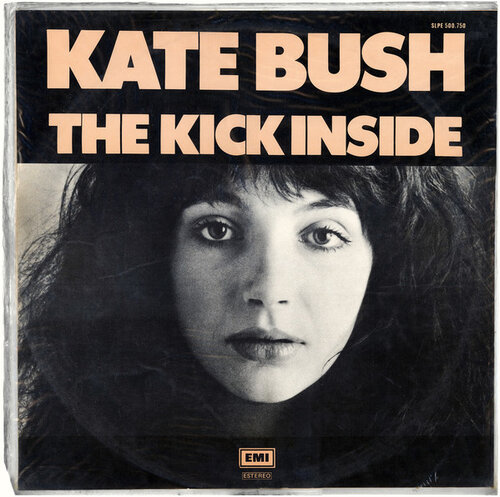
Recording engineer Jon Kelly (The Kick Inside was his first project) told Sound on Sound in 2004 how the calibre of the musicians who played on the album was remarkable. Rather than the musicians taking direction from producer Andrew Powell and not connecting with Bush, they were keen to sit down with her and have songs explained if they felt something was too heavy or unusual. Bush could explain her songs and, if parts needed to be redone, they were happy with that. The incredible musicianship and professionalism was reflected in the range of instrumentation on The Kick Inside. Whilst people assume that albums like The Dreaming and Hounds of Love were Bush progressing her music and moving on from a simple and limited sound, her debut was very broad and advanced. Thought had to go into how the microphones were positioned in the studio to capture these musicians and interesting sounds. Jon Kelly stayed true to the set-up Geoff Emerick used for the recordings of The Man with the Child in His Eyes and The Saxophone Song in 1975. It was clear that EMI wanted the album to do well and reach as many nations as possible. A total of seven different covers were used around the world – The Kick Inside is the only Bush album to have separate covers for the U.K., U.S., Canada, Japan , Yugoslavia (the cover that appears at the very top of this feature), and Uruguay. An interesting fact I wasn’t aware of was that Jay Myrdal – who did the photography for the U.K. cover - did not have much hope for the album doping well because of Bush’s shrill voice (his words)! He later admitted that he was a bit naïve in that respect. A kite was rigged up with ropes and bars against a black painted wall in a photography studio as Bush was hanged from the structured. The concept (which Bush worked on with art director Steve Ridgeway) had its roots in Pinocchio (where Jiminy Cricket glides past the whale’s eye using his umbrella as a parachute). Although there would be better album covers from Lionheart (her second album released in 1978), it is good to know Bush has input and some control when it came to her direction and visual elements!

One of the missed opportunities was having Them Heavy People released as a single in the U.K. (it was put out as a single in Japan). The label wanted it to be the second single. Bush was against this so, instead, The Man with the Child in His Eyes was released. Bush was used to signing Them Heavy People and felt it was like a hymn; something that meant a lot to her. She was not too happy with the album version, as she felt the song should have been looser (perhaps closer to the versions she performed during 1979’s The Tour of Life). Regardless, it is a highlight from The Kick Inside that would have been a successful single. A reason why it would have been good to see Them Heavy People arrive with an official video is because the videos were getting a lot of focus. Keith Macmillan directed those early videos. Bush and Macmillan would sit down and discuss concepts. She would send routines and he would work on camera angles/shots etc. They were very much on the same page and had this great working relationship. I think the videos for Wuthering Heights and The Man with the Child in His Eyes, whilst not as cinematic and advanced as future videos, were/are really impactful.

aaa.jpg

I will end by talking about some of the reaction The Kick Inside received. Sounds were not impressed. They thought the song were doom-laden and described Bush’s voice as being “the most irritating yelping voice since Robert Plant…”. They thought the album was contrived; that there was talent trying to get out. One of the observations in Kate Bush The Kick Inside: In-depth was that the trippy-ness of The Kick Inside could have fitted in the late-Sixties but, in 1978, maybe it was not what people were used to. Some said that Bush would go on to better things. Hot Press liked the album but did not feel it would rank alongside the best albums of 1978 – maybe it didn’t rank high in 1978 but, now, it is seen as one of the best of that year! I think critical opinion has improved through the years. As more people have listened to it and, looking back, the album has aged well and has inspired a lot of artists, there has been this fairer and deeper representation. Bush liked the album when it came out but, as she acquired ambitions to produce and her music changed, I think she sort of dismissed the album as being incomplete; not as she would have liked or a weaker work. She told Tune In in December 1978 that she could not remember when she was last alone and had any opportunity to breathe and focus on herself and new music.

The issue was getting songs written and having that space. Lionheart was released in November 1978 and, with no time to write many new songs, Bush was unable to sufficiently progress and create an album that she truly liked. Like The Kick Inside, Bush was positive about Lionheart when it was released but, looking back, she has sort of disengaged herself from that album. Maybe that is why she is also a bit cold towards her debut. If things were different and she had co-produced The Kick Inside or was undertaking less promotion, maybe she would feel more favourable towards the album. Bush spoke with Wireless in 1983 (a year after The Dreaming arrived) and could not believe how young she sounded on The Kick Inside. She was interviewed by Musician in 1985 (the year Hounds of Love was released) and was not happy with her first two albums – Bush rued “of all the things I’d have liked to have done”. Bush matured after The Kick Inside so, when interviewed, it is natural that she would feel estranged regarding those early sounds. When Kerrang! interviewed her in 1982, Bush said that she liked a lot of the songs on the first two albums but was not happy with the way they came across – again, if she had produced them then things might have been different. I sort of think artists are subjective when it comes to opinions on their own albums, so I sort of take Bush’s dissatisfaction (or indifference) with a pinch of salt! Bush would start producing solo from 1982’s The Dreaming. I think she learned a lot from The Kick Inside. Laura Shenton closes the book by offering positivity towards The Kick Inside: “…the fact remains that The Kick Inside is full of wonder and intrigue. With regards to music innovation and music history…”.

IT matters”.

FEATURE: The Lockdown Playlist: Praying/Prayer-Related Songs

FEATURE:


The Lockdown Playlist

xxx.jpg

Praying/Prayer-Related Songs

___________

THIS might seem like a slightly random…

ooo.jpg

 IN THIS PHOTO: Madonna/PHOTO CREDIT: Herb Ritts

Lockdown Playlist. Madonna’s huge album, Like a Prayer, was released on 21st March, 1989 to huge acclaim. Whilst I think that 1998’s Ray of Light is a finer album, one has to concede that Like a Prayer is a masterful record! Alongside its title track are other fantastic songs like Express Yourself and Cherish. Because the album is thirty-two tomorrow, this Lockdown Playlist assorts songs that have the word ‘prayer’ or ‘pray’, or ‘prayers’ (or variations of) in the title. One would assume that the songs would be religious/Gospel in nature, though there are quite a few popular songs that contains those words. To mark the anniversary of a very special album, this Lockdown Playlist is inspired by…

qqq.jpg

 PHOTO CREDIT: @jacksharp_photography/Unsplash

THE epic Like a Prayer.


FEATURE: Too Good to Be Forgotten: Songs That Are Much More Than a Guilty Pleasure: Roxette - Joyride

FEATURE:


Too Good to Be Forgotten: Songs That Are Much More Than a Guilty Pleasure

xzz.jpg

Roxette - Joyride

___________

MANY of the songs that…

ppp.jpg

I have featured in this run have been from the 1990s. I will move things on in future features, but I wanted to mention Joyride as it is a song that I really love. From the brilliant Roxette, it turned thirty very recently. I will bring in an article that marked twenty-five years of Joyride back in 2016. Sadly, this is a song we will never hear performed live again with the incredible voice of Marie Fredriksson. She died in 2019 and, when I heard the news, I was very sad. I think she is one of the most underrated singers there has been. Rather than dwell on loss, I wanted to celebrate a gem from the Swedish duo. If you are not familiar with the track, Joyride, then here is some background:

Joyride" is a song by the Swedish pop duo Roxette. Written by Per Gessle, it was released as the lead single from their third studio album, Joyride (1991), the follow-up to the duo's highly successful second studio album, Look Sharp! (1988). It became one of Roxette's biggest hits, and was one of the most successful singles of 1991, topping multiple record charts across Europe, as well as in Australia, Canada, and the United States”.

I have been listening to the song for thirty years now and, every time I hear it, it lifts my energy. I have seen people talk about Roxette as a guilty pleasures group; their songs are not ones that one should think as being cool or great. The duo released more than their fair share of classics! I think that Joyride should not be seen as a guilty pleasure – and I have seen the song appear on a couple of lists that suggest it it.

I am going to take a bit of a de tour in a second and bring in a review for the Joyride album. One of the strongest albums of the 1990s, Joyride celebrates its thirtieth anniversary on 28th March. With the superb and reliable songwriting strength of Roxette’s surviving member, Per Gessle, I like how Joyride nods to The Beatles and Magic Mystery Tour. The Joyride album contains a lot of variety and strength. AllMusic had this to say:

The beauty of Roxette is that the duo of Per Gessle and Marie Fredriksson can do practically anything in terms of Top 40 music. From the quiet desperation of "Spending My Time" to the chanting carnival of "Joyride" to the folky "Church of Your Heart," they bring a worldliness to their lyrics and melodies that most pop A-listers don't even have the imagination to dream of. This, the follow-up to their breakthrough disc, Look Sharp!, sees through on what that collection hinted at, meaning most of the songs sound like they were designed to be hit singles, not just filler between two or three good cuts. "The Big L," "Soul Deep," and "Hotblooded" all follow in the successful vein Gessle and Fredriksson mined with "The Look," while "Fading Like a Flower (Every Time You Leave)," an insistent rock ballad, and the accordion-driven "Perfect Day" take things down a notch. The low-key "Watercolours in the Rain" and the whining "(Do You Get) Excited?" are the only cuts that keep the album from being a total success. For the most part, though, this is two pop artists at the top of their game”.

Before I round off and give my thoughts, I will bring in that article from 2016 that nodded to a song that went to number-one around the world (although it reached number-four in the U.K.). I think Joyride still sounds so engaging, catchy and fresh after three decades! This is what Rhino wrote in their retrospective:

25 years ago today, Roxette rose to the #1 spot on the Billboard Hot 100 for the fourth time in their career, and while there hasn’t been a fifth time thus far, they just released a new single (“It Just Happens”), so we’re not counting them out quite yet.

“Joyride” was, as you may already know, the first single – and title track – from Roxette’s third studio album. Written by Per Gessle, a.k.a. the dude in the duo, the opening lines of the song were reportedly taken directly from a note that his then-girlfriend, now-wife left on his piano which read, “Hello, you fool, I love you.” You’ll also note a bit of a “Magical Mystery Tour” vibe at times, particularly when you hear Dave Edwards, a friend of the band (not to mention their former tour manager), saying, “Come on, join the joyride, get your tickets here, step right this way.” This is not coincidental: Gessle has said that took the title of the song straight from an interview with Paul McCartney in which the former Beatle described writing songs with John Lennon as a “long joyride.”

ccc.jpg

Over the years, “Joyride” has earned addition honors within the pop culture pantheon, serving as the intro anthem for the Vancouver Canucks during the 1994 Stanley Cup playoffs and, perhaps most importantly, it was also selected as one of the tracks covered by Alvin and the Chipmunks and The Chippettes for their album The Chipmunks Rock the House. Ultimately, though, the greatest sign of the song’s success was on the charts: it hit #1 in US, Canada, Australia, Germany, Austria, Belgium, Norway, Sweden, and Switzerland, not to mention on the European Hot 100 Singles chart. Not only that, but the single earned the band gold and even platinum sales in various countries, cementing their success for the long haul.

Well, everywhere in America, that is. But, hey, let’s just focus on the #1 single, shall we?”.

It is a shame that some people feel that one of Roxette’s biggest hits is a song that is a little lame and cheesy. There is a giddiness and appeal to the song that I think crosses age barriers and tastes. Anyone can listen to Joyride and be enriched and made to feel happier!

Despite some people not liking the song, it has gained some positive reception through the years. Maybe it sounds different to a lot of Pop and Rock today but, as so much music today is either boring or empty, artists could learn a lot from a song that has been praised and stands up to the test of time:

AllMusic editor Bryan Buss described the song as a "chanting carnival" in his review of the Joyride album Larry Flick from Billboard described it as a "playful pop/rock ditty with a catchy chorus that is destined to make a quick sprint up the charts." Jim Farber from Entertainment Weekly noted that "they blithely toss a bit of whistling into "Joyride", next to some psychedelic Beatles-like flourishes." Dave Sholin from the Gavin Report wrote, "Plenty of reason for joy in Top 40 land as Per Gessle and Marie Fredriksson deliver the first of a new batch of songs. Wisely, the Swedish duo retain "Look Sharp" producer Clarence Ofwerman, and, once again it's clear all three understand the way to a pop music fan's heart. Roxette has re-applied that happy, feelgood formula to making mass appeal records, and it's earned them instant recognition and remarkable chart success. This title track from their new album is certain to not only meet everyone's expectations, but surpass them." Music & Media stated that the song "is a perfect example of their pop sensibilities."

Brendon Veevers from Renowned for Sound commented, "There isn't a soul alive who cannot say they don’t love this track – Roxette fan or not. It's pop at its finest and the video is equally as memorable; the band speeding down a U.S highway, playing guitar on top of a red corvette." Rolling Stones J.D. Considine said that the song is "decked out in a glossy, Sgt. Pepper-style arrangement". Mark Frith from Smash Hits labeled it as a "over-the-top" pop song, "with catchy choruses that remind you slightly of those other musical Swedes, Abba." A writer for Cleveland.com ranked "Joyride" the 46th best Billboard Hot 100 number one of the 1990s, saying: "Even more so than the group's biggest hit, 'It Must Have Been Love,' 'Joyride' showed off Per Gessle's ability to craft fantastic pop-rock songs. The song's pop spirit and rock swagger mesh seamlessly".

I shall wrap up now. I wanted to almost defend a song that has got some bad press from people. Not that there is a guilty pleasure song; those who rank Joyride alongside some truly embarrassing tracks need to have a word with themselves! I think Joyride is one of those classic Pop songs that has a big chorus and an energy that carries you and lifts the heart! If you have not heard the song then get involved and let it feed into the bloodstream. Although some feel Joyride is a guilty pleasure listen, I think that it is…

loo.jpg

SUCH a fine song

FEATURE: U Got the Look: The Legacy of Prince

FEATURE:


U Got the Look

mmm.jpg

PHOTO CREDIT: Trinity Mirror/Mirrorpix/Alamy

The Legacy of Prince

___________

I am going to do another one or two…

vvv.jpg

PHOTO CREDIT: Jeff Katz/The Prince Estate

more general features about Prince before 21st April. That date marks five years since we lost the genius. I have already looked at his greatest albums and, looking ahead, I will investigate various sides of his work. Maybe it is not easy to distil Prince’s legacy and what he gave to the world. I have been looking at features writing about Prince following his death; people trying to explain how Prince Rogers Nelson changed the world. I think Prince is like Bowie in many respects (another artist we lost in 2016). Each album was different and we got to witness such a broad range of sounds through his career. If Bowie’s transformations and iconic looks were among his greatest gifts to the world, I think that Prince’s was his phenomenal voice and guitar skills; his exceptional songwriting and, above all, his tireless and peerless workrate – I think that it is said that his famous Vault (where unreleased material is stored) holds nearly a century’s worth of material. Whilst that may be exaggerated, it is beguiling to think about Prince releasing albums as regularly as he did and having all this other music left aside! I wonder whether Prince was planning on releasing this material himself or whether he intended there to be this wonderful music for the world when he died. We were all so shocked when his death was announced.

At only fifty-seven, we were looking ahead to years and decades more of his magic! Regardless, the tributes that flooded in when he died were moving. People from all around the world shared their memories and reasons why Prince meant so much to them. From his fashion, musicianship and sheer innovation, there are so many sides to Prince. I want to start off by sourcing from a VIBE article of 2018. Although there have been some album releases since then, they spoke with Susan Rogers, Prince’s legendary ‘80s studio engineer, about the possibility of 1980s-recorded material being released - in addition to how Prince should be remembered:  

That seems like a natural progression for someone who was releasing music and performing live at a furious pace towards the end of his life, right?

Right. Prince used to say funny things when we were rehearsing like being envious of the Revolution’s Matt Fink and his piano abilities or Lisa [Coleman’s] musical training. I believe he would have studied jazz piano more deeply. I remember one time we were all talking about what we would be if we weren’t in the music business and Prince said he would have been a music teacher. He liked working with young people; he liked the innocence. I could see him mentoring as he did with younger artists, advising them and helping them to have a life in the arts.

ll.jpg

PHOTO CREDIT: Brian Rasic/Rex Features 

Has The Prince Estate asked for your help in re-mastering any of the classic ‘80s albums set for future re-release?

I was asked during the early round of talks that included the Purple Rain deluxe reissue. They asked me if I would consider coming in to remix some stuff. I said yes, but with some trepidation. I have a full-time job as a professor. I haven’t worked in the studio since 2000. That work is better suited for people who are currently mixing today. Thankfully, I did not end up doing any mixing.

Prince was far ahead of his male peers in the music business in terms of working with women in positions not traditionally open to them, decades before the #MeToo movement. Looking back, how surprising was it that he championed female studio engineers and musicians when it wasn’t the norm back then?

It was a delightful surprise. I was in my 20s when I started working with Prince. Wendy, Lisa, Sheila E, Jill Jones, and Susannah [Melvoin] (Wendy’s sister, frequent background vocalist and member of the Prince-produced group The Family) were around that age as well. Being older now, I can see it as extraordinary, but when you are young and you are trying to break down barriers as a woman, at the time it made perfect sense. When you encounter a person like Prince, who doesn’t put up any barriers, you see him working with women in non-traditional roles as normal. I was grateful then and even more grateful now just how smart he was. He knew that looking for people that normally wouldn’t get a shot was the right thing to do. Prince liked outliers a lot.

How should we remember Prince?

In the history of important Americans, his name needs to be on the list. Because Prince was an important cultural export and he advanced music. He achieved the height of fame that Michael Jackson achieved, but Prince did it in the typical American way. Which is pull yourself up by your bootstraps and do it all on your own. Michael, who was a great artist, was also the product of the Motown system. Prince was a self-made man.

Prince was also an important musical figure because he contributed to the advancement of American music. Miles Davis called him his generation’s Duke Ellington. He was an important cultural figure by the way he dressed and the way he looked. Prince was one of the figures that made it possible for androgyny to be accepted; for men to wear makeup and for women to be empowered. I want the young generation to see what a genius he was musically. Prince deserves to never be forgotten”.

I wonder if there are any plans to put out a Prince biopic. I think there have been plans and suggestions in the past; there may be something in the pipeline right now. It seems that, for a genius who left such a mark on the world, a cinematic release is an inevitable step. I am going to bring in a few more articles before rounding things off. I feel Prince’s legacy is so large that I need to divide this up and write another feature or two.

I mention a biopic because, not only is Prince’s legacy compelling; he also had this fascinating start and career progression. Digital Music News discussed that when they paid tribute to Prince in 2016:

Prince wasn’t just a legend because he made great hits; he crossed barriers in the music industry that paved way for other artists to be more creative and original.

Prince made being different okay, he made being unique something artists now crave to be.  He didn’t define his music in one genre, he often combined genres of music.  He created a new sound and people all over the world fell in love with his inventiveness.

Prince, a household pop icon and one of the biggest artists in history, hailed from a musical family with both parents in the music industry.  His father was a pianist and songwriter, and Prince’s mother was a jazz singer.  He was born in Minneapolis on June 7th, 1958 and passed today (April 21st).

After cracking through in the 70s, Prince became known for melding pop, funk, R&B, rock, funk and other styles, with raunchy lyrics and ribald showmanship signature elements of his style.

Like most musical legends, Prince started at a very young age.  He developed an early interest in music, writing his first song called ‘Funk Machine’ on his father’s piano at age 7.  Before recording his first debut album, he made music with his cousin’s band ’94 East,’ writing the songs for the band and playing guitar.

In 1976, at age 17, he made a demo tape with Chris Moon, who took the tape to a Minneapolis businessman named Husney.  Husney then signed Prince, which led to a now-famous recording contract with Warner Bros. Records.

He then moved to Los Angeles and recorded his first debut album, titled For You in 1978.  But it was Prince’s second album, Prince, that hit it big, going platinum in 1979.  The two main songs that drove that album’s success were ‘Why You Wanna Treat Me So Bad?’ and ‘I Wanna Be Your Lover’”.

Not to detour too much but, not only has Prince inspired so many other artists in his time – I will put a playlist out of artists who are inspired by him -; he drew from a lot of great musicians himself. As we read, Prince absorbed a lot of different sounds and channelled this into something gigantic and hugely accomplished:

“Prince's music synthesized a wide variety of influences, and drew inspiration from a range of musicians, including James Brown, George Clinton, Joni Mitchell, Duke Ellington, Jimi Hendrix, the Beatles, Chuck Berry, David Bowie, Earth, Wind & Fire, Mick Jagger, Rick James, Jerry Lee Lewis, Little Richard, Curtis Mayfield, Elvis Presley, Todd Rundgren, Carlos Santana, Sly Stone, Jackie Wilson, and Stevie Wonder. Prince has been compared with jazz great Miles Davis in regard to the artistic changes throughout his career. Davis said he regarded Prince as an otherworldly blend of James Brown, Jimi Hendrix, Marvin Gaye, Sly Stone, Little Richard, Duke Ellington, and Charlie Chaplin. Prince and Miles Davis performed together for a Charity Event at Paisley Park. This performance was viewed as the pinnacle of their on-again, off-again partnership.

Journalist Nik Cohn described him as "rock's greatest ever natural talent". Prince was a natural tenor, but had a wide vocal range from falsetto to baritone, and performed rapid, seemingly effortless shifts of register. Prince was also renowned as a multi-instrumentalist. He is considered a guitar virtuoso and a master of drums, percussion, bass, keyboards, and synthesizer. On his first five albums, he played nearly all the instruments, including 27 instruments on his debut album, among them various types of bass, keyboards and synthesizers. Prince was also quick to embrace technology in his music, making pioneering use of drum machines like the Linn LM-1 on his early '80s albums and employing a wide range of studio effects. The LA Times also noted his "harnessing [of] new-generation synthesizer sounds in service of the groove," laying the foundations for post-'70s funk music. Prince was also known for his prolific and virtuosic tendencies, which resulted in him recording large amounts of unreleased material”.

It will be sad, in April, remembering Prince five years after he left us. I don’t think we will ever see a musician like him! Someone who can do so much and is such a creativity machine! I haven’t even touched on his scintillating live performances or taken a dive into some of his key albums – again, something I may do in a week or two. When The Guardian wrote about Prince legacy in 2016, they named a few artists who were touched by The Purple One:

Few artists cast a shadow over contemporary music quite like Prince. Disco, funk, pop, hip-hop, house, electro – nothing would sound the way it does today without him.

Musicians who defined an era in pop and hip-hop, such as superstar producers the Neptunes and Timbaland, took cues from him; listen to Pharrell William’s Frontin’ and the Prince influence is clear. Prince was Timbaland’s idol and like his hero he tried to operate in that colourful area between R&B’s sensuous sexuality and the unbridled machismo that hip-hop can exude.

Talking about the first time he heard I Wanna Be Your Lover, Timbaland said: “To this day, I don’t really know how he created this unique sound, and that’s why it’s so dope. He’s in his own world and nobody else can get there, although I’ve tried.” Another group to operate in this space were the otherworldly Atlanta residents Outkast, who played with sexuality, fashion and consistently pushed the boundaries of 00s hip-hop.

ccc.jpg

IN THIS PHOTO: Daft Punk/PHOTO CREDIT: Matt Sayles/Invision/AP/Shutterstock 

His uncompromising approach to the music industry set the blueprint for artists such as Daft Punk, who in a Princean move struck a deal with Virgin that gave them total control over their music and imagery, setting them on a path that made them cool, cult and commercially viable. And that’s before mentioning the debt that the group owe to him for the sound of Discovery, which has so many hat tips to Dirty Mind-era Prince it’s enough to give you neckache.

Then, take one look at the duelling R&B stars Miguel and Frank Ocean and you see two artists who play with the concepts of sexuality, blackness and style in a way that simply would not exist without Prince. Ocean wrote yesterday on Tumblr that “My assessment is that he learned early on how little value to assign to someone else’s opinion of you… An infectious sentiment that seemed soaked into his clothes, his hair, his walk, his guitar, and his primal scream,” this coming from a man who came out just before he released one of the most important R&B records of the last decade”.

I think one of the most rewarding things you can do is to spend time simply listening to Prince’s albums. They are so rich and important, one can learn so much from him. As I say, I am going to discuss artists who cite Prince as an influence at a later date. I wanted to do a general feature to explore the legacy of the Minnesota-born legend. Although it has been almost been five years since Prince’s death, it is clear that his light will…

SHINE forever.

FEATURE: Inspired By… Part Two: Grace Jones

FEATURE:


Inspired By…

ssss.jpg

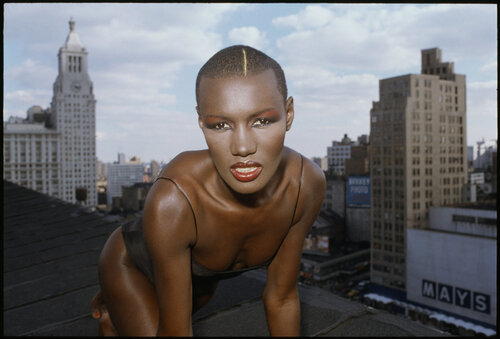
IN THIS PHOTO: Grace Jones, blue-black in black on brown, New York, 1981/PHOTO CREDIT: Jean-Paul Goude

Part Two: Grace Jones

___________

THIS feature combines songs…

xcxc.jpg

 PHOTO CREDIT: Kate Simon

from artists who have either been inspired by a legendary musician sonically or some aspect of their career has been impactful. I started this feature last week with Prince. I united into the playlist artists who have either been influenced by Prince’s sound, fashion or his experimental nature. In this week’s Inspired By… is Grace Jones. Musically, there are plenty of artists who have been inspired by her, but there are many who have incorporated aspects of her aesthetic, pioneering nature or something else. Last year, Jones was to curate the annual Meltdown Festival – the pandemic put that on hold. The BBC ran a feature about the iconic Jones around the time:

It’s difficult to describe Grace Jones without using words that have been dulled into cliché, but the revered Jamaican performer really is iconic, unique and visionary. It’s equally tricky to sum up succinctly what she does: since she began flexing her creative muscles in the late 1960s, Jones has been a stage actress, high-fashion model, disco singer, photographer’s muse, new wave musician, film star and perennial trend-setter. Clearly, Jones’s chameleon-like qualities are a key part of her appeal. “She takes you to higher vibrations through her presence alone – she frees you completely because she is free herself,” says Honey Dijon, an internationally renowned DJ-producer who counts Jones as a major inspiration.

At the same time, Jones’s incredible creative fluidity means her achievements in certain fields – especially music – are easy to underestimate. The dazzling, androgynous looks she’s created for photo shoots and album covers are rightly acclaimed – Vogue calls her “the ultimate fashion muse”, while Dazed has hailed her “revolutionary style moments” – but at the expense, perhaps, of her musical legacy. Warm Leatherette, the album that introduced Jones’s distinctive, reggae-flecked take on new wave, has just turned 40 years old, so it’s an apt time to reassess her contribution as a singer, songwriter and genre-blending innovator. Featuring punky covers of songs by artists as varied as Tom Petty, Smokey Robinson and Roxy Music, all sung in Jones’s majestically detached style, it’s a record as fearless and singular as Jones herself. And also like Jones, it’s strangely ageless, sounding almost as fresh today as it did in 1980.

Even with her Meltdown festival on hold, June 2020 is something of a milestone month for Jones because it marks the 40th anniversary of her first British hit. On 27 June 1980, around six weeks after Warm Leatherette was released, Jones dropped its third single: a thrillingly minimal cover of The Pretenders’ Private Life which cracked the UK top 20 and introduced her to a wider audience when she performed it, magnificently, on Top of the Pops. Zebra Katz says it’s his favourite song on Warm Leatherette – “Grace’s voice has such a relaxed and controlled attitude and the track itself is just so incredibly lush” – and The Pretenders’ Chrissie Hynde is also a big fan. “When I first heard Grace’s version I thought ‘Now that’s how it’s supposed to sound!’” she wrote in the liner notes for Jones’s 1998 compilation Private Life: The Compass Point Sessions”.

To celebrate the impact Grace Jones has had on other artists, I am ending with a playlist of tracks from those who have cited her as being important – whether her music has inspired them or the full force of her being has moved them. Enjoy tracks from artists who hold Grace Jones as...

zzzz.jpg

INSPIRING to them.


FEATURE: Spotlight: Billy Nomates

FEATURE:


Spotlight

xz.jpg

Billy Nomates

___________

I tend to mix slightly smaller artists with those…

ccc.jpg

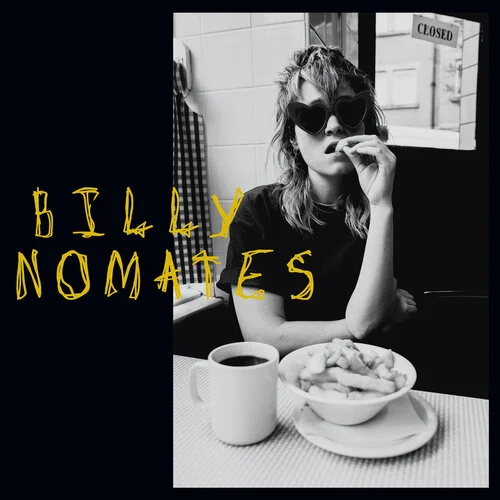
that are rising or more established in this feature. Billy Nomates (Tor Maries) has been in the industry for a little while now but, as her eponymous album was released last year, I think her music reached a lot more people and audiences. I would encourage people to follow Billy Nomates, as her music and voice is among the most original and impressive around! I will bring in a positive reviews for her Billy Nomates album soon. Before, it is worth sourcing from a few interviews, just so that we can get a bigger picture and impression of a terrific young artist. Make sure you go and buy Billy Nomates. First, it is important to bring in some information. When she spoke with Sound Sniffer last year, we learn more about her start and lo-fi production style:

How did Billy Nomates start? Have you always been doing music?

I’ve been in bands and done various bits and pieces since I was sixteen. I was in a band in Bristol in my early twenties for a few years. Before, I was always involved in projects or bands that weren’t mine and was just either fronting them or playing smaller roles. We were always on the fringes, never really took off. We had snippets of success but it always seemed to be ruined by someone getting married or breaking a leg.

I’ve always been involved in music but had a whole year away about two years ago. I found myself doing nothing musically, through no fault of my own really. Things just hadn’t worked and I had a year of a break. I moved down to the south coast and that’s where it started.

Your live performances and bedroom productions are wonderfully LoFi – Your debut single ‘No’ was quite polished in it’s sound. What can we expect from the album?

I did everything myself at home but I have really minimal equipment. The producer at invada was Geoff Barrow (of Portishead) and Stu Matthews. Working with invada was really intresting. I really respect the studio and the people that worked on it. We made minimal tweaks but they knew what they’re doing! I think it’s so unintentionally LoFi, that its got its own thing to it.

The album has a couple of songs in there that are a bit wildcard and a couple more polished like ‘No’. Invada were great, the producers just did that thing that only producers can do, where there’s a magic button they can press to make you go, ‘shit, that sounds good’. I don’t have that button in my bedroom”.

‘No’ has gotten a great reaction thus far. As debut singles go, it’s right up there. How have you felt about this positive publicity coming your way?

Yeah it’s been great; I’ve been getting some BBC Radio 6 play with it as well – which has been brilliant. It feels amazing to get something from my little bedroom work-station onto BBC 6 Music. Genuinely, when I hear it on the radio I feel like someone is going to come for me and rumble me”.

I really loved Billy Nomates’ music but I was not really aware of her (Maries’) background and her family life. Not that it is the most important thing, but I think that it has fed into her music and has affected how she approaches her career. In an in-depth interview with NME, we learn about her upbringing and the inception of the Billy Nomates project – we discover more about the themes and characters through her eponymous album:

“I’ve never really had money, but I was the poorest I’d been a couple of years ago after working a load of minimum wage jobs,” Maries explains. “I was miserable and poor and unfulfilled: I couldn’t write about fancying someone or anything nice. I thought: ‘If I’m going to write again, I have no option but to write about “ah, it’s all crap“.’”

Maries says that she considers herself to be on the edge of working class, but she does rue the absence of the full range of voices in music. “You don’t see a lot of working class people in any arts, you have to really look for it. You’ll instantly notice them, though, because there’s a tone of voice that’s allowed to come through that you haven’t heard for a long time.”

“I went through quite a bad depression stage,” Maries says, referring to the inception of the Billy Nomates project in early 2019. “I had a few months where a relationship had broken down, I was sleeping on my sister’s couch, I’d gone into a real funk and just didn’t want to leave the house or see anyone. I saw Sleaford Mods were coming to Southampton, so I just got a ticket by myself. I remember being in the crowd watching the warm-up band — Liines, a really good band — and some drunk guy shoved me on the shoulder and shouted: ‘It’s Billy no-mates!’ I’d just started recording at the time and I didn’t have a name. It’s genuinely one of those moments that I’ll never forget. That guy was a fucking genius.”

An entire rogues’ gallery of modern British character tropes are subjected to the Billy Nomates magnifying glass on the album: the posturing privileged, the Brexiteering nostalgists, the gig economy employers and, perhaps the most stomach-churning of all, the sleazy, lecherous types outlined on ‘Fat White Man’. Maries is firmly of the opinion that the music industry itself has some considerable work left to do when it comes to correcting its gender practices. “I can say that as a female in male bands growing up, I had some terrible experiences. But I think it’s changing at quite a rapid pace now, which is great.

Maries’ own experiences in bands made up the first “seven or eight years” of her time after moving to Bristol. “We were alternative folk that thought it was very arty — it was hideous stuff.” Eventually, everyone “got bored and got mortgages”, leaving her at a loose end, whereupon she eventually relocated to Bournemouth.

Life as a solo artist, however, has given Maries the control that satisfies her creative itch. “Now I just want to make stuff very selfishly. Eventually I just thought: ‘Why not?’ If I like it, maybe somebody else will like it”.

I will end with an interview from this year that captured my attention. First, I want to source from a review of. Billy Nomates. In terms of the best albums of 2020, this remarkable work was in many people’s end-of-year lists.

cccc.jpg

In their assessment of Billy Nomates, this is what Loud and Quiet had to say:

Tor Maries only embraced self-prioritisation recently. Meaning: she’d spent a life not always putting herself first. The songwriter, who originates from the pork pie capital Melton Mowbray, spent years performing in groups around Bristol – there was some success, but little satisfaction.

It was only when Maries moved to Bournemouth, bought a ticket and flew solo to watch Sleaford Mods in 2019 – in a neat piece of circularity Jason Williamson pops up to rap about meat on ‘Supermarket Sweep’ – Maries decided to go it alone (she owes the moniker to a drunk man calling her “Billy Nomates” at that very show).

Billy Nomates is therefore what happens when you discard outside perceptions, pause people-pleasing and discover the power of self-expression. That’s why when observers question why Maries sometimes sings with a U.S. accent, she simply counters: it’s because I want to. Why not? Damn right.

These songs are Tor Maries’ experienced truth, then. ‘Modern Hart’ – a melancholic track that feels like a telegram to her old self – provides the opening. “Anyone can do it,” she sings over a grimy, Kim Deal-esque bassline.

It’s a subtle start, but things soon spice up with a string of acerbic and entertaining pot-shots. ‘Hippy Elite’ is about wanting to be more active in the climate emergency, but also needing to cover the household bills. ‘Happy Misery’ takes aim at anti-productive nostalgic mindsets (see also: Gazelle Twin’s ‘Better In My Day’) and ‘Supermarket Sweep’ a song about how the mundanity of financial survival chips away at aspirations. There’s the catchy centrepiece ‘No’ – about the empowering discovery of resistance.

Such everydayisms could come across as corny, but like her pals Sleaford Mods the songs are authentic, authoritative and frequently funny. They also pack a consistent and timely reminder: “Forgotten normal people are a force to remember”.

Just to round things off, I will bring in an interview from The Quietus from earlier this year. It is a fascinating interview. There was a particular section that really caught my eye – when Billy Nomates’ plans for 2020 were changed by the pandemic, she formed an unusual obsession:

The plan for 2020 was to keep evolving Billy Nomates on the road, particularly around the record’s release, but then the pandemic hit. After recovering from the whiplash of an abrupt, undesired screech to a halt, just as momentum was really beginning to pick up, Maries was forced yet again to make the best of what she had. With lockdown shrinking her world considerably she started getting obsessed with the old payphones dotted around the Isle of Wight like monuments to a bygone era, some of which are no longer connected.

One booth on the bay for emergency calls stood out in particular. “You’d have to be so direct on a payphone, you’d have to really say you were in trouble. You couldn’t fuck about with it,” she says. “That fascinated me because it’s something we’ve kind of stopped doing. Maybe because we’re making sense of how we feel.” This fed into her new standalone EP, Emergency Telephone. “I got obsessed with this idea that it’s this dying line, that they’re all going to go soon. It’s like the last saloon for them. I got a bit obsessed and fascinated. I’m also very lonely! I just liked the idea, they’ve got their own weird appeal and their own strange stories to tell.” At the same time Maries was listening to some of her labelmates on Invada, a label which specialises in soundtracks. “I started to think, if I were to do narrative stuff, how would I go about it?”.

I will wrap up, but I was eager to highlight an artist who is among our very best. I know I have not included many bands in this feature through the months. I think it is because solo artists, to me, are producing more interesting and varied music – though there are some fantastic bands out there that warrant attention and big support. Billy Nomates is an exceptional talent that produced a remarkable album last year. I feel she will only grow in stature and continue to release such magnificent and unique work - and there is likely to be more new music this year. If you are new to her music and world, then make sure you investigate and…

GET involved.

_____________

Follow Billy Nomates

zzz.jpg

FEATURE: Groovelines: Sade – The Sweetest Taboo  

FEATURE:


Groovelines

aaa.jpg

Sade – The Sweetest Taboo  

___________

I am going to include a very special song…

vvv.jpg

into Groovelines this week. I will quote from an interesting and detailed article about the song’s origins and development. Before then, it is worth getting some chart statistics  regarding the mighty The Sweetest Taboo:

The Sweetest Taboo" is a song by English band Sade from their second studio album, Promise (1985). It was released on 30 September 1985 as the album's lead single. While the song peaked at number 31 on the UK Singles Chart, it fared considerably better in the United States, where it reached number five on the Billboard Hot 100 in March 1986, remaining in the top 40 for 13 weeks. It also became the band's second consecutive number-one single on the Billboard Adult Contemporary chart, following "Smooth Operator”.

Oner of Sade’s best-known songs, I think The Sweetest Taboo is a classic! With the sensuous and soulful voice of Sade Adu and her band sounding incredible throughout, everyone needs to listen to the song and get lost in it. The Sweetest Taboo is the biggest and finest song from Promise. That album came a year after the sensational Diamond Life – an album that possessed Your Love Is King and Smooth Operator in its arsenal. I love Sade as a band, though I think Adu is one of the greatest voices there has ever been. As this feature is called Groovelines, there is a forensic element regarding the songs featured. The title also suggests vinyl connection. Go and get Promise on vinyl if you can, as it is a truly magnificent album.

There might be debate as to which Sade track is the best. No matter what you reckon, one has to concede that The Sweetest Taboo needs to be in the top-three! I will bring in a great feature from Sound on Sound from 2004. I cannot quote everything from the article as it is very detailed and extensive. A few sections definitely caught my eye:

Helen Folasade Adu helped redefine urban soul when, as Sade, the Nigerian-born Londoner burst onto the scene in the mid-'80s with her multi-platinum debut album Diamond Life. Her laid-back, near-emotionless vocal delivery served as a perfect counterpoint to the high-passion, heavily embellished singing of an Aretha Franklin or a Whitney Houston. Recorded by 'production engineer' Mike Pela and featuring the contributions of Sade bandmates Stuart Matthewman (guitar/sax), Paul Denman (bass) and Andrew Hale (keyboards), Diamond Life was produced with a slick, quasi-jazz feel by Robin Millar at his own Power Plant facility in North-West London. It spent 98 weeks on the UK charts, 81 weeks on the Billboard Top 200, and spawned the hit singles 'Your Love Is King', 'Hang On To Your Love' and 'Smooth Operator' while earning Sade a Grammy Award for Best New Artist.

Between February and August 1985 the same team then reassembled for Sade's even more successful follow-up Promise, which was co-produced by her, Robin Millar, Mike Pela and, in a less central role, Ben Rogan. The album contained such radio-friendly hits as 'Is It A Crime', 'Never As Good As The First Time' and 'The Sweetest Taboo', the artist's signature song which enjoyed a six-month run on the American pop charts.

q.jpg

Standing behind a corrugated metal screen at the back of the control room, Sade recorded her overdubbed vocals through a Neumann U87 treated with a delayed EMT 140 echo plate, Dbx 160X compressor and, for the middle section of 'The Sweetest Taboo', an AMS RMX reverb. "We almost always used either an 87, a 57 or a 58 for Sade," says Mike Pela, "and we'd always come back and try other things. In fact, on her most recent album we used a Neumann 49. She's pretty easy to record, although how she approaches the vocals depends on whether or not she's writing the song as she goes along. Although the band typically comes into the studio with some of the songs already written, others will be written on the spot, drawing on ideas that have already been knocking around. So, if Sade is piecing the words together, her vocal will be recorded in sections until she comes up with what she wants, including the right kind of melodic rise and fall. In the case of 'The Sweetest Taboo', on the other hand, her vocal went down in complete takes. And as I don't like too much piecing together, I usually try to keep the number of takes down.

In terms of the co-production roles, Robin Millar largely directed operations, saying "Let's do this next," or "Let's try that," while also overlapping with Mike Pela when deciding what sounded good, where a song should be heading and how to best achieve this. "I had a fair amount of input on the artistic side," Pela says, "and the band members were also pretty vocal and quite involved. For her part, Sade liked to be inspired by a song, so while she'd be particularly interested in building up her vocals, she would also comment if there was something she thought should be added or removed. She was right in the middle of everything."

"Generally, if Sade heard something that she liked and thought she could write to, she and the other musicians would keep going with it," Pela remarks. "You see, one interesting aspect to Sade's music is that it is a band effort, not just her, and the result is that there's always continuity and depth. It's not just about a solo artist. They'll come up with ideas, she'll find something she likes and then that will turn into a song. That's the way things have always developed, and that is one of her strengths. It isn't just her. I mean, she's obviously unique and instantly recognisable, which is great, but she also has this support behind her, and that, too, is great. That's the musical continuity. All of them have been together through thick and thin, and that is slightly unusual and, in terms of the public perspective, maybe a bit under-appreciated.

"'The Sweetest Taboo' has a middle section that comes back at the end, so the basis of the song is quite simple, and the original idea was that we were going to use this rhythm provided by the drum loop. Dave Early, however, wanted to play it, and it would have been a bit silly to do that with a sampled rim and snare going on at the same time, so he played it as part of the live band and then we dropped in on that drum track to enhance the live feel, sampling the rim, the snare and the kick to get a constant dynamic, a constant punch to the drums. At the time we were doing this sort of hybrid thing that was suddenly becoming available for people to try out”.

I think Sade is one of these artists who we all know and like, yet her music is not played as extensively as you’d imagine. Apart from big tracks like The Sweetest Taboo and Your Love Is King, she has created some amazing music through the years. Her sixth studio album, Soldier of Love, was released in 2010. I am not sure whether the band will return and there is going to be any more music, but we have so much great material from them to enjoy. Promise does not get the same kudos as Diamond Life, yet I think it is such a fine album without a weak moment. To me, The Sweetest Taboo is the finest gem from that record. An instant classic, it still sounds breath-taking after almost thirty-six years. I shall leave it there but, if you have not spun The Sweetest Taboo for a while, go and do so now as it will lodge in the head and heart for ages! A stunning song from a terrific band and a peerless singer, it has been on my mind a lot recently. One only needs to hear The Sweetest Taboo for a mere few seconds before it…

zzz.jpg

STOPS you in your tracks.

FEATURE: My Passion Always Wins: Re-Pitching the Need for an Authoritative Kate Bush Documentary Series

FEATURE:


My Passion Always Wins

jsjs.jpg

PHOTO CREDIT: Steve Rapport 

Re-Pitching the Need for an Authoritative Kate Bush Documentary Series

___________

I am writing this…

wwww.jpg

 IN THIS PHOTO: Kate Bush in 1980/PHOTO CREDIT: Patrick Lichfield

feature on 6th March – a day after Kate Bush trended on Twitter. The reason was, I think, because there was a repeat of the documentary, The Kate Bush Story: Running Up That Hill. Bush has trended a lot fairly recently. There is no real reason why she trends, other than the fact her music is being heard or there is a repeat of something like the BBC documentary of 2014. If you have not seen the documentary, then this feature explains more:

Kate Bush’s return to live performance next week, after 35 years’ absence, has been one of the defining features of this musical year. Her announcement, in March, of the Hammersmith gigs left even David Bowie’s gifted coup in the shade, creating a simmering summer of speculation. It’s surprising, then, that it’s taken the media so long to create the inevitable previews and retrospectives.

Kate Bush’s return to live performance next week, after 35 years’ absence, has been one of the defining features of this musical year. Her announcement, in March, of the Hammersmith gigs left even David Bowie’s gifted coup in the shade, creating a simmering summer of speculation. It’s surprising, then, that it’s taken the media so long to create the inevitable previews and retrospectives. This BBC Four feature did a bit of both, though it ended with a sense that Bush’s reputation survived the hour despite, rather than because of, the programme’s organisation.

Though Bush was dismissed in the early part of her career as light and bland, lacking that macho edginess of her punk contemporaries, she was in fact strikingly ambitious and innovative, from her 1978 debut single “Wuthering Heights” onwards. She had the first number one performed and written by a woman, she experimented with sampling at a time when it was (still is?) dominated by men, and as several contributors noted with awe, even her earliest work displayed an unusual musical complexity.

Sir Elton John made a poor start, with a virtuoso performance of cliché bingo. His blinding insight that her songs are “not normal” will have left viewers scrabbling for a pair of dark glasses, though all was nearly forgiven when he revealed with authentic emotion that “Don’t Give Up”, her duet with Peter Gabriel, had helped him through some dark hours.

There was the obligatory comedian’s appearance, in this case from Jo Brand, who didn’t, much as I admire her comedy, appear to have anything of interest to say. Stephen Fry reminisced about his voiceover on the 2011 album 50 Words for Snow, though (undoubtedly without meaning to) turned the focus unhelpfully on himself. And for a singer who created such a diversity of original sounds, the ubiquitous Fry fruitiness seemed to mark something of a loss of nerve. Let’s hope it’s recovered by next week.

Steve Coogan wasn’t quite sure of his role. Was he still the satirist who’d made such exuberant whoopee imitating Bush in his nineties TV shows, or the friendly collaborator and sympathetic ear? His admiration for her music was irrepressible, though a degree of exasperation emerged when he discussed her reluctance to appear live, and it was perhaps unfortunate that the programme ended with a surname-related pun that certainly belonged to Alan Partridge.

Musicianship of Bush’s quality can, of course, survive much worse than some gentle smut and narcissistic banality. Somehow, through the rather babel-like confection of comments (a proper documentary with a crafted narrative would of course have been preferable), an authentic portrait emerged of a highly original singer, both homely and esoteric, shy and strangely bold, politically aware and sensitively, authentically feminine. Welcome back”.

I wanted to quote that feature/review as it raises some important points I have made. I found some benefits and positives of the documentary. The fact it got made at all was wonderful. The calibre of the contributors, for the most part, was superb. Important figures like David Gilmour, Del Palmer, St. Vincent and Big Boi got to tell their story and reflect on what Kate Bush means to them. There were a few great interview clips, and, at an hour, it was hardly taxing. The problem is that, for an artist whose career – even to that point – was so long and successful, it seemed to be short-changing her with an hour-long documentary. I was confused why there were contributors who had little to say and why people such as Steve Coogan got such a big role – seeing as his input and role in the Kate Bush story is a very small footnote. I wonder why very few musicians and people who worked with Bush through her career were approached. It would have been great to hear from producers, musicians and others who were in the studio with her. Similar, in terms of musicians and fans, there are so many artists indebted to Bush that could have been called. I was thinking about how her music has touched people across so many disciplines. It would have been interesting to hear from more musicians, directors, authors and creatives.

In terms of the tone, it was very straight and plain. There is so much interview footage and videos that could have been shown. As I have said before, the fact the documentary was made to coincide with Bush returning to the stage with Before the Dawn, why was there not more discussion about her live performances of 1979 and footage from that – and some chat with people involved in the Before the Dawn preparation? Having Bush ‘narrate’ her own story through interviews and songs would have provided a documentary more of the personal. I spoke with people around the time of the documentary arriving and it definitely split people. Many casual fans liked it because they learned new things. For those who know Bush’s music well and want more depth and passion on the screen, they were left quite disappointed. The documentary was labelled and touted as Kate Bush’s story; meaning it was going to be fulsome and career-spanning. I don’t think you can distil and cram an artist like her into an hour in terms of their story and influence. One could spend an hour alone on Wuthering Heights or Hounds of Love. In the seven years since that documentary came out, so many artists have cited Bush as an influence. I do think there has been a long enough gap since the documentary (seven years) then to embark on a new project.

sssss.jpg

 IN THIS PHOTO: Kate Bush during 1993’s musical short film, The Line, the Cross and the Curve

In terms of other flaws with The Kate Bush Story: Running Up That Hill, I was a bit confused about the title. It is one of her best-loved songs (taken from 1985’s Hounds of Love), but it seems to be a bit of a missed opportunity to pick a song/lyric that would fit better. Also, when people were interviewed, they played clips of her songs on their phones! I have gone over this before but, when you have an artist who prides sound quality and warmth over anything, why have people play her music in such a cold, tinny and quiet way!? Play the music on a record player and through good speakers! Apart from the lack of depth, I felt that The Kate Bush Story: Running Up That Hill did not say anything most people already know. I have seen documentaries about David Bowie and other iconic artists where you get much investigation and more angles covered. Think about Kate Bush’s music alone and how much time could be spend discussing it. Each album warrants some time, as does the fact that Bush has broken more than one record in her time – like, as 1980’s Never for Ever reached number-one meant that it was the first album by a British female solo artist to top the U.K. album chart, as well as being the first album by any female solo artist to enter the chart at the top spot; 1978’s Wuthering Heights meant that Bush was the first female artist to achieve a U.K. number-one with a self-written track.

Bush has inspired so many female artists and broken down boundaries. She has impacted the L.G.B.T.Q.I.A.+ community and she has influenced so many people to express themselves more freely. A multi-part documentary could discuss the albums and their creation. We could also have one regarding Bush’s fashion, videos and production. Maybe another one could explore her legacy and the artists she has impacted. The albums edition could be split into two so that you’d have four one-hour documentaries that did full justice to her music. I feel there are so many artists and people lining up to discuss Bush and what she means to them. There is nothing to say that people like Del Palmer and David Gilmour could not return. I think someone like Peter Gabriel influenced Bush quite a bit – he introduced her to the magic of the Fairlight CMI -, and he would really interesting. One cannot put out one documentary and say that this is ‘the whole story’. A new documentary series would expand on what the BBC did and, more than anything, leave no stone unturned regarding Kate Bush’s enormous impact and originality! Perhaps wheels are already in motion regarding a new documentary or project of some form. There are so many great interviews out there that could be included. I love the chats Bush had with BBC Radio 4’s and BBC Radio 6 Music/Radio 2’s Mark Radcliffe to promote 50 Words for Snow in 2011. There is a wealth of clips and videos that need to be seen and dissected. The BBC spent little time focusing on Bush’s love of cinema and literature. For that reason, a new documentary project should be…

AN epic work, rather than a mere novella.

FEATURE: The March Playlist: Vol. 3: The Church Girl in a White Dress

FEATURE:


The March Playlist

dodudf.jpg

IN THIS PHOTO: Laura Mvula 

Vol. 3: The Church Girl in a White Dress

__________

THIS is a big week…

s.png

 IN THIS PHOTO: Lana Del Rey

where there is new music from Laura Mvula, Lana Del Rey, Cypress Hill, Foxes, The Go! Team, Lucinda Williams, Middle Kids, Lorreta Lynn, Nasty Cherry, Birdy, Lauran Hibberd (with Lydia Night), and Sorry. It is  packed and eclectic week for new music so, if you need a boost and some motivation to get you going today, then the roundup of the best tracks from the past week should set you right! Settle into the weekend with some awesome cuts from the likes of Squid, Charlotte Adigéry, Maddy Storm, Gruff Rhys, Teenage Fanclub, Black Honey, Bugzy Malone (ft. Emeli Sandé) and many more. Get these fantastic tracks…

x.jpg

 IN THIS PHOTO: Middle Kids/PHOTO CREDIT: @imogenwilson_

IN your ears.  

ALL PHOTOS/IMAGES (unless credited otherwise): Artists

__________

zzz.jpg

Laura MvulaChurch Girl

xxx.jpeg

Lana Del Rey – White Dress

xxx.jpg

Cypress Hill - Champion Sound

xxx.jpg

PHOTO CREDIT: Ro Murphy

Foxes Kathleen

ccc.jpg

The Go! Team - World Remember Me Now

xxx.jpg

Loretta Lynn I Don’t Feel at Home Anymore

xxx.jpg

Lucinda Williams - Save Yourself

s.jpg

Middle Kids - Today We're the Greatest

xxx.jpg

Mnelia Senseless

cvvv.jpg

PHOTO CREDIT: Munachi Osegbu for Rolling Stone

Nasty Cherry Her Body

rrrr.jpg

Sorry - Cigarette Packet

xxxx.jpg

PHOTO CREDIT: Graham Tolbert

Flock of Dimes - Hard Way

mmm.jpg

Lydia Ainsworth - Parade

xxx.jpg

PHOTO CREDIT: Holly Whitaker

Squid - Paddling

ewww.jpg

PHOTO CREDIT: Harvey Pearson

Benjamin Francis Leftwich - Cherry in Tacoma

aaaa.jpg

PHOTO CREDIT: Ingmar Chen

Lightning Bug - The Right Thing Is Hard to Do

aaa.jpg

PHOTO CREDIT: Charlotte Patmore

Black Honey Back of the Bar

aa.jpg

Birdy Deepest Lonely

zzz.jpg

Lauran Hibberd (with Lydia Night) - How Am I Still Alive?

xzz.jpg

PHOTO CREDIT: Dan Green/National Theatre of Wales

Gruff Rhys - Loan Your Loneliness

bbb.jpg

Inhaler Cheer Up Baby

xxcc.jpg

ENNY - Same Old

xcvvv.jpg

Charlotte Adigéry Bear with Me (and I’ll stand bare before you)

ccc.jpg

glaive - i wanna slam my head against the wall

ju.jpg

Bugzy Malone (ft. Emeli Sandé) - Welcome to the Hood

www.jpg

La Femme - Le Sang De Mon Prochain

ccv.jpg

Alewya x Moses Boyd - The Code (Live Session)

zzzzz.jpg

Tune-Yards - Cannonball (The Breeders)

zzz.jpg

PHOTO CREDIT: Donald Milne

Teenage Fanclub - The Sun Won’t Shine on Me

aaaa.jpg

Maddy Storm Sleep Deprived

aaa.jpg

Lil Mosey Try Me

aaa.jpg

WyldestHollow

aaa.jpg

A.A. Williams Creep

zzz.jpg

Lola Young - Ruin My Make Up

eee.jpg

PHOTO CREDIT: Jared Carolus

Lea HeartIDK Why

assa.jpg

Greta Van Fleet - Broken Bells

ki.jpg

Cally RhodesCall Me Again

zzz.jpg

Addison RaeObsessed

zaa.jpg

Lauren Sanderson - Hi.

zaa.jpg

Florene ArmanOut of the Blue

asaa.jpg

KAHLLA - Participant

uu.jpg

Julia Stone - Fire in Me

kkk.jpg

PEACHES - Pussy Mask

sss.jpg

Chloe x Halle - Georgia on My Mind

FEATURE: The Lockdown Playlist: Awesome Songs from 2001

FEATURE:


The Lockdown Playlist

aaa.jpg

Awesome Songs from 2001

___________

I recently put out…

zzz.png

 IN THIS PHOTO: No Doubt in 2001/PHOTO CREDIT: No Doubt Archive

a Lockdown Playlist of songs from albums turning twenty this year. Aside from those incredible albums are awesome singles that are not necessarily from great albums. I might repeat a few songs but, after recently reviewing Gwen Stefani and doing a dig of No Doubt’s albums, I reconnected with my favourite song of theirs: Hey Baby from 2001’s Rock Steady. Doing some more digging, and I was amazed by all the songs from 2001 that have hooky choruses and burrow into the brain! Here are some catchy songs that have already turned twenty this year - or they celebrate an anniversary later in the year. Although some people say that 2001 was not the greatest year for music, as you will hear from the playlist, it was…

zzz.jpg

 IN THIS PHOTO: Aaliyah/PHOTO CREDIT: Arnold Turner/WireImage

QUITE a busy one for catchy tracks.

FEATURE: Second Spin: Blur – Leisure

FEATURE:


Second Spin

ddd.jpg

Blur – Leisure

___________

IT is amazing that Blur’s debut album…

ccc.jpg

 IN THIS PHOTO: Blur in 1991

turns thirty later this year. Released in August 1991 on the Food label, Leisure is considered one of the band’s weaker efforts. There have been some articles since the release that have defended the album and cast it in a new light. Maybe it was not overly-celebrated when it was released but, in the years since, it has aged well - and people have highlighted definite positives. I think a lot of people focus on bigger tracks like There’s No Other Way and She’s So High; they almost discount the rest of the album. I really love the sound of Leisure and, whilst there are a couple of weaker tracks and Blur definitely created better albums, I really like what they did on the debut. It is a compelling and confident effort. I guess one can label a lot of the songs Shoegaze or Pop. The band would evolve and develop their sound on future albums; Leisure remains a fine debut that has not received the plaudits it deserves. In their review, this is what AllMusic had to offer:

"She's So High" and "There's No Other Way" were auspicious debut singles, alternately trancy and melodic, suggesting how shoegazing and baggy beats could be incorporated into pop song structures. Both songs suggested that Blur was capable of a striking debut album, but Leisure wasn't it. Mired by directionless soundscapes and incomplete songwriting, Leisure was nevertheless full of promise. Whenever the group tread close to the warped psychedelia of Syd Barrett, their compositions sprang to life, and "Sing" was an eerie, entrancing minor-key drone reminiscent of the Velvet Underground's "Venus in Furs." Those moments, however, were few and far between on Leisure, since much of the record was devoted to either naïve pop like "Bang" or washes of feedback and effects. From Leisure, it appeared that Blur was only capable of a pair of fine singles, which is what made the complete reinvention of Modern Life Is Rubbish such a surprise. [For the American release of Leisure, SBK Records lopped off one of the album's best songs, "Sing," and shuffled the running order for no apparent reason other than having "She's So High" and "There's No Other Way" appear first.]”.

I am going to bring in a couple of reviews that are more positive or, at the very least, remark how Leisure has grown in strength since its release in 1991. Bad Day, Fool and Come Together are great tracks. I think the album is balanced in terms of where it puts its biggest songs. Maybe the final couple of tracks are not the strongest though, on balance, Leisure is an album that people should seek out ahead of its thirtieth anniversary later in the year. In their assessment (they reviewed the 21 reissue in 2012), this is what Drowned in Sound remarked:

While the three singles off Leisure attained varying degrees of success. 'She's So High', possibly the missing link between the psychedelic haze of shoegaze and baggy's post-rave comedown, may have only hit the modest heights of number 48 on release but follow-up 'There's No Other Way' scored Blur their first top ten hit, providing the band with what remained their signature tune until the hedonistic 'Girls & Boys' arrived some three years later. 'Bang', the third and final single off Leisure could quite easily be filed under the title 'Blur's great lost 45' were it not for 1992's 'Popscene' pipping it to the post nine months on. Again, not a million miles apart from a lot of the indie/dance crossover acts of the day except for its lyrical savvy ("Bang goes another day, where it went I could not say, now I'll have to wait another week") and incessant pop hook, it's become something of a classic over the years, significantly improving with age.

It's on the less immediate parts of Leisure that a selection of real hidden gems lie in wait. 'Slow Down' takes the fast/slow/quiet/loud formula employed by Dinosaur Jr (later to be tourmates alongside The Jesus & Mary Chain and My Bloody Valentine in 1992) et al for a Home Counties makeover, its riff re-appearing a couple of years later on Modern Life Is Rubbish-45 'Chemical World'. Meanwhile 'Repetition' is arguably the first composition to bear the hallmarks of Graham Coxon's soon-to-become customary guitar sound. The maudlin 'Birthday' and three-songs-in-one 'Come Together' also pour short shrift over those still dismissive of Blur's first long player, 'Fool' too demonstrating Damon Albarn's knack for being able to write a hefty chorus, even back then. Leisure's real highlight comes at its exact midpoint in the shape of 'Sing'. Perhaps best remembered for its inclusion in the soundtrack to Irvine Welsh's 'Trainspotting' and originally only a b-side on the 'She's So High' twelve-inch, even now those simple piano notes causing hairs to stand upright for the song's entire six-minute duration.

While not perfect, Leisure far outweighs the 'clumsy' and 'unfocused' tags it found itself saddled with upon release, and indeed has actually stood the test of time better than some of Blur's most celebrated works, Parklife included. Now, if only someone could tell me whatever happened to The Keatons..?”.

I am going to tie things up soon. I will bring in an NME review snippet soon but, if you are new to Blur or have not listened to them in a while, then start with Leisure. I think Damon Albarn, Graham Coxon, Alex James and Dave Rowntree fused Madchester and Shoegaze on their debut to superb effect. They would grow as performers and songwriters and they underwent a stylistic change after Leisure – bringing in elements of The Kinks and The Beatles. NME reassessed Leisure and had this to say:

‘Bang’ is a sweet suburban shuffle that open’s Albarn’s net curtain-twitching account, providing the foundations for his best Britpop era observations, while ‘Bad Day’‘s melodica and Albarn’s curiously detached delivery raise it above the early 90s ‘indie dance’ beats is built upon.

while ‘Birthday’ floats by on a cloud of lightning strike guitars and blissed out vocals.

It’s also worth saying a word about ‘I Know’, the double AA side of first single ‘She’s So High’, which replaced ‘Sing’ on the rearranged US tracklisting of ‘Leisure’. It’s not going to win any prizes for its lyrics, but it’s hard to see why the band are apparently ashamed of this neat groove, and it would have been no bad thing if it had sat alongside ‘Sing’ on both sides of the Atlantic (as it did in Japan)”.

I am a massive Blur fan and I do think that Leisure deserves some retrospective acclaim and reinspection. The band would find their sound and feet more on albums such as Leisure’s 1993 follow-up, Modern Life Is Rubbish, and the awesome, ‘90s-defining, Parklife (1994). That said, there are plenty of sparks and brilliant songs on their debut that you should all..

SPEND some time with.

FEATURE: Spotlight: Gretta Ray

FEATURE:


Spotlight

aaa.jpg

PHOTO CREDIT: Kiralee Halgh 

Gretta Ray

___________

EVEN though she is only twenty-three…

zzz.jpg

the fantastic Gretta Ray has been making music for a fair few years now. I became aware of her music a couple of years back. I felt that now was the best time to put her in my Spotlight feature as she has recently released two singles, Readymade and Bigger Than Me - and there is a lot of buzz around the Australian artist. Hailing from Melbourne, the last few years have seen Gretta Ray rise and release music that gets better and better! I am going to bring in a few interviews that provide some useful information about a wonderful songwriter. The first interview I want to bring in is from 2017. Gretta Ray spoke with lip. We learn more about her rise and the progress of her sound:

When you find yourself singing along to a poetic and emotionally rich ballad on the radio, you might not expect the words to be penned by an eighteen year old girl from Melbourne, fresh out of high school, just embarking on her professional music career. Such is this case with Gretta Ray’s latest single Towers.

‘So now I’m not afraid of heights,’ the songwriter declares at the end of the chorus; and Gretta certainly isn’t, following up her two celebrated singles Drive and Unwind with a track that continues her rise to the top of the Australian music industry.

After winning Triple J’s Unearthed High last year, Gretta Ray has become a familiar name for music fans, her folky-pop voice almost impossible to miss with its high rotation on the airwaves. I recently chatted with Gretta to see how things are going for her now that she has finished high school and can focus on her music full time.

‘I’ve spent a lot of time playing to larger crowds since the Triple J Unearthed win, which has been really amazing, probably my favourite part of the whole thing…’ she tells me, ‘And I’ve been making a lot of important decisions for the future… Just wanting to make sure we make all the rights choices, like who I’m working with, what kinds of things I’m doing, what shows I’m playing… So yes, it’s been a busy but exciting couple of months.’

I ask her where she gets the inspiration for her melodies and lyrics, given that the depth we see goes beyond most teenage experiences.

She says that when writing these songs as compared to her previous EP, she was listening to a lot more pop music, ‘when I opened that door again and started to listen to these melodies and hooks that had been created in modern pop music I found that incredibly helpful to my writing, and having that influence along with all of the poems and books I was studying for English Literature in year 12, meant that I had this ambition to produce songs that were sophisticated lyrically and utilised a lot of the concepts and metaphors that you study in poetry and literature… I was using all of that in the lyrical crafting while trying to incorporate melodic hooks, things that were catchy and things that would stay in people’s heads.  So yeah, the influences for the songs I am writing at the moment, I owe to literature and to pop music.’

Gretta is grateful for the opportunities that winning the Triple J competition has afforded her, but if it seems like she carries herself with the poise of someone who has been doing this for years, it’s because she has. She started her music career at the age of five, singing and touring with the Young Voices of Melbourne choir for twelve years.

I ask her if she has a musical family, and what she remembers best from the soundtrack of her childhood:

‘ Yes,’ she replies, ‘My Dad’s side of the family in particular… Christmas with them consisted of a lot of singing, a lot of harmonies, a lot of playing instruments… I listened to a lot of James Taylor, Joni Mitchell, Sheryl Crow, Paul Simon, Paul Kelly, Missy Higgins. Lots of different kinds of music… They are all amazing artists, all producing amazing records, so its incredible how unconscious those influences were as a kid, because I was so drawn to song writing  and I think now I can look back and really see that in my work as a song writer, I owe a lot to those records and their influence”.

I think that the next year or two will be massive for Ray. She has already released so much magnificent music. Hopefully she will be able to tour this year – keep an eye on her social media channels (links are at the bottom of this feature) – and get this music out to the people.

z.jpg

I just want to introduce a feature from CLASH from 2019. Rather than learn more about her music and latest project, Gretta Ray was asked about her favourite books, films etc. It makes for interesting reading:

Books...

I gained a lot from Elizabeth Gilbert's Big Magic, which explores her perception of creativity, and talks of it as an outer force.

After reading of her personal experience with things such as writer's block and the pros/cons of success, I feel like I started thinking about creativity in a whole new way.

Film...

I’m not great at making time to watch films, and when I do they tend to be pretty cheesy ones (nothing wrong with that, though!). I feel like one of the only times I do watch films is on planes when there’s not much else to do - on my way home from London last week I watched Almost Famous for the first time, which I loved. I loved Kate Hudson in it, I loved how it captured the chaotic, exhilarating sense of a band being on the road together, all members with the same drive and passion for the music they’re creating.

(I am aware that this film also outlines the huge cons of that touring lifestyle but, focusing solely on the positives I loved it!)

TV Shows...

I just binge watched Dirty John on Netflix, which was great. I’m honestly terrible though, when it comes to movies and TV. I rarely consciously look for anything new. I find myself watching new things solely because friends of mine or the internet tells me to.

If that wasn’t the case I think I’d just watch re-runs of Friends forever. I feel at home and comfy and warm when I watch Friends. And I laugh the whole way through even though I already know exactly what’s going to happen in the next scene. It’s tragic really”.

As I say with all of these Spotlight features, the proof is ion the pudding. People need to check out the music and do some additional research. I will round things off soon. Before then, a recent interesting interview from The Line of Best Fit provided more detail and depth regarding Ray and her latest music:

Australia’s Gretta Ray falls into this category. Growing up in the suburbs of Melbourne, Ray began writing her own songs when she was seven years old, honing her voice through years of community choir practice. At 16, she was introduced to Josh Barber, a Melbourne producer, who got her into the studio and produced her breakthrough “Drive” - a dreamy, syrupy indie pop ballad about picking up your crush, rolling the windows down and speeding off into the sunset.

Ray is painfully aware of the pitfalls of experiencing so much success so young. “I was so aware that I was young, and still finding my feet, and that I had to take my career a step at a time.” She speaks enthusiastically of the careers of Maggie Rogers and Lorde, artists who have managed to retain an iron grip over their image and their trajectory, despite the disempowering effects of finding success at a young age. Observing Maggie Rogers has been particularly influential, for Ray - after going viral with that Pharrell video, rather than riding the wave, Rogers retreated, and took three years out between releases to work on her debut album. Ray has tried to emulate this decision: “Maggie’s entrance into the music scene was so sudden and intense, it basically happened overnight. And she just left New York, went back to her parent’s house and came back to us when she was completely ready. I love the way she’s able to tell us that story to us through her music - and it doesn’t feel self-involved, it feels careful and contemplative.”

Likewise, after touring with artists like Lianne La Havas and Mumford & Sons and releasing two EPs, 2016’s Elsewhere and 2018’s Here and Now, Ray retreated for two years, to work out who she really was. Her comeback single, released in 2020, was “Passion.” While her previous work lent towards the folky and super-sincere, ‘Passion’ is a rich, wry, country-inflected pop song. Penned with Kyran Daniel, they wrote the song in 7/4 - an unusual time signature, more commonly found in jerky, off-kilter rock bangers like Radiohead’s “Paranoid Android”, or “Them Bones” by Alice in Chains. When applied to a velvety, lovelorn pop song, the effect is striking - it feels like your heart is catching in your chest. Ray relished the challenge of writing “something you could groove to” over a complex time signature: “I became obsessed with it - so many people are making music right now, and if there’s anything you can do to make your music that little bit more challenging, that little bit more complicated, it’s worth doing.”

Referencing ballads that became renegade hits “Somebody That You Used To Know” by Gotye, and “Drivers License” by Olivia Rodrigo, Ray notes that “things are changing so quickly in the music industry”, and that “you never know what’s going to move people.” With a smile, Ray concludes: “I really hope that with anything I ever release, I find a way to do it that amplifies the music in a way that feels authentic. And that it feels good and true to me, as a person and as an artist”.

I am really interested in Australian artist, as I feel it is a part of the world that does not get enough focus. There is so much interesting and brilliant music coming from Australia that warrants more attention and love. More and more people are discovering the work of Gretta Ray. I just know that she has…

A very long career ahead of her.

_____________

Follow Gretta Ray

sss.jpg

FEATURE: The Lockdown Playlist: The Best of Lykke Li

FEATURE:


The Lockdown Playlist

xxx.jpg

The Best of Lykke Li

___________

AS the sensational Lykke Li

zzzz.jpg

is thirty-five today (18th March), I thought it was a perfect opportunity to compile some of her best songs into a Lockdown Playlist. I recall hearing her amazing debut album, Youth Novels, when it came out in 2008 and being stunned by the song. I like Li’s voice which can come across shy and reserved at times, yet it holds so much power and emotion. 2018’s So Sad So Sexy, her fourth studio album, is another fine work from the Swedish-born artist. I have chosen some of Lykke Li’s best songs, although I would advise people to do a bit of digging and check out as much as you can. Enjoy a selection of terrific tracks from an artist who…

lll.jpg

IS among my very favourite.

FEATURE: Picture Perfect: Under the Ivy: The Etherial & Mysterious Kate Bush

FEATURE:


Picture Perfect

zzzz.jpg

PHOTO CREDIT: Clive Arrowsmith

Under the Ivy: The Etherial & Mysterious Kate Bush

___________

I have enough material for quite a few new…

zzz.jpg

 PHOTO CREDIT: Jeanette Beckman

Kate Bush features, what with the publication of a new book about The Kick Inside, in addition to an interesting MOJO publication that has a collection of Kate Bush articles – including one about The Tour of Life, her ‘wilderness years’ and an unpublished interview from 1981. I will work those into features in the coming weeks. On the cover of MOJO is a gorgeous and eye-opening photograph by Clive Arrowsmith from 1981. There are two wonderful and almost art-like photos he took of Bush (both from the same year). The one on the magazine cover is Bush entwined in ivy. The expression on her face is a little sad. The composition is gorgeous and, when it comes to these standout and definitive photos of Bush, Arrowsmith’s must rank alongside the very best. He provides his memories of the shoot on his website:  

Kate Bush came the famous Holborn Studios in London for a shoot for Hearst Magazines who had asked me to take  cover photograph for their new magazine Company.    Kate was very definitely the woman of the moment at that time and her career was going from strength to strength all over the world.

She said very little when  she arrived and looked a little sad. Not everyone enjoys promoting their music be doing shoots and I appreciate that. Most performers love it but some find it a necessary evil. I was immediately struck by her striking looks. I sent  the stylist out to get strong theatrical gauze, in different colours, while Kate’s make up was being done,and I asked for some strands of Ivy (more on that in a moment).


Kate was very easy to work with and a calm silence pervaded her while we all worked, after hair and make, I got the stylist to help me by fiddling around with the shape of the blue gauze which I wanted to surround her face.  I set up a blue light behind her, to surround her in blue and to enhance the blue gauze, which contrasted with the red of her lips and her hazel. She was not animated in front of the camera, hardly varying her facial expression while I was shooting, maybe it was me, or she genuinely found it difficult being in front of the camera. I felt as if she was  just enduring the shoot, or that she must have something sad thing on her mind.

She  spoke very little, and then in quite voice and just obey my request that she move this of that way.  After the blue image my team and myself hung the Ivy from a boom  over her head   I directed  the hairdresser from my camera viewfinder to refine the ivy strand arrangement”.

I asked the Magazine Editor why she was so silent and contemplative, she told me later she was upset by something that had happen that morning before she came to the studio. We never found out what it was and I don’t suppose it matters, but you do feel an etherial sadness in these pictures which to this day I find totally captivating. When you are shooting portraits you have to take people as you find them in that moment so I did try and reflect the wistful and ethereal feeling I got from her.  I had been very excited to meet her and had been listening to her music the evening before. Kate is a totally genuine musical artist and these images also capture that very serious aspect of her talent. Although these could be seen as fashion or beauty images Kate’s presence adds such a depth of feeling that they have become an artwork in themselves. Even though I spent that time with her I still feel she is a complete enigma and that I know, no more or less than I did from listening to her music”.

uyhg.jpg

 PHOTO CREDIT: Clive Arrowsmith

The photo above is another gorgeous and almost impossibly beautiful photo of Bush. I am going to explore other photographers like Guido Harari, John Carder Bush, Gered Mankowitz and Claude Vanheye who, between them, have captured these incredible shots that are so striking, memorable and original. I know a lot of artists change through the years and they look different in photos. Compare some early photos of Bush in 1977 and 1978 to Arrowsmith’s portrait of 1981. One can then look at some of the promotional photos for Hounds of Love in 1985 and there is this chameleon-like artist that could transform herself for every photoshoot and person she worked with – though she always retained a very personal look. What I mean is she was never disguising herself. It is testament to photographers like Clive Arrowsmith that he could create such a startling and phenomenal image! It makes me renew my call for a call for a new Kate Bush photobook. Maybe individual photographers would not have enough material to put out a huge volume - though I would love to see a combination of photos through her career from a variety of photographers. Having the ivy-clad Bush on the cover of a book would be phenomenal. It is one of my favourite photos of  her. I just love the combination of her expression and the fact she looks so mystical, otherworldly and goddess-like. It ties into her song, Under the Ivy (which was released as the B-side to Running Up That Hill (A Deal with God), in 1985. I wonder whether she had the Clive Arrowsmith photo in mind when she wrote Under the Ivy, or whether it was a coincidence. Regardless, it is one of the finest photos of Kate Bush. Given the number of hugely impressive and stunning photos of her, that is high praise! Here’s to a great photographer who created…

zzz.jpg

 IN THIS PHOTO: Clive Arrowsmith/PHOTO CREDIT: Clive Arrowsmith

THIS perfect shot.

FEATURE: Prelude to Prologue: How Kate Bush’s Albums Have Impacted Me Through Lockdown

FEATURE:


Prelude to Prologue

zzzz.jpg

How Kate Bush’s Albums Have Impacted Me Through Lockdown

___________

I have been listening to Kate Bush’s music…

zzzz.jpg

 PHOTO CREDIT: Kate Bush

a lot during the pandemic. I think a great deal of people have listened to her music more; many others have discovered it and found it very uplifting. I often think how Bush is coping with lockdown and whether she is okay. Maybe she is not putting together new music; just trying to keep going and get through the other side. I feel that her albums are so enriching and different that everyone gets something different from them. I will discuss my experiences with her music in a bit. I was compelled by an article in GIGWISE, where Lucy Harbron tested her limits and listened to all of Kate Bush’s studio albums (plus The Other Sides) in a single day. The introduction and conclusion is interesting:

How much of a good thing can kill you? When do the things we love start to smother us? Or at least make us really, really sick of them? It’s a question that the culture of TV show binging has tested us with over and over. So with nothing good left to watch on Netflix and the winter lockdown delusion setting in, for some reason, I decided to test it out with my one true love: Kate Bush.

With little to no interaction with other humans and even less sunlight, what better artist to over-indulge in than Kate Bush, with her discography full of odd story lines, high notes and whispering vocal effect? But could the beautiful madness of Kate ever become too much? For some reason I decided to try it, listening to every song she’s ever made in a single day...

sdiuydy.jpg

Conclusion

As the final album finishes and silence fills my room, I want to say that it was really rewarding to get a clear image of all Kate’s fascinations and inspirations. I could talk about how it’s a crime that we don’t have some weird Kate Bush version of Mamma Mia, like a psychological drama set along to her songs, but honestly, I want to not think about Kate Bush at all, at least for a couple of days...then I’ll press play on 'Babooshka' and relapse into my love all over again”.

I have been doing something similar with Bush’s music. Rather than play all of the albums in a single day, I have been listening to all of her albums in a more forensic way. Before the lockdown, I might have dipping into a few songs and I listened to songs that I love the most. Lately, I have been diving deep into her catalogue and spending a lot more time digesting her work. It is amazing to revisit her albums and feel they affect you. I have written about this before, but Kate Bush’s music has been a lifeline and source of comfort for so many of us. I did not touch (in that feature) on how different and immersive her music is. If you want to be encapsulated and moved by one of the most original artists ever, I would suggest, maybe, spending a few days listening to all of Bush’s albums. I would start, as I have done, with her her debut, The Kick Inside, and work your way to 2011’s 50 Words for Snow.

Not only does one hear and feel Bush grow and change between albums; you also feel like you are part of the music when you listen. When listening to The Kick Inside, it is as though you are in the mind and diary of an extraordinary and passionate young woman! I think the songwriting on her debut is so accomplished and mature. One then hears the ambitious Bush blooming and diversifying her work by the time of her third album, Never for Ever. Hounds of Love – often considered to be her most astonishing work -, is such a cinematic and theatrical collection of songs that blows the mind. It is an album that, when she was listening to all the albums in one day, Harbron was moved by:

Hounds of Love is a desert island album, housing so many of her best songs. 'Mother Stands For Comfort' still sounds so new and modern, 'Jig of Life' hits harder than usual, and 'Waking The Witch' is… there. By the final notes of 'The Morning Fog' I almost want to applaud, no amount of over-exposure would ever be enough to ruin that masterpiece. Take a bow Kate”.

There are artists who I can listen to and feel better. There are others that make me calmer; some who bring out different emotions. Apart from, maybe The Beatles, there is nobody like Kate Bush - in the sense that I can listen to her albums and they impact me in different ways.

It has been a tough time in lockdown. Music has been a real fountain of safety and security. I have always adored Kate Bush’s music, but I charged myself with investing more time to listening to her albums more fully. Not only that, but I wanted to listen to all of her studio albums and not skim past those that I am not that enamoured of. Whether it is the tenderness and promising spring of The Kick Inside, or the experimental and different-sounding The Dreaming, each album is an incredible work that demands attention and focus! It is almost hard to put into words but, because Bush’s albums are so different and deep, they each provoke different emotions and can hit you in different ways. I have gained a new appreciate for Kate Bush as a writer and performer. I am noticing new details and understanding how much effort and passion goes into each album. Above all, the music is offering strength and hope at a very unsteady time. It makes me wonder about Bush herself and how she is faring right now. We would all like to imagine that new work is being conjured and, when she cannot do a lot away from home, she is recording ideas and looking ahead. Whereas Lucy Harbron wanted to see how she’d feel about Kate Bush by listening to all of her albums in one day, I would say to anyone to hear all of Bush’s albums – not necessarily in one day; spread over a couple/few days is probably more digestible. The music has helped me and created new affection for Bush. It will do the same to you. Maybe it sounds timely and difficult listening to ten studio albums (and any compilations/live albums if you want), but I can promise you that it is…

WELL worth the time.

FEATURE: Ft. X, Y, Z: Are There Too Many Collaborations?

FEATURE:


Ft. X, Y, Z

xxx.jpg

Are There Too Many Collaborations?

___________

I was reading an article…

kkk.jpg

 IN THIS PHOTO: Taylor Momsen of The Pretty Reckless

on the NME website last week and I came across an article that really struck me. The Pretty Reckless’ Taylor Momsen voiced her disapproval of collaborations in the modern time. I have written about collaborations before, so I was interested in what she had to offer:

The Pretty Reckless‘ Taylor Momsen has shared her dislike for collaborations in the modern era, calling them overdone.

Momsen’s band released their new album ‘Death By Rock And Roll’ last month.

“I didn’t go into this record with the intention of featuring anyone. I never do, that’s not how I think, that’s not how I write songs,” Momsen told Loudwire Nights of her plans going into the new album.

“Collaborations, I think, especially now in today’s paradigm, can be very overdone. They can be used more so as like a marketing tool more than like, an actual artistic collaboration. And that’s something that I don’t personally love, by any means.”

“For me, the songs come first. That’s the core of it, that’s the whole thing,” she added. “The song dictates where it should go and who should be a part of it, and who can elevate the song to the highest level possible”.

I do think that there are a lot of collaborations today. Every week, I do a playlist of all the new songs out that week. I discover so many tracks that feature other artists (take a look at last week’s New Music Friday UK on Spotify to see how many collaborations there were!). I am not against collaborations because, to be honest, there are artists I would like to see together. If a big artist like Dua Lipa or Sleaford Mods can bring great names into the fold to add something special to one of their tracks, then I feel that is okay.

A lot of the best colorations feature artists who have a unique voice and really enrich a track. I think that, if you have more than one collaborator, then it can get a bit crowded. Once was the time when Rap and Hip-Hop were synonymous with songs boasting a lot of names. Now, I think artists are trying to boost their Spotify figures and there is a bit of marketing behind collaborations – in the sense that it can be beneficial for an artist to collaborate with someone else if it boosts their profile and streaming figures. I love a good duet. When you have two voices that share more or less an equal space. I am trying to cast my mind back to recent collaborations that have stayed in my mind. There were some pretty good collaborations last year. I really liked Cardi B and Megan Thee Stallion teaming up for WAP. That is a powerful and popular song that benefits from having two really strong artists working together on a song that is important to them, rather than just collaborating to get streaming numbers up or court attention. Although a little crowded, the Dua Lipa, The Blessed Madonna, Missy Elliott and Madonna Levitating (Remix) boasted some big names that were not wasted. Sleaford Mods and Billy Nomates collaborated on Mods’ new album, Spare Ribs (on the track, Mork n Mindy). I like the new Sharon van Etten covers album and the Paul McCartney covers album. This is a way of a range of artists collaborating on an album without there being too much overspill.

As I said, a great collaboration can do wonders to a song and stay in the head. Whether it is a huge artist like David Bowie on Arcade Fire’s Reflektor or something more akin to a duet, I am not saying we should scrap collaborations. I think that Pop especially is synonymous with collaborations the past few years. In June last year, the BBC published an article that explained why there are so many collaborations:

The trend looks set to continue in 2020: More than half of this week's top 40 singles (52.5%) are credited to multiple artists.

So why are musicians teaming up so often? There are several reasons.

First of all, the way that artists are credited has changed. When Michael Jackson roped in Eddie Van Halen to play the guitar solo on Beat It, his name didn't appear on the front sleeve or the disc itself. By the time he released Give In To Me in 1991, Slash not only had his photo on the cover, but he received a "featuring" credit on the charts.

That practice has only accelerated as hip-hop, traditionally the most collaborative branch of music, has become the world's most-listened to genre.

Separately, artists have become adept at "gaming" playlists on streaming services like Spotify and Apple Music by creating multiple versions of the same song featuring star guests.

One of last year's biggest hits, Old Town Road by Little Nas X, had six remixes that helped it span genre-based playlists like country (with Billy Ray Cyrus on guest vocals), K-pop (featuring RM from the boyband BTS) and dance music (in collaboration with Diplo).

The side-effect is that collaborations can bring new audiences to an existing song. That's why Doja Cat's smash hit Say So has recently been re-recorded with a guest verse from Nicki Minaj; and Megan Thee Stallion's Savage now comes with added Beyoncé”.

There are some positives to collaborations but, more often than not, there are songs needlessly stuffed with artists or it is just an excuse for popular artists to combine without any real musical reason. Whilst collaborations can be memorable, I don’t think many from the past year or two have stuck in my mind. Maybe it is the material or the unfocused way artists are paired. Songs that have three or four collaborators are especially frustrating! This brings me back to my point regarding dream collaborations. It would be great to hear Dua Lipa and Kylie Minogue join forces; perhaps Fiona Apple and St. Vincent could come up with some special. I would love to hear Kendrick Lamar and Lizzo fuse on song. It would be cool to hear modern stars like Phoebe Bridgers and Julia Jacklin do something. I do genuinely feel that artists can write songs intended just for them and then realise that it would benefit from a particular voice. That can lead to some natural and pleasing collaborations. Today, too often, songs are pointlessly crammed with voices and artists providing a couple of lines or so. It would be good to see genres like Pop cut back on collaborations and, in genes like Rap where there are still quite a few, to be a bit of a limit. When the resultant song is stronger for having collaborators, then that is fine. That is not the case in the majority of tracks. I miss the old days when you had classic duets. Maybe it is a phenomenon that has died out or is hard to execute in the modern age. Rather than having a track with a few collaborators not adding anything, I feel that duets are more powerful and can make a bigger impact. In spite of there being some worthy collaborations, I think that Taylor Momsen is right. They are really everywhere and…

QUITE overdone.

FEATURE: Spotlight: Madison Beer

FEATURE:


Spotlight

wwww.jpg

Madison Beer

___________

FOR this Spotlight feature…

zz.jpg

I am featuring an artist who already has a massive fanbase. The point of this feature is to alert people to great talent; whether that be a rising new band or an artist who has an established fanbase but whose music might be widespread or known by all. For this edition, I am featuring Madison Beer. I am going to mention her new album, Life Support, very soon. I want to bring in a bit of biography about the rising American Pop artist:

Madison Elle Beer (born March 5, 1999) is an American singer and songwriter. Born to a Jewish family in New York, she began posting covers to YouTube in early 2012. Beer gained substantial media coverage when Justin Bieber posted a link to one of her covers. She released her debut single, "Melodies", in 2013.

In 2018, Beer released her debut EP, As She Pleases. The project was supported by the singles "Dead" and "Home with You", both of which were certified Gold by the RIAA. The following year, Beer signed with Epic Records, later releasing her debut studio album, Life Support in 2021. The album was supported by several singles, including "Selfish", which gained traction on the media sharing app TikTok, leading to the single's RIAA Gold certification.

Aside from her solo work, Beer has voiced the virtual character Evelynn in the League of Legends virtual band K/DA. As a member of the group she has released the internationally charting singles "Pop/Stars" (2018) and "More" (2020). She has also appeared on television series such as Todrick (2015) and RuPaul's Drag Race (2020), and in the film Louder Than Words (2013)”.

Before getting to a review of Life Support, there are a couple of interviews that I wanted to source from. Last month, Madison Beer spoke with GQ - and we got to learn more about one of the most exciting artists of the moment:

Almost exactly nine years ago, Madison Beer created a YouTube account. It was there where she uploaded a cover of Etta James’ “At Last”, which caught the attention of Justin Bieber and, in turn, kick-started the then 12-year-old’s career. What followed was a  cookie-cutter trajectory for a child star, from a management deal with Scooter Braun to a gig with doll-maker Mattel.

When she was 15, however, everything changed.

First, Beer walked away from her major label, refusing to bow to the Disney-style brand it had in mind for her. Then, she decided to remain an independent artist, taking control of her own image and plotting for success on her own terms. Now, six years, three billion-plus streams, ten million monthly Spotify listeners, one million records sold in the UK alone and a record-breaking EP later, she’s about to release her debut album, Life Support, on 26 February, the anniversary of her YouTube channel.

When was the first time you realised you wanted to be a musician…

I don’t actually have a first memory. I look through all of my baby books and even in kindergarten I would always say a singer or a musician. I do remember that once I started taking singing lessons when I was eight, that’s when I knew I wanted to take it really seriously.

The first time you played in front of a live audience…

I’ve been performing since I was four years old. I used to do these after-school plays where the parents would come and watch. But my first real performance in front of an actual crowd as the artist Madison Beer was Arthur Ashe Kids' Day at the US Open when I was barely 13.

The first time you realised you were any good…

I actually don’t feel like that happened for me until the last three to five years, because I really started figuring out exactly how I wanted to sound and what I could improve. I was a little bit insecure when I first became popular in the industry, because I didn’t feel like I could compete vocally with any of these other artists who were “real singers”. I was always really down on myself about that, so I started really heavily training and figuring out what I had to do to make my voice better. I’ve definitely, over the past few years, felt like I’ve achieved that. Singing the national anthem at the Stanley Cup was a really pivotal moment for me: lots of people saw it and said, “I had no idea you could sing like that,” which was really affirming”.

I only discovered Beer’s music fairly recently, so I am sort of catching up when it comes to her story and progress. I really like Life Support. I feel we will be talking about her in the same way we do massive Pop artists like Ariana Grande. She is only twenty-two, so there is a lot of career ahead of her. I think that Beer will continue to evolve and, when restrictions are lifted, embark on a huge touring schedule.

Madison Beer was interviewed by NME recently. I would advise people to read the entire article, as she discusses mental-health, cosmetic surgery, her career rise, online divisions and much more:

This is partly due to her colossal social media presence – she has 22.6million followers on Instagram, and 13.7million on TikTok – and partly because she deals with being frequently “cancelled” by confronting the problem herself on Twitter. Beer isn’t a pop star who hides behind PR statements or tries to cultivate old-school mystique.

“You know, sometimes someone will meet me and be like, ‘Wow, you’re much smarter than I thought,’” she tells NME. This might sound like a humblebrag if it weren’t followed by some crushing honesty: “But even though people can sometimes meet me and be pleasantly surprised, it does make me sad as well. For a long time I’ve been trying to prove my intelligence and artistry and the fact that I’m someone who should be taken seriously. That does get a bit exhausting because I shouldn’t have to be constantly proving that to people.”

Beer says she hopes her debut album, ‘Life Support’, will prove once and for all that she’s a “legitimate artist”. It’s definitely strong enough to do so: unfolding languidly over 17 tracks, it’s a bold and ambitious pop-R&B record with lots of surprising moments. Though the sad-eyed ballad ‘Blue’ owes a debt to Lana Del Rey and Beer’s angelic vocals have an Ariana Grande-like quality on ‘Effortlessly’, the overall impression is distinctive, not derivative. Just shy of her 22nd birthday, Beer sounds like an artist who’s pushing herself musically and pouring her heart out in the process.

Beer’s career began in earnest nine years ago when she started posting covers on YouTube. According to industry folklore, Justin Bieber was so impressed with her rendition of Etta James’ ‘At Last’ that he tweeted it, then signed her personally to his record label, Island Records. So at 13 years old, Beer swapped Long Island for Los Angeles, where she still lives today. Bieber also appeared in the video for her 2013 debut single, the perfectly serviceable pop banger ‘Melodies’, and for a time she was managed by his manager, Scooter Braun. But the label’s attempt to mould her into a “very pop, very Disney queen” sat uncomfortably with Beer, and by 2016 she and Island Records had parted ways.

Even the staunchest Madison Beer stan would concede that she is sometimes a polarising online presence. Beer says she has opened Twitter to find #MadisonBeerIsOverParty trending “probably five or six times over the course of the past few years”. It happened most recently last June when Beer had to deny using a Black Lives Matter protest as a photo opportunity. “I will not allow anyone to make me protesting day after day into something it is NOT,” she tweeted, alongside screenshots in which a photographer said he was being “sarcastic” when he told media outlets that his photo of Beer at the rally was a “set-up”.

With all those Gold and Platinum singles to her name, and with the brutally honest ‘Life Support’ here to set the record straight once and for all, what would Madison Beer like to replace the misconceptions about her? “I’d like people to think of me as an artist who stays true to herself,” she says. “And as a mental health advocate, because that’s a really honourable thing that I would really be flattered to take on. I’d also like people to realise that I’m someone who’s been put through the wringer by the industry. It’s been a very long journey for me, and not an easy one, but I’ve come through the other side stronger. I’m definitely a fighter”.

aaa.jpg

If you have not got Life Support then go and get a copy, as it is one of this year’s best Pop albums. It has a lot of different textures and sounds that one cannot compare it to any other album. Madison Beer is very much her own artist and she has so many different shades and moods at her disposal. In their review, this is what Riff Magazine said about Life Support:

Madison Beer has been waiting a lifetime to release her debut album. The 21-year-old pop singer-songwriter got her record deal almost a decade ago, after posting videos of covers to YouTube and getting the attention of Justin Bieber. Despite all that promise, the moment never arrived and whatever she’d written never surfaced. In the years that followed, Beer switched labels, released a handful of songs, collaborations and an EP, but never a complete body of work. That all changes with Life Support. Released nine years to the day of her original YouTube post, it’s a surprisingly mature, eclectic and smart pop record.

Tracks like “Effortlessly” fall closer to a Grande-influenced R&B ballad, with an orchestral feel. Beer wanted to distinguish herself from her big anthemic tracks with a more well-rounded sound and this track feeds nicely into that realm. She has an impressive vocal range, from a quiet whisper to a confident upper register. “Stay Numb, Carry On” is a slick, restrained track that falls right in the tight grove of the the backbeat. “My mind gets dark and ominous/ Can’t change it that’s just how it is/ At least I’m being honest/ No lie” she sings about letting go of the bitterness and hiding feelings in the aftermath of a broken relationship.

www.jpg

PHOTO CREDIT: Louisa Meng/HYPERBAE 

The synth-heavy “Blue” leans heavier into alt-pop. “I know when to run/ When my makeup does,” Beer sings on a simple but effective lyric. It’s a refrain she repeats a cappella when the beat drops at the end. There’s an effective transition to “Interlude,” a vocal interlude heavy on orchestral drama.

“Stained Glass” features one of the album’s best loops, a heavy but raw drum backbeat with synths and electric guitar that make for an infectious and memorable track. Beer simplifies things on “Emotional Bruises,” a bluesy ballad about an on-again, off-again relationship and the mental roller coaster it takes. “Everything Happens For A Reason” then recalls “Alice In Wonderland” and fuses all of her sounds and styles on Life Support to make for a ballad that’s equal parts throwback and contemporary.

It may have been years in the making, but Madison Beer’s first album is worth the wait for pop fans”.

I will wrap things up, but I was keen to feature an artist who is making big waves and is one of the most interesting young artists coming through.

I just want to introduce one more review for Life Support to show how it is being received. This is how NME assessed the album when they sat down with it:

The LA-based musician displays these private battles with brutal honesty throughout the record. ‘Effortlessly’, an ethereal tune that couples ‘Dangerous Woman’-era Ariana Grande with spacey art-pop, dissects Beer’s first experiences of taking medication for her mental health, as she breathlessly testifies, “I’m still fading / I can’t save me,” before adding: “[I] used to do these things so effortlessly”. Later, on the bombastic, Twenty One Pilots-style ‘Stay Numb And Carry On’, she admits: “I’ve become emotionless / My heart can’t help but wonder where the feeling is”.

Moments of vulnerability are coupled with resilience, mirroring the journey Beer took while writing ‘Life Support’. ‘Blue’, a sleek slice of synth-laced alt-pop filled with vocal turns worthy of Lana Del Rey, sees Beer wave goodbye to a toxic relationship: “We were like a California sunset, faded to die any minute / Getting rid of you might be the best thing I ever did“. And the Radiohead-influenced ‘Stained Glass’ shows Beer recognising the healing process: “‘Cause you will never know what I’ve been through / You should be a little more gentle”.

This candid lyricism is carried by a host of genres and a bevy of sounds across ‘Life Support’. Mega-watt pop moments, from sex-positive belter ‘Baby’ to icy R&B-flecked ‘Good In Goodbye’, shine the brightest. Elsewhere are more unusual compositions, such as the spooky, Evanescence-style strings on ‘Default’ and the chugging psychedelic rock of ‘Sour Times’, offering intrigue as to where she might go next. And the record is anchored by the likes of ‘Home Sick’, a slow burner with country sensibilities and the ballad ‘Everything Happens For A Reason’.

On a lesser album, the eclecticism might lead to a lack of coherence, but this record is always threaded through with Beer’s diaristic lyricism. With its consistent, gut-punching honesty and witty wordplay, you’ll always find something special on ‘Life Support”.

I think that Madison Beer is a wonderful artist who is a very inspiring person. On the strength of Life Support, I think that her career in rude health. I would not be surprised if you went on to become a Pop icon…

OF the future.

________________

Follow Madison Beer

aaaa.jpg

FEATURE: Bright Young Hopes: The BRITs Rising Star 2021 Nominees

FEATURE:


Bright Young Hopes

xxxx.jpg

IN THIS PHOTO: Pa Salieu has been nominated for the BRITs Rising Star award alongside Rina Sawayama and Griff

The BRITs Rising Star 2021 Nominees

___________

ALTHOUGH the news has been out there…

xxx.jpg

 IN THIS PHOTO: Griff

since last week, I wanted to talk about the trio of names that have been nominated for the BRITS Rising Star. It is an award that is handed to a truly promising talent; one that is primed for big things. The BBC discussed the news last week:

“Griff, Pa Salieu and Rina Sawayama have been nominated for the Brits rising star award, which recognises pop's ones-to-watch for the coming year.

The prize, which was called critics choice until last year, has previously gone to Adele, Celeste and Jorja Smith.

Sawayama's nomination comes after the singer persuaded the Brits to change their eligibility rules last month.

The British-Japanese singer had been excluded because she didn't hold a British passport or dual citizenship.

New rules - announced on the day that voting for the rising star award opened - allow any artist who has been resident in the UK for more than five years to qualify for the main prizes.

"I literally fell to the floor when I found out that I'd been nominated," said the singer.

Griff

Griff is the stage name of 20-year-old Sarah Faith Griffiths, whose evocative and catchy pop songs have already seen her nominated for the BBC Sound Of 2021 award.

She discovered music after hearing Stevie Wonder's Pastime Paradise at the age of five and learned to sing in her church choir; but she says "the first album I think I really loved out of choice was Taylor Swift's Fearless".

Griff had her first recording session at the age of 10, "just doing embarrassing things in a band". By the time she left school, she'd signed a deal with Warner Music, releasing her first single in July 2019, two weeks after she finished her A-Levels.

Last year she took over the Tate Modern for her second ever London show, and provided the song for Disney's Christmas advert.

Pa Salieu

Born in Slough, Pa Salieu Gaye spent his early years in Gambia, living with his grandparents on his family's farm; before moving back to the UK and settling in Coventry.

He started making music at his local youth club (Positive Youth Foundation), and released his debut single Never Had in September 2018.

Not afraid to experiment with different sounds and styles, he draws on everything from dancehall and drill, while incorporating the hand-drummed sounds of his Gambian heritage. "I don't do genres," he said in one interview, "I do everything".

Last November, he released his debut mixtape Send Them To Coventry, full of adventurous, infectious tracks with hard-hitting lyrics about life and death on the "frontline" in Coventry.

Rina Sawayama

Born in Niigata, Japan in 1990, Rina Sawayama moved to London at the age of five with her parents, where she has lived ever since.

She attended a Japanese school, learning calligraphy and dance, and eventually studied politics, psychology and sociology at Cambridge University.


Her first musical venture was a hip-hop group called Lazy Lion, which also featured Theo Ellis from Wolf Alice.

But she struck out as a solo artist in 2013, crafting a futuristic version of pop that incorporates elements of R&B, thrash metal and even Japanese opera.

The star's debut album, simply called Sawayama, was released last year and delves deep into her parents' divorce, her wild teenage years, and the acceptance she found in the LGBTQ+ community.

It has since amassed more than 100 million streams worldwide, and was named one of the albums of the year by NME, the Guardian and the New York Times, which called it "the year's most audacious pop statement".

I think that the names selected this year are among the best there has been for years. In terms of gender and racial diversity, there is a big step forward. The same goes for the range of music on display. One cannot easily link Rina Sawayama, Pa Salieu and Griff! They are all very different and they each are going to make a big imprint on the musical landscape in years to come. Right now, I would say Rina Sawayama is probably the favourite to win. She released her debut, SAWAYAMA, last year. That album has picked up some great acclaim. I am going to bring in a bit of interview background for each of the three artists. Late last year, Rina Sawayama spoke with The Line of Best Fit. We learned more about an incredible and hugely exciting artist:

For Rina, pop music became a way to connect with people at school. “I joke that I missed out on the whole of the Spice Girls and I really did,” she says. “I got the tail end of it and I loved it, but my thing was when Britney was coming out. And Kylie. I remember the first Number One that I really connected with was 'Kiss Kiss' by Holly Valance. And it was genuinely a way for me to connect with my friends. At that point, I had moved school about four times. I didn't have friends, basically. I remember assembling girls to make an S Club 7 tribute band. That was such an amazing way to get over that cultural barrier that was there.”

zzz.jpg

IN THIS PHOTO: Rina Sawayama 

Bridging that cultural divide was a one-way transaction, though, and Rina remembers her reluctance to ingratiate her Japanese culture into the life that she had begun building for herself in England. This dissonance was further complicated after her parents separated and Rina was left sharing a room with her mother due to financial difficulties. As she entered her teen years, tensions were rising.

SAWAYAMA also explores Rina’s evolving relationship with Japan and Japanese culture. On “Akasaka Sad”, she touches on the lingering spectre of depression and the displacement she sometimes feels when she visits the country. Likewise, “Tokyo Love Hotel”, a song that sounds like the shimmering lights of a cityscape, explores the lack of ownership Rina feels over Japanese culture.
“I've said since the beginning that I don't want to be another stereotype and I don't want to do the same thing that people have heard about Japan,” she says. “I have lived [in the UK] all my life and so I bring a unique perspective. I don't think I'm this 'kawaii' person or whatever it is people want to impose on me. I remember being so careful about my marketing and branding from the beginning to not be that way. I was trying to carve this place out for myself, yet so many people have gone into that [cultural] space and taken so much that I feel, like, should belong to me that's now been weaponised. I can't use that culture anymore as it's then seen as basic. I think other POC think about this. Like when Black culture gets used to make an artist edgy and then they safely retreat back into a different genre. It's so typical of that”.

I am excited to see where Pa Salieu will go and what we might get in future releases. He is a very original and exceptional artist. He spoke with NME earlier in this year. Not only do we learn about his background and move from England to The Gambia (and back); there is a definite nod to a bright future:

Pa Salieu was born just outside of London, in Slough, but being the eldest of three, a sense of responsibility has always weighed heavily on him. He was sent back to The Gambia, a small country on the coast of West Africa, when he was two to live with his grandparents for five years. His parents needed more time to work and to send money back home while they raised his siblings.

When Pa came back to England, the adjustment was tough. His parents had moved to Hillfields, Coventry, a notoriously low-income section of the city. 14 per cent of neighbourhoods in the city are among the top 10 per cent most deprived in the country.

“Third or fourth week back in England, they told my mum, ‘It’s best to take Pa to another school,’” he recalls in a soft voice, shaking his head. Bullied for his accent, his clothes and his demeanour, Pa’s refusal to shed his love for The Gambia brought him enemies in the schoolyard.

Pa’s voice is strained as he recalls his childhood in Coventry, but his face relaxes, peeking out of the hooded jacket to describe his childhood in The Gambia. “If you’re hungry there, you don’t even need to ask,” he says. “They’ll see and they’ll come and give you food. Everyone shares. We used to call the neighbours down and eat with us on these big plates. At least there’s freedom back home. If you ain’t got no money [in the UK], no one wants to love you. The world is different here.”

Though he’s relentless in his work ethic, he’s also figuring out the first steps in what he hopes to be a lengthy career. And right now, what he wants to reiterate to fans, journalistic, critics, label heads – everyone, really – that expectations put onto him will only disappoint. “The way I put myself through school is the way I will carry on, which is to not exclude myself, but to keep myself away. The music is going to remain from the source it came, so they better not expect anything from me. Surprises, that’s it. This is me, bro.”

Pa deservedly sits atop of the NME 100: he is an example of original, raw musical talent, but just as interested as making a difference in the long run.

“You’re going to hear everything I do,” he says. “Whether it’s music or my work in Gambia. What I do will never disappear”.

I will finish by bringing in an interview Griff. I am especially looking forward to hearing a debut album from her. When she spoke with The Forty-Five earlier in the year, we get a great and intriguing impression of a versatile and compelling artist:

Just when you think you’ve got Griff sussed, though, she does a 180 on you. The gentle, piano-led ‘Good Stuff’ might sound like a break-up song on the surface, but it’s actually an ode to all the foster children that have passed through her family home over the years. “Why’d you leave me with the good stuff, babe?” she questions on the emotional track but today she’s all smiles when she talks about having new siblings come in and out of her life.

“I got more used to it the more we did it,” she explains. “There was always such a huge age gap between me and the kids, so it was really fun and cute to have little kids running around the house.” The song she wrote about them might focus on these children not living with her anymore, she says that wasn’t a thought she was preoccupied by whenever a new foster child joined her family: “I don’t think that in the moment while they’re staying with you, that you really dwell on the fact they’re not going to be here forever.”

charges did try and copy what she was doing while they were living with her. “They always used to just burst in and start playing,” she laughs. “Or they’ll pick up something and pretend it’s a microphone because they’ve seen me singing.”

zzz.jpg

The 20-year-old’s family environment has generally always been supportive of her and her brothers pursuing creative endeavours. Their dad used to be a gospel singer who would “always sing in church back in his heyday” and pushed them in the direction of music. Griff started playing piano aged six, determined not to be left out of the lessons her elder siblings were getting. It was because of them she took her first steps into producing too, hijacking the copy of Logic her dad had bought for them so she could record the piano covers she learnt to kill time.

The fact that the rising musician has the ability to produce her own tracks is something that’s often celebrated about her – a far too rare instance of a woman in pop music possessing that know-how. She says she was blissfully unaware of the gender divide in that area until she started going to studio sessions, noting sadly that the assumption now is “when you go to the studio, the producer is a guy”.

And has she thought ahead to what a debut album might look like? “It’s just so much music, isn’t it?” she grins. “I want to release an album when everyone’s ready to digest that – especially now we don’t have attention spans for that much music, unless you’re obsessed with an artist.” Though she admits, despite being a child of the streaming generation, full-length records are still important to her and she wants her debut to be “one of the most thought-through pieces of music that I ever put out”.

I am looking ahead to see which of the three amazing artists above will take how the BRITs Rising Star award. They are all worthy. Whilst I have my personal preference, I think all three are very deserving. It just goes to show how much talent there is in Britain right now! The diverse and exciting sounds of Rina Sawayama, Griff and Pa Salieu are definitely worth fonder investigation. All three of them are rising stars who are going to shine bright…

FOR a very long time to come.

FEATURE: Vinyl Corner: Kings of Convenience - Riot on an Empty Street

FEATURE:


Vinyl Corner

q.jpg

Kings of Convenience - Riot on an Empty Street

___________

FOR this Vinyl Corner…

qqq.jpg

I want to spend some time with a duo who I hope will release some new music very soon. Kings of Convenience released Declaration of Dependence in 2009. Erlend Øye and Eirik Glambek Bøe are sensational when they blend their voices together! Maybe it is their Norwegian accents or the affinity they have for the music that makes what they do so affecting and moving. I loved their 2001 debut, Quiet Is the new Loud, but I think Riot on an Empty Street afforded them greater critical acclaim and widespread focus. In terms of the songwriting, maybe they were broader and more focused. Even though the album only reached number forty-nine in the U.K., I feel it is a beautiful album that people should get on vinyl. Despite it not being widely available, there are websites like this where you can pick it up for a reasonable rate. I realise that the past two Vinyl Corners have featured albums that are either not widely available or are only available from fairly obscure places! Next week, I am bringing in an album from the last few years that everyone will be able to buy from a range of sites! I think raising the issue, hopefully, should compel Kings of Convenience and Astralwerks to reprint the album or to redistribute it. As I also say in these features, if you cannot find it on vinyl for an affordable price then go and stream the album or buy the C.D. Although the idea of this feature is to highlight albums that sound perfect on vinyl, the real intent is to get people to listen to the album! One reason why I love Riot on an Empty Street is that it features two song collaborations with the amazing Canadian musician, Feist. Her gorgeous voice adds something special to Know-How, and The Build-Up.

I am going to finish up soon, but I want to highlight a couple of reviews for Kings of Convenience’s second album. This is what AllMusic wrote when they reviewed Riot on an Empty Street:

Riot on an Empty Street ends a long period of inactivity for Kings of Convenience. During their three-year layoff Erlend Øye could be found making solo records and DJing while Eirik Glambek Boe was finishing his psychology degree. Luckily for fans of beautiful vocals and thoughtful indie pop, they decided to get back together. What this band is all about is the sound of Boe and Øye's voices blended together in harmony. Their first album (in both incarnations) erred on the side of consistency. Here the band seems to have learned the all-important lesson of pace and variety. The arrangements are fuller too with pianos, strings, the occasional electric guitar, and lovely guest vocals on two tracks from Broken Social Scene member Leslie Feist. Not to say that they have gone crazy with change. They still stick pretty closely to the acoustic guitars and vocals path, and the tone of the album is autumnal and restrained as before. They have just added more songs like the gently driving "Misread," the lilting waltz "Stay Out of Trouble," and the downright peppy "I'd Rather Dance With You." Øye's side trip into electronica only rears its head on the non-electronic but modern-sounding "Love Is No Big Truth." No matter what the song, though, when their tender, fragile voices harmonize it can be breathtaking. And heartbreaking. The moment in "Surprise Ice" when Eirik is joined by Erland will raise goose bumps. There are many others like that on Riot, and they are what sells the record. If you sort of liked the first record but wished it was more interesting, that it had more punch of both the sonic and emotional variety, then your wishes have come true”.

There are whispers that the duo might release new music soon, though I think these might be rumours. There is a definite absence at the moment; a desire for their particular brand of stunning music. The second review I want to bring in is from Pitchfork. They made some interesting comments:

Of course, Riot might have left a bigger impression if that last song title had served as the album's mission statement; the only dancing appropriate to most of these 12 tracks is a slow sway while sitting Indian-style. Indeed, the Kings of Convenience would do well to assimilate more of Øye's electronic leanings into their original sound, rather than merely mining sad troubadours past for inspiration and leaving these tracks as sparse source material for the obligatory remix album. Only "Love Is No Big Truth" appears to take a hack at translating a club bangah into the Kings' delicate language, combining an insistent bass drum, crisp little electric guitar figures, and banjo to construct a passable folk-bred techno.

More experiments of this sort would help the Kings of Convenience update their harmonies-and-fingerpicking sound for a modern world, rather than continuing to exist as a museum piece profiling musicians who like "The Boxer" way too much.

It would also build a bridge to listeners drawn in by Øye's extracurricular activities but who might not be willing to make the leap to as rhythmless an environment as is found in most of Riot on an Empty Street. Should the duo ever decide to cut out the professional remixer middlemen and create the hybrid sound their backgrounds suggest, Kings of Convenience might finally become the rare 6am comedown band that actually sounds like it recorded during this century”.

If you can get hold of Riot on an Empty Street on vinyl then treat yourself – as it is a remarkable album that demands that kind of format. Failing that, listen to the album below and lose yourself in its wonderful songs. From the incredible opening tracks, Homesick, and Misread, through to the hypnotic I'd Rather Dance with You, there is so much to enjoy on the album! Maybe it is lockdown and the way we are perceiving and interpreting music at the moment, but I find myself drawn to the songs in a way I perhaps was not the last time I heard Riot on an Empty Street. I have loved it since its release in 2004 and, in 2021, it still manages to seduce me and infuse the senses. I think that every music fan should surrender to the charms of the magical…

RIOT on an Empty Street.