FEATURE: Is This the Real Life? Is This Just Fantasy? Celebrating Queen’s Bohemian Rhapsody Turning Diamond

FEATURE:


Is This the Real Life? Is This Just Fantasy?
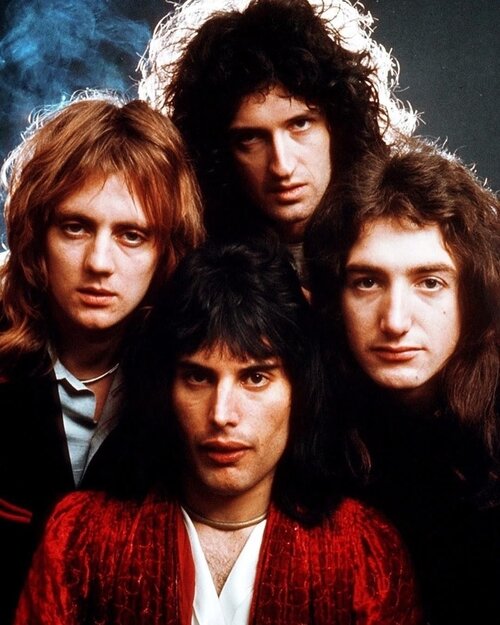
qqq.jpg

IN THIS PHOTO: Queen in 1975/PHOTO CREDIT: Mick Rock 

Celebrating Queen’s Bohemian Rhapsody Turning Diamond

___________

I have discussed Queen’s mega-hit, Bohemian Rhapsody

xxx.jpg

 PHOTO CREDIT: Queen Productions Ltd

beforehand, but it has just passed a huge landmark in terms of its sales figures. I just had to come back and revisit this phenomenal song. We hear about these songs that reach gold and silver status because of big sales number. Released on 31st October, 1975 and taken from their album, A Night at the Opera, I am not surprised that this titanic song has achieved something incredible. This NME article explains more:

Queen have become the first ever UK band to have a song certified ‘diamond’, reaching the milestone for their iconic 1975 hit ‘Bohemian Rhapsody’.

The certification, awarded by the Recording Industry Association of America (RIAA), comes after a track reaches 10million sales or streaming equivalents in the United States.

Reflecting on the achievement in a statement, Brian May said: “This is incredible news. At times like this I have to pinch myself to be sure it’s real.

“All those wild dreams we had — this is beyond any of them. Huge thanks to all who have believed in us over the years.

The band’s drummer Roger Taylor added: “It’s a wonderful and gratifying thought to know the song has reached out and connected with so many people!

Bohemian Rhapsody always appears high in those lists of the greatest songs of all time. In terms of its scale, originality and cultural impact, there are few songs that have such a reputation and power. Rather than leave things there and drop the song in this feature, I wanted to bring in some detail regarding its origins and legacy. This article from last year goes deep into a remarkable song:

I remember Freddie coming in with loads of bits of paper from his dad’s work, like Post-it notes, and pounding on the piano,” May said in 2008. “He played the piano like most people play the drums. And this song he had was full of gaps where he explained that something operatic would happen here and so on. He’d worked out the harmonies in his head.”

Mercury told bandmates that he believed he had enough material for about three songs but was thinking about blending all the lyrics into one long extravaganza. The final six-minute iconic mini rock opera became the band’s defining song, and eventually provided the title of the hit 2019 biopic starring Rami Malek as Mercury.

Queen first properly rehearsed “Bohemian Rhapsody” at Ridge Farm Studio, in Surrey, in mid-1975, and then spent three weeks honing the song at Penrhos Court in Herefordshire. By the summer they were ready to record it; taping began on August 24, 1975 at the famous Rockfield Studios in Monmouth, Wales. It was a moment that May described as “just the biggest thrill.”

The innovative song began with the famous a cappella intro (“Is this the real life?/Is this just fantasy?”) before embracing everything from glam-metal rock to opera. A week was devoted to the operatic interlude, for which Mercury had methodically written out all the harmony parts. For the grand chorale, the group layered 160 tracks of vocal overdubs (using 24-track analogue recording), with Mercury singing the middle register, May the low register, and drummer Roger Taylor the high register (John Deacon was on bass guitar but did not sing). Mercury performed with real verve, overdubbing his voice until it sounded like a choir, with the words “mamma mia”, “Galileo” and “Figaro” bouncing up and down the octaves. “We ran the tape through so many times it kept wearing out,” May said. “Once we held the tape up to the light and we could see straight through it, the music had practically vanished. Every time Fred decided to add a few more ‘Galileo’s we lost something, too.”

After the final version was completed – following some refinements at Roundhouse, Sarm East Studios, Scorpio Sound, and Wessex Sound Studios – there was a feeling that Queen had created something special. “Nobody really knew how it was going to sound as a whole six-minute song until it was put together,” producer Roy Thomas Baker told Performing Songwriter magazine. “I was standing at the back of the control room, and you just knew that you were listening for the first time to a big page in history. Something inside me told me that this was a red-letter day, and it really was.”

The song, which appears on the album A Night At The Opera, was finally released on October 31, 1975, and the impact was instantaneous. “I was green with envy when I heard ‘Bohemian Rhapsody.” It was a piece of sheer originality that took rock and pop away from the normal path,” said Björn Ulvaeus of ABBA.

Though the group’s record company were initially reluctant to issue “Bohemian Rhapsody” as a single, Queen were united in insisting that it was the right choice, despite exceeding the three-minute running time expected of most single releases. The band were told the song had no hope of getting airplay, but they were helped by Capital Radio DJ Kenny Everett, a friend of Mercury’s, who played it 14 times in one weekend and started the buzz that eventually ended with the single going to No. 1.

“Bohemian Rhapsody” opened their celebrated Live Aid set in July 1985 and it has remained remarkably popular. In 2004, the song was inducted into the Grammy Hall Of Fame, and Mercury’s vocal performance was named by the readers of Rolling Stone magazine as the best in rock history. “Bohemian Rhapsody” is the third best-selling single of all-time in the UK and, in December 2018, “Bo Rhap” – as it is affectionately known among Queen fans – was officially proclaimed the world’s most-streamed song from the 20th Century, passing 1.6 billion listens globally across all major streaming services. A mere seven months later, on July 21, 2019, the video surpassed one billion streams on YouTube.

“It is one of those songs which has such a fantasy feel about it,” Mercury said. “I think people should just listen to it, think about it, and then make up their own minds as to what it says to them”.

I am going to end the feature soon. Before then, I want to drop in a little information regarding the chart success and popularity of Queen’s monster hit:  

"Bohemian Rhapsody" topped the UK Singles Chart for nine weeks and had sold more than a million copies by the end of January 1976. In 1991, after Mercury's death, it topped the charts for another five weeks eventually becoming the UK's third best-selling single of all time. It is also the only song to reach the UK Christmas number one twice by the same artist. It also topped the charts in countries including Canada, Australia, New Zealand, Ireland, and the Netherlands, becoming one of the best-selling singles of all time with over six million copies sold worldwide. In the United States, the song peaked at number nine in 1976, but reached a new peak of number two on the Billboard Hot 100 after being used in the film Wayne's World (1992). In 2018, the release of Queen biopic Bohemian Rhapsody brought the song renewed popularity and chart success worldwide.

Although critical reaction was initially mixed, "Bohemian Rhapsody" has since become Queen's most popular song and is considered one of the greatest rock songs of all time. The single was accompanied by a groundbreaking promotional video. Rolling Stone stated that its influence "cannot be overstated, practically inventing the music video seven years before MTV went on the air." The Guardian named its music video one of the 50 key events in rock music history, helping make videos a critical tool in music marketing”.

I am not sure whether other songs will reach the status of diamond. Through its use in film and T.V., so many people have discovered the song whereas they might not have done before. It is a magnificent song in its own right, yet there is something timeless about it that means we will see Bohemian Rhapsody in films and shows for years to come! This year marks thirty years since Freddie Mercury died. We rightly celebrate him as one of the greatest voices ever but, as a songwriter, I think he had his own style and brilliance that doesn’t get talked about enough. On Bohemian Rhapsody, this was the master…

xxxx.jpg

AT his absolute best.

FEATURE: The March Playlist: Vol. 4: The Boy from Michigan Wears It Like a Crown

FEATURE:


The March Playlist

zzz.jpg

IN THIS IMAGE: John Grant 

Vol. 4: The Boy from Michigan Wears It Like a Crown

__________

THIS week’s Playlist

eee.jpg

IN THIS PHOTO: Sarah Harding

is rammed with superb songs. There is new music from John Grant, Sarah Harding, Taylor Swift (ft. Maren Morris), Black Midi, Demi Lovato, beabadoobee, Princess Nokia, Royal Blood, Dawn Richard, Paul McCartney (ft. Beck), and Evanescence. Throw in some Jungle, Du Blonde, Art School Girlfriend, and easy life; it makes for a very varied and interesting cocktail! If you need a boost and some motivation to kick this weekend off, then have a listen to the tracks below and I am sure they will get you into the swing of things. The collection of songs this week is just what you require to make sure that this weekend gets underway with…

aaaa.jpg

 IN THIS PHOTO: Royal Blood

A real spark.   

ALL PHOTOS/IMAGES (unless credited otherwise): Artists

__________

xxx.jpg

John Grant Boy from Michigan

xx.jpg

Sarah Harding Wear it Like a Crown

xxxxx.jpg

Taylor Swift (ft. Maren Morris) - You All Over Me (From the Vault)

zz.jpg

PHOTO CREDIT: Daniel Topete

black midi John L

ssss.jpg

Demi Lovato - Dancing with the Devil

xxx.jpg

beabadoobee - Last Day on Earth

xxx.jpg

Princess Nokia It’s Not My Fault

aaa.jpg

Royal BloodLimbo

zzzz.jpg

Maddie & Tae - Woman You Got

www.jpg

PHOTO CREDIT: Hector Dockrill

Paul McCartney (ft. Beck) Find My Way

zzz.jpg

Dawn RichardJacuzzi

qqq.jpg

Tune-Yardshypnotized

ss.jpg

Evanescence - Artifact/The Turn

zzzz.jpg

Jungle Keep Moving

cccc.jpg

Gwenno - Meur ras dhia Gernow (Thank you from Kernow)

xxx.jpg

Du Blonde - Pull the Plug

eee.jpg

Julia Michaels - All Your Exes

zzz.jpg

PHOTO CREDIT: Jake Michaels

 Real Estate - D+

aaa.jpg

Art School GirlfriendIn the Middle

ssss.jpg

Snapped Ankles - Rhythm Is Our Business

uuu.jpg

PHOTO CREDIT: Holly Whittaker

Chloe Foy Shining Star

xxxx.jpg

Anna of the North - Here's to Another

aaaa.jpg

Fionn Regan - The Scene Is Dead

aaaa.jpg

easy life - a message to myself

zzzz.jpg

Braids - Slayer Moon

zzzz.jpg

Gabrielle - Can't Hurry Love

cccc.jpg

PHOTO CREDIT: Christian Anwander

Natalie Bergman Home at Last

qqq.jpg

Saint SisterKaraoke Song

xxxx.jpg

Pixey The Mersey Line

aaaa.jpg

KAROL G, Mariah Angeliq - EL MAKINON

aaa.jpg

KAMILLE Mirror Mirror

cccc.jpg

NewDad Drown

xxxx.jpg

Noomi Ride

xxxx.jpg

Sofia CarsonFool’s Gold

xxx.jpg

PHOTO CREDIT: Ashlan Grey

BROCKHAMPTON (ft. Danny Brown) - Buzzcut

xxx.jpg

Sofia LafuenteState of Flux

sss.jpg

Mysie Keep Up with Your Heart

ssss.jpg

PHOTO CREDIT: Casper Buijtendijk

TESSEL, Amber Arcades Cinema

aaaa.jpg

Noga Erez - Fire Kites

zzzz.jpg

Maya Delilah Gravity

ssss.jpg

Becky Hill - Last Time

ssss.jpg

Rag'n'Bone Man - Fall in Love Again

aaaa.jpg

Izzi De-RosaLove & Roulette

xxxx.jpg

Lily Denning - Wouldn't It Be Nice

ss.jpg

PHOTO CREDIT: Rachael Wright

Kele - Smalltown Boy

aaa.jpg

foxgluvv - 1:00AM

qqq.jpg

PHOTO CREDIT: Jordon Rose

HANYA - Lydia

zzz.jpg

Naoko Sakata - Improvisation 4

qqq.jpg

Anna Fox Rochinski - Everybody’s Down

rrr.jpg

Mannequin Pussy - Control

FEATURE: The Same Old Excuses: Why Are Festivals Resistance to Change and Gender Equality?

FEATURE:


The Same Old Excuses

didudfuduid.jpg

IN THIS PHOTO: Led by the incapable Ellie Rowsell, Wolf Alice are one of many female-fronted bands who are hugely popular and should be a fixture of the 2021 festival scene

Why Are Festivals Resistance to Change and Gender Equality?

___________

LAST year…

xxx.jpg

 IN THIS PHOTO: Porridge Radio are playing mid-bill at this year’s Standon Calling (this year’s event features 53% male performers, with 100% male headliners)

a lot of festivals were wondering whether they should cancel by this point. Many called off their line-ups by the time spring really kicked in. One of the glaring facts about the line-ups that were announced by this time last year was the lack of female artists on the bill. In  terms of U.K. festivals, I think Glastonbury were the only ones who were really committed to gender equality. Not only that, but Emily and Michael Eavis put together a good mix of bands, solo artists and duos. There was a sonic blend; pretty much what you want from a  festival. Other organisers were less keen to promote that same sense of sonic diversity and gender balance. Whilst it is egregious and disappointing to see the same bands and sounds being booked every year, it is the lack of gender diversity on the line-ups that has caused the greatest problem. Many festivals have pledged a fifty-fifty gender split on their bills by 2022. Whilst some have not, there was this feeling that most would be on the same page by next year. This year, one would assume that the lockdown and time for reflection and consideration would have resulted in many organisers changing their ways and recognising the wealth of female talent on display – that has not been the case! Depressingly, many news stories this week regarding festivals has concentrated on the male-heavy line-ups. Is this an oversight on the case of organisers?

aaa.png

 IN THIS IMAGE: A glaringly male-heavy line-up this year’s Isle of Wight Festival

It seems that many festivals refuse to budge, not only in terms of their male-heavy roster, but also the fact new talent is not being booked – we are seeing a lot of the same bands appearing on the bill. This is how CLASH reacted:

2020 was an appalling, genuinely horrific year for live music. An entire sector was wiped out, while government assistance – when it eventually arrived – was paltry, and earned across-the-board condemnation from professionals on the ground.

At times, it felt as though only the love of ordinary music fans was preventing the entire live music infrastructure from collapsing. The outstanding work done by the Music Venue Trust to organise and rally crowdfunding campaigns allowed countless venues to keep the doors open, saving numerous jobs in the process.

It was done, though, with a caveat – everyone knew that live music wasn’t perfect, that the system was proving to be resistant to change. From poor pay for support bands to the lack of representation on festival bills, money was donated in the hope not just that our favourite venues could survive, but that something good, something better could emerge from the rubble.

Perhaps that’s why this week’s rally of festival announcements has ruffled so many feathers. Victorious Festival on the south coast went first, and its cavalcade of male headliners spawned a viral meme, with all of its paltry selection of female artists highlighted.

aaa.jpg

IN THIS PHOTO: Whilst Lewis Capaldi is a popular artist, bookings like this show that festival organisers are out of touch with the sheer quality and variation of female artists

The Isle of Wight festival went next. Pushing its weekend-long event to September, the reconstituted event confirmed the first names on its bill a few hours ago, with Liam Gallagher, Duran Duran, and Snow Patrol all set to play. Female artists were sorely lacking in the announcement, and indeed this is a criticism that has been labelled at the Isle Of Wight festival for some time now.

Noting this, one Clash reader responded: “Hate to be THAT guy but I prefer the 1970 line-up more. This is the same festival. (speaking of female acts, 1970 had Joni. 2021, in comparison...)”

Finally, TRNSMT has just confirmed plans for its overhauled event. The Glasgow Green festival caused up-roar in 2019 when founder Geoff Ellis suggested that not enough women were forming bands, a potential means to explain the gender bias on their bill. At the time, he said: “We all know there aren’t a lot of festival headliners out there. It’s been the case for the past decade.”

Leaving aside the factual dishonesty of that statement, it’s worth pointing out the names on this year’s line up: a now ubiquitous Liam Gallagher, COVID denier Ian Brown, Courteeners, and The Chemical Brothers, who swoop to replace local-crooner-made-good Lewis Capaldi.

It’s a sorry state of affairs, one that abuses the trust placed by so many fans in the live music sector. Why go through the pain and anguish of a music-free summer only to be confronted by a series of organisations so resistant to change, so hesitant to move forwards? We have no doubt that a great many people will buy tickets for these events – a high proportion of fans may well be women, too. But it’s gnawing to see the glacial pace of change laid out so clearly”.

ewee.jpg

 IMAGE CREDIT: Reading Festival

It would literally be impossible for me to name all the worthy female artists who could appear at most festivals, such is the vastness of options! From Pop superstars like Dua Lipa and Taylor Swift through to exciting acts like Arlo Parks and Rina Sawayama, pretty much any taste and genre is covered. I think there are hundreds of female band/female-fronted bands, solo acts, duos, trios and collectives that could satisfy any requirement! One cannot say that a lack of exposure and popularity is responsible for this gender imbalance. One only need listen to the most-acclaimed albums from the past few years. I feel the majority have been made by women. Listen to stations like BBC Radio 6 Music and one will see so many great new female artists spun. Look at the music media and the interviews and features that spotlight great women. From the strong lead voice of Ellie Rowsell In Wolf Alice to the incredible Jehnny Beth, one cannot say that there is a lack of grit and firepower from female artists. I think that festivals like Reading and Leeds and Isle of Wight have been booking Rock acts - when it came to explaining a lack of women, maybe they feel there are not enough women in Rock bands or who fit their criteria. I think both of these festivals are broad enough and are not restricted in terms of what genres they cover. Also, it is not the case that there are a lack of women in Rock (playlists like this outline women new and established in the Rock genre) and on that side of the spectrum.

zzz.jpg

  IN THIS PHOTO: Dua Lipa is not only a natural festival headliner; she is one of hundreds of female artists who could enrich any festival bill 

In any case, I think the same excuses are levied when it comes to explaining why festival bills are not equal. Most say that they book acts that are popular; the male artists are more commercial, and the talent pool is not deep when it comes to women. Even Glastonbury used this excuse a couple of years back. In an age where women are dominating and there are more new female artists coming through than any time in history, no festival can hide behind tired excuses. I do not feel that festival audiences only want male bands and will not attend if that is changed. It is disgusting to see the comments levied at women who raise the issue of gender inequality at festivals. They are subjected to so much hate and disrespect. It is more than clear that there is rife sexism and exclusion through the majority of festivals. The Guardian stated how the recently-revealed festivals line-ups are not mistakes: they are wanton acts of exclusion:

The male-skewing trends chimed with earlier festival announcements, some of them still partial. Dance festival Creamfields features a 91% male lineup. Indie-rock festival Victorious and metal events Slam Dunk and Bloodstock offered in excess of 80% male performers; at Strawberries and Creem, the Big Feastival, Latitude, Parklife and Big Foot it was more than 70%; Naked City, BST Hyde Park, We Out Here, Maiden Voyage, Field Day, Neighbourhood and Leopallooza over 60%.

aaaa.png

IMAGE CREDIT: Creamfields 

Only Love Supreme and Deer Shed festivals featured more acts featuring women than men on their line-ups. Reading and Leeds, Standon Calling, Black Deer, Kaleidoscope, Camp Bestival, Gala, Liverpool Sound City, Wide Awake, Cross the Tracks and End of the Road featured between 50 and 60% male performers.

Standon Calling founder Alex Trenchard signed up to Keychange in 2018 after the festival’s family-heavy demographic said it wanted to see more women on the bill. This year’s event features 53% male performers, but 100% male headliners, Trenchard rued.

Partially that came down to an inability to book international artists owing to the ongoing coronavirus restrictions on travel, he said. “We’ve tried to make up for that further down the bill – this year our second stage is 65% female.

In September, the Musicians’ Union reported that one-third of professional British musicians were considering giving up their careers due to a lack of work and financial support during the pandemic. With women, gender minorities and women of colour disproportionately affected by the pandemic, said Gedge, better representation was crucial. “It’s really important that we take that very seriously and think about what we want the future of music to look like, and not what it did look like.”

Oliver Jones, director of Yorkshire’s Deer Shed – which has one female-fronted headliner of three overall, and 49% all-male acts on its bill – said festival organisers should be “actively seeking out female bands” and “supporting the underdog”. This year, London punk trio Dream Wife are headlining the festival’s second stage after appearing in an earlier slot a few years ago.

While Standon Calling had struggled to book a female headliner this year, said Trenchard, the strength of the female performers in the middle of the event’s bill – among them Porridge Radio, Billy Nomates and Greentea Peng – boded well for the future. “It’s a positive sign, even if things don’t look positive for now”.

dffifi.jpg

IN THIS PHOTO: HAIM are one of the finest bands in the world and could fit onto any festival’s bill 

With Glastonbury possibly offering a virtual gig or one-off event later in the year, they are not putting on a full festival. That means one of the very few festivals that committed to a gender-equal bill are not going ahead. During a very tough year when you would have hoped that the amazing women in music would be recognised and festival bills would be overhauled, once again we are having the same discussions about equality and exclusion! Also, once more, there is either a wall of silence from organisers of excuses around a lack of female talent and male artists being more popular and festival-worthy. If festivals need a list of great women to book then, apart from opening their ears and reading the music press, there is The F-List that gives ample choice. Next year was supposed to be a year when many festivals demonstrated a desire for gender equality. It almost seems like there has been regression so that, by this time next year, will it only be Glastonbury who has an equal bill? Aside from the obvious sexism and ignorance, it is boring seeing the same names and lazy bookings! Maybe a small section of festival audiences want to see these artists play but, when you ask people and look around, I think there is a strong desire for change and equality. Music now is as broad and busy with fresh talent as ever. So many tremendous women are being denied and having to lose out on gig experience because festivals are overlooking them. I have even seen many discuss setting up their own festivals, just so that they can curate a line-up that has women on the bill! Let’s hope that festivals learn from their mistakes and correct their bills next year. With so much stubbornness and few organisers willing to bend, I worry that true gender equality and recognition of women is…

aaa.jpg

 IN THIS PHOTO: Little Simz is one of the finest artists in modern music

A long way off.

FEATURE: A Buyer’s Guide: Part Forty-Eight: Laurie Anderson

FEATURE:


A Buyer’s Guide

l.jpg

Part Forty-Eight: Laurie Anderson

___________

I usually include artists in this feature…

aa.jpg

who have released at least eight studio albums and there is a book out there about them but, as Laurie Anderson is such an established and influential artist, I wanted to include her (she has released eight albums, though one is a Spoken Word release). Matt Everitt recently spoke with Anderson on his The First Time with… If you do not know much about Laurie Anderson, then here is some information:

Laura Phillips Anderson (born June 5, 1947) is an American avant-garde artist, composer, musician and film director whose work spans performance art, pop music, and multimedia projects. Initially trained in violin and sculpting, Anderson pursued a variety of performance art projects in New York during the 1970s, focusing particularly on language, technology, and visual imagery. She became more widely known outside the art world when her single "O Superman" reached number two on the UK singles chart in 1981. She also starred in and directed the 1986 concert film Home of the Brave.

Anderson is a pioneer in electronic music and has invented several devices that she has used in her recordings and performance art shows. In 1977, she created a tape-bow violin that uses recorded magnetic tape on the bow instead of horsehair and a magnetic tape head in the bridge.[8] In the late 1990s, she collaborated with Interval Research to develop an instrument she called a "talking stick", a six-foot (1.8 m) long baton-like MIDI controller that can access and replicate sounds”.

This is a nod to and celebration of a terrific artist who is among the most original there has ever been. This is the four essential Laurie Anderson albums, an underrated gem, and her most-recent studio album – I also recommend a good book to dig into. If you require a good to a fantastic artist, then I hope that the suggestions below…

zzz.jpg

 PHOTO CREDIT: Carolyn Cole

ARE of assistance.

_____________

The Four Essential Albums


Big Science

zzz.jpg

Release Date: 19th April, 1992

Label: Warner Bros.

Producers: Laurie Anderson/Roma Baran

Standout Tracks: From the Air/Big Science/Walking and Falling

Buy: https://www.superdeluxeedition.com/news/laurie-anderson-big-science-red-vinyl/

Stream: https://open.spotify.com/album/5nfdstl6JxGrDQtm1B2LnZ?si=cbAg19FDR4muW1NTOBqsgA

Review:

Anderson's ingenious move, musically, was utilizing the vocoder not as a trick but as a melodic tool. It's the first thing you hear on Big Science, looped in "From the Air" like some bizarre man-machine synth. The rest of the track revolves around a circular pattern of blurted sax figures and hypnotic drums. There's virtually nothing about it that screams its age as Anderson intones a wry announcement from a (caveman) pilot of a plummeting flight. "There is no pilot," she speaks. "You are not alone. Standby. This is the time. And this is the record of the time." It's a metaphor for every frightening thing about 20th (and now 21st century) living you can think of, and in its spare way it's enough to scare you silly.

The gloomy ghost town future-music of the title track sounds like the rueful ruminations of someone who sees the end of the world on the horizon and can't help but to chuckle a little at their impending doom. The austere soundscapes of "Walking & Falling" and "Born, Never Asked" convey a similar chilliness laced with a despair at once aloof and oddly wistful. "Example #22" is like a Can/Yoko/Eno chop-shop, its funky wordless denouement part chant, part celebration of the absurd.

In fact, one of the elements that makes Big Science so special is Anderson's sense of humor. In "Let X=X", Anderson offers, with a wink, "I can see the future, and it's a place-- about 70 miles east of here." It's a perverse punchline to some cosmic joke, and the human element back and forth of "It Tango" does little to dissipate the feeling that on Big Science it's the machines that are getting the last laugh at the expense of their masters. The future was yesterday. The future is now. Welcome to the future” – Pitchfork

Choice Cut: O Superman

Mister Heartbreak

aaaa.jpg

Release Date: 14th February, 1984

Label: Warner Bros.

Producers: Laurie Anderson/Bill Laswell/Roma Baran/Peter Gabriel

Standout Tracks: Sharkey's Day/Gravity's Angel/Excellent Birds

Buy: https://www.discogs.com/sell/release/61107

Stream: https://open.spotify.com/album/5n3H377w7raCOYV1vr9vUN?si=tt-p-Zb9RjCofqYKZTBdJQ

Review:

Probably the most pop-accessible of Laurie Anderson's recorded work, Mister Heartbreak features a number of stunning luminaries on the cutting edge of popular music at the time. Striking guitar work by King Crimson guitarist Adrian Belew permeates this disc -- notably on "Sharkey's Day" -- punchy and angular. The production and bass work from Bill Laswell is superb. Peter Gabriel -- at the time still coming off the buzz of his departure from Genesis -- is featured in a duet with Anderson on "Excellent Birds." There is a heavy reliance on early-'80s synthesizers which would normally be very off-putting, but here they are executed well. Nowhere does the music slip into irreparable '80s cliché; it is still an entertaining listen. Lyrics are typical of Anderson' work -- complex, literate, provocative, difficult to fully comprehend. Haunting "Gravity's Angel" borrows imagery from Thomas Pynchon's Gravity's Rainbow. Spoken word delivery on "Sharkey's Night" is given by the legendary William S. Burroughs. This is a very satisfying listen and a great intro for those unfamiliar with Anderson's work” – AllMusic

Choice Cut: Sharkey's Night

Strange Angels

aaa.jpg

Release Date: 24th October, 1989

Label: Warner Bros.

Producers: Laurie Anderson/Roma Baran/Mike Thorne/Arto Lindsay/Ian Ritchie/Leon Pendarvis/Peter Scherer

Standout Tracks: Babydoll/The Day the Devil/My Eyes

Buy: https://www.discogs.com/sell/release/63663

Stream: https://open.spotify.com/album/6Sy383KpqoNe5b6MmvgfCQ?si=xwI-ffn5S_24v7eEZzLA4A

Review:

Laurie Anderson's third proper studio album, coming over five years after 1984's Mister Heartbreak (1986's Home of the Brave was a film soundtrack), is a near-total departure from anything she had done before or, indeed, anything she did after. The most purely musical of Anderson's albums and the one on which she does the most actual singing (though her trademark deadpan spoken-word passages are still present and accounted for), Strange Angels seems to be Anderson's idea of a straightforward pop album. Of course, given Anderson's pedigree, this is not Whitney Houston territory; the closest parallel would be Joni Mitchell's more experimental, post-Mingus work: pretty but chilly, with a certain emotional distance even on the most immediately appealing songs (in this case, the thrilling "Babydoll" and the dreamy title track). There appears to be no underlying concept to the album, although the lyrical themes of three of the songs are explicitly taken from 19th century American literature. The musical arrangements are remarkably complex and feature cameos from not only Anderson's usual collaborators (Adrian Belew, David Van Tieghem, etc.) but also a motley crew ranging from jazz vocalist Bobby McFerrin to session keyboardist Robbie Kilgore. As a result, the songs are sometimes a little too busy, but Anderson manages to remain the center of attention throughout. An album on which longtime Anderson fans tend to be divided, Strange Angels is a perfect introduction for anyone who might find the deadpan surrealism of Big Science or United States I-IV a bit much” – AllMusic

Choice Cut: Strange Angels

Bright Red

zzz.jpg

Release Date: 25th October, 1994

Label: Warner Bros.

Producers: Brian Eno/Laurie Anderson

Standout Tracks: Bright Red/Beautiful Pea Green Boat/Tightrope

Buy: https://www.discogs.com/sell/list?master_id=38898&ev=mb

Stream: https://open.spotify.com/album/6b3Ik5hjGBbhR8myjstjOt?si=JNTt1r07SOGv-8VGQAPtog

Review:

Five years after the release of 1989's pop-oriented Strange Angels, Laurie Anderson returned with Bright Red, a Brian Eno-produced excursion into much darker territory. Strange Angels and its predecessor, 1984's Mister Heartbreak, introduced a new level of melodic and rhythmic sophistication into the spare electronics of Anderson's early work, but Bright Red largely dispenses with that; instead, Eno provides a sound closer to his trademark ambient music (though it's still more melodically and rhythmically varied than, say, Ambient 1: Music for Airports) and Anderson largely abandons singing for her earlier, more conversational spoken-word style. Thematically, the album is filled with images of disconnection, miscommunication, and fear, with the sly wit and deadpan humor of her early days almost entirely absent. The result is an album that's more to be admired than enjoyed, since (apparently by design) it's nearly impossible to make any sort of emotional connection with this music. Gossip hounds will enjoy combing "In Our Sleep," a duet with then-boyfriend Lou Reed, for hints about their relationship” - AllMusic

Choice Cut: Speak My Language

The Underrated Gem


Life on a String

qqq.jpg

Release Date: 21st August, 2001

Labels: Nonesuch/Elektra Records

Producers: Laurie Anderson/Hal Willner

Standout Tracks: One White Whale/My Compensation/Statue of Liberty

Buy: https://www.discogs.com/sell/list?master_id=72054&ev=mb

Stream: https://open.spotify.com/album/1WgJd9ONDjjUfo5xCJQDIc?si=5Irqyd9HT8WXR_Mhgz-hsw

Review:

As the album-opening "One White Whale" indicates, bits of that project made it onto the album. The three tracks surviving from Songs And Stories suggest that Anderson might want to finish the job someday, even if the best one, "Pieces And Parts," has less to do with Melville's writing than Anderson's own powerful narrative skills. Half-spoken and half-sung, the track uses the 19th-century discovery of whale bones in Alabama as a point of departure for a discussion of history, heartbreak, and God. Anderson's best work has always been simultaneously opaque and pointed, suggestive, and even topical, without being didactic. Those qualities apply again here. Through repetitive melodies (aided by A-list guest performers like Bill Frisell, Lou Reed, and Mitchell Froom), accomplished singing, and plainspoken delivery, Anderson achieves a hazy kind of subconscious logic. "And over on Jane Street they're shooting that movie again / They just can't seem to get it right," goes one couplet from "Washington Street." Anderson makes lines like that make sense without really making sense at all. The same could be said of her new album, which starts with a whale and ends with a pilgrimage to parts unknown” – The A.V. Club

Choice Cut: Pieces and Parts

The Latest Album


Homeland

sidsuds.jpg

Release Date: 22nd June, 2010

Labels: Nonesuch/Elektra Records

Producers: Laurie Anderson/Lou Reed/Roma Baran

Standout Tracks: My Right Eye/Another Day in America/The Beginning of Memory

Buy: https://www.discogs.com/sell/list?master_id=256626&ev=mb

Stream: https://open.spotify.com/album/4ak54Q9kwqnyRL6yLkbFBO?si=TOifFuv7SyyaizBbwPtgcQ

Review:

Only an Expert" makes a pervasive, subtle theme momentarily explicit: How shared illusions about security and plenitude perpetuate a predictable cycle of cultural, environmental, and existential crises. But this threatens to make the album sound punitive, when somehow, Anderson's wrath feels compassionate. As "Falling" would have it, "Americans, unrooted, blow with the wind/ But they feel the truth if it touches them." It's confrontational and beautiful, the grim tidings leavened with empathetic portraiture. "Transitory Life" is haunting and cunningly crafted. When Anderson sings that her dead grandmother "made herself a bed inside my ear/ Every night I hear," the Tuvan throat singer from the song's intro reappears, the formless cries suddenly given a narrative role.

But the epic "Another Day in America" is the album's huge, dark heart. Anderson's voice is pitched down and slowed-- she becomes her character on the cover, a slapstick figure of male authority-- over lingering strings and keyboards. The oration is a vortex of visionary proclamations, pointed fables, downbeat jokes. It makes palpable not only all the pathos and superstition of the American psyche, but the weight of time passing away-- another diminishing resource. Every malfunction of the status quo, Anderson implies, is a chance to start over, instead of rushing to rebuild what always breaks down. Her pessimism might not be comforting, but as oil continues to poison the Gulf of Mexico, it feels awfully prescient” – Pitchfork

Choice Cut: Only an Expert

The Laurie Anderson Book


Laurie Anderson: All the Things I Lost in the Flood

xxx.jpg

Author: Laurie Anderson

Publication Date: 6th February, 2018

Publisher: Rizzoli International Publications

Synopsis:

Laurie Anderson is one of the most revered artists working today, and she is as prolific as she is inventive. She is a musician, performance artist, composer, fiction writer, and filmmaker (her most recent foray, Heart of a Dog, was lauded as an experimental marvel by the Los Angeles Times). Anderson moves seamlessly between the music world and the fine-art world while maintaining her stronghold in both. A true polymath, her interest in new media made her an early pioneer of harnessing technology for artistic purposes long before the technology boom of the last ten years. Regardless of the medium, however, it is exploration of language (and how it seeps into the image) and storytelling that is her metier. A few years ago, Anderson began poring through her extensive archive of nearly forty years of work, which includes scores of documentation, notebooks, and sketchbooks. In the process, she rediscovered important work and looked at well-known projects with a new lens. In this landmark volume, the artist brings together the most comprehensive collection of her artwork to date, some of which has never before been seen or published. Spanning drawing, multimedia installations, performance, and new projects using augmented reality, the extensive volume traverses four decades of her ground-breaking art. Each chapter includes commentary written by Anderson herself, offering an intimate understanding of her work through the artist s own words” – Waterstones

Buy: https://www.waterstones.com/book/laurie-anderson/laurie-anderson/9780847860555

FEATURE: Modern Heroines: Part Thirty-Eight: Jhené Aiko

FEATURE:


Modern Heroines

qqq.jpg

 PHOTO CREDIT: Steven Taylor 

Part Thirty-Eight: Jhené Aiko

___________

I am going to bring in a few interviews…

xxx.jpg

 PHOTO CREDIT: ICM Partners

through this feature to illustrate Jhené Aiko. A couple of weeks ago her new album, Chilombo, was nominated for Album of the Year (it lost out to Taylor Swift’s folklore). I will come to that but, before I move on, it is worth bringing in some general biographical information about an incredible artist:

Jhené Aiko Efuru Chilombo (/dʒəˈneɪ ˈaɪkoʊ/; born March 16, 1988) is an American singer and songwriter, who embarked on her music career contributing vocals and appearing in several music videos for R&B group B2K. At the time, she was known as B2K member Lil' Fizz's "cousin", though she is not actually related to him. It was used as a marketing tool, suggested by Sony and Epic Records to promote Aiko through group and cultivate her own following. In 2003, Aiko was set to release her debut album, My Name Is Jhené, through her labels Sony, The Ultimate Group and Epic; however, the album was never released, with Aiko eventually asking to be released from the label in order to continue her education.

In March 2011, Aiko made her return to music with the release of her first full-length project, a mixtape titled Sailing Soul(s). On December 16, 2011, Aiko signed a recording contract with American record producer No I.D.'s record label ARTium, distributed through Def Jam Recordings. In 2013, Aiko appeared on Big Sean's single "Beware", also featuring Lil Wayne, which became her first top 40 single on the US Billboard Hot 100 chart. In November 2013, she released her first project for Artium and Def Jam, an extended play (EP), titled Sail Out. The EP was supported by the singles "3:16AM", "Bed Peace" and "The Worst", the latter of which went on to become certified platinum by the Recording Industry Association of America (RIAA).

Aiko released her major-label debut album, Souled Out, on September 9, 2014. On September 22, 2017, she released her second studio album Trip. On March 6, 2020, she released her third studio album, Chilombo, which earned Aiko three Grammy Award nominations, including Album of the Year”.

I want to start by discussing her previous album, 2017’s Trip. I think that Chilombo is a great album, though Aiko’s best work is still ahead of her. Trip is an incredible album that won praise. In an interview with Rookie Mag, Aiko discussed the album and what she has learned from her time in the industry to that point (her debut studio album, Souled Out, arrived in 2014):

Jhené Aiko’s latest album, Trip, is a sonic exploration of grief, love, and enlightenment. The 22-track LP is filled with keenly honest writing about some of Aiko’s darkest moments. The concept album is filled with silvery, airy songs that can be played on loop—much like the rollercoaster of emotions it works to emulate. The album is one part of Aiko’s M.A.P (which stands for movie, album, poetry) project which includes a film, and a soon to be released poetry book.

DIAMOND SHARP: Your new album is out. Can you tell me about the thought process behind the album?

JHENÉ AIKO: A lot of it came from my notebooks. I’ve been keeping notebooks since I was really young, and since the death of my big brother. I guess what’s different this time around is that I really just referred to my notebook. I made this short film, and I made the album, and then I made the poetry book all just referring to these notebooks that I’ve been keeping. It became extra personal and super honest because it was literally just me referring to my diary. I just wanted to give it my all. There’s 22 songs because I didn’t want to compromise the story at all. It’s been a long time in the making. M.A.P is an acronym for “Movie Album Poetry” book. I had already completed the movie, the album, and the poetry book and I was explaining it to someone and then I realized that it was an acronym for M.A.P. It all made sense because this whole process of me creating all of these projects has sort of served as a map for me, to help me find myself, to help me heal and navigate through my suffering and pain, and even love and joy. It’s just helped me make sense of all these things and put me on the path of my purpose. It helped me really figure out what path I’m supposed to be on, and that’s why it’s a map. I feel like it could help other people going through similar things to stay the course and lead them to the light at the end of their tunnel.

I know you’ve been in the industry since you were young. What do you know now that you wish you had known then?

I know now that I don’t have to compromise anything for anyone. If I have a vision, I can take the time to see it through. I know that I’m around great people. I have a great team that is family and that they are all here to support me. They all help me see the vision through and I think it’s important to keep those people around you. A lot of people think that once they start working more and more, that they have to switch it up and work with people that they feel are on a different level as far as what they can do for you. But, I feel like what’s most important is, you could do everything you need to do for yourself. You just have to be around people that actually believe in you like you believe in you. I think, no one believes in you more than yourself. But, after yourself, the people that believe in you the most are the people that are your true friends and true family.

When my first album was sold out, I felt like a little rushed, but it wasn’t coming from myself. There were people that were putting the pressure on it, but at the end of the day, I allowed them to make me feel that way. That was really my first time putting together an album myself and I did allow other things to sort of control like how I was moving in the situation. But, this time around, I am super focused and I know exactly what I want and how I want it. I think that that is the most important difference”.

xxx.jpg

 PHOTO CREDIT: Danny Williams

I do believe that Jhené Aiko is a huge name of the future. It is interesting seeing these first few albums come out and hearing how she progresses and builds. I was caught by an interview from Revolt. It is amazing to think that, then, she was looking ahead to a decade of being in the industry (Aiki is thirty-two):

Beyond her beauty, the recording artist exists in many people’s minds as an ephemeral voice as soft as an angel’s whisper with lyrics on love and despair. Her process of making such soulful music is as natural and organic as her beauty. “Most of my songs are freestyles. They start off with me either having something in my head and I’ll sit down with my keyboard player or [producers] Fisticuffs... I’ll tell [them], ‘I have these melodies, just give me a metronome’ and we’ll build music around what I did.”

That’s how her latest song, the scorned lover ode “Triggered (Freestyle),” was created. Her and her longtime producers Fisticuffs started the emotive, piano track with a few instruments before Aiko took the beat to her home studio to record it herself. “[I] just kept singing until [I] said everything I needed to say,” she explained.

“When I’m going through something, it actually flows out easier for me. Doing ‘Triggered’ and several other songs... [gives me] that same feeling that I have to release [it],” Aiko revealed. “It just flows out and I try not to overthink it until I want to [put] ad-libs in or background [vocals]. My new album I’m working on now is like that. Every song that you hear is me [freestyling].”

She says her new LP will be coming “sooner than later” with an update on its status coming from Aiko herself in the near future.

The year 2020 will roughly mark the first decade of Aiko’s solo career since entering the scene with her mixtape Sailing Soul(s). “I’m the same since Sailing Soul(s). I’m just a little more evolved version of myself,” the star explains. “Ever since the first grade, I’ve always known who I was. Now, I’m becoming more of who I am.”

The girl, who had to face decisions like choosing which of her ethnicities she should identify with in order to get casted, has grown into a world where Rihanna’s cosmetic line is one of the biggest in the world. In addition, one of the biggest songs on Beyoncé’s The Lion King soundtrack celebrates "Brown Skin Girls," and different shades of beauty are finally being celebrated in mainstream media. Aiko admits “there’s still more work to be done [with] showing diverse faces and bodies.” But, she is hopeful for the progress. “Now, more than ever, we’re celebrating being unique individuals... and embracing their (women of color) unique features,” she closed”.

I am going to finish off with some reviews of her new album, Chilombo. It is an album that is among the most underrated of last year. I would urge people to check it out and explore its incredible songs. I do, as I keep saying, feel that the best is still to come from Jhené Aiko.

In a recent Entertainment Weekly interview, Aiko discussed how she has changed as an artist - in addition to an interesting technique she deployed through Chilombo:

Grammy nominations morning was a bittersweet one for Jhené Aiko. An hour after learning she was up for some of the biggest awards of her career — including Album of the Year for her third record, the curative Chilombo — Aiko found out that her uncle had passed away.

“We were in our own little world,” she says of her and partner Big Sean; at the time the two were on vacation but absorbed the awards news separately. “I was talking with my family about my uncle as well as answering people’s Grammy stuff. To be honest, it was a weird, out-of-body kind of moment, which is usually how I live my life.”

The difference in making Chilombo, though, was in finally recognizing her own power as an artist, thanks to the feedback she received from fans. “Different people come up to me and they let me know what my music means to them, and what it helps them with,” she says. “And so with Chilombo, I just really took that into consideration.”

One of the methods Aiko decided to incorporate into each song was the use of sound bowls. “Because I have been studying sound healing, I did want this album to have an actual, proven healing technique in every track. Not only could people listen to it and relate, it could also balance out different parts of their body, [make them] feel better, and have it actually be an experience to listen to the songs.”

The success of Chilombo — along with its Grammy nominations, the record bowed at No. 2 on the Billboard 200 — and the reality of America still being in quarantine have only further pushed Aiko to continue writing about anything and everything. For one, she has her sights on a new album from Twenty88, her ongoing collaboration with Big Sean — even if it’s more of an idea right now than an actual project. “In [a] time that most people perceive as dark or chaotic, that’s where I find my inspiration. That’s when I’m my most creative,” she says. “So I’m not saying that I’m hoping for another crazy year, but whatever happens, there’s always something to be inspired by”.

I want to source from one more interview, as I think we learn some new about Aiko with every interview. In this Essence interview, Aiko explains why she makes music for healing purposes:

Incense is burning and I’ve just listened to Chilombo in its entirety, which is how Aiko prefers fans to experience her new project that’s equal parts healing and bops. Every song was originally freestyled and had an undercurrent of crystal bowls meant to stimulate different chakras, or energy points, in the body. The R&B singer got into alternative medicine, meditation and sound healing after having too many side effects from prescriptions. So what is Aiko healing from?

“I make music for healing purposes, for myself,” she told ESSENCE after the listening session. “It’s like journaling or when people paint. It’s sort of an escape. It’s turning pain or frustration into something; into art. Sharing it is also therapeutic because when people express to you that they are relating to it, you’re like, ‘Oh, I’m not alone in what I’m going through.'”

If 2017’s Trip was Aiko’s escape from her grief through psychedelic drugs, Chilombo is her reclaiming of power through vibrational healing. And before you think it’s too hippy-dippy, the single “P*$$Y Fairy (OTW)” is a clear indication that in everything Aiko does, including the albums that made us fall in love with her, her 2013 debut Sail Out and her 2014 follow-up Souled Out, there’s balance. Let’s be real: she did have all of you, and your cousins, singing about eatin’ booties and groceries. So there’s that. There’s also collabs with John Legend, H.E.R., Miguel, Nas and, of course, Big Sean”.

To finish up, I will bring in a couple of positive reviews for Chilombo. When they say down and listened to the album, this is what Stereogum had to say:

In fact, one of Chilombo’s many highlights is “None Of Your Concern,” which the couple recorded and released last year while broken up. It’s a bracingly honest and sometimes explicit postmortem on their romance, and it’s one of many unflinching moments on the album. Recording in Hawaii in the wake of her breakup from Sean, Aiko incorporated the sound of crystal alchemy singing bowls tuned to specific chakra frequencies as a mode of healing. If that sounds serene, the lyrics are strikingly raw. “You muhfuckin’ right, I’m bitter/ You muhfuckin’ right, I’m triggered,” Aiko sings over zoned-out keyboard chords and trap drums on early single “Triggered,” one of many elegant reunions with longtime producers Fisticuffs and Lejkeys. On the ghostly “Speak,” she taunts, “I’m moving on I’m putting on my favorite dress, the one you hated/ Said I looked naked in.” Alongside H.E.R. on “B.S.,” she continues the offensive: “It seem like I give so much and don’t get nothin’ back/ I really thought it was love but you’re so fuckin’ wack.”

The original Chilombo tracklist maintains this vibe for an hour. Even brief stylistic detours like the languid funk track “Tryna Smoke” and the John Legend duet “Lightning & Thunder” — a retro soul update similar to Rihanna’s “Love On The Brain” — sound like natural outgrowths of the album’s world. “I know life’s a bitch, but she could at least give me head sometimes,” she memorably quips on the former, and seemingly every track offers up some similarly memorable lyric, often broadcasted in the song titles. On the sparse “Define Me” she proclaims, “You cannot define me.” On the acoustic “Born Tired” she sums up her exhaustion: “Baby, I was born tired.” Few images this year are more evocative than Aiko as the “Pussy Fairy on the way.” By the time Ty Dolla $ign shows up for the thumping and surprisingly upbeat but still fundamentally misty closer “Party For Me,” Aiko has completed one of the most accomplished R&B albums in recent memory”.

xxx.jpg

 PHOTO CREDIT: Steven Taylor

There have been some mixed reviews for the album. I think that Chilombo is underrated. It is an album that grows the more you listen to it. In their review, EUPHORIA. made the following remarks:

Aiko flexes her self love and dismissal of ex-lovers on Trip with “Never Call Me” and “Nobody” and on Chilombo with “None of Your Concern” and “BS.” Both albums are easy listening even at their length and truly take you through Aiko’s analysis and reflection over time.

The thing that Chilombo gains from staying so similar to Trip is the unforced delivery of how Aiko processes life through lyrics and melody. However, Trip mixed in an internalized and sometimes dark tone, seemingly due to drug experiences that influenced the album. These drug revelations – that seemed to question existence – appear to also represent something that felt like youthful confusion. Differently, on Chilombo Aiko seems to tackle this confusion with more of a yoga-like and meditative approach. This shows the progression of her thinking while still keeping the same essence of the album prior.

On a song like “Born Tired” Aiko dissects a release of her anger and twisted thoughts for the sake of a grateful mindset. One where she appreciates all she has figured out rather than what is still causing conflict. She sings:

“It’s been a long night / Long life, long time fighting Let out a long sigh / Alright, why am I trying? / ‘Cause look at how far you have come / And look at all that you have going / Look at who I have become.”

To end the album Aiko then transitions into a mode of forgiveness with a song like “10k hours.” The forgiveness blossoms into acceptance of the reality of moving on from someone while remembering the love and wishing them well. On “Pray For You” she sings:

“I pray you find your confidence / Pray you find a confidant, pray you get everything that you want / Pray you get everything that I could not give to you /I know that it may seem weird to you”.

I will end with a playlist consisting of the best Jhené Aiko tracks so far. I think she is going to be an artist who will bring out incredible music for years and she will inspire other artists. If you have not heard Jhené Aiko and her music, then get involved and discover…

A superb talent.

FEATURE: The Lockdown Playlist: The Great Escape 2021: The First Wave

FEATURE:


The Lockdown Playlist

xxx.jpg

IN THIS PHOTO: ĠENN/PHOTO CREDIT: Bridie Florence 

The Great Escape 2021: The First Wave

___________

I really miss…

zzzz.jpg

 IN THIS PHOTO: Billie Marten

getting down to Brighton because there is such a vibe and sense of warmth and friendliness! A great festival that is held there every year, The Great Escape, has announced its first wave of acts. Things, as this NME article highlights, are different this year:

The Great Escape has announced the first 68 artists for its virtual edition – check out the line-up so far below.

The Brighton-based new music festival announced last month that it had cancelled its traditional in-person event for 2021, with a virtual festival taking its place.

The event was aiming to return this year after its 2020 edition was cancelled due to the coronavirus pandemic, but ongoing restrictions mean the 2021 festival will now be unable to take place in its usual guise. Dates of May 11-14 were also announced for the return of the full-scale festival in 2022.

This year, from May 13-14, a host of artists will perform virtually, and the first number of acts have been announced now.

Among the 68 acts announced today (March 24) are a host of NME 100 acts for 2021, including PVA, Yard Act and Chubby and The Gang”.

Because the first wave of acts is so strong, this Lockdown Playlist is a collection of songs by those acts. Make sure you follow news of the festival because, to me, their line-up is the broadest in terms of sound and balanced when it comes to gender and race – few festivals commit to that sort of pledge. As you can hear from the Lockdown Playlist below, this year’s Great Escape boasts…

zzz.jpg

 IN THIS PHOTO: NeOne the Wonderer/PHOTO CREDIT: @hannah.boyd.art

SOME awesome talent.

FEATURE: Members Only: The Lockdown Playlist: Songs in the National Recording Registry

FEATURE:


Members Only

ccc.jpg

The Lockdown Playlist: Songs in the National Recording Registry

___________

BECAUSE Billy Joel’s…

zzzz.jpg

 PHOTO CREDIT: @florenciaviadana/Unsplash

iconic hit, Piano Man, was selected by the U.S. Library of Congress for preservation in the National Recording Registry for its cultural, historic, or artistic significance on 26th March, 2016, I am celebrating that anniversary by compiling a Lockdown Playlist of songs that share a special place in that club. I am not going to include EVERY single, as that may take quite a lot of your time up – I have highlighted a few that I particular like. It is quite an honour being inducted into the National Recording Registry so, to mark five years of Piano Man being among some prestigious songs, here is a selection of…

ff.png

ELITE recordings.

FEATURE: Pressed and Repressed: Vinyl Demand and Possible Shortages

FEATURE:


Pressed and Repressed

iuiiu.jpg

PHOTO CREDIT: Karsten Winegeart 

Vinyl Demand and Possible Shortages

___________

I have written about vinyl…

zzz.jpg

 PHOTO CREDIT: @julemergener_/Unsplash

quite a lot during the pandemic. I thought that record shops would struggle and many would close their doors. Some have, though there has been this boom in regards physical sales, especially in the vinyl market. I hope that this prosperity continues and there will be this ongoing demand and appetite for vinyl for many years! I was just about the launch into a feature that asked why many great albums new and older are not available on vinyl. They would have been when they were originally released, though many are either ludicrously expensive to buy or that album needs to be repressed. I wrote about Lily Allen’s 2006 debut, Alright, Still, and how that should be given a new vinyl release. There are countless albums that would benefit a vinyl release but, at present, one cannot get the album on that format – or, as I say, there are versions available that are very steep! It seems as simple as labels committing to pressing that album and organising a new release, but I understand that there are limited vinyl pressing factories and facilities; it can be very expensive to create a run of albums. Demand also needs to be pretty high for it to profitable to bring an album out on vinyl. In a wider sense, I was reading an article in The Telegraph; it made me concerned for the future of vinyl and distribution. The article highlights positives regarding sales during the start of the pandemic. As of the start of this year, things have changed slightly:

In amongst all the dark clouds that have gathered over business in the UK during the pandemic, there have been some silver linings. While in the music world, the live sector – which has been booming for over  20 years – has been plunged into crisis, recorded music has enjoyed a considerable renaissance.

For many years, the record industry was the failing sibling enterprise to touring, after MP3 filesharing scuppered the dominance of major labels, but Covid-19 has turned that whole picture upside down. With most of the nation suddenly stranded at home, streaming via platforms such as Spotify has gone through the roof, and the majors are buoyant once more.

xxx.jpg

PHOTO CREDIT: Clay Banks 

Also, mail-order for physical releases has enjoyed an unforeseen upturn. Last week, the vinyl and CD selling platform, Discogs, announced that sales in 2020 were up 40 per cent on 2019, and this has been the trend across all areas of physical music business. “Much as nobody really wants to say it, last year was a good year for record labels,” says Ian Ballard, who runs a shoestring independent imprint called Damaged Goods, specializing in garage-rock.

“I feel a bit bad, because it was a terrible year for musicians and journalists and everyone else, but if you were a record company that actually had releases coming out in 2020 and you did mail order while the shops were shut, then figures were up”.

On 1 January 2021, however, everything changed. Overnight, a sizable percentage of that burgeoning trade was at best thrown into confusion, or limbo, and at worst all but killed stone dead. Ballard had spent months preparing a four-album box set of new material from his flagship artist, Billy Childish, who has been lionized over the years by giants such as Nirvana and The White Stripes, but is perhaps still best known here for his nominal mention on artist Tracey Emin’s My Bed, as one of her ex-boyfriends.

Certainly, it seems likely that major labels, who are already set up as multi-national concerns, will restructure their operations around physical releases to mainland Europe, simply importing all stock here, at a cost which will ultimately be felt by the consumer, in rising prices for their records.

zzz.jpg

PHOTO CREDIT: @rocinante_11/Unsplash 

For the majors, physical sales only represent a boutique sideline to the main business of streaming, where they’re also banking disproportionately huge percentages at the expense of increasingly disgruntled artists.

‘Physical’, particularly vinyl, however, is the main focus for the smaller labels, and as in live music, it’s at this lower end of the record-business scale that the increased logistical challenges and spiralling costs will be most acutely felt. Ian Ballard gamely explains how, before New Year’s Day 2021, Damaged Goods would have all their records pressed in the Czech Republic, store them in a warehouse in Hull, then ship those destined for EU retail to a distributor in Germany. “Crazy, but it was cheaper that way,” he says.  “We would fill a pallet with about a thousand to 1500 items,” he continues, “including CDs, a mixture of vinyl albums and singles, and shipping that from Hull to Germany on a lorry used to cost 165 quid. The paperwork was just a delivery note, and it would take four or five days”.

We learned last year that vinyl sales were at a record (excuse the pun!) high. Artists are taking advantage of this rise and offering albums in the form of special editions and reissues. This will introduce younger listeners and new fans to the wonders of such a pure format. This article of 23rd March suggested classic albums are helping to boost vinyl sales. The format is on course to overtake C.D. sales for the first time since 1987.

zzz.jpg

 PHOTO CREDIT: Akshay Chauhan

It seems that the vinyl market is also booming in the U.S. Late last year, The Manual highlighted the vinyl rise and spoke with the CEO of Victrola, Scott Hagen:

So vinyl is here to stay, it seems, despite all technological advances that would have seemed to threaten it. The same RIAA study that found records surpassing CDs also revealed that streaming music now account for more than 85% of all music enjoyed. Only 6% of music is now downloaded, even less than is physically purchased in the form of records, CDs, or the last tapes.

So records don’t sell like digital, but that doesn’t mean they’re on the outs.

“I think they are certainly here to stay,” says Charlie Randall. “We are seeing records and turntables become more popular and more advanced in technology like [with] our MTI100 integrated turntable, for example.”

“I think it’s got a ton of staying power,” Scott Hagen says. “In 2013, there were about $200 million in sales in the U.S. The year, we’re probably going to eclipse $600 million just in America. I see the future of vinyl being it becoming more a staple in homes where people value listening to music, not ever less. We just did a survey of more than 400 people, people between 18 and 70 years old, and asked them if they had a vinyl record player in the home, and more than 55% said yes. But what was really interesting, is of those people who had a record player, more than 70% said they had used it, had listened to a record within the last month.”

zzz.jpg

PHOTO CREDIT: @victrola/Unsplash 

“But even more compelling for me,” Hagen added, “was that with the younger people 18 to 29, more than 60% had a record player. And others were planning to get one.”

Why does Scott Hagen think that record players are not only not going anywhere but are getting ever more popular?

“Because the world that we’re in needs this kind of format — it needs us to slow down and enjoy a really nice meal once in a while, a good bourbon or cocktail now and then, and to sit down and just listen to music sometimes”.

There is uncertainty how the vinyl market will be affected in the U.K. this year. With Brexit and the pandemic there is likely to be some delays and production changes. Maybe my aspirations regarding there being this wave of albums coming out on vinyl (that one could not get beforehand) might not happen. I do feel that the vinyl rise will continue, though there are concerns when it comes supply. The small labels, it seems, are going to feel the biggest hit. I am not sure whether it is cheaper importing from America or whether some deal can be brokered between labels and pressing plants. I feel that there is this optimism regarding the future of record shops and a clear sales boost that is being driven by listeners wanting something physical and tangible – those that feel streaming cannot deliver a genuine listening experience. Let’s hope that small and large labels alike will not be affected too severely this year and going forward. For music lovers around the world, there is nothing that can equal…

xxx.jpg

 PHOTO CREDIT: @florenciaviadana/Unsplash

THE pleasure, feel and value of vinyl.

FEATURE: Soul Queens: Awesome Women of Philadelphia International Records

FEATURE:


Soul Queens

aaaa.jpg

IN THIS PHOTO: Phyllis Hyman/PHOTO CREDIT: Anthony Barboza/Getty Images 

Awesome Women of Philadelphia International Records

___________

I was struck by an article…

zzz.jpg

 IN THIS PHOTO: Dee Dee Sharp

that appeared on The Guardian website last week regarding ther fiftieth anniversary of Philadelphia International Records. It is an exciting milestone, but their angle of highlighting the incredible cool and talented women of the label stuck with me:

Still, not everything worked by the Motown plan. Unlike Berry Gordy’s company, Gamble and Huff’s venture enjoyed far more success with their male stars than their female ones. Lacking a distaff act with the enormous popularity of Diana Ross and the Supremes, Gladys Knight or Martha Reeves, the label scored most of their biggest hits with male acts like the O’Jays, Harold Melvin and the Bluenotes, Billy Paul and the solo Teddy Pendergrass. The only time they scored a top-five pop hit for a female act came when the Three Degrees cooed When Will I See You Again. Otherwise, Philly’s female artists enjoyed far more success on the American R&B charts than on the broader pop list. At the same time, the women of Philly Soul – including Carn, Dee Dee Sharp, Phyllis Hyman, the Jones Girls and the Three Degrees - created many of the label’s most adventurous recordings. For a short spell, Patti LaBelle also recorded for the label, but she enjoyed her biggest hits on Epic with the group Labelle, or with her solo work on MCA.

“I learned so much about writing and producing from the best in the business,” said Shirley Jones, lead singer of the Jones Girls. “The label also helped me to become an activist.”

zzz.jpg

 The first release by a female act on the label – the self-titled album by the Three Degrees – came two years and 12 albums into Philly International’s history. The Three Degrees experienced more hits in the UK than the US, including two gold albums and a hit single, Year of Decision. The lyrics to the single epitomized the label’s socio-political mission, told in its pointed entreaties to “open up your mind” and “leave the bad stuff behind”.

The label’s next female act, Dee Dee Sharp, made her debut for Philly in 1976 with the album Happy About the Whole Thing. Sharp, who scored doo-wop hits in the early 1960s like the No 1 song Mashed Potato Time, and who married Kenny Gamble in 1967, had a huge vocal range. Her Philly work gave her the chance to show it off in cuts like a highly theatrical cover of 10cc’s I’m Not in Love and a take on Terry Collier’s rapturous jazz ballad What Color Is Love.

The last female artist released by the label, as well as its final artist overall – Phyllis Hyman – already had a decade-long track record on Buddha and Arista Records although her Philly releases rank among her greatest works. They expanded her status as a vocalist who was highly respected by her peers and by black audiences. But the fact that she never earned a pop hit gnawed at her. “She felt very underappreciated,” Carn said. She also had depression. “I saw those mood swings – everybody did”.

In a similar nod to the underrated and somewhat overlooked women of Philadelphia International Records, this Lockdown Playlist selects songs from them. Even though the label favoured and supported male acts more, as you can tell from these tracks, the Soul queens on the label created…

mmm.jpg

 IN THIS PHOTO: The Three Degrees

SUCH incredible music!

FEATURE: Second Spin: Katy Perry - Teenage Dream

FEATURE:


Second Spin

eee.jpg

Katy Perry - Teenage Dream

___________

WHILST I cannot claim to be the biggest…

sa.jpg

 PHOTO CREDIT: Capitol Records

fan of Katy Perry, I do think that her third studio album, Teenage Dream, is stronger than critics gave it credit for. It is another album that got a mixed reception but fared much better in commercial terms. Whilst some have been a little negative regarding the 2010 release, the album did very well:

The album debuted at number one on the US Billboard 200, selling 192,000 copies in its first week. It was later certified eight times platinum by the Recording Industry Association of America (RIAA), denoting 8 million album-equivalent copies. The album has gone onto sell 3.1 million copies in the United States, and charted within the Top 40 of the Billboard 200 year-end chart three years in a row. The album also sold 1.3 million copies in the United Kingdom, where it was certified four times platinum by the British Phonographic Industry (BPI). By July 2013, Teenage Dream had sold 6 million copies worldwide. The album and its singles earned Perry seven Grammy Award nominations including Album of the Year, Best Pop Vocal Album, and Record of the Year. It also won International Album of the Year at the Juno Awards of 2011”.

I will bring in a couple of reviews for Teenage Dream - one that is more mixed and a positive one. I think that a lot of people who were familiar with Perry’s music were probably fairer than those coming to it fresh. With big Pop singles like California Gurls, Teenage Dream and Firework, there are songs that instantly come to mind and that we are all familiar with!

Maybe people dislike the bombast of Katy Perry’s voice or the fact that the production is pretty polished. In terms of its sound, it is very similar to a lot of Pop albums. It is a very big record in terms of energy, but there is some emotion and softer moments. Most of the best songs are taken care of in the first half of Teenage Dream so, perhaps, there is a slight top-heavy feel to it. I like the more under-represented songs like Peacock and Who Am I Living For? In their review, this is what Rolling Stone observed:

Teenage Dream is the kind of pool-party-pop gem that Gwen Stefani used to crank out on the regular, full of SoCal ambience and disco beats. It’s miles ahead of Perry’s breakthrough disc, One of the Boys, with her clever songwriting boosted by top-dollar pros: Dr. Luke, Max Martin, Tricky Stewart, Stargate. In the 2010 style, her vocals are processed staccato blips with lots of oh-oh-way-oh chants. The tracks go heavy on Eighties beats, light on melody, taking a long dip into the Daft Punk filter-disco house sound.

Major themes include: how awesome it is having sex with Russell Brand (“Hummingbird Heartbeat”), how it sucks having sex with guys who aren’t Russell Brand (“Pearl”), how true love rules (“Teenage Dream”), even though it’s not like the movies (“Not Like the Movies”). Perry likes her songs chatty; in the kegger romp “Last Friday Night,” she chirps, “Think I need a ginger ale/That was such an epic fail.” Stargate’s “Hollaback Girl” sequel “Peacock” bites a drum hook from Toni Basil’s “Mickey” as Perry demands some action, chanting, “I wanna see your peacock-cock-cock” — subtle!

Her Christian back story only comes up once, in “Who Am I Living For,” where Perry riffs on the biblical story of Esther, the Jewish orphan who married the Persian king and uncovered a plot to exterminate the Jews. It’s dark and compelling, especially since she sings it like Rihanna. “Circle the Drain” — which Perry presumably wrote about her ex, “Billionaire” singer Travie McCoy — is even darker, a kiss-off to a rocker hooked on pills. But she’s more at home with the mall romance of “The One That Got Away,” where she and the guy get matching tattoos on her 18th birthday. When Perry sings, “I was June, and you were Johnny Cash,” it’s understood that she’s thinking of the scrubbed-up Hollywood version of June and Johnny, from Walk the Line. But that’s just part of what makes her such a true California gurl”.

I really like Katy Perry’s voice. I think she is one of the most dexterous and accomplished Pop artists of her time. Maybe the songwriting is not exceptional throughout (aside from Perry, there are quite a few others in the mix) and the consistency falters a little towards the end of the album. That said, Teenage Dream is not an album to be seen as weak or a guilty pleasure. It is a solid Pop album that has some standout tracks and, generally, is an enjoyable listen.

Not everyone was mixed or down when it came to Katy Perry’s third studio album. AllMusic were more complimentary when they assessed the album:

Nothing comes naturally for Katy Perry. Blessed with a cheerleader’s body, the face of a second-chair clarinetist and a drama club queen’s lust for the spotlight, Perry parlayed all these qualities into success via her 2008 pop debut One of the Boys, an album that worked overtime to titillate. Working hard is Katy Perry’s stock in trade: whether she’s cavorting in the Californian sun or heaving her cleavage, she always lets you see her sweat, an effect that undercuts her status as a curvy Teenage Dream, the ideal she puts forth on her 2010 sophomore set. All this labor produces fetching magazine covers -- sometimes accompanied by good copy within -- and grabbing videos but it undoes her records, since we always hear her fighting to be frivolous. And all Perry wants to do is have fun: all she wants is to frolic in the spotlight, and she’ll follow the path of others to get there, raising eyebrows a’la Alanis, strutting like Gwen Stefani and relying on Britney’s hitmaker Max Martin for her hooks. There’s no question Perry is smart enough to know every rule in pop but she’s not inspired enough to ignore them, almost seeming nervous to break away from the de rigeur lite club beats that easily transition from day to night or the chilly, stainless-steel ballads designed to lose none of their luster on repeat plays.

Perry acknowledges some shifting trends -- she salutes fellow attention-whore Ke$ha on “Last Friday Night (T.G.I.F.),” replicates Ryan Tedder’s glassy robotic alienation on “E.T.” but tellingly avoids ripping off Lady Gaga, who is just too meta for the blunt Katy -- but these are merely accents to her old One of the Boys palette. And, once again, the music feels familiar, so Perry distinguishes herself through desperate vulgarity, wooing a suitor with “you make me feel like I’m losing my virginity,” extolling the virtues of blackouts and an accidental ménage a trois, melting popsicles, pleading for a boy to show her his “Peacock” (chanting “cock cock cock” just in case we at home didn’t get the single entendre). All this stylized provocation is exhausting, and not just because there’s so much of it (none of it actually arousing). It’s tiring because, at her heart, Perry is old-fashioned and is invested in none of her aggressive teasing. Not for nothing did she give her best post-One of the Boys song, “I Do Not Hook Up,” to Kelly Clarkson; its pro-abstinence rally flies in the face of the masturbatory daydream she’s constructed. It's ironic that her best song finds her lurking behind the scenes, because Perry's greatest talent is to be a willing cog in the pop machine, delivering sleek singles like “Teenage Dream” and “Hummingbird Heartbeat” with efficiency. Isolated on the radio, the way “Hot N Cold” was in 2009, these singles will wind up obscuring the overheated and undercooked nature of Teenage Dream as a whole. Then again, the album itself is almost incidental to the self-styled fantasy that Katy Perry sells with this entire project”.

Katy Perry’s sixth studio album, Smile, was released last year. At thirty-six, she is perhaps not going to return to the sound and themes of her earlier albums; I think she has matured as an artist and we will see many more releases from her. I sort of dip in and out of her work, though I do like Teenage Dream and think that it has more to give than has been recognised. In spite of a few weaker numbers there is a lot of variety to be found. Perry definitely widened her scope and sonic reach on Teenage Dream. Maybe she was growing in confidence or felt that she needed to expand her reach. Whereas One of the Boys (2008) was more Pop and Rock in tone, Teenage Dream has Electronic asnd Disco elements in the brew. Rock is utilised more on Teenage Dream. From Soft Rock to Glam Metal, Perry manages to pull off a switch in sounds and textures. Go and listen to the album if you have not heard it before. I think that it is one of Perry’s strongest albums and, over a decade since its release, I don’t feel it has dated or comes across as ‘of its time’. One can easily listen to the album and look at modern Pop and see comparisons. Whilst it suffered from some critical disinterest, many publications placed Teenage Dream in its top-twenty/fifty albums of 2010. Billboard even ranked the album at fourteen in their greatest albums of the 2010s! Go and take a listen to a decent and interesting album from…

A modern Pop superstar.


FEATURE: My Home, My Joy: Kate Bush and the Familial Inspiration

FEATURE:


My Home, My Joy

vvcvc.jpg

 IN THIS PHOTO: Kate Bush standing outside of her family home at East Wickham Farm, Welling (in the London borough of Bexley)

Kate Bush and the Familial Inspiration

___________

I have written about…

kkk.jpg

 IN THIS PHOTO: Hannah, Paddy, Kate and John Carder Bush at East Wickham Farm (circa 1978)

Kate Bush and how music and family played an important role in her early life. I have been compelled by a few recent releases that have made me think about Bush’s attachment to family and home and how, on her best albums, these twin pillars played an important role. A recent article from My London discussed the home in which Bush wrote Wuthering Heights in 1977:

It was a song inspired by the romantic novel of the same title by Emily Bronte and sung from the perspective of the character Catherine Earnshaw who is pleading to be let into Heathcliff's house and be with him.

Kate is believed to have penned the lyrics to the song in only a few hours and did so from her flat in South London.

The flat Kate lived in was the middle flat of a three flat building and her two brothers were believed to have lived above and below her.

Kate credits her brothers for getting her into music in the first place and through them had her first live performance at the since closed Rose of Lee pub in Lewisham, as well as the Royal Albert in New Cross Road”.

Although Kate Bush moved around London and she did relocate a bit through her young life, I think that the family home of East Wickham Farm, Welling, was most important (you can read an interesting article, where we learn more about Bush’s early family life). In 2015, LOUDER looked at a vital source of comfort for Bush:

The large farmhouse where Kate Bush was raised is almost impossible to see through impenetrable undergrowth and is situated in a surprisingly built-up area on Wickham Street, Welling, on the fringes of South-East London.

East Wickham Farm was the family home where Kate lived with her doctor father, mother and two older brothers, John and Paddy. Her inbuilt wonder and love of music and outpouring of songs, written when a schoolgirl, all began here, surrounded by her family.

Famously ‘discovered’ and encouraged by Dave Gilmour and signed to EMI as a songwriting prodigy, the teenage Kate Bush also formed the KT Bush Band with brother Paddy and three friends, playing South London pubs. The family’s secluded 350-year-old farmhouse home offered a base for an idyllic childhood and subsequently a secure and private environment for her work. Kate, who shares a birthday with Wuthering Heights author Emily Brontë, wrote her ‘version’ at East Wickham Farm”.

I am reading a new book by Laura Shenton, where she looks at Bush’s debut album, The Kick Inside, in detail. I am going to write about the book/album in more depth in a future feature. Apart from some great interview snippets and technical details, what struck me was how harmonious and inspiration East Wickham Farm/44 Wickham Road is (there is about seven miles between the family home and 44 Wickham Road, South East London).

I can imagine Bush finding comfort and safety at her family home writing these gorgeous and hugely impressive songs to life; those that would appear on The Kick Inside. Not to say the bustle of London or the strains of a studio are lacking in inspiration. To me, it was when Bush was writing and recording at home that her best moments were created. Though The Kick Inside was recorded at AIR Studios and she spent a lot of time in London through her career, my mind goes to East Wickham Farm as being this vessel of security and love. I will not rehash my feature about family and the music played during Bush’s early life – as her mother was Irish and there was a lot of traditional Folk played, there was this mix and fusion of sounds that influenced a curious young songwriter. The love Bush got from her family and the musical/cultural connection she had with her brothers, Paddy and John, can really be heard on her albums. I think that The Kick Inside’s songs were penned when Bush was enveloped in the support from her family (her father was especially encouraging) and the fact that she was supported in her aspirations. Although her parents, perhaps, would have preferred Bush went to university or followed a more traditional path, they were very supportive of her musical ambitions.  

After The Kick Inside was completed, there was this period where Bush moved around and she acquired more independence. Not to say she distanced herself from her family but, with a busy career and an itinerant schedule, she was spending less time in Welling. Living and recoding with her boyfriend, Del Palmer, I think that albums such as Never for Ever and The Dreaming and markedly different to The Kick Inside, Hounds of Love and Aerial. I do not think that it is a coincidence that Bush created her most successful album, 1985’s Hounds of Love, when there was this fortress and warmth at the family home. Over eight years since inspiration struck for Wuthering Heights, Bush built her own studio behind the family home. 1982’s The Dreaming was an important album where Bush produced alone and was at her experimental finest. It did take a lot out of her and, between moving around different studios and intensive recording sessions, she recognised changes needed to be made – she also changed her diet, reconnected with dance and departed London. The Kate Bush Encyclopaedia gives some information about Bush’s bespoke, incredible studio set-up:

Following the disappointing performance of her fourth album The Dreaming and its singles, executives at Bush's label were concerned about sales largely due to the long time period it took to produce the album. In the summer of 1983 Bush built her own 48-track studio in the barn behind her family home which she could use to her advantage and at anytime she liked, without time constraints she had to deal with when hiring studios elsewhere.

kk.jpg

IN THIS PHOTO: Kate Bush in 1985 

With the studio more or less completed, Bush began recording demos for the album in the summer of 1983. After five months, Bush began overdubbing and mixing the album in a process that took a full year. The recording sessions included use of the Fairlight CMI synthesiser, piano, traditional Irish instruments, and layered vocals”.

Not that Bush was retreating from a stressful life, though it is clear that home was calling. She was able to regain some of the peacefulness and love that she experienced prior to her debut album being released. Though not many of those outside of Bush’s circle knew about the recording of Hounds of Love, away from the toil of building a studio and perfecting the album, she enjoyed time to be with her family and boyfriend in a salubrious, idyllic location. Aside from having the family home close and being able to work at her own pace and record the album exactly as she wanted, I think having her parents and brothers nearby was important. In between The Kick Inside and Hounds of Love being record, Paddy especially was living close/with his sister and appeared on many songs. During recording Hounds of Love, her mother’s legendary hospitality would have kept Bush and her musicians topped up and lifted! Paddy would have been there to provide his musical expertise and assistance, in addition to a supportive love.

Although Bush shad started her own family by the time 2005’s Aerial was released, that is not to say that she every lost that solid connection with her family (her mother, Hannah, sadly died in 1992; her father, Robert, died in 2008). Her son, Bertie, was born in 1998, and she was living with her other half, Danny McIntosh (prior to Aerial, he played guitar on The Red Shoes (1993) tracks Rubberband Girl, The Red Shoes, Constellation of the Heart, Top of the City, The Song of Solomon, and Lily). I feel that Bush favoured home studios as opposed professional ones. Even though she spent time recording at Abbey Road Studios for albums after The Red Shoes, I feel having her own studio and set-up at home with her family gave her that comfort blanket. A lot of the magic and music came together in Bush’s home…and it is clear that the joy her new son gave her is a reason why Aerial is not only Bush’s favourite album (which she revealed in an interview from 2011) but is also one of her very best. 2011’s 50 Words for Snow was another album where parts were recorded at Abbey Road Studios but, as she told interviewers like BBC Radio 4’s John Wilson and BBC Radio 2’s Ken Bruce (when she released Director’s Cut in 2011), she has her own studio and could invite musicians in. Danny McIntosh was there to play guitar and help ferry musicians to and from the home; her long-time stead, Del Palmer, was there to engineer and record.

To me, Bush used outside studios more sparingly post-The Red Shoes. Abbey Road Studios provided a greater space for musicians during orchestrations - and where her home studio could not deliver the same dynamics and acoustics. Rather than Bush being reclusive or wanting to be completely autonomous, I think she was keener to balance family and work and not revert to the past – where she would be burning herself out recording so strenuously and endlessly. If her parents and brothers were vital lifeblood for albums like Hounds of Love, then her new home and family were key to Aerial, Director’s Cut and 50 Words for Snow. I feel the relative lack of anxiety and fatigue helped elevate Bush’s songwriting and creativity. Having a home studio meant she could keep her own hours and record when she wanted (and at a much less expensive rate than she would have to pay at AIR Studios or Abbey Road Studios). I still think this is all true now. Her son, today, is in her twenties and the mood and pace of family is different to how it was years ago. Regardless, home and family are pivotal. Any future material we hear from Bush will be at her home studio – let’s hope that there is more to come from her at some point. From the child who was drinking in so much music and culture, to the teenager releasing her debut album, I think the sort of strength and influence only home and family can provide has guided her best moments. As I write this, I think of Bush at home, perhaps with a song in the back of her mind as she contemplates her lot and gives (silent) thanks. I will end things there but, in the next few weeks, I am going to write features around that book about The Kick Inside from Laura Shenton and a new article that has appeared in MOJO (they have published a ‘lost interview’ and discuss The Dreaming’s Sat in Your Lap, almost forty years since its release). With so many new publications and books, it means that the fascination and interest around Kate Bush…

NEVER ends.

FEATURE: The Lockdown Playlist: One-Album Wonders

FEATURE:


The Lockdown Playlist

xxxx.jpg

IN THIS PHOTO: Lauryn Hill (her lone studio album, The Miseducation of Lauryn Hill, was released in 1998) 

One-Album Wonders

___________

I don’t recall whether…

trrr.jpg

 IN THIS PHOTO: Jeff Buckley released his stunning debut, Grace, in 1994/PHOTO CREDIT: Merri Cyr

I have covered this in some form before - if I have, it has been a long time. I am interesting in artists and bands that have only released one studio album. Whether that is because of a premature split/demise or there was there was no commercial demand for a second, the phenomenon of a one-album wonder is quite rare. It is exciting putting out a debut album. It must be strange to have your career left there! I have compiled songs together from artists who only ever put out the one studio album (that said, they are pretty awesome albums!). From The La’s, to Jeff Buckley, to Lauryn Hill to the Sex Pistols, one wonders what could have been if they…

aaa.jpg

 IN THIS PHOTO: The La’s released their eponymous debut in 1990/PHOTO CREDIT: Clare Muller/Redferns

EVER put out a follow-up.

FEATURE: Spotlight: Genesis Owusu

FEATURE:


Spotlight

ccc.jpg

Genesis Owusu

___________

ONE of the problems with this Spotlight feature…

vvv.jpg

is that I am including hardly any male artists. It shows that there are so many terrific female artists, but it is time to introduce an artist who is among the finest around. Genesis Owusu (Kofi Owusu-Ansah) has released his phenomenal debut album, Smiling with No Teeth. I will finish with a couple of reviews for the album. First, it is worth sourcing from some interviews so that we can discover more about the Ghana-born rapper. Owusu spoke with The Guardian recently. We find out about his upbringing and a remarkable, accomplished debut:

Now 22, Owusu was born Kofi Owusu-Ansah in Ghana, then moved to Canberra, Australia when he was two. Canberra, like much of Australia, is extremely white, and although there are tight-knit non-white communities to be found everywhere, institutions like schools often remain ignorant of the experiences of people of colour. Owusu-Ansah’s brother, the rapper Citizen Kay, was five years his elder, meaning that the pair only went to school together for a year before Owusu-Ansah was on his own.

“I had to figure this shit out myself, because all the Black people I knew were the people that came to the country with me,” Owusu-Ansah recalls from his new home base of Sydney. “There [were] no real role models to get advice from. It was definitely interesting being in a white space like that, but it kind of taught me, to the [most extreme] extent, how to be myself.”

This repeated iconography provides a through line for what is a remarkably varied debut, touching upon anthemic 80s rock (on Kirin J Callinan-featuring highlight Drown), synth-funk, out-and-out punk (Black Dogs) and everything in between. Owusu-Ansah achieved this frenetic, hard-to-pin-down style by bucking a more traditional producers-and-beats A&R method – which he had used in the past – and instead holing down with a band, made up of Callinan on guitar, house producer Touch Sensitive on bass, World Champion’s Julian Sudek on drums, and Andrew Klippel, founder of Owusu-Ansah’s label Ourness, on keys.

That truth is wilder and more thrilling than one could imagine. Inspired equally by Prince and Talking Heads – “But like if Prince were a rapper, in 2020, in Australia” – Smiling With No Teeth might freak some out, but feels more likely to win fans than lose them. Either way, Owusu-Ansah doesn’t really care: “I have no interest in being like some random pop star or rap star with a million random people who don’t really care about me as an artist,” he says. “I want to reach people who will really understand it”.

I think that Smiling with No Teeth is one of the most impressive albums of the year so far. I would urge people to investigate the album and discover an immense talent! I have been listening to the album a lot over the last few days and really digesting and absorbing the fifteen tracks.

I came across an interesting DIY interview from this month. Genesis Owusu talked about moving to Canberra, the characters that go into Smiling with No Teeth, in addition to looking ahead to live gigs:

I don’t know what music does, but it pulls out something really different in me,” chuckles Kofi Owusu-Ansah, or Genesis to his increasing number of listeners. “I don’t know how to describe it but it imbues me with a lot of confidence. It’s like Clark Kent and Superman, you know? Genesis Owusu is the Superman, and day to day, I’m just in Clark Kent mode.”

Confidence is an idea that crops up a lot in conversation with the Canberra musician. Moving from Ghana to the Australian capital aged three, he speaks of acknowledging his difference among his new peers and leaning into it from a young age. “It was definitely a place where I was immediately the outlier and it had come to a point where it’s like, do you assimilate and try and fit in or do you go full-frontal with the outcast label? And I chose the latter,” he recalls. “I chose to try and embrace who I was completely.”

Genesis’ own personal hellfire, however, is one less indebted to the millenium bug. Across the record, against a backdrop of deceptively upbeat cuts, come repeated motifs of black dogs - one a familiar metaphor for depression, the other a more troubling reference to the fact that he'd “literally been called a black dog in my life as a racial slur”. “Throughout the album, I wanted to create these two black dogs as characters with their own personalities. The internal black dog of depression is very possessive and wants you to be its only one, kind of like a toxic relationship,” he continues. “Creating them as characters really helped identify all of the characteristics [and work through] how I was interacting with them.”

With his debut, Genesis is resisting the restriction and conformity of any boxes - be it social, stylistic or other. Already selling thousands of tickets in his home country (yep, they can go to gigs already - sob), it seems like a foregone conclusion that, by the time the rest of the world is able to open up its venues once more, Owusu should be stepping through them into crowds of hungrily-waiting fans.

“It’s exciting and it’s very cool to know I’m not just doing this for myself, even though that was the original intention,” he smiles (with teeth). “That means the most to me, these little weirdo Black kids like me growing up in spaces that they don’t necessarily belong. If instead of, like I did, not having many people to look up to, they feel like they have me, then that’s super meaningful and it warms my heart”.

I am keen to get to the reviews for Smiling with No Teeth as it is a fantastic album that has so many highlights. I don’t think one needs to be a fan of Rap or know about Genesis Owusu to appreciate and fall for such a stunning and compelling album. It is an album that you will listen to again and again and discover new elements and highlights revealed.

xxx.jpg

I want to bring in the final interview. NME. Alongside a look at Owusu’s visual aspect, he discussed racism and depression, in addition to the rise of artists in Australia from the African diaspora:

Owusu-Ansah is a visual auteur as much as he is a musician. In the video for ‘The Other Black Dog’, he sprints down a road late at night, chased by a black car driven by his shadow self. The driver’s face is wrapped in bandages à la The Weeknd circa ‘After Hours’, with golden grills forcing gritted teeth into a grin – covering up suffering with “a little gold, or extravagance”, as he puts it.

The two weighty concepts that haunt ‘Smiling’ are depression and racism. They split the record into thematic halves, and are personified as two living, breathing black dogs. One is the external figure of Owusu-Ansah himself, who experiences the dehumanising brunt of racism, and the other an internal, depressive figure that he describes as “almost seductive, wanting to lure you in… almost like a toxic relationship, wanting to be your only one”. The title track articulates the relationship between the two black dogs as analogues of racism and mental health: Society’s stray and the stray’s hound / Caressing and stabbing each other with a technician’s touch”.

“I’m trying to live comfortably but I’m pursuing a life [in the music industry] that is known to just be fucked up. To be full of vultures, creeps and people that drain. That line is just acknowledging the contradiction and the walking paradox I can be,” Owusu-Ansah says.

Australia is currently seeing a rising wave of artists from the African diaspora making varied music under the aesthetic umbrella of hip-hop: Sampa The Great (Owusu-Ansah’s favourite rapper out of Australia), Manu CrooksBLESSED, and more. Genesis Owusu’s story could be read in this context, but does he feel part of this scene? The answer is yes and no.

“Whenever I see any of those people, it’s always love and you always feel that sense of community from an identity perspective. [But] from the outside looking in, in a lot of publications I don’t feel like I really get recognised in those circles or in hip-hop in Australia at all,” he explains”.

I am going to wrap things up shortly. I want to end by bringing together a couple of reviews that praised and heralded an amazing album and artist. Smiling with No Teeth is an album that has won huge kudos and focus. In their review, NME were eager to lend their positive thoughts:

Genesis approaches ‘Smiling’ as a catharsis – and, especially with his figurative writing, it can be occasionally unclear whom his missives are aimed at. Songs like the assertive, stomping lead single, ‘Don’t Need You’ are conversational yet candid, Genesis delivering barbed observations on a toxic relationship: “I always saw yo ass as a hindrance and you saw me as a target.” On the title-track, with wry spoken word, he admits to politely concealing his anxiety and depression when probed, realising that people seek assurances, not truths.

Singing partly in a Pharrell-style falsetto, Genesis ponders the trade-offs of fame, and material trappings, on the low-key single ‘Gold Chains’. Thematically similar to both his own ‘Cardrive’ track ‘Drive Slow’ and Denzel Curry’s ‘CLOUT COBAIN’, it captures a rising star astute to exploitative music industry machinations. ‘Smiling’ consistently surprises: superficially, ‘A Song About Fishing’ is breezy folk balladry – but Genesis conjures a Nick Cave-esque parable, chronicling an exhausting quest to catch fish with no success, only hope. It’s a bleak commentary on perseverance – and Genesis at his most imaginative.

With ‘Smiling With No Teeth’, Genesis Owusu has delivered a riveting album that underscores the power of self-knowledge, perspective and art – one that should be cranked loud”.

In another really positive review, DIY raised some interesting points and made some good observations about a huge album from an artist who is going to go very far:

If the gleeful monster-mash of ‘The Other Black Dog’ or the ’80s cruise of ‘Drown’ seem like frivolous costume, they are worn by a man who carries a much wider weight of depression, frustration and societal disrepair that only really reveals itself when you dig into the lyrics. ‘A Song About Fishing’ is a laid-back, relatable rap-folk mediation of the difficulties of motivating yourself when nothing seems to be going right, while on ‘I Don’t See Colour’, he ponders the nature of racial stereotyping over a slick beat (“‘Cuz somehow my actions represent a whole race, it’s hard to move different when your face is our face.”). There’s a whole abundance of themes at play, but all are dealt with a knowing creativity, a melodic choice tailored to fit the topic.

If Genesis is consistent with anything, it’s the reminder that life is often more fun when you allow yourself to explore the leftfield. At 15 tracks long, he occasionally falters under the weight of his own abundance, but there are so many great sweets in the pick’n’mix bag that you don’t really mind the odd underwhelming chew. In time, it’ll be a real joy to watch his ideas crystallise into something properly essential. Until then, there’s a lot already here to be grinning about”.

I will leave things there. I discovered Genesis Owusu a few months ago. It has been good reading about him and his start in life; how he has grown as an artist and what the scene is like in Canberra. If you have not heard Owusu, then go and check out his social media feeds and have a listen to Smiling with No Teeth. As soon as you hear the album, it will stay in your head and come to mind frequently. I am really excited to see where this amazing young artist…

HEADS next.

_____________

Follow Genesis Owusu

zzz.jpg

FEATURE: Vinyl Corner: Macy Gray - On How Life Is

FEATURE:


Vinyl Corner

ttt.jpg

Macy Gray - On How Life Is

___________

I did say that I would include…

zzz.jpg

 PHOTO CREDIT: Giuliano Bekor

an album this week that was affordable and easily obtainable. Next week, I am featuring an album that is available at Rough Trade and was released fairly recently. This week, I was eager to include Macy Gray’s debut album, On How Life Is. The albuim was released on 1st July , 1999 - it became Gray's best-selling album to date, selling 3.4 million copies in the United States and seven million copies worldwide. One can buy it on vinyl new or used. Go to Discogs too for a range of princes. Though it may be a bit pricey grabbing On How Life Is on vinyl, it is well worth it. The album is fantastic and, though Gray herself may not feel it is her best album (more on that later), it is a tremendous album that I have been hearing played on the radio a bit recently. I think that, sadly, some people have forgotten artists like Macy Gray. When On How Life Is was released in 1998, I know there was this buzz of excitement. Not only is Gray’s voice singular and powerful; the songs on her debut album are so soulful and confident. I am going to bring in a couple of articles around the album. First, I want to source from Albumism. They looked back on On How Life Is on its twentieth anniversary in 2018:

Macy Gray was now standing on the world stage as the most prominent face of the neo-soul movement; her only rival at this time was Lauryn Hill who had achieved a similarly dizzying ascent to public renown with her first solo outing, The Miseducation of Lauryn Hill (1998).

This pathway to Gray’s stardom began unassumingly enough in Canton, Ohio where the vocalist and writer was born Natalie McIntyre in 1967; a childhood bicycle accident led a then-six-year old McIntyre to discover a neighbor’s mailbox inscribed with the name of “Macy Gray.” Unconsciously, she filed the appellation away, not knowing that later it would operate as the designation for the persona she’d employ in her recording career.

As a young woman, Gray departed the Midwest to pursue her higher education (through scriptwriting) at the University of Southern California in the mid-1980s; this, by chance, got her going as a songwriter, a medium she excelled in. At the start of the 1990s, Gray soon found herself moonlighting in several bands in Los Angeles. As the decade wore on, Gray fielded a plethora of opportunities and setbacks—personally and professionally—in quick succession until she finally acquired a deal with Epic Records in 1998. All her adventures became the thematic crux for On How Life Is when the sessions for that album began.

It is Gray’s voice that irrefutably fuels the lyrics and music of On How Life Is. Her scratchy, whiskey rich tones infuse “A Moment to Myself” with an esoteric edge and apply conventional melodic sheen to “Still,” two standout performances that highlight the unflinching honesty of a woman with tales to tell. Undoubtedly, Gray’s voice brought the lion’s share of attention to On How Life Is upon its reveal in 1999. It became a point of appeal for many who outnumbered those that dared to deride its uniqueness”.

Opening with the amazing tracks, Why Didn't You Call Me and Do Something, On How Life Is wastes no time in getting under the skin! At ten tracks, the album might sound quite brief and concise, though Gray allows some of the tracks to unwind and expand (seven of the ten tracks are four minutes or longer).

I am going to finish with an article where Macy Gray discussed On How Life Is and her feelings. Beforehand, I want to introduce a review. AllMusic wrote the following when they reviewed the album:

Macy Gray is such an assured, original vocalist that it's hard to believe On How Life Is is her debut album. She recalls a number of other vocalists, particularly jazz singers like Billie Holiday and Nina Simone, but she is unquestionably from the post-hip-hop generation, which is evident not just from the sound of the record, but the style of her songwriting, which is adventurous and unpredictable. Thankfully, she's worked with a producer (Andrew Slater, who pulled a similar trick with Fiona Apple's debut, Tidal) that lets her run wild and helps her find sounds that match her ideas. That's not to say that On How Life Is is a perfect album -- at times, Gray attempts more than she can achieve -- but it's always captivating, even during its stumbles. And when it works, it soars higher than most contemporary R&B”.

It is surprising that there are not more reviews online for On How Life Is. I guess many are archived and, as they were in print in 1998, they have not been made available on the Internet. Regardless, On How Life Is won a lot of praise and is considered a fantastic album. It is definitely one I would advise people to seek out and spend time with – if you can find it on vinyl and enjoy it on that format then I think the sonic benefits will be evident.

In 2013, Macy Gray spoke with The Guardian about her debut. It is clear that she learned quite a lot whilst making the album:

Making my first record, On How Life Is, was cool because I wasn't expecting anything from it. I'd made a record before on Atlantic [Records], and nothing happened with it – I ended up getting dropped from the label. So this time around, I was on a new label, with a whole bunch of new musicians, and I had no expectations at all. That's a really awesome place to be when you make a record: there's no disappointment, and everything you do feels like a surprise.

It's not the best record I've ever made, but it's really good. I'm a much better singer now – that's come with touring, and of course all the drinking and smoking has helped, too. But I wouldn't want to change the vocals – they suit that record, and where I was at that time. There's a great energy to them; you can hear that I'm new to this game. I learned so much in making it: how to use mics, how to make things sound right, how to work with other musicians. How to make records properly, basically.

The sound we were making was really something new and different – the idea was to take an R&B record and make it with live music, so you got R&B mixed with a rock'n'roll sensibility. In trying to make that sound work, I learned about the importance of always taking my music to another level – to keep pushing 'til your music moves you, 'til it really means something”.

Go and check out an amazing record that, to me, ranks alongside the best of the 1990s. There is no stopping the wonderful Gray. 2018’s Ruby ranks alongside her best albums. Ten studio albums in and she is not letting the quality drop! The more one listens to On How Life Is , the more you understand what…

A sensational debut it is.

FEATURE: Kate Bush’s The Dreaming: The Enigmatic, the Underrated, the Influential

FEATURE:


Kate Bush’s The Dreaming

zzz.jpg

COVER PHOTO CREDIT: John Carder Bush 

The Enigmatic, the Underrated, the Influential

___________

THE reason to returning…

xxx.jpg

 IN THIS PHOTO: Kate Bush in a promotional photo for The Dreaming in 1982/PHOTO CREDIT: Guido Harari

to the fertile and intriguing feet of The Dreaming is that, as I consider Kate Bush’s albums, I wonder whether critics who reviewed her music decades ago would welcome the chance to have another shot! I have discussed how I think The Kick Inside (her debut of 1978) is underrated. The same can be said for Never for Ever (1980). I tend to feel there is this wave of affection for Hounds of Love and albums after that, whereas the four studio albums prior to 1985 have mixed reviews. In terms of its tone and sound, there was this conscious and very physical sense of shifting and experimenting. Having completed The Tour of Life in 1979 and co-produced Never for Ever, Bush was definitely growing in her vision and ambition. Apologies if I repeat anything I have mentioned in other features, but I think The Dreaming remains this album that people either love or can’t get their head around. To be fair, Kate Bush herself was working tirelessly and throwing her everything into the album! She suffered because exhaustion of that toll. The period leading up to Hounds of Love meant transformation and personal change: her diet was improved (due to the slightly unhealthy nature of a lot of her intake then), dance was very much back at the fore (not a lot of time to commit to that with such an intense recording process) and, crucially, her happiness and wellbeing was imperative – she spent time with her family and moved from London to the more salubrious countryside (she built her own studio at her family home and almost returned to her roots).

There are a few reasons why I am reengaging a love of The Dreaming. For one, it is an album I have been listening to a lot is because that I can hear shades of it in albums (by other artists) released since then. I think Bush could have created an album similar to Never for Ever in terms of its themes and sonic palette. Having used the Fairlight CMI a bit on that album, she pushed it to the limits on The Dreaming. As such, the  album is broader and more layered then any before. I think the Fairlight CMI played a big part in Hounds of Love though, in my view, the production, vocals and songwriting makes a bigger impact. I think this incredible piece of kits rules The Dreaming and really defines the songs. As sole producer, Bush did not have to reign herself in or answer to anyone regarding experimentation and how she used her studio time – although I can imagine EMI did keep a close eye on how their young star was coming along during the recording! I am going to draw from a review soon. Before then, it is worth reflecting on how some have assessed a hugely important and underrated album:

In a later review AllMusic called it "a theatrical and abstract piece of work", as well as "a brilliant predecessor to the charming beauty of 1985's Hounds of Love." The Quietus called it "a brave volte face from a mainstream artist" and "a startlingly modern record too", noting its "organic hybridization, the use of digital and analogue techniques, its use of modern wizadry to access atavistic states." In 2014, critic Simon Reynolds called The Dreaming a "wholly unfettered mistress-piece" and "a delirious, head-spinning experience". Bush herself has called The Dreaming her "I've gone mad album" and said it was not particularly commercial. On later revisiting the album she said she was surprised by the sound, saying that it was quite an angry record. Uncut has said that it was a "multi-layered, polyrhythmic and wildly experimental album [and] remains a landmark work".

I was watching a recent edition of My Classic Album where songwriter Steven Wilson was discussing The Dreaming and what it means to him. All of Kate Bush’s work has a fanbase and is important, yet I feel The Dreaming is an album that has impacted so many people and is still seen as a bit weird and inaccessible. Artists such as Björk and Big Boi rank The Dreaming among their favourite albums. As its lead single, Sat in Your Lap, was released on 21st June, 1981, its fortieth anniversary is not too far way. That song signalled a breakthrough and step forward for Bush in terms of her sound. More intense and propulsive than pretty much anything she had put out, one could hear similarly compelling songs throughout The Dreaming. I love the sound of the Fairlight CMI, Bush’s incredible vocals and the fact there are some bamboo sticks thrown into the mix! Not only is The Dreaming influential in terms of how it has influenced other artists; I think it, positively and negatively, changed Bush. She definitely showed she could produce on her own. For those who wrote her off by 1979, she showed that, by 1982, she was an incredible artist who could not be predicted and defined! I like the fact The Dreaming was a real departure from her earlier material, and we get all these weird and wonderful songs. There are some personal and direct tracks through The Dreaming (including All the Love), but I think quite a few tracks have this enigmatic and peculiar layer. I love the darkness of Pull Out the Pin and the rawness of Get Out of Your House.

I still think The Dreaming has not been fully understood and embraced. There have been more positive reviews in the years since its release (it was quite well-received in 1982); there have been mixed reviews and many have pushed it aside as being this rather odd record. This is what Pitchfork wrote in their review of 2019:

In her borrowing further afield, her characters are less accurately rendered. This has been an unabashedly true part of Bush’s artistic imagination since The Kick Inside’s cover art, vaguely to downright problematic in its attempts to inhabit the worlds of Others. On “Pull Out the Pin” she uses the silver bullet as a totem of one’s protection against an enemy of supernatural evil. In this case, the hero is a Viet Cong fighter pausing before blowing up American soldiers who have no moral logic for their service. She’d watched a documentary that mentioned fighters put a silver Buddha into their mouths as they detonated a grenade, and in that she saw a dark mirror to key on the album cover. While the humanizing of such warriors in pop narrative is a brave act, it’s also possible to hear her thin arpeggiated synth percussion and outro cricket sounds as a part of an aural Orientalism that undermines that very attempt.

Then there’s “The Dreaming,” a parable of a real, historical, and contemporary group of Aboriginal people as timeless, noble savages in a tragically ruined Eden that lectures the center of empire about their (our) political and environmental violence. Bush narrates in a grotesquely exaggerated Australian accent over a thicket of exotic animal sounds, both holdovers from music hall and vaudeville’s racist “ethnic humor” tradition, a kind of distancing that suggests that settler Australians are somehow less civilized and thus more responsible for their white supremacist beliefs than the Empire that shipped them there in the first place. In telling this story in this way—without accurate depictions of people, and without credit, understanding, monetary remuneration, proper cultural context, or employment of indigenous musicians—she unfairly extracts cultural (and economic) value from Aboriginal suffering just as the characters in the song mine their land. As a rich text to meditate on colonial, racial, and sexual violence, it is actually quite useful—but not in the way Bush intended.

The closer “Get Out of My House” was inspired by two different maternal and isolation-madness horror texts: The Shining and Alien. In all three stories, a malevolent spirit wants to control a vessel. Bush does not let the spirit in, shouts “Get out!” and when it violates her demand, she becomes animal. Such shapeshifting is a master trope in Kate Bush’s songbook, an enduring way for her music and performance to blend elements of non-Western spirituality and European myth, turning mundane moments into Gothic horror. It’s also, unfortunately, the way that women without power can imagine escape. The mule who brays through the track’s end is a kind of female Houdini—a sorceress who can will her way out of violence not with language, but with real magic. At least it works in the world of her songs, a kingdom where queerly feminine excess is not policed, but nurtured into excellence”.

There are one or two tracks that not everyone is sold on. The single, There Goes a Tenner, is a song that some people dislike because of Bush’s cockney accent…or maybe it just does not grab them or linger in the mind. I really like everything on the album and, as it turns forty next year, I wondered whether there will be any new release of the album. I keep saying it, but I feel there has to be demos and various unheard takes in the archives that would provide a better understanding and impression of various albums.

I think the recording and production of The Dreaming is fascinating. It is such a varied and incredibly memorable album. Bush covers so much sonic and topical ground on her fourth album. In the past year, there have been several books published about Bush and her music. Magazine features have dug deep into various albums and aspects of her work. To my knowledge, there has not been a book or deep dive into The Dreaming. It is a terrific album that would benefit from a wonderful write-up or a deep study. Not just as a transformative and exciting album in Bush’s cannon; it is also a rich and huge work packed with wonderful sounds and thoughts. In hindsight, Bush saw the album as her going a bit mad! I wanted to revisit it, not just to compel people to buy it on vinyl, but also to discover an album that still does not quite get the full credit it deserves. This fascinating bridge between Bush’s early releases and a commercial peak with Hounds of Love, although many artists have D.N.A. of The Dreaming in their work,. Bush’s album sounds like nothing else. I would love to see more words written about the album. I guess, as we get closer to the anniversary of Sat in Your Lap, that will happen. A recent MOJO magazine featured Bush and discussed Sat in Your Lap. It is amazing that there is so much fascination with her work and an album like The Dreaming. Although some feel that The Dreaming has occasional flashes of genius and some misses, I would disagree and say that it is a phenomenal work from…

A masterful songwriter and producer.

FEATURE: Spotlight: Nasty Cherry

FEATURE:


Spotlight

xxxx.jpg

PHOTO CREDIT: Jenn Five for NME  

Nasty Cherry

___________

THE notion of a girl or boy band…

zzz.jpg

PHOTO CREDIT: Tsarina Merrin

forming for a reality T..V. show is normally something I would avoid! Nasty Cherry are, in my view, much more than a manufactured girl group. Rather than them being akin to a group formed on a show like The X Factor and then launched into the world with rather generic and soulless songs, Nasty Cherry are a genuinely exciting promise who promise stamina, growth and durability! I want to end by quoting from a review of their latest E.P., Season 2 (released last year). I want to start by bringing in a couple of older interviews; where we were being introduced to this intriguing band who many experienced for the first time on the Netflix show, I’m with the Band. DIY introduced the band in 2019:

A four-piece girl band put together by pop legend Charli XCX, the group – comprised of singer Gabi Bechtel, guitarist Chloe Chaidez, bassist Georgia Somary and drummer Debbie Knox-Hewson – were puppet-mastered into existence a year ago, meeting for the first time the day they also started filming Netflix documentary ‘I’m With The Band’. Literally born to polarise, they’re either a very modern premise, designed to prove, as Charli says at the start of each episode, that these days there’s no clear roadmap to success, or they’re a group who’ve bypassed all the difficult bits and been given a spotlight because of their famous mate and a multi-billion dollar streaming platform.

zzz.jpg

PHOTO CREDIT: Jenn Five for DIY 

What's most intriguing about meeting Nasty Cherry is attempting to work out exactly what they want to be. Gabi insists that “none of [them] are here to be reality stars”, and yet the show is both inextricably linked to and, seemingly, as much of a driving force for the quartet as the music. At one point, Georgia tells us how the normal dynamics of a recording session would be interrupted by the practicalities of having a large crew with them at all times. “We were in tiny studios with these massive camera rigs and they'd literally [have to] clear instruments off shelves because they couldn't turn around.

Still in their formative stages, the band's current output – a sultry, synth-flavoured, Sky Ferreira-esque brand of pop-rock – is promising enough to prove Charli's suspicions correct: no matter what their background, the four members of Nasty Cherry clearly have chemistry, potential and a knack for penning earworms that’ll riddle themselves in your brain for days. Now it's a case of seeing whether, once the hype around their Netflix debut settles, they can continue the momentum and excite without all the behind-the-scenes extras.

How does it feel to be the most polarising new band on the block, we ask, as they head off for another day in their very abnormal new normal? “Haters make me famous,” grins Chloe, with a wink. “Bring the haters on! I want people to talk about it, and I think there's a lot to talk about. A lot of questions!” she chuckles. “A lot of Qs...” There might be a lot of contradictions to Nasty Cherry, but you certainly can't argue with that”.

I have watched bits of I’m with the Band, although I have heard so much of the music they have put out, so I sort of detach the group from the show – or any notion that they are only popular or notable because of the connection to the show and Charli XCX. As we can see in an NME interview from 2019, Nasty Cherry offer much more personality and pizzazz than a traditional reality T.V. show-formed band:

With the Netflix show dropping next month, the band can expect a whole lot more attention. Given they were assembled by Charli and the process was filmed are Nasty Cherry worried that the band are going to seem like a Simon Cowell-style manufacturing experiment?

“No, and I think based off our first hello to the world as a band being a flute of champagne on Georgia’s ass, I think we started it off being completely ourselves,” says Gabbriette. “It’d be depressing otherwise.”

They pride themselves on their music feeling empowering and authentic. “It’s a natural thing that happens when you’re in a group of people that treat each other like sisters,” Georgia says, “There’s a level of honesty that’s there.”

While Charli has been on hand to offer advice, she’s encouraged the band to make their own choices. “She’ll [Charli] say, ‘You should really go with what you think on this, because you’ll regret it if you don’t voice your opinion’ It’s advising us to advise ourselves, which feels very empowering,” Debbie explains.

“I feel like I’ve learned encyclopaedic amounts from her, honestly,” Chloe adds”.

Not only is the music of Nasty Cherry fresh and not beholden to any formular or precedence; their images and characteristics, far from being honed or directed, is very much the sign that they have something about them. I want to bring in an interview from Harper’s Bazar from 2019. It underlines just how cool they are:

Then Charli XCX first announced the band Nasty Cherry, she hailed them as a badass “girl gang,” which is true if you’ve ever seen them. They’re a group of four young women with ’70s shags who look tough in leather jackets and sing songs about getting it on with your dad. But beneath the rock ’n’ roll facade, the group is more a “sisterhood” than a motley quartet of musicians. “We definitely feel like a family at this point,” Nasty Cherry member Gabi Bechtel tells BAZAAR.com.

Yet, just more than a year ago, they were a mere group of strangers moving into a house in Los Angeles to make music together for the first time—a process chronicled in Netflix’s docuseries-meets-reality show I’m with the Band: Nasty Cherry. Charli XCX plucked four young talents and, like Simon Cowell did with One Direction and Fifth Harmony, created the girl group she wished she looked up to when she was a kid.

There’s lead singer Gabi, a former model and newcomer to the music world who previously worked with Charli on a music video; guitarist Chloe Chaidez, an energetic performer who’s also the lead singer of the rock band Kitten; drummer Debbie Knox-Hewson, who played drums on tour with Charli; and bassist Georgia Somary, one of Charli’s longtime friends who worked in film set design and started playing her instrument only a year before joining the band.

z.jpg

Nasty Cherry have been compared to groups like The Runaways and Spice Girls, but their musical influences stretch beyond that.

Gabi: Growing up, I didn’t really pay much attention to who I was listening to. It was like top 20. And then I started listening through the door of my sister’s bedroom, and it turned into Gwen Stefani, and then exploring that whole world. So it was very much like pop bands.

I think in high school, I started listening to The Runaways, definitely, and people like Suzi Quatro and even The Cramps. I’ve always loved Poison Ivy and just people, women, with really strong voices and visions in whatever band they’re in. Even actresses and everything like that. Nina Simone and people like that, where they just created their own world.

Their single, “Music with Your Dad,” started with the notion that there’s no such thing as “guilty pleasures.”

Debbie: We went to this restaurant in L.A., shout-out to Pergoletta, and we had way too much pasta and wine, then we came home and we had everything set up, but we just started jamming. It started on the idea that none of us believe in the expression “guilty pleasures” because actually, it’s really fucking good. So then everyone’s playing like Hilary Duff and Paris Hilton’s last album, and we’re all just screaming the lyrics at one another. And then got our instruments out and kind of started jamming on the idea.

Charli XCX isn’t just a mentor; she’s also a close friend.

Gabi: We’ve written with Charli a couple times. She does offer us advice, but it’s not like, “You’re going to do this, and you need to sound like this.” It’s like, “What do you think is going to be the best for you, and how are you going to be happiest with this in the end?” It’s really kind of crazy how there she is, how present she is. I can send her a picture of me having a shit day if I’m trying to write something, and she’s like, “Oh, you’ll be fine, just think about this,” or something. She’s perfect.

Debbie: She’s one of the first people to pop up on my phone with ideas, almost every day for the band. She’s so into it, and I remember when we were living together and some days it’d be super intense, she’d be the first person I’d text and say, “Something’s stressing me out.” She was just very, very present and, obviously, really wants the band to do well and believes in it, which has made us believe in it a lot as well.

I might be repeating what has come before and jumping about a bit, but there are a range of great interviews with the group. Last year, EUPHORIA. chatted with Nasty Cherry and asked them about their inspirations and how their music has evolved since the start:

I’d like to start by sharing with our readers a little bit about Nasty Cherry. Why a name like “Nasty Cherry”?

Debbie: It felt fun. I guess we wanted to something that sounded a bit rude and feminine and fun. That feels like our vibe.

Who are your musical (and doctrinal) inspirations? When I listen to Nasty Cherry, I imagine that La Roux, The Cure, and Madonna had a beautiful sonic lovechild in the 70s that popped right out the womb with its middle finger in the air.

Debbie: We all listen to different music individually. There are some diehard Bob Dylan, Bryan Ferry, The Cocteau Twins, and Prince fans in this band (and Madonna for sure!). I think we all like to take inspiration from other things as well: Decor, heartbreak, partying…

How do you think your sound is evolving in comparison to your debut EP of bangers – Season 1?

Chloe: I think Season 2 is still an EP of bangers, but I feel like the sisterhood between us has grown even stronger, and you can hear that.

My favorite track on Season 2 is definitely “Better Run,” and it’s really refreshing to hear such a vulnerable, softer track from you guys, that still sounds really you. How did you go about honing the signature Nasty Cherry sound?

Chloe: Thank you! It’s really an emotion that leads a writing session… a female perspective that leads the room with ideas. That’s how “Better Run” happened!

What’s on the horizon for Nasty Cherry?

Chloe: More quar[antine] bangers”.

Before ending with a review of their recent E.P., there is a final interview that provides some good information and story. I am not sure what the rest of the year holds for the group. Their music is fantastic, and I know there will be demand for an album sometime soon – perhaps that is in the pipeline and coming this year. In a great interview with The Forty-Five, we discover more about the promotion and recording of Season 2:

This internal conflict about promoting ‘Season 2’ in the middle of a pandemic currently lies at the centre of the group. To make matters even more difficult, Debbie is currently residing in an apartment in London, over 5000 miles away from her LA-based bandmates. “I’m in the wrong continent for the band!”, she exclaims. “We’d only be lying if we said the distance didn’t didn’t affect us as a group. We work on different time zones, and we have had to get into the swing of how we work, write, and communicate, and that process doesn’t necessarily always take place on a weekly 5pm Zoom call. We’re having to try and navigate it all.”

Instead, they have gotten into a “rewarding” routine of sending each other lyrics, demos, and song ideas via voice notes and the occasional call. Chloe is eager to point out that this “pretty collaborative” course of action has only further established their ability to work in the face of hardship, proving that “one of the real beauties of this band is that everyone has a voice in it”.

As a group, they have been working towards developing a stronger bond, and within ‘Season 2’’s succinct 15-minute running time, you will find songs that elevate the lived experiences of the band. Take the woozy, warm and gorgeously melodic ‘Better Run’, which grapples with depression, or closer ‘Cardamon December’, a spaced-out meditation on self-reflection that feels overwhelmingly human. Georgia is effusive when she describes how these songs “emotionally affect all four of [them]”, and explains that they were able to make sense of one another’s personal situations through songwriting together as a group.

Debbie also offers her view on how male artists, producers, engineers, promoters et cetera can be better allies to the cause: “Men have to be pushing for this change just as much as women are. If you care about equality not just in the music industry, but in any industry, you have to push for the change as much as the people that it directly affects.”

zzz.jpg

PHOTO CREDIT: Jenn Five for DIY 

Empowering women and non-binary artists – both inside and out of pop’s star-making bubble – will always remain at the top of the agenda for Nasty Cherry, and this has been the momentum behind the group since the beginning. “Music shouldn’t be elitist, the industry shouldn’t be a club where people feel like they can’t get into it,” Debbie elaborates. “Music should just be about expressing yourself and working really hard at it. I think it’s really cool that people have been to watch the show or see us develop as a band and then say, ‘Yeah, I’m going to start a band too’.”

Nasty Cherry may be unsure where the future leads, but above all else, they are proud of how they have built their universe on their own terms. And as for the cynics? “At the end of the day, we have proven that you can just join a band. A lot of people won’t like that, but it’s true, you can just join a band,” deadpans Georgia as she relays Nasty Cherry’s hard-won mantra. She follows with a very pensive pause, before offering a conspiratorial smirk as she doubles down on the no-shit stance of the group. “No one joins a girlband for it to be miserable!

If you have not listened to Season 2, then I have embedded the E.P. above and advise you to have a listen! I think that Nasty Cherry are going to go on to be one of the most successful girl groups/gangs in the country. I feel, once restrictions are lifted, they will be keen to showcase songs from the E.P. This is what NME had to offer:

On Nasty Cherry’s debut EP ‘Season 1’ the Transatlantic pop band were still figuring things out. Before forming in 2018, they were relative newcomers to their craft – vocalist Gabi Bechtel had never really sang lead vocals and Georgia Somary was new to her role as bassist. The release’s accompanying Netflix show I’m With The Band gave fans an Access All Areas pass to the struggles, the in-fighting and the uncertainty as the group – curated and backed by Charli XCX – wrestled with hype and expectations. It was all a bit dramatic.

Fortunately they quickly found their feet on the five-track EP, but ‘Season 2’ sees the gang really start to play. Away from the glare of the public eye, the four-piece turn hype into something more permanent with a confident collection of tracks.

The driving anthem of ‘Better Run’ is full of sunshine escapism, all glittering 80’s synths as Haim meets Carly Rae Jepsen, but beneath the flickering streetlights, the band get vulnerable. “All my blood is turning blue, it’s depression. Are you ok?,” sings Gabi. “The more I confess, the more I get scared for you.” It’s a stark contrast to the unwavering strut of their earlier work, but a welcome one. The closing hammer of ‘Cardamon December’ is just as revealing; an atmospheric romp of bristling insecurity (“my confidence always leaves me”) and wistful bedroom regret.

Those moments of fear and self-loathing make tracks like ‘Just The Way You Like It’ that much more jubilant. A dreamy pop number that takes Little Mix’s ‘Black Magic’ to a sleazy dive bar. “Got you by the neck, just the way you like it,” smirks Gabi before knowingly referencing their oh-so-modern beginnings (“We’re so new, our birth was televised”)

On their first EP, they were just trying to survive but with ‘Season 2’, Nasty Cherry are thriving. It’s the perfect kaleidoscopic playground for them to wrestle with matters of the heart and head, while also chasing their stadium-sized dreams”.

On 19th March, the group announced their third E.P., The Movie. It will be exciting to have that in the world. The Line of Best Fit reported the news:

The Movie will follow Nasty Cherry's 2020 EP Season 2. Nasty Cherry recorded the EP last summer after drummer Debbie Knox-Hewson was able to join the rest of the band in LA.

Tracklist:

Six Six Six

What’s The Deal

Her Body

All In My Head

Lucky

I only came across Nasty Cherry relatively recently. I am looking ahead to their E.P. release and seeing where their music takes. On the strength of what has come so far, what arrives next is likely to be fantastic! Follow and investigate Nasty Cherry as there are…

A hugely positive and memorable force.

______________

Follow Nasty Cherry

xcxc.jpg

FEATURE: Modern Heroines: Part Thirty-Seven: Rina Sawayama

FEATURE:


Modern Heroines

ssss.jpg

PHOTO CREDIT: Jillian Freyer for Pitchfork

Part Thirty-Seven: Rina Sawayama

___________

IT is rare that I include…

xxx.jpg

 PHOTO CREDIT: Adama Jalloh for The Line of Best Fit

an artist in this feature who has one album under their belt. Rina Sawayama released one of the best and starling albums of last year with SAWAYAMA. It signalled her as a modern Pop icon and, to me, I feel Sawayama is going to be an icon of the future. That said, she is not exactly new to the music industry. She has been building her work and name through the years. I want to source from a Pitchfork interview from last year. We learn more about Sawayama’s upbringing. She was asked what it was like bringing her adolescent experiences into SAWAYAMA:

Just a few years ago, sniffing one of the world’s most famous stars at an exclusive New York City soirée was most definitely not a part of Rina Sawayama’s life. After she graduated with a degree in politics, psychology, and sociology from the University of Cambridge—a school she hated “with every cell of my body”—she worked a number of part-time jobs: scooping ice cream, doing nails, selling iPhones, all while also toiling away on her music.

In 2017, she released RINA, an EP of sugary pop songs about technology’s stranglehold on society, which gained her a cult following. Her upcoming debut album, SAWAYAMA, due out next month, is a hard pivot. The record is stuffed with frenetic tracks that splinter into thrashing rock and slithering electro beats, threading Max Martin-style, capital-P Pop with guitar anthems built for arenas. It’s her first project for Dirty Hit Records, home to the 1975, and Rina says she wanted to chase that band’s freewheeling style, whiplashing from genre to genre, sometimes within the span of a single song.

Rina was born in Japan but moved to London at age 5 for her father’s job at Japan Airlines. A few years later, her parents went through an ugly separation, and Rina shared a single room with her mom until she was 15. (Rina only saw her father about three times a year throughout much of her adolescence; now, she sees him once or twice annually.) As a kid, she heard conflicting accounts from her parents about each other, and she was constantly trying to reconcile what was true. She says she spent her teens acting out—sneaking into parties, getting so drunk friends would routinely carry her home and drop her into bed—before getting her shit together enough to earn her way into Cambridge.

 Was it difficult to talk to your mom about that period as you were researching your personal history for the album?

It was really hard to hear about how she feels regretful about things. She said that when I was the most depressed, it was also when she was going through the divorce—it was really messy, and she was basically alone. She didn’t want to be responsible for anything that would stop me from going to Cambridge, so she kept it all to herself, but it just meant that her mental health wasn’t great. Now she’s like, “I really wish I was there for you when you were depressed, but I just couldn’t give you that.” It’s upsetting to hear that, because I used to be like, “You’re so fucking cold.” But now, being an adult, I can’t imagine a husband suing me and wanting all this shit when we had barely any money, it’s just mental.

It’s sometimes hard to accept that she lives a very different life than me and has very different values. But to me, a family isn’t beautiful because they present themselves that way. I think my family’s very beautiful because it’s fucking messy.

What was it like to revisit your adolescence while making the album?

It was awesome actually. It felt quite uncomfortable and comfortable at the same time, trying to find this spot for myself, in terms of the sound and what I want to talk about. It really tied a bow around my whole youth and family life. My mum’s heard a lot of the demos, but she’s not heard the final version. She actually closes the album—it’s her voice talking at the end. But I’m not going to show it to her until it comes out”.

mmm.jpg

I am going to end with a couple of big reviews for SAWAYAMA – as it is an exceptional album that marks its creator out as a phenomenal talent. Before that, there are interviews that have caught my eye. I think it is important and revealing to learn about Rina Sawayama’s earlier life and when music became a big part of her existence and drive. When she spoke with The Line of Best Fit late last year, we get some rather wonderful images of a younger music lover really bonding with different artists:

For Rina, pop music became a way to connect with people at school. “I joke that I missed out on the whole of the Spice Girls and I really did,” she says. “I got the tail end of it and I loved it, but my thing was when Britney was coming out. And Kylie. I remember the first Number One that I really connected with was 'Kiss Kiss' by Holly Valance. And it was genuinely a way for me to connect with my friends. At that point, I had moved school about four times. I didn't have friends, basically. I remember assembling girls to make an S Club 7 tribute band. That was such an amazing way to get over that cultural barrier that was there.”

Pursuing a career in the creative industries had ever been encouraged, although Rina does have fond memories of car rides with her mum listening to Evanescence and trips to Woolworths to buy CD singles. Still, “I never thought I was a creative person or that [music] was something that I deserved to do,” she says. “I didn't grow up being encouraged to do creative jobs. I follow these Asian meme accounts and I saw a meme that really cracked me up: 'They make us do ballet, which is dance. And they make us do piano lessons, which is music. But if we tell them we want to become a dancer or a musician they say, "You're a failure."' Why make us do it then?”

There was some bumps and setbacks along the way but, more than anything, we get this vision of a determined and hungry artist who grew in terms of her confidence and vision on her debut album:

And keep going she did. After releasing a couple of loosie singles like “Cherry”, a song that explored Rina’s pansexuality and queerness, she got to work on writing and recording what would become her debut album, SAWAYAMA, with her manager, Will Frost, acting as A&R and Clarence on board as co-executive producer. It’s a process she documented in her two-part YouTube series, The Making of Sawayama.

Written in the wake of Donald Trump’s successful campaign for election as President of the United States, the album is broader politically than the RINA EP, and it packs a much sharper bite. “I was seeing all these things that are in place to keep power in check being completely ignored,” she says of Trump’s presidency and the inspiration for the record. “Whether it was the Paris agreement or anything where the environment was being ignored. I had never seen anything like that. There was such disrespect for systems that make sure that the world doesn't explode.”

At the same time, Rina was beginning to see threads forming between what was happening globally and politically and her own familial difficulties and cultural displacement. While songs like “10-20-40” and “Take Me As I Am” were based around or inspired by lived experiences, Rina had mostly shied away from integrating her own personal narrative into her music (she has still yet to write a stereotypical love song). But with SAWAYAMA’s album opener, the thrilling and anthemic “Dynasty”, she crawled into the crevices of her and her family’s trauma to try and make sense of the things that had happened”.

xxx.jpg

Apologies if I jump around a bit in terms of these interviews and chronology. I would encourage people to read as many interviews with Rina Sawayama as possible, as she is fascinating and a hugely influential artist and human. I have taken a few as an example; selecting a few passages that, I feel, give us a bigger and better impression of Sawayama and her life/career. In a Time Out interview, Rina Sawayama spoke with Zing Tsjeng about her earliest gigs:

Scrawny white guys with guitars are a long way from the average Rina Sawayama show. Even at her earliest gigs – in sweaty venues not so different to the ones she grew up watching bands in – she had the spirit of a superstar: backing dancers, complicated costumes, bum-length wigs and a dramatic stage fan that Beyoncé would be proud of. What had her queueing up to make it to the front of a Bravery gig?

‘Being that close to an instrument and being that close to musicians,’ she explains. ‘I always joke that I was a stan and I’m always a stan. I understand what people feel when they are obsessed with an artist.’ The last time I saw Sawayama perform was at Brixton Academy, where she’d queued up all those years ago. She was opening for Charli XCX in nipple-swishing braids and silver assless chaps from Chinese designer Di Du, looking like a space-age Christina Aguilera in her ‘Dirrty’ phase. She came on stage to cheers so loud they almost knocked the pint of lukewarm Coke out of my hand. It was her last live gig before ‘Sawayama’ came out. ‘I had to do a filmed thing a couple of weeks ago’ – she lets out an incredulous laugh – ‘and I was like: Fuck, I’m so out of practice!’ I’m almost fooled into believing her.

A week after our chat, Sawayama makes her debut on ‘The Tonight Show Starring Jimmy Fallon’, complete with custom dollar bills with her face on them. The performance trends on Twitter in the US, Brazil, the Philippines and Singapore; less than 24 hours later, there’s already fan art of her outfit. Going from rebellious stan to fully-fledged pop star during a pandemic – it’s one way of getting to the front of the queue. Now, barely a week after that, the UK is looking down the barrel of a second lockdown. It’s a heartbreaking moment for so many people in the music industry, for artists, fans and venues. For Sawayama, though, 2020, with its high highs and super-low lows will always have a special resonance”.

I am going to finish up the interviews section by bringing in a 2020 interview from DIY. Last year was a huge one for Rina Sawayama. She ascended and reached new corners of the world. Despite the pandemic, her music resonated and connected, despite the fact she could not get out there and gig. Sawayama reflected on her year, discussed the controversy regarding the Mercury Prize (SAWAYAMA was not eligible last year because Rina Sawayama was not seen as British enough; eligibility rules have recently been changed for the Mercury Prize and BRIT Awards):  

2020 has been an incredible year for you - how’s the experience been?

It’s been a rollercoaster. Thinking all the way back to January, I was gearing up for a world tour, naively putting together concepts, styling, choreography and auditioning the band. That’s sad to think about, and I’m really hopeful for the new year to be able to tour this record and for all the people who rely on the touring industry to get their livelihoods back.

The album went amazing on SO many levels, and it changed my life completely for which I’m so grateful for. But the experience of 2020 has certainly been tough in lots of ways for me on a personal level. One of those things is not being able to see my family and celebrate the success of the album, which I think was theirs to celebrate also, given the topics I wrote about. It’s totally worth it when I get messages from my fans that the record has been a source of comfort against such a difficult global backdrop. Like a lot of people I’m looking ahead now and I hope people continue to give generously, be grateful and for lots of positive action in 2021.

zzz.jpg

You’ve been at the forefront of boundary-breaking pop this year - has your plan always been to shake things up?

The experience has been really mind-blowing because I thought people would find the record too weird. It was always my plan for my debut to be authentically me, and I can’t believe people loved it. Every week I see new reaction videos to my record on Youtube and it’s crazy that people are discovering it even eight months later. I’m just so grateful, that’s really all I can say. That, and I’m baffled.

You spoke openly about not being nominated for this year’s Mercury Music Prize. Do you think that the discussion around your album being exempt because you don't hold a UK passport will change things?

I hope so! I can’t say for sure, but I spoke with the chairman of the BPI and they are looking to change the rules for this year. With Brexit making the headlines again and that calling into question a lot of people’s statuses in this country in the coming years, the arts should be there to support everyone in the UK.

How else do you hope your album has changed things in the music game?

I hope Asian people who wanna make music feel like there’s a space being created for them. If that’s changing for the better, then I’m happy. And if songs like ‘Chosen Family’ have provided an auditory safe space for people who are going through difficult times in lockdown, then that’s all I can hope for.

What are you currently working on now? Can you tell us any goss about new music?

I am writing new music! Right now I’m taking a proper break and enjoying reading and collecting ideas ready for a writing trip in the new year, but I have demoed some stuff that I’m SO excited about. There’s not much more goss to say than that but I’ve been thanking the universe for giving me some creative juices finally.

I want to finish off by bringing together a couple of reviews for SAWAYAMA. It is a truly stunning album and, as I said, I think that Rina Sawayama is a modern phenomenon who is a definite idol – someone who is going to be revered and celebrated for many years to come. In their review, this is what AllMusic had to say:

Bold and fearless, Japanese-British singer/songwriter Rina Sawayama made her full-length debut with the genre-bending statement Sawayama. Rooted in the sounds of the early 2000s, the set lovingly mines that era's mainstream mélange of teen pop, nu-metal, and beat-driven R&B, twisting the familiar with updated production and complex lyrical substance. At its core, Sawayama is about identity and finding oneself while navigating through minefields of culture, race, gender, and sexuality. Pulled between East and West ever since moving from her native Japan to northern London at a young age, Sawayama bridges both worlds and tackles issues common to those with cross-cultural backgrounds. On this journey, she addresses intergenerational conflict and the burden of family history with the dramatic "Dynasty" -- which sounds like her biggest inspiration, Utada Hikaru, fronting early-era Evanescence -- and "Akasaka Sad," an electro-trap time warp that sounds like something Aaliyah might have done. After symbolically breaking the chains of hereditary pain and filial pressure, she sets her sights on the dangers of losing oneself to capitalist excess with "XS," a throwback to early-era Destiny's Child and Christina Aguilera that's amplified with buzzing metal riffs.

 Those guitars subtly prepare listeners for the aggressive metallic uppercut "STFU!" On this standout track, she vents her anger and frustration, taking aim at fetishized Yellow Fever fantasies and the white male gaze with a force that would make Korn and Deftones proud. Once these demons are exorcized, she slides onto the dancefloor with the throwback club track "Comme des Garçons (Like the Boys)," cleverly employing the name of the iconic Japanese fashion brand and the original French phrase on this slick empowerment anthem dedicated to girl power and the queer community. Throughout, Sawayama deftly walks the line between confrontational force and wounded vulnerability, one minute fighting for acceptance on "Love Me 4 Me" and then struggling to find hope on "Fuck This World" and "Who's Gonna Save U Now?" When she's not lashing out against outside forces, she atones for past wrongs to family ("Paradisin'") and friends ("Bad Friend") and dedicates her affection and solidarity to the LGBTQ community ("Chosen Family"). With such lyrical and stylistic density to absorb, it's a wonder that she executes it so flawlessly. On this stunning debut, Sawayama captures Dua Lipa's future nostalgia and Poppy's metal-meets-pop savvy, rightfully making it her own with more depth, bigger thrills, and a limitless palette”.

I will put a playlist at the bottom of this feature; a selection of Rina Sawayama’s best tracks so far. It will be interesting to see how she follows up an amazing debut. This is how CLASH described the album when they sat down to listen:

Pop has a new messiah in the form of Rina Sawayama and her debut album ‘Sawayama’.

This album has been a long time in the making and ‘Dynasty’ is the perfect first track, exploding into being with all its glam metal fury, demanding attention and setting the bar for the rest of the show.

There’s a nod to the early 2000s through much of the album. But rather than being nostalgic for the era, ‘Sawayama’ reworks and gives new life to the music Millennials and Gen Z’ers grew up to. It’s a fitting ode to that period: the album’s inspiration comes mostly from Rina’s experiences with growing up, family and identity.

Rina’s vocal presence is just as impressive as the album's genre span. Across the 13 track span of 'Sawayama' you’ll hear the powerful tones of a woman whose passion and fierceness is undeniable - never more than in uplifting tracks such as ‘Love Me 4 Me’ and ‘Chosen Family’.

zzzz.jpg

The tracks ‘Akasaka Sad’ and ‘Paradisin’ specifically explore those memories of growing up between two places (for Rina, Japan and the UK) and the conflicting emotions that must come with that challenge, the first being about feeling displaced wherever in the world, and ‘Paradisin’ honing in on rebelling against authority, AKA… mum.

Although ‘Sawayama’ is a deeply personal album, the range of emotions portrayed throughout can be felt and personalised by anyone. The use of heavy metal, theatrics, synth and pop each have their hand in portraying so many varied emotions - from anger to guilt, confusion to elation. Each of these layers add to the melting pot, and these tough emotions have ultimately contributed to the creation of a flawless pop record.

Raw artistry paired with rich heritage makes for a magnificent, spine-tingling first album for Rina Sawayama”.

I will finish there, as I feel that I have put in quite a bit of information about Rina Sawayama and the reaction to her debut album. I know that she will continue to release music of the highest order. A truly amazing artist, do make sure that you keep your eyes out for her. It may seem rash declaring her a legend and ultimate icon of the future, though I do feel that there is some truth and substance in my claim. Having gone about ensuring that the Mercury Prize and BRIT Awards change their eligibility criteria, one has to salute one of Britain’s…

ABSOLUTE best artists.

FEATURE: Kindle for the Flames: Never for Ever: The Next Kate Bush Album That Warrants Fonder Investigation

FEATURE:


Kindle for the Flames

mm.jpg

IN THIS PHOTO: Kate Bush at the launch of Never for Ever in 1980/PHOTO CREDIT: Getty Images

Never for Ever: The Next Kate Bush Album That Warrants Fonder Investigation

___________

IT is a happy coincidence that…

xxx.jpg

I wrote about the need for more Kate Bush books and literature last year and, within a few months, there has been a few new books released! I recently published a feature that detailed the two books that have just come out. Having just ordered a book that looks at Bush’s debut album, The Kick Inside, in detail, I have been thinking about another album that deserves a forensic publication. If you are a Kate Bush fan and want to know more about her debut, then The Kick Inside: In-depth by Laura Shenton is worth some pennies. The Kate Bush News website provided details and gave their thoughts:

The publishers were kind enough to send me on a review copy and the author sets out her approach in the preface – that no weighty personal opinions or analysis will be included from her, rather that “throughout this book you’re going to see lots of quotes from vintage articles.” And this 112 page book is indeed a rich smorgasbord of quotes; from interviews, articles, KBC fan club magazines, TV appearances and promotional materials – a resource writers and researchers now enjoy thanks to the vast archives of fan-curated info on the likes of Gaffaweb and the Kate Bush Encyclopedia site. All quotes are cited up front right there in the text.

mmm.jpg

In fact, the author relies so much on the quotes to do the heavy-lifting of narrating the story of Kate’s first album that perhaps she assumed they cover the whole album “in-depth”. This approach falls short of that; the songs L’Amour Looks Something Like You, Feel it and Room For The Life aren’t even discussed, which is a pity. There is a lot to be said for the tried and trusted track-by-track approach most other books take when considering albums. On the plus side, while I originally wondered why so much space was given to discussing Lionheart and that album’s singles, it actually feels very appropriate in the light of the later pages covering the Tour of Life – a big part in the story of The Kick Inside, after all. I only noticed a couple of factual errors in the text (not every song from The Kick Inside was performed in the 1979 shows – Oh To Be In Love wasn’t) and the 8-page photo section includes some nice photos of the various album cover and single cover variations from 1978/79. The book is published 12th March 2021 (priced at £14.99) and can be ordered direct from the publishers at the Wymer Publishing site here or on Amazon Kindle edition here”.

I am writing this on 7th March. I will have a copy of the book by the time that this feature is published. I think that every Kate Bush album deserves to be investigated and brought to life in a book - though many would argue that would be excessive. To the best of my knowledge, The Kick Inside is the first Bush album that has been discussed in this book series.

I know that others have written about Hounds of Love, but it would be fascinating to hear more of her albums opened up and dissected in such a way. I feel that the next album, if there was a series, should be Never for Ever. Like The Kick Inside, Never for Ever is underrated and it is an album full of treasures. It is an important release, as it was the first where Bush co-produced and got more of a say in her sound and direction. I still think there should be a book that looks at all of the albums and we get details, stats and background about these amazing works. I think that Bush underwent her first real transformation in 1980’s Never for Ever. After two albums in 1978 and a lot of promotional duties, one could have expected Bush to have a bit of time off and not launch into anything new. Perhaps in an effort to assume some more control of her music and career, she embarked on the international success that was The Tour of Life. With two albums under her belt, this was the first major live exposure for Bush. She was used to television appearances prior to 1979, though The Tour of Life was a different beast. A multimedia/facet event, it incorporated mine, stunning visuals and amazing concepts. I am going to write about the tour more in a few weeks as it really impresses me. Bush had a loyal and great team bringing things together, though she did make a lot of decisions and have a big input.

There must have been this mix of personal excitement and commercial pressure when Bush stepped into the studio in 1979 to record. 1978’s Lionheart was a less successful and acclaimed response to her debut. Never for Ever was the first time Bush had a real vote regarding her music. Producing with Jon Kelly, there is much more diversity on Never for Ever. A more personal album, I think there are talking points that could be explored in a book. Not only was this Bush entering a new creative phase and going straight from a successful tour to a new album; it is an album that, over forty years since its release, remains undervalued. The Fairlight CMI was introduced to Bush by Peter Gabriel. Whilst it doesn’t play a major role in Never for Ever, we do hear it on tracks like Babooshka and Army Dreamers. It would be used a lot more on the follow-up, The Dreaming (1982). Bush was producing on the album - she would go on to produce The Dreaming on her own. With more access to the studio and a new lease of life, I think Bush’s third album is fascinating. I admit that there are some flaws to the album. I love the political songs, Army Dreamers and Breathing, though the lyrics aren’t quite as startling and impactful as they were in 1980 – compare Bush’s songs to many Punk acts at the time were producing and there is a marked difference. There are one or two songs that, whilst not weak, have divided people (Blow Away (For Bill), Egypt and Violin are examples).

I will round up soon, but I want to source from a great feature from The Quietus. They marked forty years of Never for Ever last year. It goes to show that, in spite of the fact it is not as accomplished as an album like Hounds of Love (1985), it was hugely important and worthy of dissection and discussion:

By late 1979, Bush was long used to battling EMI. If the label had gotten its way three years previously, her first release would have been the fun-yet-forgettable ‘James And The Cold Gun’; Bush pushed for ‘Wuthering Heights’ instead, and duly became the first woman to hit No 1 with a self-written single. Still, there were only so many fights a 19 year old could win in a sexist, stuffy industry. After the success of 1978’s The Kick Inside EMI demanded an instant follow-up, giving her only weeks to write new material and forcing her to mostly use years-old compositions. Worse, they then backed producer Andrew Powell’s decision to again replace her group, the KT Bush Band, with session musicians. The patchy Lionheart, released nine months after her debut, left her cold. “Though they were my songs and I was singing them, the finished product was not what I wanted,” she later told Keyboard.

Never For Ever would change all that. Draining as it was, Bush’s gruelling Tour Of Life gave her the chance to co-produce 1979’s On Stage EP with engineer Jon Kelly, convincing her they could handle a full album together. She ousted Powell and combined the session hands with her band members, swapping them in and out like rolling subs and making them record take after take. Another Bush biographer, Rob Jovanovic, estimates she spent an unprecedented five months writing and demoing at Abbey Road, honing new and old ideas alike, while keyboardist Max Middleton told Thomson the sessions were so exacting because of her obsession with finding “something nebulous that was hard to pinpoint”. For Bush the autonomy was worth savouring, no matter how painstaking the process. “It was the first step I’d really taken in controlling the sounds,” she said, “and being pleased with what was coming back.”

mmm.jpg

IN THIS PHOTO: Kate Bush in 1980/PHOTO CREDIT: Getty Images 

Listen now and you can still hear that fundamental shift Bush spoke of, the birth of some new, peculiar magic. It starts with ‘Babooshka’, in which a paranoid wife impersonates a younger woman to test her husband’s roving eye, and ends up destroying her marriage. It’s a wonderfully wicked premise: Bush based it on the cross-dressing, happy-ever-after hijinks of the traditional English folk ditty ‘Sovay’, but her revamp is less a cheeky romp than a surreal, bitter farce, pitched somewhere between Who’s Afraid Of Virginia Woolf? and Tales Of The Unexpected. Most startling, though, is the way it sounds, like unearthly Russian folk music: there’s something both archaic and futuristic about its echoey keys, eerie synths and the ethereal strings of her brother Paddy’s balalaika, as uncanny as a Cossack band playing on the Mir space station. Bush sings like two different people, flitting from coy trills to operatic shrieks, and eventually her world comes crashing down in a crescendo of squalling guitars and the Fairlight’s splintering glass.

Although Never For Ever was largely well-received, a few reviews were grossly sexist, and less egregious offenders nonetheless harped on tired, gendered criticisms. Speaking to ZigZag, Bush blamed the reservations of NME’s reviewer on old hangups regarding her supposed naivety. “He saw me as this chocolate-box-sweetie little thing who had no reality in there, no meaning of life,” she said. It was a common misconception. Naysayers called her twee, but she boldly centred female desire; they dismissed her as cloying, yet The Kick Inside’s title cut wrestled with incest and suicide; they insisted she was whimsical, as if her biggest hit wasn’t about horny teenagers as much as gothic ghosts. Yes, Bush was imaginative, inventive, fantastical. But she didn’t lack substance.

 Like ‘Wuthering Heights’, Never For Ever made history: the first No 1 album by a British female solo artist. Yet its significance transcends chart milestones. For the next decade Bush would build on its potential to become, as she joked to Q in 1989, the “shyest megalomaniac you’re ever likely to meet”. Whereas her first three albums were squeezed into two-and-a-half years, the subsequent three spanned nine. The next one, the bewildering, avant-garde masterpiece The Dreaming, was the first she produced entirely by herself; soon after, she built a studio-come-sanctuary near her family home and hunkered away to make the flawless Hounds Of Love. Each record introduced new inspirations, new instruments, new collaborators and new methods, all indebted to Never For Ever’s triumph of bloody-minded determination. It doesn’t belong in her imperial period, but that imperial period wouldn’t exist without it.

Whenever people told Bush they didn’t understand Never For Ever’s title, she patiently explained it encapsulated her belief that all things, good and bad, eventually passed. “We are all transient,” she declared in her fan newsletter, and it’s hard to think of a finer choice for an album that, even now, exists in a glorious state of flux. Never For Ever proved how great Bush could be when given the control and freedom she craved. More tantalisingly still, it promised the best was yet to come”.

I will be interested to see if there are any siblings of the new book, The Kick Inside: In-depth. Ann Powers did release a study of The Dreaming for the 33 1/3 series…but I think it is not in print anymore. It seems odd that even Hounds of Love has been omitted regarding deep study! Last year, I mused whether there would be any more Kate Bush books that take a very passionate approach to her albums. We have one this year and, over the past few months, two books have been published that look at all of her songs. I do feel that the amazing and hugely important Never for Ever

IS worthy of its own book.

FEATURE: Too Good to Be Forgotten: Songs That Are Much More Than a Guilty Pleasure: 4 Non Blondes – What’s Up?

FEATURE:


Too Good to Be Forgotten: Songs That Are Much More Than a Guilty Pleasure

aaaa.jpg

4 Non Blondes – What’s Up?

___________

HERE is a song…

z.jpg

that I have definitely see divide people. I don’t think there are songs that are guilty pleasures. Everything is valid, but there are tracks that split opinion. I am going to bring in some critical reception to 4 Non Blondes’ What’s Up? It was the second single (released in 1993) from their 1992 debut album, Bigger, Better, Faster, More! Led by the incredible Linda Perry (she left the band in 1994 and the remaining members disbanded shortly thereafter), 4 Non Blondes are one of these acts that only released a single studio album. I am surprised that we did not hear more from the Californian band, as their debut spent fifty-nine weeks on the Billboard 200 and sold 1.5 million copies between 1992 and 1994. What’s Up? is a song that I heard a lot when I was in middle school. It was one of those hits that was all over music television and, because of its singalong and instant chorus, we would all sing along at the important moment! I am not sure why some people have taken against What’s Up? or see it as a song that is a guilty pleasure. Maybe it is Perry’s quite raw and rough vocal that some struggle with. Perry herself has said she was unhappy with the production sounds of the song. I think that is sounds great, though maybe it is a bit polished. Some people I know dislike the song because it is overplayed and, in their mind, overrated - though I think that What’s Up? is one of those great songs from the 1990s that everyone should get behind.

In terms of critical reception, there has definitely been some praise and fondness for the sensational 4 Non Blondes hit:

Bill Lamb from About.com said that the song "seemingly appeared out of nowhere, becoming a neo-folkie hit first on modern rock radio stations and then on the pop charts. Although it only reached number 11, it has been a radio fixture ever since.” AllMusic editor Tom Demalon described it as a "massive, neo-hippie anthem" in his review of the Bigger, Better, Faster, More! album. Rolf Edmund Lund from Norwegian newspaper Altaposten complimented Perry's voice as "incredibly good". Larry Flick from Billboard wrote that "gymnastic vocals, leaping from a breathy, high range, to gravelly, bar-rock blues in a single passage, front this straightforward, heartfelt rocker. Treads the line between album rock and modern rock, with the piano version favoring the former." Tom Sinclair from Entertainment Weekly described the song as "funky" and added that it "is only one of the goodies in the Blondes' musical grab bag". Music & Media stated that it is a "strong composition" where the lyrics "are done more than justice by Linda Perry's impressive vocal touch.” R.S. Murthi from New Straits Times called it "anthemic" and noted that it "is probably one of the simplest and catchiest pop songs to be produced in recent times."

qqqq.jpg

Carmen von Rohr from Rome News-Tribune noted "the amazingly down-to earth common sense lyrics" of "What's Up?" and added that Linda Perry "sings in her rich, soulful voice about the frustrations she feels as she tries to adjust to her place in the universe." Sunday Life wrote in their review, that the song is "naggingly memorable". Ronny Johansen from Troms Folkeblad commented, "What a wonderful use of voice and what an irresistible song!"

Some critics disliked "What's Up?" Songwriters Carl Barât and Stuart Braithwaite named the song the worst ever Dean Ween said: "It's as bad as music gets…. Everything about the song is so awful that if I sat down and tried to write the worst song ever, I couldn't even make it 10 percent of the reality of how awful that song is." Tara Dublin in The Huffington Post wrote that it is "without question, the worst song of the 1990s".

"What's Up?" ranks number 94 on VH1's 100 Greatest One-Hit Wonders,[19] and ranks 86 on the MuchMore The Top 100 One Hit Wonders”.

I want to bring in a feature from God Is in the TV. They rank it as a Pop classic and were keen to go in-depth regarding the formation of 4 Non Blondes and their most-famous song:

4 Non Blondes was formed in San Francisco in 1989 by Perry and bassist Christa Hillhouse, guitarist Shaunna Hall, and drummer Wanda Day, although just prior to the release of their first album, Hall was replaced by Roger Rocha on guitar while Dawn Richardson replaced Day on drums. They only recorded one album, ‘Bigger, Better, Faster, More!’ (1992) as they broke up during the recording of the second, in 1994, which was never titled or released.

The album did well, going platinum in the U.S. and making #1 in the charts in six countries (#4 in the UK). In total they released seven singles but after ‘What’s Up?’ (1993) the highest chart position for any of them was #18 for ‘Spaceman’, in Sweden. In contrast, ‘What’s Up?’ was #1 in seven countries (#2 in the UK) and was particularly popular in Brazil (Linda Perry’s mother is Brazilian, her father Portuguese).

It is an outwardly political female emancipation song, from a band led by an overtly LGBT writer (or who would be called one now) – Linda Perry, to whom the song is credited solely. (In fact she wrote or co-wrote all but one of the album’s 11 songs). It was the first Top 40 hit by an openly lesbian group.

While political dissatisfaction and a call for revolution are often read into the lyrics (and the title was chosen to differentiate it from Marvin Gaye’s classic 1971 track ‘What’s going on?’ – words which remain in the lyrics -) there is no evidence that Perry was trying to replicate Gaye’s angst. Gaye’s song has a story to it as well of course; it was one of the first Motown songs which attempted to make a political statement, and which came from an album which was notable for (again, possibly the first time) tackling subjects such as the environment and poverty.

Indeed, Hillhouse recounts how she lived with Perry in a small flat in San Francisco and how Perry would just sit down and start singing what she was feeling, without any method. Perry was more concerned that the song came so easily to her that she must have heard it somewhere and was plagiarising another musician.

Hillhouse said. “I was having sex and stopped when I heard it, ran down the hallway and said, “Dude, what you are playing? I like that.” She adds, “I knew right when we played it, the song made the whole room feel this thing. It’s a connection to humanity. Certain simple songs, that’s what they do. There’s an honesty there that breaks through that people can relate to. Then of course they played the song to death and a lot of people are really sick of it.”

xxxx.jpg

I love the powerful lyrics and how they rally against oppression: “25 years and my life is still/trying to get up that great big hill of hope/for a destination…./I try all the time in this institution …/I pray every single day for a revolution/And so I cry sometimes when I’m lying bed/just to get it all out, what’s in my head/And I, I’m feeling a little peculiar/And so I wake in the morning and I step outside/and I take a deep breath and I get real high/and I scream from the top of my lungs, ‘What’s going on?’”. Although the Bigger, Better, Faster, More! album has other great songs like Superfly, Spaceman and Dear Mr. President, I think that What’s Up? holds this special power and place in the heart. If some feel that What’s Up? suffers from a lack of restraint on the part of Linda Perry and her vocal performance, I reckon that is one of the strong points of the song – that she has this passionate voice that is so flexible. Nearly thirty years after its release, I hear What’s Up? played quite a bit. I have also seen it feature on one or two lists of guilty pleasure songs, so I wanted to try and argue in its favour and show how good it is. Linda Perry went on to write and produce some massive hits (including Beautiful by Christina Aguilera; What You Waiting For? by Gwen Stefani; and Get the Party Started by P!nk). The short-lived Linda Perry-led 4 Non Blondes are part of '90s history; I think they deserve to be seen as more than a one-hit wonder. That said, when you have a song as incredible as What’s Up? in your locker, then maybe there is no shame in that tag! What I do know is that What’s Up? is no mere guilty pleasure. It is a stone-cold classic that still sounds amazing…

AFTER all of these years.

FEATURE: A Buyer’s Guide: Part Forty-Seven: Rufus Wainwright

FEATURE:


A Buyer’s Guide

eee.jpg

Part Forty-Seven: Rufus Wainwright

___________

IN this A Buyer’s Guide…

aaaa.jpg

 PHOTO CREDIT: V. Tony Hauser

I am recommending the finest work from Rufus Wainwright. His tenth studio album, Unfollow the Rules, came out last year. I think that it is one of his very best. If you are not familiar with Wainwright then here is some more information:

Rufus McGarrigle Wainwright (born July 22, 1973) is an American-Canadian[6] singer, songwriter, and composer. He has recorded nine albums of original music and numerous tracks on compilations and film soundtracks. He has also written two classical operas and set Shakespeare's sonnets to music for a theater piece by Robert Wilson.

Wainwright's self-titled debut album was released through DreamWorks Records in May 1998. His second album, Poses, was released in June 2001. Wainwright's third and fourth studio albums, Want One (2003) and Want Two (2004), were repackaged as the double album Want in 2005. In 2007, Wainwright released his fifth studio album Release the Stars and his first live album Rufus Does Judy at Carnegie Hall. His second live album Milwaukee at Last!!! was released in 2009, followed by the studio albums All Days Are Nights: Songs for Lulu (2010) and Out of the Game (2012). The double album Prima Donna (2015), was a recording of his opera of the same name. His ninth studio album Take All My Loves: 9 Shakespeare Sonnets (2016), featured nine adaptions of Shakespeare's sonnets.

Wainwright is the son of musicians Loudon Wainwright III and Kate McGarrigle, and the older brother of singer Martha Wainwright”.

To celebrate a fantastic singer and songwriter, this A Buyer’s Guide highlights the best four Rufus Wainwright albums, one that is underrated and deserves more focus, his latest album, plus a book that is a useful read. Have a look and listen to the essential work of…

ccc.jpg

THE incredible Rufus Wainwright.

____________

The Four Essential Albums


Rufus Wainwright

xxxx.jpg

Release Date: 19th May, 1998

Label: DreamWorks

Producers: Jon Brion/Pierre Marchand

Standout Tracks: Foolish Love/In My Arms/Barcelona

Buy: https://www.discogs.com/sell/list?master_id=102408&ev=mb

Stream: https://open.spotify.com/album/38BDbkp5RJII1ixnynG1ti?si=z-9GZclISw26uxZBRUi2og

Review:

What separates Rufus Wainwright and the other second-generation singers who sprang up at the same time (Sean Lennon, Emma Townshend, and Chris Stills the most notable among them) is that Wainwright deserves to be heard regardless of his family tree; in fact, the issue of his parentage is ultimately as immaterial as that of his sexuality -- this self-titled debut cares little for the rock clichés of an earlier generation, instead heralding the arrival of a unique and compelling voice steeped most solidly in the traditions of cabaret. Like his folks, Loudon Wainwright III and Kate McGarrigle, he's a superb songwriter, with a knack for elegantly rolling piano melodies and poignantly romantic lyrics; while the appearance of Van Dyke Parks and his trademark orchestral arrangements hints at an affinity for the pop classicism of Brian Wilson or Randy Newman, the vocals come straight out of opera, and although Wainwright is unlikely to be starring in La Boheme anytime soon, he conveys the kind of honest emotion sorely lacking in the ironic posing of many of his contemporaries. Maybe the kids are alright after all” – AllMusic

Choice Cut: April Fools

Poses

z.jpg

Release Date: 5th June, 2001

Label: DreamWorks

Producers: Pierre Marchand/Greg Wells/Alex Gifford/Ethan Johns/Damian LeGassick

Standout Tracks: Poses/The Tower of Learning/Rebel Prince

Buy: https://www.roughtrade.com/gb/rufus-wainwright/poses-72544e9b-51f6-49a3-ad6d-78af39cd89e8

Stream: https://open.spotify.com/album/3RemoZn6fcabqoN5zmgEXx?si=V0VOXYYHQjqWhsycT_cbcQ

Review:

Let's not overstate: Wainwright is not the second coming of Cole Porter. The consistency isn't there, and he's good enough to make you wish he wouldn't mangle grammar. ("There's never been such grave a matter/As comparing our new brand-name black sunglasses" is a great couplet, except that such is crying out to be so.) But the best of Poses transmits the impatient, careening, manic life of a pleasure-seeking New Yorker and still keeps a carefully calibrated lightweight focus, the way those old, literate pop songs did.

With its Broadway-ready melody, "Cigarettes and Chocolate Milk" enlarges little problems of indulgence, stanza by stanza, into a much sadder picture of a young striver whose unanswerable needs become the focus of the whole work. As this figure goes to California and to Europe (Wainwright is the kind of guy who'll sing snatches of French and reference Thomas Mann's Death in Venice), he confronts his own loneliness in all his lovers' faces and throws off some memorable lines: "I'm drunk and wearing flip-flops on Fifth Avenue"; "Ain't it a shame that at the top/Still those soft-skin boys can bruise you/Yes, I fell for a streaker"; "Life is the longest death in California." As well a lot of lines that aren't really meant to be understood, like "All the pearls in China/Fade astride a Volta."

Wainwright uses a greater singing range now; his maundering voice has become infinitely easier to listen to. Despite Poses' multiple producers, there are more clean, clever ideas of arrangement here than on Wainwright's cluttered debut. "Shadows," co-written with Alex Gifford of Propellerheads, keeps a dry funk drumbeat, a dab of piano chords, some low clarinet lines and, finally, a swarm of seraphic multitracked voices; it's one of the many songs on the album that build up to moments of cinematic perfection, in which your goose bumps are exactly the ones Wainwright intended” – Rolling Stone

Choice Cut: Cigarettes and Chocolate Milk

Want Two

xxx.jpg

Release Date: 16th November, 2004

Label: Geffen

Producers: Marius de Vries/Rufus Wainwright

Standout Tracks: The One You Love/The Art Teacher/Memphis Skyline

Buy: https://www.discogs.com/sell/list?master_id=102413&ev=mb

Stream: https://open.spotify.com/album/4UWAaheQUmW6JD784j4gHz?si=g3-q52oySZqw2fZbXoqCsQ

Review:

You can only hope it does. Another broadsheet rock critic waxing rhapsodic may be the last thing Wainwright needs, but here goes: Want Two is a stunning album. As it switches skilfully from Elliot Smith-influenced alt-rock to mock Baroque pop to faux French chanson, its something-for-everyone variety cancels out its excesses.

If the prospect of a six-minute, violin-laden setting of Agnus Dei worries readers of a nervous disposition (it does go on a bit), then they should be lured and lulled by The Art Teacher, a lovely piano ballad about a middle-aged woman remembering an unrequited schoolgirl crush. It's recorded live and unadorned - you can hear Wainwright gasping for breath between each line - which makes his eye for affecting lyrical detail all the more obvious: "Here I am, in this uniformish pantsuit sort of thing, thinking of the art teacher."

Whether remembering how the late Jeff Buckley's vocal histrionics sounded "like mad Ophelia" or depicting his relationship with his sister as a string of Dangerous Liaisons-style intrigues, Wainwright is never short of something to say. This makes him an anomaly amid current big singer-songwriters. They delight in a sort of wilful mundaneness best expressed by Toes, a Norah Jones song in which she spends five gripping verses debating whether to go paddling, before deciding against it. Meanwhile, Wainwright comes up with songs like Gay Messiah, which, with its images of a homosexual God reborn in the body of a 1970s pornstar and baptising believers in semen, is about the most imaginative and provocative riposte to US conservatism that rock music has produced.

Whether Want Two can find an audience for such heady, strong stuff beyond critics, other musicians and that sinister, homosexualism-promoting Hollywood cabal is a moot point. Whether it deserves to is anything but” – The Guardian

Choice Cut: Gay Messiah

Out of the Game

ddd.jpg

Release Date: 20th April, 2012

Labels: Decca/Polydor

Producer: Mark Ronson

Standout Tracks: Out of the Game/Jericho/Perfect Man

Buy: https://www.discogs.com/sell/list?master_id=432115&ev=mb

Stream: https://open.spotify.com/album/1ASBTJsGYgxfPZiTgWTXqp?si=5MqmY2wKRkeV2uXm-NSQNw

Review:

Still, it’s the austerity where Wainwright bewitches. The glistening “Montauk” features a piano figure with strings swirling, voice haunted and tone infused with the notion that what is in the distance will also be gone. Temporality informs everything.

“Sometimes You Need” embraces the same solitary truths, this time an acoustic guitar figure interlaced with a tremolo guitar that quivers with unspoken pining. The small things that get you by, the anonymous kindness, the isolated walk—and Wainwright’s fragility suggests these slight moments can provide the necessary buttressing.

If “Song for You” takes on an almost mantra-like take on a request from someone to write a song about them, the ‘50s stride rhythms that break the quiet tease a sense of dignity in the survival: head held high, tears not shed in public.

With a gentle accordion wheeze, Game concludes with the realization that churches run out of candles, banks won’t give you what you need and in the end, all there is is the echo of your own broken heart. World-weary, it makes failure holy and survival a refuge that sustains. In the end, if that’s all there is, he tenderly suggests that shall be plenty” – PASTE

Choice Cut: Montauk

The Underrated Gem


All Days Are Nights: Songs for Lulu

w.jpg

Release Date: 23rd March, 2010

Labels: Decca (U.S.)/Polydor (U.K.)

Producers: Rufus Wainwright/Pierre Marchand

Standout Tracks: Martha/Sonnet 43/What Would I Ever Do with a Rose?

Buy: https://www.discogs.com/sell/list?master_id=265808&ev=mb

Stream: https://open.spotify.com/album/1LlEyssXCpLTH1PAWfhknD?si=JRiPnB2bRpa28xqwjz-6iw

Review:

All Days Are Nights: Songs for Lulu finds singer/songwriter Rufus Wainwright stripping back the operatic flourishes of his 2007 album Release the Stars to deliver a stark and deeply personal collection of songs. Where Stars often featured large backing ensemble arrangements, here Wainwright simply accompanies himself on piano, allowing the lyrics of these poetic, introspective songs and his voice to take the spotlight. Never one to shirk away from cerebral and conceptual artistic endeavors, Wainwright has adapted three Shakespeare sonnets here that work quite well as ruminative, classically impressionistic-style pieces. Elsewhere, tracks like "Who Are You New York" and "Sad with What I Have" feature Wainwright's longstanding knack for clever and ironic turns of phrase. Obviously, the memory of Wainwright's mother, Kate McGarrigle, who died in 2010 after an extended illness, hangs heavy throughout the album. It is clear that Wainwright wrote and recorded much of All Days Are Nights during her illness, and themes of loss, depression, and sadness permeate these songs. Wainwright addresses this directly in "Martha," a yearning plea to his sister, singer/songwriter Martha Wainwright, to whom he also dedicates the album. Wainwright sings, "Martha it's your brother calling. Time to go up north and see mother. Things are harder for her now and neither of us is really that much older than each other anymore." The song, as with most of of All Days Are Nights, is a bold, absolutely emotionally naked statement that still retains Wainwright's devastating talent for artful, universally compelling songcraft” – AllMusic

Choice Cut: Who Are You New York?

The Latest Album


Unfollow the Rules

xxx.jpg

Release Date: 10th July, 2020

Label: BMG

Producer: Mitchell Froom

Standout Tracks: Trouble in Paradise/Peaceful Afternoon/Only the People That Love

Buy: https://www.roughtrade.com/gb/rufus-wainwright/unfollow-the-rules

Stream: https://open.spotify.com/album/07XUVGf2M6rXVsbdNqogTk?si=xUC8oHRfTpWvm73iD4b7DQ

Review:

Producer Michael Froom (Randy Newman, Roy Orbison) understands when to let Wainwright indulge himself, and when to rein him in – this album is elaborate, but never cluttered. There are gorgeous, pared-back harmonies on opener “Trouble in Paradise” that nod to his fellow California residents, The Beach Boys, and a clarinet that wraps itself around a Sixties-sounding guitar line. On “Damsel in Distress”, inspired by Vogue editor Anna Wintour, Wainwright jumps forward a decade with hand-claps and shimmers of percussion that pay homage to Joni Mitchell.

There are times when Wainwright extends his gaze beyond life at home. The buzzy space opera “Hatred” provides an ominous soundtrack for the forthcoming 2020 election; elsewhere he makes stark reference to temperatures rising. It doesn’t take long, though, before he feels the need for some “Alone Time”. Age has not dimmed his rich tenor; if anything, it’s given it more texture. You feel wholly reassured as he croons: “Don’t worry, I’ll be back, baby”. This is one of Wainwright’s finest albums” – The Independent

Choice Cut: Damsel in Distress

The Rufus Wainwright Book


Rufus Wainwright

s.jpg

Author: Katherine Williams

Publication Date: 1st July, 2016

Publisher: Equinox Publishing Ltd

Synopsis:

Canadian-American singer-songwriter Rufus Wainwright (b. 1973) is famous around the world for his multi-faceted musical style, shown through both his recorded output and his engaging live performances. In this book, Katherine Williams combines aspects of his life story with scholarly readings drawn from several methodologies. Popular music studies, opera, queer studies, music and geography, the sound-box: all combine to give a rich biographical and interpretative overview of Wainwright's life and music. Williams brings together close musical analysis with such varied disciplinary perspectives with a tone that is both in-depth and scholarly, and accessible. The book is a must-read for fans, students and scholars alike” – Amazon.co.uk

Order: https://www.amazon.co.uk/Rufus-Wainwright-Popular-Music-History/dp/1781795193/ref=sr_1_1?crid=2WGWLY5BXSU0R&dchild=1&keywords=rufus+wainwright&qid=1615274581&s=books&sprefix=rufus+wain%2Caps%2C153&sr=1-1