FEATURE: Spotlight: Du Blonde

FEATURE:


Spotlight

xxx.jpg

Du Blonde

___________

THIS feature is being written…

xxx.jpg

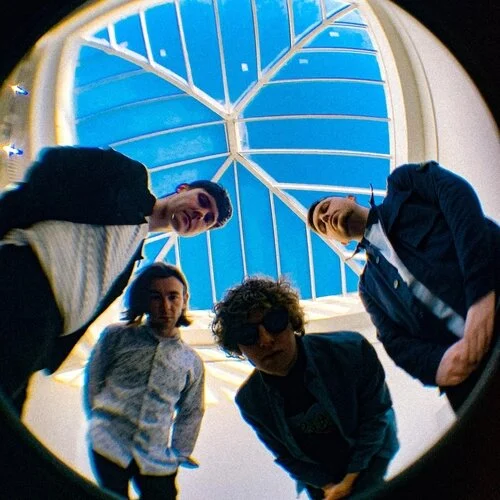
on 27th March. In six days, the new album from Du Blonde, Homecoming, arrives. Whilst I am not publishing this feature for a few more days, there are no reviews available at the time that I can bring in for the album – though I will provide a link where you can buy the album. Du Blonde is an artist that I really like and have been following for a little bit. Beth Jeans Houghton (a.k.a. Du Blonde) is a Newcastle upon Tyne-born multi-disciplinary musician, composer, artist, animator and video director. I really love her work and the fact that she has her own sense of style and this multi-discipline approach. A fantastic artist, creator and visionary, I think that Du Blonde is going to be a huge star of the future. If you have not bought Homecoming then go and order a copy and experience a tremendous artist:

Du Blonde is back with new album Homecoming and with it, her own record label, clothing brand and all-round art house Daemon T.V. Written, recorded and produced by Du Blonde (aka Beth Jeans Houghton), Homecoming is a refreshing taste of pop-grunge finery, featuring guests including Shirley Manson, Ezra Furman, Andy Bell (Ride/Oasis), The Farting Suffragettes, and members of Girl Ray and Tunng among others.

The album began as a few songs hashed out on a porch in LA in early 2020, and as Houghton’s desire to create something self-made and self-released merged with the then incoming pandemic. Admirers of Du Blonde’s previous two studio albums (2015’s Welcome Back to Milk and 2019’s Lung Bread for Daddy) might be surprised to find that Homecoming takes on the form of a pop record. The garage rock, grunge and metal guitar licks that have come to define Du Blonde are still there in spades, but as a whole the direction of the album is pop through and through. Houghton’s freak flag is still flying high however, a fact that’s no more apparent than on ‘Smoking Me Out’, a bizarre mash up of 80’s shock rock, metal and 60’s pop group harmonies. This defiant and energetic attitude can be heard throughout Homecoming, whether writing about her medication (30mg of citalopram, once a day), her queerness on 'I Can’t Help You There' (“I’ve been a queen, I’ve been a king, and still I don’t fit in”), to the joyous and manic explosion of 'Pull The Plug' (“say that I’m deranged, but I’ve been feeling more myself than ever”), Houghton is nothing if not herself, full force and unapologetic in her approach to writing, playing and recording her music”.

As I cannot find many recent interviews with Du Blonde, I am going to look bac at the previous album, 2019’s Lung Bread for Daddy, and an interesting interview from that time. It is a remarkable album that I am keen to bring to focus and source a review about. Before then, DIY spotlighted Beth Jeans Houghton and we learn more about her start and progress:

First entering the public eye in the late ‘00s with folk-tinged project Beth Jeans Houghton and the Hooves of Destiny, the then-teenage singer inked a deal before releasing debut ‘Yours Truly, Cellophane Nose’ in 2012 to a slew of praise, thus declaring her a kind of Florence Welch in Wonderland figure. When she resurfaced three years later with a different name, a new meaty, riffy sound and wearing nothing but a fur coat and fluffy merkin on the cover of (truly excellent) second LP ‘Welcome Back to Milk’ then, it’s fair to say that people were slightly surprised. But, explains Beth, her output had been playing catch up for a while by that point.

“I had a lot of frustration after the first record. I loved it and I’m glad I did it and I stand by it all, but I wrote those tracks when I was 16, recorded them between 16 and 18 and then released them when I was 21. So it’s the difference between being a young teenager and a young adult,” she explains. “I’d changed so much and I felt that, even though people were reacting well to the record, it wasn’t me. That was the main thing about [starting this project], thinking, I’m gonna make what I wanna make finally. Something simpler, with more blunt lyrics, where I can call a spade a spade.”

ccc.jpg

PHOTO CREDIT: Phil Smithies for DIY 

Informed by a nomadic lifestyle spent in and out of LA, where she “never really lived anywhere for more than a couple of months,” that first Du Blonde record rings with big yet consistently surprising melodies and a feeling of exploration. “Having a different name means I can walk out on stage and whatever I do, that’s Du Blonde and then I can go home and be Beth and be my weird self,” she says of the change in thinking. Yet ‘Lung Bread for Daddy’ seems to go a fair way to bridging the gap between the two sides of the now-29-year-old. It’s a record that’s artistically full of life yet underpinned with a strain of darkness and vulnerability - much like a conversation with Beth herself.

But there’s a relatable sense of doubt and honesty beneath the seeming self-confidence (“I’m not as extroverted as I seem...” she chuckles at that assessment) that makes Du Blonde a far more empathetic author than on first merkin-clad glance. Take new track ‘Holiday Resort’, in which, over fuzzy, simply-strummed chords she sings “Spoke to my doctor, he said I’m past my peak / All my eggs are dying, in my twenties I’m antique”. “My mum owned her house when she was 21 on the wage that she made, and I think, well what the fuck am I doing?!” she says of the track. “But then you look around and everybody else is like that too.” Shortly after in the track, meanwhile, she serves up a natty one-liner about sitting in her room “pulling pubic hairs from the crotch of [her] swimming costume”. It is, we note, kind of brilliantly disgusting. “But that’s what my life is!” she laughs. “I’ve always felt like the more open I can be about gross stuff, the less I feel worried about it. In all of my relationships, I’ve had a real issue with shitting near the other person if I know that they’ll hear it or smell it, to the point where I’ll be constipated for a week. But then my last boyfriend, I accidentally farted in front of him a couple of times and he didn’t give a shit. I felt so free! I accidentally shat myself in front of him because I had sepsis and I didn’t care! If you can either find people who are OK with you being human, or you can just be like ‘I am human’ then that’s so freeing”.

Before concluding, I want to bring in a positive review for Du Blonde’s previous album. Lung Bread for Daddy is a tremendous album that everyone should listen to. Whilst I feel Homecoming is a slightly stronger record, Lung Bread for Daddy is magnificent. This is what AllMusic wrote when they sat down with the album:

Whether working as Du Blonde or under her given name, Beth Jeans Houghton pours all of herself into her music, and never more so than on Lung Bread for Daddy. On Du Blonde's second album, Houghton takes full creative control -- from songwriting to production to the self-portrait that graces the cover -- on a set of songs about losing control and getting it back. Written and recorded after she sought help for her lifelong anxiety and depression in early 2018, Lung Bread for Daddy finds her crawling back from the bottom, leaving behind old lovers, old worries, and old identities (Houghton is non-binary). Her hard-earned victories are reflected in the album's world-weary yet liberated vibe and, especially, in the roughness of her voice. She peels paint from the walls with the scream that punctuates "Coffee Machine"; rasps out confessions like "All my eggs are dying/In my twenties, I'm antique" on "Holiday Resort"; and crows about the end of a bad relationship on "Angel," where her elation is echoed by a heroic guitar solo. Moments like these wouldn't have been possible without Welcome to Back to Milk, which began the shift from the ethereal folk-psych-pop of Beth Jeans Houghton & the Hooves of Destiny to the grittier world of Du Blonde.

While "Baby Talk"'s bluesy wallop echoes the Milk highlight "Black Flag," on Daddy, Houghton discovers more organic ways of integrating the theatricality of her older work with the bluntness of her newer persona. She evokes Hole's and Liz Phair's defiance and anthemically grungy chords on "Take Out Chicken," then makes them weird on "Peach Meat," adding lurid synth strings and samples that magnify the unease when she intones, "you're very kind and you're very bad." Later, "RBY," a soundtrack-worthy power ballad from beyond the grave, exploits the syrupy melodies of early-'70s AM pop and glam rock's majestic guitars for all they're worth. Here and throughout the album, Houghton's songwriting is more vivid than ever. On her previous albums, her way with words frequently took second or third place to her powerhouse vocals and musicianship, but on Lung Bread for Daddy, it's a vital part of the album's power. Her kiss-off to an ex on "Acetone" is equally clever and cathartic ("Though you tried to make a mark/You only loved me in the dark/I'll wash it off in a bath of blood and acetone"); on "On the Radio," she finds poetry in a doomed relationship ("I don't seem to suit you/But you still want to try me on and see"). Calling this Houghton's most consistent album undersells it -- the way every part of Lung Bread for Daddy comes together to create a ragged but ultimately uplifting self-portrait of Du Blonde makes for thrilling listening”.

The incredible Du Blonde is releasing so much fantastic music right now. Go and get her Homecoming album and bond with one of the finest and most promising artists in Britain. I think that Beth Jeans Houghton is such a huge talent and we will hear so many more albums from her. As Du Blonde, we have this incredible moniker that is making…

SOME of the best music of the moment.

_____________

Follow Du Blonde

rrr.jpg

FEATURE: The Lockdown Playlist: Jeff Porcaro's Best Beats

FEATURE:


The Lockdown Playlist

d.jpg

PHOTO CREDIT: Peter Figen 

Jeff Porcaro's Best Beats

___________

NO stranger to a birthday Lockdown Playlist…

zzz.jpg

I am featuring a musician that many people might not be aware of. One of my favourite drummers, Jeff Porcaro, sadly died in 1992. As today (1st April) would have been his sixty-seventh birthday, I wanted to include some of his best performances on record. In terms of bonding with the drums, Porcaro started early:

Jeffrey Thomas “Jeff” Porcaro was the first-born to jazz drumming great Joe Porcaro, and the eldest brother to Toto’s bassist Mike Porcaro and pianist Steve Porcaro. Jeff Porcaro was born to a family with strong bounds to music and percussion. His grandfather was a snare drummer in an Italian symphonic band – a type of band that used to march in the street – and his uncle, Emil Richards, played with a local orchestra in Connecticut.

Jeff Porcaro began playing seriously with seven years of age, having Joe Porcaro as his teacher. In fact, his brothers were being taught how to play drums by Joe Porcaro at the exact same time as Jeff Porcaro. The three Porcaro boys went with Joe Porcaro to the drum shop he taught at on the weekends, to get their drum lessons. Joe Porcaro would give them drum lessons whenever he found some free time from his regular students. Joe Porcaro taught Jeff Porcaro how to play drums until he was eleven years old. Interestingly enough, Jeff Porcaro was not the best drummer among the Porcaros.

“My brother Mike was much better on the drums than I was, who switched to bass and Steve took up piano prior to our move to California.” – Interview to Modern Drummer Magazine, February 1983 Issue.

It is amazing to think of all the terrific artists Porcaro has worked with through the years. I can guarantee that, at some point, you have heard his drumming work!

Besides his work with Toto, he was also a highly sought session musician. Porcaro collaborated with many of the biggest names in music, including George Benson, Tommy Bolin, Larry Carlton, Eric Carmen, Eric Clapton, Joe Cocker, Christopher Cross, Miles Davis, Dire Straits, Donald Fagen, Stan Getz, David Gilmour, James Newton Howard, Al Jarreau, Elton John, Leo Sayer, Greg Lake, Rickie Lee Jones, Paul McCartney, Michael McDonald, Bee Gees, Sérgio Mendes, Jim Messina, Pink Floyd, Lee Ritenour, Diana Ross, Boz Scaggs, Seals and Crofts, Bruce Springsteen, Steely Dan, Barbra Streisand, Richard Marx, Don Henley, David Foster, Donna Summer, Frankie Valli and Joe Walsh. Porcaro contributed drums to four tracks on Michael Jackson's Thriller and also played on the Dangerous album hit "Heal the World". He also played on 10cc's ...Meanwhile (1992). On the 1993 10cc Alive album, recorded after his death, the band dedicated "The Night That the Stars Didn't Show" to him”.

To give a nod to the prolific and exceptional drummer, this Lockdown Playlist features some great Jeff Porcaro beats. Whilst he might not have been the most original drummer, I think that he is one of the most skilful and memorable. As it is his birthday, I wanted to bring together a selection of songs that shows the great man…

IN his element.

FEATURE: Flying By the Seat of Her Pants: Kate Bush’s Sat in Your Lap at Forty

FEATURE:


Flying By the Seat of Her Pants

xxx.jpg

IN THIS PHOTO: Kate Bush at Abbey Road Studios  

Kate Bush’s Sat in Your Lap at Forty

___________

PILFERING and pillaging the pages…

xx.jpg

of MOJO’s recent edition where Kate Bush features heavily, I was interested in their feature about Sat in Your Lap. There are a couple of other aspects I want to dive deep into when it comes to that MOJO spread but, as The Dreaming’s lead single is forty on 21st June, it is worth exploring it a bit. In the feature where Victoria Segal interviewed some of the people in Bush’s team. In the video for Sat in Your Lap, as Segal notes, she is on the shoulders of a roller-skating minotaur (as you do!). She looks shaky and precarious. Some may interpret that vision as the singer being unsure and teetering but, as was noted, Sat in Your Lap was Bush “seizing the reins of her work with new intent: a song about the search for knowledge, the battle between hubris, self-sabotage and despair”. Although The Dreaming was not released until 1982, its opening single came over a year before the album arrived. Today, this sort of things would be rare but, perhaps feeling that some would feel Bush had disappeared if she had left too big a pause between singles – her third album, Never for Ever, came out in 1980; hardly a lifetime to wait is two years! -, the single bursts with energy and new-found knowledge. The song was written after Bush watched Stevie Wonder in concert at Wembley. She had writer’s block to that point so, maybe, she wanted the song out there because it captured a moment where she was freed and alive with this fresh impetus and direction!

It might have been quite a bolt of lightning for people in 1981. Though previous singles like Babooshka had raw vocals and a strange majesty, the tribal drums and bolder nature of Sat in Your Lap was a preface to the transformation we hear on The Dreaming. Rather than there being this similarly frantic and jester-like energy in the studio, rather splendidly, each morning there was two large bars of Cadbury’s Dairy Milk and some weed ready. Not the subscribed diet for a talented singer but, in order to add some phlegm and gravel to her voice, chocolate (and milk) did help that. Bush was no stranger to weed prior to Sat in Your Lap. Smoking it recreationally, it no doubt helped calm her. Bush wanted to create a shock and shake herself at the same time. Sat in Your Lap, in a way, closed the door on her earlier sound where she was less of an integral part of the machine. She was now emerging as a producer in her own right who was taking back some form of control over her creative direction. The Dreaming was recorded at several studios around London, though Townhouse Studios was a sacred space where the likes of Peter Gabriel had recorded. His third eponymous album of 1980 was recorded there (in addition to Manor Mobile, Bath). The drums sound that can be heard on, among other songs, Phil Collins’ In the Air Tonight, was brewed in the studio’s ‘stone room’.

lll.jpeg

 IN THIS PHOTO: Kate Bush in 1982/PHOTO CREDIT: Steve Rapport Photography

Bush was definitely intrigued and felt that that sort of sound could benefit her music. Bush met engineer Hugh Padgham when she was singing backing vocals on Peter Gabriel’s Games Without Frontiers (from the aforementioned album). She wanted him to engineer The Dreaming. Padgham spent some weekends on the album but, busy with other albums, he suggested instead that Nick Launay take over. As the article explores, Launay had worked with Public Image Ltd. and, as a fan of the rhythms of Flowers of Romance, Bush needed little convincing. It is interesting to read Launay was only twenty when he started working with her (she was twenty-two). Because there was no strict budget for studio time and recording, the eager and excited young engineer and artist were sort of flying by the seat of their pants. Padgham laughed when interviewed and explained how “I’d probably be more tolerant of that now than I was then”. Maybe it was a release from the years of working with other producers and not having a tremendous amount of personal freedom when it came to decision and recording. Bush had had a busy and tiring past few years and, with a new song in her mind and a chance for her to produce alone, one can forgive her for not having a set plan and wanting to play around a bit and experiment. Despite the impression that Bush was quite laidback at the time, she wanted her musicians to be in the studio by ten in the morning on a Sunday.

As keyboardist Geoff Downes remarked: “She really wanted to be ahead of the game technologically as much as she was artistically”. He was asked to provide ‘stabbing horn part's’. Not that Bush was limited or conventional prior to 1981. The fact is that there are a lot of great and disparate sounds that go into the collage that is Sat in Your Lap. Rather than being this hippy chick that many in the media had her pegged at around the time of The Kick Inside and Lionheart (in 1978), Bush was now entering a new phase. That said, as Segal observed, lyrics such as “Give me karma, mama!” suggested Bush had not entirely abandoned her past. Engineer Nick Launay felt that going into the studio each day was like being in a fantasy land. With technology like the Fairlight CMI offering new avenues and possibilities, it must have been a dream having this sort of equipment at  the fingertips!  There are contrasts and dichotomies through Sat in Your Lap. The duality of laziness and forward motion sits with “high-end technology and post-punk wilderness”. Though there were probably designs to have The Dreaming ready for release in 1981, sessions did drag - and it was not until September 1982 that it emerged. One can also forgive that as Bush was producing alone and two years between albums is hardly that long! The results were more than worth the wait. Maybe she had set the bar high and was taking on a lot, but one only needs to listen to Sat in Your Lap – with its unconventional piano and percussion rhythms and Fairlight CMI – to realise that Bush…

HAD struck a golden vein.

FEATURE: Spotlight: Sofia Kourtesis

FEATURE:


Spotlight

aaa.jpg

PHOTO CREDIT: Christopher Bouchard 

Sofia Kourtesis

___________

I am going to give a quick background…

zzz.jpg

regarding the extraordinary Sofia Kourtesis and her music. I am going to focus more on her new E.P., Fresia Magdalena, as it is a phenomenal work – and one that, I think, warrants more investigation and critical reviews. Even though Kourtesis has been on the scene for a bit, I think her latest E.P. is a real revelation and deceleration of intent! She is definitely being championed as a huge future talent. This is what The Guardian wrote last year:

Listen to the opening number of the Peruvian-born producer Sofia Kourtesis’s first, self-titled EP, and you imagine a train made of rackety sonic junk clattering down a track. Its destination? A good time, surely: while her brand of house may be arrestingly distinct, clicking and juddering with distorted vocals and fragments of field recordings, she always keeps her eyes firmly on the dancefloor rather than the navel.

Kourtesis, who is based in Berlin, started out in a hip-hop band at 18 (“We were really bad”) before migrating to the mixing deck after meeting her now ex-partner Derwin Schlecker, AKA Gold Panda, and later becoming a booker for clubs including Berlin’s Funkhaus. Released last year by Studio Barnhus, the eclectic Stockholm-based dance label, the EP won glowing reviews (Pitchfork called it “magical”)”.

I want to travel back and head to 2015. Even then, we were getting blooms and flames from the incredible talent. When she spoke with Earmilk, we learned more about her stunning E.P., This Is It:

Sofia Kourtesis is fill of innovation and creativity with a taste for unique noises. Having risen from the dross that clutters Soundcloud, she has appeared on several serious musical radars.

The Berlin resident recently released her debut EP, This Is It, which is overtly catchy and melodic mood music. You can immediately hear the passion behind the music Sofia's making and this first EP is frighteningly good. It was obvious EARMILK needed to reach out and hear who she is and how she's capable of such impressive sounds.

EM: Definitely. What are you most excited about with your new EP, This Is It, being released?

Sofia:  I'm excited about the reaction from people. It was a very emotional process for me because every song was a personal relief to make.

EM:  Quite a few of the tracks are related to your family, correct?

Sofia:  Yeah, more than anything it's about the death of my granny. I tried to write about all my emotions that came to me when she died. Fresia is the name of my mother too.

EM:  How long did This Is It take to make in its entirety?

Sofia:  Well it took a while because I wasn't always working on it. The last half went really quickly, but the beginning was slow. I would say roughly two years.

zz.jpg

EM:  Which track did you have the most fun to make?

Sofia:  I think probably  "Abue" because it was really funny to produce. I was jamming around with Gold Panda at the time and it felt really organic. We made it in only 30 minutes.

EM:  How has growing up in a city like Berlin influenced your musical growth?

Sofia:  Berlin is very inspiring and has really organic energy. Sometimes when I don't go out at night, I'll wake up really early, take a break, and go into a club at 7am. The new material I'm making is really Berlin influenced. I needed to put my past away and move on as an artist. Now that I'm here in Berlin I'm experiencing a new change”.

I cannot include all of Sofia Kourtesis’ best songs in this feature. I would advise people to listen back to her catalogue and discover an artist who, pretty much from the off, announced herself as a seriously innovative and phenomenal artist. I think that many eyes and ears will be on her having accomplished so much in her career so far. I would urge people to follow her on social media and, if possible, go and see her perform live in the future if she is near you!

I want to bring things relatively up-to-date. The Peruvian-born artist spoke with NME about Fresia Magdalena and how she has developed and strengthened her sound through the years:

For Sofia Kourtesis, the sea is a formative place. The Peru-born, Berlin-based producer spent her teenage years surfing on her home city Lima’s gorgeous Pacific Ocean coastlines, conquering the waves and finding a place where her rebellious spirit could flourish without interference. But when her father was diagnosed with leukaemia a decade later, the pair became willing observers, not partakers; they would sit together on the beach, lost watching the tide drifting in and out, succumbing to its meditative ways. The serenity doesn’t necessarily compute with her “overworked” brain, but the hours whiled away together provided a form of mental and physical pain relief for her father during his battle.

That moment – among many – became the inspiration for her new EP, ‘Fresia Magdalena’, in particular the opening song, ‘La Perla’. As a steady beat locks onto ethereal backing vocals and a minimal melody, Sofia tells her father that she is “trying to change” and that the pair should be “trying to forget” about the illness and the world around them. For anyone who has experienced grief in the last year, it’s a soothing balm.

Showing vulnerability to her family makes for a radical move in Kourtesis’ career. She describes the previous two EPs – 2019’s self-titled effort and 2020’s ‘Sarita Colonia’ – as a playground for ideas, where club-orientated groovers jousted with samples from her favourite films. But they showed little of her emotions; the imagery of Sarita Colonia – the Peruvian patron saint of the poor – on the releases’ artwork providing the only real thread between releases.

mmm.jpg

On ‘Fresia Magdalena’, she is frank and open, namechecking family members (Fresia, her mother), sampling them (her father on ‘Nicolas’), and for the first time, singing. On ‘La Perla’, in particular, her vocals waft in and out of earshot, like a shell tumbling onto the sand and being pulled back into the water. It’s a wondrous step forward. “My last EPs were about happiness and losing it and three-day raves with my best friends, but this one had to be more about reflecting on my life – it was a big step to be without my samples or machines talking for me.”

And a live experience is where Sofia hopes to marry all of her talents; exhilarating house bangers set to stunning visuals shot on her travels. “I want a cinematic aspect. I want to transport the audience and send them messages via singing, visually or improvising and speaking directly. DJing is very superficial for me at the moment, so I want to be able to take the audience to my world through the things that I have created. I want to be more vulnerable, so this is why I wanted to open up and show them this live show.”

Though the inspiration ‘Fresia Magdalena’ was conceived in an insular moment with her late father, this EP is a welcome place to dip a toe into Sofia Kourtesis’ world. There are flashes of the many experiences she and her family have lived, fused together with a spirit that envisions a better world, without prejudice and liberation for all. The personal motto that she lives by should come as little surprise: “Life never has a happy end, but there is hope if we work as a community”.

As I said earlier, there have been positive reviews for Fresia Magdalena. Maybe it is the fact that it is an E.P. (they tend to get less attention than albums), but I feel more critical minds should get involved with Fresia Magdalena and lend their impressions. Returning to NME…this is what they remarked:

Opening track ‘La Perla’ is a moving yet uplifting memory of her late father, which sees Kourtesis staring out to sea and singing on record for the first time. Shimmering synths shine over her heartfelt Spanish lyrics while a choir of voices, percussive instrumentation and a whistled outro channel a revelatory air of long-awaited peace and serenity.

The nostalgic glimmer of ‘Nicolas’ and the entrancing near-seven-minute throb of ‘Dakotas’ both utilise natural elements brilliantly, too. ‘Nicolas’’s drum patterns chime with water trickling down a window to form the backdrop to a recorded conversation, while the camera clicks and chugging synth whirrs of ‘Dakotas’ conjure up a long train journey home. The reassuring voice sample that runs through final track ‘Juntos’ – which translates to ‘together’ in English – acts as a guiding light through dark times, ending the EP on a note of optimism.

By threading a sense of personality and place into her contemplative yet gradually anthemic creations, Kourtesis paints a vivid picture on ‘Fresia Magdalena’ of the locations and moments that she is inviting the outside world to discover and understand through her music. Much like her recent reworkings of Ela Minus’ ‘megapunk’ and Georgia’s ‘24 Hours’, Kourtesis’ latest EP more than proves that club-ready music can be beautiful, thought-provoking and banging all at the same time”.

I think Sofia Kourtesis will get even stronger and striking as an artist. She is a remarkably original composer and someone who has a very long and bright future. Go and give her a follow and keep a look out for what comes next. With Fresia Magdalena, Kourtesis has created…

A stunner of an E.P.

_____________

Follow Sofia Kourtesis

aaaaaa.jpg

FEATURE: Vinyl Corner: Sampha - Process

FEATURE:


Vinyl Corner

eee.jpg

Sampha - Process

___________

I was going to include…

z.jpg

SOPHIE’s OIL OF EVERY PEARL’S UN-INSIDES in Vinyl Corner, but it is out of stock at the moment and the only versions available are expensive – and I have promised a more affordable vinyl for this week! I am keen to include SOPHIE’s album soon because, as she passed recently, it is fitting to pay tribute. Instead, I am going to look at Sampha’s 2017 debut, Process. It won the Mercury Prize that year and, as we await a follow-up, I would encourage people to grab Process on vinyl. I will bring in a couple of reviews for the remarkable album in a bit. Rough Trade provide some background regarding Sampha:

Sampha releases his highly-anticipated debut album. Titled Process, the ten track album is released on via Young Turks, featuring the singles Timmy’s Prayer and Blood On Me. Since the release of his debut Sundanza EP in 2010 and 2013’s Dual EP, Sampha has quietly but assuredly become one of the UK’s most enigmatic and respected artists. Still just twenty seven years old, he has lent his vocal, production and songwriting talents to a range of stand out releases, from UK contemporaries such as FKA twigs, Jessie Ware and SBTRKT to world-renowned superstars like Drake, Kanye West and, most recently this year, on Frank Ocean’s Endless and Solange’s A Seat At The Table albums. Now it’s time for Sampha to tell his own story and Process, produced by Sampha himself and Rodaidh McDonald, is set to be his defining musical statement”.

I think that Sampha’s next album will have some elements of Process, but he will move in new directions. I look at artists like him as being really bright lights of the future. The thirty-two-year-old Londoner Sampha Lahai Sisay has such a remarkable voice and songwriting vision! I am wondering how his upcoming music will sound and whether, like fellow Mercury-winning artists such as Michael Kiwanuka, he will take a big leap forward. In 2017, Sampha spoke with FACT about the process behind Process:

He describes a “weird sort of outer-body experience” in learning to detach himself from self-doubt when making Process and thinking about its merit. “I would listen to other music and think, ‘what if my album is shit?'” he’s able to laugh now. “Anxiety has definitely been something I’ve struggled with, a presence in my life that has over time been responsible for me not doing certain things, or being overly cautious when doing them. Not going to the doctors or dentist ‘cos you’re more scared of what they could say than the reality. I get anxious a lot. But music in itself, and playing good shows, they help.”

After a busy summer that’s included massive shows at Coachella and Glastonbury, the singer is now looking ahead to the future, and what lies beyond a debut album that’s currently joint favorite at 6/1 to win this year’s Mercury Music Prize award for the best British album of the last 12 months, up there with Stormzy’s Gang Signs and Prayer.

“There’s a lot of things that came up while making this debut record where I thought ‘wouldn’t it be interesting to do this, to do that.’ Now I guess I can try to bring those things to life, compositionally and in terms of song structure and storytelling, trying to get a bit deeper,” he says. For fans who grew to love Sampha when he first emerged five years ago, it was a long journey to Process. Will his next release have an equally long gestation period? “You know, I really just want to connect to what I’m making, which sort of dictates it a little bit. But I definitely want to put out more music. I’m not sure how long it will be till my next album, but I don’t want to wait to release more music. I want to be a bit more free.”

Spoken like a man with a weight off his shoulders”.

There is something satisfyingly tight and focused about Process. At ten tracks and forty minutes, it is an album that never outstays its welcome and leaves you very satisfied. I think Process is balanced so you get strong songs in both halves - Blood on Me and (No One Knows Me) Like the Piano are in the first half; Under and Incomplete Kisses are in the second half. The fact Sampha wrote all the songs himself (Kanye West is credited on Timmy’s Prayers) and co-produced with Rodaidh McDonald means there is this truth and sense of self that could have been distilled by other writers and producers.

The reviews for Process have been hugely positive. I want to bring in AllMusic’s review of, in my mind, one of the finest albums of 2017:

The categorically elusive Sampha arrived in 2010 with a co-headlined SBTRKT collaboration and a solo EP, then became known more for supporting roles as a songwriter, producer, vocalist, and keyboardist. After he recorded with fellow Brits Lil Silva and Jessie Ware, his commercial presence was magnified by Drake, whose Nothing Was the Same featured him on a couple tracks. Within a few years, Sampha had collected credits on works by a slew of mainstream artists, including Beyoncé, Kanye West, Frank Ocean, and Solange, as he assisted comparatively marginal but significant figures like FKA Twigs and Bullion. He also inched toward the completion of Process, an artful and accessible debut full-length. Admirably, the album is without opportunistic reciprocal collaborations, unless one inconspicuous Kanye West co-composition counts. It's largely a solitary and intensely personal effort, co-produced by Rodaidh McDonald, ranging from placid piano ballads to urgent electro-soul. All the narratives, expressed in anguished, repentant, and haunted terms, befit a voice that always sounds as if it's on the brink of choking back tears. Sampha's vocals can be an acquired taste, but they're instantly identifiable and heartfelt. They're all the more compelling when detailing interpersonal ruptures, drawing imagery like "I took the shape of a letter, slipped myself underneath your door," or in a state of agitation, "gasping for air."

The album reaches its most stirring point in "Kora Sings," built on an alternately serene and jittery production, over which Sampha sings to his dying mother, trailing off after "You don't know how strong you are."

None of it is particularly light. Sampha's exquisite melodies and detailed productions nonetheless make all the references to longing, disturbed sleep, injurious heat, and shattered glass go down easy. "Reverse Faults," sparkling low-profile trap with a dizzying combination of smeared glints and jutting background vocals, might be the best display of Sampha's skill set. Another marvel is the hurtling, breakbeat-propelled "Blood on Me," its last 40 seconds juiced with some of the nastiest synthesized bass since Alexander O'Neal's "Fake." In a way, this all makes the previous output seem merely preliminary”.

If you have not experienced Sampha then make sure you go and buy Process. If not, then stream the album, as it is a remarkable work! I have been dipping in and out of the album since it came out in 2017. Not that there is expectation and too much pressure on Sampha to follow such a sensational debut, but there are going to be many eyes his way in the coming months.

I want to finish off by sourcing from a review from Pitchfork. They understood the depth and personal importance of Process:  

In a way, Process feels like a concept album on which Sampha rediscovers himself. The musician’s mother was diagnosed with cancer the same year Sundaza came out, and as her primary caregiver, he naturally focused his attention on her well-being. Now, he’s attempting to reconnect with his core while coping with despair. In the past, he’d mix his voice to fit within the instrumental; on Process, he makes it the focal point. Co-produced with Rodaidh McDonald, *Process *brings to mind James Blake while nodding to mainstream hip-hop. On “Under,” in particular, Sampha utilizes a sleek trap beat.

Even the album’s most upbeat tracks are shaded with tension. “You’ve been with me since the cradle,” Sampha recalls on “Kora Sings,” presumably referring to his mom. “You’ve been with me, you’re my angel, please don’t you disappear.” With “Blood on Me,” the album’s second single, the vocalist sings through heavy breaths, seemingly haunted by his own insecurities. It addresses the fear of moving forward after personal trauma, and for a quiet soul like Sampha, it also speaks to the panic of navigating the world by himself. “I’m on this road now,” he exclaims. “I’m so alone now/Swerving out of control now”.

I am going to end there. I am also going to go and listen to Process again. It is an album that left a mark on me when it was released. Four years since it came along, Process continues to amaze and move me. I don’t think there are any firm plans or dates when it comes to Sampha’s second album. Until then, sit back and enjoy…

HIS incredible debut.

FEATURE: Last Night I Dreamt That Somebody Loved Me: After Shoplifters of the World, Will There Be a Film That Properly Explores The Smiths’ Legacy and Importance?

FEATURE:


Last Night I Dreamt That Somebody Loved Me

aaa.jpg

After Shoplifters of the World, Will There Be a Film That Properly Explores The Smiths’ Legacy and Importance?

 __________________

A week ago……

mmm.jpg

 IN THIS PHOTO: Ellar Coltrane as Dean in Shoplifters of the World/PHOTO CREDIT: RLJE Films

there was a lot of negative chatter online regarding the trailer for a new film, Shoplifters of the World. It is not a biopic of The Smiths, yet it is loaded with their music and seems to be a sort of (if strange) coming-of-age story. Maybe that is the wrong tag, yet we get a soundtrack of songs by The Smiths without there being this engrossing story. The A.V. Club provided their impressions:

Shoplifters Of The World seems intended as a love letter to The Smiths, but in trying to convey the British band’s importance, it comes across more like fan fiction—too reference-heavy for a general audience, too shallow for those already in the know. The catalyzing event for a tight-knit group of recent high school graduates is the Smiths’ 1987 breakup, which sends poor Cleo (Helena Howard of Madeline’s Madeline) into a performative funk. Not only is her friend group heading in different life directions, but her guiding musical light has been dimmed. She turns to shy record store clerk Dean (Boyhood star Ellar Coltrane), who’s nursing a crush on Cleo and allows her to shoplift all the cassettes she can pocket. (Strangely, it’s a lot of Smiths’ tapes, which presumably she’d already own.)

In a grand romantic gesture undercut with the threat of violence—those always work out well—Dean takes over a heavy metal radio station, holding DJ Full Metal Mickey (Magic Mike’s Joe Manganiello) at gunpoint and insisting that he play nothing but The Smiths all night long. This part of the story—very loosely based on an actual event—is supposed to provide the movie’s hook, but the resulting conflict is basically non-existent. There’s never the sense that this sweet, mopey kid presents any real danger, so the relationship heads where good stories go to die: sweet understanding and unearned growth. Dean and the DJ talk like old chums about divorce, vegetarianism, and music. Metal Mickey rapidly learns to appreciate The Smiths, even though he’s a diehard Metallica fan, and Dean learns that there might be some common ground between the music he worships and the music he despises. (Spoiler: It’s the New York Dolls.)

Meanwhile, the bulk of Shoplifters concerns itself with four other characters navigating that same night, and each is absolutely malnourished by the script. Patrick (James Bloor) won’t have sex with his jonesing-for-it girlfriend, Sheila (Elena Kampouris), claiming to be celibate like Smiths’ singer Morrissey, when in actuality he’s wrestling with his sexuality. Meanwhile, oddball Billy (Nick Krause) also holds a flame for Cleo, but finds sexual satisfaction in pink balloons. (He’s also about to join the military, and his very hetero dad couldn’t be more proud.) Each has a surface-level story, but none has much of a personality beyond “Smiths fan.” In order to explain that fandom, the movie turns to archival interviews with Morrissey and guitarist Johnny Marr, sprinkling them liberally throughout as a complement to the Smiths-heavy soundtrack.

To further reinforce the band’s importance, Shoplifters Of The World crams Smiths’ lyrics into its characters’ mouths in nearly every scene, a choice that moves from distraction to annoyance pretty quickly—especially when the song quotes don’t exactly address the plot. When Cleo breaks down about her life in front of Billy and reveals that they tried to be a couple once but it didn’t work out, he says, “I would leap in front of a flying bullet for you.” The line makes great sense in the context of a great song—”What Difference Does It Make?”—but very little as a line of dialogue here. Smiths devotees might get a kick out of these quotes for a while. Everyone else will be left scratching their heads. The gimmick is so pervasive that it’d almost be a relief if one of the characters turned to camera and said, “Those are Smiths lyrics!” Perhaps it could even inspire a drinking game, though if you consumed a shot every time it happened, you’d be on the floor before the movie ended.

For years, Smiths fans retold the story that inspired Shoplifters Of The World as fact, but what actually happened is far more in keeping with the band’s outsider legacy than a bunch of attractive teens quoting lyrics and wrestling with post-adolescence. Denver alt-weekly Westword set the record straight a few years back, revealing that in reality, a depressed teen named James Kiss parked outside a radio station with a rifle, planning to force the staff to play his Smiths tapes over the air. But after seeing a station employee in the parking lot, he decided not to go through with it, later saying, “I didn’t want to hurt anybody, let alone scare anybody.” Those deeply invested in the music of The Smiths—which is still relevant and powerful nearly 40 years later, a fact undamaged by this movie—will recognize that story as more true to the band’s nuanced legacy: teenaged, clumsy, and shy, but also complicated and believable. Nothing in Shoplifters Of The World comes close to those latter qualities”.

Maybe it is best to avoid the film, but there are so many fans of The Smiths around the world that would love to see something in the way of a biopic. When it comes to portraying The Smiths on film, the only other example I can recalls is 2017’s England Is Mine. That was a British biographical drama film, based on the early years of singer Morrissey, before he formed The Smiths in 1982 with Johnny Marr. That got some mixed reviews (here is what The Guardian said), so I wonder whether there will be another attempt.

As the band formed in Manchester in 1982, it would seem like a perfect time to launch a film – bring it out next year to mark forty years of the iconic band. Their magnificent third studio album, The Queen Is Dead, turns thirty-five in June, so there will be new interest then. Although the band went their separate ways and there is very little chance of reformation, one cannot underplay the importance of The Smiths and the impact they made on so many people’s lives. There have been a lot of music biopics released through the years. The trend is showing no signs of decline. Maybe a biopic about The Smiths might not be in the pipeline, though I feel a film that has this coming-of-age vibe where we get a soundtrack of The Smiths’ music would be popular. Having a story that integrates the songs more naturally and impactfully and crafting a storyline that is compelling and a must-watch would be a step up from Shoplifters of the World. I feel the band deserve a lot of small and big screen love, so I do hope that there are plans for something else. Perhaps a film that picks up from England Is Mine and we get to see the band record their first few albums and the sort of impact they had on people at the time. I think that naming it Last Night I Dreamt That Somebody Loves Me would be fitting, as it is a favourite of both Johnny Marr and Morrissey - and, as it is on their final album, Strangeways, Here We Come (1987), there is a bittersweet tinge. I, like many fans of The Smiths, hope that we will see a worthy and satisfying Smiths-related film next year to mark forty years since…

THE hugely influential Manchester band formed.

FEATURE: Spotlight: The Snuts

FEATURE:


Spotlight

xxx.jpg

The Snuts

___________

I have not included many…

c.jpg

Scottish bands in my Spotlight feature. Today, I wanted to throw some love at West Lothian’s The Snuts. They are a band I have been listening to, though there is a timelessness to featuring them now. Not only is there talk as to whether Rock is dead and whether there are young bands that can excite; The Snuts are definitely proving that there is ammunition and diversity in the Rock scene. To be fair, The Snuts mix in Indie and other sounds so one gets this incredible brew. A more important reason for including them now is that their debut album, W.L., is out on 2nd April. It was meant to come out two weeks before but, due to potential freight delays caused by the pandemic and Brexit, this is the new date. You can pre-order the album. This is what Rough Trade wrote about the album:

The Snuts release their raucous, hook laden debut album, W.L. on Parlophone Records.

Hailing from Whitburn, West Lothian, The Snuts have well and truly found their stride on W.L.. Produced by Tony Hoffer (Beck, Phoenix, M83) and recorded at the Firepit London, the album encapsulates the band’s journey from four working class kids growing up with a dream in Whitburn, to becoming one of the UK’s most exciting and vital bands of the new decade. The album opens with the poignant ‘Top Deck’, winding through a voyage of genres including the raw, rousing, hip-hop driven ‘Elephants, heart-wrenchingly honest ‘Boardwalk’, the undeniable pop banger ‘Somebody Loves You’, the hauntingly heartfelt anthem ‘Always’ and the main stage festival ready hymn, ‘All Your Friends’.

Adored up and down the country for their uninhibited, sweat-drenched live shows, the band have also announced a UK tour for May/June 2021 – totalling over 25,000 tickets, including a dream show at Glasgow’s Barrowlands on 11th June”.

You can get the album in a range of different bundles. I like how much choice the band are giving buyers. I think that, when venues open and festivals kick back off, The Snuts are going to be among the chasing back when it comes to the most exciting British bands. I am going to bring in a few interviews before I wrap things up. The Mic spoke with The Snuts’ lead, Jack Cochrane, last September and they discussed the complexity of performing live during a pandemic and keeping momentum going:

When asked about the logistics of performing in the pandemic era however, Cochrane admitted that it had been more difficult to stoke an atmosphere. “Connection with the crowd is such a big factor,” he starts, “but it’s actually 50/50 between connection with the crowd and connection with the rest of the band.” After months of quarantine, he professes how joyous it was to feel that on-stage bond with his bandmates once more, and how that carried them through perhaps their most unusual gig to date.

Cochrane has long been praised for the infectious energy he brings to live shows, but the frontman speaks candidly about being “a lot more reserved off-stage” and “turning on-and-off his on-stage persona.” In fact, the Scot never intended to be a frontman, being perfectly happy playing the guitar, but having tried numerous singers whom he dubbed “pretty awful,” he realised that keeping his 14-year-old dreams of being in a band alive meant being the lead singer. “I started off awful but the important thing to realise is that not all people just open their mouth and god-like stuff comes out,” he laughed.

“We realised the hard way that as soon as you put boundaries and rules on your music then you’re only going to end up with what you started with.”

With a turbulent few months on the horizon, such optimism will likely be needed to maintain The Snuts momentum and keep the band inspired. “We’re always trying to do something different from our last release”, Cochrane divulges, “I don’t know whether that hinders us or not but it’s something we enjoy.” “We like to try and break that stigma around indie music that it’s all washed-up and regurgitated,” he continues shrewdly, “we’re so conscious of making sure that we’re always developing, challenging each other and challenging our sound to see what we can get away with.”

When asked how he sees the band’s sound developing in the future, Cochrane admits “nothing would surprise me.” “We realised the hard way that as soon as you put boundaries and rules on your music then you’re only going to end up with what you started with.” Collaborations are one avenue the frontman seems open to exploring, sharing that he has been recently listening to a host of female singer-songwriters who he “is certainly inspired by.” “There’s so many I’d love to do a song with,” he remarks jovially, “although collaborations have never been something we’ve really looked into in a lot of depth”.

Last year, Far Out Magazine talked with Cochrane about the band’s Mixtape EP and looking ahead to the release of their much-anticipated debut record:

At the start of 2020, I caught up with The Snuts before they shared Mixtape EP, a release that should have acted as the final teaser before unleashing their debut album. However, like all those working within a creative industry, the global pandemic would put their plans on ice. Almost twelve months later and news of the album has finally arrived, a project entitled W.L. that will be made available on March 19th, and The Snuts are determined to make up for the lost time in 2021.

The record is an encapsulation of the formative years of the band. It begins with the impressive stripped back ‘Top Deck’, a track that was penned by frontman Jack Cochrane when he was just 15-years-old then, without warning, W.L. erupts into the group’s emphatic single ‘Always’. The album showcases a myriad of styles throughout the record which not only makes for a captivating listen but, also documents the growth of a band that is refusing to link themselves with one sound intrinsically.

The Snuts have been sitting patiently on this record throughout 2020, releasing more snippets from the album then they would have liked for fans to chew on. Releasing the record is something that they have been edging towards for years, and now that moment is finally here.

ccc.jpg

To celebrate the release of the album, the band will be finally returning to the road and travelling across Britain before returning home to Glasgow for a raucous sold-out three-night residency at the world-famous Barrowlands. Just a matter of hours after the hometown dates sold-out, frontman Jack Cochrane logged into my Zoom meeting, and he was understandably situated on cloud nine.

“It’s been a big goal for us since day one. It’s always felt like a venue that would be a milestone for us as a band so selling three out in one day? It could be worse,” he gleefully said. This is a venue that played a pivotal role in his musical upbringing, although Cochrane semi-jokingly admits, “I’ve probably been thrown out of more gigs there than I haven’t been. I’ve seen The Libertines, Babyshambles and Pete Doherty probably the most there and all these classic childhood indie heroes. There’s just something so iconic about The Barrowlands.”

Managing to maintain that youthful spirit whilst not being those same exuberant kids who recorded ‘Glasgow’ all those years ago is a task that The Snuts rise to on W.L. and is a poetic way of drawing a line in the sand under those early days of the band back before it was a job.

The title of the record is another nod to their youths, but not to West Lothian, as Cochrane joyfully corrects me. “Naw man, that’s a common misconception, but it’s actually after ‘Whitburn Loopy’. We’re from a town called Whitburn, and every town in Scotland has what we call young teams, but it’s basically gangs. It’s a nod to how we started out on the streets and in the forest, playing the guitar, drinking cider and stuff like that. I feel like because the record is such a progression, it’s nice to name it something that meant a lot to us back then.”

While the Whitburn Loopy days are held in the fondest of memories by the band, their rise has taken them from youth team members to a group with a platform that they are using for good by trying to help the music industry get back on its feet. They have been ardent supporters of the #LetMusicPlay campaign, an organisation which is trying to help the crew members who work behind the scenes in live music and don’t get the plaudits from fans but without them, everything would fall to pieces”.

I think that the buzz and hope surrounding The Snuts is justified. There are a lot of bands that get hyped - and you feel that they will not be able to live up to the expectation. When it comes to the Scottish band, they are definitely ready to deliver. The final interview I want to grab from is an NME piece from April of last year (I am writing this on 24th March, so I am aware there may be new interviews online between this time and when the feature goes live). At the start of lockdown and a troubling time, it must have been stressful for The Snuts - given how they hoped to perform live and get their music out there:

When we first wrote the song it had a classic rock sound, something like The Rolling Stones’ ‘Sympathy For The Devil’ and even a bit of Primal Scream,” frontman Jack Cochrane told NME. “So we were keen to not ignore those influences, but also make sure it still sounded like us. It isn’t a carbon copy, but we wanted to get the same reaction that Primal Scream always get at those huge festivals and gigs.”

The EP, meanwhile, arrived at the beginning of the UK’s lockdown – which has forced the group to postpone their biggest show to date at London’s O2 Forum next month. However, Cochrane insists that the band will come back stronger when the crisis finally comes to an end.

“What’s been great for us is just having a release during the madness,” he told NME. “It’s been nice to take people’s eyes and ears off the news at the moment. We’ve been able to put something positive out in the world, which has been a blessing for us. We’ve kinda been able to ignore the madness.”

He added: “It’s just one of those things. There are people in a lot worse positions than us at the moment, and we know the show is just postponed.  When live music comes back, we’ll be there at the forefront to bring it back with a bang. We’ll be adding dates to sold out shows, bigger venues and try to make the best of a bad situation. We’ll be providing a positive when we get out of this tunnel”.

I am looking forward to seeing where The Snuts head next. Their debut album is out very soon so, if you check out the band and like what you hear, go and get their album. It could well be a contender for a Mercury Prize nomination! Keep an eye on their social media channels for gig news because, if they are playing live near you then go and see them. You most definitely…

DO not want to miss out.

______________

Follow The Snuts

ccc.jpg

FEATURE: Vinyl Corner: Boyz II Men - II

FEATURE:


Vinyl Corner

zzxxx.jpg

Boyz II Men - II


ALTHOUGH I have spent a bit of time…

zzz.jpg

 PHOTO CREDIT: American Newspapers/Gado/Getty Images

in the ‘90s for this feature, I am going to divert my attention away from the decade next week. This week, I wanted to recommend Boyz II Men and their third studio album (they released Christmas Interpretations in 1993, though II is the second album of original compositions after the remarkable debut, Cooleyhighharmony), II. Released in 1994, it is a terrific album from one of the greatest vocal groups in history. I guess we do not have acts like Boyz II Men around now. That said, the group is now a trio. Their thirteenth studio album, Under the Streetlight was released in 2017. Although they are not quite up to the level they were in the ‘90s, Nathan Morris, Wanya Morris and Shawn Stockman are keeping the flag flying! Before bringing in an article and review for II, I thought it would be worth dropping in some background information:

II is the third studio album and second non-Christmas album (hence the title) by American R&B quartet Boyz II Men, released on August 30, 1994 on Motown Records. It contained the No. 1 singles "I'll Make Love to You" and "On Bended Knee", the latter of which replaced the former at the top of the Billboard Hot 100, making the group the third artist to replace themselves at No. 1 in the United States after Elvis Presley and The Beatles and the first to achieve the feat in 30 years.

"I'll Make Love to You" also spent 14 weeks at the top of the Hot 100 making them the first artist to achieve consecutive double digit runs at the top, with their prior single "End of the Road" topping the charts for 13 weeks and also equaled the record set by Whitney Houston's "I Will Always Love You" for the longest run at the top, a record which they held previously with "End of the Road". Other singles released achieved major success, including "Water Runs Dry", which reached No. 2, and "Thank You", which reached No. 21. "Vibin'", however, only reached No. 52.

The spoken track "Khalil (Interlude)" is a tribute to their road manager Khalil Roundtree who was shot in Chicago, Illinois while the band was opening for MC Hammer's Too Legit to Quit tour.[1] II became the inaugural winner of the Grammy Award for Best R&B Album, first presented at the 37th Grammy Awards in 1995.

According to producer Bob Robinson of the duo Tim & Bob, he and his partner Tim Kelley were asked by Boyz II Men to produce most of II. However, Motown Records then-president Jheryl Busby did not feel comfortable with the idea of two unknown producers dominating a second album from a group that was one of the biggest acts in the world at the time. As a result, Busby brought in Jimmy Jam and Terry Lewis and Babyface to deliver hit singles for the project. Busby insisted on "I'll Make Love to You" being the first single, despite objections from the group- who felt there were songs that could have been much stronger singles. The song became one of Boyz II Men's biggest hits”.

If you can pick up II on vinyl then do, as it is not too expensive at all. I’ll Make Love to You is a classic of the period, though there are plenty of awesome songs to keep you invested from start to finish. All Around the World and On Bended Knee are among my other favourite tracks from II.

In their review of the album, this is what AllMusic noted:

With their second album, II, Boyz II Men assured their place at the top of the charts, as well as history. "I'll Make Love to You," the album's first single, stayed on the top of the charts for over two months, only to be unseated by "On Bended Knee," the album's second single. Not surprisingly, II is a carefully constructed crowd pleaser, accentuating all of the finest moments from their hit debut. While there are some high-energy dance tracks, the album's main strength is its slower numbers, where the group's vocals soar”.

On 30th August, 2019, GRAMMY celebrated twenty-five years of II and spoke with Wanya Morris and Nathan Morris about the time. I have selected some interesting segments:

As soon as an artist experiences success with their debut album, the shadow of the dreaded "sophomore slump" starts swirling on the horizon. In the 1990s, however, there were quite a few second album smashes that showed just how defiantly that curse can crumble under rarified musical talent, mastercraft songwriting and record-breaking runs at the top of the charts. Throughout the pre-millennium decade, Nirvana and A Tribe Called Quest delivered undeniable game changers with Nevermind and Low End Theory, TLC and Oasis more than doubled the achievements of their multi-platinum debuts with CrazySexyCool and (What’s the Story) Morning Glory?, and Boyz II Men achieved inescapable pop culture ubiquity with their 12x platinum-selling, multiple record-breaking, triple GRAMMY Award-winning album, II, which celebrates its 25th anniversary milestone this month.

Spearheaded by the strength of a pair of Billboard number one singles ("I'll Make Love To You" and "On Bended Knee") and a Billboard number two chaser ("Water Runs Dry"), II debuted at number one on the Billboard 200 album chart, maintained a solid five-week run at the top spot and ended up staying on the charts for just shy of two full years. A couple months before the release of II, the Philly foursome offered up the Babyface-penned "I'll Make Love to You" as the album's lead single and the steamy ballad had radio and MTV on absolute lockdown during the late summer of 1994. "I'll Make Love to You" ended up eventually tying the record for the most weeks at number one by matching Whitney Houston's 14-week stretch of "I Will Always Love You" from The Bodyguard.

The group’s unparalleled vocal harmonies and the impossible-not-to-sing-along-with chorus of "I'll Make Love To You" might’ve been enough to surpass Houston's record if only they hadn’t been knocked out of the top spot by… the album's second single, "On Bended Knee." By December, the summer sizzler handed the crown over to the winter weeper as Boyz II Men became only the third musical act of all-time to replace themselves at number one on the Billboard Hot 100 (only Elvis Presley and The Beatles had achieved it before them). To look back on these astounding achievements and to commemorate 25 years of II, The Recording Academy spoke with Boyz II Men's Wanya Morris and Nathan Morris about what all went into making their second album such an immediate and long-lasting success.

Wanya Morris: After the success of our first album, it felt like a lot of people were starting to realize that Boyz II Men was a force to be reckoned with. Our voices and our harmonies were evolving and becoming more mature. That allowed us to try new things and people were really receptive to our creativity. It seemed like we couldn’t go anywhere without being recognized. I remember walking down the street near Yodoyabashi Station in Osaka and people would run up to us and yell out our names. It felt so huge because in our minds, we were just four dudes from Philly.

Nathan Morris: For me, it was all a whirlwind because singing wasn’t really my first choice for a career. I grew up wanting to play professional football, but my mom pushed me into going to a performing arts school. That’s actually the whole reason why there’s even a Boyz II Men at all. I got bored at school, so I just started a singing group in my spare time. Everything that was happening for us as Boyz II Men wasn’t really anything that I had ever dreamed of or expected. So, I was just taking everything in as it came, enjoying it, and trying to soak it all up.

Following the massive success of their debut album, Cooleyhighharmony, and its pair of Top 5 singles ("Motownphilly" and their cover of G. C. Cameron's "It’s So Hard to Say Goodbye to Yesterday"), Boyz II Men's doo-wop-meets-New Jack Swing-meets-hip-hop musical hybrid and their relentless work ethic were all on full display during a frenzied pop culture blitz that included opening for M.C. Hammer's 2 Legit 2 Quit tour, filming an episode of MTV Unplugged with Joe Public and Shanice, earning a Top 5 standalone single with their cover of "In the Still of the Night (I Remember)," appearing in the holiday episode "Twas the Night Before Christening" on The Fresh Prince of Bel-Air, and recording the double-platinum holiday album Christmas Interpretations (featuring the seasonal radio hit "Let It Snow" with Brian McKnight). During this crucial between-albums timeframe, they also scored their first number one hit on the Billboard Hot 100 with "End Of The Road" from the Boomerang soundtrack. At the time, "End of the Road" broke the record for longevity at the top of the charts with its impressive 13-week run. It would be the first of three times that Boyz II Men were a part of achieving this notable accolade.

ddd.jpg

IN THIS PHOTO: Nathan Morris 

Nathan Morris: Going into the second album, our confidence level was pretty high. Motown didn't really know what to do with us when they signed us, so we got to write almost the whole first album by ourselves. Since that album went nine times platinum, that gave us a lot of confidence as writers and producers going into the second album.

Wanya Morris: Honestly, it was a pretty hectic time. Things had gotten so big with the first album and then "End Of The Road" came out and blew up. We were really feeling the pressure, but the process had to start somewhere. So, we just did what we always do, which is get in the studio and start writing songs and recording demos.

Nathan Morris: Dallas Austin had produced most of our first album, but he wasn’t available for the second album. So, he recommended we try working with Tim & Bob, who were kind of his B-team. We got in the studio with them and started working on a bunch of the songs that we felt good about. We clicked really well, so Tim & Bob ended up producing most of the songs on the second album.

Wanya Morris: We actually fought really hard against having "I'll Make Love to You" be the lead single. We had just come off of "End Of The Road" and we didn’t want to come back with a song that had the same sound. Our label was adamant about it though. They did all this market research and we were just researching our hearts, so we were told to deal with it. Clearly, they were right on that one!

After the release of II, Boyz II Men became certified global superstars. The album achieved multi-platinum sales in Canada and Australia, and it hit the top of the album charts in France and New Zealand. In fact, international demand was so high for the blockbuster album that the gifted vocalists upped their game by rerecording the album’s three big hits and their acapella cover of The Beatles' "Yesterday" in Spanish for a special version of the album called II: Yo Te Voy a Amar. As had become their signature move, the guys had no problem rising to the challenge and possibly even outdoing themselves in the process”.

I think that Boyz II Men are one of those groups that don’t get mentioned and played as much as they should. I think their catalogue is brilliant, and II is an album that showcases their amazing chemistry and vocal blends! Go and get a phenomenal album on vinyl and experience the smooth, sexy vibes only they can deliver! I remember II coming out in 1994 and there being a lot of heat around Boyz II Men. It is true that one cannot really compare them with anyone of today. One could forgive them for feeling expectation following the success of their debut, Cooleyhighharmony. Instead, they released II with…

NO nerves or weak moments.

FEATURE: Inspired By... Part Three: Stevie Nicks

FEATURE:


Inspired By...

aaa.jpg

PHOTO CREDIT: Peggy Sirota for Rolling Stone 

Part Three: Stevie Nicks

___________

A lot of people realise how influential…

mmm.jpg

 PHOTO CREDIT: Randee St Nicholas

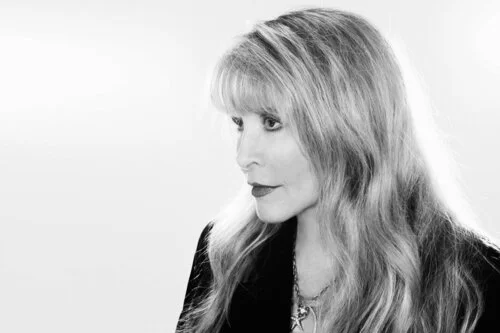
and important Fleetwood Mac are. I wonder if people think of Stevie Nicks (who is a member of the band) as influential. I think she is an enormously important and influential artist. I will try not to repeat too many artists in these playlists – though I know that many of these musicians I spotlight would have inspired the same artists. I may broaden out and include a group for the next edition. This feature focuses on a great artist and, in a playlist at the end, I include songs from artists who are definitely influenced by them in some way – so far, I have included Prince and Grace Jones. Here is some information about the amazing Stevie Nicks:

Stevie Nicks was born in Phoenix, Arizona. From an early age, she showed a love and aptitude for music, singing country and western duets with her grandfather when she was 4 years old. After moving to San Francisco, she began songwriting and performing at Menlo-Atherton High School, where she met her future long-time companion, Lindsey Buckingham. After smaller projects failed, she and Lindsey signed with Polydor Records, and produced their collaboration, "Buckingham-Nicks". The album flopped, and the two (who were now lovers) were dropped from the label, but not before attracting the attention of Mick Fleetwood, who invited them to join Fleetwood Mac. Two years later, in 1975, Fleetwood Mac's self-titled album topped the charts, headlined by Stevie's "Rhiannon". Success for the band, and for Stevie, was immediate. The legendary "Rumours" album followed in 1977, at the same time Stevie's relationship with Lindsey came to an end. Stevie's solo career began in 1981 and met with instant success. The stress of maintaining a solo career and remaining with Fleetwood Mac became too much for her, and she became addicted to cocaine, and then to prescription medication. After undergoing treatment for her addictions, Stevie vowed she would never perform publicly again, but was lured out of retirement for Fleetwood Mac's 1997 reunion and continues to perform, write and record”.

Nicks’ last studio album, 24 Karat Gold: Songs from the Vault, came out in 2014. I hope that we get more music from her in the future. I am not sure whether Fleetwood Mac are recording or touring in the future. Let’s hope that we see a lot more from them! To highlight a legendary artist, this Inspired By… collects artists who count…

THE remarkable Stevie Nicks as an influence.

FEATURE: Second Spin: Sevdaliza – Shabrang

FEATURE:


Second Spin

qqq.jpg

Sevdaliza – Shabrang

___________

THIS is one of these albums…

zzzz.jpg

that was very well reviewed but does not get played much now. I tend to mix things up in Second Spin between the underrated and underplayed. One album that should get played more is Sevdaliza’s Shabrang. I discovered it when it came out last year. It is a relatively new album that got some great press but didn’t really get discussed and exposed like the mainstream albums or Pop acts. Maybe the more experimental and deep nature of the album means it is not as accessible and digestible as other albums. To me, Shabrang is a terrific album that has so many layers and remarkable songs. This Wikipedia article provides some more details:

Shabrang (Persian for "night color”) is the second studio album by Dutch-Iranian singer Sevdaliza. It was released on 28 August 2020, by Twisted Elegance. The singer wrote and produced the album, primarily alongside Mucky. The album encompasses art pop, trip hop and alternative R&B.

The album spawned the singles "Darkest Hour", "Oh My God", "Lamp Lady", "Joanna" and "Habibi", as well as "Human Nature", which was originally released as part of Sevdaliza's 2018 extended play The Calling, her previous release. The album cover was shot by Tré Koch”.

What I want to do is bring in a couple of very positive reviews that tell you what critics thought when the album was released. It is an album that many people should listen to. I will drop the album in at the end of this feature; I will source a few of the songs before then.

Before that, I want to bring in a review from AllMusic. Their observations and words really get to the heart of a truly remarkable and affecting album:

From the beginning, Sevdaliza's emotive singing and songwriting and cutting-edge productions were fully realized. Nevertheless, she's found room for artistic growth with every release. On her debut album, Ison, she expressed its concept of past and present incarnations with tracks that layered upon each other into a transcendent whole. With Shabrang, she expresses the themes of pain, loss, healing, and renewal in ways that are more varied, but just as striking. The album's title means "night-colored" in Persian, a motif that's echoed in Sevdaliza's bruised eye on its artwork and the way she leans into her music's ache. She uses more organic sounds and rougher textures to dig deeper and pull listeners in closer on the haunting "Joanna," where her songwriting takes on a mythical, almost folkloric quality to tell a story of all-consuming love. Similarly, on the title track she traces the almost imperceptible shifts and seismic changes of the heart with the intensity of a classic torch song, even as an ominous dubstep bass looms behind her. This embrace of long-standing song forms -- which recalls Ison's exploration of how the past shapes the future -- stretches to the prominence of Sevdaliza's Iranian roots on the album. The title Shabrang alludes to the name of a loyal steed in an 11th century epic poem from her birthplace, while her somber, string-laden reimagining of Googoosh's 1974 song "Gole Bi Goldoon" pays tribute to her heritage as well as Sevdaliza's own flair for drama.

Throughout Shabrang, she uses traditional melisma and vibrato as well as futuristic pitch-shifting skillfully to transform her voice into new shapes and emotions. On "Human Nature," she lets it melt and flow like water before lifting it into impossibly, achingly high notes; on "Oh My God," she morphs into different personae as she questions the politicization of her heritage. In its natural state, her voice is so rich that it fits perfectly into every setting she puts it in on Shabrang. Working once again with co-producer Mucky and string arranger Mihai Puscoiu, Sevdaliza uses a wider and more adventurous musical palette than ever before. On the tumbling, hypnotic "All Rivers at Once," she juxtaposes electric guitar, synth, and violin in ways that make them all sound fresh. As always, her use of textures is stunningly expressive, particularly on "Darkest Hour," which transforms from piano-driven heartbreak into dark, propulsive, dancefloor-ready grooves that distill the album's mission to turn pain into strength. At once dazzling and heartfelt, Shabrang is an epic journey, and Sevdaliza is brilliantly in control throughout it”.

There is something very weighty and substantial when one listens to Shabrang. Rather than it being a collection of songs that just drift by and have occasional flashes of brilliance, Shabrang is a properly immersive and consistently amazing album. Everything Is Noise wrote passionately about Sevdaliza’s second studio album:

The album is paced perfectly, its first third featuring early album highlights such as “All Rivers At Once” which, with its unsettled americana touch, is perhaps the record’s boldest and most enjoyable experiment. Further along, you have lead single “Habibi” which is what you’d get if The Fragile-era Nine Inch Nails was re-imagined as piano balladry performed by 070 Shake. Elsewhere, we’re treated to the spectacular cover of a classic Persian pop song “Gole Bi Goldoon” – whose grand re-imagining here makes it one of the greatest covers I’ve ever heard.

Concluding the album strongly are “Rhode” and “Comet”.  “Rhode” plays out as the album’s final catharsis, the darkest track here, and the one that most resembles the Sevdaliza of old, barring the incredible solo that ends the track with a sense of spiraling finality. Afterwards, we’re treated to album closer “Comet”, a subtle reference to Sevdaliza’s first record ISON, and the logical denouement to Shabrang, utilizing immersive orchestral elements to signal that we’ve reached the end of an era.

The only creative decision that truly puzzled me was the album’s inclusion of “Human Nature”; a track previously released on The Calling. It feels somewhat out of place here, despite its subtle orchestral makeover. Taking a step back, I can also see how other long-time fans might find the album’s sharp turn into new stylistic territory not to their liking. I can only hope they give the album its chance to grow on them. With subsequent listens, my initial appreciation developed into adoration – and I’m confident others will have a similar experience.

Shabrang is album of the year material, and Sevdaliza’s greatest artistic achievement yet. She skillfully honed her craftsmanship to shed any traces of imitation that might have appeared in earlier material, while evolving her sound in a way that doesn’t entirely turn its back on the past. It is an evolution that will keep most of her fans on board, and certainly draw in many, many more. If there was any doubt before, Shabrang should dispel it: there isn’t an artistic powerhouse out there quite like Sevdaliza”.

I shall wrap it up there. I think that Shabrang is one of those albums that affected everyone who reviewed it but, to me, there was not as much coverage as there should have been. Go and listen to the album and experience something majestic. Even though it has not been in the world for that long, I think that Shabrang warrants new investigation and inspection. It is an album that provides…

A life-affirming listening experience.

FEATURE: On Folk, Fame and Femininity… A Look Inside a ‘Lost’ Kate Bush Interview from 1989

FEATURE:


On Folk, Fame and Femininity…

pp.jpg

IN THIS PHOTO: Kate Bush in 1989/PHOTO CREDIT: Guido Harari

A Look Inside a ‘Lost’ Kate Bush Interview from 1989

___________

NOW that I have read and digested…

xxx.jpg

a recent edition of MOJO that dedicated a lot of space to Kate Bush, there are some interesting discussion points. The first I want to bring up is an interview from 1989 that was supposedly lost in the midst of time. It was never published in English and, in the conversation with Martin Aston, there were some intriguing points of discussion. As the U.K, correspondent of a Dutch magazine, OOR, it seems like there was a round of interviews where people got to talk with Bush about her ‘return’. She released Hounds of Love in 1985 and, four years later, she was back with an album. That period of time between albums is not remarkable today, though for a big artists in the 1980s, I guess the press wrote off those that did not come back with another album very soon after the last. Ashton noted how Bush was almost enveloped by an armchair where they were sitting at Chilston Park (a stately home in Kent)! Shy and charismatic, the paradox was something that caught his imagination. It was noted that, maybe, because she had been in the studio so long, the reluctance to do many interviews was because she had been by herself/very people for a long time. Bush noted how The Sensual World (the album she was promoting) was her most ‘female’. In the past, she had written more from a man’s perspective (or a child in more than one case); The Sensual World has a very female energy and, whereas past albums have seen her deliver her words with masculine energy, maybe there was something more paternal and personal here.

Martin Aston picked up on what Bush said about The Sensual World being a ‘female’ album. He asked if women can be many things: “Yes, they can, but I am a female, and so most people presume that females write from a female point of view…”. Bush said how Hounds of Love had this male energy with big drums and quite a propulsive tone. The Sensual World had “much more of a female energy to it”. When challenged to define what constitutes a female energy, Bush suggested how one did not hear many female sounds at the time. A lot of music, such as Rock, was being distilled by male producers or dissipated in some way. In ethnic music (her words), the Trio Bulgarka (a Bulgarian female vocal ensemble) were pure and intense. They were not being directed or made to sound commercial. The Sensual World definitely benefits from their experience and power! Bush, without wanting to sound sexist, felt that The Sensual World would appeal to a few more women than her past work. Even though her musicians and technical team were men, the songs and themes covered on The Sensual World, to me, are closer to her heart than ever. I definitely think that Bush was putting more of herself into the work. Bush was stunned that people were so interested in her work. “I just continue to think how extraordinary it is that people do want to hear my stuff”.

She noted how, stuck in the studio and working so hard, she is never sure what people think and whether they will like her music. The question of touring came up and, as it has been a decade since The Tour of Life, she thought it was a little ridiculous people still asked about it – it would be another twenty-five years before a big return to the stage. There is a lot to love and pour over in the interview with Martin Aston. I am not sure why it was not run and whether there was something in there that was blocked by EMI or the Dutch magazine. Having it preserved by MOJO is a real treat! One of the most revealing questions came when Aston asked whether letting go of her music and having people hear it haunts her. Given that she is so driven and spends a long time honing her songs, is there that panic when it is finally out? “I think that ‘letting go’ is a key phrase for so many things in my life”. She stated how she is a tenacious person and that she does not like to let things go. For The Sensual World, however, “I couldn’t wait for the album to be finished, and to be out”. There was palpable relief at having an album out! One of the things that crops up in Bush interviews is that she can never be happy with anything. She told Aston that she learns to be a little less disappointed each time. On The Sensual World, she had reached the logical conclusion of each song; there were a few tracks she feared that would never be completed.

Bush revealed how, when recording The Sensual World, “how obsessive I am when making a record, and how it shuts me off from so many things”. I think the album was transformational in the sense that Bush would prioritise herself more after this album. By the time The Red Shoes was released in 1993, it was clear that she needed some time out and recharge. Bush took breaks when recording the album, and she was frustrated at how long lyrics were taking – “There were times I just couldn’t go any further”. Taking time out and doing stuff like gardening, when she couldn’t write and had to take breaks, spending some time doing something more relaxing was a help. Having reached the age of thirty (in 1988), she was looking art things differently. “I had to look at a lot of things in myself, and I think, “Is making an album that important to me?”. Bush revealed how it was important how she had friends and could divert from music and not solely be obsessed with recording and making an album. Asked whether there was a burden on her with the expectation surrounding a new album, Bush said how it was unfair that people assumed that an album would fare well and be a success. “Obviously, I would love them (the public) to like it, but again, it’s down to ‘Why do you make an album?”.

jj.jpg

IN THIS PHOTO: Kate Bush in a promotional image for The Sensual World single/PHOTO CREDIT: John Carder Bush 

Bush discussed that she wrote songs because she had something specific to say and, if people don’t like them, then she has done her best and that is that. Perhaps the most surprising quote came at the end. After being away for so long, Bush found it surreal regarding the fascination. “Why are people so interested in me when I just make an album every now and then?”. Perhaps it is modesty on her behalf, though it was clear that Bush had achieved so much by 1989 and had a massive fanbase! Even though she was not releasing albums that regularly, the same sort of interest and expectation that met The Sensual World then exists in 2021. It has been nearly a decade since her last album, 50 Words for Snow, and it is clear that family and personal space has become more of a priority over thirty years later. In the Martin Aston interview, she was asked whether the track, This Woman’s Work, made her think of becoming a mother (Bush was quick to point out that this was quite a personal question!). Bush is a mother now and things have changed a lot in her life. What has remained is the popularity she has and, whilst she might not be as obsessive now towards making albums than she was in the past, there is still the media attention and the sort of expectation of new material. I am glad the 1989 interview has surfaced, and we do learn new things about Kate Bush. Reading Bush talk about The Sensual World and the songs makes you realise that it was…

A very important album and time for her.

FEATURE: Too Good to Be Forgotten: Songs That Are Much More Than a Guilty Pleasure: Duran Duran – Rio

FEATURE:


Too Good to Be Forgotten: Songs That Are Much More Than a Guilty Pleasure

xxx.jpg

 Duran Duran – Rio

___________

SOME may argue vociferously…

aaaa.jpg

against me including Duran Duran’s Rio in this feature. I love the album (of the same name) and feel it is one of the best of the 1980s. I think that the band get this tag because they think of a lot of the music from the early-1980s as being a bit fake, cheesy and naff. Duran Duran released one of my favourite songs with Ordinary World (from their 1993 eponymous release (though many know it as The Wedding Album). I have seen Rio and Girls on Film appear in a couple of guilty pleasure songs lists – and, as I keep saying, I do not buy into the notion that a song is a guilty pleasure. I will bring in a review of the Rio album – as I think it is one everyone should listen to -, but I am charged with showing how good Rio is. I am not a huge fan of the song’s video; that is a minor flaw. Rio is one of the best tracks of the 1980s and, when you hear the song start, you are instantly captured and uplifted! Before I go on, I want to bring in some background information regarding the song:

The keyboard pattern for "Rio", well-known among Duran Duran fans and synthesizer enthusiasts, was produced by an arpeggiator—a tool which can play the individual notes in a chord in a chosen pattern. It was once rumoured that the synthesiser used to achieve this was a Roland Jupiter-8. However, it has been said by Nick Rhodes to actually be a Roland Jupiter-4 using the random mode on the arpeggiator with a Cmaj7 chord.

Rhodes created the unusual sound at the beginning of the song by throwing several small metal rods onto the strings of a grand piano in the studio. The recorded sound was then reversed to create the intro. The laughter on the track was that of Rhodes' girlfriend at the time.

The song's verse was musically inspired by their earlier song "See Me, Repeat Me" and the chorus was taken from "Stevie's Radio Station", a song written by TV Eye which featured singer Andy Wickett who went on to be one of Duran Duran's early singers. The song was a favourite of Nick and John and was incorporated into Duran Duran live sets during Wickett's tenure.

Originating from an idea by John Taylor about Rio de Janeiro – "the truly foreign, the exotic, a cornucopia of earthly delights, a party that would never stop" – Simon Le Bon wrote the lyrics to the song, and chose not to write about the city but about a girl named Rio

The tenor saxophone solo was performed by Andy Hamilton, who has also worked with Wham! and Elton John amongst others”.

Not only is Rio one of the best singles of 1982 (the single arrived in November; the album came out in May); the album from which is came is a classic! This is what AllMusic wrote in their review of the marvellous and timeless Rio:

From its Nagel cover to the haircuts and overall design -- and first and foremost the music -- Rio is as representative of the '80s at its best as it gets. The original Duran Duran's high point, and just as likely the band's as a whole, its fusion of style and substance ensures that even two decades after its release it remains as listenable and danceable as ever. The quintet integrates its sound near-perfectly throughout, the John and Roger Taylor rhythm section providing both driving propulsion and subtle pacing.

qqqq.jpg

For the latter, consider the lush, semi-tropical sway of "Save a Prayer," or the closing paranoid creep of "The Chauffeur," a descendant of Roxy Music's equally affecting dark groover "The Bogus Man." Andy Taylor's muscular riffs provide fine rock crunch throughout, Rhodes' synth wash adds perfect sheen, and Le Bon tops it off with sometimes overly cryptic lyrics that still always sound just fine in context, courtesy of his strong delivery. Rio's two biggest smashes burst open the door in America for the New Romantic/synth rock crossover. "Hungry Like the Wolf" blended a tight, guitar-heavy groove with electronic production and a series of instant hooks, while the title track was even more anthemic, with a great sax break from guest Andy Hamilton adding to the soaring atmosphere. Lesser known cuts like "Lonely in Your Nightmare" and "Last Chance on the Stairway" still have pop thrills a-plenty, while "Hold Back the Rain" is the sleeper hit on Rio, an invigorating blast of feedback, keyboards and beat that doesn't let up. From start to finish, a great album that has outlasted its era”.

It is a shame that some bands like Duran Duran get this ‘guilty pleasure’ tag applied to them. They have recorded some songs that are not especially great – Rio is definitely not one of those. During these hard times, tracks such as Rio provide a positive boost and rush!

aaa.jpg

 IN THIS PHOTO: Duran Duran in 1982/PHOTO CREDIT: Lynn Goldsmith

I want to close with a great article that outlined why Rio is such a great song. For those who are not a big fan of it, maybe these words will sway your opinion:

What’s the most seminal, classic, 1980s pop song you can think of? What’s the song that perfectly encapsulates the musical trends and styles of the decade? This is a question that will get a multitude of answers from people, but at least a fair number of people would answer “Hungry Like the Wolf”, by Duran Duran from the band’s 1982 album Rio. More than just “Wolf,”

Rio is a quintessentially 1980s album, an album that helps to define a decade, despite it’s release early in the decade. After all, Rio was released in 1982. It shows just how on-point Duran Duran was that they could release an album that helped to serve as a cornerstone of the decade when the decade had just started.

More than anything, Rio is fun. This is to be expected–Duran Duran took the band’s name from a Barbarella character, for crying out loud, this is a band that doesn’t take itself too seriously. Songs on Rio are willing to push the envelope, delving into something that’s goofy yet spectacularly well-made. “My Own Way” ends with Simon le Bon shouting phrases over a pulsing guitar melody, in an endearing yet slightly dumb manner.

The biggest candidate for Duran Duran’s well-polished fun is “Hungry Like the Wolf”, a song that’s equally iconic and equally stupid. “Hungry Like the Wolf” is an amazing song, three minutes of pop perfection with an amazing vocal line, wonderful backing vocals, a beautiful thirty seconds in the final chorus, and the dumbest lyrics known to man. What on Earth does “I smell like I sound” even mean to begin with? The bit before the final chorus, where Simon le Bon whispers “hungry like the wolf” over the sound of heavy breathing is also hilariously silly–and that’s the point. Duran Duran knows it sounds silly, why else would they do this? This is a beautifully silly song that they play 100% straight and that makes it all the better.

Rio is an album full of amazingly well-crafted and well-produced songs that are actually quite long. A good number of the songs on the album are over four minutes, eschewing the traditional pop radio time constraints. And yet, they don’t feel like they’re over four minutes. “The Chauffeur” pushes five minutes and yet sounds shorter and longer at the same time. The song is haunting, le Bon’s vocals flitting over a minimal score, the synth dropping in like raindrops before swapping to a flowing, lilty overplay, bringing so much atmospheric power to the piece. Those moments where le Bon sings the phrase “Sing Blue Silver” are downright transcendent, a musical oddity that somehow sets itself apart from the other songs but fits the tone of the album perfectly.

At least for me, the true highlight of the album is the title track. “Rio” is such a beautifully composed song. There’s no weak moments, there aren’t any obvious faults, it’s just a bright, beautiful poppy with an amazing sax riff near the end. From those opening synths to the pounding guitars, it’s an amazing opening that just drops you right into pop perfection. Do the lyrics make sense? Not entirely! But again, it doesn’t matter. The lyrics are a perfect fit for the moment, only falling apart if I’m also just so happy to see a synthpop song dealing with the American Southwest. So often that area’s just relegated to country/western but nope, here’s a ridiculous synthpop masterpiece that namechecks the Rio Grande River”.

Take some time to check out one of Duran Duran’s most-popular songs. Though some feel that it is not a track to sing along to and admit that you like, many others (rightly) rate it as a classic. I have been spinning it a bit because there is so much to love. The infectious chorus, the bounce and flow of the song…everything hits the mark! I don’t think it has aged badly; in the sense that it is a big hit that sounds good no matter when you play it. Although the sensations and sounds of Rio might seem a million miles away, you can listen to the song and…

FEEL like you are somewhere exotic.

FEATURE: Interlude: Pledge: Saluting the Importance and Legacy of Janet Jackson’s Rhythm Nation 1814

FEATURE:


Interlude: Pledge

xxxx.jpg

Saluting the Importance and Legacy of Janet Jackson’s Rhythm Nation 1814

___________

IT was only a couple of days ago…

aaa.jpg

 IN THIS PHOTO: Janet Jackson during the Janet Jackson’s Rhythm Nation 1814 album cover shoot in 1989/PHOTO CREDIT: Guzman

that I did a Lockdown Playlist regarding songs that have been inducted into the Recording Registry. Just after I published it, a news article came out detailing new recordings that are going into the Registry. I am mentioning Janet Jackson’s Rhythm Nation 1814, as this is an album that has been included – it is one that I think is very important. The BBC reported on the story:

Spotify recently revealed that 60,000 tracks are uploaded to its servers every day - that's a new song every one and a half seconds.

The US Library of Congress is more picky: admitting just 25 recordings to its Recording Registry every year.

Those works, which are deemed to have historical and cultural significance, are then preserved for posterity.

This year's inductees have just been announced, with Janet Jackson, Winston Churchill and The Muppets on the list.

Nas' iconic debut, Illmatic, was also added to the registry, as was Labelle's Lady Marmalade and Louis Armstrong's 1938 recording of When the Saints Go Marching In.

Janet Jackson's 1989 album Rhythm Nation 1814 is one of the newest records to be added to the registry this year.

The Library of Congress recognised how the pop star had rejected pressure to repeat the commercial success of her previous record, Control, and instead made a record that grappled with racism, homelessness, gun crime and social injustice.

"We wanted Rhythm Nation to really communicate empowerment," Jackson's producer Jimmy Jam told the Library of Congress. "It was making an observation, but it was also a call to action. Janet's purpose was to lead people and do it through music, which I think is the ultimate uniter of people”.

I am not going to go too deep into Janet Jackson’s Rhythm Nation 1814, though I think it is a hugely popular and stunning album from one of music’s true greats. Arriving four years before her janet. album and three years after Control, I think that Jackson was on this golden run. I think that her music became more political and rawer since her first album or two. Maybe her style and sound changed from janet. onward in terms of its accessibility and not being quite as edgy – though that album is remarkable and one that I really love. Janet Jackson’s Rhythm Nation 1814, since its release in 1989, has had this enormous legacy. There was this feeling that tackling politics would be dangerous for such a popular artist. I feel that Janet Jackson’s remarkable Janet Jackson’s Rhythm Nation 1814 opened the doors for other artists and marked her as an icon. I want to bring in a couple of reviews for the album before wrapping up. This is what AllMusic had to say:

After shocking the R&B world with 1986's Control -- a gutsy, risk-taking triumph that was a radical departure from her first two albums -- Michael and Jermaine Jackson's younger sister reached an even higher artistic plateau with the conceptual Rhythm Nation 1814. Once again, she enlists the help of Time graduates Jimmy Jam and Terry Lewis (one of the more soulful production/songwriting teams of 1980s and '90s R&B) with wildly successful results. In 1989, protest songs were common in rap but rare in R&B -- Janet Jackson, following rap's lead, dares to address social and political topics on "The Knowledge," the disturbing "State of the World," and the poignant ballad "Living in a World" (which decries the reality of children being exposed to violence). Jackson's voice is wafer-thin, and she doesn't have much of a range -- but she definitely has lots of soul and spirit and uses it to maximum advantage on those gems as well as nonpolitical pieces ranging from the Prince-influenced funk/pop of "Miss You Much" and "Alright" to the caressing, silky ballads "Someday Is Tonight," "Alone," and "Come Back to Me" to the pop/rock smoker "Black Cat." For those purchasing their first Janet Jackson release, Rhythm Nation would be an even wiser investment than Control -- and that's saying a lot”.

In another positive review, Pitchfork made some interesting remarks about one of the finest albums of the 1980s:

This would thrust her career into an adult sensuality—by 1993, at 27, she would be posing topless on the cover of Rolling Stone. But Rhythm Nation’s arc was also explicitly historical. After much speculation about what the “1814” in the title stood for, Jackson later confirmed that it referred to the year Francis Scott Key wrote the “Star-Spangled Banner,” firmly asserting this was her new national anthem. In the “Alright” video, a song that worked alongside “Escapade” as an explicit reprieve from the social ills she addressed on the album—the permission to get loose after all that stress, a pop structure that still proves useful today—Jackson wore a zoot suit and cast ’40s and ’50s icons Cyd Charisse and Cab Calloway, the former a dance legend of the silver screen, the latter a music director who spent much of his early career as the gifted entertainment for wealthy whites in Harlem’s segregated Cotton Club. “Alright” was a pop art homage to those old timey musicals, and an implicit vision of what the world could be like, should her utopia be instated. The melody was forward-looking and comforting, a love song and with more swing and the synth horns that signified a kind of aspiration among an orchestra of agreeance. She sang:

Friends come and friends may go

My friends you’re real I know

True self you have shown

You’re alright with me

That some dismissive critics then thought the politics were separable from the love songs was an incorrect reading. Jackson’s further assertion of self was as personal-as-political as the era demanded, reflecting in part her relationship and eventual marriage to René Elizondo, done in secret to keep both the press and her former dadager at bay. She was fully growing into herself as a human, exploring her internal territory and reconciling it with the world outside, while pushing herself musically more than ever. “Black Cat,” which she wrote entirely herself, was the fully manifested example of this internal and external congealing. She threw down a slinky, sexy snarl over a rock guitar shred that was also wildly jiggy, making an unlikely dive-bar banger that spoke to both gang members and the wronged women who loved them. Another nod to history—topically, the bad boy lament could be traced back to Big Mama Thornton, the black blueswoman who invented rock’n’roll—Jackson was proving to the world she was as versatile as any other chart-topper of the day, and no move she made was without substance. Perhaps by presenting her self-made utopia, she also envisioned that the real-life dystopian one would recognize her not for what it wanted her to be, but for who she was”.

I think that Janet Jackson’s Rhythm Nation 1814 thoroughly deserves to be honoured and marked as one of the most important albums ever. Over thirty years since it was released, then songs still sound so relevant and impressive. Some may say Janet Jackson released better albums: I do not think she recorded a more important one.

The final article I want to introduce is from Albuism. They discussed the strength of Janet Jackson's Rhythm Nation 1814 and its legacy after all of these years:

Just as the album opened with a trio of songs focusing on social consciousness, the album closes with another trio of songs, this time focused on relationships, love and sexuality. “Lonely” leads the pack with a slow-jam of densely stacked harmonies and swaying melodies. “Come Back To Me” is a pleading ballad of lament and longing, and “Someday Is Tonight” is the sexual climax of Control’s “Let’s Wait A While,” where Jackson delivers on the promise of being “worth the wait.” Sensual and breathy, Jackson seduces and pulls you in, setting the tone for her more sexual slow burn songs that would close out many of her albums that would follow this.

Rhythm Nation 1814 is perhaps the most perfect encapsulation of Janet Jackson. In many ways it became the blueprint for her albums that would follow both in structure and sequencing. And despite the fears of her record label, it was an unqualified smash success, surpassing the sales of its predecessor and cementing Jackson’s place within the superstar sphere.

Accompanied by a powerful and engaging 30-minute mini-movie, Rhythm Nation 1814 found Jackson wearing her heart on her black military inspired sleeve and dared to make a difference. In what would soon be iconic black and white imagery and oft repeated dance moves, Jackson created a look, feel, and sound of a whole generation to feel a part of.

But more important than the millions of sales and countless Top Ten hits, the album made an impact in people’s lives. It opened eyes. It gave voice to the issues of the day. It encouraged its listeners to make a difference in the world and their own lives. It made them care.

And it made a difference. If music has the power to connect us to an emotion or feel a part of something bigger, then Rhythm Nation did that. Kids hearing “The Knowledge” were inspired to stay on in school or seek a college education. People wary of differences became less fearful and embraced them. It inspired a generation to believe, to have hope, and feel that they could make a change. It engaged and connected with the listener. And it gave the listener a feeling of belonging, a place to feel good, to feel empowered.

Thirty years on and Janet Jackson’s Rhythm Nation 1814 is still a landmark album. It still resonates. And sadly it still reflects many of the ills that plague us. It’s both a time capsule and a mirror. A movement for the heart and mind. It’s a near flawless album. One that pulled Jackson once and for all out of the shadows of her elder siblings and made her a bona fide superstar who can still sell out arenas to this day. It’s an important milestone not only in Jackson’s career, but in the musical landscape in general. And when talk centers around great albums with a social conscience, it deserves to be included”.

Congratulations to an iconic artist on having one of her masterpieces inducted into Recording Registry by the U.S. Library of Congress. I was keen to salute Janet Jackson’s Rhythm Nation 1814. After almost thirty-two years after its release, it remains such an important and…

PHENOMENAL record.

FEATURE: Music Technology Breakthroughs: Part Fifteen: The Microphone

FEATURE:


Music Technology Breakthroughs

qq.jpg

PHOTO CREDIT: @leowieling/Unsplash

Part Fifteen: The Microphone

___________

IN the final edition of…

zzz.jpg

 PHOTO CREDIT: @farber/Unsplash

Music Technology Breakthroughs, I am focusing on an invention that sort of predates a lot of the technology I have already covered. It is impossible to cover the complete history and development of the microphone but, as it is so pivotal and instrumental when it comes to music, I had to discuss it. I know that microphone technology was being used in other devices and areas before it came to music. In terms of some history, Rode looked at the microphone’s beginnings:

You could argue that the original microphones came from Alexander Graeme Bell, inventor of the telephone. The very first device of this type actually used vibrations from a voice to make a needle rattle in water. The changing liquid would affect an electrical current, which could be transmitted to a receiver on the other end of a line. Indeed, Bell was able to make a phone call work over existing telegraph lines in his demonstrations!

Next came Emil Berliner, another famous inventor in the audio recording industry. A German man, Berliner is said to have created the world's first carbon button microphone (1876), a superior audio recording device than Bell's water-based model. This microphone involved applying vibrations from an electroconductive diaphragm to a packet of carbon granules, which could be picked up by an electrical output signal.

This proved highly successful, leading to Bell purchasing it for his later telephone models (still pre-1900s).

And then came sound recording

Early sound recording devices had no digital parts, and wouldn't for decades.

Thomas Edison first theorised the possibility that we could record sound after wondering how to create a more efficient transmitting device than the telegraph. According to Adam Kennedy of Penn State University, in 1877, Edison connected the needle of a telegraph device to the diaphragm of a telephone and spoke into it. As expected, the needle responded to the vibrations of his voice and recorded a pattern on paper. However, this produced no sound when listened back to.

So he devised a second device, made out of a tinfoil cylinder. The needle carved the sound into the tin, creating an imprint of him saying the nursery rhyme 'Mary Had a Little Lamb'. Though low-quality, it worked. Sound recording was born.

The next time you are listening back to a dialogue track on your computer, just think: not too long ago you would have needed a tinfoil cylinder!”.

It is amazing to consider how the microphone has evolved since its early use and how widespread it is now – not just for musicians but in so many areas of our lives. Many of us have laptops with built-in microphones; many have been using microphones for Zoom calls and podcasts. The technology has definitely advanced to the point where pretty much anyone can record sound clearly and professionally in their own homes – something that people could not have imagined or believed centuries ago!

zzz.jpg

 PHOTO CREDIT: @kellysikkema/Unsplash

I am going to end by quoting from an article that outlines several ways the microphone has changed the music industry. In terms of its development, this fascinating article takes us through the years and the various microphone breakthroughs and models:

Condenser Microphones - In 1916, Edward Christopher “EC” Wente of Bell Laboratories introduced the first condenser microphone. Although this device was developed as an instrument to measure sound intensity, the basic design would lead to the development of condenser microphones suitable for sound recording.

The development of the vacuum tube was the next evolutionary step for microphones. Although Frederick Guthrie discovered thermionic emission in 1873, it was Thomas Edison's discovery in 1883 of the phenomenon that became known as the Edison effect that led to further development of the vacuum tube. John Ambrose Fleming used the diode tube to detect radio signals in the early twentieth century. In 1906 Lee De Forest came up with the Audion, which was also developed as a radio detector. However, it was his development of the triode tube that essentially became the first electronic amplifier.

The condenser microphone had a relatively weak output. It was the development of the electronic amplifier that made this design practical. The condenser microphone consisted of two parallel plates, each with an electrical charge. Sound vibrations move the front plate, while the rear plate remains fixed, which slightly alters the capacitance between the plates, causing a change in current flow in the electrical circuit to which it is connected. This signal is then electronically amplified to a usable level. Early designs used thick steel plates to provide stiffness to raise the resonant frequency above the audio range. This design produced a frequency response up to about 6 kHz, well above the carbon microphones of the time, which reach only 3 kHz. However, when thin aluminum was stretched over a round frame to produce the front plate, the response increased to 15 kHz.

aaaa.jpg

PHOTO CREDIT: @birukmak/Unsplash

Georg Neumann and Co. was founded in Germany in 1928 and became world-famous for its microphones. It designed and produced the first commercial condenser microphone, the CMV3, which, because of its shape, was nicknamed “the bottle.” Its capsule, designated as M1, was hand-made with the front plate now made of gold-plated PVC. These microphones now had a frequency response from 20 Hz to 20 kHz. In 1932, Neumann produced the CMV3A, which provided for interchangeable heads, with a new capsule designated the M7, with a double-membrane design. The cancellation of sound reaching the rear of the capsule produced a cardioid pattern, becoming the first cardioid microphone.

During World War II, Neumann's factory in Berlin was damaged by Allied bombing, forcing him to moved the company to the town of Gefell in eastern Germany. After the war, Georg Neumann reestablished his company in one of the Allied sectors of Berlin In 1948, it introduced the U47, which was distributed by Telefunken and carried a Telefunken badge. The U47, nicknamed the “Telly,” was the first condenser microphone with a switchable-pattern. A switch allowed for changing between cardioid and omni-directional patterns. It used the M7 capsule and an amplifier using Telefunken's VF-14 tube. The VF-14 was a pre-World War II metal-clad pentode configured as a triode. Although the VF-14 had a filament designed to work at 55 volts, Neumann used only 36 volts to extend the tube life and for quieter operation.10 Because these microphones had a presence with unprecedented detail, they soon became the most in-demand microphones in studios all over the world. It has been said that Frank Sinatra wouldn't sing without his “Telly.”

Wireless Microphones - The next development was the wireless microphone. Eliminating tangled cable strewn all over a stage is a nice goal, but for some situations, such as performers singing while skating at an ice show, it almost necessary. That is why figure skater and flight engineer Reg Moores put together a wireless microphone that he used during the 1949 production of Aladdin on Ice at the Sports Stadium Brighton in the UK. With the microphone and transmitter attached to his costume, it performed flawlessly. However, because he was using an illegal frequency, the producers of the show decided to not to continue using the device.

The first commercial wireless microphone system for performers was the Vagabond 88, introduced by the Shure Brothers in 1953.15 Using a microphone with a low-frequency transmitter with five subminiature vacuum tubes powered by two hearing aid batteries, it transmitted to a copper wire that was placed on the floor or suspended from the ceiling. It was quite expensive and was used primarily by live shows in Las Vegas.16 Shure did not re-enter the wireless microphone market until 1990.

In 1958, the German company Lab W (now Sennheiser) introduced a wireless microphone system called the Mikroport that was marketed by Telefunken. It consisted of a pocket-sized moving coil microphone with a transmitter operating at 37 MHz with a range of 300 feet.

The first patented wireless microphone system was granted in 1964 to Raymond A. Litke, an American electrical engineer with Educational Media Resources and San Jose State College. Vega Electronics Corporation began manufacturing the system in 1959. It offered the choice of a hand-held or lavalier style microphone with a 7-ounce cigar-shaped transmitter. It was first used by the broadcast media when the American Broadcasting Company (ABC) used it at the 1960 Democratic and Republican National Conventions. For the first time television reporters could roam freely on the floor of the conventions and interview participants.

The wireless microphone continued to be improved, increasing fidelity and improving resistance to interference. While wireless microphones are rarely used in the recording studio, today they have become ubiquitous on television broadcasts of musical performances and are frequently seen at live performances”.

zzzz.jpg

 PHOTO CREDIT: @denisolvr/Unsplash

I will wrap up soon but, in this fifteenth edition, I think that microphone is possibly one of the most important technological breakthroughs in music! We take it for granted now but, decades ago, the technology was relatively simple. Now, with wireless microphones and such incredible sound quality, maybe we take it for granted.  In the final article that I want to bring in, they explain ways in which a microphone aides and enhances sound and live performance:

Without outside amplification, the loudest musician wins every time. But when you introduce microphones into the mix, every individual instrument can be heard as the composer intended. So you can have brass instruments playing at fortissimo, and woodwinds and strings playing mezzopiano, but the final decision as to the volume is up to the sound engineer running the music recording equipment.

Likewise, in a live setting, a quiet singer or instrumentalist can still be heard in the back row with proper amplification. Microphones can be strategically placed around a stage to pick up any whisper or important sounds, so the audience can hear them regardless of where they are seated.

With a live performance, a performer can relax and focus on quality over quantity, so to speak. In addition to the value of amplifying the output, microphones can be used in conjunction with music recording equipment to provide a wide variety of aftereffects.

Overdubbing, for example, can be beneficial for a solo artist who plays multiple instruments or sings different parts on a track. With the right music recording equipment, the artist can set up for the backing vocals, instrumentation, and then focus on lead vocals and one instrument during a live performance — or put it all together for a music video, like this YouTube artist.

Sampling requires a microphone for it to be of any sort of use at all. The difference between a cover and a sample lies with who is doing the performing. An artist who wishes to sample another needs the original recording, otherwise he or she will be covering the work instead of just sampling the original artist. With a microphone used in conjunction with the rest of the music recording equipment for the original recording, the sample can be overlaid with the new artist’s and processed through another microphone”.

I will wrap up there, only to say that the microphone has transformed and expanded (in terms of the range of choices) through time. It is a simple yet wonderful invention and breakthrough that fascinates me. It is this point that I will…

SIGN this feature off.

FEATURE: The Lockdown Playlist: Lady Gaga at Thirty-Five

FEATURE:


The Lockdown Playlist

oo.jpg

Lady Gaga at Thirty-Five

___________

I have done a few ‘big birthday’…

zzzz.jpg

Lockdown Playlists recently. Not to draw attention to the fact but, when an artist celebrates a big birthday, I like to nod to it and include them. Lady Gaga is thirty-five tomorrow (28th March) so, to celebrate that, I have put together a selection of her greatest songs. Before then, and as I often do, here is some background information:

Stefani Joanne Angelina Germanotta (/ˈstɛfəni ˌdʒɜːrməˈnɒtə/ STEF-ən-ee JUR-mə-NOT-ə; born March 28, 1986), known professionally as Lady Gaga, is an American singer, songwriter, and actress. She is known for her image reinventions and musical versatility. Gaga began performing as a teenager, singing at open mic nights and acting in school plays. She studied at Collaborative Arts Project 21, through New York University's Tisch School of the Arts, before dropping out to pursue a career in music. After Def Jam Recordings canceled her contract, she worked as a songwriter for Sony/ATV Music Publishing, where she signed a joint deal with Interscope Records and Akon's label, KonLive Distribution, in 2007. Gaga rose to prominence the following year with her debut studio album, The Fame, and its chart-topping singles "Just Dance" and "Poker Face". The album was later reissued to include the EP, The Fame Monster (2009), which yielded the successful singles "Bad Romance", "Telephone", and "Alejandro". 

Gaga's five succeeding studio albums all debuted atop the US Billboard 200. Her second full-length album, Born This Way (2011), explored electronic rock and techno-pop and sold more than one million copies in its first week. Its title track became the fastest-selling song on the iTunes Store, with over one million downloads in less than one week.

Following her EDM-influenced third album, Artpop (2013) and its lead single "Applause", Gaga released the jazz album Cheek to Cheek (2014) with Tony Bennett and the country pop and soft rock-influenced album Joanne (2016). She also ventured into acting, playing leading roles in the miniseries American Horror Story: Hotel (2015–2016), for which she received a Golden Globe Award for Best Actress, and the critically acclaimed musical drama film A Star Is Born (2018). Her contributions to the latter's soundtrack, which spawned the chart-topping single "Shallow", made her the first woman to win an Academy, Grammy, BAFTA, and Golden Globe Award in one year. Gaga returned to her dance-pop roots with her sixth studio album, Chromatica (2020), which yielded the number-one single "Rain on Me".

Having sold 124 million records as of 2014, Gaga is one of the world's best-selling music artists and the fourth highest-earning female musician of the 2010s. Her achievements include various Guinness World Records, 12 Grammy Awards, awards from the Songwriters Hall of Fame and the Council of Fashion Designers of America, and recognition as Billboard's Artist of the Year and Woman of the Year. Gaga has also been included in Forbes' power rankings and was ranked fourth on VH1's Greatest Women in Music (2012) and second on Time's 2011 readers' poll of the most influential people of the past decade. Her philanthropy and activism focus on mental health awareness and LGBT rights; in 2012, she founded the Born This Way Foundation, a non-profit organization aiming to empower youth, improve mental health, and prevent bullying. Gaga's business ventures include Haus Laboratories, a vegan cosmetics brand that launched in 2019.

Here is a collection of tracks from one of the most important and successful Pop artists of her generation. To salute Lady Gaga ahead of her thirty-fifth birthday, this Lockdown Playlist is a rundown of some of her…

PRIME cuts.

FEATURE: Modern Heroines: Part Thirty-Nine: Dawn Richard

FEATURE:


Modern Heroines

aaa.jpg

Part Thirty-Nine: Dawn Richard

___________

WHEN it comes to most of the …

zzz.jpg

artists that I feature in my Modern Heroines feature, I include those who are fairly new and who I feel will be icons of the future. Dawn Richard is releasing her sixth studio album, Second Line, late next month (she is releasing it under the moniker of DAWN). I also feature artists who are established but might not be recognised and known to all. I would encourage people to pre-order Richard’s Second Line, as it is shaping up to be a cracking album! I will bring in a selection of interviews that reveal more about the tremendous New Orleans-born artist. I want to introduce a review of Dawn Richard’s previous album, 2019’s New Breed, as it is a terrific and hugely fascinating release:

A trilogy of expansive albums plus a crop of intermediary releases and featured appearances did not deplete Dawn Richard's reserve. On New Breed, her first major release since Redemption, the label-defiant marvel again switches up her supporting co-producers and cooks up another half-hour of authoritative progressive pop. Cosmopolitan as ever and adaptive to each backdrop, whether it includes percolating Germanic synthesizers, elastic disco-funk basslines, or window-shaking drums, Richard also keeps her New Orleans hometown at the fore, honoring her Washitaw Nation heritage, indulging in flashbacks, and incorporating musical references that are either understated or happenstance. She rejects any expectation and tag that is not self-assigned. The title track contains a verse that begins with "F*ck the heels and dress" and ends with a dismissive "I'm the motherf*cking king, yeah," and later uses as punctuation a vintage soundbite from artistic antecedent Grace Jones. The lack of inhibition transfers into the several romantic escapades, like when her partner is urged to "Live flagrant, make people nervous," or to "Keep it comin' 'til I can't move." Although Richard is resolutely combatant, only strengthened by each being or systemic force in her way, she's not above writing about her envy and insecurity -- as an impenitent wanting "petty to win tonight" as she is when she's fighting for the upliftment of black women. Even when the subtle power of Richard's voice is diminished slightly by trouble or distress, it's advisable to be on the singer's side or out of the way”.

The first interview that I want to bring in is from FACT. They spoke to her in promotion of her second studio album, Goldenheart. After her group Diddy – Dirty Money disbanded in 2012, Richard worked with creative partner and manager, Andrew ‘Druski’ Scott - who co-wrote Goldenheart with her. It is the first in a trilogy of albums by Richard about love, loss, and redemption:

Her vocals are spare, echoing slowly into blank space; the intonation of that line simultaneously communicates triumph, relief and shock. Once again, she sings about losing it all and the world around her begins to fill up with colour – first a kick drum’s thump and multi-tracked Richards, then glissando strings and fingersnaps – before the pace picks up, morphing from austerity to richly detailed soundscapes. From the possibility of loss, Richard builds and builds, crafting her own universe in the process. Welcome to the world of Blackheart.

To those unaccustomed to Richard’s take on R&B, a quick timeline: New Orleans native, daughter to the ex-frontman of ’70s soul band Chocolate Milk, shot into the starlight as a member of Diddy’s Making the Band girl group experiment Danity Kane, co-conspirator in Diddy’s short-lived and much loved Dirty Money, and now an independent artist very much navigating her own lane. Her debut album, 2013’s Goldenheart, found her fulfilling the promise of her previous mixtapes and EPs with wild ambition. Alongside musical collaborator Druski, she brought AOR, house and classical influences to her years of experience in R&B in a manner that rarely jarred, and felt epic in a way that many independent R&B records struggle to reach. There was also the fantasy and sci-fi element, from George R.R. Martin references (a song called ‘Warfaire’) to the album’s placement at the start of a narrative trilogy.

It’s fitting that Blackheart feels like the second instalment of a trilogy, the stage where a familiar world grows vaster and the author showcases wider emotional and thematic range. It’s The Empire Strikes Back to Goldenheart‘s A New Hope. It’s an album that emerges from a year of personal ruptures in Richard’s life – a professional split from Druski, the reunion and collapse of Danity Kane, family deaths and illnesses – and locates triumph within”.

It also feels like a less narratively structured album than Goldenheart was.

Mmhmm, absolutely! Blackheart is about the fall and like I said, when you’re falling you don’t really have the time to say, “okay everybody, I’m falling!” You’re trying to catch your breath, catch your life. And when you do that, there’s a sudden realisation of who you are, what you’re in and how to stay sane. There’s no narrator needed because you are speaking directly from your soul, and I’m glad everyone can see the stories we’re showing are real and we don’t have to force it. That’s beautiful, because sometimes it’s hard to get people on your wavelength and taking you seriously. Especially when you’re independent with no budget or money and wanting to relate a difficult story and keep it authentic and – honestly – cinematic.

It’s interesting that you use the term “cinematic”, because at times listening to the album is like watching a film go widescreen, like the possibilities are suddenly much vaster. It also emphasises character traits that you may not have displayed on Goldenheart, like the wry sense of humour on ‘Billie Jean’. It takes a lot of cojones to call your song ‘Billie Jean’, for instance.

I want to be clear that I wasn’t trying to take him on, what Michael did was brilliant! Michael talked about her so brilliantly that there remains this idea of what a Billie Jean is. I’ve encountered a lot of [Billie Jeans] in this industry… We’ll call her a hoe, a tramp, a stripper, a reality TV show groupie. And what I’ve realised that there is a thin line between the whore and the artist starving and willing to do whatever to make it on her label, or what the tennis player will do for their agent, or the football player will do for that deal. Instead of calling her a hoe, I called her Billie Jean. I’m like… intrigued and impressed at the maneuvering behind the woman matching the Billie Jean idea. She’s making it. It’s a feminist take on who people call the hoes and video girls of the world or whatever they may be – by the end of the record I’ve become her. I had to do what she did just to get a number one record. Am I Billie Jean? We’re all on the borderline of doing something to get where we need to get. I didn’t want to come at it negatively, so there’s that lightheartedness you mentioned.

Do you consider Blackheart a feminist album?

Yeah. But listen, before you write that down, let me go back. People throw that term around so strongly these days that I want to be careful in the way I state this: I am just a woman. I’m a woman that has stood by her brand and this independent push for a very long time. A lot of my other records have taken a feminist approach because I feel like there are not enough of us out there having the voice that we should have, and when we speak, we’re ridiculed. A lot. I’m not here to call myself a feminist, but what I love about our brand is that as a woman, I’m able to put out an album that never antagonises the woman, only lifts her. And what we’re trying to do is beyond than just being a woman or the colour of your skin – there is no gender, no colour and no genre to this music. It is universal. Blackheart is not a feminist album – the movement that we’re doing is a feminist act”.

I am not going to go into depth with all of her albums but, as her sophomore release came eight years after Been a While (an ironic title in hindsight!), it was worth exploration. In 2019, Richard spoke with London in Stereo about her development and ideas behind New Breed:

There is a new movement of people coming. It’s with creatives, it’s with artists, it’s with women. We are no longer silenced by the things we felt we had to be,” Dawn Richard asserts over the phone from LAX. Now under the moniker of DAWN (FKA D∆WN), the American artist, who as we speak is about to wrap up a tour with her old US chart-topping group Danity Kane, rattles answers out at a frenetic pace. This is a woman with passion and cynical know-how that’s indebted as much to her upbringing in New Orleans as it is to her switch from pop star to independent solo artist…

“You know, as a black woman,” she says, reflecting on her early career, “I’ve had to pander and I’ve had to be quiet. We listened because we were afraid to lose our jobs. I realised that that woman was someone I was never going to be: someone who I wasn’t raised to be.”

DAWN is talking about the message at the core of her forthcoming record, new breed. The album, which arrives three years after the conclusion of her solo album trilogy, is an uncompromising calling card for honouring the true self.

aaa.jpg

“This new album really speaks to the history behind why I chose to be an indie artist even though it was a really hard run,” DAWN explains. “I was told, ‘If you just do this and just be like this then you can have the career you want.’ But that just wasn’t me. I owe that all to the foundation of where I come from.”

The submissive nature of the pop industry she discusses sits at odds with the spirit of New Orleans. “Where I come from, the Mardi Gras Indian, the woman, the queen, the kings, they are proud people – we are proud people. This album speaks to who I was and who I am now. This album speaks to every girl, every man, every gay, every person who’s ever felt they’re new – they’re a new breed of person – and they’re refusing to be unapologetic for being exactly the fuck themselves.”

With new breed, DAWN has found a way to channel this outlook. The title track, at points carrying remnants of New Orleans bounce, is full of proud proclamations dotted over hulky polyrhythms – “I am a lion, I am a woman,” she sings. At the end of the carnivalesque ‘dreams and converse’, Richard introduces Mardi Gras field recordings. It’s the first of many spoken-word vignettes that bind the old New Orleans with the new: the resilient, musical city, and the modern electronic sounds Richard so boldly experiments with.

When the subject is broached about whether the music industry is finally catching up with female producers like herself, she says it is, but slowly. “With goldenheart in 2013 I was doing alternative underground stuff at a time when people weren’t really celebrating a girl without a label. In 2015 everyone was like, ‘Oh [FKA] Twigs, SZA, Kelela…we get it.’ Don’t forget, I was blessed [in Danity Kane] to be part of something that was a hit but I want people to catch up a little faster.” She mentions Janelle Monáe. “We’re only just catching up with her as a beautiful brown girl who’s doing something that isn’t just R&B.” Richard wants to “champion” these women, “especially chocolatey brown girls doing great things in electronic music”.

I will round off soon but, as Dawn Richard is such an accomplished and strong artist that many people have not heard, I wanted to take a slight diversion from the path of the promising newcomer and throw some light on one of the most remarkable songwriters and vocalists on the scene. I want to finish by quoting from a PITCHFORK interview. They spoke with Dawn Richard/DAWN about signing with the Merge label for her new album, Second Line; what lessons she learned from her early career, and how she has been keeping busy during lockdown:

In 2020, when the pandemic led those who could afford it to retreat into sloth, Dawn Richard did an extremely Dawn Richard thing: She made moves. Several. The 37-year-old used lessons from her expansive career—which includes a star turn on MTV’s Making the Band, time as a founding member of girl group Danity Kane, her Dirty Money electropop revolution, and the decade she’s spent devising a sound of her own—to inform her business decisions. First she upgraded one of her side-hustles, Papa Ted’s, from a vegan food-truck to a “vegan sensory experience” organized around collaborations with juiceries, chefs, artists, and DJs in her hometown of New Orleans. By the end of the year, she had tripled Papa Ted’s revenue. Then she launched a new partnership with Adult Swim aimed at bringing in more queer and Black animators into its ranks.

sss.jpg

In April, Merge will release Richard’s Second Line: An Electro Revival, an album she hopes will redefine her native city in the public’s imagination. “When people think of New Orleans, they think of the past, of jazz or R&B or soul,” she says. Now they can also think of Richard’s genre experiments—nebulas of rhythm-first, luxuriantly bass-y production brought to Earth by her storytelling. Richard wants to correct the record on something else, too: that Black women can move the needle in electronic music, as they do elsewhere. “I want to fucking break that taboo all the way,” she says. “My first entrance into the music industry was with [Danity Kane], a multi-racial girl group signed to a hip-hop label. Then I joined [Dirty Money], a group that was electropop soul built from Ibiza. If that ain’t unconventional, I don’t know what is.”

When you started out in the 2000s, there was a whole lot less transparency than there is today, even with the relative access that you had through your family.

There was no social media at the time, so I went through the same journey as my father where you signed away your child, your bloodline, and everything else with it to try to get a shot. When we got into Making the Band, we had to sign a contract just to stand in the line, and that contract bled over. If you made the band then you just sold your soul. But for a kid coming from nothing, I was already aware that my soul was probably being sold. I think it saved me that my dad didn’t paint it beautifully. He painted the truth of it, so I understood it wasn’t going to be a picnic.

As a working artist who finds a balance between being creatively fulfilled and being able to support yourself financially, what are some of the biggest lessons from your early career?

During the Bad Boy times, we didn’t have social media to tell us, “Black girls are not in right now.” In our hearts, we knew we were doing something that was a hit. But we had no clue whether it would work or not. But what I’m learning more and more is that tech takes away from that a bit. You can dictate your moves based off all the trends now. Five songs on Billboard sound the same because they understand what’s happening on TikTok. I think there’s brilliance in that, but I also would prefer us to utilize the unknown as a catalyst. Even Puff, that’s what makes him great in the sense of marketing: He looks at what’s popping. If we had social media, he might not have even done Dirty Money. He would’ve looked at the trends and said, “Oh, nuh-uh.”

How did you link up with Merge?

I had gotten over finding a team because I felt like I had gotten so good at being alone. But [my new manager] got me a job with Lincoln doing some branding work, and I thought I’d give it a try. And man, I’m so happy I did. He said, “I think we should talk to Merge.” Immediately I saw Caribou, I saw the indie rock roster, and I was like, “Hell yes. No one would think I’d go there but I feel like I fit so well.”

When you’re a Black woman pushing a lane that isn’t familiar to people, or it’s multiple genres, you’re [pegged as] “alternative R&B” immediately. That’s all they’re going to give you. For eight years, I’ve been saying Black women exist in electronic, but were never on any charts, we’re never getting any awards or nominations. With this album I wanted to be unapologetically going for it, just saying, “Yeah, girls from the South can do this music. If we do this right, we’ll open up a floodgate for other Black girls to feel that they have a lane here.” And Merge understood that”.

Even though Dawn Richard has been in the industry for many years and has established a huge fanbase, she is not only an artist who has passed some people by and remains hidden; I think she will also be an icon of the future. I wanted to include her in Modern Heroines as she has already influenced many artists but, as she keeps releasing music, she will compel and shape so many others! Keep an eye out for Second Line and the next chapter from an artist who…

IS a genuine superstar.

FEATURE: The Lockdown Playlist: Blondie’s Rapture and Hip-Hop Pioneers

FEATURE:


The Lockdown Playlist

zzz.jpg

IN THIS PHOTO: Blondie (from left) Frank Infante, Chris Stein, Nigel Harrison, Jimmy Destri and Clem Burke alongside Debbie Harry/PHOTO CREDIT: Maureen Donaldson/Getty Images

Blondie’s Rapture and Hip-Hop Pioneers

___________

IN another anniversary-related…

zzz.jpg

 IN THIS PHOTO: Grandmaster Flash

Lockdown Playlist, I am putting Blondie’s Rapture in the spotlight. On 28th March, 1981, the track started a two-week run at number-one on the U.S. singles chart - the group's fourth U.S. chart-topper and the first number-one song in the U.S. to feature Rap and its lyrics, notable for name-checking Hip-Hop pioneers Fab Five Freddy and Grandmaster Flash. To tie in with this Blondie breakthrough anniversary, I am including the song, in addition to a few Hip-Hop pioneers (including Fab Five Freddy and Grandmaster Flash). Over forty years after its release, Rapture still sounds majestic and incredibly important. This brilliant article goes into depth about the background and influence of Rapture. I think it is one of the group’s best tracks. Debbie Harry vocal is incredible and, the more you play the track, the better it becomes. As Rapture name-checked some Hip-Hop icons, this Lockdown Playlist takes the ball and…

RUNS with it.

FEATURE: One for the Record Collection! Essential April Releases

FEATURE:


One for the Record Collection!

xxx.jpg

Essential April Releases

___________

THERE are a selection of great albums…

zzz.jpg

 IN THIS PHOTO: Dawn Richard releases her new album, Second Line: An Electro Revival, on 30th April

that are due next month that are worth further investigation. On 2nd April, Demi Lovato’s Dancing with the Devil… The Art of Starting Over is due. It is worth pre-ordering, as Lovato is one of the finest Pop artists of today:

Demi Lovato’s new album, The Art of Starting Over…Dancing with the Devil features 19 songs (1 interlude, 2 previously released tracks “Anyone” and “What Other People Say”, plus 16 new studio tracks). This album acts as a companion piece to the recently announced ‘Dancing With The Devil’ YouTube documentary series”.

There is a lot of talk about a new Demi Lovato documentary that has just come out. Dancing with the Devil is out of the most honest music documentary in years – it is well worth a watch. In this interview with PAPER, we discover more about the documentary and Lovato’s upcoming seventh studio album:

Toward the tail end of 2020, Demi Lovato got a haircut. Pop stars get a lot of haircuts (at the time of this writing, Billie Eilish has just thrilled fans by going blonde). This haircut was different.

Lovato, a 28-year-old megastar committed to regular feats of Olympic-level vocal pyrotechnics, went from flowing, Siren-like locks to a look that she felt reflected who she really was: a blonde spiky shag, buzzed at the sides. In her new documentary, Dancing With the Devil (airing in four episodes on YouTube starting March 23), viewers can see an ecstatic Lovato getting her head shaven. She describes it as a literal shedding of her past and a visual reflection of her queer identity, something she has recently, publicly, embraced.

"Going back over the past year, I thought my life was going to turn out a lot differently than it has," Lovato says over Zoom from her home in Los Angeles, hair now styled into a black pixie. "At one point I was engaged to a man, and now I'm very much not. And so I just wanted to allow myself the freedom to match my outside to what I feel like on the inside, and that's what I've done."

After a public engagement (and break up) to a cis male actor last year, Lovato is eager to embrace her queerness. "The queer label is fine because to me it's just this blanket statement of being different," she says. "That's what I can commit to. I feel like I'm too fluid to commit to a label."

Sexuality is just one of many deeply personal topics that Lovato approaches with unflinching candor in Dancing With the Devil. The documentary includes a series of harrowing, acutely painful revelations surrounding sexual assault, addiction and her recovery from a lifelong eating disorder. Lovato stares into the camera and shares everything, an act of steely courage and open generosity. She values extreme transparency (this is her second such YouTube documentary, after 2017's Demi Lovato: Simply Complicated), and practices a form of radical honesty in the public eye.

A new album, Dancing with the Devil... The Art of Starting Over, will be released on April 2, as a companion piece to the documentary. "Even though [the album] is not technically a soundtrack to the documentary, it kind of is," she says. "If you were to follow the track listing in order, it really goes to the way my life has played out over the last year."

zzz.jpg

The album starts out with power ballads chronicling Lovato's darkest days ("Anyone," "Dancing with the Devil," "ICU"), and then moves into her recovery. The lyrics are specific and autobiographical: she sings about working through her eating disorder on the surprisingly upbeat "Melon Cake" (she was only allowed watermelon covered in fat-free whipped cream on her birthdays for years); and about her biological father, who passed away in 2013 and with whom she had a complicated relationship, on "Butterfly."

The queer subtext of "Cool for the Summer" becomes text on "The Kind of Lover I Am," in which Lovato plainly states that it "doesn't matter if you're a woman or a man." The album takes on a folkier tone and showcases the Voice while still allowing for post-quarantine club bangers. There's "My GFs are My BFs," a classic female empowerment anthem featuring Saweetie, and "Met Him Last Night," a collaboration with Ariana Grande that highlights two of the most powerful voices in pop”.

Also out on 2nd April is Du Blonde’s Homecoming. The amazing Beth Jeans Houghton is joined by the likes of Shirley Manson, Ezra Furman on a much-anticipated album. I think it is going to be one of this year’s best-received albums. Rough Trade describe the album like this:

Du Blonde is back with new album Homecoming and with it, her own record label, clothing brand and all-round art house Daemon T.V. Written, recorded and produced by Du Blonde (aka Beth Jeans Houghton), Homecoming is a refreshing taste of pop-grunge finery, featuring guests including Shirley Manson, Ezra Furman, Andy Bell (Ride/Oasis), The Farting Suffragettes, and members of Girl Ray and Tunng among others.

The album began as a few songs hashed out on a porch in LA in early 2020, and as Houghton’s desire to create something self-made and self-released merged with the then incoming pandemic. Admirers of Du Blonde’s previous two studio albums (2015’s Welcome Back to Milk and 2019’s Lung Bread for Daddy) might be surprised to find that Homecoming takes on the form of a pop record. The garage rock, grunge and metal guitar licks that have come to define Du Blonde are still there in spades, but as a whole the direction of the album is pop through and through. Houghton’s freak flag is still flying high however, a fact that’s no more apparent than on ‘Smoking Me Out’, a bizarre mash up of 80’s shock rock, metal and 60’s pop group harmonies. This defiant and energetic attitude can be heard throughout Homecoming, whether writing about her medication (30mg of citalopram, once a day), her queerness on 'I Can’t Help You There' (“I’ve been a queen, I’ve been a king, and still I don’t fit in”), to the joyous and manic explosion of 'Pull The Plug' (“say that I’m deranged, but I’ve been feeling more myself than ever”), Houghton is nothing if not herself, full force and unapologetic in her approach to writing, playing and recording her music”.

xxx.jpg

I think that most of the best albums from April arrive in the second half. The week ending 16th is especially busy. London Grammar’s Californian Soil is an album that I am very much looking forward to. Do go and pre-order a copy of the trio’s third studio album. Led by the amazing Hannah Reid, I think that they will hit a new stride on Californian Soil. 2017’s Truth Is a Beautiful Thing is a great album, but I think the songs on their new album is more personal and stirring. In a recent interview with NME, we learn more about the double standards and misogyny Reid has faced, in addition to why she has taken the reigns when it came to lyrics for album three:

Over the course of a decade in London Grammar, the double standards constantly on show proved understandably exhausting for the vocalist. “If I’m strong-minded, I’m being really ‘difficult’ or I’m being a ‘bitch’,” she says, “whereas for the boys they’ve just got ‘integrity’ over what they do. It can be a really, really tiny thing – but if you have it every day, and it becomes a thousand moments, it can actually change who you are… You can’t let it go when it’s happening all the time.”

She adds: “I felt like I started to mould myself around certain men. I just felt like I had a different task to the boys. They could walk into a room and just be taken seriously as musicians straight away.”

When finishing the tour for the band’s second record at the end of 2017, something had to give. While Hannah is adamant that quitting London Grammar wasn’t on the cards, there were moments when she considered if it was all worth it.

sss.jpg

“I did think that I wasn’t cut out for the industry,” she reflects today. “And I did say to Dan and Dot, ‘I don’t want this to end, but something does have to change because I just can’t keep doing my best work or going out on the road if I’m going to come back and feel this way.’”

But instead of quitting, Hannah pushed forward with work on album three, stepping up into a figurehead role in the band, taking on responsibility for most of the record’s visual aesthetic and bringing more of herself to the songwriting. There was no big conversation about this shift in dynamic between the trio, but work on ‘Californian Soil’ came alongside a natural gear change.

Her bandmates were happy to let her take the reins. “Lyrically, [‘Californian Soil’] is very much about Hannah’s experience as a woman, and we wanted that message to come through as loud as possible,” Dot tells NME on a separate Zoom call alongside Dan a few days later.

This shift in dynamic is strikingly evident on album three, a record in which Hannah refuses to hide, her songwriting and stories bursting out front and centre. “I was hiding my vulnerability away and hiding the message of songs away,” she says of the band’s past material. This time around, the increased focus on the meanings behind the songs makes for the band’s most honest and personal work yet”.

The Offspring’s Let the Bad Times Roll arrives on 16th April. The band have been going for decades! I remember when Americana came out in the 1990s and I wondered whether they would still be putting music out years later. Go and pre-order the band’s upcoming tenth studio album:

The legendary So-Cal punk group The Offspring are back with their 10th album and first new offering since 2008. After releasing two standalone tracks in 2020 - the over-the-top cover of Joe Exotic's (of Tiger King infamy) "Hey Kitty Kitty" and a rendition of Darlene Love's classic "Christmas (Baby Please Come Home)" - the band is ready to plant their punk rock flag in the sand once again with their blistering new album Let the Bad Times Roll.

With the help of producer Bob Rock, Dexter Holland describes the album as "the most cathartic thing we've done. The messages might be dark, but at the end what's left is that communication is important, working through feelings is important and most of all, hope is important." Then let the bad times roll for now, in the hopes that good times lie ahead”.

I am looking forward to this album, as I have been following the band for years - and I am really excited to see what they have come up with for Let the Bad Times Roll. Maybe not as jocular and light as some of their earliest albums, it sounds like a new depth and meaning has come into the Offspring camp.

There are a few great albums out on 30th April I am keen to recommend. On 23rd April, Field Music’s Flat White Moon is due. I am a big fan of David and Peter Brewis. It seems like we are in for a real treat with their latest album. Do go and order a copy of an album that is shaping up to be really fascinating:

We want to make people feel good about things that we feel terrible about." says David Brewis, who has co-led the band Field Music with his brother Peter since 2004. It's a statement which seems particularly fitting to their latest album, Flat White Moon released via Memphis Industries.

Sporadic sessions for the album began in late 2019 at the pair's studio in Sunderland, slotted between rehearsals and touring. The initial recordings pushed a looser performance aspect to the fore, inspired by some of their very first musical loves; Free, Fleetwood Mac, Led Zeppelin and The Beatles; old tapes and LPs pilfered from their parents' shelves. But a balance between performance and construction has always been an essential part of Field Music.

By March 2020, recording had already begun for most of the album's tracks and, with touring for Making A New World winding down, Peter and David were ready to plough on and finish the record.

The playfulness that’s evident in much of Flat White Moon's music became a way to offset the darkness and the sadness of many of the lyrics. Much of the album is plainly about loss and grief, and also about the guilt and isolation which comes with that.

Those personal upheavals are apparent on songs like Out of the Frame, where the loss of a loved one is felt more deeply because they can't be found in photographs and compounded by the suspicion that you caused their absence, or on When You Last Heard From a Linda, which details the confusion of being unable to penetrate a best friend's loneliness in the darkest of circumstances.

Some songs are more impressionistic. Orion From The Streets combines Studio Ghibli, a documentary about Cary Grant and an excess of wine to become a hallucinogenic treatise on memory and guilt.. Others, such as Not When You're In Love, are more descriptive. Here, the narrator guides us through slide- projected scenes, questioning the ideas and semantics of 'love' as well the reliability of his own memory.

For the most part, the album has fewer explicitly political themes than previous records, though there is No Pressure, about a political class who feel no obligation to take responsibility if they can finagle a narrative instead. And there's I'm The One Who Wants To Be With You which skirts its way around toxic masculinity through teenage renditions of soft-rock balladry.

On Flat White Moon Field Music take on the challenge of representing negative emotions in a way that doesn't dilute or obscure them but which can still uplift. The result is a generous record of

bounteous musical ideas, in many ways Field Music's most immediately gratifying to date”.

xxx.jpg

Moving to 30th April, there are several album that I want to push your way. You might not have heard of Ashley Munroe. Her new album, Rosegold, is beautiful. She is a phenomenal artist who I would urge people to check out; make sure you listen back to her past work. Rosegold is an album that you will want to pre-order:

A reliable traditionalist with a penchant for bittersweet songs of heartbreak and loss, Ashley Monroe pulled a complete 180 for her spectacular new album, Rosegold, riding the joyful emotional wave that followed the birth of her son to create her most ecstatic, blissed-out collection yet. Written and recorded over the past two years, the record finds the Grammy - nominated Nashville star pushing her sound in bold new directions, drawing on everything from Kanye West and Kid Cudi to Beck and The Beach Boys as she layers lush vocal harmonies atop dreamy, synthesized soundscapes and sensual, intoxicating beats.

Monroe worked with a variety of producers on the album, letting the tracks dictate her direction rather than any arbitrary adherence to genre or tradition, and the result is a record as daring as it is rewarding, an ecstatic, revelatory meditation on happiness and gratitude that tosses expectation to the wind as it celebrates our endless capacity to love, and to be loved, even in the midst of chaos and tragedy. Born in Knoxville, TN, Monroe first began turning heads in Nashville as a teenager, when she arrived in town with a notebook full of mature, emotionally sophisticated songs that belied her young age. A jack-of-all-trades, she picked up work behind the scenes at first, singing on sessions at Jack White’s Third Man Studios and penning tunes that would appear on albums by the likes of Guy Clark, Carrie Underwood, Jason Aldean, and Miranda Lambert. Monroe and Lambert forged a close personal bond through their collaborations, and in 2011, they teamed up with fellow Nashville journey woman Angaleena Presley to launch the critically acclaimed trio Pistol Annies, which would go on to top the Country Album charts, crack the Top 5 on the Billboard 200, and earn a Grammy nomination for Best Country Album. Monroe’s solo output was equally lauded, with NPRhailing her work as “subtle and breathtaking” and Rolling Stone praising her writing as “riveting [and] sharp-witted”.

Dawn Richard’s Second Line: An Electro Revival is also out on 30th April. She is an artist I have been spending a lot of time with lately. I am including her in my Modern Heroines feature soon, as she is one of the finest artists in the world right now. Go and pre-order her new album, as I think it is her finest yet. I reckon the music she is putting out now is so strong and memorable. A nod of the head to Rough Trade, who provide some useful information:

Much like the New Orleans–born artist who created it, Second Line is an unapologetic genre bender that pushes boundaries, expands possibilities, and shatters expectations. It’s more than just an album: Second Line is a cohesive sensory experience that questions traditional ideas of sound, production, and visual aesthetics as they relate to music. Its interlocking parts tell an epic story about the quest for artistic expression, with Dawn describing her project as “a movement to bring pioneering Black women in electronic music to the forefront.”

Second Line cuts to the chase with its opening suite of dancefloor bangers, immediately displaying Dawn’s mastery of layered production and melodic hooks. Second Line treats Louisiana Creole culture, New Orleans bounce, and Southern Swag as elemental, allowing Dawn to weave in and out of house, footwork, R&B, and more. As she says, “I am the genre.”

The story of Second Line centers on Dawn’s persona King Creole, assassin of stereotypes, a Black girl from the South at a crossroads in her artistic career. To move forward, she decides to look back, but where previous album New Breed took influence from her father, Second Line is illuminated by Dawn’s mother. Her proud repeated proclamation of “I’m a Creole Girl” introduces the ecstatic dancehall pop of “Jacuzzi,” and later, on the cinematic album centerpiece “Mornin | Streetlights,” she answers Dawn’s question of how many times she has been in love. Intimate conversations like this between the two are interlaced throughout Second Line, giving credence to how the protagonist came to be, and direction to build a lane forward.

It’s no surprise that King Creole’s story parallels Dawn Richard’s. As a founding member of Danity Kane, and later with Diddy’s Dirty Money, Dawn was able to explore the ins and outs of commercial pop music. As a solo artist, she opted to selfrelease her music. Over the span of five critically acclaimed full-length albums, Dawn has made the message clear that she will not bow down or bend to industry norms. All the while, she’s built her resume with enough extracurriculars to make your head spin: Cheerleader for the New Orleans Hornets? Check. Animator for Adult Swim? Check. Owner-operator of a vegan pop-up food truck? Check. Martial arts expert? Check! Second Line embodies the heritage of soul music and the roots of New Orleans, all surrounded by the influences of electronic futurism. “The definition of a Second Line in New Orleans is a celebration of someone’s homecoming,” says Dawn. “In death and in life, we celebrate the impact of a person’s legacy through dance and music. I’m celebrating the death of old views in the industry. The death of boxes and limits. I’m celebrating the homecoming of the Future. The homecoming to the new wave of artists. The emergence of all the King Creoles to come.” Dawn Richard is bold, confident, purposeful, and a King throughout Second Line. Are you ready to dance”.

Another album that I am looking forward to is Marianne Faithfull and Warren Ellis’ She Walks In Beauty. I have heard some of the music from the album, and it is so gorgeous and rich. This is an album that every music fan will want to get a hold of! Go and order the album now, as it is definitely going to score a lot of phenomenal reviews:

A unique new album of poetry and music featuring Marianne Faithfull set to the music of Warren Ellis, and featuring Nick Cave, Brian Eno and Vincent Ségal. With She Walks in Beauty, Marianne Faithfull with composer and multi-instrumentalist Warren Ellis releases one of the most distinctive and singular albums of her long, extraordinary life and career. It was recorded just before and during the first Covid-19 lockdown – during which the singer herself became infected and almost died of the disease – with musical friends and family including not only composer Warren Ellis but Nick Cave, Brian Eno, cellist Vincent Ségal and producer-engineer Head.

She Walks in Beauty fulfils Faithfull’s long-held ambition to record an album of poetry with music. It’s a record that draws on her passion for the English Romantic poets, a passion she fostered in her A Level studies with one Mrs Simpson at St Joseph's Convent School in Reading. Drawing deep on the poetry of Shelley, Keats, Byron, Wordsworth, Tennyson and Thomas Hood, Faithfull’s vocal performances set to Ellis’s subtle collages of sound draw out the heart, the quick, the vibrant living matter in all these great poems, making them fresh, renewing them with the complex, lived-in timbres of her voice, and set to a subtle palette of ambient musical settings. It’s both a radical departure and a return to her original inspirations as an artist and performer”.

s.jpg

There are two more albums that I want to bring in before wrapping things up. Brighton duo Royal Blood deliver their hotly-anticipated new album, Typhoons, on 30th April. It is one that you will want to get. If their eponymous debut was more influenced by artists like Queens of the Stone Age and The White Stripes, it seems like they heading in a new direction for Typhoons:

Eagerly anticipated third album Typhoons. When Mike Kerr and Ben Thatcher sat down to talk about making a new album, they knew what they wanted to achieve. It involved a conscious return to their roots, back when they had made music that was influenced by Daft Punk, Justice, and Philippe Zdar of Cassius. It also called for a similar back-to-basics approach to what had made their self-titled debut album so thrilling, visceral and original.

“We sort of stumbled on this sound, and it was immediately fun to play,” recalls Kerr. “That’s what sparked the creativity on the new album, the chasing of that feeling. It’s weird, though - if you think back to ‘Figure it Out’, it kind of contains the embryo of this album. We realised that we didn’t have to completely destroy what we’d created so far; we just had to shift it, change it. On paper, it’s a small reinvention. But when you hear it, it sounds so fresh”.

The final album from April you’ll want to save some pennies for is Teenage Fanclub’s Endless Arcade. A new album from the Glasgow band is always a very good thing! Be sure to pre-order an album that we very much all need right now:

Even if we weren’t living through extraordinarily troubling times, there is nothing quite like a Teenage Fanclub album to assuage the mind, body and soul, and to reaffirm that all is not lost in this world. Endless Arcade follows the band’s ninth album Here, released in 2016. It's quintessential TFC: melodies are equal parts heartwarming and heartaching; guitars chime and distort; keyboard lines mesh and spiral; harmony-coated choruses burst out like sun on a stormy day”.

Those are the recommendations for this month. I am writing this on 25th April, so I know that some albums might be pushed back and others might be pulled forward – such is the unpredictable and erratic nature of releases and scheduled during the pandemic! You can see which other albums are coming out in April if you need some more suggestions. I did think that the McCartney III Imagined album was coming out on 16th April, though that looks like it is coming out in July. Regardless, the albums I have highlighted above should keep you busy and add some nice releases…

TO your record collection.

FEATURE: Groovelines: Louis Armstrong – What a Wonderful World

FEATURE:


Groovelines

zzzz.jpg

Louis Armstrong – What a Wonderful World

___________

FOR this edition of Groovelines…

zzz.jpg

I want to include a song that has such a legacy. In terms of songs that move people and stirs you every time you listen, there are few as potent and beautiful as Louis Armstrong’s What a Wonderful World. Released in 1967, I feel there are few tracks in recorded history that have that simplicity and wonderment. I am going to bring in an article from the BBC soon that highlights how, in spite of What a Wonderful World being this awe-struck and embracing song. The background and story behind how the song got to Louis Armstrong is quite interesting:

The song was written by producer Bob Thiele (as "George Douglas") and composer and performer George David Weiss.

One source claims the song was first offered to Tony Bennett, who turned it down, although Louis Armstrong biographer Ricky Riccardi disputes this claim. George Weiss recounts in the book Off the Record: Songwriters on Songwriting by Graham Nash that he wrote the song specifically for Louis Armstrong. Weiss was inspired by Armstrong's ability to bring people of different races together.

Because he was gigging at the Tropicana Hotel, Armstrong recorded the song in Las Vegas at Bill Porter’s United Recording studio. The session was scheduled to follow Armstrong's midnight show, and by 2 am the musicians were settled and tape was rolling. Arranger Artie Butler was there with songwriters Weiss and Thiele, and Armstrong was in the studio singing with the orchestra. Armstrong had recently signed to ABC Records, and ABC president Larry Newton showed up to photograph Armstrong.

Newton wanted a swingy pop song like "Hello, Dolly!", a big hit for Armstrong when he was with Kapp Records, so when Newton heard the slow pace of "What a Wonderful World", he tried to stop the session. Newton was locked out of the studio for his disruption, but a second problem arose: nearby freight train whistles interrupted the session twice, forcing the recording to start over. Armstrong shook his head and laughed off the distractions, keeping his composure. The session ended around 6 am, going longer than expected. To make sure the orchestra members were paid extra for their overtime, Armstrong accepted only $250 musicians union scale for his work”.

I am going to end by bringing in a short snippet from NPR. I think that, during such a hard time, a song like What a Wonderful World has not only taken on a new meaning; it is also providing strength and comfort to many others. I am keen to get to the BBC article. First, Smooth Radio highlighted how What a Wonderful World was not an initial hit – but it has taken on a whole new life through film:

The song was not initially a hit in America, where it sold less than 1,000 copies because ABC Records head Larry Newton did not like the song and chose not to promote it.

However, it was a huge success in the UK, reaching number one and becoming the biggest-selling single of 1968. The song made Louis Armstrong the oldest male to top the UK Singles Chart. Tom Jones later broke this record in 2009.

In 1988, Armstrong's recording appeared in the film Good Morning, Vietnam (despite the film being set in 1965 — two years before it was recorded) and was re-released as a single. This time, it reached a new peak of number 32”.

zzz.jpg

 PHOTO CREDIT: Verve Records/Courtesy of Louis Armstrong House Museum

Although, in my mind, there is no big political angle or alternate meaning behind What a Wonderful World, the fact the song has been used in films/T.V. shows depicting war or as a message to preserve the planet (David Attenborough has performed a version of What a Wonderful World to soundtrack the BBC's nature coverage) is intriguing. Maybe it is a call for peace or a song that should make people stop and think about the world and how we need to protect it. Some see the lyrics as a little cloying and saccharine. I think there is so much power in its simplicity and purity. Armstrong’s gravelled and almost worldly voice gives the song such stature and dignity. In an article from 2011, the BBC discussed how the song’s creators hoped there would be this political power and relevance:

Its creators, producer Bob Thiele and songwriter George David Weiss, hoped that Armstrong's grandfatherly image would help convey the song's message - and the message was political.

The single was released in 1968, a year in which America saw curfews as race riots spread from Newark and Detroit to over 100 cities. There were fears of a second civil war and the violence included attacks on Jewish shops.

Peter Ling, professor of American Studies at Nottingham, told the BBC that the Jewish-American Thiele and Weiss saw Armstrong as "the perfect ambassador to restore race relations between white people like them and the African-American community."

Unlike that of many black artists, Armstrong's appeal extended irrespective of race, and the hope was that a 66-year-old on the airwaves extolling the virtues of goodwill would wield some heft - the world is wonderful, and so are we all.

Not everyone was convinced, which may account for the single's initial commercial failure. Since the 1950s, Armstrong had been dealing with accusations of being an "Uncle Tom" - of subserviently providing entertainment for white America. Armstrong himself, naturally, disagreed.

Like other songs with universal themes - say, REM's Everybody Hurts - the imprecision of the lyric is seen by the many it reaches as a strength and by others as a weakness - a vagueness approaching greeting-card levels.

It's also irrepressibly public-spirited, people shaking hands on the street are, apparently, "saying I love you" - illustrated in the Attenborough video, oddly, by two hippopotamuses fighting each other in the Okavango river.

And this is not the first time What A Wonderful World's generosity of spirit has been juxtaposed with less-than-cheerful imagery.

The song became better known in America after its ironic use to soundtrack the carnage of war in the 1987 film Good Morning Vietnam. In the UK, it was played at the end of The Hitchhiker's Guide To The Galaxy as Ford and Arthur anticipate the destruction of the Earth by the Vogons, and puppet show Spitting Image rewrote it with a pollution theme as We've Ruined The World: "I see forests cut down, great ozone holes..."

It also crops up on soundtracks in non-ironic contexts, though these days you're more likely to hear it as part of a medley with Over The Rainbow, performed by Hawaiian singer Israel Kamakawiwo'ole in a bare-bones ukulele format that lends an aura of authenticity.

To some, you could add "spirituality" to "authenticity". Like Bridge Over Troubled Water and Stand By Me, it's in a genre you might call "secular sacred" - as at home in choral versions on Songs of Praise as it is in the record collections of atheists”.

It is interesting. I never think of What a Wonderful World as political or being a call for war to end and nations to change their ways. Having read more about the song and its context, perhaps this idea of a slightly aged and dignified Louis Armstrong singing this song with reverence and passion would act as a protest song. For me and many others, it is a tender and touching song that provides strength and contemplation. NPR published an article last month. They spoke with Karen L'Hussier. She talked about how the song resonates with her and the importance it holds:

The song "What a Wonderful World" helped my dad persevere through challenges. My mom died when I was very young. Her death left my dad a young single father raising two young children in 1969. The song made him happy. And, it showed us there are many places in the world where we could still find joy.

The song is also part of my favorite memory of my dad. I was on a return trip to Massachusetts. Just as I was about to leave, my father and I turned on the song. We sang and danced around the living room before I left.

One day, we'll hold a beautiful celebration of life for my dad. I plan to honor him by playing the song. — Karen L'Hussier, daughter”.

No matter how you interpret the song or when it came into your life, I feel most of us have different reasons for loving What a Wonderful World. When it comes to peace and calling for calm, one can argue that the song is as relevant today than it was at a time of warfare and civil rights conflict. For better and worse, Louis Armstrong’s most-famous song will be…

TIMELESS in its importance.

FEATURE: A Worthy Encore: Max Browne’s Three Nights in Hammersmith: Kate Bush onstage in 1979 and The Tour of Life

FEATURE:


A Worthy Encore

n.jpg

IN THIS PHOTO: Kate Bush during 1979’s The Tour of Life/ PHOTO CREDIT: Max Browne 

Max Browne’s Three Nights in Hammersmith: Kate Bush onstage in 1979 and The Tour of Life

___________

I keep joking that every week…

xxx.jpg

 IMAGE CREDIT: Max Browne

seems to see a new Kate Bush book being released! Recently, yet another book was announced in the form of Max Browne’s Three Nights in Hammersmith: Kate Bush onstage in 1979. I am tempted to buy it but, as it is £87.50, it may have to wait a while! I think we might see one or two other Kate Bluish-related books before the end of this year. I knew that the Browne book was coming. The photos he shot during that hugely exciting and memorable series of shows for The Tour of Life in London (the tour went around the U.K. and Europe) are amazing! There is a lot to enjoy regarding the new book:

Industry comments on the photographs:-

' . . a new book which will showcase his incredible photographs.' (KateBushNews)

' . . a revelation to many:' (Record Collector magazine)

' . . the best live shots of her . .' (Jill Furmanovsky, RockArchive)

'This is a treasure trove!' (Guido Harari, Wall of Sound)

'Nice stuff Max . .' (Del Palmer)

This book is a photographic presentation of the last three concerts of a tour that is now regarded as one of the greatest in Rock Music history. The 250 photographs by Max Browne included here illustrate why, song by song, as Kate Bush sings, dances and role-plays her way into legend at the Hammersmith Odeon, London, in 1979.

Renowned photographer Jill Furmanovsky has contributed the Foreword: The founder of RockArchive is also a fan.

All proceeds beyond the cost of this self-published edition are to be donated to charities supporting the endangered animals of our world disadvantaged by Man”.

zzz.jpg

  PHOTO CREDIT: Max Browne

I think a lot of authors and fans of Kate Bush are finding that, during lockdown, they are listening to her music more and considering its impact. It is good that there is a new photobook, as this is an area that is a little understocked. I feel photos can illustrate Bush’s work and live performances in a way that words cannot. Max Browne’s recollections are important, yet it is the way he captured her during such a big and thrilling tour that people will remember. The Tour of Life, as I have written about several times before, was such an original and influential show. Starting in April 1979, the tour lasted just over one month. Consisting of twenty-four performances from Bush's first two studio albums, The Kick Inside and Lionheart (both 1978), it incorporated mime, magic, and readings during costume changes. Of course, many of were not alive when that tour took place. There are YouTube videos that are from that tour - and, whilst the quality is not great, we can get an essence of what people experienced in 1979. I think the photos provides a series of snapshots of the true experience; the way Bush transformed during the show and what an undertaking it was to pull off such an accomplished live feat! I would advise people to buy the book and get a feel of the magnificent The Tour of Life.

I will wrap up soon, but I want to bring in Dreams or Orgonon. They provided their take and details on the preparation for The Tour of Life and how it was received:

Planning for Bush’s tour (known then and during its existence just as the Kate Bush Tour) began at the end of December 1978 with a brainstorming session involving Bush and set designer David Jackson at EMI’s headquarters. Further preliminary meetings were held at East Wickham Farm in January, and shortly afterwards Bush was meeting wardrobe consultant Lisa Hayes. Rehearsals then began in earnest: Bush spent mornings at The Place performance center in Euston, preparing the tour’s dance routines with choreographer Anthony Van Laast (now of Mamma Mia! and Harry Potter fame) and dancers Stewart Avon Arnold and Gary Hurst. These sessions were as collaborative as they were instructive: Bush had worked with Van Laast before, as he’d appeared in the “Hammer Horror” music video as her masked dancing partner. They spent the mornings designing routines for the show, informed by Van Laast’s seasoned dancing skill and Bush’s mime training. It was a positive union: the resulting concerts have notable dancing which is inseparable from the songs it’s set to. As Bush had to both sing and dance onstage, she and Van Laast worked out choreography that would both work as dance and allow her to sing without losing her breath. The minimalism of “Moving” and Bush’s all-limb gesturing during it is one such careful work of planning, as is her most frenetic gun-happiness during the extended bridge of “James and the Cold Gun,” where she doesn’t sing.

Every tour performance began with “Moving.” Whale sounds were played for several seconds, as they were on The Kick Inside, while a transparent blue curtain cordoned off those onstage from the audience, with only a bright light in the center of the stage and the silhouette of Bush completely visible through it. Then came the vocal and the piano: “moving stranger, does it really matter/as long as you’re not afraid to feel?” called Bush to her audience as the curtain was pulled back. Her dance, made up of open arms and gestures aimed at the outline of her body, was an invitation to the audience to collaborate and be part of her music. According to every recording of these concerts, it was a steady introduction: when the first number ended, the audience cheered loudly. “The show went well and the audience was wildly appreciative,” said Lisa Bradley in the Kate Bush newsletter, “it was unfortunate that we rarely had a chance to see it as the merchandise stand had to be looked after all the time.”

Every night of the show got stark raving reviews from the British press. Mike Davies of Melody Maker admitted going to see Bush “more as a pilgrim than a critic,” John Coldstream of the Daily Telegraph praised her “balance between the vivid and the simple,” and former Bush naysayer Sandy Robertson of Sounds announced she had “seen the light.” There were a couple reviews from more negative quarters, mostly notably by Charles Shaar Murray in NME, who opined that “her songwriting hints that it means more than it says and in fact it means less” and “her shrill self-satisfied whine is unmistakable.” One could smugly grin at Murray for panning a critically praised and influential tour in 1979, but why do that when he invented every sexist whinge about Lauren Mayberry more than three decades early? It’s a break from the orthodoxy of Bush’s tour reviews, and thus in keeping with Bush’s ethos.

In theory Bush was doing the Lionheart Tour, as it was her most recent album. Yet in practice, it was equally the Kick Inside Tour. All the songs from both albums were performed barring “Oh To Be In Love” (perhaps justifiably — it’s the Bush album track which most feels like a holdover from the Phoenix years), plus a couple of new songs called “Violin” and “Egypt,” the latter of which we’ll return to next week. It’s a well-organized setlist, as Kick and Lionheart are both preoccupied with the sort of adolescent world-storming the tour is. Bush’s concert setlists show off this interplay of albums well: Act One is constructed around the lighter songs of The Kick Inside like “Them Heavy People” and “L’Amour Looks Something Like You” with the two new songs, while Act Two centers the anxiety-ridden bulk of Lionheart plus “Strange Phenomena,” and Act Three provides the show with a theatrical climax of “Coffee Homeground” and “Kite” before the encore of “Oh England My Lionheart,” and finally “Wuthering Heights.” Setlists can be unruly things: while touring for albums, you’ll want to intersperse the newer material with the hits. Bush keeps this in mind while also remembering she’s doing a stage show with act breaks and thematic resonances. It’s a strong act, one that’s bolstered by its setlist.

zzz.jpg

PHOTO CREDIT: Max Browne 

It was a wild time for Bush. “It’s like I’m seeing God, man!” she said enthusiastically. When she’s onstage in a black-and-gold bodysuit and blasting her bandmates with a golden, it’s easy to believe she made that comment while looking in a mirror. It takes a shot of the divine (or perhaps a deal with it?) to stage a tour of this magnitude and success while dealing with such severe drama behind the scenes? It’s no wonder Bush stayed in the studio after this, recording closer to home all the time until she set up a studio in her backyard. Even when she finally returned to the stage thirty-five years later, she made sure her venue was in nearby London. 1979 was a different time. A Labour government was feasible, and Kate Bush was regularly on TV. She plays things close to the chest now, never retiring from music but often looking infuriatingly close to it. In a way, she retired in 1979. Kate Bush the media sensation was a spectacle of the Seventies. She cordoned herself off afterwards, becoming Kate Bush the Artist. Next week we’ll look at Never for Ever, the first post-tour Kate Bush album where she unleashes a flood of ideas into the world. What does one do after the Tour of Life? In Bush’s words: “everything”.

It is remarkable to think that Bush, so early in her career, delivered this sublime and rave-reviewed tour. I think that Max Browne’s new book will give us a rare insight into what it was like to watch the music and theatre unfold. Even though most of us were not there, seeing his incredible photos bring us closer to…

A once-in-a-lifetime experience!