FEATURE: The Lockdown Playlist: Al Green at Seventy-Five

FEATURE:


The Lockdown Playlist

e.jpg

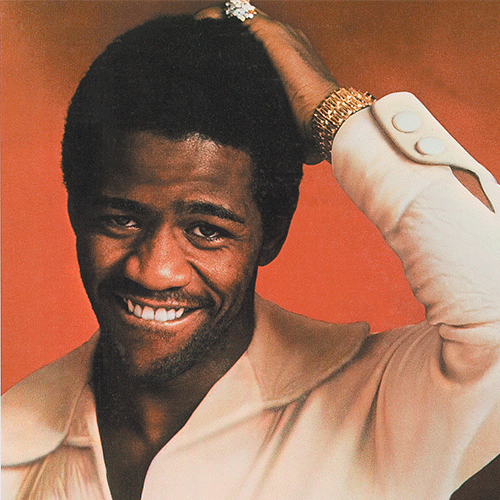
IN THIS PHOTO: Al Green in 1973/PHOTO CREDIT: Jimmy McDonough 

Al Green at Seventy-Five

___________

I have included Al Green in a playlist…
jjjj.jpeg

before now but, as he turns seventy-five on 13th April, I couldn’t pass up the chance to feature him once more! Before coming to a Lockdown Playlist with some of Green’s best tracks, here is some information regarding a phenomenal artist:

“Al Green was born Albert Greene on April 13, 1946, in Dansby, a small town down the road from Forrest City, Arkansas. He began performing at a young age, singing gospel music with his family as part of the Greene Brothers. Even after the Greene family moved to Michigan, the Greene Brothers continued touring on the gospel circuit.

After being kicked out of the family home for listening to the secular music of Jackie Wilson, Green started a group called the Creations, which later became Al Greene and the Soul Mates. The Soul Mates had one hit, "Back Up Train," which brought them to a successful appearance at New York City's Apollo Theater.

After the Soul Mates failed to capitalize on their one hit, the group broke up and Al Green struck out out his own. It was at this time that he decided to drop the final "e" from his last name.

In 1968, while on the road in Texas, Green opened for producer Willie Mitchell. Impressed with what he heard, Mitchell signed Green to Hi Records of Memphis, Tennessee. As he started working closely with Mitchell, Green's soft phrasing and falsetto embellishments took soul in a new direction. In 1971, Green had a popular cover of The Temptations' "I Can't Get Next to You." Mitchell also produced Green's other huge hits of the 1970s, including the number one "Let's Stay Together" and "I'm Still in Love with You." With his ballads, his gifts of long-stemmed roses to female concertgoers and his golden voice, Green became a true star.

Reverend Al Green

While on the road in 1973, Green was born again as a Christian. Despite his revived faith, Green continued touring and releasing music much as he had previously, though he did leave audience members taken aback by occasionally pausing to sermonize during performances. But Green's life changed on October 18, 1974, when Mary Woodson, a woman who had walked away from her family to be with Green, attacked him in his bathroom with a pan of boiling hot grits. Woodson then shot and killed herself in Green's Memphis home.

During the long recovery from his third-degree burns, Green devoted himself to his faith. When Green had healed, he bought a church, the Full Gospel Tabernacle in Memphis, and began leading services there. In addition to becoming a pastor, Green turned back toward spiritual music. As Willie Mitchell didn't want to work on gospel songs, Green's 1977 album, The Belle Album, was self-produced. The new direction Green's life had taken was evident in the song "Belle," about a man torn between his love for a woman and his love for God.

Working in Two Worlds

After falling off the stage during a 1979 concert, Green chose to focus on his church and released only inspirational music. But by the late 1980s, Green was singing some of his secular hits along with his gospel music. He then branched out to duets with Annie Lennox and Lyle Lovett, and even appeared on the TV show Ally McBeal.

In 2003, Green released the album I Can't Stop, which was produced by his former collaborator, Willie Mitchell. Green also explored new musical avenues on his 2008 album Lay It Down, working with producers Ahmir "Questlove" Thompson of the Roots and keyboardist James Poyser.

After turning away from the songs that had made him famous, Green has become comfortable with both his popular music and his religious vocation. In recent years, the famed musician was named on Rolling Stone magazine's "100 Greatest Artists of All Time" list”.

To mark Al Green’s upcoming seventy-fifth birthday, this Lockdown Playlist is an assortment of some of his best cuts. Whilst his latest studio album, Lay It Down, was released in 2008, let’s hope that we have not heard the last when it comes to Green releasing music. Even if that album is his final release, his incredible voice and amazing music will endure and touch people…

FOR a long time to come.

FEATURE: A Rocky Road: Kate Bush’s Don't Push Your Foot on the Heartbrake

FEATURE:


A Rocky Road

ssss.jpg

Kate Bush’s Don't Push Your Foot on the Heartbrake

___________

THIS is another Kate Bush feature…

qqqq.jpg

where I am promoting and defending an underrated song. Many have seen her second studio album, Lionheart, as a bit rushed or an inferior version of The Kick Inside. I really like the album, thought here is a feeling that Bush was being hurried into a follow-up to her successful debut to capitalise on her fame and popularity. With only a few new songs written for Lionheart, Bush had to rely on some older tracks. I think Don't Push Your Foot on the Heartbrake is one that might have been considered for The Kick Inside but, perhaps, it was seen as too Rock-orientated and hard – although James and the Cold Gun is quite a Rock-y song. In terms of a song from Lionheart, there are two officially released versions: the album version and the live version from Hammersmith Odeon, which appears on the On Stage E.P. Coming between Wow and Oh England My Lionheart on Lionheart, Don't Push Your Foot on the Heartbrake is a nice change of gears. Some have highlighted it as one of the weaker songs on Lionheart but, with a nod to Patti Smith, I think it was a great track. The lyrics are a lot different to what we heard on The Kick Inside. That album, I think, draws more from a romantic view of love, whereas Don't Push Your Foot on the Heartbrake is more oblique. It is a song about heartache and avoiding spinning out of control: “Emma's come down/She's stopped the light/Shining out of her eyes/Emma's been run out on/She's breaking down/In so many places/Stuck in low gear/Because of her fears/Of the skidding wheels/(The skid of her wheels she feels)/Skidding wheels/(The skid of her wheels she feels)/Spinning wheels/(Wheel-skidding feeling)/Her heart is there/But they've greased the road/Her heart is out there/But she's no control”.

Other artists have used images of vehicles and the road to describe love and pain and, whilst not her most accomplished or memorable songs, I think Don't Push Your Foot on the Heartbrake is a song that should not be overlooked. Bush performed the song on the Leo Sayer Show on 17th November, 1978 and on the 1979 Christmas special. The song was also included in the setlist of The Tour of Life. Dreams of Orgonon had this to day about Don't Push Your Foot on the Heartbrake:

It’s hard to imagine The Kick Inside functioning with “Heartbrake,” which is more blatantly goofy than anything on that album. In the first verse, Bush has a mental breakdown on a motorway expressed through a series of car puns: “breaking down,” “stuck in low gear,” “fears of the skidding wheels.” It’s a vague emotional spiral, construed as a barrage of automotive verbiage. A character called Emma has been left high and dry by someone called Georgie, and responds to this loss by losing her shit on the road. Fittingly enough for this premise, “Heartbrake” is a melodically bizarre machine, moving from a tingling piano-led intro to kookiness, eventually landing on a bawdy, brass-accompanied shoutfest of a chorus (“don’t put your BLUES where your SHOES should be!”). Yet “Heartbrake” is so noisy it obscures whatever point it attempts to make. Additionally, it’s too undisciplined for its volume to even work, becoming white noise rather than grabbing attention with spectacle. The thematic dubiousness of Lionheart extends to the album’s quality, and the it suffers as a result.

In lieu of an immediate musical analogue for “Heartbrake,” let’s compare this song to a more famous piece of media centered around a person’s internal state shattering on a motorway: J. G. Ballard’s controversial novel Crash. Ballard is legendary for his interrogations of modernity: his masterpiece The Atrocity Exhibition features a piece called “Why I Want to Fuck Ronald Reagan” which literally landed him in court. He frequently positions large social structures, such as high rises, the mass media, and motorways, as analogous to the human body and symptomatic of deep-rooted entropy. This is… not terribly far from where Bush lands, at times. Sure, Bush overlooks the whole “nightmare of modernity” thing (indeed, “Heartbrake” is one of the few Bush songs to unambiguously take place in the late 20th century), but physical experience is crucial to the narrative of her music. Tuning into one’s own body to find spiritual liberation is one of the recurrent ideas in Bush’s discography so far. Whereas The Kick Inside took this freedom and operated it with unbridled optimism, Lionheart is the sobering moment in which Bush has to figure out what to do when the initial high of becoming an adult subsides. Sometimes growing up entails crashing a car. But if you’re going to do it, you might as well be romantic about it”.

qqq.jpg

IN THIS PHOTO: Kate Bush in Liverpool in 1979/PHOTO CREDIT: Getty Images

There are a few Kate Bush albums that are not given as much consideration and time as others. Although there are one or two weak moments on Lionheart, I don’t think it is the failure that many (including Bush to an extent) paint it as. Don't Push Your Foot on the Heartbrake might have worked a little better if it was after Oh England My Lionheart - so that it ended the first side with a rush. As it sits on Lionheart, it is an interesting song where we hear Bush’s voice rawer and faster than on most other songs on that album and The Kick Inside. We would hear more of this vocal style on her next album, Never for Ever, and tracks such as Babooshka and Breathing. For an album that was fairly hurried and where Bush wasn’t given sufficient time to create new direction and ideas, there are a lot of strong tracks on Lionheart that seem like an evolution and step forward. On an underrated album is this underrated song that deserves another spin. Whilst not peak Kate Bush, Don't Push Your Foot on the Heartbrake is still…

A solid and interesting track.

FEATURE: Bang Out of Order: The Importance of Great Album Sequencing

FEATURE:


Bang Out of Order

sss.jpg

PHOTO CREDIT: @victrola/Unsplash 

The Importance of Great Album Sequencing

___________

ALTHOUGH I have featured this subject…

xxx.jpg

 PHOTO CREDIT: @www_erzetich_com/Unsplash

once or twice, I think that it warrants inspection. I was listening to The Smiths’ final studio album, Strangeways Here We Come, and remembering why I loved it so much. Although I really love the album and can listen to it over and over, there is one thing wrong with it: the sequence of tracks. One might say that this is quite a big issue, as that pertains to the way the tracks are ordered. I think the strength of the album is such that, as it stands, one is invested, and you hear the quality. I am not second-guessing the band and producer Stephen Street, but I feel that the album’s best track, Last Night I Dreamt That Somebody Loved Me, should be at the end. As it stands, the album ends with four of the weaker tracks – Unhappy Birthday, Paint a Vulgar Picture, Death at One’s Elbow an I Won’t Share You. I admit that the final track is pretty strong, though I think they could have been lifted higher in the order and Last Night I Dreamt That Somebody Loved Me could have been the finale. There are other albums which I really like but I wonder whether all of the tracks are in the correct order. I think there is this formula that says one of the album’s best tracks should be at the start and you should end with the finest song – so that you build up to it and have that grand finale.

For Pop albums, you usually have a banger or big song at the top; many of the album’s singles will be in the first half and, usually, there is a bit of a drop as you go to the second half. That is not always the case. I hear so many albums that have wonderful material; I question whether the sequencing is right and whether a few tracks should have been rearranged. This might be me being picky, though every listener considers how an album flows and which tracks go where. Apologies if I repeat what I put in other features. I think that sequencing is one of the most important things when it comes to an album. So often, I hear albums that seem disconnected or top/bottom-heavy because of the way the songs are ordered. There is a theory that, in age of streaming where we often skip tracks after a few seconds, having an album begin with immediate and energetic songs hooks people in. I do feel sorry for artists who have to hold people’s attentions and, perhaps, write music that will keep their minds activated - rather than a type of song that they want to write. As we learn in this Rolling Stone article, making sure there is a low ‘skip rate’ is essential for many artists when it comes to albums:

As a songwriter and producer, Warren “Oak” Felder’s resume encompasses hits from Nicki Minaj (“Your Love”), Usher (“Good Kisser”) and Alessia Cara (“Here”). He’s been in the industry for nearly 15 years and, until 2018, he had never heard anyone say “skip rate” in the studio.

“That word was not uttered,” Felder says. But it’s become increasingly common: “Now there are conversations we all have as songwriters — ‘yeah, we just want the skip rate of this song to be super low.'”

Skip rate indicates whether listeners make it through any 30 seconds of a song — after which a stream counts for royalty purposes — in a given playlist. And data like this, which comes from the streaming services, is quietly rewiring the album-making process, especially for young artists with commercial ambitions”.

As this insightful article explains, an album is like a story. You need to set up the premise and characters at the start; build suspense and move the story on for the middle, and then resolve with a satisfying conclusion. If an album has all the best songs at the start or finish, then that produces an uneven and disappointing listen. I think getting the start and end of an album right is paramount:

You’ve done the hard work of actually writing the songs, now it's time order them in a way that demonstrates purpose and intent to listeners. This should be a fun, but considered process. It’s the final step before your album is mastered.

To get started, you might want to think about how people will listen to your album. Is it music for long car rides? The soundtrack to the pre-drink or after-party? A companion as you clean your apartment on a weekend afternoon? The answers to these questions can help provide a framework for your album’s sequencing. In some cases, lyrics will dictate song sequence.

Related to album sequencing, take note of the visual display of streaming. Album name, song titles, and album art are all tools that can used to bring listeners closer to your album. Ultimately, the music itself will make the biggest impact, but these seemingly small things still matter.

Like the process of creating music, there is no one way to sequence an album. But there are some useful guidelines worth considering. The first song on an album holds special significance. It should quickly set the tone for listeners and encourage them to stick around.

xx.jpg

Aphex Twin’s 1992 landmark Selected Ambient Works 85-92 does a great job at this. Within the first second of opener “Xtal” we are introduced to the main sounds that shape the entire album: airy, dreamlike chords and drum machine patterns. The song moves along at an assured pace, slowly guiding listeners into headier atmospheres over the course of its five minute runtime. After a short ambient outro and three seconds of silence, the energy shoots right back up with the pulsing, but mysterious techno of song number two, “Tha.”

SAW was released 25 years ago, but it still works well in a streaming format. If you came across any one of it’s songs for the first time in a playlist, then checked out the album, you would be pleased to find out it delivers more of the same sound (in a good way).

On a completely different tip, Bon Iver’s 2007 debut For Emma, Forever Ago also makes a strong first impression. The campfire guitar strumming and intimate, raw recording quality of song one, “Flume,” quickly captures the isolated cabin environment where the album was was made. Once Justin Vernon’s wounded falsetto creeps in at the 20 second mark, we know we’re in for an emotional ride. The song ends with a 10 second silence, giving listeners enough time to recover, then returns to a similar sound palette (and vulnerable feeling) on song two, “Lump Sum,” albeit at a higher tempo and backed by a 4/4 beat to prevent the album from descending into an early despair.

Though the two albums described here occupy different sound worlds, they both tell listeners what to expect from from the first song, then follow through on that promise with the second song, while still demonstrating a range of material. Seems simple enough, right? On your own, listen to these songs in a reversed order, or start each album off from a song midway through—it’s hard to imagine them any other way.

 So you’ve made it to the end of your album: how do you make it a memorable moment so listeners return to it again?

Some artists use the last song on an album to slow down and reflect. After eight songs of indie-dance on Sound of Silver, released in 2007, LCD Soundsystem frontman James Murphy brought out slow-building piano ballad “New York, I Love You But You’re Bringing Me Down” to examine his love-hate relationship with his city.

Others use the final act for a moment of celebration. At the end of his 2011 album “We Must Become the Pitiless Censors of Ourselves,” singer-songwriter John Maus went full epic with “Believe," a soaring haze of keyboards and vocals. Like the ending of a concert, here the big hit is saved for last, leaving listeners wanting more.

Whatever you chose to do, the final song on your album should enhance the themes and moods explored in it, either by contrast, excess, or absence”.

I do think that it is hard to get the balance right so that you can keep an album flowing, have an even distribution of quality and compel all listeners. I think the sign of a truly great album is not necessarily the strength of the music but the way that it is arranged. Of course, you need to have brilliant songs, though plenty of albums have been spoiled by arranging the tracks in an odd way or not considering the running order. I do love coming back to this subject, as there are albums that I like but feel I could love I if the tracks were sequenced better (that final album from The Smiths is a perfect example!). From this article that highlights albums that lose potency when heard on C.D. to this that lists albums that are prefect from start to finish, I think sequencing is so vital when it comes to the listening experience and how it is perceived. If the order is wrong then an artist could potentially spoil the flow and quality of an album. Get things just right and even an album that is quite average can be…

eee.jpg

 PHOTO CREDIT: Dusan Jovic/Unsplash

TAKEN it to a new level.

FEATURE: Mood Music: A Valuable Source of Uplift During Lockdown

FEATURE:


Mood Music

xxxx.jpg

PHOTO CREDIT: @wearefredi/Unsplash 

A Valuable Source of Uplift During Lockdown

___________

ON Monday…

qqq.jpg

 PHOTO CREDIT: Zoltan Tasi/Unsplash

restrictions will be lifted so that we can do more things that we weren’t able to do. Among the restrictions being lifted is people being able to drink together outside. It has been a slog of a year or so for people living alongside the pandemic. I think one of the main sources of energy and positivity has been music. I have written about this before, but a study has come out that I had to mention. NME explains more:

A new study has found that over a quarter of the British public listened to more music during lockdown, with many citing its benefits on their mental wellbeing.

According to data published by the BPI (British Recorded Music Industry), 28 per cent of those surveyed last November said that they played more music while isolating compared to in pre-COVID times.

Almost half (45 per cent) of those in the 16-24 age group said their listening had increased since the first coronavirus-enforced lockdown, which began in March 2020.

Everyone who took part in the survey was asked why they listened to more music throughout this period. The results found that 50 per cent said they turned to music to raise their spirits, while 42 per cent said it helped them sleep better or relax.

Almost everyone (94 per cent) reported that it lifted their mood. Meanwhile, 91 per cent said it offered them a sense of escape that allowed them to forget their personal problems.

aaa.jpg

 PHOTO CREDIT: @all_who_wander/Unsplash

There are definite therapeutic benefits from listening to music. The percentages above make me wonder whether new people are turning to music; those who used to watch T.V. or find other forms of entertainment have now found music. Maybe it is a case of people in general have listened to music more than they would normally as it is providing a benefit. Television, literature and film are also good when it comes to lifting the mood, though I think there is something about music that impacts the mind and body like nothing else. Whether it is people rediscovering childhood favourites or going on a dive for new music, it is small wonder that vinyl sales have increased, and we are seeing this rise people turning to music. Things are getting a little better by the week, although we are still a way off of things being how they were. I don’t think that it is the case people will stop listening to music or we will see those figures levelling off when we are allowed out. Sure, we will not be at home as much; socialising will be normal, and many people might be back to work. I feel music is being devoured less because it provides a distraction and more as this emotional bond. Whilst the percentage of people listening to music to lift their mood may slope a little in the coming months, I feel music and its power has left an indelible mark on many people.

There is that sense of escapism that people have warned about in the past. What I mean is that sense of nostalgia you get when listening to music you heard as a child. We can escape in that because it takes us back to a better time, perhaps. In terms of escapism now, a lot of people are turning to music because the news is so grim and the state of the world is pretty shocking. I have trouble sleeping, so it is curious to learn that so many people use music to aid better sleep. Maybe I need to look into that. I assume the music being used to improve sleep is clam and not the same music people are listening to in order to lift their mood! As we emerge from lockdown, I feel like there will be a new appreciation for musicians and music in general. People are buying more vinyl, not only to support record shops but because there is this sense of the physical that we have been missing. Whilst I was not surprised by the article that showed how music has helped people during the pandemic, I felt that it was worth mentioning in a wider sense. Whether you have a mental illness, struggle to sleep or are feeling isolated, music of all kinds can definitely make an impression. It has been a challenging and tough time for us all. I am glad that music has been a source of energy and stability for a lot of people. I know there is music therapy. Some people are told to listen to music to help with conditions such as depression. Given the research that has come out, I wonder whether more people who live with psychological disorders and sleep issues will have musical therapy introduced into their life. As things are still quite bad, music is going to be a huge part of so many of our lives for a while. Sometimes escapism can be a bad thing but, when it comes to helping us all get through this endless pandemic, I think that it…

qqqq.jpg

 PHOTO CREDIT: Bruce Mars/Unsplash

IS a very good thing.

FEATURE: Groovelines: Nirvana – Smells Like Teen Spirit

FEATURE:


Groovelines

fff.jpg

PHOTO CREDIT: NME

Nirvana – Smells Like Teen Spirit

___________

I am conscious of the fact that I…

zzzz.jpg

have included quite a few male artists in this feature. I want to investigate a song by female artist next week. The reason I have selected Nirvana’s Smells Like Teen Spirit is two-fold. For one, it is a song I remember hearing for the first time as a child and being moved instantly. Another reason for spotlighting this song is because it turns thirty on 10th September - it was the lead single (and opening track) from Nirvana’s masterpiece album, Nevermind. I am going to bring in some articles that tell the story of the song and the influence it has had since its release. In terms of its popularity and its iconic music video, here are some more details:

Smells Like Teen Spirit" is a song by American rock band Nirvana. It is the opening track and lead single from the band's second album, Nevermind (1991), released on DGC Records. The unexpected success of the song propelled Nevermind to the top of several albums charts at the start of 1992, an event often marked as the point where grunge entered the mainstream.

"Smells Like Teen Spirit" was Nirvana's biggest hit in most countries, charting high on music industry charts around the world in 1991 and 1992, including topping the charts of Belgium, France, New Zealand and Spain. The song garnered widespread critical acclaim, including topping the Village Voice Pazz & Jop critics' poll. The song was dubbed an "anthem for apathetic kids" of Generation X, but Nirvana grew uncomfortable with the attention it brought them. In the years since Kurt Cobain's death, listeners and critics have continued to praise "Smells Like Teen Spirit" as one of the greatest songs of all time.

The music video for the song is based on the concept of a school concert which ends in chaos and riot, inspired by Jonathan Kaplan's 1979 film Over the Edge and the Ramones' film Rock 'n' Roll High School. It won two MTV Video Music Awards, which was in heavy rotation on music television. In subsequent years Amy Finnerty, formerly of MTV's programming department, claimed the video "changed the entire look of MTV" by giving the channel "a whole new generation to sell to". In 2000 the Guinness World Records named "Smells Like Teen Spirit" the "Most Played Video" on MTV Europe”.

I am going to end with an article that suggests that, perhaps, the slight polish of Smells Like Teen Spirit and the fact it has been played and heard so many times might have taken away some of edge and legacy. I think that it is a remarkable song and a moment that not only elevated Nirvana but helped put to push Grunge into the mainstream – which has its positives and negatives. In this Kerrang! article, we learn more about Smells Like Teen Spirit’s beginnings:

Kurt Cobain said that when he sat down to pen Smells Like Teen Spirit, the track that secured Nirvana their unexpected crossover into the mainstream, he was trying to write ​“the ultimate pop song”.

Kurt​’s main influence had been The Pixies, telling Rolling Stone, ​“I connected with that band so heavily… We used their sense of dynamics, being soft and quiet and then loud and hard.” Indeed, Krist Novoselic worried that the song was too Pixies-ish, telling Kurt, ​“People are really going to nail us for it.”

Lyrically, Teen Spirit painted an ambivalent portrait of the indie-rock revolutionaries he’d lived alongside in Olympia, its title drawing upon memories of a night of uncivil disobedience with his friend Kathleen Hanna, who fronted Bikini Kill, her insurrectionary and brilliant riot grrl band with Tobi Vail.

Kathleen later recalled that, in August of 1990, fuelled by a bottle of Canadian Club whisky, the ​“angry young feminists… decided we’d do a little public service” and graffitied the exterior of a ​‘Teen Pregnancy Centre’ which had just opened in town, and was, in fact, ​“a front for a right-wing operation telling teenage girls they’d go to hell if they had abortions”.

aaa.jpg

She wrote ​‘Fake abortion clinic, everyone’ on the walls, while Kurt added, in six-foot-high red letters, ​‘God is gay.’ Mission accomplished, they continued drinking, and ended up at Kurt’s apartment, where Kathleen scrawled lots of graffiti on his walls, including the words, ​‘Kurt smells like teen spirit [a deodorant brand].’

“Kurt called me up six months later,” she added, ​“and he said, ​‘Hey, do you remember that night? There’s a thing you wrote on my wall… it’s actually quite cool, and I want to use it.’”

Just before the recording session, Nirvana played through their songs at a nearby rehearsal space. ​“It blew me away,” Butch remembers. ​“It was the first time I heard Dave Grohl play live, and it sounded so amazing. I was floored when I heard it. I remember pacing around thinking, ​‘Oh my God, this sounds crazy intense.’”

To give Teen Spirit proper emphasis, Butch wanted to use some studio trickery, though Kurt was typically reluctant. ​“I said, ​‘Kurt, I want you to double-track the guitars and vocals, to really make this jump out of the speakers.’ He thought it was ​‘cheating’, especially with his vocals. So I had him do multiple vocal takes, and he sang them so consistently I could run them at the same time as a double track, and it really made the song sound powerful”.

On its thirtieth anniversary, Smells Like Teen Spirit will get a lot of new love and attention. I think it is still an immensely powerful song that can ignite and inspire new generations. Maybe it is over-familiar to those of us who were around then the song came out, though it is such an anthem and work of genius that means, years from now, it will be picked over and admired. Recently, Far Out Magazine published an article that explained why Kurt Cobain was never overly-keen on one of his greatest songs:

It’s safe to say that unless you have had your head firmly placed underneath a rather large rock, then you will have some knowledge of Nirvana and their teen-angst anthem ‘Smells Like Teen Spirit’. It’s a song that has transcended the ideals of normal music to became, and remained, a bastion of anti-authoritarian feeling and generational discontent.

While the track remains a favourite with all who hear it, in truth, the band’s uncompromising and highly-valued lead singer Kurt Cobain never took it seriously from the start. It has since become a symbol of all the things that Cobain hated about Nirvana’s rise to prominence and unwanted fame.

For all the iconoclastic musings which surround Nirvana’s frontman Cobain and his voice, it’s strange to think that Cobain never actually wanted to step up to the mic at all. Instead, he was more than happy to blend into the background and play his guitar. In a 1994 interview with Rolling Stone, he confessed: “I never wanted to sing, I just wanted to play rhythm guitar—hide in the back and just play. But during those high-school years when I was playing guitar in my bedroom, I at least had the intuition that I had to write my own songs.

sdidduud.jpg

PHOTO CREDIT: Tony Mottram 

A few years down the road from Nirvana’s humble beginnings in the late 1980s, and into the brand new decade, one of Cobain’s songs would go on to define an entire generation and now forever live in the pantheon of great rock songs. The emergence of ‘Smells Like Teen Spirit’ came alongside the band’s breakthrough album Nevermind and set hearts and minds ablaze.

The album and the grunge movement—largely coming out of Seattle—arrived like a slap to the face, a big wake-up call, a gut-punch, and other violent similies, to irreversibly shake the music industry up and never really let it settle back in the same way.

In truth, it picked up rock and roll and deliberately turned it on its head and shrugged as it walked away, unphased by the inconvenience. Grunge was the beginning of ‘Generation X’ and all the scenes that went with it. It was the call to arms, the plodding feet of a new youth platoon and, invariably, that platoon was accompanied by a marching band playing Nirvana’s ‘Smells Like Teen Spirit’ as loudly as they possibly could.

The song was a track that broke down the barriers of rock and showed that, if done correctly, any band could traverse the snooty pop charts and achieve success without compromising their values or give away their morals for a buck or two. This was a concept Cobain struggled to handle.

Eventually though, Cobain stuttered to an understanding on Nirvana’s breadth of new followers, telling RS: “I don’t have as many judgments about them as I used to, I’ve come to terms about why they’re there and why we’re here.” However, in that same interview, he would highlight just why he held so much disdain for the song and those fans who came with it, often refusing to play it at live shows.

“Everyone has focused on that song so much,” Cobain continued. “The reason it gets a big reaction is people have seen it on MTV a million times. It’s been pounded into their brains. But I think there are so many other songs that I’ve written that are as good, if not better, than that song, like ‘Drain You.’ That’s definitely as good as ‘Teen Spirit’. I love the lyrics, and I never get tired of playing it. Maybe if it was as big as ‘Teen Spirit’, I wouldn’t like it as much”.

I am going to leave it there, but I wanted to include Smells Like Teen Spirit in this feature as it is coming up to its thirtieth anniversary. It is played quite a lot. I don’t think that dents the song’s impact. To me, it hasn’t really lost any of its importance and passion because of that exposure. A respectful salute to Smells Like Teen Spirit: a timeless and phenomenal anthem that is…

ALL grown up.

FEATURE: Love Makes the World Go Round: Madonna’s True Blue at Thirty-Five

FEATURE:


Love Makes the World Go Round

qqqq.jpg

IN THIS PHOTO: Madonna in 1986/PHOTO CREDIT: Herb Ritts 

Madonna’s True Blue at Thirty-Five

___________

I realise that…

ccc.jpg

 Madonna’s True Blue was released in June 1986, so its thirty-fifth anniversary is not for a couple of months. On 30th June, her third album arrived on the market. I think it is a step up from her previous album, Like a Virgin. I think her sound is more mature and her writing is more interesting. Madonna’s lyrics are bolder, and she tackles some big issues. I am publishing the first thirty-fifth anniversary feature for two reasons. First, I am not aware of any plans for an anniversary release of the album. I think there are demos and other tracks that could be combined with the original studio album. The album finished recording in April so, in that sense, this is a thirty-fifth anniversary celebration that is timely. I am going to bring in a couple of reviews for the album soon but, first, it is worth exploring the album. Whereas Madonna (1983) and Like a Virgin (1984) were a little lighter in tone and had some weaker moments, I think True Blue is a more rounded album without a misstep – although each of those albums I just mentioned were 90-95% genius! By the time she started recording True Blue, Madonna was a modern-day icon. She has not quite reached the Queen of Pop status she would obtain by Like a Prayer in 1989. Having appeared in the successful film, Desperately Seeking Susan, in 1985, this was an important period for her. Producing the album alongside Stephen Bray and Patrick Leonard, some of my favourite Madonna songs are on True Blue.

Papa Don’t Preach is a classic; Open Your Heart and Live to Tell show a more mature edge, whilst the exceptional La Isla Bonita introduces a Hispanic flair. Whilst there are no Pop confectionaries like Material Girl or Like a Virgin (both from Like a Virgin), there is plenty of positivity and Pop gems. It is a beautifully produced and sequence album where the songs flow and there is a nice balance in terms of quality, tone and emotion. It is a shame that there are some mixed reviews for the album, as I think it is a lot stronger than many give it credit for. Listen to True Blue without interruption and you will discover a consistent and consistently surprising record. I think that Madonna’s voice was stronger on this album. She was bringing in more layers and contours that allowed for her songwriting to expand. This was a Pop sensation hitting new heights!

In 2016, Albumism looked back at a superb Madonna album as it turned thirty. It must have been daunting for an artist like her to release an album that was quite different from her first two. This is what they had to say:

Relative to its erotically-charged precursor Like a Virgin, True Blue tempers the sex vixen aesthetic in exchange for a more calculated focus on Madonna’s evolving songcraft. True Blue’s subject matter is not a wholesale water-down job, mind you, as its songs are still provocative and, particularly in one case, proved controversial. But the messages and tones that define the album are noticeably more substantive, less superficial. Even the Herb Ritts orchestrated cover imagery, an obvious homage to the classic Hollywood glamor and glory days of Jean Harlow, Grace Kelly, and Marilyn Monroe, among others, is emblematic of Madonna’s newfound elegance and refinement.

Showcasing a more sophisticated strain of her dance-pop disposition, True Blue offered the first inkling of her development into a more mature, multi-dimensionally adept talent, a transformation that would come to even greater fruition three years later with her creative watershed Like a Prayer. Indeed, with True Blue, Madonna aspired to be taken more seriously as an artist and squash any persistent skepticism that her success was of the ephemeral, flash-in-the-pan variety.

A year later, Madonna acknowledged that naysayers remained, insisting to Rolling Stone that “There are still those people who, no matter what I do, will always think of me as a little disco tart.” Despite her lingering critics, however, True Blue proved a career tipping point that forced many of her detractors to reevaluate her artistry and embrace a newfound respect for her undeniable contributions to the pop music landscape.

Madonna dedicated True Blue to her then-husband Sean Penn, as evidenced by the line in the album’s liner notes that reads “This is dedicated to my husband, the coolest guy in the universe.” Originally titled Live to Tell after the emotionally gripping ballad Madonna offered for Penn’s 1986 crime drama film At Close Range, but subsequently changed to True Blue prior to its release, the nine-track album was overseen by her ‘80s go-to production team of Stephen Bray and Patrick Leonard. More interestingly, and for the first time ever, Madonna co-wrote and co-produced each song featured on the album, an achievement that further signaled her creative coming of age.

Album opener and Grammy-nominated second single “Papa Don’t Preach” is arguably the most unforgettable of True Blue’s many memorable moments. From the opening intro replete with a swelling, suspense-laden string arrangement, you know that sonically speaking, this is a different kind of Madonna album, relative to the two that preceded it.

The song’s taboo subject matter is what really distinguishes the song, however, as Madonna inhabits the fraught yet forthright conscience of a teenage girl coming clean to her father about her unintended pregnancy and difficult decision to keep the baby. She implores him to avoid judging her too harshly and asks for his support, while naively rationalizing—as many teenagers are prone to do—that her partner and she “can raise a little family / Maybe we'll be all right, it's a sacrifice.”

qqqq.png

IN THIS PHOTO: Madonna in 1986/PHOTO CREDIT: Herb Ritts  

Nearly as emotionally gripping as “Papa Don’t Preach” is the aforementioned “Live to Tell,” though the specific source of the pain and heartache Madonna examines here is never explicitly identified. A gorgeously produced ballad with prominent percussion juxtaposed with keyboard, synth, and electric guitar flourishes throughout, “Live to Tell” presents a confessional narrative that finds the song’s protagonist acknowledging and attempting to reconcile the skeletons in her closet. While Madonna perhaps intentionally shrouds the ambiguous “secret I have learned” in mystery, the surrounding context suggests a history of abuse or alienation at the hands of a man who has betrayed the central figure’s trust. Regardless of one’s interpretation, “Live to Tell” is one of the most riveting songs not just on True Blue, but across all of Madonna’s albums to date.

“Papa Don’t Preach” and “Live to Tell” aside, the bulk of True Blue is fueled by more buoyant, whimsically romantic fare. Originally written for but rejected by Cyndi Lauper, the yearning “Open Your Heart” is a straightforward love song that explores concurrent feelings of vulnerability, desire, and innocent longings for companionship.

Madonna’s eponymous 1983 debut album announced an electrifying new talent to the world. The following year, the massively successful Like a Virgin transformed Madonna into a household name across the globe. But it was True Blue that solidified her blonde ambition, cemented her worldwide superstardom, and, once and for all, extinguished any remaining doubts about her potential career longevity.

Still her highest-selling studio album of all time based on worldwide sales that exceed 25 million, True Blue is an essential component of Madonna’s prolific canon and a permanent, fondly recalled fixture of my younger days”.

I know that there will be new articles and retrospection when the album turns thirty-five at the end of June. I think that her film exposure helped regarding the confidence we hear on True Blue. In a way, she was embodying different personas and moods more effortlessly and ably. This would heighten further on Like a Prayer in 1989. That album was the first where she received mostly positive reviews. I think albums before then were getting a lot of love; there were some who were a bit more mixed - True Blue, despite its calibre, was no exception. In their review of 2003, SLANT observed the following:

With five extremely varied hit singles, Madonna’s third album, True Blue, was a supreme archetype of ‘80s pop music. With songs like “Papa Don’t Preach,” Madonna made the transition from pop tart to consummate artist, joining the ranks of the decade’s icons like Michael Jackson and Prince. The songs were undeniably more mature than fare like “Material Girl,” dashing some critics’ assertions that she was just another flash in the pan. The striking “Live to Tell” was not only a brave first single, but a statement in and of itself. The ballad rewrote the rules of what a lead single could sound like, while at the same time, ironically, speaking volumes about Madonna’s unwavering drive for fame and mass-acceptance: “If I ran away, I’d never have the strength to go very far.” True Blue includes some of Madonna’s biggest, most influential hits (the robust “Open Your Heart” and the timeless “La Isla Bonita”), but it’s also home to some of her biggest clunkers. Like much of Like a Virgin, the title track is an authentic throwback to the girl-group-era pop that was an admitted influence on the singer, but the effect seems significantly more contrived on “Jimmy Jimmy” and the obligatory save-the-world anthem “Love Makes the World Go Round.” Time stamped with ‘80s-era keyboard and drum synths, True Blue, though chock-full of hits, is undeniably of its time”.

aaa.jpg

I was alive in 1986 but, being three, I was not aware of the attention Madonna was receiving and how exciting it must have been. I would place True Blue in my top-five favourite Madonna albums. Whilst I think Ray of Light, Bedtime Stories, Madonna and Like a Prayer are stronger, I think True Blue is a tad better than Erotica and Like a Virgin – albums that I really love. Ahead of its thirty-fifth anniversary, I wanted to explore an album that ranks alongside the best of the ‘80s. Almost thirty-five years to the day since recording ended on a huge album, I was eager to re-explore True Blue. Before ending this, I want to source from a positive review from AllMusic:

True Blue is the album where Madonna truly became Madonna the Superstar -- the endlessly ambitious, fearlessly provocative entertainer who knew how to outrage, spark debates, get good reviews -- and make good music while she's at it. To complain that True Blue is calculated is to not get Madonna -- that's a large part of what she does, and she is exceptional at it, but she also makes fine music. What's brilliant about True Blue is that she does both here, using the music to hook in critics just as she's baiting a mass audience with such masterstrokes as "Papa Don't Preach," where she defiantly states she's keeping her baby. Her real trick here, however, is transcending her status as a dance-pop diva by consciously recalling classic girl group pop ("True Blue," "Jimmy Jimmy") to snag the critics, while deepening the dance grooves ("Open Your Heart," "Where's the Party"), touching on Latin rhythms ("La Isla Bonita"), making a plea for world peace ("Love Makes the World Go Round"), and delivering a tremendous ballad that rewrites the rules of adult contemporary crossover ("Live to Tell"). It's even harder to have the entire album play as an organic, cohesive work. Certainly, there's some calculation behind the entire thing, but what matters is the end result, one of the great dance-pop albums, a record that demonstrates Madonna's true skills as a songwriter, record-maker, provocateur, and entertainer through its wide reach, accomplishment, and sheer sense of fun”.

Go and listen back to True Blue if you have not investigated it for a while. It is an album where we can see Madonna growing and widening her lyrical and vocal possibilities. Some say that True Blue is a product of its time or sounds dated now. I would argue the opposite: the 1986-released masterwork…

STILL sounds incredible and relevant.

FEATURE: Expecting: The White Stripes' White Blood Cells at Twenty

FEATURE:


Expecting

aaaa.jpg

The White Stripes' White Blood Cells at Twenty

___________

I am excited looking…

x.jpg

 PHOTO CREDIT: Third Man Records

ahead to 3rd July. That is the date The White Stripes’ White Blood Cells turns twenty. The third studio album from Jack and Meg White, it is one of the earliest albums of theirs I remembering hearing in full. In terms of direction and sound, the duo moved away from Blues-Rock and embraced Rock more. Whilst The White Stripes were never ultra-modern (which was part of their appeal), they shifted their focus to the sounds of the 1960s and 1970s. I love how eclectic and accomplished White Blood Cells is. As is fitting with the duo, the recording of the album was pretty quick:

The band rehearsed for one week and began recording at Easley-McCain Recording, in Memphis, Tennessee in February 2001. Meg White was initially hesitant to commence immediate recording, as she thought the songs were "too new." The album was recorded in less than four days, to try to keep it "as unorganized as possible," according to Jack. The record's quick production was intentional in order to get "a real tense" feeling, as well as capture the band's energy. The record was "rushed" and a final day was saved for mixing and mastering the record; this was the first White Stripes album to be mastered in the studio. It was the first time for the band recording in a 24-track recording studio, and Jack White asked recording engineer Stuart Sikes more than once "not to make it sound too good”.

Although there the twentieth anniversary is not for a while, some exciting news broke last week that really caught my eye. Louder explain more:

The White Stripes have announced they will be releasing a companion album to their seminal 2001 album White Blood Cells, in celebration of its 20th anniversary. Titled White Blood Cells XX, the album will host 13 previously unreleased songs as well as live recordings, and is to be released via Jack White’s Third Man Records Vault subscription service.

The release will also include an hour-long DVD containing footage of the new album’s recording process, and a booklet of rare artwork, including posters, flyers, never-before-seen photographs and extras.

Songs featured on the record include demo versions of Dead Leaves and the Dirty Ground, early mixes of The Union Forever, a full-band studio rendition of That’s Where It’s At, alternate takes of Fell in Love With a Girl, acoustic versions of tracks that didn’t make the original cut and more.

To get a copy of White Blood Cells XX, you can subscribe to Third Man Records up until April 30”.

It does seem like The White Stripes put out White Blood Cells twenty years ago! I think the album still sounds amazing. I will try and grab a copy of the new release, as I think that the extra material will be revealing and a real bonus! I wonder whether there will be a twentieth anniversary edition for Elephant’s twentieth in 2023.

I think Jack and Meg really hit a high on their third album. Their eponymous album of 1999 is great. De Stijl of 2000 was another step forward but, when it came to their 2001 release, they hit another gear altogether! It is no surprise that White Blood Cells received such praise. This is what Pitchfork wrote in their review:

Indeed, many of the songs admit that the love is lost. On "The Union Forever," Jack White mourns, "It can't be love/ Because there is no love." The song is a riff on Citizen Kane, including a strange breakdown with sampled dialogue from the film. Here, the White Stripes are the most experimental they get, which is to say "not very," though the song reminds me of the ragged power of Royal Trux without the pointless artiness. Certainly, it would be nice to hear the White Stripes take this music in a new direction, but this band is all about the songs, and the songs are good enough to stand alone, sans-flashy effects and tape editing.

"The Same Boy You've Always Known" is another high point. For a ballad, it rocks harder than most bands' hard-rockers, yet it wrenches in its emotional impact. Jack White repeats certain key lines, straining his voice to impart meaning and feeling. Again, the state of the relationship in question is uncertain. The song ends uncommitted and terribly sad with, "If there's anything good about me/ I'm the only one who knows." How many bands have failed with entire albums of moroseness to only express the alienation of those two lines?

The closest thing to a dud on this record is "We're Going to Be Friends," a gentle, nostalgic ditty of innocent love and childhood. It's a little too pleasant, lacking any of the fear and confusion of those pre-double-digit years, but its softness gives the record's midpoint some time to inhale before another six exhalations of fire.

Finally, at the close of the album, Jack sits alone at the piano for "This Protector." Though its message is vague, there are implications of religion and loss: "You thought you heard a sound/ There's no one else around/ 300 people out in West Virginia/ Have no idea of all these thoughts that lie within you/ But now... now... now, now, now, NOW!" Now what? It's the floating resonance of the moment, the intensity of the feeling, that gives these words meaning.

White Blood Cells doesn't veer far from the formula of past White Stripes records; all are tense, sparse and jagged. But it's here that they've finally come into their own, where Jack and Meg White finally seem not only comfortable with the path they've chosen, but practiced, precise and able to convey the deepest sentiment in a single bound. It's hard to know at this point in the game where they'll head from here, but what matters is right now. And right now, I want to listen to this album again”.

White Blood Cells resonated back in 2001. In the years since, it has gained a huge reputation. When it comes to the accolades and honours critics have given White Blood Cells, it makes for very impressive reading:

The album was ranked on many "best of 2001" year-end lists, including being ranked among Blender, Rolling Stone, Mojo, and Kerrang!'s top 20, NME, Pitchfork, and The Village Voice's top 10. Spin called White Blood Cells the best album of 2001. In 2003, the record was chosen as number 20 on NME's Top 100 Albums of All Time. In 2005, Spin placed it at number 57 in its list of the 100 Greatest Albums, 1985–2005, while Stylus included it at number 14 in its list of the Top 50 Albums of 2000–2005. In 2006, Mojo featured it at number 28 in its list of 100 Modern Classics, 1993–2006.

aaa.jpg

As the 2000s drew to a close, White Blood Cells was included on several publications' lists of best of the decade. The A.V. Club ranked it as the number one best album of the decade in its Top 50 Albums of the 2000s list. British music magazine Uncut also ranked the record as the best album of the 2000s in its 2009 list Top 150 Albums of the 2000s. Billboard placed the record at number eleven on its Top 20 Albums of the 2000s, while Rolling Stone included it just behind the White Stripes' follow-up, Elephant, at number 20 on its Top 100 Albums of the 2000s. NME featured the album at number 19 on its Top 100 Albums of the 2000s list, and Pitchfork's Top 200 Albums of the 2000s included it as number 12. Several other music publications, including Consequence of Sound, The Daily Californian, Glide, and Under the Radar featured White Blood Cells within the top 30 greatest records of the 2000s. The record is included in both The Guardian's "1000 Albums To Hear Before You Die" and the book 1001 Albums You Must Hear Before You Die”.

Ahead of the twentieth anniversary of one of the best albums of the first decade of the 2000s, I would encourage people to go and seek out White Blood Cells XX. If you cannot then get the original album. Twenty years after its release and The White Stripes’ White Blood Cells remains…

A simply phenomenal album.

FEATURE: The April Playlist: Vol. 2: Kiss Me More, This Creature of Mine

FEATURE:


The April Playlist

aaa.jpg

IN THIS PHOTO: Doja Cat 

Vol. 2: Kiss Me More, This Creature of Mine

__________

THIS is a busy and big week…

aaa.jpg

 IN THIS PHOTO: Billie Marten

for new music. There are releases from Doja Cat (ft. SZA), Billie Martin, Prince, Lou Hayter, Róisín Murphy, Tierra Whack, Miguel, Paul Weller, The Lathums, Sinead O’Brien, Demi Lovato, Holly Humberstone, Chynna, Texas, and Slayyyter. Throw into the mix London Grammar, Japanese Breakfast, Sufjan Stevens, and Years & Years and it makes for a very packed and interesting assortment! If you require some energy and motivation to get the weekend kicked off, then have a listen to the tracks below and I am sure that they will give you that push. There have been some quiet weeks this year in terms of big tracks; this week has definitely…

ccc.jpg

 IN THIS PHOTO: Paul Weller

NOT disappointed.   

ALL PHOTOS/IMAGES (unless credited otherwise): Artists

__________

xxx.jpg

Doja Cat (ft. SZA) - Kiss Me More

z.jpg

Billie Marten - Creature of Mine

aaq.jpg

Prince Welcome 2 America

www.jpg

Róisín Murphy Assimilation

a.jpg

Taylor Swift - Mr. Perfectly Fine (Taylor’s Version) (From the Vault)

zzzz.jpg

Tierra Whack Link

zzz.jpg

Miguel So I Lie

d.jpg

Holly HumberstoneHaunted House

qqq.jpg

PHOTO CREDIT: Wanda Martin

Sinead O’BrienKid Stuff

xcc.jpg

Demi Lovato Sunset

qqq.jpg

Chynna burnout

aaa.jpg

Texas - Mr Haze

aaa.jpg

Lou Hayter - Telephone

aaaa.jpg

The LathumsOh My Love

aas.jpg

Slayyyter Cowboys

xxx.jpg

PHOTO CREDIT: Karen Cox

Rhiannon Giddens (with Francesco Turrisi) Avalon

zz.jpg

Japanese Breakfast - Posing in Bondage

aaa.jpg

PHOTO CREDIT: Alex Waespi

London Grammar America

xxx.jpg

Paul Weller Shades of Blue

nnn.jpg

Sufjan Stevens - Meditation V – Convocations

qqq.jpg

Tkay Maidza - Syrup

xxx.jpg

Years & Years Starstruck

uu.jpg

Alice Merton Vertigo

ww.jpg

Lydia Ainsworth - Sparkles & Debris

uuu.jpg

PHOTO CREDIT: Frank Fieber

BERWYN100,000,000

aaa.jpg

Sonder (ft. Jorja Smith) - Nobody But You

aaa.jpg

GRACEY, Billen TedGot You Covered

zzz.jpg

Renforshort - Exception

aaaa.jpg

PHOTO CREDIT: Sam Leviton

Audrey NunaSpace

zzz.jpg

PHOTO CREDIT: Oliver Vanes

India Jordan Only Enough Said

zz.jpg

Olivia O'Brien Sociopath

ccc.jpg

Greta Isaac - F U

zzz.jpg

Ashe - I’m Fine

qqq.jpg

JGrrey - Down

zzzz.jpg

Maya Malkin Congratulations

pop.jpg

Wallice - Hey Michael

zzz.jpg

Maria KellyMartha

zsas.jpg

Charlotte CardinSad Girl

xxx.jpg

PHOTO CREDIT: Bernard Benant/Navire Argo

Tony Allen (ft. Sampa The Great) - Stumbling Down

xxx.jpg

PHOTO CREDIT: Meeno Peluce

Gwen Stefani (ft. Saweetie) - Slow Clap

FEATURE: Too Good to Be Forgotten: Songs That Are Much More Than a Guilty Pleasure: Spice Girls - Wannabe

FEATURE:


Too Good to Be Forgotten: Songs That Are Much More Than a Guilty Pleasure

ddd.png

Spice Girls - Wannabe

___________

ON 8th July…

nnn.jpg

Spice Girls’ best-known track, Wannabe, turns twenty-five. I think that it is one of the best singles of the 1990s, and it still sounds so infectious and addictive. The reason I am featuring the song is because some people feel that it is a guilty pleasure. I do not subscribe to the notion that there is such a thing, yet there are plenty who think that Wannabe is a bit naff or over-hyped. Even if the Spice Girls divides people, I think Wannabe is a song that everyone can enjoy. From its one-take video to the amazing chorus and sense of positivity that shines from every line, Wannabe is a terrific song! I want to bring in some more detail regarding the track soon. Before then, some useful Wikipedia information regarding an anthem of the 1990s:

Wannabe" is the debut single by British girl group the Spice Girls. Written and composed by the group members in collaboration with Matt Rowe and Richard "Biff" Stannard during the group's first professional songwriting session, it was produced by Rowe and Stannard for the group's debut album, Spice, released in November 1996. The song was written, composed, and recorded very quickly; but the result was considered lacklustre by their label, and was sent to be mixed by Dave Way. The group was not pleased with the result, and the recording was mixed again, this time by Mark "Spike" Stent.

Responding to the wave of public interest in the group, Virgin released the song as the group's debut single in June 1996, well ahead of the planned release date of the Spice album. "Wannabe" topped the UK Singles Chart for seven weeks and has received a double Platinum certification by the British Phonographic Industry (BPI). The song was released in the United States in January 1997, topping the Billboard Hot 100 for four weeks. It was the group's only number-one single in that country. By the end of 1996, "Wannabe" had topped the charts in 22 nations, and by March 1997 this number had climbed to 37. "Wannabe" became the best-selling single by a girl group in the world, with 1,385,211 and 2,910,000 copies sold in United Kingdom (by 2015) and United States (by 2014), respectively, and over 7 million copies worldwide by the end of 1997. In a 2014 study, it was chosen as the most easily recognisable pop song of the last 60 years. "Wannabe" was Spotify's most-streamed 1990s song of 2020 by a female artist”.

I will move on the from the 1990s and  feature a song from another decade in the next edition – I have spent a bit of time in the 1980s and 1990s lately. I would encourage people to check out and research the story of Wannabe and the earliest days of the Spice Girls. In terms of debut singles, few have come in as spirited and catchy as Wannabe!

The catchiness of Wannabe is one reason why so many people are a bit cold towards the song. In 2016, the BBC published an article ahead of Wannabe’s twentieth anniversary and explained why it is the catchiest song ever:

I was 4 years old when Wannabe reached number one, and my love of pop music largely stems from the three minutes that introduced us to Scary, Sporty, Baby, Ginger and Posh. Twenty years on, Wannabe and the Spice Girls still stand out from the crowd, despite the long line of copycat girl groups that followed.

“There was nothing else quite like Wannabe on the radio back in summer 1996. Rock and dance music had been dominating the airwaves and charts for quite some time by that point,” Robert Copsey, editor at the UK’s Official Charts Company tells BBC Culture. “The Spice Girls struck at just the right moment with Wannabe; a gutsy, enthusiastic and unashamed pop song we’d all been craving without even realising it.”

There’s a simple reason for Wannabe’s place in popular culture: it’s catchy as hell. According to a 2014 study by the University of Amsterdam and Manchester’s Museum of Science and Industry, Wannabe is actually the catchiest song of all time.

It’s instantly recognisable, with participants in the university’s project identifying it in just 2.29 seconds, partly due to Mel B’s unforgettable laugh. That’s quicker than hits by Michael Jackson, Whitney Houston and Elvis Presley, as well as Lady Gaga’s debut, Just Dance. So, what is it about the song that makes it so catchy?

Dr John Ashley Burgoyne and Dr Jan van Balen, who have conducted extensive research into the formula that makes a song memorable, believe Wannabe’s simplicity is integral to its success. “I would describe the song as truly relentlessly catchy,” says Burgoyne. “It’s not that it has this one hook per se. It’s quite ingeniously composed.”

“We found, much to our surprise, that writing a very surprising and unusual hook is not the recipe for long term memorability,” he continues. “Actually, the more conventional your melody in terms of the interval patterns that you use; in terms of the rhythms that you use, the easier the song is to remember over the long term. What makes Wannabe work so well is that it isn’t a difficult song to sing, it has a conventional melody that repeats itself a lot, and it’s just relentless”.

I think there will be a lot of celebration when Wannabe turns twenty-five. As this Metro article from last year details, we will see a fascinating new documentary to mark that anniversary:

The Spice Girls will be the subject of a new documentary celebrating 25 years since the release of their iconic hit Wannabe. The world-conquering classic turns 25 (!) in 2021, and its been announced that Channel 4 will air Girl Powered: The Spice Girls next year to celebrate the occaision. Wannabe was the debut single by the Spice Girls, and ended up topping the charts in both the US and the UK, and kicking off a worldwide obsession with Posh, Baby, Ginger, Sporty and Scary that endures to this day. The new film will take viewers behind the scenes of the genesis of Britain’s greatest girlband and how they managed to carve out a niche for themselves in a musical scene that was then dominated by ‘Brit Pop’ acts like Oasis and Blur.

aaa.jpg

Channel 4 revealed in a statement that Girl Powered would be a mix of archival footage and ‘revealing interviews.’ All five girls wrote Wannabe alongside long-time collaborators Richard ‘Biff’ Stannard and Matt Rowe.

Wannabe would be the first in a record-breaking run of number one singles for the five girls. They were the first act since The Beatles to score the Christmas number one two years in a row, with Too Much and Goodbye, eventually topping the charts nine times. They are still, officially, the best-selling girl group of all time. But Girl Power couldn’t last forever. Geri Halliwell (now Horner) left the group in 1998 to kickstart a solo career of her own, and the now-foursome would release their third and final album, Forever, in 2000”.

I will wrap things up now. I can understand that not everyone likes the Spice Girls’ music, though I would defend Wannabe and can’t understand why some consider it to be a guilty pleasure. Whether you think their Girl Power brand and mission statement was a little forced and gimmicky or opened doors for women through society, one has to acknowledge that songs like Wannabe captured a mood and is still being talked about because it is so strong. If you are one of those people that has slated Wannabe and set it aside, I would compel you to…

HAVE another listen.

FEATURE: MTV at Forty: Why Music Videos Were Hugely Important in My Discovery and Love of Music

FEATURE:


MTV at Forty

xx.jpg

IN THIS PHOTO: The U.S. Grunge/Rock band, Soundgraden, in 1994 (the video for their song, Black Hole Sun (from the 1994 album, Superunknown), was one I saw on MTV as a child that changed the way I approached and loved music/PHOTO CREDIT: A&M Records

Why Music Videos Were Hugely Important in My Discovery and Love of Music

___________

I will make this the last MTV

qqq.jpg

 PHOTO CREDIT: MTV

feature for a far few months, as the fortieth anniversary does not happen until 1st August! It is a bit premature of me but, as I think it such an important anniversary, I may do a couple of features in June, one in July and then publish one on the anniversary itself. There is another reason why I am getting in there extra-early regarding anniversary features and MTV: the decline of music T.V. and, perhaps, the fact that music videos hold less stock than they did decades ago. Certainly, there are more videos around than ever. Even if an artist has a very small budget and little resources, they can record their own music video and upload it to the world. Maybe a lack of music television is because that medium has been replaced by sites like YouTube. I will come onto that soon. I don’t think one gets the same interactivity and personality from a video streaming site than they would an active and contemporary station. I have mooted how it would be good to see a revival of MTV how it was in the 1980s and 1990s. Whereas albums and songs on their own are amazing pieces of work and carry enormous importance, I have always loved the fact that a music video allows an artist to tell a story and provide a very short film about a track. I am not sure whether there is a physiological reason as to why the pairing of music and film creates such a rush and sense of joy.

MTV was hugely important to me when I was a child. Although I was not born until 1983, I experienced the late-1980s and early-1990s. I feel the station was very much at its peak around this time - though some might say that occurred a little earlier on. It was not just my experiences of the station at the time that inspired me. In the late-1990s and years since then, I saw clips from MTV. Certainly, when it came to lodging music in my brain and heart, videos were instrumental. Maybe it is the fact that children watch a lot of television so, if there was this song on T.V. that had a cool video then I’d be more receptive. One can feel a sense of wonder listening to a song on the radio or through a cassette/C.D./vinyl; the visual representation of that track adds new layers and dynamics. There were music videos on Top of the Pops, but they came between in-studio performances, whereas one got more videos on MTV. Through the late-1980s and 1990s I was seeing videos by legendary directors like Spike Jonze and Michel Gondry. I think I saw the famous video for Wax’s California in 1995 when I was twelve. I saw Soundgarden’s Black Hole Sun in 1994 and, years before that, I dimly remember catching Madonna’s Material Girl on MTV – though it may have been a year or two after the song came out in 1984. In all three cases, there is something about the story concept and direction that not only provided the well-known song with new meaning and nuance; to me and those I discussed music with, it was like watching a segment of a T.V. show or film.

I think music videos really resonated with me through the 1990s. I saw a couple of big Michael Jackson videos on MTV in 1991, I think – at that point his videos were more like short films! When Britpop was raging, great videos by The Blur, Oasis, Elastica, Supergrass and other bands really sunk in. I think I saw the video for Nirvana’s Smells Like Teen Spirit for the first time on MTV in 1991. Perhaps it was the fact I was open to these bands and videos, at that point in my life, were relatively new. In years since I witnessed some seriously important videos, I have been thinking about the importance of MTV. There are articles like this, this and this that list the best and most iconic videos. I remember watching those videos on MTV and discovering artists off of the strength of that exposure. The videos not only meant that songs grew in meaning and stature; I was going out and buying singles and albums from seeing MTV spin a great new video. I feel that MTV took my love of music to new levels. Thanks to the station, I always look out for great videos now and see what various artists are doing. I also still think that a video can be more powerful than streaming figures, hype or anything else regarding ensuring a song is heard/seen and remembered. From the giddiness of the 1990s to some funny and cool videos of the early-2000s (No Doubt’s Hey Baby is a particular favourite), MTV was so important. Maybe we can never return the station to its roots. There is the argument as to whether YouTube and other platforms have effectively replaced MTV. I know that, as the iconic station turns forty in August, many people will share their fond memories and which videos they first encountered on MTV. When I think about that, there are so many fond memories and incredibly moving videos…

THAT spring to mind.

FEATURE: The Lockdown Playlist: Lisa Stansfield at Fifty-Five: Her Greatest Tracks

FEATURE:


The Lockdown Playlist

ccc.jpg

 IN THIS PHOTO: Lisa Stansfield in 1989/PHOTO CREDIT: Chris van de Vooren/Sunshine/Rex 

Lisa Stansfield at Fifty-Five: Her Greatest Tracks

___________

EVEN though Lockdown is gradually being eased…

ccc.jpg

we still have a little way to go before we can relax and feel like things are back to normal. As the wonderful Lisa Stansfield is fifty-five on Sunday (11th April), I wanted to put out a Lockdown Playlist with some of her greatest hits in the mix. Before then, I want to source quite liberally from her official website. We learn more about the background and success of one of Britain’s finest voices:

Britain has produced some of the world's best-loved divas over the past four decades - but few, if any, have been as soulful as Lisa Stansfield.

Lisa is not your typical glitzy diva. In fact, the word prima donna doesn't fit the down-to-earth honesty that characterises the girl from Rochdale, Lancashire, North West England, who has sold more than 20 million albums worldwide.

Lisa Jane Stansfield was born at the Crumpshall Hospital in Manchester, England, on 11th April 1966. She is the middle of two sisters, Karen the eldest by three years and Suzanne who is four years younger than Lisa. They grew up in the town of Heywood in Greater Manchester, then by the age of 12, Lisa's parents Keith and Marion moved the family to the nearby town of Rochdale.

​Her early musical tastes and influences came from the Motown era and soul music to the likes of Marvin Gaye, Diana Ross, Aretha Franklin and Barry White. Lisa soon realised she wanted to become a singer from a young age and she was already singing at local working men’s clubs in her early teens.

ccc.jpg

It didn't take too long before Lisa who was barely 14 years old, got her big break after she entered and won a local talent contest "Search For A Star" which was sponsored by the Manchester Evening News at the Willows Club in Salford. This opportunity led to her first recording contract.

In 1981 at the age of 15, she recorded and released her first single called, "Your Alibis".  Subsequently Lisa got signed to Polydor and between 1982 and 1983 she released a handful of singles. None of them charted. However, around the same time Lisa was invited to co-host a UK based TV music show called Razzamatazz where she appeared as a co-presenter for a couple of series. Although it was a well paid job, Lisa believed that nobody would ever take her seriously as a singer if she continued presenting for the longterm and decided to leave the show to continue her career as a singer.

Along the way she met Augusto Grassi, an Italian costume designer on a holiday in Tunisia. In 1987 they got married at Sacred Hearts Catholic Church in Rochdale and Lisa moved to live with him in Italy on a hilltop town called Zagarolo outside of Rome. However Lisa was really in-love with the idea of Italy rather than her husband and after sixteen weeks, she realised that their marriage was over.

Lisa moved backed to Rochdale and met up with her former school friend Ian Devaney (who was soon to become her fella) and his friend Andy Morris. Several years prior on a chance meeting, Ian and Andy convinced Lisa to write some songs. This led them to form a band together , they called themselves "Blue Zone". They made a demo which was sent around to several record labels. Their chance came when a small independent label called Rockin' Horse signed them (which later got taken over by Arista). Blue Zone's first two singles were unsuccessful, however their third started to make some waves. It was 'Thinking about His Baby' with the b-side 'Big Thing'. Kiss-FM and the club scene picked up on 'Big Thing' and went on to sell over 10,000 copies in one week. Their album which took over a year to complete created a stir without charting.

Lisa's major breakthrough came in 1989 when Morris and Devaney, both brass players, were recruited for a Coldcut session. Lisa went along just for fun and was asked to provide guest vocals on the group's new single, "People Hold On". The song became an instant dance hit and reached number 11 in the UK charts. On the strength of its success, Lisa was persuaded to try her luck as a solo artiste and the threesome decided to drop the band name and Blue Zone eventually became "Lisa Stansfield".

​They were now signed to Arista Records - and things started moving rapidly when the next single release, "This Is The Right Time", became a top 20 hit in the UK.  A few months later came Lisa's most infamous anthem "All Around The World". This was to become her first UK number one hit and still remains the biggest selling single and her most well known track to date.

"All Around the World" opened the doors to Lisa's success overseas and gave her the first taste of success in the US where, in addition to topping the pop charts, it also headed the R&B charts - making her only the second white artiste to score such a distinction. Her first album as a solo artiste, "Affection" was released in November 1989 and went onto sell over 5 million copies worldwide. To cap a spectacular first year off as a solo artiste, Lisa was at number one for the second time on the charity single with Band Aid 2,with Do They Know Its Christmas.

In February 1990 she won a BRIT award for Best Newcomer, while All Around The World won an Ivor Novello award for Best Contemporary Song. By then, her debut album, Affection, had topped the charts on both sides of the Atlantic. Lisa was also nominated for a Grammy awards in the categories of Best Female Pop Vocal Performance and Best New Artist.

As they toured around the globe promoting Affection, Lisa continued writing new music together with Ian and Andy. Whilst their second album began to take shape. Lisa was asked to perform at the 2nd Rock In Rio festival in Brazil in January '91. Several more charity based concerts followed that year which included a concert for Kurdish Refugees, an AIDS Benefit show for Red Hot & Dance and UK's Amnesty Int. Big 20 Concert.

In November 1991, the fans were treated to a new, more sophisticated look and sounding Lisa with her second album "Real Love". With a run of several hit singles, which included Change, Set your Loving Free, All Woman, Time To Make you Mine and A Little More Love it was no surprise that in 1992 to the delight of her global fan base she won her third BRIT award .

pp.jpg

With this followed an invitation to write a song for The Bodyguard soundtrack which resulted in Someday (I'm Coming Back), a top 10 hit in its own right, as well as securing her place on the biggest-selling soundtrack of all time (which has sold over 200 million records).

Lisa continued to tour in Europe, Asia and the United States.  She also grabbed pole position the UK pop charts in in April 1993 with the charity EP called 'Five Live' in conjunction with George Michael and the iconic British rock group, Queen. The record stemmed from her appearance with Michael at The Freddie Mercury Tribute Concert at Wembley in April 1992. It remains a personal highlight of her years in the music business, with over 100,000 people attending with some of the worlds biggest artists.

"So Natural" was the third studio album released in November 1993, recorded at Windmill Lane Studios, also known as the "U2 studio" in Dublin, Ireland. It got to number six in the UK charts. However The album was not commercially released in North America. It also saw the last contribution of Andy Morris who had co-written three songs for this album together with Lisa and Ian”.

To mark the fifty-fifth birthday of a fantastic artist who was a big part of my childhood, here is a collection of her terrific work. It leaves me to wish the incredible Lisa Stansfield…

A very happy birthday

FEATURE: Baby, I’m a Star: Prince: A Guitar God Like Nobody Else

FEATURE:


Baby, I’m a Star

zzzz.jpg

IN THIS PHOTO: Prince performs during the Super Bowl XLI halftime press conference in 2007 with a custom guitar inspired by the Fender Telecaster Green Bay musician Jimmy Crimmins sold him in 1981 in Los Angeles/PHOTO CREDIT: Getty Images

Prince: A Guitar God Like Nobody Else

___________

FORGIVE me for throwing together…

xxxx.jpg

 IN THIS PHOTO: Prince with his Love Symbol guitar in 1990/PHOTO CREDIT: Steve Parke

a few articles without too much connection and narrative. I wanted to write about Prince because, on 21st April, it will be five years since the master died. I will cover a few other sides to his music and legacy before that date. Today, I wanted to highlight his guitar prowess. When ranking the greatest guitarists ever, many will go for Jimi Hendrix and Jimmy Page; others might select Jeff Beck or B.B. King. To me, Prince is one of the most individual and innovative of them all. In 2015, Rolling Stone placed Prince at number thirty-two. This was a year before his death and at a point in his career where, perhaps, he was not producing his best work. I think that such a low ranking deserves comeback (whether they would rank him higher given the chance I am not sure). Here is what they said:

He played arguably the greatest power-ballad guitar solo in history ("Purple Rain"), and his solo on an all-star performance of "While My Guitar Gently Weeps" during George Harrison's Rock and Roll Hall of Fame induction in 2004 had jaws on the floor. But he can also bring the nasty funk like Jimmy Nolen and Nile Rodgers (listen to the groove magic of "Kiss") or shred like the fiercest metalhead ("When Doves Cry"). Sometimes his hottest playing simply functions as background – see "Gett Off" and "Dance On." Prince gets a lot of Hendrix comparisons, but he sees it differently: "If they really listened to my stuff, they'd hear more of a Santana influence than Jimi Hendrix," he once told Rolling Stone. "Hendrix played more blues, Santana played prettier." To Miles Davis, who collaborated with the Purple One toward the end of his life, Prince was a combination of "James Brown, Jimi Hendrix, Marvin Gaye… and Charlie Chaplin. How can you miss with that?"

Key Tracks: "Purple Rain," "Kiss," "When Doves Cry”.

I want to bring in some expansive and detailed features which highlight why Prince was such a trailblazing and hugely important guitarist. Maybe we take for granted what an epic guitarist he was without dissecting his technique and range. Last year, Guitar World placed Prince at number-eight in their rundown of the best axe wielders. This is how they described Prince’s chops:

The Purple One’s ambition knew no bounds, just as he refused to be restrained by any one genre. An underrated guitarist as well as a songwriter-extraordinaire, here are five things you can learn from his sensational playing

There’s a famous Clapton anecdote; you’ve probably heard it. Slowhand was said to have been asked, ‘What’s it like to be the best guitar player alive?’ To which he responded, “I don’t know, ask Prince.”

But did he ever actually say that? Well, no, he didn’t. But the fact a completely fabricated quote (that’s also been attributed to Hendrix on Rory Gallagher) has been widely accepted speaks volumes about Prince Rogers Nelson, whose sudden death on 21st April, aged 57, shocked the world.

In response, Clapton would pay real tribute to the late legend for pulling him out of depression in 1984 when he saw Purple Rain and was instantly re-inspired. Many were introduced to him by the title track, but the few interviews he gave rarely focussed on his musicianship, especially a guitar approach that brought a remarkable Hendrix fire to his facets of James Brown funk and Little Richard showmanship.

He always played plenty of guitar, but was highly proficient in a number of instruments; a 19-year-old Prince played everything on his 1978 debut, For You.

“The key to longevity is to learn every aspect of music that you can,” he said in 2006. Prince certainly learned his lessons well, but let’s celebrate one thrilling aspect of Prince that is often overlooked; why he should be remembered as one of the greatest guitar players of all time.

Develop Talent With Hard Work

The idea that all Prince’s achievements were as effortless as his cool are a myth. Yes, he was clearly a naturally gifted musician and songwriter but he never stopped working on his craft, which is why he will be remembered as one of the greatest live showmen of all time.

He put painstaking hours in behind the scenes on the world’s stages and in his Paisley Park studio; he confirmed there’s vaults of unreleased recordings, and there’s even reports of him arriving to shows hours early in the 90s to personally set up the sound.

As his career progressed, his shows became looser and his musicianship became more of a showcase of his theatrical abilities, with two shows a night not uncommon as the diminutive dynamo moved from arena to intimate late-night club. It was a reflection of a player who never stopped learning, and teaching others in the process, with his last live band, 3rdeyegirl, seeing him play rockier guitar again, too.

“One thing that I’ve learned from Prince is his amazing work ethic,” his bandmate Donna Grantis told TG. “Always doing your best. I think that’s a huge thing. I think, always giving your all, and putting the art first. It’s the dedication and the passion and the talent, all together. Just being so prolific. It’s really a way of life.”

Be a Slave to the Rhythm

Prince was funky from the start; he wrote his first song at age seven, and it was called Funk Machine. He was also a student of the Grand Master Funkateers; Brown, Bootsy, Sly, Clinton – while naming Sonny T (former New Power Generation guitarist), Tony Maiden (Rufus) and Ike Turner as key influences.

And this is the key to his DNA as a player; his masterful rhythm playing is what really set him apart. Being Prince, he had a distinct approach and opinion on the matter...

“I’m always trying to work in the bass notes when I’m playing funk rhythms,” Prince told Guitar Player magazine in a rare guitar chat back in 2004. “It’s the same way that Freddie Stone [Sly And The Family Stone guitarist] would always play the same parts as [bassist] Larry Graham, but just a tad higher.

“Kids don’t learn to play the right way anymore. When the Jackson 5 came up, they had to go through Smokey Robinson and the Funk Brothers, and that’s how they got it down. I want to be able to teach that stuff, because kids need to learn these things, and nobody is teaching them the basics.

“See, a lot of cats don’t work on their rhythm enough, and if you don’t have rhythm, you might as well take up needlepoint or something. I can’t stress it enough”.

Not to pile into those who rank Prince low as a guitarist or underestimate his chops but, as the anniversary of his death is coming up fairly soon, I wanted to illustrate and illuminate his majestic guitar work. Go Radio feel that Prince is the greatest of them all. They make some compelling arguments:

But there’s one honorific that the we’re forgetting: Prince is the greatest guitarist of all time. Fight me.

Maybe it’s because The Purple One was a polymath talent who played every instrument on nearly all of his classic records, or maybe it’s just because he’s mainly thought of as an R&B singer rather than a towering rock god. The fact remains: Prince is regularly and criminally underrated as a guitarist.

Rolling Stone‘s top 100 list had him at a lowly #33, with some utterly ludicrous names ahead of him. Prince gets left all off these kind of lists all the time. Here’s a case for our dearly departed hometown hero using the 5 factors that define a guitarist’s greatness.

Chops

Aka “sheer unadulterated guitar-playing skill.” This should be a pretty easy case to make, as Prince was an apocalyptic shredder from the moment he burst onto the scene until the day of his untimely passing.

Observe, Exhibit A: “Why You Wanna Treat Me So Bad.” Prince was 20 when he wrote that solo. That’s four years younger than Jimi Hendrix was when he recorded Are You Experienced?.

Exhibit B: The year is 1985, and Prince sweeps the American Music Awards and rubs it all up in Michael Jackson and Lionel Ritchie’s faces with this thunderous clapback of a solo.

Exhibit C: Just in case you forgot about Prince melting 111 million faces simultaneously at Superbowl XLI, here it is again!

Creativity

This is what separates session guitarists with incredible skill but nothing new to say from the true guitar-slinging elite. Again, Prince scores incredibly high marks here for his innovative approach to the instrument, single-handedly creating a new language for R&B guitar by ushering it into the synthesizer era.

Along with being an early pioneer in the realm of guitar effects pedals, Prince can lay claim to two signature sounds: The paper-thin, metronomic stabbing on tracks like “Controversy” and the blistering harmonized leads present on songs like “Let’s Go Crazy.”

Versatility

The big secret about the usual “guitar greats” like Jimmy Page, Angus Young, Eric Clapton and the like is that they’re often one-trick ponies. Once they found a lane early in their careers, that was it. Even if we remove the significant factor that Prince was an exceptional pianist, drummer, and bassist, the Purple One’s sheer breadth of musical expertise on the guitar is dizzying.

The man could play everything from silky soul ballads to bombastic rock, and even stretched the far edges of the guitar’s sonic properties on more experimental tracks, like “Computer Blue.” Finally, if that wasn’t enough for you, the man was capable of captivating a room with just an acoustic guitar, and did so memorably during his MTV Unplugged performance.

Legacy and Influence

Flip on your favorite R&B record from the ’90s or aughts. Listen to the guitar. Who does it sound like? Yup. But let’s not stop there, what about your favorite hip-hop artists who used live guitar sounds on their beats? Prince again. Quite simply, Prince created the prototype for guitar sounds in the sample era, and his acolytes are innumerable and influential.

Just listen to Questlove talk about it in this panel discussion at NYU from last year. Even shredding rockers like Vernon Reid from Living Colour and Tom Morello of Rage Against the Machine followed the formula set out by Prince. Unlike Hendrix, who perished too soon to truly see the scope of his influence as a player, Prince was able to interact with his legacy, and even riff on sounds his disciples found”.

I am finishing up soon. Before then, one final article argues why Prince was such an important and sensational guitarist. SLATE wrote passionately in 2016 about a player with a voice and style like nobody else:

But in years since Prince’s position in the rock pantheon has remained unstable. On Rolling Stone’s list, he ranked 33rd, five spots beneath Johnny Ramone, a guitarist widely beloved for not being very good. Any list like this is stupid, but this is really, really stupid. Prince may have been the greatest guitarist of the post-Hendrix era and often seemed to carry Hendrix’s aura more intrepidly than anyone, most notably in his incredible versatility. Our pop-cultural memory of Hendrix is dominated by gnashing feedback squawls and pyrotechnics both figurative and literal, a misguided belief that his signature moments were the last few minutes of “Wild Thing” at Monterey or quoting “Taps” in the early morning at Woodstock. But Hendrix’s true greatness lay in his ability to do almost anything and everything with the instrument, from the dreamy Curtis Mayfield-isms of “Little Wing” to the psychedelic frenzy of “Purple Haze” to the chicken scratches and pentatonic howls of “Voodoo Child (Slight Return)” to the sumptuous melodicism of “Burning of the Midnight Lamp.” Take a moment to watch this incredible footage of Hendrix covering Dylan’s “Like a Rolling Stone” in 1967 (also at Monterey) and marvel at the flawlessness of his rhythm guitar playing.

Prince was an incredible singer, keyboardist, and drummer, too, but as a guitarist he leaves behind a truly singular body of work. There are so many spectacular performances, but one I keep coming back to is one of his earliest. “Why You Wanna Treat Me So Bad?,” the second cut on his 1979 self-titled sophomore album, was Prince’s first single that found him working in a “rock” vein, all snarling guitars and thumping backbeat. It failed to make the Top 40 upon its release, but it’s one of the finest compositions in his early catalogue, a pristine love song whose heartsickness is belied by its near-impossible musical exuberance. “I play the fool when we’re together/ but I cry when we’re apart/ I couldn’t do you no better/ Don’t break what’s left of my broken heart,” sings Prince going into the first chorus, lyrics that sound simple but couldn’t articulate their sentiment any more perfectly.

And then at the end of the song the solo happens, a solid minute of sustained instrumental greatness. The guitar is saturated in distortion but it warms rather than scalds, tearing through beautiful melodies and exquisitely crafted phrases. It has blazing 16th-note runs; it has sustained, soaring vibratos that absolutely sing. It’s all here, everything from Mississippi John Hurt to Sister Rosetta Tharpe to B.B. King to Revolver to Hendrix to Clapton himself, pouring out of the fingers of a 20-year-old kid. There’s a sort of joyous fury and defiant reclamation to it, like someone who’s just heard his generation flip out over Van Halen’s “Eruption” (released the previous year) and is letting anyone within earshot know that he could do that, too, but chooses not to. To paraphrase another Minnesotan out of context, it’s the sound of when he was hungry, and it was their world. But they were wrong—it was always his”.

It is always tragic when we mark the anniversary of a great artist’s death. It is also important to celebrate their talent and place in our hearts. There are many reasons why Prince was so special and will never be equalled. One of those reasons is his intelligence and power when it came to his licks, riffs and guitar brilliance. Capable of explosions and raw passion in addition to subtleness, layers and finesse, he is, without doubt, one of the finest guitar players…

THE world has ever witnessed!

FEATURE: Spotlight: Yard Act

FEATURE:


Spotlight

xx.jpg

Yard Act

___________

IT is great when I get to…

qqq.jpg

 PHOTO CREDIT: James Brown for DORK

feature a band from the North in this feature. I think a lot of attention is still on London acts so, with the Leeds-formed Yard Act in my sights, it is a chance to go further north. I am going to end by bringing in a review/assessment of their new E.P., Dark Days. Before then, I want to introduce a few interviews with the band (James Smith, the band’s vocalist, actually fields most of the quartet’s interviews). Back in November, The Line of Best Fit focused on a great new band on the rise:

Yard Act wear their politics on their sleeve. Telling disparaging stories about exploitative grifters, and parodying politically ignorant middle-class men who revel in their inability to mispronounce foreign names, it's not difficult to guess where their political values lie. “I feel the lyrics are pretty obviously quite left-wing,” James Smith, the band’s lyricist and vocalist, tells me. “A lot of what I believe at the core is probably more extreme than most people would accept. Like my core value is that I'm completely anti-capitalist.”

But for a band with such a clear message, their formation owes more to happenstance than didactic ambition. Formed by Smith and bassist Ryan Needham in Leeds during September last year, Yard Act started as a project in waiting. “I’ve known Ryan for years and he ended up living in my house for a few months when he was between homes. That's when we started doing the band,” Smith says. While the two were already “pub associates”, living together for four months provided a “turbocharged bonding session” and the chance to finally start the band they’d spoken about for years.

The duo was soon joined by George Townend on drums and, after a brief stint with another guitarist who parted over disagreements with the group’s direction, recruited long-time friend Sam Shipstone to take over six-string duties. “He was in the band for about four months before we managed to practice with him because of lockdown, but we were like, ‘It's official you're in the band, you're in the band!’”

With Needham a member of Menace Beach and Smith previously fronting Post War Glamour Girls, Yard Act are entrenched in their local Leeds scene. “Secretly everyone's jealous when somebody else gets more successful, but overall it is really supportive,” Smith says about his locale. “It's always been a really good incubator for bands. I think maybe it's too good at doing that and then you get bands like mine that aren't very good at branching out of Leeds”.

Short, repetitive loops form the foundations of their songwriting and pushed Smith to change his vocal style to suit. Placing more rhythmic than melodic focus on his lyrics, he inadvertently found himself pursuing a poetic form of wordplay and building free-flowing narratives over the songs’ beats. Lyric-writing is now smith’s main focus in the band and the novelty of their narrative vocals has become their prime appeal. Their breakout single, “Fixer Upper”, centres around a rambling stream of consciousness, while their latest song, “Peanuts”, sojourns into a mid-song monologue that sits closest to spoken-word poetry.

“I think it comes from lack of ability to edit myself,” says Smith candidly about his lyrical style. “I feel like I'm taking liberties now where I'm just going, ‘Oh yeah, the song should just stop for a bit so I can talk for 30 seconds,’ and the band have gone along with it. At one point I’m going to take it too far and everyone’s going to go, ‘you’re no longer allowed to pretend you’re a band. This is just a man talking with some music at the start and end”,

I think that, even though it is early days, Yard Act have a long future. They are among the most important bands of the moment. In October, Loud and Quiet talked with James Smith about the disruption of the pandemic. We learn more how some people view their music:

In a year where gigs have faded away to non-existence, it would have been easy for a band like Yard Act to slip through the cracks. Fortunately, this Leeds outfit have all the ingredients for lasting intrigue: a whip-smart take on current affairs, a line-up that reads like something of a West Yorkshire supergroup, and a bulging back pocket of infectious-yet-unpredictable songs that satisfy both brain and feet. 2020 might be a write-off for most, but in the Leeds suburb of Meanwood, things are only just getting going.

“It has all happened pretty fast, but I suppose we’re not totally out of the blue,” explains James Smith, the band’s vocalist. “Me and Ryan [Needham, bass] have been passing friends for years – he played in Menace Beach while I was in a local band called Post War Glamour Girls, and we ended up on a split seven-inch together through Jumbo Records. Bumping into each other all the time turned into intentionally meeting up down the pub – we kept saying we were going to start this band, but just never got round to doing it.”

aaa.jpg

PHOTO CREDIT: Oliver Halstead for Loud and Quiet 

With Needham moving into Smith’s spare room last September, housemate status allowed a productivity that meant early demos could be racked up at speed, finally turning those pub chats into reality. Pinching two extra members from Leeds group Treeboy & Arc, the now four-piece laid down their debut single ‘The Trapper’s Pelts’ with Bill Ryder Jones; a slice of strutting post-punk that manages to recall Nick Cave and Franz Ferdinand while sounding distinctly of the moment. Industry interest was piqued, but a mere three gigs in, everything came to an unexpected halt.

“We came straight out of the gates in January, then headed right into lockdown,” says Smith. “We wanted to keep everything going, so we got Ross Orton to remix this live demo we had as the second single, ‘Fixer Upper’. In the process, Sammy, our original guitarist, actually left. It was all amicable, he just wasn’t really feeling the vibe. Now we’ve got a new guitarist called Sam in, so very little difference there! And that’s pretty much the potted history of Yard Act – the tiniest pot available.”

Like the politically outspoken IDLES or Sports Team, it is undoubtedly true that as Yard Act’s star begins to rise, there will be people waiting in the wings to take a pop at their presumed performativity. A recent Facebook comment from a fan who took umbrage at the band’s post in support of Black Lives Matter was a teaching opportunity for Smith, who had perhaps naively assumed that he would be preaching to a progressive choir. “I was really surprised at that response, but then that’s what happens when you sound like a punk band from the ’80s,” he deadpans.

“Some of that older generation still hasn’t moved on, but I suppose the whole point is that it’s good to have the conversation. I’ve seen other bands have it where right-wing fans have questioned their politics, and they’ve basically just said, ‘fuck off then, don’t listen to my music.’ I don’t think I always agree with that. I have that strange advantage as a relatively middle-of-the-road white man where I can Trojan horse into conversations with working-class men a little bit faster than the people that they see as different from themselves and will cause them to put their guard up. So I think it’s important that I don’t wage war on them if I could maybe help them understand. You plant seeds; no one changes their mind in the heat of an argument.”

Coincidentally, it’s the planting and harvesting of musical seeds that have brought Yard Act to their exact place of eclecticism. The ’80s punk rock sound that Smith mentions is certainly audible, but it is filtered through all kinds of other retro touchpoints that he carries from childhood – ’90s hip-hop, ’70s Italo-Disco, even a touch of ’00s indie’s more cerebral moments. Seldom suffering from writers’ block, Smith estimates that the band have at least 60 demos on lock: “Whether it’s any good or not is another thing, but I’m not too precious about stuff until it gets to the final stages”.

I you have not discovered the music of Yard Act, then go and follow them on social media and have a listen, as they have put together a wonderful E.P. with Dark Days. When speaking with DIY this year, Smith talked about his writing process:

Even though the songs can sound really specific,” James explains, “I think it’s really important that you can still take different things away from it, and there’s never necessarily a statement being made. That’s not something I’m particularly interested in; putting my own opinion on things to a point where I’m telling people that I’m right. Life itself is such a complex thing that people should just let [the songs] wash over them, and take what they want from it.

“Writing in different characters has been really liberating,” he nods. “But you have to remind yourself, and everyone else, that these people do exist and the world isn’t this place where people are perfect. People are fundamentally flawed and that’s really important. It doesn’t make them bad people. Everyone has their issues, or their problems, and we can detest them or laugh at them, but it’s just part of life and cracking on with it.”

It’s this potent narrative that has already marked them out from the crowd; despite having only been able to play three shows to date, they’ve already bagged spots on the 6 Music playlist and have “been selling t-shirts to Brazil and America.” James is even working on a companion book, which began life as a 2,000 word short story and has now grown into a 30,000 word novella. Safe to say, they’ve gained an opportunity that - thanks to previous musical endeavours in Post War Glamour Girls and Menace Beach - isn’t lost on them.

“I think part of the reason that Yard Act has been doing quite well quite quickly is because we’ve learned from past mistakes,” James agrees. “Even after ‘Trapper’s Pelts’ came out, we knew it was different to anything that either of us had previously done. Something was registering, and both Ryan and I made a pledge to each other of, ‘Yeah, we’ve been doing this for years, we clearly wanna do it so let’s make sure we do it properly and not fuck it up.’ So far, so good…”.

I am going to bring things to a close soon. I want to source from a Louder Than War interview where, at the top, they provided their thoughts regarding Dark Days:

Their fabulous EP, a compilation of sorts, is an assertion of this idea. The Dark Days EP was released last month and presents what Yard Act has had to offer up until now. The latest songs, Dark Days, and Peanuts, released in January and featured on the EP, oozes a kind of calculated rant those familiar with Yard Act will now understand as foundational; yet also point toward new directions of experimentalism and adventure. An EP representative of their desire to bludgeon structure and torch chords and say no to the orthodox tropes and pale traits, which paint people into particular corners of convenience and accessibility. They have quickly established their sound as being a combination of different interlocking parts which draws from a range of different sources (Wacky, Postcard jaggedness; jittery, dizzying, dissonant early 80s Creation angst; Northern post-war brutalist industrial robustness, and tight, tessellated, breezeblock electronica); therefore enabling them to play with, and rearrange a basic, impressive formula of thoughts; a clever process of putting together different pieces; assortments of oddities which haven’t even been rehearsed by the band themselves thanks to…well yeah, that thing.

aaa.jpg

But no matter. They’ve been busy.

Hampered not one bit have Yard Act been despite the rules and regulations thrust upon the public. Instead, ever the restless minds; trying to make sense of this notion that the grass is, and has always been, rumoured to be greener on the other side.

The grass is artificial.

They have seized the opportunity to write and record, a bright, striking burst of creativity in lockdown, and briefly together when we could breathe. In either case, a definite feeding the fire continued to spread. One which burns from within them and peels back the cloak which covers the country to reveal the characters tumbling throughout each Dark Day. I had the pleasure of interviewing, and simultaneously investigating where Yard Act fit on this maddening, modern map. More to the point; what their frontman, and mouthpiece James Smith; wants Yard Act to be…or not to be (inside joke between me and the man himself which will never see the light of day so help me god)”.

It has not been an ideal last year or two when it comes to playing live and trying to launch a band. I bet Yard Act must be full of energy and impetus regarding new music and getting that onto the stage! They have announced live dates on their official website, so keep an eye out and go and catch them if they are near you. When venues open, the stunning quartet will surely…

MAKE up for lost time.

______________

Follow Yard Act

xxx.jpg

FEATURE: A Unique Storyteller: Kate Bush: Her Videos and Assuming Greater Creative Control

FEATURE:


A Unique Storyteller

xxx.jpg

IN THIS PHOTO: A promotional image for Kate Bush’s 2011 album, Director’s Cut 

Kate Bush: Her Videos and Assuming Greater Creative Control

___________

I am thinking of doing one more feature…

kkk.jpg

 IN THIS PHOTO: Kate Bush directing the Hounds of Love video/PHOTO CREDIT: John Carder Bush

that takes advantage of the recent MOJO where there are a number of articles about Kate Bush. It is wonderful when there are new magazine features and books, as even the most ardent fans will learn something new. One of the most interesting aspects of Kate Bush’s work is her videos and how they give new perspective to the songs. There is a definite stylistic change from the earlier videos and when Bush started to direct her own from the time of Hounds of Love album (in 1985). Tom Doyle writes for MOJO and he says how directing videos was as important to Bush as producing her music. When there is another producer directing the sounds, it can be like control is being taken away. Bush definitely felt this (to an extent) on her first couple of albums. One can definitely feel Bush pushing her limits harder and expanding her sound widely from 1980’s Never for Ever (which she produced with Jon Kelly) onwards. At that time, other directors were behind the camera. The first video Bush directed was the title track from Hounds of Love. The single came out in February 1986. Inspired by Alfred Hitchcock’s The 39 Steps, Bush wasted no time in making a video that was full of drama, beautiful shots and moments. Maybe not quite as accomplished as some videos in her cannon, Hounds of Love as a confident and fascinating first outing. One might assume that Bush taking the reigns regarding directing signalled a dissatisfaction with videos before then. That is not the case.

MOJO start at the beginning and the two videos for Wuthering Heights. One was made for the U.S. market where Bush was in a red dress dancing on Salisbury Plain. The second, where she wore a white dress, was directed by Keith MacMillan (‘Keef’) – the two would collaborate on several videos. That second video was shot to video rather than film and, with some dissolve trickery and dry ice, it is a classic in my opinion!. Maybe not sophisticated or ambitious, I think it is perfect for the song. The fact that the Wuthering Heights video was shot one afternoon, edited overnight and then sent to Top of the Pops the following day proved a quality video could be delivered quickly and fairly easily. After a fairly disastrous first appearance on Top of the Pops to promote the single (complete with an orchestra backing track (as a solo artist, Bush could not perform with a band) and an unhappy-looking artist), the idea that a video could be shown instead, understandably, intrigued Bush! Rather than it being a way to avoid live performance, Bush’s love of film and T.V. meant that she could connect with a medium that she was very enamoured of and fascinated by. Tom Doyle notes that Bush’s sonic vision is unique and so strong that it is only natural that she would want to have direction when it came to videos. I guess many songwriters write with a video in mind so, for Bush, the move to directing was only a matter of time.

Bush’s videos became more adventurous and filmic from The Dreaming onwards. The title track, whilst expensive and not a favourite of EMI, is a bigger production piece with more of a concept and budget. Sat in Your Lap features roller-skating and dunces caps and was a lot easier to shoot. That video was recorded in an afternoon at Abbey Road, whilst The Dreaming was shot using wide angles and had a more arduous process. This use of wide angles was unorthodox – as you need other shots to make a story move along -, but Bush was keen on, as director Paul Henry explained, “showing off the dance routine”. With a grungy, dusty look, this was Bush flexing her muscles. As she produced The Dreaming (album) on her own, that sense of ambition and autonomy bled into the videos. Although the video for The Dreaming was relatively pain-free, the editing was more of a problem. Bush wanted the choreography and moving to take centre stage, so she did not want close-up shots. Henry recalls how the final cut that was presented was not received well by EMI. They wanted things simpler and more conventional for the There Goes a Tenner single. Even though Bush was not able to repeat the experience of The Dreaming for There Goes a Tenner in terms of the visual style and wider angles, she threw herself into the acting side.

Paul Henry also directed the video for There Goes a Tenner, but he would not return for the video for Suspended in Gaffa. That song and There Goes a Tenner were released on the same day. Suspended in Gaffa was a single in continental Europe and Australia, whilst There Goes a Tenner was released in the U.K. For Suspended in Gaffa, Brian Wiseman helmed. Not that there was a massive falling out but, during the shoot for There Goes a Tenner, there was two set of directions: one from Henry and another from Bush. Not only eager to deliver a great acting performance, Bush was immersed in the concept and, as a natural director who had a lot of ideas, there were often mixed instructions and confusion on the set. Even though it might have been frustrating for a director to have to get their voice heard with an eager artist offering suggestions, it showed that Bush was getting closer to directing solo. For Hounds of Love, Bush was still brimming with ideas and directing zeal. For Cloudbusting, she suggested storyboard ideas and wanted to portray Peter Reich in the video (taking inspiration from the 1973 Peter Reich memoir, A Book of Dreams, the song is about the very close relationship between psychiatrist and philosopher Wilhelm Reich and his young son, Peter, told from the point of view of the mature Peter). Director Julian Doyle said she could not play a boy as this was very unusual and (he felt) people would not expect this. Although Bush is playing that role in the video, she has a more androgynous look and, without some serious make-up, she was never going to convince as a young lad!

It goes to show that Bush was really engaged with filmmaking and was excited to assume more responsibility. She did feel that she was not being given too much chance to have directorial input. One scene highlighted in the article is where Donald Sutherland (who played Wilhelm Reich) is arrested and driven away. Actually. Let’s back things up a bit. I find it amazing that Bush got Sutherland to appear in the video! Tenacious and ambitious, she originally suggested the second Doctor Who, Patrick Troughton. Sutherland initially turned down an offer but, without much hesitation, she knocked on his hotel door at The Savoy and won him over! With the director and cameraman in the front of the car in that final scene with Sutherland and two officers in the back, there was no room for Bush. When Doyle returned, Bush was unhappy about being left out (as he explains, there would not have been room to squeeze her in!). Not that there was a breaking or Bush felt other directors were pushing her aside, but she alone directed the videos for Hounds of Love and The Big Sky. With years of experience watching directors work and offering her guidance, she was growing in desire and efficiency. Those videos are excellent and, whilst the 1993 film, The Line, the Cross and the Curve could have been a success, she had very little money and time. As such, she was dissatisfied with the results.

That short film threaded several songs from the album, The Red Shoes, and it has some genuine moments of beauty and innovation. It would be interesting to see what she would do now if she tackled the project. In a way, Bush was assisting to directing her live performance during 1979’s The Tour of Life. She was definitely getting involved with the choreography and sets, so it was no shock that she would be heavily involved when it came to her Before the Dawn residency in 2014. The MOJO article ends with a 2005 interview where Bush reflects on a particular nutty idea: floating on her back in a twenty-feet-deep tank at Pinewood Studios when filming a visual for the Hounds of Love song, And Dream of Sheep. She endured mild hypothermia and, not surprisingly, Bush sort of questioned her sanity! It was an ambitious idea but, so many years since that Wuthering Heights video, Bush was involved and very committed. She has always understood the link between music and film and how important the visual aspect is. Even though Bush has not directed much since 1993, that is not to say we will never again see a short/video that she has directed. In the sense that Bush has had an attachment to her videos and she has been vocal and proactive has proved…

INSPIRATIONAL to so many artists.

FEATURE: In the Works: The Videos of Tim Pope

FEATURE:


In the Works

h.jpg

 IN THIS PHOTO: Tim Pope directing Freddie Mercury (Queen) in 1984/PHOTO CREDIT: Mirrorpix

The Videos of Tim Pope

___________

I won’t be able…

xxx.png

 PHOTO CREDIT: Andy Vella

to include all the amazing videos from Tim Pope in this feature. For an idea of his incredible work, have a look at the videos that he has directed. There is nothing especially timely about including Pope in a feature. The reason I wanted to focus on him is because I was listening back to older episodes of The Adam Buxton Podcast. Pope spoke with Buxton back in 2017. I hadn’t realised the sheer number of videos he directed and the range of artists he has collaborated with! I am going to source from an interview later but, before then, here is a bit of biography regarding the remarkable Tim Pope:

Tim Pope always wanted to make films. He attended in his teens film studies at Ravensbourne College, Bromley, then he got a job working the cameras at a company training politicians of the late '70s for TV appearances and going to No. 10 Downing Street many times. With the same equipment, which he 'borrowed' without telling his bosses, he began to film bands on stage, including The Psychedelic Furs and The Specials. Pope started making pop videos, and by the mid 1980s and onwards was working on both sides of the Atlantic. Bands from past to present include Neil Young, David Bowie, Iggy Pop, Talk Talk, The Bangles, Queen, Paul McCartney, Siouxsie & the Banshees…

 Strawberry Switchblade, Paul Weller, Amanda Palmer, Wham, The The, Soft Cell, Fatboy Slim, The Darkness, The Kaiser Chiefs, Tim Burgess and most famously The Cure for whom alone he made 37 clips. He worked in TV, made documentaries, live concert films, short films and worked in Hollywood to direct "The Crow: City of Angels," which went to the US No. 1 box-office slot. Tim's recent work includes "Anniversary," a film of The Cure's spectacular 40-year career-spanning performance at Hyde Park in 2018, which went worldwide on release to over 1, 500 cinemas, and in 2019 a well received ITV documentary about the actress Sheridan Smith called "Coming Home." Future projects include  documentaries about bands The Cure, The The and Tim Burgess. Also, he is in the early stages of casting his own self-written movie, "Drone," which he hopes to shoot in 2021. He continues to make pop promos and commercials and also lectures in film at film schools and universities”.

I think that many associate Pope with his videos for The Cure. I will bring them back in later as Pope directed a documentary about The Cure a few years back. Before I come to that, I want to draw from Wikipedia. It is amazing reading about Pope breaking onto the scene and eventually hooking up with The Cure:

While still at HyVision, in 1979 Pope met Alex McDowell, who ran Rocking Russian, a company that designed T-shirts and record sleeves from a studio in Berwick Street. Alex had designed Iggy Pop's album sleeve for Soldier and Pope was a massive Iggy Pop fan. (Pope later became a close friend to the singer and worked with him many times). The duo went on to form a very successful and long-lasting relationship with McDowell as production designer and Pope as director – before McDowell emigrated to America in the mid-1980s to become a movie production designer for people like Steven Spielberg and Tim Burton.

At about this time, pop videos were starting to be made more frequently by directors like Russell Mulcahy (Duran Duran), David Mallet (David Bowie), and Brian Grant (Olivia Newton-John). Pope decided to turn his hand to this new form. His first attempts at rock video were shot in Carnaby Street and in Putney Bridge's tunnels on a non-broadcast format for the single "Cut Out the Real" by Jo Broadbery and the Standouts, as well as its B-side.

After unsuccessfully pitching many videos (and with very little to show as his own work), he was finally engaged to make Soft Cell's first video for Some Bizzare Records, Non-Stop Exotic Video Show, which was a companion release to their debut album Non-Stop Erotic Cabaret. The collection was originally issued on VHS, Betamax, and laserdisc in 1982, and re-issued on DVD in 2004. The video for "Bedsitter" had Pope's trademark individuality, as it featured the band's singer, Marc Almond, wearing shirts that matched the walls behind him. In many ways, it is considered this video bears all the major hallmarks of a Pope video: individuality, linear progression in terms of story, and a slight psychedelic feel. (Pope has many names for different genres of videos and this type he calls a narrative/atmospheric. He has lectured all over the world on the subject, including at London's National Film Theatre.)

More Some Bizzare videos followed with Soft Cell, including "Say Hello and Wave Goodbye" and thereafter an entire album of videos for their debut album Non-Stop Erotic Cabaret, including the infamous "Sex Dwarf" that featured a handful of real-life prostitutes, their pimp, a trainee doctor in leather trousers, and a handful of maggots that Pope chucked in during, causing a riot when the prostitutes fled from the St John's Wood film studio. The video was later seized by the Scotland Yard Pornography Squad, but handed back soon after, as it was realized that hype was more at play than real facts about the video's contents. The video is considered a cult classic and is even banned from TV programmes about banned videos. It was probably this Some Bizarre video that earned Pope his early reputation as a 'bad boy'.

By 1982, and with a few more videos made, (Scottish band Altered Images, Nancy Nova, Jersey pub-rockers-financed-by-a-millionaire "Volcano", etc.) Pope met The Cure's singer Robert Smith. Their work together was to prove that directors could be constantly innovative, on a factory-line basis. Pope ultimately directed over 37 videos for the group, including many of their most famous songs – "Let’s Go To Bed" (1982), "Close To Me" (1985), "Just Like Heaven" (1987), "Friday I’m in Love", (1992), "Wrong Number" (1997). He also directed the 35mm movie of "The Cure in Orange", which captures their performance at the eponymous theatre in the south of France. He recorded his own song with them, called "I Want to be a Tree", with its B-side "Elephants" and "The Double Crossing of Two-Faced Fred" (a choral verse poem he had written and performed at Latymer, a few years earlier). The single is a collector's item for many Cure fans and Pope was the only early collaborator, apart from their postman, with a song called "I Dig You". 

Pope provided the video for "I Want to be a Tree", which was famously achieved in a single, unbroken shot of over three minutes duration – the first time this was ever attempted in a pop video. Pope also musically supported another band he was working with at the time, The Psychedelic Furs, at Hammersmith Odeon, the same stage David Bowie had 'retired' from as his fictional character Ziggy Stardust. Pope parodied Bowie, referring to his own character as "Twiggy Sawdust" (a play on words from the Tree song). This appears to be the climax of Pope's burgeoning wannabe-pop star career. The single reached number 137 in the British charts.

 In between commitments to the Cure, the Glove and the Banshees, Robert Smith also found time to perform on Pope's Syd Barrett-inspired "I Want To Be A Tree" single. Pope at the time was the regular director of promotional videos for the Cure, Siouxsie and the Banshees and Marc Almond, among others, but was taken aback when his fame on American MTV as a video director began to rival that of the bands he worked for. He described the project as "a real piss-take of what was going on in America", prompted by people referring to "Tim Pope Videos", and said that he "felt really strongly that they were not Tim Pope videos, they were Cure videos or Siouxsie videos or whatever". Over the 1983 Christmas holidays, Pope and a friend, Charles Gray, recorded what Pope described as "this really stupid song" that they had co-written years earlier as teenagers.

Pope made an accompanying video for his showreel, asking several of the artists he worked with (the Cure, Siouxsie and the Banshees, Soft Cell, Talk Talk, the Style Council, Paul Young and Freur) to "come along and slag me off on the showreel". He then played the artists the song, while filming their reactions to it. The Old Grey Whistle Test screened the video, which Pope says resulted in several record deals being offered. The song was re-recorded with Robert Smith playing most instruments in January 1984, produced by Chris Parry, and was released on Fiction Records (with a new video) in June, reaching number 34 in the British charts”.

It is a shame I cannot include every Tim Pope video, as the sheer scope and variety of his work is incredible! What I wanted to do was, in an age where videos hold less stock, highlight one of the greatest music video directors of them all. I think that videos should be explored more and we should be encouraging more people to take to the medium. An amazing video can not only take a song to a new place; it can open doors for directors in terms of them working with other artists and even breaking into film. It is a medium that I really love and it was responsible for me getting into music and acquiring such a fascination with the connection between music and film. In 2019, Classic Pop spoke with Pope, as he recently masterminded the feature-length film of their momentous fortieth-anniversary concert in London’s Hyde Park. Pope discusses his work with the band and why he does not direct videos so much anymore:

You once said, “Even my dreams came with dirt on them, like my Standard-8 movies”? So how did you get into the film-making game?

I’d done the film college thing and ended up working for this company that trained politicians to go on telly. That was at the end of the 70s, so I used to go to 10 Downing Street. I know people do media stuff these days, but this was like the first company to do it. Then Labour and Mrs Thatcher got in, so I always think I’m partially to blame for that.

In the meantime, I used to nick the camera in the evening and go and film bands on stage. I was working with people like The Psychedelic Furs and The Specials, just filming them at gigs with a single camera. And then a mate of mine from the place where I used to nick the camera from had just done a video for Iggy Pop, so I started doing storyboards for videos. I think my first video was for Soft Cell’s Bedsitter.

You directed 14 of Soft Cell’s videos. What made that working relationship so fruitful?

My thing is always to get to know the bands well. I always use this metaphor of the tailor. In a way, all I try to do is create a suit which fits them perfectly, rather than an off-the-peg number. When I get a song, I take it in my mind, sort of chuck everything up into the air and see where it lands in my imagination. I take it from there. That’s to do with the lyrics, what the band have told me, their history… I mean, I can still remember the time I first pitched to Marc Almond. I do a lot of talks to film students these days and one of the things I say to them is, you will have the passion to do anything, you will kill, you will steal, you will do anything, to make your film. And I wasn’t going to let Marc leave that room until he said yes to me. I told loads of lies about videos I’d done, I think I claimed I’d worked with Suzi Quatro, and god knows who else… that seemed to impress him.

You don’t do many music videos these days. Is it a dying artform?

I think they had their moment. The last one I did that I liked was one for Fatboy Slim, for a song called Slash Dot Dash. I love that video because I shot that in six or seven hours and, at that point, I hadn’t made a video in years. The reason I decided to do it was born because, well, my hair had started to become a bit grayer and people suddenly began to give me lifetime awards. I remember the awards morphing in my hands into a carriage clock, like a retirement thing, and I just thought, ‘Oh my god, I’m not ready to retire!’ So I thought, ‘Fuck it, I’ll do this video’, and I did. I still think it’s got a great energy to it.

What do you think is different now about record companies and their attitude towards music videos?

My relationship with the bands was key and nowadays record companies come between you and the band. These days, record companies act more like advertising agencies. It doesn’t seem very relevant, someone like me doing videos. I think there are far better people doing the type of videos that are required.

You directed The Cure’s 1986 concert film, The Cure In Orange. And now, 33 years later, here you are again, directing their latest.

I’ve read some stuff on Twitter saying, ‘I don’t wanna see The Cure in daylight, they’re a night band,’ and they are, but they’ve also got these amazing, uplifting, sun-drenched songs as well. I think the shift from daylight to the evening was very important in terms of the film. That was the story I wanted to tell. Robert makes reference to that early on, he says something like, ‘Oh, the sun’s gone down.’ It was draining his energy before.

What I wanted to do was capture two things about the band. One was their epic music – I think there’s no one as epic as them. Also, the day before the show, I sat in the middle of the band while they rehearsed the entire set in this tiny room and I thought, what I want to do is capture their relationship, so I shot it, hopefully, like a piece of drama. You feel their musical relationship through it and that’s what I was after. I tried to film it from the point of view of it being in the best seat – the seat I had in rehearsal. How many thousands of Cure fans would have died to have had that place? So I wanted to make the film from that point of view.

To me, this film is like Orange II and I think it’s another turning point for them. We’re moving into their third act with this new album they’re about to finish. Robert has told me about it, I know it’s quite dark, I think that sounds very promising.

I am going to do a few other features when I dive deep into the filmography of a great music video director. MTV turns forty on 1st August, so I want to explore videos a lot between now and then. Pope turned sixty-five earlier in the year and, whilst he has had an impressive career, we probably will not see any (or many) further music videos from him. I think that artists and directors should study his work and interviews as he is an inspiring and hugely important director. Without necessarily knowing it, you would have watched many of the videos he has helmed! From working with The Bangles, David Bowie, Siouxsie and the Banshees, Talk Talk, and Wham!, the man has pretty much covered most genres! He is such a versatile and interesting director. I have put as many videos as I could into this feature. I would urge everyone to spend some time watching the remainder of his videos as they are really fantastic and memorable. In 2021, perhaps music videos are not as crucial and interesting as they used to be. It is a sad inevitability of the modern age. To me, music videos are a window into a song; a chance to see it is a whole new way. Great directors have their own style, yet they are flexible and can work with pretty much anyone. Tim Pope is a classic example. That is why I wanted to feature the amazing catalogue of…

ONE of the very best.

FEATURE: The Lockdown Playlist: A 1980s Mix

FEATURE:


The Lockdown Playlist

x.jpg

IN THIS PHOTO: Talking Heads in 1980/PHOTO CREDIT: Lynn Goldsmith

A 1980s Mix

___________

AS BBC Radio 6 Music

aaa.jpg

 IN THIS PHOTO: The Bangles/PHOTO CREDIT: Paul Natkin/WireImage

are spending a lot of time celebrating and spotlighting music of the 1980s on Thursday, I have been thinking about that decade and the superb music from it. It is impossible to include all of the best music from the 1980s - though I have included quite a few of the best songs from that time. If you were not born then or have avoided the decade because you think that it holds very little in the way of satisfaction, then have a listen to the playlist at the bottom and I know there will be something in there for you! As I wanted to join in with saluting of a broad and magnificent decade for music, this Lockdown Playlist is a selection of the best music from…

xxx.jpg

 IN THIS PHOTO: Prince/PHOTO CREDIT: Jeff Katz/The Prince Estate

THE sensational 1980s.

FEATURE: Pride of the Country: The Legendary Bob Harris at Seventy-Five

FEATURE:


Pride of the Country

a.jpg

PHOTO CREDIT: BBC

The Legendary Bob Harris at Seventy-Five

___________

I have put out a few…

zzz.jpg

birthday-related posts this year already. They don’t come much more important than Bob Harris’ seventy-fifth on 11th April. Not only is he one of our finest broadcasters and voices; his The Country Show with Bob Harris is essential listening for every music fan. I think that the genre is so broad that it can be appreciated by anyone. The way Harris speaks about the music played and effuses is infectious! He is a legend who, through the years, has inspired me and so many others regarding music. He is also known for his work on The Old Grey Whistle Test in the 1970s. I am in my thirties, yet I have seen old episodes of the show. The series started on 21st September 1971. Harris he took over from 1972. It is a show that ran until 1988 and it is, without a doubt, a classic. It is a shame that we do not really have a show like that on the BBC (or anywhere) like that anymore. I want to source from a couple of interviews where Harris discussed Country music and its evolution (among other things). Before that, I found an article from The Guardian where, on 31st October, 1972, Martin Walker met Bob Harris on The Old Grey Whistle Test:

Perhaps you need to be soft in the head to think that you can use the medium of speech to portray and interpret the medium of music and then use the visual tool of television to get the whole thing across. But it is being said that BBC-2’s late Tuesday night rock programme, “The Old Grey Whistle Test,” is the first television rock show which is a success in inter-media terms.

There have been successful programmes before: “Ready, Steady, Go” was one of the vectors along which Swingin’ London was supposed to oscillate, and “Top Of The Pops” has silenced all but the rattle of glasses in a lot of pubs for half an hour a week since it began. These shows tried to present rock in a pale imitation of its natural habitat the live audience - and filled the screen with gyrating dolly birds and expensive looking sets and the plastic spontaneity of the talk show.

As part of that throbbing audience out there in telly-land I always felt vaguely patronised: “We know you’re only going through a phase, son, but Auntie Beeb and Uncle ITV will feed you the pap anyway.” Even more annoying was the growing realisation that somehow television should be receiving and not just a transmitting system. Because nobody had seen television as anything but a super-radio, nobody presumed that the medium might have its own aesthetic logic. Rock was treated as sound to be broadcast with the added curse of needing visuals to fill the screen. So they gave us little stages, little lights, and little audiences and it felt wrong.

Some of the older shows had tried to give the music a visual backing with short films. Occasional sequences were fine; the Beatles’s dreamy film to “Strawberry Fields” and Roy Orbison’s street hunt for “Pretty Woman” were two of the more memorable things about “Top of the Pops.” “Whistle Test” has tried to develop a psychedelic television light show. So far this has tended to reinforce that point McLuhan forgot; the television screen is so very, very small that to watch it and focus upon it needs an effort of will.

The production team point out that the essence of the operation is cheapness. The show works on a budget of little more than £500 a week. The producer, Michael Appleton, was executive producer on “Late Night Line-up” and has some forthright opinions of his own about the use of television and the exigencies of the late night show. “We cannot do a ‘Ready, Steady, Go’ because we cannot afford it. I had to turn down a superb film clip of the old Yardbirds, because it would have cost more than a quarter of my budget for a week.

“Other shows could be spectacles of pop, but we are dealing with Rock music. Nobody else is doing this on TV,” he says. He also worked on “Colour Me Pop” and “Disco 2” which have each reflected the music and its stylistic implications for the social scene as it evolved. He talks of the “visual tricks” of the pop shows, and fondly remembers the “electric holiday” of “Disco.”

The gentle manner of Bob Harris and of his predecessor on Whistle Test, the rock journalist Richard Williams, reflects the primarily respectful way the show tries to approach the audience. Nothing pretentious, no extravaganzas, but the constant implication that this is serious music, worth intelligent attention. Harris himself, who spends most of his day between two stereo speakers listening to Rock, helped to found the magazine Time Out with Tony Elliot. He has written about radio, run record shows for the Royal Academy of Music, and worked with film. “The media has a responsibility to evolve its own forms, its art form if you like,” Harris says. “We know something of the process of entertainment, but not enough about the process of information. Can you just give information or does it have to be shared?” he asks”.

ss.jpg

 IN THIS PHOTO: Bob Harris in 1977

I want to introduce an interview Belles & Gals conducted in 2019. They discussed Harris’ huge involvement in the highly anticipated C2C Festival of that year and his time hosting The Old Grey Whistle Test:

How do you introduce a man who’s done so much in his life? To be honest, he’s someone who I was completely in awe of interviewing, who has dedicated his entire career to his passion for music, a well-respected broadcaster and icon in the UK Country music scene. Of course, I could only be talking about Bob Harris.

Bob has had a huge involvement in the highly anticipated C2C Festival taking place next month, and has been interviewing musicians taking part on his radio show. Before starting Bob Harris Country on BBC Radio 2, he presented the famous Old Grey Whistle Test.

His YouTube channel, WhisperingBobTV, home to the Under The Apple Tree Sessions, has accumulated over a million views, giving budding artists a platform to share their music.

I had the pleasure of speaking to him about his outstanding knowledge of Country music, the Under The Apple Tree Tour, C2C, and who he believes is the “next big thing”.

You’ve been in music journalism for over 40 years so far, which is incredible! One of the shows you’re well known for presenting was The Old Grey Whistle Test, which focused mainly on Rock music. Since then you’ve moved onto Country music. What sparked your love of Country?

Whistle Test was a very eclectic show, we had lots of different styles of music – from Bob Marley to Curtis Mayfield and Freddie King. We were huge supporters of Country-Rock in the Seventies;  bands like The Eagles, artists like Gram Parsons and Emmylou Harris, who did a live concert special for us.

By that time, I’d realised how much great music was coming out of Nashville – Blonde on Blonde by Bob Dylan was recorded there. There was a lot of Country-Rock in the early Seventies and I really latched onto that.

If you draw a straight line from that music in the early Seventies to what I’m playing now, there’s a direct connection. I realised when I got to Nashville, for the first time in 1999, that it was the place I’ve always wanted to be. I absolutely LOVE it there; the people, the community, and the music. I discovered how much depth there is to Country music and how much I love it, It’s really good!

That’s just incredible,  especially with C2C 2019, which has got the most publicity yet! The line-up this year is fantastic and you’ve been interviewing artists like Ashley McBryde and Jimmie Allen who are performing on Bob Harris Country. Could you tell us a little bit more about your involvement in the festival?

I introduced the very first act that walked out on stage at the first C2C in 2013, Kristian Bush. The first session we recorded at Under The Apple Tree was with Kristian. He was over here for a songwriters round and he came down to the studio. My son Miles recorded an interview with him. This was the start of the idea of us getting these Under The Apple Tree sessions underway. There we were, on stage together,  at C2C with me introducing him. It felt to me like Kristian was an important building block in it all. We’ve become good friends, and he presented me with my CMA International Broadcaster Award a few years ago;  he’s been there at the key moments.

Looking out from the stage, seeing the festival grow year by year, has just been an incredible experience. That first weekend in 2013 had quite a nice vibe to it, but the turning point really was I think was the Zac Brown Band set a few years later. The traditionalists didn’t like the idea of them doing a cover of Kashmir by Led Zeppelin.

The following year it was Florida Georgia Line, and all the seats that had been vacated had been taken up by an entirely new generation who brought in a new energy with them.

The festival is so dynamic and really exciting. The main auditorium is packed. It’s a triumph seeing it grow from the stage;  a fantastic experience. This year is going to be the biggest yet!!”.

Sticking with 2019 and, around the time of C2C, Harris chatted with Six Shooter Country. It is interesting learning about the artists he was listening to at the time (I am familiar with them) and where he felt U.K. Country was headed:

I’m interested to know from you, Bob. You’ve pushed country in the UK for years, did you always have a feeling it would blow up like this and all it would take was maybe something like a C2C to help these fans emerge from the shadows?

I’m not sure there was a light bulb moment where we moved from the dark into the light and you could say “wow, that’s it, that’s the single reason this has happened”. There were a whole number of signposts that began to point in this direct, in fact I became aware of an arriving shift at the time when I first started doing the country show and started going to Nashville in 1999. When Alan Jackson and George Strait and people like that were ruling country music with an iron rod, however a new generation were just starting to arrive and I think of Brad, Sara Evans, then Keith Urban, more sort of broad minded artists who were prepared to think that there is something beyond the horizon line! There’s a rest of the world out there that actually might enjoy country.

 I’m very interested to know if there’s anyone you’re listening to at the moment and think is going to break through in the next 12 months?

Molly Tuttle. I love Molly Tuttle. She’s just fabulous. She’s not dead-centre country, more bluegrass but she was the instrumentalist of the year at the Americana’s at the Ryman last September. I think she’s lovely, she’s got a really light touch, her music is very driftily creative. She’s coming over in April and I think she’s wonderful. The other name, actually recommended to me by Sam Outlaw, is Caleb Caudle. His album is beautiful, really really lovely.

It’s funny you say Sam Outlaw’s name, what a great artist. It’s funny how there are certain artists that seem to make a name over here but struggle back in the States. It’s a strange phenomenon.

And Sam is definitely in that category. He’s been struggling a bit in America whereas here we’ve really embraced him. I was will Al Booth, Mark Hagen and Millie Olykan at a little venue in Madison on the outskirts of Nashville called Dee’s Country Cocktail Lounge, Sam had a residency there playing 90’s country covers. It was one of the best gigs I’ve been to in years and yet he was basically playing as a cover band. He is sensational, I was very happy Millie came with us because, with her position at CMA, I really wanted her to see him.

Just to wrap things up, this is an open question, but what do you see for the future of country music in the UK?

I think it’s just going to keep on going. It’s interesting how broad a church it is but perhaps that’s more emphasised today than at any time. I do think that one of the reasons is the fact that some of the new artists have been listening to the radio, going on Spotify and exploring genres and picking off music they really like. They’re allowing the influence of things they like to bleed into music they’re making now. It’s like Keith (Urban) really, if you really really analyse his set at the O2 it’s not awash with pedal steel but it’s rooted in country music in a way that’s difficult to define. His music has grown out of Nashville, and alright it may have taken on board influences from other musical genres, but it’s based in country. I think we’ll gradually see more of the definition lines in musical genres blurring. I think that’s a long-term process in the next five to ten years but I think it’s going to happen. I don’t see that with any kind of dread. For the traditionalists, this is the end of country music as we know it! I say to people who moan; OK, well, turn the clock back to the late 50’s early 60’s, to Jim Reeves, Patsy Cline, Chet Atkins and the production of that, what were they doing? They were turning country into pop as a reaction to the rough and raw sound of rock n roll.  The audiences were concerned what they were hearing when they heard the new Jim Reeves record was a pop single with a country basis. Now, the traditionalists are saying “music isn’t like it was when Jim Reeves was making records” – well he was making pop records! The people who are now saying country is going too pop – have we not heard this before?! I’m absolutely against the idea of resisting this change. I think it is a change, it’s an energy, it’s amazing fuel being poured into country and I’m 100% behind that!

xxx.jpg

I’ve quoted this a couple of times, but to me it summed everything up at that moment. We were broadcasting live at the Grand Old Opry and this is when we were doing literally the live coverage of the CMA Awards. Richard Wootten was with us and the door of the studio was open, Alan Jackson was stood literally just outside the door about 15 yards from me and my microphone. Richard said “oh, there’s Alan Jackson, I’ll go grab him for an interview”. I was privy to this conversation, Richard said “Hi Alan”, Alan knew who he was, he said “we’ve got the BBC here, with an audience of 15 million, they’d love to have a chat with you so that maybe you could talk to your fans in Britain for a couple of minutes, it’d be really nice”. He looked at Richard and said “why would I want to do that?” I’ve always remembered that. To me that narrow and closed mind, these new artists were beginning to blow it away. Lonestar, Rascal Flatts, these are the artists that paved the way and were the first of the newer acts that were coming here to build an audience. Then Taylor, the influence with the young girls like Catherine McGrath who were inspired by her. ‘O Brother Where Art Thou’ was very influential, I remember T Bone Burnett saying it was like a depth charge then a few years later all the bubbles starting coming to the surface – for us that happened with the likes of Mumford and Sons.

Then you get the likes of The Civil Wars, who inspired The Shires, they were the first outpost of British country. That all coincided with the arrival of C2C. It was a lot of filings that eventually began to point to magnetic north. It was a gradual process. Of course, don’t get me wrong, I’m not going to forget The Country Show. Right from day one I was the guy who was saying “have you heard of Gillian Welch? Rascal Flatts?” I think Millie Olycan was massively important to C2C and she was a huge supporter of my show, she saw it as a massive catalyst”.

I am going to wrap things up in a moment. Recently, Penny Black Music paid tribute to an icon who has been in broadcasting for over fifty years. Harris talked about how musicians have been affected by lockdown and which interview from his time on The Old Grey Whistle Test is his favourite:

There aren't many icons of rock music with whom the broadcasting legend Bob Harris hasn't worked – and socialised.

When he was celebrating 50 years in broadcasting this summer, heartfelt tributes poured in from many of the biggest names in music. From his early 'Old Grey Whistle Test' days to his time on BBC Radio One and his more recent championing of country music, the 74 year-old 'Whispering' Bob has hung out with them all, from John Lennon and George Harrison to Marc Bolan, David Bowie and Led Zeppelin.

He once sang backing vocals for Bowie, he watched Arthur Brown set his hair on fire, had a scrap with the Sex Pistols, tracked down reclusive Beach Boy Brian Wilson, sat in on recording sessions with Bob Marley and Alexis Korner, and he once toured America with Queen.

So when Bob decided recently to assemble a cast of artists to record a Band Aid-style charity record to assist musicians hit by the coronavirus, the big issue wasn't who to involve, but who to leave out.

Bob ended up with a wish list of top performers playing a cover of his favourite song – Ben E King's 'Stand By Me' - with all the proceeds going to the organisation Help Musicians. The project celebrates Bob's half century in broadcasting and also marks the 60th anniversary of the song's original recording back in October 1960.

"Many musicians have had their income obliterated by lockdown", Bob says from his home in rural Oxfordshire. "Their careers have been decimated. They've not been able to earn money from live performance or getting new music published. It has been dire – and I just wanted to help them.

"The contributions to the record were mainly made remotely, of course. People on it include Mark Knopfler, Duane Eddy, Rick Wakeman, Leo Sayer, Peter Frampton, Paul Rodgers, Richard Thompson of Fairport, Beth Nielsen Chapman, John Oates, The Shires, and so many more!

"Each brought their own style and charm to the recording. My son Miles Myerscough-Harris mixed it here at my home studio and it is going out under our Under The Apple Tree label. I am so proud of it. And I am on there, playing the triangle! It's been a fantastic project and the crowning achievement of my 50 years in the music industry and on radio."

Who was Bob's favourite interviewee over all the years? “No question. It was John Lennon. My best interview with John was for The Old Grey Whistle Test back in 1975 in John's adopted New York home.

"He was candid, chatty, witty, open and honest. I asked if he would be getting The Beatles back together and I recall being delighted when he said that if someone organised it, he'd happily go along with it. Incidentally, John had recorded his own version of 'Stand By Me' in 1974, the year before. He loved that Ben E King song, too!”.

Ahead of his seventy-fifth birthday on Sunday (11th April), I wanted to salute a broadcasting colossus. From his hugely important and memorable T.V. work through to his endless dedication to and passion for Country music, there is nobody out there like the incredible Bob Harris! He had to take a break in 2019 after a heart scare. I am glad that Harris is okay, and we still get to hear his golden voice on the radio. I hope that this is the case…

aaa.jpg

 PHOTO CREDIT: Jeff Gilbert

FOR a very long time to come.

FEATURE: Classical Gas: Injecting New Sonic Invention and Variation Into Modern Music

FEATURE:


Classical Gas

dpoidfidfufujf.jpg

IN THIS PHOTO: American French horn player, Kyra Sims/PHOTO CREDIT: Kyra Sims

Injecting New Sonic Invention and Variation Into Modern Music

___________

AS I have been listening to The Beatles…

xxxx.jpg

 PHOTO CREDIT: @gwundrig/Unsplash

even more than I normally would for research purposes, I have been noticing various songs and marvelling at how they are enhanced by some Classical music strings. Maybe it would be a bit overdone is modern music was drenched in strings and had that Classical vibe. I do think that the worlds of Classical and all other genres seem to be separated. I have been listening to some classic film scores and iconic Classical artists and enjoying how varied and captivating the songs are. If you want beauty, terror, joy and every other emotion know to man, then Classical music has it all! I think that, as we do not hear sampling much these days, there is a certain  layering and cross-pollination that is missing. Artists do splice genres and sounds but, to me, there is something lacking - a space that can be filled and a potential that is not being fulfilled. I am just trying to cast my mind back to the last song or album I heard that utilised Classical music and mixed in those sounds to the blend. I know it can be expensive booking these musicians and finding the space to record during a pandemic. That said, one would not need to bring in a full orchestra or necessarily find a large recording space to record in. Maybe this is for post-lockdown but, as Classical music is always evolving and there are so many great composers and musicians around, it would be incredible hearing their influence across multiple genres. Even if you do not like Classical music and want a brief sprinkle, there is this perfect opportunity to broaden and enhance music.

qqq.jpg

 IN THIS PHOTO: Catherine Martin, a violinist, has been doing delivery shifts at weekends/PHOTO CREDIT: Andy Staples

I say this because Classical musicians have especially struggled during the pandemic. I guess their careers rely more on live performances and they might be performing more concerts than writing and recording their own songs. I associate Classical musicians as being together and needing a lot of space, whereas most other musicians can record remotely and do not have the same specifications. The situation has been bad in the U.K. and the U.S. The Guardian published an article last month where they spoke to musicians who have had to take other jobs to make ends meet. Catherine Martin told her story:

The violinist described the poignant moment when she was sent to deliver Waitrose groceries to an address near London’s Wigmore Hall, a venue she had graced as a professional violinist only months earlier. “You take it for granted what you do. It has been difficult, but I’ve tried to find positives.”

She said she was not aware when she decided to stop working as a professional musician – a career she has had for 25 years – that a grant would be introduced for self-employed people. Even if she was, Martin said, she would not have been able to take the money and do nothing.

“I actually found that, without concerts in my diary, I totally lost my motivation. I got quite depressed and I really realised I needed to do something.” On top of the weekend delivery work, she said, she also took on volunteer work at her local Oxfam shop while it was able to open.

Despite a distinguished career that has taken her all over Europe, she was quite pessimistic about returning to music. “Concerts and festivals are organised years in advance. So, usually at this point in the year, I’d have a pretty firm idea of what I’m doing for the rest of the year, and some things into next year … But these things are not coming in.

“At the moment, I’m not looking at the end of the pandemic and then we’ll all start doing concerts again because the concerts already have all been cancelled.”

Martin said many people have assumed that life will return to normal soon. “But, for us in the arts, it’s a different story”.

xxx.jpg

 IN THIS PHOTO: Choral singer Alexander Blake is leading a movement for anti-racism in Choral music/PHOTO CREDIT: Dania Maxwell/Los Angeles Times

In the United States, there are similar struggles now that concert halls and venues are closed. The Los Angeles Times spoke with a range of Classical musicians as they discussed loss and hope during the pandemic:

In January, Kyra Sims was hired to perform at the Grammys with Lizzo. That same week, she played with Tituss Burgess at Carnegie Hall.

“2020 was going to be my year,” Sims says. “I felt like I was really starting to arrive professionally. Everything was going up, up, up.”

Sims also had been hired to play in a Broadway musical. Then, for no reason that she could discern, she got fired from the show after the first rehearsal.

“I’m a Black woman playing a brass instrument, and as of right now, I don’t think there are any Black women playing brass instruments on Broadway,” she says, declining to name the show from which she was fired. “Was it implicit bias? I don’t know.”

That happened three weeks before New York shut down and the show closed because of the COVID-19 pandemic.

During her conservatory training, pianist Sharon Su had been taught to stick rigidly to the classical canon, which prompted her to pose the question: “Why have I only ever played music by white guys?”

Recognizing systemic bias, Su began playing and recording work by female composers, including Clara Schumann, Louise Farrenc and Cécile Chaminade.

xxx.jpg

PHOTO CREDIT: Joshua Woroniecki/Unsplash

In the months leading up to the coronavirus shutdowns, she was working with a composer to transform a sonata by 19th century German composer Fanny Mendelssohn Hensel, sister of Felix Mendelssohn, into a concerto. But the pandemic put a grand concert tour on hold.

“We’re back in talks to get that concerto tour up and running, but only one ensemble has committed, because everybody’s budgets are shot,” Su says.

Within a two-hour span in March one year ago, Corinne Olsen lost all her gigs for the month.

Soon enough, cancellations started on her April jobs, and by mid-April, the L.A.-based freelance viola player’s entire calendar for 2020 was gone.

Over the summer, a few one-off jobs began cropping up here and there. The problem was that they were often attended by people not wearing masks. “Is my health and safety worth the $200 to play a half-hour at a wedding?” she asks”.

I actually keep abreast of The Guardian’s section on Classical and what is happening right now. Many musicians are able to survive but, with restriction in place, we have not seen the same sort of activity and growth that we would have liked. I hope that, post-pandemic, there is a new appreciation of Classical musicians and money is provided by the Government so that there is not too much loss.

Whether it is some eerie strings, sweep scores or tender piano, the influence of Classical music is huge! There has always been a connection and link between Classical and other genres, yet I think that many artists today are either relying on technology or more traditional sounds (suitable to their genre) and not experimenting in that way. As I said, costs might be prohibiting a lot of artists when it comes to merging Classical music into their world. I feel many people assume Classical music is a thing of the past or that it is very samey or unappealing. It is a changing and broad genre where old impressions of snobbishness and elitism. There are some great shows and podcasts regarding Classical music. BBC Radio 3 is a precious resource. I hope that many artists reach out in months to come and we do get these intriguing collaborations. I think there is so much untapped potential when it comes to joining together Classical and other genres. Whether it is bringing strings and more drama into Grime and Hip-Hop or augmenting a Pop hit with a quartet, so much more richness and  variegation can be created. I feel for Classical musicians during an especially tough period. I just hope that, when things get better, we will not lose too many…

OF these fantastic musicians and composers.

FEATURE: The Amazing Annie Clark: Looking Ahead to the Release of Daddy’s Home

FEATURE:


The Amazing Annie Clark

a.jpg

PHOTO CREDIT: Zackery Michael  

Looking Ahead to the Release of St. Vincent’s Sixth Album, Daddy’s Home

___________

RATHER than do…

aaaa.jpg

a Modern Heroines-style feature (which I have already included St. Vincent in), I wanted to shine a light on the magnificent Annie Clark (the women behind St. Vincent) and her exciting new album, Daddy’s Home. It arrives on 14th May. Many are predicting this will be her best album yet. Her sixth solo album is shaping up to  be this fascinating and compelling work. Go and pre-order the album from Rough Trade:
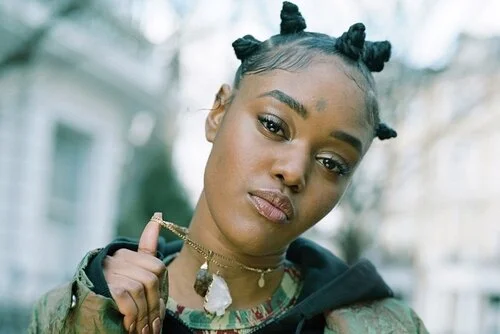
St. Vincent returns with an inspired album of her best work yet. Daddy's Home was produced by pop producer and long term collaborator Jack Antonoff. "The album was inspired by the classic records of the 70s. Stevie, Sly, Stones, Steely Dan, Chords, Groove. The days when sophisticated harmony and rhythm didn't sound heady - they just sounded, and felt good. Lots of guitar. But warm sounds, not distortion and chaos. Hopefully a turn nobody will see coming" - Annie Clark”.

I am going to bring in a few recent interviews where Clark discusses her new album and some of the themes/sounds that inspired it. As a songwriter and visionary, I sort of feel she is a modern-day David Bowie…in the sense she always innovates and creates this truly original music. Her style changes, and we have this chameleon-like artist who always fascinates. Whatever mode and guise she is in, she is always very much herself – in the sense that there is not another artist like St. Vincent.

I have been thinking about St. Vincent (I shall refer to her as the artist going forward) creating the album and what her life has been like over the past few months. That brings me neatly to an NME interview. In it, we learn what has been occupying the amazing St. Vincent, how she has progressed as an artist, and what we can expect from Daddy’s Home:

It turns out that, over the past year, not even rock stars have been spared from the churn of incredibly wholesome pandemic hobbies. Forced away from the stage, Annie Clark, who makes and releases music as St. Vincent, has recently been unearthing some unlikely outlets for her creativity – with a newfound knack for home improvement that could give Changing Rooms a run for its money.

Now back in Los Angeles, with spectacular new album ‘Daddy’s Home’ on the way, Annie Clark is taking a well-earned break after remodelling her mum’s house to keep busy, and has been carefully cultivating a growing collection of power tools featuring “really legit drills and sanders and saws to do landscaping”. Tearing down interior walls and grouting tiles helped her to connect with her inner DIY daddy, she tells NME over the phone: “Once I turned those breakers off and started moving sconces around, I was like, I don’t need to call an electrician! I’m an expert after 15 minutes and a YouTube video.”

She adds, cheerfully: “If you need any plumbing done, or – God – a wall poorly painted, give me a call. I’m your girl.”

Since 2003, ‘this music thing’ has led 38-year-old Clark in a variety of directions – from playing in American choral rock band the Polyphonic Spree and singer-songwriter Sufjan Stevens’ live bands early on to her 2012 collaborative album with David Byrne, ‘Love This Giant’, and her own storied solo career. Her previous record, 2017’s ‘MASSEDUCTION’, saw St. Vincent push her harsh, angular sonics to their glam-rock conclusion. This was a precise and severe-sounding web of tousling power dynamics; a leopard print-clad ass peeked out of its neon-hued cover.

Oozing with lust, desire and selfishness, it often returned to the unspoken gulf between what people say they want, and what people truly want at their core. A whirlwind of unidentified pharmaceuticals, ‘Pills’ depicted a narrator gobbling down prescriptions and rushing home “to give head to the money I made,” while ‘Los Ageless’ painted the city as a sleazy and seductive trap of a place. Like the burned-out, barbiturate-sipping housewife at the heart of Joan Didion’s 1970 novel Play It As It Lays, St. Vincent’s protagonist also tries to escape it by compulsively racing her car down the freeways in search of yet more self-destruction.

For ‘Daddy’s Home’, St. Vincent has transformed herself again – this time, into a ’70s singer-songwriter type crusading around New York City with a tumbler of bourbon permanently in hand, expensive perfume and cigarette smoke in her hair. “Imagery-wise, there’s this one side which is the really coquettish daddy’s girl, which is really just so pervy,” Clark says, “and the other side is wearing the suits and the more daddy vibe. I think it might be my funniest album title?” she muses aloud. “My funniest since ‘Marry Me’.”

ssss.jpg

PHOTO CREDIT: Zackery Michael   

Another major inspiration was Candy Darling, an American actor and trans woman who later became a muse for The Velvet Underground, Lou Reed and Andy Warhol. As Clark puts it, she “lived within and presided over it all”, becoming a fixture in fashionable Manhattan. The closing song of St. Vincent’s record is named after Darling, who died in 1974 aged just 29, and imagines waving her off on the “latest uptown train” with armfuls of bodega roses.

“I just got pretty obsessed with her,” she continues. “I had a friend who was friends with her, and was at her bedside when she died, and I just started thinking about her. She was from Queens, which was not geographically far, but may as well have been a lifetime away from Manhattan. She invented herself there, and got to become herself in Manhattan,” Clark says. “I just kept picturing that we were all on the platform seeing her off and she was taking that last uptown train to heaven, slow motion waving with the tiniest bit of subway wind in her hair.”

sss.jpg

PHOTO CREDIT: Zackery Michael   

Often ‘Daddy’s Home’ returns to the image of a fallen angel or the myth of Icarus: tragic figures killed after flying too close to the sun. The title track, meanwhile, is autobiographical, recalling Clark signing makeshift autographs in the visitation room before her father left jail. “We’re all born innocent but some good saints get screwed,” she sings, “Hell where can you run when the outlaw’s inside you?”

And though ‘Daddy’s Home’ is more patently autobiographical than anything the musician has done before, it still stems from a fantastical world populated by down-and-out characters – and despite shedding light on some of the experiences that led here, Clark is opaque as ever when it comes to defining the meaning of her music. Though she’s said that this is partly an album about her self-discovery in the decade during which her father was incarcerated, she won’t elaborate on what exactly she’s learned – nifty DIY skills aside”.

The reason for bringing in a few interviews is that, in each, we learn something new. There will be more promotion before the album arrives but, with two singles from the album out already – Pay Your Way in Pain, The Melting of the Sun –, there is a lot of intrigue and excitement. I love the direction St. Vincent has taken on Daddy’s Home. There are elements of 1970s’ music sprinkled together with some arresting imagery and lyrics. This is covered in an interview St. Vincent conducted with The Forty-Five:

On ‘Daddy’s Home’, Clark writes about a past derelict New York; a place Los Angeles would suffocate in. “The idea of New York, the art that came out of it, and my living there,” she says. “I’ve not given up my card. I don’t feel in any way ready to renounce my New York citizenship. I bought an apartment so I didn’t have to.” Her down-and-out New York is one a true masochist would love, and it’s sleazy in excess. Sleaze is usually the thing men flaunt at a woman’s expense. In 2021, the proverbial Daddy in the title is Clark. But there’s also a literal Daddy. He came home in the winter of 2019.
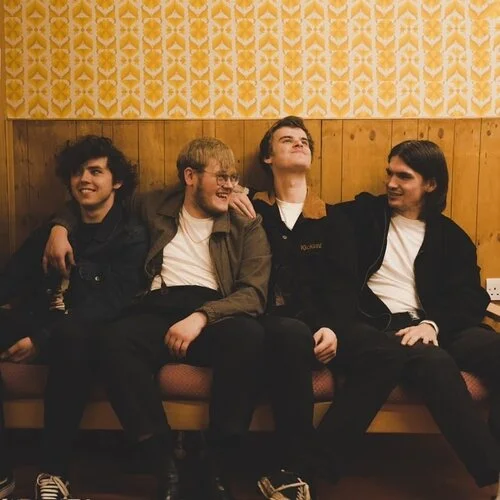
On the title track, Clark sings about “inmate 502”: her father. He was sentenced to 12 years in prison for his involvement in a $43m stock fraud scheme. He went away in May 2010. Clark reacted by writing her third breakthrough album ‘Strange Mercy’ in 2011; inspired not just by her father’s imprisonment but the effects it had on her life.“I mean it was rough stuff,” she says. “It was a fuck show. Absolutely terrible. Gut-wrenching. Like so many times in life, music saved me from all kinds of personal peril. I was angry. I was devastated. There’s a sort of dullness to incarceration where you don’t have any control. It’s like a thud at the basement of your being. So I wrote all about it,” she says.

xxx.jpg

PHOTO CREDIT: Zackery Michael 

“I am protective of my family,” she says. “It didn’t feel safe to me. I disliked the fact that it was taken as malicious obfuscations. No.” Clark wanted to deal with the family drama in art but not in press. She managed to remain tight-lipped until she became the subject of a different intrusion. As St. Vincent’s star continued to rocket, Clark found herself in a relationship with British model Cara Delevingne from 2014 to 2016, and attracted celebrity tabloid attention. Details of her family’s past were exposed. The Daily Mail came knocking on her sister’s door in Texas, where Clark is from.

The entire record is familiar, giving the listener the satisfaction that they’ve heard the songs before but can’t quite place them. It’s a satisfying accompaniment to a pandemic that encouraged nostalgic listening. Clark was nostalgic too. She reverted to records she enjoyed with her father: Stevie Wonder’s catalogue from the 1970s (‘Songs In The Key Of Life’, ‘Innervisions’, ‘Talking Book’) and Steely Dan. “Not to be the dude at the record store but it’s specifically post-flower child idealism of the ’60s,” she explains. “It’s when it flipped into nihilism, which I much prefer. Pre disco, pre punk. That music is in me in a deep way. It’s in my ears.”

Clark is interested in the new generation. She’s recently tweeted about Arlo Parks and has become a big fan of Russian singer-songwriter Kate NV. “I’m obsessed with Russia,” she says. In a recent LA Times profile, she professed to a pandemic intellectual fixation on Stalin. “Yeah! I mean right now my computer is propped up on stuff. You are sitting on The Gulag Archipelago, The Best Short Stories Of Dostoyevsky andThe Plays Of Chekhov. I’m kinda in it.” The pop world interests Clark, too. She was credited with a co-write on Swift’s 2019 album ‘Lover’. At last year’s Grammys she performed a duet with Dua Lipa. It was one of the queerest performances the Grammys has ever aired”.

I am going to wrap it up soon. Before that, an interview from Esquire really caught my eye. With inspiration taken – in terms of the album title and a lot of the material – from her father’s time in prison, it is interesting to see how she views that experience. St. Vincent also talked about a recent songwriting and creativity masterclass, and  the vibe of Daddy’s Home:

We're curious about your dad and the American legal system.

I have had a lot of questions about that. For some reason it didn’t occur to me how much I would be answering questions about… my hilarious father!

How do you view his time in prison?

Just that life is long and people are complicated. And that, luckily, there’s a chance for redemption or reconciliation, even after a really crazy traumatic time. And also anybody that has any experience with the American justice system will know this... nobody comes out unscathed.

You recently presented an online MasterClass: "St. Vincent Teaches Creativity & Songwriting". One of the takeaways: “All you need are ears and ideas, and you can make anything happen”. Who’s had the best ideas in music?

Well, you’ve got to give credit to people who were genuinely creating a new style – like if you think of Charlie Parker, arguably he created a new style. This hard bop that was just absolutely impossible to play. It was, like, “Check me out – try to copy me!” So, that’s interesting. I think Brian Eno, for sure, has some great ideas about music – and obviously has made some of the best music. Joni Mitchell – completely singular. I mean: think about that. There are some people who are actually inimitable – like, you couldn’t possibly even try to imitate them.

ddudfudfufiffggh.jpg

PHOTO CREDIT: Erik Carter for Rolling Stone 

The new album has a very “live” Seventies feel. I’d read that some of the tracks are first takes. Can that be right? It all sounds very complicated.

That’s not right. I should say [rock voice] "Yeah, that’s right, we just jammed…" But, you know, I’ll be honest. There are some vocal takes in there that are first takes. But it really is just the sound of people playing. We get good drum takes. And good bass takes. And I play a bunch of guitar and sitar-guitar. And it’s the sound of a moment in time, certainly. And way more about looseness and groove and feel and vibe than anything else [I’ve done before].

Amazing live albums, virtuoso playing, jamming – those were staples of Seventies music. Have we lost some of that?

I mean, I can wax poetic on that idea for a minute. In the Seventies you had this tremendous sophistication in popular music. Stevie Wonder, Steely Dan and funk and soul and jazz and rock…. and all of the things rolled into one. That was tremendously sophisticated. It just was. There was harmony, there were chord.

What else from that decade appealed to you for Daddy’s Home?

It reminds me of where we are now, I think. So, 1971-1976 in downtown New York, you’ve got the Summer of Love thing and flower children and all the hippy stuff and it’s, like, “Oh yeah, that didn’t work out that well. We’re still in Vietnam. There’s a crazy economic crisis, all kinds of social unrest”. People stood in the proverbial burned-out building. And it reminds me a lot of where we are today, in terms of social unrest, economic uncertainty. A groundswell wanting change... but where that’s headed is yet to be seen. We haven’t fully figured that out. We’re all picking up pieces of the rubble and going “Okay, what do we do with this one? Where do we go with that one?” Being a student of history, that was one of the reasons why I was drawn to that period in history.

Also: that’s the music I’ve listened to more than anything in my entire life. I mean, I was probably the youngest Steely Dan fan. It didn’t make me that popular at sleepovers. People were, like, “I want to listen to C+C Music Factory” and I was, like, “Yeah, but have you heard this solo on [Steely Dan’s] ‘Kid Charlemagne’”? That music is so in me. It’s so in my ears and I feel like I never really went there [making music before]. And I didn’t want to be a tourist about it. It’s just that particular style had a whole lot to teach me. So I wanted to just dig in and find out. Just play with it”.

I am excited about the upcoming release of Daddy’s Home. St. Vincent is, to me, one of the most compelling and inspirational modern artists. She is a phenomenal songwriter, musician and creative that is influencing so many people. Whilst she will release a lot more music, Daddy’s Home is going to be a huge release! I wonder whether there will be a short film or documentary around the release of the album because, in terms of its themes and inspirations, there is a lot of personal weight and family in it. Brace yourself for a phenomenal album from…
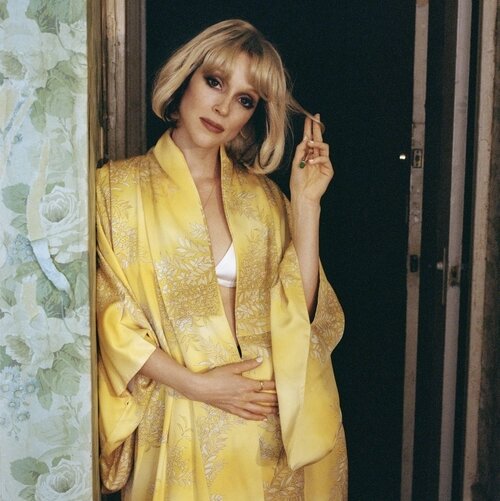
A modern-day genius.

FEATURE: Smile Away: Paul and Linda McCartney’s Glorious Ram at Fifty

FEATURE:


Smile Away

xxxx.jpg

Paul and Linda McCartney’s Glorious Ram at Fifty

___________

THIS is another album anniversary feature…

zzz.jpg

 IN THIS PHOTO: Paul McCartney in Scotland in 1971

where I am a little quick off of the mark. Because a fiftieth anniversary addition of Paul and Linda McCartney’s Ram is being released soon, I wanted to take a closer look at a wonderful album. In their feature, udioscovermusic explain more:

Paul and Linda McCartney’s classic 1971 album Ram will be released in a 50th anniversary, limited edition half-speed mastered vinyl pressing by UMe on May 14.

The only album to be credited to Paul and Linda as a couple, Ram was recorded over a five-month period from the autumn of 1970 onwards, in the time immediately after the dissolution of The Beatles. The LP was started in sessions in New York but created mainly at the couple’s farm in Scotland, and first released by Apple in May 1971.

The album’s appearance came just over a year after Paul’s solo debut McCartney, and unlike that one-man recording, Ram featured guests such as Denny Seiwell, the drummer who would soon become a co-founding member of Wings. Hugh McCracken and David Spinozza also featured on guitar.

tchfork would later enthuse about the album’s enduring influence by noting that the home-made approach of the record was “inventing an approach to pop music that would eventually become someone else’s indie-pop.” It called Ram “a domestic-bliss album, one of the weirdest, earthiest, and most honest ever made,” while Mojo judged it to be “quintessentially McCartney.” Rolling Stone went on to describe Ram as a “masterpiece” and “a grand psychedelic ramble full of divine melodies.”

The sessions for the album yielded McCartney’s major hit of early 1971, “Another Day,” which was not included on the original release, but was added to the 1993 reissue in the Paul McCartney Collection series. “Uncle Albert/Admiral Halsey” was released as a US single from Ram in August 1971 and reached No.1 on the Billboard Hot 100 a month later; it didn’t become a single in the UK, where “Back Seat Of My Car” came out as a 45 instead. “Eat At Home” was subsequently a single in other parts of Europe.

It is amazing to think that there was animosity towards Paul McCartney’s albums in the early years of the 1970s. I guess many blamed him for breaking up The Beatles, so no matter what he put out in the world, people would attack it! His McCartney debut of 1970 is a phenomenal record that divided critics. Ram followed a year later - many consider it to be his finest album outside of The Beatles and Wings. With his wife, Linda, Paul McCartney created this album that matched some of his best work with The Beatles. I would encourage people to pre-order the new edition of Ram (which comes out on 14th May). I am baffled people were not seeing the genius of the album back in 1971. Even though most of the mixed or negative reviews came back in 1971, there have been reviews since that have been a little harsh. Ultimate Classic Rock took a glowing look at the album in their feature of 2016:

An overlooked precursor to the current handmade-pop phenomenon, Paul McCartney's Ram was initially criticized for everything that makes it sound unexpectedly bold, fascinatingly unedited and utterly misjudged today.

The album, released on May 17, 1971, moves with a guileless joy from the country-blues parody of "3 Legs" to the plucky reverie of "Ram On," from the burping rockabilly riffs of "Smile Away" to the comfy domesticity of "Heart of the Country." Imperfect but so very interesting, Ram is just as apt to indulge in the convoluted escapism of "Long Haired Lady," as it is in the jokey doom's-day howl of "Monkberry Moon Delight," as it is in the Buddy Holly-inspired sexual innuendo of "Eat at Home."

 That said, for all of McCartney's furious creativity, the loss of longtime writing partner John Lennon — not to mention Beatles producer George Martin — can be keenly felt at times.

"Uncle Albert/Admiral Halsey," for instance, always seemed to miniaturize everything McCartney once strove for with Abbey Road, feeling more calculatedly twee than truly inspired, despite its episodic construction. Ultimately, no matter how many copies it sold as a single, this is Ram's most obvious indulgence. The principal weakness that Paul McCartney has always had, the one that the Beatles at their best seemed to so deftly obscure, is fully exposed: He's so well aware of his own charm.

Worse still: How Ram is hampered, even now, by the long-forgotten sniping then engulfing McCartney and Lennon — from the haughty sermonizing of the opening track "Too Many People" to the rather silly conceit that his photographer wife was somehow stepping in for John Lennon as collaborator, from the unselfconscious contempt of "Dear Boy" (which Lennon felt was about him) to the utterly unsubtle cover image of two beetles copulating.

At the time, for some reason, both of these former bandmates were making a habit of fighting their battles through the medium of music, and the albums were poorer for it. (As delicious as Lennon's "How Do You Sleep?" might have seemed at the time, for instance, it really didn't jibe with the utopian sentiment of the title track from the same album, you know?)

 McCartney is, at this point, still bursting with post-Beatles ideas — and it gives this album a dizzying momentum. Even his stand-alone non-album efforts from the period, collected on subsequent reissues, end up as interesting asides. "Another Day" is like a lesser "Penny Lane." "Oh Woman, Oh Why" has always been blessedly, truly weird, with McCartney staring down the barrel of a pissed-off lady's gun.

The most intriguing moment might just be "The Back Seat of My Car," his soaringly constructed, yet desperately sad closing track on Ram.

In keeping with the rest of this project, the song is a little unfocused — too overstuffed with ideas, too reliant on multi-tracked McCartneys, not as rustic as his solo debut but somehow tossed-off sounding anyway – and simply too long. But yet it still perfectly encapsulates everything that makes Ram such a wildly inventive gem: It's gutsy and unprecious at one point and then a testament to McCartney's enduring pop sensibilities at others. As McCartney bolts from '50s-era rock to cocktail-lounge crooning to swooning violins, and back again — all inside of this one final tune, mind you — there is a sense of limitless possibility.

Neatly foreshadowing the quirky allure of today's homespun singer-songwriter projects, Ram certainly would have benefited from having someone else to bounce ideas off of, but its essential pop magnetism — its compulsively listenability — simply can't be denied”.

I am going to finish off with, as I do, a couple of positive reviews. Ram On, Uncle Albert / Admiral Halsey and The Back Seat of My Car are McCartney classics. I love Linda McCartney’s backing vocals and her co-lead vocal on Long Haired Lady. The whole album is a real treat and, whilst Paul McCartney has released some sensational albums since 1971, I think that Ram is his best album outside of The Beatles and Wings. It is one of those albums that still sound remarkable and highlights keep forming. There are so many layers revealed the more you listen. In their review, this is what AllMusic wrote:

After the breakup, Beatles fans expected major statements from the three chief songwriters in the Fab Four. John and George fulfilled those expectations -- Lennon with his lacerating, confessional John Lennon/Plastic Ono Band, Harrison with his triple-LP All Things Must Pass -- but Paul McCartney certainly didn't, turning toward the modest charms of McCartney, and then crediting his wife Linda as a full-fledged collaborator on its 1971 follow-up, Ram. Where McCartney was homemade, sounding deliberately ragged in parts, Ram had a fuller production yet retained that ramshackle feel, sounding as if it were recorded in a shack out back, not far from the farm where the cover photo of Paul holding the ram by the horns was taken. It's filled with songs that feel tossed off, filled with songs that are cheerfully, incessantly melodic; it turns the monumental symphonic sweep of Abbey Road into a cheeky slice of whimsy on the two-part suite "Uncle Albert/Admiral Halsey."

All this made Ram an object of scorn and derision upon its release (and for years afterward, in fact), but in retrospect it looks like nothing so much as the first indie pop album, a record that celebrates small pleasures with big melodies, a record that's guileless and unembarrassed to be cutesy. But McCartney never was quite the sap of his reputation, and even here, on possibly his most precious record, there's some ripping rock & roll in the mock-apocalyptic goof "Monkberry Moon Delight," the joyfully noisy "Smile Away," where his feet can be smelled a mile away, and "Eat at Home," a rollicking, winking sex song. All three of these are songs filled with good humor, and their foundation in old-time rock & roll makes it easy to overlook how inventive these productions are, but on the more obviously tuneful and gentle numbers -- the ones that are more quintessentially McCartney-esque -- it's plain to see how imaginative and gorgeous the arrangements are, especially on the sad, soaring finale, "Back Seat of My Car," but even on its humble opposite, the sweet "Heart of the Country." These songs may not be self-styled major statements, but they are endearing and enduring, as is Ram itself, which seems like a more unique, exquisite pleasure with each passing year”.,

I am looking forwards to the half-speed mastered version of Ram arriving in May. A few remarkable albums turn fifty this year, but I think that Ram is one of the finest and most interesting of them all. It is Paul and Linda McCartney at their harmonious and inspired best. Whereas McCartney arrived very soon after The Beatles’ break-up and one can feel a sense of anxiety, there is a different sound and mood on Ram.

zzz.jpg

 IN THIS PHOTO: Paul and Linda McCartney in 1971/PHOTO CREDIT: Hulton Archive/Getty Images

Ram was reissued back in 2012. I want to bring in portions of Pitchfork’s review of that album. They had a lot of love to offer one of the best albums of the 1970s:

The joy of paying close attention to Ram is gradually discovering that Paul was humming darker things under his breath than it seemed. "Smile Away", for instance, is a messy, romping slab of Buddy Holly rock. Paul makes a joke about his stinky feet. The chorus goes "Smile away, smile away, smile away, smile away, smile away." But it's not just "smile," a brief, cost-free act that can last a second. It's "Smile Away", keeping a fixed grin as conversation grows unpleasant. In interviews of the period, Paul was asked repeatedly if he felt lost without his collaborating partner, if he was motivated solely by commercial success, how he felt about being "the cute Beatle." The backing vocal chant behind "Smile Away" goes, by turns, "Don't know how to do that" and "Learning how to do that." "Smile away horribly, now," Paul slurs over the song's fadeout. Yes, he's fine. No, he and Linda will not become the next "John and Yoko." But thanks so much for asking. If you tell a dog it's a brainless fleabag with the same tone of voice you use to say "Good boy," it will still wag its tail.

 The album is riddled with dark grace notes like this: "Monkberry Moon Delight" has an absolutely unhinged vocal take, Paul gulping and sobbing right next to your inner ear. The imagery is surrealist, but anything but whimsical: "When a rattle of rats had awoken/ The sinews, the nerves, and the veins," he bellows. It could be a latter-day Tom Waits performance. "Too Many People" opens with Paul warbling "piece of cake," but the lyrics themselves wag their finger at societal injustices, former bandmates-- basically everybody. The lyrics to "3 Legs" are full of hobbling animals with missing limbs.

The almost-title song "Ram On", could serve as the album's redeeming spirit: A haunting, indelible little tune drifts past on ukulele as Paul croons, "Ram on, give your heart to somebody/ Soon, right away." The title is a play on his old stage name "Paul Ramon," which makes the song a private little prayer; a mirror image, perhaps, to John Lennon's "Hold On". The song is reprised, late in the record, functioning like a calming breeze. "I want a horse, I want a sheep/ Want to get me a good night's sleep," Paul jauntily sings on "Heart of the Country", a city boy's vision of the country if ever there was one, and another clue to the record's mindstate. For Paul, the country isn't just a place where crops grow; it's "a place where holy people grow." Now that American cities everywhere are having their Great Pastoral Moment, full of artisans churning goat's-milk yogurt and canning their own jams, Ram feels like particularly ripe fruit”.

Fifty years after the release of the magnificent Ram and we still have Paul McCartney making incredible music and keeping busy (Linda sadly died in 1998). If you can afford the vinyl for the anniversary release then it is well worth the money. Just one spin of Ram and one is truly…

BEGUILLED and amazed.