FEATURE: The Lockdown Playlist: Roy Orbison at Eighty-Five

FEATURE:


The Lockdown Playlist

aaaa.jpg

PHOTO CREDIT: David Redfern/Redferns

Roy Orbison at Eighty-Five

___________

OTHERWISE known as…

zzz.jpg

 PHOTO CREDIT: Moore, Hulton Archive/Getty Images

‘The Caruso of Rock" and ‘The Big O’, Rob Orbison would have been eighty-five today (23rd April). He sadly died on 6th April, 1988 aged just fifty-two. I want to remember him on his eighty-fifth birthday, as I think he is one of the greatest vocalists who ever lived. Whether performing during his solo career of with The Traveling Wilburys (a supergroup he performed in alongside Bob Dylan, George Harrison, Jeff Lynne and Tom Petty), his voice was unlike anyone else’s! Not to mangle his biography, but here are some details and background:

A few things contributed to Roy Orbison’s success. The songs, the production, and the performance were key factors. The songs were completely original in structure, sound and style. Totally innovative compositions, that didn’t exist until then. It became a style. Fred Foster really went for quality instead of quantity. He was willing to splash money on a session without any guarantee of payback. He was also willing to take a chance on a sound that did not conform to accepted market norms.

After that came “Crying”, “Candy Man”, “Dream Baby”, “Working for the Man”, “Leah”, “In Dreams”, “Pretty Paper”, “Blue Bayou”, “Mean Woman Blues “, “It’s Over”. This became an unbroken string of Top 40 hits that lasted for four years. Roy became the top selling American artist and one of the world’s biggest names .

In May 1963, and with the success of “In Dreams”, Wesley Rose eventually accepted an invitation for Roy to tour England on a bill with The Beatles, who meant nothing in the United States at that time. The tour was sold-out in one afternoon. On the first night, Roy did fourteen encores before The Beatles could get on stage.

Roy Orbison was one of the few hit-makers to hold his ground, and even to increase his popularity in the wake of the so-called British Invasion. He did it by maintaining a matchless quality of releases, with an original variety of content, structure, tempo and rhythm. He was also an extremely subtle song craftsman, making changes during the course of a session, or between sessions, adding the final commercial gloss to a song.

“Oh Pretty Woman” was recorded on August 1st, 1964. It was written by Roy together with his new writing partner Bill Dees and it became Roy’s biggest hit, and in fact the most popular song of all time. Released in August in the US and in September in the UK, it went to number one in every country of the World. By most estimates, the song sold about seven million copies that same year.

As his MGM contract came to an end in 1973, Roy signed a one-year contract with Mercury Records in 1974 without major acclaim, but as he would say, he always had a record in the charts in some part of the World. For example “Penny Arcade” was number 1 in Australia for weeks on end and “Too Soon to Know” was number 3 in England. After that brief stay with Mercury Records, Roy re-signed with Monument in January 1976 in an attempt to recharge his career in the midst of heavy touring on the Far East, Australia, Asia and Europe. Roy paid the price of heavy smoking, heavy touring and life on the road when he underwent open-heart surgery at the St. Thomas Hospital in Nashville in January 18, 1978, but he was back on the road three weeks later just to prove he could do it.

But about this time things started to look a bit brighter in the US. Roy was always out of the shadow in Europe, mainly in England and everybody over there knew who he was, he was still popular and doing more shows overseas than at home, but when Linda Ronstadt had a huge hit with Roy’s “Blue Bayou” which sold about 7 or 8 million copies, Van Halen had an enormous success with “Oh Pretty Woman” and Don McClean did the same with “Crying”, a rejuvenation process started.

Key factors contributed to the rebirth of Roy’s career in the USA. A Grammy with Emmylou Harris in 1980 for “That Lovin’ You Feelin’ Again”, “Wild Hearts Run out of Time” being in the film Insignificance, the Class of ’55 LP with fellow Sun record mates, his move to Malibu, California in late 1985, he re-recorded his greatest hits for an upcoming LP for Silver Eagle from Canada, and the use of the song “In Dreams” in the film Blue Velvet, but for sure helped a big deal to put Roy’s music back in the map. Blue Velvet is considered a cult film and it helped Roy to become very contemporary again, as he always wanted to be.

It was announced that Roy would be inducted into the 2nd annual Rock and Roll Hall Of Fame in New York in January 21, 1987. He was inducted by Bruce Springsteen who said, “In 1975, when I went into the studio to make Born to Run, I wanted to make a record with words like Bob Dylan that sounded like Phil Spector. But most of all, I wanted to sing like Roy Orbison.” Right after this, Roy signs with Virgin Records who immediately re-releases the greatest hits tapes on an LP called In Dreams-Greatest Hits. There are a few new songwriting collaborators, among them Jeff Lynne. New material is being recorded for the upcoming Virgin LP in Los Angeles and the expectations start to grow.

Posthumously released in 1989, Mystery Girl became the biggest selling album of his career. Two cuts from the album became hits: “You Got It” made it in the U.S. Top 10 and Bono’s “She’s A Mystery To Me” climbed to the Top 30 in the U.K. In 1992, Virgin released King of Hearts, a collection of previously unreleased songs, and The Very Best of Roy Orbison in 1996, which documented his career from its beginning through the last years of his life.

Roy’s legacy continues to grow as his wife; Barbara devotes her time to managing his estate and releasing Orbison products on her label, Orbison Records. In January 1998, she issued Combo Concert, which is a collection of previously unreleased live recordings from Holland and France made in 1965. A companion video of the same name features a black and white film of the original Dutch television broadcast. In 1998, nearly ten years after his death, Barbara accepted the Recording Academy’s Lifetime Achievement Award bestowed upon Roy for his unparalleled contribution to the recording industry”.

To mark what would have been the eighty-fifth birthday of an iconic singer, this Lockdown Playlist is all about that stunning and rich voice. I have selected a few of his choice tracks that showcase what a talent he was. Although he has been gone for quite a few years, I think that his legacy and hugely important music will live on forever. This is a Lockdown Playlist salute…

TO The Big O.

FEATURE: Vinyl Corner: Prefab Sprout - From Langley Park to Memphis

FEATURE:


Vinyl Corner

aaa.jpg

Prefab Sprout - From Langley Park to Memphis

___________

EVEN though I featured Prefab Sprout…

zzz.jpg

in Vinyl Corner this time last year (when I included 1985’s Steve McQueen), I think it is about time I highlight them once more. Today, I am focusing on the follow-up of Steve McQueen, From Langley Park to Memphis. I would urge people to buy From Langley Park to Memphis on vinyl. The third studio album from the Durham band, it is one where they became more commercial. Although some critics felt that the songs on From Langley Park to Memphis are not as deep and consistent as on their previous album or their debut, Swoon, I feel it is a magnificent album. Before moving on, here is some background regarding From Langley Park to Memphis:  

From Langley Park to Memphis is the third studio album by English pop band Prefab Sprout. It was released by Kitchenware Records on 14 March 1988. It peaked at number 5 on the UK Albums Chart, the highest position for any studio album released by the band. Recorded in Newcastle, London and Los Angeles, it has a more polished and commercial sound than their earlier releases, and features several guest stars including Stevie Wonder and Pete Townshend. The album's simpler songs, big productions and straight-forward cover photo reflect frontman Paddy McAloon's wish for it to be a more universal work than their more cerebral earlier albums”.

Many people know the album because of the two hits songs, The King of Rock 'n' Roll and Cars and Girls. Before wrapping things up, I want to bring in a couple of reviews that show what a great record From Langley Park to Memphis is. In 2014, Sound on Sound spoke with Prefab Sprout’s songwriter and leader, Paddy McAloon (alongside Paddy McAloon, Prefab Sprout consisted Neil Conti, Martin McAloon and Wendy Smith; today, they are more of a Paddy McAloon solo venture) about the catalogue of the band. There are some interesting points regarding From Langley Park to Memphis:

Whatever the circumstances of its creation, From Langley Park To Memphis was Prefab Sprout’s most polished offering and their best–selling record, reaching number five in the UK album chart, not least due to the naggingly catchy and knowingly daft Top Ten hit ‘The King Of Rock & Roll’. There were many memorable moments for McAloon during the album’s making, not least hiring an orchestra for ‘Hey Manhattan!’; the parts were committed to tape at CTS Studios in Wembley, a favourite of John Barry’s when recording the scores for the James Bond films. Elsewhere, Prefab Sprout’s growing mainstream status was spotlit by the appearances on the record of Pete Townshend, who played acoustic guitar on ‘Hey Manhattan!’, and Stevie Wonder, who contributed his trademark melodious harmonica to ‘Nightingales’.

Both of these cameo performances came about simply because Prefab Sprout happened to be using the same studios as the legendary musicians. McAloon remembers being ill with flu and absent from the sessions on the day he encouraged his bassist brother Martin to ask the Who guitarist to play on ‘Hey Manhattan!’. “Our Martin said he walked past this room and Pete Townshend had this Ovation acoustic and he was shaking it over his head violently,” he says. “Martin thought, ‘God he even does it in private!’ But then it turned out he’d lost his plectrum inside it, like a mere mortal, and he was trying to shake it out. So he did the part as a favour and it’s just a straightforward, but beautiful, rhythm guitar with strange chords going on.”

There was a tenser atmosphere, however, in Westside Studios on the day Wonder arrived to make his contribution to ‘Nightingales’. “The young engineer on the session, Richard Moakes, looked at me just before he did it and said, ‘Oh God I’m a bit worried I won’t know how to get his sound’. I said, ‘Well, look, we’ll just see what happens’. And of course you put the microphone on him and you turn the fader up and he sounds like Stevie Wonder. You don’t do anything.”

It was an enlightening moment for McAloon. “For a long time, you have this chimera of a notion that someone can get you a great sound,” he says. “But it starts with you, y’know. I thought, OK, you’ve seen how that works with someone like Stevie Wonder — he has his skills and you put a microphone in front of him and you will capture him. Unless you’re doing something really silly, you’ll get it and it will be identifiable. So I thought, OK, when you play a guitar, don’t blame an engineer if you don’t know what you’re doing. I’ve heard people tell stories about Jeff Beck, that he can pick up any bent, out–of–shape guitar and he will make it sound like Jeff Beck, ‘cause he knows what he’s doing”.

I love the mix of styles that stand alongside one another on the album. McAloon draws inspiration a lot from America through From Langley Park to Memphis - he felt that the country was full of myths and extremes.  Of the album's ten tracks, Thomas Dolby produced The King of Rock 'n' Roll, I Remember That, Knock on Wood and The Venus of the Soup Kitchen. I love Dolby’s production sound. He was sole producer (apart from one track) on Steve McQueen; he co-produced Swoon with David Brewis. The fact there are several producers on From Langley Park to Memphis (Thomas Dolby, Jon Kelly, Paddy McAloon, Andy Richards) makes it a little muddled. In spite of a few critics being a little mixed regarding From Langley Park to Memphis – some felt From Langley Park to Memphis was inferior to Steve McQueen and a little pale -, I think it is an album that is definitely worth exploring further and getting on vinyl. In their assessment, this is what Pitchfork stated:

After Swoon and the critical acclaim that followed Steve McQueen, the band recorded and shelved a quieter follow-up (Protest Songs, eventually released in 1989) before setting off to make something that capitalized on their newfound momentum. At the time of its release, the cinematic From Langley Park to Memphis was largely overshadowed by its first two tracks: the semi-novelty hit “The King of Rock and Roll” (which arrived with a fittingly absurd music video) and the Springsteen-referencing “Cars and Girls.” As a one-two punch, they rightfully stand among Prefab Sprout’s most recognizable songs, and the rest of the record is just as catchy and complex.

McAloon was now penning his own version of standards (“Nightingales”), reverb-coated alt-rock anthems (“The Golden Calf”), and dramatic singalongs that could find a second life on Broadway (“Hey Manhattan”). His writing favored narrators in sad, autumnal stages: “All my lazy teenage boasts are now high precision ghosts/And they’re coming ‘round the tracks to haunt me,” go the opening lyrics to “The King of Rock and Roll,” imagining the life of an older touring musician, every night singing the same meaningless words that he wrote decades ago. And yet the music sounds colorful and hopeful and alive—everything seems to sparkle, right down to the glossy band photo on the album cover.

With that photo, lovingly filtered here to look slightly more artful, the band signaled that they were pivoting away from their underground beginnings. Released at a time when American indie bands like R.E.M. and the Replacements were beginning to make bids for larger audiences, McAloon was making a similar leap, even if he still preferred staying out of the spotlight. While his songs were newly poised for radio and MTV, he remained wary of fame, setting on a reclusive path that would span the rest of his career. “This isn’t meant to sound snobbish,” he told Melody Maker at the time, “but I’ve never felt a part of any community… I don’t go out and look for like-minded people and I’ve never found anyone on the planet who fits the bill.” From Langley Park remains the band’s closest brush to stardom, but McAloon kept finding new ways to push himself”.

I will end things in a second. Before I do, there is a great review from Sproutology that almost defends an album that did not pick up the same raft of great reviews as other albums in their catalogue:

The thing is that the words are every bit as deft and clever as, say, Swoon. But they swim over you in the most delicious music, as glassy surfaced and glossy as the cover art, designed to distance you from anything grungy. This is Paddy celebrating the purest pop, but with an elegance of expression that makes you catch your breath from the instant you pierce the surface and understand what he is doing.

Let me try to explain in another way. I scan Twitter for snippets most days. One aspect of that is the recurrent theme of supposed music fans posting about Prefab Sprout as a novelty band based on only having heard “King of Rock N Roll”. And thereby neatly demonstrating they know nothing about music. Most Sprout fans dismiss it as an aberration “Sad, so sad, to be known for something that so misrepresents what you are!” Even McCartney called it “your dingaling”.

But no, “King of Roll N Roll” is a great song. It was written, quickly, at a period where Paddy has explicitly stated he wanted to get away from the “clever clever student bedsit” image. He went on record (as a joke) as saying that Prefab Sprout would never write songs called “King of Rock N Roll” or “Rebel Land”.  While in fact he had written both. And they’re essentially both the same subject: songs about the broken promises youth hands to you in middle age. Rebel Land: “I saw her young face on that picture/ She really had the horniest eyes/ Now they are blunted/ Blunted with living/ Living with compromise”. King of Rock ‘N’ Roll: “When she looks at me and laughs/ I remind her of the facts/ I’m the king of rock ‘n’ roll/ completely”.

Same him. Same her. Same eyes laughing at him. A mixture of pity and contempt.

And the music and chorus is as jaunty as a pre-teen dance craze, but the sentiments are in a minor key. All you remember – all the tweeters remember – is the cheesy synths. The façade masks the depth of feeling. I mean, what novelty hit starts with a vision as sweeping as “All my lazy teenage boasts/ are now high precision ghosts”? The whole song, Abba reference included, drips regret: “I am not what I was. I was never who you thought I was. This is not what I wanted to be. I am some old hippy playing music I can’t even dance to.”

That’s what “Cars and Girls” is about too, if you forget Brucie and listen to the words: “What we once thought was important, really isn’t. Everything gets complicated, the vividness diminishes, the colours fade.”. And if the point hadn’t quite got through by that point, “I Remember That” just says it out loud, unvarnished: “Cos that’s all we can have, yes it’s all we can trust. It’s a hell of a ride, but a journey to dust.” I’d be willing to bet most people just let these songs wash over them. It’s the glassy surface. It doesn’t let you in unless you scratch it.

I don’t think it’s an accident that the production duties are shared. Paddy has suggested he thinks “Steve McQueen” became Dolby’s album, however great the songs were, he’d moved past them himself. But he’d watched and learned and wanted to do a little of the next one himself, to remove himself from the shadow of the master, to not let it become some else’s piece. Who knows? But anyway”Enchanted” is for me like one of those apprentice made model locomotives you sometimes find in engineering museums: elaborately and joyously wrought, an expression of the delight of mastering a new skill. Try and fathom the baseline if you can (the bass note, deliciously, is sampled from the bass intro to “Wichita Lineman”. The key change in the middle of “Here’s something to dwell upon/Now we’re living next we’re gone/If you’ve loved please pass it on”. That theme again, and a gloss finish to rival Scritti Politti. Ain’t no Purple Rain quite like it. The past passing into the future, the changes that brings.

Side One ends with “Nightingales”. When I first had the album, that was the song that made me go back and play the side again, endlessly. Because at that point I’d discovered how great my parents’ record collection was, and I was listening to a lot of standards. “Nightingales” sounds like a standard. When sung by a really great singer, it essentially is a great standard. What I would say now is that the last verse “we are cartoon cats” sits ill with the rest of it. It sounds like it was an afterthought, and Paddy dropped the verse in some performances later. But anyway, the song is a somewhat optimistic close to the side. What keeps us busy day to day distracts us from our true nature, we are what we love, what is true to us, whatever happens, and we must never forget that, we must remind each other of it: “Tell me: ‘Do something true, true of you and me…'”.  Thinking of it simply as a sweet song that evokes a standard masks the poignancy of the sentiment. Living is our song”.

I really love From Langley Park to Memphis, as it is an album I grew up listening to. The King of Rock 'n' Roll was the first song from Prefab Sprout I heard. I was instantly hooked. In Paddy McAloon – as I have said in features before – they have one of the greatest songwriters ever. If you have not got a copy of From Langley Park to Memphis already, go and get a copy and…

GIVE it a spin.

FEATURE: Karma Chameleon: Looking Ahead to the Boy George Biopic

FEATURE:


Karma Chameleon

sss.jpg

Looking Ahead to the Boy George Biopic

___________

I do like a good music biopic…

zxx.jpg

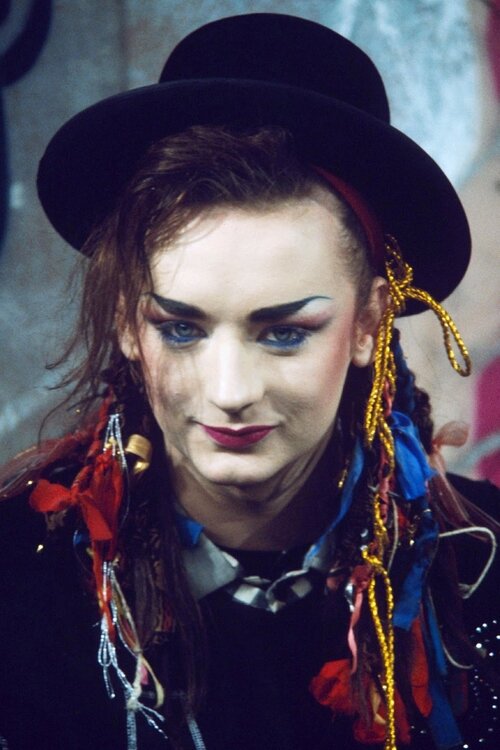
and one I am surprised hasn’t happened before concerns Boy George. The Culture Club lead is a legendary songwriter and singer. To me, he is an inspiring figure and someone who commands a huge amount of respect. From his iconic looks and soulful voice, there is a lot to focus on when it comes to a biopic. I am not aware of his background and upbringings so, when news broke earlier this week that Boy George (George O’Dowd) is looking for an actor to play him, it pricked my ears:

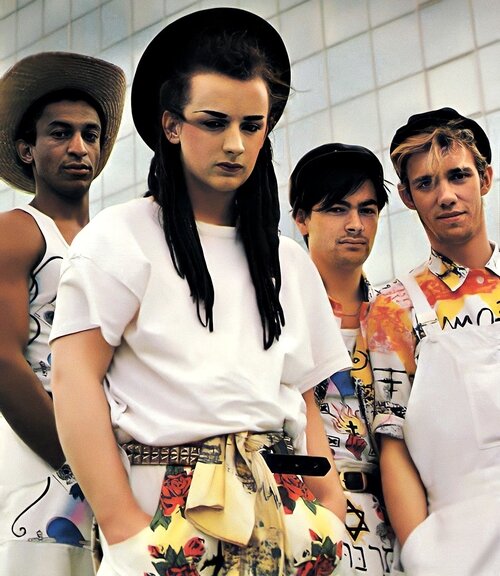
The film will share the story of Boy George’s beginnings in an Irish working-class family through to his rise to stardom in the 1980s with Culture Club alongside original members Jon Moss, Roy Hay and Mikey Craig.

As for casting, the singer also said Danny Mays (1917, Line Of Duty) would play his father – and also teased that “there are rumours of Keanu Reeves popping in”.

Boy George also said that they were looking to cast an actor to play him. “We’re looking for a brave young actor anywhere in the globe to take on the role of his life, and it will be brilliant,” he said. “I wanna be impressed! So see you on set this summer”.

Boy George turns sixty in June. I am a bit too young to remember the earliest Culture Club material. Their huge single, Karma Chameleon, came out in the U.K. on 5th  September, 1983 (four months after I was born). I really love the band’s second album, Colour by Numbers. Arriving a year after their acclaimed debut, Kissing to Be Clever, I think that Colour by Numbers is one of the best albums of the 1980s. I think that the band at that time - Boy George – lead and backing vocals, Roy Hay – guitars, piano, electric sitar and backing vocals, Mike Craig – bass guitar and backing vocals, Jon Moss – drums and backing vocals – are so harmonious and wonderful together. To me, Boy George’s charisma, incredible vocals and style is the hallmark and standout of the band.

I am looking forward to the biopic and what angles it approaches. This article from Deadline provides some details and locations for a biopic that is shaping up to be fascinating and a must-watch:

EXCLUSIVE: The Boy George movie biopic, which is to be called Karma Chameleon, has moved from MGM to Millennium Media and is eyeing a summer 2021 start in London and Bulgaria, we can reveal.

In a new video that we can debut on Deadline, the Culture Club frontman says a casting search is underway for the actor to play him. The singer also teases the casting of 1917 and Line Of Duty actor Danny Mays in the role of his father and claims “there are rumours of Keanu Reeves popping in.” The production declined to confirm either actor’s involvement.

As previously announced, the project is written and will be directed by Hitchcock and Anvil: The Story of Anvil director Sacha Gervasi, and it will be produced by Kevin King Templeton (Creed I & II) and Paul Kemsley. George and Jessica de Rothschild will executive produce. Newly aboard is casting director Kate Ringsell (Wonder Woman).

The film will explore George’s humble beginnings in an Irish working-class family, through his rise to the top of the international charts with the ’80s band Culture Club alongside original band members Jon Moss, Roy Hay, and Mikey Craig.

The larger-than-life singer rose to fame during the New Romantic era of pop in London, aided and dressed by Malcolm McLaren. Culture Club sold more than 100 million singles and 50 million albums, and is well known for hits including “Do You Really Want to Hurt Me?” and “Karma Chameleon.” George became famous for his sense of style and androgyny, but there have also been bumps along the way, including substance addiction, arrest for drug possession and a four-month stint in prison for the assault of a male escort.

The production tells us the musical drama will have full access to the singer’s library of music and the band’s biggest hits.

The casting search for the film’s lead initially began back in 2019 after we first announced the package. Boy George had previously speculated that a well known pop singer could take on the role, but so far no one has been announced and the project now has a new home and new impetus with The Hitman’s Bodyguard and The Expendables outfit Millennium.

Jonathan Yunger, Co-President of Millennium Media, explained: “We’re elated to bring this amazing story to life. Boy George and Culture Club have been an inspiration to so many people. Specifically, George’s unapologetic way of being true to himself. He has paved the way for people to live their truth as fearless individuals. This is more relevant today than ever and we are so proud to have Sacha lead the charge on this musical journey”.

I am a big fan of Boy George, and he is one of those artists that I am surprised hasn’t be brought to the big screen before now. I am not sure when the biopic is being released but, as restrictions are relaxing in the U.K., a lot of filming can be done in the summer. Hopefully the film will be out not too long after that. For Culture Club fans and non-fans alike, I think that Karma Chameleon is going to be essential viewing! It will be a fascinating look at…

A music icon.

FEATURE: Just Being Alive It Can Really Hurt: Kate Bush’s Moments of Pleasure

FEATURE:


Just Being Alive It Can Really Hurt

i.jpg

IN THIS PHOTO: Kate Bush in 1993/PHOTO CREDIT: Guido Harari 

Kate Bush’s Moments of Pleasure

___________

THERE are a couple of reasons…

zzz.jpg

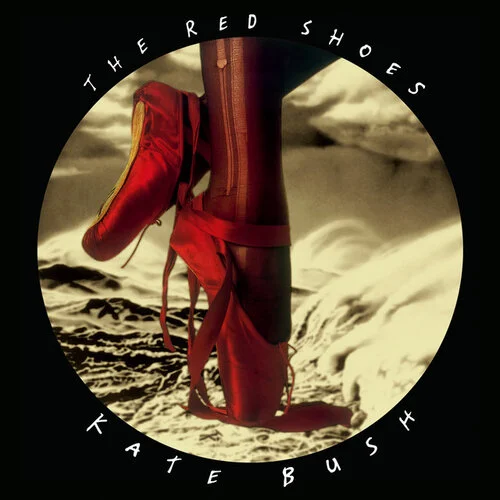
why I wanted to throw the spotlight on Kate Bush’s track, Moments of Pleasure. So far as I can determine, it is one that I have not yet explored in real depth. The second U.K. single from her 1993 album, The Red Shoes, the album as a whole is one that is underrated and largely under-appreciated. With a song like Moments of Pleasure coming before the side one closers, The Song of Solomon and Lily, the track also boasts one of Bush’s finest videos. Not only that. Moments of Pleasure appeared on Bush’s 2011 album, Director’s Cut – similar to a few of her tracks that I have covered recently. On 16th May, Director’s Cut turns ten. Whilst I prefer the version on The Red Shoes, the newer version is very interesting. I think that Moments of Pleasure is one of Kate Bush’s absolute best songs. If you need some more information, this article from the Kate Bush Encyclopaedia:

Song written by Kate Bush. Premiered on television (see below) and officially released on her seventh album The Red Shoes. The song was subsequently also released as a single on 15 November 1993. Bush wrote the chorus "to those we love, to those who will survive" for her mother, who was sick at the time of recording. She died a short time later.

“I think the problem is that during [the recording of] that album there were a lot of unhappy things going on in my life, but when the songs were written none of that had really happened yet. I think a lot of people presume that particularly that song was written after my mother had died for instance, which wasn't so at all. There's a line in there that mentions a phrase that she used to say, 'every old sock meets an old shoe', and when I recorded it and played it to her she just thought it was hilarious! She couldn't stop laughing, she just thought it was so funny that I'd put it into this song. So I don't see it as a sad song. I think there's a sort of reflective quality, but I guess I think of it more as a celebration of life. (Interview with Ken Bruce, BBC Radio 2, 9 May 2011).

I wasn't really quite sure how "Moments of Pleasure" was going to come together, so I just sat down and tried to play it again-- I hadn't played it for about 20 years. I immediately wanted to get a sense of the fact that it was more of a narrative now than the original version; getting rid of the chorus sections somehow made it more of a narrative than a straightforward song. (Ryan Dombai, 'Kate Bush: The elusive art-rock originator on her time-travelling new LP, Director's Cut'. Pitchfork, May 16, 2011)”.

I think that Moments of Pleasure also contains some of Bush’s best lyrics. The imagery that she summons throughout the song is fantastic. One cannot help but follow Bush and her imagination when she sings “I think about us lying/Lying on a beach somewhere/I think about us diving/Diving off a rock, into another moment”. Aside from evocative imagery are lines that switch between conversational and romantic: “The case of George the Wipe/Oh God I can't stop laughing/This sense of humour of mine/It isn't funny at all/Oh but we sit up all night/Talking about it”. Alongside moments of pleasure and love are lines and images that are very personal and pained: “Just being alive/It can really hurt/And these moments given/Are a gift from time”. The lines that Bush writes about ailing mother are particular heart-aching and striking “To those we love/To those who will survive”/”And I can hear my mother saying/"Every old sock meets an old shoe"/Isn't that a great saying?”.

The Red Shoes is an album that has been criticised by some because of its lyrics. Those who feel laziness creeps in on a few songs. One cannot say that about Moments of Pleasure! It is full of life, emotion and incredible lines. One verse sounds like it could have been included during a song from 2011’s 50 Words for Snow: “On a balcony in New York/It's just started to snow/He meets us at the lift/Like Douglas Fairbanks/Waving his walking stick/But he isn't well at all/The buildings of New York
Look just like mountains through the snow
”. I wonder whether there was any inspiration and overlap when Bush recorded a new version of Moments of Pleasure and began work for 50 Words for Snow. I have covered most songs from The Red Shoes, not only to reappraise songs that have been overlooked; I also wanted to highlight that it is a strong album that only has a few weak moments. It is a lot more solid and rewarding than many critics have given it credit for (when Bush’s albums are ranked, The Red Shoes and Lionheart often spar it out for the bottom position). I listen to Moments of Pleasure now and it keeps offering up something new. Together with its dazzling video through to its incredible vocal performance, it is a song that stands proud and high in Bush’s cannon! Whether on 1993’s The Red Shoes or 2011’s Director’s Cut, Moments of Pleasure is…

A transfixing song.

FEATURE: New Future Sounds: BBC Radio 1’s Annie Mac and Clara Amfo

FEATURE:


New Future Sounds

aaa.jpg

IN THIS PHOTO: Clara Amfo will replace Annie Mac on her iconic and much-loved Future Sounds show (Mac’s final broadcast is on 30th July)/PHOTO CREDIT: Jeff Spicer/Getty Images 

BBC Radio 1’s Annie Mac and Clara Amfo

___________

EARLIER today…

eee.jpg

 IN THIS PHOTO: Annie Mac/PHOTO CREDIT: JM Enternational/Rex/Shutterstock

new spread on social media that Annie Mac was leaving BBC Radio 1. Her show, Future Sounds (Mac also presents Radio 1’s Dance Party), is an institution and a reason why so many people tune into the station. The show will be taken over by Clara Amfo (make sure you check out her Live Lounge show on BBC Radio 1). Music Week provide more details:

Annie Mac has announced that she is to leave BBC Radio 1, as the station reveals details of a shake-up that will see Clara Amfo take over the Future Sounds show.

Daytime star Amfo is now in the hotseat for Radio 1’s flagship new music show, home to Hottest Record In The World. Rickie, Melvin and Charlie will host Amfo’s Live Lounge, while Danny Howard is taking over from Annie Mac on Radio 1’s Dance Party.

The station has also revealed that Diplo, host of Diplo And Friends on Saturday nights from 11pm-1am, will be departing.

Annie Mac, a previous winner at the Music Week Women In Music Awards and renowned tastemaker and champion of new music, said: “After 17 wonderful years I have decided it’s time to leave Radio 1. This second home has been the thread that has run through nearly my whole adult life; I have grown up, fallen in and out of love, moved homes, climbed up the career ladder, got married and become a mother twice over.”

The DJ has not revealed any plans to move to another station, and Music Week can reveal that her next move is not yet confirmed. The DJ paid tribute to her listeners.

Working at Radio 1 has been like being at the best party ever

Annie Mac

“I have done this alongside you, my listeners, who have done your own versions of the same,” she said. “I will be forever grateful to you all for welcoming me into your days. I have never not walked out of the studio feeling lighter and happier than when I walked in and that is all down to you. Working at Radio 1 has been like being at the best party ever and it is a wonderful feeling to be leaving with a huge smile on my face. Thank you, thank you, THANK YOU!”

Head of Radio 1 Aled Haydn Jones described Mac as “quite simply, a legend”.

“She has been a hugely important part of the station for the past 17 years,” Haydn Jones added. “Diplo has brought some of the biggest names in dance to our listeners on Diplo and Friends, showcasing some now iconic mixes during the show’s run. I’d like to thank both Annie and Diplo for all they’ve done for the station, and I wish them all the very best for the future.”

Haydn Jones said that Music Week Award winner Clara Amfo “has long been one of the most influential voices in the music industry”.

Clara has an incredible affinity for discovering new music, which makes her perfect to be the face of it for the industry and for Radio 1,” he added. “We know our listeners will love what she brings to the show. I’m delighted that we’ll have Rickie, Melvin and Charlie taking on the late morning slot: their energy, knowledge and passion is going to make for an exciting new sound for the Live Lounge.”

Receiving the baton from Annie who I love and respect makes it extra special

Clara Amfo

Clara Amfo said: “Presenting mid mornings and The Live Lounge on Radio 1 has been one of the most edifying and special times of my career and personal life. As a nation of music lovers, the experience of it live is nothing short of magical and to have had the honour of welcoming some of the world’s most beloved and emerging artists in to The Live Lounge has created unifying moments that I and the listeners will never forget! I am beyond honoured and ready to start this exciting new chapter on Radio 1. I’m such a fan of this show, the artists that is has championed and to be receiving the baton from Annie who I love and respect makes it extra special for me. Massive big up to every single one of my daytime producers and The Live Lounge/smug life listener crew, I have loved hearing your stories and enjoying keeping you company with tunes in daytime and look forward to continuing that in September, so see you a few hours later!”.

I really love Annie Mac and Clara Amfo. Mac, like her fellow BBC Radio 1 Annie, Nightingale, is a pioneering female broadcaster who has compelled so many other women to go into broadcasting. I have listened to her BBC Radio 1 show a lot. Not only have I been guided to new acts to check out and some seriously hot sounds! The affection and knowledge that she has is infectious!

Mac will be deeply missed. Not only be her fans and colleagues, but the music industry as a whole. It is impossible to say how many artists have Annie Mac to thank for getting their music heard and brining in new fans. She has created heaps of opportunities for an array of musicians through the years. I think that Clara Amfo is going to do a remarkable job! I am not sure whether Mac will go to Apple, Virgin or another station - or, after such unwavering loyalty and hard work, she will take some time off to reflect and rest. Amfo is a phenomenal broadcaster who knows she is stepping into big shoes, but she will do an awesome job. It is good that another inspirational female broadcaster is taking the role. Not only has there been an outpouring of respect for Annie Mac and sadness that she is leaving. Many people are excited that one of our finest broadcaster is being replaced by a hugely admired broadcaster in Clara Amfo. If you have never tuned into Future Sounds, do so now and hear Annie Mac’s upcoming shows. I wonder whether there will be an archive of her shows because, I believe, most are on BBC Sounds and disappear pretty soon. Also keep tuned to hear Clara Amfo take over the baton. Though the exit of a broadcasting legend is very sad, the Future Sounds show is…

IN very good and safe hands!

FEATURE: Spotlight: For Those I Love

FEATURE:


Spotlight

xxxx.jpg

PHOTO CREDIT: Faolán Carey 

For Those I Love

___________

I was going to include…

ssaa.jpg

For Those I Love in my Spotlight feature a couple of weeks back. His eponymous album was released on 26th March and has received huge acclaim. I will bring in a couple of reviews at the end. For Those I Love is the moniker of David Balfe. He is one of the finest songwriters and performers in Ireland right now. The album is quite a personal thing, yet everyone can feel something from it and connect in their own way. There is so much beauty, energy and hugely memorable performances that lace the nine tracks together. I am going to pull in a few interviews first - simply because there has been a lot of press regarding For Those I Love. It is clear that there is a lot of excitement and interest in Balfe and his amazing music. In this feature, we learn about an incredible talent. It is also interesting that For Those I Love was out in the world quite a while ago but did not get that much fanfare – and it disappeared from his Bandcamp page:

Last November, a Dublin musician called David Balfe, who goes by the name of For Those I Love, appeared on the Later TV show on the Beeb. The show has been going for donkey's years and has slowly calibrated and finetuned its appeal over time. At a time when there are less and less standalone music shows on TV, Later has stood the test of time (albeit, as is the norm for any kind of specialist arts show, at later and later times on the schedule, excuse the pun).

Later is known for several things. It’s known for its annual New Year’s Eve show, a show pre-recorded a month earlier which old, bored and tired people stay in to watch and give out about. It’s a show where Jools Holland plays boogie-woogie piano with guests who put up with Jools Holland playing boogie-woogie piano. And it’s where you go to see new acts take big steps.

In the case of Balfe, this was indeed a big step. It was the artist’s first TV appearance and first-ever live performance as For Those I Love, as far as I can make out. That’s one hell of a step. That’s like doing 10k steps in 10 minutes.

Balfe would appear to know about timing. Last year, he promo’d an album which kind of came along with little fanfare and disappeared just as quick. I think it might have stuck around for a while on Bandcamp, but disappeared all the same. There were some interviews, some pieces on it, but that was largely it and that album existed in a weird 'did that really happen?' bubble.

The nine songs on the album were striking in their richness, vividness and energy. Here was a musician who was working through the big themes, the big emotions, and the big ideas. It swung from upbeat big room rave euphoria to rough and tough spoken word splashes which painted a picture of a world you knew was out there but never quite knew that well. It was an album lashed with twists and turns from Burial’s 3.22am symphonies, the giddy pulse of a great hardcore band, the sense of mischief you get when you’re with your buddies you know a lifetime, the ecstatic high of great art, the buzz of seeing how the local is part of the global.

Whilst For Those I Love has a certain swagger and there are genuine moments of club-like intensity, it is interesting reading about the rather tragic origins. I want to bring in an interview from NME. Balfe discusses his native Dublin; we learn about how his best friend, Paul Curran’s, suicide in February 2018 changed everything:

If you ask David Balfe how he’s feeling today, he will stop to think about it. The Irish producer and songwriter, who records under the name For Those I Love, takes the serious things in life seriously and it shows in his work.

When NME asks how important it was for him to depict Dublin in an authentic fashion on his outstanding self-titled debut album, he pauses for 12 entire seconds, eyes focused, formulating a considered and meaningful response. “I just don’t know any other way to do it,” he says, finally. “I don’t know that I’m a skilled enough writer to write fictitiously.”

“Dublin is actually tiny, it’s such a small place,” he continues. “Within a 20 minute window of driving, you can cover such different backdrops, socially and economically.” And with that, Balfe is off, his mind pinballing around between an astonishing number of clear-minded reflections on a tranche of sociopolitical issues that currently afflict his hometown and in particular Coolock, the predominantly working class area of Dublin’s Northside where he grew up.

“That side of the city is probably more violent now than it ever was. I don’t know whether things have got better or whether people have got better at hiding where the problems lie. Housing has not improved, work seems more precarious now than ever. We talk so much more now about our mental health and the subject of depression and how much suicide haunts our communities, but there’s still no major changes made at a state level to provide more support for people struggling in working class communities and there’s still a massive financial barrier to being able to access immediate care and counselling.”

The album’s origins date back to the summer of 2017, the night-times of which Balfe spent driving around his “little shit” Renault Clio with friends. They would share playlists of Omar Souleyman and DJ Rashad tunes, but every now and then Balfe would slip in a track of his own that he had been working on. If anyone had a positive comment or found that they couldn’t find it on Shazam, Balfe knew that he was onto something.

“It was a way to trick people into giving me the approval on those tracks before continuing on with them,” he admits.

And then, tragedy struck. Paul Curran, Balfe’s best friend of 13 years and closest musical partner, took his own life in February 2018. Balfe holed himself away in his parents’ shed, the place of salvation in which the teenage Balfe and Curran had formed their hardcore bands Plagues, The Branch Becomes and Burnt Out. He experienced the periods of numbness that are associated with grief, but after encouragement from loved ones, decided to continue with the album project, its trajectory now refocused.

“It ended up being this merge of archive and thank you letter to the love that I had for my friends and my family and specifically for Paul and the thanks that I had for what had been given to us and the sacrifices that had been made and the collective survival that came after it,” he says. “But it’s also this ode to Paul and Paul’s life and our love as a creative coupling.”

Balfe’s own spoke-sung poetry is often the driving force of the tracks, littered with hyper-specific anecdotal references to places, times and memories. On ‘You Live/No One Like You’, Balfe enshrines his friends among the Irish masters: “You live in A Lazarus Soul/In The Dubliners songs of old, and The Pogues/The art that never grows old.”

The Streets, one of Balfe’s first musical passions (“I had never heard anything like it, I didn’t know whether I liked it or hated it, all I knew was that it took over all of my thoughts”) are a recurring reference point, a keystone in the early moments of this friendship group’s formation”.

Not to repeat things by bringing in different interviews, but I am interested about what David Balfe says about Ireland and how it has fared through the years. The Guardian published an interview in January where Balfe discussed the 2008 recession. The interview also touched on how Paul Curran’s suicide impacted the songwriter:

When the Irish recession of 2008 shattered the country’s economy, communities from Dublin’s inner city neighbourhoods of Coolock and Donaghmede were struck hard. The frank lyrics of David Balfe, under the pseudonym For Those I Love, illuminate a generation who emerged from the wreckage.

“I’ve been with people whose families had lost their livelihoods because of the recession,” says the 29-year-old. “At that younger age you don’t have the vocabulary, but you see that displacement, and you think: ‘Why are we suffering? Why has this happened to us?’”

His superb self-titled debut album, out later this year, rumbles into this core of working-class Dublin. The near-biographical account carries his deepest sorrows and depressions, as well as the accompanying memories of a childhood now laced with nostalgia’s golden glow. Across nine songs Balfe lays his life bare, penning Streets-esque passages over electronic productions that recall James Blake or Mount Kimbie. “Red eyes and red credit, searching for a way to get out of the estate on Reddit,” runs a typical lyric.

aaaa.jpg

With these narratives, Balfe moves through the community he has built his life around while also mourning his best friend and fellow artist, Paul Curran, who died in 2018. “I didn’t have counselling at the time, I didn’t have medication, I didn’t have any other way,” he says. “I didn’t know any other way than to make things.”

When Curran killed himself, a deep grief settled over Balfe and seeped into his solo work. The Myth / I Don’t confronts grief’s lasting echo: the PTSD panic that consumes him whenever his phone pings, “terrified of what’s on the other end”, the possibility of more tragedy.

The bond that held the two friends is now woven through the record: WhatsApp messages and voice notes knit the nine songs together, digital residue from years of documenting their days, “just recording everything, archiving everything”.

For Those I Love is a curious moniker for someone who has definitely lost someone dear to him. His music has elements of tragedy, though I think it is written to give us all strength. I listened to his album and I took so much away from it! I am not surprised that critics have been eager to expend many positive words about one of the best albums from this year. In their review, this is what The Line of Best Fit had to say:

Delivered with a fine Irish brogue, Balfe’s open-hearted reflections conjure tender memories of working-class youth culture. With tales of all-night raves, football terraces, and driving recklessly down backstreets all producing a weighty slab of nostalgia, Balfe also navigates personal trauma. The whole album comes stricken with a sense grief as the narrative, steered by his best friend, Paul Curran’s death in 2018. WhatsApp voice messages, sound recordings, and Balfe’s recollections interweave the 9-track duration into a cathartic tribute and contribute to an immense feeling of loss on the album.

The musical backbone to these stories is provided with imposing electronic brushstrokes, as Balfe establishes impressive credentials as a producer as he evokes sonic comparisons with Nicolas Jaar, Mount Kimbie, and James Blake. The product of his spoken-word delivery, tinged with a Celtic inflection, and magnetic dancefloor-ready beats produces an undeniably charismatic cocktail, which last time it was seen to this effect, spurred an era-defining sound with The Streets.

Balfe makes time to explore his process of grief, but also make important examinations of socio-political subjects. "I Have A Love" is an incendiary avowal of adoration and friendship, and the experience of loss and heartache. It's tender piano sample creates a sombre tone in tribute, which ultimately acclimatises into a more celebratory homage of colliding synthesisers and candid declarations of love, in which you can audibly hear his grieving process. While "Top Scheme" is a spikey assault on institutional inequality, the exploitation of the working classes, and the people that perpetuate it. On it, Balfe oversees his most outspoken and steadfast arrangement both lyrically and sonically, as barbed beats clash with assertive aural depositions.

The comparisons with For Those I Love’s cultural and sonic origins are clear. However, there’s much more to this project than that. His creation of such an overt sense of nostalgia, grief, loss and mourning, whilst also making time to make statements on social justice issues is impressive. Balfe also simultaneously oversees the renovation of a particular rave-like sound and clatters it with an alluring and forceful poetic delivery. Is there room for improvement? Sure. But amongst its overwhelming successes, it’s easy to forget that this is a debut record”.

qqqq.jpg

I am going to wrap up in a bit. I want to bring in one last review for a truly exquisite album. What Loud and Quiet wrote in their review echoed the feelings and thoughts of many listeners:

Written over the course of several years, including after the death of his best friend and musical co-conspirator/soulmate Paul Curran, with this album Balfe manages to make me feel the life-sapping and destroying depression and sorrow of loving and losing someone so close. Then, rolling up and down on emotional highs and lows that feel somewhat like being at the mercy of an expanding and raging ocean tide, Balfe’s record resuscitates listeners. He injects life and hope back into me with his own memories. This intimate record uses old WhatsApp voice notes, lines of Curran’s poetry and dance samples intertwined and tangled up with Balfe’s spoken-word storytelling to bring listeners into the heart of his past, from his sometimes dark childhood in a suburb north of Dublin to the highs of knowing real love and brotherhood with Curran and the young men’s other friends.

Each track is unique and there’s not a bad song here. Conversations between mates, exclamations about the demise of punk and unique beats wind themselves around the listener’s mind until it is completely claimed, fertile ground for an outpouring of pain and love and the unfairness and bittersweetness of history. The standout track is ‘To Have You’.

 It’s a reminder that even in sadness the memories of loved ones and better times are something to be cherished instead of pushed away. The song’s energy is rolling and sparkling, bringing to mind the catharsis found on a dancefloor – not a distraction from everyday life but a time to let your more abstract, primal feelings have their moment in the sun. Feel first, think second. Otherwise the darkness will ruin you from the inside out”.

I think that For Those I Love is going to be a huge artist of the future. There is so much talent coming out of Ireland right now. The music from artists there seems to speak louder and dig deeper than that of anywhere else in the world. Keep abreast of the social media channels of For Those I Love to see if there are tour dates near where you live. I was intending to publish this a few weeks back but, with one thing or another, it got held back. I am glad I now get the chance to shine a light on one of those year’s most incredible artist. You only need to listen to the For Those I Love album for a few minutes to realise what a talent David Balfe is! I am excited to see what comes next for an incredible young talent. When it comes to highlighting artists this year who have the potential to endure and inspire for years to come then For Those I Love needs to be right…

NEAR the top of your list.

______________

Follow For Those I Love

wqww.jpg

FEATURE: Prince: Five Years Gone: My Favourite Album from the Master: 1991’s Diamonds and Pearls

FEATURE:


Prince: Five Years Gone

aaa.jpg

My Favourite Album from the Master: 1991’s Diamonds and Pearls

___________

IT is a sad day tomorrow (21st April)…

zzz.jpg

because we mark five years since we lost the amazing Prince. I have written a few features about him already that covered a number of themes – from his essential albums through to his undeniable guitar genius. To round off, ahead of the anniversary on Wednesday, I want to spend a bit of time with an album that is my favourite of his. Many people would not agree with my choice because, when we think of the ‘ultimate’ Prince album, naturally, we think of 1999 (1982), Purple Rain (1984), Sign o’ the Times (1987) - or maybe Parade (1986). I think truly great artists have a purple patch. Bowie’s way very much through the 1970s, whereas The Rolling Stones’ was from the late-1960s to the early/mid-1970s. For Prince, this was between 1980’s Dirty Mind and 1988’s Lovesexy. He created brilliant music right through his career, though there was this golden spell where The Purple One was truly inspired and unstoppable! Debatably, Diamond and Pearls was near the start of a patchy period. The 1989 Batman soundtrack was not great. 1990’s Graffiti Bridge had its moments, as did 1994’s The Black Album. The same cannot be said of 1994’s Come. It seemed like, for every solid album, there followed one that was a little light on genius. Diamonds and Pearls is my favourite because it is an underdog. It has moments of sensuality and tenderness together with absolute monster tracks that recall Prince at his greatest.

Songs like Diamonds and Pearls, Thunder, Gett Off, Money Don't Matter 2 Night and Cream are among his greatest cuts. There is a nice balance so that we open with the thrill and rush of Thunder. Whilst Diamonds and Pearls fades a little in the final few tracks, there is a nice mix of tracks so that one is invested for the majority of the album. I will bring in a couple of positive reviews towards the end. The first album with his backing band, The New Power Generation, I think that Diamonds and Pearls is a lot stronger than its hit singles – though others will disagree with that assertion. The thirteenth studio album from the Minnesota-born maestro, there are so many terrific songs across Diamonds and Pearls. Whilst many will celebrate other Prince albums over the next few days (as we mark his sad loss), I wanted to spend some time extolling the virtues of one of his more overlooked albums. In their review, despite some muted acclaim, Pitchfork found some positives:

Thunder” stitches evangelic lyrics to sub-continental sitars, slashing guitars, and chord progressions that Max Martin has swiped for the last two decades. It’s basically a proto-Backstreet Boys anthem for born-agains. There are the classic Prince deep cuts usually only cited by the apostles (“Willing and Able”) and sunny day guitar benedictions to individualism (“Walk Don’t Walk”). “Strollin” pairs George Benson jazz guitars to New Edition adolescent pop, and a story about two teens roller skating, eating ice cream, and buying porn. It’s weird. It’s Prince.

If you’ve heard OutKast’s “2 Dope Boyz (In a Cadillac),” you’ll recognize the extraterrestrial intro of “Live 4 Love (Last Words From the Cockpit”—an anti-gang space-rap exploration about what happened after he got kicked out of his house at 17. Even the afterthoughts betray a brilliant guitar riff, organ lick, or drum coda.

There is, of course, the title song—the twinkling locket-pop ballad that both Cam’ron and Lil Wayne eventually rapped over. One of those songs they’ll play at weddings until we stop using diamond engagement rings and the ocean runs out of pearls. It’s Prince at his best, blending dizzying romance with an undercurrent of danger. He opens up: “This will be the day/That you will hear me say/That I will never run away.” It’s a utopian promise he knows he can’t keep, an incantation he hopes will become true if he utters it out loud. “Love must be the master plan,” he says, echoing a clichéd sentiment that so many before him have uttered. But Prince had the gift of making you believe whatever he said.

As with all the greatest pop stars, Prince was a master at simplifying life’s most complicated emotions into catchphrases. He encompassed lust, jealousy, fear, spirituality, avarice, the impulse to run away, and the need to strip everything to its core—sometimes literally, sometimes figuratively.  The man who believed in everlasting love died alone and childless, adored by almost the entire world. A song like “Diamonds and Pearls” illustrates why. For all the flamboyance and idiosyncrasy, Prince just wanted the same things as everyone else”.

In another review, the BBC noted how Diamonds and Pearls was a turning point that had more than its share of gems and jewels:

Thankfully, Diamonds and Pearls reversed this decline. While it’s the first Prince LP to officially feature The New Power Generation, this has the feel of a solo record – the singer’s fantastic band would impress more significantly on 1992’s Love Symbol album. But if assessed as a solo affair, it’s absolutely Prince’s best since 1987’s double-LP masterpiece Sign O’ the Times (albeit not close to being in the same league). Diamonds and Pearls is equally scattershot of style, moving from bombastic rap to sultry funk via slick RnB and low-slung grooves. It’s probably best taken as a collection of standalone tracks rather than a conceived-as-a-whole experience, immediately distancing it from Lovesexy’s suite-style sequencing. And some of these standalones are double-thumbs-up winners.

Although it’s not the most immediate of those standouts, there’s no doubting Money Don’t Matter 2 Night is the heart and soul of this album. A slow-paced strut, the track’s a celebration of realising that hard cash isn’t the be all and end all of one’s existence – which might seem rich coming from a millionaire, but it’s delivered with such sincerity, the vocals imperfect but pure, that one can imagine Prince himself as the man one card away from 22, about to blow everything with a smile. At the other end of the spectrum, far away from real-world concerns, is Cream: quite simply a song about getting it on, and a brilliant one at that (apparently written by Prince while admiring himself in the mirror). More explicit is Gett Off, which borrows a line or two from James Brown but is undeniably Prince through and through, the aural equivalent of a sex pest you can’t help but take home.

Elsewhere, Daddy Pop updates the boisterous Partyman from the Batman soundtrack to fine effect; the title-track is a brilliant ballad recently sampled by Lil Wayne; and anthemic opener Thunder apparently refers, in its lyrics, to withdrawn 1987 LP The Black Album, a funk-fuelled disc eventually released to critical approval in 1994. The by-numbers rap efforts, Push and Jughead, are unmemorable (to be kind), but cut the fashion-following rather than trend-setting filler from Diamonds and Pearls and you’re left with a still-satisfying set of songs that stand up well to Prince’s very best. It’s no classic, but this album marked the vital revival of an artist who continues to fascinate”.

It is amazing to think it has been five years already since we received the shock news that Prince died. I think everyone in the music world was rocked. Whether you were a casual fan or considered yourself a diehard, it was a bolt from the blue that is still being felt! Among the many tribute articles and shows that we will read and hear this week, so many people will talk about a once-in-a-lifetime talent. From his staggering work-rate to his guitar brilliance to his amazingly varied voice, there is so much to love about Prince. He left us with so many terrific albums. Thanks to his famous Vault, we will get ‘new’ recordings from him for years. I wanted to talk about my favourite Prince album, as it really doesn’t get the love it deserves! We all have our choice Prince album, and I have reasons for loving Diamonds and Pearls. It may have some flaws, but I can spend a lot of time listening to the album over and over. Whilst some of his albums were not up to his classics, like Diamonds and Pearls, Prince’s albums were…

VERY rarely ordinary.

FEATURE: Spotlight: L'Rain

FEATURE:


Spotlight

qqq.jpg

L'Rain

___________

BECAUSE she has a new song out…

qqq.jpg

I wanted to spend a bit of time spotlighting the amazing L’Rain. Under the mononym L'Rain, Brooklyn native Taja Cheek has quickly become an acclaimed and sought-after figure in New York Experimental music. I am going to bring in some interviews and a review for her eponymous debut album of 2017. Before then, make sure you check out the awesome new track, Two Face. With a highly-anticipated second album due, Pitchfork reported the news:

L’Rain is the musical project of Brooklyn experimentalist and multi-instrumentalist Taja Cheek. Today, L’Rain announces her sophomore album Fatigue, out June 25 via her new label Mexican Summer. She has also shared the track “Two Face,” which arrives with a visual created by Reese Donohue of Tempo Studio. Watch that below and scroll down for Fatigue’s artwork and tracklist.

L’Rain’s self-titled debut came out back in 2017. Find out where it landed on Pitchfork’s “The 20 Best Experimental Albums of 2017”.

Before bringing in a review for that debut, there are a few interviews that provide some more depth and detail about Taja Cheek and her band. In this interview, we learn more about Cheek, her band and musical direction:

In 2017, Brooklyn-raised multi-instrumentalist, songwriter, and tape manipulator Taja Cheek used the moniker L’Rain to release her first eponymous album on Astro Nautico Records. Though this project was dedicated in name and spirit to Cheek’s mother Lorraine, who passed away shortly before its release, the material on the album has gone on the take many forms and now takes shape through live performance as a three-piece band. Alongside her bandmates, Long Island-native Ben Chapoteau-Katz and Buz Donald, who moved to New York from LA five years ago, Cheek constantly breathes new meaning into the compositions.

Individually, the members of L’Rain have been a part of Kitchen programming in various ways over the past year, in performances and L.A.B. programs. Now, on November 21 L’Rain will take the stage as part of a double bill with Roland P. Young at Public Records. The Kitchen’s Rayna Holmes sat down with the band ahead of their show to discuss new music, their band’s history, and the ways explorations of identity unfold within their performances.

The name “L’Rain” for many people has so many different iterations: it’s a reference to your mom, a moniker for Taja for the people who don’t know your name, the name of an album, and also the name of the band. How do you navigate all of those different meanings? Buz and Ben, what does the name mean to you?

Taja Cheek: I feel like that’s kind of evolving. It started out being very tied to my mom, but I didn't really realize the consequence of calling the band L’Rain would mean that people would think that’s my name too, so it became an alternate name for me. It also refers to a very specific part of me physically–my forearm tattoo that reads “L’Rain.” Some people don’t even know that it has anything to do with a person that existed, [and it’s kind of true that it doesn’t] because that wasn’t her name. So it’s kind of like a fictionalized version of my mom and also of me, combined to be a version of us. I am always really insistent that it’s not [entirely] a solo project. I don’t really think it exists that way. The group, I hope, is collaborative in many ways in which it wouldn’t be what it is without the people that are in it, so the project also is a band. It evolves and it kind of has to. They are compositions that I wrote, but then they become something else.

Ben Chapoteau-Katz: It’s true that we’ve become a band and we’re collaborative, but it is all of Taja’s art and all of her music. I’m trying to support what she’s doing. So as far as the naming goes, that’s a part of her vision, to me.

Buz Donald: I mean, it looks like a band, but I think it’s more of a situation. My interpretation is that someone had a vision, someone had an experience, and I’m listening. I’m just there to listen.

How did the band come together?

TC: I’d already made the record and was at a large institution in New York where another musician was rehearsing, and Ben was a part of the band. He asked me if was a bass player, and I said, “how do you even know who I am, I have no idea who you are!” It turned out that we had a friend in common. [Later], I was looking for someone to play saxophone and was talking to our mutual friend, who suggested I talk to Ben. We started playing together, and then Ben recommended Buz.

BCK: Me and Buz had a jam session two years prior, [but] probably hadn’t played since. Then I played a couple rehearsals with Taja and thought, “I know a guy that I feel would get into this.”

TC: Ben lied at first: he said “I really only play sax” because that was what I was looking for. But I was [also] looking for someone who was a synthesist or who knew how to play keyboards. So Ben later said, “yeah I can do that too!” And then he went out and bought a synth and taught himself how to do it.

BCK: I mean, I heard the music and wasn’t just not going to be a part of the project. You only get so many opportunities to do this in your life—to do something that really resonates with you. I was like, “I’ll learn how to do whatever you need me to do.” So yeah, sorry I lied.

BD: Before L’Rain, I was trying to figure out what I was doing in New York. I [was] going to jazz jams trying to figure out how to play jazz, [because] those were the only open forums around here for people trying to get [into the scene]. And then [Ben] recommended me for [this group] and when I got there the music was super hard but super heartfelt. And I was like, “man this is something I could get into.” 

When re-composing the album into a multi-person performance, was the combination of “synthetic” and “traditional” instruments a part of that?

TC: For me, that’s just a continuation of the sounds on the record. I like using archaic, ineffective modes of recording, because I feel like they have a certain kind of urgency or immediacy. I record vocals on iPhone earbuds. People think about electronic music being [just] keyboards and synths, but [for example] guitars—that signal ends up being electronic and digital at the end of the chain. Mostly everything we’re listening to at the end of the day is electronic, actually. [Laughs] It’s just not really thought about that way. All the things we think of as electronic and digital and future [also] have counterparts that are very analog. There’s always a real world component for all of these things that are thought of as completely digital”.

Even though the L’Rain album was released four years ago now, I have been looking back as the story behind it is fascinating. It was a particularly tough time for Cheek during the recording. One can feel urgency, passion and experimentation through a wonderful debut. In this interview with Fly Paper we learn more about a personal tragedy that occurred during the production, in addition to how Cheek got into music:

Brooklyn’s L’Rain (a.k.a., Taja Cheek) is a composer, multi-instrumentalist, and vocalist whose self-titled full-length is an exploration of liminal space: those magic, shimmering thresholds between trained musicianship and intuitive gesture, between tape loop and neurological loop, between religious and secular, and even between grief and celebration.

Cheek’s mother died during the production of the record, and the loss casts the work with this urgent energy that sharpens and dulls depending on which of the in-between spaces she’s occupying at any given moment. Field recordings reprise into thick psych-soul vocal stacks, skittering jazz-inflected percussion phrases settle into heavy half-time grooves, synths wash out under Cheek’s perfect, arpeggiated Johnny Greenwood-esque electric guitar iterations.

“I used to spend hours practicing cello and piano as a kid,” says Cheek, “turning my mistakes into songs. I think that planted the seed for L’Rain — an economy of ideas, organic processes, starting from a place of modesty, banality, and turmoil.” Here at Soundfly, we lovingly call that “Incorrect Music.”

aaaa.jpg

How did you get into music, and what was the path you followed to get to where you are?

I used to spend hours practicing cello and piano as a kid, turning my mistakes into songs. I think that planted the seed for L’Rain — an economy of ideas, organic processes, starting from a place of modesty, banality, and turmoil.

What does music truly “mean” to you?

In high school, I used to describe my relationship to music as a dead marriage. Pretty ‘tween of me, but I’m still not entirely convinced it isn’t true. Not that music isn’t intimate or fun or beautiful or new, even decades later. It is! But it can also be paralyzing and isolating, especially for anyone who is the least bit self-conscious.

How would you describe your sound?

I’m still trying to figure that out. But lately I’ve been telling people that it’s “not jazz,” and that feels cheeky enough to be right.

How did you choose the players on your self-titled album and how did they come together on the record?

I played the vast majority of the parts on the record myself, either in the studio or in my bed, where I record all of my demos. But there were some others who contributed:

Alex Goldberg, who plays drums on the record, was my best friend and arch nemesis; I trust him infinitely. Nearly every record I’ve ever played on I’ve made with Andrew Lappin, who is a co-producer and engineer on L’Rain; he plays one or two guitar parts, too. Jeremy Powell plays saxophone, and he came highly recommended from Lappin”.

In the studio, I’d give Jeremy references, and like a chameleon he would play in the style of any soloist I’d mention: Brecker playing Chaka Khan, Pharoah Sanders, etc.

I am going to repeat a little bit of what was said in the interview above. Taja Cheek is an incredible songwriter and artist, so I wanted to bring together several interviews so one can get a fuller sense of her who she is and what her music represents. In a 2018 interview with Tom Tom Mag the subject of her mother’s passing was raised:

TTM: You’ve talked openly about your mother becoming ill while working on the album, and how grief manifests in different ways throughout it. How do you incorporate vulnerability into your music? Your everyday life?

Vulnerability is something I think about a lot. To be honest, I find it increasingly difficult to figure out the boundaries of my personal and private life. Even more so when my art is so tied to my lived experience. I haven’t figured it out; I assume it will be a process, not a fixed state at which I’ll ever arrive.

There is a part of me that feels equal parts guilty and thankful for being able to share a glimpse of my grieving process with strangers. I love building opportunities into my life for me to think about my mom. It’s overwhelming but it also brings me so much joy. That dichotomy is something I’m super interested in: grief and joy, emotional uncertainty. Anyone who has dealt with adversity in their life understands this as a normal part of life. It is a survival mechanism for those of us that live in societies that systematically exclude and abuse us. We learn to find joy when it’s almost certain that there is none. We’re light scavengers. All of this said, my record documents many tumultuous elements of my life, and I’m only prepared to talk about some of them.

TTM: What atmospheres do you try to foster in your shows, and through your music more broadly?

Right now, I mostly play in bars and clubs, but I’m disinterested in the vibe that these venues nurture. I like the idea of turning these spaces upside down: making them quiet, vulnerable, and reflective, instead of loud and irreverent. Or, maybe I’m illuminating the ways in which these two modes of being are more related than separate. It’s an interesting production dilemma for me to think through ways of disorienting a bar space with limited time, resources and money. Instead of production pyrotechnics, I have to search within myself for small sincere gestures. It’s a valuable exercise in exploring the limits of performance if nothing else. How do you create a lot with a little?”.

Before wrapping things up, I want to bring in a review for the L’Rain album. Not all critics were kind. It is an album with its own sound; very different to anything else you will experience. This review highlights, whilst the 2017 album can be disorientating, the rewards are huge:

At times, the result can be disorienting. The songs on the album have unconventional structures propelled by changes in mood, sonic breakdowns, or complete relocations into new soundscapes. One moment, you might be in the warm swirl of synth and cascading guitar in “Heavy (But Not in Wait),” and the next, at the beginning of “Stay, Go (Go, Stay),” you will find yourself exiting a car as a raw and beautiful voice sings softly; you will start in a psych-pop jam on “A Toes (Shelf Inside Your Head),” and end in the same song in glitchy art-pop; and “Go, Stay (Stay, Go),” the mirror of the second song, completely turns you around with its backwards audio. Also disrupting the listener’s sense of bearings are the clever ways in which L’Rain transitions from song to song, bleeding endings into beginnings, as in the sinister child sample and carnival synth at the close of “Bat” and start of “Alive and a Wake.”

In an album marked by the exuberance of noise, the clearer, quieter moments carry particular weight. Those grow even heavier in the context of the album’s creation; the artist was in the middle of recording when her mother, Lorraine, died, and Cheek’s album title and stage name are a tribute to her. Though L’Rain contains no dominant sentiment, it offers up glimpses of grief and reflection—in the meditative flutter at the end of “Which Fork / I’ll Be,” in the wailing horn on “Heavy (But Not in Wait)”, and, most achingly, in the birthday voicemail, completely untouched, called, “July 14th, 2015.” If you’re looking for sadness in the album, odds are you will find it. L’Rain leaves room, though, for the many other insane and incongruous parts of grief. It’s possible that there’s even a place for joy and transcendence in it, too.

If you’re looking for anything in L’Rain, it’s likely you will find it. By embracing deliberate but unfettered experimentalism in her debut, the artist opens up her strange and rich world, in turn allowing the listener the same freedom to explore. The ride can be unnerving, but the rewards are great”.

If you are unfamiliar with L’Rain, get involved and follow her social media. With a Fatigue out on 25th June, it is a perfect time to explore and bond with a rising talent. I think that we will see L’Rain on the scene for many years to come - such is the strength and depth of the music! The songs are so extraordinary and unique. Just play them loud and…

LET them take you away.

_______________

Follow L’Rain

ss.jpg

FEATURE: The Lockdown Playlist: Brilliant Song Lyrics

FEATURE:


The Lockdown Playlist
xxx.jpg

PHOTO CREDIT: @jusdevoyage/Unsplash 

Brilliant Song Lyrics

___________

FOR has this Lockdown Playlist…

ssss.png

 PHOTO CREDIT: @dillonjshook/Unsplash

I am marking a fifteenth anniversary that not many people would have known about. On 17th April, 2006, VH1 voted U2’s hit, One, the U.K.’s best song lyric. 13,000 people were polled by the music channel. To mark that huge song being crowned the best song lyrics, I am compiling a playlist that contains that track and the other twenty-nine in the top-thirty. I admire a phenomenal song lyric and whilst, since 2006, there have been other songs that could challenge the VH1 poll, I think the ones that were picked all have pretty memorable lyrics. Enjoy some classic songs that contain lyrics…

aaa.jpg

 PHOTO CREDIT: @austindistel/Unsplash

OF the highest order.

FEATURE: Inspired By... Part Six: Missy Elliott

FEATURE:


Inspired By...

ccc.jpg

PHOTO CREDIT: Mark Seliger

Part Six: Missy Elliott

___________

IN this next part…

b.jpg

of Inspired By…, I am including an artist who turns fifty on 1st July: the sublime Missy Elliott. Before getting to a playlist of artists with Missy Elliott D.N.A. in their bones, this 2019 article from Revolt talks about Missy Elliott’s influence and legacy:

This year, at a glance, was a huge one for Missy "Misdemeanor" Elliott. As the first female rapper to receive the Michael Jackson Video Vanguard Award at the Video Music Awards on Monday (Aug. 26) night, it's clear that her dominance in the industry is unyielding, and her substantial influence has left an imprint on a slew of artists from all genres.

During the VMAs, rapper Lizzo posed the question, "Where would hip hop be without Missy Elliott?" And mega-producer Timbaland reminded us, "People wouldn't do the videos they are doing today if it wasn't for [her]." The 48-year-old has tremendously impacted the game and is truly one-of-a-kind. She is known for pushing creative boundaries with confidence, charisma, and exceptional ease. Being in the game for more than 20 years, the Virginia native has influenced the music industry with new fashion, era-defining videos, innovative dance moves, and bold lyrical content. On top of that, Elliott has made a name for herself by crafting so many 90s and early 2000 anthems, and classic hits that black women can unapologetically relate to.

Although the trailblazing songwriter stepped out of the immediate spotlight for several years, her widespread impact is extremely relevant. Weekly podcast "The Read's" hosts Kid Fury and Crissle West, and superfans worldwide championed for her comeback and for her to also receive the Video Vanguard Award. Fast forward and campaigning for her continued success paid off, and spoke to the indelible footprint that she has deeply embedded in the culture.

Although the accolades and recognitions are incredible, this honor was long overdue. Not only has Elliott killed the game on her own with Billboard-charting hits, but she has also collaborated and penned tracks for other legendary artists including Janet Jackson, J. Cole, JAY-Z, Mariah Carey, Beyoncé; and the late singers, Whitney Houston and Aaliyah. Even former first lady Michelle Obama shared her admiration for the legendary emcee in an episode of "Carpool Karaoke," as she belted out the lyrics word for word to Elliott's song "Get Ur Freak On."

Breaking barriers yet again in January, she was inducted into the Songwriters Hall of Fame by becoming the first female hip hop artist to receive this merit. In an official statement released by the organization, they confirmed what the hip hop community has stated for years, "Missy Elliott is a groundbreaking solo superstar, pioneering songwriter-producer, and across-the-board cultural icon."

In case you needed more evidence as to why the Virginia native is one of the greatest or you had an ounce of doubt about the five-time Grammy-award winner, she solidified her position in her latest statement, saying, "Don't look for another Missy, [because] there'll be no other one." Undeniably, she is one of the best ever to do it. PERIODT”.

In the playlist below, I will include a few artists who definitely are inspired by Missy Elliott. It is testament to her brilliance that there are artists coming through now that you know follow the lead of Elliott – nearly twenty-four years after the release of her debut album, Supa Dupa Fly. Here are songs from artists who have been impacted by…

ONE of music’s most influential women.

FEATURE: Sometimes I Might Be Introvert: Looking Ahead to Little Simz’s Upcoming Fourth Album

FEATURE:


Sometimes I Might Be Introvert

aa.jpg

Looking Ahead to Little Simz’s Upcoming Fourth Album

___________

THIS year has provided us…

qqqq.jpg

with some incredible albums and plenty of surprises! Being a fan of Little Simz, I have been wondering what she has been doing during the pandemic. Her previous album, 2019’s GREY Area, is a remarkable release that scored incredible reviews across the board. I think the Islington-born artist is one of the finest voices in Rap and Hip-Hop. I think that Little Simz is definitely a legend who is inspiring so many other people. I am still listening to GREY Area and being blown away by Simz’s stunning lyrics and vocal performances. She released the amazing E.P., Drop 6, last year. Not only is Little Simz one of the finest artists around; she is also one of the most prolific! She is such a tremendous and original creator, one can listen back to an album of hers like Stillness in Wonderland and get something new from it. It has transpired that a new album, Sometimes I Might Be Introvert, is on the horizon. This article from NME explains more:

Speaking to The Observer, London rapper Simz explained that her fourth studio album was written largely in lockdown (in London and later Berlin) and that it explores her difficulty in opening up about her personal life in an industry where everyone is expected to be “an extrovert.”

Speaking about lockdown, Simz said: “I spent the time doing what everyone was doing really, just reflecting.”

She added: “I know that I’m quiet, innit? …I’m just very to myself and I didn’t know how to really navigate that, especially coming in this industry where you’re expected to have this extroverted persona all the time.”

The Observer revealed that the album is 19-tracks in length with spoken-word interludes. It describes the album as “an epic, Wizard of Oz-style quest as Simz confronts her fears and counts her blessings.”

Despite her difficulties opening up, Simz’ new album sees her addressing personal issues, including a distanced relationship with her father and a relationship.

Simz added: “When it comes to business and my work, I’m not shy at all, I don’t hold back with that. I’m very serious and direct, but other stuff sometimes…”

Earlier this month, Simz teased a new video that was shot at London’s Natural History Museum.

As shared on Twitter, Simz appeared in the museum’s iconic concourse, with a blue whale skeleton suspended from the roof, alongside a host of dancers.

“end of the month , let everybody know,” she captioned the post.

Whilst not yet confirmed, the video could accompany Simz’ first single from the album, ‘Introvert’, which will be released next week (April 23)”.

Judging by the reaction GREY Area received, I would not be surprised to find her in even finer form! Looking at the possible scale, scope and story of the album, we will get to learn more about Little Simz. Sometimes I Might Be Introvert is going to be a magnificent album. I can definitely feel that! Whilst Little Simz’s work pre-GREY Area is remarkable, I think that 2019’s release was a moment when she really broke through and announced herself as a formidable and sublime artist. At twenty-seven, I think we will see material from Little Simz for many more years to come. I want to bring in a very recent interview from The Observer.

Simz, full name Simbiatu Ajikawo, doesn’t waste her words. When she talks, she is purposeful, precise, politely withholding. Yet from its overture, her fourth studio album, Sometimes I Might Be Introvert, reveals an interior world of cinematic proportions. “I’m definitely not the greatest at opening up,” she says today. But there are two Simz: the one that is by nature reticent and the Simz who wants to show you her universe.

Born and raised in north London, she was a shy performing arts kid who found her voice at St Mary’s Youth Club in Islington. As a teenager, she starred in TV shows on CBBC (Spirit Warriors) and E4 (Youngers), all the while making music and uploading it on SoundCloud and Bandcamp. By 21 she’d written, recorded and released four mixtapes, five EPs and an album (A Curious Tale of Trials + Persons), all on her own label, Age 101 Music. After a brief stint at the University of West London, she decided to pursue music full-time. In 2017, Kendrick Lamar described her as “the illest doing it right now”. In his 2019 headline set at Glastonbury, Stormzy shouted her out as a legend and one of 52 essential British artists coming through. Simz describes that year as the best of her life; she landed a recurring role in the Drake-sanctioned Netflix show Top Boy, and released her third album, Grey Area, to critical acclaim. In 2020, she won an Ivor Novello.

About a year ago, Simz was in Los Angeles. She and her producer, Inflo, had recently started work on Sometimes I Might Be Introvert and she was celebrating turning 26. When she thinks about that last burst of freedom before the pandemic, her mind takes her back to a changing room on the morning of her birthday. “I got a birthday outfit to wear later – a dress and heels, a little bag, a whole situation.” That night, she had dinner at Soho House with some friends who were in town, including Top Boy co-star Micheal Ward and singer-songwriter Jacob Banks. Later, they went clubbing. Then, shortly after, her manager called, panicky, and put her on a flight back to London. “As soon as I got home, I think the next day, lockdown.”

zzz.jpg

PHOTO CREDIT: Jameela Elfaki/The Observer 

Suddenly, she was home alone, in her own head. “I live by myself,” she says. “I spent the time doing what everyone was doing really, just reflecting.” That period of reflection has led to some of her best work”.

There are other things Simz won’t give away. There is a tension between what she’s willing to divulge in her music and her tendency to protect her personal life when asked about it directly. Nestled in the centre of her new record is an ode to what sounds like a committed relationship (“When planning for my future, I’ll be keeping you in mind”), the details of which she’d rather not be drawn on. I ask if she’s still in love. She falls silent, eyes darting exaggeratedly from left to right like a cartoon character. “This is so awkward,” she says. I tell her she was the one who wrote about it. “I know, I know,” she says. “I always forget I have to talk about this stuff. Sometimes it’s easier to draw from pain, but I don’t always want to draw from hurtful things, I want to talk about things that make me happy”.

This year has delivered so many treats and stunning albums. The single, Introvert, will be released on Friday (23rd April). I am fascinated to see how that sounds and what direction it suggests. Maybe it will be a natural continuation of GREY Area; perhaps it will hint at an entirely fresh sonic direction. It seems like the new album is going to be truly immersive and fantastic. I love everything Simz puts out, though it seems like we are about to witness something truly biblical! It appears - from what I have seen on social media - that there is a lot of excitement brewing already. Hopefully, as restrictions are being eased, Little Simz might be able to take her new music on the road and bring it the eager and adoring masses. After the success of GREY Area and Drop 6, so many eyes and ears will be trained the way of one of Britain‘s strongest artists. One of our brightest and most inspiring musicians, one can never easily predict Little Simz. Leading up to the release of Sometimes I Might Be Introvert, we will listen to the forthcoming Introvert

WITH great interest and affection.

FEATURE: You're the One: Kate Bush and Del Palmer

FEATURE:


You're the One

m.jpg

Kate Bush and Del Palmer

___________

APART from her family…

ccc.jpg

 PHOTO CREDIT: Rex

the person who has been in Kate Bush’s life most loyally and for the longest time, I guess, would be Del Palmer. Having met Bush in the 1970s, he works with her still today. I am not sure, if there is another Bush album, Palmer will be playing on it and engineering. I would think so. Having worked as a musician on her albums since 1978’s Lionheart and in an engineering capacity since the 1980s, there has been this close working relationship between the two of them for decades. Of course, the two were in a relationship up until about 1993 (1992/1993). Even though that relationship loss would have been very hard on them both, Palmer is still Bush’s right-hand man - and there is this great trust and reliability. During the recording of 50 Words for Snow, Palmer would have been integral; though the two would not have got in each other’s way or had too much interaction (Palmer also played bass on Snowflake and bells on Wild Man). If you need some details and background regarding the relationship between Kate Bush and Del Palmer, then the Kate Bush Encyclopaedia is at hand:

Born on 3 November 1952 in Greenwich, southeast London, Del Palmer is an English singer, songwriter, bass guitarist and sound engineer, best known for his work with Kate Bush, with whom he also had a long-term relationship between the late 1970s and early 1990s.

He began playing bass in 1967, joining friend Brian Bath's band Cobwebs and Strange. In 1969, Palmer and Bath formed Tame with Victor King on drums. The band lasted until 1970. From 1972, Palmer and Bath were in Company with Barry Sherlock (guitar) and Lionel Azulay (drums). They signed to Cube Records in 1973, but Azulay was injured in a road accident. Charlie Morgan joined on drums in 1974 and the band changed its name to Conkers. A series of singles followed on Cube.

In 1977, the KT Bush Band began with Bush, Palmer, Bath and Vic King, playing the pub circuit. Their live set included material that would later appear on Bush's first album.[9] Beginning with her second album, Lionheart, Palmer became Bush's main studio bassist. He also appeared on stage during the Tour of Life in 1979.

He is credited as an engineer on Kate Bush's Hounds of Love, The Sensual World, The Red Shoes and Aerial. He is also credited with engineering on three further albums involving Bush: Midge Ure's Answers to Nothing (where Palmer engineered her vocal guest recordings), Roy Harper's Once and Alan Stivell's Again. He played bass guitar on Lionheart, Never For Ever, The Dreaming, Hounds of Love, The Sensual World and Aerial (on 5 tracks) and on one track on 50 Words for Snow.

Palmer plays bass on Billy Sherwood's 'Back Against the Wall' and 'Return to the Dark Side of the Moon', both Pink Floyd tribute albums. He released his first solo album titled 'Leap of Faith' in 2007 with a follow up five-track EP titled 'Outtees & Alternatives' in 2008. That same year, Palmer did the mastering for Lionel Azulay's album 'Out of the Ashes', which includes the track 'Wouldn't Change a Thing' featuring Kate Bush. He originally engineered and mixed that track in 1990. He appeared in the BBC documentary Queens of British Pop discussing Kate Bush, and again in the BBC Four documentary The Kate Bush Story – Running Up That Hill. He released his second album entitled 'Gift' in 2010. His third album, 'Point of Safe Return', was released in March 2015.

Del Palmer about Kate

Most of you will already know that I have been involved both as musician and recording engineer with Kate Bush for more than thirty years. It has been, from an artistic point of view, an incredibly fruitful liaison for me. I feel privileged to have had a front row seat to watch a true artist create so many musical masterpieces. (Del Palmer Biog, Del Palmer website)

Kate about Del Palmer

My relationship with Del is very stable. We work together, we live together. It works so well for us. That can be a very intense set-up, but I wouldn't have it any other way. It's all very close and direct. After ten years, maybe we ought to be restless, but we're not. Some say the decade between 20 and 30 I very telling time in terms of human development, but I believe that the whole of life is like that. Del and I argue a great deal - over songs. But we consider it healthy. Who wins? Normally, I do. I'm not the shy, retiring, fragile butterfly creature sometimes read about. I'm tough as nails. (Under The Burning Bush, You Magazine (UK), 22 October 1989)”.

I can imagine that there was a lot of affection in addition to disagreement when Palmer and Bush were a couple. They are both strong and determined people, though there was this connection and companionship that fed into the music. I am more interested in the working relationship. I don’t think that many people who are not big Kate Bush fans know much about Del Palmer and his input. From his exceptional musicianship to his engineering and dedication to Bush, he has been a huge part of her music and success!

In 2019, Palmer was interviewed by Music Radar about working with Kate Bush. It is interesting that he also plays in a tribute band (to Kate Bush), Cloudbusting:

Palmer had already met Kate Bush back in 1976, when she was aged a mere 18. By 1977, the precocious, gifted teenager had decided to try her hand as a musician on the London pub circuit where, alongside Palmer, she performed early versions of the songs James And The Cold Gun and Them Heavy People. The pair soon developed a relationship as a couple, which lasted until the early 1990s.

EMI denied the KT Bush Band an opportunity to record on Bush’s debut LP The Kick Inside in 1978, but Palmer cemented his place as her main bassist later on her follow-up, Lionheart, and when performing with her on the Tour of Life in 1979. By 1985 he was working as a sound engineer on her sonic masterpiece Hounds Of Love, and continued in that role, alongside a gradually decreasing role on bass, until 50 Words For Snow (2011), Bush’s most recent studio album.

Last year, Palmer took to the stage for the first time in decades to perform many of the bass-lines from the Bush back catalogue with a cover band, Cloudbusting. With them, he paid tribute to The Kick Inside for the 40th anniversary of the album, and subsequently joined the group for an Irish tour. Aside from working with Bush, he’s engineered albums by Midge Ure and Roy Harper, and he released his third solo album, Point Of No Return, in 2015.

Why did you decide to tour Kate’s songbook with Cloudbusting, Del?

“It’s a very uncomplicated story. I was in Cornwall last summer on holiday, and Michael Mayall from the band lives down there. He said it would be nice to meet up so he could show me around some of the highlights of Cornwall, which we did, and we got talking about their 40th anniversary gig and playing The Kick Inside album. I thought this sounded really good and could be interesting. It soon got to the point where I asked to be involved. They didn’t ask me - I asked them! There’s something about getting up on stage in front of people that is totally addictive. I can’t understand why it’s taken me 40 years to do it again.”

Are they a tribute band, or a band in their own right?

“I swore black was blue that I would never be involved with a tribute act, but after a while I realised that they’re not actually a tribute act. The music is more important than the sum of the parts, and the people involved are very respectful of this body of work. When the Kate Bush Songbook tour came about in Ireland, I jumped at the chance. I’ve always had a good time in Ireland and I’m a citizen there now. With what’s going on in Europe, it might be quite useful...”

What were your early impressions of Kate back then?

“I thought ‘Where does this girl get all her energy from?’ She would be up at the crack of dawn, and she didn’t stop from that point onwards. She would travel into London for dance classes, come home and sing, then play and work on the music. When I was completely knackered and had to sleep, she would still be working on Wuthering Heights at two o’clock in the morning - to the point where we would get complaining letters from the neighbours. Up until 1979, she was absolutely full of energy and so driven to get her work out there.

“After the tour she wanted to redirect her energy into working in the studio. We did get some fantastic music out of that, but I really missed being out playing live and coming into contact with the fans in a big way. It was after that she got this reputation as a recluse - whereas in reality she was one of the most outgoing people I ever met.”

You must have had some fascinating creative experiences in the studio.

“I was fortunate to have been involved in a lot of moments that have now gone down in history. If you take This Woman’s Work as an example, it was created for a film project and done very quickly in an afternoon. You don’t realise that what you’ve just worked on is going to go down in legend. As far as you’re concerned, it’s just another recording session.”

What are your thoughts on Kate’s later work?

“I’ve always been of the opinion that the best of Kate Bush is when she is sitting down at the piano and playing: everything else is a distraction. Getting other musicians involved and looking for various sounds dilutes the purity of it all. The best stuff she’s ever done is piano and vocal songs. There’s always one on every album - one of those pure moments when it’s just her.”

You’ve continued to work with her, all these years after you first met.

“That’s right. On Aerial (2005) the most enjoyable thing was working with just her and the piano: we weren’t doing the long hours any more. Towards the end of the sessions we’d basically do office hours - we’d start about midday and work until seven and that would be it. By the time of the session she had the song, and had played it over and over - she knew it backwards. I set up the piano and vocal mic and she sat down and played it. That’s all there was. She’d already done the hard work in her own time, she’s done the homework - so all I had to do was add some studio magic to it. For me, that’s the best of her - and always has been”.

Del Palmer has been involved with Kate Bush’s since prior to The Kick Inside’s release in 1978. On 50 Words for Snow, he was the longest-serving member of her team. She has brought in a series of musicians and technical personal through the years…but it is Palmer who has always been there. I hope this working relationship continues until Bush retires. I am not sure what the future holds for Bush and music, though you can bet that her trusty friend Del Palmer will be in the mix! Palmer always delivers phenomenal performances and technical assistance on every Kate Bush album. It makes me excited to see…

jj.jpg

WHAT comes along next.

FEATURE: Prince: Five Years Gone: The Hallowed Paisley Park

FEATURE:


Prince: Five Years Gone

qq.jpg

The Hallowed Paisley Park

___________

THE concept of a musician…

aaa.jpg

 IN THIS PHOTO: A purple motorcycle and Prince's outfits from Under the Cherry Moon are displayed in a room named after the movie inside of Paisley Park in Chanhassen, MN. on Wednesday, 2nd November, 2016/PHOTO CREDIT: Paisley Park

having their own estate and this fixed Mecca where they create music seems strange today. I think of musicians having more modest surroundings or recoding at studios. As the fifth anniversary of Prince’s death occurs on 21st April, I am doing a few features prior to that date. I wanted to spend this one discussing a place where Prince called home; where he recorded some of his best work and, sadly, died. Paisley Park is this hallowed and legendary space where Prince could roam and create such wonderful music. As the official Paisley Park website states, it is a most wonderful and intriguing place:

Paisley Park is a place where art, music, fashion, and culture are celebrated, energized, and inspired by the visionary creative spirit of Prince. Known as his home and studio, Paisley Park now draws people from around the world to attend tours, concerts, and events, and feel the love, awe, and wonder that are expressed in Prince’s emotional words: “Paisley Park is in your heart”.

I will come to an article written a few years ago where a journalist spent some time at Paisley Park. As Variety reports, the public are being offered rare access five years after Prince’s death:

April 21 will mark the fifth anniversary of Prince’s death — and on that day, Paisley Park, his home, studio and “creative sanctuary,” will invite fans to pay tribute to the late artist in its atrium free of charge. Advance reservations are required.

“On the fifth anniversary of the passing of the incomparable Prince, Paisley Park, his home and creative sanctuary, is opening its doors for fans to pay tribute and celebrate his life,” the announcement reads. “The Paisley Park Atrium, 7801 Audubon Road, will be open for free visitation on Wednesday April 21 from 9:00am – 9:00pm. Advance reservations are required.

“Guests are also welcome to leave flowers, mementos, and other memorial items in front of the Love Symbol statue outside the Paisley Park main entrance.”

In the years since his death, Paisley Park has effectively become a Prince museum, although the pandemic obviously has curtailed those efforts. His estate, which was in considerable disarray at the time of his death, has reached agreements with Warner and Sony Music and has embarked on an ambitious reissue campaign that has produced three excellent boxed sets (for the “1999,” “Purple Rain” and “Sign O’ the Times” albums) as well as a superbly curated website containing a detailed history and all of his official videos, among other projects.

“Prince’s passing remains incomprehensible to all of us,” said Alan Seiffert, Paisley Park Executive Director. “We celebrate his life and legacy every day at Paisley Park, a place that Prince wanted to share with the world. So, on this day especially, we acknowledge the incredible force and inspiration Prince is in people’s lives and open up our doors for them to pay their respects”.

xxxx.png

IN THIS PHOTO: Paisley Park is an active museum, state-of-the-art recording studio, and concert venue in Chanhassen, MN. For nearly 30 years, the facility served as Prince’s home, creative sanctuary and production complex. Fulfilling Prince’s vision that Paisley Park would one day be open to the public, the venue today welcomes fans, musicians, and audiophiles for tours, concerts, festivals, and special events. When Prince wrote the song “Paisley Park,” he envisioned a place of love and peace, where there aren’t any rules or limitations for creativity. The lyrics became a reality when Paisley Park opened its doors in 1987. Since then, it has inspired respect, ideas, connection, community, and spirituality and furthered Prince’s legacy of creative freedom/PHOTO CREDIT: Paisley Park

As a Prince fan, I would love to travel to Minnesota and visit a mansion/facility that witnessed such magic. As lord of the manor, I could only imagine the scenes at Paisley Park. In 2016, Forbes published an article that took us inside Prince’s home:

Paisley Park was Prince’s private palace, a music factory as mysterious as the enigmatic artist himself. Adjacent to Highway 5, the 65,000-square-foot compound (size estimates vary) is a $10 million big white aluminum-and-metal mansion with a nondescript, prison-like façade, few windows, retail-style parking lots, and encircling grassy knolls. The complex’s geometric exterior is as charming as an Amazon warehouse. Its most appealing feature is the purple hue emanating from the structure (which reportedly indicated whether Prince was home).

This musical landmark’s interior has barely seen the light of day. Only professional musicians, privileged friends, special-invite fans, and journalists have seen and felt its ambiance. Prince forbade virtually all visitors from photographing or recording the inside (and he demanded journalists abandon their cell phones, recorders, and notebooks before entering his purple palace).

Here’s what we do know about Paisley Park. The property was conceived in 1983 during the filming of the Purple Rain movie (for which Prince won an Academy Award for Best Original Song Score)—just as his superstardom detonated. Paisley Park was completed in 1988, designed to Prince’s specifications by BOTO Design Inc. and then 23-year-old neophyte architect Bret Thoeny.

vvv.png

IN THIS PHOTO: Paisley Park Studios covers about 65,000-square feet/PHOTO CREDIT: Paisley Park 

The singer’s goal—a one-stop music and film production facility with a Hollywood-style soundstage, two recording studios, a dance studio, custom costume department, and office space all under one roof. Besides music production, the venue is also used for video shoots and TV commercials. Prince produced about 30 albums at Paisley Park, including for other artists like standout singer Judith Hill. But ultimately, Paisley Park was a venue where Prince could create and produce music every single day.

The lobby is reminiscent of a “1950's American diner,” and walls “vibrant reddish purple, flickering candles lined every ledge and the smell of incense filled the air,” according to London newspaper, The Mirror. This description may be lost in translation. More accurately, the super-bright lobby with purple carpeting is a Memphis design style highlighted by a "Raspberry Beret" cloud motif, Love Symbol #2 glyph on the floor, viewing balconies, and wide glass ceiling under the pyramid skylights.

Paisley Park is where Prince produced his mid-career classic hits “Alphabet Street,” “Sign O' The Times,” “Diamonds and Pearls,” and “The Most Beautiful Girl in the World.” His song "White Mansion" pays homage to Paisley Park with lyrics: “But one day I'll have a big white mansion. At the top of the road. I’m gonna wear the latest fashion. I'm gonna be happy, don't you know.”

Prince died in Paisley Park’s elevator which make’s lyrics from 1984’s smash anthem “Let’s Go Crazy” all the more eerie: “And if the elevator tries to bring you down. Go crazy, punch a higher floor.” Could the very religious Prince have done that? You decide. Now that he’s gone, perhaps the public will get a better glimpse of Paisley Park, just as it's posthumously learning about Prince Rogers Nelson, the man.

Paisley Park is already becoming a spiritual shrine for Prince fans, like Elvis’s Graceland. In fact, Prince's family plans to turn the estate into a future Graceland-style museum open to all, according to Prince collaborator Sheila E. This news is ironic considering Prince purposely toned down Paisley Park's exterior to avoid becoming Graceland”.

I guess that fans who get to see inside Paisley Park very soon will not have access to everything. They will get an idea of what it was like for Prince and musicians who spent time there. It is sad that the master himself will never again record from Paisley Park. It will be preserved for decades to come as a monument to a musical genius. Before concluding, I want to bring in a 2018 article from The New Yorker. Amanda Petrusich reported on her time there. Whilst this new revelation about public access being allowed at Paisley Park is exciting, access was allowed after Prince died. Petrusich tells of her experiences and recollections:

Prince wrote often and eagerly about the idea of sanctuary—places where his spiritual anxieties were assuaged. Back then, Paisley Park was merely an imagined paradise. “Paisley Park is in your heart,” he sings on the chorus.

Three years later, it was real: in 1987, Prince built a sixty-five-thousand-square-foot, ten-million-dollar recording complex in Chanhassen, Minnesota, and called it Paisley Park. It was intended to be a commercial facility—Madonna, R.E.M., and Stevie Wonder all recorded there—but by the end of the nineteen-nineties it had stopped accepting outside clients. Eventually—no one can quite say when—Prince began living there. He wanted to establish a self-contained dominion, insulated from interference or judgment, where he enjoyed total control, and his life could bleed easily into his work.

xxx.jpg

PHOTO CREDIT: Paisley Park 

On April 21, 2016, Prince collapsed and died in an elevator at Paisley Park. He had overdosed on the opioid fentanyl, which he’d been taking for chronic hip pain. He was fifty-seven, had sold around a hundred million albums, and did not leave a will. Shortly after hearing the news, Joel Weinshanker, a managing partner of Graceland Holdings (which runs Elvis Presley’s Graceland mansion, in Memphis), approached Bremer Trust, the bank tasked by a Minnesota court with administering Prince’s estate while his heirs were determined. Weinshanker wanted to make sure that Prince’s things were cared for. The bank agreed to let him visit. “The air-conditioning and the heating system weren’t working,” he told me. “There were leaks in places where you wouldn’t want leaks.”

Prince’s sister, Tyka Nelson, and his five half siblings were eventually named his heirs. With the family’s blessing, Graceland Holdings took over management of the property. Because Paisley Park is expensive to maintain, and because the estate was facing a considerable tax bill, the family made one decision quickly: Prince’s sanctuary would become a museum. Six months after Prince’s death, on October 28, 2016, Paisley Park opened to the public.

The Paisley Park tour charges on from the atrium, through exhibit rooms filled with displays—costumes, instruments, notebooks, gold records—that are linked to albums, films, or specific periods in Prince’s career. It snakes into his office and his editing bay, and through three studio spaces. These feel clean, modern, and expensive. One of the highlights of the tour is a chance to play Ping-Pong at Prince’s own table, where he often beat his guests—including Michael Jackson, who visited Paisley Park in 1986, while Prince was working on the film “Under the Cherry Moon,” the follow-up to “Purple Rain.” Prince mercilessly taunted the hapless Jackson, who had never played Ping-Pong before. When Jackson dropped his paddle, in defeat or clumsiness, Prince joyfully walloped a ball into his crotch. (The gift shop now sells canary-yellow Ping-Pong balls branded with Prince’s purple symbol; I bought a set of two for twelve dollars.) Prince was a more gracious basketball player, though no less formidable. “I don’t foul guests,” he told the writer Touré when they played a two-on-two game at Paisley Park, in 1998. The incongruousness of the hobby, and his skill at it, was immortalized in a “Chappelle’s Show” skit from 2004, in which Prince, who was barely five feet three, drifts gently down from the basket after a winning dunk. The bit reiterated a thought many of us had already had: that the laws of the physical world simply did not apply to Prince.

Details about Prince’s personal life remain scant, and there have been surprisingly few posthumous revelations. There is tenderness and lust in his songs, but it’s harder to find those things in the stories told about his life. This makes autobiographical readings of his work difficult. In 1996, he married Mayte Garcia, a twenty-two-year-old belly dancer. She had toured with him since she was seventeen, when her parents appointed Prince her legal guardian. Garcia gave birth to a son, Amiir, in October of that year. He died in the hospital at six days old, of a rare genetic condition. Prince refused to publicly acknowledge his son’s death. Oprah Winfrey arrived at Paisley Park just a few weeks afterward, and filmed an interview with the couple. She gently asked Prince about Amiir. “It’s all good,” he replied. “Never mind what you hear.”

Garcia’s memoir, “The Most Beautiful: My Life with Prince,” was published in April of 2017. It’s one of the only first-person accounts of life at Paisley Park, and the book’s disclosures are sometimes troubling. Under the tutelage of Larry Graham, the bassist for Sly and the Family Stone, Prince became a devout Jehovah’s Witness, and because of his new faith, he discouraged Garcia from seeking medical attention after a miscarriage. He was often demanding and proprietary of other people’s bodies. If his female backing dancers gained weight, Garcia writes, he docked or withheld their pay.

At Paisley Park, he was able to write, rehearse, and record as much as he wanted, without compromise, and on his own schedule. “He didn’t see music as work,” Leeds told me. “It’s just what he did. If you called it work, you were a cynic.” In “The Most Beautiful,” Garcia includes a note that Prince sent her early in the couple’s relationship: “A secret—when I have a disagreement with someone—it’s usually only one. Then they’re gone”.

Five years after Prince’s death and the world will be paying tribute to an icon. On 21st April, I know there will be vigils, articles and articles dedicated to his memory. I think that Paisley Park plays such an important part in his legacy. Although some may not have been keen on everything they witnessed at Paisley Park, for diehard fans, having the chance to visit such a crucial part of Prince’s life is priceless! I can dream of what scenes unfolded when Prince was recording classic albums and concocting new songs. After all these years, there is nobody who has his same genius and set of talents. He is sorely missed by everyone. In memory of the upcoming fifth anniversary of his passing, I wanted to take a moment to look inside the very special…

PAISLEY Park.

FEATURE: Grammatically Correct: Saluting the Amazing Hannah Reid

FEATURE:


Grammatically Correct

iii.jpg

PHOTO CREDIT: Zoe McConnell for NME 

Saluting the Amazing Hannah Reid

___________

THE third album…

aaa.jpg

from the Nottingham-formed trio, London Grammar, came out on Friday. Californian Soil is a stunning album that sees the group regain some of the form that was, perhaps, lost on their second album, Truth Is a Beautiful Thing. That arrived in 2017. Since then, it has been a period of change and slightly turbulence for them. I would recommend people buy Californian Soil, as it is one of this year’s best albums. When it comes to the subject of experiencing upheaval and strain, this is especially true for the group’s lead, Hannah Reid. I want to bring in an interview where she discussed the misogyny that was aimed at her by various people in the industry. From views about her appearance to being silenced, Reid has had to endure a hell of a lot! Not that her story (sadly) is confined to her alone: so many women in the music industry have had to endure sexism and misogyny. Some of the struggles Reid has faced can be heard in the new album. Before I go on to that interview and writing why Reid is such a special artist and songwriter, I want to quote NME’s review of London Grammar’s third studio album:

London Grammar’s third album ‘Californian Soil’ marks several shifts for the group. Sonically, it’s the most upbeat they’ve ever sounded, but it’s behind the scenes that the major change occurred, with vocalist Hannah Reid stepping up into a leadership position.

The indie-pop trio, made up of Reid and multi-instrumentalists Dot Major and Dan Rothman, first formed at Nottingham University in 2009. By the time they’d graduated and released their 2013 debut album ‘If You Wait’, they’d cemented their place as one of Britain’s buzziest bands. Global tours and awards nominations followed, and in 2017 their second album ‘Truth Is A Beautiful Thing’ flew to Number One.

Behind the scenes, though, things weren’t so picture-perfect. Throughout their time as a band, Reid had been enduring countless instances of music industry misogyny. There were the engineers who didn’t take her seriously, outfits she was pushed to wear, men she couldn’t show emotion around (lest she be considered “irrational”) and unsolicited comments about her appearance.

She was exhausted by the sexist microaggressions she’d had to put up with on a daily basis, and something had to give. As she told NME in a cover story earlier this year: “I did say to Dan and Dot, ‘I don’t want this to end, but something does have to change because I just can’t keep doing my best work or going out on the road if I’m going to come back and feel this way.’”

And so, as Reid stepped up into that leadership position, assuming responsibility for the band’s visual aesthetic, she also opened herself up more in her songwriting. While on previous release, 2017’s ‘Truth Is A Beautiful Thing’, Reid retreated behind the record’s gloomy instrumentals (“I wasn’t making myself very vulnerable and I didn’t feel like I was taking any risks,” she told NME), on ‘Californian Soil’ her lyricism is honest and direct.

The album sees Reid tackle toxic relationships (‘Lord It’s A Feeling’), break-ups (‘How Does It Feel’) and the death of the American dream (‘America’), fusing her searing honesty with romantic imagery.

This bold lyricism is coupled with lush and lively musical accompaniments. On ‘Californian Soil’, London Grammar have managed to distil the ecstasy that permeates the house-laced ending of the band’s 2013 single ‘Metal & Dust’, imbuing the album with this fizzing energy. This is particularly evident when the band are assisted by British electronic musician George Fitzgerald, who co-produced the jubilant ‘Baby It’s You’ and ‘Lose Your Head’ and brings buzzing late-night verve to the table. The slinky ‘Missing’, which meshes ‘00s R&B with ambient-pop, also sees the band’s ethereal soundscapes shaken up and coupled with slick electronic beats.

In comparison, the two tracks that bookend the record, ‘Californian Soil’ and ‘America’, embrace the more sedate moments of previous London Grammar releases. ‘Californian Soil’ is a steady, art rock cut, while ‘America’ channels Lana Del Rey’s spectacular ‘Norman Fucking Rockwell!’, Reid’s distinctive, powerhouse vocals performing gymnastics over stripped-back guitar twangs and dusky synths.

With Reid now stepping up as the band’s leader, London Grammar are revitalised. While previous album ‘Truth Is A Beautiful Thing’ was a sombre affair, a new energy saturates ‘Californian Soil’. Fizzing with club sounds and filled with bright lyricism, London Grammar are more confident, and more fun, than they’ve ever been”.

qqq.jpg

I am betting London Grammar, like so many in music, are eager to tour and get their new music to the people! Californian Soil has seen the trio pick up some of the best reviews of their career. Together with  Dan Rothman and Dominic 'Dot' Major, Hannah Reid has enjoyed a lot of success and attention. Whilst I love what Major and Rothman bring to London Grammar, I feel it is Hannah Reid’s vocal brilliance and her songwriting that makes them such a strong force. It is shocking to read of her experiences with sexism and misogyny. In an interview with NME, Reid goes into more detail about what she faced. It seems that Reid taking the lead regarding songwriting has rejuvenated the trio somewhat too:

It’s almost impossible for Hannah Reid to pinpoint a single moment of music industry misogyny that caused her to snap.

“We were sound checking for a gig, and I thought that the bass was too loud,” the London Grammar frontwoman remembers of one particularly egregious moment. At this particular show, her two male bandmates, instrumentalists Dot Major and Dan Rothman, were taken seriously when they asked the engineer for changes. When Hannah voiced her concern about the sound levels, though, she received an unwanted lecture on how bass actually works.

“Afterwards,” she says with an eye roll over Zoom from her home in London, “everyone complained that the bass was too loud, and I was like, ‘Yeah – I bloody said it!”

London Grammar first formed in 2009 after meeting at Nottingham University; a few years later, they emerged as one of the UK’s buzziest rising bands after the release of 2012’s ‘Metal & Dust’ EP, and (now Double Platinum) debut album ‘If You Wait’. Both were filled with the band’s intoxicating blend of art-pop – a fusion of trip-hop production, lush soundscapes and Hannah’s emotive, contralto voice. It was a sound that would earn them a slew of awards nominations (including winning an Ivor Novello for the emotive, ambient ‘Strong’), Glastonbury slots and gigs all over the world.

Behind the scenes, though, things weren’t quite so peachy. The list of sexist experiences Reid draws on for ‘Californian Soil’ is neverending. There was the mix-up before a gig when Hannah had to argue with a security guard to let her backstage to her own show, as they didn’t believe she was in the band. She later found out the staff member in question had told their tour manager that she was “a formidable young woman”.

“I was just like, ‘For fucks sake’. If I was fucking Chris Martin, he would not be called a formidable young man,” she reflects. “To me that’s just code for ‘bitch’.”

There were photoshoots where Hannah was pushed to wear certain outfits. She recounts one television appearance when she turned up to discover a rail of pre-approved ‘looks’: “One was like a glittery, very short gold dress, another one was red satin little shorts with like a little satin crop top. I do love fashion and I will dress up every once in a while if I want to, but Dan and Dot were definitely not having to put up with this. I will just wear what the fuck I want to wear, thank you very much.”

There were the industry men Hannah felt like she couldn’t show emotion around, lest she be considered ‘irrational’; the strangers who commented on what she wore online; the rooms she’d walk into with her male bandmates and feel like she had to constantly prove herself. Then there was the time that, after appearing on Radio 1 back in 2013, a tweet was posted on the station’s Twitter account that read: “We all think that the girl from @londongrammar is fit. Let us know if you agree.”

On album three, Hannah’s mindset changed: “I felt like, ‘You know what, that really didn’t work for me and I kind of have nothing else to lose now’. I want to just be completely vulnerable, say everything that I want to say and people will like it or they won’t.”

At the core of the switch was ensuring her experiences in the past aren’t replicated in the future. “I did say to [Dot and Dan], if I’m the leader, other people will have to respect me and respect us.”

Her bandmates were happy to let her take the reins. “Lyrically, [‘Californian Soil’] is very much about Hannah’s experience as a woman, and we wanted that message to come through as loud as possible,” Dot tells NME on a separate Zoom call alongside Dan a few days later.

Californian Soil’ is an album that’s begging to be enjoyed in sweaty clubs and as the sun sets over a festival stage. “It’s the most upbeat London Grammar have ever been,” says Hannah. Having sat on the finished album for 12 months, the band naturally intend to tour once it’s COVID-safe, but after the brutal nature of the band’s early tours, it’ll have to be done right.

But at least the hidden turmoil the band experience wasn’t all for nothing. “I think I’m a better person because of it,” Hannah reflects. “I think we’ll tour a lot less, but in a way I’m glad, because if I’m then looking at a schedule that I know is manageable, I will then be able to make each and every one of those gigs so special. If you end up in a place where you’re so exhausted or unwell, you’re not giving your fans what they deserve”.

I have been following London Grammar since their debut album, If You Wait, arrived in 2013. Songs such as Wasting My Young Years, Strong, Nightcall and Hey Now stuck in my heart and heart because of the amazingly soulful and powerful voice! Her delivery is so intoxicating and real. It is impossible not to be drawn to her voice. As a lyricist, I think that she is one of the most underrated in modern music. There is so much range on Californian Soil. So many terrific lines and words that can take you by surprise, draw you into another world or help you escape. I think the trio are a lot brighter, bolder and bigger than on the previous two albums. As a lead, there are few as hypnotic and talented as Reid! I think that Californian Soil is the start of a new phase for them. I am interested to see how Hannah Reid evolves and changes as a singer and songwriter. I think that she has so much more to say and offer us. It is angering to read what kind of attitudes she has had to face. The fact that she has gone through extensive periods of frustration and anxiety is upsetting. Maybe things are not completely reversed and better now, though it seems like there has been some improvement. Having just released an amazing album, there are few in the industry who can ignore Reid. She is one of my favourite artists in all of music…and every song she puts her voice to has a potency and beauty that few others can summon! I think she is a phenomenal songwriter. It will be fascinating to see where London Grammar head next. Critics are celebrating Californian Soil and calling it in a return and revitalisation. In Hannah Reid, we have one of…

OUR very finest artists.

FEATURE: A Buyer’s Guide: Part Fifty-One: Primal Scream

FEATURE:


A Buyer’s Guide

ddd.jpg

PHOTO CREDIT: Tim Roney/Getty Images 

Part Fifty-One: Primal Scream

___________

HAVING passed the fifty mark…

xxx.jpg

I am continuing A Buyer’s Guide with legendary Primal Scream. 1991’s Screamadelica is one of my favourite albums of the 1990s and, since I experienced that album as a child, I have been following their work. For anyone new to the band, here is some biography that should help out:

Primal Scream are a Scottish rock band originally formed in 1982 in Glasgow by Bobby Gillespie (vocals) and Jim Beattie. The band's current lineup consists of Gillespie, Andrew Innes (guitar), Martin Duffy (keyboards), Simone Butler (bass), and Darrin Mooney (drums). Barrie Cadogan has toured and recorded with the band since 2006 as a replacement after the departure of guitarist Robert "Throb" Young.

Primal Scream had been performing live from 1982 to 1984, but their career did not take off until Gillespie left his position as drummer of The Jesus and Mary Chain. The band were a key part of the mid-1980s indie pop scene, but eventually moved away from their jangly sound, taking on more psychedelic and garage rock influences, before incorporating a dance music element to their sound with their 1991 album Screamadelica, which broke them into the mainstream. Their latest album Chaosmosis was released on 18 March 2016”.

As their latest album was released just over five years ago, I was keen to include the Scottish band in A Buyer’s Guide. If you need to know which Primal Scream albums are worth getting then I have put together some suggestions. These are the excellent Primal Scream albums that…

YOU will want to own.

_______________

The Four Essential Albums


Screamadelica

xxx.jpg

Release Date: 23rd September, 1991

Labels: Creation/Sire

Producers: Andrew Weatherall/Hugo Nicolson/The Orb/Hypnotone/Jimmy Miller

Standout Tracks: Movin' On Up/Higher Than the Sun/Come Together

Buy: https://www.roughtrade.com/gb/primal-scream/screamadelica-45efb525-69b0-44ce-b27f-1ab4a95b4554

Stream: https://open.spotify.com/album/5PORx6PL7CdOywSJuGVrnc?si=oU5-lgKnSsaRrLNLChdE4Q

Review:

Wheeee! Here come three new releases from the teen technodance bin (Jesus Jones division), all of them combining scintillating rhythm tracks with a kaleidoscope of hooky musical styles — dabbles of house music, rap, synth-pop, and for the old folks, good ol’ rock & roll. Blur’s Leisure is the standout here, plastering a Carnaby Street drawl and psychedelic guitars over some very modern, man-and-machine backing tracks. Don’t miss the throbbing chorus to ”She’s So High” or the acid-house-meets-British-Invasion beats of ”Fool” or ”There’s No Other Way.”…The musical palette is a bit broader on Screamadelica, the first full U.S. release from Primal Scream. My personal favorite is the band’s cover of Roky Erickson’s ”Slip Inside This House”; with their wound-up house-music version, they pull off a nice aural pun. Elsewhere you get everything from thoroughly modernized Stones (”Movin’ On Up”) to a thoroughly rocked-up take on the percolating black pop of Soul II Soul (”Don’t Fight It, Feel It”). Ultimately, though, the pastiches backfire a bit; the dizzying array of styles keeps the band from developing a consistent personality…. Ned’s Atomic Dustbin, believe it or not, is aptly named: Stylistically, God Fodder contains everything but the kitchen sink, all done nuclear strength. The music is dancified, but there’s some punk here as well — the guitars attack your speakers (and ears). ”Kill your television,” they holler in one song, and there’s even a nicely sarcastic look at what used to be called the generation gap. The guys in Ned’s actually seem to have something to say. Leisure: A-; Screamadelica: B+; God Fodder: B+” – Entertainment Weekly

Choice Cut: Loaded

Give Out But Don't Give Up

xxxx.jpg

Release Date: 28th March, 1994

Labels: Creation/Sire

Producers: David Bianco/George Clinton/Tom Dowd/George Drakoulias

Standout Tracks: Jailbird/(I'm Gonna) Cry Myself Blind/Give Out But Don't Give Up

Buy: https://www.discogs.com/sell/release/1648942

Stream: https://open.spotify.com/album/0j2jLKMZRXxh43wpcm9Ua9?si=PPggraCHT66_zUbAf-Am5w

Review:

Glasgow, Scotland's Primal Scream does the '70s better than just about anyone in the '90s. The band's second U.S. album is littered with '70s influences-from the "Wild Horses"-style acoustic ballads "Everybody Needs Somebody" and "Cry Myself Blind" to the T. Rex-inspired "Rocks" and the P-Funkish "Funky Jam." What elevates the band led by vocalist Bobby Gillespie above mere mimicry is their solid songcraft and musicianship, aided by guest appearances by George Clinton, the Memphis Horns and the Muscle Shoals Rhythm Section. The band also has a secret weapon in second lead vocalist Denise Johnson, who duets with Clinton on "Give Out." If you want to hear some '90s-style "classic rock," this is it” – Chicago Tribune

Choice Cut: Rocks

Vanishing Point

xxx.jpg

Release Date: 7th July, 1997

Labels: Creation/Reprise

Producers: Primal Scream/Brendan Lynch/Andrew Weatherall

Standout Tracks: Burning Wheel/Star/Motörhead

Buy: https://www.amazon.co.uk/Vanishing-Point-VINYL-Primal-Scream/dp/B0058NXVD2

Stream: https://open.spotify.com/album/4VhBLFWE273FyI3rDeNx0A?si=P-X-N3kCQWOyJjIbE1CF0A

Review:

Primal Scream found themselves in danger of losing their hip audience in the wake of their misconceived trad-rock record, Give Out But Don't Give Up. As a reaction, they returned to the genre-bending, electronic dance-rock of the seminal Screamadelica for Give Out's follow-up, Vanishing Point. Instead of recycling the dazzlingly bright neo-psychedelia of Screamadelica, Primal Scream reaches deep into cavernous dub and '60s pop. Vanishing Point is a dark, trippy album, filled with mind-bending rhythms and cinematic flourishes. The addition of former Stone Roses bassist Mani to the Scream gives their music an organically funky foundation that had been lacking. Over those rhythms are samples, reverbed guitars, and synthesizers that echo spy movies, Southern soul, and the Stones. Above anything else, Vanishing Point is about sound and groove. Words remain a weak point for Bobby Gillespie, who only manages cohesive lyrics on the swirling "Burning Wheel" and "Star," but that is a secondary concern, since Primal Scream is at its best when working the rhythms. Songs like "Kowalski" and, in particular, the extended instrumentals of "Get Duffy" and "Trainspotting" illustrate that the group is still capable of creating exotic, thoroughly entrancing sounds, which is what makes Vanishing Point a remarkable comeback” – AllMusic

Choice Cut: Kowalski

XTRMNTR

xxx.jpg

Release Date: 31st January, 2000

Labels: Creation/Astralwerks

Producers: Brendan Lynch/Primal Scream/Jagz Kooner/David Holmes/Hugo Nicolson/The Chemical Brothers/Kevin Shields/Tim Holmes

Standout Tracks: Accelerator/Swastika Eyes/Pills

Buy: https://www.lostinvinyl.org/new-products-3/primal-scream-xtrmntr-2lp-reissue

Stream: https://open.spotify.com/album/6IpWFkYgfNoH4aAgCfySgL?si=RDJWvMHKTcqcpU7STcV5cA Review:

Typically, electronic-rock fusion falls flat for smelling too much like silicon and solder. XTRMNTR defies such classification thanks to the brilliance of Kevin Shields. This is the man who crafted one of the most sonically incredible records of all time, and his work here proves his skills have not diminished. "MBV Arkestra" drifts in hypnotic rhythms. Shields mixes countless tracks of accelerated drums into a thick snakecharm. Layer upon layer of sandstorm guitars and horns sweep over the shifting dunes of beats. The song feels like a drugged-up rush through a packed Punjabi streetmarket. People, it's My Bloody Valentine! On "Accelerator" Shields pushes the volume to an exploding point like gravity pulling an MC5 song back into the atmosphere. White flames flare off charred drums as strings turn to magma. Elsewhere, his influence is felt, like on the wargame instrumentals of "Blood Money" and "Shoot Speed/Kill Light". 

The album has its shortcomings. "Keep Your Faith" and "Insect Royalty" dip a bit too much into the more sentimental song-based style of the last record, Vanishing Point, and "Swastika Eyes" needs no reprise. But the fighting spirit keeps Primal Scream ahead of the pack. Gillespie now sports post-lice hair and mysterious face scratches. He's a battered veteran who's making up for some horrible moments in the past. Rest assured, Rod Stewart will not be able to cover anything from XTRMNTR. 

Some still sadly associate Primal Scream with their baggy rock days. Yet few other bands evolve this deep into their career, let alone care. At some point in the mid-90s, Primal Scream woke up and realized they'd made a mistake. Their new political agenda digests much easier than bands like Rage Against the Machine who market their entire career off such stances. In the end, Primal Scream understood that under all of the rants there has to lie a steady throb of rump-shaking war” – Pitchfork

Choice Cut: Kill All Hippies

The Underrated Gem


Beautiful Future

aaa.jpg

Release Date: 21st July, 2008

Label: B-Unique

Producers: Björn Yttling/Paul Epworth

Standout Tracks: Beautiful Future/Uptown/Necro Hex Blues (ft. Josh Homme)

Buy: https://www.discogs.com/sell/list?master_id=28069&ev=mb

Stream: https://open.spotify.com/album/313B3JiySwgy0ZBpZC4vIV?si=1qi8aDbwT0iencRpNl-Dng

Review:

Not many bands with 26 years of history can claim consistent self-reinvention album after album; unless of course you’re Primal Scream. A band that have seen multiple line-up changes, battled drug addiction, courted political controversy and dabbled in everything from acid house psychedelics, complex dance, euphoric rock, dark-electro and a whole lot more besides. OK, so it hasn’t always worked in their favour, but nine albums later and ‘Beautiful Future’ is one that further vindicates Gillespie & Co’s autonomous worth. Reinvention in this case is the Scream’s stab at pop, but as you’d expect, there’s a lot more to it than that and any pop content is left solely at the bands discretion.

Complimented by a heady genre crunching mix of signature electro fuzz and accelerated rock n roll, the angular guitars and electro splashed charm of ‘Beautiful Future’, ‘The Glory Of Love’ and ‘Uptown’ juxtaposed with Gillespie’s intoxicating vocal haze and inscrutable lyrics fuel a double edged euphoria. And while the Riot City Blues familier ‘Zombie Man’ placed alongside the vast snatches of smeared emptiness in ‘Beautiful Summer’ reassures, Mooney and Mounfield’s precise percussion-bass partnership keeps the breakneck electro-rock of ‘Cant Go Back’ and ‘Suicide Bomb’ from mutating into serotonin shifting paranoia.

Primal Scream are no strangers to collaboration (previous guest appearances include Kate Moss and Robert Plant to name a few) and ‘Beautiful Future’ is no exception. CSS’s Lovefoxx gets in on the act with the claustrophobic MDMA shadow throb of ‘I Love To Hurt (You Love To Be Hurt)’ as does British folk-rock legend Linda Thompson who features on the simple, stunning and beautiful cover of Fleetwood Mac’s ballad ‘Over & Over’, before Queens Of The Stone Age’s Josh Homme’s lip-smacking guitar skills shatter the illusion with ‘Necro Hex Blues’, the end result of a Thin Lizzy tribute jam between Homme and the Scream’s very own Andrew Innes.

So the all important question; is it any good? Of course it is and although it won’t rank alongside their best, its appeal is unquestionable and the merits of album number nine can only be measured by three decades of incredibly high self set standards” – Gigwise

Choice Cut: Can’t Go Back

The Latest Album


Chaosmosis

zzz.jpg

Release Date: 18th March, 2016

Labels: First International/Ignition  

Producers: Bobby Gillespie/Andrew Innes/Björn Yttling

Standout Tracks: Trippin' on Your Love/100% or Nothing/Where the Light Gets In

Buy: https://assai.co.uk/collections/vinyl-offers/products/primal-scream-chaosmosis-lp-vinyl-new-33rpm

Stream: https://open.spotify.com/album/6y9cSoZ4ZCiRIGWjvbUhPL?si=rz-o6raHSt-GVcoJeaZNVQ

Review:

Autumn In Paradise’ abandons any attempt at subtlety when it comes to gently borrowing aspects of New Order’s sound, shuffling along with a Factory catalogue number only just out of sight. ‘When The Blackout Meets The Fallout’ feels like their ‘XTRMNTR’ incarnation popping back for a sub-two minute disco reboot and, while a little diverting in such company, it’s all a rather glorious folly.

‘Carnival Of Fools’ is built around a naggingly insistent piano line and a simplistic synth stomp, but its real strength is a some neat double-tracking of the vocal. A lop-sided, bleary-eyed nugget, it feels like new ground for a band who have famously been pretty much everywhere. The same could be said of ‘I Can Change’, on which Gillespie near-whispers an account of detachment from the depths atop a reedier synth line that belongs in the early hours.

The album’s centre features an odd couple. Firstly, the gloriously delicate ‘Private Wars’, a brief and sparse acoustic piece with more talk of change and then early single ‘Where The Light Gets In’, a duet with Sky Ferreira that never quite manages to sound as effortless as one suspects it should. Still, it has a fairly enormous chorus and it serves as quite a neat summary of where Primal Scream are in 2016. They’re still pushing on, still evolving their sound despite having at least one foot in the past and still obsessed with finding decent melodies. As a result, they make missteps - some more catastrophic than others - but they would seemingly always rather try it and see than worry what anyone might think.

‘Chaosmosis’ from its title onwards is endearingly flawed, but the sense of communal enjoyment with which they are synonymous radiates from a large swathe of this material and it remains pretty addictive” – CLASH

Choice Cut: I Can Change

The Primal Scream Book


The Scream: The Music, Myths and Misbehaviour of "Primal Scream"

zzz.jpg

Author: Kris Needs

Publication Date: 20th November, 2003

Publisher: Plexus

Synopsis:

This biography of Primal Scream, by legendary rock journalist Kris Needs, tells the real story of one of the few remaining bands genuinely devoted to the rock n roll lifestyle. At its peak on the road, Primal Scream s special brand of chaos has been witnessed by the author, who has accompanied them on most of their major tours. He has incorporated his experiences with the band into a fly-on-the-wall testimony for the book, resulting in much more than a conventional biography. Alongside this, Needs lays bare the band s raison d ªtre  the music exploring their influences and roots via a series of exclusive interviews with the band members themselves” – Amazon.co.uk

Buy: https://www.amazon.co.uk/Scream-Music-Myths-Misbehaviour-Primal/dp/0859653382/ref=sr_1_1?dchild=1&keywords=primal+scream+music&qid=1617804738&s=books&sr=1-1

FEATURE: The Lockdown Playlist: Awesome Remixes

FEATURE:


The Lockdown Playlist

aaa.jpg

IN THIS PHOTO: Kylie Minogue/PHOTO CREDIT: Jenny Brough 

Awesome Remixes

___________

I do love original album tracks…

zzz.jpg

 IN THIS PHOTO: Andrew Weatherall/PHOTO CREDIT: John Barrett

and the impact they can make. I am interested when a track or single gets a remix. Throughout the years, there have been some phenomenal examples. They can take a track that may seem quite ordinary and raise it to a new level. Róisín Murphy has recently revealed a new remixes album. Dua Lipa has also released a remix album of her Future Nostalgia smash. I am curious whether artists are keen to hear songs in a new light after spending so much time with them or whether it is a way of extending the shelf life of that album. A truly great remix can add something to a song and introduce it to a new audience. Because of that, I am bringing in a few great remixes through the years. I hope that there are some remixes in this Lockdown Playlist…

zzz.jpg

 IN THIS PHOTO: Norman Cook (Fatboy Slim)

THAT capture your imagination.

FEATURE: Beat on the Brat: The Ramones’ Eponymous Debut at Forty-Five

FEATURE:


Beat on the Brat

hhhh.jpg

The Ramones’ Eponymous Debut at Forty-Five

___________

SOME hugely important albums…

zzz.jpg

PHOTO CREDIT: Roberta W. Bayley

celebrate big anniversaries this year. I have covered a few already. Not only does The Rolling Stones’ Sticky Fingers turns fifty on 23rd April. On the same day, the Ramones’ eponymous debut turns forty-five. I think that Ramones is not only one of the most important albums in the history of Punk/Punk-Rock; it might be one of the most influential and important albums ever. Rather than me expend a lot of words, I want to bring in reviews and articles that properly contextualise the album and explore its huge significance. Here is some background information regarding Ramones:

Ramones is the debut studio album by American punk rock band Ramones, released on April 23, 1976 by Sire Records. After Hit Parader editor Lisa Robinson saw the band at a gig in New York City, she wrote about them in an article and contacted Danny Fields, insisting that he be their manager. Fields agreed and convinced Craig Leon to produce Ramones, and the band recorded a demo for prospective record labels. Leon persuaded Sire president Seymour Stein to listen to the band perform, and he later offered the band a recording contract. The Ramones began recording in January 1976, needing only seven days and $6,400 to record the album. They used similar sound-output techniques[clarification needed] to those of the Beatles and used advanced production methods by Leon.

The album cover, photographed by Punk magazine's Roberta Bayley, features the four members leaning against a brick wall in New York City. The record company paid only $125 for the front photo, which has since become one of the most imitated album covers of all time. The back cover depicts an eagle belt buckle along with the album's liner notes. After its release, Ramones was promoted with two singles, which failed to chart. The Ramones also began touring to help sell records; these tour dates were mostly based in the United States, though two were booked in Britain”.

Whilst some would debate the fact, Ramones is the first Punk-Rock record. It was a game-changer that introduced the New York band to a hungry and excited audience. I want to source from an article Louder Wire published last year to mark forty-five years of the Ramones’ debut album:

On April 23, 1976, the Ramones forever sped up rock music with their self-titled debut album. To many, it’s considered to be the first true punk rock album, still inspiring buzzsaw-guitared acts to this day.

After forming in 1974 and emerging as the leading act for now-iconic New York City venue CBGB, the Ramones took to the eighth floor of Radio City Music Hall to record Ramones at Plaza Sound studio. Thanks to the Ramones’ no-frills spirit, immense work ethic and Johnny Ramone's refusal to do more than a few takes for each track, Ramones was recorded in just seven days for a minute sum of $6,400.

Clocking in at just over 29 minutes in length, the Ramones committed 13 original tracks and one cover (Chris Montez’s “Let’s Dance”) to their debut. Though proto-punk acts like the Stooges and Television were of tremendous inspiration to the Ramones, a much less obvious influence, the Beatles, actually shaped much of Ramones’ final product. Extremely raw production in placing Dee Dee Ramone’s bass strictly in the left channel, Johnny Ramone’s guitar in the right channel and dropping Tommy’s drums and Joey’s vocals in the center was an homage to the Beatles’ earliest work. The original Ramones album cover was also inspired by the Beatles, but it was scrapped for the now-iconic band shot taken by Roberta Bayley, which shows Johnny Ramone slyly slipping us the middle finger.

An amalgam of tongue-in-cheek topics filled Ramones’ track listing. “We all kind of shared a dark sense of humor,” Joey Ramone divulged in the acclaimed documentary End of the Century: The Story of the Ramones. Cartoonish Nazi rhetoric was placed into classics like “Blitzkrieg Bop” and “Today Your Love, Tomorrow the World,” the latter of which contains lyrics like, “I’m a shock trooper in a stupor / Yes I am / I’m a Nazi schatze / Y’know I fight for fatherland.” These weren’t the original lyrics, however. Sire Records president Seymour Stein pleaded with the Ramones to drop the verse, "I'm a Nazi, baby, I'm a Nazi / Yes I am.” After threatening to remove Ramones’ closing track completely, the band ultimately agreed to the lyrics we all hear today, though you can listen to Joey barreling through the song’s unrecorded verse on the Ramones’ legendary 1979 live album, It’s Alive.

Ramones was vastly ahead of its time, selling poorly upon its release. Sire still stuck to their guns and supported the Ramones, watching as the punk icons gained a big following overseas, especially England, leading to the formation of bands like the Sex Pistols and the Clash.

It took Ramones 38 years to attain gold status by the RIAA, finally selling half a million copies in the United States as of April 30, 2014. To this day, Ramones remains the only studio album in the bands catalogue to go gold. Joey, Dee Dee and Johnny Ramone had all passed away long before they were awarded their gold plaques, though they did enjoy a victory in 1994 when the Ramones' Mania compilation went gold in 1994. Tommy Ramone lived long enough to see Ramones sell half a million copies domestically, but sadly died just three months later.

Four decades later, Ramones remains untouched by the rust of time. And though the Ramones would go on to release many more classics during the band's 22-year career, Ramones remains a brilliant recording from front to back”.

There is no doubt that Ramones is a flawless album. I have not seen a review for its any less than glowing and hugely enthusiastic. Although the band pack in fourteen tracks, each are so short that they blitz by. Ramones never sounds packed or too long. It is one of those albums that has not dated. One can spin it today and bond with each song. I want to bring in a review from the BBC. This is what they wrote in their review:

Dumb, crude, three-chord thrash? Yes. Fast, exhilarating and brand new? Yes. Intelligent, boundary smashing and woefully underrated? Definitely. The Ramones were all of these things and more. Like a film’s opening credits their first album contains everything that their later career was to offer, and in 1976 nothing else sounded quite like it.

Formed in 1974 by a bunch of middle class kids with a mutual love of the Stooges , New York Dolls and 60s garage bands, they followed bass player Dee Dee’s lead and all adopted the surname Ramone, subsuming their identities beneath the concept and started pairing down their sound into the two minute rushes that we know and love them for today. Shows were understandably brief when they started growing a fanbase at New York’s CBGB’s.

Initially reviled by the American press for their seemingly crude approach to rock ‘n’ roll the barest glance at their lyrics reveals a dark sense of humour and a perfect understanding of rock’s dynamics. Nazi affiliations (“Today Your Love Tomorrow The World”, child abuse (“Beat On The Brat”), drug abuse (“Now I Wanna Sniff Some Glue”), the Cuban Missile Crisis? (“Havana Affair”); all were fair game in da brudders alternative universe of nihilism and short sharp fun. But anybody who was looking closely would have also spotted a softer side. Their love of Phil Spector’s perfect pop, referenced in “I Wanna be Your Boyfriend” (interestingly the only song on the album with another instrument apart from guitar and drums – the glockenspiel) was to later put them in the hands (and allegedly at the end of a gun barrel) of the midget genius on their End Of The Century album.

Luckily some people did get the joke. In the UK they were first played not by cool figurehead, John Peel, but by that bastion of prog and metal – Alan Freeman! Like the Velvets’ first album, not many people did actually buy the album, but nearly all who did formed a band. For a couple of years they took their formula further and faster and the world resounded to the cry of "onetwothrefour!”.

I hope that a lot of people return to Ramones to mark its forty-fifth anniversary. In terms of its legacy, there are few albums as seismic:

Ramones is considered to have established the musical genre of punk rock, as well as popularizing it years afterward. Rombes wrote that it offered "alienated future rock", and that it "disconnected from tradition." The album was the start of the Ramones' influence on popular music, with examples being genres such as heavy metal, thrash metal, indie pop,  grunge, post-punk, and most notably, punk rock. The Rock and Roll Hall of Fame said of their influence on rock in general:

When the [Ramones] hit the street in 1976 with their self-titled first album, the rock scene, in general, had become somewhat bloated and narcissistic. The Ramones got back to basics: simple, speedy, stripped-down rock and roll songs. Voice, guitar, bass, drums. No makeup, no egos, no light shows, no nonsense. And though the subject matter was sometimes dark, emanating from a sullen adolescent basement of the mind, the group also brought cartoonish fun and high-energy excitement back to rock and roll.

Despite the lack of popularity in its era, the importance of the album for the development of punk rock music was incredible, influencing many of the most well-known names in punk rock, including The Damned, the Clash, Black Flag, Misfits, and Green Day. Billie Joe Armstrong, singer for Green Day, explained his reasoning for listening to the band: "they had songs that just stuck in your head, just like a hammer they banged right into your brain." The album also had a great impact on the English punk scene as well, with the bassist for Generation X, Tony James, saying that the album caused English bands to change their style. "When their album came out," commented James, "all the English groups tripled speed overnight. Two-minute-long songs, very fast." In another interview, James stated that "Everybody went up three gears the day they got that first Ramones album. Punk rock—that rama-lama super fast stuff—is totally down to the Ramones. Bands were just playing in an MC5 groove until then.” In 1999, Classic Albums by Collins GEM recognized Ramones as the start of English punk rock and called it the fastest and hardest music that could possibly be concocted, stating: "The songs within were a short, sharp exercise in vicious speed-thrash, driven by ferocious guitars and yet halting in an instant. It was the simple pop dream taken to its minimalist extreme." In 2012 the album was preserved by the National Recording Registry, deeming it "culturally, historically, and aesthetically significant".

I want to conclude by bringing in a review from AllMusic. Through the years, critics around the world have had their say about Ramones:

With the three-chord assault of "Blitzkrieg Bop," The Ramones begins at a blinding speed and never once over the course of its 14 songs does it let up. The Ramones is all about speed, hooks, stupidity, and simplicity. The songs are imaginative reductions of early rock & roll, girl group pop, and surf rock. Not only is the music boiled down to its essentials, but the Ramones offer a twisted, comical take on pop culture with their lyrics, whether it's the horror schlock of "I Don't Wanna Go Down to the Basement," the gleeful violence of "Beat on the Brat," or the maniacal stupidity of "Now I Wanna Sniff Some Glue." And the cover of Chris Montez's "Let's Dance" isn't a throwaway -- with its single-minded beat and lyrics, it encapsulates everything the group loves about pre-Beatles rock & roll. They don't alter the structure, or the intent, of the song, they simply make it louder and faster. And that's the key to all of the Ramones' music -- it's simple rock & roll, played simply, loud, and very, very fast. None of the songs clock in at any longer than two and half minutes, and most are considerably shorter. In comparison to some of the music the album inspired, The Ramones sounds a little tame -- it's a little too clean, and compared to their insanely fast live albums, it even sounds a little slow -- but there's no denying that it still sounds brilliantly fresh and intoxicatingly fun”.

Ahead of its forty-fifth anniversary on 23rd April, I wanted to celebrate and spotlight a classic album. Ramones is an album that opened doors and minds back in 1976. It inspired a generation; its shockwaves and influence is still being felt and heard to this day. This is a passionate salute to…

AN iconic album.

FEATURE: Groovelines: Joni Mitchell - Woodstock

FEATURE:


Groovelines

qq.jpg

IN THIS PHOTO: Joni Mitchell playing acoustic guitar in November 1968. This image is from a shoot for the fashion magazine, Vogue. Mitchell wore a loose-fitting white dress/PHOTO CREDIT: Jack Robinson/Getty Images

Joni Mitchell - Woodstock

___________

EVEN though I have…

ddd.jpg

featured Joni Mitchell’s Woodstock on my blog before, it is a song that I wanted to return to. The penultimate track of her 1970 album, Ladies of the Canyon, I think Woodstock is one of the finest songs in Mitchell’s cannon. There have been some impressive covers of the song through the years – my favourite is Matthews Southern Comfort’s -, but I think there is something about Joni Mitchell’s original that stops you in your tracks. I really like the Ladies of the Canyon album and, if I had to choose, I would pick it as my favourite album of hers. Ending with three brilliant tracks in Big Yellow Taxi, Woodstock, and The Circle Game, you are left wanting more! In fact, there is not a dropped note or song on the album. This year marks fifty years since the follow-up album, Blue, was released. I am going to write about that album closer to its anniversary in June. Now, I want to spend some time about a song regarding a legendary music festival. Woodstock started on 15th  Aug, 1969 - so this was a new and exciting revelation at a time when peace and love was being promulgated. I think, against the backdrop of warfare and political strife, Woodstock paints pictures of togetherness and a peaceful army. Woodstock had three versions released in 1970. Mitchell’s was included on her as the B-side to her single, Big Yellow Taxi.

The second release that year was by Crosby, Stills, Nash & Young; their version has become a staple of Classic Rock radio and is the best-known version in the United States. The third version, by the British group Matthews Southern Comfort became the best-known version in the United Kingdom; it was the highest charting version of the song, reaching the top of the U.K. Pop charts in 1970. It is testament to the strength of the song that two other groups covered it in such quick succession! There are a couple of articles that I want to borrow from that take us deeper into an iconic song. The first, from Far Out Magazine discusses how the song sounds so evocative of the festival experience, despite the fact Mitchell never attended Woodstock herself:

Woodstock ’69 was one of the most significant cultural events that America has ever witnessed, it would change the course of countless careers and immediately become a thing of legend. However, one person who unfortunately missed out on their Woodstock moment was the great Joni Mitchell.

The historic and groundbreaking event was held from August 15–18 in 1969, hosted on Max Yasgur’s dairy farm in Bethel, New York. Originally billed as ‘An Aquarian Exposition: 3 Days of Peace & Music’ but people instead just referred to it simply as the Woodstock Rock Festival. The first edition of the festival attracted a mammoth audience size of more than 400,000 who flocked to the fields on the East Coast for the bash.

xx.jpg

IN THIS PHOTO: Joni Mitchell plays Woodstock at the site of the original Woodstock festival in 1998 

Despite not appearing at the event, the footage from the weekend was unavoidable and Mitchell was inspired to write the song from the perspective of her fear of missing out. The track went on to become one of her most-loved numbers which featured on her timeless Ladies of the Canyon record in 1970 as well as serving as the B-Side to ‘Big Yellow Taxi’.

‘Woodstock’ tells the story of a young music fan’s voyage to the festival and the life-changing weekend that they embarked on — it is the perfect encapsulation of the historical event which played a huge part in creating its legacy despite Mitchell pulling out of the bash.

Mitchell made up for the lost time when she got to perform the track at the site of the original 1969 festival almost 30 years later in 1998 during A Day In The Garden festival which was a tribute to the iconic event and she finally got her belated Woodstock moment”.

The fiftieth anniversary of Woodstock was supposed to happen in 2019, yet it never went ahead. I wonder if we will ever see the festival again because, after such a hard last year or so, many people would love to converge and come alive at one of the world’s most-famous events. I think there would have been something truly evocative about the first Woodstock in 1969. Listening to Mitchell’s song, there is a sense of hope and love; there is also a feeling that, despite everything, true peace and comfort cannot be guaranteed.

This article of 2019 investigates the fact Woodstock offers no guarantee of hope. That said, the song gives us one of Joni Mitchell’s richest vocal performances:

In her book, Break, Blow, Burn, an analysis of several hundred years of western poetry, Camille Paglia calls Mitchell’s “Woodstock”: “Possibly the most popular and influential poem composed in English since Sylvia Plath’s ‘Daddy.’” Paglia, a contentious thinker whose opinions on sexual assault and #MeToo have led many to call her “dangerous,” continues, claiming Mitchell’s hymn to show an understanding of what it meant for thousands of people to have merged together without question or violence. “From that assembly rises a mystical dream of people on earth and of mankind’s reconnection to nature,” she writes.

A 1970 review of Mitchell’s Ladies of the Canyon in Rolling Stone calls “Woodstock” “mellowing” with a “quicksilver effect.” The album itself, writes the reviewer, is one of “departures, overheard conversations and unquiet triumphs for this hymnal lady who mingles the random with the particular so effectively.” And that she does. With “Woodstock,” Mitchell builds for herself a dream. Propped against the periphery of a great muddy spectacle, she imagines a mystical journey had by innocent individuals against the backdrop of the Vietnam War, amid the destruction of our ecosystems. Hers is a fictional tale rooted in particular events — whether those events were relayed secondhand or taken in through a grainy hotel television set. “The deprivation of not being able to go provided me with an intense angle on Woodstock,” Mitchell once recalled to an interviewer. “Woodstock, for some reason, impressed me as being a modern miracle, like a modern-day fishes-and-loaves story. For a herd of people that large to cooperate so well, it was pretty remarkable, and there was tremendous optimism.”

Mitchell, at first, wrote the song “for her friends to sing,” as she put it in a BBC Live In-Studio in 1970 — quickly amending the statement with a jolty “…for myself to sing, as well!” The two versions are almost unrecognizable as the same song. CSNY’s is a rousing, guitar-solo laden, electronic organ-filled blues bop: totally anthemic, not at all melancholic. From the get-go, it’s all synthy guitars and rock ’n’ roll. Mitchell’s “Woodstock,” on the other hand, is a different beast. A dark jazz piano builds to an unsettling fortissimo. A dream is born.

Vocally, “Woodstock” is one of Mitchell’s most challenging songs. Listening to CSNY’s version side by side with hers, of course, makes the arrangement feel even more herculean. Her voice wriggles, crossing octaves, making statements in mid voice, raising questions in falsetto. In my opinion, the only other time she executes like this is on “A Case of You” — and perhaps also “Cactus Tree” — two songs which convey heaps of meaning”.

At their core are themes of love and humanity: freedom-seeking women both full and hollow-hearted; men so precious you can only consume them as you would wine; and humans understanding, finally — altogether in one place — that they are mere piles of billion-year-old carbon. Sure, there are plenty of other tracks where Mitchell’s voice soars and bounces across time and space, somersaulting through litanies of obliqueness. But not all are as painfully felt, as massively significant as songs like “A Case of You,” in which Mitchell inserts herself, “the lonely painter” or “Woodstock,” in which she melds into a crowd of half a million — and as a lone wanderer, becomes a spokeswoman for them all.

And yet, she makes no promises for her generation; providing little in the way of hope. If anything, the song is more a warning from someone who’s already felt the potential hiatus more strongly than her glittering compatriots. “Woodstock” begs us to stay in that place of hippy grazing, to not let the illusion fade. As David Yaffe, author of Reckless Daughter: a Portrait of Joni Mitchell, writes of the song, “It is purgation. It is an omen that something very, very bad will happen when the mud dries and the hippies go home.” Peace and love, for Mitchell, is very serious business. And getting ourselves back to the garden — well, that’s how we stay out of Gomorrah”.

I wanted to look back on an incredible song from Joni Mitchell. In terms of her finest albums, I would say 1970’s Ladies of the Canyon is her best. I love Blue and other albums like 1974’s Court and Spark. It will be wonderful to mark fifty years of Blue very soon. I think that the first signs of Mitchell’s true genius presented themselves on Ladies of the Canyon. If Blue is more personal and a slightly more emotive and heavier listen, then Ladies of the Canyon is a little broader and lighter. In terms of topics, Mitchell covers everything from the aesthetic weight of celebrity, to observation of the Woodstock generation, to the complexities of love. Ladies of the Canyon is viewed as a transition between Mitchell's folky earlier work and the more sophisticated, poignant albums that were to follow. In Woodstock, she created one of her very greatest tracks. I think it holds immense power over fifty years since it was released. Whilst Mitchell did not attend Woodstock, the namesake track evokes feelings of hope and community set against the backdrop of a turbulent time for the United States. To me, Woodstock is this…

WORK of wonder and brilliance.

FEATURE: Wild Horses Couldn’t Drag Me Away: The Rolling Stones’ Sticky Fingers at Fifty

FEATURE:


Wild Horses Couldn’t Drag Me Away

zzzz.jpg

The Rolling Stones’ Sticky Fingers at Fifty

___________

I wanted to mark the upcoming…

zzzzz.jpg

 IN THIS PHOTO: The Rolling Stones in 1971/PHOTO CREDIT: Peter Webb

fiftieth anniversary of one of the greatest albums of the 1970s. The Rolling Stones’ Sticky Fingers arrived in the middle of a golden period for them. Following 1968’s Beggars Banquet and 1969’s Let It Bleed, the band would follow Sticky Fingers with, arguably, their greatest album in 1972’s Exile on Main St. Not only was their consistency stunning. The fact they were releasing such strong albums so regularly is astonishing. I want to bring in articles and reviews about a truly stunning album. Before that, it is worth bringing in some background and basics regarding Sticky Fingers:

Sticky Fingers is the ninth British and eleventh American studio album by the English rock band the Rolling Stones, released 23 April 1971 on their new, and own, label Rolling Stones Records after previously having been contracted by Decca Records and London Records in the UK and US since 1963. It is Mick Taylor's second full-length appearance on a Rolling Stones album (after the live album Get Yer Ya-Ya's Out!) without contributions from guitarist and founder Brian Jones, who died two years earlier. The original cover artwork, conceived by Andy Warhol and photographed and designed by members of his art collective, The Factory, showed a picture of a man in tight jeans and had a working zipper that opened to reveal a pair of underwear. The cover was expensive to produce and damaged the vinyl record, so later re-issues featured just the outer photograph of the jeans.

The album featured a return to basics for the Rolling Stones. The unusual instrumentation introduced several albums prior was absent; most songs featuring drums, guitar, bass, and percussion as provided by the key members: Mick Jagger (lead vocal, various percussion and rhythm guitar), Keith Richards (guitar and backing vocal), Mick Taylor (guitar), Bill Wyman (bass guitar), and Charlie Watts (drums). Additional contributions were made by long-time Stones collaborators including saxophonist Bobby Keys and keyboardists Billy Preston, Jack Nitzsche, Ian Stewart, and Nicky Hopkins. As with the other albums of the Rolling Stones classic late 1960s/early 1970s period, it was produced by Jimmy Miller”.

I will come on to the iconic cover photo for Sticky Fingers soon. In terms of the albums of The Rolling Stones, Sticky Fingers is right up there with my favourites. With classics like Wild Horses and Brown Sugar, it is an album where the band really hit their stride. Fifty years after its release and Sticky Fingers sounds both thrilling and timeless. It is both raw and tender. Its range and quality led to the album being included on many lists of the best albums of all-time. I want to bring in an article from Albuism. They looked back on Sticky Fingers on its forty-fifth anniversary in 2016. They discussed the challenging path The Rolling Stones faced in the lead-up to their eleventh album:

Every great band has a defining, signature moment in which they let the universe know that they are going in a very different direction. The Beatles' Revolver was our tour guide to Sgt. Pepper's Lonely Hearts Club Band. The road to Exile on Main Street was hand-delivered to us by Sticky Fingers, the ninth British and eleventh American studio album by the Rolling Stones.

This transitional phase was not an easy one. Let's go back to March 1969. During the recording sessions for Let It Bleed, Brian Jones' erratic behavior had taken a severe toll on the band. His multiple drug arrests made it almost impossible for the band to tour the United States. He was in such a bad state that he only contributed to two songs, playing autoharp on "You Got the Silver" and percussion on "Midnight Rambler.” On June 9th of that year, he was fired from the band that he had formed. Keith Richards played all of the guitar parts on the rest of Let It Bleed.

aaaa.png

IN THIS PHOTO: The Rolling Stones in 1971/PHOTO CREDIT: Peter Webb 

The opening riff on "Brown Sugar" was all Keith Richards, but the unsung star of this album is Mick Taylor, the newest member of the band. His contributions on the tracks "Can't You Hear Me Knocking" and "I Got the Blues" are clear evidence that a new era for the Stones was being ushered in. Sticky Fingers manages to pull off the difficult task of simultaneously offering a loving nod to the Stones' bluesy past and a foreshadowing of their hazy drug-fueled future.

Sticky Fingers is a night out on the town with an old friend whom your significant other kind of likes, but knows will get you very drunk and render you useless the following day. Your night starts out at a very cool bar in New York City (the old, really cool New York City, not the one that exists today). You've already told yourself that you’ll have just a couple, but then you're heading straight home.

"Brown Sugar" is that song that makes your ears perk up once you hear that opening guitar. It brings you to a familiar place and you're at ease. "Sway" and "Wild Horses" is that point in the evening where your friend, this free spirit whose life, free of responsibility, you sometimes envy, tells you about the person who's captured his heart. Once you're over the shock that your friend even has a heart, you can’t help but say to yourself "damn!”  By the time "Can't You Hear Me Knocking" rolls along, your friend manages to convince you to down three shots of Jameson's. At this point, you know you're in for the long-haul. "You Gotta Move" and "Bitch" is that inevitable conversation you have about lovers long gone.

Sticky Fingers is that old friend you miss dearly. You love hearing the stories. You don't mind knocking back a few and feeling like you're living on the edge for a little bit with the full knowledge that you can return safely to the world you enjoy now. Thank you Sticky Fingers, my troubled yet brilliant friend. For the past 45 years, you've never let me down”.

We do not see it much these days, but a great album cover can almost court as much press and popularity as the material within. The Rolling Stones’ Sticky Fingers is one of the most popular and discussed cover ever. In this article from 2018, we learn more about the creation and legacy of a classic cover:

No other Stones album cover would express the band’s decadence so well. According to 100 Best Album Covers: The Stories Behind the Sleeves by Storm Thorgerson and Aubrey Powell (themselves legends of album cover design), Warhol suggested the idea of using a real trouser zipper to Mick Jagger at a party in 1969. Jagger, intrigued, asked Warhol to do the design.

Warhol’s former manager Paul Morrissey was quoted in 100 Best Album Covers thusly: “Andy was sensible enough to know not to be pretentious when doing album covers. This was a realistic attempt at selling sex and naughtiness. It was done simply and cheaply, without the pretensions that seem to go with other covers.”

The stark black-and-white close-up of a man’s crotch captured the cheap, simple approach. “It was a cheap camera and cheap film,” said Morrissey. “I have no idea what brand.”

The red rubber stamp design of the album title and band’s name added to the gritty look.

Artist Craig Braun was responsible for translating Warhol’s design into a functional album cover. As told in a 2015 New York Times article, Mick Jagger insisted that the zipper needed to work, and it had to reveal something when you pulled it down.

“[The Rolling Stones] knew if they put jeans and a working zipper that people were going to want to see what was back there,” Braun said.

Braun obtained a photo of the Andy Warhol model in his white underwear to slip behind the zipper. (Contrary to popular belief, it’s not a close-up of Mick Jagger’s crotch you see when you pull down the zipper.)

Realizing Warhol’s vision was a chore. The zipper damaged some of the initial pressings when the albums were stacked and shipped to record stores. The zipper literally dented the vinyl inside the sleeves pressed against it. Removing the zipper would ruin its effect. The solution was for each zipper to be manually pulled down just far enough that the tip of the zipper would no longer rub against the vinyl of any other albums in shipment. As Braun told Joe Coscarelli of the New York Times:

“I got this idea that maybe, if the glue was dry enough, we could have the little old ladies at the end of the assembly line pull the zipper down far enough so that the round part would hit the center disc label,” he said. “It worked, and it was even better to see the zipper pulled halfway down”.

I think it is worth concluding my bringing in a couple of reviews. Sticky Fingers is considered one of the greatest albums ever and it has gained praise from critics since its release in 1971. In their review of 2013, this is what AllMusic reported:

Pieced together from outtakes and much-labored-over songs, Sticky Fingers manages to have a loose, ramshackle ambience that belies both its origins and the dark undercurrents of the songs. It's a weary, drug-laden album -- well over half the songs explicitly mention drug use, while the others merely allude to it -- that never fades away, but it barely keeps afloat. Apart from the classic opener, "Brown Sugar" (a gleeful tune about slavery, interracial sex, and lost virginity, not necessarily in that order), the long workout "Can't You Hear Me Knocking" and the mean-spirited "Bitch," Sticky Fingers is a slow, bluesy affair, with a few country touches thrown in for good measure. The laid-back tone of the album gives ample room for new lead guitarist Mick Taylor to stretch out, particularly on the extended coda of "Can't You Hear Me Knocking." But the key to the album isn't the instrumental interplay -- although that is terrific -- it's the utter weariness of the songs. "Wild Horses" is their first non-ironic stab at a country song, and it is a beautiful, heart-tugging masterpiece. Similarly, "I Got the Blues" is a ravished, late-night classic that ranks among their very best blues. "Sister Morphine" is a horrifying overdose tale, and "Moonlight Mile," with Paul Buckmaster's grandiose strings, is a perfect closure: sad, yearning, drug-addled, and beautiful. With its offhand mixture of decadence, roots music, and outright malevolence, Sticky Fingers set the tone for the rest of the decade for the Stones”.

We are sure to see new articles and retrospectives about a huge album from one of the world’s most influential and popular bands – one that, nearly six decades after their formation, are still together and touring (or they will be post-pandemic). I think that Sticky Fingers is one of their greatest and most enduring works. I want to wrap up by sourcing from a Pitchfork  review of 2015:

By this point, the Stones were so convincing playing rootsy American music it made little sense to compare them to their British peers. Musically at least, the Rolling Stones of 1971 had more in common with the Allman Brothers than they did the Who. Along with the barrelhouse piano, pedal steel, and Stax-like horns, Sticky Fingers was also only the second album to feature the guitar work of Mick Taylor, and his clean, fluid, and highly melodic leads bear a strong resemblance to Duane Allman's playing from this period.

But ultimately, this is Mick Jagger's album, the same way Exile is Keith's. Of all the iconic vocalists in '60s and '70s rock, Jagger remains the hardest to imitate, at least without sounding ridiculous. That's partly because he himself never minded sounding ridiculous, and he turned his almost cartoonish swagger into a form of performance art. Jagger's voice never sounded richer or fuller than it does here (Exile mostly buried it, to artful effect), but he's doing strange things with it, mimicking and exaggerating accents, mostly from the American South, with an almost religious fervor.

When the Stones were coming up, the line on British singers is that they sounded American because they grew up listening to those records; on Sticky Fingers, Jagger pushes that kind of mimicry to places that run just short of absurd. His twang on "Dead Flowers" is obviously played for laughs, but "You Gotta Move" is harder to get a bead on, partway between homage and parody and delivered with abandon. "I Got the Blues" is utterly sincere, with Jagger flinging every ounce of his skinny frame into it. Wherever he stands in relation to the material, Jagger is selling it, hard, and by extension selling himself as a new kind of vocalist. "Sister Morphine" and "Moonlight Mile" are the two songs that stray furthest from American music reverence, and they are highlights, showing how well the Stones could convey weariness and a weird kind of blown-out and wasted beauty.

With reissue culture in overdrive, we're seeing which classic bands kept the most in their vaults. The Stones, like Zeppelin, didn't keep much. The 2010 version of Exile on Main St. pretty much cleaned out the vault as far as music from this era, so what we have here are alternate mixes, an inferior but still interesting different take of "Brown Sugar" with Eric Clapton, the one true rarity that has long circulated but never been officially issued. There's also, depending on which version you get, a good deal of vintage live Stones, which is the main thing to get their fans excited. Selections from two 1971 gigs, both recorded well, capture the band in a peak year.

To my ears the Stones' live prowess has never quite translated to recordings. The best live records are about more: more heaviness, more jamming, more crowd noise, more energy. And their music didn't necessarily benefit from increasing any one of those things. Their songs were about a certain amount of balance between all of the elements, which is why their recordings sound so platonically perfect. With their live records, you can focus on the grooves and the riffs and the collective playing, but it's easier to notice moments of sloppiness and mistakes. Still, as far as live Stones on record, the material here is about as good as you will get.

The Stones entered the '70s still young and beautiful, but they'd have their share of problems just like everyone else; they got into disco and then in the '80s they dressed like they were on "Miami Vice" and then finally they fully understood what nostalgia for them was really worth and they discovered the power of corporate synergy. Given the weight of history behind it and its centrality to the story of both the Rolling Stones and rock music as a whole, it can be difficult to put on Sticky Fingers and try and hear it for what it was: the highly anticipated new album from one of the biggest bands in the world, a group that at the time hadn't released a new one in two years (in 1971, that was an eternity). They were called the World's Greatest Rock'n'Roll Band for entirely too long, but if that designation ever applied it was here”.

On 23rd April, we will mark five decades of an utterly superb and important album. No matter where you place Sticky Fingers in your list of the best albums by The Rolling Stones, I think most can agree that their 1971 album is an exciting and contrasting album where the band created something sensational (according to Acclaimed Music, it is the fifty-third most-celebrated album in popular music history). I know that Sticky Fingers will get a lot of passionate appreciation…

ON its fiftieth anniversary.

FEATURE: Home For Christmas: Kate Bush and Charity

FEATURE:


Home For Christmas

mm.jpg

IN THIS PHOTO: Kate Bush in an album cover outtake for 1989’s The Sensual World/PHOTO CREDIT: John Carder Bush

Kate Bush and Charity

___________

I wanted to focus on an aspect of Kate Bush…

sss.jpg

 IN THIS PHOTO: Kate Bush in 1993 during filming for The Line, The Cross and the Curve (the shirt she's wearing goes back to an album signing for The Dreaming in 1982)/PHOTO CREDIT: Guido Harari

that has always been there, but it has come more to mind the past few weeks. From 1982, where Bush performed at the second Secret Policeman's Charity Gig in London, to a news story that broke recently, there is this benevolence and charitable side to her that I really love. In 2018, I visited a Kate Bush pop-up shop that appeared in London. Not only was it a great idea to get Bush fans in the same space. She was also raising money for Crisis. This is a charity close to her heart. The Standard reported the news:

A Kate Bush-themed pop-up charity shop is to open at King's Cross next week.

It will sell CD and vinyl versions of the newly released box set of her ten studio albums plus rare track and cover versions, called Kate Bush - Remastered, as well a book collection of lyrics titled How to be Invisible.

Other items for sale include Christmas cards, T-shirts and art prints.

The shop at the new Coal Drops Yard development near the station will open from Wednesday 5 December to Sunday 9 December and all profits will go to the housing charity Crisis.

The Wuthering Heights singer said: “I can’t imagine how it must feel to be homeless. Our attention is drawn to this tragic issue at Christmas when most of us can share the celebrations with those we love but, of course, homelessness is there all year round - all the time. It must be so frightening”.

xxx.jpg

PHOTO CREDIT: EMI/Fish People

One can say that many musicians support charity and have this kindness, though I think that this has been encoded into Bush from a very young age. It seems that her heart is very much going out to those in need. Not only is improving the plight of the homeless important to her. As we learn from the Kate Bush News website, Bush has donated several items to a charity auction:

Kate has donated six newly signed items to a cancer charity auction. She has signed one each of the Remastered in Vinyl box sets plus a copy of the How To Be Invisible book and a 50 Words for Snow CD. There’s also a Red Shoes promo box that has been donated by an ex EMI Marketing Director and a copy of the 2011 50 Words for Snow vinyl.

Cabaret vs Cancer is a small independent charity that works to raise money to support people living with the effects of cancer, especially children who have lost someone. Our very own Dave Cross has been an ambassador for the charity for two years now and has put together this, their first music charity auction. The auction also includes very special signed items from Kylie Minogue and Kim Wilde, plus other items from Elton JohnU2StepsIron Maiden and lots more. The auction is live now and will be open until Sunday 25th April – you can start bidding here! Well done, Dave, fantastic work on this!”.

mm.jpg

PHOTO CREDIT: Kate Bush

There are other occasions where Bush has either donated to charity or supported them in some form. In 2005, the NSPCC were given permission to use one of her best-loved songs for an important campaign. This article provides more details:

The NSPCC has launched a DRTV advertising campaign to encourage people to donate to the charity for its work in clamping down on cruelty to children.

The charity has been in discussion with singer Kate Bush, together with EMI. Bush has donated her song This Woman's Work for use in the advert, which was broadcast for the first time on Monday.

The advert, which will be shown in 60-, 40- and 10-second versions, depicts children in a number of distressing circumstances of the kind experienced by thousands of children each day in the UK. The voiceover points out that, as children, they are unable to stop or cope with the abuse inflicted on them.

League of Gentlemen actor Michael Sheen waived his fee for doing the voiceover in the advert, created by WWAV Rapp Collins London.

In the opening scene, a boy of about four is shown, with the sadness in his face explained by the voiceover: "He's just a child, so Andy can't defend himself when his father attacks him."

In another scene there is a little girl in her back garden, with the voiceover saying: "She's just a girl, but Charlotte's uncle makes her do things she's too young to understand."

As a toddler is depicted alone in his cot, the advert states "They're just children and they need your help" before asking viewers to call a number to give £2 per month to the charity.

Lisa Williams, donor recruitment manager at the society, said: "We haven't exaggerated - these things really happen and, sadly, there are countless examples."

The advert will run until 31 August on terrestrial and other channels, including Channel 5 London, ITV North, ITV2, MTV, UK Gold and Sky News”.

zzz.png

 PHOTO CREDIT: Record Collector

It is no surprise, for those who know Bush and her warmth, that she is very much committed to charities. I think she has this attitude where she wants to see change and the people come together. Some might get cynical, yet one only needs to read or listen to interviews she has conducted to know that Bush seems to care about everyone! It is this generosity of spirit and inner-beauty that is one (of many) reason why people respect her so much. Recently, Record Collector were inspired to donate to Crisis. They produced a beautiful edition dedicated to Kate Bush. And, as Kate Bush News reported late last year, the profits raised went to a very important cause:

One of the joys of working on this unique Kate Bush special edition magazine from Record Collector magazine was the fact that they agreed to donate the fee from the work done on selected collectable articles to a charity of our choice. The work on those beautiful illustrated features, involved the collected efforts of many fans around the world, and was a joy for me to manage and facilitate. I am so happy that we can instantly send £650 (much-needed funding) to the same charity that Kate Bush selected to be the pre-Christmas beneficiaries of her amazing Remastered Pop-Up Shop initiative in December 2018. Please consider also making a donation this Christmas to Crisis UK here if you’ve enjoyed reading this wonderful, fantastic fan-focused Kate Bush magazine! – Seán Twomey, with special thanks to the Record Collector Special editor Jamie Atkins from all us fans”.

xxx.jpg

 PHOTO CREDIT: Trevor Leighton 

I will finish up soon. I just get struck when musicians bond with charities or make contributions. Kate Bush has done it a lot through her career. I am sure we have not seen the end of his charitable endeavours. There is so much to admire about Bush. I feel her kindness and good heart is almost at the very top of the list. Even when new music is not out, there is no shortage of activity when it comes to the Kate Bush world! From the recent flood of books and magazines with her very much at the heart, to a couple of times Bush has either made a small announcement or donated items for a charity auction, she is very much present and always inspiring. I’ll leave it there, but I couldn’t just read the recent news about the Cabaret vs Cancer auction without looking back at the times where Bush has got involved with charitable causes. It does makes me wonder whether there will be new music soon. I say this a lot. It is just a natural instinct. One can never predict what Bush is working on or what will come next (or when). The fact we get these glimmers of news where she is doing something positive gives us all so much heart and cheer. It is evident that charity and making a difference (however small)…

IS so dear to her.