FEATURE: The Lockdown Playlist: A Eurovision Song Contest Mix

FEATURE:


The Lockdown Playlist

aaaa.jpg

A Eurovision Song Contest Mix

___________

BECAUSE Katrina and the Waves…

zzz.jpg

 IN THIS PHOTO: Katrina and the Waves in 1997

won the Eurovision Song Contest on 3rd May, 1997, I wanted to flip back to that time. (The Eurovision Song Contest 2021 will take place in Rotterdam. The Dutch city was due to host the Contest in 2020 before the event was cancelled due to the ongoing pandemic. The Semi-Finals will take place on 18th and 20th May. The Grand Final takes place on 22nd May). I am not a massive Eurovision fan, but I am interested in the fact that a whole host of European nations (and Australia) get together in a single evening. We get to hear what each country has to offer. Whilst the songs the countries deliver might not seem that indigenous or representative of the national sound, there are always moments of camp, spectacle and downright woefulness. Even if you do not like the music performed (I would put myself in that camp), Eurovision does bring people together and provides distraction. To mark Katrina and the Waves winning in 1997 with the song, Love Shine a Light, this Lockdown Playlist is a selection of Eurovision Song Contest songs through the years. Whilst not everything will be to your taste, there will be something in there…

THAT catches the ear.

FEATURE: With The Beatles: The Influence and Impact of Brian Epstein

FEATURE:


With The Beatles

cdd.jpg

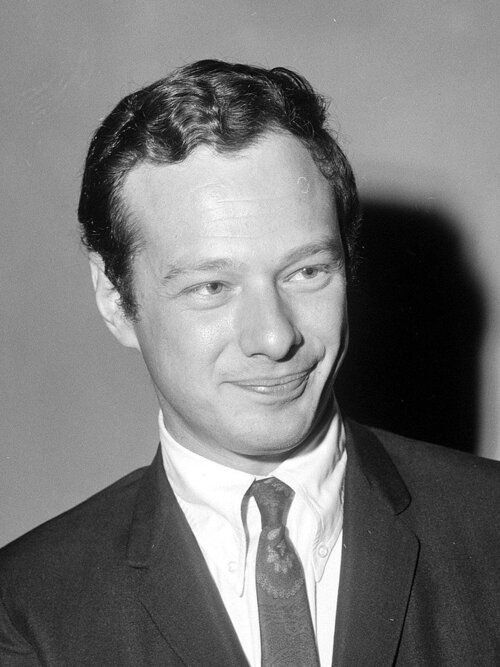
IN THIS PHOTO: Brian Epstein receiving the Edison Award for The Beatles at Grand Gala du Disque in 1965 

The Influence and Impact o Brian Epstein

___________

WHEN we think about The Beatles…

ccc.jpg

 PHOTO CREDIT: Mirrorpix

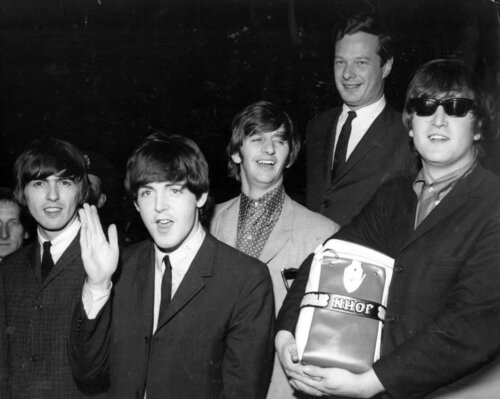
we talk about the four lads (John Lennon, Paul McCartney, George Harrison and Ringo Starr) and the impact they made. Of course their producer, George Martin, was hugely important regarding their direction, success and legacy. Not that one can easily say who a fifth Beatle would be, though their manager, Brian Epstein, would come quite high in the mix. Epstein managed The Beatles from 1962 until his death in 1967. I am mentioning Epstein because, last year, a biopic was announced. The Guardian provided more details:  

An award-winning director, who has worked with Paul McCartney on music videos, is to direct a major British film about Brian Epstein, the visionary manager and impresario who took the music industry by storm in discovering stars from the Beatles to Gerry and the Pacemakers.

The film, titled Midas Man, will be directed by Jonas Åkerlund, who has won multiple Grammy awards.

It will tell the story of a Liverpudlian record-shop manager with a talent for forecasting hits and spotting future stars. Epstein signed the biggest band of all time, the Beatles, and discovered Cilla Black and Billy J Kramer, opening his own theatre to promote and launch the likes of Jimi Hendrix and the Who. His impact on popular music and culture resounds to this day.

The film’s producer, Trevor Beattie, told the Guardian: “Epstein’s one of the most extraordinary men of the 20th century. His story hasn’t been told properly. He’s often taken for granted by the wider world, but he was ahead of his time from his vision of music and popular culture through to gender identity. He was gay at a time when homosexuality was illegal. He lived a secret life. He made some risky decisions in handling the business of his stars … Compared with what Brian had to live in his life, [they were] not a risk.”

Epstein’s achievements are all the more extraordinary because he died aged just 32, in 1967, following a barbiturate overdose.

Beattie said: “Epstein first met the Beatles in November 1961, when he was 25, and he was dead in August 1967. It is a tragic story. But it’s also life-affirming, a triumph for the human spirit because, in those few short years, he changed popular culture forever”.

I think the fact that Epstein saw these scruffy guys performing and saw huge potential in them was less a moment of commercial exploitation and more real faith that they had a spark and promise. I wonder whether, were it not for Epstein, The Beatles as we know them would have happened. I think that it was his management and friendship with the band that meant the guys reached incredible heights. It was Epstein who wanted The Beatles to dispense with the jackets and messy hair and adopt matching suits and neat haircuts. This styling and imagery is iconic now! So many other bands followed The Beatles’ looks and imagery. Epstein asking George Martin to produce the band’s records was another masterstroke.

I want to come on to an article that looked at the impact Epstein’s death had on The Beatles and their survival. I am looking forward to the biopic and what it will teach us about a man who was integral to the success of the greatest band ever. Before then, I want to bring in now some biography about a man who is the perfect subject for a biopic:

Brian Samuel Epstein was born to Harry and Malka Epstein on September 19, 1934 in a private nursing home in Liverpool. His brother Clive was born 22 months later. His father Harry called his mother Queenie because Malka is the Hebrew word for "queen". Next to the furniture store that the Epstein family owned was The North End Road Music Stores. James McCartney Sr.'s family was one of the local families that bought pianos there on extended-purchase plans. The Epsteins later expanded and took over NEMS.

Brian started to work at the family furniture store at Walton Road in 1950 at the age of 16. Two years later he was conscripted for National Service, but he was discharged from his two-year stint after ten months as being emotionally and mentally unfit. (He tells the story about being caught innocently impersonating an officer in A Cellarful of Noise.) Upon his return in 1954 he was put in charge of another branch of the family business, Clarendon Furnishing in Hoylake, and he was very successful, a born salesman.

However, Brian had other plans for his own life, and after some pleading with his parents was allowed to join the Royal Academy for Dramatic Arts to train as an actor. He passed the audition, but soon discovered he wasn't cut out for show business, and returned to the family business.

vvv.jpg

IN THIS PHOTO: The Beatles and Brian Epstein arrive at London Airport on 22nd September, 1964, after a tour of the United States and Canada/PHOTO CREDIT: Keystone/Getty Images 

When his father opened a new NEMS store on Great Charlotte St, Brian was put in charge of the ground floor, where he expanded from pianos and wireless sets to gramophone records. The new record department was so successful that another NEMS branch was opened at 12-14 Whitechapel, with Brian in charge. Meanwhile, Brian, who had been selling the music publication Mersey Beat since its first issue on July 6, 1961, became interested in the local music scene, and asked its editor Bill Harry if he could contribute a record column. His first column appeared in the third issue of Mersey Beat on August 3, 1961.

Brian's new NEMS store on Whitechapel was only down the street and around the corner from a dingy, basement club called The Cavern.

Alistair Taylor, long-time assistant to Brian Epstein, from an interview with Martin Lewis at the re-created Cavern Club in 1995:

"We found this record in Germany by a guy called Tony Sheridan and the Beat Brothers, the boys were just a backing group, and one day Brian came into the shop and he said, 'By the way, do you remember that record that we sold so many of, that band the Beatles?' So I said, yeah. So he said, 'Well, they're playing at the Cavern. Let's go down and see them, and we'll see what they're like.'

"And it was jammed solid, and we just sat at the back feeling rather embarressed, and I suddenly realised my foot was tapping, and I hated pop music, and Brian hated it even more than me, and I looked 'round and so was his."

xxx.jpg

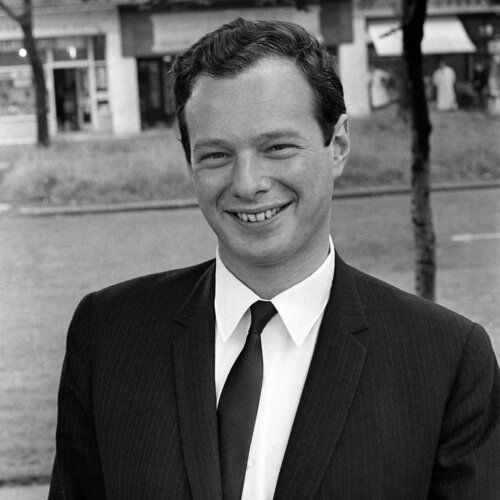
IN THIS PHOTO: Brian Epstein with The Beatles in 1965 when they received MBEs at Buckingham Palace/PHOTO CREDIT: Cummings Archives/Redferns 

"And after a while Brian started talking about it, and he said, 'What did you think?' And I said I thought they were awful, quite honestly, but absolutely incredible. So he said, 'that's exactly my feelings. Do you think I should manage them?' And I said, yeah."

Brian Epstein recalled meeting the Beatles that day:

"I hadn't had anything to do with management of pop artists before that day that I went down to the Cavern Club and heard the Beatles playing, and this was quite a new world, really, for me.

"I was immediately struck by their music, their beat, and their sense of humour on stage. And even afterwards when I met them I was struck again by their personal charm. And it was there that really it all started..."

Queenie Epstein, Brian's mother, remembers Brian talking to his parents after he met the Beatles:

"He asked his father and myself to listen to a record. He said, 'Forget about the singer, just listen to the backing group.' Actually, we were always fairly interested in all the records, because being in the business [NEMS record store].

And he said, 'They are four boys and I'd like to manage them. It wouldn't take any longer than two half days at a time, it's just sort of a part-time occupation.' He said it would never interfere with business.

"But the first time we met the Beatles, Brian was very insistent that we should go ahead with them, and I'd never been to a rock and roll concert before and I asked him what I should wear. And he said he hadn't either..."

It was decided that Brian would be the Beatles' manager at a meeting on December 10, 1961. Their first contract was for a five year period. The contract was formally signed at Pete Best's house on January 24, 1962, with Alistair Taylor as witness, although Brian, himself, didn't sign it. When asked why later, Brian answered "Well, if they ever want to tear it up, they can hold me but I can't hold them."

Brian smartened up the Beatles' stage appearance by putting them in matching suits and he instructed them not to smoke or swear on stage. Brian also encouraged the boys to make a rather theatrical synchronized bow at the conclusion of each song when performing in concert or on television. All of the Beatles went along with their new image although there was some initial very minor grumbling from John and George.

During his 'demythologize the Beatles' phase in 1970, John made references to how these image changes had somehow "tamed the real Beatles" and that he'd been against it at the time. However, most contemporary reports - and indeed recent McCartney comments - note that at the time, all of the Beatles (including John) were happy to follow Epstein's shrewd advice, particularly when it proved to be 100% effective. The reality is that in the climate of the early 60's no British or American TV show would have given the Beatles (or any other pop group) even five seconds of air time looking as they did pre-Brian.

Now that he was signed to be their manager, it was Brian's job to get them a recording contract. He used the clout of his family's record stores in Liverpool to get meetings with all the major British record companies. But the Beatles were rejected by every label including the two biggest companies, EMI and Decca. Brian finally secured a contract for the Beatles in June 1962 when they were signed by George Martin, head of one of EMI's smallest labels, Parlophone.

George Martin commented later that he signed the Beatles in considerable part because of Epstein's enthusiasm. He thought that the Beatles had promise, but he was not entirely convinced by their talent. However, he was very impressed by Epstein's conviction that the Beatles would be world famous.

Shortly after they signed with EMI, John, Paul and George (who had been together as the nucleus of the group since 1958) gave Brian the unpleasant job of telling drummer Pete Best that they wanted him out of the group, to be replaced by Ringo Starr. Brian was uncomfortable but accomplished this difficult task.

In a very real sense Epstein had now passed his 'audition' with the Beatles. In a mere six months he had secured them the record contract that they had desired for so long. And he had proven his ability to handle the most awkward of managerial tasks”.

It is remarkable reading about Brian Epstein and how he came to work with The Beatles and mould them into superstars. One cannot say that Epstein alone was responsible. It was clear his business sense and bond with the boys was hugely important. His savviness, mettle and diplomacy were all key components.

It is tragic that we lost Epstein at such a young age. Not that The Beatles’ lifespan was shortened because of the death. Last year, Far Out Magazine discussed the impact Epstein’s death had on The Beatles:

Soon the word had spread and The Beatles had been informed that their friend and manager had died in tragic circumstances. At the time, The Beatles were in Bangor, Wales, with Maharishi Mahesh Yogi, a guru of Transcendental Meditation whose teachings had begun to infiltrate the Fab Four’s very way of life—but nothing could have prepared them for this shock.

Within hours, news reporters and television cameras had descended on Ringo Starr, George Harrison and John Lennon in Wales while Paul McCartney and his girlfriend Jane Asher made their way directly to London.

It is here that one could argue the first cracks were put in the foundations of The Beatles. Swarmed by media and engulfed by a world so desperate to consume them, suddenly John, Paul, George and Ringo looked out on their own. The footage below from a news report just hours after the news had been shared with the band shows Harrison and Lennon dumbfounded by grief and in complete shock. The sharks began to circle.

But perhaps the real reason that Epstein’s death affected the members of The Beatles so badly was that he was, above all else, a dear, dear friend. “I can’t find words to pay tribute to him. It is just that he was lovable, and it is those lovable things we think about now,” said Lennon at the time. Harrison said of their manager. “He dedicated so much of his life to the Beatles. We liked and loved him. He was one of us,” Starr concurred, “We loved Brian. He was a generous man. We owe so much to him.”

The truth is that we can never be certain whether Epstein’s death did spark off an irreversible chain of events that led to The Beatles break-up. At best, we assume that had he not died the band may have stuck around for a little bit longer, but most of the issues the group were facing had already begun to surface before he passed. What we can be certain of though, is that without Brian Epstein, there would be no such band as The Beatles”.

I think Brian Epstein is one of the most important people in The Beatles’ story. I am not sure exactly when the biopic will be released. I think it will offer long-overdue insight into a man who is such a part of Pop history. From November 1961, when Epstein first encountered the band, to the present day, is almost sixty years. Though The Beatles themselves deserve all the exposure and celebration they have accrued, it is nice to know that, very soon, Brian Epstein will be put…

aaa.jpg

IN the spotlight.

FEATURE: Spotlight: BLACKPINK

FEATURE:


Spotlight

xxx.jpg

BLACKPINK

___________

THIS is another Spotlight feature…

xxx.jpg

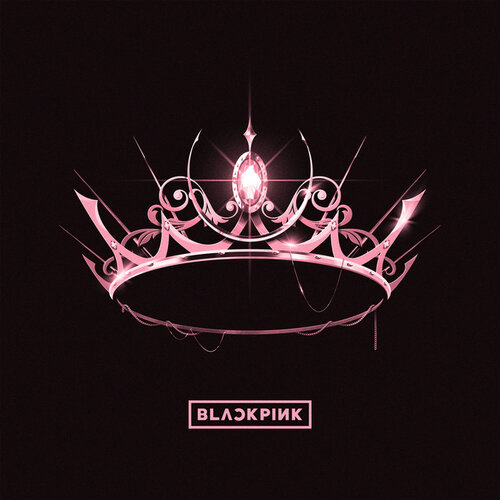
where I am featuring a group who command huge love and have a giant fanbase. BLACKPINK are a sensation, for sure - thought I feel they are not known to everyone. Moreover, I feel that their music gets defined or pigeonholed. Many assume that they are reserved for a certain audience – usually younger and female. I am going to bring in a couple of interviews in addition to a couple of reviews for their 2020 release, THE ALBUM. The fact the album is in Korean might mean that some avoided it. Before then, I am going to Wikipedia to bring in some background and biography:

Blackpink (Korean: 블랙핑크; commonly stylized as BLACKPINK or BLΛƆKPIИK) is a South Korean girl group formed by YG Entertainment, consisting of members Jisoo, Jennie, Rosé, and Lisa. The group debuted in August 2016 with their single album Square One, which featured "Whistle" and "Boombayah", their first number-one entries on South Korea's Gaon Digital Chart and the Billboard World Digital Song Sales chart, respectively.

Blackpink is the highest-charting female Korean act on the Billboard Hot 100, peaking at number 13 with "Ice Cream" (2020), and on the Billboard 200, peaking at number two with The Album (2020), the first-ever album by a Korean girl group to sell more than one million copies. They were the first Korean girl group to enter and top Billboard's Emerging Artists chart and to top the Billboard World Digital Song Sales chart three times. Blackpink was also the first female Korean act to receive a certification from the Recording Industry Association of America (RIAA) with their hit single "Ddu-Du Ddu-Du" (2018), whose music video is currently the most-viewed by a Korean group on YouTube. They have the most top 40 hits in the United Kingdom among all Korean artists, and their 2018 song "Kiss and Make Up", a collaboration with Dua Lipa, was the first by a Korean group to receive a certification from the British Phonographic Industry (BPI) and a platinum certification from the Australian Recording Industry Association (ARIA).

Blackpink has broken numerous online records throughout their career. Their music videos for "Kill This Love" (2019) and "How You Like That" (2020) each set records for the most-viewed music video within the first 24 hours of release, with the latter breaking three and setting two Guinness World Records. They are also the first music group and Korean act to have three music videos each accumulate one billion views on YouTube. Blackpink is currently the most-followed girl group on Spotify and the most-subscribed music group, female act, and Asian act on YouTube. Their other accolades include the New Artist of the Year Award at the 31st Golden Disc Awards and the 26th Seoul Music Awards, the Mnet Asian Music Award for Best Female Group in 2020, an MTV Music Video Award (first win by K-pop girl group), inclusion on Forbes Korea's annual list of the most powerful celebrities in South Korea (placing first in 2019 and third in 2020), and recognition as the first female Korean group on Forbes' 30 Under 30 Asia”.

I don’t think one needs to be a fa n of girl groups or K-Pop. There is something about BLACKPINK’s music that translates music borders and languages. In the absence (largely) of strong and popular girl groups in the U.K. and U.S., I think that there is a lot to be said of K-Pop artists and what they provide. I want to bring in an interview that was conducted with Elle last year. In it, we discover more about the band’s meteoric rise:

In addition to the obvious Beatlemania comparisons, Blackpink’s clear-cut empowerment message places it within the lineage of great girl groups past. The Spice Girls come up a lot. Being compared to a group “whose contribution to pop culture and music was so intense and massive is an honor,” Rosé says. “But it was never like, ‘Let’s become this or them.’ ” Bekuh Boom, an L.A.-based songwriter and frequent Blackpink collaborator, agrees. “[Rosé, Jennie, Jisoo, and Lisa] are going to set the standard for the new girl group in America. We haven’t had anyone like them since Destiny’s Child. [Blackpink] is going to fill that void.”

Over a Zoom call with the group in mid-July, Rosé tells me that meeting face-to-face with their international fans during Blackpink’s inaugural world tour, which ran from November 2018 through February of this year, felt “real and genuine, not like we were watching it on a screen or getting feedback on Instagram—it was literally right in front of our eyes.” Jennie jumps in to add, “We felt the energy, and that’s the best feeling.”

The band may have taken its time to release a full-length album, but that hasn’t affected its meteoric rise. Since debuting in Seoul in 2016, they’ve amassed billions of streams on Spotify, despite having only 15 songs (including “SOLO” by Jennie) to their name. Granted, every song has been an instant hit—engineered to be sung along to regardless of language, and supplemented by videos conjuring hyperfeminine bubblegum-pop utopias, cut with a dash of hip-hop swagger. The video for “How You Like That,” a trap-pop track that serves as the group’s “comeback” single (a colloquial term in K-pop referring to a new release), broke three Guinness World Records after receiving 86.3 million views in a 24-hour period back in June. On YouTube, Blackpink is the most subscribed-to music group across genre and gender, with 44.3 million followers as of this writing—surpassing Ariana Grande and the mega-popular K-pop boy band BTS.

In addition to selling out arenas, collaborating with superstars like Lady Gaga (“Sour Candy”), Dua Lipa (“Kiss and Make Up”), and Selena Gomez (“Ice Cream”), and serving as brand ambassadors for the likes of Celine, Chanel, Dior, and Saint Laurent, Blackpink was the first K-pop girl group to grace the Coachella stage last year, where the band shared a tent with Jaden Smith. “Will Smith was backstage,” Jennie says. “He said, ‘You guys are so great.’ That was a starstruck moment for me, definitely. Like, Will Smith knows us. Wow.” The group’s Coachella performance also serves as the dramatic finale to a new Netflix documentary, Blackpink: Light Up the Sky, directed by Caroline Suh (Salt Fat Acid Heat), launching October 14.

xxx.jpg

PHOTO CREDIT: Hee June Kim for Elle

Blackpink is a contradiction, to be sure, a global pop phenomenon without household-name recognition (yet), the future in the present. The group thrives in a digital world and an American market that’s grown less hesitant to embrace non-English singles—the same shift that has benefited artists like Rosalía and Burna Boy. This is partly because K-pop fans, in general, are a highly coordinated, digital-native lot. Some might recall how they mobilized alongside TikTok teens this past summer, claiming to have registered for tickets to President Trump’s Tulsa rally (and then not showing up). Blackpink’s fans are equally zealous. Within seconds, Blinks can make their favorite group trend worldwide—or turn an image of Lisa dancing in thigh-high boots into a “sexy legs” meme. “We’re moved by our fans,” Jisoo says. “We feel their sadness and happiness. We’re deeply connected.” If there was ever a pop group primed to break out when all of our social interactions happen via screen, it’s Blackpink.

Like most K-pop idol groups, Blackpink was formed via an intricate process at a pop-star boot camp. Each member had to pass an audition with YG, move into a dorm, and train for four to six years, beating out other girls with the same ambition before getting selected for a new group that placed equal importance on flawless appearance, skill, and charisma. (Think Making the Band, only cutthroat.) “We all lived together since the beginning,” Jennie says. “After our training time was over, we’d go home together and order food, talk about how scary the teachers were, how the work was too much. And just like how kids at school become friends, we just got along. It was very easy—we didn’t really have to try.”

While Blackpink remains largely apolitical in conversation, Rosé is quick to celebrate the group’s global diversity—something few K-pop groups can claim: “Music [doesn’t] always originate from the UK or the States. It’s global, it’s Asia, it’s the most random places you can imagine. I’m very proud that we all originated from different parts of the world”.

I am looking ahead to see where BLACKPINK might head. I think that they will become more of a household group in the future. One might assume that, because of the pandemic, last year was a pretty quiet one for BLACKPINK. As we discover in a Vogue interview from December, THE ALBUM was received hugely positively:

2020 has been a rollercoaster of album releases and cancelled tours for Blackpink. In October, they released their first full record, The Album, which Rosé explained meant “a lot to us personally. For that to be in their hands and have our fans react to it in such a positive way and have them enjoy it.” Jisoo also added that though they are aware of their chart positions and the critical acclaim, it’s the response of the fans they await the most and feel grateful for social media during this time. “We always listen to our fans’ feedback and monitor their responses because in these times, especially when we can’t meet them face to face, the feedback we get through social media is more valuable. So we want to use it and respond to it as much as possible.”

Through social media, the band have also come to understand the new audience that has discovered their music over the last 12 months, and will be adding to this with a YouTube concert named plainly, “The Show,” set to be broadcast on 27 December. A peak between-Christmas-and-New-Year pick-me-up. Think of this as Blackpink’s festive treat to the Blinks, old and new.

“We’re surprised every day. We’re like, how can somebody be so supportive of a person?” Rosé added on the fans’ dedication. “It’s just unbelievable. I think we really commend them. They work very hard for us and it just blows our minds how they can be so supportive of somebody else. We [have] learned from our fans too. We want to say we’re very thankful for how hard they try, how much support they give us and we appreciate it. We really do”.

vfogigiogodshyudeytswsws.jpg

That brings me to THE ALBUM itself. 2018’s BLACKPINK IN YOUR AREA was the group’s debut and their first Japanese-language release. The album is a compilation of every song released by BLACKPINK at the time, including their self-titled Japanese E.P. and debut Korean extended play, Square Up. I feel that THE ALBUM is more of a proper debut. In their review, this is what AllMusic had to say:

Within half a decade from their debut, K-pop quartet Blackpink crashed the international mainstream, topping charts around the world and breaking records along the way with their bombastic singles, EPs, and live albums. Two years after issuing their Japanese debut, they finally released their first Korean-language effort, The Album. Effortlessly blending both Korean and English, the group delivered a short-but-sweet set of empowering anthems, led by the characteristically thundering banger "How You Like That." Overflowing with confidence, Jisoo, Jennie, Rosé, and Lisa conquer each track on The Album with their vocal ability (both singing and rapping) and effortless charm, switching up styles to offer something for every type of fan. They bare their teeth on the glitter-trap "Pretty Savage," a collective middle finger to the haters, just as well as they take a stand for self-worth on the delightful kiss-off "Love to Hate Me." On "Crazy Over You," they long for romance over sexy, slinky production, before flipping the script on the gloriously rousing "Lovesick Girls." Following collaborations with Dua Lipa and Lady Gaga, Blackpink further bridge the East-West gap by recruiting Selena Gomez for the playful pop gem "Ice Cream" and Cardi B for the enticing "Bet You Wanna," two surefire moments designed to increase their global reach. Beyond the upbeat and energetic fare, the group close The Album with the inspirational "You Never Know," adding heart and vulnerability to their range. While it would be nice if The Album had a few more songs, there's enough variety to keep fans sated, excited, and empowered until the next big release”.

To wrap up, I want to bring in the review from The Guardian. I think that a lot of western Pop artists and groups lack hooks, adequate energy and any real sense of thrills. When it comes to BLACKPINK, we get something in the form of remedy and reversal:  

This highly efficient extraction of pocket money runs the risk of making music seem like a secondary consideration, but that doesn’t tally with The Album’s contents. It deals in precision-tooled rap-influenced pop that makes most western artists’ efforts in that area seem wan. Its songs are unrelenting three-minute bombardments of hooks: barely a second passes where you’re not in the presence of a melody you struggle to erase from your brain, a snappy throwaway aside anyone else would build an entire chorus around – How You Like That’s cry of “look up in the sky, it’s a bird, it’s a plane” is a prime example – or an equally snappy production touch: the Popcorn-esque melody that ping-pongs behind Lovesick Girls’ chorus, the woozy-sounding staccato synths that open Ice Cream. This production approach reaches a deranged height on Crazy Over You, its backing track constructed from a patchwork of eclectic sounds – bursts of Bollywood-ish strings, flute, rave-y synth stabs, a Brazilian cuica, what sounds like a Japanese gottan – interspersed with bursts of sub-bass.

You’re struck by the sense that the quality control has been set very high, and that the writers and producers – old hands at K-pop and big western names including Ryan Tedder and the team behind much of Ariana Grande’s Sweetener alike – have felt impelled to bring their A-game. The possible exception is the lyricists. Devoid of an overarching concept and eschewing the need to show a human heart at the centre of the K-pop machine – the raison d’etre behind much of BTS’s recent output – it sticks to the topics of how great Blackpink are and how that perennial bugbear The Haters aren’t getting to them. In fairness, given the vociferousness of said Haters, perhaps the latter subject has more heft in the world of K-pop”.

I would advise people to seek out BLACKPINK if they have not done so already. I feel we will see a few more albums from the South Korean superstars. I think that their fanbase will widen. Thinking about the demographic in the U.K., it may still be reserved to an audience that consists largely of women and girls. I feel their music needs to be heard by everyone. In the next year or two, the group are going to keep growing bigger. When they can tour again, people around the world will be able to see songs from THE ALBUM brought to life on the stage. I think it is the perfect album to get you motivated. It will definitely…

LIFT the mood.

_________________

Follow BLACKPINK

ccc.jpg

FEATURE: The Lockdown Playlist: Johnny Cash's I Walk the Line at Sixty-Five

FEATURE:


The Lockdown Playlist

xxx.jpg

Johnny Cash's I Walk the Line at Sixty-Five

___________

RELEASED on 1st May, 1956…

ddd.jpg

I Walk the Line is among Johnny Cash’s most-famous songs. It is one of the classics from the late, much-missed Country star. Ahead of its sixty-fifth anniversary, I wanted to put together a Lockdown Playlist of other tracks that contain the words ‘line’ and ‘lines’. I was going to do a Johnny Cash-only playlist, but I thought it would be fun to compile some songs that share that word. Before getting to it, NPR ran a feature in 2000 regarding the story of I Walk the Line:

If you read enough articles, interviews and liner notes, you can try to piece together the story of what inspired "I Walk the Line," but Johnny Cash is a masterful storyteller. And even his good friend Kris Kristofferson has said he's half-truth, half-fiction. The humming at the start of each verse? Cash said he picked that up from Dr. Hollingsworth, a physician in his hometown who was always humming. Then there's lyric, `I keep my eyes wide open all the time,' which Cash said was based on a piece of advice from a Dale Carnegie business course.

And the melody line? Well, in his autobiography, Cash explains how when he was in the Air Force in Germany, he put a tape up on his reel-to-reel recorder and heard a, quote, "haunting drone full of weird chord changes, something that sounded like spooky church music." It turned out the tape was a recording of his band, the Landsberg Barbarians, but it was being played backwards.

"I had a conversation with Johnny the other day," Rodney Crowell says. "And we were talking about when he was in the military--he was in the Air Force. And his job in the Air Force, he sat with headphones on trying to pick up, I think, German Morse code. And, you know, when Morse code's running through the headphones, and he's, you know, pulling his eight-hour shift. I said, `Man, that's sounds to me like--that's where your--(makes guitar noises)--sound came from.' And he said, `It absolutely is.' He said, `When I first started writing songs, I was kind of keeping a little notebook and scratching things around with Morse code running through my head.'"

When Johnny Cash came back from the Air Force, he moved to Memphis, where he worked as a door-to-door appliance salesman. He started a band with Luther Perkins and Marshall Grant, two guys from the local car dealership. They wanted to record a gospel record with Sam Phillips. He was the hottest producer in Memphis, the brains and ears of Sun Records. He helped create Elvis Presley's sound, Carl Perkins' sound, Jerry Lee Lewis' sound. `Sam Phillips was the man to see,' Johnny Cash told "Fresh Air's" Terry Gross in 1997.

"So I called him, and he turned me down flat. And then two weeks later, I called him, turned down, turned down again. He told me over the phone that he couldn't sell gospel music. So I went down with my guitar and sat on the front steps of his recording studio and met him when he came in. And I said, `I'm John Cash. I'm the one who's been calling. And if you listen to me, I believe you'll be glad you did.' And he said, `Come on in.'"

Cash recorded a few singles with Sam Phillips. And not long after, he went on the road opening for 20-year-old Elvis Presley, who was already on his way to becoming, well, Elvis. And wherever Elvis went, of course, adoring girls were sure to follow. Johnny Cash was 23 and married to his first wife, Vivian Liberto. On tour, Cash met temptation, and that is what led him to write "I Walk the Line." It is a proclamation of fidelity.

"It was kind of a prodding to myself to, `Play it straight, Johnny,'" Cash said of the song.

Cash originally played the song on the slow side.

"Well, Sam wanted it up--you know, up-tempo. And I put paper in the strings of my guitar to get that--(makes guitar noises)--sound. And with a bass and a lead guitar, there it was. Bare and stark that song was when it was released. And I heard it on the radio, and I really didn't like it. And I called Sam Phillips and I asked him please not to send out any more records of that song. But he said, `Let's give it a chance.' And it was just a few days until--that's all it took to take off."

The song became a huge hit across the country, and the line Johnny Cash tried to walk in his personal life got tougher”.

To mark sixty-five years of a truly terrific and fantastic song, this Lockdown Playlist is an assortment of songs that have the word ‘line’ and ‘lines’ in their titles. It is left for me to round things off by providing a nod and salute to…

A Johnny Cash classic.

FEATURE: Between a Man and a Woman: Kate Bush and Mark Radcliffe

FEATURE:


Between a Man and a Woman

sss.jpg

PHOTO CREDIT: BBC 

Kate Bush and Mark Radcliffe

___________

I am ramping back up…

xxx.jpg

my Kate Bush features, as there are things that have come to mind that I need to discuss. It is interesting how, even though Bush has not put out an album for almost a decade – I am not including the 2016 release of Before the Dawn (as that is a live album) -, there is still this fascination and room for exploration. Ahead of the tenth anniversary (on 16th May) of Bush’s ninth studio album, Director’s Cut, it is timely that I am highlighting someone who interviewed her when she was promoting that album. I have been thinking a lot about Bush’s interviews and some of the best through the year. Whilst she has spoken with a lot of people through the years, there are people that Bush sort of ‘comes back to’ – those she trusts and has a great bond with. I may explore other interviewers in a bit such as John Wilson. The BBC Radio 4 Front Line host spoke with Bush when she released 2005’s Aerial, in addition to Director’s Cut and 50 Words for Snow in 2011. The same can be said for Mark Radcliffe. When you hear Bush being interviewed by Wilson, you can sense the rapport and warmth. This is a quality that reveals itself when one listens to interviews she conducted with Radcliffe. Unfortunately, for some reason, the interview Radcliffe conducted with Bush for 50 Words for Snow is not on YouTube (it was a few weeks ago) – so I will drop in the interviews for Aerial and Director’s Cut. One reason why I wanted to highlight Mark Radcliffe’s love of Kate Bush is because, before 2005, there had been this long-held desire and campaign to interview one of his music heroines (I shall explain more a bit later). Bush sent a ‘good luck’ comment to Radcliffe on BBC Radio 2 in 2007 ahead of his show moving to a new 8 p.m. timeslot (the message was played on the station on Thursday, 5th April).

When it comes to Kate Bush passion, there are few who exert the same level as Radcliffe! Born the same year as her (1958), I can imagine his love for her music started quite young. I know her holds her 1989 album, The Sensual World, in very high regard. One can be certain that, when Bush releases another studio album, Mark Radcliffe will get another opportunity to interview her. I know his BBC Radio 6 Music colleague and co-host, Stuart Maconie, is also a big Kate Bush fan (and he has interviewed her at least once before). Their weekend breakfast show would be the perfect slot for an interview. Let’s hope that Radcliffe and Bush get to combine once more very soon. Rather than simply drop in a couple of interviews between Radcliffe and Bush, I wanted to source some articles/interviews where Radcliffe discusses his experiences with Bush and why he loves her music. I wonder whether we will see a Wuthering Heights documentary from Radcliffe. As Kate Bush News reported in September 2020, there were rumours, suggestions and rumblings:

BBC Radio 6 Music DJ Mark Radcliffe has posted several tweets recently of a trip he made to Haworth in Yorkshire, to make a film about Kate and the song that started it all, Wuthering Heights. The documentary should be aired sometime around Christmas. Mark has been a vocal supporter of Kate ever since creating the “Bushometer” on his radio show in the early 2000s before Aerial was released, counting down to his dream of interviewing Kate, which he has now since done more than once!”.

aaaa.jpg

It would be good to see a documentary from Radcliffe as I myself have trying to pitch a Kate Bush documentary to the BBC and sundry sources – to little avail or much positivity from them. The Kate Bush Story: Running Up That Hill was released in 2014 to coincide with Bush returning to the stage with Before the Dawn. That documentary, as I have said a lot, has some positives - though there are areas for improvement and some negatives…no less the mere one-hour running time and the fact the documentary is more an overview of Bush and her music rather than a deep dive! In August 2014, The Big Issue spoke with a host of people who talked about what makes Bush great – and what to expect from her gigs:

On August 26, at London’s Hammersmith Eventim Apollo, Kate Bush makes her long-awaited, never-dreamed-of return to the live arena. Rumours of a big, theatrical extravaganza are buzzing, but the show has been kept firmly under wraps. This week Kate herself implored fans to just connect with the rest of the audience – and her – rather than view the shows through smartphones and cameras. As the excitement builds, The Big Issue spoke to a host of people who know and love her about what makes Kate great, and what to expect at the gigs… hold on to your hats!

Here, MARK RADCLIFFE, Radio 2 and 6Music DJ who’s bagged the best interviews with Kate Bush at her home, unravels the mystery of her music…

She’s got everything: she’s personable, beautiful, talented and yet she has a layer on top of that of sheer originality. She’s a one-off. Her work is magical. I love her voice, I love her piano playing, I love her composition and ideas. Her records take you to another place.

My favourite album of recent times is A Sky of Honey, the second disc on Aerial, which has birdsong all the way through, tracking a day with birdsong. I love the song on there Somewhere In Between, it works as a piece of pop music but it’s in the middle of this concept album.

There’s no one else in the whole world who would have thought of doing this. 50 Words for Snow, those long songs, just her at the piano; she does exactly what she wants to do and has the confidence to carry it through.

From a very early age she could make the music industry bend to her will, whereas the other way around was the norm. She then took time off to be a mother to her son, even though she was kind of working but not at any particularly great rate in those years.

Kate Bush is that old-fashioned thing, she’s an artist – she creates this music and a by-product is people want to know about her personal life. And she doesn’t want to tell them. She doesn’t want to put it on Facebook, it’s her private life. What she prizes over all else is being able to live a normal life with her family.

sss.jpg

IN THIS PHOTO: Kate Bush captured in 2005/PHOTO CREDIT: Trevor Leighton/National Portrait Gallery, London  

The thing I found most surprising when I met her is that she was completely normal, she’s a really friendly, chatty, welcoming, working mum. The first time I went to her house she hadn’t had time to make any food so she’s got this cheese flan from the supermarket, she hadn’t made any particular effort in what she was wearing, she was just going about her day and that day happened to include me as well as taking her son Bertie to school and whatever else she was doing.

She’s absolutely not crazy (despite tabloid clichés). It’s not for me to speak for her, but I don’t think she’s wildly over-concerned, my impression was she finds it quite funny that they think she swans around in a batwing dress in a gothic castle. She’s picking up cheese flans from the supermarket!

I never thought I would get the chance to see her live, I didn’t see her one and only tour and I just never thought it would happen. When I’ve interviewed her I’ve always asked about it and she always said “I’ve not ruled it out”, but I never took that as an indication she was really serious about it. So it was quite a big surprise when she announced the dates.

I would be very surprised if it was anything other than quite theatrical, dramatic and well-designed with some over-arching concept to it, but I’m guessing”.

She cares very much about what people think about the work. She always asks you very carefully about it. She is interested, and the reaction to records is very important to her, she pours her heart and soul into them.

She is wildly imaginative and creative, and she’s fantastically single-minded, quite pragmatic about what needs to be done, not an airy-fairy flighty idea: it’s work, it’s art, the process of creation, and she takes all that very seriously. She has meticulous control over all the music and the artwork. She’s a one-off, a true original. And she’s fantastically good humoured and giggly and smiley”.

Although I have said that Radcliffe holds The Sensual World in high esteem (which is true), the fact that he first got to spend a lot of time with Kate Bush when she promoted Aerial means that the 2005 double album holds a very special place in his heart. The album’s second disc, A Sky of Honey, is a mesmeric piece of work. In 2019, Jude Rogers was writing for The Quietus and spoke with Radcliffe about his music tastes. A Sky of Honey was one of his album picks:

Kate Bush – A Sky Of Honey (one half of Aerial)

Picking half an album is probably cheating, but this half of the album is worth a whole album to me. I like A Sea Of Honey [the first half] too, don't get me wrong, but this is something almost beyond music. The idea of it being carried through birdsong, starting with her child's voice, then travelling through a single day in the summer through to night, with Kate imitating the birds herself, then going through to the morning… what an amazing idea. Seeing her doing this at the Hammersmith Apollo in 2014 was one of the highlights of my life. I'd interviewed her three or four times at this point – she's lovely, and once made me a cheese pie – and I'd always hate having to say, well, 'Kate, would you ever…', feeling really embarrassed to ask her about touring. I never thought she would again, but she'd always say, 'I haven't ruled it out.' And there we were.

I've loved how she treats releasing music as something to do when she wants to do it. I know she can afford to, but what a great attitude that is – she could have released a lot more of it, and been pressured to do so. I mean, I can barely imagine what it must have been like being a teenage girl in the 1970s emerging into a pop industry full of the middle-aged equivalents to today's Jeffrey Epstein figures. Unbelievably tough. To come out of that so assured and confident and do her thing without ever compromising – I admire that so much”.

As Radcliffe revealed to The Star (the banner headline/paragraph explained how “The fates dealt Mark Radcliffe a tough hand in 2018. In the space of 12 months his father died, his dog passed away, the BBC 6 Music radio show he presents with Stuart Maconie was abruptly shunted from weekday afternoons to weekend mornings and – most worryingly of all – he was diagnosed with cancer of the head and neck”), he won Bush’s trust. Even though she is fiercely private, he did manage to find out a little about her. I love the interviews he has conducted with Kate Bush - let’s hope the 50 Words for Snow interview goes back up soon (there is a good one Bush conducted with Jamie Cullum that is missing too). The long and fascinating Aerial interview is worth seeking out. I also really like the 2011 interviews. It is clear that Bush likes Radcliffe and enjoys speaking with him. There is a natural back and forth and chemistry that means, as I said, it is highly likely he will be invited back for an interview if and when Bush releases another album – let’s hope it is post-pandemic so that he gets to visit her at her home! I feel interviews are an important aspect of Bush’s career; in the sense we can learn things about her that we do not get from the music. There have been a list of one-off interviewers. In an exclusive club is Mark Radcliffe. I love a lot of the interviews Bush has conducted, though there is something special about her chats with Radcliffe. Each of their interviews is…

aaa.jpg

IN THIS PHOTO: Kate Bush in a promotional photo for 2011’s 50 Words for Snow

SUCH a wonderful and intimate listen.  

FEATURE: The May Playlist: Vol. 1: New-Found Power and Raised Self Esteem

FEATURE:


The May Playlist

sss.jpg

IN THIS PHOTO: Billie Eilish

Vol. 1: New-Found Power and Raised Self Esteem

__________

THIS week…

aaa.jpg

PORTRAIT CREDIT: Briony May Davies

is another typically and reliably busy and quality-laden one for new music. There are great tracks from Billie Eilish, Jessie Ware, Self Esteem, Noel Gallagher’s High Flying Birds, Kings of Convenience, girl in red, Sarah Close, Emma-Jean Thackray, Dawn Richard, Garbage, Mattiel, Royal Blood, and The Coral. Throw into the mix some Róisín Murphy, Little Mix (ft. Saweetie), PJ Harvey, Burna Boy, Warpaint, Julia Stone, and Manchester Orchestra, and there is something in there for everyone! If you require a boost and energy to get you into the weekend, then I think this week’s Playlist should sort you right out. There are plenty of great tracks to get you…

eee.jpg

 IN THIS PHOTO: Jessie Ware

INTO the groove.   

ALL PHOTOS/IMAGES (unless credited otherwise): Artists

__________

xxx.jpg

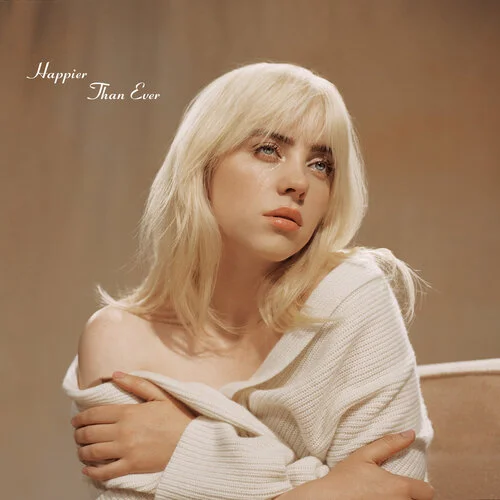
Billie Eilish Your Power

zzz.jpg

Self Esteem - I Do This All the Time

zzz.jpg

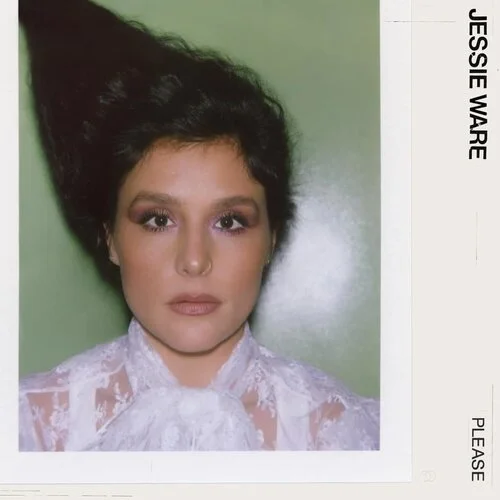
Jessie Ware - Please

sss.jpg

Kings of Convenience - Rocky Trail

www.jpg

PHOTO CREDIT: Jonathan Kise

girl in redBody and Mind

aaaa.jpg

Emma-Jean Thackray  - Say Something

www.jpg

Dawn Richard Boomerang

aaa.jpg

PHOTO CREDIT: María José Govea

Garbage - No Gods No Masters

aaa.jpg

Noel Gallagher's High Flying Birds - We're On Our Way Now

dkddk.jpg

Róisín Murphy - Crooked Madame

xxx.jpg

Royal Blood Oblivion

qqq.jpg

Mattiel These Words

aaa.jpg

The Coral Change Your Mind

x.jpg

Little Mix (ft. Saweetie) Confetti

cccc.jpg

Ashley Monroe Gold

dddd.jpg

Squirrel Flower - I'll Go Running

xddss.jpg

Phoebe Green IDK

xxx.jpg

PHOTO CREDIT: Danny Kasirye for The New York Times

Marianne Faithfull (with Warren Ellis) Ozymandias

ff.jpg

Sarah Close I Can’t Trust Myself

tttt.jpg

Birdy The Otherside

www.jpg

The Aces Don’t Freak

fff.jpg

Julia Stone Queen

ccc.jpg

DJ Khaled (ft. Nas, JAY-Z & James Fauntleroy and Harmonies by The Hive) - SORRY NOT SORRY

qqqq.jpg

Burna Boy Kilometre

jjj.jpg

Kara MarniTwisted Fantasy

fff.jpg

Manchester Orchestra Telepath

zzzzz.jpg

Alfie Templeman, April One More Day

f.jpg

PHOTO CREDIT: Pooneh Ghana

Faye Webster - Cheers

de.jpg

PHOTO CREDIT: Daniel Topete

black midi Slow

eee.jpg

Mannequin PussyPerfect

sss.jpg

Bow Anderson Hate That I Fell in Love with You

bbb.jpg

WILLOW (ft. Travis Barker) - t r a n s p a r e n t s o u l

cccc.jpg

Molly Burch - Control

aaa.jpg

Emmi DRUM

yyy.jpg

PHOTO CREDIT: Furmaan Ahmed

CLOVES Nightmare

sss.jpg

Rosie Tucker Different Animals

rrrrr.jpg

Natalie Gray My Toy

eee.jpg

Amy Shark - The Wolves

www.jpg

KAHLLA Anything at All

rrr.jpg

Riva TaylorWoman

dkdki.jpg

spill tab - Anybody Else

ffff.jpg

BERWYN - I'D RATHER DIE THAN BE DEPORTED

rrrr.jpg

Half Waif  - Swimmer

wwaa.jpg

Anitta Girl from Rio

sss.jpg

Willow KayneTwo Seater

ssss.jpg

Warpaint - Lilys (HBO Made for Love Cut)

aaaa.jpg

Hayley Kiyoko - Found My Friends

ssss.jpg

PHOTO CREDIT: Masayoshi Sukita

Marc Bolan, T. Rex - Big Black Cat

aaaa.jpg

PJ Harvey - The Pocket Knife (Demo)

FEATURE: Modern Heroines: Part Forty-Five: Billie Marten

FEATURE:


Modern Heroines

aaa.jpg

Part Forty-Five: Billie Marten

___________

FOR this forty-fifth…

xxx.jpg

 PHOTO CREDIT: Katie Silvester

part of my Modern Heroines feature, I am including an artist whose debut album turns five this year. Twenty-one-year-old Billie Marten is one of my favourite artists and, as I have said before, her debut, Writing of Blues and Yellows, was my favourite albums of the 2010s. I was amazed by the maturity, beauty and phenomenal songwriting from the then-teenager! I will concentrate on her previous album, Feeding Seahorses by Hand, came out in 2019. I think that the album was a worthy and exceptional follow-up to an album that I hold in great affection. I think that her upcoming album, Flora Fauna, adds new elements, fresh energy and sonic elements to the palette. It is being released on 21st May. Make sure that you order a copy, as it is going to be a stunning album:

Flora Fauna is the third album from Billie Marten. Raised in the rolling hills of North Yorkshire on artists such as Nick Drake, Joni Mitchell, Joan Armatrading, and Kate Bush, Marten’s critically acclaimed debut album Writing of Blues and Yellows, was released in 2016 when she was still just 17, while its follow-up Feeding Seahorses By Hand was similarly lauded in 2019 (# 53 in UK album chart).

Flora Fauna, was recorded with Rich Cooper in London. Marten’s new material blends those signature hushed, resonant vocals with a rapid pulse and rich instrumentation, her inspirations now stretching from krautrockers Can, to Broadcast, Arthur Russell, and Fiona Apple.

Built on the minimalist acoustic folk foundations she made a name for herself with, Flora Fauna is a more mature, embodied album fostered around a strong backbone of bass and rhythm. Shedding the timidity of previous work in favour of a more urgent sound, the songs mark a period of personal independence for Marten as she learned to nurture herself and break free from toxic relationships - and a big part of that was returning to nature

I am going to quote from a recent interview where Marten discussed Flora Fauna and how her music has evolved and developed through the years. I think that Marten is going to be an icon in the future. At such a young age, she has already achieved so much. Like Laura Marling, she has prodigious talent for someone so young. I am curious to see how she develops as a songwriter - and, as she goes through her twenties and thirties, whether her music undergoes a bit shift (or whether she keeps a more acoustic and Folk temperament in the fold). The first interview I want to bring in is from The Line of Best Fit. If Flora Fauna feels like fresh bloom and a distinct new stage of Billie Marten’s career, perhaps Feeding Seahorses by Hand was a natural follow-on from Writing of Blues and Yellows:

Marten's mindset has always been naturally focused. Born Isabella Sophie Tweddle, her metamorphosis into Billie Marten was no forced hand, but one she found herself growing into as her musical dreams progressed thanks to uploaded YouTube covers. With this growth came her exploration into songwriting, which took equal roles as a place to journal her own inner workings and as a means to chronicle observations, but it's her deep rooted personality traits that have kept Marten growing richer in a dried-out world.

"[The album] is just little pockets of the past two years. Writing really sporadically, there was a time when I just didn't pick up a guitar, and some of those songs came out of the depths of total..." she tapers off, and pauses, before breathing deeply. "I was not believing I was a musician at all - but actually these songs are some of the happiest I've ever written, so it was just a bit of living that came together in [these] 12 tracks at the end."

​Feeding Seahorses By Hand is undoubtedly a decided collection of songs. "I only made another one because I had enough songs to make an album," Marten says.

On her debut, 2016's Writing Of Blues And Yellows, came a delicate version of Marten: sparse folk sounds rang true, while she mirrored herself into a world that had offered her opportunity. A focal point stemmed from the fact its recording took place while she was still in school, and, unlike most, her decision to stay the course and finish her education meant for a while she stood with one foot on familiar ground, and the other firmly in the greener grass of promise.

Like a true child of the arts however, Marten finds literature fuelling her creative sun. No stranger to incorporating it into her music, on her debut she penned a track in tribute to the Brontë sisters, specifically Emily Brontë.

​"The correlation between literature and music, for me, was purely based on nature because I felt the people that were writing about it were my sort of community, and it was always a way for them to express how they felt through that."

"This time around I was reading writers that were quite vulnerable; a lot of first-person stuff, a lot of minimalism. My favourite book is L'Étranger - The Outsider - by Albert Camus. It floors me every single time. The first line is [translated] 'Mother died today. Or maybe yesterday, I don't know.' Brutal things like that. I underline things in every book."

While Marten certainly has an unassuming air about her, the moment you delve into Feeding Seahorses..., the savage side spurred on by the likes of Camus shines through. "Blood Is Blue" features the brutal imagery of "I'm a slaughtered pig / and I’m happy to die," in regards to love, and a previous relationship. Continuing on she furthers this allegory with stark lines such as "So sit down, let's eat / fill your plate all up with meat...".

Her ability to gut vulnerable emotions for want of bare realism, only to then pull out its beating heart brings the truth of how Marten sees the world to light. The numerous references to the sea and marine life on cuts such as "Fish", "Blue Sea, Red Sea", and the album's title track may outnumber the more brutal, but it's this brutality that shows the multi-faceted mind to the environment she inhabits”.

I am really looking forward to the release of Flora Fauna and how it is going to be received. Marten has definitely captured the imagination and heart of the music industry. Looking at her social media feed and her music is being played and recognised by a lot of people! It is great to see such love being blown her way. I am not surprised. From her pure, rich and stirring voice to her amazing lyrical gifts, it is a moving and wonderful experience listening to Marten’s music. Going back to The Line of Best Fit. They reviewed Feeding Seahorses by Hand and had this to say:

Despite the lengthy absence since her last record, a majority of this album was laid down on on a four track tape recorder at producer Ethan Johns's house in just two highly focused weeks of recording. This organic approach to recording has helped Marten maintain the rough-edge and natural feel of her debut - one of its most praised features - but that doesn’t mean she hasn’t expanded her sound. Where Writing of Blues and Yellows was deeply atmospheric with skeletal instrumentals, Feeding Seahorses By Hand features some more diverse arrangements, incorporating anything from synthesisers to slide guitars and drum machines to choral vocals. Marten masterfully incorporates these new elements with such subtlety and restraint it never seems excessive and never allows them to detract from the raw and subdued nature of the album.

aaa.jpg

PHOTO CREDIT: Marieke Macklon for The Line of Best Fit 

Like its predecessor, Feeding Seahorses is an incredibly spacious album, yet when you peel away the trimmings, these songs all rely on nothing more than Marten with her guitar and her faultless, often double-tracked voice. The songwriting beneath these tender soundscapes feels naturally matured - not a surprise since Marten was still in school when her debut was released.

At its most sparse Feeding Seahorses can sound truly desolate and profoundly intimate, like on the excellent bare-bones Laura Marling-esque "Vanilla Baby" and delicate closing track "Fish", yet more fleshed out tracks work equally as well. "Blue Sea, Red Sea" is a delightful cut that bears an almost lawsuit-worthy resemblance to Pixies’ "Here Comes Your Man" while lead single "Betsy", the synth-laden "Boxes" and peaceful "Toulouse" are all excellent tracks.

This collection of softly sung songs forms nothing short of a gentle and reserved masterpiece. It would have been easy for Marten to have made this record with the same restricted tool set she used on her debut, however she opted for a riskier route that has certainly paid off. Throughout the album Marten refuses to place restrictions on herself, but manages to never go too far, and add more to a track than it needs

On Feeding Seahorses, Marten has managed to skilfully navigate a true artistic tightrope by developing and building on the sounds of her minimalistic debut, without losing any of its original essence. Nothing is lost, only gained”.

I can imagine that, after releasing a debut album, where was a little bit of pressure to get a follow-up out fairly quickly. Aged just seventeen when Writing of Blues and Yellows was released, it must have been quite a strange and suddenly-busy time. In an interview with EUPHORIA., Marten was asked about having to deal with a new career and workload at a very early stage in her life:

You gained recognition and acclaim really early into your career. Looking back at it, do you think you were ever able to fully process it at the time?

Not at all. My head was all over the place, mostly due to relentless travel and the switching of scene, culture, accent, style of people was all very confusing. Luckily we made it out and I finished up school and decided to start making a small home in London. Now I’m much more settled and clearer on how everything works, particularly in the industry, with the knowledge of what to look out for and when to speak up and how to hold yourself with more confidence I guess. It was an experience.

How was the creative process different for this album compared with your debut?

Recording sporadically last time was very difficult but looking back I thought it was the norm. This time we had 10 or so days cooped up in Ethan’s house to really get a sense of this album as a whole rather than individual songs. We tracked everything on a four-track tape machine which was a new experience, but completely natural. I loved it.

Is the anticipation towards releasing this album different compared to releasing your debut?

You feel the general nervousness of something looming, but I try to forget about things like that.

Your debut album came out three years ago and your first EP was released five years ago. How has your relationship with performing some of those songs evolved over time?

That does seem like an incredibly long time already. I don’t play listen to anything that’s already been released, and will always treasure the first album, but I struggle to connect to those first songs as anyone would. Some of them were written when I was 13/14 which is madness to think I have the same sensibility and brain as I did then. This second time around it’s more band focused and there’s room to breathe, dance, relax, listen to the production. Of course, we still play the old stuff but I enjoy playing live a lot more now”.

ttt.jpg

I want to bring things up to date. Flora Fauna comes fairly soon after Feeding Seahorses by Hand. An interview I am keen to source from is from Adolescent. It is interesting learning about the background of Flora Fauna and what the creative process looked like:

Adolescent: You referred to the upcoming Flora Fauna album as a way of pulling yourself out of a toxic pattern and finding ways to take care of yourself. What was that experience like?

Billie: I think people forget the amount of time it takes to learn to respect yourself. It’s something that no one talks about and it’s incredibly important; it’s the key to survival. If you don’t like or respect yourself, you can’t function. I didn’t take enough time to observe if I was really happy. Musically, I wasn’t inspired by anything. I think in the last eighteen months I’ve begun to understand what I need and appreciate myself regardless of who I’m with, which is enormous.

Adolescent: It’s a process a lot of us are still learning. It’s an interesting point that you made about being unhappy and how that negatively impacts your work. I think there’s a huge myth in saying that you have to be “tortured” to be a great artist—that it’s somehow conducive to being creative when that’s not the case.

Billie: I hate that! It’s not the goal to be mentally ill. I really wish we could get rid of the whole tortured-soul-artist thing. Also [the notion that] that if you’re a woman, you’re really troubled. That’s just a recurring storyline and it doesn’t make any sense. I’ve had a history of depression and anxiety, but it doesn’t define me. Sometimes when I write, that side of me comes out, and sometimes it doesn’t. It doesn’t mean that you’re forever a tortured soul.

Adolescent: What did the creative process look like for creating Flora Fauna?

Billie: My producer, Rich Cooper, and I started by writing in a room together. I’d bought a bass, which I’d never played before in my life. We just started playing together over a few weeks and [soon enough] we had a small collection of songs. The first thing I thought was that I’m going to make a rule, and the rule is, if I can’t see myself enjoying playing it live, then I should stop writing the song. That was the template we kept repeating.

Adolescent: Do you feel conscious of the evolution of your work over time?

Billie: I got lost listening to some old demos lately. It was bad singing, just bad! I thought I knew so much about how the world worked and I really didn’t. But you’ll never make a first album again, so there’s no point trying to erase it. It came out when I was seventeen and that’s fine. It will always be on the internet. None of the decisions that you make in your past you want to do now—it’s a constantly evolving thing”.

There are possible tour dates happening later in the year. If you can, go and see Billie Marten play live, as she is a sensational artist who is going to go very far. Marten is booked to play several photos this year - including Y Not Festival and Boardmasters. I feel she will go on to be seen as one of the country’s greatest songwriters. I have followed her work since before Writing of Blues and Yellows came out. I know we will see a lot more music from the incredible Marten! I shall wrap up now. There was no doubt I was going to include Marten in Modern Heroines as she is…

A huge talent one needs to respect and follow.

FEATURE: A Frank Discussion: Exploring Amy Winehouse’s Remarkable, Open and Affecting Debut Album

FEATURE:


A Frank Discussion

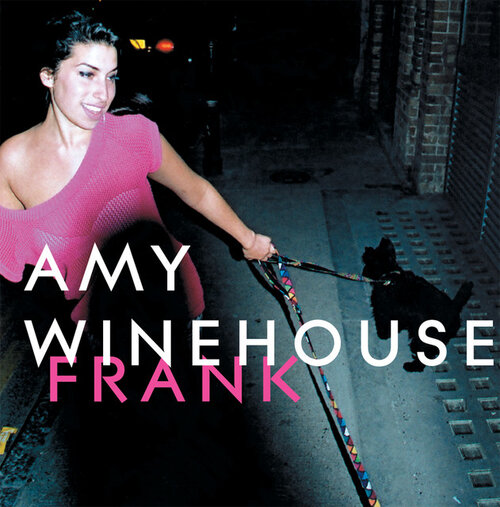
n.jpg

Exploring Amy Winehouse’s Remarkable, Open and Affecting Debut Album

___________

IN terms of albums that…

vg.jpg

are underrated and are living in the shadow of their more successful and noted follow-up, Amy Winehouse’s debut, Frank, stands there with the best of them. On 23rd July, it will be a decade since we lost a remarkable artist. It seems scarcely believable it has been that long! Winehouse’s legacy and influence lives on through her stunning music, her fans and other musicians. I often wonder where Winehouse could have gone after the remarkable Back to Black – which turns fifteen on 26th October. Some say that Frank lacks real originality, and there are few tracks where Winehouse stuns and soars. I would disagree. In terms of some album information, this article provides more detail:

Frank is  debut studio album by English singer and songwriter Amy Winehouse. It was released on 20 October 2003 by Island Records. Production for the album took place during 2002 to 2003 and was handled by Winehouse, Salaam Remi, Commissioner Gordon, Jimmy Hogarth and Matt Rowe. Its title alludes to the nature and tone of Winehouse's lyrics on the album, as well as one of her influences, Frank Sinatra.

Upon its release, Frank received generally positive reviews from most music critics and earned Winehouse several accolades, including an Ivor Novello Award. The album has sold over one million copies in the United Kingdom and has been certified triple platinum by the British Phonographic Industry (BPI)”.

I am going to source a couple of review for Frank in a minute. I think that there are clear influences on the album, yet Winehouse never wears them too heavily on her sleeves. I think Back to Black is a more dramatic, sweeping and somewhat love-lost album. There is greater lightness on Frank. Whilst we do not have songs as cinematic and stirring as Back to Black and Love Is a Losing Game, there is so much quality and natural talent bursting through. Stronger Than Me is a remarkable opener, whilst In My Bed is a song that showcases Winehouse’s incredible voice. Eighteen years after Frank’s release and I don’t think we have seen anything since then that has the same sounds and components. There are modern artists where one can detect a link to Winehouse (such as Jorja Smith), through I think that she remains untouchable. Her debut shows so much promise and signs of what she would create on Back to Black. I want to bring in a review from The A.V. Club:

Amy Winehouse arrived on these shores with a big voice, big hair, big story, big screaming tabloid headlines, big hits, big sound, big album (Back To Black) and one hellacious appetite for self-destruction. But she was already an established artist in her native England before Back In Black transformed her into an international pop icon. Now Universal is capitalizing on her stateside popularity with the U.S. release of her 2003 coffee-shop-friendly debut, Frank. Frank traffics in bratty attitude and retro sounds, but instead of Black's almost oppressively catchy Motown/girl-group stomp, the album features languid, wide-open neo-soul grooves and jazzy vamping: Think Erykah Badu with Nancy Spungen's Neanderthal taste in men. On the first song, "Stronger Than Me," Winehouse admonishes an Alan Alda type overly in touch with his feelings to stop being so thoughtful, considerate, and sensitive, and start behaving like a man. The songcraft is looser and more organic than Black's, but also more ramshackle and meandering, with Winehouse's fluid cooing filling in the empty spaces and doodling airily in the margins. Thanks largely to timing, Frank inevitably feels like a warm-up for Black, but as rough drafts go, this one's a keeper”.

There are hugely positive reviews for Frank. Most seem to be mainly positive, but they hint at weaknesses and a sense that she can go on to better things. I would like to think that there will be a new version of Frank released with extra tracks that then gets some fresh reviews. I think that it is one of the most impressive debut albums of the first decade of the 2000s. I listen to Frank now and it never fails to impress, move me and provoke so many different emotions. I will wrap up but, first, a review from PopMatters caught my eye:

Quite possibly the most interesting about Frank is that it doesn’t sound much like it’s follow-up. While hip-hop producer Salaam Remi is on board for good chunks of both albums (and is behind the boards for Frank‘s more adventurous cuts), the post doo-wop flavor so prevalent on Black to Black isn’t here. What you wind up with is an album that walks the midpoint between Erykah Badu and Norah Jones. With that said, it’s only slightly less musically appealing than Winehouse’s current album, and a quick listen to the lyrics reveals no doubt as to who wrote these songs. The caustic attitude and real-life situations that made so many folks flock to Back to Black was there from Day One.

Album highlights include the Roots-ish “Stronger Than Me”, during which she completely emasculates a boyfriend, questioning his sexuality and saying he’s “longer than frozen turkey” (no, I don’t know what that means, either. Must be a British thing). She reinforces her affinity for hip-hop by flowing flawlessly over the aggressive breakbeat from Nas’s “Made You Look” (also produced by Remi) on the melodic “In My Bed”. Along the way, she dedicates a song to her guitar (“Cherry”), takes a hilarious look at gold-digging women (“F*** Me Pumps”), and stops to give us heartbreaking ballads like the delicate “(There Is) No Greater Love”. Hints of the self-destructive streak that would lyrically color Back to Black are present on songs like “What Is It About Men” and “Amy Amy Amy”.

What Frank winds up reinforcing is the fact that Winehouse’s success (unlike name-your-current-American-female-vocalist) is based on pure talent rather than good producers or gimmicks. From a musical standpoint, her two albums are quite different, but they’re both excellent works. From a lyrical and vocal standpoint, she has few peers in her age group. Anyone who fell in love with Back to Black would be wise to check this out (provided they didn’t already get the jump and purchase this as an import). The woman’s talent is undeniable. Let’s hope she sticks around long enough for us to enjoy even more of it”.

In July, when we remember Winehouse ten years after she died, Frank will get new focus and inspection. I think her departure was one of the greatest losses for the music world. After two different and incredible albums, there were some predicting she would become an icon and superstar. I think she is anyway, though I do still think of how big and remarkable Winehouse could have been with more time. I love listening to Frank, as it seems to be a singer less troubled and hounded than on Back to Black. By 2006, Winehouse was definitely in the media’s gaze. One gets the impression that a lot of the angst and heartache in the album can be attributed to the way she was constantly under the spotlight and being vilified. A fresher-faced, freer album means that Frank will remain very special and important. I would encourage anyone to listen to Frank the entire way through. It is a wonderful work that introduced the world to a peerless talent. Ahead of the tenth anniversary of Winehouse’s passing, a new generation of listeners will happen upon her work and be introduced to a sensational artist. To me, Frank is a truly…

CAPTIVATING debut.

FEATURE: The First Big Revolution: Kate Bush’s Never for Ever and a New Sonic World

FEATURE:


The First Big Revolution

ii.jpg

IN THIS PHOTO: Kate Bush signing her album, Never For Ever, at London's Virgin Megastore/PHOTO CREDIT: Chas Sime/Getty Images 

Kate Bush’s Never for Ever and a New Sonic World

___________

I understand I have covered…

xxx.jpg

Never for Ever in pieces before, though I have not really touched on one observation. Kate Bush would undergo various evolutions and musical leaps through her career though, to me, the first distinctive evolution occurred when she released 1980’s Never for Ever. I think that her first two albums, The Kick Inside and Lionheart (both released in 1978) are tremendous and showcase an incredibly confident and mature artist. One of the observations levied at those albums is that their compositions and sonic palettes are fairly simple. The Kick Inside is largely composed of piano, guitar, bass and percussion - albeit arranged beautifully and with some sublime moments. Even though Lionheart possesses some more evocative, inventive and unusual sounds – think of songs like Hammer Horror, Coffee Homeground and Full House – Bush was not allowed much time to consider musical progression and creating a second album that was an advancement and shift from her debut. Even so, what we hear on Lionheart seems quite a bit different and remarkable given the tight deadline and window for original expression. Following 1979’s The Tour of Life and the fact Bush not only had played songs from her first two albums and move on; she also incorporated mime, art and cinema into that show. With a greater degree of creative input and production responsibility – her first two albums were produced by Andrew Powell -, I definitely feel 1979 was the bridge between the sound of her first two albums and Never for Ever.

Quite a bit changed by 1980. Bush co-produced Never for Ever with Jon Kelly (who was an engineer on the first two albums). Bush assisted production on Lionheart but, now, she was in a position where she could mould and direct her music as she felt fit. It is natural that a more experienced producer would helm for the first album or two. It was clear that EMI had enough faith in Bush to be able to let her produce relatively unaided. Bush and Kelly had produced together for the On Stage E.P. (which was released on 31st August, 1979). They started work on Never for Ever the same month. Bush was only twenty-one at this point so, although she had relatively limited input on her debut and follow-up, she was still so young to be in a position to produce. I have written about the Fairlight CMI before and the fact that transformed Bush’s music. Inspired by peter Gabriel’s use and introduction of the Fairlight CMI – and having worked with him on a couple of songs from his third eponymous album of 1980 (which was recorded summer-autumn 1979) -, we hear splashes and shades from the revolutionary kit on songs such as Army Dreamers and Never for Ever’s third (and final) single, Babooshka. Recorded in 1980, this was a song where Bush could utilise the Fairlight CMI and show to the world that she was embracing modern technology and breaking away, to an extent, from what she recorded on The Kick Inside and Lionheart.

Babooshka is the opening track on Never for Ever. I think part of that is to do with the fact that it is quite an urgent and catchy song that would hook people in early. I think another reason is because Bush wanted to put a song at the top that superbly showcased how far she had come. I think she had this love and fascination with the Fairlight, so Babooshka’s use of that piece of kit might have contributed to the track’s inclusion at the start of the record. I was reading the new On Track… book that was written by Bill Thomas. He covered every song and album from Bush. Although the demo was recorded in 1977, the album version is incredibly different. Thomas notes that Babooshka is a prime example on Never for Ever of a crisper and more modern-sounding artist. In some ways, her first couple of albums were more classical and had a distinct feeling of the past. Perhaps the arrangements are more stifled and conservative on The Kick Inside and Lionheart. Never for Ever is Kate Bush unrestricted and liberated. A few other moments from Never for Ever demonstrated how Bush was cleaning the slate and starting afresh. Babooshka leads straight into Delius (Song of Summer). There is no gap and, as Thomas also notes, Never for Ever was sort of a concept album. Not in terms of an over-arching story and intention. Rather, some tracks flow together and Bush was, in some way, inspired by concept albums.

She was firmly at the helm, and I feel that she is amazingly assured as a producer (with help from Jon Kelly). Look at Night Scented Stock and the fact that it is a wordless bridge between The Infant Kiss and Army Dreamers. If Bush was not consciously making a concept album she was thinking, as a producer, about more than compiling songs. In terms of compositions, Bush had widened and expanded her output since The Kick Inside and Lionheart. Maybe she felt the production and sequencing on those albums were a little dry and routine. As such, Never for Ever flows, twists and seems more like a film than a series of chapters in a book. The album is more surprising, eclectic and progressive than her earlier work. It is amazing to hear what Bush managed to achieve on her first album as a co-producer. Never for Ever is a very underrated album. I think there is so much to enjoy. The songs are so interesting and deep. Bush was also changing things up in terms of her lyrical horizons. Overall, one can not really compare the sounds of Lionheart and Never for Ever. Bush would, arguably, take an even bigger leap for her next album, 1982’s The Dreaming. I wanted to revisit Never for Ever, as I had not really covered the sonic and production differences between her 1978-released albums and what came out in 1980. I think that Never for Ever opened doors and set a course for Bush as a producer and creator. The more I listen to it, the more that I realise the fact that Never for Ever is…

A delightful and fascinating album.

FEATURE: Second Spin - Jamiroquai - Travelling Without Moving

FEATURE:


Second Spin

zzz.jpg

Jamiroquai - Travelling Without Moving

___________

THIS Second Spin…

xxx.jpg

 IN THIS PHOTO: Jamiroquai’s Jay Kay in the 1990s/PHOTO CREDIT: Simon King/Redferns

concerns an album by a band that remain underrated. Their eighth studio album, Automaton, was released in 2017. I think that Jamiroquai are a great group who have produced some sensational albums. One album that I remember buying fondly is Travelling Without Moving. The third studio album by the Funk/Acid Jazz band, it was released on 28th August, 1996 in Japan, 9th September, 1996 in the United Kingdom, 19th November, 1996 in Canada, and 14th, January 1997 in the United States. Travelling Without Moving sold over eight million copies worldwide and entered the Guinness World Records as the best-selling Funk album in history. One cannot argue against those credentials! This is a case of an album selling extremely well but one where the critics were a little mixed. Their previous album, 1994’s The Return of the Space Cowboy, received slightly better reviews. Maybe some were falling out of love with Jamiroquai by 1996. With their leader, Jay Kay, in top form on Travelling Without Moving, this is an album that deserves new inspection. Boasting huge singles like Cosmic Girl and Virtual Insanity, there is plenty to enjoy! I think that Travelling Without Moving is much more than a couple of big singles and not a lot else. The title track, Drifting Along and Spend a Lifetime are other great songs. Coming in at over an hour, perhaps one or two songs could have been taken off – it does seem like a bit of a long listen, even though it is a very strong album.

Alright and High Times were other successful singles. Maybe having the best songs in the first half of the album means there is a slightly imbalanced experience in terms of quality. Listening to Travelling Without Moving nearly twenty-five years after its release, and it still sound amazing and full of life. I really love the album, yet there are some mixed reviews for it. This is what Pitchfork noted in their review:

Listening to Jamiroquai's Travelling Without Moving is like... well, it's exactly like listening to Stevie Wonder's Innervisions if it'd been recorded with today's digital technology. Oh, and this record leaves you feeling like you've just won the lottery, instead of feeling like you've just been permanently impoverished.

Travelling Without Moving is purely a funk record, circa 1977. The high- gloss studio production, the danceable rhythms, and the light- weight song topics ("You Are My Love," for example) are all primary elements of a classic disco album. The message: let's just dance and have some fun.

The album's got its moments of pure, unadulterated musical magic. Songs like the hit opener "Virtual Insanity," and the wave- your- hands- in- the- air getdown of "Alright" could be future retro club anthems. Even "Cosmic Girl" and its perfectly- executed disco smash production brings visuals of polyester, earth- tone- colored suits and the flashing squares of a 1979 dance floor.

Sadly, Travelling Without Moving has its duds, too. Songs like the bland "Use The Force" and the horrible reggae number "Drifting Along" will have you shaking your head in terror the second they emerge from the speakers. But hey, it's for this very reason your disc player is programmable.

Aside from a few of those tacky songs, Jamiroquai's third effort is an enjoyable one. As a "listening experience," you'd be better off with 1995's Return of the Space Cowboy. If you want to get people on the floor with some irresistible funkboard boogie, Travelling Without Moving will get your party started like you were the president of the '70s Preservation Society”.

There were some positive reviews for Travelling Without Moving. I wonder if critics who were a little down on the album years ago would think differently if they heard it now. I want to bring in an NME review that mixed some positives with criticism:

IT WAS on the back of the sleeve of 'Speak Like A Child' by The Style Council that The Cappuccino Kid, wrote words to the effect (well, did anyone really dig a word he dug?) that all good records should contain at least one bass solo. No-one believed him, of course... apart from Jamiroquai.

And if the The Cappuccino Kid's diktat is indeed gospel, then 'Travelling Without Moving' is a work of genius. There are fantastic, elastic trousers made of rubber and plastic bass solos galore. There are rat-at-tat drum solos, too. There's some solo squelchy '70s synth squashing as well. There's even a crap didgeridoo solo that's dragged out for a couple of hours and turned into a song called - tuck your bib in, bubba - 'Didgerama' and that segues into 'Didgital Vibrations'! Ah, yes. And thereby hangs the tale of Jamiroquai's recorded long-playing woe. Jay Kay and his young funk guv'ners write a nifty pop song, y'see - the evidence of this can be found on the shiny singles that fleshed out their otherwise stodgy previous two albums. The single format doesn't allow them the time to get flash and simply showcases the song and Jay's fine voice. Give 'em a bit more space, however, and they insist on dragging everything out too long, proving just what consummate musos they are and wheeling that didgeridoo out.

'Travelling...' is an improvement on previous efforts because in amongst the funky wanking there are a handful of bittersweet gems. The fine single, 'Virtual Insanity', falls into this camp, as do the two matching swings through Jay's fairy-lit disco, 'Cosmic Girl' and 'Alright' ("We'll spend the night together/Wake up and live forever" is the epitome of Jay's romantic lyrical vision). Best of all is the whirlwind of percussion and bass that powers the wide-eyed 'Use The Force'. "I must believe", croons Jay breathlessly, "that I can do anything".

Unfortunately that includes reggae. Halfway through an album that's previously been surprisingly (and relatively) un-self-indulgent Jay slips into a cod West Indian accent - oh yes - and we're skanking. Bad move. The floodgates are now open and pretty soon the cute little songs have been dumped in favour of 50 flavours of arse. Didgeridoos, ballads, solos... anything goes, including any listener patience.

So it's back to 'Drifting Along' one more time just to check that accent out. Fantastic stuff! He's from Ealing, you know”.

It is amazing to think that an album can sell millions and be so successful, and yet it remains a little underwhelming in the minds of many critics! Travelling Without Moving has more than enough to enjoy. One does not need to be a fan of Jamiroquai to appreciate the album. It is very accessible and will get stuck in your head after a single spin. Despite there being one or two weak tracks, overall, Travelling Without Moving is a great listen. Go and check out the album, as I think that is was unfairly maligned by some corners. This incredible album offers the listener…

PLENTY of golden Funk and groove.

FEATURE: The Lockdown Playlist: Remembering TLC’s Lisa ‘Left Eye’ Lopes 

FEATURE:


The Lockdown Playlist

qqq.jpg

Remembering TLC’s Lisa ‘Left Eye’ Lopes 

___________

FOR this Lockdown Playlist…

www.jpg

I am putting together some of the best tracks from TLC. I am also including some Lisa ‘Left Eye’ Lopes tracks. On 25th April, it marked nineteen years since the world lost a hugely important artist. I will end by bringing in an article published on 2002 that remembered the great Lopes. Here is some background information concerning a wonderful and much-missed talent:

Lisa Nicole Lopes (May 27, 1971 – April 25, 2002), better known by her stage name Left Eye, was an American rapper, singer, songwriter, record producer and dancer. Lopes was a member of the R&B girl group TLC, alongside Tionne "T-Boz" Watkins and Rozonda "Chilli" Thomas. Besides rapping and singing backing vocals on TLC recordings, Lopes was one of the creative forces behind the group. She received more co-writing credits than the other members. She also designed the outfits and staging for the group and contributed to the group's image, album titles, artworks, and music videos. Through her work with TLC, Lopes won four Grammy Awards.

During her brief solo career, Lopes scored two US top 10 singles with "Not Tonight" and "U Know What's Up", as well as one UK number-one single with "Never Be the Same Again", the latter a collaboration with Melanie C of the British girl group Spice Girls. She also produced another girl group, Blaque, who scored a platinum album and two US top 10 hits. Lopes remains the only member of TLC to have released a solo album.

On April 25, 2002, Lopes was killed in a car crash while organizing charity work in Honduras. She swerved off the road to avoid hitting another vehicle, and was thrown from her car. She was working on a documentary at the time of her death, which was released as The Last Days of Left Eye and aired on VH1 in May 2007”.

In 2002, The New York Times ran an article that discussed the history and rise of TLC. To me, Lisa ‘Left Eye’ Lopes was instrumental to their success:

With a black stripe under her left eye and a reputation for volatility, Ms. Lopes was the catalyst and onstage focus for TLC. When the group titled its second album ''Crazysexycool'' in 1994, Ms. Lopes named herself ''crazy.'' That was the year she burned down the $1.3 million house belonging to her boyfriend, the football player Andre Rison. She pleaded guilty to first-degree arson and was sentenced to five years' probation and fined $10,000. She also entered an alcohol rehabilitation program.

''Drama comes in dozens and I know you love it,'' Ms. Lopes rapped in a song on her solo album, ''Supernova,'' which was released outside the United States in 2001.

In the 1990's, TLC reinvented the girl group for the hip-hop era, showing the way for groups like Destiny's Child. With sultry vocals and Ms. Lopes's sassy raps, TLC became one of the best-selling female groups of all time, selling more than 21 million albums in the United States. Its second and third albums, ''Crazysexycool'' and 1999's ''Fanmail,'' each won two Grammy Awards, for best R&B album and best R&B performance by a duo or group.

From the start, the three members of TLC presented themselves as independent women, promoting safe sex and self-reliance.

''Nobody can make me do what I don't want to,'' Ms. Lopes rapped on the group's 1992 debut album, ''Ooooooohhh . . . On the TLC Tip'' (LaFace). In early appearances, the women pinned condoms to baggy outfits, and Ms. Lopes wore one replacing a lens over her left eye.

Along with its songs about romance, TLC addressed crime and AIDS (in ''Waterfalls''), female self-esteem (''Unpretty'') and gang warfare and abusive relationships. Much of its material was by songwriters based in Atlanta, including Dallas Austin and Jermaine Dupri. Ms. Lopes wrote many of her own raps, often sharing songwriting credit.

Ms. Lopes was born in Philadelphia. She had described her father, who died when she was 17, as an alcoholic and disciplinarian. She is survived by her mother, Wanda D. Lopes, her siblings and a 10-year-old child she adopted last year.

She got her nickname when a boyfriend noted that her left eye was slightly larger than her right.

As a teenager, she moved to Atlanta to work with a rhythm-and-blues group. A talent scout, Ian Burke, auditioned her for a group he envisioned of streetwise, approachable girls. Mr. Burke, who now works for Ascap, recalled yesterday: ''All the girl groups that were out at the time were model-like individuals, like En Vogue. You would think, 'I don't know if I'll ever be able to land one of these girls”.

To remember Lisa ‘Left Eye’ Lopes, this Lockdown Playlist combines the best tracks from her time in TLC, in addition to some of her solo work. TLC were very important to me when I was young. I was definitely drawn to Lopes as a performer. To remember her nineteen years after her death, here are songs with her upfront or in the mix with TLC. As you can hear, Lopes was…

QUITE a remarkable artist.

FEATURE: Heavy Weather: Musicians and Global Climate Change

FEATURE:


Heavy Weather

zzz.jpg

PHOTO CREDIT: @jontyson/Unsplash 

Musicians and Global Climate Change

___________

I was reading an article…

aaa.jpg

 PHOTO CREDIT: Markus Spiske/Unsplash

that appeared on the Pitchfork website that got me thinking. I think, at the moment, a lot of the music coming out is very personal and does not really look out at the wider world. That is perfectly fine. This is how music has been for decades. I feel a lot of artists are becoming more aware and conscious of politics and wider society. Last year saw #BlackLivesMatter sweep the globe following the murder of George Floyd. There are a few artists documenting climate change and its impact on the planet. I wonder, as it is the biggest threat to the planet that we have to tackle, whether more artists need to address a catastrophe that could wreak incredible damage – beyond the depletion and destruction that we have already witnessed. I want to splice in a few portions of the Pitchfork. It raises some interesting points and asks what musicians can do regarding climate change:

Spend enough time with climate-inspired music, and you sense a larger philosophical struggle playing itself out, with artists taking as many divergent directions as there are coping mechanisms for bad feelings. Fancy a black joke? Maybe you should listen to Matmos’ 2019 album Plastic Anniversary, in which every sound is sourced from plastic materials. In the mood for a glamorous bit of end-of-days nihilism about it all? This is what Billie Eilish provides with her invocation of burning hills in California on “all the good girls go to hell,” and what Lana Del Rey offers, to an extent, when she sings, “The culture is lit/And if this is it/I had a ball” on 2019’s “The greatest.”

The artists doing that considering, and their vantage point, has a heavy bearing on their approach. On 2018’s “Our Street Is a Black River,” Laurie Anderson joined the Kronos Quartet to remember, in her cool, bemused tone—forever the sound of the woman next to you in the elevator who speaks to you out of nowhere—what it felt like to watch as the “sparkling black river crossed the park, and then the highway, and then came silently up our street” from her vantage point in downtown NYC when Hurricane Sandy hit in 2012. Anderson observed the chaos with childlike wonder: “From above, Sandy was a huge swirl that looked like galaxies whose names I didn’t know,” she murmured, the danger and portent lost in the flash of the light.

Singer-songwriter Natalie Mering, who records as Weyes Blood, explored the idea of hope amid apocalypse on 2019’s Titanic Rising. Over dreamy evocations of Laurel Canyon folk, she sang of “a million people burnin’” in a placid register. The album closes with a brief instrumental track titled “Nearer to Thee,” a reference to the hymn that the string quartet purportedly played from the deck of the Titanic as it sank. For the cover, she built a replica of her childhood bedroom, submerged it in a pool, then dove in and swam around. The final image is oddly serene: Mering gazes at us questioningly, her hair drifting upward while everything else—the bed sheets, the pillows, the teddy bear and trophies—stays put, affixed in place by set designers in scuba gear. The image was half publicity stunt and half private reckoning, as if Mering were conducting a controlled experiment: How would it feel to watch life as we knew it slip beneath the waves?”.

A clutch of electronic artists and composers have turned to the sound the Earth itself is making, as if trying to catch the planet in the act of moaning. This is the naturalist’s approach, and you can hear it play out across a wide range of compositions. As Pitchfork’s Philip Sherburne has noted, experimental musicians from across the globe have found ways to reckon with environmental destruction: Joseph Raglani’s 2018 album Extinctions features buzzing sounds from our globally collapsing insect population, while AGF’s Commissioned Work, from 2019, samples the cries of endangered lemurs. As fracking and deforestation threaten the Amazon, field musicians are weaving frog calls and rainfall into bucolic electronic music some call eléctrica selvática, or “rainforest electro. “There’s a sense of urgency to connect with organic sounds and recognize that we are part of this natural world,” said the Argentinian composer Pedro Canale, who records as Chancha via Circuito.

The tougher question, as always, is what all of this music might help us do, if indeed music can help us do anything concrete at all. The link between music and action is as elusive as the one between actions and consequences, or between feeling and doing. Although every activist movement needs some sort of inciting anthem, some sort of glue to help bring common purpose, such pieces of music usually emerge naturally, chosen by people. Music designed for collective action rarely works that way.

Music designed for memorial or grief, however, almost always does. Like music, grief asks nothing of us other than to feel it. The music that taps into these stiller waters tends to plumb deeper, more mysterious emotions that might, in fact, lead us to act out of our own private sense of volition”.

Those last points are especially relevant. I don’t think, if musicians are trying to get us to do something in a sort of preachy way, people will react proactively. If we present this grief and destruction as fact, then I think that has a more profound impact. In terms of music, if there was a song calling for action and asking us to all make a change, how well would this work in terms of the population pledging more time to fighting climate change?! If a song, on the other hand, lays out the truth and a listener is not being prodded or blamed, then that might have a more powerful result! Hectoring is tempting when we are seeing such horrific climate change. It is clear that music can be a hugely influential tool regarding awareness and reaction. I don’t think there is enough music out there at the moment that documents climate change. Some might say it is neither the role of a musicians or particularly appealing for the listener. I feel, regardless of gender, class or genre, artists have a responsibility to talk about big themes. In terms of a listening experience, the songs needn’t be too heavy or morose. As Pitchfork explained, a range of artists have approached climate change in different ways – whether it is more of a sonic soundscape or vivid lyrics being embedded into tracks.

It is encouraging to see some artists highlighting climate change or lending their name to important causes. Declan McKenna contributed to the recent Climate Live event. NME explain more:

Declan McKenna performed ‘British Bombs’ outside the Houses of Parliament last weekend as part of a ‘Climate Live’ event. You can see footage of the performance below.

The performance, which took place on Saturday (April 24), was part of an international event to raise awareness of climate change around the world.

Elsewhere across the globe, fans will be able to see performances from the likes of Milky Chance, rising German star LEEPA and Japanese singer songwriter Anly.

A statement explained: “Led by members of Friday for Future youth climate groups, who organise the school strikes started by Greta Thunberg and supported by Music Declares Emergency, Greenpeace and many more, ‘Climate Live’ is bringing artists, activists and young people from across the world together through music to unite in the fight for climate justice and the race to safeguard the future of the planet”.

Whilst there is an issue with a lack of songs tackling the crisis, it seems that there is a charge coming from musicians in terms of their carbon footprints. From the use of NFTs (non-fungible tokens) to virtual gigs, it seems that measures are in place so that we do not see a return to massive worldwide gigs pre-pandemic. The Guardian explained more in a feature from earlier in the week:

“But a series of announcements last week, coordinated by the Music Declares Emergency collective, have challenged the idea that the industry is not taking the climate emergency seriously. After a uniquely difficult year for those in live music, perhaps this is an inflection point: can the recovery from Covid-19 be green?

“The music industry has the opportunity to lead here,” says Lewis Jamieson, a spokesman for Music Declares Emergency. “It can become the exemplar of a green recovery, and help the public to understand and support what that idea means.”

British independent label Ninja Tune has just announced ambitious and detailed plans in response to the new sustainability drive from the European Independent Music Companies Association. The label’s funds and pensions are divested from fossil fuels, it is installing renewable energy systems in its London headquarters and it is encouraging the pressing plants that supply its vinyl to switch to green energy.

Beggars Group, which includes indie labels such as 4AD, XL and Rough Trade, also announced major new carbon reduction commitments this week. Across the manufacturing and distribution of vinyl and CDs, digital distribution, and business travel, the group aims to cut their emissions almost in half by 2030, at a rate they say is aligned with the Paris agreement’s goal to limit global warming to 1.5 degrees. Head of sustainability Will Hutton says that “the arts have an immensely powerful platform to help ignite social and legislative change. We need everyone involved – the live sector, record companies, streaming partners, and of course artists.”

Musician, composer, producer … Brian Eno

One new idea – also announced this week, and affiliated with Brian Eno – is Earth Percent, which is aiming to raise $100m (£72m) by 2030 from the industry itself to transition towards sustainability. The proposal is for artists, companies and individuals to commit a small percentage of their revenue to Earth Percent, which will redistribute the money to organisations working on the climate emergency, including those focused on the music industry, such as A Greener Festival, Music Declares Emergency and Julie’s Bicycle.

“This is the time to shake up how things are done across the industry,” says Sarah Ditty, head of programs at Earth Percent. “We need to be looking at how live shows, touring, recording, streaming, merchandise and engaging fans can function in a way that ensures artists and their teams can make a good living while minimising environmental impact”.

There are great charities one can support and look up when it comes to climate change. It would be unrealistic to have most artists writing about climate change and global warning. I feel, right now, there is relatively little exposure and documentation in music. Perhaps that will change in the months to come. Let’s hope so. After such a difficult past year or so, one can forgive artists for being in a different headspace or having new priorities regarding material. As we start to emerge from lockdown, I think there is going to be this desire to hear more from artists regarding the environment and escalating climate change. Not to say that this music will lead to huge and instant worldwide change, though I feel raising greater awareness and getting the listener to think more deeply is a great! Anything that can be done to provide awesome music and make people think at the same time is…

A good thing.

FEATURE: Vinyl Corner: Pink Floyd - Animals

FEATURE:


Vinyl Corner

zzz.jpg

Pink Floyd - Animals

___________

I could have included this album…

xxx.jpg

 IN THIS PHOTO: David Gilmour on Fender guitar with Pink Floyd in concert in Rotterdam, Netherlands, in 1977/PHOTO CREDIT: Barry Schultz

in Second Spin, as it is not one of Pink Floyd’s most-acclaimed release. Animals was released on 21st January, 1977. It is the tenth album from the legendary band. Coming between two hugely celebrated albums – 1975’s Wish You Were Here and 1979’s The Wall -, there are some mixed reviews for an album that I think is really strong. To be fair, I think a lot of the mixed reviews have come since the album was released. At the time, Animals received positive reviews from critics and was commercially successful. It reached number-two in the U.K. and number-three in the U.S.A. Recorded at the band's Britannia Row Studios in London throughout 1976, Animals carries on the longform compositions that made up their previous works such as Wish You Were Here. In terms of subject matter,  Animals concentrates on the social-political conditions of mid-1970s Britain. It was a change from the style of their earlier work. Tension within the band during production culminated in keyboardist Richard Wright being fired two years later. That may all sound like a recipe for disaster and commercial disregard, but I think Animals is one of Pink Floyd’s most rewarding records. I would recommend people grab Animals on vinyl as, like so many Pink Floyd albums, there is so much to love and immerse yourself in. Whilst not as accessible as albums like Wish You Were Here, I think that Animals is a fascinating album. I will bring in a couple of reviews for it soon. Before then, Classic Album Sundays wrote about Animals on its fortieth anniversary in 2017:

The album is much more direct as it features confrontational lyrics loosely based on George Orwell’s Animal Farm. The Orwellian novel explores the corruption of power and human nature’s predisposition to destroy even the best ideals. The novel criticised Stalinism and represented the people within the different levels of communist society as animals. Somehow this seems particularly apt in the current political climate.

The pigs are the smartest animals and originate the idea of a rebellion against the farm’s oppressive owner. The pigs then run the farm and abuse their power. They use the dogs as secret police and to keep the other animals in line by killing those they considered traitors. The sheep are the mindless masses who follow the pigs’ every whim no matter how ridiculous they may seem.

Instead of critiquing Stalin’s political system, Waters used the metaphor to apply to people in thrall with, or subject to capitalism.

Waters felt compelled to write about society’s woes as he said at the time: “I think the world is a very, very sad place. I find myself at the moment, backing away from it all. I think these are very mournful days. Things aren’t getting better, they’re getting worse and the seventies is a very baleful decade.”

There are three pigs, two of which represent real characters. The first is the corporate pig, the second is Margaret Thatcher, and the third is Mary Whitehouse, leader of the National Viewers and Listeners Association who spoke of moral pollution through an intense censorship campaign. As Waters said “Why does she make such a fuss about everything if she isn’t motivated by fear? She’s frightened that we’re all being perverted. I was incensed by Mary Whitehouse, as I am by all book-burners and Bible-bashers: people who foster that sexual guilt and shame, who try and deny people any opportunity to fulfill their sexual destiny.”

When Animals was released in January 1977, it didn’t receive overwhelmingly great reviews. It came out during the punk and disco heyday, a time when Johnny Rotten had taken to wearing a Pink Floyd shirt on which he scrawled “I hate”.

Here is a bit of the Rolling Stone review: “For Pink Floyd, space has always been the ultimate escape. It still is, but now definitions have shifted. The romance of outer space has been replaced by the horror of spacing out… Animals is Floyd’s attempt to deal with the realization that spacing out isn’t the answer either. There’s no exit; you get high, you come down again. That’s what Pink Floyd has done, with a thud.”

Once again critics were proved wrong as Animals is many Floyd fans’ favourite. It is also interesting to note that Johnny Rotten’s position was slightly rocked when Floyd drummer Nick Mason later went on to produce The Damned’s 1977 album “Music For Pleasure”.

And forty years later, it’s message continues to resonate”.

I really love Animals and, for Pink Floyd fans and non, it contains some of their most interesting concepts and moments. I like the fact that you get a short song, Pigs on the Wing (Part 1), opening the first side and the epic track that is Dogs closes that side. Conversely, the second side finishes with the short track, Pigs on the Wing (Part 2); the long Pigs (Three Different Ones) and Sheep open that side.

In their positive review of Animals, AllMusic had some very interesting observations about one of Pink Floyd’s best albums:

Of all of the classic-era Pink Floyd albums, Animals is the strangest and darkest, a record that's hard to initially embrace yet winds up yielding as many rewards as its equally nihilistic successor, The Wall. It isn't that Roger Waters dismisses the human race as either pigs, dogs, or sheep, it's that he's constructed an album whose music is as bleak and bitter as that world view. Arriving after the warm-spirited (albeit melancholy) Wish You Were Here, the shift in tone comes as a bit of a surprise, and there are even less proper songs here than on either Wish or Dark Side. Animals is all extended pieces, yet it never drifts -- it slowly, ominously works its way toward its destination. For an album that so clearly is Waters', David Gilmour's guitar dominates thoroughly, with Richard Wright's keyboards rarely rising above a mood-setting background (such as on the intro to "Sheep"). This gives the music, on occasion, immediacy and actually heightens the dark mood by giving it muscle. It also makes Animals as accessible as it possibly could be, since it surges with bold blues-rock guitar lines and hypnotic space rock textures. Through it all, though, the utter blackness of Waters' spirit holds true, and since there are no vocal hooks or melodies, everything rests on the mood, the near-nihilistic lyrics, and Gilmour's guitar. These are the kinds of things that satisfy cultists, and it will reward their attention -- there's just no way in for casual listeners”.

I will round things off in a second. I was very interested by a review from Pitchfork. They gave Animals a perfect ten when they assessed a masterful work:

It begins somewhere for everyone. There's the first song that grabs your attention and seizes the imagination, the first album that demonstrates such overall strength and originality that it becomes something more for most listeners, just as there is the first kiss that awakens the soul and forever changes the vision.

I admit without qualm that it began for me with Animals. My brother was in college, and one day I went through his records and listened to the ones with the coolest covers. Animals fascinated me then as it still fascinates me today. It is the acute anthropomorphic fantasy, possessing a timeless quality that has thrust it into the category of "classic," though it may remain forever in the shadow of its more commercially successful older brother, Dark Side Of The Moon. Consisting of three tracks each longer than ten minutes and two tracks under two minutes, Animals is not for the attention- span- deficient. However, within this impenetrable fortress of radio- unfriendly tracks, we hear Dave Gilmour's guitars at their absolute best, get a full-on dose of Roger Waters' powerful lyrical imagery, and are presented with the worst elements of our own humanity- packaged in the skins of "Sheep," "Dogs" and "Pigs (Three Different Ones)". For those weaned on The Wall and Dark Side, you'll find Animals to be a whole new bag of feed. Where Floyd's two most recognizable albums made their mark with operatic aggression and fear, Animals deals in dirt- under- the- fingernails reality, the common smallness that simultaneously binds and repels us all”.

Go and get the vinyl of Animals if you can - or go and stream it if not. I think that Animals has received some negativity from some. Others compare it unfavourably to Pink Floyd classics like The Dark Side of the Moon. I think that Animals is underrated, which is why I was keen to put it…

INTO Vinyl Corner.


FEATURE: Hope Seems So Distant… Kate Bush’s Under Ice

FEATURE:


Hope Seems So Distant…

www.jpg

IN THIS PHOTO: Kate Bush in a promotional image for The Ninth Wave/PHOTO CREDIT: John Carder Bush 

Kate Bush’s Under Ice

___________

I wonder whether…

rrrr.jpg

many people break down the individual tracks from Kate Bush’s The Ninth Wave. This is the second side from her 1985 album, Hounds of Love. On Sunday, I marked thirty-five years since The Big Sky was released as a single. That single was released on 28th April. It was the final single from the album. I look at songs from The Ninth Wave and I am curious whether there was a temptation to put any out as single, or whether Bush felt she could not break up the individual tracks. I have written features regarding the songs from The Ninth Wave. I have not yet covered Under Ice. Coming after And Dream of Sheep, we get this rather sombre scene where the protagonist is adrift at sea and looking for salvation. Eventually, the heroine is saved after an ordeal alone at sea. I might rank the tracks from that second side in a future post. I think that Under Ice is one of the most evocative and stunning pieces of work that Kate Bush has ever recorded. Every track on The Ninth Wave has its own mood, texture and atmosphere. I love Paddy Bush’s harmony vocals on the song. I assume that it is the Fairlight CMI that she uses to get the stirring string sounds. We hear snippets of other voices as Bush sings about getting out of the cold water.

Before moving on to its lyrics, the Kate Bush Encyclopaedia drops in an interview source where Bush talked about Under Ice:

Well at this point, although they didn't want to go to sleep, of course they do. [Laughs] And this is the dream, and it's really meant to be quite nightmarish. And this was all kinda coming together by itself, I didn't have much to do with this, I just sat down and wrote this little tune on the Fairlight with the cello sound. And it sounded very operatic and I thought "well, great" because it, you know, it conjured up the image of ice and was really simple to record. I mean we did the whole thing in a day, I guess. (...) Again it's very lonely, it's terribly lonely, they're all alone on like this frozen lake. And at the end of it, it's the idea of seeing themselves under the ice in the river, so I mean we're talking real nightmare stuff here. And at this point, when they say, you know, "my god, it's me," you know, "it's me under the ice. Ahhhh" [laughs] (Richard Skinner, 'Classic Albums interview: Hounds Of Love. Radio 1 (UK), aired 26 January 1992)”.

At 2:21, Under Ice is the shortest track on Hounds of Love. It acts as a bridge between And Dream of Sheep – where the heroine wishes she could sleep safely and dream of sheep – and Waking the Witch – where voices appear, urging the woman to stay awake so that she does not drown. In a way, Under Ice is the moment when the castaway gets into real trouble and realises that she needs to get out of the water. As we move through The Ninth Wave, there is a sense of acceptance and relative calm before the heroine is saved and taken back to land. I love all the little stories and chapters of that remarkable suite! Under Ice has this stern and almost haunted sound, where Bush’s voice seems to move in time with the strings. There is this seriousness and sense of foreboding in her voice. It is like Bush represents this ghostly figure or voice that is in the head of the protagonist; maybe her mind is urging her to cling to life and find a way out. There are not many lyrics in such a short song. The ones we do hear are stunning and so image-rich. One can listen to Under Ice and place themselves in the song; alongside the heroine as she is on a life raft or on her back trying to stay afloat – not sure of what lingers beneath the moody ocean. There is a division and difference between the two verses.

The first is almost like the heroine embracing the whiteness and icy expanse. There is something almost child-like. That is the impression one can get from reading the lines. When one hears the song, there is something more urgent and darker: “It's wonderful/Everywhere, so white/The river has frozen over/Not a soul on the ice/Only me skating fast/I'm speeding past trees/Leaving little lines in the ice/Splitting, splitting sound/Silver heels spitting, spitting snow”. The second verse is trying terrifying! Bush has said in interviews how being stranded in the sea and not knowing what is underneath is one of her biggest fears. That is scary on its own. I think being trapped under ice and having that above your head is even more alarming: “There's something moving/Under, under the ice/Moving under ice/Through water/Trying to get out of the cold water/"It's me."/Something, someone--help them/"It's me". Having to battle hypothermia, the unpredictable nature of the sea and this ice tomb, Under Ice delivers one of Hounds of Love’s most thrilling, arresting and emotional songs. It is no surprise that, on Waking the Witch, the heroine is exhausted and struggling to stay awake. On an album filled with gems and genius songs, Under Ice is one that does not get talked about in the same way as the singles on the first side such as Cloudbusting, Running Up That Hill (A Deal with God), and Hounds of Love. I think that Under Ice should be played more as, in its lack of layering and naked simplicity, it conveys so much weather and wind. By that, I mean Bush relies on the almost taunting string sound and her ghostly vocal to immerse us in a scene filled with dread and uncertainty. If songs on Hounds of Love’s first side are warmer, musically, and are more commercial, I feel The Ninth Wave is more experimental and varied in terms of its sound and mood. One listens to Under Ice and fears that the heroine will not make it out. Thankfully, there is a satisfying resolution where…

t.png

 IN THIS PHOTO: Kate Bush in a shot from the Hounds of Love covert shoot/PHOTO CREDIT: John Carder Bush

SHE made it to safety!

FEATURE: A Revolution or a Brief Fad? The Rise of the NFT (Non-Fungible Token)

FEATURE:


A Revolution or a Brief Fad?

ccc.jpg

IN THIS PHOTO: On 12th March, Halsey (photographed above in 2015) announced she was turning her nightmares into art with the NFT series, People Disappear Here/PHOTO CREDIT: Jake Michaels for The New York Times

The Rise of the NFT (Non-Fungible Token)

___________

AS a music fan…

lll.jpg

 IN THIS PHOTO: Doja Cat has launched her own NFT marketplace, Juicy Drops/PHOTO CREDIT: Jamal Peters

I use and rely on a mix of the physical and digital. When it comes to albums, I prefer vinyl and the tactile nature of it. I feel that the fact the vinyl rise continues means people will never completely succumb to digital music. So many artists are paid so little on streaming sites; music fans want to feel like they are buying albums and seeing some of that money going to the artists – even if the label gets quite a big slice. I think many prefer the fact vinyl does not disappear. It is something you keep and can feel like you own. I stream music a lot and feel it is very convenient. The problem comes, apart from streaming payments, with the ephemeral nature; how there is no real connection between listener and artist…or any sense of emotion and the physical. One of my worries is that too many digital routes and listening/buying options will take a way a lot of the soul, sociability and sweetness one gets from buying albums. The NFT (non-fungible token) is a fairly recent breakthrough that many artists and innovators have been keen to get behind. As Music Ally wrote last week, Doja Cat is taking full advantage:

We’ve been covering the succession of stories about artists selling non-fungible tokens through the various NFT marketplaces that have sprung up in recent months. But Doja Cat is going a step further: she’s launching her own marketplace called Juicy Drops tomorrow (23 April), where she will also be selling her first collection of NFTs.

According to Uproxx, it’s a partnership with NFT startup Intellectable Holdings. “I’m helping to launch my NFT company so that I can actually own and control my art,” is how Doja Cat explained the launch. “I want to be able to make all decisions related to my creative vision and help other artists do the same.”

The first collection will include 3D visuals of “a spinning, metallic Doja image in a gilded frame, as well as an image of her cat Raymus”. Music, NFTs AND cats? Welcome to the internet in 2021…

If you’re following the NFTs space, we highly recommend a newly-published Music NFT Market Update from Water & Music’s Cherie Hu. It’s a 38-page report rounding up the flurry of launches; the money that’s being made; and trends around the marketplaces”.

Whilst a lot of people may be conscious of the fact that NFTs are making their way into music, they may not know what they are and how they work (it is quite a confusing idea). The Verge try to explain the phenomenon in their article:

Non-fungible token.

That doesn’t make it any clearer.

Right, sorry. “Non-fungible” more or less means that it’s unique and can’t be replaced with something else. For example, a bitcoin is fungible — trade one for another bitcoin, and you’ll have exactly the same thing. A one-of-a-kind trading card, however, is non-fungible. If you traded it for a different card, you’d have something completely different. You gave up a Squirtle, and got a 1909 T206 Honus Wagner, which StadiumTalk calls “the Mona Lisa of baseball cards.” (I’ll take their word for it.)

How do NFTs work?

At a very high level, most NFTs are part of the Ethereum blockchain. Ethereum is a cryptocurrency, like bitcoin or dogecoin, but its blockchain also supports these NFTs, which store extra information that makes them work differently from, say, an ETH coin. It is worth noting that other blockchains can implement their own versions of NFTs. (Some already have.)

What’s worth picking up at the NFT supermarket?

NFTs can really be anything digital (such as drawings, music, your brain downloaded and turned into an AI), but a lot of the current excitement is around using the tech to sell digital art”.

I will come on to the advantages and drawbacks of NFTs but, for me, they are so new that I have not really got my head around whether they will last and whether they are the future of music. I can appreciate that, at a time when streaming companies are under the microscope and many cannot tour and earn money that way, NFTs are providing an interesting and profitable alternative. I want to source from an Uproxx article. They provide a timeline on which artists/people are utilising NFT. In March, a few big names put their name to them:

Kings Of Leon had a similar approach to Lanez when it comes to NFTs. The veteran group minted their entire LP When You See Yourself, which they referred to as NFT Yourself, as an NFT and sold it alongside a collection of other art. Those who purchased the NFT were able to snag a digital download of the album, as well as limited edition physical vinyl.

While Halsey is known for her music, she’s also an incredibly talented interdisciplinary artist. That’s why she was relatively early to the NFT game. The singer auctioned off a handful of hand-painted characters she created in the collection People Disappear Here. “The characters are all inspired by figures that occurred in a series of sleep paralysis nightmares I had at home during the quarantine,” Halsey said in a statement. “After seven years of bed surfing hotel rooms around the world, adjusting to my own pitch black cave in California had a little bit of a learning curve. From toddler TV programming evil dentists, a child born with massive claws who scratched her way out of the womb, to a woman who stood at the foot of my bed and demanded I watch her masturbate. They were memorable to say the least.”

When Gorillaz announced they would be hopping onto the NFT game, it didn’t go quite as smoothly. While other musicians were welcomed into the world of NFTs, Gorillaz were chastised by their fanbase. The band announced that they would be celebrating the 20th anniversary of their debut album by teaming up with the toy company Superplastic for a series of toys, collectibles, and, of course, NFTs. Fans weren’t to happy with the news though, and were quick to point out the devastating environmental impact that the sale of a single NFT has. A petition was even created to get the Gorillaz to stop producing NFTs, and it already has over 3,000 signatures”.

zzz.jpg

 IN THIS IMAGE: Gorillaz

I am all for inventions and concepts that are beneficial and inspiring for artists and fans. Whilst I do not feel that the digital revolution can ever replace things like physical music, I can agree that there are good arguments for support NFT. Bringing in a Music Ally article from earlier in the year, it does seem like NFTs are not a short-term or temporary revolution:

Shara Senderoff, president of music/tech investment firm Raised In Space, thinks we’re going to be hearing a lot more about NFTs in the coming months, sparked by an even bigger trend. “We have a global mistrust in financial systems, and people are questioning motives, questioning agendas, questioning technology as it relates to the finances of individuals and the global economy,” she said.

“What you can see as a trend to come is the rise and the birth of new forms of transaction, and new forms of being able to put your money in places that maybe you can trust more. You’re simply willing to experiment because you have such distrust.” And Senderoff went on to add that this is why she thinks a trend “that is going to blow up” is NFTs and digital collectibles, including for music.

zzzz.png

IN THIS PHOTO: Shara Senderoff 

“It’s the ability for a fan to purchase an asset that is scarce, that is limited, that is exclusive, and has potential offerings tied to that that make them as a loyal fan feel unique, feel rewarded,” she said. “I am focused heavily on where we’re headed with digital collectibles.”

Senderoff was talking on a panel session about investment and innovation around music/tech. Fellow panelist Suzy Ryoo, president of Q&A, talked about the opportunities for startups who are “replacing the pipes: replacing bad pipes with gold pipes and building new infrastructure for the creator economy”.

“If there are 50,000 songs being uploaded every single day [to streaming services] but there are 100 spots on playlists, what happens to the middle class of artists who are not represented on the master or publishing side by Universal, Warner or Sony?” said Ryoo.

“There is absolutely a huge opportunity to create real case studies around artists and labels and entrepreneurs having an independent mindset that is complementary to the major system, that is not in competition with it… that allows them to preserve their equity in copyright, as opposed to becoming part of a system that does not prioritise them”.

It is interesting reading about the ins and outs of NFTs and what they offer artists. I think a lot of people are asking whether they are sustainable and offer more benefits compared to disadvantages. It has been illuminating researching and discovering various perspectives!

I want to source from an article that spotlighted NFTs and provided some advantages and disadvantages. It seems, at this fairly early stage, there are slightly more advantages:  

Benefits of NFTs

2020 turned the music industry upside down when it eliminated live concerts—a significant income stream for artists and their labels. As the world remains digital, artists are looking for ways to connect and create for their audiences, and NFTs provide a new outlet for them with several benefits.

Convenience

The first significant asset to NFTs is their convenience. Fans just need to create a digital wallet to have the chance to receive the content and then participate in an auction for a chance to win. This makes winning content as easy as online shopping.

No Middlemen

There are a lot of middlemen in the music industry.

When fans buy an album, stream a song, or purchase merchandise—some of that money makes it to the artist, but a lot of it goes to the record company or the streaming platform. The same middlemen are present even when we buy tickets for concerts. Record companies take a portion of ticket sales, and while artists make money there too–COVID-19 shut down the live concert market in 2020.

As a fundamental asset to crypto exchange, NFT transactions are direct transfers between the participants. The artist gets the money, the fan receives the content in their digital wallet.

Unique Content and Experiences

Artists have a lot of flexibility over the items they want to auction off. These tokens can be digital, but they can also be physical. Albums, digital art, sound bites, merchandise, and concert tickets are all forms of non-fungible tokens that artists are exchanging. Fans are happy to receive these rare experiences and are willing to pay for the chance to receive them.

ll.png

Potential Drawbacks of NFTs

Not all change is good, and there are certainly those who will not benefit from the rise of NFTs. As it stands, it is a growing trend—and only time will tell if it is here to revolutionize the music industry further or die out.

Difficult for New Artists

The demand for a token comes from the market for art from a particular musician. Popular or established acts have no problem putting up tokens for auction and drawing in eager fans. For emerging artists, this demand doesn’t exist yet. Newer artists don’t have as much opportunity to benefit from the latest music trend.

Legal Obligations

Some artists have auctioned off the rights for fans to use sample packs in music. The fan purchases the ownership of the samples for complete creative control. This is one kind of token that can create legal trouble later on for the musician.
Established musicians often agree to a contract when they work with a record label. As the artist creates and releases tokens, they must be careful of violating any terms of these contracts.

Final Thoughts

NFTs are allowing artists to create new possibilities and experiences with their fans. Musicians are continuing to be creative with what they offer to their fan bases. As the situation with NFTs develops, it could completely revolutionize the music industry like how the internet did”.

mm.jpg

 IMAGE CREDIT: Grimes

By ensuring that creatives have power and there is this form where equity can be established, then I think few can have major disagreements. I wonder whether there are any logistical hindrances or problems that have not been considered – that might be me being sceptical! Since streaming services and how they pays artists has been in the news for a while, many feel that non-major artists are getting the worse deal. There are a few more articles I want to drop in before wrapping up. Earlier this month, The Daily Utah Chronicle provided their perspective on a rising and interesting chapter for music:

The internet is a wonderful resource for fans of music — platforms like Twitter and Patreon provide intimate and on-demand updates on everything from entertainment to personal details about the artistic process. But what if one-of-a-kind content was accessible for fans to own and consume in a way that benefitted the artists directly?

Most musicians received their revenue from touring, t-shirt and ticket sales prior to the pandemic. Now, NFT’s are being sought out as a means of bridging the divide of earnings that runs rampant in the music industry. Musicians in the top one percent of the industry are benefiting greatly from the growing popularity of streaming services, while others must raise their ticket and merchandise prices to compete.

Pop musician and visual artist Grimes sold a series of digital art pieces as NFT’s. The collection of ten pieces sold for a total of six million dollars — some one-of-a-kind and others produced on a larger scale. In a collaborative effort with digital artist Mac Boucher, several copies of a short video titled “Death of The Old” — set to an original song by Grimes — became the most popular piece from the sale.

The Future

NFT’s have the potential to completely transform the way that the music industry works, putting the power into the hands of the creatives who fuel the industry so tirelessly with their art. Allowing artists to directly put their work up for sale within the blockchain not only removes the need for marketing fees and management dues, but it opens a new avenue for communication between artists and their fans.

Artists have the ability to provide exclusive album art, music videos and behind-the-scenes information about their creative processes — artists can even release records exclusively as NFT albums.

As the music industry continues to rely on streaming services and alternative forms of revenue during a time of change, it seems natural that things should return to a place of equality and fair treatment for artists”.

aaaa.jpg

 IN THIS PHOTO: Mick Jagger

Despite some doubts and concerns, NFTs are allowing artists a chance to raise money for worthy corners and causes. Mick Jagger is an example of that. Cointelegraph reported on how Jagger used NFTs to raise money for independent venues:  

The Rolling Stones lead singer Mick Jagger is jumping into the nonfungible token craze to help independent music venues that have been adversely affected by the pandemic.

In an announcement from the music legend on Thursday, Jagger said he had started a 24-hour auction on Nifty Gateway featuring a nonfungible token, or NFT, based on a new song with Foo Fighters frontman Dave Grohl. The digital piece designed by artist Oliver Latta, also known as Extraweg, features a loop of a figure running through two human heads, with Grohl and Jagger’s “Eazy Sleazy” song playing in the background.

“The 30-second audio visual piece evokes a surreal essence of breaking through the barriers of the human mind and pushing forward on the brink of social collapse to provide a much needed moment of artistic relief as the world slowly transitions out of lockdown,” said the announcement.

There's a 24hr charity auction on @niftygateway at 6pm BST today for a piece of Eazy Sleazy digital art, created by 3D artist @extraweg - proceeds from this will be going to a few charities picked by myself and Dave Grohl @foofighters - find out more at https://t.co/fmNxlrVjcD pic.twitter.com/CoZEukn5cb

— Mick Jagger (@MickJagger) April 15, 2021

According to the NFT’s description on Nifty, the proceeds from the auction will help raise money for independent music venues in the United States and the United Kingdom through local charity groups Music Venue Trust and the National Independent Venue Association. A portion of the proceeds will also go to environmental causes. At the time of publication, the highest bid is for $8,988, with 12 people having made an offer for the NFT.

Many musical artists have become involved in NFTs in the past year. Last month, Crypto.com announced it would be launching an NFT platform featuring work from Snoop Dogg, Boy George, Lionel Richie and others. Major institutions have also been using NFTs to raise money for charity — New York Times columnist Kevin Roose auctioned off one of his articles for more than $550,000, which was donated to the publication’s The Neediest Cases Fund“.

Whilst a lot of good and interest has come from the rise of NFTs and how they are being used, the form is not without its flaws and issues. The final article I want to bring in is from The Guardian. In the same way songwriters, session musicians and producers do not really benefit from streaming and are overlooked, there is a similar issue regarding NFTs. There is uncertainty around how the rights and ownership of songwriters, producers and session musicians apply in sales:

Despite the clear traceability, there remains enormous uncertainty about just how the rights and ownership of the original creators – from songwriters and producers to session musicians – apply in an NFT sale that includes music. One songwriter behind tracks with tens of millions of streams has found themselves in the middle of this debate.

Speaking anonymously because they are preparing for legal action against the sellers, they said a song they co-wrote was sold as part of an NFT package for reportedly in excess of $10m. Neither they nor their music publisher were informed until the vendor contacted them with the offer of a cash “gift” that worked out at 0.07% of the reported sale. Attached was a contract waiving any future claim on the NFT or share of any re-sales. “Even though I asked repeatedly for them to break down how they got to this calculation, they wouldn’t reveal how much money it had made,” they said.

gggg.jpg

IN THIS PHOTO: A man browses digital paintings by U.S. artist Beeple at a crypto art exhibition in Beijing titled Virtual Niche: Have You Ever Seen Memes in the Mirror?/PHOTO CREDIT: Nicolas Asfouri/AFP/Getty Images 

There is no real precedent. Music sold this way tends to be new pieces specifically for an NFT sale, not preexisting songs that have already been commercially released. Songwriters are increasingly calling for a fairer share of streaming revenues, as well as an end to strong-arm tactics whereby major pop stars take a cut of songwriting royalties they had no involvement in writing: any further grabs on their rights are likely to be seen as callous.

There are people, who are naïve or new to the industry, who would sign immediately

Cliff Fluet is a partner at legal firm Lewis Silkin and does not represent either party. He says the argument of the NFT sellers would probably be that they are not selling the music, but the wider experience. “The sellers may argue until they are blue in the face – and they are probably correct – that the vast majority of the value is not for the music; the vast majority of the value is for the experience, the scarcity of the token and multitude of components and rewards in an NFT.”

The songwriter is concerned that in accepting the “gift” they could be in breach of their publishing agreement whereby the publisher typically needs to be involved in – and get a share of – all commercial and licensing negotiations. They also regard it as tantamount to a buyout as opposed to a licensing agreement. “I would never outright sell a piece of music,” they said. “You can ask for a period of exclusivity but I don’t think any publisher or songwriter would say, ‘Yeah, absolutely, go and take that for ever.’”

They suggest that the timing of this move cannot be discounted given how many musicians are still struggling a year into the global pandemic. “My first reaction when I got the email was thinking how generous this was,” they said. “I haven’t had much work for the past year and this felt like the universe finally delivering something. There are people, who are naïve or new to the industry, who would sign immediately. The sellers are playing on that mentality – that they just need to sign this bit of paper to get paid”.

As more and more people/artists use NFTs and the idea becomes more widely known and trialled will determine whether there is longevity. I think, at a moment in history when a lot of artists and creatives are struggling for revenue and finding that their income is hugely cauterised, NFTs could provide to be advantageous. In an article this week, NME reported how Janet Jackson is the latest artist to capitalise on the NFT trend:

Janet Jackson is set to drop a range of non-fungible tokens (NFTs) as part of the celebrations surrounding the recent 35th anniversary of her solo album ‘Control’.

Released in February 1986, the record included the songs ‘Nasty’, ‘When I Think of You’ and ‘What Have You Done for Me Lately’.

Jackson is now partnering with the gaming and augmented reality company RTFKT to release a number of exclusive NFTs and “augmented experiences” to celebrate the ‘Control’ milestone.

A portion of the proceeds from sales of the ‘Control’ NFTs – details of which are set to be announced soon via her website – will go to the US child sponsorship and Christian humanitarian aid organisation, Compassion International.

“Once again technology through NFTs creates a new lane for artists to express their art in an innovative way throughout the world,” Randy Jackson, founder of The Association Entertainment Corporation, said in a statement. “RTFKT is the leader in this medium. Janet and I are grateful to be working with them.

It is definitely an interesting modern breakthrough that shows no sign of slowing! Despite the fact that NFTs are not perfect and some people will object, it does seem like they will be…

zzzz.jpg

 IN THIS PHOTO: Kings of Leon/PHOTO CREDIT: Matthew Followill

A real revolution and game-changer.

FEATURE: A Buyer’s Guide: Part Fifty-Two: Pearl Jam

FEATURE:


A Buyer’s Guide

f.jpg

Part Fifty-Two: Pearl Jam

___________

I wanted to feature…

op.jpg

 PHOTO CREDIT: Gie Knaeps/Getty Images

the Seattle-formed band, Pearl Jam, as their astonishing debut album, Ten, turns thirty on 27th August. It is amazing to think that Ten launched Pearl Jam into the world all that time ago! They are still going strong today – let’s hope they have many more years left in them! In terms of biography, here is some more information:

Pearl Jam is an American rock band formed in Seattle, Washington, in 1990. The band's line up consists of founding members Jeff Ament (bass guitar), Stone Gossard (rhythm guitar), Mike McCready (lead guitar), and Eddie Vedder (lead vocals, guitar), as well as Matt Cameron (drums), who joined in 1998. Keyboardist Boom Gaspar has also been a touring/session member with the band since 2002. Drummers Jack Irons, Dave Krusen, Matt Chamberlain, and Dave Abbruzzese are former members of the band. Pearl Jam outsold many of their contemporary alternative rock bands from the early 1990s, and are considered one of the most influential bands of the decade, being dubbed as "the most popular American rock & roll band of the '90s".

Formed after the demise of Gossard and Ament's previous band, Mother Love Bone, Pearl Jam broke into the mainstream with their debut album, Ten, in 1991. Ten stayed on the Billboard 200 chart for nearly five years, and has gone on to become one of the highest-selling rock records ever, going 13x platinum in the United States. Released in 1993, Pearl Jam's second album, Vs., sold over 950,000 copies in its first week of release, setting the record for most copies of an album sold in its first week of release at the time. Their third album, Vitalogy (1994), became the second-fastest-selling CD in history at the time, with more than 877,000 units sold in its first week.

One of the key bands in the grunge movement of the early 1990s, Pearl Jam's members often shunned popular music industry practices such as making music videos or participating in interviews. The band also sued Ticketmaster, claiming it had monopolized the concert-ticket market. In 2006, Rolling Stone described the band as having "spent much of the past decade deliberately tearing apart their own fame."

Pearl Jam had sold more than 85 million albums worldwide by 2018, including nearly 32 million albums in the United States by 2012, making them one of the best-selling bands of all time. Pearl Jam was inducted into the Rock and Roll Hall of Fame in 2017 in its first year of eligibility. They were ranked at No. 8 in a reader poll by Rolling Stone magazine in its "Top Ten Live Acts of All Time" issue. Throughout its career, the band has also promoted wider social and political issues, from pro-choice sentiments to opposition to George W. Bush's presidency. Vedder acts as the band's spokesman on these issues”.

To celebrate their debut album turning thirty this year and nod to their amazing work, this A Buyer’s Guide is all about…

ss.jpg

 PHOTO CREDIT: Danny Clinch/Universal Music Group

THE incredible Pearl Jam.

______________

The Four Essential Albums


Ten

q.jpg

Release Date: 27th August, 1991

Label: Epic

Producers: Rick Parashar/Pearl Jam

Standout Tracks: Even Flow/Alive/Jeremy

Buy: https://www.roughtrade.com/gb/pearl-jam/ten-9e1b679d-3727-4559-82cb-4824c9250af7

Stream: https://open.spotify.com/album/5B4PYA7wNN4WdEXdIJu58a?si=H4Q_sMiIQNy5poCYuMhs0Q

Review:

Pearl Jam’s anguish was offset by their sex appeal—the throaty, virile belting; the Townshend-inspired guitar heroism; the strutting grooves. When, on the 1992 MTV Unplugged performance included here, the brooding Vedder doffs his baseball cap and carpets the stage with his curls, the female roar is ecstatic. But while there’s something of the alpha male about Vedder, his heroes on Ten are a strictly beta crowd. The album is full of maladjusted wimps beset by corrupt adults, from the girl on “Why Go” whose nonconformist streak is stifled by psychiatrists to the neglected classroom suicide on “Jeremy” to the boy on “Alive” whose mother lies to him about his dad’s identity, then invites him to bed. “Alive” is semi-autobiographical: The incest is fiction, but Vedder’s stepdad did masquerade as his real father for years. This early deception put the singer on his lifelong mission of defending the little guy, Ten’s Catcher in the Rye vision of kid-saving giving way to Kosovar-refugee benefits and songs about abused wives and police brutality. The band’s refusal to become massive rock stars stemmed, it seems, from Vedder’s constitutional refusal to become the enemy.There are four versions of this reissue, two worth exploring. For a smaller price tag, you get the Unplugged DVD, six unreleased bonus tracks and a full-album remix by longtime PJ fave Brendan O’Brien. His new take scythes through the original, revealing growls and guitars long obscured—sometimes it’s distracting, but often it lends the songs a newfound jolt. There’s also a $140 edition that adds four vinyl LPs, a reproduction of Vedder’s old notebook and a facsimile of his original demo cassette. It’s a relic and a shrine, commemorating a bygone time when music was something you caressed, dusted off and (good riddance) rewound.Ultimately, Pearl Jam’s plan worked. By the end of the ’90s they’d purged their fan base of everyone but diehards who argue about which bootleg performance of “Corduroy” is superior (“6/19/00 in Ljubljana, dude!”). Still, despite their best efforts, they could never quite make Ten go away. The album birthed many multi-platinum imitators, and, from Live to Creed, many of them made some very bad music. But that only highlights the virtuoso balance of indignation, heart and bluster that Pearl Jam pulled off her” – Blender (Deluxe Edition)

Choice Cut: Black

Vs.

q.jpg

Release Date: 19th October, 1993

Label: Epic

Producers: Brendan O'Brien/Pearl Jam

Standout Tracks: Animal/Daughter/Rearviewmirror

Buy: https://www.roughtrade.com/gb/pearl-jam/vs-0e1c37b2-2a43-4c89-b779-d2a84150d9de

Stream: https://open.spotify.com/album/3BSOiAas8BpJOii3kCPyjV?si=OWjYB18zTSatRETiPbpqAw

Review:

Pearl Jam are explosive. Few American bands have arrived more clearly talented than this one did with "Ten;" and "Vs." tops even that debut. Terrific players with catholic tastes, they also serve up singer-lyricist Eddie Vedder. With his Brando brooding and complicated, tortured masculinity, he's something we haven't seen in a while ­ a heroic figure. Better still, he's a big force without bullshit; he bellows doubt.

Like Jim Morrison and Pete Townshend, Vedder makes a forte of his psychological-mythic explorations ­ he grapples with primal trauma, chaos, exultation. As guitarists Stone Gossard and Mike McCready paint dense and slashing backdrops, he invites us into a drama of experiment and strife. "Animal," "Daughter" and "Blood," their terse titles urgently poetic, are songs of a kind of ritual passion, tapping into something truly wild.

And when Vedder roars, "Saw things . . . clearer . . . /Once you were in my rearviewmirror," it seems that it's not only some personal sorrow that he's willing himself to tear beyond but the entire weight of the past itself.

Voicing the dreams and furies of a generation, Nirvana rock brilliantly in the now. They suggest a visceral understanding of rehab rites of passage and gen der overlap, stardom fantasy and punk nihilism. Their themes parallel both David Cronenberg's "venereal horror" and David Lynch's atonal wit, and their inchoate striving after feeling combats the blithe vacuity of outdated Warhol-style hipness. Blank generation? Not really, just young people fighting for some kind of meaning” – Rolling Stone

Choice Cut: Go

Vitalogy

ee.jpg

Release Date: 22nd November, 1994

Label: Epic

Producers: Brendan O'Brien/Pearl Jam

Standout Tracks: Not for You/Nothingman/Corduroy

Buy: https://store.hmv.com/store/music/vinyl/vitalogy

Stream: https://open.spotify.com/album/5pd9B3KQWKshHw4lnsSLNy?si=L2qK5B1WQAuOhWUz-2l8qA

Review:

It isn’t merely in its music that the album is wacked out. Everywhere Vedder turns, something or someone is suffocating him, confining him, and his don’t-fence-me-in twitchiness reaches new levels of paranoia on Vitalogy (named after a dubious quasi-medical textbook published earlier this century, portions of which are reprinted in the album’s overloaded booklet). In ”Not for You,” he sits down at a table for two and has to leave because it’s too cramped. In ”Bugs,” he sees ”bugs in my ears/there are eggs in my head/bugs in my pockets/bugs in my shoes” and slowly flips out. Even in what appears to be a love song, Vedder snaps, ”You’re finally here and I’m a mess…Can’t let you roam inside my head.”

Well, at least he’s being honest. Three albums on, Vedder doesn’t sound any happier or any more at peace with himself. His sentiments can be as vague as fortune cookies (”He who forgets will be destined to remember,” ”The smallest oceans still get big big waves”). More often, he’s so bottled up that his lyrics sputter out in half-finished, inarticulate gushes; the sulking, lashing ”Immortality” appears to be a Big Statement song about death, yet you’d never know that from its obtuse lyrics. Even childhood isn’t a respite anymore. Vedder proclaims ”all that’s sacred/comes from youth” in one song, but ”Foxymophandlemama” ends with an adult (a therapist?) asking one of the ”children” if he had considered suicide. The child responds, almost playfully, ”Yes, I believe I would.” And then the album ends.

From the beginning, Vedder’s return-to-the-womb scream has clearly connected with a lot of people, particularly those who might feel disenfranchised or discombobulated. That fact is sadly telling (and understandable), but it’s also disquieting. Kurt Cobain had a similar mind-set, but he was also self-deprecating and had a sense of humor. Vedder doesn’t allow himself those feelings; he seems incapable of expressing joy or happiness, or even figuring out why he can’t. For his torment, he’s become a hero and icon. We cheer his every mumbled, incoherent statement and live vicariously through his pain. So, despite its musical advances, Vitalogy leaves an odd, unsettling aftertaste. You walk away from it energized, but wondering what price Eddie Vedder, and Pearl Jam, will ultimately pay for it. B+” – Entertainment Weekly

Choice Cut: Spin the Black Circle

Pearl Jam

t.jpg

Release Date: 2nd May, 2006

Label: J

Producers: Adam Kasper/Pearl Jam

Standout Tracks: Life Wasted/Comatose/Gone

Buy: https://www.roughtrade.com/gb/pearl-jam/pearl-jam

Stream: https://open.spotify.com/album/5PY2mZGCOMezmWH7hiCwFH?si=Js2Y1AatQbSTsyefvhfuvg

Review:

Nearly 15 years after Ten, Pearl Jam finally returned to the strengths of their debut with 2006's Pearl Jam, a sharply focused set of impassioned hard rock. Gone are the arty detours (some call them affectations) that alternately cluttered and enhanced their albums from 1993's sophomore effort, Vs., all the way to 2002's Riot Act, and what's left behind is nothing but the basics: muscular, mildly meandering rock & roll, enlivened by Eddie Vedder's bracing sincerity. Pearl Jam has never sounded as hard or direct as they do here -- even on Ten there was an elasticity to the music, due in large part to Jeff Ament's winding fretless bass, that kept the record from sounding like a direct hit to the gut, which Pearl Jam certainly does. Nowhere does it sound more forceful than it does in its first half, when the tightly controlled rockers "Life Wasted," "World Wide Suicide," "Comatose," "Severed Hand," and "Marker in the Sand" pile up on top of each other, giving the record a genuine feeling of urgency. That insistent quality and sense of purpose doesn't let up even as they slide into the quite beautiful, lightly psychedelic acoustic pop of "Parachutes," which is when the album begins to open up slightly. If the second half of the record does have a greater variety of tempos than the first, it's still heavy on rockers, ranging from the ironic easy swagger of "Unemployable" to the furious "Big Wave," which helps set the stage for the twin closers of "Come Back" and "Inside Job." The former is a slow-burning cousin to "Black" that finds Pearl Jam seamlessly incorporating soul into their sound, while the latter is a deliberately escalating epic that gracefully closes the album on a hopeful note -- and coming after an album filled with righteous anger and frustration, it is indeed welcome. But Pearl Jam's anger on this eponymous album is not only largely invigorating, it is the opposite of the tortured introspection of their first records. Here, Vedder turns his attention to the world at large, and while he certainly rages against the state of W's union in 2006, he's hardly myopic or strident; he's alternately evocative and specific, giving this album a resonance that has been lacking in most protest rock of the 2000s. But what makes Pearl Jam such an effective record is that it can be easily enjoyed as sheer music without ever digging into Vedder's lyrics. Song for song, this is their best set since Vitalogy, and the band has never sounded so purposeful on record as they do here, nor have they ever delivered a record as consistent as this. And the thing that makes the record work exceptionally well is that Pearl Jam has embraced everything they do well, whether it's their classicist hard rock or heart-on-sleeve humanitarianism. In doing so, they seem kind of old fashioned, reaffirming that they are now thoroughly outside of the mainstream -- spending well over a decade galloping away from any trace of popularity will inevitably make you an outsider -- but on their own terms, Pearl Jam hasn't sounded as alive or engaging as they do here since at least Vitalogy, if not longer” – AllMusic

Choice Cut: World Wide Suicide

The Underrated Gem


Riot Act

zzz.jpg

Release Date: 12th November, 2002

Label: Epic

Producers: Adam Kasper/Pearl Jam

Standout Tracks: Love Boat Captain/I Am Mine/You Are

Buy: https://www.roughtrade.com/gb/pearl-jam/riot-act

Stream: https://open.spotify.com/album/7AOWw68DEPnDmTpquZw8bG?si=ZbgJxy4uTum4MVXx3WG4Uw

Review:

The moment that you realise the new Foo Fighters single is as good as the Great Lost Nirvana Classic that Lady Courtney’s promised is the moment that you realise that what they called ‘grunge’ – as concept, sound, nostalgia trip – is spiritually dead and buried. Pearl Jam always seemed eager to slip the genre’s yoke. But their string of irrelevant mid-’90s albums defined The Grunge Retirement: a tediously rockist mentality characterised by Neil Young solos, pointless live records and hippy proselytising. Yet Pearl Jam did not go down with grunge’s ship. 2000’s brooding ‘Binaural’ was steeped in rock classicism in the best possible way. And this, the band’s seventh studio album, goes deeper still. Right now, The Music might dabble in the ancient arts Led Zeppelin once practised, but Pearl Jam sound like full-on high priests. Mike McCready’s guitar solos are accomplished but never overwrought, and the awesome rhythm section of Jeff Ament and Matt Cameron tether Stone Gossard’s primal amp roar down into songs of undeniable might.

Straight out of the trap, there’s two that rank with Pearl Jam‘s best. ‘Save You’ is a magic carpet ride of bucking riffery and thrashing bead-shakers. Meanwhile, the Mellotron-ridden ‘Love Boat Captain’ is a gorgeous example of Pearl Jam‘s gnostic expansiveness done right, Vedder singing “To the universe I don’t mean a thing/ And there’s just one word I still believe/ It’s love”. Complaining that Eddie Vedder is morose is like complaining that Johnny Cash has a mostly dark wardrobe. Get over it: it’s what he does. His range has expanded, though: with a touch of Michael Stipe’s cryptic wisdom, ‘You Are’ and ‘I Am Mine’ unfurl grandly, while ‘Bushleager’ fields a spoken-word attack against Dubya, Vedder growling like William Burroughs: “He’s not a leader, he’s a Texas leaguer/ Swinging for the fence, lucky he got a strike”.

Pearl Jam sound content, and usually that’s the kiss of death to a rock band. Those waiting for another record as challenging as ‘Vitalogy’ will be left disappointed. But ‘Riot Act’ is the sound of a band entering a powerful middle-age. They still deserve your attention” – NME

Choice Cut: Save You

The Latest Album


Gigaton

q.jpg

Release Date: 27th March, 2020

Labels: Monkeywrench/Republic

Producer: Josh Evans

Standout Tracks: Superblood Wolfmoon/Take the Long Way/Retrograde

Buy: https://www.amazon.co.uk/Gigaton-VINYL-Pearl-Jam/dp/B083T63QXM

Stream: https://open.spotify.com/album/5bTixyz2GHx1YUqNUdzfut?si=hhL3TbDwSrK_CowJA0hm_Q

Review:

Elsewhere, Gigaton sounds more vital and unexpected. In the six years since their last studio album, a lot has happened in US politics and it’s tempting to suggest that might have something to do with it. Always good at rabble-rousing and nothing if not politically committed, you get the feeling that a certain urgency about getting their message across might have given Pearl Jam’s music a renewed sense of vigour. The burst of widdly-woo guitar shredding on Superblood Wolfmoon is precisely the kind of thing that would have caused Kurt Cobain to roll his eyes, but the track comes at you with such force that it’s irresistible. The pump organ of closer River Cross recalls sometime Pearl Jam collaborator Neil Young’s use of the same instrument, but its wheezing, hymnal quality is a perfect backdrop for Eddie Vedder’s impassioned vocal: punctuated by bass guitar and thundering drums, it keeps threatening to surge into lighters-out territory, but never takes the leap, as if to underline that the song’s message of optimism is cautious at best. Quick Escape does a lot of Pearl Jammy stuff – big soaring chorus, more guitar histrionics – but sets them against an atmosphere that’s authentically spacey and strange, as again befits lyrics that have taken on an entirely unwitting kind of currency. If you’re going to release a song about the human race facing such catastrophe that escaping to another planet feels appealing, now is probably the moment to do it.

The same impulse seems to have fuelled a desire to make music that reaches beyond the diehards. Dance of the Clairvoyants pitches angular post-punk guitar against limber electro-pop. Moreover, it does it really well. Never Destination stirs a small but nevertheless noticeable dash of impassioned soul influence into its punky stew, and Buckle Up is appealingly warm, off-kilter psychedelia with another lyric about uncertain futures: “Do no harm,” it counsels, “and buckle up.”

As for the rabble-rousing message, it’s more potent and engaging than you might expect. You don’t have to be a Breitbart subscriber to feel a little deflated by the prospect of another album telling you Donald Trump is an arsehole: unless your tastes in American rock tend to Ted Nugent and Kid Rock, it’s a point you’ve heard umpteen times. It says something about Pearl Jam’s renewed dynamism that they’ve found original ways of putting it. The humans departing earth on Quick Escape wearily complain about “the lengths we had to go … to find someplace Trump hadn’t fucked up yet”. Seven O’Clock’s gag about Trump as an indigenous American leader, “Sitting Bullshit”, is pretty good: the way the lyric slips from poking fun to a haunting fantasy of him as a wounded, depleted force, “throwing punches with nothing to hit” even better. Almost 30 years into a career you would once have put money on ending within five, Gigaton suggests Pearl Jam might still be around long after Trump is a distant memory” – The Guardian

Choice Cut: Dance of the Clairvoyants

The Pearl Jam Book


Not for You: Pearl Jam and the Present Tense

book.jpg

Author: Ronen Givony

Publication Date: 29th October, 2020

Publisher: Bloomsbury Publishing Plc

Synopsis:

There has never been a band like Pearl Jam. The Seattle quintet has recorded eleven studio albums; sold some 85 million records; played over a thousand shows, in fifty countries; and had five different albums reach number one. But Pearl Jam's story is about much more than music. Through resilience, integrity, and sheer force of will, they transcended several eras, and shaped the way a whole generation thought about art, entertainment, and commerce. Not for You: Pearl Jam and the Present Tense is the first full-length biography of America's preeminent band, from Ten to Gigaton. A study of their role in history - from Operation Desert Storm to the Dixie Chicks; "Jeremy" to Columbine; Kurt Cobain to Chris Cornell; Ticketmaster to Trump - Not for You explores the band's origins and evolution over thirty years of American culture. It starts with their founding, and the eruption of grunge, in 1991; continues through their golden age (Vs., Vitalogy, No Code, and Yield); their middle period (Binaural, Riot Act); and the more divisive recent catalog. Along the way, it considers the band's activism, idealism, and impact, from "W.M.A." to the Battle of Seattle and Body of War. More than the first critical study, Not for You is a tribute to a famously obsessive fan base, in the spirit of Nick Hornby's Fever Pitch. It's an old-fashioned - if, at times, ambivalent - appreciation; a reflection on pleasure, fandom, and guilt; and an essay on the nature of adolescence, nostalgia, and adulthood. Partly social history, partly autobiography, and entirely outspoken, discursive, and droll, Not for You is the first full-length treatment of Pearl Jam's odyssey and importance in the culture, from the '90s to the present” – Waterstones

Buy: https://www.waterstones.com/book/not-for-you/ronen-givony/9781501360688

FEATURE: Spotlight: Bess Atwell

FEATURE:


Spotlight

qqq.jpg

PHOTO CREDIT: Sequoia Ziff 

Bess Atwell

___________

I thought that I had already…

wwww.jpg

included Bess Atwell in my Spotlight feature. It appears not! This is another case of me highlighting an artist who has been around for a while but it is a case of some people not being aware of her music. I think this feature is timely, as Atwell recently released the single, Co-op. There is talk around a sophomore album/more material. Atwell released the E.P., Big Blue, in 2019. Back in 2016, she released her amazing debut album, Hold Your Mind. I want to bring in an interview from around that time – before moving more up-to-date. First, I would urge people to check out an amazing album:

Bess Atwell's songs are written far from city lights, in the South Downs communities where she's lived for most of her 21 years. But in her debut album, Hold Your Mind, local folk and singer-songwriter traditions meet a pop sensibility. Produced by Michael Smith (12 Dirty Bullets), observations on identity, self-dismay and claustrophobic social media combine intimacy with rock hooks and gauzier, more expansive atmospheres. Timeless in essence, her songs are solid with modern detail, and a sure sense of place: strong foundations for a subtly fresh new songwriter. Atwell has honed her live craft around London and Sussex, regularly appearing at Soho's much missed musical hothouse the 12-Bar Club, and at annual appearances at Brighton's Alternative Great Escape. An intimate, direct performer with access to deep wells of suppression and doubt, her album's fuller sound is stripped to its essence in person. Atwell's songs find her version of the universal in concrete, domestic moments: a light in the kitchen, a key in the door, catching the train, and the delicate, sensual nostalgia of recalling the pale, close bodies of an affair. "Quiet, countryside places are where I see myself and my music," she says. "Not the city, where it's busy and things are happening right now. My songs need that moment of stepping away, and reflecting." Bess Atwell is a breath of fresh Downland air, confronting 21st century concerns with older wisdom. Already tipped by the Guardian, press is by 9PR and reviews are expected in all kep papers”.

xxx.jpg

I want to end by bringing in a recent interview where Atwell talks about Co-op and what she has planned for the rest of this year. I think Hold Your Mind is a really strong and interesting debut album. When she spoke with Impose, we discovered more about her younger life and what she wants people to get from her music:

Your family moved around quite a bit when you were younger. Where are you originally from? And how do you think the constant moving shaped your music?

I was born in London, but grew up in a village in Cambridgeshire. I started writing songs by the time my family had pretty much settled down, in a small village outside of Brighton. However, the yearning for belonging was still with me, and I found comfort in the consistency of creating, whether that be art or music. I’m not sure it had a profound impact on my music, but the idea of home features heavily in the tracks on the album so who knows!

How would you describe your music? How do you want people to react or feel when they listen to it?

There’s a lot of domestic imagery in the songs because I wanted to ground universal, yet intangible, human emotion to the mundane, physical world. I try not to focus on how I’d like people to react to the music when writing, but when the songs are done it would be wonderful to feel everyone can relate in some way and that they could help connect us a little. Celebrating the human condition rather than shying from it.

Your debut album Hold Your Mind is out this month. What do you have to say about the process of writing and recording it?

There were a couple of years during my teens where I found myself almost incapable of writing anything coherent about the experiences I was having – specifically in regards to my family life. The oldest song on the album is one of the few I finished from this time; ‘Resolution’ which deals with that disjointed feeling.

It wasn’t until my first heartbreak at 19 that my emotions surfaced enough for me to start enjoying songwriting again, and finding comfort in it. During this time it felt as though the songs  were just coming to me, rather than me forcing them. So a lot of the songs on the album are from that experience, and came very easily. That experience broke my writer’s block and paved the way for me to write about different experiences too.

The recording of the album was a massive learning curve. It was weird for me to be, ultimately, in charge of a group of talented, trained musicians (the band I recorded with) and it took a while to embrace the responsibility for the sound of the album. We recorded most of the album in the studio in London, with the band, and those sessions were a lot of fun. My producer, Michael Smith, and I also had a few sessions out in the countryside where I live, when we simplified things and reconnected with the album sonically.

What are you most excited about with this release?

It sounds obvious, but people actually hearing the songs. I’m not really going into the release with any particular goal or expectation. I wrote these songs about my life, and the most I could ask for is that someone hears them and feels connected to my experiences too. I hope everyone can relate to the songs on some level”.

Although Bess Atwell is a unique artist and one cannot easily associate her with another artist, I was interested to know whether there were any other artists who inspired her. In 2019, Atwell spoke with Alt. Revue and was asked that very question:

Could you walk us through your process of writing music?

Lots of artists say it, but it’s true; my best songs are written very quickly and just sort of pour out. The songs I labour over the most are almost always my least favourite.

Recently I’ve been writing with a drum machine which I find helps me to avoid slipping into repetitive rhythms. I tend to start with a chord sequence and then write melody and lyrics simultaneously. I’ll always neaten up the lyrics after because the first attempt isn’t particularly poetic.

What artists have inspired you in your career?

Johnny Flynn, Gillian Welch, The Beach Boys to name a few. As a teenager I listened to almost exclusively indie rock bands (Beach House, Fleet Foxes, Bon Iver, The National).

Currently I’m listening to a lot of solo artists - I used to avoid listening to other female, indie artists in fear that I’d end up sounding exactly like them and render myself useless but I realised I was missing out on so much incredible music. Julia Jacklin’s new record has blown me away, as well as albums from Soccer Mommy, Stella Donnelly, and Phoebe Bridgers.

Can you describe the vibe at your live shows? Also, what do you enjoy most about a venue when you do a show?

I’d say the vibe is.. moody? I try and come across as approachable on stage but the songs are a little dark so sometimes you just have to roll with it. I’m not super talkative when I’m up there but I don’t stress about it anymore. Sometimes all you can do is play your songs well and be appreciative.

I really enjoy the moment after sound checking when you can just wander around an empty venue with a cup of tea knowing that it’ll (hopefully) be full in a couple of hours. It’s the only moment you get to chill out if you’ve been travelling all day”.

This brings us up to 2021. I wonder whether there will be an album later in the year. Whilst there has been no official announcement, new songs like Co-op clearly point towards a larger project. I will end by bringing in an interview with Wonderland.  They focused on Atwell’s acclaimed new single and asked what comes next:

With us getting a taster of spring the past weekend, singer-songwriter Bess Atwell is keeping the momentum going with her dreamy new single “Co-op”. Like the first blooms of spring, Atwell’s latest single unfolds with serene ripples of guitar strings surrounded by her lush calming vocals, leading us to a track that has us reminiscent of Lana Del Rey and Phoebe Bridgers. Similar to her previous offerings, the track maintains the same fresh and unique sound she has displayed throughout her career. Accompanied by a self-directed video, the singer puts the emotional context of the track at the forefront, directly referencing the lyrics with bold imagery and contrasting props.

Opening up on the single, the singer revealed, “It’s an illustration of mine and my partner’s life together. The relationship seemed to provide me with some sort of permission to recuperate from family trauma, as if realising for the first time that there was a life outside of that chaos lulled me into an emotional slumber. Through the song, I grapple with the desire for, and fear of, comfort. I used references to Virginia Woolf’s Mrs Dalloway to depict a vivid nostalgia and an affinity for trivialities that serve to calm when darker thoughts set it.”

Releasing the single under her new home at Lucy Rose’s Real Kind Records, the singer is ready to take her sound into a new era, and we caught up with her talking the signing, developing her music and what we can expect in the future from the singer.

Hi Bess – how have you been during this uncertain time? How has it impacted your music and creativity?

All in all, I’ve been okay. When I can’t change things I go to a relatively calm place, which is as much a surprise to me as it is to those who know me. It’s definitely forced me to confront some ugly parts of myself though, like my chronic impatience… which is particularly tricky when you’re trying to put a record out!

I write from my own experiences mostly, which is tough when most days look the same. When the first lockdown happened I was living with my parents to save on rent while I was meant to be on tour. I’m incredibly privileged that I got to save money when so many were struggling financially, but on a personal note it was a challenge that ended up fuelling my writing.

Congratulations on your new song “Co-op” which explores your life with your partner – what was it inspired by in particular?

Thanks! The song started off as a bit of a private joke. We lived together in a tiny boxy room within a shared house for a year. It was meant to be temporary while I found somewhere to live but we got quite comfortable. The house was above a pizza shop and directly opposite a Co-op. It was a time of refuge and routine. Not feeling particularly comforted and safe with my own family, and in the midst of dealing with an anxiety disorder, I attached a sense of security to that house and that relationship. The song is both a celebration and criticism of that time. We had a running joke that we couldn’t go to the shop without getting whatever song was playing stuck in our heads. One night, I walked through the door humming and he did the usual “did you even go to the Co-op if you don’t come back singing the pop song that was on?” and I told him I’d write that into a song one day.

How does it feel releasing new music when most of the world is in lockdown/everything feels so uncertain – what do you hope your music will bring?

Well, here in the UK we’ve just been given a date – 21st June for what people are calling our “pandemic independence”. There’s hopefulness in the air, so it feels like a nice time to release music. On a base level, I hope they just enjoy the music. Other than that, I’d love for people to relate to the lyrics and to find a universality in the specific. It’s all about connection and the easing of existential loneliness, for me.

What’s next for you? What are you looking forward to in 2021?

Imminently, I’m going to go and make some bread. That’s been my lockdown “thing” once I realised I probably shouldn’t eat a cake to myself every day. This year is going to be full of releases from me which is really exciting after sitting on this new music for so long. If the world allows, I’ll be touring in the autumn too. I also recently got a kitten so I’m looking forward to my first year with her”.

I am looking ahead to see what might come next for Bess Atwell. She is an artist I have been listening to for a while and, with everything she releases, one hears this quality and longevity! I hope that she does get to tour later in the year. I know that many people will…

FLOCK to see her.

_______________

Follow Bess Atwell

xxx.jpg

FEATURE: Back to Live: Looking Ahead to the BRIT Awards and Indoor Gigs

FEATURE:


Back to Live

zaaaa.jpg

IN THIS PHOTO: Dua Lipa is due to perform at the BRIT Awards on 11th May at the O2, London (she is nominated in three categories, including Album of the Year for Future Nostalgia)

Looking Ahead to the BRIT Awards and Indoor Gigs

___________

ONE of the things music fans…

zzzz.jpg

 IMAGE CREDIT: BRIT Awards

are really looking forward to is the return of live music. Many artists have already organised gigs and tours for later in the year. Whilst a degree of uncertainty exists regarding how likely it is large-scale gigs can return by the summer, there are some positive signs. Reading and Leeds is hoping to put on a full-scale event this year where punters do not need to wear masks or socially distance. There will need to be testing and safety measures put in place. I will come back to that. Next month, the BRIT Awards is welcoming a live audience as part of a COVID-19 trial. This article from Billboard explains more:

All attendees must consent to participate in a research program sponsored by the U.K. government.

The 2021 Brit Awards, set for May 11 at The O2 arena in London, will be both a celebration and an experiment. The show is expected to have an audience of 4,000 -- roughly one-fifth of the venue’s capacity. Here’s the surprising part: Audience members will not be socially distanced or required to wear face coverings in the arena.

In a statement, the Brit Awards characterize the show as the “first major indoor music event to welcome back a live audience – a pivotal moment in the return of live music at scale.”

About 2,500 tickets will be gifted by the recorded music industry to “key workers” -- the British term for “essential workers” -- in the greater London area. (This is meant to discourage longer-distance travel.) The remaining 1,500 tickets will be allocated for purchase by the nominated and performing artists and their teams, supporting record labels, management and show partners and sponsors. A “ballot” (lottery) for free tickets for key workers will open on Brits.co.uk on Thursday (April 22) at noon local time. But those free tickets come with a catch: All attendees must consent to participate in a research program sponsored by the U.K. government.

A statement notes: “The indoor ceremony and live show will form part of the Government’s scientific Events Research Programme, using enhanced testing approaches to examine how events can take place without the need for social distancing.

“Working closely with the Government to adhere to safety guidelines, this means The Brits, as the first live music show at The O2 in over a year, will play an important role in paving the way for the return of live music at scale as the UK emerges from the past year’s restrictions.

“…Audience members will not be socially distanced or required to wear face coverings in the arena, but they will be required to follow existing Government guidance when travelling to the venue and adhere to rules set out by the event organisers.

"Attendees must have proof of a negative lateral flow test result to enter the venue. As part of the wider scientific research on the trial events, attendees will also be asked to take a test after the event to gather further evidence on the safety of indoor settings, reduced social distancing and the removal of non-pharmaceutical interventions like face coverings.

"They will also have to provide contact details for NHS Test and Trace to ensure everyone can be traced in the event of an audience member receiving a positive test after the event”.

Geoff Taylor, chief executive BPI & Brit Awards, said: “This year’s Brit Awards with Mastercard is one of the most significant in the show’s history. Not only will we be celebrating the brilliant music and artists that have helped us through the pandemic, but we hope it will provide a path for the return of live music that fans and artists have so sorely missed … We’re… working closely with Government, The O2 and all our partners to ensure all safety measures and guidelines are adhered to.”

Danielle Kennedy-Clark, deputy general manager of The O2, said “We’re proud that The O2 has been selected to host the largest indoor capacity pilot event with The Brits. This scientific trial is an important step on the path to recovery for the live entertainment industry, and our operational teams are making the final preparations to be able to welcome people into The O2 arena again for the first time in more than a year”.

Whilst the O2 is a large venue that can safely accommodate thousands and stay safe, I think there will still be challenges. The BRIT Awards will be the first big event in this country since the pandemic started where we will see an event with so many people. It will be very odd and wonderful to see! Many festivals are cancelling this year as they are not sure whether they can go ahead safely. Some are going ahead but, for others, there is a risk that they might have to be cancelled at short notice. As we do not know what the guidelines and lockdown restrictions will be like in months to come, festival organisers are asking for a COVID cancellation scheme to avoid possible bankruptcy:

Millions of tickets have already been sold and headline acts from Keane to Stormzy are preparing to return to the stage, but the organisers of hundreds of live music festivals planned for this summer are warning that if the government does not follow other European countries and offer to underwrite Covid cancellation insurance, they may be forced to pull the plug.

The national reopening timetable, largely unchanged since it was announced in February, will allow mass gatherings from late June. But scheduling a post-pandemic event brings significant financial risk, as a local or national spike in coronavirus cases could lead to a last-minute cancellation by public health authorities, which would leave festival organisers with huge losses.

zzz.jpg

PHOTO CREDIT: Colin Lloyd/Unsplash 

Government-backed insurance is the “big missing piece of the jigsaw,” said Greg Parmley, the chief executive of the Live trade association. “There is no commercial insurance available for coronavirus. Other governments are stepping up and helping; we feel like we are banging our head against a wall. We are seeing a steady stream of cancellations and it will get bigger until the summer.”

The music industry, festival organisers and promoters have been calling for several months for a government-based indemnity scheme. This would operate like a form of insurance by providing financial support if events were affected by the coronavirus crisis, similar to the film and TV production restart scheme announced last July”.

I hope that festivals can go ahead safely and organisers have security and backing from the Government. Many venues around the country will want to welcome gig-goers and artists into their space. We will see how the BRIT Awards goes and whether they can bring thousands of people in and ensure that there are no big risks or concerns. It is going to be wonderful to see so many buzzing people in the O2 after so long! I think this will give heart to venues and festivals. I guess, if people can show a negative lateral flow test and adhere to social distance rules when travelling to and from venues, then they could be allowed to go mask-less and not adhere to social distancing when they are at the gig. It will be a major turning point and breakthrough after an intense and hard year-and-a-bit. So many venues have struggled to stay open for so long. With there being this massive desire for live music to return safely, it seems like we are closer to that happening! I hope that festivals get backing and are insured this year. If not, we could see many disappear for good. The same goes for venues that need funding. Many venues will not be able to reopen at full capacity for a long time, so they will struggle and not be at their best right away. I think the BRIT Awards trial is good news that many of us have been waiting for. Although it is an experiment and people will be nervous, the ceremony on 11th May will also be a huge celebration. It does not mark normality and things being over. It does, however, signal a huge step forward that will give hope and spirit to…

bbb.jpg

 PHOTO CREDIT: Sam Moqadam/Unsplash

VENUES and fans alike.

FEATURE: Vinyl Corner: TV on the Radio - Return to Cookie Mountain

FEATURE:


Vinyl Corner

aaa.jpg

TV on the Radio - Return to Cookie Mountain

___________

IN this Vinyl Corner…

qqq.jpg

I am including an album that turns fifteen quite soon. I am not overly-familiar with TV on the Radio, through I do really like their album, Return to Cookie Mountain. It is an album that I think people should pick up on vinyl, as it is brilliant. The New York band are still going and put out their fifth album, Seeds, in 2014. I think that Return to Cookie Mountain is their finest release. If you are not familiar with it, maybe stream the songs first. You will want to convert to vinyl, as the songs require repeated listens and full attention. I am going to bring in a couple of reviews for a terrific album. First, it is worth bringing in some background about Return to Cookie Mountain:

Return to Cookie Mountain is the second studio album by American rock band TV on the Radio. It was released July 6, 2006, worldwide by 4AD, and issued in the U.S. and Canada on September 12, 2006, by Interscope Records and Touch and Go Recordings. The North American release features three bonus tracks, two of which are B-sides from the single "Wolf Like Me"; the other is a remix of "Hours" by El-P. Videos were made for the singles "Wolf Like Me" and "Province".

The album featured several notable guest vocalists: "Province" features backing vocals from David Bowie, who championed the band's full-length debut, Desperate Youth, Blood Thirsty Babes; Katrina Ford of the band Celebration guests on "Wolf Like Me", "Let the Devil In" and "Blues from Down Here"; Kazu Makino of Blonde Redhead sings on "Hours". This is their first album to feature the keyboardist Gerard Smith”.

It is interesting learning more about the run-up to the album and the political context in which it was released. In 2018, Vinyl Me Please examined the album and discussed the importance and strengths of Return to Cookie Mountain:

Return to Cookie Mountain takes its name from the Super Mario World level, obviously, but not in any way that has ever been explained. It’s not like singer Tunde Adebimpe has ever come out as a staunch Nintendo fan who owned a Virtual Boy, or Sitek ever extolled the virtues of royal blue bib overalls. But wanting to return to a fantasy world, where the good guys are plumbers who ride long-tongued dinosaurs and the bad guys are mutated mushrooms and turtles throwing hammers, instead of living in the present of 2006 — with its endless war, its feeling like the end was nigh, and its democratically elected presidents leaving people in their own country to die in a flood — was understandable. Desirable, even.

2006 was a very bad year. Americans were halfway into the second Bush II term, and only months removed from his administration making a defacto public policy to ignore the dying black people in New Orleans during the fallout of Hurricane Katrina, the worst natural disaster to hit America since the colonists made landfall at Plymouth Rock. The war in Iraq, then into its third year, showed no signs of being near a resolution, despite Bush dressing up in pilot cosplay and announcing Mission Accomplished. Everyday brought a new existential worry, a new way the U.S. government had manipulated reporters into backing foreign wars, a new indignity placed upon different parts of the populace. Post-9/11, it felt like we were on the endless conveyor belt to World War III, a multi-front battle that would take our troops from North Korea to Iraq to wherever else the Axis of Evil was deemed to spin. It was a different kind of dread than the one we experience in 2018; it was still novel to believe the U.S. government was on the brink of collapse back then.

It was as explicit as TV on the Radio ever got about the man sitting in the White House, but the message was clear: TV on the Radio were writing about the present, and the present had them down. The specter of the world of worries of 2006 hangs over Retrun to Cookie Mountain like ashes.

These are desperation songs, the full spectrum of post-9/11 anguish and angst distilled into 11 tracks. The most beautiful, resonant song here — “Province” — is about how in uncertain times, the bravest thing you can do as a human is choosing to love someone completely. The song that ended up in Rock Band 2, “Wolf Like Me,” is about how desire — for sex, for power, for success — makes you into a literal animal. The middle of the record is buoyed by songs that sound like they’re being performed by a chain gang in the 7th circle of hell. It’s not light reading.

It’s also the culmination of the arc of New York rock in the ‘00s — though they got famous in Brooklyn, drummer Jaleel Bunton is a star of Meet Me in the Bathroom for the stories he picked up bartending for the Strokes and others at Max Fish on the Lower East Side, which places TV on the Radio in both lineages — and the start of everything that came after. New York rock in the ‘00s was initially marked by new bands in the Lower East Side “bringing rock back from the dead”; the decade would close with bands in Brooklyn stretching the fabric of rock into microgenres too vast and varied to describe in any complete way here. That change was largely spearheaded by TV on the Radio, a band who took ‘70s prog rock, soul, New York punk, noise rock, and instrumental wizardry and melded it into Return to Cookie Mountain, their masterpiece, an album of spiritual campfire reveries for a great cataclysm.

While “Wolf Like Me” and “Province” are the twin peaks of Cookie Mountain, the album’s strength is in how it toes the line between subtlety and big, in-your-face moments, not only song-to-song, but in songs themselves. “A Method” goes from a barbershop quartet singing in a bombed-out building to a percussive gunfight at the end. “Let The Devil In” crescendos from Malone singing quietly over a drumline, till it becomes a full-throated, everything-but-the-kitchen sink bang-and-wail. All the group shouts fall away for the album’s penultimate song, “Tonight,” still the most beautiful ballad in the surprisingly deep TV on the Radio ballad songbook — they’ll never get credit for how good their ballads are —a song that reassures you that despite all the dread, and the deals-with-the-devil that are made earlier on the album, you have one life to live, and trying to let things go and living it is all you really have. “Life deals a measly portion, light on good friends and fortune,” Adebimpe sings over a tambourine and droning guitars, before concluding “Your busted heart will be fine, in its tell tale time, so give it up, tonight.” “I think everyone in the band is a closet optimist,” Adebimpe would later tell Spin in a cover story.

And that might be the ultimate message of Return to Cookie Mountain. While the album was created with guitar pedals and ennui, it resolves that to stay alive and sane in the world, you need to believe in love, believe in your ability to overcome your base instincts, believe in the power of being together with other people, and believe in the power of your art to give you personal liberation. A return to the innocence and fantasy of before might not be possible, but this album has no choice but to try”.

I am going to finish off with a couple of reviews. It is interesting to see how various sites and reviewers approached Return to Cookie Mountain. In their review, this is what The A.V. Club had to say:

The music feels as loose as ever, almost improvised at times. The opening track, "I Was A Lover," establishes the rules: The song lacks any kind of verse-chorus structure, and it's constructed mostly with a simple beat, washes of distortion that sound like white noise, and vocals by members Kyp Malone and Tunde Adebimpe. It's a bold song whose warm experimentalism will either click with listeners or turn them off.

A straightforward song doesn't arrive until track five, "Wolf Like Me," with its propulsive, steady drumming and melodic chord progression. But TV On The Radio still layers the song with noisy, though not distracting, layers of sound. (The band later repeats the style on "Blues From Down Here.") Throughout, Cookie Mountain rolls like a ship on water, steering into experimental moments, then gently rolling into less outré tracks. Yet even the group's more adventurous passages—like the droney "Tonight"—shouldn't alienate listeners outright; the warm, harmony-laden vocal interplay (which adds David Bowie on one track) always provides something to grasp.

TV On The Radio's 2004 album, Desperate Youth, Blood Thirsty Babes, seemed to lose its way during its later tracks, as if the band was swimming somewhere, but stopped to tread water before arriving. To a certain extent, Cookie Mountain suffers from repetition by the end, even before the three bonus tracks arrive. The noisy guitars of the eight-minute "Wash The Day Away" too closely resemble "I Was A Lover" and "Playhouses," but the song nevertheless feels conclusive. TV On The Radio previously seemed content to roam the open horizon; here, it's intent on exploring the far side. The journey is, once again, enthralling”.

The final review I’ll bring in is from Entertainment Weekly. They went deep and explored the phenomenal Return to Cookie Mountain with real respect and affection:

The first song on Return to Cookie Mountain, the third album from TV on the Radio, drops the listener into a besieged bunker in the middle of some unnamed war. ”Held up in a luxury suite behind a red barricaded door,” a voice moans. Guitars emit a disquieting end-of-the-world hum until they fog up the senses, then recede. A sad orchestra bleats out funereal chords, and a piano tolls, over and out. The war this Brooklyn quintet describes is more emotional and metaphorical than literal, and it serves as an ominous opener for the album, a dystopian soundtrack in the tradition of art-of-noise classics by David Bowie (Scary Monsters), Radiohead (OK Computer), and Tricky (Pre-Millennium Tension).

These visual artists-turned-sonic architects have always loved to combine dread and drone. Now they’ve got the songs to go with their mastery of things-falling-apart atmosphere. Sometimes they drift into melodrama, but even ripe lines such as ”Hold your heart courageously as we walk into this dark place” are redeemed by the harmonies of Tunde Adebimpe and Kyp Malone. You won’t hear airier, more evocative singing on a rock record this year, from the Beach Boys-like dissonant harmonies on ”A Method” to the eerie counterpoint vocals of ”Hours.”

Studio chemist Andrew Sitek and the rest of the Radio gang turn the agitated introspection of ”Wash the Day Away” into unlikely grandeur, push ”Wolf Like Me” until it surges into a cold-sweat anthem, and construct a hypnotic reverie out of guitar, piano, and muted percussion on ”Province” (with a vocal assist from fan David Bowie).

The savvier arrangements, brimming with unsettling sound effects, put Cookie Mountain several steps ahead of its fine 2004 predecessor, Desperate Youth, Bloody Thirsty Babes. If the voices of Adebimpe and Malone are the album’s soul, the soundscapes-turned-songs are its unshakable foundation”.

If you cannot get the vinyl then listen to Return to Cookie Mountain online. Ahead of its fifteenth anniversary, I wanted to highlight one hell of an album! It still holds so much power and mesmeric quality so many years after its release. I would definitely recommend people investigate…

A stunner from 2006.

FEATURE: C’Mon and Blow It a Kiss Now: Kate Bush’s The Big Sky at Thirty-Five

FEATURE:


C’Mon and Blow It a Kiss Now

qqqq.jpg

Kate Bush’s The Big Sky at Thirty-Five

___________

I almost overlooked…

ddd.jpg

a terrific song from Kate Bush’s Hounds of Love. I didn’t forget that it existed; instead, I was unaware that The Big Sky is about to celebrate its thirty-fifth anniversary. Released as the fourth and final single from the album on 28th April, 1986, it reached number thirty-seven in the U.K. singles charts. With some phenomenal musicianship throughout - Kate Bush – vocals, Fairlight CMI, piano, Paddy Bush – didgeridoo, Alan Murphy – guitar, Martin Glover (Youth) – bass guitar, Charlie Morgan – drums, handclaps, Del Palmer – LinnDrum programming, handclaps, Morris Pert – percussion-, I think The Big Sky is the best song from Hounds of Love. The third track on the album, it is a moment of joy and ebullience after Hounds of Love and before Mother Stands for Comfort. The former song has a spirit and energy that definitely gets into the head, though the lyrics are quite heart-aching and emotional. Mother Stands for Comfort is chiller and more anxious. It is a song that ends the first side of the album with a sense of something a little eerie and disturbed. I feel The Big Sky is one of most uplifting and joyful songs in Bush’s catalogue. In terms of the background to the song, the Kate Bush Encyclopaedia gives us some more details:

Someone sitting looking at the sky, watching the clouds change. I used to do this a lot as a child, just watching the clouds go into different shapes. I think we forget these pleasures as adults. We don't get as much time to enjoy those kinds of things, or think about them; we feel silly about what we used to do naturally. The song is also suggesting the coming of the next flood - how perhaps the "fools on the hills" will be the wise ones. (Kate Bush Club newsletter, Issue 18, 1985)

'The Big Sky' was a song that changed a lot between the first version of it on the demo and the end product on the master tapes. As I mentioned in the earlier magazine, the demos are the masters, in that we now work straight in the 24-track studio when I'm writing the songs; but the structure of this song changed quite a lot. I wanted to steam along, and with the help of musicians such as Alan Murphy on guitar and Youth on bass, we accomplished quite a rock-and-roll feel for the track. Although this song did undergo two different drafts and the aforementioned players changed their arrangements dramatically, this is unusual in the case of most of the songs. (Kate Bush Club newsletter, Issue 18, 1985)

'The Big Sky' gave me terrible trouble, really, just as a song. I mean, you definitely do have relationships with some songs, and we had a lot of trouble getting on together and it was just one of those songs that kept changing - at one point every week - and, um...It was just a matter of trying to pin it down. Because it's not often that I've written a song like that: when you come up with something that can literally take you to so many different tangents, so many different forms of the same song, that you just end up not knowing where you are with it. And, um...I just had to pin it down eventually, and that was a very strange beast. (Tony Myatt Interview, November 1985)”.

Not only is the composition propulsive and full of life; it was a difficult song that took a while to get together. Earlier versions are dramatically different to what we hear on Hounds of Love. The lyrics, in true Kate Bush style, have so many different elements and layers. I think there is fascination, whimsy, oddity and beauty through the song. Lines like ”That cloud, that cloud/Looks like Ireland/C'mon and blow it a kiss now…” evoke a sense of wide-eyed wonder and child-like glee. When she sings “You never understood me/You never really tried”, I wonder whether Bush is singing about the sky or someone in her life. “This cloud, this cloud/Says "Noah,/C'mon and build me an Ark/And if you're coming, jump” is another fantastic image that brings another smile. Bush, as a child and an adult, was clearly fascinated by the sky and its evocative and calming influences: “You want my reply?/What was the question?/I was looking at the Big Sky”. The chorus is mesmeric and has this momentum that builds and builds. I especially love the video. Directed by Bush, it features a cast of wonderful characters that seems like a fever-dream. Some fast and wonderfully insane editing means we get a range of striking images that never really coalesces into a flowing story. Instead, it is this collage that hooks you in and demands repeated viewing. Ahead of its thirty-fifth anniversary on Thursday, I wanted to nod to one of my favourite Kate Bush songs. Whilst it is played on the radio less than bigger Hounds of Love singles like the title track and Running Up That Hill (A Deal with God), it is a real gem that deserves to be played endlessly. Decades after I first heard the song, it still manages to make me tingle…

qqq.jpg

AND smile.