FEATURE: Vinyl Corner - Anderson .Paak - Malibu

FEATURE:


Vinyl Corner

Anderson .Paak - Malibu

___________

OVER the course of the last few months…

I have been including some more modern/recent albums in Vinyl Corner. Today, I am focusing on Anderson .Paak’s second studio album, Malibu. The second to be names after an area in California – his debut of 2014 was called Venice -, it is a magnificent album. I would urge people to seek it out on vinyl. Rough Trade have it available on vinyl later this month:

“This new album by the Rap / Hip-Hop / Nu R&B wunderkind Anderson .Paak features production from: 9th Wonder, DJ Khalil, Madlib, Kaytranada, Pomo, Dem Jointz, Callum Conner, Hi-Tek, Anderson .Paak and The FreeNationals. Featured vocalists include ScHoolboy Q, Talib Kweli, BJ The Chicago Kid, Rhapsody and The Game. Malibu is the maturation of .Paak's journey from Soul and R&B over into Hip-Hop and even modern dance, all the while giving listeners a deep look into his personal experience. Dive into the deepness that makes Malibu a special time and place, and enjoy - If you've into Kendrick Lamar and Vince Staples, then you'll love this”.

Of the four Anderson .Paak albums released so far, I feel Malibu is his best. The album marked a commercial breakthrough for the Californian rapper. If you have not heard Malibu or do not know much about Anderson. Paak, then go and stream the album and get a taste of its brilliance. I think it is well worth grabbing a vinyl copy, as it is a rich and packed listen that sounds great on the format. Five years after its release and I am still coming back to Malibu to hear various tracks and moment.

Before wrapping this up, I want to highlight a couple of positive reviews for Malibu. Released on 15th January, 2016, I think it was one of the strongest albums of the last decade. In their review, this is what AllMusic had to say:

“Brandon Paak Anderson's route from Southern California underground obscurity was not without obstructions, but he efficiently cleared them all. The madcap's rapier sharpened with support from Shafiq Husayn of Sa-Ra, a stint as touring drummer for Haley Reinhart of American Idol, and an extensive assortment of guest appearances. In 2015, he added dimensions to Dr. Dre's Compton as a player on six cuts, then vitalized a pair of front-loaded tracks on the Game's Documentary 2. Only six weeks after Stones Throw issued a loose EP he made with Knxwledge, Anderson released the proper follow-up to his 2014 debut album Venice. As the design and title of this album indicate, Anderson's work continues to be informed by the sublime and toxic qualities of his environment and sex life. Throughout, he's a (stoned) common man making the best of his consequences, yet he has an otherworldly quality, like he has been beamed down to mine cosmic slop from the L.A. County sewer system and Pacific Ocean floor. He adapts easily to each one of the numerous twists in Malibu's sound.

Over the chunkier and grittier backdrops that range from soul/funk/rock hybrids to oblique hip-hop, he tends to be rasping and animated as he alternates between singing and rapping. His smoother and lighter form of delivery, heard in top form as a secondary component of the deep dancefloor funk groove "Am I Wrong," is so underutilized that it's easy to miss. While Venice was made primarily with L0_def, Malibu was created with a broader, higher-profile range of producers, including the Hiatus Kaiyote-sampling 9th Wonder (joined by Rapsody), Hi-Tek, sticky house groove specialist Kaytranada, and Chris Dave, the last of whom brings ace rhythm section associates Robert Glasper and bassist Pino Palladino. Anderson himself produced four cuts, including the hazily radiant "Parking Lot." Even fellow Oxnard native Madlib is in on the action through "Waters," where a light-of-touch beat, bolstered by a tugging bassline, is colored by a sweetly pained background vocal from BJ the Chicago Kid. Compared to the impressive and occasionally brilliant Venice, this album's mix of high and hard times has deeper resonance”.

There is so much to enjoy through Malibu. I think tracks such as Am I Wrong and Room in Here are among Anderson .Paak’s very best. Paak continues to put out terrific music to this day. On his second album, I think he truly announced himself as a major talent to watch closely. The second review that I want to bring in is from SPIN. When they sat down to listen to the album, they made the following observations and comments:  

“Time has always been of the essence for Brandon Paak Anderson, now just Anderson .Paak, a singer-rapper from Oxnard, California who learned to make the most of every moment at a young age. His father was arrested when he was seven, his mother some years after that, and it’s safe to say that the idea of losing time has had a profound effect on him. He articulates this explicitly on his ScHoolBoy Q-aided single “Am I Wrong”: “I never wanna waste your time, my life / So precious, is yours, is mine.” He hates making bad first impressions and believes opportunities are seized, not given. So the 29-year-old hasn’t let any pass him by, taking a handful of guest spots on Dr. Dre’s Straight Outta Compton-tied swan song, Compton, and turning them into what basically amounts to ads for his raspy squawks, which have continually grown richer in texture.

Now comes his aptly timed sophomore album, Malibu, the second in a pair of records named after Cali destination spots (his groovy, laid-back 2014 debut was called Venice). It’s a melody-driven rap release that moonlights as a funk opus, with a serious emphasis placed on soul, thanks in large part to the presence of noted sample heads 9th Wonder, Hi-Tek, Kaytranada, and fellow Oxnard native Madlib, as well as .Paak’s own band, the Free Nationals. The tonal palette is warm and lush, with a transporting quality that’s twofold, sending the listener both to the artist’s western locale and back in time. His voice strains, stretches, skips, and simmers in service of coating his hip-hop blends, which take an old-school approach to funk vamps, packed and layered into soundscapes for his stories and portraits.

Each song on Malibu uses these tactics to heighten perspective, while harmonies thread into the fabric of tunes held together by thumping bass lines. On the chugging “Come Down,” .Paak chants in favor of being trapped in a high. He spells out the intricacies of sliding into your DMs on “Parking Lot,” with lines like, “You told me your whole life story in a few shorts / All the while I never knew the tone of your voice.” BJ the Chicago Kid does a great early-’00s neo-soul impression on “The Waters,” riffing off of .Paak’s singsong raps. The Free Nationals United Fellowship Choir stands at his back as a pounding downbeat keeps pace on “Lite Weight,” each flattening synth tone slithering in anticipation of the next one like a game of Snake. Songs weave together, spilling the details of his tumultuous upbringing and forging his prospective future path with scintillating soul jams. Many years have been lost for the Anderson family, but .Paak is giving meaning to all that time served”.

Go and get a copy of Malibu on vinyl (you can pre-order via Rough Trade). At eighteen tracks and over an hour in length, Malibu could have been an overly-stuffed and unfocused album with too much filler and little flow. Instead, we have this fascinating and consistent work from an incredible artist. Take some time out to investigate Malibu and experience…

A tremendous piece of work.
FEATURE: Ten of the Best: Kate Bush’s Most-Streamed Songs on Spotify

FEATURE:


Ten of the Best

zzz.jpg

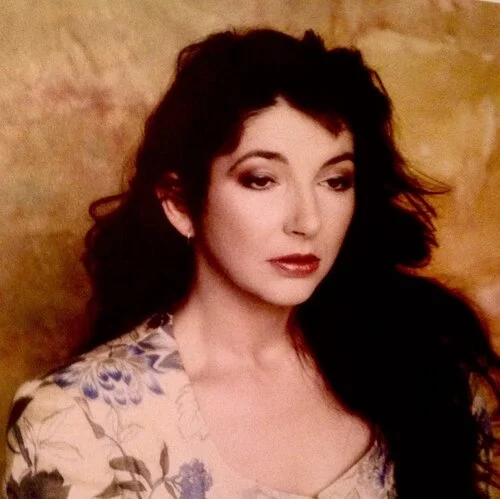
IN THIS PHOTO: Kate Bush in 1978/PHOTO CREDIT: Gered Mankowitz 

Kate Bush’s Most-Streamed Songs on Spotify

___________

RATHER than zero in…

aaa.jpg

IN THIS PHOTO: Kate Bush in 1985/PHOTO CREDIT: John Carder Bush

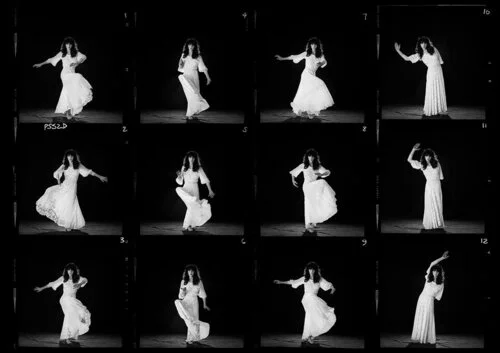
on a specific song or album, I want to do a more general Kate Bush feature. I think that it is important people buy her albums - though a lot of people will discover her music through streaming sites. It is valuable that people have access to Bush’s magnificent music in as many forms as possible. I have not covered this before, but I wanted to do a features about her ten most-streamed songs on Spotify. I know that many people will discover Bush through this medium. I feel it is important people seek out all her songs, though there is something interesting when you consider the most-streamed/popular ones – and why people gravitate towards those (I am writing this on 3rd May, so these numbers/positions are accurate as of that date). Here are the ten Kate Bush songs that…

zzz.jpg

IN THIS PHOTO: Kate Bush in 1989/PHOTO CREDIT: John Carder Bush

PEOPLE are streaming the most.

___________

One: Wuthering Heights

aaaa.jpg

Streams (as of 3rd May, 2021): 95,992,787

From the Album: The Kick Inside (1978)

Buy: https://www.roughtrade.com/gb/kate-bush/the-kick-inside-7a5278e6-76b3-40e7-a55f-2d9471a311ae

Producer: Andrew Powell

Track Information:

“Song written by Kate Bush, released as her debut single in January 1978. She wrote the song after seeing the last ten minutes of the 1967 BBC mini-series based on the book ‘Wuthering Heights’, written by Emily Brontë. Reportedly, she wrote the song within the space of just a few hours late at night. The actual date of writing is estimated to be March 5, 1977.

Lyrically, "Wuthering Heights" uses several quotations from Catherine Earnshaw, most notably in the chorus - "Let me in! I'm so cold!" - as well as in the verses, with Catherine's confession to her servant of "bad dreams in the night." It is sung from Catherine's point of view, as she pleads at Heathcliff's window to be allowed in. This romantic scene takes a sinister turn if one has read Chapter 3 of the original book, as Catherine is in fact a ghost, calling lovingly to Heathcliff from beyond the grave. Catherine's "icy" ghost grabs the hand of the Narrator, Mr Lockwood, through the bedroom window, asking him to let her in, so she can be forgiven by her lover Heathcliff, and freed from her own personal purgatory.

The song was recorded with Andrew Powell producing. According to him, the vocal performance was done in one take, "a complete perfomance" with no overdubs. "There was no compiling," engineer Kelly said. “We started the mix at around midnight and Kate was there the whole time, encouraging us… we got on with the job and finished at about five or six that morning." The guitar solo that fades away with the track in the outro was recorded by Edinburgh musician Ian Bairnson, a session guitarist” – Kate Bush Encyclopaedia

Link: https://open.spotify.com/track/5YSI1311X8t31PBjkBG4CZ?si=iNuSphLhSHSSn0lCP1DwlA

Two: Running Up That Hill (A Deal with God)

aaa.jpg

Streams (as of 3rd May, 2021): 76,290,090

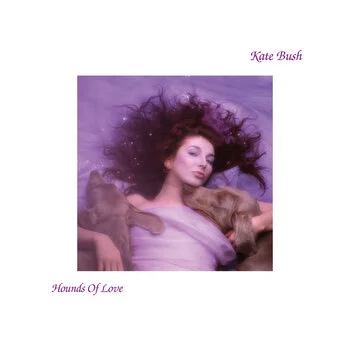
From the Album: Hounds of Love (1985)

Buy: https://store.hmv.com/store/music/vinyl/hounds-of-love

Producer: Kate Bush

Track Information:

“Song written by Kate Bush. The song was reportedly written in one evening in the summer of 1983. It was the first song recorded for the subsequent fifth studio album Hounds Of Love. The electronic drums, programmed by Del Palmer, and the Fairlight part were present from the first recording of the song. The lyrics speak of Bush's impossible wish to become her lover, and he her, so that they could know what the other felt. Kate played the first versions of the songs to Paul Hardiman on 6 October 1983. He commented later: "The first time I heard 'Running Up That Hill' it wasn't a demo, it was a working start. We carried on working on Kate and Del's original. Del had programmed the Linn drum  part, the basis of which we kept. I know we spent time working on the Fairlight melody/hook but the idea was there plus guide vocals."

The track was worked on between 4 November and 6 December, with Stuart Elliott adding drums, but closely following the programmed pattern. Alan Murphy added guitar parts whereas Paddy Bush, always providing the most ingenious instruments, played the rather better known balalaika on this track.

The working title of 'Running Up That Hill' was 'A Deal With God'. Representatives at EMI were hesitant to release the single as 'A Deal With God' due its use of the word 'God', which might lead to a negative reception. Bush relented and changed the title for the single. On the album and subsequent releases the title was 'Running Up That Hill (A Deal With God)'” – Kate Bush Encyclopaedia

Link: https://open.spotify.com/track/75FEaRjZTKLhTrFGsfMUXR?si=--0zp9A9TVSX2CWANwy6rA

Three: Babooshka (2018 Remaster)

Streams (as of 3rd May, 2021): 52,511,807

From the Album: Never for Ever (1980)

Buy: https://www.amazon.co.uk/Never-Ever-2018-Remaster-VINYL/dp/B07HQ7HW19

Producers: Kate Bush and Jon Kelly

Track Information:

“It was really a theme that has fascinated me for some time. It's based on a theme that is often used in folk songs, which is where the wife of the husband begins to feel that perhaps he's not faithful. And there's no real strength in her feelings, it's just more or less paranoia suspicions, and so she starts thinking that she's going to test him, just to see if he's faithful. So what she does is she gets herself a pseudonym, which happens to be Babooshka, and she sends him a letter. And he responds very well to the letter, because as he reads it, he recognises the wife that he had a couple of years ago, who was happy, in the letter. And so he likes it, and she decides to take it even further and get a meeting together to see how he reacts to this Babooshka lady instead of her. When he meets her, again because she is so similar to his wife, the one that he loves, he's very attracted to her. Of course she is very annoyed and the break in the song is just throwing the restaurant at him...  (...) The whole idea of the song is really the futility and the stupidness of humans and how by our own thinking, spinning around in our own ideas we come up with completely paranoid facts. So in her situation she was in fact suspicious of a man who was doing nothing wrong, he loved her very much indeed. Through her own suspicions and evil thoughts she's really ruining the relationship. (Countdown Australia, 1980)'” – Kate Bush Encyclopaedia

Link: https://open.spotify.com/track/6VpNGCU2ig4NQmsLfALdJU?si=df8ntz7gQkm9UA-ZxSJQWA

Four: Cloudbusting

jjj.jpg

Streams (as of 3rd May, 2021): 28,779,308

From the Album: Hounds of Love (1985)

Buy: https://store.hmv.com/store/music/vinyl/hounds-of-love

Producer: Kate Bush

Track Information:

“Song written by Kate Bush. Originally released on her fifth studio album Hounds Of Love. Released as the second single from the album on 14 October 1985.

The song is about the very close relationship between psychologist and philosopher Wilhelm Reich and his young son, Peter, told from the point of view of the son. It describes the boy's memories of his life with Reich on their family farm, called Orgonon where the two spent time "cloudbusting", a rain-making process which involved pointing at the sky a machine designed and built by Reich, called a cloudbuster. The lyric further describes Wilhelm Reich's abrupt arrest and imprisonment, the pain of loss the young Peter felt, and his helplessness at being unable to protect his father. The song was inspired by Peter Reich's 1973 memoir, A Book of Dreams, which Bush read and found deeply moving.

Kate actually contacted Peter Reich to explain her motives in writing 'Cloudbusting' and to express the wish that she hoped he would approve of the song. She received his reply a while later, saying that he loved what she was doing'” – Kate Bush Encyclopaedia

Link: https://open.spotify.com/track/5atQ2haKP5LT65WM0KUts3?si=Etl4z-ZPQf-cARQ3p0yFdw

Five: This Woman’s Work

zzz.jpg

Streams (as of 3rd May, 2021): 27,457,158

From the Album: The Sensual World (1989)

Buy: https://www.roughtrade.com/gb/kate-bush/the-sensual-world-e4747d6f-f1a1-4c91-bc7d-c5562cef6288

Producer: Kate Bush

Track Information:

“John Hughes, the American film director, had just made this film called 'She's Having A Baby', and he had a scene in the film that he wanted a song to go with. And the film's very light: it's a lovely comedy. His films are very human, and it's just about this young guy - falls in love with a girl, marries her. He's still very much a kid. She gets pregnant, and it's all still very light and child-like until she's just about to have the baby and the nurse comes up to him and says it's a in a breech position and they don't know what the situation will be. So, while she's in the operating room, he has so sit and wait in the waiting room and it's a very powerful piece of film where he's just sitting, thinking; and this is actually the moment in the film where he has to grow up. He has no choice. There he is, he's not a kid any more; you can see he's in a very grown-up situation. And he starts, in his head, going back to the times they were together. There are clips of film of them laughing together and doing up their flat and all this kind of thing. And it was such a powerful visual: it's one of the quickest songs I've ever written. It was so easy to write. We had the piece of footage on video, so we plugged it up so that I could actually watch the monitor while I was sitting at the piano and I just wrote the song to these visuals. It was almost a matter of telling the story, and it was a lovely thing to do: I really enjoyed doing it. (Roger Scott Interview, BBC Radio 1 (UK), 14 October 1989)” – Kate Bush Encyclopaedia

Link: https://open.spotify.com/track/1Q0sruYhnsq6lmhWgeRFh5?si=fsfJUxFuRbKYNQtj4X2-6A

Six: Hounds of Love

jjj.jpg

Streams (as of 3rd May, 2021): 16,768,803

From the Album: Hounds of Love (1985)

Buy: https://store.hmv.com/store/music/vinyl/hounds-of-love

Producer: Kate Bush

Track Information:

“When I was writing the song I sorta started coming across this line about hounds and I thought 'Hounds Of Love' and the whole idea of being chasing by this love that actually gonna... when it get you it just going to rip you to pieces, (Raises voice) you know, and have your guts all over the floor! So this very sort of... being hunted by love, I liked the imagery, I thought it was really good. (Richard Skinner, 'Classic Albums interview: Hounds Of Love'. BBC Radio 1 (UK), 26 January 1992)

 In the song 'Hounds Of Love', what do you mean by the line 'I'll be two steps on the water', other than a way of throwing off the scent of hounds, or whatever, by running through water. But why 'two' steps?

Because two steps is a progression. One step could possibly mean you go forward and then you come back again. I think "two steps" suggests that you intend to go forward.

But why not "three steps"?

It could have been three steps - it could have been ten, but "two steps" sounds better, I thought, when I wrote the song. Okay. (Doug Alan interview, 20 November 1985)” – Kate Bush Encyclopaedia

Link: https://open.spotify.com/track/0iluWxTpC9QOdVPg3PROvm?si=PufEkqrPRT-L4FbDIsWIIg

Seven: The Man with the Child in His Eyes

aaaa.jpg

Streams (as of 3rd May, 2021): 15,786,400

From the Album: The Kick Inside (1978)

Buy: https://www.roughtrade.com/gb/kate-bush/the-kick-inside-7a5278e6-76b3-40e7-a55f-2d9471a311ae

Producer: Andrew Powell

Track Information:

“The inspiration for 'The Man With the Child in His Eyes' was really just a particular thing that happened when I went to the piano. The piano just started speaking to me. It was a theory that I had had for a while that I just observed in most of the men that I know: the fact that they just are little boys inside and how wonderful it is that they manage to retain this magic. I, myself, am attracted to older men, I guess, but I think that's the same with every female. I think it's a very natural, basic instinct that you look continually for your father for the rest of your life, as do men continually look for their mother in the women that they meet. I don't think we're all aware of it, but I think it is basically true. You look for that security that the opposite sex in your parenthood gave you as a child. (Self Portrait, 1978)

 I just noticed that men retain a capacity to enjoy childish games throughout their lives, and women don't seem to be able to do that. ('Bird In The Bush', Ritz (UK), September 1978)

 Oh, well it's something that I feel about men generally. [Looks around at cameramen] Sorry about this folks. [Cameramen laugh] That a lot of men have got a child inside them, you know I think they are more or less just grown up kids. And that it's a... [Cameramen laugh] No, no, it's a very good quality, it's really good, because a lot of women go out and get far too responsible. And it's really nice to keep that delight in wonderful things that children have. And that's what I was trying to say. That this man could communicate with a younger girl, because he's on the same level. (Swap Shop, 1979)” – Kate Bush Encyclopaedia

Link: https://open.spotify.com/track/4xjVfArXNQRxAvsUpjmfMt?si=dk3QybbGQzigdMoHuq9sDg

Eight: Army Dreamers (2018 Remaster)

aaa.jpg

Streams (as of 3rd May, 2021): 12,578,304

From the Album: Never for Ever (1980)

Buy: https://www.amazon.co.uk/Never-Ever-2018-Remaster-VINYL/dp/B07HQ7HW19

Producers: Kate Bush and Jon Kelly

Track Information:

“No, it's not personal. It's just a mother grieving and observing the waste. A boy with no O-levels, say, who might have [??? Line missing!] whatever. But he's nothing to do, no way to express himself. So he joins the army. He's trapped. So many die, often in accidents. I'm not slagging off the army, because it's good for certain people. But there are a lot of people in it who shouldn't be. (Derek Jewell, 'How To Write Songs And Influence People'. Sunday Times (UK), 5 October 1980)

 The Irish accent was important because the treatment of the song is very traditional, and the Irish would always use their songs to tell stories, it's the traditional way. There's something about an Irish accent that's very vulnerable, very poetic, and so by singing it in an Irish accent it comes across in a different way. But the song was meant to cover areas like Germany, especially with the kids that get killed in manoeuvres, not even in action. It doesn't get brought out much, but it happens a lot. I'm not slagging off the Army, it's just so sad that there are kids who have no O-levels and nothing to do but become soldiers, and it's not really what they want. That's what frightens me. (Kris Needs, 'Fire In The Bush'. ZigZag (UK), 1980)” – Kate Bush Encyclopaedia

Link: https://open.spotify.com/track/135ArLV1euyyeegU9D8HVR?si=58d4IgjNTIe_ELiFMMuqlw

Nine: And Dream of Sheep

jjj.jpg

Streams (as of 3rd May, 2021): 6,278,192

From the Album: Hounds of Love (1985)

Buy: https://store.hmv.com/store/music/vinyl/hounds-of-love

Producer: Kate Bush

Track Information:

“An engineer we were working with picked out the line in 'And Dream Of Sheep' that says 'Come here with me now'. I asked him why he liked it so much. He said, 'I don't know, I just love it. It's so moving and comforting.' I don't think he even knew what was being said exactly, but the song is about someone going to sleep in the water, where they're alone and frightened. And they want to go to sleep, to get away from the situation. But at the same time it's dangerous to go to sleep in water, you could drown. When I was little, and I'd had a bad dream, I'd go into my parents' bedroom round to my mother's side of the bed. She'd be asleep, and I wouldn't want to wake her, so I'd stand there and wait for her to sense my presence and wake up. She always did, within minutes; and sometimes I'd frighten her - standing there still, in the darkness in my nightdress. I'd say, 'I've had a bad dream,' and she'd lift bedclothes and say something like 'Come here with me now.' It's my mother saying this line in the track, and I briefed her on the ideas behind it before she said it. And I think it's the motherly comfort that this engineer picked up on. In fact, he said this was his favourite part of the album. (Kate Bush Club newsletter, Issue 21, 1987)

 Once I wrote that, that was it, that was the beginning of what then became the concept. And really, for me, from the beginning. 'The Ninth Wave' was a film, that's how I thought of it. It's the idea of this person being in the water, how they've got there, we don't know. But the idea is that they've been on a ship and they've been washed over the side so they're alone in this water. And I find that horrific imagery, the thought of being completely alone in all this water. And they've got a life jacket with a little light so that if anyone should be traveling at night they'll see the light and know they're there. And they're absolutely terrified, and they're completely alone at the mercy of their imagination, which again I personally find such a terrifying thing, the power of ones own imagination being let loose on something like that. And the idea that they've got it in their head that they mustn't fall asleep, because if you fall asleep when you're in the water, I've heard that you roll over and so you drown, so they're trying to keep themselves awake. (Richard Skinner, 'Classic Albums interview: Hounds Of Love'. BBC Radio 1, 26 January 1992)” – Kate Bush Encyclopaedia

Link: https://open.spotify.com/track/15FBisvPECCYwyG4l8FJQ9?si=-m4ffLvIQGKbV2Ws9SOWdg

Ten: Suspended in Gaffa

xxx.jpg

Streams (as of 3rd May, 2021): 3,732,715

From the Album: The Dreaming (1982)

Buy: https://www.roughtrade.com/gb/kate-bush/the-dreaming-03e10ee0-e2d3-4b54-948e-0afcb7e7c290/lp

Producer: Kate Bush

Track Information:

“I could explain some of it, if you want me to: Suspended in Gaffa is reasonably autobiographical, which most of my songs aren’t.  It’s about seeing something that you want–on any level–and not being able to get that thing unless you work hard and in the right way towards it. When I do that I become aware of so many obstacles, and then I want the thing without the work. And then when you achieve it you enter…a different level–everything will slightly change. It’s like going into a time warp which otherwise wouldn’t have existed. (Richard Cook, 'My music sophisticated?...'. NME (UK), October 1982)

 'Suspended In Gaffa' is, I suppose, similar in some ways to 'Sat In Your Lap' - the idea of someone seeking something, wanting something. I was brought up as a Roman Catholic and had the imagery of purgatory and of the idea that when you were taken there that you would be given a glimpse of God and then you wouldn't see him again until you were let into heaven. And we were told that in Hell it was even worse because you got to see God but then you knew that you would never see him again. And it's sorta using that as the parallel. And the idea of seeing something incredibly beautiful, having a religious experience as such, but not being able to get back there. And it was playing musically with the idea of the verses being sorta real time and someone happily jumping through life [Makes happy motion with head] and then you hit the chorus and it like everything sorta goes into slow mo and they're reaching [Makes slow reaching motion with arm] for that thing that they want and they can't get there. [Laughs] (Interview for MTV, November 1985)” – Kate Bush Encyclopaedia

Link: https://open.spotify.com/track/1VsQhQbF4SwVvbbFeQ5EOa?si=b62sz2fQRQ6tRIs-k1ITXg

FEATURE: Pull Up to the Bumper: Grace Jones’ Nightclubbing at Forty

FEATURE:


Pull Up to the Bumper

zzzz.jpg

Grace Jones’ Nightclubbing at Forty

___________

EVEN though it is difficult to find…

ssss.jpg

Grace Jones’ Nightclubbing on streaming services, I wanted to mark an album that turns forty on 11th May. I would recommend people listen to songs from the album on YouTube. Go and get a copy of a hugely iconic and influential album on vinyl. As Rough Trade rightly observe, the album is one of the greatest of all-time:

“In a career of myriad highlights 'Nightclubbing' remains the high water mark of Grace Jones's imperial years with Island Records. It is indisputably the album on which her musical legacy rests, and rightly considered one of the greatest albums of all time. A sophisticated melee of sound, blending post-punk cool with a hot Caribbean vibe and a catwalk Studio 54 sensibility, it's a perfect example of artist and musicians working in complete accord. It contains the all-time Grace classics in 'Pull Up To The Bumper', 'Walking In The Rain', 'Demolition Man' (written by Sting) and of course the Bowie / Iggy Pop-penned title track. There is magic in its every groove. In keeping with its reputation as one of the best sonically sounding albums of the '80s and for the first time since its debut on CD in 1987, 'Nightclubbing' has been comprehensively remastered using the latest studio technology”.

I am going to round things off by dropping in some information regarding the legacy of an album that transformed Grace Jones’ career – and helped to change the face of music in the process. It is hard to overstate the importance and brilliance of Nightclubbing – let’s hope that it makes its way to streaming services very soon!

Before then, I want to throw back five years and source an article from Albuism. They marked thirty-five years of an album that remains so enormously evocative, powerful and vital:

“Nightclubbing is the fifth studio album by Grace Jones. This is the album that perfectly defines the Grace Jones sound. Her previous LP Warm Leatherette was a subtle introduction to her new sound. It was the insanely yummy appetizer leading you into the decadent tasty meal that is Nightclubbing.

Up until this effort, Jones was primarily known for her covers. This time around, she didn’t merely do cover songs. She deconstructed the songs and made them her own. Jones established herself as an excellent interpreter of other people's music. Nightclubbing features covers of songs by an array of diverse artists such as Flash & The Pan (“Walking In The Rain”), Bill Withers (“Use Me”), and Astor Piazolla (“I’ve Seen That Face Before (Libertango)”). She even gives us a reggaefied version of Iggy Pop’s “Nightclubbing” with great results.

Jones’ first three albums were heavily influenced by disco and cemented her presence in the club scene. If you were to judge her by her first three albums alone, you would come to the conclusion that she was little more than a campy disco star. Let's be honest, during this period between 1977 and 1980, everyone and their mother went disco. Rock legends like Rod Stewart and the Rolling Stones experimented with the disco sound. Hell, even Ethel Merman put out a disco record. I found the "disco sucks" phenomenon to be rooted in some unspoken hatred of other cultures, but that's another story for another day. The mass appropriation of the genre made it into a joke and luckily for Grace Jones, she shifted gears just at the right time.

With help from producers Chris Blackwell and Alex Sadkin, and the musical backing of The Compass Point All-Stars (featuring Sly Dunbar & Robbie Shakespeare), the tracks on Nightclubbing have a reggae-tinged, alternative style that set her apart from many artists of the day. Three of Nightclubbing’s songs were co-written by Jones, including the hit “Pull Up to the Bumper.” Many critics loved the playful double entendre, but if you were listening carefully, you could tell that it was a pretty blunt statement. She was not pulling any punches. It was a song that could've been ripped out of the pages of the Penthouse forum set to an infectious, funky beat: "Pull up to my bumper baby / In your long black limousine / Pull up to my bumper baby / And drive it in between”.

It is unspringing that Nightclubbing has picked up a string of impassioned and praise-filled reviews through the years. It is an album that took Grace Jones’ career to new levels and marked her out as an icon! In their review, this is what AllMusic observed:

“By all means a phenomenal pop album that hit number nine on the black albums chart and crossed over to penetrate the pop charts at number 32, Nightclubbing saw Grace Jones working once again with Sly Dunbar, Robbie Shakespeare, and the remainder of the Compass Point team. Nightclubbing also continues Jones' tradition of picking excellent songs to reinterpret. This time out, the Police's "Demolition Man," Bill Withers' "Use Me," and Iggy Pop's "Nightclubbing" receive radical reinterpretations; "Nightclubbing" is glacial in both tempo and lack of warmth, while both "Use Me" and "Demolition Man" fit perfectly into Jones' lyrical scheme. Speaking of a lyrical scheme, "Pull Up to the Bumper" (number five black singles, number two club play) is so riddled with naughty double entendres -- or is it just about parallel parking? -- that it renders Musique's "In the Bush" as daring as Paul Anka's "Puppy Love." Drive it in between what, Grace? It's not just lyrics that make the song stick out; jingling spirals of rhythm guitar and a simplistic, squelching, mid-tempo rhythm make the song effective, even without considering Jones' presence. Sly & Robbie provide ideal backdrops for Jones yet again, casting a brisk but not bristly sheen over buoyant structures. Never before and never since has a precisely chipped block of ore been so seductive”.

Not only did Jones’ unique sound impact the next generation of artists. Her changing and fabulous aesthetic and looks also made a huge impression. I feel Nightclubbing is an album people will be examining generations from now! I want to quote from Pitchfork’s review of 2014. I think Nightclubbing sounds so fresh and timeless today. It has not dated like other albums from the early-1980s:

“On the album’s opener, a cover of Flash and the Pan’s “Walking in the Rain”, Jones growls in her contralto about “Feeling like a woman/ Looking like a man.” Noirish, foreboding, sounding rain-slicked, the beat crafted by Sly Dunbar with percussionist Uzziah (Sticky) Thompson is undeniable across its four minutes. But it’s on the second disc, where many of the album tracks' running times are extended towards the sublime, that the now seven-minute song soars even higher. It also doubles as a showcase for keyboard wizard and the Nassau band’s secret weapon, Wally Badarou, a classically-trained synth session man who’s C.V. includes M’s “Pop Music” and Level 42’s “Something About You.” Badarou's extended solo evokes a tone not unlike Miles Davis' muted trumpet: gorgeous, weightless, it's as brooding and wistful as a midnight walk in the rain can be. On Grace Jones’s take on the tango “I’ve Seen That Face Before (Libertango),” Badarou mimics both Argentinean tango master Astor Piazzolla’s bandoneon and that eerie organ tone of “Runaway”.

But of course, Grace Jones is the star here. Five of the original album’s nine songs are covers, though rather than fealty to the source material, Jones sounds as if she’s shredding the songbook with her bare teeth. She treats each cover not as a singer tackling a song, but as an actor inhabiting the skin of a role. She sneers the Police’s “Demolition Man” as if she's a villainess leveling a hospital, inverting the gender and notions of sexual dominance in her lascivious take on Bill Withers’ “Use Me.” Dubbing out the zombiefied pacing of “Nightclubbing”, Jones intones Iggy Pop’s lines with the detachment of a dominatrix contemplating her cat o’nine tails, while a previously unreleased cover of Tubeway Army’s “Me! I Disconnect From You” sets it in a sleek reggae setting.

Another bonus track is labeled “Peanut Butter,” which some disco fans will recognize as the title of another Sly & Robbie & Wally track (as remixed by Larry Levan), made for Gwen Guthrie on her 1985 mini-album Padlock. But here, “Peanut Butter” is the beat that Grace Jones turned into her Top 10 single and Paradise Garage anthem, “Pull Up to the Bumper.” Originally deemed “too R&B” by Chris Blackwell, Jones finally got her hands on the pistoning riddim and turned it into one of the most profane singles in pop/dance music history. Long black limousines, commands to “pull up” and coos of “let me lubricate it” make it one of the finest parallel parking metaphors for butt-fucking. At a time wherein a song about a "gigantic" interracial lover can soundtrack a tech giant's new promotional ad campaign, one hopes that soon a car company will do the same for Grace Jones' most wanton pop moment on a record that further cemented her iconic status in pop culture”.

I want to finish up by sourcing from Wikipedia. Their article discusses the impact and legacy of one of the all-time great albums:

“Nightclubbing's distinctive amalgamation of rock, funk, post-punk, pop and reggae set Jones apart from other musical acts of the 1980s. It is considered one of the early convergences of "fashion, art, and music". According to Pitchfork's Andy Beta, it "altered the face of modern pop". He further argued that the album's musical and visual influence is easily palpable in the musical landscape of the 21st century, specially among female musicians such as Lady Gaga, Rihanna, Nicki Minaj, M.I.A., Grimes and FKA Twigs, among others. Other acts influenced by the record include Róisín Murphy, Janelle Monáe, Azealia Banks and Adam Lambert. Beyond pop music, the template set by Jones and her Compass Point backing band was also influential to alternative music, including Massive Attack, Todd Terje, Gorillaz, Hot Chip, and LCD Soundsystem – who "emulate those rubbery yet taut grooves of Sly & Robbie and cohorts". In Q, John Harris wrote: "The fact that this music was first released 33 years ago beggars belief: it showcases great minds alighting on the future, and points the way to Madonna, Björk, Lady Gaga, Gorillaz, M.I.A. and more." According to Molly Beauchemin, Jones "pioneered the way for Shamir, Stromae, and countless other dance mavericks of today – not just with her bewitching candor but through her use of androgynous innuendo". Polari Magazine considered Nightclubbing to be "a defining moment in the history of pop music".

The album further cemented Jones' pop icon status. According to Erich Kessel, "[the singer's] performances were a source of rich critiques on race, gender, and blackness." Her pioneering androgynous aesthetic – conceived alongside Jean-Paul Goude – had a strong impact on the pop culture of the 1980s; for example, it was a precursor to Annie Lennox's persona. According to Abigail Gardner, "Jones was an androgynous audiovisual experience, one who sat comfortably within the context of early 1980s pop, where image had become even more central to pop performance through the emergence of MTV." She further argued that the singer "problematises ideas of black feminine in performance art that contributed to a reconceptualisation of Afrocentric culture and identity." Miriam Kershaw positioned Jones "not as a singer or a diva, but as a piece of art", and argued that she "worked to destabilise racist and sexist clichés as she charted a dynamic course through the history of the Black diaspora, to celebrate its vibrant contemporary form." The singer's gender-bending and unrestrained sexuality also won the acclaim of the gay community, being included in Out's "The 100 Greatest, Gayest Albums of All Time" and Attitude's "Top 50 Gay Albums of All Time". i-D writes: "Jones transcended definition in almost every realm of her life. She is often referred to as a queer icon. [...] She rejects all labels of sexuality, and her musical output is similarly fluid, switching from pop and disco to dub and reggae without hesitation”.

On 11th May, so many people around the world will mark forty years of Grace Jones’ fifth studio album, Nightclubbing. It was a seismic album that cemented her Pop icon status. In terms of its importance, quality and reputation, there have been few albums since Nightclubbing that…

HAVE matched its genius!

FEATURE: With Your Beauty's Potency: Kate Bush’s Influence on Modern Songwriters

FEATURE:


With Your Beauty's Potency

nnn.jpg

IN THIS PHOTO: Kate Bush in the EMI Records office, London in March 1978/PHOTO CREDIT: Jill Furmanovsky

Kate Bush’s Influence on Modern Songwriters

___________

I have covered this topic before…

zzz.jpg

 IN THIS PHOTO: Kate Bush performing live on stage at the Hammersmith Odeon on the penultimate date of her European tour on 12th May, 1979/PHOTO CREDIT: Peter Still/Redferns

in other features through the years. You sometimes get talk that someone is ‘the new Kate Bush’ or that there is someone just like her. Whether directly or not, there are so many upcoming songwriters that have an element of Bush about them. Her albums are so broad and different, it is inevitable that artists from across various genres have been inspired by her talent. I think that there is a general warmth and power that emanates from all of Kate Bush’s music that has drawn so much out of the new generation of songwriters. I think Bush’s natural warmth and kindness has influenced more than musicians. I read an article, where Pete Bennett asked Kate Bush (via a letter) to give his girlfriend, Nikki Grahame, a pep talk. Grahame sadly died recently (she died after a lifelong battle with anorexia). As he and Grahame were fans of her work, Bennett thought of Bush when it came to finding someone who might be able to offer solace and encouragement to Grahame. I think that, whether through her music or interviews, that is this natural grace and beauty from Bush that people gravitate towards. She is held in such high affection by people from all walks of life. For artists, her music offers so much guidance and so many possibilities. Every year, a whole crop of promising singer-songwriters are linked to Kate Bush. In some cases, this can be easy and lazy labelling. Any artist – of all genders – who possesses a similar vocal style or aesthetic likeliness gets compared with Bush. I guess it is flattering but, in a lot of cases, it is either off the mark or a little kind to an artist that is not that strong.

That said, I think that anyone who takes Bush’s music to heart and counts her as an influence should be highlighted. I am always interested to hear those who look up to Bush or have been influenced by her in some way. Alicia Blue is an artist that I have been aware of for a while. As this article from American Songwriter outlines, Blue talked about Bush as she has covered Hounds of Love’s Running Up That Hill (A Deal with God):

“The lyric always leads, and the music always follows, but when the words belong to someone else, emotion leads the way. Initially uninterested in the lyrics to the Hounds of Love track, Blue instead tapped into what she was feeling inside—and something in the chords, in the melody and how both united. Then, Blue became “intimate” with the words—a song Bush wrote exploring the misunderstandings between a man and a woman, and what would happen if they swapped roles for awhile, through a deal with God—and the song became person for her.

“There was still a ton of mystery there,” reveals Blue. “I couldn’t make much of her lyrics in a literal way, but everything felt undeniably true… It felt universal and completely singular all at once. That’s how I knew this would be something I could sing for a long time, even if I didn’t write it.

She adds, “‘Running Up That Hill’ feels like a conversation that is ever-evolving. It’s a big song, because you can hear your own life echoed inside of it. It’s collective, and in a world where you can’t be everything to everyone, it’s everything. That’s the hit I get from it”.

sss.jpg

 IN THIS PHOTO: Georgia/PHOTO CREDIT: Gem Harris for Loud and Quiet

All around the world, artists are either tackling Bush’s songs or one can detect essence of Bush in original recordings. Quite a lot of young artists are providing their own takes on brilliant Bush tracks. I think that Running Up That Hill (A Deal with God) is especially revered. Last year, our very own Georgia put her spin on it. One young artist, Christine Bratherton has definite hints of Bush in her own sound:

“Christie Bratherton, from Wincham, wrote her first song when she was only 13.

With tenderness and emotion, she captures her feelings in thoughtful lyrics.

The 26-year-old has won much acclaim from all over the world for her first EP, Fish Out Of Water, released a month ago.

"I had over 1,000 streams on Spotify," said Christie, who used to live in Winsford. "Music has always played a big part in my life. I used to come home from school and play my guitar for five hours until I fell asleep.

Her emotive voice has been compared by music critics to Kate Bush, Liz Fraser, Lucy Rose and Julianne Regan”.

There are a lot of fascinating and eclectic artists who one can trace back to Kate Bush. SPELLING’s new track, Little Deer draws comparisons to Bush. I think that, the more her music is played on radio and the more books/magazines dedicated to her get to people, the more artists we will see who, in their own way, keep Bush’s flame alive.

Of course, Kate Bush has not retired or signalled any intent to quit music. As a pioneer and an artist with so many facets and unique edges, I am interested to see how her legacy transforms and touches music in the years to come. It is not only a new breed of artists who consciously or not remind one of Kate Bush. As this 2020 article from COMPLEX states, Bush has impacted and inspired some major artists:

“If you haven’t been as lucky to come across Kate Bush’s music in a film or through the recommendation of a friend, there's a chance you’ve unknowingly grown accustomed to the sounds she pioneered. From FKA Twigs’ Magdalene to Billie Eilish’s When We All Fall Asleep, Where Do We Go?, Bush’s influence—whether direct or not—exists in so many modern pop projects today. Hints of her dramatic vocals carry on through Florence Welch’s delivery and her experimental, futuristic production provided a blueprint for artists like Charli XCX to push pop forward. Her mime-like dance moves coupled with intimate orchestration is echoed in Lorde’s performances. Sinead O’ Connor’s penetrating lyrics in “Troy” and Sia’s roaring vocals in “Chandelier” both conjure the spirit of Kate Bush. Her heirs include other greats like Tori Amos, Björk and Enya. Even electronic artists like Grimes and rock artists like Stevie Nicks have been compared to the UK artist.

ddd.jpg

IN THIS PHOTO: Grimes 

She is highly praised by her peers, too. Big-time artists like St. Vincent and Adele have publicly expressed how Bush’s music influenced their own work. Prince noted her as his favorite lady. Even Tupac was a Kate Bush fan. Big Boi, a longtime stan of “Running up That Hill,” shared that he would listen to the song everyday on his bike ride to and from school. During a phone call earlier this month he told us, “I fell in love with her songwriting and how her songs would tell stories. It was deep. From there she became one of my two favorite artists." The connection he formed to Bush's music grew so deep that he spent a week in England trying to pin her down while he was in town for press meetings”.

Even though I don’t think we will ever see anyone quite like Kate Bush in the future, it is always encouraging and heartening to see how her music has made such a different to so many songwriters. I have mooted in the past how there should be a Bush covers album or artists coming together to do a project around Bush’s music. I am writing some anniversary features around Director’s Cut and the fact that it turns ten next month. Even though 2011 was the year we saw the most-recent Bush album (50 Words for Snow) her influence is everywhere. The importance of what she does and how she has affected and driven legions of artists is evident and remarkable. In Kate Bush, here is a genius, amazingly original songwriter and voice…

SO many of us follow and worship.

FEATURE: In Bed with Madonna: Madonna: Truth or Dare at Thirty

FEATURE:


In Bed with Madonna

Madonna: Truth or Dare at Thirty

___________

AMONG all the big anniversaries this year…

 IN THIS PHOTO: Madonna and her dancers in the 1991 concert film and documentary, Madonna: Truth or Dare (which chronicled the Blond Ambition World Tour of 1990)/PHOTO CREDIT: Mirimax

I wonder how many will mark the thirtieth anniversary of Madonna: Truth or Dare on 10th May. Internationally known as In Bed with Madonna, the 1991 documentary from Alek Keshishian chronicles the life of Madonna during her 1990 Blond Ambition World Tour. It was initially planned to be a traditional concert film. Keshishian was impressed with the backstage life. He persuaded Madonna to do a full film focusing on that. She funded the project and served as executive producer. The film was edited to be in black-and-white, in order to emulate cinéma vérité, while the performance scenes were edited to be in colour (thanks to Wikipedia for some background). I think Madonna: Truth or Dare is so important, as it arrived at a time when Madonna developed from a Pop artist to a global superstar. I think that Madonna: Truth or DareDare has been developed and adapted by a lot of modern Pop artists. The past year or two has seen some intimate-yet-revealing documentaries from the likes of Taylor Swift and BLACKPINK. I will come to a review for Truth or Dare to finish up. Having released Like a Prayer in 1989 and the film, Bloodhounds of Broadway (the same year), she then appeared in Dick Tracy in 1990. If her film career was not as strong as her musical output, it is clear that Madonna was gaining a lot more exposure and proving herself to be an ambitious and multi-talented artist.

The Blond Ambition World Tour cemented her reputation as a modern phenomenon. On 10th May, 1991, Madonna: Truth or Dare was given a limited released. Although the film/documentary received some positive reviews and grossed $29 million (making it the highest-grossing documentary of all-time – until it was bested in 2002 by Bowling for Columbine), there were some who were more negative. Not only has Madonna: Truth or Dare inspired modern music documentaries and how we perceive a huge artist, it had an impact on reality television and celebrity culture. I want to bring in an article from In Magazine. They looked back on the gold standard of the Pop star documentary:

“There’s a point in Madonna’s landmark documentary Truth or Dare when her then-boyfriend Warren Beatty, perplexed as to why the superstar would want to put everything out there on film, says, “She doesn’t want to live off-camera. There’s nothing to say off-camera. Why would you say something if it’s off-camera?”
 
Madonna was often a trailblazer ahead of her time, and those words from Warren – uttered long before the days of reality TV and regular people documenting their every move on social media – seem both quaint when seen through the lens of 2020 and also as if Madonna was maybe some sort of prophet.
 
This year marks the 19th anniversary of the film’s release (May, 10, 1991), and with all of us confined to our homes and craving content, it’s the perfect time to either revisit the iconic documentary or experience it for the very first time.

Showing the good, the bad and the ugly

Truth or Dare famously follows along as Madonna embarks on her legendary Blond Ambition Tour. The singer is at the absolute height of her success during this moment in time, coming off the release of her multi-platinum album Like a Prayer, as well as having appeared in the action adventure movie Dick Tracy (a film that spawned the soundtrack I’m Breathless, which featured her colossal hit “Vogue”).
 
The Blond Ambition Tour – which was to be sponsored by Pepsi until the brand pulled its dollars after Madonna’s controversial “Like a Prayer” video – consisted of 57 shows across three continents with the film’s director Alek Keshishian in tow, filming 200 hours of footage that would ultimately be edited down to become Truth or Dare. The film was originally supposed to be a straight-up concert film, but it didn’t take long for the filmmaker to realize that what was going down behind the scenes was just as entertaining as what was happening on stage.
 
Madonna certainly wasn’t the first pop star to invite cameras behind the scenes, nor was she the last. In the years since Truth or Dare, there’s been Beyoncé: Life is But a Dream, Katy Perry: Part of Me, Lady Gaga: Five Foot Two and, most recently, Taylor Swift’s Netflix doc Miss Americana, just to name a few. But while all have their merits, none can live up to what is truly the gold standard of the genre.


Most celebrities present a carefully calculated and cunningly curated image of themselves to the public. While Madonna would certainly never be accused of not being calculating, she allows the cameras to show us the good, the bad and the ugly in Truth or Dare. You get the sense that Madonna truly has no f*cks to give about whether you come away from the doc liking her. It’s refreshing, and also something that a pop star of her magnitude couldn’t do today without an apology tour after the fact.
 
Madonna doesn’t shy away from shade in Truth or Dare. Belinda Carlisle, the city of Chicago, Oprah and Janet Jackson: these are just a few of her targets. And who could ever forget when she ends Kevin Costner’s life backstage at one of her shows, putting her finger down her throat to mime throwing up after the actor uses the word “neat” to describe her show. “Anyone who says my show is neat has to go,” she says on camera. And this is Dances With Wolves-era Kevin Costner. At the height of his fame, Madonna murders him in front of millions. Madonna saves her most poisonous venom, though, for the city of Toronto. After members of the Toronto Police Service show up to the SkyDome at her third and final show threatening to arrest the singer on obscenity charges, Madonna, ever the provocateur, is positively delighted at the thought of ending up in cuffs. She refuses to back down or change her show, and the concert goes off without a hitch – but not before Madonna reduces Ontario’s capital city to filth, calling it “the fascist state of Toronto.”
 
But it’s not just the shade that makes the film memorable. Name a modern-day pop star at the height of her fame who would, during a game of Truth or Dare, allow herself to be filmed showing how she performs fellatio on a bottle, or who would reveal on camera that her ex-husband (in Madonna’s case, Sean Penn, whom she had divorced a few years earlier) is the one true love of her life? And remember when she shows us how thirsty she is for Antonio Banderas and how, upon finally meeting him, she’s highly (and vocally…within earshot of his wife) disappointed that he’s married? Taylor, Beyoncé or Katy wouldn’t dare!

Truth or Dare is also notable for its cast of supporting characters. Who could forget Madonna’s childhood friend Moira McFarland from Michigan, whom Madge hasn’t seen in years, showing up and asking Madonna to be the godmother of her unborn child. The singer tells cameras that Moira once “finger f*cked” her and showed her how to use a tampon, claims Moira denies with, “Madonna, I did not teach you how to insert a tampon and and if we got into bed together naked, I don’t remember that”.

 IN THIS PHOTO: Alek Keshishian, the director of Madonna: Truth or Dare, alongside Madonna in 1991/PHOTO CREDIT: Miramax

I wonder whether we will see an anniversary release or anything down the line that commemorates the importance of Madonna: Truth or Dare. It is fascinating looking back at clips from it in 2021, as Madonna has hugely evolved and grow as an artist. In another feature, this time from The New York Times in 2016, we hear from Madonna: Truth or Dare’s director, Alek Keshishian:

“Madonna gagging after Kevin Costner calls her concert “neat.” Her backup dancers at the New York gay pride parade. Warren Beatty as condescending scold. Singing “Like a Virgin” on that velvet bed. A variety of cone bras. The glass bottle.

Those are only a few of the enduring images from “Truth or Dare,” the 1991 concert film and documentary that chronicled, with extraordinary access and results, Madonna’s “Blond Ambition” tour.

Now celebrating its 25th anniversary, this film, directed by Alek Keshishian, who was just 26 upon its release, has transcended cult-classic status and been elevated to the modern canon by pop obsessives and queer audiences of a certain generation. It also in many ways presaged the celeb-reality complex, though, crucially, it caught Madonna at a career apex, not in desperation. Celebrated earlier this week with a screening at the Museum of Modern Art, “Truth or Dare” begins a seven-night run on Friday at the Metrograph on the Lower East Side.

“When you were making “Truth or Dare,” did you feel like an employee of Madonna’s or did you have real independence?

I technically had complete independence, insofar as she gave me final cut. But as I’ve since realized, final cut means nothing if you’re in disagreement with your financiers — they just won’t promote or release your film. It was definitely a very specific relationship because she was funding it. There were times I needed more money. But in terms of the editorial, or seeing what I was shooting, she left me completely alone.

How did she react when you first showed her the film?

I remember sitting on the floor of her bedroom, sticking in the VHS with a three-hour cut. She just watched it — it was almost out-of-body. She was laughing at the right moments and was actually kind of thrilled with it the first time she saw it. One of the most surprising things was that she didn’t ask me to lose anything. She only wanted to keep more. I think it captured the roller coaster that she had been on; that had been her goal. Weirdly, her vanity didn’t come into it much.

Does anything about “Truth or Dare” make you cringe in retrospect?

I hadn’t seen it for 24 years before I saw it at Outfest last year. I was amazed by how it did hold up in a lot of ways. It felt distinct from reality TV. It lets in a lot of ugliness or truth. I think today pop stars are so highly curated. They wouldn’t allow those things — ever.

Some of the best moments are Madonna’s interactions with other stars — Kevin Costner, Al Pacino, of course Warren Beatty. Were there other cameos that got cut?

There were comments about other stars that were cut because it felt superfluous. Generally, I tried to not just throw in arbitrary digs at people unless they were actually involved in an interaction with Madonna. The only exception to that was when Madonna says something like, “That’s another reason to not live in Chicago, besides the fact that Oprah lives there.” That is the only moment that I probably cringe at now because it was unprovoked. The Kevin Costner thing says something about her when she puts the finger down the throat — about how she reacts to earnestness. The Warren thing, again, it says something about her. I did my best to hold it to that and not just do it for the sake of sensationalism”.

I want to end by quoting from SLANT’s review of Madonna: Truth or Dare. They reviewed the fascinating documentary after twenty-five years - and, to me, they made some interesting observations:

“Twenty-five years after Madonna: Truth or Dare’s original theatrical run, its ostensible subject—Madonna’s worldwide Blond Ambition tour—is now one of its least interesting aspects. It was easy to recognize the tour, which premiered during the waning days of Tipper Gore’s war against the music industry, as a deliberate provocation, a salacious mix of Catholic imagery and overt sexuality, with a few Art Deco trimmings thrown in for good measure. Outfitted for much of the show in an iconic cone-bra corset designed by Jean Paul Gaultier, Madonna blared a commanding sexual power from the stage, performing muscular choreography that included crotch-grabbing, erotic flexions on her scantily clad male dancers, and, in the show’s most controversial moment, simulated masturbation. The idea of a female artist performing such defiantly sexual material proved so threatening to local authorities in Toronto and Rome that they threatened to shut down the show.

If the concert may not seem shocking to contemporary audiences used to strong, unapologetically sexual female performers, that’s because Madonna paved the way for so many singers interested in embracing their sexuality through their music. Still novel, though, is the sheer ambition and syncretic aesthetic of the tour, which drew its inspiration from Metropolis, hip-hop, S&M, and A Clockwork Orange, among other sources. In the context of the film, these performance excerpts, shot in richly hued color 35mm, exist not just for their own sake, but operate in dialogue with the film’s backstage scenes.

IN THIS PHOTO: Madonna performs on stage at the Feyenoord stadium on 24th July, 1990 during the Blond Ambition World Tour/PHOTO CREDIT: Michel Linssen/Redferns

In essence, Truth or Dare is less of a concert film than an elaborately constructed exegesis on pop mythmaking and the construction of identity. One part of Madonna’s genius has consistently been the creation (and reinvention) of her persona. Rather than purporting to give an unvarnished look at the woman beneath the bustier, the Alek Keshishian film calls into question the very idea of a consistent identity. Filmed in high-contrast black-and-white 16mm, the backstage scenes intentionally evoke the vérité style of D.A. Pennebaker’s Bob Dylan documentary Don’t Look Back, but here the aesthetic is an ironic appropriation of the idea of observational cinema.

Madonna’s decision to allow cameras to follow her around constantly during her tour wasn’t about capturing some unguarded moments, but rather the opposite. The camera offers an omnipresent excuse for performance, an opportunity to turn every interaction, no matter how dull or personal, into a work of art. As Warren Beatty, Madonna’s then-boyfriend, at one point famously observes: “She doesn’t want to live off camera, much less talk. There’s nothing to say off camera. Why would you say something if it’s off camera? What point is there existing?” Even in ostensibly private moments, Madonna cleverly plays to the camera, switching between a handful of personae, each incarnation amplified by hair, makeup, and costume: Marilyn Monroe for coquettish charm; Marie Antoinette for an air of luxurious decadence; brassy, streetwise Italian girl to suggest her roots.

PHOTO CREDIT: The Kobal Collection 

Truth or Dare offers some particularly succulent red meat for Freudians, including Madonna’s patronizing descriptions of herself as the “mother” to her dance crew. Twenty-five years on, the film offers the opportunity to re-enter an emerging intellectual milieu, one that emphasized the centrality of performance to our identities, particularly our expressions of gender. Released a year after Judith Butler’s Gender Trouble and Camille Paglia’s Sexual Personae, True or Dare is marinated in many of the same ideas surrounding gender, power, sexuality, and performance. (Paglia, who recognized in Madonna a fellow provocateur, even lauded her as “the future of feminism” in the pages of The New York Times.)”.

I think that, thirty years later, Madonna: Truth or Dare is still being examined and influencing artist. As this Wikipedia article documents, Madonna: Truth or Dare has an incredible and powerful legacy:

“For Amy Roberts, Truth or Dare was "ahead of its time in many respects", as it raised "vital questions about culture and society that were crucial for the time it was made", concluding that "its legacy remains to make an impact, and its influence helped change the pop music industry for the better". Noel Murray said that it can be seen as a study in marketing. Keshishian concluded that "it takes a very special type of person at a very special time in their lives to want to do that kind of movie [...] There aren’t many who pull off what Madonna pulls off in Truth or Dare". Further influence can be seen in other music-related documentaries, such as White Diamond: A Personal Portrait of Kylie Minogue (2007), Justin Bieber: Never Say Never (2011), One Direction: This Is Us (2013) and Homecoming: A Film by Beyoncé (2019).

IN THIS PHOTO: Lady Gaga 

Singer Katy Perry cited Truth or Dare as a major inspiration for her 2012 film Katy Perry: Part of Me. Both Gaga: Five Foot Two (2017) and Miss Americana (2020) were compared to Truth or Dare; Lorraine Ali from the Los Angeles Times wrote that while Truth or Dare was "an orchestrated look into [Madonna]'s life", Five Foot Two is "too amateurish to do any of that, let alone cut its own path". Selena Gomez hired Keshishian to direct the music video for her song "Hands to Myself" (2016) because of his work on Truth or Dare. In 2018, The Guardian named Truth or Dare the greatest music documentary of all time. Amy Roberts said it was "doubtful that we'll ever see a music documentary make the same visceral impact".

Three decades down the line and Madonna: Truth or Dare remains hugely fascinating! Whether you see it as an honest and revealing insight into Madonna’s life and career in 1991 or think that it is a little staged, one cannot argue against the fact that its impact is still being felt today – and many modern artists have used it as a template for their own documentaries. I think that Madonna: Truth or Dare deserves…

A lot of love.

FEATURE: Any Major Dude Will Tell You: Fifty Years of Steely Dan

FEATURE:


Any Major Dude Will Tell You

popo.jpg

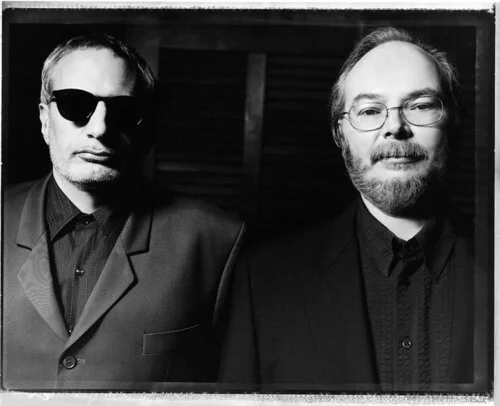
IN THIS PHOTO: Steely Dan founders, Donald Fagen (left) and Walter Becker, in 1993/PHOTO CREDIT: Lynn Goldsmith 

Fifty Years of Steely Dan

___________

EVEN though the anniversary does not happen…

a.jpg

 PHOTO CREDIT: Mick Hutson/Redferns

until later this year, I wanted to mark fifty years of Steely Dan. Founded by Donald Fagen and Walter Becker, they are one of my favourite groups. Sadly, Becker died in 2017 - meaning we will not hear any original Steely Dan music again. Despite that, Fagen continues to tour. Let’s hope that we hear more Steely Dan music on the road when the pandemic dies down. I wonder whether we will see a biopic or documentary regarding Steely Dan. Fifty years after Fagen and Becker essentially formed the foundations of what would be the band, many will be asking whether their studio albums will be reissued on vinyl. At the moment, one can only get a few of the albums new; many you can buy second-hand. I do feel that reissues of their catalogue would be fitting in order to please existing fans and connect with new generations. I want to share my memories and love of Steely Dan. Before then, here is some biography about their start and career progression:

“Once upon a time, there were two boomers, Donald and Walter, who both grew up in slightly different parts of the Greater New York Metropolitan Area. That being said, the neighborhoods they were from should not be confused with the Manhattan of Broadway shows, Wall Street, Greenwich Village and Harlem. The streets of their youth, though just a few miles from these wonders, were for the most part, placid and suburban.

Nevertheless, like many folks back then, they were afflicted with a needling agitation just below the surface of everyday reality. This was, at least in part, because of the Cold War and the constant, looming threat of a global, nuclear holocaust.

xxx.jpg

Unlike many schoolboys of their place and time - the late 1950s and early 1960s - Donald and Walter liked to read literary novels and listen to jazz records. Sports, not so much. On the other hand, like many American boys of their time, they had a healthy enthusiasm for baseball, baseball players and Topps bubble gum, the gum that came with baseball cards in each package: Flip ‘em, scale ‘em. trade ‘em, collect ‘em.

Music, though, was the thing. Before they were out of high school, Donald had taught himself jazz piano and Walter had become adept at both bass and guitar.

After meeting as students at Bard College in upstate New York, they began writing songs together on the piano in the common room of Walter’s dormitory. By then, in addition to jazz music, they had independently become enamoured of Chicago blues, soul music and, to an extent, the vibrant subculture that embraced the British Invasion, Bob Dylan and, as the Coen brothers have put it, the “new freedoms”. All these things, plus, for good or ill, a natural, shared drollery, were already apparent in their music and lyrics.

When classmate Terence (Boona) Boylan scored an album contract with Columbia Records, he asked the boys to join his session band at Jerry Ragovoy’s midtown Manhattan studio, the Hit Factory, where they got to work with the legendary drummer Herb Lovelle and listen to the “Ragman” tell funny stories about his life in the music business.

In 1968, the duo found cheap digs in pre-gentrification Brooklyn, on President Street in Park Slope, where they sat around on ancient, shabby couches and plotted their assault on the music business. Amazingly, they soon got a gig touring as part of the backup band for early sixties hitmakers Jay and the Americans. The group had a production company, whatever that is, in the famous Brill Building, a once vibrant hive of songwriting talent that had now transitioned into a skeevy, decadent phase. Working with the group on the road and in the studio, the boys got to hear Jay and the fellows tell some even raunchier, funnier stories about the music business and also meet some actual gangsters.

One of the Americans, Kenny Vance, managed to place one of their tunes on a Barbara Streisand album that featured songs by the new, groovy generation of writers. Donald and Walter also played sessions for Vance’s Brooklyn crony Gary Katz. By the early seventies, they had worked with many top NYC session pros including drummer Buddy Saltzman, bassist Chuck Rainey, pianists Paul Griffin and Artie Butler, and guitarists Elliot Randall, Dom Troiano, Ricky Zehringer (later Derringer) and Jeff “Skunk” Baxter. The boys had come a long way from lower middle class suburbia to an even lower, hustler-class existence in the now extinct and forgotten commercial studio culture of midtown.

In 1971, with the city degenerating into a vile Gomorrah of debt and porn, the lads relocated to sunny Los Angeles where Gary Katz, now an A&R man for ABC/Dunhill Records, had secured them a sweet though under-paid job as staff songwriters for the label, one of the last to employ house writers to develop material for the artists on the roster. At that time, ABC was concentrating on “singles acts” aimed at the pre-teen and teen markets with artists such as Tommy Roe, The Grass Roots and Hamilton, Joe Frank and Reynolds. Officially tasked with writing pop tunes for these artists, Donald and Walter secretly began to the assemble a band to act as a vehicle for their “special material”. With Katz’s help, they began to import players from the east coast.

Early in 1972, the original Steely Dan group - guitarist Denny Dias, guitarist Jeff Baxter, drummer Jim Hodder, and with Donald and Walter on keyboards and bass respectively - started rehearsing in an unfinished wing of the ABC building. Several weeks later, the group began recording their first album at Village Recorders in West Hollywood with engineer Roger Nichols, whose previous job was as a “pile walker” at the San Onofre Nuclear Generating Station. After being informed that ABC expected the group to tour extensively upon the album’s completion, Donald, whose intermittent panic disorder precluded him from fronting a band at that time, insisted on finding another singer/frontman, and David Palmer was added to the group.

Can’t Buy A Thrill, released that November, hit right out of the box, yielding two hit singles, “Do It Again” and “Reelin’ In The Years”, which featured a notable solo by guest guitarist Elliot Randall. A third single, “Dirty Work”, with a vocal by David Palmer, also got a lot of airplay. Steely Dan was on its way to fame and, after a few more years of penury and forced servitude, fortune.

Steely Dan toured behind Can’t Buy A Thrill and the following two albums, Countdown to Ecstasy and Pretzel Logic, both in the States and Britain. The band, now with Donald as the lead vocalist, expanded to include second drummer Jeff Porcaro, keyboardist/vocalist Michael McDonald and percussionist/vocalist Royce Jones. They were actually starting to sound pretty good.

Nevertheless, by 1974, Donald and Walter decided they’d had enough of watching the more aggressive, dipsomaniacal band members lure intoxicated young ladies up to their motel rooms apres show, and enough of the road in general for the time being. They made a decision to retreat to the studio to concentrate on composing and recording. Naturally, the other band members wanted to work, and so departed for greener pastures.

Donald and Walter, who had already started adding studio players on the Pretzel Logic sessions, began to write with certain musicians in mind. Over the next five years, four more albums were released: Katy Lied (’75), The Royal Scam (’76), Aja (’77) and Gaucho (’80). This last was completed after the boys, now heart-sick and drained by the shallow excesses of Tinsel Town, moved back home to New York City.

Sadly, the harsh vicissitudes of the artist’s life had already taken its toll, and the boys decided to part ways. Walter moved to the island of Maui and became, in his words, “a gentleman avocado rancher and self-styled critic of the contemporary scene”. Donald wrote and recorded his first solo album, The Nightfly (1982), which was a critical and popular hit. Then, he more or less cracked up.

But not for long. During the ‘80s, Donald worked on a variety of projects. He wrote tunes for artists including Diana Ross, the Yellowjackets, the Manhattan Transfer and Jennifer Warnes; co-produced the soundtrack album for Bob Telson's off-Broadway musical The Gospel At Colonus (1988); and composed, along with Rob Mounsey, the score for the film Bright Lights Big City (1988). He also began writing essays for various publications, including a regular column on film music for Premiere Magazine.

Meanwhile, Walter produced albums for the China Crisis, Rickie Lee Jones (The Horses, 1989) and a number of jazz artists including Bob Sheppard, John Beasley, Andy Laverne, Jeff Beale, Marty Krystall, The Lost Tribe, LeeAnn Ledgerwood, and Dave Kikoski.

In early 1991, Donald and his future wife Libby Titus created the New York Rock & Soul Revue, featuring a revolving group of artists including Charles Brown, Phoebe Snow, Chuck Jackson, Boz Scaggs, Cindy Lauper, Bob Dorough, Annie Ross, Michael McDonald and Rascals alumni Eddie & David Brigati. Walter, who had reunited with Donald in 1986, came along for the ’92 tour. He also produced, and performed on, Donald’s second solo album, Kamakiriad (1993), after which the boys went on tour with an all new, fabulous Steely Dan group featuring drummer Peter Erskine, bassist Tom Barney, guitarist Drew Zingg, pianist Warren Bernhardt, vibraphonist Bill Ware and an all-star horn section. A career retrospective boxed set entitled Citizen Steely Dan was released that Christmas.

After the band completed a tour of Japan in ’94, Walter recorded his first solo album at his newly built studio, Hyperbolic Sound, on the slopes of Mt. Haleakala in Maui. Co-produced by Donald, 11 Tracks Of Whack was released in ‘94. The following year, a live album, Steely Dan: Alive In America, was released.

Now one of the top international touring bands, Steely Dan’s first new album in twenty years was highly anticipated. 2001 was a banner year for the boys. Two Against Nature won four Grammys including the award for Album of the Year, a decision that apparently cheesed off some of the younger nominees. Then, in March, Steely Dan was inducted into the Rock and Roll Hall of Fame. Obviously. sending a case of gourmet honey-mustard to Hall of Fame founder Jann Wenner had paid off in spades. Finally, in May, Donald and Walter received honorary doctorates from the Berklee College of music.

The album Everything Must Go was released in 2003, followed by a triumphant American tour. The band now boasted an all-star lineup: Keith Carlock on drums; “Ready” Freddie Washington on bass; Jim Beard, keyboards; Jon Herington, guitar; Walt Weiskopf and Roger Rosenberg, saxes; Michael Leonhart, trumpet; Jim Pugh, trombone; and vocalists Carolyn Leonhart, Catherine Russell, LaTanya Hall and Cindy Mizelle.

In between Steely Dan tours, Donald toured with his old Rock & Soul mates Michael McDonald and Boz Scaggs in a “supergroup” they called the Dukes of September. His solo albums Morph the Cat (2006) and Sunken Condos (2012) were both released to critical acclaim, as was Walter’s second solo effort, Circus Money, in 2008.

Now concentrating on live appearances, the band began to offer evenings that featured performances of entire albums. Countdown to Ecstasy, The Royal Scam, Aja and Gaucho were each performed live, often at the band’s annual appearances at the Beacon Theater in New York, always fan favorites. Loyal to their roots in jazz, Walter and Donald made it a point to present major jazz artists as openers. Featured players have included Jimmy Cobb, Bill Charlap, Chris Potter, Sam Yahel, Julian Lage, Joey DeFrancesco, Joe Lovano, Peter Bernstein, Mike LeDonne, Bobby Broom and the Deep Blue Organ Trio.

Recent partners on major tours have included Steve Winwood, Elvis Costello and the Imposters, The Eagles and the Doobie Brothers. In 2016, Donald toured with a quintet of terrific young musicians as Donald Fagen and the Nightflyers”.

My first experience of Steely Dan was hearing their 1072 debut album, Can’t Buy a Thrill. I was amazed by how different to anyone else they sounded! I love the complexity of the compositions and the biting, fascinating lyrics. So deep, instantly recognisable and rich, I still listen to their albums and feel there is nobody else like them! Many acts would suffer from rotating musicians and not having the same line-up through the years. I think this quality is a key to why Steely Dan’s albums are so different and have a distinct characteristic. My favourite album of theirs is 1974’s Pretzel Logic. I feel this is them at their truest and most solid. It was the album where Fagen and Becker found a tight and great band and were finding their voices. Prior to that, Fagen occasionally stepped back to let other singers perform. By Pretzel Logic, Steely Dan were fully-formed and sublime. My favourite song ever, Deacon Blues, appeared on 1977’s Aja. It is considered to be their masterpiece (or the most acclaimed, as the band produced more than one masterpiece!). I want to bring in a Sound on Sound interview of 2003. Steely Dan were promoting their final album, Everything Must Go, and a return to an analogue recording sound and working with a live band. It is a shame that they did not record another studio album – I really love the songs on Everything Must Go. It is a very deep and fascinating interview. Rather than put all of I here, there are a few segments I wanted to bring in:

“Everything Must Go was, naturally, a project of such importance, and Becker enthuses about how having "a great bunch of musicians in a room" supports analogue recording and their decision to play live. "One of the things that people discovered is that when you're mixing, you're not necessarily trying to make things distinct, you're trying to blend them together. With digital recording this can be difficult. But analogue, because it changes the sound a little bit more than digital does, tends to blend and process things so that it sounds more coherent and unified. You want to make the guys in the band sound like they're playing together.

"It's actually always been our first plan on any project to get a live band together. It's true that we've often worked with various sorts of track manipulations, but always as a last resort."

"Most of the time we've used technology at the tracking stage because we were unable to the track with a live band," adds Fagen. "It was a desperation tool."

"This time we had better luck," Becker continues, "because of the musicians that we found in the last two years, particularly drummer Keith Carlock. He also played on one track on Two Against Nature and is able to play in any number of styles and still remain himself. He's a great groove drummer and a good jazz drummer as well. So he has the technique and the happening backbeat. He just nailed every song that we gave to him and by the end of the day, or sooner, we'd have a track down on tape. We had a six-guy band with two guitar players [Jon Herington and Hugh McCracken], two keyboard players [Fagen and Ted Baker], and bass and drums. Everybody felt the same way and was able to get on the same wavelength and really define the rhythm and come up with cool parts."

Elliot Scheiner recently used LA's new Cups 'N' Strings Studios for preparation of the original Steely Dan Gaucho (1979-80) multitrack analogue masters for release this year in 5.1 surround. Owner and chief engineer Bruce Maddocks first baked the priceless masters in his laboratory-grade mechanical convection oven, and they were then played back on a Studer 827 24-track deck. Pictured are (L-R) Bruce Maddocks and Elliot Scheiner.

aa.jpg

Elliot Scheiner recently used LA's new Cups 'N' Strings Studios for preparation of the original Steely Dan Gaucho (1979-80) multitrack analogue masters for release this year in 5.1 surround. Owner and chief engineer Bruce Maddocks first baked the priceless masters in his laboratory-grade mechanical convection oven, and they were then played back on a Studer 827 24-track deck. Pictured are (L-R)

A lot of the feel for Everything Must Go comes from the seamless interplay between Becker on bass and Carlock on drums, surely the reason why Becker preferred to play bass and not guitar in the six-piece. According to Scheiner, Fagen and Becker's working method was to rehearse one or two tracks in a rehearsal studio, record these tracks live with the band in Sear Sound Studio A, and overdub and mix soon after, mostly in Skyline Studios (NYC) and Presence Studios (Connecticut) respectively. A few weeks later the process would be repeated for the next batch of songs.

The first recordings and overdubs took place in August 2001, with 'Things I Miss The Most' and 'Lunch With Gina', and the final mix for the album was completed in November 2002. Elliot Scheiner explains some of the technical details of the tracking sessions at Sear. "The desk was an old 36-input Neve 8036, and we used Studer A827 24-tracks with Dolby SR. We used two, so I could do edits, for instance replacing a bad chorus with a better chorus from somewhere else. Any fixes that needed to be made were done right there on analogue. To have six musicians play live in one room at the same time is amazing today. We were able to put all of them in the small room at Sear, and keep the leakage situation fairly contained. The smallness of the room actually added a nice liveness to the drums. You won't believe this, but I used [Electrovoice] RE20s as room mics, and I put them in the surround speakers in the 5.1 mix.

"One of the great advantages of Sear Sound is that they have one of the most unbelievable microphone collections, with lots of vintage mics. On acoustic piano I'd use a [AKG] C12A, which was amazing-sounding and made a huge difference. On electric guitar cabinets I used nothing special, Shure SM56s, but run via Universal mic pres, while a Neumann U47 was great-sounding on acoustic guitar. For drums Neumann U67 microphones were great for overheads, there was a [AKG] D112 on the kick drum, Audio-Technica ATM25 on toms, and SM57 on snare. Oh, and Walter's bass went via an Avalon DI box straight into the desk. I always record as much as possible without effects. The only effects I used were Fairchilds for Walter's bass and the electric guitars. There were no other effects printed on tape”.

I would urge people to do a deep dive regarding interviews with Steely Dan. Dig out any live videos you can find and check out their music on streaming. It is a shame that more of their studio albums are not easily available on vinyl. I hope that the fiftieth anniversary of Steely Dan changes that. I wanted to pay my respects to a group that has made some of the finest and most memorable music I have ever heard! Even though they are very influential and have amassed generations of fans, I don’t think that any other group matches their musicianship, lyricism and style. Don’t take my word:

ANY major dude will tell you.

FEATURE: A Buyer’s Guide: Part Fifty-Three: Yoko Ono

FEATURE:


A Buyer’s Guide

aaa.jpg

Part Fifty-Three: Yoko Ono

___________

IN this A Buyer’s Guide…

sss.jpg

 IN THIS PHOTO: Yoko Ono with John Lennon

I am selecting the essential work from Yoko Ono. I have included various members of The Beatles before. I think that Yoko Ono too often gets associated with John Lennon and the band, meaning we do not listen to her music and consider her contributions. She is an amazing artist who has released some fantastic albums. Before getting to them, here is some biography about Yoko Ono:

“Ono first met Lennon of the Beatles on November 9, 1966, when he visited a preview of her exhibition at the Indica Gallery in London, England. Lennon was taken with the positive, interactive nature of her work. He specifically cited a ladder leading up to a black canvas with a spyglass on a chain, which revealed the word "yes" written on the ceiling. The two began an affair approximately 18 months later. Lennon divorced his first wife, Cynthia (with whom he had a son, Julian, born in 1963), and married Ono on March 20, 1969.

The couple collaborated on art, film and musical projects, and became famous for their series of "conceptual events" to promote world peace, including the "bed-in" held in an Amsterdam hotel room during their honeymoon in 1969. After her marriage to Lennon, Ono struggled with her ex-husband over custody of Kyoko. She recorded the song "Don't Worry Kyoko" as an effort to reach out to her child. In 1971, her ex-husband disappeared with Kyoko, and Ono did not learn for years what had happened to her daughter. Apparently, Kyoko spent more than a decade living with a religious cult called the Walk with her father.

 Ono and Lennon became parents in 1975 with the arrival of their son, Sean. Lennon quit the music business to raise Sean, and when the famed musician returned to the spotlight in 1980, he was shot by a deranged fan, Mark David Chapman, only a few feet from Ono.

Since Lennon's death, Ono has continued her career, recording albums, performing concert tours and composing off-Broadway musicals. She has exhibited her art internationally, and the first U.S. retrospective of her work opened in New York City in 2002. Involved in an array of social endeavors, she co-founded Artists Against Fracking with son Sean in 2012 to lobby against drilling for natural gas in New York State.

Ono has also continued to honor Lennon's memory with a number of different projects. On October 9, 2002, she inaugurated the LennonOno Grant for Peace award to commemorate what would have been Lennon's 62nd birthday. On Lennon's birthday in 2007, she unveiled the Imagine Peace Tower on Videy, an island in Iceland. This outdoor artwork, created by Ono, represented her and Lennon's commitment to world peace.

Ono made music history in 2011, becoming the oldest artist to have a number-one hit on the dance charts. She was 78 years old when "Move on Fast" made it to the top spot. Ono has also enjoyed renewed interest in her artwork with a special exhibition at New York's Museum of Modern Art in 2015. This show featured more than 100 works by Ono from 1960 to 1971”.

I am including the essential four albums (ones she recorded solo and with the Plastic Ono Band), in addition to one that is underrated. I am also bringing in her current studio album. I will finish by recommending a Yoko Ono book that is worth checking out. If you need a guide to the best work of Yoko Ono, then I think that the selectins below are…

sss.jpg

 PHOTO CREDIT: Ron Galella/Getty Images

A good starting point.

______________

The Four Essential Albums


Yoko Ono/Plastic Ono Band

zzz.jpg

Release Date: 11th December, 1970

Label: Apple

Producers: Yoko Ono/John Lennon

Standout Tracks: Why Not/AOS/Touch Me

Buy: https://www.discogs.com/sell/list?master_id=90491&ev=mb

Stream: https://open.spotify.com/album/4F9869rWHV53x5Q5C4LMF7?si=iKRVrsqdSlmzMzfOhSBCdA

Review:

“Her 1970 album Yoko Ono Plastic Ono Band is a triumph, in part, because it sounds fully aware of this reality. It’s also iconic because it contains some of Lennon’s most aggressive guitar work. Opener “Why” hurtles from its needle-drop opening, with slide guitar swoops and febrile picking that anticipate the variety of Ono’s vocal lines. When the singer enters, she wastes no time in applying a range of approaches to her one-word lyric sheet. Long expressions full of vibrato give way to shorter exhalations, rooted in the back of the throat. Spates of shredded laughter communicate the absurdist good humor that’s often present in Ono’s work. The minimalist pounding of drummer Ringo Starr and bassist Klaus Voormann is there as a foil, propped against all the invention on offer from Ono and Lennon.

“Why Not” inverts this script by arranging similar licks inside a slower tempo. Ono’s voice becomes more pinched and childlike, while Lennon’s guitar lines have a bluesier profile. Elsewhere, Ono puts a new spin on an “instruction” piece from her Grapefruit book, with the echo-laden “Greenfield Morning I Pushed an Empty Baby Carriage All Over the City.” Here, in another surprise, Ono’s voice sounds stolid and more traditionally “correct.” That feel is subsequently obliterated by the noisy middle section of “AOS,” a track Ono recorded in ’68 with saxophonist Ornette Coleman’s band. The Lennon-led backing group returns for the final two pieces of the original LP configuration, which have a comparatively calmer air. 

Like Lennon’s ’70 solo album of the same name (and near-identical cover), Ono’s Plastic Ono Band initially scans as acerbic, yet manages to create a supple variety of song-forms from that opening template. Ono’s absorption of her new husband’s sonic language was only beginning to pay dividends, too. As Sean Lennon’s Chimera imprint and the Secretly Canadian label continue to reissue her catalog, Ono’s subsequent experiments with rock and pop formats will come into clearer view for audiences that have only heard rumors about her craft. Still, these opening reissues—which come complete with era-appropriate B-sides and outtakes—all manage to reflect a key aspect of Ono’s broader artistic intentions, as defined in a 1971 artist’s statement: “I like to fight the establishment by using methods that are so far removed from establishment-type thinking that the establishment doesn’t know how to fight back”– Pitchfork

Choice Cut: Why

Fly

ccc.jpg

Release Date: 21st September, 1971 (U.S.)/3rd December, 1971 (U.K.)

Label: Apple

Producers: John Lennon/Yoko Ono

Standout Tracks: Midsummer New York/Mindtrain/Don't Worry, Kyoko (Mummy's Only Looking for Her Hand in the Snow)

Buy: https://www.discogs.com/sell/list?master_id=95354&ev=mb

Stream: https://open.spotify.com/album/42oXWuPLLxMBZrK1HEzxUH?si=ItM8HJcWRC2iPdwbNtx7tw

Review:

“By the time Fly emerged, the battle lines had long been drawn, and those who preferred to place Ono's domestic situation rather than her music in the foreground were never going to give it a fair shake. Very much their loss -- not only is it that rarest of all beasts, a '70s double album that rewards repeated listening, but Fly also shows the work of a creative artist working with a sympathetic set of backing players to create inspired, varied songs. At points, the appeal lies simply in Ono's implicit "to heck with you" approach to singing -- compositions like "Midsummer New York" are easygoing rock chug that won't surprise many, but it's her take on high-pitched soul and quivering delivery that transforms them into something else. The screwy blues yowl of "Don't Worry Kyoko" is something else again, suggesting something off Led Zeppelin III gone utterly berserk. Meanwhile, check the fragile, pretty acoustic guitar of "Mind Holes," her singing swooping in the background like a lost ghost, while the reflective "Mrs. Lennon," as wry but heartfelt a portrait of her position in the public eye as any, ended up being used by Alex Chilton for "Holocaust," which gives a good sense of the sad tug of the melody. Perhaps the best measure of Fly is how Ono ended up inventing Krautrock, or perhaps more seriously bringing the sense of motorik's pulse and slow-building tension to an English-language audience. There weren't many artists of her profile in America getting trancey, heavy-duty songs like "Mindtrain" and the murky ambient howls of "Airmale" out to an English-language audience. Such songs readily match the work of Can, another band with a Japanese vocalist taking things to a higher level. As for "Fly" itself, the mostly unaccompanied wails and trills from Ono will confirm stereotypes in many folks' minds, but it's a strange, often beautiful performance that follows its own logic” – AllMusic

Choice Cut: Mrs. Lennon

Approximately Infinite Universe (with The Plastic Ono Band)

sss.jpg

Release Date: 8th January, 1973 (U.S.)/16th February, 1973 (U.K.)

Label: Apple

Producers: John Lennon/Yoko Ono

Standout Tracks: Yang Yang/Death of Samantha/Now or Never

Buy: https://www.discogs.com/sell/list?master_id=90425&ev=mb

Stream: https://open.spotify.com/album/1qRYdkOF7bbiNP6O1I0Wyq?si=1dzjVvz5SfiY-ZcK9hkJIA

Review:

“The somber ballads on Approximately Infinite Universe are mixed with slow rockers, funky workouts, and show-tune style numbers (all played mostly by New York band Elephant’s Memory; Lennon appears on a few tracks under a pseudonym). There’s a breezy thrill in Ono’s omnivorous songs, performed with both committed seriousness and campy humor. Over the samba-ish beat of “What a Mess,” she sings, “If you keep hammering anti-abortion/We’ll tell you no more masturbation for men... If you keep laying on money and power/We’ll tell you meanwhile your sprinkler is out of soda.” Even funnier is the horn-propelled “I Felt Like Smashing My Face in a Clear Glass Window,” wherein Ono playfully grapples with her parents’ influence, eventually questioning their sanity as well as her own.

Ono’s parents show up again on Feeling the Space, when soft opener “Growing Pain” begins with the lines, “I’m a battleship/Frozen by my mother’s anger.” From there, Ono persistently explores feminist struggles in ways both poetic and polemic. Some tunes, like the lifting “Coffin Car” and the theater-worthy “Woman of Salem,” paint metaphoric pictures of life as a woman. But more often, Ono confronts problems with bold brashness, in songs with titles like “Woman Power,’’ “Angry Young Woman,” and “She Hits Back.” The latter succinctly explains Ono’s anger: “My ears get tired of listening all the time/They’ve been taking lots of garbage all their lives” – Pitchfork

Choice Cut: Move on Fast

BETWEEN MY HEAD AND THE SKY (with the Plastic Ono Band)

x.jpg

Release Date: 21st September, 2009

Label: Chimera Music

Producers: Yoko Ono and Sean Lennon

Standout Tracks: WAITING FOR THE D TRAIN/HEALING/BETWEEN MY HEAD AND THE SKY

Buy: https://www.discogs.com/sell/list?master_id=200175&ev=mb

Stream: https://open.spotify.com/album/4BpAwcuCB5GAykJqbHjWjx?si=BbTlwKivSCqyQs_TktRd4Q

Review:

“She's really back; one of the most gloriously influential and notorious women in the history of rock has returned with a new album at the age of 76, and thank goodness. With Between My Head and the Sky, Yoko Ono has courageously and outrageously revived the Plastic Ono Band moniker; a group she and husband John Lennon formed together; only this time, instead of the late John, it's with the couple's son Sean Lennon. Audacious? Oh yeah, but wait until you hear it! On 2007's Yes, I'm a Witch, Ono gave a bunch of her old tracks to artists like J. Spaceman, Chan Marshall, DJ Spooky, and the Flaming Lips, to name a few, and re-recorded them. This time out, she surrounded herself with New York studio players, Sean's own band, and guests such as Yuka Honda from Cibo Matto, and members of Cornelius. The end result is a stunning collection of 16 wildly diverse tracks that were written in six days and recorded very quickly. The centerpiece is an electronic-cum-acid rock spoken word peace called "The Sun Is Down," with screaming guitars, crisscrossing beats and breaks, and Honda offering sung vocal support drifting entrancingly in the backdrop. Then there is the funkier material, such as the wonderfully surreal "Ask the Elephant," with some stellar feedback and heavy guitar work by Sean, and the overtly rockist title track, where Ono speaks more emphatically than she has in decades. This isn't just rock as spoken word, it's got groove, crunch, noise, and vulnerability as well as authority, and in places, yes, her trademark ululating wail. "Watching the Rain" is a midtempo ballad with shimmering blips and beats, her singing voice is expressive in its limited range, and her words are deeply moving. The shamanistic, trance-like quality of "Moving Mountains" melds acid folk and new production styles with a beautiful layer of horns -- trumpets mainly -- in the background. Come to think of it, there are a lot of trumpets on this record. Ultimately, however, Between My Head and the Sky is perhaps the most accessible album she's recorded, and yet the most forward looking, too, because it is ultimately contemporary in that it takes the past into account while pushing its margins to the breaking point and pointing to the known -- check the jazzed-up funky reggae in "Hashire, Hashire." This set is not full of ballads; there is little of the fragility of Walking on Thin Ice here, though its desire to heal individuals and the world is ever present, and has none of the overt self-conscious excesses of Plastic Ono Band projects of the past. This is a deeply focused, wonderfully colorful, and deeply expressive work that showcases a collaboration between mother and son and displays depth, strength, creativity in spades, and intense beauty” – AllMusic

Choice Cut: ASK THE ELEPHANT!

The Underrated Gem


Rising

aaa.jpg

Release Date: 7th November, 1995

Label: Capitol

Producers: Yoko Ono/Rob Stevens

Standout Tracks: Warzone/Wouldnit/I'm Dying

Buy: https://www.discogs.com/sell/list?master_id=579087&ev=mb

Stream: https://open.spotify.com/album/3Eul0rbOz62sBPAOtFhlqr?si=QoyvKG3cQbeLCX7lg0YGFQ

Review:

“There are times when nepotism makes sense. The ardent patronage of her husband, John Lennon, enabled Yoko Ono to record and release some of the most fearless and prophetic music in avant-rock: the 1970 shriek feast Yoko Ono/Plastic Ono Band; the proto-No Wave bedlam of her 71 double album, Fly; the immortal 1981 serrated-boogie thang “Walking on Thin Ice.” On Rising, her first studio album in nearly a decade, Ono wisely dives back into the gene pool — this time with a crude-groove trio, IMA, led by her son, Sean Ono Lennon.

Based on the corrosive vigor of his guitar playing and IMA’s strong minimalist rumble, Sean Lennon is the most sympathetic collaborator Ono has had since his father was killed. The leanness of Rising is a major improvement on the sugar-shock overproduction of Ono’s mid-’80s solo albums and shows Lennon’s confidence in the idiosyncratic vitality of his mother’s voice. He, bassist Timo Ellis and drummer Sam Koppelman let Ono’s rippling yelps and raw lamentations roam free over the fat clang of a rhythm guitar in “New York Woman” and the brute rain-dance pulse of “Turned the Corner.” “I’m Dying” sounds like the Plastic Ono Jesus Lizard: one grinding chord progression cranked up to a crowd-surfing frenzy with Ono going into the kind of death-warble overdrive you usually don’t expect from a 62-year-old millionairess” – Rolling Stone

Choice Cut: Talking to the Universe

The Latest Album


WARZONE

zzz.jpg

Release Date: 24th October, 2018

Label: Sony Music International

Producer: Thomas Bartlett

Standout Tracks: Now or Never/Woman Power/Why/Imagine

Buy: https://www.discogs.com/sell/list?master_id=1439790&ev=mb

Stream: https://open.spotify.com/album/5EvPFlJpDNTJ6qFMiEJnwH?si=KGAFUOYISpmanL765urMtg

Review:

“That whimsical spirit is perhaps Warzone’s defining characteristic, despite a tracklist that leans heavily on songs about war and other forms of violence. Ono, who turned 85 this year, still has the uncanny ability to see the world through the eyes of a child, which can be cloying at times, as in “Children Power,” with its kids’ chorus and prominent use of animal samples, though the song is kept just on the right side of twee by its Velvet Underground-esque groove and Ribot’s probing guitar solo. But Ono’s weaponized naïveté is powerful at times: On “Teddy Bear,” a reworking of “Cape Clear” from 1985’s Starpeace, the combination of her plainspoken words and simple melody with Bartlett’s elegiac piano evoke an ineffable sense of sadness and innocence lost.

Also fully intact is Ono’s trademark shriek, which has, if anything, grown richer and more resonant with age. Her new version of “Why,” from 1970’s Yoko Ono/Plastic Ono Band, strips away the original’s proto-punk thrash to highlight her anguished screams, backed only by ominous rumbles of electronic noise and the sound of a trumpeting elephant. “Hell and Paradise” and “It’s Gonna Rain,” both from Starpeace, both end with blood-chilling primal screams, a post-verbal culmination of the lyrics’ sense of anxiety and desperation. In many ways, Warzone feels like an album-length extension of the viral audio clip Ono shared as her “response” to Donald Trump’s election in November 2016. Ono is in on the joke, as she knows her inimitable vocal style remains a punchline for many less-adventurous listeners. But in a time when many of our own inner monologues sound uncannily like Yoko Ono screamfests, she’s never been more relatable.

Trump gets a more conventional shout-out on “Woman Power,” a remake of the second-wave feminist anthem from 1973’s Feeling the Space with new lyrics for the era of Women’s Marches and #MeToo. But Ono, ever the optimist, manages to hold out hope for even our patriarch-in-chief’s redemption: “You may be the president now,” she sings, “You may still be a man/But you must also be human/So open up and join us in living.” This kind of radical empathy, even for a figure as cartoonishly unempathetic as Trump, is central to Ono’s politics. It’s tempting to call such feel-good sentiments anachronistic, but it’s also worth remembering that there was plenty of political turmoil in the ‘60s and ‘70s too. For better or worse, Ono continues to carry the banner of positivity she and John Lennon had been waving since “Give Peace a Chance.”

It’s thus appropriate that Warzone closes with a version of 1971’s “Imagine”—a song written by Lennon and inspired by Ono’s 1963 poem “Cloud Piece.” Like the rest of the album, Ono strips it down to the bones, opening with just her voice over ambient keyboards and slowly unfolding into an almost hymn-like arrangement. It is, frankly, a revelation: stripping away the decades of accumulated sentiment and cliché from Lennon’s original recording to reveal something utterly guileless and pure of heart. Warzone isn’t going to get us out of our current waking nightmare any more than Imagine did in 1971, but Ono’s gift for making change seem possible remains undimmed” – SLANT

Choice Cut: Hell in Paradise

The Yoko Ono Book


John & Yoko/Plastic Ono Band

aaa.jpg

Authors: John Lennon/Yoko Ono

Publication Date: 29th October, 2020

Publisher: Bloomsbury Publishing Plc

Synopsis:

“Bursting with archive material and fascinating photographs, this deluxe volume traces the journey of John Lennon’s finest solo album and provides a unique insight into his relationship with Yoko Ono and the aftermath of the Beatles’s split.

Described by Lennon as 'the best thing I've ever done', and widely regarded by critics as his best solo album, John Lennon/Plastic Ono Band was released alongside the remarkable Yoko Ono/Plastic Ono Band on 11 December 1970. With first-hand commentary by John & Yoko, members of the Plastic Ono Band and other key figures in their lives, and packed with evocative and revealing letters, artworks and photographs, this incisive volume offers new insights into the raw emotions and open mindset of Lennon after marriage to Ono and the break-up of the Beatles.

Following their wedding in March 1969, Lennon and Ono decided that their future musical endeavours should be credited to a conceptual vehicle, the Plastic Ono Band. The band featured an ever-changing line-up of musicians, including Eric Clapton, Klaus Voormann, Ringo Starr, Alan White, George Harrison, Billy Preston and Jim Keltner, all of whom played live with Lennon and Ono, and contributed to their recordings.

The fearless honesty that John & Yoko inspired in one another in their search for truth, meaning and peace had a huge impact on Lennon's song writing, resulting in the creation of tracks that are intensely personal and unlike anything previously heard in popular music, including 'Mother', 'Working Class Hero' and 'God'. This book takes those lyrics as a starting point and explores Lennon's life, relationships and world view during this transformative period” – Waterstones

Buy:https://www.waterstones.com/book/john-and-yoko-plastic-ono-band/john-lennon/yoko-ono/9780500023433

FEATURE: Inspired By... Part Eight: Aaliyah

FEATURE:


Inspired By... 

eee.jpg

Part Eight: Aaliyah

___________

THIS feature is all about…

dd.jpg

 PHOTO CREDIT: SGranitz/WireImage

putting a hugely important artist at the forefront and then compiling a playlist of artists inspired by them. I understand that Apple Music do a similar thing but, in that case, we do not get any biography or background about that artist. Today, I wanted to spotlight Aaliyah. On 25th August, it will be twenty years since she died. Her wonderful eponymous album is twenty on 7th July. Even though she died at the age of twenty-two, she has inspired so many artists since. In such a brief life she made an enormous impact and paved the way for many other great artists. Before I get to the playlist, I wanted to bring in some biography about the much-missed Aaliyah:

“Brooklyn-born Aaliyah Dana Haughton started voice lessons shortly after she learned to talk. Determined to be a star, she signed a contract with Jive Records at the age of 12 and came to popular acclaim in 1994. On her way home from a music video shoot in 2001, a plane crash killed Aaliyah and eight members of her film crew. She was 22 years old at the time of her death.

Singer and actress Aaliyah Dana Haughton was born on January 16, 1979, in Brooklyn, New York. Raised in Detroit, Michigan, the young singer competed unsuccessfully on the television program Star Search at age 11. Later that same year, she performed with R&B legend Gladys Knight, the former wife of her uncle and manager, Barry Hankerson, at a five-night stand in Las Vegas.

 In 1994, at the age of 15, Aaliyah catapulted onto the R&B charts herself with her debut album, Age Ain't Nothing But a Number. Produced by the successful singer R. Kelly, the album quickly sold a million copies and eventually earned platinum status based largely on the success of two hit singles, "Back and Forth" and "At Your Best (You Are Love)." Later that year, tabloid reports surfaced claiming that the sultry teen singer had married the 27-year-old Kelly, but Aaliyah denied the union and the marriage was reportedly annulled.

While a student in the dance program at Detroit High School for the Fine and Performing Arts (she graduated in 1997), Aaliyah released her sophomore album, One in a Million (1996). Helmed by the well-known pop producer Timbaland and featuring rap performer Missy Elliott, One in a Million portrayed the 17-year-old singer as a sultry hip-hop chanteuse with a self-confidence well beyond her years. The album garnered favorable reviews and sold two million copies.

Aaliyah gained even more recognition in 1997 when she recorded "Journey to the Past," the Academy Award-nominated theme song to the animated feature Anastasia. She also performed the song for the Oscar telecast in 1998. Her next soundtrack effort, "Are You That Somebody?" for 1998's Dr. Dolittle, starring Eddie Murphy, went to No. 1 on the R&B charts, was a pop crossover hit, and earned Aaliyah her first Grammy Award nomination.

In 2000, Aaliyah made her acting debut in the surprise action hit Romeo Must Die, starring opposite martial arts star Jet Li in a Romeo and Juliet-inspired story set in modern-day Los Angeles. She was also an executive producer of the movie's soundtrack and performed the hit single "Try Again," which netted her a second Grammy nomination as well as two MTV Music Video Awards for Best Female Video and Best Video From a Film.

Her third album, Aaliyah, was released in July 2001 and reached No. 2 on the Billboard album chart. Also in 2001, she played the title role in Queen of the Damned, based on the bestselling novel by Anne Rice and released in theaters in 2002. She scored a major casting coup when she signed to appear in two upcoming sequels to the blockbuster sci-fi thriller The Matrix, starring Keanu Reeves and Laurence Fishburne.

Tragically, Aaliyah was killed on August 25, 2001, when a small Cessna passenger plane carrying the singer and her video crew crashed and burst into flames shortly after takeoff from Abaco Island in the Bahamas, where they had just completed work on a video. The plane was headed for Miami, Florida. Aaliyah and seven other people, including the pilot, were believed to have died instantly, while a ninth passenger died later at a Bahamian hospital. Aaliyah was 22 years old at the time of her death”.

In order to show the impact Aaliyah made and the artists who cite her as an influence, this playlist has a great and strong array of tracks. I think that we will see many other artists come through who are influenced by Aaliyah. It is really positive seeing so many take Aaliyah to heart and knowing that she created this legacy. As we mark her eponymous album turning twenty soon, it just enforces how she is…

SORELY missed.

FEATURE: Beyond The Dreaming: Kate Bush and Australia

FEATURE:


Beyond The Dreaming

zzz.jpg

IN THIS PHOTO: Kate Bush in a promotional shot for The Dreaming in 1982/PHOTO CREDIT: Guido Harari 

Kate Bush and Australia

___________

MAYBE this is a little under-explored…

aaa.jpg

but I think there is a nice little link between Kate Bush and Australia. One person that I will not bring up more than I have to is Rolf Harris. He was someone who fostered and provoked Bush’s fascination with the didgeridoo. He also appeared on her 2005 album, Aerial (he has since been removed from versions released after 2005). It is a shame that Harris needs to be restricted because, before the time of The Dreaming in 1982, Bush was interested in the didgeridoo and aboriginal and Australian culture. I will talk more about The Dreaming and how she, in a sense, helped bring the didgeridoo into popular culture. In 1978, when travelling to promote new music, Bush appeared on the Australian T.V. show, Countdown. The Kate Bush Encyclopaedia gives us more details:

“Countdown was a long-running popular weekly Australian music television show broadcast by the Australian Broadcasting Corporation from 8 November 1974 until 19 July 1987. It was created by Executive Producer Michael Shrimpton, producer/director Robbie Weekes and record producer and music journalist Ian "Molly" Meldrum. Countdown was produced at the studios of the ABC in the Melbourne suburb of Ripponlea. The majority of performances on the show were lip synched. Countdown was the most popular music program in Australian TV history. It commanded a huge and loyal audience.

Molly Meldrum, the program's talent co-ordinator, began appearing on-air in 1975, presenting the "Humdrum" music news segment and conducting interviews. Meldrum soon became the "face" of Countdown. He appeared regularly on-air until 1986. Another attraction to the program was the local and international acts who would host an episode - usually performing as well. During the show, Meldrum would interview them (while co-hosting) or have a chat with them before the show went out with the number 1 single of the week.

Kate Bush appeared on Countdown on 12 October 1978 for a performance of Hammer Horror and an interview.

A large number of master videotapes recorded between 1974 and 1978 were later erased and recycled during a management-initiated "economy drive" at the ABC, an action which Meldrum later criticised and said was "unforgivable". At least 100 episodes in total were erased from this period of the show's history”.

I know that there is a large Kate Bush fanbase in Australia. Although she grew to hate flying and travelling, one gets a sense that Bush enjoyed visiting Australia. One of the downsides of Bush not touring or playing much outside of Europe meant Australian fans did not get to see her live. Listen back through Bush’s catalogue and she incorporated elements of different countries and culture into her music. Aside from Irish music and references, she worked with the Trio Bulgarka (a Bulgarian Folk trio). Bush also sung in different languages and had a fascination with people from all walks of life. Whilst her ‘Australian chapter’ is quite brief, it is one that intrigues me. There is a lot of love for Bush in Australia. In 2018, as the Kate Bush News website explains, there was an event held there to mark forty years of her debut, The Kick Inside:

“Two events we’ve heard about happening in June this year. In Melbourne, Australia on 9th June, a Kate Bush event takes place at The Corner Hotel, Richmond: “Performed by: Routines, Ms45, Cynthia Gallie, Lack the Low, Lucy Dwyer, Lisa Crawley, Jules Sheldon & Laura Davidson. The debut album by Kate Bush ‘The Kick Inside’ featuring the hit song Wuthering Heights turned 40 this year. A long list of local Melbourne musicians are throwing a massive Kate Bush party at the wonderful Corner Hotel Saturday June 9th. The night will feature various singers backed by a full house band, including two keyboardists bringing the songs of Kate Bush to life – performing tracks off The Kick Inside plus hits from other records including Never for Ever, The Dreaming Hounds of Love plus lots more. Dress up and come along and celebrate everything Kate Bush!” More at this site here”.

When it comes to the didgeridoo, traditionally women have not played it in ceremony. That may not be the case in informal situations. I know Bush was keen to play the instrument herself but, because of tradition, male players had to come in. Although Harris played it on The Dreaming, Paddy Bush was skilled enough to take it over for Hounds of Love. He played the didgeridoo for The Big Sky. It was also included on the Aerial track, The Painter’s Link – though, as we know, the man who played it had his parts removed. It is interesting that, twenty-three years after The Dreaming, Bush was still bringing the didgeridoo into her work. I know that her sound has become a little more stripped on her 2011 albums, Director’s Cut and 50 Words for Snow. I hope that we have not heard the last of Bush and the didgeridoo. I want to bring in an article from Far Out Magazine, where they highlight Bush’s use and fascination with the didgeridoo.  

“Bush’s experimental streak found expression not just in the lyrically diversified themes but also in the inclusion of indigenous tribal instruments. Folk instruments such as mandolins, didgeridoos, uilleann pipes were used along with a variety of polyrhythmic percussions to create a unique soundscape. To understand the speciality of such usages, let us revisit the title track of the album.

‘The Dreaming’ is a song about the destruction of lands by white settlers that belonged to the Australian aboriginal community, all in search of weapon-grade uranium for yet more destruction. The track’s title was derived from an anthropological theory named Dreamtime/The Dream which explained the religious and cultural worldview of the aboriginal people of Australia. A slightly uncomfortable fact of this song is that the infamous TV personality and convicted paedophile, Rolf Harris, collaborated with Bush on several projects after this, played the didgeridoo in the song. The didgeridoo, of course, is a long, hollow wind instrument which when played with vibrating lips produces a continuous droning sound. It’s a traditional instrument invented by the aboriginal Australians that dates back more than 40,000 years. Most commonly, it is made out of tree trunks, especially eucalyptuses, that are hollowed by the termites. Though it was primarily used in traditional Australian songs, it later seeped into popular music. Bush is largely responsible for diversifying its usage and for introducing it to the western music scene.

The singer came across the instrument during her vacation in Australia, immediately after which she started working on The Dreaming album. With the inclusion of the didgeridoo, she included the marginal culture of the aboriginals into the mainstream Western culture. So, it not just some random and innocent use to add an authentic flavour to the track; rather, a political tool presented as a voice of protest against the illegal destruction of the aboriginal-owned land”.

There was some feeling that, in a modern age, the white woman voicing the concerns of the Aborigine people seems like cultural appropriation. I don’t think that she meant any offence back when she recorded The Dreaming’s title track. She was moved by the plight of the Aborigines and, as an artist who had a platform, she wanted to voice her alarm! Also, there are hardly any Aborigine musicians in the mainstream that could have put a message of conservation and protection to the masses. Although Bush’s exploration of unusual instruments and international cultures extends beyond The Dreaming and Australia, it is a part of her sound that I really like. I hope, as mentioned, that we hear more exploration of Australian sounds in future songs. I shall leave it there. I was looking through Kate Bush’s discography and all the different sounds and instruments that she has combined. It is a vast and wonderful array. Despite the unfortunate link between Kate Bush and Rolf Harris – all their collaborations occurred before Harris was convicted of a series of sexual assaults -, one cannot ignore the importance of a song like The Dreaming and the fact that Bush was very much fascinated with the didgeridoo. Beyond the instrument, I feel Bush had a love of Australia and the people. That is very much reciprocated. Though she will never again perform live in Australia, her music has made a big impact on generations there. When thinking about how Australian elements made their way into Bush’s music through the years, it makes me realise what…

A fascinating innovator and explorer she is.

FEATURE: Too Good to Be Forgotten: Songs That Are Much More Than a Guilty Pleasure: Spin Doctors - Two Princes

FEATURE:


Too Good to Be Forgotten: Songs That Are Much More Than a Guilty Pleasure

qqq.jpg

Spin Doctors - Two Princes

___________

WHILST it is not one of the classics…

ssss.jpg

from the 1990s, I think the Spin Doctors’ hit, Two Princes, has come in for some unfair stick. You might not know the song by its title but I guarantee, as soon as you hear the song, you’ll be able to place it! I feel a lot of people think it is a guilty pleasure song. A lot more dismiss it or say that it is a bit of a joke. I am not going to say it is a song without fault, though it has plenty of charm and its repetitiveness – which some signal as a bad thing. That means it is catchy and memorable. The New York band delivered the infectious Two Princes in 1993 (and they have played the song together through the years). The track peaked at number-seven on the Billboard Hot 100. Outside of the United States, Two Princes topped the charts in Iceland and Sweden. It made it into the top-ten of the charts in Australia, Canada, Germany, the Netherlands, the Republic of Ireland and the United Kingdom. The song earned them a Grammy Award nomination for Best Rock Performance by a Duo or Group. Although there are some weak points to Two Princes – its lyrics are not especially deep or brilliant -, I have always loved the fact that it is quite laidback and one cannot help sing along! Much more than a guilty pleasure, Two Princes is a song that still sounds pretty fine almost thirty years after it was released.

It is no surprise that Two Princes won a lot of chart respect and was a very successful single. Critics, on the other hand, are a little more divided when it comes to the merits of a gem from the 1990s:

“Stephen Thomas Erlewine from AllMusic stated that the song is one of the "best tracks" of the album. Larry Flick from Billboard wrote, "The Doctors' growing legion of fans will devour this treat from Pocket Full of Kryptonite within seconds. Percolating rhythm section, courtesy of Aaron Comess and Mark White, propels Eric Schenkman's scratchy guitars and a pure-pop hook. Engaging vocals by Christopher Barron and lively instrumentation assure instant album-rock and alternative play, with visions of successfully crossing into the pop arena realistically dancing in everyone's heads." Randy Clark from Cash Box commented, "This crunchy rock/funk groove hints of the same raw, unpolished but infectious street quality of the early Rolling Stones except with an unspoiled and urgent alternative style." Kingston Informer said the song is "brilliant". It was ranked No. 41 on VH1's "100 Greatest Songs of the '90s"; conversely, it was ranked No. 21 on Blender magazine's "50 Worst Songs Ever".

Because Two Princes was taken from the Spin Doctors’ debut album, Pocket Full of Kryptonite (released in August 1991), I will bring in a review for that album. I think the album as a whole is very strong and boasts plenty of terrific moments. There are some articles that paint Two Princes in a slightly jokey light. In 2018 – to mark twenty-five years of the track -, this is what GQ had to say:

“This video inspired an entire '90s-only karaoke night where my friends and I attempted to sing not only other songs to the tune of “Two Princes,” but “Two Princes” to the tune of other songs. Could the video have worked with any song? Maybe. But there’s something about “Two Princes” that’s at once endearing and utterly embarrassing, setting it up to be an enduring punchline that’s catchy as hell.

Pocket Full of Kryptonite was released in 1991, launching the Blues Traveler-adjacent band The Spin Doctors into MTV stardom. Their single “Little Miss Can’t Be Wrong” was, for a time, the “most requested song in the nation on album-oriented-rock stations,” according to Rolling Stone, and one of the top requested videos on MTV. They were the opposite of grunge, they were pop rock for the alt-hippies, the gateway drug to Phish.

“Two Princes” was its next single, which told the classic tale of a woman caught between the affections of two men ([whispers] those are the princes). One is rich and family-approved; the other is, presumably, the lead singer of the Spin Doctors, who may not have the pedigree but knows “what a prince and lover ought to be.” On first pass, it seems the underdog prince is the right choice—he’s the one who loves her, after all. Then again, though we know we never actually hear who the woman in question wants to marry.

The song, and accompanying video, have everything you want from the '90s: a lead singer with a weird hat, random scatting, a weirdly high-concept video for such low production value. It was a hit (so much so it got the Sesame Street treatment), but maybe that was in spite of itself. “With its riff repeated long past endurance, dopey lyrics and abominable vocal scatting,” wrote Blender on its list of the 50 Worst Songs Ever, “it could only have been the work of scrabbly [sic] beared, questionably hatted, red-eyed stoners staggering out of the rehearsal room convinced they have discovered the missing link between grunge, the Grateful Dead and Jamiroquai—blissfully unaware that no one in his right mind was looking for that in the first place”.

ssss.jpg

I have a lot of time for Two Princes. Maybe I have heard it too much and it is imbedded in my mind. Others who might be slightly new to the song will feel differently. One does not really hear anything like the Spin Doctors today; that slightly slacker-type Rock sound. There are plenty of people who love the band’s biggest track and feel that it has been cruelly maligned and ridiculed by some. I want to quote from a review of the Spin Doctors’ debut album:

“Of course, as an elementary schooler, I had no idea what a jam band was or why lead singer Chris Barron wore the knit hat and woven poncho that I found so silly. I wouldn’t have known they were part of a jamming revival reminiscent of ‘60s and ‘70s long-form rock. I could not even explain what I liked about their hit, “Two Princes,” a precise pop fairy tale with a call-and-response chorus that remains my favorite ‘90s song. The most discernible hook on the entire album, it was crafted to withstand decades in a way that even lesser hit “Little Miss Can’t Be Wrong” couldn’t match. (“Two Princes” proved such an irresistible combination of chord changes, vaguely rock rhythm and scat singing that Third Eye Blind nearly recreated it on their hit “Semi-Charmed Life.”).

Though born in New Jersey based out of New York, the Spin Doctors were aware of the burgeoning Seattle sound as they recorded Kryptonite. “Forty or Fifty” sounds a lot like Pearl Jam, its languorous chords and mournful vocals stretched long until the peppery chords of “Refrigerator Car” take over. I can forgive the cheesiness of that extended metaphor (“Your heart is a refrigerator car” it’s cold, it’s on the move, etc.) if only for being less cheesy than the title track: Jimmy Olsen is stuck firmly in the friend zone but still he tries to seduce Lois Lane with his radioactive junk.

 The Spin Doctors’ sound was, in many ways, a sort of achy-breaky rockabilly that lingered long past the 12-minute jam session that concludes the album. Twenty years later, alt-country acts have polished these kinds of barn dances, rubbed away the imperfections and smoothed the irregularities. The Spin Doctors weren’t the only band of my childhood to inject the spirit of the harmonica into each line-dancing guitar riff, but band friend and blues harp virtuoso John Popper of Blues Traveler makes a few cameos to fill out a sound that often tries desperately to deny its Southern influences. Whether performing a lip-chapping solo (as on “More Than She Knows”) or ‘inspiring’ “Two Princes,” dare I suggest that Popper himself be credited with a portion of his friends’ crossover success?

In general, I never took to the meandering styles of today’s jam bands, gravitating towards more distilled pop and rock music as I aged. Still, I feel that fondness for the brief period in my childhood when laid-back rock stars took us on the journey, only arriving at a destination long enough to make some quick money with a hit single. And to this day, I don’t know which of the two princes I would choose—the rich one has a rocket ship!”.

I guess the above is more of a recollection than a review. It is interesting when songs divide people and there are a lot of different opinions on them. I can see why some would side-line Two Princes as a song that was of its time and is perhaps dated now. There is much to love about a song that has won a lot of affection from people around the world since its release. Whether it is seen as a track that falls into the guilty pleasure camp – I do not believe in the concept and notion of a guilty pleasure – or it takes you back to a special moment in time, one cannot deny that its catchiness…

DRAWS you in.

FEATURE: Spotlight: Kidä

FEATURE:


Spotlight

aaa.jpg

PHOTO CREDIT: Lola Banet for ENFNTS TERRIBLES  

Kidä

___________

THERE is a world of promising…

qqqq.png

and interesting artists out there. Through my Spotlight features, I am trying to focus on as many of the best and most intriguing artists coming through. In this instalment, I wanted to shine a light on Kidä. This is an artist that I discovered fairly recently (though she has been making music for quite a few years now). Creating more experimental, less commercial music has meant that, perhaps, her name is not as widely known as it should be. I will bring in a few different interviews so that we can learn more about a fine young artist. In this interview with METAL, we discover more about the music and style of Kidä:

“Kidä, also known as Ava Leoncavallo, is the New York-based sound designer, composer, Red Bull Music Academy graduate and founder of the platform A Portal To Jump Through launches her new single The Garden. Her life is now dedicated to music and her experimental style and role as an alchemist of sound have circuited throughout fashion, art and advertisement, enabling her to work with brands like Dior or Prada.

I feel that your music is a very cool blend of '70s psychedelic rock with mythology inspired by your Egyptian heritage. Do you always find inspiration in the past? What inspires you on a daily basis to create new music?

I actually don’t feel like I have much control over my pool of inspiration – a lot of it is absorbed through environmental osmosis. Sometimes I walk around the city for a day and overhear a conversation or see an image that sets me off on a research spin for weeks on end. The act of music-making is more or less of way or organizing my thoughts. I think if I didn’t make music I’d be a writer, I have a strong urge to document ideas. When I stop doing that, I lose my internal compass. It’s a cliché but I actually need music to function properly. Otherwise, I imagine I’d be an insufferable tyrant because my head would just be on fire all the time.

Creating music from scratch seems really difficult because you are working with intangible elements. How do you create your music? Could you tell us your creative process?

I just follow a flow of attraction. I don’t know what genre my music is, but I’m not necessarily fixated on it. I trust that my different inspirations manifest in a way that pays homage to the music that I listen to and I think it usually does. I try not to dig up the grave of our past rockstar ancestors to steal their formula, we fight evolution by doing that. I’d rather rouse the living than summon ghosts.

Besides your music career, I would also like to talk about your aesthetic and your style because I feel that you have a very unique sense of fashion. What inspires your style?

Anything and everything. I love Jean Paul Gaultier, McQueen’s feral era, Galliano’s theatrics… But I think, above all, I feel most connected to Italian women’s philosophy when it comes to beauty, there are femininity and elegance but it’s laced with animalism and wildness. Tan skin, long athletic limbs, lipstick.

I think passion is what exudes style – whatever I am passionate about at the minute ends up being reflected through my style – whether that be romance, the Sahara desert, utility, insects, or anarchy. You will know what I’m thinking based on what I’m wearing. It’s my mood ring. If I’m wearing a dramatic cat eye it’s best to leave me alone. I’m either in heat or plotting revenge”.

I think that the thrilling and hugely original music of Kidä will reach a wider audience once we start to emerge more fully from lockdown. It must be quite constricting being in a restrictive state when this music needs to be delivered to audiences. As a creative, she must feel quite stifled and frustrated at the moment. In an interview with The Line of Best Fit from February, they delve deeper into her debut E.P., Burn to Make Glow:

“Kidä’s background in aesthetic sonic creation contributes to her experimental and electrifying rock. Now, stuck in snow entrenched New York, Kidä’s creativity has evolved into a more concentrated form: “I find I’m forced to confront myself so much because I’m in quarantine and not able to distract myself with other people’s energies. [Instead], I’m getting lost in dreams and research.”

Kidä’s debut EP Burn to Make Glow is based around her love for storytelling. She draws from Kate Bush’s propensity for moulding narratives into intricate songs: “I like creating images in my music; whether that’s lyrically or using these cinematic sounds and sound design to imbue a landscape…I was very inspired by Kate Bush. She would read or hear a story, think of something and then would want to retell it in a song.” The influences that seep into Kidä’s music range from her dreamy childhood reading of fables to having RnB and Y2K obsessions as well as the modular synths she uses for APTJT.

Teasingly, Kidä’s music cannot be pinned down. From the sparkling synths of ‘Comet’ to the spellbinding bass of ‘Kneel To You’, the music carries an air of mystique around it, becoming more enchanting with every listen. ‘Comet’ is also part of the le Beirut Art Relief Fund, raising funds for those affected by the explosion that caused devastation to the Lebanese capital. “I’m always trying to help where I can, and this is the best means I know possible. Tensions in the Middle East feel close to home - it’s something I’ll always want to aid because I have Middle Eastern family.” The project ‘How To Make A Portal To Jump Through’ raised funds for Syrian refugees, another cause close to Kidä’s heart: “My mother had a Syrian refugee living with her at one point. All these narratives from these trauma survivors, they’re very close to us”.

In concluding, there is one more interview that I want to pull from. I have dropped in a few songs through the feature. I would advise people to seek out Burn to Make Glow and listen to Kidä. She is an artist that will become more widely explored and exposed as the year progresses. This interview from ENFNTS TERRIBLES revealed some illuminating information:

“What does Burn to Make It Glow mean to you? 

It was very cathartic, and this whole record was sort of a way for me to kind of rewrite my own traumas. The meaning of this album is the process of being in this place where burning but knowing that all of that is going to turn into something else. It’s ultimately what the album became.

Why did you decide to name the project after the final track “Burn to Make It Glow”?

It perfectly sums up the meaning that I’m trying to communicate in the most summarized way. (laughs)

We have a big admiration for your song “The Garden”. What is it referencing?

“The Garden” was a song about a breakup and growth. I was obviously in a place where plants grow, so I used it as a metaphor for wanting to forge ahead.

qqqq.jpg

PHOTO CREDIT: Lola Banet for ENFNTS TERRIBLES

Does composing help you understand who you are as Kidä?

Naturally, they bleed into each other. I’m, for example, stewing in similar references. Like when I’m writing a score for Gucci with all those beautiful strings, I’m listening to all these magnificent classical songs that day. Naturally, that will be in my mind when I start to write a song for Kidä, and I’ll be wanting to use some middle-eastern strings like in the “Enter”, for example. So, of course, they’ll overlap.

Are your future projects going to sound very different from Burn to Make It Glow or will there be similarities?

It’s like when you enter a movie or video game, and you enter one landscape, there will be a new scene where you enter another landscape. It will be like this. It will still be me, and you’ll be able to tell that, but it will be a different world within Kidä world. That’s the best way I can describe it”.

To finish up, I want to bring in one more interview. When she spoke with Glamcult, Kidä talked about her blend of the modern and spiritual:

“There’s a continuous balance in your work of digital production to new-age spirituality. Where does this come from?

As an artist, it’s always intriguing to use whatever mediums are available to you- and a lot of it was due to quarantine. It creates freedom, the digital realm. I’ve always been interested in the surrealism of the 1900s and those landscapes really speak to me – the post-apocalyptic world- life but mutated. Within this world, everything is occupying a more dreamlike state and was able to do that through these states.

This manipulation of the physical to the digital and vice versa is surrealism in itself.

I’m just curious in a lot of different formats and its so exciting to work with different people.

Does everything start with this palette?

Yeah! When living in London, I was around a lot of designers and we intermingled. My passion came from there.

How does the energy shift between London and LA?

LA is a place I come to retreat to, I don’t need to see anyone when I come here. It allows me privacy, and I disappear into the studio and my friend’s homes. Freedom comes from this, as essentially im kind of hermetic. Especially this year. I’m so comfortable in this state, and that’s definitely what the video speaks to.

I think that Kidä is an artist with a long and very interesting feature. I really like her debut E.P., so I will look closely at how she progresses and where she heads. Discover a brilliant artist who has created a sound and look that is very much…

A world of her own.

____________________

Follow Kidä

zzz.jpg

FEATURE: The Lockdown Playlist: A Eurovision Song Contest Mix

FEATURE:


The Lockdown Playlist

aaaa.jpg

A Eurovision Song Contest Mix

___________

BECAUSE Katrina and the Waves…

zzz.jpg

 IN THIS PHOTO: Katrina and the Waves in 1997

won the Eurovision Song Contest on 3rd May, 1997, I wanted to flip back to that time. (The Eurovision Song Contest 2021 will take place in Rotterdam. The Dutch city was due to host the Contest in 2020 before the event was cancelled due to the ongoing pandemic. The Semi-Finals will take place on 18th and 20th May. The Grand Final takes place on 22nd May). I am not a massive Eurovision fan, but I am interested in the fact that a whole host of European nations (and Australia) get together in a single evening. We get to hear what each country has to offer. Whilst the songs the countries deliver might not seem that indigenous or representative of the national sound, there are always moments of camp, spectacle and downright woefulness. Even if you do not like the music performed (I would put myself in that camp), Eurovision does bring people together and provides distraction. To mark Katrina and the Waves winning in 1997 with the song, Love Shine a Light, this Lockdown Playlist is a selection of Eurovision Song Contest songs through the years. Whilst not everything will be to your taste, there will be something in there…

THAT catches the ear.

FEATURE: With The Beatles: The Influence and Impact of Brian Epstein

FEATURE:


With The Beatles

cdd.jpg

IN THIS PHOTO: Brian Epstein receiving the Edison Award for The Beatles at Grand Gala du Disque in 1965 

The Influence and Impact o Brian Epstein

___________

WHEN we think about The Beatles…

ccc.jpg

 PHOTO CREDIT: Mirrorpix

we talk about the four lads (John Lennon, Paul McCartney, George Harrison and Ringo Starr) and the impact they made. Of course their producer, George Martin, was hugely important regarding their direction, success and legacy. Not that one can easily say who a fifth Beatle would be, though their manager, Brian Epstein, would come quite high in the mix. Epstein managed The Beatles from 1962 until his death in 1967. I am mentioning Epstein because, last year, a biopic was announced. The Guardian provided more details:  

“An award-winning director, who has worked with Paul McCartney on music videos, is to direct a major British film about Brian Epstein, the visionary manager and impresario who took the music industry by storm in discovering stars from the Beatles to Gerry and the Pacemakers.

The film, titled Midas Man, will be directed by Jonas Åkerlund, who has won multiple Grammy awards.

It will tell the story of a Liverpudlian record-shop manager with a talent for forecasting hits and spotting future stars. Epstein signed the biggest band of all time, the Beatles, and discovered Cilla Black and Billy J Kramer, opening his own theatre to promote and launch the likes of Jimi Hendrix and the Who. His impact on popular music and culture resounds to this day.

The film’s producer, Trevor Beattie, told the Guardian: “Epstein’s one of the most extraordinary men of the 20th century. His story hasn’t been told properly. He’s often taken for granted by the wider world, but he was ahead of his time from his vision of music and popular culture through to gender identity. He was gay at a time when homosexuality was illegal. He lived a secret life. He made some risky decisions in handling the business of his stars … Compared with what Brian had to live in his life, [they were] not a risk.”

Epstein’s achievements are all the more extraordinary because he died aged just 32, in 1967, following a barbiturate overdose.

Beattie said: “Epstein first met the Beatles in November 1961, when he was 25, and he was dead in August 1967. It is a tragic story. But it’s also life-affirming, a triumph for the human spirit because, in those few short years, he changed popular culture forever”.

I think the fact that Epstein saw these scruffy guys performing and saw huge potential in them was less a moment of commercial exploitation and more real faith that they had a spark and promise. I wonder whether, were it not for Epstein, The Beatles as we know them would have happened. I think that it was his management and friendship with the band that meant the guys reached incredible heights. It was Epstein who wanted The Beatles to dispense with the jackets and messy hair and adopt matching suits and neat haircuts. This styling and imagery is iconic now! So many other bands followed The Beatles’ looks and imagery. Epstein asking George Martin to produce the band’s records was another masterstroke.

I want to come on to an article that looked at the impact Epstein’s death had on The Beatles and their survival. I am looking forward to the biopic and what it will teach us about a man who was integral to the success of the greatest band ever. Before then, I want to bring in now some biography about a man who is the perfect subject for a biopic:

“Brian Samuel Epstein was born to Harry and Malka Epstein on September 19, 1934 in a private nursing home in Liverpool. His brother Clive was born 22 months later. His father Harry called his mother Queenie because Malka is the Hebrew word for "queen". Next to the furniture store that the Epstein family owned was The North End Road Music Stores. James McCartney Sr.'s family was one of the local families that bought pianos there on extended-purchase plans. The Epsteins later expanded and took over NEMS.

Brian started to work at the family furniture store at Walton Road in 1950 at the age of 16. Two years later he was conscripted for National Service, but he was discharged from his two-year stint after ten months as being emotionally and mentally unfit. (He tells the story about being caught innocently impersonating an officer in A Cellarful of Noise.) Upon his return in 1954 he was put in charge of another branch of the family business, Clarendon Furnishing in Hoylake, and he was very successful, a born salesman.

However, Brian had other plans for his own life, and after some pleading with his parents was allowed to join the Royal Academy for Dramatic Arts to train as an actor. He passed the audition, but soon discovered he wasn't cut out for show business, and returned to the family business.

vvv.jpg

IN THIS PHOTO: The Beatles and Brian Epstein arrive at London Airport on 22nd September, 1964, after a tour of the United States and Canada/PHOTO CREDIT: Keystone/Getty Images 

When his father opened a new NEMS store on Great Charlotte St, Brian was put in charge of the ground floor, where he expanded from pianos and wireless sets to gramophone records. The new record department was so successful that another NEMS branch was opened at 12-14 Whitechapel, with Brian in charge. Meanwhile, Brian, who had been selling the music publication Mersey Beat since its first issue on July 6, 1961, became interested in the local music scene, and asked its editor Bill Harry if he could contribute a record column. His first column appeared in the third issue of Mersey Beat on August 3, 1961.

Brian's new NEMS store on Whitechapel was only down the street and around the corner from a dingy, basement club called The Cavern.

Alistair Taylor, long-time assistant to Brian Epstein, from an interview with Martin Lewis at the re-created Cavern Club in 1995:

"We found this record in Germany by a guy called Tony Sheridan and the Beat Brothers, the boys were just a backing group, and one day Brian came into the shop and he said, 'By the way, do you remember that record that we sold so many of, that band the Beatles?' So I said, yeah. So he said, 'Well, they're playing at the Cavern. Let's go down and see them, and we'll see what they're like.'

"And it was jammed solid, and we just sat at the back feeling rather embarressed, and I suddenly realised my foot was tapping, and I hated pop music, and Brian hated it even more than me, and I looked 'round and so was his."

xxx.jpg

IN THIS PHOTO: Brian Epstein with The Beatles in 1965 when they received MBEs at Buckingham Palace/PHOTO CREDIT: Cummings Archives/Redferns 

"And after a while Brian started talking about it, and he said, 'What did you think?' And I said I thought they were awful, quite honestly, but absolutely incredible. So he said, 'that's exactly my feelings. Do you think I should manage them?' And I said, yeah."

Brian Epstein recalled meeting the Beatles that day:

"I hadn't had anything to do with management of pop artists before that day that I went down to the Cavern Club and heard the Beatles playing, and this was quite a new world, really, for me.

"I was immediately struck by their music, their beat, and their sense of humour on stage. And even afterwards when I met them I was struck again by their personal charm. And it was there that really it all started..."

Queenie Epstein, Brian's mother, remembers Brian talking to his parents after he met the Beatles:

"He asked his father and myself to listen to a record. He said, 'Forget about the singer, just listen to the backing group.' Actually, we were always fairly interested in all the records, because being in the business [NEMS record store].

And he said, 'They are four boys and I'd like to manage them. It wouldn't take any longer than two half days at a time, it's just sort of a part-time occupation.' He said it would never interfere with business.

"But the first time we met the Beatles, Brian was very insistent that we should go ahead with them, and I'd never been to a rock and roll concert before and I asked him what I should wear. And he said he hadn't either..."

It was decided that Brian would be the Beatles' manager at a meeting on December 10, 1961. Their first contract was for a five year period. The contract was formally signed at Pete Best's house on January 24, 1962, with Alistair Taylor as witness, although Brian, himself, didn't sign it. When asked why later, Brian answered "Well, if they ever want to tear it up, they can hold me but I can't hold them."

Brian smartened up the Beatles' stage appearance by putting them in matching suits and he instructed them not to smoke or swear on stage. Brian also encouraged the boys to make a rather theatrical synchronized bow at the conclusion of each song when performing in concert or on television. All of the Beatles went along with their new image although there was some initial very minor grumbling from John and George.

During his 'demythologize the Beatles' phase in 1970, John made references to how these image changes had somehow "tamed the real Beatles" and that he'd been against it at the time. However, most contemporary reports - and indeed recent McCartney comments - note that at the time, all of the Beatles (including John) were happy to follow Epstein's shrewd advice, particularly when it proved to be 100% effective. The reality is that in the climate of the early 60's no British or American TV show would have given the Beatles (or any other pop group) even five seconds of air time looking as they did pre-Brian.

Now that he was signed to be their manager, it was Brian's job to get them a recording contract. He used the clout of his family's record stores in Liverpool to get meetings with all the major British record companies. But the Beatles were rejected by every label including the two biggest companies, EMI and Decca. Brian finally secured a contract for the Beatles in June 1962 when they were signed by George Martin, head of one of EMI's smallest labels, Parlophone.

George Martin commented later that he signed the Beatles in considerable part because of Epstein's enthusiasm. He thought that the Beatles had promise, but he was not entirely convinced by their talent. However, he was very impressed by Epstein's conviction that the Beatles would be world famous.

Shortly after they signed with EMI, John, Paul and George (who had been together as the nucleus of the group since 1958) gave Brian the unpleasant job of telling drummer Pete Best that they wanted him out of the group, to be replaced by Ringo Starr. Brian was uncomfortable but accomplished this difficult task.

In a very real sense Epstein had now passed his 'audition' with the Beatles. In a mere six months he had secured them the record contract that they had desired for so long. And he had proven his ability to handle the most awkward of managerial tasks”.

It is remarkable reading about Brian Epstein and how he came to work with The Beatles and mould them into superstars. One cannot say that Epstein alone was responsible. It was clear his business sense and bond with the boys was hugely important. His savviness, mettle and diplomacy were all key components.

It is tragic that we lost Epstein at such a young age. Not that The Beatles’ lifespan was shortened because of the death. Last year, Far Out Magazine discussed the impact Epstein’s death had on The Beatles:

“Soon the word had spread and The Beatles had been informed that their friend and manager had died in tragic circumstances. At the time, The Beatles were in Bangor, Wales, with Maharishi Mahesh Yogi, a guru of Transcendental Meditation whose teachings had begun to infiltrate the Fab Four’s very way of life—but nothing could have prepared them for this shock.

Within hours, news reporters and television cameras had descended on Ringo Starr, George Harrison and John Lennon in Wales while Paul McCartney and his girlfriend Jane Asher made their way directly to London.

It is here that one could argue the first cracks were put in the foundations of The Beatles. Swarmed by media and engulfed by a world so desperate to consume them, suddenly John, Paul, George and Ringo looked out on their own. The footage below from a news report just hours after the news had been shared with the band shows Harrison and Lennon dumbfounded by grief and in complete shock. The sharks began to circle.

But perhaps the real reason that Epstein’s death affected the members of The Beatles so badly was that he was, above all else, a dear, dear friend. “I can’t find words to pay tribute to him. It is just that he was lovable, and it is those lovable things we think about now,” said Lennon at the time. Harrison said of their manager. “He dedicated so much of his life to the Beatles. We liked and loved him. He was one of us,” Starr concurred, “We loved Brian. He was a generous man. We owe so much to him.”

The truth is that we can never be certain whether Epstein’s death did spark off an irreversible chain of events that led to The Beatles break-up. At best, we assume that had he not died the band may have stuck around for a little bit longer, but most of the issues the group were facing had already begun to surface before he passed. What we can be certain of though, is that without Brian Epstein, there would be no such band as The Beatles”.

I think Brian Epstein is one of the most important people in The Beatles’ story. I am not sure exactly when the biopic will be released. I think it will offer long-overdue insight into a man who is such a part of Pop history. From November 1961, when Epstein first encountered the band, to the present day, is almost sixty years. Though The Beatles themselves deserve all the exposure and celebration they have accrued, it is nice to know that, very soon, Brian Epstein will be put…

aaa.jpg

IN the spotlight.

FEATURE: Spotlight: BLACKPINK

FEATURE:


Spotlight

xxx.jpg

BLACKPINK

___________

THIS is another Spotlight feature…

xxx.jpg

where I am featuring a group who command huge love and have a giant fanbase. BLACKPINK are a sensation, for sure - thought I feel they are not known to everyone. Moreover, I feel that their music gets defined or pigeonholed. Many assume that they are reserved for a certain audience – usually younger and female. I am going to bring in a couple of interviews in addition to a couple of reviews for their 2020 release, THE ALBUM. The fact the album is in Korean might mean that some avoided it. Before then, I am going to Wikipedia to bring in some background and biography:

“Blackpink (Korean: 블랙핑크; commonly stylized as BLACKPINK or BLΛƆKPIИK) is a South Korean girl group formed by YG Entertainment, consisting of members Jisoo, Jennie, Rosé, and Lisa. The group debuted in August 2016 with their single album Square One, which featured "Whistle" and "Boombayah", their first number-one entries on South Korea's Gaon Digital Chart and the Billboard World Digital Song Sales chart, respectively.

Blackpink is the highest-charting female Korean act on the Billboard Hot 100, peaking at number 13 with "Ice Cream" (2020), and on the Billboard 200, peaking at number two with The Album (2020), the first-ever album by a Korean girl group to sell more than one million copies. They were the first Korean girl group to enter and top Billboard's Emerging Artists chart and to top the Billboard World Digital Song Sales chart three times. Blackpink was also the first female Korean act to receive a certification from the Recording Industry Association of America (RIAA) with their hit single "Ddu-Du Ddu-Du" (2018), whose music video is currently the most-viewed by a Korean group on YouTube. They have the most top 40 hits in the United Kingdom among all Korean artists, and their 2018 song "Kiss and Make Up", a collaboration with Dua Lipa, was the first by a Korean group to receive a certification from the British Phonographic Industry (BPI) and a platinum certification from the Australian Recording Industry Association (ARIA).

Blackpink has broken numerous online records throughout their career. Their music videos for "Kill This Love" (2019) and "How You Like That" (2020) each set records for the most-viewed music video within the first 24 hours of release, with the latter breaking three and setting two Guinness World Records. They are also the first music group and Korean act to have three music videos each accumulate one billion views on YouTube. Blackpink is currently the most-followed girl group on Spotify and the most-subscribed music group, female act, and Asian act on YouTube. Their other accolades include the New Artist of the Year Award at the 31st Golden Disc Awards and the 26th Seoul Music Awards, the Mnet Asian Music Award for Best Female Group in 2020, an MTV Music Video Award (first win by K-pop girl group), inclusion on Forbes Korea's annual list of the most powerful celebrities in South Korea (placing first in 2019 and third in 2020), and recognition as the first female Korean group on Forbes' 30 Under 30 Asia”.

I don’t think one needs to be a fa n of girl groups or K-Pop. There is something about BLACKPINK’s music that translates music borders and languages. In the absence (largely) of strong and popular girl groups in the U.K. and U.S., I think that there is a lot to be said of K-Pop artists and what they provide. I want to bring in an interview that was conducted with Elle last year. In it, we discover more about the band’s meteoric rise:

“In addition to the obvious Beatlemania comparisons, Blackpink’s clear-cut empowerment message places it within the lineage of great girl groups past. The Spice Girls come up a lot. Being compared to a group “whose contribution to pop culture and music was so intense and massive is an honor,” Rosé says. “But it was never like, ‘Let’s become this or them.’ ” Bekuh Boom, an L.A.-based songwriter and frequent Blackpink collaborator, agrees. “[Rosé, Jennie, Jisoo, and Lisa] are going to set the standard for the new girl group in America. We haven’t had anyone like them since Destiny’s Child. [Blackpink] is going to fill that void.”

Over a Zoom call with the group in mid-July, Rosé tells me that meeting face-to-face with their international fans during Blackpink’s inaugural world tour, which ran from November 2018 through February of this year, felt “real and genuine, not like we were watching it on a screen or getting feedback on Instagram—it was literally right in front of our eyes.” Jennie jumps in to add, “We felt the energy, and that’s the best feeling.”

The band may have taken its time to release a full-length album, but that hasn’t affected its meteoric rise. Since debuting in Seoul in 2016, they’ve amassed billions of streams on Spotify, despite having only 15 songs (including “SOLO” by Jennie) to their name. Granted, every song has been an instant hit—engineered to be sung along to regardless of language, and supplemented by videos conjuring hyperfeminine bubblegum-pop utopias, cut with a dash of hip-hop swagger. The video for “How You Like That,” a trap-pop track that serves as the group’s “comeback” single (a colloquial term in K-pop referring to a new release), broke three Guinness World Records after receiving 86.3 million views in a 24-hour period back in June. On YouTube, Blackpink is the most subscribed-to music group across genre and gender, with 44.3 million followers as of this writing—surpassing Ariana Grande and the mega-popular K-pop boy band BTS.

In addition to selling out arenas, collaborating with superstars like Lady Gaga (“Sour Candy”), Dua Lipa (“Kiss and Make Up”), and Selena Gomez (“Ice Cream”), and serving as brand ambassadors for the likes of Celine, Chanel, Dior, and Saint Laurent, Blackpink was the first K-pop girl group to grace the Coachella stage last year, where the band shared a tent with Jaden Smith. “Will Smith was backstage,” Jennie says. “He said, ‘You guys are so great.’ That was a starstruck moment for me, definitely. Like, Will Smith knows us. Wow.” The group’s Coachella performance also serves as the dramatic finale to a new Netflix documentary, Blackpink: Light Up the Sky, directed by Caroline Suh (Salt Fat Acid Heat), launching October 14.

xxx.jpg

PHOTO CREDIT: Hee June Kim for Elle

Blackpink is a contradiction, to be sure, a global pop phenomenon without household-name recognition (yet), the future in the present. The group thrives in a digital world and an American market that’s grown less hesitant to embrace non-English singles—the same shift that has benefited artists like Rosalía and Burna Boy. This is partly because K-pop fans, in general, are a highly coordinated, digital-native lot. Some might recall how they mobilized alongside TikTok teens this past summer, claiming to have registered for tickets to President Trump’s Tulsa rally (and then not showing up). Blackpink’s fans are equally zealous. Within seconds, Blinks can make their favorite group trend worldwide—or turn an image of Lisa dancing in thigh-high boots into a “sexy legs” meme. “We’re moved by our fans,” Jisoo says. “We feel their sadness and happiness. We’re deeply connected.” If there was ever a pop group primed to break out when all of our social interactions happen via screen, it’s Blackpink.

Like most K-pop idol groups, Blackpink was formed via an intricate process at a pop-star boot camp. Each member had to pass an audition with YG, move into a dorm, and train for four to six years, beating out other girls with the same ambition before getting selected for a new group that placed equal importance on flawless appearance, skill, and charisma. (Think Making the Band, only cutthroat.) “We all lived together since the beginning,” Jennie says. “After our training time was over, we’d go home together and order food, talk about how scary the teachers were, how the work was too much. And just like how kids at school become friends, we just got along. It was very easy—we didn’t really have to try.”

While Blackpink remains largely apolitical in conversation, Rosé is quick to celebrate the group’s global diversity—something few K-pop groups can claim: “Music [doesn’t] always originate from the UK or the States. It’s global, it’s Asia, it’s the most random places you can imagine. I’m very proud that we all originated from different parts of the world”.

I am looking ahead to see where BLACKPINK might head. I think that they will become more of a household group in the future. One might assume that, because of the pandemic, last year was a pretty quiet one for BLACKPINK. As we discover in a Vogue interview from December, THE ALBUM was received hugely positively:

“2020 has been a rollercoaster of album releases and cancelled tours for Blackpink. In October, they released their first full record, The Album, which Rosé explained meant “a lot to us personally. For that to be in their hands and have our fans react to it in such a positive way and have them enjoy it.” Jisoo also added that though they are aware of their chart positions and the critical acclaim, it’s the response of the fans they await the most and feel grateful for social media during this time. “We always listen to our fans’ feedback and monitor their responses because in these times, especially when we can’t meet them face to face, the feedback we get through social media is more valuable. So we want to use it and respond to it as much as possible.”

Through social media, the band have also come to understand the new audience that has discovered their music over the last 12 months, and will be adding to this with a YouTube concert named plainly, “The Show,” set to be broadcast on 27 December. A peak between-Christmas-and-New-Year pick-me-up. Think of this as Blackpink’s festive treat to the Blinks, old and new.

“We’re surprised every day. We’re like, how can somebody be so supportive of a person?” Rosé added on the fans’ dedication. “It’s just unbelievable. I think we really commend them. They work very hard for us and it just blows our minds how they can be so supportive of somebody else. We [have] learned from our fans too. We want to say we’re very thankful for how hard they try, how much support they give us and we appreciate it. We really do”.

vfogigiogodshyudeytswsws.jpg

That brings me to THE ALBUM itself. 2018’s BLACKPINK IN YOUR AREA was the group’s debut and their first Japanese-language release. The album is a compilation of every song released by BLACKPINK at the time, including their self-titled Japanese E.P. and debut Korean extended play, Square Up. I feel that THE ALBUM is more of a proper debut. In their review, this is what AllMusic had to say:

“Within half a decade from their debut, K-pop quartet Blackpink crashed the international mainstream, topping charts around the world and breaking records along the way with their bombastic singles, EPs, and live albums. Two years after issuing their Japanese debut, they finally released their first Korean-language effort, The Album. Effortlessly blending both Korean and English, the group delivered a short-but-sweet set of empowering anthems, led by the characteristically thundering banger "How You Like That." Overflowing with confidence, Jisoo, Jennie, Rosé, and Lisa conquer each track on The Album with their vocal ability (both singing and rapping) and effortless charm, switching up styles to offer something for every type of fan. They bare their teeth on the glitter-trap "Pretty Savage," a collective middle finger to the haters, just as well as they take a stand for self-worth on the delightful kiss-off "Love to Hate Me." On "Crazy Over You," they long for romance over sexy, slinky production, before flipping the script on the gloriously rousing "Lovesick Girls." Following collaborations with Dua Lipa and Lady Gaga, Blackpink further bridge the East-West gap by recruiting Selena Gomez for the playful pop gem "Ice Cream" and Cardi B for the enticing "Bet You Wanna," two surefire moments designed to increase their global reach. Beyond the upbeat and energetic fare, the group close The Album with the inspirational "You Never Know," adding heart and vulnerability to their range. While it would be nice if The Album had a few more songs, there's enough variety to keep fans sated, excited, and empowered until the next big release”.

To wrap up, I want to bring in the review from The Guardian. I think that a lot of western Pop artists and groups lack hooks, adequate energy and any real sense of thrills. When it comes to BLACKPINK, we get something in the form of remedy and reversal:  

“This highly efficient extraction of pocket money runs the risk of making music seem like a secondary consideration, but that doesn’t tally with The Album’s contents. It deals in precision-tooled rap-influenced pop that makes most western artists’ efforts in that area seem wan. Its songs are unrelenting three-minute bombardments of hooks: barely a second passes where you’re not in the presence of a melody you struggle to erase from your brain, a snappy throwaway aside anyone else would build an entire chorus around – How You Like That’s cry of “look up in the sky, it’s a bird, it’s a plane” is a prime example – or an equally snappy production touch: the Popcorn-esque melody that ping-pongs behind Lovesick Girls’ chorus, the woozy-sounding staccato synths that open Ice Cream. This production approach reaches a deranged height on Crazy Over You, its backing track constructed from a patchwork of eclectic sounds – bursts of Bollywood-ish strings, flute, rave-y synth stabs, a Brazilian cuica, what sounds like a Japanese gottan – interspersed with bursts of sub-bass.

You’re struck by the sense that the quality control has been set very high, and that the writers and producers – old hands at K-pop and big western names including Ryan Tedder and the team behind much of Ariana Grande’s Sweetener alike – have felt impelled to bring their A-game. The possible exception is the lyricists. Devoid of an overarching concept and eschewing the need to show a human heart at the centre of the K-pop machine – the raison d’etre behind much of BTS’s recent output – it sticks to the topics of how great Blackpink are and how that perennial bugbear The Haters aren’t getting to them. In fairness, given the vociferousness of said Haters, perhaps the latter subject has more heft in the world of K-pop”.

I would advise people to seek out BLACKPINK if they have not done so already. I feel we will see a few more albums from the South Korean superstars. I think that their fanbase will widen. Thinking about the demographic in the U.K., it may still be reserved to an audience that consists largely of women and girls. I feel their music needs to be heard by everyone. In the next year or two, the group are going to keep growing bigger. When they can tour again, people around the world will be able to see songs from THE ALBUM brought to life on the stage. I think it is the perfect album to get you motivated. It will definitely…

LIFT the mood.

_________________

Follow BLACKPINK

ccc.jpg

FEATURE: The Lockdown Playlist: Johnny Cash's I Walk the Line at Sixty-Five

FEATURE:


The Lockdown Playlist

xxx.jpg

Johnny Cash's I Walk the Line at Sixty-Five

___________

RELEASED on 1st May, 1956…

ddd.jpg

I Walk the Line is among Johnny Cash’s most-famous songs. It is one of the classics from the late, much-missed Country star. Ahead of its sixty-fifth anniversary, I wanted to put together a Lockdown Playlist of other tracks that contain the words ‘line’ and ‘lines’. I was going to do a Johnny Cash-only playlist, but I thought it would be fun to compile some songs that share that word. Before getting to it, NPR ran a feature in 2000 regarding the story of I Walk the Line:

“If you read enough articles, interviews and liner notes, you can try to piece together the story of what inspired "I Walk the Line," but Johnny Cash is a masterful storyteller. And even his good friend Kris Kristofferson has said he's half-truth, half-fiction. The humming at the start of each verse? Cash said he picked that up from Dr. Hollingsworth, a physician in his hometown who was always humming. Then there's lyric, `I keep my eyes wide open all the time,' which Cash said was based on a piece of advice from a Dale Carnegie business course.

And the melody line? Well, in his autobiography, Cash explains how when he was in the Air Force in Germany, he put a tape up on his reel-to-reel recorder and heard a, quote, "haunting drone full of weird chord changes, something that sounded like spooky church music." It turned out the tape was a recording of his band, the Landsberg Barbarians, but it was being played backwards.

"I had a conversation with Johnny the other day," Rodney Crowell says. "And we were talking about when he was in the military--he was in the Air Force. And his job in the Air Force, he sat with headphones on trying to pick up, I think, German Morse code. And, you know, when Morse code's running through the headphones, and he's, you know, pulling his eight-hour shift. I said, `Man, that's sounds to me like--that's where your--(makes guitar noises)--sound came from.' And he said, `It absolutely is.' He said, `When I first started writing songs, I was kind of keeping a little notebook and scratching things around with Morse code running through my head.'"

When Johnny Cash came back from the Air Force, he moved to Memphis, where he worked as a door-to-door appliance salesman. He started a band with Luther Perkins and Marshall Grant, two guys from the local car dealership. They wanted to record a gospel record with Sam Phillips. He was the hottest producer in Memphis, the brains and ears of Sun Records. He helped create Elvis Presley's sound, Carl Perkins' sound, Jerry Lee Lewis' sound. `Sam Phillips was the man to see,' Johnny Cash told "Fresh Air's" Terry Gross in 1997.

"So I called him, and he turned me down flat. And then two weeks later, I called him, turned down, turned down again. He told me over the phone that he couldn't sell gospel music. So I went down with my guitar and sat on the front steps of his recording studio and met him when he came in. And I said, `I'm John Cash. I'm the one who's been calling. And if you listen to me, I believe you'll be glad you did.' And he said, `Come on in.'"

Cash recorded a few singles with Sam Phillips. And not long after, he went on the road opening for 20-year-old Elvis Presley, who was already on his way to becoming, well, Elvis. And wherever Elvis went, of course, adoring girls were sure to follow. Johnny Cash was 23 and married to his first wife, Vivian Liberto. On tour, Cash met temptation, and that is what led him to write "I Walk the Line." It is a proclamation of fidelity.

"It was kind of a prodding to myself to, `Play it straight, Johnny,'" Cash said of the song.

Cash originally played the song on the slow side.

"Well, Sam wanted it up--you know, up-tempo. And I put paper in the strings of my guitar to get that--(makes guitar noises)--sound. And with a bass and a lead guitar, there it was. Bare and stark that song was when it was released. And I heard it on the radio, and I really didn't like it. And I called Sam Phillips and I asked him please not to send out any more records of that song. But he said, `Let's give it a chance.' And it was just a few days until--that's all it took to take off."

The song became a huge hit across the country, and the line Johnny Cash tried to walk in his personal life got tougher”.

To mark sixty-five years of a truly terrific and fantastic song, this Lockdown Playlist is an assortment of songs that have the word ‘line’ and ‘lines’ in their titles. It is left for me to round things off by providing a nod and salute to…

A Johnny Cash classic.

FEATURE: Between a Man and a Woman: Kate Bush and Mark Radcliffe

FEATURE:


Between a Man and a Woman

sss.jpg

PHOTO CREDIT: BBC 

Kate Bush and Mark Radcliffe

___________

I am ramping back up…

xxx.jpg

my Kate Bush features, as there are things that have come to mind that I need to discuss. It is interesting how, even though Bush has not put out an album for almost a decade – I am not including the 2016 release of Before the Dawn (as that is a live album) -, there is still this fascination and room for exploration. Ahead of the tenth anniversary (on 16th May) of Bush’s ninth studio album, Director’s Cut, it is timely that I am highlighting someone who interviewed her when she was promoting that album. I have been thinking a lot about Bush’s interviews and some of the best through the year. Whilst she has spoken with a lot of people through the years, there are people that Bush sort of ‘comes back to’ – those she trusts and has a great bond with. I may explore other interviewers in a bit such as John Wilson. The BBC Radio 4 Front Line host spoke with Bush when she released 2005’s Aerial, in addition to Director’s Cut and 50 Words for Snow in 2011. The same can be said for Mark Radcliffe. When you hear Bush being interviewed by Wilson, you can sense the rapport and warmth. This is a quality that reveals itself when one listens to interviews she conducted with Radcliffe. Unfortunately, for some reason, the interview Radcliffe conducted with Bush for 50 Words for Snow is not on YouTube (it was a few weeks ago) – so I will drop in the interviews for Aerial and Director’s Cut. One reason why I wanted to highlight Mark Radcliffe’s love of Kate Bush is because, before 2005, there had been this long-held desire and campaign to interview one of his music heroines (I shall explain more a bit later). Bush sent a ‘good luck’ comment to Radcliffe on BBC Radio 2 in 2007 ahead of his show moving to a new 8 p.m. timeslot (the message was played on the station on Thursday, 5th April).

When it comes to Kate Bush passion, there are few who exert the same level as Radcliffe! Born the same year as her (1958), I can imagine his love for her music started quite young. I know her holds her 1989 album, The Sensual World, in very high regard. One can be certain that, when Bush releases another studio album, Mark Radcliffe will get another opportunity to interview her. I know his BBC Radio 6 Music colleague and co-host, Stuart Maconie, is also a big Kate Bush fan (and he has interviewed her at least once before). Their weekend breakfast show would be the perfect slot for an interview. Let’s hope that Radcliffe and Bush get to combine once more very soon. Rather than simply drop in a couple of interviews between Radcliffe and Bush, I wanted to source some articles/interviews where Radcliffe discusses his experiences with Bush and why he loves her music. I wonder whether we will see a Wuthering Heights documentary from Radcliffe. As Kate Bush News reported in September 2020, there were rumours, suggestions and rumblings:

“BBC Radio 6 Music DJ Mark Radcliffe has posted several tweets recently of a trip he made to Haworth in Yorkshire, to make a film about Kate and the song that started it all, Wuthering Heights. The documentary should be aired sometime around Christmas. Mark has been a vocal supporter of Kate ever since creating the “Bushometer” on his radio show in the early 2000s before Aerial was released, counting down to his dream of interviewing Kate, which he has now since done more than once!”.

aaaa.jpg

It would be good to see a documentary from Radcliffe as I myself have trying to pitch a Kate Bush documentary to the BBC and sundry sources – to little avail or much positivity from them. The Kate Bush Story: Running Up That Hill was released in 2014 to coincide with Bush returning to the stage with Before the Dawn. That documentary, as I have said a lot, has some positives - though there are areas for improvement and some negatives…no less the mere one-hour running time and the fact the documentary is more an overview of Bush and her music rather than a deep dive! In August 2014, The Big Issue spoke with a host of people who talked about what makes Bush great – and what to expect from her gigs:

“On August 26, at London’s Hammersmith Eventim Apollo, Kate Bush makes her long-awaited, never-dreamed-of return to the live arena. Rumours of a big, theatrical extravaganza are buzzing, but the show has been kept firmly under wraps. This week Kate herself implored fans to just connect with the rest of the audience – and her – rather than view the shows through smartphones and cameras. As the excitement builds, The Big Issue spoke to a host of people who know and love her about what makes Kate great, and what to expect at the gigs… hold on to your hats!

Here, MARK RADCLIFFE, Radio 2 and 6Music DJ who’s bagged the best interviews with Kate Bush at her home, unravels the mystery of her music…

She’s got everything: she’s personable, beautiful, talented and yet she has a layer on top of that of sheer originality. She’s a one-off. Her work is magical. I love her voice, I love her piano playing, I love her composition and ideas. Her records take you to another place.

My favourite album of recent times is A Sky of Honey, the second disc on Aerial, which has birdsong all the way through, tracking a day with birdsong. I love the song on there Somewhere In Between, it works as a piece of pop music but it’s in the middle of this concept album.

There’s no one else in the whole world who would have thought of doing this. 50 Words for Snow, those long songs, just her at the piano; she does exactly what she wants to do and has the confidence to carry it through.

From a very early age she could make the music industry bend to her will, whereas the other way around was the norm. She then took time off to be a mother to her son, even though she was kind of working but not at any particularly great rate in those years.

Kate Bush is that old-fashioned thing, she’s an artist – she creates this music and a by-product is people want to know about her personal life. And she doesn’t want to tell them. She doesn’t want to put it on Facebook, it’s her private life. What she prizes over all else is being able to live a normal life with her family.

sss.jpg

IN THIS PHOTO: Kate Bush captured in 2005/PHOTO CREDIT: Trevor Leighton/National Portrait Gallery, London  

The thing I found most surprising when I met her is that she was completely normal, she’s a really friendly, chatty, welcoming, working mum. The first time I went to her house she hadn’t had time to make any food so she’s got this cheese flan from the supermarket, she hadn’t made any particular effort in what she was wearing, she was just going about her day and that day happened to include me as well as taking her son Bertie to school and whatever else she was doing.

She’s absolutely not crazy (despite tabloid clichés). It’s not for me to speak for her, but I don’t think she’s wildly over-concerned, my impression was she finds it quite funny that they think she swans around in a batwing dress in a gothic castle. She’s picking up cheese flans from the supermarket!

I never thought I would get the chance to see her live, I didn’t see her one and only tour and I just never thought it would happen. When I’ve interviewed her I’ve always asked about it and she always said “I’ve not ruled it out”, but I never took that as an indication she was really serious about it. So it was quite a big surprise when she announced the dates.

I would be very surprised if it was anything other than quite theatrical, dramatic and well-designed with some over-arching concept to it, but I’m guessing”.

She cares very much about what people think about the work. She always asks you very carefully about it. She is interested, and the reaction to records is very important to her, she pours her heart and soul into them.

She is wildly imaginative and creative, and she’s fantastically single-minded, quite pragmatic about what needs to be done, not an airy-fairy flighty idea: it’s work, it’s art, the process of creation, and she takes all that very seriously. She has meticulous control over all the music and the artwork. She’s a one-off, a true original. And she’s fantastically good humoured and giggly and smiley”.

Although I have said that Radcliffe holds The Sensual World in high esteem (which is true), the fact that he first got to spend a lot of time with Kate Bush when she promoted Aerial means that the 2005 double album holds a very special place in his heart. The album’s second disc, A Sky of Honey, is a mesmeric piece of work. In 2019, Jude Rogers was writing for The Quietus and spoke with Radcliffe about his music tastes. A Sky of Honey was one of his album picks:

“Kate Bush – A Sky Of Honey (one half of Aerial)

Picking half an album is probably cheating, but this half of the album is worth a whole album to me. I like A Sea Of Honey [the first half] too, don't get me wrong, but this is something almost beyond music. The idea of it being carried through birdsong, starting with her child's voice, then travelling through a single day in the summer through to night, with Kate imitating the birds herself, then going through to the morning… what an amazing idea. Seeing her doing this at the Hammersmith Apollo in 2014 was one of the highlights of my life. I'd interviewed her three or four times at this point – she's lovely, and once made me a cheese pie – and I'd always hate having to say, well, 'Kate, would you ever…', feeling really embarrassed to ask her about touring. I never thought she would again, but she'd always say, 'I haven't ruled it out.' And there we were.

I've loved how she treats releasing music as something to do when she wants to do it. I know she can afford to, but what a great attitude that is – she could have released a lot more of it, and been pressured to do so. I mean, I can barely imagine what it must have been like being a teenage girl in the 1970s emerging into a pop industry full of the middle-aged equivalents to today's Jeffrey Epstein figures. Unbelievably tough. To come out of that so assured and confident and do her thing without ever compromising – I admire that so much”.

As Radcliffe revealed to The Star (the banner headline/paragraph explained how “The fates dealt Mark Radcliffe a tough hand in 2018. In the space of 12 months his father died, his dog passed away, the BBC 6 Music radio show he presents with Stuart Maconie was abruptly shunted from weekday afternoons to weekend mornings and – most worryingly of all – he was diagnosed with cancer of the head and neck”), he won Bush’s trust. Even though she is fiercely private, he did manage to find out a little about her. I love the interviews he has conducted with Kate Bush - let’s hope the 50 Words for Snow interview goes back up soon (there is a good one Bush conducted with Jamie Cullum that is missing too). The long and fascinating Aerial interview is worth seeking out. I also really like the 2011 interviews. It is clear that Bush likes Radcliffe and enjoys speaking with him. There is a natural back and forth and chemistry that means, as I said, it is highly likely he will be invited back for an interview if and when Bush releases another album – let’s hope it is post-pandemic so that he gets to visit her at her home! I feel interviews are an important aspect of Bush’s career; in the sense we can learn things about her that we do not get from the music. There have been a list of one-off interviewers. In an exclusive club is Mark Radcliffe. I love a lot of the interviews Bush has conducted, though there is something special about her chats with Radcliffe. Each of their interviews is…

aaa.jpg

IN THIS PHOTO: Kate Bush in a promotional photo for 2011’s 50 Words for Snow

SUCH a wonderful and intimate listen.  

FEATURE: The May Playlist: Vol. 1: New-Found Power and Raised Self Esteem

FEATURE:


The May Playlist

sss.jpg

IN THIS PHOTO: Billie Eilish

Vol. 1: New-Found Power and Raised Self Esteem

__________

THIS week…

aaa.jpg

PORTRAIT CREDIT: Briony May Davies

is another typically and reliably busy and quality-laden one for new music. There are great tracks from Billie Eilish, Jessie Ware, Self Esteem, Noel Gallagher’s High Flying Birds, Kings of Convenience, girl in red, Sarah Close, Emma-Jean Thackray, Dawn Richard, Garbage, Mattiel, Royal Blood, and The Coral. Throw into the mix some Róisín Murphy, Little Mix (ft. Saweetie), PJ Harvey, Burna Boy, Warpaint, Julia Stone, and Manchester Orchestra, and there is something in there for everyone! If you require a boost and energy to get you into the weekend, then I think this week’s Playlist should sort you right out. There are plenty of great tracks to get you…

eee.jpg

 IN THIS PHOTO: Jessie Ware

INTO the groove.   

ALL PHOTOS/IMAGES (unless credited otherwise): Artists

__________

xxx.jpg

Billie Eilish – Your Power

zzz.jpg

Self Esteem - I Do This All the Time

zzz.jpg

Jessie Ware - Please

sss.jpg

Kings of Convenience - Rocky Trail

www.jpg

PHOTO CREDIT: Jonathan Kise

girl in red – Body and Mind

aaaa.jpg

Emma-Jean Thackray  - Say Something

www.jpg

Dawn Richard – Boomerang

aaa.jpg

PHOTO CREDIT: María José Govea

Garbage - No Gods No Masters

aaa.jpg

Noel Gallagher's High Flying Birds - We're On Our Way Now

dkddk.jpg

Róisín Murphy - Crooked Madame

xxx.jpg

Royal Blood – Oblivion

qqq.jpg

Mattiel – These Words

aaa.jpg

The Coral – Change Your Mind

x.jpg

Little Mix (ft. Saweetie) – Confetti

cccc.jpg

Ashley Monroe – Gold

dddd.jpg

Squirrel Flower - I'll Go Running

xddss.jpg

Phoebe Green – IDK

xxx.jpg

PHOTO CREDIT: Danny Kasirye for The New York Times

Marianne Faithfull (with Warren Ellis) – Ozymandias

ff.jpg

Sarah Close – I Can’t Trust Myself

tttt.jpg

Birdy – The Otherside

www.jpg

The Aces – Don’t Freak

fff.jpg

Julia Stone – Queen

ccc.jpg

DJ Khaled (ft. Nas, JAY-Z & James Fauntleroy and Harmonies by The Hive) - SORRY NOT SORRY

qqqq.jpg

Burna Boy – Kilometre

jjj.jpg

Kara Marni – Twisted Fantasy

fff.jpg

Manchester Orchestra – Telepath

zzzzz.jpg

Alfie Templeman, April – One More Day

f.jpg

PHOTO CREDIT: Pooneh Ghana

Faye Webster - Cheers

de.jpg

PHOTO CREDIT: Daniel Topete

black midi – Slow

eee.jpg

Mannequin Pussy – Perfect

sss.jpg

Bow Anderson – Hate That I Fell in Love with You

bbb.jpg

WILLOW (ft. Travis Barker) - t r a n s p a r e n t s o u l

cccc.jpg

Molly Burch - Control

aaa.jpg

Emmi – DRUM

yyy.jpg

PHOTO CREDIT: Furmaan Ahmed

CLOVES – Nightmare

sss.jpg

Rosie Tucker – Different Animals

rrrrr.jpg

Natalie Gray – My Toy

eee.jpg

Amy Shark - The Wolves

www.jpg

KAHLLA – Anything at All

rrr.jpg

Riva Taylor – Woman

dkdki.jpg

spill tab - Anybody Else

ffff.jpg

BERWYN - I'D RATHER DIE THAN BE DEPORTED

rrrr.jpg

Half Waif  - Swimmer

wwaa.jpg

Anitta – Girl from Rio

sss.jpg

Willow Kayne – Two Seater

ssss.jpg

Warpaint - Lilys (HBO Made for Love Cut)

aaaa.jpg

Hayley Kiyoko - Found My Friends

ssss.jpg

PHOTO CREDIT: Masayoshi Sukita

Marc Bolan, T. Rex - Big Black Cat

aaaa.jpg

PJ Harvey - The Pocket Knife (Demo)

FEATURE: Modern Heroines: Part Forty-Five: Billie Marten

FEATURE:


Modern Heroines

aaa.jpg

Part Forty-Five: Billie Marten

___________

FOR this forty-fifth…

xxx.jpg

 PHOTO CREDIT: Katie Silvester

part of my Modern Heroines feature, I am including an artist whose debut album turns five this year. Twenty-one-year-old Billie Marten is one of my favourite artists and, as I have said before, her debut, Writing of Blues and Yellows, was my favourite albums of the 2010s. I was amazed by the maturity, beauty and phenomenal songwriting from the then-teenager! I will concentrate on her previous album, Feeding Seahorses by Hand, came out in 2019. I think that the album was a worthy and exceptional follow-up to an album that I hold in great affection. I think that her upcoming album, Flora Fauna, adds new elements, fresh energy and sonic elements to the palette. It is being released on 21st May. Make sure that you order a copy, as it is going to be a stunning album:

“Flora Fauna is the third album from Billie Marten. Raised in the rolling hills of North Yorkshire on artists such as Nick Drake, Joni Mitchell, Joan Armatrading, and Kate Bush, Marten’s critically acclaimed debut album Writing of Blues and Yellows, was released in 2016 when she was still just 17, while its follow-up Feeding Seahorses By Hand was similarly lauded in 2019 (# 53 in UK album chart).

Flora Fauna, was recorded with Rich Cooper in London. Marten’s new material blends those signature hushed, resonant vocals with a rapid pulse and rich instrumentation, her inspirations now stretching from krautrockers Can, to Broadcast, Arthur Russell, and Fiona Apple.

Built on the minimalist acoustic folk foundations she made a name for herself with, Flora Fauna is a more mature, embodied album fostered around a strong backbone of bass and rhythm. Shedding the timidity of previous work in favour of a more urgent sound, the songs mark a period of personal independence for Marten as she learned to nurture herself and break free from toxic relationships - and a big part of that was returning to nature”

I am going to quote from a recent interview where Marten discussed Flora Fauna and how her music has evolved and developed through the years. I think that Marten is going to be an icon in the future. At such a young age, she has already achieved so much. Like Laura Marling, she has prodigious talent for someone so young. I am curious to see how she develops as a songwriter - and, as she goes through her twenties and thirties, whether her music undergoes a bit shift (or whether she keeps a more acoustic and Folk temperament in the fold). The first interview I want to bring in is from The Line of Best Fit. If Flora Fauna feels like fresh bloom and a distinct new stage of Billie Marten’s career, perhaps Feeding Seahorses by Hand was a natural follow-on from Writing of Blues and Yellows:

“Marten's mindset has always been naturally focused. Born Isabella Sophie Tweddle, her metamorphosis into Billie Marten was no forced hand, but one she found herself growing into as her musical dreams progressed thanks to uploaded YouTube covers. With this growth came her exploration into songwriting, which took equal roles as a place to journal her own inner workings and as a means to chronicle observations, but it's her deep rooted personality traits that have kept Marten growing richer in a dried-out world.

"[The album] is just little pockets of the past two years. Writing really sporadically, there was a time when I just didn't pick up a guitar, and some of those songs came out of the depths of total..." she tapers off, and pauses, before breathing deeply. "I was not believing I was a musician at all - but actually these songs are some of the happiest I've ever written, so it was just a bit of living that came together in [these] 12 tracks at the end."

​Feeding Seahorses By Hand is undoubtedly a decided collection of songs. "I only made another one because I had enough songs to make an album," Marten says.

On her debut, 2016's Writing Of Blues And Yellows, came a delicate version of Marten: sparse folk sounds rang true, while she mirrored herself into a world that had offered her opportunity. A focal point stemmed from the fact its recording took place while she was still in school, and, unlike most, her decision to stay the course and finish her education meant for a while she stood with one foot on familiar ground, and the other firmly in the greener grass of promise.

Like a true child of the arts however, Marten finds literature fuelling her creative sun. No stranger to incorporating it into her music, on her debut she penned a track in tribute to the Brontë sisters, specifically Emily Brontë.

​"The correlation between literature and music, for me, was purely based on nature because I felt the people that were writing about it were my sort of community, and it was always a way for them to express how they felt through that."

"This time around I was reading writers that were quite vulnerable; a lot of first-person stuff, a lot of minimalism. My favourite book is L'Étranger - The Outsider - by Albert Camus. It floors me every single time. The first line is [translated] 'Mother died today. Or maybe yesterday, I don't know.' Brutal things like that. I underline things in every book."

While Marten certainly has an unassuming air about her, the moment you delve into Feeding Seahorses..., the savage side spurred on by the likes of Camus shines through. "Blood Is Blue" features the brutal imagery of "I'm a slaughtered pig / and I’m happy to die," in regards to love, and a previous relationship. Continuing on she furthers this allegory with stark lines such as "So sit down, let's eat / fill your plate all up with meat...".

Her ability to gut vulnerable emotions for want of bare realism, only to then pull out its beating heart brings the truth of how Marten sees the world to light. The numerous references to the sea and marine life on cuts such as "Fish", "Blue Sea, Red Sea", and the album's title track may outnumber the more brutal, but it's this brutality that shows the multi-faceted mind to the environment she inhabits”.

I am really looking forward to the release of Flora Fauna and how it is going to be received. Marten has definitely captured the imagination and heart of the music industry. Looking at her social media feed and her music is being played and recognised by a lot of people! It is great to see such love being blown her way. I am not surprised. From her pure, rich and stirring voice to her amazing lyrical gifts, it is a moving and wonderful experience listening to Marten’s music. Going back to The Line of Best Fit. They reviewed Feeding Seahorses by Hand and had this to say:

“Despite the lengthy absence since her last record, a majority of this album was laid down on on a four track tape recorder at producer Ethan Johns's house in just two highly focused weeks of recording. This organic approach to recording has helped Marten maintain the rough-edge and natural feel of her debut - one of its most praised features - but that doesn’t mean she hasn’t expanded her sound. Where Writing of Blues and Yellows was deeply atmospheric with skeletal instrumentals, Feeding Seahorses By Hand features some more diverse arrangements, incorporating anything from synthesisers to slide guitars and drum machines to choral vocals. Marten masterfully incorporates these new elements with such subtlety and restraint it never seems excessive and never allows them to detract from the raw and subdued nature of the album.

aaa.jpg

PHOTO CREDIT: Marieke Macklon for The Line of Best Fit 

Like its predecessor, Feeding Seahorses is an incredibly spacious album, yet when you peel away the trimmings, these songs all rely on nothing more than Marten with her guitar and her faultless, often double-tracked voice. The songwriting beneath these tender soundscapes feels naturally matured - not a surprise since Marten was still in school when her debut was released.

At its most sparse Feeding Seahorses can sound truly desolate and profoundly intimate, like on the excellent bare-bones Laura Marling-esque "Vanilla Baby" and delicate closing track "Fish", yet more fleshed out tracks work equally as well. "Blue Sea, Red Sea" is a delightful cut that bears an almost lawsuit-worthy resemblance to Pixies’ "Here Comes Your Man" while lead single "Betsy", the synth-laden "Boxes" and peaceful "Toulouse" are all excellent tracks.

This collection of softly sung songs forms nothing short of a gentle and reserved masterpiece. It would have been easy for Marten to have made this record with the same restricted tool set she used on her debut, however she opted for a riskier route that has certainly paid off. Throughout the album Marten refuses to place restrictions on herself, but manages to never go too far, and add more to a track than it needs

On Feeding Seahorses, Marten has managed to skilfully navigate a true artistic tightrope by developing and building on the sounds of her minimalistic debut, without losing any of its original essence. Nothing is lost, only gained”.

I can imagine that, after releasing a debut album, where was a little bit of pressure to get a follow-up out fairly quickly. Aged just seventeen when Writing of Blues and Yellows was released, it must have been quite a strange and suddenly-busy time. In an interview with EUPHORIA., Marten was asked about having to deal with a new career and workload at a very early stage in her life:

“You gained recognition and acclaim really early into your career. Looking back at it, do you think you were ever able to fully process it at the time?

Not at all. My head was all over the place, mostly due to relentless travel and the switching of scene, culture, accent, style of people was all very confusing. Luckily we made it out and I finished up school and decided to start making a small home in London. Now I’m much more settled and clearer on how everything works, particularly in the industry, with the knowledge of what to look out for and when to speak up and how to hold yourself with more confidence I guess. It was an experience.

How was the creative process different for this album compared with your debut?

Recording sporadically last time was very difficult but looking back I thought it was the norm. This time we had 10 or so days cooped up in Ethan’s house to really get a sense of this album as a whole rather than individual songs. We tracked everything on a four-track tape machine which was a new experience, but completely natural. I loved it.

Is the anticipation towards releasing this album different compared to releasing your debut?

You feel the general nervousness of something looming, but I try to forget about things like that.

Your debut album came out three years ago and your first EP was released five years ago. How has your relationship with performing some of those songs evolved over time?

That does seem like an incredibly long time already. I don’t play listen to anything that’s already been released, and will always treasure the first album, but I struggle to connect to those first songs as anyone would. Some of them were written when I was 13/14 which is madness to think I have the same sensibility and brain as I did then. This second time around it’s more band focused and there’s room to breathe, dance, relax, listen to the production. Of course, we still play the old stuff but I enjoy playing live a lot more now”.

ttt.jpg

I want to bring things up to date. Flora Fauna comes fairly soon after Feeding Seahorses by Hand. An interview I am keen to source from is from Adolescent. It is interesting learning about the background of Flora Fauna and what the creative process looked like:

“Adolescent: You referred to the upcoming Flora Fauna album as a way of pulling yourself out of a toxic pattern and finding ways to take care of yourself. What was that experience like?

Billie: I think people forget the amount of time it takes to learn to respect yourself. It’s something that no one talks about and it’s incredibly important; it’s the key to survival. If you don’t like or respect yourself, you can’t function. I didn’t take enough time to observe if I was really happy. Musically, I wasn’t inspired by anything. I think in the last eighteen months I’ve begun to understand what I need and appreciate myself regardless of who I’m with, which is enormous.

Adolescent: It’s a process a lot of us are still learning. It’s an interesting point that you made about being unhappy and how that negatively impacts your work. I think there’s a huge myth in saying that you have to be “tortured” to be a great artist—that it’s somehow conducive to being creative when that’s not the case.

Billie: I hate that! It’s not the goal to be mentally ill. I really wish we could get rid of the whole tortured-soul-artist thing. Also [the notion that] that if you’re a woman, you’re really troubled. That’s just a recurring storyline and it doesn’t make any sense. I’ve had a history of depression and anxiety, but it doesn’t define me. Sometimes when I write, that side of me comes out, and sometimes it doesn’t. It doesn’t mean that you’re forever a tortured soul.

Adolescent: What did the creative process look like for creating Flora Fauna?

Billie: My producer, Rich Cooper, and I started by writing in a room together. I’d bought a bass, which I’d never played before in my life. We just started playing together over a few weeks and [soon enough] we had a small collection of songs. The first thing I thought was that I’m going to make a rule, and the rule is, if I can’t see myself enjoying playing it live, then I should stop writing the song. That was the template we kept repeating.

Adolescent: Do you feel conscious of the evolution of your work over time?

Billie: I got lost listening to some old demos lately. It was bad singing, just bad! I thought I knew so much about how the world worked and I really didn’t. But you’ll never make a first album again, so there’s no point trying to erase it. It came out when I was seventeen and that’s fine. It will always be on the internet. None of the decisions that you make in your past you want to do now—it’s a constantly evolving thing”.

There are possible tour dates happening later in the year. If you can, go and see Billie Marten play live, as she is a sensational artist who is going to go very far. Marten is booked to play several photos this year - including Y Not Festival and Boardmasters. I feel she will go on to be seen as one of the country’s greatest songwriters. I have followed her work since before Writing of Blues and Yellows came out. I know we will see a lot more music from the incredible Marten! I shall wrap up now. There was no doubt I was going to include Marten in Modern Heroines as she is…

A huge talent one needs to respect and follow.

FEATURE: A Frank Discussion: Exploring Amy Winehouse’s Remarkable, Open and Affecting Debut Album

FEATURE:


A Frank Discussion

n.jpg

Exploring Amy Winehouse’s Remarkable, Open and Affecting Debut Album

___________

IN terms of albums that…

vg.jpg

are underrated and are living in the shadow of their more successful and noted follow-up, Amy Winehouse’s debut, Frank, stands there with the best of them. On 23rd July, it will be a decade since we lost a remarkable artist. It seems scarcely believable it has been that long! Winehouse’s legacy and influence lives on through her stunning music, her fans and other musicians. I often wonder where Winehouse could have gone after the remarkable Back to Black – which turns fifteen on 26th October. Some say that Frank lacks real originality, and there are few tracks where Winehouse stuns and soars. I would disagree. In terms of some album information, this article provides more detail:

“Frank is  debut studio album by English singer and songwriter Amy Winehouse. It was released on 20 October 2003 by Island Records. Production for the album took place during 2002 to 2003 and was handled by Winehouse, Salaam Remi, Commissioner Gordon, Jimmy Hogarth and Matt Rowe. Its title alludes to the nature and tone of Winehouse's lyrics on the album, as well as one of her influences, Frank Sinatra.

Upon its release, Frank received generally positive reviews from most music critics and earned Winehouse several accolades, including an Ivor Novello Award. The album has sold over one million copies in the United Kingdom and has been certified triple platinum by the British Phonographic Industry (BPI)”.

I am going to source a couple of review for Frank in a minute. I think that there are clear influences on the album, yet Winehouse never wears them too heavily on her sleeves. I think Back to Black is a more dramatic, sweeping and somewhat love-lost album. There is greater lightness on Frank. Whilst we do not have songs as cinematic and stirring as Back to Black and Love Is a Losing Game, there is so much quality and natural talent bursting through. Stronger Than Me is a remarkable opener, whilst In My Bed is a song that showcases Winehouse’s incredible voice. Eighteen years after Frank’s release and I don’t think we have seen anything since then that has the same sounds and components. There are modern artists where one can detect a link to Winehouse (such as Jorja Smith), through I think that she remains untouchable. Her debut shows so much promise and signs of what she would create on Back to Black. I want to bring in a review from The A.V. Club:

“Amy Winehouse arrived on these shores with a big voice, big hair, big story, big screaming tabloid headlines, big hits, big sound, big album (Back To Black) and one hellacious appetite for self-destruction. But she was already an established artist in her native England before Back In Black transformed her into an international pop icon. Now Universal is capitalizing on her stateside popularity with the U.S. release of her 2003 coffee-shop-friendly debut, Frank. Frank traffics in bratty attitude and retro sounds, but instead of Black's almost oppressively catchy Motown/girl-group stomp, the album features languid, wide-open neo-soul grooves and jazzy vamping: Think Erykah Badu with Nancy Spungen's Neanderthal taste in men. On the first song, "Stronger Than Me," Winehouse admonishes an Alan Alda type overly in touch with his feelings to stop being so thoughtful, considerate, and sensitive, and start behaving like a man. The songcraft is looser and more organic than Black's, but also more ramshackle and meandering, with Winehouse's fluid cooing filling in the empty spaces and doodling airily in the margins. Thanks largely to timing, Frank inevitably feels like a warm-up for Black, but as rough drafts go, this one's a keeper”.

There are hugely positive reviews for Frank. Most seem to be mainly positive, but they hint at weaknesses and a sense that she can go on to better things. I would like to think that there will be a new version of Frank released with extra tracks that then gets some fresh reviews. I think that it is one of the most impressive debut albums of the first decade of the 2000s. I listen to Frank now and it never fails to impress, move me and provoke so many different emotions. I will wrap up but, first, a review from PopMatters caught my eye:

“Quite possibly the most interesting about Frank is that it doesn’t sound much like it’s follow-up. While hip-hop producer Salaam Remi is on board for good chunks of both albums (and is behind the boards for Frank‘s more adventurous cuts), the post doo-wop flavor so prevalent on Black to Black isn’t here. What you wind up with is an album that walks the midpoint between Erykah Badu and Norah Jones. With that said, it’s only slightly less musically appealing than Winehouse’s current album, and a quick listen to the lyrics reveals no doubt as to who wrote these songs. The caustic attitude and real-life situations that made so many folks flock to Back to Black was there from Day One.

Album highlights include the Roots-ish “Stronger Than Me”, during which she completely emasculates a boyfriend, questioning his sexuality and saying he’s “longer than frozen turkey” (no, I don’t know what that means, either. Must be a British thing). She reinforces her affinity for hip-hop by flowing flawlessly over the aggressive breakbeat from Nas’s “Made You Look” (also produced by Remi) on the melodic “In My Bed”. Along the way, she dedicates a song to her guitar (“Cherry”), takes a hilarious look at gold-digging women (“F*** Me Pumps”), and stops to give us heartbreaking ballads like the delicate “(There Is) No Greater Love”. Hints of the self-destructive streak that would lyrically color Back to Black are present on songs like “What Is It About Men” and “Amy Amy Amy”.

What Frank winds up reinforcing is the fact that Winehouse’s success (unlike name-your-current-American-female-vocalist) is based on pure talent rather than good producers or gimmicks. From a musical standpoint, her two albums are quite different, but they’re both excellent works. From a lyrical and vocal standpoint, she has few peers in her age group. Anyone who fell in love with Back to Black would be wise to check this out (provided they didn’t already get the jump and purchase this as an import). The woman’s talent is undeniable. Let’s hope she sticks around long enough for us to enjoy even more of it”.

In July, when we remember Winehouse ten years after she died, Frank will get new focus and inspection. I think her departure was one of the greatest losses for the music world. After two different and incredible albums, there were some predicting she would become an icon and superstar. I think she is anyway, though I do still think of how big and remarkable Winehouse could have been with more time. I love listening to Frank, as it seems to be a singer less troubled and hounded than on Back to Black. By 2006, Winehouse was definitely in the media’s gaze. One gets the impression that a lot of the angst and heartache in the album can be attributed to the way she was constantly under the spotlight and being vilified. A fresher-faced, freer album means that Frank will remain very special and important. I would encourage anyone to listen to Frank the entire way through. It is a wonderful work that introduced the world to a peerless talent. Ahead of the tenth anniversary of Winehouse’s passing, a new generation of listeners will happen upon her work and be introduced to a sensational artist. To me, Frank is a truly…

CAPTIVATING debut.

FEATURE: The First Big Revolution: Kate Bush’s Never for Ever and a New Sonic World

FEATURE:


The First Big Revolution

ii.jpg

IN THIS PHOTO: Kate Bush signing her album, Never For Ever, at London's Virgin Megastore/PHOTO CREDIT: Chas Sime/Getty Images 

Kate Bush’s Never for Ever and a New Sonic World

___________

I understand I have covered…

xxx.jpg

Never for Ever in pieces before, though I have not really touched on one observation. Kate Bush would undergo various evolutions and musical leaps through her career though, to me, the first distinctive evolution occurred when she released 1980’s Never for Ever. I think that her first two albums, The Kick Inside and Lionheart (both released in 1978) are tremendous and showcase an incredibly confident and mature artist. One of the observations levied at those albums is that their compositions and sonic palettes are fairly simple. The Kick Inside is largely composed of piano, guitar, bass and percussion - albeit arranged beautifully and with some sublime moments. Even though Lionheart possesses some more evocative, inventive and unusual sounds – think of songs like Hammer Horror, Coffee Homeground and Full House – Bush was not allowed much time to consider musical progression and creating a second album that was an advancement and shift from her debut. Even so, what we hear on Lionheart seems quite a bit different and remarkable given the tight deadline and window for original expression. Following 1979’s The Tour of Life and the fact Bush not only had played songs from her first two albums and move on; she also incorporated mime, art and cinema into that show. With a greater degree of creative input and production responsibility – her first two albums were produced by Andrew Powell -, I definitely feel 1979 was the bridge between the sound of her first two albums and Never for Ever.

Quite a bit changed by 1980. Bush co-produced Never for Ever with Jon Kelly (who was an engineer on the first two albums). Bush assisted production on Lionheart but, now, she was in a position where she could mould and direct her music as she felt fit. It is natural that a more experienced producer would helm for the first album or two. It was clear that EMI had enough faith in Bush to be able to let her produce relatively unaided. Bush and Kelly had produced together for the On Stage E.P. (which was released on 31st August, 1979). They started work on Never for Ever the same month. Bush was only twenty-one at this point so, although she had relatively limited input on her debut and follow-up, she was still so young to be in a position to produce. I have written about the Fairlight CMI before and the fact that transformed Bush’s music. Inspired by peter Gabriel’s use and introduction of the Fairlight CMI – and having worked with him on a couple of songs from his third eponymous album of 1980 (which was recorded summer-autumn 1979) -, we hear splashes and shades from the revolutionary kit on songs such as Army Dreamers and Never for Ever’s third (and final) single, Babooshka. Recorded in 1980, this was a song where Bush could utilise the Fairlight CMI and show to the world that she was embracing modern technology and breaking away, to an extent, from what she recorded on The Kick Inside and Lionheart.

Babooshka is the opening track on Never for Ever. I think part of that is to do with the fact that it is quite an urgent and catchy song that would hook people in early. I think another reason is because Bush wanted to put a song at the top that superbly showcased how far she had come. I think she had this love and fascination with the Fairlight, so Babooshka’s use of that piece of kit might have contributed to the track’s inclusion at the start of the record. I was reading the new On Track… book that was written by Bill Thomas. He covered every song and album from Bush. Although the demo was recorded in 1977, the album version is incredibly different. Thomas notes that Babooshka is a prime example on Never for Ever of a crisper and more modern-sounding artist. In some ways, her first couple of albums were more classical and had a distinct feeling of the past. Perhaps the arrangements are more stifled and conservative on The Kick Inside and Lionheart. Never for Ever is Kate Bush unrestricted and liberated. A few other moments from Never for Ever demonstrated how Bush was cleaning the slate and starting afresh. Babooshka leads straight into Delius (Song of Summer). There is no gap and, as Thomas also notes, Never for Ever was sort of a concept album. Not in terms of an over-arching story and intention. Rather, some tracks flow together and Bush was, in some way, inspired by concept albums.

She was firmly at the helm, and I feel that she is amazingly assured as a producer (with help from Jon Kelly). Look at Night Scented Stock and the fact that it is a wordless bridge between The Infant Kiss and Army Dreamers. If Bush was not consciously making a concept album she was thinking, as a producer, about more than compiling songs. In terms of compositions, Bush had widened and expanded her output since The Kick Inside and Lionheart. Maybe she felt the production and sequencing on those albums were a little dry and routine. As such, Never for Ever flows, twists and seems more like a film than a series of chapters in a book. The album is more surprising, eclectic and progressive than her earlier work. It is amazing to hear what Bush managed to achieve on her first album as a co-producer. Never for Ever is a very underrated album. I think there is so much to enjoy. The songs are so interesting and deep. Bush was also changing things up in terms of her lyrical horizons. Overall, one can not really compare the sounds of Lionheart and Never for Ever. Bush would, arguably, take an even bigger leap for her next album, 1982’s The Dreaming. I wanted to revisit Never for Ever, as I had not really covered the sonic and production differences between her 1978-released albums and what came out in 1980. I think that Never for Ever opened doors and set a course for Bush as a producer and creator. The more I listen to it, the more that I realise the fact that Never for Ever is…

A delightful and fascinating album.