FEATURE: Inspired By... Part Nine: Aretha Franklin

FEATURE:


Inspired By...

zzz.jpg

PHOTO CREDIT: Michael Ochs/Getty Images

Part Nine: Aretha Franklin

___________

IN the next edition…

cfc.jpg

 PHOTO CREDIT: Fred A. Sabine/Getty Images

of Inspired By…, I may bring in a band and concentrate on artists influenced by them. For this part, I am featuring the sorely-missed Queen of Soul, Aretha Franklin. I am keen to get to a playlist containing songs from artists who have cited Franklin as important – or those who have some of her sound and majesty in their own music. Before then, I think it is important to source some biography:

By the age of 14, she had recorded some of her earliest tracks at his church, which were released by a small label as the album Songs of Faith in 1956. She also performed with C. L.'s traveling revival show and, while on tour, befriended gospel greats such as Mahalia JacksonSam Cooke and Clara Ward.

Children

But life on the road also exposed Franklin to adult behaviors, and at the age of 12, she became a mother for the first time with a son, Clarence. A second child, Edward, followed two years later — with both sons taking her family's name. Franklin would later have two more sons: Ted White, Jr. and Kecalf Cunningham.

Albums and Songs

'Aretha'

After a brief hiatus, Franklin returned to performing and followed heroes such as Cooke and Dinah Washington into pop and blues territory. In 1960, with her father's blessing, Franklin traveled to New York, where after being courted by several labels, including Motown and RCA, she signed with Columbia Records, who released the album Aretha in 1961.

Though two tracks from Aretha would make the R&B Top 10, a bigger success came that same year with the single "Rock-a-bye Your Baby with a Dixie Melody," which crossed over to No. 37 on the pop charts.

But while Franklin enjoyed moderate results with her recordings over the next few years, they failed to fully showcase her immense talent. In 1966 she and her new husband and manager, Ted White, decided a move was in order, and Franklin signed to Atlantic. Producer Jerry Wexler immediately shuttled Franklin to the Florence Alabama Musical Emporium (FAME) recording studios.

"I Never Loved a Man (The Way I Love You)"

Backed by the legendary Muscle Shoals Rhythm Section, Franklin recorded the single "I Never Loved a Man (The Way I Love You)." In the midst of the recording sessions, White quarreled with a member of the band, and White and Franklin left abruptly.

But as the single became a massive Top 10 hit, Franklin re-emerged in New York and was able to complete the partially recorded track, "Do Right Woman—Do Right Man."

'Respect'

Hitting her stride in 1967 and 1968, Franklin churned out a string of hit singles that would become enduring classics, showcasing Franklin's powerful voice and gospel roots in a pop framework.

In 1967, the album I Never Loved a Man (The Way I Love You) was released, and the first song on the album, "Respect" — an empowered cover of an Otis Redding track — reached No. 1 on both the R&B and pop charts and won Franklin her first two Grammy Awards.

She also had Top 10 hits with "Baby I Love You,'' "Think," "Chain of Fools,'' "I Say a Little Prayer," "(Sweet Sweet Baby) Since You've Been Gone" and "(You Make Me Feel Like) A Natural Woman."

Dubbed the 'Queen of Soul'

Franklin's chart dominance soon earned her the title Queen of Soul, while at the same time she also became a symbol of Black empowerment during the civil rights movement.

In 1968 Franklin was enlisted to perform at the funeral of Dr. Martin Luther King Jr. during which she paid tribute to her father's fallen friend with a heartfelt rendition of "Precious Lord." Later that year, she was also selected to sing the national anthem to begin the Democratic National Convention in Chicago.

In 1987 Franklin became the first female artist to be inducted into the Rock and Roll Hall of Fame and was also awarded an honorary doctorate from the University of Detroit. That same year, she released the album One Lord, One Faith, One Baptism, which won the Grammy for Best Soul Gospel Performance.

Following another relatively quiet period in her career, in 1993, Franklin was invited to sing at the inauguration of Bill Clinton, and the following year she received both a Grammy Lifetime Achievement Award and Kennedy Center Honors. She would also be the focus of multiple documentaries and tributes as the decade progressed.

'A Rose Is Still a Rose'

Nearing its conclusion, Franklin reprised her former role in Blues Brothers 2000, released the gold-selling "A Rose Is Still a Rose" and stood in for Luciano Pavarotti, who was too ill to accept his Lifetime Achievement Award, with her rendition of "Nessun Dorma" commanding stellar reviews.

'So Damn Happy'

In 2003 Franklin released her final studio album on Arista, So Damn Happy, and left the label to found Aretha Records. Two years later, she was awarded the Presidential Medal of Freedom and became the second woman ever to be inducted into the UK Music Hall of Fame.

In 2008 she received her 18th Grammy Award for "Never Gonna Break My Faith" — a collaboration with Mary J. Blige — and was tapped to sing at the 2009 presidential inauguration of Barack Obama.

With 18 Grammys under her belt, Franklin is one of the most honored artists in Grammy history, ranked among the likes of Alison Krauss, Adele and Beyoncé Knowles. In 2011 Franklin released her first album on her own label, A Woman Falling Out of Love.

To support the project, she performed several concerts, including a two-night stint at the famed Radio City Music Hall in New York. With fans and critics alike impressed with her performances, she successfully proved that the Queen of Soul still reigned supreme.

'Aretha Franklin Sings the Great Diva Classics'

In 2014 Franklin underscored that point with Aretha Franklin Sings the Great Diva Classics, which reached No. 13 on the pop charts and No. 3 R&B.

In February 2017, the 74-year-old Queen of Soul told Detroit radio station WDIV Local 4 that she was collaborating with Stevie Wonder to release a new album.

“I must tell you, I am retiring this year," she said in the interview, adding: "I feel very, very enriched and satisfied with respect to where my career came from and where it is now. I’ll be pretty much satisfied, but I’m not going to go anywhere and just sit down and do nothing. That wouldn’t be good either.”

Death

On August 12, 2018, it was reported that a "gravely ill" Franklin was bedridden in her Detroit home, surrounded by family and friends. As news of her condition spread, more luminaries paid a visit to express their well wishes, including Wonder and Jesse Jackson.

Four days later, on the morning of August 16, Franklin succumbed to her illness, which her family revealed to be pancreatic cancer.

A public viewing was held later that month at the Charles H. Wright Museum of African American History in Detroit, with fans camping out overnight for the chance to pay their respects to the iconic singer. Her televised funeral was set to be held at the city's Greater Grace Temple on August 31, with Wonder, Khan and Hudson among the scheduled performers, and Jackson, Clinton and Smokey Robinson highlighting the list of speakers.

Movie

In January 2018, it was announced that Franklin hand-picked singer and actress Jennifer Hudson to play her in an upcoming biopic. After being pushed back several times, Respect will be released on August 13, 2021”.

Because an Aretha Franklin biopic is arriving later this year, and the late singer is so respected and revered, this Inspired By… is all about her. Listen to songs from artists who count the simply amazing Queen of Soul…

AMONG their influences.

FEATURE: The May Playlist: Vol. 2: Animal/Woman

FEATURE:


The May Playlist

aaaa.jpg

IN THIS PHOTO: LUMP 

Vol. 2: Animal/Woman

__________

IT is good that…

qqqq.jpg

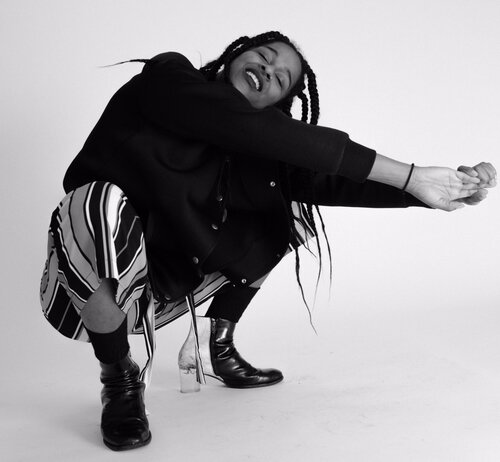
 IN THIS PHOTO: Little Simz

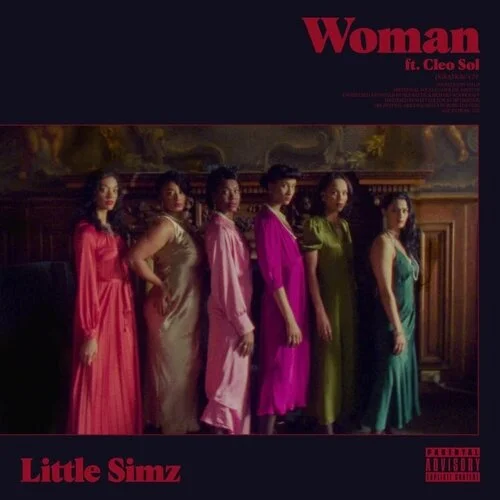
the incredible LUMP (Laura Marling and Mike Lindsay) are back with a new track in the form of Animal. Also in the mix this week is new music from Little Simz (ft. Cleo Sol), Bobby Gillespie/Jehnny Beth, Coldplay, Frank Turner, Weezer, Inhaler, L’Rain, and Gracie Abrams. P!nk, Squid, J. Cole, Jake Bugg, Empress Of, The Black Keys, RAY BLK, and Fickle Friends are also in the mix. It is another busy and exciting week for music. If you require some additional energy and motivation to get you into the weekend, then I think that these tracks should do the job. As you can hear, there is quite a broad…

zzz.jpg

 IN THIS PHOTO: Squid

AND good assortment!

ALL PHOTOS/IMAGES (unless credited otherwise): Artists

__________

aaa.jpg

 PHOTO CREDIT: Steph Wilson

LUMPAnimal

kk.jpg

PHOTO CREDIT: Natasha Duursma

Little Simz (ft. Cleo Sol) Woman

xxx.jpg

Bobby Gillespie, Jehnny Beth - Chase It Down

Coldplay - Higher Power

aaaa.jpg

Squid 2010

qqqq.jpg

Weezer All the Good Ones

aaa.jpg

Frank Turner THE GATHERING

aqq.jpg

Inhaler - Who's Your Money On? (Plastic House)

eeee.jpg

L’Rain Blame Me

wwww.jpg

Gracie Abrams - Mess It Up

aaaa.jpg

Baba Ali Black Wagon

sss.jpg

Dayglow Balcony

qqqq.jpg

Ashe - Me Without You

aaaa.jpg

Mabes Sugarush

ttt.jpg

P!nk All I Know So Far

zzz.jpg

J. Cole - i n t e r l u d e

aaaa.jpg

Cosha - Run the Track

aaa.jpg

RAY BLK - Dark Skinned

qqq.jpg

Rag'n'Bone Man - Talking to Myself

www.jpg

Fickle Friends Won’t Hurt Myself

dsds.jpg

Saweetie - Fast (Motion)

skssk.jpg

PHOTO CREDIT: Jade Ang Jackman

YONAKA Call Me a Saint

ttttt.jpg

Alfie Templeman - Wait, I Lied

zzz.jpg

dodie Special Girl

PHOTO CREDIT: Pooneh Ghana

HARD FEELINGS - Holding on Too Long

aaaa.jpg

PHOTO CREDIT: David Reiss

DELPHiiLilac

ddd.jpg

Hayley MaryYoung & Stupid

fff.jpg

Saint Sister - Oh My God Oh Canada

dddd.jpg

FLAVIATime Is Running Out

eeee.jpg

Conan GrayAstronomy

Sophia Kennedy - I'm Looking Up

seeee.jpg

The Black KeysGoing Down South

ffff.jpg

PHOTO CREDIT: Dorian Lopez

Empress OfOne Breath

eeee.jpg

HurryIt’s Dangerous

wwww.jpg

Matilda Pearl - Linger

aaaaa.jpg

Jake Bugg - Lost

ssss.jpg

Janette King - You Don’t Love Me

wwww.jpg

She Drew the Gun - Cut Me Down

aaa.jpg

Pillow Queens - When You’re Gone

FEATURE: The Lockdown Playlist: Philip Bailey at Seventy

FEATURE:


The Lockdown Playlist

qqqq.jpg

Philip Bailey at Seventy

___________

THIS is another birthday-related Lockdown Playlist…

zss.jpg

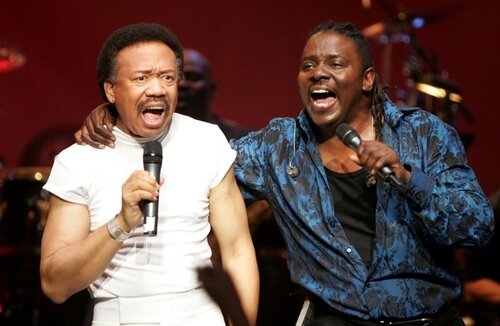
 IN THIS PHOTO: Maurice White and Philip Bailey of Earth, Wind & Fire perform during the inaugural Grammy Jam Fest at the Wiltern Theatre on 11th December, 2004 in Los Angeles, California/PHOTO CREDIT: Carlo Allegri/Getty Images

where I get to celebrate a great artist. Today (8th May), it is the seventieth birthday of the legendary Philip Bailey. Before rounding up with a playlist, it is worth bringing some biography for those who are not aware of who Bailey is and what he has achieved:

Philip James Bailey (born May 8, 1951) is an American R&B, soul, gospel and funk singer, songwriter and percussionist, best known as an early member and one of the two lead singers (along with group founder Maurice White) of the band Earth, Wind & Fire. Noted for his four-octave vocal range and distinctive falsetto register, Bailey has won seven Grammy Awards. He was inducted into the Rock and Roll Hall of Fame and the Vocal Group Hall of Fame as a member of Earth, Wind & Fire. Bailey was also inducted into the Songwriters Hall of Fame for his work with the band.

Bailey has released several solo albums. Chinese Wall from 1984, which received a Grammy Award nomination for Best R&B Vocal Performance, Male, included the international hit, "Easy Lover", a duet with Phil Collins. "Easy Lover" won an MTV Video Music Award for Best Overall Performance in a Video in 1985 and was Grammy nominated for Best Pop Performance by a Duo or Group With Vocals.

In May 2008, Bailey was awarded an Honorary Doctorate of Music from Berklee College of Music at Berklee's Commencement Ceremony where he was the commencement speaker”.

I love his work with Earth, Wind & Fire, but I also really like his solo work. To honour him on his seventieth birthday, here is a selection of some incredible Earth, Wind & Fire tracks (where Bailey is either on lead or backing vocals), in addition to some of his best solo cuts. Many happy returns to…

qqqq.jpg

A true legend.

FEATURE: Second Spin: Billy Joel - Glass Houses

FEATURE:


Second Spin

cc.jpg

Billy Joel - Glass Houses

___________

I realise that I have…

fff.jpg

PHOTO CREDIT: Express Newspapers/Hulton Archive/Getty Images 

featured Billy Joel a few times on the blog. I would not usually put out another Joel-related feature so soon to the last one. As it is his birthday tomorrow (9th May), I thought that I would include an album of his that has not received the acclaim and airplay that it deserves. When we consider classics from Billy Joel, we think of 1977’s The Stranger and its follow-up, 52nd Street (1978). Arriving after that album is 1980’s Glass Houses. At ten tracks-long and with Phil Ramone producing once more (he produced Joel’s albums from The Stranger to The Bridge in 1986), it is an album that has plenty of quality. One of the reason why some have been mixed towards Glass Houses is because it is top-heavy. The opening five tracks are, debatably, the best. With It’s Still Rock and Roll to Me and All for Lenya in its top half, there are not many songs that reach the same sort of heights in the second half. That being said, the entire album is a satisfying listen. I do not think there are any weak tracks. There is a nice mix of obscure tracks and instant winners on Glass Houses. The album more of a Hard Rock tone than Joel's previous albums. The cover shows Joel poised to throw a rock through the two-story window of his real-life waterfront glass house in Cove Neck. I have seen a few negative reviews of Glass Houses (one was from Rolling Stone).

Whilst some saw Joel’s move into Rock territory to be quite uncool and weak, there are those who can recognise the value of the album. I will finish with a review from AllMusic. Before then, I wanted to source from a feature The A.V. Club published in 2014:

For one thing, you could probably count Joel’s subtle lyrics on one ham-fisted hand, and even those are likely rife with clunky metaphors, clichés, and pretentious allusions. But somehow, those shortcomings—to us fans, anyway—seem earned. Maybe it’s the monstrous record sales, or maybe it’s the fact that Joel, even at his most awkward, rarely phones it in. His gaffes, like the Boomer-baiting “We Didn’t Start The Fire,” have some balls to them. He goes for his mistakes.

Which brings us to Glass Houses. Not because it’s a mistake, but because Joel was making what he thought was his ballsiest move yet. Released in 1980 after nine years of records (the two most recent of which, The Stranger and 52nd Street, had won a combined four Grammys and respectively reached No. 2 and No. 1 on the Billboard 200), Joel saw Glass Houses as a way to change his reputation from a soft-rock guy to something else entirely.

“I was taking quite a critical pasting by 52nd Street because of the commercial success that I had,” said Joel in a 2010 interview on the syndicated radio show In the Studio. “I was aware that there had been a great deal of, I guess we could call it, ‘Billy Joel Saturation’ for close to three years… Now I could have come out with a record that would have guaranteed a certain amount of sales. Just by repeating either The Stranger album or the 52nd Street album, by doing something similar… Frankly, I would have been bored to do that. I would have been a dead duck, career-wise. You have to discard an audience to pick up another one.”

In his excellent profile of Joel in last week’s New Yorker, Nick Paumgarten theorized that his lack of coolness (and critical respect) was due to a combination of factors. “His default expression was a kind of petulant scowl. Onstage he could be enthralling, but he had the disadvantage of sitting at a piano. He often wore a jacket and tie—in earth tones.” As for sex appeal, he quotes Joel himself as “look[ing] like the guy who makes pizza.”

So: decidedly not cool, trapped, bored, tired of being treated as faceless, meaningless, and unattractive. What’s interesting about Glass Houses is that it doesn’t sound like the record someone in that position would make; it doesn’t sound like a reinvention. Maybe it’s just the benefit of years of radio-filled hindsight, but it sounds very much like Billy Joel. His rock “edge” is here (“All For Leyna”), as is his panache for a ballad (“Don’t Ask Me Why”). In many ways, Glass Houses is his most Billy Joel record. Sure, he’d never tried out the new wave stylings of “It’s Still Rock And Roll To Me,” the power-chord-fueled “Sometimes A Fantasy,” and “Close To The Borderline” before 1980, but the lyrical tics and affected accents, the crooned “oooooh”s and saxophone solos, they’re all here.

And they’re great. Simply put, Glass Houses is Billy Joel’s best collection of songs, even better than the hit-laden The Stranger. The aforementioned hits sound better in context than on his many best-of compilations (or on classic-rock radio), and the more obscure cuts are excellent. “Sleeping With The Television On,” with its propulsive pop edge, may be the most underrated Billy Joel song. “I Don’t Want To Be Alone”—with mic pops that make Joel sound like the bar-band singer he strove to be on Glass Houses—is a charmingly self-deprecating chronicle of loserdom.

And for a guy so concerned about shedding his balladeer image, Joel continued to write some damn excellent ballads. The Beatles-esque “Don’t Ask Me Why,” especially its sharp bridge, stands as one of Joel’s most offhandedly winning songs, and “C’Etait Toi (You Were The One),” though Joel’s French is undisputedly terrible (a fact that has since made him disown the song), is lovely. Album closer “Through The Long Night” is another fine McCartney workout; it wouldn’t sound out of place on Revolver alongside the similarly forlorn “For No One.” The production by Phil Ramone (who produced every Joel record from 1977’s The Stranger to 1986’s The Bridge) is clear and, refreshingly for Joel, straightforward”.

There is a lot to love and discover when it comes to Glass Houses. One of the positive reviews out there is from AllMusic. This is what they noted in their review:

The back-to-back success of The Stranger and 52nd Street may have brought Billy Joel fame and fortune, even a certain amount of self-satisfaction, but it didn't bring him critical respect, and it didn't dull his anger. If anything, being classified as a mainstream rocker -- a soft rocker -- infuriated him, especially since a generation of punks and new wave kids were getting the praise that eluded him. He didn't take this lying down -- he recorded Glass Houses. Comparatively a harder-rocking album than either of its predecessors, with a distinctly bitter edge, Glass Houses still displays the hallmarks of Billy Joel the pop craftsman and Phil Ramone the world-class hitmaker. Even its hardest songs -- the terrifically paranoid "Sometimes a Fantasy," "Sleepin' With the Television On," "Close to the Borderline," the hit "You May Be Right" -- have bold, direct melodies and clean arrangements, ideal for radio play. Instead of turning out to be a fiery rebuttal to his detractors, the album is a remarkable catalog of contemporary pop styles, from McCartney-esque whimsy ("Don't Ask Me Why") and arena rock ("All for Leyna") to soft rock ("C'etait Toi [You Were the One]") and stylish new wave pop ("It's Still Rock and Roll to Me," which ironically is closer to new wave pop than rock). That's not a detriment; that's the album's strength. The Stranger and 52nd Street were fine albums in their own right, but it's nice to hear Joel scale back his showman tendencies and deliver a solid pop/rock record. It may not be punk -- then again, it may be his concept of punk -- but Glass Houses is the closest Joel ever got to a pure rock album”.

If you have not heard the album then go and give it a spin. Glass Houses divided some people back in 1980. Over four decades later, I think that it sounds amazing and packed with great songs! A lot stronger than many reviews would suggest, I would recommend Glass Houses to those who are fans of Billy Joel and those who are not. I shall end it by wishing Billy Joel a happy birthday…

FOR tomorrow.

FEATURE: Songs for Whoever: Paul Heaton: The Last Truly Great Pop Songwriter?

FEATURE:


Songs for Whoever

zzx.png

Paul Heaton: The Last Truly Great Pop Songwriter?

___________

THERE are a couple of reasons…

fvff.jpg

as to why I am bringing in a feature regarding the excellent Paul Heaton. His birthday is on Sunday (9th May). I share a birthday with the legend. Not only do I love his music with The Housemartins and The Beautiful South. His albums with Jacqui Abbott, who used to be in The Beautiful South, are terrific. I think his songs with The Beautiful South are among the smartest and most memorable Pop songs ever written (if you could call the Hull-formed band ‘Pop’). I think that 1989’s Welcome to the Beautiful South is one of the most impressive debut albums of that decade. Whilst Heaton dealt with lyrics, Dave Rotheray handled compositions (though Heaton probably inputted when it came to the music). It was one of the most successful partnerships in British music. I have said it before but, when we think of the great British songwriters, we talk about Paul McCartney and John Lennon; Ray Davies of The Kinks is also named. Some would say Morrissey (The Smiths), though his reputation has taken a battering over the last few years. I think that Paul Heaton is one of the finest lyricists and observers of modern life that we have ever seen. He has some of the acerbic wit of Morrissey and the observational powers of Davies, yet he is very much different to both.

The Beautiful South’s debut single, Song for Whoever, is one I fell in love with when I was a child. The wit and cleverness of Heaton’s lyrics is amazing. Although Heaton can be heard in the chorus, it is his bandmate, Dave Hemingway, that handled the lead vocal. In a band that had three lead vocalists – how many others can say that?! -, Heaton’s soulful voice was an essential ingredient in the blend. Alongside Dave Hemmingway and Briana Corrigan (who was the first female singer with the band), Jacqui Abbott (who stepped in when Corrigan left) and Alison Wheeler (who sang with the band until they split), Heaton showed that his vocals were as impressive as his words! The Beautiful South split in 2007 citing “musical similarities”. They sold fifteen-millions records in their successful lifetime. The compilation, Carry on up the Charts: The Best of The Beautiful South, was the second-biggest-selling album of 1994! Even though Heaton’s band, The Housemartins, released two studio albums, I think they are both classics! London 0 Hull 4 of October 1986 contains classic Heaton lyrics in the from of Happy Hour, Flag Day and Sheep – Heaton co-wrote most of the songs with the band’s vocalist and guitarist, Stan Cullimore. The Housemartins’ final album, 1987’s The People Who Grinned Themselves to Death, is another collection of wonderful songs. Me and the Farmer and Five Get Over Excited are my favourites. I know the title track caused controversy because of its portrayal of the British royal family. Heaton, as a lyricist, could be political, jabbing, warm, humorous, touching and ingenious. Few other lyricists of that time (the 1980s) had his gifts and range.

Although The Beautiful South was a different project than The Housemartins, they endured for longer and put out a lot more material. Although a few albums in their career did not get massive critical acclaim (such as 1998’s Quench, 2000’s Painting It Red, 2003’s Gaze, and the covers album, Golddiggas, Headnodders and Pholk Songs), the band put out some hugely enduring albums. I think that 1990’s Choke perfectly showcases Heaton’s hallmarks and strengths across a selection of diverse, distinct and remarkable tracks. It is testament to his talent and the connectivity of the band that The Beautiful South’s final album, Superbi (which turns fifteen on 15th May), is so strong! When I come to mention his latest album with Jacqui Abbott, I will bring in a couple of reviews. Thirty years after Heaton welcomed The Housemartins into the world, he closed the book on The Beautiful South. In spite of that, 2006’s Superbi showed that Heaton was still as sharp and original as always; showing that he is one of the world’s very best writers. I am going to source an interview Heaton conducted in 2019 to promote the compilation, The Last King of Pop (2018). If the lyrics of The Housemartins (largely but not exclusively) mixed socialism with Christianity, The Beautiful South was a little broader. I think that Heaton created another evolution when he paired with Jacqui Abbott for their first album together, What Have We Become?

zzz.jpg

 IN THIS PHOTO: Paul Heaton with The Beautiful South’s Dave Hemmingway and Briana Corrigan

Some may have noticed I glossed over Heaton’s solo work! He released Fat Chance under the moniker, Biscuit Boy, and put out further albums: The Cross Eyed Rambler of 2008 and 2010’s Acid Country. I want to quote from the BBC’s review of The Cross-Eyed Rambler. They noted how Heaton was both offering some new (compared with The Beautiful South)…though there was still his reliable mix of themes and trademarks – all of which resulted in a fantastic album:

Finally throwing in the hat with the Beautiful South in 2007 has seen Paul Heaton really have a proper think about a solo career it seems. Whereas his previous album under the Biscuit Boy (a.k.a. Crackerman) alias suffered from a lack of focus (and too many producers) Cross Eyed Rambler has no such problems. The album can only be described as displaying Heaton in rude health. Following the faintly creepy 78 crackle of the title track opener, I Do bursts out of the traps like a band led by someone half his age. Maybe he's finally getting sick of all these Northern whelps stealing the thunder he raised back in the good old real days of indie.

qqq.jpg

Sure, there's a hint of nostalgia fitting to his increasing years (the a capella days of The Housemartins gets a little reprise on the chorus of The Pub), but overall the new band (and it is a band, called The Sound Of Paul Heaton) of Tom Chapman, Brian Edwards and Steve Trafford makes Cross Eyed Rambler a boisterous bag of real rock. It may not be the 'new direction' that many have talked of - it's still jaunty enough to avoid any full-on Stooges comparisons here - but it's certainly ballsier than we had any right to expect.

There was always a touch of young fogyism to Heaton's work. Here it's given full throat on the loping Everything Is Everything. A suitably grumpy coda to a fine record. Elsewhere, subject-wise, Heaton's not straying from the things close to his spiritual heart. Small town attitudes (A Good Old Fashioned Town), political leftism (God Bless Texas) and love in the REAL world (The Ring From Your Hand), but buoyed up by such irrepressible grooves it's all very palatable. Not only does it signal a proper fighting chance for a solo career for 46-year-old Heaton, but it's also good news for those who found The Beautiful South's material a little too sweet and soft round the edges. And while there's even room for a south-of-the-border twang and torch on Deckchair Collapsed, in the end this is local music for local people: Intelligent, humorous and adult but ultimately quintessentially English. And all the better for it too”.

It is impressive that Heaton, technically, has been in four different outfits (The Housemartins, The Beautiful South, solo, and with Jacqui Abbott) and has been able to adapt and write such memorable songs in each phase. His work with Jacqui Abbott is among his very best! The acclaimed What Have We Become? arrived in 2014. Wisdom, Laughter and Lines was released in 2015 (Heaton co-wrote many of the tracks with Jonny Lexus); they followed that with their third album together, Crooked Calypso, in 2017. Actually, I think it is worth dropping in a review for this album. This is what AllMusic noted:

Returning for a third dip into the well of smart pop, former Beautiful South members Paul Heaton and Jacqui Abbott offer Crooked Calypso, a robust marriage of plucky wit, confidence, and heart. Since rekindling their musical partnership in 2014, the two singers have turned out a distinctive brand of musical merrymaking that has resonated with U.K. audiences. There's something refreshingly organic about their big productions, which layer strings and horns over a whip-tight rock combo that sways nimbly between Motown, R&B, and old-fashioned rock & roll within the breadth of just a few notes. As ringleaders, Heaton and Abbott make a winning and surprisingly egoless duo swapping lyrics, harmonizing, and keeping their party buoyant with the effortless grace of lifelong entertainers. Approached with any less skill, the effect of songs like "I Gotta Praise" and "The Fat Man" would come off as uncouth or corny, but the two manage to walk a perfect line of tone that successfully delivers their often barbed witticisms while conveying an underlying sense that they're not only in on the joke, but are also at the butt of it. It's this crafty togetherness that has made their first two records chart successes and helps Crooked Calypso succeed on the same level. From the heartfelt Irish folk tribute "Blackwater Banks" to the unstoppably hooky "People Like Us," this is an engaging and fun listen that is easy to repeat again and again”.

I think that last year’s Manchester Calling is another triumphant album. Just shy of fifty-eighty when that album came out, Heaton was showing every other writer in the country how it is done! At sixteen tracks, Manchester Calling proved that Heaton was in no short supply of inspiration! I love the music Heaton wrote with Dave Rotheray for The Beautiful South. I think his work with Jacqui Abbott proves that he is a fine composer in addition to being a world-class lyricist. Heaton wrote the songs in various locations in North Holland and Belgium. He composed the music between a hotel in Puerto Rico, Gran Canaria in the Canary Islands, and in Limburg an der Lahn, Germany. It is great picturing Heaton writing in all these locations. I think a lot of the material for The Beautiful South was written in the pub(s). There is something slightly more glamorous about the writing for Manchester Calling. One big reason why his work with Jacqui Abbott is so strong is because the two are so close. Abbott’s voice is as fine as ever, and the fact that they seem like an old married couple gives the songs real conviction, realness and power! This is what The Guardian observed in their review:

Paul Heaton recently remarked that if he’d known how well his songs would resonate with ordinary people up and down the country, he’d have written more. He’s hardly been slacking. His eighth solo album (and his fourth with former Beautiful South singer Abbott) is trademark stuff, which will be familiar to fans of that band and Heaton’s previous outfit, the Housemartins. There are richly observed, gently acerbic vignettes about the vagaries of British life, delivered over a mix of steadily uptempo pop, folk, ska and soul. Heaton’s bittersweet delivery propels songs about sex (The Only Exercise I Get Is You), love (You and Me [Were Meant to Be Together])and depression (Somebody’s Superhero).

Abbott takes the lead on If You Could See Your Faults – the diary of a long-suffering spouse and one of the pair’s loveliest tunes – and House Party 2’s superb demolition of tiresome would-be suitors. She brings empathy to the symphonic soul of The Prison’s tale of premature motherhood and “woman’s overriding right to fuck her life right up”. A certain cosiness produces fillers So Happy and New York Ivy, but abandoning the comfort zone delivers some of the best things here. Over a grime/hip-hop-informed soundtrack, MCR Calling accompanies a collage of Mancunian narrators on a love-hate tour around Heaton’s adopted city, where “gangsters ride on tricycles” and “they’re pulling down the last building that anybody liked”. My Legal High is almost Beautiful South-go-Cramps, a riff-rocking paean to the idea that love is the greatest drug of all. Heaton really should play less safe more often”.

This takes me to the compilation, The Last King of Pop. It features twenty-three of the songs written by Heaton from throughout his career in the Housemartins, The Beautiful South, his solo years, and his collaboration with Jacqui Abbott. It is a smorgasbord of golden Heaton songs from his earliest offerings to his current work. When speaking with Classic Pop, he discussed his pleasure of working with Jacqui Abbott - in addition to how (the compilation) is a chance for people to discover and take seriously the incredible songwriting the world has been lucky enough to receive since the mid-1980s:

He’s only half-joking in calling his new compilation The Last King Of Pop. Collating 22 singles from The Housemartins, The Beautiful South and Heaton & Abbott, plus sparkling new song 7” Singles, its title is a pointer that this most principled of pop stars feels troubled by pretenders to the throne. “People have been let down so badly by figures in pop authority, I’m easily able to claim the crown,” Heaton attests. His home is one of the key reasons for his monarchy: “I live like a king should live.” Gesturing to his modest garden, he insists, “This should be monarchy: an ordinary person enjoying life.” Heaton’s family moved to Surrey when he was a teenager but otherwise, he’s never lived away from the north, saying, “A king should remain in his kingdom.” Morrissey is thus instantly disqualified. “A good pop singer and writer, but he’s gone out of the country. And when he comes back, he slags Britain off for being neighbourly. You couldn’t fucking write him, could you?”

It’s this freewheeling levity that has stopped critics – if not the public, time and again – from realising just what a golden talent Paul Heaton has been ever since The Housemartins’ Flag Day first played by John Peel in 1985. Despite his playfulness around its title, Heaton hopes the compilation will make people appreciate the quality of his songwriting. “I can’t take myself seriously for longer than a couple of minutes,” he smiles. “It’s a fault of mine, because I should be more serious, a bit. Lauren Laverne interviewed Paul Weller on 6 Music recently, and it was perfect, because he is able to talk seriously about his music. If it was me, it’d just break down into fart jokes.”

It’s not that Heaton isn’t able to analyse his songwriting in detail – he’s passionate about the importance of music in people’s lives. But he also grew up loving Spike Milligan and longtime Beano cartoonist Leo Baxendale, so absurdity is Heaton’s default setting. At the start of his career, he says he was a singer who wrote songs… now it’s the other way round.

Such candour aside, Heaton is delighted that reuniting with former Beautiful South co-vocalist Jacqui Abbott

has led to three Top Five albums. The Last King Of Pop features seven of their songs, compared to just one – the celebratory Manchester – from the final three Beautiful South albums, and none from either of Heaton’s two solo albums. He admits he “withdrew into myself” in his solo career, making “smaller” albums because their impact had lessened.

“When I left The Beautiful South, I didn’t realise that my name doesn’t really mean anything,” he concedes. “People around me were saying ‘You’ve had all these hits, you’ve had 20 years at the top. How can they not play your new song?’ I was more philosophical about all that. And when I was in my shell, I did some good things.” He cites his musical The 8th and twice touring round Britain by bicycle, playing at pub venues – Heaton would love to formally establish the pubs which invited him to play as a nationwide circuit for up-and-coming musicians to learn their live craft.

Heaton is first to admit he was lucky The Housemartins arrived when they did, at a time when, “Once you got played by John Peel, there was a 50% chance at Radio 1 that, unless your records were totally mad, then Janice Long might play you, too. And if she did, then Bruno Brookes probably would. There was a framework for getting success. There are probably just as many great young bands out there now as ever, they just don’t have the chances we did.” As king, he’s therefore forgiving of new acts that allow their songs on adverts.

Heaton is also pleased that his children don’t especially share his musical tastes – his eldest daughter is into drum ‘n’ bass and grime, his middle daughter prefers “really dark hip-hop”. Apart from his in-car Radio 2 addiction, Heaton only listens to new music. For decades, he’s kept monthly Top 20 charts of his favourite new songs in notebooks. He shows me his latest, a range of reggae, folk, hip-hop, R&B and pop as entertainingly freewheeling as the contents of his kitchen. At the end of our interview, he offers up a banana and an apple for the journey home. A passing Linda points out, “There’s all this fruit. You’ll notice none of it is in the fruit bowl.” She’s right – it’s too full of stuff. But that’s how a king should be: entertained by all of life’s diversions, living among his people. Paul Heaton deserves his crown”.

Ahead of Paul Heaton’s fifty-ninth birthday on Sunday, I wanted to spotlight not only one of the greatest British songwriters ever; I feel Heaton can rub shoulders with any songwriter from any era! We have some great songwriters around at the moment, though how many of them are in Pop? I think that Laura Marling is one of the best songwriters in the country. Arlo Parks is a very promising songwriter. I look around the rest of music and the Pop mainstream and we rarely highlight songwriters as opposed the artists. Many popular artists have others writing for them. In that way, I feel Paul Heaton is still head and shoulders above many others. A legendary and hugely respected songwriter who has lost none of his genius and observational prowess, many should be looking up to him! I think that Heaton is one of the last truly great Pop songwriters. Maybe The Arctic Monkeys’ Alex Turner is someone who can sit alongside Heaton. The Sheffield-born lead proves that the finest and most highlight-worthy lyrics are coming from the North! I have respect for a great songwriter who can not only widen their palette and yet have their own identity; being able to endure and continue to release consistently brilliant songs is something that warrants respect! This is why Paul Heaton is such an inspirational writer and hero to the next generation. If you need an example of a legendary songwriter whose lyrics are among the best we have ever seen, then look towards Paul Heaton: a songwriting giant…

WITH very few equals.

>

FEATURE: Back Inside the Rainbow: John Carder Bush’s Must-Buy Kate Bush Photobook

FEATURE:


Back Inside the Rainbow

zzz.jpg

 PHOTO CREDIT: John Carder Bush/Brown Book Group 

John Carder Bush’s Must-Buy Kate Bush Photobook

___________

I have already…

www.jpg

  PHOTO CREDIT: John Carder Bush/Brown Book Group

done a feature about the photobook that was originally released in 2015. This year will see at least a couple of new photo collections. Finding Kate is a crowdfunded book that is coming out in December. It is intended to “visually and textually celebrates the genius and the music of Kate”. A book from Max Browne collates photos he took during Bush’s 1979 The Tour of Life. Her only tour was a groundbreaking event. Browne’s photos capture a then-twenty-year-old wowing audiences around the U.K. and Europe. I am not betting against other photobooks being released in 2021! There has been so much activity regarding Kate Bush this part year or so. I have bemoaned the fact that not many photobooks are out there. I would still like to see a more general assortment of press photos and those that chart Bush through her career. I am intending to buy Finding Kate (from Michael Byrne and Marius Herbert); I will also check out Max Browne’s book. I think the best photobook so far – not taking into account the new releases – is John Carder Bush’s KATE: Inside the Rainbow. This book is a prized possession. The fact that the photos were shot by her brother lends the book an intimacy and sense of trust that Bush did not have with other photographers. Although photographers like Guido Harari and Gered Mankowitz – both of whom have released books of their Bush photos (they are priced in the hundreds, hence the reason I do not own them) – worked with Bush and they snapped some iconic shots, I feel John Carder Bush took some of the most enduring and phenomenal shots of his sister.

rrrr.jpg

 PHOTO CREDIT: John Carder Bush/Brown Book Group

If you are a Kate Bush fan but are not familiar with the book, then here is some more detail about a collection of photos that move the heart and imagination:

KATE: Inside the Rainbow is a collection of beautiful images from throughout Kate Bush’s career, taken by her brother, the photographer and writer John Carder Bush. It includes outtakes from classic album shoots and never-before-seen photographs from sessions including The Dreaming and Hounds of Love, as well as rare candid studio shots and behind-the-scenes stills from video sets, including ‘Army Dreamers’ and ‘Running Up that Hill’.

These stunning images will be accompanied by two new essays by John Carder Bush: From Cathy to Kate, describing in vibrant detail their shared childhood and the early, whirlwind days of Kate’s career, and Chasing the Shot, which vividly evokes John’s experience of photographing his sister.

A beautiful, full-colour coffee-table hardback with a quarter-bound linen cover and head and tail bands

Includes more than 250 stunning rare and unpublished black and white and colour photographs, taken between 1964 and 2011”.

At just £40 (which is what I paid for it), KATE: Inside the Rainbow is amazing value for such a handsome and passionate collection of photos and words from John Carder Bush! There is some good news for those who do not have a copy.

zzz.jpg

  PHOTO CREDIT: John Carder Bush/Brown Book Group

Maybe due to popular demand, it is very hard to find a new copy of KATE: Inside the Rainbow. As Kate Bush News reported recently, you will be able to buy a copy in June:

Kate’s brother, John Carder Bush, has let me know that his stunning book of photographs of Kate throughout her career, Kate: Inside the Rainbow (currently out of print) will be reprinted by Little, Brown and made available again from June 2021. We will have ordering links for you when it is available. This is great news for anyone put off by the ever-increasing prices the book is being sold for on the used book market these days.

Kate: Inside the Rainbow includes outtakes from classic album shoots and never-before-seen photographs from sessions including The Dreaming and Hounds of Love, as well as rare candid studio shots and behind-the-scenes stills from video sets, including ‘Army Dreamers’ and ‘Running Up that Hill’.

These stunning images are accompanied by two new essays by John: ‘From Cathy to Kate’, describing in vibrant detail their shared childhood and the early, whirlwind days of Kate’s career, and ‘Chasing the Shot’, which vividly evokes John’s experience of photographing his sister. Kate personally helped John to choose the final selection of shots. A limited signed boxed edition of 500 copies with three fine-art prints sold out rapidly when the book was first released in October 2015”.

ccc.jpg

  PHOTO CREDIT: John Carder Bush/Brown Book Group

I want to round things off by bringing in an interview John Carder Bush conducted with Attitude back in 2015. It is fascinating hearing his thoughts on his sister and why he put out KATE: Inside the Rainbow:

“Kate: Inside The Rainbow is a collection of beautiful images from throughout her career, from her early days pre-Wuthering Heights right up to her most recent album, 2011's 50 Words For Snow. It includes outtakes from classic album shoots, rare studio shots and behind-the-scenes stills from video sets, plus many other candid shots from John's years turning the camera on his sister. Basically, Kate Bush fans: here's your new bible. John Carder Bush himself tells Attitude about this amazing project, some 40-odd years in the making... John, Kate - Inside The Rainbow is just gorgeous. Why did now feel like the right time to put a book like this together?  I think the timing of this book was dictated by the reprint of Cathy [last year]. So many people had shown an interest in that book long after it went out of print, and it seemed logical to see what would happen if I brought it up to date. Originally, when I published Cathy back in 1986, I had planned to do three books – Cathy, Catherine and Kate, but like so many ambitious plans, it never happened. 

ssss.jpg

 PHOTO CREDIT: John Carder Bush/Brown Book Group 

Let’s start with those earliest photos you took of your sister, the ones that formed the book Cathy. Was it a case of your little sister being an easy subject to practice on, or were you aware even in those early days that there was a 'star quality' to her?  In those days I had only just started to feel that the camera could evoke something I wanted to express about childhood and the world of the imagination that so many children live in. I was also excited by my personal discovery of the pre-Raphaelites and had started collecting illustrated books of the turn of the century, which nobody was interested in in the early sixties and could be bought for next to nothing. My little sister was the perfect model, and although I was pleased with the results, I don’t think I detected star quality – we were a long way away from the her future career; when you know someone so well and see them every day of your life, you just don’t notice that kind of thing, although looking at them now it is quite clear she had something special.

This feels about as close to an ‘official’ retrospective book of Kate’s career as we might get. What are her thoughts on it? I first discussed the book with Kate back in the summer of 2014. The live shows then swept her away for a few months. When I had done a preliminary selection of photos and written the text, I showed them to her for her comments and I then worked with her final selection of images for the rest of the project. As I remember, she pointed out that she had ten ‘O’ levels, when I had put nine. 

When you look through the images in the book, do you see changes develop as the years go on? There’s a sophistication that seems to really develop in Kate’s imagery from Hounds of Love onwards… Yes, I agree. You can see the development in the sense that she becomes more expert at conscious projection, more confident in knowing what works and what does not, and I think the same thing applies to my photography. One thing that strikes me, looking through the book, is her willingness to try different things - poses, props, costumes etc - in the pursuit of a great shot. Did either of you take the lead in those situations, or was it quite a 50/50 partnership? I think this is dictated by two different things. With album and single shots, there is a very specific intention to project a persona that matches the songs; with promotional shots, variety becomes very important otherwise every session would have looked the same. With album and single sessions, Kate always had a very definite idea of what she wanted before she stepped in front of the camera and it was a question of trying to realise that in a photographic context.

I loved reading your thoughts on Before The Dawn - it was the sort of thing fans couldn’t really have imagined would ever happen. Do you have any idea where Kate’s headed next? New music, or a continuation of Before The Dawn perhaps?  The silence that usually surrounds Kate between projects in a ‘golden silence’, and out of that ‘golden silence’ always comes a golden nugget of creativity, like Before the Dawn. Let’s wait and see… 

Before the Dawn was really the first big opportunity for many Kate Bush fans to interact, to feel part of a community. Have you had much interaction with Kate Bush fans over the years? There has always been a very active and fertile fan scene around Kate and her music even when there has not been any new product for a few years. Kate fans are very dedicated people, and the depth and originality of her work has allowed them to maintain an ongoing dialogue with each other that is quite unique. Certainly, Before the Dawn was a wonderfully dynamic coming together of that energy, and sitting in the audience I could feel their love for her as an overwhelming presence. Over the years, I have developed some friendships with a few of her fans that I value highly”.

I have been compelled to look back through KATE: Inside the Rainbow. It makes me curious whether we will see any more photos from John Carder Bush. He shot some promotional images for 2011’s 50 Words for Snow. If there is another album from Bush, I do hope that we get some more photos from her brother. Every page and photo has a story behind it - and it is remarkable looking through KATE: Inside the Rainbow and all the different guises and looks from the iconic Kate Bush. When the book is back in print in June, do maker sure that you…

xxx.jpg

 PHOTO CREDIT: John Carder Bush/Brown Book Group

GRAB a copy.

FEATURE: Vinyl Corner: The Libertines - Up the Bracket

FEATURE:


Vinyl Corner

xxx.jpg

The Libertines - Up the Bracket

___________

I have been thinking a lot…

oo.jpg

about the debut from The Libertines, Up the Bracket. The band are still going, and I know they are planning some tour dates for later in the year. Although their eponymous album of 2004 is remarkable, I think they were at their finest and most original straight out of the gate. Released in October 2002, Up the Bracket was a British response to American bands like The Strokes. Mixing something quite dirty and scuzzy with wit and intelligence, there is such a fascinating blend of the accomplished and urgent on Up the Bracket. It is an album I can happily listen to the whole way through and never get bored of. I will bring in a couple of American reviews for the album quite soon. I would urge people to get the album on vinyl, as it is one of the greatest albums of the ‘00s. I think there was a lot of interesting Indie and guitar music around the first five years of the ‘00s. I think Up the Bucket is an album that inspired and captivated a lot of other bands. Starting with the dizzying Vertigo and ending with the jumping I Get Along, we get moments of real emotion and calm (Radio America) and real electricity (Horrorshow). With Pete Doherty and Carl Barât supplying the incredible songs and vocals, their brotherhood and incredible talent shines through. I think that, almost twenty years since its release, Up the Bracket still sounds quite fresh. Maybe that is something to do with the no-thrills production of Mick Jones (The Clash).

With lyrics that mix modern Britain, poetry, romance, violence and tenderness, there is so much to love and digest through Up the Bracket. I want to bring in a review from AllMusic. This is what they wrote in their assessment:

The first British band to rival the garage rock revival sparked by the Strokes and White Stripes in the U.S., the Hives in Sweden, and the Datsuns in, er, New Zealand, the Libertines burst onto the scene with Up the Bracket, a debut album so confident and consistent that the easiest way to describe it is 2002's answer to Is This It. That's not just because singer/guitarist Pete Doherty's slurred, husky vocals sound like Julian Casablancas' with the added bonus of a fetching Cockney accent (or that both groups share the same tousled, denim-clad fashion sense); virtually every song on Up the Bracket is chock-full of the same kind of bouncy, aggressive guitars, expressive, economic drums, and irresistible hooks that made the Strokes' debut almost too catchy for the band's credibility. However, the resemblance is probably due more to the constant trading of musical ideas between the States and the U.K. than to bandwagon-jumping -- the Strokes' sound owes as much to Britpop sensations like Supergrass (who had the Libertines as their opening band on their 2002 U.K. tour) and Elastica as it does to American influences like the Stooges and the Velvet Underground. Likewise, the Libertines play fast and loose with four decades' worth of British rock history, mixing bits and bobs of British Invasion, mod, punk, and Britpop with the sound of their contemporaries.

On paper it sounds horribly calculated, but (also like the Strokes' debut) in practice it's at once fresh and familiar. Mick Jones' warm, not-too-rough, and not-too-polished production both emphasizes the pedigree of their sound and the originality of it: on songs like "Vertigo," "Death on the Stairs," and the excellent "Boys in the Band," the guitars switch between Merseybeat chime and a garagey churn as the vocals range from punk snarls to pristine British Invasion harmonies. Capable of bittersweet beauty on the folky, Beatlesque "Radio America" and pure attitude on "Horrorshow," the Libertines really shine when they mix the two approaches and let their ambitions lead the way. "Did you see the stylish kids in the riot?" begins "Time for Heroes," an oddly poetic mix of love and war that recalls the band's spiritual and sonic forefathers the Clash; "The Good Old Days" blends jazzy verses, martial choruses, and lyrics like "It's not about tenements and needles and all the evils in their eyes and the backs of their minds." On songs like these, "Tell the King," and "Up the Bracket," the group not only outdoes most of its peers but begins to reach the greatness of the Kinks, the Jam, and all the rest of the groups whose brilliant melodic abilities and satirical looks at British society paved the way. Though the album is a bit short at 36 minutes, that's long enough to make it a brilliant debut; the worst you can say about its weakest tracks is that they're really solid and catchy. Punk poets, lagered-up lads, London hipsters -- the Libertines play many different roles on Up the Bracket, all of which suit them to a tee. At this point in their career they're not as overhyped as many of their contemporaries, so enjoy them while they're still fresh”.

Ahead of its twentieth anniversary next year, I wonder if there will be a reissue of Up the Bracket with some extras and demos. Given its legacy and how it shaped the music scene in Britain in the early-2000s, it definitely warrants new inspection and spotlight. Before wrapping up, I want to quote from a Pitchfork review of 2003:

And so it's come to pass: the great wheel of revivalism spins, dredging up the next phase of music history to be paraded about-- it was only a matter of time before we came around to The Clash. But just as calling The Clash "punk" belittles how their sound had evolved by the movement's curtain call, it would be unfairly dismissive to brand The Libertines Clash knock-offs. You'd have to throw in a line or two about singer Pete Doherty sounding uncannily like an English Julian Casablancas to be more dismissive. British Strokes for British folks, as they say.

All cards on the table, though: Up the Bracket does emulate, thanks in no small part to production care of ex-Clash founder Mick Jones, but it never truly imitates. Like The Clash before them, The Libertines draw primarily from decades of rock tradition-- blues, dub, a healthy whiff of the English countryside, and a few gorgeous rock riffs straight from the brainstem of Chuck Berry-- and fuse them into an unruly and triumphant monster of an album. The band burns through a range of emotions with fearless abandon, and just when one track seems about to split into pieces, they pull it all together only to threaten glorious collapse again on the next song. From their plaintive anthems to fuck-all barnburners, this is some of the most fun I've had with a CD in ages. Rarely does a band approach such a wide array of attitudes with equal proficiency.

"Boys in the Band" traverses miles of territory in four short minutes; funk-fused riffs lend a dangerous swagger to Doherty's ultra-confident vocals before, curiously, the whole thing pulls a 180 into barbershop-style harmonies. It's not as crazy as it sounds, but it's twice as fun. Later, the band find themselves in the throes of a token heartfelt ballad-- even one that delivers unexpected quaintness and delicate folk sensibilities-- as old-time cymbal washes make such an obvious track better than it has any right to be. But before the glow fades, they take us right back to hook-laden rock with the title song, recalling The Clash's finest moments, complete with vocals lifted from Joe Strummer's back pocket.

There's an almost indescribable wealth of rock lurking on Up the Bracket, and rarely is it less than blissfully entertaining. In just thirty-odd minutes, The Libertines pretty much do it all. Call it calculated, call it derivative-- hell, there's so much to this album, you can call it just about anything you like and probably not be too far from the truth-- but if you don't hear it, you'll be the one missing out”.

Go and get Up the Bracket on vinyl if you can. It is a tremendous album from a band that entered music with such a huge statement! It is such a remarkable piece of work filled with so many incredible stories, lines, characters and riffs. Although many bands today can be traced back to The Libertines, I don’t think there are any that sounds quite like them or have their set of talents. Up the Bracket is a simply stunning album from…

THE boys in the band.

FEATURE: Bob Dylan at Eighty: Ten of the Best Albums

FEATURE:


Bob Dylan at Eighty

zzzz.jpg

Ten of the Best Albums

___________

BECAUSE the genius that is Bob Dylan

zaaa.jpg

turns eighty on 24th May, I am going to put out a couple of features to mark that occasion. Today, I am thinking about the very best albums by Dylan. Everyone has their own thoughts on this. As he released his thirty-ninth studio album, Rough and Rowdy Ways, last year, there is more than enough to choose from! I realty love his stuff from the 1960s and 1970s, though some prefer some of his more modern albums. Here, like A Buyer’s Guide, I am selecting albums that you need to check out. I will also select the best tracks from each album, in addition to a link where you can buy that album. Ahead of the eightieth birthday of one of the greatest songwriters the world has ever seen, here are the ten albums that I feel…

zzz.jpg

 PHOTO CREDIT: Michael Ochs Archives/Getty Images

EVERYONE should check out.

___________

The Times They Are a-Changin'

mmm.jpg

Release Date: 13th January, 1964

Label: Columbia

Producer: Tom Wilson

Standout Tracks: With God on Our Side/North Country Blues/The Lonesome Death of Hattie Carroll

Buy: https://www.amazon.co.uk/Times-They-Are-Changin-VINYL/dp/B00005OAES

Stream: https://open.spotify.com/album/7DZeLXvr9eTVpyI1OlqtcS?si=S3XxwwPeRXCTRCuAKZks1g

Review:

If The Times They Are a-Changin' isn't a marked step forward from The Freewheelin' Bob Dylan, even if it is his first collection of all originals, it's nevertheless a fine collection all the same. It isn't as rich as Freewheelin', and Dylan has tempered his sense of humor considerably, choosing to concentrate on social protests in the style of "Blowin' in the Wind." With the title track, he wrote an anthem that nearly equaled that song, and "With God on Our Side" and "Only a Pawn in Their Game" are nearly as good, while "Ballad of Hollis Brown" and "The Lonesome Death of Hattie Carroll" are remarkably skilled re-castings of contemporary tales of injustice. His absurdity is missed, but he makes up for it with the wonderful "One Too Many Mornings" and "Boots of Spanish Leather," two lovely classics. If there are a couple of songs that don't achieve the level of the aforementioned songs, that speaks more to the quality of those songs than the weakness of the remainder of the record. And that's also true of the album itself -- yes, it pales next to its predecessor, but it's terrific by any other standard” – AllMusic

Choice Cut: The Times They Are a-Changin


Bringing It All Back Home

aaa.jpg

Release Date: 22nd March, 1965

Label: Columbia

Producer: Tom Wilson

Standout Tracks: Subterranean Homesick Blues/Mr. Tambourine Man/It's All Over Now, Baby Blue

Buy: https://www.roughtrade.com/gb/bob-dylan/bringing-it-all-back-home

Stream: https://open.spotify.com/album/1lPoRKSgZHQAYXxzBsOQ7v?si=IYhP7jd0QKyavNMUWWyx2Q

Review:

As cynical as the previous tracks are, “Love Minus Zero/No Limit” completely pivots in the opposite direction, almost like an extremist love song. The very title (a mathematical equation which results in “absolutely unlimited love”) indicates the complete offering of one’s existence to a significant other, in this case Dylan’s future wife Sara Lowndes. Another complete departure for Dylan is “Outlaw Blues”, a rollicking, bluesy and about as heavy as rock and roll came in 1965. In fact, this song could, at once, be a true ancestor to bluesy jam bands as well as the hard rock and heavy metal which arrived a half a decade later. With “On the Road Again”, Dylan takes a large step forward both musically and lyrically. This strong rock/blues track with especially potent drums by Bobby Gregg, contain lyrics written in the spirit of Kerouac’s novel On the Road but with a definite original edge;

Well, there’s fist fights in the kitchen, enough to make me cry / The mailman comes in and even he’s gotta take a side / Even the butler, he’s got something to prove / Then you ask why I don’t live here, Honey, how come you don’t move?”

The album’s first side ends with a bit of levity in the false start of “Bob Dylan’s 115th Dream”. Once the song really kicks in, it employs a true stream-of-consciousness and may have the most surreal lyrics on the album. The song’s title alludes to the track “Bob Dylan’s Dream” from his 1963 album The Freewheelin’ Bob Dylan, but as an almost satirical sequel to that serious folk song.

Upon its release, Bringing It All Back Home reached the Top Ten on both sides of the Atlantic and has continued to grow in stature and importance in the half century since its release. Later in 1965, Dylan would record and release another masterpiece, Highway 61 Revisited, an album Classic Rock Review will examine on August 30th, the 50th anniversary of that album’s release” – Classic Rock Review

Choice Cut: It's Alright, Ma (I'm Only Bleeding)

Highway 61 Revisited

www.jpg

Release Date: 30th August, 1965

Label: Columbia

Producers: Bob Johnston/Tom Wilson

Standout Tracks: Ballad of a Thin Man/Queen Jane Approximately/Desolation Row

Buy: https://www.roughtrade.com/gb/bob-dylan/highway-61-revisited

Stream: https://open.spotify.com/album/6YabPKtZAjxwyWbuO9p4ZD?si=HuxgIM5nQOyYN4ket9qrRA

Review:

However, Like a Rolling Stone is often described as the best song ever, not Desolation Row. Like a Rolling Stone is definitely deserving of the title. The chord progression ascends up in an absolute perfect way, showcasing Dylan’s mastery of chord progressions. Never does Dylan refer to a weak link between chords or an imperfect cadence. With the aesthetically pleasing chord progression in place, the mix of guitar, bass, harmonica, and organ make a catchy blend of fantastic, bluesy music. The organ, most noticeably in the chorus, is by far the catchiest part of the music, playing a fantastic counterpart to Dylan’s voice. While the rest of the band grooves on this, Dylan crafts catchy vocal hooks with his longing question of “How does it feel?” His rhyme patterns, again, are perfect all the way throughout. Despite the song revolving around two main progressions, the song goes over 6 minutes, once again never tiring. The Beatles song Help! was the only song that eclipsed Dylan’s song on the charts, mainly because Beatlemania already began its infestation on American society.

In between the brilliant album opener and closer, Dylan makes some undeniably great songs in Ballad of a Thin Man and Tombstone Blues. Ranging from just as they say, a ballad to a blues, Dylan shows his many different voices well. Each song on this album is enjoyable to listen to, although some definitely stand out among others. However, there is no doubt that this album is a classic, and certainly one of the best from one of the greatest artists, in every sense of the word, of all time” – Sputnikmusic

Choice Cut: Like a Rolling Stone

Blonde on Blonde

aaa.jpg

Release Date: 20th June, 1966

Label: Columbia

Producer: Bob Johnston

Standout Tracks: Rainy Day Women No. 12 & 35/Visions of Johanna/I Want You

Buy: https://www.roughtrade.com/gb/bob-dylan/blonde-on-blonde-f1e99196-5186-4473-8da9-64fe8b1518a9

Stream: https://open.spotify.com/album/4NP1rhnsPdYpnyJP0p0k0L?si=QjHc6UkeTaKK_PmGPuPuFw

Review:

Even a cursory glance at the highlights would be enough to confirm this first disc’s classic status: the rambunctious stomp of “Rainy Day Women #12 & 35”, the shrill punctuation of Dylan’s harp on the surly rant of “Pledging My Time”, a riotous neck-wrung blues soloing on “Leopard Skin Pill-Box Hat”, opulent, elegiac verses on “Visions Of Johanna”, the popish affectations and beautiful detail of “I Want You” and “Just Like A Woman.”

Consolidating what he’d begun on Bringing It All Back Home and Highway 61 Revisited, the recording of Blonde On Blonde was part of an intense, fertile outpouring for Dylan. One can understand why Dylan and producer Bob Johnston were keen to present as much of it as they could. As a result however, the taut energy of the first disc become somewhat elasticised across the second, “Sad Eyed Lady Of The Lowlands”, whose eleven minute length even caught the backing musicians by surprise, being the chief culprit. Of course one person’s prolix poetry is another’s visionary epic.

One point which both sceptics and believers can all agree on however is the extent to which Dylan is utterly at ease with himself here. Credit also, should go to the crew backing him up. And if their backing is at times a little hurried or patchy, the improvisatory nature of their trying to keep up with the man at the microphone is also a part of this album’s overall charm” – BBC

Choice Cut: Just Like a Woman

Blood on the Tracks

wwww.jpg

Release Date: 20th January, 1975

Label: Columbia

Producer: Bob Dylan

Standout Tracks: You're a Big Girl Now/Idiot Wind/If You See Her, Say Hello

Buy: https://www.roughtrade.com/gb/bob-dylan/blood-on-the-tracks-ac12f518-f8a2-4218-bbda-0fcf5f24e270

Stream: https://open.spotify.com/album/4WD4pslu83FF6oMa1e19mF?si=ylzel3VIQBODmN4j6c__mA

Review:

Imagining Dylan as a simple songwriter, the template of Blood on the Tracks—sad boy with an acoustic guitar and a handful of chords—might seem basic, until one tries to replicate anything about it, or even just strum the songs at home. Blood on the Tracks lives alone in Dylan’s catalog, that open “E” tuning (which Dylan refused to explain to his musicians) often preventing the songs from sounding exactly right in the hands of others. It lives on in its own peculiar way. Dylan has seemed to keep “Tangled Up In Blue” in particular to himself, rewriting the song several times, both casually (playing fast and loose with the pronouns), and more formally, including a near-total rework released on 1984’s Real Live. One of the few older songs Dylan has performed consistently in recent years, even newer verses have emerged over the past half-decade. Nobody covers Dylan like Dylan either, apparently.

Though the albums on either side of Blood on the Tracks both made it to #1 and contained hints of the same songwriting territory, via Planet Waves’ “Going, Going, Gone” and *Desire’*s “Sara,” especially, they were only just hints. Some of Dylan’s Blood on the Tracks persona remained visible via the two legs of the Rolling Thunder Revue, but the original open tuning never returned, and Dylan would soon bury his vulnerability, too. The surrealism would resurface in full force for 1978’s Street-Legal, but the musical appeal didn’t. It took another few decades for Dylan even to return to the warm string-band sound of Blood on the Tracks, coming closest on his two 21st century albums of standards, Shadows in the Night and Fallen Angels. For a restless musician, it was a combination of factors that only came together once, locking together to transmit themselves through the years.

Even roughly 40 years later, Blood on the Tracks broadcasts hurt and longing so boldly it has become a stand-in, the type of shorthand a song licensor would deploy at the push of a button if it wasn’t so expensive and maybe too predictable. It manages a balance of old pain resolved and wounds so fresh they seem as if they might never heal, brutal personal assessment and doubt, unnecessary cruelties and real-time self-flagellation. While Blood on the Tracks can be a constant companion to listeners during periods of initial discovery, it (and Dylan’s whole catalog) has also become something to be lived with over a long period and put away for special occasions. Functioning like a literal album, the density of the passed time and pressed memories in “Tangled Up in Blue” grow richer with each passing year. As with the narratives of the songs themselves, Blood on the Tracks continues to absorb yesterday, today, and tomorrow, promising it can sustain new listeners as much as new meanings, should it ever have to be called back into service” – Pitchfork

Choice Cut: Tangled Up in Blue

Desire

xxxx.jpg

Release Date: 5th January, 1976

Label: Columbia

Producer: Don DeVito

Standout Tracks: Hurricane/Isis/One More Cup of Coffee

Buy: https://www.roughtrade.com/gb/bob-dylan/desire-29fd5bed-328c-4fd7-af30-06231ee0255f

Stream: https://open.spotify.com/album/1T8usYsiGEMPMQOLFgJEbE?si=VIWxRFEmRdqg_YqXGjsBiw

Review:

If Blood on the Tracks was an unapologetically intimate affair, Desire is unwieldy and messy, the deliberate work of a collective. And while Bob Dylan directly addresses his crumbling relationship with his wife, Sara, on the final track, Desire is hardly as personal as its predecessor, finding Dylan returning to topical songwriting and folk tales for the core of the record. It's all over the map, as far as songwriting goes, and so is it musically, capturing Dylan at the beginning of the Rolling Thunder Revue era, which was more notable for its chaos than its music. And, so it's only fitting that Desire fits that description as well, as it careens between surging folk-rock, Mideastern dirges, skipping pop, and epic narratives. It's little surprise that Desire doesn't quite gel, yet it retains its own character -- really, there's no other place where Dylan tried as many different styles, as many weird detours, as he does here. And, there's something to be said for its rambling, sprawling character, which has a charm of its own. Even so, the record would have been assisted by a more consistent set of songs; there are some masterpieces here, though: "Hurricane" is the best-known, but the effervescent "Mozambique" is Dylan at his breeziest, "Sara" at his most nakedly emotional, and "Isis" is one of his very best songs of the '70s, a hypnotic, contemporized spin on a classic fable. This may not add up to a masterpiece, but it does result in one of his most fascinating records of the '70s and '80s -- more intriguing, lyrically and musically, than most of his latter-day affairs” – AllMusic

Choice Cut: Sara

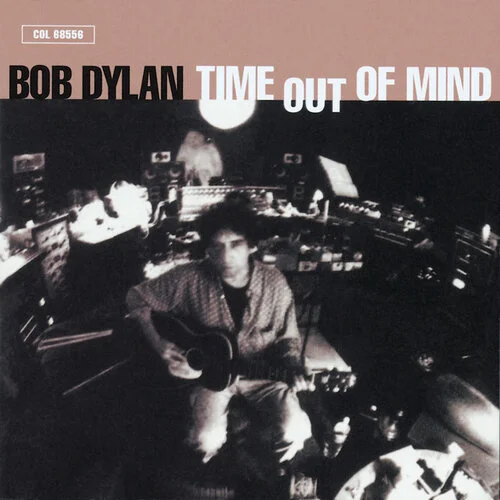
Time Out of Mind

xxx.jpg

Release Date: 30th September, 1997

Label: Columbia

Producer: Daniel Lanois

Standout Tracks: Love Sick/Trying to Get to Heaven/Highlands

Buy: https://www.roughtrade.com/gb/bob-dylan/time-out-of-mind-90bdafd2-1a75-4141-bd7b-075ba8a746cc

Stream: https://open.spotify.com/album/185DHT5SvszXRrezx3lOjt?si=bqris7TGThKDlAnSIvLriA

Review:

Time Out of Mind — alternate title: One Headlight Gone Dead — is produced by Daniel Lanois, who, as he did on Oh Mercy, keeps Dylan’s crypt-keeper rasp prominent while surrounding it with eeriness. Lanois gives ”Cold Irons Bound” a herky-jerky shuffle beat, for example — a rhythm that skeletons might dance to in a graveyard, using a few discarded bones for percussion. (Speaking of which, the secret hero of both Time Out of Mind and Bridges is drummer Jim Keltner, who pops up regularly to yank his fellow geezers in the direction of the beat.)

Dylan’s songwriting is at once blissfully assured and gleefully uneven throughout, containing some of his most evocative lyrics and one of the worst couplets written since the death of Sylvia Plath: ”When the wind is blowin’ in your face/And the whole world is on your case.” For all his addled talk of imminent departure (”I’m breathin’ hard, standin’ at the gate/But I don’t know how much longer I can wait”), Dylan sounds lively, even playful — in no way is this album a downer. It sounds as if, at 56, he can’t wait to be a full-fledged old codger.

A decorated codger, to be sure: In December, he’ll be a Kennedy Center honoree, along with Charlton Heston, Jessye Norman, Edward Villella, and Lauren Bacall. (At the State Department dinner, will he dedicate ”Cold Irons Bound” to Al Gore?) Where Mick Jagger holds a six-shooter to the nose of a deceitful lover, Bob Dylan turns one on himself, and, under the gun — to prove himself, to make music while facing mortality — ends up with a great album” – Entertainment Weekly

Choice Cut: Not Dark Yet

Love and Theft

aaaa.jpg

Release Date: 11th September, 2001

Label: Columbia

Producer: Bob Dylan

Standout Tracks: Lonesome Day Blues/Moonlight/Sugar Baby

Buy: https://www.roughtrade.com/gb/bob-dylan/love-and-theft

Stream: https://open.spotify.com/album/4BcfuxQ4EO07Y53yr6YhAJ?si=gBrFOsn5SdKubBH-007MTQ

Review:

The groove of the band gives the leader room to kick back and play around with his vocals, and one of the hardest things to get used to about Love and Theft is how funny it is. But the crackpot grin you can hear in his vocals only highlights the emotion of electric blues stomps like “Cry a While,” the pained ballad “Mississippi,” the rockabilly raver “Summer Days,” the banjo-and-fiddle lilt of “Floater (Too Much to Ask).” In “High Water (For Charley Patton),” he revisits the ruined landscape of “Down in the Flood” thirty years later; this crash on the levee sweeps up Charles Darwin, Robert Johnson and Big Joe Turner into an acoustic Delta-blues nightmare while Dylan turns to his traveling companion and calmly suggests, “Throw your panties overboard.” “Don’t reach out for me,” the woman in “High Water” says. “Can’t you see I’m drowning, too?” Cracked and ruined love affairs abound on Love and Theft, finding a mirror in the cities and countrysides Dylan wanders through. “Your days are numbered/So are mine,” he sings in the ravaged love travelogue “Mississippi.” “I need something strong to distract my mind/I’m going to look at you till my eyes go blind.” None of these heartaches can be put to rest. “You can’t repeat the past,” another woman says in the jumper “Summer Days,” to which Dylan replies, “You can’t? What do you mean you can’t? Of course you can.” In the mournful album closer, “Sugar Baby,” Dylan stands with his back to the sun (“because the light is too intense”) to sing to a woman who won’t open her eyes to his love. “You went years without me,” he says. “Might as well keep going now.”

But there is not just heartbreak here, there is also a tenacious clinging to love’s promise, and the strangest and most seductive surprises on Love and Theft come with the easygoing romantic ballads “Bye and Bye” and “Moonlight.” Dylan raised eyebrows a few months ago by covering Dean Martin’s “Return to Me” for The Sopranos, and he pays similar tribute to pre-rock pop all over Love and Theft. He connects the dots between folk, blues and the Forties and Fifties schmaltz standards he loved when he was growing up in Hibbing, Minnesota, as a devotee of Johnnie Ray and Nat “King” Cole. He’s been playing with these old-timey pop moves for years — think of “If Not for You” or “I’ll Be Your Baby Tonight” — but his theft has rarely betrayed so much love. In “Po’ Boy,” he pushes the borscht-belt humor to heroically absurd extremes, jumping over a light acoustic jingle to bite Groucho Marx: “Poor boy in a hotel called the Palace of Gloom/Called down to room service, says, ‘Send up a room.’ ” And that’s even before he gets to the knock-knock joke (“Freddy or not, here I come,” oy gevalt). It’s funny as hell, but it’s no parody: Dylan digs into these antique styles and milks them for all the romance and mystery he hears in them. In “Bye and Bye,” he wears the mask of the song-and-dance man to sing, “The future for me is already a thing of the past.” But the remarkable achievement of Love and Theft is that Dylan makes the past sound as strange, haunted and alluring as the future — and this song-and-dance man sings as though he’s drunk too deeply of the past to be either scared or impressed by anybody’s future, least of all his own. And he sounds like he’s enjoying the ride” – Rolling Stone

Choice Cut: Mississippi

Modern Times

wwww.jpg

Release Date: 29th August, 2006

Label: Columbia

Producer: Bob Dylan

Standout Tracks: Thunder on the Mountain/Rollin' and Tumblin'/Workingman's Blues #2

Buy: https://www.roughtrade.com/gb/bob-dylan/modern-times/lp-x2

Stream: https://open.spotify.com/album/6y2WHyqRUCeHrjMXvjnRmD?si=zWVARvvISL-HipaQ1iw5Zg

Review:

It's easy to take the title of Bob Dylan's latest album, his first since 2001's "Love And Theft," as a joke. There isn't anything particularly modern about Modern Times' songs; their influences stop with the rock and roll of Dylan's youth. The sound also isn't particularly modern, thanks to the clean, plug-in-and-play approach favored by producer "Jack Frost." (Dylan, of course.) But then there's Dylan expressing lust for—or at least a keen interest in—Alicia Keys on the first song, "Thunder On The Mountain." He follows that up by name-dropping Ovid's The Art Of Love, describing an apocalyptic, abandoned Washington D.C., and closing with the desire to go "up north" to work the land. It isn't exactly modern, but the jumble of eternal themes and contemporary references is as much a product of its times as anything Dylan has ever done.

In "Workingman's Blues #2," there's even a near-retreat to Dylan's protest days, though it sidesteps the protest by dismissing the folks that "never worked a day in their life" and touting the simple virtues of marital bliss and a diet of rice and beans. The album is filled with sentiments as sweet as they are hard to take at face value, thanks to Dylan's raspier-than-ever delivery and wry-as-ever sense of humor. It's also filled with hate for love gone wrong. On the blues tune "Someday Baby," for instance, Dylan promises to wring his baby's neck (he rhymes it with "I'll make it a matter of self-respect"). The tension never gets resolved, and the album-closing "Ain't Talkin'," a rambling mystery song in the mold of Time Out Of Mind's "Highlands," answers no questions” – The A.V. Club

Choice Cut: When the Deal Goes Down

Rough and Rowdy Ways

aaaa.jpg

Release Date: 19th June, 2020

Label: Columbia

Standout Tracks: False Prophet/Black Rider/Murder Most Foul

Buy: https://www.roughtrade.com/gb/bob-dylan/rough-and-rowdy-ways/lp-plus-x2

Stream: https://open.spotify.com/album/1Qht64MPvWTWa0aMsqxegB?si=wtX4iYMxT_yvkgOuDYFQjA

Review:

These are musical areas in which Dylan has worked for years. What sets Rough and Rowdy Ways apart from Tempest or 2006’s Modern Times is the sheer consistency of the songwriting; there’s nothing here that sounds like dashed-off filler, nothing that doesn’t hit home. Dylan nuts have a great line in telling you how hilarious lyrics that seem capable of raising at best a wry smile are – “Freddie or not, here I come”, “I’m not dead yet, my bell still rings” etc – but My Own Version, in which the protagonist turns Frankenstein and builds himself a lover out of bits of corpses, is packed with genuinely funny lines amid the references to Shakespeare, Homer’s Iliad, Bo Diddley and Martin Scorsese, as well as a curious interlude during which Freud and Marx are depicted as “enemies of mankind” burning in hell: “All through the summers into January, I’ve been visiting morgues and monasteries … if I do it right and put the head on straight, I’ll be saved by the creature that I create.”

This is obviously humour of a dark hue: if Tempest’s prevalent mood was one of murderous fury, then here it’s brooding menace and imminent doom. It’s there in the music – the weird tension in Crossing the Rubicon’s muted R&B shuffle and the way the backing on Black Rider keeps lapsing into ominous silence. You lose count of the lyrical references to judgment day and Armageddon, of the mysterious characters that keep cropping up with malevolence on their minds: “I can feel the bones beneath my skin and they’re trembling with rage, I’ll make your wife a widow, you’ll never see middle age,” he sings on Crossing the Rubicon. Of course, grouchily informing the world that everything is turning to shit has been one of Dylan’s prevalent songwriting modes for a quarter of a century – it’s the thread that binds Not Dark Yet, Things Have Changed, Ain’t Talkin’ and Early Roman Kings, among others – but this time the message seems to have shifted slightly: if you think everything has turned to shit now, Rough and Rowdy Ways keeps insisting, just you wait.

This isn’t perhaps the most comforting communique to issue in the middle of a global pandemic, but then the man behind it has seldom dealt in soothing reassurance. And besides, it doesn’t matter. For all its bleakness, Rough and Rowdy Ways might well be Bob Dylan’s most consistently brilliant set of songs in years: the die-hards can spend months unravelling the knottier lyrics, but you don’t need a PhD in Dylanology to appreciate its singular quality and power” – The Guardian

Choice Cut: I Contain Multitudes

FEATURE: Modern Heroines: Part Forty-Six: Princess Nokia

FEATURE:


Modern Heroines

xxx.jpg

Part Forty-Six: Princess Nokia

___________

WHEN it comes to women in modern music…

cc.jpg

 PHOTO CREDIT: Phil Knott for NME

who have the promise to become icons and inspire the next generation, Princess Nokia comes to mind. Destiny Nicole Frasqueri is the woman behind Princess Nokia. She is a New York rapper of the highest order. Princess Nokia released her debut studio album, Metallic Butterfly, in 2014. That was by the 2015 mixtape, Honeysuckle. As Princess Nokia, she put out the 2017 studio album, 1992 Deluxe. She released a further mixtape, A Girl Cried Red, in 2018, followed by the release of two studio albums, Everything Sucks and Everything Is Beautiful, in 2020. I am going to bring in a review for those albums to end with. As I always do with Modern Heroines, I shall have a playlist at the bottom of the feature – a selection of the best tracks from a superb talent. I also want to bring in a critical review for the superb 1992 Deluxe. I am fascinated to see where Princess Nokia’s music heads this year and what direction her next album takes. I feel she is going to be an icon of the future. She is most certainly a hugely fascinating artist whose music and image evolves and continues to venture into new ground. Before I bring in some reviews, I want to source from a recent NME interview. It is a deep dive that spotlights and goes deep with a terrific artist:

“It’s the beginning of a new era for Princess Nokia. The star, who first appeared on the cover of NME back in 2017, has spent nine years releasing and navigating the industry as an independent artist. International tours, a consistently jam-packed release schedule and masses of critical acclaim later, Princess Nokia has now inked her first ever major-label deal with Sony Music at the age of 28. This was marked by the release of her stellar latest single ‘It’s Not My Fault’ (“It’s not my fault / That I’m that bitch”), a no-nonsense anthem that offers no apology to the haters.

In 2021, Princess Nokia 2.0 is making an unmistakable play for the commercial rap scene. “I think my mission and goal in this business was always to be a representation of strong independent ownership and creative legacy,” she says. Preparing and writing her next record already, after releasing two full-length albums – ‘Everything’s Beautiful’ and ‘Everything Sucks’ – on the same day early last year, Destiny Frasqueri is ready to up the stakes once again.

Born and raised in the birthplace of hip-hop, New York’s Bronx, the 28-year-old has been immersed in the culture of the genre since before she can remember. She describes her parents as ‘nuyoricans’, a term used to represent the Puerto Rican/New York hybrid community, and as a result her Latinx heritage is also a huge part of her identity too. But from a young age, she was also drawn to the fringes in the form of punk, rock and the queer club scene on the city’s Lower East Side.

“I think hanging out at raves, at skate parks, at clubs – all of those experiences allowed me to be a more experimental, fully-fledged artist that consciously wanted to do a lot of different types of music,” she reflects. And that’s precisely what she did.

And Nokia went on to defy all expectations. ‘1992 Deluxe’ – an extended studio version of a mixtape she released for free the year before – was her very own kick-your-teeth-in brand of classic hip-hop meets NYC nightlife. Standouts ‘Tomboy’ and ‘Kitana’ established her as a force within the rap scene, referencing her androgyny and nerdy gamer habits with an unabashed confidence, “My little titties and my fat belly” becoming the mantra of a generation determined to love themselves fully even when the world didn’t.

“Growing up with the night life of the queer folk in New York City, it all just made me more OK with myself and more at peace with being different,” Princess Nokia says, “[and with] maybe being misunderstood or not immediately accepted.”

“I think it’s really special that there’s less pressure for people of colour to fit into a mould,” Princess Nokia beams. “And that’s all that any individual deserves to have: a chance at having a little bit more peace, a little bit more fun, a little bit more room… I know what it is to have people raise eyebrows at you for certain ideas or thoughts or set identity. I know what it’s like to feel confined. It’s a beautiful thing that art has transcended and young people get to be themselves and to explore themselves.”

Alongside her outlandish versatility, there’s another key aspect that kept Princess Nokia’s name and the forefront of industry lips: her independence. Since she began to make serious waves around 2016, Princess Nokia has never been without major-label offers. But up until 2020, she declined them all and continued to create, release and tour independently, even directing the majority of her own music videos. Of that arduous but rewarding task, she notes: “I have a very resourceful spirit, that’s the most helpful and apparent thing… a survivor’s spirit.”

It was a decision she made precisely so that she was only accountable to herself and whatever fulfilled her at any given moment. “I just really wanted to be creative without feeling pressure,” she explains.

As she works on her next album, and more major label releases, Nokia’s sights are set as high as they’ve ever been. “I’m in this part of my life where I’m just continuing to create new music in a new way. The signing, making the project, uncovering new levels, it’s all been really cool and I’m just excited to elevate as an artist and continue to inspire through music with storytelling and colourful narrative.”

And with the meteoric rise of women in rap – with Cardi B, Megan Thee Stallion and Saweetie emerging as some of the biggest names in music right now – the scene is bursting with creativity and charisma, as well as hugely broad commercial prospects. There’s no time like the present for Nokia to stake her claim”.

I wanted to quote quite a big chunk of that interview as it is a compelling and arresting read. I love when you get these extensive and immersive interviews! Although Everything Sucks and Everything Is Beautiful did not score the same huge reviews as 1992 Deluxe, I think they are terrific albums with many highlights. I992 Deluxe was met with huge acclaim. In their review, Drowned in Sound noted the following:

1992 Deluxe is much more than just a cheap re-release of her breakout 2016 mixtape, it’s a complete reimagining. The record features 8 brand new songs that help to cement Princess Nokia as one of the key voices in modern hip hop. Of these new tracks “ABCs of New York” stands out, the track is a love letter to her city of birth, and sounds like the musical equivalent of a sunny day in the city, spent with plenty of orange juice, ice cream and pizza. On the song Nokia covers pretty much everything of musical value that has happened in the Big Apple since the turn of the twentieth century, delivering verse after verse of alphabetised facts that would make Blackalicious proud.

Nokia delves into the past, present and future of hip hop, jumping from sub-genre to sub-genre with relative ease. The wild southern tinged trap of 'Tomboy' and 'Kitana' meld seamlessly into the almost, whisper it, commercial beats of 'Saggy Jeans', proving that when you do something with confidence, you can pretty much do whatever the hell you want.

Grand Finale 'Chinese Slippers' haunted house synth drawls and bouncy beats initially feel like a strange choice for the last track on the record, but after a few a few rounds of the almost painfully catchy “Kentucky fried chicken and a pizza hut” you can’t help but want to visit her weird world of irony, rainbows and funky bass lines just one more time.

The most exciting thing about 1992 Deluxe is that it can clearly get so much better for Princess Nokia. This is only the beginning. With more time and space to create, who knows what she could be capable of? World domination? I wouldn’t put it past her”.

I do love it when artists put out a double album or two different albums close together. It is ambitious and really interesting. It is wonderful to hear the differences between Everything Sucks and Everything Is Beautiful. Although some were mixed about the albums, I think that Pitchfork were able to find some strengths:

Everything Sucks was made primarily in the span of one intense week in New York, with friend and producer Chris Lare (aka owwwls), and that tight turnaround is evident. Its 10 songs are a locust swarm of angst, restless and frantic, as one can become in a city so densely populated. The first four tracks are zealous fight songs with lyrics like, “I’m the monster under your bed/I’m the goblin from the dead” and “Who dat, who dat, who dat?/The bitch is back/Who dat, who dat, who dat?/I will attack.” You can practically see a moshpit forming while a devil circles her left shoulder. There’s a preemptive, almost B.Rabbit-esque listing of her flaws: she’s crazy, she’s gross, she’s generally a mess, and what of it? The closer “Just a Kid” is an exception to the aggression, an awkwardly delivered but vulnerable story of the traumas of her early years, including a stretch in foster care.

Nokia finds more success on Everything is Beautiful, which, in comparison, is warm and expansive. Made over a span of two years, including some time in Puerto Rico, it has the optimism and groundedness of being in a place where you can occasionally look up and see a wide sky. The production, with beats primarily by Tony Seltzer and 1-900, are peppy and bright, and the themes spiritual and forward-looking, like an antidote to the hellishness explored on Everything Sucks.

The jazzy sounds that have shown up in segments of New York’s reinvigorated independent rap scene offer a welcome complement—via the downtown crew Onyx Collective and Los Angeles saxophonistTerrace Martin—to Nokia’s experiments with effective but technically imperfect vocal styles. One song, the gentle and self-deprecating “Heart,” is ready-made for a sync on a future season of Insecure: “I hate social media, I wish it all would end/I’m not like those other girls, in fact I’m fucking worse,” she raps. This is Nokia at her best, a relatable, unpretentious narrator of her own growth.

For someone proud to have resisted the industry machine, both albums show that Nokia is adept at making music that fits neatly within its bounds. There are familiar flows and familiar sounds throughout: she out-Chances Chance the Rapper with a version of his signature sing-songy delivery, snarls in Cardi B’s clipped flow, and resuscitates the plonking piano that gave OG Maco a hit some years back. It’s easy to grow tired of her insistence that she’s a misfit, until you consider that scores of artists have built careers on similar narratives with far less self-awareness. And yet the album’s best moment comes in the form of a poem on an outro track: “I survived from trauma and I’m living out my purpose/And I’m sure you are too, we’re really not that different”.

I will end things there. Although I have not included a few other interesting interviews and reviews, I feel what I have included gives one some story and detail regarding Princess Nokia. I think we are going to hear a lot more from this tremendous artist. Go and follow Princess Nokia, as she is a definite superstar of the future. She is most definitely an inspiring artist who will compel…

THE next generation of rappers.

FEATURE: Vinyl Corner - Anderson .Paak - Malibu

FEATURE:


Vinyl Corner

Anderson .Paak - Malibu

___________

OVER the course of the last few months…

I have been including some more modern/recent albums in Vinyl Corner. Today, I am focusing on Anderson .Paak’s second studio album, Malibu. The second to be names after an area in California – his debut of 2014 was called Venice -, it is a magnificent album. I would urge people to seek it out on vinyl. Rough Trade have it available on vinyl later this month:

This new album by the Rap / Hip-Hop / Nu R&B wunderkind Anderson .Paak features production from: 9th Wonder, DJ Khalil, Madlib, Kaytranada, Pomo, Dem Jointz, Callum Conner, Hi-Tek, Anderson .Paak and The FreeNationals. Featured vocalists include ScHoolboy Q, Talib Kweli, BJ The Chicago Kid, Rhapsody and The Game. Malibu is the maturation of .Paak's journey from Soul and R&B over into Hip-Hop and even modern dance, all the while giving listeners a deep look into his personal experience. Dive into the deepness that makes Malibu a special time and place, and enjoy - If you've into Kendrick Lamar and Vince Staples, then you'll love this”.

Of the four Anderson .Paak albums released so far, I feel Malibu is his best. The album marked a commercial breakthrough for the Californian rapper. If you have not heard Malibu or do not know much about Anderson. Paak, then go and stream the album and get a taste of its brilliance. I think it is well worth grabbing a vinyl copy, as it is a rich and packed listen that sounds great on the format. Five years after its release and I am still coming back to Malibu to hear various tracks and moment.

Before wrapping this up, I want to highlight a couple of positive reviews for Malibu. Released on 15th January, 2016, I think it was one of the strongest albums of the last decade. In their review, this is what AllMusic had to say:

Brandon Paak Anderson's route from Southern California underground obscurity was not without obstructions, but he efficiently cleared them all. The madcap's rapier sharpened with support from Shafiq Husayn of Sa-Ra, a stint as touring drummer for Haley Reinhart of American Idol, and an extensive assortment of guest appearances. In 2015, he added dimensions to Dr. Dre's Compton as a player on six cuts, then vitalized a pair of front-loaded tracks on the Game's Documentary 2. Only six weeks after Stones Throw issued a loose EP he made with Knxwledge, Anderson released the proper follow-up to his 2014 debut album Venice. As the design and title of this album indicate, Anderson's work continues to be informed by the sublime and toxic qualities of his environment and sex life. Throughout, he's a (stoned) common man making the best of his consequences, yet he has an otherworldly quality, like he has been beamed down to mine cosmic slop from the L.A. County sewer system and Pacific Ocean floor. He adapts easily to each one of the numerous twists in Malibu's sound.

Over the chunkier and grittier backdrops that range from soul/funk/rock hybrids to oblique hip-hop, he tends to be rasping and animated as he alternates between singing and rapping. His smoother and lighter form of delivery, heard in top form as a secondary component of the deep dancefloor funk groove "Am I Wrong," is so underutilized that it's easy to miss. While Venice was made primarily with L0_def, Malibu was created with a broader, higher-profile range of producers, including the Hiatus Kaiyote-sampling 9th Wonder (joined by Rapsody), Hi-Tek, sticky house groove specialist Kaytranada, and Chris Dave, the last of whom brings ace rhythm section associates Robert Glasper and bassist Pino Palladino. Anderson himself produced four cuts, including the hazily radiant "Parking Lot." Even fellow Oxnard native Madlib is in on the action through "Waters," where a light-of-touch beat, bolstered by a tugging bassline, is colored by a sweetly pained background vocal from BJ the Chicago Kid. Compared to the impressive and occasionally brilliant Venice, this album's mix of high and hard times has deeper resonance”.

There is so much to enjoy through Malibu. I think tracks such as Am I Wrong and Room in Here are among Anderson .Paak’s very best. Paak continues to put out terrific music to this day. On his second album, I think he truly announced himself as a major talent to watch closely. The second review that I want to bring in is from SPIN. When they sat down to listen to the album, they made the following observations and comments:  

Time has always been of the essence for Brandon Paak Anderson, now just Anderson .Paak, a singer-rapper from Oxnard, California who learned to make the most of every moment at a young age. His father was arrested when he was seven, his mother some years after that, and it’s safe to say that the idea of losing time has had a profound effect on him. He articulates this explicitly on his ScHoolBoy Q-aided single “Am I Wrong”: “I never wanna waste your time, my life / So precious, is yours, is mine.” He hates making bad first impressions and believes opportunities are seized, not given. So the 29-year-old hasn’t let any pass him by, taking a handful of guest spots on Dr. Dre’s Straight Outta Compton-tied swan song, Compton, and turning them into what basically amounts to ads for his raspy squawks, which have continually grown richer in texture.

Now comes his aptly timed sophomore album, Malibu, the second in a pair of records named after Cali destination spots (his groovy, laid-back 2014 debut was called Venice). It’s a melody-driven rap release that moonlights as a funk opus, with a serious emphasis placed on soul, thanks in large part to the presence of noted sample heads 9th Wonder, Hi-Tek, Kaytranada, and fellow Oxnard native Madlib, as well as .Paak’s own band, the Free Nationals. The tonal palette is warm and lush, with a transporting quality that’s twofold, sending the listener both to the artist’s western locale and back in time. His voice strains, stretches, skips, and simmers in service of coating his hip-hop blends, which take an old-school approach to funk vamps, packed and layered into soundscapes for his stories and portraits.

Each song on Malibu uses these tactics to heighten perspective, while harmonies thread into the fabric of tunes held together by thumping bass lines. On the chugging “Come Down,” .Paak chants in favor of being trapped in a high. He spells out the intricacies of sliding into your DMs on “Parking Lot,” with lines like, “You told me your whole life story in a few shorts / All the while I never knew the tone of your voice.” BJ the Chicago Kid does a great early-’00s neo-soul impression on “The Waters,” riffing off of .Paak’s singsong raps. The Free Nationals United Fellowship Choir stands at his back as a pounding downbeat keeps pace on “Lite Weight,” each flattening synth tone slithering in anticipation of the next one like a game of Snake. Songs weave together, spilling the details of his tumultuous upbringing and forging his prospective future path with scintillating soul jams. Many years have been lost for the Anderson family, but .Paak is giving meaning to all that time served”.

Go and get a copy of Malibu on vinyl (you can pre-order via Rough Trade). At eighteen tracks and over an hour in length, Malibu could have been an overly-stuffed and unfocused album with too much filler and little flow. Instead, we have this fascinating and consistent work from an incredible artist. Take some time out to investigate Malibu and experience…

A tremendous piece of work.

FEATURE: Ten of the Best: Kate Bush’s Most-Streamed Songs on Spotify

FEATURE:


Ten of the Best

zzz.jpg

IN THIS PHOTO: Kate Bush in 1978/PHOTO CREDIT: Gered Mankowitz 

Kate Bush’s Most-Streamed Songs on Spotify

___________

RATHER than zero in…

aaa.jpg

IN THIS PHOTO: Kate Bush in 1985/PHOTO CREDIT: John Carder Bush

on a specific song or album, I want to do a more general Kate Bush feature. I think that it is important people buy her albums - though a lot of people will discover her music through streaming sites. It is valuable that people have access to Bush’s magnificent music in as many forms as possible. I have not covered this before, but I wanted to do a features about her ten most-streamed songs on Spotify. I know that many people will discover Bush through this medium. I feel it is important people seek out all her songs, though there is something interesting when you consider the most-streamed/popular ones – and why people gravitate towards those (I am writing this on 3rd May, so these numbers/positions are accurate as of that date). Here are the ten Kate Bush songs that…

zzz.jpg

IN THIS PHOTO: Kate Bush in 1989/PHOTO CREDIT: John Carder Bush

PEOPLE are streaming the most.

___________

One: Wuthering Heights

aaaa.jpg

Streams (as of 3rd May, 2021): 95,992,787

From the Album: The Kick Inside (1978)

Buy: https://www.roughtrade.com/gb/kate-bush/the-kick-inside-7a5278e6-76b3-40e7-a55f-2d9471a311ae

Producer: Andrew Powell

Track Information:

Song written by Kate Bush, released as her debut single in January 1978. She wrote the song after seeing the last ten minutes of the 1967 BBC mini-series based on the book ‘Wuthering Heights’, written by Emily Brontë. Reportedly, she wrote the song within the space of just a few hours late at night. The actual date of writing is estimated to be March 5, 1977.

Lyrically, "Wuthering Heights" uses several quotations from Catherine Earnshaw, most notably in the chorus - "Let me in! I'm so cold!" - as well as in the verses, with Catherine's confession to her servant of "bad dreams in the night." It is sung from Catherine's point of view, as she pleads at Heathcliff's window to be allowed in. This romantic scene takes a sinister turn if one has read Chapter 3 of the original book, as Catherine is in fact a ghost, calling lovingly to Heathcliff from beyond the grave. Catherine's "icy" ghost grabs the hand of the Narrator, Mr Lockwood, through the bedroom window, asking him to let her in, so she can be forgiven by her lover Heathcliff, and freed from her own personal purgatory.

The song was recorded with Andrew Powell producing. According to him, the vocal performance was done in one take, "a complete perfomance" with no overdubs. "There was no compiling," engineer Kelly said. “We started the mix at around midnight and Kate was there the whole time, encouraging us… we got on with the job and finished at about five or six that morning." The guitar solo that fades away with the track in the outro was recorded by Edinburgh musician Ian Bairnson, a session guitarist” – Kate Bush Encyclopaedia

Link: https://open.spotify.com/track/5YSI1311X8t31PBjkBG4CZ?si=iNuSphLhSHSSn0lCP1DwlA

Two: Running Up That Hill (A Deal with God)

aaa.jpg

Streams (as of 3rd May, 2021): 76,290,090

From the Album: Hounds of Love (1985)

Buy: https://store.hmv.com/store/music/vinyl/hounds-of-love

Producer: Kate Bush

Track Information:

Song written by Kate Bush. The song was reportedly written in one evening in the summer of 1983. It was the first song recorded for the subsequent fifth studio album Hounds Of Love. The electronic drums, programmed by Del Palmer, and the Fairlight part were present from the first recording of the song. The lyrics speak of Bush's impossible wish to become her lover, and he her, so that they could know what the other felt. Kate played the first versions of the songs to Paul Hardiman on 6 October 1983. He commented later: "The first time I heard 'Running Up That Hill' it wasn't a demo, it was a working start. We carried on working on Kate and Del's original. Del had programmed the Linn drum  part, the basis of which we kept. I know we spent time working on the Fairlight melody/hook but the idea was there plus guide vocals."

The track was worked on between 4 November and 6 December, with Stuart Elliott adding drums, but closely following the programmed pattern. Alan Murphy added guitar parts whereas Paddy Bush, always providing the most ingenious instruments, played the rather better known balalaika on this track.

The working title of 'Running Up That Hill' was 'A Deal With God'. Representatives at EMI were hesitant to release the single as 'A Deal With God' due its use of the word 'God', which might lead to a negative reception. Bush relented and changed the title for the single. On the album and subsequent releases the title was 'Running Up That Hill (A Deal With God)'” – Kate Bush Encyclopaedia

Link: https://open.spotify.com/track/75FEaRjZTKLhTrFGsfMUXR?si=--0zp9A9TVSX2CWANwy6rA

Three: Babooshka (2018 Remaster)

Streams (as of 3rd May, 2021): 52,511,807

From the Album: Never for Ever (1980)

Buy: https://www.amazon.co.uk/Never-Ever-2018-Remaster-VINYL/dp/B07HQ7HW19

Producers: Kate Bush and Jon Kelly

Track Information:

It was really a theme that has fascinated me for some time. It's based on a theme that is often used in folk songs, which is where the wife of the husband begins to feel that perhaps he's not faithful. And there's no real strength in her feelings, it's just more or less paranoia suspicions, and so she starts thinking that she's going to test him, just to see if he's faithful. So what she does is she gets herself a pseudonym, which happens to be Babooshka, and she sends him a letter. And he responds very well to the letter, because as he reads it, he recognises the wife that he had a couple of years ago, who was happy, in the letter. And so he likes it, and she decides to take it even further and get a meeting together to see how he reacts to this Babooshka lady instead of her. When he meets her, again because she is so similar to his wife, the one that he loves, he's very attracted to her. Of course she is very annoyed and the break in the song is just throwing the restaurant at him...  (...) The whole idea of the song is really the futility and the stupidness of humans and how by our own thinking, spinning around in our own ideas we come up with completely paranoid facts. So in her situation she was in fact suspicious of a man who was doing nothing wrong, he loved her very much indeed. Through her own suspicions and evil thoughts she's really ruining the relationship. (Countdown Australia, 1980)'” – Kate Bush Encyclopaedia

Link: https://open.spotify.com/track/6VpNGCU2ig4NQmsLfALdJU?si=df8ntz7gQkm9UA-ZxSJQWA

Four: Cloudbusting

jjj.jpg

Streams (as of 3rd May, 2021): 28,779,308

From the Album: Hounds of Love (1985)

Buy: https://store.hmv.com/store/music/vinyl/hounds-of-love

Producer: Kate Bush

Track Information:

Song written by Kate Bush. Originally released on her fifth studio album Hounds Of Love. Released as the second single from the album on 14 October 1985.

The song is about the very close relationship between psychologist and philosopher Wilhelm Reich and his young son, Peter, told from the point of view of the son. It describes the boy's memories of his life with Reich on their family farm, called Orgonon where the two spent time "cloudbusting", a rain-making process which involved pointing at the sky a machine designed and built by Reich, called a cloudbuster. The lyric further describes Wilhelm Reich's abrupt arrest and imprisonment, the pain of loss the young Peter felt, and his helplessness at being unable to protect his father. The song was inspired by Peter Reich's 1973 memoir, A Book of Dreams, which Bush read and found deeply moving.

Kate actually contacted Peter Reich to explain her motives in writing 'Cloudbusting' and to express the wish that she hoped he would approve of the song. She received his reply a while later, saying that he loved what she was doing'” – Kate Bush Encyclopaedia

Link: https://open.spotify.com/track/5atQ2haKP5LT65WM0KUts3?si=Etl4z-ZPQf-cARQ3p0yFdw

Five: This Woman’s Work

zzz.jpg

Streams (as of 3rd May, 2021): 27,457,158

From the Album: The Sensual World (1989)

Buy: https://www.roughtrade.com/gb/kate-bush/the-sensual-world-e4747d6f-f1a1-4c91-bc7d-c5562cef6288

Producer: Kate Bush

Track Information:

John Hughes, the American film director, had just made this film called 'She's Having A Baby', and he had a scene in the film that he wanted a song to go with. And the film's very light: it's a lovely comedy. His films are very human, and it's just about this young guy - falls in love with a girl, marries her. He's still very much a kid. She gets pregnant, and it's all still very light and child-like until she's just about to have the baby and the nurse comes up to him and says it's a in a breech position and they don't know what the situation will be. So, while she's in the operating room, he has so sit and wait in the waiting room and it's a very powerful piece of film where he's just sitting, thinking; and this is actually the moment in the film where he has to grow up. He has no choice. There he is, he's not a kid any more; you can see he's in a very grown-up situation. And he starts, in his head, going back to the times they were together. There are clips of film of them laughing together and doing up their flat and all this kind of thing. And it was such a powerful visual: it's one of the quickest songs I've ever written. It was so easy to write. We had the piece of footage on video, so we plugged it up so that I could actually watch the monitor while I was sitting at the piano and I just wrote the song to these visuals. It was almost a matter of telling the story, and it was a lovely thing to do: I really enjoyed doing it. (Roger Scott Interview, BBC Radio 1 (UK), 14 October 1989)” – Kate Bush Encyclopaedia

Link: https://open.spotify.com/track/1Q0sruYhnsq6lmhWgeRFh5?si=fsfJUxFuRbKYNQtj4X2-6A

Six: Hounds of Love

jjj.jpg

Streams (as of 3rd May, 2021): 16,768,803

From the Album: Hounds of Love (1985)

Buy: https://store.hmv.com/store/music/vinyl/hounds-of-love

Producer: Kate Bush

Track Information:

When I was writing the song I sorta started coming across this line about hounds and I thought 'Hounds Of Love' and the whole idea of being chasing by this love that actually gonna... when it get you it just going to rip you to pieces, (Raises voice) you know, and have your guts all over the floor! So this very sort of... being hunted by love, I liked the imagery, I thought it was really good. (Richard Skinner, 'Classic Albums interview: Hounds Of Love'. BBC Radio 1 (UK), 26 January 1992)

 In the song 'Hounds Of Love', what do you mean by the line 'I'll be two steps on the water', other than a way of throwing off the scent of hounds, or whatever, by running through water. But why 'two' steps?

Because two steps is a progression. One step could possibly mean you go forward and then you come back again. I think "two steps" suggests that you intend to go forward.

But why not "three steps"?

It could have been three steps - it could have been ten, but "two steps" sounds better, I thought, when I wrote the song. Okay. (Doug Alan interview, 20 November 1985)” – Kate Bush Encyclopaedia

Link: https://open.spotify.com/track/0iluWxTpC9QOdVPg3PROvm?si=PufEkqrPRT-L4FbDIsWIIg

Seven: The Man with the Child in His Eyes

aaaa.jpg

Streams (as of 3rd May, 2021): 15,786,400

From the Album: The Kick Inside (1978)

Buy: https://www.roughtrade.com/gb/kate-bush/the-kick-inside-7a5278e6-76b3-40e7-a55f-2d9471a311ae

Producer: Andrew Powell

Track Information:

The inspiration for 'The Man With the Child in His Eyes' was really just a particular thing that happened when I went to the piano. The piano just started speaking to me. It was a theory that I had had for a while that I just observed in most of the men that I know: the fact that they just are little boys inside and how wonderful it is that they manage to retain this magic. I, myself, am attracted to older men, I guess, but I think that's the same with every female. I think it's a very natural, basic instinct that you look continually for your father for the rest of your life, as do men continually look for their mother in the women that they meet. I don't think we're all aware of it, but I think it is basically true. You look for that security that the opposite sex in your parenthood gave you as a child. (Self Portrait, 1978)

 I just noticed that men retain a capacity to enjoy childish games throughout their lives, and women don't seem to be able to do that. ('Bird In The Bush', Ritz (UK), September 1978)

 Oh, well it's something that I feel about men generally. [Looks around at cameramen] Sorry about this folks. [Cameramen laugh] That a lot of men have got a child inside them, you know I think they are more or less just grown up kids. And that it's a... [Cameramen laugh] No, no, it's a very good quality, it's really good, because a lot of women go out and get far too responsible. And it's really nice to keep that delight in wonderful things that children have. And that's what I was trying to say. That this man could communicate with a younger girl, because he's on the same level. (Swap Shop, 1979)” – Kate Bush Encyclopaedia

Link: https://open.spotify.com/track/4xjVfArXNQRxAvsUpjmfMt?si=dk3QybbGQzigdMoHuq9sDg

Eight: Army Dreamers (2018 Remaster)

aaa.jpg

Streams (as of 3rd May, 2021): 12,578,304

From the Album: Never for Ever (1980)

Buy: https://www.amazon.co.uk/Never-Ever-2018-Remaster-VINYL/dp/B07HQ7HW19

Producers: Kate Bush and Jon Kelly

Track Information:

No, it's not personal. It's just a mother grieving and observing the waste. A boy with no O-levels, say, who might have [??? Line missing!] whatever. But he's nothing to do, no way to express himself. So he joins the army. He's trapped. So many die, often in accidents. I'm not slagging off the army, because it's good for certain people. But there are a lot of people in it who shouldn't be. (Derek Jewell, 'How To Write Songs And Influence People'. Sunday Times (UK), 5 October 1980)

 The Irish accent was important because the treatment of the song is very traditional, and the Irish would always use their songs to tell stories, it's the traditional way. There's something about an Irish accent that's very vulnerable, very poetic, and so by singing it in an Irish accent it comes across in a different way. But the song was meant to cover areas like Germany, especially with the kids that get killed in manoeuvres, not even in action. It doesn't get brought out much, but it happens a lot. I'm not slagging off the Army, it's just so sad that there are kids who have no O-levels and nothing to do but become soldiers, and it's not really what they want. That's what frightens me. (Kris Needs, 'Fire In The Bush'. ZigZag (UK), 1980)” – Kate Bush Encyclopaedia

Link: https://open.spotify.com/track/135ArLV1euyyeegU9D8HVR?si=58d4IgjNTIe_ELiFMMuqlw

Nine: And Dream of Sheep

jjj.jpg

Streams (as of 3rd May, 2021): 6,278,192

From the Album: Hounds of Love (1985)

Buy: https://store.hmv.com/store/music/vinyl/hounds-of-love

Producer: Kate Bush

Track Information:

An engineer we were working with picked out the line in 'And Dream Of Sheep' that says 'Come here with me now'. I asked him why he liked it so much. He said, 'I don't know, I just love it. It's so moving and comforting.' I don't think he even knew what was being said exactly, but the song is about someone going to sleep in the water, where they're alone and frightened. And they want to go to sleep, to get away from the situation. But at the same time it's dangerous to go to sleep in water, you could drown. When I was little, and I'd had a bad dream, I'd go into my parents' bedroom round to my mother's side of the bed. She'd be asleep, and I wouldn't want to wake her, so I'd stand there and wait for her to sense my presence and wake up. She always did, within minutes; and sometimes I'd frighten her - standing there still, in the darkness in my nightdress. I'd say, 'I've had a bad dream,' and she'd lift bedclothes and say something like 'Come here with me now.' It's my mother saying this line in the track, and I briefed her on the ideas behind it before she said it. And I think it's the motherly comfort that this engineer picked up on. In fact, he said this was his favourite part of the album. (Kate Bush Club newsletter, Issue 21, 1987)

 Once I wrote that, that was it, that was the beginning of what then became the concept. And really, for me, from the beginning. 'The Ninth Wave' was a film, that's how I thought of it. It's the idea of this person being in the water, how they've got there, we don't know. But the idea is that they've been on a ship and they've been washed over the side so they're alone in this water. And I find that horrific imagery, the thought of being completely alone in all this water. And they've got a life jacket with a little light so that if anyone should be traveling at night they'll see the light and know they're there. And they're absolutely terrified, and they're completely alone at the mercy of their imagination, which again I personally find such a terrifying thing, the power of ones own imagination being let loose on something like that. And the idea that they've got it in their head that they mustn't fall asleep, because if you fall asleep when you're in the water, I've heard that you roll over and so you drown, so they're trying to keep themselves awake. (Richard Skinner, 'Classic Albums interview: Hounds Of Love'. BBC Radio 1, 26 January 1992)” – Kate Bush Encyclopaedia

Link: https://open.spotify.com/track/15FBisvPECCYwyG4l8FJQ9?si=-m4ffLvIQGKbV2Ws9SOWdg

Ten: Suspended in Gaffa

xxx.jpg

Streams (as of 3rd May, 2021): 3,732,715

From the Album: The Dreaming (1982)

Buy: https://www.roughtrade.com/gb/kate-bush/the-dreaming-03e10ee0-e2d3-4b54-948e-0afcb7e7c290/lp

Producer: Kate Bush

Track Information:

I could explain some of it, if you want me to: Suspended in Gaffa is reasonably autobiographical, which most of my songs aren’t.  It’s about seeing something that you want–on any level–and not being able to get that thing unless you work hard and in the right way towards it. When I do that I become aware of so many obstacles, and then I want the thing without the work. And then when you achieve it you enter…a different level–everything will slightly change. It’s like going into a time warp which otherwise wouldn’t have existed. (Richard Cook, 'My music sophisticated?...'. NME (UK), October 1982)

 'Suspended In Gaffa' is, I suppose, similar in some ways to 'Sat In Your Lap' - the idea of someone seeking something, wanting something. I was brought up as a Roman Catholic and had the imagery of purgatory and of the idea that when you were taken there that you would be given a glimpse of God and then you wouldn't see him again until you were let into heaven. And we were told that in Hell it was even worse because you got to see God but then you knew that you would never see him again. And it's sorta using that as the parallel. And the idea of seeing something incredibly beautiful, having a religious experience as such, but not being able to get back there. And it was playing musically with the idea of the verses being sorta real time and someone happily jumping through life [Makes happy motion with head] and then you hit the chorus and it like everything sorta goes into slow mo and they're reaching [Makes slow reaching motion with arm] for that thing that they want and they can't get there. [Laughs] (Interview for MTV, November 1985)” – Kate Bush Encyclopaedia

Link: https://open.spotify.com/track/1VsQhQbF4SwVvbbFeQ5EOa?si=b62sz2fQRQ6tRIs-k1ITXg

FEATURE: Pull Up to the Bumper: Grace Jones’ Nightclubbing at Forty

FEATURE:


Pull Up to the Bumper

zzzz.jpg

Grace Jones’ Nightclubbing at Forty

___________

EVEN though it is difficult to find…

ssss.jpg

Grace Jones’ Nightclubbing on streaming services, I wanted to mark an album that turns forty on 11th May. I would recommend people listen to songs from the album on YouTube. Go and get a copy of a hugely iconic and influential album on vinyl. As Rough Trade rightly observe, the album is one of the greatest of all-time:

In a career of myriad highlights 'Nightclubbing' remains the high water mark of Grace Jones's imperial years with Island Records. It is indisputably the album on which her musical legacy rests, and rightly considered one of the greatest albums of all time. A sophisticated melee of sound, blending post-punk cool with a hot Caribbean vibe and a catwalk Studio 54 sensibility, it's a perfect example of artist and musicians working in complete accord. It contains the all-time Grace classics in 'Pull Up To The Bumper', 'Walking In The Rain', 'Demolition Man' (written by Sting) and of course the Bowie / Iggy Pop-penned title track. There is magic in its every groove. In keeping with its reputation as one of the best sonically sounding albums of the '80s and for the first time since its debut on CD in 1987, 'Nightclubbing' has been comprehensively remastered using the latest studio technology”.

I am going to round things off by dropping in some information regarding the legacy of an album that transformed Grace Jones’ career – and helped to change the face of music in the process. It is hard to overstate the importance and brilliance of Nightclubbing – let’s hope that it makes its way to streaming services very soon!

Before then, I want to throw back five years and source an article from Albuism. They marked thirty-five years of an album that remains so enormously evocative, powerful and vital:

Nightclubbing is the fifth studio album by Grace Jones. This is the album that perfectly defines the Grace Jones sound. Her previous LP Warm Leatherette was a subtle introduction to her new sound. It was the insanely yummy appetizer leading you into the decadent tasty meal that is Nightclubbing.

Up until this effort, Jones was primarily known for her covers. This time around, she didn’t merely do cover songs. She deconstructed the songs and made them her own. Jones established herself as an excellent interpreter of other people's music. Nightclubbing features covers of songs by an array of diverse artists such as Flash & The Pan (“Walking In The Rain”), Bill Withers (“Use Me”), and Astor Piazolla (“I’ve Seen That Face Before (Libertango)”). She even gives us a reggaefied version of Iggy Pop’s “Nightclubbing” with great results.

Jones’ first three albums were heavily influenced by disco and cemented her presence in the club scene. If you were to judge her by her first three albums alone, you would come to the conclusion that she was little more than a campy disco star. Let's be honest, during this period between 1977 and 1980, everyone and their mother went disco. Rock legends like Rod Stewart and the Rolling Stones experimented with the disco sound. Hell, even Ethel Merman put out a disco record. I found the "disco sucks" phenomenon to be rooted in some unspoken hatred of other cultures, but that's another story for another day. The mass appropriation of the genre made it into a joke and luckily for Grace Jones, she shifted gears just at the right time.

With help from producers Chris Blackwell and Alex Sadkin, and the musical backing of The Compass Point All-Stars (featuring Sly Dunbar & Robbie Shakespeare), the tracks on Nightclubbing have a reggae-tinged, alternative style that set her apart from many artists of the day. Three of Nightclubbing’s songs were co-written by Jones, including the hit “Pull Up to the Bumper.” Many critics loved the playful double entendre, but if you were listening carefully, you could tell that it was a pretty blunt statement. She was not pulling any punches. It was a song that could've been ripped out of the pages of the Penthouse forum set to an infectious, funky beat: "Pull up to my bumper baby / In your long black limousine / Pull up to my bumper baby / And drive it in between”.

It is unspringing that Nightclubbing has picked up a string of impassioned and praise-filled reviews through the years. It is an album that took Grace Jones’ career to new levels and marked her out as an icon! In their review, this is what AllMusic observed:

By all means a phenomenal pop album that hit number nine on the black albums chart and crossed over to penetrate the pop charts at number 32, Nightclubbing saw Grace Jones working once again with Sly Dunbar, Robbie Shakespeare, and the remainder of the Compass Point team. Nightclubbing also continues Jones' tradition of picking excellent songs to reinterpret. This time out, the Police's "Demolition Man," Bill Withers' "Use Me," and Iggy Pop's "Nightclubbing" receive radical reinterpretations; "Nightclubbing" is glacial in both tempo and lack of warmth, while both "Use Me" and "Demolition Man" fit perfectly into Jones' lyrical scheme. Speaking of a lyrical scheme, "Pull Up to the Bumper" (number five black singles, number two club play) is so riddled with naughty double entendres -- or is it just about parallel parking? -- that it renders Musique's "In the Bush" as daring as Paul Anka's "Puppy Love." Drive it in between what, Grace? It's not just lyrics that make the song stick out; jingling spirals of rhythm guitar and a simplistic, squelching, mid-tempo rhythm make the song effective, even without considering Jones' presence. Sly & Robbie provide ideal backdrops for Jones yet again, casting a brisk but not bristly sheen over buoyant structures. Never before and never since has a precisely chipped block of ore been so seductive”.

Not only did Jones’ unique sound impact the next generation of artists. Her changing and fabulous aesthetic and looks also made a huge impression. I feel Nightclubbing is an album people will be examining generations from now! I want to quote from Pitchfork’s review of 2014. I think Nightclubbing sounds so fresh and timeless today. It has not dated like other albums from the early-1980s:

On the album’s opener, a cover of Flash and the Pan’s “Walking in the Rain”, Jones growls in her contralto about “Feeling like a woman/ Looking like a man.” Noirish, foreboding, sounding rain-slicked, the beat crafted by Sly Dunbar with percussionist Uzziah (Sticky) Thompson is undeniable across its four minutes. But it’s on the second disc, where many of the album tracks' running times are extended towards the sublime, that the now seven-minute song soars even higher. It also doubles as a showcase for keyboard wizard and the Nassau band’s secret weapon, Wally Badarou, a classically-trained synth session man who’s C.V. includes M’s “Pop Music” and Level 42’s “Something About You.” Badarou's extended solo evokes a tone not unlike Miles Davis' muted trumpet: gorgeous, weightless, it's as brooding and wistful as a midnight walk in the rain can be. On Grace Jones’s take on the tango “I’ve Seen That Face Before (Libertango),” Badarou mimics both Argentinean tango master Astor Piazzolla’s bandoneon and that eerie organ tone of “Runaway”.

But of course, Grace Jones is the star here. Five of the original album’s nine songs are covers, though rather than fealty to the source material, Jones sounds as if she’s shredding the songbook with her bare teeth. She treats each cover not as a singer tackling a song, but as an actor inhabiting the skin of a role. She sneers the Police’s “Demolition Man” as if she's a villainess leveling a hospital, inverting the gender and notions of sexual dominance in her lascivious take on Bill Withers’ “Use Me.” Dubbing out the zombiefied pacing of “Nightclubbing”, Jones intones Iggy Pop’s lines with the detachment of a dominatrix contemplating her cat o’nine tails, while a previously unreleased cover of Tubeway Army’s “Me! I Disconnect From You” sets it in a sleek reggae setting.

Another bonus track is labeled “Peanut Butter,” which some disco fans will recognize as the title of another Sly & Robbie & Wally track (as remixed by Larry Levan), made for Gwen Guthrie on her 1985 mini-album Padlock. But here, “Peanut Butter” is the beat that Grace Jones turned into her Top 10 single and Paradise Garage anthem, “Pull Up to the Bumper.” Originally deemed “too R&B” by Chris Blackwell, Jones finally got her hands on the pistoning riddim and turned it into one of the most profane singles in pop/dance music history. Long black limousines, commands to “pull up” and coos of “let me lubricate it” make it one of the finest parallel parking metaphors for butt-fucking. At a time wherein a song about a "gigantic" interracial lover can soundtrack a tech giant's new promotional ad campaign, one hopes that soon a car company will do the same for Grace Jones' most wanton pop moment on a record that further cemented her iconic status in pop culture”.

I want to finish up by sourcing from Wikipedia. Their article discusses the impact and legacy of one of the all-time great albums:

Nightclubbing's distinctive amalgamation of rock, funk, post-punk, pop and reggae set Jones apart from other musical acts of the 1980s. It is considered one of the early convergences of "fashion, art, and music". According to Pitchfork's Andy Beta, it "altered the face of modern pop". He further argued that the album's musical and visual influence is easily palpable in the musical landscape of the 21st century, specially among female musicians such as Lady Gaga, Rihanna, Nicki Minaj, M.I.A., Grimes and FKA Twigs, among others. Other acts influenced by the record include Róisín Murphy, Janelle Monáe, Azealia Banks and Adam Lambert. Beyond pop music, the template set by Jones and her Compass Point backing band was also influential to alternative music, including Massive Attack, Todd Terje, Gorillaz, Hot Chip, and LCD Soundsystem – who "emulate those rubbery yet taut grooves of Sly & Robbie and cohorts". In Q, John Harris wrote: "The fact that this music was first released 33 years ago beggars belief: it showcases great minds alighting on the future, and points the way to Madonna, Björk, Lady Gaga, Gorillaz, M.I.A. and more." According to Molly Beauchemin, Jones "pioneered the way for Shamir, Stromae, and countless other dance mavericks of today – not just with her bewitching candor but through her use of androgynous innuendo". Polari Magazine considered Nightclubbing to be "a defining moment in the history of pop music".

The album further cemented Jones' pop icon status. According to Erich Kessel, "[the singer's] performances were a source of rich critiques on race, gender, and blackness." Her pioneering androgynous aesthetic – conceived alongside Jean-Paul Goude – had a strong impact on the pop culture of the 1980s; for example, it was a precursor to Annie Lennox's persona. According to Abigail Gardner, "Jones was an androgynous audiovisual experience, one who sat comfortably within the context of early 1980s pop, where image had become even more central to pop performance through the emergence of MTV." She further argued that the singer "problematises ideas of black feminine in performance art that contributed to a reconceptualisation of Afrocentric culture and identity." Miriam Kershaw positioned Jones "not as a singer or a diva, but as a piece of art", and argued that she "worked to destabilise racist and sexist clichés as she charted a dynamic course through the history of the Black diaspora, to celebrate its vibrant contemporary form." The singer's gender-bending and unrestrained sexuality also won the acclaim of the gay community, being included in Out's "The 100 Greatest, Gayest Albums of All Time" and Attitude's "Top 50 Gay Albums of All Time". i-D writes: "Jones transcended definition in almost every realm of her life. She is often referred to as a queer icon. [...] She rejects all labels of sexuality, and her musical output is similarly fluid, switching from pop and disco to dub and reggae without hesitation”.

On 11th May, so many people around the world will mark forty years of Grace Jones’ fifth studio album, Nightclubbing. It was a seismic album that cemented her Pop icon status. In terms of its importance, quality and reputation, there have been few albums since Nightclubbing that…

HAVE matched its genius!

FEATURE: With Your Beauty's Potency: Kate Bush’s Influence on Modern Songwriters

FEATURE:


With Your Beauty's Potency

nnn.jpg

IN THIS PHOTO: Kate Bush in the EMI Records office, London in March 1978/PHOTO CREDIT: Jill Furmanovsky

Kate Bush’s Influence on Modern Songwriters

___________

I have covered this topic before…

zzz.jpg

 IN THIS PHOTO: Kate Bush performing live on stage at the Hammersmith Odeon on the penultimate date of her European tour on 12th May, 1979/PHOTO CREDIT: Peter Still/Redferns

in other features through the years. You sometimes get talk that someone is ‘the new Kate Bush’ or that there is someone just like her. Whether directly or not, there are so many upcoming songwriters that have an element of Bush about them. Her albums are so broad and different, it is inevitable that artists from across various genres have been inspired by her talent. I think that there is a general warmth and power that emanates from all of Kate Bush’s music that has drawn so much out of the new generation of songwriters. I think Bush’s natural warmth and kindness has influenced more than musicians. I read an article, where Pete Bennett asked Kate Bush (via a letter) to give his girlfriend, Nikki Grahame, a pep talk. Grahame sadly died recently (she died after a lifelong battle with anorexia). As he and Grahame were fans of her work, Bennett thought of Bush when it came to finding someone who might be able to offer solace and encouragement to Grahame. I think that, whether through her music or interviews, that is this natural grace and beauty from Bush that people gravitate towards. She is held in such high affection by people from all walks of life. For artists, her music offers so much guidance and so many possibilities. Every year, a whole crop of promising singer-songwriters are linked to Kate Bush. In some cases, this can be easy and lazy labelling. Any artist – of all genders – who possesses a similar vocal style or aesthetic likeliness gets compared with Bush. I guess it is flattering but, in a lot of cases, it is either off the mark or a little kind to an artist that is not that strong.

That said, I think that anyone who takes Bush’s music to heart and counts her as an influence should be highlighted. I am always interested to hear those who look up to Bush or have been influenced by her in some way. Alicia Blue is an artist that I have been aware of for a while. As this article from American Songwriter outlines, Blue talked about Bush as she has covered Hounds of Love’s Running Up That Hill (A Deal with God):

The lyric always leads, and the music always follows, but when the words belong to someone else, emotion leads the way. Initially uninterested in the lyrics to the Hounds of Love track, Blue instead tapped into what she was feeling inside—and something in the chords, in the melody and how both united. Then, Blue became “intimate” with the words—a song Bush wrote exploring the misunderstandings between a man and a woman, and what would happen if they swapped roles for awhile, through a deal with God—and the song became person for her.

“There was still a ton of mystery there,” reveals Blue. “I couldn’t make much of her lyrics in a literal way, but everything felt undeniably true… It felt universal and completely singular all at once. That’s how I knew this would be something I could sing for a long time, even if I didn’t write it.

She adds, “‘Running Up That Hill’ feels like a conversation that is ever-evolving. It’s a big song, because you can hear your own life echoed inside of it. It’s collective, and in a world where you can’t be everything to everyone, it’s everything. That’s the hit I get from it”.

sss.jpg

 IN THIS PHOTO: Georgia/PHOTO CREDIT: Gem Harris for Loud and Quiet

All around the world, artists are either tackling Bush’s songs or one can detect essence of Bush in original recordings. Quite a lot of young artists are providing their own takes on brilliant Bush tracks. I think that Running Up That Hill (A Deal with God) is especially revered. Last year, our very own Georgia put her spin on it. One young artist, Christine Bratherton has definite hints of Bush in her own sound:

Christie Bratherton, from Wincham, wrote her first song when she was only 13.

With tenderness and emotion, she captures her feelings in thoughtful lyrics.

The 26-year-old has won much acclaim from all over the world for her first EP, Fish Out Of Water, released a month ago.

"I had over 1,000 streams on Spotify," said Christie, who used to live in Winsford. "Music has always played a big part in my life. I used to come home from school and play my guitar for five hours until I fell asleep.

Her emotive voice has been compared by music critics to Kate Bush, Liz Fraser, Lucy Rose and Julianne Regan”.

There are a lot of fascinating and eclectic artists who one can trace back to Kate Bush. SPELLING’s new track, Little Deer draws comparisons to Bush. I think that, the more her music is played on radio and the more books/magazines dedicated to her get to people, the more artists we will see who, in their own way, keep Bush’s flame alive.

Of course, Kate Bush has not retired or signalled any intent to quit music. As a pioneer and an artist with so many facets and unique edges, I am interested to see how her legacy transforms and touches music in the years to come. It is not only a new breed of artists who consciously or not remind one of Kate Bush. As this 2020 article from COMPLEX states, Bush has impacted and inspired some major artists:

If you haven’t been as lucky to come across Kate Bush’s music in a film or through the recommendation of a friend, there's a chance you’ve unknowingly grown accustomed to the sounds she pioneered. From FKA Twigs’ Magdalene to Billie Eilish’s When We All Fall Asleep, Where Do We Go?, Bush’s influence—whether direct or not—exists in so many modern pop projects today. Hints of her dramatic vocals carry on through Florence Welch’s delivery and her experimental, futuristic production provided a blueprint for artists like Charli XCX to push pop forward. Her mime-like dance moves coupled with intimate orchestration is echoed in Lorde’s performances. Sinead O’ Connor’s penetrating lyrics in “Troy” and Sia’s roaring vocals in “Chandelier” both conjure the spirit of Kate Bush. Her heirs include other greats like Tori Amos, Björk and Enya. Even electronic artists like Grimes and rock artists like Stevie Nicks have been compared to the UK artist.

ddd.jpg

IN THIS PHOTO: Grimes 

She is highly praised by her peers, too. Big-time artists like St. Vincent and Adele have publicly expressed how Bush’s music influenced their own work. Prince noted her as his favorite lady. Even Tupac was a Kate Bush fan. Big Boi, a longtime stan of “Running up That Hill,” shared that he would listen to the song everyday on his bike ride to and from school. During a phone call earlier this month he told us, “I fell in love with her songwriting and how her songs would tell stories. It was deep. From there she became one of my two favorite artists." The connection he formed to Bush's music grew so deep that he spent a week in England trying to pin her down while he was in town for press meetings”.

Even though I don’t think we will ever see anyone quite like Kate Bush in the future, it is always encouraging and heartening to see how her music has made such a different to so many songwriters. I have mooted in the past how there should be a Bush covers album or artists coming together to do a project around Bush’s music. I am writing some anniversary features around Director’s Cut and the fact that it turns ten next month. Even though 2011 was the year we saw the most-recent Bush album (50 Words for Snow) her influence is everywhere. The importance of what she does and how she has affected and driven legions of artists is evident and remarkable. In Kate Bush, here is a genius, amazingly original songwriter and voice…

SO many of us follow and worship.

FEATURE: In Bed with Madonna: Madonna: Truth or Dare at Thirty

FEATURE:


In Bed with Madonna

Madonna: Truth or Dare at Thirty

___________

AMONG all the big anniversaries this year…

 IN THIS PHOTO: Madonna and her dancers in the 1991 concert film and documentary, Madonna: Truth or Dare (which chronicled the Blond Ambition World Tour of 1990)/PHOTO CREDIT: Mirimax

I wonder how many will mark the thirtieth anniversary of Madonna: Truth or Dare on 10th May. Internationally known as In Bed with Madonna, the 1991 documentary from Alek Keshishian chronicles the life of Madonna during her 1990 Blond Ambition World Tour. It was initially planned to be a traditional concert film. Keshishian was impressed with the backstage life. He persuaded Madonna to do a full film focusing on that. She funded the project and served as executive producer. The film was edited to be in black-and-white, in order to emulate cinéma vérité, while the performance scenes were edited to be in colour (thanks to Wikipedia for some background). I think Madonna: Truth or Dare is so important, as it arrived at a time when Madonna developed from a Pop artist to a global superstar. I think that Madonna: Truth or DareDare has been developed and adapted by a lot of modern Pop artists. The past year or two has seen some intimate-yet-revealing documentaries from the likes of Taylor Swift and BLACKPINK. I will come to a review for Truth or Dare to finish up. Having released Like a Prayer in 1989 and the film, Bloodhounds of Broadway (the same year), she then appeared in Dick Tracy in 1990. If her film career was not as strong as her musical output, it is clear that Madonna was gaining a lot more exposure and proving herself to be an ambitious and multi-talented artist.

The Blond Ambition World Tour cemented her reputation as a modern phenomenon. On 10th May, 1991, Madonna: Truth or Dare was given a limited released. Although the film/documentary received some positive reviews and grossed $29 million (making it the highest-grossing documentary of all-time – until it was bested in 2002 by Bowling for Columbine), there were some who were more negative. Not only has Madonna: Truth or Dare inspired modern music documentaries and how we perceive a huge artist, it had an impact on reality television and celebrity culture. I want to bring in an article from In Magazine. They looked back on the gold standard of the Pop star documentary:

There’s a point in Madonna’s landmark documentary Truth or Dare when her then-boyfriend Warren Beatty, perplexed as to why the superstar would want to put everything out there on film, says, “She doesn’t want to live off-camera. There’s nothing to say off-camera. Why would you say something if it’s off-camera?”
 
Madonna was often a trailblazer ahead of her time, and those words from Warren – uttered long before the days of reality TV and regular people documenting their every move on social media – seem both quaint when seen through the lens of 2020 and also as if Madonna was maybe some sort of prophet.
 
This year marks the 19th anniversary of the film’s release (May, 10, 1991), and with all of us confined to our homes and craving content, it’s the perfect time to either revisit the iconic documentary or experience it for the very first time.

Showing the good, the bad and the ugly

Truth or Dare famously follows along as Madonna embarks on her legendary Blond Ambition Tour. The singer is at the absolute height of her success during this moment in time, coming off the release of her multi-platinum album Like a Prayer, as well as having appeared in the action adventure movie Dick Tracy (a film that spawned the soundtrack I’m Breathless, which featured her colossal hit “Vogue”).
 
The Blond Ambition Tour – which was to be sponsored by Pepsi until the brand pulled its dollars after Madonna’s controversial “Like a Prayer” video – consisted of 57 shows across three continents with the film’s director Alek Keshishian in tow, filming 200 hours of footage that would ultimately be edited down to become Truth or Dare. The film was originally supposed to be a straight-up concert film, but it didn’t take long for the filmmaker to realize that what was going down behind the scenes was just as entertaining as what was happening on stage.
 
Madonna certainly wasn’t the first pop star to invite cameras behind the scenes, nor was she the last. In the years since Truth or Dare, there’s been Beyoncé: Life is But a Dream, Katy Perry: Part of Me, Lady Gaga: Five Foot Two and, most recently, Taylor Swift’s Netflix doc Miss Americana, just to name a few. But while all have their merits, none can live up to what is truly the gold standard of the genre.


Most celebrities present a carefully calculated and cunningly curated image of themselves to the public. While Madonna would certainly never be accused of not being calculating, she allows the cameras to show us the good, the bad and the ugly in Truth or Dare. You get the sense that Madonna truly has no f*cks to give about whether you come away from the doc liking her. It’s refreshing, and also something that a pop star of her magnitude couldn’t do today without an apology tour after the fact.
 
Madonna doesn’t shy away from shade in Truth or Dare. Belinda Carlisle, the city of Chicago, Oprah and Janet Jackson: these are just a few of her targets. And who could ever forget when she ends Kevin Costner’s life backstage at one of her shows, putting her finger down her throat to mime throwing up after the actor uses the word “neat” to describe her show. “Anyone who says my show is neat has to go,” she says on camera. And this is Dances With Wolves-era Kevin Costner. At the height of his fame, Madonna murders him in front of millions. Madonna saves her most poisonous venom, though, for the city of Toronto. After members of the Toronto Police Service show up to the SkyDome at her third and final show threatening to arrest the singer on obscenity charges, Madonna, ever the provocateur, is positively delighted at the thought of ending up in cuffs. She refuses to back down or change her show, and the concert goes off without a hitch – but not before Madonna reduces Ontario’s capital city to filth, calling it “the fascist state of Toronto.”
 
But it’s not just the shade that makes the film memorable. Name a modern-day pop star at the height of her fame who would, during a game of Truth or Dare, allow herself to be filmed showing how she performs fellatio on a bottle, or who would reveal on camera that her ex-husband (in Madonna’s case, Sean Penn, whom she had divorced a few years earlier) is the one true love of her life? And remember when she shows us how thirsty she is for Antonio Banderas and how, upon finally meeting him, she’s highly (and vocally…within earshot of his wife) disappointed that he’s married? Taylor, Beyoncé or Katy wouldn’t dare!

Truth or Dare is also notable for its cast of supporting characters. Who could forget Madonna’s childhood friend Moira McFarland from Michigan, whom Madge hasn’t seen in years, showing up and asking Madonna to be the godmother of her unborn child. The singer tells cameras that Moira once “finger f*cked” her and showed her how to use a tampon, claims Moira denies with, “Madonna, I did not teach you how to insert a tampon and and if we got into bed together naked, I don’t remember that”.

 IN THIS PHOTO: Alek Keshishian, the director of Madonna: Truth or Dare, alongside Madonna in 1991/PHOTO CREDIT: Miramax

I wonder whether we will see an anniversary release or anything down the line that commemorates the importance of Madonna: Truth or Dare. It is fascinating looking back at clips from it in 2021, as Madonna has hugely evolved and grow as an artist. In another feature, this time from The New York Times in 2016, we hear from Madonna: Truth or Dare’s director, Alek Keshishian:

“Madonna gagging after Kevin Costner calls her concert “neat.” Her backup dancers at the New York gay pride parade. Warren Beatty as condescending scold. Singing “Like a Virgin” on that velvet bed. A variety of cone bras. The glass bottle.

Those are only a few of the enduring images from “Truth or Dare,” the 1991 concert film and documentary that chronicled, with extraordinary access and results, Madonna’s “Blond Ambition” tour.

Now celebrating its 25th anniversary, this film, directed by Alek Keshishian, who was just 26 upon its release, has transcended cult-classic status and been elevated to the modern canon by pop obsessives and queer audiences of a certain generation. It also in many ways presaged the celeb-reality complex, though, crucially, it caught Madonna at a career apex, not in desperation. Celebrated earlier this week with a screening at the Museum of Modern Art, “Truth or Dare” begins a seven-night run on Friday at the Metrograph on the Lower East Side.

When you were making “Truth or Dare,” did you feel like an employee of Madonna’s or did you have real independence?

I technically had complete independence, insofar as she gave me final cut. But as I’ve since realized, final cut means nothing if you’re in disagreement with your financiers — they just won’t promote or release your film. It was definitely a very specific relationship because she was funding it. There were times I needed more money. But in terms of the editorial, or seeing what I was shooting, she left me completely alone.

How did she react when you first showed her the film?

I remember sitting on the floor of her bedroom, sticking in the VHS with a three-hour cut. She just watched it — it was almost out-of-body. She was laughing at the right moments and was actually kind of thrilled with it the first time she saw it. One of the most surprising things was that she didn’t ask me to lose anything. She only wanted to keep more. I think it captured the roller coaster that she had been on; that had been her goal. Weirdly, her vanity didn’t come into it much.

Does anything about “Truth or Dare” make you cringe in retrospect?

I hadn’t seen it for 24 years before I saw it at Outfest last year. I was amazed by how it did hold up in a lot of ways. It felt distinct from reality TV. It lets in a lot of ugliness or truth. I think today pop stars are so highly curated. They wouldn’t allow those things — ever.

Some of the best moments are Madonna’s interactions with other stars — Kevin Costner, Al Pacino, of course Warren Beatty. Were there other cameos that got cut?

There were comments about other stars that were cut because it felt superfluous. Generally, I tried to not just throw in arbitrary digs at people unless they were actually involved in an interaction with Madonna. The only exception to that was when Madonna says something like, “That’s another reason to not live in Chicago, besides the fact that Oprah lives there.” That is the only moment that I probably cringe at now because it was unprovoked. The Kevin Costner thing says something about her when she puts the finger down the throat — about how she reacts to earnestness. The Warren thing, again, it says something about her. I did my best to hold it to that and not just do it for the sake of sensationalism”.

I want to end by quoting from SLANT’s review of Madonna: Truth or Dare. They reviewed the fascinating documentary after twenty-five years - and, to me, they made some interesting observations:

Twenty-five years after Madonna: Truth or Dare’s original theatrical run, its ostensible subject—Madonna’s worldwide Blond Ambition tour—is now one of its least interesting aspects. It was easy to recognize the tour, which premiered during the waning days of Tipper Gore’s war against the music industry, as a deliberate provocation, a salacious mix of Catholic imagery and overt sexuality, with a few Art Deco trimmings thrown in for good measure. Outfitted for much of the show in an iconic cone-bra corset designed by Jean Paul Gaultier, Madonna blared a commanding sexual power from the stage, performing muscular choreography that included crotch-grabbing, erotic flexions on her scantily clad male dancers, and, in the show’s most controversial moment, simulated masturbation. The idea of a female artist performing such defiantly sexual material proved so threatening to local authorities in Toronto and Rome that they threatened to shut down the show.

If the concert may not seem shocking to contemporary audiences used to strong, unapologetically sexual female performers, that’s because Madonna paved the way for so many singers interested in embracing their sexuality through their music. Still novel, though, is the sheer ambition and syncretic aesthetic of the tour, which drew its inspiration from Metropolis, hip-hop, S&M, and A Clockwork Orange, among other sources. In the context of the film, these performance excerpts, shot in richly hued color 35mm, exist not just for their own sake, but operate in dialogue with the film’s backstage scenes.

IN THIS PHOTO: Madonna performs on stage at the Feyenoord stadium on 24th July, 1990 during the Blond Ambition World Tour/PHOTO CREDIT: Michel Linssen/Redferns

In essence, Truth or Dare is less of a concert film than an elaborately constructed exegesis on pop mythmaking and the construction of identity. One part of Madonna’s genius has consistently been the creation (and reinvention) of her persona. Rather than purporting to give an unvarnished look at the woman beneath the bustier, the Alek Keshishian film calls into question the very idea of a consistent identity. Filmed in high-contrast black-and-white 16mm, the backstage scenes intentionally evoke the vérité style of D.A. Pennebaker’s Bob Dylan documentary Don’t Look Back, but here the aesthetic is an ironic appropriation of the idea of observational cinema.

Madonna’s decision to allow cameras to follow her around constantly during her tour wasn’t about capturing some unguarded moments, but rather the opposite. The camera offers an omnipresent excuse for performance, an opportunity to turn every interaction, no matter how dull or personal, into a work of art. As Warren Beatty, Madonna’s then-boyfriend, at one point famously observes: “She doesn’t want to live off camera, much less talk. There’s nothing to say off camera. Why would you say something if it’s off camera? What point is there existing?” Even in ostensibly private moments, Madonna cleverly plays to the camera, switching between a handful of personae, each incarnation amplified by hair, makeup, and costume: Marilyn Monroe for coquettish charm; Marie Antoinette for an air of luxurious decadence; brassy, streetwise Italian girl to suggest her roots.

PHOTO CREDIT: The Kobal Collection 

Truth or Dare offers some particularly succulent red meat for Freudians, including Madonna’s patronizing descriptions of herself as the “mother” to her dance crew. Twenty-five years on, the film offers the opportunity to re-enter an emerging intellectual milieu, one that emphasized the centrality of performance to our identities, particularly our expressions of gender. Released a year after Judith Butler’s Gender Trouble and Camille Paglia’s Sexual Personae, True or Dare is marinated in many of the same ideas surrounding gender, power, sexuality, and performance. (Paglia, who recognized in Madonna a fellow provocateur, even lauded her as “the future of feminism” in the pages of The New York Times.)”.

I think that, thirty years later, Madonna: Truth or Dare is still being examined and influencing artist. As this Wikipedia article documents, Madonna: Truth or Dare has an incredible and powerful legacy:

For Amy Roberts, Truth or Dare was "ahead of its time in many respects", as it raised "vital questions about culture and society that were crucial for the time it was made", concluding that "its legacy remains to make an impact, and its influence helped change the pop music industry for the better". Noel Murray said that it can be seen as a study in marketing. Keshishian concluded that "it takes a very special type of person at a very special time in their lives to want to do that kind of movie [...] There aren’t many who pull off what Madonna pulls off in Truth or Dare". Further influence can be seen in other music-related documentaries, such as White Diamond: A Personal Portrait of Kylie Minogue (2007), Justin Bieber: Never Say Never (2011), One Direction: This Is Us (2013) and Homecoming: A Film by Beyoncé (2019).

IN THIS PHOTO: Lady Gaga 

Singer Katy Perry cited Truth or Dare as a major inspiration for her 2012 film Katy Perry: Part of Me. Both Gaga: Five Foot Two (2017) and Miss Americana (2020) were compared to Truth or Dare; Lorraine Ali from the Los Angeles Times wrote that while Truth or Dare was "an orchestrated look into [Madonna]'s life", Five Foot Two is "too amateurish to do any of that, let alone cut its own path". Selena Gomez hired Keshishian to direct the music video for her song "Hands to Myself" (2016) because of his work on Truth or Dare. In 2018, The Guardian named Truth or Dare the greatest music documentary of all time. Amy Roberts said it was "doubtful that we'll ever see a music documentary make the same visceral impact".

Three decades down the line and Madonna: Truth or Dare remains hugely fascinating! Whether you see it as an honest and revealing insight into Madonna’s life and career in 1991 or think that it is a little staged, one cannot argue against the fact that its impact is still being felt today – and many modern artists have used it as a template for their own documentaries. I think that Madonna: Truth or Dare deserves…

A lot of love.

FEATURE: Any Major Dude Will Tell You: Fifty Years of Steely Dan

FEATURE:


Any Major Dude Will Tell You

popo.jpg

IN THIS PHOTO: Steely Dan founders, Donald Fagen (left) and Walter Becker, in 1993/PHOTO CREDIT: Lynn Goldsmith 

Fifty Years of Steely Dan

___________

EVEN though the anniversary does not happen…

a.jpg

 PHOTO CREDIT: Mick Hutson/Redferns

until later this year, I wanted to mark fifty years of Steely Dan. Founded by Donald Fagen and Walter Becker, they are one of my favourite groups. Sadly, Becker died in 2017 - meaning we will not hear any original Steely Dan music again. Despite that, Fagen continues to tour. Let’s hope that we hear more Steely Dan music on the road when the pandemic dies down. I wonder whether we will see a biopic or documentary regarding Steely Dan. Fifty years after Fagen and Becker essentially formed the foundations of what would be the band, many will be asking whether their studio albums will be reissued on vinyl. At the moment, one can only get a few of the albums new; many you can buy second-hand. I do feel that reissues of their catalogue would be fitting in order to please existing fans and connect with new generations. I want to share my memories and love of Steely Dan. Before then, here is some biography about their start and career progression:

Once upon a time, there were two boomers, Donald and Walter, who both grew up in slightly different parts of the Greater New York Metropolitan Area. That being said, the neighborhoods they were from should not be confused with the Manhattan of Broadway shows, Wall Street, Greenwich Village and Harlem. The streets of their youth, though just a few miles from these wonders, were for the most part, placid and suburban.

Nevertheless, like many folks back then, they were afflicted with a needling agitation just below the surface of everyday reality. This was, at least in part, because of the Cold War and the constant, looming threat of a global, nuclear holocaust.

xxx.jpg

Unlike many schoolboys of their place and time - the late 1950s and early 1960s - Donald and Walter liked to read literary novels and listen to jazz records. Sports, not so much. On the other hand, like many American boys of their time, they had a healthy enthusiasm for baseball, baseball players and Topps bubble gum, the gum that came with baseball cards in each package: Flip ‘em, scale ‘em. trade ‘em, collect ‘em.

Music, though, was the thing. Before they were out of high school, Donald had taught himself jazz piano and Walter had become adept at both bass and guitar.

After meeting as students at Bard College in upstate New York, they began writing songs together on the piano in the common room of Walter’s dormitory. By then, in addition to jazz music, they had independently become enamoured of Chicago blues, soul music and, to an extent, the vibrant subculture that embraced the British Invasion, Bob Dylan and, as the Coen brothers have put it, the “new freedoms”. All these things, plus, for good or ill, a natural, shared drollery, were already apparent in their music and lyrics.

When classmate Terence (Boona) Boylan scored an album contract with Columbia Records, he asked the boys to join his session band at Jerry Ragovoy’s midtown Manhattan studio, the Hit Factory, where they got to work with the legendary drummer Herb Lovelle and listen to the “Ragman” tell funny stories about his life in the music business.

In 1968, the duo found cheap digs in pre-gentrification Brooklyn, on President Street in Park Slope, where they sat around on ancient, shabby couches and plotted their assault on the music business. Amazingly, they soon got a gig touring as part of the backup band for early sixties hitmakers Jay and the Americans. The group had a production company, whatever that is, in the famous Brill Building, a once vibrant hive of songwriting talent that had now transitioned into a skeevy, decadent phase. Working with the group on the road and in the studio, the boys got to hear Jay and the fellows tell some even raunchier, funnier stories about the music business and also meet some actual gangsters.

One of the Americans, Kenny Vance, managed to place one of their tunes on a Barbara Streisand album that featured songs by the new, groovy generation of writers. Donald and Walter also played sessions for Vance’s Brooklyn crony Gary Katz. By the early seventies, they had worked with many top NYC session pros including drummer Buddy Saltzman, bassist Chuck Rainey, pianists Paul Griffin and Artie Butler, and guitarists Elliot Randall, Dom Troiano, Ricky Zehringer (later Derringer) and Jeff “Skunk” Baxter. The boys had come a long way from lower middle class suburbia to an even lower, hustler-class existence in the now extinct and forgotten commercial studio culture of midtown.

In 1971, with the city degenerating into a vile Gomorrah of debt and porn, the lads relocated to sunny Los Angeles where Gary Katz, now an A&R man for ABC/Dunhill Records, had secured them a sweet though under-paid job as staff songwriters for the label, one of the last to employ house writers to develop material for the artists on the roster. At that time, ABC was concentrating on “singles acts” aimed at the pre-teen and teen markets with artists such as Tommy Roe, The Grass Roots and Hamilton, Joe Frank and Reynolds. Officially tasked with writing pop tunes for these artists, Donald and Walter secretly began to the assemble a band to act as a vehicle for their “special material”. With Katz’s help, they began to import players from the east coast.

Early in 1972, the original Steely Dan group - guitarist Denny Dias, guitarist Jeff Baxter, drummer Jim Hodder, and with Donald and Walter on keyboards and bass respectively - started rehearsing in an unfinished wing of the ABC building. Several weeks later, the group began recording their first album at Village Recorders in West Hollywood with engineer Roger Nichols, whose previous job was as a “pile walker” at the San Onofre Nuclear Generating Station. After being informed that ABC expected the group to tour extensively upon the album’s completion, Donald, whose intermittent panic disorder precluded him from fronting a band at that time, insisted on finding another singer/frontman, and David Palmer was added to the group.

Can’t Buy A Thrill, released that November, hit right out of the box, yielding two hit singles, “Do It Again” and “Reelin’ In The Years”, which featured a notable solo by guest guitarist Elliot Randall. A third single, “Dirty Work”, with a vocal by David Palmer, also got a lot of airplay. Steely Dan was on its way to fame and, after a few more years of penury and forced servitude, fortune.

Steely Dan toured behind Can’t Buy A Thrill and the following two albums, Countdown to Ecstasy and Pretzel Logic, both in the States and Britain. The band, now with Donald as the lead vocalist, expanded to include second drummer Jeff Porcaro, keyboardist/vocalist Michael McDonald and percussionist/vocalist Royce Jones. They were actually starting to sound pretty good.

Nevertheless, by 1974, Donald and Walter decided they’d had enough of watching the more aggressive, dipsomaniacal band members lure intoxicated young ladies up to their motel rooms apres show, and enough of the road in general for the time being. They made a decision to retreat to the studio to concentrate on composing and recording. Naturally, the other band members wanted to work, and so departed for greener pastures.

Donald and Walter, who had already started adding studio players on the Pretzel Logic sessions, began to write with certain musicians in mind. Over the next five years, four more albums were released: Katy Lied (’75), The Royal Scam (’76), Aja (’77) and Gaucho (’80). This last was completed after the boys, now heart-sick and drained by the shallow excesses of Tinsel Town, moved back home to New York City.

Sadly, the harsh vicissitudes of the artist’s life had already taken its toll, and the boys decided to part ways. Walter moved to the island of Maui and became, in his words, “a gentleman avocado rancher and self-styled critic of the contemporary scene”. Donald wrote and recorded his first solo album, The Nightfly (1982), which was a critical and popular hit. Then, he more or less cracked up.

But not for long. During the ‘80s, Donald worked on a variety of projects. He wrote tunes for artists including Diana Ross, the Yellowjackets, the Manhattan Transfer and Jennifer Warnes; co-produced the soundtrack album for Bob Telson's off-Broadway musical The Gospel At Colonus (1988); and composed, along with Rob Mounsey, the score for the film Bright Lights Big City (1988). He also began writing essays for various publications, including a regular column on film music for Premiere Magazine.

Meanwhile, Walter produced albums for the China Crisis, Rickie Lee Jones (The Horses, 1989) and a number of jazz artists including Bob Sheppard, John Beasley, Andy Laverne, Jeff Beale, Marty Krystall, The Lost Tribe, LeeAnn Ledgerwood, and Dave Kikoski.

In early 1991, Donald and his future wife Libby Titus created the New York Rock & Soul Revue, featuring a revolving group of artists including Charles Brown, Phoebe Snow, Chuck Jackson, Boz Scaggs, Cindy Lauper, Bob Dorough, Annie Ross, Michael McDonald and Rascals alumni Eddie & David Brigati. Walter, who had reunited with Donald in 1986, came along for the ’92 tour. He also produced, and performed on, Donald’s second solo album, Kamakiriad (1993), after which the boys went on tour with an all new, fabulous Steely Dan group featuring drummer Peter Erskine, bassist Tom Barney, guitarist Drew Zingg, pianist Warren Bernhardt, vibraphonist Bill Ware and an all-star horn section. A career retrospective boxed set entitled Citizen Steely Dan was released that Christmas.

After the band completed a tour of Japan in ’94, Walter recorded his first solo album at his newly built studio, Hyperbolic Sound, on the slopes of Mt. Haleakala in Maui. Co-produced by Donald, 11 Tracks Of Whack was released in ‘94. The following year, a live album, Steely Dan: Alive In America, was released.

Now one of the top international touring bands, Steely Dan’s first new album in twenty years was highly anticipated. 2001 was a banner year for the boys. Two Against Nature won four Grammys including the award for Album of the Year, a decision that apparently cheesed off some of the younger nominees. Then, in March, Steely Dan was inducted into the Rock and Roll Hall of Fame. Obviously. sending a case of gourmet honey-mustard to Hall of Fame founder Jann Wenner had paid off in spades. Finally, in May, Donald and Walter received honorary doctorates from the Berklee College of music.

The album Everything Must Go was released in 2003, followed by a triumphant American tour. The band now boasted an all-star lineup: Keith Carlock on drums; “Ready” Freddie Washington on bass; Jim Beard, keyboards; Jon Herington, guitar; Walt Weiskopf and Roger Rosenberg, saxes; Michael Leonhart, trumpet; Jim Pugh, trombone; and vocalists Carolyn Leonhart, Catherine Russell, LaTanya Hall and Cindy Mizelle.

In between Steely Dan tours, Donald toured with his old Rock & Soul mates Michael McDonald and Boz Scaggs in a “supergroup” they called the Dukes of September. His solo albums Morph the Cat (2006) and Sunken Condos (2012) were both released to critical acclaim, as was Walter’s second solo effort, Circus Money, in 2008.

Now concentrating on live appearances, the band began to offer evenings that featured performances of entire albums. Countdown to Ecstasy, The Royal Scam, Aja and Gaucho were each performed live, often at the band’s annual appearances at the Beacon Theater in New York, always fan favorites. Loyal to their roots in jazz, Walter and Donald made it a point to present major jazz artists as openers. Featured players have included Jimmy Cobb, Bill Charlap, Chris Potter, Sam Yahel, Julian Lage, Joey DeFrancesco, Joe Lovano, Peter Bernstein, Mike LeDonne, Bobby Broom and the Deep Blue Organ Trio.

Recent partners on major tours have included Steve Winwood, Elvis Costello and the Imposters, The Eagles and the Doobie Brothers. In 2016, Donald toured with a quintet of terrific young musicians as Donald Fagen and the Nightflyers”.

My first experience of Steely Dan was hearing their 1072 debut album, Can’t Buy a Thrill. I was amazed by how different to anyone else they sounded! I love the complexity of the compositions and the biting, fascinating lyrics. So deep, instantly recognisable and rich, I still listen to their albums and feel there is nobody else like them! Many acts would suffer from rotating musicians and not having the same line-up through the years. I think this quality is a key to why Steely Dan’s albums are so different and have a distinct characteristic. My favourite album of theirs is 1974’s Pretzel Logic. I feel this is them at their truest and most solid. It was the album where Fagen and Becker found a tight and great band and were finding their voices. Prior to that, Fagen occasionally stepped back to let other singers perform. By Pretzel Logic, Steely Dan were fully-formed and sublime. My favourite song ever, Deacon Blues, appeared on 1977’s Aja. It is considered to be their masterpiece (or the most acclaimed, as the band produced more than one masterpiece!). I want to bring in a Sound on Sound interview of 2003. Steely Dan were promoting their final album, Everything Must Go, and a return to an analogue recording sound and working with a live band. It is a shame that they did not record another studio album – I really love the songs on Everything Must Go. It is a very deep and fascinating interview. Rather than put all of I here, there are a few segments I wanted to bring in:

Everything Must Go was, naturally, a project of such importance, and Becker enthuses about how having "a great bunch of musicians in a room" supports analogue recording and their decision to play live. "One of the things that people discovered is that when you're mixing, you're not necessarily trying to make things distinct, you're trying to blend them together. With digital recording this can be difficult. But analogue, because it changes the sound a little bit more than digital does, tends to blend and process things so that it sounds more coherent and unified. You want to make the guys in the band sound like they're playing together.

"It's actually always been our first plan on any project to get a live band together. It's true that we've often worked with various sorts of track manipulations, but always as a last resort."

"Most of the time we've used technology at the tracking stage because we were unable to the track with a live band," adds Fagen. "It was a desperation tool."

"This time we had better luck," Becker continues, "because of the musicians that we found in the last two years, particularly drummer Keith Carlock. He also played on one track on Two Against Nature and is able to play in any number of styles and still remain himself. He's a great groove drummer and a good jazz drummer as well. So he has the technique and the happening backbeat. He just nailed every song that we gave to him and by the end of the day, or sooner, we'd have a track down on tape. We had a six-guy band with two guitar players [Jon Herington and Hugh McCracken], two keyboard players [Fagen and Ted Baker], and bass and drums. Everybody felt the same way and was able to get on the same wavelength and really define the rhythm and come up with cool parts."

Elliot Scheiner recently used LA's new Cups 'N' Strings Studios for preparation of the original Steely Dan Gaucho (1979-80) multitrack analogue masters for release this year in 5.1 surround. Owner and chief engineer Bruce Maddocks first baked the priceless masters in his laboratory-grade mechanical convection oven, and they were then played back on a Studer 827 24-track deck. Pictured are (L-R) Bruce Maddocks and Elliot Scheiner.

aa.jpg

Elliot Scheiner recently used LA's new Cups 'N' Strings Studios for preparation of the original Steely Dan Gaucho (1979-80) multitrack analogue masters for release this year in 5.1 surround. Owner and chief engineer Bruce Maddocks first baked the priceless masters in his laboratory-grade mechanical convection oven, and they were then played back on a Studer 827 24-track deck. Pictured are (L-R)

A lot of the feel for Everything Must Go comes from the seamless interplay between Becker on bass and Carlock on drums, surely the reason why Becker preferred to play bass and not guitar in the six-piece. According to Scheiner, Fagen and Becker's working method was to rehearse one or two tracks in a rehearsal studio, record these tracks live with the band in Sear Sound Studio A, and overdub and mix soon after, mostly in Skyline Studios (NYC) and Presence Studios (Connecticut) respectively. A few weeks later the process would be repeated for the next batch of songs.

The first recordings and overdubs took place in August 2001, with 'Things I Miss The Most' and 'Lunch With Gina', and the final mix for the album was completed in November 2002. Elliot Scheiner explains some of the technical details of the tracking sessions at Sear. "The desk was an old 36-input Neve 8036, and we used Studer A827 24-tracks with Dolby SR. We used two, so I could do edits, for instance replacing a bad chorus with a better chorus from somewhere else. Any fixes that needed to be made were done right there on analogue. To have six musicians play live in one room at the same time is amazing today. We were able to put all of them in the small room at Sear, and keep the leakage situation fairly contained. The smallness of the room actually added a nice liveness to the drums. You won't believe this, but I used [Electrovoice] RE20s as room mics, and I put them in the surround speakers in the 5.1 mix.

"One of the great advantages of Sear Sound is that they have one of the most unbelievable microphone collections, with lots of vintage mics. On acoustic piano I'd use a [AKG] C12A, which was amazing-sounding and made a huge difference. On electric guitar cabinets I used nothing special, Shure SM56s, but run via Universal mic pres, while a Neumann U47 was great-sounding on acoustic guitar. For drums Neumann U67 microphones were great for overheads, there was a [AKG] D112 on the kick drum, Audio-Technica ATM25 on toms, and SM57 on snare. Oh, and Walter's bass went via an Avalon DI box straight into the desk. I always record as much as possible without effects. The only effects I used were Fairchilds for Walter's bass and the electric guitars. There were no other effects printed on tape”.

I would urge people to do a deep dive regarding interviews with Steely Dan. Dig out any live videos you can find and check out their music on streaming. It is a shame that more of their studio albums are not easily available on vinyl. I hope that the fiftieth anniversary of Steely Dan changes that. I wanted to pay my respects to a group that has made some of the finest and most memorable music I have ever heard! Even though they are very influential and have amassed generations of fans, I don’t think that any other group matches their musicianship, lyricism and style. Don’t take my word:

ANY major dude will tell you.

FEATURE: A Buyer’s Guide: Part Fifty-Three: Yoko Ono

FEATURE:


A Buyer’s Guide

aaa.jpg

Part Fifty-Three: Yoko Ono

___________

IN this A Buyer’s Guide…

sss.jpg

 IN THIS PHOTO: Yoko Ono with John Lennon

I am selecting the essential work from Yoko Ono. I have included various members of The Beatles before. I think that Yoko Ono too often gets associated with John Lennon and the band, meaning we do not listen to her music and consider her contributions. She is an amazing artist who has released some fantastic albums. Before getting to them, here is some biography about Yoko Ono:

Ono first met Lennon of the Beatles on November 9, 1966, when he visited a preview of her exhibition at the Indica Gallery in London, England. Lennon was taken with the positive, interactive nature of her work. He specifically cited a ladder leading up to a black canvas with a spyglass on a chain, which revealed the word "yes" written on the ceiling. The two began an affair approximately 18 months later. Lennon divorced his first wife, Cynthia (with whom he had a son, Julian, born in 1963), and married Ono on March 20, 1969.

The couple collaborated on art, film and musical projects, and became famous for their series of "conceptual events" to promote world peace, including the "bed-in" held in an Amsterdam hotel room during their honeymoon in 1969. After her marriage to Lennon, Ono struggled with her ex-husband over custody of Kyoko. She recorded the song "Don't Worry Kyoko" as an effort to reach out to her child. In 1971, her ex-husband disappeared with Kyoko, and Ono did not learn for years what had happened to her daughter. Apparently, Kyoko spent more than a decade living with a religious cult called the Walk with her father.

 Ono and Lennon became parents in 1975 with the arrival of their son, Sean. Lennon quit the music business to raise Sean, and when the famed musician returned to the spotlight in 1980, he was shot by a deranged fan, Mark David Chapman, only a few feet from Ono.

Since Lennon's death, Ono has continued her career, recording albums, performing concert tours and composing off-Broadway musicals. She has exhibited her art internationally, and the first U.S. retrospective of her work opened in New York City in 2002. Involved in an array of social endeavors, she co-founded Artists Against Fracking with son Sean in 2012 to lobby against drilling for natural gas in New York State.

Ono has also continued to honor Lennon's memory with a number of different projects. On October 9, 2002, she inaugurated the LennonOno Grant for Peace award to commemorate what would have been Lennon's 62nd birthday. On Lennon's birthday in 2007, she unveiled the Imagine Peace Tower on Videy, an island in Iceland. This outdoor artwork, created by Ono, represented her and Lennon's commitment to world peace.

Ono made music history in 2011, becoming the oldest artist to have a number-one hit on the dance charts. She was 78 years old when "Move on Fast" made it to the top spot. Ono has also enjoyed renewed interest in her artwork with a special exhibition at New York's Museum of Modern Art in 2015. This show featured more than 100 works by Ono from 1960 to 1971”.

I am including the essential four albums (ones she recorded solo and with the Plastic Ono Band), in addition to one that is underrated. I am also bringing in her current studio album. I will finish by recommending a Yoko Ono book that is worth checking out. If you need a guide to the best work of Yoko Ono, then I think that the selectins below are…

sss.jpg

 PHOTO CREDIT: Ron Galella/Getty Images

A good starting point.

______________

The Four Essential Albums


Yoko Ono/Plastic Ono Band

zzz.jpg

Release Date: 11th December, 1970

Label: Apple

Producers: Yoko Ono/John Lennon

Standout Tracks: Why Not/AOS/Touch Me

Buy: https://www.discogs.com/sell/list?master_id=90491&ev=mb

Stream: https://open.spotify.com/album/4F9869rWHV53x5Q5C4LMF7?si=iKRVrsqdSlmzMzfOhSBCdA

Review:

Her 1970 album Yoko Ono Plastic Ono Band is a triumph, in part, because it sounds fully aware of this reality. It’s also iconic because it contains some of Lennon’s most aggressive guitar work. Opener “Why” hurtles from its needle-drop opening, with slide guitar swoops and febrile picking that anticipate the variety of Ono’s vocal lines. When the singer enters, she wastes no time in applying a range of approaches to her one-word lyric sheet. Long expressions full of vibrato give way to shorter exhalations, rooted in the back of the throat. Spates of shredded laughter communicate the absurdist good humor that’s often present in Ono’s work. The minimalist pounding of drummer Ringo Starr and bassist Klaus Voormann is there as a foil, propped against all the invention on offer from Ono and Lennon.

“Why Not” inverts this script by arranging similar licks inside a slower tempo. Ono’s voice becomes more pinched and childlike, while Lennon’s guitar lines have a bluesier profile. Elsewhere, Ono puts a new spin on an “instruction” piece from her Grapefruit book, with the echo-laden “Greenfield Morning I Pushed an Empty Baby Carriage All Over the City.” Here, in another surprise, Ono’s voice sounds stolid and more traditionally “correct.” That feel is subsequently obliterated by the noisy middle section of “AOS,” a track Ono recorded in ’68 with saxophonist Ornette Coleman’s band. The Lennon-led backing group returns for the final two pieces of the original LP configuration, which have a comparatively calmer air. 

Like Lennon’s ’70 solo album of the same name (and near-identical cover), Ono’s Plastic Ono Band initially scans as acerbic, yet manages to create a supple variety of song-forms from that opening template. Ono’s absorption of her new husband’s sonic language was only beginning to pay dividends, too. As Sean Lennon’s Chimera imprint and the Secretly Canadian label continue to reissue her catalog, Ono’s subsequent experiments with rock and pop formats will come into clearer view for audiences that have only heard rumors about her craft. Still, these opening reissues—which come complete with era-appropriate B-sides and outtakes—all manage to reflect a key aspect of Ono’s broader artistic intentions, as defined in a 1971 artist’s statement: “I like to fight the establishment by using methods that are so far removed from establishment-type thinking that the establishment doesn’t know how to fight back”– Pitchfork

Choice Cut: Why

Fly

ccc.jpg

Release Date: 21st September, 1971 (U.S.)/3rd December, 1971 (U.K.)

Label: Apple

Producers: John Lennon/Yoko Ono

Standout Tracks: Midsummer New York/Mindtrain/Don't Worry, Kyoko (Mummy's Only Looking for Her Hand in the Snow)

Buy: https://www.discogs.com/sell/list?master_id=95354&ev=mb

Stream: https://open.spotify.com/album/42oXWuPLLxMBZrK1HEzxUH?si=ItM8HJcWRC2iPdwbNtx7tw

Review:

By the time Fly emerged, the battle lines had long been drawn, and those who preferred to place Ono's domestic situation rather than her music in the foreground were never going to give it a fair shake. Very much their loss -- not only is it that rarest of all beasts, a '70s double album that rewards repeated listening, but Fly also shows the work of a creative artist working with a sympathetic set of backing players to create inspired, varied songs. At points, the appeal lies simply in Ono's implicit "to heck with you" approach to singing -- compositions like "Midsummer New York" are easygoing rock chug that won't surprise many, but it's her take on high-pitched soul and quivering delivery that transforms them into something else. The screwy blues yowl of "Don't Worry Kyoko" is something else again, suggesting something off Led Zeppelin III gone utterly berserk. Meanwhile, check the fragile, pretty acoustic guitar of "Mind Holes," her singing swooping in the background like a lost ghost, while the reflective "Mrs. Lennon," as wry but heartfelt a portrait of her position in the public eye as any, ended up being used by Alex Chilton for "Holocaust," which gives a good sense of the sad tug of the melody. Perhaps the best measure of Fly is how Ono ended up inventing Krautrock, or perhaps more seriously bringing the sense of motorik's pulse and slow-building tension to an English-language audience. There weren't many artists of her profile in America getting trancey, heavy-duty songs like "Mindtrain" and the murky ambient howls of "Airmale" out to an English-language audience. Such songs readily match the work of Can, another band with a Japanese vocalist taking things to a higher level. As for "Fly" itself, the mostly unaccompanied wails and trills from Ono will confirm stereotypes in many folks' minds, but it's a strange, often beautiful performance that follows its own logic” – AllMusic

Choice Cut: Mrs. Lennon

Approximately Infinite Universe (with The Plastic Ono Band)

sss.jpg

Release Date: 8th January, 1973 (U.S.)/16th February, 1973 (U.K.)

Label: Apple

Producers: John Lennon/Yoko Ono

Standout Tracks: Yang Yang/Death of Samantha/Now or Never

Buy: https://www.discogs.com/sell/list?master_id=90425&ev=mb

Stream: https://open.spotify.com/album/1qRYdkOF7bbiNP6O1I0Wyq?si=1dzjVvz5SfiY-ZcK9hkJIA

Review:

The somber ballads on Approximately Infinite Universe are mixed with slow rockers, funky workouts, and show-tune style numbers (all played mostly by New York band Elephant’s Memory; Lennon appears on a few tracks under a pseudonym). There’s a breezy thrill in Ono’s omnivorous songs, performed with both committed seriousness and campy humor. Over the samba-ish beat of “What a Mess,” she sings, “If you keep hammering anti-abortion/We’ll tell you no more masturbation for men... If you keep laying on money and power/We’ll tell you meanwhile your sprinkler is out of soda.” Even funnier is the horn-propelled “I Felt Like Smashing My Face in a Clear Glass Window,” wherein Ono playfully grapples with her parents’ influence, eventually questioning their sanity as well as her own.

Ono’s parents show up again on Feeling the Space, when soft opener “Growing Pain” begins with the lines, “I’m a battleship/Frozen by my mother’s anger.” From there, Ono persistently explores feminist struggles in ways both poetic and polemic. Some tunes, like the lifting “Coffin Car” and the theater-worthy “Woman of Salem,” paint metaphoric pictures of life as a woman. But more often, Ono confronts problems with bold brashness, in songs with titles like “Woman Power,’’ “Angry Young Woman,” and “She Hits Back.” The latter succinctly explains Ono’s anger: “My ears get tired of listening all the time/They’ve been taking lots of garbage all their lives” – Pitchfork

Choice Cut: Move on Fast

BETWEEN MY HEAD AND THE SKY (with the Plastic Ono Band)

x.jpg

Release Date: 21st September, 2009

Label: Chimera Music

Producers: Yoko Ono and Sean Lennon

Standout Tracks: WAITING FOR THE D TRAIN/HEALING/BETWEEN MY HEAD AND THE SKY

Buy: https://www.discogs.com/sell/list?master_id=200175&ev=mb

Stream: https://open.spotify.com/album/4BpAwcuCB5GAykJqbHjWjx?si=BbTlwKivSCqyQs_TktRd4Q

Review:

She's really back; one of the most gloriously influential and notorious women in the history of rock has returned with a new album at the age of 76, and thank goodness. With Between My Head and the Sky, Yoko Ono has courageously and outrageously revived the Plastic Ono Band moniker; a group she and husband John Lennon formed together; only this time, instead of the late John, it's with the couple's son Sean Lennon. Audacious? Oh yeah, but wait until you hear it! On 2007's Yes, I'm a Witch, Ono gave a bunch of her old tracks to artists like J. Spaceman, Chan Marshall, DJ Spooky, and the Flaming Lips, to name a few, and re-recorded them. This time out, she surrounded herself with New York studio players, Sean's own band, and guests such as Yuka Honda from Cibo Matto, and members of Cornelius. The end result is a stunning collection of 16 wildly diverse tracks that were written in six days and recorded very quickly. The centerpiece is an electronic-cum-acid rock spoken word peace called "The Sun Is Down," with screaming guitars, crisscrossing beats and breaks, and Honda offering sung vocal support drifting entrancingly in the backdrop. Then there is the funkier material, such as the wonderfully surreal "Ask the Elephant," with some stellar feedback and heavy guitar work by Sean, and the overtly rockist title track, where Ono speaks more emphatically than she has in decades. This isn't just rock as spoken word, it's got groove, crunch, noise, and vulnerability as well as authority, and in places, yes, her trademark ululating wail. "Watching the Rain" is a midtempo ballad with shimmering blips and beats, her singing voice is expressive in its limited range, and her words are deeply moving. The shamanistic, trance-like quality of "Moving Mountains" melds acid folk and new production styles with a beautiful layer of horns -- trumpets mainly -- in the background. Come to think of it, there are a lot of trumpets on this record. Ultimately, however, Between My Head and the Sky is perhaps the most accessible album she's recorded, and yet the most forward looking, too, because it is ultimately contemporary in that it takes the past into account while pushing its margins to the breaking point and pointing to the known -- check the jazzed-up funky reggae in "Hashire, Hashire." This set is not full of ballads; there is little of the fragility of Walking on Thin Ice here, though its desire to heal individuals and the world is ever present, and has none of the overt self-conscious excesses of Plastic Ono Band projects of the past. This is a deeply focused, wonderfully colorful, and deeply expressive work that showcases a collaboration between mother and son and displays depth, strength, creativity in spades, and intense beauty” – AllMusic

Choice Cut: ASK THE ELEPHANT!

The Underrated Gem


Rising

aaa.jpg

Release Date: 7th November, 1995

Label: Capitol

Producers: Yoko Ono/Rob Stevens

Standout Tracks: Warzone/Wouldnit/I'm Dying

Buy: https://www.discogs.com/sell/list?master_id=579087&ev=mb

Stream: https://open.spotify.com/album/3Eul0rbOz62sBPAOtFhlqr?si=QoyvKG3cQbeLCX7lg0YGFQ

Review:

There are times when nepotism makes sense. The ardent patronage of her husband, John Lennon, enabled Yoko Ono to record and release some of the most fearless and prophetic music in avant-rock: the 1970 shriek feast Yoko Ono/Plastic Ono Band; the proto-No Wave bedlam of her 71 double album, Fly; the immortal 1981 serrated-boogie thang “Walking on Thin Ice.” On Rising, her first studio album in nearly a decade, Ono wisely dives back into the gene pool — this time with a crude-groove trio, IMA, led by her son, Sean Ono Lennon.

Based on the corrosive vigor of his guitar playing and IMA’s strong minimalist rumble, Sean Lennon is the most sympathetic collaborator Ono has had since his father was killed. The leanness of Rising is a major improvement on the sugar-shock overproduction of Ono’s mid-’80s solo albums and shows Lennon’s confidence in the idiosyncratic vitality of his mother’s voice. He, bassist Timo Ellis and drummer Sam Koppelman let Ono’s rippling yelps and raw lamentations roam free over the fat clang of a rhythm guitar in “New York Woman” and the brute rain-dance pulse of “Turned the Corner.” “I’m Dying” sounds like the Plastic Ono Jesus Lizard: one grinding chord progression cranked up to a crowd-surfing frenzy with Ono going into the kind of death-warble overdrive you usually don’t expect from a 62-year-old millionairess” – Rolling Stone

Choice Cut: Talking to the Universe

The Latest Album


WARZONE

zzz.jpg

Release Date: 24th October, 2018

Label: Sony Music International

Producer: Thomas Bartlett

Standout Tracks: Now or Never/Woman Power/Why/Imagine

Buy: https://www.discogs.com/sell/list?master_id=1439790&ev=mb

Stream: https://open.spotify.com/album/5EvPFlJpDNTJ6qFMiEJnwH?si=KGAFUOYISpmanL765urMtg

Review:

That whimsical spirit is perhaps Warzone’s defining characteristic, despite a tracklist that leans heavily on songs about war and other forms of violence. Ono, who turned 85 this year, still has the uncanny ability to see the world through the eyes of a child, which can be cloying at times, as in “Children Power,” with its kids’ chorus and prominent use of animal samples, though the song is kept just on the right side of twee by its Velvet Underground-esque groove and Ribot’s probing guitar solo. But Ono’s weaponized naïveté is powerful at times: On “Teddy Bear,” a reworking of “Cape Clear” from 1985’s Starpeace, the combination of her plainspoken words and simple melody with Bartlett’s elegiac piano evoke an ineffable sense of sadness and innocence lost.

Also fully intact is Ono’s trademark shriek, which has, if anything, grown richer and more resonant with age. Her new version of “Why,” from 1970’s Yoko Ono/Plastic Ono Band, strips away the original’s proto-punk thrash to highlight her anguished screams, backed only by ominous rumbles of electronic noise and the sound of a trumpeting elephant. “Hell and Paradise” and “It’s Gonna Rain,” both from Starpeace, both end with blood-chilling primal screams, a post-verbal culmination of the lyrics’ sense of anxiety and desperation. In many ways, Warzone feels like an album-length extension of the viral audio clip Ono shared as her “response” to Donald Trump’s election in November 2016. Ono is in on the joke, as she knows her inimitable vocal style remains a punchline for many less-adventurous listeners. But in a time when many of our own inner monologues sound uncannily like Yoko Ono screamfests, she’s never been more relatable.

Trump gets a more conventional shout-out on “Woman Power,” a remake of the second-wave feminist anthem from 1973’s Feeling the Space with new lyrics for the era of Women’s Marches and #MeToo. But Ono, ever the optimist, manages to hold out hope for even our patriarch-in-chief’s redemption: “You may be the president now,” she sings, “You may still be a man/But you must also be human/So open up and join us in living.” This kind of radical empathy, even for a figure as cartoonishly unempathetic as Trump, is central to Ono’s politics. It’s tempting to call such feel-good sentiments anachronistic, but it’s also worth remembering that there was plenty of political turmoil in the ‘60s and ‘70s too. For better or worse, Ono continues to carry the banner of positivity she and John Lennon had been waving since “Give Peace a Chance.”

It’s thus appropriate that Warzone closes with a version of 1971’s “Imagine”—a song written by Lennon and inspired by Ono’s 1963 poem “Cloud Piece.” Like the rest of the album, Ono strips it down to the bones, opening with just her voice over ambient keyboards and slowly unfolding into an almost hymn-like arrangement. It is, frankly, a revelation: stripping away the decades of accumulated sentiment and cliché from Lennon’s original recording to reveal something utterly guileless and pure of heart. Warzone isn’t going to get us out of our current waking nightmare any more than Imagine did in 1971, but Ono’s gift for making change seem possible remains undimmed” – SLANT

Choice Cut: Hell in Paradise

The Yoko Ono Book


John & Yoko/Plastic Ono Band

aaa.jpg

Authors: John Lennon/Yoko Ono

Publication Date: 29th October, 2020

Publisher: Bloomsbury Publishing Plc

Synopsis:

Bursting with archive material and fascinating photographs, this deluxe volume traces the journey of John Lennon’s finest solo album and provides a unique insight into his relationship with Yoko Ono and the aftermath of the Beatles’s split.

Described by Lennon as 'the best thing I've ever done', and widely regarded by critics as his best solo album, John Lennon/Plastic Ono Band was released alongside the remarkable Yoko Ono/Plastic Ono Band on 11 December 1970. With first-hand commentary by John & Yoko, members of the Plastic Ono Band and other key figures in their lives, and packed with evocative and revealing letters, artworks and photographs, this incisive volume offers new insights into the raw emotions and open mindset of Lennon after marriage to Ono and the break-up of the Beatles.

Following their wedding in March 1969, Lennon and Ono decided that their future musical endeavours should be credited to a conceptual vehicle, the Plastic Ono Band. The band featured an ever-changing line-up of musicians, including Eric Clapton, Klaus Voormann, Ringo Starr, Alan White, George Harrison, Billy Preston and Jim Keltner, all of whom played live with Lennon and Ono, and contributed to their recordings.

The fearless honesty that John & Yoko inspired in one another in their search for truth, meaning and peace had a huge impact on Lennon's song writing, resulting in the creation of tracks that are intensely personal and unlike anything previously heard in popular music, including 'Mother', 'Working Class Hero' and 'God'. This book takes those lyrics as a starting point and explores Lennon's life, relationships and world view during this transformative period” – Waterstones

Buy:https://www.waterstones.com/book/john-and-yoko-plastic-ono-band/john-lennon/yoko-ono/9780500023433

FEATURE: Inspired By... Part Eight: Aaliyah

FEATURE:


Inspired By... 

eee.jpg

Part Eight: Aaliyah

___________

THIS feature is all about…

dd.jpg

 PHOTO CREDIT: SGranitz/WireImage

putting a hugely important artist at the forefront and then compiling a playlist of artists inspired by them. I understand that Apple Music do a similar thing but, in that case, we do not get any biography or background about that artist. Today, I wanted to spotlight Aaliyah. On 25th August, it will be twenty years since she died. Her wonderful eponymous album is twenty on 7th July. Even though she died at the age of twenty-two, she has inspired so many artists since. In such a brief life she made an enormous impact and paved the way for many other great artists. Before I get to the playlist, I wanted to bring in some biography about the much-missed Aaliyah:

Brooklyn-born Aaliyah Dana Haughton started voice lessons shortly after she learned to talk. Determined to be a star, she signed a contract with Jive Records at the age of 12 and came to popular acclaim in 1994. On her way home from a music video shoot in 2001, a plane crash killed Aaliyah and eight members of her film crew. She was 22 years old at the time of her death.

Singer and actress Aaliyah Dana Haughton was born on January 16, 1979, in Brooklyn, New York. Raised in Detroit, Michigan, the young singer competed unsuccessfully on the television program Star Search at age 11. Later that same year, she performed with R&B legend Gladys Knight, the former wife of her uncle and manager, Barry Hankerson, at a five-night stand in Las Vegas.

 In 1994, at the age of 15, Aaliyah catapulted onto the R&B charts herself with her debut album, Age Ain't Nothing But a Number. Produced by the successful singer R. Kelly, the album quickly sold a million copies and eventually earned platinum status based largely on the success of two hit singles, "Back and Forth" and "At Your Best (You Are Love)." Later that year, tabloid reports surfaced claiming that the sultry teen singer had married the 27-year-old Kelly, but Aaliyah denied the union and the marriage was reportedly annulled.

While a student in the dance program at Detroit High School for the Fine and Performing Arts (she graduated in 1997), Aaliyah released her sophomore album, One in a Million (1996). Helmed by the well-known pop producer Timbaland and featuring rap performer Missy Elliott, One in a Million portrayed the 17-year-old singer as a sultry hip-hop chanteuse with a self-confidence well beyond her years. The album garnered favorable reviews and sold two million copies.

Aaliyah gained even more recognition in 1997 when she recorded "Journey to the Past," the Academy Award-nominated theme song to the animated feature Anastasia. She also performed the song for the Oscar telecast in 1998. Her next soundtrack effort, "Are You That Somebody?" for 1998's Dr. Dolittle, starring Eddie Murphy, went to No. 1 on the R&B charts, was a pop crossover hit, and earned Aaliyah her first Grammy Award nomination.

In 2000, Aaliyah made her acting debut in the surprise action hit Romeo Must Die, starring opposite martial arts star Jet Li in a Romeo and Juliet-inspired story set in modern-day Los Angeles. She was also an executive producer of the movie's soundtrack and performed the hit single "Try Again," which netted her a second Grammy nomination as well as two MTV Music Video Awards for Best Female Video and Best Video From a Film.

Her third album, Aaliyah, was released in July 2001 and reached No. 2 on the Billboard album chart. Also in 2001, she played the title role in Queen of the Damned, based on the bestselling novel by Anne Rice and released in theaters in 2002. She scored a major casting coup when she signed to appear in two upcoming sequels to the blockbuster sci-fi thriller The Matrix, starring Keanu Reeves and Laurence Fishburne.

Tragically, Aaliyah was killed on August 25, 2001, when a small Cessna passenger plane carrying the singer and her video crew crashed and burst into flames shortly after takeoff from Abaco Island in the Bahamas, where they had just completed work on a video. The plane was headed for Miami, Florida. Aaliyah and seven other people, including the pilot, were believed to have died instantly, while a ninth passenger died later at a Bahamian hospital. Aaliyah was 22 years old at the time of her death”.

In order to show the impact Aaliyah made and the artists who cite her as an influence, this playlist has a great and strong array of tracks. I think that we will see many other artists come through who are influenced by Aaliyah. It is really positive seeing so many take Aaliyah to heart and knowing that she created this legacy. As we mark her eponymous album turning twenty soon, it just enforces how she is…

SORELY missed.

FEATURE: Beyond The Dreaming: Kate Bush and Australia

FEATURE:


Beyond The Dreaming

zzz.jpg

IN THIS PHOTO: Kate Bush in a promotional shot for The Dreaming in 1982/PHOTO CREDIT: Guido Harari 

Kate Bush and Australia

___________

MAYBE this is a little under-explored…

aaa.jpg

but I think there is a nice little link between Kate Bush and Australia. One person that I will not bring up more than I have to is Rolf Harris. He was someone who fostered and provoked Bush’s fascination with the didgeridoo. He also appeared on her 2005 album, Aerial (he has since been removed from versions released after 2005). It is a shame that Harris needs to be restricted because, before the time of The Dreaming in 1982, Bush was interested in the didgeridoo and aboriginal and Australian culture. I will talk more about The Dreaming and how she, in a sense, helped bring the didgeridoo into popular culture. In 1978, when travelling to promote new music, Bush appeared on the Australian T.V. show, Countdown. The Kate Bush Encyclopaedia gives us more details:

Countdown was a long-running popular weekly Australian music television show broadcast by the Australian Broadcasting Corporation from 8 November 1974 until 19 July 1987. It was created by Executive Producer Michael Shrimpton, producer/director Robbie Weekes and record producer and music journalist Ian "Molly" Meldrum. Countdown was produced at the studios of the ABC in the Melbourne suburb of Ripponlea. The majority of performances on the show were lip synched. Countdown was the most popular music program in Australian TV history. It commanded a huge and loyal audience.

Molly Meldrum, the program's talent co-ordinator, began appearing on-air in 1975, presenting the "Humdrum" music news segment and conducting interviews. Meldrum soon became the "face" of Countdown. He appeared regularly on-air until 1986. Another attraction to the program was the local and international acts who would host an episode - usually performing as well. During the show, Meldrum would interview them (while co-hosting) or have a chat with them before the show went out with the number 1 single of the week.

Kate Bush appeared on Countdown on 12 October 1978 for a performance of Hammer Horror and an interview.

A large number of master videotapes recorded between 1974 and 1978 were later erased and recycled during a management-initiated "economy drive" at the ABC, an action which Meldrum later criticised and said was "unforgivable". At least 100 episodes in total were erased from this period of the show's history”.

I know that there is a large Kate Bush fanbase in Australia. Although she grew to hate flying and travelling, one gets a sense that Bush enjoyed visiting Australia. One of the downsides of Bush not touring or playing much outside of Europe meant Australian fans did not get to see her live. Listen back through Bush’s catalogue and she incorporated elements of different countries and culture into her music. Aside from Irish music and references, she worked with the Trio Bulgarka (a Bulgarian Folk trio). Bush also sung in different languages and had a fascination with people from all walks of life. Whilst her ‘Australian chapter’ is quite brief, it is one that intrigues me. There is a lot of love for Bush in Australia. In 2018, as the Kate Bush News website explains, there was an event held there to mark forty years of her debut, The Kick Inside:

Two events we’ve heard about happening in June this year. In Melbourne, Australia on 9th June, a Kate Bush event takes place at The Corner Hotel, Richmond: “Performed by: Routines, Ms45, Cynthia Gallie, Lack the Low, Lucy Dwyer, Lisa Crawley, Jules Sheldon & Laura Davidson. The debut album by Kate Bush ‘The Kick Inside’ featuring the hit song Wuthering Heights turned 40 this year. A long list of local Melbourne musicians are throwing a massive Kate Bush party at the wonderful Corner Hotel Saturday June 9th. The night will feature various singers backed by a full house band, including two keyboardists bringing the songs of Kate Bush to life – performing tracks off The Kick Inside plus hits from other records including Never for Ever, The Dreaming Hounds of Love plus lots more. Dress up and come along and celebrate everything Kate Bush!” More at this site here”.

When it comes to the didgeridoo, traditionally women have not played it in ceremony. That may not be the case in informal situations. I know Bush was keen to play the instrument herself but, because of tradition, male players had to come in. Although Harris played it on The Dreaming, Paddy Bush was skilled enough to take it over for Hounds of Love. He played the didgeridoo for The Big Sky. It was also included on the Aerial track, The Painter’s Link – though, as we know, the man who played it had his parts removed. It is interesting that, twenty-three years after The Dreaming, Bush was still bringing the didgeridoo into her work. I know that her sound has become a little more stripped on her 2011 albums, Director’s Cut and 50 Words for Snow. I hope that we have not heard the last of Bush and the didgeridoo. I want to bring in an article from Far Out Magazine, where they highlight Bush’s use and fascination with the didgeridoo.  

Bush’s experimental streak found expression not just in the lyrically diversified themes but also in the inclusion of indigenous tribal instruments. Folk instruments such as mandolins, didgeridoos, uilleann pipes were used along with a variety of polyrhythmic percussions to create a unique soundscape. To understand the speciality of such usages, let us revisit the title track of the album.

‘The Dreaming’ is a song about the destruction of lands by white settlers that belonged to the Australian aboriginal community, all in search of weapon-grade uranium for yet more destruction. The track’s title was derived from an anthropological theory named Dreamtime/The Dream which explained the religious and cultural worldview of the aboriginal people of Australia. A slightly uncomfortable fact of this song is that the infamous TV personality and convicted paedophile, Rolf Harris, collaborated with Bush on several projects after this, played the didgeridoo in the song. The didgeridoo, of course, is a long, hollow wind instrument which when played with vibrating lips produces a continuous droning sound. It’s a traditional instrument invented by the aboriginal Australians that dates back more than 40,000 years. Most commonly, it is made out of tree trunks, especially eucalyptuses, that are hollowed by the termites. Though it was primarily used in traditional Australian songs, it later seeped into popular music. Bush is largely responsible for diversifying its usage and for introducing it to the western music scene.

The singer came across the instrument during her vacation in Australia, immediately after which she started working on The Dreaming album. With the inclusion of the didgeridoo, she included the marginal culture of the aboriginals into the mainstream Western culture. So, it not just some random and innocent use to add an authentic flavour to the track; rather, a political tool presented as a voice of protest against the illegal destruction of the aboriginal-owned land”.

There was some feeling that, in a modern age, the white woman voicing the concerns of the Aborigine people seems like cultural appropriation. I don’t think that she meant any offence back when she recorded The Dreaming’s title track. She was moved by the plight of the Aborigines and, as an artist who had a platform, she wanted to voice her alarm! Also, there are hardly any Aborigine musicians in the mainstream that could have put a message of conservation and protection to the masses. Although Bush’s exploration of unusual instruments and international cultures extends beyond The Dreaming and Australia, it is a part of her sound that I really like. I hope, as mentioned, that we hear more exploration of Australian sounds in future songs. I shall leave it there. I was looking through Kate Bush’s discography and all the different sounds and instruments that she has combined. It is a vast and wonderful array. Despite the unfortunate link between Kate Bush and Rolf Harris – all their collaborations occurred before Harris was convicted of a series of sexual assaults -, one cannot ignore the importance of a song like The Dreaming and the fact that Bush was very much fascinated with the didgeridoo. Beyond the instrument, I feel Bush had a love of Australia and the people. That is very much reciprocated. Though she will never again perform live in Australia, her music has made a big impact on generations there. When thinking about how Australian elements made their way into Bush’s music through the years, it makes me realise what…

A fascinating innovator and explorer she is.

FEATURE: Too Good to Be Forgotten: Songs That Are Much More Than a Guilty Pleasure: Spin Doctors - Two Princes

FEATURE:


Too Good to Be Forgotten: Songs That Are Much More Than a Guilty Pleasure

qqq.jpg

Spin Doctors - Two Princes

___________

WHILST it is not one of the classics…

ssss.jpg

from the 1990s, I think the Spin Doctors’ hit, Two Princes, has come in for some unfair stick. You might not know the song by its title but I guarantee, as soon as you hear the song, you’ll be able to place it! I feel a lot of people think it is a guilty pleasure song. A lot more dismiss it or say that it is a bit of a joke. I am not going to say it is a song without fault, though it has plenty of charm and its repetitiveness – which some signal as a bad thing. That means it is catchy and memorable. The New York band delivered the infectious Two Princes in 1993 (and they have played the song together through the years). The track peaked at number-seven on the Billboard Hot 100. Outside of the United States, Two Princes topped the charts in Iceland and Sweden. It made it into the top-ten of the charts in Australia, Canada, Germany, the Netherlands, the Republic of Ireland and the United Kingdom. The song earned them a Grammy Award nomination for Best Rock Performance by a Duo or Group. Although there are some weak points to Two Princes – its lyrics are not especially deep or brilliant -, I have always loved the fact that it is quite laidback and one cannot help sing along! Much more than a guilty pleasure, Two Princes is a song that still sounds pretty fine almost thirty years after it was released.

It is no surprise that Two Princes won a lot of chart respect and was a very successful single. Critics, on the other hand, are a little more divided when it comes to the merits of a gem from the 1990s:

Stephen Thomas Erlewine from AllMusic stated that the song is one of the "best tracks" of the album. Larry Flick from Billboard wrote, "The Doctors' growing legion of fans will devour this treat from Pocket Full of Kryptonite within seconds. Percolating rhythm section, courtesy of Aaron Comess and Mark White, propels Eric Schenkman's scratchy guitars and a pure-pop hook. Engaging vocals by Christopher Barron and lively instrumentation assure instant album-rock and alternative play, with visions of successfully crossing into the pop arena realistically dancing in everyone's heads." Randy Clark from Cash Box commented, "This crunchy rock/funk groove hints of the same raw, unpolished but infectious street quality of the early Rolling Stones except with an unspoiled and urgent alternative style." Kingston Informer said the song is "brilliant". It was ranked No. 41 on VH1's "100 Greatest Songs of the '90s"; conversely, it was ranked No. 21 on Blender magazine's "50 Worst Songs Ever".

Because Two Princes was taken from the Spin Doctors’ debut album, Pocket Full of Kryptonite (released in August 1991), I will bring in a review for that album. I think the album as a whole is very strong and boasts plenty of terrific moments. There are some articles that paint Two Princes in a slightly jokey light. In 2018 – to mark twenty-five years of the track -, this is what GQ had to say:

This video inspired an entire '90s-only karaoke night where my friends and I attempted to sing not only other songs to the tune of “Two Princes,” but “Two Princes” to the tune of other songs. Could the video have worked with any song? Maybe. But there’s something about “Two Princes” that’s at once endearing and utterly embarrassing, setting it up to be an enduring punchline that’s catchy as hell.

Pocket Full of Kryptonite was released in 1991, launching the Blues Traveler-adjacent band The Spin Doctors into MTV stardom. Their single “Little Miss Can’t Be Wrong” was, for a time, the “most requested song in the nation on album-oriented-rock stations,” according to Rolling Stone, and one of the top requested videos on MTV. They were the opposite of grunge, they were pop rock for the alt-hippies, the gateway drug to Phish.

“Two Princes” was its next single, which told the classic tale of a woman caught between the affections of two men ([whispers] those are the princes). One is rich and family-approved; the other is, presumably, the lead singer of the Spin Doctors, who may not have the pedigree but knows “what a prince and lover ought to be.” On first pass, it seems the underdog prince is the right choice—he’s the one who loves her, after all. Then again, though we know we never actually hear who the woman in question wants to marry.

The song, and accompanying video, have everything you want from the '90s: a lead singer with a weird hat, random scatting, a weirdly high-concept video for such low production value. It was a hit (so much so it got the Sesame Street treatment), but maybe that was in spite of itself. “With its riff repeated long past endurance, dopey lyrics and abominable vocal scatting,” wrote Blender on its list of the 50 Worst Songs Ever, “it could only have been the work of scrabbly [sic] beared, questionably hatted, red-eyed stoners staggering out of the rehearsal room convinced they have discovered the missing link between grunge, the Grateful Dead and Jamiroquai—blissfully unaware that no one in his right mind was looking for that in the first place”.

ssss.jpg

I have a lot of time for Two Princes. Maybe I have heard it too much and it is imbedded in my mind. Others who might be slightly new to the song will feel differently. One does not really hear anything like the Spin Doctors today; that slightly slacker-type Rock sound. There are plenty of people who love the band’s biggest track and feel that it has been cruelly maligned and ridiculed by some. I want to quote from a review of the Spin Doctors’ debut album:

Of course, as an elementary schooler, I had no idea what a jam band was or why lead singer Chris Barron wore the knit hat and woven poncho that I found so silly. I wouldn’t have known they were part of a jamming revival reminiscent of ‘60s and ‘70s long-form rock. I could not even explain what I liked about their hit, “Two Princes,” a precise pop fairy tale with a call-and-response chorus that remains my favorite ‘90s song. The most discernible hook on the entire album, it was crafted to withstand decades in a way that even lesser hit “Little Miss Can’t Be Wrong” couldn’t match. (“Two Princes” proved such an irresistible combination of chord changes, vaguely rock rhythm and scat singing that Third Eye Blind nearly recreated it on their hit “Semi-Charmed Life.”).

Though born in New Jersey based out of New York, the Spin Doctors were aware of the burgeoning Seattle sound as they recorded Kryptonite. “Forty or Fifty” sounds a lot like Pearl Jam, its languorous chords and mournful vocals stretched long until the peppery chords of “Refrigerator Car” take over. I can forgive the cheesiness of that extended metaphor (“Your heart is a refrigerator car” it’s cold, it’s on the move, etc.) if only for being less cheesy than the title track: Jimmy Olsen is stuck firmly in the friend zone but still he tries to seduce Lois Lane with his radioactive junk.

 The Spin Doctors’ sound was, in many ways, a sort of achy-breaky rockabilly that lingered long past the 12-minute jam session that concludes the album. Twenty years later, alt-country acts have polished these kinds of barn dances, rubbed away the imperfections and smoothed the irregularities. The Spin Doctors weren’t the only band of my childhood to inject the spirit of the harmonica into each line-dancing guitar riff, but band friend and blues harp virtuoso John Popper of Blues Traveler makes a few cameos to fill out a sound that often tries desperately to deny its Southern influences. Whether performing a lip-chapping solo (as on “More Than She Knows”) or ‘inspiring’ “Two Princes,” dare I suggest that Popper himself be credited with a portion of his friends’ crossover success?
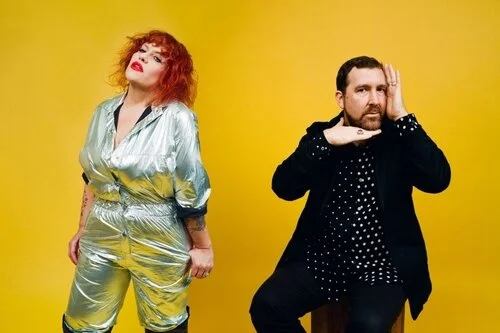
In general, I never took to the meandering styles of today’s jam bands, gravitating towards more distilled pop and rock music as I aged. Still, I feel that fondness for the brief period in my childhood when laid-back rock stars took us on the journey, only arriving at a destination long enough to make some quick money with a hit single. And to this day, I don’t know which of the two princes I would choose—the rich one has a rocket ship!”.

I guess the above is more of a recollection than a review. It is interesting when songs divide people and there are a lot of different opinions on them. I can see why some would side-line Two Princes as a song that was of its time and is perhaps dated now. There is much to love about a song that has won a lot of affection from people around the world since its release. Whether it is seen as a track that falls into the guilty pleasure camp – I do not believe in the concept and notion of a guilty pleasure – or it takes you back to a special moment in time, one cannot deny that its catchiness…

DRAWS you in.

FEATURE: Spotlight: Kidä

FEATURE:


Spotlight

aaa.jpg

PHOTO CREDIT: Lola Banet for ENFNTS TERRIBLES  

Kidä

___________

THERE is a world of promising…

qqqq.png

and interesting artists out there. Through my Spotlight features, I am trying to focus on as many of the best and most intriguing artists coming through. In this instalment, I wanted to shine a light on Kidä. This is an artist that I discovered fairly recently (though she has been making music for quite a few years now). Creating more experimental, less commercial music has meant that, perhaps, her name is not as widely known as it should be. I will bring in a few different interviews so that we can learn more about a fine young artist. In this interview with METAL, we discover more about the music and style of Kidä:

Kidä, also known as Ava Leoncavallo, is the New York-based sound designer, composer, Red Bull Music Academy graduate and founder of the platform A Portal To Jump Through launches her new single The Garden. Her life is now dedicated to music and her experimental style and role as an alchemist of sound have circuited throughout fashion, art and advertisement, enabling her to work with brands like Dior or Prada.

I feel that your music is a very cool blend of '70s psychedelic rock with mythology inspired by your Egyptian heritage. Do you always find inspiration in the past? What inspires you on a daily basis to create new music?

I actually don’t feel like I have much control over my pool of inspiration – a lot of it is absorbed through environmental osmosis. Sometimes I walk around the city for a day and overhear a conversation or see an image that sets me off on a research spin for weeks on end. The act of music-making is more or less of way or organizing my thoughts. I think if I didn’t make music I’d be a writer, I have a strong urge to document ideas. When I stop doing that, I lose my internal compass. It’s a cliché but I actually need music to function properly. Otherwise, I imagine I’d be an insufferable tyrant because my head would just be on fire all the time.

Creating music from scratch seems really difficult because you are working with intangible elements. How do you create your music? Could you tell us your creative process?

I just follow a flow of attraction. I don’t know what genre my music is, but I’m not necessarily fixated on it. I trust that my different inspirations manifest in a way that pays homage to the music that I listen to and I think it usually does. I try not to dig up the grave of our past rockstar ancestors to steal their formula, we fight evolution by doing that. I’d rather rouse the living than summon ghosts.

Besides your music career, I would also like to talk about your aesthetic and your style because I feel that you have a very unique sense of fashion. What inspires your style?

Anything and everything. I love Jean Paul Gaultier, McQueen’s feral era, Galliano’s theatrics… But I think, above all, I feel most connected to Italian women’s philosophy when it comes to beauty, there are femininity and elegance but it’s laced with animalism and wildness. Tan skin, long athletic limbs, lipstick.

I think passion is what exudes style – whatever I am passionate about at the minute ends up being reflected through my style – whether that be romance, the Sahara desert, utility, insects, or anarchy. You will know what I’m thinking based on what I’m wearing. It’s my mood ring. If I’m wearing a dramatic cat eye it’s best to leave me alone. I’m either in heat or plotting revenge”.

I think that the thrilling and hugely original music of Kidä will reach a wider audience once we start to emerge more fully from lockdown. It must be quite constricting being in a restrictive state when this music needs to be delivered to audiences. As a creative, she must feel quite stifled and frustrated at the moment. In an interview with The Line of Best Fit from February, they delve deeper into her debut E.P., Burn to Make Glow:

Kidä’s background in aesthetic sonic creation contributes to her experimental and electrifying rock. Now, stuck in snow entrenched New York, Kidä’s creativity has evolved into a more concentrated form: “I find I’m forced to confront myself so much because I’m in quarantine and not able to distract myself with other people’s energies. [Instead], I’m getting lost in dreams and research.”

Kidä’s debut EP Burn to Make Glow is based around her love for storytelling. She draws from Kate Bush’s propensity for moulding narratives into intricate songs: “I like creating images in my music; whether that’s lyrically or using these cinematic sounds and sound design to imbue a landscape…I was very inspired by Kate Bush. She would read or hear a story, think of something and then would want to retell it in a song.” The influences that seep into Kidä’s music range from her dreamy childhood reading of fables to having RnB and Y2K obsessions as well as the modular synths she uses for APTJT.

Teasingly, Kidä’s music cannot be pinned down. From the sparkling synths of ‘Comet’ to the spellbinding bass of ‘Kneel To You’, the music carries an air of mystique around it, becoming more enchanting with every listen. ‘Comet’ is also part of the le Beirut Art Relief Fund, raising funds for those affected by the explosion that caused devastation to the Lebanese capital. “I’m always trying to help where I can, and this is the best means I know possible. Tensions in the Middle East feel close to home - it’s something I’ll always want to aid because I have Middle Eastern family.” The project ‘How To Make A Portal To Jump Through’ raised funds for Syrian refugees, another cause close to Kidä’s heart: “My mother had a Syrian refugee living with her at one point. All these narratives from these trauma survivors, they’re very close to us”.

In concluding, there is one more interview that I want to pull from. I have dropped in a few songs through the feature. I would advise people to seek out Burn to Make Glow and listen to Kidä. She is an artist that will become more widely explored and exposed as the year progresses. This interview from ENFNTS TERRIBLES revealed some illuminating information:

What does Burn to Make It Glow mean to you? 

It was very cathartic, and this whole record was sort of a way for me to kind of rewrite my own traumas. The meaning of this album is the process of being in this place where burning but knowing that all of that is going to turn into something else. It’s ultimately what the album became.

Why did you decide to name the project after the final track “Burn to Make It Glow”?

It perfectly sums up the meaning that I’m trying to communicate in the most summarized way. (laughs)

We have a big admiration for your song “The Garden”. What is it referencing?

“The Garden” was a song about a breakup and growth. I was obviously in a place where plants grow, so I used it as a metaphor for wanting to forge ahead.

qqqq.jpg

PHOTO CREDIT: Lola Banet for ENFNTS TERRIBLES

Does composing help you understand who you are as Kidä?

Naturally, they bleed into each other. I’m, for example, stewing in similar references. Like when I’m writing a score for Gucci with all those beautiful strings, I’m listening to all these magnificent classical songs that day. Naturally, that will be in my mind when I start to write a song for Kidä, and I’ll be wanting to use some middle-eastern strings like in the “Enter”, for example. So, of course, they’ll overlap.

Are your future projects going to sound very different from Burn to Make It Glow or will there be similarities?

It’s like when you enter a movie or video game, and you enter one landscape, there will be a new scene where you enter another landscape. It will be like this. It will still be me, and you’ll be able to tell that, but it will be a different world within Kidä world. That’s the best way I can describe it”.

To finish up, I want to bring in one more interview. When she spoke with Glamcult, Kidä talked about her blend of the modern and spiritual:

There’s a continuous balance in your work of digital production to new-age spirituality. Where does this come from?

As an artist, it’s always intriguing to use whatever mediums are available to you- and a lot of it was due to quarantine. It creates freedom, the digital realm. I’ve always been interested in the surrealism of the 1900s and those landscapes really speak to me – the post-apocalyptic world- life but mutated. Within this world, everything is occupying a more dreamlike state and was able to do that through these states.

This manipulation of the physical to the digital and vice versa is surrealism in itself.

I’m just curious in a lot of different formats and its so exciting to work with different people.

Does everything start with this palette?

Yeah! When living in London, I was around a lot of designers and we intermingled. My passion came from there.

How does the energy shift between London and LA?

LA is a place I come to retreat to, I don’t need to see anyone when I come here. It allows me privacy, and I disappear into the studio and my friend’s homes. Freedom comes from this, as essentially im kind of hermetic. Especially this year. I’m so comfortable in this state, and that’s definitely what the video speaks to.

I think that Kidä is an artist with a long and very interesting feature. I really like her debut E.P., so I will look closely at how she progresses and where she heads. Discover a brilliant artist who has created a sound and look that is very much…

A world of her own.

____________________

Follow Kidä

zzz.jpg