FEATURE: Mother (and Father) Stands for Comfort: Kate Bush and Her Parents’ Support

FEATURE:


Mother (and Father) Stands for Comfort
eeee.jpg

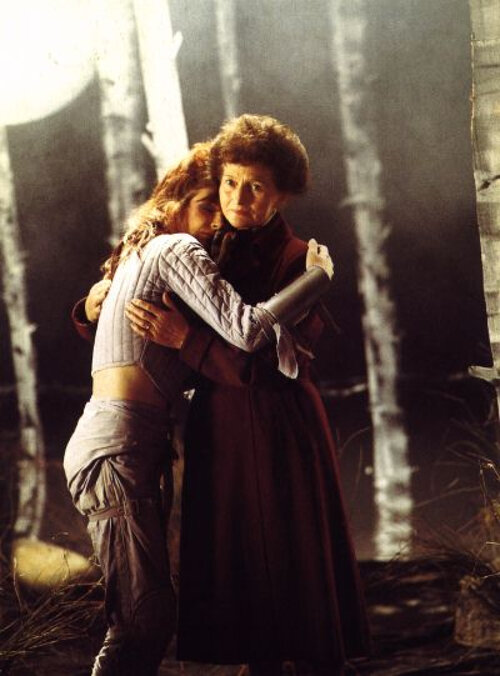
IN THIS PHOTO: Kate Bush with her mother, Hannah, in the video for Suspended in Gaffa/PHOTO CREDIT: John Carder Bush 

Kate Bush and Her Parents’ Support

___________

EARLIER in the year…

www.jpg

 IN THIS PHOTO: Kate Bush with her parents, brothers and friends

I published a feature about Kate Bush and how she draws inspiration from her family. There are few artists who have included their entire family in their music. In terms of turning her onto music and different forms of culture, her brothers, Paddy and John (‘Jay’), were important guides for Kate Bush. They have both played a big role in her career – Paddy in terms of making his sister more aware of unusual and less conventional music; he has appeared on many of her albums; John, as a photographer, has snapped his sister since she was a child. Bush’s son, Bertie (Albert) can be heard on 2005’s Aerial and 2011’s Director’s Cut and 50 Words for Snow (he also performed on stage with her during Before the Dawn in 2014). Her partner, Danny McIntosh, has appeared on many of her recordings. It must be comforting to have her family appear on her records. Of course, when it comes to her brothers, she had a musical and creative bond with them from childhood. Bush’s ‘new family’ of Bertie and Danny has mixed alongside Paddy Bush on more-recent recordings (both appeared on Director’s Cut). I am casting my mind to other artists whose family has been so instrumental in terms of appearing on recordings; who have also inspired the creative process. It is no surprise that Bush has her family appear on her albums, as she has her own studio at home and there is that convenience. Ever since 1978, Bush has worked alongside her family on professional recordings (of course, John Carder Bush photographed Kate many years before that).

I think her siblings’ influence is very powerful and important. Most musicians can count their parents as big fans and supporters. Not only has Kate Bush’s parents been encouraging and helped shape her path; they also appeared on her albums. It was not the case that her mum and dad had no reservations about going into music. They would have liked her to go to university of spent longer in education. Given the fact Bush released her debut album when she was nineteen, one can understand why there were reservations. She was very young and, if things didn’t pan out, what were her options? That said, they didn’t hold her back. They were encouraging and supportive. Maybe it is the fact that this was a middle-class household. They would have been able to support their daughter if things did not go right. A more working-class family may have dissuaded their child from pursuing music in their teens. In a household filled with music, I am not surprised it enforced Kate Bush’s passion! Recognising their daughter’s innate and amazing gift, I feel her parents knew she was going to be a star and provided this support and comforting air. Before moving on, it is worth learning more about Kate Bush’s parents. Her father, as the Kate Bush Encyclopaedia highlights, can be heard on many of her most-famed recordings:

Born on April 4, 1920 in South Ockendon, Robert John Bush worked hard to win a scholarship to the Grammar School at Grays, and later won a place at medical school to become a doctor.

He married Hannah Bush in early 1943. Together they had three children: John Carder Bush (1944), Paddy Bush (1952) and Kate (1958).

His voice can be heard in the song The Fog, in the extended version of The Big Sky (The Meteorological Mix) and also among the voices calling to the heroine of The Ninth Wave between the songs Under Ice and Waking The Witch.

He passed away in 2008”.

Her mother, too, is someone who one can hear on some brilliant tracks. Again, with the help of the Kate Bush Encyclopaedia, we can discover more about an incredibly inspiring woman:

Born on June 20, 1918, Hannah Patricia Bush was Kate's mother. She worked as a staff nurse at Epsom Grove Hospital and was one of 12 children who originally hailed form the harbour town of Dungarvan in County Waterford (Ireland).

She married Robert John Bush in early 1943, giving birth to John Carder Bush a year later. On December 9, 1952, Paddy Bush was born. Six years later, Kate was born.

Hannah's voice can be heard in The Ninth Wave, saying the line 'Come here with me now' in the song And Dream Of Sheep, and among the many voices calling to the heroine between the tracks Under Ice and Waking The Witch. She can be seen in the video for Suspended in Gaffa.

Hannah Bush passed away on 14 February 1992, and the album The Red Shoes is dedicated to her memory”.

I am going to do another detailed dive into Kate Bush and her family later down the line. Growing up at East Wickham Farm in Welling, the young Kate Bush was exposed to so much music and creative flair. Her Irish mother, who grew up in Waterford (where music was part of the familial and domestic fabric) identified a spark in her daughter. Kate Bush bought her first album, Simon & Garfunkel’s Bridge Over Troubled Water, and bonded with popular music of the 1970s – Roxy Music, Elton John and Marc Bolan (and many others) mixed with English and Irish folk.

Her father played Classic pieces on the piano and integrated that with songs from the Great American Songbook. Bush, as Graeme Thomson notes in the biography, Under the Ivy: The Life & Music of Kate Bush, was inspired by that early exposure. Her love of Classical music later explains her unorthodox song structures and more experimental nature- one can trace this back to her father’s playing. From her mother, she picked up Irish folk and the instruments played on these records - one can hear an Irish influence in her music pretty early on (it is especially prevalent on The Dreaming (1982) and Hounds of Love (1985). It is clear that some tutors at school encouraged Kate Bush and were important to her. Like most artists, the biggest inspiration came from her folks. They realised that she could realistically make a career from music and dedicate her life to this medium. The young Kate Bush was not someone who had her parents ask to hear her songs and barge into her room. Her father was especially attentive and useful as a sounding board when she needed it. Bush has said in interviews how she would ask her dad to listen to her new songs and, so long as she could wait until the adverts came on T.V., he would sit and listen. I think that sort of dedication and audience meant that she could play her  mass of new songs (she was especially prolific and prodigious!) and determine which were promising. Her father was encouraging, but he would not say everything was great – he would give fairly honest feedback (though, as I will soon mention, there was a littler bias and subjectiveness). Her father’s ear and shoulder would be utilised by Bush through her career.

I think his impact was vital when it came to her career and determination. Her mother was also very supportive from the start. When the debut single, Wuthering Heights, was released in 1978, Hannah Bush would ask friends and people to call the radio stations and get the song played in order to get it up the charts - the song would eventually reach number-one. Perhaps the love and slight subjectiveness was a mixed blessing. There was a definite sense from Hannah Bush that, if her daughter’s interests were not being treated fairly, she would have a say. One example came when Kate Bush took the mix of The Man with the Child in His Eyes (from her debut album, The Kick Inside) to producer Andrew Powell. Her mother felt the strings were not turned up enough. Powell, an experienced producer, disagreed. An assumption, in a bid to support and encourage their daughter, that everything she recorded was fabulous was overridden with the introduction of Del Palmer (he and Bush dated early in her career through to the 1990s; Palmer appeared on many albums and is still working with her to this day as an engineer) into the family circle. A no-nonsense and funny Cockney, he would be straighter with Bush! Whilst she did not like people being too critical about her work, I think this sort of balance was healthy. Her parents, of course, were fantastically supportive…though a sort of blinkered and rose-tinted glasses approach could have led Bush to be too complacent and not push herself.

www.jpg

 IN THIS PHOTO: Kate Bush in 1978

Kate Bush grew up in an affluent household, though she never relied on that or needed much financial support too much from her parents. They made sure their daughter was being treated equitably, though she had a clear vision and did not need too much interference. I love the fact that her father, for nearly all of her career, was there to hear music and provide his feedback. Later in life, I think his natural paternal instincts and love was sage and needed. As he was a doctor, he was at hand when Bush was suffering with stress and nervous fatigue. He prescribed bed rest. This came after the recording of The Dreaming. So intense was the recording of that album that it took her six months to recover. Subsiding on an unhealthy diet, things changed when she started work on Hounds of Love. Not only did the fresh air of East Wickham Farm and a custom-built studio (she built a 24-track studio in the summer of 1983 in the barn behind her parents’ home) help reverse a lot of the pollution and strain of London; her parents’ warmth and perfect environment, I feel, played a big part in the sound and brilliance of the album. Her mother’s legendary hospitality meant that musicians and those involved with recording Hounds of Love were well fed and catered for. Of course, her brothers were there to give her help and love - though her parents’ influence and warmth meant that there was this safe haven. I am going to cut it short here. I wanted to break away from my previous piece about Kate Bush’s family and their influence and concentrate on her parents. I know that parents are supportive and loving, but there was something extra about the Bushes. The combination of music, arts, nurturing and hospitality was a massive reason why Kate Bush had this confidence and natural ability. Although they are both (sadly) no longer with us, they will both…

NEVER be forgotten.

FEATURE: Spotlight: Empress Of

FEATURE:


Spotlight

dddd.png

Empress Of

___________

I like to have a mix of artists on Spotlight…

qqqq.jpg

between those who are just coming through and others that are more established. Empress Of (Lorely Rodriguez) definitely slots into the latter category. She has released three albums – 2015’s Me; Us of 2018 and last year’s I’m Your Empress Of -, in addition to E.P.s and a mixtape. I will finish by focusing on her most-recent album. I want to start a bit further back. Before introducing the first interview, here is some background information about the Los Angeles-born artist:

Rodriguez initially gained attention in 2012 for anonymously releasing a series of one minute-long demos (via YouTube) prefaced only by a solid color entitled "Colorminutes".Her first 7" single, "Champagne" was released soon after on November 5, 2012 through a limited run via No Recordings. Lorely's stage name was inspired by a tarot card reading she did with a friend: "The first card he pulled out was an Empress card and I was like, 'It's me, I am Empress.' [...] the Empress card is connected to fertility and mothering and strength. It's kind of nice to have those feelings."

On April 2, 2013, her bilingual four-track EP Systems was released via Double Denim and Terrible Records in the UK and North America respectively.[5] Since the release of her EP, she's showcased at SXSW, Iceland Airwaves and Pitchfork's Summer Music Festival[6] and toured as a support act with the likes of Jamie Lidell, Jungle, Kimbra and Florence and the Machine.

"Water Water", the first single off her debut full-length Me was released on April 14, 2015. She has also released a Spanish-language version of the track, "Agua Agua" "so that [her] mother listens [to her] music." Rodriguez's debut album Me, which she self-produced and recorded in Mexico was released on September 11, 2015 via XL Recordings and Terrible”.

Before coming up to date, the first interview I want to bring in is from IMPOSE. In it, Empress Of discusses the route to her debut album. We get to learn more about a fascinating artist:

When Rodriguez was growing up, her father, also a musician, attempted to teach her Beatles songs on the family piano. The uninterested teen resisted, preferring a more autonomous musical education online. When the family got internet, the first website Rodriguez visited was www.christinaaguilera.com. Later, upon discovering Limewire and Napster, thirteen-year-old Rodriguez set out to find the weirdest stuff she could find. She was quickly drawn to Björk, whose swan dress was being broadcast on MTV and VH1, channels Rodriguez and her brothers watched after school. In particular, Rodriguez became obsessed with the Icelandic singer’s big band experiments, like 1995’s “It’s Oh So Quiet.” She researched the original composers and fell down a jazz rabbit hole. After being a competitive jazz singer in high school, Rodriguez enrolled at Boston’s Berklee College of Music to study jazz. But having received her first laptop when she was seventeen, Rodriguez became more interested in making beats. She switched into the college’s sound engineering program. After graduating in 2011, Rodriguez moved to Brooklyn to perform with her pals in Boston psych-shredder outfit Celestial Shore.

Once in New York, Rodriguez began to perform under her new solo monniker, Empress Of. The name originated after a tarot reading by a friend, in which he immediately pulled the Empress card, one that is associated with nature, fertility, femininity, and abundance. Rodriguez later wrote a song inspired by the experience, “Hat Trick.” She decided against calling herself simply “Empress,” saying, “That sounded so cocky. I’m confident most of the time, but not cocky.”

In late 2012, Empress Of released her first recordings, Colorminutes, a song-a-day demo project wherein she releases short, 1-minute snippets of songs straight to YouTube, each assigned a specific color. The process was meant to refine her creative discipline and technical skills. When discussing Colorminutes and her overall practice, Rodriguez feels strongly that true passions lead to intellectualizing: “When you obsess over something there has to be a point where it becomes academic. Like, if you’re obsessed with DJing, then you’re going to be obsessed with all the techniques and the history and records or record collecting,” she explains. “When I first got into production, it got really nerdy for a second. Like how to make certain sounds and how to mix a little bit and then it crosses over into the creative side.” Colorminutes was an opportunity to flex, as she says, the intersections of her nerdy tendencies and her creative side. The project’s minimal information was meant to let the songs speak for themselves. Rodriguez notes that although she would like to return to these songs at some point, particularly her personal favorite, the turquoise-green #2, she cannot because her production and songwriting styles have evolved so intensely. “I would never write that experience like that now,” she says, of the time in her life channeled into that song. “It would be much more of a story. I think developing as a songwriter, you learn how to tell stories so people walk away with your experiences.”

qqqq.jpg

PHOTO CREDIT: Miriam Marlene Waldner for Wonderland.

“I love this record. I love playing this record. I own up to this record 100%. I put everything I could possibly put into it,” she explains. Me’s success, like its content, ultimately depends on the energy Rodriguez pours into it, and for the past two years, she has been relentlessly devoted.

At this mid-summer meet up, Rodriguez tells me more about writing her record. To start, when she arrived in Mexico, Rodriguez broke down. The opportunity to spend a full month alone in a foreign place with the sole purpose of writing her debut album was a surreal opportunity. However, it was difficult to write with the pressure of fulfilling a contract rather than just for herself. “I felt so obligated to come up with content every day. I felt like I was writing against the clock. You can’t force yourself to be creative. I worked on it every day. Some days it was garbage, some days it was amazing, but I mostly drove myself crazy.” While making the album’s biggest hurdle may have been isolation and personal high expectations, these same conditions were the most motivating. “Driving myself crazy is what made those songs happen,” she says. “I spent so much time by myself because I was far from anything. A lot of the songs are about me digging in my head.”

“The biggest message in this record is that it’s hard to be comfortable with yourself,” she continues. “It’s hard to love yourself. When you’re alone for so long you have to love yourself, otherwise you go crazy. I didn’t love myself. When you’re in New York there are so many distractions, there are so many people you can go to and forget that you have these insecurities”.

In this 2019 interview with Wonderland., there are observations regarding her two albums (to that point) and the difference between them. 2018’s Us is a fascinating album and a step on from her debut:

This element of collaborating and bringing people together has been the main difference between Rodriguez’s two records, both within the songwriting sphere and in her general life. While Me was written entirely by herself in the secluded village of Valle de Bravo in Mexico, she wanted to surround herself with people for her second, moving from New York back to her hometown of LA to be closer to her family and recruiting outside producers and writers such as Dev Hynes and Jim-E Stack to help create her vision. “I wanted to be around other people. I didn’t want to be alone,” she explains. “After working on my first album all alone — and that being great — where I am in my life is wanting to share experiences. I want to know about your experiences. I don’t want to be so selfish, you know?” Covering life experiences that everyone goes through, at its core Us explores what brings people together. Throughout the record, Rodriguez weaves between stories that deal with depression, love, heartbreak, jealousy and friendship that she’s witnessed in her circle of family and friends. She’s done it in a way that has resonated with everyone who’s listened – a fact realised by the 99+ Instagram DM notifications on Rodriguez’s phone from fans bursting with stories of how the record has touched them.

“I’ve been fortunate enough to have people reach out to me and tell me how this album makes them feel,” she smiles. “I love when I listen to an album and it becomes a part of a time and a place in my life and it’s like something that was missing. If I can give you something that was missing, that makes you understand yourself better, then I would love that. Listen to the record, find something in it that makes you feel like you understand yourself. It doesn’t always have to be about me. There are autobiographical songs, but these are things that everyone experiences within their lives.” It seems that becoming a #relatable pop icon will only be a matter of time for Rodriguez, but what does she think? “Basically, I’m just a passive-aggressive Libra who wants everybody to get along,” she laughs. Already iconic”.

Skipping to her recent album, and a lot more people turned their heads the way of Empress Of. Not that her previous work flew under the radar. What I mean is that I’m Your Empress Of is, to me, her most confident and incredible album. I am keen to bring together a couple of positive reviews for that album. Before then, this interview from PAPER, we discover more about the time between 2018’s Us and how Empress Of has progressed as an artist:

Empress Of came down to earth and embraced pop on her indelible sophomore effort Us — one of 2018's best albums. Since then, Rodriguez has thrived in the space opened up by the breakdown between mainstream and alternative music, shared by folks like FKA Twigs, Caroline Polachek, Dev Hynes, Clairo and Solange. Besides Rogers, Rodriguez has opened for Lizzo, Hynes' Blood Orange and Mura Masa, and featured on songs with Khalid and MØ. "On Me, I realized I could write pop music and I loved it," she says. "I loved going into rooms with artists that are so different from me and learning from them."

I'm Your Empress Of takes a different direction. While Me was warm, tender and serene, I'm Your Empress Of is a little bit fucked up. "I wanted this record to sound broken," says Rodriguez.

"[While writing Us] I was in a really settled place," she continues. She had just moved to Los Angeles and carved out a block of time to write her sophomore album. Meanwhile, I'm Your Empress Of came together on the road, in the midst of a tour and painful breakup. "I was physically and emotionally unsettled. I was traveling all around the world. A lot of those beats I made on airplanes or in greenrooms our tour buses. There was this driving chaotic energy to the production." Us took her longer than she'd hoped to write. Rodriguez finds "settledness" creatively challenging, so it will tell you something about her emotional state that the new record wrote itself: "I came home for a few months, and I was like 'woah, something's happening to me.' I felt so creative."

Rodriguez co-produced both of her last two albums with Jim-E Stack (Charli XCX, Perfume Genius, HAIM). Us favored frothy synths and percussion with naked vocals firmly in the foreground. I'm Your Empress Of meanwhile, is a maze of clashing symbols, jagged club beats and knotted melodies. She opts for blurry vocal effects on songs like "Not The One," "Awful" and "Love Is a Drug," which turn her lyrics into beat-keeping chants, in contrast to of Us's detail-heavy storytelling. There's a few moments of the blissed out euphoria that fans have come to expect from Empress Of — like the chorus of "U Give It Up" — but overall, I'm Your Empress Of is a darker, more challenging listen.

aaaa.jpg

Empress Of has always been of the music-as-therapy school of songwriting. But on I'm Your Empress Of, writing was more of a life-line than ever. "I'm really bad at expressing myself in relationships and with family," says Rodriguez. "I was really heartbroken when I was on tour and I didn't process it until I went home and started writing." During one songwriting session, Rodriguez realized she needed to take her mental health more seriously. "I need some help, I need some help, I need myself, I need myself," she sings on "Awful," which also contains the excellent gut-punching rhyme, "I get off on being awful to myself." "I realized I needed to talk to someone after writing that song," she says.

The album charts the full life and death of a relationship, from the thrill of letting someone call you "baby," to screaming matches, to apologies like "an anthology of empty words," to self-medication with casual sex, to begging for another chance, to wishing desperately to move on. With this story arc in mind, what of the album's deceptively straightforward title? Whose Empress Of, exactly?

The album offers two different answers. On the opener and title track, Rodriguez sings the lyric "I'm your Empress Of," over and over again on a helium plinking keyboard. Her mother Reina, who returns as a character through spoken interludes across the album, speaks the line "I only have one girl/ But the only girl is like having thousands of girls/ Because look how she reproduces herself in each bunch of you." On her album cover, Rodriguez wears a multicolored bell skirt and bandeau woven from hundreds of shiny, plasticky purple and pink ribbons and bows like a human present. "When a song is done, it's not mine anymore, it's the listener's. I love that my songs, that came from a place of pain, that pain becomes”.

I am going to wrap up soon. Before I do, I think it is worth highlighting what critics made of I’m Your Empress Of. It was one of last year’s best albums. I think that Empress Of is going to go on and be a major star of the future! The Line of Best Fit were keen to lend their praise:

Title track “I’m Your Empress Of” begins the record with Rodriguez repeating the title over a salsa piano riff she learned from her dad at the age of eight. The rhythm gives way to her mother’s voice, reminiscing about what it was like to come to America, learn a whole new language and find her way in this world. Then she turns to Lorely herself.

It often feels like a gimmick, getting a non-musical family member involved, but here it sets out the stall for what I’m Your Empress Of will become. There’s a pride in her mother’s voice as she declares “Look how many times she’s represented herself in each one of you”. What follows is an Empress Of that feels rejuvenated and connected; spurred on by a need to process a breakup but also to celebrate everything she stands for.

Taking back control by writing and producing most of the album, she sounds fully in tune with every facet of her identity. The Chicago house inspired wonky pop is back. The Latin vibes are back. Most importantly, her way with words is back (“Void”’s opening line “Every apology got worse / An anthology of empty words” is a particularly delightful one).

Us, while full of great tunes, seemed to lose what made Me so special. The cavalcade of producers and writers stripped it of the first album’s magic, as though each song was written for anyone to take on. It’s something all the more apparent when it’s sandwiched between two albums so full of personality since I’m Your Empress Of has that magic back too. By trusting in her ideas and taking on this quest by herself, Empress Of has imbued this record with life.

From the sharp synth stabs of “Bit Of Rain” to the distorted reflections of album closer “Awful”, all led by Rodriguez’s fantastic vocals, I’m Your Empress Of is a funky, generous and vibrant record”.

To finish off, this review from Pitchfork is an interesting read. Never ones to provide too much positivity, they do highlight the merits of I’m Your Empress Of:

While poring over I’m Your Empress Of’s lyrics suggests an author with fresh wounds, the album is also a showcase for Rodriguez’s production abilities at this new peak. The lead single, “Give Me Another Chance,” is a rush of Eurodance, and in the balearic-inspired mid-tempo “Void,” Rodriguez Auto-Tunes her vocals to suggest weightlessness, her ennui dusted with clouds of powdered sugar. “What’s The Point,” is shot through with pitter-patters of drum’n’bass percussion, and you can imagine the song’s thick, creeping bass whipping crowds into a frenzy at a festival (failing that in the foreseeable future, your living room speakers will do the trick). In the hands of a less sure-handed artist the whiplash between emotional extremes could be jarring, but Rodriguez makes it feel delightfully dizzying. What is life in the digital age if not a constant pinball between joy and despair?

One of Rodriguez’s earliest ambitions as Empress Of was to be “weird.” The first music she shared was a homemade series of wonky electronic oddities titled Color Minutes, but by the time of her second album, she was drawing from the high gloss hip-pop of Ariana Grande. Yet the creative furrow she finds on I’m Your Empress Of is enriched by Rodriguez looking closer to home, an impulse literalized with the inclusion of spoken-word passages delivered by her mom, Reina, a first-generation immigrant from Honduras. Reina’s unguided reflections move from proud messages of survival to love and femininity, providing a guiding light while foregrounding the album as in conversation with shared Latinx immigrant histories. “It was not easy speaking English,” Reina says on the album intro, after Rodriguez plays a bright salsa piano line that she learned from her father. “It was not easy having to learn it,” continues Reina. “But I got it.”

I’m Your Empress Of vibrates with the contradictions that one person can contain: how mourning the loss of a partner is bound up with anger, the fatigue of resilience, and the pleasures to be found in escaping it all, if only for one lusty night. With unexpected production and left-field samples, Rodriguez’s album is powered by a heady rawness that bucks the trend for theatrical concepts in today’s electronic pop nonconformists, producing epiphanies like hot stones spat from a fire. You could say it is as addictive as modern love”.

If you have not followed Empress Of, then go and check her out and listen to her music. She released a new song recently (see below). I hope we get more music from her very soon. On 30th April, Rodriguez/Empress Of announced that she was partnering with an Ad Council-backed national campaign called Sound It Out Together. The campaign is designed to highlight youth mental-health and create an outlet for adolescent school children of colour; to express their emotions and experiences through music. She is an inspiring human and a remarkable artist!. When it comes to to the amazing Empress Of, I think that there is…

A lot more to come.

_______________

Follow Empress Of

qqqq.jpg

FEATURE: Vinyl Corner: The Roots - Undun

FEATURE:


Vinyl Corner

xxxx.jpg

The Roots - Undun

___________

THERE is always something…

xzzz.jpg

 IN THIS PHOTO:' The Roots perform an exclusive track during the John Varvatos fall/winter 2011 campaign shoot at Republic Airport in New York

fascinating and unique with every album from The Roots. The Hip-Hop band were formed in 1987 by Tariq ‘Black Thought’ Trotter and Ahmir ‘Questlove’ Thompson in Philadelphia, Pennsylvania. Their most-current album, ...And Then You Shoot Your Cousin, was released in 2014 – let’s hope that this is not the final album from the group. I want to discuss the album that arrived before that: 2011’s magnificent Undun. Its concept is one that really interests me. The album is about the short, tragic life of fictional character Redford Stevens, set in urban poverty and told through a reverse-chronological narrative. Before bringing in some reviews and a link to buy the album, it is worth grabbing some Wikipedia information regarding Undun’s concept:

The plot of the album takes place in reverse over the course of a day in Redford's life, with the multiple featured rappers all speaking from Redford's first-person perspective. The album opens with the sound of a flatlined EKG on the instrumental track "Dun", signifying Redford's death. This leads into the second track, "Sleep", where Black Thought's verse portrays Redford's dying thoughts on his life, fate and whether he will be remembered. "Make My" depicts the killing of Redford, with an extended outro modeled on Mobb Deep's "Shook Ones (Part II)" that conveys Redford's spirit beginning to leave his body.

"One Time" finds Redford feeling remorse and contemplating the course of his life; he reflects on the time that he stopped caring about school. "Kool On" and "The OtherSide" depict Redford living successfully as a drug dealer. "Kool On" hints that Redford is deluding himself, and the song's lyrics are about "how successful street hustlers might fool themselves in believing they are living the 'good life' but, in reality, 'living on borrowed time.'" "Stomp" is meant to be the song on which "he's either gonna live or he’s gonna die with whatever path he has chosen to go down." While Redford feels that he has been forced into crime, he is also decisively choosing his path. On "Lighthouse", Redford contemplates suicide,[19] and the song's hook "there’s no one in the lighthouse/Face down in the ocean" is a metaphor for Redford being caught up in crime and questioning the direction of his life. Redford recalls his life before crime on "I Remember". "Tip the Scale" explores "how the odds are already stacked against a black man growing up in the ghetto even before he is born".

The album is concluded with a four-part instrumental movement. Part one is Sufjan Stevens performing his "Redford (For Yia-Yia & Pappou)", originally from the album Michigan; part two has a string quartet reinterpret the song. Part three is a free jazz performance by Questlove and pianist D. D. Jackson. The album concludes with the fourth part, another string quartet piece that ends abruptly with an unresolved piano chord. Roots manager Richard Nichols described the final four tracks as a "birth-cycle" and said "It’s almost like he was undone upon birth ... your outcome of your life is definitely gonna be affected by your surroundings, statistically".

I would recommend that people buy the tremendous and hugely memorable Undun on vinyl. You can buy it from Rough Trade. They describe Undun in these terms:

10th studio album from the Roots originally released in December 2011. The first conceptually-based album from the Roots featuring Big Kirt and Sufjan Steven. Undun is an existential re-telling of the short life of one Redford Stephens (1974-1999). Through the use of emotives and Redford's internal dialogues the album seeks to illustrate the intersection of free will and prescribed destiny as it plays out On the Corner. Utilizing a reverse narrative arc, the album begins as the listener finds Redford disoriented - postmortem - and attempting to make sense of his former life. As he moves through its pivotal moments he begins to deconstruct all that has led to his (and our own) coming undun”.

Many of The Roots’ album have received positive feedback. From their 1993 debut, Organix, to today, the group have been lauded and celebrated as one of the most consistent and innovative in music. It is no surprise that Undun, given its concept and the exceptional music within, resonated with critics and showed that The Roots had lost none of their genius.

The first review that I want to bring in is from AllMusic. They were incredibly positive and deep in their review. They made some interesting observations and points that hasn’t occurred to me before:

The Roots' umpteenth album is titled after a Guess Who song mutilated by countless lounge bands since 1969. It incorporates a Sufjan Stevens recording, mixtape-style, for the purpose of starting a four-part instrumental suite that closes a program lasting only 40 minutes. Based on those details, it would not be irrational to think that the band’s well of inspiration might be dry or tainted. While the well might be slightly tainted, it is full. Undun is based on the life of Redford Stephens, a fictional product of inner-city New York who was born in the mid-‘70s and tragically passed in 1999, the point at which the album begins -- with a quiet EKG flatline. Appearances from MCs Big K.R.I.T., Dice Raw, Phonte, Greg Porn, and Truck North, as well as contributions by singers Aaron Earl Livingston and Bilal, flank principal voice Black Thought, yet this is no hip-hop opera or anything close to a typical concept album. The existential rhymes, seemingly created with a shared vision, avoid outlining specific events and focus on ruminations that are grave and penetrating, as if each vocalist saw elements of himself and those he has known in Redford. What’s more, Undun probably shatters the record for fewest proper nouns on a rap album, with the likes of Hammurabi, Santa Muerte, and Walter Cronkite mentioned rather than the names of those who are physically involved in Stephens’ life. (The album’s app, filled with video clips and interviews with Stephens’ aunt, teachers, and peers, provides much more typical biographical information.) Musically, Undun flows easier and slower than any other Roots album. The backdrops ramp up with slight gradations, from soft collisions of percussion and keys (“Sleep”), to balmy gospel-soul (“Make My”), to Sunday boom-bap (“One Time”). There's a slight drop into sinewy funk (“Kool On”) that leads into a sustained stretch of stern, hunched-shoulder productions, highlighted by the crisply roiling “Lighthouse,” that match the cold realism of the lyrics. The strings in the slightly wistful “I Remember” and completely grim “Tip the Scale” are a setup for the Redford suite, which is nothing like padding. It glides through the movements, involving mournful strings, a violent duel between drummer ?uestlove and guest pianist D.D. Jackson, and a lone death note that fades 37 seconds prior to silence”.

Just before wrapping things up, it is worth introducing a review from Entertainment Weekly. In another hugely glowing review, this is what they had to say:

The Roots currently occupy a strange yet comfy bifurcated existence as the hardest-working, most-sought-after band in hip-hop, and the resident music-makers on Late Night With Jimmy Fallon. Thankfully, the safety and security of a regular gig at 30 Rock (with benefits, no less!) has emboldened rather than stifled the group’s raging ambition. The Philadelphia vets’ 13th studio album, Undun, is the group’s first concept album, and the culmination of everything it has worked toward musically and lyrically. It’s a subtly assured magnum opus that broadcasts its aspirations from the mountaintops.

Conceptually, Undun resembles Christopher Nolan’s Memento. It begins at the end, with the death of its hustling protagonist, and unfolds backward to reveal how he reached such an end.  The ghostly instrumental “Dun”—with its distant echoes of anguished screams and heavenly strings— and the hypnotic “Sleep” kick the album off on an appropriately elegiac note. As befits a project about a dead man’s shattered dreams, it’s a haunted, shadowy album of regrets and retrospection. The backward structure and opening death lend a tragic air to even upbeat tracks like “Kool On,” which swaggers joyously like a lost vintage track from Sly And The Family Stone.

Undun ultimately registers as a melancholy, exquisitely downbeat cautionary tale about the dangers of street life. Previous Roots masterpieces like Things Fall Apart and Phrenology were defined by aggressive, borderline-heroic over-reaching. With the tight, concise, ferociously focused Undun, however, the immensity of the project’s ambition is matched by its seamless, masterful execution”.

If you have not already got a copy of Undun, then go and grab it on vinyl. It is such a remarkable album that keeps you engrossed from start to finish. Not only is its plotline arresting; the music is so rich and varied – from its snare drums to the choral arrangement and strings, it is absolutely brilliant! Almost a decade old (Undun was released on 2nd December), the album has lost none of its power and potency. Do yourself a favour and grab this…

ON vinyl

FEATURE: Mercy Mercy Me: Marvin Gaye’s What’s Going On at Fifty

FEATURE:


Mercy Mercy Me

qqqq.jpg

Marvin Gaye’s What’s Going On at Fifty

___________

I want to bring in a few articles…

aaaa.jpg

 IN THIS PHOTO: Marvin Gaye in 1971/PHOTO CREDIT: Redferns

to mark fifty years of Marvin Gaye’s stunning eleventh studio album, What’s Going On. It turns fifty on 21st May. There will be commemoration and celebration around the world. Not only a moment when Gaye hit a real peak; many of the songs and themes documented through the album are relevant today – from alarm about the environment to racial injustice and violence. One can listen to What’s Going On on one level and appreciate its musicianship, incredible vocals and overall quality. On another, one can listen closely to Gaye’s imploration regarding sanity, peace and progression. I think that is why the album resonates today: we have not really moved on as a world in many ways. I am going to get to some articles and a review of the seminal What’s Going On. Before that, a little overview regarding its recording and impact:   

What's Going On is the eleventh studio album by American soul singer, songwriter, and producer Marvin Gaye. It was released on May 21, 1971, by the Motown Records-subsidiary label Tamla.

Gaye recorded the album between 1970 and 1971 in sessions at Hitsville U.S.A., Golden World, and United Sound Studios in Detroit, and at The Sound Factory in West Hollywood, California. It was his first album to credit him as a producer and to credit Motown's in-house studio band, the session musicians known as the Funk Brothers.

What's Going On is a concept album with most of its songs segueing into the next and has been categorized as a song cycle. The narrative established by the songs is told from the point of view of a Vietnam veteran returning to his home country to witness hatred, suffering, and injustice. Gaye's introspective lyrics explore themes of drug abuse, poverty, and the Vietnam War. He has also been credited with promoting awareness of ecological issues before the public outcry over them had become prominent.

The album was an immediate commercial and critical success, and came to be viewed by music historians as a classic of 1970s soul. In 2001, a deluxe edition of the album was released, featuring a recording of Gaye's May 1972 concert at the Kennedy Center in Washington, D.C. Broad-ranging surveys of critics, musicians, and the general public have shown that What's Going On is regarded as one of the greatest albums of all time and a landmark recording in popular music. In 2020, it was ranked number one on Rolling Stone's list of the 500 Greatest Albums of All Time”.

I want to bring in an article that talks about the powerful title track. It is a song that has so much punch and importance, at a moment when there is racial violence and intolerance around the world – it is especially pronounced in the U.S.

Not to cobble together different sections from a fascinating article, but Sound on Sound dissected the recording of What’s Going On back in 2011. I wanted to highlight some interesting portions. We get some recollections and insights from engineer Ken Sands:

For the previous few years, Gaye had felt increasingly frustrated by the lack of artistic freedom afforded him by the commercial, pop‑oriented edicts of the Motown hit machine and its autocratic founder Berry Gordy (who also happened to be his brother‑in‑law). Then, in March 1970, when a brain tumour claimed the life of Gaye's friend and collaborator Tammi Terrell, he plunged into a full‑blown depression. Refusing to sing on stage or in the studio, he made an unsuccessful attempt to join the Detroit Lions football team, before agreeing to record once more, but only on his own terms, which meant making artistic decisions without deferring to Motown's head honcho.

"In 1969 or 1970, I began to re‑evaluate my whole concept of what I wanted my music to say,” Gaye would later tell Rolling Stone magazine. "I was very much affected by letters my brother was sending me from Vietnam, as well as the social situation here at home. I realised that I had to put my own fantasies behind me if I wanted to write songs that would reach the souls of people. I wanted them to take a look at what was happening in the world.”

wwww.jpg

IN THIS PHOTO: Marvin Gaye in 1973 

Accordingly, after a golf game with Obie Benson and Al Cleveland resulted in them playing Marvin Gaye the unfinished song back at his house, he came up with the title and added more lyrics, while also embellishing the melody on his piano. 'What's Going On', Gaye thought, would be ideal for the Originals, whose hits 'Baby I'm for Real' and 'The Bells' he had co‑written and produced. Benson convinced him otherwise, and so on June 10th, 1970, Marvin Gaye entered Studio A at Motown's Hitsville USA to record the song himself.

In the case of 'What's Going On', it was Steve Smith who recorded the basic drums, bass and piano.

"That's how Marvin would usually start his sessions,” Sands continues with regard to the general approach on Gaye's records. "He'd play the piano while Pistol [Richard 'Pistol' Allen] was on the drums and Jamerson was on bass, and he would also do a demo vocal along with that rhythm track on track one. The microphones that we used were tube Neumann U67s; they had an extremely clean sound, but they would also allow for a certain amount of distortion/compression that was just enough to give things an edge.

"Pistol would play a relatively small, dark mother-of-pearl Rogers drum kit that was actually designed for jazz. There was a large ride cymbal, a crash on the left, a small tom‑tom, a floor tom‑tom and snare. Pistol would keep that set tuned the way he liked it for playing — he was responsible for the drum sound after Benny Benjamin died.

"Benny was a heavy drummer with a broader sound,” Sands says. "Pistol, on the other hand, was a really good, close friend of mine, and he taught me how to play drums. Then there was Uriel Jones — they were consummate jazz musicians. To record Pistol, I would use just three mics: an RCA DX77 ribbon on the foot, a U67 on the snare, and a U67 overhead. People couldn't believe we were using a ribbon microphone on a bass drum — 'Why would you do that?' The wave front of a bass drum would tend to stretch the ribbon of a ribbon microphone, but that's what we used. That was the foot sound, that was Motown.”

The result, after Ken Sands took care of the mix, was a protest song like no other that had come before; a number that, rather than ask "what's going on,” answered this by reporting on America's struggles and Marvin Gaye's personal strife without bitterness or anger. In a relaxed, laid‑back manner that exuded empathy and understanding, Gaye addressed a "father, father” in reference to his troubled relationships both with God and the patriarch who would eventually kill him, and reached out to the "brother, brother, brother” as an appeal to not only his Vietnam vet sibling Frankie, but all of humankind.

"You see, war is not the answer, For only love can conquer hate,” Gaye intoned, blending the vocal spirituality of his gospel roots with the soulfulness and warmth of the song's sax breaks and jazz‑flavoured rhythms, but this didn't impress Berry Gordy. On the contrary, denouncing 'What's Going On' as "too jazzy”, after Gaye presented it to him with the religiously‑infused B‑side 'God Is Love', the Motown CEO refused to issue the single.

The possibility that Gaye's political statements might alienate certain white listeners can't have been Gordy's primary concern — earlier in 1970, he had approved the release of Edwin Starr's 'War' and the Temptations' 'Ball Of Confusion' (mixed by Ken Sands with producer Norman Whitfield). Quite simply, he just didn't like 'What's Going On', telling Harry Balk — who had sold his Impact and Inferno labels to Motown before running its Creative Division — that it sounded "old” and that he hated its "Dizzy Gillespie‑styled scats”.

Marvin Gaye responded by refusing to record any other material until 'What's Going On' was released, and when Gordy asked Smokey Robinson — then Motown's Vice President, as well as one of its biggest stars — to persuade the Prince of Soul to change his mind, Robinson informed him that, "like a bear shitting in the woods, Marvin ain't budging.”

The stalemate lasted several months until January of 1971, when Harry Balk pushed for the single's release. Quality Control's Billie Jean Brown disagreed, so they turned to Vice President of Sales Barney Ales, who sided with Balk, resulting in 100,000 copies being pressed and promo singles being mailed to radio stations. Gordy was placated when the former sold out within 24 hours, leading to the pressing of a further 100,000 discs to meet demand and 'What's Going On' hitting the top spot on the R&B chart that March. Reaching number two on the Billboard Hot 100, it ended up shifting over two‑and‑a‑half million units, making it the fastest‑selling release in Motown's history up until that time.

By then, predictably, Berry Gordy had commissioned the recording of an entire album to cash in on the single's success. Ken Sands took care of the strings and brass on those sessions alongside David Van DePitte in Studio B, while also recording the lead vocals and some of the backing vocals. The rhythm section and other parts were tracked at Studio A, Detroit's United Sound Studios and The Sound Factory in West Hollywood before, according to Sands, he did the final mix on the tenth floor of the Motown Center. Completed in May 1971 and released that same month, What's Going On was the first of Marvin Gaye's albums to afford him credit as sole producer.

"Steve Smith did a couple of mixes and I did the final one,” Sands recalls, contradicting the conventional wisdom that, after he arrived in LA for a film project, Gaye scrapped 'The Detroit Mix' and remixed the album to give it an even softer, smoother feel. "It was my mix that I heard on the radio,” Sands insists, "and that was my final assignment for Motown before the company relocated to the West Coast.”

Either way, What's Going On remained on the Billboard Top 200 for over a year, selling more than two million copies, while being named 'Album Of The Year' by Rolling Stone, which, in 2003, would rank it number six on its list of the '500 Greatest Albums Of All Time”.

Every song on What’s Going On is a gem! They are all powerful in their own way. As this article explores, the story behind the title track is intriguing and important:

The spring of 1970 was a dark time for Marvin Gaye. His beloved duet partner Tammi Terrell had died after a three-year struggle with a brain tumor. His brother Frankie had returned from Vietnam with horror stories that moved Marvin to tears. And at Motown, Marvin was stymied in his quest to address social issues in his music.

While he was pondering his next move, a song fell in his lap that would provide a channel for all his sorrow and frustration.

The initial idea for “What’s Going On” came to Four Tops member Obie Benson when he was in San Francisco in 1969.

“They had the Haight-Ashbury then, all the kids up there with the long hair and everything,” he told MOJO. “The police was beating on the kids, but they wasn’t bothering anybody. I saw this, and started wondering what was going on. ‘What is happening here?’ One question leads to another. ‘Why are they sending kids so far away from their families overseas?’ And so on.”

Benson shaped his tune with fellow Motown writer Al Cleveland, then pitched it to the Four Tops. But they weren’t interested in a protest song. Obie played a rough version to Joan Baez, who also passed. He then brought it to Marvin Gaye, who loved it, saying it would be perfect for the Originals, a Motown vocal quartet he was producing.

Whatever it is, the way you tell your story online can make all the difference.

PHOTO CREDIT: Michael Ochs Archives/Getty Images 

Benson disagreed, giving Marvin an ultimatum. “I finally put it to him like this: ‘I’ll give you a percentage of the tune if you sing it, but if you do it on anybody else you can’t have none of it.’”

Marvin agreed, then set about earning his writer’s percentage of the song. “He definitely put the finishing touches on it,” Benson said. “He added lyrics, and he added some spice to the melody. He added some things that were more ghetto, more natural, which made it seem more like a story than a song. He made it visual. He absorbed himself to the extent that when you heard the song you could see the people and feel the hurt and pain. We measured him for the suit, and he tailored it.”

Marvin was so thrilled by “What’s Going On” that he tracked down Berry Gordy while the boss was on vacation. “I was in the Bahamas trying to relax,” Gordy recalled in a Motown documentary. “He called and said, ‘Look, I’ve got these songs.’ When he told me they were protest songs, I said, ‘Marvin, why do you want to ruin your career?’”

All Motown artists went through a finishing school that taught them to carefully avoid controversial topics in both their interviews and music. But since day one of his tenure at the label, Marvin Gaye was a rebel. He’d come to blows with Gordy over lesser things. He wasn’t about to back down now.

To record “What’s Going On” and the concept album around it, Marvin drew from the full arsenal of local talent, from house arranger David Van De Pitte to the Funk Brothers. Paying for the sessions himself, Marvin drafted in extra players, including several Detroit Symphony members and two friends from the Detroit Lions football team to add street chatter.

Before ending with a recent article about the relevance of What’s Going On today, I think it is important to source a positive review. I think the album is one of the most highly-regarded in all of music. It is a masterpiece that has resonated through the years and inspired generations. In their review, this is what AllMusic had to say:

What's Going On is not only Marvin Gaye's masterpiece, it's the most important and passionate record to come out of soul music, delivered by one of its finest voices, a man finally free to speak his mind and so move from R&B sex symbol to true recording artist. With What's Going On, Gaye meditated on what had happened to the American dream of the past -- as it related to urban decay, environmental woes, military turbulence, police brutality, unemployment, and poverty. These feelings had been bubbling up between 1967 and 1970, during which he felt increasingly caged by Motown's behind-the-times hit machine and restrained from expressing himself seriously through his music. Finally, late in 1970, Gaye decided to record a song that the Four Tops' Obie Benson had brought him, "What's Going On." When Berry Gordy decided not to issue the single, deeming it uncommercial, Gaye refused to record any more material until he relented. Confirmed by its tremendous commercial success in January 1971, he recorded the rest of the album over ten days in March, and Motown released it in late May. Besides cementing Marvin Gaye as one of the most important artists in pop music, What's Going On was far and away the best full-length to issue from the singles-dominated Motown factory, and arguably the best soul album of all time.

Conceived as a statement from the viewpoint of a Vietnam veteran (Gaye's brother Frankie had returned from a three-year hitch in 1967), What's Going On isn't just the question of a baffled soldier returning home to a strange place, but a promise that listeners would be informed by what they heard (that missing question mark in the title certainly wasn't a typo). Instead of releasing listeners from their troubles, as so many of his singles had in the past, Gaye used the album to reflect on the climate of the early '70s, rife with civil unrest, drug abuse, abandoned children, and the spectre of riots in the near past. Alternately depressed and hopeful, angry and jubilant, Gaye saved the most sublime, deeply inspired performances of his career for "Mercy Mercy Me (The Ecology)," "Inner City Blues (Make Me Wanna Holler)," and "Save the Children." The songs and performances, however, furnished only half of a revolution; little could've been accomplished with the Motown sound of previous Marvin Gaye hits like "Stubborn Kind of Fellow" and "Hitch Hike" or even "I Heard It Through the Grapevine." What's Going On, as he conceived and produced it, was like no other record heard before it: languid, dark, and jazzy, a series of relaxed grooves with a heavy bottom, filled by thick basslines along with bongos, conga, and other percussion. Fortunately, this aesthetic fit in perfectly with the style of longtime Motown session men like bassist James Jamerson and guitarist Joe Messina. When the Funk Brothers were, for once, allowed the opportunity to work in relaxed, open proceedings, they produced the best work of their careers (and indeed, they recognized its importance before any of the Motown executives). Bob Babbitt's playing on "Inner City Blues (Make Me Wanna Holler)" functions as the low-end foundation but also its melodic hook, while an improvisatory jam by Eli Fountain on alto sax furnished the album's opening flourish. (Much credit goes to Gaye himself for seizing on these often tossed-off lines as precious; indeed, he spent more time down in the Snakepit than he did in the control room.) Just as he'd hoped it would be, What's Going On was Marvin Gaye's masterwork, the most perfect expression of an artist's hope, anger, and concern ever recorded”.

After the murder of George Floyd last year, a lot of people were asking what was happening in the world. It seemed unbelievable to watch a police office kill an innocent Black man. This incident was not isolated. Brutality, police racism and injustice still reigns around the world. It is especially noticeable in America, particularly given the gun laws and the number of shooting we have heard about. I want to end by quoting from this article, where musician Devon Gilfillian revealed why, recently, the title track from Marvin Gaye’s What’s Going On hit hard:

(CNN)As a child, musician Devon Gilfillian remembers his father, a professional wedding singer, harmonizing with Marvin Gaye's iconic "What's Going On" album in their living room. While the groove of the music was palpable, the lyrics were lost on a young Gilfillian.

The haunting questions of the song resurfaced to Gilfillian, now 31, following the murder of George Floyd. In a recent interview for a new CNN documentary about Gaye's work, titled "What's Going On: Marvin Gaye's Anthem for the Ages," the Grammy-nominated artist and activist recalled rediscovering the album just before heading to a protest in Nashville last summer.

"I saw people with instruments, I saw people with drums, and I was like, man, I want to bring my guitar and I'm like, 'What am I going to sing?''

His song choice, "What's Going On," was easy, but performing it was not.

"I went home, picked the guitar up and started strumming through it. And immediately I just started crying," Gilfillian said.

It was an epiphany, a lyrical catharsis delivered from one man to another, a half-century later.

"He's saying everything, mother, mother, there's too many of us crying, brother brothers, too many of us dying. Father, we don't need to escalate. War is not the answer," Gilfillian said. "It hurt to sing those words. I was legitimately sad and upset and angry."

That was the moment Gilfillian caught up with the message, "I felt like Marvin was like, yo, see, this is what I was trying to say."

Gilfillian has since released a cover album of "What's Going On," paying homage to a man who was pleading for the world to listen, tackling controversial issues, perhaps, before some could hear them.

Who the hell was writing songs about the ecology?" music critic Nelson George said in a conversation for the special. "('Mercy, Mercy, Me') is a song about environmental racism in 1971."

"I'm not sure, in 1971 people wanted to hear that we were burning up the planet and we were polluting the oceans." Marvin Gaye biographer, David Ritz, told CNN for the same project. "He got the message across by grooving it up so craftily until you want to hear it over and over and over again."

"His melodies were like a voice of cry." Sheila E., who toured with Marvin Gaye in 1982-83, says in the film. "(He) talked about the ghetto, talked about injustice, talked about the war. But he wasn't yelling and protesting."

Gilfillian describes Gaye's music as a subtle seduction.

"He makes you hear the lyrics, which are very important and potent. But then he tricks you into listening to them with his music, you know, by making you move and feel and hypnotizing you. And at the same time, you don't know you're actually getting woke”.

Ahead of the fiftieth anniversary of one of the greatest albums ever, many people around the world will share their memories. Marvin Gaye was shot and killed by his father when he was aged only forty-four. It was such a premature and tragic death that, sadly, brings to light some of What’s Going On’s lyrics regarding violence and tolerance. In spite of the fact we lost Gaye far too early, we remember him through his music. What’s Going On, I feel, is his ultimate release. After all of these years, Gaye’s eleventh studio album remains…

A peerless work of wonder.

FEATURE: The Lockdown Playlist: The Best of Trent Reznor and Nine Inch Nails

FEATURE:


The Lockdown Playlist

qqqq.png

The Best of Trent Reznor and Nine Inch Nails

___________

AS it is…

aqww.jpg

 IN THIS PHOTO: Nine Inch Nails

Trent Reznor’s birthday tomorrow (17th May), I wanted to put out a playlist of his best tracks - those with the band and his frequent collaborations with Atticus Ross. The Nine Inch Nails lead is a constantly engaging and innovative musician. He is a hugely influential songwriter and singer who has impacted so many others. Before coming to the playlist, it is worth bringing in some biography:

Michael Trent Reznor (born May 17, 1965) is an American musician, singer, songwriter, record producer, and composer. He serves as the lead vocalist, multi-instrumentalist, and principal songwriter of the industrial rock band Nine Inch Nails, which he founded in 1988 and of which he was the sole official member until 2016. The first Nine Inch Nails album, Pretty Hate Machine (1989), was a commercial and critical success. Reznor has since released 11 more Nine Inch Nails studio albums.

Reznor began his career in the mid-1980s as a member of synth-pop bands such as Option 30, The Innocent, and Exotic Birds. He has contributed to the albums of artists such as Marilyn Manson, whom he mentored, and rapper Saul Williams. Alongside his wife Mariqueen Maandig and long-time Nine Inch Nails collaborators Atticus Ross and Rob Sheridan, he formed the post-industrial group How to Destroy Angels in 2009.

Beginning in 2010, Reznor, alongside Atticus Ross, began to work on film and television scores. The duo have scored many of David Fincher's films, including The Social Network (2010), The Girl with the Dragon Tattoo (2011), Gone Girl (2014), and Mank (2020). They won the Academy Award for Best Original Score for The Social Network and Soul, and the Grammy Award for Best Score Soundtrack for Visual Media for The Girl with the Dragon Tattoo. The duo has also scored the films Patriots Day (2016), mid90s, Bird Box (both 2018), Waves (2019) and Soul (2020), the documentary Before the Flood (2016), and the television series The Vietnam War (2017) and Watchmen (2019), winning a Primetime Emmy Award for the lattermost. In 1997, Reznor appeared on Time's list of the year's most influential people, and Spin magazine described him as "the most vital artist in music".

To honour the great Trent Reznor, this Lockdown Playlist is all about his best musical moments. It is a wonderful collection of power, memorable and moving songs…

FROM a music icon.

FEATURE: Music as a Medicine: Could New NHS Trials Provide a Breakthrough in the Treatment of Alzheimer’s Patients and Stressed Medical Staff?

FEATURE:


Music as a Medicine

aaaa.jpg

PHOTO CREDIT: @armin_lotfi/Unsplash 

Could New NHS Trials Provide a Breakthrough in the Treatment of Alzheimer’s Patients and Stressed Medical Staff?

___________

ALTHOUGH this piece of music-related news…

qqqq.jpg

 PHOTO CREDIT: Tessa Rampersad/Unsplash

came online on 5th May, I have been thinking about it them and wondering whether new NHS trials that are going ahead could provide some breakthrough in treating Alzheimer’s patients. I will provide some thoughts and feelings. The Guardian reported the news of this fascinating trial for Alzheimer’s patients and stressed medical staff:

Now trials are under way at an NHS trust to see if an algorithm can curate music playlists to reduce suffering in Alzheimer’s patients as well as in stressed medical staff.

A test among people with dementia found an algorithm that “prescribes” songs based on listeners’ personal backgrounds and tastes resulted in reductions in heart rate of up to 22%, lowering agitation and distress in some cases.

This week, Lancashire teaching hospitals NHS trust is extending trials to medical staff who worked in critical care during Covid to see if it can ease anxiety and stress. It is also planning to test it on recovering critical care patients, needle-phobic children and outpatients coping with chronic pain in the hope of reducing opiate prescriptions.

The technology operates as a musical “drip”, playing songs to patients and monitoring their heart rates as they listen. A 90-year-old might be prescribed big band music, while a 50-year-old might get a dose of Van Halen and Paul McCartney.

An algorithm allows the software, which is linked to a streaming service like Spotify, to change forthcoming tracks if the prescription doesn’t appear to be working. Its artificial intelligence system assesses the “DNA” of songs, examining 36 different qualities including tempo, timbre, key, time signatures, the amount of syncopation and the lowest notes. Gary Jones, the chief executive of MediMusic, the company developing the software, said these were among the factors that can shape the heart rate and blood pressure response to a track.

qqq.jpg

PHOTO CREDIT: Hush Naidoo/Unsplash 

A trial of 25 people with Alzheimer’s aged from their 60s, to their 90s conducted at the Lancashire NHS trust has shown some promising results, the trust said.

“There has been an up to 22% reduction in heart rates in these patients,” said Dr Jacqueline Twamley, academic research and innovation manager. “Some people it doesn’t affect the heart rate at all, but you can see the effect in their facial expressions and in them tapping along. One patient burst out crying. He said the song brought back happy memories and they were happy tears.”

The playlist of a patient in their 60s included Mull of Kintyre by Wings and Peter Gabriel’s Solsbury Hill, said Twamley, adding: “I thought Mull of Kintyre would increase agitation, but that’s a matter of taste.”

Three recommended playlists

The playlists are intended to start with more energy, becoming calmer to lower the heart rate. They are tailored to broad demographic categories as well as personal listening habits and preferences. These are highlights of three lists produced by the algorithm:

For a 90-year-old white British woman
Teresa Brewer – Music! Music! Music!
Bing Crosby – Galway Bay
Frank Sinatra – Among My Souvenirs

For a 60-year-old woman of British Indian origin
Mere Dil Mein Aaj Kya Hai – Rajesh Khanna, Sharmila Tagore, Kishore Kumar
Pyaasa – Geeta Dutt & Mohd Rafi
Lag Jaa Gale – Sadhana, Lata Mangeshkar

For a 40-year-old black British man with interest in soul, R&B hip-hop and pop
The Notorious B.I.G. – Mo Money Mo Problems
Ashanti – Foolish
Fugees – Killing Me Softly With His Song
”.

It is interesting looking at the playlists above and that a certain type of song can be applied to different age/ethnicity groups! We know that music can help unlock memories for Alzheimer’s patients and provide hugely therapeutic benefits. Although the new trials – for patients and hospital staff – cannot necessarily do too much to aide memory and help in that respect, the fact that agitation and stress levels are reduced is very encouraging. I do playlists all the time and I have never really thought about songs that patients and stressed medical workers would respond positively to. Each person has their own music tastes and leanings, so tailoring playlists and recommending various songs is much more helpful and effective than generic playlists - those designed to ease stress and calm your mood. Whilst medicine and therapy is crucial regarding tackling Alzheimer’s, something as broad and universal as music can provide something powerful and life-changing. The fact patients have recalled happy memories when listening to certain songs makes me wonder whether more studies will be done into the possibility that music – or certain genres/sounds – can assist when it comes to Alzheimer’s and memory. For stressed NHS workers and anyone with anxiety, music can lower the heartbeat and provide something soothing or uplifting. I think that the more we discover from the trials’ results, the more it will impact dementia/Alzheimer’s patients and those with a range of illnesses.

Going back to the article, we learn more about what the technology aims to do and how triggering songs are filtered out:

“The technology aims to build on research showing the effectiveness of using music to manage chronic pain and on managing anxiety and depression in dementia patients.

It tailors its playlist in part by scanning the user’s music preferences based on the listening patterns recorded on their streaming service, if they have one. It also examines their age, gender, nationality, and ethnicity. Jones said a calming track would often have a major key, would be relatively slow and with spaced out instrumentation.

The system is aware that music can be upsetting too. There are “red flag tracks” that are filtered out if the patient fears they may trigger upset by reminding them of a traumatic event. And if Twamley or anyone else, really doesn’t want to hear Mull of Kintyre when they are trying to reduce their blood pressure, they can put their own red flag in it”.

This is all very encouraging! It is wonderful that stressed hospital staff are being considered - through the complexity and severity of dementia means anything that can provide help is important. The more music is utilised and experimented with, the more that playlists and musical therapy can be applied on a bespoke and individual level. Although the NHS trials are still in the early stages, I think that they have the potential to be…

A hugely important breakthrough.

FEATURE: Modern Heroines: Part Forty-Eight: beadbadoobee

FEATURE:


Modern Heroines

aaaa.jpg

PHOTO CREDIT: Jordan Curtis Hughes

Part Forty-Eight: beadbadoobee

___________

I know that I recently included…

beabadoobee in my Spotlight feature - though I think she is a definite superstar of the future and warrants a Modern Heroines spot. Ahead of her twenty-first birthday on 3rd June, I wanted to bring in a few interviews, in addition to a couple of reviews for her excellent debut album, Fake It Flowers. Having released several E.P.s prior to her debut album – including 2019’s Space Cadet -, there was already buzz around the Filipino-born British singer-songwriter, Beatrice Laus. I believe that her new E.P., Our Extended Play, is out very soon/the summer. It was announced alongside the launch of her latest single, Last Day on Earth. It is an infectious gem of a track! Back in March, CRACK (among others) reported on the forthcoming E.P.:

Beabadoobee has released a new track titled Last Day On Earth. The tune offers fans their first glimpse into Beabadoobee’s next project Our Extended Play, which was also unveiled yesterday (24 March) alongside the lead single. The EP was co-written and produced by The 1975’s Matty Healy and George Daniel. It’s scheduled for release this spring.

Speaking on the new single, former Crack Magazine cover star Beabadoobee said: “Last Day On Earth is about all the things I would have done had I known we were going into a lockdown and the world was going to change the way it has. It was written shortly after the first main lockdown and lyrically it’s me reflecting on how it would feel if we all knew ahead of time what was going to happen. All the things I would have done if I knew it was the last day of our old normality.”

Our Extended Play was written and recorded on a farm in the Oxfordshire countryside, with Matty and George working with Beabadoobee – real name Bea Kristi – and her band on a slew of new songs. “It was really nice being able to create together, my first time writing and recording on a farm,” adds Kristi. “I wanted to experiment on the sounds and sonics even more and the EP to me has a feeling of togetherness to it… how we’re all in this joined as one”.

I shall keep my eyes out, as I really love beabadoobee’s previous E.P.s and Fake It Flowers. Before coming to a review or two of that album, it is worth discovering more about a sensational and hugely prolific young artist. I would advise people to follow beabadoobee and keep abreast of all the latest happenings. Later in the year, you should be able to catch her playing around the U.K. I think that beabadoobee (I shall refer to her by her artist name) is among the greatest young artists in Britain. I love her sound and how she can mix tones and shades of the 1990s and something more modern. Rather than replicating music from the decade, one hears something unique and personal. One can detect and identify this artist who wants to influence people and go far in music. In this 2020 interview with The Forty-Five, we learn more about a hungry and inspirational musician:

Bea makes no bones about wanting to be an influential force – not a lofty entertainer that people cower at the feet of, but someone who girls can see themselves in. Introduced to female-fronted rock by her mother, Bea found particular comfort in the entertainment of yesteryear, a time before women were subject to the constant scrutiny and comparison of social media. “My Mum used to play Suzanne Vega and Alanis Morissette all the time, and I guess subconsciously you get inspired by that,” she says. “There is just something about 90s culture that is super cool and interesting – ‘But I’m A Cheerleader’ and ‘The Craft’ have the most amazing soundtracks. With ‘…Cheerleader’, every song on the soundtrack is a female singer in a band – that is just SO badass.”

Discovering the work of Kimya Dawson was also something of an awakening. “The first record that genuinely had me was ‘Remember That I Love You’. Her lyrics are just so genuine and funny, and sometimes quite childlike – it’s naive but in the best way possible. I really want to show that within my music.”

At the risk of psychologising, her desire to cocoon herself in the familiar sonics of young childhood feels logical when you consider Bea’s rocky adolescence. Raised in West London, school was far from ideal, and she hints at other struggles too, a ‘dark period’ that seems to link back to a feeling of placelessness, her Filipino heritage rendering her as something of an outsider in a classroom full of insecure teens looking for an easy target. Soon, she had fallen in with the ‘stoner crowd’, and just before starting her A-Levels, her teachers called time on her erratic attendance and attitude – she was asked to find a new school. Not the easiest conversation to have with your parents…

“Well, honestly, at first, I feel like any parent would be like, “er, what the fuck?” she remembers. “I wasn’t taking education seriously. I only got into music quite late in my life, and when my dad bought me a guitar at 17, it meant a lot that he understood that I needed something to distract myself from being so sad. He and my mum saw how hard it was growing up in a predominantly white, all-girls Catholic school – you know those backhanded compliments and snidey little remarks? Girls can be amazing, but for some reason, secondary school is just a shithole.”

Music didn’t cure Bea’s depression overnight, but it definitely helped. With a new outlet to express herself, things started moving fast. Uploading the first song she ever wrote –  ‘Coffee’ – to YouTube, she swiftly racked up 30,000 hits, and a genuine escape from the drudgery of formal education proffered itself in the form of a Dirty Hit record contract. It was an opportunity that even her parents knew she couldn’t pass up.

“I remember when I first got really into making music and ended up telling Dad that I didn’t think I wanted to go to University, and he was like “WHAAAAT”, she laughs. “But now he’s the most supportive person ever, as well as my mum. To be honest, I feel like my mom lives vicariously through me because she’s always wanted to play guitar, it’s super cute.”

“I just want to give a message that girls should be confident in who they are, and do whatever they want.” She reasons. “That doesn’t mean I’m saying “stay in school and be a good girl”, but I’m also not saying “go outside and do loads of fuckin’ drugs”. Do what you think is right, but do whatever you’re doing for yourself. All of the people that I looked up to didn’t look anything like me, and I felt really confused and alienated and shit. So I hope to think that I can inspire girls in some way, even if it’s like the tiniest amount, to just get out there and be passionate about something. And if they can find something that helps them come out of their shells and organise their brain a little…it can be a bit like therapy. Music really does help. If you feel shit, write it down”.

I am going to end by looking ahead to the E.P., Our Extended Play. E.P.s are become more popular and prolific. I think it allows artists a chance to put out songs that they could not fit on an album, or ones that offer a bridge between albums. For beabadoobee, songs like Last Day on Earth follow on from Fake It Flowers and shows that she is a musician who can provide something joyful and hypnotic. Even though a lot of her compositions are sunny and full of colour, her lyrics tackle something deeper and hard-hitting. When she spoke with Vulture last year, the nature of lyrics comes up. Vulture also asked why now (2020) was the time for an album – as beabadoobee was releasing E.P.s before that:

Kristi has made ’90s-influenced rock music addressing young women for years, but Fake It Flowers is her clearest statement yet. Born, like her EPs, from her childhood bedroom in London, it’s an album of “everything I was supposed to tell someone but couldn’t,” Kristi says. Tracks reference and address her mental-health journey, past relationships, and her current longtime boyfriend, Soren Harrison. It sounds bigger than her past EPs, drawing deeper from the ’90s rock music she grew up with, from Alanis Morissette to the Cranberries. “I love that feeling of nostalgic-ness where it feels like a warm blanket,” Kristi explains, calling from Harrison’s West London house. And, unsurprisingly, people have been craving the comfort: The album comes off the heels of the first song she ever wrote, “coffee,” turning into a chart-topping TikTok hit as a sample in Powfu’s “death bed.” Kristi spoke to Vulture about the album, her TikTok stardom, and making rock music for young women.

What has it been like to be back at home? I know it’s been a really inspiring place for your music.

I love my bedroom. I always say this, but I feel like no one knows you better than your own bedroom. Your bedroom has seen you go through the worst and it’s seen you at your best, and I feel like that’s why I have such a close relationship with my bedroom. It’s the place where I’m most comfortable in. And that’s where I’m most creative.

For a while, you were just releasing EPs. What made you decide, Okay, now’s the time to do the album?

I feel like I had grown so much because of tour and through those EPs, and as a girl. I wanted to write something about everything I’ve been through in my life. I started doing therapy again, and I realized how a lot of things from my childhood have affected the way I act as a young woman today. I remember going on tour as well, thinking I knew myself; I didn’t know myself at all. I wrote about why I thought that, and it’s all in Fake It Flowers.

This album that has this really big, blown up rock sound. How did that fit into everything?

There are certain points in music where I want to pinpoint and pick and re-create in my music today, like a guitar sound in My Bloody Valentine. If I hear a really good guitar sound, I’m going to go copy it. You know, nothing’s really original these days. And I wanted something big. I’d just done an arena tour with the 1975, and I wanted music to fill that space. I just wanted to go crazy; I wanted to go big; I wanted to rock out”.

I want to put together a couple of reviews for Fake It Flowers. There was such a widespread and positive reaction to the album. I think that Fake It Flowers was the best debut album of last year. In their review, CLASH had this to say:

Debut album ‘Fake It Flowers’ is much more than her story so far – it’s Bea in 360, the clearest, most honest depiction of her life, her thoughts that we’ve had to date. Moving from cute, coy indie pop through to screamo, it touches on the innocent melodies of OPM while betraying some of her darker emotions.

Lead single ‘Care’ sets the tone. The voice wrangles with conflicting statements, struggling not to care while being swept up in her emotions – as potent depictions of adolescent angst go, it’s up there with the best of ‘em.

‘Worth It’ and ‘Dye It Red’ crunch hard, the guitar tone and vocal techniques honed on those mammoth tours, moving from sweatpit venues to actual arenas. Throughout, beabadoobee displays incredible control – each note, each moment feels endlessly poised, pursued to the final degree of emotional worth.

The twists and turns of word play that fuel ‘Charlie Brown’ pluck at the heartstrings, treating your chest like a worn out Telecaster, while ‘Sorry’ and the love-lorn ‘Horen Sarrison’ pull down the divide between Bea’s life and listener.

At times glossy at others unadorned, beabadoobee seems to be in thrall to the inner needs of her songwriting. She’s chasing something, and it’s a real ride to move along with her – just check out the seismic difference between ‘Back To Mars’ for example, and DIY lockdown hymn ‘How Was Your Day?’, recorded in her boyfriend’s parents garden.

Indeed, the latter is a reminder that no matter how natural, how innate beabadoobee’s pop instincts are, she remains tied to outsider artists. First handed the guitar by her father as an attempt to shake her out of a teenage slump, it’s become the means for Bea to process and define her emotions – underneath the production, the drama, the sold out shows, her approach is akin to early hero Daniel Johnston, proffering cassette tapes to strangers in the street, asking them to listen.

There’s a purity to the way ‘Fake It Flowers’ unfolds that, well, can’t be faked. Ending with the delirious joy of ‘Yoshimi, Forest, Magdalene’ it’s a record that hauls together many different layers, colours, and hues, a subtle but extremely immediate project that displays beabadoobee’s songwriting in full bloom.

A real pearl of a record, ‘Fake It Flowers’ is a starting statement that runs on unmitigated confidence, a revealing, enthralling, enchanting debut record, one that finally finds beabadoobee throwing open the gates and letting the world into her life. It’s a joy to behold”.

The other review I want to bring in is from The Line of Best Fit. They had a lot of love and praise for Fake It Flowers. They made some excellent points:

Delving into the track treasure trove of Beabadoobee (aka Bea Kristi if you prefer a formal introduction), you’ll find earworms galore – from lo-fi acoustic offerings such as 2017’s calm and comforting “Coffee” (the first song she ever wrote) to the juxtaposing saccharine scuzz of 2019’s “She Plays Bass”. Despite the slight disparity between these sounds, one thing stays the same; their infectious nature.

Fast-forward to 2020, and Beabadoobee is still producing binge-worthy tracks, this time on coming-of-age soundtrack, Fake It Flowers. Lead single "Care" is a hook-filled hoot with angst-addled lyrics to boot. “I don't want your sympathy” Bea coos “Stop saying you give a shit / 'Cause you don't really / Care, care, care, yeah” she repeats, uniting those who have struggled to get people to understand their past experiences.

Follow-up release, "Sorry", is an alt-rock slow jam, with ruffled guitar work to make way for heavily emotive string-assisted exclamations from Bea in the chorus “And it hurts me […] you stayed in the same dark place, that I adore / But, you stayed for more / I guess that's what happens to the best of us / The best of us”. It’s a step away from the bubblegum bops on the record such as "Dye It Red", which speaks of youthful impulses to feel empowered and in control but presents her story of growth – how inconsistent it can be and sound, as we continue to learn and evolve.

Bea is a beacon of nostalgia for '90s kids who wished they were born a decade or two earlier, donning their Walkman, listening to cassettes, swapping out one grunge gem for the next. Bea provides a much-needed trip down memory lane, but not so much that it’s a pastiche to the era, rather an ardent nod, an ode to.

Despite the uncertainty this year has brought, the true essence of who Beabadoobee is is here to stay, taking us back to simpler times, adorned with mohair knits and baggy jeans”.

dkdkd.jpg

 IN THIS PHOTO: Beabadoobee in London on 13th August, 2020 photographed for The Forty-Five/PHOTO CREDIT: Sarah Louise Bennett

Looking ahead, and we have a new E.P. to enjoy. Our Extended Play comes very soon after Fake It Flowers. On the strength of Last Day on Earth, it sounds like it is going to be a must-hear release. It is, as this interview from Stereogum reveals, an E.P. with a collaborative nature:

Still, despite her bedroom beginnings, Bea had bigger, bolder plans for her debut. The choruses of Fake It Flowers practically beg to be screamed in a crowded arena or blasted at a music festival. The sugary punch of “Charlie Brown” is designed for a concert’s collective catharsis; the programmed strings of “Worth It” are meant for the exuberance of a good house party.

But Bea embraced the intimacy and closeness of her strangely restrained release: The sepia-toned video for “Worth It” was shot entirely in one motel bedroom. In the months following the album’s debut, she, like so many other burgeoning acts during the pandemic, virtually invited countless journalists and fans into the confidential confines of her room, performing concerts and teasing small glimpses of her upcoming projects.

That next endeavor, at least in part, will take the form of an EP out this spring, titled Our Extended Play. The EP’s plural pronoun might be a cheeky reference to the record’s collaborative nature: Whereas her previous releases were entirely written and composed by Bea, she created the EP along with Matty Healy and George Daniel, the production and songwriting wizards behind the 1975. “I already had a really nice relationship with Matty,” Bea adds. “You know, we were friends beforehand, and it was just such a comfortable atmosphere to work in.”

zzz.jpg

The first single from their collaboration, “Last Day On Earth,” combines the trademark styles of the two artists — somewhere between the familiar, breezy soft rock of mid-aughts romantic comedies and the ethereal, reverb-heavy indie pop that’s become a calling card for Dirty Hit releases. While the flourishes — a pitched-up backing vocal track adding “ahs” and “yeahs,” a chorus made up of nonsensical, sing-along ready “shoo doos” — are all Healy signatures, the verses’ easy rhythms are pure beabadoobee. “You made it,” she sings reassuringly. “Your last day on Earth.” As on Fake It Flowers, she has a knowing penchant for melodrama and an unmistakably honeyed voice. Only Bea could deliver the line “You killed someone last night/ You’ve been going to church” like it’s a childhood secret between two best friends.

Releasing “Last Day On Earth” now, as the world is precariously taking its first steps into a version of post-pandemic normalcy, is meant to be a palliative gesture: “I guess it just offers a positive distraction and kind of reminds people of togetherness and unity — you know, alluding to some type of hope,” Bea says. “Me and Matty both definitely wanted the chorus to be something easy that people can sing along to.” After a year of deferred gratification for Bea’s biggest musical endeavors, she sees that earworm of a chorus as a bit of wishful thinking: “If festivals do happen…” she starts, almost hesitant to wish for it too soon. “Sonically, I think that song would just be so nice to play live.” As it stands, she’s booked for several summer fests — including the UK’s Reading and Leeds, which announced they’re full speed ahead for late August — as well as a headlining tour of the UK and Ireland in September.

In many ways, working with the 1975 is a natural progression for beabadoobee — she signed to the group’s label Dirty Hit immediately after “Coffee” became a viral hit, and the two British groups share a similar penchant for technicolor nostalgia. At the 2020 NME Awards, Healy even passed his own Innovation Award to Bea, who he called “the most exciting thing I’ve seen in modern music” (Bea won the “Radar Award” for emerging artists that same night). And as Healy takes on a more active role in Dirty Hit, working with labelmates like No Rome and Pale Waves, Bea’s dayglo chords seem like an obvious choice as the next face for his second coming of Britpop.

For Bea, who’d barely written songs with a full band, let alone an outside producer, the transition to a shared songwriting environment was a bit more of an adjustment: “I find collaborating with art quite hard.” For some of the songs on Our Extended Play, she came into the process after the instrumentation had finished, which seemed alienating for her at first. “I always have the guitar with me,” she says casually, seeming almost surprised that some of these songs were written without it. But writing over Healy’s instrumentation allowed her to focus on her voice as an instrument, and on writing lyrics as an end within itself”.

I will leave things there. Having released some phenomenal E.P.s – with one on the way – and a marvellous album, I think we will see beabadoobee go from strength to strength. At only twenty, it is amazing to think of all she has achieved and how complete her music is – like she has been in the industry for decades! I love Last Day on Earth and looking ahead to what is to come. With beabadoobee in our midst, we have an incredible young artist who…

aaaa.jpg

IS a legend of the future.

FEATURE: From Poole to London via Copenhagen: Bringing a Full Set of Kate Bush’s The Tour of Life to Physical Formats

FEATURE:


From Poole to London via Copenhagen

xx.jpg

IN THIS PHOTO: Kate Bush performing Strange Phenomena during The Tour of Life/PHOTO CREDIT: Max Browne 

Bringing a Full Set of Kate Bush’s The Tour of Life to Physical Formats

___________

BEFORE I bring in…

xx.jpg

 IN THIS PHOTO: Kate Bush in Amsterdam in 1979 for The Tour of Life/PHOTO CREDIT: Redferns/Rob Verhorst

a lot of information from the Kate Bush Encyclopaedia, I wanted to have a look around at the last year or two regarding Kate Bush-related products. Apart from a new book by photographer Max Browne of photos from The Tour of Life, there have been song-by-song books, one about The Kick Inside, in addition to an array of magazine features and articles about her. John Carder Bush (Kate’s broither) has annoucned that his photobook, KATE: Inside the Rainbow, is also being reprinted and will be back in stock. Music-wise, we have not seen any reissues or remasters. Bush put out her albums in remastered form in 2018, so it might be a bit soon for further revision. I have written about The Tour of Life before and how groundbreaking it is. Whilst Bush’s 2014 residency, Before the Dawn, is available on physical formats, one cannot get it on streaming. The E.P., On Stage, is a live recording of four songs performed on Bush's The Tour of Life in 1979. It was released on 31st August, 1979 with Them Heavy People as the lead track. It peaked at number-ten on the U.K. singles chart. I will get to why we need to hear a full set of The Tour of Life on physical formats soon. Coming to the Kate Bush Encyclopaedia article; the magnitude and detail of The Tour of Life is amazing:

The Tour of Life, also known as the Lionheart Tour or even the Kate Bush Tour, was Kate Bush's first, and until recently only, series of live concerts. The name, 'Tour of Life', was not coined until after its completion, with all promotional material referring to it simply as the Kate Bush Tour.

Consisting of 24 performances from Bush's first two studio albums The Kick Inside and Lionheart, it was acclaimed for its incorporation of mime, magic, and readings during costume changes. The simple staging also involved rear-screen projection and the accompaniment of two male dancers. The tour was a critical and commercial success, with most dates selling out and additional shows being added due to high demand. Members of the Kate Bush Club were provided with a guaranteed ticket.

Rehearsals

The tour was to become not only a concert, but also incorporating dance, poetry, mime, burlesque, magic and theatre. The dance element was co-ordinated by Bush in conjunction with Anthony Van Laast – who later choreographed the Mamma Mia! movie and several West End smashes – and two young dancers, Stewart Avon Arnold and Gary Hurst. They held morning rehearsals for the tour at The Place in Euston, after which Bush spent afternoons in Greenwich drilling her band. Off stage, she was calling the shots on everything from the set design to the programme art.

Band

The band playing with Kate Bush on stage consisted of Preston Heyman (drums), Paddy Bush (mandolin. various strange instruments and vocal harmonies), Del Palmer (bass), Brian Bath (electric guitar, acoustic mandolin and vocal harmonies), Kevin McAlea (piano, keyboards, saxophone, 12 string guitar), Ben Barson (synthesizer and acoustic guitar), Al Murphy (electric guitar and whistles) and backing vocalists Liz Pearson and Glenys Groves.

Tragedy

The tour started on April 2 with a tragedy. The highly experienced lighting director Bill Duffield fell through an open panel high on the lighting gallery. He would die of his injuries a week later. Despite this, the tour still went on. A fundraising benefit concert was added to the schedule, taking place on 12 May 1979 to raise money for Bill's family and featured Peter Gabriel and Steve Harley, for whom Duffield had also worked.

zz.jpg

IN THIS PHOTO: Kate Bush performing Hammer Horror during The Tour of Life/PHOTO CREDIT: Max Browne 

Set list

The shows featured almost all the songs from Kate Bush's two albums, divided into three 'Acts', in the following order:

Act 1

Moving
Saxophone Song
Room For The Life
Them Heavy People
The Man With The Child In His Eyes
Egypt
L'amour Looks Something Like You
Violin
The Kick Inside

Act 2

In The Warm Room
Fullhouse
Strange Phenomena
Hammer Horror
Kashka From Baghdad
Don't Push Your Foot On The Heartbrake

Act 3

Wow
Coffee Homeground
Symphony In Blue
Feel It
Kite
James And The Cold Gun

Encore

Oh England My Lionheart
Wuthering Heights

Tour dates

2 April 1979: Arts Centre, Poole (UK)
3 April 1979: Empire, Liverpool (UK)
4 April 1979: Hippodrome, Birmingham (UK)
5 April 1979: Hippodrome, Birmingham (UK)
6 April 1979: New Theatre, Oxford (UK)
7 April 1979: Gaumont, Southampton (UK)
9 April 1979: Hippodrom, Bristol (UK)
10 April 1979: Apollo Theatre, Manchester (UK)
11 April 1979: Apollo Theatre, Manchester (UK)
12 April 1979: Empire Theatre, Sunderland (UK)
13 April 1979: Usher Hall, Edinburgh (UK)
16 April 1979: Palladium, London (UK)
17 April 1979: Palladium, London (UK)
18 April 1979: Palladium, London (UK)
19 April 1979: Palladium, London (UK)
20 April 1979: Palladium, London (UK)
24 April 1979: Konserthuset, Stockholm (Sweden)
26 April 1979: Falkoner Theatre, Copenhagen (Denmark)
28 April 1979: Congress Centrum, Hamburg (Germany)
29 April 1979: Theater Carré, Amsterdam (Netherlands)
2 May 1979: Liederhalle, Stuttgart (Germany)
3 May 1979: Circus Krone, Munich (Germany)
6 May 1979: Théâtre des Champs-Elysées, Paris (France)
7 May 1979: Mercatorhalle, Duisburg (Germany)
8 May 1979: Rosengarten, Mannheim (Germany)
10 May 1979: Jahrhunderthalle, Frankfurt (Germany)
12 May 1979: Hammersmith Odeon, London (UK)
13 May 1979: Hammersmith Odeon, London (UK)
14 May 1979: Hammersmith Odeon, London (UK)

On 24, 26, 28 and 29 April, In the Warm Room, Kite, Oh England My Lionheart, and Wuthering Heights were dropped from the set because Kate was suffering from a throat infection.
The 12 May concert had a very different setlist because this was a benefit performance 'In Aid Of Bill Duffield', featuring guest stars Steve Harley and Peter Gabriel.
'Fullhouse' was not performed on 13 and 14 May.

xxx.jpg

IN THIS PHOTO: Kate Bush receiving huge audience adulation/PHOTO CREDIT: Max Browne  

Critical reception

As the tour rolled out around the UK the reviews were euphoric: Melody Maker called the Birmingham show "the most magnificent spectacle ever encountered in the world of rock. (...) I hadn't expected to be impressed by her as a singer, both she and the band were nothing short of immaculate". According to Sounds, the show was "so finely realised that it's beyond criticism".

Recordings

Two official recordings were released from the tour, both recorded at the Hammersmith Odeon in London: first, the On Stage EP was released in September, and some time thereafter a 60 minute video 'Live at the Hammersmith Odeon', featuring 12 songs from the set followed.

There are also numerous so-called 'Bootleg' recordings made available from various sources - although most of them are audience recordings of dubious quality”.

I think that it is great that Max Browne has released a book with his photos from The Tour of Life. It is important to mark and explore such an iconic and important part of Kate Bush’s career. I am sure there are fairly good recordings of a set from that tour. There are videos on YouTube, though the quality is not great (as you can see in this feature!). One feels that there must be something in the archives that has not yet seen the light of day. The fact an E.P. was released suggests that a longer set was available to pick from. Like Before the Dawn in 2014, hearing Bush on stage during such a huge show is spine-tingling and revealing.

I would love to hear her in 1979 and the buzz from the crowd. Maybe a full set would be a bit long for vinyl, so streaming is an option. I am not sure why Before the Dawn is unavailable on streaming services. Perhaps Bush feels that one needs to hear it on a physical form to get the best listening experience. It would be wonderful to buy a vinyl set where we get to experience what it must have been like to be in one of the audience as Bush travelled through the U.K. and Europe! Max Browne could lend some words and photos. It would be wonderful for a booklet/book to go alongside where people who were in the audience share their recollections. Perhaps quotes from members of Bush’s band and crew would add some depth and story. Most of Bush’s material can be bought, yet there is this live vacuum where we have very little out there from The Tour of Life or any T.V. live/recordings pre or post-1979. It would be interesting learning why there is no expansive package valuable regarding The Tour of Life. Over four decades since Bush hit the road and wowed adoring audiences, there is a new generation who would benefit from hearing her live performances from 1979. One can get a bit of the magic and atmosphere from the YouTube videos. A cleaner recording on vinyl would prove more powerful and popular. The Tour of Life remains a groundbreaking and near-peerless live experience…

ddd.jpg

 IN THIS PHOTO: Kate Bush performing Strange Phenomena during The Tour of Life/PHOTO CREDIT: Max Browne 

AFTER all of these years.

FEATURE: A Buyer’s Guide: Part Fifty-Four: Roxy Music

FEATURE:


A Buyer’s Guide

aaa.jpg

PHOTO CREDIT: Brian Cooke/Redferns/Getty Images

Part Fifty-Four: Roxy Music

___________

I gave this feature a rest last weekend…

zzzz.jpg

 PHOTO CREDIT: Virgin Records

but I am back with another A Buyer’s Guide. This week, I am focusing on the best albums from Roxy Music. I am not going to put a full-career biography in here but, before getting to their essential albums, a little overview:

Evolving from the late-'60s art-rock movement, Roxy Music had a fascination with fashion, glamour, cinema, pop art, and the avant-garde, which separated the band from their contemporaries. Dressed in bizarre, stylish costumes, the group played a defiantly experimental variation of art rock which vacillated between avant-rock and sleek pop hooks. During the early '70s, the group was driven by the creative tension between Bryan Ferry and Brian Eno, who each pulled the band in separate directions: Ferry had a fondness for American soul and Beatlesque art-pop, while Eno was intrigued by deconstructing rock with amateurish experimentalism inspired by the Velvet Underground. This incarnation of Roxy Music may have only recorded two albums, but it inspired a legion of imitators -- not only the glam-rockers of the early '70s, but art-rockers and new wave pop groups of the late '70s. Following Eno's departure, Roxy Music continued with its arty inclinations for a few albums before gradually working in elements of disco and soul. Within a few years, the group had developed a sophisticated, seductive soul-pop that relied on Ferry's stylish crooning. By the early '80s, the group had developed into a vehicle for Ferry, so it was no surprise that he disbanded the group at the height of its commercial success in the early '80s to pursue a solo career”.

Having released eight albums as a band, there are some that would argue all of them were critically acclaimed - though there are one or two that did not get the credit they deserved. I am highlighting the four best Roxy Music albums, the underrated gem, their final studio album together – in addition to a book about the band worth investigating. Here is a guide to the County Durham-formed band. If you are new to Roxy Music or not sure of the albums to get, then I hope that…

aaaa.jpg

THIS guide is of use.

_____________

The Four Essential Albums


Roxy Music

zzzz.jpg

Release Date: 16th June, 1972

Labels: Island/Reprise

Producer: Peter Sinfield

Standout Tracks: Ladytron/If There Is Something/The Bob (Medley)

Buy: https://www.discogs.com/sell/list?master_id=58135&ev=mb

Stream: https://open.spotify.com/album/4uUtkBGEiq357ts7HZYuYF?si=Gwo422PZR--yztK1_7cUjw

Review:

Falling halfway between musical primitivism and art rock ambition, Roxy Music's eponymous debut remains a startling redefinition of rock's boundaries. Simultaneously embracing kitschy glamour and avant-pop, Roxy Music shimmers with seductive style and pulsates with disturbing synthetic textures. Although no musician demonstrates much technical skill at this point, they are driven by boundless imagination -- Brian Eno's synthesized "treatments" exploit electronic instruments as electronics, instead of trying to shoehorn them into conventional acoustic patterns. Similarly, Bryan Ferry finds that his vampiric croon is at its most effective when it twists conventional melodies, Phil Manzanera's guitar is terse and unpredictable, while Andy Mackay's saxophone subverts rock & roll clichés by alternating R&B honking with atonal flourishes. But what makes Roxy Music such a confident, astonishing debut is how these primitive avant-garde tendencies are married to full-fledged songs, whether it's the free-form, structure-bending "Re-Make/Re-Model" or the sleek glam of "Virginia Plain," the debut single added to later editions of the album. That was the trick that elevated Roxy Music from an art school project to the most adventurous rock band of the early '70s” – AllMusic

Choice Cut: Re-Make/Re-Model

For Your Pleasure

aaqq.jpg

Release Date: 23rd March, 1973

Labels: Island/Warner Bros.

Producers: Chris Thomas/John Anthony/Roxy Music

Standout Tracks: Do the Strand/Strictly Confidential/In Every Dream Home a Heartache

Buy: https://www.discogs.com/sell/list?master_id=58142&ev=mb

Stream: https://open.spotify.com/album/6gKMWnGptVs6yT2MgCxw29?si=3cLF0ZwpQXOfDYKOxSXNUg

Review:

Roxy aimed for a melding of American R&B and avant-garde European traditions (Mackay’s oboe on “For Your Pleasure” sounds like the last thing you’d hear before bees stung you to death). You don’t hear a struggle between Ferry and Eno, just two guys with similar ideas and a band juiced on its early success and acclaim, trying to get farther from earth while still holding on to the Marvelettes and the Shirelles. The playing is so adept and surprising, and Thompson and Manzanera do such strong jobs of grounding the music’s outlandish shifts, that you only slowly realize none of the album’s eight songs has a chorus.

A few months after For Your Pleasure was released, Eno left the band, quitting before he could be fired, and starting an unparalleled career as a solo artist and producer. Bryan and Brian were incompatible. Ferry was a neurotic—Woody Allen trapped in the body of Cary Grant—while Eno was a disruptor. In interviews, Ferry withdrew like a turtle; Eno excelled at them, and talked fluidly about Marshall McLuhan, Steve Reich, or his ample pornography collection. Eno most avidly pursued the band’s androgynous style, and dressed like he was Quentin Crisp’s glam nephew (leopard print top, ostrich feather jacket, bondage choker, turquoise eye shadow). Out of the chute, he was a cult hero, and Ferry grew tired of hearing punters yell “EEEEEE-NO!” in the middle of ballads, or seeing Eno credited as his co-equal.

The music had no immediate impact in the U.S., where it grazed the album chart at number 193. The band’s two-album deal with Warner Bros. had expired and the label happily left them go. American audiences, Ferry told a British interviewer, “are literally the dumbest in the world, bar none.”

But in England, it was the album of the moment, and Roxy returned to TV’s Old Grey Whistle Test, where Whispering Bob Harris, a stodgy presenter who was still stuck in the ’60s, sneered at them, as he had the previous year as well, dismissing them as great packaging with no substance.

The notion that style and substance were contradictory was a holdover from the ’60s, and it’s one that has never gone away, revived periodically by fans and critics who long for seeming authenticity. Years later, those Roxy TV appearances would start to feel almost as significant as the Beatles on Ed Sullivan. Harris’ contempt was recommendation enough for lots of kids, of myriad genders and sexualities, who would soon come to Roxy shows dressed in sparkling tunics, glowing frocks, and immaculate dinner jackets, boys and girls both in drag. But glamor and self-invention were only part of the aftereffect: Within the next few years, plenty of future punks and new wavers went on to art school, where they immediately started acting, dressing, and playing like Roxy Music” – Pitchfork

Choice Cut: Beauty Queen

Country Life

eee.jpg

Release Date: 15th November, 1974

Labels: Island/Atco

Producers: Chris Thomas/John Punter/Roxy Music

Standout Tracks: The Thrill of It All/If It Takes All Night/Casanova

Buy: https://www.discogs.com/sell/list?master_id=58320&ev=mb

Stream: https://open.spotify.com/album/59RclwjkzMJTJZNxrfGdLC?si=65-3Q737SkKdmP-14jdrrw

Review:

Starting with the thrilling (pun intended) 'The Thrill of It All', the album just moves from strength to strength, switching styles and flavours at every juncture, never letting the fear of cohesion or boundary spoil its artistic excess. 'Country Life' moves from pure glam rock glory like on the opening track, to obscure, avant-garde speckles of noise like 'Triptych' and 'Bitter-Sweet', to almost anywhere else you could envision. In their finest moments Ferry and co. swap moods or genres in one single song, as evidenced by the fantastic 'Out of the Blue'. If anyone else changed direction so unexpectedly like Roxy did on said track, it would likely seem misguided and botched, but Roxy just had a knack for pleasantly surprising their listeners, not to mention the right tools for the job - the 'tools' being the wonderful musicians playing behind king crooner, Bryan Ferry’s voguish lyrics. It seemed everyone was just in tip-top shape - McKay’s sax work is gorgeous on numbers like 'Three and Nine', Manzanera’s guitar riffs are as inventive and splendid as expected throughout (but especially so on highlights like 'All I Want is You') and the rest of the band are consistent as ever, despite the succession of fresh bass players passing through Roxy’s ranks. The thing that makes 'Country Life' particularly enthralling is that, whatever the venture into different styles and moods, here, Roxy delivered the goods track after track, providing an eclectic swirl of stylish, arty glam rock that thrills and delights like few others.

'Country Life' also captures the final showing of the early Roxy style, i.e. before funk and soul elements seeped into the mix more and more until the group gradually became a vehicle for front-man Ferry’s seductive crooner persona to run wild with romantic glimmer and enticing, silky soft rock tunes (something that would become fully realised with Roxy‘s final outing, the brilliant 'Avalon'). As such, the record is simply all that was great about the art rock sound of early Roxy, but taken to the extreme and its natural, satisfying succession point. A truly phenomenal album, 'Country Life' enraptured and influenced an innumerable amount of listeners, and with glistening gems such as 'The Thrill Of It All', 'All I Want Is You', 'Out Of The Blue' and 'Prairie Rose' being just a few of the high points, its not very difficult to understand why. No matter the taste preference for a certain time period or style in the bands eclectic discography, 'Country Life' is undoubtedly one of the best Roxy albums, and some would say (with great reason), the best” – Sputnikmusic

Choice Cut: All I Want Is You

Siren

ssss.jpg

Release Date: 24th October, 1975

Labels: Island/Atco

Producer: Chris Thomas

Standout Tracks: Sentimental Fool/Both Ends Burning/Nightingale

Buy: https://www.discogs.com/sell/list?master_id=58352&ev=mb

Stream: https://open.spotify.com/album/5Tpor3YZBVEJ9tWD5L31mH?si=W0ktCJ8BTNWVeiNEc3T87A

Review:

But Siren, which was released on Oct. 24, 1975, was something different for the London-based sextet: an album of nervy art-rock swathed in what would be the start of the lush landscapes that would dominate their later work. Self-aware, clever and maybe a bit too arch for its own good at times, Siren is the sound of a band claiming a faraway corner of mid-'70s music as its very own.

On earlier albums like For Your Pleasure, Stranded and Country Life, Roxy Music developed a reputation as one of rock's most adventurous groups, with Brian Eno's oddball synth squalls colliding with Bryan Ferry's hotel-lounge-ready vocals. Eno was gone by the time of Siren, which gave Ferry even more room to play the oily crooner.

But that winking persona gives way to something more romantic, and even more genuine, on Siren. It's there in the tracks "Sentimental Fool" and "Nightingale," covered in sheets of artsy adornment, and it's there in the opening "Love Is a Drug," the band's first U.S. chart hit. Ferry lets down his guard, relatively speaking, here, giving the emotionally detached robot of past Roxy Music albums a heart for once. Though that may be part of the act too.

It doesn't really matter. Roxy Music were never stronger or more focused than they are on Siren. They recorded it in London during the summer of 1975, seven months after Country Life was released as their fourth album in a brief two-and-a-half-year period. And unlike those earlier records, which seemed to force the band's nutcase appeal at times (during Eno's two-album stay, for instance, synthesizer bombs would fall out of nowhere, often taking entire songs out of their grooves), Siren stays on course, leaving few gaping holes in the arrangements.

It wasn't necessarily a breakthrough moment for the group in its native U.K., where the album made it to No. 4 -- Stranded had hit No. 1 there in 1973, and predecessor Country Life reached No. 3. And in the U.S., Country Life climbed to No. 37 while Siren stopped at No. 50. But thanks to "Love Is the Drug," Roxy Music were reaching a whole new batch of fans. The song made it to No. 2 in the U.K., their highest showing at that point. In the U.S., it made it to No. 30, their only Top 40 appearance.

But on another level, Siren was a breakthrough moment. Freed from some of their past shackles (at least the ones that kept them from reaching a wider audience, particularly those music fans who might have been frightened away by some of their earlier, more experimental material), Roxy Music steered their art-rock into a brave new territory, one that infused some warmth into their inherent coolness. After this, they never looked back” – Ultimate Classic Rock

Choice Cut: Love Is the Drug

The Underrated Gem


Manifesto

qqq.jpg

Release Date: 16th March, 1979

Labels: E.G./Polydor/Atco

Producers: Roxy Music

Standout Tracks: Trash/Stronger Through the Years/Dance Away

Buy: https://www.discogs.com/sell/list?master_id=58340&ev=mb

Stream: https://open.spotify.com/album/1LDD2nUQ17tm1WMchsevtp?si=rqP3q8g6TQ-3CHYtgDPF7g

Review:

Manifesto is the band’s first release since it broke up after the obligatory lousy live LP in 1976. Though far more interesting than most such sets (Who can forget the Byrds’ numbing 1973 reunion album? Who can remember a thing that was on it?), it offers only embellishments on the Roxy sound and story. The new record is a lovely footnote, but it can lead nowhere.

That sound and story deserve a footnote: both were among the most glorious and eccentric of the Seventies. The band — especially guitarist Phil Manzanera, saxophonist Andy Mackay, drummer Paul Thompson and Eddie Jobson (missing on Manifesto) on synthesizer — produced railing hard rock or smoky dreamscapes; always the musicians played with precision, individuality and intelligence. Bryan Ferry sang as if he never noticed there was anyone behind him, so lost was he in a strange, abandoned theater of heartbreak, desperate longings and general post-Great Warangst. Roxy Music made it all funny and stirring at the same time, storming through Stranded and finishing up with Siren. Siren was perhaps the most perfectly crafted album of the decade, as well as Ferry’s heart-on-his-sleeve break with the cynicism of the confused hustler’s persona he’d carried so long.

Manifesto is bits and pieces of all that. The songs ending each side fade out with real grace and leave you hanging, wanting more — drenched in a romance out of reach. “Still Falls the Rain” is a quiet, forgiving ballad in the purest Roxy style, full of tiny touches that occur only once, teasing you to wait for a repetition that never comes. Manzanera’s four little notes, almost buried in the distant band sound, underline Ferry’s emotion: those notes are as surprising as anything Manzanera’s ever played, and they carry as strong an echo. “Cry, Cry, Cry” is a horrible piece of old-fashioned soul, and yet, as “Spin Me Round” takes over and closes out the set, you forget all about the mistakes and drift away, just like Dobie Gray said you could.

So the record has its moments — moments few bands even know about — but as with the brazenly (and meaninglessly) titled “Manifesto,” they add up to little. Ferry announces he’s for the guy “who’d rather die than be tied down”; he’s rarely traded on such banality, and he mouths the lyrics as if he hopes no one will hear them. The sound may be alive, but the story is almost silent” – Rolling Stone

Choice Cut: Angel Eyes

The Final Album


Avalon

qqqq.jpg

Release Date: 28th May, 1982

Labels: E.G. Records/Polydor

Producers: Rhett Davies and Roxy Music

Standout Tracks: The Space Between/Avalon/Take a Chance with Me

Buy: https://www.discogs.com/sell/list?master_id=58313&ev=mb

Stream: https://open.spotify.com/album/3JXODSjT9mUz2lIb4YIErw?si=GS2VyMXPSVuFm3xoliPgbQ

Review:

Flesh + Blood suggested that Roxy Music were at the end of the line, but they regrouped and recorded the lovely Avalon, one of their finest albums. Certainly, the lush, elegant soundscapes of Avalon are far removed from the edgy avant-pop of their early records, yet it represents another landmark in their career. With its stylish, romantic washes of synthesizers and Bryan Ferry's elegant, seductive croon, Avalon simultaneously functioned as sophisticated make-out music for yuppies and as the maturation of synth pop. Ferry was never this romantic or seductive, either with Roxy or as a solo artist, and Avalon shimmers with elegance in both its music and its lyrics. "More Than This," "Take a Chance with Me," "While My Heart Is Still Beating," and the title track are immaculately crafted and subtle songs, where the shifting synthesizers and murmured vocals gradually reveal the melodies. It's a rich, textured album and a graceful way to end the band's career” – AllMusic

Choice Cut: More Than This

The Roxy Music Book


Roxy Music's Avalon - 33 1/3

Author: Simon A. Morrison

Publication Date: 1st July, 2021

Publisher: Bloomsbury Publishing Plc.

Synopsis:

Having designed Roxy Music as an haute couture suit hand-stitched of punk and progressive music, Bryan Ferry redesigned it. He made Roxy Music ever dreamier and mellower-reaching back to sadly beautiful chivalric romances. Dadaist (punk) noise exited; a kind of ambient soft soul entered. Ferry parted ways with Eno, electric violinist Eddie Jobson, and drummer Paul Thompson, foreswearing the broken-sounding synthesizers played by kitchen utensils, the chance-based elements, and the maquillage of previous albums. The production and engineering imposed on Avalon confiscates emotion and replaces it with an acoustic simulacrum of courtliness, polished manners, and codes of etiquette. The seducer sings seductive music about seduction, but decorum is retained, as amour courtois insists. The backbeat cannot beat back nostalgia; it remains part of the architecture of Avalon, an album that creates an allusive sheen. Be nostalgic, by all means, but embrace that feeling's falseness, because nostalgia-whether inspired by medieval Arthuriana or 1940s film noir repartee or a 1980s drug-induced high-deceives. Nostalgia defines our fantasies and our (not Ferry's) essential artifice” – Waterstones

Pre-Order: https://www.waterstones.com/book/roxy-musics-avalon/simon-a-morrison/9781501355349

FEATURE: In Your Eyes: Peter Gabriel’s So at Thirty-Five

FEATURE:


In Your Eyes

aaaa.jpg

Peter Gabriel’s So at Thirty-Five

___________

BEFORE getting to a couple of reviews…

aaaa.jpg

 PHOTO CREDIT: Anton Corbijn

I want to bring together articles that look back at the incredible So. Released on 19th May, 1986, it was Gabriel’s fifth solo studio album. I think So was a more commercial move from Gabriel. Quite a sonic shift. His fourth eponymous album was put out in 1982. It completed a run of these quite experimental albums. On So, we can still hear some of that - though I think the fact he collaborates with artists (including Youssou N'Dour and Kate Bush) opened his music to a new audience. Producing alongside Daniel Lanois, I feel So is one of Gabriel’s finest albums. So turned Peter Gabriel from a cult artist to someone who was a mainstream star. It is his best-selling album, having been certified fivefold platinum by the Recording Industry Association of America (RIAA) and triple platinum by the British Phonographic Industry (BPI). It is an album that is absolutely packed with songwriting genius. I don’t think the album has really dated at all. I want to first bring in an article from Ultimate Classic Rock. In the article (among other things) they look at Gabriel’s life pre-solo career and what So did for his career and status:

Between his years as the freaky frontman for Genesis and his early solo outings, Peter Gabriel was already a rock star before making So. But the 1986 album transformed him into something entirely different and completely unexpected — a full-fledged pop star.

After leaving Genesis in 1975, Gabriel reinvented his art-rock approach in a new context, incorporating influences from the burgeoning New Wave and world music scenes over the course of four self-titled albums between 1977 and 1982. But while the funky single “Shock the Monkey” from his fourth album had made the Top 40, it still didn’t prepare him for the heights he would reach next time around.

So was the first album to which Gabriel had ever given an official title. But he gave people a lot more than that to hang onto. Gabriel’s fifth solo record turned out to be his most accessible and radio-friendly without sacrificing an ounce of the artistry he’d displayed on his earlier outings. It earned not only the admiration of the masses and the critics alike, but also four hit singles.

Gabriel had been a soul fan since his youth, but this was the first time he really brought an R&B influence to bear in his music in an overt way. “Sledgehammer,” the first single from So, is a sassy, soulful strut that finds Gabriel with tongue firmly in cheek delivering a series of not-so-subtle sexual metaphors. Heavily informed by his love of Otis Redding, Gabriel drafted erstwhile Redding trumpeter Wayne Jackson of the Memphis Horns to add some old-school soul cred to the track, which still managed to sound completely contemporary. Besides becoming an enormous hit, the song had a distinct Claymation video that became one of the most-played music clips on MTV.

“Big Time,” another ironic hit single, deals with the materialistic, acquisitive more-is-more philosophy so prevalent in the mid-‘80s. It’s less retro-minded than “Sledgehammer,” having more in common with Prince or Robert Palmer than anybody from the Stax stable. The churning, funky groove is driven by bassist Tony Levin’s unconventional “drumstick bass” (a bass struck with sticks rather than plucked).

Though Gabriel would never reproduce the phenomenal success of So on any of his subsequent albums, the record turned him from a rather cultish thinking-man’s rock star into a bona fide celebrity. In addition to occupying the pages of music magazines, he started turning up in celeb gossip rags that dished out details about his romance with actress Rosanna Arquette. The media suddenly noticed that when he wasn’t hiding behind weird makeup and creepy album covers, Gabriel was quite the photogenic character”.

I love Gabriel’s eponymous albums, though there is something both accessible and experimental regarding So that makes it a more satisfying and enduring listen. I don’t think Gabriel consciously set out to make a record to crack America or one that was overly-mainstream. As we can see from his official website, some people assume that, as So is his most successful album, that was his attention when putting it together:

The first of Peter’s studio albums to have a proper title So was a watershed release in his career. Its marriage of the artistic and the commercial made for an indisputable success, with the album quickly sitting atop the album charts on both sides of the Atlantic. Aside from some intriguing collaborations – with Laurie Anderson on This Is The Picture, Kate Bush on Don’t Give Up and Youssou N’Dour on In Your Eyes – it was the unity of singer, band and producer that made So such a crucial record in the Gabriel canon.

“There is always wisdom from hindsight. And because ‘So’ was my most successful record, I think that a lot of people, particularly in America, think that it was designed to be that.

You know certain songs have a better chance of getting on the radio when you do them, for sure, but I think part of the reason that ‘So’ works so well was that the band was really firing off each other and we had a great sound and production team. It was compact in the process and the way it was put together.

One of the things I learned with Daniel Lanois is a total respect for the magic of the moment. When you have some spine-tingling event musically, you’ve got to capture it. I remember talking to Brian Eno about the Talking Heads record ‘Remain In Light’ and ‘The Great Curve’, I believe, is a track which was recorded on cassette from a band rehearsal because the band were really cooking at that point. They tried it again and again in the studio and never got it to feel as good. I think all musicians know that process, and you never really know when it’s hitting and when it isn’t, and I think one of the things that makes Dan’s records very strong is that there’s a real consciousness of when the performance is good. It’s quite difficult to spot because, you sort of hear what’s good in any particular thing and you forget whether the one before was actually a lot better or a lot worse. Holding all that emotional memory is quite hard.

‘Red Rain’ is one of my favourite tracks from that record. It’s a good example of a band playing together with a lot of energy and again, I think from Daniel Lanois’ input, there’s a respect for the moment. So many times in studios you see people desperately trying to get the best possible sound, but they let the moment go because they want to get something right or fixed, or they know that this bit can be improved, but the moment is something instinctively that you feel and if you get that great performance everything else will bow to it. And you can fix a lot of things afterwards. But, if you get the best sound but you don’t get the great performance, you have nothing. And it’s so easy to forget that in the studio”.

zzz.jpg

 PHOTO CREDIT: Trevor Key

I am going to wrap up in a bit. I have written about So before and its recording/legacy. Rather than tread over that ground, I thought it was important to nod to the album ahead of its thirty-fifth anniversary on 19th May, in addition to coming at it from a slightly different angle. Before finishing up, a couple of positive reviews are required. This is what AllMusic observed in their review:

Peter Gabriel introduced his fifth studio album, So, with "Sledgehammer," an Otis Redding-inspired soul-pop raver that was easily his catchiest, happiest single to date. Needless to say, it was also his most accessible, and, in that sense it was a good introduction to So, the catchiest, happiest record he ever cut. "Sledgehammer" propelled the record toward blockbuster status, and Gabriel had enough songs with single potential to keep it there. There was "Big Time," another colorful dance number; "Don't Give Up," a moving duet with Kate Bush; "Red Rain," a stately anthem popular on album rock radio; and "In Your Eyes," Gabriel's greatest love song, which achieved genuine classic status after being featured in Cameron Crowe's classic Say Anything. These all illustrated the strengths of the album: Gabriel's increased melodicism and ability to blend African music, jangly pop, and soul into his moody art rock. Apart from these singles, plus the urgent "That Voice Again," the rest of the record is as quiet as the album tracks of Security. The difference is, the singles on that record were part of the overall fabric; here, the singles are the fabric, which can make the album seem top-heavy (a fault of many blockbuster albums, particularly those of the mid-'80s). Even so, those songs are so strong, finding Gabriel in a newfound confidence and accessibility, that it's hard not to be won over by them, even if So doesn't develop the unity of its two predecessors”.

Everyone is going to have different highlights from So. I love all the tracks, though I think Sledgehammer and Don’t Give Up, as obvious as it might seem, are the best tracks. There is not a weak moment on the album! It is testament to Gabriel’s consistency and talent that he was producing music of this quality nine years after his solo debut. Pitchfork were very positive in their review:

In Your Eyes” is the moment where Gabriel fully fuses the personal, spiritual, and global impulses in his music. “On two recent trips to Senegal,” he told Spin, “it was explained to me that many of their love songs are left ambiguous so that they could refer to the love between man and woman or the love between man and God.” But on a platinum-selling album circulating through a global, billion-dollar pop industry, the primary reference of any song is always the star, and “In Your Eyes” is, at root, about Gabriel’s global voyage of self-discovery.

In 1986, N’Dour was already a living legend in his own country. A decade earlier, he was a primary force driving the creation of Mbalax, of the first truly Senegalese pop music. More recently, he’d shown his own willingness to engage in a trans-Atlantic dialogue, adapting the Spinners’ “Rubberband Man” into his own voice. But outside of West African music aficionados, N’Dour was still unknown. After So, that changed: Gabriel saw himself as not just N’Dour’s musical collaborator, but his promoter. He took N’Dour on tour with him and they collaborated several more times. There is no question that Gabriel made N’Dour a bigger star. The thornier question is what did N’Dour do for Gabriel? Was their relationship another example of pop and rock’s long legacy of colonialist absorption? An instance of music business market expansion exemplified by Gabriel starting his Virgin-distributed Real World label/studio in 1989? A simple act of earnest musical dialogue between kindred spirits? Yes. “I’m pleased to see that in most record stores…you see an African section now,” Gabriel said in 1986. “Maybe in another decade there’ll be a world-music section.”

In the mid-1980s, the intertwined forces of rapidly advancing communication technologies and the ever-expanding interests of capital had ushered in the era of “globalization.” To optimists like Gabriel and his pop peers Byrne, Sting, and Paul Simon, it was the dawn of a borderless, utopian era of cultural creativity and fluid identity. To critics, world music forwarded a notion of increased cultural diversity as a garish cover for the increasing centralization of Western economic power and expansion of global economic inequality. Like any popular music form that seeks to make a political statement, world music was founded on a contradiction. It was at once a marketing category designed to sell non-Western music to Western audiences, that also, at its best, could function as a form of cross-cultural diplomacy.

Gabriel fully understood his limits he was working within. “I don’t think we can change the world as directly as many people thought was once possible,” he told Spin. “What we can do is provide information and then let people make up their minds.” Gabriel’s focus on the individual’s role in global change reflected So’s twin fixations: psychological transformation and global communication. So became a blueprint for pop music do-goodery, a political statement executed through self-reflection, collaboration, and the best audio-visual experience money can buy”.

To honour one of the best albums ever turning thirty-five, I was keen to give a bit more information and some context. I wonder whether Gabriel will release another studio. 2011’s New Blood consists of orchestral re-recordings of various tracks from his career. I am sure he is keeping busy, though there are many who would love to hear another album from him (including me). It only leaves me to wish a happy thirty-fifth anniversary to…

A sensational and genius album.

FEATURE: Too Good to Be Forgotten: Songs That Are Much More Than a Guilty Pleasure: Morrissey - Suedehead

FEATURE:


Too Good to Be Forgotten: Songs That Are Much More Than a Guilty Pleasure

zzz.jpg

Morrissey - Suedehead

___________

THE reason why I am including…

zzz.jpg

Morrissey’s Suedehead in this feature is that some might feel embracing a Mozzer song is a bit controversial - what with his political views and the fact he divides people. I can understand that, though he has written some genius tracks (both with The Smiths and solo). Taken from his excellent debut album of 1988, Viva Hate, Suedehead was Morrissey’s first single. I think it is one of the best tracks in his catalogue. I like the fact that Suedehead is the seventh track on his debut album. It is quite unusual to release a debut single that is so far down the running order. I really love early-Morrissey. Whilst his stock and reputation has taken a hit through the years, I do not think people should see listening to his music as a guilty pleasure or something quite conflicting. I want to bring in a couple of articles regarding the song – one that discusses the symbolism and visuals in the song’s video. Before getting to the first one, a little overview on Suedehead from Wikipedia:

Suedehead" is the debut solo single by English singer Morrissey, released in February 1988. The track was featured on Morrissey's debut album, Viva Hate, and the compilation album Bona Drag, the latter of which also featured the B-side "Hairdresser on Fire". The artwork of the single features a photo taken by Geri Caulfield during a Smiths gig at the London Palladium.

"Suedehead" charted higher than any of the singles released by Morrissey's former band the Smiths, peaking at No. 5 on the UK Singles Chart and reaching the top 10 in Ireland and New Zealand. The music video, directed by Tim Broad, features Morrissey walking through the streets of Fairmount, Indiana,[3] the hometown of actor James Dean, including shots of the school where Dean studied and the Park Cemetery, where he is buried. Other allusions to Dean in the video include a child (played by Sam Esty Rayner, Morrissey's nephew, who went on to direct the video for "Kiss Me a Lot" in 2015) delivering to Morrissey a copy of Antoine de Saint-Exupéry's The Little Prince, Dean's favourite book”.

The first feature that I want to spotlight is from Radio X. They remark that, whilst the lyrics are quite personal, Morrissey was not going to be too revealing and open at such an early stage of his solo career:

The debut solo single by Morrissey was released on 27 February 1988. Suedehead was the warm up for the singer’s first post-Smiths album, Viva Hate, which hit record shops on 14 March that year. The video sees Moz touring the streets of Fairmount, Indiana where his hero James Dean grew up.

Suedehead was a make-or-break moment for Morrissey. The demise of the Smiths the previous autumn had caused ripples in the music industry and within fandom.

He needn’t have worried: his first release for major label EMI made Number 5 in the UK charts, which was higher than any Smiths single had achieved at that point.

One of their songs was Suedehead, which was to be the first glimpse of the post-Smiths Morrissey. The lyrics were obscure, apparently written about someone in Morrissey’s teenage years, but as he told the NME in February 1988 “I'd rather not give any addresses and phone numbers at this stage.”

The “suedehead” of the title refers to an offshoot of skinheads - the late 60s counterculture that was given a boost in the 1970s with the arrival of punk. They drew bad press by being associated with violence and racism, but the roots of the culture lay in music and fashion.

Suedehead was the title of a 1971 novel by Richard Allen, the follow-up to the successful Skinhead. However, Morrissey claimed that the song had nothing to do with the book: “I did happen to read the book when it came out and I was quite interested in the whole Richard Allen cult. But really I just like the word 'suedehead’.”

The song ends with the lines “It was a good lay, a good lay” - a very un-Morrissey sentiment at the time, for a man who claimed celibacy as a way of life: “ was never a sexual person,” he once said.

With sublime lyrics, a top Morrissey vocal and composition by producer Stephen Street, I think that this was a remarkable debut single. I know that some feel odd about liking Morrissey now. Do we separate the artist from their public persona? If some of his more recent albums have lacked his edge and humour, Viva Hate is a wonderfully quality-filled and rich album. Alongside Everyday Is Like Sunday, Suedehead is a classic! I really love the video for the track. It is so cinematic, simple and lush. I came across an interesting feature that talks about some of the scenes and nods in the video:

Morrissey sits pensively in a bathtub, a poster of James Dean and Richard Davalos rising above him and the accoutrements of a writer—a typewriter, a fountain pen, a volume of Byron—about him. Lest there be any doubt about the subject of Moz’s contemplation, shots of a handwritten note signed “Jim {Brando Clift} Dean” and a 1955 copy of The Fairmount News bearing a report of Dean’s death flash by. All of this set the scene for Morrissey’s video for “Suedehead,” his 1988 debut solo single; and fitting for a song about obsessive love, it offers a portrait of the singer-songwriter in his element as a devoted, unqualified fan.

Moz’s existence as a fan began early, and ran deep and unabashed. His adolescence, when not spent in thrall to the transformative music and magic of T.Rex and David Bowie, and presiding over the England chapter of the New York Dolls fan club, saw him firing off letters to editors of music magazines, praising and defending his favorites from Sparks (“Today I bought the album of the year”) to The Cramps (“Back to the Cramps or perish”). His 2013 Autobiography, recounting his teenage fandom, contained swooning passages on Andy Warhol and Patti Smith, and unleashed rapturous homages to pop culture. “Loudly and wildly the music played,” went one, “always pointing to the light, to the way out, or the way in, to individualism, and to the remarkable if unsettling notion that life could possibly be lived as you might wish it to be lived.”

aaa.jpg

Appropriately, since he professed to be “more impressed with [Dean’s] life off the screen,” the video, directed by Tom Broad, sees Morrissey making a pilgrimage to his hero’s birthplace, Fairmount, Indiana. There, the singer walks the town’s snow-blown streets, snaps pictures, and visits Dean’s old hangouts from a cafe to a drugstore to his now-abandoned high school. “To [the town’s] locals, I must seem like a bit of nonsense from Montague Square,” he later wrote in Autobiography. He calls on the farm owned by Dean’s surviving relatives, Marcus and Ortense Winslow, and in the barn, does a bit of light reading—as a young Jimmy Dean used to do—before surveying the handprint and initials his idol left in the cement floor. (The film crew later departed the farm under some awkwardness, after Dean’s cousin Markie discovers Morrissey’s hand in James Dean is Not Dead.)

The film culminates with a beautifully shot segment at Park Cemetery, where Moz visits—and apparently, wept at—the graves of the fictitious Cal Dean (Dean played Cal Trask in East of Eden) and the real James Dean. As the video fades out, an image of Dean appears, floating above the proceedings, handsomely brooding over Moz’s vigil by his grave.

The subject of the “Suedehead” video, though, seems less James Dean than the act of homage itself. Note all the meditative gazes, for one. Here, Morrissey doesn’t just underscore his obsession with the actor right down to the minutest detail (Byron is Dean’s middle name; The Little Prince, which Morrissey brandishes, is Dean’s favorite book), but literally walks in his hero’s footsteps, reliving his “magnificently perfect” life. At one point, he’s pictured astride a motorbike, in a pose not at all different from Dean’s stance as depicted on the cover of “Bigmouth Strikes Again”.

If you have avoided Morrissey’s music because of his views and political allegiances, then I would say that you are missing out on so much great music. Rather than it being a guilty pleasure, Suedehead is a beautiful, witty and fascinating song that introduced the post-Smiths song to the world. One could forgive Morrissey for taking a while to get going after The Smiths split. There was no danger with his debut single. Suedehead is a confident and incredible track. It is one of those songs that you can listen to once and it will come back to mind…

OVER and over again.

FEATURE: Inspired By… Part Ten: Joy Division

FEATURE:


Inspired By…

zzz.jpg

 Part Ten: Joy Division

___________

FOR the tenth part…

aaaa.jpg

 PHOTO CREDIT: Collection Christophel/Alamy Stock Photo

of Inspired By…, I wanted to feature a legendary band who has influenced a generation of artists. Formed in Salford in 1976, I also wanted to mark forty-five years of Joy Division. In the playlist at the bottom of this feature, I have put together songs from artists either influenced by Joy Division or that have followed on from them – just to get a view of the range and depth of the band’s legacy. Prior to that, I wanted to bring in a biography of Joy Division from AllMusic:

Formed in the wake of the punk explosion in England, Joy Division became the first band in the post-punk movement by later emphasizing not anger and energy but mood and expression, pointing ahead to the rise of melancholy alternative music in the '80s. Though the group's raw initial sides fit the bill for any punk band, Joy Division later incorporated synthesizers (taboo in the low-tech world of '70s punk) and more haunting melodies, emphasized by the isolated, tortured lyrics of its lead vocalist, Ian Curtis. While the British punk movement shocked the world during the late '70s, Joy Division's quiet storm of musical restraint and emotive power proved to be just as important to independent music in the 1980s.

The band was founded in 1976, soon after the Sex Pistols had made their first appearance in Manchester. Guitarist Bernard Albrecht (b. Bernard Dicken, January 4, 1956) and bassist Peter Hook (b. February 13, 1956) had met while at the show and later formed a band called the Stiff Kittens; after placing an ad through a Manchester record store, they added vocalist Ian Curtis (b. July 15, 1956) and drummer Steve Brotherdale. Renamed Warsaw (from David Bowie's "Warszawa"), the band made its live debut the following May, supporting the Buzzcocks and Penetration at Manchester's Electric Circus. After the recording of several demos, Brotherdale quit the group in August 1977, prompting the hire of Stephen Morris (b. October 28, 1957). A name change to Joy Division in late 1977 -- necessitated by the punk band Warsaw Pakt -- was inspired by Karol Cetinsky's World War II novel The House of Dolls. (In the book, the term "joy division" was used as slang for concentration camp units wherein female inmates were forced to prostitute themselves for the enjoyment of Nazi soldiers.).

Playing frequently in the north country during early 1978, the quartet gained the respect of several influential figures: Rob Gretton, a Manchester club DJ who became the group's manager; Tony Wilson, a TV/print journalist and owner of the Factory Records label; and Derek Branwood, a record executive with RCA Northwest, who recorded sessions in May 1978, for what was planned to be Joy Division's self-titled debut LP. Though several songs bounded with punk energy, the rest of the album showed at an early age the band's later trademarks: Curtis' themes of post-industrial restlessness and emotional despair, Hook's droning bass lines, and the jagged guitar riffs of Albrecht.

The album should have been hailed as a punk classic, but when a studio engineer added synthesizers to several tracks -- believing that the punk movement had to move on and embrace new sounds -- Joy Division scrapped the entire LP. (Titled Warsaw for a 1982 bootleg, the album was finally given wide issue ten years later.) The first actual Joy Division release came in June 1978, when the initial mid-1977 demos were released as the EP An Ideal for Living, on the band's own Enigma label. Early in 1979, the buzz surrounding Joy Division increased with a session recorded for John Peel's BBC radio show.

Unknown PleasuresThe group began recording with producer Martin Hannett and released Unknown Pleasures on old friend Tony Wilson's Factory label in July 1979. The album enjoyed immense critical acclaim and a long stay on the U.K.'s independent charts. Encouraged by the punk buzz, the American Warner Bros. label offered a large distribution contract that fall. The band ignored it but did record another radio session for John Peel on November 26th. (Both sessions were later collected on the Peel Sessions album.).

During late 1979, Joy Division's manic live show gained many converts, partly due to rumors of Curtis' ill health. An epilepsy sufferer, he was prone to breakdowns and seizures while on stage -- it soon grew difficult to distinguish the fits from his usual on-stage jerkiness and manic behavior. As the live dates continued and the new decade approached, Curtis grew weaker and more prone to seizures. After a short rest over the Christmas holiday, Joy Division embarked on a European tour during January, though several dates were cancelled because of Curtis. The group began recording its second LP after the tour ended (again with Hannett), and released "Love Will Tear Us Apart" in April. The single was again praised but failed to move beyond the independent charts. After one gig in early May, the members of Joy Division were given two weeks of rest before beginning the group's first U.S. tour. Two days before the scheduled flight, however, Curtis was found dead in his home, the victim of a self-inflicted hanging.

CloserBefore Curtis' death, the band had agreed that Joy Division would cease to exist if any member left, for any reason. Ironically though, the summer of 1980 proved to be the blooming of the band's commercial status, when a re-release of "Love Will Tear Us Apart" rose to number 13 on the British singles chart. In August, the release of Closer finally united critics' positivity with glowing sales, as the album peaked at number six. Before the end of the summer, Unknown Pleasures was charting as well.

Here is a playlist of songs from artists who are similar to Joy Division or have been inspired by them in some form. As you can see and hear, they cover quite…

A wide spectrum of sounds.

FEATURE: Station to Station: Part Ten: Zoe Ball (BBC Radio 2)

FEATURE:


Station to Station

wwww.jpg

Part Ten: Zoe Ball (BBC Radio 2)

___________

TAKING this feature into double digits…

ssss.jpg

 PHOTO CREDIT: David Gubert for Red

I am including the legendary Zoe Ball. The first female host of both BBC Radio 1 Breakfast and the Radio 2 breakfast show for the BBC, she also presented the 1990s children's show, Live & Kicking, alongside Jamie Theakston from 1996 to 1999. In 2018, Ball was announced as the Radio 2 Breakfast Show host. She replaced Chris Evans in January 2019. I think that The Zoe Ball Breakfast Show is one of the best of radio. Ball is a national broadcasting treasure and someone that we will hear for many years. There are a couple of features/interviews that I want to bring in soon. You can follow Ball on Instagram and Twitter. Such a funny, warm and talented broadcaster, I think that Zoe Ball is one of our very best. I want to first talk about Ball’s appearance on Desert Island Discs prior to the pandemic kicking in last year. I love listening to her BBC Radio 2 breakfast show. One can learn a lot about her from that. With relatively few interviews online, I think things like Desert Island Discs is useful when it comes to discovering more. Among things discussed with host Lauren Laverne, as this article from Stylist outlines, the sad loss of her partner, Billy Yates, was covered:

There’s no right or wrong way to grieve the loss of a romantic partner, but listening to the experiences of other people who have been through it can offer comfort and understanding. That’s why Zoe Ball’s recent podcast interview about how she grieved for her partner Billy Yates – who died by suicide in 2018 – are such an important listen to anyone who relates.

Speaking to Lauren Laverne on Desert Island Discs, Ball explained the part that music can play while grieving, and how it helps to celebrate the lives of those who have passed.

After picking Frank Wilson’s Do I Love You as one of her discs, Ball told Laverne: “I wanted to play something for Billy. Billy was my partner, we’d been friends for a few years and we got together. He suffered with depression for a huge chunk of his life. And it’s so hard to sit and watch someone you love and care for struggle with mental health.

“Losing him was the hardest thing I’ve ever had to deal with in my life.

“I think something that’s really important to share, having spoken now to lots of people who work within mental health support networks or people trying to make a difference, is that there is hope. There is help available. There are ways. We’re still learning.”

She then went on to describe depression, saying: “For some people the drugs work, for some people that isn’t the case. But it’s so isolating to be trapped like that, where you doubt everything you’ve ever known. You doubt if your family love you, you doubt that your friends care for you.”

She continued: “I think something else that happens if you lose someone in a situation like this is that I don’t want people to remember him for how he died. I want people to remember him for how he lived his life. He was so full of love. He would help anyone in need. He was always there for all his friends. He brought so much into my life, so much into his family and friends’ lives.

qqq.jpg

“And I wanted to play a piece of music that reflected him for who he was. He loved to dance and he loved to laugh. And this track will always remind me of him.”

After selecting another track, Kamasi Washington’s Truth, Ball went on to explain how listening to music has helped with her grief.

“It moved me to tears,” she said. “That’s something else I learned through grieving is how music can play such a role in that. And I’ll take some photographs, and pieces of music, and I can listen to that and help that little process. Sometimes you can make those tears come and think of somebody and take yourself through that little process and I think that’s really good for you. And you come out of the other side of that and you feel a little bit stronger again”.

I have been following Zoe Ball’s career since the 1990s. She is such an exceptional broadcaster and a hugely influential figure. I am not sure how many more years she will be in her current slot at BBC Radio 2 - though she has commanded a loyal and large audience. Ball definitely sounds very comfortable and happy at breakfast.

I shall wrap things up in a bit. Go and follow Ball and listen to her BBC Radio 2 show. Alongside her broadcasting career, she was a contestant in the third series of Strictly Come Dancing. Following this, in 2011, she took over from Claudia Winkleman as host of the BBC Two spin-off show, Strictly Come Dancing: It Takes Two. There was an interesting interview of quickfire questions published in The Guardian late last year. I have selected a few questions from it:

What is your earliest memory?
My dad wrapping me up in his coat on a cold, rainy night in the 1970s when our car broke down and we had to wait by the road for help.

Which living person do you most admire, and why?
All the NHS workers, care home staff and teachers who are the real superheroes of 2020.

What is the trait you most deplore in yourself?
Telling people the ending of films, books or plays. I have to stop myself from letting slip spoilers on the radio.

What was your most embarrassing moment?
Having a menopausal hot flush while interviewing 
Al Pacino and Robert De Niro last year. My glasses steamed up and slowly slid down my nose.

What is your guiltiest pleasure?
Eating Christmas pudding when it’s not Christmas. Everything seems to taste better when you aren’t allowed it yet.

What do you owe your parents?

A strong back and gallows humour.

What is the worst job you’ve done?

The failed attempt at a home perm on myself in the 80s. I wanted to look like Kelly McGillis in Top Gun.

How do you relax?

Watching Gardeners’ World in front of the fire on a Friday night. There is nothing better than an evening with Monty Don and the gang. It’s pure “warm hug” TV.

What do you consider your greatest achievement?

Being mum to my awesome children, Woody and Nelly. They make my day, every day. I do joke with them that I’m happy to pay for the therapy they’ll inevitably need in later years due to my terrible parenting.

How would you like to be remembered?

As Naughty Grandma – you know, the one who is always causing mischief at Christmas.

What is the most important lesson life has taught you?

To hold those you love close, as we’re never sure how long we’re going to get on this crazy, beautiful planet.

Where would you most like to be right now?

At Glastonbury, singing and dancing with my kids and best friends. I have everything crossed for 2021”.

I shall leave things there. I am a big fan of Zoe Ball, and I think that she is one of our most enduring and popular broadcasters. She is inspiring so many people to get into radio - and, as the years go by, I feel Ball will take on new responsibilities and receive huge honours. The Zoe Ball Breakfast Show is the perfect way to wake up weekdays. She is an amazing and passionate host; someone people regard in high affection. I have so much respect and praise for…

A broadcasting legend.

FEATURE: “Judas!” Dylan Goes Electric

FEATURE:


Judas!

IN THIS PHOTO: Bob Dylan in 1965 with the Fender Telecaster owned by legendary guitarist Robbie Robertson (Dylan played this extensively as he ‘went electric’ in 1965)

Dylan Goes Electric

___________

ON 24th May…

xdckdfif.jpg

 IN THIS PHOTO: Bob Dylan at the Free Trade Hall, Manchester, on 17th May, 1966 (the night an audience member shouted “Judas!”)/PHOTO CREDIT: Mark Makin

the legendary Bob Dylan turns eighty. It is a big moment for the music world. We get to celebrate a songwriting genius who has inspired so many through the decades. I thought it would be interesting to go back fifty-five years to 17th May, 1966. During a tour of the U.K., at the Free Trade Hall in Manchester, an audience member shouted “Judas!” - unhappy that the songwriter was seemingly abandoning his Folk roots. We wouldn’t get anything like that today is an acoustic artist like Laura Marling suddenly went electric! People wouldn’t have any issue – in fact, that sort of evolution and range is commonplace. For an artist who, perhaps, made his name as an acoustic artist who had built a fanbase on it, there would have been many who took a while to accept that, by 1966, Dylan was changing as an artist. In June 1966, Dylan put out Blonde on Blonde. There were songs in albums prior to that there used electric guitar (1965’s Highway 61 Revisited used one for sure), though it was becoming more common by 1966. One cannot say that, even as Dylan was going electric, it was the majority of his sound. This being said, Dylan’s hostile audience member in Newcastle was not the first time Dylan faced backlash. In 1965, as this article explains, Dylan went electric - and those at the Newport Folk Festival were not all on the same page:

When Bob Dylan appeared at the Newport Folk Festival on the night of July 25, 1965, he had a Fender Stratocaster electric guitar around his neck. Three of his five backup musicians also took up electric instruments. Minutes into the first song, “Maggie’s Farm,” roughly a third of the 17,000 people in the audience began to boo. The media covered the rude reaction the next day.

Mr. Dylan couldn’t have wished for a better outcome. In the months ahead, the 24-year-old singer-songwriter was transformed from folk’s boy wonder into the poet equivalent of Elvis Presley. His newly released single “Like a Rolling Stone” would reach No. 2 on Billboard’s pop chart, while the album on which it appeared, “Highway 61 Revisited,” would climb to No. 3. For rock musicians, Mr. Dylan’s uncompromising lyrics and stripped-down delivery were a creative wake-up call.

By year’s end, the Beatles responded with “Rubber Soul,” and Mr. Dylan’s influence went viral. After 1965, the Beatles, Brian Wilson, Paul Simon, the Rolling Stones, Jimi Hendrix, Lou Reed and dozens of other ’60s rock musicians found the courage to write songs that reflected their own perspectives and aesthetics. By plugging in, Mr. Dylan had put a pin in pop and started rock’s singer-songwriter revolution.

Fifty years later, it’s hard to imagine what all the fuss was about at Newport. In recent years, folk fans and artists who were there have insisted, almost out of embarrassment, that the boos were in response to the sound system’s high volume and distortion, not Mr. Dylan’s electric band. But in truth, the outrage was more complicated and deeply rooted in folk’s anti-materialism, the music’s orthodoxy, and a snooty belief that pop-rock of the early ’60s was mindless.

As evidenced in the 2005 documentary “No Direction Home,” Mr. Dylan was shaken when he left the Newport stage after cutting his set short after three songs. But months later, he shrugged off the reaction, telling a print interviewer, “I think there’s always a little boo in all of us.” Nevertheless, for many in the Newport audience, Mr. Dylan “going electric” was an act of betrayal by a misguided schemer trying to pass himself off as a British invader”.

A week before Dylan’s twenty-fifth birthday, in Newcastle, he had to face this unexpected year from an audience member. I think it is a fascinating incident that carries this significance. The fact that the audience member called Dylan by the name of a traitor from The Bible gives it extra sting and weight – like it was a betrayal of the highest order!

Five years ago, the BBC looked back on the incident. We get to learn about the man who shouted at Dylan that night on 17th May, 1966:

Fifty years ago, Bob Dylan was at the centre of a storm, with arguments raging on both sides of the Atlantic about whether his decision to play electric sets meant he had sold out his folk roots.

The controversy began at the 1965 Newport Folk Festival in the US, where he was booed when he played electric and it came to a head, unexpectedly, towards the end of his 1966 world tour at a concert in Manchester on 17 May.

Frustrated by what he was hearing, one man decided to vent his fury as the sound ebbed before Dylan's final song of the set with a heckle that has become one of the most famous in musical history.

He shouted a single word - "Judas".

Musician and author Dr CP Lee was in the crowd that night and has since written a book about the world tour

He says it has been "reckoned to be one of the pivotal moments in popular music in the 20th Century, on a par with the riot at Stravinsky's Rite of Spring in Paris”.

At the time, he was a 16-year-old schoolboy, eager to see Dylan after missing his concert in the city the year before.

He says from the start, the gig had a distinct atmosphere and - with no pun intended - it was "electric".

"That night, standing outside, there were people arguing, lots of speculation and quite a sense of an impending event.

zzz.jpg

PHOTO CREDIT: Mark Makin 

"We'd read in 1965 about booing at Newport and the impression we got was that Dylan had come back on with an acoustic guitar and everything was alright.

"The side door opened and in we went. We could see amplifiers and a drum kit on the stage and people were going 'oh no'.

"Some of us had read Melody Maker that week, which said there had been booing in Dublin and people wondered what Dylan was going to do."

'Bewildered, shell-shocked'

Mark Makin, who "by chance" took the only known photographs of the show, remembers the sense of "trepidation" but adds that it "wasn't as if people didn't know what was about to happen".

"We had all read that this was going to be electric. They were all just hopeful that it might not."

The gig had two halves: the first saw Dylan taking the stage alone and acoustic, while in the second, he played with the backing of his band, The Hawks.

Makin, who was in the fourth row with his school friends, says the audience was "delighted" with the acoustic set.

"Everybody was whisper quiet. These days, everyone roars with the recognition of the first line. It never happened then. You didn't dare miss a second of it.

"I suppose there was an expectation that he might not [play electric], he just might carry on - because we had such a good first half, he might just do more of the same."

Makin points to a problem with the sound as the reason for the abuse Dylan received, an issue which it has also been claimed was behind the discord in Newport too.

"I think the problem was the Free Trade Hall's total lack of musicality - it was a square-sided building and when the sound was projected from a PA like that, it hit the wall at the back and came straight back at you with an echo and a reverb.

"All you could hear was this mush of sound. I think that was what hurt people.

"It wasn't that we didn't expect him to be electric, but if if he had just come in at three quarters of the decibels, it might have worked."

It is not known whether it was the electric set or the sound quality that vexed the famous heckler - in fact, as Lee explains, it is not even known for certain who shouted.

"Andy Kershaw and myself made a documentary for BBC Radio 1 in 1999 and were contacted by a guy who had emigrated to Canada called Keith Butler, who said 'yes, I shouted Judas'.

"But there was always an element of doubt. He had shouted something but I think he was confused about whether he had shouted that.

"After the broadcast, we got a call from a very irate person who said 'my husband shouted Judas and here he is now'.

"He was called John Cordwell. Andy and I met John and he had a lot of people who were with him who said 'yes, he shouted it out and we all applauded and thought he was great for having done it”.

There have been articles and investigations that go back to 1966 and ask why that incident happened. Whilst it was one man who shouted “Judas!”, it was clear other audience members ion Manchester were displeased with what their hero was doing and how he was undergoing this shift. I think that, in the same way The Beatles became more experimental and changed their sound by 1966, Dylan was growing as an artist and did not want to be limited. Since 1966, he has pushed his music even further but not completely abandoned that early acoustic sound. Fifty-five since a pretty memorable and big event in Dylan’s career, I wanted to look back on it. I wonder how Dylan reacts to it now and whether it impacted him in any way. I suppose artists get heckled from time to time, though Dylan was probably not expecting any trouble when he toured the U.K. in 1966 - though he had faced animosity in the U.S. the year previous. If there were some who were unhappy with Dylan’s sonic evolution in 1965/1966, there are many who were embracing what he was doing. Listen to his incredible albums since 1965 and…

qqq.jpg

 PHOTO CREDIT: Mark Makin

FEW others could have any complaints!

FEATURE: Do Bears… Kate Bush and the Comedy Connection

FEATURE:


Do Bears…

qqq.jpg

IN THIS PHOTO: The late and iconic Terry Jones (Monty Python) appeared in the artwork to Kate Bush’s 2011 album, Director’s Cut, sitting beside Hazel Pethig and Remi Butler on a mysterious train journey/PHOTO CREDIT: Tim Walker

Kate Bush and the Comedy Connection

___________

I have talked about…

aaaa.jpg

IN THIS PHOTO: Kate Bush at the Evening Standard Theatre Awards in 2014/PHOTO CREDIT: David M. Benett/Getty Images

how Kate Bush is such a great actor in her videos. I often wonder what it would have been like if, like Madonna, Bush embarked on acting to go alongside her music. Maybe, like Madonna, there would have been some bad films; that might have affected her musical output negatively. She was offered a part in the 1986 film, Castaway, alongside Oliver Reed. Bush did appear in Les Dogs - it was a 1990 television film written by Peter Richardson and Pete Richens (directed by Peter Richardson), and part of The Comic Strip Presents... series of programmes. I feel that Bush could have had a successful career as an actor given the fact that she comes across so powerfully in her video. Her range is excellent as well. Some felt that her acting in 1993’s The Line, the Cross and the Curve was not great (though it did feature a fine comedic actor, Miranda Richardson). I think that was a case of Bush taking on too much directing it. Under the guidance of a director, I reckon she could have turned in some great acting performances! I mention this because, as I have also alluded to before, Bush has a connection with the comedy world. I will bring in the 2014 documentary, The Kate Bush Story: Running Up That Hill, later. In it, several comedians paid their respects to Bush and her music – among them was Jo Brand. I think Bush’s sense of humour and her comedic touches is a reason why many comics love her. I am trying to think whether Bush recorded anything comedic on one of her albums. Not an album track, though maybe Ran Tan Waltz comes close.

zzz.jpg

 IN THIS PHOTO: Comedian Jo Brand is a big fan of Kate Bush (and she contributed to the 2014 documentary, The Kate Bush Story: Running Up That Hill)

In certain T.V. appearances and interviews, Bush has this natural and deft comedic touch that catches you by surprise. I love the way she can go from quite serious to laidback and funny. There seems to be this connection between Kate Bush and the world of comedy. I am going to come to Bush’s love of Monty Python. One example of Bush singing comedically is when she performed for Comic Relief alongside Rowan Atkinson in 1986 on the song, Do Bears… The Kate Bush Encyclopaedia explains more:

Song written by Richard Curtis and Rowan Atkinson.

On 4, 5 and 6 April 1986 Kate Bush performed live for British charity event Comic Relief, singing 'Do Bears... ?', a humorous duet with comedian Rowan Atkinson, and a solo piano version of Breathing. The performances were filmed for a special edition of the BBC programme 'Omnibus', broadcast on 25 April 1986.

The song was eventually released on an LP called Utterly Utterly Live at the Shaftesbury Theatre: Comic Relief, which contained many songs from the live shows, including the two Kate Bush songs mentioned above”.

I do love how Bush performed at events like Comic Relief and she showed how she could do comedy. Bush supports a number of charities and has always had this altruistic and charitable nature. It is no surprise that she would lend her time and profile for such an important cause.

I will get to a couple of modern comedians who have a love of Kate Bush. In terms of who the songwriter adores herself, I think Monty Python is near the top of her list of comedy greats. Perhaps it is a stretch, but I think that Bush’s theatricality and her reinventions can be linked to comedy. This idea of adopting different guises, looks and characters. Of course, literature and cinema was hugely influential to her. I feel the accessibility and joy of comedy has aided and motivated her as a songwriter too. It definitely would be curious to explore that notion in greater detail. Bush has said in interviews how she has a love of Monty Python. The comedy troupe was very important to her. She got to work and interact with two members: Terry Gilliam and Terry Jones. As this article from the Kate Bush Encyclopaedia highlights, there is an important connection between Bush and Gilliam:

Kate Bush recorded the classic standard Brazil for Terry Gilliam's movie of the same name. For the music video of Cloudbusting, Gilliam put Kate in touch with Julian Doyle, who directed the video, and provided some assistance. Gilliam also offered support and technical assistance on Kate's own directorial efforts, including The Line The Cross And The Curve.

Terry Gilliam about Kate

 Kate called me to direct the video and I said, ‘No, how about Julian (Doyle)?’ They had a great time shooting, but somewhere in the editing a conflict developed and I became the mediator. Kate knows exactly what she’s doing, she knows what she wants. She’s the sweetest person on the planet but she’s absolute steel inside!”.

zzz.jpg

IN THIS PHOTO: Terry Gilliam/PHOTO CREDIT: Getty Images 

Terry Jones did play a small role in Bush’s career. It is sad that he is no longer with us. It is no surprise that Bush had a love of the great comedy legend. When Jones died last year, Kate Bush News revealed how Bush and he are connected:

Sadly, today we say goodbye to a British comedy legend; actor, writer, comedian, screenwriter, film director and historian, Terry Jones, best known as a member of the Monty Python comedy team. As we all know, Kate has had close friendships and collaborations with many luminaries in British comedy over the years and, rather delightfully, Terry appeared in the artwork to her 2011 album, Director’s Cut, sitting beside Hazel Pethig and Remi Butler on a mysterious train journey. He is credited as portraying “Professor Need”. Terry attended Kate’s Before the Dawn show in September 2014, but had been battling dementia in recent years. Rest in Peace, Terry – thank you for all the laughter!”.

This takes me to modern comedy. I think that Bush was subject to parody and teasing early in her career. In fact, Not the Nine O’ Clock News sent Bush up when Pamela Stephenson performed the song, England, My Leotard – a reference to Bush’s 1978 track, Oh England My Lionheart (from Lionheart). At the time, it might have been quite cruel and needless - though Bush has looked back on that with a degree of good humour and fondness. One genuine and compassionate nod to Bush was when Noel Fielding performed a version of Wuthering Heights for Comic Relief in 2011. Kate Bush News posted about this in the same year:

A personal dream come true for me, the wonderful comedian Noel Fielding (The Mighty Boosh) has danced to Wuthering Heights in the BBC charity programme “Let’s Dance for Comic Relief.” The studio panel has rightly voted Noel’s performance as Kate through to the final on March 12th! We will be providing voting links for the final when they happen. There’s not much more to say except: enjoy the clip and please consider donating to Comic Relief, one of Kate’s favourite charities, here”.

I am going to finish by dropping in a song, 50 Words for Snow, that featured one of Kate Bush’s favourite people, Stephen Fry. It is another example of the comedy world bonding with the incredible Bush. In another comedic salute to her music, Steve Coogan performed a medley of Bush songs as Alan Partridge back in 1999. As the Irish Examiner reported in 2014, Coogan spoke fondly about Bush in the BBC documentary:

Enigmatic star Kate Bush has remained tight-lipped about her reasons for her stage return 35 years after her only tour, but a new documentary reveals an unlikely possible inspiration – Steve Coogan’s comic creation Alan Partridge.

The actor, who performed a medley of the singer’s hits in character as the delusional DJ for Comic Relief and later incorporated the sketch into his stage show, revealed the Wuthering Heights singer was impressed by his performance.

Appearing on a BBC documentary, he said: “It was fun to do. People laughed and Kate Bush came to the last night of my show to see it when we performed in the West End, she said ’It’s so nice to hear all those songs again’.”

Coogan, who described Bush’s eccentric style as “a gift for satirists”, revealed he had tried to tempt her back to performing years ago but failed.

He said: “She rang me to tell me why and it turned into a long conversation about performing on stage, how terrifying it can be, and how she hadn’t done it for a long, long time and she felt just a bit scared by the prospect of going out there again.”

The tickets for Bush’s August comeback sold out in less than 15 minutes as fans went online in their thousands to buy them”.

It may sound like a minor and insignificant thing when we consider Kate Bush, though I am interested in how Bush has bonded with comedy through the years - and how her love of comedy has been reciprocated. As I said, I think Bush could have been a great actor with a comedy flair. Many of her routines and videos have comedic elements. She does raise more than a smile in many of her interviews. Legendary and modern comedians and comic actors love her work and can identify with her – many have been inspired by Kate Bush in a serious and affectionate way. I do love exploring Kate Bush from a number of different angles. Her relationship with comedy is one that fascinates me. She has a love of comedy and figures form the genre. In turn, the world of comedy…

LOVES her back.

FEATURE: A Design for Life: Manic Street Preachers’ Everything Must Go at Twenty-Five

FEATURE:


A Design for Life

qqqq.jpg

Manic Street Preachers’ Everything Must Go at Twenty-Five

___________

I am always keen to mark big album anniversaries…

ccc.jpg

 PHOTO CREDIT: Mitch Ikeda

so it is only natural that I would mark twenty-five years of the Manic Street Preachers’ Everything Must Go. The actual anniversary is on 20th May. I will come to mentioning the twentieth anniversary reissue that came out in 2016. Released two years after the acclaimed and extraordinary The Holy Bible, the follow-up came out when Britpop was raging in this country. Despite that, the album reached number-two in the U.K., and it earned the band awards at the 1997 BRITs. Everything Must Go is often ranked alongside the best albums of all-time. I think that it is a very powerful and moving listen. The fact their lyricist Richey Edwards disappeared before the album was completed means that Everything Must Go is the Welsh band having to adapt to the terrible news and processing life without their bandmate. Although No Surface All Feeling features Edwards on rhythm guitar and a few of his lyrics feature (including Small Black Flowers That Grow in the Sky, Kevin Carter and Removables), one can feel his absence. Other bands might crumble and release an album that is weak or aimless. Conversely, Manic Street Preachers delivered a sublime and accomplished album that acknowledge the loss they were feeling but also pushed them forward. The title track, Kevin Carter, A Design for Life and Australia are my favourite tracks from Everything Must Go. In spite of the fact I have heard the album the whole way through dozens of times, I still never tire of it.

qqq.jpg

  PHOTO CREDIT: Mitch Ikeda

I want to bring in a fascinating feature from The Line of Best Fit. They wrote about the twentieth anniversary reissue of Everything Must Go and provide background and context about an absolute classic:  

Everything Must Go began its curious gestation in January 1995, when the band spent five industrious days in the House In The Woods studio near Surrey, in the south east of England. They had recorded demos for their debut record there some four years previous and it offered a comforting sense of familiarity. Their time together was fruitful, with early versions of "Elvis Impersonator: Blackpool Pier" and "Small Black Flowers That Grow In The Sky" emerging and Edwards in good spirits. The claustrophobic intensity of the music eased a little, especially pleasing Bradfield, who would later recall, “after The Holy Bible, I worried that I couldn’t write any music that would please Richey and therefore this would have been an impasse in the band, for the first time born out of taste.”

As the brief sessions came to an end, Edwards distributed gifts to his three accomplices. James received a CD, Sean an unspecified personal item and Nicky was presented with a Daily Telegraph and a Mars bar. They were signs of gentle affection that have since taken on totemic significance, much like every little detail that is known about the days between that point and the discovery of the band’s silver Vauxhall Cavalier at the Aust motorway services just across the Severn Bridge from Wales on 14 February, 1995.

zzz.jpg

 In advance of a string of small American dates, designed to generate interest in a turbo-charged remix of The Holy Bible crafted for international audiences, Bradfield and Edwards were to head out early to undertake a round of interviews. An overnight stop at the Embassy Hotel in London on the final day of January provided whatever tipping point, opportunity or impulsive scenario the latter needed and, in withdrawing £200 of cash each day for the previous two weeks, had clearly been anticipating. At 7am the following morning, Richey Edwards exited reception and vanished. For months thereafter, generating bizarre sightings the length and breadth of the globe was a veritable cottage industry and the tabloid newspapers seized upon the chance to churn out some sensationalist headlines.

This is not the story of his disappearance though. It is the story of the aftermath and how three people used music to make sense of the most ambiguous grief imaginable. He still has a sizeable part to play in events, not least because five of the songs on Everything Must Go feature his lyrics, but idle speculation about his whereabouts shall be left to others.

The record’s first single, the song with which the band chose to step out into the public gaze once again, "A Design For Life", is built around only ten lines. That’s ‘only’ in the sense of size alone, for their impact is not to be underestimated. The boozy culture of Britpop had birthed an asinine notion that the working classes were stupid and driven by simple desires. The reclaiming of their status as those capable of intellectual insurgency resulted in the subsequently slightly misappropriated rallying cry of “we only want to get drunk.” Originally intended to highlight the media’s characterising of that section of society, even the band themselves later admitted that the quest for oblivion when eloquence alludes was a feeling with which they were all too familiar of late. It remains the final song in the band’s live sets, twenty years later.

Its title track remains one of the most grandiose and beautiful ways to tell people to fuck off politely, Nicky Wire conveying the band’s feelings that there was nothing more they could say to those who felt Manics mark 2 represented a betrayal. As for "A Design For Life", “everything had always been really theoretical with the Manics,” explains Wire, “there had always been an idea behind it, which had been great but could hold you back as well. I know it’s a terrible cliché, but it did seem for the first time that music was some kind of salvation.” The moment when Bradfield played it down the phone to Wire, they knew they had their starting point. It had emerged fully formed but now they had to do it justice in the studio and they surely couldn't have imagined what longevity it would possess. Listening back now, their elevation makes perfect sense. In the guitar fetishising Nineties, how could they fail? Even so, it came as something of a surprise. As Nicky Wire put it ten years later, “I don’t think we’d ever been comfortable being loved before, but for those twelve months we were.”

What is hard to imagine, listening to all of this stately, majestic music is the backlash that dominated the letters pages of the music weeklies. “I’m trying not to be elitist in this Manics debate,” wrote one fan at the time, before demonstrating that they weren’t trying all that hard, while another simply proclaimed that “the Manics are dead.” The aforementioned casual crowds may have altered the dynamic a little at the gigs but the transformation was not absolute. History doesn't record whether those irate scribblers returned to the fold, but it's hard to imagine those fans couldn't have found something to love even as recently as 2014’s Futurology”.

I don’t expect there will be any new releases of the album to mark the twenty-fifth anniversary. There will be a lot of conversation and celebration on 20th May. I am going to finish up with a couple of reviews. The first is from AllMusic. It relates to the original 1996 version of Everything Must Go:

Months after the release of the harrowing The Holy Bible, Manic Street Preachers guitarist Richey James disappeared, leaving no trace of his whereabouts or his well-being. Ultimately, the remaining trio decided to carry on, releasing their fourth album, Everything Must Go, in 1996. Considering the tragic circumstances that surrounded it, Everything Must Go is the strongest, most focused, and certainly the most optimistic album the Manics ever released. Five of the songs feature lyrics Richey left behind before his disappearance, and while offering no motivation for his actions, they do hint at the depths of his despair. Nicky Wire wrote the remaining lyrics, and his songs give the record its weight and balance, confronting the issue of Richey's disappearance in a roundabout way, never explicitly mentioning the topic but offering a gritty dose of realistic optimism offering the hope that things will get better; after the nihilism of The Holy Bible, the outlook is all the more inspiring. Furthermore, the Manics' musical attack has become leaner; their music still rages, but it's channeled into concise, anthemic rock songs that soar on their own belief. Above all, Everything Must Go is a cathartic experience -- it is genuinely moving to hear the Manics offering hope without sinking to mawkish sentimentality or collapsing under the weight of their situation”.

You can buy Everything Must Go at 20. It contains a lot of extras and goodies. Drowned in Sound sat down and provided their impressions about the anniversary release:

Try to imagine yourself in the position in which Nicky Wire, James Dean Bradfield and Sean Moore found themselves in 1995. Your entire adult life (and a bit before that) has been spent making music with your best mates. You’ve just made a gut-wrenchingly personal, career-defining album which tears open the soul and brain of your creative figurehead, leaving it bleeding all over a slightly bemused public’s headphones. And now, as sudden as it is cruel, this person is suddenly taken from you - Richey Edwards disappears, never to be seen again, leaving the remaining three Manic Street Preachers in the awful situation of having to grieve their lifelong friend and eventually figure out what the fuck to do next.

Of course, you probably know what they went on to do. Carrying on as a trio brought them a sustained period of commercial success, and at the time of writing they’ve made three times as many albums without Richey as they made with him. For the hardcore Manics fan it’s weird to consider the fact that he actually had a direct hand in a relatively small part of their discography. His shadow, however, unquestionably looms heavily over the band’s entire history.

More than enough has already been said about the first recorded taster of the Manics after Richey’s disappearance, but that’s simply because ‘A Design For Life’ is one of the most significant pieces of music that any British band has ever produced. Even 20 years on, it’s still jaw-dropping that their first piece of music after such unimaginable personal trauma could be this triumphantly undulating hymn to the working class, still one of the most gorgeous pieces of pop music in history.

Understandably, there’s nothing on Everything Must Go to quite match its wonder, but that’s not a denigration of the album. Indeed, it houses not only some of the best post-Richey music the Manics ever made, but some of their best songs full stop. The title track in particular is an exercise in pure catharsis, a painfully honest cards-on-the-table lyric about coming to terms with your past wrapped in a bombastic pop song, accompanied by an all-too symbolic video.

‘Enola/Alone’, meanwhile, is a pretty standard chunk of Everything Must Go musically, driven by some textbook melodic riffing, but it stands out primarily for some of Nicky’s most naked and affecting expressions of loss. The lines “I’ll take a picture of you / To remember how good you looked” place him in front of his wedding photos looking at two loved ones who are no longer in his life (Richey, of course, and the band’s former manager Philip Hall who died in 1993). The theme of defiance in the face of heartbreak is one which permeates the entire album, and it’s never more powerfully embodied than when James sings “All I wanna do is live / No matter how miserable it is”.

It’s not all late Nineties rock thrills, though. One of Richey’s five lyrical contributions to Everything Must Go, ‘Small Black Flowers That Grow In the Sky’ sticks out like a sore thumb at the album’s centre. A densely concise treatise about a caged animal is juxtaposed with a gorgeous harp arrangement to make one of the saddest songs the Manics ever produced. It’s without parallel as the darkest moment on Everything Must Go, and serves as something of a precursor to the macabre lyrics which would emerge in 2009 on Journal For Plague Lovers, the album which would make full use of the notebooks Richey left behind.

To paraphrase Everything Must Go’s title track, Manic Street Preachers have never been a band to escape from their history. As such, as galling as repeated reissues of records can sometimes be, at least this one brings some kind of new material to the table. A remaster of the studio recordings of the album is packaged with the full 20-song recording of their 1997 show at Manchester Nynex, including seven which didn’t make the cut of the gig’s VHS release Everything Live”.

Twenty-five years after it was released and Everything Must Go is still being discovered by new people. Whether you know the history of the band and the circumstances around Richey Edwards’ disappearance or not, you can put the album on and instantly connect with it. The songs that feature Richey Edwards are different to those written by bassist Nicky Wire. I like the fact that we get very Edwards-esque songs and Wire’s exceptional songwriting. Although there is a sense of tragedy about Everything Must Go, the songwriting and band performances are superb and timeless. On 20th May, the world will mark twenty-five years of…

A titanic and hugely important album.

FEATURE: The May Playlist: Vol. 3: The Orwellian Worrier

FEATURE:


The May Playlist

aaa.jpg

IN THIS PHOTO: Manic Street Preachers/PHOTO CREDIT: Alex Lake

 Vol. 3: The Orwellian Worrier

__________

THIS is another sizzling week for music…

www.jpg

 IN THIS PHOTO: St. Vincent/PHOTO CREDIT: Richie Davis

where there is a new track from the incredible Manic Street Preachers. Also in the mix is St. Vincent, Laura Mvula, Sleater-Kinney, Wolf Alice, Liz Phair. TORRES, Paul Weller, Leon Bridges, The Vaccines, Katy Perry, Crowded House, and Greentea Peng. Throw in some awesome Jorja Smith, Elton John/Years & Years, The Black Keys, Sylvan Esso, Olivia Rodrigo, and LAUREL, and there is something in there no matter what your tastes! It is a really solid week so, if you need that extra push to get you into the weekend, then I think this Playlist should do the job. Investigate these songs and I am sure that they will give you…

sss.jpg

 IN THIS PHOTO: Sleater-Kinney

A real boost.   

ALL PHOTOS/IMAGES (unless credited otherwise): Artists

__________

aaa.jpg

Manic Street PreachersOrwellian

ffff.jpg

Sleater-Kinney Worry with You

eeee.jpg

Laura Mvula - Got Me

aaa.jpg

St. Vincent The Laughing Man

wwwwww.jpg

PHOTO CREDIT: Jordan Hemingway

Wolf Alice - No Hard Feelings

wwww.jpg

Liz Phair In There

ccc.jpg

TORRES - Don’t Go Puttin Wishes in My Head

qqq.jpg

The Vaccines - Headphones Baby

qqqq.jpg

Crowded House Playing with Fire

sss.jpg

Katy Perry Electric

qqqq.jpg

Greentea Peng Dingaling

sss.jpg

Leon Bridges Motorbike

ccc.jpg

Elton John, Years & Years It’s a sin

wwww.jpg

The Go! Team - Pow

qqqq.jpg

PHOTO CREDIT: Gabriela Herman for The New York Times

Sylvan Esso Numb

sss.jpg

Martha Wainwright - Love Will Be Reborn

aaaa.jpg

Paul Weller In Better Times

www.jpg

Jorja Smith Bussdown (ft. Shaybo)

qqq.jpg

The Black Keys - Poor Boy a Long Way From Home

ssss.jpg

Olivia Rodrigo - good 4 u

easy life - have a great day

wwww.jpg

Sugarbabes Run for Cover (MNEK Remix)

ddd.jpg

Keaton Henson Limb

dccc.jpg

LAUREL Let Go

qqqq.jpg

Pip Millett (ft. Ghetts) - Running

Oscar Lang Are You Happy?

ccc.jpg

Wallice - Off the Rails

ssss.jpg

Au/Ra Bite Marks

wqwq.jpg

Priya Ragu - Forgot About

aaaaa.jpg

Millie Turner Pull Me Under

aaaa.jpg

Tones and I Won’t Sleep

wwww.jpg

Margo Price - Long Live the King

qqqq.jpg

Cautious Clay Wildfire

aaa.jpg

Eli & Fur Wild Skies

ssss.jpg

AUDREY NUNA Blossom

Greta IsaacHow to Be a Woman

eee.jpg

Alaina Castillo - Pocket Locket

qqq.jpg

Bella Poarch - Build a B*tch

FEATURE: Spotlight: Martha Skye Murphy

FEATURE:


Spotlight

kk.jpg

Martha Skye Murphy

___________

THERE are a few good interviews…

qqq.jpg

 PHOTO CREDIT: Ben Murphy

that I want to bring in when it comes to spotlighting the wonderful Martha Skye Murphy. She is a multidisciplinary talent who is among the most interesting and engaging artists in our midst. Having released two E.P.s last year, Heal and Yours Truly, I am keen to get Murphy’s thoughts and words on them. In 2018, she released her debut E.P., Heroides. It is a wonderful release, and one that signalled an incredible talent. There are a couple of interviews from 2019 that I want to source from first. When speaking with Fred Perry, a few questions in particular caught my eye:  

What’s the best gig you’ve ever been to?

Daniel Johnson at the Hollywood Bowl, L.A. I didn’t realise what I was going to see at the time, I didn’t know who he was. Instantly I was so completely enamoured by his songs, by him, his humble truth, his flamboyant unexpectedness. The memory still bewitches me. That I was in his presence fills me with joyous awe.

If you could be on the line up with any two musicians in history?

Delia Derbyshire and Tom Waits.
Delia Derbyshire’s contribution to experimental music is monumental yet, she remains a sort of unsung pioneer of electronic music. I like the idea that she has seeped into so many people’s childhoods with her original 1963 theme tune for Doctor Who.
Tom Waits’ theatricality is spectacular. I love the stubborn yet tender eccentricity of his stage character, his style, his voice, his wisdom, his honky tonk piano playing, him…

A song that defines the teenage you?

'Bonnie and Clyde' - Serge Gainsbourg

A song lyric that has inspired you?

"I’m In Love with a German Film Star"
'I’m In Love with a German Film Star' - The Passions

A song you wished you had written?

'Is That All There Is?' - Peggy Lee”.

In an interview with Loud and Quiet, we learn more about her debut E.P. There is a particular part of her musical life that I want to highlight soon. Before then, we understand more about an accomplished musician and actor:

Despite the clear lines of sight these experiences gave her into the world of music, there’s still a refreshing absence of pressure in Martha’s approach to writing. She’s unhurried, and the vast expanse is a space that her songs are inhabiting beautifully, with an assured but skeletal confidence. “I think pace is – who cares? I mean, everyone has different methods of working. But I really respect people like Jason Spaceman from Spiritualized – you know, you’re lucky if you get an album in a decade. I really like that commitment to only releasing something once it’s ready.”

Somewhere between the duality of her life as a musician and her other life as an actor, Murphy’s also considering a job offer here. She teaches English and History of Art as a tutor and sells vintage clothes at trade fairs, if only to ease her own addiction to buying clothes. “Any job is kind of a compromise on everything else that you’re about,” she says, struggling with some of the social politics behind the various worlds she enters, “like, I don’t feel fully comfortable helping privileged children get into Oxbridge, but you’ve got to play the game somehow.”

Her debut EP, Heroides, was released last year on Slow Dance. A tolling piano grounds the heart of each track for Murphy’s ethereal vocals to dance with. It was recorded at Abbey Road, but she really doesn’t like The Beatles (“I mean, saying you like The Beatles literally means nothing”). It’s a world away from the music she made when she was 15, she tells me, all of which accidentally included the digital metronome in the back of GarageBand. Her work sits in good company with the likes of Amanda Palmer and PJ Harvey; there are hints of ‘Cloudbusting’-era Kate Bush on the melodramatic vocals of ‘Soaked’. There’s a dark theatricality to everything that makes it feel like you’re being toyed with slightly – laughed at in a teasing way, similar to Aldous Harding’s Paganist contortions on a song about a party, or Jessica Pratt’s heavy-lidded dirge about just how fucking in love she is. You’re compelled to keep coming back, if just to prove yourself worthy. Take Murphy’s cover of Bill Callahan’s ‘Rock Bottom Riser’, which accentuates the line “I bought this guitar to pledge my love to you,” as she plays it on piano.

It’s not ironic, though. You can hear her characters shifting deftly from the interior to exterior while still resonating with Amanda Palmer’s philosophy: stop pretending art is hard, just limit yourself to three chords and don’t practice daily”.

Just to jump ahead slightly. In this interview, Murphy was discussing the (at the time) forthcoming E.P., Yours Truly. I want to bring in this interview now because it is interesting learning about her collaborations with Nick Cave and Warren Ellis:  

Martha Skye Murphy was just 9 years old when she first collaborated with Nick Cave and Warren Ellis, recording vocals for the soundtrack to John Hillcoat’s 2005 Western The Proposition. In 2013, she contributed backing vocals to Nick Cave and the Bad Seeds’ spacious and contemplative Push the Sky Away and accompanied them on their subsequent tour. These early experiences had a profound influence on Murphy, who grew up in an artistic environment in South East London before going on to study History of Art at Cambridge University. Like Cave, the singer-songwriter and actor has a penchant for combining a dark sense of theatricality with pure emotional expression, two creative modes that are often seen as mutually exclusive. Inspired by classical literature, and specifically Ovid’s Heroides, her 2018 debut EP of the same name showcased her ethereal vocals as they coiled around dramatic piano and string arrangements, while her first EP of 2020, Heal, is more minimal and abstract, invoking the haunting soundscapes of a Grouper album. She casts these hypnotic qualities in a new light on her forthcoming EP, Yours Truly, whose strikingly potent title track brims with slow-burning intensity before culminating in a hair-raising crescendo.

About your new EP, you’ve said that you found yourself resorting to the voice of a child as a way to “confront the topic of ‘dishonesty’.” What do you feel you took away from channelling that voice, and how do you think it might influence your songwriting process going into the future?

Children have a conflicting relationship to deception and truth. They can be excellent liars yet also have a profound skill in telling you how it is! On the one hand I was interested in how childish behaviour manifests and on the other, in how by adopting the voice of an innocent I was able to explore a method of expression that exemplified the human’s capacity to feel such an extreme range of contradictory emotions. When people play at being adults it’s interesting to spot when they’re suppressing, modifying or hiding behind a veneer of ‘self’; one that is projected and dishonest. This partly comes from an enforced societal expectation for people to ‘grow up’. So without parenting, disciplining or taming myself within the songs, writing instantaneously and not labouring over them too much, the unpredictable structures and sometimes incomplete and abstract narratives came to life.

In addition to being a musician, you’re also an actor. What role does that kind of multidisciplinarity play in your work?

It means that the music is both a parasite and a feeder, it’s a database and also a portal to access other mediums of expression and interests for me. The multidisciplinary approach is just part of my nature, I look for meaning, inspiration and art in everything around me whether it’s real or imagined.

Both of the E.P.s Martha Skye Murphy released last year are fantastic. I especially love Heal. It is an E.P. that I would recommend people investigate and spend some time with. Not only do we hear more about the E.P. from a 2020 interview from The Line of Best Fit; Murphy’s early life and childhood musical loves are explored:

Nestled in Herne Hill, Murphy remembers her childhood as one of great creativity and artistic stimulation – one where music “was never dormant”; speaking with real verve reliving her early obsessions with Shirley Bassey, Diana Washington, and Nancy Sinatra and her insistence that her mother buys her Dare! by The Human League for her 10th birthday.

During secondary school, Murphy submerged herself in the post-punk of Josef K, PiL, Gang of Four, and The Gun Club and began worshipping at the altar of Serge Gainsbourg. All of this was to the eternal bafflement of her peers who scrolled through her iPod before asking: “Why do you listen to old music? Why don’t you listen to Drake?”

As Murphy further descended into music’s cavernous vaults (Drake included), Nick Cave continued to encourage her musically, and their paths would cross again when he invited her to record vocals for three tracks on his 2013 album Push the Sky Away. At this point, Murphy was only 17.

Heal, her freshly released second EP that is already casting ripples in London’s musical pond continues this chthonic conjuring: “Heal is meant to make you realise how the past makes you feel incredibly present. How the things in the past can haunt you and linger like leeches.”

The record, made up of three songs, unfurls like a sacred procession to a waiting chamber with Murphy’s vocals luring you along. It radiates a distinctly Egyptian otherness nestled within a Tricento trance echoing Dante’s Divine Comedy.

During the opener “Dung Beetle”, Murphy tempts us to become lost in her forest of hieroglyphics: “I have spent my day travelling and waiting / when I was lulled into a hazy boredom / stuck on a platform / I received a beetle / a sticky dung beetle / with nothing but juice to give”.

The centrepiece of the EP, the 7-minute track "Heal" is almost ceremonial with its gentle drumming guiding the listener forward; with Murphy’s equally airy and screeching vocals coaxing epiphanies through the looped ouroboros-like repetition of a handful of slippery koans embedded in meditative soundscapes like insects in amber.

Murphy is adamant that she wants the listener to emerge into the wondrously strange closer “Augustine” clutching onto their own singular revelations: “When I write lyrics, I want them to be able to be heard and read with many meanings. I am using the words to get people to think about truth and stories and lies and how lies and deception can reveal truth in many ways”.

I’d like to challenge the multi-disciplinary aspects of the work much further”.

www.jpg

  PHOTO CREDIT: Ben Murphy

I am going to wrap up with an interview from earlier this year. In her chat with God is in the TV, Murphy looks back on her second E.P. of 2020, Yours Truly. Every interview with the songwriter reveals something memorable and amazing:

She released her excellent EP ‘Yours Truly’ at the end of 2020. It came off the back of the ‘Heal’ EP, and cemented a reputation for wonderful spectral and slightly unsettling songwriting invested with the kind of majestic, peeling back of the curtain of reality that the likes of PJ Harvey and Joanna Newsome can conjure. These sparse, piano-led arrangements ripple with Murphy’s exquisitely artful tone, sitting on the razor’s edge of beautiful and sinister.

Murphy describes her ‘Yours Truly‘ EP as “a children’s book for adults.” The narrator on ‘Yours Truly’ oscillates between the vocal character of a child, ruminating on the vulnerability of being an adult. Normalising the fluctuating emotions an adult’s perspective might deem unstable; and a thoughtful protagonist who alludes to Russian politics, Greek legend, the Mafia, contemporary psychoanalysis, digital ethics, profiling and surveillance capitalism.

She says, “The best way of disguising yourself is through the appearance of truth. These songs are my exploration of that. They are the raw skin underneath a scab”.

She describes a starkly ascending piano motif across ‘Outis’ as her ‘analogue inversion of a Shepard tone’.

“Shepherd tones are amazing. It’s that moment in a pop banger, or like a drum and bass song where it escalates and seemingly keeps going up and up and up, and up and up, and up and up.”

Above this Martha emotes surreal, existential fragments of poetry, her voice is reminiscent of Kate Bush or Jenny Hval in its artful improvisatory, hushed style that sounds like a whisper in the ear.

Murphy doesn’t want to be prescriptive. She doesn’t want to explain exactly what the songs are about. To allow the listener to sort of make up their own whatever their impression is.

“Well, I think the intention is really to engender meaning for someone else. Yeah. So for me to explain to you what I was thinking or writing specifically about is almost kind of pointless, because really, the point of my work is to trigger as many interpretations and ultimately kind of make people reflect on their inner sanctums”.

“It’s not necessarily me that I’m writing about. I write very briefly, using snippets of conversations that I’ve had, in a kind of cut-up fashion, like Bowie but hopefully not as cruelly as him,” she explains”.

I am going to round things up there. I would encourage people to follow Martha Skye Murphy on social media. She is a phenomenal young artist who has been in the industry since she was a child. That said, her best years are very much ahead. I think we are going to see a lot more amazing music from Murphy. Having recently appeared on the Squid single, Narrator, she is proving herself to be someone who can collaborate with a wide range of artists and produce her own unique music. Such a versatile talent should be recognised. I know we will hear this golden and brilliant music…

FOR many years more.

___________

Follow Martha Skye Murphy

aaa.jpg

FEATURE: Second Spin: Ocean Colour Scene - Moseley Shoals

FEATURE:


Second Spin

qqq.jpg

Ocean Colour Scene - Moseley Shoals

___________

FOLLOWING their somewhat…

zzz.jpg

underwhelming eponymous debut came the confident and brilliant Moseley Shoals. Ocean Colour Scene’s terrific album of 1996, it celebrated its twenty-fifth anniversary last month. This is an album I bought when it came out. As a twelve-year-old, it was quite an exciting album to get! Epic hits like The Riverboat Song and The Day We Caught the Train are among the very best of the 1990s. I have been writing a piece or two about Britpop lately. I am not sure whether one could say whether Birmingham’s Ocean Colour Scene were part of the scene’s elite - though Moseley Shoals was definitely part of the Britpop conversation. Even though, in 1998, Q magazine's readers voted Moseley Shoals the thirty-third-greatest album of all-time and it was ranked at forty-two in Pitchfork's 2017 poll of The 50 Best Britpop Albums, I think that many people have overlooked the album. In terms of critical response, it has certainly divided them. In 1996, maybe Ocean Colour Scene were viewed as being outsiders or not as strong as other Britpop bands. Some since have said the album is a little dated and only worthy because of its two biggest and best-known singles. I am going to bring in a couple of contrasting reviews. The first, from NME is from 1996:

Ocean Colour Scene, the lucky buggers, are one of the chosen few (the others include the late (?) Stone Roses, Primal Scream and Cast, obviously. The main policy committee will be meeting to discuss the merits of The Bluetones shortly). OCS are in the firm because they sound like a mod Free with paisley shirts instead of stretch denim, because they make real blues explosion music that exists in a timewarp between '66 and '75, and because guitarist Steve Cradock is Weller's right-hand session man and bassist Damon Minchella has also done time with the Modfather. Actually, that's all a little unfair on OCS. You don't have to work in a guitar shop or rehearsal studios to dig their 'Scene (although it probably helps). There's plenty to be admired on 'Moseley Shoals', their follow-up to '92's House-Of-Love-gone-slightly-wonky eponymous debut. The musicianship, especially Cradock's fluid guitar, is immaculate. Simon Fowler sings with a rich and powerful, if overly-mannered, voice, and songs like 'Fleeting Mind', which sounds like Arthur Lee from Love in charge of an acoustic Cream, and the epic psychedelic finale 'Get Away' soothe with a warm, soft beauty.

But too often the push for musical authenticity grates. Why the repeated solos, why obscure decent tracks by shoving a dozen different guitar sounds into one song just to prove you can, why the constant preening and showing-off? We know you can play. It was the songwriting that people doubted.

Still, if you're looking for a progressive blues band in 1996, then rest assured that OCS would've punched their weight in the late-'60s when this stuff was regarded as almost cutting-edge.

Free and early Chicago (oh God, who's sadder? Those who imitate early Chicago, or those who notice it?) would've been proud to have produced 'Moseley Shoals', and for those still fascinated by the genre - Wellah! Wellah! - then this must represent some modern-day epitome. But, please, if you're playing with this stuff at home, remember there's more to excite you from music's vast canyon than '60s psychedelia and old rockin' blooze”.

It does seem a little unfair that Moseley Shoals received tepidness and some criticism. I think that it is a really solid and interesting album from a band who have split critics through the years. Go and listen to Moseley Shoals and I know that there is plenty in there for everyone.

There are those who hold love and time for Moseley Shoals. I’ll bring in another point of review. In their more considered, fairer and positive review, this is what AllMusic had to say a few years ago:

By the time Ocean Colour Scene released their debut album in 1992, they were already considered has-beens. The band had formed during the height of Madchester, but they never released their first album until the scene was already dead, which left them without a following. But between their debut and their second album, 1996's Moseley Shoals, a strange thing happened -- the band was taken under the wings of two of Britain's biggest pop stars, Paul Weller and Noel Gallagher. The band suddenly catapulted back into the spotlight because of its superstar connections, but the music actually deserved the attention. Ocean Colour Scene had spent the time between their two albums improving their sound. On Moseley Shoals, they are looser, funkier, and have a strong, organic R&B vibe that was inherited from the Small Faces and Weller's solo recordings. They sprinkle Beatlesque and Stonesy flourishes throughout the album, as well as the odd prog rock flair, adding an even more eclectic flavor to their traditionalist pop/rock. Ocean Colour Scene are still developing their songwriting skills -- the sound is more impressive than the songs throughout Moseley Shoals -- but their second album is an unexpectedly enjoyable record”.

Moseley Shoals is by no means a perfect album. I would not rank it as one of the best of 1996, though it is far stronger and more appealing than it has been given credit for. I want to actually wrap up with an article from The Guardian. Published in 2016 (to mark the album’s twentieth anniversary), it is clear Ocean Colour Scene did not deserve so much flak:

Today marks 20 years since Ocean Colour Scene’s Moseley Shoals entered the British charts. It was the band’s second stab at success: their self-titled 1992 debut sunk without trace and they’d been honing the follow-up for four penniless years. “We knew it was good,” said guitarist Steve Cradock. “We spent a lot of time working on it.” Championed by Radio 1’s Chris Evans – who loved The Riverboat Song so much he made it the theme tune to TFI Friday – it screamed in at No 2 and stayed in the top 10 all summer, buoyed by support from Paul Weller and Noel Gallagher. The real reason for its success, though, was simpler: it was an absolute gem of a record, by a brilliant group of musicians.

Nostalgia aside, though, how does Moseley Shoals stand up in 2016? Playing it again, I found the answer was: surprisingly well. There are a few obvious flaws. Some tracks, such as bangy piano rocker 40 Past Midnight, feel like filler, and I’ve never liked the droney You’ve Got It Bad. Then there are the lyrics, which – thanks to frontman Simon Fowler’s writing method of improvising into a cassette player – can be cryptic, to say the least. “Like a king who stalks the wings and shoots a dove and frees an eagle instead,” he sings on Riverboat. Quite! When the lines do make sense, they tend to reach for regulation Britpop images of suns, shadows, shoes and roads. Just thankfully no keys to any doors.

Musically, though, the album still prompts an all-out assault on nearby drummable surfaces. The Riverboat Song’s scalding riff – “It came from me being really pissed off one day,” says Cradock – still makes me lip-bite like David Brent and reach for my air Gibson. The Circle is a flat-out masterpiece, all the way from its feedback fade-in to its lovely, shredding outro. There’s depth, too: beyond encore favourite The Day We Caught the Train there’s the sorrowing One for the Road, the sweetly complex It’s My Shadow and Lining Your Pockets, with its pertinent lyrics about greed. Fowler’s achingly tuneful croon is light years ahead of anything his contemporaries offered: less laddy than Liam, less hammy than Damon, more sincere than Jarvis. This is still, I realise, an album I’d sooner put on than many of the others I loved in that era, including Different Class, Expecting to Fly, All Change, and even possibly Definitely Maybe.

On the 20th anniversary of this brilliant album, it seems a perfect time to pay tribute to a group who took more flak than they really deserved, and whose chief crime was probably only that they were a little too normal. “There is an edge missing from the band’s material that could perhaps be provided if these four unassuming guys hated each other more, or were suffering a bit more,” wrote one Telegraph journalist in 1998. Mmm. By way of contrast, I’ll leave you with a comment from a YouTube user, Andy, who wrote under the video for The Circle: “Brilliant song. Nothing fancy. Nothing pretentious. Nothing over the top. Just simple, beautiful music with lyrics that conjure up a thousand thoughts and situations”.

I have been reacquainting myself with Moseley Shoals after I saw a lot of social media posts on its twenty-fifth anniversary last month. I love the album in 1996 and, despite a few weaker tracks, there is plenty to appreciate and be captivated by on the band’s second album. In spite of some critical backlash and others who were not bothered, I think that the excellent Moseley Shoals

WARRANTS a new look and listen.

FEATURE: Dutch Courage: Looking Back at the 1978 Efteling T.V. Special

FEATURE:


Dutch Courage

aaaa.jpg

IN THIS PHOTO: Kate Bush at The Efteling, The Netherlands, in 1978

Looking Back at the 1978 Efteling T.V. Special

___________

FOR this feature…

ffff.jpg

IN THIS PHOTO: Kate Bush on the Dutch T.V. show, TopPop, in 1978

I am going back to 1978. I write a lot about The Kick Inside and Kate Bush’s amazing debut of that year. The reason for going back to 1978 was to highlight a T.V. appearance from Bush that, I think, too quite a lot of courage. Although she did a series of T.V. interviews and performances around the world that year, I think that her appearance from the Efteling amusement park in The Netherlands was one of her biggest. Quite a long live performance and concept, maybe it planted the seeds for her 1979 extravaganza, The Tour of Life. Whilst the production values and sets are not as professional and exciting as we saw in that tour, I am interested in the TROS broadcast. Before going on, the Kate Bush Encyclopaedia gives us some details and breakdown:

On 12 May 1978 at 7.12pm, the Dutch broadcaster TROS broadcast a 20 minute Kate Bush television special, recorded at the Dutch amusement park Efteling. On 10 May 1978, Efteling was ready to open the Haunted Castle, the most expensive attraction it had ever constructed, and they wanted to promote it as much as they could. Ton van der Ven, who designed the castle, appeared in a popular talk show and in April a documentary featuring the Haunted Castle was made by filmmaker Rien van Wijk, who was eager to shoot in the latest attraction before it officially opened. Kate, who just had a big hit with Wuthering Heights, was approached for a television special that would promote both Efteling and her songs. The special was filmed in April, a month before the official opening of the castle.

The special consists of six songs, each filmed in different locations:

Moving was filmed on the square in front of the castle.

Wuthering Heights has Kate dancing around inside the main show of the castle. A smoke machine is used for added effect.

Them heavy people was filmed on three locations: inside the main show in the attic; at the entrance of the main show with the oriental ghost; and outside before the entrance of the cave which is part of another attraction, the Indian Waterlillies.

The Man With The Child In His Eyes was recorded at the side of the lake with the gondolettas

Strange Phenomena has Kate walking around in the dark passages of the castle

The Kick Inside was filmed on the lake, with Kate lying in a death-barge. At the end of the song, she sails slowly down a placid river, evoking images of Elaine and The Lady of Shalott, classic poetical figures of Arthurian legend.

The special starts with a tombstone bearing the name Kate Bush. This tombstone was the subject of a lot of speculation among Dutch Kate Bush fans, since it disappeared from view between 1978 and 2003. The tombstone suddenly resurfaced in 2003 at the 25th anniversary of the Haunted Castle, and stood there at the entrance. Since 2007 the tombstone can be seen in the catacombs of the main show in the castle.

Light designer Bert Klos recounted about the recording of the special in 2014. "They were very heady days. There were so many different locations and I wanted to support the actions of Bush as well as possible with light. She was a short woman with a thin voice, but very professional. That woman couldn't be stopped, she just kept on going. When we wanted to sit down for a while, she already stood up and said: 'come on guys!'. I can even recall a soundman tripping across his own feet from sleep at 1am!" Henk Gulikers, who did camera during these days, recalled: "We didn't sleep until 3am and at 6.30am we were back around the table with Kate and a cup of tea. We stayed in Hotel De Swaen in Oisterwijk. I got an LP from her, on which she'd written: 'For dear Henk, the one who is very much alive behind the dead camera.' Very nice, I liked that. Apparently she felt very much at ease”.

I might do a feature down the line of Bush’s T.V. live appearances in 1978. She stopped performing on television many years ago. She featured on Top of the Pops through the years, though the last time was when she did a lipsynch performance of And So Is Love (The Red Shoes) in 1994, dressed in black, together with two female backing singers. I think that Bush probably tired of T.V. long before the 1990s - so I think that it is interesting looking back at the 1970s and 1980s.

During such an intense promotional campaign – The Kick Inside was released in February 1978 -, it is wonderful that she gave so much of her time in the middle of a tiring whirlwind of T.V. and media interviews. Whilst she was there to promote the Dutch amusement park, it was a chance for new audience members and viewers to discover Bush. I think that, in terms of ramping up the promotion of Bush and her debut album, the Efteling special was the first big step. That was in May 1978. On 18th June, Bush performed Moving to an audience of 11,000 people at the Nippon Budokan for the seventh Tokyo Music Festival. For someone who was not a fan of travelling and would have been exhausted come June, I think that Bush is captivating during her Efteling special. I am fascinated by the year 1978 and everything Kate Bush undertook! There must have been this tussle between wanting to get out to her fans and promote her music and the demands and intense itinerary of EMI. Keen to show off their young star and get her music to as many nations as possible, Bush is remarkably committed and professional through a hectic year – considering she turned twenty in July 1978, she was still incredibly young! Although the video quality is not overly-great, I have watched her ‘set’ from Efteling. It is one that is, in equal parts, fantastic, odd and entrancing! If you have not seen it then go and check it out. Her time in The Netherlands in 1978 definitely resulted in…

A really interesting television appearance.