FEATURE: One for the Record Collection! Essential June Releases

FEATURE:


One for the Record Collection!

qqqq.jpg

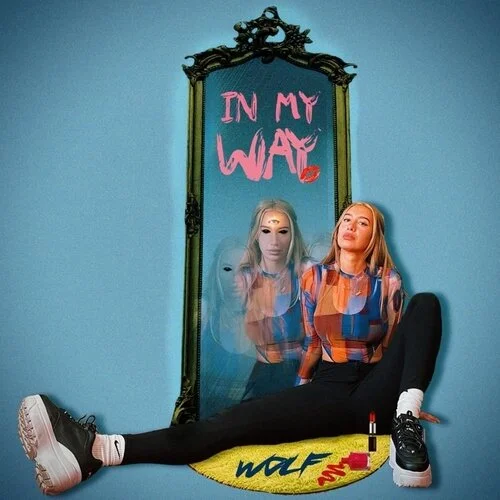
IN THIS PHOTO: Wolf Alice release their third studio album, Blue Weekend, on 4th June/PHOTO CREDIT: Jordan Hemingway

Essential June Releases

___________

THE first album I want to include…

aaa.jpg

for this June edition is Crowded House’s Dreamers Are Waiting. I love the New Zealand band. I am really looking forward to their new album. Go and pre-order it, as it is sure to be a must-hear. This article from February reveals more:

Crowded House have announced their first new album in over a decade. On June 4, the legendary New Zealand group will release Dreamers Are Waiting via EMI Australia.

The band had teased new material back in October with the release of “Whatever You Want,” which will appear on the new album. Now the band has revealed their lead single titled, “To the Island,” along with a new video for the track, directed by Neil Finn and Mark Simon Brown and shot in a variety of locations worldwide, including Los Angeles, New Zealand, and Ireland.

The band’s line-up on Dreamers Are Waiting includes founding members Neil Finn and Nick Seymour, in addition to producer and keyboardist Mitchell Froom, singer and guitarist Liam Finn, and drummer Elroy Finn, Liam’s brother.

“I’ve always been afraid of just repeating the same formulas, and somehow this feels like a fresh and authentic way to re-approach Crowded House today with an awareness of all our history and where, how and why it began in the first place,” said Finn in a statement. “The original band mentality and philosophy is still in there, especially with Mitchell now part of it again, working in a different way along with Nick and I.”

The band previously announced they had lined up a tour of New Zealand, which has been allowing concerts to happen since last June due to proactive Covid-19 containment measures.

“We were fortunate to be recording in the studio right before lockdown and so began this album with band tracks recorded live in a room, all brimming with character and energy,” Finn said. “We then spent our strangest year, 2020, at distance from each other but connecting daily, swapping files and making those tracks complete. We’re so excited and grateful to be back in one room together now, rehearsing, first to play live in front of audiences in NZ and soon we hope for the rest of the world.”

This news also comes on the heels of Finn’s new radio shows that see the acclaimed singer-songwriter revisit a different Crowded House album and play new acoustic versions of the songs from them. The first broadcast was on February 11 and is available on Fangradio on Mixlr”.

Before moving to the next album due on 4th June that you should buy, I want to bring in some further information from Rough Trade about Crowded House:

Crowded House is a long standing and much-loved vehicle for the song writing talents of Neil Finn. Formed in Melbourne Australia in 1985 out the ashes of New Zealand’s Split Enz by Neil, Paul Hester and Nick Seymour, their eponymous self-titled debut album on Capitol Records went on to global success with the hits ‘Don’t Dream It’s Over’ and ‘Something So Strong’. Those songs and many that followed are still resonating with audiences today, the former in particular being one of the most covered songs of the last 20 years. The band’s first incarnation lasted from 1985 through 1995 with 4 studio albums and enjoyed much success worldwide, becoming particularly beloved for their freewheeling and interactive live shows. This line-up said Farewell to the World on the steps of the Sydney Opera House in 1996 with a now legendary performance in front of 150,000 people.

In 2005 following the tragic death of Paul Hester, Neil and Nick felt emotionally compelled to bring Crowded House back, to put some more good history, as they described it, into the story of the band. Drafting in new drummer Matt Sherrod and with long time touring member Mark Hart they released the album Time On Earth to critical acclaim and toured the world. Another album, Intriguer, was recorded in 2009 and Crowded House was inducted into the Aria Hall of Fame in 2016, at the same time reprising its Farewell shows at the Sydney Opera House with 3 nights of stunning performances.

With in excess of 12 Million albums sold across six studio albums, two acclaimed Best of collections, over 1.2 Billion streams to date and following Neil Finn’s surprise star turn and an extremely successful world tour with Fleetwood Mac, Neil and Nick Seymour are inspired to begin a new chapter in the Crowded House story. A new generation has grown up and connected with their songs and will now get to experience fresh new music alongside legendary anthems from the band’s 35-year career”.

4th June is a busy week for great new albums! The next one that you should consider is James’ All the Colours of You. The sixteenth album from the legendary band, this is one you will want to order. It is shaping up to be a terrific release:

James release their 16th album album All The Colours Of You. Recorded in part before the Covid pandemic struck, the album was produced by the Grammy award-winning Jacknife Lee (Taylor Swift, U2, REM’s, Snow Patrol, The Killers). On production duties with James for the first time, he bought a fresh approach to their sound, working remotely from his studio, reimagining their early demos, and capturing the band in all their virtual glory. The result is a record with the most arena ready tracks of their 38-year career, the sound of one of Britain’s best bands, deconstructed and reassembled by one of the world’s most renowned producers”.

There are three more albums from 4th June I need to include. Liz Phair is a legendary artist who released the genius debut album, Exile in Guyville, in 1993. Soberish is an album that I would urge people to pre-order. Phair is an extraordinary songwriter who has lost none of her magic:

Liz Phair releases Soberish, her highly-anticipated new album, and first collection of original material in eleven years. Produced by Phair’s longtime collaborator Brad Wood – known for helming Phair’s seminal albums Exile In Guyville, Whip-Smart, and whitechocolatespaceegg – Soberish is released via Chrysalis Records.

Soberish is a portrait of Phair in the present tense, taking all of the facets of her melodic output over the years and synthesizing them into a beautiful, perfect whole. She’s at the top of her game in the recording studio, drawing upon years of experience in television composition to weave through the songs daring and unexpected sound design. With Brad Wood’s exquisite engineering and masterful production, the result is a wholly fresh yet satisfyingly familiar sound that challenges on the first listen and seduces with each subsequent play through. The earworms are strong with this one!

None of the arrangements on Soberish are traditional songwriting standards, but the hooks are so catchy, the imagery so compelling, that the listener is drawn effortlessly along with the music. There are the off-kilter, unexpected guitar chords listeners will recognize as her signature style, a mainstay from her earliest work; the instantly knowable choruses of her most pop-friendly songs of the early 2000’s; the frank lyricism and storytelling that has opened doors for countless women picking up guitars and attempting to speak about their experiences.

If Liz Phair’s career has had a governing philosophy, we might take it as this: hold to the centre, swing around. This return, this new collection of songs, shows her at her finest: playful, inquisitive, uncompromising, but anchored. The centre can still hold”.

One of the most-anticipated albums of the year is from Wolf Alice. The London band won a Mercury Prize in 2018 with Vision of a Life. Blue Weekend looks like it will be another album that is going to scoop awards and earn the band huge acclaim. The first single from the album, Last Man on Earth, is among my favourite tracks of this year. Make sure that you pre-order a copy of Blue Weekend. It doesn’t seem like the creative and recording process of Blue Weekend was all smooth. That said, as we learn from an interview with DIY, there is a sense of hope and positivity to be found:

But through the difficulties, and almost certainly as a result of those seemingly endless hours spent fine-tuning every second of their forthcoming third, ‘Blue Weekend’ looks set to do everything their hugely anticipatory fanbase could have hoped for. Gearing up for the release, there’s a genuine tangible excitement around the band that’s rare; everyone, as Theo grins, seems Team Wolf Alice. “I hope so,” he continues, “I was so excited when we announced it on the radio, I couldn’t feel my fucking fingers.” “Were you sitting on your hands?” Ellie quips.

Despite the pressure of following up such a game-changing record for the band, the quartet seem grounded and on top of it. “I’ve personally felt the same kind of pressure every time we’ve gone to make an album because we had quite a lot of expectation from [the beginning] of people being like, ‘Are you gonna prove yourself or are you gonna fuck it up?” suggests Joel. “So there is a weight to it, but it’s not really about the Mercury Prize or if your third album is going to be your ‘OK Computer’, you just wanna do the best that you can.”

And the best they can, it turns out, is an album that’s so good, even its authors can’t downplay it: the rarest accolade of them all. “I had a fry up here and we all listened to it on my speakers and were like, ‘This is sick’,” Theo chuckles.

“There’s a hopefulness to [the record] that I really hope doesn’t get lost. You know when you watch a film and you get left completely despondent, where even though it’s been an amazing piece of art, it always flavours the memory of it badly? Hopefulness gives it that sense of, ‘Oh, I’m always gonna like that thing’.”

We’ve got a good feeling the world is gonna like ‘Blue Weekend’ an awful lot”.

www.jpg

IN THIS PHOTO: Japanese Breakfast (Michelle Zauner)/PHOTO CREDIT: Ashley Gellman

Japanese Breakfast is a terrific young talent. Her third studio album, Jubilee, is one from 4th June you need to get a hold of. I am really looking ahead to the album coming out. It is going to be awesome. Go and pre-order Jubilee:

From the moment she began writing her new album, Japanese Breakfast’s Michelle Zauner knew that she wanted to call it Jubilee. After all, a jubilee is a celebration of the passage of time—a festival to usher in the hope of a new era in brilliant technicolor. Zauner’s first two albums garnered acclaim for the way they grappled with anguish; Psychopomp was written as her mother underwent cancer treatment, while Soft Sounds From Another Planet took the grief she held from her mother‘s death and used it as a conduit to explore the cosmos. Now, at the start of a new decade, Japanese Breakfast is ready to fight for happiness, an all-too-scarce resource in our seemingly crumbling world.

Jubilee finds Michelle Zauner embracing ambition and, with it, her boldest ideas and songs yet. Inspired by records like Bjork’s Homogenic, Zauner delivers bigness throughout - big ideas, big textures, colours, sounds and feelings. At a time when virtually everything feels extreme, Jubilee sets its sights on maximal joy, imagination, and exhilaration. It is, in Michelle Zauner’s words, “a record about fighting to feel. I wanted to re-experience the pure, unadulterated joy of creation...The songs are about recalling the optimism of youth and applying it to adulthood. They’re about making difficult choices, fighting ignominious impulses and honouring commitments, confronting the constant struggle we have with ourselves to be better people.”

Throughout Jubilee, Zauner pours her own life into the universe of each song to tell real stories, and allowing those universes, in turn, to fill in the details. Joy, change, evolution - these things take real time, and real effort. And Japanese Breakfast is here for it”.

There are three particular albums due on 11th June that you need to investigate. The first is from the iconic Garbage. Led by the sensational Shirley Manson, No Gods No Monsters is certainly worth pre-ordering. This is going to be one of 2021’s biggest albums:

Garbage return with their seventh studio album No Gods No Masters.

“This is our seventh record, the significant numerology of which affected the DNA of its content: the seven virtues, the seven sorrows, and the seven deadly sins,” says Garbage frontwoman Shirley Manson of the band’s ferocious new album No Gods No Masters and its twists and turns from capitalism and lust to loss and grief. “It was our way of trying to make sense of how fucking nuts the world is and the astounding chaos we find ourselves in. It’s the record we felt that we had to make at this time.”

Since releasing their eponymous debut album in 1995, Garbage has blazed a unique sonic trail, garnering critical acclaim and amassing a passel of hits as well as seven Grammy nominations along the way to 17 million albums sold.

2CD - Deluxe CD in clamshell box with 4 x exclusive artcards and 1 x poster (only available in this boxset). 2 x CD with second CD containing a collection of the band’s much loved covers released in the last eight years for Record Store Day, featuring Brody Dalle, Brian Aubert, Screaming Females and John Doe and Exene Cervenka as well as a cover of Bowie’s Starman”.

Melbourne’s King Gizzard and the Lizard Wizard prepare to release their second album of 2021, Butterfly 3000. This is the eighteenth album from the super-prolific band1 There will be no singles from the album ahead of time. Keep an eye on their official website for details when you can buy the album (I am writing this on 16th May, so a link may become available soon). Also out on 11th June is Sleater-Kinney’s Path of Wellness. Do go and pre-order, as the U.S. band always bring something very special:

Sleater-Kinney's 10th studio album was recorded in Portland, Oregon during the summer of 2020 ' against a backdrop of social unrest, devastating wildfires, and a raging pandemic. It's music for an imagined togetherness. This marks the first Sleater-Kinney album produced by the band members themselves. With their new release, the band deliver a provocative, powerful, and poetic statement when alternative music and culture could use it the most”.

There are a few albums from 25th June I want to finish off on. There is one from 18th June that you will not want to miss out on! Kings of Convenience’s Peace or Love is one you need to pre-order - it is the first album from Norwegians Erlend Øye and Eirik Glambek Bøe since 2009’s Declaration of Dependence:

Peace or Love is the sound of two old friends exploring the latest phase of their lives together and finding new ways to capture that elusive magic. recorded across five years in five different cities, the album sounds as fresh as spring: 11 songs about life and love with the alluring beauty, purity and emotional clarity that you would expect from Kings of Convenience”.

Before wrapping up, 25th June offers up some treats. Boy from Michigan is the upcoming album from the incredible John Grant. With production from Cate Le Bon, I think it will be another hugely praised album from an artist who never drops a beat. Go and pre-order an album that is going to be a real gem:  

Produced by longtime friend Cate Le Bon, Boy from Michigan is Grant’s most autobiographical and melodic work to date. Grant stopped being a boy in Michigan aged twelve, when his family moved to Denver, Colorado, shifting rust to bible belt, a further vantage point to watch collective dreams unravel. Across 12 tracks, Grant lays out his past for careful cross-examination. In a decade of making records by himself, he has playfully experimented with mood, texture and sound, all the better for actualizing the seriousness of his thoughts. At one end of his musical rainbow, he is the battle-scarred piano-man, at the other, a robust electronic auteur. Boy from Michigan seamlessly marries both. With Le Bon at the helm, Grant pared back his zingers, maximizing the emotional impact of the melodies. A clarinet forms the bedrock of a song. One pre-chorus feels lifted from vintage Human League. There is a saxophone solo. Boy from Michigan ultimately swings between ambient and progressive, calm and livid.

The album’s narrative journey opens with Grant at his artistic prettiest, three songs drawn from his pre-Denver life (the Michigan Trilogy, as Grant calls them): the title track, “The Rusty Bull,” and “County Fair.” Each draws the listener in to a specific sense of place, before untangling its significance with a rich cast-list of local characters, often symbolizing the uncultivated faith of childhood. Elsewhere, tracks like “Mike and Julie” and “The Cruise Room” offer an affecting plunge deep into Grant’s late teenage years in Denver, while the midpoint of the album is highlighted by “Best in Me” and “Rhetorical Figure,” a pair of skittish, scholarly dance tunes that build on the lineage of Grant’s electropop heroes, Devo. Childhood as a horror narrative is the theme of “Dandy Star,” which observes a tiny Grant watching the Mia Farrow horror movie ‘See No Evil’ on an old family TV set, and finally on “The Only Baby” (released this January) Grant removes his razor blade from a pocket to cleanly slit the throat of Trump’s America, authoring a scathing epitaph to an era of acute national exposition”.

Another great album due on 25th June is from Lucy Dacus. Home Video is an album that I would encourage everyone to pre-order. Dacus is a tremendous songwriter. Rough Trade reveal more:

This new gift from Dacus, her third album, was built on an interrogation of her coming-of-age years in Richmond, VA. Many songs start the way a memoir might—“In the summer of ’07 I was sure I’d go to heaven, but I was hedging my bets at VBS”—and all of them have the compassion, humour, and honesty of the best autobiographical writing. Most importantly and mysteriously, this album displays Dacus’s ability to use the personal as portal into the universal. “I can’t hide behind generalizations or fiction anymore,” Dacus says, though talking about these songs, she admits, makes her ache. That Home Video arrives at the end of this locked down, fearful era seems as preordained as the messages within. “I don’t necessarily think that I’m supposed to understand the songs just because I made them,” Dacus says, “I feel like there’s this person who has been in me my whole life and I’m doing my best to represent them.” After more than a year of being homebound, in a time when screens and video calls were sometimes our only form of contact, looking backward was a natural habit for many. If we haven’t learned it already, this album is a gorgeous example of the transformative power of vulnerability. Dacus’s voice, both audible and on the page, has a healer’s power to soothe and ground and reckon”.

Before getting to the final album out on 25th June, LoneLady (Julie Campbell) announced her third studio album, Former Things. It follows from 2015’s Hinterland. There is so much excitement and buzz around right now. Make sure you pre-order the much-anticipated album from the Manchester-based songwriter:

Former Things is the follow up to acclaimed 2015 album Hinterland, which garnered praise from The Guardian, The Quietus, The Financial Times and more. 

The Sound-world of Former Things was entirely crafted by LoneLady during her time spent in Somerset House Studios Rifle Range, and 18th century shooting range that has now been adapted into an experimental performance space. 

The album was inspired by a seismic move for LoneLady who left her native Manchester, decamping to London's Somerset House Studios in search of a new cityscape to inspire her poised machine funk. First single "There Is No Logic" went straight onto the A list at BBC 6 Music.

Side A
A1. The Catcher / (There Is) No Logic
A2. Former Things / Time Time Time

Side B
B1. Threats / Fear Colours
B2. Treasure / Terminal Ground

The final album I recommend you get a hold of next month is SPELLLING’s The Turning Wheel. The third full-length by the Bay Area artist SPELLLING (Chrystia Cabral), I wouldn’t want people to pass this by. Go and pre-order it, because this is an album that promises a lot of beauty and memorability:

Red velvet curtains draw back to reveal a cosmic wheel of fortune, floating in the deep black star-studded theater of infinite space. A whirl of timbres, personalities, and stories. The Turning Wheel revolves around themes of human unity, the future, divine love and the enigmatic ups and downs of being a part of this carnival called Life. Venturing to push the boundaries of her primarily synth-based work, Spellling took on the ambitious task of orchestrating and self-producing an album that features an ensemble of 31 collaborating musicians. The Turning Wheel incorporates a vast range of rich acoustic sounds that cast Spelling’s work into vibrant new dimensions. The double LP is split into two halves - “Above” and “Below.” Lush string quartet shimmer combines with haunting banjo and wandering bassoon leads, as the album progresses from the more jubilant, warm, and dreamy mood of the “Above” tracks to the more chilling and gothic tone of the “Below” tracks. This progression is anchored by Spellling’s familiar bewitching vocal style that emphasizes the theatrical and folkloric heart of her songwriting.

These are the album due next month that I think people should investigate. Of course, there are many others that might tickle the fancy. If you need some musical accompaniment through June, then I think the albums above…

SHOULD have you sorted.

FEATURE: The Lockdown Playlist: ‘Yellow’ Songs

FEATURE:


The Lockdown Playlist

www.jpg

PHOTO CREDIT: @cdx2/Unsplash 

‘Yellow’ Songs

___________

BECAUSE The Beatles…

xxx.jpg

began recording Yellow Submarine on 26th May, 1966 – they finished it on 1st June -, I want to make this Lockdown Playlist all about songs that feature the word ‘yellow’. One of the standout tracks from the Revolver album, I think it is also one of The Beatles’ greatest songs. It must have been fascinating being a fly on the wall at Abbey Road as the band recorded songs for Revolver. In a nod to a singalong classic, here is a selection of songs that share the word ‘yellow’. You will know most of them, though some of them might be new to you. In terms of period and genre, I think that the yellow-themed collection of tracks is quite…

aaaa.jpg

 PHOTO CREDIT: @cdx2/Unsplash

A nice assortment

FEATURE: A Buyer’s Guide: Part Fifty-Five: Funkadelic

FEATURE:


A Buyer’s Guide

ddd.jpg

PHOTO CREDIT: Michael Ochs Archives/Getty Images 

Part Fifty-Five: Funkadelic

___________

IN the fifty-fifth part…

aaaa.jpg

of this feature, I am including the legendary Funkadelic in A Buyer’s Guide. I am keen to get down to things. Before that, I wanted to bring in a big portion of AllMusic’s biography of the group:

Though they often took a back seat to their sister group Parliament, Funkadelic furthered the notions of Black rock begun by Jimi Hendrix and Sly Stone, blending elements of '60s psychedelia and blues plus the deep groove of soul and funk. The band pursued album statements of social/political commentary while Parliament stayed in the funk singles format, but Funkadelic nevertheless paralleled the more commercial group's success, especially in the late '70s when the interplay between bands moved the Funkadelic sound closer to a unified P-Funk style.

In the grand soul tradition of a backing band playing support before the star takes the stage, Funkadelic began life supporting George Clinton's doo wop group, the Parliaments. After having performed for almost ten years, the Parliaments had added a rhythm section in 1964 -- for tours and background work -- consisting of guitarist Frankie Boyce, his brother Richard on bass, and drummer Langston Booth; two years later, the trio enlisted in the Army. By mid-1967, Clinton had recruited a new backing band, including his old friend Billy "Bass" Nelson (born January 28, 1951, Plainfield, New Jersey) and guitarist Eddie Hazel (born April 10, 1950, Brooklyn, New York). After several temporary replacements on drums and keyboards, the addition of rhythm guitarist Lucius "Tawl" Ross (born October 5, 1948, Wagram, North Carolina) and drummer Ramon "Tiki" Fulwood (born May 23, 1944, Philadelphia, Pennsylvania) completed the lineup.

The Parliaments recorded several hits during 1967, but trouble with the Revilot label backed Clinton into a corner. He hit upon the idea of deserting the Parliaments' name and instead recording their backing group, with the added vocal "contributions" of the former Parliaments -- same band, different name. Billy Nelson suggested the title Funkadelic, to reflect the members' increased inspiration from LSD and psychedelic culture. Clinton formed the Funkadelic label in mid-1968 but then signed the group to Detroit's Westbound label several months later.

Released in 1970, Funkadelic's self-titled debut album listed only producer Clinton and the five members of Funkadelic -- Hazel, Nelson, Fulwood, and Ross plus organist Mickey Atkins -- but also included all the former Parliaments plus several Motown sessionmen and Rare Earth's Ray Monette. Keyboard player Bernie Worrell also appeared on the album uncredited, even though his picture was included on the inner sleeve with the rest of the band.

Worrell (born April 19, 1944, Long Beach, New Jersey) was finally credited on the second Funkadelic album (1970's Free Your Mind...and Your Ass Will Follow). He and Clinton had known each other since the early '60s, and Worrell soon became the most crucial cog in the P-Funk machine, working on arrangements and production for most later Parliament/Funkadelic releases. His strict upbringing and classical training (at the New England Conservatory and Juilliard), as well as the boom in synthesizer technology during the early '70s, gave him the tools to create the horn arrangements and jazz fusion-inspired synth runs that later trademarked the P-Funk sound. Just after the release of their third album, Maggot Brain, P-Funk added yet another big contributor, Bootsy Collins. The throbbing bassline of Collins (born October 26, 1951, Cincinnati, Ohio) had previously been featured in James Brown's backing band, the J.B.'s (along with his brother, guitarist Catfish Collins). Bootsy and Catfish were playing in a Detroit band in 1972 when George Clinton saw and hired them.

The Clinton/Worrell/Collins lineup premiered on 1972's America Eats Its Young, but soon after its release several original members left the camp. Eddie Hazel spent a year in jail after a combination drug possession/assault conviction, Tawl Ross left the band for medical reasons relating to an overdose of LSD and speed, and Bill Nelson quit after more financial quarrels with Clinton. Funkadelic hired teenaged guitar sensation Michael Hampton as a replacement, but both Hazel and Nelson would return for several later P-Funk releases.

Funkadelic moved to Warner Bros. in 1975 and delivered its major-label debut, Hardcore Jollies, one year later to lackluster sales and reviews. The same year, Westbound raided its vaults and countered with Tales of Kidd Funkadelic. Ironically, the album did better than Hardcore Jollies and included an R&B Top 30 single, "Undisco Kidd." In 1977, Westbound released The Best of the Early Years while Funkadelic recorded what became its masterpiece (and arguably the best P-Funk release ever), 1978's One Nation Under a Groove.

During the most successful year in Parliament/Funkadelic history, Parliament hit the charts first with "Flash Light," P-Funk's first R&B number one. "Aqua Boogie" would hit number one as well late in the year, but Funkadelic's title track to One Nation Under a Groove spent six weeks at the top spot on the R&B charts during the summer. The album, which reflected a growing consistency in styles between Parliament and Funkadelic, became the first Funkadelic LP to reach platinum (the same year that Parliament's Funkentelechy vs. the Placebo Syndrome did the same). In 1979, Funkadelic's "(Not Just) Knee Deep" hit number one as well, and its album (Uncle Jam Wants You) reached gold status”.

I am going to recommend the four essential albums from the group, in addition to an underrated gem in their catalogue. I will also mention their final studio album and a book related to them. If you are new to Funkadelic, then I hope that the guide below…

aaaa.jpg

POINTS you in the right direction.

_______________

The Four Essential Albums


Funkadelic

eee.jpg

Release Date: 24th February, 1970

Label: Westbound

Producer: George Clinton

Standout Tracks: Mommy, What's a Funkadelic?/I Got a Thing, You Got a Thing, Everybody's Got a Thing/What Is Soul

Buy: https://www.roughtrade.com/gb/funkadelic/funkadelic

Stream: https://open.spotify.com/album/2uTTr2MEM4xINKN9Bls8KX?si=Khjggp6PT7mzPe-QcWKwwA

Review:

Funkadelic's self-titled 1970 debut is one of the group's best early- to mid-'70s albums. Not only is it laden with great songs -- "I'll Bet You" and "I Got a Thing..." are obvious highlights -- but it retains perhaps a greater sense of classic '60s soul and R&B than any successive George Clinton-affiliated album. Recording for the Detroit-based Westbound label, at the time Funkadelic were in the same boat as psychedelic soul groups such as the Temptations, who had just recorded their landmark Cloud Nine album across town at Motown, and other similar groups. Yet no group had managed to effectively balance big, gnarly rock guitars with crooning, heartfelt soul at this point in time quite like Funkadelic. Clinton's songs are essentially conventional soul songs in the spirit of Motown or Stax -- steady rhythms, dense arrangements, choruses of vocals -- but with a loud, overdriven, fuzzy guitar lurking high in the mix. And when Clinton's songs went into their chaotic moments of jamming, there was no mistaking the Hendrix influence. Furthermore, Clinton's half-quirky, half-trippy ad libs during "Mommy, What's a Funkadelic?" and "What Is Soul" can be mistaken for no one else -- they're pure-cut P-Funk. Successive albums portray Funkadelic drifting further toward rock, funk, and eventually disco, especially once Bernie Worrell began playing a larger role in the group. Never again would the band be this attuned to its '60s roots, making self-titled release a revealing and unique record that's certainly not short on significance, clearly marking the crossroads between '60s soul and '70s funk” – AllMusic

Choice Cut: I’ll Bet You

Maggot Brain

ii.jpg

Release Date: 12th July, 1971

Label: Westwood

Producer: George Clinton

Standout Tracks: Can You Get to That/Hit It and Quit It/You and Your Folks, Me and My Folks

Buy: https://www.amazon.co.uk/Maggot-Brain-VINYL-Funkadelic/dp/B00004XOY1

Stream: https://open.spotify.com/album/5p9GTYAPSgc5C1ck9ZbnMk?si=wQyIEs19QAyFRzwYBrOhuw

Review:

Another example of Funkadelic’s egalitarian microphone policy, “You and Your Folks, Me and My Folks” is sung by Billy Nelson; the track exudes the air of a communal Sly & the Family Stone anthem, but imbued with the menace of the Manson Family, with the bass/drums groove ranking as one of the most lethal in the Funkadelic canon. Despite the sinister aura, the song is a plea for equality and understanding among all people. For what it’s worth, “You and Your Folks” is the most-sampled track on Maggot Brain (11 times), and Alabama Shakes singer-songwriter Brittany Howard covered it on 2020’s Spotify Singles.

In a 1985 issue of Spin, P-Funk professor emeritus Greg Tate dubbed “Super Stupid” a “heavy-metal hydrogen bomb test”; it’s no wonder heavies such as Audioslave and Big Chief took stabs at it. This is mercilessly vicious rock that attracted the attention and respect of British rock royalty when Funkadelic first toured England. Clinton claims David Bowie, Rod Stewart, and members of Cream, the Beatles and Led Zeppelin checked them out on that jaunt. “Super Stupid”’s metallic guitar avalanche is tempered by Worrell’s circus-y keyboard effusions, but the real star is Hazel, who is on fire in extremis, both on ax and vox. “Super Stupid” warns of the foolishness of drug abuse (Worrell claimed in Wax Poetics that band members were snorting heroin) while, incidentally, making you want to take drugs.

Following the release of Maggot Brain, Hazel and Nelson split to work for the vastly more popular Motown act the Temptations, reportedly due to dissatisfaction with Clinton’s handling of the band’s financial situation. Fulwood also was disgruntled about pay and left Funkadelic. Although Clinton doesn’t mention this issue in Brothas, the Wax Poetics interviews feature complaints about George’s stinginess. Ross, too, departed, after alleged misadventures with either LSD or speed. These painful losses were ameliorated by the additions of Bootsy and Catfish Collins, Garry Shider, and Boogie Mosson—all world-class funkateers. Nevertheless, Funkadelic never again released an album as laden with genius as Maggot Brain. It was the culmination of their first phase’s most outrageous and ingenious sonic ideas, establishing a new precedent for how Black musicians would exist in a rock context, juxtaposing metal, gospel, prog, funk, blues, and jazz fusion with nonchalant virtuosity. It’s the epitome of their extravagant virtues and vices.

Summarizing the LP in Brothas, Clinton wrote, “Maggot Brain was going places that Black groups hadn’t gone, into questions about whether America was still on the right path or whether the promise of the late ’60s had completely evaporated.” In these seven songs, you can hear Funkadelic attempting to make sense of the turmoil of the times, as they express the euphoria and anguish of being born and dying in the most extraordinary ways” – Pitchfork

Choice Cut: Maggot Brain

Let's Take It to the Stage

wwww.jpg

Release Date: 21st April, 1975

Label: Westbound

Producer: George Clinton

Standout Tracks: Better By the Pound/Let’s Take It to the Stage/Get Off Your Ass and Jam

Buy: https://www.discogs.com/sell/list?master_id=16137&ev=mb

Stream: https://open.spotify.com/album/1VFuppv4Hb9jEhWEZ0hf6q?si=sMq0WZO3QiCIjJczvpA-Aw

Review:

One of Funkadelic's goofiest releases, Let's Take It to the Stage also contains more P-Funk all-time greats as well, making for a grand balance of the serious and silly. Perhaps the silliest is at the end -- there's not much else one can call the extended oompah/icing rink start of "Atmosphere." The title track is as much a call to arms as "Free Your Mind and Your Ass Will Follow" is, but with a more direct musical performance and a more open nod to party atmospheres (not to mention the source of one of Andrew Dice Clay's longest-running bits). The targets of the band's good-natured wrath are, in fact, other groups -- "Hey, Fool and the Gang! Let's take it to the stage!" There's no mistaking the track that immediately follows makes it even more intense -- "Get Off Your Ass and Jam" kicks in with one bad-ass drum roll and then scorches the damn place down, from guitar solo to the insanely funky bass from Cordell "Boogie" Mosson. It may only be two and a half minutes long, but it alone makes the album a classic. Hearing Bootsy Collins' unmistakable vocals is usually enough to get anything on the crazy tip, but "Be My Beach" (Collins' Funkadelic vocal debut) just makes it all the more fun, as does the overall air of silly romance getting nuttier as it goes. "Good to Your Earhole" sets the outrageous mood just right -- it's one of the band's tightest monsters of funk, guitars sprawling all over the place even as the heavy-hitting rhythm doesn't let one second of groove get lost. Of course, there's also one totally notorious number to go with it, but "No Head, No Backstage Pass" has one of the craziest rhythms on the whole album, not to mention lip-smackingly nutty lines delivered with the appropriate leer” – AllMusic

Choice Cut: Baby I Owe You Something Good

One Nation Under a Groove

ww.jpg

Release Date: 12th September, 1978

Label: Warner Bros.

Producer: George Clinton

Standout Tracks: Groovallegiance/Who Says a Funk Band Can't Play Rock?!/ Promentalshitbackwashpsychosis Enema Squad (The Doo Doo Chasers)

Buy: https://www.discogs.com/sell/list?master_id=54666&ev=mb

Stream: https://open.spotify.com/album/1ymHE8ItOGthDlfQmqVKEQ?si=ypo5XXS8SvOCxqV8V_-78g

Review:

Funkadelic’s 10th album and their commercial breakthrough, One Nation Under a Groove was the starting point for many British listeners.

An underground delicacy stateside since 1970, the group had yet to enjoy much popularity in the UK. But by 78, the Funkadelic part of leader George Clinton’s P-Funk mothership had travelled from being an acid-drenched funk-rock ensemble to something resembling Parliament, their hit-generating sister band.

One Nation Under a Groove immediately welcomed new listeners inside Clinton’s parallel universe, with all of his ideas, mythology and strangely monikered players. For example, Bootsy Collins is one of the ‘Bass Thumpasaurians’ on the album, and Bernie ‘DaVinci’ Worrell and Walter ‘Junie’ Morrison were ‘Keybo' Dans & Synthezoidees’.

When Clinton conceived the album’s title track – from a girlfriend’s comment when he was making a film outside the United Nations – it gave the whole P-Funk enterprise one of their biggest hits and an overall mission statement for Clinton’s wild vision.

The track is arguably Clinton’s greatest popular moment: supple, lithe and funky, it evoked soul past and present and had a chorus to die for. With its blend of Funkadelic Blamgusta Vocaloids (Voices For Da Nation!) – Clinton, Morrison and Garry Shider – the single was number one on the US R&B chart for six weeks.

The track also reached a respectable nine in Britain, too. It was to be P-Funk’s only foray into the UK charts, although Clinton was later to enjoy some solo success. One Nation… was (is!) rich on stomping, repetitive grooves, Who Says a Funk Band Can’t Play Rock doing exactly what its title suggests.

The album initially came with a free single that showed that the band hadn’t lost sight of their original far-out remit. It featured a live version of their 1971 standard Maggot Brain, featuring Mike ‘Kidd Funkadelic’ Hampton’s searing guitar work, playing former member Eddie Hazel’s solo perfectly.

One Nation Under a Groove as a whole may not represent P-Funk’s greatest work, but it is certainly very memorable, and acts as a perfect introduction to George Clinton’s freaky, funk-drenched alternative reality” – AllMusic

Choice Cut: One Nation Under a Groove

The Underrated Gem


America Eats Its Young

aaa.jpg

Release Date: 22nd May, 1972

Label: Westbound

Producer: George Clinton

Standout Tracks: Everybody Is Going to Make It This Time/We Hurt Too/America Eats Its Young

Buy: https://www.discogs.com/sell/list?master_id=16065&ev=mb

Stream: https://open.spotify.com/album/73cLZ1gY650S58z9sugEQV?si=hELOd2tjSIajxW1RJUdG5A

Review:

A double album and worth every minute of it, America Eats Its Young makes for a freaky, funky, and aware good time. Compared to the endless slabs of double-album dreck that came out around the same time from all sources, here Funkadelic brought life, soul, and much more to the party. With George Clinton credited only for arranging and producing, here the mad cast he brought together went all out. Bernie Worrell in particular now had a new importance, credited as co-arranger with Clinton as well as handling string and horn charts on a number of songs. His surging, never-stop keyboards, meanwhile, took control from the start, with his magnificent lead break on the opening "You Hit the Nail on the Head" making for one of the best performances ever on Hammond organ. Bootsy Collins (credited as William) is also somewhere in the crowd on bass and vocals, while old favorites like Eddie Hazel and Tiki Fulwood, among many others, can be found. Perhaps to fill in the time, a few numbers from the first Parliament album, Osmium, two years before cropped up, namely "Loose Booty" and the hilariously sleazy "I Call My Baby Pussycat," here performed with a noticeably slower, dirty groove. The straightforward social call to arms appears throughout, with one song title saying it all -- "If You Don't Like the Effects, Don't Produce the Cause." Other winners include the vicious title track, combining everything from mysterious, doom-laden voices and weeping wails to slow, sad music, and the concluding "Wake Up," while "Everybody Is Going to Make It This Time" is a lovely, gospel-informed ballad that heads for the skies and hearts. There are more mundane concerns as well, such as "There Was My Girl," a quirky weeper, and the weird if smoothly delivered "Miss Lucifer's Love," with more than one target in mind” – AllMusic

Choice Cut: You Hit the Nail on the Head

The Final Album


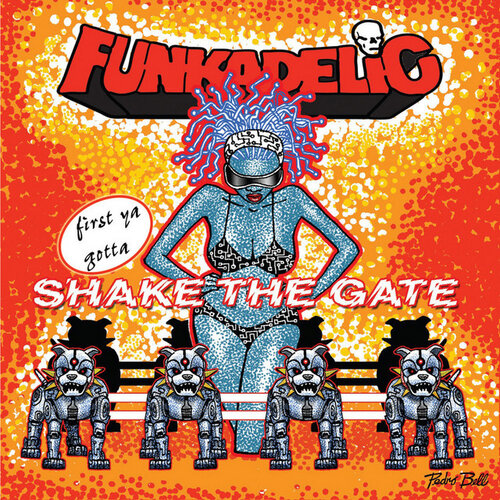
First Ya Gotta Shake the Gate

xxxx.jpg

Release Date: 25th November, 2014 (digital download)/ 23rd December, 2014 (physical release)

Label: The C Kunspyruhzy

Producer: George Clinton

Standout Tracks: Get Low/first ya gotta Shake the Gate/The Naz (ft. Sly Stone)

Buy: https://www.discogs.com/sell/list?master_id=1497050&ev=mb

Stream: https://open.spotify.com/album/5lslKuLlzEULcLc2Vmm7m4?si=BUM8dEwtRxKshTK1OTN1XA

Review:

Ain’t That Funkin’ Kinda Hard on You” might be the perfect reintroduction of George Clinton (instead of Funkadelic, per se) since it begins with a darkly ingratiating embrace rather that the expected turn-this-mother-out groove.

That’s George Clinton, the master of left turns. At the same time, “Ain’t That Funkin’ Kinda Hard on You” — this standout moment from Funkadelic’s sprawling new comeback effort First Ya Gotta Shake the Gate — stirs in a few distinctly modern elements: There’s the flinty braggadocio of “I was hard when I started, I’ll be hard when I get through,” and those rollicking Roland 808s.

That very newness works as a kind of comfy oldness when it comes to Clinton, who has stayed firmly within an established framework of forward-looking trippy weirdness over the course of myriad lineup shifts and stylistic leaps by Parliament/Funkadelic and an assortment of other similarly named outfits. Clinton keeps himself young that way, it seems.

Always moving, always searching, he’s apparently been recording songs for First Ya Gotta Shake the Gate throughout the lengthy silence between Funkadelic albums. As such, it’s all over the map. In fact, there is no map. Like “Ain’t That Funkin’ Kinda Hard on You,” First Ya Gotta Shake the Gate is offbeat, within and without expectations, somehow throwback and yet modern, maybe a bit too long.

The names (as per usual) change again, with familiar figures like Michael Hampton and Bernie Worrell making a rare appearance on “Yesterdejavu,” a guitar-focused track that most closely recalls classic Funkadelic. But how cool is the idea of Clinton joining forces with Sly Stone, as on “The Naz”? He also welcomes in an old friend in the late Jessica Cleaves of the Friends of Distinction, for a remake of “As In” — a tune from Bootsy’s Rubberband.

And so it goes over an astounding 33 songs — mirroring the 33 years since Funkadelic offered its last official release, 1981’s The Electric Spanking of War Babies — as George Clinton and Company create a multi-dimensional, almost exhaustively comprehensive return. It all might have been better served with a judicious edit or 10. It all might not make sense, it all might not be required listening and it all certainly isn’t funkin’ kinda hard. It might have been better titled as a Clinton solo album, too. But First Ya Gotta Shake the Gate is rarely less than interesting, and often brain-bendingly fun” - Something Else!

Choice Cut: Ain't That Funkin' Kinda Hard on You?

The Funkadelic Book


Brothas Be, Yo Like George, Ain't That Funkin' Kinda Hard on You?: A Memoir

qqq.jpg

Author: George Clinton  

Publication Date: 5th September, 2017

Publisher: Atria Books

Reviews:

A perpetual conceptual moving target, George Clinton has always been more about the dogs than the dogma, and his ideas are always layered deep in the 24 track mix. In this insatiably readable memoir he finally parks his Mothership and tells the tales that the funkateers have wanted to hear for years."-- Rickey Vincent, author of Funk: The Music, the People and the Rhythm of The One

"Clinton has always proven himself a one-of-a-kind wordsmith."-- "Chicago Tribune"

"The funk pioneer has led a life that will make you laugh, cry and wince."-- "New York Post"

From the barbershop to the Mothership, from doo-wop to hip-hop, Dr. Funkenstein's tale is filled with honesty, insight, and a whole lot of rhythm goin' round. With this book, George Clinton gives up the funk and then some. The Bomb!--Alan Light, former Editor-in-Chief of Vibe and Spin magazines

People will come to this book looking for druggy tales and eccentric stories, and they will not be disappointed. However they will also encounter a highly intelligent, visionary man who happens to have an encyclopedic knowledge of pop music from doo wop to hip hop. P-Funk worked because George Clinton knew how to weave all the threads together.--Nelson George

Clinton's irrepressible spirit, eloquence, and musical acumen flow full-force through this candid, hilarious, outrageous, poignant, and resounding chronicle of perpetual creativity and hope.-- "Booklist" – Amazon.co.uk

Buy: https://www.amazon.co.uk/Brothas-Like-George-Funkin-Kinda/dp/1476751080/ref=sr_1_3?dchild=1&keywords=funkadelic+book&qid=1621079696&sr=8-3

FEATURE: Modern Heroines: Part Fifty: Bat for Lashes

FEATURE:


Modern Heroines

aaa.jpg

PHOTO CREDIT: Camera Press

Part Fifty: Bat for Lashes

___________

FOR this fiftieth part of Modern Heroines…

aaaa.jpg

 PHOTO CREDIT: David Levene for The Observer New Review

I am shining the spotlight on Bat for Lashes (a.k.a. Natasha Khan). I will end with a playlist of her best tracks. Like I do with all of the artists, I want to bring in some interviews and a review or two of the most-recent album. The fifth album, Lost Girls, was released in 2019 and followed 2016’s The Bride. I love Lost Girls, as it takes sounds from the 1980s. We get a lovely melting of 1980s sounds together with some of the best lyrics Bat for Lashes has ever delivered (I shall refer to Khan as Bat for Lashes). I am going to bring in a couple of reviews for Lost Girls soon. Before that, I am going to source some interviews that were conducted around the time of the album’s release. In this interview with The Independent, we discover how Bat for Lashes found her way to Los Angeles:

Ten years ago, Natasha Khan, aka Bat for Lashes, was poised to be the next big thing. As tolerance for laddy indie bands reached saturation point, her debut album Fur and Gold – spectral polyrhythms you could dance to – was a breath of fresh air. It was shortlisted for the Mercury Prize. Two Brit Award nominations followed – for British Breakthrough Act and British Female Solo Artist – and Khan was invited to support Radiohead on tour. The major label (Parlophone) to which she had just signed could hardly believe their luck – they had surely found the next Kate Bush. But things didn’t quite go as planned. “I think the label had high hopes that I’d be more commercial than I was,” she laughs now, “but I proved to myself and everyone else that I’m not”.

Khan’s second album, 2009’s Two Suns, was a concept album about a desert-born alter ego called Pearl. Her third, The Haunted Man, produced “Laura”, one of the best songs of her career, but only charted for a week. By the time she released her fourth, 2016’s The Bride, another concept record, this time about a bride-to-be whose fiance dies in a car crash on his way to the wedding, she could hardly wait to break free from her 10-year deal. And Parlophone weren’t exactly clamouring to keep her. The label’s initially high expectations, she says, “in the end started to work against me. It can be like a cloud that’s over you.”

Last year, the deal finally came to an end. Craving a change of scenery, the 39-year-old upped sticks to LA. She spent her days swimming, painting, going for sunset walks with her adopted dog Janice, teaching meditation to newly released prisoners, and going on long drives to forests with giant redwood trees. Though she says the city has a dark side – “The plastic surgery and the objectification of women that women are doing to themselves on Instagram” – when she stayed on its periphery, it suited her perfectly.

She also looked to the 2014 Iranian vampire film A Girl Walks Home Alone at Night for the way it melds together different cultures. “Jasmine”, with its cluttered soundscapes and sensual melody, is inspired by the sensory overload of both LA and childhood trips to Pakistan. “My impression of Pakistan was the heat hitting you when you get off the plane like a hairdryer in your face,” she recalls, “and the smell of jasmine and sewage and dogs and markets. The similarities to LA are that hot, dusty climate, the desert, the heady flower smells.”

She’s used to feeling the pull of different climes. “Being half-Pakistani, half-English, and growing up in England but going over there and then travelling a lot, I really feel like this conduit between different cultures and landscapes,” she says. “I resonate with a lot of different places and people and religions and looks and styles.”

Born in London to an English mother and Pakistani father, Khan was raised in Hertfordshire, first by both parents, and then – when her father left – by just her mother. At secondary school, she was called a “f***ing Paki” by her classmates, so she would bunk off, or get suspended for swearing and throwing chairs at teachers. “Coming from a broken home and all those difficult things,” she says. “In my mind I was going to places that were sublimating the pain into a dark but beautiful place. I’d go on little road trips in my mind, into magical places, because it was cathartic”.

If you have not listened to Lost Girls, then go and check it out. It is one of the best albums from 2019. With every album, we get something different and fascinating from Bat for Lashes. I have been listening to it on and off since 2019, and I always get something new each time I listen.

The second interview that I want to quote from comes from The Guardian. Bat for Lashes discusses the concept for Lost Girls and ‘80s sources of influence:

You’ve talked about wanting this new album to be fun, full of romance and more commercial. How did it come about?

I had moved away from London, where I’d lived for seven years, and finished my contract with EMI. My plan initially was to go to Los Angeles to focus on scriptwriting and doing music for film. The first song on the album, Kids in the Dark, was actually written for a Stephen King TV series [Castle Rock] – but the music supervisor Charles [Scott] and I had such a good time that we decided to keep meeting. I didn’t even know whether I was going to make an album again – I wanted to have a real break and leave everything behind me. And so when this album started happening, it was sort of a secret – and nobody really knew about it until it was nearly done.

Was there an overarching concept?

I was developing a script for a film called The Lost Girls. It was heavily influenced by 80s children’s films and vampire films, many set in Portland and California. But as the songs progressed, I felt like I was writing the film soundtrack. Music does tend to overtake film ideas, as it comes out much more easily.

wwww.png

Which 80s films did you have in mind?

The Lost Boys, obviously, is a close link, and seeing LA’s hazy sunsets is making me think of films like ET and The Goonies. Moving to LA, I’ve basically been plonked inside the sets of all the films I loved as a kid.

What switched you on to music?

I saw Michael Jackson on his Bad tour when I was nine, with my mum, and I remember his Thriller video coming out – that was really exciting. And later on, seeing how pop musicians like Kate Bush and David Bowie were using the more theatrical aspects of music had a big influence on me. At art college, the way we approached music was very closely linked with visual art and performance. With my first band I said, “I want us to make headdresses”, and so we’d go down to the haberdashery and buy a bunch of sequins and old lady brooches in antique shops. It was a hodgepodge and it probably didn’t even make sense, but I was trying to figure out how we were going to stand out on stage and express ourselves in a playful way.

By temperament, do you lean towards sunny Californian optimism or British gloom?

I go between the two. I think this album is demonstrating a side of me that’s happy and loves to dance, laugh and be silly – that’s a big part of who I am. I spent a long time trawling the depths and the darkness in my music. But being in LA, maybe it has liberated that side of me that is more fun”.

I feel Lost Girls is a transformative and important album where Bat for Lashes moved to a new stage. Not to say The Bride was a hard album to make, though one can hear something more open and freer through Lost Girls. This was discussed a bit with FADER in 2019:

Last time we talked in 2016, you said you were yearning for a sense of balance where you were less obsessively dedicated to work. Have you achieved that?

I was like, I’m not going to make music, I’m going to rescue a puppy, have a nice boyfriend, cook, but obviously I just have to do creative things. I wanted to focus on writing, painting, and taking desert trips, but that served to fill the cauldron of inspiration. It was bubbling away, and that’s what made Lost Girls so effortless and easy — it was popping out because I was almost not wanting it to.

Through this whole process I’ve managed to hold down a relationship, go for walks with my dog, and have a community of friends. But I’ve also made work, and I’m making work. Touring is the biggest thing that takes you away, which I’ve yet to deal with. But up until this point it’s been a symbiotic relationship between creativity and life.

Around the late 30s it feels like decisions carry a kind of permanence — doors are closing, even as our perspective and desires shift and other doors open. It’s hard to…

…let go. I completely get it. And the power that you had is different. Your looks and the confidence you feel in your 20s, that you took for granted. Now I feel like I’m not as powerful visually, but I’m getting more powerful spiritually and creatively. It’s a revolving door instead of a closing one. There’s a dynamic shift in what I use as power now.

What do you use as power now?

Creativity is my power, and I still have that. It’s sad to admit, but in our visual world there's a lot of power connected to youth, beauty, and vibrancy. My beauty might not always be on the surface, but in the essence of who I am. When someone walks in the room, if they have this incredible presence they can be attractive to everyone there. Before, I was attractive because I was young, but now in questioning my attractiveness, I’m trying not to let it make me feel under-confident. I do feel beautiful, but it’s not always going to be that way, and I want to know that my essence is really robust and beautiful. I love myself enough that it will be my attractiveness and my power.

It’s hard to talk about these things because it’s not really mentioned that much — your 30s or 40s, how difficult it can be in the world we live in. We all feel like we’re supposed to be these badasses — we’re feminists and we don’t care about that stuff — but it’s not true. It’s a vulnerable time, and an opportunity to realize that there are cycles and to understand that with a death there comes grieving of a certain identity of who you were. How do I deepen my experience rather than freaking out and feeling less than something I was? It’s not less than — it’s just different”.

I shall wrap up with a couple of positive reviews for Lost Girls. I am not sure what is next for Bat for Lashes and whether we will get some new music this year at all. In their review, this is what CLASH had to say:

Her fifth record was inspired by several changes in Khan’s life, such as completing a record deal and moving from London to L.A. The idea for ‘Lost Girls’ came from developing a film idea about a vampire girl-gang and thinking about the 80’s films she grew up with.

Working with writer and producer Charles Scott IV, she crafted the album nocturnally, with a private, insular process.

‘Kids In The Dark’, the lead single to be taken from the album, is a gauzy power ballad- which was actually written in a day despite its dreamy nature. It’s a romantic song and Bat For Lashes’ vocals sound wonderfully haunting. You almost forget everything else around you (“Lying next to you/We could be on the moon”). Writing it made Khan realise that "living in LA, driving around in these peachy sunsets, falling in love, being in the car at night, winding the windows down, all the hot air and the neon, the mountains – all this stuff was permeating my consciousness, and making the most romantic impression."

‘The Hunger’ is synth-heavy and mesmerizing. It continues that romantic notion and there is a sense of urgency to the song. It is a powerful, mystical anthem. About crafting the track, Khan said, “There's nothing like this feeling of translating something that's in your DNA, part of who you are energetically, coming out in music. Like it matches a thumbprint inside of you."

Her latest single,’Desert Man’ is uplifting, while conveying Khan’s heartbreak (“Love is a nowhere land”). The breathy vocals are a joy to listen to. ‘So Good’ uses Middle Eastern synth patterns whilst sounding like a traditional pop song (“Why does it hurt so good?”).

Despite being heavily influenced by the 80’s, ‘Lost Girls’ has a timeless feel and is sonically pleasing”.

To round off, I want to bring in a review from AllMusic. I love the detail and depth they expend in the review. They highlight some interesting things:

By the time Bat for Lashes released Lost Girls, the '80s synth pop revival of the 2000s and 2010s had lasted several years longer than the style's original run. More than 30 years later, the magic, hope, and romance of that decade's pop culture and music -- especially when contrasted with its threatening political climate -- still resonated. The imaginary '80s of the 21st century heightened the era's theatricality into a dream world capable of expressing the grandest feelings and desires of artists like M83 and, on her fifth album, Natasha Khan. Her affinity for the '80s is nothing new; her cover of Bruce Springsteen's 1985 ballad "I'm on Fire" was one of the more revelatory moments from her debut album, Fur and Gold. Still, she's never immersed herself so completely in the sound and feel of those years as she does on Lost Girls, an album title that hints at Khan's own disappearing act. Following 2016's The Bride, she moved to Los Angeles to pursue screenwriting and soundtrack work. The time she spent exploring other fantasy worlds rubs off on Lost Girls: It's one of her most engaging albums in years, and a testament to the magic within her music. Fittingly, it often feels like a collection of themes from a multiplex worth of imagined '80s films.

"Kids in the Dark" (which Khan initially wrote for Hulu's Stephen King anthology series Castle Rock) begins Lost Girls with a swooning love scene; "So Good"'s hooky sexual power games are straight out of an erotic thriller; and "Jasmine" traces the exploits of a femme fatale biker who cloaks her misdeeds in the "June gloom haze." On the more impressionistic tracks, Khan has as much fun reveling in period-accurate musical details -- muted guitars, glowing synths, and rippling Synclaviers abound -- as she does telling her L.A. stories. "Feel for You"'s funky rhythm and laser-beam synths make it a perfect roller-skating jam, while "Vampires"' late-night saxophone and swirling guitars borrowed from the Cure's Disintegration embody the '80s at their cheesiest and most glamorous.

Lost Girls' power only grows on its second half, when Khan leans into the era's unabashed romance. On the gorgeous "Peach Sky," her unrequited yearning basks in an L.A. sunset, and though "Safe Tonight" may be one of the album's most traditionally structured pop songs, it still leaves her plenty of room to cast a tender spell. Khan also blends the strengths of her previous work into Lost Girls' world skillfully. Her union of the mythical, spiritual, and sensual on "Desert Man" evokes Two Suns' searching, only with more distinct imagery tethering its gauzy sounds. When "Mountains" transforms from an archetypal Bat for Lashes piano ballad into a soaring finale, it's clear that Lost Girls is an apt, and winning, culmination of Khan's music. As she celebrates the renewal of disappearing into a new identity or the freedom of getting lost in the moment, her visions feel more vivid, and more real, than they have in some time”.

Go and seek out Bat for Lashes and listen to her music. Since her 2006 debut, Fur and Gold, she has grown as an artist and delivered some truly sensational music – though her debut is incredible! I think that Bat for Lashes is going to be seen as an icon years from now. We are going to hear more incredible music; there will be a lot of anticipation to see what comes next. I wanted to give a nod and tip of the cap to…

A tremendous talent.

FEATURE: Station to Station: Part Eleven: Greg James (BBC Radio 1)

FEATURE:


Station to Station

qqq.jpg

PHOTO CREDIT: BBC 

Part Eleven: Greg James (BBC Radio 1)

___________

I am going back to BBC Radio 1…

qqq.jpg

 PHOTO CREDIT: Teri Pengilley/The Guardian

for this part of Station to Station. Today, I am focusing on the terrific Greg James. His breakfast show is an infectious and fine way to start the day! Even though James is thirty-five, he has been in radio for a long time. Starting his radio career at his students' union radio station, Livewire 1350AM, he has risen to become one of the most-loved broadcasters. I think that James will achieve so much and keep moving up as his career progresses. That said, one can hardly feel he has a low-profile role as it is. Follow Greg James on Instagram and tune into his breakfast show if you have not heard it. There are a couple of interviews that I want to bring in. Before then, this Wikipedia segment discusses when James took over the BBC Radio 1 breakfast show:

On 20 August 2018, James took over Radio 1 Breakfast from Nick Grimshaw. The pair switched shows, with Grimshaw taking on the Drivetime show from 4pm-7pm. It was announced by the two presenters on Grimshaw's Breakfast Show on 31 May, with Grimshaw joking “It’s time for a change, time for a new show and, most importantly, it’s going to be time for a new wake-up time... preferably around 11:30am”. Both presenters were very excited about the change, with James saying that taking over would be a “big challenge” but he was ready and willing “to give it a go”. His first guest on the show was Wallace the Lion from Blackpool Zoo. The show was broadcast four days a week, until December 2020 when the BBC announced changes to the Radio 1 schedule, with James' Breakfast Show now being five days a week, whilst Matt Edmondson and Mollie King moved from the weekend breakfast show to the weekend afternoon slot”.

The first interview that I want to source is from 2019. Fairly new into his stint as the breakfast host on BBC Radio 1, he spoke with The Guardian. In addition to learning more about the incredible James, he reveals his daily routine:

The BBC Radio 1 Breakfast show, says its host, Greg James, is about “fun for fun’s sake”. This Wednesday morning, not long after dawn, that involves a lot of chat about bins. There are a couple of stories knocking about, James explains on air. A Nuneaton family accused of having smelly bins have defended themselves on TV. A binman has bought a birthday cake for a woman on his route who was turning 100. Plus, it is James’s bin day today. “And yes, I did remember to put them out before I came in.”

James’s day starts at 5.30am, four days a week, with his show on air from 6.30am to 10am. As I listen at home, getting ready to join him in the studio for his final hour, it occurs to me: sometimes it is not enough just to go out in search of fun, it is more often about making your own – and hoping it translates.

“Our rule is that we all have to be laughing at half five, if possible,” James says later, in a BBC boardroom after the show. “Even if it’s just doing a stupid impression, or saying a filthy joke or doing a dance – we have to be in that mindset of: ‘It’s shit o’clock in the morning, but all of the people listening are having much less fun.”.

It is a rare success story in radio, with Zoe Ball’s Radio 2 Breakfast show – the country’s most popular – losing 780,000 listeners since January to record an audience of 8.27 million in the second quarter of 2019. James’s show has a weekly audience of 5.69 million listeners aged 10-plus, up from 5.44 million last August. Presumably, everyone is very happy with him? “I knew it was good when I heard from every single big BBC boss on Rajar day.”

Had he really had no idea that the show had been a success before then? “We felt it,” says James, cautiously. “We felt like it’s been a really successful year. We attacked the show, the brief of the show, with confidence.” The kind of confidence that led them to propose, just weeks after taking over, a nationwide endeavour to get a Cornish pasty to a listener in Scotland, who said she had never had one. Handed between listeners like an Olympic torch, the pasty reached her after 19 stops, travelling 674 miles in four days.

The world may have moved on, says James, but he is confident in the next generation of radio presenters. “It’s not as if everyone wanted to be a radio presenter in the 80s. You could just substitute ‘YouTuber’ for: ‘I want to be famous.’” Was that his motivation? “Never. I wanted to be well known for being funny.” And he loved radio, in a deeply uncool, anoraky way. He pokes fun at the press cliche of presenters having recorded jingles in their childhood bedrooms – but he really did.

www.jpg

James’s parents, Rosemary and Alan, were both teachers, and mostly happy to leave him to his interests: “Whether it was squirrelling away upstairs recording radio shows, or pretending to revise, or going to play cricket, or whatever. They were happy to leave me alone: ‘Go out and get drunk, but don’t be an idiot.’” A few years ago, James and his older sister clubbed together to pay off their mum and dad’s mortgage. They still tune in at 6.30am every morning, he says, “to check I turned up”.

Although it was Terry Wogan he was “obsessed” with, he gets misty-eyed about being driven to school by his mum, listening to Chris Evans “being mad” on Virgin 1215: “Alanis Morissette’s Ironic automatically takes me back to being that age.”

These days, though, media is so fragmented – I wonder if you can ever assume that everyone is listening to any one song, except Lil Nas X, on repeat, for ever? “I do believe this, but I also have to believe this: you can get new people listening to radio. And that’s what we’ve proven, to a certain extent, so far”.

I think Greg James is one of the most inspiring broadcasters in the country. It is exciting to see where he might head and what direction his career will take. I tune into his show when I can but, as a devoted BBC Radio 6 Music follower, I flip between the two!

The second interview that I want to highlight is from the Evening Standard. James talked about presenting during a pandemic – he also mentions his adorable dog, Barney:

Taking the breakfast show gig was not something James did lightly. He says, growing up, his only goal was to ‘do radio as a job’ and when he realised it was a viable career he decided to go for it and ‘see what happens’.

“If you want to be on Radio 1, you want to end up doing the breakfast show. I really wrestled with it over a number of years being like, ‘do I want it or not?’,” he adds.

“When I stopped asking myself that question, and got on with it and kept enjoying it, it was offered to me. I never thought I would be on there for more than a year or so. I think when you get that job, you're like, ‘wow, it’s happened. How long is it gonna last?’ And I feel really lucky that I’ve managed to last as long as I have done. The fact that I’ve got my biggest challenge 10 years into a job is something really exciting to me.”

Being at the helm of one of the UK’s biggest radio slots is a tough gig for anyone, especially at a time when media is changing so rapidly - James saw listeners decrease slightly at the end of last year to 4.9 million from 5.1 million in December 2018. But he isn’t getting itchy feet.

“It’s certainly been the biggest challenge of my career, doing the breakfast show, because it takes a whole new level of expectation, a different level of profile and national scrutiny and you've got a huge responsibility to be the spokesperson and be the frontman,” James says.

“I feel like I'll just want to keep doing [this job] as long as I'm being challenged and I find it difficult. A good job is one that can really engage your brain, where you are certainly never bored. And I don't feel like I want to stop doing it any time soon.”

This challenge has only been amplified by the pandemic, but it’s a feat the presenter feels the breakfast team has risen to, and a deep end that’s meant he’s had to learn ‘a sh*tload’ over the last few months. James still goes into the office on his show days, Monday to Thursday, with a producer but the rest of his team is working from home.

“I've had to get better and learn, and really dig deep and draw on all that experience that I've gained. But it's been a really extraordinary challenge for all of us to make sure that we're nailing it and getting the tone right and reflecting the lives of the listeners,” James continues.

To achieve the right balance and tone, James is making sure he stays ‘as clued up as possible’, listening to podcasts, and staying connected with the news, but radio is about escapism, too, which is why he’s been so impressed that his listeners are up for the fun stuff and nonsense.

“If you can't laugh through life, there's no point doing it. The way I deal with everything in life, whether it's a happy thing or a sad thing is to try and find the funny side of stuff,” James continues.

“It's been experimental. The show has changed and evolved over the last couple of months. I'm as frightened and saddened by it as everyone else is. I've always known that the listeners are the most important thing about the show but they’ve sort of gone up another level in my estimation in terms of how much they’re giving to us at the moment. They’re up for the fun stuff and they’re really up for nonsense and really up for being callers and doing stuff because we all want to be distracted and get through this together. It’s something that, when I started doing radio shows in my bedroom, I never thought about. You'd never think about the potential of a radio station being there for a person when they are feeling low, and lonely.”

Besides cooking and hair growing, James also has two other projects on the go: a new season of Rewinder on BBC Radio 4 and he and Chris Smith have just released the last instalment in their children’s book series, Kid Normal.

As a self-described ‘radio nerd’, having at-home access to the entire BBC archive for Rewinder has been a ‘dangerous resource’ for James to have and something he can spend ‘hours and hours and hours’ combing through. In the second series, which started last week, James touched on dog training from the 80s, played a 130-year-old recording of Florence Nightingale and discovered that a Paul Hollywood handshake hasn’t always been so hard to get.

James says: “Because everyone's baking at the moment, we decided that we’d search for Paul Hollywood, and there’s an example of him on an episode of the Generation Game in 2001, where he is the guest baker.

“He was really kind with the scoring, really generous. And the things that they’d created were sh*t. But he's really nice about it. And I was watching that being like, ‘hang on, but in the Bake Off now he’s suddenly turned into Mr. Nasty’. Very, very harsh isn't he in the Bake Off? You can't you can't get the Hollywood handshake for any sum of money, but back in the early noughties, he was giving them out 10 a penny.”

While Radio 4 is a step away from his usual Radio 1 tone, James says he’s excited that he can produce a show for the station where he can ‘be himself’.

“I have to switch my brain slightly into a more journalistic and a slightly more analytical mode, which is good. It’s good for me to go out of my comfort zone. It's a very different field to Radio 1, but essentially, it's the same stuff, communicating something you're passionate about to an audience. Just happens that this audience is just a bit older than what I'm used to, but that’s okay. I think the mums like me,” James laughs”.

I shall end things here. Go and listen to Greg James on BBC Radio 1 and follow him if you can. He is a broadcaster that has a legion of admirers. I am not sure how long he will remain on the breakfast show, though I feel he will be at BBC Radio 1 for a long time to come. Greg James, in my view, is one of our…

MOST talented broadcasters.

FEATURE: Groovelines: Lorde - Royals

FEATURE:


Groovelines

eeee.png

Lorde - Royals

___________

THERE is a lot to cover and explore…

xxx.jpg

 PHOTO CREDIT: Charles Howells/Windish Agency

when it comes to Lorde’s monster, billion-streams-achieving hit, Royals. I shall come to that streaming honour in a second. There has been talk and speculation that we may get a follow up to 2017’s Melodrama from the New Zealand artist soon. Just before I draw in some articles, I am keen to source from Wikipedia. The impact and success of Royals is huge:

"Royals" is the debut single by New Zealand singer-songwriter Lorde, included in her debut extended play (EP) The Love Club EP (2012) and debut studio album Pure Heroine (2013). Lorde wrote the song with producer Joel Little. "Royals" is a minimalist art pop and electropop song with influences of hip hop, R&B, and indie pop. The track's lyrics express disapproval with the sumptuous lifestyle presented in songs and music videos by pop and hip hop-influenced artists.

"Royals" received widespread acclaim from music critics, who praised its songwriting, production, and Lorde's vocal performance. Since its release, the track has appeared on critics' year-end and decade-end song lists. The single attained international chart success, reaching number one in New Zealand, Canada, and the United Kingdom. In the US, "Royals" spent nine weeks atop the Billboard Hot 100 and was certified Diamond by the Recording Industry Association of America (RIAA). It sold 10 million units worldwide, making it one of the best-selling singles of all time”.

Royals is one of those songs that one cannot help but play and admire. There are not many songs that hit a billion streams! As this article reports (it was published on 11th May) outlines, Royals has joined an exclusive club:

Lorde has reached a milestone with her 2013 debut single “Royals” reaching one billion streams.

The Auckland, New Zealand artist is the latest Australasian artist recognised by the region’s ‘The 1,000,000,000 List’, as organized by APRA AMCOS. Other artists who’ve previously made the list include Kevin Parker (Tame Impala) and Gotye.

The data accounts for streams across all major digital platforms including Spotify, Apple Music, YouTube, YouTube Music, Vevo and Amazon Music, among others.

Billboard reports that Lorde was presented with her latest award at the APRA AMCOS NZ offices in her hometown by CEO Dean Ormston and Anthony Healey, head of APRA AMCOS NZ operations.

“Royals” was Lorde’s debut single, included in her debut extended play (EP) ‘The Love Club’ EP (2012) and debut studio album Pure Heroine (2013). Lorde wrote the song with producer Joel Little. “Royals” is a minimalist art pop and electropop song with influences of hip hop, R&B, and indie pop. The track’s lyrics express disapproval with the sumptuous lifestyle presented in songs and music videos by pop and hip hop-influenced artists.

Her publisher, Kobalt Music Publishing, also received an award for the song’s landmark achievement.

She’s one of four New Zealand songwriters officially added to ‘The 1,000,000,000 List’ in recent days. Kiwi producer Joel Little, one of the producers of Taylor Swift’s ‘Lover‘, landed his fourth award – this time for Swift’s hit ‘ME!‘ from her 2019 album.

‘The 1,000,000,000 List’ is promoted as being the first award of its kind to acknowledge a songwriter’s achievement.

Past recipients include Kevin Parker (for Tame Impala’s “The Less I Know The Better”), Dean Lewis and Jon Hume (for “Be Alright”), Flume (for “Never Be Like You”), and Gotye (for “Somebody That I Used to Know”).

In other Lorde news, the singer took on Bruce Springsteen‘s “Tougher Than the Rest” in New Zealand in March, performing a duet with Marlon Williams”.

I am going to end up with an article from Billboard regarding the recording and popularity of Royals. Whilst I feel Lorde’s second album, Melodrama, is stronger than her debut album, Pure Heroine (where Royals appears), I feel we witnessed this unique and very powerful artists on the debut. Royals is a wonderful example of her raw talent and incredible voice! I was interested to know more about the origins of one of the most popular songs ever. Billboard published a feature in 2019 (in a series that highlighted songs that defined the decade). We learned more about an extraordinary track:

When “Royals” arrived in June 2013, not many listeners stateside knew who Lorde was. Even so, the singer-songwriter’s debut single immediately garnered attention for its deep, bass-thumping beat and her vocal delivery that offered a lesser-told pop narrative -- “I’ve never seen a diamond in the flesh… I’m not proud of my address,” she speak-sings on the chilling first verse.

But when songwriter-producer Joel Little first met the artist born Ella Yelich-O'Connor, she had barely written a full song. “She had amazing lyrics, almost just like poetry on a page, but it wasn’t a song structure or anything like that,” Little recalls.

So, they held an unofficial, two-person songwriting bootcamp of sorts, simultaneously working on artist development for the then 15-year-old singer-songwriter. For one week, they wrote a song a day -- each in a completely different style. “She wasn’t completely sure how she wanted to sound,” says Little. “We were trying to figure it all out.”

At the end of the week, they ended up recording what became “Million Dollar Bills,” which Lorde included on her 2013 debut EP, The Love Club, released on Universal, with whom she had a development deal with in her and Little’s native New Zealand. “It didn’t feel like anyone else,” the producer says. “It felt like it could be her.”

Together, Lorde and Little made the minimal beat and finished writing the verses in two days. They knew they had something cool, but had no idea it would take off the way it did, which Little credits in part to Lorde's idea to post the song as a free download on SoundCloud -- “She was like, ‘I’m 15, none of my friends have credit cards, no one can buy the song.’” Within days, "Royals" had over 10,000 downloads; and soon enough, 60,000. “Coming from New Zealand, there’s only been a couple of artists that really had major success in the U.S.,” says Little. “It never even entered our minds that that was a possibility. We didn’t even think about [crossing over] the whole time that we were making [‘Royals’].”

“[‘Royals’] signaled a change in the landscape of how songs needed to sound,” says Little, who in the past year has co-written and co-produced with the Jonas Brothers, Tove Lo and Swift herself. “Up until that point, there were faster tempos and more layers, those were the songs that were doing really well. And then we came out with a song that was just a voice and a minimal backdrop. That made people [realize] there’s power in telling a story that way.”

A year after the song’s release, it was being covered by Jack White, and won Lorde two Grammys, including song of the year, at the 2014 ceremonies. She’s since topped the Billboard 200 with her 2017 sophomore album Melodrama, which earned her a spot as musical guest on Saturday Night Live, sent her on a world arena tour and landed her a headlining slot at festivals like Lollapalooza.

“When [‘Royals’] comes on now and I’m in a completely different country,” says Little, “it still blows my mind to think that it has reached as far as it has”.

I am a big fan of Lorde. Whilst I would place other tracks of hers above Royals, I have to salute its success and how it still resonates and holds people years later! It is a song that one sings along to. One that motivates movement. I am looking ahead to potential new music from the fantastic Lorde. The more I listen to Royals, the more I get from it and the more it sticks in my head! It is one of those songs that digs really deep and catches in the brain. It is such a key moment in Lorde’s career. Few artists can claim to have recorded a song that is as important and loved…

AS the majestic Royals.

FEATURE: Too Good to Be Forgotten: Songs That Are Much More Than a Guilty Pleasure: New Kids on the Block - Step by Step

FEATURE:


Too Good to Be Forgotten: Songs That Are Much More Than a Guilty Pleasure

www.jpg

New Kids on the Block - Step by Step

___________

THERE are some divisions when it…

zzz.jpg

comes to boy bands and girl groups. There are those who do not like any of them, whereas there are others who feel that some were a lot stronger than others. I tend to have more time and appreciation for girl groups and the music they made. I find that, when we look at groups like TLC, En Vogue and Destiny’s Child, they were cooler, funkier and boasted stronger material than, say, Take That. Blue or Westlife. I feel that there was a golden era for girl groups and boy bands. One can chart the phenomenon back to the 1960s; I feel the golden run ended by the 2010s. I feel there were some great tracks from boy bands. I like a lot of what Take That did in the U.K. One can say that the best boy bands, certainty of the 1980s and 1990s, came from the U.S. Think of *NSYNC, Boyz II Men, and The Backstreet Boys. The song that I am included today is from a group who started out in the 1980s but released this track in 1990. New Kids on the Block didn’t acquire the same sort of credibility as some of the girl groups and boy bands of the 1980s and 1990s. I think they were seen as a bit soft and lacking in any edge – not that many others had that much grit! For that reason, many of their tracks have been derided or seen as guilty pleasures. Whilst the fandom was predominately teenage girls, I feel New Kids of the Block’s music was broad enough to appeal to a wider demographic (the group are still together; their seventh studio album, 10, was released in 2013).

I do not like everything they did, though tracks such as Hangin' Tough are good. Step by Step is one of their better-known songs. I have seen some sites refer to the song as a guilty pleasure – one that is a bit lame or reserved for the fans. In terms of background, Wikipedia have us sorted:

Step by Step" is a song by New Kids on the Block, released on May 10, 1990 as the first single from the album of the same name. It is the group's biggest-selling hit single. The lead vocals were sung by Jordan Knight. Danny Wood sang "Step 1", Donnie Wahlberg sang "Step 2", Jordan Knight sang "Step 3", Joey McIntyre sang "Step 4", and Jonathan Knight sang "Step 5".

"Step by Step" was initially recorded by one of Maurice Starr's other groups, The Superiors. It was released as a single in 1987 on Motown Records but it was not successful. The New Kids cover of the song on the other hand was a huge worldwide hit, becoming one of the biggest selling singles of 1990. The New Kids on the Block's cover spent three weeks at No. 1 on the U.S. Billboard Hot 100 and was eventually certified platinum; it also spent two weeks at No. 1 on the Canadian Singles Chart, in total "Step by Step" spent five weeks at No. 1 in the North American charts. It also peaked at No. 2 on the UK Singles Chart and was also a top 10 hit in the Australian, French, German, Irish and Norwegian charts.

Donnie Wahlberg's brother Mark Wahlberg appears in the video for this song.

Bill Coleman from Billboard wrote, "Unstoppable teen idols preview upcoming album of the same name with a perky pop/dance confection rife with disco-era string fills. The phenomenon continues." People Magazine said in their review of the album, that "the music, all written or co-written by the group's conceiver Maurice Starr, is in fact better in spots than on their previous effort", noting that the song is "funkier".

I think that one should not judge all boy bands or feel that the music is not worth listening to. If you are into other genres and bands, there are songs that will catch you by surprise or provide something you were not expecting. New Kids on the Block, despite not being one of the strongest boy bands, are definitely worth investigation. Step by Step is a catchy and fun song that should be heard. I want to end with an article from The Guardian. Published in 2016, they spoke with Rebecca Wallwork about her book, New Kids on the Block's Hangin' Tough (33 1/3). They question asked was whether we should remember New Kids on the Block:

Where would we be without New Kids on the Block? Clean-cut and always ready to burst into harmonies or a complicated piece of choreography at a moment’s notice, they set the template for subsequent boy bands, first the Backstreet Boys and *N Sync, then One Direction. In America at least, New Kids breathed new life into teen pop music and stoked a newly rabid kind of pop fandom. Plus, they laid the blueprint for Lou Pearlman’s business model, which may have landed him in prison but also transformed the charts of the late 90s and early 00s.

The New Kids were influential. They mattered. Which is exactly what journalist Rebecca Wallwork set out to prove in her book, Hangin’ Tough. It’s part of the 33 ⅓ series that has seen different writers tackle a famous album. The books have ranged from Michaelangelo Matos on Prince’s Sign O’ the Times to Alex Niven on Oasis’s Definitely Maybe.

wwww.jpg

IN THIS PHOTO: New Kids On The Block circa 1989/PHOTO CREDIT: Michel Linssen/Redferns

There’s nothing ironic about her admiration of the album – she was a fan. “[I was] a Blockhead,” Wallwork explains over the phone. “I was a little late to the game with New Kids because I was in Australia. The Right Stuff is where I began, probably a few months later than the American Blockheads, but I’m still a fan to this day.” To give it its full title, You Got It (The Right Stuff) was NKOTB’s breakthrough hit. Released in 1988, it got to No 3 in the States and No 1 in the UK.

And Wallwork doesn’t use the term “fan” lightly: she’s met the band upward of 20 times (not including when she’s met members individually or as a music writer), and her Tumblr boasts photos of herself as a teen proudly posing by her NKOTB merch, proving the seriousness of her dedication and how long it’s lasted.

“I was 13 when I first saw [The Right Stuff] video, and it just seemed so cool and funky,” she recalls. “I hadn’t heard music like that before. And if you listen to it now, it still sounds kind of different. It doesn’t sound to me like Backstreet Boys or *N Sync or One Direction – it was dancey, they were driving around in a convertible picking up chicks, and I was like, ‘You look cool, I like this.’ They grabbed my eye, I’ll admit it. And then I really did love the music. 

“And in a way, they were safe,” she adds. “Parents allowed their kids to become quite obsessed with them because it wasn’t a bad obsession.”

A sentiment anyone who’s dabbled in boy band culture (hi!) will understand. There’s safety in basking in a relationship you can dictate exclusively through your own frame of mind. There’s comfort in deciphering the meaning of lyrics, or poring over interviews and hoping the member you like implies he’s single. (Wallwork’s favourite member is Joe, by the way: “He was closest to my age - he seemed sweet.”)”.

I would advise people to listen to Step by Step if they need a boost. Go and check out other songs like Hangin' Tough. The album of the same name also features the hit, You Got It (The Right Stuff). Whilst the Step by Step album is not as strong, I feel there is enough in there to satisfy Pop fans. The title track has a definite infectiousness and spark. It is a song that is a little cheesy, yes, but it is definitely not a guilty pleasure. A single spin of Step by Step and you will find yourself singing it…

FOR a long time later.

FEATURE: Ranking Tracks from Kate Bush’s Albums… The Dreaming

FEATURE:


Ranking Tracks from Kate Bush’s Albums…

qqqq.jpg

The Dreaming

___________

I am doing a short run…

rrr.jpg

 IN THIS PHOTO: Kate Bush in 1982/PHOTO CREDIT: Pierre Terrasson

where I am looking at various Kate Bush albums and ranking the tracks. I feel everyone should listen to Kate Bush albums in full, though some songs are better than others. I might not include Director’s Cut – as I have covered that extensively. I am continuing with The Dreaming as its first single, Sat in Your Lap, is forty next month. I would advise everyone to buy it on vinyl. It a terrific album that is underrated and is among Bush’s most experimental, broad and exciting works. Produced by Kate Bush and featuring several engineers and a range of fascinating musicians and sounds, this was an album where Bush was working intensely. Before bringing in the songs, I want to quote from the Kate Bush Encyclopaedia (who I will rely on when ranking the tracks):

After the last album, 'Never For Ever', I started writing some new songs. They were very different from anything I'd ever written before - they were much more rhythmic, and in a way, a completely new side to my music. I was using different instruments, and everything was changing; and I felt that really the best thing to do would be to make this album a real departure - make it completely different. And the only way to achieve this was to sever all the links I had had with the older stuff. The main link was engineer Jon Kelly. Everytime I was in the studio Jon was there helping me, so I felt that in order to make the stuff different enough I would have to stop working with Jon. He really wanted to keep working with me, but we discussed it and realised that it was for the best. ('The Dreaming'. Poppix (UK), Summer 1982)

Yes, it's very important for me to change. In fact, as soon as the songs began to be written, I knew that the album was going to be quite different. I'd hate it, especially now, if my albums became similar, because so much happens to me between each album - my views change quite drastically. What's nice about this album is that it's what I've always wanted to do. For instance, the Australian thing: well, I wanted to do that on the last album, but there was no time. There are quite a few ideas and things that I've had whizzing around in my head that just haven't been put down. I've always wanted to use more traditional influences and instruments, especially the Irish ones. I suppose subconsciously I've wanted to do all this for quite some time, but I've never really had the time until now. ('The Dreaming'. Poppix (UK), Summer 1982”.

_____________

10. There Goes a Tenner

Song written by Kate Bush. Originally released on her fourth album The Dreaming, it was also released as a single on 2 November 1982. The song's lyrics are about a bungled bank robbery as told by a fearful and paranoid perpetrator. Towards the end of the song, the lyrics and tone take on a dream-like state, which is reflected in the video.

It's about amateur robbers who have only done small things, and this is quite a big robbery that they've been planning for months, and when it actually starts happening, they start freaking out. They're really scared, and they're so aware of the fact that something could go wrong that they just freaked out, and paranoid and want to go home. (...) It's sort of all the films I've seen with robberies in, the crooks have always been incredibly in control and calm, and I always thought that if I ever did a robbery, I'd be really scared, you know, I'd be really worried. So I thought I'm sure that's a much more human point of view. (The Dreaming interview, CBAK 4011 CD)

 That was written on the piano. I had an idea for the tune and just knocked out the chords for the first verse. The words and everything just came together. It was quite a struggle from there on to try to keep things together. The lyrics are quite difficult on that one, because there are a lot of words in quite a short space of time. They had to be phrased right and everything. That was very difficult. Actually the writing went hand-in-hand with the CS-80. (John Diliberto, Interview. Keyboard/Totally Wired/Songwriter (USA), 1985)” – Kate Bush Encyclopaedia

9. The Dreaming

Song written by Kate Bush. Originally released as the lead single from her fourth album The Dreaming on 26 July 1982. The song is about the destruction of Aboriginal homelands by white Australians in their quest for weapons-grade uranium. The original title for the track was 'The Abo Song', which unwittingly made use of a racial slur. Promotional 12" copies bearing this title were circulated before being recalled.

The title actually came last. It always does. It's the most difficult thing to do. I tried to get a title that would somehow say what was in there. It was really bad. Then I found this book [Hands me huge tome on australian lore]. I'd written a song and hadn't really given it a proper name. I knew all about this time they call Dreamtime, when animals and humans take the same form. It's this big religious time when all these incredible things happen. The other word for it is The Dreaming. I looked at that written down and thought, ``Yeah!'' (Kris Needs, 'Dream Time In The Bush'. ZigZag (UK), 1982)

 The Aboriginals are not alone in being pushed out of their land by modern man, by their diseases, or for ther own strange reasons. It is very sad to think they might all die. 'The Dreaming' is the time for Aboriginals when humans took the form of animals, when spirits were free to roam and in this song as the civilized begin to dominate, the 'original ones' dream of the dreamtime. (Press statement by Kate Bush, 1982)” – Kate Bush Encyclopaedia

8. Leave It Open

Like cups, we are filled up and emptied with feelings, emotions - vessels breathing in, breathing out. This song is about being open and shut to stimuli at the right times. Often we have closed minds and open mouths when perhaps we should have open minds and shut mouths.

This was the first demo to be recorded, and we used a Revox and the few effects such as a guitar chorus pedal and an analogue delay system. We tried to give the track an Eastern flavour and the finished demo certainly had a distinctive mood.

There are lots of different vocal parts, each portraying a separate character and therefore each demanding an individual sound. When a lot of vocals are being used in contrast rather than "as one", more emphasis has to go on distinguishing between the different voices, especially if the vocals are coming from one person.

To help the separation we used the effects we had. When we mastered the track, a lot more electronic effects and different kinds of echoes were used, helping to place the vocals and give a greater sense of perspective. Every person who came into the studio was given the "end backing vocals test" to guess what is being sung at the end of the song.

"How many words is it?"

"Five."

"Does it begin with a 'W'?"

It is very difficult to guess, but it can be done, especially when you know what the song is about.

I would love to know your answers. (Kate Bush Club newsletter, October 1982)” – Kate Bush Encyclopaedia

7. Night of the Swallow

Ever since I heard my first Irish pipe music it has been under my skin, and every time I hear the pipes, it's like someone tossing a stone in my emotional well, sending ripples down my spine. I've wanted to work with Irish music for years, but my writing has never really given me the opportunity of doing so until now. As soon as the song was written, I felt that a ceilidh band would be perfect for the choruses. The verses are about a lady who's trying to keep her man from accepting what seems to be an illegal job. He is a pilot and has been hired to fly some people into another country. No questions are to be asked, and she gets a bad feeling from the situation. But for him, the challenge is almost more exciting than the job itself, and he wants to fly away. As the fiddles, pipes and whistles start up in the choruses, he is explaining how it will be all right. He'll hide the plane high up in the clouds on a night with no moon, and he'll swoop over the water like a swallow.

Bill Whelan is the keyboard player with Planxty, and ever since Jay played me an album of theirs I have been a fan. I rang Bill and he tuned into the idea of the arrangement straight away. We sent him a cassette, and a few days later he phoned the studio and said, "Would you like to hear the arrangement I've written?"

I said I'd love to, but how?

"Well, Liam is with me now, and we could play it over the phone."

I thought how wonderful he was, and I heard him put down the phone and walk away. The cassette player started up. As the chorus began, so did this beautiful music - through the wonder of telephones it was coming live from Ireland, and it was very moving. We arranged that I would travel to Ireland with Jay and the multi-track tape, and that we would record in Windmill Lane Studios, Dublin. As the choruses began to grow, the evening drew on and the glasses of Guiness, slowly dropping in level, became like sand glasses to tell the passing of time. We missed our plane and worked through the night. By eight o'clock the next morning we were driving to the airport to return to London. I had a very precious tape tucked under my arm, and just as we were stepping onto the plane, I looked up into the sky and there were three swallows diving and chasing the flies. (Kate Bush Club newsletter, October 1982)” – Kate Bush Encyclopaedia

6. Pull Out the Pin

I saw this incredible documentary by this Australian cameraman who went on the front line in Vietnam, filming from the Vietnamese point of view, so it was very biased against the Americans. He said it really changed him, because until you live on their level like that, when it's complete survival, you don't know what it's about. He's never been the same since, because it's so devastating, people dying all the time.

The way he portrayed the Vietnamese was as this really crafted, beautiful race. The Americans were these big, fat, pink, smelly things who the Vietnamese could smell coming for miles because of the tobacco and cologne. It was devastating, because you got the impression that the Americans were so heavy and awkward, and the Vietnamese were so beautiful and all getting wiped out. They wore a little silver Buddha on a chain around their neck and when they went into action they'd pop it into their mouth, so if they died they'd have Buddha on their lips. I wanted to write a song that could somehow convey the whole thing, so we set it in the jungle and had helicopters, crickets and little Balinese frogs. (Kris Needs, 'Dream Time In The Bush'. Zigzag (UK), November 1982)

 I saw a programme with a camera man on the front line in Vietnam. The Vietnamese were portrayed as being very craftful people who treated their fighting as an art. They could literally smell the Americans coming through the jungle. Their culture of Coke cans and ice creams actually made them smell. Anyway, I learnt that before the Vietnamese went into action they popped a little silver Buddha in their mouths. I thought that was quite beautiful. Grotesque beauty attracts me. Negative images are often so interesting. (Robin Smith, 'Getting Down Under With Kate Bush', 1982)” – Kate Bush Encyclopaedia

5. Suspended in Gaffa

Kate wrote about the filming of this music video: "The video of 'Suspended in Gaffa' was to be done as simply and quickly as possible; as always with very little time to complete it in, the simpler the better. I saw it as being the return to simplicity, a light-hearted dance routine, no extras, no complicated special effects. As we were all so pleased with the previous sets - put together under the supervision of a very clever man, Steve Hopkins - we asked him to build another, this time an old barn with large gaps in the walls where we could allow the light to streak through. We used a combination of natural and artificial light, and everyone was thrilled with the sense of realism that the set achieved. Steve brought in huge branches of trees that were behind the gaps in the set, and a dedicated helper called 'Podge' sat up on a piece of scaffolding for six hours and enthusiastically shook a piece of tree to make the light move and dance as if motivated by a furtive wind. The video did remain uncomplicated - just a few effects and just one extra: but a very special. one. There is one section where a child's voice says, 'Mother, where are the angels? I'm scared of the changes.' And there was only one person that could be addressed to - my mother. When I asked her to appear in the section, contrary to my concern about her nerves, she was more than obliging and said, 'Yes'. She was definitely the star of the day, and waited patiently hour after hour as we slowly moved through the bulk of the shooting to eventually reach her debut. I was amazed at her grace and stamina: as all of us began to wane and wilt, my mother continued to blossom and glow, and her only worries were getting back home in time to get dinner and hoping she would not succumb to an attack of giggles during the vital moments of being on screen. She needn't have worried, for she is a natural professional, a real star and my favourite mum."

I could explain some of it, if you want me to: Suspended in Gaffa is reasonably autobiographical, which most of my songs aren’t.  It’s about seeing something that you want–on any level–and not being able to get that thing unless you work hard and in the right way towards it. When I do that I become aware of so many obstacles, and then I want the thing without the work. And then when you achieve it you enter…a different level–everything will slightly change. It’s like going into a time warp which otherwise wouldn’t have existed. (Richard Cook, 'My music sophisticated?...'. NME (UK), October 1982)” – Kate Bush Encyclopaedia

4. Get Out of My House

The Shining' is the only book I've read that has frightened me. While reading it I swamped around in its snowy imagery and avoided visiting certain floors of the big, cold hotel, empty for the winter. As in 'Alien', the central characters are isolated, miles (or light years) away from anyone or anything, but there is something in the place with them. They're not sure what, but it isn't very nice.

The setting for this song continues the theme - the house which is really a human being, has been shut up - locked and bolted, to stop any outside forces from entering. The person has been hurt and has decided to keep everybody out. They plant a 'concierge' at the front door to stop any determined callers from passing, but the thing has got into the house upstairs. It's descending in the lift, and now it approaches the door of the room that you're hiding in. You're cornered, there's no way out, so you turn into a bird and fly away, but the thing changes shape, too. You change, it changes; you can't escape, so you turn around and face it, scare it away. (Kate Bush Club newsletter, October 1982)

 The song is called 'Get Out Of My House', and it's all about the human as a house. The idea is that as more experiences actually get to you, you start learning how to defend yourself from them. The human can be seen as a house where you start putting up shutters at the windows and locking the doors - not letting in certain things. I think a lot of people are like this - they don't hear what they don't want to hear, don't see what they don't want to see. It is like a house, where the windows are the eyes and the ears, and you don't let people in. That's sad because as they grow older people should open up more. But they do the opposite because, I suppose, they do get bruised and cluttered. Which brings me back to myself; yes, I have had to decide what I will let in and what I'll have to exclude. (Rosie Boycott, 'The Discreet Charm Of Kate Bush'. Company (UK), 1982)” – Kate Bush Encyclopaedia

3. All the Love

Although we are often surrounded by people and friends, we are all ultimately alone, and I feel sure everyone feels lonely at some time in their life. I wanted to write about feeling alone, and how having to hide emotions away or being too scared to show love can lead to being lonely as well. There are just some times when you can't cope and you just don't feel you can talk to anyone. I go and find a bathroom, a toilet or an empty room just to sit and let it out and try to put it all together in my mind. Then I go back and face it all again.

I think it's sad how we forget to tell people we love that we do love them. Often we think about these things when it's too late or when an extreme situation forces us to show those little things we're normally too shy or too lazy to reveal. One of the ideas for the song sparked when I came home from the studio late one night. I was using an answering machine to take the day's messages and it had been going wrong a lot, gradually growing worse with time. It would speed people's voices up beyond recognition, and I just used to hope they would ring back again one day at normal speed.

This particular night, I started to play back the tape, and the machine had neatly edited half a dozen messages together to leave "Goodbye", "See you!", "Cheers", "See you soon" .. It was a strange thing to sit and listen to your friends ringing up apparently just to say goodbye. I had several cassettes of peoples' messages all ending with authentic farewells, and by copying them onto 1/4'' tape and re-arranging the order, we managed to synchronize the 'callers' with the last verse of the song.

There are still quite a few of my friends who have not heard the album or who have not recognised themselves and are still wondering how they managed to appear in the album credits when they didn't even set foot into the studio. (Kate Bush Club newsletter, October 1982)” – Kate Bush Encyclopaedia

2. Sat in Your Lap

Song written by Kate Bush. Released as a single on 21 June 1981, and subsequently included on Kate's fourth album The Dreaming. The lyrics of the song deal with humanity's endless search for knowledge, which is often limited by unwillingness to devote the effort necessary to attain it. Musically, it was faster and more percussive than Bush's previous releases.

I already had the piano patterns, but they didn't turn into a song until the night after I'd been to see a Stevie Wonder gig. Inspired by the feeling of his music, I set a rhythm on the Roland and worked in the piano riff to the high-hat and snare. I now had a verse and a tune to go over it but only a few lyrics like "I see the people working", "I want to be a lawyer,'' and "I want to be a scholar,'' so the rest of the lyrics became "na-na-na"' or words that happened to come into my head. I had some chords for the chorus with the idea of a vocal being ad-libbed later. The rhythm box and piano were put down, and then we recorded the backing vocals. "Some say that knowledge is...'' Next we put down the lead vocal in the verses and spent a few minutes getting some lines worked out before recording the chorus voice. I saw this vocal being sung from high on a hill on a windy day. The fool on the hill, the king of the castle... "I must admit, just when I think I'm king."

The idea of the demos was to try and put everything down as quickly as possible. Next came the brass. The CS80 is still my favourite synthesizer next to the Fairlight, and as it was all that was available at the time, I started to find a brass sound. In minutes I found a brass section starting to happen, and I worked out an arrangement. We put the brass down and we were ready to mix the demo.

I was never to get that CS80 brass to sound the same again - it's always the way. At The Townhouse the same approach was taken to record the master of the track. We put down a track of the rhythm box to be replaced by drums, recording the piano at the same time. As I was producing, I would ask the engineer to put the piano sound on tape so I could refer to that for required changes. This was the quickest of all the tracks to be completed, and was also one of the few songs to remain contained on one twenty-four track tape instead of two! (Kate Bush Club newsletter, October 1982)” – Kate Bush Encyclopaedia

1. Houdini

The side most people know of Houdini is that of the escapologist, but he spent many years of his life exposing mediums and seances as frauds. His mother had died, and in trying to make contact through such spiritual people, he realized how much pain was being inflicted on people already in sorrow, people who would part with money just for the chance of a few words from a past loved one. I feel he must have believed in the possibility of contact after death, and perhaps in his own way, by weeding out the frauds, he hoped to find just one that could not be proven to be a fake. He and his wife made a decision that if one of them should die and try to make contact, the other would know it was truly them through a code that only the two of them knew.

His wife would often help him with his escapes. Before he was bound up and sealed away inside a tank or some dark box, she would give him a parting kiss, and as their lips met, she would pass him the key which he would later use to unlock the padlocks that chained him. After he died, Mrs. Houdini did visit many mediums, and tried to make contact for years, with no luck - until one day a medium called Mr. Ford informed her that Houdini had come through. She visited him and he told her that he had a message for her from Houdini, and he spoke the only words that meant for her the proof of her husband's presence. She was so convinced that she released an official statement to the fact that he had made contact with her through the medium, Ford.

It is such a beautiful and strange story that I thought I had very little to do, other than tell it like it was. But in fact it proved to be the most difficult lyric of all the songs and the most emotionally demanding. I was so aware of trying to do justice to the beauty of the subject, and trying to understand what it must have been like to have been in love with such an extraordinary man, and to have been loved by him. I worked for two or three nights just to find one line that was right. There were so many alternatives, but only a few were right for the song. Gradually it grew and began to piece together, and I found myself wrapped up in the feelings of the song - almost pining for Houdini. Singing the lead vocal was a matter of conjuring up that feeling again and as the clock whirrs and the song flashes back in time to when she watched him through the glass, he's on the other side under water, and she hangs on to his every breath. We both wait. (Kate Bush Club newsletter, October 1982)” – Kate Bush Encyclopaedia

FEATURE: Second Spin: John Legend - Love in the Future

FEATURE:


Second Spin

www.jpg

John Legend - Love in the Future

___________

THERE are some artists…

dididei.jpg

that split people and it can be hard to find common ground. I think that John Legend is a fantastic Soul/R&B artist who has written some truly beautiful music. A certain camp feels his music is a little boring or formulaic. I have listened to most of his albums and one can definitely find gems in each. As a vocalist, Legend is superb and varied. I really like his 2013 album, Love in the Future. It received mostly positive reviews when it came out, thought there were a few that were mixed and dismissed the album (and Legend). I think this is an album that people should listen to as, whether you are a Legend fan or not, there is plenty to appreciate. I will bring in two contrasting reviews very soon. Before that, Wikipedia has an article/section where Legend discussed the making of the album:

August 2013, during an interview with XXL, John Legend spoke about how long it took him to finish the album, saying:

"Well I did the Wake Up! album with The Roots in 2010, so it’s really only been three years in my mind, because I put as much energy and time into that as I would my own album. Then I did some shows with them and I toured with Sade, so I spent a decent amount of time on the road, and then I spent the past couple of years on the album. It took a little longer on this album than on previous albums, but I’m really just a year off my pace."

He also spoke about working with Kanye West on the album, saying: "I worked with Kanye more on this album than I had before, and I think part of it is just us connecting and getting together to create, given how busy he is and how busy I am. Just finding time for us to work together kind of added a little bit of extra time to the process. But I think it was worth it."[3] He also spoke about how he feels this is his best album yet, saying: "I feel like it’s my best album yet, and I think creatively, we did some great things. The collaboration and the talent that we have on the album is better than we’ve ever had. As far as producers, co-writers and people just helping shape the sound. I feel like Kanye’s leadership was great in helping to do that. I really feel good about it”.

I think two of the singles, Who Do We Think We Are and All of Me are two of John Legend’s best songs. At sixteen tracks and a variety of producer and writers, Love in the Future could have been a bit of a mess and lacking in consistency. As it is, there is a solidity to the album that means there are very few weak tracks.

Many met Love in the Future with praise and plenty of warmth. There were some who were a little less convinced about the album. One example of this is a review from Exclaim:

Love in the Future? Speaking of which, any forthcoming John Legend documentary should be titled The Curious Case of John Stephens. For a musical prodigy that first burst out of the gate with a lively debut album (2004's Get Lifted), Legend has settled into a languid musical stride, one akin to a Las Vegas lounge singer. As one of the initial members of Kanye West's G.O.O.D. Music imprint, the vivacious soul spark initially exuded by the Ohio-born artist has withered into a commercially boring drone. While he never was a "hip-hop star," as some culturally lazy writers have tagged him, early Legend had some strut, some bite that promised a unique twist on contemporary soul and R&B. However, backed by mature production from West and Dave Tozer, singles like "Made to Love" and "All of Me" typify Legend's current commercially friendly, sentimental sound. A spritely track such as "Who Do We Think We Are?," featuring rapper Rick Ross, moseys along, lacking any resonance. Even a cover of Bobby Caldwell's "Open Your Eyes" feels mechanical, rather than a fresh take on a classic. "Tomorrow" and "Wanna Be Loved" are the most intriguing tracks, inducing a few head nods, but today's Legend is content to adopt a croonerific sound that doesn't challenge existing soul genre parameters in the least. That's fine, in theory, but rather yawn-worthy in execution. (Sony)”.

I have been listening to Love in the Future on and off since it was released. I feel it is one of Legend’s very best and most rewarding albums. I am glad that it got positive reviews, though I don’t think it mined enough in terms of radio play and awareness now. In their review, this is what AllMusic had to say:

This is John Legend's first solo studio album since 2008's Evolver. Between the two releases, he recorded the Grammy-winning Wake Up! with the Roots, scored a gold single with "Tonight (Best You Ever Had)" (from the Think Like a Man soundtrack), was featured on a couple albums' worth of songs by other artists, and somehow managed to be deeply involved in philanthropy. He also got engaged. Although he proposed to model Chrissy Teigen five years after meeting her, much of Love in the Future seems drawn from a romance that was quicker to bloom. "The Beginning…" sets a tone of urgency with a scene from the day after their first night spent together. Legend sings with certitude, "Pick some names, boy or girl/Then we'll change, change the world." That sense of blissful urgency -- of seizing the moment, getting lost, and knowing that the future is set -- is belied in the pacing. Even the album's standard 16-track edition meanders at a crawling pace. It's broken up by the occasional soaring arrangement or some hypnotically clanking/pinging percussion, as heard on highlight "Made to Love," which resembles a latter-day Moby collaboration with distant handclapping, spooky background vocals, and a sample from Lil Louis' noisy house classic "Video Clash." This is a heavy, laboriously made set of songs.

The list of producers alone includes Hit-Boy, Bink, 88 Keys, the Runners, Doc McKinney, Q-Tip, and Ali Shaheed Muhammad. Kanye West, and Dave Tozer pile on as co-producers and co-executive producers. Perhaps they ensured that the whole album would have its dramatic, slightly eerie tone; even the covers of Bobby Caldwell's "Open Your Eyes" and Anita Baker's "Angel" are a little uneasy. That level of sonic indulgence seems like it should be incompatible with an artist who is, essentially, a piano man, but Love in the Future is among Legend's best work, made for couples who are into one another for the long term while feeling a little daring and crazy”.

Go and listen to Love in the Future if you have not done so already. It is a great album from an artist who, I feel, remains underrated. Legend’s 2020 album, Bigger Love, was met with mixed reviews. I think we will see many more albums from him. Looking at his catalogue, and there are some truly terrific albums to be discovered – Love in the Future among them. Take a moment to appreciate an album that was, by many, appreciated…though there were some that were…

A little less kind.

FEATURE: Spotlight: Black Country, New Road

FEATURE:


Spotlight

xxx.jpg

PHOTO CREDIT: Matilda Hill-Jenkins for Loud and Quiet

Black Country, New Road

___________

IT is remiss of me…

Whatever it is, the way you tell your story online can make all the difference.

to have excluded Black Country, New Road from this feature. The band are one of the brightest we have in Britain. Black Country, New Road formed in London in 2018. They consist of Isaac Wood, Tyler Hyde, Lewis Evans, Georgia Ellery, May Kershaw, Charlie Wayne and Luke Mark. I think they are one of the most interesting bands around. Many are hailing their debut album, For the first time, as the best album of 2021. I will bring in a couple of reviews for the stunning album soon. Before that, it is worth sprinkling in some interviews. Although they formed three years ago, the debut album of this year has brought them to the attention of the masses. They have a growing fanbase at the moment. I think Black Country, New Road will grow bigger and bigger as touring recommences. The first interview that I want to drop in is from The Guardian. We discover more about a fascinating and eclectic young band:

From Cambridgeshire, they formed in 2018 when barely in their 20s, and quickly whipped up a fervent following. Pre-lockdown saw sellout tours on the back of two 7in singles – Athens France and Sunglasses – both of which go for daft money on Discogs. They even have unofficial merch to keep an eye on: a sour IPA by the Cheltenham brewery DEYA called I Am Locked Away in a High-Tech, Wraparound, Translucent, Blue-Tinted Fortress, named after the lyrics from Sunglasses. “We were a bit peeved they didn’t let us know,” says Evans. “We didn’t even get any free cans.”

BC,NR formed when their previous band, Nervous Conditions, ended abruptly after their singer was accused of sexual assault (he apologised, and said the accusations “fill me with sadness and horror, as they don’t fit with my memory”). They reassembled without him, guitarist Isaac Wood stepping in as singer. “Things were intense and emotionally difficult,” he says. “We were struggling and fragile but the new group represented something very important.”

Hyde agrees: “I had no choice but to carry on making something with these people – I’m so emotionally and musically connected to them.”

These disparate styles are turned into music that is exuberantly fresh and youthful, the product of what the band say is a seamless and democratic creative process. “We’re so close that we wouldn’t feel uncomfortable telling someone an idea is a bit shit,” says Evans. “Music for some songwriters is like their baby, but that’s never been our ethos. We change songs all the time and the ability to let go is really important in a seven-person band. You don’t want to be dictatorial. There are six other voices that are incredibly brilliant so what’s the point in ignoring them? It just makes the music worse. If it was up to me, our music would be shite.”

They are abundantly talented musicians – three of them classically trained – but given they formed unexpectedly, Wood’s learn-on-the-job role as lyricist and singer has been tumultuous. “I was scared performing,” he says of the early days. “Our original goal was simple: make music that translated on a shit sound system. There was no space for nuance because we needed it to impact in a small venue. Lyrics were rambling, flowing narratives with a line or two I’d shout for impact. It gave me room to whine about my problems but I was under the impression some things people wouldn’t be hearing.”

Wood’s lyrics – often delivered via caustic and self-deprecating spoken word, and dotted with references to pop-cultural figures from Kanye West to Black Midi – have been tweaked, with earlier versions seen as a failure; the two original singles have been reworked and re-recorded. “Either they change or we stop playing them,” says Wood, with Evans adding: “We’ve grown a lot. We feel like a new band”.

One of the most interesting and deep interviews the band have given comes from Loud and Quiet. Isaac Wood’s unique lyrics are discussed – we also learn more about the band’s great bond and humour:

The band’s approach, along with Woods’ lyrics, feels like the formation of a new language; a distinctly Generation Z approach to musical overlap and hyper-awareness of the world around them as a result of a life lived in a forever switched-on digital age. The band are something of a hodgepodge ensemble who don’t fit the conventions of a traditional band – aesthetically they resemble more school trip outing than they do polished unit.

There’s a sort of wide-open, anything goes approach to both music making and listening today, where genres and dividing lines are no longer seen as key contributors in the building of scenes and tribes as there were for generations before – now they’re unnecessary hurdles in the way of experimentation and wider-exposure.

And yet, when I ask if BCNR feel like they are making music that feels inherently and distinctly of their generation, they disagree and cite Gen X-er Father John Misty as a huge influence. “I haven’t written a song since I first started listening to him,” Wood says. “I only started a month or two ago. I was like, ‘oh no’. He’s fucking awesome. I’d be delighted to be half as funny and emotionally resonant as he manages to be.”

Whilst some think FJM’s raging narcissism and superiority complex prevent him from striking this balance Wood speaks of, it’s clear they share some of the same approaches when it comes to creating characters that test and prod people.

Whatever it is, the way you tell your story online can make all the difference.

PHOTO CREDIT: Matilda Hill-Jenkins for Loud and Quiet 

“I’m not saying that I myself am not arrogant as a character,” Wood says, “but I am putting on a slightly more arrogant persona.”

Occasionally Wood’s response to questions about his own lyrics and character creations can be as enjoyable as the initial words themselves. When asked about the role of sex in his lyrics (“Fuck me like you mean it this time, Isaac”; “She tries to fuck me, I pretend that I’m asleep instead”) and how they explore a seeming anxiety and discomfort around sex that’s belied by his ability to publicly sing about it, he responds: “Songs about sex are never about sex. Just like songs about cars are never about cars – they are about sex. Like muscle cars and sex, things of great weight and fuel consumption tend to move us at speeds we cannot really control.”

There’s always a great sense of humour running through everything with the band, both as a group and in Wood’s lyrics and in responses to being asked about them. This amalgamation of humour and seriousness, along with blurred lines between sincerity and irony, feels intrinsic to the band not only in terms of interpersonal relationships but their musical and lyrical approach too. One of Wood’s impressions he likes to slip into is the writer David Foster Wallace, but he also mentions a fondness for some of his writings exploring irony and sincerity. This dichotomy is something that feels prominent in the lyrics; the kind of words that possess a biting, caustic, cynical edge to them but also project a tenderness, vulnerability and complexity that squashes one-dimensional readings. “In some of the authors’ or lyricists’ songs that I really like, they are not necessarily giving a direct evaluation of the things going on around them but simply describing them,” says Wood. “If you describe being on your phone or your laptop, you can interpret that as me saying how stupid and vacuous and empty that is, but that’s not really what I’m saying, it’s just describing the world that exists around you.”

Part of the band’s approach, and appeal, is that they are not pretending to be something they are not – which is far rarer than it sounds. They are not a message band, a political band, an issues band or one who wish to be seen as such in order to be relevant or on point. They are a group of middle class kids primarily from Cambridge and they are very aware of that. “Why pretend otherwise?” says Wood. “It’s who we are and it’s obvious.”

When asked what ties all seven of them together, he replies: “There’s not a single thing, I would say.” There’s some incredulous groaning and countering from the rest of the band and later on it’s decided that pop music and Kanye West are the universal connectors. “We are a pop band,” Mark says without hesitation. Kanye appears lyrically in a few songs too – most notably in the screeching proclamations of ‘Sunglasses’: “I’m more than adequate/ Leave Kanye out of this/ Leave your Sertraline in the cabinet.” “He’s an incredible recording artist,” says Wood simply of why he keeps appearing. “He’s got a good sense of humour, he’s obviously insane in a quite sad and unfortunate way for him at the moment. He’s said and done a lot of stupid stuff but I look at him almost like…”

“A father you never had,” chips in Wayne.

“It’s like you’re constantly batting for him but then he will always say something bad,” says Evans before extending his comment into a cricket metaphor that I don’t follow”.

The final interview I want to source from is from The Quietus. It is really interesting reading the different interviews and hearing what they have to say. One would think that a seven-piece would make for an awkward interview – though Black Country, New Road make it work. The fact that lockdown kicked in as the band were starting to get a lot of attention hasn’t affected a remarkable debut album:

Back in the first rock & roll touring era (1950-2020) and looking in from Europe, Black Country, New Road were viewed as an intriguing minor mystery happening in London. One of the last British bands to be touted as the Next Big Thing and seen, however mistakenly, as a follow-up to Black Midi, whose scorched earth playing lit up some European festivals the previous summer. Deals were already in motion in the festivals of early 2020, dressed up as mid-morning seminars (replete with healthy buffets), where bookers came together to review the data on the bands they had seen.

Inevitably this idiosyncratic Gang Of Seven from Cambridge were heavily touted: a new product on the market where prime stock was evaluated and cultural value weighed up against a certain population’s need. The latest update on a new British rock trope, in fact, however pretentious, eccentric and Gen Z. There again British eccentricity, just like Oasis-style Brit laddishness, is tolerated and even loved in many places in Europe. And Black Country, New Road were the sort of band that could confirm a festival was on the money, aware of the heaving shifts and micro readjustments of wider underground culture.

Whatever it is, the way you tell your story online can make all the difference.

But did Black Country, New Road really click on the mainland? Initially the hype around them felt rushed, unfinished. When seen live in European clubs, just before the crush of lockdown, the band stuck out as maybe too different. The quiet bafflement from some at festivals like MENT in Ljubljana and ESNS in Groningen was understandable. People brought up on sepia-tinged traditions and tropes of British pop invasions asked me, was this not a kind of joke? Wasn’t Black Country, New Road a haughty, austere band, in love with reading, and prickly when interviewed? I couldn’t say. Meeting them at a coronavirus-mitigated Haldern festival was an eye opener. In place of this fabled bunch of uptight swots, I met a gang of affable, witty, fun loving people whose intelligence and energy was channelled into their music and their group dynamic. Admittedly the Haldern 2020 experience was akin to a faerie glade in a heatwave, but as good a place as any to expunge any myths. And seeing them operate musically at close quarters quashed any doubts to their nascent brilliance.

And then, lockdown.

Still: the world is dealing with a here and now that feels very far away from the reality many had previously enjoyed. The world of popular music has collapsed in on itself; countries are viewed not from a tour bus but projected as a million back bedrooms on an LCD screen.

Let us be thankful for the small mercies then. Ready to be interviewed about life, a debut album and whatever else came to mind and as affable and chatty as I remembered, Evans and Hyde and guitarist Luke Mark crashed down on a communal couch whilst violinist Georgia Ellery Zoomed in. The inevitable question was tabled, maybe as a way of getting the bad stuff out of the way. Without coronavirus creating global chaos, Black Country, New Road would doubtless be playing a set of club gigs after a European tour and revving up for more of the same, promoting an album released on the very streetwise Ninja Tune. How had the band coped personally and professionally with this sudden ripping up of the blueprint?

Rather than relate a tale of woe and lost chances, the four delivered another, more intriguing story, mainly based around personal and artistic reevaluation. A good deal of the tracks on For The First Time had already been laid down and signed off in the studio, meaning that, according to Tyler, “It didn't feel we were too affected by lockdown, musically.” Time was spent in various ways, including a number of journeys of self-discovery which seemed, if Lewis was to be believed (and the pile of wood in the garden to be taken as evidence), to be “kind of nice”. And the chance to reassess what Black Country, New Road ‘was’ at this juncture after “being forced to chill the fuck out”, was unexpected but useful after the “whirlwind” of 2019. Tyler Hyde: “I’m not saying the momentum wasn’t great, it was; it was exciting. We could have been carried away and been blinded by the good things that were going on.” Self healing and personal recalibrations of the artistic psyche, including chopping down garden fences, was the order of the day”.

Whatever it is, the way you tell your story online can make all the difference.

I think it is worth finishing with reviews regarding For the first time. Released through Ninja Tune, the six-track album is a sensationally rewarding and memorable listen. Coming back to Loud and Quiet. They were very impressed when they sat down to review the album:

Black Country, New Road must be aware of the immense pressure being exerted on For The First Time. Heaped with praise after three singles, a wicked reputation as live performers and murmurs of “best rock band in the world” in the air, the group could’ve gone one of two ways with their debut; disregard your own hype, or face it head on. Clearly, they decided that the LP simply had to be a statement. To this end, ‘Opus’ acts as an expanded reprise of the opener ‘Instrumental’ – which at once recalls Eastern European klezmer music and a rock cover of an RPG battle theme – and ‘Track X’ is a gorgeous acid folk song crafted from pieces of melody and chord structures lifted from ‘Sunglasses’, giving off the ambition of Rush-flavoured multi-part suites without much of the pretence. While at times it could feel like a nagging lack of material, the self-referential musicality of For The First Time is neatly reflected in Wood’s self-referential lyricism. Passing references are made to fellow scenesters black midi and Jerskin Fendrix, along with Wood’s own Guest solo moniker. Then there’s the near-constant cropping-up of that elusive “Black Country”, a reminder that, while the group are London-based, they are not necessarily a London group. I’m left wondering what he means by it, and indeed what the band’s name refers to in the first place. Black Country; the region in the West Midlands, so-called for its centrality to the coal, iron, glass and steel industries in the early 19th century. New Road; a provocation; a different way of being and progressing. A militaristic advance.

When Wood isn’t referencing himself or his friends, other figures and aspects of a wider culture pepper his prose – Kanye West, The Fonz, Nutri-bullets, six-part Danish crime dramas, sourdough bread, ‘thank u, next’ – in a way that might seem gauche to the average songwriter. But these are more than just empty “references, references, references,” as Wood puts it in ‘Science Fair’. The repetition signifies an emptying kind of fatigue but, like Slint’s weird fiction of haunted Americana, the speakers of Black Country, New Road’s tall tales invoke a colourful, lived-in world full of stuff, and yet they are also plagued by loss – of people, places, culture and selfhood – only half-understood through the media they consume. The surly, privileged brat of For The First Time’s sprawling, nine-minute centrepiece ‘Sunglasses’ – re-tooled and fuelled by menacing forward momentum, improving on the winning formula of its 2019 seven-inch version – grumbles about endemic declines in British industry and values in a way that is at once a caricature and also full of feverish, Joycean poetic cadences. Often the perspectival quantum leaps feel like all-too-intimate portrayals of Wood himself, wracked with self-critique and guilt in the search for an authentic self. “Why don’t you sing with an English accent?” somebody asks him on ‘Athens, France’. “Well, I guess it’s too late to change it now,” he concludes. These songs feel very personal, pointed messages to former lovers and forgotten friends; fractal stories, always deeply-felt and engaging, whether we can tell what they’re directly about or not.

The losses felt across this album– some recognisable, others frustratingly lacking in discernible boogeymen – hold many mysteries as they play out across the dizzying comprehensiveness of the band’s music. What’s for certain though is that it feels like a fitting representation of living today. It’s becoming annoyed at Instagram ads that deign to represent your needs and wants. It’s a tacit reminder that genre doesn’t exist anymore – or rather never did. It’s history in the making, part two. It’s frustration felt at an American TV show for not representing your lived experience, and guilt on your part for not already living it. It’s Weezer meets The Fall meets Cardiacs meets Modest Mouse’s The Lonesome Crowded West, written in a bedsit rehearsal space far from home; but it’s more than just “the world’s second-best Slint tribute act”. Forget the best band in the world. This feels like everything a rock band can do”.

qqq.jpg

I shall end things with another glowing review. This one is from The Guardian. If you have not heard For the first time, then go and stream it or get it on vinyl. I would also recommend people follow them on social media. Anyway. This is what The Guardian wrote in their review:

Unprecedented times or not, few will have foreseen that one of the best albums of 2021 would have combined the post-rock of early 90s cult band Slint with klezmer music and harrowing references to Bruce Springsteen and NutriBullets. Thesauruses have been worn out trying to describe this London-via-Cambridge seven-piece’s unholy marriage of intense, long-form guitar work and incandescent saxophone. Ultimately, Black Country, New Road push the “rock band” format as far as bands like Radiohead do.

There are a mere six tracks on their debut album. Two – Sunglasses and Athens, France – have been re-recorded from their previously released iterations to reflect many months of hard touring in which this fledgling punk orchestra (some conservatoire-trained, some self-taught) fully took wing. If the interplay between the band’s instruments makes gleeful mincemeat of genre, singing guitarist Isaac Wood’s equally remarkable lyrics regularly float to the top of the mix. Half-spoken, half-sung, they riff on granular scene references (“I told you I loved you in front of Black Midi”) and Gen-Z witticisms, but pack in plenty of timeless tenderness and anomie”.

I shall leave things there. I hope that Black Country, New Road enjoy massive success. Their debut album certainly shows that they have the talent and music to go a very long way! At the moment, I think they are best known in the U.K. and Europe – I am not sure how big their fanbase is in the U.S. Maybe they haven’t had much chance to play there before. I get the feeling that this…

qqqq.jpg

 PHOTO CREDIT: El Hardwick

MIGHT change very soon.

_______________

Follow Black Country, New Road

Whatever it is, the way you tell your story online can make all the difference.

FEATURE: Inspired By… Part Eleven: Tom Waits

FEATURE:


Inspired By…

xxx.jpg

PHOTO CREDIT: Jesse Dylan 

Part Eleven: Tom Waits

___________

THIS time around…

sdidi.jpg

 PHOTO CREDIT: Peter Pakvis/Redfern

I am featuring an artist who very much has his own sound – yet he has managed to compel and inspire a lot of people. At the end, when compiling songs from other artists, I am including those who have either cited Tom Waits as an influence or have been compared to him. It is almost ten years since he put out his seventeenth studio album, Bad as Me. So many of wonder whether there will be another studio album. Let us hope so! Before coming to the playlist, Britannica provide some interesting biography on the great man:

Tom Waits, in full Thomas Alan Waits, (born December 7, 1949, Pomona, California, U.S.), American singer-songwriter and actor whose gritty, sometimes romantic depictions of the lives of the urban underclass won him a loyal if limited following and the admiration of critics and prominent musicians who performed and recorded his songs.

Born into a middle-class California family but enamoured of the bohemian lifestyle depicted in Beat literature, Waits lived in his car and in seedy Los Angeles hotels as he embarked on his career. His raspy vocals, delivered in his signature growl, evoked the late-night atmosphere of the smoky clubs in which he first performed in the late 1960s. Drawing on jazz, blues, pop, and avant-garde rock music, he combined offbeat orchestrations with his own piano and guitar playing and stream-of-consciousness lyrics that reflected the influence of writers Jack Kerouac and Charles Bukowski.

Although Waits’s albums found considerable commercial success in Britain beginning in the mid-1980s, even his best-selling albums—Small Change (1976) and Heartattack and Vine (1980)—failed to crack the American Top 40. His songs, however, have been recorded by the Eagles (“Ol’ 55”), Bruce Springsteen (“Jersey Girl”), and Rod Stewart (“Downtown Train”). He also scored films, cowrote the stage musical Frank’s Wild Years (which premiered in 1986), and collaborated with writer William S. Burroughs and theatre director Robert Wilson on another musical, The Black Rider (1990). Waits’s 1992 release Bone Machine, typical of his increasingly experimental musical efforts in the 1990s, won a Grammy Award for best alternative music album. His 1999 album, Mule Variations, was also much praised and took the Grammy for best contemporary folk album.

Later albums included Blood Money (2002), Alice (2002), Real Gone (2004), and Orphans: Brawlers, Bawlers, and Bastards (2006), a sprawling collection of 56 songs. In 2009 Waits released Glitter and Doom, a series of live recordings from his 2008 concert tour. Waits’s first studio release since 2004, Bad as Me (2011), a collection of blues-tinged, whiskey-soaked love songs, was greeted with wide critical acclaim. He was inducted into the Rock and Roll Hall of Fame in 2011.

The theatrical posturing of Waits’s live performances led in the 1980s to an alternate career as a film actor, notably in Down by Law (1986). He made further appearances in Dracula (1992), Mystery Men (1999), Coffee and Cigarettes (2003), and Domino (2005). His saturnine features and gravelly voice perfectly suited him to Mephistophelian roles, and he deployed these attributes to memorable effect as one of the “people in charge” of purgatory in Wristcutters: A Love Story (2006) and as the Devil himself in The Imaginarium of Doctor Parnassus (2009). Waits later appeared in The Old Man & the Gun, about a real-life group of bank robbers known as the Over-the-Hill Gang, and The Ballad of Buster Scruggs (both 2018), the Coen brothers’ ode to the Old West. He was then cast in the zombie movie The Dead Don’t Die (2019)”.

I shall get down to the playlist. Here is a selection of songs from artists who have a bit of Tom Waits in them. Either that or they have name-checked him as someone influential. I think Waits is one of the most original and compelling artists we have ever seen. It is small wonder he has so many admirers. Let’s hope that, when it comes to new music, we have not heard the last…

FROM the fantastic Mr. Waits!

FEATURE: Ranking Tracks from Kate Bush’s Albums… Lionheart

FEATURE:


Ranking Tracks from Kate Bush’s Albums…

ddudu.jpg

Lionheart

___________

STARTING this mini-series…

qqq.jpg

 IN THIS PHOTO: Kate Bush in the ‘Red Head' outtake from the back cover series of portraits that was shot for Lionheart in August 1978/PHOTO CREDIT: Gered Mankowitz

where I rank the tracks from Kate Bush’s albums, I am featuring Lionheart. I may also include Hounds of Love, The Dreaming, The Kick Inside, Never for Ever, The Sensual World and Aerial (though I am undecided). Lionheart has ten tracks. I am relying on the excellent Kate Bush Encyclopaedia regarding song background. I may not be able to provide as much depth here – though I will do my best to flesh out the songs rather than just post a simple ranking. Released nine months after her debut, The Kick Inside, Lionheart was a development from that album - though, with little time to write new material, it was not as big an evolution as Bush would have hoped. I would urge people to get Lionheart on vinyl if they can. The album did get to number-six in the U.K., and it contains some of Bush’s best songs. Lionheart remains seriously underrated. Before ranking the songs, here is some background from the Kate Bush Encyclopaedia:

'Lionheart' is Kate Bush's second album, released by EMI Records on 10 November 1978. Like The Kick Inside before it, the album was produced by Andrew Powell. The album was recorded between July and September 1978, with all the songs written and composed by Kate.

Reception to the album has been average, with the album almost universally being looked upon as an inferior version of her debut. NME's Ian Penman wrote: "'Mature' lyrics sung in that twee irritating schoolgirl-siren voice... Actually most of the time she's nearer a vague British lineage - Barbara Dickson to Lynsey de Paul - than a Joni/Janis wonderland". Record Mirror's Chris Westwood: "A product which is at best moderate, lacking and often severely irritating... This is flat conceived silliness." However, Dave McCullough in Sounds gave the album four stars and wrote: "You have to take her seriously in spite of all the flying sneers and jeers."

Maybe I'm a bit too close to it at the moment, but I find it much more adventurous than the last one. I'm much more happier with the songs and the arrangements and the backing tracks. I was getting a bit worried about labels from that last album; everything being in the high register, everything being soft, and airy-fairy. That was great for the time but it's not really what I want to do now, or what I want to do, say, in the next year. I guess I want to get basically heavier in the sound sense... and I think that's on the way, which makes me really happy.

I don't really think there are any songs on the album that are as close to Wuthering Heights as there were on the last one. I mean, there's lots of songs people could draw comparisons with. I want the first single that comes out from this album to be reasonably up-tempo. That's the first thing I'm concerned with, because I want to break away from what has previously gone. I'm not pleased with being associated with such soft, romantic vibes, not for the first single anyway. If that happens again, that's what I will be to everyone. (Harry Doherty, Kate: Enigma Variations. Melody Maker, November 1978)

[Recording in France] was an amazing experience. I mean it's the first time I've ever recorded out of the country. And the environment was really quite phenomenal, I mean it was just so beautiful, it was so unlike anything I'd seen for a long while. And I think there was so many advantages to it, but there were a couple of disadvantages - the fact that it was so beautiful, you couldn't help but keep drifting off to the sun out there, you know, that sort of thing. But you just didn't feel like you needed a break, because the vibes and the weather and everyone around was just so good, you know, you didn't feel like you were working. It was really, really fun. (Lionheart Promo Cassette, EMI Canada, 1978)”.

_____________

10. In Search of Peter Pan

Song written by Kate Bush before her debut in 1978. When the album Lionheart was recorded, it was one of seven 'older' songs to be recorded. The song quotes the song 'When You Wish Upon A Star' from the classic Disney film Pinocchio

There's a song on [Lionheart] called 'In Search Of Peter Pan' and it's sorta about childhood. And the book itself is an absolutely amazing observation on paternal attitudes and the relationships between the parents - how it's reflected on the children. And I think it's a really heavy subject, you know, how a young innocence mind can be just controlled, manipulated, and they don't necessarily want it to happen that way. And it's really just a song about that. (Lionheart promo cassette, EMI Canada, 1978)” – Kate Bush Encyclopaedia

9. Oh England My Lionheart

Song written by Kate Bush. Originally released on her second album Lionheart. Kate later all but disowned the song, labelling it as 'embarrassing'.

It's really very much a song about the Old England that we all think about whenever we're away, you know, "ah, the wonderful England'' and how beautiful it is amongst all the rubbish, you know. Like the old buildings we've got, the Old English attitudes that are always around. And this sort of very heavy emphasis on nostalgia that is very strong in England. People really do it alot, you know, like "I remember the war and...'' You know it's very much a part of our attitudes to life that we live in the past. And it's really just a sort of poetical play on the, if you like, the romantic visuals of England, and the second World War... Amazing revolution that happened when it was over and peaceful everything seemed, like the green fields. And it's really just a exploration of that. (Lionheart Promo Cassette, EMI Canada, 1978)

 A lot of people could easily say that the song is sloppy. It's very classically done. It's only got acoustic instruments on it and it's done ... almost madrigally, you know. I dare say a lot of people will think that it's just a load of old slush but it's just an area that I think it's good to cover. Everything I do is very English and I think that's one reason I've broken through to a lot of countries. The English vibe is very appealing. (Harry Doherty, Enigma Variations. Melody Maker, November 1978)” – Kate Bush Encyclopaedia

8. Don't Push Your Foot on the Heartbrake

Song written by Kate Bush. Originally released on her second album Lionheart, the song was written a few years before. According to Kate, it was written as a 'Patti Smith song'.

Versions

There are two officially released versions of 'Don't Push Your Foot On The Heartbrake': the album version and the live version from Hammersmith Odeon, which appears on the On Stage EP. However, a demo version from 1977 has also surfaced and was released on various bootleg cd's.

Performances

Kate performed 'Don't Push Your Foot On The Heartbrake' on the Leo Sayer Show on 17 November 1978 and on the 1979 Christmas special. The song was also included in the setlist of the Tour of Life.

Cover versions

'Don't Push Your Foot On The Heartbrake' was covered by Goodknight Productions.

It was sampled in a track by Fonky Family” – Kate Bush Encyclopaedia

7. Full House

Song written by Kate Bush in 1978. One of three new songs - along with Coffee Homeground and Symphony In Blue - written for the album Lionheart. The lyric seems to be autobiographical, an insight into psychological struggles she was encountering, with paranoia and self-doubt. The song was also released as the B-side of the single Wow.

Performances

Kate performed 'Full House' during the Tour of Life live shows in 1979” – Kate Bush Encyclopaedia

6. Hammer Horror

There are three officially released versions of 'Hammer Horror': the album version and the single version (which omits the sound of the gong at the very end) plus a live version recorded at the Hammersmith Odeon during the Tour of Life in 1979. However, a demo version from 1977 has also surfaced. It appears on the bootleg 7" single 'Cathy Demos Volume One' and various bootleg CD's.

The song is not about, as many think, Hammer Horror films. It is about an actor and his friend. His friend is playing the lead in a production of The Hunchback of Notre Dame, a part he's been reading all his life, waiting for the chance to play it. He's finally got the big break he's always wanted, and he is the star. After many rehearsals he dies accidentally, and the friend is asked to take the role over, which, because his own career is at stake, he does. The dead man comes back to haunt him because he doesn't want him to have the part, believing he's taken away the only chance he ever wanted in life. And the actor is saying, "Leave me alone, because it wasn't my fault - I have to take this part, but I'm wondering if it's the right thing to do because the ghost is not going to leave me alone and is really freaking me out. Every time I look round a corner he's there, he never disappears."

The song was inspired by seeing James Cagney playing the part of Lon Chaney playing the hunchback - he was an actor in an actor in an actor, rather like Chinese boxes, and that's what I was trying to create. (Kate Bush Club Newsletter, November 1979)” – Kate Bush Encyclopaedia

5. In the Warm Room

Kate was asked to perform on the children's TV programme Ask Aspel, where she wanted to present the new song 'In The Warm Room', but the BBC felt this song was too explicitly sexual, so she opted for Kashka From Baghdad instead. As a result, there are no televised performances of 'In The Warm Room'. The song, however, was performed during the Tour of Life and one of these performances ended up in the Live In Germany TV special.

I'm always getting accused of being a feminist. Really I do write a lot of my songs for men, actually. In fact, 'In The Warm Room' is written for men because there are so many songs for women about wonderful men that come up and chat you up when you're in the disco and I thought it would be nice to write a song for men about this amazing female. And I think that I am probably female-oriented with my songs because I'm a female and have very female emotions but I do try to aim a lot of the psychology, if you like, at men. (Personal Call, BBC Radio 1, 1979)” – Kate Bush Encyclopaedia

4. Coffee Homeground

Song written by Kate Bush while in the USA in May 1978. It was one of only three songs newly written for the album Lionheart - along with Full House and Symphony In Blue.

['Coffee Homeground'] was in fact inspired directly from a cab driver that I met who was in fact a bit nutty. And it's just a song about someone who thinks they're being poisoned by another person, they think that there's Belladonna in their tea and that whenever they offer them something to eat, it's got poisen in it. And it's just a humorous aspect of paranoia really and we sort of done it in a Brechtian style, the old sort of German [vibe] to try and bring across the humour side of it. (Lionheart Promo Cassette, EMI Canada, 1978)” – Kate Bush Encyclopaedia

3. Kashka from Baghdad

The studio version is the only officially released version. However, a demo version of 'Kashka From Baghdad' has also surfaced. It appears on the bootleg 7" single 'Cathy Demos Volume Two' and various bootleg CD's.

Performances

Kate performed 'Kashka From Baghdad' live on the piano on Ask Aspel, a TV show broadcast by the BBC in 1978. The song was also included in the setlist for the Tour of Life”

That actually came from a very strange American Detective series that I caught a couple of years ago, and there was a musical theme that they kept putting in. And they had an old house, in this particular thing, and it was just a very moody, pretty awful serious thing. And it just inspired the idea of this old house somewhere in Canada or America with two people in it that no-one knew anything about. And being a sorta small town, everybody wanted to know what everybody what else was up to. And these particular people in this house had a very private thing happening. (Personal Call, BBC Radio 1, 1979)” – Kate Bush Encyclopaedia

2. Wow

There are two versions of the studio recording of 'Wow': the album version and the single version. The single version is an edited version of "Wow", although it is not labelled as such on most editions. On all European "Wow" singles, the first 12 seconds of synthesiser chords have been removed. There was also a live version from Hammersmith Odeon.

Music video

A video was filmed for the single release, featuring Bush performing the song in a darkened studio, and then backed by spotlights during the chorus. When a video compilation was released in 1986 for the compilation album The Whole Story, a new video was made of "Wow", featuring a montage of Bush performing live in concert.

'Wow' is a song about the music business, not just rock music but show business in general, including acting and theatre. People say that the music business is about ripoffs, the rat race, competition, strain, people trying to cut you down, and so on, and though that's all there, there's also the magic. It was sparked off when I sat down to try and write a Pink Floyd song, something spacey; Though I'm not surprised no-one has picked that up, it's not really recognisable as that, in the same way as people haven't noticed that 'Kite' is a Bob Marley song, and 'Don't Push Your Foot On The Heartbrake' is a Patti Smith song. When I wrote it I didn't envisage performing it - the performance when it happened was an interpretation of the words I'd already written. I first made up the visuals in a hotel room in New Zealand, when I had half an hour to make up a routine and prepare for a TV show. I sat down and listened to the song through once, and the whirling seemed to fit the music. Those who were at the last concert of the tour at Hammersmith must have noticed a frogman appear through the dry ice it was one of the crew's many last night 'pranks' and was really amazing. I'd have liked to have had it in every show. (Kate Bush Club newsletter, Summer 1979)” – Kate Bush Encyclopaedia

1. Symphony in Blue

Song written by Kate Bush in 1978, released on her second album Lionheart. It was one of three newly written songs for the album, along with Coffee Homeground and Full House. It is believed that the lyric of the song is an attempt at describing Kate's own belief system. The descriptions of God, sex and the colour blue seem to be inspired by reading about Wilhelm Reich's theory in A Book Of Dreams.

Performances

Kate performed 'Symphony In Blue' during the live shows of the Tour of Life. The song also appeared in the 1979 Christmas special.

Cover versions

'Symphony In Blue' was covered by Astral Prince, Big City Orchestre, Kat Devlin, The Kate Bush Experience and Niki Romijn.

Kate about 'Symphony In Blue'

 It was inspired by Erik Satie's Gymnopedies” – Kate Bush Encyclopaedia

FEATURE: Modern Heroines: Part Forty-Nine: Little Mix

FEATURE:


Modern Heroines

Whatever it is, the way you tell your story online can make all the difference.

Part Forty-Nine: Little Mix

___________

THIS is a first in this feature…

wwww.jpg

 PHOTO CREDIT: EUPHORIA.

as I am highlighting a group who have recently lost a member. That means that, in terms of highlighting their latest album (and when it comes to thew playlist at the end), we get to hear Little Mix as a quartet rather than a trio. Their original member, Jesy Nelson, left the group after almost a decade with them. It is worth highlighting the incredible group a decade after they formed. Also, Little Mix were honoured at the BRIT Awards last week. I shall come onto that. First, I wanted to draw some background and biography about Little Mix from Wikipedia:

Little Mix are a British girl group formed in 2011 during the eighth series of the British version of The X Factor. The group consists of Jade Thirlwall, Perrie Edwards and Leigh-Anne Pinnock; former member Jesy Nelson departed the group in December 2020. The first group to win The X Factor, they signed with Simon Cowell's record label, Syco Music. They released a cover of Damien Rice's "Cannonball" as their winner's single, which debuted atop the UK Singles Chart upon release. The group are known for their strong vocals and signature harmonies, as well as their representative songs about female empowerment and unity.

Being one of the most successful acts to emerge from The X Factor, the group has since earned four more UK number-one singles: "Wings" in 2012, "Black Magic" in 2015, "Shout Out to My Ex" in 2016 and "Sweet Melody" in 2021. Each of their albums, DNA (2012), Salute (2013), Get Weird (2015), Glory Days (2016), LM5 (2018) and Confetti (2020), have peaked in the top five of the UK Albums Chart, with five of the albums certified platinum to 3× platinum by BPI. Their fourth album, Glory Days, became the longest-reigning girl group number one album since the Spice Girls' debut album 20 years earlier, and the highest first week UK album sales for a girl band since 1997. Throughout their career, the group have sold over 60 million records worldwide, making them one of the best-selling girl groups of all time.

Winners of three Brit Awards, British Single in 2017 with "Shout Out to My Ex", British Video of the Year in 2019 for "Woman Like Me", and Best British Group in 2021, they have also received six MTV Europe Music Awards, two Teen Choice Awards, five Global Awards and nine Brit Award nominations. Get Weird Tour was the biggest-selling UK arena tour of 2016. As of March 2021, Little Mix have five platinum certified albums and twenty-six certified singles in the UK. In the media, Little Mix has appeared on Debrett's 2017 list of the most influential people in the UK, Forbes' 30 Under 30 list in 2018,[9] on the Sunday Times Young Rich List for four consecutive years, from 2017 to 2020”.

Little Mix made history last week by being the first all-female group to win Best British Group at the BRIT Awards. The Independent reported the news (as did many others):

Accepting the historic prize, the group’s Leigh-Anne Pinnock read a prepared speech from her phone which began: “We have been together for 10 years. It’s been the best years of our lives. We’ve gone through so much. We’ve had so much fun and made so many incredible memories.”

She went on to thank Little Mix’s fans, their former bandmate Jesy Nelson, and their entire team. She added: “It’s not easy being a female in the UK pop industry. We’ve seen white male dominance, misogyny, sexism and lack of diversity. We’re proud of how we’ve stuck together, stood our ground, surrounded ourselves with strong women and are now using our voices more than ever.”

The group’s Jade Thirlwall then took over the speech, saying: “The fact that a girl band has never won this award really does speak volumes. So this award isn’t just for us, it’s for the Spice Girls, Sugababes, All Saints, Girls Aloud, all of the incredible female bands - this one’s for you!”

The group’s victory follows the news that two out of three members are now pregnant”.

It is interesting that there will be this natural hiatus as motherhood beckons. I think that this will affect future Little Mix material in terms of themes and sound. As the group have such an enormous fanbase, I wonder whether tour dates for 2021 and early-2022 will be popped on hold - though I think 2022 is the earliest we will see Little Mix tour. It is clear that a lot of people will want to see the group on the road as soon as possible.

The new version/remix of Confetti featuring Saweetie is fantastic. The trio spoke with NYLON about the track and recent developments in the camp:

In January, the band scored their fifth number one single; a month later, they were named as Glamour UK’s “Gamechangers in Music,” and are currently up for top British Group at the 2021 Brit Awards — not to mention, just days after this interview (their first stateside as a trio), Pinnock will announce that she is pregnant with her first child. “We started 2021 as ‘Sweet Melodies’ went to number one, which was just an amazing pick-me-up after the time we'd had locked down,” says Edwards. “We were just so excited to get back. During lockdown, I think it really hit home how much we missed doing it all, and how much we love it.”

In a way, the Saweetie remix of “Confetti” is a perfect celebration of where Little Mix is at right now: it’s fun, it’s free, and it is, above all, a celebration of girl power. “There’s always room for female empowerment,” Pinnock says. “I think that's what we do best. So we absolutely love having females on our tracks — it's good to have as many females on board as possible when it comes to collaboration. Saweetie on ‘Confetti’ was just perfect. She's definitely someone that we feel like embodies that.” The song itself is a feel-good banger of a pop anthem, ready for the days when we can all actually get to the club again — something the band is conscious of when choosing what music to put out at this time. “Everyone is just ready to go out and have a boogie, and I think we've got some really good songs coming out that [can help] people do that,” notes Pinnock.

Until then, the band has a provided a fake club for the track, thanks to its tongue-in-cheek music video that sees the girls dressed up as their male alter-egos, facial hair and all. While “one of the funniest days of [her] life,” according to Pinnock, the shoot was not without its struggles. “I was like, ‘Oh, this is such a sick idea, can't wait to be a dude,’” says Edwards. “Then the second they started putting the prosthetics on, I literally couldn't breathe. I was like, ‘Oh no. This is a bad plan.’” The concept, however, is something they’ve been wanting to do for a long time, and at this stage, they’re done holding anything back. “We’ve reached this point where we're like, ‘Yeah, let's do anything that we haven't quite been able to execute before, or haven't ticked off our list yet of things we want to achieve as a band,’” says Thirwall.

That mindset comes partly from the past of year being put on hold, but the band’s entire history has also been leading up to it, in a way: this year marks ten years of Little Mix. They’ve got nothing left to prove. “When we first got put together, we were so excitable and a bit naive to everything. We sort of went along with what we thought we should be,” recalls Thirwall. “We were just figuring out who we were ourselves. We had to grow into women in the public eye, which was a lot to take on. In the middle of all that, we had a little bit where we felt constantly scrutinized and judged for who we were and what we sounded like and tried to like gain credibility as a band coming from a reality show, and just being a girl band in general.

p>

“As the years went on, we just started to care less and less,” she continues. “Now, we're at this point where I feel like we've earned the right to be exactly who we want to be unapologetically, and use our voices more than ever, and wear what we want, look how we want, and not really care as much about what other people think.”

When talking about 2021 and what’s to come, the band uses the word “era” often — as in, buckle up Mixers, we are on the precipice of a new era of Little Mix. “We're feeling a lot of creative freedom. We're pushing the boundaries, and we’re doing things creatively that we maybe hadn't done before,” Thirwall says. “We just want to have good energy, good vibes this year.” Adds Edwards: “Sticking together is the most important thing. Sticking together and having each other's back. We would have fallen apart without that.”

“I don't think people can say anything to us anymore — we have stood the test of time,” chimes in Pinnock. “We've been together for 10 years. What band can really say that?

I want to wrap things in a bit with a couple of reviews for Confetti. It was one of last year’s finest Pop albums – their sixth album was the final one to feature Jesy Nelson. It is well worth listening to as, since their 2012 debut, DNA, the group have really grown and blossomed as performers and writers.

Before getting to Confetti reviews, this article discusses a new documentary, Leigh-Anne: Race, Pop & Power, from Pinnock (I am writing this on 12th May; the documentary airs tomorrow) – where she (in the article) discusses racism in the U.K. and being the only Black member of Little Mix:

The last tour, I remember coming off stage and crying most nights… and just being like, 'Why do I feel like this? Why do I feel like no one likes me? I might as well not be on the stage.'"

Little Mix's Leigh-Anne Pinnock has been making a documentary for more than a year about her experience as the only black member of her band. In the film, she speaks to other people - including fellow musicians - about racism in the music industry. I spoke to her in a quiet studio in East London.

"The lack of diversity is disgraceful," the Shout Out to My Ex singer says about the wider media industry, ahead of her BBC Three documentary Leigh-Anne: Race, Pop & Power. "So, I think however I can… be an ally, then that is what I want to do.

"We all know that racism is a massive horrible issue in this country and I really wanted to delve deeper into it.

"It was important for someone like me to do something like this as well [because] I do have such a predominantly massive white fanbase and the people that I feel like I could reach by doing this documentary is massive. Why wouldn't I put myself out there and do that?"

Although racism is the subject of the documentary, Leigh-Anne also touches on colourism - when a lighter-skinned person is favoured over a darker-skinned person due to the shade of their skin.

Leigh-Anne says: "I wanted to use my voice to address colourism because I am so aware of how awful it is and it is just something that needs to be spoken about.

"I know my privilege and I do address it in the documentary. What I address is that I know that if I was some shades darker that I wouldn't be in the band. I think that was so important for me to address because it is true.

"We know there aren't enough dark-skinned women that are being represented so that was something I really felt like I needed to talk about."

She adds: "I wanted to speak about my experiences and the way I felt in the band, being the black girl in the band and people identifying me as the black girl. I really wanted to explore why I felt so overlooked, so shadowed and it was down to my colour”.

qqqq.jpg

 PHOTO CREDIT: BBC

It is, as I said, a bit strange focusing on the catalogue of a group who have only just existed as a trio. I think that Little Mix still sound fresh and inventive after a decade. The loss of Nelson was hard - though I feel we will see a few more albums from them. One can debate that they are iconic already and have a huge legacy. I think this will be cemented and highlighted as they put out more music and tour Confetti this/next year. In their review of the album, this is what CLASH noted:

With the success of their recent singles, including ‘Break Up Song’, the highly anticipated 'Confetti' is all Little Mix fans could ask for and more. From an increase of R&B influences, meta critiques on the music industry and driving forward with their empowering agenda to be every girl’s best friend, the four of them continue to challenge the world around them and better it for the young women that follow in their footsteps.

Jesy, Perrie, Jade and Leigh-Anne’s passion can be felt in all aspects of this album, from the writing to production, they took the driving seat. Being in control of the work they put into the world allows for the band’s authenticity as artists and people to shine through. Once again demolishing any idea that they’re a tokenistic girl band and presenting their true artistic capability as performers.

aaaa.jpg

‘Happiness’, along with tracks like ‘If You Want My Love’, prove that Y2K isn’t just an aesthetic style this year but has bled into all creative fields. Touches of R&B, the nostalgic beats and the impeccable harmonies that the four produce offer comfort with their familiarity and still manage to feel progressive with the 2020 take on these classic elements of an iconic music era.

The undeniable star of the album is ‘Not a Pop Song’. The misleading title of the pop song sets the stage for a meta critique of the very genre in which the band have found their success. They mock the topics that they themselves observe and in turn, not only show their versatility, but that of the genre itself.

And if you need a pick me up, ‘Gloves Up’ and ‘My Love Won’t Let You Down’ are there to pump you up, comfort you and empower any listener. As we enter Lockdown 2, we need positive music, empowering tracks and an auditory hug, all of which the band have gifted to us in this near perfect pop production”.

I think it is sad that there is not a larger and more diverse market of girl groups. In the 1990s and early-2000s, there was such a bustling and competitive scene. In many ways, Little Mix are part of a dying scene. I feel they will inspire other girl groups and compel a brief resurgence.

To end, I wanted to pull in The Independent’s view on Little Mix’s incredible and confident sixth studio album, Confetti:

Little Mix’s last album was mired in controversy. Released just days after it was announced that the British quartet had split from their label Syco, 2018’s LM5 was a confused mix of influences that reflected how the group were being pushed and pulled in different directions. Its follow-up, Confetti, is by contrast a fierce and mercifully coherent statement of independence.

Since they formed on The X Factor in 2011, Little Mix have traded in Girl Power, often taking cues from the movement/brand’s pioneers, the Spice Girls. They’ve become experts at the kiss-off anthem, from their early hit “Shout Out to My Ex” to Confetti single and opener “Break Up Song”, which races along a pulsing, Eighties-influenced synth beat. Further into the album, the genre gets a clever twist on “Not a Pop Song”, with its thinly veiled digs at former label boss Simon Cowell: “I don’t do what Simon says/ Get the message ’cos it’s read.”

Little Mix’s new talent show, The Search, seeks to form a group inspired by the ones who dominated the charts when members Jade Thirlwall, Leigh-Anne Pinnock, Jesy Nelson and Perrie Edwards were pre-teens. This approach has clearly inspired the album too, with “If You Want My Love” and “Happiness” nodding to the silky R&B of groups such as TLC and Destiny’s Child. “Rendezvous”, while an album highlight, sounds an awful lot like “Buttons” by the Pussycat Dolls – for the most part, those retro influences mesh wonderfully with contemporary pop production”.

After their BRIT Award triumph, I was keen to include Little Mix in this feature. They have existed as a quartet for so long, it might take a little while until they fully mesh as a new trio. It is overdue that a female act won Best British Group. This win will bring new fans to Little Mix. I have been following them for a few years; they have definitely matured and strengthened. They say that not all that glitters is gold. In the case of Confetti, that is certainly…

NOT the case.

FEATURE: The May Playlist: Vol. 4: Wildflower Wildfire and Some Fear Colours

FEATURE:


The May Playlist

sss.jpg

IN THIS PHOTO: Lana Del Rey 

Vol. 4: Wildflower Wildfire and Some Fear Colours

__________

THIS is another great week…

sss.jpg

 IN THIS PHOTO: Billie Marten/PHOTO CREDIT: Katie Silvester

where there are some terrific tracks from big artists. In the mix this week is Lana Del Rey, LoneLady, Sharon Van Etten & Angel Olsen, John Grant, Billie Marten, Jade Bird, Olivia Rodrigo, Garbage, and Kate Nash. Also included is Holly Humberstone, Green Day, MARINA, Georgia/David Jackson, Japanese Breakfast, Alanis Morissette, Florence + The Machine, and Biig Piig. It is a really solid week for new music so, if you need a boost and some push to get you into the weekend, then I think that these songs should do the trick. Get involved and discover what the best of this week…

xxx.jpg

 IN THIS PHOTO: Angel Olsen/PHOTO CREDIT: Fernando Guerrero

HAS to offer.   

ALL PHOTOS/IMAGES (unless credited otherwise): Artists

__________

sss.jpg

Lana Del Rey - Wildflower Wildfire

sss.jpg

PHOTO CREDIT: Alex Hurst

LoneLady Fear Colours

www.jpg

Sharon Van Etten & Angel Olsen - Like I Used To

qqqq.jpg

John GrantBilly

www.jpg

Billie Marten - Human Replacement

eee.jpg

Jade Bird - Different Kinds of Light

zzz.jpg

Olivia Rodrigo - enough for you

ffff.jpg

Garbage Wolves

aaaa.jpg

Kate Nash Misery

sss.jpg

Holly Humberstone - The Walls Are Way Too Thin

eeee.jpg

MARINA - Ancient Dreams In a Modern Land

aaaa.jpg

Georgia, David Jackson  - Get Me Higher

sss.jpg

PHOTO CREDIT: Dustin Liu

Japanese Breakfast - Savage Good Boy

ddd.png

PHOTO CREDIT: Phil Smithies for DIY

Biig Piig American Beauty

eee.jpg

Lucy Dacus VBS

xxxx.jpg

Anne-Marie, Niall Horan Our Song

eeee.jpg

PHOTO CREDIT: Sacha Lecca for Rolling Stone

black midi - Chondromalacia Patella

ssss.jpg

Green Day Pollyanna

sss.jpg

Mysie Seven Nights

aaa.jpg

Duran Duran INVISIBLE

df.jpg

Zara Larsson Morning

xss.jpg

Liz Lawrence - Down for Fun

sssx.jpg

Sinead Harnett Obvious

www.jpg

Martha Hill Boom

ffff.jpg

Kelli-Leigh Feelin’ U

dddd.jpg

PHOTO CREDIT: Matsu

POND America’s Cup

wwww.jpg

Róisín O 2023

sss.jpg

Maisie Peters Helicopter

qqq.jpg

Julia WolfIn My Way

aaa.jpg

Litany - Cream

qqq.jpg

Tequisha Maybe One Day

PHOTO CREDIT: Pooneh Ghana

Faye Webster - I Know I'm Funny haha

eee.jpg

Maria Kelly eight hours

ssss.jpg

Lola YoungBad Tattoo

dddd.jpg

Alanis Morissette - Rest

sss.jpg

Florence + The Machine - Call me Cruella (from Cruella)

aaaa.jpg

Boys World - All Me

www.jpg

Gruff Rhys - The Keep

aaaaa.jpg

CHAI (ft. Mndsgn) - IN PINK

Chrissie Hynde - You’re a Big Girl Now

ssss.jpg

Gary Numan - The Chosen

eeee.jpg

PHOTO CREDIT: Erik Carter for The New York Times

Georgia Anne Muldrow - Passin Ooout!

ssss.jpg

BAMBI BAINS - Khayaal

eerr.jpg

Tilsen - Little Worse

FEATURE: The Lockdown Playlist: Songs from Albums with Iconic Covers

FEATURE:


The Lockdown Playlist

sss.jpg

Songs from Albums with Iconic Covers

___________

THIS Lockdown Playlist is a bit special…

qqqq.jpg

as I wanted to mark thirty years of an iconic album cover being shot. On 23rd May, 1991, photographer Michael Lavine took what would be the publicity shots for Nirvana's Nevermind album at Jay Aaron Studios in Los Angeles. The idea for the front cover shot of the baby swimming was taken after Kurt Cobain and Dave Grohl saw a T.V. documentary on water babies and was taken by Kirk Weddle. Several babies were used; five-month-old Spencer Eldon's photo came out best. Many consider that cover to be the finest of all-time. Because of this, I thought I would include a song from Nevermind…but I also want to source songs from albums that have eye-grabbing covers. Here is a collection of songs from albums where you are hooked and mesmerised…

Whatever it is, the way you tell your story online can make all the difference.

 PHOTO CREDIT: @jonasleupe/Unsplash

BY the cover.

FEATURE: Groovelines: The Mamas & the Papas - California Dreamin'

FEATURE:


Groovelines

qqq.jpg

The Mamas & the Papas - California Dreamin'

___________

THIS it current Groovelines…

rrr.jpg

 PHOTO CREDIT: RB/Redferns

concerns a song that is considered to be a classic. I am talking about the timeless brilliance of California Dreamin’. The song written by John Phillips and Michelle Phillips (who were part of the band with Denny Doherty and Cass Elliot). It was first recorded by Barry McGuire. The version we all know and identify with was The Mamas & the Papas’ single of 1965. The lyrics of the song express the narrator's longing for the warmth of Los Angeles during a cold winter in New York City. I think that California Dreamin’ is a quintessential 1960s songs; one that sounds as compelling and bright as the day it was released. I can listen to the song at any time, and I am transported to this warm and welcoming place. I want to bring in a couple of features that discuss California Dreamin’ and its legacy. I would urge people to check out the If You Can Believe Your Eyes and Ears album. It also contains the other classic in their cannon, Monday, Monday. The entire album is exceptional and gorgeous. I think that California Dreamin’ is the best-known and popular song from the Los Angeles band. This feature from udiscovermusic discusses how the song took a while to make an impression in the United Kingdom:

By the spring of 1966, the Mamas and the Papas were big news in the United States. They’d gone Top 5 with “California Dreamin’’’, released the previous December 8, and were climbing fast with the follow-up, ‘Monday, Monday.’ That was on its way to a three-week stint at No.1 in the US when, on the chart for April 28, the vocal quartet appeared on a British chart for the first time.

“California Dreamin’’’ made a tentative first showing in the Top 50 that week at No.49, as Dusty Springfield climbed to the top of the bestsellers with “You Don’t Have To Say You Love Me.” But it was appropriate for the John and Michelle Phillips composition to be making an impression in the chillier transatlantic climes. The pair wrote it when they were literally feeling the cold of a New York winter and missing the warmth of Los Angeles.

The song never made quite the same impression in the UK as it did in the States, at least not first time around. It climbed the chart over the next month, 34-29-26, before spending two weeks at its peak position of No.23. “Monday, Monday” would be the real British breakthrough, resting for two weeks at No.3 in June. That month, back home, “Dreamin’’’ was certified gold, and then the Mamas and The Papas album spent nine consecutive weeks in the UK top ten, peaking at No.3.

One of the song’s many charms was its alto flute solo, played by jazz man Bud Shank, also a saxophonist. Earlier in 1966, he’d claimed a piece of Beatles-related notoriety with a minor US hit version of “Michelle.” It reached No.65 for the Dayton, Ohio-born musician.

A ‘magical’ session

Fellow Californian scenester P.F. Sloan played guitar on “California Dreamin’”, and later remembered the session in an interview with Songfacts. It was “magical,” he said. “John [Phillips] was very nervous. Nobody particularly liked the song, and to be honest with you, ‘California Dreamin’’ was maybe three or four chords. I added the “Walk Don’t Run” Ventures guitar riffs for that ‘da da da da da da.’ That was all creative work inside the studio when I heard them singing on mic. I had recorded them with Barry McGuire on his second album, so I knew how good they were.”

It was another generation before “Dreamin’” finally landed a Top 10 UK placing. In 1997, the song was used in a TV commercial campaign in Britain for Carling Lager. That started a whole new wave of interest in the classic Californian pop sound and propelled the song to No.9”.

xxx.jpg

Whilst I love California Dreamin’, one of the moist interesting things about the group is the cover for If You Can Believe Your Eyes and Ears. Shot by Guy Webster, five different versions exist. The one we see is a classic example of a cover that does not hint at the music within. It is an odd choice for a cover, though it does raise a smile! I want to finish by quoting from an article that points to the endurance of California Dreamin’ and the If You Can Believe Your Eyes and Ears album:

How about our ears? What did they have to struggle to believe? The group sang HARMONIES! I don't believe it! What's next, well-crafted songs? Well, that's why we're here today... "California Dreamin'", to stick to the most famous of their tunes, was a well-constructed universal piece of song writing. And by universal, I mean anyone could sing it. Start with Sinatra and make the list. One can hear nearly any vocalist covering it.

Let me make the point by offering an opposite kind of song: could anyone sing "Oh, Yoko?" I'm not asking if anyone would want to; I'm asking if anyone possibly could. Tiny Tim? Perhaps. He was, at his best, capable of singing the strangest of tunes, but still...give "California Dreamin'" it's due: The song is melodic, even haunting, and well sung.

The lyrics hang visibly in the memory: "on such a winter's day. Stopped into a church along the way, fell down upon my knees - I began to pray!" (One thinks of Jake Barnes in The Sun Also Rises; god listens but goes back to reading his paper.) Dreamin' soars, but its heart is dark. The singer would be safe and warm IF he were in L.A., but he isn't. And the preacher knows he's going to stay. Sin hovers at the edges of the song. "If I didn't tell her, I could leave today." Tell her what exactly? What has happened?

Only now, decades later, does one notice the presence of a mystery. It may be why the song has lasted. That, and the fact that it sounds good. As for the album itself, it has more than a few moments that have held up. Cass sings a ragtime remake of "I Call Your Name", daring then, today as easy to listen to as "Something Happened To Me Yesterday", made during that period in which everyone had to make some version of Winchester Cathedral. The covers are all well-picked: "Do You Wanna Dance"; "Spanish Harlem"; "You Baby"; but take away "California Dreamin'" and we wouldn't be talking about it today”.

Although The Mamas & the Papas released many great songs, it is hard to ignore the importance of California Dreamin’. It is a song that is widely played to this day and has touched generations. Whilst the lyrics were very meaningful to the Los Angeles band, I feel we can all identify with and appreciate what is being sung. One spin of California Dreamin’ is enough to…

MAKE you feel warmer inside.

FEATURE: Drip by Drip: The Modern-Day Promotional Campaign

FEATURE:


Drip by Drip

qqqq.jpg

PHOTO CREDIT: Mailchimp/Unsplash 

The Modern-Day Album Promotional Campaign

___________

THIS may seem like I am…

qqqq.jpg

 PHOTO CREDIT: @victrola/Unsplash

being a bit of an old man and harking for the past. I think that there always used to be quite a hard drive and extensive promotional campaign when it came to album releases. Some artists put out four or five singles (or more) before an album arrived. I never really thought of it now but, in an age where there is a wider and more viperous promotional cycle, it does seem to be a bit much! There are so many examples of artists putting out quite a few songs before an album arrives. I love London Grammar but, ahead of the release of Californian Soil, they put out four singles (a third of the album) – one would expect at least one more single from it. Little Simz is putting out her album, Sometimes I Might Be Introvert, in September. Two singles have come from it already; one feels several more may arrive. Every artist has their own strategy when it comes to releasing music and singles from an album. Some go for a few singles and then put the album out; others might release more, whereas some release fewer. Maybe the situation is different for mainstream artists but, for those who do not have the same following and big label behind them, drip-feeding a new album can provide more attention and, hopefully, result in more people buying their albums. I think that the modern promotional cycle is stripping some of the mystery and spontaneity.

zzz.jpg

 PHOTO CREDIT: @dole777/Unsplash

I feel one of the reasons why artists pre-social media/Internet put out quite a few singles from an album is that it was a music landscape that relied on music television and radio. There weren’t the same channels as we had now; where we have social media that means one can post regularly and reach a lot of people. Also, many artists would release a couple of singles from an album. Then, when it was released, a couple more were put out to get people buying after the album’s arrival. I know it is the labels that drive the single arrivals, though I wonder whether the modern strategy of releasing a bunch of singles pre-release with an intense campaign behind them is the right call. Not too many artists put out singles after an album has come out. What it means is that you get these songs hammered and pushed massively, the album then it out, then that is it. I think that too much attention on individual songs means that, when you come to hear the whole album, you are a bit over-familiar or a little bored of that track. Radio playlists seem more intense, so that one might hear the same song for a month solid, played about ten times a day. Alongside radio play comes Facebook posts, tweets and teaser videos. Many artists might do a teaser video, lyric video and the official video. On social media, you get cryptic posts ahead of time, reminders that the single is coming out, then you have the slew of reminders and retweets/shares. As I said, competition is tough and it is a very hard market to navigate – especially for smaller artists coming through.

xxx.jpg

 PHOTO CREDIT: @eddybllrd/Unsplash

I like the excitement of a single coming out, the wait for it to arrive and then looking ahead to the album. That’s how it used to feel years ago. Even if an artist put out several singles, I wasn’t hearing those songs too much. By the time the album came out, I still had appetite for the songs and then discovered so many other treats. Now, when I get an album where three/four/more songs have been out there and almost bled dry, I sort of put those tracks aside and return to them infrequently. Today more than ever, the importance of the album is paramount! I feel people still stream and handpick tracks rather than listening to albums through. One wants people to appreciate albums as a single listening experience. Some may only play singles from an album and then move on. One may say that this disproves my point that hammering singles ahead of an album is a positive thing - though I would disagree. I am not sure what the solution is. I think that two singles pre-album release is quite enough. You get to pick songs that represent the album and give people a taster. In terms of social media focus, I wonder why artists post silent or teaser videos.  I think so much impact could be created with a less intense and prolific campaign. Then, when an album comes out, keep the interest going with a further single.

qqqq.jpg

 PHOTO CREDIT: @chadmadden/Unsplash

That way, I don’t feel people have heard too much before the album is released. There is that post-script or post-release consideration. It is strange that so much fervency goes into releasing an album that we rarely hear anything about it or from it when it is out in the world! One gets the feeling that labels want artists to look ahead to the next album or project rather than focusing on the on they have put out. Sure, artists post about their album when it has been released and make sure people do not miss out. What I mean is that there is not another single from it. The surge in vinyl sales shows that people love the album and are willing to buy rather than stream. For me and many music listeners, it can be quite heavy-going having so much focus on individual songs rather than the album itself. I would like to see videos of artists recording their album and discussing individual tracks. Maybe, instead of a raft of singles, these videos help promote an album yet leave one wanting more and not having heard too much give away. Perhaps it is an unavoidable symptom and necessity of the modern age. I like when you get artists that put out a single or two and then let the album do most of the talking. There is such a run-up and calculated campaign for albums and E.P.s now that it does seem too regimented and inorganic. Many might ask that, given this, what is the easy answer. I think artists can get their music out there by stripping back slightly. By releasing a couple of singles and, say interviews or features about the album, that means that there are not the pointless teaser videos and posts for every song. You can also give people songs from the album but craft a deeper connection. Not just in terms of the relationship between artists and fan, but also the process of recording an album itself. I think that would be much more rewarding. I feel that, as things stand at the moment, some of the importance and purpose of an album is being taken away. By exsanguinating songs and putting too much on social media, it is removing some of the...

qqqq.jpg

 PHOTO CREDIT: @annietheby/Unsplash

EXCITMENT of an album.

FEATURE: After the iPod… What Is the Next Great Music-Playing Device?

FEATURE:


After the iPod…

zzzz.jpg

What Is the Next Great Music-Playing Device?

___________

I have written about the iPod before…

xxxx.jpg

when I was spotlighting great music breakthroughs – software and hardware that has changed how we listen to and appreciate music through the decades. Ahead of the original iPod’s twentieth anniversary later this year, it has got me thinking about devices and how we listen to music today. There is a great love and demand for vinyl. We cannot really streamline vinyl and make something portable. I am not sure people are listening to compact discs on the move anymore. Tapes are still selling, though I do not think the Walkman or any cassette-playing devices are about anymore. I think there have been a few innovations and breakthroughs over the years since the iPod was launched. I am going to expand in a minute. Before then, I want to bring in an article that looks at the history of the iPod and the first few iterations:

Our iPod adventure begins in October 2001, when Apple launched its first portable music player.

The first incarnation of the device that was to revolutionise the music industry had a mechanical scroll wheel and launched with 5GB and 10GB capacities, starting at a shade under £300.

The name 'iPod' was coined for use with the Apple music player by copywriter Vinnie Chieco. He was called in by Apple to help market the new product. Curiously, Apple had already registered the trademark 'iPod', but had originally intended it to be used as the name for its Internet kiosks, though these never saw the light of day.

The second-generation iPod waved sayonara to the clunky mechanical scroll wheel and introduced the touch-sensitive version still in use today, albeit in a different form.

Released in July 2002, the new model built on the success of the first incarnation, and came in capacities up to 20GB for £399, with the 5GB model at £259 and 10GB for £329.

With the third-generation iPod, Apple did away with the buttons that surrounded the touch-sensitive wheel, instead setting backlit controls horizontally under the LCD screen.

This edition launched in April 2003 and was the first model to use Apple's 30-pin dock connector. 10GB, 15GB and 30GB models were available, costing £249, £299 and £399 respectively”.

I use the iPod as an example of a device that really changed how we listened to music. Following on from technology such as the Sony Walkman, the original iPod – though it had some drawbacks – offered a library of music in your pocket. I think that, as people still have an affection for hardware but also want a wide range of music at their fingertips, there has not been a development or evolution for today’s market.

It will be great to mark twenty years of the iPod later in the year. In terms of its capacity and specification, this article from Life Wire gives us more details – in addition to information regarding subsequent iPods:

Introduced: Oct. 2001
Released: Nov. 2001​
Discontinued: July 2002

The 1st generation iPod can be identified by its scroll wheel, surrounded by four buttons (clockwise from the top: menu, forward, play/pause, backward), and its center button for selecting items. When it was introduced, the iPod was a Mac-only product. It required Mac OS 9 or Mac OS X 10.1.

While it was not the first MP3 player, the original iPod was both smaller and easier to use than many of its competitors. As a result, it quickly attracted accolades and strong sales. The iTunes Store wasn't introduced until 2003, so users had to add music to their iPods from CDs or other online sources.

At the time of its introduction, Apple wasn't the powerhouse company it later became. The initial success of the iPod, and its successor products, were major factors in the company's explosive growth.

Capacity
5 GB (about 1,000 songs)
10 GB (about 2,000 songs) - released in March 2002
Mechanical hard drive used for storage

Supported Audio Formats
MP3​
WAV
AIFF

Colors
White

Screen
160 x 128 pixels
2 inch
Grayscale

Connectors
FireWire

Battery Life
10 hours

Dimensions
4.02 x 2.43 x 0.78 inches

Weight
6.5 ounces

Original Price
US$399 - 5 GB
$499 - 10 GB

Requirements
Mac: Mac OS 9 or higher; iTunes 2 or higher”.

I have been looking online for something that has the same sort of functions as an iPod – albeit a bit more developed and multi-capacity – and doesn’t just feel like a way of utilising Spotify and other streaming platforms. Rather than having an anniversary edition of the iPod and doing a more updated version of that, I wonder whether there is a way that people can feel the benefits of the physical and digital. I loved the Walkman because of its solid feel and the fact you could play tapes on the move. That may seem unwieldly now, though people want the tactile pleasure of vinyl and tape; the feeling they are paying for music and have something that will not evaporate. I don’t think that people have evolved from music-playing devices and entirely rely on Smartphones. Vinyl is great but cannot be played portably. I do like the idea of a multi-format device where one could, for example compile a digital mixtape, insert a USB or their library or they could also play cassettes. Maybe something where you could just go digital but have access to streaming and your own personal library. That crossbreed sounds quite chunky and complex. I am a big fan of album artwork, the thrill of the past and the capabilities of the present when it comes to streamlining music and producing something physical. I feel we will get something in the form of a ‘new iPod’ before too long, I for one…  

 PHOTO CREDIT: Daniela Mota/Unsplash

WOULD be interesting to see what form it takes.

FEATURE: Magical Mystery Tours: A Glimpse Inside the Iconic Abbey Road Studios

FEATURE:


Magical Mystery Tours

nnn.jpg

A Glimpse Inside the Iconic Abbey Road Studios

___________

THIS will be a short feature…

qwww.jpg

but I am going to put out one Abbey Road Studios-related feature a month ahead of its ninetieth anniversary in November. I will come to a very valuable and rare opportunity for people to explore Abbey Road Studios in the summer. First, if you are not aware of the iconic London studios, then their official website gives us some useful and interesting history:

Abbey Road Studios is the most famous recording studio in the world and a global music icon. Originally a nine-bedroom house built in 1829, it was purchased by the Gramophone Company in 1928 who went on to build the world’s first purpose-built recording studio. The St John’s Wood address was chosen for its large garden and ideal location – close enough to the performance spaces of the time, but away from the noise and vibrations of the traffic and trains.

The grand opening ceremony on 12 November 1931 included a performance of Land of Hope & Glory in Studio One conducted by Sir Edward Elgar. The Gramophone Company merged with Columbia Graphophone Company to form Electric and Musical Industries (EMI) in 1931, and the studios later became known as EMI Recording Studios. Since EMI engineer Alan Blumlein patented stereo at Abbey Road in 1931, the studios have been famed for innovation in recording technology, largely developed by the Record Engineering Development Department (REDD) who were responding to the needs of the artists and producers using the rooms. Their innovations include the REDD and TG desks, as well as studio techniques such as Artificial Double Tracking (ADT), created by studio technician Ken Townsend, who went on to become the studios’ MD, as well as Vice President of EMI Studios Group.

While initially a venue for classical recordings, the studios’ repertoire soon embraced jazz and big bands, too, as well as the first British rock & roll records of the 1950s, including Sir Cliff Richard’s first single Move It. Abbey Road is of course synonymous with the legendary work of The Beatles, who worked with EMI producer Sir George Martin and recorded 190 of their 210 songs at the studios. But Abbey Road’s unparalleled history spans the wild experiments of Pink Floyd to iconic recordings from Shirley Bassey, Aretha Franklin, The Hollies and many more”.

Since those exceptional years, artists from Kate Bush, Radiohead, Oasis, Kanye West, Amy Winehouse, Kylie and Muse to Sam Smith, Florence + The Machine, Ed Sheeran, Frank Ocean, Lady Gaga and Adele have made Abbey Road their creative home, producing countless landmark recordings.

As the demand for classical recording spaces declined, Ken Townsend found a new role for the big rooms – movie scores, with the first major film score being Raiders of The Lost Ark in 1981. Since then, Abbey Road has developed into one of the world’s premier destinations for movie scoring. Blockbuster films such as The Lord of The Rings Trilogy, Skyfall, the Harry Potter series and the Oscar-winning Gravity feature scores recorded here, while recent projects include Black Panther, Solo: A Star Wars Story and the multi award winning The Shape of Water.

The studios house a number of state-of-the-art mastering suites, with engineering expertise spanning direct to vinyl and half-speed mastering. Recent projects mastered or re-mastered by Abbey Road’s award-winning engineers include music from The Beatles, Sam Smith, Sade, Abba, Krept & Konan, Graham Coxon, Novelist, Johnny Marr, Roxy Music and The Rolling Stones.

In Spring 2017, in the biggest transformation since first opening, two new contemporary studios were launched - The Gatehouse and The Front Room - making the magic of Abbey Road accessible to a whole new generation of recording artist. They have already hosted artists from James Bay, Jess Glynne, George Ezra and Skrillex to legends like Nile Rodgers plus grime MCs Novelist and Jammer BBK”.

zzz.jpg

 IN THIS PHOTO: The late Amy Winehouse is among the artists who has recorded music at Abbey Road Studios

I have not been to Abbey Road Studios myself, though I am very keen to go and visit. In the summer, as this article explains, the doors are being opened to the public - ahead of Abbey Road Studios’ ninetieth anniversary in November:

Abbey Road Studios will open its doors to the public for one week this summer, offering fans a rare look inside the legendary recording studio.

The Abbey Road: Open House tour comes as part of the recording studio’s 90th anniversary celebrations this year. From 9 to 15 August, fans will be able to visit all three famed recording studios, in which the likes of The Beatles, Pink Floyd, Radiohead, Oasis, Ed Sheeran and Adele have recorded.

If you’re a gear head, it’s a rare chance to get up close with the studio’s EMI TG Mk3 and REDD.17 consoles; Mrs Mills piano; a Studer J37 tape machine, and more. Plus, you’ll also get to tour the control rooms and the iconic echo chamber for Studio Two, which was constructed back in 1931.

The tour will also explore Abbey Road’s deep film scoring history and explain how the music for blockbusters such as Raiders Of The Lost Ark, Black Panther, as well as the Harry Potter, Lord Of The Rings and Star Wars series were recorded.

Jack Franklin, Head Of Events at Abbey Road Studios, said of opening the studio’s doors to the public in a statement [via MusicRadar]: “As a working studio, the doors to Abbey Road are normally closed, so being able to share a rare glimpse inside our very special building is something we’re all really excited about.

“With a project like this, the major challenge is selecting which bits of the story to tell,” he said. “There is so much history here that editing it down to a 90-minute experience is all part of the fun of the job”.

hty.jpg

 IN THIS PHOTO: Noel Gallagher

It is amazing to think that Abbey Road Studios is almost ninety! Through the decades, it has seen some of the world’s greatest artists record there. After a hard past year or so, it will be a relief for them to welcome people in. Luckily, I think, there is a relatively normal schedule happening there; so long as artists can maintain social distancing and work safely. We have heard about Abbey Road Studios, but few of us are aware of its geography, landscape and specifications. I posted about this when the news was announced but, in terms of additional anniversary celebrations, Mary McCartney (Paul McCartney’s daughter) is putting out a documentary. If These Walls Could Sing offers a personal and remarkable look inside a hallowed space:

Mercury Studios, the music-first content studio from Universal Music Group, has announced If These Walls Could Sing, the untold story of the world-famous Abbey Road Studios, directed by celebrated British photographer and filmmaker Mary McCartney. The feature-length documentary will be produced by Academy Award®, BAFTA and Prime Time Emmy Award-winner John Battsek following a new development deal between Mercury Studios and Battsek’s Ventureland. Development of the documentary has been overseen and will be executive produced by Universal Music UK’s Marc Robinson and Mercury Studios CEO, Alice Webb.

zzz.jpg

IN THIS PHOTO: Mary McCartney/PHOTO CREDIT: Mary McCartney 

Mary McCartney brings a unique and personal perspective on the history of Abbey Road. She says, “Some of my earliest memories as a young child come from time spent at Abbey Road. I’ve long wanted to tell the story of this historic place and I couldn’t be collaborating with a better team than John and Mercury Studios to make this creative ambition a reality”

Alice Webb says, “Mercury Studios could not be partnering with a more visionary and passionate team than Mary McCartney and John Battsek to tell Abbey Road Studios’ incredible story on film for the first time. We are passionate about showcasing work of pioneering film makers of the highest quality – which is why we are delighted Mary is bringing her creative vision to this project.”

Isabel Garvey, Managing Director of Abbey Road Studios, said, “If these walls could sing. I have lost count how many times I’ve heard that said at Abbey Road Studios over the years. I can’t wait for some of these stories to finally come to life in what will become a timeless documentary”.

I shall wrap things up. I wonder whether there will be any other documentaries or special celebrations planned for Abbey Road Studios closer to its anniversary. Perhaps an album from artists recording songs there? Maybe we will get some live event on 12th November? I would love to go to Abbey Road Studios and do something there one day. I am definitely going to go in the summer when the public are allowed in. The studios still hold so much power and pull…

AFTER ninety years.

FEATURE: Bob Dylan at Eighty: A Selection of Great Cover Versions from Other Artists

FEATURE:


Bob Dylan at Eighty

aaa.jpg

PHOTO CREDIT: The Guardian (the image has been digitally manipulated) 

A Selection of Great Cover Versions from Other Artists

___________

AS Bob Dylan turns eighty…

sss.jpg

 PHOTO CREDIT: Chris Pizzello/Associated Press

on 24th May, this will be the final feature I write to mark this important event. Rather than put out a feature about one of his albums or a side of his career, I thought I would look at cover versions of his songs. I will end with a playlist of songs from other artists. These are, what I consider to be, among the best cover version of his songs. Before bringing in an article about Chrissie Hynde, Wikipedia outlines Dylan’s influence and legacy on other artists:

Dylan is considered a seminal influence on many musical genres. As Edna Gundersen stated in USA Today: "Dylan's musical DNA has informed nearly every simple twist of pop since 1962". Punk musician Joe Strummer praised Dylan for having "laid down the template for lyric, tune, seriousness, spirituality, depth of rock music". Other major musicians who acknowledged Dylan's importance include Johnny Cash, Jerry Garcia, John Lennon, Paul McCartney, Pete Townshend, Neil Young, Bruce Springsteen, David Bowie, Bryan Ferry, Nick Cave, Patti Smith, Syd Barrett, Joni Mitchell, Tom Waits and Leonard Cohen. Dylan significantly contributed to the initial success of both the Byrds and the Band: the Byrds achieved chart success with their version of "Mr. Tambourine Man" and the subsequent album, while the Band were Dylan's backing band on his 1966 tour, recorded The Basement Tapes with him in 1967 and featured three previously unreleased Dylan songs on their debut album.

Some critics have dissented from the view of Dylan as a visionary figure in popular music. In his book Awopbopaloobop Alopbamboom, Nik Cohn objected: "I can't take the vision of Dylan as seer, as teenage messiah, as everything else he's been worshipped as. The way I see him, he's a minor talent with a major gift for self-hype." Australian critic Jack Marx credited Dylan with changing the persona of the rock star: "What cannot be disputed is that Dylan invented the arrogant, faux-cerebral posturing that has been the dominant style in rock since, with everyone from Mick Jagger to Eminem educating themselves from the Dylan handbook".

Fellow musicians have also presented differing views. Joni Mitchell described Dylan as a "plagiarist" and his voice as "fake" in a 2010 interview in the Los Angeles Times. In a 2013 interview, Mitchell, who had previously toured with Dylan and covered his songs, said that her comments about Dylan had been taken out of context. However, she still questioned Dylan's authenticity and musical ability. Mitchell's original comments led to discussions on Dylan's use of other people's material, both supporting and criticizing him. Talking to Mikal Gilmore in Rolling Stone in 2012, Dylan responded to the allegation of plagiarism, including his use of Henry Timrod's verse in his album Modern Times, by saying that it was "part of the tradition".

wwww.jpg

IN THIS PHOTO: Chrissie Hynde/PHOTO CREDIT: Matt Holyoak for The Sunday Times Magazine

As I am writing this on 13th May, I may be a little too late to include any Chrissie Hynde in the playlist (though, if I see a song surface between now and the time the feature goes live, I shall pop a song in). The Pretenders’ lead, as Rolling Stone reports, is putting out her Dylan covers album on the master’s eightieth birthday:

Chrissie Hynde will be releasing an album of Bob Dylan covers, the Pretenders singer announced on Monday. The LP, titled Standing in the Doorway: Chrissie Hynde Sings Bob Dylan, will be out on May 21st via BMG.

In a statement, Hynde explains that she recorded the album during the Covid-19 lockdown with her Pretenders bandmate James Walbourne.

“A few weeks into lockdown last year, James sent me the new Dylan track ‘Murder Most Foul.’ Listening to that song completely changed everything for me,” Hynde says, echoing what she told Rolling Stone about the upcoming album last summer. “I was lifted out of this morose mood that I’d been in. I remember where I was sitting the day that Kennedy was shot — every reference in the song.”She continues, “Whatever Bob does, he still manages somewhere in there to make you laugh because as much as anything, he’s a comedian. He’s always funny and always has something to say. That’s when I called James and said, ‘Let’s do some Dylan covers’ and that’s what started this whole thing.”

Hynde and Walbourne collaborated on Standing in the Doorway almost entirely via text message. Walbourne would record an initial idea for each cover on his phone before sending it to Hynde, who would then record vocals. All of the tracks were mixed by Tchad Blake (U2, Arctic Monkeys, Fiona Apple).

The album will be accompanied by a television special, Tomorrow Is a Long Time, that will give a behind-the-scenes look at the recording process for the Dylan covers. Tomorrow Is a Long Time is produced by White Light Film Productions and directed by Michael Nunn and William Trevitt, and will premiere Monday, May 24th (Dylan’s 80th birthday) on Sky Arts.

Standing in the Doorway: Chrissie Hynde Sings Bob Dylan Tracklist

1. In the Summertime

2. You’re a Big Girl Now

3. Standing in the Doorway

4. Sweetheart like You

5. Blind Willie McTell

6. Love Minus Zero / No Limit

7. Don’t Fall Apart on Me Tonight

8. Tomorrow Is a Long Time

9. Every Grain of Sand”.

To show how other artists have covered Bob Dylan’s catalogue and how they have approached his songs, the playlist at the end is an eclectic selection. I hope that you enjoy. I am a big fan of Bob Dylan and he will get a lot of love on his eightieth. Here, to end, is a collection of interpretations…

OF Bob Dylan songs.