FEATURE: A Buyer’s Guide: Part Fifty-Seven: Laura Nyro

FEATURE:


A Buyer’s Guide

xxxx.jpg

PHOTO CREDIT: Michael Ochs Archives/Getty Images 

Part Fifty-Seven: Laura Nyro

___________

THERE is a lot of…

zz.jpg

good biography about Laura Nyro at AllMusic. The New York-born songwriter died tragically young at the age of forty-nine in 1997. Nyro was posthumously inducted into the Songwriters Hall of Fame in 2010 and into the Rock and Roll Hall of Fame in 2012. Artists from Elton John, Carole King, to Kate Bush, Steely Dan and Jackson Browne have cited Nyro as an influence and talked about her importance. I think, despite that, we do not hear her music all that much on the radio. Maybe the best-known songs will be played, though not deeper cuts. Before concluding, I wanted to bring in a little of that AllMusic biography:

During the singer/songwriter movement in the late '60s and early '70s, Laura Nyro was one of the most celebrated tunesmiths of her day, penning soulful, literate songs that took the folky introspection of her peers and infused it with elements of soul, R&B, jazz, and gospel, giving them an emotional heat that set her apart. Nyro was a well-respected recording artist, whose confident piano work and rich, expressive vocals made albums like 1968's Eli and the Thirteenth Confession and 1969's New York Tendaberry classics, and she demonstrated how powerfully classic R&B and girl group material had influenced her on the all-covers set Gonna Take a Miracle, recorded in tandem with Labelle. However, while she made great records, Nyro's passionate style was considered too idiosyncratic for the Top 40, and her songs were better known in versions recorded by other artists; the 5th Dimension, Three Dog Night, Barbra Streisand, Blood, Sweat & Tears, and Peter, Paul & Mary all scored hit singles with her material. Nyro's frustrations with her lack of success as a performer, coupled with her desire to maintain her privacy, led to her periodically retiring from recording and performing, but latter-day efforts like 1984's Mother's Spiritual and 1993's Walk the Dog and Light the Light revealed she was still a compelling singer and pianist, while her social, political, and environmental concerns pushed her lyrics in new directions.

Laura Nyro was born Laura Nigro on October 18, 1947 in the Bronx section of New York City. Her father Louis Nigro was a jazz trumpet player who also tuned pianos, while her mother Gilda Nigro (born Gilda Mirsky) was a bookkeeper. By her own admission, Laura was not an especially happy child, and she retreated into music and poetry, teaching herself to play piano and soaking up the influences of her mother's favorite singers, among them Nina Simone, Billie Holiday, Judy Garland, and Leontyne Price. By the time she was eight years old, Laura had started writing songs, and she would later attend the Manhattan High School of Music & Art, where developed a greater appreciation for folk and jazz styles. (Laura would also attend meetings at the New York Society for Ethical Culture, citing the latter as a major influence on her progressive political views.) In her teens, Laura would enjoy the sounds of the harmony groups who would gather at parties and on street corners, and developed a special fondness for girl group sounds, soul, and the great songs that came out of the Brill Building.

More Than a New DiscoveryIn 1966, Artie Mogull, a veteran A&R man and music publisher, hired Louis Nigro to tune the piano in his office, and Louis persuaded Artie to listen to his daughter sing her songs. The next day, Laura sang "Wedding Bell Blues," "And When I Die," and "Stoney End" for Mogull, and he quickly signed her to a publishing deal, while Mogull and his business partner Paul Barry became her managers. Laura had been using a variety of assumed names for her music at that point, and she settled on Laura Nyro as her professional handle once she turned professional. Nyro's new managers got her gigs at the famous San Francisco night club the Hungry i, as well as the groundbreaking 1969 Monterey Pop Festival, and that same year, she released her first album, More Than a New Discovery, on Verve-Folkways Records. Sales were modest, but Peter, Paul & Mary scored a hit with their version of "And When I Die," and Nyro's career began to take off.

Christmas and the Beads of SweatDavid Geffen took over Nyro's management, successfully suing to void her previous contracts as they were signed when she was under 18. With Geffen's help, Nyro established her own publishing company and signed a new record deal with Columbia Records. Nyro's first album for the label, 1968's Eli and the Thirteenth Confession, was a more personal and sophisticated effort than her debut, in both songs and arrangements, and it received enthusiastic reviews in the rock press. Sales were good, though not up to the level of her critical acclaim, and the same was true for 1969's New York Tendaberry. However, Nyro was increasingly well regarded as a songwriter; the 5th Dimension had scored major chart hits with their versions of "Stoned Soul Picnic," "Sweet Blindness," "Wedding Bell Blues," and "Blowing Away," and Blood, Sweat & Tears hit the charts with "And When I Die," which drew discerning listeners to her original recordings of the songs. By the time Christmas and the Beads of Sweat was released in 1970 (which produced Nyro's only Top 100 single, a cover of "Up on the Roof"), she had sold her increasingly lucrative publishing company for $4.5 million, as more hits continued to flow from her pen; "Eli's Coming" was recorded by Three Dog Night to great success, and Barbra Streisand's album Stoney End featured three of Nyro's songs (and Streisand's version of the title track bore no small resemblance to the original recording on More Than a New Discovery)”.

To honour the great Laura Nyro, I have recommended her essential albums. I would encourage people to spend some time and listen to her entire catalogue if they can. If you need an idea of where to start in terms of buying her albums, then I think this feature should help you out. Nearly twenty-five years after her death, she is a hugely important artist who continues to inspire. As you will hear from the songs and suggestions below, she was…

VERY much a one-a-the-kind.

_______________

The Four Essential Albums


More Than a New Discovery (Reissued as The First Songs in 1973)

www.jpg

Release Date: February 1967

Label: Verve Folkways

Producer: Milton Okun

Standout Tracks: Billy's Blues/Wedding Bell Blues/Blowing Away

Buy: https://www.discogs.com/sell/list?master_id=199554&ev=mb

Stream: https://open.spotify.com/album/2k2Jh2d9QsDLb0ODrOSVkd?si=u2V5IGHfQWOXCjOXQXWkLg

Review:

These 12 sides represent singer/songwriter Laura Nyro's earliest professional recordings. More Than a New Discovery was originally issued on the Folkways label in conjunction with Verve Records in early 1967. The contents were subsequently reissued as The First Songs in 1969 after she began to garner national exposure with her first two LPs for Columbia -- Eli and the Thirteenth Confession (1968) and New York Tendaberry (1969), respectively. Many of these titles became international hits for some of the early '70s most prominent pop music vocalists and bands. Among them, "Wedding Bell Blues" and "Blowing Away" were covered by the Fifth Dimension. "And When I Die" became one of Blood, Sweat & Tears signature pieces. Likewise, "Stoney End," as well as "I Never Meant to Hurt You," are both arguably best known via Barbra Streisand's renditions. Accompanied by a small pop combo, Nyro's prowess as both composer and performer are evidence that she was a disciple of both Tin Pan Alley as well as the Brill Building writers. Additionally, Nyro was able to blend the introspection of a classic torch ballad with an undeniable intimacy inherent in her lyrics. "Buy and Sell," as well as "Billy's Blues," exemplify her marriage of jazz motifs within a uniquely pop music structure. Also immediately discernible is that these were far from simplistic, dealing with the organic elements that tether all of humanity, such as love, death, loss, and even redemption. While artists such as Tim Buckley and Joni Mitchell were attempting to do the same, much of their early catalog is considerably less focused in comparison. For example, "Lazy Susan" incorporates the same acoustic noir that would become the centerpiece of her future epics "Gibsom Street" and the title track to New York Tendaberry. There are a few differences worth noting when comparing More Than a New Discovery and First Songs. After Columbia Records bought Nyro out of her contract with Verve/Forecast, they also issued this collection in 1973 as First Songs, boasting a revised running order, as well as a title change from "Hands Off the Man" -- as listed here -- to "Flim Flam Man." Beginning in 2002, Sony/Legacy began an exhaustive overhaul of Nyro's classic '70s albums. In addition to remastered sound and newly incorporated artwork and liner notes, the series also boasts "bonus tracks" where applicable. Both casual listeners, as well as seasoned connoisseurs, can find much to discover and rediscover on these seminal sides from Laura Nyro” – AllMusic

Choice Cut: Stoney End

Eli and the Thirteenth Confession

sss.jpg

Release Date: 13th March, 1968

Label: Columbia

Producers: Laura Nyro/Charlie Calello

Standout Tracks: Sweet Blindness/Eli's Comin'/Woman's Blues

Buy: https://www.discogs.com/sell/list?master_id=99400&ev=mb

Stream: https://open.spotify.com/album/533zqKatpy90jse2K5IaiQ?si=Ze70fbLjSnOKLyiV5qKC-g

Review:

Nyro peaked early, and Eli and the Thirteenth Confession, just her second album, remains her best. It's not only because it contains the original versions of no less than three songs that were big hits for other artists: "Sweet Blindness" (covered by the 5th Dimension), "Stoned Soul Picnic" (also covered by the 5th Dimension), and "Eli's Comin'" (done by Three Dog Night). It's not even just because those three songs are so outstanding. It's because the album as a whole is so outstanding, with its invigorating blend of blue-eyed soul, New York pop, and early confessional singer/songwriting. Nyro sang of love, inscrutably enigmatic romantic daredevils, getting drunk, lonely women, and sensual desire with an infectious joie de vivre. The arrangements superbly complemented the material with lively brass, wailing counterpoint backup vocals, and Nyro's own ebullient piano”- AllMusic

Choice Cut: Stoned Soul Picnic

New York Tendaberry

qqq.jpg

Release Date: 24th September, 1969

Label: Columbia

Producers: Laura Nyro/Roy Halee

Standout Tracks: Time and Love/The Man Who Sends Me Home/New York Tendaberry

Buy: https://www.discogs.com/sell/list?master_id=99403&ev=mb

Stream: https://open.spotify.com/album/7x2WkwfDyXqrFxswIhlT6V?si=hv_cCJVxRUilCt6KKXStpA

Review:

At the Post Exchange on base the next day, I found her new “New York Tendaberry” album; the cover just like in my dream. I listened to nothing else for weeks, months.

Her voice ached with intimate longing in pain or rang proud with love; in musical frames ranging from just her piano to big orchestrations that rolled like parades. Her songs, cinematic and sympathetic, portrayed characters in their deepest hearts, as if listening through a keyhole to secrets that can’t be said but must be sung.

She was deepest and most compelling in darker moods. Any album that starts “You don’t love me when I cry” promises a rough ride, perfect for that time when missing my first lost love surrounded me like air. In “Captain* for Dark Mornings,” she pleads in a long fade, “Captain, say yes,” but the song doesn’t console falsely. She has nearly rebuilt herself in “Tom Cat Goodby,” a blithe retelling of Frankie and Johnny’s deadly tale of betrayal and revenge that reaches for refuge but instead finds desperation.

In the next two songs, her voice itself becomes orchestral. She stacks it high in layered choruses in “Mercy on Broadway,” sometimes with the tile-walled echo of subway singers. Then she strips off the years in “Save the Country,” leaving it bare in childlike, hopeful innocence, a call to renewal, to goodness, to salvation in togetherness.

“Gibsom Street” lets the heart catch its breath and start to climb out of isolation. It’s springtime.

Whenever I listened to the album, this and the next tune, ”Time and Love,” always brought me a sense of relief, words of hope riding hand in hand with a melody of pure uplift.

“The Man Who Sends Me Home” has a wistful serenity that deepens as the arrangement fades to leave behind everything but voice and piano and longing. When the sound rebuilds as drums, bass then a heaven of flutes join in “Sweet Lovin’ Baby,” the sun comes out.

Captain Saint Lucifer” has a brash, swaggering sound, horns and woodwinds and the album’s most emphatic beats, but it curls back to a solitary piano.

“New York Tendaberry” makes love to her town, going big and brassy, then whispering in reverent tenderness” – Nippertown

Choice Cut: Save the Country

Gonna Take a Miracle (with Labelle)

qqqq.jpg

Release Date: 17th November, 1971

Label: Columbia

Producers: Kenny Gamble/Leon Huff

Standout Tracks: You've Really Got a Hold on Me/Spanish Harlem/Nowhere to Run

Buy: https://www.discogs.com/sell/list?master_id=99405&ev=mb

Stream: https://open.spotify.com/album/6867EFvLm4xENyg1pdcRdh?si=LgDMeck-SWiaPzLrIJDb5g

Review:

This album comes at the nicest time within Laura Nyro's career, for like most of the other performers that have cut a swath through pop music over the past couple of years, she's lately had to deal with those problems which naturally come with artistic growing up. Her last record showed very direct leanings toward a tired reliance on old faithfuls, and it must have ultimately motivated her to try something different. This album of Laura's interpretations of R&B; classics is the result. And, if nothing else, Gonna Take A Miracle bears witness to the fact that Laura Nyro has the best record collection on Central Park West. She touches on quite a divergent span while remaining faithful to a single, very individual vision.

After all, when you open an album with "I Met Him On A Sunday," do "Dancing In The Street" and the Charts' "Desiree" right next to each other, toss up the reverse with "Spanish Harlem" and then sandwich another classic Fifties' group song ("The Wind") between two more Martha and the Vandellas' cuts ("Jimmy Mack," "No Where To Run") and end the whole thing with the above-mentioned title track–well, it's clear that you're not dealing here with the ninth repackaging of the RCA British Blues Archives.

In fact, if it just stopped at concept, timing and programming, it could've been said that Laura Nyro had constructed something akin to the perfect in-between album. But the actual show of force contained on the record skitters awry, and what's left is a collection of great songs that work on a hit-or-miss basis; there are times when her fabled magic takes over and does whole numbers on your sound system, and there are others where she just sounds weak and out-of-depth” – Rolling Stone

Choice Cut: I Met Him on a Sunday

The Underrated Gem


Smile

qwwqq.jpg

Release Date: February 1976

Label: Columbia

Producers: Laura Nyro/Charlie Calello

Standout Tracks: Sexy Mama/Stormy Love/Midnite Blue

Buy: https://www.discogs.com/sell/list?master_id=99406&ev=mb

Stream: https://open.spotify.com/album/6O0oYnqKEzeOiypkLwGbTX?si=TYScamcDShWpx0gyxZdCfA

Review:

After a five-year hiatus, singer/songwriter Laura Nyro returned in 1976 with Smile. On this disc, Nyro's somewhat idiosyncratic writing and performance style is decidedly subdued. In its stead is a light pop and jazz feel similar to that of Maria Muldaur's mid-'70s recordings. Supporting Nyro instrumentally is virtually a who's-who of New York and Los Angeles studio stalwarts. While the prowess of folks like Will Lee (bass), brothers Randy Brecker (trumpet) and Michael Brecker (flute/sax), Hugh McCracken (guitar), and Rick Marotta (drums) certainly strengthens Nyro's already laid-back material, it likewise reduces her to sounding like a Joni Mitchell ripoff. The undeniable highlight of Smile is the maturity in the songwriting. It becomes obvious that the half-decade away has done some significant good in revealing a decidedly positive evolution in Nyro's approach to her own life. What's more is that the material on this album seems to come from a place of contentment. The influence of her work with the female soul vocal trio LaBelle on Gonna Take a Miracle -- prior to her mini-retirement -- also seems to be a source of inspiration throughout this disc. The high and tight vocal harmonies (all of which are credited to Nyro) are wholly rewarding and hark back to her R&B-induced "Wedding Bell Blues" and "Stoned Soul Picnic." This is most evident on the opening track, "Sexy Mama" (penned by Harry Ray, Joe Robinson, and Al Goodman), which was also a hit for the R&B vocal group the Moments. The intimate nature of "I Am the Blues" and "Midnite Blue" are reminiscent of older Nyro favorites such as "Emmie" and "Captain St. Lucifer." In all, Smile is much like a musical letter from an old acquaintance and casts a direct light onto the next phase in Laura Nyro's recording career” – AllMusic

Choice Cut: I Am the Blues

The Final Album


Angel in the Dark

wwwaa.jpg

Release Date: 2001

Label: Rounder Records

Standout Tracks: Will You Still Love Me Tomorrow/Serious Playground/Animal Grace

Buy: https://www.discogs.com/sell/list?master_id=379103&ev=mb

Stream: https://open.spotify.com/album/2yKqPEP0CpfyCRk39sdbHz?si=OOc3kKe1QpOfvC47F2JKDQ

Review:

Angel in the Dark, released last week on Rounder Records, was recorded in 1995 when Nyro was undergoing chemotherapy, and she might well have chosen these songs as her way of leaving us with their timeless beauty. Sixteen tracks pay homage to her roots with loving covers of "Let It Be Me" and "La La Means I Love You," as well as Carole King's "Will You Still Love Me Tomorrow?" and Smokey Robinson's "Ooh Baby Baby." These songs form the core of the album, along with standards like "He Was Too Good to Me," "Embraceable You," "Walk on By," and "Be Aware." Together, these eight tracks represent Nyro's youth in the Bronx, her precocious understanding of composition, poetry, and art, and the intuitive way she had of channeling it all into a new song like "Sweet Dream Fade" with deft familiarity.

"Gardenia Talk" is another one of Nyro's seven new gems. Its cool jazzy flavor was a highlight in her last performances, and fans who were hoping for it on Walk the Dog and Light the Light will delight in its appearance. Here is Nyro skittering around with breezy assurance and easy familiarity. Similarly, "Serious Playground" is classic Nyro ("My boss is my muse," she sings without a hint of irony). It's as soulful and yearning as the title track "Angel in the Dark," so fresh and vibrant with her own translucent harmonies overlaid, as is the equally lush "Triple Twilight Goddess."

Nyro's conscience is evident to the end: "Animal Grace" reflects Nyro's public support of animal rights and "Don't Hurt Child" is her paean for children. And the album-closing "Coda" is just what it sounds like, a patch of the title track's ending with Nyro's lonesome harmonies calling, "Come back, baby, come back." If only life were as easy as the songs, and Laura Nyro could be called back.

Laura Nyro's stars rest not in the sky, but in the glinting grit of New York sidewalks. The city was her world, and she was an acute observer of its urban mystique. Nyro embraced that in her timeless music with an exuberance "Stoned Soul Picnic" expressed so poetically in shades of red, yellow, honey, sassafras, and moonshine. It remains as good as any a self-penned epitaph for the life and love of Laura Nyro: "There'll be trains of music, there'll be music” – The Austin Chronicle

Choice Cut: Gardenia Talk

The Laura Nyro Book


Soul Picnic: The Music and Passion of Laura Nyro

hh.jpg

Author: Michele Kort

Publication Date: 14th May, 2003

Publisher: St. Martin's Griffin/St. Martin's Press

Synopsis:

Laura Nyro was a beloved and pioneering singer-songwriter of the 1960s and 1970s, whose songs were covered with great success by the Fifth Dimension; Blood, Sweat & Tears; Three Dog Night; and Barbra Streisand. This first biography uncovers previously never revealed details, including a love affair with Jackson Browne, and her relationship with painter Maria Desiderio.

Unappreciated in her time, Nyro's legacy is currently experiencing a revival. With her groundbreakingly honest and passionate lyrics, her unusual and innovative rhythms and melody, Nyro's influence is still felt by singers and songwriters today" – Macmillan Publishers

Buy:https://www.amazon.co.uk/Soul-Picnic-Music-Passion-Laura/dp/0312303181/ref=sr_1_1?dchild=1&keywords=laura+nyro&qid=1622023825&s=books&sr=1-1

FEATURE: Spotlight: Iceage

FEATURE:


Spotlight

zzz.jpg

PHOTO CREDIT: Fryd Frydendahl

Iceage

___________

IN this Spotlight…

ssss.jpg

 PHOTO CREDIT: Jonas Bang for Pitchfork

I am spending some time with Iceage. They formed in 2008, though I think they have risen and produced their best work this year. Since their 2011 debut, New Brigade, the band have grown in stature and impact. I will come to their new album, Seek Shelter, in a minute - as it is one of this year’s best albums. Before bringing in a couple of reviews for the album, it is worth sourcing some recent interviews. The Danish band consist Johan Surrballe Wieth, Dan Kjær Nielsen, Elias Bender Rønnenfelt, Jakob Tvilling Pless and Casper Morilla. The interviews I am sourcing from are conducted with the frontman, Elias Bender Rønnenfelt. The first interview I will bring in is from Pitchfork:

Discussing controversies from the start of Iceage’s career, when music blogs called them out for using quasi-fascist imagery and the band curated a festival that included an act with a racist name, his body language is radically different. He huddles close to his screen, staring straight ahead, his eyes looking large and round. He pauses to gather exactly the right words when talking about the thorny topics, taking on a regretful tone. “When a lot of these allegations came out we were dumbfounded,” he says. “Now I understand that we hold a responsibility on our shoulders to make it clear what we stand for.”

You’re very interested in the idea that beauty can emerge from something that is not classically beautiful, or even something grotesque. Is the work you do with Iceage a form of sublimation?

There’s definitely an interest in taking things and turning them on their heads—that something seemingly beautiful can be degraded to something quite low or even pathetic, or something that’s quite lost and damaged can be glorious in itself. While I wouldn’t call our music overly complicated, it plays with the two-sidedness of a lot of feelings.

Do you think that interest in the uglier side of society informed the drawings you did as a teenager that surfaced in 2011, which some considered to be fascist and racist?

What some people took from it was not our intent. I hope that it’s very clear, and I think it is for anybody who has followed us, that we are most definitely not right wing and we don’t have any sympathy or leanings to that side. Very much the contrary. Back when I was like 16 and made those drawings, they were taken from an ’80s slasher flick called Roller Blade with this occult gang of rollerblading nuns wearing these hoods. And also Catholic Easter rituals that I’ve seen in National Geographic. We were interested in making this mysterious, occult, dangerous way of coming across, but when a lot of these allegations came out we were dumbfounded. We hadn’t seen that one coming ourselves. But of course we see why people would perceive it that way. And more so now I understand that we hold a responsibility on our shoulders to make it clear what we stand for. And I hope that comes across.

Around the same time those drawings came to light a decade ago, reports came out that Iceage also curated a festival that included a band called White N-word, who were known for wearing blackface and being violent. Do you remember what you were thinking when that decision was made?

Well, there’s no way of excusing this. They weren’t a band that had ever played before. They were some people that we knew were active in Antifa activism. I don’t know what the fuck their intent was with that [band name]—but I fucking deeply regret that we failed to speak up there and prevent it, and that we failed to see how fucked up and harmful having a band... I’m embarrassed to have shared a stage with a band with that name.

Are you saying you didn’t actually book the band, but just shared a bill?

No, no, we had part in curating that, and I think out of sheer ignorance and naivete—that’s not a sufficient word, because we knew that they were active in the left-wing scene. We thought that it was some kind of provocative thing that was trying to express something that was relevant, but none of that was relevant. It’s just fucking embarrassing that we let that happen. And I regret that.

What state of mind was that for Seek Shelter?

I have a tendency to live my life on shaky ground, and I felt like there was something in these songs that was out in a storm, but they were longing for a refuge that they didn’t possess. Shelter doesn’t have to mean a roof. It is something that you can perhaps find in other people or in yourself.

“Shelter Song” is such a huge track, and the first Iceage song to feature a choir. How did that come about?

It’s not something we thought about before, but we could hear that some of these songs were asking for it. I was also definitely surprised when the Lisboa Gospel Collective entered the studio and started singing. Because I come from such a non-technical background, and my own approach to singing is a complete trial-and-error thing, I felt a bit self-conscious or self-doubting working with people who can actually sing. And I was worried that the stuff that we’ve written would somehow not be able to translate or be understood. But of course, they understood it immediately and just started adapting into the songs from the first moment, naturally evolving into harmonies. It was a really grand thing. There was definitely that elevation of spirit”.

It is interesting reading interviews about a band who have definitely changed since their earliest years. I think that the recent interviews have been quite revealing and illuminating. When The Ringer spoke with Elias Bender Rønnenfelt, he talked about the songwriting process and the pandemic:

But on Seek Shelter, Rønnenfelt and Iceage have changed in more than just outlook. They’ve also altered their composition. Before the new record, the band had consisted of the same four members for all of its existence—Rønnenfelt, guitarist Johan Surrballe Wieth, bassist Jakob Tvilling Pless, and drummer Dan Kjær Nielsen. (A group of teenagers sticking together for a decade-plus as they traverse the music industry is no small feat, mind you.) Seek Shelter adds a fifth person to Iceage: guitarist Casper Morilla, who Rønnenfelt says “became an integral part of these songs” immediately. The new record also enlists an outside producer for the first time in the band’s existence, as Peter Kember (better known as Sonic Boom of 1980s neo-psych gods Spacemen 3) helped shape the compositions. To hear the Iceage frontman tell it, Kember was instrumental in bringing the ideas in the band’s heads into the world. “He felt like a kindred spirit,” Rønnenfelt says.

Did you have the name set before the pandemic?

Yeah. It’s funny, really, talking to a lot of these journalists, as I do these days. A lot of them have thought it’s a record that came about within the pandemic, but things have a tendency to appear a bit Nostradamus-esque when the world changes like this. I know that there is a lot of vivid imagery on this record. I think as people, when we gather in culture, we have a way of applying these things to our immediate situation. Like when you’re heartbroken, every damn song in the world feels like it’s tailored specifically to you. It seems from people I’ve spoken to that there are things within this record that they apply to their existence the past year, through this pandemic. But the record itself knew nothing about no pandemics.

zzzz.jpg

So what makes an Iceage song an Iceage song if there’s so much evolution going on?

The individuals behind it. I would say that there’s some kind of internal logic to what makes an Iceage song, but it’s one that continues to break barriers. There’s a lot of things that, at a time, would have been a complete no-go for us, but also because we perhaps weren’t quite capable of at some point.

I can’t really try and sit down and calculate a song. You just sit down, you play or you write, and it’s almost like you get visited by the ideas rather than making it up from scratch. Sometimes it feels like you’re a bit powerless in terms of direction, because you only get so many good ideas, and they have a will of their own. You’re just there to facilitate them.

What’s it like being so young and having the music industry demand so much of you?

We were such a unit, and we were so unimpressed by the whole thing, had contempt for the business more than anything, and a complete lack of trust of people. We thought that everybody was a fucking snake that was trying to get a piece of us. The great thing about being courted by the whole music world and record labels and stuff is that when you don’t want what they’re offering, you have nothing to lose. I think it’s a healthy level of contempt for the establishment. It’s a way of protecting that core of something that hasn’t really fully developed yet, before anybody can exploit it.

What will Iceage in their 30s sound like?

The most important thing to me is that Iceage will sound like anything in their 30s. I started young with this, right? I’m still doing it. In a sense, I feel like I’m just getting started. That’s a great place to find yourself, I think. As to what’s going to happen, I can barely think one step ahead. Even thinking one step ahead is this really, really dense process. I haven’t got a fucking clue. I just hope that the excitement to do this will retain itself”.

Just before getting to reviews, the final interview comes from SPIN. If you have not heard of Iceage or have gaps in your knowledge, then the interview from them is essential reading. There are a couple of questions that caught my eye:

SPIN: With the new record, the band entered into some uncharted territory for itself. It sounds less sinister and broody; at times, even lighthearted and there are even some slow songs. Some say you guys matured, whatever that means. So where did this shift come from?

Elias Bender Rønnenfelt: Fuck knows, I guess. But you mentioned more grown-up? I kind of hate that notion. If a little light has been allowed into the music and there’s a certain vulnerability for showing a degree of compassion, I hate that that automatically means that you matured somehow – that that should somehow mean that you arrived someplace. Maybe we come from a linear line of brooding. But I don’t think because there’s an element of nurture in the music that that sentiment [means] that you arrived someplace, that you achieved some kind of final, grown-up form. I think it’s just a broadening of palette rather than being some kind of individual that feels like “Okay, well now I’m seeing some sense of clarity,” because I haven’t.

It seems like you tune into all these different headspaces for this pretty variegated album. Are there certain headspaces you’re familiar with that you revisit to fish out a certain song you have in mind?

So far, all the compositions to an album have basically been written and I know which state entering the studio, and then I’ll take out 10 days, two weeks or whatever. Maybe I’ll go to another city, maybe I’ll borrow some kind of space within Copenhagen, and I’ll just sit down with it. Sitting with your notebook, you have all your troubles, your insights, your impressions or whatever you lived since the last album came by. That’s some kind of source material.

Maybe like in a case with “Drink Rain,” I’m not some sort of freak that lurks around at night drinking from dirty rain puddles in order to get closer to a girl I like or something, but that kind of deranged character can emerge from just sitting there. So you never really know what’s going to show up, but most of it tends to be rooted in whatever your mindset has been loosely flying

Your lyrics are steeped in symbolism, and the music videos are littered with symbolism. The band has its own icon. What is the purpose of using symbols?
We have a tendency to reach toward archetypes or stories, and I think that it’s something in my making sense of mundanity, in the same sense that there is an urge to reach for those kinds of comparisons. It’s like falling in love. Falling in love is mundane. It doesn’t mean anything. It’s arbitrary; it’s common. It’s, in the grand scheme of things, of no matter whatsoever. But yet somehow, every friend I ever had – you know, like when they’re in heartache – it means everything to them. It is the single most important thing. So we want to reach to almost biblical proportions to make sense of what is in the end completely normal. With the songwriting, I make more sense of mundane emotion if I can reach towards things that aren’t mundane
”.

aaa.jpg

Seek Shelter is an incredible album that has taken Iceage to new heights. I think that it will be among the most-celebrated when critics decide their best albums of the year in the winter. In their review, Pitchfork had the following to say:

But as much as it draws on familiar influences of classic rock and Britpop, Seek Shelter is hardly the sound of a band settling into their Jools Holland years. The strobe-lit shuffle of “Vendetta” drops them in the middle of Madchester circa 1989, but the song is less an invitation to get lost on the Hacienda dancefloor than an account of the shady dealings going down in the back alley. By contrast, the spectacular “Gold City” imagines Nick Cave hanging out on E Street, outfitting its piano-powered “Tenth Avenue Freeze-Out” strut with impressionistic lyrics that, depending on your vantage, scan as either heartland reveries and apocalyptic premonitions.

For Iceage, Cave is not only the ideal model of a former punk nihilist turned dignified elder rock statesman, but also a useful guide in matters of faith. Beyond the gospel choir, Seek Shelter is awash in religious symbolism, which isn’t an entirely new look for a group led by a lapsed Bible student, but here the band seems more interested in veneration than subversion. As Rønnenfelt recently explained to Pitchfork, “Whether it’s religion or any kind of thinking that wants to make sense of things in a way that’s beyond the laws of the concrete—that’s a very basic human need, and I don’t think it is to be shunned.” And so “High & Hurt” stages a battle between the dirty and divine, answering gritty verses with a cloud-parting chorus that quotes the traditional hymn “Will the Circle Be Unbroken?” (which was, perhaps not coincidentally, also once half-covered by Kember’s old band). “Dear Saint Cecilia” salutes the patron saint of music through another act of worship—a reverential, open-road rocker that sounds like Definitely Maybe-era Oasis jamming on the riff to Booker T. & the MGs’ “Time Is Tight.”

Seek Shelter also reaffirms Rønnenfelt’s transformation into a true romantic, one who can convey the hot-blooded rush of desire without succumbing to the sentimental aftertaste. He pirouettes through the precarious chamber pop of “Love Kills Slowly” with the confidence of a red-wine drinker dancing on white carpet and channels the 1930s jazz standard “All of Me” on “Drink Rain,” delivering its grey-skied salutations (“I drink rain/To get closer to you!”) like a goth Ray Davies. For many once-unruly rock’n’roll bands, the shift to writing love songs is a tell-tale sign of maturation (if not outright stagnation), but even at its most sophisticated, Seek Shelter retains Iceage’s restless spirit. The album closer, “The Holding Hand,” is at once its slowest and most agitated track, a seasick spiritual whose crashing riffs and sinister orchestration hit like slow-motion tidal waves. “And we row, on we go, through these murky water bodies,” Rønnenfelt sings, “Little known, little shown, just a distant call of sound.” The future is uncertain; the beyondless beckons once again”.

Rounding off, and I think it is worth dropping in the review from DIY. They  were impressed by the mighty and hugely interesting Seek Shelter:

The trajectory Iceage have followed over the course of the past decade has made for fascinating viewing: starting out as an incendiary punk outfit that sold branded knives at the merch table at their myth-making live shows, the then-teenagers from Copenhagen have matured before our eyes, and their sound along with it. Die-hard adherents to the nihilistic mayhem that came to characterise debut LP ‘New Brigade’ and follow-up ‘You’re Nothing’ might view the band’s arc since as one that’s involved a mellowing - a rounding off of sharp edges, and a gradual introduction of polish where once there was only scuzz. This fifth record, ‘Seek Shelter’, feels like a culmination of the journey they’ve been on since 2014’s ‘Plowing Into the Field of Love’. A rollercoaster ride of diverse influences, the album takes us everywhere from nods to the freewheeling indie rock of ‘90s Jesus and Mary Chain (‘Dear Saint Cecilia’) to glossy, sixties-inflected love letters (‘Drink Rain’), via handsome, string-backed introspection (‘Love Kills Slowly’) and, on the standout ‘High & Hurt’, there’s a thrilling rework at the midpoint of the classic hymn ‘Will the Circle Be Unbroken?’ that imbues it with moody menace. At the centre of it all is a thoughtful, almost earnest lyrical throughline from frontman Elias Bender Rønnenfelt - not something many of us ever expected to hear from the band who brought us ‘New Brigade’”.

If you have not discovered the band then go and check them out and follow them on social media. I think they will reach even more people when they are able to tour their new album later in the year. Everyone should spend some time investigating…

AN incredible group.

_____________

Follow Iceage

xxx.jpg

FEATURE: Nothing Compares to You: The Iconic Sinéad O'Connor

FEATURE:


Nothing Compares to You

q.jpg

PHOTO CREDIT: Ellius Grace for The New York Times 

The Iconic Sinéad O'Connor

___________

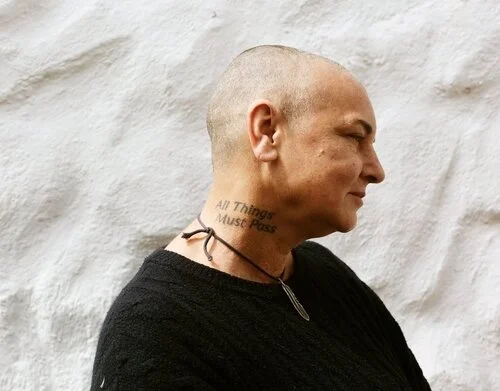
NOT that I need an excuse…

cxkdjd.jpg

 IMAGE CREDIT: Penguin Books Ltd

to feature the magnificent Sinéad O'Connor, but as she has a memoir out, it seemed like the perfect chance! Rememberings is a book that everyone should own. It is a personal insight into a fascinating artist and hugely inspiring person. I am keen to bring in segments from a couple of recent interviews O’Connor conducted. Before that, make sure that you order a must-read memoir:

Outspoken, provocative and enormously talented, singer Sinead O’ Connor has lived her life very much on her own terms and, in this forthright and considered memoir, she reveals all about stardom, motherhood and calling out hypocrisy.

The landmark memoir of a global music icon.

Sinead O'Connor's voice and trademark shaved head made her famous by the age of twenty-one. Her recording of Prince's 'Nothing Compares 2 U' made her a global icon. She outraged millions when she tore up a photograph of Pope John Paul II on American television.

O'Connor was unapologetic and impossible to ignore, calling out hypocrisy wherever she saw it. She has remained that way for three decades.

Now, in Rememberings, O'Connor tells her story - the heartache of growing up in a family falling apart; her early forays into the Dublin music scene; her adventures and misadventures in the world of sex, drugs and rock'n'roll; the fulfilment of being a mother; her ongoing spiritual quest - and through it all, her abiding passion for music.

Rememberings is intimate, replete with candid anecdotes and full of hard-won insights. It is a unique and remarkable chronicle by a unique and remarkable artist”.

I have been a fan of Sinéad O'Connor since I was a child. I think that her voice ranks alongside the greatest ever. It has been troubling reading about her struggles with mental-health issues through the years. She is such a strong and resilient person. There has been a mix of success, highs, controversies and lows through O’Connor’s illustrious career. Her most-recent album, I'm Not Bossy, I'm the Boss, was released in 2014. Her 1987 debut, The Lion and the Cobra, ranks alongside the very best debut albums of all-time. From incredible imagery through to O’Connor’s peerless voice, it is an album that everyone should own. Today, she lives in rural Ireland and leads a less starry and hectic life compared to what she experienced at the height of her career. O’Connor has conducted quite a few interviews around the release of Rememberings. They make for fascinating reading. I will not quote the entirety of the interview with The New York Times, although there are some sections that are worth highlighting:

Her cottage was appointed in bright, saturated colors that leapt out from the monotonous backdrop of the Irish sky with the surreal quality of a pop-up book. Bubble-gum roses lined the windows, and the Hindu goddess Durga stretched her eight arms across a blanket on a cozy cherry couch. When O’Connor, 54, gave me a little iPad tour during our video interview, the place seemed to fold in on itself: The flowers were fake ones she bought on Amazon.com, and her pair of handsome velvet chairs weren’t made for sitting.

w.jpg

PHOTO CREDIT: Ellius Grace for The New York Times 

Deliberately, I bought uncomfortable chairs, because I don’t like people staying long,” she said. “I like being on my own.” But she disclosed this with such an impish giggle that it sounded almost like an invitation.

Now O’Connor’s memoir arrives at a time when the culture seems eager to reassess these old judgments. The top comment on a YouTube rip of O’Connor’s “Behind the Music” episode is: “Can we all just say she was right!” Few cultural castaways have been more vindicated by the passage of time: child sexual abuse, and its cover-up within the Catholic Church, is no longer an open secret. John Paul II finally acknowledged the church’s role in 2001, nearly a decade after O’Connor’s act of defiance.

But the book does not supply a tidy, cheerful sort of vindication. These moments of cultural reassessment can feel like the awarding of a consolation prize; the fallout of past judgments can never truly be reversed. Meanwhile, the same dynamics keep repeating, over and over again. In recent years, O’Connor’s mental health has become grist for the therapy-entertainment complex overseen by the likes of Dr. Drew and Dr. Phil, who thrive on casting illness as drama and converting pain into spectacle.

O’Connor has seen a little bit of herself in women who came after her — in Amy Winehouse and Britney Spears. “What they did to Britney Spears was disgusting,” she said. “If you met a stranger in the street crying, you’d put your arms around her. You wouldn’t start taking photos of her, you know?” It is not lost on O’Connor that the night Spears was roundly categorized as a crazy person, she shaved her hair off. “Why were they saying she’s crazy for shaving her head?” she said. “I’m not.”

O’Connor still shaves her head, herself, about every 10 days. “I just don’t feel like me when I have hair,” she said. She usually wears a hijab over it now; she converted to Islam several years ago and started going by the name Shuhada Sadaqat, though she still answers to O’Connor, too. She wrote the first part of her memoir in 2015, but after having a hysterectomy and “a total breakdown,” as she puts it in the book, it took time for her to revisit the project.

O’Connor is happy being on her own, with her garden and her Mayfair cigarettes and her iPads and her “imaginary boyfriend,” Taye Diggs, to keep her company via episodes of “Murder in the First.” “I haven’t been terribly successful at being a girlfriend or wife,” she said. “I’m a bit of a handful, let’s face it

Just before rounding things off, there was another wonderful interview, this time from The Guardian that warrants a mention. Reading it – and how O’Connor is described -, I wonder whether there will ever be a biopic produced in the future. She is such an intriguing and fantastic figure whose life story is very varied and eventful:

Perhaps O’Connor was always destined to be best known for simply being herself: the angelic skinhead who swore like a trooper and shocked the world with allegations of child sex abuse; a woman who played out her own mental health crises in public; who became a Catholic priest and then “reverted” to Islam; who had four children by four different men, when all these things were unheard of or taboo. Her albums have often been cussedly uncommercial – traditional Irish songs on Sean-Nós Nua, roots reggae covers on Throw Down Your Arms. There have been gorgeous, relatively poppy albums, such as Universal Mother, but even that featured a spoken-word polemic on why the Irish famine was not actually a famine, and compared the country to an abused child. O’Connor must be one of pop’s most reluctant stars. When she was told Nothing Compares 2 U was at No 1 she wept – and not out of happiness.

It’s not just her eagerness to stick two fingers up at convention that makes her endlessly fascinating. O’Connor is an enormously empathic figure; hers is a vulnerability we can all relate to. And she is often proved right, long after the event. Last time we met, 11 years ago, O’Connor was a Catholic priest (she had been ordained by a breakaway church in 1999) who had just been vindicated. In 1992, she had torn up a picture of Pope John Paul II on Saturday Night Live as a protest at child sex abuse in the Catholic church. At the time many people dismissed her as a loopy self-publicist. Two weeks later she was booed off stage at a Bob Dylan tribute concert, and her records were publicly smashed. But in 2010 Pope Benedict XVI issued an apology to the victims of decades of sex abuse by Catholic priests in Ireland, expressing his “shame and remorse” for their “sinful and criminal acts”. (She viewed the apology as wholly inadequate, calling the Vatican “a nest of devils and a haven for criminals”.)

Now, O’Connor is publishing her memoirs. The book, Rememberings, has been a long time in the making. For the first time, she has written about the childhood abuse she suffered at the hands of her mother. The book is a series of beautifully observed vignettes rather than a conventional autobiography: she takes us from the abuse to the kleptomania, reform school, pop stardom, pope-baiting, heresy, apostasy, breakups, breakdowns, kids, marriages and celebrity shags that have shaped her life. The writing, particularly when recounting her childhood, is lyrical, funny and anguished, and the revelations come thick and fast.

She was in America in 1991, soon after Nothing Compares 2 U had topped the charts. Although Prince had written the song for his side project, the Family, he’d had nothing to do with her recording. One day she got a call saying he’d like to meet her. A chauffeur-driven car arrived to take her to his house. From the off, she says, Prince acted strangely. He told her he didn’t like the language she used on TV and made it clear he was unhappy she was not his protege. Things soon got tense. She says the evening ended up with him locking her in his house, insisting they have a pillow fight, then hitting her with a hard object hidden inside the pillowcase. O’Connor says she managed to get away and he chased her in his car. Eventually she escaped. She has talked about this night before now, but previously she seemed to laugh it off. Not this time.

What does she think would have happened if Prince had caught her? “I think he would have beat the shit out of me.” Even talking about it after all these years, she looks shaken. What was the scariest moment? “When he was sitting on a chair by the front door and he wouldn’t let me out. His irises dissolved and his eyes just went white. It was the scariest thing I’ve seen in my life.” If he had still been alive, does she think there would have been a #MeToo moment about Prince? There still might be, she says. “I’m interested to see if that does happen because I know one woman he put in hospital for months. And she didn’t make a complaint. I think he was a walking devil. He wasn’t called Prince for nothing.” Did they ever meet after that? “No, I wouldn’t go fucking near him, no way. And he never attempted to meet me. I could have gone to the police and made a report, but I didn’t. I was just so glad to be out of it”.

Go and buy the new memoir from Sinéad O'Connor. Rememberings is a glimpse into the life and mind of one of the music world’s greatest treasures. Sadly, it appears that the next studio album from O’Connor will be her last. NME reported the news:

Sinéad O’Connor has announced her retirement from music and touring in a series of new tweets.

Posted last night (June 4), O’Connor wrote: “This is to announce my retirement from touring and from working in the record business. I’ve gotten older and I’m tired.”

The musician went on to say that her upcoming album, ‘No Veteran Dies Alone’, will be her last album release”.

It is a shame that we will not get anymore music from O’Connor. That said, she has already provided us with so many wonderful songs. Lots of love to the amazing and truly inspiring…

MUSICAL icon.

FEATURE: In Discussion… Following This Woman's Work: A Kate Bush Symposium: Looking Ahead to Kate Bush Events in 2022

FEATURE:


In Discussion…

eeee.png

PHOTO CREDIT: John Carder Bush 

Following This Woman's Work: A Kate Bush Symposium: Looking Ahead to Kate Bush Events in 2022

___________

THIS is a drum that I am going to beat…

aaa.jpg

 PHOTO CREDIT: Mike Forster/ANL/REX/Shutterstock

quite a bit through this year. I think most of us are looking to the future and hoping that next year is a lot brighter than this one. One hopes that the pandemic will be far less of a problem when 2022 begins. For musicians, the chance to get back on the road and perform to crowds is paramount – in return, there is a huge demand and anticipation for live music from fans. I have no firm plans at the moment but, right now, I am looking to hold an event in 2022 that celebrates Kate Bush’s music. I have been speaking with various people but, essentially, it would mark some important anniversaries. Before going on, I have been thinking about the last time when there was a serious dissection and discussion of Bush’s work and her impact. That would be back in 2019. This Woman's Work: A Kate Bush Symposium was something I almost attended and spoke at. It might seem quite academic and formal but, as I have highlighted in a previous feature when I discussed the symposium, it was a fascinating and broad two-day event that was far less dry and formal as it sounds. The Kate Bush Encyclopaedia has more details:

A two day conference devoted to the outputs and achievements of Kate Bush, featuring talks, screenings and performances at the University of Edinburgh, held on 12 and 13 December 2019.

The programme of the two days was as follows:

Thursday 12 December

9.00 – 9.40: Delegate arrival and registration

9.45 – 10.45: Keynote 1: D-M Withers (University of Sussex): Figures, Communities and Concepts: Kate Bush as a Multi-Faceted Pop-Cultural Phenomena

11.00 – 12.00: Panel 1 – National identities

Samuel Love (University of Edinburgh): ‘How Beautiful it is, Amongst all the Rubbish’: Kate Bush’s Oh England My Lionheart and the Iconography of Englishness

Daniel Pietersen (Independent scholar): Two Steps on the Water: Folk Horror in the work of Kate Bush

12.15 – 1.15: Panel 2 – Gender (I)

Kirsty Fairclough (University of Salford): The Fine Purple, The Purest Gold: Authorial Connection in the Collaborations between Kate Bush and Prince

Alison Mayne (University of Edinburgh): Plucked from Mrs. Bartolozzi’s Washing Line: Kate Bush, clothing and exchanging experiences

2.00 – 3.30: Panel 3 – Sensual worlds and art historical perspectives

Thomas Houlton (Independent scholar): Bushcraft: Exploring Kate Bush’s Sensual World

Molly Gilroy (Independent scholar): ‘Strange Phenomena’: Tracing Surreal Metamorphosis, Ballet and Keys in the works of Kate Bush, Maya Deren and Leonor Fini

Sandra Lockwood (Simon Fraser University): Kate Bush and the Romantic Sublime

4.00 – 5.15: Keynote 2: Graeme Thomson (author of Under the Ivy: The Life and Music of Kate Bush) in conversation with author, broadcaster and curator Hannah McGill

Friday 13 December

9.00 – 9.30: Intro: Max Browne, photographer, Shooting Kate in ‘79

9.30 – 10.30: Keynote 3: Ian Cawood (University of Stirling): Lionhearts and Fishpeople: Kate Bush on Stage

10.30 – 11.30: Panel 4 – Gender (II)

Levent Donat Berköz (Independent scholar): Swapping Places: Kate Bush’s Masquerade in Running Up That Hill

Usha Wilbers and Lara Severens (Radboud University): Into the Sensual World: Gender Subversion in the Work of Kate Bush

11.45 – 1.15: Panel 5 – Studio technologies

Amanda Feery (Independent musician): This Woman's Work: A Composer's Perspective on Vocality and Narrative in the work of Kate Bush

Paul Harkins (Edinburgh Napier University): Following the Auteurs: Kate Bush and the Fairlight CMI

Laura M. Zucconi (Stockton University): Deeper Understanding: Kate Bush in the Historical Context of Producers

2.00 – 3.15: Keynote 4: Rob Young (Independent author and former editor, The Wire): Sowing the Secret Garden

3.30 – 5.15: Panel 6 – Performance

Hannah Buckley and Catriona McAra (Leeds Arts University): Running with Wolves, Somaticizing the Text: Revisionary Feminism and Contemporary Dance

Harry Maberly (Independent artist): Kate Bush: Fiction, Fantasy and Fandon”.

The reason I bring up the symposium is two-fold. First, there will be an appetite for people to get together next year and discuss Kate Bush. Such has been the sense of activity and fascination regarding her work over the past year, we have seen books and magazines dedicated to her music. I think it has been busier than ever in that sense. 2022 is a year where a couple of Kate Bush anniversaries are marked. For one, it will be forty years (in September) since The Dreaming was released. One of her best albums, I feel that anniversary deserves to be marked and discussed. I am not sure whether there are plans afoot from another corner regarding a symposium-like event in 2022. I feel we will see magazine articles and, perhaps, a couple of books about her work.

wwww.jpg

 PHOTO CREDIT: John Carder Bush

Maybe not something like the symposium. Also, 2022 is forty-five years since Bush finished recording her debut album, The Kick Inside. I think that this is a milestone that warrants recognition and respect. I will put more details out when I have something concrete, but I have been thinking ahead to next year and marking that anniversary. It would be held in August. I was looking at something like the 2019 symposium, perhaps with a documentary feel. It would be a selection of people together, on a single day, that would explore Bush’s music and her impact. Taking the form of album dissections, discussions of various themes related to her work and clips of interviews and music videos, it would be a one-off event that marked an important occasion. I don’t think there would be a shortage of guests and options regarding contributors. Not only are there people who have written about Bush and have been fans for years; there are scores of artists and people across the arts that owe a debt to her. I am looking forward to. The biggest considerations are financing and locations. Of course, such a project is costly and would run into four figures. I am also not sure of the exact location. I have talked with a couple of music studios and, as we would need to seat quite a few people, there would need to be quite a bit of room. Of course, it doesn’t need to be a music studio though, though I thought there would be symbolism and relevance to holding it there. As I say, it is in the early stages right now. Through 2020 and 2021, there has been some impressive column inches dedicated to Kate Bush. It is heartening to see how important she remains to this day. For that reason, next year, I would love to get people together…

TO celebrate her work.

FEATURE: The Lockdown Playlist: Tony Levin at Seventy-Five

FEATURE:


The Lockdown Playlist

aaaa.jpg

PHOTO CREDIT: Juergen Spachman

Tony Levin at Seventy-Five

___________

I usually focus on…

www.jpg

 PHOTO CREDIT: Michele Russotto

a big mainstream artistwhen doing a Lockdown Playlist of songs. As the legendary bass player Tony Levin is seventy-five tomorrow (6th June), I want to put out a selection of songs he has played on. You may not know his name, though you would have heard his bass playing at some point! He is a multi-talented musician who has worked with some of the all-time great artists. He is a legend in his own right! Before getting to that playlist, here is some biography:

Bass player Tony Levin has maintained this website since 1996, giving behind the scenes views of life on the road and featuring his photographs from stage and on tour.

His most notable bass playing albums and tours have been with: Peter Gabriel, King Crimson, John Lennon, Pink Floyd, Lou Reed, Alice Cooper, Buddy Rich, Peter Frampton, Gotye, Carly Simon, Judy Collins, Paula Cole, Chuck Mangione, Steven Wilson, James Taylor, Anderson Bruford Wakeman Howe.

Solo albums: World Diary, Waters of Eden, Resonator, Pieces of the Sun, Stick Man.

Collaborative groups: Bruford Levin Upper Extremities, Bozzio Levin Stevens, Liquid Tension Experiment, Levin Torn White, Levin Minneman Rudess, Levin Brothers.

Levin is currently a member of the bands King Crimson, Peter Gabriel Band, Stick Men, Levin Brothers

Books published: Beyond the Bass Clef, Road Photos, Crimson Chronicles vol 1. and (coming soon) Fragile as a Song.

Born in Boston, June 6, 1946, Levin grew up in the suburb of Brookline, starting playing upright bass at 10 years old. In high school he picked up tuba, soloing with the concert band, and started a barbershop quartet. But he primarily played Classical music, attending Eastman School of Music in Rochester, NY, where he had the chance to play under Igor Stravinsky and in the Rochester Philharmonic. Also at the school was drummer Steve Gadd, who introduced Tony to jazz and rock, leading to his trading in his upright for a Fender bass, later moving to New York, joining the short-lived band Aha, the Attack of the Green Slime Beast, and becoming a studio musician.

Having played on many albums in the 70’s, Levin jumped at the chance to tour with Peter Gabriel in 1977, switching to Music Man basses, which he still favors, and learning the Chapman Stick, which he played extensively in King Crimson from 1981, and led to his starting the band Stick Men.

In 1984 Tony released Road Photos, a collection of black & white photos taken during his travels with Crimson, Gabriel, and others. Soon following was the book Beyond the Bass Clef featuring stories and essays about bass playing. Another photo book, Crimson Chronicles, volume 1, the 80’s contains an extensive collection of his b&w photos of life on the road with the band.

2016 is another year filled with creative output and concerts for Levin. Stick Men has toured the U.S. and will play in Europe in the Fall. The Peter Gabriel / Sting tour in Summer will be a notable one. Joined by Adrian Belew and Pat Mastelotto, Tony will host the yearly Three of a Perfect Trio music camp in the Catskill mtns of NY State. King Crimson will tour in Europe from September. A new album release from Levin Minneminn Rudess is coming, as is the album “Prog Noir” from Stick Men. And in June, a book of Levin’s lyrics and poetry, titled Fragile as a Song.

2021 With the drastic changes of the past year, much less touring, but in the Summer a new album was written and recorded by Liquid Tension Experiment, for Spring 2021 release. And Tony completed a large book of his touring photos through the years, Images from a Life on the Road. Tours this year are booked, but marked as “tentative’ at this point”.

To mark the seventy-fifth birthday of a tremendous musician, I have put together some of his great bass performances (as you can see, Levin has worked on so many albums!). As you will hear, he is a dexterous, versatile and consistently brilliant bass player who deserves…

A birthday nod.

FEATURE: Spotlight: CHERYM

FEATURE:


Spotlight

sss.jpg

PHOTO CREDIT: Y-Control Photography

CHERYM

___________

I want to turn my attention to…

 PHOTO CREDIT: Nance Hall

a fantastic group who hail from Derry in Northern Ireland. CHERYM are a brilliant trio who are primed for big things. As I do not know much about their background and progress, it is best to bring in a few features/interviews that provide more details and explanation. In terms of a short overview, Breaking Tunes are on hand:

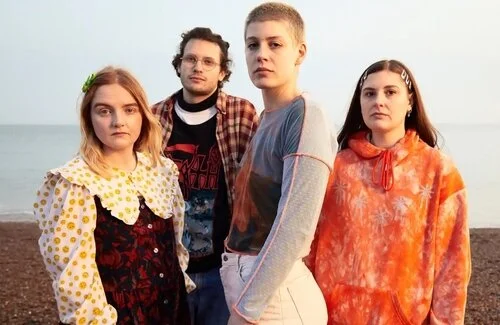
CHERYM are Hannah Richardson, Nyree Porter and Alannagh Doherty.

Serving up a zingy, fearless new recipe for pop punk rock, Cherym are a three-piece from Derry in Northern Ireland with some seriously infectious songwriting credentials. Taking influence from The Smashing Pumpkins, Bikini Kill, American Football, PUP and Pixies, the trio formed after meeting in college over a joint love of garage rock, pop punk and a desire to be the biggest band in the world.

Starting out as a kick-back against the local music scene boys club, their relentless enthusiasm and boundless energy are the perfect antidote to the drudgery of life under lockdown—a very, very bright shining light for 2021 at the end of what’s been a long tunnel.

CHERYM signed with Alcopop! Records in January 2021 and ITB Booking Agents in April 2021. They have received support from BBC Radio 1 (Jack Saunders, Gemma Bradley, Phil Taggart), KEXP, BBC Radio 6 (Steve Lamacq, Tom Robinson), X Radio (Jack Kennedy) and glowing high profile online reviews from DORK, Alt Press, Upset, Vanyaland, Dead Press, The Irish Times, Punktuation, Louder Than War and more.

CHERYM have performed at The Great Escape, ILMC, Electric Picnic, Indiependence, Stendhal, Manchester Punk Festival and more”.

Before bringing in a recent interview, there is one that Nessymon conducted last year. It is interesting hearing about CHERYM breaking through and pricking ears:

Hello! Who are you and where are you right now?

Hello we are CHERYM and we are all currently in our rehearsal space cos this is basically the first time we’ve been together since lockdown.

You guys released your first music in 2018. Was that your first foray into music? How did it all start?

Honestly, its difficult to pin point how/when it all started because I can think back to so many occasions were I thought “this is it, I think we can make this happen”. I think we were very lucky that we had some sort of appeal to people from the start, I don’t know why but were so grateful because they pushed us to keep going. To discover who we were as a band.
-Nyree

When you go to the studio do you have a definite idea of what you’re looking for or how much input does a producer have?

We have an idea but I think when we’re in the studio, we suddenly have more ideas to make it better. I think because Caolan is so cool and lets us explore ideas, we do get to make the song 100x’s better. And we are very open to any ideas that Caolan would have because he is a LEGEND.
-Nyree

Over the past while, there has been a lot of discussion in Ireland, trying to ensure that female musicians get as much air time as guys do. Why do you think it’s such a struggle for presenters (if they can choose their own music) or radio stations to acknowledge talented females?

I feel like there’s just always been a massive struggle for women in any career, even if we are being represented in some respects, it’s never to the point where there is accurate population representation for women in music. As well as this there’s always been an obsession for boy bands in radio so it’s hard to get away from the so called “norm” and to a more progressive social acceptance for women in the industry too. We are all acknowledged, but not as much as we should be.

-Alannagh

Your sound is huge recorded, fun, brash in your face. But, your live shows have gathered a lot of attention and over the past year, you’ve played a shed load of shows. What’s the best thing for you about a Cherym live show ?

I think the best thing about our shows is that we never really take ourselves seriously. It’s always good craic and a class atmosphere cause we just let ourselves go and really enjoy the time we get on stage. We just always be taking the p*ss and you’ll never see us being serious during a set, we just love having a good time.
-Alannagh
”.

As I say with every artist I spotlight who has started out quite recently, it must be one of the worst times to launch your careers. Although CHERYM have been on the block for a little while, they are planning an E.P. for later in the year. I hope that things are all opened up by then so that they can get their music out there. I am not hearing too many bands coming out of Northern Ireland at the moment. There is a lot of action in E.I.R.E., though not so much with their neighbours. I think that CHERYM will not only highlight how there needs to be more representation and focus on their country. They also prove that there is amazing talent to be found! Recently, the trio gave an interview to NME. They cover subjects like representation and how they were misinterpreted and portrayed early on:

The members of Cherym had grown up in each other’s shadows, but it took the dream of starting a band for their lives to finally intertwine. Guitarist and vocalist Hannah Richardson, bassist Nyree Porter and drummer Alannagh Doherty had all lived within ten minutes of each other as kids in Derry, so when punk-loving Richardson decided to translate her passion into starting her own band, she didn’t have to look far to find the right people.

“We were the only couple of people that played music in the school, we were the only people that took it seriously,” Richardson says now, referring to herself and Porter. “But you were never there! You were always dobbing school,” Porter snaps back, before all three collapse into laughter. “That’s true,” Richardson replies, before pinballing off at warp speed into a manic stream of consciousness about her favourite bands.

The infectiousness and enthusiasm that Cherym have in person is only exceeded by the jubilation of their early singles. ‘Kisses on My Cards’ is a snarling, fizzing pop-punk jewel that lands somewhere between Bikini Kill and Yuck, while ‘Listening to My Head’ is anthemic, a rooftop power-chord call-to-arms. The whirlwind of energy that they harness took some time to develop, though.

They are used by now to being treated by the outside world as somehow unusual for being a guitar band comprised entirely of women, an industry-wide problem that paradoxically played a part in the band’s very formation. “The initial idea behind Cherym was to be a nice, creative hub for women,” says Richardson. “In Derry at the time, it was all fellas, all boys in bands and it was a bit of a sickener. I think the dynamic changes in bands with guys. I just had this idea that I would love to play in a band with other girls and that it would be so much more beneficial to how I write, it could just be a really cool, wee creative, safe space.”

Early reviews of the band have often misguidedly labelled them as politically-motivated as a result, despite the fact that they have rarely if ever written songs on the subject. “It’s weird to me that you would look at girls on stage and think they’re trying to send a message, just because they’re women,” says Richardson. “Even though we are all extremely tuned in politically and we would all consider ourselves feminists outside of the band, we’ve never really brought that into the music.”

“I do feel like the Northern Ireland music scene definitely lacks representation,” says Richardson. They point to New Pagans and Roe as standout names in the scene, while Porter has a theory as to why the spaces for young artists might be so limited: “There are bands from the 80s who are making comebacks and their music is shite now. You’ve done your time, give the fucking younger generation a go now. Fucking enjoy your retirement, seriously!”.

If you have not discovered CHERYM yet then get behind them and check out their music. They are incredible and I think they will help spotlight Northern Ireland and what is out there. At the moment, the country is still underappreciated and we do not often hear many groups and artists come out of there – it seems that there have been few breaking into the mainstream media over the past year. I love CHERYM and what they are putting out. They are a group who are guaranteed to…

STAY in the mind.

___________

Follow CHERYM

sss.jpg

FEATURE: Ranking Tracks from Kate Bush’s Albums… Aerial (A Sea of Honey)

FEATURE:


Ranking Tracks from Kate Bush’s Albums…

aa.jpg

Aerial (A Sea of Honey)

___________

THIS is the last Kate Bush album…

xxx.jpg

 IN THIS PHOTO: Kate Bush in 2005/PHOTO CREDIT: Trevor Leighton/National Portrait Gallery, London

I will include and rank the tracks from. Aerial is a bit more difficult than others because, as it is a double album, the second album is a conceptual suite. Consisting of nine tracks, there are different versions on Spotify. The original and 2018 remaster is A Sky of Honey. There was a version, An Endless Sky of Honey, that had all of the songs as a suite. The 2018 remaster includes spoken parts by Bush’s song, Bertie (Albert), as the original album featured Rolf Harris. Because I prefer to think of the second disc more of a single suite, I am going to look at A Sky of Honey/An Endless Sky of Honey next time around, as it is really interesting. In this ranking, I am taking Aerial’s first disc, A Sea of Honey – ranking the seven tracks in order of greatness. Before that, it is worth bringing in some album information from Wikipedia:

Aerial is Bush's first double album, and was released after a twelve-year absence from the music industry during which Bush devoted her time to family and the raising of her son, Bertie. The anticipation leading up to the album's release was immense, with press articles devoted to Bush being printed months, even years before. Like Bush's previous album, The Red Shoes, Aerial does not feature a cover photograph of Bush, but rather one that is emblematic of the album's celebration of sky, sea, and birdsong. The cover image, which seems to show a mountain range at sunset reflected on the sea is in fact a waveform of a blackbird song superimposed over a glowing photograph.

Aerial is one of Bush's most critically acclaimed albums. Musically, the album is a multi-layered work, incorporating elements of folk, Renaissance, classical, reggae, flamenco, and rock. As with 1985's Hounds of Love, the album is divided into two thematically distinct collections. The first disc, subtitled A Sea of Honey, features a set of unrelated songs including the hit single "King of the Mountain", a Renaissance-style ode to her son "Bertie", performed with period instruments, and "Joanni", based on the story of Joan of Arc. In the song "{\displaystyle \pi }\pi ", Bush sings the number to its 78th decimal place, then from its 101st to its 137th decimal place. The piano and vocal piece "A Coral Room", dealing with the loss of Bush's mother and the passage of time, was hailed by critics as "stunning" in its simplicity, "profoundly moving"[6] and as "one of the most beautiful" pieces Bush has ever recorded.

The second disc, subtitled A Sky of Honey, consists of a single piece of music revelling in the experience of outdoor adventures on a single summer day, beginning in the morning and ending twenty-four hours later with the next sunrise. The songs are saturated with the presence of birdsong, and all refer to the sky and sunlight, with the sea also featuring as an important element. Beginning with blackbirds singing in the dawn chorus, a woodpigeon cooing, solo piano, and Bush's son saying, "Mummy, Daddy, the day is full of birds," the piece begins with an early morning awakening to a beautiful day of sun shining "like the light in Italy"; it proceeds through a visit with a painter who is working on a new piece of pavement art ("An Architect's Dream" and "The Painter's Link") and then passes on to a crimson "Sunset". The interlude "Aerial Tal", consists of Bush imitating various samples of birdsong, while "Somewhere in Between" celebrates the ambiguous nature of dusk. "Nocturn", features a pair of lovers bathing in the sea after dark under a star-studded "diamond sky". The song cycle ends with "Aerial" and its euphoric welcome of the following morning's sunrise with the refrain "I need to get up on the roof...in the sun.”

A Sky of Honey features Rolf Harris playing the didgeridoo and providing vocals on "An Architect's Dream" and "The Painter's Link". Other guest artists include Peter Erskine, Eberhard Weber, Lol Creme and Procol Harum's Gary Brooker. In one of his final projects before his death in 2003, long-time Bush collaborator Michael Kamen arranged the string sections, performed by the London Metropolitan Orchestra.

In the 2014 series of concerts in London, Before the Dawn, Bush performed "King of the Mountain," "Joanni" and the whole Sky of Honey song cycle live for the first time”.

I shall move on now. I think that it is interesting listening to the individual songs that make up An Endless Sky of Honey. They are superb on their own, though I feel one should listen to the album as a whole and consider it a long, multi-part track – even Kate Bush herself has been keen for people to hear the suite in one and not skip/overlook tracks. A personal favourite of Bush’s, Aerial is a remarkable album. Here are my opinions regarding which tracks from the second disc, A Sea of Honey, are the very best.

_____________

7. Pi

Song written by Kate Bush. Originally released on her eighth studio album Aerial in 2005. The song described a man who has "a complete infatuation with the calculation of π". She actually sings the number to its 78th decimal place, then from its 101st to its 137th decimal place. The difference between the two works out like this:

Real Pi: 3.

1415926535    8979323846    2643383279    5028841971   6939937510

5820974944    5923078164    0628620899    8628034825   3421170679

8214808651    3282306647    0938446095    5058223172   5359408128

Kate Bush Pi: 3.

1415926535    8979323846    2643383279    5028841971   6939937510

5820974944    5923078164    06286208

8214808651    3282306647    0938446095    5058223

I really like the challenge of singing numbers, as opposed to words because numbers are so unemotional as a lyric to sing and it was really fascinating singing that. Trying to sort of, put an emotional element into singing about...a seven...you know and you really care about that nine. I find numbers fascinating, the idea that nearly everything can be broken down into numbers, it is a fascinating thing; and i think also that we are completely surrounded by numbers now, in a way that we weren't you know even 20, 30 years ago we're all walking around with mobile phones and numbers on our foreheads almost; and it's like you know computers...

I suppose, um, I find it fascinating that there are people who actually spend their lives trying to formulate pi; so the idea of this number, that, in a way is possibly something that will go on to infinity and yet people are trying to pin it down and put their mark on and make it theirs in a way I guess also i think you know you get a bit a lot of connection with mathematism and music because of patterns and shapes... (Ken Bruce show, BBC Radio 2, 31 October 2005)” – Kate Bush Encyclopaedia

6. Bertie  

He's such a big part of my life so, you know, he's a very big part of my work. It's such a great thing, being able to spend as much time with him as I can. And, you know, he won't be young for very long. And already he's starting to grow up and I wanted to make sure I didn't miss out on that, that I spent as much time with his as I could.

So, the idea was that he would come first, and then the record would come next, which is also one reasons why it's taken a long time (laughs). It always takes me a long time anyway, but trying to fit that in around the edges that were left over from the time that I wanted to spend with him.

It's a wonderful thing, having such a lovely son. Really, you know with a song like that, you could never be special enough from my point of view, and I wanted to try and give it an arrangement that wasn't terribly obvious, so I went for the sort of early music... (Ken Bruce show, BBC Radio 2, 3 November 2005)

Credits

Viols: Richard Campbell, Susan Pell

Renaissance Guitar: Eligio Quinteiro

Percussion: Robin Jeffrey

Keyboards: Kate

String Arrangement: Bill Dunne” – Kate Bush Encyclopaedia

5. Joanni

All the banners stop waving

And the flags stop flying

And the silence comes over

Thousands of soldiers

Thousands of soldiers

Who is that girl? Do I know her face?

Who is that girl?

Joanni, Joanni wears a golden cross

And she looks so beautiful in her armour

Joanni, Joanni blows a kiss to God

And she never wears a ring on her finger

All the cannon are firing

And the swords are clashing

And the horses are charging

And the flags are flying

And the battle is raging

And the bells, the bells are ringing

Who is that girl? Do I know her face?

Who is that girl?

Joanni, Joanni wears a golden cross

And she looks so beautiful in her armour

Joanni, Joanni blows a kiss to God

And she never wears a ring on her finger

Joanni, Joanni, Joanni, Joanni blows a kiss to God

And she just looks beautiful in her armour

Beautiful in her armour

Elle parle à Dieu et aux anges

Dans ses prières

Venez Sainte Catherine

Venez Sainte Marguerite

Elle a besoin de vous deux

Les voix, les voix du feu

Chantent avec ma petite soeur

Les voix, les voix, les voix” – Kate Bush Encyclopaedia

4. King of the Mountain

Song written by Kate Bush. Originally released on 24 October 2005 as the first and only single from her eighth studio album Aerial. The song was first played on 21 September 2005 on BBC Radio 2. The song was written ten years prior to most songs on the album.

Music video

The music video was first aired on UK's Channel 4 on 15 October 2005. It was directed by Jimmy Murakami, produced by Michael Algar, edited at The Farm (Dublin) by Hugh Chaloner with flame and 3D effects by Niall O hOisin, Arron Inglis, Brian O'Durnin and Mark from Australia

Credits

Drums: Steve Sanger

Bass: Del Palmer

Guitar: Dan McIntosh

Keyboards: Kate

Additional Vocals: Paddy Bush” – Kate Bush Encyclopaedia

3. How to Be Invisible

Drums: Stuart Elliott

Bass: Del Palmer

Guitar: Dan McIntosh

Keyboards: Kate

Accordion: Chris Hall

Sample Lyrics

I found a book on how to be invisible

Take a pinch of keyhole

And fold yourself up

You cut along the dotted line

You think inside out

And you're invisible

Eye of Braille

Hem of anorak

Stem of wallflower

Hair of doormat” – Kate Bush Encyclopaedia

2. A Coral Room

There was a little brown jug actually, yeah. The song is really about the passing of time. I like the idea of coming from this big expansive, outside world of sea and cities into, again, this very small space where, er, it's talking about a memory of my mother and this little brown jug. I always remember hearing years ago this thing about a sort of Zen approach to life, where, you would hold something in your hand, knowing that, at some point, it would break, it would no longer be there. (Front Row, BBC4, 4 November 2005)

Credits

Piano and Vocals: Kate

Solo Vocal: Michael Wood” – Kate Bush Encyclopaedia

1. Mrs. Bartolozzi

Is it about a washing machine? I think it's a song about Mrs. Bartolozzi. She's this lady in the song who...does a lot of washing (laughs). It's not me, but I wouldn't have written the song if I didn't spend a lot of time doing washing. But, um, it's fictitious. I suppose, as soon as you have a child, the washing suddenly increases. And uh, what I like too is that a lot of people think it's funny. I think that's great, because I think that actually, it's one of the heaviest songs I've ever written! (laughs)

Clothes are...very interesting things, aren't they? Because they say such an enormous amount about the person that wears them. They have a little bit of that person all over them, little bits of skin cells and...what you wear says a lot about who you are, and who you think you are...

So I think clothes, in themselves are very interesting. And then it was the idea of this woman, who's kind of sitting there looking at all the washing going around, and she's got this new washing machine, and the idea of these clothes, sort of tumbling around in the water, and then the water becomes the sea and the clothes...and the sea...and the washing machine and the kitchen... I just thought it was an interesting idea to play with.

What I wanted to get was the sense of this journey, where you're sitting in front of this washing machine, and then almost as if in a daydream, you're suddenly standing in the sea. (Ken Bruce show, BBC Radio 2, 1 November 2005)

Well, I do do a lot of washing [chuckles]. I'm sure I would never have written the song if I didn't... You know, just this woman, in her house, with her washing. And then the idea of taking the water in the washing machine with all the clothes, and the water then becoming the sea... and I also think there's something very interesting about clothes. They're kind of people without the people in them, if you know what I mean? [Kate laughs] They all have our scent, and pieces of us on them, somehow. (Front Row, BBC4, 4 November 2005)” – Kate Bush Encyclopaedia

FEATURE: Groovelines: The Specials - Ghost Town

FEATURE:


Groovelines

aaa.jpg

The Specials - Ghost Town

___________

NOT many of my Grooveline features…

zzz.jpg

have a timely quality. I just like to select songs that have an interesting history that warrant fonder investigation. As The Specials’ Ghost Town is forty and there has been a new release this week, I thought I had to include the classic here. Released on 12th June, 1981, the song spent three weeks at number-one and ten weeks in total in the top 40 of the U.K. singles chart. It is a striking song that documents themes of urban decay, deindustrialisation, unemployment and violence in inner cities. Before bringing in a few articles that look at the song and why it is so significant, I would encourage people to buy the fortieth anniversary edition of Ghost Town:

The Specials are one of the defining bands of the late 70’s / early 80’s along with Jerry Dammers iconic label Two Tone Records. They combined Jamaican ska and Rocksteady mixed with the energy of punk and launched a whole Ska Revival which paved the way for fellow likeminded bands Madness, The Beat and The Selecter to release their first singles.

Having had seven top 10 singles and two Gold albums over the course of two years, the band released Jerry Dammers’ Ghost Town in June 1981, backed by Lynval Goldings’ Why? and the Terry Hall penned Friday Night Saturday Morning. The beginnings of the song were written around the closure of the Larcano dancehall in Coventry, but also reflecting what was happening in other towns and cities with urban decay, unemployment and ongoing racial tensions of the period. Themes which are still relevant today.

The single, which was recently voted the second greatest UK single of all time by Alexis Petridis in the Guardian, reached Number One in the UK singles charts and stayed there for a further 3 weeks, becoming one of the biggest selling singles of 1981 and has remained one of the classic UK singles of all.

This 40th Anniversary Edition has been mastered and cut at half-speed by Miles Showell at Abbey Road Studios using the original production tapes for optimum audio quality”.

Many people might only know Ghost Town as a song from The Specials that is definitely catchy and superb. Some may not be aware of the significance and history of Ghost Town. Not only is it one of my favourite songs. I feel like it is a history lesson. A chance to look back at the late-1970s and early-1980s and the urban decay and unrest that was prevalent in areas like Coventry. The first article I want to source is from the BBC. They marked the thirtieth anniversary of Ghost Town:  

If the band's ability to articulate the mood of the era can be traced anywhere, it is surely in Coventry, where they were based. The city's car industry had brought prosperity and attracted incomers from across the UK and the Commonwealth, meaning the future Specials grew up in the 1960s listening to a mixture of British and American pop and Jamaican ska.

But by 1981, industrial decline had left the city suffering badly. Unemployment was among the highest in the UK.

"When I think about Ghost Town I think about Coventry," says Specials drummer John Bradbury, who grew up in the city.

"I saw it develop from a boom town, my family doing very well, through to the collapse of the industry and the bottom falling out of family life. Your economy is destroyed and, to me, that's what Ghost Town is about."

With a mix of black and white members, The Specials, too, encapsulated Britain's burgeoning multiculturalism. The band's 2 Tone record label gave its name to a genre which fused ska, reggae and new wave and, in turn, inspired a crisply attired youth movement.

But, as a consequence, Specials gigs began to attract the hostile presence of groups like the National Front and the British Movement. When vocalist Neville Staple sighed wearily on Ghost Town that there was "too much fighting on the dance floor", he sang from personal experience”.

I love to look at the context of an iconic song and delve deeper. Certainly, when it comes to The Specials’ Ghost Town, there was so much happening in the band’s ranks. The Guardian did a run-down of the best number-one singles last year. They ranked Ghost Town at two:

“In early 1981, the Specials were both at the top of their game and in their death throes. They had enjoyed a dizzying, agenda-setting rise to fame. Seven top 10 singles and two gold albums in two years; an entire youth subculture formed in their wake; a record label, 2 Tone, that seemed to guarantee success for anyone who signed to it: Madness, the Selecter, the Beat, the Bodysnatchers.

But the Specials were falling apart. They were overworked and riven with internal disagreements about the jazz and easy-listening-influenced direction leader Jerry Dammers was taking them in. They were a band born out of political and racial tension. They had changed their name from the Coventry Automatics and started playing a punky take on ska, with lyrics pleading for racial tolerance and unity, after a 1978 gig supporting the Clash was disrupted by the National Front. But now political and racial tension was threatening to engulf them. Guitarist Lynval Golding was seriously injured in a racist attack in south London. Gigs on their late 1980 tour were marred by audience violence: in Cambridge, Dammers and vocalist Terry Hall were arrested and charged with incitement to riot after trying to stop the fighting. The band announced they would quit touring.

wqq.jpg

 Things came to a head in the studio while trying to record their next single, Ghost Town, a song Dammers had spent a year writing, horrified by what he had seen on the road: “In Liverpool, all the shops were shuttered up, everything was closing down. Margaret Thatcher had apparently gone mad, she was closing down all the industries, throwing millions of people on the dole. You could see that frustration and anger in the audience. It was clear that something was very, very wrong.”

Ghost Town was powered by despair and anger, both at the state of a country in which unemployment had risen by nearly a million in 12 months, and by 82% among ethnic minorities – “government leaving the youth on the shelf, no jobs to be found in this country” – and the state of the Specials (“Bands won’t play no more / too much fighting on the dancefloor”). It was all set to deeply unsettling, doom-laden music: a loping reggae beat topped with eerie, jazz chords, stabbing horns influenced by soundtrack composer John Barry and, instead of a chorus, a harrowing wail. The band fought so much during its recording that the studio engineer threatened to throw them out. Ghost Town was eventually completed and released in late June, around the same time the Specials played a benefit show in their home town of Coventry, inspired by the racist murder of a local teenager, Satnam Gill. The NF marched through the city on the same day; rumours they were also planning to attack the gig meant one of the biggest bands in the country found themselves playing to a half-empty venue”.

I have already brought in story regarding Ghost Town. There is one more article that gives us even more detail about the track. Far Out Magazine took us inside Ghost Town last year:

Jerry Dammers, the man behind the song’s lyrics, has since said that although the song accurately depicted a country on its knees it was actually written about something a little closer to home: “Ghost Town was about the breakup of The Specials. It just appeared hopeless. But I just didn’t want to write about my state of mind, so I tried to relate it to the country as a whole.” Yet Dammers does such a fine job of vividly drawing his audience a picture they had become all too familiar with and moving the song’s message out of his mind and into the mainstream.

The Specials forged their career with a little help from their city, Coventry. The former auto-motive city used to be brimming with the car industry but a swift turn in economics had left it, and its inhabitants, without so much as a pot to piss in. With horrendously low-employment and thusly low quality of life, the city proved to be the perfect breeding ground for racism. “When I think about ‘Ghost Town’ I think about Coventry,” says Specials drummer John Bradbury, who grew up in the city.

“I saw it develop from a boom town, my family doing very well, through to the collapse of the industry and the bottom falling out of family life. Your economy is destroyed and, to me, that’s what Ghost Town is about.” It was this downturn that had sent many youths into the ranks of the National Front and consequently seen the tension within the city grow even greater. With the band actively rallying against such groups, they soon found trouble at their shows.

Soon enough members of the NF as well as the British Movement, would arrive at the band’s reggae-infused ska gigs and find fistfuls of anti-racist rhetoric. It would naturally lead to fights breaking out across the shows and cause Neville Staples to sing “too much fighting on the dancefloor”. It goes further too, guitarist Lynval Golding was brutally hurt in a racist attack which would inspire the song ‘Why?’ and end up as the B-Side to ‘Ghost Town’.

It meant that when the song was released, with the Brixton riots still barely in the rear view mirror, it exploded on to the radio and arrested audiences with every listen. While, of course, the potent nature of the song will have garnered fans it was the song’s musical power that really hit home.

Beginning with police sirens and confrontation you are immediately put on edge. It’s a dystopian sound of menace and confusion, the kind of fear that only strikes you too late. The Specials manage to convey not only the sense of impending implosion but the fragility of facing it all alone.

Looking back in 2020, the song feels as poignant today as it did in 1981. There are only a handful of songs that can resonate in whatever time period you hear it in and ‘Ghost Town’ is certainly one of them. It remains the anthem for the oppressed and the reflection of the modern dystopia they’ve been charged with keeping order in”.

I shall leave things there. On its fortieth anniversary, I feel Ghost Town still holds weight and tells the story of Britain at a very tough time. It even has a relevance today and can be applied to modern life in many areas of Britain. Coventry is a City of Culture 2021. Back when The Specials released their hit, things were very different indeed! As I said, I feel like the song provides history and social commentary about the state of affairs under Prime Minister Margaret Thatcher (and James Callaghan between 1976-1979). Whilst Ghost Town resonated with people back in 1981, it is a classic that has touched and moved…

A whole new generation.

FEATURE: The June Playlist: Vol. 1: If I’m a Lost Cause, How Can I Make It Ok?

FEATURE:


The June Playlist

ee.jpg

IN THIS PHOTO: Wolf Alice/PHOTO CREDIT: Jordan Hemingway for NME

Vol. 1: If I’m a Lost Cause, How Can I Make It Ok?

__________

THIS weekly Playlist…

xxx.jpg

 IN THIS PHOTO: Billie Eilish

is packed with gems. Not only is there new music from Billie Eilish, Wolf Alice, LUMP, Dua Lipa, Prince, and CHVRCHES (ft. Robert Smith). There are also tunes from Genesis Owusu, Tinashe & Buddy, The Beach Boys, Crowded House, Pa Salieu (feat slowthai), King Princess, Madison Beer, Jessie Ware, Barenaked Ladies, and Boy George. It is a varied and busy week that should provide interesting listening for everyone. If you do require a kick and push to get you into the weekend, then this Playlist should have you sorted. It is a nice mix of more uplifting songs and those which take things down a bit. It is another quality…

aaa.jpg

 IN THIS PHOTO: Genesis Owusu

WEEK for new music.   

ALL PHOTOS/IMAGES (unless credited otherwise): Artists

__________

ddgf.jpg

 PHOTO CREDIT: Alex Lake for The Times

Wolf Alice - How Can I Make It Ok?

aaaa.jpg

Billie Eilish Lost Cause

zzz.jpg

LUMPClimb Every Wall

xxx.jpg

Prince - Born 2 Die

zzz.jpg

PHOTO CREDIT: Sebastian Mlynarski & Kevin J Thomson

CHVRCHES (ft. Robert Smith) How Not to Drown

zzz.jpg

Genesis Owusu Same Thing

zz.jpg

Tinashe & Buddy Pasadena

aaa.jpg

The Beach Boys Big Sur

zzz.jpg

Crowded HouseShow Me the Way

zzz.jpg

Pa Salieu (feat slowthai) - Glidin'

rrr.jpg

King Princess - House Burn Down

qq.jpg

Madison Beer Reckless

qqq.jpg

PHOTO CREDIT: You Magazine

Jessie Ware Hot N Heavy

zzz.jpg

PHOTO CREDIT: Matt Barnes

Barenaked Ladies - New Disaster

aaa.jpg

Boy George The Best Thing Since Sliced Bread

qqq.jpg

Japanese Breakfast Paprika

aaa.jpg

PHOTO CREDIT: George Chinsee/WWD

H.E.R. - Change (from the Netflix Series We the People)

qqq.jpg

PHOTO CREDIT: Ben Murphy

Martha Skye Murphy Found Out

zzz.jpg

Greentea Peng (ft. Simmy, Kid Cruise) - Free My People  

aaaa.jpg

John Mayer - Last Train Home

qqqq.jpg

ENNY I Want

zzz.jpg

Mathilda HornerI’m Sorry

PHOTO CREDIT: Dani Monteiro

IDER BORED

aaa.jpg

Molly Burch - Heart of Gold

aaa.jpg

Spector - Catch You On The Way Back In

skfjfjf.jpg

Hayley Kiyoko Chance

qqqq.png

Remi Wolf - Liz

xxx.jpg

Matthew E. White Genuine Hesitation

zzz.jpg

Emma-Jean Thackray Spectre

aaaa.jpg

Charli Adams - Get High w/My Friends

aaa.jpg

PHOTO CREDIT: Stoney Darkstone

Bimini - God Save This Queen

ssss.jpg

Matilda ColeBruised Knuckles

ssss.jpg

PHOTO CREDIT: Rhys Frampton

Tara Lily The Things You Do

sss.jpg

Dua Lipa - CAN THEY HEAR US (From Gully with original Daniel Heath score)

zzz.jpg

Baby Queen, MAY-A - American Dream

www.jpg

Blood Red Shoes - A LITTLE LOVE

aaa.jpg

PHOTO CREDIT: Owen Harvey

Porridge Radio - Happy In a Crowd

FEATURE: Golden Year: My Favourite Albums of 2021 So Far

FEATURE:


Golden Year

www.jpg

IN THIS PHOTO: Rhiannon Giddens/PHOTO CREDIT: Ebru Yildiz 

My Favourite Albums of 2021 So Far

___________

THIS year has been a struggle…

aaaa.jpg

 IN THIS PHOTO: Squid/PHOTO CREDIT: Holly Whitaker

in terms of artists touring and things not being back to normal. Even though we are in June, I wanted to think about some of the albums that I think have made the biggest impact. Quite a few of the albums are quite recent - though there are one or two that are from earlier in the year. There is a lot more golden and brilliant albums to come. I am looking forward to seeing what else 2021 has to offer up. Many other people are putting together their lists of the best albums of 2021 so far. Here are the albums that I have particularly loved. In each case, I will bring in a review and a link where you can buy the album. Here is my rundown of the very best…

qqqq.jpg

 IN THIS PHOTO: The Staves

OF a great year for music.

________________

The AnchoressThe Art of Losing

www.jpg

Release Date: 12th March

Producer: The Anchoress

Label: Kscope

Buy: https://www.roughtrade.com/gb/the-anchoress/art-of-losing/lp-x2

Standout Cuts: The Exchange (ft. James Dean Bradfield)/Unravel/Paris

Review:

A concept album this is not, but the with the veins running deep with recurring themes, as a second album, Davies has managed to construct a weighty signifier of impassable change. Certainly, when deep into the throes of a sun-kissed summer, this isn’t an album that can offer any further escape - it’s purposeful, it isn’t supposed to retain - this is an album for healing.

Packing a punch musically; twisting and turning; immersing with piano interludes branching elegantly from the albums introductory roots (“All Shall Be Well”), the softest nature is held for later cut “5am” which feels as vulnerable as it does honest.

The titular track, which Davies has referred to as the centrepiece of the album, comes packed with undulating synths and action-packed rattling drums to create a sense of befitting urgency. Manic Street Preachers' James Dean Bradfield comes in early doors on the whirring and raging, “The Exchange”, where the two’s voices find equal pegging in failed romance. “Unravel” concocts an eighties gift for all those ready to feast upon a buffet of delicate ethereal synths, tribal drums and emotional pleading “If you don’t want me / then I don’t want me”.

“My Confessor” is a reckoning which sees Davies bellowing “Is this love?”, leading nicely into the tapering off rear. There’s an air of exhaustion that echoes through the closing moments, where the fight, depending on the situation, finds a conclusion or leads back, ready for round one with the lunar bookend “Moon (An End)”, but not without a gentle, hopeful swell before a voice advises “For once in your life just let it go”.

Grief will always exist; in the truest of relationships, to the blood we wrenchingly say goodbye to. It’s as natural as the trees we watch wither and wilt on a yearly basis, but how we deal with it is up to us, and Davies’ fight back is well worth remembering in those times of grave need” – The Line of Best Fit

Key Cut: The Art of Losing

Lana Del ReyChemtrails Over the Country Club

www.jpg

Release Date: 19th March

Producers: Jack Antonoff/Lana Del Rey/Rick Nowels

Labels: Interscope/Polydor

Buy: https://www.roughtrade.com/gb/lana-del-rey/chemtrails-over-the-country-club

Standout Cuts: White Dress/Chemtrails Over the Country Club/Tulsa Jesus Freak

Review:

Perhaps it’s a case of the grass always being greener – pre-fame Lana surely wouldn’t have imagined achieving all she has and wanting to be back bussing tables – but she closes the song rationalising her desire to go back: “Because it made me fee… like a god/ It kind of makes me feel like maybe I was better off.”

The sublime, dreamy float of the title track is similarly nostalgic, calling back to a time where “there’s nothing wrong, contemplating God / Under the chemtrails over the country club”. It’s gorgeous and idyllic, distilling a scene of quintessential Americana into its most poetic form. Del Rey even manages to make the most mundane of chores and activities sound magical: “Washing my hair, doing the laundry/ Late night TV, I want you only”.

Conversely, on the romantic waltz of ‘Wild At Heart’, she’s in the here-and-now, evoking a scene of being chased by the paps, fingers on the shutter. “The cameras have flashes / They cause the car crashes,” she sighs, with an important distinction to make lest anyone get things twisted: “But I’m not a star.” ‘Dark But Just A Game’, which shifts from brooding trip-hop atmospherics to brighter folk licks, was inspired by a party at Madonna’s manager’s house and finds Del Rey explaining she doesn’t “even want what’s mine / Much less the fame” – NME

Key Cut: Let Me Love You Like a Woman

Squid Bright Green Field

www.jpg

Release Date: 7th May  

Producer: Dan Carey

Label: Warp

Buy: https://www.roughtrade.com/gb/squid/bright-green-field

Standout Cuts: Narrator (ft. Martha Skye Murphy)/Paddling/2010

Review:

An energetic shouting match of vivid new wave, Krautrock, and post-punk influences, Bright Green Field is the much-anticipated debut album from U.K. combo Squid. Since forming in Brighton in 2016, the London-based quintet have delivered a consistently befuddling array of eclectic singles and EPs that, in addition to their frenzied live shows, have agitated the hype machine in a big way. And for good reason: Squid is a legitimately exciting band whose generally unclassifiable sound feels tapped into the weirder currents of the zeitgeist. As with their 2019 Town Centre EP, Bright Green Field was helmed by Dan Carey, the sympathetic producer who has helped finesse interesting Mercury-nominated records from artists like Kae Tempest and Fontaines D.C. In some ways, their debut carries the absurdist lineage "Houseplants'' and "The Cleaner," two of the Squid's best-known singles, though it's also clearly its own monster. Like an avalanche gathering up everything in its path, Squid seem to thrive on evolution and an inherent sense of danger. Out of the gate, the thrilling "G.S.K." (a reference to British pharmaceutical giant GlaxoSmithKline) roils with a mixture of hip-hop swagger, prog-funk chops, and brazen post-punk proclamations, recalling Public Image Ltd.'s early records, mid-period King Crimson, or a less-filthy Mr. Bungle. As both frontman and drummer, Ollie Judge wields his arresting commentator/barker vocal approach to great effect while muscling the group through sprightly grooves punctuated with horns, spiky guitar licks, freak-outs, and breakdowns. Clocking in at about 50 minutes long, Bright Green Field somehow manages to hold the attention with a range of dynamics and ear-catching techniques like the staggered vocals stacks on the alternately mellow and chaotic "2010." The music is busy, but rarely familiar, and certainly stimulating. Truly a band for the times, Squid feels like a wild jumble of thoughts come to life, effusing anger, confusion, humor, detachment, and even joyfulness in their pursuit of true creative freedom” – AllMusic

Key Cut: Boy Racers

Arlo ParksCollapsed in Sunbeams

qqq.jpg

Release Date: 29th January

Producer: Gianluca Buccellati

Label: Transgressive

Buy: https://www.roughtrade.com/gb/arlo-parks/collapsed-in-sunbeams/lp

Standout Cuts: Hurt/Caroline/Black Dog

Review:

Parks describes her teenage self as “that black kid who couldn’t dance for shit, listening to too much emo music and crushing on some girl in her Spanish class” and what shines through on this lovely album is her ability to communicate with real empathy. So often it seems as if young singers taking on mental health are doing it to show us what wonderful people they are. That is not the case on the languid, subdued Black Dog, written for a friend suffering from depression and featuring the refrain: “It’s so cruel, what your mind can do for no reason.”

The authenticity of feeling is devastating. On Hurt, another ode to outright misery, albeit cheered up by some funky drumming, Parks sings: “Wouldn’t it be lovely to feel something for once?” Alternately sung and spoken, with the glottal stops of a native Londoner, the song is a straightforward articulation of generational ennui.

Parks has a way of evoking small moments that tell bigger stories, setting details against a musical style that falls between jazzy soul and the introspective indie rock of Elliott Smith. “You put your hands in his shirt/ You play him records I showed you,” she gripes on Eugene, a pretty lament about the agony of listening to her best friend complain about her boyfriend while being secretly in love with her. Then comes the ultimate betrayal for a sensitive teenager: “You read him Sylvia Plath/ I thought that was our thing.”

Everyday observations are delivered with lyrical colour and melodic sweetness. Caroline describes seeing a couple fighting on a bus, “Strawberry cheeks flushed with defeated rage,” before the man accidentally spills his coffee over the woman. “Reminiscing about the apricots and blunts on Peckham Rye,” Parks sings on Hope, a tale of getting through isolation by thinking about happier times.

It’s all very unforced, making this a rare thing: an album about mental health and the ever-so serious business of being young that’s actually a joy to listen to” – The Times

Key Cut: Hope

St. VincentDaddy’s Home

iksi.jpg

Release Date: 14th May

Producers: Annie Clark/Jack Antonoff

Label: Loma Vista

Buy: https://www.roughtrade.com/gb/st-vincent/daddy-s-home

Standout Cuts: Pay Your Way in Pain/The Laughing Man/My Baby Wants a Baby

Review:

The lyrics sound similarly unsettled, about everything from the prospect of parenthood – My Baby Wants a Baby wittily reworks the chorus of 9 to 5, Sheena Easton’s unironic 1980 paean to the pleasures of housewifery, slowing it to an agonised crawl in order to wrestle with the proverbial pram in the hall – to the very business of being St Vincent. For a decade now, Clark has invented a persona to inhabit on each new album: the “near-future cult leader” seated on a throne on the cover of 2014’s St Vincent, a latex-clad “dominatrix at a mental institution” for 2017’s Masseduction. There’s another on the cover of Daddy’s Home, in a blonde wig and stockings, the “benzo beauty queen” mentioned in the lyrics, who exudes such sleazy energy that, on opener Pay Your Way in Pain, parents feel impelled to shield their children from her (“the mothers saw my heels and they said I wasn’t welcome”).

But elsewhere, Clark seems conflicted about the whole business of playing with identity, flipping between songs projecting a character and songs that are clearly personal: not just the title track, but The Laughing Man’s eulogy for a late friend. On The Melting of the Sun, she lists a succession of soul-baring singer-songwriters and some of their most personal work – Tori Amos’s harrowing depiction of her rape, Me and a Gun; Nina Simone’s livid Mississippi Goddam; Joni Mitchell’s self-baiting exploration of musical “authenticity” Furry Sings the Blues – and finds herself wanting in their company: “Who am I trying to be? … I never cried / To tell the truth, I lied”.

Perhaps her confusion is linked to the fact that constructing a persona is what her father seems to have done: “You swore you had paid your dues then put a payday in your uniform,” she sings on the title track. Or perhaps the album’s fixation with the early 70s, a high-water mark era for pop stars gleefully reinventing themselves, cast a troubling shadow over the whole enterprise. David Bowie, Alice Cooper and Elton John are justly revered artists, but they’re also cautionary tales about the dangers of playing with identity: one of the reasons they ended up in deep trouble was an inability to square their real lives with the images they projected. Whatever her reasons, the sound of Clark’s confusion, and its wilfully warped musical backing, is significantly more gripping than the gossip” – The Guardian

Key Cut: The Melting of the Sun

Sleaford ModsSpare Ribs

sss.jpg

Release Date: 15th January

Producer: Andrew Fearn

Label: Rough Trade

Buy: https://www.roughtrade.com/gb/sleaford-mods/spare-ribs

Standout Cuts: Shortcummings/Nudge It (ft. Amy Taylor)/Mork n Mindy (ft. Billy Nomates)

Review:

Nottingham punk duo Sleaford Mods are a relentless tour de force when it comes to attacking a range of unpleasantries in British life.

This time they depict the value of human lives, addressing their expendability in the view of government and the elite, critical comparisons are made between lives and ‘spare ribs’ in capitalism. Sonically, connections are adjusted to the theme. It is the strong, self-assured and grounded sound of two people who understand their role as musicians and take responsibility for it.

Confidently hinting at what the next phase in their music partnership might be, the featured guest appearances from Amy Taylor of Melbourne punk rockers Amyl and The Sniffers and Bristol-based Billy Nomates add finesse and energy to this record.

A raw snapshot perfectly designed to capture the ugliest sides of Britain, it’s obvious that the duo is happy to knock at our doors once again. There’s an ongoing need for this portrayal of relevant topics, and their sharpness and humour are as strong as ever.

Brexit, immigration, lockdown and the fight for the independent venues, it’s all in there. Never before has there been a greater need for the full Sleaford Mods treatment than there is now, and the goods are delivered with crisp urgency and precision” – CLASH

Key Cut: Elocution

Billie MartenFlora Fauna

qqq.jpg

Release Date: 21st May

Label: Fiction Records

Buy: https://www.roughtrade.com/gb/billie-marten/flora-fauna/lp-plus

Standout Cuts: Garden of Eden/Creature of Mine/Human Replacement

Review:

The intelligent thing about ‘Flora Fauna’ is that you can think about this record in every single one of those ways. For this album, Billie has taken her minimalistic acoustic folk and given it a more intricate soundscape. She uses a bass guitar as the backbone of her rhythm, a choice that was inspired by an impulsive drunk decision. Or so we’ve heard.

Openers ‘Garden Of Eden’ and ‘Creature Of Mine’ find Billie shedding the skin of her youth, exploring different synaesthetic textures and elements of the nature that surrounds her. She finds empathy in the earth, being the one constant in this ever-changing and unpredictable life.

Billie doesn’t give us time to mourn the loss of the waif-like, earth-child that we became so familiar with in ‘Writing Of Blues And Yellows’ – and quite frankly we don’t need to. ‘Human Replacement’ sees a different side to Billie Marten. Like another Billie that we know and love, she takes ownership over image. She puts on her war-paint and prowls down the streets of London in a massive tank. No one dares to raise an eyebrow. 

In ‘Pigeon’, we imagine Billie sitting on the tube, humming to herself as she becomes more and more pissed off by the sight of the advertisements plastered on every flat surface, images that demand her attention. In a stream-of-consciousness, she pokes fun at the irony that we are constantly being fed dirt, and being told that it’s good for us. Modern life is suffocating, but Billie provides sweet relief in her buttery tones.

Brought to a close with ‘Walnut’ and ‘Aquarium’, these peaceful affirmations let us float within them. These tracks are like messages in glass bottles, making their journey from one continent to another, across a calm sea. Pure serenity.

‘Flora Fauna’ is proof that a woman can be many things. She can eat the earth and become it, or like an archer with a bow and arrow, she can throw heavy clumps of mud at the things that stand in her way” – CLASH

Key Cut: Heaven

Black Country, New RoadFor the First Time

eeee.jpg

Release Date: 5th February

Producer: Andy Savours

Label: Nina Tune

Buy: https://www.roughtrade.com/gb/black-country-new-road/for-the-first-time

Standout Cuts: Athens, France/Science Fair/Sunglasses

Review:

Sonically it’s looser yet more cohesive with a warmer, more harmonious outro that delivers us seamlessly into the first single to be taken from the new record, “Science Fair.” A track in which squalling guitars interrupt sprawling viola and sax loops, each vying for your attention while cymbals jitter in the background, providing a platform for Wood. An unassuming song at first “Science Fair” soon descends into madness, (as Black Country, New Road songs so often do) as Wood delivers his narrative with unrivalled speedy, tenacity, anger and eloquence - screaming “It’s Black Country out there” as the whole thing collapses in on itself in a wild frenzy.

A frenzy that then leans into the new growling distorted guitar intro to “Sunglasses”, which too has been revamped to fit the flow of For The First Time. “We wanted it to sound exactly how we love to sound live,” Evans said when speaking about their choices to re-record. It’s eruptive, beautiful, self aware, visceral and all the things we know that song to be but it also finds a more melodic core, with Wood embracing his singing voice and harmonising with the band. It lends greater grace to their satire whilst losing none of the bitterness - pointed squarely at the distance between what our generation was promised and reality.

Latest single “Track X” continues the focus on Wood’s singing voice as the band present their most vulnerable face. Gentle saxophone notes play with tense violin strings while a deep baritone voice slowly dances over the top of a warm array of textures with heartfelt, earnest sentiments - still peppered with amusing nods to modern pop culture (throughout the record we get stans, influencers, Tik Tok glow ups, Phoebe Bridgers and contemporaries Black Midi to name a few).

Just like “Instrumental” came in at the beginning, the aptly named 8 minute “Opus” marks the end. It’s the most outright jazz inspired track on the record, the first half mostly leaving behind the prowling bassline of post punk in favour of frenzied sax howls that demand movement before the slow crawl and fuzz returns. Repetition in this song, like in the whole record, is the key to Black Country, New Road’s power - Wood howling in increasingly apocalyptic broken vocals: “Everybody’s coming up, I guess I’m a little bit late to the party.”

With only six tracks spread out across 41 minutes, For The First Time is a tornado of a record. Conjuring all the sights, sounds and moods of endlessly intimate and universal experiences, it pulls you up with rallying cries and drags you down with spiralling jazz freakouts. For The First Time is ferocious and endlessly intelligent, highly considered and wildly improvised, eked out with bristling tension and set alight with a burning intensity and a knowing smile” – The Line of Best Fit

Key Cut: Track X

GhettsConflict of Interest

qddd.jpg

Release Date: 5th February

Producers: BLK VNYL/Reiss Nicholas/Rude Kid/Sir Spyro/Smasher/TJ Amadi/Ten Billion Dreams

Labels: Ghetts Limited/Warner

Buy: https://www.amazon.co.uk/Conflict-Interest-Ghetts/dp/B08TQ9KV28/ref=sr_1_1?dchild=1&qid=1621944625&refinements=p_32%3AGhetts&s=music&sr=1-1

Standout Cuts: Mozambique (ft. Jaykae and Moonchild Sanelly)/Autobiography/No Mercy (ft. Pa Salieu and BackRoad Gee)

Review:

The subject of relationships is frequently revisited throughout. On “Dead to Me”, he reflects on past breakups and life with ADHD, while on “Proud Family”, he praises his single mother’s parenting and vows to serve as a positive role model to the younger generation, inviting his guitarist brother Kadeem – a member of Little Simz’ band – to take the reins on the outro. This sentiment is reaffirmed on the album’s stirring closer, “Little Bo Peep”, where Wretch 32 and Dave join him in guiding listeners away from the temptations of crime. The latter lyricist also offers a searing social commentary, pointing out the hypocrisy of government-sanctioned atrocities committed by the military, and Ghetts himself is similarly outspoken on the outstanding “IC3”, in which he celebrates Black British excellence while challenging institutional racism and the nation’s colonial legacy.

Opting for atypically pared-back productions, he’s able to achieve a cohesion like never before, with close collaborators TenBillion Dreams and TJ playing to his strengths at every turn. Gone are the twinkling arpeggios and gospel features of yesteryear, replaced by G-funk synths, decorative choral chants and slick, rolling basslines which ensure minimal distraction from his dense multi-syllable rhymes. This barebones approach is pushed to its very limits on the low-slung, patois-inflected Giggs team-up “Crud”, which consists almost entirely of trappy percussion.

Interestingly, another recurring theme on the album is reminiscence—a fact that’s seemingly overlooked on its opener, “Fine Wine”, in which Ghetts asserts “I don’t care ‘bout nostalgia”. “Autobiography” finds him quite literally chronicling his career highs and lows, demystifying the tales behind his infamous beef with SLK and his departure from N.A.S.T.Y Crew. Elsewhere, there’s an abundance of old-school grime samples – Dizzee’s “Ice Rink” freestyle; D Double E’s legendary adlib; a Logan Sama set rip – and even a dedicated section of “Hop Out” where he recites early wheel-up bars.

At the same time, he’s firmly grounded in the present. Men of the moment Pa Salieu and BackRoad Gee are both on top form on the menacing “No Mercy”. The music video for the Stormzy-featuring hit “Skengman” is a bona fide blockbuster, featuring a guest appearance from hotly tipped rapper Shaybo. And with Warner now in his corner, it’s looking like Ghetts may have been onto something when he prophesised in the album’s intro: “My best years are ahead of me” – The Line of Best Fit

Key Cut: Proud Family

CHAIWINK

ssss.jpg

Release Date: 21st May

Labels: Sub Pop/Otemoyan Record

Buy: https://www.roughtrade.com/gb/chai/wink

Standout Cuts: Donuts Mind If I Do/ACTION/Miracle

Review:

Though their delivery has mellowed, CHAI maintain the unwavering commitment to self-love and community that makes their music so endearing. On PUNK, they celebrated the virtues of curly hair, having lots of friends, and eating lollipops, dumplings, and beef. On WINK, food—a symbol of beauty, desire, and more abstract concepts like longing and confidence—is the primary motif of their joy. The body becomes a site of pleasure and curiosity on “Maybe Chocolate Chips,” where moles decorate the skin not as flaws but as sugary treasures. The sensual love song “Karaage” envisions the members of the band as a meal of fried chicken waiting to be eaten. On “It’s Vitamin C,” CHAI ask, “What’s good for you? What’s good for me?” and find their answer in “yummy kiwi fruit/yummy orange juice.” Consume enough healthy fruit, they say, and no mistake can hold you back. In domestic spaces, women are often expected to cook as a means of caring for others, but rarely are they encouraged to take the same pleasure in eating. It’s affirming to see these four women so explicitly link the love they feel for themselves to the foods they enjoy.

The mood on WINK is more consistently pleasant than memorable, and it’s hard not to miss the frenetic energy of CHAI’s first two albums. When the hazy mood occasionally breaks—like the rage punctuated by slippery synth blips in “END” and the 8-bit video game sounds of “PING PONG!”—it’s a welcome change of pace. Still, there is something thrillingly strange about hearing a band find fulfillment in the sheen of a glazed donut, or longing in the salty succulence of a salmon ball. It’s easy to get protective over your happiness, especially when it feels fleeting or hard-earned. But CHAI generously extend their wonder-filled perspective to anyone who will listen. In turn, they ask us to find our own joy, wherever and whenever we can” – Pitchfork

Key Cut: Nobody Knows We Are Fun

Rhiannon Giddens (with Francesco Turrisi) - They're Calling Me Home

xsss.jpg

Release Date: 9th April

Label: Nonesuch

Buy: https://www.roughtrade.com/gb/rhiannon-giddens/they-re-calling-me-home-with-francesco-turrisi/lp

Standout Cuts: Avalon/I Shall Not Be Moved/Amazing Grace

Review:

“Rhiannon Giddens’ new album with Francesco Turrisi, her partner in life as well as music, explores two subjects that occupied them (and, frankly, the rest of us) over the last tumultuous year. One is often comforting: home. The other is usually the opposite: death. But for this American and Italian, locked-down in their adopted Ireland, they found that exploring these subjects through songs from the perspective of their respective upbringings was uplifting. “Every culture has these songs that are laments,” said Giddens. “Those feelings that you have … you experience them through the song and at the end, you’re a little bit lighter.”

This is a big, beautiful album, a showcase for direct, punchy emotions and Giddens’ vocal versatility. She trained as an opera singer and executes astonishing levels of beauty and control on Monteverdi’s Si Dolce è’l Tormento and When I Was in My Prime, a folk song previously covered by Pentangle and Nina Simone. Old-time staple Black As Crow is different and delicate, its banjo-plucked tenderness further softened by Emer Mayock’s Irish flute. Then O Death lands with a whack, as heavy, funky gospel blues: Turrisi does propulsive work on the frame drum. Giddens goes the full Merry Clayton.

There is mournfulness on a joint a cappella, Nenna Nenna, an Italian lullaby that Turrisi used to sing to his daughter, as the couple’s close harmonies twist and yearn with great feeling. But there’s also hope in Niwel Tsumbu’s beautiful nylon string guitar on Niwel Goes to Town, and even on the title track, by US bluegrass singer Alice Gerrard, about an old friend “on his dying bed” leaving songs behind him, his “sweet traces of gold”. This album is full of dazzling examples in this vein. They’ll live on” – The Line of Best Fit

Key Cut: Black as Crow

The Staves Good Woman

ssaa.jpg

Release Date: 5th February

Producer: John Congleton

Label: Atlantic UK

Buy: https://www.roughtrade.com/gb/the-staves/good-woman

Standout Cuts: Good Woman/Next Year, Next Time/Satisfied

Review:

“Six years is a long time to leave between albums, but one listen to the title track and opener for the third full-length from The Staves reveals both all that can change with the passing of time and all that remains from the things that have made this trio of sisters such a potent and wonderful musical force over the last several years.

Still in place are the ubiquitous beautiful harmonies, clever, sometimes sweet and sometimes biting lyrics and the deceptively powerful musical flourishes that make the band so special, but added to the mix is a dash of increased musical power, undoubtedly from the band but aided by clever production from John Congleton. And that’s just the first song.

These thirteen tracks, detailing joys and sorrows, love and loss, indicate that The Staves are as vital as ever. “We could be better than, better than all of them” they sing together on ‘Best Friend’ and while the song is probably about the excitement of a developing relationship, it could also be a comment on the potential status this band could be lifted to by this fabulous album.

Whether on the restrained ‘Nothing’s Gonna Happen’, splendidly infused with Cello and brass, or on the more driving ‘Devotion’, one of several songs to be propelled by cleverly-deployed loops and electronic inflections which add much to the palette of the band ( or in several places besides) 'Good Woman” serves as a fine artistic statement of a developing musical institution” – CLASH

Key Cut: Devotion

Lou Hayter - Private Sunshine

fff.jpg

Release Date: 28th May (digital release)

Label: Skint

Pre-order: https://www.roughtrade.com/gb/lou-hayter/private-sunshine

Standout Cuts: Cherry on Top/Time Out of Mind/Still Dreaming

Review:

Best known as one fifth of primary-coloured nu rave stand-outs New Young Pony Club, in the decade since parting ways with that band Lou Hayter has dipped a toe into various musical projects but never managed to skewer the zeitgeist quite as brilliantly as with her first outfit. Debut solo offering ‘Private Sunshine’ - a slick slice of glimmering yacht pop that may as well come with a free pair of designer sunnies - might not be destined for dizzying commercial heights either, but it does showcase Lou as a songwriter with a distinct knack for an atmosphere: an expensive-sounding, plush playground where beautiful people brush shoulders in the beating sun. From the more downbeat, Sky-Ferreira-goes-’70s eyelash flutter of the title track, to the slow-jam, synth strut of ‘Telephone’, ‘Private Sunshine’ is a polished affair - but it’s this slightly-too-perfect detachment that often also stops the album from truly hitting deep. Though ‘Cold Feet’’s relatable tales of a “momentary love” say all the right things, Lou’s vocal is too glossy to convey the necessary emotion, while a cover of ‘Time Out of Mind’ stays reasonably true to the Steely Dan original but again removes much of the warmth. There are moments where it works; ‘What’s A Girl To Do?’ in particular has a more playful hint of early-’90s Madonna to it. But though ‘Private Sunshine’ comes wrapped in a desirable, effortless package, you’re left wanting a few more layers to unpack beneath it” – DIY

Key Cut: Telephone

Wolf Alice - Blue Weekend

xxxxxxxxxxx.jpg

Release Date: 4th June

Producer: Markus Dravs

Label: Dirty Hit

Order: https://www.roughtrade.com/gb/wolf-alice/blue-weekend-rsd-2021

Standout Cuts: Lipstick on the Glass/Feeling Myself/No Hard Feelings

Review:

In broad strokes, ‘Blue Weekend’ is a study on relationships – yes, with romantic partners, but also with friends, with yourself and with the world at large. The sparse and minimal heartbreaker ‘No Hard Feelings’ contains evocative scenes within its exploration of a separation. “It’s not hard to remember when it was tough to hear your name,” Rowsell sighs. “Crying in the bathtub to ‘Love Is A Losing Game’.” The song referenced might change for different people, but the feeling that sucker-punches you from within is universal.

If that track takes you into the depths of lovelorn grief, sunkissed album closer ‘The Beach II’ whisks us off to somewhere much calmer. Here, Rowsell is by the shore, drinking lukewarm “liquid rose” with her mates, but in her narration positions herself as an observer looking on fondly. “The tide comes in as it must go out, consistent like the laughter/Of the girls on the beach, my girls on the beach, happy ever after,” she sings softly. Combined with the gently surging guitars and buzzing synths beneath her, the song captures a moment of magic that makes you feel like you’re hovering above your own memories of the tableau it depicts” – NME

Key Cut: The Last Man on Earth

FEATURE: Inspired By… Part Thirteen: The Velvet Underground

FEATURE:


Inspired By…

eee.jpg

 IN THIS PHOTO: The Velvet Underground with Nico (centre left)/PHOTO CREDIT: Cornell University - Division of Rare Manuscript Collections 

Part Thirteen: The Velvet Underground

___________

I did say how I was going to…

aaa.jpg

include a band for this Inspired By… Because of that, I want to feature one of the most influential bands ever. The Velvet Underground have inspired so many artists through the years. Before coming to the playlist at the end – composed of songs from artists influenced by The Velvet Underground -, I want to bring together some biography regarding the band. I will not bring in all of AllMusic’s biography of The Velvet Underground. I did want to source a lot:

Few rock groups can claim to have broken so much new territory, and maintain such consistent brilliance on record, as the Velvet Underground during their brief lifespan. It was the group's lot to be ahead of, or at least out of step with, their time. The mid- to late '60s was an era of explosive growth and experimentation in rock, but the Velvets' innovations -- which blended the energy of rock with the sonic adventurism of the avant-garde, and introduced a new degree of social realism and sexual kinkiness into rock lyrics -- were too abrasive for the mainstream to handle. During their time, the group experienced little commercial success; though they were hugely appreciated by a cult audience and some critics, the larger public treated them with indifference or, occasionally, scorn. The Velvets' music was too important to languish in obscurity, though; their cult only grew larger and larger in the years following their demise, and continued to mushroom through the years. By the 1980s, they were acknowledged not just as one of the most important rock bands of the '60s, but one of the best of all time, and one whose immense significance cannot be measured by their relatively modest sales.

Historians often hail the group for their incalculable influence upon the punk and new wave of subsequent years, and while the Velvets were undoubtedly a key touchstone of the movements, to focus upon these elements of their vision is to only get part of the story. The group was uncompromising in its music and lyrics, to be sure, sometimes espousing a bleakness and primitivism that would inspire alienated singers and songwriters of future generations. But the band's colorful and oft-grim soundscapes were firmly grounded in strong, well-constructed songs that could be as humanistic and compassionate as they were outrageous and confrontational. The member most responsible for these qualities was guitarist, singer, and songwriter Lou Reed, whose sing-speak vocals and gripping narratives came to define street-savvy rock & roll.

Reed loved rock & roll from an early age, and even recorded a doo wop-type single as a Long Island teenager in the late '50s (as a member of the Shades). By the early '60s, he was also getting into avant-garde jazz and serious poetry, coming under the influence of author Delmore Schwartz while studying at Syracuse University. After graduation, he set his sights considerably lower, churning out tunes for exploitation rock albums as a staff songwriter for Pickwick Records in New York City. Reed did learn some useful things about production at Pickwick, and it was while working there that he met John Cale, a classically trained Welshman who had moved to America to study and perform "serious" music. Cale, who had performed with John Cage and LaMonte Young, found himself increasingly attracted to rock & roll; Reed, for his part, was interested in the avant-garde as well as pop. Reed and Cale were both interested in fusing the avant-garde with rock & roll, and had found the ideal partners for making the vision (a very radical one for the mid-'60s) work; their synergy would be the crucial axis of the Velvet Underground's early work.

Reed and Cale (who would play bass, viola, and organ) would need to assemble a full band, making tentative steps along this direction by performing together in the Primitives (which also included experimental filmmaker Tony Conrad and avant-garde sculptor Walter DeMaria) to promote a bizarre Reed-penned Pickwick single ("The Ostrich"). By 1965, the group was a quartet called the Velvet Underground, including Reed, Cale, guitarist Sterling Morrison (an old friend of Reed's), and drummer Angus MacLise. MacLise quit before the band's first paying gig, claiming that accepting money for art was a sellout; the Velvets quickly recruited drummer Maureen Tucker, a sister of one of Morrison's friends.

Even at this point, the Velvets were well on their way to developing something quite different. Their original material, principally penned and sung by Reed, dealt with the hard urban realities of Manhattan, describing drug use, sadomasochism, and decadence in cool, unapologetic detail in "Heroin," "I'm Waiting for the Man," "Venus in Furs," and "All Tomorrow's Parties." These were wedded to basic, hard-nosed rock riffs, toughened by Tucker's metronome beats; the oddly tuned, rumbling guitars; and Cale's occasional viola scrapes. It was an uncommercial blend to say the least, but the Velvets got an unexpected benefactor when artist and all-around pop art icon Andy Warhol caught the band at a club around the end of 1965. Warhol quickly assumed management of the group, incorporating them into his mixed-media/performance art ensemble, the Exploding Plastic Inevitable. By spring 1966, Warhol was producing their debut album.

The Velvet Underground & NicoWarhol was also responsible for embellishing the quartet with Nico, a mysterious European model/chanteuse with a deep voice whom the band accepted rather reluctantly, viewing her spectral presence as rather ornamental. Reed remained the principal lead vocalist, but Nico did sing three of the best songs on the group's debut, The Velvet Underground & Nico, often known as "the banana album" because of its distinctive Warhol-designed cover. Recognized today as one of the core classic albums of rock, it featured an extraordinarily strong set of songs, highlighted by "Heroin," "All Tomorrow's Parties," "Venus in Furs," "I'll Be Your Mirror," "Femme Fatale," "Black Angel's Death Song," and "Sunday Morning." The sensational drug-and-sex items (especially "Heroin") got most of the ink, but the more conventional numbers showed Reed to be a songwriter capable of considerable melodicism, sensitivity, and almost naked introspection.

The album's release was not without complications, though. First, it wasn't issued until nearly a year after it was finished, due to record-company politics and other factors. The group's association with Warhol and the Exploding Plastic Inevitable had already assured them of a high (if notorious) media profile, but the music was simply too daring to fit onto commercial radio; "underground" rock radio was barely getting started at this point, and in any case may well have overlooked the record at a time when psychedelic music was approaching its peak. The album only reached number 171 in the charts, and that's as high as any of their LPs would get upon original release. Those who heard it, however, were often mightily impressed; Brian Eno once said that even though hardly anyone bought the Velvets' records at the time they appeared, almost everyone who did formed their own bands.

White Light/White HeatA cult reputation wasn't enough to guarantee a stable livelihood for a band in the '60s, and by 1967 the Velvets were fighting problems within their own ranks. Nico, never considered an essential member by the rest of the band, left or was fired sometime during the year, going on to a fascinating career of her own. The association with Warhol weakened, as the artist was unable to devote as much attention to the band as he had the previous year. Embittered by the lukewarm reception of their album in their native New York, the Velvets concentrated on touring cities throughout the rest of the country. Amidst this tense atmosphere, the second album, White Light/White Heat, was recorded in late 1967.

Here is a playlist of songs from musicians who have cited/are inspired by The Velvet Underground (and/or The Velvet Underground & Nico) as important and influential. As you can hear, their impact and brilliance stretches…

FAR and wide.

FEATURE: Ranking Tracks from Kate Bush’s Albums… The Sensual World

FEATURE:


Ranking Tracks from Kate Bush’s Albums…

xxxx.jpg

The Sensual World

___________

I may do one more edition of this feature…

aaaa.jpg

 IN THIS PHOTO: Kate Bush in 1989/PHOTO CREDIT: John Carder Bush

but I was keen to cover The Sensual World and rank the tracks. Released in 1989, it was a shift from 1985’s Hounds of Love. Perhaps a bit more personal, sensual and emotionally open, it is one of her best-reviewed albums. Although there are no weak tracks on the album, there are some definite standouts (I am including the track, Walk Straight Down the Middle, which was a bonus song on C.D. and cassette editions of The Sensual World). I will rank them in a second. Before then, a bit of album background from the Kate Bush Encyclopaedia:

Sixth album by Kate Bush, released by EMI Records on 16 October 1989. The album was written, composed and produced by Kate.

As with Hounds of Love, the album was recorded mainly in Kate's home studio, after it was upgraded, adding an SSL console. Kate said she felt "overwhelmed by the amount of equipment aroud me. It was quite stifling, and I made a conscious effort to move away from that, and treat the song as the song."

Del Palmer was her principal engineer, and they often worked together on the new album, with Haydn Bertall appearing now and again. Three tracks on the album feature backing vocals by the Trio Bulgarka. The title track was inspired by James Joyce's book Ulysses, specifically the closing passage of the novel by Molly Bloom. When the estate refused the use of that text, Kate wrote her own which echos the original passage, but adds a dimension: 'Stepping out of the page / into the sensual world'.

Other people have said to me that they think this album is very dark, although for me I think it's my happiest album really. I find some of the tracks quite funny where other people say they find them scary. Although I have a dark sense of humour, maybe it is a subconscious thing that just goes into my music, because I think when I was writing this album that was perhaps something I was feeling a little - a sense of being a bit scared. Maybe it comes out in the music. I do think it's a very big self- therapy thing now - the more I work on an album the more I think it's almost a process for me to try and heal myself, have a look at myself. Do you know what I mean? Actually a very selfish thing in a way, but I think art is. I do think what artistic people are trying to do is work through their problems through their art - look at themselves, confront all these things. (...) It's not that the album is written about me, not that it is autobiographical, but it is the most direct process I've used for an album. It's in my own studio and I had a lot of time so as not to be under pressure by outside forces. I've recorded the whole album with Del so it's just myself and Del in a very close relationship working together very intensely and it was hard for me to write this album. To actually write the songs was very difficult, and for the first time really, I went through a patch where I just couldn't write - I didn't know what I wanted to say. (...) Everything seemed like rubbish - you know? It seemed to have no meaning whatsoever. Somehow I managed to get a sense of some meaningfulness, and that's why (...) to me now, albums are perhaps a way of helping myself, but maybe helping other people too. To work through my problems maybe will help other people too. To work through my problems maybe will help other people to work through their problems. Maybe the meaningfulness of art is that once you've got over your selfish work within it, you can give it to other people and hopefully it might at least make them smile or something. (Roger Scott, Interview. Radio 1 (UK), 14 October 1989)”.

_____________

11. Rocket's Tail

I wrote this for the trio, really, musically, in that I wanted a song that could really show them off. The other two songs that they appear on were already structured and in a way they had to very much fit around the song's structure to become a part of it, but this song they were there en masse, really, the whole song was based around them. And I wrote it on a synthesizer with a choir sound and just sang along. We put John's on and I had no idea if their voices were going to work on it at all, really, so the whole thing hung on the fact of whether when we went out to Bulgaria, whether it worked or not. And the arranger we worked with out there was such a brilliant man. In some ways, I think that the fact that we didn't speak the same language made our communication much easier because he seemed to know exactly what I wanted, and, really, just after a few hours he was coming up with the most incredible tunes, and I just had to say "Oh yes, I like that one", "Er, no, not too keen on that one," "Umm, that's lovely!" and just go away and write it out. It was incredible, I've never worked like that before, so quickly with someone I've never met before. It was really exciting to find that kind of chemistry. (...)

Rocket is one of my cats, and he was the inspiration for the subject matter for the song, because he's dead cute [laughs]. And it's very strange subject matter because the song isn't exactly about Rocket, it's kind of inspired by him and for him, but the song, it's about anything. I guess it's saying there's nothing wrong with being right here at this moment, and just enjoying this moment to its absolute fullest, and if that's it, that's ok, you know. And it's kind of using the idea of a rocket that's so exciting for maybe 3 seconds and then it's gone, you know that's it, but so what, it had 3 seconds of absolutely wonderful... [laughs]  (Roger Scott, BBC Radio 1 (UK), 14 October 1989)” – Kate Bush Encyclopaedia

10. Between a Man and a Woman

It is perhaps about how you actually have that choice sometimes, whether to interfere or not. You know, there's this tendency to want to leap in and take over and control: "Oh, I know best!"; when I think a relationship is a very delicate balance: it's very easily tipped, and then needs to be refound again. (Steve Sutherland, 'The Language Of Love'. Melody Maker (UK), 21 October 1989)

 That was, let's get a groove going at the piano, and a pretty straightforward Fairlight pattern. Then we got the drummer in, and I thought that maybe it was taking on a slightly Sixties feel - not that it is. So we got Alan [Murphy] in to play guitar - who unfortunately wasn't credited - a printing error. He played some smashing guitar. Then I wanted to work with the cellist again, because I think the cello is such a beautiful instrument. I find it very male and female - not one or the other. He's actually the only player that I've ever written out music for. They're lucky if they get chord charts normally.

We were just playing around with a groove. We actually had a second verse that was similar to the first, and I thought it was really boring. I hated it, so it sat around for about six months. So I took it into a completely different section which worked much better. Just having that little bit on the front worked much better. Quite often I have to put things aside and think about them if they just haven't worked. If you leave a little time, it's surprising how often you can come back and turn it into something. (Tony Horkins, 'What Katie Did Next'. International Musician, December 1989)” – Kate Bush Encyclopaedia

9. Walk Straight Down the Middle

Song written by Kate Bush. Originally released as the B-side of the single The Sensual World. Also included as a bonus track on the tape and CD versions of the album The Sensual World. The track was based on an old backing track, originally intended as a B-side. Kate quickly wrote the lyrics and recorded the synth overdubs and vocals in a single day, using the next day for final overdubs and mixing. It was the last track to be finished for the album, created in just over 24 hours.

In 2013, 'Walk Straight Down The Middle' appeared on the B-side of the 10" single for Running Up That Hill 2012 Remix.

I fancied being Captain Beefheart at that point, and it just came to me: standing out, calling for help in the middle. It just went, "BBRRRROOOOAAAAAAAAA''. It's the idea of how our fear are sometimes holding us back, and yet there's really no need to be frightened. Like 'The Fog', being scared because the water's deep, you could be drowned; but actually if you put your feet down the bottom's there and it's only waist high, so what's the problem? Just get on with it: that's what I'm trying to tell myself.

'Walk Straight Down The Middle' came together very quickly. It's about following either of two extremes, when you really want to plough this path straight down the middle. Rather than "WAAAARRRRGGGGHHHH": being thrown from one end of the spectrum to the other. I'd like to think of myself as holding the centre, whereas in fact I'm - "WAAARRRRGGGGHHHH" - taking off all the time. (Len Brown, 'In The Realm Of The Senses'. NME (UK), 7 October 1989)” – Kate Bush Encyclopaedia

8. Reaching Out

That was really quick, really straightforward. A walk in the park did that one for me. I really needed one more song to kind of lift the album. I was a bit worried that it was all sort of dark and down. I'd been getting into walks at that time, and just came back and sat at the piano and wrote it, words and all. I had this lovely conversation with someone around the time I was about to start writing it. They were talking about this star that exploded. I thought it was such fantastic imagery. The song was taking the whole idea of how we cling onto things that change - we're always trying to not let things change. I thought it was such a lovely image of people reaching up for a star, and this star explodes. Where's it gone? It seemed to sum it all up really. That's kind of about how you can't hold on to anything because everything is always changing and we all have such a terrible need to hold onto stuff and to keep it exactly how it is, because this is nice and we don't want it to change. But sometimes even if things aren't nice, people don't want them to change. And things do. Just look at the natural balance of things: how if you reach out for something, chances are it will pull away. And when things reach out for you, the chances are you will pull away. You know everything ebbs and flows, and you know the moon is full and then it's gone: it's just the balance of things. (...) We did a really straightforward treatment on the track; did the piano to a clicktrack, got Charlie Morgan [Elton john's drummer] to come in and do the drums, Del did the bass, and Michael Nyman came in to do the strings. I told him it had to have a sense of uplifting, and I really like his stuff - the rawness of his strings. It's a bit like a fuzzbox touch - quite 'punk'. I find that very attractive - he wrote it very quickly. I was very pleased. (Tony Horkins, 'What Katie Did Next'. International Musician, December 1989) Kate Bush Encyclopaedia

7. Heads We're Dancing

That's a very dark song, not funny at all! (...) I wrote the song two years ago, and in lots of ways I wouldn't write a song like it now. I'd really hate it if people were offended by this...But it was all started by a family friend, years ago, who'd been to dinner and sat next to this guy who was really fascinating, so charming. They sat all night chatting and joking. And next day he found out it was Oppenheimer. And this friend was horrified because he really despised what the guy stood for. I understood the reaction, but I felt a bit sorry for Oppenheimer. He tried to live with what he'd done, and actually, I think, committed suicide. But I was so intrigued by this idea of my friend being so taken by this person until they knew who they were, and then it completely changing their attitude. So I was thinking, what if you met the Devil? The Ultimate One: charming, elegant, well spoken. Then it turned into this whole idea of a girl being at a dance and this guy coming up, cocky and charming, and she dances with him. Then a couple of days later she sees in the paper that it was Hitler. Complete horror: she was that close, perhaps could've changed history. Hitler was very attractive to women because he was such a powerful figure, yet such an evil guy. I'd hate to feel I was glorifying the situation, but I do know that whereas in a piece of film it would be quite acceptable, in a song it's a little bit sensitive. (Len Brown, 'In the Realm of the Senses'. NME (UK), 7 October 1989)” – Kate Bush Encyclopaedia

6. The Fog

Again, it's quite a complex song, where it's very watery. It's meant to be the idea of a big expanse of water, and being in a relationship now and flashing back to being a child being taught how to swim, and using these two situations as the idea of learning to let go. When I was a child, my father used to take me out into the water, and he'd hold me by my hands and then let go and say "OK, now come on, you swim to me." As he'd say this, he'd be walking backwards so the gap would be getting bigger and bigger, and then I'd go [Splutters]. I thought that was such an interesting situation where you're scared because you think you're going to drown, but you know you won't because your father won't let you drown, and the same for him, he's kind of letting go, he's letting the child be alone in this situation. Everyone's learning and hopefully growing and the idea that the relationship is to be in this again, back there swimming and being taught to swim, but not by your father but by your partner, and the idea that it's OK because you are grown up now so you don't have to be frightened, because all you have to do is put your feet down and the bottom's there, the water isn't so deep that you'll drown. You put your feet down, you can stand up and it's only waist height. Look! What's the problem, what are you worried about? (Roger Scott, BBC Radio 1 (UK), 14 October 1989)

 That started at the Fairlight. We got these big chords of strings, and put this line over the top, and then I got this idea of these words - slipping into the fog. I thought wouldn't it be interesting to sort of really visualize that in a piece of music, with all these strings coming in that would actually be the fog. So I wrote a bit of music that went on the front of what I'd done, and extended it backwards with this bit on the front that was very simple and straightforward, but then went into the big orchestral bit, to get the sense of fog coming in.

Then we put a drummer on, and Nigel Kennedy, the violinist, came in and replaced the Fairlight violin, which changed the nature of it. He's great to work with - such a great musician. The times we work together we sort of write together. I'll say something like, "what about doing something a bit like Vaughan Williams?", and he'll know the whole repertoire, and he'll pick something, and maybe I'll change something. By doing that we came up with this different musical section that hadn't been on the Fairlight.

So when I got all this down it seemed to make sense story-wise. This new section became like a flashback area. And then I got the lyrics together about slipping into the fog, and relationships, trying to let go of people.

It sounded great with the Fairlight holding it together, but it just didn't have the sense of dimension I wanted. So we got hold of Michael Kamen, who orchestrated some of the last album, and we said we wanted this bit here with waves and flashbacks. He's really into this because he's always writing music for films, and he loves the idea of visual imagery. So we put his orchestra in on top of the Fairlight.

Again a very complicated process, and he was actually the last thing to go on. I don't know how anything comes out as one song, because sometimes it's such a bizarre process. It does seem to work together somehow. (Tony Horkins, 'What Katie Did Next'. International Musician, December 1989)” – Kate Bush Encyclopaedia

5. Love and Anger

Song written by Kate Bush. Originally released on her sixth studio album The Sensual World. It was one of the first tracks written for the album, but it came together in a period of two years, during which Kate herself had trouble understanding what the song was trying to say. The track features a guitar solo by David Gilmour.

It's one of the most difficult songs I think I've ever written. It was so elusive, and even today I don't like to talk about it, because I never really felt it let me know what it's about. It's just kind of a song that pulled itself together, and with a tremendous amount of encouragement from people around me. There were so many times I thought it would never get on the album. But I'm really pleased it did now. (Interview, WFNX Boston (USA), 1989)

I couldn't get the lyrics. They were one of the last things to do. I just couldn't find out what the song was about, though the tune was there. The first verse was always there, and that was the problem, because I'd already set some form of direction, but I couldn't follow through. I didn't know what I wanted to say at all. I guess I was just tying to make a song that was comforting, up tempo, and about how when things get really bad, it's alright really - "Don't worry old bean. Someone will come and help you out."

The song started with a piano, and Del put a straight rhythm down. Then we got the drummer, and it stayed like that for at least a year and a half. Then I thought maybe it could be okay, so we got Dave Gilmour in. This is actually one of the more difficult songs - everyone I asked to try and play something on this track had problems. It was one of those awful tracks where either everything would sound ordinary, really MOR, or people just couldn't come to terms with it. They'd ask me what it was about, but I didn't know because I hadn't written the lyrics. Dave was great - I think he gave me a bit of a foothold there, really. At least there was a guitar that made some sense. And John [Giblin] putting the bass on - that was very important. He was one of the few people brave enough to say that he actually liked the song. (Tony Horkins, 'What Katie Did Next'. International Musician, December 1989)” – Kate Bush Encyclopaedia

4. Never Be Mine

It's that whole thing of how, in some situations, it's the dream you want, not the real thing. It was pursuing a conscious realisation that a person is really enjoying the fantasy and aware it won't become reality. So often you think it's the end you want, but this is actually looking at the process that will never get you there. Bit of a heart-game you play with yourself. (Len Brown, 'In The Realm Of The Senses'. NME (UK), 7 October 1989)

 I wanted a sort of eastern sounding rhythm. I wrote it first on the piano, though the words were completely different, except for the choruses. I did it on the piano to a Fairlight rhythm that Del programmed - I think that maybe because of the quality of the sounds, it was harder for Del to come up with the patterns. And I was more strict - he found it much harder. I think the pattern in 'Heads We're Dancing' is really good - really unusual, the best he came up with. But 'Never Be Mine' was kind of tabla based. We got Eberhard (Weber) over to play bass and he played on the whole song. When we were trying to piece it together later we kept saying it just doesn't feel right, so we just took the bass out and had it in these two sections. You hardly notice it going out at all. I think the song has a very light feel about it, which helps the whole imagery. The Uilean pipes have a very light feel, and the piano is light... I think it's a nice contrast when the bass suddenly come in.

The piano on this is an upright Bernstein that has a really nice sound - I think it has to do with proportions for us. We did have a big piano and it's a small room, and it didn't record well. The small piano sounds much bigger. (Tony Horkins, 'What Katie Did Next'. International Musician, December 1989)” – Kate Bush Encyclopaedia

3. Deeper Understanding

Song written by Kate Bush. Originally released on her sixth studio album The Sensual World, it was re-recorded for her 2011 album Director's Cut. This version was released as a single on 5 April 2011. Kate Bush explained that the song is about how people are replacing human relationships with technology.

This is about people... well, about the modern situation, where more and more people are having less contact with human beings. We spend all day with machines; all night with machines. You know, all day, you're on the phone, all night you're watching telly. Press a button, this happens. You can get your shopping from the Ceefax! It's like this long chain of machines that actually stop you going out into the world. It's like more and more humans are becoming isolated and contained in their homes. And this is the idea of someone who spends all their time with their computer and, like a lot of people, they spend an obsessive amount of time with their computer. People really build up heavy relationships with their computers! And this person sees an ad in a magazine for a new program: a special program that's for lonely people, lost people. So this buff sends off for it, gets it, puts it in their computer and then like , it turns into this big voice that's saying to them, "Look, I know that you're not very happy, and I can offer you love: I'm her to love you. I love you!" And it's the idea of a divine energy coming through the least expected thing. For me, when I think of computers, it's such a cold contact and yet, at the same time, I really believe that computers could be a tremendous way for us to look at ourselves in a very spiritual way because I think computers could teach us more about ourselves than we've been able to look at, so far. I think there's a large part of us that is like a computer. I think in some ways, there's a lot of natural processes that are like programs... do you know what I mean? And I think that, more and more, the more we get into computers and science like that, the more we're going to open up our spirituality. And it was the idea of this that this... the last place you would expect to find love, you know, real love, is from a computer and, you know, this is almost like the voice of angels speaking to this person, saying they've come to save them: "Look, we're here, we love you, we're here to love you!" And it's just too much, really, because this is just a mere human being and they're being sucked into the machine and they have to be rescued from it. And all they want is that, because this is "real" contact. (Roger Scott, BBC Radio 1 interview, 14 October 1989)” – Kate Bush Encyclopaedia

2. The Sensual World

Song written by Kate Bush. Originally released as a single by EMI Records on 18 September 1989. Also released on her sixth album The Sensual World. Bush was inspired to write the song after hearing Irish actress Siobhan McKenna read the closing soliloquy from James Joyce's 'Ulysses', where the character Molly Bloom recalls her earliest sexual experience with husband-to-be Leopold Bloom. The book was published in 1922. Kate, believing the text had fallen to public domain, simply lifted parts from it and sang them on the backing track she'd created. She approached director Jimmy Murakami to make a video for the song, and he expressed doubts because he suspected James Joyce's grandson Stephen James Joyce had the rights to the book. Kate then contacted him numerous times, but the Joyce estate refused to release the words. She spent over a year trying to gain permission before accepting defeat.

In the end, she kept the backing track but "re-approached the words", writing a lyric that sounded a lot like the original text but also added the dimension of 'stepping out of the page / into the sensual world', in effect Molly Bloom stepping out of the book and walking into real life.

he song is about someone from a book who steps out from this very black and white 2-D world into the real world. The immediate impressions was the sensuality of this world - the fact that you can touch things, that is so sensual - you know... the colours of trees, the feel of the grass on the feet, the touch of this in the hand - the fact that it is such a sensual world. I think for me that's an incredibly important thing about this planet, that we are surrounded by such sensuality and yet we tend not to see it like that. But I'm sure for someone who had never experienced it before it would be quite a devastating thing. (...) I love the sound of church bells. I think they are extraordinary - such a sound of celebration. The bells were put there because originally the lyrics of the song were taken from the book Ulysses by James Joyce, the words at the end of the book by Molly Bloom, but we couldn't get permission to use the words. I tried for a long time - probably about a year - and they wouldn't let me use them, so I had to create something that sounded like those original word, had the same rhythm, the same kind of feel but obviously not being able to use them. It all kind of turned in to a pastiche of it and that's why the book character, Molly Bloom, then steps out into the real world and becomes one of us. (Roger Scott, Interview. Radio 1 (UK), 14 October 1989)” – Kate Bush Encyclopaedia

1. This Woman’s Work

Song written by Kate Bush. Originally released on the soundtrack of the movie She's Having A Baby in 1988. A year later, the song was included in Kate's sixth studio album The Sensual World. The lyric is about being forced to confront an unexpected and frightening crisis during the normal event of childbirth. Written for the movie She's Having a Baby, director John Hughes used the song during the film's dramatic climax, when Jake (Kevin Bacon) learns that the lives of his wife (Elizabeth McGovern) and their unborn child are in danger. As the song plays, we see a montage sequence of flashbacks showing the couple in happier times, intercut with shots of him waiting for news of Elizabeth and their baby's condition. Bush wrote the song specifically for the sequence, writing from a man's (Jake's) viewpoint and matching the words to the visuals which had already been filmed.

John Hughes, the American film director, had just made this film called 'She's Having A Baby', and he had a scene in the film that he wanted a song to go with. And the film's very light: it's a lovely comedy. His films are very human, and it's just about this young guy - falls in love with a girl, marries her. He's still very much a kid. She gets pregnant, and it's all still very light and child-like until she's just about to have the baby and the nurse comes up to him and says it's a in a breech position and they don't know what the situation will be. So, while she's in the operating room, he has so sit and wait in the waiting room and it's a very powerful piece of film where he's just sitting, thinking; and this is actually the moment in the film where he has to grow up. He has no choice. There he is, he's not a kid any more; you can see he's in a very grown-up situation. And he starts, in his head, going back to the times they were together. There are clips of film of them laughing together and doing up their flat and all this kind of thing. And it was such a powerful visual: it's one of the quickest songs I've ever written. It was so easy to write. We had the piece of footage on video, so we plugged it up so that I could actually watch the monitor while I was sitting at the piano and I just wrote the song to these visuals. It was almost a matter of telling the story, and it was a lovely thing to do: I really enjoyed doing it. (Roger Scott Interview, BBC Radio 1 (UK), 14 October 1989)” – Kate Bush Encyclopaedia

FEATURE: Teenage Dream: Are Our Adolescent Years the Most Important in Terms of Music Discovery?

FEATURE:


Teenage Dream

kk.jpg

PHOTO CREDIT: @gemmachuatran/Unsplash 

Are Our Adolescent Years the Most Important in Terms of Music Discovery?

___________

I have explored this topic before…

 PHOTO CREDIT: Katie Gerrard/Unsplash

but I wanted to return to the theme because of a new series from journalist and writer Jude Rogers. For me, there are different stages of life when music took on a new significance. As a pre-teen, I was listening to a lot of my parents’ stuff and bonding with my peers and wider world through music. Although music would be more dominant and important years later, those earliest years were really instrumental and exciting. Rogers’ series explores music’s impact at various stages of life. I think that the teenage years are the ones where music is more pivotal and affecting. Before coming onto that, there is an interesting article from The Guardian regarding the notion that Classical music can make babies smarter. My earliest musical memory was when I was a couple of years old. Though Classical music was not part of my life when I was extremely young, there was a lot of different sounds and genres in the family home. It was interesting reading The Guardian’s findings and points:

The idea that listening to Mozart makes babies smarter surfaced in the 1990s in a study published in Nature: a dubious theory, though naturally I tried it on my young, leaving us exhausted but, surely, super-alert. How the results compared with those of the Italian buffaloes whose mozzarella reportedly improved after exposure to Mozart I’ll never know. Disappointingly, the “Mozart effect” theory has long been discredited: his music may bring you joy but it won’t raise your IQ.

qqqqq.jpg

PHOTO CREDIT: @invent/Unsplash 

How to introduce children to music, as listeners, performers or serious musicians, remains a perennial question. A new book out in July, The Musical Child by Joan Koenig, is full of sensible ideas to try out on newborn and young. American-born, the author has run a successful, multilingual musical school in Paris, l’école Koenig, for 30 years.

My feeling is that you will probably want Koenig to move in with you to help with those games-exercises, from clapping to squatting to waggling legs in the air, activities you may already be attempting with Joe Wicks. Her informative book is the next best thing.

A BBC success story

In a galling week for the BBC, especially depressing for those of us who worked there during the period under scrutiny by the Dyson investigation, or who knew some of the figures now being called to account, here’s something to raise spirits.

Those fast-receding principles – inform, educate, entertain – established by the first BBC director general, John Reith, still hold good in some quarters. The BBC’s Ten Pieces, a series of short films showcasing classical music aimed at seven- to 14-year-olds, is being shown on national TV for the first time this week, daily on CBBC”.

axxx.jpg

 IN THIS PHOTO: Jude Rogers/PHOTO CREDIT: Katherine Anne Rose/The Observer

In a BBC radio series,  Jude Rogers speaks to musicians, neuroscientists, psychologists and music-lovers to discover how fundamental music is at each stage of our lives. It is definitely worth listening to. I was particularly hooked on the ‘teenage life’ episode and Rogers’ experiences of music during her teenage years. I have written a few nostalgia pieces during lockdown. I think it is inevitable that we would look back at a safer and less stressful time to help us cope moving ahead. Rather than retreat in the past and argue the musical merits of the 1990s vs, today, I wanted to talk more generally about how music was impactful during my teenage years. I feel music can be hugely influential between the ages of birth and pre-teen years. We also learn a lot from music in our twenties and thirties. Also, music can take on new importance as we grow older. There is something magical, tragic, soul-searching and unique about our teenage experiences. Perhaps it is because we are still growing, finding our place in the world and attending school – a stage of life that sees us meeting new friends, challenges and undertaking huge decisions. In my pre-teen years, there was this mix of musical experiences. I was discovering different genres through my parents, though I was also discovering new artists through my friends. When I became a teenage, I think that there was this greater independence. If music pre-teenage years was a soundtrack to carelessness and a lack of responsibility, there was greater nuance and utilitarianism when I entered a more complex and rich time.

nn.jpg

 PHOTO CREDIT: @alicemoore/Unsplash

Attending high school, I was faced with the precipice of adulthood and this sense that I was growing up and the world was changing around me. Most of my experiences are positive, though there were also some scary and challenging ones that were quite tough. As someone who has lived with depression since those days, it was hard to discuss problematic and troubling moments. Music offered an outlet and, at times, provided answers. So many crucial and life-changing experiences occur when we are at high school. From crushes and new lessons through to high hopes and tragedies, so much happens during those years. Some of those moments are consciously attached to music and particular songs. For me, there are these subconscious associations where certain songs score these big moments. Away from that, and I feel the teenage years were the first where I bought a lot of music – rather than sharing music with friends and hearing what my family were listening to. There was this physical curiosity that manifested itself in so many interesting ways. I love Jude Rogers’ series, and it got me thinking about the teen days and why our musical discovery peaks here. I have sourced this article before, yet I want to return to a piece from The Verge that focused on a New York Times study regarding our teen tastes and how they enforce our adult tastes:

New York Times analysis of Spotify data has found that the songs we listen to during our teen years set our musical taste as adults.

For men, the most important period for forming musical taste is between the ages of 13 to 16. Men were, on average, aged 14 when their favorite song was released. For women, the most important period is between 11 and 14, with 13 being the most likely age for when their favorite song came out. It also found that childhood influences were stronger for women than men and the key years for shaping taste were tied to the end of puberty. 

The NYT analyzed every Billboard chart-topping song released between 1960 and 2000. Citing Radiohead’s “Creep” as an example, the NYT found the song is the 164th most popular song among 38-year-old men. These men would have been around 14 years old at the time the song was released in 1993, making that selection consistent with the analysis. “Creep” isn’t even in the top 300 songs for those born 10 years earlier or 10 years later. Meanwhile, “Just Like Heaven” by The Cure was released in 1987 and is popular with women aged 41, who would have been 11 at the time of the song’s release”.

I think that it is important to bring that article back in. Everyone has different experiences with music during their teenage years. I think the one thing that bonds us all is how music can provide so much wisdom, stability and memories during a very important passage of life. In a way, this is why so many of us return to the music of our teens deep into adulthood.

Just to expand on this point before rounding off. An article from the BBC went into more detail regarding the reasons as to why music plays such a big part of our adolescent years:

The nostalgia surrounding our favourite songs isn’t just a recollection of old memories; scientific studies show we remember more from our adolescence and early twenties than any other period of our lives.

The music we listen to during this period has greater lasting impact than songs in later life because of a psychological phenomenon called the reminiscence bump.

Our memories define who we are and shape our sense of identity, but they are not evenly distributed throughout our life.

We have fewer memories from birth to about eight-years-old, while at the other end of the scale our minds can easily recall memories that happened most recently, although this does decline with age.

However, researchers have found there is a key age between the ages of 10 to 30-years-old when the reminiscence bump applies, meaning our memories have a particular affinity for recalling events.

The reminiscence bump means songs from our teenage years connect with us through our lives.

The power of emotional communication

The reminiscence bump happens for everything – our favourite books, films, sports stars and music, but evidence suggests music features most highly because musical memories are stored in a ‘safe’ area of the brain which is more resilient and protected against age related conditions.

“Music is one of the most fundamental ways that we can express emotions”, says Prof Catherine Loveday, a cognitive neuropsychologist at the University of Westminster.

Prof Loveday has extensively studied the relationship between music and memory.

She spent the last eight years asking people about their music memories and their preference for music across a lifetime.

She found there is a consistently reliable peak in both memory and preference for music people listened to during their teenage years.

Even when working with people in their eighties she found their strongest musical memories take them back to their youths.

It’s not necessarily when the music was released that is relevant but rather the time frame during which the music was important to an individual.

One theory for why this happens is that our minds undergo an intense and rapid phase of development during our teenage years and early twenties so our budding brains and memory systems are at their peak absorbing as much information about the world as they can.

axx.jpg

IMAGE CREDIT: @morganhousel/Unsplash 

Neural connections

Prof Loveday explained that listening to our favourite music has a fundamental effect on the brain; there’s a surge of activity in the reward pathways that increases the levels of dopamine and oxytocin in our brains - the same pathways that are triggered when we do anything pleasurable such as eating, drinking or dancing.

“There is evidence that structural elements of music get physically tied to our autobiographical memories” she said.

“Musical reminiscence bump is so powerful because we attach music to particularly emotional times.”

The strength of these memories can also be explained by identity theory.

Our teenage years are a time of development socially, biologically and cognitively, and we start to build our own independent sense of identity.

It’s during this period when we start to make key decisions that help shape who we are – who we surround ourselves with, our attitudes to things, what job we want to pursue, what we want to study, where we want to live.

The power of firsts

It’s a lot more powerful when the brains processes exciting, new experiences than boring ones, and during this period of ‘firsts’ we start to build a bank of self-defining memories – first kiss, first car, first time travelling abroad, first time away from home, first time going to a concert.

“Music provides the soundtrack to our lives.” Matt Griffiths CEO of Youth Music, which funds music-making projects for 0-25 year olds, explained.

www.jpg

PHOTO CREDIT: @eliottreyna/Unsplash

“It stirs powerful emotions and feelings, recalling vivid memories.

“It defines who we are, creates precious bonds and friendships, makes us feel better.

“Again and again, the evidence we gather at Youth Music demonstrates powerfully the personal and social benefits of music-making, how young people benefit from this and develop their own coping strategies, which they draw on particularly in difficult times”.

I wonder how many of us think about music in terms of age and which periods of life were the most important. Taking ‘adolescence’ as a few years before the teenage boundary, that was a really big and personality-moulding time. I do think the teenage years are when music impacts the most. I was very fortunate that my teen years occurred during a decade as busy and excellent as the 1990s. No matter which decade you became a teen, we all have stories of the albums and songs that have accompanied some of our greatest experiences. Through such a hard time, listening to music that I first heard during my teenage years has been great. Not only was it good to reminisce and cast my mind fondly back to that time. It has also allowed me to…

KEEP looking forward.

FEATURE: Spotlight: KMRU

FEATURE:


Spotlight

wwww.jpg

PHOTO CREDIT: Julia Sellmann for Pitchfork

KMRU

___________

THIS time around…

wwww.jpg

I am spotlighting an artist that I am new to. Joseph Kamaru is a Berlin-based artist/producer with a difference. Under the moniker, KMRU, he is mixing field recordings and different sounds to create a palette that is hugely evocative and original. I will bring in a review for his album, Logue, later. It was released earlier this year, and I would encourage people to dig it out. Before that, I want to source a couple of interviews that tell us more about an exciting and curious talent. Music Radar chatted with KMRU a couple of weeks ago. We discover more about his fascination for found sounds:

Berlin-based sound artist Joseph Kamaru originally began experimenting with field recordings in his home city Nairobi.

Releasing music under the moniker KMRU, the inquisitive producer became fascinated by the timbre of redundant physical instruments and other stationary objects that he felt had ‘something to say’, then developed his use of contact microphones to capture environmental sounds with acute precision.

Using Ableton Live and Ableton Push as his primary arrangement and recording tools, KMRU released three albums throughout 2020 - Jar, Opaquer and Peel. The latter cultivates a rich tapestry of calming atmospheres based on the producer’s personal collection of field recordings combined with effects-laden electronics.

Meanwhile, Kamaru’s recent relocation from Nairobi to Berlin has required a period of adjustment - the thrum of Africa’s varied sonic backdrop replaced by the filtered disquiet of concrete city living.

What lay behind your interest in using found sounds to make music with?

“It began three years ago in Nairobi. I bought a field recorder to use as a soundcard but eventually started using it as a mic to record sounds on-site. I realised that there were sounds in my environment that I wasn’t aware of, and discovering that prompted me to engage more and use that discourse as a compositional tool.

"Eventually, I stopped buying sample packs and spent all my time outside recording sounds and taking them back to the studio.”

Is your objective to take the listener back to the environment where your found sounds originated from?

“It differs from project to project. With installations, it’s more about inviting the listener to be aware of their environment, so I’m not changing or manipulating the field recordings much. I realised that when I played back environmental sounds, for example, children speaking Swahili or cars passing by, people became very familiar with a particular environment.

"When I use the sounds in more of an artistic way, it forces the listener to figure out whether a particular sound is really happening.”

Is your music designed for listening to on headphones?

“I always make music on headphones and then reference on speakers for certain listening situations. When you listen on headphones you’re prompted to listen to what you’re hearing in more detail, and when you play it on speakers, new tones are being projected through the air so there’s a durational aspect, but I don’t have a preference to how Peel should be listened to”.

I would not normally seek out an artist like KMRU. I have turned onto his music. It goes beyond conventional and mainstream sounds. There is something almost otherworldly and transformative. There was a really interesting interview from Pitchfork conducted in April, where we got to find out some really deep information regarding KMRU. I will not bring all of it in. There are some sections that I want to highlight:

Berlin is a quiet city, especially in the depths of winter, and the residential neighborhood of Moabit, ringed by waterways, is especially tranquil. Yet when I call up Joseph Kamaru in his apartment there on a recent Saturday morning, he has been awake since 5 a.m., thanks to a singer practicing in a nearby flat. Germans are notoriously testy about noise—it’s illegal to toss glass bottles into the recycling container on Sunday, lest the shattering glass disturb someone’s day of rest—and the vocal exercises had elicited a chorus of outrage throughout the apartment block, the neighbors’ stern barks blending with the singer’s scales and bouncing off the courtyard’s brick walls.

“I wanted to record it but I was so sleepy,” says the 24-year-old musician better known as KMRU, who has been living in the German capital since October, when he enrolled in a graduate program for Sound Studies and Sonic Arts at the Universität der Künste. Unable to muster the energy to find his recorder, he flopped over and tried to return to sleep amid the cacophony of an early-morning civic breakdown.

It would have been an uncharacteristically noisy recording for Kamaru. For the past few years, he has been working the sounds of his surroundings into meditative ambient music. He captures sonic snapshots with his handheld recorder and then collages the pieces into lengthy drones where the real-world reference points dissolve into a haze. His early, more upbeat work dates back to the mid-2010s, but his 2020 album Peel marked a clear breakthrough. Imbuing supersaturated tone colors with the depth of a Rothko painting, Kamaru exerts a powerful pull; his tracks—some 13, 15, even 23 minutes long—are obsidian-colored lakes that beckon the listener to sink into their lightless depths.

For many, Peel came along at precisely the right time: July 2020, as the initial shock of quarantine was turning to monotony. The music’s contradictory character—seemingly static on the surface, yet harboring a wealth of detail once your ears become attuned to it—proved uncannily suited for the doldrums of the pandemic. It’s a lockdown record through and through: Kamaru recorded it in early April last year, shortly after returning to Nairobi from a workshop in Montreal and seeing his plans for 2020—his job teaching guitar, an appearance at Ableton Loop Summit followed by a short European tour, his annual return to Uganda’s Nyege Nyege Festival—fall like dominoes.

Using street sounds from near his home in Nairobi, along with nature recordings from Lunkulu, an island in Uganda, and background ambiance from Montreal, he recorded the album across two days of improvisations, seated at his laptop, slowly turning knobs to stretch his samples into unrecognizable shapes. He sent it to three labels; only Editions Mego, a Viennese experimental imprint, got back to him. Label founder Peter Rehberg was stuck in Berlin for the first phase of lockdown, with little to do but go through demo emails. “Peel became my soundtrack during those weeks,” he says. Like a homeopathic treatment, its curious sense of suspended time seemed to ameliorate the unchanging days.

wwwrf.jpg

Kamaru hails from a musical lineage: His maternal grandfather, also named Joseph Kamaru, was a titan of Kenyan benga and gospel, famous for songs that challenged the political establishment. (The younger Kamaru has been reissuing the elder’s music on Bandcamp in the last couple of years; the ultimate goal is to establish a formal archive, perhaps a museum.) Growing up, his name left him little room to hide—all his teachers were aware of his grandfather. “I couldn’t skip class,” he says with a laugh. “Since he died, in 2018, there’s a burden that fell out of nowhere: ‘Kamaru, now it’s your time.’”

Though he grew up singing in the choir and playing guitar, it wasn’t until he started making music on the computer that Kamaru found his own path. In high school, he realized that the school’s computers came equipped with the digital audio workstation FL Studio. The only problem: None of the teachers knew how to use it. So Kamaru and a few of his classmates taught themselves. “There were three of us in my class who were into production, and we’d lock ourselves into the computer lab at night,” he recalls. With the help of another classmate, he learned Ableton Live; they finished a song together, a lilting tropical-house tune called “Feeling,” and even got it signed to a German label, Black Lemon, kicking off a stretch of releases informed by progressive house and Afro house. One early track was included on a compilation from deadmau5’s Mau5trap label, making KMRU probably the only artist to have both Skrillex and Sunn O))) as label mates.

wsdd.jpg

When you’re doing field recording around Nairobi, how do people respond to you?

My friend from Berlin was in Nairobi and she wanted to buy fabric. There’s this town called Eastleigh with a Sunday market that I wanted to visit and collect sounds. I remember this guy coming up to me—he asked me if my recorder was a bomb. Then I gave him my headphones to listen to and he was wowed. He wanted to go everywhere and listen to the sound.

I did an interesting project in 2018 in Kibera. It’s the hugest urban slum in Africa. People don’t go to this place because they think it’s unsafe. I was doing a film project with a friend, collecting sounds. We were walking in different shops with my recorder, and some people would refuse to let me record the sounds of the place. We would insist: It’s only the sound! We’re not taking pictures of you. It’s interesting. Why wouldn’t you want me to record you when you’re sewing clothes? I just wanted this sewing sound. But some people were excited—they want the sounds of the place to be heard.

There’s a real melancholy beauty to some of your albums, like Peel and Jar.

I think that’s just how I am personally—I’m very calm and still and introverted. I just share how I feel through my sound pieces. When I was playing techno or DJing, there was a point where I just wanted people to listen to how I was feeling with sounds. But it was hard because people didn’t want to listen. They wanted to dance. That’s good, I enjoy dancing, too. But I’m trying to invoke this listening situation. For me, the best way to do that is with field recordings. An artist who uses his voice as the main instrument, you’re listening to the lyrics. But with field recordings, you’re listening to the surroundings. There’s so much to learn and understand from our surroundings with these sounds. You need to listen”.

Before rounding off, it is time to quote a review of KMRU’s excellent album, Logue – though, at nine tracks, maybe one can label it as a mini-album. When they heard Logue, this is what Loud and Quiet had to say:

There’s an almost intimating depth to the sprawling, intricate music of KMRU. On the surface, it nods towards giants of ambient and drone like William Basinski and Tim Hecker, all seismic pads and glacial pacing. On further inspection, though, there’s something else going on here, woven between the processed field recordings that evoke the likes of Manchester’s Space Afrika or Stuart Hyatt’s Field Works project; something a little more dynamic and tactile than the occasionally monolithic impenetrability of many established ambient artists.

KMRU’s background may be instructive. He’s originally from Nairobi, though he’s lived in Berlin, and his grandfather was the musician and activist Joseph Kamaru, whose blend of jazz, gospel, Benga and Kikuyu folk brought him considerable fame across East Africa in the 1960s and ’70s. Kamaru’s highly political music placed him in a turbulent, sometimes dangerous position in the Kenya of that period, as the struggles and tensions of the newly postcolonial country led to conflict.

His grandson’s music doesn’t deal with this complicated history head-on, nor should it have to. It is, however, important to bear it in mind when trying to understand this shifting, amorphous work, whose beauty reveals itself gradually. There’s real complexity here, in the product of an artist whose life and familial experiences have given him a highly distinctive approach and insight. Time invested in Logue will be rewarded in rich, unexpected ways”.

I shall leave it there. Do go and check out the music of KMRU. He is a really promising artist and producer. Check out his official website, as there is much more to him than his recordings. At such a strange and stressful time, he is a balm for the troubles. His work is incredible. Go and investigate a wonderful figure who I hope we will be hearing from…

FOR a very long time to come.

___________

Follow KMRU

ew.jpg

FEATURE: The Lockdown Playlist: Pride Month Tracks

FEATURE:


The Lockdown Playlist

fff.jpg

PHOTO CREDIT: @zeak/Unsplash 

Pride Month Tracks

___________

BECAUSE it is Pride Month…

ssss.jpg

 PHOTO CREDIT: @mrs80z/Unsplash

I wanted to put out a selection of songs from L.G.B.T.Q.I.A.+ artists - in addition to Pride-appropriate/themed songs. Before I come to that playlist, here is some information and background behind Pride Month:

Pride Month is celebrated every June as a tribute to those who were involved in the Stonewall Riots. We’re getting ready to dust off our rainbow flags, douse ourselves in glitter, and go join in the fun. With parades, festivals, and concerts going on across the globe, there’s always some way for you to get involved — as well as learn some important social history along the way.

On a hot summer’s night in New York on June 28, 1969, police raided the Stonewall Inn, a gay club in Greenwich Village, which resulted in bar patrons, staff, and neighborhood residents rioting onto Christopher Street outside. Among the many leaders of the riots was a black, trans, bisexual woman, Marsha P. Johnson, leading the movement to continue over six days with protests and clashes. The message was clear — protestors demanded the establishment of places where LGBT+ people could go and be open about their sexual orientation without fear of arrest.

Pride Month is largely credited as being started by bisexual activist Brenda Howard. Known as ‘The Mother of Pride,’ Brenda organized Gay Pride Week and the Christopher Street Liberation Day Parade a year after the Stonewall Riots. This eventually morphed into what we now know as the New York City Pride March and was the catalyst for the formation of similar parades and marches across the world”.

There are ways that you can get involved with Pride Month and educate yourself. An article from The Independent listed some ways that everyone can do their part:

Each June, parades, rallies, parties and demonstrations are held around the world to mark Pride month – the annual event that pays tribute to those involved in the Stonewall Riots.

From the decriminalisation of homosexuality in 1967, to the same-sex couples marriage act of 2013, Pride has long been vital in paving the way for progression – recognising the need for equal rights for people of all genders and sexual orientations.

One of the most effective ways you can influence change is by donating to causes and organisations that advocate for LGBTQ issues. The charity Stonewall is the UK’s largest lesbian, gay, bisexual and trans charity, and their work helps people in the community not just to survive, but to thrive.

A donation to Stonewall helps the charity to transform institutions, change and protect laws, foster inclusivity and empower LGBTQ people to be their most authentic selves.

GoFundMe is also a great place to find direct, personal causes to support. In recent months, many people have turned to the platform to crowdfund their transitions, asking donors to help them access vital surgery that they cannot afford themselves – especially given the social and employment discrimination that transgender people face.

There are so many fun and enjoyable ways to educate yourself about LGBTQ rights that go way beyond reading a dull Wikipedia page.

Whether you stick on the Netflix documentary Disclosure (which looks at Hollywood’s depiction of transgender people), plug into a podcast like Making Gay History or you simply update your bookshelf with some new reads, it’s so easy to find ways to ‘do the work’ that don’t feel like a chore.

Once you’ve read up on LGBTQ issues, use what you’ve learned to look inwards at some of the ways you enable harmful stereotypes.

Do you tell jokes where a gay person is the punchline? Do you use swear words that could be derogatory? Are you in a workplace that isn’t lifting up its LGBTQ staff members?

Even if you feel like you don’t practise harmful behaviours, part of being an ally is also calling out unacceptable behaviour from friends and colleagues when you see or hear it. Essentially, we can all evoke positive change on a micro-level.

Pride is one of the most uplifting and joyful events of the year – so make sure to get involved with whatever is happening in your local area.

Pride in London will take place in September 2021 this year and many indoor events have been cancelled because of social distancing rules, but there are lots of digital celebrations happening across the internet and Zoom.

Find an online party, don your most feel-good outfit, and get your mates together to celebrate love and acceptance – in all of its many wonderful forms”.

There are so many terrific L.G.B.T.Q.I.A.+ artists. I (unfortunately) have probably forgotten quite a few. I have sprinkled in a few Pride anthems too. There is going to be a lot of articles, posts on social media and radio hours dedicated to Pride Month. I may do a few more features through June. Before then, here is my 2021…

qqq.jpg

 PHOTO CREDIT: Josè Maria Sava/Unsplash

PRIDE playlist.

FEATURE: Spotlight: L. Devine

FEATURE:


Spotlight

ee.jpg

L. Devine

___________

IN quite a timely Spotlight…

ww.jpg

PHOTO CREDIT: Jack Alexander for NOTION 

I am focusing on an artist who released a terrific single recently. Girls Like Sex arrives ahead of the album, Near Life Experience Part 1, on 23rd July. It is exiting to hear new music from L. Devine. Real name Olivia Rebecca Devine, the English songwriter is one of the hottest and most promising out there. Keep your eyes on her social media channels to see when you can order her album I am writing this on 29th May; it is not going live for a little while). I want to bring in a few interviews so that we can learn more about L. Devine. It is interesting reading the interviews, as most of them have been conducted earlier in the pandemic. Then, there was not much expectation of much new music in such a tough time. Now, we have something ahead and signs that there is more to come from L. Devine. Before introducing some recent interviews, there is one from 2019 that I really like. It was early days for L. Devine. Even then, there was this buzz and excitement. DORK shone the spotlight on  the Whitley Bay-born artist:

It’s a tale as old as time: a girl moving to the big city to follow her dreams. Dreams that every parent eyes with suspicion because they are simply too big, because the chance of them actually coming true is one in a million. But here is a girl who followed through, who’s making her dreams reality. A girl whose third live performance was a slot at BBC’s Big Weekend. L Devine. Newcastle’s coolest pop star and Charli XCX’s vision of ‘The Motherfucking Future’.

ss.jpg

PHOTO CREDIT: Jack Alexander for The Line of Best Fit

Ever since releasing her second EP ‘Peer Pressure’, L Devine has been on a steady rise. “It’s still very surreal. You’re always onto the next thing, and everything goes by so quick. I was so overwhelmed by the show the other night, and now I’m like ‘right, when’s the next one?’ Get my thinking cap on and try to top it, but it’s unbelievable. I’m so happy with how everything’s going, and I’m just really excited.”

And she has every reason to be excited: sold out headline shows in Newcastle and London and a slot at this year’s Big Weekend in Middlesbrough mark the start of her journey as a live performer. A start that most artist can only dream of. Talking about her Middlesbrough adventure, she says: “It was definitely a bucket list moment, just to be on the line-up next to those huge names like Miley Cyrus and Billie Eilish. And if you look at other artists who have played the BBC Introducing Stage in the past years, it’s so cool to be recognised by the BBC.”

But let’s start at the beginning. As she puts it, Liv got into music by copying a friend. “I always thought he was really cool, and he picked up the guitar so I thought I should do it, too. Then I just kinda got the bug for it, and I got really into writing music. I’m pretty impatient. I didn’t want to spend all my days looking at YouTube tutorials on how to learn other people’s songs, so I just made my own up.” Growing up in Whitley Bay, by Newcastle, Liv was surrounded by a culture that was very big on alternative and indie music, but her first songs were all very singer-songwriter. “That was all I had. Me and my guitar in my bedroom. Then I realised that I listened to so much music and I would get tired pretty quickly sticking to just one genre. That’s when I became interested in production and a lot of electronic music. Because I had been playing guitar so much, I was so excited about weird sounds and unique beats. I guess I got into pop music, not because I listen to it more than other genres, but because pop music is the one you can bend the most. It doesn’t really have any boundaries. You can constantly reinvent what it is and what it means to you.”

And so her journey began. From her bedroom up North down to London, where she moved in with a friend hoping to get in with the big guys. Eventually, the labels came knocking, and with good reason”.

“All my songs that have connected with people are the ones that I’ve been so desperate to get off my chest, that are helping me through the situation. I wrote it in 15 minutes. It was so easy to write because it was just me telling the story start to finish. It was completely overwhelming. I was nervous to put that song out because it was the first time I had explicitly talked about my sexuality and it was so out in the open, and I didn’t want to feel like I was cashing in on it or anything. I was scared of what people thought of me after putting out the song, but everyone was coming to me, telling me how much the song had helped them. How much they needed that song. It was really special.”

What sets L Devine apart from the rest of the pop world is her attention to visuals. Similar to Billie Eilish, her music comes alive on screen. But where Billie hones in on the strange and twisted, Liv’s aesthetic takes a more indie film approach. Talking to her about the two improvised short films that accompanied her EPs, it’s clear to see that Liv has an endless supply of creativity and that she is not just excited about music.

“Visuals are super important to me. It’s one of my favourite things if not THE favourite thing at the moment. I love diving into it. Whenever I’m writing, I have visual ideas coming to mind, and I’m always making mood boards. I’m shit at Photoshop, but I’m always trying to make some kind of artwork or designs for T-Shirts”.

The next interview I want to bring in is from NOTION. Conducted earlier this year, one gets a picture of this bold and thrilling Pop artist:

Loaded with attitude, L Devine’s melody-heavy strain of intelligent pop showcases an unashamed young woman with an innate ability to craft instantly relatable sonic tunes. There’s an organic connection between the young artist and her expanding following; the vulnerability of her songwriting is embraced by fans experiencing similar experiences as they transition to adulthood.

With praise from fellow Brits Charli XCX, Dua Lipa and Lewis Capaldi, Geordie singer-songwriter, L Devine, continues to make huge waves since her arrival in 2017. Her singles “Boring People” and “Don’t Say It” were both named as Annie Mac’s Hottest Record before being playlisted at BBC Radio 1 last year.

Following this, L Devine was able to use her youthful innovation in order to pull off one of the most inventive livestream series to date. Her ground-breaking ‘URL Tour’ gathered huge traction online and garnered praise across the board. The tour took the place of her cancelled ‘IRL Tour’ and was structured around five unique shows on Instagram, Twitter, Facebook Live, TikTok and YouTube across March last year.

More recently, L Devine has linked up with chart-topping DJ/producer Route 94 on the dance-pop single “Sad Songs”, which swiftly amassed over 3 million streams on Spotify.

First song you released?

“School Girls” in 2017!

First CD or record you owned?

My dad bought my first CD for me: ‘Teenage Dirtbag’ by Wheatus.

First time you realised you wanted to be a musician?

I got a guitar for Christmas when I was a child. I just felt really cool playing it and became obsessed with the idea of becoming a rock star.

First gig you went to?

My older cousins were in this band called Slap Stanley or something like that. My dad took me along to one of their gigs – I must have been around 6 or 7, I was really young. And it was so rowdy the band started fighting with security on stage. I loved it!!

First festival you went to and the first one you performed at?

First proper festival I went to was T in the Park with my friends. It was very interesting… we woke up to a cup of human shit outside our tent on our first morning, which kind of set the tone for the rest of the weekend!! The first festival I performed at was The Great Escape in Brighton. I played the AMP stage down on the beach – it was my second ever show!”.

wwww.jpg

If you have not checked out her music, then have a listen to it and get involved I feel L. Devine is going to be a big act that will be touring the world before long. She is certainly fresh, vital and dynamic. The material she is writing is eye-opening, thought-provoking and urgent. It also has plenty of warmth, heat and depth. Keep your eye out for her. The next interview that warrants highlighting is from The Line of Best Fit. It was conducted at the end of last year. Although a lot of has changed since then, we do get an impression of how L. Devine spent a strange and stressful 2020:  

The pandemic put a pause on Devine’s own release schedule with just singles “Don’t Say It” and “Boring People” offered up this year. Pointing towards more promising progressive pop, these tracks are just a teaser as she's been using her newfound time to work on music, with the hope of releasing a longer body of work next year.

Uncertainty stills reigns though, she laughs that “everything could change [again]," when talking to us over Zoom. We caught up with the songwriter to talk all things 2020 and beyond before we unveil the stripped-back session she's recorded for as part of our Off The Road series.

Despite everything you’ve still managed to drop some new music this year too.

Yeah I felt like it was a really good time to jump on some features, jump on some collaborations and keep getting music out there. I didn’t feel like I could do my next project justice within all the restrictions. They’ve both been really fun, so I’ve managed to keep quite busy, but it has been pretty chill.

How have you found releasing music without being able to play many live shows?

I guess it’s made people think outside the box and think of new and interesting ways to get your music out there. Everyone’s in the same boat, aren’t they? I miss it so much though, playing live is my favourite thing. I forgot how good it was to hear the crowd sing back to you. I was lucky enough to do a gig in Newcastle in September, for this outdoor socially distance festival, [This Is Tomorrow Festival], with 2,000 people. It was my favourite gig I’ve ever done, because everyone was so gagging for it.

It was like pig pens almost with six people, so went in your household and they were all separated, so it looked massive. I went to see Sam Fender, when he played, and it’s kind of like having your own VIP section. There’s certain music where you wanna be squished up against some randomers and getting all sweaty, but at the time it suited me quite nicely.

In this hellish year, what was your highlight?

I know this might sound lame, but I’ve lived in London for four years and I never saw my family, only at Christmas, so it’s been so unreal to be with them again and re-connect. I just feel like northern families, it’s such a close knit thing and I can’t describe it, but we all live on the same couple of streets and I see them every single day. Sometimes it’s a bit much, but when I’m away from it I just wanna be around them. They’re truly my best friends and I just love being surrounded by the kids, my sister, my cousin, my mum, my dad...They’ve definitely been my saviour.

What are you most looking forward to next year?

Going on out on the road. Just going out man, I miss the club, but I just wanna go out and hear those features in a club. It’s such a shame that I released two club bangers and then not hear them in the context they’re meant to be heard in. The “More Life”, Tinie Tempah and Torren Foot one, I just know that would bang so hard in a club. Maybe I’ll put on a little night and play those songs back to me”.

As there is an album arriving in July, more people will hear the music of L. Devine. She is a terrific artist that is primed for big things. Her fanbase is growing and, with songs like Girls Like Sex out in the world, one cannot ignore her. I shall wrap things up now. I have been following L. Devine for a while, but I think this year will be her biggest so far. After quite a rough 2020 for us all, venues will soon reopen. If you can get to see L. Devine then do so. She is someone who puts on an electric live set. If you are looking to get behind an artist who is going to be making music for years to come, then I can recommend…

THE terrific L. Devine.

________________

Follow L. Devine

zzz.jpg

FEATURE: Ranking Tracks from Kate Bush’s Albums… The Red Shoes

FEATURE:


Ranking Tracks from Kate Bush’s Albums…

jj.jpg

The Red Shoes

___________

THIS part of my mini-series…

www.jpg

 IN THIS PHOTO: Kate Bush in 1993

that ranks the songs from Kate Bush’s albums takes us to The Red Shoes. The 1993 album was the last before Bush came back with Aerial in 2005. Many consider The Red Shoes to be among Bush’s weaker releases. I think it is an album that has many highlights and underrated songs. I will provide my rankings soon. Before then, an overview and some background from the Kate Bush Encyclopaedia:

Seventh album by Kate Bush, released by EMI Records on 2 November 1993. The album was written, composed and produced by Kate.

The album was inspired by the 1948 film of the same name by Michael Powell and Emeric Pressburger. The film in turn was inspired by the fairy tale of the same name by Hans Christian Andersen. It concerns a dancer, possessed by her art, who cannot take off the eponymous shoes and find peace. Bush had suggested she would tour for the album and deliberately aimed for a "live band" feel, with less of the studio trickery that had typified her last three albums (which would be difficult to recreate on stage). However, the tour never happened in the end. A few months after the release of the album, Bush did release The Line, The Cross and the Curve, a movie incorporating six tracks from the album.

Most notably, The Red Shoes featured many more high-profile cameo appearances than her previous efforts. Comedian Lenny Henry provided guest vocals on Why Should I Love You, a track that also featured significant contributions from Prince. And So Is Love features guitar work by Eric Clapton and Jeff Beck. Gary Brooker (from the band Procol Harum) appears on two tracks as well.

The album was recorded digitally, and Bush has since expressed regrets about the results of this, which is why she revisited seven of the songs using analogue tape for her 2011 album Director's Cut.

Critical reception

NME wrote: "How many of us could stand the self-imposed exile that has been the adult life of Kate Bush. She's elevated privacy to an art-frm... it's her most personal album to date, yet it is her most accessible, in which the listener can identify directly with the pain she's trying to pull herself through..."  The Independent on Sunday added: "There is nothing here that quite compares with her most splendid songs - 1980's Breating and 1986's The Big Sky... but The Red Shoes is a triumph nonetheless...". The Observer: "Bush's most pensive album yet... its mood of wistful mystery maintained by elaborate arrangements... the occasional number is overwrought, but the best confirm Bush as an artist of substance."

I've been very affected by these last two years. They've been incredibly intense years for me. Maybe not on a work level, but a lot has happened to me. I feel I've learnt a lot – and, yes, I think [my next album] is going to be quite different… I hope the people that are waiting for it feel it's worth the wait. (BBC Radio 1 interview, 14 December 1991)”.

_____________

12. Constellation of the Heart

Song written by Kate Bush. Originally released on her seventh album The Red Shoes. The lyric describes telescopes being turned inside out and pointed towards the heart, “away from the big sky", which is a direct reference to the track The Big Sky and seemingly a disavowal of old subjects.

Credits

Drums: Stuart Elliott

Bass: John Giblin

Guitar: Danny McIntosh

Hammond: Gary Brooker

Vocals: Paddy Bush, Colin Lloyd-Tucker

Tenor saxophone: Nigel Hitchcock

Trombone: Neil Sidwell

Trumpet: Paul Spong, Steve Sidwell

Keyboards, piano: Kate” – Kate Bush Encyclopaedia

11. Big Stripey Lie

Song written by Kate Bush. Originally released as the B-side of the single Rubberband Girl in the UK. Subsequently released on her seventh album The Red Shoes.

Versions

There are two versions of 'Big Stripey Lie': the album version from 1993, and the remastered version from 2011, included on a new release of The Red Shoes on the Fishpeople label.

Credits

Drums, percussion, FX: Gaumont d'Oliveira

Violin: Nigel Kennedy

Guitar, bass, keyboards: Kate” – Kate Bush Encyclopaedia

10. You're the One

'You're The One' was covered by Göteborgs Symfoniker and Justin Roberts.

Credits

Drums: Stuart Elliott

Bass: John Giblin

Guitar: Jeff Beck

Hammond: Gary Brooker

Vocals: Trio Bulgarka

Fender Rhodes, keyboards: Kate” – Kate Bush Encyclopaedia

9. The Red Shoes

Song written by Kate Bush. Originally released on her seventh album The Red Shoes. Also released as a single by EMI Records in the UK on 4 April 1994. Lead track of the movie The Line, The Cross and the Curve, which was presented on film festival at the time of the single's release.

Formats

'The Red Shoes' was released in the UK as a 7" single, a cassette single and two different CD-singles. The 7" single and cassette single feature the B-side track You Want Alchemy. CD-single 1 added 'Cloudbusting (Video Mix)' and This Woman's Work, and CD-single 2, released one week after the other formats, features Shoedance (see below), together with the single remix of The Big Sky and the 12" version of Running Up That Hill.

Music video

The music video for 'The Red Shoes' was also used in the movie The Line, The Cross and The Curve” – Kate Bush Encyclopaedia

8. Why Should I Love You?

Song written by Kate Bush. Originally released on her seventh album The Red Shoes. Bush asked Prince to contribute background vocals to 'Why Should I Love You' in 1991. She sent him the track, which she had recorded at Abbey Road Studios (Studio Number One), London, England, and Prince added vocals, but also added many instrumental parts to the song, at his Paisley Park Studios. When Kate Bush and Del Palmer listened to Prince's returned track, they weren't sure what to do with it. They worked on it on and off for two years to try to "turn it back into a Kate Bush song". The track also features background vocals by British comedian Lenny Henry, a good friend of Kate's.

Drums: Stuart Elliott

Keyboards, guitar, bass, vocals: Prince

Vocals: Lenny Henry

Tenor saxophone: Nigel Hitchcock

Trombone: Neil Sidwell

Trumpet, Flugelhorn: Steve Sidwell

Vocals: Trio Bulgarka

Keyboards: Kate

Arrangements by Prince and Kate” – Kate Bush Encyclopaedia

7. Top of the City

There are two versions of 'And So Is Love': the album version from 1993, and the version from Bush's album Director's Cut in 2011.

A live version appears on the album Before The Dawn.

Performances

The song was performed live as part of Kate's Before The Dawn shows in London, 2014.

Cover versions

'Top Of The City' was covered by Anna's Fanclub and Goodknight Productions” - Kate Bush Encyclopaedia

6. The Song of Solomon

There are two versions of 'The Song Of Solomon': the album version from 1993, and the version from Bush's album Director's Cut in 2011.

Percussion: Charlie Morgan, Stuart Elliott

Guitar: Danny McIntosh

Vocals: Trio Bulgarka

Fender Rhodes, Keyboards, Piano: Kate” – Kate Bush Encyclopaedia

5. Eat the Music

Song written by Kate Bush. It was originally released as the lead single for The Red Shoes in the USA on September 7, 1993, while everywhere else in the world Rubberband Girl was released. In the UK, a small handful of extremely rare 7" and promotional CD-singles were produced, but were recalled by EMI Records at the last minute. A commercial release followed in the Summer of 1994 in the Netherlands and Australia, along with a handful of other countries. The song's lyrics are about opening up in relationships to reveal who we really are inside.

Formats

The USA CD-single featured the album version and 12" version of 'Eat The Music', along with Big Stripey Lie and Candle In The Wind. A 2 track CD-single, released in the Netherlands in the summer of 1994 featured 'Eat The Music' and You Want Alchemy. The Dutch and Australian 4 track CD-singles featured these two tracks plus the 12" version of 'Eat The Music' [which is actually the 4'55 US edit, see below] and 'Shoedance (The Red Shoes Dance Mix)'. It is worth noting that the Australian CD-single came in a 'Scratch And Sniff' card sleeve” – Kate Bush Encyclopaedia

4. Lily

Song written by Kate Bush. Originally released on her seventh album The Red Shoes. The song is devoted to Lily Cornford, a noted spiritual healer in London with whom Bush became close friends in the 1990s. “She was one of those very rare people who are intelligent, intuitive and kind,” Kate has said of Cornford, who believed in mental colour healing—a process whereby patients would be restored to health by seeing various hues. “I was really moved by Lily and impressed with her strength and knowledge, so it led to a song - which she thought was hilarious.”

Versions

There are two versions of 'Lily': the album version from 1993, and the version from Bush's album Director's Cut in 2011. A live version appears on the album Before The Dawn.

Music video

A music video for 'Lily' exists, as part of the movie The Line, The Cross and The Curve” – Kate Bush Encyclopaedia

3. And So Is Love

Song written by Kate Bush. Originally released on her seventh album The Red Shoes. Also released as a single by EMI Records in the UK on 7 November 1994.

Formats

'And So Is Love' was released in the UK as a picture disc 7" single with a large poster and as two CD-singles: one in a regular small case and one in a big case with three 5" x 5" card prints.

All formats feature the lead track and the U.S. mix of Rubberband Girl. The two CD-singles also featured the U.S. mix of Eat The Music.

Performances

After the release of the single, it climbed to number 26 in the UK singles chart. The chart entry marked Bush's first appearance on the chart show Top Of The Pops in nine years. It was a straightforward performance with Kate lipsynching the song in front of the studio audience with two female backing singers by her side” – Kate Bush Encyclopaedia

2. Moments of Pleasure

Song written by Kate Bush. Premiered on television (see below) and officially released on her seventh album The Red Shoes. The song was subsequently also released as a single on 15 November 1993. Bush wrote the chorus "to those we love, to those who will survive" for her mother, who was sick at the time of recording. She died a short time later.

I think the problem is that during [the recording of] that album there were a lot of unhappy things going on in my life, but when the songs were written none of that had really happened yet. I think a lot of people presume that particularly that song was written after my mother had died for instance, which wasn't so at all. There's a line in there that mentions a phrase that she used to say, 'every old sock meets an old shoe', and when I recorded it and played it to her she just thought it was hilarious! She couldn't stop laughing, she just thought it was so funny that I'd put it into this song. So I don't see it as a sad song. I think there's a sort of reflective quality, but I guess I think of it more as a celebration of life. (Interview with Ken Bruce, BBC Radio 2, 9 May 2011)” – Kate Bush Encyclopaedia

1. Rubberband Girl

Song written by Kate Bush. Originally released as a single by EMI Records in the UK on 6 September 1993. Also released on her seventh album The Red Shoes. The song was subsequently also released as a single in the USA, on 7 December 1993.

Versions

There are four different versions of 'Rubberband Girl': the album version (which was also the single version) and an extended version, both released in September. A year later, a 'U.S. remix', credited to American DJ Eric Kupper, appeared as an extra track on the single release of And So Is Love. And in 2011, a re-recording of Rubberband Girl appeared on Bush's album Director's Cut.

I thought the original 'Rubberband' was... Well, it's a fun track. I was quite happy with the original, but I just wanted to do something really different. It is my least favourite track. I had considered taking it off to be honest. Because it didn't feel quite as interesting as the other tracks. But I thought, at the same time, it was just a bit of fun and it felt like a good thing to go out with. It's just a silly pop song really, I loved Danny Thompson's bass on that, and of course Danny (McIntosh)'s guitar.  (Mojo (UK), 2011)” – Kate Bush Encyclopaedia

FEATURE: Vinyl Corner: The Breeders - Last Splash

FEATURE:


Vinyl Corner

qqqq.jpg

The Breeders - Last Splash

___________

THERE are albums that you identify…

eeee.jpg

with a particular song. It might be the case that it is the best on the album or the biggest hit. When it comes to The Breeders’ Last Splash, Cannonball would be that song. One of the best tracks of the 1990s, it is the centrepiece of the album. There are many other brilliant songs to be found on the album. New Year, Saints, and Divine Hammer are all amazing tracks. The whole album is a phenomenal listen. It is no wonder it is ranked alongside the best of the decade. Released on 31st August, 1993, the band was, at first, a side-project for bassist Kim Deal (Pixies). By the time of the second album, the band soon became her main focus. The 1990 debut, Pod, is a classic. I feel Last Splash is an even better album. I would recommend people buy Last Splash on vinyl. This is what Rough Trade say about it:

For her second full-length Breeders album, Kim Deal jettisoned Tanya Donelly, brought in her sister kelley as lead guitarist (despite the fact that she could barely play when she joined), and came up with a disc full of fun, toothsome rock, not least of which was the mammoth summer-of-'93 hit Cannonball, a celebration of mosh-pit bounce and purred innuendo. Deal's voice is coy, but the band's full of dreamy energy, rocking like her old band the Pixies without their abrasion, tomboyish rather than macho. Officially 4ad's top selling album”.

Before I round things off, it is worth bringing in a couple of reviews of the second album from the Ohio band (their fifth studio album, All Nerve, was released in 2018). In their review of Last Splash, this is what AllMusic had to say:

Thanks to good timing and some great singles, the Breeders' second album, Last Splash, turned them into the alternative rock stars that Kim Deal's former band, the Pixies, always seemed on the verge of becoming. Joined by Deal's twin sister Kelley -- with whom Kim started the band while they were still in their teens -- the group expanded on the driving, polished sound of the Safari EP, surrounding its (plentiful) moments of brilliance with nearly as many unfinished ideas. When Last Splash is good, it's great: "Cannonball"'s instantly catchy collage of bouncy bass, rhythmic stops and starts, and singsong vocals became one of the definitive alt-pop singles of the '90s. Likewise, the sweetly sexy "Divine Hammer" and swaggering "Saints" are among the Breeders' finest moments, and deserved all of the airplay they received. Similarly, the charming twang of "Drivin' on 9," "I Just Wanna Get Along"'s spiky punk-pop, and the bittersweet "Invisible Man" added depth that recalled the eclectic turns the band took on Pod while maintaining the slick allure of Last Splash's hits. However, underdeveloped snippets such as "Roi" and "No Aloha" drag down the album's momentum, and when the band tries to stretch its range on the rambling, cryptic "Mad Lucas" and "Hag," it tends to fall flat. The addition of playful but slight instrumentals such as "S.O.S" and "Flipside" and a version of "Do You Love Me Now?" that doesn't quite match the original's appeal reflect Last Splash's overall unevenness. Still, its best moments -- and the Deal sisters' megawatt charm -- end up outweighing its inconsistencies to make it one of the alternative rock era's defining albums”.

The second review is from SPIN. When they sat down and provided some words about the incredible Last Splash, this is what they offered:  

All is not resentment and cruel satire, of course: In their harmonizing heart of hearts, the Breeders would like you boys to like them. Live, these sisters (plus bassist Josephine Wiggs and drummer Jim MacPherson) are almost painfully unpretentious; Kim’s plain voice has my vote for the sound most likely to emit from the girl next door. They’re friendly hosts — they just don’t want to have to mutilate themselves to get you to stay. They’re willing to work, but they’re not sure you’re worth it. They’re the summer that’s “ready when you are.”

For the most part, though, Last Splash is caught up in what it means to be the subject — the voice of rock’n’roll — and what it means to be female. Like PJ Harvey’s Rid of Me, Last Splash claims the spotlight—the sun —and has no trouble commanding the stage. Confidence propels the turbodelic “New Year,” while “Hag” sweetly and resolutely affirms the pleasure of performing —even amid snarling censure (that’s the “Hag” part). Finally, the Breeders subvert their playfully slight, stylized “Do You Love Me Now” (all passive melancholy) with a warm wind of demanding aggro on the bridge. Explicit desire is one rock tool the Breeders are psyched about utilizing.

But the ingratiatingly tuneful Last Splash is also marked by deliberate incoherence. Kim’s vocals are often drowned by guitars — or distorted into garbled ravings. Songs stutter and stop, only to rise again with startling fervor. The band has included two instrumentals (one called “SOS”); another track, “Roi,” is pretty much indecipherable — a pastiche of smeared distortion, muted vocal musings, hills and valleys of volume, and a repeated hard rock signature. It’s haunting, but I have no idea what it means. What it feels like, though, is that the sisters Deal are lined up with Polly Harvey, questioning whether the rock’n’roll that’s made an outsider of their gender can be trusted to get across both their love and their dissatisfaction. The Breeders want to tear down as much as they want to move in — which leaves them sifting through the tenets of rock for those they can use, and sometimes finding themselves without a known vehicle for the stories they want to tell. Or, as Kim herself puts it lightly on “Driving on 9″: “Looking out my windowsill / Wondering if I want you still / Wondering what’s mine.” For the everygirl Breeders, the promise of summer is still up in the air”.

I will leave things there. I have been a fan of The Breeders since the 1990s. I am glad they are still going strong. One can debate which of their albums is the best. I think that honour goes to Last Splash. It is an incredible album that boasts many wonderful cuts. Go and grab it on vinyl if you can. It is a record that stands up to repeated listens and offers…

MANY treasures.

FEATURE: Spotlight: CHAI

FEATURE:


Spotlight

qqq.jpg

CHAI

___________

I will bring in…

www.jpg

a couple of reviews for WINK in a minute. It is the new album from the rising group, CHAI. Even though the group formed in 2012, I think they are starting to produced their best work and break out worldwide. Consisting Mana, Kana, Yuuki and Yuna, the group released their debut studio album, PINK, in 2017. Formed in Nagoya, Japan, they are creating such bright and interesting Pop music. It is experimental yet accessible. There have been a couple of great interviews published this year to promote WINK. I want to look back at a couple of interviews published around the time of PUNK. I think CHAI are one of the most exciting groups around. Their blend of Pop, Rap and other styles is unique and full of nuance. They are an incredible force that are going to go on to be icons of the future. I think there is a lot of terrific Pop coming out of Japan and South Korea. It is a fertile and exciting time for music that is far less conventional than what we hear in the mainstream. The first interview that I want to bring in is from NYLON . Apart from introducing the group, we learn more about NEO-Kawaii:

Like most women, the members of Japan's post-punk quartet known as CHAI learned very early on the supposed code of conduct for being female. For them, it boiled down to the concept of Kawaii—the term used for anything cute or adorable in their native Japan. Outside of the country, Kawaii has become a marker of Japan's prolific entertainment industry and a staple in its commercial sector, where stores and shops are often dominated by adorable, bite-sized mascots that aim to attract customers with their innocuous looks. Beyond the realm of capitalism, though, Kawaii has also inspired a restrictive social template that women in Japan are often expected to adhere to.

"Kawaii is the best compliment [for a woman] in Japan. Usually, that means long legs, small waist, skinny, pale skin, small face, big eyes. That is typically Kawaii," explains bassist Yuuki, as the band — Yuuki, drummer Yuna and sisters Kana and Mana — congregates around a computer for a Skype call on a Sunday morning. Getting ready to fly to their next tour stop with Whitney, the girls are dressed in matching outfits, makeup-free, and much too chipper for this time of morning.

"Those [Kawaii] people are on TV or more like celebrities in Japan," Yuuki continues. "It's very specific what kind of people or looks is Kawaii. Other than that, everybody [who does not fit in] is not Kawaii."

By the age of 10, the members of CHAI had realized that they fell in the latter category, and reconciling with that fact took a toll on them. "We grew up with a complex because we were not in that category," Mana explains. "But at the time we didn't know how to change."

The band has termed their resistance as NEO-Kawaii. The bedrock of their oeuvre, it's a world where the only criterion for being cute is being you. Far from the reach of the "lipsticks, treatment, highlight cheek, eye-shadow" — as goes their song "I'm Me" — NEO-Kawaii is CHAI's quasi-camp realm where you don't hide your weight, put butter on your steaks, and always feel pretty. Your complexes are your charm; they are what make you cute.

wwww.jpg

PHOTO CREDIT: Jackson Bowley for CRACK 

"Everyone has a different complex, but they all have these insecurities," Mana says. "Once we started the band, we realized that maybe this was not only us, that there were a bunch of people feeling like us. That was the point. We wanted to spread the word— you can be who you are, even if you are not in that category. You are okay. You are beautiful."

These insecurities are a universal thing. It's not only in Japan.

To the members, the visual language of this message is of the utmost importance. One would think the path to resistance is seldom paved with pink satin and flowers, but this clash between ideology and presentation is what singles NEO-Kawaii out from other acts pushing against traditional cute culture.

"The basic [idea] is the same as people who play with punk and rock: wanting something to change," says Yuuki on why the band so heavily incorporates commonplace Kawaii elements in their videos. "However, people who are not Kawaii already have a complex, which is already negative. We wanted to change the negative into the positive."

Diving into a CHAI song is, in turn, a multifaceted lesson in dismantling social systems. The traditional Kawaii elements are ever-present — endearing juvenescence, babydoll dresses, and vibrant colors, most prominently pink — but this time, they've been stripped to their bare essentials and reconstructed with a more inclusive perspective. CHAI has weaponized its native elements to become more accepting of shortcomings.

This repositioning extends into their sound, where love-letters to gyozas, body hair and catchy English phrases — a residue from the early commercialization of Kawaii — blend in with their voraciousness to never quite stick to a genre. They alternate between frenetic post-punk and sweet, slow funk, pop, and traces of R&B. Collectively, they've named this melting pot of sounds CHAI. "We want to pick the best of them and create a new way," Mana says. "A CHAI way".

I think that their latest album is their most astonishing and compelling release. I love PUNK and their debut, PINK - I would urge people to dig them out. I cannot wait to see if they come and play in the U.K. very soon. There will be a lot of demand for the Japanese group. Before getting to reviews of WINK, I want to source from an interesting interview CRACK conducted with the exciting and hugely lovable CHAI:

The Neo-Kawaii ethos is woven through CHAI’s entire creative process, but the music video for N.E.O., from the girls’ debut album PINK, is perhaps the easiest introduction to it. It starts with a burst of fuchsia and Mana’s high-pitched vocals in all-caps on screen as she affirms: “YOU ARE SO CUTE, NICE FACE, C’MON, YEAH!” The video goes on to show details not often brought attention to – hairy chests, freckled faces, pudgy bellies.

What really drives the message home is the genuineness in which it is delivered and lived by the four girls in front of me. For CHAI, none of this is a marketing device or a disingenuous way to be perceived as “accepting”. It’s a philosophy they are living, creating and learning, both as a group and as individuals.

CHAI’s hard-to-miss image – a hyper-saturated, playful and almost cartoon-like take on girlhood – is as carefully curated by the group as their philosophy, with Yuuki at the helm illustrating their website and album covers. Today at the studio they are happy to wear what’s on offer, throwing on frilled neon dresses and metallic silver skirts, taking selfies with CHAI painted across their faces. But onstage the four-piece always rock up in matching pink outfits. The concept was initially inspired by Devo’s kitsch aesthetic, but the choice to wear them at every show goes deeper than that. “Pink is a colour that is often thought as only suitable for little girls,” says Mana, sighing. “We want to change the image of pink, to show that pink can be very cool and fashionable, not just cute.”

Their first album was named after the shade, followed by the latest, PUNK, which the band describes as “the future” of CHAI – a portrait of the band they want to be. It’s cheerful electronic rock, where swirling synths meet an undoubtedly punk rock bass and Mana’s punchy vocals. When asked if they enjoy any punk groups specifically, the band laugh. They tell me the title was chosen due to the similarity of the words, rather than a specific interest in the genre. Instead, they cite the likes of Brazilian group Cansei de Ser Sexy (CSS), tUnE-yArDs and Justice as their musical inspirations. “We like music we can dance to,” explain Kana and Yuuki animatedly. “It’s about the feeling. Not about being cool.”

CHAI’s music is a reminder that the universal experience of girlhood is not about needing to be “cool”. To them it’s about learning to love yourself as you are. For that, CHAI are the coolest girls around”.

This year has seen some phenomenal albums released. I think that WINK is among the very best. The world is becoming more aware of groups from Asia. The likes of BTS and BLACKPINK get a lot of airplay in the U.K. and U.S. CHAI are another group who put their name in bold and deliver music that is vivacious, captivating and new. Not to say western Pop is lacking in desire and surprise. I feel the most interesting variety is emanating from Asia.

The reviews for WINK have been hugely positive. In their review, this is what The Quietus had to say about a remarkable album that is jam-packed with highlights:

But of course, the reality of that togetherness necessarily changed during the pandemic. We’ve been living through a period in which we’ve been forced to isolate, taking a step back from our innate need to be around others, all for a greater good. The pandemic, for all its draining exhaustion, has given many people time to pause and ruminate. It has meant time alone, forced to accept ourselves. Notably, it’s also a pause which has given time and space for more people to become politicised and radicalised – time to spend reading up on social justice, on solidarity. Protests have felt more galvanised than in recent years, with more and more young people reading up on solidarity and prison abolition, with a new generation becoming aware of the importance of collectivism.

It’s within this backdrop that WINK, arrives, making the case for “we” – celebrating the group and it’s listeners in equal parts. It’s their first record working with external producers, and tellingly pushes the group to a wider sonic scope than ever. It pulses with an excellent hip-hop and R&B polish, blending waves of sheen with their proclivity for brash pop and the cascading dance-y punk energy of a group like Le Tigre. Take ‘It’s Vitamin C’, which shimmies with the echoes of the dancefloor while also playing with breezy jazz hip-hop inflections.

After self-isolating last year, the group’s return has its foundations in Zoom calls and remote Garageband productions. There’s certainly an introspection presumably born out of that time at home, and the record starts off more lush, silky and laid-back than we’ve heard from them before. Take opening track, ‘Donuts Mind If I Do’, the floaty love song dedicated to baked goods (“Hello, hello, would you like any donuts, honey?”), which is sprinkled with all the effervescent, sweet lightness of a blanket of icing sugar. Or there’s the breathy, tactile ballad ‘Maybe Chocolate Chips’ – after a year at home with perhaps more time contemplating our bodies, it’s a sexy ode to moles and appreciating yourself, featuring swoon-worthy bars from Chicago rapper-singer Ric Wilson (“Your moles are what deem you special / And if he can’t see don’t settle”).

But while there’s an undercurrent of that sugary softness, sensual love and powerful femininity that permeates WINK, this is a record that’s still just as defined by the exquisite propulsion of their earlier work. There’s ‘ACTION’, which specifically channels political energy and solidarity – they’ve said the writing was inspired by the Black Lives Matter protests of last summer, and although the phrases used are arguably somewhat hackneyed (it features lines like “Action is more than words” and “Be the change you want to see”), the simplicity here is the charm. It’s a punchy, jerky call to arms that gets you pumped.

Standouts also include the brash, skittering heat of the excellent ‘END’, or the spangled game console sounds of gloriously upbeat ‘PING PONG!’. Even gentler tracks, like the Toro Y Moi-style ‘IN PINK’, featuring producer and artist extraordinaire Mndsgn, or the wobbly bass of ‘Nobody Knows We Are Fun’, have a discernible strut to them.

WINK is CHAI’s most comforting listen to date, but that doesn’t mean they’ve left behind the fun or the bold, animated bite of it all. Instead, it’s a record that builds on everything they’ve done before, understanding their strengths together as a group and then growing something more immersive and insightful from it – all while remaining deliciously joyful”.

I am keen to wrap things up in a minute. Before then, I want to source CLASH’s review of WINK and what they had to say about the Japanese group’s third studio album:

And with the societal limitations that CHAI have emerged from, a call towards freedom seems appropriate. As with most women, across the world, CHAI have faced many a challenge due to their gender, with Japanese culture specifically leaning towards an expectation of cuteness rather than progressive creatorship and intelligence.

Exhausted by the labels they run from, but still determined to make a creative stamp on the world around them, CHAI push back. With their eccentric outfits, buoyant personalities and superb lyricism, they’re breaking down the wall brick by brick.

‘Maybe Chocolate Chips’ is a very appropriate self-love anthem, the product of YUUKI’s journey to see her moles in a different light, rejecting “beauty myths” and finding her own truth.

2020 saw them rethink a lot more than their self-perception, with the change in circumstances dually leading to a shift in production. Accessing software such as GarageBand and writing over Zoom, the four managed to thrive where others may have struggled. And with Ric Wilson, YMCK and Mndsgn coming on board, the band’s collaborative effort to produce a rebellious and determined album has been able to come to fruition.

sss.jpg

With such a strong determination to create work that disputes any possible risk of these girls being seen in a reductive manner, WINK is used to address important issues. ‘ACTION’, a response to this “year of action” addresses the mass movement the four saw towards a more equal world, with causes like BLM taking precedent throughout 2020 and hopefully beyond.

Personal favourite, ‘END’, addresses what we’ve all being looking towards, an end. But to what? Whilst we’ve been battling with the fear of what is next, CHAI channelled their observations into an incredible production of anger and movement, exploring the idea that an end is not necessarily a negative thing. With their placement of the track, in the first half of the album, furthering this perception that an end isn’t always the end”.

If you are not aware of CHAI, then go and follow them on social media and check out their music. One does not have to be aware of J-Pop, the scene in Japan or the group’s backstory to appreciate albums like WINK. The young group are destined for very big things. I think we will see a lot more music from them. They seem to have this incredible bond and affection among them. The music is bright, bold, cutting and eye-opening. I have heard WINK a few times and I come back because it is such an engrossing listen! Spend some time to investigate…

A terrific group.

___________

Follow CHAI

www.jpg

FEATURE: Modern Heroines: Part Fifty-Two: Kacey Musgraves

FEATURE:


Modern Heroines

sss.jpg

PHOTO CREDIT: Eric Ray Davidson for GQ 

Part Fifty-Two: Kacey Musgraves

___________

IN this Modern Heroines feature…

rsz_dddd.jpg

 PHOTO CREDIT: Drew Gurian/Invision/AP

I am looking at an artist I have featured a few times before. Kacey Musgraves is one of the most astonishing and versatile artists in the world. I want to pull quite heavily from a recent interview in Rolling Stone. I will also drive into reviews of her current studio album, Golden Hour ((2019), and an interview conducted around the time. Before then, a quick overview of the incredible Musgraves:

Kacey Lee Musgraves (born August 21, 1988) is an American singer and songwriter. She has won six Grammy Awards (including the Grammy Award for Album of the Year in 2019), seven Country Music Association Awards, and three Academy of Country Music Awards. Musgraves self-released three solo albums and one more as Texas Two Bits, before appearing on the fifth season of the USA Network's singing competition Nashville Star in 2007, where she placed seventh.

She later signed to Mercury Nashville in 2012 and released her critically acclaimed debut album Same Trailer Different Park in 2013. Her debut won the Grammy Award for Best Country Album. The album's lead single "Merry Go 'Round" won her the Grammy Award for Best Country Song. It also featured the platinum certified single "Follow Your Arrow" which won her the Country Music Association Award for Song of the Year. In 2015, she released her second studio album Pageant Material (2015). Her sophomore effort also received critical acclaim and a Best Country Album Grammy nomination. Musgraves also released a Christmas-themed album, A Very Kacey Christmas, in 2016.

Her fourth studio album Golden Hour (2018) was released to widespread critical acclaim and won all four of its nominated Grammy Award categories, including Album of the Year and Best Country Album. The album's first two singles, "Butterflies" and "Space Cowboy", won Best Country Solo Performance and Best Country Song, respectively. Golden Hour also won the Academy of Country Music and the Country Music Association Award for Album of the Year, making Musgraves only the fifth artist to win all three major Album of the Year (Grammy, CMA and ACM) awards for the same album as well as the second artist to win the Grammy, CMA, ACM and all-genre Grammy Album of the Year”.

Quite a lot has happened in Musgraves’ life since 2019. Unfortunately, her marriage to Ruston Kelly was ended last year. Quite a few songs on Golden Hour were inspired by Kelly. That said, I wanted to go back and investigate a fantastic album. Before sourcing from a couple of reviews, it is worth highlighting a few segments from an NME:

It was also inspired by an even more elusive and intoxicating drug: love. Back when she first started writing the record in Nashville, Musgraves went along to a songwriters’ showcase at the Bluebird Cafe to see a friend and by chance caught a performance by a singer-songwriter named Ruston Kelly. The pair got to talking and a few months later he went over to her house to write a song. You can see where this is going. They married in October 2017.

Musgraves’ relationship with Kelly inspired several songs on the album, including ‘Butterflies’ and stand-out track ‘Oh, What A World’ which manages to combine the sense of falling in love with the feeling of tripping on acid. “That song started as a love letter to a person but also to humanity and nature and spirituality,” says Musgraves. “I had met the right person and I was falling in love while learning how to love myself more which gave me a more compassionate feeling towards humanity and the world.”

“Musgraves has always had a voracious musical appetite. As a child her parents played her a lot of Neil Young, which she loved just as much as the ’90s pop and R&B her friends were into. She was born on 21 August 1988, a month early – she arrived on the day of her mother’s baby shower, so has apparently always liked a party – in the aptly named town of Golden, Texas. Once known as the sweet potato capital of the state, the crop has dried up in recent years but that hasn’t stopped Golden hosting a Sweet Potato Festival every October. Musgraves played it back in 2012. “My mom is already asking me if I can make it this year,” she says, in a tone that suggests that the Golden Sweet Potato Festival doesn’t have quite the same pull as the main stage at Coachella. Sorry Mrs Musgraves.

It may have been a small town upbringing but Musgraves remembers her early years fondly. “I had a very quote-unquote ‘normal’ childhood,” she says. “We were lower middle class. My parents were small business owners and they’re still together. I have one sister, Kelly. I spent a lot of time outside. I begged my parents for a horse but I never got one. It wasn’t a super luxurious upbringing by any means, but it was happy.”

Fans of childhood dreams coming true will be pleased to know she has now finally got her horse. Meanwhile, Musgraves is self-aware enough to know that there were some parts of life that growing up in a small Texan town didn’t teach her about. “No matter where you grow up you’re kind of a product of your environment until you leave that and get a different perspective,” she says when I ask her if she’d consider parts of her upbringing ‘redneck’. “I was definitely more in that category then. I just hadn’t seen the world yet, ever. I hadn’t been around a lot of different kinds of people. I know it sounds stupid but I just hadn’t. I moved to Austin after high school and of course that’s a huge melting pot. My childhood best guy friend came out to me one day, and that made a big impression on me”.

I am keen to get to the interview from Rolling Stone. As Golden Hour is such a magnificent album, I wanted to quote a couple of reviews. This is what AllMusic had to say in their review:

Golden Hour shimmers with the vivid colors that arrive when the sun starts to set, when familiar scenes achieve a sense of hyperreality. Such heightened emotions are a new aesthetic for Kacey Musgraves, who previously enlivened traditional country with her sly synthesis of old sounds and witty progressive lyrics. Musgraves barely winks on Golden Hour, disguising her newfound emotional candidness behind a gorgeous veneer of harmonies and synthesizers. Sonically, the album doesn't scan country. Whenever Musgraves makes an explicit nod to the past, she acknowledges the smooth grooves of yacht rock and the glitterball pulse of disco, styles that only have a tangential relationship with country but feel more welcome in a landscape where R&B and hip-hop are embraced by some of the biggest stars in country. Musgraves doesn't mine this vein, preferring a soft, blissed-out vibe to skittering rhythms and fleet rhymes. At their core, the songs on Golden Hour -- which Musgraves largely co-wrote with her co-producers Ian Fitchuk and Daniel Tashian, but also featuring Natalie Hemby, Luke Laird, and Shane McAnally, among other collaborators -- don't play with form: they are classic country constructions, simply given productions that ignore country conventions from either the present or the past. This is a fearless move, but Golden Hour is hardly confrontational. It's quietly confident, unfurling at its own leisurely gait, swaying between casual confessions and songs about faded love. The very sound of Golden Hour is seductive -- it's warm and enveloping, pitched halfway between heartbreak and healing -- but the album lingers in the mind because the songs are so sharp, buttressed by long, loping melodies and Musgraves' affectless soul-baring. Previously, her cleverness was her strong suit, but on Golden Hour she benefits from being direct, especially since this frankness anchors an album that sounds sweetly blissful, turning this record into the best kind of comfort: it soothes but is also a source of sustenance”.

ccccjj.jpg

The second review that I want to bring in is from The Guardian. It is wonderful to see the support and praise Golden Hour received:

Musgraves’ 2015 follow-up, Pageant Material, was more consolidation than progression, but Golden Hour is something else entirely: an album built for crossover success. The lyrics dial down her trademark sardonic vignettes of small-town life in favour of more universal themes. She’s very good at knowingly playing with country cliches while writing about love: “I wanna show you off every evening,” she sings on Velvet Elvis, “go out with you in powder blue and tease my hair up high.” The music, meanwhile, draws not just on classic rock – it’s not a stretch to imagine Rainbow as a cut from an early 70s Elton John album, while the title track carries a distinct hint of Comes a Time-era Neil Young – but also on hazy psychedelia and Daft Punk-influenced disco-house.

The former works to impressive effect on the drowsy, vocoder-assisted Oh What a World, while the latter represents a very bold move, not least because attempts to meld country with dancefloor beats have frequently yielded some of the least disarming music in history, from Rednex’s Cotton Eye Joe to the terrifying ordeal that is Billie Jo Spears’ assault on I Will Survive. But High Horse works with a casual elan: the song is beautifully turned, nothing about its sound feels ungainly or cobbled together and there’s a lovely up-yours quality to its vocal hook, which any Top 40 pop artist would feel impelled to slather in Auto-Tune, but Musgraves sings straight.

The success of High Horse is indicative of the ease and confidence that courses through Golden Hour. Regardless of genre, you’ll be hard pushed to find a better collection of pop songs this year. Everything clicks perfectly, but the writing has an effortless air; it never sounds as if it’s trying too hard to make a commercial impact, it never cloys, and the influences never swallow the character of the artist who made it. In recent years, there have been plenty of artists who’ve clumsily tried to graft the sound of Fleetwood Mac’s Rumours on to their own. On Lonely Weekend, possibly the best track here, Musgraves succeeds in capturing some of that album’s dreamy atmosphere without giving the impression that she’s striving to sound like Fleetwood Mac. It’s an album that imagines a world in which its author is the mainstream, rather than an influential outlier. It says something about its quality that, by the time it’s finished, that doesn’t seem a fanciful notion at all”.

I am going to bring this to 2021. It has been two years since Golden Hour and there is talk of a fifth studio album. I am really excited to see what Musgraves delivers next. She is a sensational artist and one that will inspire artists years from now. I am not going to drop in everything from the Rolling Stone interview. That said, there is quite a lot that caught my eye:

It’s exactly one week after the insurrection at the U.S. Capitol, and her nerves having been frayed like a rodeo rope, Kacey Musgraves is today opting for some self-care. This is how she finds herself, raven tendrils piled carelessly atop her head, pale cheeks slightly flushed, in a floral and fetching Dolce & Gabbana swimsuit and up to her armpits in steaming hot water in a private session at Nashville’s Holiday Salon & Bathhouse (“Sweat Out Your Sins,” its bumper sticker beckons, with a cheekiness that could easily find a home in a Musgraves lyric). “I just felt like starting the day off on some kind of therapeutic note,” she explains, as if — that week of all weeks — an explanation were necessary.

What happened at age nine or 10 was this: Musgraves started performing. And what was happening when she signed on for the guided trip was this: the emotional fallout from her divorce from musician Ruston Kelly, for the love of whom she had written Golden Hour. Whether those two things, the performing and the breakup, are related, who’s to say? Certainly not Musgraves, who vaguely explains that her marriage “just simply didn’t work out. It’s nothing more than that. It’s two people who love each other so much, but for so many reasons, it just didn’t work. I mean, seasons change. Our season changed.”

But there are other things she says that day that are perhaps more illuminating. For instance: “Part of me questions marriage as a whole, in general. I mean, I was open to it when it came into my life. I embraced it. I just have to tell myself I was brave to follow through on those feelings. But look at Goldie Hawn and Kurt Russell. They’re doing something right.” And: “I think I live best by myself. I think it’s OK to realize that.” And: “I’ve been doing a lot of reflecting on growing up as a woman in the South and being a performer from a young age — we were told to please, to make this person happy. That has to imprint on your code. It kind of erodes boundaries. So I’m trying to examine things that may not be useful anymore and maybe unlearn some things.”

usgraves was an achiever, but not, by nature, a pleaser, which makes for an interesting combo in the Venn diagram of personality. In school, she did well enough in classes that interested her, but shamelessly blew off those that didn’t. She managed to get in trouble “just for dumb shit. I would talk back a lot or be late, just classroom disruption, always had to have the last word. I would cheat on papers. I would sneak out, get grounded. There was nothing to do in Golden, it wasn’t even worth sneaking out for.”

After high school, she moved to Austin, and then to Nashville’s east side, living in a downtrodden house below an old woman everyone called Mama Sophia, with whom she would kindly share her weed. She wrangled work as a demo-tape singer after quitting a job performing at kids’ birthdays when, she says, the kid in question turned out to be Blake Shelton. “Actually, I found out later it was Blake Shelton,” she qualifies. “But the guy was like, ‘Yeah, there’s a birthday party at the Palm restaurant and it’s a famous person, and they need a French maid to deliver balloons and sit on the birthday boy’s lap.’ I was like, ‘Yeah, no. I’m not doing that.’”

sduusdu.jpg

PHOTO CREDIT: Ana Cuba for FADER 

She also turned down the first record deal she was offered. By then, she’d gotten a staff position as a songwriter, and had realized that “there’s a lot to being an artist that’s pretty daunting. And you only get your first shot to say something to the world once, so it better be what you want to say.” A year or so later, however, she’d figured out what that was, having rounded up a cache of songs she didn’t want to give away to other artists. A few years after that, she was covering “No Scrubs” in London’s Royal Albert Hall, and a few years after that, she was being heralded as “the world’s preeminent country-pop starlet who can fuck up a banjo lick real good and simultaneously know who Trixie Mattel is.”

Her rise might have felt like a “Slow Burn,” as per her song with that title, but looking back she realizes that it all happened in a blur of momentum. In the unexpected months of reflection the pandemic has provided, Musgraves has been working to unblur things: the divorce, yes, but also the years of living on the road “like camping at full speed,” the decades of eroded boundaries. “I’m someone who deals with anxiety by making sure I stay busy and moving,” she says. “And I haven’t had that luxury this year. So I’ve been forced to sit with my sadness, sit with my anxiety, sit with my anger, sit with all the things that you normally can outrun.” She pauses to consider. “I think that’s kind of a beautiful thing.”

That expansive perspective sure comes in handy in the parking lot. Towel-dryed and wearing high-cut jeans and a fuzzy sort of jacket, she’s behind the wheel of her Audi and apologizing for the tumbleweed of hair left behind by her dog, Pepper, when — “Shitballs!” — she backs right into the bumper of a nearby Honda SUV. She looks at me wide-eyed, mouth in a capital “O,” the blissed-out glow of the spa eroding in nanoseconds. A scrape runs along the Honda’s bumper, one that can’t be buffed out by a spare Covid mask, try as Musgraves might. “Shit, what do I do?” she asks before sticking a note under the Honda’s wiper with a fake name, her phone number, and the promise to “make it right.” Only then does she check her own bumper, which is scraped in a similar fashion. This seems to concern her much less. “Jeez, I don’t deserve nice things,” she says wryly before gingerly pulling into the traffic circulating through Nashville’s low-slung environs.

On the way to producer Daniel Tashian’s house to work on her new album, which is set to be released this year, she explains how two days ago she was in the process of sitting with her sadness, listening to Bach’s “Komm, süßer Tod, komm selge Ruh,” when suddenly the word “tragedy” sprung to mind. This got her thinking about Greek tragedies and the classic three-act narrative, which got her thinking about her divorce and also about the state of America and also about the state of the world at large, locked down and fearful. “This last chapter of my life and this whole last year and chapter for our country — at its most simple form, it’s a tragedy,” she figured. “And then I started looking into why portraying a tragedy is actually therapeutic and why it is a form of art that has lasted for centuries. It’s because you set the scene, the audience rises to the climax of the problem with you, and then there’s resolve. There’s a feeling of resolution at the end. I was inspired by that.”

Soon she was thinking of Romeo and Juliet and the idea of being “star-crossed,” and the revelation that, of the 39 songs she’d thus far written over the course of the past few years, she could figure out which ones to use if she structured the album like a tragedy, grouping the songs into acts. Suddenly, the album that had seemed fairly nebulous began to take real shape in her mind. “It’s crazy because you have to just wait on it,” she says of that moment. “You can’t ask for it.” The conceptualization also showed her that she still needed one more song, the one that would be the “crescendo of the climax. And that’s what we’re going to play around with today,” she says, rolling the car to a stop in front of a white, brick house.

She finds Tashian and fellow producer Ian Fitchuk — the team also behind Golden Hour — in the backyard, sitting around a fire pit, near a trampoline and a plastic slide and a couple of large storage pods, out of which Tashian’s wife sells vintage books. In front of the garage, which has been converted to a studio referred to as Royal Plum, there is a tangle of pastel bikes. Placidly moving about all this is a yellow dog named Pippi.

“I just want to continue to make healthy choices for myself physically, mentally,” she says, perched on the yellow duvet. “Even when the world starts ramping up again, I want to keep the things I’ve found useful this past year.” This means riding her horse more “because that’s what makes my soul really happy,” doing more pottery, doing more journaling, especially while listening to the Johns Hopkins playlist, which is meant to evoke moments from her trip. It means trying to be OK with the fact that catharsis “is a moving target,” and that “doing the right thing just doesn’t feel right sometimes.” It means recognizing the golden hour never lasts, and that it’s always inevitably followed by night. “I’m in a night period,” Musgraves had said. “But what’s great about that is that next is another light period. It will come again.”

Musgraves doesn’t even know if she’ll tour this next album. The season when she wants to say what it will end up saying might pass, and she’s OK with that. The important thing is that she’ll have said it. “I mean, it’s a therapeutic outlet for me, you know? I can’t help but to write about what I’m going through. I want to honor the huge range of emotion that I’ve felt over this past year, past six months. I also want to honor the relationship we had and the love we have for each other. Because it’s very real.”

Next week she’ll get in the studio with Fitchuk and Tashian and keep figuring out how to do that, how to record the story of her unfolding tragedy in a way that might bring about resolution. She’ll surround herself with salt lamps and good energy and maybe some fat joints, and certainly with musicians who feel “almost like my brothers at this point.” The songs are all there, in her brain and her Voice Memos app, ready to be actualized. Just in the past day, she’d gotten the idea to have Carlos Santana play on “Star-Crossed,” and heard that he may very well be game. So much was possible. There were many paths to healing. Oh, and one more thing: The owner of the Honda had called to report that the scrape was no big deal. She doesn’t even like that car anyway”.

ddd.jpg

PHOTO CREDIT: Cass Bird for Elle

Before rounding up, Musgraves conducted an interview with Elle last week week. We learned more about her upcoming album.

“And with her upcoming music, her canny ability to connect with her listeners should only intensify. Troye Sivan, who worked with her on a remix of his song “Easy” last year, puts it best: “It feels like you have a friend when you’re listening to a Kacey Musgraves song.”

It isn’t quite right to say that her new album is the inverse of Golden Hour, which was written while she was falling in love with Kelly—the looming negative image behind those warm snapshots. When I went back and re-listened to Golden Hour, I was struck by the pathos lurking in the wings of even the most chipper songs, like a restless houseguest. “Lonely Weekend” is about missing someone who’s out of town to the point where you feel unmoored. The title track begs, “Keep me in your glow.” And “Happy & Sad” pretty much explains itself. Musgraves excels at writing about the kind of complicated emotional states that there should be a multisyllabic German word for. And sometimes, she admits, “I just make something more sad than it needs to be.

“Golden Hour was, in a lot of senses, escapism,” she adds. “It was fantasy. It was rose-colored glasses.” Its successor, she says, “is realism.” The album rejects the linearity of the moved-on, never-been-better narrative. Instead, she sings about longing for the past, recognizing that it was imperfect and craving it anyway, thinking about the possibilities of putting oneself out there again, and then politely demurring, for now. And about modern quandaries like scrolling through old pictures on your phone, examining the digital wreckage of an analog entanglement (“It’s that space where you’re like, ‘It’s too soon to delete these, but I also don’t want to look at them’ ”), and timeless ones, like trying to shape-shift into the person a partner wants you to be…

Speaking of the expectations we place on women, Musgraves has spent this time reexamining the ideas she absorbed about marriage growing up. The album finds her wondering what it means to be the right kind of wife. “I come from a family full of long marriages. My grandparents met when they were in second and third grade, and they’re still together in their eighties,” while her parents ran a small business together and sat side by side at their desks for 30 years. When she divorced, “It was hard to not feel like I was in some ways a failure,” Musgraves says, bemoaning the fact that relationships that have ended are described as “failed” or seen as shameful. After all, she says, “There’s nothing more shameful than staying somewhere where you don’t fit anymore”.

I am going to wrap it up here. I think people should check out Kacey Musgraves’ music and follow her (you can follow her on Twitter). She is one of the finest songwriters in the world. In a dark and unpredictable 2021, a new Kacey Musgraves album would…

PROVIDE a ray of sunshine.