FEATURE: Station to Station: Part Thirteen: Craig Charles (BBC Radio 6 Music, BBC Radio 2)

FEATURE:


Station to Station
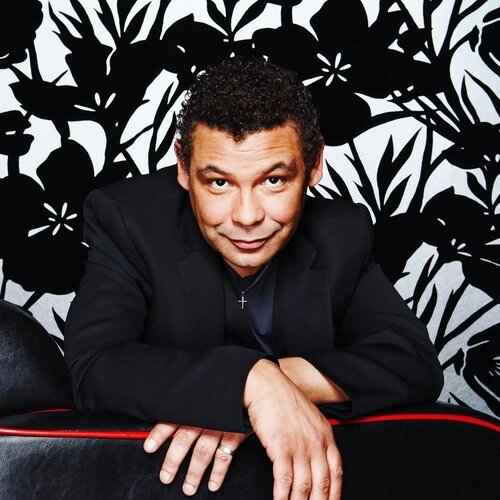
PHOTO CREDIT: BBC Radio 6 Music

Part Thirteen: Craig Charles (BBC Radio 6 Music, BBC Radio 2)

___________

FOR a Station to Station feature…

aaaa.jpg

 PHOTO CREDIT: Channel 5 

I spotlight a terrific broadcaster who is among the most influential out there. I focus on British radio talent, as I do not listen to too much international radio. In most of the people I include, there is so much more to the bow than radio. That is especially true of Craig Charles. An actor, comedian, D.J., journalist and all-round hero, Charles is one of my favourite broadcasters. I will bring in some interviews soon enough. Before getting to that, here is a little bit of biography regarding Craig Charles:

As well as his early appearances on shows such as Radio 4's Loose Ends (1987–88), and Kaleidoscope, in the early 1990s, Charles could be heard on the London Radio Station Kiss 100 (Kiss FM) as the Breakfast show presenter. In 1995, Charles played the Porter in Steven Berkoff's adaptation of Shakespeare's Macbeth, on Radio 4.

Since 2002, Charles has been a DJ on BBC Radio 6 Music presenting The Craig Charles Funk and Soul Show, on air on Saturday evenings 6pm to 9pm, where he plays a diverse range of funk and soul music, from classic tracks to the latest releases, and provides publicity for less familiar bands. Charles explains the context for the music and carries out interviews with guest musicians. He was with the station at its launch, and while it was being tested during the previous year, under the name Network Y. Charles has also hosted the station's Breakfast Show (2004), and sits in for other presenters including Andrew Collins, Phil Wilding and Phill Jupitus and Radcliffe & Maconie.

From January until November 2014, Charles also broadcast the Funk and Soul Show live on BBC Radio 2, immediately after his 6 Music show. He regularly sits in for Janice Long, Steve Wright and Jo Whiley, and has presented numerous programmes on the station, including The Craig Charles Soul All-Nighter (2011), which he hosted continuously for 12 hours, and the Beatleland (2012) documentary on The Beatles. Charles has also chosen music as a guest of other broadcasters such as Ken Bruce on Radio 2 and Liz Kershaw on 6 Music. Charles covered for Graham Norton on Radio 2's Saturday mid-morning show during Norton's 10-week 2015 summer break. From 16 April 2016, Charles presents the House Party on Saturday nights on BBC Radio 2, with the show airing between 10pm and midnight. For eight weeks from April–June 2020, he also presented Craig Charles At Teatime between 4pm and 7pm on weekdays on Radio 6 Music. The show was sometimes billed as Craig Charles Weekend Workout on Fridays”.

I listen to The Craig Charles House Party on BBC Radio 2 and The Craig Charles Funk and Soul Show on BBC Radio 6 Music. Charles is so effusive, passionate and joyous to listen to! He has so much love and commitment to music - and he really wants people to hear the tunes he spins. I hope that we hear Charles on the airwaves for decades more. He is a tremendous talent who is warm, witty and cheeky!

I think it is important to source some interviews so that one can discover more about Charles. In 2015, The Guardian sat down with him. We learn more about his upbringing and career:

Son to an Irish mum and West Indian dad, he grew up on the Cantril Farm estate in Liverpool with “a thousand white families and us. We couldn’t help but stand out. Liverpool was quite a racist place in the late 60s.”

His CV is full of relative oddities, too; TV and radio gigs you might suspect would be interesting niche items or straight-up flops, that have gone on to be huge hits. Robot Wars, in which Charles enthused wildly about wonky homemade robots blowing each other up, became one of the biggest shows on BBC2 at the time. Takeshi’s Castle, in which Charles enthused wildly (you might spot a theme here) about Japanese gameshow contestants diving headfirst into rocks, was a huge cult hit. The Craig Charles Funk and Soul Show on 6 Music now boasts 250,000 listeners, making it one of the most popular shows on the station. Even Red Dwarf, the show that made Charles’s name as Lister, the last human in the universe, was hardly a mainstream proposition; everyone said sci-fi and comedy couldn’t mix. It broke ground in other ways too, being one of the first TV shows to feature black characters who didn’t discuss race. “We’ve done it for 30 years nearly and the colour of our skin hasn’t been mentioned once,” says Charles. “Black comics will talk about being black, and I think that’s important to their comedy. But we tried to take it out of that racial lineage. Kind of the opposite of Richard Pryor when he said – and I’ll clean this up for you – ‘Anyone seen that new show set in space? Logan’s Run? Ain’t no blacks in it … someone’s planning on us not being around!’”

sss.jpg

As a teenager, Charles displayed a gift for spoken word – another way to make himself stand out in working-class Liverpool, and he used his quick wordplay to talk himself out of sticky situations – “Making people laugh and charming them,” as he puts it, which is basically what his job title is these days. Buoyed by a rising punk poetry movement that included the likes of John Cooper Clarke and Attila the Stockbroker, he began to make a name for himself on the burgeoning Liverpool alternative scene.

It was an exciting time, with many Scouse bands – the Teardrop Explodes, Frankie Goes to Hollywood and Echo and the Bunnymen – making inroads into the mainstream. Charles was originally in bands himself: his group were due to play at the Temple club one night when it got cancelled because Teardrop Explodes needed it for a four-night homecoming gig. He was so pissed off, he leapt up on stage before the band was due on and recited a poem about their singer Julian Cope. It’s a poem he can still rattle off in full now, and he does so at manic speed, ending with a flourish: “Ladies and gentlemen, the Teardrop Explodes!”.

I can well imagine a film or documentary about Craig Charles’ life, as he has been through so much and there have been so many phases. It would make for a compelling and inspiring story. Beloved by so many people, he makes for truly essential listening. I have discovered so much different music listening to him. It is like an education hearing Craig Charles on the radio!

Before coming to another quite big interview, there was a nice interview that YorkMix conducted in 2015. Among other things, Charles discussed his phenomenal then-new compilation, Craig Charles Funk & Soul Club Volume 2:

When did you fall in love with funk and soul?

I suppose it was when my dad came over to England in the late Fifties, kinda with a bagful of records and a pocketful of change. I spent my whole childhood listening to people like Ray Charles, Louis Franklin, Otis Redding and Nat King Cole, that kinda stuff, so I guess I got into it at a dead early age.

Then in the early Nineties when Kiss FM became a legal radio station I hosted the breakfast show there and started to build up my record collection.

Then of course the BBC 6 Music show [Craig Charles Funk & Soul Show] started about 12 years ago, and it’s been going ever since.

Tell us about your new compilation album.

It’s called the Craig Charles Funk & Soul Club Volume 2. It’s doing really well I’m pleased to say! I’m really proud of the music that’s on it, it’s 18 pure party starters. What we tried to do with the album is recreate the feeling you get when you’re in the club, and I think that came across.

It’s great putting the compilations together. It’s not a history lesson – although the radio show’s rooted in the golden era of black American music from 1960 to the 1970s, a lot of the music I’ve chosen is the European response to that music.

So it’s bands that are recording now, touring now, performing now, like Cookin’ On Three Burners, The Bamboos, Take Five, The Excitements, bands from all over really”.

Prior to coming to a recent interview Charles did with The Guardian, there was a quick-fire one from Vice that was published in 2017. Whilst I prefer a deeper interview, I do like what gems are offered up when slightly random questions are posed:

What would your specialist subject on Mastermind be?
Funk and soul. But like, it's such a big genre, so you'd have to trim it down. Specialise in a kind of soul, like northern soul, you know.

What's the best fact you know about funk?
I know so much. I'm not an expert, but I know a few things. I think someone did a Mastermind about Red Dwarf. We did a special called Universe Challenge, where we had four fans against four members of the cast, and they battered us. They knew what time it was on a clock in the middle of a scene. How shit must our acting be if they're looking at a clock at the back of a wall?

What would your parents have preferred you to choose as a career?
They wanted me to be a doctor or a lawyer or a teacher or some profession. When I told them I was going to be a poet, you wouldn't have wanted to witness that conversation. "I'm going to be a poet, mum!"; "Get the fuck out of here." They wanted me to go into a profession, lawyering or doctoring or something like that. They didn't want me to be a showman
”.

I will wrap up soon. Whilst the pandemic has been tough for everyone, I think a passionate D.J. like Crag Charles has felt the pinch! He would have loved to have played festivals and gigs, but there has not been the availability and opportunity this year. Last year, he was interviewed by The Guardian. There are a lot of really interesting segments from the interview. I have selected those which caught my eye:

He cites as an example Curtis Mayfield’s Pusherman, which includes the N-word in the lyrics. “I played it at a 6 Music live event, and then when it went on to the BBC Sounds app there was a warning saying some people might find this offensive.”

Charles is baffled by the culture wars – and cancel culture. Is it tough as a comic to be told what you can and can’t make jokes about? “Sometimes I feel I don’t want to stick my head above the parapet,” he says. Isn’t it dangerous if somebody like him becomes scared of saying what he thinks? He smiles. “Simon, I’ve been scared to say what I think since I was born.”

He’s not joking. And this is what makes Charles fascinating – so outspoken in some ways, cautious in others. “You choose your battles and choose them wisely,” he says.

aaa.png

A moment later, he’s talking about Black Lives Matter, and he’s certainly not holding back. “I don’t mind take the knee, but they are just gestures, and I’m not that big on gestures. Once you’ve finished gesturing, you need to do something about it.” Take casting, he says – there’s plenty to be done. “We need people in positions of power to turn round and say, when you’re reading the script, stop thinking in white and black. Most parts can be played by a white woman or black woman, a white man or black man. Stop thinking of Caucasian actors. And especially these days posh, Caucasian actors. I think it’s very difficult for working-class actors and performers to get a foot in today on telly. It’s all just posh bastards. D’you know what I mean? It really is.”

Charles is still not done with worrying. He fears that live music may never return to what it was. “I’m taking bookings for next summer, but I’m doing it fairly halfheartedly because I don’t think people are going to be comfortable enough to go partying and raving and mingling all those body juices in a nightclub or at a festival any time soon. I think it’s going to take a long time.”

As for his biggest ambition, that’s simple, he says. “I suppose it’s a slog trying to stay relevant. I just want to be relevant, you know. I don’t want to be a footnote. I’m more tired, I’m saggier, and this is a young man’s game. You’ve got young thrusting bucks who want my job, and they’re probably cheaper than me. So it’s a struggle to just stay on point, and you gotta fight for your right to party.” And now the smile is back on his face, and he’s singing. “The Beastie Boys were never wrong,” he says”.

I really love Craig Charles and make an appointment to listen to his radio shows as much as I can. Even though Charles wants to stay relevant and has a lot of competition, there is something he offers that very few others do. His combination of deep knowledge and a truly addictive personality (one full of verve, humour and delight) are the reasons why he has remained so popular. The magnificent Craig Charles is…

NOT going anywhere anytime soon!

FEATURE: The Lockdown Playlist: The 2021 AIM Awards Shortlists

FEATURE:


The Lockdown Playlist

j.jpg

IN THIS PHOTO: Arlo Parks/PHOTO CREDIT: Alex Kurunis

The 2021 AIM Awards Shortlists

___________

I wanted to put in…

aa.jpg

 IN THIS PHOTO: Dry Cleaning have been nominated in the Best Independent Album in association with Spotify category for New Long Leg (4AD)

a timely Lockdown Playlist, because the AIM Awards announced their shortlists earlier in the week. There are some great categories and artists that I will incorporate into a playlist at the very end. Before then, Music Week wrote about this year’s ceremony. Arlo Parks is recognised in four categories:

Arlo Parks has said that she is honoured to be shortlisted in four categories at the Association of Independent Music (AIM) Awards 2021, as the full list of nominations is revealed.

Parks won in the One To Watch category at last year’s event, and follows that success with nominations for UK Independent Breakthrough, Best Independent Track, Best Independent Album and Best Independent Video. The artist’s haul of four nominations is the most this year, with Yorkshire group Working Men’s Club scoring three.

Parks is signed to Transgressive Records – which is up for Best Independent Label – and released her debut album Collapsed In Sunbeams earlier this year. The London-based artist won the breakthrough category at The BRITs last month. She starred on the cover of Music Week alongside Moses Boyd last summer.

Parks said: “What an honour to be nominated for four AIM Awards!! This is far beyond my wildest dreams and I’m so glad my work has reached this far and touched so many, especially in these tumultuous times.”

Working Men’s Club, who join Parks in the album category, said: “It’s a real honour to be nominated for three AIM Awards, many thanks to AIM and to everyone that has backed our record. We can’t wait to be back out playing in front of real people as soon as possible.”

For the second year in a row, the AIM Awards will take place virtually, with the livestream set for broadcast via YouTube, Facebook and On Air on August 25. BBC Radio DJs Tiffany Calver and Jamz Supernova will host the show, while Tomorrow’s Warriors and Refugee Council are charity partners.

Tiffany Calver said: “Having presented the ceremony in 2020, this will be marking a year of the world being in a global pandemic, a year where music and community really helped so many of us get through the tough times. To be able to celebrate the innovators and independent artists that flourished through such a challenging period is a true honour. I'm so excited to be co-hosting alongside Jamz this time, and continuing to champion great music as we have both done on a weekly basis with our individual shows and channels.

AIM has announced Paulette Long OBE as the first winner of the new Diversity Champion award. Long created the UK music industry’s first Diversity Charter and is deputy chair of UK Music’s Diversity Taskforce.

In another first, this year will see two separate winners of the Indie Champion: Bandcamp and Love Record Stores. The nominees for the Best Live [Streamed] Act and PPL Award for Most Played New Independent Artist will be announced next month”.

To nod to the incredible nominees for this year’s AIM Awards (taking place on 25th August), this Lockdown Playlist features many of those included. As you can see from the tracks, there is so much incredible talent…

qqq.jpg

IN THIS PHOTO: Nova Twins have been nominated in the One To Watch in association with BBC Music Introducing category/PHOTO CREDIT: Arthur René Walwin

ON display.

FEATURE: The Kate Bush Interview Archive: 1994: Laura Dern (SPIN)

FEATURE:


The Kate Bush Interview Archive

qqq.jpg

IN THIS PHOTO: Kate Bush in a promotional photo for 1993’s The Red Shoes 

1994: Laura Dern (SPIN)

___________

I have done a short run…

qqqq.jpg

 IN THIS PHOTO: Laura Dern

of features where I ranked the tracks on Kate Bush’s studio albums (most of them anyway). I have written about her interviews and how, over the past couple of albums, the questions people have been asking are a little routine and samey. It can be frustrating hearing the same questions asked – and, unsurprisingly, the same answers are given. If you have an interview slot with Kate Bush, surely you will take full advantage. It is important to promote what she has released, though one can do that in a unique way and not ask the same invariable questions that everyone else will. Because of that, I want to go back and highlight a few interviews from the archives that really struck me. Through the years, I have brought many into various features. The reason I want to highlight an article from SPIN that features an interview between Kate Bush and Laura Dern in 1994 is because it is very interesting. Dern is a fantastic U.S. actor and she is someone I respect a lot. There have not been too many cases of actors/musicians sitting down to interview Bush. I think that they approach an interview differently to someone else in the media. I think it can also be less formal when you have someone like Laura Dern question Kate Bush. The interview highlights some interesting revelations. There is clear respect between the two. It seemed like quite a big deal for Dern – as one would naturally imagine! I am not going to source the entire interview. There were a few questions that I wanted to highlight. Before that, there is a little introduction:

For the March 1994 issue of SPIN, we asked actress Laura Dern to interview Kate Bush. The two discussed Bush’s 1993 album The Red Shoes, her directorial debut The Line, The Curve and The Cross, and the surprising similarities between the two artists’ creative processes.

With the release of her new album, The Red Shoes, Kate was in the U.S. for her first visit since 1989. She and I have both recently completed our directorial debuts on short films—hers, a 50-minute feature, The Line, The Curve and The Cross, which links six of the new songs through a fairy tale.

The thing I remember when I was a teenager and saw The Red Shoes was the struggle of this woman’s: having to choose between being a dancer and being with her man. That the passion for love and the passion for dance couldn’t coexist really affected me. I don’t know what you think about that.

I hope to believe—well, I hope to believe a lot of things—but I hope to believe that we can be consummate artists as women or revolutionaries, or whatever women want to be, and also have love, not only for ourselves but from a partner.

I have to believe that too. It’s just not fair to think that it’s not possible. But I suppose the consuming nature of being obsessed with one’s work, or one’s art, is obviously something that we probably all struggle with to try to find a balance.

sss.jpg

IN THIS PHOTO: Kate Bush at a fan convention in 1994 

In interviews, people always refer to you as this great perfectionist. Do you agree with that? Do you perceive yourself that way?

Well, if perfectionist means taking a long time, then I would agree with it. But I really don’t think that it’s possible to make things perfect, really. In some ways, there’s almost an attempt to try to achieve something that is quite imperfect. Do you know what I mean? And to be able to find a way of leaving it with certain raw edges, so that the heart doesn’t go out of it. I don’t think of myself as a perfectionist at all.

Do you struggle to balance your desire to keep a raw, spiritual edge to your music and a need to make the music accessible? Do you feel confident enough to just express what you believe and hope the audience catches up?

There’s kind of a driving force involved in the whole process of putting music together, to ultimately ending up with a finished album. I think there’s a lot of stuff that I don’t even question until other people come in and listen to the music, and it’s almost like suddenly you’re listening to things through other people’s ears. I suppose that’s when it gets a bit difficult.

Sometimes I’m aware that things were actually a little more personal than I’d realized. But I suppose I feel if, when you are actually creating something, it feels kind of honest, it feels good, then that’s the point where the intention matters, and then from that point onwards it’s just a matter of being brave enough to actually let it go.

Have you ever gone back and either thought about songs you’ve written, or listened to your music from years before, and learned something you hadn’t recognized, or understood something that at the time you didn’t understand?

I’m not sure I’ve ever reinterpreted something, but I have definitely been able to hear things in a different way from how I did at the time. I very rarely listen to any of my old music; it’s the last thing I ever want to do. But occasionally I end up in a situation where I do, and if enough time has gone by, I can actually hear how I would do things differently.

I’ve always wanted to ask you if you have interests in the shadow side, in understanding the repressed self—things we are in denial about.

Creative art is an awfully positive way of channeling the shadow side, and I think it’s much more healthy to explore it and have fun with it within the boundaries of art. I’m not sure that it’s something terribly good to go looking for. Do you know what I mean? I think it’s actually something that ends up coming to you anyway”.

Since that 1994 interview, Bush has reinterpreted songs of hers – her 2011 album, Director’s Cut saw her reapproach tracks from 1989’s The Sensual World and 1993’s The Red Shoes. There are great interviews from every period of Kate Bush’s career, though I have a fascination with 1993/1994. Bush was very busy then, though she would step away from the spotlight. It wasn’t until 2005’s Aerial that we received another album, although she did appear in public/at events prior to that. I have always been curious as to how Bush felt about The Red Shoes shortly after completing it and whether it was quite a stressful process. The interview with Laura Dern is interesting and one that I wanted to bring in. It was a rare chance for a high-profile fan to sit down with someone they respected and ask questions journalists might not have. As we can see with the SPIN interview above, a Kate Bush interview is…

ALWAYS a treasure.

FEATURE: The June Playlist: Vol. 2: Solar Power Summer

FEATURE:


The June Playlist

kk.jpg

IN THIS PHOTO: Lorde/PHOTO CREDIT: Jack Davison for The New York Times 

Vol. 2: Solar Power Summer

__________

THIS is a special Playlist…

sss.jpg

 IN THIS PHOTO: MARINA

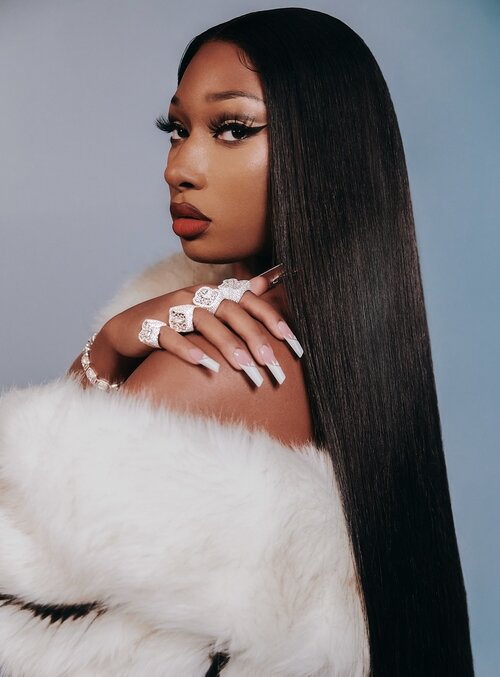
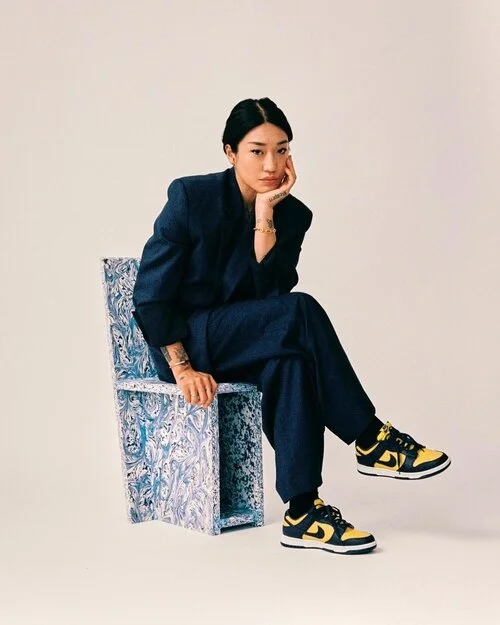
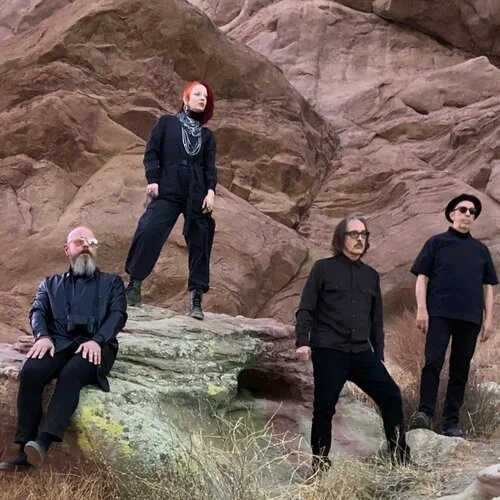
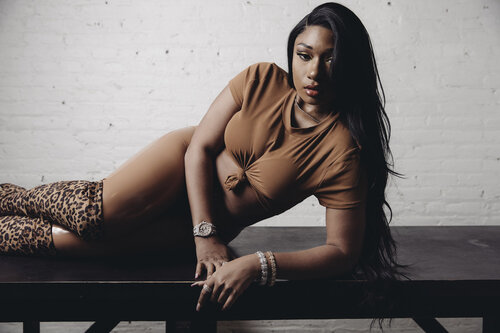
as Lorde has released her first single in four years with Solar Power. Also in the mix this week are tracks from Peggy Gou/OHHYUK, Garbage, Sleater-Kinney, Jessie Ware/Kindness, Megan Thee Stallion, MARINA, Doja Cat, RAYE, José González, Kodak Black, Kylie Minogue, Jake Shears, Art School Girlfriend, and H.E.R. It is a packed and excellent week for new music. If you require that extra push to get you into the weekend, then this selection of tunes should do the job. There is plenty of energy, gold and motivation to get you going. Play the playlist below and it will definitely set you up for…

zzz.jpg

 IN THIS PHOTO: Megan Thee Stallion/PHOTO CREDIT: Andrienne Raquel for GQ

A top weekend.   

ALL PHOTOS/IMAGES (unless credited otherwise): Artists

__________

ss.png

Lorde Solar Power

sss.jpg

Peggy Gou, OHHYUK Nabi

aaa.jpg

 PHOTO CREDIT: Billy Bush

Garbage The Creeps

xxxx.jpg

Sleater-KinneyMethod

sss.jpg

Jessie Ware, Kindness 0208

xx.jpg

PHOTO CREDIT: Victoria Will/Invision/AP file

Megan Thee Stallion THOT SHIT

zz.jpg

Art School Girlfriend - Softer Side

xxx.jpg

MARINA Venue Fly Trap

>
mm.jpg

José GonzálezHead On

ssaa.jpg

RAYE Call on Me

vv.jpg

PHOTO CREDIT: June Canedo.

L’Rain Suck Teeth

xxxx.jpg

Doja Cat - Need to Know 

ssss.jpg

PHOTO CREDIT: Sequoia Ziff

Bess Atwell All You Can Do

zzz.jpg

Lauran Hibberd Bleugh

ddd.jpg

Ava Max - EveryTime I Cry

zzzz.jpg

PHOTO CREDIT: George Chinsee/WWD

H.E.R. We Made It

zz.jpg

Amber Mark - Competition

xxx.jpg

PHOTO CREDIT: Charlotte O'Shea for Wonderland.

FLETCHER She Said

aaa.jpg

Kodak Black Feelin Peachy

xd.jpg

Emily Nash Mind

aaa.jpg

PHOTO CREDIT: Emma Swann

Bleachers - How Dare You Want More

xx.jpg

White Denim - Crystal Bullets

dd.jpg

Clairo Blouse

xxx.jpg

PHOTO CREDIT: @badgoodhabit

Pollena - Stand Up

sss.jpg

Orla Gartland - Do You Mind? 

ed.jpg

PHOTO CREDIT: Giulia Giannini McGauran

Tones and I Cloudy Day

zzz.jpg

PHOTO CREDIT: Erika Astrid

Poppy – EAT 

ssss.jpg

Jessie J I Want Love

xxxxx.jpg

PHOTO CREDIT: Kristy Benjamin

Illuminati Hotties - Pool Hopping

rrr.jpg

Sarah Close – I Can’t Trust Myself 

ssss.jpg

Lexi BergHelpless to Help You

ggg.jpg

Lillian HeplerUsed to That

wwwww.jpg

Zuzu - Timing

www.jpg

Josie Proto - I Just Wanna Walk Home

qqqq.jpg

Grave Savage - Dot to Dot

wwww.jpg

CupcakKe - Huhhhhh

ssaas.jpg

Kylie Minogue - Marry the Night (From Born This Way Reimagined)

wsss.jpg

IMAGE CREDIT: Stevie B

Jake Shears - Do the Television

FEATURE: One of the Family: Saying Farewell and Thanks to the Legendary Shaun Keaveny of BBC Radio 6 Music

FEATURE:


One of the Family

zzzzzzzzzzzzz.jpg

PHOTO CREDIT: BBC Radio 6 Music 

Saying Farewell and Thanks to the Legendary Shaun Keaveny of BBC Radio 6 Music

___________

YESTERDAY

the legendary Shaun Keaveny announced he was departing BBC Radio 6 Music. It came as a shock to everyone, as he has been part of our radio lives for so many years. I have been listening to him for at least seven years. He has provided so much joy and comfort to the BBC Radio 6 Music family through his spell there. He is leaving in September and, whilst so many people have shared their memories and love of him, I wanted to add something myself. Before sharing my own thoughts, here is some expansion regarding the news:

BBC 6 Music presenter Shaun Keaveny is to leave the station in September after 14 years.

The DJ, host of the afternoon show since January 2019, said: "Things change, places change, people change, and it's time for a change."

He thanked listeners for being "unceasingly funny, always kind" and being there through "births... bad curries, deceased pets, the lot".

A new afternoon schedule will be announced in due course.

Keaveny joined 6 Music in 2007, originally hosting a late evening programme before taking over the breakfast show that April. He stayed in that slot for 11 years before moving to the early afternoons.

Samantha Moy, head of 6 Music, said: "From night time to breakfast time to lunchtime, Shaun has created a world on 6 Music that is distinctly his own and which has been a joy to share. His listeners, fellow presenters and all of us at 6 Music will miss him.

"When he leaves us in September, it will be with a huge amount of love and the warmest of wishes for his next wonderful adventure. Thank you Shaun."

Reacting to the announcement, a post on the 6 Music Twitter account read: "Thank you for everything... your listeners, fellow presenters and all of us at 6 Music will miss you greatly”.

I am not sure where he is going and whether he is going to another radio station. Maybe he wants to take some time out to be with his family. I would love to think that he is moving to BBC Radio 2 and is simply just going to a different floor in Wogan House (which is where he broadcasts from on BBC Radio 6 Music), London. I suspect that he will take some time out to weigh up his options. He is forty-nine next week, so he has many more years in radio left. The fact that such an enormous wave of affection has come in shows what a special place he holds in people’s hearts! One of the big reasons why I listen to BBC Radio 6 Music is him. I have had so many terrible days vastly improved by his humour, warmth, silliness and genuine concern for the listeners. He has turned features that could have otherwise seemed short-lived and boring – like Small Claim’s Court – into radio institutions. From his relied-upon cartwall (where he plays sound clips and bits and bobs through his show), to his once-a-day dead air bits (where he will remain silent for a few seconds before shouting “Ha!” at the listener – lest we think he has disappeared). One of the greatest pulls of his show is the partnership with Matt Everitt. He and the music news presenter have a deep friendship.

They have been working alongside one another for so long. It will be a deeply emotional day in September when they broadcast alongside one another for the final time on BBC Radio 6 Music. Whilst they will still see each other a lot, hearing those who chat weekday afternoons is a real buzz. They have such love for one another Rather than be mawkish and treat this like an obituary, I wanted to send my thanks and respect to a man who has provided countless hours of radio gold. He is going to be sorely missed. Whichever station gets him next, are going to be extremely lucky! I feel one of the reasons why BBC Radio 6 Music survived being axed back in 2010 is because people like Keaveny and his colleagues stood up and let their voices be heard. The station is not going anywhere at all now! We can, in no small part, have him to thank for that. The commitment to the job and the BBC Radio 6 Music family has been in his bones and blood since he started. Afternoons will be different come September. Whilst Keaveny has said that things and people change, it is still very sad. When someone is at a station so long, you feel as though they will never leave. When the day does come, it is almost like a childhood friendship has ended and your mate is moving away. You know they are not gone and you can contact them, though things are not going to be as they were. I said I would not get mawkish!

We have three more months of his company, so I for one am going to enjoy every moment. I work very close to BBC Radio 6 Music (about three minutes away), and I have walked past Shaun Keaveny a fair few times. Every time, it is both strange and utterly normal that he should be walking down Great Portland Street or New Cavendish Street! Come September, one suspects (or hopes) that the last of the social restrictions will be lifted. Keaveny can receive hugs from his colleagues. I suspect that, on his final day, there will be fans by Wogan House that will want to say goodbye to someone that feels like part of their family. Even though he is often self-deprecating, he himself cannot deny the effect he has had on millions of people. It has been a real pleasure listening to his breakfast and afternoon shows for so many years. The pandemic has been especially tough for so many of us. Having a station like BBC Radio 6 Music in our world has been a giant fountain of support and joy. Broadcasters like Shaun Keaveny have been there through it all. From the Jeremy Vine clips on the cartwall, to his must-hear bits with Matt Everitt, to the dead air and everything else, we all thank him for being there; being like a good friend to us all. His colleagues and listeners are so…

ETERNALLY grateful for everything.

FEATURE: Inspired By… Part Fourteen: Kanye West

FEATURE:


Inspired By…

ddd.jpg

PHOTO CREDIT: Paolo Pellegrin 

Part Fourteen: Kanye West

___________

I will not bring in all…

ssss.jpg

 PHOTO CREDIT: Patrick Demarchelier

of the biography from AllMusic regarding Kanye West as there is quite a hefty chunk! It is worthy bringing a lot of it in to provide some background and illumination regarding a hugely influential and important artist:

One of the most influential and critically lauded artists of the early 21st century, Kanye West went from hip-hop beatmaker to worldwide hitmaker as his production work for artists such as Jay-Z led to a major-label recording contract and, ultimately, a wildly successful solo career that counted an unbroken string of chart-topping, multi-platinum albums and nearly two dozen Grammy Awards for classic sets like 2005's Late Registration, 2007's Graduation, and 2010's My Beautiful Dark Twisted Fantasy. Early on, West paired his beats with tongue-twisting raps and outspoken confidence. With a backpack and brightly colored polo shirt, his dapper fashion sense set him apart from many of his rap peers, while his attitude often came across as boastful and egotistical. This flamboyance made for good press, something that West enjoyed, for better or worse, throughout the course of his career. With his outsized personality, he courted plenty of controversy, posing for the cover of Rolling Stone as Jesus Christ, claiming that "George Bush doesn't care about Black people" during a televised Hurricane Katrina fundraiser, and infamously interrupting an awards speech by Taylor Swift in 2009. And yet, his steady presence in the celebrity limelight couldn't eclipse his musical talent. His production abilities seemed boundless, as he not only racked up impressive hits for himself (including number one singles "Gold Digger" and "Stronger") but also collaborated on smash hits with longtime collaborator Jay-Z (on their 2011 Watch the Throne track "Ni**as in Paris") and even Paul McCartney (along with Rihanna on 2015's "FourFiveSeconds"). As his career progressed throughout the early 21st century, West became a superstar on his own terms without adapting his appearance, his rhetoric, or his music to fit any one musical mold.

A proud and vocal Chicagoan, West was actually born in Atlanta, moving to the Windy City with his English professor mother after his parents split when he was three years old. One of his major inspirations, Donda West helped shape young Kanye, bringing him to China in the late '80s on education exchange and establishing a strong base that made him a top pupil in high school. However, his music dreams would eventually eclipse academics and he dropped out of college, setting the stage for his best-selling school trilogy. With guidance from local producer No I.D., West went on to learn the finer points of studio production, programming, and sampling, the latter technique becoming a hallmark of his early-2000s work.

West first got his foot in the industry door in the late '90s, doing quite a bit of noteworthy production work for the likes of Jermaine Dupri, Foxy Brown, Mase, and Goodie Mob. However, it was West's work for Roc-a-Fella at the dawn of the new millennium that took his career to the next level. Alongside fellow fresh talent Just Blaze, West became one of the Roc's go-to producers, consistently delivering hot tracks to album after album. His star turn came on Jay-Z's classic The Blueprint (2001) with album standouts "Takeover" and "Izzo (H.O.V.A.)." Both songs showcased West's signature beatmaking style of the time, which was largely sample-based; in these cases, the former track appropriated snippets of the Doors' "Five to One," while the latter sampled the Jackson 5's "I Want You Back."

More high-profile productions followed, and before long, word spread that West was going to release an album of his own, on which he planned to rap as well as produce. Unfortunately, that album was a long time coming, pushed back repeatedly until a freak accident threatened to end his solo career before it even started. In October 2002, West was in a car accident that almost cost him his life and left him with a jaw wired shut during his weeks-long recovery. He capitalized on the traumatic experience by using it as the inspiration for "Through the Wire" (and its corresponding video), which would later become the lead single for his debut album, 2004's The College Dropout. As the album was further delayed, West continued to create big hits for the likes of Talib Kweli ("Get By"), Ludacris ("Stand Up"), Jay-Z ("'03 Bonnie & Clyde"), and Alicia Keys ("You Don't Know My Name"). Then, just as "Through the Wire" was breaking big-time at the tail-end of 2003, another West song caught fire, a collaboration with Twista and actor Jamie Foxx called "Slow Jamz," which gave the rapper/producer two simultaneously ubiquitous singles and a much-anticipated debut album. As with so many of West's songs, the singles were driven by somewhat recognizable sample-based hooks: Chaka Khan's "Through the Fire" in the case of "Through the Wire" and Luther Vandross' "A House Is Not a Home" in the case of "Slow Jamz."

In the wake of his breakout success, West earned a whopping ten nominations at the 47th annual Grammy Awards, held in early 2005. The College Dropout won the Best Rap Album award, "Jesus Walks" won Best Rap Song, and a songwriting credit on "You Don't Know My Name" for Best R&B Song award was shared with Alicia Keys and Harold Lilly. Later that year, West released his second solo album, Late Registration, which spawned a series of hit singles ("Diamonds in Sierra Leone," "Gold Digger," "Heard 'Em Say," "Touch the Sky"). The album topped the charts, as did the "Gold Digger" single, and Late Registration eventually won a Grammy for Rap Album of the Year. West's production work continued more or less unabated during this time; particularly noteworthy were hits for Twista ("Overnight Celebrity"), Janet Jackson ("I Want You"), Brandy ("Talk About Our Love"), the Game ("Dreams"), Common ("Go!"), and Keyshia Cole ("I Changed My Mind"). West also founded his own label, GOOD Music (i.e., "Getting Out Our Dreams"), in conjunction with Sony BMG. The label's inaugural release was John Legend's Get Lifted (2004), followed one year later by Common's Be. In addition to all of his studio work, West also toured internationally in support of Late Registration and released Late Orchestration: Live at Abbey Road Studios (2006) in commemoration.

After retreating from the spotlight for some time, West returned to the forefront of the music world in 2007 with a series of album releases. Consequence's Don't Quit Your Day Job and Common's Finding Forever, both released by GOOD, were chiefly produced by West; the latter proved to be particularly popular, topping the album chart upon its release in July. And then there was West's third solo album, Graduation, which was promoted well in advance of its September 11 release (a memorable date that pitted Kanye against 50 Cent, who in one interview swore he would quit music if his own album, Curtis, wasn't the top-seller). A pair of singles -- "Can't Tell Me Nothing" and "Stronger," the latter an interpolation of Daft Punk's 2001 single "Harder, Better, Faster, Stronger" -- led the promotional push. It became his third consecutive chart-topping album, and its success culminated in eight Grammy nominations. West was the victor in four of the categories, and he performed two songs during the ceremony, including Late Registration's "Hey Mama," chosen in honor of his recently deceased mother. That loss, compounded by a breakup with his fiancée, informed 2008's genre-busting landmark 808s & Heartbreak, a major change of pace that saw West singing most of his emotionally pained lyrics with the assistance of Auto-Tune. The album went platinum, spawning Top Three hits "Love Lockdown" and "Heartless," while influencing a generation of young rappers wanting to tap into their emotional sides. West toured internationally, even returning to China in 2008 for a stop on his Glow in the Dark Tour. However, after a headline-grabbing turn at the 2009 MTV Video Awards involving Taylor Swift, West retreated from the spotlight to record another album.

In 2010, West emerged with his fifth opus, My Beautiful Dark Twisted Fantasy, which marked the start of a new era for the artist, one focused on fame, sex, and opulent production. Recorded in Hawaii, the star-studded set recruited a staggering number of guest vocal spots from the likes of Nicki Minaj, Kid Cudi, Elton John, Rihanna, Bon Iver, Rick Ross, and RZA. Preceded by the bombastic, King Crimson-sampling single "Power," Fantasy also included the Grammy-winning "All of the Lights," fan favorite "Runaway," and "Monster," which featured a star-making turn by a young Nicki Minaj. A sprawling and audacious album, it debuted at number one on the Billboard 200, won a Grammy for Best Rap Album, and also went multi-platinum. While the album was still hot, West recorded the aggressive and boast-heavy Watch the Throne with Jay-Z and numerous producers and songwriters. Billed as a set by the Throne, it was released in August 2011 and entered the Billboard Top 200 chart at number one. A trio of hit singles -- "Otis," "No Church in the Wild," and "Ni**as in Paris" -- climbed the charts and each won Grammy Awards, capping a dominant run for the rapper that resulted in 21 Grammys within just eight years”.

To celebrate an artist who has influenced a lot of other musicians, I have put together a playlist. The artists included either have semblance of Kanye West in their own music or have nodded to him as an influence. At only forty-four, I think we will hear a lot more from West. He is a phenomenally inventive and pioneering artist who has taken Hip-Hop to new realms. It is clear that we are very…

LUCKY to have him in our midst.

FEATURE: Second Spin: Ke$ha - Animal

FEATURE:


Second Spin

ee.jpg

Ke$ha - Animal

___________

A debut album can be hard to get right…

ddjdj.jpg

especially when there is a lot of build-up and hype around the artist. In the case of the L.A.-born artist, Ke$ha, her debut was very underrated. I feel quite a few reviews were a bit harsh. Since she released Animal in 2010, I feel her work has got even stronger and received wider critical acclaim – 2020’s High Road might be her best work to date. I feel Animal received some unfair mixed reviews. There were a few that were positive. Before bringing in a couple of reviews, it is worth providing some backdrop to Ke$ha’s debut:

Animal is the debut studio album by American singer and songwriter Kesha. The album was released on January 1, 2010, through RCA Records and distributed through Sony Music Entertainment. Kesha worked on the album with a variety of record producers and songwriters such as Lukasz "Dr. Luke" Gottwald, Benny Blanco, David Gamson, Greg Kurstin, Max Martin and others. Kesha had been recording demos for several years when one eventually ended up in the hands of Samantha Cox, senior director of writer/publisher relations at BMI. Cox passed along the demo and it ended up in the hands of Gottwald, who decided to have Kesha perform on the song "Right Round" with American rapper Flo Rida. Within two months, the song became a hit in multiple countries around the world. The event led to Kesha being sought after by many major labels, and she eventually signed a multi-album deal with RCA Records”.

I really like Animal and I think that it warrants new inspection. Take It Off is a big and memorable highlight from the album. I feel Tik Tok is the big song. In a feature from 2019, i-D looked back on a hugely important debut single:

Nothing defines a moment in time like pop music. We return to songs a year or 10 later, and are transported to the time when we couldn’t stop listening to it. For a drab, drawn-out autumn in 2009, there was almost nothing on the radio bar a song about DGAF drunken hedonism that caused 14-year-old me to dance around a sweaty, satellite town living room on a Saturday night like I was in a run-down nightclub on the Sunset Strip. That song was Kesha’s "TiK ToK", and it pulled the rug from underneath pop’s feet.

When that song first debuted a whole decade ago (it hit radio on 7 August 2009), a year had passed since Lady Gaga arrived on the pop scene. And in many ways it was Gaga’s otherness that helped the off-kilter format of a non-glossy popstar like Kesha push through the cracks. Giving the middle finger to the possibility of backlash, the then 22-year-old embraced her most odd-ball behaviours, and hammed them up as a way of playing with the thirsty tabloid media. Rumours swirled that she didn’t shower (she actually showered four times a day) and that she was born with a tail. And let’s not forget the time she drank her own pee on TV. With Kesha in it, pop music was glorious and gross and everything we’d been taught it wasn’t supposed to be. "TiK ToK" was the anthem we were long searching for. It spent nine weeks on top of the Billboard Hot 100, and has since sold over 18 million copies.

The nursery rhyme rap-pop flow of its lyrics were earworm excellence; the sound of ‘Wake up in the morning feelin’ like P Diddy’ over synths can still make a nightclub crowd go wild. The basic, bit-pop production was ragged and yet, in its imperfections, sort of flawless. It was one of those songs that was so simple that it was a miracle no one had made it before; proof that the greasy and glittered Kesha was one of the most exciting pop performers of her time. The chaotic, DGAF energy of "TiK ToK" spread like wildfire”.

I am keen to bring in a couple of reviews for Animal. Just before, there is an interview from Seventeen that I wanted to mention. Published in 2010, they met a promising Pop artist who was about to deliver a huge album - Animal became the tenth best-selling album in the United States of 2010, selling 1.14 million copies that year:

 “17: Why is your record called Animal?

K$: I've done research on animals because I'm a diver, and I used to wear gold bikinis and had eye piercings and stuff, and then I almost got eaten by a barracuda once, and I was like "Why does he keep chasing me? Why does he want to eat me?" And then I was researching and found out that animals are really attracted to shiny things, especially gold and silver, so I feel like if I cover my body and the audience with glitter then they'll like it.

17: What glitter do you use?

K$: I love MAC glitter — it's just unreal!

17: How do you describe your style?
K$: Garbage can chic? I like vintage a lot. I like not trying — I think girls need someone to look up to who's not in high heels and a push-up bra. I can't walk in high heels, never mind dance in them. I think it's all about your confidence and having positive energy”.


In terms of the reviews, there was this blend of those who appreciated the strength of the album and the fact that Animal barely misses a step. There were those who were not so enamoured of it. In their review, this is what AllMusic offered:

Just when it seemed 2009’s trash-brat electro scene (3OH!3, LMFAO, Shwayze) was about crumble under its own weight, rapper/singer/songwriter Ke$ha became the genre’s biggest star, graduating from being Flo Rida’s backup singer (she provided the hook on the rapper’s massive single “Right Round”) to superstar when her debut single, “TiK ToK,” set a digital sales record with over 600,000 downloads in a week. Her climb to the top includes bizarre factoids like she once lived in the house where the Eagles recorded Hotel California, plus she once vomited in Paris Hilton’s closet. Working on Hilton's album was the reason she was at the house, so it’s hard not to appreciate how Animal makes Ke$ha sound nothing like an industry vet who used to write for the Veronicas. Here, she’s a gum-snapping, alcohol-abusing Facebook jockey straight out of the suburbs who spits sophomoric but fun putdowns, come-ons, and sig files all over electro beats. Opening with “Maybe I need some rehab/Or maybe just need some sleep,” Animal is upfront about its unwillingness to face the real world, and prefers a garbage chic reality with a liberal shot of the ‘80s.

“Party at a Rich Dude’s House” could have fallen off the Fast Times at Ridgemont High soundtrack, while the word “gross” makes a serious comeback throughout the album. The music is heavy on gimmicks -- Auto-Tune, vocoders, and silly samples are all here in abundance -- while able folks like Dr. Luke plus Mim and Liv Nervo are in charge of the colorful electro-pop productions. As far as subversion goes, “Boots and Boys” presents the lusty, “Suicide Blond”-type track from a rare female point of view, but a couple of unexpected and completely unsatisfying ballads are the type of fluff anyone with an edge would avoid. Snooty taste makers and parents should avoid Animal at all costs, but with so many fun, “TiK ToK”-type tracks, the album has plenty for both brats and the bratty at heart”.

To contrast AllMusic’s review, Entertainment Weekly were more positive in their assessment. They were hooked and affected by the energy of the album and how it definitely gets in the head:

Take It Off,” ”Hungover,” ”Party at a Rich Dude?s House”: In a dance-pop scene with no use for subtlety, Ke$ha may be the most brazen of all. Fortunately, she’s got ”I Kissed a Girl” producer Dr. Luke, who featured her on Flo Rida’s ”Right Round” and worked with her on the hit ”TiK ToK” off of her album Animal. Here he frames her Valley Girl sneer with electro-glam arrangements that make brushing one’s teeth ”with a bottle of Jack” sound like an awesome way to kill the morning-after blues”.

I feel Ke$ha’s debut album was overlooked by many. Although there are a couple of songs that are not instantly memorable, there is plenty of personality and punch. Unlike a few Pop albums from 2010, Animal stands up to multiple listens. You will find yourself hooked to many of the songs. I would recommend people check out Ke$ha’s debut, as Animal provides fresh layers…

THE more you listen.

FEATURE: Bright Lights and Dead Oceans: The Amazing and Inspiring Phoebe Bridgers

FEATURE:


Bright Lights and Dead Oceans

qqqq.jpg

PHOTO CREDIT: Jessica Lehrman for Rolling Stone 

The Amazing and Inspiring Phoebe Bridgers

___________

THIS is not tied to an album or anniversary…

ddd.jpg

 PHOTO CREDIT: Olivia Malone for The Times

but I really love Phoebe Bridgers! I have been thinking about her music and how she evolved between her debut album, Stranger in the Alps (2017) and last year’s Punisher. The California artist is such an incredible artist and someone who always delivers incredible live performances. Not only is she a brilliant solo artist. Bridgers is part of boygenius (with Julien Baker and Lucy Dacus) and Better Oblivion Community Center (with Conor Oberst). I will bring in a review for Punisher, as it was among my absolute favourites of last year. It is hard to distil or represent Phoebe Bridgers fairly in a single feature! She is such a cool person who has incredible musical taste. It seems like she is destined to appear in films, present her own podcasts/radio shows and collaborate with a load of other artists. I guess she is working on her third album. I know she is keen to get back on the road and give Punisher a proper airing. Part of the reason for me focusing on Phoebe Bridgers is a recent interview The Times conducted with her. There are some many amazing and hugely promising solo artists out there right now. I think Bridgers is among the absolute best. Not only do her songs take you somewhere wonderful – thanks, in no small part, because of such a sensational and rich voice -; one also learns so much from interviews. Bridgers has that natural cool - though she is also very deep and intelligent. I guess this is me having a chance to write about an artist I really love. I reckon Bridgers is going to be a genuine sensation and an artist who carries on making albums for decades to come!

Released on the Dead Oceans label (like her debut), Punisher is a simply wonderful work that demands full attention and investigation. I really love Stranger in the Alps, though Punisher seems like a broader and more layered album where Bridgers’ words and performances are sharper and deeper. In their review, this is what The A.V. Club observed:

And whether she intended to do so or not, Phoebe Bridgers has created a musical monument to our dissociative age with Punisher. It’s an album about sleepless nights and sinking feelings in the pit of your stomach, wrapped in a musical package that’s both feather-light and lush enough to run your fingers through. We open with the glitchy instrumental “DVD Menu” before transitioning into the deceptively grounded “Garden Song,” a tune of healing and of rest. “The doctor put her hands over my liver/ She told me my resentment’s getting smaller,” she sings, wondering if she’s actually getting taller from all this wholesome homebound living. But the feeling doesn’t last.

Opening with the reedy sounds of a cheap synthesizer and horns from Bright Eyes’ Nathaniel Walcott, “Kyoto” has a twee quality reminiscent of Belle & Sebastian—and much as it often is for the Scottish cardigan-popsters, the foundation of this upbeat tune is cracking under Bridgers’ feet. “That song is about being in Japan for the first time, somewhere I’ve always wanted to go, playing my music for people who really want to hear it, and feeling...bad,” Bridgers says in a press release, a restlessness that bleeds through in lyrics like, “I wanted to see the world/ Then I flew over the ocean/ And I changed my mind.”

As if to underline how short-lived happiness can be, the rest of Punisher stays on a more hushed, dreamier keel. Bridgers’ high, breathy voice cuts through layers of ethereal atmosphere on tentative love songs like “Punisher” and “Savior Complex,” backed by delicate guitar and poignant violin. Presented with freedom after being deemed “no longer a danger to herself or others,” the similarly halting heroine of the lyrical folk ballad “Graceland Too” isn’t quite sure where to go. Dreams, sleep, ghosts, and vampires haunt the smartly turned lyrics, as do the sirens on their way to the hospital near Bridgers’ home. “I used to joke that if they woke you up, somebody better be dying,” she says of these piercing wails in the opening verse of “Halloween.” Then she started to feel their spirits seeping through the walls.

Perhaps inevitably, hints of Bridgers’ other projects, Boygenius and Better Oblivion Community Center, can be heard on Punisher. And the band is ultimately what pulls Bridgers out of her funk, as five-and-a-half-minute closer “I Know The End” flows from a lonesome slice of touring life to a stirring primal scream driven by pounding drums, swelling orchestration, and a ragged chorus of voices shouting, “The end is here!” Yes, it’s an indie-rock cliché straight out of a mid-’00s Arcade Fire record. And Bridgers thinks it’s pretty funny, chuckling and hissing out a scratchy growl in those last few seconds before Punisher goes quiet. “When I can’t sleep, it’s just a matter of time before I’m hearing things,” Bridgers sings on the hazy “Chinese Satellite.” Lucky for us, what she hears is absolutely gorgeous”.

Just before rounding up, I do want to source a little from that interview The Times published in April. It is an interesting and revealing conversation that shows the many sides of Phoebe Bridgers. I don’t think that it is an undertreatment to call Bridgers the voice of her generation:

Bridgers was already a “thing” before she released Punisher last June, but when she did, it hit a chord with an even wider public, isolated and angsty at home. “It’s a depressing record, in a very depressing year,” she agrees. Yet it would be too easy to dismiss her as just dourly emo. The reason many herald her as the next Dylan or the voice of a generation that loves to lol and sob, often at the same time, is that the sadness is undercut by searing intelligence and a loopy wit. Nowhere is this clearer than on Twitter, where she mouths off with varying levels of sophistication, or indeed on TikTok, where she has become a heroine to a certain “sad girl” niche, who do daft montages to her songs. And she has style too. If the signature look for her first album was a black suit, the one for Punisher has been skeletons: she wore a Thom Browne crystal-embellished skeleton number to the Grammys, and a Gucci take on it for a performance on Saturday Night Live. She still wears suits to every meeting she has with her record label. “I want a business persona that’s, like, really bitchy and entitled,” she says mischievously.

We can laugh now to think that Bridgers’s record label told her, early on, that her Twitter should be “darker”: they didn’t think her incessant gags sat well with her mournful tunes. In fact, they made her all the more relatable, thoroughly on the pulse of Gen Z. Is it all fun to do or anxiety-inducing and insane? “It’s both — it’s like life.” She has got so many positives from it, she promises: “Honestly, there are a couple of mental-health tweets that stay in my brain longer than a paragraph from my therapist. But it can also be such a soul suck.” She says she is often exasperated to find herself with her guitar in one hand but scrolling on Twitter — but then it has also been a great way to connect with fans. “It would cut off this very sweet window.”

Bridgers is bisexual and says that coming out in high school “was kind of the opposite of an issue”. I tell her I loved reading somewhere that her sexuality sat somewhere between fancying Beck and Megan Fox. She laughs delightedly. “Yeah! I feel like I love little innocent indie boys, and then my most seminal female crushes were always the bombshells in Transformer movies, or Jessica Rabbit, or whatever.” Nowadays, though, she’s a lot less binary; she’s more into someone like the iconic lesbian singer kd lang. “I don’t know — I actually don’t believe that anyone is, like, entirely straight.” She giggles. “I just don’t believe in straight people! It’s like, how? It’s 2021!”

sss.jpg

 PHOTO CREDIT: Olivia Malone for The Times 

So where does Mescal fit in to all this? There were rumours last year that the two of them were dating. “Oh, he’s the sweetest — he’s the best.” Yes, sure, but do you think he’s hot? She grins. “No comment.” I ask her how the Savior Complex video came about — how did she meet Waller-Bridge? “Well, we had been emailing back and forth just because we share a name,” Bridgers says, as though this were just about normal. “And we were like, let’s get drinks! And then lockdown happened and our emails became like, you should watch this, you should read this, you should do this.” It was Waller-Bridge who said to her, “You have to watch Normal People right now. It destroyed me,” says Bridgers, and she was reluctant to, because she thought it would kill her too. She did, though, and loved it (even if she relates more to Conversation with Friends, also by the writer Sally Rooney). “Part of what destroyed me [in Normal People] was the brother dynamic in that toxic home. I recognised a lot of my own upbringing in it”.

Even though the twenty-six-year-old is still at the start of her career, we have seen so much promising from Bridgers. From her amazing songwriting through to her wisdom and how she impacts and affects people, she is a complete artist. Whether she will be an icon in years to come remains to be seen. She is certainly a treasure who is such an important artist. Given the way she progressed between Stranger in the Alps and Punisher, it is hugely exciting to see…

WHAT comes next.

FEATURE: Culture, Class and Captivation: Boy George at Sixty

FEATURE:


Culture, Class and Captivation

qqq.jpg

Boy George at Sixty

___________

BECAUSE the legendary Boy George (George O'Dowd)…

qqqq.jpg

turns sixty on 14th June, I wanted to salute him. An L.G.B.T.Q.I.A.+ icon (as it is Pride Month) and hugely influential musician, he has compelled people through the decades because of his amazing voice, unique fashion and compelling personality. He is someone who continues to amaze and impact people around the world. His solo album, Cool Karaoke, Vol. 1, is due later this year. There is also hope that his band, Culture Club, will be able to tour soon enough – they were due to, but the pandemic halted that. Just before getting to some interviews with the amazing Boy George, here is some Wikipedia overview:

George Alan O'Dowd (born 14 June 1961), known professionally as Boy George, is an English singer, songwriter, DJ, fashion designer, photographer and record producer. He is the lead singer of the pop band Culture Club. At the height of the band's fame, during the 1980s, they recorded global hit songs such as "Karma Chameleon", "Do You Really Want to Hurt Me" and "Time (Clock of the Heart)". George is known for his soulful voice and his androgynous appearance. He was part of the English New Romantic movement which emerged in the late 1970s to the early 1980s.

His music is often classified as blue-eyed soul, which is influenced by rhythm and blues and reggae. His look and style of fashion was greatly inspired by glam rock pioneers David Bowie and Marc Bolan. He was the lead singer of Jesus Loves You between 1989 and 1992. In 2015, Boy George received an Ivor Novello Award from the British Academy of Songwriters, Composers and Authors for Outstanding Services to British Music. In 2002, he was voted forty sixth in a BBC poll of the 100 Greatest Britons”.

xxx.jpg

 IN THIS PHOTO: Boy George with fellow Culture Club members (clockwise from top-right) Roy Hay, Mikey Craig and Jon Moss/PHOTO CREDIT: Michael Putland/Getty Images

I think this year is going to be a busy one for Boy George. There are rumours that we might get a biopic, Karma Chameleon, very soon. That will be fascinating to see. I grew up listening to groups like Culture Club, and I was always struck by the magnetism and individuality of Boy George. I love listening to interviews with him, as he is always so interesting and entertaining. I wanted to source a GQ interview that took place late last year:

As one of the original gender-fluid pop stars, George has also become an androgynous icon for a new generation of fans raised on a diet of TikTok and Harry Styles. “I attract a certain type of person, even the younger ones; they are a bit gothy, a bit punky. They wear make-up. I still get photos of kids dressed up in really old looks of mine and I love that,” he says.

Then there is the Culture Club comeback. Since 2014, the Grammy-award-winning band who, since forming in 1981, have shifted more than 150 million records, have sold out stadiums across the world, ensuring the perennial popularity of songs like “Do You Really Want to Hurt Me?” and “Karma Chameleon”. George has been working on his solo output, too, with “mad” collaborations with artists from Pete Murphy to Kim Wilde. Now, Culture Club are gearing up for a show at Wembley SSE Arena, Rainbow In The Dark, which will see 1,000 socially distanced audience members attend in person, with thousands more live-streaming from across the world (first responders get free tickets).

PHOTO CREDIT: Dean Stockings for GQ 

The first time you realised you wanted to be a musician...

I was obsessed with music as a little kid, that was where I escaped to. I shared a room with my four brothers and most of the time I didn’t have the room to myself, so whenever I could I would have the record player on. I’d listen to everything from Irish show tunes to early Bowie, T. Rex and disco. Discovering Bowie was the “Whoa, that’s what I want to be” moment. I was 11 and somehow my dad got me a ticket to see Ziggy Stardust. I had no bus fare to get there or back, I walked, but seeing Bowie for the first time, at that age, made me realise I wanted to be a singer and I wanted to be famous. I remember being very taken by that world of creativity. I wanted to be around what I perceived as a bohemian existence. I hated where I came from, I always felt repressed and out of sorts. I thought that their world was one where no one told you what to do.

The first record you ever bought…

“Yellow River” by Christie. It's an old folky, ’70s hippie track. I used to love Harry Nilsson and Andy Williams – I liked jazz a lot when I was a child. My dad was a builder and he'd clear out the houses of people who had done a moonlight flit leaving all their belongings, so he'd bring back piles of records which no one but me and my older brother really had any interest in. I still have records that I found by just sitting there and going through them. That’s how I discovered the likes of Pearl Bailey or Bessie Smith.

aaa.jpg

PHOTO CREDIT: Dean Stockings for GQ  

The first time you put together a stage outfit…

My mum was a seamstress and my collaborator. I once got her to make me a bat-winged top from these horrible old rose-print synthetic chair covers, which I used to wear to Blitz Club. At all those clubs I’d go to before I was famous, it was all about the look you had and being the most outrageous. They basically were stage outfits, although I didn't think of it like that at the time. I was very influenced by Bowie, rock, punk and disco, and was into any and all clothing, even religious clothing – it didn’t need to be designer fashion.

The first thing you'd do if you became prime minister…

The thing I’d want to deal with immediately is homelessness. We should not have people sleeping on the streets in this country. I also love this idea of universal basic income, I believe that people should get paid even if they don’t work. If they’ve got money, they’ll put it back into the economy anyway, so it’s a kind of self-fulfilling prophecy that would get rid of poverty”.

I want to take things back to May 2020, when Boy George spoke with The Times. I am not going to drop in all of the interview, though there were some sections that really interested me – and taught me more about Boy George:

Last month, despite all, he released an album, This Is What I Dub, Vol 1. Mostly, it is bass and beat-heavy remixes of songs from his last solo album, but Isolation — which isn’t on the album, but was released at the same time — is a gorgeous new ballad. It is not about our current condition. Rather, he met a man who owns a satellite, which “got him thinking” about isolation. Still, he has a microphone in his flat and will release more music from lockdown soon. He writes five songs a week.

“Yes, I had hits in the Eighties, whatever,” he says. “But I’m a better writer now. Fame gets in the way and becomes a job in itself and takes over from artistry, so you’re locked in a cycle of success and failure. I’m not distracted by mindless celebrity now and don’t have to worry about that to the extent I used to. I mean, I probably didn’t have to worry about it at the time, but I wasn’t evolved enough to understand what was important. My motivations are different now — I don’t really have any!”

“People aren’t honest,” he says, in reply to a question about pop stars today. “Because we’re in sensitive times, when people get upset about anything. I grew up in the 1970s, where every day you were called faggot, poof — at home, at school, on the street. Policemen could hit you. You went to school knowing you could get whipped.

“Kids just don’t understand. I don’t want to sound like an old codger, but they don’t get what people went through for them to be so precious, and I don’t want to dull myself to the point that I don’t have an opinion.”

“When I was growing up nobody used the term transgender, because it was almost like a medical term. So this transgender thing is new, and, for our generation, it’s just getting our heads round it. But people want to be offended, because they think that whatever’s going on for them is much more important than anything else. But I’ll call you whatever you want. I’ve spent years calling people fake names. Boy George. Siouxsie Sioux. Johnny Rotten. Of course, it’s not the same as your sexuality.”

In the early 1980s George stood out — the most androgynous in the room, and something of a social pioneer. Is it harder, I ask, for people at the forefront of an old movement to adjust to a new one?

“No, it’s more that we think they’re homing in on things that aren’t important to us,” he says. “Also, let’s not forget that everyone’s trying to create a moment now. Everyone’s a producer, so there’s pressure to be more interesting — and if you’re not interesting enough, what have you got wrong with you? What have you got to tell us?”

He cites an example of someone who says they have mental health issues or are transgender. “For me, growing up …” He looks off-camera. “Let me just turn my cooking off.”

I am left looking at an empty seat, accompanied by a clatter of pans and the near-distant cry of “I’ve burnt it!” Some more clatter. “Well, I won’t be eating that,” he says when he comes back. No monk’s beard for George today.

I ask if all this is why he wrote “Boomer” by his Twitter handle. Was it mischievous? “Of course. People think if you’re of a certain age you have nothing to say, but just because you’re young it doesn’t make you interesting. You’ve got no experience!”

In a year or so George’s life will be on the big screen. Understandably, given Gervasi’s pending call, the singer is preoccupied with the film. “Fascinating,” he says of the imminent read-through. “Because I don’t think people do really know me.”

For the first time in our interview he sounds sombre. Will the film help that? “No! It will enhance whatever myths there are,” he says, buoyant again. “It’s like when I met Prince and he was quite odd. I didn’t walk off disappointed. Come on, I’m not interested in dull people and don’t want to be one. And I don’t think I am”.

I am going to finish off with an NME interview from May. There is a lot to look forward to in the Boy George camp. The man never seems to stand still or stop working! In the interview (among other things), Boy George spoke about modern Pop artists:

In the last 10 years I’ve really learned to get out of my way creatively, because I used to go to those terrible songwriting sessions and sit bumcheeks clenched as I tried to write a song,” he continued. “Now I just write what I feel. Once you’ve worked out what you want to say then you’ll find a way of saying it.

“I can always tell when something is just clever pop writing, and I have a lot of appreciation for that as well, but sometimes it’s just very lazy. You wouldn’t go into a football ground, take someone from the stands and let them take a penalty, would you?”

However, he did have a barbed word saved for a lot of pop in the charts today – while admitting that he saw through a lot of the shortcuts on offer to many artists, finding himself in “a great place to be [when] you start realising that you’ve been conned for 30 years”.

“I think there’s been this loss of respect for the artistry of songwriting,” he said. “People think that all it takes is a laptop and some leads. It really doesn’t. This year, I’ve been reacquainting myself with the art of songwriting – copying lots of things, allowing myself to be influenced.

Watch our full interview above where he also discusses looking to “trouble makers” at the BRIT Awards, working with Paul Weller, and his upcoming biopic Karma Chameleon”.

Rather than look back at his early Culture Club days ahead of his sixtieth birthday, I wanted to take things up-to-date regarding Boy George. He is such an endlessly compelling character who, I hope, has many more years of music-making in him. Just before he marks a big birthday, I wanted to pay my respects to…

A true icon.

FEATURE: There Is a Light That Never Goes Out: The Smiths' The Queen Is Dead at Thirty-Five

FEATURE:


There Is a Light That Never Goes Out

qqq.jpg

The Smiths' The Queen Is Dead at Thirty-Five

___________

THERE are so many articles out there…

xxxx.jpg

 PHOTO CREDIT: Pictorial Press Ltd./Alamy

that celebrate The Smiths’ The Queen Is Dead. The third album from the Manchester band, it was released on 16th June, 1986. One of the finest albums of the 1980s, I have not heard news of a thirty-fifth anniversary release. I know that a lot of people will be revisiting it on its anniversary. I think that The Smiths were starting to hit their stride on 1985’s Meat Is Murder – though there are a couple of weaker tracks. The Queen Is Dead is them at their very best. With so confidence and brilliance in the songwriting and phenomenal production (from Stephen Street), it is no surprise that The Queen Is Dead is regarded as one of the very best albums ever. From the best-known songs like There Is a Light That Never Goes Out, Bigmouth Strikes Again, I Know It’s Over, Cemetry Gates, and The Boy with the Thorn In His Side, to Vicar in a Tutu and the exceptional title track, every track offers something stirring, striking and memorable. It is an album perfectly sequenced so that one finds this balanced and beautifully blended album.  I am surprised The Smiths only released The Boy with the Thorn in His Side and Bigmouth Strikes Again from the album. There are so many gems on the albums that would have made for great singles. The entire band – Morrissey, Johnny Marr, Andy Rourke and Mike Joyce – are incredible on the album. I think the greatest strengths are the compositions from Marr – that are so accomplished and evocative – and Morrissey’s witty and intelligent lyrics. They blend so beautifully on The Queen Is Dead.

I want to source a couple of features that look at the story behind the album. Before then, there is a review from the BBC that I wanted to include:

Simply put, the greatest Smiths album. Locating Morrissey at the peak of his game, with his players surprisingly flexible, The Queen Is Dead did not disappoint when it was finally issued in summer 1986, after a legal dispute with Rough Trade had delayed its release from the start of the year.

From the excitement and rush of the title track, which was the Smiths' utmost combination of garage rock assault and music hall to the closing “Some Girls Are Bigger Than Others”, this was the Smiths working tightly as a unit, breaking new ground, with Morrissey taking his moment in the full glare of the limelight to act up accordingly, with puns ever more daring, sexual politics ever more ambivalent, his heart and his art on his sleeve. Johnny Marr obsessively worked on the sound and texture of the music. Together, it proves an irresistible combination.

It’s got hits – “Bigmouth Strikes Again”, “The Boy With The Thorn In His Side”; maudlin ruminations: “I Know It’s Over” (with the line: ‘Mother, I can feel the soil falling over my head’); “Never Had No One Ever”; witty interludes “Frankly Mr Shankly” and “Cemetery Gates”. It also contains “There Is A Light That Never Goes Out”, Morrissey’s most poignant lyric, matched superbly by the deftness of the musicianship.

Biographer Johnny Rogan said that with The Queen Is Dead, Morrissey emerged as ‘the most interesting songwriter of his generation’, and it is absolutely true. Few people can switch between high- and low-brow, vulgar comedy and poignant self doubt so convincingly and rapidly over 36 minutes”.

After thirty-five years, The Smiths’ The Queen Is Dead is still being unpicked and celebrated. I was interested learning a bit of background to the album and how it came together. Classic Album Sundays wrote about the creation of one of the very best albums the world has ever seen:

After a two successful studio albums with Rough Trade Records, the then-leading record label of indie rock in Great Britain, fans and critics alike saw The Smiths to be at the top of their game in 1985. During that time, the band rumored their third studio album was on its way, but after a series of singles were released to lukewarm reception, distress began to arise. The Smiths aimed to be an indie band that crafted a prolific career like The Rolling Stones and The Who, something seen as irregular at the time, and these low-charting singles gave hints that goal may have been too farfetched. This infuriated the band, especially Morrissey.

As a result, Morrissey added controversy to his legacy, which makes The Queen Is Dead’s lead single ‘Bigmouth Strikes Again!’ appropriate. With The Smiths’ eponymous album,  the songwriter cemented his image as an emotional, lonely, and confused man who assumes multiple sexual orientations, wisdom from failures to find love, and overwhelming confusion concerning his path in life. This persona evolved during the writing process of the band’s sophomore album, Meat is Murder in which Morrissey continued to lament about his abused heart but also broke barriers in singing about larger than life topics, like abusive school teachers (‘The Headmaster Ritual’, ‘Barbarism Begins at Home’) and morality regarding the eating meat (‘Meat is Murder’). These songs are composed with dense poetry and put him at the face of these issues. He didn’t mind being flamboyant about it either, like if he “[dropped his] trousers to the Queen” in ‘Nowhere Fast’.

Morrissey struggled with people of power in many ways, mostly because he desired to hold a position of high influence himself. When the singles leading up to The Queen Is Dead, ‘Shakespeare’s Sister’, ‘That Joke Isn’t Funny Anymore’, and ‘The Boy With the Thorn In His Side’ failed to chart, he took it to the music press to make his opinions known. The singer’s pretty-boy face frequently appeared on magazine covers with extravagant headlines and costumes mocking himself as a sell-out or fraud in the eyes of mainstream media. In interviews, he accused radio DJs as fascists and Rough Trade for not caring and underselling their work. He felt nobody was listening to what he had to say about the world, and these loudmouthed statements were meant to grab the attention of his doubters to think again. Even though these statements were outlandish in many ways, it proved The Smiths were different and more human than these popular systems.

Contrary to the public’s distaste for these risky statements, bad press turned into great press for the band. The Queen Is Dead is the band’s most prolific musical statement both instrumentally and lyrically, especially for Morrissey and Johnny Marr as a team. They diverted from what was comfortable, transformed their styles to be more accommodating and confident, and ultimately reached a larger audience. The band picks apart society from the perspective of a self-aware human and native of Great Britain and accommodates it within their music without forgetting their roots with every song.

The Queen Is Dead starts with perhaps its most profound statement with the album’s self-titled song, thanks to Morrissey’s hilarious but bleak lyrics. In 1986, animosity arose between north and south Britain, and Margaret Thatcher had implemented many changes to the nation’s government. Morrissey saw her actions as negative contributions to the country’s environment, art, and leading industries, like manufacturing, and he was infuriated by her manipulation of the country’s livelihood. The songs introduction of ‘Take Me Back to Dear Old Blighty’ references The L-Shaped Shaped and states a wish to be taken back to a better Britain, one not led by Thatcher.

Johnny Marr stretches his instrumental muscle most on The Queen Is Dead. He took advantage of the studio to twist an assortment of wah-generated guitar feedback with producer Steven Street to build his parts for ‘The Queen is Dead’ and blended guitar tracks with multiple tunings to compose ‘Bigmouth Strikes Again’. He introduced the acoustic guitar to many of its songs, giving the album great texture and driving rhythm. He builds many of the melodies with his mastered chucking guitar-picking method but creates his most memorable moment with ‘Some Girls Are Bigger Than Others’, with an angelic riff that never gets old.

The Queen Is Dead made The Smiths’ dreams come true — to become a legendary rock band that is still an integral part of the conversation of modern music. They broke their own comfortable barriers to make grand statements about music and the world around them, and in return, they were passionately embraced and still are today. Morrissey may always be on a search for love, but when he feels the soil falling on his head, he can smile knowing that he and his band were heard”.

I have been listening to the album since I was very young. Although my favourite track from the album changes through the years, it is an album I can listen to the whole way through and not get bored of. Just before rounding up, there is another article. This one is from Far Out Magazine. They provide more details regarding the making of The Queen Is Dead – in addition to its legacy and impact:

The album was produced by both Morrissey and Marr, who teamed up yet again with iconic British engineer Stephen Street. This has proven to be a now-legendary partnership, and Street had worked on the band’s 1985 classic Meat Is Murder, amongst many other of their earlier releases. Street later recalled: “Morrissey, Johnny and I had a really good working relationship – we were all roughly the same age and into the same kind of things, so everyone felt quite relaxed in the studio.”

The album, it has to be said, was also marred by an ongoing dispute with the band’s label, Rough Trade. In fact, ‘Frankly, Mr. Shankly’ is rumoured to have been addressed to Geoff Travis, head of Rough Trade. Travis has since accepted it as “a funny lyric”, outlining “Morrissey’s desire to be somewhere else”.

Furthermore, the line in the song about “bloody awful poetry” was a reference to a poem he had written for Morrissey. They also call Travis “a flatulent pain in the ass”, which together, seems a little rude. Travis must have really pissed Morrissey off with his prose.

Regardless, The Queen is Dead is classic Smiths. It features many of their most iconic songs including the likes of ‘I Know It’s Over’, ‘Bigmouth Strikes Again’, ‘Cemetry Gates’, ‘The Boy with the Thorn in His Side’, ‘There is A Light That Never Goes Out’ and ‘Some Girls Are Bigger Than Others’.

Apart from the music, The Queen Is Dead has become iconic for another reason; the album cover. The art features French actor turned businessman, Alain Delon, in the 1964 noir film L’Insoumis (The Unvanquished). Delon had written to the Smiths and gave them the approval to use his image. However, the offer came with one condition, as he revealed in his autobiography: “I told them my parents were upset that anyone would call an album The Queen is Dead.”

In classic Smiths fashion, having already disparaged their label head, this request was clearly ignored. It was also typical of the Smiths to use actors and elements of popular culture for their sleeves. The sleeve for ‘Big Mouth Strikes Again’ pays homage to the actor James Dean, depicting him riding a motorbike, and for ‘Panic’, actor Richard Bradford appears in a scene from his cult television series Man in a Suitcase.

It is this convergence of the Smiths and images from pop culture that adds to the band’s iconic stature. Every Smiths single and album cover has its own interesting backstory. A classic example of this comes with 1984’s release, ‘What Difference Does It Make?’. The band had initially intended to use an image of actor Terrence Stamp from the set of the 1965 film The Collector. The image that they wanted wasn’t actually used in the film, but remains a classic still. It shows Stamp smiling in an unhinged manner, holding a chloroform pad. Due to the violent composition of the image he initially declined to be used, so the Smiths had to find an alternative”.

On its thirty-fifth anniversary, I wanted to spend some time with a classic album. The Queen Is Dead is an absolute masterpiece that has lost none of its majesty and impact. I listen to the album now and the songs seem just as powerful and interesting. Go and buy the album if you do not have it already, as it is one…

THAT you need to own.

FEATURE: The Lockdown Playlist: Roy Harper at Eighty

FEATURE:


The Lockdown Playlist

ccc.jpg

PHOTO CREDIT: Alan Place/Press 22

Roy Harper at Eighty

___________

I enjoy…

qqqqqqqqqqq.jpg

putting together these playlists with regards marking big birthdays of musicians. On Saturday (12th), the legendary Roy Harper turns eighty. A hugely important artist who has inspired the likes of Jimmy Page and Kate Bush, Harper was awarded the MOJO Hero Award and, in 2013, a Lifetime Achievement Award at the BBC Radio 2 Folk Awards. His twenty-second studio album, Man & Myth, was released in 2013. I wonder whether any more albums from Harper. Before coming to a Lockdown Playlist of his greatest tracks, here is some biography about him:

An idiosyncratic British singer/songwriter acclaimed for his deeply personal, poetic lyrics and unique guitar work, Roy Harper was born June 12, 1941, in Manchester, England. As a teen he tenured with De Boys, his brothers' skiffle band, before leaving home at the age of 15 to enter the Royal Air Force; he subsequently secured a discharge by faking insanity, resulting in a short stay in a mental institution (where he was the subject of an ECT treatment). His rebellious attitude eventually led to him spending a few months in prison. Harper later drifted throughout Europe, and by 1965 was a mainstay of London's Les Cousins folk club, performing alongside the likes of Paul Simon, Joni Mitchell, and Nick Drake.

In 1966, the tiny indie label Strike issued Harper's debut LP, The Sophisticated Beggar; the record brought him to the attention of Columbia, which released his sophomore effort, Come Out Fighting Genghis Smith, the following year. In 1968, Harper mounted a series of free concerts in London's Hyde Park, which greatly expanded his fanbase in preparation for the release of 1969's Folkjokeopus, which included "McGoohan's Blues," the first of his many extended compositions.

-

After meeting Pink Floyd manager Peter Jenner, Harper was signed to EMI's Harvest subsidiary, and in 1970 he issued Flat Baroque and Berserk, recorded with contributions from members of the Nice; that same year marked the appearance of Led Zeppelin III and its track "Hats Off to (Roy) Harper," a tribute penned by friend Jimmy Page. Upon relocating to the Big Sur area of California, Harper began writing 1971's Stormcock, regarded by many as his finest record (it featured Page playing under a pseudonym). The following year he starred in the film Made, releasing the music he composed for the picture's soundtrack in 1973 under the title Lifemask.

Valentine, a collection of love songs, appeared in 1974, and was quickly followed by the live album Flashes from the Archives of Oblivion, featuring appearances by Page, Keith Moon, Ronnie Lane, and Ian Anderson. In 1975, Harper formed Trigger, a backing group including guitarist Chris Spedding and drummer Bill Bruford; however, after releasing just one LP, HQ, the unit disbanded. In 1975 Harper also took lead vocals on "Have a Cigar," a track on Pink Floyd's Wish You Were Here. Two years later he resurfaced with Bullinamingvase; the single "One of Those Days in England," with guest vocals from Paul and Linda McCartney, nearly even became a hit.

With the same group of musicians who recorded Bullinamingvase, Harper cut another LP, Commercial Break, but the album went unreleased. Due to financial problems, he did not issue another album until 1980's bleak The Unknown Soldier. Upon leaving EMI, Harper founded his own label, Public Records, releasing Work of Heart in 1982; despite the usual good press, the album failed to sell, and Public soon went under. After selling the limited-edition 1984 set Born in Captivity at gigs, the next year he released the album Whatever Happened to Jugula? with Jimmy Page co-billed.

Harper re-signed to EMI in 1986, recording the double-live LP In Between Every Line. Descendants of Smith appeared two years later, and when the record stiffed he moved to the Awareness label, issuing Once in 1990. By 1991 his son Nick was performing with him regularly; upon the release of 1992's Death or Glory?, Awareness folded, again leaving Harper without label support. He soon founded his own company, Science Friction. The label issued the six-volume BBC Tapes in 1997. Resurgent was the label for 1998's The Dream Society, but lack of interest returned Harper to his cottage industry. His Science Friction label released 2001's The Green Man, and a month later Capitol released the oddball compilation Hats Off. Four years passed before the compilation Counter Culture appeared. In 2013, Science Friction began an ambitious reissue campaign of Harper's catalog; all of it, however, was merely a precursor to the release of Man and Myth, his first recording of new material in 13 years, issued in September on the 47th anniversary of his debut album”.

Here is a nod to the fabulous Roy Harper ahead of his eightieth birthday on 12th June. If you are not overly-familiar with his music or have not heard a great deal of it, then check out the playlist below and discover an artist who has inspired so many…

OTHER influential musicians.

FEATURE: The Lockdown Playlist: Duran Duran’s Eponymous Debut Album at Forty

FEATURE:


The Lockdown Playlist

ssss.jpg

Duran Duran’s Eponymous Debut Album at Forty

___________

IT is hard to keep on top…

eeee.jpg

of all the big album anniversaries coming up this year. That said, on 15th June, Duran Duran’s self-titled debut is forty. One of the biggest bands of their day, the band are still going strong. I think that their second album, Rio, is my favourite. I do have a lot of respect for their impressive debut. As the album opens with the unbeatable one-two of Girls on Film and Planet Earth, the guys definitely meant business. The incredible line-up - Simon Le Bon – lead vocals, Andy Taylor – guitar, John Taylor – bass guitar, Roger Taylor – drums, Nick Rhodes – keyboards, synthesizers – makes every song a winner! I feel that, even though it was released in 1981, Duran Duran has aged well. To mark four decades of the Birmingham band’s introduction, this Lockdown Playlist is a selection of their best cuts. Before then, Diffuser put out a great article about Duran Duran on its thirty-fifth anniversary in 2016:

Duran Duran released its self-titled debut album worldwide on June 15, 1981. Produced and engineered by Colin Thurston, the record was recorded at London's Red Bus Studios and Oxfordshire's Chipping Norton Studios.

At the time, the quintet – vocalist Simon Le Bon, guitarist Andy Taylor, bassist John Taylor, drummer Roger Taylor and keyboardist Nick Rhodes – had been together in its current incarnation for a little over a year. Its ascent was rapid, however. Le Bon joined the group in May 1980; Duran Duran played its first gig in July and toured with Hazel O'Connor in November and early December; and the band inked a record deal with EMI soon after. (The man who signed the group, Dave Ambrose, had also signed the Sex Pistols and Kate Bush.) Sonically, Duran Duran was inspired by a melting pot of sounds, styles and approaches.

"My brother and I were importing all the new Giorgio Moroder-style records from New York," Duran Duran's first co-manager, Paul Berrow, told The Guardian in 2003. "We'd been to Studio 54 and heard how dance music was changing. The Duran aesthetic was influenced by that." In that same article, John Taylor added, "In 1978, it was the year of 'disco sucks', and I felt I should be at a therapist saying, 'I have this guilty love of disco.' I thought Chic were fantastic. That's why I became a bass player."

All of those influences – as well as elements of the music and look of David Bowie, Roxy Music and Japan – crop up on the very fine Duran Duran. (In fact, a glammy cover of Bowie's "Fame" ended up a b-side to the zig-zagging "Careless Memories.") Space-age keyboards, post-punk guitars, disco-inspired bass lines and Le Bon's vocal croon – which was at times yelping and enthusiastic, and at other times mysterious and edgy – collided for a decidedly modern sound. Duran Duran was unabashedly pop ("Friends of Mine," "Girls on Film," "Planet Earth"), boldly experimental ("Tel Aviv" and its swerving, orchestral-like backdrop) and grasping at just-out-of-reach depth (the clumsy "To The Shore," which was not actually on the U.S. version of the LP).

Still, the record was art-school unorthodoxy meets pop futurism, and it felt thoroughly modern—the idea of new wave (and New Romanticism) writ large. "Duran were among a new group of artists who provided a glittering, sexy contrast to the prevailing dull corporate pop-punk of the 1970s," Steve Dagger, then-manager of Spandau Ballet, said in 1997. "Taking their influence from the art-school underground of electronics/[Bryan] Ferry/Bowie, they came to prominence as the Birmingham ‘it’ band at the same time Spandau Ballet reigned over a similar scene in London."

In the U.K., this self-assurance (and some indisputable melodies) propelled debut single "Planet Earth" to No. 12 in the charts, while Duran Duran peaked at No. 3. In the U.S., the album was originally issued on the Capitol-owned label Harvest Records and, at first, made little impact; in fact, it didn't even chart. However, after 1982's Rio took off, Capitol reissued Duran Duran in the U.S. in 1983. The track list was different: New single "Is There Something I Should Know?" was tacked on, while the version of "Planet Earth" on the album is not the so-called "Night Version," but the regular one. This time, however, Duran Duran took hold, and the record peaked at No. 10 on the Billboard Top 200”.

I think it is important to celebrate the fortieth anniversary of a terrific album. As introductions go, Duran Duran is a pretty impressive one! I love how fully-realised it sounds. After forty years, it still sounds so compelling and brilliant. If you have not heard the remarkable debut then go and listen to a wonderful album from…

THE legendary band

FEATURE: You Always Taught Me Right from Wrong: Madonna's Papa Don't Preach at Thirty-Five

FEATURE:


You Always Taught Me Right from Wrong

zzz.jpg

Madonna's Papa Don't Preach at Thirty-Five

___________

I have already published a feature

ggg.jpg

regarding Madonna’s True Blue. Her third album turns thirty-five on 30th June. Its second single, Papa Don’t Preach, is thirty-five on 11th June. It is a song that, to me, is a highlights from the album. Although some are not convinced by the lyrics and feel it is one of Madonna’s less-awesome singles, I think it is one of her very best songs. Her previous album, 1984’s Like a Virgin, is a terrific release. I think True Blue was the album Madonna matured and expanded her vocal and lyrical horizons. It would be an album or two before Madonna’s voice really hit its stride and she grew as a songwriter. Papa Don’t Preach is a Madonna railing against The Pope, the Catholic Church or her father and his conservative, patriarchal ways. It is not clear exactly what the inspiration is behind the song - these are theories that and possible inspiration she has listed. Written by Brian Elliot and Madonna, I think the majority of the lyrics were written by Elliot. Madonna definitely added lyrics and put some of her personal experience into the song. There are a couple of features about the song that I want to bring in. Before then, here is some background regarding Papa Don’t Preach:

Papa Don't Preach" is a song by American singer Madonna from her third studio album True Blue (1986). It was written by Brian Elliot with additional lyrics by Madonna, who produced it with Stephen Bray. The song's musical style combines pop and classical styling, and its lyrics deal with teenage pregnancy and the choices that come with it. It was based on teen gossip Elliot heard outside his recording studio. The song later appeared remixed on the compilation album The Immaculate Collection (1990), and in its original form on the compilation album Celebration (2009).

qq.jpg

Released as the second single from True Blue on June 11, 1986, by Sire Records, the song was a commercial and critical success. It became Madonna's fourth number-one single on the US Billboard Hot 100 and performed well internationally, reaching the top position in Australia and the United Kingdom. The song received positive reviews from music critics, who frequently referred to it as a highlight from True Blue. The music video, directed by James Foley and shot in New York City, shows Madonna's second image makeover, featuring her with a more toned and muscular body, and cropped platinum blonde hair. It portrayed a storyline where Madonna is trying to tell her father about her pregnancy. The images are juxtaposed with shots of Madonna dancing and singing in a small, darkened studio and spending a romantic evening with her boyfriend”.

Whereas there are standout classics from Madonna’s catalogue, songs like Papa Don’t Preach are a little more divisive. I think it is a hugely important track that showcased a new side and sound to her music. True Blue is an album with so many moods and sounds. Live to Tell, Open Your Heart and La Isla Bonita are all great singles that are very different to one another. Papa Don’t Preach definitely signalled a Pop superstar who was growing in confidence and ambition.

The first article that I want to source is from PBS. Despite Madonna not being hugely involved with the songwriting and production, I think her delivery really sells the song. Papa Don’t Preach is more nuanced and layered than her performances on earlier singles:

Lost in the critical firestorm were the song’s technical triumphs. Her fourteenth single, “Papa Don’t Preach” represented Madonna’s increasing sophistication in the studio. The shrinking minority of detractors still won’t give her props as a musician — partly because she's a woman, but mostly because she worked with many unknowns whose talents she coaxed out. Co-producer Stephen Bray should have university student union buildings named after him for writing the music for “Into the Groove"; on "Papa Don't Preach," he brought those dance chops to a mid-tempo number, giving it pulse and sinew. The song begins with a string section, which accentuates the coming melodrama (all that's missing is an old school soap opera organ). Then comes the thud of Bray’s drum machines, darkening the track. A happy arrangement complements a rueful lyric — an old trick.

But the true marvel is Madonna herself. The expression of will, nourished by her symbiotic attachment to her fans, is the Madonna signature. This will exerts itself on "Papa Don't Preach." She’s crushed by the thought that she’ll disappoint Papa, yet willing to live with the consequences of a shrunken life. To project anguish and determination might exhaust a singer with subtler pipes; I suspect only an instinctive vocalist like Madonna — willing to try anything — could sell it. Pushing against her voice's natural grain when she gets to the pre-chorus, Madonna mirrors the stubbornness of the song’s character. Without her commitment, the lyrics just look unintentionally hilarious ("We're in an awful mess/And I don’t mean maybe"). The song’s most poignant moment — what caused Allred such consternation — is the key change in the chorus, when her voice crests over “And I’ve made up my mind” before coming down on “I’m keeping my baby.” Climax followed by resolution. Although Madonna got an “additional lyrics by” credit, I prefer to think she deserved it for “additional musical ideas by”.

I love Papa Don’t Preach, though I feel the introduction is one of its strongest points. It is so elegant, rousing and sophisticated. Stereogum dived deep into Papa Don’t Preach last year:

Those strings on the intro are an announcement, an almighty flex. Madonna’s True Blue was her third album, but it was the first one she made when she was already a massive star, a foundational pop-music figure. Up until then, Madonna had been associated with a particular sound. Madonna made club music, post-disco dance-pop. Even her ballads nodded to that sound. So it must’ve been at least a little jarring for people to hear the fussy, rococo strings that open “Papa Don’t Preach” — or, for that matter, to hear those strings fade into a story-song about a pregnant teenager desperate for her father’s approval. The strings nod to classical, to baroque, and to the Beatles-style psychedelia that had made a big deal about incorporating strings like those a couple of decades earlier. Madonna was doing what she felt like doing, and the things she felt like doing were working.

“Papa Don’t Preach” wasn’t the first single from True Blue; that was “Live To Tell,” Madonna’s previous chart-topper. But “Live To Tell” was a movie-soundtrack ballad, and it came out months before the album. Masterful as it is, “Live To Tell” didn’t announce a great leap forward the way “Papa Don’t Preach” did. “Papa Don’t Preach” signaled that Madonna had enough juice to make a social-issue song that was also a stylistic left-turn. And for all its gutsiness, “Papa Don’t Preach” still worked as post-disco dance-pop. Its strings faded into jittery, propulsive synth-bass and big, mechanized drums, and this story about a girl begging her father to accept her big life decision somehow became escapist club fare. That’s a magic trick. That’s cowboy shit.

aaa.jpg

Madonna is credited as the co-writer of “Papa Don’t Preach,” but her contribution is apparently limited to a few added-on lyrics. And yet “Papa Don’t Preach” means more coming from Madonna than it would’ve meant from an artist who wasn’t yet established. Part of it is the production. Madonna co-produced “Papa Don’t Preach” with her old friend and collaborator Stephen Bray, who she’d known since before dropping out of college. (Around the same time as he was working on True Blue, Bray joined a reconstituted version of the Breakfast Club, the band that Madonna had been in before she got famous, and they peaked at #7 with 1987’s “Right On Track.” It’s a 7.) But part of it is also the way “Papa Don’t Preach” plays into the persona that Madonna had already established.

Naturally, “Papa Don’t Preach” became a political football. Anti-abortion groups claimed “Papa Don’t Preach” as an anti-abortion song. Tipper Gore, co-founder of the PMRC and pop-music boogeywoman, loved “Papa Don’t Preach,” calling it “an important song, and a good one, which discusses, with urgency, a real predicament which thousands of unwed teenagers face in our country.” The feminist lawyer Gloria Allred, meanwhile, said that Madonna should “make a public statement noting that kids have other choices, including abortion.”

For all the pathos of its story, though, “Papa Don’t Preach” still works as pop music. The beat is steady, but all the song’s flourishes — the strings, the quasi-Spanish guitar solo, the coos of the backup singers — float around that narrator, as if they’re consoling or encouraging her. (One of the backup singers, Siedah Garrett, will appear as a featured guest in a future column.) “Papa Don’t Preach” has hooks, too. It’s dainty and insistent and urgent, and it glues itself right into your brain the first time you hear it. If “Papa Don’t Preach” had been simply a message song, it would’ve aged like fine milk. But it’s not a message song. “Don’t Preach” is right there in the title. Instead, the song is a marvel of craft.

zzz.jpg

PHOTO CREDIT: Herb Ritts 

The video is pretty expertly crafted, too. Madonna made the “Papa Don’t Preach” video with director James Foley, the filmmaker who’d just directed her then-husband Sean Penn in At Close Range. Foley had directed Madonna’s “Live To Tell” video, but that one is really just Madonna close-ups and At Close Range clips. The “Papa Don’t Preach” video, on the other hand, is a whole mini-movie. Madonna tries out a couple of different styles — the hyper-styled dancer of the performance clips and the tough tomboy of the narrative scenes. But the video is way more of a showcase for Madonna’s acting than for her ever-evolving persona”.

Ahead of its thirty-fifth anniversary on Friday, I wanted to highlight one of Madonna’s greatest singles. I feel the True Blue album is underrated and does not get spoken about in the same way as Like a Prayer (1989) or Ray of Light (1998). Songs like Papa Don’t Preach are signals and signs of Madonna entering new sonic and lyrical territories. I hope that the song gets a lot of airplay on its anniversary. Later this month, True Blue turns thirty-five. Its second single is…

AMONG the very best Madonna tracks.

FEATURE: Vinyl Corner: 2Pac - Me Against the World

FEATURE:


Vinyl Corner

sssa.jpg

2Pac - Me Against the World

___________

I have not included as many albums…

dddd.jpg

from the world of Rap and Hip-Hop in Vinyl Corner as I should. I am reminder of 2Pac as, on 16th June, it would have been his fiftieth birthday. A controversial figure for sure, one cannot ignore his immense talent and legacy. Killed at the age of twenty-five, the world wonders how far he could have gone. I want so spend some time with his third studio album, Me Against the World. The title is pretty apt. I would urge people to buy it on vinyl, as it is a remarkable album from a rapper at the top of his game. In terms of the background to the album and the significance of its title, it does make for eye-opening reading:

By 1994, Tupac Shakur, age 23, was already a prominent and controversial rapper. His second album, Strictly 4 My N.I.G.G.A.Z., going Platinum, had entered the top 25 on the Billboard 200, and offered two Gold singles, "I Get Around" and "Keep Ya Head Up", both entering the top 15 of the Billboard Hot 100. In rapid succession, however, he had become embroiled in one criminal allegation after another.

All for incidents in 1993, Shakur was sentenced to 15 days of jail for assaulting director Allen Hughes while filming Menace II Society, had seen the charges dropped after he shot two off-duty police officers, and was sentenced to 1.5 to 4.5 years in prison for, with two other men, sexually assaulting a woman.

According to Shakur, Me Against the World aimed to show the hip-hop audience his respect for the art form. Shakur purposefully made Me Against the World's lyrics more personal and reflective than previously. This was widely attributed to Shakur's growing maturity and perhaps an effort to reconcile with his troubled past”.

Perhaps his fourth studio album, All Eyez on Me, is a better-regarded album. Released in 1996, it was the final album released whilst 2Pac was alive (the rapper was murdered in September 1996). So Many Tears and Dear Mama are two of my favourite 2Pac songs ever. I love the album as a whole. Maybe the fact 2Pac was dogged by a degree of controversy affected some critics when it came to reviewing Me Against the World. I want to bring in a review before moving on. In their assessment, this is what AllMusic had to say:

Recorded following his near-fatal shooting in New York, and released while he was in prison, Me Against the World is the point where 2Pac really became a legendary figure. Having stared death in the face and survived, he was a changed man on record, displaying a new confessional bent and a consistent emotional depth. By and large, this isn't the sort of material that made him a gangsta icon; this is 2Pac the soul-baring artist, the foundation of the immense respect he commanded in the hip-hop community. It's his most thematically consistent, least-self-contradicting work, full of genuine reflection about how he's gotten where he is -- and dread of the consequences. Even the more combative tracks ("Me Against the World," "Fuck the World") acknowledge the high-risk life he's living, and pause to wonder how things ever went this far. He battles occasional self-loathing, is haunted by the friends he's already lost to violence, and can't escape the desperate paranoia that his own death isn't far in the future.

These tracks -- most notably "So Many Tears," "Lord Knows," and "Death Around the Corner" -- are all the more powerful in hindsight with the chilling knowledge that he was right. Even romance takes on a new meaning as an escape from the hellish pressure of everyday life ("Temptations," "Can U Get Away"), and when that's not available, getting high or drunk is almost a necessity. He longs for the innocence of childhood ("Young Niggaz," "Old School"), and remembers how quickly it disappeared, yet he still pays loving, clear-eyed tribute to his drug-addicted mother on the touching "Dear Mama." Overall, Me Against the World paints a bleak, nihilistic picture, but there's such an honest, self-revealing quality to it that it can't help conveying a certain hope simply through its humanity. It's the best place to go to understand why 2Pac is so revered; it may not be his definitive album, but it just might be his best”.

If some reviews in 1995 were not wholly positive, since, there is the opinion that Me Against the World is one of 2Pac’s finest works. It is an important and hugely powerful Hip-Hop record that has inspired many other artists. It still sound compelling and utterly engrossing over twenty-five years since it was released.

To show that there was a range of critical opinions upon the release of Me Against the World, this Billboard article brought some of them in when marking twenty years of the album in 2015:

Twenty years ago today, TupacShakur's landmark third album, Me Against the World, debuted at No. 1 on the Billboard 200. On that day -- April 1, 1995 -- the West Coast rapper was behind bars, just weeks into serving his sentence for a sexual abuse conviction (he maintained his innocence until the day he died).

While the album has become a hip-hop classic (many argue it's his best), response to Me Against the World was far more varied when it landed.

Here's what a variety of critics said about Tupac's Me Against the World back in 1995.

Entertainment Weekly, by James Bernard (publication date unknown):

2Pac does the black-man-backed-into-a-corner routine better than just about anyone because that’s largely who he is. When he says it’s ”me against the world,” there’s an urgency that only comes from experience. On record, the rapper-turned-movie icon’s vocals are buried deep in the mix. That’s a shame -- if they were more in-your-face, the lackluster beats might be less noticeable. B-

Chicago Sun-Times, by Jaleel Abdul-Adil (April 9, 1995)

2Pac's latest also mixes toughness and tenderness. Desperation follows raw anger on "Fuck the World" and "It Ain't Easy," but most tracks confess frailties beneath the rapper's tough exterior. "Dear Mama" is a tear-jerking tribute to his mother' "Lord Knows" discloses desperate considerations of suicide, and "So Many Tears" ponders a merciless world that wrecks young lives. 2Pac even includes a sorrowful "shout-out" to Joey Sandifer, the Chicago teenager whose brief life ended in a brutal shooting.

After earlier releases that lacked focus and consistency, 2Pac finally presents a polished project of self-examination and social commentary. It's ironic that it arrives as his sentence begins”.

Los Angeles Times, by Jerry Crowe (April 8, 1995)

Shakur's incarceration hasn't hindered the success of his third solo album, Me Against the World, which has been No. 1 on Billboard magazine's weekly sales chart since Interscope Records released the collection three weeks ago. Boosted by the success of "Dear Mama," which is No. 7 this week on the Billboard singles chart, Me Against the World has sold almost 500,000 copies.

Shakur, 23, and Interscope seem to have made the most of a unique situation, launching the album with a marketing program that was in part shaped by Shakur from prison”.

Before wrapping up, I want to bring in an article published earlier in the year. They highlight two sides of 2Pac. One where he is fearless and hard-hitting; the other where he is poetic and sensitive.

Refusing to sugarcoat harsh realities

Nearly a quarter of a century later, 2Pac’s death is still one of the most impactful events in hip-hop history – arguably the root cause of the music’s wider paranoia and obsession with death. Me Against The World’s introduction sets the stage for this worldview, featuring a string of news broadcasts that are equal parts truth and fiction, recounting robberies, shootings, court drama, and the media storm that followed. Amid all this chaos and his looming prison sentence, 2Pac started laying the groundwork for the album.

Unafraid to speak his mind

On “Lord Knows” and “So Many Tears,” 2Pac is not the only one experiencing these societal ills – everyone around him is, too. But Me Against The World also reveals 2Pac’s duality: the gun-toting “thug” on “Heavy In The Game” and the street poet who wants to elevate his community and the women in it, as on “Dear Mama” and “It Ain’t Easy.” On the former, he empathizes with the difficulties his mother had raising him, while the latter is more of a nostalgic lament than an angry cry.

2Pac doesn’t shy away from his own inner turmoil, either. He’s shockingly candid about his own depression and pain on “Lord Knows,” while “So Many Tears” sees him understanding how cruel the world can be to other young lives. Set against these high-stakes situations, Dr. Dre’s production is all calm, low-riding bass and smooth synths that complement 2Pac’s flow.

Go and investigate Me Against the World. It is one of the most significant Rap albums ever released. Ahead of the fiftieth birthday of 2Pac, I think there will be a lot of articles published discussing his legacy and what could have been. On Me Against the World, we hear the New York-born rapper in full flight. After all of these years, this remarkable album still…

HITS all of the senses.


FEATURE: Spotlight: Zuzu

FEATURE:


Spotlight:

sss.jpg

PHOTO CREDIT: Phoebe Fox 

Zuzu

___________

ALTHOUGH she is not a newcomer…

aaaa.jpg

 PHOTO CREDIT: Ben Bentley for NME

and has been in the industry for a while, I was keen to shine the spotlight on Liverpool’s Zuzu. I have been a fan of her music for a few years now. I am always looking out for what she is releasing and where her career is heading. She is a terrific artist who keeps evolving and delivering sensational music. I will finish with an interview from NME conducted recently that relates to an interesting project Zuzu has been involved with. Before that, as I do in these features, I want to go back in time and produce some background regarding Zuzu. I will drop in a few of her songs through this feature, though I would encourage people to check out her catalogue and follow her on social media (all the links are at the very end). Apologies if there is some repetition regarding Zuzu’s background. She was tipped by The Guardian back in 2018

Cilla Black. Sonia. Sporty Spice. Heidi from the Sugababes. While pop was made in Liverpool’s image, there have been scant female voices carrying forth its lineage. That’s one reason why 23-year-old Zuzu – no other names offered – is so captivating. “I don’t speak the language nor the tong-guh,” she sings on All Good, her scouse accent flying as proudly as Courtney Barnett’s Australian brogue does in her songs. Like Barnett, Zuzu excels at the kind of guitar music that shifts easily from hangdog to heroism, though she has a stronger inclination towards pop – her choruses tend to light up like a match dropped in a box of fireworks. Beauty Queen, in particular, has that electrifying Taylor Swift thing.

A sci-fi enthusiast, Zuzu’s songwriting is littered with space references. Dark Blue, a rich, slumping rock song, starts out maudlin but vaults into an unexpectedly euphoric chorus about shared self-pitying tendencies: “Just like everybody else on the planet, we just fell from the sky and act as if we found it,” she sings. It’s the lead single from her next EP, which she’s self-recording despite signing to Virgin earlier this year.

Zuzu learned her craft as a lonely kid, filling time: she also directs her videos, makes comics and promises a Cardi B cover and Christmas single before the year’s up. Why stop at carrying the future of Liverpudlian pop?”.

I think it is important learning about an artist’s upbringing and early life in regards their music and current aspirations. It can provide the listener with something they might not get from the music. I feel Zuzu is a fascinating artist whose story and experiences will resonate with many others. In this interview from The Independent from back in 2019, we discover more about the amazing Zuzu:

The ways of the south have always felt a little alien to Zuzu. When she was 13 years old, her family moved from Liverpool to Oxfordshire. “I went to school in Chipping Norton, and David Cameron was the local MP there, just to give you a little idea of the political setting,” she says, rolling her eyes. “And we were Scouse kids from the north. My accent was so much stronger than it is now.”

She was furious with her parents, writing in her teenage diary about how her life had been ruined. “It’s so melodramatic, but that’s how I felt at the time,” she says. “A lot of people were really welcoming, but it was just weird. Honestly, I’d never really hung out with anyone southern. I thought everyone who spoke in a southern accent was rich, automatically. I remember my dad having to say to me, ‘Not everyone’s rich, that’s just how they speak!’” Being a newfound teenager in an unfamiliar place wasn’t easy. “I had like, no friends, so I just played a lot of Sims, watched a lot of Hannah Montana, and played a lot of guitar.”

That’s how she got into music – and with a little help from her older brother. “He was really into Arctic Monkeys, The Libertines, Blink-182,” she recalls. “I just wanted to be him. And he joined a band and started playing bass, and I was like, ‘I’m gonna play guitar too.’ He left his band after a few weeks, but I was like, ‘Nah, I’m digging this!’”

She doesn’t quite know why she spent her early twenties denying her “undying love for pop music”. “When I was a kid, it was like, ‘Oh we’re emo,’ or ‘We listen to indie bands’,” she says. “There’s less of that now. People listen to trap, rock and pop in the same playlist. Those days are kind of done, and I’m glad about it. Does it drop hard? That’s what people really want. Like whatever you want. There’s no rules.” She takes a final swig from her bottle. “What a world. What a time to be alive”.

2019 was an important and big year for Zuzu. She released incredible songs like Get Off and Money Back. I will pull in a review of her 2020 E.P., How It Feels, a bit later – to me, it is her most compelling release, as she collates songs from previous years into this cohesive and incredible whole. I reckon we will see quite a bit more music from Zuzu before this year is through. She will be aching and despereate to get on the road and reach as many people as she can very soon.

aaaaa.jpg

Before coming up-to-date, there are other interviews that make for engaging reading. The Line of Best Fit’s chat from 2019 gives us more information and revelation from an artist, even then, who was turning heads and being talked about as a wonderful talent with a clear future:

In addition to Blink-182, Zuzu grew up listening to The Libertines and Arctic Monkeys, bands loved by the older brother she idolised, and mid-noughties pop-punk queens like Pink and Avril Lavigne. "I went to see her when I was ten, too," she says of Lavigne. "But even people like Kelly Clarkson had a rockier edge back then, and they were very popular, so it all made me wanna pick up my guitar."

So she got her first guitar when she was 11, a "heart-shaped bass guitar that I still have", and taught herself to play in her bedroom. When her family moved down south the following year, she struggled to make friends at her new school, and music became a kind of salvation. "A lot of the time I was kind of alone and just in my room learning stuff," Zuzu recalls. "So that's really how I started learning music – just by the will of wanting to be able to sing and play songs.

"I was obsessed with all of my favourite songs and it wasn't enough for me just to be able to sing along. I wanted to be able to play the songs, too."

Zuzu was clearly super-talented and made inroads into the music industry pretty quickly, but says she "was still trying to please other people" at this stage in her career. "When I was 16 I was doing some really weird pop-punk songs... and it wasn't me," she continues. "You know, I'd kind of just go along with what [other] people wanted or saw in me. It's weird when you're a kid, because people don't very often, and certainly with me, they didn't give me the opportunity to even know what I wanted to be. They already had this image in their head of what they thought I should be."

Even though music feels like Zuzu's destiny, it's clearly taken a substantial amount of grit to make that destiny into a reality. "Even in those darkest moments, I was just, like, 'I've gotten this far, so I'm not gonna give in now,'" she adds. "I always had it in me that I gotta turn this shit around. And in a way, I'm glad I went through, like, all that stuff when I was younger because I know who I am now and I know what I want."

sss.jpg

PHOTO CREDIT: Burak Cingi for The Line of Best Fit 

Zuzu's tattoo inspirations

Diana Ross: "I adore Diana Ross – she inspires me so much with her stage presence. She's just so fabulous, you know? I love the way that she uses her arms when she performs; she's such an expressive singer and performer. And she has a really unique [vocal] tone which I also love and can relate to. I've covered "Where Did Our Love Go" – check out my Instagram. And I’m dying to see her live. One day soon I’ll make that happen.”

Emmeline Pankhurst: "She helped to win the vote for women in the UK, so every woman in the UK has her to thank in some way. She starved herself in prison as a protest and they force-fed her – and she was well into her sixties at that point. She's just badass, d'you know what I mean? Who wouldn't want a tattoo of Emmeline Pankhurst on them?"

Audrey Hepburn: "I loved her growing up; I idolised her. I thought she was just the most beautiful, kind, cool woman in the world. And she wasn't just gorgeous on the outside; she did so much good stuff for UNICEF and humanity and animals. She was just a top, top woman."

Her mum: "She's literally the reason I'm here and my best friend in the world. I adore my mum more than anything. And she’s so supportive of my music”.

There is so much to unpack and love when it comes to Zuzu – one reason why I included that section about her tattoo inspirations! There are a couple of 2020 interviews that are crucial to include before I move on to 2021. I am a little late to the game when it comes to spotlighting Zuzu. Last year, Spotlight highlighted her ahead of the release of the How It Feels E.P. This was conducted not long before the pandemic hit the U.K. You can feel the buzz Zuzu gets from audiences who come and see her play:

The future superstar is set to release her new EP ‘How It Feels’ early next month, with a live streamed launch party no less, and we caught up with her before her final night of her recent UK tour.

This tour saw her come to Newcastle in a headline slot for the first time, after playing in support of Gerry Cinnamon and Yonaka across one weekend previously in 2019.

“Support tours are important obviously because you pick up new fans and get your music out to new people, but headline shows are sick because people are out there to hear you.”

She said, before adding:

“It’s mad, it’s like the crowd knows all the songs which is crazy. I didn’t expect them to know every single song. The only song they don’t know is the one that’s new so that’s incredible, people singing your song back to you.”

Still at the early stages of an inevitably huge career, the indie-pop artist’s personality comes across so easily. There is no disputing the fact that she is set on making the atmospheres at her gigs unforgettable, and this is assisted by meeting every fan after her shows up and down the UK:

“I’ve had an opportunity to meet everyone as well. Everyone who wants to stop and say hello, I’m there until the very last person because it means so much to me.”

How It Feels, her 2019 single, is one of a plethora of new releases in a short amount of time but there are still older songs only being released now after years of sitting on them, one of which being her most recent single ‘Skin and Bone’:

“Some of the older songs have been re-released and are being put out that I wrote when I was a bit younger.”

“The newest song I wrote when I was like 14, 15 but it took me a long time to work up the courage to put that one out. But some of them, like ‘How It Feels’, I wrote last year. ‘Money Back’ I wrote the year before and some of the new ones I’m playing now I wrote a few months back”.

I think my favourite song from How It Feels is the second track, Skin and Bones. It is hard to say why. It just hits me for a reason. Because of that, I want to source this interview - as some time is spent around that song and why it is so resonant and important:

With a new single out, Skin and Bone, there was the obvious starting place for our conversation.  If you have not heard it yet then Skin and Bone is definitely worth your time.  The track feels more personal than previous Zuzu releases due to the more elegant, dream pop musical overture, yet when you look at lyrics to songs like Beauty Queen and Money Back they dig straight into your heart.  “It’s way more personal and dark than anything I’ve released before for sure.  I started writing this song when I was fourteen, and I only finished it when I started looking at it again last year.  I’ve always had it there, but other people around me and the label heard me playing it and wanted to know why I’d never done this song before.  It’s taken a lot of time for me to pluck up the courage to do it.  It’s a weird way for me.

Zuzu 5“I was in a really intense mindset as a teenager, really intense, and looking back over that time and reading my diaries I was super emo.  I had a lot going on in more ways than one.  As well as all this, I was in the music industry at a very young age and people I dealt with then left me feeling trapped.  It was a far too stressful time for a fourteen year old girl to be involved in

“But this song has always been there from that time onwards.  I think it’s probably the first song that was written to try to put into words how I was feeling.  That song was the first song that felt special to me because of what it was about.  Weirdly though, as much as this song has been with me, it didn’t feel special or magical hearing back the full completed version.  Especially with this one, when the record was done that was the time for the fear to set in.  I start thinking ‘Oh my god, it’s going to be out there.  What will people say?  What will they be thinking?  Am I going to have to answer questions about it?”

“It brings on a lot of anxiety to be honest with you.  But you’ve got to be brave in life.  And if I can be brave, hopefully it’ll encourage others to be brave too.  This is what I want to do with my music.  I’ve grown so much from then to now through this song and all the other songs that I’ve put out in the last year.  I’ve gone from being shy and timid, only dressed in black to like a whole new person.  I feel like myself now more than I have ever in my life.  I did that through my music, and if it can do that for others too well…. I just want to give out Lizzo vibes to people.  Self-worth for all”

aaa.jpg

PHOTO CREDIT: Ellisha Jade 

This introspective, timid version of Zuzu is completely at odds to the young woman who has been blasting out and dominating on stage, and to the one I met at the front door of Motor Museum.  “I still have moments of complete insecurity and panic just like everybody else.  It’s important to accept and acknowledge those sides of yourself.  I am confident when it comes to music and telling people how I feel and what I think.  But we all have people in our lives who we respect and look up to, and the dynamics are different with those people.  You have to allow yourself to feel both ways.  It’s human.  Some days you feel shit, and other days you feel like a fucking queen.  And it doesn’t have to be days.  You can change hour to hour.  It’s the ebb and flow of being alive”Zuzu 4

Skin and Bone forms part of an EP due to be released soon.  “Skin and Bone is one of two brand new songs on the EP, with the rest being singles that have come out in the last year.  It’s called How It Feels which is obviously one of the songs on there.  That’s one of my favourite songs, and it really encapsulates what all the songs during this period are about.  It is how it feels to me.  My friend’s dad once told me that people shouldn’t get upset if you tell them how something feels to you as you’re not attacking them, but explaining it from your perspective.  All of these songs have made me feel something, or at the time I’ve been going through something”.

Just before coming to the 2021 interview/story, I am eager to spotlight this positive and insightful review of Zuzu’s E.P., How It Feels:

Liverpool musician Zuzu released her debut EP ‘How It Feels’ this month and words cannot describe how good this EP is.

Since bursting out onto the scene in 2018 with debut single ‘Beauty Queen’, the gifted musician has crafted her spectacular grungy and melodic indie rock to perfection.

Hotly tipped as an ICM Ones To Watch 2020 artist, Zuzu confident, charming and charismatic in character as well as an accomplished songwriter, producer, director, actor and comic book illustrator; starring and orchestrating all her videos, recording a considerable amount of her music at her home studio in Liverpool to collecting vintage guitars.

Kicking off with ‘Cool With Me’, it’s one of Zuzu’s peppiest tracks with a penchant for Cardi B. It’s a cleverly written song about trying to break into the music industry when you don’t fit into a certain ‘box’.

Singles ‘Skin And Bone’ and ‘Get Off’ are personal, dark and super-snappy. Both tracks are meaningful and have been hiding in her music catalogue before they were released.

On ‘Get Off’, Zuzu said: “The sentiment of the song is about getting frustrated with other people’s judgements and criticism on how you choose to live your life… It’s me trying to speak my mind at a time when I felt super judged. It’s been an important song in my life for a long time and is just as relevant to me now as the day I wrote it.”

‘What You Want’ is a whirlwind ooh-ed harmonies, vivid riffs and heart-busting lyrics, Zuzu possesses a certain endearing oddity which manifests itself in all aspects of her art. Final track ‘How It Feels’ is an emphatic anthem that ventures into a slacker rock ethos.

Overall, How It Feels EP is boundary pushing for female musicians and guitar-based music. Zuzu’s concoction of styles and influences have put her above the rest. Filled with quick-witted lyricisms and hook-laden choruses Zuzu is certainly smashing 2020”.

This brings us to this year and a story that broke a couple of weeks ago. Not only have festivals been threatened this summer and there will be a deficit of big live events. Venues are also struggling and under threat. As NME reported, Zuzu contributed to a cover version in support of a very worthy cause close to the hearts of most music lovers:

Zuzu is among the acts to have contributed to a new cover of The Farm‘s ‘All Together Now’ in aid of the Music Venue Trust’s #SaveOurVenues campaign – you can listen to it and read NME‘s interview with Zuzu below.

The Liverpool singer-songwriter, who opened this month’s Sefton park COVID pilot, joined The Lathums, Lottery Winners, Trampolene and more in recording a new version of the 1990 classic at Elevator Studios.

“There are so many cool musicians from Liverpool involved as well as it being for such a good cause so obviously I was down,” Zuzu told NME of the Artists United Collective song, proceeds from which go towards saving venues from closure post-coronavirus.

An enduring anthem of hope and union, ‘All Together Now’ was re-released by Everton F.C. when the club reached the 1995 FA Cup Final (they won 1-0 against Man Utd) and later re-emerged as part of England’s Euro 2004 campaign (we weren’t so lucky).

“My dad listens to that song: we’re big Evertonians and I guess he’s always associated it with Everton,” Zuzu said. “It’s a classic old Liverpool song by an old Liverpool band.”

While being inducted into the NME 100 at the start of 2020, Zuzu told us she was partial to “hug-pits” at her shows and getting up close and personal with fans – a concept sadly lost to the pandemic. How did she deal with this sudden change?

“I’ve been writing letters, I’ve got lots of pen pals now and there’s a very active group chat on Instagram with a bunch of people who listen to my music,” she told NME. “I know them all by name – I know their birthdays!

“It’s been really good because even though I haven’t had chance to physically hug anyone, I’ve actually gotten more of a chance to really get to know them than I think I would’ve if I was on the road and busy every day.”

Zuzu told NME that the first taste of her new material will emerge “very, very soon”, adding: “There’s something bigger coming afterwards and I’m putting out a big body of songs this year. I’m excited to get them out.

“It’s been a long time but I’ve just been busy writing and making some cool stuff.”

Meanwhile, Zuzu is set to perform at this summer’s Y Not, Neighbourhood Weekender, 110 Above Festival and Liverpool’s Festevol all-dayer”.

I am excited to see what arrives next for Zuzu. Yesterday, she announced via her Twitter that the first single from her debut album is arriving on Friday (11th June). The single is called Timing. She is such an engaging and fascinating artist who is not only carrying Liverpool in her blood. She is reaching the wider world and she has this amazing voice. Not only does it make her music so compelling. I feel she has this ambassadorial role regarding live music, venues and so many other important issues. Keep your ears peeled regarding new music and what Zuzu has up her sleeves. As one can hear from  her previous tracks, she always delivers…

SOMETHING wonderful.

_____________

Follow Zuzu

rrr.jpg

FEATURE: The Lockdown Playlist: Kim Deal at Sixty

FEATURE:


The Lockdown Playlist

xxcc.jpg

PHOTO CREDIT: Brantley Gutierrez 

Kim Deal at Sixty

___________

FOR this Lockdown Playlist…

xxx.jpg

 IN THIS PHOTO: The Breeders

I want to look ahead to the sixtieth birthday of Kim Deal. On 10th June, we get to throw some love at a music legend. Kimberley Ann Deal was bassist and co-vocalist in the Alternative Rock band Pixies, before forming The Breeders in 1989. I have put together a playlist featuring some of Deal’s best work. Before that, AllMusic provide some backdrop and biography about a hugely important musician:

As the bass player for the Pixies, Kim Deal was lost in the shadow of leader Black Francis. In the late '80s, the Pixies were one of the most critically acclaimed alternative bands; however, Deal didn't receive much credit for helping to carve the Pixies' distinctive potpourri of punk, surf music, and hard rock. Deal joined the Pixies in 1986 after answering an ad searching for a bassist. In 1990, while the Pixies took a break from recording and performing, Deal formed the Breeders with Tanya Donelly (guitar) of Throwing Muses and Josephine Wiggs (bass) of Perfect Disaster, releasing an album called Pod. The Breeders were intended to be a side project, but it became a full-time outfit for Deal. After recording one EP and four albums, the Pixies crumbled in 1992, mainly because Deal and Francis were no longer able to get along. In 1993, the Breeders released Last Splash, and Deal was suddenly inundated with the attention she was denied while with the Pixies. In fact, Last Splash was more successful in America than any of the Pixies' LPs. The track "Cannonball" exploded on MTV and on alternative stations, and Deal paved the way for other aggressive female rockers like Shirley Manson of Garbage and Courtney Love of Hole to be played alongside angst-ridden male vocalists. Burned out from constant gigs, the Breeders went into hibernation in 1994. In 1995, Deal and a few of her friends released an album, Pacer, as the Amps. In 2000, Deal began recording material with a revised Breeders lineup”.

To celebrate Kim Deal turning sixty, below is a selection of her amazing work. Whether you are familiar with Pixies or The Breeders, you will definitely love the songs below. I think Deal is one of the finest bass players ever. This is a nod to…

wwww.jpg

 PHOTO CREDIT: Oliver Hadlee Pearch

HER undeniable talent.

FEATURE: A Perfect Partnership: Kate Bush on Peter Gabriel’s Melt

FEATURE:


A Perfect Partnership

wwww.jpg

IN THIS PHOTO: Kate Bush and Peter Gabriel at Townhouse Studios, London circa 1979 (part of Bush’s 1982 album, The Dreaming, was recorded there)

Kate Bush on Peter Gabriel’s Melt

___________

I have written about Kate Bush and Peter Gabriel…

sss.jpg

a few times before. I have already discussed their duet, Don’t Give Up, from 1986. Taken from Gabriel’s album, So, the single turns thirty-five on 27th October. Bush and Gabriel have combined a few times. I think one of the most interesting times for both artists was in 1980 when Gabriel released his third eponymous album. Often referred to as Melt, Bush appeared on two tracks. The album was recorded in the summer and autumn months in 1979 between Manor Mobile, Bath and The Townhouse/Townhouse Studios, London. At that time, Bush had completed The Tour Life (its final date was 13th May 1979). She recorded her third studio album, Never for Ever, between September 1979 and May 1980. It was a fertile period where she was producing (alongside Jon Kelly) for the first time. She was pushing herself in terms of sound and lyrical content. Although the impact of the Fairlight CMI did not fully materialise until late in the recording of Never for Ever, it was Gabriel who introduced Bush to it. She was curious when it came to the studio and technology. I can imagine it was interesting being around Peter Gabriel and picking things up from him in terms of production and the Fairlight CMI. Bush’s work with Gabriel was the first time she worked with another artist in such a deep way. Bush appeared on Roy Harper’s 1980 album, The Unknown Solider. She can be heard on the song, You.

That was released in 1980 (the same year as Melt). Having known Gabriel for a while and sung alongside him on Bush’s 1979 Christmas special, I think the most amazing thing about her contributions on Melt are how brief they are. I can imagine Gabriel wanted to remain the main vocalist in that stage of his career. By the time Bush duetted with him on Don’t Give Up, he was bringing more artists into the forefront. Before providing more thoughts, I better mention the two Melt songs Bush features on. The first (and thanks to the Kate Bush Encyclopaedia) is the fabulous Games Without Frontiers:

Games Without Frontiers

Song written by Peter Gabriel. Originally released on his third self-titled solo album in 1980. Also released as a single from the album in February 1980. The song's lyrics are interpreted as a commentary on war and international diplomacy being like children's games. The track features Kate Bush on backing vocals, singing 'Jeux sans frontières', which is the title of the song in French, but also a reference to a European game show which ran from 1965 to 1999.

Versions

There are actually two versions of the original track. The album version of the song includes the line "Whistling tunes we piss on the goons in the jungle" after the second verse and before the second chorus. This was replaced for the single release with a more radio-friendly repeat of the line "Whistling tunes we're kissing baboons in the jungle" from the first chorus. There was also a German version, entitled 'Spiel Ohne Grenzen', in which the backing vocals by Kate are unchanged. 

On the B-side of Peter Gabriel's 1992 single 'Steam', there was a remix version of 'Games Without Frontiers' created by Massive and Dave Bottrill.

And finally, in 2010, there was a remix contest where stems of the song could be downloaded and contestants could create their own remixes of 'Games Without Frontiers'.

Formats

'Games Without Frontiers' was released as a 7" single only.

Highest chart positions

Australia: 44

Canada: 7

UK: 4

USA: 48”.

I love how Bush can make such an impact with only three words: “Jeux sans frontiers” (games without frontiers in French). I feel that this kind of experience was responsible for her becoming more experimental and studio-pushing on Never for Ever, but especially The Dreaming. One can hear elements of Melt across The Dreaming – in terms of the strange and compelling Fairlight use and vocal sounds. I don’t think many people knew that it was Kate Bush on Games Without Frontiers. It is a hypnotic and beautiful vocal delivery that warrants a mention. Her collaborating with Peter Gabriel on Melt as the start of a pretty productive and varied professional and personal friendship. As was the case with Roy Harper on The Unknown Solider, working with Peter Gabriel provided Bush with a way of bringing something new to her own work. It was useful experience. Harper featured on Breathing from Kate Bush’s Never for Ever.

The other songs from Melt that features Bush on backing vocals is No Self Control. It is a very different song - and, again, Bush’s minimal input makes a huge impression:

Song written by Peter Gabriel. Originally released on his third self-titled solo album in 1980. Also released as a single from the album in May 1980. Prior to the song being recorded in the studio, it was performed live by Gabriel under the working title 'I Don't Know How To Stop'. The track features Robert Fripp on guitar, Phil Collins on drums and Kate Bush on backing vocals.

Versions

There are two versions of the song: the original album version and a German version, entitled 'Keine Selbstkontolle', in which the backing vocals by Kate are unchanged.

Formats

'No Self Control' was released as a 7" single only.

Highest chart positions

UK: 33”.

I shall leave it there. Quite a few people are unaware of the other artists Bush has worked with through her career. I think Peter Gabriel was very instrumental to Bush in terms of discovering new avenues for her music and opening her eyes to the Fairlight CMI. Whilst one might not notice her on Melt, I think her vocal contributions are fantastic. An artist who could seemingly fit into any sound and fuse with so many different artists, No Self Control and Games Without Frontiers are my two favourite songs from Melt. Not only because of Bush’s vocals. The songs are so different to anything else. Gabriel was very much ahead of his time and such a pioneer. I can see why he and Bush had such a strong and natural connection. Although there are other people in the mix on 1980’s Melt, I think that Kate Bush’s cameos are…

ESPECIALLY fantastic.

FEATURE: Too Good to Be Forgotten: Songs That Are Much More Than a Guilty Pleasure: Rebecca Black - Friday

FEATURE:


Too Good to Be Forgotten: Songs That Are Much More Than a Guilty Pleasure

aaa.jpg

IN THIS PHOTO: Rebecca Black in 2020/PHOTO CREDIT: Teal Management 

Rebecca Black - Friday

___________

SOME people might find it hard…

uu.jpg

to get behind and enjoy Rebecca Black’s 2011 song, Friday. Witten and produced by Clarence Jey and Patrice Wilson, it has been named as one of the worst songs ever by some sources. Even though, after a decade, Black might want to put the song behind her. I remember the reaction to the track in 2011. There was so much negative attention that I feel it did not deserve. I don’t listen to the song a lot, though I do feel like there should be new inspection and patience for Friday. There are some limitations in the vocals and the lyrics aren’t especially deep. One can explain the vocal limitations with the fact Black was thirteen when the song was released. I think it is a track that is a lot better than many people have given it credit for. I am going to come to an article about the track very soon. Before then, some background and critical reaction regarding a Pop song that divides people

"Friday" is a song performed by American singer Rebecca Black, written and produced by Los Angeles record producers Clarence Jey and Patrice Wilson. It is Black's debut single. The song was originally released as a music video single on February 10, 2011; it was officially premiered as a single on iTunes on March 14, 2011. The song features a rap verse from Wilson, which was uncredited on the single. Its music video caught a sudden surge of hits after Mystery Science Theater 3000 and Rifftrax comedian Michael J. Nelson called it "the worst video ever made" on Twitter and the song was featured on the Tosh.0 blog. The song's original reception was highly negative, and it was covered by numerous artists and comedians. It later gained a cult following.

The original music video was removed from YouTube on June 16, 2011, due to legal disputes between ARK Music and Black. By then, it had already amassed more than 167 million views. The song was re-released on September 16, 2011, when the music video was re-uploaded to YouTube. Since the growth in popularity of the song and video, there have been numerous parody videos and remixes. Forbes stated that the notoriety of the song is another sign of the power of social media specifically Twitter, Facebook, and Tumblr, in this instance in the ability to create "overnight sensations".

The song has received almost universally negative reviews from music critics, for its songwriting, instrumentation, Black's vocals, and the video choreography. Lyndsey Parker of Yahoo! Music asked if it could be "the worst song ever". On March 29, 2011, it surpassed Justin Bieber's "Baby" as the most disliked YouTube video, with 1.17 million dislikes, and once had over 3 million "dislikes", accounting for 88% of the total ratings of the video. The video was later removed, although it has since been officially re-uploaded. The co-writer and producer of "Friday", Clarence Jey, said about the song that "the concept we feel seems to have crossed a lot of boundaries, for the better or worse". Observers have called it "bizarre", "inept", and "hilariously dreadful". The song and Black herself were "savaged" on social networks across the Internet, while being seen as a "YouTube laughing stock". On YouTube, the video was met with negative comments and video responses, including comments interpreted as "violent". Kevin Rutherford, a columnist for Billboard magazine, wrote, "Black's video for 'Friday' is one of those rare occurrences where even the most seasoned critics of Internet culture don't know where to begin.

From the singing straight out of Auto-Tuned hell to lyrics such as 'Tomorrow is Saturday/And Sunday comes afterwards/I don't want this weekend to end' and a hilariously bad rap about passing school buses, 'Friday' is something that simply must be seen and heard to be fully appreciated." Many other reviewers also singled out the lyrics in particular for criticism, which were described as "overly simple and repetitive" by TNT Magazine. Jim Edwards of BNET and Doug Gross of CNN both noted that the rap break from the considerably older rapper was "creepy". Time magazine ranked it number two on a list of "Top 10 Songs with Silly Lyrics".

I listen to Friday now and I feel it hasn’t really got any modern soundalikes. Maybe it was a product of 2011. Despite the fact it has been attacked and mocked, it is a track that has energy and plenty of fun. The song itself is pretty good. I reckon the video is one of the worst parts of Friday. Perhaps the concept and direction is a reason why Friday received a lot more criticism than it otherwise might have. Slate revisited Friday last year. There are some portions of the article that caught my eye:

Black was seeing the first of what would eventually be millions of comments slagging the video. “Friday” was on its way to becoming one of the biggest viral phenomena of the 2000s. Over the next three months, the song would be viewed 167 million times, making it the most-watched YouTube video of that year. But people weren’t watching because they loved it so much. Instead they were baffled, bemused, disdainful, confounded, and, in some cases, horrified. The song was dubbed “the worst video ever made” and became the most disliked song, to that point, in YouTube’s history. The entire internet seemed to unite in making fun of it and the then-13-year-old who sang it, whose whole life would be upended by its notoriety.

Just a few months before “Friday” took off, Black was a regular middle schooler living in Anaheim, California, a self-described theater kid with aspirations to go to New York University or Berklee College of Music and train to become a performer. Like lots of middle-class, college-bound kids, she knew getting into these schools would be hard, and she was always looking for anything that might boost her chances. Over the summer, one of Rebecca’s classmates did something that sounded perfect: She starred in a music video. “It sounded cool, and I wanted to try it out for myself. At that point we’re not gunning to be America’s next pop star,” she says. “We’re trying to just feel like we’re doing what we can in our own little charter school.”

ssss.jpg

The video was left online, and Black became famous overnight. She would go on The Tonight Show With Jay Leno and appear in a Katy Perry video. “Friday” would be performed on Glee. But if this sounds good, it wasn’t. In 2011, we were pretty much nowhere when it comes to an awareness of online bullying. It Gets Better, the LGBTQ anti-bullying campaign, had started some months before, but the general conversation around these issues was relatively rudimentary. The concerns that are so pervasive now just were not then. And a 13-year-old girl was deemed fair game by just about everyone. When Black went on Good Morning America, the interviewer, Andrea Canning, read mean comments to Black’s face, looking for a reaction. At one point she asks Rebecca to recall the comment that hurt her the most, and Black tells her about the comment that said, “I hope you cut yourself, and I hope you get an eating disorder, so you’ll look pretty. I hope you go cut and die.”

“I just remember this overwhelming feeling of just suck it up, smile, stay strong. Nobody can know that you’re hurting—just laugh with them,” Black says. “And as soon as I started doing that, people saw me as kind of in on it, and that at least felt better than feeling like the butt of a joke. All of the actual pain and embarrassment and shame that came with all of that just kind of got swept under the rug for a good few years.”

And those years were difficult ones—a lot of opportunity, but a lot of isolation. Black’s parents were there for her but also as overwhelmed and confused as she was. She started being home-schooled. The family’s relationship with Ark Music quickly fell apart, and lawsuits started flying. Black got a new agent and manager, and her first single after “Friday” did well enough, but the following ones petered out. In this period, she released one song that charted, peaking at No. 55 on the Billboard Hot 100 in 2013. It was called “Saturday.”

Wilson, who was mocked and harangued for his role in producing “Friday,” was trying pretty much the same thing, releasing “Happy,” the official sequel to “Friday,” among other songs. Neither this nor any of the other songs stuck. Ark Music Factory went defunct. Wilson started a new label, which tried to do what Ark Music had done inadvertently, creating so-bad-it’s-good viral videos on purpose. He had some success, but the shtick had become really calculating and heartless. And YouTube, which had once been the engine of online virality, was ceding that title to other social media platforms. It got harder and harder to make a living, and that combined with the online backlash took a toll on his mental health. Today, he still makes music and looks back on “Friday” fondly.

“I really liked the song,” he says. “I still listen to the song now to see what I did back then versus what I’m doing now. How did I make such a catchy song? I wasn’t thinking about, ‘Oh, my God, people are going to hate this’ or ‘People going to like it.’ It … just came naturally.”

After a few years, Black decided to put “Friday” behind her. “I just was doing everything based off of what somebody else told me to do, and I was just miserable,” she says. “So there came a point where everybody that I was working with, management, all of that, I let go of all of them, and I just stopped. My parents and I agreed: I’m going to go back to high school.” After she finished high school, she made a deal with her parents that she would try music again”.

I don’t think there are guilty pleasure songs – though there are people who would label Friday as such. I have a soft spot for the song and Rebecca Black. Her studio album, Rebecca Black Was Here, is out next month. I am looking forward to seeing what she comes out with. It must be strange looking back a decade for any artist. For someone so young who was met with a lot of negativity, I am pleased that Rebecca Black is still recording. Friday is a perfectly fine song. It is one that you can spin if you need a bit of a boost. If one were to go back and change anything, perhaps redoing the music video would be near the top of the list. Apart from that, there is not a whole lot wrong with it. If you have avoided Friday for years or felt that it was a guilty pleasure, then take a few minutes out and give it a listen. It is a song that certainly was given some unfair press…

BACK in 2011.

FEATURE: Knowledge and Happiness: Kate Bush’s Sat in Your Lap at Forty

FEATURE:


Knowledge and Happiness

 IN THIS PHOTO: Kate Bush in 1982

Kate Bush’s Sat in Your Lap at Forty

___________

I may do another feature…

eee.jpg

about Kate Bush’s Sat in Your Lap. There is a lot to spotlight and recommend. To me, it was a huge shift from what she produced with 1980’s Never for Ever. Perhaps it was Bush producing solo for the first time that meant she wasn’t as constrained. Maybe she felt the need to prove herself as a producer with a first single from The Dreaming that was different to anything that came before. On an album that has some accessible moments alongside a lot of experimentation, I feel Sat in Your Lap fits in the middle. It has an unusual edge and a peculiarity that mixes with something direct and easily digestible. I love the sheer energy and drive of the track. As it turns forty on 21st June, I wanted to celebrate one of Bush’s greatest singles. Arriving over a year before The Dreaming came out (13th September, 1982), this was nothing like her previous singles of 1980, December Will Be Magic Again and Army Dreamers (Babooshka and Breathing were also released that year). This is a more intense, hypnotic and percussive-heavy song that gave people a glimpse into what direction Bush was taking for The Dreaming. I am focusing, today, more on the video. Before getting to it, here is some information from the Kate Bush Encyclopaedia, where Bush discusses the inspiration behind Sat in Your Lap:

I already had the piano patterns, but they didn't turn into a song until the night after I'd been to see a Stevie Wonder gig. Inspired by the feeling of his music, I set a rhythm on the Roland and worked in the piano riff to the high-hat and snare. I now had a verse and a tune to go over it but only a few lyrics like "I see the people working", "I want to be a lawyer,'' and "I want to be a scholar,'' so the rest of the lyrics became "na-na-na"' or words that happened to come into my head. I had some chords for the chorus with the idea of a vocal being ad-libbed later. The rhythm box and piano were put down, and then we recorded the backing vocals. "Some say that knowledge is...'' Next we put down the lead vocal in the verses and spent a few minutes getting some lines worked out before recording the chorus voice. I saw this vocal being sung from high on a hill on a windy day. The fool on the hill, the king of the castle... "I must admit, just when I think I'm king."

The idea of the demos was to try and put everything down as quickly as possible. Next came the brass. The CS80 is still my favourite synthesizer next to the Fairlight, and as it was all that was available at the time, I started to find a brass sound. In minutes I found a brass section starting to happen, and I worked out an arrangement. We put the brass down and we were ready to mix the demo.

I was never to get that CS80 brass to sound the same again - it's always the way. At The Townhouse the same approach was taken to record the master of the track. We put down a track of the rhythm box to be replaced by drums, recording the piano at the same time. As I was producing, I would ask the engineer to put the piano sound on tape so I could refer to that for required changes. This was the quickest of all the tracks to be completed, and was also one of the few songs to remain contained on one twenty-four track tape instead of two! (Kate Bush Club newsletter, October 1982)

'Sat In Your Lap' is very much a search for knowledge. And about the kind of people who really want to have knowledge but can't be bothered to do the things that they should in order to get it. So they're sitting there saying how nice it would be to have this or to do that without really desiring to do the things it takes you to get it. And also the more you learn the more ignorant you realize you are and that you get over one wall to find an even bigger one. [Laughs] (Interview by J.J. Jackson for MTV, 1985)”.

I love the vocals and sounds on the single (Paddy Bush – bamboo sticks, backing vocals, Preston Heyman – drums, bamboo sticks, Jimmy Bain – bass guitar, Geoff Downes – CMI trumpet section, Stewart Arnold – backing vocals, Ian Bairnson – backing vocals, Gary Hurst – backing vocals), but the video is one that really stands out. Directed by Brian Wiseman, the visual representation of Bush’s music was also evolving and becoming more experimental and bolder. Not to say that her videos pre-Sat in Your Lap lack flair and cinema. I think Army Dreamers and Breathing marked a big step from the simpler videos on The Kick Inside and Lionheart.  Frenetic, mad and beautiful, it was filmed quite quickly at Abbey Road Studios. Going back to the Kate Bush Encyclopaedia, and we get some insight into the remarkable and memorable video:

According to Kate, "The video was filmed over two days, one part at a video studio, the other at the audio studios. The former provided the quick, easy technical sides to be performed, the latter provided the space and presence. The large parquet floor was to be a feature, and Abbey Road's past, full of dancing and singing spirits, was to be conjured up in the present day by tapping feet to the sound of jungle drums - only to be turned into past again through the wonder of video-tape. The shots were sorted into a logical order: all long shots were audio studio, all others were video studio.

A storyboard was drawn up and was very closely worked to, being hung on the wall on days of shootings. The editing was a long, difficult job, as it was comprised of many sections which had to be edited together (just like the big musical one). The editor worked all day and into the next morning with great skill and patience, and only when someone told us did we find out it had been his birthday and he'd worked it all away. One of the exciting things about making the video was the "accessories" we used, such as the lovely costumes and props. The jerk-jacket which we used in 'Army Dreamers' was used again for a short sequence, and although there's a silver wire, it feels like flying. Out of the harness and into the light of a timeless tunnel, as a little magician's box springs to life and the room is filled with laser and skaters".

We celebrate album anniversaries, yet singles get less love when they approach anniversaries. To release the first single over a year before The Dreaming came out could have been quite risky. Clearly, Bush felt an immediacy with Sat in Your Lap and she wanted people to hear it. In 1981, there would have been a degree of expectation for Bush to keep the ball rolling and not leave too large a gap between singles. I think Sat in Your Lap might have struggled in the charts if it was released a couple of years earlier. Hitting number-eleven in the U.K., it arrived in a year where albums from Brian Eno, Kraftwerk, The Human League and Grace Jones were ruling. I especially love the video because it is a lot of fun and lodges in the mind. It was the firs visual sign that The Dreaming was going to be like nothing she had created before. I will put out one or two more features about Sat in Your Lap head of its fortieth anniversary on 21st June (though the Kate Bush website says the release date was 22nd June). I love everything on The Dreaming, though I think there is something very special and important about its first single (it was the most successful of the three singles released in the U.K. (the others being The Dreaming (forty-eight) and There Goes a Tenner (ninety-three). I was eager to give another salute to…

ONE of Kate Bush’s very best songs.

FEATURE: Modern Heroines: Part Fifty-Three: U.S. Girls

FEATURE:


Modern Heroines

PHOTO CREDIT: Steph Martyniuk for The New Yorker 

Part Fifty-Three: U.S. Girls

___________

LIKE I do with my Modern Heroines feature…

wwww.jpg

  PHOTO CREDIT: Colin Medley for Loud and Quiet

I am focusing on a terrific female artist who is one of the best in the world right now. I usually focus on their most-recent album. I shall get to some reviews of U.S. Girls’ 2020 album, Heavy Light (one of the very best from the year). U.S. Girls is a Toronto-based Experimental Pop project formed in 2007, consisting solely of American musician and record producer Meghan Remy. Remy signed to 4AD in 2015. She is a tremendous musician whose songwriting is among the finest in the world. There are a couple of interviews that caught my eye, because they are less about her creative process. For instance, the first is from Loud and Quiet of 2018. They took a tour of her wonderful and hugely interesting house. I wanted to highlight this first, because I think the home environment can impact and infuse the music artists make. There are some fascinating items in the home of U.S. Girls’ Meghan Remy. I have selected a couple for special focus:

In far west Toronto, at one of the final stops on the subway, Meg Remy lives with her husband and collaborator Max Turnbull, who also records music under the name Slim Twig. Meg describes her quiet neighbourhood as “full of mostly old people” and she’s happy about how unhip it is.

Inside her place, there’s everything you’d expect to find in the home of US Girls – an outsider pop project that, over the course of ten years and six albums, has quietly and fully embraced a life of DIY creativity that goes hand in hand with Remy’s true rejection of consumerism and her fight for gender equality and fair pay for musicians.

To say there are books everywhere suggests there’s no order to them, but that’s not the case. The shelf above Meg’s computer is strictly for books that have already been read; the cupboard in her bedroom is for all those that haven’t. The stack on the right is of plays and scripts; the doorstep ones on the tree stump table are by other strong women like Yoko Ono and Clarice Lipsector. There are books for reading, books for studying, books for making flyers and T-shirts, books for elevating rubber plants. They’re partly responsible for why Meg and Max live without an Internet connection at home. “The conversations we have from reading are far greater than if we vegged out online,” she says.

Statues of Mary

These are a hangover of my Catholic upbringing. I’ve picked these up from all over the world, travelling. There’s a glow in the dark one from Portugal that’s super funny. You can always find a Mary somewhere, but I can’t explain how the Mary thing started. My grandmother had them and my mother had them and now it’s almost like a tradition… something that I feel guilty about, y’know what I mean? The Catholic religion is beyond anything that I can comprehend, and I’m completely against it, and yet I almost fetishise these little totems of this woman.

Bruce Springsteen portrait

I use to mention Bruce Springsteen in interviews and when I was onstage to put it out there that I’d love to meet him, but it’s still not happened. But my Bruce obsession has dwindled a bit – not with the music, but, y’know, he’s the perfect example of when art and commerce meet. I have a hard time getting over the fact that he’s stock-piled so much wealth, so don’t ever look up peoples’ net worth – that’s what I learned. I was like, ‘I wonder how much Bruce is worth,’ and then I looked it up and was like, ‘Oh fuck! It’s like 300 million. I’m sure he gives a lot, but you could give more, because the thing with all these people is it’s still coming in each year. Forget the new albums and tours, just the back catalogue! I just don’t understand why he’d keep so much. You can’t even spend it. It’s almost as if you could give everything away because it’s just going to be replaced”.

I am really interested in artists’ homes and how they work. Maybe it is a stretch to suggest that her home comes directly into her music. That said, reading the interview from Loud and Quiet, U.S. Girls (I shall refer to her as such going forward) has a great environment and space to imagine and create her beautiful music!

sssss.jpg

 PHOTO CREDIT: Colin Medley for Loud and Quiet

I will end with a playlist consisting of the best U.S. Girls songs. I am keen to get to reviews for Heavy Light. Despite the fact there are several co-writes on the album, it is very much the voice and spirit of our heroine who shines through. Before coming to an interview that is a little more music-specific, a Talkhouse interview from December of last year is another that struck me:

Meghan Remy is the creative force behind U.S. Girls, and she released her latest album under the name this year, just as the pandemic took over everyone’s lives. Jack Name just released Magic Touch, his third album. The two have known each other a while, and U.S. Girls even covered a Jack Name song.

Meg: Have you seen anyone during that time, during the major lockdown time?

Jack: Oh, yeah, yeah, yeah, yeah, yeah. I was dating somebody, but that was funny, too, because it expedited the whole thing where it was like you’ve been with somebody for three months, but it feels like you were together for three years. You’re pretty much living together. It’s a weird kind of way to do things.

Meg: Well, it seems that people were either breaking up or it just seemed to be a very revealing thing.

Jack: If you’re in somebody’s life and you’re excited about it, and then all of the sudden someone says, “Oh, you guys got to just stick together now.” It doesn’t seem like a big deal at all at first. And then a few months in you’re like, “Woah.” I’m grateful that that was a part of that experience for me. The people that I know that were completely alone through it felt like that it was a good realization after the challenge.

Meg: I know people that didn’t touch another human being for six months.

Jack: I know people that are still freaked out, like, “I’m not leaving my house.” And I get kind of nervous about some of my friends because they’re getting kind of weird.

Jack: I’m glad for the people that make it crazy big and they have mansions and everything. But I feel like music, in general, I feel like when I just have something that I’m doing that’s like this normal, totally unrelated thing, I feel it’s a little more sane, too. It can get kind of dark when it goes the other way sometimes.

Meg: For sure. I can remember a really fulfilling time in my life when I was cleaning houses and getting paid cash. I made my own schedule. I could pick up clients and drop them whenever I wanted. I could take time off and I could go play shows and go on tour. And then I had lots of free time to make music. And I had just enough money. And yet it was this separation in my work. I didn’t rage against it because it was the thing that allowed me to fund going on tour”.

I feel the next few years will see a shift where there is greater equality in terms of gender. I feel women will be put more at the forefront and rightly recognised. There are a lot of terrific rising artists worth watching out for. In terms of those who are more established, I feel U.S. Girls is one of the absolute best. I am intrigued to see what follows Heavy Light.

When promoting the album, The Guardian spoke with U.S. Girls. Not only do we get an insight into her songwriting and process; it seems that there is a lot of self-criticism and scrutiny:

Her lyrics encompass abused women, global heating, political revolution. The Quiver to the Bomb casts the climate crisis as Mother Nature inventing humanity out of loneliness, then “kicking us off her land”. Remy says, “it’s going to get really interesting” when our social orders break down as a result, when “you can’t pay attention to them any more because your survival is so immediate. As a white western person, I’ve never been in a war zone. So we’ll see what that’s like.”

The single 4 American Dollars is a socialist anthem about the evils of accumulated wealth (“numbers on a screen mean nothing to me / We’re on the same boat, just different seats”), sounding like a 60s girl group anxiously entering the disco era. “You can’t take money with you,” Remy says. “But people want money, because it covers up all the stuff that should actually be your job, which is feeling, being curious, trying to know yourself, trying to know others.”

I don’t have an off switch when it comes to drinking – I just keep going. That’s the way my brain’s wired

This is Remy’s chief project. “It’s that cliche: if you can’t love yourself, you can’t love someone else. I’ve been in a relationship for 10 years now and I’ve found that is the case. The other person starts acting like a mirror for you and it’s so revealing.” What has she seen? “I don’t have an off switch when it comes to drinking – I just keep going. Because the way my brain is wired, it wants that, and my body’s not going to be the one to reveal it to me. Also, I have always had an inner monologue that’s always really negative about myself, and living intimate with someone means it starts coming out. It’s like a tic, I’m so hard on myself. And when someone who loves you is like, ‘Give yourself a break!’ … there’s nothing more powerful than someone feeling pain for you. It’s really healing.”

This relentless scrutiny of herself and others has left her with an almost supernatural-sounding ability to sniff out repressed feelings. “When I know that something doesn’t sit right, I feel it physically,” she says. “My stomach starts hurting and I know there’s something more there. Some things happened to me when I was a kid that broke that part of my brain, or implanted a bullshit detector. I have these really fine-tuned antenna, constantly picking things up because I’m trying to survive.”

This relentless scrutiny of herself and others has left her with an almost supernatural-sounding ability to sniff out repressed feelings. “When I know that something doesn’t sit right, I feel it physically,” she says. “My stomach starts hurting and I know there’s something more there. Some things happened to me when I was a kid that broke that part of my brain, or implanted a bullshit detector. I have these really fine-tuned antenna, constantly picking things up because I’m trying to survive.”

There is a long pause. “This is always the part in so many interviews where it’s like: do I want to go there or not? I’ve been dancing around it in my work for ever.” Her songs are full of lines like “we can never know the hands we’re in, until we feel them grip”, from MAH, which stands for Mad As Hell. “Do I want to be that vulnerable and tell someone exactly what happened? I feel everyone knows what happened.” It was an abuse situation? “Mm-hmm, yeah.” A physical one? “Mm-hmm. So when that happens to you, and you decide to acknowledge it for yourself, it’s a paradigm shift. I can’”.

I am going to finish off with a couple (of the many) positive reviews afforded Heavy Light. It is a remarkable album and, to me, one of the very best U.S. Girls releases. It establishes her as one of the finest songwriters and artists of this age. In their review, this is what AllMusic had to say:

U.S. Girls isn't as much a band as an ever-mutating organism. Begun by experimental songwriter Meg Remy in the late 2000s as a noisy solo act backed by reel-to-reel tapes, the project grew into a monolith of larger-than-life pop. 2018's In a Poem Unlimited was one of Remy's finest moments, with her polymathic songwriting bending disco-funk, glam rock, and ambient composition into new forms. Heavy Light expands on the colorful complexities of In a Poem Unlimited, with Remy dipping her toes in different styles on almost every song but retaining the experimental intensity that has always been at the core of U.S. Girls. Album opener "Four American Dollars" juxtaposes a light, summery soul instrumental with lyrics about destitution, poverty, and the inevitability of death. It's one of several moments on the album where Remy is joined by a host of powerful backing vocalists, a technique that's been flirted with on previous albums but is utilized to its fullest on these songs.

This shows up in the form of girl group melodrama on eerie, beautiful songs like "IOU" and "Denise, Don't Wait" and theatrical synth-heavy glam rock on "The Quiver to the Bomb." The brief spoken interludes that showed up a few times on In a Poem Unlimited are swapped out here with several similar pieces, this time various voices stacked on top of each other answering survey questions about childhood memories. These interludes underscore themes of nostalgia and painfully looking back that become central to Heavy Light. "Woodstock '99" mulls over a stream of melancholic younger memories over a syrupy lite rock instrumental borrowed from late-'60s AM radio hit "MacArthur Park." Looking back also takes the form of several songs revisited from the U.S. Girls back catalog being reworked to various degrees of reinvention. Album standout "Overtime" takes on new life with the dramatic emphasis of newly added backing vocals, and album closer "Red Ford Radio," originally a dark smear of distorted vocals and looped drums on 2010's Go Grey, becomes a shockingly clear statement of fear and intensity. Remy takes a personal inventory throughout Heavy Light, sometimes contemplating the present but oftentimes remembering or returning to different threads from the past. It's another huge step forward for the uncontainable U.S. Girls organism, one that skillfully combines the immediacy of personal memories with Remy's uncanny ability to inject her singular creative voice into every sound she touches”.

 PHOTO CREDIT: Jeff Bierk

I will wrap things up with a hugely positive review from The Line of Best Fit. It is interesting reading the various perspectives and examinations of the incredible Heavy Light:

Opening with “4 American Dollars”, it’s just heaven from there; a pure, ecstatic plastic soul, right down to the chiming Philly Soul guitars and rapturous backing vocals. “Born to Lose” is one of a handful of tracks that evokes Patti Smith’s largely-forgotten 1997 collection Peace and Noise; from Remy’s impassioned, Smith-esque vocals to the clear-eyed spiritual lyrical focus. The subdued atmosphere extends out to the bewitching, earnest longing of “Denise, Don’t Wait”, and the haunting glow of “IOU”, which may as well be lit by the Moon for all of its seductive romanticism.

The album also offers reinterpretations of three old tracks: “Red Ford Radio”, from the 2010 LP Go Grey makes an appearance in a new guise with a haunted, ghostly thunder trailing behind it. It closes the album on a startling, unsettling note – listen to how claustrophobic Remy’s voice is, and how clamorous the instrumentation is. “Statehouse (It’s a Man’s World)” first appeared on the third U.S. Girls LP, U.S. Girls on KRAAK, and now surfaces here in a rapturous gospel reworking.

“Overtime”, from 2013 EP Free Advice Column, is transformed into a slice of insistent, pulse-pounding funk – with a special saxophone appearance by Jake Clemons, current E Street Band member and nephew of the legendary, sadly missed Clarence Clemons.

The closest track to the sound of the previous record comes on “And Yet It Moves/Y Se Mueve”, filled with Latin tropicália and funky percussion. It’s an album highlight on a record full of them. Across the rest, Heavy Light covers topics ranging from the personal (on “Woodstock ’99”, where Remy’s narrator compares her experience of that disastrous day with her friends) to the ‘planetary’, even on the conversational interludes - which add their own nostalgic kick. On “The Quiver To The Bomb”, the focus is on how short human history is in the grand scheme of universal expansion. There’s even some suitably cheap-sounding sci-fi synths and a dizzying vocal crescendo.

From a personal perspective, you might miss the electric-burn intensity of the lead guitars from In a Poem Unlimited, or you might miss the Iggy’s The Idiot-meets-Marc Bolan-and-Madonna-on-a-Tarantino-soundtrack vibes, but ultimately, there’s just as much to enjoy here. Heavy Light is more subdued, more restrained, and certainly more beautiful than its big sister. God knows where Remy will go from here, but you can rest assured that it won’t be boring”.

I shall leave things there. I wanted to draw people’s attention to the incredible music of U.S. Girls. Since 2008’s Introducing... through to genius albums like 2018’s In a Poem Unlimited, Toronto’s U.S. Girls has continued to wow and distinguished herself as a future legend. She has put out so much incredible music, though we all know (and hope) that there is going to be…

SO much more.