FEATURE: Vinyl Corner: Clairo - Immunity

FEATURE:


Vinyl Corner

aaa.jpg

Clairo - Immunity

___________

I was going to include this album …

sss.jpg

for Pride Month. Although it ended a few days ago, I should have tried to nestle it in somewhere. Apart from the fact that Claro is an important member of the L.G.B.T.Q.I.A.+ community (as she came out as bisexual), she prepares to release her second album, Sling, on 16th July. 2019’s Immunity is her extraordinary debut. Arriving a year after the debut E.P., Diary 001, Immunity is a triumphant album. With most tracks written by the Georgia-born Claire Cottrill, there is that personal relevance. The American musician, on her debut album, is incredibly established. By that, it sounds like she has been in the industry for years. There are no nerves or wasted moments. Despite one or two mixed reviews, Immunity won a lot of love! With some songs written alongside Rostam Batmanglij (who Clairo produced the album with), the eleven-track Immunity was placed in many top-fifty end-of-year lists – the Los Angeles Times named it their fifth-favourite album of 2019. I would urge people to buy Immunity on vinyl:

Last year, 20-year-old multi-instrumentalist, songwriter and producer Clairo crashed onto our radars with her self-produced debut Pretty Girl. The song went viral and quickly catapulted her from dorm-room obscurity to becoming one of the biggest critically acclaimed artists to emerge in 2018. With 350-million combined global streams (and counting) under her belt, a Coachella debut in the bag, as well as sold out tours across North America, Europe and Asia, Clairo is ready to embark on a new chapter and certainly has the talent, credibility and fan base to carry her. Equipped with a stunning debut album titled Immunity - co-produced by Rostam (Vampire Weekend) - Bags offers listeners an exciting glimpse into the artist’s growth both as a young queer woman, straight out of college, who, instead of riding the wave of internet hype, took a chance, stepped out of the limelight and focused on what really mattered to her: making an incredible, cohesive body of work, that she can be truly proud of”.

It is worth bringing in a couple of positive reviews for Immunity. There is so much to love about the album. In their review, NME offered these observations:  

“‘Immunity’, her debut album, is the most open the door into her world has ever been. Written after suddenly finding herself the focus of viral success thanks to her 2017 track ‘Pretty Girl’, the record finds the Massachusetts-born, New York-based musician on a voyage of self-discovery, reckoning with the parts that make up who she is. There are sad stories and happy ones, but the overall sense is that telling them to the universe is putting the power back in Cottrill’s hands.

It’s bookended by two of the weightiest songs Cottrill has released so far. Opener ‘Alewife’ quietly looks back to a night when she was 13 and on the brink of suicide. A friend managed to stop her from doing anything irreversible, which she solemnly promises she would have done without an intervention. “Swear I could have done it if you weren’t there when I hit the floor,” she half-whispers, the softly plonking piano fading out and the heartbeat drum rhythms faltering as she does.

On the other side, ‘I Wouldn’t Ask You’ details the rising star’s struggle with juvenile rheumatoid arthritis and how that impacted on her college relationship. The first half of the seven-minute song is downbeat and stark, only Cottrill, a sparse piano line and the vulnerable voices of a choir of nine-year-olds working together to reflect the helplessness she felt as her partner lovingly looked after her. Midway through, everything shifts. The gloom clears, programmed drum beats snap in and synths that sound like light breaking through the clouds gently flutter in. In the background, the kids sing a message of strength: “We could be so good / We’ll be alright, we’ll be alright.”

In between the two, Cottrill revisits old heartaches and heartbreaks, and offers a glimpse into her experiences of figuring out her sexuality. On the soft, crackling ‘Feel Something’, she runs into an ex at a party and dejectedly declares: “We could be something special if you wanted / I’m afraid that if we tried to, you would just give up.” The Auto-Tuned, bass-driven ‘Closer To You’, meanwhile, finds her trying to get through to someone she knows is bad for her but she can’t help pursuing.

Cottrill is a master at penning lyrics that make you feel like you’re listening to hushed secrets from a friend, but she also has a knack for crafting melodies and rhythms that make you really feel what she’s going through in any given song. Sometimes that means your body surging with adrenaline, your heart racing and limbs fidgeting, as is the case with ‘Bags’. Written about having feelings for a close friend and the dilemma of whether or not to to tell her, it’s full of nervous energy, epitomised by the unintentional noises escaping from Cottrill’s guitar. As she moves her fingers up and down her fretboard, the sound of her skin on the strings causes a series of deep squeaks that sound as if she’s anxiously taking big gulps or gasping for breath.

At other times, that means joyously flinging yourself around your room, giddy from finally feeling comfortable with who you are. ‘Sofia’, one of the most infectious and lively songs on the album, bounces on a Strokes-y staccato strum and Danielle Haim’s punchy drum beats. It’s already a celebratory moment but it becomes dizzyingly so when a thick layer of distortion fuses its layers together midway through. “I don’t want to say goodbye / I think we could do it if we tried,” the 20-year-old sings as the noise subsides, confidently addressing her first female crushes like Sofia Coppola and Sofia Vergara.

‘Immunity’ is an album to burrow into and become resident in its songs. It’s a comforter that wraps itself around you when you’re feeling low and a resilient reminder that there are brighter times ahead. It’s also a great big gleaming signpost that its creator is one of the smartest, subtlest young musicians around, and someone with plenty more tricks up her sleeve”.

I would say to people to go and pre-order Sling. It is an album that promises to be as strong and affecting as Clairo’s debut. Immunity is a stunning album that offers so many rewards. I do like quoting reviews for albums, as each person provides a separate take and sense of perspective. This is what Pitchfork said in their review:

Immunity brings in new personnel—produced by Rostam Batmanglij, mixed by Dave Fridmann, assisted on drums by Danielle Haim—for a new direction. Clairo’s often compared to one of her teenage idols Frankie Cosmos, both for making lo-fi pop and for becoming entangled in some exhausting discourse about her father’s bankroll and industry ties. But where Frankie Cosmos’ spiritual precursor is college rock, Clairo’s, at least on Immunity, is soft rock. The uptempo tracks are breezy and chill; the ballads are lush and deeply felt. Reverb’d keyboards abound. Several tracks have children’s choirs, but—if such a thing is possible—subtle ones. The fit is surprisingly natural; she certainly sounds much more at ease here than on the likes of an earlier collaboration like “B.O.M.D.,” where Danny L Harle’s trop-pop fripperies sound in retrospect at odds with Cottrill’s plainspoken voice.

Perils do lie this way; much of Immunity approaches the very sad, very posh, and very produced ballads of adult-contemporary drears like London Grammar or Låpsley. (“Feel Something” comes closest to this sound; not coincidentally, it’s the weakest cut.) But, crucially, the album only tiptoes up to the edge of huge production and no further. It’s truly remarkable how many of these tracks, if they were produced even one iota larger, would collapse into mush, and how much restraint it must have taken not to blow them up that big. Opener “Alewife” builds, but modestly: a recorder counterpoint, a little drum fill, some light guitar fuzz, less of a breakdown than a heart skip. “Closer to You” could have been easily overpowered either by the 808s and Heartbreak-style AutoTune on the verses or the power-ballad guitar on the chorus; it isn’t. The children's choirs and vocal processing on “I Wouldn’t Ask You” aren’t there to make the song swell but to dissolve away, leaving a sparse, almost hymn-like arrangement of piano, Cottrill’s un-vocoded melody, and nothing else. “Sofia” is powered by a “Dancing on My Own” synth chug—about the most surefire banger fodder there is—but one that remains in the background beneath crackly, distorted guitar (a late addition). The closest thing to trend-chasing is “Softly,” a Y2K pop-R&B ballad like something TLC or Mya might have recorded as an album track—which is far from bad.

The restraint isn’t just there to be tasteful, but to keep the focus on Cottrill’s voice and words, which have become touchstones for what seems like a full generation of listeners. “You can barely hear what I’m saying on all of my demos on Soundcloud. Maybe that was a style thing or an insecurity thing. Maybe it’s both,” she told Vice of her old music. That’s standard interview stuff, the lorem ipsum of the lo-fi artist who’s graduated to hi-fi. But it’s also true: up front and clear, Cottrill’s voice exudes a quiet warmth and intimacy, whether confessing a personal crisis on “Alewife” (named for the Boston T stop) or realizing she’s fallen for a girl friend in “Sofia"—going from “I think we could do it if we tried” to “Oh my god, I think I’m in love with you" in two verses’ span, as if she’s only just realized it mid-track, in real time.

Last year, Clairo came out as bisexual, and she’s said much of Immunity is about the accompanying experience: crushing on friends, looking for unspoken signs, generally dealing with feelings that one’s still grappling with being possible, let alone reciprocated. For every outright love song there’s one, like breakthrough single “Bags,” that dwells in the everyday and the liminal spaces therein. What Clairo sings about is mundane but charged—watching TV, “wasting time on the couch,” but also dropping hints (like a subtle Call Me By Your Name reference in the verse) and tentatively offering that if the song’s subject were to make a move she wouldn’t mind, really. The melody of the chorus is morose, a flattened affect and a resigned shrug: “I guess this could be worse/Walking out the door with your bags” All the feeling is in the instrumental, chiming above, quietly gorgeous. “Can you see me using everything to hold back?” Clairo sings, and though she’s referring to her crush, she could just as well be singing about Immunity. The effort sounds effortless”.

I’ll leave it there. Ahead of the release of Clairo’s second album, Sling, I wanted to revisit and highlight her exceptional debut. Immunity is an album that was rightly hailed as one of the best of 2019. I think Sling will take Clairo to new heights and ensure that her music reaches a new audience. Immunity is an album that people should check out, as it sounds wonderful and…

PERFECT on vinyl.

FEATURE: Vinyl Corner: Travis – The Man Who

FEATURE:


Vinyl Corner

www.jpg

Travis – The Man Who

___________

I could almost include…

qqq.jpg

Travis’ second studio album, The Man Who, in Second Spin. This is an album that sold really well, yet there were critics who were not that kind towards the album. Released in 1999, perhaps the sound of the album was a little soft; some may have felt that The Man Who was a comedown after years of Britpop and more anthemic music. The Man Who is a beautiful album that has some incredible tracks. 1999 saw some great Dance and Electronic music. Pop was still strong and evolving. Maybe, if The Man Who, had been released a few years before, it might not have done as well in the charts. Reaching the top spot on the U.K. album chart, The Man Who has sold over 3.5 million copies worldwide. I would encourage people to buy the album on vinyl. In the years since The Man Who’s release, it has gained new acclaim and respect. It is one of the most memorable and important albums of the 1990s. Over twenty years after its release, I don’t think The Man Who has dated. Since its arrival, there have been bands and songwriters who take that album to heart and deliver music similar to that of the Scottish band (Fran Healy – vocals, guitar, piano, Andy Dunlop – guitar, Dougie Payne – bass guitar and Neil Primrose – drums). If you have not heard The Man Who before, then go and check it out.

As I do with these features, it is worth sourcing a couple of reviews. I am going to end with a very glowing one. Before then, there is one that Pitchfork in 2000. Although they are not entirely positive in their assessment, they definitely have some kind things to say about The Man Who:

On The Man Who, power comes from restraint and space. There are enough subtle flourishes buried beneath the pillowy snow to reward repeated listens-- the chimes and ominous keyboard under "As You Are," the wind in "Slide Show," and the sitar strums on the dramatic chorus to "The Last Laugh of the Laughter." The hidden track even rewards those who need to rock with bellowing choruses, gong guitars, and unnerving cymbal ticks.

British bands tend to leave a bad aftertaste with American audiences with their cognizant conceit. If anything, the raw humility of Travis is refreshing. Figures that this has still only seen release in the UK, while Gay Dad is being dumped on us from bombers”.

Not only are singles such as Driftwood and Why Does It Always Rain on Me? worth close listening. Non-singles like The Fear and She's So Strange are incredible. It is testament to Fran Healy’s strengths as a songwriter that The Man Who is a consistent and varied album that offers immediate rewards and reveals new pleasures the more you listen.

I am going to wrap up with a review from AllMusic. As the album is so accessible and easy to love, it is not a shock that so many critics reacted positively. AllMusic wrote this in their review:

After a debut album that presented Travis as mostly cheerful Brit-poppers and had a clear, crisp Steve Lillywhite production, the band changed things up on their second album, The Man Who. The foursome turned to Radiohead and Beck producer Nigel Goodrich to give their sound some depth while also writing a batch of songs that delved deeply into melancholy and sadness. So much so that when the record label first heard the results, they sent the band back into the studio to write some more upbeat tunes. Songwriter Fran Healy responded with "Driftwood," a seriously catchy song that nobody would dare call cheerful. The dourness and gloom of the songs is a perfect fit for the richly spacious production Goodrich brings to the table and Healy's majestically crooned vocals. He has pipes and range enough to fill a stadium or whisper in the listeners' ear just as convincingly. The band proves skilled at crafting big, echoing songs that never lapse into pomposity and can be taken down to low volumes and not lose any intensity. "Driftwood" is one stunning example of their blend of quiet tenderness and expansive reach; its acoustic guitar underpinnings, soaring guitar lines, strings, and Healy's heavenly vocals all combine to drive the song deep into the memory.

Even more sticky is the band's early career highlight, "Why Does It Always Rain on Me?" It's a jangling, heartbreaking song with a huge chorus, beautiful strings, subtle production, and truly lovely vocals. These two tracks are hard to match, but much of the album comes close. "The Fear" is rambling, loosely played, dark pop that conjures up vintage Van Morrison, "She's So Strange" is a lilting Beatlesque ballad with nice vocal harmonies, and "Writing to Reach You," with its rollicking tempo and fiery guitar leads, almost rocks in context. Only "Turn" strays a bit too far into overwrought territory and sounds out of place among the other quietly melancholic and blue songs. The band and Goodrich work hard to create a mood and apart from that one song -- and the much heavier "Blue Flashing Lights" that the band added as a secret track -- it remains unbroken and a heavy gloom lingers over the songs, which gives the soft melodies and sympathetic performances some real weight. The Man Who is a career-defining record for Travis, setting a course for their brand of medium drama guitar pop and trumpeting Fran Healy as one of the great voices of early-2000s British pop”.

I have been listening back to The Man Who a bit over the past few days. It takes me back to 1999 when the album first came out. It scored some memories back then. Now, in 2021, I can view it in a different light. The band released their ninth studio album, 10 Songs, last year. It is a great album though, to me, Travis were at their absolute peak…

ON The Man Who.

FEATURE: A Nostalgic Treasure: Kate Bush - Live at Hammersmith Odeon

FEATURE:


A Nostalgic Treasure

swwwe.jpg

Kate Bush - Live at Hammersmith Odeon

___________

I completely forgot to mention …

rrr.jpg

 PHOTO CREDIT: Max Browne

this release when I wrote about The Tour of Life recently. I am still correct in what I said regarding the tour and the fact one cannot hear a full set on vinyl. I did neglect to mention a release that slipped my mind. I am thinking about The Tour of Life again, as I have been spending time with Kate Bush’s Before the Dawn residency and how it compared to the 1979 tour. In the previous feature, I asked whether we would get a full set from The Tour of Life on physical formats. Like Before the Dawn, one cannot find streaming/digital recordings. One has to buy the vinyl. As far as I know, Before the Dawn is not going to be available on Spotify at all. I am fascinated by The Tour of Life, as it is a hugely important stage of Bush’s life. I do feel that there would be demand to have a full set available on vinyl, together with with an accompanying book and/or DVD. I shall end with that. The release I was referring to (that eluded me the other week) is Kate Bush – Live at Hammersmith Odeon. Released in 1994, it was released, I assume, to mark the fifteenth anniversary of The Tour of Life. Bush started The Tour of Life in the U.K. (the warm-up gig was in Poole on 2nd April). She did her first European date in Stockholm on 24th April.

ssssss.jpg

The first date at the Hammersmith Odeon was on 12th May. This concert was a tribute to the lightning assistant, Bill Duffield. He died in a freak accident after the warm-up gig in Poole. That Hammersmith benefit has an altered set-list. Bush performed two further dates at the Hammersmith Odeon: 13th and 14th May. It must have been strange ending in London. One would think that she would start her tour close to home. I guess she had a home/local crowd at the end of an exhausting (if exciting) tour. Bush got to finish in London and see out her only tour at the wonderful venue. It was the one she returned to in 2014 for Before the Dawn. If my recent piece on The Tour of Life was about a missing vinyl release of the show, today I wanted to highlight something that is already out there. One can get a C.D. and VHS package for not a lot. It is a very reasonable price! I guess it is relevant looking at her Kate Bush - Live at Hammersmith Odeon release, as it came out in 1981 on home video – so this is the fortieth anniversary year! The Kate Bush Encyclopaedia gives more details:

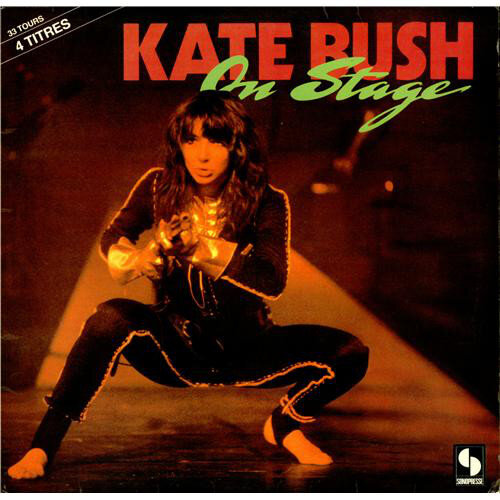
Live at Hammersmith Odeon is a recording of a live performance by Kate Bush on 13 May 1979 at the Hammersmith Odeon in London. It was originally released on home video in 1981. The video shows only twelve songs from the performance which on most nights consisted of 23 songs. Also, the song L'amour Looks Something Like You, which was included on the On Stage EP was cut from this video.

qq.jpg

Formats

The original release in 1981 was available on VHS and Betamax video, the two leading video formats at the time. There was also a release on Laserdisc. The video was re-released in 1994 as a boxed set that included a CD version of the performance.

Track listing

Moving

Them Heavy People

Violin

Strange Phenomena

Hammer Horror

Don't Push Your Foot On The Heartbrake

Wow

Feel It

Kite

James And The Cold Gun

Oh England My Lionheart

Wuthering Heights”.

Recorded during the penultimate date on The Tour of Life, Bush would have been extremely well-rehearsed and free from nerves (one suspects). Whilst a normal set was comprised of twenty-three/twenty-four songs, we sort of get half of a set (this website suggests that twenty-one numbers were performed on 13th May, 1979). I love the fact that one can get Kate Bush - Live at Hammersmith Odeon in this box-set. In 1994, VHS was a hugely popular format. C.D.s were relatively new to some people. Most artists were recording to the technology. Now, as vinyl has overtaken C.D.s and people are not watching VHS anymore, Kate Bush - Live at Hammersmith Odeon is more of a nostalgic item. Something for collectors and fans. That is why I headlined this feature as ‘a nostalgic treat’. I will buy the box-set and enjoy the C.D. and keep the VHS. Many artists are releasing on vinyl or going discless - due to the environmental aspects of C.D.s.

Kate Bush - Live at Hammersmith Odeon is an essential purchase for many Kate Bush fans. We get more than on the Kate Bush - On Stage E.P. that was released in 1979. One can get that on vinyl. It renews my calls for new consideration regarding The Tour of Life and the Hammersmith Odeon set. EMI control the publishing rights, so there is nothing preventing them from transferring it to streaming. I do feel there is a genuine gulf not having Bush live recordings digitally. As I said before, she might want to keep them to physical formats. Given the fact there are a dozen tracks on Kate Bush - Live at Hammersmith Odeon, there would be the remaining songs from a set. Putting it out as a double vinyl would combine Kate Bush - Live at Hammersmith Odeon and allow the missing songs to be heard. There are terrific photos taken during that Hammersmith set. Max Browne has published a book of those images. A nice new boxset with a double vinyl, multi-page booklet with photos, notes, setlists and details would go great alongside a DVD (with the 1979 Nationwide documentary, which followed Bush as she prepared for The Tour of Life). There are clips from The Tour of Life on YouTube – though the quality is not great. Also, as it is YouTube, a video can be removed with little reason or notice. The VHS provides a clearer and better experience - though most people have done away with their video players! Transferring the set to DVD or Blu-Ray and putting it in this boxset would be a good idea.

I am not sure how many people have Kate Bush - Live at Hammersmith Odeon and whether it is the way to connect fans to Bush’s performances during The Tour of Life. Kate Bush - On Stage provides a small window into what it was like…though updating the Kate Bush - Live at Hammersmith Odeon release for the modern market would be sage. Maybe it could be tied to an anniversary and released in 2024 – a long way off, though it would mark forty-five years of the epic and groundbreaking tour. Not to keep banging on about The Tour of Life but, having jogged my mind to Kate Bush - Live at Hammersmith Odeon, I have a hankering to immerse myself in that set. To have it on both DVD and vinyl would be such a treat. I feel a lot of people overlook The Tour of Life and shows like the one at the Hammersmith Odeon on 13th May, 1979. Most people know about the studio albums. Many do not realise how powerful the live recordings are. Not many of us were around or would have been at one of the sets on The Tour of Life. Bringing it to life now, to me, is more important than it has ever been. It showcases what a phenomenal live performer Bush is! Go and get Kate Bush - Live at Hammersmith Odeon and the Kate Bush - On Stage E.P. I hope that EMI, one day, brings Kate Bush - Live at Hammersmith Odeon up-to-date and releases it on…

DVD and vinyl.

FEATURE: Can You Get to That: Funkadelic's Maggot Brain at Fifty

FEATURE:


Can You Get to That

qqq.jpg

Funkadelic's Maggot Brain at Fifty

___________

WE recently celebrated…

yy.jpg

Joni Mitchell’s seismic album, Blue, turning fifty. It was interesting hearing and seeing people’s experiences of the album and what it means to them (she was touched by the fact people love the album so much). It still has this enormous power and relevance after fifty years. Whereas Blue is an instant classic and album that has been lauded through the years, maybe the same cannot be said of another 1971 classic: Funkadelic’s third studio album, Maggot Brain. The album was produced by band leader George Clinton and recorded at United Sound Systems in Detroit. It was, sadly, the final album recorded by the original Funkadelic line-up (George Clinton, Raymond Davis, Fuzzy Haskins, Calvin Simon, Grady Thomas, Garry Shider, Hot Buttered Soul (Pat Lewis, Diane Lewis and Rose Williams) – vocals, Eddie Hazel – guitar, vocals, Tawl Ross – guitar, vocals, Bernie Worrell – keyboards, vocals, Billy Nelson – bass guitar, vocals, Tiki Fulwood – drums). Consisting of nine different and wonderful tracks, I feel Maggot Brain has risen to the status of an all-time great in the years since its release. Maybe it took a while for people to fully appreciate the album. That said, there were some positive reviews upon its release. It is an album that has some long and quite affecting songs. Maybe not the most accessible or light-hearted Funkadelic release, we go in with the epic and hugely potent title track. With the late Edward Hazel laying down one of the greatest guitar performances ever, it is such a mesmeric start!

One is almost too overcome to listen to the rest of the album. It shows the confidence the group had to put that track at the start! One of my favourite Funkadelic tracks, Hit It and Quit It, is on Maggot Brain. We end the album with another epic in the form of Wars of Armageddon. There is also a double celebration, as George Clinton turns eighty on 22nd July. He produced so many incredible albums as part of Parliament and Funkadelic. Few are more important and seismic as Maggot Brain. Ahead of its fiftieth anniversary on 12th July, I wanted to highlight one of the greatest albums ever. To do so, I am going to quote a couple of reviews. Before then, Soundlab paid tribute to Maggot Brain in 2017:

Pontificating about funk music is an exercise in futility. Funk is the music of The People and everyone is welcome, hang-ups, social barriers and prejudices be damned. All you need is a head to nod, a toe to tap or an ass to shake. Good funk is felt in the spine, behind the eyes and under the skin and there’s no need to speak because the music itself becomes a universal interlocutor. It’s the rare musical form for which listeners connect with the music by giving themselves over to it completely. Ask not what The Funk can do for your ass, ask instead what your ass can do for The Funk. This isn’t to say funk is mindless but rather it’s the work of all minds or of a universal mind. Funk is somehow primal and futuristic, simultaneously... and this is why it’s so silly to write about funk because one ends up sounding like Matthew Mcconaughey on a bad acid trip–decidedly shallow, ultimately meaningless and tragically square. With that said, what follows is an attempt to review Funkadelic’s glorious masterwork, Maggot Brain. All apologies to George Clinton and the ghosts of Eddie Hazel, and Bernie Worrell, whose hard work and dedication to humanity deserves better than whatever platitudinous nonsense follows:

Funkadelic’s Maggot Brain was released in July of 1971. For a bit of perspective, Carole King and James Taylor dominated the pop charts for most of the month. While the Isleys, Marvin Gaye and Isaac Hayes all charted in July of 1971, they were nowhere near the top. The funkiest thing to be found on the high end of the charts that month was probably the Bee Gee’s “How Can You Mend A Broken Heart.” Thus it’s probably forgivable for the general public to have ignored Maggot Brain upon release, it was just too much. Too much funk, too much rock, too much blues and too much soul. Maggot Brain was also unapologetically original–name another album that opens with an increasingly calescent guitar solo which, over the course of its ten minute runtime, grows into a cascading shower of sparks so white hot as to challenge even Hendrix’s guitar-god supremacy… And that’s just the title track.

As if to remind listeners of their “free your mind and your ass will follow” motto, Funkadelic follows the introspective, smoked-out grind of Eddie Hazel’s “Maggot Brain” with the massive, laid back groove of “Can You Get To That.” The uninitiated might recognize this as the glorious looped sample deployed on Sleigh Bells’ hit “Rill Rill.” A chorus of voices proclaim: “I once had a life/ Or rather, life had me/ I was one among many/ Or at least I seemed to be…” The song, focusing on a kind of emotional karma, is about balance – a key theme for bandleader George Clinton. It also harkens back to Clinton’s days in doo-wop as, during the chorus, a wall of female voices ask: “can you get to that?” in response to a deep baritone male voice harmonizing “I want to know.” It’s all so funky you could stir it with a wooden spoon.

Maggot Brain’s third track, “Hit It and Quit It” is a deceptively smooth soul track featuring a wall of gospel organ played by none other than funk legend Bernie Worrell. “Hit It and Quit It” immediately jumps-off with an infectious groove and repetitive chorus of “You’ve got to hit it/ Hit it and quit it!” The most glorious element of “Hit It and Quit It” though is the easy to miss but impossible to forget rhythm by Tiki Fulwood. Yet another perfect track on a near-perfect record.

If track four of Maggot Brain is memorable for anything it’s the wall of bass laid down by Billy Nelson. Heard on the right set of speakers, in the backseat of the right kind of car, “You and Your Folks, Me and My Folks,” will cause the listener’s lungs to rattle in his or her chest. It’s as sticky a track as “Can You Get to That” but thicker, like trying to pour maple syrup on a cold winter morning. If you can wait, and have some patience the reward is so sweet”.

If you think that Maggot Brain might be a bit heavy-going for you and something that is best avoided, I would urge you to have a listen. It is a genius Psychedelic Funk album that is bursting with life and genius! It is a record that you will want to investigate. It is amazing to think how solid and cohesive Maggot Brain is, given how Funkadelic disbanded shortly after its release:

After the album was released, the band effectively disbanded: drummer Tiki Fulwood was fired due to drug use; guitarist Tawl Ross reportedly got into an "acid eating contest, then snorting some raw speed, before completely flipping out" and has not performed since; bassist Billy Nelson quit over a money dispute with Clinton. Subsequently only Clinton, Hazel, and keyboardist Bernie Worrell remained from the original Funkadelic lineup”.

Regardless, Maggot Brain is a classic about to turn fifty. There are a lot of hugely positive reviews to choose from. I want to start by introducing AllMusic’s judgement of the mighty Maggot Brain:

It starts with a crackle of feedback shooting from speaker to speaker and a voice intoning, "Mother Earth is pregnant for the third time, for y'all have knocked her up" and talking about rising "above it all or drown in my own sh*t." This could only have been utterly bizarre back in 1971 and it's no less so decades later; though the Mothership was well on its way already, Maggot Brain really helped it take off. The instrumental title track is the key reason to listen, specifically for Eddie Hazel's lengthy, mind-melting solo. George Clinton famously told Hazel to play "like your momma had just died," and the resulting evocation of melancholy and sorrow doesn't merely rival Jimi Hendrix's work, but arguably bests a lot of it. Accompanied by another softer guitar figure providing gentle rhythm for the piece, the end result is simply fantastic, an emotional apocalypse of sound. Maggot Brain is bookended by another long number, "Wars of Armageddon," a full-on jam from the band looping in freedom chants and airport-departure announcements to the freak-out. In between are a number of short pieces, finding the collective merrily cooking up some funky stew of the slow and smoky variety. There are folky blues and gospel testifying on "Can You Get to That" (one listen and a lot of Primal Scream's mid-'90s career is instantly explained) and wry but warm reflections on interracial love on "You and Your Folks, Me and My Folks," its drum hits distorted to give a weird electronic edge to the results. "Super Stupid" is a particular killer, pounding drums and snarling guitar laying down the boogie hard and hot, while "Hit It and Quit It" has a great chorus and Bernie Worrell getting in a fun keyboard solo to boot”.

Before wrapping up this feature, there is another positive review that goes into depth. Pitchfork provided their impressions in a review from last year:

Contemporaries working in similar modes such as Sly & the Family Stone, the Chambers Brothers, and War—all of whom were multiracial groups—had found the key to crossover success. But as an all-Black rock unit, Funkadelic struggled to achieve more than cult status in their heyday, even if some of their releases scraped the lower reaches of the charts. Upon its release, Maggot Brain was too strange for most music consumers to grasp. Even in their Detroit homebase, Funkadelic couldn’t catch a break with the city’s AOR radio outlets. Over the decades, however, the album’s guitar heroics, relentless grooves, and cavalier hooks have infiltrated their way into more receptive minds.

Listening to the staccato “Hit It and Quit It,” you can understand why those early-’70s listeners would be perplexed. Keyboard prodigy Worrell unfurls Keith Emersonian burbles and proggy flourishes alien to the funk genre at the time. Revealing Funkadelic’s democratic nature with regard to singers (a ploy that may have hindered their ability to break through commercially, as there was no dedicated frontman), Clinton allowed Worrell to sing his skinny ass off amid a libidinous landslide of guitar riffs and basslines. “Hit It” ranks as one of the filthiest lust songs ever to stoke a libido.

Another example of Funkadelic’s egalitarian microphone policy, “You and Your Folks, Me and My Folks” is sung by Billy Nelson; the track exudes the air of a communal Sly & the Family Stone anthem, but imbued with the menace of the Manson Family, with the bass/drums groove ranking as one of the most lethal in the Funkadelic canon. Despite the sinister aura, the song is a plea for equality and understanding among all people. For what it’s worth, “You and Your Folks” is the most-sampled track on Maggot Brain (11 times), and Alabama Shakes singer-songwriter Brittany Howard covered it on 2020’s Spotify Singles.

In a 1985 issue of Spin, P-Funk professor emeritus Greg Tate dubbed “Super Stupid” a “heavy-metal hydrogen bomb test”; it’s no wonder heavies such as Audioslave and Big Chief took stabs at it. This is mercilessly vicious rock that attracted the attention and respect of British rock royalty when Funkadelic first toured England. Clinton claims David Bowie, Rod Stewart, and members of Cream, the Beatles and Led Zeppelin checked them out on that jaunt. “Super Stupid”’s metallic guitar avalanche is tempered by Worrell’s circus-y keyboard effusions, but the real star is Hazel, who is on fire in extremis, both on ax and vox. “Super Stupid” warns of the foolishness of drug abuse (Worrell claimed in Wax Poetics that band members were snorting heroin) while, incidentally, making you want to take drugs.

Following the release of Maggot Brain, Hazel and Nelson split to work for the vastly more popular Motown act the Temptations, reportedly due to dissatisfaction with Clinton’s handling of the band’s financial situation. Fulwood also was disgruntled about pay and left Funkadelic. Although Clinton doesn’t mention this issue in Brothas, the Wax Poetics interviews feature complaints about George’s stinginess. Ross, too, departed, after alleged misadventures with either LSD or speed. These painful losses were ameliorated by the additions of Bootsy and Catfish Collins, Garry Shider, and Boogie Mosson—all world-class funkateers. Nevertheless, Funkadelic never again released an album as laden with genius as Maggot Brain. It was the culmination of their first phase’s most outrageous and ingenious sonic ideas, establishing a new precedent for how Black musicians would exist in a rock context, juxtaposing metal, gospel, prog, funk, blues, and jazz fusion with nonchalant virtuosity. It’s the epitome of their extravagant virtues and vices.

Summarizing the LP in Brothas, Clinton wrote, “Maggot Brain was going places that Black groups hadn’t gone, into questions about whether America was still on the right path or whether the promise of the late ’60s had completely evaporated.” In these seven songs, you can hear Funkadelic attempting to make sense of the turmoil of the times, as they express the euphoria and anguish of being born and dying in the most extraordinary ways”.

Fifty years after its release, Maggot Brain is an album so many people are talking about. I am going to keep listening to the album for a couple of days, as it is so powerful and nuanced. I come back and a new song impacts me in a different way. Today, spend some time with Maggot Brain. Turn it on and…

LOSE yourself in it.

FEATURE: Childhood Treasures: Albums That Impacted Me: Björk - Debut

FEATURE:


Childhood Treasures: Albums That Impacted Me

www.jpg

Björk - Debut

___________

WERE one to rank Björk’s albums …

aaa.jpg

 IN THIS PHOTO: Björk in Los Angeles, 1993/PHOTO CREDIT: Joseph Cultice

I wonder how many would place 1993’s Debut at the top?! Of course, the album was not her debut (she released an eponymous album in 1977). I would encourage anyone to buy Debut. It is one of my favourite albums. I am going to delve into an article that told the story of Debut and its success. Whilst not quite as accomplished and acclaimed as its follow-up, Post (1995), Debut is a remarkable album. It came out on 5th July, 1993. I was ten at the time. I don’t think I was aware of who Björk was at that time. Maybe the first song of hers I heard was Debut’s first single, Human Behaviour. I was instantly mesmerised! I had not heard another voice quite like hers. I was already fan of Kate Bush. Perhaps that was the closest comparison at the time. I still think there is nobody out there like Björk. I love everything on Debut. Writing alongside producer Nellee Hooper, Human Behaviour, Venus as a Boy, Big Time Sensuality and Violently Happy are classics in her cannon. I also like the lesser-spun songs like There's More to Life Than This and Aeroplane. The album made a big impact on fans and the press in 1993. In years since, one can hear influence on the likes of M.I.A., Grimes, These New Puritans, Tune-Yards, Lady Gaga and Robyn. The sheer audacity of ambition; the mix of sounds and that incredible voice of Björk’s make it an album as important to me as Kate Bush’s The Kick Inside, The Beatles’ Rubber Soul and Paul Simon’s Graceland.

I am going to wrap up with more feelings and thoughts on Debut. Before then – and before I come a review of the album -, I wanted to source from Classic Pop Mag. In 2017, they revisited Debut and provided a history and insight into its recording and legacy. There are a few bits from the feature that I want to quote:

Having emerged as a child star in her native Iceland with an eponymous album at the age of 11, Björk had already amassed 16 years’ experience in the music business by the time she released her solo breakthrough, Debut, in July 1993. The singer spent her formative years as part of Reykjavik art collective Bad Taste and in punk bands Spit & Snot and Kukl, Björk achieved international success with The Sugarcubes.

While Debut’s otherworldly eclecticism is light years away from The Sugarcubes’ output, Björk’s transition from feisty frontwoman to electro enchantress had been years in the making.

“When The Sugarcubes started to get attention abroad and I got the opportunity to travel in 1988, I was so excited to see live bands,” Björk says. “When I got to the UK and we had a day off between touring, I would go and try to see as many concerts as I could. I was so disappointed because it was so stagnant, nobody was taking any risks. So, I started going to clubs in 1988 and I just became obsessed with them.

“I had to go to lots of them, but when I found the right ones, they had atmosphere and miracles happened.”

Having visited Manchester to collaborate with dance pioneers 808 State, she witnessed first-hand the city’s nightlife, throwing herself into its vibrant hedonism. Her relationship with DJ Dominic Thrupp was her connection to London’s clubland, enabling her to build a network of like-minded creatives with whom she planned to collaborate to bring her ideas to life. Though she had originally planned to work with different producers depending on the style of music she was working on at the time, an introduction to Nellee Hooper was instrumental in bringing Debut to fruition.

“A friend of mine suggested we work together and I was a bit suspicious to begin with,” Björk explained to The Face magazine in 1993. “I had to ask what he had done. I like Soul II Soul, but mainly when they’re on the radio. Myself, I like to go out and dance to hardcore or industrial techno, hard beats with an experimental edge. I thought Nellee was too ‘good taste’ for my liking. But then I met him, got to know him, got to hear about his fabulous ideas and it ended up with him producing the whole album.

“I wanted to include a mixture of sounds, like harps, saxophones, techno beats,” Björk said. “No sound or style was off limits. My target was to break down the stupid barriers that existed. I didn’t want it to be the jazz people over here, the rock’n’rollers over there and the classical people over here, so we had a harp player, a jazz saxophone player, an Indian string section.

“I wanted the album to be pop music that everybody can listen to,” she said. “I think not sticking to any particular musical style makes the album real. Life isn’t always the same. You don’t live in the same style from day to day, unexpected things happen that are beyond your control. That’s this record. One song is about the mood you’re in walking to the corner shop, another is about being drunk and out of it on drugs in a club, and the next one is about feeling romantic and making love.”

Going on to achieve sales of 4.7 million copies worldwide, Debut was Björk’s greatest commercial hit, and though not the debut its title suggested, it was her musical coming-of-age and an album that inspired an entire generation of artists such as Radiohead, M.I.A, Lady Gaga and Florence Welch, all of whom have cited her as a touchstone.

Speaking of Debut’s legacy, Björk described it as, “very nostalgic”. “It’s like an old photo album for me because it was my first opportunity to record an album with money,” she said. “It was like a ‘greatest hits’ from which I could pick from the last 10 years or so of my songwriting. Ever since then I’ve always been more about looking ahead than the past”.

I still play Debut to this day. It takes me back to the ‘90s - and yet there is something modern and current about the album that means my love of it is much more than sheer nostalgia. Debut opened my eyes to an artist who I would follow from that point with fervent fascination.

I think that there are two stages of reviews for Björk’s Debut. In 1993, there was a lot of praise and interest. There were some who were less sold and effusive, I am not sure what the main criticism was. Perhaps it was an album that was so different to what was around they did not know how to take it. There was this wave of reviews later down the line that reassessed the album – people also had other Björk albums to compare it with. In their review, AllMusic had the following to say:

Freed from the Sugarcubes' confines, Björk takes her voice and creativity to new heights on Debut, her first work after the group's breakup. With producer Nellee Hooper's help, she moves in an elegantly playful, dance-inspired direction, crafting highly individual, emotional electronic pop songs like the shivery, idealistic "One Day" and the bittersweet "Violently Happy." Despite the album's swift stylistic shifts, each of Debut's tracks are distinctively Björk. "Human Behaviour"'s dramatic percussion provides a perfect showcase for her wide-ranging voice; "Aeroplane" casts her as a yearning lover against a lush, exotica-inspired backdrop; and the spare, poignant "Anchor Song" uses just her voice and a brass section to capture the loneliness of the sea. Though Debut is just as arty as anything she recorded with the Sugarcubes, the album's club-oriented tracks provide an exciting contrast to the rest of the album's delicate atmosphere.

Björk's playful energy ignites the dance-pop-like "Big Time Sensuality" and turns the genre on its head with "There's More to Life Than This." Recorded live at the Milk Bar Toilets, it captures the dancefloor's sweaty, claustrophobic groove, but her impish voice gives it an almost alien feel. But the album's romantic moments may be its most striking; "Venus as a Boy" fairly swoons with twinkly vibes and lush strings, and Björk's vocals and lyrics -- "His wicked sense of humor/Suggests exciting sex" -- are sweet and just the slightest bit naughty. With harpist Corky Hale, she completely reinvents "Like Someone in Love," making it one of her own ballads. Possibly her prettiest work, Björk's horizons expanded on her other releases, but the album still sounds fresh, which is even more impressive considering electronic music's whiplash-speed innovations. Debut not only announced Björk's remarkable talent; it suggested she had even more to offer”.

I will wrap up soon. My teenage years were ones where I became entrenched in current music and bought as much as I could. Prior to that, I was not buying as many albums. I was listening a lot to my parents’ music. Albums like Björk’s Debut were hugely important because it was my discovering an album independently. Whilst the songs are great and eclectic, it is Björk’s voice that really sells it to me. So flexible, powerful and original, she imbues every song with so many emotions and colours! There is no doubt that Debut

IS very special to me.

FEATURE: Original Intent: Kate Bush: Keeping Cover Versions from Her Studio Albums

FEATURE:


Original Intent

ccc.jpg

Kate Bush: Keeping Cover Versions from Her Studio Albums

___________

MAYBE it is not too noteworthy…

aaa.jpg

 PHOTO CREDIT: Alamy

but I feel that most legendary artists, on one of their albums at least, will include a cover version. It is not the case that artists are short of material: rather, they want to bring in cover songs, as they can put their own stamp on things. I have spoken before how Bush’s production work is underrated. Many people, when they think of her, do not usually consider her producing and the skill she has in this area. One reason why albums such as The Dreaming (1982) and Hounds of Love (1985) are so nuanced and extraordinary is because Bush was at the helm. Not that she was shunning people - though one feels that others calling the shorts regarding production would have annoyed her. She worked with producers on her first few albums, yet Bush had a desire to produce her own work and put her stamp on the albums. The same can be said of the songwriting. Whilst one can look at songwriters like Joni Mitchell and say that she wrote her own material and produced her albums (after a certain point), there are very few artists that do not bring in others’ work. In fact, if you look through Mitchell’s catalogue, she has not solo written every one of her songs. Over ten studio albums, Kate Bush has ensured that her name is the only one on the songwriting credits.

One can argue that, on Director’s Cut (2011), she reinterpreted her song, The Sensual World (from 1989’s The Sensual World) and renamed it Flower of the Mountain. As she wanted to use Molly Bloom’s soliloquy from James Joyce’s Ulysses on the original, when she did get permission for Flower of the Mountain, she credited James Joyce. I am not really counting that. No doubt Joyce’s words are important, though the majority of the song was composed by Kate Bush. On The Dreaming, certain musical parts were composed by others (the string arrangement on Houdini was from Dave Lawson and Andrew Powell). Apart from that, Bush has written all of her album tracks. I find that amazing! I will come on to cover songs. One can also not say that she was short of original material and, had she recorded more albums, she would have needed to turn to covers. She wrote the excellent Experiment IV for the greatest hits collection, The Whole Story (1986). She had a B-side as incredible as Under the Ivy (the B-side to Hounds of Love’s first single, Running Up That Hill (A Deal with God), that could have easily slotted on the album’s second side. One suspects there are unrecorded songs that Bush could record and kept aside. I am not sure whether there were moments when Bush thought about doing a cover of two for an album. She has recorded and/or performed live songs by Steely Dan, The Beatles, Ike & Tina Turner, and Elton John.

I may do another feature about the best cover versions by Kate Bush. When it came to tackling other artists’ songs, Bush kept them to B-sides or other projects. She recorded two Elton John/Bernie Taupin tracks for the 1991 album, Two Rooms: Celebrating the Songs of Elton John & Bernie Taupin (Rocket Man was the A-side; Candle in the Wind the B-side). I really love a lot of Bush’s B-sides. Burning Bridge (the B-side to Cloudbusting and Hounds of Love), The Empty Bullring (the B-side to Never for Ever’s Breathing) and Ran Tan Waltz (the B-side to Never for Ever’s Babooshka) are wonderful. She clearly had a lot of material aside that she did not feel fitted on an album. If you look at the songs Bush covered, it is not like they are slight versions that could not have made it onto an album. The Handsome Cabin Boy was a B-side on the Hounds of Love single. Whilst it might not have worked on Hounds of Love, it could have appeared on an E.P. or future project. Donavon’s Lord of the Reedy River was a B-side to the Sat in Your Lap (The Dreaming) single. I feel that could have been an album track. This is also true of My Lagan Love (a traditional song that was a B-side on the Hounds of Love single). Whether she was tackling Sexual Healing (the B-side to 2005’s King of the Mountain) or adapting Elton John classics, it would have been interesting to hear her include a cover on a studio album.

I guess Bush wanted to keep her albums her own - made sure they only featured her own songwriting. I am fascinated by the divide in Bush’s career. There are those album tracks that Bush wrote, although it is clear that she loved reinterpreting other people’s tracks. Bush featuring a wide range of non-original songs as B-sides. Given her love of artists such as David Bowie and Captain Beefheart, I wonder whether Bush ever covered any of their songs and they have not seen the light of the day. I guess this feature is a reaction to the fact that, still, we see big artists release albums where there are scores of other songwriters. You wonder how personal and meaningful the songs are when you count the co-writing credits! Perhaps Bush felt that putting cover versions on her albums would taken her own voice and perspective away. As much as I love her covers, she is at her most exceptional when delivering her own songs. This is one (among many) reasons as to why she is so respected as an artist. That sense of autonomy and singular vision meant that, over ten studio albums, it was her words alone that we heard (taking into consideration the very minor James Joyce inclusion on Director’s Cut). One can never say never, butit is unlikely Bush will include a cover version if she releases another studio album. I really like how she paired Sexual Healing with King of the Mountain in 2005 (quite an introduction to Aerial!). The range of songs she covered is amazing! I suppose Bush created a flow and concept with many of her albums. Putting in a cover song might have disrupted that. Across the studio albums, Bush has ensured that her songs alone have featured. This is something that…  

FEW others can claim.

FEATURE: Second Spin: Neil Young - Fork in the Road

FEATURE:


Second Spin

ccc.jpg

Neil Young - Fork in the Road

___________

AS he has released…

aaa.jpg

forty studio albums (either solo or with Crazy Horse), it is evitable that there are some Neil Young albums that are overlooked or not up to his gold standard. There are albums of his that I feel did not get the huge reviews it deserved or is not played as much as it should be. That can be said of 2009’s Fork in the Road. His twenty-ninth studio album, I think that it is one of his best ‘later career’ releases. I am going to bring in some contrasting reviews for the album. Whilst it did get positive feedback, some were a bit more mixed. I feel there should be reappraisal of Fork in the Road. It is a really strong album with numerous highlights. Before coming to a couple of reviews, Wikipedia provide some background and information regarding Fork in the Road:

The album was inspired by Young's Lincoln Continental that had been retooled to run entirely on alternative energy, and Young's background with the Lincvolt project he has been working on alongside mechanic Jonathan Goodwin. The project has been to develop a viable electric energy power system for automobiles. Young's own 1959 Lincoln Continental will serve as their completed prototype. A documentary produced by Larry Johnson followed the electric car in its first long-distance trip to Washington, DC”.

When Worlds Collide is a fantastic opening track. The quality doesn’t really decrease at all. It is a consistently strong album that warrants repeated listen. I do feel that some have ignored the album or not held it in the same esteem as other Young albums.

There have been a lot of positive reviews for it. Saying that, there have been some mixed ones. Fork in the Road is one that is worthy of new investigation. In their review, this is what The Guardian had to say about Fork in the Road:

He is fierier and funnier than ever, his latest amateur-style videos for new album Fork in the Road an unexpected joy, featuring Young lip-synching in the back of a limo dressed as a banker and him driving his beloved Lincoln Convertible, the sun bleaching the camera, a curly-coated dog behind him.

So, there is much to admire. I just wish I liked his music more. But that keening voice, those Godspell backing harmonies have never done anything other than turn up my tinnitus and make my teeth ache.

The guitar sound is always fantastic - gutsy, driving, grungy - but the drumming is truly terrible and as for the words ... to call them lyrics seems to give too much formal weight. They're more like stream-of-consciousness notes, to be licked into proper shape at a later date.

The subject of this album is - sorry, listeners - his car, the Lincvolt, a 1959 white Lincoln convertible that Young is in the process of having converted to eco-friendly fuels. "The awesome power of electricite-e-e/Stored for you on a giant battere-e-e/She runs so quiet ..." he sings on "Fuel Line", a right-on version of Jeremy Clarkson. There are a few anti-war asides and more about the credit crunch, though nothing goes any deeper than "Cough up the Bucks"' wondering, "Where did all the money go?/ Where did all the cash flow?/ Where did all the revenue sweep?"

Only the pretty "Light a Candle" and the title track itself go anywhere. The rest is tossed away, the sound of a massive talent revving on the spot without ever getting out of first gear”.

I definitely feel Fork in the Road is one of the most interesting Neil Young albums in terms of its concept and inspiration. Maybe there are one or two slightly weaker tracks on the album. Most are really solid and have plenty of nuance. In their assessment, AllMusic remarked the following:

It somehow is fitting that Fork in the Road arrived in stores a week after President Barack Obama announced his bail-out plan for the American automobile industry: it's Neil Young's one-man campaign to remind everybody what cars used to mean and what they should be again. Neil always has had a soft spot for cars -- he drove a hearse from Toronto to Los Angeles, immortalizing the vehicle in "Long May You Run" -- so this album-length motor manifesto couldn't be called unexpected, nor could its palpable, ever-flowing undercurrent of nostalgia be a surprise for a man who owns a toy train company. Plus, romanticizing the classic years of Detroit is natural; those big boats were gorgeous, so unlike the colorless, characterless sedans that rule the road these days. Neil knows this and knows that dependence on oil is crippling the culture, not to mention the environment, and is enough of an evangelist to cobble together his own green machine, putting an electric engine in a 1959 Lincoln Continental, driving the car to Washington and writing a whole album about the vehicle and its downtrodden times.

Fittingly, Fork in the Road is like his Lincvolt: it has a new engine in an old body, so it has all of the classic contours but runs a little differently. The Lincvolt might be smooth and efficient, but Fork in the Road is charmingly clunky, a side effect of its quick creation and Young's hard-headedness. Neil might be writing records as quickly as a blogger these days but musically he's stuck in the past, never letting go of his chunky Les Paul and candied folk harmonies, embracing his status as an old crank so enthusiastically he happily presents himself as a crazy old coot on the album's cover. At times, he certainly does sound like the resident codger, snarling about the fading economy and how everybody's been downsized, good naturedly sneering "big rock star/my sales have tanked/I still got you/thanks" on the title track. Despite the undercurrent of auto nostalgia here, Young isn't living in the past and he's keenly aware of the present. This blend of dreamy thoughts of yesteryear, spitting fury over the present, and planning for the future gives Fork in the Road a bit of a kick that propels it through a few songs that aren't much more than a garage groove, but the whole thing benefits from its messiness; the loose ends make it feel alive”.

If you have not heard Fork in the Road, go and give it a listen and send some time with it. Young’s twenty-ninth studio album is a rich listen, Young's vocal performance on Fork in the Road was nominated for Best Solo Rock Vocal Performance at the 52nd Grammy Awards in 2010. I have been listening to it a bit over the past few days and have been hooked. Even if you are not a Neil Young fan, you will find something in Fork in the Road to enjoy. It has been great diving into…

A terrific album.

FEATURE: Modern Heroines: Part Fifty-Seven: H.E.R.

FEATURE:


Modern Heroines

www.jpg

Part Fifty-Seven: H.E.R.

___________

THERE are many female artists…

qqq.jpg

 PHOTO CREDIT: Jimmie Armentrout

putting out music today who are going to be hugely important in the future. H.E.R. is already important - though I feel she will grow bigger and inspire many other artists. There are a few interviews that I want to bring in that gives us greater insight into a fantastic artist. Before I come to that, it is worth highlighting some biography. For that, AllMusic provide the lowdown:

One of the most acclaimed R&B artists since 2016, the year her first EP found a rapt audience, H.E.R. has been celebrated for vulnerable yet assured love ballads and sharp protest songs alike. The singer/songwriter maximizes the power of her honeyed vocals as a simultaneously poetic and straightforward lyricist, shifts to convincing MC mode on a dime, and is also a guitarist and producer. Her first two full-length recordings, H.E.R. (2017) and I Used to Know Her (2019), have each featured platinum singles, including "Focus" and "Could've Been," and she has won four Grammys, most notably Song of the Year for "I Can't Breathe" (2020). "Fight for You" (2021), her contribution to the soundtrack of Judas and the Black Messiah, made her an Academy Award winner for Best Original Song. A desired collaborator across genres, H.E.R. has scored supplemental hits as a co-writer and guest vocalist on Daniel Caesar's "Best Part," YG's "Slide," and Skip Marley's "Slow Down."

The Bay Area native debuted under the anonymously presented guise of H.E.R., short for Having Everything Revealed, in September 2016. A seven-track EP issued on major-label RCA, H.E.R., Vol. 1 received limited promotion, but formative influence Alicia Keys, as well as Bryson Tiller -- also RCA artists -- spread the word through social media. A cover of Drake's "Jungle" attracted additional early attention. "Focus," a trap-styled yearning ballad H.E.R. wrote with Justin Love and co-producer Darhyl Camper, Jr., soon became the singer's first hit. It peaked on Billboard's R&B/hip-hop chart at number 45 and earned H.E.R. the first of her many gold and platinum certifications from the RIAA. H.E.R. Volume 2, a similarly styled follow-up, arrived in June 2017. Within four months, the two EPs were combined, expanded, and re-released as H.E.R. One of the additional cuts was "Best Part," a multi-platinum duet with Daniel Caesar that originally appeared on Caesar's album Freudian.

H.E.R.'s beneficial collaborations continued in mid-2018 with "This Way," recorded with Khalid for the soundtrack of Superfly. That August, she issued I Used to Know Her: The Prelude, which went straight to the top of the R&B/hip-hop chart -- and to number 20 on the Billboard 200 -- thanks to the Bryson Tiller duet "Could've Been." I Used to Know Her, Pt. 2, featuring the single "Hard Place," was out in November. Also by the end of the year, she was nominated for five Grammy Awards: Album of the Year and Best R&B Album (for H.E.R.), Best R&B Performance (for "Best Part"), Best R&B Song (for "Focus"), and Best New Artist, one of the Big Four categories. At the ceremony the following February, she took home the prizes for Best R&B Album and Performance. H.E.R.'s range of collaborators continued to widen as a featured artist on songs by the likes of Chris Brown, Ella Mai, and Ed Sheeran. This activity primed H.E.R. for the August 2019 release of I Used to Know Her, which bundled the EPs from the previous year and added a batch of fresh material. Shortly after she joined YG on the multi-platinum hit "Slide" and contributed to Skip Marley's "Slow Down," the Recording Academy acknowledged her again with five more Grammy nominations. "Could've Been" was up for Best R&B Song and Best R&B Performance. "Hard Place" was nominated for Song of the Year and Record of the Year. The parent LP was among the nominees for Album of the Year.

Although only two tracks were released by H.E.R. as a lead artist in 2020, the singer made them count. First was "I Can't Breathe," a protest song coinciding with Juneteenth and nationwide demonstrations against police brutality, followed by "Damage," a slow jam based on Herb Alpert's Jam & Lewis-produced "Making Love in the Rain." More often, she was a featured guest, as heard on Jhené Aiko's platinum "B.S." and Toni Braxton's "Gotta Move On," and she also fronted Robert Glasper's "Better Than I Imaged," supported by Meshell Ndegeocello. "I Can't Breathe" and "Better Than I Imagined" won respective Grammys for Song of the Year and Best R&B Song. Important projects and major featured appearances, as well as accolades, kept coming in 2021. "Fight for You," which played over the end credits of Judas and the Black Messiah, won that year's Academy Award for Best Original Song. Additionally, she guested on Jazmine Sullivan's Heaux Tales and DJ Khaled's Khaled Khaled, and released "Come Through," another collaboration with Chris Brown”.

I am going to source an interview H.E.R. conducted with NME recently where she spoke about working with Chris Brown. It is something that makes many people uneasy (given the fact he has a history of domestic abuse) and might tarnish those songs. H.E.R. explained how they both admired each other in terms of the art.

In 2018, H.E.R. spoke with Elle. Among other things, she discusses her I Used to Know H.E.R. and the songwriting process. It is a really interesting interview that people should spend some time with:

Can a singer find success without a celebrity-making machine churning beneath them? The goal for a new artist is typically to get her face and name everywhere: press, social media, videos, endorsements. That's why it was so striking when an anonymous R&B singer-songwriter going by H.E.R. (Having Everything Revealed) mysteriously debuted in 2016 with minimal promotion and no details about the person behind the soulful voice. Her Volume 1 and Volume 2 EP covers are adorned with just a silhouette. Music videos show only a profile or an artfully obscured face. She always wears oversized sunglasses when performing live or being captured on camera.

As she gained popularity, with songs like "Focus," "Best Part," and her cover of Drake's "Jungle" steadily climbing Billboard charts, promotion from the likes of Alicia Keys and Rihanna, and touring for a year straight, fans eventually uncovered her identity: 21-year old Gabi Wilson, who made waves even as a kid with live performances on The View and The Today Show.

Wilson explained that the point of creating H.E.R. was to not distract from her message. "I think it has allowed me to make the music the focus, and for people not to care about the superficial things or who I'm associated with, what clique I belong to—all those things that don't matter," she told ELLE.com. "It's really made people focus on the music, and that's what's special about it."

WHAT WAS YOUR INSPIRATION FOR THE I USED TO KNOW H.E.R. EP?

A lot of the songs have just come from this place of wanting to elevate, bring out more musicality, and do things more freely. I Used to Know H.E.R. is my perspective in life up to this point: All the things I've experienced, all my stories, those things that really have built who I am. The title comes from how people who knew me in high school, who would push me aside or maybe disregard me and consider me a nobody, are now like: I used to know her. They say that a lot.

YOUR MUSIC SEEMS TO BE GEARED TOWARD WOMEN—SEEING THEM, HEARING THEM. HOW DID YOU LAND ON THAT THEME?

In the beginning, it was selfish—me releasing everything and being so honest. And then it turns out that all these women are like, "Wow, I feel this like she's speaking my life." My diary is also a lot of other people's diaries. Just in different ways, different extremes. And it became a beautiful thing. It started to make me realize I can be a voice.

I've become a voice for young women who are growing up and uncomfortable being vulnerable, uncomfortable with changes, heartbreak—and becoming jaded. It's about acknowledging it and empowering yourself, and empowering other women, sharing those stories, and making people feel like they're not alone.

WHAT IS YOUR SONGWRITING PROCESS?

I love to talk about feelings, and my experiences. When I collaborate with people, I love to talk. I just talk, and sometimes the song just writes itself because the song is in the conversation. It's the things that we really want say. Maybe I'm in my room and I'm writing down my thoughts and feelings, and I just go there. Sometimes I deal with something, and I can't write about it in the moment because I'm feeling it, and I have to wait until it passes. It really just depends. I'll sit at the piano sometimes, and chords will just come. I just sing, it's like a freestyle almost. "Losing" from Volume 1, for example. I came up with the chords then I came up with the hook. I went to bed and I was writing the verses like a poem, "Your ambition is attractive, my aggression isn't passive..." Then I added the melody”.

I am going to work my way to her debut album, Back of My Mind, very soon. That was released a couple of weeks ago, and it has gained some really positive reviews. Before getting to that, there are more interviews that are worthy of exploration. Last year, she spoke with Interview Magazine and was questioned by Jacob Utti:

 “UITTI: Do you have a dream collaborator?

H.E.R.: Stevie Wonder. He’s just one of the greatest. He’s known for piano-playing but, to me, he’s just one of the greatest songwriters of all time.

UITTI: What’s a song that always puts you in a good mood?

H.E.R.: A song that always puts me in a good mood is “Free” by Deniece Williams. The song is such a feel good song. It makes you want to fall in love and be happy and just, I don’t know, cruise. It’s a nighttime or daytime song, it doesn’t matter. It’s just makes me want to pick up a guitar.

UITTI: How about a house party playlist?

H.E.R.: A house party? Definitely some A Tribe Called Quest. Some Mary J. Blige. Let me think… I would play some Kendrick. I would mix the old school and the new school. I would play a lot of old school hip-hop.

UITTI: When you think of Kendrick and his album To Pimp A Butterfly, what comes to mind?

H.E.R.: I do. I mean, he opened a door, I think, for a lot of new artists to really get musical with their stuff. And that being mixed with hip-hop is super innovative. People have been doing that before, but as far as my generation and young people that listen to music, it kind of opened their minds and their ears to old school music. George Clinton worked on that project with him. There were a bunch of collaborators that he kind of brought back that made people just appreciate music. That was that project, to me. But he paved the way for a lot of musicians to be in mainstream music and to really to it and be able to mix that hip-hop and use real instruments on records.

UITTI: Do you have a favorite band or song you wish the world knew more about?

H.E.R.: Oh, man, I love Soundgarden. They’re iconic, but still. Vampire Weekend is one of my favorites. Khruangbin, they’re amazing.

UITTI: Do you have a favorite R&B song of all time?

H.E.R.: That’s impossible. It might be that Deniece Williams song, “Free.” But I can’t put that title on it because I love so many different R&B songs.

UITTI: Do you have a favorite guitar song?

H.E.R.: Probably “Purple Rain”.

H.E.R. spoke with NME very recently and talked about her (at the time) upcoming debut album. In June 2020, H.E.R. released the powerful and moving song, I Can’t Breathe:

June 2020’s ‘I Can’t Breathe’ became a moment of recognition of her voice as a leader. She says the song originated in a FaceTime conversation with her regular co-writer Tiara Thomas, in which they discussed the new wave of protests sparked by George Floyd’s barbaric murder. Derek Chauvin, the police officer involved, has since been found guilty of second and third-degree murder and second-degree manslaughter.

“Our words became the lyrics to ‘I Can’t Breathe’ and it became something that I needed to get out,” she says. “But when it did come out, I didn’t realise that it was actually going to be something that impacted people and that would become the soundtrack to the marching or anything like that,” she says.

Still, it sounds as though the song’s profound resonance has made H.E.R. rethink – or at least recalibrate – her purpose as an artist. “At first I didn’t realise activism was part of that purpose but I guess my voice matters,” she says. “I definitely feel a responsibility because I have this platform, but I think we should all speak out against things that we don’t like and things that should change, regardless of where we come from. Hate is hate.”

At home, her parents would play a lot of Sly Stone and the less well-known Con Funk Shun – both acts were based in the Bay Area – as well as everything from ’90s R&B to AC/DC and “rock gods” Carlos Santana and Jimi Hendrix. When she was nine years old she would fall asleep to classic albums ‘Who Is Jill Scott?: Words and Sounds Vol. 1’ and ‘The Miseducation Of Lauryn Hill’.

Because music was such a huge part of her home life, H.E.R. says she “naturally gravitated” towards joining in: “When my dad and his cover band would rehearse in the living room, I’d be singing at the mic while they were taking a break.” Soon her dad was teaching her to play a few songs on piano and a blues scale on the guitar and her mum was entering her in talent shows. She quickly began to attract attention. On YouTube, you can watch a 10-year-old H.E.R. – then billed as Gabi Wilson – nailing a rendition of Alicia Keys’ 2007 single ‘No One’ on The Today Show. Accompanying herself on the piano, she was already a formidable musician.

Whatever path H.E.R. goes down, she won’t be taking any cheap shortcuts to building that legacy. “I’m always thinking about the future,” she says. “There are certain opportunities that might make sense now in a small way, but in the bigger picture, don’t necessarily fit. So I’m all about putting the puzzle pieces together to make a bigger picture and a bigger moment. And I’m in that right now”.

That takes us to her long-awaited debut album, Back of My Mind. It is an album that, whilst not among the very best of this year, is definitely a promising album that showcases an original talent who has many years ahead of her. In their review, this is what CLASH had to say:

California’s own H.E.R. has made each step count. The careful creator first won attention back in 2017, and while the industry’s clamour for immediacy has grown ever louder, she’s done things her own way. ‘Back Of My Mind’ is her long-awaited debut album, and it’s certainly utilised her time well – finely contoured, carefully finessed, it utilises R&B as its starting point while yearning towards a broader sense of soul that is curiously more universal, while becoming yet more personal.

An album laden with fantastic collaborators, H.E.R.’s role as curator and lead vocalist isn’t something she takes lightly. Indeed, there’s a sub-album within her of her solo vocals – the pristine ‘Damage’ for example, augmented by its koto flourishes; or the sublime ‘Process’ with its weaving, transcendent lyric.

Yet it’s impossible to ignore the scale of talent on here. Ty Dolla $ign appears on the title track, and it feels like a true moment for both artists – rarely has H.E.R. been so raw, conjuring a moment of intimacy from Ty. The ever-industrious Thundercat appears on ‘Bloody Waters’, the two West Coast artists conjuring something from the depths of Californian soul. Lil Baby adds swagger to punchy roller ‘Find A Way’, while Yung Bleu is the perfect counterweight on ‘Paradise’.

Boasting 21 tracks on the Apple Edition alone, ‘Back Of My Mind’ is a true blockbuster. H.E.R. is resisting labels and pushing past boundaries – check out the whispered incantations of ‘Don’t' or the soul-bearing artistry of ‘Hard To Love’.

In its length and scope, there’s a feeling here of witnessing H.E.R. in 360 – panoramic R&B that more than justifies the wait, a sumptuous, multi-faceted jewel that seems to reveal fresh colour with each play. Speaking to Clash last year, H.E.R. seemed to perfectly encapsulate her approach, one that wrestles with unbridled freedom and personal expression: “You can’t put a label on something that touches everybody…”.

The final review that is worth illustrating is from The New Yorker. They offer some interesting perspectives on an album that fully introduces the world to an artist with an incredible sound:

There is a long history of artists releasing their “major-label début” after an independent release, a move that implies an upgrade in setup. There is also a shorter history of artists releasing début albums following a string of studio-quality mixtapes, with no discernible differences between the two formats beyond intention. In 2016, Chance the Rapper won the Best Rap Album Grammy for his mixtape “Coloring Book,” before releasing his début album, “The Big Day,” in 2019. The mixtape, in its earliest iterations, in a music ecosystem that wasn’t redefined by streaming, was self-produced, independently released, given away for free, and often full of samples and beats that couldn’t be sourced legally. Mixtapes built momentum so that performers could draw in labels as suitors or generate buzz for a “proper” release. The idea, in both of these trajectories, was that the début album marked an evolutionary step up for the artist.

The H.E.R. catalog mirrors these narratives, with “Back of My Mind” submitted as a sanctioned statement and a clear advancement. In the behind-the-scenes Apple Music mini-doc about the making of “Back of My Mind,” H.E.R. tries to make a distinction between this album and the (Grammy-nominated!) “compilations” that came before by citing greater authenticity in the songwriting and an improvement in musicianship. “There were a lot of recordings on this album that I realized were like elevated versions of songs on my first projects. . . . It just took it to another level,” she says, calling “Back of My Mind” a celebration of R. & B. and an acceptance of her vulnerability and her voice. Although this feels like another act of narrative control from an artist who has been meticulously managing her profile, there is some credence to the idea that H.E.R. is finally stepping into the light.

qqq.jpg

At its core, “Back of My Mind” doesn’t stray too far from H.E.R.’s musical wheelhouse. It is full of the same moody, diaristic narration and alternative beats amplified by live instrumentation. Many of the songs linger in a familiar headspace—that of being taken for granted (as a lover or a performer) and having to reassert her value. The album has the latitude of an artist who has interpolated Lauryn Hill, covered the blues of Foy Vance, and sampled Floetry and Aaliyah. Although previous albums have hinted at this range before, “Back of My Mind” moves into new sounds, and is a bit more persistent in mapping out the complete array of her facilities. In the mini-doc, H.E.R. is shot playing the guitar, the piano, and the drums, executing key components of her songs as a soloist, and this album wants to make that wide-reaching skill set known. Additionally, H.E.R. mobilizes many masters of the style to bolster her cause. The genre-bending beatmaker Kaytranada is listed as a composer. The turn-of-the-millenium pop-R. & B. draftsman Rodney (Darkchild) Jerkins is a producer. The under-heralded singer-songwriters Stacy Barthe and Tiara Thomas fill out a robust writer’s room. H.E.R.’s longtime collaborator DJ Camper, who has made a name producing late-career comebacks for Mary J. Blige and Brandy, is behind the boards once again for much of this album. Ty Dolla $ign sings backup. Beyond the positioning, “Back of My Mind” becomes a satisfying ode to songcraft and form.

Though not quite as ambitious or captivating as similar attempts at constructing an all-encompassing R. & B. cornucopia—such as Solange’s “A Seat at the Table” or Janelle Monáe’s “Dirty Computer”—“Back of My Mind” demonstrates the lasting power of the many distinguished R. & B. traditions and places H.E.R. within them. Punched-up versions of her usual fare can subsume a listener, but the tracks that astonish are the ones on which she scouts the outer reaches of the genre’s influence. H.E.R. has called R. & B. “the foundation of all music,” and though that’s not entirely true, she goes to great lengths to test her hypothesis. The album opener, “We Made It,” and the track “Trauma,” with the Maryland rapper Cordae, find the seams between R. & B. and hip-hop. H.E.R. wades through a thicket of bass on “Bloody Waters” with a wispy falsetto, and then dives deeper into activist soul on “I Can’t Breathe.” She pushes into neo soul with “Hold On” and then retreats into strobing, probing balladry on “For Anyone.” Each of these songs displays a rich timbre that sets her alongside divas of the recent past. This album is a show of pedigree, not a début but a continuation”.

I will wrap up now. It has been great learning more about the wonderful H.E.R. I think that, as I said earlier, she has years ahead of her. Someone who is already impacting other artists, here is someone that will go on to be among the most celebrated and important artists in the world. Back of My Mind is a great debut. I feel that H.E.R. will grow even stronger and produce a series of wonderful albums. If you are new to her music, then I would encourage everyone to…

INVESTIGATE further.

FEATURE: The Lockdown Playlist: Beck’s Best

FEATURE:


The Lockdown Playlist

aaa.jpg

Beck’s Best

___________

I am usually good with album anniversaries…

xxxx.jpg

but I did forget Beck’s Odelay turning twenty-five on 18th June! His fifth studio album, it is one of the best of the 1990s. Because Beck celebrates his birthday on 8th July, I wanted to compile a playlist containing some of his pearls. Whilst I normally bring in some biography from AllMusic, I will drop in Wikipedia’s biography of a true musical innovator:

Beck David Hansen (born Bek David Campbell; July 8, 1970) is an American musician, singer, songwriter, and record producer. He rose to fame in the early 1990s with his experimental and lo-fi style, and became known for creating musical collages of wide-ranging genres. He has musically encompassed folk, funk, soul, hip hop, electronic, alternative rock, country, and psychedelia. He has released 14 studio albums (three of which were released on indie labels), as well as several non-album singles and a book of sheet music.

Born and raised in Los Angeles, Beck grew towards hip-hop and folk in his teens and began to perform locally at coffeehouses and clubs. He moved to New York City in 1989 and became involved in the city's small but fiery anti-folk movement. Returning to Los Angeles in the early 1990s, he cut his breakthrough single "Loser", which became a worldwide hit in 1994, and released his first major album, Mellow Gold, the same year. Odelay, released in 1996, topped critic polls and won several awards. He released the country-influenced, twangy Mutations in 1998, and the funk-infused Midnite Vultures in 1999. The soft-acoustic Sea Change in 2002 showcased a more serious Beck, and 2005's Guero returned to Odelay's sample-based production. The Information in 2006 was inspired by electro-funk, hip hop, and psychedelia; 2008's Modern Guilt was inspired by '60s pop music; and 2014's folk-infused Morning Phase won Album of the Year at the 57th Grammy Awards. His 2017 album, Colors, won awards for Best Alternative Album and Best Engineered Album at the 61st Annual Grammy Awards. His fourteenth studio album, Hyperspace, was released on November 22, 2019.

With a pop art collage of musical styles, oblique and ironic lyrics, and postmodern arrangements incorporating samples, drum machines, live instrumentation and sound effects, Beck has been hailed by critics and the public throughout his musical career as being among the most idiosyncratically creative musicians of 1990s and 2000s alternative rock. Two of Beck's most popular and acclaimed recordings are Odelay and Sea Change, both of which were ranked on Rolling Stone's list of the 500 greatest albums of all time. The four-time platinum artist has collaborated with several artists and has made several contributions to soundtracks”.

To mark the birthday of the amazing Beck, here is a playlist containing some of his best tracks. His fourteenth studio album, Hyperspace, was released in 2019. Let’s hope there is more coming from him soon. As you can hear from the assorted songs, Beck is a songwriter who is…

HUGELY original and brilliant.

FEATURE: Inspired By… Part Seventeen: Led Zeppelin

FEATURE:


Inspired By…

ll.jpg

PHOTO CREDIT: Dick Barnatt/Redferns

Part Seventeen: Led Zeppelin

___________

THIS is a series…

 PHOTO CREDIT: Michael Ochs Archives/Getty Images

that collates songs from artists who are inspired by a legendary act. Today, I wanted to feature those who have been influenced by Led Zeppelin. One of the most inspiring bands ever, one can trace their DNA to so many other musicians. Because the band (singer Robert Plant, guitarist Jimmy Page, bassist/keyboardist John Paul Jones, and drummer John Bonham) are so important and iconic, I think it is worth bringing in AllMusic’s extensive history of Led Zeppelin:

What the Beatles were to the '60s, Led Zeppelin were to the '70s: a band so successful and innovative they wound up creating the prism through which their entire epoch was seen. Zeppelin ushered in the era of album rock -- they refused to release singles off their albums, even when they were garnering massive radio play -- and of arena rock, playing ever-larger stadiums as their ticket sales skyrocketed. Other bands played on a similar field but Led Zeppelin carried a unique mystique cultivated by cryptic album art, distance from the press, and, of course, their music. Drawing upon postwar electric blues, early rock & roll, and psychedelia, Zeppelin created a titanic roar in their earliest days but even then they weren't merely heavy. Underneath the wattage, there was a strong undercurrent of folk-rock and the quartet would soon thread in world music, funk, country, and synthesizers, creating an adventurous body of work that had a long, lasting influence on hard rock, heavy metal, and alternative rock.

Quite a feat for a band whose origins lie in the ashes of the pioneering British rock band the Yardbirds. Jimmy Page, a guitarist who made his reputation as a sessionman in the '60s, joined the band in 1966, functioning as the replacement for bassist Paul Samwell-Smith, but he soon split lead guitar duties with Jeff Beck and took over that position entirely once Beck departed. Page contributed heavily to the band's final album, 1967's Little Games, which also saw contributions from John Paul Jones, a bassist and string arranger who also ran in the same studio circles as Page; the two played on Beck's 1966 single "Beck's Bolero," which also featured Keith Moon. Under the direction of their new manager Peter Grant, the Yardbirds supported the album with a tour of the United States, but the group was in its final days. Just before the band's dissolution, Page filled the time with session work, including a spring 1968 session where he played on Jones' arrangement of Donovan's "Hurdy Gurdy Man." During the sessions, Jones requested to be part of any future project of Page's. This future project materialized quickly. In the summer of 1968, the Yardbirds' Keith Relf and James McCarty left the band, leaving Page and bassist Chris Dreja with the rights to the name, along with the obligation of fulfilling an upcoming fall tour. Page set out to find a replacement vocalist and drummer. Initially, he wanted to enlist singer Terry Reid and Procol Harum's drummer B.J. Wilson, but neither musician was able to join the group. Reid suggested that Page contact Robert Plant, who was singing with a band called Hobbstweedle.

After hearing him sing, Page asked Plant to join the band in August of 1968, the same month Chris Dreja dropped out of the new project. Following Dreja's departure, John Paul Jones joined the group as its bassist. Plant recommended that Page hire John Bonham, the drummer for Plant's old band, the Band of Joy. Bonham had to be persuaded to join the group, as he was being courted by other artists who offered the drummer considerably more money. By September, Bonham agreed to join the band. Performing under the name the New Yardbirds, the band fulfilled the Yardbirds' previously booked Scandinavian engagements in late September 1968. The following month, they recorded their debut album in just under 30 hours. Also in October, Dreja informed Page he had the rights to the New Yardbirds name for the live dates only, so the group switched its name to Led Zeppelin. Grant helped the band sign a record-setting contract with Atlantic Records in the United States before the end of the year; they were paid a reported $200,000 advance, at that date the largest sum for any new band. Early in 1969, Led Zeppelin set out on their first American tour, which helped set the stage for the January release of their eponymous debut album. Two months after its release, Led Zeppelin had climbed into the U.S. Top Ten. Throughout 1969, the band toured relentlessly, playing dates in America and England. While they were on the road, they recorded their second album, Led Zeppelin II, and that speed gave the record's loud, riff-heavy blues a palpable urgency.

Like its predecessor, Led Zeppelin II was an immediate hit upon its October 1969 release, topping the American charts two months after its release and spending seven weeks at number one. The album helped establish Led Zeppelin as an international concert attraction, and for the next year, the group continued to tour relentlessly. Led Zeppelin started to broaden their horizons with Led Zeppelin III. Recorded in a cottage in Wales and released in October of 1970, the album saw them weaving British folk into their heavy rock, a hybrid that deepened the band's sound. Led Zeppelin III reached number one in both the U.K. and U.S. but, comparatively, sales were softer for this record than the two previous blockbusters; it never earned a platinum certification in the U.K. but, over the years, it went platinum six times in the U.S., a sign of its reputation as one of band's most distinctive records. Despite Zeppelin's stated aversion to singles, they did support III with the release of "Immigrant Song" as a 7" in the States, backed with the non-LP "Hey, Hey What Can I Do," their only B-side to not appear on an album. Led Zeppelin didn't tour as heavily behind Led Zeppelin III as they did Led Zeppelin II, but they were well on their way to consolidating their status as one of the most popular attractions in rock. Their next record, an untitled record commonly referred to as Led Zeppelin IV, cemented that reputation. Released in November 1971, Led Zeppelin IV merged the heavy blues of II with the folk mysticism of III and at the crossroads of those two extremes lay "Stairway to Heaven," an eight-minute epic that encapsulated much of Zep's majesty. "Stairway to Heaven" was an immediate radio hit, eventually becoming the most played song in the history of album-oriented radio; the song was never released as a single. Despite the fact that the album never reached number one in America, Led Zeppelin IV was their biggest album ever, selling well over 37 million copies over the next four decades.

Led Zeppelin supported Led Zeppelin IV with their biggest tour to date -- biggest according to size, not dates. All around the world they made the leap into stadiums and sports arenas, pioneering a circuit that became commonplace later in the decade, leaving legends of excess along the way. After completing their 1972 tour, they retreated from the spotlight and recorded their fifth album, Houses of the Holy. Appearing in March 1973, Houses of the Holy found them weaving in touches of funk and reggae amidst their crunching rock and seven-minute epics. Once again, Zeppelin had another smash album on their hands and its success led to an American tour that broke box-office records -- most of which were previously held by the Beatles. The band's tour culminated in a three-night stand at New York's Madison Square Garden in July 1973, a stint that was filmed and released as the concert film The Song Remains the Same in 1976. Following this record-breaking tour, Led Zeppelin spent a quiet year during 1974, releasing no new material and performing no concerts. They did, however, establish their own record label, Swan Song, which released all of Led Zeppelin's subsequent albums, as well as records by Dave Edmunds, Bad Company, the Pretty Things, and several other acts. Physical Graffiti, a double album released in February of 1975, was the band's first release on Swan Song. The album was an immediate success, topping the charts in both America and England. Led Zeppelin launched an international tour with a five-night stint at London's Earls Court but on the eve of the American leg that fall, Robert Plant and his wife suffered a serious car crash while vacationing in Greece. The tour was canceled and Plant spent the rest of the year recuperating from the accident.

As Plant recovered, the band headed to Malibu to record a new album. The resulting Presence appeared in the spring of 1976 and while it debuted at number one in both the U.S. and U.K., sales lagged slightly, possibly due to the band's decision not to tour in support of the album. Instead, they released the film The Song Remains the Same, which appeared in the fall of 1976; its soundtrack peaked at number one in the U.K. and number two in the U.S. Zeppelin finally returned to the stage in the spring of 1977 with a tour of the United States (the U.K. was off limits, as the band decided to take a tax exile). The concerts raked in money but nearly three months into the tour, Plant's six-year-old son Karac died of a stomach infection. Led Zeppelin immediately canceled the tour and offered no word whether or not it would be rescheduled, causing widespread speculation about the band's future. For a while, it did appear that Led Zeppelin were finished. Robert Plant spent the latter half of 1977 and the better part of 1978 in seclusion. The group didn't begin work on a new album until late 1978, when they began recording at ABBA's Polar Studios in Sweden. A year later, the band played a short European tour, performing in Switzerland, Germany, Holland, Belgium, and Austria. In August of 1979, Led Zeppelin played two large concerts at Knebworth; the shows were their first English performances in four years and would be their last English concerts.

In Through the Out Door, the band's much-delayed eighth studio album, was finally released in September of 1979. The album entered the charts at number one in both America and England. In May of 1980, Led Zeppelin embarked on their final European tour. In September, they began rehearsing at Jimmy Page's house in preparation for an American tour. On September 25, John Bonham was found dead in his bed -- following an all-day drinking binge, he had passed out and choked on his own vomit. In December of 1980, Led Zeppelin announced they were disbanding, since they could not continue without Bonham.

Following the breakup, the remaining members all began solo careers. John Paul Jones returned to producing and arranging; for years, he remained in a behind-the-scenes capacity, waiting until 1999 to release his solo debut, Zooma. After recording the soundtrack for Death Wish II, Jimmy Page compiled the Zeppelin outtakes collection Coda, which was released at the end of 1982. That same year, Robert Plant began a solo career with Pictures at Eleven. In 1984, Plant and Page briefly reunited in the all-star oldies band the Honeydrippers. After recording one EP with the Honeydrippers, Plant returned to his solo career and Page formed the Firm with former Bad Company singer Paul Rodgers. In 1985, Led Zeppelin reunited to play Live Aid, supported by drummers Phil Collins and Tony Thompson, sparking off a flurry of reunion rumors; the reunion never materialized. In 1988, the band re-formed to play Atlantic's 25th anniversary concert, this time playing with John Bonham's son, Jason. During 1989, Page remastered the band's catalog for release on the 1990 box set Led Zeppelin. At the time, the four-disc set became the biggest-selling multi-disc box set of all time, which was followed up three years later by another box set, the mammoth ten-disc set The Complete Studio Recordings.

In 1994, Page and Plant reunited to record a segment for MTV Unplugged, which was released as No Quarter in the fall of 1994. Although the album went platinum, the sales were disappointing considering the anticipation of a Zeppelin reunion. The following year, Page and Plant embarked on a successful international tour, which eventually led to an all-new studio recording in 1998, the Steve Albini-produced Walking into Clarksdale. Although it received some positive reviews, the album wasn't a massive hit -- it went gold only in America -- and Page and Plant ended their union shortly thereafter; Page went on to tour with the Black Crowes, while Plant resumed his solo career. Further Zeppelin archival releases saw the light of day in the late '90s, including 1997's stellar double-disc BBC Sessions, plus Zep's first official hits compilations -- 1999's Early Days: The Best Of, Vol. 1 and 2000's Latter Days: The Best Of, Vol. 2 -- and How the West Was Won, a 2003 compilation featuring live highlights from Zeppelin's Los Angeles concerts in 1972. That same year, the band released an acclaimed 2003 double-DVD set of live performances from 1969-1979. A full reunion of the surviving members of the band, with Jason Bonham filling in for his father on drums, took place in 2007 when the group played a historic concert at London's 02 in memory of Atlantic Records founder Ahmet Ertegun. The set was filmed and recorded, and finally appeared as a commercial release under the title Celebration Day in the fall of 2012.

In 2014, Led Zeppelin launched a massive catalog campaign supervised by Jimmy Page, containing newly remastered versions of all their albums, available on CD, high-resolution downloads, and vinyl. Additionally, there were Deluxe Editions containing previously unreleased material from the vaults. The first round of reissues contained the band's first three albums and appeared in June 2014; the last round appeared in July 2015. The group also released The Complete BBC Sessions in 2016, an updated and expanded edition of their 1997 collection BBC Sessions. The compilation included eight previously unreleased recordings, among them a long-lost radio session featuring the tracks "You Shook Me," "Sunshine Woman," and "I Can't Quit You Baby." In 2018, an expanded version of How the West Was Won appeared in March and a Super Deluxe Edition of The Song Remains the Same showed up in September”.

To show the importance of Led Zeppelin, the playlist at the end consists of artists who have either cited them as important or are definitely influenced by them. You can see that there are some serious heavyweights in the mix! There is no doubting the fact that Led Zeppelin remain…

ONE of the most influential bands ever.

FEATURE: A Buyer’s Guide: Part Sixty-One: Lynyrd Skynyrd

FEATURE:


A Buyer’s Guide

ccc.jpg

Part Sixty-One: Lynyrd Skynyrd

___________

FOR this A Buyer’s Guide…

sss.jpg

 PHOTO CREDIT: Michael Ochs Archives/Getty Images

I am recommending the best work from the legendary American band, Lynyrd Skynyrd. If you are not aware of who they are and the impact they have had, then AllMusic’s biography gives details regarding a classic act:  

Lynyrd Skynyrd is the definitive Southern rock band, fusing the overdriven power of blues-rock with a rebellious Southern image and a hard rock swagger. Skynyrd never relied on the jazzy improvisations of the Allman Brothers. Instead, they were a hard-living, hard-driving rock & roll band. They may have jammed endlessly on-stage, but their music remained firmly entrenched in blues, rock, and country. Throughout the band's early records, frontman Ronnie Van Zant demonstrated a knack for lyrical detail and a down-to-earth honesty that had more in common with country than rock & roll. During the height of Skynyrd's popularity in the mid-'70s, they adopted a more muscular and gritty blues-rock sound that yielded the classic rock standards "Sweet Home Alabama," "Simple Man," "What's Your Name," "That Smell," "Gimme Three Steps," and "Free Bird." The group ceased operations after the tragic deaths of Van Zant, Steve Gaines, and backup singer Cassie Gaines, who were killed in an airplane crash on October 20, 1977. Skynyrd re-formed in 1987 with Ronnie's younger sibling Johnny Van Zant on vocals, and guitarist and co-founder Gary Rossington, who would serve as the group's sole constant member over the years. In 2018, after decades of performing and recording, the band embarked on a farewell tour, which was chronicled on the 2020 concert LP and film Last of the Street Survivors Tour Lyve!

(Pronounced 'Lĕh-'nérd 'Skin-'nérd)While in high school in Jacksonville, Florida, Ronnie Van Zant (vocals), Allen Collins (guitar), and Gary Rossington (guitar) formed My Backyard. Within a few months, the group added bassist Leon Wilkeson and keyboardist Billy Powell, and changed their name to Lynyrd Skynyrd, a mocking tribute to their gym teacher Leonard Skinner, who was notorious for punishing students with long hair. With drummer Bob Burns, Lynyrd Skynyrd began playing throughout the South. For the first few years, the group had little success, but producer Al Kooper signed the band to MCA after seeing them play at an Atlanta club called Funocchio's in 1972. Kooper produced the group's 1973 debut, Pronounced Leh-Nerd Skin-Nerd, which was recorded after former Strawberry Alarm Clock guitarist Ed King joined the band. The group became notorious for their triple-guitar attack, which was showcased on "Free Bird," a tribute to then-recently deceased Duane Allman. "Free Bird" earned Lynyrd Skynyrd their first national exposure and it became one of the staples of album rock radio, still receiving airplay decades after its release.

"Free Bird" and an opening slot on the Who's 1973 Quadrophenia tour gave Lynyrd Skynyrd a devoted following, which helped their second album, 1974's Second Helping, become its breakthrough hit. Featuring the hit single "Sweet Home Alabama" -- a response to Neil Young's "Southern Man" -- Second Helping reached number 12 and went multi-platinum. At the end of the year, Artimus Pyle replaced drummer Burns and King left the band shortly afterward. The new sextet released Nuthin' Fancy in 1975, and it became the band's first Top Ten hit. The record was followed by the Tom Dowd-produced Gimme Back My Bullets in 1976, which failed to match the success of its two predecessors. However, the band retained their following through constant touring, which was documented on the double-live album One More from the Road. Released in late 1976, the album featured the band's new guitarist, Steve Gaines, and a trio of female backup singers, and it became Skynyrd's second Top Ten album.

Lynyrd Skynyrd released their sixth album, Street Survivors, on October 17, 1977. Three days later, a privately chartered plane carrying the band between shows in Greenville, South Carolina and Baton Rouge, Louisiana, crashed outside of Gillsburg, Mississippi. Ronnie Van Zant, Steve Gaines, and his sister Cassie, one of the group's backing vocalists, died in the crash; the remaining members were injured. (The cause of the crash was either fuel shortage or a fault with the plane's mechanics.) The cover for Street Survivors had pictured the band surrounded in flames; after the crash, the cover was changed. In the wake of the tragedy, the album became one of the band's biggest hits. Lynyrd Skynyrd broke up after the crash, releasing a collection of early demos called Skynyrd's First and...Last in 1978; it had been scheduled for release before the crash. The double-album compilation Gold & Platinum was released in 1980.

Later in 1980, Rossington and Collins formed a new band -- naturally named the Rossington Collins Band -- that featured four surviving members. Two years later, Pyle formed the Artimus Pyle Band. Collins suffered a car crash in 1986 that killed his girlfriend and left him paralyzed; four years later, he died of respiratory failure. In 1987, Rossington, Powell, King, and Wilkeson reunited Lynyrd Skynyrd, adding vocalist Johnny Van Zant and guitarist Randall Hall. The band embarked on a reunion tour, which was captured on the 1988 double-live album Southern by the Grace of God: Lynyrd Skynyrd Tribute Tour 1987. The re-formed Skynyrd began recording in 1991, and for the remainder of the decade, the band toured frequently, putting out albums occasionally. The reunited Skynyrd frequently switched drummers, but it had little effect on their sound.

During the '90s, Lynyrd Skynyrd were made honorary colonels in the Alabama State Militia, due to their classic rock staple "Sweet Home Alabama." During the mid-'90s, Van Zant, Rossington, Wilkeson, and Powell regrouped by adding two Southern rock veterans to Skynyrd's guitar stable: former Blackfoot frontman Rickey Medlocke and ex-Outlaws Hughie Thomasson. With ex-Damn Yankee Michael Cartellone bringing stability to the drum chair, the reconstituted band signed to CMC International for the 1997 album Twenty. This lineup went on to release Lyve from Steel Town in 1998, followed a year later by Edge of Forever. The seasonal effort Christmas Time Again was released in fall 2000. Although Wilkeson died one year later, Lynyrd Skynyrd regrouped and recorded Vicious Cycle for a 2003 release. The concert film and LP Lyve: The Vicious Cycle Tour followed a year later, 2006 saw the release of Face to Face, and 2007 brought Paper Sleeve Box. But death continued to haunt the band, and the lineup continued to change, as much from attrition as anything else. Wilkeson, Skynyrd's bassist since 1972, died in 2001 and was replaced by Ean Evans that same year (Evans, in turn, died in 2009). Thomasson left the band to re-form his band Outlaws in 2005, dying two years later in 2007. His spot in Skynyrd was taken by Mark "Sparky" Matejka, formerly of Hot Apple Pie, in 2006. Original keyboardist Powell died at the age of 56 at his home near Jacksonville, Florida in 2009. That year also saw the release of a new studio album, God + Guns, on Roadrunner Records. Live from Freedom Hall was released on the same label in 2010. A new studio album, Last of a Dyin' Breed, produced by Bob Marlette, recorded at Blackbird Studio in Nashville, and featuring a new bass player, Johnny Colt (formerly a bassist for the Black Crowes), appeared in 2012. In April 2015, original Skynyrd drummer Bob Burns died in a single-car accident in Bartow County, Georgia. After battling lung cancer, guitarist Ed King died in Nashville, Tennessee in August 2018. That same year saw the group announce their farewell tour. Last of the Street Survivors Tour Lyve!, a concert album and film documenting the tour, was released in 2020”.

To celebrate the work of Lynyrd Skynyrd, I have recommend the four essential albums, the underrated gem, their latest studio album - I have also recommended a book that makes for useful reading. Here are the very best albums from…

THE amazing Lynyrd Skynyrd.

_____________

The Four Essential Albums


Pronounced 'Lĕh-'nérd 'Skin-'nérd

xcvc.jpg

Release Date: 13th August, 1973

Label: MCA

Producer: Al Kooper

Standout Tracks: Tuesday’s Gone/Gimme Three Steps/Simple Man

Buy: https://www.discogs.com/sell/list?master_id=70569&ev=mb

Stream: https://open.spotify.com/album/3THuBNp86ScbTXwpTmAbdw?si=OOa23mnsRSmbi8LfcPkQ1Q&dl_branch=1

Review:

The Allman Brothers came first, but Lynyrd Skynyrd epitomized Southern rock. The Allmans were exceptionally gifted musicians, as much bluesmen as rockers. Skynyrd was nothing but rockers, and they were Southern rockers to the bone. This didn't just mean that they were rednecks, but that they brought it all together -- the blues, country, garage rock, Southern poetry -- in a way that sounded more like the South than even the Allmans. And a large portion of that derives from their hard, lean edge, which was nowhere more apparent than on their debut album, Pronounced Leh-Nerd Skin-Nerd. Produced by Al Kooper, there are few records that sound this raw and uncompromising, especially records by debut bands. Then again, few bands sound this confident and fully formed with their first record. Perhaps the record is stronger because it's only eight songs, so there isn't a wasted moment, but that doesn't discount the sheer strength of each song. Consider the opening juxtaposition of the rollicking "I Ain't the One" with the heartbreaking "Tuesday's Gone." Two songs couldn't be more opposed, yet Skynyrd sounds equally convincing on both. If that's all the record did, it would still be fondly regarded, but it wouldn't have been influential. The genius of Skynyrd is that they un-self-consciously blended album-oriented hard rock, blues, country, and garage rock, turning it all into a distinctive sound that sounds familiar but thoroughly unique. On top of that, there's the highly individual voice of Ronnie Van Zant, a songwriter who isn't afraid to be nakedly sentimental, spin tales of the South, or to twist macho conventions with humor. And, lest we forget, while he does this, the band rocks like a motherf*cker. It's the birth of a great band that birthed an entire genre with this album” – AllMusic

Choice Cut: Free Bird 

Second Helping

dd.jpg

Release Date: 15th April, 1974

Labels: Sounds of the South/MCA

Producer: Al Kooper

Standout Tracks: Don't Ask Me No Questions/The Ballad of Curtis Loew/Call Me the Breeze

Buy: https://www.discogs.com/sell/list?master_id=70584&ev=mb

Stream: https://open.spotify.com/album/54V1ljNtyzAm053oJqi0SH?si=rgmxKg1pQ6CCSfVgef0MBA&dl_branch=1

Review:

The album kicks off with “Sweet Home Alabama”, a simple song has become indelible over its 40 years of existence. Unlike everything else on the album, this track was recorded in Georgia in late 1973 with just King, Wilkeson, and drummer Bob Burns laying down the basic backing track (with full band overdubs to follow later). The famous opening riff was one of the first King developed after switching from bass to guitar. With a great locked-in bass line, fantastic dual guitars, and plenty of other sonic candy, Van Zant’s vocals tell stories of contemporary and historical importance, including both tributes and scorns. One of the more famous comes at the beginning of the second verse with a literal calling out of Neil Young in response to his songs “Alabama” and “Southern Man”, which Van Zant (a close friend of Young’s) felt unfairly indicted a whole culture and region.

The moody “I Need You” is like a continuation of the “Tuesday’s Gone” and “Simple Man” tracks from the 1973 debut album. This long and slow blues ballad contains screaming and whining guitar leads by the trio of guitarists. “Don’t Ask Me No Questions” is direct rocker with a crisp, blended guitar riff, composed by Rossington. Kooper added some horns for effect on this popular track with a great and direct hook that is easily catchy. The original first side winds down with “Workin’ for MCA”, which seems at once to be a tribute and indictment of the group’s record label. This jam-based rocker literally tells story of group’s signing two years earlier and features a great electric piano lead by Billy Powell, followed by trade-off leads by each of the three guitarists.

The original second side of Second Helping starts with one of the best tracks on the album, “The Ballad of Curtis Loew”. This touching tribute to an unsung blues man contains calm and moody country guitars by Collins and, although the song gradually builds with more rock-oriented arrangement, it maintains its pure vibe all the way along until the slowing slide guitar in the outro. While the song is based on a composite of people, it paints a vivid picture of Van Zants’ original neighborhood in Jacksonville, Florida and the inspiration to play music. “Swamp Music” is pure Southern blues, with an upbeat, underlying rhythm, This song never really deviates from its basic structure and contains good, short jams with vocals mocking the guitar licks. “The Needle and the Spoon” may be the weakest song on the album, as it sounds like a shallow knock-off of “Sweet Home Alabama” in riff, rhythm, and melody but probably could have developed into something better if it had been given the time to grow. The only cover on the album is J.J. Cale’s “Call Me the Breeze”, which worked out to be a really good fit for Lynard Skynard. Powerful double riffs, the return of the horns, an upbeat rhythm by Wilkeson and Burns, blues-based jamming by all three guitarists, and a honky-tonk piano Powell all shine on this upbeat album closer.

Second Helping reached #12 on the Billboard album charts and was certified Gold within a few months of its release, eventually reaching Platinum status. This turned out to be the high-water mark of Lynyrd Skynyrd’s commercial success. Subsequent years were marked with lineup shifts and personal tragedy, making these few years of the band’s original existence all the more precious and important” – Classic Rock Review

Choice Cut: Sweet Home Alabama

Nuthin' Fancy

sss.jpg

Release Date: 24th March, 1975

Label: MCA

Producer: Al Kooper

Standout Tracks: Railroad Song/Am I Losin’/Made in the Shade

Buy: https://www.discogs.com/sell/list?master_id=70581&ev=mb

Stream: https://open.spotify.com/album/6SIQDipZD7xtkwnlS5FvQx?si=Bnv-SmJ0Suyl9vjBSJ817w&dl_branch=1

Review:

The opening cut, "Saturday Night Special," revives the moral-based songs the band had done on occasion ("The Needle And The Spoon"). A powerful rocker, Van Zant and crew take a stand against handguns, especially the type the song was named after. The triple-guitar team of Ed King, Gary Rossington and Allen Collins is as powerful as ever on this one.my_heart_sings_the_harmony_web_ad_alt_250

But Lynyrd Skynyrd dare to explore different mixes of rock and country on Nuthin' Fancy, leaning more towards the country/folk side of their roots. "Railroad Song" has a touch amongst the electric guitar work, and Pyle's drumming is absolutely incredible. The song is an enjoyable epic of life riding the rails - by choice, no less - and experiencing the joys and perils of hobo life along the way. "Am I Losin'" sounds like it could have been written for Burns, an acoustic song akin to the Marshall Tucker Band about the loss of a friendship. (The only negative on this one is a rehash of the guitar lick from "Sweet Home Alabama.")

The return to roots is most evident on "Made In The Shade," featuring not electric guitars, but foot stomps, dobro, and a down-home feel to the track that makes it pleasurable - even for those who hate country music.

In fact, the country roots are so well explored on Nuthin' Fancy that the rockers suffer a bit. Sure, "Saturday Night Special" is a great track, but "I'm A Country Boy" fails to light the speakers on fire, while "Whiskey Rock-A-Roller" is an improvement. "On The Hunt" could have been a great track, but it lacks the Skynyrd magic that turned older songs like "Workin' For MCA"and "Call Me The Breeze" into classics.

That leaves us with one other song, "Cheatin' Women," which again takes Lynyrd Skynyrd into a different musical vein - that of pop. Billy Powell's organ work adds an AOR flavor to the track, while Van Zant drawls the magic into the song. Slow enough to be dropped as a rock song, fast enough to not be classified as a ballad, this may be the only real time Lynyrd Skynyrd delved into the pop world - pity, for they captured the moment well.

Nuthin' Fancy may not have the oversaturated radio tracks the newer fans are looking for, but has something even more important - substance, as well as a little attitude. The record's back cover used to feature a member of the band giving the finger to the photographer as the band walked past - which captures the spirit of Lynyrd Skynyrd perfectly” – The Daily Vault

Choice Cut: Saturday Night Special

Street Survivors

aaa.jpg

Release Date: 17th October, 1977

Label: MCA

Producers: Tom Dowd/Jimmy Johnson & Tim Smith (track 3)

Standout Tracks: What’s Your Name/That Smell/I Never Dreamed

Buy: https://www.discogs.com/sell/list?master_id=70586&ev=mb

Stream: https://open.spotify.com/album/3cEeuCHkW291w1PGd4f3cM?si=Vf7S8vf5ScC8ne2YWap0pg&dl_branch=1

Review:

In 1977, Lynyrd Skynyrd was enjoying a rejuvenation of sorts. Van Zant had cleaned up his act after the birth of his daughter, guitarist Gary Rossington was in the process of straightening up his life following a car crash the previous year, and Steve Gaines, who had just joined the band (replacing original guitarist Ed King), was providing a creative spark the band had been missing on their last studio outing, Gimme Back My Bullets. While Lynyrd Skynyrd would always be Van Zant's baby, he graciously allowed Gaines the freedom to kick in his own influences - and even take over lead vocals on occasion.

This turned out to be an excellent decision for the band. Gaines' two songs (and two co-writing contributions) were the kick in the ass that began shifting Lynyrd Skynyrd from a Southern boogie band to a group that could be appreciated at all levels by all sorts of fans. In this manner, my_heart_sings_the_harmony_web_ad_alt_250Street Survivors succeeds on all levels.

Most everyone knows the song "What's Your Name" off this album, as it has been beaten to death by classic rock stations. It still is a very enjoyable track, both for the humorous look at groupies and the renewed triple-guitar attack of Gaines, Rossington and the late Allen Collins. I don't remember their playing ever to be this fluid and crisp - incredible!

"That Smell," another song latched onto by rock radio, is still one of the most powerful substance-abuse songs I've ever heard. A song that took its basis from Rossington's 1976 car crash ("Oak tree, you're in my way"), it was the newly clean-and-sober Van Zant's wake-up call to Rossington. (When you hear Van Zant say in the background of one of the guitar solos, "You know I've been there before," you know that this message is sincere.)

Possibly one of the most surprising and most beautiful moments on Street Survivors is "One More Time," a song which began to break Lynyrd Skynyrd out of the boogie band classification. Flowing, stacatto guitar lines, impressive trap work by drummer Artimus Pyle and Van Zant sounding the best he ever had behind the microphone make this one a forgotten classic in my book.

In the same vein, the Van Zant-Gaines collaboration "I Never Dreamed" breaks the band out of the good-ol-boy mode, creating a song which is both gentle and powerful at the right times. Van Zant wisely delivers his vocal more softly than he might have normally, and the track clicks.

Gaines' influence is felt with the rollicking blues number "I Know A Little," which not only shows off some fancy guitar work (and what sounds like a dobro lead to me) but also the bass work of Leon Wilkerson, which often took a backseat to both guitar lines and Billy Powell's piano. Wilkerson shows how good he is on the bass here. Gaines also shows off his pipes by trading vocals with Van Zant on "You Got That Right" and taking over the microphone on "Ain't No Good Life," featuring Powell on roadhouse piano (a little out of tune, but that just added to the track). The only cover, that of Merle Haggard's "Honky Tonk Night-Time Man," is the only weak link on the album - and even that's a halfway decent track due to the fancy guitar work.

When you realize the revitalization that Lynyrd Skynyrd was going through in 1977, it makes the plane crash all the more tragic. This was a band that was at the top of their career when the unthinkable happened; one is left to wonder what new plateaus they would have reached had they been given the chance to follow Street Survivors up. (The surviving members finally reunited in 1980 as the Rossington-Collins Band. Collins later formed his own band which recorded one album in 1983; he was paralyzed in a car crash in 1986 and died four years later.)

I don't want to knock the present-day incarnation of Lynyrd Skynyrd, but Street Survivors is a high I don't think they will ever be able to reach again. This is one album that is a must-own for music fans of all styles and ages”- Daily Vault

Choice Cut: You Got That Right

The Underrated Gem


Vicious Cycle

ccc.jpg

Release Date: 20th May, 2003

Label: Sanctuary

Producers: Ben Fowler and Lynyrd Skynyrd (except 15)

Standout Tracks: That's How I Like It/The Way/Lucky Man

Buy: https://www.discogs.com/sell/list?master_id=235318&ev=mb

Stream: https://open.spotify.com/album/3NbApvN5mjC9Pa6G0WG1ly?si=8vWTgkSzTsSsCuBm-wNlCA&dl_branch=1

Review:

Having endured the loss of yet another bandmember with the passing of original bassist Leon Wilkeson, Skynyrd picks up the pieces yet again and delivers the goods the way only it can. Lyrically, the band hasn't stretched out its list of topics in any new directions, but quite honestly, who cares? This is Skynyrd. This isn't music to study to or scratch your chin by -- this isn't the soundtrack to relaxing nights sipping instant coffee and talking about deep feelings. This is homegrown music that's about partying and rock & roll, with a little bit of contemplative soul-searching mixed in for good measure. The music is still top-notch, probably the best it's been since the early '90s. And while the obvious absence of Ronnie VanZant will forever haunt the group like a bad plague, his brother has more than adequately been up to the task -- filling those giant shoes with the same passionate dirt and grit in his vocals as Ronnie did all those years ago. The band is the same, still rocking harder than most even after all these years. And for once the phrase "bonus track" lives up to that title; a duet of "Gimme Back My Bullets" between Skynyrd and nu-metal spokesman of the moment Kid Rock is simply the icing on the cake. Easily Skynyrd's best work in years and a welcome return to form for one of rock's most treasured asset”– AllMusic

Choice Cut: Red, White, & Blue

The Latest Album


Last of a Dyin' Breed

ccc.jpg

Release Date: 21st August, 2012

Labels: Roadrunner Records/Loud and Proud Records

Producer: Bob Marlette

Standout Tracks: Last of a Dyin' Breed/Homegrown/Nothing Comes Easy

Buy: https://www.discogs.com/sell/list?master_id=506679&ev=mb

Stream: https://open.spotify.com/album/7K0F8oeNuBaN9NBSlBX9VO?si=8tEPh-QPSACL2f4JgfwTkw&dl_branch=1

Review:

Lynyrd Skynyrd place one foot in their past and one in the present, with mostly positive results, on their new album 'Last of a Dyin' Breed.'

Let's face it, any album from the modern-day Skynyrd, with only Gary Rossington remaining from the group's original roster, has to be graded on a curve. To compare 'Last of a Dyin' Breed' to 'Second Helping' or 'Street Survivors' would do a disservice to both eras of this legendary band.

Besides, for 25 years now, the Rossington and Johnny Van Zant-fronted lineup has been keeping the music of Ronnie Van Zant, Allen Collins, Bob Burns and company alive in a very reverent and respectable manner. 'Last of a Dyin' Breed' just might be the most comfortable they've ever seemed at both living up to their famous name and expressing their own vision.

After a gritty slide guitar opening from Rossington, Van Zant kicks off the album with a quick lyrical tribute to his departed brother -- "Learned from the best, he taught me well" -- before vowing to keep on keeping on as the band storm along behind him: "I hear that highway a-calling / Oh feel the breeze / An open highway's all I'll ever need / ...Last of a dyin' breed."

The confident, well-paced strut of 'One Day at a Time' arrives next, and exemplifies what's good about much of this record, with clear, muscular production showcasing strong riffs and oversized, crowd-friendly choruses. Occasionally, such as on 'Homegrown' and 'Good Teacher,' the band treads too far into chugging Nickelback-style modern radio territory, but for the most part they stick to modernized (and yes, sometimes over-polished) variations on their bread-and-butter Southern rock style.

Highlights include the impressively heart-tugging power ballad 'Ready to Fly,' on which an elderly mother tells her son she's ready to join her loved ones in the great beyond, and the swampy, dynamic 'Mississippi Blood,' which features Van Zant trading vocals with former Blackfoot frontman (and sixteen-year Skynyrd veteran) Rickey Medlocke to fantastic effect” – Ultimate Classic Rock

Choice Cut: One Day at a Time

The Lynyrd Skynyrd Book


Lynyrd Skynyrd: Complete Recordings Illustrated

jj.jpg

FEATURE: How Not to Be Invisible: Ranking Kate Bush’s Album Covers

FEATURE:


How Not to Be Invisible

xxx.jpg

IN THIS PHOTO: Kate Bush in a promotional photo for 2005’s Aerial/PHOTO CREDIT: Trevor Leighton 

Ranking Kate Bush’s Album Covers

___________

NOT too many fans and journalists…

xx.jpg

IN THIS PHOTO: Kate Bush in a promotional image for 2011’s 50 Words for Snow/PHOTO CREDIT: John Carder Bush

have done a feature about Kate Bush’s album covers (here is one feature that ranks the covers). I am going to explore her covers more in future features. I want to keep things simple today and rank the album covers. I am including her ten studio albums, in addition to the 1986 greatest hits collection, The Whole Story (as its thirty-fifth anniversary is coming up later in the year). In each case, I will list the release date of the albums, a few details about them and my favourite songs from the album. I will also include the album in full. It is hard deciding between them, as Kate Bush’s album covers are all different, striking and memorable! Many artists do not expend too much thought with regards their covers. In Bush’s case, one could tell that she was putting time and effort into ensuring that the covers were representative of the album and caught the eye. There are no two of her covers alike, so one always got something different. Everyone will have their own rankings and opinions. Here are my placings of…

KATE Bush’s album covers.

___________________

11. Aerial

xxx.jpg

Album Details:

Eighth album by Kate Bush, released by EMI Records on 7 November 2005. It is Bush's first double album, and was released after a twelve year absence from the music industry during which Bush devoted her time to family and the raising of her son, Bertie. The cover features a waveform of a blackbird song superimposed over a glowing photograph.

The album was originally released on a double LP, a double CD and a digital download. The first edition of the CD features 9 tracks on disc 2, later editions - released on the Fish People label - feature one long track entitled 'An endless sky of honey'” – Kate Bush Encyclopaedia

Cover Designers: Kate and Peacock

Release Date: 7th November, 2005

Labels: EMI/Columbia (U.S.)

Five-Song Mix: King of the Mountain/Mrs. Bartolozzi/How to Be Invisible/Prologue/Somewhere in Between

Buy: https://www.discogs.com/sell/release/588079

10. 50 Words for Snow

qqq.jpg

Album Details:

Tenth album by Kate Bush, released by Fish People on 21 November 2011. The album was written, composed and produced by Kate. It consists of seven songs "set against a backdrop of falling snow".

It may start with a birth but it’s the birth of a snowflake which takes its journey from the clouds to the ground or to this person’s hand. But it’s not really a conceptual piece; it’s more that the songs are loosely held together with this thread of snow. (John Doran, 'A Demon In The Drift: Kate Bush Interviewed'. The Quietus, 2011)

Actually, this is one of my quickest albums. It took me about a year, which for me is really quick. (South Bank Sky Arts Award, 2012)” – Kate Bush Encyclopaedia

Release Date: 21st November, 2011

Label: Fish People

Five-Song Mix: Lake Tahoe/Misty/Wild Man/Snowed in at Wheeler Street/Among Angels

Buy: https://www.amazon.co.uk/Words-Snow-2018-Remaster-VINYL/dp/B07HQ9TBYL/ref=sr_1_1?crid=2Q8NI312Q4KF1&dchild=1&keywords=kate+bush+50+words+for+snow&qid=1624022012&s=music&sprefix=kate+bush+50+wo%2Cpopular%2C160&sr=1-1

9. The Kick Inside

eee.jpg

Album Details:

'The Kick Inside' is Kate Bush's debut album, released by EMI Records on 17 February 1978. The album was produced by David Gilmour's friend and associate, Andrew Powell and features 13 tracks. The album was recorded between June 1975 and August 1977, with all the songs written and composed by Kate.

At the time of release, the lead single Wuthering Heights had reached number 1 in the UK Singles Chart. The second single from the album was The Man With The Child In His Eyes. Further singles from the album were Them Heavy People (released in Japan), Moving (released in Japan) and Strange Phenomena (released in Brazil).

As part of her preparation for entering the studio, Bush toured pubs with the KT Bush Band, supported by her brother Paddy and close friends. However, for the album she was persuaded to use established session musicians, some of whom she would retain even after she had brought her bandmates back on board. Paddy Bush was the only member of the KT Bush Band to play on 'The Kick Inside'.

There are thirteen tracks on this album. When we were getting it together, one of the most important things that was on all our mind was, that because there were so many, we wanted to try and get as much variation as we could. To a certain extent, the actual songs allowed this because of the tempo changes, but there were certain songs that had to have a funky rhythm and there were others that had to be very subtle. I was very greatly helped by my producer and arranger Andrew Powell, who really is quite incredible at tuning in to my songs. We made sure that there was one of the tracks, just me and the piano, to, again, give the variation. We've got a rock 'n' roll number in there, which again was important. And all the others there are just really the moods of the songs set with instruments, which for me is the most important thing, because you can so often get a beautiful song, but the arrangements can completely spoil it - they have to really work together. (Self Portrait, 1978)” – Kate Bush Encyclopaedia

Cover Photographer: Jay Myrdal

Release Date: 17th February, 1978

Labels: EMI (U.K.)/Harvest (U.S.)

Five-Song Mix: Moving/Strange Phenomena/The Man with the Child in His Eyes/Wuthering Heights/Them Heavy People

Buy: https://www.amazon.co.uk/Kick-Inside-2018-Remaster-VINYL/dp/B07HPZWG1R/ref=sr_1_2?dchild=1&keywords=the+kick+inside&qid=1624018089&s=music&sr=1-2

8. Director’s Cut

Album Details:

Ninth album by Kate Bush, released by Fish People on 16 May 2011. The album was written, composed and produced by Kate. It is made up of songs from her earlier albums The Sensual World and The Red Shoes which have been remixed and restructured, three of which were re-recorded completely. All the lead vocals on the album and some of the backing vocals have been entirely re-recorded, with some of the songs transposed to a lower key to accommodate Bush's matured voice. Additionally, the drum tracks have been reconceived and re-recorded.

For some time I have felt that I wanted to revisit tracks from these two albums and that they could benefit from having new life breathed into them. Lots of work had gone into the two original albums and now these songs have another layer of work woven into their fabric. I think of this as a new album. (Sean Michaels, 'Kate Bush reveals guest lyricist on new album - James Joyce'. The Guardian (UK), 5 April 2011. Retrieved 31 January 2015)”Kate Bush Encyclopaedia

Release Date: 16th May, 2011

Labels: Fish People/EMI

Five-Song Mix: Flower of the Mountain/Lily/This Woman’s Work/Moments of Pleasure/Top of the City

Buy: https://www.roughtrade.com/gb/kate-bush/director-s-cut-23cb82bf-539f-4cfd-a97b-a846f8e0dbdf

7. The Red Shoes

ccc.jpg

Album Details:

The album was written, composed and produced by Kate.

The album was inspired by the 1948 film of the same name by Michael Powell and Emeric Pressburger. The film in turn was inspired by the fairy tale of the same name by Hans Christian Andersen. It concerns a dancer, possessed by her art, who cannot take off the eponymous shoes and find peace. Bush had suggested she would tour for the album and deliberately aimed for a "live band" feel, with less of the studio trickery that had typified her last three albums (which would be difficult to recreate on stage). However, the tour never happened in the end. A few months after the release of the album, Bush did release The Line, The Cross and the Curve, a movie incorporating six tracks from the album”

I've been very affected by these last two years. They've been incredibly intense years for me. Maybe not on a work level, but a lot has happened to me. I feel I've learnt a lot – and, yes, I think [my next album] is going to be quite different… I hope the people that are waiting for it feel it's worth the wait. (BBC Radio 1 interview, 14 December 1991)” – Kate Bush Encyclopaedia

Cover Photographer: John Carder Bush

Release Date: 1st November, 1993

Label: EMI

Five-Song Mix: Rubberband Girl/And So Is Love/Moments of Pleasure/Lily/The Red Shoes

Buy: https://www.roughtrade.com/gb/kate-bush/the-red-shoes-16411857-1cc8-46c6-ac8a-f23d830d313e

6. The Sensual World

xxx.jpg

Album Details:

Sixth album by Kate Bush, released by EMI Records on 16 October 1989. The album was written, composed and produced by Kate.

As with Hounds of Love, the album was recorded mainly in Kate's home studio, after it was upgraded, adding an SSL console. Kate said she felt "overwhelmed by the amount of equipment around me. It was quite stifling, and I made a conscious effort to move away from that, and treat the song as the song."

Del Palmer was her principal engineer, and they often worked together on the new album, with Haydn Bertall appearing now and again. Three tracks on the album feature backing vocals by the Trio Bulgarka. The title track was inspired by James Joyce's book Ulysses, specifically the closing passage of the novel by Molly Bloom. When the estate refused the use of that text, Kate wrote her own which echos the original passage, but adds a dimension: 'Stepping out of the page / into the sensual world'.

I think this album for me, unlike the last album, say, Hounds of Love, where I saw that as two sides - one side being conceptual - this album is very much like short stories for me. Ten short stories that are just saying something different in each one and it was a bit like trying to paint the pictures accordingly. Each song has a different personality and so they each a need little bit of something here, a little bit of that there - just like people, you know, some people you can't walk up to because you know they're a bit edgy first thing in the morning. So you have to come up sideways to them, you know, and it's kind of like how the songs are too. They have their own little personalities, and if it doesn't want you to do it, it won't let you. (The VH-1 interview, January 1990)” – Kate Bush Encyclopaedia

Cover Photographer: John Carder Bush

Release Date: 16th October, 1989

Labels: EMI/Columbia (U.S.)

Five-Song Mix: The Sensual World/The Fog/Deeper Understanding/Never Be Mine/This Woman’s Work

Buy: https://www.roughtrade.com/gb/kate-bush/the-sensual-world-e4747d6f-f1a1-4c91-bc7d-c5562cef6288

5. Lionheart

zzz.jpg

Album Details:

Maybe I'm a bit too close to it at the moment, but I find it much more adventurous than the last one. I'm much more happier with the songs and the arrangements and the backing tracks. I was getting a bit worried about labels from that last album; everything being in the high register, everything being soft, and airy-fairy. That was great for the time but it's not really what I want to do now, or what I want to do, say, in the next year. I guess I want to get basically heavier in the sound sense... and I think that's on the way, which makes me really happy.

I don't really think there are any songs on the album that are as close to Wuthering Heights as there were on the last one. I mean, there's lots of songs people could draw comparisons with. I want the first single that comes out from this album to be reasonably up-tempo. That's the first thing I'm concerned with, because I want to break away from what has previously gone. I'm not pleased with being associated with such soft, romantic vibes, not for the first single anyway. If that happens again, that's what I will be to everyone. (Harry Doherty, Kate: Enigma Variations. Melody Maker, November 1978)

[Recording in France] was an amazing experience. I mean it's the first time I've ever recorded out of the country. And the environment was really quite phenomenal, I mean it was just so beautiful, it was so unlike anything I'd seen for a long while. And I think there was so many advantages to it, but there were a couple of disadvantages - the fact that it was so beautiful, you couldn't help but keep drifting off to the sun out there, you know, that sort of thing. But you just didn't feel like you needed a break, because the vibes and the weather and everyone around was just so good, you know, you didn't feel like you were working. It was really, really fun. (Lionheart Promo Cassette, EMI Canada, 1978)” – Kate Bush Encyclopaedia

Cover Photographer: Gered Mankowitz

Release Date: 13th November, 1978

Labels: EMI (U.K.)EMI America (U.S.)/Harvest (Canada)

Five-Song Mix: Symphony in Blue/Wow/Oh England My Lionheart/In the Warm Room/Kashka from Baghdad

Buy: https://www.roughtrade.com/gb/kate-bush/lionheart-60077c9a-5fb5-4714-821a-280d80024a96

4. Hounds of Love

xxx.jpg

Album Details:

Fifth album by Kate Bush, released by EMI Records on 16 September 1985. Two years in the making, the album was written, composed and produced by Kate.

Following the disappointing performance of her fourth album The Dreaming and its singles, executives at Bush's label were concerned about sales largely due to the long time period it took to produce the album. In the summer of 1983 Bush built her own 48-track studio in the barn behind her family home which she could use to her advantage and at anytime she liked, without time constraints she had to deal with when hiring studios elsewhere.

With the studio more or less completed, Bush began recording demos for the album in the summer of 1983. After five months, Bush began overdubbing and mixing the album in a process that took a full year. The recording sessions included use of the Fairlight CMI synthesiser, piano, traditional Irish instruments, and layered vocals.

The title comes from one of the songs, which is entitled 'Hounds Of Love', and this album for me is like two quite separate pieces of work: the a-side and the b-side. The a-side is very much five individual songs that are in some way all linked by love as a theme, and this seemed to be a title which really did sum up that side. We actually gave a title to the b-side of the album as well, but because you can't have two titles for an album, so we just went for the a-side title to cover it all. (Tony Myatt interview, November 1985)

It's almost like two separate albums for me, this really, in that the first side is five separate songs, if they're linked it's only be the theme of love - they're all forms of love songs, they're about relationships. They're all very different subject matters from each other. And the second side of the album is a conceptual piece which is seven songs all linked together. And it's very much something that was designed and written to work as one piece of music. (Rockline (France), September 1985)” – Kate Bush Encyclopaedia

Cover Photographer: John Carder Bush

Release Date: 16th September, 1985

Label: EMI

Five-Song Mix: Running Up That Hill (A Deal with God)/Hounds of Love/The Big Sky/And Dream of Sheep/Waking the Witch

Buy: https://www.amazon.co.uk/Hounds-Love-2018-Remaster-VINYL/dp/B07HQ352CN/ref=sr_1_1?crid=3TP3YV8FY640H&dchild=1&keywords=hounds+of+love+vinyl&qid=1624019800&s=music&sprefix=hounds+of+%2Cpopular%2C171&sr=1-1

3. Never for Ever

eee.jpg

Album Details:

Each song has a very different personality, and so much of the production was allowing the songs to speak with their own voices - not for them to be used purely as objects to decorate with "buttons and bows". Choosing sounds is so like trying to be psychic, seeing into the future, looking in the "crystal ball of arrangements", "scattering a little bit of stardust", to quote the immortal words of the Troggs. Every time a musical vision comes true, it's like having my feet tickled. When it works, it helps me to feel a bit braver. Of course, it doesn't always work, but experiments and ideas in a studio are never wasted; they will always find a place sometime.

I never really felt like a producer, I just felt closer to my loves - felt good, free, although a little raw, and sometimes paranoia would pop up. But when working with emotion, which is what music is, really, it can be so unpredictable - the human element, that fire. But all my friends, the Jons, and now you will make all the pieces of the Never For Ever jigsaw slot together, and It will be born and It will begin Breathing. (Kate Bush Club newsletter, September 1980)

It's difficult to talk about the album without you actually hearing it, I suppose it's more like the first album, The Kick Inside, though, than the second, Lionheart, in that the songs are telling stories. I like to see things with a positive direction, because it makes it so much easier to communicate with the audience of listener. When you see people actually listening to the songs and getting into them, it makes you realise how important it is that they should actually be saying something. (...)

There are a lot of different songs. There's no specific theme, but they're saying a lot about freedom, which is very important to me. (Deanne Pearson, The Me Inside. Smash Hits (UK), May 1980)” – Kate Bush Encyclopaedia

Cover Designer: Nick Price

Release Date: 7th September, 1980

Labels: EMI (U.K.)/EMI America (U.S.)/Harvest (Canada)

Five-Song Mix: Babooshka/All We Ever Look For/The Wedding List/Army Dreamers/Breathing

Buy: https://www.roughtrade.com/gb/kate-bush/never-for-ever-0e80c456-fc19-41c7-85b8-6574e9091658

2. The Whole Story

xxx.jpg

Album Details:

Compilation album by Kate Bush, released by EMI Records on 10 November 1986. The album included 10 hit singles, plus a "new vocal" version of debut hit Wuthering Heights and one new track, Experiment IV.

Yes, I was [against the release of a compilation album] at first. I was concerned that it would be like a "K-tel" record, a cheapo-compo with little thought behind it. It was the record company's decision, and I didn't mind as long as it was well put together. We put a lot of work into the packaging, trying to make it look tasteful, and carefully thought out the running order. And the response has been phenomenal - I'm amazed! (Kate Bush Club newsletter, Issue 22, December 1987)

It wasn't chronological because we wanted to have a running time that was equal on both sides, otherwise you get a bad pressing. In America, where I'm not very well known, they didn't realise it was a compilation! ('Love, Trust and Hitler'. Tracks (UK), November 1989)” – Kate Bush Encyclopaedia

Cover Photographer: John Carder Bush

Release Date: 10th November, 1986

Label: EMI

Five-Song Mix: Cloudbusting/Wow/Running Up That Hill (A Deal with God)/Experiment IV/Babooshka

Buy: https://www.amazon.co.uk/Whole-Story-VINYL-LP/dp/B000092J6G

1. The Dreaming

ccc.jpg

Album Details:

The thing about all my album titles is that they're usually one of the last things to be thought of because it's so difficult just to find a few words to sum the whole thing up. I've got this book which is all about Aborigines and Australian art and it's called The Dreaming. The song was originally called "Dreamtime", but when we found out that the other word for it was "The Dreaming" it was so beautiful - just by putting "the" in front of "dreaming" made something very different - and so I used that. It also seems to sum up a lot of the songs because one of the main points about that time for the Aborigines was that it was very religious and humans and animals were very closely connected. Humans were actually living in animal's bodies and that's an idea which I particularly like playing with. (Paul Simper, 'Dreamtime Is Over'. Melody Maker (UK), 16 October 1982)

I think [The Dreaming] is about trying to cope...to get through all the shit. I think it was positive: showing how certain people approach all these negative things - war, crime, etc. I don't think I'm actually an aggressive person, but I can be. But I release that energy in work. I think it's wrong to get angry. If people get angry, it kind of freaks everybody out and they can't concentrate on what they're doing. (Jane Solanas, 'The Barmy Dreamer'. NME (UK), 1983)” – Kate Bush Encyclopaedia

Cover Photographer: John Carder Bush

Release Date: 1st September, 1982

Labels: EMI (U.K.)/EMI America (U.S. and Canada)

Five-Song Mix: Sat in Your Lap/Leave It Open/All the Love/Houdini/Get Out of My House

Buy: https://www.roughtrade.com/gb/kate-bush/the-dreaming-03e10ee0-e2d3-4b54-948e-0afcb7e7c290

FEATURE: Groovelines: Etta James - At Last

FEATURE:


Groovelines

Etta James - At Last

___________

I think this might be…

one of the oldest songs that I have featured in Groovelines. I wanted to spend some time with Etta James’ classic, At Last. It is taken from the album of the same name. That album came out in 1960 and it was the debut from the Los Angeles-born legend. James bridged the gap between Rhythm and Blues and Rock and Roll. There are few singers as important as Etta James. Perhaps At Last is her best-known song. Over sixty years since its release, it is still celebrated and widely played. Although it is a very popular song at weddings, I feel the song has a bigger and more important legacy than that. It is such a sensationally beautiful and soulful song that ranks alongside the best ever recorded. I shall come to the track in a minute. Before then, I would advise people to order the new picture disc. This is what Rough Trade say:

At Last!' is the debut studio album by American blues and soul artist Etta James, which includes the title song 'At Last'. The album was released on Argo Records in November of 1960 and was produced by Phil and Leonard Chess. After spending a few years in limbo after scoring her first R&B hits 'Dance With Me, Henry' and 'Good Rocking Daddy,' Etta James returned to the spotlight in 1961 with her first Chess release, 'At Last'. James made both the R&B and pop charts with the album's title cut, 'All I Could Do Was Cry,' and 'Trust in Me.' What makes 'At Last' a great album is not only the solid hits it contains, but also the strong variety of material throughout. James expertly handles jazz standards like 'Stormy Weather' and 'A Sunday Kind of Love,' as well as Willie Dixon's blues classic 'I Just Want to Make Love to You.' James demonstrates her keen facility on the title track in particular, as she easily moves from powerful blues shouting to more subtle, airy phrasing; her Ruth Brown-inspired, bad-girl growl only adds to the intensity. James would go on to even greater success with later hits like 'Tell Mama,' but on 'At Last' one hears the singer at her peak in a swinging and varied program of blues, R&B, and jazz standards.LP - 180 Gram Vinyl”.

I am going to come onto an article which took a closer look at the Etta James classic. Just before then, I want to bring in a Wikipedia article. They discuss the history of an iconic and hugely popular track:

At Last" is a song written by Mack Gordon and Harry Warren for the musical film Sun Valley Serenade (1941). Glenn Miller and his orchestra recorded the tune several times, with a 1942 version reaching number two on the US Billboard pop music chart.

In 1960, rhythm and blues singer Etta James recorded an arrangement by Riley Hampton that improvised on Warren's melody. James' version was the title track on her debut album At Last! (1960) and was inducted into the Grammy Hall of Fame in 1999. Celine Dion and Beyoncé also had chart successes with the song”.

Even if you are not a fan of the older Blues and R&B sound, then songs like At Last! transcend barriers. They have a timelessness about them. It is amazing to think that the song entered the charts over sixty years ago! As I said, there is this timeless aspect to At Last! I have been listening to the song since I was a child. It always causes a strong reaction. That is in no small part down to James’ incredible vocal performance.

This is the article that I wanted to illustrate. Although Etta James started out in music years before At Last was released, 1960 was a very busy, big and important year for her:

It took 51 years to make the UK Top 40, and even then only just, but it’s widely accepted as an absolute classic nevertheless. On January 16, 1961, just ahead of her 23rd birthday, a certain Jamesetta Hawkins was entering the American pop and R&B charts with “At Last.” We know her better as Etta James.

The composers wrote it for the wartime movie Orchestra Wives, in which it was performed by Glenn Miller and his Orchestra, with vocals by Ray Eberle and Pat Friday. One of no fewer than 21 songs that Miller placed on Billboard’s charts in 1942, it reached No.9 in the US on the Victor label. As that version entered the popularity lists, Etta was three months off her fifth birthday.

Etta had her first R&B chart entry when she was just 17, and started like she meant business. “The Wallflower,” the answer record to Hank Ballard’s “Work With Me Annie,” went to No.1, credited to Etta James and the Peaches. She was denied crossover success by the Georgia Gibbs version, which topped the pop chart, and after a Top 10 R&B follow-up with “Good Rockin’ Daddy,” it would be five years before James charted again.

When she did, she made up for lost time. She had four soul and pop entries in 1960, two of them duets with Harvey Fuqua, including their version of “Spoonful.” Then came “At Last,” which only reached No.47 pop, but went to No.2 R&B.

The song didn’t make it across the Atlantic at the time, but gained the respect of the modern generation with widespread exposure, including a Grammy Hall of Fame placing in 1999. It made the UK chart for the first time in 2010 and finally reached No.39 immediately after Etta’s death, in January 2012”.

I wanted to highlight the merits of a true classic. Across the world, so many people have taken Etta James’ At Last to heart. It has lost none of its power and sublime beauty over sixty years since it was released. It is one of those tracks that gets into the heart and stirs the emotions. At Last is the incredible title track from what must rank alongside…

THE most important debut albums ever.

FEATURE: 4/37: HMV’s ‘1921 Centenary Edition’ of Kate Bush’s Masterpiece, Hounds of Love

FEATURE:


4/37

qqq.png

HMV’s ‘1921 Centenary Edition’ of Kate Bush’s Masterpiece, Hounds of Love

___________

THIS is not related…

aaaa.jpg

 IN THIS PHOTO: Kate Bush in an outtake from the Hounds of Love cover shoot/PHOTO CREDIT: John Carder Bush

to any new Kate Bush music. Instead, HMV are celebrating one-hundred years in business (the chain/company was founded on 20th July, 1921) by releasing a series of vinyl reissues. There will be thirty-seven in all. Kate Bush’s Hounds of Love is in a prestigious club as the fourth album in the series. One could argue that several Bush albums are eligible to be included in a special series. As HMV are celebrating their centenary with such a limited run of albums, the fact any Kate Bush album is in there is a huge honour! To be fair, it could only be Hounds of Love! The Kate Bush News website explains what HMV are offering - in addition as to how you can get hold of a limited pressing:

With their upcoming 100th birthday this month, HMV, the UK-based music and film retailer, have recently launched their new and exclusive 1921 Centenary Editions. “We have carefully curated a selection of the finest albums and soundtracks from the last 100 years and had them specially pressed onto some beautiful limited edition vinyl – all of which will be available exclusively in hmv stores on Saturday July 24.”

Describing the album as “a timeless classic from a truly unique artist”, Hounds of Love joins their 1921 Centenary Edition series with a new and exclusive reissue pressed on recycled vinyl and limited to 1500 copies. We note that this is not a coloured vinyl, as with some other editions in this series. Kate’s album is No.4 0f 37 albums in this set of vinyl reissues.

HMV say that these exclusives will be available on a first come, first served basis, and they recommend that you head to your local store nice and early so you don’t miss out. While stocks last there will also be a very limited number of copies of Hounds of Love 1921 Centenary Edition available in their online store from 4pm on July 24. You can see all the other HMV vinyl exclusives here”.

One can guarantee that Kate Bush fans are going to snap up all the copies in record time! It is clear that, over thirty-fiver years since its release, Bush’s fifth studio album is so revered, respected and idolised. It is a masterpiece that is helping to mark a century of a beloved and iconic record store chain. As vinyl sales boom and there is continuing demand for the format, I know Bush would approve of this huge new honour! She is a huge fan of vinyl. To have one of her personal favourite (of hers) albums recognised in this way will mean a lot. Although The Kick Inside is my favourite of Bush’s albums, I cannot deny the fact that Hounds of Love is a stunning masterpiece that will be examined and dissected decades from now. There are numerous articles and reviews that celebrate and extoll the brilliance of the 1985-released Hounds of Love. I will finish by bringing in a couple of features/reviews that spotlight the album. In their review, this is what Pitchfork had to say:

Skies, clouds, hills, trees, lakes—along with everything else, Hounds of Love is also a heated paean to nature. On the cover, Bush reclines between two canines with a knowing familiarity that almost suggests cross-species congress. She honors the sensual world's benign blessings on “The Big Sky” even while Youth’s raucous bass suggests earthquakes. Bush references its elements with childlike awe: “That cloud looks like Ireland,” she squeals. “You’re here in my head like the sun coming out,” she sighs in “Cloudbusting,” and her stormy emotions are reflected by the music’s turbulence. But nature’s destruction can also inspire us to seek solace in spirituality, and that’s what happens on Side Two’s singular suite, “The Ninth Wave.”

Bush plays a sailor who finds herself shipwrecked and alone. She slips into a hypothermia-induced limbo between wakefulness and sleep (“And Dream of Sheep”), where nightmares, memories and visions distort her consciousness to the point where she cannot distinguish between reality and illusion. Is she skating, or trapped “Under Ice”? During her hallucinations, she sees herself in a prior life as a necromancer on trial; instead of freezing, she visualizes herself burning (“Waking the Witch”). Her spirit leaves her body and visits her beloved (“Watching You Without Me”). Then her future self confronts her present being and begs her to stay alive (“Jig of Life”). A rescue team reaches her just as her life force drifts heavenward (“Hello Earth”), but in the concluding track, “The Morning Fog,” flesh and spirit reunite, and she vows to tell her family how much she loves them.

As her sailor drifts in and out of consciousness, Bush floats between abstract composition and precise songcraft. Her character’s nebulous condition gives her melodies permission to unmoor from pop’s constrictions; her verses don’t necessarily return to catchy choruses, not until the relative normality of “The Morning Fog,” one of her sweetest songs. Instead, she’s free to exploit her Fairlight’s capacity for musique concrete. Spoken voices, Gregorian chant, Irish jigs, oceanic waves of digitized droning, and the culminating twittering of birds all collide in Bush’s synth-folk symphony. Like most of her lyrics, “The Ninth Wave” isn’t autobiographical, although its sink-or-swim scenario can be read as an extended metaphor for Hounds of Love’s protracted creation: Will she rise to deliver the masterstroke that guaranteed artistic autonomy for the rest of her long career and enabled her to live a happy home life with zero participation in the outside world for years on end, or will she drown under the weight of her colossal ambition?

By the time I became one of the few American journalists to have interviewed her in person in 1985, Bush had clinched her victory. She’d flown to New York to plug Hounds of Love, engaging in the kind of promotion she’d rarely do again. Because she thoroughly rejected the pop treadmill, the media had already begun to marginalize her as a space case, and have since painted her as a tragic, reclusive figure. Yet despite her mystical persona, she was disarmingly down-to-earth: That hammy public Kate was clearly this soft-spoken individual’s invention; an ever-changing role she played like Bowie in an era when even icons like Stevie Nicks and Donna Summer had a Lindsey Buckingham or a Giorgio Moroder calling many of the shots.

It was a response, perhaps, to the age-old quandary of commanding respect as  a woman in an overwhelmingly masculine field. Bush's navigation of this minefield was as natural as it was ingenious: She became the most musically serious and yet outwardly whimsical star of her time. She held onto her bucolic childhood and sustained her family’s support, feeding the wonder that’s never left her. Her subsequent records couldn’t surpass Hounds of Love’s perfect marriage of technique and exploration, but never has she made a false one. She’s like the glissando of “Hello Earth” that rises up and plummets down almost simultaneously: Bush retained the strength to ride fame’s waves because she’s always known exactly what she was—simply, and quite complicatedly, herself”.

zzzz.jpg

 IN THIS PHOTO: Kate Bush shot in 1985/PHOTO CREDIT: Guido Harari

Given the fact HMV are saluting a classic album to tie in with their centenary, I wonder whether EMI/Bush will put out Hounds of Love in the future with some extras/demos. This is a subject I cover a lot – and will continue to do so -, though the continued recognition and kudos Hounds of Love receives shows that there is so much love for it. Hounds of Love is undoubtedly one of the greatest albums ever created. To that end, it is worth bringing in another write-up. Far Out Magazine are big fans of Kate Bush. They have a lot of admiration for Hounds of Love:

The album sees Bush commanding this ever-changing landscape with the staunch command of a tribal queen, not by simply submitting to new technologies, but by moulding them into her image. She employed the most state-of-the-art studio technology, using a delicate mixture of synths, Linn drum machines and use of the Fairlight CMI sampler to become a unique proposition of new in 1985. The addition of this modernity into Bush’s already overflowing crucible of folk, theatrics and tradition, created a truly unique sound. Samplers and synths are mixed with choirs in ‘Hello Earth’ while ‘Jig Of Life’, as one might expect, was a traditional Irish ditty discovered by her brother Paddy.

It’s a marriage of duelling concepts which she also manages to produce throughout much of the album’s run time. Bush expertly uses the themes of love and romance to colour much of the initial sheen one feels when first listening—but there are moments of darkness littered throughout the record. Whether it’s the brilliant ‘Cloudbusting’ whose theme focuses on the Austrian psychologist Wilhelm Reich, a man who built a cloudbusting device powered by cosmic energy, and, incidentally, a man who was later arrested by the FBI. Or, indeed, the threat of impending and terrifying death in ‘Under Ice’ — Bush delivers all her emotions as candidly as possible.

In truth, while this album certainly was my epiphanic moment when discovering Kate Bush, it could be argued it was hers too. While she had already been creating heart-stopping music for some years, becoming the first-ever female to take a number one spot with a self-penned track in ‘Wuthering Heights’, this was the album that Bush dropped the pop shackles and created something truly special.

The album arrived in 1985 after a lengthy period of quiet from the artist, a period away from the limelight which had led to a number of her fans becoming concerned. Before the LP arrived, Bush had left her supporters a singular note, one that appeared as part of her fan club newsletter: “This year has been very positive so far,” she said. “It doesn’t have the same air of doom and gloom that ‘81 and ‘82 seemed to hold. The problem is that if I don’t make an album this year, there will be at least another two-year gap, and the way business and politics are, it would be a negative situation. I seem to have hit another quiet period. I intend to keep on writing for the first part of the year, so yet again I slip away from the eyeball of the media to my home.”

This would’ve likely been the cause for Hounds of Love and its incredible artistic success both within the music world and outside of it. This isolation from the ‘pop world’ clearly allowed Bush to incubate songs she had never done before. To develop her thoughts on the duality of life and show it in her work. It allowed her to be untainted by the demands of Smash Hits et al and instead focus on the expression of the poetry in her soul.

That is, for me, where Bush’s Hounds of Love should be firmly placed; in the soul, with all the other poetry. The album manages to collate a myriad of themes and melodies and load them one by one into consciousness, unravelling with every note, into something that becomes entirely yours as the audience.

She equally develops themes of love, heartbreak, life, and death with equal measure, equal light and dark, and, most notably, equal beauty. It’s fair to say I owe a lot to that girl… sorry, I should say, my fianceé. She provided me with one of my favourite albums of all time and allowed me to recheck my adolescent opinions against learned ears. She allowed me to truly enjoy the work of an extraordinary artist.

Simply put, Kate Bush is a master painter and Hounds of Love is truly her masterpiece”.

I will wrap up now. There has been so much attention on Kate Bush’s work this past year or so. From new books and magazine articles to cover versions and projects, people around the world are showing their passion for such a special and unique album. From the hits-stuffed and hugely memorable first side to the masterful suite, The Ninth Wave, there is no other album like Hounds of Love! It is terrific that the record, so many years after it release, is being garlanded with…

RECOGNITION and esteem.

FEATURE: Too Good to Be Forgotten: Songs That Are Much More Than a Guilty Pleasure: Shania Twain - That Don't Impress Me Much

FEATURE:


Too Good to Be Forgotten: Songs That Are Much More Than a Guilty Pleasure

www.jpg

Shania Twain - That Don't Impress Me Much

___________

IF you were around in 1997…

you would have heard Shania Twain’s third studio album, Come on Over, a lot! Released on 4th November, it is an album that spawned huge singles and took Twain’s music to new audiences. Before I come to a song from that album that I want to highlight, it is worth speaking about the album. I know there are a lot of people who dislike it and feel that it is overrated. For an artist like Twain who was perhaps more synonymous with Country prior to 1997, some felt that there was too much Pop on Come on Over. That said, the album became the best-selling Country music album ever released…and the best-selling studio album ever released by a female artist in any genre. At sixteen tracks, one might feel there is filler on Come on Over. I don’t think the album is too bloated. Between 1997 and 2000, twelve tracks were released as singles! I criticise artists today who put out four or five singles from an album. It is clear there was enormous commercial potential with Come on Over. So many people will know Don't Be Stupid (You Know I Love You), You’re Still the One and Man! I Feel Like a Woman! I love the album. It was my introduction to Shania Twain. Discovering the album at high school, I heard a lot of the album’s tracks played and shared. With songs written by Shania Twain and Robert John ‘Mutt’ Lange, Twain demonstrates her variation and skill as a songwriter.

I think that Come on Over is one of these albums that should be celebrated and is completely deserving of its success. This is what AllMusic wrote in their review:

Shania Twain's second record, The Woman in Me, became a blockbuster, appealing as much to a pop audience as it did to the country audience. Part of the reason for its success was how producer Robert John "Mutt" Lange -- best-known for his work with Def Leppard, the Cars, and AC/DC -- steered Twain toward the big choruses and instrumentation that always was a signature of his speciality, AOR radio. Come on Over, the sequel to The Woman in Me, continues that approach, breaking from contemporary country conventions in a number of ways. Not only does the music lean toward rock, but its 16 songs and, as the cover proudly claims, "Hour of Music," break from the country tradition of cheap, short albums of ten songs that last about a half-hour. Furthermore, all 16 songs and Lange-Twain originals and Shania's sleek, sexy photos suggest a New York fashion model, not a honky tonker. And there isn't any honky tonk here, which is just as well, since the fiddles are processed to sound like synthesizers and talk boxes never sound good on down-home, gritty rave-ups. No, Shania sticks to what she does best, which is countrified mainstream pop. Purists will complain that there's little country here, and there really isn't. However, what is here is professionally crafted country-pop -- even the filler (which there is, unfortunately, too much of) sounds good -- which is delivered with conviction, if not style, by Shania, and that is enough to make it a thoroughly successful follow-up to one of the most successful country albums by a female in history”.

Released in December 1998, at the time of its release, I heard many people (those I knew and members of the music press) saying That Don't Impress Me Much was a guilty pleasure. Perhaps less solid and impactful as other songs on Come on Over, I really love the imagery and wit through That Don't Impress Me Much. Wikipedia provides some details about the hit:

That Don't Impress Me Much" is a song co-written and recorded by Canadian singer Shania Twain. It was released in December 1998 as the sixth country single, and seventh single overall, from her third studio album, Come On Over (1997). It was third to pop and fourth to international markets. The song was written by Robert John "Mutt" Lange and Twain, and was originally released to North American country radio stations in late 1998. It became her third biggest single on the Billboard Hot 100 and remains one of Twain's biggest hits worldwide. "That Don't Impress Me Much" has appeared in all of Twain's tours (Come On Over, Up!, Rock This Country and Now). The country version was performed on the Come on Over Tour and the dance version on the Up! Tour. "That Don't Impress Me Much" was named Foreign Hit of the Year at the 2000 Danish Grammy Awards”.

There is snobbishness and dismissive attitudes regarding That Don't Impress Me Much. The song, I guess, is about wanting an emotional connection with a man. Rather than these superficial guys thinking they are gods; Twain is casting them aside and putting them in their place. My favourite verse is: “I never knew a guy who carried a mirror in his pocket/And a comb up his sleeve—just in case/And all that extra hold gel in your hair oughta lock it/’Cause heaven forbid it should fall outta place”. That Don't Impress Me Much is a song I loved in 1998, as it is really catchy and has a great sense of fun. I can imagine there were a few guys Twain had in mind when she was writing about male arrogance and men with no depth! Perhaps she was after something more substantial; someone who was more about flash and good looks. I have seen That Don't Impress Me Much appear in a few modern lists of guilty pleasure songs. I do not believe any song can be described as such. It is a little galling that the track has been received this way by some. Maybe the lyrics are not as serious and deep as some were expecting. There are plenty of songs on Come on Over that offer something emotional and heartfelt. That Don't Impress Me Much is a fun and energetic song that is much more than a throwaway or something akin to novelty. Go and listen to the song and check out the Come on Over album. So many singles from the album (a dozen) might have seemed excessive. The fact they are fared pretty well showed Come on Over struck a chord with so many people. Everyone will have their favourite singles from the album. To me, the best is That Don't Impress Me Much. Over twenty years since I first heard it, it still makes me…

SMILE and sing along!

FEATURE: Beastie Boys at Forty: The Importance of 1998’s Hello Nasty

FEATURE:


Beastie Boys at Forty

www.jpg

The Importance of 1998’s Hello Nasty

___________

I often associate…

ggg.jpg

 IN THIS PHOTO: Beastie Boys in 1998/PHOTO CREDIT: Danny Clinch

Beastie Boys as being a 1980s act. They formed in July 1981. I am marking forty years of their existence. Even though they created some sensational music in the 1980s, of course, they released music until 2011 (following the death of Adam ‘MCA’ Yauch). Even though the group are no longer recording music, ‘Mike-D’ and ‘Ad-Rock’ are keeping the name and flame alive. There have been books and documentaries. New generations are discovering the music of the Beastie Boys. For me, there are albums that hit me in different ways. Each of them holds a special memory. The album that scored happy memories and was especially formative was their fifth studio album, Hello Nasty. The trio were releasing genius album after genius album. In 1994, they put out the sensational Ill Communication. Hello Nasty is a different-sounding record to its predecessor – to me, it is no less potent or memorable. In 1998, I was still in high school. I was as involved and immersed in modern music as at any other time in my life. At school, we would talk about the charts and swap albums. This was a post-Britpop period in the U.K. I think 1998 is one of the strongest years for music ever. I say that a lot about various years of the 1990s. Look at what was released then. Lauryn Hill’s only solo album, The Miseducation of Lauryn Hill sat alongside Madonna’s Ray of Light, Massive Attack’s Mezzanine and Fatboy Slim’s You've Come a Long Way, Baby!

It was a wonderful time and one that was accompanied by lots of discovery and experimentation. I discovered the Beastie Boys in the early-1990s I think. The first album of theirs I really bonded with was Hello Nasty. Compelled by songs such as Intergalactic, I was immersed in the album pretty quickly! I have written about Hello Nasty before. As Beastie Boys are forty this month, I wanted to revisit a classic album. Beasties fans will debate which is their greatest album. I think most would argue for Ill Communication, Licensed to Ill or Paul’s Boutique. Although there is a lot of love for Hello Nasty, I feel it is one of their more underrated albums. At twenty-two tracks, Hello Nasty could have been sprawling and a drag. As it is, the album is a delight from start to finish. There is so much variety throughout - this means one does not get bored. Apart from Intergalactic, I think The Negotiation Limerick File is my favourite track from the album. Hello Nasty is so special because I was listening to it with friends after school. It is the sound of freedom and a happiness that I have been thinking about. At such a hard time, albums like Hello Nasty are on my mind. I am going to do a few more Beasties features to mark forty years. Before moving on and wrapping up, it is worth bringing in some reviews to show what critics thought about the album.

I don’t think the Beasties released an average album. Maybe their instrumental album of 2007, The Mix-Up, is for diehards only. Hello Nasty is definitely among their best. In their review, AllMusic noted the following:

Hello Nasty, the Beastie Boys' fifth album, is a head-spinning listen loaded with analog synthesizers, old drum machines, call-and-response vocals, freestyle rhyming, futuristic sound effects, and virtuoso turntable scratching. The Beasties have long been notorious for their dense, multi-layered explosions, but Hello Nasty is their first record to build on the multi-ethnic junk culture breakthrough of Check Your Head, instead of merely replicating it. Moving from electro-funk breakdowns to Latin-soul jams to spacy pop, Hello Nasty covers as much ground as Check Your Head or Ill Communication, but the flow is natural, like Paul's Boutique, even if the finish is retro-stylized. Hiring DJ Mixmaster Mike (one of the Invisibl Skratch Piklz) turned out to be a masterstroke; he and the Beasties created a sound that strongly recalls the spare electronic funk of the early '80s, but spiked with the samples and post-modern absurdist wit that have become their trademarks. On the surface, the sonic collages of Hello Nasty don't appear as dense as Paul's Boutique, nor is there a single as grabbing as "Sabotage," but given time, little details emerge, and each song forms its own identity. A few stray from the course, and the ending is a little anticlimactic, but that doesn't erase the riches of Hello Nasty -- the old-school kick of "Super Disco Breakin'" and "The Move"; Adam Yauch's crooning on "I Don't Know"; Lee "Scratch" Perry's cameo; and the recurring video game samples, to name just a few. The sonic adventures alone make the album noteworthy, but what makes it remarkable is how it looks to the future by looking to the past. There's no question that Hello Nasty is saturated in old-school sounds and styles, but by reviving the future-shock rock of the early '80s, the Beasties have shrewdly set themselves up for the new millennium”.

Every Beastie Boys fan has their favourite album and reasons for loving it. NME were impressed with Hello Nasty when they reviewed it in 1998:

It's a tough one but remarkably they pull it off. True to form, 'Hello Nasty' is a sprawling schizoid mess, but in the best possible way. It is a 22-track, genre-busting, brain-and-body-stimulating party with a conscience. A tense space-age blowout before the morning after's monastic retreat. There is so much here - from the wisdom and virtuosity of the lyrics to the dense, innovative layers of music - that it seems conceivable the Beastie Boys could've spent every day of the past four years since 'Ill Communication' working non-stop in pursuit of the ultimate very-long-playing experience.

Of course, they haven't. Four years without new music (save the purgative hardcore EP, 'Aglio E Olio') has hardly seen their profile drop. Indeed, in spite of their Grand Royal label releasing a stream of almost unmitigated cobblers, and their Grand Royal magazine becoming progressively less interesting, their position as big-trousered arbiters of taste seems, bizarrely, to have grown. It's the myth of the Beastie Boys that is so all-pervasive: the dream of joining their laid-back, ethically aware wiseguy fraternity; of rhyming and stealing and shooting baskets and being namechecked in one of their epically self-referential raps. The most successful elite movements are the ones that appear just accessible enough to give the plebs a glimpse of the glamour; it's not hard to see the Grand Royal life as worth aspiring to. That said, when you're being sold that myth in the shape of a Sean Lennon album, it feels like more of a con trick.

'Hello Nasty' is no such disappointment. Rather, it's a benchmark album that successfully integrates Zeitgeist-friendly pre-millennial angst into the block-rocking gameplan. Fundamentally, it's hip-hop: there are no hardcore tracks this time round, and little evidence of the rap-rock hybrids that have popularly defined them. Instead, the starting point is warped retro-futurism, drawing from both original visionaries like Afrika Bambaataa (check the dippy electro of 'Intergalactic') and the current crop of cut'n'paste technicians like DJ Shadow, Jurassic 5 troopers Cut Chemist and Nu-Mark and the Invisibl Skratch Picklz. In fact, the latter crew's Mixmaster Mike is the featured DJ on 'Hello Nasty', scratching up a storm through a wah-wah pedal down the Beasties' answering machine, deified on the sparse old-skool homage, 'Three MCs And One DJ'.

Elsewhere, everything is going on. Opener 'Super Disco Breakin'' begins with a fucked-up riff from 'Are Friends Electric' before exploding with scratches, beats, fuzz, sirens, whines and those familiarly petulant voices. The effects are dazzling and bewildering, like Lee Perry and Sun Ra joining a DJ tag team on Planet Rock. During 'The Move' someone claims, "Dogs love me 'cause I'm crazy sniffable" over a drawing-room harpsichord fl”.

Forty years after the Beastie Boys name was created, they have influenced so many other artists. Having released so many iconic albums and put their names in the history books, we definitely have not heard the last of them. Aside from the re-releases, books and documentaries, I am sure that we will see some album reissues and other stuff coming through the years. It is amazing to think that Hello Nasty sold 681,000 copies in its first week! I am not surprised though. It is a tremendous album that means a lot to me. On the fortieth anniversary of their formation, I felt compelled to return to…

ONE of their greatest achievements.

FEATURE: The July Playlist: Vol. 1: Magic and the Magical

FEATURE:


The July Playlist

qqq.jpg

IN THIS PHOTO: Rico Nasty 

Vol. 1: Magic and the Magical

__________

THIS is another…

eee.jpg

 IN THIS PHOTO: Laura Mvula

great week for new music. Among the new releases are tracks from Laura Mvula, Rico Nasty, LUMP, Shygirl (ft. slowthai), Janelle Monaé, and Poppy. Also in the mix are songs from St. Vincent, Get Cape. Wear Cape. Fly, Villagers, Bobby Gillespie/Jehnny Beth, Mariah the Scientist, and Yola. It is a packed and eclectic week where there are some seriously good tunes to investigate! If you need a boost to get you into the weekend, then have a listen to the songs below. There will be something in there that takes your fancy, that is for sure! Finish off the week with a terrific assortment of tracks that should ensure that the weekend kicks off…

ddd.jpg

 IN THIS PHOTO: LUMP

WITH a real spark!   

ALL PHOTOS/IMAGES (unless credited otherwise): Artists

__________

rrr.jpg

Rico Nasty Magic

eee.jpg

Laura MvulaMagical

ddd.png

 PHOTO CREDIT: Tamsin Topolski

LUMP We Cannot Resist

sss.jpg

Shygirl (ft. slowthai) BDE

www.jpg

Janelle MonaéStronger (from the Netflix Series We the People)

eww.jpg

PoppyHer

eeee.jpg

St. VincentSad But True (from The Metallica Blacklist)

aaa.jpg

Get Cape. Wear Cape. Fly Drift

rrr.jpg

Villagers - So Simpatico

www.jpg

Bobby Gillespie, Jehnny Beth - English Town

qqq.jpg

Mariah the Scientist Aura

QQQ.jpg

PHOTO CREDIT: Jacob Blickenstaff

Yola Starlight

qqq.jpg

PHOTO CREDIT: Graham Tolbert

Big Red Machine - The Ghost of Cincinnati

qaaa.jpg

GIRLI Dysmorphia

aaaa.jpg

Django Django, Denai Moore, Bullion Say Something

mmm.jpg

The Go! Team Let the Seasons Work

aaa.jpg

Doja Cat (feat. Gunna) Why Why

sss.jpg

PHOTO CREDIT: Nick Porter

Peakes - An Infinite Divide

aaa.jpg

Inhaler Totally

sss.jpg

Sam Ryder July

zzzz.jpg

Porij Ego

wwww.jpg

Cosha Hot Tub

xxx.jpg

Lolo Zouaï - Galipette

sss.jpg

Molly Burch Took a Minute

qqq.jpg

Pond Toast

Wings of Desire - Choose a Life

aaaa.jpg

Maria Kelly good enough

qqq.jpg

Sarah Proctor Worse

qqq.jpg

Erica Cody Better Days

qqq.jpg

PHOTO CREDIT: Nick JS Thompson

Desperate Journalist Fine in the Family

aaa.jpg

PHOTO CREDIT: Lily Brown

Kay Young - White Teeth

ss.jpg

Matilda Mann Bloom

aaa.jpg

PHOTO CREDIT: Sequoia Ziff

AziyaMarathon

xxxc.jpg

Magdalena Bay - Chaeri

zzz.jpg

PHOTO CREDIT: Emily Scarlett Romain

Sonia SteinZoom Out

qqqa.jpg

Just StefMiss U Miss Me

aaa.jpg

PHOTO CREDIT: Lillie Eiger

Maisie Peters - Psycho

sss.jpg

Jaykae x Jorja Smith - 1000 Nights

FEATURE: Spotlight: Olivia Rodrigo

FEATURE:


Spotlight

sss.jpg

PHOTO CREDIT: Grant Spanier 

Olivia Rodrigo

___________

IT seems odd…

qqq.jpg

 PHOTO CREDIT: Grant Spanier 

spotlighting an artist who has became almost a household name! Olivia Rodrigo released her debut album, SOUR, in May. I would urge people to buy it, as it is such an accomplished and varied debut. The eighteen-year-old Californian has a huge fanbase already - though she is still in the earliest stage of her career and has many more albums in her. That is why I wanted to spotlight her. I will come to some album reviews for SOUR very soon. I am keen to bring in some interviews that Rodrigo conducted recently. Before then, this is how she describes herself on her official website:

hi there! my name is olivia! I’m 18 years old and writing songs is my favorite thing to do in the world. I’ve been doing it for as long as I can remember and I fall more in love with it every day. The first song I ever got published was called “All I Want.” I wrote it for a show I act in and it was a super cool experience that opened up a lot of doors for me. On the last day before Covid lockdown, I met the team at Interscope/Geffen records and a producer named Dan Nigro for the first time.

It turned out to be a very momentous day for so many reasons. I spent most of quarantine writing songs in my living room and producing them in a garage, including ‘drivers license’. It was always a really special song to me but I never expected the response it got. It absolutely blew my mind and I still to this day refuse to believe it all actually happened. The day I am writing this is actually the day that I turn in my debut album! I’m sooo excited for you to hear it and I feel so grateful that I get to make music for my job”.

It is no surprise that there have been a lot of interviews conducted with Rodrigo. I want to pull one from The Guardian. In it (among other things), we learn about Rodrigo’s Disney career, in addition to the success of her single, drivers license:

 “Rodrigo was homeschooled long before the pandemic. She has been a Disney star since 2016, first in Bizaardvark, about two oddball vloggers, then High School Musical: The Musical: The Series (HSM), a mockumentary where the “real-life” teenagers attending the school where the original movies were filmed stage their own musical of HSM. The stars learn on set; fake Disney high school is as close as they’ll get to the real thing. Rodrigo questioned whether her unconventional life would make her songwriting unrelatable. Lorde’s debut, Pure Heroine, inspired her to get serious about it at age 12. “She talks about driving to the suburbs and going to school and all her friend-group drama,” says Rodrigo. “I remember feeling so seen: she’s taking this normal experience that we all go through and turning it into something really beautiful and artful. I always wanted to write a record like that, but never felt like I had that normal life experience.”

Then normal life – that pesky shattered heart – intruded. “It’s interesting, heartbreaks when you’re 16 or 17,” says Rodrigo, “because you don’t yet have that perspective of knowing that life goes on and you’re gonna meet other people; that it wasn’t the only happy experience you’ll ever have.” She recounts a day on set where the cast was filming “a really poppy, happy dance number”. Between takes, she was squirrelled away with her acoustic guitar, writing “this sad-ass song” called Happier, wishing her ex well and admiring his new girlfriend. On the piano-led album version, the verses spill over beautifully; the chorus awkwardly, earnestly strains its crescendo, showing the effort of her beneficence.

Much analysis of Drivers License’s wild success concerned a rumoured relationship between Rodrigo and a male co-star (and the alleged third wheel), which you can read about in asinine detail elsewhere. There is no way the majority of listeners cared about this; the song’s appeal is its musical familiarity and the cinematic lyrics laying out Rodrigo’s eviscerated-but-still-beating heart. (Even her best friend, Bizaardvark co-star Madison Hu – who steered Rodrigo through the breakup in real time – said she only really understood her anguish when she heard it.) And for all the media obsession with gen-Z culture shifts, she is reassuringly traditional: the eternal lovelorn teenage songwriter. Rodrigo’s songwriting also subtly distills the passing of innocence. Her second single, the gleefully accusatory Deja Vu, ribbed her ex for repeating their rituals with his new girl (Billy Joel songs, Glee) but also acknowledged “everything is all reused”. Losing first love, she says, “feels sort of earth-shattering in a way that’s obviously heartbreaking but really beautiful, too”.

Sour feels “intrinsically young”, she says; the point was to honour those acute teenage feelings. “Something I’m really proud of is that this record talks about emotions that are hard to talk about or aren’t really socially acceptable especially for girls: anger, jealousy, spite, sadness, they’re frowned-upon as bitchy and moaning and complaining or whatever. But I think they’re such valid emotions.” The seven songs I hear are also rife with deep insecurity: Rodrigo brutally comparing herself with the new girlfriend, defeated by a boy’s impossible standards, scrolling social media and feeling sick with envy.

Obviously, beauty and success aren’t everything, but it shows how absurdly poisonous social media is that the pretty, accomplished Rodrigo feels that way. “I think there’s a lot of strength in saying: I don’t know anything and I feel so insecure and unwanted,” she says. “If I were a younger person looking up to my favourite songwriter, I’d be really moved by that so I hope I can provide that.” Rodrigo is Filipino American, which created another point of comparison. “It’s hard for anyone to grow up in this media where it feels like if you don’t have European features and blond hair and blue eyes, you’re not traditionally pretty. I felt that a lot – since I don’t look exactly like the girl next door in all these movies, I’m not attractive. That actually took me a while to shake off. It’s something I’m still shaking off now”.

I am going to jump around a bit in terms of interview timeline. The BBC caught up with her as she was preparing to play in England as part of the BRIT Awards. It is a great interview. Rodrigo talked about Instagram, and what it was like being a household name:

Her current single, Good 4 U, channels Alanis Morissette's pop-punk vitriol; Deja Vu finds her taunting her ex-boyfriend over waves of crashing drums and distorted guitars; and Enough For You is the sort of grippingly-told guitar ballad that made Taylor Swift a household name.

Swift is an important touchstone. Her intricate, inter-linking narratives have clearly influenced Rodrigo's writing and, like Swift, the star has a knack for excavating the little observational details that bring a song to life.

On Deja Vu, she recalls singing Billy Joel with her ex (Uptown Girl was their song) and how she's driven crazy by the thought of him sharing it with someone new.

Jealousy, Jealousy, meanwhile, tackles the inferiority she feels after being confronted by the "paper-white teeth and perfect bodies" of celebrities on Instagram.

"I wrote that song at a time when I was borderline addicted to social media and I just felt crippled by the comparisons," she says.

"I don't feel that now, but it's something I wanted to talk about. I am someone who has somewhat of a large following, so I think it's cool that I can be like, 'Yo, I still hate myself. I still compare myself to other girls.'

"Whenever I see people on Instagram do that, it always feel empowering to me - so I hope that I could be that for somebody else."

Until recently, Rodrigo had the unique experience of becoming a household name without having to leave the house - an experience she calls "a blessing in disguise".

"It helped me keep my sanity when there was so much drama going on. Being in isolation with people I loved and cared about kept me out of the hullabaloo."

She's speaking a few days before her first-ever live performance for an audience, which took place at last week's Brit Awards. For the privilege of playing in the UK, she's been locked in a hotel room for a week, somewhere outside London.

"I'm not sure where, but it's beautiful," she beams, sitting in front of a neatly-pressed bed and floral wallpaper, as a chorus of birds threatens to drown her out.

"They're so loud! Even at 4am, I was awake, because jetlag, and the birds were chirping away. I was like, 'Wow, I guess this is England!'.

I shall come to SOUR and the reviews it has accrued. I think it is among the best-received albums of this year. It is a fantastic album that everyone should check out! After such a busy year already, I hope that Rodrigo has chance to unwind at some point. I guess she will already be thinking about a follow-up to SOUR.

cc.jpg

 PHOTO CREDIT: Hanina Pinnick for NME

One especially deep interview came from NME. We learn so much about Rodrigo’s past and present. There are some segments that struck me that I feel is worthy of spotlighting:

Work on the record first began last year, with initial plans to release a debut EP in 2021 – though this understandably changed after the response to ‘Drivers License’. “I was like, ‘I wish that I can make a project that fully encompasses who I am as an artist’,” she says. “And I feel like the EP wasn’t my strongest work.” Keen to fully showcase who she was as a songwriter, she called her label, Geffen, and asked to extend the project to a full album. They, of course, said yes.

On ‘Sour’, Rodrigo collaborated with producer Dan Nigro (who’s worked with the likes of Carly Rae Jepsen and Sky Ferreira), largely recording in his home studio. “I was really inspired by ’90s alternative rock records with ‘Sour’, especially alternative rock girls,” she says, and references Alanis Morissette as a particular inspiration. “I think the albums from that time were so brutally honest and angsty, and I wanted to make an angsty record about me growing up and going through heartbreak.”

There’s one constant in Rodrigo’s music: her astonishingly open songwriting. She’s a thoroughly Gen-Z creator, wearing her emotions plainly and pouring her own experiences into her songs. That’s in keeping with her peers such as Madison Beer and Girl In Red, the latter of whom recently told NME: “Gen-Z crave and expect more honesty, intimacy and almost a rawness.”

Rodrigo adds: “I’ve always been such an oversharer. I’ll tell my Uber driver all of my deepest traumas and insecurities, and so I just think songwriting for me is an extension of that aspect of my personality. I’ve never really been so terrified of people learning about the intimate parts of myself; I think that’s what makes songwriting so special.”

odrigo’s parents are both “music heads” and encouraged their daughter’s artistic endeavours. Rodrigo started to audition for television and film acting roles at seven years old, something she recognises as a brutal process: “I think auditions are really rough for anyone. I know people who’ve gone into their first audition and booked it, but that definitely was not my experience”. There were times that she almost sacked the whole thing off. At one point she made a pact with her mum: if she didn’t get a job by Christmas, they’d call it quits. She booked her first gig in November of that year.

With this level of ownership as a writer, though, comes negatives. As ‘Drivers License’ picked up pace, there was huge intrigue as to who she’d written the song about, with sites speculating about a “love triangle drama” involving her High School Musical co-star Joshua Bassett. “To be completely honest, it was really hard,” she says of the endless online speculation. “And, yeah, sometimes it wasn’t always the kindest or the most respectful. But I understand why people are curious and I’ve been curious about who my favourite songwriters wrote their songs about, so I completely understand.”

This level of commentary is almost exclusively reserved for female artists, with lyrics by women undergoing an extra level of scrutiny from the media and listeners – just look at Taylor Swift’s songs being dissected for details about her love life. “It would be a bald-faced lie if I say that I didn’t face any misogyny in the music industry – especially being a young girl,” Rodrigo tells NME. “It’s a weird place to be. But I feel like I’m surrounded by people who really respect me and treat me with kindness. I’m really lucky in that regard and I hope that my generation of artists can really forge a path for younger artists”.

www.jpg

 PHOTO CREDIT: Hanina Pinnick for NME

I shall get to some reviews in a bit. The final interview that I have been reading is from Vogue. They looked at the subject matter explored through SOUR, alongside the hugely positive response it has gained:

Not all the songs are about heartbreak: the album’s closer, “hope ur ok,” pays tribute to lost connections with old friends—a boy with an abusive father, and a gay friend with homophobic parents—whose triumph in the face of adversity continues to inspire Rodrigo. Still, the terrain of romantic torment feels most natural, recalling some of the greatest alt-rock records of the ’90s, from Alanis Morrissette’s Jagged Little Pill to PJ Harvey’s Rid of Me to Fiona Apple’s Tidal. “I wish I could be a teenager in the ’90s, because that’s my favorite music ever,” says Rodrigo, namechecking both Apple and Morrissette as influences for Sour. “I just feel like it’s so raw. I remember the first time I heard Jagged Little Pill and I turned to my mom and was like, ‘Oh my gosh, wow, she really just said that.’ It’s so brutally honest to the point it’s almost shocking—they were things that I’d genuinely never heard before in a song. And that was super inspiring to me. That’s what really got me going and what made me excited to write my own story. 

For all its angst-riddled teenage catastrophism, though, the positive response to the album has been very much universal, with many noting its uncanny ability to transport you right back to the thick of the emotional turbulence of that life stage. “I work really hard to be specific in my songwriting, as I feel like specific songs are the most meaningful,” Rodrigo says. “I'm just so obsessed with really story-driven songs. I grew up listening to a lot of country music, and country music is really specific and vivid, and I think I always was attracted to that as a young girl, which translated over into my songwriting.” It’s a formula that clearly works, and has had its own, reciprocal benefits for Rodrigo too. “I always say you put out songs in hopes of making people feel more understood, but it also works in the reverse,” she continues. “All these people have said to me, I feel the exact same way, or this thing happened to me too. It makes me feel a lot less alone.”

For Rodrigo, the rollercoaster of the past six months has been so exciting that she has no intention of hitting the brakes any time soon, even as she completes the final months of her senior year of high school while on the road. “I’m just taking this day by day,” she says. “It’s all such a whirlwind at the moment, but it all comes down to the fact I just really love writing songs. I’m always writing, because it’s the way I process my emotions. It never feels like work to me in that regard.” Rodrigo might be in this for the long haul, but she wants all of us to come along for the ride”.

I could source a whole raft of reviews, as everyone has approached the album from a different angle. The response has been incredibly warm. SOUR is in my top-twenty albums of this year for sure. This is what Entertainment Weekly noted in their review:

Born in 2003, Rodrigo began her come-up through the Disney ranks in the mid-2010s, appearing in and singing the theme song for the vlogcom Bizaardvark until 2019. That year, she was also cast in High School Musical: The Musical: The Series, which turns the unstoppable 2000s franchise into its own high school musical. As Nini Salazar-Roberts, who goes on to play Vanessa Hudgens' Gabriella Montez in the show's show, Rodrigo co-wrote and performed "All I Want" in the series, a deeply felt, if slightly gloppy, showcase for her lithe voice and detailed lyric writing.

Then came "Drivers License," which Rodrigo teased snippets of on Instagram last summer and released in January. While its popularity was given a boost by the gossip-page chatter around it — was it about HSMTMTS co-star Joshua Bassett? Who was "that blonde girl who always made [Rodrigo] doubt"? — its power-ballad grandeur and ingenious production, starting from the way its beat blossomed from a car's open-door chime, propelled its appeal across demographic lines. "Drivers License" sat atop the American charts during the country's shortest, coldest days, and its raging against cosmic unfairness felt righteous.

Sour could have been "Drivers License: The Maxi-Single," a cynical grab for curious streamers full of also-ran tracks from HSMTMTS' cutting-room floor. Instead, the album, which Rodrigo worked on with producer and co-writer Dan Nigro, announces the California native as a major player in the ever-shifting spheres of teen pop and adult pop. She's a singer who zeroes in on her lyrics' emotional core and a writer who's pushing past the noise of the outside world and listening intently to her truth — even if those realities seem ugly, or, as she sings on the serpentine "Jealousy, Jealousy," make her wonder, "I think too much."

Like any "bad times" playlist worth its track listing, Sour embraces sonic variety; pop-punk, synthpop, dreampop, and good old power ballads all come into the mix, while Rodrigo's limber soprano is its guiding light. "Good 4 U" is punchy and snide, with Rodrigo gasping out its syllable-laden, salt-heavy verses over tense drums that explode into a manic, sarcastic chorus. "Déjà Vu" is a gauzy fantasia with a time-blackened heart, all pillowy synths propping up Rodrigo's venom-filled diatribe toward an ex who's moved on. There are ballads, too — "Traitor," which precedes "Drivers License," feels like a thematic prelude to that hit, its lyrics full of the post-grief anger and bargaining that precede aimless-driving depression. But any heaviness is leavened by Rodrigo's self-awareness and grace: "Hope Ur Ok," which closes the album, is a shimmering blessing to down-on-their-luck people Rodrigo has known, complete with a chorus that sounds like a benediction.

Rodrigo was three years old when Taylor Swift's self-titled album came out, and 10 when Lorde released Pure Heroine; those two artists' DNA is definitely part of Sour's genetic makeup, from the interpolation of Swift's reputation track "New Year's Day" on the regret-wracked "1 Step Forward, 3 Steps Back" to the spectral harmonies on the stripped-down "Favorite Crime" that recall the choirs accompanying Lorde on "Royals." But Sour doesn't try to be "the next" anyone; instead, Rodrigo distills her life and her listening habits into powerful, hooky pop that hints at an even brighter future.  A-“.

To close, I found a great review from CLASH. There must have been a huge sense of pressure and expectation on her shoulders – given the fact there was a lot of hype and she was a recognisable a Disney star:

If the past 12 months have been the weirdest in memory, then spare a thought for pop riser Olivia Rodrigo. This time last year she was a Disney star – fast forward and she’s a global icon three singles in, a teen voice already being touted as one of Gen Z’s finest.

Debut album ‘Sour’ arrives weighed down with hype and expectation, an 11 track song cycle that aims to make its mark. The banner headline of this review, then? ‘Sour’ exceeds the hype and smashes those expectations to pieces – lyrically strong, her bold, revealing, and punchy songwriting produces 11 potential smash hit singles, with each one feeling like a readymade anthem.

‘Brutal’ is a stabbing, succinct opener, recalling everyone from Garbage to Paramore via Elastica with its three chord minimalism. ‘Traitor’ opens out her pop palette a little, before the majestic, instant-classic ‘Drivers Licence’ arrives to make you fall in love with her calm, assured heartbreaker all over again.

‘Déjà vu’ sits close to the centre of the album, and Rodrigo’s heart – the buzzing digi-pop palette feels off kilter, breaking the rules because she’s too damn young to know them. ‘Good 4 U’ remains the exceptional, surging, stadium-throbbing monster it became on its release, but placed in this context her lyrical introspection becomes ever-more apparent.

‘Enough For You’ is a gorgeous hymn, perhaps the closest Olivia comes to echoing heroine – and now friend – Taylor Swift, with its ‘folklore’ esque acoustic chords. Indeed, Taylor is actually named on the credits, with ‘1 Step Forward, 3 Steps Back’ acting as a bridge between two incredibly potent female pop voices.

Indeed, what’s revelatory on ‘Sour’ is the sheer breadth Olivia Rodrigo can occupy. Only three singles deep into her career, she’s able to move from the glorious torch song atmospherics of ‘Happier’ – a piano-pounding song of regret – to the blunt, half-spoken slacker pop of ‘Jealousy, Jealousy’.

Brought to a close with the demo-like intimacy of ‘Hope UR OK’, this is a bravura pop experience. Marked by excellence from front to back, ‘Sour’ is the sound of a bold talent operating on their own terms – potent in its execution, revealing in its lyricism, it’s a record that finds Olivia Rodrigo effortlessly claiming her status as pop’s newest icon, and one of its bravest voices”.

There is no doubt that Olivia Rodrigo will be a huge star of the future! At the moment, she is getting a lot of press. Many are labelling her as an icon of the future. Certainly, she is an exciting young talent who is created such interesting and memorable music. SOUR is the sound of an artist who has already found her feet and is in the groove. I feel, though, that Rodrigo will get even better. Having made such an impact on her debut album, there is no telling…

JUST how far she can go!

_____________

Follow Olivia Rodrigo

zzz.jpg

FEATURE: Childhood Treasures: Albums That Impacted Me: The Beatles - The Beatles/1962-1966

FEATURE:


Childhood Treasures: Albums That Impacted Me

sss.jpg

 The Beatles - The Beatles/1962-1966

___________

IN the first part of a mini-series…

wwww.jpg

 IN THIS PHOTO: The Beatles in 1963/PHOTO CREDIT: Mirrorpix

where I look at albums that made an impact on me as a child, I spent some time with Michael Jackson’s 1987 album Bad. I was aware of Jackson before that but, as a young child, it opened my eyes to Pop music. It is such a stunning album that has songs that lodge themselves in your head. I love other Jackson albums such as Off the Wall, Thriller and Dangerous. In the next edition, I will focus on an album by a very important woman in music. Today, it is all about my favourite band. The Beatles came into my life as early as I can remember. In the family household, there were cassettes – though most of the music from The Beatles was on vinyl. From Abbey Road to Revolver, I was being exposed to these timeless albums. In terms of getting a real sense of The Beatles and the breadth of their music, the compilations known as the ‘red’ and ‘blue’ albums were important. The latter looked at their later-career work. It was the ‘Red Album’ that struck me hardest. With its title of The Beatles/1962-1966, many of their best-known early songs are on the album. I think a lot of people who are fans of The Beatles discovered their music through those red and blue compilation albums. As much as I love the later work, the brilliance and simplicity of the earliest singles mean more to me. Pop songwriting at its very finest, songs such as She Loves You and Eight Days a Week have been unrivalled since they were released.

It is worth bringing together some background and information about the compilation. The 1973-released The Beatles/1962-1966 was certainty popular:

1962–1966 (also known as the "Red Album") is a compilation album of hit songs by the English rock band the Beatles, spanning the years indicated in the title. Released with its counterpart 1967–1970 (the "Blue Album") in 1973, the double LP peaked at number 3 in the United Kingdom. In the United States, it topped the Cash Box albums chart and peaked at number 3 on the Billboard Top LPs & Tape chart while 1967–1970 reached the top spot. The album was re-released in September 1993 on compact disc, charting at number 3 in the UK.

The album was instigated by Apple Records manager Allen Klein shortly before he was dismissed from his position. Even though the group had success with cover versions of songs, particularly "Twist and Shout", 1962–1966 contains only songs composed by the Beatles. The album omits any George Harrison compositions from the era, such as "Taxman", as the content is entirely Lennon–McCartney originals”.

Whereas the studio albums will always be important, so many people now will turn to the red and blue compilations to discover The Beatles. When it comes to a band with such brilliance in their catalogue, there are always going to be songs missing. At twenty-six tracks, we get to hear earliest cuts like Love Me Do (the band’s debut single) to Revolver’s Eleanor Rigby. Some would say songs such as P.S. I Love You, And Your Bird Can Sing and The Night Before should be in the pack. For me, I got a good impression of The Beatles’ career and evolution. I then sought out the studio albums to discover even more.

Whilst I have opted to feature The Beatles/1962-1966, it is clear that the second compendium, The Beatles/1967-1970 is also important. The Beatles Bible discussed why the compilations were released and how important they are:

The Red and Blue albums were compiled and released in the spring of 1973, a year when the legend of The Beatles was even bigger than it had been when the group was together.  Three years after the break-up, all four former Beatles were enjoying enormous solo success.

Less greatest hits collections than surveys of The Beatles' high points, the two double albums became essential introductions for fans who came aboard after The Beatles broke up.  For millions of music lovers born after the mid-fifties, these have been and always will be where The Bealtes experience begins.

Also, by 1973 it was becoming clear that the breakup of The Beatles was not going to be, as many had believed, a temporary thing.  There was still widespread hope that they would reunite at some point, but their continued success as solo artists made it apparent that the four former Beatles were serious about going their separate ways.  The Beatles had never had a career spanning Best-Of or Greatest Hits - in a very real senses all of their LPs were Greatest Hits albums.  They had more hit singles that could fit on even a double album, and to complicate things, some of the group's most important songs - "A Day In The Life", The Fool On The Hill", and in England even Yesterday - were not released as singles.

The Red and Blue albums had to tell The Beatles' story in limited time, necessarily leaving out many big songs while conveying a sense of the whole history of the group

The Red and Blue albums do a  superb job of condensing a rich and complicated musical journey into four discs that move easily through a range of styles.  Through all the changes we always feel at home - because we are in the company of John, Paul, George and Ringo.  They never let us down.

Bill Flanagan

Author - Evening's Empire

June 2010”.

In future features, I am going to spotlight albums that affected me as a young child – and up to when I entered high school. Thinking about my earliest music discovery years, The Beatles were as important as any other act. I know that I feature them a lot in some capacity. There is a reason for that. Over three decades after I first heard them, their music is so transformative. It is definitely an album that I cannot be without. As I said, a female artist will feature in the next part. For now, a chance to mark the crucial relevance and power of The Beatles/1962-1966. It is a compilation album that will never…

LEAVE my collection.

FEATURE: She Bad: Are Women in Rap Underrated and Underappreciated?

FEATURE:


She Bad

Are Women in Rap Underrated and Underappreciated?

___________

EVEN though Cardi B…

mnmnmn.jpg

 PHOTO CREDIT: Justice Apple for Rolling Stone

has hit out against critics many times, her recent comments about how women in Rap and Hip-Hop are under-celebrated and given less attention is not far off the mark. As we can see from this NME article explains, Cardi B has highlighted how women are not given proper respect:

Cardi B has spoken out on the mistreatment faced by women in rap.

She shared the opinion on Twitter yesterday (June 25), replying to a fan who pointed out the frequent criticism female rappers receive despite their strong talent and impressive production values.

“I hate how Women rappers can perform & have whole ass choreography routines & still get criticized & picked apart while men rappers just walk around in one circle, jump up & down, giving the bare minimum with no criticism @ all,” @ReinaHoneey posted, herself replying to a user that shared footage of Cardi’s performance at the 2019 BET Awards.

“Female rappers have to bust their ass on performances, great visuals, hours on make up, hours on hair, pressure by the public to look perfect, make great music and yet are the most disrespected,” Cardi replied.

“Always they not good enough, what’s new? It’s boring, why her not me.”

Cardi has long been vocal on the dissonance between how men and women are viewed in the rap world. In February, she spoke of the “crazy expectations” female rappers are pressured to meet, telling Mariah Carey in an interview: “It’s not like it’s a competition, but people are always comparing and comparing and comparing. It’s almost like they want to see you fail.”

In a 2020 interview with Billboard, she noted the pressure female rappers face to continuously deliver new material. “If you don’t have a super crazy smash, it’s like oh, you flop, flop flop,” she said”.

Maybe it is an old debate, though there does seem to be a double standard. There are many terrific women in Rap who are producing original and hugely strong music. In what Cardi B was saying about the effort and passion women put into their music. It does seem like, even though there is an influx of wonderful women across Rap and Hip-Hop, they have to fight harder for attention and respect. One can say that this is true across all of music. There are essays concerning sexism in Rap, whilst recent articles such as this one go into details about continuing misogyny. Maybe things have improved since the 1980s and 1990s. The article explores how women are under-represented in Rap. They also look at the attitudes male rappers have towards women – and the damage that can do in a societal sense:

For decades, the genre of rap has lauded male artists while female performers struggle to succeed in the male-dominated industry. When over 6.7 million fans voted on a ranking of the “The Greatest Rappers of All Time,”  only three of the top 100 rappers were female artists. Furthermore, in 2019 when rising female artist Saweetie earned her title on the Billboard Top 100 Chart, she was only the 7th woman to do so that year.  Prior years saw even fewer women make this list: seven was the most number of women who had reached this achievement in a given year during the entire decade.

kkk.png

IN THIS PHOTO: Bree Runway 

The overarching issue leading to women’s underrepresentation among “elite” rappers is the lack of representation of women across all major roles in the music industry, especially songwriting and producing. In a USC Annenberg Inclusion Initiative study, Professor Stacy L. Smith analyzed the artists of 700 songs on the Billboard Hot 100 year-end chart over the years 2012 to 2018. Professor Smith uncovered that across all seven years, 12.3 percent of songwriters were female, 21.7 percent of the artists were female and only 2 percent of producers across 400 songs were female. Most crucially, the producing side of the music industry has consistently lacked female representation. This male-dominated environment hinders women with a passion for music production, preventing them from reaching a high level of success and achieving their career goals. Even further, female artists are consistently put in positions of answering to male producers. As producers often have a high degree of creative control over music, these male producers’ ideas heavily influence the women’s songwriting. Professor Smith’s study corroborates this idea, concluding, “Women are shut out of two crucial creative roles in the music industry.”

Professor Smith went on to explain, “What the experiences of women reveal is that the biggest barrier they face is the way the music industry thinks about women,” adding, “The perception of women is highly stereotypical, sexualized and without skill. Until those core beliefs are altered, women will continue to face a roadblock as they navigate their careers.”

Moreover, the lack of representation of women in music does not end at rankings and top 100 charts; women are also underrepresented at award shows such as the Grammys. In 2019, Cardi B made history, becoming the first female rapper to earn the award of “Best Rap Album.” While this recognition was a step in the right direction, the 2020 Grammys quickly stifled the progress. With the exception of two female artists featured on a nominated album, no other female rapper was nominated for an award.

The question then remains, in a male-dominated industry, where the so-called “greatest rappers of all time” are 97 percent men, why do so many rap songs sexualize women? Rap lyrics offensively and derogatorily call women “bitches,” “sluts,” “hoes,” “females” and romanticize a woman’s attraction to a lavish lifestyle, portraying wealth as a universal sex language.

All of these slurs, and more, are highly objectifying. Calling a woman a “bitch” likens her to a female dog, characterizes her as aggressive and annoying and casually ridicules her. The term “slut” nonchalantly criticizes what society views as promiscuous behavior or clothing, often a reason society blames women for being victims of rape. The derogatory term, “hoe,” has similar negative connotations. People generally use these terms to label women, not men, and portray them negatively. “Hoe” and “slut” embody society’s double-standards that scrutinize and judge a woman’s sexuality but praise a man’s. The impact of calling a woman a “female” holds similar weight, as the connotation of “female” implies that a woman can be considered for just her sexual traits while men, seldom referred to as “males,” are worth more”.

zzz.jpg

 IN THIS PHOTO: Megan Thee Stallion/PHOTO CREDIT: Flo Ngala

It is a complex and broad issue that cannot be solved that easily. Cardi B’s comments come at a time when the likes of Megan Thee Stallion, Bree Runway, Flo Milli and Mulatto are ruling. I am not sure of the extent of toxicity and misogyny through Rap - through it is clear that women are still held to a different standard compared to their male peers. It is shocking to think that very little progress has been made through the decades. If male rappers can score a minor hit and still find a lot of support and backing, women have to strike harder and reach higher in order to obtain the same sort of security. I will finish up there. Through the years, I have written many features regarding sexism an misogyny that has run through the music industry for decades. With more women in music now than at any other time, it is more pronounced. There is a lot of awareness coming from women themselves. I do wonder why relatively few men have raised the issue and called for change. Let’s hope that, with artists like Cardi B hitting out, there is change and improvement. I always feel Rap and Hip-Hop and much tougher genres for women than, say, Pop. If some areas of music like Heavy Metal are making small steps regarding sexism (though there is still a big issue), there seems to be this stagnation in Rap. In the long-term, these attitudes and this climate might put off very talented women from coming into the field. That would most certainly be…


A devastating loss.