FEATURE: Spotlight: Tate McRae

FEATURE:


Spotlight

qqqq.jpg

PHOTO CREDIT: Sam Leviton for SPINDLE

Tate McRae

___________

THIS time around…

dee.jpg

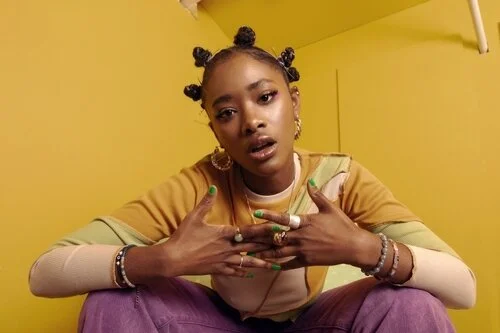
I want to spend some time highlighting a phenomenal teen artist. Tate McRae is a Canadian singer, songwriter, and dancer. The eighteen-year-old is a hugely promising artist who is making some of the most interesting Pop around. I feel that people should check her out (links are at the bottom of this feature). She is someone who I discovered recently but have been doing some research on a lot. Her story and career development is fascinating. I want to start out by quoting from a NOTION interview that was published in 2020:

Ever since bursting onto television screens and into the public eye as a 13-year-old finalist on American show So You Think You Can Dance?, Tate McRae has enjoyed a meteoric rise to fame, having recently dovetailed her talents with a burgeoning career in music. Fresh off the release of her viral hit “you broke me first” and first VMA nomination, the Canadian teen sensation speaks to Notion about her prodigious beginnings, charting commercial success, navigating the challenges of lockdown, and her relationship with social media and fandom. Take note, Tate is certainly one to watch.

Somewhere in the world, a teenager has just experienced her first real heartbreak. She sits on her bed, cross-legged, as she plops headphones over her ears and streams the latest of Tate McRae’s emotionally-driven songs; all of which have been met with unifying acclaim by a collective Generation Z fanbase.

I have this image in mind when hopping onto a Zoom call with the illustrious singer, songwriter, and dancer, who is currently working on a new EP at her home in Calgary, Alberta, following the release of a new collaboration with singer and rapper Ali Gatie. Tate McRae is no ordinary 17-year-old, which is even more evident in the meeting, with her breezy confidence, easy-going disposition, and winning smile that relays several years of experience in entertainment. At the end of August, an electrifying performance at the MTV VMAs pre-show of you broke me first showcased Tate’s aptitude for blending her recognisably melodic voice, brooding lyrics, and an expressive contemporary routine, set to mid-tempo trap-inspired beats. The single, which was released—along with a homemade music video—in April during lockdown, has already surpassed 125 million streams on Spotify, gained TikTok virality, climbed international charts, and is easily the alt-pop singer’s most mainstream song to date.

Tate’s prodigious dance abilities would become visible to an international audience at the time of her 2016 appearance on American talent show, So You Think You Can Dance?: The Next Generation. At 13, she leapt, kicked, pirouetted, folded and contorted her way through complex choreography that broached deeply emotional topics, as well as fun, zesty routines—winning the hearts of the show’s millions of viewers. Tate’s professional background in dance has moulded her into a unique type of performer today; one that is multi-faceted and masterfully apt in commanding both voice and body to communicate a story. I pose the question of whether there’s a symbiotic relationship between her choreography and songwriting—as a dancer first, does one aspect have a larger influence upon the other? Her response is thoughtful: “Definitely—especially when I’m listening to the producer create the track, it’s all about how my body would react to it and how I could make it a dance piece. That’s why I love bass and trappy beats,” she smiles widely, “…I think my lyrics are emotional and pretty, but I love a gritty background because then your movement becomes dynamic. I like being able to push my dance with contrasting genres—you broke me first is such an emotional song that has this beat to it, which I love as it doesn’t fit one category specifically.”

wqq.jpg

PHOTO CREDIT: Jessie Greg-Alabi for NOTION

Tate’s creative force and discipline also partly stems from an early childhood aspiration that she hasn’t lost sight of over the years. “I’ve always wanted to be a performer since I was like 2—since I was a baby!” she exclaims. “I had the most obnoxious personality when I was super young, I don’t even know how my parents dealt with me. I remember I’d have my plastic mic, blue eyeliner all over my face, a cowboy hat and sparkly outfit—and I’d stand on top of the table like, ‘Watch me, I’m performing for you!’” she erupts into giggles. “I was just a weird child! My mom said she would drive by my school when I was in Grade One, and I’d be singing on the bike stand by myself. But that was my mentality all the time. I never wanted to stop singing and dancing. I was this overly dedicated kid,” she recalls perceptively.

Musically, Tate lists the likes of The Weeknd, Post Malone, and Iann Dior as current inspirations for the direction she would like to take her work: “I love the vibes—rap, trappy beats, and a good guitar—so I feel that’s what I’ve been going for, I have a lot of ideas with rhythm and melodies. I always like to push myself and I get inspired by different things when I’m writing,” she nods thoughtfully. I ask if she has any personal idols that she would like to meet, and she gushes at the idea: “I would love to meet Zendaya! She’s been one of my biggest idols forever and is such an amazing role model. I’ve watched all of her interviews and I’m obsessed with her fashion and vibe, as well as Dua Lipa. They’re people that I will forever look up to in all aspects of life. They’re both really intelligent women and are such inspirations to me,” she beams brightly. And it’s palpably clear that Tate McRae should also cast her own name into the roster of strongly talented and inspirational role models for today’s youth—given her rising trajectory, and growing ubiquity across radio stations and social media. With plans to release a second EP early next year, an album following suit, and a hope to tour across more of the US and Australia, the young star has a lot on her plate. “I want to sit down and create a good chunk of music, and make sure it all sounds cohesive—that’s the next step,” she remarks. “I think my music is gonna evolve like crazy within the next year, I already know it has since quarantine happened”.

Even though I am not sure whether there will be an album anytime soon, McRae has delivered some fantastic singles (her latest E.P., TOO YOUNG TO BE SAD, is fantastic). One of my favourites is slower. I don’t think that it is the case her music is squarely aimed at teen audiences. Modern Pop artists need to speak to their key demographic, in addition to a wider audience. McRae’s songs are much wider-reaching than many of her peers’ tracks. L‘OFFICIEL caught up with McRae this year, where the subject of slower came up:

McRae’s new single “Slower,” is another example of the artist’s ever-changing approach to music. While the lyrics are likely to resonate with turmoil-filled 17-year-olds (“I'm going through changes/It's a roller-coaster/But I might be somebody/You might not even know her”), she wrote the song at 14 during one of her first co-writing sessions. It wasn’t until it was revived, that the artist realized it still spoke to her.

“I hated it at first,” she admits, explaining she rewrote some lyrics and reproduced some of the orchestration. “Now it's completely come to life again. I get very defensive on what I want to put out, because I feel like I have a very good grasp on which songs connected with me and will connect with my fans. I really had to have an open mind for this song, because I was really closed off at first, thinking that 14-year-old me didn't know what she was talking about.”

aa.jpg

Like anyone moving through their teen years, McRae admits that she’s changed a lot. She recently graduated from high school, was nominated for a Juno for Breakthrough Artist of the Year, and has even been called Canada’s answer to Billie Eilish. (Having worked with Eilish on “Tear Myself Apart,” she’s a fan.) Now she has a new 6-track EP, Too Young to be Sad, slated to drop tomorrow, which features two brand new songs alongside her singles "You Broke Me First," "Slower," "R U OK," and "Rubberband." But even as the attention to her work grows, creativity continues to be a refuge. That’s something that she doesn’t see changing.

“I don't want to be anyone else when I'm dancing, which is a really really good feeling,” McRae says. “Dancing has just been such a huge part of my life. Same with music. I would never let go of it just as much as music, even if I'm doing singing more now. I will never let go of it until the day that I die”.

One of the defining aspects of Tate McRae and her music is the maturity. Once was the time when Pop was defined by a lack of maturity. That is not to say that her music lacks fun and frivolity. McRae manages to balance intelligence with teenage perspectives. This Woman in Pop interview (from last year) investigates her mature edge:  

As a songwriter and performer, there is a remarkable maturity about McRae that belies her age. Her lyrics are intelligent, meaningful and astute, and the music is compelling and sophisticated. While many of her songs tap into teen angst – broken hearts, schoolyard drama – she delivers them with such authenticity that they make sense to anyone of any age. She says that her age means she is often underestimated by those in the industry. “When I first got into [songwriting] sessions at fourteen, it was like, ‘You’re fourteen, you know nothing, let us write the song’,” she says. “And that for me was like ‘Whoa, I have my own opinions too!’ It’s kind of frustrating. I usually don’t like to tell my age until the end of a session so that people can trust my voice and trust what I want to say.”

In April this year McRae released the moody electro single ‘You Broke Me First’, its lyric about refusing an ex who wants to come back into your life: “Now suddenly you’re asking for it back / Could you tell me, where’d you get the nerve? / … But I don’t really care how bad it hurts / When you broke me first.” Given the emotional pull of the song, McRae says she wasn’t feeling at all emotional on the day she wrote it. “It’s actually kind of funny because my headspace wasn’t really in a sad or emotional state,” she says. “And once my subconscious started to speak I started to draw inspiration from past emotions and really get into the zone. It kind of just came out really fast.”

 After she was nominated for Best New Artist at the 2020 MTV Music Awards, McRae performed the song at the livestreamed ceremony at the end of August. It was a career high for her. “I never thought that I’d be performing an awards show this early,” she says. “It was a huge dream of mine to even get on that stage. So the fact that I was able to get nominated as well as perform was a huge honour. And it was incredible.” The performance took her career up another notch as the song not only gathered millions of streams but rocketed into the music charts across the globe, including a top 20 spot in Australia and the UK – and rising.

With success in both the new world of streaming and the old world of singles charts, coupled with her exceptional talent and unmatched work ethic, McRae is well and truly on track for an impressive pop career . Although she expresses frustration at not being able to tour yet, or meet her fans face to face, she promises more good stuff is coming. “I have a new song coming out in mid-October,” she says. “I’m really excited [because] we filmed a music video and it’s the first professional video I’d been able to film since quarantine. It was pretty cool and I’m very excited to release it”.

I am going to wrap things up very soon. I would encourage people who are unaware of Tate McRae to check her out and listen to her music. I feel she is going to go a very long way. The current market is very busy and broad in terms of young artist. Whilst it is quite hard to stand out and sustain, there is no reason to suggest McRae is here for the short-term.

Just before closing up, there is one more interview I want to source from. FASHION spoke with her this year. We discover more about a talented young artist with many years ahead of her:

What’s it been like working and making art during COVID-19?

It’s definitely been interesting. I’m not a fan of Zoom sessions, but have to do them every day. You have to adapt because you can’t hear anyone, ever. It’s always glitchy, always in and out. You just have to go with it, because it’s a hard process. I’ve been stripping back my writing team — it’s easier than having a million different people on a call.

Have you had to look in different places for writing inspiration, given all the isolation this year?

Usually I’ll be with my friends and I’ll observe everything, and grab emotions from that to write my songs. But now I can’t see any of my friends, and I have nothing to grab from. I’ve been trying to push where I get inspiration from — photos, quotes, things I see online. And that feeling of literally just being in your house and analyzing every part of yourself. That’s what I write about.

You write about a lot of serious stuff that some people might say you’re too young to know about.

That’s probably one of my least favourite things that someone can do, judge me based on my age. A 17-year-old and 30-year-old both have their own lives. No matter how much time has passed, it doesn’t mean you don’t have the same relevance. I feel like I’m an old soul; people always tell me I’m a 50-year-old trapped inside [my body]. Everyone’s brains work different. I’m super observant. I’ve written songs that I feel like people [older than me] relate to. That says a lot about what I have to say. You can’t put an age on a writer or an artist.

How does it feel to be Apple Music’s Up Next artist this month, following in the footsteps of so many incredible artists?

It’s one of the coolest things I’ve done. I’m really stoked about working with Apple. I mean, it’s Apple. It’s an honour, and it’s cool to be able to just push my creativity and make more content. They also have the resources to be able to create some cool documentaries and videos”.

>

Actually, the interview below will be the last one! The recent interview that The Stingray Blog saw some quickfire questions aimed the way of Tate McRae:

What’s the best part of performing for you?

The best part of performing is by far the energy from the crowd. It’s the biggest adrenaline rush ever.

If you could have dinner with one musician (dead or alive), who would you choose and why?

I would love to have dinner with The Weeknd. I would be so intrigued to learn more about his mind and his creative vision behind all his songs.

When you are on tour, what is one thing that you absolutely can’t live without?

I can’t live without throat coat tea on tour.

What was the funniest thing that happened to you on tour?

Right before my first show in Los Angeles, I did a squat and ripped the biggest hole in my pants. We had to think quick and find new ones before getting on stage. It was a chaotic experience.

If you had to choose between singing and dancing, which one do you love more and why?

I could never choose. They both are unique outlets for me in different ways; therefore, I could never drop one of them.

What is the best thing that a fan has ever said to you?

The best thing you can hear as an artist from a fan is “your music saved me.” It’s honestly the craziest feeling knowing that your music and lyrics have that much impact on people”.

Many people are going to watch McRae closely. She is shaping up to be a big star. With the likes of Tate McRae and Olivia Rodrigo offering modern Pop that is broad, mature and exciting, things are looking promising. Make sure you spend some time with…

THE rising teenage star.

______________

Follow Tate McRae

sss.jpg

FEATURE: Station to Station: Part Seventeen: Georgie Rogers (Soho Radio, BBC Radio 6 Music)

FEATURE:


Station to Station

sss.jpg

 PHOTO CREDIT: Georgie Rogers

Part Seventeen: Georgie Rogers (Soho Radio, BBC Radio 6 Music)

___________

I have a lot of respect…

qqq.jpg

 PHOTO CREDIT: Georgie Rogers

for the amazing Georgie Rogers. Make sure you follow her on Instagram. I included her BBC Radio 6 music colleague, Chris Hawkins, in this feature last time. Rogers occasionally presents the music news on Shaun Keaveny’s weekday afternoon show (Matt Everitt is the regular music new presenter). She appeared a couple of weeks ago. I hope that she gets more time on the station. I have written about Rogers before. I am not going to cover too much of the same ground regarding what I wrote before. I feel that Rogers will get a regular slot on BBC Radio 6 Music in some form in years to come. She is also a champion of great new music on Soho Radio. I would suggest that you listen to her shows as she is a fantastic D.J., broadcaster and interviewer. Before bringing in an interview Rogers was involved with, it is worth sourcing some biography:

Georgie Rogers is an experienced radio and TV presenter, music/arts journalist, voiceover artist and DJ.

A passionate and credible tastemaker and champion of alternative, independent and electronic specialist music, hear her Music Discovery shows monthly on Soho Radio and in the mix twice a month on Foundation FM.

She's also a Music Broadcast Journalist on BBC 6 Music and contributes regularly to BBC Radio 2, BBC 5 Live, BBC News TV, Radio 4, Sky News, with previous presenting experience on Virgin Radio, XFM, Vevo and Apple Music's Beats 1.

In 2019 Georgie co-founded the Super Women platform and production company presenting a number of short docu-films about meeting kickass trailblazers across several fields from motorsports to politics, adventure to tech, mentoring female filmmakers in the process.

Her love of motorcycling has lead to working with reputable brands BMW, Royal Enfield, Malle, Saint, Petrolettes and Mutt, who featured her in Mutt Magazine "Riding Out With Rogers" page 40.

As for DJing, find her on the decks at several London venues and festivals including Glastonbury, Secret Garden Party, Field Day, End of the Road and Meadows in the Mountains in Bulgaria”.

Although she is still fairly early on in her career, she has accomplished so much already. As I said, I would not exclude the possibility that Rogers will get a weekday/weekend show on BBC Radio 6 Music at some point – maybe a Friday night selection of bangers to take us into the weekend? She clearly has a lot of love for the station. The work she does with Soho Radio, whilst similar in some ways, is an opportunity to have her voice and musical choices heard more. Such a wide-ranging and passionate talent, the next few years will see Rogers assume new responsibilities and reach a new audience. There is a lot of love what she is throwing out!

zzz.jpg

 PHOTO CREDIT: Adam P. Mane/@pandco_women

I did say I would get to an interview. P&Co spotlighted Rogers. As ambassador of their Do What You Love, Not What You're Told Campaign, we got to know more about a phenomenal and inspiring talent:

P&Co: Introduce yourself, who is Georgie Rogers?

Georgie: I'm a broadcaster and music journalist with BBC Radio 6 Music and also a presenter, DJ and voiceover artist, which means collaborating with lots of great creative brands. I get a kick out of discovery. Nothing was more of a thrill than sneaking up to London as a teenager to see a new band or DJ for the first time in Camden or Fabric nightclub. When I started to interview bands at XFM in 2007 and then at 6 Music soon after, it lit the fire and everything up to that point made sense, my life-long fascination with the radio and wonder for music. Building connections with the artists I loved and as my career developed showcasing their work by playing them on the radio quickly turned into my dream job. Fast forward a decade, I guess I'm still about that rush whether it's doing board sports, exploring a new country, riding motorbikes or more recently making short-films.

P&Co: Aside from the DJing, presenting and music journalism, you have also co-created a video series celebrating female 'trailblazers', tell us more!

Georgie: Just over a year ago I started the Super Women platform with a filmmaker friend Alice Smith. I wanted to do a series about trailblazing women because the bike world had opened me up to people like Elspeth Beard, the first British woman to motorcycle around the world, an award-winning architect and author of Lone Rider. I was so inspired by her story and that of several other pioneers in my orbit, not just in music but also motorsports, politics and tech. For us, it was important to give something back through the process. We wanted to make sure we were offering practical filmmaking opportunities to women so we assembled a team, got sponsorship and filmed the first series, which launched in May. It's just about telling great stories, so we are working behind the scenes on developing more docu-film ideas and getting together some training weekends for aspiring female filmmakers while we continue to roll out the rest of the first series.

PHOTO CREDIT: Adam P. Mane/@pandco_women

P&Co: Have you ever faced any challenges as a woman in the radio industry?

Georgie: Of course! It's a given that all women in the creative industries face challenges. Music radio is still imbalanced when you break it down across major UK stations. Things are changing though with Lauren Laverne (BBC 6 Music) and Zoe Ball (BBC Radio 2) doing well on major breakfast shows and their growing listener figures proving that there's a demand for a more gender balanced schedule. However, you only have to look at the running orders on several established music stations and the reality is that out of a possible 8 or 9 slots per day between Monday to Friday - often only two shows are anchored by women! There's no shortage of female broadcasting talent so there's definitely room for improvement when it comes to gender parity.

I think internet radio stations like NTS, Worldwide FM, Rinse and two that I broadcast on Soho Radio and Foundation FM are now playing a key role in showcasing diversity and new talent. I've been fortunate in my career to be nurtured and given opportunities to grow during my time broadcasting on 6 Music, XFM and Virgin Radio, but it's great that these new platforms exist to give the next generation of presenters and DJs the opportunities to be wild horses on the airwaves”.

P&Co: Why do you think it is important to highlight women doing what they love & not what they're told?

Georgie: Growing up, I never really had a feeling that I was limited in any way by my gender. I have two really strong matriarchs in my mum and grandmother (shout out Barbara Jean/Nonnie - she's 94!) to look up to and had a lot of freedom from my parents who weren't overbearing and left me to decide on my career path. Loving it is what has kept me committed to the dream throughout the highs and the lows. I had a pretty savage injury smashing my knee cap into many pieces a few years ago but I was so determined for it not to change my outlook that as soon as I could walk again I said 'yes' to everything and then got my first motorbike. Most people would have told me that was a really terrible idea! A sense of freedom to make my own choices and trust my instincts has infiltrated every part of my life from my work, to riding, travelling and learning new things. People will make snap assumptions and try to put you in a box but that's bad vibes so forget them. Just do what you love and do it as much as you can”.

I am going to wrap up soon. Before then, there is an interview from 2016. This was conducted when Rogers was working for Virgin Radio. I want to include sections from the interview - as she provides useful advice to those who might be thinking of a career in radio/broadcasting:

In terms of those who want to start a career or be part of the whole radio industry experience including local people as well as students, Georgie says this:-

"Go for it, if you really want to work in radio, show your commitment, try and get as much experience as you can, be a 'sponge' in terms of soaking up everything you can from everyone around you, or people who are working in the industry. A big thing I've noticed is that you should be nice to everybody, because you don't know who will end up being your boss in a few years time".

Reflecting back to her internship and time working at XFM, the producer at the time was the boss at XFM, four years later he gave Georgie her first live open gig, she adds that:-

"Those relationships you hatch along the way are so important, be really nice, be good at your job, get in front of peoples faces but learn the line and know where that line is, so don't be too pushy or too much and just learn the part, if you really want to work in radio you can make it happen... it can be quite a difficult industry to get into and to work your way up... but starting on those local stations, in hospital radio, getting involved with all of that sort of things early on really helps you out and then you want to tap up the bigger and national stations. So it's really important to get as much experience as you can... learn how to edit audio, learn how to make packets, learn how to put shows together and learn the guidelines, OFCOM rules, that kind of thing - this is the sort of thing bigger stations will look for when it comes to internships, people who want to forge a career."

Reflecting back on her student days she kinda of felt that she foreseen herself working for a big station like Virgin Radio due to her knack of being direct, admitting her desire to work for a big station - setting it up as a goal for her, an ambition to go for without stopping for anything. Having been in the industry eight years now, it's safe to say she's achieved a lot - just by sticking to it. With the eight years paying off with her first show on Virgin Radio's relaunch, Georgie admitted she was excited at the prospect as she had her internship there back in 2007, with her first Virgin Radio show allowing her to pick the music for the show, bring in bands, etc the freedom to have that element of creativity that was not available to her during her stint at XFM. She admitted that her "first show was really nerve-racking"... whilst she was talking either an ambulance or police car was blaring out past her, but despite that she admitted the experience was nerve-racking because it was a whole new desk and was completely different from what she was used to, "it's a bit like driving a new car where everything is the other way around to what you are used to", now she's rearing to add new elements to her show including interviews and music.

However she wasn't that nervous with her first show on Virgin Radio given her previous experiences at other radio stations, "sometimes you have to catch yourself before you go on air and think actually there's a lot of people listening, you have to have the attitude of 'I've got this' even if you feel a bit nervous"; seeing as the radio station had it's restart this was what Georgie was most nervous about seeing as it's a new audience and not "a ready-made audience that were all just going to be there", but overriding the nerves was the pressure even though both go hand-in-hand in this case, however Georgie feels she's comfortable with it all even though outsiders would think of her profession as a bizarre one adding "it's a strange thing to do (being a radio DJ) playing records and essentially talking to yourself in a room, but it's hugely fulfilling to play the music that I love", of course being creative is what sparks off new opportunities and new ventures as well as adventures, so for Georgie this has to be her career highlight”.

I will leave it there. One of the most eclectic, dedicated and accomplished broadcasters and D.J.s around, let’s hope that more doors open up for Georgie Rogers – I think that they will! Although the pandemic has restricted what many broadcasters could achieve, Rogers has been keeping pretty busy. One of the finest voices on radio, we will hear her on the airwaves for many years to come! Seek out her work, follow her on social media and check out the work of…

AN amazing talent.

FEATURE: Station to Station Part Sixteen: Chris Hawkins (BBC Radio 6 Music)

FEATURE:


Station to Station

www.jpg

PHOTO CREDIT: BBC

Part Sixteen: Chris Hawkins (BBC Radio 6 Music)

___________

I have included several broadcaster/D.J.s from…

eee.jpg

 PHOTO CREDIT: BBC

BBC Radio 6 Music already for this feature. There are a couple of reasons why I want to alight on and explore Chris Hawkins. If you are up to listen to his early-morning weekday show, I would recommend it (one can listen back on BBC Sounds if you are not awake then!). Having been at BBC Radio 6 Music since it started out nineteen years ago, we hope that Hawkins is going nowhere anytime soon! He loves being where he is and, though the years, he has built up a loyal and impressive listenership. Not only is the music Hawkins spins excellent. Features like Friday’s Awesome Segue (where he plays two bangers back-to-back) are a must-hear. That feature often gets some cheeky ‘hate’ from listeners – if Hawkins plays something a bit cheesy or boring. Aside from that, we get interviews, great features and a connection with a D.J. who is inspiring so many upcoming broadcasters. I think that Chris Hawkins has a book in him. In terms of being a D.J. or recalling his experiences and stories from throughout his career. The other reason why I want to highlight the excellent Hawkins is because of his series, How to DJ. The series consists of Hawkins and a guest each episode discussing being a D.J. and how they (the guest) got into that career lane.

It is a fascinating and revealing series that, I hope, continues and has a lot more life in it. The latest episode was Hawkins chatting with Christian ‘The OC’ O’Connell. I really like O’Connell (and, as I used to live near him when he was in the U.K, I passed him in the street once or twice). He has done something I am tempted to do in the future: he has moved to Melbourne (Australia). It was illuminating listening to O’Connell discussing his decision to leave the U.K. and move to Australia without much knowledge of what to expect and whether he would be successful. Hawkins’ series is warm and engaging. He, as you’d expect, is an excellent interviewer and gets the very best from his guests. With a series under his belt, I hope we get more episodes. It has been interesting listening to him chat with everyone from Jamz Supernova (a BBC Radio 6 Music colleague) to Ashley Beedle. There is no doubting that Chris Hawkins is one of my favourite D.J.s (he would prefer that term to ‘broadcaster’) – and one of the main reasons why I tune into BBC Radio 6 Music. There are few who have the same sort of passion for the job and the continued enthusiasm for new music. Having been at the station for nineteen years, one could forgive Hawkins for playing it safe or coming across as less engaged or curious. That is not the case. To hear his genuine love for a new act or song makes him an important tastemaker. He has extolled and promulgated artists who I really love now (including The Lathums).

Whilst there are older interviews from Chris Hawkins (where he has been interviewed by a magazine/website/paper), it would be nice to see a new one. I get the feeling that, alongside his work on BBC Radio 6 Music, Hawkins will be taking on new challenges and responsibilities in the coming years. Whilst this interview is a little old (I think 2019?), Camden Live spoke with Hawkins. I have selected a few of the questions:

Your playlists are always particularly eclectic, covering everything from Mogwai to The Roots. Do you think that early slot gives you a lot of freedom to showcase such a wide variety of music?

Yeah, for sure. It’s about mixing up the music that people might want to break into the day with, in a kind of a heavy-headed way to make the start to the day that little bit easier. But also about big wake-up tunes. It’s a mix that tries to accommodate both ends of that spectrum. (People are going about their business pretty quickly of a morning, schedules are often tight, and people try to get up as late as possible so I try and provide something that they will love for the amount of time that they’ll be able to listen.)

How do your own tastes fit into that?

It’s all my taste.  One of the great things about 6 Music which is quite unusual,  particularly these days, is that we are able to play the music that we love. So whether it be old, or brand new, a huge amount of work and a lot of love goes into to choosing the right music each day.

Do you enjoying seeing the reactions from the artists themselves?

Yeah, I mean, 6 Music is well loved by the music industry. Bands often get in touch, even during the show.

In fact, James Righton from Klaxon’s just got a new solo album and just this morning I played a new song about his daughter called ‘Edie‘ on the show. By the time that the song had finished playing, James had tweeted me to say “Thanks so much for playing my new song on 6 Music”.  So clearly, yes, we have a strong relationship with artists, I try to go to as many gigs as I can and it’s great to have those relationships.

Aside from the exposure you’ve given artists on the radio, you’ve also hosted your own nights, you regularly shout out new artists on your social media feeds and you were even a curator for Off the Record festival last year, which was specifically geared at new music.  Who would you say is the artist you are most proud of having given exposure to, that has gone on to do great things?

I hosted a night at the Queen’s Head in Islington. where for example Catfish and the Bottlemen played upstairs. They came and played to a pretty small audience … in the tens and have now gone on to be virtually a stadium band, you know? They’ve become huge!  That for me is the absolute standout example.

But there are lots of bands that I played early on and it’s been amazing to see how they’ve grown.  I’m excited by young, new bands. The Lathums, I’ve mentioned. There’s a young band called Weird Milk, Porridge Radio, they all have great potential. I think for me and more broadly, for 6 Music, having seen Amy Winehouse, Adele. Keane, even Coldplay go from relatively new bands to the big acts that they are now, it’s gratifying.  It’s amazing to see them grow.

What do you personally listen for in new music?

Something catchy. Something hooky. Something different, something creative. So for example, an artist like Anna Meredith is a creative powerhouse. She’s doing something different. She’s one on her own. She’s really forthright in what she’s, she’s trying to create, pushing boundaries. Also, Michael Kiwanuka who I mentioned earlier.  They’re very different artists that stand out in different ways and encompass all that I love about music. You know, great songwriting, a passion, soul and something different that catches your ear that you’ve never heard before. It’s hard to achieve that. You know, everyone makes comparisons. A new band always gets compared to an old band. When a band are hard to define, I think that’s pretty exciting”.

On a station that has some of the finest broadcasters in the country, Chris Hawkins is definitely up there with the best of them. I feel he will be there for years to come. Even if he leaves the station, Hawkins has decades more in him as a D.J. I know he will be raring to get back to festivals and D.J. to the masses. A bright, warm, funny, passionate and professional presence on early morning BBC Radio 6 Music, Chris Hawkins is one of…

RADIO’S best and most inspiring.

FEATURE: Shot Like An Arrow Into the Killer Storm: Kate Bush and Gered Mankowitz

FEATURE:


Shot Like An Arrow Into the Killer Storm

kklkl.png

PHOTO TITLE: ‘Hammer Horror’/ALL PHOTOS: Gered Mankowitz 

Kate Bush and Gered Mankowitz

___________

THERE is a reason as to why…

jjj.jpg

 PHOTO TITLE: ‘WOW!’

I am revisiting the relationship between Kate Bush and Gered Mankowitz. To be fair, one needs no reason to speak about them. Mankowitz is a legendary photographer who, among others, has shot Jimi Hendrix and The Rolling Stones. You can check out his work. I am coming back to the photographer, as he celebrates his seventy-fifth birthday next month. Even though he only worked with Bush for a fairly short period of time, it was at the start of her career. Bush had many photos of her taken between, say, 1978 and 1979. Many were press shots…but the one photographer who stands out from that time is Gered Mankowitz. I am going to bring in an interview shortly where he talked about Bush. Whilst I love a lot of the other shots that she was involved with through her career, the work with Gered Mankowitz is especially important and impressive. That early in her career, Bush would have been nervous and new to photoshoots. She had her photo taken by her brother, John (Carder Bush; he photographed his sister from childhood to as recently as 2011); working with anyone outside of the family was quite new. To establish trust would have been quite difficult. I am going to pepper a few of his photos through. He shot promotional images for Bush’s debut single, Wuthering Heights. His image would have been used for the U.K. cover.

ooo.jpg

 PHOTO TITLE: ‘Hat’

However, a shot of her in a leotard revealed her nipples. It meant that there was discomfort putting out that image. Rather than trying to sexualise her, it was a raw and natural shot. It is one of the best images of Kate Bush. One can see the image on the Japanese cover for the debut album, The Kick Inside (where the nipples have been cropped). Mankowitz did shoot the cover for Kate Bush’s second album, Lionheart. There are some outtakes from that session which are fantastic. There are other photos Mankowitz took of Bush from 1978 and 1979. One of them, where Bush resembles a screen icon like Lauren Bacall, is one of her finest ever photos (at the bottom of this feature). Some photographers would do very similar shots. If you look at the ones Mankowitz shot of Bush, they are all different. From the earliest ones where Bush is in a leotard and it showcases her dancing side, to the more elegant photos, his work is remarkable! One can purchase a copy of WOW! It is a collection of stunning photos from 1978 and 1979. Just before coming onto an interview I was talking about earlier, I wanted to bring in Mankowitz’s recollections regarding the first couple of shoots with Kate Bush:

Gered Mankowitz recalls: “The final few weeks of 1977 were very busy for me, with album covers for Bing Crosby, Cliff Richard, Shakin’ Stevens and the Rubettes amongst others. So when EMI asked me over to their Manchester Square offices in central London to discuss a new artist, I was actually a bit pushed to find the time. How glad I am that I did manage to free up my schedule, because at that meeting, they played me ‘Wuthering Heights’ and showed me the video they had produced of a then unknown singer called Kate Bush performing the song. Kate was not at this initial meeting, but from listening to the playback of the song and watching the video, I realised that she was an extraordinary artist and potentially a wonderful subject”.

January 1978 – The first session

“In those days I was working out of a studio in Great Windmill Street in the heart of London’s Soho.  For this first session with Kate I had decided to use a wonderful piece of distressed canvas as a background; it had once been used as the floor of a boxing ring in the gym below us, and its coarse texture seemed a perfect contrast to Kate’s youthful beauty.

I purchased some leotards, tights, leg-warmers and scarves, and placed them in our rather inadequate dressing room, which was actually a curtained-off corner in the studio. When Kate arrived, she disappeared behind the curtain with the make-up artists and stylist.

Kate emerged in the pink leotard.

She looked beautiful, and I knew that we were going to have a fantastic session. She settled in front of my Hasselblad camera without a care in the world. Kate did not have much experience of working with a professional photographer, and I felt that it was important to try and guide her through the process. She had a natural instinct and seemed to understand immediately how much the camera loved her.

After shooting several test Polaroids, I was happy with the lighting, and Kate was delighted with the look. We shot throughout the afternoon, with Kate in both the pink outfit and a green version. After about twenty rolls of film, the first shoot was over and I felt certain that we had achieved the objective and produced the portrait that would launch her.”

qqq.png

March 1978 – The second session

My second session with Kate was on 21 March 1978. By this time, both the ‘Wuthering Heights’ single and The Kick Inside album had been established as huge hits. Some countries did not want to use the original Kick Inside cover image, and one of my jobs for this second session was to come up with some alternative options for use on covers outside the UK. One of these turned out to be the classic ‘wooden box’ image which became the American cover for the album, and there were at least four different cover images in total. I always loved the ‘wooden box’ series because it was such a complete contrast to the original pink leotard shoot and showed a more playful side of Kate’s character. We had the box made by my set-builder so that it was completely square and would fill the shape of the album sleeve perfectly.

The other reason for the second session was to create a stock of several different portraits that showed different aspects of Kate’s theatrical persona. I remember this as a long and pretty tiring session, and we shot more than six different set-ups and over forty rolls of film. When I look back at this shoot, and see again the variations that we covered in one day – including the entire ‘Wuthering Heights’ video sequence in the Cathy dress, minus the smoke (which EMI had asked for because they could not take stills from the video itself) I am not surprised that it was such a shattering experience”.

QQQ.png

Although Bush had quite a bit of say and artistic control over her shoots, it is down to the photographer to get something unique from the subject. Gered Mankowitz’s photos of Bush in 1978 and 1979 are amazing! She can reveal so much without giving too much away. In 2014, Mankowitz was interviewed by The Big Issue for the release of WOW! I have selected a few portions of that interview:

I was brought in to create the launch image for Wuthering Heights and I think what makes Kate brilliant is her unique talent, her extraordinary energy, her vision – everything she does has a tremendous vision.

I remember her to be somebody who worked very hard. She was very young, 19, when it came out and she was wonderful to work with. Very energetic, very frenetic, quite difficult to tie down sometimes, to get her to focus on making an idea work, she wasn’t very experienced in having her photograph taken at that time, which was part of the challenge. But her individuality shone through.

I don’t think I had to draw it out of her, it was there, it was bubbling out of her. When I first went to the record company to discuss the session she wasn’t there but they played the video of Wuthering Heights that they’d made. It was quite obvious that she was a unique and special talent, not just because the music was so extraordinary but because of her individual look, her beauty and movement and style.

mmm.jpg

She had a really special quality, which stood out instantly on record and visually. I knew that I had to be at the top of my game to produce an image that was going to complement and support this extraordinary talent, and that’s what I tried to do. I always try to break these things down so that they are as simple as possible.

I had to be at the top of my game to produce an image that was going to complement and support this extraordinary talent

I only had a very loose connection with the record company. They already had a cover for the album The Kick Inside, but they didn’t have an image of Kate, it was quite obscure and it wasn’t as up-front of Kate as they wanted it to be. But I sense that they weren’t quite sure where they were going with her.

What they seemed very certain of was here was a unique and special talent and that they had somebody who was pure gold, but they were being led by her and I think that they weren’t sure who they were getting.

I wouldn’t want to suggest that she was in control of our session, but she was very much in control of the way she looked when she stepped out of the dressing room and I saw her for the first time ready for the camera I was blown away and knew it was going to be something special.

We did the very famous leotard pictures. I chose the leotards to make visual link with dance, that was the point of choosing and selecting them, I wanted to keep it extremely simple, I hope that in the portrait there would be a visual connection with dance which was clearly very important to her.

qqq.jpg

PHOTO TITLE: ‘Cathy Come Home’ 

The Big Issue: There has been discussion over the years whether her sexuality was being exploited – depending how it’s cropped, it’s quite graphic…

Gered: It didn’t occur to me at that time that [the nipples visible in the full-length shot] would be a problem. I know that it was pretty edgy for the late ’70s but it wasn’t sort of discussed or thought about a great deal. That was how she looked and I wasn’t going to say to her “I think you should cover up”.

She looked absolutely gorgeous. I’m looking at a cropped version of it now and it still has all the power that it did then. Her breasts might have been titillating to a few young boys but her beauty and her serenity, her stillness are what really make this a special photograph.

But she used her sexuality throughout her performance – look at the Babooshka video or any of the records and promotional videos and stills, certainly in those first three or four years of her career she was a very sexual person and I think that came across in the way she moved, looked and the way she sang”.

On 3rd August, Mankowitz turns seventy-five. He is one of the most important photographers in terms of Bush’s images in 1978 and 1979. I love (as he does) the pink leotard shot. It is a shame that it was never used in the U.K. It is hard to pick a favourite - though I really like the 1979 shot where Bush looks like a Hollywood idol. Go and check out Mankowitz’s photos of Kate Bush, as they are so engaging and fabulous. It is left to me to nod to a legendary photographer. Even though it is not until August, I wanted to wish Gered Mankowitz…

www.jpg

 PHOTO TITLE: Hollywood

A very happy birthday.

FEATURE: Groovelines: Kendrick Lamar – Alright

FEATURE:


Groovelines

dd.jpg

IN THIS PHOTO: The music video for Kendrick Lamar’s Alright/PHOTO CREDIT: Kendrick Lamar/YouTube

Kendrick Lamar – Alright

___________

HERE is a song…

that is still hugely impactful and relevant in 2021. Released in 2015, Kendrick Lamar’s Alright is taken from his third studio album, To Pimp a Butterfly. A song about hope amid personal struggles, it features uncredited vocals from the song's co-producer Pharrell Williams during the chorus. From a masterpiece album, Alright is a clear highlight. I want to bring in a few articles that explore a song with enormous political and social resonance. This Business Insider article discussed how the song was used in rallies and assemblies in 2015:

Beyond being an incredible song, its chorus became a rallying cry of protesters in the United States — "a kind of comfort that people of color and other oppressed communities desperately need all too often: the hope — the feeling — that despite tensions in this country growing worse and worse, in the long run, we’re all gon’ be all right," as Slate culture writer Aisha Harris put it.

In Chicago, when people gathered to protest a rally for Republican presidential candidate Donald Trump, "We gon' be alright!" was sung in celebration of the rally's cancellation.

And in 2015, a Black Lives Matter assembly in Cleveland chanted the song's chorus, reportedly in response to police arresting a 14-year-old protester.

Countless other examples exist. More than just a great song, "Alright" is the anthem of the modern civil rights movement.

It's joined socially-conscious hits like Nina Simone's "Mississippi Goddam" and Billie Holiday's "Strange Fruit" as bigger than music. "Alright" is an incredible achievement for a man who's already achieved so much. And it's one that almost didn't happen”.

I am not sure whether Kendrick Lamar hoped his song would be used in protests. I guess it is a track that offers hope and strength at difficult times. Alright hit me when I first heard it back in 2015. Every time I come back to it, I am moved and affected! It is such an incredible song that will be heard and remembered many years from now. NPR talked about Alight in 2019. They go into more detail regarding the song’s creation:

Kendrick Lamar's To Pimp a Butterfly was released in the spring of 2015. "Alright" was the fourth single off the record. It's hard to say exactly when the song was first used at a protest, but the story in Cleveland touched on many of the issues of the moment concerning police relations with black people. At similar demonstrations, the chanted hook quickly became a fixture.

In a 2016 interview with super-producer Rick Rubin hosted by GQ, Lamar said he sat on the beat — dreamed up by another super-producer, Pharrell Williams — for six months before figuring out what he wanted to say. "The beat sounds fun," he said. "But it's something else inside the chords that Pharrell put down."

The dah dah dahs that make up those chords are Williams' own disembodied voice, running constantly through the song. They're haunting, in a way. "Maybe it's the ancestors who never received the justice they deserved," says Miles Marshall Lewis.

The author of the upcoming book Promise That You Will Sing About Me: The Power and Poetry of Kendrick Lamar, Lewis interviewed Lamar after the release of To Pimp a Butterfly and learned the artist was inspired to write "Alright" by a trip to South Africa — specifically the cell on Robben Island where Nelson Mandela was imprisoned. Similarly, Lamar told NPR in a 2015 interview that he was thinking about the history of chattel slavery in America.

"Four hundred years ago, as slaves, we prayed and sung joyful songs to keep our heads level-headed with what was going on," Lamar said. "Four hundred years later, we still need that music to heal. And I think that 'Alright' is definitely one of those records that makes you feel good no matter what the times are."

In the song's prechorus, Lamar lays this feeling out succinctly. He begins in the past:

Wouldn't you know, we been hurt, been down before

When our pride was low

Looking at the world like "Where do we go?"

The emotional payoff of the chorus isn't complete without this lead-in, acknowledging the long history of black oppression. Then he brings us back to the present, where things are different, but not different enough:

And we hate po-po

Wanna kill us dead in the streets for sure

I'm at the preacher's door

My knees getting weak, and my gun might blow,

But we gon' be alright

When the narrator shows up at a preacher's door, reeling in the face of police violence and oppression, he's holding a gun. Lewis says the moment reflects the old duality of the civil rights struggle: "He might trade in the Martin hat for the Malcolm hat, and have to defend himself”.

I am going to end the feature soon enough. Before coming to that point, there is a fascinating article from Vulture that was released last year. Given the Black Lives Matter protests and the killing of George Floyd, songs like Alright have taken on new life and meaning. The article investigates the violent unrest of 2014/2015; also how Alright has gained new popularity and focus fairly recently:

It’s disorienting looking back at the unrest of 2014 and 2015. At the hot summer night when the St. Louis Police Department faced a community incensed by the unfair policing and anti-Black violence that had culminated in the death of Mike Brown, armed with stun grenades and MRAPs, weapons of warfare, and the many months of civil disobedience and extralegal disruption that followed, and realizing it wasn’t the end of something but the tremors before an earthquake. The rift never healed. In November of 2014, when a second round of protests followed news of no indictment for Ferguson police officer Darren Wilson in the Mike Brown case, Donald Trump, then a tycoon and reality star barreling carelessly into politics, spoke on the situation on Twitter: “Our country is totally fractured and with our weak leadership in Washington, you can expect Ferguson type riots and looting in other places.” Four years into his presidency, we’ve been made painfully aware of what he would do to suppress a protest. The image of Trump holding a Bible upside down in front of a D.C. church where protesters decrying police brutality were cleared out with tear gas to make room for the photo op is one of the many indelible artifacts of a chilling chapter of American history.

zz.jpg

IN THIS PHOTO: Kendrick Lamar performs onstage during the BET Awards at the Microsoft Theater on 28th June, 2015 in Los Angeles/PHOTO CREDIT: Christopher Polk/BET/Getty Images for BET

The unwitting theme song of the wave of protests that carried on through 2015 — as news broke of the mass murder at Charleston, South Carolina’s Emanuel African Methodist Episcopal Church, and the death of Sandra Bland in a Texas jail — was Kendrick Lamar’s “Alright,” the cornerstone of the Compton rapper’s challenging, eclectic sophomore album To Pimp a Butterfly. Butterfly is a thesis about persecution and perseverance, a trip through a battlefield riddled with mines. The protagonist’s path to freedom takes him around predatory lending schemes (“Wesley’s Theory”), a rigged prison system (“Institutionalized”), gang violence (“Hood Politics”), alcohol abuse (“u”), and colorism (“Complexion”). In the middle of the album, “Alright” sticks out, invoking the steely composure of old Negro spirituals, songs about tarrying through tough times in search of the glory on the other side, in emancipation or in death. The Kunta’s Groove Sessions, Lamar’s small-venue To Pimp a Butterfly tour, turned “Alright” into a lengthy crowd participation exercise, as the audience chanted the chorus of the one song they hadn’t heard yet in the break before the encore. Lamar came out to stir the pot a little more before playing the song in full. The feeling was electric. We needed to hear that we would be alright. What wasn’t clear is how long it could take.

As weeks of unrest became a yearslong struggle for transparency amid mounting cases of unexplained incidents of police brutality, “Alright” grew a strange aftertaste. The sentiment suddenly felt premature, like the big hit landing too early in the live show. The world the song envisioned seems far away, though not out of reach. The moment requires a different kind of protest song. Rappers are putting in work; there’s a new one out almost every day, from sources both expected and unexpected. Indiana rhymer Freddie Gibbs’s “Scottie Beam” recounts an unnecessary police stop; Albany’s Conway addresses cops using deadly force against innocent Black citizens in the scathing “Front Lines.” Compton rapper YG (whose “FDT” was one of the defining anthems of our election anxiety in 2016) released “FTP,” the latest in a long line of powerfully rude songs about LAPD mistreatment; L.A. transplant Jay Cue’s new “Fuck Racists” seethes with retaliatory outrage. Meek Mill’s “The Other Side of America” employs the Philly artist’s spitfire raps and heartfelt verses to outline the conditions that drive people to do and sell drugs, critiquing a government that lines its own pockets while leaving many citizens to fend for themselves. Atlanta rhymer Lil Baby’s “The Bigger Picture” applies the clearheaded, emotive writing of songs like “Hurtin,” “No Friends,” and “Emotionally Scarred” to straightforward political messaging and comes out with the kind of protest song that also has designs on being a hit. The country’s current No. 1 song, DaBaby and Roddy Ricch’s “Rockstar,” now has a Black Lives Matter remix with a verse about run-ins with cops. Common points of outrage in songs coming out of every corner of the country are a damning indictment of the status quo. When Northeast boom bap guys, Midwest spitters, newly minted Southern trap stars, and Cali gangsta rappers agree you suck, you suck.

So far, though, the internet that weaponizes snark and gives new context and purpose to old songs and videos has picked intriguing contenders for the protest song of the moment. When a woman being detained outside a South Carolina strip club improvised a song about getting the officer fired, and enterprising internet users made a trap remix, the viral smash “Lose Yo Job” was born. Just as popular is a track from the mid-aughts Discovery Channel kids’ show Hip Hop Harry that came to be called “Go, Go, Go, Who’s Next?” In the show, the song — a wholesome knockoff of Terror Squad’s “Lean Back” — plays as Harry, a dancing anthropomorphic teddy bear who raps, leads the kids in a dance-off not unlike Soul Train lines and break-dance team battles. “Who’s Next?” picked up steam first as an innocuous TikTok dance challenge and later evolved into a response to cloying corporate gestures of support for Black Lives Matter on Blackout Tuesday, as brands that spoke up were quickly criticized for questionable track records on race.

In this climate, existing songs about race and justice are newly poignant. Streams of Kendrick’s “Alright” jumped up almost 800 percent as protests broke out across the country. N.W.A’s trenchant “Fuck tha Police” got a bump, as did YG’s “FDT.” Late Brooklyn rapper Pop Smoke’s 2019 smash “Dior,” might not seem like a first ballot theme song for marches against injustice, but there’s enough disappointment in the American prison system in the lyrics to make it work. Hip-hop’s social consciousness pokes through even when the artist is trying to be lighthearted”.

To me, Alight is one of the most important songs of the past couple of decades. Taken from the genius album, To Pimp a Butterfly, it is a musical moment that will live forever. From Lamar’s incredible lead performance to the amazing production and the stirring video, Alright is a classic! In the past year – as race and police brutality has been back in the news – that has offered unrest and injustice, Alright has been taken on as a rallying cry and protest mantra. It is a song that will infuse and inspire…

GENERATIONS of the future.

FEATURE: Too Good to Be Forgotten: Songs That Are Much More Than a Guilty Pleasure: Christina Aguilera – Beautiful

FEATURE:


Too Good to Be Forgotten: Songs That Are Much More Than a Guilty Pleasure

aaa.jpg

Christina Aguilera – Beautiful

___________

IN this feature…

I have included quite a few Pop hits. I shall broaden out in future instalments, as there are songs from across the musical map that some refer to as guilty pleasures. One artist who has a few songs that divide people is Christina Aguilera. Her smash, Beautiful, has appeared on one or two lists of ‘guilty pleasure’ songs. Perhaps those who are not a fan of Aguilera’s might not be instantly taken with the track – though I feel it is a great song that should not be seen as embarrassing or inferior in any way! In fact, the song was extremely well-received well it was released in 2002. The second single from the excellent (and underrated) Stripped album (2002), this was a Pop superstar showing huge maturity and ability. On an album that had some raw and sexual moments, Beautiful offered something emotional, hugely inspiring and different. It is no wonder that the song resonated. It is a shame that, because Aguilera is a Pop artist and some people write off her music because of that, Beautiful is not given that much time. It is a song that has helped many people – given them strength and hope at such a dark time. I want to bring in a few articles that look at Beautiful and its impact. In terms of its success and reception, Beautiful is a real marvel:

"Beautiful" has been widely embraced as an anthem by the LGBT community for its message of self-empowerment and inner beauty. An accompanying music video was directed by Jonas Åkerlund, and earned Aguilera a GLAAD Media Award for its positive portrayal of gay and transgender people. In 2011, UK LGBT rights organization Stonewall named "Beautiful" the most empowering song of the previous decade for gay, lesbian, and bisexual people. In 2009, Rolling Stone and VH1 listed it as one of the best songs of the 2000s. The song is regarded as one of Aguilera's signature songs and has been covered on numerous occasions and featured on several television shows.

"Beautiful" received universal acclaim from music critics. Stephen Thomas Erlewine of AllMusic commended the song for not following the "club and street-level R&B, which fit her poorly". Similarly, a reviewer from Billboard described "Beautiful" as a "single-worthy ballad" from a record of "pleasantly surprising depth". In a separate review, Chuck Taylor from the same magazine deemed the song "breathtaking", and highlighted its melody and lyrical message. Entertainment Weekly's David Browne called the song one of Stripped's "moments", noting that it is "more restrained" than the other songs from the album. Sal Cinquemani of Slant Magazine commented that the collaboration with Linda Perry found Aguilera "truly naked" and reflective of the album's title. Stylus Magazine's Todd Burns gave Stripped a negative review, but complimented "Beautiful" for "tastefully [reining] in Aguilera's frequent vocal acrobatics". Jane Dark of The Village Voice compared the song to the works of Mariah Carey "made back when she was a natural", and the Attitude magazine called it "universal". The Advocate's Larry Flick named "Beautiful" a "Beatlesque ballad" and the "great queer anthem of 2003”. He also listed it as one of the best songs of the year. In contrast, Amanda Murray from Sputnikmusic criticized the "platitude-drenched" lyrics but praised the overall production. At the 2004 Grammy Awards, "Beautiful" won the award for Best Female Pop Vocal Performance and was nominated for Song of the Year”.

It was legendary songwriter Linda Perry who actually penned the song. The former 4 Non Blondes’ lead has written some huge hits (including Get the Party Started by P!nk). This article gets Perry’s thoughts regarding one of her best-known tracks:

The second single from her bold and daring Stripped album, Beautiful's message of self-love was easier on the ears than its predecessor Dirrty (released three months earlier), but it was no less controversial.

The song was written and produced by 4 Non Blondes frontman Linda Perry, who had originally intended for it to be her own solo comeback single. Speaking to ASCAP about the track's conception, she said: "I had been doing these rehearsals because I was gonna do a showcase for all these labels. I had written songs that I was really proud of. Beautiful was one of them - it was gonna be my comeback song."

The final version of Christina's Beautiful, Perry says, was the original demo recorded at her house where the pair first met. "I had a long conversation with my manager about it" she said of whether to let go of the song. "We both decided to hear Christina sing it. We demoed the song with her singing it, and I was like, 'Wow.' That rough vocal is what is out there on radio. It was that vocal that got her the song."

Beautiful spent two weeks at Number 1 on the Official Singles Chart, holding off competition from DJ Sammy's Boys Of Summer and Dannii Minogue's I Begin To Wonder in the process. The song has sold 380,000 in the UK and racked up 11.1 million plays on streaming services since records began in 2014.

It also won a Grammy for Best Female Pop Vocal Performance and was nominated for Song Of The Year, while its impact on the LGBTQ community inspired a generation; the rarely-seen positive portrayal of gay and transgender people in the music video won it a GLAAD Media Award.

Beautiful remains Christina's last chart-topper in the UK. She's come close to the top of several occasions, including 2006's Ain't No Other Man (2), Maroon 5 collaboration Moves Like Jagger (2) in 2011 and Say Something (4), a duet with US group A Great Big World in 2014”.

I am going to wrap up in a minute. One of the most memorable aspects of Beautiful is its video. There are some powerful images to be seen. It is a video that has lost none of its importance and potency nearly two decades later. Bustler highlighted some of the most notable scenes from the video. I have mentioned a few of them:

It's a time we should all remember fondly: When Christina Aguilera shot the music video for “Beautiful” in 2002, she was fully engaged in her Xtina mode — but it became quickly evident that there was more to her edgier alter ego than her sass, her barely-there clothing, and her seductive/sexual dance moves. As the fourth single off her Stripped album, "Beautiful" was extremely raw, and depicted Aguilera as a vulnerable, relatable individual with struggles that are often masked by pop stardom. However, the intense video that accompanied the single is what truly set it apart from many of her previous musical efforts.

Obviously this song and video spoke to anyone who has dealt with self-loathing, and no matter if the culprit for your emotional funk is a bad hair day, or the negativity stems from something much deeper, Aguilera’s “Beautiful” video is basically a visual pick-me-up. Through vivid imagery depicting a myriad of personal struggles, it aims to inspire tons of people to embark upon a path of self-acceptance. Whether the number one enemy you face is society or inner feelings of inadequacy that thrive in a dark corner of your subconscious, the video still delivers its message of acceptance for all, loud and clear.

dddd.jpg

 The burning magazines made a bold statement that totally reflected the song's lyric, "You are beautiful, no matter what they say."

This scene of a young woman struggling with an eating disorder was one of the video's most powerful images.

The "Beautiful" video came to a beautiful, full circle close with a fully bloomed sunflower”.

If you are someone who has always thought Christina Aguilera’s Beautiful is a guilty pleasure or song that is best avoided, I would encourage you to give it another spin. The whole Stripped album is one that was unfairly judged and did not receive the acclaim that it warranted back in 2002. Beautiful is a song that is sincere and can be appreciated by so many people. Whether you are going through struggles or not, the lyrics and stunning performance by Aguilera cannot help but affect the senses. I think that a song like Beautiful should be shown…

A lot of love.

FEATURE: A Buyer’s Guide: Part Sixty-Two: Suede

FEATURE:


A Buyer’s Guide

Part Sixty-Two: Suede

___________

IN this edition…

qqq.jpg

I am focusing on an iconic British group. Suede are a band who have been performing together for decades. With a new album due this year and tour dates planned, they are still going strong. Before getting to the albums of theirs you should invest in, here is some biography regarding the London band:

Suede kick-started the Brit-pop revolution of the '90s, taking English indie pop/rock music away from the swirling layers of shoegaze and dance-pop fusions of Madchester, and reinstating such conventions of British pop as mystique and the three-minute single. Before the band had even released a single, the U.K. weekly music press was proclaiming them the "Best New Band in Britain," but Suede managed to survive their heavy hype due to the songwriting team of vocalist Brett Anderson and guitarist Bernard Butler. Equally inspired by the glam crunch of David Bowie and the romantic bedsit pop of the Smiths, Anderson and Butler developed a sweeping, guitar-heavy sound that was darkly sensual, sexually ambiguous, melodic, and unabashedly ambitious. At the time of the release of their first single, "The Drowners," in 1992, few of their contemporaries -- whether it was British shoegazers or American grunge rockers -- had any ambitions to be old-fashioned, self-consciously controversial pop stars, and the British press and public fell hard for Suede, making their 1993 debut the fastest-selling first album in U.K. history. Though they had rocketed to the top in the U.K., Suede were plagued with problems, the least of which was an inability to get themselves heard in America. Anderson and Butler's relationship became antagonistic during the recording of their second album, Dog Man Star, and the guitarist left the band before its fall release, which inevitably hurt its sales. Instead of breaking up, the band soldiered on, adding new guitarist Richard Oakes and a keyboardist before returning in 1996 with Coming Up, an album that took them to the top of the British charts.

Through all of Suede's incarnations, vocalist/lyricist Brett Anderson and bassist Mat Osman remained at the band's core. The son of a cabdriver, Anderson formed the Smiths-inspired Geoff in 1985 with his schoolmate Osman and drummer Danny Wilder. Anderson was the group's guitarist; Gareth Perry was the band's vocalist. Geoff recorded two demos before splitting up in 1986, as Anderson and Osman left to attend university in London. A few years later, the pair formed Suave & Elegant, which lasted only a few months. By the end of 1989, the pair had placed an advertisement in New Musical Express, asking for a "non-muso" guitarist. Bernard Butler responded, and the trio began recording songs, primarily written by Anderson and Butler, with the support of a drum machine. Taking the name Suede after Morrissey's "Suedehead" single, the trio sent a demo tape, Specially Suede, to compete in Demo Clash, a radio show on GLR run by DJ Gary Crowley. "Wonderful Sometimes" won Demo Clash for five Sundays in a row in 1990, leading to a record contract with the Brighton-based indie label RML. By the time the band signed with RML, Anderson's girlfriend, Justine Frischmann, had joined as a second guitarist.

Suede placed an advertisement for a drummer, and former Smiths member Mike Joyce responded. Joyce appeared on the group's debut single for RML, "Be My God"/"Art." Scheduled to be released on a 12" in the fall of 1990, the single was scrapped shortly before its release due to a fight between the band and the label. Throughout 1991, the group rehearsed and recorded demos, eventually adding drummer Simon Gilbert. Frischmann left Suede in early 1992 to form Elastica; she was not replaced. A few months later, Suede signed a two-single deal with the indie label Nude Records. Shortly afterward, the band appeared on the cover of Melody Maker, without having released any material. The weekly newspaper declared them the Best New Band in Britain.

"The Drowners," the band's first single, appeared shortly after the Melody Maker cover, and it became a moderate hit, debuting at number 49 to strong reviews and word of mouth. "Metal Mickey," released in the fall, became their breakthrough hit, reaching number 17 on the U.K. charts after a suggestive, controversial performance on Top of the Pops. Anderson soon became notorious for causing controversy, and his infamous comment that he was "a bisexual man who never had a homosexual experience" was indicative of how the group both courted controversy and a sexually ambiguous, alienated audience.

A short tour before the spring release of their eponymous debut album was very successful, setting the stage for "Animal Nitrate" debuting at number seven. Shortly afterward, Suede entered the charts at number one, registering the biggest initial sales of a debut since Frankie Goes to Hollywood's Welcome to the Pleasuredome. By the summer, Suede had become the most popular band in Britain -- winning the prestigious Mercury Music Prize for Best Album that fall -- and they attempted to make headway into the United States. Their progress was halted when Butler's father died that fall, forcing the cancellation of their second tour; they had already begun to be upstaged by their opening act, the Cranberries, who received the support from MTV that Suede lacked. Shortly afterward, the band was forced to change its name to the London Suede in America, due to a lawsuit from an obscure lounge singer performing under the name Suede.

Tensions had begun to develop between Bernard Butler and the rest of the band during the group's 1993 tours, and they peaked when they reentered the studio to record a new single in late 1993. Butler conceived the song "Stay Together" as a sweeping epic partially in tribute to his father, and while it was a success upon its February 1994 release, debuting at number three, the recording was not easy. As they were working on Suede's second album, Anderson and Butler began to fight frequently, with the guitarist claiming in a rare interview that the singer worked too slowly and that his partner was too concerned with rock stardom, often at the expense of the music. Butler left the band toward the end of the sessions for the second album, and the group finished the record with Anderson playing guitar. Bernard's departure launched a flurry of speculation about Suede's future, and Dog Man Star didn't answer any of those questions. The grandiose, ambitious, and heavily orchestrated Dog Man Star was greeted with enthusiastic reviews but muted commercial response. As Suede were working on their second album, their remarkable commercial success was eclipsed by that of Blur and Oasis, whose lighter, more accessible music brought both groups blockbuster success in the wake of Suede.

While Dog Man Star sold nearly as well as Suede, the impression in the press was that the group was rapidly falling apart, and the band didn't help matters when Butler was replaced by Richard Oakes, a 17-year-old amateur guitarist, in September. Suede embarked on a long, grueling international tour in late 1994 and the spring of 1995, before disappearing to work on their third album. In the interim, Butler had a Top Ten single with vocalist David McAlmont, and Gilbert, the only gay member of Suede, was attacked in a hate crime in the fall. At a fan club gig in January of 1996, Suede debuted several new songs, as well as their new keyboardist, Neil Codling, Gilbert's cousin. The group returned as a five-piece in September of 1996 with Coming Up. A lighter, more band-oriented affair than either of Suede's two previous albums, Coming Up was an unexpected hit, entering the charts at number one and generating a remarkable string of five Top Ten hits -- "Trash," "Beautiful Ones," "Saturday Night," "Lazy," and "Filmstar." Coming Up was a hit throughout Europe, Canada, and Asia, but it wasn't released in the U.S. until the spring of 1997.

Coming Up never did win an audience in America, partially because it appeared nearly a year after its initial release and partially because Suede only supported it with a three-city tour. Nevertheless, the record was their most successful release to date, setting expectations high for the follow-up. Upon their return to the studio in the fall of 1998, Suede decided to ditch their longtime producer, Ed Buller, choosing to work with Steve Osborne, who had previously produced New Order and Happy Mondays. The resulting album, Head Music, was released in May of 1999; an American release followed in June. Featuring heavy use of analog synthesizers and drum machines, Head Music divided opinion among hardcore Suede fans, who preferred the band's more guitar-centric approach. However, the production changes were largely aesthetic, and the band still delivered plenty of anthemic glitter rock glitz with songs like "Electricity," "Can't Get Enough," and "She's in Fashion."

Around 2001, Suede found themselves at a career crossroads. Keyboardist Codling, who had contributed greatly to the writing on Head Music, left the band and was replaced by Strangelove's Alex Lee. Adding to the sense of change, the band's label, Nude Records, went bankrupt and Suede were left at the mercy of their parent label, Sony. Also around this time, Anderson, having struggled with drug addiction (he later admitted to being a crack addict), finally decided to get clean. Despite these upheavals, by 2003 Suede had finished their fifth studio album, the Stephen Street-produced A New Morning. Unfortunately, public interest in Suede, not to mention the Brit-pop sound, had faded by the early 2000s and the album sold poorly. Several concerts followed in support of the band's 2003 compilation, Singles, but by October, Suede had announced they would not be releasing any new music in the foreseeable future. They played their final concert at the London Astoria on December 13, 2003, before going on indefinite hiatus. Following the break, Anderson did the previously unthinkable and reunited with original Suede guitarist Bernard Butler under the name the Tears. The duo released a well-received 2005 album, Here Come the Tears. Also during the hiatus, Anderson recorded four low-key solo albums with 2007's Brett Anderson, 2008's Wilderness, 2009's Slow Attack, and 2011's Black Rainbows.

Finally, in 2010, with Codling back on board, Suede reunited for several live shows beginning with a performance at the Teenage Cancer Trust show at Royal Albert Hall on March 24. This led to more shows, including a tour promoting the compilation album The Best of Suede. By 2011, the band had begun performing new songs live, and in 2012, Suede announced they were in the studio working on a new album with producer Ed Buller, who had produced the band's first three albums. In 2013, Suede released their sixth studio album and first album of all-original material since 2003, Blood Sports. Suede debuted several of the Blood Sports tracks online, including "Barriers" and "It Starts and Ends with You." The release featured a more mature perspective from Anderson, and a sound that harked back to the grand guitar pop of Suede's early work. After playing anniversary concerts celebrating Dog Man Star in 2014, Suede returned to the studio to make their seventh studio album. In September 2015, they announced the impending release of Night Thoughts. A dark, majestic album that recalled Dog Man Star, Night Thoughts saw release in late January 2016, debuting at six on the U.K. charts. Later that year, the band released a super deluxe 20th anniversary edition of Coming Up. The band spent 2017 in the studio writing and recording their eighth LP. The record -- titled The Blue Hour -- marked the first effort collaboration with producer Alan Moulder (the Smashing Pumpkins, Nine Inch Nails) and arrived in September 2018. The Blue Hour debuted at five in the U.K., their best chart position since Head Music in 1999.

In 2018, the band was the subject of a documentary called Suede: The Insatiable Ones, which was directed by Mike Christie”.

To celebrate the legacy and influence of Suede, I will focus on the albums of theirs that you will want to own; one that is underrated and worth seeking out. I will also list their latest studio album and point you in the direction of a book that makes for useful reading. Not only are Suede one of the best bands of the past decades. They are definitely…

ONE of the most distinct.

_____________

The Four Essential Albums


Suede

www.jpg

Release Date: 29th March, 1993

Label: Nude

Producer: Ed Buller

Standout Tracks: So Young/The Drowners/The Next Life

Buy: https://www.roughtrade.com/gb/suede/suede-fbba5a9f-fd94-4113-922b-aa17fb2e8bfb

Stream: https://open.spotify.com/album/7uCoh6iOPS2yMIJO1WAjvX?si=DMieRR6GQ46TXjKUPB2Xaw&dl_branch=1

Review:

Borrowing heavily from David Bowie and the Smiths, Suede forge a distinctively seductive sound on their eponymous album. Guitarist Bernard Butler has a talent for crafting effortlessly catchy, crunching glam hooks like the controlled rush of "Metal Mickey" and the slow, sexy grind of "The Drowners," but he also can construct grand, darkly romantic soundscapes like the sighing "Sleeping Pills" and the tortured "Pantomime Horse." What brings these elegant sounds to life is Brett Anderson, who invests them with bed-sit angst and seamy sex. Anderson's voice is calculatedly affected and theatrical, but it fits the grand emotion of his self-consciously poetic lyrics. Suede are working-class lads striving for glamour, and they achieve it by piecing together remnants of the past with pieces of the present, never forgetting the value of a strong hook in the process. And while the sound of Suede frequently recalls the peak of glam rock, its punk-influenced passion and self-conscious appropriation of the past make it thoroughly postmodern. Coincidentally, its embrace of trashy pop helped usher in an era of Britpop, but few bands captured the theatrical melancholy that gave Suede such resonance” – AllMusic

Choice Cut: Animal Nitrate   

Dog Man Star

qqqq.jpg

Release Date: 10th October, 1994

Label: Nude

Producer: Ed Buller

Standout Tracks: The Wild Ones/New Generation/The Asphalt World

Buy: https://www.roughtrade.com/gb/suede/dog-man-star-c32db7e1-811f-43c5-af87-67dbf9d35a16

Stream: https://open.spotify.com/album/1LgpJjBJIRQhkJ01oZR3Cn?si=N92xCiJ3TAm1vvbc5EyxZg&dl_branch=1

Review:

But first, meet the new Brett Anderson. The old mewling cross-breed - part Notting Hill boho, part dreamy barrow boy - isn't here: there's no "Dad, she's driving me mad", no nocturnal waifs described as "lovely little numbers", relatively little of the shrill yelper who smeared himself over 'Suede'. This Brett has almost everything he sings iced with echo. He frequently lapses into a soft baritone. He speaks, on occasion, with a booming authority. And with that change comes a shift in the songs. The minds that spawned the opening blood-and-glitter trilogy - 'The Drowners', 'Metal Mickey', 'Animal Nitrate' - have steadily become consumed by something bigger: codas, orchestras, music that can be huge. And Brett's stories require nothing less: the proclamations of a lifestyle laced with sordidness, the council homes and broken bones, have been all but lost in a theatrical flurry of traditional tragedy and euphoria. The songs of 'Dog Man Star' are grand designs, enacted against grandiose backdrops.

Naturally, there were portents of all this: 'Sleeping Pills', 'The Next Life', and most recently, the eight-minute thunderstorm that was 'Stay Together'. And what links this record with even its most clipped, trash-strewn predecessors is its over-arching sense of place, the fact that Brett roots the lion's share of his words in the decaying expanse of modern Britain. "England is simultaneously maddening and beautiful, and that's something I want to get across in the songs," he told NME in February. Such is the charm of large swathes of this record.

Its prologue seems to be a sliver of autobiography. 'Introducing The Band' may well be Suede's ascent recounted in an altered state: a throbbing, robotic vignette whose words flip between being too esoteric to translate, and satirically poking at the mythologised take on how they got here. "The tears of suburbia drowned the land," sings Brett, soaking his own history in soft-focus romance - only to sow disquiet when he alludes to the forces that turned him into a garish cut-out. "Steal me a savage, subservient son," goes the third verse. "Get him shacked-up, bloodied-up and sucking on a gun/I want the style of a woman, the kiss of a man..."

This is one of the few obvious Brett-the-star references; by the song's close, he has epochal matters in mind, trailing the blazing visions of 'We Are The Pigs' with a gleeful wish for the late 1990s: "Let the century die to violent hands," he sings, like a public school dorm-boy messing with the Ouija board. Thus - after a looped fade-out roughly translated as "dying-um-dying-um" - begins a stylised riot.

'We Are The Pigs' is the best Suede single to date: the rock'n'roll equivalent of operatic moments of peasants coming down from the hills to lynch the squire. Well, the church bells are calling/Police cars on fire," leers Brett, as the disorder boils over, launching a clarion call for every social deviant. Along with everything else (most notably, Bernard's unfettered, wilfully hamfisted guitar), the horns - knowingly stolen from 'Peter Gunn' - make '...Pigs' an exemplar of the thrilling hybrid of Camp Violence. And like a lot of this album, it's set within yards of your back door. That's why you get the shivers” – NME

Choice Cut: We Are the Pigs

Bloodsports

Release Date: 18th March, 2013

Label: Warner Bros.

Producers: Ed Buller

Standout Tracks: For the Strangers/Hit Me/Faultlines

Buy: https://www.discogs.com/sell/list?master_id=535446&ev=mb

Stream: https://open.spotify.com/album/0KxFgCRvWpee2Dd7D7kRyM?si=dJXZEVuATZ6LUnqWFYD4tA&dl_branch=1

Review:

Throughout Bloodsports, Suede consistently strikes the balance between decadence and elegance-- a “world wrapped in tinsel,” swathed in “lipstick traces” and “second-hand furs”-- that marked their signature work. But where Anderson once aligned himself with his fellow misfits, on Bloodsports he’s seeking more meaningful, one-on-one connections. Though it climaxes with a bleacher-baiting gang chorus, the Joshua Tree-toppling salvo “Barriers” is, at its core, an intimate, open-hearted address from someone who wants his relationships to be measured in years rather than nights. And it gets Bloodsports off to a terrifically rousing start; the succeeding “Snowblind” and “It Starts and Ends With You” both come loaded with the sort of do-or-die urgency and knockout choruses to earn retroactive placement on 2010’s Best of Suede compilation.

It’s fitting that Suede are staging their comeback the same month as their patron saint, David Bowie (with whom Anderson famously shared an NME cover back in 1993). But where Bowie spends much of The Next Day sardonically addressing his extended absence and his own mortality, Andrerson hurtles himself into Bloodsports with the stern-faced intent of someone who is grateful to have been granted a second chance and determined not to let it go to waste. And if his outsize passion isn’t enough to push every big-tent ballad over the top (like the middling “Sabotage”) or sell you on the odd underwritten chorus (e.g., “Come on and hit me/ With your mystery”), he keeps the frisson flowing well into Bloodsports’ more atmospheric and despairing second act. As the wide-eyed romanticism heard in the album’s opening stretch gives way to a vicious cycle of emotional dependency (“Sometimes I Feel I’ll Float Away”), betrayal (the eerily desolate “What Are You Not Telling Me?”), and predatory, restraining-order-worthy behaviour (the ominous “Always”), the band respond with their weightiest, most calamitous music since side two of 1994’s darkly epic Dog Man Star.

But if Bloodsports stays faithful to Suede’s signature sound, it represents a refreshing evolution in spirit. This is not the place to go to indulge your student-disco nostalgia; rather than try to swagger back onto the scene and try to out-snort men half their age, Suede shrewdly draw our attention to those youthful indiscretions-- ego, insecurity, obsession-- that we never seem to outgrow”- Pitchfork

Choice Cut: It Starts and Ends with You

Night Thoughts

www.jpg

Release Date: 22nd January, 2016

Label: Warner Music UK

Producers: Ed Buller/Neil Codling (add.)

Standout Tracks: Outsiders/Pale Snow/Like Kids

Buy: https://www.discogs.com/sell/list?master_id=947780&ev=mb

Stream: https://open.spotify.com/album/5cyFF9f6VhtSXIr3GZ88sD?si=KgLlqpQ-QL-X3k5NgF5QrQ&dl_branch=1

Review:

Night Thoughts is a quintessentially Suede title: specific yet vague, a notion that seems either romantic or sad depending on perspective. Twenty years, a decade of which was spent in a split, certainly has shifted Suede's perspective, particularly that of leader Brett Anderson. In his younger years, Anderson couldn't resist the tragic but as he settles into middle age, his work bears an unmistakable undercurrent of gratitude: no longer racing against a nuclear sunset, he's meditating upon the elongated stillness of night. It's a shift of attitude, a maturation mirrored by Suede consolidating their strengths. Leaving behind frivolous trash -- it is, after all, a sound that suits the young -- Suede embrace their inherent glamorous grandeur, playing miniatures as if they were epics while reining in excess. In a sense, Night Thoughts functions as the Dog Man Star to Bloodsports, an album that dwarfs its predecessor in both sound and sensibility. If Dog Man Star threatened to topple upon its own ambition -- part of its charm is how it meandered into endless darkness -- that makes the precision of Night Thoughts all the more impressive; it is the work of a band whose members know precisely how to execute their ideas. Here, the longest epic crests just over six minutes ("I Don't Know How to Reach You"), and the 12 songs seem interlocked, if not precisely conceptually then certainly thematically, with each element elegantly playing off the last. Sometimes, there are echoes of their past but this is knowing; "Like Kids" cascades like an inverted "New Generation," pulsating with the same passion but with an eye toward the past, not future. Despite this glance over the shoulder, there's a sense that Suede are happy not only to be through all the turmoil but to bear the scars of well-fought battles. With that past behind them, Suede can still dwell on big issues of love and mortality, but now that the past is in perspective, it all means a little bit more and what lies ahead is a little more precious, and that wide view makes Night Thoughts all the more moving” – AllMusic

Choice Cut: What I'm Trying to Tell You

The Underrated Gem


Head Music

Release Date: 3rd May, 1999

Label: Nude

Producer: Steve Osborne

Standout Tracks: Electricity/Can't Get Enough/Everything Will Flow

Buy: https://www.discogs.com/sell/list?master_id=10117&ev=mb

Stream: https://open.spotify.com/album/3UwCRY6FG04ADuNp793vSz?si=NXZogx29T-KXDp_C-0FiVQ&dl_branch=1

Review:

Brett may well be smacking the horse, shagging the pony, heating his meat to the gasoline beat, but, man alive, four albums in the plot is wearing thin. And if it's boring for us after seven years, what must it be like for him?

Which is why calling it 'Head Music' is a hoax. This isn't music for the mind, not unless you enjoy rereading the same book over and over, it's for the waist (calling it hip music might be pushing it). At its vibrant, snakey best, as on the single, 'Electricity', or the Codling-penned, Glitter-Band-cover-The-Fall stomp of 'Elephant Man', or 'She's In Fashion' (Rula Lenska breezes past, on roller blades, followed by a waft of Givenchy), this is hair-raising pop. It's not always their own pop, but if the melodies are sometimes borrowed, the delivery is always Suede's. It wiggles its autograph from speaker to listener with a distinctive fluorescent flourish.

But while Suede may be writing some of the most exciting pop of their career, they're also striking out for new pastures. Such as reggae. Oh yes, and oh no. 'Savoir Faire' is the first song that Brett's skanked upon and perhaps he should leave it at that. We, however, can't. "She make love and she swallow a dove in her room, room, room", wails Brett like Sir John Gielgud after a hit of skunk and you wonder if he's some kind of prude. Who else thinks this sort of behaviour, taking drugs, having sex, is remarkable after a decade immersed in a leather-clad rock band?

There are other strange influences at work too on 'Head Music' and they always work better than the reggae. 'Can't Get Enough' - in which Brett declares he, "feels real, like a man, like a woman, like a woman, like a man"! Ace! - is a brilliantly pounding metallic singalong with a chorus tune not unfamiliar with 'I'm A Man' by the Spencer Davis Group. Strange, but actually good. Less good is the overwrought balladry of 'He's Gone' which, if you're feeling charitable, sounds a bit like 'Avalon' by Roxy Music but actually borrows from - ugh - Chris De Burgh's 'The Lady In Red'.

Beyond these details (did we mention how 'Everything Flows' is akin to Duran Duran's 'Save A Prayer'?) it's clear that Suede have tried to move their sound on, using keyboards and other wired musical devices, and they've pulled it off without sounding forced or arch. It's futuristic and alien, like a rock'n'roll Tubeway Army, and it suits them.

And if Brett's looking for ways to break out of the lyrical pen he's boxed himself into, then the clue is already here, on 'Indian Strings'. At last, as Brett moans through a sweeping veil of strings, "You will see my heart has broken too/Because I've seen the real you", we learn something autobiographical. In fact the song could be for us because at last we've finally caught a glimpse of the real him too”– NME

Choice Cut: She’s in Fashion

The Latest Album


The Blue Hour

Release Date: 21st September, 2018

Label: Warner Music UK

Producers: Alan Moulder/Neil Codling (add.)

Standout Tracks: Life Is Golden/ Don't Be Afraid If Nobody Loves You/The Invisibles

Buy: https://www.discogs.com/sell/list?master_id=1425381&ev=mb

Stream: https://open.spotify.com/album/1jQpwIHC250JWDTGxUG1JJ?si=15IMbJc-RG6oQasLj6cArA&dl_branch=1

Review:

Desperate parents with search dogs stagger through undergrowth, howling the name of their lost son. In the thick of night, a man and child bury something that may be a dead bird, or something heavier. Screams and chants mingle beneath chorales summoned forth from The Omen and piano refrains compelled by the power of Christ straight out of The Exorcist.

Never knowingly understated, the reformed Suede have followed the desolate, widescreen kitchen sink drama of 2016’s Night Thoughts – which arrived alongside an album-length film by Roger Sargent tracing the flashbacks of a drowning man – by going full gritty Brit horror flick. Their tone remains the towering, grandiose theatre of the ruined romantic but, in the cinematic parlance they’ve been aspiring to since 1992, The Blue Hour is less Human Traffic or Nil By Mouth, more Kill List.

With age, family and sobriety, Suede’s albums have slowly drifted out of the city, shifting scenes from urban swirl to suburban stagnation, and now to the rusted playgrounds and glass-spattered flyovers of the ring-road wastelands. Here, with ominous strings and operatic choirs, singer Brett Anderson paints a dark, impressionistic moodscape a bit like a post-Britpop version of recent horror film Hereditary. Sinister interludes – a poem about a dead bird called “Roadkill”, a mysterious night burial scene, the Brechtian menace of “Chalk Circles” – separate The Blue Hour into four indistinct acts, loosely related to Anderson’s recent autobiography Coal Black Mornings and each containing a smattering of sublime moments like fine-cut opals wrapped in bloodied bedsheets” – The Independent

Choice Cut: Wastelands

The Suede Book


Afternoons with the Blinds Drawn

qqq.jpg

Publication Date: 5th November, 2020

Author: Brett Anderson

Publisher: Little, Brown Book Group

Synopsis:

The second volume of memoirs from the engaging Suede frontman moves into the decadent whirlwind of the Britpop era, and finds Anderson battling addiction, narcissism and explosive creative tension within the band. Unflinchingly honest and elegantly written, Afternoons with the Blinds Drawn provides an intoxicating snapshot of a turbulent cultural era.

The trajectory of Suede - hailed in infancy as both 'The Best New Band in Britain' and 'effete southern wankers' - is recalled with moving candour by its frontman Brett Anderson, whose vivid memoir swings seamlessly between the tender, witty, turbulent, euphoric and bittersweet.

Suede began by treading the familiar jobbing route of London's emerging new 1990s indie bands - gigs at ULU, the Camden Powerhaus and the Old Trout in Windsor - and the dispiriting experience of playing a set to an audience of one. But in these halcyon days, their potential was undeniable. Anderson's creative partnership with guitarist Bernard Butler exposed a unique and brilliant hybrid of lyric and sound; together they were a luminescent team - burning brightly and creating some of the era's most revered songs and albums.

In Afternoons with the Blinds drawn, Anderson unflinchingly explores his relationship with addiction, heartfelt in the regret that early musical bonds were severed, and clear-eyed on his youthful persona. 'As a young man . . . I oscillated between morbid self-reflection and vainglorious narcissism' he writes. His honesty, sharply self-aware and articulate, makes this a compelling autobiography, and a brilliant insight into one of the most significant bands of the last quarter century” – Waterstones

Buy: https://www.waterstones.com/book/afternoons-with-the-blinds-drawn/brett-anderson/9780349143644

FEATURE: Licensed to Ill: A Legendary (If Complex) Debut Album: Beastie Boys at Forty

FEATURE:


Licensed to Ill: A Legendary (If Complex) Debut Album

aaa.jpg

Beastie Boys at Forty

___________

THIS will be the final…

ppp.jpg

 PHOTO CREDIT: Laura Levine/Getty Images

feature I do in regards the Beastie Boys turning forty. Like I have said in the other features, I have to qualify the anniversary being July. In July 1981, that is when the name, ‘Beastie Boys’, was created. Even though the line-up and sound was different to what it would be on their debut album, I am counting that moniker inception as being the birth of the group. As I recently looked at Beastie Boys’ final studio album, 2011’s Hot Sauce Committee Part Two, I am going to the start. It was over five years from the Beastie Boys name being known until we got a debut album from the classic line-up of Michael ‘Mike D’ Diamond, Adam ‘MCA’ Yauch and Adam ‘Ad-Rock’ Horovitz. Released on 15th November, 1986, there is no denying the fortitude and importance of Licensed to Ill. I am going to come to the legacy and greatness of the album soon enough. As a brash and bold New York trio, perhaps there wasn’t as much self-editing and awareness on some of the songs. With writing and production by Beastie Boys and Rick Rubin, a few songs on Licensed to Ill created some problems. There is an article I want to come to that explores some problematic elements to the 1986 debut. In 2016 – to mark thirty years of the album –, Matthew Reyes wrote a splendid article for Medium. I am going to come back to it when discussing the legacy of Licensed to Ill. Maybe one can say it was a product of 1980s Rap that there was sexism and misogyny. It is an issue that still blights Hip-Hop and Rap. The Beastie Boys themselves have since distanced themselves from their early controversy:     

I was 7 years old when I bought Licensed to Ill and — like everyone else who got into music in the 80s and 90s — I was immediately obsessed with it. That obsession wasn’t just because “Fight For Your Right” and “No Sleep Til’ Brooklyn” were really catchy. The Beastie Boys themselves were extremely charismatic and it was their personalities as much as anything that made them into superstars.

But when we look back at them now, we see that they were actually pretty insufferable. They were great at upsetting out-of-touch parents and cultural authority figures; as a matter of fact, their parody of MTV’s hair-metal obsession in the “No Sleep Til” Brooklyn” video is one of the all-time best disses of pop culture’s gatekeepers. Even though they tried to play off their frat boy stereotype schtick as just having a good time, looking back at the group during this era is like revisiting your favorite John Hughes movies. We begin to realize that so much of 80s pop culture was really offensive.

Even the most charitable interpretations of “Girls,” “Brass Monkey,” and the “wiffle ball bat” line of “Paul Revere” don’t sit well today. At least Columbia forced the Beasties to change the album title from Don’t Be a F*ggot — yes, the group actually wanted this to be the name of the album. A mistake like that would have been impossible to redeem themselves from.

Of course, this was the 1980s and there’s always going to be a debate around how much we should excuse antiquated attitudes for being a product of a different time. This is especially true of the Beastie Boys, who for the rest of their career made it a priority to apologize for their offensive lyrics during this period. The most notable instance of this was MCA’s now legendary verse on “Sure Shot,” where he publicly repented for the group’s earlier sexism:

“I want to say a little something that’s long overdue,

The disrespect to women has to got to be through,

To all the mothers and sisters and the wives and friends,

I want to offer my love and respect till the end.”

This was a complete 180 for a group that were as famous for having go-go dancers and a 20-foot hydraulic penis on stage as they were for any talent they had. They should be celebrated for having the courage to throw away a large part of what made them successful — much easier said than done — in order to stand up for what’s right. In doing so, they laid the blueprint for how artists can mature in public without excusing the impact of their early mistakes”.

opopo.jpg

 PHOTO CREDIT: Lynn Goldsmith/Getty Images

One cannot excuse some of the lyrics and ideas expressed through Licensed to Ill. Whilst Beastie Boys channelled their bravado and cocksure attitude into future albums with fewer issues, maybe some link their debut with a bitter taste. Even if some lyrics are problematic in 2021, there is no escaping the fact that Licensed to Ill is one of the most important and influential albums in Hip-Hop history. Maybe many fans would rank it below their second studio album, 1989’s Paul’s Boutique, or 1994’s Ill Communication in terms of prominence. I am not certain how many Rock-Rap albums there were prior to 1986. In many ways, Beastie Boys were forebears and pioneers. The thirteen tracks across Licensed to Ill are phenomenal! Beasties classics such as (You Gotta) Fight for Your Right (To Party!), No Sleep till Brooklyn and Paul Revere can be found. In fact, that is a run of three songs that appears half-way down the order. Any other band would have put those tracks at the start! Beasties knew they had a classic on their hand and had more than enough genius higher up (including The New Style and She’s Crafty) to justify having these classics lower down. Full of wit, confidence, innovation and variety, Licensed to Ill was a perfect introduction. It is a world away from their 1982 mini-album, E.P., Polly Wog Stew (it is the first recorded release by Beastie Boys, released on the independent record label, Rat Cage).

The reviews for Licensed to Ill are hugely positive. I want to quote from an extensive one from AllMusic. They noted the following when they described the strength of the Beastie Boys’ debut:  

Perhaps Licensed to Ill was inevitable -- a white group blending rock and rap, giving them the first number one album in hip-hop history. But that reading of the album's history gives short shrift to the Beastie Boys; producer Rick Rubin, and his label, Def Jam, and this remarkable record, since mixing metal and hip-hop isn't necessarily an easy thing to do. Just sampling and scratching Sabbath and Zeppelin to hip-hop beats does not make for an automatically good record, though there is a visceral thrill to hearing those muscular riffs put into overdrive with scratching. But, much of that is due to the producing skills of Rick Rubin, a metalhead who formed Def Jam Records with Russell Simmons and had previously flirted with this sound on Run-D.M.C.'s Raising Hell, not to mention a few singles and one-offs with the Beasties prior to this record. He made rap rock, but to give him lone credit for Licensed to Ill (as some have) is misleading, since that very same combination would not have been as powerful, nor would it have aged so well -- aged into a rock classic -- if it weren't for the Beastie Boys, who fuel this record through their passion for subcultures, pop culture, jokes, and the intoxicating power of wordplay.

 At the time, it wasn't immediately apparent that their obnoxious patter was part of a persona (a fate that would later plague Eminem), but the years have clarified that this was a joke -- although, listening to the cajoling rhymes, filled with clear parodies and absurdities, it's hard to imagine the offense that some took at the time. Which, naturally, is the credit of not just the music -- they don't call it the devil's music for nothing -- but the wild imagination of the Beasties, whose rhymes sear into consciousness through their gonzo humor and gleeful delivery. There hasn't been a funnier, more infectious record in pop music than this, and it's not because the group is mocking rappers (in all honesty, the truly twisted barbs are hurled at frat boys and lager lads), but because they've already created their own universe and points of reference, where it's as funny to spit out absurdist rhymes and pound out "Fight for Your Right (To Party)" as it is to send up street corner doo wop with "Girls." Then, there is the overpowering loudness of the record -- operating from the axis of where metal, punk, and rap meet, there never has been a record this heavy and nimble, drunk on its own power yet giddy with what they're getting away with. There is a sense of genuine discovery, of creating new music, that remains years later, after countless plays, countless misinterpretations, countless rip-off acts, even countless apologies from the Beasties, who seemed guilty by how intoxicating the sound of it is, how it makes beer-soaked hedonism sound like the apogee of human experience. And maybe it is, maybe it isn't, but in either case, Licensed to Ill reigns tall among the greatest records of its time”.

If Paul’s Boutique is seen as the trio’s masterpiece, then one acknowledge the impact and legacy of their debut. There are some who feel Licensed to Ill is immature and a product of its time. I want to come back to that Medium article. It mentions the popularity of Licensed to Ill; how it is just as innovative as some of their later work:

But if we look beyond the surface, Licensed to Ill was actually a really innovative album — only a few hip-hop artists like Doug E. Fresh and Mantronix were making such experimental hip-hop at the time. There’s the amazing “Hold it Now, Hit It,” one of the strangest hip-hop singles of the period; “Paul Revere,” a fake western origin story propelled by a backwards sampled loop; and “Rhymin’ and Stealin,’” which contains the legendary, yet super-random bridge that has the group screaming “Ali Baba and the Forty Thieves” over and over. This is by no means a normal hip-hop album.

Licensed to Ill doesn’t get looked at as a creative breakthrough because it’s unfairly judged against the rest of the band’s catalogue and not appreciated on its own terms. Of course, Paul’s Boutique was creatively groundbreaking, but that doesn’t mean that what preceded it is therefore generic. Both albums were extremely progressive in their own ways, but because hip-hop as a whole progressed by leaps and bounds between 1986 and 1989, Licensed to Ill looks basic in comparison. But they didn’t simply go from immature idiots to musical geniuses by the time Paul’s Boutique came out, like many would have you believe. Ad Rock, MCA and Mike D were always extremely creative and simply took the experimentation they learned on Licensed to Ill to another level as they moved on from Def Jam”.

Hip-hop had been constantly increasing in popularity since its humble beginnings in the mid-70s, but it was Licensed to Ill that really shook up the culture and catapulted rap music to new levels of acceptance. It’s easy to group the Beastie Boys in with the rest of the closely-knit, Def Jam and Rush-affiliated artists like LL Cool J and Run-DMC. But at the time, Licensed to Ill stood out completely from the rest of rap music as a cultural phenomenon in itself. Of course, we must not ignore the obvious racial implications here — after years of critics dismissing hip-hop as being “too black” for mainstream America, it was three obnoxious Jewish boys who helped bring hip-hop to the masses.

The industry waited for years for another hip-hop album to do as well as Licensed to Ill, but no other album came close. In fact, it remained the best selling rap album until MC Hammer’s breakthrough in 1990. And if we’re only counting critically respected hip-hop artists — sorry, Hammer — it wasn’t until 1992’s The Chronic that a rap album made the kind of legitimate mark that Licensed to Ill made. For all the well-deserved love and adoration that the Golden Era gets, it’s important that we don’t forget that for hip-hop’s first 20 years, Licensed to Ill and The Chronic stand out as the two records that made the biggest impact in hip-hop becoming a mainstream cultural force”.

Aside from arguments regarding some outdated and unpleasant lyrics on Licensed to Ill, it is a phenomenal album that stands alongside some of the best ever released. Thirty-five years since it came out, there is so much to enjoy. I love the interplay and relationship between Mike D, MCA and Ad-Rock. Forty years after Beastie Boys formed, I wanted to write a feature about their debut album. Worlds away from what they were producing in the early-1980s, it took a lot of people by surprise! Licensed to Ill remains…

A truly sensational debut.

FEATURE: Spotlight: She Drew the Gun

FEATURE:


Spotlight

uuu.jpg

She Drew the Gun

___________

THIS is another occasion where…

qqq.jpg

I feel I have covered an artist before. I have checked through the archives and I have not put She Drew the Gun in a Spotlight feature – the best of my recollection anyway! Hailing from The Wirral, they are fronted by singer/songwriter Louisa Roach (the full band are Louisa Roach - lead vocals, guitar, Sian Monaghan - drums, percussion, Jack Turner - bass, lead guitar and Jenni Kickheffer - keyboards, synthesiser). I really love She Drew the Gun. I am especially a fan of Roach’s vocals. One of the most expressive and individual leads out there, we are all looking forward to the release of the third studio album, Behave Myself. Due for release on 24th September, it is an album I will be sure to check out. As there have not been too many recent interviews with She Drew the Gun – I guess there will be more around the time of the new album coming out -, I am taking it back to when the band released Revolution of Mind. I would recommend people to check the band out on social media (links are at the bottom). Check out news regarding tour dates, as She Drew the Gun are hitting the road later in the year. I want to include a review for the previous album. Be sure to pre-order Behave Myself if you can.

www.jpg

There are a few interviews Roach conducted that I want to draw attention. The National Student spoke with her in 2019. We learn more about the recording process of Revolution of Mind:

Louisa explains how the recording process of her latest album Revolution of Mind differed from 2016’s Memories from Another Future and how the songs evolved from rough, home recordings rather than going into the studio and building the tracks from scratch. 2018’s record “was quite different from the first one. [With Memories] I met James Skelly from The Coral […] we started writing together and then that turned into the first album. We’d record the guitar and vocal and build the track around what I had. This time I made demos before we went into the studio”.

Both She Drew The Gun studio albums incorporate spoken word and spoken word influenced lyricism. This is also an element the band weaves into live sets. Louisa delves into some of her inspirations from performance poetry and the world of hip-hop:

“I think 2 Pac would probably be my favourite rapper from back in the day […] And then with spoken word I guess in recent years, Kate Tempest and artists like Toria Garbutt; I listen to that".

The lifestyle of a touring musician, however, was not the career path Louisa originally envisaged and she discusses figures and moments that motivated her to become a songwriter for a living comparatively late in life: “I’ve always loved music and there are certain things that I remember that really inspired me to pursue it, one of them is when I heard ‘Working Class Hero’ [John Lennon] for the first time". Lousia also mentions Malvina Reynolds who "was a folk singer who decided to pursue music in her 50s [...] she became a protest singer. I’ve just decided I don’t care what age I am, I’m just going to do it.

Louisa's university education seems to have had a positive impact on her approach to songwriting. She says that she “just read a lot of interesting stuff I wouldn’t have otherwise, like philosophical thinkers". In particular, she mentions how she "liked the critical side of psychology, criticising psychology as an institution. I got drawn towards sociology […] Psychology can tend to look too much at people at an individual level and ignores power structures that are operating on individuals".

Even writing essays seems to have been beneficial in helping Louisa craft the compelling narratives that find themselves all over She Drew The Gun's two studio albums - "It was a bit like a song really, it’s got a beginning, middle and an end – it’s there to persuade someone. I think doing those things helped me to become a better songwriter, helped me to be a songwriter even.”

We close the interview by talking about the political message of the latest album and what Louisa thinks it is important to “resist”, which as well as being an anchoring concept on Revolution of Mind, is also the subject of a forthcoming spoken word piece she will likely work into the band's live set. "Looking after your own state of mind is part of resisting what’s going on all around us at the moment is the first one. I think for a start you’ve got mental health, which is a bit of an epidemic at the moment […] People are struggling, and I don’t think that’s down to individual problems. It’s hard at the moment".

Lousia elaborates on why she thinks people seem to be becoming more isolated and unwell as a result; she specifically blames government policy, "I think austerity is a tool; it’s not a necessity, it’s a political choice. I think you’ve got to resist the narrative that comes out of the media […] I think the media is a massive part of the problem. It’s too easy not to care and to kind of be a bit like, ‘Well as long as I’m all right, it doesn’t matter about anyone else’”.

It is amazing to think how far She Drew the Gun have come since they won the Glastonbury Festival Emerging Talent competition in 2016. I can imagine that, like most artists, they miss the buzz of Glastonbury! When they do get to tour later in the year, it will be a chance for new people to discover the group. When she spoke with Northern Life Magazine, Roach discussed the influence of Liverpool bands on her songwriting:

The political psych-pop poetry of Louisa Roach’s She Drew The Gun first became known to me when they won the Glastonbury Emerging Talent Competition in 2016. Three years later, with an amplified, genre-bending second album and touring record to match – I want to know if her northern roots got her to the sonic and ideological position, she closes 2019 in:

“Liverpool bands [influenced me] in a big way. Going back, The Coral, The Las, you know, The Beatles. It’s very much part of the musical heritage. Yeah, it’s a boss musical place – especially the North West of England, considering what it is on the world map. It’s produced a lot of the best ever music. My favourite artist ever is John Lennon. I just think all my favourite artists have got that political side to them. Everything they do might not be about it but, they speak about the bigger picture sometimes.”

This element of social commentary that glows outward of She Drew The Gun’s discography began when Roach wrote Poem a song with the provocative and evocative lines: ‘What it’s not enough to just pretend that you don’t see him / You can’t stand the sight so you’ve got to disappear him’:  “That was the first one that I did. saw a newspaper article about [how] they were moving homeless people off the street because they wanted to make way for tourists. I think there was a big event going on. That just started me off and it turned into a massive rant about like, everything.

“I performed that as a spoken word piece, and then I ended up thinking: ‘why don’t I just turn it into a song? I think it would give it more power. It doesn’t necessarily give it more power when you perform it because people often stop and really listen to a poet, whereas sometimes with music a lot of the lyrics get lost. But, as a thing to put out in the world, a song has got a bit more legs. A song’s got more chance of taking off in the public consciousness a bit more.”

Given her lyric-heavy style, it makes sense that Roach’s music originated as poetry and spoken word, and it still forms part of her methodology when she approaches songwriting: “Sometimes I’m really pissed off about this, or there’s a subject that I really need to write about’ so I’ll write a poem and sometimes that becomes a spoken word part that’s in the set, and then sometimes that becomes a song.”

She also finds herself inspired by the work being created around her:

“Sometimes I just hear someone say something, or on a film someone will say a line and I’ll like that, and I’ll just use that to start off with, and then see where that goes; see if that turns into a song. Do you know what I find sometimes as well? Going to a gig and watching a gig, sometimes I end up writing loads of notes on my phone. I don’t even go to enough gigs – that’s another thing that I need to do once we’ve finished this tour”.

iii.jpg

Not to look back on the previous album too much - but, as I say, there is more press available for Revolution of Mind. It gives us a chance to chance to revisit one of the finest albums of 2018. PRS for Music interviewed Louisa Roach about themes and inspirations behind the album:

What’s the thinking behind the new LP Revolution of Mind?

It’s about everything from personal relationships to the global war industry, resistance, depression, love, solidarity, capitalism, the human reward system, outsiderness, the things that have been on my mind. I like to critique the systems we live in, but to write with hope that liberation struggles can be won. The thinking being that the only way we can ever really have a revolution - the only way we can achieve the vast changes necessary for our species to survive and to reverse its destructive traditions - is in the way that we think. It’s like Rosa Luxembourg said: ‘The strike doesn’t cause the revolution, the revolution causes the strike’.

How and when did it come together?

I’ve been writing the songs mostly throughout the last 18 months or so between touring. Me and Jack had time to work on demos beforehand and then we recorded in a few stints with James Skelly and Chris Taylor at Parr Street Studios. I think it took nine studio days in total but most of it was put down over a week in May 2018.

What was inspiring you most at the time?

I like interesting writing in whatever form it comes. I’ve been drawn to a lot of feminist poetry recently. A lot of the time I just write to make things clearer for myself, to play around with subjects that have come into my life in one way or another.

What have you learned about making music since you first started out?

That I’m not here to just churn out songs, I’m going through a process to write them. That I love to write, it keeps me sane. That it’s just a ride”.

It is worth getting to a review of the Revolution of Mind. There was a lot of love for the band’s second album. This is what URBANISTA remarked when they tackled the album:

“We all know about the social issues around us. It’s all we ever hear. And the more you see the homeless, the less shocking they become. So we revert. Back to our screens. Back to tequila. Back to a blackout piss-up or Love Island on the tele.

“Paradise, there’s trouble on the green, there’s nothing to believe, you’ve got everything you need.”

And like Roach, we know there’s trouble on the green. We know there’s nothing to believe in. And we know we’ve got everything we need. Or so we think.

“I know the night has other plans, but there are things to understand, so arm yourself with me, we have just words to make us free, and in my chest I know this beat, my heart will never know defeat, my song is unity, liberty, romance, so let’s dance dance dance dance dance.”

The final track, Human, is the most similar to what we’ve heard from the band beforehand – dusty, folksy, reminiscent of Buckley and Dylan. So is earlier track, Between Stars… for about 20 seconds.

Then, like a foghorn from the Mersey, the bass kicks in and we’re off again – a grungey beat, punchy percussion, a shit-tonne of reverb. Over which sits Roach’s scouse accent and her stream-of-consciousness styled spoken verse.

There’s plenty here about lack of connection. About tension. About bruises. About earth-wide rigor mortis. But always, the positive notes creep back.

“You’ve gotta keep your head up, find a good heart.”

The album feels bi-polar. There’s self awareness. There’s world awareness. But there’s always the temptation to get lost. To have a smoke. To grab a pint. To swerve the fact there’s food banks. To walk past the homeless. To ignore the ever bigger gap between rich and poor. Who can be arsed anymore?

We thought we’d sorted it all when we bounced round Prenton Park chanting for that fella who called the numbers at Bongo’s last month. Well it clearly didn’t work. Or, it takes longer than anybody ever fucking realised.

Roach talks about being tired of the talking, about wanting to fly away. We can definitely connect. She’ll grab your attention with this common interest before hitting you with the facts.

For an album of it’s time, Revolution of Mind is completely on key. We don’t wanna be told about what’s wrong with the world. We already know. We don’t want it to continue but how the fuck do we stop it? It’s easier to sack it all off and just dance dance dance but we’ve got to make a change.

The first step? Sharing tracks like this. Art makes a difference when it comes from the ground up. We’ll get fuck all from those with their suits and their tax havens, so it’s down to the likes of Roach and She Drew The Gun to help change the script. Sound like something you’d be interested in? Take a listen. Get angry. Tell ya’ nan”.

Go and follow She Drew the Gun if you have not done so already. With an album and tour later in the year, there will be fresh attention the way of the northern band. If I have covered them before, it has been a while. I wanted to revisit a favourite of mine. On the basis of what we have heard so far from Behave Myself, it sounds like it going to be…

THEIR best work yet.

________________

Follow She Drew the Gun

FEATURE: Inspired By… Part Eighteen: Tina Turner

FEATURE:


Inspired By…

Part Eighteen: Tina Turner

___________

I may wrap this series up…

www.jpg

 PHOTO CREDIT: Denize Alain/Sygma/Getty Images

in a few weeks or so. It has been interesting focusing on a major and iconic artist and looking at the artists they themselves have inspired. For this part, I wanted to highlight the Queen of Rock and Roll: Tina Turner. Before getting to the playlist – and as I do with these features -, I will drop in some AllMusic biography:

One of the most dynamic soul singers in American music history, Tina Turner was a vibrant force from the moment she stepped onstage as lead singer of the Ike & Tina Turner Revue in the late '50s. Her gritty and growling performances beat down doors everywhere, looking back to the double-barreled attack of gospel fervor and free-spirited abandon that had originally formed soul in the early '50s. Divorced from Ike in the mid-'70s, she recorded only occasionally later in the decade. In the mid-'80s, she resurfaced with a series of hit singles and movie appearances that secured her a second life as a powerful solo artist. Her high-profile status was assured well into the 21st century as she entered her late era a major influence on younger generations.

Born Annie Mae Bullock near Brownsville, Tennessee, she began singing as a teen and joined Ike Turner's touring show as an 18-year-old backup vocalist. Just two years later, Tina was the star of the show, the attention-grabbing focal point for an incredibly smooth-running soul revue headed by Ike and his Kings of Rhythm. The couple began hitting the charts in 1960 with "A Fool in Love," and notched charting singles throughout the '60s, though the disappointing position of "River Deep, Mountain High" -- cited by Phil Spector as one of his best productions -- was very hard to take. All expectations were fulfilled in 1971 with "Proud Mary," a number four hit that became the capstone of Ike & Tina's Revue. However, behind the scenes, Ike grew increasingly violent and abusive. Tina finally managed to break free from him in 1976.

She celebrated her newfound freedom with a critically acclaimed role in the film version of the Who's Tommy. Playing the Acid Queen, she delivered an outrageous, all-too-brief performance in an otherwise forgettable mistake of a movie. Several albums were recorded for United Artists during the late '70s, but her career appeared to be stalled by the turn of the decade. Surprisingly, Tina returned in 1983, first teaming with a Heaven 17 project named B.E.F. on a remake of the Temptations' "Ball of Confusion." Tina's vocal offering was understandably apocalyptic, and she gained a solo deal with Capitol that same year. Her first single, a cover of Al Green's "Let's Stay Together," hit the Top 30 early in 1984. Second single "What's Love Got to Do with It" became one of the year's biggest hits, spending three weeks at number one. Her album Private Dancer included two more Top Ten singles, the title track and "Better Be Good to Me."

With another movie role in 1985 (Mad Max: Beyond Thunderdome), she found a number two hit with its theme "We Don't Need Another Hero." Her next big hit followed in 1986 ("Typical Male"), after which Tina's career began to plateau -- she still charted occasionally and had respectable sales with albums including 1989's Foreign Affair, 1996's Wildest Dreams, and 2000's Twenty Four Seven. In 2009, Turner oversaw and added spoken word segments to Beyond: Buddhist and Christian Prayers, which featured singing from Regula Curti and Dechen Shak-Dagsay. The CD was officially released in 2010. Four years later, a collection of her romantic solo material called Love Songs appeared in time for Valentine's Day.

During the late 2010s, Turner focused on a bio-musical about her life, which began production in 2016. Starring Adrienne Warren, Tina: The Tina Turner Musical debuted in London in 2018. That year, she also published her second memoir, Tina Turner: My Love Story, and was honored with a Lifetime Achievement Award at that year's Grammys”.

To show the influence of Tina Turner, there is a playlist to end consisting of songs from artists who have an element of Turner about them. Maybe they are similar to her, otherwise they have cited her as an inspiration. As you can see from the playlist, Tina Turner has influenced…

SOME pretty phenomenal artists.

FEATURE: The Kate Bush Interview Archive: 1978: Harry Doherty (Melody Maker)

FEATURE:


The Kate Bush Interview Archive

ioioioi.jpg

IN THIS PHOTO: Kate Bush in 1978/PHOTO CREDIT: Patrick Harbron 

1978: Harry Doherty (Melody Maker)

___________

RATHER than simply drop in…

interviews without much commentary, I am highlighting Kate Bush interviews through the years that interest me. As I have been returning to The Kick Inside and 1978, it has got me thinking about interviews from around that time. Whilst it would have been exciting for Bush to have her music out there and getting it to people, perhaps the interviewing and media side of things was less exciting. It needed to be done - though one can hardly call the whole thing fun. Even though there was this sense of obligation and repetition – a lot of people in interviews asking the same questions -, Bush made every interview interesting. Especially in those early days, there would have been a lot of emphasis placed on her looks, in addition to the unusualness of the vocals. Even though Bush took a few years to get her work worldwide and, in some people’s words, ‘find her own voice’, she had a lot of big and important fans early on. The interview I want to spotlight today is from Melody Maker of June 1978. Bush was interviewed by Harry Doherty. There is a wonderful website that archives interviews from Bush. The Melody Maker one is very engaging and intriguing. Among other things, Bush talked about new-found fame and a sense of pressure/expectation that her success has created:

Kate Bush is doubtless the success of '78. Should you have difficulty in swallowing the talent of Ms. Bush, then consider that she counts many established songwriters and new wave leaders among her early fans. Bob Geldof, not usually noted for dishing out praise elsewhere, swears by her.

Kate Bush is taking a break from the arduous task of writing songs for her second album. It is not coming along too well. She is finding it a bit stifling to write to demand, but is sure that once the intenseness of sitting at her piano returns, so will the songs.

The trouble, of course, stems from the rush of acclaim that greeted "The Kick Inside," which, with half a dozen examples of classic writing and singing, was more a sign of potential than actual realisation of it. "Wuthering Heights" was the proverbial smash, and suddenly the whole world went crazy. Kate made a valiant and successful attempt at keeping it all under control.

The songs for the debut had been written over a period of three years. Because of a number of fortunate encounters, first an inheritance and then the record company (EMI) advance, she could concentrate solely on her writing and dancing without worrying about finance.

Dave Gilmour, of Pink Floyd, was impressed enough by her potential to put up the money for proper demos, and Andrew Powell, usually noted for his orchestral arrangements, stepped in to produce her album. With all the business taken care of, Kate was able to "educate" herself.

"Train myself for the ...ah...Coming, I guess. I really felt that I wanted to get some sort of bodily expression together to go with the music. Music is a very emotional thing, and there's always a message, and your purpose as a performer is to get it across to the people in as many ways as you can."

The "Coming" came and Kate Bush took everybody by surprise, including herself and EMI, by breaking through immediately. She had insisted that "Wuthering Heights" be the first single, as much for business reasons as artistic ones.

"I felt that to actually get your name anywhere, you've got to do something that is unusual, because there's so much good music around and it's all in a similar vein. It was, musically, for me, one of my strongest songs. It had the high pitch and it also had a very English story-line which everyone would know because it was a classic book."

EMI had wanted to go with another track, "James and the Cold Gun," a more traditional rock'n'roll song. But Kate was reluctant, just as they were with the new single, "The Man With the Child In His Eyes," which, musically, is a complete contrast to her first hit. The record company would have opted for a more obvious follow-up in "Them Heavy People."

"I so want "The Man With the Child In His Eyes" to do well. I'd like people to listen to it as a songwriting song, as opposed to something weird, which was the reaction to 'Wuthering Heights.' That's why it's important. If the next song had been similar, straight away I would have been labeled, and that's something I really don't want. As soon as you've got a label, you can't do anything. I prefer to take a risk."

The relationship with EMI has been good. Kate has been astonished that they've allowed her so much say. But she was very insistent that she should be involved in every facet of her career, to the point where, at such a young age, she had almost been self-managed, with help from friends and family.

ooo.jpg

IN THIS PHOTO: Kate Bush in a promotional photo for Wuthering Heights/PHOTO CREDIT: Gered Mankowitz 

"I've always had an attitude about managers. Unless they're really needed, they just confuse matters. They obviously have their own impressions of a direction and an image that is theirs, and surely it should come from within the actual structure rather than from outside. I often think that generally they're more of a hindrance than a help."

"The songs for the first album were written over a two-to-three year period, and now I've got a two-to-three month period for this one. It's ridiculous, and my admiration for people like David Bowie and Elton John, and Queen -- although I'm not into their music -- grows all the time. It's incredible how they do it. They do it all. They record and tour and promote.

"That's awesome to me. Incredibly so. I mean, I'm on a little level compared to that. It amazes me that they can keep their brains in a logical order without their speech getting all tangled because there's so much going on."

So what happens when you reach that situation? (There are plans to tour next year.)

"I don't know how I'll cope, but when you're in the situation it's very different. I would have thought it impossible to do what I'm doing now a few years ago, but now I'm here, it doesn't seem that amazing because, really, it's just doing your work on whichever level it is, and I'm really lucky for all the work I've been given."

But you've not had to struggle?

"Yeah, that's true, and it's a little frightening. There was only a struggle within myself. But even if your work is so important to you, it's not actually your life. It's only part of your life, so if your work goes, you're still a human being. You're still living. You can always get a job in Woolworth's or something.

"I suppose I would find it very hard to let go because for me it's the only thing that I'm here to do. I don't really know what else I could do that I would be particularly good at. I could take a typing course, loads of things, but I wouldn't actually feel that I'd be giving anything.

"I think you can kid yourself into destiny. I have never done another job. It's a little frightening, because it's the only thing I've really explored, but then again, so many things are similar. They all tie in. I really feel that what I'm doing is what everyone else is doing in their jobs.

"It's really sad that pressures are put on some musicians. It's essential for them to be human beings, because that's where all the creativity comes from, and if it's taken away from them and everybody starts kneeling and kissing their feet and that, they're gonna grow in the wrong areas."

Everybody associates the whole star trip with material gains.

"But it's wrong. Again, the only reason that you get such material gains from it is because it's so media-orientated. If it wasn't, you'd get the same as a plummer.

"I worry, of course, that it's going to burn out, because I didn't expect it to happen so quickly and it has. For me, it's just the beginning. I'm on a completely different learning process now. I've climbed one wall and now I've got another fifteen to climb, and to keep going while you're in such demand is very hard. It would be different if I had stayed unknown, because then it would be progressing”.

There is more to the interview. I wanted to drop in bits that especially caught my eye. There are an awful lot of interviews from 1978. I am not sure how many people are aware of the print interviews – seeing as we can easily see YouTube ones (taken from T.V. and radio), maybe people do not search for print interviews. It would have been daunting for a teenage Kate Bush to be thrown into this conveyor belt of interviews and promotional duties. I am going to wrap up in a minute. I will continue this series, as there are acres of interesting print interview from 1978-2016. At times, it must have be awkward and frustrating to have journalists focus in on things like her looks, throwing in weird questions or belittling her work and lyrical themes. The Melody Maker interview allows Bush to talk about the ephemeral nature of success. Hearing her, in 1978, worrying that the attention will burn out and that she had all of these challenges to tackle. Rather than it being an anxious or negative interview, it is a window into the thoughts of a very honest musician not hiding behind a façade or reading from a script. It is another wonderfully memorable interview from…

A massive archive.

FEATURE: Spotlight: Wet Leg

FEATURE:


Spotlight

sa.jpg

Wet Leg

___________

THIS is quite a short one…

zzz.jpg

as I cannot see an interview online with the incredible Wet Leg. I am interested where that name comes from. There is a lot to learn about Rhian Teasdale and Hester Chambers. That will come in time. On the strength of their single, Chaise Longue, alone, they are shaping up to be a duo one needs to watch closely! I feel that we are going to get more unique and awesome tracks before the year is done. As there are not a lot of interviews or a deep biography, I will have to go with what there is online. Most f it revolves around the reaction to Chaise Longue. A lot of people are catching onto the song. I have heard it played on BBC Radio 6 Music quite a bit. I have heard some acts deliver a great single and then, when hype builds, we do not hear much from them – or what they produce lacks the spark and memorability of the song we all hooked onto. That will not be the case with Wet Leg. There is this instant sense of confidence and ability that we will see mutate into further gems. The first article I want to bring in regarding Chaise Longue is from B-SIDES. This is what they had to say:

Once in a while, when the stars align and the time is right, a song comes into your life that you just can’t escape from. Something about the melody or the lyrics just clicks, and it becomes all you can think about, all you can listen to. You wonder how someone could possibly make a piece of music that sounds so perfect, and it worms its way into your ears for days or maybe even months. I have personally been guilty of finding one of these new “obsession songs”, as I call them, and forcing those around me to listen incessantly over the course of a week or so, hoping they can also experience that feeling of awe, like finding a missing piece of a jigsaw puzzle. The reason I love listening to music, and spend an ungodly amount of time expanding my personal catalogue, is because I’m chasing that high. So when a song comes around that has that mystical quality, that ability to stick with you, I pay close attention.

So when the thumping bass line and Rhian Teasdale’s unaffectedly cool vocal kicked in upon my first listen to Wet Leg’s first single “Chaise Longue”, I was all ears. This quirky yet assured song is unmistakably fun, and subtly sardonic. My personal favorite lyrics include, “Is your mother worried? Would you like us to assign someone to worry your mother?” and “I’ve got a chaise longue in my dressing room / And a pack of warm beer that we can consume”. The observant, cynical, yet whimsical nature of their songwriting is reminiscent of Courtney Barnett’s best work, and the punchy, aloof instrumentals add a touch of Riot Grrrl. The pair have expressed their penchant for French disco, which is definitely the foundation of “Chaise Longue”, but also draw on a variety of eclectic influences ranging from Björk to Ty Seagall to The Ronettes. But Wet Leg’s first single honestly evades comparison, with a unique sonic atmosphere and contained, yet playful visual aesthetic”.

Not to put too much weight on one song and expectation so early on. It seems like there is already this band of hungry supporters that are looking forward to seeing what Wet Leg come up with next. I am very interested. An E.P. or album from them would be awesome. Let’s not get ahead of ourselves! At the moment, we have a great new act that are creating this ripple of excitement and passion.

zx.jpg

 PHOTO CREDIT: @jonowhite_

Louder Than War got involved and had their say regarding Wet Leg. They were suitably impressed by the appeal and original spirit of a song that must rank alongside the best of 2021:

As if any further proof was needed of just how hot the new band scene along come Wet Leg to trump everybody. Their Chaise Longue track is a genius slice of indie minimalism driven buy an incessant drum machine and an impatient bass .

The Isle of Wight duo of  Rhian Teasdale and Hester Chambers debut single is deadpan, cheeky and slightly salacious post-punk that is very much doing its own thing with distant relatives like the newly rediscovered Delta 5 and Au pairs from way back in the punk rock wars or the wonderful Dry Cleaning in these modern times.

The duo now signed to the great Domino label are very much dealing their own style though and the brilliant lyrics and driving song that explodes into a climactic frenzy at key points is the most startling debut release of the year. They are playing festivals soon and already look set to be one of the key bands this autumn”.

I am going to wrap it up soon. It is exciting when you get a duo/band/solo artist that takes you by surprise and delivers something sensational and instantly classical. It is very early days for Wet Legs - though there is justified intrigue and predictions of longevity.

aaa.jpg

I am going to wrap up with DORK. Like a few sites, they have been giving their thoughts regarding a duo who have signed to the Domino label! Clearly, there is a lot of faith in Teasdale and Chambers:

Isle of Wight duo Wet Leg – that’s Rhian Teasdale and Hester Chambers to you – have signed to ‘legendary indie label’ Domino, home to the likes of Arctic Monkeys, Blood Orange, Franz Ferdinand and My Bloody Valentine. They’ve also dropped their ‘debut’ single, too. It’s called ‘Chaise Longue’ and comes alongside a delightfully fun video.

They’re also – for today at least – QUITE CLEARLY THE BEST NEW BAND ON THE PLANET.

Yes, yes. We’re saying this off the back of 1 (ONE) track and a very good video, but – frankly – fuck it. You only live once, right? Lyrically knowing, clad in thematically fitting outfits and high kicking straight to the top of our hype list, it’s quite probably the most impressive statement from a new band in an age. We’ll fight you if we have to.

Wet Leg – fingers crossed – also have a bunch of live stuff coming up. They’re supporting indie heroes Declan McKenna and Willie J Healy, hopefully will appear at Latitude and Isle of Wight Festivals and, if we’re lucky, will be with Sports Team on their annual Margate trip, ‘stuff’ permitting”.

Go and check out Wet Leg and follow them on social media. They are going to be one of these duos who keep on putting out music of the highest order! If Chaise Longue is anything to go by, they are going to get a lot of gig and festival requests very soon. Settle down and show Wert Leg…

xnxnx.jpg

SOME much-deserved love and support!

___________

Follow Wet Leg

zzz.jpg

FEATURE: Second Spin: Alex Lahey - The Best of Luck Club

FEATURE:


Second Spin

Alex Lahey - The Best of Luck Club

___________

THIS is one of these Second Spins…

eee.jpg

where I am focusing on an album that is underplayed rather than underrated. Melbourne-born Alex Lahey put out her second studio album, The Best of Luck Club, in 2019. It follows her exceptional debut, I Love You Like a Brother. The second album, whilst awesome, did not score quite the same huge reviews as the debut. With producer Catherine Marks on board, I think that The Best of Luck Club is a more rewarding and deeper listen. I feel the variety is wider and each song makes a bigger impact. Most reviews were positive – though one does not hear many of the songs from The Best of Luck Club on the radio. It is an album that people should check out. I am going to feed in a couple of reviews soon enough. Before then, Lahey was interviewed by The Guardian. We discover more about her background and working with Catherine Marks. It seems that Nashville provided particular inspiration:

Lahey grew up in Melbourne but recently moved away to be closer to her girlfriend in Sydney. When we meet there, she’s preparing for the release of her follow-up record, The Best of Luck Club.

“If the spectrum for I Love You Like a Brother was this,” Lahey holds her palms out on the cafe table as if she’s measuring a small fish she’s just caught, “now I’ve immediately stretched it like that.” Her hands spring apart, illustrating the comparative scope she took to album number two.

In broadening that spectrum, Lahey found herself revelling in her music’s stylistic differences rather than manufacturing links between them.

When writing in Nashville, she says: “I was playing with the idea of, ‘What place do these songs belong in?’ ” She found the answer not far away. “I went to [local dive] Dino’s and realised they belong in a shit bar.” The scene she encountered there brought her fuzzy idea into sharp relief.

“The thing I really loved about [the dive bar scene] was the lack of pretentiousness. It doesn’t matter what kind of day you’ve had, it doesn’t matter how heavy or light you’re feeling … everyone has a seat at the table. It became apparent that the songs are in fact like these short stories of every individual in the space.”

Suddenly it was fine if one song was direct and charged, and another was more unassuming; each track had its own personality, like the characters hanging at Dino’s. To help translate her concept and its endless list of references – from Twin Peaks to Sheryl Crow to Elvis Presley in Blue Hawaii – Lahey called upon Catherine Marks, a Melbourne-bred producer who is now based in the UK, where her work for artists like Wolf Alice and The Wombats earned her the 2018 UK Producer of the Year award.

“I don’t know if I would describe the record as being maximalist but I would describe it as being postmodern,” Lahey says, hitting on a description that lights up Marks’s face in recognition of what I realise is a beloved reference between them.

While the relationship between the two is core to the album’s success, Lahey doesn’t want the album’s story to be framed around gender. Celebrating the “women-make-album-together” angle makes something seem “special” that they both hope will soon not be special at all. “There is something about owning [that narrative] that makes other people feel like they can’t do it,” Lahey says”.

I hope that we get more music from Alex Lahey. Whilst I Love You Like a Brother is a great debut, there is something even stronger and more striking about The Best of Luck Club. When they reviewed the album, this is what DIY had to say:

Alex Lahey’s debut ‘I Love You Like A Brother’ was jam-packed with hooks, wit and charm, a standout first effort from the Melbourne songwriter. Follow-up ‘The Best Of Luck Club’ largely treads the same path; choruses burst out with exuberance, vocals are delivered with knowing winks, and, in particular on self-care anthem ‘Don’t Be So Hard On Yourself’, it’s largely a sensitive, caring listen. However, while ‘I Love You Like A Brother’ was littered with memorable choruses that would be lodged in your brain after one listen, it takes a good while of digging into ‘The Best Of Luck Club’ to find something that sticks. Alex has said that the album tracks “the highest highs and the lowest lows” of her life so far, but upon listening - despite an overall likeability and affable sheen - it’s a little flatter than that”.

I agree that The Best of Luck Club demands a few listens. I think that there are songs that hit you on the first listen. If some found it less immediate compared with I Love You Like a Brother, others found it more nuanced and ambitious.

I wonder, for those who did not give The Best of Luck Club a glowing review, whether they were looking for something very similar to I Love You Like a Brother. Lahey definitely changed and switched things for her second album. This is what CLASH observed in their review:

After finishing for the day in her Nashville studio, Alex Lahey spent her evenings descending downwards into dive bars, past peeling posters of ‘60s rock bands. The walls were adorned in salubrious red, the leather upholstery shaped by the backsides of regulars who rarely leave for home. Rather than be intimated by the clientele, Lahey instead struck up conversations. Out of these somewhat debauched encounters, she created something gold and shiny.

‘The Best Of Luck Club’ – the Australian’s sophomore record – is an unashamed collection of maximalist glam-rock. The freedom Nashville’s dive bar scene granted Lahey shines gloriously from each of its well-worn corners. These are places with no judgement, where anonymous visitors have no history and the chance to be whoever they want to be. That sense of liberty left the Melbourne multi-instrumentalist – drums are the only thing she doesn’t play on the record – emboldened.  She gave absolutely zero f***s when it came to making ‘The Best Of Luck Club’, and the results are dazzling.

Lahey reclaimed her childhood saxophone for the project, and its strung-out notes at the end of glam-rock banger ‘Don’t Be So hard of Yourself’ symbolise the decadent excess of ‘The Best of Luck Club.’ It’s overflowing with arena-ready choruses, shameless licks of the guitar and heart-warmingly candid lyrics. “Let’s combine all our books and records and forget what belongs to who,” she sings on closer ‘I Want To Live With You’.

The album has immense scale, wonderfully indulgent soundscapes and limitless sing-alongs. Not all the songs come with huge choruses, though: ‘Misery Guts’ sees Lahey frantically spit over a post-punk riff that could’ve been pulled straight from Arctic Monkeys’ debut, while piano-led ballad ‘Unspoken History’ is aimless, leaving the listener in a state of flux. But putting these anomalies aside, ‘The Best of Luck Club’ quite simply kicks ass”.

If you have not heard The Best of Luck Club, then give it a moment and some time. It is a fantastic release from Alex Lahey. Let’s hope, as I say, that the Australian artist has more work in her. She is a fantastic talent! That is on display…

RIGHT through The Best of Luck Club.

FEATURE: The July Playlist: Vol. 2: A Clash of Contrasts

FEATURE:


The July Playlist

IN THIS PHOTO: Dave and Stormzy 

Vol. 2: A Clash of Contrasts

__________

THIS is a packed week…

zz.jpg

 IN THIS PHOTO: Little Simz

for new music. Alongside Dave (ft. Stormzy), there are tunes from Little Simz, Self Esteem, Billie Eilish, Spice Girls, Atomic Kitten, Damon Albarn, and Tinashe. Throw into the mix some Sam Fender, Courtney Barnett, Hayden Thorpe, Angel Olsen, Peggy Gou, and Drug Store Romeos. It makes for a very broad and interesting week! If you require a little energy to get you into the weekend, then I can suggest that you take a listen to the tracks below. They will definitely give you the boost that you require! Have a listen to the best tracks from a…

kkk.jpg

 IN THIS PHOTO: Billie Eilish

HECTIC week.   

ALL PHOTOS/IMAGES (unless credited otherwise): Artists

__________

q.jpg

Dave (ft. Stormzy) Clash

lll.jpg

Little Simz - I Love You, I Hate You

www.jpg

Spice Girls Feed Your Love

qaa.jpg

 PHOTO CREDIT: Olivia Richardson

Self Esteem - Prioritise Pleasure

Billie Eilish NDA

ddmd.jpg

Atomic Kitten - Southgate You're the One (Football's Coming Home Again)

ffff.jpg

Damon Albarn Polaris

vv.jpg

Tinashe Bouncin

qqq.jpg

Sam Fender Seventeen Going Under

www.jpg

Hayden Thorpe - The Universe Is Always Right

aaa.jpg

PHOTO CREDIT: Mia Mala McDonald

Courtney Barnett Rae Street

ggg.jpg

Angel Olsen Gloria

rrr.jpg

Jennifer Lopez, Rauw Alejandro - Cambia el Paso

rrr.jpg

Peggy Gou I Go

eww.jpg

PHOTO CREDIT: Adama Jalloh

RAY BLK, Kaash Paige - MIA

aas.jpg

Nina Nesbitt Summer Fling

ff.jpg

Sufjan Stevens & Angelo De Augustine - Reach Out

ree.jpg

PHOTO CREDIT: Jamie Wdziekonski

Amyl and the Sniffers Guide by Angels

rrr.jpg

Charlotte Day Wilson (ft. BADBADNOTGOOD) I Can Only Whisper

www.jpg

PHOTO CREDIT: Neelam Khan Vela

Drug Store Romeos Vibrate

eddd.jpg

Pip Millett Hard Life

www.jpg

The Goon Sax Desire

www.jpg

Snoh Aalegra (ft. Tyler, the Creator) NEON PEACH

rrrr.jpg

MEI Happy Man

aaa.jpg

Vince Staples - ARE YOU WITH THAT?

djdfjdf.jpg

Oscar Lang - Thank You

gff.jpg

Cyn Santana Come

qqq.jpg

PHOTO CREDIT: Michelle Helena Janssen

Shaybo (ft. Haile) Friendly

ww.jpg

Charlotte Dos Santos Away from You

ggg.jpg

PHOTO CREDIT: Alma Kismic

Ghostly KissesDon’t Know Why

ddfjd.jpg

PHOTO CREDIT: Reuben Bastienne-Lewis

Declan McKenna My House

www.jpg

Orla Gartland - You’re Not Special, Babe

rr.jpg

Mabes Radio

www.jpg

JONES (ft. Nardeydey) - Around

dldl.jpg

Olivia Dean - Slowly

kdkjerk.jpg

PHOTO CREDIT: Isak Okkenhaug

AURORACure for Me

ggg.jpg

Teleman Right as Rain

ds.jpg

Lily Ward Poster Girl

amama.jpg

PHOTO CREDIT: RIOT MUSE

Peyton - What Did I Do

rrrr.jpg

Jessica WinterFuneral

fkfkf.jpg

Lily MckenzieLovers & Friends

sksksk.jpg

NaliyaRoller Coaster

fff.jpg

BahariForget You

eee.jpg

ASHWARYA - LOVE AGAIN

fff.jpg

Lonely Guest (ft. Joe Talbot, Marta, Tricky) - Pre War Tension

qqq.jpg

Natalie Gray - One in a Million

qqq.jpg

foxgluvv - Lemon!

FEATURE: Spotlight: Aziya

FEATURE:


Spotlight

PHOTO CREDIT: Sequoia Ziff

Aziya

___________

IN this Spotlight feature…

PHOTO CREDIT: Sequoia Ziff

I am turning my attentions to the London-based artist, Aziya (Aziya Aldridge-Moore). I feel the past few years has produced so many varied and interesting young artists across various genres. It is hard to categorise and define Aziya – only to say that she is fantastic and set for bigger things. I am going to bring together a few interviews, as Aziya is a fascinating subject and there has been a lot of attention her way. Having released great singles this year like Slip! and Blood, a lot of eyes are trained her way! I want to start with an interview from The Forty-Five. They spoke with her about her recent rise and, among other things, her musical influences:  

Social media has been integral to helping Aziya to get noticed: “TikTok is a crazy world in itself,” she says, “The connections you can make and the people you can reach is a whole new way.” While she’s managed to navigate TikTok and YouTube, Aziya was skeptical at first: I’m an indie artist. I make rock, indie music. I didn’t even know if people would like what I do. I wasn’t sure if people would be receptive to me doing covers of Tame Impala or Kate Bush, but it’s quite exciting to see that there is a hunger for that rock, indie, guitar-based sound.”

The frame of reference for many current, young alternative artists, like Beabadoobee and Chloe Moriondo, is the alt-rock musicians of the late 90s and early 00s. Aziya, however, sits distinctly in a decade long before she was even born. “I am trying to write quite contemporary melodies underneath gritty guitar, distorted bass tracks,” she says, adding that her inspiration is, “More like the 70s. Whether that’s Ebo Taylor or The Doors, it’s been inspired by that.” She also references Kurt Cobain directly on ‘Heaven For Me’. “You kind of have to, he’s a legend!” she laughs.

Her love of music comes from her parents, who weren’t discriminatory with what they shared with her: “In my household, I was growing up with so many different types of music. Stevie Nicks, System of a Down, Prince, there were so many diverse sounds for me to listen to and explore,” she says, adding that her parents were supportive of her budding career: “My mum got me doing guitar lessons. I was singing a lot, and it was a way of having something to accompany myself. I took what I was playing on guitar and I was doing a bunch of voice notes, but I got fed up of having these really tinny voice notes on my phone.”

That’s how Aziya started producing, learning how to craft her own work and put together a full body of music. “I’m just a bit of a control freak. I need to get this particular sound out and know what’s going on with my music,” she says. Despite that need for autonomy, there are artists she’s desperate to work with when the world opens up again, like Automatic, formed of three women from LA: “They’re really exciting. It’s a really 60s sound with a really modern take. I’d love to collaborate but they just seem like they’re doing something really exciting!” She says, adding that she’s down to “collaborate with as many people as possible,” particularly St. Vincent: “She’s so cool and her new album is so immersive,” she smiles”.

It is clear that Aziya has huge passion. That is resulting in a growing fanbase and songs that are setting her aside from her peers. It will be interesting to see what comes next from her (following the release of a new E.P.). On the basis of what she has put out lately, we are in for a real treat.

Not to repeat what I have already sourced. I feel the guitar is as important to Aziya as anything. NOTION discussed Aziya’s discovery of and bond with the guitar. They also asked her about London and its influence on her:

But before she found herself performing to thousands through a screen, Aziya started teaching herself the guitar skills to match her powerful vocals at just 10 years old. It was only natural, then, that she would go on to land a place at the famous BRIT School in London and hone her craft.

Growing up on a mixed diet of System of a Down, Santigold and The Stone Roses, Aziya had to take herself on a journey of musical self-discovery before deciding what she wanted to put out to the world.

After a year of building recognition, Aziya is now gearing up to release her debut EP, ‘We Speak of Tides’ – a five-track release entirely written and co-produced by herself. “I want my music to sit in that indie-psych realm, but through my lyricism and melodies I want it to be accessible to anyone”, she reveals”.

How much has living in London influenced you and your music?

I would say the people of London have influenced me, especially in my lyrics. I like writing about experiences I’ve had from nights out, using the good and the bad conversations I’ve had with friends or people I meet. I love going to gigs in really small venues around London too – I’ve definitely found out about a lot of new music, particularly punk bands from going to small gigs (pre-Covid of course!)

How was your experience filming your first music video and the lead up to releasing your first single “Slip!”?

It was a really tangible experience for me, coming up with the concept of the music video to then see it all come to life, it was a crazy sensation and I couldn’t be happier with the video people are gonna see! To be honest, the lead up to releasing the debut track ’Slip!’ has been 99% excitement and 1% nerves – It’s my baby so of course I’m protective of it! Mainly though, I’m so ready for people to hear it.

PHOTO CREDIT: Sequoia Ziff

What is the story behind your forthcoming EP title, ‘We Speak of Tides’?

The EP is based around the intricacies of human relationships – I wanted to speak about how we can go from drawing those in those that we care for (or shouldn’t), but equally how we can push them away when it’s for, (or sometimes not) for the best. I feel like human communication like this can be compared to the motion of tides – like our emotions, tides can be chaotic, sometimes calm, unpredictable but constant and it’s a cycle that will always rise and fall. ‘We Speak of Tides’ is about that ongoing journey we all face in trying to navigate human interaction, this EP touches upon my own personal experience of this.

How has the ride leading up to releasing the EP been for you? Has it been the journey you expected?

I think it’s taught me to be flexible. You’ve got to be prepared for timelines to change whilst being so secure and confident in the music you’re putting out”.

Do you mainly look to personal experiences to inspire your songwriting?

Yeah definitely, I put myself in situations so I can write and reflect on them once they’ve happened. I feel like it makes my writing more personal and so when I record my lyrics they come across more honest because it’s something that’s genuinely happened to me!”.

We Speak of Tides is a terrific release that will bring new fans her way. Make sure that you check it out. I am a fairly recent convert, so I am excited by it and looking forward to seeing where Aziya heads next. I do think about the pandemic and how hard it has been for new artists who were hoping to launch themselves and get their music out there.

www.jpg

NME spoke with Aziya earlier in the year. The subject of the pandemic came up. Alongside the pandemic (in addition to many other things), Aziya spoke about role models and, once more, the guitar:

Aziya Aldridge-Moore was about to perform at Brixton’s beloved Windmill when the bad news came through. On March 20, 2020, pubs, clubs and venues – like the one Aziya was about to play – were told that they should close “as soon as they reasonably can”. A stinker of a warm-up act, that. The 21-year-old had started to hit London’s gig circuit with her new band in the months prior. Surely this news was disastrous?

“I think I was quite optimistic at that time to be quite honest,” Aziya tells NME over Zoom just over a year later. On the day of the Windmill gig, she had gained thousands of new Instagram followers owing to the success of a cover she posted just days prior. Over the course of lockdown, she continued to utilise the social media platform to reach new fans. It went well; Grimes and Angel Olsen have since given their approval to her re-workings of their tracks”.

For Aziya, it all comes down to her weapon of choice: the guitar. She first picked up the instrument aged 10 but struggled, like many kids do, at mastering chords with such tiny fingers. A shift to the electric guitar is where she felt more comfortable. “It was just so loud and obnoxious. I knew I could make mistakes and it still sounds cool. Moving to the electric was such an experimental time for me and helped me embody a lot of guitarists that inspired me like Prince, Jimmy Page and Jimi Hendrix.”

But even at that young age, she recognised that the concept of guitar heroes was whitewashed and male-centric. It was only as a teenager that she discovered accomplished and pioneering players such as Fanny’s June Millington, gospel rock pioneer Sister Rosetta Tharpe and The Slits‘ Viv Albertine. “Albertine didn’t know how to play guitar but just picked up an electric and thought ‘that sounds cool, it’s loud and it’s me and that’s my sound’ – I resonate with that a lot.”

“I didn’t feel like I had guitar role models growing up,” continues Aziya. “A lot of my intention with my music and my playing is to fill the gap I saw when I was younger; that’s always at the back of my mind. If I’m able to be on your Instagram page or on TV playing loads of gigs, I think that’s important. I wish I had someone that looked like me when I was growing up. And I’m sure there is and was one, it just felt so hard to find”.

If you have not discovered Aziya, then go and follow her on social media. With We Speak of Tides out there, it is a new stage of her career. I hope that she can gig soon and get the songs to the people. Clearly, she has a determination and drive. Aziya is someone who we will be seeing and hearing a lot more from through the years. Spend some time getting to know…  

AN incredible young artist.

______________

Follow Aziya

FEATURE: The Kate Bush Interview Archive: 2016: Andy Gill (The Independent)

FEATURE:


The Kate Bush Interview Archive

wwww.jpg

IN THIS PHOTO: Kate Bush was suspended for six hours in a tank of water at Pinewood Studios filming visuals for And Dream of Sheep on The Ninth Wave (for her 2014 residency, Before the Dawn) 

2016: Andy Gill (The Independent)

___________

WHILST the vinyl

eee.jpg

 IMAGE CREDIT: Fish People

is quite expensive, I think that every Kate Bush fan should have a copy of Before the Dawn. I have spoken about the live show before. Performed to sell-out audiences in Hammersmith in 2014, it was the first major commitment Bush undertook since 1979’s The Tour of Life. The album release of the residency is a fantastic listen. Credited to The KT Fellowship, it was released on 25th November, 2016 through Bush's label, Fish People. I was not lucky enough to get a ticket to see one of the shows, so the album is a way (sort of) of being in the audience. It sounded like an absolute once-in-a-lifetime experience that I hope she repeats one day. Bush said in interviews how she was nervous about the show and being out there again. Persuaded by her young son Bertie to go back on the stage, Before the Dawn is this hugely exciting and ambitious set that ties together two of her suites of songs. Bush united Hounds of Love’s The Ninth Wave with Aerial’s A Sky of Honey. In a way, we get a sea and a sky mixing together. The former suite is quite dark and tense, whilst Aerial’s is lighter and nature-embracing. Alongside these suites are songs from other studio albums (no songs from her first four studio albums appeared). You can discover more about the 2014 residency. I have said how there is not a lot of Kate Bush’s live work on streaming sites. It is very rare to come across any live recordings here (if any at all!).

I have also asked whether will get a full set from 1979’s The Tour of Life on vinyl. There is the Live at Hammersmith Odeon VHS and C.D. which includes a set (or most of one)- and we get to see her in full flight. I am not sure whether there will be a vinyl version. That was released in 1994. There would be a call from fans to own The Tour of Life on vinyl. I wonder whether you could have a double-vinyl set with photos and notes about The Tour of Life and transfer the VHS recording to a DVD or Blu-Ray. That would be a treat for fans! Regardless, as we have some form of The Tour of Life on C.D., one cannot gripe too much. I am turning my attention to the Before the Dawn album. Bush conducted interviews around its release. I want to focus on one she gave to Andy Gill at The Independent. I am not sourcing the entire interview. There are sections that I want to bring in:

Kate Bush and I are chatting about girls. I’m telling her about my new favourite group Let’s Eat Grandma, two 17-year-old girls from Norwich blessed with an exploratory interest in spooky, unusual music. They may not be the only ones, Kate suggests. “I heard this thing where they were saying that young girls are very influential in how language is taken forward,” she says. “They tend to lead the way with new phrases and slang terms.”

aaa.jpg

PHOTO CREDIT: Ken McKay/Rex Features 

It wasn’t always the case. For decades, girls were effectively second-class citizens of the pop subculture, shadowy companions of ebullient male partners, until things changed towards the end of the Seventies. Punk was one liberation, but in another direction, Kate Bush herself freed female pop from its largely tear-stained, lovelorn constraints, by singing about things like art, philosophy and death, and by giving voice to a huge array of characters beyond the natural worldview of teenage girls.

She certainly brought new language to pop, and has continued to do so throughout her career – one thinks of the inventive feat of her (literal) 50 Words For Snow, and of her musical realisation of 'Pi' to 80 places. And not just human language, either. On Before The Dawn, the new 3CD live album of her extraordinary shows of 2014, there’s a passage in the suite A Sky Of Honey, from 2005’s Aerial, where she imitates the frolicsome chatter of birds.

“I’ve always loved birdsong,” says Kate, “and I suppose that was the starting point for that piece on the record, speculation about whether it’s a language. The key idea was this connection between birdsong and light, that singing seems to be triggered by the breaking of light, and in the absence of light, they stop singing.” She pauses. “Though there’s a few exceptions – nightjars, reed warblers, blackbirds. And of course, the owl!”

In that suite, an artist appreciates the changing light from sunrise through sunset into night, a progress musically evoked in green and golden tones and timbres. It’s balanced in the show by another suite, The Ninth Wave, from 1985’s Hounds of Love, which presents the drifting ruminations of a woman slowly drowning, alone in the ocean at night. The extraordinary staging for the work involved the skeleton ribs of a boat’s hull, a floating buoy, a helicopter, and a Caligari-esque room of odd angularity, while a huge back-projection of a life-jacketed, singing Kate presented her and her crew with one of the production’s more difficult challenges.

“We shot it in a deep water tank at Pinewood Studios,” she explains. “I’d never worked in water before, and we didn’t know, purely from a technical point of view, if we could find a microphone that could cope with being submerged. So a lot of research went into that. Also, lying on your back, it’s a different way to sing, and we weren’t sure we were going to achieve what we wanted, certainly from an audio point of view. What was probably most difficult, particularly on the first day, was that I was in the tank of water for so long that I actually got really cold. Hour by hour, it was becoming more realistic!”

“Sometimes it was frustrating for some of the band, but I genuinely had to spend a lot of time out in the stalls, watching it, so I could check it all works,” she says. “It was like putting a huge jigsaw puzzle together, and it took a long time to get it all put in place. It was probably about 14 months from deciding to do it, to the first night.”

It must have been quite difficult, then, to return to live performance after such a time away from the stage?

“Yes, I was very nervous,” she says. “I wasn’t sure if I would be any good, that was my concern. I knew that I would enjoy putting the show together – in a lot of ways, I approached it as if I was making a really long video, because a lot of my visual work is quite theatrical, so this theatrical work would be quite filmic, it would be a natural progression. But I was very nervous about going onstage and performing. But the response was just beyond anything I could have wished for, every night, the audiences were so excited and so responsive.”

ww.jpg

PHOTO CREDIT: Ken McKay/Rex Features  

The shows, of course, were a huge success, and fans – especially those unable to acquire tickets – keenly awaited the release of some visual record. But sadly, there are no such plans beyond the new CD package.

“People are surprised that there’s no DVD of the show,” says Kate, “but I’d like to mention this live album that Elton John put out, 17-11-70, which was something that I loved so much. To have an album where you could imagine what the show was, I found that incredibly exciting, and in a way, this live album is almost more representative of what it was like to be at the live show.”

“I really like the idea of work being allowed to continually evolve,” she says. “I’m not sure you’re ever really happy with something you create, you try and do your best, and there’s always certain constraints, whether it’s energy or whatever, but you can only do your best at the time. I just think it’s really great to have situations where you can open it up again if you want to.”

Not that she’s planning any more revisions in the foreseeable future.

“No, I don’t think so,” she says. “I’ve been tied up with this project for such a long time. Now I’m really keen to do something new”.

Few people expected to see Kate Bush back on the stage in a show like Before the Dawn! Whilst I would love to see a new release of The Tour of Life, it is wonderful that we get to hear Before the Dawn on vinyl. One can tell how much Bush and her team worked on the mix and make sure it sounded right. For those who could not get to see her, this is an invaluable way of connecting with and experiencing that performance! I love the interviews she gave in 2016. These are among the most recent ones. Bush indicated that she was doing something new. Her fans would love to her new music from her…

VERY soon.

FEATURE: Beastie Boys at Forty: Hot Sauce Committee Part Two

FEATURE:


Beastie Boys at Forty

Hot Sauce Committee Part Two

___________

I am writing this feature…

aaa.jpg

as July marks forty years since the Beastie Boys’ formation. Not as the trio we would go to know them as. In July 1981, Beastie Boys were formed from members of the Hardcore Punk band, the Young Aborigines, in 1978. They had Michael ‘Mike D’ Diamond as vocalist, Jeremy Shatan on bass guitar, guitarist John Berry and Kate Schellenbach on drums. After Shatan left in 1981, Adam ‘MCA’ Yauch replaced him on bass and the band changed their name to Beastie Boys. Soon after, following Berry’s departure, they were joined by Adam ‘Ad-Rock’ Horowitz. That is a short history – or at least, the overview of the group’s formation. Beastie Boys would soon slimline to the trio of Diamond, Yauch and Horowitz. From the Hardcore Punk roots, they transformed into this Hip-Hop band with an edge of Rock. I don’t think the world had seen anything like Beastie Boys when they put out their debut album, Licensed to Ill, in November 1986. In 2012, Yauch died of cancer and Beastie Boys disbanded. I think they would still be together making music were Yauch still with us. It is tragic to think he has been gone almost a decade. It is also sad considering the strength of the trio’s final studio album, Hot Sauce Committee Part Two. Released on 3rd May, 2011, it is as strong as some of the Beasties’ material from the 1980s and 1990s.

Not to say that they lost form or slumped. Some felt that 2007’s The Mix-Up was an average album. It is an instrumental album so, with those parameters, it is hard to impress as much as the Beasties usually do with their vocal interplay and incredible lyrics. Never the less, the trio produced this magnificent final album. The project was originally planned to be released in two parts. Hot Sauce Committee, Pt. 1 originally planned for release back in 2009. The release was delayed after Yauch was diagnosed with cancer. Following a two-year delay, only one collection of tracks (Hot Sauce Committee Part Two) was released. Any plans for a two-part album was eventually abandoned in light of Yauch's death in 2012. One would not be able to tell of any weakness or upcoming tragedy in the camp. The songs on Hot Sauce Committee Part Two are as strong and memorable as any in the Beastie Boys’ catalogue. From the stunning Make Some Noise (which I think should have been the album’s opener) to Too Many Rappers (ft. Nas), it is such a strong album. I am going to do some other Beastie Boys features to mark forty years of the group’s formation. Whilst everyone will have their say regarding the group’s finest album, there is no denying their last studio album is a magnificent one. For that reason, I am going to bring in a couple of reviews. Thinking about the Beastie Boys and how they evolved through the years, it is amazing to think they were as sharp and inventive in 2011 as they were in 1986 (or prior to that, regarding their earliest songs).

In a very positive review, AllMusic had some interesting things to say about the sensational and hugely memorable Hot Sauce Committee Part Two:

Once Adam Yauch discovered he had cancer in 2009, the Beastie Boys shelved their forthcoming The Hot Sauce Committee, Pt. 1 and its companion volume, gradually reviving and revising the project once Yauch went into remission. At this point, they scrapped their convoluted plans to release concurrent complementary volumes of THSC and simply went forth with The Hot Sauce Committee, Pt. 2, which retained the bulk of the track list from Pt 1. All this hurly-burly camouflages the essential truth of The Hot Sauce Committee: that the Beasties could sit on an album for two years to no ill effect to their reputation or the record’s quality. This doesn’t suggest they’re out of step so much as they’re out of time, existing in a world of their own making, beholden to no other standard but their own. Certainly, the Beasties stitch together sounds and rhymes from their past throughout The Hot Sauce Committee, Pt. 2, laying down grooves à la Check Your Head but weaving samples through these rhythms, thickly layering the album with analog synths out of Hello Nasty, all the while pledging allegiance to old-school rap in their rhymes. Nothing here is exactly unexpected -- even the presence of Santogold on “Don’t Play No Game That I Can’t Win” isn’t new, it’s new wave -- yet The Hot Sauce Committee, Pt. 2 feels fresh because there is such kinetic joy propelling this music. Last time around, the Beasties weighed themselves down by creating retro-tribute to N.Y.C., taking everything just a little bit too seriously, but here they’re free of any expectations and are back to doing what they do best: cracking wise and acting so stupid they camouflage how kinetic, inventive, and rich their music is. And, make no mistake, The Hot Sauce Committee, Pt. 2 does find the Beastie Boys at their best. Perhaps they’re no longer setting the style, but it takes master musicians to continually find new wrinkles within a signature sound, which is precisely what the Beasties do here”.

If you are new to the Beastie Boys or are more affiliated with their earlier work, I would suggest you take some time out and listen to Hot Sauce Committee Part 2. It is a magnificent album with – like all of their albums – so many gems and memorable lines! In another review, this is what The A.V. Club had to say:

Beastie Boys eased naturally into their role as hip-hop elder statesmen a long time ago. These days the Boys are so far removed from trends in contemporary hip-hop that they’re practically Paleolithic—and that seems to suit them just fine. On Hot Sauce Committee Part Two, Ad-Rock, MCA, and Mike D. perform old school bits with telltale names like “The Lisa Lisa/Full Force Routine” and “The Larry Routine” with the cheesy élan of grandparents telling cornball jokes to their indulgent grandkids. Like the Boys’ curiously underrated last album, 2004’s To The 5 Boroughs, Hot Sauce is rooted in the good-time party-rocking rhymes and dusty grooves of old-school hip-hop, though the group finds ways to expand its sound without deviating from retro fundamentals.

On previous albums, the proud dilettantes’ genre-hopping sometimes felt like experimentation for experimentation’s sake, but here the forays sound both purposeful and fitting, whether the Beasties are going reggae alongside Santigold on “Don’t Play No Game That I Can’t Win” or fusing hip-hop with cranked-up rock guitars on “Lee Majors Come Again.” The sparky, electronic “OK” leans to the new wave side of the ’80s and Nas slides easily into the old school cadences he last rocked on Ludacris’ “Virgo” on “Too Many Rappers,” a long-in-the-works—and worthy—teaming of legends”.

I shall wrap it here. I really love Beastie Boys and, though one can say that the fortieth anniversary occurs in 2023 (1983 is when the Hip-Hop single, Cooky Puss, meant the group fully transitioned to Hip-Hop – it was when  Kate Schellenbach left). I think that July 1981 is when we can declare the beginning of the career of Beastie Boys. Even though the line-up and sound changed radically within a few years, they started out forty years ago. Their eight studio albums are among the finest ever released. One of my favourites is the amazing Hot Sauce Committee Part 2. As an album, it is…

QUITE a swansong.

FEATURE: Green Days: Vinyl and the Environment

FEATURE:


Green Days

www.jpg

PHOTO CREDIT: @mirianaa_/Unsplash 

Vinyl and the Environment

___________

IT is true that…

aaa.jpg

 PHOTO CREDIT: Wesley Wolfe

formats like cassettes and compact discs are not the most environmentally sound. With the plastic casing on compact discs and plastic cassettes, when people throw them away, there is that environmental impact. It is not the case that digital music leaves no carbon footprint. Streaming can be quite dangerous in terms of the emissions used at data centres etc. I feel one reason why compact discs have declined in popularity is the plastic used. Some artists release their C.D.s with carboard sleeves. Even so, as the technology is declining in general, more and more people are turning to vinyl. One of the benefits of vinyl is that people are storing theirs and they are not often disposed. People want to keep hold of their records. Even so, vinyl is not immune when it comes to its carbon footprint. From shipping and transporting of vinyl through to factories, there is a problem that needs addressing. It is great to see vinyl sales increase and record stores report booming business at a difficult time. As we look at touring and how artists can reduce their carbon footprint, we need to look at vinyl production and its impact on the environment. A recent BBC article discusses the PVC that vinyl is made of. Might there be a new solution to an issue that many are starting to become more aware of?

With the vinyl revival showing no sign of easing up, its environmental impact is becoming more of a concern.

There were 22 times more vinyl albums sold in the UK in 2020 than in 2007 - with sales leaping from 210,000 to 4.8 million.

The most recent figures from the British Phonographic Industry reveal sales grew by more than 30% in 2020 alone, bringing in revenue of more than £86m.

xx.jpg

PHOTO CREDIT: @rocinante_11/Unsplash

For the first time since the late 80s, the value of record sales in 2021 is expected to surpass that of CDs - although it still lags way behind digital streaming and downloads.

As sales rise, record labels and artists are beginning to look at sustainability issues.

PVC (poly vinyl chloride), the plastic from which records are made, isn't exactly environmentally friendly.

"Vinyl is a form of plastic that is quite difficult to recycle," says Dr Sharon George, senior lecturer in the environment and sustainability at Keele University.

"The C in PVC means chloride (from chlorine) which is quite toxic and difficult to handle. This is one of the reasons recyclers don't really like PVC, so it tends to either go to the landfill or incineration."

That has led some in the industry to begin exploring alternatives.

In 2019, Mercury Prize-nominated singer-songwriter Nick Mulvey achieved a world first by releasing his single In The Anthropocene on what has become known as "ocean vinyl".

"Ocean vinyl was a high-quality playable record made entirely from recycled plastic from the local ocean found in beach combs in the south of the UK," says the musician.

The project was a joint venture with Cornwall-based Sharps Brewery, with all the proceeds going to the charity Surfers Against Sewage.

The record was cut in Florida by Wesley Wolfe, whose company Tangible Formats makes custom bespoke records.

qqq.jpg

PHOTO CREDIT: @florenciaviadana/Unsplash 

He says the raw materials were challenging to say the least. "We had fishing nets, fishing line, candy wrappers, potato chip bags. It was rubbish. Trash."

Ninja Tune's chair Peter Quicke says methods to use recycled plastics are still in their infancy.

"Making vinyl more sustainable is about first doing lighter-weight pressings, 140g pressings as opposed to 180g," he says. "It's about using PVC that's produced in the most environmentally-friendly way."

He says making vinyl in the European Union, where Ninja Tune presses most of its records, is better than making it anywhere else, because of tougher environmental standards for the raw materials.

Not disposable

"It's using recycled cardboard and recycled vinyl where you can and distributing the vinyl in as sustainable a way as possible."

But might the environmental credentials of vinyl records actually be stronger than you think?

Dr George says what's good about them is they are very much seen as "non-disposable" products.

"One of the things about vinyl in record form is that quite often we have this relationship with it like no other form of plastic," she says.

"Vinyl records come under that category of things that we will keep for years and years and even pass on to our children and grandchildren."

As long as we treasure vinyl and it's priced accordingly, it actually stands up quite well against digital forms of music such as streaming and downloading in terms of sustainability, Dr George adds”.

aaa.jpg

 PHOTO CREDIT: @jonasleupe/Unsplash

Whereas compact discs and cassettes are smaller and people quite often bin them, vinyl is this physical thing that is more precious. People pass records down through the generations so, even though there is this rise in vinyl sales, so many of those albums will be held onto for many years to come. Even so, production of this influx means that there is the question around environmental concerns. I have been thinking about that recent BBC article and ways in which vinyl production could change. By recycling and reusing waste material and not having to rely on PVC, that means that we may get to a stage where all records will be made from a new form of material. Of course, this sort of production and solution is in its early phases. There is still the matter of vinyl production facilities and shipping. That may be an issue that is harder to tackle. At the moment, there is positive news. If vinyl sales were in decline, perhaps there would be less urgency regarding an environmentally-friendly answer to using PVC. There are vinyl pressing plants that aim to be as green as possible. This is another positive move forward. It is good to see. As there is this resurgence and continued growth in vinyl sales, production is also increasing. A lot of people will look on with interest and see how vinyl literally changes in the coming years. Whilst it might be unusual not having the usual black vinyl look or the usual feel, it is about the sound and importance of the format. If we can, as record buyers, do as much as possible to protect the environment and possibly reuse waste, then that is…

aaaa.jpg

 PHOTO CREDIT: @rocinante_11/Unsplash

A cause for celebration.

FEATURE: Come Up and Be a Kite: Inside the Cover of Kate Bush’s The Kick Inside

FEATURE:


Come Up and Be a Kite

ddd.jpg

IN THIS PHOTO: An outtake from The Kick Inside’s album cover shoot, showing the metal bar and ropes that were constructed for the shot/PHOTO CREDIT: Jay Myrdal

Inside the Cover of Kate Bush’s The Kick Inside

___________

I recently…

zzz.jpg

 IN THIS PHOTO: The Japanese cover for The Kick Inside/PHOTO CREDIT: Gered Mankowitz

ranked Kate Bush’s album covers. The reason for this is because I feel she gives every cover a distinct image and theme. Everyone has their own opinions on which covers are best. I championed 1982’s The Dreaming as the best. Even though her debut album, The Kick Inside, is my favourite album ever, I am a little more divided on the cover. Some might ask why, then, I would choose to explore it in more detail. I may do a future feature where I explore the different covers for her albums – as there were alternate covers depending on which country an album was released in. I wanted to dive inside the cover for The Kick Inside, as it is a story that really fascinates me. As I love the album so much, I am keen to uncover and interrogate various elements. Before coming to the shoot for The Kick Inside’s (U.K.) cover, it is worth noting that there are some wonderful alternate covers. My favourite, the Japanese cover uses a shot by Gered Mankowitz. The English photographer shot Bush for the Wuthering Heights cover. In the end, his shots and ideas were not used. One of the reasons was that a photo he had taken showed Bush’s nipples. That was circulated and became wider-known. I feel there was an unease in the Bush camp. Maybe that she was being sexualised. Perhaps there were nerves from the record company, EMI. Mankowitz worked with Bush on various shoots. It is his photo that we see as the excellent cover for her second album, Lionheart. It is a shame how things worked out, as the Mankowitz/Wuthering Heights photos are great!

ddd.png

The pink leotard shot from the January 1978 session has been cropped and appears on the Japanese cover alongside pink lettering. I think it is a wonderful cover! For the U.S. cover, there is a Mankowitz shot used. It is Bush is jeans and red boots. Maybe they felt that shot was more wholesome and commercial. I also like the cover for the Canadian release. Even though I prefer other Kate Bush covers, the process of shooting the U.K. cover is interesting. I might explore the stories behind the covers for Lionheart and Hounds of Love. I think, knowing about stuff like album cover shoots, gives us a greater attachment and understanding. Because The Kick Inside is so important to me I wanted to bring in this article from 2018. The Kate Bush News website marked forty years of the album by looking at the cover shoot and getting words from its photographer, Jay Myrdal:

But apart from my own attachments to the album, today I wanted to publish an article on that very special album cover art, that beautiful thing we all held and relished in our hands back then, in particular. In the UK and many other territories the album’s cover artwork features a photograph of Kate, clinging to a large painted dragon kite, gliding across a vast, all-seeing eye. I am very grateful to the lovely Lisa Oliver for sharing the following with us, an account of that iconic session, written by the photographer, Jay Myrdal. This piece was originally included in a souvenir booklet for a Kate Bush fan event that Lisa organised in recent years. Jay writes:

 It must be remembered that when I shot the photographs of Kate for her first album, ‘The Kick Inside’, no one had heard of her before. She was very young and even EMI didn’t expect her first album to be anything more than a minor success. While the record company were confident that she was indeed a considerable talent, they were as surprised as anyone when she topped the charts. I had listened to the tape of Wuthering Heights before the shoot and my recollection was that, while it was interesting, I thought she had a rather shrill voice and I did not expect it to do very well.

Kate arrived at the studio with her father and a car full of bits of wood and painted paper from which he constructed the kite as it appears in the photograph. I rigged the rather fragile kite on the black painted wall of my studio with ropes and a metal bar which was strong enough for her to hang from.

In the meantime Kate was in the back room with a makeup girl being covered in gold body paint. The image was entirely Kate’s idea and Steve Ridgeway, the art director and I simply did more or less as we were told. The idea had come from the Disney animated film ‘Pinocchio’ and the scene when Jiminy Cricket floats past the whale’s eye using his umbrella like a parachute.

www.jpg

The shoot went well of course but I had never been fully briefed on just how it would be used. I had been instructed to shoot it on black which was how it appeared on the single. Used that way, it worked just fine. Unfortunately, when it was composited against the light yellow background of the eye, the dark shadows around her legs and on the bottom of the kite didn’t work for me. In spite of it being probably the most famous record cover I ever shot, I never used it in my portfolio, feeling that this technical problem was an embarrassment to a perfectionist like myself.

Kate returned to my studio a few times after the shoot, once to collect the kite and a few more times just to say hello. Shortly after her record was released I held one of my well known studio parties and invited Kate but sadly by that time she was far too famous and busy to attend although she did send her apologies via the record company… (sigh!)  – Jay Myrdal FRPS

The kite theme was continued on the back cover with an illustration of a man on a kite by Del Palmer set against a dusky, grainy sky photographed by John Carder Bush. This illustration would ultimately feature the first appearance of the KT symbol hidden on Kate’s album artwork – a tradition she has continued on every album release to this day. If you look closely you’ll also see that Del included a pictogram of his name, “DEL”, on the kite’s right wing! Del recently posted some of his early concept sketches for this to his official Facebook page dating from September 1977”.

ggh.jpg

 IN THIS PHOTO: Del Palmer’s original concept sketches for his ‘flying man kite’ illustration

I really love the recollections and revelations from Myrdal. It must have been a fascinating shoot full of great moments! Perhaps it has given me a new appreciation for the quality of the cover. One can wonder what it would be like if something more like the Japanese cover (with that Gered Mankowitz image) was used. As it is, the U.K. cover for The Kick Inside is what we have and, as such, it is very important. Maybe we will not see the album re-released with extras and demos (its forty-fifth anniversary is in 2023; maybe EMI will bring something out) - though knowing more about the recording process and things like the album cover shoot are gifts to fans. As I have been thinking of album covers and which ones are best, that brought me back to The Kick Inside. I found that old article and I actually found myself transported in that shoot and imagining what it must have been like seeing the cover come together bit by bit!1 Thanks to Kate Bush News for the article and providing that fascinating Jay Myrdal piece. What a treat to learn more about the process and details of…

A fascinating shoot.

FEATURE: Enough for You: Olivia Rodrigo, Modern Music and Plagiarism

FEATURE:


Enough for You

IN THIS PHOTO: Olivia Rodrigo

Olivia Rodrigo, Modern Music and Plagiarism

___________

THE news story is a few days old now…

sss.jpg

but I wanted to react to it. Not that there has been a major misstep or anything too serious. One of music’s brightest stars, Olivia Rodrigo, has been accused or plagiarism. This is a subject I have explored before. Lawsuits and cases have arisen through the years that involve major artists. In the case of Rodrigo, one can notice a similarity between artwork for her debut album, SOUR, and the cover for Hole’s Live Through This. There is also some musical ‘similarity’ between her and Elvis Costello. It is the latest case of an artist being accused of plagiarism. Whilst I do not think there is anything too blatant or obvious, it does reignite the debate about artists being inspired by music of the past and using it in their own way. Before coming to my thoughts, The Guardian reacted to the case of Olivia Rodrigo:

When Elvis Costello jumped to the defence of the singer Olivia Rodrigo this week, he inadvertently exposed the faultlines in the debate over what constitutes pop plagiarism.

Rodrigo’s album Sour has dominated the mid-year best of lists with its lyrics about Gen-Z apathy, acrimonious breakups and “cathartic rage”, but she has also faced criticism.

Courtney Love accused her of “bad form” because artwork used to promote Rodrigo’s Sour Prom concert film looked very similar to the cover of Live Through This by Love’s band Hole.

Costello, meanwhile, said similarities between Rodrigo’s song Brutal and his 1978 hit Pump It Up were “fine by me”.

“It’s how rock and roll works. You take the broken pieces of another thrill and make a brand new toy. That’s what I did,” Costello wrote on Twitter, referencing his own musical touchstones, Bob Dylan’s Subterranean Homesick Blues and Chuck Berry’s Too Much Monkey Business.

The comparisons have reignited the perennial discussion about where inspiration stops and brazen imitation begins. Crispin Hunt, the former frontman of the Longpigs and director of the Ivor Novello awards, says Rodrigo should not be chastised for taking inspiration from her musical forebears.

“Part of the evolution of music is taking other ideas, it’s a communal experience. It’s essential, so I think Elvis Costello’s stance is very grown up and very honest, whereas Courtney Love’s point here is a bit childish,” he says”.

Katy Perry is one of the most-recent cases of supposed plagiarism. I know that artists have to protect their work and images. That is fine. When it comes to Olivia Rodrigo, she is merely nodding to various older sources rather than wholesale ripping them off. If she had stolen a song, hook or part of a track, then that would be a different matter. It is a dent that she does not need or deserve at such an early stage in her career. The fact that she is saluting (whether she meant to or not), Hole and artists like Courtney Love should be an honour – rather than her trying to steal something or replicate without permission.

sss.jpg

 IN THIS PHOTO: Katy Perry

I have said it before. We do not hear too many samples making their way into modern music. One reason is that getting clearance can be very expensive. Also, one might have to navigate a labyrinth of legal channels and processes to get a small snippet of another song okayed! I suppose it is only right. Though many artists are being priced out and made to jump through so many unnecessary hoops. Original songwriters deserve credit, but I think we could see changes so that sampling could flourish and artists/estates could just credit. For many artists, writing songs that are similar to others is a way of them paying tribute. In some cases, artists are dong it subconsciously. They may love a particular song. They then unwittingly or unknowingly write a song that is either similar or has elements of the other track. I think so many artists do this and, in most cases, it is not serious or meant to undermine or take from others. It is good that young artists like Olivia Rodrigo are bringing aspects and elements of older music to the modern time. It is only right that credit is given if there are obvious similarities to another track. Rather than artists and labels having to pay millions or given a huge amount of royalties to someone else, including amended songwriting credits (where songwriters of those songs are included) is right. That would ensure that there are no legal issues.

A lot of so-called plagiarism cases are taken to court and we hear massive sums of money thrown around! It does seem like estates and songwriters are after the money rather than justice. As there are so many artists releasing songs all the time, one cannot police them all to ensure that there are no copyright problems or similarities to other tracks. New artists have every right to take a portion of another track and remake it. As Elvis Costello said, they (artists) are sort of taken ‘broken pieces’ and putting them into a ‘new toy’. For decades, we can look at tracks and albums and how, when you listen hard (or not in some cases!), there is more than a striking resemblance to something else. If I were an artist, unless someone else was sampling my work verbatim or copying a track, I would be honoured to hear some similarities. It shows that modern artists are aware of older songs and are sort of sampling in a new way. I do agree that the issue of credit is complex and needs to be tackled. Maybe Rodrigo will give Costello a songwriting credit on brutal. He is cool about it though, if a new song is massive because its hook or chorus leans heavily on another track, the original author might have case to feel they should get a credit. It gets murkier when it comes to royalties and what share of the pie they get. We will always see and hear fresh tracks where one can detect a blast from the past. If there were hugely tight rules and legal boundaries, then that would hit creativity and create fear – where artists are terrified they will be sued all the time. Good on Olivia Rodrigo for remodelling a classic slice of Costello – Courtney Love will just have to accept the fact that Rodrigo has not ripped her off in photo/image terms. Whilst plagiarism is serious and not something to be encouraged, I do think that too many people (artists or someone else) are calling artists out…

dddd.jpg

 PHOTO CREDIT: @ekrull/Unsplash

WITHOUT just cause.