FEATURE: A Buyer’s Guide: Part Sixty-Four: Saint Etienne

FEATURE:


A Buyer’s Guide

cdf.jpg

PHOTO CREDIT: Rob Baker Ashton  

Part Sixty-Four: Saint Etienne

___________

FOR this A Buyer’s Guide…

I am recommending the essential works of a band that some people might not know about. Since they formed in 1990, Saint Etienne have made some of the most original and engaging music you will hear. They are an amazing band whose most-recent studio albums, 2017’s Home Counties, ranks alongside their best. Before getting to the recommendations, here is some biography from AllMusic:

Like most bands founded by former music journalists, Saint Etienne were a highly conceptual group. The trio's concept was to fuse the British pop sounds of '60s London with the club/dance rhythms and productions that defined the post-acid house England of the early '90s. Led by songwriters Bob Stanley and Pete Wiggs, and fronted by vocalist Sarah Cracknell, the group managed to carry out their concept, and, in the process, Saint Etienne helped make indie dance a viable genre within the U.K. Throughout the early '90s, Saint Etienne racked up a string of indie hit singles that were driven by deep club beats -- encompassing anything from house and techno to hip-hop and disco -- and layered with light melodies, detailed productions, clever lyrics, and Cracknell's breathy vocals. They revived the sounds of swinging London as well as the concept of the three-minute pop single being a catchy, ephemeral piece of ear candy, in post-acid house Britain, thereby setting the stage for Brit-pop. Though most Brit-pop bands rejected the dance inclinations of Saint Etienne, they nevertheless adopted the trio's aesthetic, which celebrated the sound and style of classic '60s pop.

The origins of Saint Etienne date back to the early '80s, when childhood friends Bob Stanley (born December 25, 1964) and Pete Wiggs (born May 15, 1966) began making party tapes together in their hometown of Croydon, Surrey, England. After completing school, the pair worked various jobs -- most notably, Stanley was a music journalist -- before deciding to concentrate on a musical career in 1988. Adopting the name Saint Etienne from the French football team of the same name, the duo moved to Camden, where they began recording. By the beginning of 1990, the group had signed a record contract with the indie label Heavenly. In the spring of 1990, Saint Etienne released their first single, a house-tinged cover of Neil Young's "Only Love Can Break Your Heart," which featured lead vocals from Moira Lambert of the indie pop band Faith Over Reason.

"Only Love Can Break Your Heart" became an underground hit, receiving a fair amount of airplay in nightclubs across England. Later in the year, Saint Etienne released their second single, a cover of the indie pop group Field Mice's "Let's Kiss and Make Up," which was sung by Donna Savage of the New Zealand band Dead Famous People. Like its predecessor, "Kiss and Make Up" was an underground hit, helping set the stage for "Nothing Can Stop Us." Released in the spring of 1991, "Nothing Can Stop Us" was the first Saint Etienne single sung by Sarah Cracknell (born April 12, 1967), whose girlish vocals became a signature of the group's sound. Cracknell was the main vocalist on the band's debut, Fox Base Alpha, which was released in the fall of 1991. Following that release, Cracknell officially became a member of Saint Etienne; she had previously sung in Prime Time.

"Only Love Can Break Your Heart" was re-released in conjunction with Fox Base Alpha and cracked the lower end of the British pop charts. Saint Etienne were beginning to gain momentum, as the British press generally gave them positive reviews and their records gained them a strong fan base not only in England, but throughout Europe. Throughout 1992, the group released a series of singles -- "Join Our Club," "People Get Real," and "Avenue" -- which maintained their popularity. In addition to writing and recording music for Saint Etienne, Stanley and Wiggs became active producers, songwriters, remixers, and label heads as well. In 1989, Stanley founded Caff Records, which issued limited-edition 7" singles of bands as diverse as Pulp and the Manic Street Preachers, as well as a number of other lesser-known bands like World of Twist. In 1992, Stanley and Wiggs founded Ice Rink, which intended to put out records by pop groups, not rock groups. The label released singles from several artists -- including Oval, Sensurround, Elizabeth City State, and Golden, which featured Stanley's girlfriend Celina -- none of which gained much attention.

Preceded by the single "You're in a Bad Way," Saint Etienne's second album, So Tough, appeared in the spring of 1993 to generally positive reviews and sales. Over the course of 1993, the group released three more singles -- "Who Do You Think You Are," "Hobart Paving," and "I Was Born on Christmas Day" -- which all charted well. In 1994, the trio began to lose momentum, as their third album, Tiger Bay, was greeted with decidedly mixed reviews, even as singles like "Like a Motorway" continued to chart well. After completing a new track, "He's on the Phone," for their 1995 singles compilation Too Young to Die, as well as the French-only single "Reserection," Saint Etienne took an extended break during 1996.

Sarah Cracknell pursued a solo project, releasing a single titled "Anymore" in the fall of the year. Bob Stanley and Pete Wiggs began a record label for EMI Records, with the intention of releasing music from young developing bands. In the fall of 1996, Saint Etienne released a remix album, Casino Classics; a new studio effort, Good Humour, followed two years later, and the trio returned in 1999 with an EP, Places to Visit. The full-length Sound of Water appeared in mid-2000, featuring guest appearances by Sean O'Hagan (of the High Llamas) and To Rococo Rot. After a successful U.S. tour in support of Sound of Water, the group issued Interlude, a collection of new tracks, instrumentals, and B-sides, in early 2001. A year later, the trio followed up with Finisterre, and Tales from Turnpike House arrived in 2005.

Following a seven-year break during which the bandmembers worked on making films, doing remixes, and various solo projects, musical and otherwise, the band resurfaced in 2012 with Words and Music by Saint Etienne, an album loosely based on the concept of how music can affect and shape lives unexpectedly, both positively and negatively. It would be another five years before they released new music, but, as ever, the bandmembers kept themselves busy with other projects in the meantime. Cracknell signed to Cherry Records, and released the solo album Red Kite in 2015; Stanley's second book, Yeah! Yeah! Yeah!: The Story of Pop Music from Bill Haley to Beyoncé, was published in 2014; and Wiggs contributed the soundtrack to the film Year 7.

After the band played a series of shows in 2016 to commemorate the 25th anniversary of Foxbase Alpha, they decided it was time to record some new songs. They selected producer Shawn Lee and began writing songs inspired by the counties in the southeast of England where each of the bandmembers spent their teenage years. Working quickly with Lee and his studio full of vintage instruments, the record, titled Home Counties, was finished in three weeks and released in June of 2017 by Heavenly”.

To celebrate the work of Saint Etienne, here are the four albums that you need to know, the underrated album in addition to the most-recent studio album. Like some artists I feature here, there is no book available. I have searched, but I cannot find a Saint Etienne one. If you need a guide of which Saint Etienne albums are worth snapping up, I think that the below…

HELPS out.

____________

The Four Essential Albums


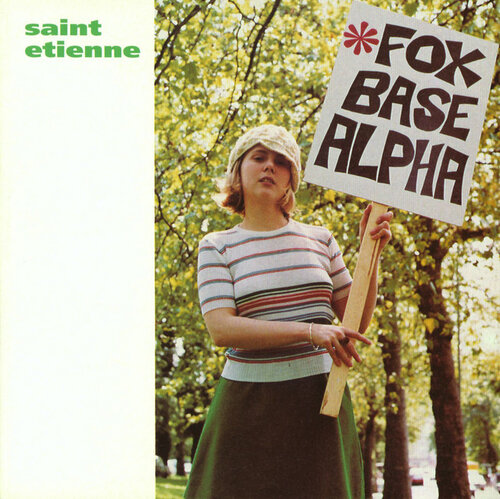
Foxbase Alpha
ww.jpg

Release Date: 16th September, 1991 (Europe)/January 1992 (U.S.)

Labels: Heavenly/Warner Bros. Records (U.S.)

Producer: Saint Etienne

Standout Tracks: Can’t Sleep/She’s the One/Kiss and Make Up (Sarah Cracknell version; 2009 release)

Buy: https://www.discogs.com/sell/release/8487

Stream: https://open.spotify.com/album/3NWRCkCxGD8lf6sBqyChLz?si=iiwlqldjTTueWbsKABV_vg&dl_branch=1

Review:

Foxbase squeezes so many "lighter side of" sounds-- be they from the worlds of rock, dance, soul, whatever-- into one LP that it's a marvel it sounds so unified, mostly owing to Wiggs and Stanley fixing on the platonic house rhythm as the glue to hold their disparate passions together. But the second disc of bonus tracks often feels like two producers still figuring out how to make the raw materials of post-acid house their own. A grab-bag of late 80s/early 90s rave sonics-- only sometimes processed through what we know as the Saint Etienne idiom-- dates much of the material. "Chase HQ" and "Speedwell" are competent but sketchy early UK house singles, full of jittery samples and keyboard stabs. Fun, but ultimately too generic without Cracknell's voice or the sample-choice oddness and studio chops Wiggs and Stanley would bring to the band's later music. Better is the dub playground chant of "Sally Space", Cracknell humming "Iko Iko" through a quiet storm front of classic ambient house textures, the Orb with a dose of girl-pop glee.

Speaking of the p-word (again): Continental, a previously Japan-only odds-and-ends collection reissued in the same batch of Saint Et records as this new Foxbase, works as a sort of mirror image of Too Young to Die, the band's almost absurdly listenable 1995 singles compilation. If the all-hits uniformity of TYTD represents Saint Etienne's final, most obvious stab at Now That's What I Call Pop immortality, then Continental is the beginning of the more wide-ranging (and hit-or-miss) restlessness that's characterized the band's records from 1998's Good Humor onward. Each track is recognizably Saint Etienne-- Cracknell's inimitable winsome-but-grown-and-sexy coo announces that, if nothing else-- but the tracks (frequently darker, often instrumental) go very different places than the uniform, bubbly house-lite of Foxbase's uptempo moments.

So much so that when legit UK hit "He's on the Phone"-- not coincidentally the only track Continental shares with Too Young to Die-- shimmers into earshot, it's such a glittering throwback to the old Saint Etienne that it nearly skews the vibe of the whole collection. "He's on the Phone" is Saint Et's most deliriously normal single, a go-for-broke attempt at the kind of high-test mainstream house that still appears on comps with "Ibiza" unironically in their titles. The rest of Continental offers another of Saint Etienne's seemingly paradoxical combos. It's far more subdued, even reflective, than Foxbase's unashamedly hooks-first buoyancy. But it's also sonically "big" in a way that makes it seem like a commentary on the mid-90s moment when even chill-out-centric electronic music went stadium-sized” – Pitchfork

Choice Cut: Only Love Can Break Your Hart

So Tough

swesd.jpg

Release Date: 22nd February, 1993

Labels: Heavenly (U.K.)/Warners (U.S.)

Producer: Saint Etienne

Standout Tracks: Calico/Avenue/Hobart Paving

Buy: https://store.hmv.com/store/music/vinyl/so-tough?gclid=EAIaIQobChMIqfGovuzk8QIVuRkGAB2hAwTZEAQYASABEgI7-_D_BwE&gclsrc=aw.ds

Stream: https://open.spotify.com/album/0jthc9ezftxi0w1jyhZfgi?si=A86j1hHCRHaBcG1VtZJKyQ&dl_branch=1

Review:

Although you've probably never heard it, Saint Etienne's So Tough is visionary pop that ought to be a hit. The CD cover is an old photograph of a little girl – a tomboy – looking sweetly inquisitive. She's on the verge of experience, and that sense of expectancy can be heard in the way vocalist Sarah Cracknell embellishes the bouncy, filigreed tunes with a lovely, clear voice: "Everyone's dreaming of all they've got to live for/Joking around still digging that sound." Digging that sound themselves, keyboardist Pete Wiggs and guitarist Bob Stanley – Saint Etienne's composers – invent a new pop environment based on an affectionate rehash of swinging '60s styles. Bass notes are mixed with rich-sounding computerized chimes, soft piano or sweet violas, making each track a whimsical, Utopian narrative.

Saint Etienne's cast of characters – Dilworth, Hobart, Calico, Conchita – inhabit an impressionistic soundscape ("Avenue"), a fanciful rap ("Calico"), a girl-group pledge ("You're in a Bad Way"), a nostalgic reverie ("Leafhound") and a lovelorn ballad ("Hobart Paving"). Their world (families, clubs, eccentric locals) is what must suffice in a fragmented era in which pop music's legacy is often the only common ground. There's a surprise from track to track, usually announced by a movie sound clip or a record sample like Rush's "Spirit of Radio," testaments to Saint Etienne's big pop ears and their meaningful emulation of hip-hop collage. The diversity recalls the group's debut album, Foxbase Alpha (1992), yet So Tough is entirely different.

It's Blondie without trash, each cut a delightful pop homage bestirring lifelike memories. Among the high points is "Avenue," an elegiac report on an English day that folds and unfolds in choruses of onomatopoeia. Cracknell's bah-da-da-da-da-da-das are split up by a thunder crack, then a harpsichord interlude. The eclectic sense of rhythm that has revitalized British pop through raves, techno and other aural experiments allows Wiggs and Stanley to make "Avenue" one of the most breathtaking set pieces since Roxy Music's "Amazona."

Earlier, "Mario's Cafe," the group's account of daily episodes and wonderment, includes lyrics like "Did you pick Wednesday's fight?/And did you see the KLF last night?" Everything relates to pop for Saint Etienne, which means there's nothing in this arty, charming, particularly English group that American pop fans cannot relate to” – Rolling Stone

Choice Cut: You’re in a Bad Way

Tiger Bay

Release Date: 28th February, 1994

Label: Heavenly

Producer: Saint Etienne

Standout Tracks: Like a Motorway/Pale Movie/Cool Kids of Death

Buy: https://www.roughtrade.com/gb/saint-etienne/tiger-bay-deluxe

Stream: https://open.spotify.com/album/6CisCNwbSLFprahnoN6xKE?si=Zofd3QkUSraxoRUHCzScag&dl_branch=1

Review:

After three years (and two albums) of stunning development, Saint Etienne's disco-llision of '60s pop, '70s dance, and '90s club reached the peak by which they still are judged, with an album that is alternately heartwarming, heartbreaking, electrifying, and impossibly captivating. From the dramatic opener "Urban Clearway," to the mysteriously Kraftwerk-ian "Like a Motorway," and on through "Pale Movie" (that could make Valentino weep), Tiger Bay is everything that two generations of post-Beatles wannabes have labored to create, but have always been too in awe to complete: a melding of mood with momentum, emotion with eccentricity, and an endless succession of divine verses sliding into sad and sexy hooks. Tapping veins of nostalgic romance that bring a tear to the eye before you even know what the lyric is (once you do know, you're a goner, no questions asked), the tracks then explode out of rhythms that could make a dead dog dance. Tiger Bay is alternately seductive, silly, and sassy. But it was also constructed with such an eye for sensuous detail that any attempt whatsoever to toy with the track listing can only shatter the crystal. [A U.K. reissue in 1996 added three extra tracks and none of them really fit, while the 1994 U.S. edition did the record an even greater disservice; its own additions forced the removal of two of the album's finest moments: the luxurious drift of "Western Wind" and "Tankerville" -- one an exquisitely haunted Sarah Cracknell vocal, the other a sweeping instrumental with a melancholic edge as dark as the edge of town. To hear "Boy Scouts of America" finally break through at the end of that is to witness sunrise at the end of the bleakest night. However, 2017 saw the release of a two-CD digitally remastered Deluxe Edition of Tiger Bay that restored "Western Wind" and "Tankerville" to the track listing and included bonus B-sides, rarities, and more.]” – AllMusic

Choice Cut: Hug My Soul

Tales from Turnpike House

aajhahj.jpg

Release Date: 13th June, 2005

Label: Sanctuary

Producers: Ian Catt/Saint Etienne/Xenomania

Standout Tracks: Side Streets/A Good Thing/Milk Bottle Symphony

Buy: https://www.roughtrade.com/gb/saint-etienne/tales-from-turnpike-house/lp

Stream: https://open.spotify.com/album/5h6bg8Ol9pxoKosTYyZowy?si=JOx14nGdS9CfUvML1SYaSg&dl_branch=1

Review:

Saint Etienne is something like the musical equivalent of a Hugh Grant romantic comedy—sophisticated, extremely English, somewhat yuppified and materialistic, and with a predilection for prettiness that at times seems like a stronger driving force than substance. But at its best, it's the pinnacle of breezy pop. The band's seventh disc, Tales From Turnpike House, is one of its finest, deploying Sarah Cracknell's warmly personable singing and Bob Stanley and Pete Wiggs' deft songwriting and production on a series of linked songs about a day in the life of the ordinary inhabitants of a posh London apartment building. (Released last year in Britain, Turnpike has been remodeled for its stateside release, with its track listing shuffled and three new songs recorded specifically for the U.S. disc.) Concept albums are always chancy, but Turnpike's arrangements are rich and often gorgeous, and the lyrics are filled with subtle mood shifts and telling observations on the daily grind for middle-class, mid-30ish Londoners with midlife crises.

In some ways, Turnpike hearkens back to the postwar British pop of smooth, even suburbanite warblers like Petula Clark and Georgie Fame. Stanley and Wiggs also unlock their inner Brian Wilson on the Beach Boys harmonies of "Side Streets" and "Sun In My Morning." The album's thematic climax, "Teenage Winter," seemingly a modern update of Ralph McTell's achingly sad "Streets Of London," checks in on the characters one last time and finds them full of disappointments and wistful nostalgia. While they aren't the lonely, destroyed people of McTell's song, they struggle with the ordinary anomie of everyday life—the wasted time, the disappearance of youth, the inevitable approach of death. The fact that the band pulls this song off without turning mawkish speaks to the quality of the songcraft on the whole disc. Turnpike is Saint Etienne's strongest record in years, and if the rumors that this may be its final record are true, it would be an excellent swan song” – The A.V. Club

Choice Cut: Stars Above Us

The Underrated Gem


Good Humor

Release Date: 4th May, 1998

Label: Creation

Producer: Tore Johansson

Standout Tracks: Split Screen/Mr. Donut/The Bad Photographer

Buy: https://www.discogs.com/sell/release/43064

Stream: https://open.spotify.com/album/35hVWd3uQFdosmj27cQIdZ?si=gxvjAvwhRAGCxyxAeYeChA&dl_branch=1

Review:

Was there ever a less likely addition to the Sub Pop roster than Saint Etienne? In the late 1990s, the grunge and punk-associated Seattle label was emboldened to expand its purview, and if Sub Pop was going to gamble on any band, why not one of the UK's smartest, most sophisticated connoisseurs? At the time, the band (signed to Creation back home) was reportedly frustrated with its thoroughly continental reputation, and in 1998 the results of that restlessness, Good Humor, made good on threats to try something new.

Following its formative first three records, all self-produced, the band instead decamped to Sweden-- well ahead of the Western embrace of Swedish indie pop-- to work with an outsider, Tore Johansson. Furthermore, while known for its synths, samples, and programming, the band this time chose to embrace traditional rock instruments, including a horn section. And it's not a coincidence that the "humor" in the title drops the "u" from the anglicized version of that word.

At its best Good Humor capably splits the difference between old Etienne and new, embracing the 1960s as fervently as ever on "Split Screen" and "The Bad Photographer" while adopting that era's studio vernacular-- brass, vibes, electric piano. It also maintains the band's trademark melancholy streak with songs like "Mr. Donut", "Postman", and "Lose That Girl". Perhaps inevitably, given the origins of the album, the band even tips its hat to ABBA on "Sylvie". While perhaps not as immediate as the band's earlier output, these songs remain potent, and anyone that caught the group's full-band tour behind the album will attest that they more than held their own against the group's formidable back catalog” – Pitchfork

Choice Cut: Sylvie

The Latest Album


Home Counties

Release Date: 2nd June, 2017

Label: Heavenly

Producers: Augustus/Carwyn Ellis/Shawn Lee/Nick Moon/Saint Etienne/Pete Wiggs/Richard X

Standout Tracks: Magpie Eyes/Popmaster/Out of My Mind

Buy: https://www.amazon.co.uk/Home-Counties-VINYL-Saint-Etienne/dp/B06XDPX8RK

Stream: https://open.spotify.com/album/1NvtOgvGbr4d71SJbpRCfd?si=Spg9PUJzQki4a9zrDnMrlQ&dl_branch=1

Review:

Home Counties is a loosely Kinks-ian concept album, revelling in the staid, pastoral surroundings of southern England: the “doughnut of shires that ring the capital", explains Bob Stanley. The arrangements here are crisp and atmospheric, but never imposing. The piano-led Something New, for example, or the whimsical harpsichord at the beginning of Whyteleafe, provide gentle, loping soundtracks that Sarah Cracknell's breathy vocals can glide over, painting beautiful pictures of the bucolic English countryside.

By utilising samples from Radio 2 and 4, a brief snippet of a classified football report and soft orchestral/choral interludes, Saint Etienne create a strong sense of rural Englishness across Home Counties, as well as allowing plenty of breathing space between tracks. Penultimate song, Sweet Arcadia, is peak Etienne as Cracknell lists off the little towns that one might pass on a train journey around the South of England, considering their origins and history with the same specificity as The Clientele or Lemon Jelly, but without their respective appetites for melancholia or surrealism; just a wide-eyed, honest rendering.

Whether musing about 'heading home across the moors' or 'DVDs in the boot sale', the band rarely deviate from their thematic nexus, which helps to tie the album together as it sprawls over nineteen tracks. As they move closer to the middle ground, Saint Etienne are far from re-inventing the wheel, but in writing delectable pop hooks about a place as decidely uncool as the home counties, that was never really the point” – The Skinny

Choice Cut: Dive

FEATURE: Second Spin: Iggy Azalea - The New Classic

FEATURE:


Second Spin

ssss.jpg

Iggy Azalea - The New Classic

___________

HERE is an album where…

eejk.jpg

 PHOTO CREDIT: Getty Images

the sales and popularity were not matched by critical reviews. It is an interesting phenomenon that fascinates me. Sydney-born Iggy Azalea (Amethyst Amelia Kelly) released her debut album, The New Classic, in 2014. I really like the album and feel it was vastly underrated. I shall bring in a couple of contrasting reviews. If one judges it upon sales and chart positions, it can be seen as a success::  

The album debuted at number 3 on the Billboard 200 chart, with first-week sales of 52,000 copies in the United States. The New Classic was the highest-charting female rap album, since Nicki Minaj's Pink Friday: Roman Reloaded (2012) and the highest chart entry for a female rapper's debut album since Minaj's Pink Friday (2010) entered at number 2. The album also moved up to number one on the Billboard Top R&B/Hip-Hop Albums and Top Rap Albums, making Azalea the first non-American female rapper to reach the summit of these charts

The album's produced 5 singles, "Work", "Bounce", and "Change Your Life" were released as the first three singles all of which saw success in charts worldwide. The fourth single, "Fancy" featuring British singer Charli XCX was an international success, reaching the top-five in Australia and the United Kingdom, and peaking at number one in New Zealand, the Billboard Hot 100 in the United States and the Canadian Hot 100. The fifth single, "Black Widow" featuring British singer Rita Ora, peaked at number 4 on the UK Singles Chart, becoming her highest-charting single as a lead artist on that chart, and also peaked at number 3 on the Billboard Hot 100”.

The public reacted positively to the introduction of a wonderful talent. Indeed, the five singles did well. Maybe one of the problems is the running order. Although we get the singles nicely dispersed through The New Classic, I don’t think the album starts as strongly as it could have. Also, the final two tracks are not the best on the album. It is a rare case of the torso/middle of the album being stronger. It means you get a relatively unspectacular start and end; one then experiences the best bits in the centre. Not that it is necessarily a bad thing – perhaps a slight reshuffle would have created a better and more even listening experience. I feel a track like Work could have opened The New Classic with greater aplomb. Although there are a few collaborations (Black Widow features Rita Ora; Charli XCX is on Fancy), they are well-chosen and suit the song. Azalea is confident and compelling through the album. Some felt that the songs on The New Classic were less forward-looking than those on E.P.s like Glory (2012). In their review, this is what AllMusic observed:

Australian rapper Iggy Azalea's rise to Island Records/Hustle Gang status was quite strange, seeing as how she was a high fashion model gone Dirty South rap, like some kind of Down Under mix of Lana Del Rey and Trina. Dating A$AP Rocky meant she had her rap game proper, and it was all the more tantalizing when her privileged party anthems landed some whip smart punch lines, but two tracks into The New Classic, "Don't Need Y'all" take her from detached to jaded, making this debut album one icy cold coming out party. By the album-closing "F**K Love," her snarled declaration "I'm already in love with myself" is a redundant credo of epic proportions, but get past the narrow "me me me" theme of the album and it's amazing how "live" it all feels.

Chalk it up to cutting-edge taste as trapstep group Watch the Duck turn the cut "100" into something blog-worthy, while a Mavado appearance and an electro-dancehall production from the Invisible Men and the Arcade make "Lady Patra" the highlight to pick for Mad Decent or Diplo fans. Put the tried and true singalong "Change Your Life" with T.I. on the track list, along with the traptastic "Fancy" featuring Charli XCX, and The New Classic features an EP or so worth of memorable moments that mash fashion, sass, high tax bracket mackin', and flashy beats. Taken in as an album and Azalea's constant "bow down" attitude makes this a cuckoldish experience, so think "some will pay for what others pay to avoid" and approach accordingly”.

Iggy Azalea said how she wanted to talk about herself and her story more on her debut album. There were a few reviewers who felt the songs (on the album) that spoke of self-improvement and striving were more relatable and appealing than those which seemed emptier and shallower. I would agree. Overall, mind, The New Classic is an album that got some unfair stick. I wonder if reviewers would alter their viewpoint if they approached the album fresh now? I feel there are at least six or seven songs on the album that are really strong and stand up to repeated listens.

I will end with a review that is more positive. The Line of Best Fit sat down with The New Classic and they had this to say:

The New Classic is an ambitious pop-rap record, steering Iggy Azalea out of her comfort zone – you can glimpse her actually singing for example, and she dabbles in acoustic soul (“100”) as well as electro-reggae/dancehall-lite (“Lady Patra”) alongside her standard trappy chart-bait.

It’s not a groundbreaking record sonically – though it is fantastic, it’s her story and her words that are the draw. It’s a pretty famous story, summed up in “Work”, but essentially, she moved from her native Oz to Miami age 16, all alone, to pursue a career in rap. Initially, as she scaled the ziggurat via Southern hip-hop with an Atlantan drawl that usurped her own Aussie accent, we saw Azalea dip into gangsta rap and garner controversy (mainly for early YouTube hit “Pu$$y”), but now as that chapter of her life ends, she emerges stronger, truer and more vocally talented than 90% of the top rappers in mainstream hip-hop.
Almost eight years on from being fresh off the boat, she’s flourished, becoming the kind of superstar that’ll give you whiplash when she enters the room. The New Classic chronicles the hardships of that journey. On first glance, dressed to the nines on red carpets, she might appear a silver spoonfed doll, but she’s as real and down-to-earth as they come (“Don’t Need Y’all” is pretty representative of that). This debut album proper, eagerly anticipated across the globe, is Azalea celebrating the end of a near-decade of ordeals. It’s Azalea’s retrospective, not just cheering recent successes, but documenting everything she’s had to overcome in the process, for posterity and to stimulate her legions of fans.

“Goddess” is emblematic of the LP’s core tenet. It sounds like a track Kanye West would have as a set staple. In terms of Azalea’s repertoire, it’s a career highlight: the production is flawless fusillade, an apocalpyso hip-pop Armageddon. It’s a galvanising rapture, Beyoncé-esque in terms of motivation and female – heck, human – empowerment, and her snarled, coiled-larynx spiel in the chorus fuses razorwire, boomslang venom and the piston-firing impetus of a Rocky speech. Oh, and did we mention it’s got a kickass, totally out-of-place-and-therefore-awesome hair metal axe solo at the end? No? Well it does.

Although the magnifying glass Azalea employs mainly scrutinises her trials and tribulations, she’s not one for ignoring the overwhelming urge to lunge for pop. The focus is clearly on the innate themes and words bursting from her lips like doves from a Vegas magician’s sleeve, but tracks like “Change Your Life” (featuring mentor T.I.), “Black Widow” (featuring Rita Ora) and “Fancy” (featuring pop catalyst Charli XCX) are slabs of indulgent, Top 40-ravaging behemoths. Anthem is a word bandied around more than coke in an ’80s Wall Street film, but for “Fancy” at least, it’s apt. It’s uplifting, self-affirming and packed with the rousing singalong strains that are integral to a genuine pop classic these days. It’s a new classic (badum-tish).

Iggy Azalea might seem like an act easy to deride or yell “sell-out!” to, due to her transformation from the Sleigh Bells-sampling early mixtapes to the EDM-twanged furore of major label success, but her rags-to-riches saga is inspirational. Listening to The New Classic, you can tell that she’s not changed one bit. She’s got a bigger platform, she’s infinitely grateful for the chances given to her – there’s no rap entitlement on display, and even brand-dropping doesn’t feel disingenuous or superficial, somehow – and, furthermore, she’s a grounded everyman rap icon. It’s endearing to no end. Azalea’s an affable bundle of chum-ly charm with lessons (not patronising lectures) that are applicable for anyone with a lick of ambition – “Impossible Is Nothing” is probably the best example. If you’ve got your sights set on stardom, on making a name for yourself, Azalea’s the role model you should adore. Let her gospel be an allegory for your rise”.

If you have not investigated The New Classic, give it a spin. It does have its weaker moments - though there are plenty of good tracks that highlight Iggy Azalea’s talent. I do think that The New Classic is a stronger album than 2019’s In My Defense – maybe the five-year gap between albums sapped some of the energy and promise of the debut. Whilst not perfect, The New Classic of 2014 is an album that…

CAN hold its head up.

FEATURE: Sound Waves: Kate Bush and Her Connection and Fascination with Water

FEATURE:


Sound Waves

swswe.jpg

IN THIS PHOTO: Kate Bush in June 1978/PHOTO CREDIT: George Wilkes/Hulton Archive/Getty Images 

Kate Bush and Her Connection and Fascination with Water

___________

THIS is going to be quite brief…

eexd.jpg

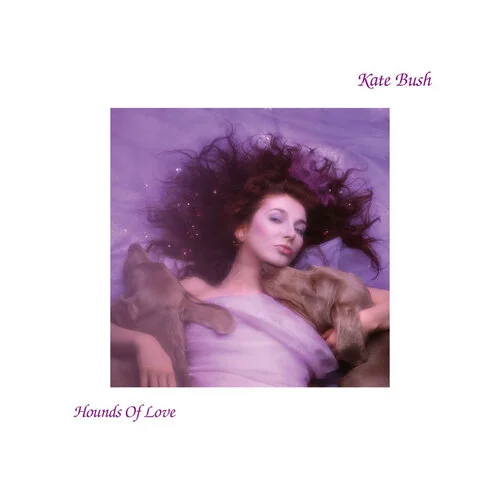
IN THIS PHOTO: Kate Bush in a promotional photo for The Ninth Wave (Hounds of Love, 1985)/PHOTO CREDIT: John Carder Bush

but I have been casting my mind back to interviews where Kate Bush discussed her fascination with water. In several of her albums, one can hear songs that relate to water or mention them. It is not uncommon for songwriters to write about water - either literally or as a metaphor. For Bush, I think it relates to her wider interest in the natural world. 2005’S Aerial has a second disc, A Sky of Honey, where we get the cycle of a day. On the album’s first disc, A Sea of Honey, water is represented and employed in different ways. I especially love the domestic setting of Mrs. Bartolozzi (“I took my mop and bucket/And I cleaned and I cleaned”)., Rather than it being grand and sweeping, it is more mundane yet no less extraordinary and arresting. If some artists use water images rather simply or obviously, Bush can take us from the wide expanse of the ocean to a washing machine. Mrs. Bartolozzi is the heroine who is washing the muddy floor and watching clothing tango in the washing machine. Perhaps less obvious is water and birth. Some of Bush’s songs discuss birth and motherhood – or the creation of new life. Never for Ever’s Breathing is about a foetus that is living in the womb as nuclear apocalypse beckons. The video for Army Dreamers sees Bush and her cast in the water, in danger – Breathing’s video also is partly set in the water. Think about her debut album, The Kick Inside (1978), and we open with the sound of whale song (on the track, Moving).

Whilst one of Bush’s more stressful experiences with water came when she was filming a video for her 2014 residency, Before the Dawn, that takes me to an album (Hounds of Love) where her curiosity with water is at its most striking. Bush, in 2014, filmed a video for And Dream of Sheep. This is a song on Hounds of Love’s second side, The Ninth Wave. One feels that this is Bush’s most rewarding and favourite creative project. She has remarked how she and her friends debated what the scariest thing is you could imagine. Being stuck on the water and not knowing what is below is at the top. It is that uncertainty and constant anxiety which makes The Ninth Wave so compelling. With sound effects and various stories of a heroine marooned on the ocean, this is Kate Bush using water and the sea in a really interesting way. There is danger and a sense of calm. On Under Ice, one gets the feeling of being trapped under the water, whilst Hello Earth sort of takes us above the world and we get this incredible view of the ocean and world. There is a blend of horror, very human fear and utter beauty through The Ninth Wave. It is staggering how Bush brings us with the heroine. We are alongside her on the dark and cold water! It is not only The Ninth Wave where Hounds of Love discusses the water.

Maybe inspired by her move from the city to the country, Hounds of Love looks at the sky and sea. It feels very rooted in nature – whereas other albums have painted on a different canvas. The Big Sky is about clouds and the child-like joy of the different shapes they make. Cloudbsuting seems to be the opposite: a device that would cause it to rain. That songs draws inspiration from the 1973 Peter Reich memoir, A Book of Dreams, which Bush was struck by. The song details the relationship between psychiatrist and philosopher Wilhelm Reich and his young son, Peter. It is narrated from told from the point of view of Peter. It is about the boy's memories of his life with Reich on their family farm. There, the two spent time ‘cloudbusting’: a rain-making process involving a machine designed and built by Reich (called a cloudbuster) that they point at the sky. This article discusses folk horror in Bush’s music. Hounds of Love’s title track is one that combines water and the more macabre:

The track contains what is perhaps my favourite lyric out of all of Kate Bush’s songs; Take my shoes off / And throw them in the lake / And I’ll be / Two steps on the water. This is a piece of perfect fairytale logic; to walk on the water you simply need to throw your shoes onto its surface. It references all of the otherworldly, not-quite-safe aspects of fairy stories and folklore and applies them to the equally not-quite-safe experience of being in love. To be in love, and to be loved, you need to do things which make you vulnerable. You need to throw your shoes onto the water, hoping they will dance on the surface. Kate blends the fear of Night of the Demon with the cautious hope and optimism of this fairytale imagery, creating through their conflict something that is far more than the sum of its parts.

There are B-sides and covers where, again, Bush has this attachment and curiosity regarding water. Returning to the article I just quoted from, and her take on Donavon’s Lord of the Reedy River (a B-side of her 1981 single, Sat In Your Lap) seemed like a very natural choice:

‘Lord of the Reedy River’ initially appears to be a very simple song. The minimal instrumentation of fluting organ provides backing to an equally minimal vocal performance which tells an archetypically ambiguous folktale; is it simply the thoughts of someone captivated by the beauty of a swan or, as the line “sadly we mourned and sighed” implies, a study of grief or even suicide. We are left to make that decision ourselves.

Yet the song itself is also a tale of re-telling.

While the piece may appear to be a work of traditional folk song it was in fact written by Donovan, only twelve years before Kate recorded it. Yet Donovan didn’t write the song for himself and didn’t release it under his own name until it appeared on HMS Donovan in 1971. ‘Lord of The Reedy River’ was in fact first performed by Welsh folk singer Mary Hopkin on her 1969 album Postcard”.

There are other references regarding water through Bush’s catalogue. From Delius (Song of Summer) – “…to be sung by the summer/(Delius) night on the water/(Delius) on the water/(Delius)” – and, once again, Moving - “Moving liquid, yes, you are just as water/You flow around all that comes in your way” -, there is something clearly powerful, symbolic and multi-layered!

Water can hold and sustain new life; it can destroy worlds. I am not surprised that aspects and elements of water have played a fairly big role in Bush’s songwriting. Her most popular album, Hounds of Love, puts it front and centre. Perhaps my favourite lyric of Bush’s involving water comes on Hounds of Love’s Jig of Life: “Over here!/Can't you see where memories are kept bright?/Tripping on the water like a laughing girl”. This is something that I might examine more in a future feature. Different songwriters have their own reasons for bringing images of water into their work. I guess water represents passion - and, by its use, that can be a very powerful songwriting tool. I am especially interested how, from her debut album through to her most recent album, 2011’s 50 Words for Snow, water is vital and in her veins. In fact, there are a few songs from 50 Words for Snow where water plays a role. Lake Tahoe, obviously, very much takes from the water – as this article from the Kate Bush Encyclopaedia lays out:

It was because a friend told me about the story that goes with Lake Tahoe so it had to be set there. Apparently people occasionally see a woman who fell into the lake in the Victorian era who rises up and then disappears again. It is an incredibly cold lake so the idea, as I understand it, is that she fell in and is still kind of preserved. Do you know what I mean? (John Doran, 'A Demon In The Drift: Kate Bush Interviewed'. The Quietus, 2011)”.

One of the song’s best lines, “Cold mountain water/Don't ever swim there”, stays in the head. A unique and incredible song from 50 Words for Snow, Misty, is about a snowman that melts in the bed after a night of passion with a heroine (“Melting, melting, in my hand/Sunday morning/I can't find him/The sheets are soaking”). I have probably missed some obvious examples where Bush has dissected and examined water and used it in different forms. Whether we are cast adrift in an unforgiving ocean or watching a snowman melt (sadly) away, water and songs where it is mentioned can take on different forms. As she is one of the greatest songwriters ever, there are other areas and angles to her lyrics that are worth discussion and highlighting. I have been thinking about Hounds of Love and hearing songs like Cloudbusting on the radio. It got me thinking about water and how Bush has kept it fairly close to her pen. In my view, some of her most arresting images and finest songs connect with water. I shall leave things there. Whether she is creating a concept around water or sprinkling the subject in quite subtlety, every time Bush takes us to the water, it leads to something enriching and…

ALWAYS compelling.

FEATURE: The Lockdown Playlist: Stevie Nicks’ Bella Donna at Forty

FEATURE:


The Lockdown Playlist

 Stevie Nicks’ Bella Donna at Forty

___________

MAYBE this is a little tenuous…

wwww.jpg

but I wanted to mark the upcoming fortieth anniversary of Stevie Nicks’ debut solo album, Bella Donna. Released on 27th July, 1981, it came a year before Fleetwood Mac’s thirteenth studio album, Mirage. I am going to do a Lockdown Playlist that collates the best of Stevie Nicks’ solo work – I have done a Lockdown Playlist about her before but, as her debut celebrates a big anniversary, I feel obliged to revisit. Before getting there, here is some information about Nicks’ wonderful debut:

Bella Donna is the debut solo studio album by American singer and songwriter Stevie Nicks. Released on July 27, 1981, the album reached number one on the US Billboard 200 in September of that year. Bella Donna was awarded platinum status by the Recording Industry Association of America (RIAA) on October 7, 1981, less than three months after its release, and in 1990 was certified quadruple-platinum for four million copies shipped. Bella Donna spent nearly three years on the Billboard 200 from July 1981 to June 1984.

The album spawned four hit singles during 1981 and 1982: the Tom Petty and the Heartbreakers-penned duet "Stop Draggin' My Heart Around" (#3), the Don Henley duet "Leather and Lace" (#6), her signature song "Edge of Seventeen" (#11) and country-tinged "After the Glitter Fades" (#32).

Bella Donna would mark the beginning of Nicks' trend of calling upon her many musician friends and connections to fully realize her sparse demo recordings. Along with friends Tom Petty and Don Henley, Nicks brought in session musician Waddy Wachtel, Bruce Springsteen's E-Street Band pianist Roy Bittan, and Stax session man Donald "Duck" Dunn of Booker T. & the MGs. Though Bella Donna's personnel list includes some 20 musicians, the album is very much Nicks' own work, with all but one of the songs on the record written by her. The album also marked the first recording featuring Nicks' backing vocalists, Sharon Celani and Lori Perry, who still record and tour with Nicks today.

The album was also included in the "Greatest of All Time Billboard 200 Albums" chart”.

To mark forty years of Stevie Nicks’ stunning and hugely memorable debut album, Bella Donna, below is a collection of great songs from…

A musical icon.

FEATURE: Childhood Treasures: Albums That Impacted Me: Paul Simon - Graceland

FEATURE:


Childhood Treasures: Albums That Impacted Me

dddd.jpg

Paul Simon - Graceland

___________

THIS is quite timely…

xx.jpg

 IN THIS PHOTO: Paul Simon in 1986/PHOTO CREDIT: Deborah Feingold

as Paul Simon’s seventh solo studio album, Graceland, turns thirty-five ion 25th August. It is definitely one of my favourite albums. In terms of the albums that were important to me as a child, Graceland is right near the top. It is a magnificent work that I still listen to a lot. There was quite a lot of controversy surrounding Graceland when it came out. I will explore that more in a bit. I adore how accessible the album is - even though there are South African musicians and sounds many of us are not be familiar with. Graceland arrived at a time when there was some commercial and personal struggle for Simon. Wikipedia explains more:

In the early 1980s, Simon's relationship with his former musical partner Art Garfunkel had deteriorated, his marriage to actress Carrie Fisher had collapsed, and his previous record, Hearts and Bones (1983), had been a commercial failure. In 1984, after a period of depression, Simon became fascinated by a bootleg cassette of mbaqanga, South African street music. He and Halee visited Johannesburg, where they spent two weeks recording with South African musicians. Further recordings were held in the United States, with guest musicians including Linda Ronstadt, the Everly Brothers, Louisiana band Good Rockin' Dopsie and the Twisters, and Mexican-American band Los Lobos”.

There are few albums as important to me than Paul Simon’s Graceland. It brings back so many memories and transports me to some fascinating places. The musicianship and songwriting is so rich and deep that every spin reveals something new!

I want to bring in a couple of reviews for Graceland. Despite some condemnation when it was released, Graceland has received hugely positive reviews. It is considered to be one of the greatest albums ever released. In their review, this is what AllMusic had to say:

With Graceland, Paul Simon hit on the idea of combining his always perceptive songwriting with the little-heard mbaqanga music of South Africa, creating a fascinating hybrid that re-enchanted his old audience and earned him a new one. It is true that the South African angle (including its controversial aspect during the apartheid days) was a powerful marketing tool and that the catchy music succeeded in presenting listeners with that magical combination: something they'd never heard before that nevertheless sounded familiar. As eclectic as any record Simon had made, it also delved into zydeco and conjunto-flavored rock & roll while marking a surprising new lyrical approach (presaged on some songs on Hearts and Bones); for the most part, Simon abandoned a linear, narrative approach to his words, instead drawing highly poetic ("Diamonds on the Soles of Her Shoes"), abstract ("The Boy in the Bubble"), and satiric ("I Know What I Know") portraits of modern life, often charged by striking images and turns of phrase torn from the headlines or overheard in contemporary speech. An enormously successful record, Graceland became the standard against which subsequent musical experiments by major artists were measured”.

Just before wrapping up, there is a review from Pitchfork . They assessed the twenty-fifth anniversary edition of the album in 2012. It is compelling and really intriguing reading the entire thing. For those who do not know much about the history of Graceland, it is a must-read. Pitchfork provide some story behind Graceland:  

As I prepared to review the 25th Anniversary Edition of Paul Simon's Graceland, I thought a lot about what the album means to me. It's a more complicated question than it seems. This is an album that's sold more than 10 million copies worldwide and was vigorously protested in certain quarters on its release. It has sat at the center of arguments about cultural exchange, cultural imperialism, and whether Simon was right to skirt the United Nations' cultural boycott of South Africa in order to record with black musicians from that country-- arguments that remain part of the record's story even as the tragedy of apartheid fades further from the headlines.

As unignorable as the context of the record is, there's no doubt in my mind that its songs transcend the context as listening experiences. These songs are astute and exciting, spit-shined with the gloss of production that bears a lot of hallmarks of the era but somehow has refused to age. Taken as a whole, the album offers tremendous insight into how we live in our world and how that changes as we get older.

The stories Simon tells on Graceland wouldn't have been told without the collaboration of the mostly South African musicians he worked with on the record. Their music sparked Simon's imagination after the commercial disappointment of 1983's Hearts and Bones, and the jam sessions he recorded with them in South Africa gave rise to all but a few of these songs. Simon learned to write differently by homing in on the ways guitarist Chikapa "Ray" Phiri varied his playing from verse to verse, and by grounding his vocal melodies on the basslines of Bagithi Khumalo. Khumalo's playing has such fluency and personality that, at least on the five songs he's a part of, this is nearly as much his record as anyone else's. On the brief disc of outtakes included in this set, there's a version of "Diamonds on the Soles of Her Shoes" that's stripped down to just vocals and bass, and his line so completely frames the song (rhythmically, harmonically, and melodically) that the other elements of the album version's arrangement are barely missed.

So we get songs where the groove came first, and the lyrics long after. Simon considered writing political songs about apartheid but quickly concluded that he wasn't very good at it and owed it to the other musicians involved to stick to his strengths. Still, the album's opening song, "The Boy in the Bubble", is a thriller that ties together threads of technological progress, medicine, terrorism, surveillance, pop music, inequality, and superstition with little more than a series of sentence fragments, all tossed off in the same deadpan delivery. The song sets a monumental stage on which the small dramas and comedies of the other songs can play out, and it also establishes the record's unsettled tone-- out of all these songs, only "That Was Your Mother" is sung from a settled place, and even that one is a reminiscence about itinerant life.

But more than Simon's single-minded devotion to his art and Tambo's ideological politics, the experience surrounding this album is best conveyed by the musicians who made it. They were violating the boycott, too, just by participating in a dialogue with non-South African musicians, and there's a moment where Ray Phiri describes a meeting he was called to in London with African National Congress officials while touring to support the album that speaks volumes. The ANC officials told Phiri that he was violating the boycott and had to go home, and his response was that he was already a victim of apartheid, and to force him to go home would make him a victim twice. In the end, Simon's assertion that Graceland helped put an emotional, human face on black South Africans for millions of people around the world doesn't seem off the mark. This set also comes with a DVD of the concert Simon and these musicians played with South African exiles Hugh Masekela and Miriam Makeba in Harare, Zimbabwe, in 1987, and the joy visible on stage and in the audience certainly speaks to that.

It's easy to overstate what Graceland was. It wasn't the first world-music album, as some critics claim. But it was unique in its total, and totally natural, synthesis of musical strains that turned out to be not nearly as different from each other as its listeners might have expected, and the result resonated strongly around the world and across generations”.

I hope that there is celebration and new investigation of Graceland after thirty-five years. Various controversies have plagued the album - though I don’t think any really tarnish one’s enjoyment of it. Asa we discover from this NME article from 2012, Paul Simon spoke of having no regrets recording Graceland in South Africa:

Paul Simon has insisted that he was no regrets over the recording of his album ‘Graceland’ in South Africa.

The folk legend was widely criticised for travelling to the country and making the 1986 with South African musicians, for effectively breaking the cultural boycott of the country due to its racist Apartheid regime.

Although the album was a smash hit and is now credited with bringing local music to the a global audience, he was also censured at the time by the African National Congress, who implied that he was supporting the regime. The controversy is documented in new film Under African Skies, which marks the 25th anniversary of the album.

Speaking at a screening as part of the Sundance Festival in London yesterday (April 26), Simon was asked whether he has any regrets of his actions. He replied: “As for regrets, no I don’t have any regrets because it’s a happy ending. Would I have done things differently? Perhaps. If anybody had come to me and said, during the recording or in the 16 months between the recording and the release of the record anybody from the ANC had come and said ‘we don’t want you to do this’, or ‘we wish you would make some sort of statement supporting us’ I would have been very happy to do so”.

If you are unfamiliar with Graceland, then go and check it out. It was a breakthrough and eye-opener when I was a child. I would say, behind Kate Bush’s The Kick Inside, it is my favourite album. Ahead of its thirty-fifth anniversary, I wanted to mark and recognise an album that has impacted so many people. As a collection of songs, there are few other records that match it. Graceland transcends any controversial and criticism. It helped popularise African Rock in the West; some have viewed it as a bridge between cultures and worlds. It is a magnificent album that I will love…

ALL of my life.

FEATURE: C'mon, Angel, C'mon, C'mon, Darling… Revisiting the Video for Kate Bush’s Running Up That Hill (A Deal with God)

FEATURE:


C'mon, Angel, C'mon, C'mon, Darling…

www.jpg

IN THIS PHOTO: Kate Bush and Michael Hervieu in the video for Running Up That Hill (A Deal with God)/PHOTO CREDIT: John Carder Bush

Revisiting the Video for Kate Bush’s Running Up That Hill (A Deal with God)

___________

THERE are two reasons…

www.jpg

why I am coming back to Kate Bush’s track, Running Up That Hill (A Deal with God). I have explored it when I ranked songs from her studio albums recently. I have also singled out the track previously. The first track from her fifth studio album, Hounds of Love, Running Up That Hill (A Deal with God), it was released on 5th August, 1985. It is Kate Bush’s birthday on 30th July. Because it is her birthday very soon, I want to up the quota of Bush features for July. Also, Running Up That Hill (A Deal with God) is a song that has been covered quite a few times through the years – including at least a couple of covers this past year. I am specifically going to dissect and discuss the beautiful and moving video. Before that, there are a couple of articles I want to source from. They explore the legacy and genius of a classic Kate Bush track. Salon discussed (among other things) a then-recent cover of Running Up That Hill (A Deal with God):

In early 2020, Meg Myers rose to No. 1 on Billboard's Rock Airplay chart with her cover of Kate Bush's "Running Up That Hill." The milestone was a long time coming: As the magazine noted at the time, the song had been on that chart for 29 weeks. For good measure, right after topping the Rock Airplay chart, Myers also spent two weeks at No. 1 on the Alternative Songs chart.

This wasn't the only "Running Up That Hill" cover to make waves this year. In June, the metal talk show "Two Minutes To Late Night" released a ferocious take on the song featuring searing lead vocals from Emma Ruth Rundle (Marriages, Red Sparowes); back-up singing from the show's co-host, Jordan Olds; and instrumentation from members of Mastodon, Old Man Gloom and YOB.

www.jpg

IN THIS PHOTO: Kate Bush in 1985/PHOTO CREDIT: Guido Harari 

Sonically, the two versions of the song are quite different. Meg Myers' approach is pop-leaning and hews close to the futuristic sounds of Bush's take: The song surges forward thanks to booming drums, pulsating keyboards and Myers' gutsy vocal delivery. The "Two Minutes To Late Night," version, meanwhile, tapped into the original's propulsive underbelly, swapping keyboards for jagged guitars and adding theatrical metal flourishes.

That malleability explains partly why "Running Up That Hill (A Deal With God)" — which was released 35 years ago, on August 5, 1985, and appears on the "Hounds of Love" LP — is one of the most enduring singles of the '80s. It's been covered and interpreted by dozens of other artists, including Tori Amos (who pairs Bush's song with her own 1994 hit "God" during live performances), Placebo, Chromatics, First Aid Kit, and Jade Bird. Noted Kate Bush mega-fan Big Boi dissected the song for Pitchfork last year, praising the lyrics and production, while a remix of the song played in the closing ceremony of the 2012 Summer Olympics in London.

Bush's catalog has many high points — and her songs "Cloudbusting" and "Hounds of Love" have also been covered quite a bit — but "Running Up That Hill" looms largest of all. It's her lone U.S. top 40 hit, peaking at No. 30 in 1985, and one of her biggest global singles. The song's origins date back to 1983, when Bush and then-boyfriend Del Palmer started working on the music that would emerge on "Hounds of Love."


Bush wrote the song using the cutting-edge Fairlight CMI, while Palmer contributed a Linn drum rhythm. Although these instruments were common in the '80s, Bush's production and songwriting approach elevates the song. "Running Up That Hill" is warm and enveloping, with galloping rhythms, those mysterious squiggly effects, and Bush's sturdy, conspiratorial vocals. The song hovers between the physical and spiritual worlds, suspended in gauzy, hazy consciousness that's akin to the dreams people have just before waking.

Perhaps unsurprisingly, "Running Up That Hill" was originally called "A Deal With God." However, Bush's label was worried about the commercial implications of the title's religious overtones. "For me, that is the title — but I was told that if I insisted [on calling the song that], the radio stations in at least 10 countries would refuse to play it because it had 'God' in the title," she told Q in 1989. "Spain, Italy, America, lots of them. I thought it was ridiculous”.

However, "Running Up That Hill" is no compromise: It's a singular statement made by a strong, confident protagonist asserting their worth. "It's very much about love, really — trying to keep it alive," Bush told Blitz in 1985. "I don't know that perfect love exists in any human being, but I don't think it can be encouraged enough."

In a separate interview with The London Times that same year, she added: "It seems that the more you get to know a person, the greater the scope there is for misunderstanding. Sometimes you can hurt somebody purely accidentally or be afraid to tell them something because you think they might be hurt when really they'll understand.

"So what that song is about is making a deal with God to let two people swap place so they'll be able to see things from one another's perspective."

Her assessment points to one reason "Running Up That Hill" endures: The desire to be heard and understood by other people — especially someone for whom you care deeply — is timeless, and transcends generations. No matter how old you are, it's deeply meaningful to feel like you aren't walking through life alone”.

aa.jpg

I feel one reason why the video is so powerful is because of the interpretation of Bush’s lyrics. Some directors may have written a treatment that was too filmic or literal. David Garfath paired Bush with dancer Michael Hervieu in a sublime video. The two of them dancing together in harmony is so powerful. Choregraphed by Diane Grey, I think it is a perfect union. American Songwriter explored the song’s lyrics a couple of years back:

Running Up That Hill” is a song about how a man and a woman might view their relationship roles differently if God gave them the ability to trade places. In a 1992 interview with BBC Radio 1’s Richard Skinner, Bush explained what the lyric was about, and how she initially had trouble getting the song accepted by radio pretty much all over the world.

“I was trying to say that, really, a man and a woman, can’t understand each other because we are a man and a woman. And if we could actually swap each other’s roles, if we could actually be in each other’s place for a while, I think we’d both be very surprised! [Laughs] And I think it would be led to a greater understanding. And really the only way I could think it could be done was either … you know, I thought a deal with the devil, you know. And I thought, ‘Well, no, why not a deal with God!’ You know, because in a way it’s so much more powerful, the whole idea of asking God to make a deal with you.

 You see, for me it is still called ‘Deal With God,’ that was its title. But we were told that if we kept this title that it wouldn’t be played in any of the religious countries, Italy wouldn’t play it, France wouldn’t play it, and Australia wouldn’t play it! Ireland wouldn’t play it, and that generally [meant] we might get it blacked purely because it had ‘God’ in the title. Now, I couldn’t believe this, this seemed completely ridiculous to me and the title was such a part of the song’s entity. I just couldn’t understand it. But none the less, although I was very unhappy about it, I felt unless I compromised that I was going to be cutting my own throat, you know, I’d just spent two, three years making an album and we weren’t gonna get this record played on the radio, if I was stubborn. So I felt I had to be grown up about this, so we changed it to ‘Running Up That Hill.’ But it’s always something I’ve regretted doing, I must say. And normally I always regret any compromises that I make.”

“Running Up That Hill” has since appeared on numerous greatest hits and compilation albums, and in 2012 Bush released a remixed version of the song for the album A Symphony of British Music: Music for the Closing Ceremony of London 2012, putting new vocals on the track from the extended-play 1985 12-inch single. The song has been covered by numerous other artists, including Placebo, Meg Myers, and even the still-active onetime teen queen Tiffany”.

Although Running Up That Hill (A Deal with God) has been covered quite a bit, I don’t think that many artists have done anything too different or distinct. As good as some covers are, nothing beats the transfixing and beautiful original! A large part of the timeless appeal and allure of the song is that video. Prior to making Hounds of Love, Kate Bush had abandoned dance to an extent – it was certainly a little to the wayside when she was intensely focused on producing The Dreaming (1982). She, alongside changing her diet, got back into dance in preparation for the album. On videos like Running Up That Hill (A Deal with God) and The Big Sky (which she directed), that training and reconnection comes through! From the lightning, costumes, chorography and cinematography of the video, I am transfixed by Running Up That Hill (A Deal with God). The Kate Bush Encyclopaedia took a closer look at the video:

'Running Up That Hill' was intended as a fond farewell to dance, at least as far as Kate's video appearances were concerned. The music video, directed by David Garfath, featured Bush and dancer Michael Hervieu (who won an audition after Stewart Avon-Arnold was not available due to other commitments) in a performance choreographed by Diane Grey. The pair are wearing grey Japanese hakamas. The choreography draws upon contemporary dance with a repeated gesture suggestive of drawing a bow and arrow (the gesture was made literal on the image for the single in which Bush poses with a real bow and arrow), intercut with surreal sequences of Bush and Hervieu searching through crowds of masked strangers.


At the climax of the song, Bush's partner withdraws from her and the two are then swept away from each other and down a long hall in opposite directions by an endless stream of anonymous figures wearing masks made from pictures of Bush and Hervieu's faces. MTV chose not to show this video (at the time of its original release) and instead used a live performance of the song recorded at a promotional appearance on the BBC TV show Wogan. According to Paddy Bush, 'MTV weren't particularly interested in broadcasting videos that didn't have synchronized lip movements in them. They liked the idea of people singing songs'”.

I have been thinking a lot about Running Up That Hill (A Deal with God) after hearing a recent cover version. In doing so, I’ve been watching the video and having my eyes and mind opened in new ways1 Whilst it is not my absolute favourite video of hers, it is close to the top. I feel Bush’s most impactful videos are where she is very much at the front and captivating us with dance. That is one reason why, in a different way, Wuthering Heights remains such an amazing and unforgettable video! As we inch closer to Kate Bush’s birthday (on 30th July), I am putting out a lot of features on a variety of things. The nature and quality of her music videos is never too far away. When it comes to those that engulf and seduce the senses and cause tingles, few are as powerful…

www.jpg

AS Running Up That Hill (A Deal with God).

FEATURE: Groovelines: ABBA – Dancing Queen

FEATURE:


Groovelines

xxx.jpg

ABBA – Dancing Queen

___________

ONE reason why I want to include ABBA’s…

fdd.jpg

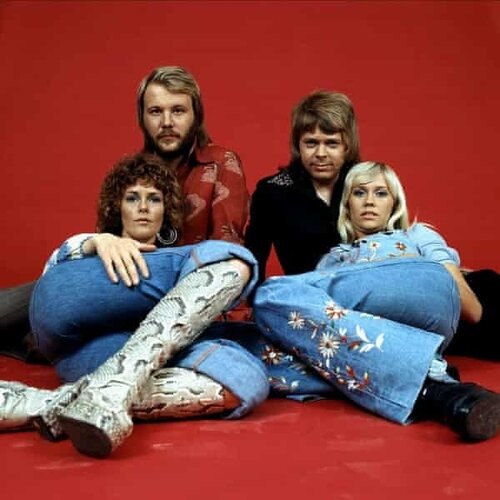
PHOTO CREDIT: Allstar Picture Library

Dancing Queen in this feature is that ABBA Gold has spent over a thousand weeks on the U.K. chart. It is an amazing achievement! I am not surprised that an album with so many ABBA classics has been in the charts all this time. Released in 1992, it is wonderful to realise how many people have bought the album. It is a real classic. On 16th August, Dancing Queen turns forty-five. The lead single from their fourth studio album, Arrival, the song is one of the most loved and popular in all of ABBA’s catalogue. I want to bring in a couple of articles that dig deep into an absolute classic track. Whether you see it as Pop, Eurodisco or something else, it has endured through the decades. It is a track that we all know and can sing along to! It became ABBA's only number-one in the United States. It topped the charts in Australia, Canada, the Netherlands, Belgium, Ireland, Mexico, New Zealand, Norway, South Africa, Spain, Sweden, the U.K., Germany and Rhodesia. That is quite a feat! The first piece I want to quote from is from the ABBA website. The origins of Dancing Queen are really interesting:

A boogaloo beginning

The video for Dancing Queen was filmed at the Alexandra's discotheque in Stockholm.In early August 1975, ABBA were fresh off a summer tour of Sweden. But there was very little time for rest: for one thing, there were new recordings to be made. After their breakthrough with ‘Waterloo’ the previous year, the group had released their third album, simply titled ABBA, in the spring of 1975. The album yielded hits like ‘SOS’ and ‘Mamma Mia’. However, in the 1970s most major acts were expected to release an album every year, so the Andersson/Ulvaeus team was already working on new material.

On August 4, Björn and Benny entered Glen Studios, located in a Stockholm suburb, where they would spend two days recording backing tracks together with the session musicians. They brought with them the melodies for three new songs, all of which at this point only had nonsense lyrics – and titles that were equally preliminary. One of the songs was called ‘Tango’, but later turned into the more familiar ‘Fernando’. Another carried the working title ‘Olle Olle’, but was destined to remain unreleased. Composition number three, finally, was titled ‘Boogaloo’, suggesting that it had something to do with dance rhythms. And, indeed, this was the song that would eventually become ‘Dancing Queen’.

Agnetha and Frida giving their all in the Dancing Queen promo clip.Björn and Benny gave a lot of thought to how they would best achieve the dance feel they were after. For inspiration they turned to George McCrae’s 1974 disco hit ‘Rock Your Baby’, a pioneering recording within its genre. Added rhythmical influence came from the drumming on the 1972 album Gumbo by Dr. John, a favourite of ABBA session drummer Roger Palm and engineer Michael B. Tretow.

A good, solid backing track was put together for the song, consisting of drums, bass, guitar and keyboards. As basic as it was, just this first stage of the recording was enough to provoke a strong emotional reaction from Frida. ”Benny came home with a tape of the backing track and played it for me,” she recalled. ”I thought it was so enormously beautiful that I started to cry.”

Agnetha taking on the part of the dancing queen. It would take several months before the recording was completed, however – few ABBA songs had such a long journey from start to finish. It was ABBA manager Stig Anderson who came up with the title ‘Dancing Queen’, writing the lyrics in collaboration with Björn, and in September, Agnetha and Frida added their vocals to the track. But even as late as December 1975, Björn and Benny were still fine-tuning the recording, adding further overdubs.

The queen is snubbed

Agnetha and Frida in a typical profile shot.By coincidence, it happened that both ‘Fernando’ and ‘Dancing Queen’ were completed around the same time. ABBA wanted to release a new single in March 1976, and were unsure which of the tracks to choose:they knew that both had a strong hit potential. However, Stig Anderson insisted that ‘Fernando’ was the right song to go with at this point – a ballad seemed like a fresh contrast against the previous single, the uptempo ’Mamma Mia’ – and Björn and Benny eventually agreed with him. ‘Dancing Queen’ would have to wait another five months before it reached record shops.

On August 16, 1976, the ABBA single ‘Dancing Queen’ was finally released in Sweden. On the B-side it featured a song called ‘That’s Me’, taken from the ongoing sessions for ABBA’s upcoming album, Arrival.

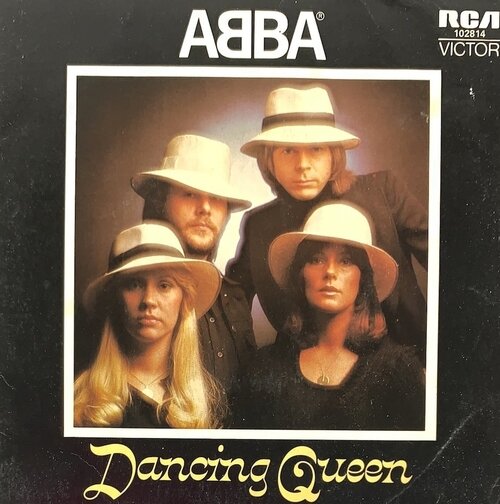
The record sleeve featured ABBA posing in white hats, a picture that became one of the most widespread images of the group. The photograph was taken by Ola Lager, who was responsible for many ABBA single and album cover pictures. The ”white hats” photograph is said to be one of the group’s own favourite images of themselves”.

Even if you are not an ABBA fan, one must surrender to the sheer joy of Dancing Queen. My personal favourite ABBA track is Super Trouper (from the 1980 album of the same name) – though Dancing Queen would be in the top-five for sure! Last year, The Guardian listed their favourite one hundred U.K. number-one singles. They placed ABBA’s Dancing Queen at nine. This is what they had to say:

The dense arrangements in Dancing Queen’s final mix make it especially magical. Their Phil Spector-obsessed audio mixer, Michael B Tretow, talked through the layering of the song in a 2001 BBC pop music series, Walk on By. Multiple tracks of percussion, stuttering guitars, synthesised strings, clavinet and vocals filled every second of the song with nagging pop hooks. In the same documentary, Nile Rodgers said he was hugely inspired by this approach to songcraft (in 1976, he was in the early stages of putting together Chic).

Dancing Queen was premiered in June 1976 in a suitably regal setting: a gala to celebrate the wedding of Sweden’s King Carl XVI. By the autumn, it was an international smash, with even smirking music press critics recognising its brilliance. “Any band that can make even disco sound like the Ronettes can’t be all bad!” crowed Robot A Hull in Creem. “It’s fodder for the masses in its least derogatory sense,” wrote Tim Lott in Sounds. New wavers loved Dancing Queen too. Elvis Costello cribbed its piano line for Oliver’s Army and Chris Stein admitted that Blondie’s Dreaming was “pretty much a copy of Dancing Queen”.

Although some of its lyrics have dated (“You’re a teaser, you turn ’em on” might not pass muster today), the bulk of them capture a sense of boundless possibility. Our dancing queen is looking for someone to dance with, but “anybody could be that guy” – the thrilling mystery of the future from the perspective of youth gleams in those words. A verse later, we’re told “anyone will do / You’re in the mood for a dance”. Even in the less progressive mid-1970s, having someone to dance with was far less important than the dancing itself.

“And when you get the chance,” we’re told, we become the dancing queen – that small word “and” positing this transformation as an inevitability. Today, the song’s legacy still delivers this message. Its way of bringing people together was underlined in the Abba film, Mamma Mia, as an ever-growing crowd gathered to sing it while roaming the streets of the fictional Greek island of Kalokairi. (This montage was revisited, with even bigger crowds, in its 2018 sequel.) Theresa May’s arrival to the song on stage at the 2018 Conservative party conference also showed us its transformative power: the right-wing press briefly turned in her favour in the midst of Brexit negotiations because of it (the Daily Mail said she’d “danced her way back to authority”)”.

When it comes to transcendent and iconic songs, there are few as big and important as Dancing Queen. It is no surprise that the song is the lead track on ABBA Gold. Nearly forty-five years after its release, people are discovering this song and being lifted by it. One hopes that the Swedish group (Agnetha Fältskog, Björn Ulvaeus, Benny Andersson, and Anni-Frid Lyngstad) reform or record new music together – there have been rumours circulating for years.  The magnificent Dancing Queen is…

ROUSING, glistening and truly uplifting.

FEATURE: Inspired By… Part Twenty: The Beatles

FEATURE:


Inspired By…

PHOTO CREDIT: Apple Corps Ltd.

Part Twenty: The Beatles

___________

WHILST it is impossible…

ee.jpg

 PHOTO CREDIT: Apple Corps Ltd.

to include all of the acts inspired by The Beatles in this feature, I wanted to include the legendary and iconic Liverpool group. When one thinks about artists who have inspired generations, they do not come more important than The Beatles! Before ending with a playlist containing some of those who have been influenced by The Beatles, I want to borrow heavily from AllMusic’s biography of the band:

So much has been said and written about the Beatles -- and their story is so mythic in its sweep -- that it's difficult to summarize their career without restating clichés that have already been digested by tens of millions of rock fans. To start with the obvious, they were the greatest and most influential act of the rock era, and they introduced more innovations into popular music than any other group of their time. Moreover, they were among the few artists of any discipline that were simultaneously the best at what they did and the most popular at what they did. Relentlessly imaginative and experimental, the Beatles grabbed hold of the international mass consciousness in 1964 and never let go for the next six years, always staying ahead of the pack in terms of creativity and never losing the ability to communicate their increasingly sophisticated ideas to a mass audience. Their supremacy as rock icons remains unchallenged to this day, decades after their breakup in 1970.

It's hard to convey the scope of the Beatles' achievements in a mere paragraph or two. They synthesized all that was good about early rock & roll, and changed it into something original and even more exciting. They established the prototype for the self-contained rock group that wrote and performed its own material. As composers, their craft and melodic inventiveness were second to none; they were key to the evolution of rock from its blues/R&B-based forms into a style that was far more eclectic, but equally visceral. As singers, both John Lennon and Paul McCartney were among the best and most expressive vocalists in rock, and the group's harmonies were intricate and exhilarating. As performers, they were (at least until touring wore them down) exciting and photogenic. When they retreated into the studio, they proved instrumental in pioneering advanced techniques and multi-layered arrangements. They were also the first British rock group to achieve worldwide prominence, launching a British Invasion that made rock truly an international phenomenon.

More than any other top group, the Beatles' success was very much a case of the whole being greater than the sum of its parts. Their phenomenal cohesion was due in large degree to most of the group having known each other and played together in Liverpool for about five years before they began to have hit records. Guitarist and teenage rebel John Lennon got hooked on rock & roll in the mid-'50s, and formed a band, the Quarrymen, at his high school. Around mid-1957, the Quarrymen were joined by another guitarist, Paul McCartney, nearly two years Lennon's junior. A bit later they were joined by another guitarist, George Harrison, a friend of McCartney. The Quarrymen would change lineups constantly in the late '50s, eventually reducing to the core trio of guitarists, who'd proven themselves to be the best musicians and most personally compatible individuals within the band.

The Quarrymen changed their name to the Silver Beatles in 1960, quickly dropping the "Silver" to become just the Beatles. Lennon's art college friend Stuart Sutcliffe joined on bass, but finding a permanent drummer was a vexing problem until Pete Best joined in the summer of 1960. He successfully auditioned for the combo just before they left for a several-month stint in Hamburg, Germany.

Hamburg was the Beatles' baptism by fire. Playing grueling sessions for hours on end in one of the most notorious red-light districts in the world, the group was forced to expand its repertoire, tighten up its chops, and invest its show with enough manic energy to keep the rowdy crowds satisfied. When they returned to Liverpool at the end of 1960, the band -- formerly also-rans on the exploding Liverpudlian "beat" scene -- were suddenly the most exciting act on the local circuit. They consolidated their following in 1961 with constant gigging in the Merseyside area, most often at the legendary Cavern Club, the incubator of the Merseybeat sound.

They also returned for engagements in Hamburg during 1961, although Sutcliffe dropped out of the band that year to concentrate on his art school studies there. McCartney took over on bass, Harrison settled in as lead guitarist, and Lennon had rhythm guitar; everyone sang. In mid-1961, the Beatles (minus Sutcliffe) made their first recordings in Germany, as a backup group to a British rock guitarist/singer based in Hamburg, Tony Sheridan. The Beatles hadn't fully developed at this point, and these recordings -- many of which (including a couple of Sheridan-less tracks) were issued only after the band's rise to fame -- found their talents in a most embryonic state. The Hamburg stint was also notable for gaining the Beatles sophisticated, artistic fans such as Sutcliffe's girlfriend, Astrid Kirchherr, who influenced all of them (except Best) to restyle their quiffs into the moptops that gave the musicians their most distinctive visual trademark. (Tragically, Sutcliffe would die of a brain hemorrhage in April 1962).

Near the end of 1961, the Beatles' exploding local popularity caught the attention of local record store manager Brian Epstein, who was soon managing the band as well. He used his contacts to swiftly acquire a January 1, 1962, audition at Decca Records that has been heavily bootlegged (some tracks were officially released in 1995). After weeks of deliberation, Decca turned them down as did several other British labels. Epstein's perseverance was finally rewarded with an audition for producer George Martin at Parlophone, an EMI subsidiary; Martin signed the Beatles in mid-1962. By this time, Epstein was assiduously grooming his charges for national success by influencing them to smarten up their appearance, dispensing with their leather jackets and trousers in favor of tailored suits and ties.

One more major change was in the offing before the Beatles made their Parlophone debut. In August 1962, drummer Pete Best was kicked out of the group, a controversial decision that has been the cause of much speculation since. There is still no solid consensus as to whether it was because of his solitary, moody nature; the other Beatles' jealousy of his popularity with the fans; his musical shortcomings (George Martin had already told Epstein that Best wasn't good enough to drum on recordings); or his refusal to wear his hair in bangs. What seems most likely was that the Beatles simply found his personality incompatible, preferring to enlist Ringo Starr (born Richard Starkey), a drummer with another popular Merseyside outfit, Rory Storm & the Hurricanes. Starr had been in the Beatles for a few weeks when they recorded their first single, "Love Me Do"/"P.S. I Love You," in September 1962. Both sides of the 45 were Lennon-McCartney originals, and the songwriting team would be credited with most of the group's material throughout the Beatles' career.

The single, a promising but fairly rudimentary effort, hovered around the lower reaches of the British Top 20. The Beatles phenomenon didn't truly kick in until "Please Please Me," which topped the British charts in early 1963. This was the prototype British Invasion single: an infectious melody, charging guitars, and positively exuberant harmonies. The same traits were evident on their third 45, "From Me to You" (a British number one), and their debut LP, Please Please Me. Although it was mostly recorded in a single day, Please Please Me topped the British charts for an astonishing 30 weeks, establishing the group as the most popular rock & roll act ever seen in the U.K.

What the Beatles had done was take the best elements of the rock and pop they loved and make them their own. Since the Quarrymen days, they had been steeped in the classic early rock of Elvis, Buddy Holly, Chuck Berry, Little Richard, Carl Perkins, and the Everly Brothers; they'd also kept an ear open to the early-'60s sounds of Motown, Phil Spector, and the girl groups. What they added was an unmatched songwriting savvy (inspired by Brill Building teams such as Gerry Goffin and Carole King), a brash guitar-oriented attack, wildly enthusiastic vocals, and the embodiment of the youthful flair of their generation, ready to dispense with postwar austerity and claim a culture of their own. They were also unsurpassed in their eclecticism, willing to borrow from blues, popular standards, gospel, folk, or whatever seemed suitable for their musical vision. Producer George Martin was the perfect foil for the group, refining their ideas without tinkering with their cores; during the last half of their career, he was indispensable for his ability to translate their concepts into arrangements that required complex orchestration, innovative applications of recording technology, and an ever-widening array of instruments.

Just as crucially, the Beatles were never ones to stand still and milk formulas. All of their subsequent albums and singles would show remarkable artistic progression (though never at the expense of a damn catchy tune). Even on their second LP, With the Beatles (1963), it was evident that their talents as composers and instrumentalists were expanding furiously, as they devised ever more inventive melodies and harmonies, and boosted the fullness of their arrangements. "She Loves You" and "I Want to Hold Your Hand" established the group not just as a popular music act, but as a phenomenon never before seen in the British entertainment business, as each single sold over a million copies in the U.K. After some celebrated national TV appearances, Beatlemania broke out across the British Isles in late 1963, and the group generating screams and hysteria at all of their public appearances, musical or otherwise.

Capitol, which had first refusal of the Beatles' recordings in the United States, had declined to issue the group's first few singles, which ended up appearing on relatively small American independents. Capitol took up its option on "I Want to Hold Your Hand," which stormed to the top of the U.S. charts within weeks of its release on December 26, 1963. The Beatles' television appearances on The Ed Sullivan Show in February of 1964 launched Beatlemania (and the entire British Invasion) on an even bigger scale than it had reached in Britain. In the first week of April 1964, the Beatles had the Top Five best-selling singles in the U.S.; they also had the first two slots on the album charts, as well as other entries throughout the Billboard Top 100. No one had ever dominated the market for popular music so heavily; it's doubtful that anyone ever will again. The Beatles themselves would continue to reach number one with most of their singles and albums until their 1970 breakup.

Hard as it may be to believe today, the Beatles were often dismissed by cultural commentators of the time as nothing more than a fad that would vanish within months as the novelty wore off. The group ensured this wouldn't happen by making A Hard Day's Night in early 1964, a cinéma vérité-style motion picture comedy/musical that cemented their image as "the Fab Four": happy-go-lucky, individualistic, cheeky, funny lads with nonstop energy. The soundtrack was also a triumph, consisting entirely of Lennon-McCartney tunes, including such standards as the title tune, "And I Love Her," "If I Fell," "Can't Buy Me Love," and "Things We Said Today." George Harrison's resonant 12-string electric guitar leads were hugely influential; the movie helped persuade the Byrds, then folksingers, to plunge all-out into rock & roll, and the Beatles (along with Bob Dylan) would be hugely influential on the folk-rock explosion of 1965. The Beatles' success, too, had begun to open the U.S. market for fellow Brits like the Rolling Stones, the Animals, and the Kinks, and inspired young American groups like the Beau Brummels, Lovin' Spoonful, and others to mount a challenge of their own with self-penned material that owed a great debt to Lennon-McCartney.

Between riotous international tours in 1964 and 1965, the Beatles continued to squeeze out more chart-topping albums and singles. (Until 1967, the group's British albums were often truncated for release in the States; when their catalog was transferred to CD, the albums were released worldwide in their British configurations.) In retrospect, critics have judged Beatles for Sale (late 1964) and Help! (mid-1965) as the band's least impressive efforts. To some degree, that's true. Touring and an insatiable market placed heavy demands upon their songwriting, and some of the originals and covers on these records, while brilliant by many groups' standards, were filler in the context of the Beatles' best work.

But when at the top of their game, the group was continuing to push forward. "I Feel Fine" had feedback and brilliant guitar leads; "Ticket to Ride" showed the band beginning to incorporate the ringing, metallic, circular guitar lines that would be appropriated by bands like the Byrds; "Help!" was their first burst of confessional lyricism; "Yesterday" employed a string quartet. John Lennon in particular was beginning to exhibit a Dylanesque influence in his songwriting on such folky, downbeat numbers as "I'm a Loser" and "You've Got to Hide Your Love Away." And tracks like "I Don't Want to Spoil the Party" and "I've Just Seen a Face" had a strong country flavor.

Although the Beatles' second film, Help!, was a much sillier and less sophisticated affair than their first feature, it too was a huge commercial success. By this time, though, the Beatles had nothing to prove in commercial terms; the remaining frontiers were artistic challenges that could only be met in the studio. They rose to the occasion at the end of 1965 with Rubber Soul, one of the classic folk-rock records. Lyrically, Lennon, McCartney, and even Harrison (who was now writing some tunes on his own) were evolving beyond boy-girl scenarios into complex, personal feelings. They were also pushing the limits of studio rock by devising new guitar and bass textures, experimenting with distortion and multi-tracking, and using unconventional (for rock) instruments like the sitar.

As much of a progression as Rubber Soul was relative to their previous records, it was but a taster for the boundary-shattering outings of the next few years. The "Paperback Writer"/"Rain" single found the group abandoning romantic themes entirely, boosting the bass to previously unknown levels, and fooling around with psychedelic imagery and backward tapes on the B-side. Drugs (psychedelic and otherwise) were fueling their already fertile imaginations, but they felt creatively hindered by their touring obligations. Revolver, released in the summer of 1966, proved what the group could be capable of when allotted months of time in the studio. Hazy hard guitars and thicker vocal arrangements formed the bed of these increasingly imagistic, ambitious lyrics; the group's eclecticism now encompassed everything from singalong novelties ("Yellow Submarine") and string quartet-backed character sketches ("Eleanor Rigby") to Indian-influenced swirls of echo and backward tapes ("Tomorrow Never Knows"). Some would complain that the Beatles had abandoned the earthy rock of their roots for clever mannerism. But Revolver, like virtually all of the group's singles and albums from "She Loves You" on, would be a worldwide chart-topper.

For the past couple of years, live performance had become a rote exercise for the group, tired of competing with thousands of screaming fans that drowned out most of their voices and instruments. A 1966 summer worldwide tour was particularly grueling: the group's entourage was physically attacked in the Philippines after a perceived snub of the country's first lady, and a casual remark by John Lennon about the Beatles being bigger than Jesus Christ was picked up in the States, resulting in the burning of Beatles records in the Bible Belt and demands for a repentant apology. Their final concert of that American tour (in San Francisco on August 29, 1966) would be their last in front of a paying audience, as the group decided to stop playing live in order to concentrate on their studio recordings.

This was a radical (indeed, unprecedented) step in 1966, and the media was rife with speculation that the act was breaking up, especially after all four spent late 1966 engaged in separate personal and artistic pursuits. The appearance of the "Penny Lane"/"Strawberry Fields Forever" single in February 1967 squelched these concerns. Frequently cited as the strongest double A-side ever, the Beatles were now pushing forward into unabashedly psychedelic territory in their use of orchestral arrangements and Mellotron, without abandoning their grasp of memorable melody and immediately accessible lyrical messages.

Sgt. Pepper's Lonely Hearts Club Band, released in June 1967 as the Summer of Love dawned, was the definitive psychedelic soundtrack. Or, at least, so it was perceived at the time: subsequent critics have painted the album as an uneven affair, given a conceptual unity via its brilliant multi-tracked overdubs, singalong melodies, and fairy tale-ish lyrics. Others remain convinced, as millions did at the time, that it represented pop's greatest triumph, or indeed an evolution of pop into art with a capital A. In addition to mining all manner of roots influences, the musicians were also picking up vibes from Indian music, avant-garde electronics, classical, music hall, and more. When the Beatles premiered their hippie anthem "All You Need Is Love" as part of a worldwide TV broadcast, they had been truly anointed as spokespersons for their generation (a role they had not actively sought), and it seemed they could do no wrong.

Musically, that would usually continue to be the case, but the group's strength began to unravel at a surprisingly quick pace. In August 1967, Brian Epstein -- prone to suicidal depression over the past year -- died of a drug overdose, leaving them without a manager. They pressed on with their next film project, Magical Mystery Tour, directed by themselves; lacking focus or even basic professionalism, the picture bombed when it was premiered on BBC television in December 1967, giving the media the first real chance they'd ever had to roast the Beatles over a flame. (Another film, the animated feature Yellow Submarine, would appear in 1968, although the Beatles had little involvement with the project, either in terms of the movie or the soundtrack.) In early 1968, the Beatles decamped to India for a course in transcendental meditation with the Maharishi; this too became something of a media embarrassment as each of the four would eventually depart the course before its completion.

The Beatles did use their unaccustomed peace in India to compose a wealth of new material. Judged solely on musical merit, the White Album, a double LP released in late 1968, was a triumph. While largely abandoning their psychedelic instruments to return to guitar-based rock, they maintained their whimsical eclecticism, proving themselves masters of everything from blues-rock to vaudeville. As individual songwriters, too, it contains some of their finest work (as does the brilliant non-LP single from this era, "Hey Jude"/"Revolution").

The problem, at least in terms of the group's long-term health, was that these were very much individual songs, as opposed to collective ones. Lennon and McCartney had long composed most of their tunes separately (you can almost always tell the composer by the lead vocalist). But they had always fed off of each other not only to supply missing bits and pieces that would bring a song to completion, but to provide a competitive edge that would bring out the best in the other. McCartney's romantic melodicism and Lennon's more acidic, gritty wit were perfect complements for one another. By the White Album, it was clear (if only in retrospect) that each member was more concerned with his own expression than that of the collective group: a natural impulse, but one that was bound to lead to difficulties.

In addition, George Harrison was becoming a more prolific and skilled composer as well, imbuing his own melodies (which were nearly the equal of those of his more celebrated colleagues) with a cosmic lightness. Harrison was beginning to resent his junior status, and the group began to bicker more openly in the studio. Ringo Starr, whose solid drumming and good nature could usually be counted upon (as was evident in his infrequent lead vocals), actually quit for a couple of weeks in the midst of the White Album sessions (though the media was unaware of this at the time). Personal interests were coming into play as well: Lennon's devotion to romantic and artistic pursuits with his new girlfriend (and soon-to-be wife) Yoko Ono was diverting his attentions from the Beatles. Apple Records, started by the group earlier in 1968 as a sort of utopian commercial enterprise, was becoming a financial and organizational nightmare.

These weren't the ideal conditions under which to record a new album in January 1969, especially when McCartney was pushing the group to return to live performing, although none of the others seemed especially keen on the idea. They did agree to try recording a "back-to-basics," live-in-the-studio-type LP, the sessions being filmed for a television special. That plan almost blew up when Harrison, in the midst of tense arguments, left the group for a few days. Although he returned, the idea of playing live concerts was put on the back burner; Harrison enlisted American soul keyboardist Billy Preston as kind of a fifth member on the sessions, both to beef up the arrangements and to alleviate the uncomfortable atmosphere. Exacerbating the problem was that the Beatles didn't have a great deal of first-class new songs to work with, although some were excellent. In order to provide a suitable concert-like experience for the film, the group did climb the roof of their Apple headquarters in London to deliver an impromptu performance on January 30, 1969, before the police stopped it; this was their last live concert of any sort.

Generally dissatisfied with these early-1969 sessions, the album and film -- at first titled Get Back, and later to emerge as Let It Be -- remained in the can as the group tried to figure out how the projects should be mixed, packaged, and distributed. A couple of the best tracks, "Get Back"/"Don't Let Me Down," were issued as a single in the spring of 1969. By this time, the Beatles' quarrels were intensifying in a dispute over management: McCartney wanted their affairs to be handled by his new father-in-law, Lee Eastman, while the other members of the group favored a tough American businessman, Allen Klein.

It was something of a miracle, then, that the final album recorded by the group, Abbey Road, was one of their most unified efforts (even if, by this time, the musicians were recording many of their parts separately). It certainly boasted some of their most intricate melodies, harmonies, and instrumental arrangements; it also heralded the arrival of Harrison as a composer of equal talent to Lennon and McCartney, as George wrote the album's two most popular tunes, "Something" and "Here Comes the Sun." The Beatles were still progressing, but it turned out to be the end of the road, as their business disputes continued to magnify. Lennon, who had begun releasing solo singles and performing with friends as the Plastic Ono Band, threatened to resign in late 1969, although he was dissuaded from making a public announcement.

Most of the early-1969 tapes remained unreleased, partially because the footage for the planned television broadcast of these sessions was now going to be produced as a documentary movie. The accompanying soundtrack album, Let It Be, was delayed so that its release could coincide with that of the film. Lennon, Harrison, and Allen Klein decided to have celebrated American producer Phil Spector record some additional instrumentation and do some mixing. Thus the confusion that persists among most rock listeners to this day: Let It Be, although the last Beatles album to be released, was not the last one to be recorded. Abbey Road should actually be considered as the Beatles' last album; most of the material on Let It Be, including the title track (which would be the last single released while the group was still together), was recorded several months before the Abbey Road sessions began in earnest, and a good 15 months or so before its May 1970 release.

By that time, the Beatles were no more. In fact, there had been no record”.

To mark the undying and endless influence of The Beatles, the playlist below collates songs from artists who either cite them as influences or have been clearly affected by them. As I say, it would be hard to include every musician who owes a debt to The Beatles. Here is just a portion of the great artists who would sound very different…

WERE it not for The Beatles.

FEATURE: Vinyl Corner: Regina Spektor - Begin to Hope

FEATURE:


Vinyl Corner

qqq.jpg

Regina Spektor - Begin to Hope

___________

EVEN though it is quite hard…

was.jpg

to find a copy of Regina Spektor’s Begin to Hope on vinyl, it is available through Amazon. This is an album that I really like and wanted to recommend. Released in June 2006, the fourth studio album from Spektor is brilliant. I really like Spektor’s albums, though I think Begin to Hope might be my favourite. The hugely successful single, Fidelity, is one of her best songs. If you have not heard of Regina Spektor or are unsure where to start, Begin to Hope is a good place to start. I do hope that there are plans to reissue the album on vinyl so that it is more widely available. It is such a strong and astonishing album from a songwriter whose lyrical and actual voice is like nobody else’s! I will get to a couple of reviews for the 2006 album. Before then, NPR provided an interview (conducted in 2006), where we discover more about Spektor’s upbringing and what she brought to Begin to Hope:

On her new release, Begin to Hope, singer, songwriter and pianist Regina Spektor sings in her native Russian for the first time.

"It feels very good to sing in Russian," the 26-year-old says. "It feels so good inside my body."

A Russian Jew, Spektor and her family fled the anti-Semitism of the Soviet Union and emigrated to the Bronx when she was 9 years old.

Spektor recalls how difficult it was to leave behind the family piano, which she began playing when she was 6.

Songwriting was difficult for her, she says, after studying classical music from the great composers. And as a result, she often incorporated hiccups and other odd sounds into her work. The hiccup sounds, she says, were like discovering she had a tambourine in her throat.

She also talks about how, unlike many songwriters, her songs aren't personal.

"I think songwriters are more related to fiction writers," she says. "The Odyssey was a story in song. To me, that's so beautiful, all those painted characters, all those travels and adventures."

And of songwriters who sing in their own voice, Spektor says, "It's almost like putting a ball and chain around your foot and being sentenced to being yourself. Who the hell wants to be themselves all the time? It's so boring".

I have heard Begin to Hope a few times. It is an album that provides so many treats and wonderful moments. Fifteen years after it was released, I do not feel it has lost any of its brilliance and impact. Spektor’s most-recent album, Remember Us to Life, was released in 2016. Many people will hope that there are more albums from Spektor in the future. She is one of the most original and consistent artists around.

Just before wrapping things up, it is worth bringing in a couple of reviews. The first one is quite brief. This is what The Guardian said when they reviewed Begin to Hope:

Russian-American songwriter Regina Spektor is a self-proclaimed "dork", conjuring up memories of Tori Amos. It's an apt comparison, because Spektor's first major-label release sets her up as a serious rival for Amos's queen-of-whimsy title. If elected (not inconceivable, considering the big-budget production that gives her girlish voice a very commercial cut-glass clarity), she'll bring to the job a highly appealing, open-hearted freshness. Her adopted Manhattan is the inspiration for these songs: the punk-folky That Time name-checks Delancey Street. The Muscovite in her surfaces on Apres Moi, whose drama stems from its sweeping grand-piano backdrop and the impassioned "Poka grohochushaya slyakot!" that closes the song. There's hardly a moment here that fails to enchant. As she says: "Vesnoyu chernoyu gorit”.

If you can go and find a copy of Begin to Hope online, it is definitely worth investing in. Seek our other Regina Spektor albums and get involved with a fabulous artist. Her songwriting and incredibly deliver has the ability to take you somewhere very special indeed. It is small wonder that Begin to Hope received acclaim when it was released.

AllMusic provided a deeper review when they investigated Begin to Hope. As usual, they made some interesting observations about one of 2006’s best albums:

“£On Begin to Hope, Regina Spektor treads a delicate balance between her anti-folk past and her present home on Sire Records. Though the label re-released Soviet Kitsch in 2004, Begin to Hope is Spektor's first original material for Sire, and it feels more like a major-label debut than Soviet Kitsch ever did. The album's big, glossy production and preponderance of drum machines and keyboards inches Spektor toward territory that isn't exactly mainstream, but is closer to a more conventional adult alternative singer/songwriter sound. Her songwriting mirrors this, too: "Field Below," which finds her wishing for the countryside while living in the city, has a mellow, appealingly rambling vibe that grows from the traditional singer/songwriter roots of Joni and Carole; "Better" takes the breathy, literate, pretty side of Spektor's music and tailors it into a radio-friendly single. "On the Radio" takes it a step further and becomes a smart, funny, and sad meta-single, with lyrics like "We listened to it twice/Because the DJ was asleep" backed by poppy synths and beats. But even though Begin to Hope's first few songs might suggest otherwise, Spektor is much too freewheeling and quirky a talent to stick to the straight and narrow for the entirety.

Show tunes, classic soul, the Bible, and the backs of cereal boxes are all inspirations for the album. And whether she quotes the melody from Doris Troy's "Just One Look" and pairs it with lyrics about orca whales on "Hotel Song," or begins the lovely, confessional closing track, "Summer in the City," with the line "summer in the city means cleavage," Spektor uses them in unexpected ways. She also places some truly surreal, heady tracks toward Begin to Hope's end: "Lady" is a torchy number arranged for piano, saxophone, and typewriter, while "20 Years of Snow" is buoyed along by impressionistic keyboards that twinkle and tumble like a just-shaken snow globe. "Après Moi," one of the album's most impressive tracks, showcases her classical piano training, her Russian heritage, and those biblical influences to ominous, paranoid effect. Leaving the more unique, quintessentially Regina Spektor-esque tracks at the end of Begin to Hope isn't so much a bait-and-switch as it is a clever way to lure in and loosen the inhibitions of new fans. The album feels like getting to really know someone: at first, it's polite and a little restrained, but then its real personality, with all of its charming idiosyncrasies, finally reveals itself”.

Begin to Hope is an album that unravels more as you listen and come back to it. I love all the sounds and innovations that Regina Spektor brings to her albums. It is a delight to dive in and hear all these details and interesting moments. If you can, go and spend some time with…

THE brilliant Begin to Hope.

FEATURE: The July Playlist: Vol. 4: Remember, a woman is a god

FEATURE:


The July Playlist

ddss.jpg

PHOTO CREDIT: Tommy Genesis 

Vol. 4: Remember, a woman is a god

__________

ALTHOUGH it is a little quieter…

ccc.jpg

 IN THIS PHOTO: Joel Culpepper/PHOTO CREDIT: FELIX

than previous weeks in terms of big names in the mix, there are still some heavyweights with new tracks out. Alongside music from Tommy Genesis, Joel Culpepper, Lorde, Camia Cabello, Matthew E. White, James Blake, IDER, Leon Bridges, and Tinashe, we have Prince, Dave, IDLES (ft. slowthai), Anne-Marie/Little Mix, The War on Drugs, and Julia Bardo. It is definitely a varied week for music. If you need a boost to get you into the weekend, the collection of new tunes below should do the job. It is going to be a changeable and unsettled weekend for many so, rather than brave the weather, staying in with some good music seems like the sensible option. Take a listen to the best new tracks from…

IN THIS PHOTO: IDER/PHOTO CREDIT: Daniela K Monteiro

THIS week.   

ALL PHOTOS/IMAGES (unless credited otherwise): Artists

__________

aaa.jpg

Tommy Genesis -  a woman is a god

v
we.jpg

Joel Culpepper Remember

wee.jpg

PHOTO CREDIT: Ophelia Mikkelson Jones

Lorde - Stoned at the Nail Salon

www.jpg

Camila Cabello Don’t Go Yet

sss.jpg

Matthew E. WhiteElectric

rrr.jpg

James Blake Say What You Will

see.jpg

IDER obsessed

v
gff.jpg

Leon Bridges Steam

rr.jpg

Tinashe I Can See the Future

tee.jpg

Prince Hot Summer

ccc.jpg

IDLES (ft. slowthai)Model Village

dsss.jpg

Anne-Marie, Little Mix Kiss My (Uh Oh)

qqqq.jpg

The War on Drugs Living Proof

dd.jpg

Julia Bardo - No Feeling

v
dddd.jpg

Alewya Spirit_X

dasss.jpg

DAISY WORLD SUNDOWN

sss.jpg

PHOTO CREDIT: Piczo

Lucy Tun MONARCHY

v
fwee.jpg

Julia Wolf Resting B*tch Face: Part 2

www.jpg

Remi Wolf - Liquor Store

v
sss.jpg

Alesha Dixon War

dsss.jpg

Brandi Carlile - Right on Time

v
sss.jpg

PHOTO CREDIT: Pooneh Ghana

La Luz - Watching Cartoons

mn.jpg

Penelope Isles Sailing Still

fff.jpg

Aquilo Our Bones Turn to Stone

nn.jpg

Grace Davies toothbrush

dd.jpg

The Linda Lindas “Oh!”

fss.jpg

Azure Ryder Some Kind of Love

aaa.jpg

PHOTO CREDIT: George Hutton

Jake Bugg Downtown

ddd.jpg

Larkins if + when

dss.jpg

Steve Gunn Fulton

dddd.jpg

Connie Constance - Prim & Propa

sss.jpg

TOPSParty Again

ddd.jpg

Jetta He Usually Likes Boys

ss.jpg

Lola Young - Pill or a Lullaby (4AM till sunrise)

eee.jpg

Willow KayneI Don’t Wanna Know

ee.jpg

Dave - Three Rivers

daa.jpg

PHOTO CREDIT: Nicole Mago

VÉRITÉ - he’s not you

ttt.jpg

Emma-Jean Thackray - Venus

FEATURE: Spotlight: Enny

FEATURE:


Spotlight

ssss.jpg

ENNY

___________

I am a little slow off the mark…

 PHOTO CREDIT: Udoma Janssen for CRACK

at the moment regarding some artists that should be in this Spotlight feature! To be fair, I have known about ENNY (Enitan Adepitan). I feel last year was a big year for her. In 2021, ENNY has taken even bigger steps - and she is being compared to some heavyweights of Rap and Hip-Hop (including Lauryn Hill). I am keen to bring in a few interviews where we learn more about the sensational London artist. First, this interview from The Line of Best Fit gives us some insight into her early musical memories and path into music:

Growing up in Thamesmead, South-East London, Enny's first musical memories are of listening to gospel music in her mum’s car as she was driven around. “Anytime you’d go to church, anytime you’d go to do shopping, or anytime I was just in her car it would just be that gospel music, gospel music, gospel music,” she smiles. “So that was a very fond memory.”

Around the age of seven she joined a local street dance group. The youngest one there, she began dancing to American hip hop, Missy Elliot a particularly prominent feature. “I wanted to be a rapper since I was a kid in primary school. It was always something I wanted to do, it was always in my head,” she says. “I think I’ve always been exposed to music as well, just through family and everywhere. I think that’s one of the most key things I can remember, just listening to music.”

She recounts that a lot of her friendships always grew from a shared love of music. J. Cole was her favourite artist growing up. “I remember trying to tell my friends to listen and then slowly by slowly they all caught on,” she laughs. “It’s very precious that moment, especially as a teenager.”

With her friends at school she formed a group called A8, named after their music room. However, when she left to study film at Canterbury Christchurch, music fell to the wayside. “Musically during uni I wasn’t really like outside, because I’m an introvert so I really just kept to myself and my housemates,” she explains. “I had my production stuff in my room but I never really tried to make music. I think that’s the period in my life where I didn’t really make music or meet other artists or look at the music scene.”

Upon leaving uni she tried to get into the film industry, but found it difficult to catch a break. “I was just getting older and after graduating things weren’t picking up and I just got a normal job,” Enny says. “I’d been there for two years and I started to realise that I wasn’t happy, and then you just start realising that you only have one life and you have a desire to chase it.”

This was a pivotal moment quitting her job and throwing everything back into music. “I was just constantly writing music,” she smiles. “So I would always make music but I wouldn’t release it. So there was a lot of time of me just growing internally and artistically but not putting anything out.”

Now being mentioned amongst a rising tide of black, female, UK rappers, Enny is aware of her position but feels that with opportunity doesn’t necessarily come the responsibility to represent an often homogenised group of people. “I feel like black women always have to be the black woman in these spaces, they can just never be the woman,” she says”.

Although I don’t think Hip-Hop and Rap is truly accepting of women - and it has not amended all of its bad practices - there are so many great women coming through that one cannot ignore! They are helping to break down doors and open up conversations. ENNY is among our brightest young artists. Someone who, surely, is going to rank alongside some of the very best in years to come! Earlier this year, The Guardian caught up with ENNY. I have selected a few sections. It is interesting learning about how she got noticed – and how she has risen in popularity during the pandemic:

Despite going to university and trying other careers, Adepitan kept making music – and got noticed by local radio stations for a freestyle version of her song He’s Not Into You. That is what put her on the radar of Root 73, an artist-development programme run by people born and raised in Hackney, east London.

“I met Root 73 in 2019 through my now-manager” – Adepitan turns the camera to Pascal, who’s sitting nonchalantly in the driver’s seat, and cackles. “He brought me into Root, which was the studio he was working out of, and they became family. They really took me in, putting me on stage and stuff like that early on, when I only had about three songs,” she says.

Considering her shyness, what were her first experiences on stage like? “Horrible!” she shouts. “I had to drink a lot of alcohol just to get the juices going.”

xxxx.jpg

 After the pandemic broke out and the gigs ended, Adepitan released Peng Black Girls, and by the end of the year it had blown up. The remix, which featured her label-mate Jorja Smith singing the hook rather than former collaborator Amia Brave, had been released via the streaming channel Colors. The video racked up millions of views in a number of days.

Online feedback seems to have been all the more significant for Adepitan given that she rose to fame during the pandemic. It has made for a strange introduction to the industry: the absence of live events means she is yet to meet many women in the business, other than Smith, whom she describes as a passionate perfectionist. “I think I’m still finding my footing,” she says.

When the industry resumes, there is a big world out there for Adepitan to explore. The last few years have seen a sudden boom for women in rap – from the success of Shygirl and Little Simz in the UK, to Megan Thee Stallion and Doja Cat across the pond. “It’s almost like a Renaissance moment for women who are taking a stand in what they want to do, and just being whoever they want to be when it comes to music. They’re not getting stuck in boxes, or focused on what they think that people might want to hear, or what labels are telling them to do. They’re just being themselves.

“Before Cardi [B] and Nicki [Minaj], it was Lil’ Kim and Missy Elliott, like you could pinpoint specific moments,” she says. “But now you’ve got hundreds of lady rappers.”

She admits that sometimes, as a Black woman, she feels the pressure of the industry looming over her. “I feel like that pressure was initially what kind of stalled me for a long time, because I always felt like there wasn’t a market for people that look like me ... for a dark-skinned Black rapper, especially one that was not going to rap about sex or stuff like that.

“But I’m going to die one day. I don’t want to have regrets and be like: ‘Oh, I didn’t do this because another human being thinks a certain way, or society is telling me that I can’t”.

I do wonder, as a Black woman in Rap, whether ENNY will get as many opportunities and platforms as some of her male peers. It is a shame that there are prejudices and discrimination that negatively impacts such strong and promising artists as ENNY. She is clearly fuelled and inspired by some icons of Rap. There is nothing to suggest that she will not be at their level before too long. On the evidence of what she has produced so far, she is going to be very special and adored.

There are a couple more interviews that are worth including before wrapping things up. One of the defining and crowning moments in ENNY’s career so far was the release of her song, Peng Black Girls. It is, as this CRACK interview explains, a huge moment:

“It’s precisely this reason that she put people like her at the centre of the video for her breakthrough track Peng Black Girls. Landing in November 2020, the visuals celebrated Black women of all hues, ages, hair and body types, as Enny takes centre stage looking extremely south London with pretty acrylic nails, a black puffer jacket and fiery red braids. Other scenes paid homage to her Nigerian heritage, with a regal pink gele and ankara dress, and showed her in a black slip evening dress. No matter how often people try to make Blackness monolithic, videos like this showcase its versatility. The song’s memorable opening lines, delivered in a laid-back, bouncy flow, are an ode to this: “There’s peng Black girls in my area code/ Dark skin, light skin, medium tone.”

Upon its release, Peng Black Girls quickly started to gain traction online as other peng Black girls found themselves, their lives and their experiences within the celebratory bars. At the time of writing the original song has more than one million views, while the remix featuring Jorja Smith has almost 5.5 million. “That’s gassy!” she says when I break the news. Enny has been uploading her freestyles onto YouTube since 2018, but it was when she self-released the soulful He’s Not Into You that she was signed to Smith’s label FAMM, setting the wheels in motion for their wildly successful collab on the Peng Black Girls remix. Nowadays, she’s taking a break from looking at the original’s streaming figures as she finds it all “a bit much”.

For now though, it’s Peng Black Girls that has resonated the most with her fans, and cemented her status as a rising star. The song’s success is such that she even had to stop using Hinge after a match recognised her. “Someone said Peng Black Girls yeah?’” she tells me. “And I was like, ‘Nah.’” The song sits among the canon of UK rap that builds and affirms our community in a country that often makes it clear our presence is unwanted at worst and conditional at best. Like Dave’s recent hit Black, or Bashy’s brilliant Black Boys before that, the track holds particular resonance with young Black people who, like Enny, don’t see themselves uplifted often enough. And if both Bashy and Dave’s Afrocentric rap songs hold a special place in UK music history as a reminder not to underestimate yourself, then both have also courted controversy. Peng Black Girls is no different, but rather than the backlash coming from angry white people, the addition of Jorja Smith on the remix served to infuriate some Black commentators. Indeed, the remix eclipsed the original, leading some to question why there was more appetite for a light-skinned pop star reworking a hook that was originally performed by the lesser known, and darker-skinned, Amia Brave”.

Even though she’s not entirely comfortable in her new surroundings yet, Enny finds herself a part of a golden generation of UK rappers. “Looking at the whole scene from soul to R&B there’s real quality,” she reflects, shouting out the new wave from Ragz Originale to Tiana Major9. She’s sanguine when I ask her about the future, revealing she doesn’t have a plan for where she will be in five years. She explains that if she has no expectations then she will be even more “gassed” for whatever lies in store. “I’m just a Black girl from south London and everything that has happened in the last year is mad, the people I’ve met, the interest,” she smiles. “I already feel mad proud”.

 PHOTO CREDIT: Udoma Janssen for CRACK

I want to end up with a great and deep interview from NME. There is a lot to enjoy about the interview. We go back to Peng Black Girls - and we discover how Queen Latifah is a source of inspiration:

“‘Peng Black Girls’, in particular, gives off the same vibes as rapping polymath Queen Latifah and her 1993 single ‘U.N.I.T.Y’. “There was a period of time where I fell in love with Queen Latifah, and just like the messaging of her music. I remember being 16 and hearing that song for the first time, I was like, ‘Oh, my God’. I think it’s great that she’s been recognised for her contributions to hip-hop. I feel like there’s a different energy from women when they rap. Men are more masculine with gangster rap, so when women came out and expressed themselves, it was cool.” Enny loves that the greats like Latifah and Lauryn Hill have paved the way for what we have now; when NME makes the suggestion that she could be the UK’s next Lauryn Hill, she’s smitten – this is the ultimate compliment, after all.

‘Under 25’ is yet more proof of UK rap’s strengths right now; perhaps many are not seeing it, but Enny may well be one to cut through. There are stars like Knucks, Che Lingo, BenjiFlow, who all have cult followings just like Enny’s, but they are getting overlooked by the current mainstream need for quick party songs and intense introspection. Enny feels that this “sick renaissance moment the UK is having” is falling short because there needs to be a place to recognise and a platform for this style of music. But then again, Enny wants you to remember that she “doesn’t want to blow up”, she “just wants to make music”. Her sound blowing up is just a bonus.

But, surely, there’s got to be some deeper mission in the work? Mainly, she wants to “take the music thing worldwide” to keep showing off the real London. The capital is forever changing, clamouring to keep up with worldwide hype and most of the time, it’s at the expense of the rich culture in its most populous areas including south London. And in doing so, she wants to show the world a true depiction of what it means to be a black woman in the UK”.

Go and follow ENNY. She has recruited a lot of fans during the pandemic. I reckon she is eager to get out and perform live. I think that is when we will see her pack her the biggest punch. Looking ahead, there are likely to be E.P.s and more singles released. With every new release, we hear a different side to an amazing and hugely inspiring artist. I shall leave things there. I am already a fan of ENNY. But, having read more about her, I am growing in passion and intrigue. As ENNY has said, there are numerous multi-talented women emerging in Rap right now. Let’s hope that this quality and quantity results in greater parity regarding festival bookings and focus. I know that ENNY herself will be a worldwide success before you know it. She is a sensation that you will want…

TO watch closely.

______________

Follow ENNY

ff.jpg

FEATURE: Childhood Treasures: Albums That Impacted Me: T. Rex – Electric Warrior

FEATURE:


Childhood Treasures: Albums That Impacted Me

eee.jpg

T. Rex – Electric Warrior

___________

THIS is an album that contains…

aaa.jpg

 IN THIS PHOTO: Marc Bolan in 1971/PHOTO CREDIT: Bob Gruen

a few of the best T. Rex tracks ever. I heard Electric Warrior pretty early on in life. The album was released in 1971 – it celebrates fifty years in September. I mist have heard it in the late-1980s or early-1990s. I was aware of T. Rex to that point, and I had heard the greatest hits. Electric Warrior is the album that I bonded with and still hold dear. It is small wonder. When you consider the strength of the material and Marc Bolan’s phenomenal performances throughout. To me, Bolan is one of the most underrated songwriters ever. Look at some of the songs on Electric Warrior. Cosmic Dancer, Jeepster, Bang a Gong (Get It On), Life's a Gas, and Girl are all gems! When I was a child, I must have been struck by the catchiness of the songs. I had heard quite a bit of Glam music to that point. I was struck by the more theatrical elements of Electric Warrior. What kept me coming back was the variety. There are softer, more emotive numbers against stompers. If you are unfamiliar with Electric Warrior, then go and seek it out. It is one of the most consistently brilliant albums ever released. I am going to conclude with some more thoughts in a bit. Before that, I want to source a couple of reviews for an absolutely magnificent album.

AllMusic gave their impressions of 1971’s Electric Warrior. As you can see, they were hugely moved and stunned by a hugely influential album:

The album that essentially kick-started the U.K. glam rock craze, Electric Warrior completes T. Rex's transformation from hippie folk-rockers into flamboyant avatars of trashy rock & roll. There are a few vestiges of those early days remaining in the acoustic-driven ballads, but Electric Warrior spends most of its time in a swinging, hip-shaking groove powered by Marc Bolan's warm electric guitar. The music recalls not just the catchy simplicity of early rock & roll, but also the implicit sexuality -- except that here, Bolan gleefully hauls it to the surface, singing out loud what was once only communicated through the shimmying beat. He takes obvious delight in turning teenage bubblegum rock into campy sleaze, not to mention filling it with pseudo-psychedelic hippie poetry. In fact, Bolan sounds just as obsessed with the heavens as he does with sex, whether he's singing about spiritual mysticism or begging a flying saucer to take him away. It's all done with the same theatrical flair, but Tony Visconti's spacious, echoing production makes it surprisingly convincing. Still, the real reason Electric Warrior stands the test of time so well -- despite its intended disposability -- is that it revels so freely in its own absurdity and willful lack of substance. Not taking himself at all seriously, Bolan is free to pursue whatever silly wordplay, cosmic fantasies, or non sequitur imagery he feels like; his abandonment of any pretense to art becomes, ironically, a statement in itself. Bolan's lack of pomposity, back-to-basics songwriting, and elaborate theatrics went on to influence everything from hard rock to punk to new wave. But in the end, it's that sense of playfulness, combined with a raft of irresistible hooks, that keeps Electric Warrior such an infectious, invigorating listen today”.

There is another review that I want to source. When Pitchfork spent some time with Electric Warrior in 2003 (when it was reissued), this is what they said:

For those hunting down the singles, Electric Warrior does contain the immortal "Bang a Gong (Get it On)", but that's neither the only nor the best reason to pick it up. What makes this record so enduring is its almost accidental emotional depth: When T.Rex is kicking out the jams, they sound like they're having the most gleeful, absurd good time ever committed to wax. There's nothing so glorious in rock and roll as hearing Bolan croon, "Just like a car, you're pleasing to behold/ I'll call you Jaguar if I may be so bold," over his namesake boogie.

The most significant aspect of Electric Warrior isn't its arena rock confidence; it's that Bolan allows his grinning mask to slip. With the incomparable aid of producer Tony Visconti, Bolan sketches a vast, empty room, where, after the party's over, he resides alone, wide-eyed and desperate. On ballads like "Cosmic Dancer", "Monolith" and "Girl", he speaks in the same gibberish as elsewhere, but he's clearly haunted-- by what we can't say. But the gaping, searing question mark that comes at the conclusion of the album-- guitar feedback paired with a string section, holding a shivering and very ambivalent cluster of notes-- is just one of many clues that there's more to Electric Warrior than its surface lets on. This is not simply a man who plays party songs because he wants to: This is a man who plays party songs to fend off darkness”.

I have so much love and respect for Electric Warrior. It is an album that I can put on at any time - and it will make me feel better. From the unique and memorable lyrics, to the musicianship of the band and Marc Bolan’s magnetic vocals, one cannot help but love Electric Warrior. It was an album that impacted me as a child. One would think that the album has diminished or faded from my consciousness as I have played it so many times. The opposite is true. The magnificent 1971-released work of genius is enormously important to me…

AFTER all of these years.

FEATURE: The Kate Bush Interview Archive: 1980: MisK

FEATURE:


The Kate Bush Interview Archive

qqq.jpg

1980: MisK

___________

I am not sure…

qqq.jpg

who exactly conducted the interview that I am spotlighting today. In this run of Kate Bush features, I am looking back on great interviews through the years. Bush is such a compelling interview subject, that there are dozens to choose from! As I love 1980’s Never for Ever (her third studio album) so much, I wanted to look at a 1980 interview from MisK (I am not sure whether the main image is from 1980; it is around that time). Supplied by this indispensable source of Kate Bush interviews, the interview appears to have been conducted in London. It is a fascinating interview I want to quote sections from. I am not going to put it all here – I would urge people to check out the whole thing. Never for Ever was the album where Bush co-produced alongside Jon Kelly. It was her first big production credit (she assisted Andrew Powell on 1978’s Lionheart); Never for Ever is he most experimental and diverse album to that point. Although some of the questions are overly-personal and intrusive, there are some interesting exchanges:  

I: One has to begin at the beginning, Kate, and I can't help but realize that I can't make sense of the title of the album: Never For Ever. What does it mean?

K: Well, it's really meant to be reflective of all the things that happen to us all the time ourselves, we're never for ever, death is inevitable, things always pass, good and bad things, so when you're feeling really desperate you know that it's not going to last for ever. It's really saying that everything is transient - ourselves and everything that we are in is transient and we should really remember that because I think to remind you of that makes you think more.

I: During the time since you've made your last album, have you had reason to feel that way?

K: I think it's something I've always felt, probably since I started creating. I think once you start exploring the creative areas you become aware of how transient things are, especially one's writing, one's art. You become very aware of the fact that that won't be around for a long time - maybe, but very unlikely - and so that's something in your mind a lot of the time.

I: And do you feel sometimes that if I don't put this down on paper now I'll forget it and it will be gone for ever?

K: Yes - yes, I think you have to catch a moment when it's happening. It's like not snapping up opportunities when they wave at you - you can so often let things go by you and when you're old you think, wow, I let all those things go by me. You must try to act in the moment, though it's very hard.

I: Does that annoy you at any time - do you feel that you're not the master of your own time - if you get the muse you have to obey it then and there?

K: Yes, but unfortunately a lot of the time the muse is obstructed by other forces. I'll be very busy doing something else and although it's calling me I can go. That's something that I'm very aware of, the fact that when you do feel that there is something there, almost like a gift, I think you sometimes worry that you abuse it or neglect it and that it might go away. I think one of an artist's great fears is of drying up and I think probably anyone who writes must have such fear inside.

I: In "The Wedding List" you have a character named Rudy - is that named after anybody you'd read about in literature or real life?

K: No, not at all. It was really the name that just happened as the words were coming with the song and so I didn't fight it - I just accepted it.

I: Was it your idea to invite Paddy on the album or did he say to you hey, sis, can I be on it?

K: No, it's very much my idea from a long way back to involve Paddy. He's been on all the albums but not really featuring quite so much as on this one. I think one of the great things about this album is that it left much more room for people to do things than on the other ones - it was that direction, much more experimental, exploring. And Paddy played a big part with all the instruments exploring little pieces and areas, absolutely invaluable. Very like animation, his instruments - they just put a little bit of red on here and a little bit of green down there and complete it.

I: Has a great effort gone into the sound of this album, not just the music but the sound?

K: Yes. I thinks sounds are so important because that is what music is - it is the sound of the music - and the way sounds mix and move together is incredible. It is again so similar to colours and to have a pure colour and pure sounds are very similar things. In many ways I think we saw a lot of the sounds a visual things - this is the way I often interpret music, I see it visually, and so in many ways you'd interpret a mountain in the picture into a very pure guitar sound or whatever. I think everyone was very aware of sounds and the animation of it and how a certain sound could imply so much more at one piece in the song.

ssss.jpg

 I: You are the co-producer of this album with Jon Kelly. I suppose this then was your job in that regard, the direction of the sound?

K: Yes. The whole thing was so exciting for me, to actually have control of my baby for the first time. Something that I have been working for and was very nervous of too, obviously, because when you go in for the first time you really wonder if you are capable - you hope you are. Every time that we tried something and it worked it just made you feel so much braver. Of course it doesn't always work, but everyone helping and concentrating on the music, it's such a beautiful thing, it really is a wonderful experience - everyone's feelings going into the songs that you wrote perhaps in a little room somewhere in London, you know, it's all coming out on the tape.

I: The song after that, "Blow Away", is also about musicians, this in a different way - It's about a member of your band, perhaps fictitious, perhaps real life, who wonders where the music goes when he goes. Is there such a person who mentioned that thought to you.

K: No, there isn't such a person who actually said it, but I'm sure I know so many people that think that. I myself do feel that sometimes and it just seemed for someone in my band fictionally to open up to me, made it a much more vulnerable statement. It was really brought on by something - I think it was The Observer. They did an article on all these people who when they'd had cardiac arrests had left their bodies and travelled down a corridor into a room at the end. In the room were all their dead friends that they'd known very well and they were really happy and delighted. Then they'd tell the person that they had to leave and they'd go down the corridor and drop back into their body. So many people have experienced this that there does seem to be some line in it, maybe. It's some kind of defense hysteria, I don't know, but they felt no fear and in fact they really enjoyed it. Most of them have no fear of dying at all. And I thought that a nice idea, what a comfort it was for musicians that worry about their music; (knowing) that they're going to go up into that room and in there there's going to be Jimi Hendrix, Buddy Holly, Minnie Ripperton, all of them just having a great big jam in the sky, and all the musicians will join in with it.

I: And so Bill, who was mentioned in the title, Bill is the fictitious member of the band?

K: No. Bill is Bill Duffield, the gentleman who died on our tour and in so many ways he made me want to write the song right from the beginning. It was such a tragedy and he was such a beautiful person that it only seemed right that there should be something on the next album for him.

I: It's almost ironic that it does have a very up tempo new waveish feel because in some of your earliest interviews you said that some of your favourite artists were the new wave artists even though you yourself did not transmit as a new wave artist. Do you think there's any paradox in that?

K: Hard to say. I suppose I can't really relate to them, that's what I mean, because I do feel different in so many ways, like the way I go about things. I'm not projecting myself as a new wave person and people wouldn't accept me as such because my music is generally not in that area. But I love the energy, I love the power and the rawness - I love raw music, it's very primitive, it's what so much of our music is about. That's what I love and it's something I've always enjoyed - I've always loved rock 'n' roll and only recently have I started learning to control rhythm in my songs. It's normally controlled me and it's mainly the rhythm box that has helped me tremendously.

I: There follows an interlude called "Night Scented Stock". Have you ever wanted to do more in the way of instrumental or sound without words?

K: Yes, I have. I think perhaps I've always felt worried about doing it myself because I've always written songs and I've never really regarded myself as much as a musician as a songwriter. This album taught me that I should be a little more brave about that because music without words is just as beautiful and sometimes I feel the need to just keep putting words on music instead of just letting the music be. I hope in the future that perhaps I will move into that area a little more.

I: You mentioned there's a least one unreleased track - are there tracks we will never hear or will they come out as singles?

K: I think they'll come out. Some of them have already come out as B sides, tracks that weren't on the album we put on the B sides of singles. That's something I've always wanted to do, it's so good to give the public something not on the album, especially if they're going to buy that too. It's quite exciting because you can dig up little novelty tracks that you've forgotten all about that you did years ago and for a B side they're smashing because they're one off and people have never heard them and it's a monument in time that may be from years ago.

I: You mentioned there are some ideas for you now as you consider your next recorded work - do you think you will do more recording next or will you do live work or will yo go home to the farm and think about it?

K: As I was saying, I really don't know. I want to do both so badly - the logical move would be to tour next but I'm so worried about making that decision, it's a long piece of time to give away and I want to do an album so badly. It's very difficult for me at this time to choose. I hope that as the months pass now with this promotion the answer will clink in my head - it always does that at the last minute”.

This is an interview that I had not come across before but was interested to seek out. I love Never for Ever. It is very much an underrated album. In the production seat, Bush was expanding her horizons and making very different musical compared to that on The Kick Inside and Lionheart. The interview above is really illuminating. Many people might not be aware of a lot of Kate Bush’s print interviews - as they are quite old and have been archived. As you can see above, she provided fresh perspectives and revelations…

err.jpg

 PHOTO CREDIT: Angelo Deligio/Mondadori via Getty Images

FOR every album.

FEATURE: The Lockdown Playlist: Mercury Prize Winners

FEATURE:


The Lockdown Playlist

www.jpg

IN THIS PHOTO: Michael Kiwanuka won last year’s Mercury Prize for his album, KIWANUKA/PHOTO CREDIT: Eleonora C. Collini 

Mercury Prize Winners

___________

I realise that we are not…

qqq.jpg

 IN THIS IMAGE: Primal Scream’s third studio album, Screamadelica, won the first Mercury Prize (formerly called the Mercury Music Prize) in 1992

really in lockdown anymore but, as I want to put out regular playlists, I will keep the name. I am doing another playlist around the Mercury Prize, as the shortlist for this year is going to be announced very soon. Here are some more details about when the nominees will be announced and when the event takes place:

The shortlist of the twelve 2021 Hyundai Mercury Prize ‘Albums of the Year’ will be announced on Thursday, 22 July 2021.

The Hyundai Mercury Prize recognises the best new British & Irish music, celebrating artistic achievement across an eclectic range of contemporary music genres. Hyundai has been the title sponsor of the Prize for the past 5 years, supporting extraordinary artists that drive progress not just in the UK but across the world.

The 2021 Hyundai Mercury Prize Awards Show will be held at the Eventim Apollo, Hammersmith on Thursday, 9 September 2021 (subject to Government guidelines).

The Awards Show will celebrate the twelve shortlisted artists & albums – and the evening will culminate in the announcement of the overall winner of the 2021 Hyundai Mercury Prize for Album of the Year. The Prize’s broadcast partner BBC Music will be providing television and radio coverage of the event”.

Looking ahead to a shortlist that is going to feature some phenomenal albums, this Lockdown Playlist is all about previous winners. Included is a track from each album that has won the Mercury Prize since its first year back in 1992. Here is a selection of…

SONGS from some truly amazing albums.

FEATURE: Beating Around the Proverbial: The Limitations of Artists Covering Kate Bush – and Why They Don’t Tell the Whole Story

FEATURE:


Beating Around the Proverbial

aaa.jpg

The Limitations of Artists Covering Kate Bush – and Why They Don’t Tell the Whole Story

___________

WHILST one can never begrudge…

skdkjd.jpg

 IN THIS PHOTO: Kate Bush in a still from the video of Experiment IV (from 1986’s The Whole Story)

artists covering Kate Bush’s music, I do feel like there are issues. Bush herself, as I have explored before, was quite wide-ranging when covering others – from Elton John, to The Beatles and traditional songs, she has never been shy about keeping things varied and not restricting herself! It is a bit irksome when artists cover the same song. As NME reported, Car Seat Headrest are the latest to cover a well-trodden Kate Bush song, Running Up That Hill (A Deal with God). Georgia covered the same song not too long ago. I can understand why people gravitate towards the track - though no cover is especially radical! Once you have heard a cover or two, you don’t need artists doing it again. I wonder whether Car Seat Headrest considered other Kate Bush songs. It seems a bit Route 1 going for one of her best-known songs. There are playlists of artists covering Kate Bush songs. As you can see, there are few non-singles/deep cuts explored. Even though there have been some fine covers of Running Up That Hill (A Deal with God), it has been overdone now! Other notable covers stick close to the singles and do not tread past the oft-heard. This probably ties into my moan about radio stations playing the same Kate Bush songs. If artists are not massive fans, are they covering a Bush song that gets played a lot – the assumption that people only want to hear this and, therefore, a cover is a good choice?!

There is this link between stations being very limiting (only playing the hits) and artists not taking the opportunity to cover a less obvious track. Away from the singles, each of Bush’s studio albums has a song that warrants covering. I know that a few of her deeper cuts have been covered. It doesn’t happen that often. Kite and Room for the Life are two songs from The Kick Inside that have not been tackled too much. Lionheart’s Full House and Kashka from Baghdad would warrant new inspection. Every album after that has these gems that are not played on radio much and people do not know a lot about. Not to blame artists exclusively for a lack of imagination. I suppose they are either covering Kate Bush songs that mean a lot to them or ones that they feel they can do a good job with. I get a feeling that many are being rather lazy with covers and have not listened to other tracks. I don’t think the world needs another take on a song like Hounds of Love or Running Up That Hill (A Deal with God). How about more artists reinterpreting a song like The Dreaming’s Pull Out the Pin or Get Out of My House? Again, those songs have been done, though not very often. We have entire swathes of Kate Bush songs that have not been covered at all. It is ironic that, in a year where we celebrate the thirty-fifth anniversary of a Kate Bush greatest hits collection called The Whole Story, many people do not know the whole story regarding Bush’s music!

I do like a good cover version, regardless of what song is approached. The song above is an example of a great cover of a Kate Bush single. It is very different to the original. It would be nice, as there is as much love for Bush now as any other time, to get artists to dip down and provide new exposure to songs that get overlooked. This is especially true for big artists. How many major musicians have covered a Kate Bush song that wasn’t a single or is played a lot on the radio? It is not many! Rather than this being a rant on my part, cover versions, like radio play, helps gets Bush’s work to new generations. I do fear that, for an artist who is lauded because she is an albums artist, so many of the hits are being covered – whereas the album tracks are never even considered. Maybe this will change through the years. Although an act like Car Seat Headrest providing yet another cover of a song that has been hammered quite a bit is not so bad, it does show a lack of taking an opportunity or showing real knowledge of Bush’s work. If you spend some time listening to her albums, there are so many songs that are relatively untouched where artists could provide something magnificent! It is brilliant that radio stations play Kate Bush’s music and fellow artists cover her songs. Unfortunately, because the lesser-known songs are rarely played or covered, they are really not telling…

THE whole story.

FEATURE: The Lockdown Playlist: The Best of Alison Krauss

FEATURE:


The Lockdown Playlist

The Best of Alison Krauss

___________

FOR this Lockdown Playlist…

 PHOTO CREDIT: Decca/Universal

I am celebrating the upcoming fiftieth birthday of a fantastic musician. Alison Krauss is fifty on 23rd July. She is an amazing American Bluegrass-Country singer and musician. To mark her birthday, the playlist is a selection of her best songs. Before getting to that, it is worth compiling some biography. AllMusic can assist with that:

With her silky vocals, warm personality, and estimable skills as a fiddler, Alison Krauss helped bring bluegrass to a new audience with music that stayed true to the roots of the style while adding appeal for country and pop audiences. Blending bluegrass with folk and country accents, Krauss was instantly acclaimed from the start of her career, but it wasn't until her platinum-selling 1995 compilation Now That I've Found You that she became a mainstream star. Between her 1987 debut Too Late to Cry and Now That I've Found You, she matured from a child prodigy to a versatile, ambitious, and diverse musician and, in the process, made some of the freshest bluegrass of the late '80s and early '90s. Later, with her appearance on the soundtrack to the film O Brother, Where Art Thou? and a collaborative project with Robert Plant, Krauss won the recognition of the mainstream pop audience without compromising her musical ideals along the way.

When she was five years old, Krauss began playing the violin, taking classical lessons. She soon tired of the regimen of classical playing and began performing country and bluegrass licks. At the age of eight, she began entering talent contests in and around her native Champaign, IL. Two years later, she had her own band. In 1983, when she was 12 years old, she won the Illinois State Fiddle Championship and the Society for the Preservation of Bluegrass in America named her the Most Promising Fiddler in the Midwest. In 1985, Krauss made her recording debut on an album, playing on a record made by her brother Viktor, Jim Hoiles, and Bruce Weiss. The album was called Different Strokes and appeared on the independent Fiddle Tunes label. Later that year, she signed to Rounder Records. She was 14 years old at the time.

Too Late to Cry, Krauss' debut album, appeared in 1987 to very positive reviews. The album was recorded with Krauss' backup band, the Union Station, which featured guitarist Jeff White, banjoist Alison Brown, and bassist Viktor Krauss; the following year, the group won the Society for the Preservation of Bluegrass in America's National Band Championship contest. In 1989, Krauss and Union Station released Two Highways, which was nominated for the Grammy Award for Best Bluegrass Recording. Although the album didn't win the award, her next album, 1990's I've Got That Old Feeling, did. The success of I've Got That Old Feeling was unprecedented for bluegrass acts in the '80s and it laid the groundwork for Krauss' breakthrough in the '90s. By this time, Union Station's lineup had more or less settled. It now featured mandolinist Adam Steffey, banjoist/guitarist Ron Block, bassist Barry Bales, and guitarist Tim Stafford; Stafford later left the group and was replaced by Dan Tyminski.

In 1992, Alison Krauss & Union Station released Every Time You Say Goodbye, which featured a typically eclectic array of material. The album appeared in the country charts and Krauss' videos were shown on Country Music Television. I Know Who Holds Tomorrow was released in 1994 and was even more successful. But it was the 1995 compilation Now That I've Found You: A Collection that made Krauss a star. The album reached number two on the country charts and -- even more remarkably -- went into the pop Top Ten and sold over a million copies. Its success confirmed her status as bluegrass' leading light in the '90s.

Krauss & Union Station followed the unexpected success of Now That I've Found You with So Long, So Wrong in spring 1997. Forget About It followed in mid-1999. A year later, Krauss & Union Station joined the likes of John Hartford, Ralph Stanley, and others for the multi-million-selling soundtrack O Brother, Where Art Thou? A North American tour showcasing some of the album's stellar musicians followed in summer 2002, allowing Krauss and her band's popularity to soar. New Favorite appeared in November and went gold within four months. A live album followed soon after, and in 2004 Krauss released Lonely Runs Both Ways. A Hundred Miles or More, a collection drawn from Krauss' Rounder albums, along with sides recorded for various soundtrack projects and five previously unreleased tracks, appeared in 2007. Also appearing in 2007 was Raising Sand, an acclaimed, multi-platinum collaboration with Robert Plant. She was back with Union Station for 2011’s Paper Airplane, which was self-produced by the band and engineered by Mike Shipley.

In 2013, Krauss began work on a solo album with producer Buddy Cannon, but between dealing with vocal problems and extensive touring with Union Station, it wasn't until 2017 that the album was released. A collection of classic tunes performed in the countrypolitan style, Windy City was also Krauss' first album for Capitol after a long association with Rounder”.

Here is a selection of brilliant songs that feature the rare and obvious talents of Alison Krauss. I hope that, on 23rd July, Krauss has…

A fantastic day.

FEATURE: Groovelines: The Cardigans - Lovefool

FEATURE:


Groovelines

www.jpg

IN THIS PHOTO: The Cardigans photographed circa 1997/PHOTO CREDIT: Andy Willsher/Redferns/Getty Images

The Cardigans - Lovefool

___________

IN September…

qqq.jpg

there are two big anniversaries regarding The Cardigans. The Swedish band released their debut album, First Band on the Moon, on 17th September, 1996. The album’s first single, Lovefool, was released on 14th September, 1996. It is amazing to think that a song that strong was released so early in their career! It is a classic that is almost twenty-five. I remember when the song came out. In high school, I loved the Pop music that was in the charts. I don’t think I knew about The Cardigans prior to Lovefool’s release. I was instantly smitten. I especially loved Nina Persson’s incredible voice. Wikipedia give us some background regarding the song:

"Lovefool is a song written by Peter Svensson and Nina Persson for Swedish rock band the Cardigans' third studio album, First Band on the Moon (1996). It was released as the album's lead single on 9 September 1996 in the United Kingdom and internationally on 5 October 1996.

Following a re-release in 1997, "Lovefool" found international success, peaking at number two on the UK Singles Chart and achieving moderate success on other European charts. In North America, it reached number three in Canada and number two on the US Billboard Hot 100 Airplay Chart (it did not appear on the Hot 100 due to rules in place at the time). In Australasia, the song topped the New Zealand Singles Chart and climbed to number 11 in Australia, earning Gold sales certifications in both regions”.

If you have not heard the album, First Band on the Moon, I would urge you to do so. It is an interesting album with many gems. Your New Cuckoo is a song from The Cardigans one does not hear much. I am surprised that a song as instant and brilliant as Lovefool appears so low down the album tracklist (it is the seventh track). Also on the album is a brilliant cover of Black Sabbath’s Iron Man. That goes to show how confident The Cardigans were right from the off! I think that Lovefool is one of the most memorable songs from the ‘90s. One need only hear a few seconds of the introduction to know what it is! One feels warmer when they hear the song. Although Lovefool is quite a simple song, it resonates because of the musicianship of the band and Persson’s intoxicating voice. The video is also pretty fantastic! Nearly twenty-five years after it was released into the world, Lovefool still sounds fresh. You might listen to a song like this today and not feel as though it is out of step with the current times. That said, there have been a lot of artists making music inspired by the 1990s. Five years ago, Billboard marked twenty years of a classic track. Nina Persson reflected on a song that was a huge chart success in 1997:

Twenty years ago today, a Swedish alt-pop band called The Cardigans released a single very much unlike anything else they'd recorded, but which would change the course of the band's career.

"Lovefool" -- the uber-earworm from the band's third studio album, First Band on the Moon -- swiftly became a hit in Europe but didn't debut internationally until Oct. 5, 1996. "We put out that song and record and embarked on a long tour, so in one way, nothing changed for us," frontwoman Nina Persson told Billboard recently over the phone from Los Angeles, where she was preparing to play a show with Local Natives. "Then the movie came out" -- that would be BazLuhrmann's '90s-defining Romeo + Juliet -- "and the U.S. caught on tremendously."

After Romeo + Juliet was released on Nov. 1, 1996, "Lovefool" debuted on the Adult Pop Songs chart dated Nov. 30 at No. 39. It then hit the Radio Songs chart the following week, peaking at No. 2 and staying there for eight nonconsecutive weeks. It spent seven weeks at No. 1 on the Pop Songs airplay chart, beginning with the Feb. 22, 1997-dated tally. (The song did not chart on the Billboard Hot 100 chart, because at the time, non-commercially available songs -- like "Lovefool" -- were not eligible to chart on the list.)

As Persson recalls today, "Lovefool" felt like an odd fit for The Cardigans. "We definitely were aware that it was a single and a catchy song when we wrote it, but the direction it took is not something we could have predicted," Persson says. "It wasn't necessarily our character; it felt like a bit of a freak on the record -- which, objectively, it still is." The song's upbeat feel wasn't the band's initial intention. "Before we recorded it, it was slower and more of a bossa nova," Persson says. "It's quite a sad love song; the meaning of it is quite pathetic, really. But then when we were recording, by chance, our drummer started to play that kind of disco beat, and there was no way to get away from it after that."

The band had already shot a different music video for the U.K. and Europe -- "much more bleak, much more our original style," Persson says. "We had an actor playing a sort of handsome-man-love-interest of mine, and he was supposed to be a kind of gangster and the band played his gang members." But thanks to the success of Romeo + Juliet, another video debuted and became ubiquitous on MTV, cementing Persson's public image as a flaxen-haired pixie floating at sea, a message in a bottle in human form. Watch the MTV staple below, as well as a side-by-side comparison of the two videos:

Persson acknowledges she and her bandmates weren't initially thrilled by the success of "Lovefool." "It took over our whole existence, and it wasn't something we totally identified with," she says today. The Cardigans played it on Beverly Hills, 90210 and on the morning talk show circuit; Persson remembers being "freaked out" when she'd see the video on screens in American clothing stores. "We were kind of snobs," she acknowledges. "We felt like these things were glitzy, and we felt like, 'No, no, we're a rock band!'"

sss.jpg

 But today, with the distance of two decades, she's able to look on the song a bit more kindly. "Now, we see it from the other end, and we're proud and thankful," she says. The band happily plays "Lovefool" in concert. And as Persson herself wrote on her Instagram on the anniversary of the song's U.K. release: "We love you, sweet nuisance!”.

Although the band became defined by Lovefool, it is good that Persson and The Cardigans look back fondly and are appreciative. It must have been strange, in 1996 (and 1997), having a song that big on your hands. No matter what they put out after that, they would have had to match the success and sound of Lovefool. The 1990s produced many glorious songs that will be remembered for decades. There are few as potent, sweet, moving and timeless as Lovefool. I wonder whether The Cardigans will mark twenty-five years of the song in September. It is a track that is played a lot to this day. It is reaching new generations. Such a blissful song, there is also this note of heartbreak woven through. Such a skilfully-written track that is performed beautifully! Taken from the simply excellent debut album, First Band on the Moon, Lovefool is an iconic track. I first heard it when it came back, yet I do not tire of hearing it now. It brings back fond memory. It also hits me in different ways every time I approach it. Lovefool means a lot to different people. Everyone has their own experiences with the song. There is no doubt that the song is…

ONE that is very dear to me.

FEATURE: Life for the Room: Kate Bush’s Music and How Dance Inspired Her Sense of Expression and Curiosity

FEATURE:


Life for the Room

dxc.jpg

IN THIS PHOTO: Kate Bush in London in 1978/PHOTO CREDIT: Gered Mankowitz

Kate Bush’s Music and How Dance Inspired Her Sense of Expression and Curiosity

___________

BY next summer…

sssxxxx.jpg

I hope to have recorded and produced something that celebrates forty-five years of The Kick Inside’s existence. Kate Bush’s debut album was released in February 1978, though it was recorded in the summer in 1977. I have been spending a lot of time with the album lately. I will move on very soon. Whilst researching and reading (for the nth time!) Graeme Thomson’s must-read biography of Bush, Under the Ivy: The Life & Music of Kate Bush, new things jumped to life and got inside my head. Whilst I am not going to quote from the book directly, most of the observations and thoughts here are from that book. One listens to albums such as 1982’s The Dreaming or 1985’s Hounds of Love and experiences these immersive songs and moments that are so expressive and otherworldly. One might not be aware of the importance of dance and movement that Bush acquired at a young age. Listen to The Kick Inside, and there are songs from a young woman who is free and unabashed. She talks about lust and sexual desire in a frank, honest and beautiful way. She was raised in a liberal household where she was encouraged to be free-spirited. Her brother, John (Jay) wrote poetry that was explicit and sensual. It showed that she did not have to be limited and could explore her desires and fantasies in a very personal, adult and original way.

Compared to a lot of what was in mainstream music in 1978, songs from The Kick Inside explored sex and physical exploration in a different and refreshingly memorable way. Bush was encouraged to poeticise her life. Because of that, her wordplay, imagery and sense of expression is vivacious, imaginative and unhindered by convention. Folk music that was abundant in her house portrayed images of spirts, ghosts, strange characters and the extraordinary. It was not escapism. It was the opposite of that. One can hear this influence through The Kick Inside. When it comes to the captivating early videos and how physical and expressive her lyrics are, dance classes played a big role. Although Bush was invested and interested in dance as a young child, one can look back to 1973. There was interest in her in 1973 (and before). In that year, she recorded with Pink Floyd’s David Gilmour in the summer. Ten-twenty songs were recorded then. It was not until 1975 when Bush reconnected with Gilmour, where she recorded professional at AIR Studios, London with producer Andrew Powell (who produced The Kick Inside). It was took until July 1976 when Bush was signed to EMI Records (at just sixteen years old; she was put on retainer for two years by Bob Mercer. They give her an advance of £3,000 to develop and widen her talent). I am going off on a tangent a bit. Between 1973-1975 there was this period of limbo, where Bush was spotted and eager but she was a long way from being ready to record a full album.

In the time, she practised dance at East Wickham Farm. Whilst quite modest and fairly basic, it was Bush understanding the importance of dance and movement. In terms of what she was dancing to, I think The Beatles’ Eleanor Rigby was one. It was not exactly intense, theatrical or especially upbeat! The lightbulb moment came when Bush saw a production of Lindsay Kemp’s Flowers. She saw it at the Collegiate Theatre, Bloomsbury in 1975. This was a show that opened Bush’s mind and spirit. Here is some information regarding the production:

Inspiration: Kemp’s extremely free interpretation of Genet’s novel “Our Lady of the Flowers”, with himself playing the central role of Divine, a transvestite transcending gender in a world of criminals, whores and angels: prisons and sexual fantasies, Genet’s verbal violence and poetry transformed into music and gesture, silence and stillness. A dreamlike journey to destruction, through seduction, shock, laughter, poetry and total emotion”.

With nothing like this on her school curriculum at the time (as you’d imagine!), the experience influenced her decision to leave school. In 1976, at the cost of 50 pence per session, she attended Lindsay Kemp’s mime class. Bush also took dance classes at the Dance Center, Covent Garden. The late Kemp recalls seeing Bush at his classes and observing a shy-but-eager student. Soon enough, she started to come out of herself and became more confident – a long way from the coy student who would stand at the back of the room and needed to be brought out of a state of meekness.

Another instrumental moment came when Bush started working alongside American dance instructor, Robin Kovac. She helped Bush deflate her inhibitions. There was real growth in terms of Bush’s creative output from 1973. Her songs were less melancholic and had stronger melodic hooks. It is no coincidence that dance entering Bush’s world resulted in huge creativity. The more she explored and practiced, the better her work became; the more distinct and original work she produced. Songs written at 44 Wickham Road included Hammer Horror, Oh, to Be in Love and Them Heavy People. Not that Bush’s songs were ordinary or lacked expression before she became more engaged with dance. I don’t think the world would have witnessed songs as moving and physical as Them Heavy People were it not for dance and how Bush became far less constricted. Robin Kovac’s teachings and instruction is interesting. Martha Graham’s ‘contraction’ technique was adapted by Kovac. Among the techniques taught was a movement that was akin to being stabbed in the stomach and then rounding the back (similar, in a sense, to a contraction). The choreography for Bush’s Wuthering Heights (her debut single released January 1978) was rehearsed quickly at a flat in Archway Road for a modest £30. Even though, when asked in an interview, Bush credited Lindsay Kemp as being important in terms of Wuthering Heights’ choreography, it was Kovac who should have got credit (Bush wrote her a letter of apology later and mentioned her in some big interviews).

This new world of dance and experimentation linked into the music and created this fascinated sonic world full of life and movement. Bush was not keen on overly-confessional and emotive female songwriters who were stuck on the piano (Carole King was one artist Bush named who fell into this mould). If EMI wanted Bush to be more like Joni Mitchell (her obvious femininity and striking looks led them to think this way), Bush had other plans! Perhaps more inspired by artists like David Bowie, Roxy Music and Captain Beefheart, her music and style was much more dynamic and physical; far less about traditional love songs and static heartbreak. Graeme Thomson noted, in his biography of Bush, how two intense periods of dance (1978-1977 and 1983-1984) coincide with a flourish and explosion of songwriting creativity. The second spell was when Bush reconnected with dance prior to recording Hounds of Love. I think that the likes of Lindsay Kemp and Robin Kovac were crucial when it came to Bush evolving as a songwriter and performer. Her live experience with the KT Bush Band (as the Kate Bush Encyclopaedia explains: “When Kate Bush started recording her debut album The Kick Inside, she actually recorded versions of 'Them Heavy People' and 'James And The Cold Gun' at De Wolfe Studios in London with the KT Bush Band, but in the end, the band members were not used for the album recordings. Also, an attempt to release a single of the KT Bush Band's version of Johnny Winter's 'Shame Shame Shame', recorded at Graphic Sound studios in Catford was halted either by Kate's family or EMI Records. Although many of the band's gigs were filmed, photographed and recorded, none of these have surfaced” ) also helped when it came to her sense of expression and movement in her songwriting - in addition to when she was in the studio. Bush dedicated The Kick Inside’s opening track, Moving (where she talks about the lily in her soul being crushed as she blossomed and bloomed), to Lindsay Kemp. The love of dance and mime Bush adopted very early in her career took her music and career…  

TO new heights.

FEATURE: Inspired By… Part Nineteen: Taylor Swift

FEATURE:


Inspired By…

PHOTO CREDIT: Beth Garrabrant

Part Nineteen: Taylor Swift

___________

AS is common…

qqq.jpg

 PHOTO CREDIT: James Reynolds

when I do these features, I am going to include a lot of biographical information about an iconic artist. Today, I am focusing on Taylor Swift. One of the most influential artists of the modern age, she released two tremendous albums last year in the form of folklore and evermore. Before getting to a playlist of songs from artists inspired by Swift, here is some biography from AllMusic:

Taylor Swift is that rarest of pop phenomena: a superstar who managed to completely cross over from country to the mainstream. Others have performed similar moves -- notably, Dolly Parton and Willie Nelson both became enduring pop-culture icons based on their '70s work -- but Swift shed her country roots like they were a second skin; it was a necessary molting to reveal she was perhaps the sharpest, savviest populist singer/songwriter of her generation, one who could harness the zeitgeist, make it personal and, just as impressively, perform the reverse. These skills were evident on her earliest hits, especially the neo-tribute "Tim McGraw," but her second album, 2008's Fearless, showcased a songwriter discovering who she was and, in the process, finding a mass audience. Fearless wound up having considerable legs not only in the U.S., where it racked up six platinum singles on the strength of the Top Ten hits "Love Story" and "You Belong with Me," but throughout the world, performing particularly well in the U.K., Canada, and Australia. Speak Now, delivered almost two years later, consolidated that success and moved Swift into the stratosphere of superstardom. Her popularity only increased over her next three albums -- Red (2012), 1989 (2014), Reputation (2017) -- and found her moving assuredly into a pop realm where she already belonged. Even when she scaled back her approach with stripped-down sibling releases folklore and Evermore, she maintained her position atop the pop world while delivering the best-selling album of 2020.

This sense of confidence had been apparent in Taylor Swift since the beginning. The daughter of two bankers -- her father, Scott Kingsley Swift, worked at Merrill Lynch; her mother, Andrea, spent time as a mutual fund marketing executive -- Swift was born in Reading, Pennsylvania, and raised in suburban Wyomissing. She began to show interest in music at the age of nine, and Shania Twain wound up as her biggest formative influence. Swift started to work regularly at local talent contests, eventually winning a chance to open for Charlie Daniels. Soon, she learned how to play guitar and began writing songs, signing a music management deal with Dan Dymtrow; her family relocated to Nashville with the intent of furthering her music career. She was just 14 years old but on the radar of the music industry, signing a development deal with RCA Records in 2004. Swift sharpened her skills with a variety of professional songwriters, forming the strongest connections with Liz Rose. Taylor's original songs earned her a deal with Sony/ATV Music Publishing, but not long after that 2004 deal she parted ways with Dymtrow and RCA, all with the intent of launching her recording career now, not later.

Things started moving swiftly once Swift came to the attention of Scott Borchetta, a former DreamWorks Records exec about to launch Big Machine Records. Borchetta saw Swift perform at a songwriters showcase at the Bluebird Cafe and he signed her to Big Machine in 2005; shortly afterward, she started work on her debut with producer Nathan Chapman, who'd previously helmed demos for Taylor. Boasting original song credits on every one of the record's 11 songs (she penned three on her own), Taylor Swift appeared in October 2006 to strong reviews and Swift made sure to work the album hard, appearing at every radio or television event offered and marshaling a burgeoning fan base through the use of MySpace. "Tim McGraw," the first song from the album, did well, but "Teardrops on My Guitar" and "Our Song" did better on both the pop and country charts, where she racked up five consecutive Top Ten singles. Other successes followed in the wake of the debut -- a Grammy nomination for Best New Artist (she lost to Amy Winehouse), stopgap EPs of Christmas songs -- but Swift concentrated on delivering her sophomore set, Fearless.

Valentine's Day [Original Motion Picture Soundtrack]Appearing in November 2008, Fearless was certified gold by the RIAA in its first week of release, and the record gained momentum throughout 2009, earning several platinum certifications as "Love Story," "White Horse," "You Belong with Me," "Fifteen," and "Fearless" all scaled the upper reaches of the country charts while "You Belong with Me" nearly topped Billboard's Hot 100. Along with the success came some headlines, first in the form of an infamous appearance at the 2009 MTV Video Music Awards where her acceptance speech was interrupted by Kanye West, who burst on-stage to declare that Swift's rival Beyoncé deserved the award more, but her romances also started gaining attention, notably a liaison with Twilight star Taylor Lautner, who appeared with the singer in the 2009 film Valentine's Day.

Her flirtation with the silver screen proved brief, as she then poured herself into her third album, Speak Now. Released in October 2010, Speak Now was another massive first-week smash that refused to lose momentum. Hit singles like "Mine" and "Mean," which won two Grammy Awards, played a big factor in its success not just on the country charts but on pop radio as well. Following a 2011 live album called World Tour Live: Speak Now, Swift turned toward following a pop path on her fourth album, hiring such mainstream musicians as Dan Wilson, Butch Walker, and Britney Spears producer Max Martin. This mainstream pulse was evident on "We Are Never Ever Getting Back Together," the first single from Red. Upon its October 2012 release, Red shattered expectations by selling over a million copies in its first week, a notable achievement that was doubly impressive in an era of declining sales. Once again, Swift's album had legs: it was certified platinum four times in the U.S. and its international sales outstripped those of Speak Now. She supported Red with an international tour in 2013 and more hits came, including "I Knew You Were Trouble" and "22."

As Swift geared up for the release of her fifth album in 2014, she made it clear that 1989 was designed as her first "documented, official" pop album and that there would be no country marketing push for the record. "Shake It Off," an ebullient dance-pop throwback, hit number one upon its August 2014 release. When 1989 appeared in late October 2014, it once again shot to number one and became her third straight album to sell one million copies in its first week (a new record for any artist).

Fifty Shades Darker [Original Motion Picture Soundtrack]Swift gathered many awards during the subsequent year, including Billboard's Woman of the Year, the Award for Excellence at the American Music Awards, and a special 50th Anniversary Milestone Award from the CMAs. Her 1989 World Tour crossed Asia, North America, and Europe during the last half of 2015, and she won three Grammy Awards at the 2016 ceremonies, including Album of the Year, Best Pop Vocal Album, and Best Music Video for "Bad Blood." At the end of 2016, she released "I Don't Wanna Live Forever," a duet with ZAYN from the soundtrack for Fifty Shades Darker. The single reached the Top Five across the world. Swift returned with her sixth album, Reputation, in November 2017. Preceded by the number one hit single "Look What You Made Me Do," Reputation debuted at number one, and while it didn't replicate the success of 1989, the album did help underscore her popularity while also pushing her toward mature musicality.

Reputation was Swift's final record for Big Machine. In November 2018, she signed with Universal Music Group, which distributed her new albums under its Republic Records banner. The first album in this contract was Lover. Released in August 2019, Lover was preceded by two singles, "Me!" and "You Need to Calm Down," which both reached number two on the Hot 100 and helped push the album to number one. The acclaimed LP and two of its singles received a total of three nominations at the 62nd Grammy Awards.

Swift's plans to support Lover with a tour in 2020 were scrapped due to the COVID-19 pandemic. With some unexpected time on her hands, she wrote and recorded a new set of songs, many in collaboration with Aaron Dessner of the National; Bon Iver and longtime Swift associate Jack Antonoff also contributed. The resulting album, folklore, was released on July 24, 2020, and went straight to the top of the Billboard 200. Less than five months later, Swift released a companion album to folklore called Evermore. Featuring many of the same collaborators as its predecessor, Evermore debuted at number one upon its December 11, 2020 release. Altogether, the sibling LPs planted Swift atop the U.S. charts for a combined 11 weeks, and folklore became the best-selling album of 2020.

Fearless [Taylor's Version]In 2021, she began the process of re-recording her back catalog after her Big Machine masters were sold off in 2019, starting with 2008's Fearless. The first of these tracks -- "Love Story (Taylor's Version)" -- arrived that February, with Fearless (Taylor's Version) arriving in April. The new version of Fearless contained cameos from Colbie Caillat, Keith Urban, and Maren Morris, along with several previously unheard tunes originally written during the same time period”.

To show the impact Taylor Swift has had on other artists, the playlist below features those who have either cited her as impactful or have been influenced by her music in some way. Only in her early-thirties, it is amazing what Swift has achieved and how huge her legacy is already! In Taylor Swift, the world is lucky to have…

A future icon.

FEATURE: Something Like a Song: A Track from Each of Kate Bush’s Studio Albums That I Either Overlook or Have Gained a New Respect For

FEATURE:


Something Like a Song

IN THIS PHOTO: Kate Bush in a promotional shot for 2011’s Director’s Cut

A Track from Each of Kate Bush’s Studio Albums That I Either Overlook or Have Gained a New Respect For

___________

IN this feature…

qqq.jpg

 IN THIS PHOTO: Kate Bush promoting Hounds of Love at the London Planetarium on 9th September, 1985/PHOTO CREDIT: Getty Images

I am reminded of my recent run of pieces where I ranked the tracks on Kate Bush’s studio albums. I listen to all of her studio albums, though there is invariably one track from each that I have either overlooked or not listened to as much as I should – the underrated one that I have gained new respect for (it recently happened with In Search of Peter Pan from 1978’s Lionheart). As much as I love The Kick Inside and Hounds of Love, I have been listening back and realising that there is a song from each that has been slightly neglected. Maybe we have the same approach when we listen to albums or have a love for a particular artist. I guess one doesn’t necessarily listen to and love every track from every album - though there are tracks from Kate Bush’s albums I have gained new love for (and very much seen them in a new light0. Some might say that this would simply be me choosing the bottom-ranked song from my rankings list. That is not the case. It is not necessarily a song I considered to be less strong that has gained new significance. This rundown selects that single track (from each album) that I maybe like but have not heard much recently. There are also those that I dismissed or put aside I have come to become attached to. If you have your similar views regarding Kate Bush’s albums, it would be good to know what tracks you’d select. Here are my single songs from each of the ten studio albums that I have…

111.jpg

IN THIS PHOTO: Kate Bush in Tokyo, Japan in 1978/PHOTO CREDIT: Koh Hasebe/Shinko Music/Getty Images

LEFT to collect dust for too long.

_____________

The Kick Inside: James and the Cold Gun

qqq.jpg

Release Date (Album): 17th February, 1978

Label: EMI

Producer: Andrew Powell

Album Chart Position (U.K.): 3

Song Information:

Song written by Kate Bush in the first half of the Seventies and it became one of the songs performed by the KT Bush Band during their performances in the pub circuit in 1977. Brian Bath, member of the band, recalled later: " Rob got a dry ice machine from somewhere. We used that on stage for 'James And The Cold Gun' and it looked great. We had a bit of a show going! Kate did a costume change, she'd put on a bloomin' Western cowgirl dress for the second set! The theatrical thing was starting to get there." Del Palmer recalled: "She was just brilliant, she used to wear this big long white robe with coloured ribbons on or a long black dress with big flowers in her hair. She did the whole thing with the gun and [the audience] just loved it. She'd go around shooting people."

The song was recorded in the studio in 1977 and released on her debut album The Kick Inside. When she embarked on the Tour of Life in 1979, the live performance of 'James And The Cold Gun' used and enhanced elements of those original performances from 1977” – Kate Bush Encyclopaedia

Lionheart: In Search of Peter Pan

aa.jpg

Release Date (Album): 13th November, 1978

Label: EMI

Producers: Andrew Powell/Kate Bush (Assisted By)

Album Chart Position (U.K.): 6

Song Information:

“Song written by Kate Bush before her debut in 1978. When the album Lionheart was recorded, it was one of seven 'older' songs to be recorded. The song quotes the song 'When You Wish Upon A Star' from the classic Disney film Pinocchio.

There's a song on [Lionheart] called 'In Search Of Peter Pan' and it's sorta about childhood. And the book itself is an absolutely amazing observation on paternal attitudes and the relationships between the parents - how it's reflected on the children. And I think it's a really heavy subject, you know, how a young innocence mind can be just controlled, manipulated, and they don't necessarily want it to happen that way. And it's really just a song about that. (Lionheart promo cassette, EMI Canada, 1978)” – Kate Bush Encyclopaedia

Never for Ever: Blow Away (For Bill)

sss.jpg

Release Date (Album): 8th September, 1980

Label: EMI

Producers: Kate Bush/Jon Kelly

Album Chart Position (U.K.): 1

Song Information:

So there's comfort for the guy in my band, as when he dies, he'll go "Hi, Jimi!" It's very tongue-in-cheek, but it's a great thought that if a musician dies, his soul will join all the other musicians and a poet will join all the Dylan Thomases and all that.

None of those people [who have had near-death experiences] are frightened by death anymore. It's almost something they're looking forward to. All of us have such a deep fear of death. It's the ultimate unknown, at the same time it's our ultimate purpose. That's what we're here for. So I thought this thing about the death-fear. I like to think I'm coming to terms with it, and other people are too. The song was really written after someone very special died.

Although the song had been formulating before and had to be written as a comfort to those people who are afraid of dying, there was also this idea of the music, energies in us that aren't physical: art, the love in people. It can't die, because where does it go? It seems really that music could carry on in radio form, radio waves... There are people who swear they can pick up symphonies from Chopin, Schubert. We're really transient, everything to do with us is transient, except for these non-physical things that we don't even control... (Kris Needs, 'Lassie'. Zigzag (UK), November 1985)” – Kate Bush Encyclopaedia

The Dreaming: Night of the Swallow

Release Date (Album): 13th September, 1980

Label: EMI

Producer: Kate Bush

Album Chart Position (U.K.): 3

Song Information:

Ever since I heard my first Irish pipe music it has been under my skin, and every time I hear the pipes, it's like someone tossing a stone in my emotional well, sending ripples down my spine. I've wanted to work with Irish music for years, but my writing has never really given me the opportunity of doing so until now. As soon as the song was written, I felt that a ceilidh band would be perfect for the choruses. The verses are about a lady who's trying to keep her man from accepting what seems to be an illegal job. He is a pilot and has been hired to fly some people into another country. No questions are to be asked, and she gets a bad feeling from the situation. But for him, the challenge is almost more exciting than the job itself, and he wants to fly away. As the fiddles, pipes and whistles start up in the choruses, he is explaining how it will be all right. He'll hide the plane high up in the clouds on a night with no moon, and he'll swoop over the water like a swallow.

Bill Whelan is the keyboard player with Planxty, and ever since Jay played me an album of theirs I have been a fan. I rang Bill and he tuned into the idea of the arrangement straight away. We sent him a cassette, and a few days later he phoned the studio and said, "Would you like to hear the arrangement I've written?"

I said I'd love to, but how?

"Well, Liam is with me now, and we could play it over the phone."

I thought how wonderful he was, and I heard him put down the phone and walk away. The cassette player started up. As the chorus began, so did this beautiful music - through the wonder of telephones it was coming live from Ireland, and it was very moving. We arranged that I would travel to Ireland with Jay and the multi-track tape, and that we would record in Windmill Lane Studios, Dublin. As the choruses began to grow, the evening drew on and the glasses of Guiness, slowly dropping in level, became like sand glasses to tell the passing of time. We missed our plane and worked through the night. By eight o'clock the next morning we were driving to the airport to return to London. I had a very precious tape tucked under my arm, and just as we were stepping onto the plane, I looked up into the sky and there were three swallows diving and chasing the flies. (Kate Bush Club newsletter, October 1982)” – Kate Bush Encyclopaedia

Hounds of Love: The Morning Fog

qqq.jpg

Release Date (Album): 16th September, 1985

Label: EMI

Producer: Kate Bush

Album Chart Position (U.K.): 1

Song Information:

Song written by Kate Bush. Originally released on her fifth studio album Hounds Of Love. Seventh and last track of The Ninth Wave suite.

Well, that's really meant to be the rescue of the whole situation, where now suddenly out of all this darkness and weight comes light. You know, the weightiness is gone and here's the morning, and it's meant to feel very positive and bright and uplifting from the rest of dense, darkness of the previous track. And although it doesn't say so, in my mind this was the song where they were rescued, where they get pulled out of the water. And it's very much a song of seeing perspective, of really, you know, of being so grateful for everything that you have, that you're never grateful of in ordinary life because you just abuse it totally. And it was also meant to be one of those kind of "thank you and goodnight" songs. You know, the little finale where everyone does a little dance and then the bow and then they leave the stage. [laughs] (Richard Skinner, 'Classic Albums interview: Hounds Of Love. Radio 1 (UK), aired 26 January 1992)” – Kate Bush Encyclopaedia

The Sensual World: Reaching Out

xzz.jpg

Release Date (Album): 17th October, 1989

Label: EMI

Producer: Kate Bush

Album Chart Position (U.K.): 2

Song Information:

That was really quick, really straightforward. A walk in the park did that one for me. I really needed one more song to kind of lift the album. I was a bit worried that it was all sort of dark and down. I'd been getting into walks at that time, and just came back and sat at the piano and wrote it, words and all. I had this lovely conversation with someone around the time I was about to start writing it. They were talking about this star that exploded. I thought it was such fantastic imagery. The song was taking the whole idea of how we cling onto things that change - we're always trying to not let things change. I thought it was such a lovely image of people reaching up for a star, and this star explodes. Where's it gone? It seemed to sum it all up really. That's kind of about how you can't hold on to anything because everything is always changing and we all have such a terrible need to hold onto stuff and to keep it exactly how it is, because this is nice and we don't want it to change. But sometimes even if things aren't nice, people don't want them to change. And things do. Just look at the natural balance of things: how if you reach out for something, chances are it will pull away. And when things reach out for you, the chances are you will pull away. You know everything ebbs and flows, and you know the moon is full and then it's gone: it's just the balance of things. (...) We did a really straightforward treatment on the track; did the piano to a clicktrack, got Charlie Morgan [Elton john's drummer] to come in and do the drums, Del did the bass, and Michael Nyman came in to do the strings. I told him it had to have a sense of uplifting, and I really like his stuff - the rawness of his strings. It's a bit like a fuzzbox touch - quite 'punk'. I find that very attractive - he wrote it very quickly. I was very pleased. (Tony Horkins, 'What Katie Did Next'. International Musician, December 1989)” – Kate Bush Encyclopaedia

The Red Shoes: You're the One

zzz.jpg

Release Date (Album): 2nd November, 1993

Label: EMI

Producer: Kate Bush

Album Chart Position (U.K.): 2

Song Information:

Drums: Stuart Elliott

Bass: John Giblin

Guitar: Jeff Beck

Hammond: Gary Brooker

Vocals: Trio Bulgarka

Fender Rhodes, keyboards: Kate – Kate Bush Encyclopaedia

Kate about 'The Red Shoes'

I've been very affected by these last two years. They've been incredibly intense years for me. Maybe not on a work level, but a lot has happened to me. I feel I've learnt a lot – and, yes, I think [my next album] is going to be quite different… I hope the people that are waiting for it feel it's worth the wait. (BBC Radio 1 interview, 14 December 1991)” – Kate Bush Encyclopaedia

Aerial: Bertie

qqq.jpg

Release Date (Album): 7th November, 2005

Label: EMI

Producer: Kate Bush

Album Chart Position (U.K.): 3

Song Information:

He's such a big part of my life so, you know, he's a very big part of my work. It's such a great thing, being able to spend as much time with him as I can. And, you know, he won't be young for very long. And already he's starting to grow up and I wanted to make sure I didn't miss out on that, that I spent as much time with his as I could.

So, the idea was that he would come first, and then the record would come next, which is also one reasons why it's taken a long time (laughs). It always takes me a long time anyway, but trying to fit that in around the edges that were left over from the time that I wanted to spend with him.

It's a wonderful thing, having such a lovely son. Really, you know with a song like that, you could never be special enough from my point of view, and I wanted to try and give it an arrangement that wasn't terribly obvious, so I went for the sort of early music... (Ken Bruce show, BBC Radio 2, 3 November 2005)” – Kate Bush Encyclopaedia

Director’s Cut: Song of Solomon

Release Date (Album): 16th May, 2011

Labels: Fish People/EMI

Producer: Kate Bush

Album Chart Position (U.K.): 2

Song Information:

Director's Cut

Ninth album by Kate Bush, released by Fish People on 16 May 2011. The album was written, composed and produced by Kate. It is made up of songs from her earlier albums The Sensual World and The Red Shoes which have been remixed and restructured, three of which were re-recorded completely. All the lead vocals on the album and some of the backing vocals have been entirely re-recorded, with some of the songs transposed to a lower key to accommodate Bush's matured voice. Additionally, the drum tracks have been reconceived and re-recordedKate Bush Encyclopaedia

Credits (1993)

Percussion: Charlie Morgan, Stuart Elliott

Guitar: Danny McIntosh

Vocals: Trio Bulgarka

Fender Rhodes, Keyboards, Piano: Kate

Credits (2011)

Drums: Steve Gadd

Bass: John Giblin

Guitars: Dan McIntosh

Keyboards: Kate

Vocals: Trio Bulgarka

Backing vocals: Kate

Gabriel: David Crofts

Marion: Kate

Toll: Remi Butler” – Kate Bush Encyclopaedia

50 Words for Snow: Snowed in at Wheeler Street

ccc.jpg

Release Date (Album): 21st November, 2011

Label: Fish People

Producer: Kate Bush

Album Chart Position (U.K.): 3

Song Information:

Kate about 'Snowed In At Wheeler Street'

The idea is that there are two lovers, two souls who keep on meeting up in different periods of time. So they meet in Ancient Rome and then they meet again walking through time. But each time something happens to tear them apart. (...) It’s like two old souls that keep on meeting up. (John Doran, 'A Demon In The Drift: Kate Bush Interviewed'. The Quietus, 2011)

Credits

Featured vocal: Elton John

Drums: Steve Gadd

Bass: John Giblin

Guitars: Dan McIntosh

Piano, keyboards: Kate” – Kate Bush Encyclopaedia