FEATURE: Childhood Treasures: Albums That Impacted Me: Now That's What I Call Music 24

FEATURE:


Childhood Treasures: Albums That Impacted Me

Now That's What I Call Music 24

___________

THIS one might seem…

 IN THIS PHOTO: Take That in 1993

a bit odd, as it is a compilation album and not a studio album. Now That's What I Call Music 24 was released in 1993. Whereas studio albums are important and allow me to bond closer with one act, compilation albums contain a variety of songs from different artists. One reason why Now That's What I Call Music 24 is one of my favourite albums is because it was the first album I recall buying as a child. It came out when I was ten. There was an independent record/music shop near my house and the latest Now That's What I Call Music was available on two C.D.s or cassettes. We have the original C.D. version in the family home still! I remember it was also bought on cassette. The excitement of hearing chart hits from 1992/1993 – and the odd older song that was re-released – in one place was something that we take for granted now! In an age of playlists and streaming, anyone can compile a selection of songs whenever they like. There have been countless compilation albums released through the years; Now That's What I Call Music was a must-buy for music lovers once upon a time. Even though the series is still going and is popular, it was at its peak in the 1980s and 1990s – the first Now That's What I Call Music was released the year I was born: 1983.

Look at the tracklisting from the album released on 26th April, 1993. Many debate which Now That's What I Call Music is the very best. Most would list a compilation from the 1990s as the best – perhaps towards the end of the decade. The decision rests on which year had the best Pop. I feel 1992 and 1993 was a wonderfully rich period where we got so many classics. My favourites from Now That's What I Call Music 24 include The Bluebells’ Young at Heart (originally released by Bananarama in the 1980s, The Bluebells took it to number one in 1993). I also love Take That’s Could It Be Magic, Snow’s Informer, Shaggy’s Oh Carolina, The Stereo MC’s’ Step It Up, Duran Duran’s Ordinary World, k.d. lang’s Constant Craving and Peter Gabriel’s Steam. There is also Paul McCartney’s Hope of Deliverance and Tasmin Archer’s In Your Care! This is what AllMusic said in their review of Now That's What I Call Music 24:

The U.K.'s Now series features timely selections of pop hits and provides a convenient way for casual pop fans to stay on top of the most popular singles. The sets are almost always naturally well-rounded, encompassing dance music, R&B, hip-hop, teen pop, and rock. And though they might expire, in a sense, since they're based on trends in pop music, they work as more than adequate snapshots of specific points in time. The 24th volume, released in 1993, includes 2 Unlimited's "No Limit," Lenny Kravitz's "Are You Gonna Go My Way," Depeche Mode's "I Feel You," Shaggy's "Oh Carolina," Duran Duran's "Ordinary World," P.M. Dawn's "Looking Through Patient Eyes," and Ugly Kid Joe's "Cats in the Cradle”.

Back in the 1990s, the way we digested music was largely through the radio and buying music. Singles were popular and, when Now That's What I Call Music 24 offered many of the very best together for a much lower cost – I guess the original would be expensive in today’s money but would have been affordable in 1993. One other reason why we debate the finest Now That's What I Call Music is because the compilation series is a portal of memories. These songs soundtracked many of our lives and were there at some hugely important moments. When I was nine and ten, these songs were with me during middle school. This was a time when I really bonded with music and was exploring a range of different sounds. I have said this before - though I feel it warrants repeating. I think the 1990s was the finest time for music. Some might say 1994-1998 was a better period than 1990-1993. I would agree. That said, take a look at some of the songs on Now That's What I Call Music 24 and they are undeniable classics – songs played today that young people can hear fresh and love right away! For me, the compilation album is a snapshot of childhood. It is also a reference point for those who want to know which tracks were charting high in the U.K. in 1992 and 1993. You can buy a used copy of the album for not a lot.

I am not sure whether there are plans to release Now That's What I Call Music 24 and every other album from the series on vinyl. For nostalgia and retro charm, having all of them on cassette would be cool. For so many, owning them on vinyl would be a real treat! I would love to snap up a reissue of Now That's What I Call Music 24 on vinyl. I would keep that copy for decades! If not the most important childhood album, Now That's What I Call Music 24 is a watershed moment regarding compilation albums and really getting into chart music. It helped me broaden my horizons and not just listen to one type of music. Although there is a lot of Pop on Now That's What I Call Music 24, there is also other genres and styles. Some of the songs are a little dated now; most of them stand the test of time. As my first album purchase, Now That's What I Call Music 24 will always be very special and moving! I sit down and listen to the album now and so many memories come flooding back. The quality of the songs throughout is extraordinary! Perhaps there has been a decline in the quality and memorability of modern-day Pop. Back in the 1980s and 1990s (and the first five or six years of the 2000s), there was this real peak and golden period. The wonderful Now That's What I Call Music 24 is an essential and blissful…

STEP back in time.

FEATURE: Kate Bush’s 50 Words for Snow: Bringing the Remarkable 2011 Album to the Stage or Screen

FEATURE:


Kate Bush’s 50 Words for Snow

hh.jpg

 Bringing the Remarkable 2011 Album to the Stage or Screen

___________

I will do another feature…

ww.jpg

PHOTO CREDIT: John Carder Bush

about 50 Words for Snow before its tenth anniversary on 21st November. I have done a couple of general features about the album, in addition to song-specific features. In other pieces, I have remarked how there are Kate Bush albums that have not been brought to the stage. In 2014, when she performed her Before the Dawn residency, she performed one song from 50 Words for Snow. Among Angels was sung as an encore. The other six tracks on the album have not been committed to the stage. I am going to give my thoughts regarding the album and why it would be great to bring it to the stage or screen. Aerial was explored during Before the Dawn, as was Hounds of Love. Even though Bush herself feels 50 Words for Snow is not a conceptual album, there is the theme of snow; the songs could hang together in a very interesting and arresting way. I want to source a review of the album and an interview Bush gave around the time. When they approached 50 Words for Snow, The Guardian were impressed by how the album really does get under the skin:

But in one sense, these peculiarities aren't really that peculiar, given that this is an album by Bush. She has form in releasing Christmas records, thanks to 1980's December Will Be Magic Again, on which she imagined herself falling softly from the sky on a winter's evening. She does it again here on opener Snowflake, although anyone looking for evidence of her artistic development might note that 30 years ago she employed her bug-eyed Heeeath-CLIFF! voice and plonking lyrical references to Bing Crosby and "old St Nicholas up the chimney" to conjure the requisite sense of wonder. Today, she gets there far more successfully using only a gently insistent piano figure, soft flurries of strings and percussion and the voice of her son Bertie.

Meanwhile, Fry's is merely the latest unlikely guest appearance – Bush has previously employed Lenny Henry, Rolf Harris (twice) and the late animal imitator Percy Edwards, the latter to make sheep noises on the title track of 1982's The Dreaming. Equally, Fairweather Low is not the first person called upon to pretend to be someone else on a Bush album, although she usually takes that upon herself, doing impersonations to prove the point: Elvis on Aerial's King of the Mountain, a gorblimey bank robber on There Goes a Tenner. Finally, in song at least, Bush has always displayed a remarkably omnivorous sexual appetite: long before the Yeti and old Snow Balls showed up, her lustful gaze had variously fixed on Adolf Hitler, a baby and Harry Houdini.

No, the really peculiar thing is that 50 Words for Snow is the second album in little over six months from a woman who took six years to make its predecessor and 12 to make the one before that. If it's perhaps stretching it to say you can tell it's been made quickly – no one is ever going to call an album that features Lake Tahoe's operatic duet between a tenor and a counter-tenor a rough-and-ready lo-fi experience – it certainly feels more intuitive than, say, Aerial, on which a lot of time and effort had clearly been expended in the pursuit of effortlessness. For all the subtle beauty of the orchestrations, there's an organic, live feel, the sense of musicians huddled together in a room, not something that's happened on a Bush album before.

That aside, 50 Words for Snow is extraordinary business as usual for Bush, meaning it's packed with the kind of ideas you can't imagine anyone else in rock having. Taking notions that look entirely daft on paper and rendering them into astonishing music is very much Bush's signature move. There's something utterly inscrutable and unknowable about how she does it that has nothing to do with her famous aversion to publicity. Better not to worry, to just listen to an album that, like the weather it celebrates, gets under your skin and into your bones”.

It took Bush about a year to make the album. That was quite quick for her. She also released Director’s Cut in 2011. It was an amazingly busy time for her! Bush really wanted 50 Words for Snow out before the end of 2011, as it was a winter album and it would not have sounded right in the spring or summer. Even though 50 Words for Snow was put together quicker than usual for Bush, the music is very rich and complex. I think that it is one of her most beautiful and nuanced albums – where one can get so much from each song every time they listen. I am going to give my thoughts regarding the wider and bigger potential for 50 Words for Snow. In promotion of the album, The Quietus spoke with Kate Bush. This is an interview I have sourced before. It is one that I like a lot. There are a few parts of John Doran’s chat that I want to revisit:

So Aerial is full of images of clear skies, still water, warm days and it’s full of the bustle of family life and an easy domesticity. 50 Words For Snow is a similarly beautiful album but there is a chill to it - it lacks the warmth of its predecessor. I wondered if it represented another switch from an autobiographical to a narrative song writing approach?

KB: Yeah, I think it’s much more a kind of narrative story-telling piece. I think one of the things I was playing with on the first three tracks was trying to allow the song structure to evolve the story telling process itself; so that it’s not just squashed into three or four minutes, so I could just let the story unfold.

I’ve only heard the album today so I can’t say I’m completely aware of every nuance but I have picked out a few narrative strands. Would it be fair enough to say that it starts with a birth and ends with a death?

KB: No, not at all. Not to my mind anyway. It may start with a birth but it’s the birth of a snowflake which takes its journey from the clouds to the ground or to this person’s hand. But it’s not really a conceptual piece; it’s more that the songs are loosely held together with this thread of snow.

Fair play. Now some of your fans may have been dismayed to read that there were only seven songs on the album but they should be reassured at this point that the album is 65 minutes long, which makes for fairly long tracks. How long did it take you to write these songs and in the course of writing them did you discard a lot of material?

KB: This has been quite an easy record to make actually and it’s been quite a quick process. And it’s been a lot of fun to make because the process was uninterrupted. What was really nice for me was I did it straight off the back of Director’s Cut, which was a really intense record to make. When I finished it I went straight into making this so I was very much still in that focussed space; still in that kind of studio mentality. And also there was a sense of elation that suddenly I was working from scratch and writing songs from scratch and the freedom that comes with that.

Had you always wanted to do 50 Words For Snow or were you just on a roll after Director’s Cut?

KB: No, they were both records that I’d wanted to do for some time. But obviously I had to get Director’s Cut done before I could start this one... Well, I guess I could have waited until next year but this record had to come out at this time of year, it isn’t the sort of thing I could have put it out in the summer obviously.

Did the snow theme come from an epiphany or a particular grain or idea? Was there one particular day when you happened to be in the snow…

KB: No. I don’t think there was much snow going on through the writing of this… it was more to do with my memories of snow I suppose and the exploration of the images that come with it.

Now the cover art features a snowman kissing a girl and I was worried that her lips might get stuck to his. Do you know like when you’re young and you get your lips stuck to a lolly ice straight out of the freezer?

KB: [giggles]”.

One can tell how proud Kate Bush was of 50 Words for Snow. She was pretty generous with interviews, and she discussed the album with quite a few people. It is one of her best and, despite the fact it contains seven tracks, the album runs at over one hour (the album spawned two singles: Wild Man, and a double A-side 10″ vinyl release of Lake Tahoe/Among Angels). You are definitely getting value for money!

We will celebrate the tenth anniversary of 50 Words for Snow in November. Maybe Bush will announce a new album before that comes. Who knows! Like Hounds of Love’s The Ninth Wave, there is so much story and a great arc to 50 Words for Snow. Although The Ninth Wave is a single story with different songs representing stages and chapters, things are a bit looser with 50 Words for Snow. Lake Tahoe reminds me of some of the songs on The Ninth Wave in terms of its story and resonance. The Kate Bush Encyclopaedia produced an article where Bush talked about the song:

It was because a friend told me about the story that goes with Lake Tahoe so it had to be set there. Apparently people occasionally see a woman who fell into the lake in the Victorian era who rises up and then disappears again. It is an incredibly cold lake so the idea, as I understand it, is that she fell in and is still kind of preserved. Do you know what I mean? (John Doran, 'A Demon In The Drift: Kate Bush Interviewed'. The Quietus, 2011)”.

Misty is a song that details a tryst between a woman and a snowman. It is tender and childlike but it is also sexual and original. Seeing that on the screen or a stage production would be amazing. A definite story and narrative could be constructed to link the songs. Wild Man is about a Yeti/Abominable Snowman. It is an empathetic look at a creature of mystery.

Snowed in at Wheeler Street (a duet with Elton John) is two lovers that keep meeting through history in different settings. The title track is a fascinating list of made-up words for snow. Among Angels, whilst not related to snow, is a great closing track. There are some great stories and lyrics through the album that would go together brilliantly in the form of a live show or filmed piece. With some wonderful musicians joining Bush through the album  - Dan McIntosh – guitar; Del Palmer – bass guitar and bells; Danny Thompson – double bass; John Giblin – bass guitar and Steve Gadd – drums -, 50 Words for Snow is such a fantastic and rewarding listening experience! Michael Wood and Stefan Roberts, Albert McIntosh, Andy Fairweather-Low, Elton John and Stephen Fry feature as vocalists on 50 Words for Snow. One listens to the song and imagines these beautiful, strange and wintery scenes. Maybe it would be too far-fetched to imagine Kate Bush performing the album in full. I would still love to see it come to the stage in some form. More likely, there could be something like Raymond Briggs’ The Snowman. I feel Misty is partly inspired by The Snowman. There is a computer-generated video for the song. There is a nice animated section for Wild Man, in addition to an animation for Lake Tahoe - all look different to one another. It would be great for all seven tracks to be newly-animated and reimagined, perhaps - or have a single look, whether filmed or animated (where there is more of a story and a protagonist(s). It makes me think about the album’s tracks and how, perhaps over a one-hour episode, there could be this story where all the tracks are played out. I am not sure whether there would be narration or any exposition. As The Snowman was released in 1982, maybe something similar to it forty years down the line (next year) would be great. One of short film’s directors, Jimmy T. Murakami, directed the video for Kate Bush 2005 single, King of the Mountain. Almost ten years after its release, it would be such a treat to see 50 Words for Snow

FULLY brought to life.

FEATURE: Back and Forth: Aaliyah's Music Is Finally Coming to Digital Services

FEATURE:


Back and Forth

fcf.jpg

Aaliyah’s Music Is Finally Coming to Digital Services

___________

ON 25th August…

we mark twenty years since we lost the great Aaliyah. The Brooklyn-born star was only twenty-two when she was tragically killed in a plane crash after filming the video for Rock the Boat. Her eponymous album was released on 7th July, 2001. Its creator barely had any time to enjoy its success and see how it was received by the world. On 27th August, it will be twenty-five years since her sophomore album, One in a Million, came out. There is a mix of celebration of these great albums and mourning the fact that Aaliyah is not with us. Whilst one can see her music videos on YouTube, I think it is a little harder getting her music on vinyl. There are some who would say Aaliyah’s impact and influence on modern music is minimal. I would disagree. There are artists out there today who one can trace back to Aaliyah (including Beyoncé). That said, the lack of visibility on streaming services means not as many artists as one would like are discovering her and the three studio albums that she left behind. It is complex when we think about Aaliyah’s music on streaming services. Up until now, one could only really find a song or two; meaning entire albums were missing. 2001’s Aaliyah is a fantastic album that many people want to see on streaming sites. The good news is that her music is coming to digital platforms. This article from The New York Times explains more:

For years, it has been one of music’s most conspicuous, and puzzling, absences: The majority of the catalog of Aaliyah, the groundbreaking R&B singer of the 1990s and early 2000s, has been absent from digital services — rendering the work of one of the most influential pop stars in recent decades largely invisible, and depriving her of a proper legacy. The singer, whose full name was Aaliyah Haughton, died in a plane crash in 2001 at age 22.

But on Thursday came a surprise announcement that her music will soon arrive on streaming platforms, starting with her second album, “One in a Million” (1996), on Aug. 20.

ss.jpg

PHOTO CREDIT: Margaret Norton/NBC, via Getty Images 

Fans, including Cardi B, celebrated online. But the return of Aaliyah’s music remains fraught, with a battle still playing out between her estate and the music impresario who signed her as a teenager and retains control of the bulk of her catalog. Here’s an overview of her long unavailability on the services that dominate music consumption today.

What music is coming out now?

Blackground Records, founded by the producer Barry Hankerson — Aaliyah’s uncle — said it would be rereleasing 17 albums from its catalog over the next two months, on streaming services as well as on CD and vinyl. They include the bulk of Aaliyah’s output — her studio albums “One in a Million” and “Aaliyah,” along with the “Romeo Must Die” soundtrack and two posthumous collections — plus albums by Timbaland, Toni Braxton, JoJo and Tank.

The releases, being made through a distribution deal with the independent music company Empire, will introduce a new generation to Aaliyah’s work. In the 1990s, she stood out as a powerful voice in the emerging sound of hip-hop: a forthright young woman — she was just 15 when she released her first album, “Age Ain’t Nothing but a Number” (1994) — who sang like a street-smart angel over some of the most innovative backing tracks of the time.

Exactly what led to the current release of Aaliyah's music is unclear.

According to a new article in Billboard, Hankerson began seeking a new deal for her music about a year ago, after Aaliyah’s estate made a cryptic announcement that “communication has commenced” between the estate and “various record labels” about finally getting her music online. “More updates to come,” it said”.

It is great that, in a matter of days, One in a Million, will be available to access digitally. I understand that her estate is not too happy with this new ruling – that her music is now going to be available on streaming sites. It is a complex situation where there is this massive excitement from fans and her supporters. There are others who feel that her work should remain on physical formats. Unless the prices come down for copies of her albums, there is always going to be that demand for digital versions. Going back to the article, it explains what happened to Aaliyah’s music after she died:

By the time Aaliyah died, she seemed well on her way to a major career. But as the music business evolved in the digital age, and Blackground’s output slowed down, her music largely disappeared.

Aside from the album “Age Ain’t Nothing but a Number,” which remained part of the Jive catalog through Sony Music, and a handful of other tracks, most of Aaliyah’s songs have been unavailable for streaming. Used CDs and LPs of her work trade for eye-popping prices”.

I wonder whether, alongside this new streaming news, there will be plans to put her albums out on vinyl. Surely, that is a way to encourage physical purchase and people experiencing her music on vinyl and C.D. It is a shame that it is pricey getting Aaliyah’s music! Many would welcome the albums reissued on vinyl.

One can, as I said, watch her music videos and get album tracks on YouTube. I don’t feel that it is disrespecting her music and wishes by doing this. I know there is unhappiness from her estate. As Barry Hankerson is the man who wrote and helped mould her music early on, he has the say on what happens. That is where things get a bit sticky and tense. As a fan of her work, having access to an album like One in a Million is good news. I don’t think that there are plans to put her 1994 debut, Age Ain't Nothing but a Number, on digital platforms. The only way that Aaliyah will help to influence the next generation and resonate with artists is if her music is available on the market. Streaming is a great way of making it widely available. I guess there is a bit of debate regarding pricing and people accessing Aaliyah’s albums for little or no money. Rather than argue and debate the issue of releasing her music on streaming platforms - seemingly against the will of her estate - we are about to mark the twentieth anniversary of Aaliyah’s death. It is a chance to remember a hugely important artist who, in her brief life, released some incredible music and certainly inspired many artists. We are also getting a posthumous album:

With the 20th anniversary of her death approaching later this month, her uncle Barry Hankerson has revealed to Billboard that there's plans to release a posthumous album of new Aaliyah music. The album is yet to get a release date, but is due to feature appearances from Drake, Future, Ne-Yo, Snoop Dogg and Chris Brown. According to the piece, "Timbaland has also remixed and produced some of the sessions".

Hankerson said of working on the new music, "It has been really nice. The only part that has been a little distasteful has been so many people being angry with me because the music didn’t come out when they wanted it. But I learned to live with that. There’s nothing I can do about it”.

Her awesome talent and unforgettable songs are not only a sign of a woman who was on the verge of becoming a superstar; they are a bittersweet sound of…

qqq.jpg

WHAT could have been.

FEATURE: The August Playlist: Vol. 1: Coastin’ as We Walk the Beat

FEATURE:


The August Playlist

IN THIS PHOTO: Victoria Monét 

Vol. 1: Coastin’ as We Walk the Beat

__________

FOR this week’s…

IN THIS PHOTO: Tierra Whack/PHOTO CREDIT: Matt Allen

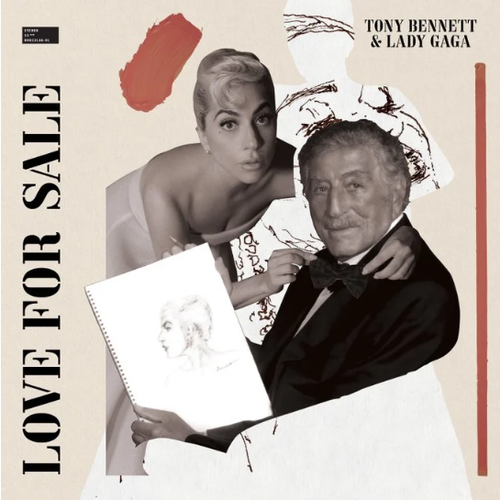
Playlist, there are new tracks from Victoria Monét, Tierra Whack, Nas, IDER, Tony Bennett/Lady Gaga, Du Blonde (ft. Paul Smith & Ross Millard), Jorja Smith, and The Weeknd. Throw into the mix some FINNEAS, Holly Humberstone, Duran Duran (ft. CHAI), IAMDDB, Hayden Thorpe, and GOAT, and it is an eclectic and busy week. If you require that little kick to get you into the weekend, then I hope that the songs below do the job. It is going to be a bit of a wet and windy weekend for many. With that in mind, play these tracks and I am sure they will offer great distraction. Although there are few major artists in the Playlist this week, the quality of songs is…

 IN THIS PHOTO: Lady Gaga

REALLY high.   

ALL PHOTOS/IMAGES (unless credited otherwise): Artists

__________

Victoria Monét Coastin’

Tierra Whack - Walk the Beat

Nas - Rare

ww.jpg

IDER - cbb to b sad

Tony Bennett, Lady Gaga - I Get a Kick Out of You

Du Blonde (ft. Paul Smith & Ross Millard) - Radio Jesus

PHOTO CREDIT: Clark Franklyn

Jorja Smith - All of This (Jorja Smith X GuiltyBeatz)

The Weeknd Take My Breath

FINNEAS A Concert Six Months from Now

IMAGE CREDIT: Anthrox Studios

black midi Cruising

Holly HumberstonePlease Don’t Leave Just Yet

IAMDDB Silver Lines

Duran Duran (ft. CHAI) - More Joy!

Hayden Thorpe Parallel Kingdom

GOAT - Fill My Mouth

PHOTO CREDIT: Pooneh Ghana

Chubby and the Gang I Hate the Radio

Tinashe, Wax MotifUndo (Back to My Heart)

Cat Burns Into You

Becky Hill, Ella Eyre Business

GIRLI Ricochet

PHOTO CREDIT: Amanda Hugenquist

Unknown Mortal Orchestra - That Life

Joy Crookes Skin

Eves Karydas Lemonade

Anna Vincent Naxos

POZI - Detainer Man

India Shawn Don’t Play with My Heart

Leah Blevins Little Birds

Allison Ponthier - Faking My Own Death

Lea HeartI’ll Get Over It

xx.jpg

Barbara Streisand - Living Without You

xxx.jpg

Joya Mooi - My Favourite

dee.jpg

Green Gardens - I Keep Eating Myself

sss.jpg

Adia Victoria - Magnolia Blues

ss.jpg

Ingrid Andress (with Sam Hunt) - Wishful Drinking

ww.jpg

Salt Ashes - Love, Love

FEATURE: Vinyl Corner: ZZ Top - Eliminator

FEATURE:


Vinyl Corner

sss.jpg

ZZ Top - Eliminator

___________

THERE are two reasons…

xx.jpg

as to why I am covering ZZ Top’s eighth studio album, Eliminator, for Vinyl Corner. Released on 23rd March, 1983, the album peaked at the top of the charts in many countries. Classics such as Gimme All Your Lovin’ and Got Me Under Pressure still sound fantastic to this day – as does the entire album! Eliminator is the Texan band’s most commercially successful release, with sales of over ten million copies in the United States alone. Another (sad) reason to cover the album is the death of ZZ Top’s bassist, Dusty Hill. He died last week. The BBC were among many to report the news:

 “Dusty Hill, the bassist of US blues rock band ZZ Top, has died at the age of 72.

Bandmates Billy Gibbons and Frank Beard said that Hill died in his sleep at his home in Houston, Texas. They did not give further details.

Earlier in July, ZZ Top had announced that Hill would not play some upcoming shows due to a hip injury.

Known for his bushy beard and sunglasses, Hill played with ZZ Top for over 50 years.

"We, along with legions of ZZ Top fans around the world, will miss your steadfast presence, your good nature, and enduring commitment to providing that monumental bottom to the 'Top'," the statement from Gibbons and Beard said.

"You will be missed greatly, amigo."

Born Joseph Michael Hill, the bassist originally played guitar alongside his brother Rocky in Dallas before moving to Houston and joining Beard.

ZZ Top was founded in 1969, and played their first live concert the following year.

The trio would go on to release 15 studio and four live albums, with hit singles like Gimme All Your Lovin', Sleeping Bag, and Viva Las Vegas.

ZZ Top was inducted into the Rock and Roll Hall of Fame in 2004”.

Whilst some critics did not like the band’s use of synthesizer, drum machine and sequencer on the album, others felt it was a great evolution and continuation of what we heard on 1981’s El Loco. If you can get the album on vinyl, I would definitely recommend you do so. It is an absolute classic that anyone can pick up and enjoy. One need not know too much about ZZ Top’s background and sound to be able to appreciate songs such as Sharp Dressed Man. I want to bring in a couple of reviews for Eliminator. This is what AllMusic said when they reviewed the album:

ZZ Top had reached the top of the charts before, but that didn't make their sudden popularity in 1983 any more predictable. It wasn't that they were just popular -- they were hip, for God's sake, since they were one of the only AOR favorites to figure out to harness the stylish, synthesized grooves of new wave, and then figure out how to sell it on MTV. Of course, it helped that they had songs that deserved to be hits. With "Gimme All Your Lovin'," "Sharp Dressed Man," and "Legs," they had their greatest set of singles since the heady days of Tres Hombres, and the songs that surrounded them weren't bad either -- they would have been singles on El Loco, as a matter of fact. The songs alone would have made Eliminator one of ZZ Top's three greatest albums, but their embrace of synths and sequencers made it a blockbuster hit, since it was the sound of the times. Years later, the sound of the times winds up sounding a bit stiff. It's still an excellent ZZ Top album, one of their best, yet it sounds like a mechanized ZZ Top thanks to the unflaggingly accurate grooves. Then again, that's part of the album's charm -- this is new wave blues-rock, glossed up for the video, looking as good as the omnipresent convertible on the cover and sounding as irresistible as Reaganomics. Not the sort the old-school fans or blues-rock purists will love, but ZZ Top never sounded as much like a band of its time as they did here”.

I know there was some wrangle and dispute regarding various writing credits; some dismiss Eliminator as one of ZZ Top’s less authentic and necessary albums. Plenty of critical lists have placed Eliminator among the best albums ever. Classic Rock Review had their say when they reviewed the album in 2013:

Sound engineer Linden Hudson researched popular song tempos, and suggested that 120 beats per minute was the most popular tempo in rock music, so most of the recorded Eliminator album was recorded at that tempo. This has since become know as “the people’s tempo”. Although this sort of sound manipulation may not go over well with all old-school blues and rock purists or blues-rock purists, the album does not contain one filler song, as each individual track works well as a stand-alone song. In fact, one can claim that the whole is much less than the sum of this album’s parts

Beard’s simple rock drum beat sets the pace for the riff-driven “Gimme All Your Lovin'” (which in turn sets the pace for the album). Accented by a few guitar overdubs and pad synths, this opener contains one of the more famous leads by Gibbons and reached the Top 40 on the U.S. charts. “Got Me Under Pressure” follows and has become the most controversial song, not due to lyrical content, but due to allegations by Hudson that it was written and recorded by himself and Gibbons in one afternoon without the involvement or knowledge of the other two band members. Although the band members disputed much of his compositional accounts, Linden says he created the bass on a synthesizer, the drums on a drum machine, and helped Gibbons write the lyrics while Gibbons performed the guitars and vocals.

“Sharp Dressed Man” is the most catchy of the hit songs and utilizes a more traditional rock arrangement with some strange vocal effects being the only really synthesized parts. While on tour in England to support the album Degüello, the band members were impressed with the cool threads and overall sense of fashion. The song reached the Top Ten on the mainstream rock charts and has remained one of the band’s most famous songs.

The best song on the album is “I Need You Tonight”, led by Gibbons’s really soulful and bluesy guitar with an effect-laden edge. Hill uses a real bass guitar (not a synth bass arpeggio) and the song contains some great melodies during the choruses, adding a splash of sweetness to this extended piece with an almost dark feel. The persistent reaching of Gibbons’ guitar, especially during the long instrumental sections, makes it a highlight of the album and even as the song ends, it feels like the bluesy guitar is reluctant to quit. The short but potent “I Got the Six” completes the first side as a full-fledged, good time party anthem.

The early part of the album’s second side is the best demonstration of the “synthesizer meets soul” sound which the group was aiming for on Eliminator. On “Legs” the synths are most prominent along with a consistent beat and very few chord changes. With a decent melody, clear hook, and some bluesy lead guitar licks, “Legs” was inspired by a real-life situation when the group spotted a young lady and spun the car around for a second look. But when she vanished Gibbons said, “That girl’s got legs, and she knows how to use them.” “Thug” is the most unabashed eighties-style, synth-heavy song, almost sounding experimental. “TV Dinners” contains organ-like synths good lead by Gibbons. Written late in the recording process, the song’s title was inspired by a woman in a Memphis nightclub, where the group went during a break in recording”.

It is a shame that we lost Dusty Hill. One can hear his magnificent work right through Eliminator. It is a tremendous album that everyone should hear. If you have not experienced it or are new to ZZ Top, then Eliminator is something that you need to own. Grab the album on vinyl and enjoy the Rock legends at their very best! Their 1983-released eighth studio album is…

ABSOLUTE gold.

FEATURE: Odes to Joy: What Will the Sound of Post-Pandemic Pop Be?

FEATURE:


Odes to Joy

ffd.jpg

PHOTO CREDIT: @batelstudios 

What Will the Sound of Post-Pandemic Pop Be?

___________

I have been thinking about…

lll.jpg

 IN THIS PHOTO: Charli XCX

the look and feel of Pop music after the pandemic has passed. Maybe that is not going to be for a long while yet, though I know that artists will be reflecting the turmoil. we have faced and how we will get through the other end. I have been intrigued by promotional photos for Charli XCX’s upcoming single, Good Ones. The song is out next month and, looking at the images, I am envisaging something that is a bit 1980s! The hair is big…and I get the impression we might hear something 1980s-ish. Perhaps not. Maybe I have covered this subject recently, but I do think that there are a lot of artists today looking to the past for inspiration. That has always been the case but, during the pandemic, this is especially true. Will Pop music later this year and next be very different to what we heard pre-pandemic? By ‘Pop’, I mean artists near the mainstream. A particular genre rather than what is deemed ‘popular’ across multiple genres. What I haver noticed regarding modern Pop is that artists are trying to blur genre lines and not be too easily defined. Perhaps it means that we do not have the consistency of Pop from the past, though there are artists who have plenty of personality and originality. Relative newcomers like Olivia Rodrigo, beabadoobee and Arlo Parks. Billie Eilish, perhaps, is one of the best-known modern-day Pop icons. I feel that her sound has changed quite a bit since her 2019 debut album, WHEN WE ALL FALL ASLEEP, WHERE DO WE GO? Her new album, Happier Than Ever, is confessional and has darkness to it. I feel it is her most revealing and honest work yet. Will Pop music post-pandemic be more honest? There has been no shortage of confessional Pop music the past few years. That said, more and more, I am noticing Pop artists who are opening up more. By that, there is a greater sense of letting listeners into something more intimate and difficult to discuss. After such a turbulent 2020 and 2021 so far, there will be this desire (in artists) to connect more with fans.

The opening up of venues and festivals will lead to more physical music – in the sense of energy and something raw. That sounds like a mix and mess. Pop music will be broader than it has ever been and, as we are seeing future-looking artists sit alongside those with a hint of the 1980s and 1990s about them, this variation and depth will be felt widely. To me, if one could label a genre as ‘Post-Pandemic Pop’, it is going to include more uplifting sounds. One of my gripes is that modern Pop music is still too sad, edgy and lacking in the same warmth, hooks and choruses that we enjoyed decades ago. This is a change that has occurred over the past fifteen years or so. I think that, on a psychological level, music has been affected by lockdown and the pandemic. Sex and something more intense have been lacking from genres like Pop and R7B – definitely compared to the early-2000s and 1990s. With this sense of nostalgia and artists looking back, with that, I feel we will see a Pop scene that is not only more open and soul-baring; many artists will be more exploration regarding their passions and love. Looking at an artist such as Charli XCX transform in her new promotional images has got me wondering. Her 2020 album, how I’m feeling now, is future-thinking, experimental and hook-filled. It is also pretty honest and revealing. I reckon her upcoming music – whether Good Ones is part of a new album – will have more of an element of escape and lust. Perhaps there will be less edge and more lustre. Pop acts (if you can narrow them down that much) such as Jessie Ware (What's Your Pleasure?) and Dua Lipa (Future Nostalgia) produced Disco-infused albums last year, as did Kylie Minogue (Disco). This, in my view, will become more common. Not to say that sad bangers and more anxious Pop. The sense of release and passing through a scary time is going to have a big impact.

One of my big hopes is that there are going to be scenes and movements. Modern music, because few want to be defined by genres, does not have clans, movements and scenes. Britpop was an example of one from the past. I do remember that I have explored this question before! I feel it is worth coming back to the subject of Pop music in late-2021 and 2022 onwards. Many of us will want to be cheered and listen to music that has a hopeful nature. Even so, Pop artists are going to reflect the stresses of the past year or two, and there is going to have to be some recognition of wider issues such as global warming. Nothing seismic will happen with Pop music. To feel we will return to the 1980s and 1990s in terms of the quality and sound would be far-fetched. Modern artists, as much as they look back, want to make their music personal and fresh. I hope that more optimism comes into things. After a collective trauma, many will year for that sort of catharsis and positivity. Energy is going to be a big thing. We have all spent a long time feeling down and scared. Whether that energy manifests itself into anger or joy has yet to be seen – maybe it will be a combination of the two. Personal revelation, in terms of sex, will be more common in the mainstream. Not to be salacious but, as there will be a need for collective embrace and something hopeful, there has been this tension because of physical restraints and social distancing. Things are starting to improve and, with live music starting to gear back up, we get the chance to hear songs that artists have had in their pockets for a while. There are albums that have been out for over a year that have never been played live! Whether new/post-pandemic Pop is lighter, more nostalgic, angrier, deeper or more sexually revealing, there will be a faster acceleration and change now than there has been in Pop for many years. Who knows, maybe new cultures and scenes will form! Whatever is brewing up, I think that we will all witness…

QUITE a change.

FEATURE: Cherished: Madonna’s Essential Twenty Singles

FEATURE:


Cherished

dd.jpg

IN THIS PHOTO: Madonna shot for Cosmopolitan in July 1987

Madonna’s Essential Twenty Singles

___________

AS the iconic Madonna

ddd.jpg

IN THIS PHOTO: Madonna in 2018/PHOTO CREDIT: Paul Zimmerman/Getty Images

celebrates her birthday on 16th August, I am putting out a few features. For this one, I am collating, in my view, her twenty best singles. It is hard to narrow down the list, as she has released eighty-eight singles and twenty-four promotional singles! That said, there are some that are definitely better than others. Here are my rankings regarding the very best singles from the Queen of Pop (I am considering promotional singles alongside standard singles). Some might disagree with my placements – we all have our views on the singles that are the great and those which are average. As you will see from the rundown and rankings below, Madonna has produced some of the best Pop music…

ff.png

IN THIS PHOTO: Madonna in the video for Take a Bow (from 1994’s Bedtime Stories)

WE have ever seen.

_______________

20. Nothing Really Matters

dcc.jpg

From the Album: Ray of Light (1998)

Release Date: 2nd March, 1999

Producers: Madonna/William Orbit/Marius De Vries

Critical Reaction:

Stephen Thomas Erlewine from AllMusic, Kevin C. Johnson from the St. Louis Post-Dispatch and Chris Gernard from Metro Weekly highlighted "Nothing Really Matters" as one of Ray of Light's best tracks. Erlewine, who also wrote Madonna's biography for the website, cited the song as one of her career standouts. Chuck Taylor from Billboard labeled the song as a "gem" and commended the "irresistible hook".From the same publication, Jason Lipshutz commented, "What if the suave dance of 'Nothing Really Matters', the eye-popping 'Ray of Light' music video or the stark beauty of 'Frozen' never existed? Luckily, we never need to find out." Paul Moody from NME noted that the song "floats by almost as if it's asleep, a knowing return to the disco diva-effortlessness of 'Vogue', but with Madonna free from the narcissistic outer-shell of old, free to announce: "I've realised/No-one wins..." Rolling Stone said, "Songs like the title track and 'Nothing Really Matters' are filled with warmth and wonder.” "A bubbly, infectious piece of shufflebeat…" Stuart Maconie wrote in a Q review of Ray of Light, "but aberrant items continually swim into view, like a tumbling, atonal piano solo right out of Schoenberg." Sunday Mirror said it is the "best pop tune" from the album. Stephen Thompson from The A.V. Club was positive, stating that the "chugging" chorus and composition "should ring across dance floors for years to come[...]" Nathan Smith from the Houston Press was also positive, stating, "Few singles illustrated [Madonna's change in musical approach] better than 'Nothing Really Matters'". He concluded, "It's a great, bouncy dance track that never received the love it deserved, and its family-friendly themes are a good fit for the event" – Wikipedia

US Billboard Hot 100 Position: 93

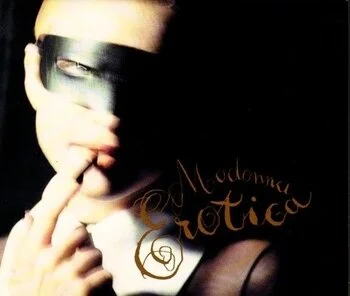
19. Erotica

fg.jpg

From the Album: Erotica (1992)

Release Date: 29th September, 1992

Producers: Madonna/Shep Pettibone

Critical Reaction:

Erotica" received generally positive reviews from music critics. Stephen Thomas Erlewine from Allmusic highlighted the song as an album standout, calling it "some of Madonna's best and most accomplished music". Larry Flick from Billboard described it as a "sexy pop/hip-hop gem" and a "sensual slice of aural sex." He added, "With the aid of collaborator Pettibone, she has crafted a deep and complex arrangement rife with intriguing Middle Eastern influences." Randy Clark from Cashbox commented, "Okay, there's nothing new musically on this virtually melody-less, "Vogue'-esque single, although the Material Girl does seem to want to continually push the barriers out a little further (fortunately, there’s not much further to go)." Alan Jones from Music Week said it "takes up the story where Justify My Love left off. The same hypnotic Soul II Soul shuffle underpins the moaning, groaning superstar as she raps/sings what are faintly ludicrous lyrics." Rolling Stone's Arion Berger wrote: "'Erotica' [...] promise[s] a smorgasbord of sexual experimentation, like the one portrayed in the video for 'Justify My Love'. But the sensibility of 'Erotica' is miles removed from the warm come-ons of 'Justify', which got its heat from privacy and romance [...] The Madonna of 'Erotica' is in no way interested in your dreams; she's after compliance"; he called the song "'Vogue' with a dirty mouth, where all the real action's on the dance floor". Stephen Holden from The New York Times, commented that the "foggy growl" that Madonna uses in the spoken-word sections of the song "contrast dramatically with the shrill little-kid voice from Madonna's earliest records that she still often uses to project a bratty teen-age exuberance". J. Randy Taraborrelli, author of Madonna: An Intimate Biography, wrote that "['Erotica'] wasn't a surprise for anyone who had been paying attention to Madonna's recent music. She had shown her hand earlier with Breathless when she sang 'Hanky Panky', the song about spanking [...] then there was her single 'Justify My Love' [...] 'Erotica' though, was the full-blown music exploration, an exhibition, of what we were to believe was Madonna's sexual reality". Authors Allen Metz and Carol Benson, called it "a bondage update on 'Justify My Love'". Matthew Jacobs from The Huffington Post, placed it at number 23 of his list "The Definitive Ranking Of Madonna Singles"; Jacobs wrote "Released at the apex of Madonna's sex appeal, 'Erotica' and its accompanying title album are remarkable as a period of innovation for the singer" – Wikipedia

US Billboard Hot 100 Position: 3

18. Beautiful Stranger

From the Album: Austin Powers: The Spy Who Shagged Me (soundtrack, 1999)

Release Date: 19th May, 1999

Producers: Madonna/William Orbit

Critical Reaction:

Beautiful Stranger" received generally positive reviews. Chuck Taylor from Billboard denoted the song as a "new shift in the wind for [Madonna]", calling it another creative high for her. He also complimented the production saying that "this latest partnership with [Orbit] taps into a walloping romp of guitars and enough cascading organs to prompt an urge to listen to your Monkees collection." Taylor ended the review with positive feedback for Madonna's vocals, likening them to those for the Evita album, along with commending the chorus. In a different article for Billboard talking about the song's remixes, Paoletta described the track as "effervescent blast of psychedelic electronica". Writing for the Philippine Daily Inquirer, Gino DeLa Paz found it "cute but forgettable". Gwen Ihnat, from the entertainment website The A.V. Club, labeled it as "Madonna's best song that never appeared on one of her regular albums [...] a psychedelic pop confection that offered a few of her most indelible hooks". Ihnat also wrote that "although less ethereal than 1998's Ray of Light, ['Beautiful Stranger'] is just as dance-floor ready [...] dance flute has never sounded so enticing, and Madonna's voice so sweetly seductive".  AllMusic's Jose F. Promis listed the track "as one of the singer's more memorable moments, coupling 1960s go-go rock with 1990s electronica, resulting in nothing less than a true slice of old fashioned rock & roll"; Promis also praised the two Calderone mixes” – Wikipedia

US Billboard Hot 100 Position: 19

17. Hung Up

From the Album: Confessions on a Dance Floor (2005)

Release Date: 17th October, 2005

Producers: Madonna/Stuart Price

Critical Reaction:

 “Hung Up received critical acclaim. Keith Caulfield from Billboard, while reviewing Confessions on a Dance Floor, called the song "a fluffier cut". Chris Tucker from Billboard explained that "Madonna returns with a song that will restore faith among her minions, fans of pop music and radio programmers". Jon Pareles of The New York Times said that Madonna kept her pop touch in "Hung Up" and called it a love song which is both happy as well as sad. Alan Light from Rolling Stone called the song candy coated. David Browne from Entertainment Weekly was impressed by the song and said "'Hung Up' shows how effortlessly she [Madonna] can tap into her petulant inner teen". Sal Cinquemani of Slant Magazine compared the song to the remix of Gwen Stefani's 2004 single "What You Waiting For?". Ed Gonzalez from the same magazine called the song the biggest hit of her career. Margaret Moser from The Austin Chronicle said that the song strobes and pulses along with another album track "Forbidden Love". Peter Robinson from The Observer commented that "Hung Up" is Madonna's "most wonderfully commercial single since the mid Eighties". Alexis Petridis from The Guardian called the track a "joyous...single that could theoretically have been more camp, but only with the addition of Liza Minnelli on backing vocals and lyrics about Larry Grayson's friend Everard” – Wikipedia

US Billboard Hot 100 Position: 7

16. Justify My Love

From the Album: The Immaculate Collection (greatest hits collection, 1990)

Release Date: 6th November, 1990  

Producers: Lenny Kravitz/André Betts

Critical Reaction:

 “Justify My Love" received acclaim from many music critics. In a separate review from AllMusic, they gave the song four-and-a-half stars out of five, stating "[Justify My Love] stands as one of the best of Madonna's long history of well-packaged maxi-singles, and further helped set a precedent for the maxi-single market." Larry Flick from Billboard commented that "her steamy collaboration" with Lenny Kravitz "has the juice to become the '90s equivalent" of Donna Summer's "Love to Love You Baby". He noted that "the chameleonlike singer writhes and whispers on top of a sparse, hypnotic hip-hop beat that strays miles away from the chirpy pop of her past. Break a sweat." In a review from Entertainment Weekly by David Browne, he gave it a positive remark saying that people who have a "hoo-haa" surrounding the banning of the single "underestimate her". Music & Media commented, "The unlikely collaboration of Madonna and Lenny Kravitz is a marriage made in heaven. Kravitz brought that beat back, while Madonna's sultry moans would make the Pope faint with certain desires. Atmospheric, yet brutal in an unconventional manner, this record whispers the word SEX very loudly and very convincingly. Most of all, it's a gutsy product.” Music Week called it a "mumbling sexy judderer". Rolling Stone said that the song and contemporaneous Rescue Me were "worthy sensual newies". While reviewing Celebration, Bill Lamb from About.com said "Songs such as "Justify My Love" that sounded a little over-indulgent when first released have worn very well over time." Alexandra Capotorto from PopCrush.com said "'Justify My Love' is perfectly constructed lovemaking music. While this track might be oozing sex, it's the NSFW music video that caused the most drama [...]" – Wikipedia

US Billboard Hot 100 Position: 1

15. Borderline

From the Album: Madonna (1983)

Release Date: 15th February, 1984  

Producer: Reggie Lucas

Critical Reaction:

 “Author J. Randy Taraborrelli, in his biography of Madonna, called "Borderline", along with "Holiday", the two key recordings that helped establish Madonna's base in the music industry. He added that Madonna's sober voice made the track "as close to an old Motown production as a hit could get in the dance-music-driven eighties." Author Maury Dean, in his book Rock 'n' Roll Gold Rush, called the song "echoey boogie" with "saucy-style and come-hither magnetism." Author Rikky Rooksby in his book, The Complete Guide to the Music of Madonna, called it harmonically the most complex track of her debut album. Stephen Thomas Erlewine from AllMusic called the song effervescent. Sal Cinquemani of Slant Magazine called the song soulful. Commentator Dave Marsh in his book, The Heart of Rock & Soul, said that the "music's too damn good to be denied, no matter whose value system it disrupts." Journalist Roxanne Orgill in her book, Shout, Sister, Shout!, commented that "Borderline" was the song that made Madonna the star that she is. Thom Duffy of Orlando Sentinel commented that "Borderline" was a song that "introduced Madonna, the helium-induced pop star, and a siren kitten” – Wikipedia

US Billboard Hot 100 Position: 10

14. Into the Groove

From the Album: Desperately Seeking Susan (soundtrack, 1985)

Release Date: 15th July, 1985  

Producers: Madonna/Stephen Bray

Critical Reaction:

 “Ever since its release, "Into the Groove" has received critical acclaim. J. Randy Taraborrelli, author of Madonna: An Intimate Biography, said that the song demonstrated Madonna's ability to create infectious dance music. Rikky Rooksby, author of Madonna: the complete guide to her music, said that "'Into the Groove' will make you feel like you're a winner either way. And that's one of the best things pop music can do for ya. [It's] Madonna's first great single." Clive Barker and Simon Trussler, authors of New Theatre Quarterly, felt that the song was the first disco-anthem of the 1980s.

Toby Cresswell, author of 1001 Songs: The Great Songs of All Time and the Artists, Stories and Secrets, said that the song is a "sweet, limited white tune on the top, and there's Madonna – all the right-shop chic – dragging the straight world into this subterranean paradise. All the magic of the eighties is right here." Matthew Rettenmund, author of Totally Awesome 80s: A Lexicon of the Music, Videos, Movies, TV Shows, Stars, and Trends of that Decadent Decade, declared "Into the Groove" as the ultimate 1980s song and felt that it "cemented Madonna's place as the dancing queen of the era". Dawn Keetley and John Pettigrew, authors of Public Women, Public Words: A Documentary History of American Feminism, called it a "mesmerizing theme song" – Wikipedia

US Hot Dance Club Songs (Billboard) Position: 12

13. Cherish

hj.png

From the Album: Like a Prayer (1989)

Release Date: 1st August, 1989  

Producers: Madonna/Patrick Leonard

Critical Reaction:

 “Wayne Robins from Newsday believed that "Cherish" exemplified the "kind of random pop we'd get if [postmodern author] William Burroughs were the program director of a Top 40 radio station." Burt compared the song and Madonna's delivery of the lyrics with the dialogues spoken by Shakespeare's Juliet, and found similarity in the, "Sweet so would I, Yet I should kill thee with much cherishing" from the play, with the lyrics of "Cherish". Allen Metz, one of the authors of The Madonna Companion, felt that "Cherish" as the opening song of the B-side of Like a Prayer, reaffirmed the sweet and happy romanticism that was missing from the A-side of the album adding, "As much a child of pop as of the church, Madonna is restored by music's healing power, in this case with a mixture of classic sweet soul and L.A. pop moderne."

Music critic J. D. Considine, while reviewing the Like a Prayer album for Rolling Stone complimented the song for creating an effective balance, contrasting its lighthearted nature with the trauma of "Oh Father", the next song. Considine also found retro-rock references in the song. Freya Jarman-Ivens, one of the authors of Madonna's Drowned Worlds, felt that the song was one of the last works on pure romanticism by Madonna. "She should come back to the formula from time to time, but I guess she has moved beyond all of that", Jarman-Ivens added. Carol Clerk, author of Madonnastyle noted that the "refreshing" nature of the song was particularly noticeable if one follows Madonna's catalog chronologically, especially embedded between the anthem like nature of the previous release, "Express Yourself", and the lament of the succeeding release, "Oh Father” – Wikipedia

US Billboard Hot 100 Position: 2

12. Express Yourself

From the Album: Like a Prayer (1989)

Release Date: 9th May, 1989  

Producers: Madonna/Stephen Bray

Critical Reaction:

 “Biographer Mary Cross noted in her book Madonna: A Biography, how the song paved the way for its music video and became a testament to freedom Authors Allen Metz and Carol Benson noted in their essays on Madonna, how she decimated "patriarchal, racist and capitalist constructions", by the way she pronounced the word "self" in "Express Yourself". They added that the opening line "Don't go for second best, baby" transformed the song into a postmodernist anthem. Scholar Sheila Whiteley noted in her book Women and Popular Music: Sexuality, Identity, and Subjectivity, that Madonna's acknowledgment of the pastiche and of being capable of imitating musical style was interesting to her, but given Madonna's ability to manipulate image, the musical exuberance of "Express Yourself" did not appear surprising.Mark Bego, author of Madonna: Blond Ambition declared that "the song that most reflected the Madonna everyone had come to know and be shocked by was 'Express Yourself'." O'Brien was impressed with the song, and gave a detailed review:

"Express Yourself" is a feminist call to arms, complete with muscular brass-playing and soulful voice. Here Madonna is the anti-materialism girl, exhorting her audience to respect themselves. That means having a man who loves your head and your heart. If he doesn't treat you right (and here's the revolutionary rhetoric) you're better off on your own. Like a female preacher, Madonna emphasizes each word of the chorus, invoking God and the power of orgasm. In parts Cosmo-woman, girl-talk, and swinging dance track, it presages the deliciously declarative stance of "Vogue" and shows Madonna moving from introspective to survivalist mode” – Wikipedia

US Billboard Hot 100 Position: 2

11. Like a Prayer

ddd.png

From the Album: Like a Prayer (1989)

Release Date: 3rd March, 1989

Producers: Madonna/Patrick Leonard

Critical Reaction:

 “Following the release of "Like a Prayer" on March 3, 1989, it received widespread acclaim from critics, journalists and academics. Taraborrelli commented that the track "deserved every bit of the curiosity it generated. While being devilishly danceable, the song also shows Madonna's uncanny ability to inspire strong, conflicting emotions during the course of a single song, leaving the listener scratching his head for answers—and craving for more.” Stephen Holden from The New York Times, while writing about Madonna's re-invention of her image, observed how her sound had changed from the "simple blaring dance-pop to the rich, fully rounded pop of 'Like a Prayer'". Lucy O'Brien felt that the most remarkable aspect of "Like a Prayer" was Madonna's usage of liturgical words. "There is the surface meaning, forging sexuality with pop lyrics that sound so sweet. But underlying that is a rigorous mediation on prayer. In shorter words, 'Like a Prayer' really takes you there," she concluded. This view was shared by Mary Cross, who wrote in her biography of Madonna that "the song is a mix of the sacred and the profane. There-in lies Madonna's triumph with 'Like a Prayer'. It still sounds catchy and danceable."

From the academic world, positive reviews came from Michael Campbell, author of Popular Music in America: And the Beat Goes On, who felt that the soothing melody of the track resembles British singer Steve Winwood's 1986 single "Higher Love". The author noted the song for merging disparate and contradictory musical features in it. He found that the simple melody of "Like a Prayer" offered an easy listen, but the contrasts in sound, rhythm and texture appealed to different target audiences. Australian rock music journalist Toby Creswell wrote in his book 1001 Songs that "'Like a Prayer' is a beautifully crafted devotional song in the guise of perfect pop. God is the drum machine here." Scholar Georges Claude Guilbert, author of Madonna as Postmodern Myth: How One Star's Self-Construction Rewrites Sex, Gender, Hollywood and the American Dream, noted that there is a polysemy in "Like a Prayer" since the singer addresses either God or her lover, and in doing so "Madonna achieves the gold-card of attaining her own divinity. Whenever someone calls her name, it alludes to the song". Theologian Andrew Greeley compared "Like a Prayer" with the biblical Song of Songs. Greeley, although focusing more on the video, acknowledged the fact that sexual passion may be revelatory, and complimented Madonna for glorifying ideologies of female subjectivity and womanhood in the song” – Wikipedia

US Billboard Hot 100 Position: 1

10. Papa Don’t Preach

From the Album: True Blue (1986)

Release Date: 11th June, 1986

Producers: Madonna/Stephen Bray

Critical Reaction:

 “Papa Don't Preach" was met with acclaim from music critics. Davitt Sigerson from Rolling Stone magazine in a review of the album True Blue said that if there is a problem with the album "it's the lack of outstanding songs", adding that "only the magnificent 'Papa Don't Preach' has the high-profile hook to match 'Like a Virgin', 'Dress You Up' and 'Material Girl'.” In its review of True Blue, Allmusic's Stephen Thomas Erlewine said that "she is using the music to hook in critics just as she's baiting a mass audience with such masterstrokes as 'Papa Don't Preach'". Robert Christgau in a review for The Village Voice felt that "she [Madonna] doesn't speak for the ordinary teenaged stiff any more than Reagan speaks for the union members", adding that "while the antiabortion content of 'Papa Don't Preach' isn't unequivocal, and wouldn't make the song bad by definition if it were, the ambiguity is a cop-out rather than an open door, which is bad."

Sal Cinquemani from Slant Magazine said that "with songs like 'Papa Don't Preach', Madonna made the transition from pop tart to consummate artist, joining the ranks of 80s icons like Michael Jackson and Prince." David Browne from Entertainment Weekly in a review of her first compilation album The Immaculate Collection, commented that "In theory, a 30-ish urban sophisticate singing in the voice of a pregnant teen [...] ought to sound ridiculous", but added that "With the help of collaborators like Stephen Bray and Patrick Leonard, though, [the song] turns into a perfectly conceived pop record." In 2005, the same magazine placed the song at number 486 on its list of "The 500 Greatest Songs Since You Were Born". In 1987, the song was nominated for Best Female Pop Vocal Performance at the 29th Grammy Awards, but lost to Barbra Streisand's The Broadway Album” – Wikipedia

US Billboard Hot 100 Position: 1

9. Music

From the Album: Music (2000)

Release Date: 21st August, 2000

Producers: Madonna/Mirwais Ahmadzaï

Critical Reaction:

 “Upon release, the song received generally positive reviews from critics. J. Randy Taraborrelli, author of Madonna: An Intimate Biography, declared "Music" as a dance-anthem "that reaches into the future but also slyly conjures images and feelings of the good ol' disco days”. In a similar review, Lucy O'Brien, author of Madonna: Like an Icon, relegated the track as "a resurrection of the disco girl" image. She listed "Music" as a career-defining moment for Madonna, like previous singles "Vogue" and "Justify My Love" (both released in 1990). O'Brien clarified the song as "the same genre defining quality, robotic, tinny, trashy and audacious... She resurrects the Madonna imperative. Dance. Party. Surrender". Stephen Thomas Erlewine of AllMusic called it "a thumping track which sounds funkier, denser, sexier with each spin". Jim Farber of the New York Daily News gave a positive feedback, stating that it is "everything a single should be: pithy, simple and maddeningly catchy, her most instantly embraceable single since 'Holiday'". Farber also highlighted the lyrics, which he felt covered familiar ground for Madonna by talking about the power of dance music. This thought was shared by Fouz-Hernández, who believed that like her debut single "Everybody", "Music" defined Madonna's artistic credibility.

Reviewing the parent album for Rolling Stone, Barry Walters also compared it to Madonna's earlier work. Sal Cinquemani from Slant Magazine called it Madonna's best dance track since "Vogue", also comparing it to her 1985 single, "Into the Groove". In his review of Madonna's 2001 compilation GHV2, Cinquemani praised the single's "retro club beats and vintage synth sound". Giving it a B rating, he concluded that "only a former material girl living in a NASDAQ world could get away with a song like this". Dimitri Ehrlich from Vibe found "Music" to be "a bouncing parade of synthesizers that pose the question 'Do fortysomething baby-mamas still have the divine right to get down?' (The answer is yes)". Chuck Arnold from Entertainment Weekly, called it one of Madonna's "most eccentric hits ever" and found it to be reminiscent of her earlier works, specifically "Holiday” – Wikipedia

US Billboard Hot 100 Position: 1

8. Holiday

cc.jpg

From the Album: Madonna (1983)

Release Date: 7th September, 1983

Producer: John ‘Jellybean’ Benitez

Critical Reaction:

 “The song received critical acclaim. Author Rikky Rooksby in his book The Complete Guide to the Music of Madonna commented that "'Holiday' was as infectious as the plague. One listen and you could not get the damn hook out of your mind." He also likened the track as getting on a carousel and enjoying the ride, or get really bothered by the song going "on-and-on" for six minutes. Jim Farber of Entertainment Weekly commented that "Holiday" satisfied the musical ear of both the sides of the Atlantic. While reviewing The Immaculate Collection album, David Browne from Entertainment Weekly commented that "Holiday" was a "spunky dance-beat trifle". He also complimented the song's expert production. 

Mary Cross in her biography of Madonna, described "Holiday" as "a simple song with a fresh appeal and a good mood." According to author Lucy O'Brien, who wrote in the biography Madonna: Like an Icon, the track was an example of Madonna's early musical endeavors being about the "power of dance". She believed that the song cemented her style of music with its "bubbling Latin undertow, crunchy bass and strings and Fred Zarr's elegant closing piano riff". O'Brien declared "Holiday" as Madonna's "most" persuasive dance song with its "tension, release, resolution and celebratory" nature enhanced by Madonna's "playful commands and exhortations". Sal Cinquemani of Slant Magazine described the song as airy. Stephen Thomas Erlewine from AllMusic called it effervescent and one of the great songs of the Madonna album. While reviewing The Immaculate Collection, he called it one of her greatest hits. Don Shewey of Rolling Stone commented that the simple lyrics of the song sound clever” – Wikipedia

US Billboard Hot 100 Position: 16

7. Human Nature

drf.jpg

From the Album: Bedtime Stories (1994)

Release Date: 6th June, 1995

Producers: Madonna/Dave Hall

Critical Reaction:

 “Human Nature" received mostly positive reviews from music critics. Sal Cinquemani of Slant Magazine gave the song a positive review, stating that "for years, Madonna spoke in metaphors, fantasies and blatant shock tactics, but the performer indignantly struck back at her critics on 'Human Nature'. She didn't just hold up a mirror, she became the mirror". Barbara O'Dair from Rolling Stone also gave a positive review of the song, commenting that "Madonna does a drive-by on her critics, complete with a keening synth line straight outta Dre", adding that "Madonna's message is still 'Express yourself, don't repress yourself.' This time, however, it comes not with a bang but a whisper". Scott Kearnan of The Boston Globe included the track at number 11 on his list of "30 Ultimate Madonna Singles", stating that the line "Absolutely no regrets" was a "Madonna mantra if ever there was one". Medium's Richard LaBeau deemed it "one of Madonna’s best forays into R&B, this all-around-clever song features bold, unapologetic lyrics that serves as her unofficial manifesto".

Larry Flick from Billboard was also positive, and expected "radio to hungrily come to the table and dine on this wickedly catchy jeep/pop jam in which La M unapologetically snaps at her more close-minded critics". He complimented her vocals which were "playfully snide and aggressive, holding strong against a forceful hip-hop groove and a host of ear-pleasing funk guitar links and synth hoops". Music Week gave it four out of five, adding that "Maddy gets quirky on the hippest and most memorable track from Bedtime Stories". Author Chris Wade wrote in his book, The Music of Madonna, that "Human Nature" lifted the sadness emanated from the first few tracks from the album. "There's a great beat to this, a brilliant vocal where Madonna answers herself with whispers and an unforgettable chorus," Wade added. Matthew Rettenmund wrote in his Encyclopedia Madonnica that "in spite of the chart performance", the song has become a modern "self-empowerment anthem". Charles Aaron from Spin described the song as "slinking through [Hall's] low-ridin', gum-smackin' groove, Maddy's hard-bitten ingenue expresses no regrets, but this time you feel for her." Aaron highlighted the lyrics "Would it sound better if I were a man?" as subversive and coy. Author Lucy O'Brien described in her book, Madonna: Like an Icon, that "Human Nature" was one of the "quirkiest" tracks on Bedtime Stories, "throbbing with a tightly restrained but devastating anger” – Wikipedia

US Billboard Hot 100 Position: 46

6. La Isla Bonita

From the Album: True Blue (1986)

Release Date: 25th February, 1987

Producers: Madonna/Patrick Leonard

Critical Reaction:

 “Rikky Rooksby, in his book The Complete Guide to the Music of Madonna called the song "a little escapism". Dawn Keetley in his book Public Women, Public Words called the song one of Madonna's most perfect songs capturing her inner emotional life. William McKeen called the song "tranquil" and "Up on the Roof type imaginary escapes from the city snarl, the kind of Latin-flavored sweets that Blondie could never resist." Ken Barnes of Creem wrote the song is "no "Open Your Heart", but its lilting (yet reflective) quality transcends the south-of-the-border cliches."

Jon Pareles of The New York Times said that "La Isla Bonita" was one of Madonna's "friendlier" love songs. Don McLeese of the Chicago Sun-Times believed that the song was the best song on the album, as well as the most memorable. Meanwhile, Steve Morse of The Boston Globe believed that it was one of her "prettier" songs. Joey Guerra of the Houston Chronicle, while reviewing Madonna's Sticky & Sweet Tour, called the song a true retro one. Marty Racine, from the same newspaper, believed that the song was one that stood out on the album. Los Angeles Daily News, when discussing Madonna's style of music, believed that "La Isla Bonita" was a song that was "pointing in [a] welcome direction” – Wikipedia

US Billboard Hot 100 Position: 4

5. Material Girl

From the Album: Like a Virgin (1984)

Release Date: 30th November, 1984

Producer: Nile Rodgers

Critical Reaction:

Following the song's release on November 30, 1984, as the second single from Like a Virgin, "Material Girl" received mixed reviews from music critics. Author Rikky Rooksby, in his book The Complete Guide to the Music of Madonna, compared the song with those of Cyndi Lauper because of Madonna's shrill voice in the song. He added that the song was a "pungent satire on the Reagan/Thatcher young-guns-go-for-it era. Which just goes to show that pop music and irony don't mix." Stephen Thomas Erlewine from AllMusic said that "Material Girl" was one of the songs that made Madonna an icon, the other being "Like a Virgin" from the same album, both remaining as a definitive statement. He added that both tunes overshadow the rest of the record, "because they are a perfect match of theme and sound." Debby Miller from Rolling Stone, felt that the song portrayed Madonna as a more practical girl than previous female singers. Dave Karger from Entertainment Weekly, while reviewing the album in 1995, felt that the song came off a bit repetitious and immature when compared to the present context. Jim Farber from Entertainment Weekly felt that the song provided then critics a way to criticize Madonna's work. Sal Cinquemani of Slant Magazine commented that Madonna had "defined a generation with hits like 'Material Girl'." Alfred Soto from Stylus Magazine compared the song with "Everything She Wants" by Wham!. Michael Paoletta from Billboard commented that the song sustained a "fevered dance-rock momentum." Nancy Erlick from Billboard said that "singer and team conquer once more with their irresistible assembly of new and used pop hooks." In 2003, Madonna fans were asked to vote for their Top 20 Madonna singles of all time for a special issue of Q magazine dedicated to Madonna. "Material Girl" was allocated the 15th spot on the list” – Wikipedia

US Billboard Hot 100 Position: 2

4. Vogue

From the Album: I'm Breathless: Music from and Inspired by the Film Dick Tracy (soundtrack, 1990)

Release Date: 27th March, 1990

Producers: Madonna/Shep Pettibone

Critical Reaction:

Vogue" has been lauded by critics since its release. AllMusic critic Stephen Thomas Erlewine claimed that the song was "Madonna's finest single moment" and that it had an "instantly memorable melody". In a review of The Immaculate Collection, Erlewine also claimed that the song was "sleek" and "stylish". Jose F. Promis, in another AllMusic review, claimed that "Vogue" was a "crowning artistic achievement". Bill Coleman from Billboard commented that "the starlet's pop/house homage to the underground (soon to be pushed very overground) fad pulls off its aims." He stated that it "maintains the flavor of Pettibone's past "house" treatments with a bit of his classic "Love Break" tossed in for good deja vu measure." Ernest Hardy from Cashbox stated that "pop savvy takes well to a house setting", adding, "it's gonna be a Madonna Summer". Jim Farber from Entertainment Weekly, in a relatively negative review of I'm Breathless, asserted that the "finale of Vogue" is "the sole bright spot". David Giles from Music Week stated that "it possesses a meatier groove than we've been used to and also a silly "list" segment that reduces her to the level of the Beloved.” In his review of I'm Breathless, Mark Coleman from Rolling Stone wrote that, whilst the song initially sounded "lackluster", within the album's context, it "gains a startling resonance"]. Sal Cinquemani of Slant Magazine, in his review of the album as a whole, claimed that whilst the "hugely influential" song initially sounded "grossly out of place", it turns out to be "a fitting finale" for I'm Breathless. J. Randy Taraborrelli, in his book, Madonna: An Intimate Biography, wrote that the song was a "funky, uptown anthem celebrating the art of 'voguing'", as well as that the rap section "is still one of Madonna's greatest camp musical moments” – Wikipedia

US Billboard Hot 100 Position: 1

3. Ray of Light

From the Album: Ray of Light (1998)

Release Date: 6th May, 1998

Producers: Madonna/William Orbit

Critical Reaction:

Ray of Light" received acclaim from music critics. In a review of the album as a whole, Stephen Thomas Erlewine of AllMusic described it as "swirling". In a review of the maxi CD single, Liana Jonas of the same website called the track a "wickedly good club song" and "sonically progressive yet listener-friendly". She also praised Madonna's vocals, comparing them to those of a "club diva to celestial goddess". "The title track builds from another incongruously pretty guitar arpeggio into thumping rave anthem mode," Stuart Maconie wrote in a Q review of Ray of Light, "but always underscored with keen musical intelligence. It could be a lighter, less one-dimensional Chemical Brothers."

Larry Flick of Billboard described it as Madonna at her best, calling it a "spiritually charged, often poetic song". He especially mentioned the flexible vocals and Madonna's progression as a recording artist. Rob Sheffield from Rolling Stone in his review for the album as a whole, wrote that, alongside other tracks such as "Swim" and "Drowned World/Substitute For Love", Madonna is "positively ferocious" sounding on "Ray of Light". Sal Cinquemani of Slant Magazine wrote that the song was a "celebratory tech-frenzy", and noted Madonna's elated singing. In a review of Madonna's second hits compilation, GHV2 (2001), Cinequemani wrote:

Like no other Madonna hit in recent memory, the frenetic “Ray of Light” found the singer in a celebratory tech-frenzy. Whether it was an epiphany of the spiritual or sonic kind, her elation was unmistakable. Orbit’s cycles of analog synths and electric guitar licks perfectly supplemented the elasticity of Madonna’s newly-trained vocal chords. Not since “Deeper and Deeper” had she reached such dizzying heights” – Wikipedia

US Billboard Hot 100 Position: 5

2. Frozen

From the Album: Ray of Light (1998)

Release Date: 23rd February, 1998

Producers: Madonna/William Orbit/Patrick Leonard

Critical Reaction:

Jon Pareles from The New York Times was impressed how Madonna, dulcet and careful, performed the song. Joan Anderman from The Boston Globe said that on Ray of Light, only "Frozen" achieves a "state of divine balladry", recalls the "emotional pitch" and simmers the "beauty of 1986's 'Live to Tell' with a dark, lush string section, the smash and patter of a lone drum, and an ominous, pulsing buzz". In his review of Ray of Light, Neil Spencer of The Observer commented, "it's sensuous songs such as [...] 'Frozen' that stand out; music for the chill-out room." Elysa Gardner, writing in the Los Angeles Times, said "Madonna's enduring knack for incorporating hip and exotic textures into accessible pop tunes is evident on the plaintive single 'Frozen'". Sputnikmusic viewed the track as the singer "at her soothing best", highlighting its "interesting percussion backing" and "beautiful use of strings with techno effects".

David Browne of Entertainment Weekly described the song as a "wuthering-beats melodrama that's often breathtaking." Also from Entertainment Weekly, Chuck Arnold wrote: "sounding unlike anything Madonna had ever done before, and creating a mystical forest of sonic wonder — sweeping strings and all — 'Frozen' possesses an almost operatic grandeur that never fails to give you chills". Stephen Thompson from The A.V. Club wrote, "the atmospheric 'Frozen' is a great first single despite lyrics like, 'Love is a bird / She needs to fly.'" Conversely, NME called the song "another pile of her usual weepy old bollocks". Jim Farber of the Daily News wrote that "Frozen" compromises its electronic style with "too much tepid pop". The Guardian's Caroline Sullivan regarded it as a tremulous song Ray of Light could have done without. Jose F. Thomas from AllMusic rated the song two stars out of five, describing it as "chilly” – Wikipedia

US Billboard Hot 100 Position: 2

1. Take a Bow

pp.png

From the Album: Bedtime Stories (1994)

Release Date: 6th December, 1994

Producers: Madonna/Babyface

Critical Reaction:

Upon release, "Take a Bow" received general acclaim from critics. Peter Calvin from The Advocate praised the lyrical flow of the song, saying that the "effect is truly heartbreaking. The song... shows that ultimately Madonna... is just like you and me". Stephen Thomas Erlewine of AllMusic referred to "Take a Bow" as "tremendous", listing it as one of the best songs from Bedtime Stories and stating that it "slowly works its melodies into the subconscious as the bass pulses". He goes on to say that it "offer[s] an antidote to Erotica, which was filled with deep but cold grooves". Louis Virtel, from TheBacklot.com, placed "Take a Bow" at number 27 of his list "The 100 Greatest Madonna Songs". He wrote; "Madonna's most successful single to date is a melancholic evisceration of a lover's artifice, and its hopeless plain-spokenness makes it one of the finest examples of 90s balladry". J. D. Considine of The Baltimore Sun stated that the song, about "innocent romance" has a "gently cascading melody”.  In his review of Bedtime Stories, Billboard's Paul Verna called it a "holiday feast for Top 40, rhythm crossover, and AC". Also from Billboard, Larry Flick gave the single a particularly positive review; "The follow-up to the top five smash 'Secret' [...] is as perfect as top 40 fare gets. This single has a delightful, immediately memorable melody and chorus, engaging romance-novel lyrics and a lead vocal that is both sweet and quietly soulful. A lovely way for [Madonna] to kick out '95".

Rikky Rooksby, author of The Complete Guide to the Music of Madonna, was less impressed with the track. Although he felt that it sounded "shockingly normal" after the "ambient 'Bedtime Story'", he found the song's length as over-long and deduced it to be "communica[ting] no sense whatsoever of the pain of a real goodbye." In his 2011 review of Bedtime Stories, Brett Callwood of the Detroit Metro Times called the song "spectacular". Encyclopedia Madonnica writer Matthew Rettenmund called it a "sentimental ballad with showbiz theme" while finding similarities in the song to that of "Superstar" by The Carpenters. Writing for Entertainment Weekly, Chuck Arnold called it "one of the most elegant, most un-Madonna-sounding things she’s ever done". While ranking Madonna's singles in honor of her 60th birthday, Jude Rogers from The Guardian placed the track at number 38, calling it a "compellingly cinematic orchestral drama". Matthew Jacobs, from The Huffington Post, placed it at number 19 of his list "The Definitive Ranking Of Madonna Singles" calling it her "most poetic ballad". Bianca Gracie from Idolator noted it as a "timeless ballad", adding that it "has warm strings and soaring harmonies with a hint of tragedy from Madonna’s somber vocals, which makes the end result all the more beautiful." In his book, Madonna: An Intimate Biography, J. Randy Taraborrelli called it a "melancholy and beautifully executed ballad". Music & Media said it is "an elegant ballad, a perfect alternative to prosaic lullabies." They added, "The intro could be mistaken for jingle bells and fits in well with the season” – Wikipedia

US Billboard Hot 100 Position: 1

FEATURE: Spotlight: NOISY

FEATURE:


Spotlight

swer.jpg

NOISY

___________

BECAUSE I have been listening a lot…

aa.jpg

 PHOTO CREDIT: Alannah Williams

to their single, Young Dumb, I wanted to throw the spotlight on NOISY. The Worthing trio have been receiving love from a lot of different sources lately – including the guys at NME (I shall quote from their recent interview soon). I will work to 2021 and the interviews conducted then. Before that, 1883 Magazine spoke with the band when they released their debut E.P., Press Space to Play:

First off, can you tell us about the band name, and what made you decide to come up with NOISY?

We always wanted a simple one-word name that people could remember easily. Also wanted it to contain only 4-5 letters, so we didn’t give ourselves a lot of options! We had like 50 names that we whittled down to 1, which was Happy Sad. Although it wasn’t the short snappy name that we first wanted, it seemed to create a buzz between us for a few days. Thinking back now, I’m glad it was an option as the logo we use today wouldn’t have been created. After realising Happy Sad wasn’t for us, “Noisy” quickly came around and stuck immediately. We felt like it fit our whole vibe and everyone seemed to be hyped on it from the get go.

You all worked within the NHS when you were signed. During these times that must have been an interesting experience. What was it like working such an important role while also pursuing creative passions?

It was actually a really good time for us. There was no pressure on writing back then so we were smashing out 2-3 songs every week whilst discovering what we wanted Noisy to be and sound like. People at work knew us as “the boys in the band” so it felt like a constant news update on what was happening and what we were up to. Working 7.30-4 and then going to the studio after to track in some lyrics that I’d snuck off to the bathroom to write that day, was the norm for me.

Congratulations on the new EP! How did you feel about releasing this body of work?

Can’t actually believe it’s out in the world. We’ve been sitting on I Wish I Was A… for well over a year now as it never felt like the right time for it to drop, and I’m glad we waited. This release feels like we’ve really arrived now. From start to finish it sums up our band, lyrically and musically. We’ve built the Noisy foundation with these last 2 EPs and now it’s really time to go.

What are you most looking forward to in 2021? What can we expect next, word on the street is that you’re hoping to start your own club?

Shows hopefully. It’s getting boring now haha. Feel like everyone just needs that release. We also have a lot of new music to share with the world, so we need dark rooms to play it in. Fast FWD To Friday is a club night we started back last October and was a huge success. The plan is to put more on around the country in the future. Less of a gig and more a messy night”.

They created quite a bang with that E.P. I think that, despite the pandemic hitting, the trio has accrued a healthy fanbase and distinguished themselves as one of the most promising young acts around. I know that they will cement that when they play live and can finally get out there to the people!             

This year, BN1 highlighted the incredible and compelling NOISY. We discover about the group’s unique sound and how they have fared during the pandemic:

Their sound is unique as they portray a roulette-style genre; you never quite know what you will get with a Noisy song. Rather like a good cocktail, a combination of hip hop and drum & bass, their style is rich and glitchy and lunges from pop one minute into a hybrid indie-rock/rap-esc concoction. After asking each of them to describe their music in one word, we were left with “euphoric”, “youthful” and “energy.” Everything about Noisy is outer-worldly, with their music keeping you on your toes.

Being a new band, they have found it challenging to have had the opportunity of live shows confiscated from them so soon after entering the scene. Cody explained, “that’s kind of where we thought we would grow the most.” However, from the true spirit of their music, it is clear they collectively will not let obstacles get in the way. “Lockdown has allowed us to be quite creative; we wrote the whole next body of work or at least what we think it’s going to be.”

Lockdown has provided the band with the time to experiment in ways they maybe never would have: “we have become social media wizards.” Relieving the pressures of being on tour, eliminating time restrictions on creativity is often when the best comes out. In the face of having time to make music through lockdown, the trio is ready to get back on the road and endure new experiences to bring into their work.

Growing up in a small town with not much to do, provided Noisy with an environment of focus, allowing the boys to put the majority of their energy into creating music. “If we lived in Brighton or London, there would have been so much more to distract us.” The band perfectly represents the rebelliousness of today’s youth, drawing on the experiences of young people growing up. “Lyrically, we write about going out with our mates and, you know, regretting it in the morning.” The familiarity of their strain and ability to relate to the listener makes this band unique. They are all about going out and having a good time, making you want to leave nothing behind and just live the Noisy life. The boys’ affinity with their hometown and all that comes with it has become a pivotal part of their musical experience. “The space you’re in definitely inspires you to make stuff and usually it is a reflection of where you’re at and who you’re with”.

Before closing things and urging you to investigate NOISY, it is time to get to that NME interview. It must be a big honour for the band to be recognised by one of the most reputable and popular music sites/magazines in the country:

The frontman of the Worthing-based band – who are completed by guitarist Connor Cheetham and producer/guitarist Spencer Tobias-Williams – is recalling the moment they signed to Island Records in April 2019 without a single release to their name. After NOISY’s team played some demos to label execs at some ungodly hour post-pub, a deal was swiftly agreed. “Our management showed them a few songs and they were like, ‘We need to sign this, now!’” Thomas-Matthews recalls excitedly. “And then we got an offer in the morning.”

NOISY’s swaggering hybrid of dance, rap, drum’n’bass and jungle can certainly inspire such instant thrills: their pick’n’mix approach to chopped samples and self-produced beats liberally experiments with genre conventions. Arriving in a Day-Glo blaze with the ‘Press Space To Play’ EP in January 2020, the band have spent the following year and a half churning out impossibly massive-sounding singles in preparation for a long-awaited return to their natural environment: sweat-drenched, laser-filled nightclubs.

With a brand new single ‘Young Dumb’ now out in the world, NOISY want to replicate that “utterly euphoric” feeling for fans at their festival slots this summer. NME hopped on a Zoom call with the trio to chat about how they rose from the ashes of their previous band, FIFA 22 and their live plans for the rest of 2021.

Your background was originally in indie-rock. What prompted the pivot to explore dance, hip hop and jungle influences?

Connor: “We’ve always listened to those genres of music. Even when we were in an indie band, people used to come to our gigs and the pre-show playlists were stuffed with American rap and dance music, and everyone in the crowd would be like, ‘What the hell is going on?!’.”

Spencer: “There was definitely a Skrillex song on there, plus some Dr. Dre and Baauer. So yeah, it was a bit mental! Thinking about it now, people must have been spinning out a bit before we came on stage… But also, in a way boredom propelled this: there’s only so far you can take two guitars, bass and a drum kit in a room. We wanted to get a bit weirder, and we couldn’t really do that with the classic set-up.”

Your music looks outward: you sing about escaping from the drudgery of your day-to-day routine and seeking out raves and new experiences. Has it felt strange releasing these songs throughout a time where clubs have been closed?

Cody: “It’s really not been great because we’re not a TikTok band, we’re a live band: I feel like that’s how we’re going to make new fans. To have that taken away, and for this long as well, has been quite intense. But I feel like we’ve managed to get through it, and we’ve used the time to get better at writing as well. I think that’s one thing that we’ve taken out of it: we’ve written a lot of really strong music.”

What have you learned about yourselves on this journey so far?

Cody: “Being able to quit our jobs and do this for a living was obviously a massive blessing. Spending every single day with each other has been sick. Sometimes we sit here thinking, ‘This life is a proper dream’”.

I am going to leave things here. Make sure that you check out and listen to NOISY. There are a lot of terrific new artists around. One can tell NOISY will be around for a while and have a lot more to say. They are incredible, tight-knit and creators of some memorable music. Check out their social media pages to see where you can catch them play live. After a trough and strange past year or so, they must be eager to get out and release some of that pent-up live energy. If you can catch them on the stage, then make sure that you do not…

PASS up the opportunity.

_______________

Follow NOISY

eer4.jpg

FEATURE: The Lockdown Playlist: The Edge at Sixty: The Very Best of U2

FEATURE:


The Lockdown Playlist

ss.jpg

The Edge at Sixty: The Very Best of U2

___________

I want to put…

qq.jpg

out a Lockdown Playlist for U2’s The Edge, as he turns sixty on 8th August. The lead guitarist, keyboardist, and backing vocalist of the iconic Irish band, I am going to put together a selection if the best U2 songs - rather than just the best performance from The Edge. Before coming to that, here is some biography about the great man:

Edge was born David Howell Evans in East London on 8th August 1961 to Garvin and Gwenda Evans. He has one sister, Jill, and one brother, Dik, who was also one of the founder members of U2's forerunner, The Hype, before leaving to join the Virgin Prunes. Having moved to Ireland while David was still at school, the Evans family settled in St. Mary Park Road, Malahide - an affluent area north of Dublin. His mother was friendly with Adam's mother, Jo, so he and Adam knew each other before the band was formed. It was while in Malahide that he attended Mount Temple Comprehensive School and met the rest of the band.

Many theories exist concerning how Edge came to get his unusual name. As teenagers, he and Bono were both members of a group called Lypton Village, where everyone was given a name that suited them (as opposed to the one they'd been born with). Some say that the name The Edge was chosen due to his 'edgy' style of guitar playing, while others say it was because he rarely became fully involved in things, preferring instead to remain 'on the edge'. Either way, the name stuck.

Edge learned guitar mainly by playing over records that the rest of the band supplied him with. Rory Gallagher and Tom Verlaine were early influences, although the fledgeling U2 covered anything from The Moody Blues to The Sex Pistols - in fact it was the realisation that they were not a good cover band that forced them to start writing their own material and become good. Edge developed a distinctive style that he described as "doing the work of two", as he liked to fill every spare moment with guitar. He has always seen himself as the opposite of the stereotypical guitar hero, preferring instead to think of himself as someone who communicates something meaningful through his music in a way that means something to the listener. While some detractors claim that Edge's style is simplistic, others have praised him for defining his own sound”.

To mark the upcoming fiftieth birthday of The Edge, here are some classic U2 tracks. Whilst Bono leads the band, I feel The Edge is one of the most important members; responsible for many of U2’s best and most memorable moments. Here are the U2 songs where The Edge is…

VITAL to their brilliance.

FEATURE: Inspired by The Godfather… Kate Bush’s Between a Man and a Woman

FEATURE:


Inspired by The Godfather

sss.jpg

PHOTO CREDIT: Guido Harari (from his book, The Kate Inside)

Kate Bush’s Between a Man and a Woman

___________

I have almost done…

and investigated every Kate Bush song in some form of other. I published a feature recently that celebrated the icon on her birthday (30th July). I was doing some research and came across some background to the song, Between a Man and a Woman. One of the most underrated and lesser-known songs from The Sensual World (1989), it sort of arrives half-way down the tracklisting – after the brilliant Deeper Understanding and before another less-heard song, Never Be Mine. The Sensual World is an album that contains the huge songs that most people know about: The Sensual World, Deeper Understanding and This Woman’s Work. All three of these songs were reworked by Bush for her 2011 album, Director’s Cut (The Sensual World was retitled Flower of the Mountain). Between a Man and a Woman comes on the second side of an album on a run of three songs – Between a Man and a Woman, Never Be Mine and Rocket’s Tail – that are not really played or known about. There are a few reasons to love Between a Man and a Woman. It is one of Bush’s finest vocal performances on The Sensual World. It crackles with energy, lust, hurt and so many different emotions. The physicality from her performance brings the song to life! I love the musicians on the song and, particularly, Alan Stivell’s backing vocals and Celtic harp. The production and sound of the song is amazingly powerful. It reignites my call for radio stations to broaden their Kate Bush scope. I don’t think I have heard Between a Man and a Woman played before – shame, as it is a song that so many people would love!

I do like the story and background of the track. As we see from quotes sourced by the Kate Bush Encyclopaedia, there is some fantastic playing on the song. I was also not aware until recently what influenced the track’s title:

It's about a relationship being a very finely balanced thing that can be easily thrown off by a third party. The whole thing really came from a line in 'The Godfather', during some family argument, when Marlon Brando says, "Don't interfere, it's between a man and a woman." It's exploring the idea of trying to keep a relationship together, how outside forces can break into it... Rubbish really, but I quite like the cello. (Len Brown, 'In The Realm Of The Senses'. NME (UK), 7 October 1989)

It is perhaps about how you actually have that choice sometimes, whether to interfere or not. You know, there's this tendency to want to leap in and take over and control: "Oh, I know best!"; when I think a relationship is a very delicate balance: it's very easily tipped, and then needs to be refound again. (Steve Sutherland, 'The Language Of Love'. Melody Maker (UK), 21 October 1989).

That was, let's get a groove going at the piano, and a pretty straightforward Fairlight pattern. Then we got the drummer in, and I thought that maybe it was taking on a slightly Sixties feel - not that it is. So we got Alan [Murphy] in to play guitar - who unfortunately wasn't credited - a printing error. He played some smashing guitar. Then I wanted to work with the cellist again, because I think the cello is such a beautiful instrument. I find it very male and female - not one or the other. He's actually the only player that I've ever written out music for. They're lucky if they get chord charts normally.

We were just playing around with a groove. We actually had a second verse that was similar to the first, and I thought it was really boring. I hated it, so it sat around for about six months. So I took it into a completely different section which worked much better. Just having that little bit on the front worked much better. Quite often I have to put things aside and think about them if they just haven't worked. If you leave a little time, it's surprising how often you can come back and turn it into something. (Tony Horkins, 'What Katie Did Next'. International Musician, December 1989)”.

I do love the first side of The Sensual World, though there are so many rich and beautiful songs on the second side. Like so many Kate Bush albums, the tracks are exactly where they need to be. I am not sure whether that was Bush’s decision as the album’s producer, or whether one of the engineers like Del Palmer got a bigger say. Between a Man and a Woman hits you with its sound and the intriguing sonic layers. You will also come back in to experience the lyrics. Whether she is talking about characters or there are bits of her personal experiences in the lyrics, it is a song that has some tension and fears. A lot of Bush’s songs regarding relationships are positive and passionate – in fact, she is hugely positive when it comes to love; very little finger-pointing and judgment. Maybe The Sensual World was the first album where there is more pull and push and clashes regarding love. There was some of that in 1985’s Hounds of Love, though there was nothing like Between a Man and a Woman on there I don’t think. Some of the lyrics really jump out: “Every day and night I pray/Pray that you will stay away forever/It's so hard for love to stay together/With the modern Western pressures”. With Stuart Elliott’s punchy drums and Alan Murphy unleashing this sensational guitar part, you get a palpable feel of heartbeat and strain.

Bush let’s her voice fly and wind. Whilst her vocals were higher-pitched earlier in her career and the acrobatics were quite common, here, her lower vocal register creates a different impact. Her voice is matured, more sensual and imbued with greater wisdom. She gives every line her all! Another favourite lyrical section of mine: “Stay out of this/Oh, I know you mean to help me/And I know you've good intentions/But stay out of this/This isn't your problem/Do not interfere”. I am not surprised Between a Man and a Woman was not chosen for reworking on Director’s Cut. I don’t think it was a case Bush doesn’t like the song and felt it was not work reinvestigating. I feel she is happier with its sound and what she did first time around - at least I hope so anyway, as it definitely does not need changing or stripping back. It is a magnificent song that more people should hear. I really love how The Godfather compelled Bush! She frequently took from film, T.V. and literature. That idea of there being this private struggle and complex situation in a relationship that is vulnerable from unwanted and intrusive outside forces. This was nothing new in a song, yet few songwriters articulated this sensation like Bush did on Between a Man and a Woman. The song is quite busy and full of life, yet I do not think it is too cluttered. One of the problems Bush had with The Sensual World - and particularly The Red Shoes (the 1993 follow-up) - is the edgier sound and the fact there are lots of instruments and elements fused together. Between a Man and a Woman is a stunning track that is among the finest…

aa.jpg

ON The Sensual World.

FEATURE: Here, There and Everywhere: Revolver at Fifty-Five: The Legacy and Importance of The Beatles’ Masterpiece

FEATURE:


Here, There and Everywhere

Revolver at Fifty-Five: The Legacy and Importance of The Beatles’ Masterpiece

___________

TOMORROW is a special day…

 PHOTO CREDIT: David Mcenery/REX/Shutterstock

as The Beatles’ seventh studio album, Revolver, turns fifty-five. Released on 5th August, 1966, it is a hugely impressive and influential album. There has been debate through the years as to which album by the band rules. Maybe Abbey Road (the final album the band recorded) could claim some superiority and popularity over Revolver. For a long time, 1967’s Sgt. Pepper’s Lonely Hearts Club Band was seen as the king. Many were swept up by the fact it was so important when it was released - and it seemed to usher in something new and seismic. If one integrates the songs and judged the album as a whole, maybe the importance of the time and what Sgt. Pepper’s Lonely Hearts Club Band represents in a wider sense is more impressive than the album itself – even if there are some absolute classics to be enjoyed! Revolver sort of came into its own because people realised that it is a more collaborative effort than its successor. Maybe it was the last album where the band were on the same page and seemed very together. Also, in the 1990s, many Britpop bands used Revolver as a template. With Revolver turning thirty in 1996, small wonder many artists were picking it up again and finding inspiration. There is so much in the album that influences and blows the senses. If some bands were captivated by the psychedelic spin and epic atmosphere of Tomorrow Never Knows or the somnambulism of I’m Only Sleeping; the way a sad song like Eleanor Rigby could sound so beautiful and addictive; the pure perfection of And Your Bird Can Sing or the childlike wonder of Yellow Submarine, others found something else to admire. There are so many colours and styles mastered and experimented with. Even today, artists are finding something new in Revolver.

With one thing or the other, Paul McCartney was dominating and leading the group by 1967. Lennon was not as productive and together. Whilst Ringo Starr and George Harrison were more together and focused, one can feel more of McCartney in Sgt. Pepper’s Lonely Hearts Club Band. Lennon rediscovered inspiration and almost surpassed McCartney in terms of his contributions on The Beatles (1968). By Abbey Road in 1969, again, McCartney was the group leader and most prolific songwriter – the same is also true of Let It Be (1970). Revolver seems to be The Beatles tight and balanced. George Harrison contributes great songs like Taxman (Revolver’s opener); Ringo Starr’s vocal on Yellow Submarine is infectious, strong and brilliant. I am going to bring in a couple of articles that look at the legacy of Revolver. Although John Lennon and Paul McCartney were largely writing separately by 1966, there isn’t this sense that they were drifting apart, or big cracks were forming – just that the two had their own ideas and ways of working. Lennon wrote the staggering And Your Bird Can Sing, Tomorrow Never Knows and I’m Only Sleeping (McCartney may have contributed a bit here and there; Lennon the same on McCartney’s tracks). Maybe McCartney was slightly ahead in terms of the classics: Eleanor Rigby, Here, There and Everywhere, Good Day Sunshine and Got to Get You Into My Life. Rather than Revolver being a competition, it is an album where the band are at their peak. Not only in terms of the range of songs and how advanced everything sounds. The songs make a huge impact without extending the three-minute mark! Eleanor Rigby is 2:06; Yellow Submarine 2:38; And Your Bird Can Sing 2:00. Even the immense closer, Tomorrow Never Knows, is 2:59. Only one song on the album – I’m Only Sleeping – exceeds three minutes. And to be fair, it is 3:00 dead!

For those like me who grew up in the 1990s, Revolver was handed down from our parents. We got a sense of what they must have felt when the album came out in 1966. With bands of the 1990s especially influenced by it, the album took on new meaning and life. Whilst no one song or artist could match the best moments of Revolver, it shows that it had this amazing legacy and real sense of significance. Before bringing in some articles, this Wikipedia entry reveals the extent of Revolver’s legacy:

MacDonald deems Lennon's remark about the Beatles' "god-like status" in March 1966 to have been "fairly realistic", given the reaction to Revolver. He adds: "The album's aural invention was so masterful that it seemed to Western youth that The Beatles knew – that they had the key to current events and were somehow orchestrating them through their records." MacDonald highlights "the radically subversive" message of "Tomorrow Never Knows" – exhorting listeners to empty their minds of all ego- and material-related thought – as the inauguration of a "till-then élite-preserved concept of mind-expansion into pop, simultaneously drawing attention to consciousness-enhancing drugs and the ancient religious philosophies of the Orient". Author Shawn Levy writes that the album presented an alternative reality that contemporary listeners felt compelled to explore further; he describes it as "the first true drug album, not a pop record with some druggy insinuations, but an honest-to-heaven, steeped-in-the-out-there trip from the here and now into who knew where”.

According to Simon Philo, Revolver announced the arrival of the "underground London" sound, supplanting that of Swinging London. Barry Miles describes the album as an "advertisement for the underground", and recalls that it resounded on the level of experimental jazz among members of the movement, including those who soon founded the UFO Club. He says it established rock 'n' roll as an art form and identifies its "trailblazing" quality as the impetus for Pink Floyd's The Piper at the Gates of Dawn and for Brian Wilson to complete the Beach Boys' "mini-symphony", "Good Vibrations". Citing composer and producer Virgil Moorefield's book The Producer as Composer, author Jay Hodgson highlights Revolver as a "dramatic turning point" in recording history through its dedication to studio exploration over the "performability" of the songs, as this and subsequent Beatles albums reshaped listeners' preconceptions of a pop recording. In his review for Pitchfork, Plagenhoef says that the album not only "redefin[ed] what was expected from popular music", but recast the Beatles as "avatars for a transformative cultural movement". MacDonald cites Revolver as a musical statement that, further to the Rubber Soul track "The Word" and "Rain", helped guide the counterculture towards the 1967 Summer of Love due to the widespread popularity of the Beatles.

Revolver has been recognised as having inspired new subgenres of music, anticipating electronica, punk rock, baroque rock and world music, among other styles. According to Rolling Stone, the album "signaled that in popular music, anything – any theme, any musical idea – could now be realized". Through the Beatles' example, psychedelia moved from its underground roots into the mainstream, thereby originating the longer-lasting psychedelic pop style. Russell Reising and Jim LeBlanc credit the songs on Revolver with "set[ting] the stage for an important subgenre of psychedelic music, that of the messianic pronouncement". As with Rubber Soul, Walter Everett views the album's "experimental timbres, rhythms, tonal structures, and poetic texts" as the inspiration for many of the bands that formed the progressive rock genre in the early 1970s. He also considers Revolver to be "an innovative example of electronic music" as much as it broke new ground in pop by being "fundamentally unlike any rock album that had preceded it". Rolling Stone attributes the development of the Los Angeles and San Francisco music scenes, including subsequent releases by the Beach Boys, Love and the Grateful Dead, to the influence of Revolver, particularly "She Said She Said".

Steve Turner likens the Beatles' creative approach in 1966 to that of modern jazz musicians, and recognises their channelling of Indian and Western classical, Southern soul, and electronic musical styles into their work as unprecedented in popular music. He says that, through the band's efforts to faithfully translate their LSD-inspired vision into music, "Revolver opened the doors to psychedelic rock (or acid rock)", while the primitive means by which it was recorded (on four-track equipment) inspired the work that artists such as Pink Floyd, Genesis, Yes and the Electric Light Orchestra were able to achieve with advances in studio technology. Turner also highlights the pioneering sampling and tape manipulation employed on "Tomorrow Never Knows" as having "a profound effect on everyone from Jimi Hendrix to Jay-Z".

The fact many name Revolver as The Beatles’ best album means its influence and importance is huge! There are other facts and achievements that can be mentioned that goes to show just how special Revolver is. One only needs to consider how highly Revolver has been regarded by music critics and magazines through the years. This Beatles Daily article from 2016 shed more light:

In 1997, it was named the third greatest album of all time in a Music of the Millennium poll conducted in the United Kingdom by HMV Group, Channel 4, The Guardian and Classic FM.

In 2000, Q magazine placed it at number 1 in its list of the 100 Greatest British Albums Ever.

In 2002, the readers of Rolling Stone ranked the album the greatest of all time.
In 2006, Guitar World readers chose it as the 10th best guitar album of all time.

In 2007, a PopMatters review described the album’s content – “the individual members of the

greatest band in the history of pop music peaking at the exact same time”.

One can listen to Revolver for the first time today and would be won over. The songs are short and punchy, yet there is a lot of experimentation and some lush moments. As opposed to the largely brief and anthemic Pop songs of their earliest albums, Revolver is more textured and layered. To me, it is the sheer breadth of the sounds on Revolver that means anyone can find something to love! For such a busy and important album, it only lasts a little over thirty-four minutes. It is amazing how The Beatles packed so much in and leave you wanting even more! It is testament to the band’s consistency and overflow of quality material that the single, Paperback Writer (with Rain as the B-side), was not put on Revolver! Take away its innovation and the fact The Beatles were starting to push the studio and experiment more – as they were touring less and starting to find that slog and routine exhausting and not work it anymore - and the album is still so important and ahead of anything else. The Beatles recorded Revolver after taking a three-month break at the start of 1966. Many people regard it as the start of The Beatles’ Psychedelic period. Pushing away from love songs and broadening their horizons, they addressed themes such as death and transcendence from material concerns. The boys knew they would not be touring these songs - so, as such, they could spend time in studio making the material a little denser and more sophisticated. The Beatles were doing things their own way and were pushing boundaries like never before. How exciting and inspiring it would have been for other artists at the time!

I am going to finish off with a feature from 2016 that the BBC published. To me, it is the absolute quality and power of the album that makes it so influential and inspiring:

The best Beatles album? The rock historians often point to Sgt Pepper’s Lonely Hearts Club Band as the moment, in 1967, when rock magically grew up and became a legitimate art form, at least as it was perceived by the mainstream media. Many fans love the sprawl and variety of the self-titled 1968 double album, popularly known as The White Album. In some quarters there’s a fondness for Abbey Road and its side-long suite of mini-songs, and lovers of the Bob Dylan-influenced folk-rock of the mid-‘60s cherish Rubber Soul above all. They all have merit, but none of them is as consistently brilliant and innovative as Revolver.

All The Beatles’ previous albums had been rush jobs – their debut was recorded in four hours. But in 1966, the quartet pulled off the road for good to devote themselves to songwriting and record-making. Lennon and McCartney were still closely collaborating and pushing each other to new levels of innovation, and Harrison was emerging as a formidable third songwriter and voice in the band. Now, with the luxury of time to tinker, edit, re-edit and experiment, The Beatles were poised to record a masterpiece.

Tomorrow Never Knows set a high standard for an album that moves from one peak to the next: Harrison’s corrosive guitar lick and McCartney’s commanding counterpoint bassline in Taxman made for one of The Beatles’ toughest-sounding tracks, the brisk strings on Eleanor Rigby presaged the chamber-pop feel and emotional tenor of She’s Leaving Home on Sgt Pepper, and Harrison’s plunge into Eastern mysticism and modalities on Love You To set the stage for the similarly inclined Within You Without You on the later album.

The melancholy beauty of Here, There and Everywhere answered the challenge of Brian Wilson’s Beach Boys masterpiece Pet Sounds, Doctor Robert and And Your Bird Can Sing achieved jingle-jangle guitar-pop perfection, and the horn-fueled Got to Get You Into My Life channeled Motown and Stax soul. Even a relatively lightweight track such as Yellow Submarine presaged the sometimes fanciful, almost child-like wonder of Sgt Pepper tracks such as Lovely Rita”.

On its fifty-fifth anniversary tomorrow, I am going to spin the album again. Although I do not love everything on Revolver – I can do without George Harrison’s Love You To -, one cannot deny the place it holds in The Beatles’ cannon and wider cultural relevance. Reaching fresh audiences in the 1990s through to its use in Britpop and other genres, a new generation are picking it up now. We will be hearing elements of Revolver in new music for decades to come. The fact Revolver is such a cohesive listen means it will always appear on lists of the best albums ever and be celebrated widely. On its fifty-fifth anniversary, I wanted to nod to and salute…

A faultless masterpiece.

FEATURE: Vinyl Corner: Charli XCX - how I’m feeling now

FEATURE:


Vinyl Corner

qa.jpg

Charli XCX - how I’m feeling now

___________

THINKING back to last…

zz.jpg

 PHOTO CREDIT: Huck Kwong

year and artists who were releasing albums that were made in the early stages of lockdown/quarantine, it has led me to Charli XCX. The Cambridge-born Charlotte Aitchison is one of this country’s most outstanding songwriters and extraordinary artists. Taking Pop in new directions, she grows as a writer on every album. Last year’s how I’m feeling now was rightly nominated for a Mercury Prize – it lost out to Michael Kiwanuka’s KIWANUKA. This year’s shortlist has fewer Pop albums; it is quite a different look and feel to last year. Regardless of it not winning the award, the critical reception to the album was immensely positive. Released on 15th May, 2020, it arrived only eight months after her previous album, Charli. The sublime how I’m feeling now was conceived during the lockdown and made in a D.I.Y. collaborative process with her fans in the span of six weeks. Recording in quarantine was a new experience for every artist. Charli XCX rose to the challenge and produced what is, arguably, her finest and most complete record. It is an album that you need to grab on vinyl. This is what Rough Trade say about how I’m feeling now:

Now in 2020, Charli is already breaking boundaries - this year has seen her first BRIT nomination for British Female Solo Artist, marking a huge moment of validation from a mainstream audience that Charli has built on her own terms. The new album was written, recorded and released in 39 days, completely in self-isolation.

The creative process was also to push her collaborative stream in a unique way; opening up the recording, writing, artwork, music videos and more to fans for feedback and contribution - she also further inspired her fans’ creativity, allowing them access to song stems to create remixes and greenscreen footage to be edited using their own imagination.

How I’m Feeling Now has given further spotlight to Charli’s status as one of the most adaptable, exciting pop artists working today, and through it’s uniquely collaborative approach, provided a shared space for those who listen to feel safe enough to express themselves however they wish at a time when they need it most”.

I am hoping to get the album on vinyl soon myself. It is an album with no weak spots at all. I especially love the songs, claws and party 4 u. Before I get to some reviews of how I’m feeling now, there is an interview that I want to source from - just that we can get some perspective from Charli XCX herself.

In May of last year, The Guardian spoke with Charli XCX about her stunning new album and how she was getting on. There are some bits from the interview that I want to quote:

Partying has been Aitchison’s biggest source of inspiration; no one is better at crystallising the invincible highs or lonely lows of a night out. Now the dancefloors are dimmed, she has only the inside of her four mock-Tudor walls to play with. The entire household is hostage to the album: she lives with her two best friends from school, who are also her managers, and Huck Kwong, a video game producer and her on-off boyfriend of seven years. “It’s a cult kind of vibe,” she admits. The lounge has become a recording studio. The artwork for her single Forever was photographed in her bedroom. She exercises and directs her own photoshoots (like this one) in the space outside. Lockdown is the longest she and Kwong have spent together, she says, and it’s been good to write about it. It’s also been weird, “yelling about my relationship into a microphone while my boyfriend’s in the other room, doing a puzzle”.

When it comes to collaborating with fans, Aitchison says she has been surprised by the way they have gravitated towards the deeper stuff – not the parties and fast cars. “I suppose I was always afraid to show that side of myself,” she says. But sharing everything has its downsides: one day, she posted lyrics on Twitter and fans thought they were so bad, they were a joke. “Then I posted funny, fake lyrics to troll myself and they were like, ‘This is sick!’ I thought, ‘Oh no!’” (She didn’t use them.)

Yet watching her work out in the open, it’s also clear that Aitchison makes every creative decision. When she mentions her work-guilt, I suggest that nobody could say she hasn’t worked for her success. “Well, thanks,” she says glumly. “I don’t know – sometimes the story isn’t always portrayed…” She trails off. What does she mean? “There’s always a misconception about female pop artists. That’s just the unfortunate truth: ‘Did they write their own songs? Do they have their own opinions? Did they really make that decision?’” Everyone from Joni Mitchell to Björk has complained of the same scepticism.

Aitchison’s DIY ethos has been there since she started playing raves at 15. Her parents would drive her from their home in Bishop’s Stortford to Hackney warehouses, where she shrieked about dinosaur sex in a peroxide wig while they waited to drive her home. “Playing in those more underground environments, and being exposed to fashion and LGBTQ+ culture – that was the first time I felt truly inspired to my core,” she says. “It was like I’d opened Pandora’s box.” She was signed by Atlantic Records off the back of those shows, and her early releases revamped a gothic pop that had lain dormant since the 1980s (think Shakespears Sister and Depeche Mode). Prior to the pandemic, she had mooted a tour of her 2013 debut album, True Romance. “It was one of the first things I really got stuck into – a lot of experimentation and figuring things out as they went along,” she explains. “Kind of a similar time to now.”

How I’m Feeling Now already has one important legacy. Aitchison says she has been surprised by how fast her label have moved to get it out, and plans to release two more albums this year. Next time around, if they stall, she’s got this ace in her pocket to remind them that anything is possible: “No, guys, remember when we did that album in six weeks? No rules – let’s go”.

There was a raff of effusive reviews for how I’m feeling now! One only need to listen to a song or two to realise why it was revered and respected by so many. This is what CLASH wrote in their review:

Her humanoid vocals on ‘Detonate’ are reminiscent of Kate Bush’s ‘Deeper Understanding’ from her ‘Directors Cut’ album, and explore the romance of the robotic - alien yet strangely familiar. This track resonates hard though its lyrical vulnerability accompanied by lighter production. Its classic warped auto-tune is ever-present but dialled down to be an overall more accessible pop song. ‘Detonate’s’ tight lyricism contrasts with the repetitive lyrics of ‘7 years’, which feels rushed in places, “Oh yeah, it's really, really, really, really nice / And now I never, ever, ever think twice” leaving moments which fall flat.

‘party 4 u’ is a moment of respite amongst the brilliant chaos, allowing us to take a breath, while ‘c2.0’ (co-written by lawless Estonian rapper Tommy Cash) sounds like a laptop overheating and my hairdryer exploding all at once. The album peaks and troughs, the single tracks standing out while others can be glossed over more easily, yet throughout the abrasive jolting and glitching, one thing remains constant, a solid pop chorus with catchy melodies.

The album closes with 'visions': a brilliant illustration of A. G. Cook's genius all too reminiscent of leaving a sweaty club as the sun comes up. The heavy beats and sirens evoke a memory which usually I do not intend to remember, yet in lockdown circumstances, leaves me pining for it once again, and therefore wanting more of the album itself. As her opening line of the album states “I just wanna go real hard” accompanied by a sense of impending doom, I sigh and think to myself: me too Charli, me too.

‘how i’m feeling now’ is essentially a series of android love letters; to her relationship (and how it has grown throughout lockdown), to her fans (whom she has involved every step of the way), her friends and contributors, and to herself, as she has opened up about mental health during the lockdown, and the fear of how to continue once it is over, with lyrics pondering whether she is deserving of love. This directly contrasts with boasting her rarity as a ‘pink diamond’ in the first track.

Charli starts and ends with hard disorienting club bangers, leaving the middle of the album space to expose her tenderness and vulnerability while still retaining her futuristic, unpredictable sound and penchant for an irresistible pop hook”.

To finish off, I want to quote from CRACK. Every review had its own perspective and reasons for loving how I’m feeling now. Here is CRACK’s take:

On Charli XCX’s self-described quarantine album how i’m feeling now, her field of view has never been more vast. Drawing from UK garage, trap, bubblegum pop and well-after-midnight techno, XCX’s fourth full-length interrogates, questions and opens up space within what might otherwise feel like the most claustrophobic period in many of our lives.

A product of conversations with fans online, written and produced through broadcasts and in collaboration with a range of artists including Mechatok, A.G. Cook and Dylan Brady of 100 gecs, how i’m feeling now is full of love songs, but it’s not a love letter to any one person or place. Streets, parks, and sidewalks have become battlegrounds, and our increasingly interior lives are mediated by the pressure to share them with those in our vicinity. Now, our experiences of this period are characterised by who we see: the people we live with by choice or coincidence, the people we work with, those we’d love to see, but can’t or won’t. how i’m feeling now is an album about longing, loneliness, and what comes next.

Whereas Pop 2, Number 1 Angel, and Charli leaned heavily into a curated pick-n-mix of guest stars and cameos, how i’m feeling now returns to Charli XCX alone, with the artist playing her own supporting cast. On c2.0 she flips Click off of Charli into something more interstellar, more dissociative, and more breathlessly dizzying than the original. Stripped of traded verses with guest vocalists, how i’m feeling now hones in on Charli XCX’s voice and songwriting at its most tender and reflective.

Here, Charli XCX has taken on a formidable task. The album is, by definition, an archive of both quarantine conditions and of, well, how she feels within them. What’s incredible is how effective of an archive it is. The album’s extended outro captures the feeling of blurry looks across a crowded dancefloor, but also the restless nostalgia of not knowing when we’ll share these intimate moments again”.

Go and get Charli XCX’s fourth studio album. I am not sure what she has planned in terms of new music and whether we may get another album in the next year or so. After such a busy 2019 and 2020, she is more than justified in taking things a bit easy for a while! Rather than how I’m feeling now being the sound of lockdown and the start of the pandemic, it is an emotive and honest album from an artist combing some deep truths with incredible hooks and compositional moments. Experimental Pop at its very best and freshest! Hear for yourself and go and get…


THE epic how I’m feeling now.

FEATURE: Spotlight: Yves Tumor

FEATURE:


Spotlight

Yves Tumor

___________

THERE are quite…

a few interesting aspects to Yves Tumor. Their name might be Sean Bowie – I will pop in an interview where Tumor is asked about mystery around their name. The last year or so has been busy for Tumour. The Asympototical World EP was released last month. It followed from the 2020 album, Heaven to a Tortured Mind – one of the best-reviewed and best-loved albums of the year. I discovered Tumor when their second album, Serpent Music, was released in 2017. The first interview that I want to bring in from around that time is from Pitchfork. The first question did concern the mystique around Yves Tumor – and what the real name of the musical wonder was:  

Why don’t you want people to know your name?

I don’t keep anything from people—the people who should know my name and where I live know those things. But as far as journalists and bloggers, I may fabricate things at times. I’m not trying to be like Burial or anything, but I don’t really like people to be involved in my personal life unless they are very close to me and I’ve known them for a long time, just out of respect.

Being online so much, I’ve noticed that people who post a lot of stuff about themselves grow a fanbase out of the constant show that they are putting online, and then their fanbase starts to feel like they know this person personally even though they’ve never met them. It’s happened to my friends who have put themselves out there intensely. Sometimes the fans cross the line and take advantage of this connection, and it becomes super unsettling, and it’s hard to reverse. So I just started to draw back the things I say about myself online, so they don’t have a chance to cross that line.

How did you start making music?

I started playing instruments when I was about 17 in Knoxville, where I was brought up. I got a bass guitar for Christmas and I taught myself corny classic rock: Nirvana, Jimi Hendrix, Zeppelin. Then I started teaching myself acoustic and electric guitar. My grades were so bad my parents took my guitars and bass away, so I just taught myself how to play keyboard. So, in a way, they helped me out in a huge way by doing that. I started making electronic music, and people started to notice my stuff on the internet. I made my first shitty record on GarageBand. It was pretty nasty.

To some extent, though, it seems like you made a leap from noise with Serpent Music. Hearing you say your first instrument was a bass guitar makes so much sense now, because there’s such a groove and rhythm to some of this newer work.

It’s in my DNA. My father is obsessed with Motown, so I’ve always had funky, groovy shit in my ears, probably before I even knew what music was—this shit was being blasted to me in the womb. It’s always been around me, and I still listen to a lot of sexy, sensual music, even while I like listening to harsh, disgusting shit as well.

What’s your general perspective on the world right now?

We’re doomed. That’s it. The world is over. [laughs] Sorry to laugh. But I don’t want people to be happy or sad when they listen. I just want them to be hopeful.

But you just said the world is over. What should people be hopeful about?

A happy ending. And when I say happy ending, I mean that if there is a meteor that’s going to destroy the earth, at least there’s the most beautiful sunset the world has ever seen right before it crushes us. Maybe my album is that sunset”.

There are some great interviews out there with Yves Tumor. Normally, when I do these features, I would provide some biography and background to the artist. Not that much in the way of personal detail – real name, where they live etc. – is known about Tumor. In many ways, the music that they produce is the closest bond…the most honest and personal connection. Perhaps knowing too much about Tumor would strip some of the mystery of the artist and the power in the music. Tumour uses gender-neutral and he/him pronouns (I will use ‘they/them’) - something that is quite rare I find. The New York Times spoke to Tumor when they were promoting the album, Heaven to a Tortured Mind:

Mixing it up with the audience is part of the Yves Tumor proposition. Bowie, who uses both gender-neutral and he/him pronouns, is a master of anarchic energy with plenty of stories about bloodying fans’ noses at shows. (They never seemed to mind.) The Yves Tumor sound has frequently shifted since Bowie started releasing albums in 2015, encompassing cacophonous electronic noise and smoky rhythm & blues. Some of the music has been so confrontational, it’s even caused its creator some concern: They said they find “Hope in Suffering (Escaping Oblivion & Overcoming Powerlessness),” a 2018 track that begins with what sounds like a gathering swarm of bees before collapsing into machine-gun blasts and a demonic voice, almost too “terrifying” to listen to.

The latest Yves Tumor album, “Heaven to a Tortured Mind,” which was released on Friday, veers closer to standard pop. It’s an album of (relatively) approachable tracks about the common push and pull of the heart, blending tart psychedelia and maximal glam rock. Though earlier work relied on software and samples, here Bowie mostly used live instrumentation. They produced the album along with Justin Raisen, known for a deft hand with both big pop refrains and fuzzy guitar grit in work for Kim Gordon, Angel Olsen and Sky Ferreira. A number of notable vocalists turn up for steamy duets, including the progressive cellist Kelsey Lu and Julia Cumming of the Brooklyn indie band Sunflower Bean. As an artist committed to mystique, Bowie doesn’t share much about their upbringing. They were born in Miami and grew up in Knoxville, Tenn., and figured out how to play the guitar as a teenager by riffing on Nirvana and Green Day songs. After Bowie’s parents confiscated the instrument over poor grades, the young musician learned keys on the family piano, honed a sense of rhythm that came from being raised on Motown and Jimi Hendrix, and started to make amateur recordings in the basement. After a brief stint in college, Bowie moved to Los Angeles and fell in with artists like the queer punk rapper Mykki Blanco, who took them on tour. Bowie started releasing music under various monikers, but Yves Tumor stuck, and the project’s early music, which patched together field recordings, harsh noise and slinky funk, attracted a devoted .audience”.

I am going to finish by bringing it right up to date with The Asympototical World EP. So soon after a remarkable and heartfelt album, Tumor followed it with another remarkable work. Go and get the E.P. if you have not done so already:

Ground-breaking artist Yves Tumor continues to unlock the perception of reality with a psychedelically bent off-kilter rock offering, The Asymptotical World EP on WARP. The boundary smashing 6 song EP is the next era from the pop auteur and first release from Yves Tumor following the critically acclaimed 2020 album Heaven To a Tortured Mind. Yves Tumor continues to manipulate the genre terrain by challenging mainstream music constraints further and shifting the boundaries of contemporary art and culture in a boundlessly visceral and authentic sonic signature. The Asymptotical World EP (co-produced and engineered by longstanding collaborator Yves Rothman) includes the massive single, “Jackie”, also co-written/produced by Chris Greatti (Yungblud, Poppy). “Jackie” is a punctuated tale of connection in a fever dream realm featuring emotive guitars over an upbeat drum pattern, evoking the volatile magnetism between lovers”. It is another amazing work from one of the most original and consistent artists around. One almost expects something genius and game-changing with every release. That would be unfair, yet Tumor delivers that sort of excellence! It will be interesting to see how Tumor’s music translates to the stage. I have not seen them play. Hearing The Asympototical World EP is bound to be a hugely moving and unforgettable experience! “.

Before closing things, there are a couple of positive reviews for The Asympototical World EP that are worth mentioning. This is what Pitchfork had to say when they reviewed the latest work of brilliance from Yves Tumor:

Throughout the record, Tumor eases ever more deeply into the role of prismatic bandleader, shifting readily from tone to tone while sustaining a core sense of authority. The lovelorn wail of “Jackie” calcifies into “Secrecy”’s bitterly cool asides, which then evaporate as unsure sighs on “...And Loyalty Is a Nuisance Child.” Across Asymptotical World’s six songs, Tumor plays a roster of characters gripped in various turmoils, acting them out in different postures, from sweltering and vulnerable to icy and impenetrable. At the EP’s molten center is a guest appearance from the industrial noise duo NAKED, whose vocalist Agnes Gryczkowska streaks “Tuck” with glimpses of body horror. “I didn’t die for you,” she insists, “I feel myself/Growing big and hard inside you.” Her voice lifts in a conspiratorial whisper amid scattered, buried beats; it’s the only track on the EP that doesn’t foreground the rhythm section in the mix, and as such it feels boneless, amoebic, like it could at any point open its body and swallow its listener. That is the steady promise of Tumor’s work, and its constant threat: that its strange, inverted intimacy might spill into the listener and turn the self alien. When you recognize the shape of a song but can’t fix its innards, can’t place its emotional register among your catalog of acceptable feelings, what does it do to you? What might meet you there? The Asymptotical World’s motions are recognizable; they come in familiar skin. Under the skin, something ill-fitting thrashes, trying to escape itself, inviting anyone in sight to do the same”.

The second review that caught my eye was from Loud and Quiet. They were definitely struck by the intimacy and potency of The Asympototical World EP:

At the end of the 1990s, a new genre emerged as the long Britpop tail reached its lowest point. Bands like My Vitriol, with their sharp guitar sound and impressive songwriting, shaped what was briefly (and ironically, for the most part) called “nu-gaze”, creating a unique and never-heard-before soundscape shaking up the stale panorama. Nu-gaze is a peculiar starting point, but it is exactly where Yves Tumor places themselves with new six-track EP The Asymptotical World. A serpent-like artist, constantly changing their skin, Tumor and longtime collaborator Yves Rothman move forward from the soul-inflected sound that informed their previous release, this time seducing listeners and thrusting them out into a parallel reality. In this new, disquieting place, we hear a creature sing to a supposedly significant other, but it’s hard to tell if their words are sweet or menacing: “Hey, little Jackie / When you wake up / Do you think of me? / I said hey, Jackie, baby / When you rest your mind / Do you think of me?” Is it a love-wish or writing on the wall for something more sinister? Tumor’s vocal and delivery are so on point, the sound so intense it tears the skin, that it’s impossible not to wish of being the addressee of their verses. As ‘Secrecy Is Incredibly Important to the Both of Them’ knee-dips into hypnagogic pop, it takes the record into a Prince-meets-Ariel-Pink scenario, giving rise to the following ‘Tuck’, featuring NAKED, which reaches the peak of this eerie climax. Literally, “asymptotical” means “not falling together” or “intersecting  at infinity”. And it’s a world forever moving away from our reality the one Yves Tumor builds in this EP. It feels inevitable that we’ll forever try to reach, touch – or escape it”.

I shall wrap up here. The amazing Yves Tumor is someone that you need to get involved with. They are creating music that is so unlike anything else around! It is so easy to become enveloped in and engrossed by this sonic spell. There is no doubt that Yves Tumor is an artist who will be releasing the finest music…

FOR a very long time.

____________

Follow Yves Tumor  

we.jpg

FEATURE: Modern Heroines: Part Sixty: Hannah Peel

FEATURE:


Modern Heroines

aa.jpg

Part Sixty: Hannah Peel

___________

WHAT better time…

aaa.jpg

to celebrate a hugely influential and important woman in music than just after her latest album has been nominated for the Mercury Prize! You can read more about it here. Fir Wave is the latest album from Hannah Peel. The Irish artist, music producer, Emmy-nominated composer and BBC Radio 3 broadcaster is one of the most impressive and distinct musicians in the world. Peel released Fir Wave on her own label, My Own Pleasure Records. I am going to come to that album. I will bring in a couple of reviews. Before I come to some reviews, there are a couple of interviews that are worth bringing together. When The Guardian spotlighted Peel earlier in the year, we get to know how she started out and what she has accomplished in her career so far:

Paul McCartney knew Hannah Peel’s talent before the world did. He hands out pin-badges at every degree ceremony at Liverpool’s Institute for Performing Arts, which he co-founded, and where Peel studied music. In 2007, her graduation year, she’d been chosen to compose something to accompany each student walking on stage.

Peel had been advised to do a fanfare of trumpets, but refused; she wrote a minimalist miniature for vibraphone and marimba instead. “My principal hated it,” she says, laughing down the Zoom line. “But when I crossed the stage and shook Paul McCartney’s hand, he whispered in my ear, ‘I really like your music. Well done!’”

Fast-forward 14 years and Peel has built an intricate and impressive career. Her name is probably most recognisable as one of the presenters of Radio 3’s late-evening show Night Tracks, on weeknights. The show caused controversy when it launched in September 2019, replacing three broadcasts of the station’s beloved experimental programme, Late Junction. Though Night Tracks contains more classical music, Peel preserves the spirit of Late Junction, with thrilling juxtapositions of artists. One night, you get Rachmaninov followed by Texan multimedia artist Akira Rabelais, the next, it’ll be Benjamin Britten alongside Brazilian experimentalist Vic Bang.

Peel is also one of our most exciting crossover composers. Her brilliant new album, Fir Wave – finished over lockdown – explores and develops sounds from a recording by BBC Radiophonic Workshop composers Delia Derbyshire and Brian Hodgson. Her musicbox-heavy score for Game of Thrones: The Last Watch, got an Emmy nomination last summer, while her eerie soundtrack for TV thriller The Deceived won critical acclaim. She’s Paul Weller’s orchestral arranger (she’s been working on his forthcoming LP: “he’s just fab”), and collaborated on a micro-opera about dating in lockdown, Close, with librettist Stella Feehily.

She’s also recently been elected to the board of the Ivors Academy, the largest campaigning association for professional musicians in Europe, and is particularly vocal about the place for women in music. “All the TV and film jobs I’ve done have been directed by women,” she says, talking from her writing room at home in Bangor, Northern Ireland (she bought a five-bedroom house here in 2018 for the price of a tiny one-bed in London). “It feels like the women getting into power are going, ‘Right, I’m going to employ another female composer’, but we have to remind ourselves the number of female composers [in film] is something ridiculous. It’s gone down this year from 6% to 4%. We need to know why.

Peel was born in Craigavon, Northern Ireland, in 1985. The Troubles had a big effect on her family: her mum’s from Enniskillen, she explains, where the Remembrance Sunday bomb exploded in 1987, killing 11 people. “We arrived in Enniskillen the day after and I remember seeing our car on the TV news, going round the roundabout.” On her sixth birthday she was airlifted from a Belfast street when another bomb went off; people in the police in her family lost limbs. “I grew up with this sense of transition all the time and awareness that things are never stable. All that history that stays with you.”

When she was eight, her family moved to Barnsley, South Yorkshire, with her father’s work in food manufacturing (that is where Peel acquired her lilting Yorkshire accent). The area was still suffering from the loss of coal mining, but free brass instruments were being given out in schools, and Peel began learning the cornet and trombone. “There was a real sense that you had to get your kids involved in the music from the place they were from, otherwise there’s no kind of hope. Then there came this beautiful time later in the 1990s, where lottery money was helping young people play and learn and go on tours.” A lot of that infrastructure has now gone, she says”.

Hannah Peel has had such a busy and eclectic career! I love the inspiration behind Fir Wave. I love all of Peel’s albums – especially 2017’s Mary Casio: Journey to Cassiopeia -, though Fir Waves seems to be this new peak. It is no wonder it has been given a Mercury Prize nod! The circumstances behind Fir Wave’s recording is different to her other albums – I guess, in so small part, because of the pandemic. In this interview with The Quietus, she discussed hesitation before making the album; the restlessness of Fir Waves may have stemmed from those doubts and fears:

It perhaps speaks to the nature of the times that Hannah Peel’s newest album had a somewhat different gestation to much of the work that has made up the many highs of her pleasingly non-conformist career. Film scores, super-groups, brass bands, working with bona fide musical national treasures – even the potential disaster of picking up with yours truly for our Chalkhill Blue collaboration. But Fir Wave comes out of a more singular enterprise, starting life as a project based on the re-interpretation of the library music label KPM’s 1972 album KPM 1000 series: Electrosonic, which featured one of Peel’s heroes in Delia Derbyshire.

“At first I was reluctant to do it,” Hannah told me from her home in Northern Ireland. “There was so much going on and I just wasn’t sure about making a record with no audience. But then I thought about the idea of re-working and referring to Delia Derbyshire and Electrosonic and I thought actually it could be really cool, so I went with it… So there was this interesting process, a kind of preciousness, because I didn’t mean it to be an album, for it to be listened to like that. It’s supposed to be licensed, like library music. But when I finished it, they said they loved it and that if I wanted to release it, they would happily help organise it.”

"In the last year or so, I felt like I listened to so much music, especially in this field, that had this quality of stillness, a kind of quiet, a sense of the present moment, and I just started thinking about what I would want to hear when we come out of all this. I started to think about colour, and shape. I wanted to write something that had energy, that you could dance to. Something that replicated the energy of the culture that emerged after the two world wars.”

That restless energy is there in every synth line and drum loop across Fir Wave, as it has become ingrained through the music that makes up Hannah’s whole career – a career built on boundless imaginative instinct married to a supreme technical gift which has created a back catalogue that seems immune to standing still. Her Baker’s Dozen selection reveals just that instinct, and more besides of a fascinating artist and her influences. It reads to me like a document worthy of someone dedicated to resisting boundaries – half applied, practical text, the bricks and mortar of influence, of discovery, of learning – half personal reminiscence. Wonder and wave form. Science and magic. Memory and metronome”.

I know that Hannah Peel is going to inspire a lot of people around the world. She already does. Her work gets better and more amazing with each release. Fir Wave has won huge acclaim. This is what Loud and Quiet wrote in their review:

Listen to enough of Hannah Peel and it won’t take long for ripples of Delia Derbyshire to interfere with the transmission. Familiar to many for her charmed folk in The Magnetic North, her more recent solo ventures are recognised for their electronic currents, reinterpreting genre and pairing unlikely musical forms.

Like Derbyshire, whose residency inside the BBC’s hallowed Radiophonic Workshop helped pioneer an influential blueprint for British electronic music, Peel’s appetite for unearthly, space-age frequencies has long been subject to comparison. A courageous, classically trained multi-instrumentalist and composer, Peel’s acclaimed 2017 album Mary Casio: Journey to Cassiopeia launched a colliery brass band into orbit and piloted an analogue-inspired space odyssey resembling of Derbyshire’s own passage through the cosmos.

Now with feet firmly back on the ground, it seems fitting that her new album continues to fantasize over both her and Derbyshire’s shared sensibilities, for the first-time paying homage to the late composer and the immortal gravity of her work. Courtesy of KPM’s specialist library of archival music, Fir Wave recycles a fascinating history of electronic music by repurposing retired sounds into cutting-edge new models.

Drawn to the circular pattern of Earth’s ecological cycles, by generating and resampling her own digital instruments, Peel injects new life into the experimental sounds of the early 1970s. As tectonic shivers pulsate and shift between Fir Wave’s transforming environments, fragments extracted from Derbyshire and the Radiophonic Workshop are barely recognisable behind Peel’s fantasia production style. More powerful than lyrics, each track communicates its own panorama. Rolling landscapes spill uncontrollably from ‘Patterned Formation’ and the aptly-titled ‘Ecovocative’, with each sprawling terrain trailing beyond the horizons of human comprehension. Standalone single ‘Emergence In Nature’ dips into Jon Hopkins’ skittering and off-kilter electronica; it’s a rare moment of clarity for an album that, at times, sounds as unfathomable as life itself”.

qq.jpg

Just before wrapping up, I am keen to draw from the CLASH review of Fir Wave. They were immersed and impressed by one of the finest albums of this year (Fir Wave was released in March):

There’s so much to unpack in Hannah Peel’s work, that pulling upon one thread can lead to entire worlds falling out of her sonic cupboard. New album ‘Fir Wave’ is a case in point – dipping into the past (the work of Delia Derbyshire and library crucible KPM are honoured), there’s also a carefree wandering into the future, a sense of grappling with the unknown.

Cross-referencing everything from the Earth’s ecological cycles to Japanese art, this array of detail shouldn’t distract from the sheer sonic beauty Hannah Peel conjures on her new album. ‘Wind Shadow’ is a synth balm, while the more propulsive, techno-edged ‘Emergence In Nature’ retains its organic sheen amid its percussive pirouettes.

‘Patterned Formation’ dips into early 70s synth incarnations, recalling at times Brian Eno’s early solo work. ‘Carbon Cycle’ meanwhile finds Hannah Peel relishing in fragmented elements of degraded sound, applying an orchestral swoop to her arcane digitalism.

A record that feels exquisitely unified, ‘Fir Wave’ is a tightly bound song cycle. Each mood is distinct, but Hannah Peel is able to let them overlap, resulting in rich and evocative elements of nuance. The pun-tastic ‘Ecovocative’ for example radiates in a beatific glow, something that contrast with the sparsity which opens the adjacent title track; nothing is permanent in her world, but equally nothing is ever truly discarded.

Ending with the gossamer undulations of synthetic sound that ripple through ‘Reaction Diffusion’, we’re put in mind of those early Kraftwerk experiments, or even Harmonia’s recordings. A piece in which contrary states are allowed to communicate, the pulsating bedrock of ‘Reaction Diffusion’ underpins hazy layers of sound that glow with a metallic sheen. It’s beautiful and immersive, but also foreboding; a piece whose majesty is attached to no small degree of mystery.

Having won international acclaim for her work on Game Of Thrones: The Last Watch documentary, Hannah Peel has responded by moving inwards, by finessing and doubling down on the instincts that drive her. ‘Fir Wave’ is a subtle triumph, a record whose innate beauty dissipates to reveal complex aesthetic machinery, while never fully revealing its secrets”.

I have ended this feature with a playlist featuring some of Peel’s best work. She is an incredible artist, composer and all-round talent. There is no telling how far she can go and what she can achieve. One of the most inspiring people in music, she is a definite innovator and pioneer.  The music world is very fortunate to have her…

IN their midst.

FEATURE: The Pull and the Push of It All: Kate Bush’s Reaching Out

FEATURE:


The Pull and the Push of It All

eew.jpg

IN THIS PHOTO: Kate Bush in a promotional photo for The Sensual World (1989) 

Kate Bush’s Reaching Out

___________

WHEN it comes to albums…

ss.jpg

from Kate Bush that I do not listen to as much as I should do, The Sensual World is near the top of the list. Released in October 1989, it was the follow-up to Hounds of Love (1985). I think that The Sensual World is quite different to its predecessor. Perhaps with fewer sparks and tracks with big choruses (such The Big Sky), there is that sensuality, maturity, beauty and grace that runs through the album. Alongside the less personal/love-based and more fantastical songs (such as Heads We're Dancing and Deeper Understanding), there are tracks where one looks inside Bush’s heart. Even if she would say they are not specifically about her, one feels that several of the songs have personal relevance. Hounds of Love boasted moments like this (such as the title track and Running Up That Hill (A Deal with God), though The Sensual World cuts deeper in my view. There are some truly arresting songs that hit hard – the closing song, This Woman’s Work is a prime example. A song that I overlooked and have reconnected with recently is Reaching Out. The first side of The Sensual World is fantastic! Opening with the title track and closing with Heads We’re Dancing (a song about a woman who unwittingly and unknowingly dances with Hitler), it is brilliant balanced and packed with quality. After Love and Anger and The Fog comes Reaching Out. The penultimate song on the first side, one rarely hears it played on the radio. To me, it is one of the highlights from The Sensual World.

I really love the lyrics and vocal performance from Bush. With some mandolin (from her brother, Paddy) and strings adding something special and lush to Reaching Out, this is a song that leaves an impression. Before diving into the lyrics more, the Kate Bush Encyclopaedia published an article where we get Bush’s recollections regarding the song’s inception:

That was really quick, really straightforward. A walk in the park did that one for me. I really needed one more song to kind of lift the album. I was a bit worried that it was all sort of dark and down. I'd been getting into walks at that time, and just came back and sat at the piano and wrote it, words and all. I had this lovely conversation with someone around the time I was about to start writing it. They were talking about this star that exploded. I thought it was such fantastic imagery. The song was taking the whole idea of how we cling onto things that change - we're always trying to not let things change. I thought it was such a lovely image of people reaching up for a star, and this star explodes. Where's it gone? It seemed to sum it all up really. That's kind of about how you can't hold on to anything because everything is always changing and we all have such a terrible need to hold onto stuff and to keep it exactly how it is, because this is nice and we don't want it to change.
But sometimes even if things aren't nice, people don't want them to change. And things do. Just look at the natural balance of things: how if you reach out for something, chances are it will pull away. And when things reach out for you, the chances are you will pull away. You know everything ebbs and flows, and you know the moon is full and then it's gone: it's just the balance of things. (...) We did a really straightforward treatment on the track; did the piano to a clicktrack, got Charlie Morgan [Elton john's drummer] to come in and do the drums, Del did the bass, and Michael Nyman came in to do the strings. I told him it had to have a sense of uplifting, and I really like his stuff - the rawness of his strings. It's a bit like a fuzzbox touch - quite 'punk'. I find that very attractive - he wrote it very quickly. I was very pleased. (Tony Horkins, 'What Katie Did Next'. International Musician, December 1989)

Yes, you can't help but reach out and touch certain things even if you think they might hurt. When children reach out to touch parents it's a lottery as to whether they'll get a clip round the ears or a cuddle. ('Love, Trust and Hitler'. Tracks (UK), November 1989)”.

It is interesting that it came to her quite easily and written quite quickly! There are so many wonderful images and hard truths through the song. I always associate Bush with being someone who has all her material worked out before coming into the studio – this is not entirely true. She has conceived songs during recording (and at random moments). Even though there is emotion and depth to Reaching Out, I feel lifted listening to the song.

The lyrics are sublime! They start with lines that make you think and imagine: “See how the child reaches out instinctively/To feel how the fire will feel/See how the man reaches out instinctively/For what he cannot have”. Whilst, as I said, it is not about Bush specifically, she would have been thinking about her life and situation. Some of the lines through Reaching Out are truly poetic and remarkable: “See how the flower leans instinctively toward the light/See how the heart reaches out instinctively/For no reason but to touch”. It not a surprise that Bush’s lyrics are so good. I feel many people associate her with the voice and original nature of her music – maybe overlooking how incredible, immersive, varied and creative her lyrics are. She can write something fanciful or gothic…switching to the heartfelt or heartbreaking. Reaching Out is a sensational song that is one of many jewels on The Sensual World. There is an interview excerpt (from the one quoted above) where she talks about using real musicians alongside machines/technology. Maybe some associate Hounds of Love with being all about drum machines and the Fairlight CMI. In fact, a cast of musicians and natural sounds are as evident and important. That is the case with The Sensual World:

Kate's always used a wide variety of musicians on her records, but drummer Stuart Elliot seems to have been there from the beginning, even though he sometimes shares the drum stool with Charlie Morgan. 

"He's the only one that's worked on every album - he's lovely to work with. I think it's good to keep that long term relationship. He's so easy to work with because he knows what I'm like. Occasionally I even ask him to use cymbals on a track now! He's been through that whole stage where I just couldn't handle cymbals or hi hats. Now that I'm actually using them again he can't cope.

IN THIS PHOTO: Kate Bush in an outtake from the cover shoot of The Sensual World/PHOTO CREDIT: John Carder Bush 

"I always found them something that we used too much. I felt they were leant on too much. It held the music down in such a specific way. They're very marked. Not using them is just a way of opening up the music, I think. I learnt a lot from it. It's always been, 'this is the drum kit, so let's use it.' I always found that extraordinary. But I think now that I've taken that break from it, I see it very differently."

Even though both Stuart and Charlie get to contribute on most tracks, The Sensual World features more programmed drums than earlier recordings.

"We replace a lot, but there's a lot that's still there. We used the Fairlight for the drums this time, and because the quality was so much better we could keep them all. It's just the last album, with the Linn patterns, they had to be much more disguised because they sounded like a Linn machine. We had much more finished drum tracks to work with - that caused some problems. They were so good that I didn't want to get in and replace them at an early stage like on the last album. I had to be quite brutal and get drummers to just get in there and throw bits of the Fairlight away, just to give it different levels. On the next track, Heads We're Dancing, it was all based around the Fairlight pattern that Del did, which is the basis of the whole song. The only thing I think we replaced was the snare."

Why bother?

"Because I think it gives it a human feel, even though he's got to stay in with the machine. There's still a certain amount of movement, and there's all this human energy. I even believe that the sounds a drummer makes can be part of the track - they all make sounds, sing along while they're playing, grunting ... It puts air in there. It's nice to get someone else's input as well.

"I like to use real musicians - it's so exciting. Machines are great but you can get such great feedback from people when they think they're working on something intimate. Things you'd never think of. Like Mick Karns' bass on Heads We're Dancing puts such a different feel to the song. I was really impressed with Mick -his energy. He's very distinctive - so many people admire him because he stays in that unorthodox area, he doesn't come into the commercial world - he just does his thing”.

Reaching Out is a fantastic song that boasts great drumming from Charlie Morgan and bass from Del Palmer. From its stirring, inspiring, thoughtful and emotive lyrics to Kate Bush’s gorgeous vocal (both lead and backing) and the rich production, Reaching Out is a track one…

SHOULD check out now.

FEATURE: Groovelines: Rihanna (ft. JAY-Z) - Umbrella

FEATURE:


Groovelines

ww.jpg

Rihanna (ft. JAY-Z) - Umbrella

___________

I can’t think why…

xx.jpg

I have overlooked this song when thinking of inspiration for Groovelines. Umbrella is a classic track by Rihanna. Taken from her third studio album, Good Girl Gone Bad (2007). It features JAY-Z (who co-wrote the song with its producers Tricky Stewart and Kuk Harrell). The song was originally offered to Britney Spears, but her label rejected it. To me, Umbrella is one of the best songs of the ‘00s. It is a song that gets into the head with its catchiness, though the lyrics make you think. That idea of shelter and platonic respect and affection. I will end with a Wikipedia section that collates some of the reception that Umbrella was afforded. Beforehand, DAZED marked the tenth anniversary of the worldwide smash:

In March 2007, the world desperately needed a new, female pop hit. Lady Gaga, Katy Perry, and Kesha were still a year or two from arriving to the party with their fireworks, bad romances, and era-defying anthems, while Britney Spears was in the middle of a highly-publicised breakdown. Beyoncé was going steady, but hadn’t quite crossed over from the more R&B-centric side of pop music into the full-on pop juggernaut she is today. And then there was Rihanna, a Caribbean-diva-in-making who already had the hits, the looks, and the moves, but who lacked that one special song.

Though she was already two albums into her career, Rihanna still hadn’t quite found her musical identity until “Umbrella” came out. She’d had big hits, like the dancehall-inflected “Pon De Replay” and the “Tainted Love”-sampling “SOS” (the latter of which earned Rihanna her first #1), but a lot of her music was dismissed as by-the-numbers ‘urban’ pop filler, and it was hard to see her breaking through into pop’s top tier. Things were, of course, about to change, but it’s interesting to imagine what might have happened had history turned out differently. “Umbrella”, after all, wasn’t originally intended for Rihanna – it was first offered to Britney Spears, whose label famously turned it down.

Lyrically, “Umbrella” was your typical pop metaphor for being supportive, inviting listeners to stand under the singer’s metaphorical umbrella on a rainy day. It could be heard as either a song about love or a song about friendship, making it even more appealing to a big audience – although some more eccentric listeners read a sinister subtext into the lyrics, insisting they’re actually about demonic posession. The lyrics are pretty clunky (the words, “in the dark you can’t see shiny cars” can never be redeemed), but they’re not really important – instead, it’s all about that magical, post-chorus chanting. The “ella-ella-eh-eh-eh” hook may have seemed contrived or repetitive at first, but it quickly grew on listeners. It also clearly foreshadowed the arrival of Lady Gaga’s trademark stuttering syllable-repeating, paving the way for her “rah-mah-mah-ahs” and “pah-pah-pahs”.

Released to US radio on March 24 and as a single on March 29 that year, “Umbrella” topped the Billboard Hot 100 for seven consecutive weeks and turned Good Girl Gone Bad, Rihanna’s third album and one of her finest, into a multi-platinum event, spawning five more singles and a re-released deluxe version the following year. The song brought Rihanna and Jay-Z a Grammy for Best Rap/Sung Collaboration, and was also nominated for Record of the Year and Song of the Year. Meanwhile in the UK, “Umbrella” topped the UK Top 40 chart for ten weeks, with the start of her chart reign oddly coinciding with an unprecedented burst of rainfall and flooding around the country. The same thing happened in New Zealand and Romania, which both experienced violent storms, leading to The Sun newspaper coining ‘the Rihanna curse’ and advising readers to buy sunnier songs in future. Arguably more strange was that Rihanna ended up performing the song at the BRITs with Klaxons – a surreal team-up that’s aged terribly, but which might have made some sense when the UK band were at their critical and commercial peak”.

I am not a massive Rihanna fan, though I do really like Umbrella and the Good Girl Gone Bad album. It is the Pop icon at her absolute peak. Nearly fifteen years after its release, Umbrella still sounds so amazing and fresh. Her bond with JAY-Z on the track is electric.! There have not been many songs since that have matched Umbrella’s swagger and swoon. Maybe those are t6he wrong words. There is a definite sense of confidence working alongside romance and tenderness. Rihanna turns in an amazing performance on the track! MTV also marked a decade of Umbrella in their feature:

Once “Umbrella” made its way to the airwaves and onto people’s iPods, it stuck. The ubiquitous hit — which went on to earn Rih her first Grammy and her first VMA — shattered download records and even crashed iTunes. It lived on the charts for an entire year, ascending to the top of the Hot 100 just after Memorial Day and holding the No. 1 spot for seven consecutive weeks (it was unseated in July by “Hey There Delilah” by The Plain White T's). “Nothing else came close that summer in terms of weeks at No. 1,” says Bronson. “No question that that song ruled the summer of ’07.”

“Umbrella” represented a sonic evolution for Rihanna, but it also coincided with a whole new look: one that found her shedding her wholesome, island-girl image and opting for sexier styles. “Edgy” became her new norm — she cut her hair into an asymmetrical bob and began performing in leather and latex dresses alluding to bondage.

No part of this was coincidental. She told Billboard in June 2007, “My new look is purposely adult. I did what felt natural.” It was also, she added, simply part of her Good Girl Gone Bad mission statement. “I wanted to show growth as a person and artist. But for me, ‘bad girl’ does not mean ‘wild girl.’ It's more about taking chances, trying new things — visually and musically.”

The launchpad for that visual transformation was the “Umbrella” music video, which premiered on April 26, 2007. Director Chris Applebaum, who also helmed the “SOS” video, told MTV News that Rihanna was “starting to mature and wanting to break out” with “SOS.” That propelled her to continue “pushing boundaries” with “Umbrella,” which he says couldn’t have come at a more opportune time.

“She hadn’t really turned into a big worldwide superstar yet, so she wasn’t self-conscious,” Applebaum explained. “She didn’t have this eye on her that she has now, where your behavior and the statements that you make and the things that you do when you’re a superstar are different than the things that you do beforehand. I think that was Rihanna at a really honest moment. Kind of a little bit scared, a little bit afraid of what people were going to think about her. But also, I think, feeling pretty convinced. She had a small group of people around her that were all like, ‘Do it! Go for it! This is your moment, take advantage of it!’”

That’s exactly what she did. Between the rainstorm of sparks, the stunning choreography, and the showstopping silver body paint, the “Umbrella” video showed off Rihanna’s class, brass, and swagger. Most importantly, though, it defined who she was as an artist.

“There’s something really authentic and genuine about a person who stands up for the first time and says, ‘This is who I am,’” Applebaum says. “And that was a moment in her life that we were able to capture. I feel like that was really what made it special”.

I will leave this with a section regarding how Umbrella was received. There is no doubt in my mind that it is one of the great songs from the past fifteen years. Whether you class it as Pop, R&B or something else, there is no doubt it has a place in musical history. Here is some useful information from Wikipedia:

"Umbrella" received critical acclaim. Andy Kellman of AllMusic commented: "'Umbrella' is [Rihanna's best song] to date, delivering mammoth if spacious drums, a towering backdrop during the chorus, and vocals that are somehow totally convincing without sounding all that impassioned – an ideal spot between trying too hard and boredom, like she might've been on her 20th take." Alex Macpherson of British newspaper The Guardian, "Umbrella" is "evidence" that Rihanna's "strict work ethic is paying off", adding that she "delivers [in the song] an impassioned declaration of us-against-the-world devotion". Tom Breihan of Pitchfork, though he complimented the production, dismissed Rihanna's voice which "takes on an unpleasant icepick edge when she tries to fill the space between the slow-tempo beats", adding that the song is "uncompelling as event-pop, particularly because of the disconnect between Rihanna's cold, clinical delivery and the comforting warmth of the lyrics".

Sal Cinquemani from Slant Magazine wrote "That the song is just plain good, regardless of genre, proves that Jay and Rihanna, who's already scored hits across several formats with a string of singles that couldn't be more different from each other, are dedicated to producing quality hits—however frivolous they may be." Quentin B. Huff of PopMatters.com said that ""Umbrella" is a monster, so much so that I'll even confess to spending a portion of a rainy afternoon practicing the hook." Jonah Weiner of Blender magazine called the song the album's highlight and stated that it "would be far less engrossing if it wasn't for the way Rihanna disassembles its ungainly title into 11 hypnotic, tongue-flicking syllables". The New York Times' Kelefa Sanneh described the song as "a space-age hip-pop song".

I have been playing Umbrella a bit in preparation for this feature. Go and listen to the whole of the Good Girl Gone Bad album and the sort of wave Rihanna was riding back in 2007. The lead single from her incredible third studio album, it is no surprise that Umbrella was such a massive success. The amazing track is definitely…  

AN absolute diamond.

FEATURE: Love You Too: The Beatles’ Revolver at Fifty-Five: Ranking the Tracks

FEATURE:


Love You Too

The Beatles’ Revolver at Fifty-Five: Ranking the Tracks

___________

FANS of The Beatles…

ff.jpg

have debated what their best album is for decades. There was a period when 1967’s Sgt. Pepper’s Lonely Hearts Club Band was king. Abbey Road (1969) has always been in the top-three. For so many fans, there are no finer albums in their cannon than 1966’s Revolver. The album turns fifty-five on 5th August. It was the album that followed Rubber Soul. There was quite a leap between albums. Pushing the studio like never before and introducing more experimentation and psychedelia into the mix, Revolver was accompanied by the double A-side single, Eleanor Rigby/Yellow Submarine. Revolver marked The Beatles' final recording project before their retirement as live performers. It is regarded as one of the greatest and most innovative albums in history. Because of the approaching fifty-fifth anniversary, I am going to rank the album’s fourteen tracks. I have written features before where I have studied the album and chosen the best songs. This is me purely deciding which are the very best of the best – even the songs in the bottom half are magnificent! I am going to rely heavily on the expertise of the Beatles Bible. They provide a good introduction and dig into, perhaps, The Beatles’ greatest release:

From the ‘one, two, three, four’ ‘Taxman’ count-in through to the climax of ‘Tomorrow Never Knows’, Revolver announced to the world that The Beatles of old were no more. Touring was in the past, the loveable moptops had grown up, and they were free to explore, experiment, and push musical boundaries from within the studio.

Revolver paved the way for The Beatles’ extensive experimentation on ‘Strawberry Fields Forever’, ‘I Am The Walrus’, and Sgt Pepper’s Lonely Hearts Club Band. It is often considered to be the group’s finest body of work, and showed all four members of The Beatles working together, equally, at their creative peak.

This album has taken longer than the others because, normally, we go into the studios with, say, eight numbers of our own and some old numbers, like ‘Mr Moonlight’ or some numbers we used to know, which we just do up a bit. This time, we had all our own numbers, including three of George’s, and so we had to work them all out. We haven’t had a basis to work on, just one guitar melody and a few chords and so we’ve really had to work on them. I think it’ll be our best album yet. They’ll never be able to copy this!

Paul McCartney, 1966

Revolver, The Beatles’ seventh UK long player, was released on 5 August 1966, and three days later in the United States. It ushered in an era in which the group became increasingly interested in exploring production techniques in the studio.

The album was released just before The Beatles’ final US tour in August 1966. None of its songs, however, were performed live. The group considered many of the songs too complex and unsuitable for live performance, during a time in which they were often unable to even hear themselves play above the screams of audiences.

We were really starting to find ourselves in the studio. We were finding what we could do, just being the four of us and playing our instruments. The overdubbing got better, even though it was always pretty tricky because of the lack of tracks. The songs got more interesting, so with that the effects got more interesting.

I think the drugs were kicking in a little more heavily on this album. I don’t think we were on anything major yet; just the old usual – the grass and the acid. I feel to this day that though we did take certain substances, we never did it to a great extent at the session. We were really hard workers. That’s another thing about The Beatles – we worked like dogs to get it right”.

To celebrate fifty-five years of an all-time classic, I have assorted the fourteen tracks in order of quality - or, more accurately, the absolute genius from the mere wonderful! I may do another feature before 5th August that takes a dive into Revolver and the story behind its creation – in addition to how it was perceived and what critical reaction was. Here are my rankings of the tracks from…

ONE of history’s greatest albums.

_____________

14. Love You To

Writing and Recording:

Written by: George Harrison

Recorded: 11th and 13th April, 1966

Producer: George Martin

Engineer: Geoff Emerick

Personnel:

George Harrison: vocals, acoustic guitar, electric guitar, sitar

Paul McCartney: backing vocals, bass

Ringo Starr: tambourine

Anil Bhagwat: tabla

Other musicians: sitar, tambura

Background and Quotation:

Following the sitar motif on ‘Norwegian Wood (This Bird Has Flown)’, ‘Love You To’ was The Beatles’ first full attempt at recording a piece of music in the classical Indian style.

At the time George Harrison was learning the sitar from Ravi Shankar, who inspired him to learn more about Indian music and Eastern religion.

I wrote ‘Love You To’ on the sitar, because the sitar sounded so nice and my interest was getting deeper all the time. I wanted to write a tune that was specifically for the sitar. Also it had a tabla part, and that was the first time we used a tabla player.

George Harrison” - Beatles Bible

13. Doctor Robert

Writing and Recording:

Written by: Lennon-McCartney

Recorded: 17th and 19th April, 1966

Producer: George Martin

Engineer: Geoff Emerick

Personnel:

John Lennon: vocals, rhythm guitar, harmonium

Paul McCartney: backing vocals, bass

George Harrison: backing vocals, lead guitar, maracas

Ringo Starr: drums

Background and Quotation:

Lennon later described ‘Doctor Robert’ as an autobiographical song.

Another of mine. Mainly about drugs and pills. It was about myself. I was the one that carried all the pills on tour. Well, in the early days. Later on the roadies did it. We just kept them in our pockets loose. In case of trouble.

John Lennon

All We Are Saying, David Sheff

Although many in London thought the titular doctor referred to art dealer Robert Fraser, it was actually written about Dr Robert Freymann, who ran a discreet clinic on Manhattan’s East 78th Street.

Known as Dr Robert or the Great White Father, Freymann had a reputation for giving vitamin B-12 injections containing large doses of amphetamines, mainly to well-heeled New Yorkers.

Word spread of his willingness with prescriptions, eventually finding its way to Lennon and McCartney on one of their American trips.

John and I thought it was a funny idea: the fantasy doctor who would fix you up by giving you drugs, [the song] was a parody on that idea. It’s just a piss-take. As far as I know, neither of us ever went to a doctor for those kinds of things. But there was a fashion for it and there still is. Change your blood and have a vitamin shot and you’ll feel better.

Paul McCartney

Many Years From Now, Barry Miles” – Beatles Bible

12. I Want to Tell You

Writing and Recording:

Written by: George Harrison

Recorded: 2nd and 3rd June, 1966

Producer: George Martin

Engineer: Geoff Emerick

Personnel:

George Harrison: lead vocals, lead guitar, handclaps

John Lennon: backing vocals, tambourine, handclaps

Paul McCartney: backing vocals, bass, piano, handclaps

Ringo Starr: drums, maracas, handclaps

Background and Quotation:

The Beatles began recording ‘I Want To Tell You’ on 2 June 1966. Mark Lewisohn’s The Complete Beatles Recording Sessions notes this exchange prior to take one:

Martin: What are you going to call it, George?

Harrison: I don’t know.

Lennon: ‘Granny Smith Part Friggin’ Two’! You’ve never had a title for any of your songs!

‘Laxton’s Superb’ was engineer Geoff Emerick’s idea, a pun on ‘Granny Smith’, the working title of ‘Love You To’.

One really got the impression that George was being given a certain amount of time to do his tracks whereas the others could spend as long as they wanted. One felt under more pressure when doing one of George’s songs.

Geoff Emerick

The Complete Beatles Recording Sessions, Mark Lewisohn” – Beatles Bible

11. I’m Only Sleeping

Writing and Recording:

Written by: Lennon-McCartney

Recorded: 27th and 29th April; 5th and 6th May, 1966

Producer: George Martin

Engineer: Geoff Emerick

Personnel:

John Lennon: vocals, acoustic rhythm guitar

Paul McCartney: backing vocals, bass

George Harrison: backing vocals, lead guitar

Ringo Starr: drums

Background and Quotation:

The Beatles began recording ‘I’m Only Sleeping’ on 27 April 1966, when 11 takes of the rhythm track were put to tape. John Lennon added his lead vocals two days later.

One of the defining features of ‘I’m Only Sleeping’ is the backwards guitar. This was, in fact, two parts, conceived and performed by George Harrison during a five hour late-night session on 5 May 1966. Harrison first wrote down the notation for the solos he wanted, reversed them, and recorded them twice – one with fuzz effects, and the other unadorned.

The idea for the backwards solos came about after a tape operator accidentally threaded a tape into the machine the wrong way.

It played backwards, and, ‘What the hell is going on?’ Those effects! Nobody knew how those sounded then. We said, ‘My God, that is fantastic! Can we do that for real?’… So that was what we did and that was where we discovered backwards guitar. It was a beautiful solo actually. It sounds like something you couldn’t play.

Paul McCartney

Many Years From Now, Barry Miles” – Beatles Bible

10. Got to Get You Into My Life

Writing and Recording:

Written by: Lennon-McCartney

Recorded: 7th, 8th and 11th April; 18th May; 17th June, 1966

Producer: George Martin

Engineer: Geoff Emerick

Personnel:

Paul McCartney: vocals, bass

John Lennon: rhythm guitar

George Harrison: lead guitar

Ringo Starr: drums, tambourine

George Martin: organ

Eddie Thornton, Ian Hamer, Les Condon: trumpet

Alan Branscombe, Peter Coe: tenor saxophone

Background and Quotation:

In fact, the song was about marijuana, as McCartney later explained.

‘Got To Get You Into My Life’ was one I wrote when I had first been introduced to pot. I’d been a rather straight working-class lad but when we started to get into pot it seemed to me to be quite uplifting… I didn’t have a hard time with it and to me it was mind-expanding, literally mind-expanding.

So ‘Got To Get You Into My Life’ is really a song about that, it’s not to a person, it’s actually about pot. It’s saying, I’m going to do this. This is not a bad idea. So it’s actually an ode to pot, like someone else might write an ode to chocolate or a good claret.

Paul McCartney

Many Years From Now, Barry Miles

‘Got To Get You Into My Life’ took some time to get right in the studio – the Anthology 2 album has a version from the first day’s recording, 7 April, played on a harmonium and sounding quite different to the final arrangement heard on Revolver.

The next day The Beatles tried a different arrangement, ending up with the rhythm track they settled on. On 11 April they overdubbed a guitar part, but the song remained untouched again until 18 May.

On that day they added the song’s distinctive brass and woodwind parts, plus two lead vocal parts, tambourine and organ” – Beatles Bible

9. Good Day Sunshine

Writing and Recording:

Written by: Lennon-McCartney

Recorded: 8th and 9th June, 1966

Producer: George Martin

Engineer: Geoff Emerick

Personnel:

Paul McCartney: vocals, bass, piano, handclaps

John Lennon: backing vocals, handclaps

George Harrison: backing vocals, handclaps

Ringo Starr: drums, handclaps

George Martin: piano

Background and Quotation:

Capturing the mood of the gloriously hot summer of 1966, ‘Good Day Sunshine’ kicked off side two of Revolver.

It was really very much a nod to The Lovin’ Spoonful’s ‘Daydream’, the same traditional, almost trad-jazz feel. That was our favourite record of theirs. ‘Good Day Sunshine’ was me trying to write something similar to ‘Daydream’. John and I wrote it together at Kenwood, but it was basically mine, and he helped me with it.

Paul McCartney

Many Years From Now, Barry Miles

‘Good Day Sunshine’ was recorded over two days in June 1966, under the working title ‘A Good Day’s Sunshine’. On 8 June The Beatles rehearsed the track many times before recording the rhythm track – bass, piano and drums – three times.

The first of these takes was the best, and onto it Paul McCartney overdubbed his lead vocals, along with harmonies from John Lennon and George Harrison.

The next day Ringo Starr added more drums, George Martin played his piano solo, more harmonies were added to the ending, and all four Beatles taped handclaps” – Beatles Bible

8. Taxman

Writing and Recording:

Written by: George Harrison

Recorded: 20th, 21st and 22nd April; 21st June, 1966

Producer: George Martin

Engineer: Geoff Emerick

Personnel:

George Harrison: vocals, lead guitar

John Lennon: backing vocals

Paul McCartney: backing vocals, lead guitar, bass

Ringo Starr: drums, tambourine, cowbell

Background and Quotation:

The song which kicked off Revolver, The Beatles’ 1966 masterpiece, was written by George Harrison and was a bitter attack on Britain’s supertax system.

Inspiration for ‘Taxman’ came after Harrison discovered how much of The Beatles’ earnings went straight to the Treasury.

I had discovered I was paying a huge amount of money to the taxman. You are so happy that you’ve finally started earning money – and then you find out about tax.

In those days we paid 19 shillings and sixpence out of every pound, and with supertax and surtax and tax-tax it was ridiculous – a heavy penalty to pay for making money. That was a big turn-off for Britain. Anybody who ever made any money moved to America or somewhere else.

George Harrison

Anthology” – Beatles Bible

7. For No One

Writing and Recording:

Written by: Lennon-McCartney

Recorded: 9th, 16th and 19th  May, 1966

Producer: George Martin

Engineer: Geoff Emerick

Personnel:

Paul McCartney: vocals, bass, piano, clavichord

Ringo Starr: drums, tambourine, maracas

Alan Civil: horn

Background and Quotation:

The song was written in March 1966 while McCartney was on holiday with Jane Asher in Switzerland. It was originally called ‘Why Did It Die?’

I was in Switzerland on my first skiing holiday. I’d done a bit of skiing in Help! and quite liked it, so I went back and ended up in a little bathroom in a Swiss chalet writing ‘For No One’. I remember the descending bassline trick that it’s based on, and I remember the character in the song – the girl putting on her make-up.

Occasionally we’d have an idea for some new kind of instrumentation, particularly for solos… On ‘For No One’ I was interested in the French horn, because it was an instrument I’d always loved from when I was a kid. It’s a beautiful sound, so I went to George Martin and said, ‘How can we go about this?’ And he said, ‘Well, let me get the very finest.’

Paul McCartney

Anthology

George Martin wrote down the understated melody that Paul sang to him, and Alan Civil performed it. Always pushing boundaries, Martin and McCartney decided to insert a top note into the score outside the instrument’s normal range.

We came to the session and Alan looked up from his bit of paper: ‘Eh, George? I think there’s a mistake here – you’ve got a high F written down. Then George and I said, ‘Yeah,’ and smiled back at him, and he knew what we were up to and played it. These great players will do it. Even though it’s officially off the end of their instrument, they can do it, and they’re quite into it occasionally. It’s a nice little solo.

Paul McCartney

Anthology” – Beatles Bible

6. Here, There and Everywhere

Writing and Recording:

Written by: Lennon-McCartney

Recorded: 14th, 16th and 17th  June, 1966

Producer: George Martin

Engineer: Geoff Emerick

Personnel:

Paul McCartney: vocals, acoustic guitar, bass, finger clicks

John Lennon: backing vocals, finger clicks

George Harrison: backing vocals, lead guitar, finger clicks

Ringo Starr: drums, finger clicks

Background and Quotation:

Paul McCartney’s favourite among his own compositions, ‘Here, There And Everywhere’ is often cited as his finest love song.

It was written alongside John Lennon’s swimming pool in Weybridge, while McCartney waited for Lennon to wake up.

I sat out by the pool on one of the sun chairs with my guitar and started strumming in E, and soon had a few chords, and I think by the time he’d woken up, I had pretty much written the song, so we took it indoors and finished it up.

Paul McCartney

Many Years From Now, Barry Mile

‘Here, There And Everywhere’ was particularly highly regarded by Lennon.

Paul’s song completely, I believe. And one of my favourite songs of The Beatles.

John Lennon

All We Are Saying, David Sheff” – Beatles Bible

5. Yellow Submarine

Writing and Recording:

Written by: Lennon-McCartney

Recorded: 26th May; 1st June, 1966

Producer: George Martin

Engineer: Geoff Emerick

Personnel:

Ringo Starr: vocals, drums

John Lennon: backing vocals, acoustic guitar

Paul McCartney: backing vocals, bass

George Harrison: backing vocals, tambourine

Mal Evans: backing vocals, bass drum

Neil Aspinall, George Martin, Geoff Emerick, Pattie Harrison, Brian Jones, Marianne Faithfull, Alf Bicknell: backing vocals

Background and Quotation:

Released as a double a-side with ‘Eleanor Rigby’, ‘Yellow Submarine’ has become a divisive song among Beatles fans. To many it’s a charming singalong for all ages; for others, it’s one of the band’s weakest moments, and an unnecessary bout of whimsy on the otherwise flawless Revolver.

I don’t actually know where they got the idea for it; I just felt it was a really interesting track for me to do. I’d been doing a lot of covers. At that time I did either covers or something they wrote specifically for me.

Ringo Starr

Anthology

Written by Paul McCartney, ‘Yellow Submarine’ was always intended to be a children’s song. It chimed perfectly with the carefree, nostalgic and childlike attitudes that dominated the burgeoning psychedelic era.

I remember lying in bed one night, in that moment before you’re falling asleep – that little twilight moment when a silly idea comes into your head – and thinking of ‘Yellow Submarine’: ‘We all live in a yellow submarine…’

I quite like children’s things; I like children’s minds and imagination. So it didn’t seem uncool to me to have a pretty surreal idea that was also a children’s idea. I thought also, with Ringo being so good with children – a knockabout uncle type – it might not be a bad idea for him to have a children’s song, rather than a very serious song. He wasn’t that keen on singing.

Paul McCartney

Anthology” – Beatles Bible

4. She Said She Said

Writing and Recording:

Written by: Lennon-McCartney

Recorded: 21st June, 1966

Producer: George Martin

Engineer: Geoff Emerick

Personnel:

John Lennon: vocals, rhythm guitar, Hammond organ

George Harrison: backing vocals, lead guitar, bass guitar

Ringo Starr: drums, shaker

Background and Quotation:

The final track recorded for Revolver, ‘She Said She Said’ was inspired by an LSD-influenced conversation between John Lennon and actor Peter Fonda.

During The Beatles’ US tour in the summer of 1965, they rented a house in Los Angeles’ Mulholland Drive. On 24 August they played host to Roger McGuinn and David Crosby of The Byrds, and the two parties, apart from Paul McCartney, spent the day tripping on LSD.

The actor Peter Fonda arrived at the house, also on acid. He attempted to comfort Harrison, who thought he was dying.

I told him there was nothing to be afraid of and that all he needed to do was relax. I said that I knew what it was like to be dead because when I was 10 years old I’d accidentally shot myself in the stomach and my heart stopped beating three times while I was on the operating table because I’d lost so much blood.

John was passing at the time and heard me saying ‘I know what it’s like to be dead’. He looked at me and said, ‘You’re making me feel like I’ve never been born. Who put all that shit in your head?’

Peter Fonda” – Beatles Bible

3. Tomorrow Never Knows

Writing and Recording:

Written by: Lennon-McCartney

Recorded: 6th, 7th and 22nd April, 1966

Producer: George Martin

Engineer: Geoff Emerick

Personnel:

John Lennon: vocals, organ, tape loops

Paul McCartney: lead guitar, bass guitar, tape loops

George Harrison: guitar, sitar, tambura, tape loops

Ringo Starr: drums, tambourine, tape loops

George Martin: piano

Background and Quotation:

‘Tomorrow Never Knows’, the monumental closing track on Revolver, was also the first song to be recorded for the album.

While the title, like ‘A Hard Day’s Night’, was a Ringoism particularly liked by John Lennon, the lyrics were largely taken from The Psychedelic Experience, a 1964 book written by Harvard psychologists Timothy Leary, Ralph Metzner, and Richard Alpert, which contained an adaptation of the ancient Tibetan Book of the Dead. 

Lennon discovered The Psychedelic Experience at the Indica bookshop, co-owned by Barry Miles. On 1 April 1966 Lennon and Paul McCartney visited the bookshop.

John wanted a book by what sounded like ‘Nitz Ga’. It took Miles a few minutes to realise that he was looking for the German philosopher Nietzsche, long enough for John to become convinced that he was being ridiculed. He launched into an attack on intellectuals and university students and was only mollified when Paul told him that he had not understood what John was asking for either, and that Miles was not a university graduate but had been to art college, just like him. Immediately friendly again, John talked about Allen Ginsberg and the Beats, laughing about his school magazine the Daily Howl: ‘Tell Ginsberg I did it first!’ Miles found him a copy of The Portable Nietzsche and John began to scan the shelves. His eyes soon alighted upon a copy of The Psychedelic Experience, Dr Timothy Leary’s psychedelic version of the Tibetan Book of the Dead. John was delighted and settled down on the settee with the book. Right away, on page 14 in Leary’s introduction, he read, ‘Whenever in doubt, turn off your mind, relax, float downstream.’ He had found the first line of ‘Tomorrow Never Knows’, one of the Beatles’ most innovative songs.

Many Years From Now

Barry Miles” – Beatles Bible

2. And Your Bird Can Sing

Writing and Recording:

Written by: Lennon-McCartney

Recorded: 20th and 26th April, 1966

Producer: George Martin

Engineer: Geoff Emerick

Personnel:

John Lennon: vocals, rhythm guitar, handclaps

Paul McCartney: backing vocals, lead guitar, bass, handclaps

George Harrison: backing vocals, lead guitar, handclaps

Ringo Starr: drums, tambourine, handclaps

Background and Quotation:

Like ‘Rain’, ‘And Your Bird Can Sing’ hinted at knowledge denied to all but the enlightened, showing the influence of LSD. It is also likely that the oblique lyrics were an attempt at writing something akin to the wordplay of Bob Dylan, whose songs Lennon greatly admired.

Lennon was later dismissive of ‘And Your Bird Can Sing’, describing it as “a horror” and “throwaway”. Paul McCartney claims to have helped Lennon write the song.

‘And Your Bird Can Sing’ was John’s song. I suspect that I helped with the verses because the songs were nearly always written without second and third verses. I seem to remember working on that middle eight with him but it’s John’s song, 80-20 to John.

Paul McCartney

Many Years From Now, Barry Miles

‘And Your Bird Can Sing’ was the theme song for The Beatles’ US cartoon series during its third season.

On 20 April 1966 The Beatles recorded two takes of ‘And Your Bird Can Sing’, beginning with a rhythm track of guitars and drums. They then overdubbed three lead vocal tracks from John Lennon, harmonies from Paul and George, and tambourine and bass.

This version of the song was rejected, but was eventually released – complete with hysterical laughter from John and Paul – on Anthology 2” – Beatles Bible

1. Eleanor Rigby

Writing and Recording:

Written by: Lennon-McCartney

Recorded: 28th and 29th April; 6th June, 1966

Producer: George Martin

Engineer: Geoff Emerick

Personnel:

Paul McCartney: vocals

John Lennon: harmony vocals

George Harrison: harmony vocals

Tony Gilbert, Sidney Sax, John Sharpe, Jurgen Hess: violin

Stephen Shingles, John Underwood: viola

Derek Simpson, Norman Jones: cello

Background and Quotation:

Eleanor Rigby’, which originally appeared on the Revolver album and on a double a-side single with ‘Yellow Submarine’, is justifiably held as a one of The Beatles’ truly timeless compositions.

I don’t like supposing that somebody like Jesus was alive now and pretending and imagining what he’d do. But if he was Jesus and he held that he was the real Jesus that had the same views as before – well, ‘Eleanor Rigby’ wouldn’t mean that much to him.

John Lennon, Chicago Press Conference, 11 August 1966

Anthology

Paul McCartney came up with the initial idea in the music room in the basement of Jane Asher’s family home in Wimpole Street, London.

I wrote it at the piano, just vamping an E minor chord; letting that stay as a vamp and putting a melody over it, just danced over the top of it. It has almost Asian Indian rhythms.

Paul McCartney

Many Years From Now, Barry Miles

As with ‘Yesterday’ before it, McCartney didn’t have lyrics at first, and improvised sounds and words to fill the lines. An early version was heard by musician Donovan at his flat in London’s Maida Vale.

One day I was on my own in the pad running through a few tunes on my Uher tape recorder. The doorbell rang. It was Paul on his own. We jammed a bit. He played me a tune about a strange chap called ‘Ola Na Tungee’.

‘Ola Na Tungee/Blowing his mind in the dark/With a pipe full of clay/No one can say.’

Donovan

Many Years From Now, Barry Miles” – Beatles Bible

FEATURE: A Buyer’s Guide: Part Sixty-Five: Robyn

FEATURE:


A Buyer’s Guide

www.jpg

Part Sixty-Five: Robyn

___________

IN this A Buyer’s Guide…

d.jpg

I am eager to explore the essential albums from Robyn (Robin Miriam Carlsson). Just before getting to that, I want to drop in some biography from Wikipedia:

Robin Miriam Carlsson (born 12 June 1979), known as Robyn is a Swedish singer, songwriter, record producer and DJ.[8] She arrived on the music scene with her 1995 debut album, Robyn Is Here, which produced two US Billboard Hot 100 top-10 singles: "Do You Know (What It Takes)" and "Show Me Love". Her second and third albums, My Truth (1999) and Don't Stop the Music (2002), were released in Sweden.

Robyn returned to international success with her fourth album, Robyn (2005), which brought a Grammy Award nomination. The album spawned the singles "Be Mine!" and the UK number one "With Every Heartbeat". Robyn released a trilogy of mini-albums in 2010, known as the Body Talk series. They received broad critical praise, three Grammy Award nominations, and produced three top-10 singles: "Dancing On My Own", "Hang with Me" and "Indestructible". Robyn followed this with two collaborative EPs: Do It Again (2014) with Röyksopp, and Love Is Free (2015) with La Bagatelle Magique. She released her eighth solo album Honey in 2018 to widespread acclaim”.

I have not heard whether Robyn is following up Honey anytime soon. There will be a lot of demand for a ninth studio album, as she is one of the most consistent and incredible artists. Since her 1995 debut, the Stockholm-born artist has released such an incredible array of albums. I am recommending the four essential, the underrated gem and her latest studio album. There is a caveat, in the sense that few of Robyn’s albums are available on vinyl. She also released two ‘mini-albums’ – Body Talk Pt. 1 and Body Talk Pt. 2 -, that I am including as albums. Robyn released Body Talk: a combination of the best tracks from the two later that year (all three arrived in 2010). I am making quite a few exceptions for this outing. For the next A Buyer’s Guide, I am going to include an artist where there is a book available about them – I could not find a Robyn-related book. Here are the essential albums…

FROM the wonderful Robyn.

___________________

The Four Essential Albums


Robyn Is Here

ss.jpg

Release Date: 13th October, 1995

Labels: Ricochet/Ariola/BMG

Producers: Anders Bagge/Christian Falk/Ghost/Max Martin/Denniz Pop/Harry Sommerdahl

Standout Tracks: You've Got That Somethin'/Just Another Girlfriend/Do You Really Want Me (Show Respect)

Buy: https://www.discogs.com/sell/list?master_id=45736&ev=mb

Stream: https://open.spotify.com/album/5OvepfQiCFMCzML6fTgrBW?si=WYGL8gzSRnWvefy-VqqpVg&dl_branch=1

Review:

So front-loaded it could almost be a vinyl album with a hot side and a cool side, only since the singer is 17 call them perky and caring. Positioned at four and six, the Max Martin-aided "Show Me Love" and "Do You Know (What It Takes)" are key, but without Robyn and her boys' "Bumpy Ride," "You've Got That Somethin'," and "The Last Time" at one, three, and five you wouldn't listen twice. Then, a few spins in, you notice a hint of velvet in her timbre‑-more like suede, really‑-that suggests not sensuality but emotional depth. Which in turn makes the orchestrated popsongs about romantic responsibility sound thoughtful rather than mawkish. Too bad she'll turn 21 like every other teen idol” – MSN Music (Expert Witness)

Choice Cut: Do You Know (What It Takes)

My Truth

Release Date: 17th May, 1999

Label: BMG Sweden

Producers: Christian Falk/Internal Dread/Cherno Jah/K-Fam/Lindström & Ekhé/Billy Mann/Masters at Work/Robyn/Thomas Rusiak

Standout Tracks: Play/My Only Reason/My Truth

Buy: https://www.discogs.com/sell/release/164910

Stream: https://open.spotify.com/album/3zDtIn6e06q49DbBPI6JUr?si=P3yUN_NORuKY4pvTkmNn_w&dl_branch=1

Review:

Despite a string of big hits and platinum sales for her debut, Robyn's sophomore effort was never even released in America. Her U.S. record company feared that the record would fail to connect with pop radio, and Robyn, who co-wrote every track, refused to compromise her artistic vision. In the resultant struggle the album was lost, although it was another hit in her native Sweden. Listening to the record, you can understand why the record company was nervous. At the same time, though, it's hardly a radical departure from Robyn Is Here. Indeed, in many ways it's a step forward. While that album was bogged down in filler and samey production, this album is much more organic and mature. There are no truly weak moments. There is a greater focus on the lyrics, which are generally intelligent and introspective. This is not to say that Robyn transformed herself into Lisa Loeb; lead single "Play" is as playful a song as she's ever recorded. Other highlights include the funky "Main Thing" and the distinctive, minimal "Electric." The main problem with the album is that the hooks just aren't as instant or irresistible as those of "Show Me Love" and "Do You Know?" It takes several listens for the songs to really sink in, which could have spelled death among the fast, disposable sounds of pop radio in 1999. Also, the album has a uniformity of sound that can make some songs drift in and out without really making any impression. Record executives may also have been nervous about songs such as "Giving You Back" and "88 Days," which deal with Robyn's guilt over a youthful abortion. Not a commercial blockbuster then, nor a perfect listen, but this album does mark an important step forward for Robyn as an artist, and should be of interest to any fans of her later work” – AllMusic

Choice Cut: Play

Robyn

didfiudf.jpg

Release Date: 29th April, 2005

Label: Konichiwa

Producers: Klas Åhlund/Patrik Berger/Kleerup/The Knife/Johan Liljedah/lTeddybears/Fabian ‘Phat Fabe’ Torsson

Standout Tracks: Be Mine!/Who's That Girl/Crash and Burn Girl

Buy (pre-order): https://www.roughtrade.com/gb/robyn/robyn-rsd

Stream: https://open.spotify.com/album/5pnQHnJrmEo8WMgkBFJ1KG?si=esvFt3i4Q46nPQZhYvoERA&dl_branch=1

Review:

If there were any justice, the divas who’ve been trading off the No. 1 slot — Mariah, Madonna, and newcomer Leona Lewis — would also be slugging it out with a platinum-blond dark horse from Scandinavia. Enter Sweden’s Robyn, who arrives Stateside with Robyn, an album that’s a veritable parade of Songs of the Summer.

After landing a few mediocre teen-pop hits in the ’90s (namely ”Show Me Love”), she’s forsaken her white-soul dullness for hooky dance-pop greatness with help from electro-favoring fellow Swedes like the Teddybears and the Knife. From the girly hip-hop of ”Konichiwa Bitches” to the Eurodisco defiance of ”With Every Heartbeat,” she’s developed a real backbone to go with that asymmetrical ‘do. Not since Pink’s M!ssundaztood has an easily dismissed young thrush made so unexpected a leap to career artist.

That comparison starts with Robyn’s first single, ”Handle Me” — a less nasty but even hookier version of Pink’s lounge-lizard-repelling ”U + Ur Hand.” But she hardly sticks to playing a tough cookie: The next song, ”Bum Like You,” offers an amusing, knowing lesson in How to Fall for a Jerk 101. Meanwhile, in the pensive, timbales-‘n’-synths-driven ”Who’s That Girl,” Robyn decries her guy’s impossible standards. ”Good girls are pretty, like, all the time,” she sings. ”I’m just pretty some of the time.” Her album, however? Fantastic all of the time. A” – Entertainment Weekly

Choice Cut: Handle Me

Body Talk

hh.jpg

Release Date: 22nd November, 2010

Label: Konichiwa  

Producers: Jocke Åhlund/Klas Åhlund/Patrik Berger/Diplo/Douster/Kleerup/Max Martin/Niggaracci/Röyksopp/Savage Skulls/Shellback

Standout Tracks: Indestructible/Hang with Me/Call Your Girlfriend

Buy: https://www.discogs.com/sell/list?master_id=291012&ev=mb

Stream: https://open.spotify.com/album/0le9TO3kU69m6iWHTjNs9Y?si=SZF-hIj8RqeS_F47TyhA6Q&dl_branch=1

Review:

What sets Robyn apart from her contemporaries is the three-dimensional complexity of her character, and all sides are on display here. There's plenty of don't-fuck-with-me attitude in the icy electro-throb of "Don't Fucking Tell Me What to Do", which introduces a shit-talking heroine who may be flawed but won't be anyone's pawn. And with production by Diplo, the mock-outrageous Jamaica homage "Dancehall Queen" proves she's not kidding. But she's also sensitive enough that, during one of Body Talk's most inspired moments-- the soaringly tuneful electro-pop ballad "Call Your Girlfriend"-- she tells her boyfriend exactly how to break it off with the other woman to inflict the least emotional damage.

However, the highlight from this Year of Robyn remains the gorgeous "Dancing on My Own". What's especially remarkable is that there was any room for improvement: The track appears here as an amped-up "radio remix" with bonus synths giving the lovelorn chorus an extra wallop. But then again, Robyn is a master of re-invention: "Indestructible" and "Hang With Me" were first released as emotive acoustic ballads, and later given revved-up Eurodisco overhauls that ramped up the intensity without sacrificing an ounce of their bittersweet charm. Those are the versions included here, and both lend further ammunition to Body Talk's already military-grade stockpile.

Robyn's willingness to experiment with album conventions may feel like an ingenious gimmick, but there's no artifice to the desire for human connection that underlies her vocal quiver and party-starting kickdrums. She communicates heartbreak so convincingly that some of her most devoted fans actually wonder online about her presumed loneliness. She also attacks the charts from the fringes. She explores the fringes from the charts. She should be universal. So why isn't she? With Body Talk, Robyn ups the ante for pop stars across the radio dial and raises her own chances of appearing on yours. And for all her three-album talk, she never forgets that cardinal rule of showmanship: Always leave them wanting more” – Pitchfork

Choice Cut: Dancing on My Own

The Underrated Gem


Body Talk Pt. 2

Release Date: 6th September, 2010

Label: Konichiwa  

Producers: Klas Åhlund/Diplo/Kleerup/Niggaracci/Savage Skulls

Standout Tracks: In My Eyes/Love Kills/We Dance to the Beat

Buy: https://www.discogs.com/sell/list?master_id=273176&ev=mb

Stream: https://open.spotify.com/album/77jvaKjAJW0O7c3QLSq1ne?si=fiHKCfE6TgeYwSt7iswRcg&dl_branch=1

Review:

Almost every track on Robyn’s Body Talk Pt. 1 sounded like a smash single; in fact, most of them were released promotionally in one form or another. On the contrary, the second installment in the trilogy feels like it’s filled with album tracks—albeit album tracks from a pretty fucking fantastic album. “We Dance to the Beat” is sick, a sister song to the even more irreverent “Don’t Fucking Tell Me What to Do,” and “Love Kills” would be a highlight even on Pt. 1. But as a standalone album, Body Talk Pt. 2 is a minor letdown following the near-perfection of its predecessor.

Producer Klas Åhlund once again does most of the heavy lifting here, while Diplo handles “Criminal Intent,” which nearly curdles due to its cheesiness but is saved by a vocal performance that is just the right ratio of sass and cute. In a just world, the Snoop Dogg collaboration “U Should Know Better” would out-spin Katy Perry and Doggy Dogg’s “California Gurls” on U.S. radio, but it’s tempting to retract that endorsement solely for the repeated paraphrasing of the Maya Angelou quote “When you know better, you do better.” Kleerup’s contribution, “In My Eyes,” is good, but it pales in comparison to Pt. 1‘s “Dancing on My Own,” which, though produced by Patrik Berger, was a far better successor to Kleerup’s own “With Every Heartbeat.” There’s a danger that by the time the final installment of Body Talk drops, the formula is going to sound a little stale. If the series is a three-course meal (to continue the metaphor from my review of Pt. 1), none of them should taste like leftovers.

Luckily, I’m a music critic, not a food critic, and Pt. 2 is further evidence that Robyn is still one of the most consistently innovative major-label pop artists working today. One novel aspect of the Body Talk project (in addition to its staggered release, of course) is the introduction of a track from the following chapter in the series by way of an acoustic version of the song. Here, “Hang with Me”—presented with just piano, strings, and vocals on Pt. 1—is given the full-on disco-pop treatment, and the orchestral rendition of “Indestructible” that closes Pt. 2 will presumably be reprised in similar fashion. If the acoustic version of the song is any indication, the forthcoming “four to the floor” mix is likely to match or even surpass both “With Every Heartbeat” and “Dancing on My Own” for sheer emo power in Robyn’s increasingly impressive canon” – SLANT

Choice Cut: Hang with Me

The Latest Album


Honey

Release Date: 26th October, 2018

Labels: Konichiwa/Island/Interscope

Producers: Joseph Mount/Klas Åhlund/Mr. Tophat/Adam Bainbridge/Robyn

Standout Tracks: Missing U/Between the Lines/Ever Again

Buy: https://www.discogs.com/sell/list?master_id=1443747&ev=mb

Stream: https://open.spotify.com/album/0CQ68SLY0B5e6L1rn8jfkc?si=0ImDhUQHQM6Dt1QCeUhGnA&dl_branch=1

Review:`

Honey’s centrepiece may be Because It’s in the Music, a track that feels like the inverse image of Dancing on My Own, in which music offers no sense of escape or release: “I’m right back in that moment and it makes me want to cry,” she sings. The melody has the potential to feel anthemic, but it doesn’t, because the sound is weirdly fractured. The signifiers of euphoria – disco strings, tingle-inducing electronic shimmers, a lovely synth motif not a million miles removed from Ryuichi Sakamoto’s Forbidden Colours – never quite connect with each other: they’re scattered throughout the track and feel oddly lonely.

This track is also, pleasingly, the negative image of Scott’s cover of Dancing on My Own, a single that implied a song’s real gravitas and impact can only truly be revealed if you perform it in traditional, “authentic” singer-songwriter style. But, like the rest of Honey, Because It’s in the Music is a track on which the gravitas and impact comes as much from the way it manipulates the sonic palette of modern pop as the lyrics or melody. Whether the album ends up exerting the kind of influence over the Top 40 that her earlier releases did seems questionable – it feels almost too opaque and inward-looking for mass appeal. As evidence of a unique artist pursuing a personal vision in a world filled with the commonplace, however, Honey is perfect” – The Guardian

Choice Cut: Honey

FEATURE: Spotlight: Priya Ragu

FEATURE:


Spotlight

qsasddf.jpg

Priya Ragu

___________

BECAUSE she is releasing…

qqq.jpg

her mixtape, damnshestamil, on 3rd September, I wanted to feature the incredible Priya Ragu. That is not the only reason. Ragu is an amazing artist who everyone should check out. I will sprinkle some of her songs through this Spotlight. I also am keen to put some interviews together, so that we can discover more about an incredible talent.  The first interview that I want to mention is from The Line of Best Fit. They spotlighted Priya Ragu back in February:

Her whole life is a product of such curious contradictions. Ragu's story, for one, starts at the confluence of two starkly different cultures. She grew up in Switzerland after her parents were forced to flee from the Sri Lankan civil war in the 1980s. They were understandably strict growing up. “My parents were very protective,” Ragu concedes. “They just wanted the best for us. I wasn’t able to do the things that my schoolmates were able to do.” She’s wryly self-deprecating about it in conversation now but as one of the few Tamil families around, her childhood presented challenges. “I was a loner!” she laughs. “I didn’t have many friends, I was just doing my own thing. They were able to do sleepovers and I was never allowed to do that, so of course they would leave me out.”

It was a family trip to Toronto that first opened Ragu's eyes to her own culture. “That was the first time I was able to really live that side of me (Tamil),” she recalls. “There’s way more Tamil there than in Switzerland. Seeing Tamil restaurants, Tamil shops, even the bus driver was Tamil!” Trips to South India - particularly Chennai - ensured that she remained in touch with her heritage as much as possible: “Chennai is also Tamil Nadu so the culture is more or less similar to Sri Lanka. My parents are very spiritual so they would take us to the temples. It was almost like every second year we flew down.”

Tamil music was a frequent soundtrack in her early years, particularly the composers Ilaiyaraaja and A.R. Rahman. Forever grappling with the tension of her two cultures though, it wasn’t until discovering The Fugees that her ears were opened to the possibilities of Western artists. “I think it was Lauryn Hill’s voice,” Ragu explains. “It just connected with my soul, the way she sang the melodies and her emotions that were seeking through her voice. I just felt really connected when I heard her for the first time.” When she lists her current musical influences, they remain wonderfully varied: “I’ve been listening to a lot of Snoh Aalegra (the Swedish singer/songwriter born in Stockholm to Persian parents) and Anderson .Paak. I’ve been listening to old soul music too, like Stevie Wonder. I also like Common, Mos Def, The Roots.”

Her musical talent was first explored at the age of 10 when she joined her father’s little band. “I don’t think you can call him a singer but he loved to sing, back in Jaffna,” Ragu remembers. “On weekends we had jam sessions at our house, we had family members coming over and friends, my brother would play the keys and people would sing songs from Kollywood movies (Tamil cinema).” Her father became friends with the owner of an instrument store and soon they were using the store’s rehearsal room once a week to practice their songs.

Similar to Billie Eilish and her artistic partnership with Finneas, Ragu makes all of her music with her brother, Japhna Gold: a musician himself long before she started, he now handles the production while Ragu mainly controls the lyrics (“We really complement each other”). Working so closely with a sibling could be fractious but not so with Ragu and Gold. “Our relationship has become way stronger,” she enthuses. “It’s a path we’re taking together and to be able to celebrate all of these little successes that are happening with your family member, that’s the coolest thing.” The sound the pair have forged through this happy partnership is an intoxicating blend of modern R&B and powerful South Indian beats”.

I have been following Priya Ragu since last year. She is putting out so much incredible music! If you have not experienced her work, then follow her on social media and check it out. It is hard to categorise and define what it sounds like. Tracks like Good Love 2.0 have elements of R&B and Art-Pop. Ragu is a compelling vocalist and amazing creative. She is so commanding and fantastic on everything she records. Although she sort of came to out attention last year, so many people have highlighted Ragu as one to watch. The Forty-Five included her in the prestigious The Future Five. They were excited to find out more about what this year holds (the interview came out in January):

Late last year, Priya Ragu shot out of the blue with one of 2020’s best instant salves. ‘Good Love 2.0’ – her debut single for new label home Warner – inhabits the side of R&B that makes you feel like you’re forever on a tropical club dancefloor or in a festival tent at sundown. A tale of perfect love, it’s lightly euphoric and full of evocative imagery (“Can’t deny we fell in love like shooting stars/ We were young, we were reckless/ Champagne toast on us for breakfast”) that blasted through the gloom of 2020.

The eagle-eyed, finger-on-the-pulse among us would have already been familiar with the track though. It was one of four that Ragu released independently and, like those other songs, sparked attention for the Swiss-Tamil musician across the globe. As well as making smooth songs with transportative powers, Ragu’s creations boast a unique sound that reflects her own upbringing – a mix of the western pop she was steered away from by her parents when she was growing up, and the Kollywood, Tamil and Southeast Asian music that filled her house. Topped with her caramel vocals, it’s an irresistible, exciting blend that offers a fresh, original take on classic R&B and neo-soul.

sss.jpg

PHOTO CREDIT: Megan Winstone/Vogue 

Before labels came calling, Ragu was ready to release a whole album of such gems last year, but plays on BBC Radio 1 from Annie Mac ignited interest in her. “My brother [Japhna Gold, Ragu’s constant collaborator] was like, ‘Maybe we should wait and see, sit down with the labels and see what they have to say,’” she explains. “I was like, ‘No, no, no, let’s just drop it!’ I was really not patient.” Then the coronavirus pandemic hit and scuppered her plans for a release party and concert. “I took it as a sign that maybe I had to listen to my brother and wait.” As we found out in our chat with R&B’s new inventor and optimist, it’s just one occasion that fate has taken the lead in Ragu’s story.

You’re part of The Future Five – what are you looking forward to in 2021?

“For sure, a lot of positive vibration. Really, I would say, uplifting, positive, good songs. And a lot of cool visuals.”

You grew up in Switzerland – not somewhere that’s particularly thought of as a big music hub – and there isn’t much representation of Southeast Asian, or specifically Sri Lankan or Tamil, musicians in the west. How did that affect you when you were starting out?

“That was never the first thing in my mind, to represent the cultures. But I also never thought that I could be this international singer, so even to break out of Switzerland and to reach out over borders… People write to me from all over. I just never thought that would be possible, you know? It rarely happens in Switzerland. For sure there are a lot of amazing artists that have reach in Germany, because of the German language, but not internationally. I was like, ‘How do I even do that? I don’t even sing in German. I won’t even reach Germany!’ So I didn’t have that confidence.”

You were just doing it more for yourself.

“Yeah, I just had my normal job. I was working for Swiss Airlines, buying aircraft parts. This music thing was always there. A lot of people would ask me [at open mics and in the music scene in Switzerland], ‘Hey, when are you dropping an album? When are you dropping a single?’ At that time, I was not even writing my own songs – it was a lot of pressure. So I took a step back. But I didn’t realise that was the universe speaking through them for me to take action. I knew I had this gift in me and I just never took the time for it, because I worked full time. So I just said, ‘Maybe I should take a half year of time and quit the job and just focus on music to see what I’m able to do’. I did that. I went to New York and I just wrote the songs with my brother over Skype and I was really impressed that I had these abilities within me.”

Your parents weren’t very supportive of you doing music at first and so you kept it quiet. At what point did you share your music and ambitions with them?

“When I first released the first song with my brother. I didn’t feel like it was necessary to say, ‘Now I want to make music and this is life now’. I just made music and I did work at the same time – which I’m still doing, I still work for the airline, but it’s just 30 per cent. At one point, they knew, because they saw that it’s not letting me go, this music thing. Also with my brother, it’s very rooted in his own mind. For sure he’s going to be a musician for life. I didn’t have that, so he really inspired me to take this path because he never gave up”.

There are a couple of other interviews that I want to bring in before wrapping up. Going back a little bit, in December 2020, EUPHORIA. featured Priya Ragu. She talked about the lack of representation when it comes to South Asians in the mainstream:

Her forthcoming album showcases that same juxtaposition of cultures, providing a unique blend of music styles. For example, one of the tracks has this almost retro-classic soul feel to it, whereas single “Good Love 2.0” certainly has more distinct Indian influences to it. “Not every song is a mixture of cultures, some songs are super soulful and some songs are Kuthu, Indian, rhythm. The album’s just a mixture of everything. It gives me the freedom to create what I want.”

Ragu is also very aware of the fact that there is little representation in mainstream music when it comes to South Asians — not without being pigeonholed to just one particular genre. To be able to have that freedom to create her own style and challenge perceptions of traditional cultural gender norms is something that’s close to her heart. “For me, when I grew up, it was just M.I.A. And as soon as I saw her, a whole new world opened up to me and it gave me a lot of strength. And also to embrace my own culture. I’m hoping that I can inspire other people from the diaspora that we are not only the people who can clean and cook, but we have this creativity in us as well.”

Ragu’s adamant on incorporating exactly that message into her music as well. “It’s about celebrating diversity and showing off my Tamil roots and just really embracing who you are.”

Ragu’s brother, Japhna Gold, is her main collaborator when it comes to her music. She smiles as she recounts exactly why they work so well together. “We have the same vision — we want to empower women and we want to stand for the same causes and stuff like that. So we see ourselves as messengers in a way, you know? Through our music. So it’s just easier to work with my brother.” Ragu adds that it’s also just a lot easier to work with someone who knows you so well, knows your past and present so intimately, because they’ve already seen it up close. “To show weakness and stuff like that, I don’t know if I could do that with some random producer. It’d take a long time to open up”.

The final interview that caught my eye was from/with gal-dem. Ragu was asked about confronting some hesitation and reservations from her parents regarding her career path – and when she started making music with her brother:

How are your parents feeling about your career taking off? I read in an interview from a while ago that they weren’t that keen about you pursuing music – which I guess is a relatively standard immigrant parent thing, wanting us to go for paths that offer security.

I mean, it’s totally understandable that they didn’t support me initially. My parents came from a civil war and of course they just want the best, safest thing for their children. Also, they didn’t see any opportunities or possibilities to become successful here in Switzerland – you rarely see artists making it big internationally from Switzerland. So I was just seeing how I could make it here in Switzerland, but that was also kind of a hindrance for me because I was brown-skinned, I was singing in English, not German or French, I was doing soul music (which not a lot of people in Switzerland listen to).

But clearly you kept going anyway.

Yeah, I still had my safe job, everything was good, I had good friends – but it just wasn’t enough, you know? I just thought, ‘this can’t be the purpose of my life’. I only started taking music seriously a few years ago, me and my brother, then we put a few songs out by ourselves. Everything I was earning with my office job, I invested back into my music. You were asking how my parents felt – of course, they were strict for a long time. Like a lot of South Asian parents they wanted me to settle down, but I knew there was something else I needed to do. I was suppressing my inner-voice which was telling me to do music, but it was too loud in the end – I had to listen to it. It wasn’t an easy thing to do – especially when I’m in my early 30s. You don’t see a lot of people changing their careers, risking things or starting something new, especially in music.

eww.jpg

We’re glad that you took the risk. When did you and your brother start making music together? Growing up together did you have similar music taste?

Definitely, I grew up looking up to him and always wanted to know what he was listening to. But he wouldn’t share [laughs], he was like ‘find your own music!’ So sometimes I would just hack his computer to see what he was listening to. When we were kids, we played at events with our father – I sang Tamil songs. That was for about two years or so. Then in 2017 my brother and I started making music – before that, he was producing and rapping. I was confused, doing backing vocals for other artists. When we started working together it was kind of a clash, pulling in different directions – I wanted to be more soul-y, jazz-y, sax, flute, he wanted to do boom-bap, something more experimental. But then after we had made one song, it was easier to keep going – it became easier for me to trust where he was going with it. Then at one point he was like ‘let’s bring in some of these South Indian melodies and rhythms’. And so we did – I think it makes a good mixture of both worlds.

I was on Instagram and saw that you’d worked with the stylist Neesha Tulsi Champaneria – she’s so good! In general is it important for you to work with South Asian creatives, or did that just happen randomly?

I really consciously try to work with other South Asian creatives! It’s important for me to bring both parts of my culture into what I do, musically, styling, visuals, everything. It’s a lot of fun to have this creative freedom. We shot the video for ‘Good Love 2.0’ in Goa, and we worked with talent out there. There’s so much talent there, making art we haven’t seen in the west, so it’s cool to give those artists a platform too”.

Even though she has not been on the scene for that long, I feel Priya Ragu is going to be a much bigger name very soon. Her music has that sense of edge and wonder that distinguishes her from many of her peers. Many are looking forward to her mixtape later in the year. It will be interesting to discover what it offers. If you are new to the music of Priya Ragu, do ensure that you…

CHECK her out now.

_____________

Follow Priya Ragu

www.jpg

FEATURE: Inspired By… Part Twenty-Two: Pink Floyd

FEATURE:


Inspired By…

ww.jpg

PHOTO CREDIT: Michael Ochs Archive

Part Twenty-Two: Pink Floyd

___________

FOR part twenty-two of this…

qqq.jpg

Inspired By…, I am featuring one of the greatest bands ever. Pink Floyd are a hugely influential group that have recorded some of the finest music of all-time. I will finish off with a playlist of songs from artists who are influenced by the band or have been compared with them. Before that, AllMusic’s biography of Pink Floyd provides some useful guidance and background:

Some bands turn into shorthand for a certain sound or style, and Pink Floyd belongs among that elite group. The very name connotes something specific: an elastic, echoing, mind-bending sound that evokes the chasms of space. Pink Floyd grounded that limitless sound with exacting explorations of mundane matters of ego, mind, memory, and heart, touching upon madness, alienation, narcissism, and society on their concept albums of the '70s. Of these concept albums, Dark Side of the Moon resonated strongest, earning new audiences year after year, decade after decade, and its longevity makes sense. That 1973 album distilled the wild psychedelia of their early years -- that brief, heady period when they were fronted by Syd Barrett -- into a slow, sculpted, widescreen epic masterminded by Roger Waters, the bassist who was the band's de facto leader in the '70s. Waters fueled the band's golden years, conceiving such epics as Wish You Were Here and The Wall, but the band survived his departure in the '80s, with guitarist David Gilmour stepping to the forefront on A Momentary Lapse of Reason and The Division Bell. Throughout the years, drummer Nick Mason and keyboardist Rick Wright appeared in some capacity, and the band's sonic signature was always evident: a wide, expansive sound that was instantly recognizable as their own, yet was adopted by all manner of bands, from guitar-worshiping metalheads to freaky, hippie, ambient electronic duos. Unlike almost any of their peers, Pink Floyd played to both sides of the aisle: they were rooted in the blues but their heart belonged to the future, a dichotomy that made them a quintessentially modern 20th century band.

That blues influence, quickly sublimated and only surfacing on the occasional Gilmour guitar solo, was the foundation for the band's very name, as the group decided to splice the names of two old bluesmen -- Pink Anderson and Floyd Council -- as a tribute to the American music they loved. These members of the early Floyd -- guitarist/singer Syd Barrett, bassist Roger Waters, keyboardist Rick Wright, and drummer Nick Mason -- were all architecture students at London Polytechnic, with the exception of Barrett, who was an art student and a friend of Waters since childhood. This version of the band started gigging regularly in 1965, with Barrett becoming the group's lead singer quite quickly. During this time, the group relied on blues and R&B covers, not unlike many of their British peers, but they wound up extending the time of their sets through extended instrumental jams, planting the seeds of space rock that would come to fruition not much later. In 1966, the group's increasingly adventurous sets became something of a sensation in the London underground, leading to a contract with EMI early in 1967. Their first single, "Arnold Layne," backed with "Candy and a Currant Bun," appeared in March of 1967, and it was banned from some radio stations due to its gender-bending lyrics, but the single wound up in the U.K. Top 20, and the group's second single, "See Emily Play" -- a menacing, mincing stomp with a profound, lasting influence -- went into the Top Ten, paving the way for the release of The Piper at the Gates of Dawn. On their full-length LP, Pink Floyd veered toward the experimental and avant-garde, particularly on the elastic, largely instrumental vamps "Astronomy Domine" and "Interstellar Overdrive," resulting in an album that had a significant influence not only upon its release but well beyond. It was also a hit in the U.K., reaching number six on the British charts.

This was a sudden rush to stardom and complications arose nearly as quickly. Not long after the release of Piper, Barrett began showing clear signs of mental illness, to the point he would often freeze on-stage, not playing a note. At this point, David Gilmour -- a friend and associate of the band -- was brought in as a second guitarist, with the intention that he'd buttress the group's live performances while Barrett continued to write and record new material. This soon proved to be an impossible situation, and Barrett left the group, at which point the band's management also jumped ship, leaving them without any kind of leader.

In the wake of Barrett's departure, the remaining members of Pink Floyd developed a different musical identity, one that was expansive and eerie, characterized by the band's spacy, somber explorations and, eventually, Waters' cutting, sardonic lyrics. This transition took some time. In 1968, they released A Saucerful of Secrets, which contained Barrett's final composition for the group, "Jugband Blues," and it found the group moving forward, particularly on the instrumental sections. A Saucerful of Secrets also saw the group begin a long, fruitful collaboration with Storm Thorgerson's design team Hipgnosis; they'd wind up designing many iconic album covers for the band, including Dark Side of the Moon and Wish You Were Here. Hipgnosis emphasized album art, and albums are where Pink Floyd concentrated from this point forward. After the soundtrack to More, the group moved to EMI's progressive rock imprint Harvest and became the label's flagship artist beginning with the 1969 double-LP Ummagumma. Divided between live performances and experimental compositions from each member, the record wound up in the Top Ten in Britain and sowed the seeds of a cult following in the United States.

Pink Floyd's next album, Atom Heart Mother, featured extensive contributions from composer Ron Geesin and wound up as the band's first number one album in the U.K. The band embarked on an extensive supporting tour for the album and when they returned they delved even further into studio experimentation, learning the contours of the studio. Their next studio album, 1971's Meddle, bore the fruit of this labor, as did 1972's Obscured by Clouds, which was effectively a soundtrack to Barbet Schroeder's film La Vallee. All the experiments of the early '70s were consolidated on their 1973 album Dark Side of the Moon, an album for which there simply was no precedent in their catalog. Deepening their music while sharpening their songwriting, Floyd created a complex, luxurious album with infinite space and depth. Partially helped by the single "Money," it was an immediate success, reaching number one on the U.S. Billboard charts and peaking at number two in the U.K., but what was striking was its longevity. Dark Side of the Moon found space on the Billboard charts and then it just stayed there, week after week for years -- a total of 741 weeks in all (once it finally dropped off the charts, Billboard began the Catalog charts, where Dark Side was a fixture as well). Dark Side of the Moon was a staple on classic rock radio but it also was a rite of passage, an album passed down to teenagers when they were turning to serious music, and it was an album that stayed with listeners as they aged.

Now established superstars, Pink Floyd dug deep on Wish You Were Here, their 1975 sequel to Dark Side of the Moon, which functioned as an album-long tribute to Syd Barrett. Compared to Dark Side, Wish You Were Here wasn't quite a blockbuster but it was certainly a hit, debuting at number one in the U.K. and reaching that peak in the U.S. as well. Floyd continued to tour steadily, often working out new material on the road. This is particularly true of 1977's Animals, which had its roots in several songs aired during the 1975 tour. During the Animals tour, Waters had a difficult experience with a Montreal crowd where he spit on a heckler, and he used this incident as the genesis for 1979's rock opera The Wall. Co-produced by Bob Ezrin, The Wall may be Floyd's most ambitious album, telling a semi-autobiographical story about a damaged rock star, and it's one of the band's most successful records, topping the charts throughout the '80s and turning into a pop music perennial along the lines of Dark Side. Part of its success in 1980 was due to "Another Brick in the Wall, Pt. 2," where an instrumental motif from the album was given a disco beat and an anti-authoritarian spin, leading to a genuine number one hit single from the band. Certainly, the single had more to do with the album's success than the live production of the album, as Pink Floyd only did a handful of dates in major cities. Nevertheless, these shows, consisting of a wall being built across the stage during the first act and the band performing behind it during the second, were legendary (Waters would revive and update the production years later to great success).

Pink Floyd did attempt to film The Wall for a documentary film, but the footage was botched, so they decided to pursue a feature film directed by Alan Parker and featuring Boomtown Rat Bob Geldof in the lead role. The Wall arrived in theaters in 1982 and turned into a midnight movie staple. A year later, The Final Cut -- a further autobiographical work from Waters, its title a sly dig to his battles with Parker on the film -- arrived, but it didn't come close to matching the chart success of any of its predecessors. Behind the scenes, things were tense. Rick Wright had been fired during the making of The Wall -- he was hired as a contract player during the recording and tour -- and Waters split after the release of The Final Cut, assuming that it was the end of the band. Waters released his debut solo album, The Pros and Cons of Hitchhiking -- a piece that was pitched to Floyd in 1978, but the band chose The Wall instead -- in 1984, and not long afterward, Gilmour and Mason indicated they intended to carry on as Pink Floyd, so the bassist sued the duo for the rights to the Pink Floyd name. Waters lost and Pink Floyd released A Momentary Lapse of Reason in 1987, just months after Waters released his own Radio KAOS. Bad blood was evident -- T-shirts on Waters' tour bore the question, "Which One's Pink?," an old lyric that now had greater resonance -- but Pink Floyd emerged victorious, as A Momentary Lapse of Reason turned into an international hit, and racked up some hit singles, including "Learning to Fly," which was supported by the band's first music video. Most importantly, the band racked up significant box office returns on tour, playing to sold-out stadiums across the globe. This tour was documented on the Delicate Sound of Thunder live album.

The success of A Momentary Lapse of Reason allowed Pink Floyd to dictate their own schedule and they took their time to return with a new album, eventually emerging in 1994 with The Division Bell. Greeted by warmer reviews than its predecessor, The Division Bell was another international success, and the accompanying tour -- which featured a performance of the entirety of The Dark Side of the Moon -- was a smash success. As before, the tour was documented with a live album -- this one was called Pulse, packaged in eye-catching artwork with a pulsing LED light -- and it performed respectably. After that, Pink Floyd went into effective retirement. The group was inducted into the Rock and Roll Hall of Fame in 1996, while Gilmour released some solo albums, including the acclaimed On an Island, but most of their efforts were devoted to managing their catalog. Long a beloved band of audiophiles, Floyd saw their catalog boxed and remastered several times, including 5.1 mixes on SACD in the early 2000s.

As the new millennium progressed, a détente arose between the Floyd and Waters camps, culminating in an unexpected reunion of the original lineup of Waters, Gilmour, Mason, and Wright at the 2005 charity concert Live 8. The reunion was a rousing success, sparking rumors of a more permanent arrangement, but Gilmour declined. Instead, Waters ramped up his touring -- he performed Dark Side in its entirety, then turned his attention to The Wall, touring that for years. Gilmour and Mason wound up appearing at a 2011 show in London, signaling that there was no ill will between the members. Barrett passed in 2006 from cancer and, in 2008, Wright also died from the disease.

In 2011, Pink Floyd launched an ambitious reissue project called Why Pink Floyd…? spearheaded by multi-disc, rarity-laden box set reissues of Dark Side of the Moon, Wish You Were Here, and The Wall; newly released exclusives included the original Alan Parsons mix of Dark Side, heavily bootlegged live tracks like "Raving and Drooling," and demos. Three years later, in 2014, The Division Bell was reissued to celebrate its 20th anniversary, but the bigger news was the announcement of a new album called The Endless River. Constructed using outtakes from the recording sessions for The Division Bell, the primarily instrumental album was co-produced by Gilmour, Roxy Music's Phil Manzanera, Youth, and Andy Jackson, and featured heavy contributions from the late keyboardist Rick Wright along with new work from Gilmour and Mason. The Endless River saw release in November of 2014. Two years later, Pink Floyd released the mammoth box set The Early Years 1965-1972, which combined 28 CDs, DVDs, and Blu-Rays to tell a complete audio and visual picture of the band's first act; six of the box's seven volumes were released individually in March 2017. Released alongside the box was The Early Years 1967-1972: Cre/Ation, a double-disc compilation of highlights from the set. The Later Years: 1987-2019, a luxurious sequel to The Early Years chronicling the post-Waters era, arrived in 2019, accompanied by a single-disc collection of highlights from the big box”.

I am going to finish off now. Whilst you might be familiar with Pink Floyd and their back catalogue, you might not be aware of artists who have followed them or take inspiration from them. Here is a playlist of songs from artists who are moved by…

THE incredible Pink Floyd.