FEATURE: The Kate Bush Interview Archive: 2005: Iain Shedden (Weekend Australian)

FEATURE:


The Kate Bush Interview Archive

wwww.jpg

IN THIS PHOTO: Kate Bush in an alternate publicity shot for 2005’s Aerial/PHOTO CREDIT: Trevor Leighton 

2005: Iain Shedden (Weekend Australian)

___________

ONE of the most fascinating albums…

zzz.jpg

from Kate Bush arrived in the form of 2005’s Aerial. This was her first album since 1993’s The Red Shoes. There was this long speculation when she would release another album and whether would ever see material again from her. Gifting the world with the double album in 2005, there was, naturally, an explosion of press interviews! There are some print examples that are really interesting. The one I want to feature today is Iain Shedden’s with the Weekend Australian. I assume the interview was done by phone. Bush spent a bit of time in Australia early in her life. She has a lot of love for the country. There has always been this firm fanbase in Australia (and New Zealand). I am not going to source everything from the Weekend Australian interview. It is great hearing Bush speak about an album that meant an awful lot to her. A fairly new mother (her song, Albert, was born in 1998), one can feel this sense of new beginnings and an artist reborn. A much different artist to the one we hear on The Red Shoes, Aerial is one of Kate Bush’s masterpieces. Iain Shedden was keen to find out more about a beloved artist who returned to the spotlight after twelve years:  

What we have is a 47-year-old singer and writer content with her lot, eager to discuss every aspect of her complex life and brimming with joy at the success of her renaissance album, Aerial, which has had critics -- some of whom were not born when she first took the world by surprise with Wuthering Heights 27 years ago -- gushing about her timeless art.

"Yes, I am happy," she says from her home outside London, where she lives with her partner, guitarist Danny McIntosh, and their son Bertie, 7.

Her tone is light-hearted, salt-of-the-earth friendly, occasionally mischievous and peppered with self-deprecating humour. If this is the Greta Garbo of pop, she has had a crash course in gregariousness.

"I'm in a privileged position to say that I'm very happy," she goes on. "I'm very lucky. I'm even happier now that the album has been received with such ..." She searches for the right phrase. "I have never been so surprised. It's extraordinary. I was really worried that people were going to forget me."

Well, they could hardly have been blamed for that, could they? Taking a 12-year break between albums is unusual. The fickle world of pop demands that you ride the wave of success until it dumps you unceremoniously on your backside.

Bush, on the other hand, decided after her 1993 album The Red Shoes that the music business could take a running jump. Enough with fame; she was going to have a life.

"I was working very hard trying to be an artist," she recalls of her heyday. "Somehow I just wasn't being seen as who I was. I was being mistranslated. It was very frustrating."

So, after 15 years, a handful of albums and with a string of hit singles including Them Heavy People, Sat in Your Lap and Breathing behind her, Bush said goodbye to the charts, the recording studio and the spotlight to devote herself to things that she believed were more real, such as cleaning the house and, eventually, having a child.

Both these subjects are addressed on Aerial. Bertie gets a few mentions and did the artwork that appears on Bush's recent single, King of the Mountain, while domesticity in the shape of a washing machine gets a full cycle on Mrs Bartolozzi.

It's no accident that these and other quality-of-life issues dominate the two CDs that make up Aerial. Bush wrote some of the material for it in the years immediately following her retirement, when she was looking for something more than artistic fulfillment.

It wasn't the writing that took so long, she explains, more the recording.

"I think a lot of people think I spend years writing stuff," she says. "I don't. It's shockingly quick."

WHAT took her so long to make a comeback was combining her home life with the recording process. She tackled the latter in her spare moments, which became less frequent after the birth of Bertie.

"A lot of my friends couldn't carry on working when they had a child," she says. "They either had to get child care or they had to stop working. I feel very privileged that I was able to do both [working and parenting], but I was also very tired.

"It's difficult to do both. I made a conscious decision early on that my son would come first."

Her record company, EMI, fretted as another year went by and Aerial remained a work in progress. Company executives went to visit, hoping to hear it at last, or at least some part of it. Most often they left, disappointed, after an earful of tea and cakes.

Early this year, however, their patience was rewarded. The headline on Kitty Empire's review in British newspaper The Observer was: "Admit it, guys, she's a genius". For Bush the album's release and the positive reaction to it have been a validation of her methods, but the proof came only after months of worrying about how the public would react.

"When I was most anxious was when there was this huge amount of anticipation starting to build about the record and I hadn't actually finished it," she says, laughing. "It's hard enough trying to keep that creative focus without feeling that everybody's banging on the door going, `Where is it?' Mind you, I've got good soundproofing." Now that it's done, she says, the relief is palpable. Hardly surprisingly, after that period of gestation she hasn't been able to listen to Aerial.

"I always put myself under a lot of pressure. It is not an enjoyable process spending 12 years making a record. Lots of it was fun but it wasn't something I intended to take 12 years to make.

"I'm so fed up listening to it, I can't tell you. The sense of relief at actually having it finished ... that was one of the greatest senses of elation, after all that time. There were so many points where I felt, almost in a religious sense, that I wasn't going to have the strength to carry on."

There is a hint of melodrama in her voice as she says this, but she calms herself when I suggest that she should be grateful for the freedom she has to work at her own pace.

"I have a lot of freedom, but I guess what gives me that freedom, what drives me, is to try and make something interesting musically. If I was driven by the desire to be famous and make lots of money, I would try and bring a record out every year."

BY the age of 16, Bush had written enough material to produce albums every year until she was in her 30s. Growing up in a musical family south of London, she devoted herself to music and in particular to composition. She taught herself piano, wrote 200 songs, then waited.

"I just love sitting at the piano," she says. "Just as some people sit with a piece of paper and doodle, I guess I was doing that at the piano. I used to write one song a day, sometimes two.

"But of course it's so much easier at that age. You have a lot less to do."

She jokes that she was so prolific in her teens because she knew she was going to slow down as she got older. In truth, she couldn't help herself. It was something she was born to do.

"Right from when I was quite little ... the first thing I really wanted to do was make a record. I'm quite lucky that that was my heart's desire. There is a reasonable amount of value in that."

An introduction to Pink Floyd's guitarist Dave Gilmour was the breakthrough. He played her songs to EMI and they signed her while she was still at school. She studied dancing and mime, building and cross-pollinating the skills that became apparent so quickly after the release of Wuthering Heights (and its landmark video) in 1978.

Her debut album, The Kick Inside, confirmed that her originality and talent were not confined to screaming "Heathcliff" in the middle of a field, and that underneath the quirky image lay a complex songwriter and performer for whom sex and sensuality were essential components. Girls wanted to be her. Boys wanted to be her really special friend.

She can look back on that pivotal moment of Wuthering Heights with some amusement, but she also recognizes that the song, so different from anything that was happening at the time, at the tail end of the British punk phase, opened the door to a lengthy career.

"It was something I was carried along by," she says. "Like a big wave picked me up."

Bush released an anthology and two more albums after Hounds of Love, but The Sensual World (1989) and The Red Shoes (1993) were relatively unsuccessful commercially. The latter dealt with issues such as the death of her mother, Hannah, and the break-up with her long-term partner, guitarist Del Palmer.

She revisits her mother's death on Aerial in the song A Coral Room, a piano ballad that seeps emotion from every pore.

"It wasn't difficult to write," she says of the piece. "The bit that was difficult was that I did consider not putting it on the record. I wasn't sure how I would feel having it on there."

Now that the album is out and in the charts, there will be some expectation, from her record company as well as her fans, of another one appearing before her 60th birthday. So will she make one?

"I hope so," she says. "It's not meant to be my last work. Of course I'd really like to make another one."

Nor is she ruling out performing again. She has even returned to dancing after a long break.

"This is the first time in years I've had time to do other things, so I've just started again recently. It's something I've always enjoyed, but it doesn't hold the same importance to me any more. That's the thing about dance, it's such a discipline. You can't have too many airs and graces because it's all about the fragility of the body. It's really hard work. Being a dancer for a living ... I've got so much respect for people like that, being so strong."

Bush has other strengths, however. She has withstood the pressures the music industry can impose on artists to do things their way and has made herself happy in the process.

"There were quite a few times where I found the way I was living my life was more ... I thought it had more value than someone who was living the life of a celebrity," she says”.

I really like the interview from the Weekend Australian. We all know that Kate Bush did return to performing. It would take until 2014 for her to come back to the stage for Before the Dawn. As it has almost been ten years since her last album, 2011’s 50 Words for Snow, there will be similar press fascination and questioning when she does release her eleventh studio album. I love all of Kate Bush’s work, though Aerial stands out as…

SUCH a magical album.

FEATURE: Second Spin: Dire Straits – Communiqué

FEATURE:


Second Spin

xxx.jpg

Dire Straits – Communiqué

___________

I have included Dire Straits…

ssl.jpg

 IN THIS PHOTO: Dire Straits in 1979/PHOTO CREDIT: Barry Schultz

a few times on my blog. I think a lot of the concentration has been on their fifth studio album: 1985’s Brothers in Arms. That is one of the more celebrated release from them. In terms of critical acclaim, perhaps 1980’s Making Movies is their highpoint. I am looking at the underrated second album, Communiqué. Their eponymous debut of 1978 is seen as a classic. It does contain the massive hit, Sultans of Swing. A year later, they followed it up with an album that was not as celebrated and successful. I feel that it is an album that has not received its dues. It is a really good listen. Lady Writer is the most well-known song from Communiqué, though the title track and Portobello Belle are excellent. With all songs written by their lead, Mark Knopfler, Dire Straits produced a really solid and enjoyable album with Communiqué. I feel that people need to give the album another spin. I am going to bring in a review for Communiqué that is a little mixed. Before then, in June, udiscovermusic. looked back on the album:

All of the early groundwork that Dire Straits had put into cultivating their audience with tireless live work and a strong first album brought them a new reward in the summer of 1979. Their second LP Communiqué reached a second-week peak of No.5 in the UK and, at the same time, became the third-highest new entry on Billboard’s Top LPs and Tape chart.

It had been only in April that the previous year’s self-titled debut album, fuelled by the success of the reissued “Sultans Of Swing” single, rebounded in the UK and hit a new peak of No.5. When the sophomore release came along, again entirely written by Mark Knopfler, the first set sold alongside it and stayed on the chart clean through into October. The sophomore release was produced by esteemed record executive Jerry Wexler with Barry Beckett in the conducive surroundings of Muscle Shoals Sound in Sheffield, Alabama.

Communiqué had wasted no such time in reaching the band’s new fan base, with a UK peak at No.6. As it climbed one place the following week, Dire Straits was still selling well at No.21; its successor would spend nine weeks in the Top 20.

Knopfler and bandmate Pick Withers had spent May that year recording with Bob Dylan in Muscle Shoals, in sessions for his Slow Train Coming album. Then there was a UK tour for Dire Straits that ended with two nights at Hammersmith Odeon in London, and as Communique hit the record racks, another sellout set of British and European dates.

The album, released on June 15, made its first appearance on the US chart at No.53, a healthy debut third only to Wings’ Back To The Egg and the Cars’ Candy-O. Communiqué reached No.11 in the States in early August, as the band prepared for their second tour there in September.

Talking to Melody Maker as the album came out, Knopfler acknowledged that Communiqué was something of a reflection of how his, and the band’s, life had changed with the success of the first album. “Your lifestyle changes so dramatically that it’s bound to affect what you do. But the change in lifestyle hasn’t affected a change in sense of self at all,” he said.

“I seem to remember people saying things about the first record…they’re saying things about this record which are complimentary compared to what some of the people were saying about the first record when it came out. And I think that maybe a bit of time will change some of those people’s ideas about what they think they hear”.

I really like Communiqué, and I don’t feel that there are too many weak spots. Whilst nothing as immense as Sultans of Swing can be found, there is more than enough to enjoy! Few have rated the album too highly. This is what AllMusic wrote in their review:

Rushed out less than nine months after the surprise success of Dire Straits' self-titled debut album, the group's sophomore effort, Communiqué, seemed little more than a carbon copy of its predecessor with less compelling material. Mark Knopfler and co. had established a sound (derived largely from J.J. Cale) of laid-back shuffles and intricate, bluesy guitar playing, and Communiqué provided more examples of it. But there was no track as focused as "Sultans of Swing," even if "Lady Writer" (a lesser singles chart entry on both sides of the Atlantic) nearly duplicated its sound. As a result, Communiqué sold immediately to Dire Straits' established audience, but no more, and it did not fare as well critically as its predecessor or its follow-up”.

It is a shame that so few have given Communiqué much of a positive approach. Even if you are not a fan of Dire Straits, I think that you will like the album. I don’t think the songs sound like they were rejected from Dire Straits and added onto a rushed album.

I want to end with this interesting article from 2015. In it, Tom Johnson sort of gives this defence to overlooked and worthy-of-investigation Communiqué:

There’s something too iconic about the Brothers in Arms material, specifically the way overplayed “Money for Nothing,” complete with its “I want my MTV” tag — two elements that instantly drive me away from albums, if not bands. Overexposure is my enemy, having destroyed relationships with music I have loved but with which I shared a more fragile connection. There aren’t many songs that will survive this unfortunate side effect of a band achieving sudden, widespread fame, but once in a while I manage to not let it get to me.

The Shins, for example, may never be overexposed for me. I love their music and while Garden State threatened to topple the beautiful friendship we’d forged, what with the whole “they’ll change your life!” BS, I managed to ignore it. I simply put their two (at the time) albums away for a while and let it blow over.

It’s harder, however, to encounter something that had long ago reached icon status, such as Dire Strait’s aforementioned “Money for Nothing,” and not instantly stamp the entire band’s output with the feelings associated with that one song. It became a kind of soundtrack for exactly the opposite kind of crowd than the song was written for — the story of an “everyday joe” type dreaming of achieving fame and success — when the yuppie-types in the 1980s latched onto the song, if not the band, as somehow representative of themselves, and completely ignored the message behind the song.

So, when I crumbled to Mark Knopfler’s charms, it was via his then-new solo releases, not Dire Straits, whose music I continued to resist. It was stumbling upon “Sultans of Swing” that did it, however.

That familiar Knopfler twang rings out throughout the song and carries us through to one of the finest guitar solos I have ever heard — a real “goosebumps because it’s so powerful and emotional” kind of moment. Live at the BBC found its way into my collection, followed quickly by the self-titled first album, much of which is found on BBC. And then it was Making Movies, and then Communiqué, released on June 15, 1979.

Even so, Communiqué had to remain on the shelf for a little while, not because of a fear that the overexposed Dire Straits I used to fear would rear its head, but simply because music like this takes the right circumstances to come to life for a listener like me. Many albums I can hear and appreciate, but it takes that special moment, and a certain spontaneity, for some things to really click. Finally, that day arrived for Communiqué, a moment where I was able to hear it without the fog of expectation hanging over me, and it was able to reveal itself as an album full of the delicate subtleties that make Mark Knopfler shimmer — that deep tobacco-soaked voice, the quick, fluid guitar, and the wit behind many of his lyrics.

Knopfler possesses the too-often-ignored ability to understate just the right elements and come out with something that knocks attentive listeners on their asses. It’s a gift that has never been overly abundant in popular music, but when it’s discovered, it’s a rich, abundant source of beauty. Dire Straits’ Communiqué is precisely that kind of album. It has the reputation of being one of the lesser Dire Straits offerings, and yet, it seems, for the right listeners, this album ascends to status of “favorite.” I may start considering myself one of those listeners”.

I shall leave things there. Whilst not in my top-three Dire Straits albums, I have a lot of time and respect for Communiqué. Lady Writer is among the best songs the band recorded. The whole album is one that you can sit with and remember long after it has ended. With only a couple of weaker tracks and plenty of good moments throughout, Communiqué possesses more than enough to…

KEEP you invested.

FEATURE: The August Playlist: Vol. 2: Can’t Let Go of the Rumors

FEATURE:


The August Playlist

IN THIS PHOTO: Lizzo 

Vol. 2: Can’t Let Go of the Rumors

__________

THIS weekly Playlist…

 IN THIS PHOTO: Big Thief/PHOTO CREDIT: Josh Goleman

contains great new tracks from Lizzo (ft. Cardi B), Robert Plant & Alison Krauss, Big Thief, Jungle, Phoebe Bridgers, Courtney Barnett, Nao, The Cribs, The Lathums, and Alessia Cara. Also in the mix are tunes from Cherry Glazerr, Katy B, Kara Marni, Ladyhawke, Jade Bird, and Bessie Turner. It is a busy week so, if you need a boost to get you into the weekend, then check out this selection. It is a varied and interesting assortment that should get you going. The standard this week is pretty high. From the big-hitting artists through to slightly smaller acts, there is something in there for everyone. As the weekend is almost here, play these songs and they will give you…

 IN THIS PHOTO: Phoebe Bridgers/PHOTO CREDIT: Alexander Cody Nguyen

THE kick you need.   

ALL PHOTOS/IMAGES (unless credited otherwise): Artists

__________

Lizzo (ft. Cardi B) Rumors

Robert Plant & Alison Krauss - Can't Let Go

Big Thief - Little Things

Jungle All of the Time

Phoebe Bridgers Nothing Else Matters

Julia Shapiro Come with Me

PHOTO CREDIT: Mia Mala McDonald

Courtney Barnett - Before You Gotta Go

Nao Wait

The Cribs - Swinging at Shadows

The Lathums I’ll Get By

Alessia Cara The Use in Trying

Stefflon Don, Ms Banks Dip

Cherry Glazerr Soft Drink

Katy B Under My Skin

PHOTO CREDIT: Daniele Fummo

Art School Girlfriend - Is It Light Where You Are

Kara Marni 2nd Nature

Liz Lawrence Drive

Jade Bird Candidate

Maisie Peters You Signed Up for This

Bessie Turner - Rushing

Charlotte OC Centre of the Universe

second thoughts - nicotine stains

Mathilda Homer - Something Sentimental

Blithe Love Language

MarthaGunn Minute of My Time

PHOTO CREDIT: Jade Sadler

spill tab (ft. Tommy Genesis) Indecisive

Maude Latour Clean

PHOTO CREDIT: Alexa Viscius

Tasha - Lake Superior

Chelsea Cutler You Can Have It

Molly Payton You Cut Me So Much Slack

Anna B Savage - Since We Broke Up

Before Breakfast Wreck

Polly MoneyWater

Leadley Sinner

Billie Flynn - Someone's Daughter

Harrison WhitfordSalvation Army

Ladyhawke - Think About You

Dotter - Jealous

FEATURE: Modern Heroines: Part Sixty-Two: TORRES

FEATURE:


Modern Heroines

aa.jpg

PHOTO CREDIT: Michael Lavine c/o Pitch Perfect

Part Sixty-Two: TORRES

___________

APOLOGIES if I jump back and forth a bit…

fsd.jpg

 PHOTO CREDIT: Bella Newman

but, as I am including TORRES (Mackenzie Ruth Scott) in this Modern Heroines feature, there is a lot to cover. The Florida-born artist is one of my favourites of the moment and, in my view, she is going to go on to inspire so many others. I will bring things up to date with her new album, Thirstier (released on 30th July). I am going to source a review of that album. Before then, there are some interviews that are worth quoting. Her previous album, last year’s Silver Tongue, is where I discovered TORRES. It was the first album after a rather unfortunate and disappointing split with the 4AD label (she released Silver Tongue through Merge). In this interview with FADER, the move to a new label is mentioned. Whilst the label split was quite depressing, Silver Tongue is a warm and redemptive album:

Silver Tongue, Scott’s fourth album, due out on January 31, is her first for the legendary North Carolina-based label Merge and first since a disappointing split from 4AD in the wake of Three Futures, the latter of which had her seriously contemplating a life away from music. “I wondered if I was just fooling myself about being able to actually have a career in this terrible industry,” she says. “My initial reaction was shock, fear of the unknown. Rejection is hard for anyone.”

When Scott did start writing again, she didn’t write about the depression and anxiety she felt in those first few weeks after the split, living alone in Manhattan with only her cat for company. Instead, Silver Tongue is a collection of love songs — still pockmarked by anger and jealousy at points and coiled around the wide-eyed mysticism she explored last time out, but easily her most welcoming album yet.

Scott is in love with her girlfriend, the artist Jenna Gribbon; she painted the cover of Silver Tongue, a radiant portrait of Scott with her hand inviting the listener in. And she’s now comfortable singing about being in love with a woman. From the start, Scott was saddled with the “confessional” tag that most young women with guitars have to lug around forever, but she was hardly an open book on her self-titled debut from 2013, instead tip-toeing around romantic attraction. Scott claims she doesn’t listen to any of her albums after they’re released, but she remembers the ash-light “Don’t Run Away, Emilie” — in which she sang, “I need you 'cause you see me / Somehow” — as a moment in which she walked right up to her point without fully expressing it.

“I thought that I was being really revealing, [but it] could be about anything now as far as I'm concerned,” she says. “I'm sure that it doesn’t sound like a love song to anyone, but it was about someone that I was in love with, and at the time that I wrote that my family didn't even know that I loved women. It was about protecting my family and maybe protecting myself from the world, too[...] There was fear involved — of not wanting to reveal exactly who I was, because I wanted to be accepted”.

I love Thirstier and feel that is might be her strongest album. Silver Tongue could have been a bit of a mess and an album that brimmed with anger and dissociation. Whilst there is some anger and anxiety, one gets so much warmth and passion from the album. In this MTV interview, TORRES discusses the transition from 2017’s Three Futures and (a then-new) Silver Tongue:

These songs are very much me rather than the sort of characters I was playing on [Three Futures]," she says. She occupies herself, not fictionalized stand-ins, such as the "ass man" narrating "Righteous Woman" and the seemingly murderous titular character of the ferocious, demonic "Helen in the Woods." As such, she drifts toward contentment instead of melodrama — even though her current partner isn't the only person under the lens.

"The record is about two different people, one of them being [Jenna]," she begins before succinctly concluding, "and then one other person." In neither naming this person nor saying more about them, she hurls shade at a former lover without identifying how that relationship fell apart. She likewise keeps this figure at a distance throughout Silver Tongue, forgoing the rage she's long conjured in her music. Scott's calmer, more level-headed approach can be chalked up to a new lyrical approach: processing events as they happened rather than after.

 "When something has already happened, you have the luxury of saying whatever you want about it," Scott says. "We manipulate the narrative of things from the past to make them be what we wish they were. You can't do that with a relationship that you're in the middle of. You can't trick yourself."

Scott's unflinching honesty with herself dominates the back-to-back Silver Tongue highlights "Records of Your Tenderness" and "Two of Everything." The former depicts Scott first falling for Gribbon: "I can't get one word in front of the other... I can't believe you're coming over," she beckons over alien synth transmissions and heartbeat kicks. Her surprise is reasonable, as she wrote penultimate track "Gracious Day" to win Gribbon back after they nearly broke up.

Likewise, on "Two of Everything," a song about that unspoken other, when Scott sings, "What was it that made her think / She could have two of everything? / One of you and one of me?" over astral guitars and sauntering snares, she's not angry that she's caught in an open relationship, and she's not scorning her ex. She's digging through the wreckage without squinting, trying to discern why this person wanted to forgo monogamy.

"That song was almost called 'Polyagony,'" she quips. "It was really hard for me to write, but it needed to be written." The mental clarity she achieved while writing it empowered her, just as the song's lyrics might embolden listeners: "I decided to write exactly how I wanted to without [changing] things to be more universal," she says, noting that this method "is something I haven't done in the past."

Scott candidly centered her own artistic desires rather than those of others — made-up characters, fans, and music-industry pressures, the last of which dissipated after the 4AD controversy. "I think that that's best left where it sits," she says. Still, this twist of fate manifested in another crucial way: Silver Tongue is the first self-produced Torres record. With nobody standing between her ideas and her instruments, Scott had no trouble putting together her most unfiltered art to date.

"I wanted to do things exactly in the order I wanted and try all my weird ideas without having to bounce them off somebody else. ... I had the language and technical capabilities, and I felt confident," she says. That she self-produced her most lyrically sincere record is no coincidence: "I'm really able to own the way that I feel and where I am in my life." In other words, hiring a producer as "translator," as she says, isn't necessary for someone who's finally achieved an ongoing, unsparingly upfront internal dialogue with herself”.

dd.jpg

 PHOTO CREDIT: Shawn Brackbill

I am going to wrap up my Silver Tongue bits in a second.  Am focusing on this album as a lot of the most-recent press and interviews is from this year. Go and get TORRES’ music on vinyl and appreciate a truly magnificent artist. I’ll bring in one more interview, together with a review for Silver Tongue. Consequence chatted with TORRES last year. There was a definite sense of defeatism and struggle in TORRES’ heart prior to making Silver Tongue:

Speaking over the phone, she isn’t talking about writing her forthcoming fourth record, Silver Tongue. Nor producing on her own for the first time. Nor even the label drama that happened between 2017’s Three Futures and this latest effort. No, Scott is talking about having to take a bartending job after sustaining herself with her music career ever since releasing her self-titled debut seven years ago.

A number of factors forced her back into the grind in order to “pay rent.” Sure, losing her label after just one record was discouraging, but so were the slowing ticket sales to her concerts and the general hardships of earning a living as a musician in the Streaming Era. There was a time when it was enough to make her consider, at least for a short while, leaving music permanently. It’s something many — even most — artists surely confront at some point. Thankfully, for Scott, it passed “really quickly.”

“I realized I just can’t really do anything else as well,” she explains. Still, the struggle remains real. “I don’t really know that it’s sustainable at this point to make a living playing music and just that. I’ve got to have more hands in more cookie jars. Ideally that would be within the umbrella that we consider music or entertainment and writing, performing. Music doesn’t really pay so much right now.”

Regardless of your opinion on the scene in general or Torres’ music in particular, that sort of grit is commendable. Knowing that things could go belly up at any moment only to go ahead as an artist anyway takes rare determination. Or as Scott herself puts it, perhaps it’s just being “dense and unrealistic.” Still, there’s nothing wrong with a little self-motivating naivete, and her faith in Torres is what has kept her producing such captivating art from the very start.

It takes more than sheer force of will to keep a career like this going, though it certainly doesn’t help when the industry seems to keep hitting the reset button on your trajectory. Scott has an equable conviction in her own work, and even a first listen to Silver Tongue will assure it’s not a meritless belief. She calls the LP “the most Torres-sounding record” she’s made yet, confident enough in the results that she quit her service job just a few weeks ago. Should she one day have to head back behind the bar, at least she’ll be comfortable in the knowledge that she’s delivered the finest collection of songs in her career. That in and of itself is significant and a validation of her unrelenting trust in her art”.

I am coming to Thirstier soon. Before that, PASTE wrote a really great and detailed review for Silver Tongue. It is worth sourcing and showing off:

The album chronicles the narrative arc of a relationship, from the thrill and terror of chasing a suddenly obtainable crush (“Good Scare,” “Last Forest”), to the ensuing entanglement (“Records of Your Tenderness”), jealousy (“Two of Everything”) and post-breakup spiraling (“Good Grief”). In this regard, Silver Tongue is like a synth-pop cousin of Liz Phair’s similarly sequenced Whip-Smart, except that TORRES’ romantic vignettes are unmistakably queer. On “Two of Everything,” with its M83-worthy layers of overcast synths, an embittered Scott questions her ex-girlfriend’s new lover: “To the one sharing my lover’s bed / Do you hold her when she sleeps? / Does she also call you Baby?”

It’s a stark emotional centerpiece for the record, in part because Scott’s approach is imbued with far more empathy than, say, CeeLo Green’s “Fuck You.” (“I’m going to be the biggest thorn in your side,” she warns the object of her envy, yet she has the decency to feel bad about it in the next line.) The female pronouns make clear that she is not longing for a man. As the artist told an NPR interviewer, “I want people to understand that women can burn for each other.”

TORRES’ previous albums have addressed relationships plenty, but here she probes the subject—and her own anxieties—with surgical precision. Silver Tongue is full of keen one-liners and strange little insights into the darker side of desire and insecurity. “Good Scare,” which uses a flood of thumping ’80s drums to inject cinematic drama into Scott’s desires, captures the disorienting fluctuations in confidence that accompany a love interest’s possible reciprocation: “When you said you couldn’t swing it / You gave me a good scare for a minute there.” And “Dressing America” offers this poetic illustration of infatuation, set to an uneasy melding of synth sheen and pedal steel: “I tend to sleep with my boots on / Should I need to gallop over dark water to you.”

Musically, Silver Tongue feels far removed from TORRES’s early albums, yet its best track, “Good Grief,” offers a sleek update on the indie-rock crunch of 2015’s Sprinter. The song finds Scott brooding after the break-up, alone at the bar where she met her ex. The song’s chorus satirizes cultural fetishization of depression (“Good grief, baby / There’s no such thing”), while its climax deploys fuzzy power chords and a mangled guitar hook in the album’s one real rock-out moment.

That climax makes the spare vulnerability of “A Few Blue Flowers” and “Gracious Day” all the more striking. The latter hints at a reconciliation, with acoustic arpeggios undergirding a promise to “write you only love songs.” In appropriately meta fashion, this is one of TORRES’s purest love songs, and Silver Tongue’s biggest misstep is not letting such a strong closer end the album. “Silver Tongue,” the actual closer, feels tacked on: It’s the rare moment when the artist’s synth-pop production feels overly busy, overpowering the song and muffling the impact”.

Go and pre-order this cool vinyl of Thirstier. It is an album that, I think, ranks alongside the finest of the year so far. Here is what Rough Trade say about an exceptional work:

Torres’ fifth album Thirstier pumps the miraculous into the mundane. It is in open revolt against the gray drag of time, a searing and life-affirming eruption of an album that wonders what could happen if we found a way to make our fantasies inexhaustible. What if we got whatever we wanted and still wanted it, endlessly, with no threat of boredom and no danger of depletion? What could we become if we let ourselves grow incandescent with eternally renewing desire?

Recorded in the fall of 2020 at Middle Farm Studios in Devon, UK, Thirstier marks a turn towards a bigger, more bombastic sound for Torres. The anxious hush that fell over much of Scott’s previous music gets turned inside-out in songs tailored for post-plague celebration. Scott co-produced the album with Rob Ellis and Peter Miles, drawing on her experience self-producing the acclaimed 2020 LP Silver Tongue to push her music onto an even broader scale. Guitar-driven walls of sound, reminiscent of producer Butch Vig’s work with Garbage and Nirvana, surge and dissipate like surf in high winds, carrying Scott’s commanding voice to the fore.

From the sparkling country romp of “Don’t Go Puttin Wishes in My Head” to the sour grunge bite of “Keep the Devil Out” and the unabashed, overflowing devotion of the album’s title track, Thirstier clasps together love songs from all angles. Romantic love, platonic love, familial love, self-love, and freeing spiritual love all commingle, all feeding one another and vaulting toward the horizon”.

The reviews for Thirstier have been largely positive. In their review, this is what NME had to say about one of TORRES’ most remarkable releases:

Blending woozy waves of electronic with powerful, theatrical vocals, ‘Don’t Go Puttin’ Wishes In My Head’ combines ‘Silver Tongue’s thoughtful lyrical content (“If we’re calling off the funеral, then I’m calling for a hitching,” she booms over squalling guitars) with weightier sonics. Channeling the rawness of garage rock, ‘Hug From A Dinosaur’ is a pleasingly surreal song about the day-to-day joy of bringing her girlfriend lunch so that she can keep painting without taking a break.

Psychedelic imagery abounds, too: ‘Constant Tomorrowland’ is all twangling Dirty Projectors-style chamber pop, flowing rivers and magical forests, and is dedicated to the astrological “age of Aquarius” and its expansion of consciousness. Taking cues from dance music, ‘Kiss the Corners’ is hypnotically dreamy. But elsewhere, Torres crashes back down to earth again with a meaningful thud. “I am diabolically truthful,” she sings on ‘Big Leap’, “And I live beyond illusion”.

Torres has previously explored love in a cinematic fashion, but ‘Thirstier’ finds her more concerned with the everyday magic that comes afterwards, when the everyday rituals and shared memories set in. It’s admittedly not the most cohesive album, infatuated with various experimental threads, but it’s also hard to fault this restlessness album, which is punchy and gutsy enough to hold up Torres’ constantly intriguing ideas”.

I shall leave it there. I am a big fan of TORRES. Since her debut album of 2013 (TORRES), she has delivered such incredible music. Go and dig out her stuff if you like what you hear and read in this feature (I have put together a playlist of her tracks at the very end). The remarkable, original and amazing TORRES is definitely someone…

TO look up to.

FEATURE: Vinyl Corner: Fugazi - Repeater

FEATURE:


Vinyl Corner

ddd.jpg

Fugazi - Repeater

___________

I am not sure whether…

aaa.jpg

I have included Fugazi in any of my features before. They are a band I am aware of but have never spent a lot of time with. Because I have been listening to Repeater, I wanted to recommend it for this Vinyl Corner. The first full-length album from the Washington D.C. band, it was released in April 1990 (in May 1990, it was released on C.D., bundled with the 3 Songs E.P. as Repeater + 3 Songs). The album marked a shift for the band. By 1989, Fugazi were writing more as a unit (before, the tracks were written by lead/guitarist Ian MacKaye); they came back from touring and started to refine and work on songs for Repeater. Going from a band who were jamming tracks and performing live, they were in the studio from July-September 1989 working on their debut. You can get a vinyl copy of Repeater here (if there are stock shortages, it is worth checking it out on Discogs). I am going to bring in a couple of reviews for Repeater soon. Before that, this is what Rough Trade say about a classic debut:

With its righteous disdain for capitalism and the almighty dollar, Repeater sounds like an angrier American update of Gang of Four's Solid Gold, which had been made ten years earlier. Lines/slogans like "When I need something/I reach out and grab it," "You are not what you own," "I was caught with my hand in the till," and "Everything is greed" bear this out. Though not lacking any sense of conviction, Repeater honestly gets a little stifling. It's not too difficult to see why the band was allegedly lacking a sense of humor at this stage. They could have been yelling about filing their taxes; the yelling begins to fade into a din after a while.

The title makes sense, if only by mistake. But -- and that's a big but -- Repeater nearly matches the Fugazi and Margin Walker EPs with its musical invention and skill, spewing out another group of completely invigorating songs, which makes the subject matter and finger-pointing a little easier to swallow. Few rhythm sections of the time had the great interplay of Joe Lally and Brendan Canty. Likewise, the guitar playing and interaction of Ian MacKaye and Guy Picciotto almost always get overlooked, thanks to all the other subjects brought up when the band is talked about. A guitar magazine even rated Repeater as one of the best guitar records of the '90s, and rightfully so. Anemic revs spiked by pig squeals (or is it a screeching train?) highlight the title track, one of the band's finest moments. (Don't miss MacKaye's vicious double-tracked vocals, either.) As always, MacKaye and Picciotto's noise-terrorism-as-guitar-joust avoids flashiness, used as much as rhythm as punctuation device. Sharp, angular, jagged, and precise. Other gnarling highlights include the preachy "Styrofoam," the late-breaking "Sieve-Fisted Find," and the somewhat ironic "Merchandise," which skewers Mr. Business Owner by asking, "What could a businessman ever want more/Than to have us sucking in his store?".

If you are not overly-aware of Fugazi or you think the music is not really your thing, Repeater is a good introduction. It is an album that most people can get something from. Whilst some prefer their second album, Steady Diet of Nothing, or 2001’s The Argument, I really like their incredible debut. Fugazi are a band who have hardly put a foot wrong in their career!

The first review I want to source is from Consequence. They looked at the album on its thirtieth anniversary last year. Despite the fact the album sort of bypassed the charts, it has sold massive amounts:  

Yes, Repeater is officially Fugazi’s debut LP, but they already had a tough act to follow. The band’s aforementioned EPs were combined into 13 Songs on CD and released in late 1989 — in many ways forming an unofficial debut album. The cumulative tracklist of 13 Songs boasted such powerful tunes as “Waiting Room”, “Bad Mouth”, “Suggestion”, “Margin Walker”, “And the Same”, and more.

However, there was no outside forces breathing down Fugazi’s neck as they hit the studio to begin work on Repeater. The band released music through MacKaye’s own Dischord Records label, and were able to do what they wanted when they wanted. (Just a few years later, Fugazi would reject a multimillion dollar offer from Ahmet Ertegun to join Atlantic Records’ roster, instead remaining on Dischord throughout their career.)

On April 19th, 1990, Fugazi released Repeater, a post-hardcore tour de force from the get-go. The guitar riff on opening track “Turnover” is as anthemic as anything Fugazi ever laid to tape — a powerhouse song highlighted by Picciotto’s urgent wails. There’s no pause as “Turnover” moves right into the title track, with MacKaye handling lead vocals on top of dissonant guitar progressions that surely influenced a young Rage Against the Machine, who would release their debut two years later.

Further into the album, “Blueprint” serves as the centerpiece of Repeater. Musically, it’s driven by Canty’s thunderous drumming and a heavy guitar riff, but it’s the Picciotti-sung chorus (“Never mind what’s been selling / It’s what you’re buying”) that remains one of Fugazi’s most notable lyrics. The line serves as an anti-corporate call to arms, echoing Fugazi’s independent and DIY ethos.

Lally shines on the next track, “Sieve-Fisted Find”, providing a rolling bass line that powers the song under Piccioto’s punk vocals. Moving ahead, “Greed” brings in some gang hardcore vocals, and “Reprovisional” is another scorcher with its ringing guitars.

The album closes out with the experimental “Shut the Door”, foreshadowing some quieter melodic sounds that Fugazi would explore on later albums, while also bringing the heavy. MacKaye’s screams are powerful both in volume and in content, yelling, “She’s not breathing/ She’s not moving/ She’s not coming back, back, back”, as the famously straight-edge singer eerily documents the loss of a young woman by drug overdose.

The CD version of Repeater added Fugazi’s previously released 3 Songs EP to the tracklist for a total of 14 songs. Despite never appearing on the Billboard 200 chart, it is believed that Repeater has gone on to sell between 1 and 2 million copies worldwide”.

I am going to finish with a review from AllMusic. To me, Repeater is one of the standout albums from the early-1990s. For many, it introduced this incredible Post-Hardcore band who would go on to release a phenomenal body of work. This is what AllMusic note in their review:

With its righteous disdain for capitalism and the almighty dollar, Repeater sounds like an angrier American update of Gang of Four's Solid Gold, which had been made ten years earlier. Lines/slogans like "When I need something/I reach out and grab it," "You are not what you own," "I was caught with my hand in the till," and "Everything is greed" bear this out. Though not lacking any sense of conviction, Repeater honestly gets a little stifling. It's not too difficult to see why the band was allegedly lacking a sense of humor at this stage. They could have been yelling about filing their taxes; the yelling begins to fade into a din after a while. The title makes sense, if only by mistake. But -- and that's a big but -- Repeater nearly matches the Fugazi and Margin Walker EPs with its musical invention and skill, spewing out another group of completely invigorating songs, which makes the subject matter and finger-pointing a little easier to swallow. Few rhythm sections of the time had the great interplay of Joe Lally and Brendan Canty. Likewise, the guitar playing and interaction of Ian MacKaye and Guy Picciotto almost always get overlooked, thanks to all the other subjects brought up when the band is talked about. A guitar magazine even rated Repeater as one of the best guitar records of the '90s, and rightfully so. Anemic revs spiked by pig squeals (or is it a screeching train?) highlight the title track, one of the band's finest moments. (Don't miss MacKaye's vicious double-tracked vocals, either.) As always, MacKaye and Picciotto's noise-terrorism-as-guitar-joust avoids flashiness, used as much as rhythm as punctuation device. Sharp, angular, jagged, and precise. Other gnarling highlights include the preachy "Styrofoam," the late-breaking "Sieve-Fisted Find," and the somewhat ironic "Merchandise," which skewers Mr. Business Owner by asking, "What could a businessman ever want more/Than to have us sucking in his store?" Plenty of fans had to suck in someone's store to get this record, after all. [The CD version of Repeater added the 3 Songs 7" as a bonus, titled as Repeater + 3 Songs.]”.

Go and check out Fugazi’s Repeater on vinyl if you can! It is a phenomenal album that I have been spending more time with lately. I have always known about it, yet I had not sat down and given it a good listen. It is, without any doubt, one hell…

OF an album!


FEATURE: The Lockdown Playlist: The Legendary David Crosby at Eighty

FEATURE:


The Lockdown Playlist

dd.jpg

The Legendary David Crosby at Eighty

___________

ONE of the greatest artists…

aa.jpg

 PHOTO CREDIT: Joel Bernstein/Sony Pictures Classics

who has ever lived turns eighty on 14th August. David Crosby is a songwriter whose genius has touched and enriched so many lives. He is a hugely important and influential musician. I am going to end with a playlist containing some of David Crosby’s best songs – both solo and with or Crosby, Stills, Nash & Young, The Byrds, and Crosby & Nash. Before getting to that, AllMusic wrote a detailed and enlightening biography about the iconic Crosby:

Few figures in 20th Century American music had the pervasive influence as David Crosby. As a founding member of the Byrds, he shaped the ringing sound of 1960s folk-rock and pioneered trippy psychedelia yet his greatest fame came as part of Crosby, Stills & Nash, a supergroup he formed with Stephen Stills and Graham Nash that helped usher in the mature, reflective 1970s. Sometimes joined by Neil Young, Crosby, Stills & Nash were wildly successful but volatile, so the members cycled through solo projects and other permutations of their lineup during their salad days of the 1970s. Crosby released only one album during this period, the bruised 1971 LP If I Could Remember My Name, then paired with Nash for a few records while CSN were on hiatus. Personal problems plagued Crosby through the 1980s, an era that culminated in a sentence in a Texas prison in 1985, but he rebounded with Oh Yes I Can, the solo album he released 18 years after his solo debut. It took him another 20 years after the release of 1993's Thousand Roads before he started his solo career in earnest with 2014's Croz. Over the next decade, he worked steadily--between 2016 and 2018 he released an album every year--as he explored an elegant, jazzy folk-rock inspired by Steely Dan, Joni Mitchell and Snarky Puppy, a combination showcased on the smooth 2021 set For Free.

Crosby was born in Los Angeles on August 14, 1941; the son of Academy Award-winning cinematographer Floyd Crosby, he dropped out of drama school to pursue a career in music, touring the folk club circuit and recording as a member of the Les Baxter Balladeers. Under the auspices of producer Jim Dickson, Crosby cut his first solo session in late 1963; early the following year he formed the Jet Set with Jim McGuinn and Gene Clark, and with the additions of bassist Chris Hillman and drummer Michael Clarke, the group was rechristened the Byrds. Although McGuinn chiefly pioneered the Byrds' trademark 12-string guitar sound, Crosby was the architect of their shimmering harmonies; his interest in jazz and Indian music also influenced their subsequent excursions into psychedelia. However, creative differences plagued the group throughout its career, and in 1967 Crosby -- reportedly rankled by his bandmates' refusal to release his ménage à trois opus "Triad" -- left the Byrds in the wake of their appearance at the Monterey Pop Festival.

After producing Joni Mitchell's 1968 debut LP, Crosby cut a handful of solo recordings and began jamming with ex-Buffalo Springfield singer/guitarist Stephen Stills. In time, the duo was joined by ex-Hollies member Graham Nash; with its exquisitely beautiful three-part harmonies, strong individual songwriting contributions, and graceful folk-rock sound, Crosby, Stills & Nash's 1969 debut LP proved a pop landmark, launching all three members to greater fame than they'd experienced in any of their previous projects. The addition of Stills' former Buffalo Springfield bandmate Neil Young expanded the group to a four-piece, and in August of 1969 Crosby, Stills, Nash & Young (CSNY) made just their second live appearance to date at the Woodstock Festival; 1970's Déjà Vu arrived in stores with advance orders numbering over two million, and through the thought-provoking social and political messages of songs like "Woodstock" and "Ohio," they emerged as generational torch bearers of enormous musical and cultural influence.

Following a sold-out CSNY tour, the group went on hiatus, and Crosby resumed work on his long-delayed solo debut, releasing If I Could Only Remember My Name in 1971; the following year, he and Nash issued the first of several duo efforts, and he also took part in a short-lived Byrds reunion. Despite continued creative differences, CSNY re-formed for a 1974 tour; Crosby and Nash issued Wind on the Water a year later, and in 1977 Stills returned to the fold for the multi-platinum CSN. However, as Crosby's longstanding drug problem continued to worsen, he eventually fell out with both Stills and Nash, and a planned second solo album, Might as Well Have a Good Time, was rejected by Capitol in 1980. A series of arrests for cocaine possession and illegal weapons charges hampered him throughout the years to follow, even as he reunited with Stills and Nash in 1982 for the Top Ten hit Daylight Again. After completing the follow-up, 1983's Allies, the trio did not record together for another seven years.

In late 1985 Crosby was sentenced to prison after fleeing the drug rehabilitation clinic he'd entered in lieu of serving out a previous jail term; upon his release the following August, he'd finally conquered his demons, later chronicling the ugly details of his addiction in the fine autobiography Long Time Gone. In 1988 -- a full 18 years after the release of Déjà Vu -- Crosby reunited with Stills, Nash, and also Young for American Dream; his second solo effort, Oh Yes I Can, finally appeared the following year as well. After the 1990 release of CSN's Live It Up, Crosby continued to suffer personal misfortunes -- first he was severely injured in a motorcycle accident, and then in 1994 he lost his L.A. home as a result of massive earthquake damage. Months later, he returned to the headlines when it was announced he was diagnosed with hepatitis C and dying of liver failure, undergoing a successful organ transplant in 1995.

During the recovery period that followed, Crosby met James Raymond, the son he'd given up for adoption over three decades earlier and a professional musician as well; the two soon began writing songs together, and with guitarist Jeff Pevar they formed CPR, releasing a series of albums and touring regularly. In early 1997, Crosby, Stills & Nash were inducted into the Rock and Roll Hall of Fame; six years earlier, Crosby had first entered the Hall of Fame as a member of the Byrds. Young returned to the fold for 1999's Looking Forward, with the resulting millennial tour -- dubbed "CSNY2K" -- heralding the foursome's first joint road venture in a quarter century. Crosby was again the subject of tabloid headlines when in early 2000 it was revealed that he fathered the children of singer Melissa Etheridge and her partner Julie Cypher; that same year, he also published a second book, Stand and Be Counted, which assembled interviews with actors and musicians to explore the intersection of celebrity and social activism.

From 2001 onward, a Crosby, Stills & Nash tour became a regular and annual event, with Crosby finding safe haven and camaraderie on-stage alongside his musical compatriots of over four decades. In both 2002 and 2006, Neil Young completed the CSNY lineup for their live dates, and although the politically motivated 2006 Freedom of Speech tour was very much driven by Young's muse, Crosby's "Déjà Vu" was a cornerstone of the set and served as the title for the both the 2008 live album and film that documented the tour. Also in 2006, Crosby, along with Nash, accompanied Pink Floyd guitarist David Gilmour on sessions for his solo album, On an Island, and the pair went on to help him promote the record on tour.

The expansive, lavishly packaged three-disc retrospective Voyage was issued in 2007. Produced by Nash and archivist Joel Bernstein, the collection married two discs of classic material with a disc of unreleased recordings and set the template for both Nash's 2009 Reflections and Stills' 2013 Carry On. In summer 2013, Crosby began to talk about the sessions for his fourth solo album, his first in over 20 years. Produced in conjunction with his son Raymond and featuring contributions from Wynton Marsalis and Mark Knopfler, Croz appeared in late January 2014.

The singer/songwriter next collaborated with Snarky Puppy's Michael League. The pair wrote some songs together, and then debated how long it would take to record an album. League wanted two weeks; Crosby wanted a month. Working at Jackson Browne's Groove Master studios, it was completed in 12 days. The first single, "Things We Do for Love," was released in July of 2016; the full-length Lighthouse followed in October. Continuing this prolific late-career run, Crosby released another full-length record the following year. Released in September 2017, Sky Trails was again produced by Raymond, and included a cover of Joni Mitchell's "Amelia," from her 1976 album Hejira. He announced a coinciding fall tour of the U.S. to support the album. Crosby quickly followed Sky Trails in October 2018 with Here If You Listen, which once again featured the Michael League-anchored band that supported the singer/songwriter on Lighthouse.

Cameron Crowe produced the A.J. Eaton-directed documentary David Crosby: Remember My Name, which premiered at the 2019 Sundance Film Festival. Named after a Joni Mitchell song, Crosby's eighth solo album For Free appeared in July 2021; the record featured a cameo by Michael McDonald and a song by Donald Fagen”.

To mark the upcoming eightieth birthday of the peerless David Crosby, below are songs that demonstrate his incredible songwriting and talent. If you are not overly-aware of David Crosby’s music, then I hope the playlist below provides some guidance. A very happy birthday to…

A titan of music.

FEATURE: Thank You for the Music… Why Shaun Keaveny’s Final Broadcast on BBC Radio 6 Music Will Be Especially Sad

FEATURE:


Thank You for the Music…

cc.png

ALL PHOTOS: BBC

Why Shaun Keaveny’s Final Broadcast on BBC Radio 6 Music Will Be Especially Sad

___________

THAT title refers…

gg.jpg

to a famous ABBA song. Taken from their 1977 album, ABBA: The Album, I also think the song will be played at some point on Shaun Keaveny’s final show on BBC Radio 6 Music on 10th September. On his afternoon show at the moment, he is running a feature called Shaun’s Show Stopper. A listener calls up each day and asks a question. The idea is to guess which song will be the final one played on that last show. It will be interesting seeing what Keaveny chooses – he has said it is difficult and not an obvious track. Perhaps it will not be the well-known ABBA hit! Not to be too saccharine, but it is worth thanking Shaun Keaveny for the music! He has been with BBC Radio 6 Music for more than fourteen years. That is incredible service and dedication! BBC Radio 6 Music is one of those studios where broadcasters do not really leave. I don’t think anyone as long-serving and popular as Keaveny has departed the station since its inception in 2002. Craig Charles is taking over Keaveny’s show next month. He is an excellent broadcaster and much-loved figure at the station who will do an excellent job. Even though the afternoon show is in very safe hands, it will be very hard saying goodbye to a man who has been in our radio lives for a very long time. He has cultivated a family and loving clan of fans.

dd.jpg

 IN THIS PHOTO: Craig Charles will take over Shaun Keaveny’s slot on BBC Radio 6 Music from September

There is so much appreciation and respect for him out there! That final week is quite a stressful and busy one for me. I am moving to a new place in London after quite an unhappy time where I currently live. I will not catch all of the final week of Keaveny’s show. I will be in the office and listening in (in Fitzrovia) on that Friday, though. The Leigh-born broadcaster is going to have an emotional final show! I think that it will be one that also has cheer. I am sure there will be gifts; people popping by and a cake ready for him. No doubt there will be people outside the studio as he leaves on that final day to wish him well – though he may want to get home or grab a drink on his own. Working so close to the BBC Radio 6 Music studios, I will walk by and pay my respects on 10th September. Offering a salute or a wave! I know that, whether Keaveny goes to another station or takes a different route, those who love and listen to his show will follow him. It is interesting to see what he does next. Transition from over a decade on the breakfast show to afternoons, he has been an essential anchor and point of safety for so many listeners. For me and so many other listeners, there are particular reasons for loving Shaun Keaveny and his show.

He is someone who is very funny and has a lot of warmth. He is self-deprecating and gives us a bit of dead air from time to time! Hearing him get wound up or doing an impression of Paul McCartney, you get a definite brand and style with Keaveny. That skillset and routine is one that will be sorely missed. I hope that he gets a great send-off from his colleagues on his final day. The pandemic has made people rely on radio and the friendly and reliable voices for a very long time. It is credit to broadcasters like Shaun Keaveny that they have come in and produced their shows without disruption. As so many have been home-working and had their normality flipped, radio has been a source of sanctuary and strength. It is a loss for Keaveny as much as it is for the listener. I know that he will have been given great comfort from knowing that his listeners were so thankful for him. Not only is it the routine that we will miss. It is hard when we listen to a show for years and then things change. Now more than ever, we want things to stay the same on the radio; to know that those people that have helped us through a particularly tough time are still there. That sadness and sense of loss is going to take a while to get over. Rather than it being too depressing and bleak, it is nice to know that our favourite afternoon host will get some breathing room, time to reflect and moments with his family. Keaveny can choose what he does next and, I am sure, there will be no shortage of offers! I always wondered whether he would go to BBC Radio 2 – although that would see him staying in the same building but working on a different floor!

We have a month to go until there is this very emotional broadcast. It will be a moment where we can all listen in and give our thanks to a BBC Radio 6 Music legend. From his first broadcast all those years ago, to being on air when the news of David Bowie’s death broke in 2016, to the start of the pandemic, it has been quite a ride! There will be many colleagues particular upset to see Keaveny leave. From his long-time friend Lauren Laverne (who presents weekday breakfasts) to Mary Anne Hobbs, there will be some tears. In fact, Mary Anne Hobbs does a handover on her show, as she broadcasts just before Keaveny’s show. That last chat will be very charged and bittersweet. The person on the station that we associate with Shaun Keaveny is Matt Everitt. As he has presented the music news on Keaveny’s shows since the start, the two are almost like brothers. I am not sure whether Everitt is continuing and doing the music news on Craig Charles’ show – I have heard no news that he is moving on going elsewhere. The two have such a bond. Everitt does not usually present the music news on a Friday but, as the last show falls on that day, of course he will be there – maybe live in the studio to wish his friend all the best. The two will stay close and see each other a lot, though the chemistry they have forged through the years has been a source of joy!

Maybe some will say that it is a bit over the top calling a radio station a family; treating the broadcasters like they are family members. Consider how much time some of us listen to the radio and the fact that, actually, we hear the broadcasters’ voices more than anyone else’s during the day! They are the ones who are there to ease us into the day; taking us to the night and helping us to switch off. As so many have been working from home, radio has become so much more than music and some chat. Stations like BBC Radio 6 Music have been taken to heart by so many people. I, alongside all of his listeners, will be tuning in on 10th September at 1 p.m. to hear a beloved broadcaster sign off from a station that has been very lucky to have him! There is no doubting that Shaun Keaveny has brought so, so many people to BBC Radio 6 Music. I’d like to think there will be a row of listeners and BBC colleagues applauding as Keaveny leaves Wogan House for the final time (maybe for now). That said, it might be pissing it down with rain…so it might be a more ‘indoors’ farewell! For now, as the final broadcast is a few weeks off, let’s just enjoy this run of shows (Keaveny is off for a couple of weeks now but will be back for his last two weeks). It is almost like leaving high school and saying goodbye to your best friend or favourite teacher – knowing that you have to leave but being sad that you might not see them again. It is that loss of routine that will be very strange. I will end it on a positive note. We are getting Craig Charles in the afternoon slot. He is incredible! Shaun Keaveny, still in his forties, has years and years more in radio! He might put out a podcast or do a T.V. documentary. He has time to weight his options up. Whether he goes to another station or not, one can still find him on Twitter. He is still around, and we will see him again very soon! If you have not heard Shaun Keaveny’s show or have tuned out for a bit, then make sure that you are…

eee.jpg

 IN THIS PHOTO: Matt Everitt with Shaun Keaveny

WITH him on 10th September.

FEATURE: Sat (Quite Uncomfortably) in Your Lap: Is It the Time for an Ultimate Kate Bush Compendium?

FEATURE:


Sat (Quite Uncomfortably) in Your Lap

dd.jpg

IN THIS PHOTO: Kate Bush in 1979/PHOTO CREDIT: Gered Mankowitz

Is It the Time for an Ultimate Kate Bush Compendium?

___________

AS I have said many times…

ss.jpg

the past year has been a bumper one for Kate Bush literature! There have been album-specific books regarding her albums, The Kick Inside and The Dreaming, a couple of song-by-song guides and, later this year, there is an illustrated guide/book – I am looking forward to Finding Kate. I have written about this subject before, though I have not really covered the magnitude of Bush’s work and just what a literary volume can be dedicated to her career! I am a massive fan of The Beatles. A historian and expert on the band, Mark Lewisohn, has published Tune In - which is the first volume in his historical trilogy, The Beatles: All These Years. These books are massive and in-depth looks at The Beatles and the minutia of their career. It is a fascinating read. Whilst Kate Bush has not had quite the seismic and globe-straddling impact as The Beatles, her work is hugely important. One can trace her earliest recordings to the very early-1970s. Today, in 2021, she still holds so much intrigue. Granted that there is this potential fifty-year arc, there is enough ammunition and scope for a compendium. The books that are out and incoming are brilliant. Whether it is John Carder Bush’s KATE: Inside the Rainbow – her brother’s beautiful book is a selection of photos that he took from her early childhood to 2011 – or the essential biography by Graeme Thomson, Under the Ivy: The Life & Music of Kate Bush, there is a great selection out there. For any fan, I would encourage you to check them out. In my recent essay I wrote for Kate Bush’s birthday, I did go into depth about the books out there about her.

I think it would be a challenge to release three Kate Bush books that rival what Mark Lewisohn is attempting - and, as it takes him so many years to write one, any historian or fan willing to undergo the challenge has to dedicate a substantial chunk of their life to it! There are things from all of the books out in the market that compels me; that could be reworked into this incredible volume. I think a very detailed history and biography would be the narrative approach. It would expand on what Graeme Thomson has written and give us a glimpse into the early life, rise and legacy of one of music’s true originals. Alongside this would be a selection of photos. These would include ones from her brother, other photographers and the press. Of course, as it would be a hardback book, it would be quite a big and sturdy edition! This tome would not be published merely to capitalise on the continuing popularity of Kate Bush. With the biography, there could be these illustrations and pictures. Finding Kate will provide this illustrated look at Bush’s world and work. I also love the idea, as I have said before, of there being graphs and tables. Putting her chart positions and lyrics into illustrations and exploring her albums in colour. Of course, the detail and depth are important in terms of the words. Going deep into the life and work of Kate Bush. To accompany this, photos, graphs and incredible visuals would be welcomed. There are so many print interviews Bush has been involved in through the years.

Not that there would be separate chapters for her albums but, when we got to that point in the book – for instance, 1982 is when The Dreaming was released -, there could be this deep investigation into the production and songs. Maybe not as detailed as we see in Laura Shenton’s books about The Kick Inside and The Dreaming, there could be personnel listings, details about the songs and photos. Given everything that can be included in a book, there would be enough material for something that maybe rivalled Tune In. One can buy the books that are out there, yet I feel there is an opportunity for an authoritative and complete guide to the magnificent Bush. When, if such a thing were to exist, would it come out?! Bush turns sixty-five on 30th July, 2023. Maybe that would not allow enough time for the book to come out. Realistically, 2025 seems likes a ‘doable’ year for competition. By then, Hounds of Love would be forty; it would be fifty years since Bush recorded The Man with the Child in His Eyes (The Kick Inside). In that time, other books would come out. I feel there would be plenty of demand for a huge book that took us from Bush’s childhood to now. Maybe someone has started work on this! The volume of books and magazine articles about Bush these past couple of years provides there is this huge demand for her music and admiration for her legacy. As she is not yet done with her career – let us hope! -, there is going to be more chapters to write. Having this incredible book to hand would provide any Kate Bush fan with the best photos, the most detailed information, a complete and thorough look at her interviews, an expansive biography and so many extra details. Given everything that Kate Bush has given to the world (and continues to do so), a career-spanning compendium – not sure what the title would be -, is no less…

THAN she deserves.

FEATURE: Beyoncé at Forty: Formation: Ranking Her Solo Albums

FEATURE:


Beyoncé at Forty

derr.jpg

Formation: Ranking Her Solo Albums

___________

THERE are going to be a few features going out…

 PHOTO CREDIT: Andrew D. Bernstein/NBAE via Getty Images

that mark the upcoming fortieth birthday of a modern music legend. Beyoncé’s birthday is on 4th September. Ahead of that, I am doing a series of features that explores her work. As I often do with birthday features, I am starting off with a general overview. In future features, I will focus on various elements of her career – her business acumen, fashion, iconic videos and why she is so respected -, but I want to go a bit broad and rank her incredible solo albums. I will also include a feature about her time with Destiny’s Child (and something about her project with JAY-Z, The Carters). Before moving on, here is some Beyoncé biography:

Born and raised in Houston, Texas, Beyoncé performed in various singing and dancing competitions as a child. She rose to fame in the late 1990s as the lead singer of Destiny's Child, one of the best-selling girl groups of all time. Their hiatus saw the release of her first solo album, Dangerously in Love (2003), which featured the US Billboard Hot 100 number-one singles "Crazy in Love" and "Baby Boy".

Following the 2006 disbandment of Destiny's Child, she released her second solo album, B'Day, which contained hit singles "Irreplaceable" and "Beautiful Liar". Beyoncé also starred in multiple films such as The Pink Panther (2006), Dreamgirls (2006), Obsessed (2009), and The Lion King (2019). Her marriage to Jay-Z and her portrayal of Etta James in Cadillac Records (2008) influenced her third album, I Am... Sasha Fierce (2008), which earned a record-setting six Grammy Awards in 2010. It spawned the successful singles "If I Were a Boy", "Single Ladies (Put a Ring on It)", and "Halo".

After splitting from her manager and father Mathew Knowles in 2010, Beyoncé released her musically diverse fourth album 4 in 2011. She later achieved universal acclaim for her sonically experimental visual albums, Beyoncé (2013) and Lemonade (2016), the latter of which was the world's best-selling album of 2016 and the most acclaimed album of her career, exploring themes of infidelity and womanism. In 2018, she released Everything Is Love, a collaborative album with her husband, Jay-Z, as the Carters. As a featured artist, Beyoncé topped the Billboard Hot 100 with the remixes of "Perfect" by Ed Sheeran in 2017 and "Savage" by Megan Thee Stallion in 2020. The same year, she released the musical film and visual album Black Is King to widespread acclaim.

Beyoncé is one of the world's best-selling recording artists, having sold 118 million records worldwide. She is the first artist to debut at number one on the Billboard 200 with their first six solo studio albums. Her success during the 2000s was recognized with the RIAA's Top Certified Artist of the Decade as well as Billboard's Top Female Artist of the Decade. Beyoncé's accolades include 28 Grammy Awards, 26 MTV Video Music Awards (including the Michael Jackson Video Vanguard Award in 2014), 24 NAACP Image Awards, 31 BET Awards, and 17 Soul Train Music Awards; all of which are more than any other singer. In 2014, Billboard named her the highest-earning black musician of all time, while in 2020, she was included on Time's list of 100 women who defined the last century”.

To celebrate an icon and look ahead to her fortieth birthday, below is my ordering of Beyoncé’s six studio albums. All of them are great, yet there are those that stand out from the pack. To salute the great Beyoncé, these are the albums that outline…

WHY she is so acclaimed and accomplished.

_______________

6. I Am... Sasha Fierce

www.jpg

Release Date: 12th November, 2008

Labels: Columbia/Music World

Producers: Bama Boyz/Bangladesh/D-Town/Darkchild/Ian Dench/Blac Elvis/Toby Gad/Sean Garrett/Amanda Ghost/Andrew Hey/Jim Jonsin/Beyoncé Knowles/Harold Lilly/Dave McCracken/Rico Love/Ramon ‘REO’ Owen/Stargate/Tricky Stewart/Ryan Tedder/The-Dream/Wayne Wilkins

Five-Song Mix: If I Were as Boy/Halo/Satellites/Diva/Video Phone

Choice Cut: Single Ladies (Put a Ring on It)

Buy: https://www.discogs.com/sell/list?master_id=41680&ev=mb

Review:

The strength of I Am…Sasha Fierce, then, is its individual songs—not good enough to make for an album that’s greater than the sum of its parts, but a testament to Beyoncé as one of today’s most reliable singles artists. A savvy lead single in that it doesn’t attempt to clobber you over the head and drag you off to a cave like most Beyoncé hits, “If I Were a Boy” is one part “Irreplaceable,” one part “Big Girls Don’t Cry” (it was co-written and produced by that song’s Toby Gad), and one part Ciara’s “Like a Boy.” It’s definitely a grower but, like “Irreplaceable,” the kind that will no doubt circle back around to revulsion after hearing it on the radio for the nth time this holiday season. The album’s ballads are some of the strongest Beyoncé has recorded, and “Disappear” and “Satellites” are both surprisingly understated, but most of them are also shockingly conventional, no doubt influenced by the success of Leona Lewis (“Halo” was co-penned by “Bleeding Love” scribe Ryan Tedder).

I Am…Sasha Fierce is an admirable vie for artistic credibility (and for a last-ditch revival of the long-player format) but one that is muddled by the fact that the album is being offered in two configurations, a 16-track “deluxe” edition and an abbreviated “standard” edition, which reaches its vocal (if not emotional) climax within the first minute of its opening track and ends abruptly with a song about cellphone porn. The deluxe version makes for a more complete-sounding album (albeit with more filler), but there’s absolutely no reason why all of the songs couldn’t have been sequenced as one disc. And that’s the most dubious aspect of the double-album structure here: Beyoncé’s alter ego isn’t really any different from the artist we’ve come to know via songs like “Bootylicious,” “Crazy In Love” and “Irreplaceable”; the real disparity is her inability to reconcile the adult-contemporary schmaltz of I Am with the more modern, edgy sounds of Sasha Fierce.

Things we learn about Sasha: she’s a diva, she likes making kinky videos on her phone, and she’s in love with her stereo. The bouncy, school-yard chant-y and materialistically contradictory “Single Ladies (Put a Ring on It)” sounds like a B’Day leftover, but the deluxe version of the album allows Sasha to show her softer side: Like Beyoncé, she doesn’t want to be a broken-hearted girl (“Scared of Lonely,” impeccably produced by Rodney Jerkins), and more importantly, she’s got a penchant for Motown (“Ego”), a sound the rather vanilla first half of the album could have benefited from. The high point of both the standard and deluxe editions, however, is the frenetic “Radio”; with lyrics like “You’re the only one that Papa allowed in my room with the door closed/We’d be alone/And Mama never freaked out when she heard it go boom/’Cause she knew we were in the zone,” it’s the most convincing love song on the entire album” – SLANT

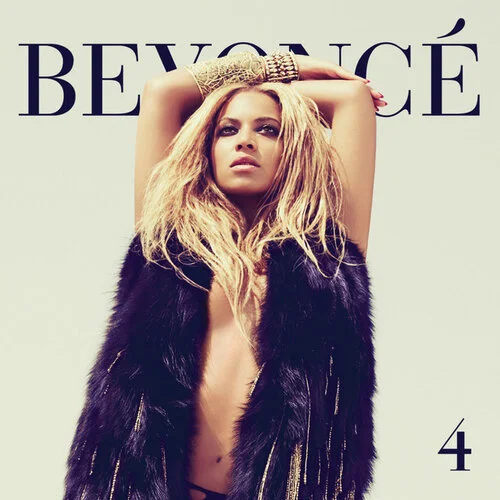
5. 4

ss.jpg

Release Date: 24th June, 2011

Labels: Parkwood/Columbia

Producers: Beyoncé Knowles/Antonio Dixon/Babyface/Brent Kutzle/Jeff Bhasker/Diplo/Kuk Harrell/Kanye West/Kaskade/Luke Steele/Los Da Mystro/Ryan Tedder/Shea Taylor/Skyz Muzik/Switch/Symbolyc One/The-Dream/Tricky Stewart

Five-Song Mix: I Care/Best Thing I Never Had/Party (ft. André 3000)/Countdown/Run the World (Girls)

Choice Cut: Love on Top

Buy: https://www.discogs.com/sell/list?master_id=347012&ev=mb

Review:

Nearly 15 years into a career with all the indicators of a future lifetime-achievement award, Beyoncé is so sure of her place in pop’s ruling class that she waits until the final track of her new studio album to present “Run the World (Girls).” “My persuasion can build a nation,” she declares, relegating to postscript status a message most artists would position front and center. Then again, maybe Beyoncé relegated “Run the World” to last because it’s the worst song here, a lumpy redo of Major Lazer’s “Pon De Floor” that somehow manages to make the singer sound less powerful than she has in years. Beyoncé can do hectic just fine — see the appealingly overstuffed “Independent Women Part II,” from Destiny’s Child’s Survivor. But “Run the World” doesn’t marshal its electro-dancehall intensity in the service of anything. It’s all sound and no fury.

Happily, Sasha Fierce takes five elsewhere on this often-gorgeous collection of ballads and mid-tempo cuts rich with echoes of late-’70s/early-’80s pop-soul. (With its creamy keys and skyscraping vocals, “Love on Top” imagines a perfect genetic splice of Whitney Houston’s debut album and Michael Jackson’s Off the Wall.) The lack of in-your-face future-funk arrangements isn’t a sign that Beyoncé has lost her appetite for domination; indeed, as a singer’s showcase, 4 will probably end up bested this year only by Adele’s 21.

But in slow-to-bloom songs that are as preoccupied by love’s pleasure (“1+1,” “Rather Die Young”) as by its pain (“I Care,” “Best Thing I Never Had”), this one-time single lady seems hungry for a satisfaction deeper than conquest. That she finds it before stooping to the hollow provocations of “Run the World” should warm the heart of anyone who still believes in putting a ring on it” – SPIN

4. Dangerously in Love

b.jpg

Release Date: 17th June, 2003

Labels: Columbia/Music World

Producers: Beyoncé Knowles/Rich Harrison/Scott Storch/Bryce Wilson/Focus.../Missy Elliott/Andreao ‘Fanatic’ Heard/Sherrod Barnes/D-Roy/Mr. B/Nat Adderley, Jr./Errol ‘Poppi’ McCalla, Jr./Mark Batson

Five-Song Mix: Naughty Girl/Baby Boy (ft. Sean Paul)/Me, Myself and I/Speechless/The Closer I Get to You (with Luther Vandross)

Choice Cut: Crazy in Love (ft. JAY-Z)

Buy: https://www.discogs.com/sell/list?master_id=41127&ev=mb

Review:

See, Beyoncé’s not really thinking ’bout those other honeys. Whether or not she got the credit, the slick-tongue style she per-fected on ”Say My Name” was a minirevolution in R&B. And Dangerously in Love, her solo debut, confirms her taste for innovation. ”Dangerously,” which the singer coproduced and almost entirely cowrote, is more about moving on from Destiny’s Child’s frothy aesthetic than competing with the current crop of singing sensations. Eschewing high-profile hitmakers like the Matrix and the Neptunes, Beyoncé collaborates with under-the-radar minds like Rich Harrison and Dr. Dre’s secret weapon, Scott Storch, exploring, albeit hesitantly, new directions in contemporary black music.

The results are not half bad — certainly not the first half. The disc opens with ”Crazy in Love,” coproduced by Harrison, who gave Mary J. Blige-ish upstart Amerie a hit single last year. Then Storch flirts with the increasingly familiar mingling of Eastern sounds and dancehall reggae, as Beyoncé portrays, not quite convincingly, a ”Naughty Girl.” The next cut, ”Baby Boy,” goes full-tilt Bollywood ‘n da hood, with Sean Paul ripping a pulsing tabla raga. Here, when Beyoncé coos, ”In our own little world, the music is the sun/The dance floor becomes the sea,” you kinda wish she’d launch into her old acrobatic scat tactics to challenge Sean Paul’s rude-boy chat. But this isn’t THAT Beyoncé.

This Beyoncé flexes a different kind of muscle on ”Hip Hop Star,” a distorted guitar-screeching foray into the rock-meets-funk-eats-hip-hop genre that’s more Neptunes than the Neptunes. Her racy, raspy ”undress me” refrain — a bit Kelis, a bit Marilyn Monroe — is shocking but not unwelcome. Guest Big Boi of OutKast sums it up nicely: ”Never can tell these days, everybody’s got a little Rick James in they veins.”

”Be With You” is a ballad with deliciously big drums that recalls Faith Evans’ ’95 single ”You Used to Love Me” and rips off a few other R&B classics you used to love. ”Me, Myself, and I” rides Storch’s signature gangsta guitar, mellowed for Beyoncé’s lovesick lament — a warm-up for the CD’s sweet spot: ”Yes,” a damn-near-Björk-like bit of trip-hop, that could, if we’re lucky, set off a new age of snap-crackle pop. The song’s staticky situation — Beyoncé defending her chastity ‘gainst some greedy boy — resembles ”Say My Name” in its specificity and earnestness.

Most of the disc’s missteps follow. The gimmicky, Missy Elliot-produced ”Signs” is soggy, synth-drenched cosmic slop. ”That’s How I Like It,” also featuring Jay-Z, is ”Jumpin’ Jumpin”’-era jive that only reminds you how fresh ”Crazy in Love” is. A remake of ”The Closer I Get to You” with Luther Vandross also sounds, sadly, a little dated. But for the most part, Ms. Knowles does more reinventing than revisiting — a dangerous prospect, but hey, that’s love” – Entertainment Weekly

3. B’Day

rr.jpg

Release Date: 1st September, 2006

Labels: Columbia/Music World/Sony Urban

Producers: Beyoncé Knowles/Rodney ‘Darkchild’ Jerkins/Sean Garrett/Rich Harrison/Walter Millsap III/Candice Nelson/The Neptunes/Rudy Pérez/Shaffer ‘Ne-Yo’ Smith/Stargate/Kasseem ‘Swizz Beatz’ Dean/Shea Taylor/The Underdogs/Cameron Wallace

Five-Song Mix: Déjà Vu (ft. JAY-Z)/Get Me Bodied/Kitty Kat/Green Light/Irreplaceable

Choice Cut: Ring the Alarm

Buy: https://www.discogs.com/sell/list?master_id=41244&ev=mb

Review:

At least one tactic or event preceding the release of Beyoncé's second solo album inspired a bemused three-syllable exclamation from anyone who was paying attention. The lead single, the late-'70s-funk-inspired "Deja Vu," had the audacity to not be as monstrous as "Crazy in Love" -- its stay at the top of the charts was relatively brief, so clearly there was evidence of some drop-off there. This was quickly followed by "Ring the Alarm," an angered, atonal, and out-of-character song with an accompanying video that invited all kinds of perplexed analysis, along with debate on whether Beyoncé was being autobiographical or, as the singer claimed, channeling her Dreamgirls character. All of this gave the haters plenty of ammo when anything less than 100 percent polite, ladylike, and expected was bound to do the trick. Add to this an album title that can be pronounced just like "bidet," along with the advertisement that the album's ten songs were whipped up in two weeks, and you have yourself a career-killing train wreck. B'day isn't even close to that. While Beyoncé does sound like she's in a bit of a hurry throughout the album, and there are no songs with the smooth elegance of "Me, Myself and I" or "Be with You," it is lean in a beneficial way, propelled by just as many highlights as the overlong Dangerously in Love. Two collaborations with Rich Harrison swagger and preen: "Been locked up in the house way too long/It's time to get it, 'cause once again he's out doing wrong" (the blaring/marching "Freakum Dress"); "Don't give me no lip, let mama do it all" (the spectacularly layered "Suga Mama"). The Neptunes assist on "Green Light," an ambitious, fleet-footed number that continually switches tempos and sounds, as well as "Kitty Kat," a deceptively sweet, rainbow-colored track -- where what sounds like purrs are more like claws-out dismissals -- that could've been pulled from one of the first three Kelis albums. And even with an entirely bonkers line like "I can do for you what Martin did for the people," "Upgrade U" is the most potent track on the album, a low-slung Cameron Wallace production where Beyoncé wears and buys the pants while making her proposition sound more like empowerment than emasculation. If the circus surrounding this whole thing -- which could take up to ten pages to document -- was an elaborate ploy to transform Beyoncé into an underdog, there really is some kind of genius at play, but it's extremely unlikely that anyone in her camp could've predicted that the expectations and reactions would be less rational than any of Beyoncé's decisions and actions. There is nothing desperate or weak about this album” – AllMusic

2. Beyoncé

tt.jpg

Release Date: 13th December, 2013

Labels: Parkwood/Columbia

Producers: 40/Ammo/Beyoncé/Boots/Detail/Jerome Harmon/Caroline Polachek/Ryan Tedder/The-Dream/The Order/Timbaland/Justin Timberlake/Key Wane/Pharrell Williams

Five-Song Mix: Pretty Hurts/No Angel/Partition (contains hidden track, Yoncé)/Jealous/XO

Choice Cut: Drunk in Love (ft. JAY-Z)

Buy: https://www.discogs.com/sell/list?master_id=631282&ev=mb

Review:

Beyoncé’s best songs often reject traditional pop structures in favor of atmosphere—she may have taken some cues from her sister Solange, who now leads a particular wave of collaborative, left-field R&B. The record, her darkest and lushest yet, has a tendency to echo, stop abruptly, or place two separate songs in the space of one. Its most bracing moments are also its toughest and weirdest, like "***Flawless", a two-part growler that makes feminist TED Talk fodder sound legitimately menacing. Timbaland and Justin Timberlake join The-Dream on "Partition" in service of the mean-mugging Yoncé, who snarls and bares her teeth as though the most revered rapper of all time is nobody but her little husband. At the center lies Beyoncé’s practically unfair abilities as a performer—you get the sense that Lady Gaga or Ciara could no sooner pull off the scale or quality of Beyoncé than you or I could pull off a suitable rendition of any of its songs in a karaoke bar.

Beyoncé has loosened up her delivery, too, in a way that highlights her elasticity and shows her pop-cultural antennae tuned to the right channels. Who could’ve predicted that some of the most infectious snippets of pop music in 2013 would not arrive by way of anthemic chorus or assembly-line arrangement, but in Beyoncé’s ad-libbing? You already know the ones: Surfbort, she grunts on “Drunk in Love”, slinging a hashtag like it’s the name of a line of Ikea chairs, the single word serving as both shorthand for woman-on-top and a neat summation of an entire era of trends in rap cadence. You’d also be hard-pressed to find an internet-savvy person in America who hasn’t been possessed by the idea that he or she woke up like this, brain emblazoned with Beyoncé’s half-second I’m so flawless I gave myself a seizure dance. She's achieved the rare feat of validating meme culture by capturing its sneaky potency and delight rather than falling into its cheap, dehumanizing traps. This is a “visual album,” sure, but it’s also a package of modern codes and discreet campaigns, a field of meaningful virtual dioramas. In this sense Beyoncé has a newfound spiritual ally in Drake (Worst! YOLO!),—he shows up on Beyoncé on the bruised "Mine"— her only peer to successfully streamline an internet-rooted mindset into a large-scale pop arena and seek profundity in the process.

Which is all to say that Beyoncé has delivered on the promise she inadvertently made by dropping an album and its expansive visual counterpart late on a Thursday night in December on iTunes, free of traditional fanfare. Call it a coup or just another victory for her mammoth PR apparatus, but consider the alternatives: The strategy probably would have failed if the quality wasn't there, and the album could not have achieved such an impact without its rogue—in spirit, at least—method of distribution. Beyoncé was unleashed upon the world in a way that could only succeed right now, with an aim to make the audience consume it the way it would have long ago. It’s a line that could be ripped straight from the mouth of an investment-drunk tech startup founder, but it’s true: Beyoncé seized the powers of a medium characterized by its short attention span to force the world to pay attention. Leave it to the posterchild of convention to brush convention aside and leave both sides feeling victorious” – Pitchfork

1. Lemonade

Release Date: 23rd April, 2016

Labels: Parkwood/Columbia

Producers: Beyoncé/Diplo/Kevin Garrett/Jeremy McDonald/Ezra Koenig/Jack White/MeLo-X/Diana Gordon/Boots/DannyBoyStyles/Ben Billions/Mike Dean/Vincent Berry II/James Blake/Jonathan Coffer/Just Blaze/Mike Will Made It

Five-Song Mix: Hold Up/Don’t Hurt Yourself (ft. Jack White)/Daddy Lessons/All Night/Formation

Choice Cut: Freedom (ft. Kendrick Lamar)

Buy: https://www.roughtrade.com/gb/beyonce/lemonade-5a2dfde2-bb82-4d5b-8afc-d849e09d90e1/lp-x2

Review:

Beyoncé's sixth album loomed once "Formation" and its video were issued ahead of the superstar's Super Bowl 50 half-time performance. Two months and a couple weeks later, it appeared as a culturally seismic visual album. Loaded with layers of meaning and references, and experienced en masse through its televised premiere, Lemonade honored black sisterhood with the presence of Warsan Shire, Serena Williams, and the mothers of Trayvon Martin, Michael Brown, and Eric Garner. Subsequently given audio-only release, its title comes from a popular proverb given extra personal relevance by Beyoncé's grandmother-in-law, whose citation is heard here during a crucial moment in the sequence. Mrs. Knowles-Carter indeed turns her own lemons into Lemonade. She uses the platform to demand contrition from her adulterous partner, assert her excellence, reflect upon the bonds with the men in her life, and their relationships with other women, and wonders if her trust can be earned back. The cathartic and wounded moments here resonate in a manner matched by few, if any, of Beyoncé's contemporaries. She sometimes eclipses herself in terms of raw emotion, as on the throttling Jack White encounter "Don't Hurt Yourself." At the low-volume end, there's more power in the few seconds she chokes back tears while singing "Come back" -- timed with the backing vocal in Isaac Hayes' version of "Walk on By" -- than there is in most contemporary ballads. Romantic conflict is nothing new for her, but there is a degree of concentration and specificity, and an apparent disregard for appealing to commercial radio that makes Lemonade a distinct addition to her catalog. (Another distinguishing factor is the length of credits which, due to a vast assortment of collaborators and samples, exceeds that of the self-titled album.) Lemonade can also be heard as the dark flipside of Beyoncé. When "Dishes smashed on the counter" is bleakly observed, just before "Pictures snatched out the frame/Bitch, I scratched out your name and face" is delivered with seething wrath, it's hard to not flash back to "Drunk in Love," in which the presumably same couple were revelrous in the same room. After the first three-quarters play out in compelling if somewhat erratic fashion, Lemonade closes with a torrid stretch. "Freedom" is a marching anthem of resilience and preservation, produced by Just Blaze with a glowing guest verse from Kendrick Lamar. The loved-up "All Night" is a tangle of emotions and hints at reconciliation, facilitated by the horns from OutKast's "SpottieOttieDopaliscious." And then, at last, there's the strutting "Formation," simultaneously a tack-on and an ideal finale, where Beyoncé delights in her blackness, femininity, and Southern origin with supreme wordplay” – AllMusic

FEATURE: Spotlight: Tierra Whack

FEATURE:


Spotlight

ddd.jpg

 PHOTO CREDIT: Justin Bettman

Tierra Whack

___________

I could easily have…

aaa.jpg

included Tierra Whack in my Modern Heroines feature. She has been on the scene for years and, to me, is an inspiration for so many people. Born in Philadelphia, she put out her debut album, Whack World, in 2018. It might seem like a strange time to spotlight her, as she has rumoured to be quitting music. That said, she put out a new song last week. One cannot really tell whether Tierra Whack is still coming back or whether she is thinking of leaving. I want to put her in this Spotlight feature as she is an incredible artist that many people will want to see a second album from. I will bring in a few interviews, as we get to discover more about Tierra Whack and where she is from. If you have not checked out her debut, Whack World, then do so. It is a collection of one-minute songs that are really fascinating. It is like a collage that is over in fifteen minutes. The audio-visual album is a unique treat that everyone needs to experience! This is what Pitchfork wrote in their review:

Whack World puts forth a portrait of the good and the bad, the weird and the unremarkable, while plowing through insecurities. She uses vanity mirrors to magnify her features on a song titled “Pretty Ugly” and bursts out of a house several sizes too small on “Dr. Seuss,” as if to reflect that feeling of having outgrown your surroundings or other people’s expectations. With the walls closing in, she throws down a bit of wordplay in a helium-infused voice—“Look but don’t touch/I should just be celibate/You the type to sell out/Me? I’m trying to sell a bit”—before pitching into a warped slo-mo like she’s being smothered.

The triumph of Whack World feels that much more important given the music industry’s stubborn refusal to champion diverse portrayals of women in rap outside of hypersexualized stereotypes. There is freedom in the margins, and Whack has crafted a work that beautifully manifests her own vision on her own terms. The result is brilliant—from the length of the songs down to the exaggerated imagery. Though she springs from a rich stylistic lineage, her 60-second confections have few modern precedents. Short songs, while in vogue, serve a different purpose here: Where others stretch small ideas and repetition, thinning them out for easy absorption, Whack uses the time constraint to make her big ideas seem larger than the space they’re allotted. Like an evolution in real time, she gives just enough to complete the thought before she morphs and catapults you to the next one.

Whack World morphs into a clever exercise in economy and using only what you need. It’s a visual album prepackaged for optimum social media consumption; every tiny piece stands on its own without losing sight of the larger picture. At its core, though, Whack’s sense of humor—her captivating depiction of a black woman’s imagination—is an opportunity to celebrate an aspect of art that often goes uncelebrated, an opportunity for Whack to celebrate herself”.

I do hope that we get another release from Tierra Whack. She is such a compelling artist that, just now, is getting to the wider world. I feel Whack World put her on the map…though many people are discovering her as she has recently released Walk the Beast. She has put out a series of singles between the release of Whack World and now – including the excellent Unemployed (2019). These, like Walk the Beast, are three or four minutes in length. If there is another album, it might be more conventional and longer.

I am going to start with an interview from 2018. The Guardian chatted with Tierra Whack as there was a lot of hype and excitement around the release of Whack World:

Whack – who says that’s her real name from birth – has been gaining buzz with Whack World, her newly released debut album that includes 15 songs with 15 accompanying videos, and each is exactly one minute long. It has drawn rave reviews and praise from some big names. Solange Knowles named her as a musician that excites her now – “She sent me a shirt that says, ‘Tierra Whack is my mom,’ and I wear it proudly,” Knowles told Billboard in March. Flying Lotus posted praise about her last fall and asked her to open one of his shows. And Whack will be opening for Lauryn Hill at the Philadelphia stop of Hill’s 20th anniversary tour for her masterpiece album, The Miseducation of Lauryn Hill. (Whack says she loved “every single song” on the album. “That’s my idol. She’s the reason I do it.”)

Her success comes amid an unusual boom period for female rappers. Cardi B has been breaking chart records and currently has three songs on Billboard’s Hot 100, two of which are in the top 10 amid a sea of Drake tracks. (She’s also managed to give birth to a baby daughter in the same week.) Nicki Minaj has also seen continued chart success ahead of the release of her fourth album, Queen. And Pitchfork’s best new music label is increasingly being applied to smaller, up-and-coming artists such as Lizzo and CupcakKe. “I want more females to join in and get the shine, and I hope to be part of the reason,” Whack told the New York Times in June.

Though she recognizes the importance of women in rap at this moment, Whack doesn’t identify solely as a rapper. She’s constantly shapeshifting, both onstage and on her album. During Whack’s short set at Warm Up, she was wide-eyed and bouncing back and forth across a small stage beneath clumps of inflated animals suspended in the air, wearing a bright yellow T-shirt dress with a giant pink “W”, commissioned and designed by her friend Tatyanna Nance. Whack alternated between rapid-fire raps and heartfelt sung lines such as “I miss my dog”, with one hand extended forward to punctuate her words, and asking people’s names and demanding dancing or group shouts between songs.

Whack is undeniably a skilled rapper, but she doesn’t define herself as singularly a musician of that genre – or even a musician at all. She prefers to be called an artist and an entertainer. And that may be a reaction to the confines she felt as a developing musician. “Growing up people would tell me: ‘Yo, you only can do one thing. If you’re going to rap, just rap. If you’re going to sing, just sing.’ It boxed me in. But I just figured out a way to show everything. It’s like if you have a job interview, you want to present as many skills as you have. Your résumé.”

Even in interviews, Whack edges toward pushing the limits of her presented identity and which details matter – though she’s been quoted in other publications as saying she’s 22, she told the Guardian she’s 36. (A YouTube video of Whack rapping impressively on the streets of Philadelphia at age 15 in 2011 suggests 22 is her real age.)

Whack’s résumé as an artist began with a school assignment – she had to write and present a poem to her class, which was a big deal since she was so shy at the time. She wrote and memorized a freestyle poem. “I went up there and just presented it crazy. I was just talking about the weirdest things, just rhyming any kind of word,” Whack says. She felt it was the first time her friends and family really saw who she was. She immediately asked her mom to buy her some notebooks, “and I just started writing and writing”.

aa.jpg

 PHOTO CREDIT: Matt Allen

Like so many artists, Tierra Whack has a really fascinating background and upbringing. It seems that a lot of violence and upheaval that she saw in a harsh Philadelphia neighbourhood turned her towards something creative and more spiritual. NME interviewed the rapper in 2019. We learned more about her childhood:

The eldest of three siblings, Tierra Helena Whack was born in Philadelphia, Pennsylvania, in a hard neighbourhood. “I grew up in the projects, 11th and Norris,” she says. “[It was] every man for himself. I remember seeing the guys on the corner, hearing gunshots. I guess a lot of people would say it was rough.”

In her childhood, Tierra had an obsessive inclination towards poetry and performance, turning her rhymes into raps under the moniker Dizzle Dizz. In high school, she and her crew petitioned their strict principal to allow them to perform a couple of songs from Sister Act 2 at a talent show. Tierra performed the famous “Joyful, “Joyful” rap verse, naturally – and they won.

When she was 15, Tierra and her mother were out driving and spotted the underground Philly music collective We Run The Streets. Whack’s mother encouraged her daughter to get out of the car and freestyle. Showcasing fierce talent, multi-syllabic flow and whimsical punchlines like, “I stretch my bills / yes my money exercise”, it was abundantly clear that Tierra was already a gifted MC – and one with killer bars like “used to be poverty / now I’m taking all your moneys like robberies”.

Tierra, though, seems to have little to no interest in fame when so many artists fish for clout as a means to survive. Her humility is sincere as she still grapples with her newfound stardom. “Who would have ever thought I’d be in London?” she screams. “Growing up, we only saw these places in movies. Like, you know that it’s real, but it doesn’t really hit you that you can go there, you can get a passport, you can go see these places in these movies, in these TV shows, you know what I mean?”

With no confirmation on a future album, audiences eager for a follow-up to ‘Whack World’ have, instead, been snacking on videos like ‘Unemployed’. In it, Tierra is a chef preparing a feast for her boss. The video takes a typically bizarre turn when Tierra’s main ingredients – potatoes – appear to be alive. Preparing a buffet of potato dishes – fried, mashed, baked – Tierra recognises that the potatoes are alive and seems to derive some form of pleasure in chopping them for her employers, who, themselves, are giant potatoes. This unusual cannibalistic video is made even more engaging by the haunting beats layered underneath her vicious bars.

With a staggering amount of self-confidence – “maybe it’s just because I’m a Leo,” she says wryly” – Tierra wants to reiterate that it wasn’t an easy path to get to where she is now, and that it took a whole lot of self-belief and discipline. Her rules for life? “Don’t step outside until you believe in yourself. Don’t get dressed in public. Get your shit together before you go outside.” It’s this incredible faith in herself that has also made Tierra start thinking about delving into other art forms. Inspired by Jordan Peele, in particular, and his most recent horror hit US, she wouldn’t mind making a movie: “He [Peele] is the perfect balance which I find myself to be: crazy, creepy and funny. That’s what I like. All horror movies, I laugh my ass off. I don’t think they’re scary.”

In a short time, Tierra Whack has received an incredible amount of praise from fans and critics alike. Anderson .Paak even compared her iconic artist Missy Elliot: someone Tierra thinks of as a role model. She accepts the term graciously, but concedes, “That’s a huge compliment, but I just want to be me. She’s one of my idols, but I’m just focused on being me. I appreciate all the compliments, but I’m working hard to really become a household name to change the world. I want to be Tierra Whack”.

I am going to wrap it up soon. There are two other interviews I feel warrant further exploration and exposure. It seems that everyone who interviews Tierra Whack gets a different experience. She definitely exudes loads of energy! DAZED got to witness her in good form when they spoke to her in 2019:  

I begin to ask about her reemergence onto the Philly scene, when Whack jumps in to ask if I’m using the pen I’ve been idly rolling between my fingers above an empty page. “Can I use it?” she asks, and I hand it over. She briefly accepts some paper, before deciding against it. “It's fine – that’s your notebook, and a napkin is cooler anyways,” she says, starting to doodle on the dark green tissue. I worry that she’s tired of my questions, but actually she begins to relax and open up (perhaps finally able to extract herself from a sense of ‘interrogation’ by retreating a little into the familiar torrent of her own imagination). Tierra Whack seemed to arrive fully-formed when Whack World catapulted her to a global stage, but she admits to feeling frustrated when people assume that her success came in an instant, erasing the struggle that came before.

What does she wish people knew about her life, pre-fame? “That I was homeless for three months when I came back (to Philly),” she says. “I lived out of storage, and from friends’ and family’s houses, because nobody really let me stay with them. It was rough.” She could have gone back to her mum in Atlanta, but she was desperately trying to make her music known, and Philadelphia was where she needed to be. How did she get through it, and come out the other side? “Music. Really just music,” she says. Coming from another artist, the answer could easily seem trite, but Whack is deadly serious. “I was doing really bad, but I just stuck with music and kept my job (washing dishes) the whole time,” she says.

From empathising with the existential dread of a potato in “Unemployed”, to deciphering the emotions behind the gleaming rictus grins in “Mumbo Jumbo”, it’s clear that Tierra Whack’s art works on levels beyond the zany, cartoonish surface. Though she describes the process of songwriting and generating music video concepts as if it were simply a case of plucking ideas from her brain like low hanging fruit, it is uncanny how Whack’s work seems able to tap into universal emotions, inviting a multiplicity of interpretations. I don’t mean to suggest that Whack is some kind of idiot-savant; but considering her inspiration mostly comes from the hyper-specific and apparently quotidian, she does have a mercurial talent for channeling the changing winds of contemporary culture through her free-associated streams of consciousness.

Whack has an energy that radiates like an aura. Not one of effervescent good luck, or head-in-sand enthusiasm, but a determination and humble belief in her ability to work hard and be great. “If I can make it through homelessness, I can make it through anything,” she says. As the accolades and industry cosigns pile up – from Missy Elliott, Solange, Vince Staples, Janelle Monaé, and more – Tierra Whack is determined not to lose herself in the shark-infested waters of fame. She remembers her Grammy nomination mostly when journalists bring it up, and has a healthy scepticism of shiny institutional trinkets. “If I get an award, that's cool. If I get nominated, that’s really cool. But I’m focused on creating art, having fun and enjoying life,” she says, handing me the doodled napkin as a parting gift. “I’m on my journey”.

To end up, there is a great interview from last year that is among the most current. I am not sure what Tierra Whack has planned for the next year or so and whether any quit rumours are substantial and will lead to her departing – let us hope not! This gal-dem interview shows that the sort of energy, playfulness and personality we hear through Whack World is embodied in its creator:

Tierra’s presence also makes it clear that the brilliant, chaotic energy of Whack World is just who she is. In conversation, she leaps from topic to topic; presents long analogies; goes quiet, suddenly, disappearing into her own head; even provides deep narratives on things she spots on the street outside.

At one point, for example, we see a child helping her dad unload his lorry of Italian food, and Tierra is off: “Wow, she’s opening that big truck! You think she drove the truck too? Is she about to get in the back of the truck?? That box says, ‘Good pizza!’ – it’s probably bad. I kind of just want the box, not what’s inside. What do you think the next box says? A blank box? You don’t know what’s gonna be in there! Man, this little girl is really helping. I want to be her when I grow up. Wow. This is the best thing ever, this should be a movie. I hate olives so bad! I don’t like people named Oliver – it makes me really angry and I want to pull my hair out. She’s making a beat with the box, did you see her, did you see her? Watch out!”

Tierra is innately entertaining, from the way she tells ridiculous, exuberant stories to the way she poses for the camera. “I always wanted to be inside the TV,” she says when I ask about her childhood dreams, “I loved the TV so much, I used to sit in front of it like this,” – she mimes having her nose pressed up to the glass – “watching music videos and cartoons. I always wanted to be an entertainer.” But her desire to keep people smiling also feels conscientious.  At one point I’m stumbling over my questions, apologetic, and she immediately points to a sign across the road: “‘You’re Beautiful’. Look, that’s a sign! I’m so happy to be here. You’re beautiful.”

Tierra talks a lot about “leading with positivity” – and at times it can feel a little starry-eyed and childlike. But, for all her references to not wanting to grow up, it’s not that she’s oblivious to the ugliness of the real world. Her songs delve into strange places of darkness, and in conversation she mentions moving from a project neighbourhood in South Philadelphia to a more affluent area with more white people: “I made white friends, and then their parents would be racist. I could just tell they hated my guts – you can feel when somebody is evil, and I think that is evil. I think everybody should love everybody”.

Let’s leave it here. Go and follow Tierra Whack and listen to Whack World if you have a spare fifteen minutes. Check out her singles and other work too. She is a mighty talent who I hope will continue and put out more music. Having released singles since 2018, I think that she has enough material for a full-length album. Both popular and underrated, I do feel there are a load of people who do not know about her. Maybe the brief and unconventional nature of the album did not draw in as many people as would like. Go and spin it. I will keep an eye out to see where…

THE amazing Tierra Whack heads next.

_____________

Follow Tierra Whack

www.jpeg

FEATURE: The Power of Reimagination: Will Paul McCartney and Brittany Howard’s Studio Album Reworkings Become More Widespread?

FEATURE:


The Power of Reimagination

wqqw.jpg

Will Paul McCartney and Brittany Howard’s Studio Album Reworkings Become More Widespread?

___________

NOT that it has become a full-blown thing…

frtg.jpg

but, as two massive artists have either released or announced a reimagined/imagined version of a recent studio album, I wonder whether it will become more of a thing. I shall come to Brittany Howard’s forthcoming release. We all know that Paul McCartney released McCartney III last year. It was the long-awaited conclusion to the eponymous trilogy. Few would have expected any action after that in terms of new releases. McCartney III Imagined was released in April. This is the eleven tracks from the original album with ‘new’ versions. A series of great artists have provided their take on the songs. The track order is different on Imagined than it is the original release. My favourite track from McCartney III, Slidin’, has an EOB remix. Phoebe Bridgers features on Seize the Day; Find My Way has Beck on it, whilst St. Vincent remixes Women and Wives. It is a mixture of remixes and the original songs sort of turned into collaborations. Whilst this sort of things has been done before (there were a load of remix albums in the ‘90s!), the fact someone as high-profile as Paul McCartney has done it is really interesting. Not intended to make money or capitalise on the original album, I think it was more of a chance for newer artists to give their take on these songs. There was quite a lot of praise for the McCartney III Imagined project. Whilst not as acclaimed as the original album, many were impressed by the unexpectedness of the album, in addition to the well-chosen collaborators. I think each artist brings something unique and fresh to the songs, meaning you essentially get a new album, yet you already know the songs and their background.

The reviews for McCartney III Imagined were largely positive. The album could have been a bit of a mess; McCartney clearly spent a lot of time and energy ensuring he has the right people on the album. This is what CLASH wrote in their review:

Paul McCartney’s ongoing creative luminescence is truly exceptional. Whereas peers such as Eric Clapton and Van Morrison find themselves at loggerheads with the world, Macca’s joi de vivre and thumbs up positivity has become the perfect lockdown antidote.

Last year’s home-recorded ‘McCartney III’ was a wonderful DIY song cycle, slowing an ad hoc triptych that spans 1970’s ‘McCartney’ and 1980’s ‘McCartney III’. Fun and full of vim, ‘McCartney III’ proved that his undoubted gift with melody – not for nothing does the phrase ‘McCartney-esque’ stand as such high praise – remained undaunted, matched with a passion for experimental whimsy.

‘McCartney III Reimagined’ features a hand-picked cast giving the songs on the home studio album a once over. Pleasingly diverse, it finds Sir Paul hanging over the tapes to some truly incredible artists – indeed, it’s probably time to chalk ‘curatorial abilities’ on the lengthy list of things the Beatles icon excels at.

Beck’s bubbling, immediate, and really-rather-funky take on ‘Find My Way’ opens the set, before pop auteur Dominic Fike has his wicked way with ‘The Kiss Of Venus’. Both are rather faithful interpretations, but often it’s when guest depart from the core text that ‘McCartney III Reimagined’ becomes truly enlightening.

Take the gloriously chilled out funk of Khruangbin, who are left free to tease ‘Pretty Boys’ out to such dynamic lengths. EOB – in reality Radiohead’s Ed O’Brien – delivers a full throttle nu metal nuclear explosion with his take on ‘Slidin’ while Massive Attack producer 3D explodes ‘Deep Deep Feeling’ on the 10 minute finale.

Implausibly diverse, ‘McCartney III Reimagined’ is able to move from Josh Homme’s bluesy strut ‘Lavatory Lil’ to a pleasingly sweet, entirely heartfelt Anderson .Paak take on ‘When Winter Comes’. The peaks, however, arguably come from the hands of two female artists: St. Vincent’s gloriously luxurious ‘Women And Wives’ preens its way to a spasmodic guitar solo, while Phoebe Bridgers tantalising take on ‘Seize The Day’ proves that her golden run is showing no signs of slowing down.

Remix albums are often – truth be told – an absolute chore, a hangover from the 90s era of 17 quid compact discs. This reiminaging, however, serves of noble dual task – it illustrates Paul McCartney’s continued creative relevance to artists a third of his age, while also underlining the craftmanship that went into last year’s ‘McCartney III’. Not an essential listen, perhaps, but one that will fascinate and intrigue fans”.

If every artist was to do this, it might lose its appeal and special edge. That said, I wonder whether we will see more artists – those who are big-name and can do this sort of thing – follow an album with a sort of ‘reimagined’ version. Possibly motivated by Paul McCartney’s release, Brittany Howard is doing something similar with her Jaime album. Pitchfork explains more:

Brittany Howard has announced Jaime Reimagined, a record featuring new versions of songs from her solo debut Jaime. The album includes previously shared remixes from Bon Iver, Michael Kiwanuka, Fred again..,and EarthGang. Reimagined also features Childish Gambino’s interpretation of “Stay High,” as well as new guest contributions from Common, Emily King, and the Internet’s Syd. Below, hear Little Dragon’s remix of “Presence” and BadBadNotGood’s remix of “Tomorrow.”

“Making Jaime was so much fun for me because I was able to explore so many different genres of music,” Brittany Howard said in a statement. “There were no rules. This reimagination project has been no different. I have been honored to have so many incredible artists from all musical worlds interpret my songs in such interesting and different ways.”

Jaime Reimagined is out digitally on July 23 via ATO; a vinyl edition will follow on September 24”.

As it is out digitally, one can hear songs from that album. It is quite similar to McCartney III Imagined, in the sense that there are remixes and new versions. You can pre-order a physical copy of JaimeReimagined now. I do wonder whether other artists are thinking along the same lines. I guess the albums that are being reworked and reimagined would need to be fairly current – the past couple of years, say. I feel that everyone from Taylor Swift (folklore), Phoebe Bridgers (Punisher) and Dua Lipa (Future Nostalgia) could benefit from something like that. I would be curious to see how those original albums are reimagined.

fgf.jpg

In fact, Dua Lipa sort of got there ‘first’ with Club Future Nostalgia from August last year. This was the album remixed by a series of musical guests. Considering Future Nostalgia was so popular and made a big impression, I can see why this new version was launched. Although, perhaps, not quiet as impactful and interesting as McCartney III Imagined, it was a chance to hear these very personal songs given a tweak and new life. This is what AllMusic wrote in their review:

When her sophomore album, Future Nostalgia, was greeted with overwhelming acclaim at the start of 2020, English pop diva Dua Lipa decided to gift fans with a bonus remix LP, Club Future Nostalgia. With American electronic artist the Blessed Madonna at the helm, the disco-kissed pop perfection of the original receives a sweaty, thumping update in the form of an extended DJ mix. Seamlessly throbbing from track to track, the set revisits each of the impeccably produced songs from Future Nostalgia, sometimes improving them ("Boys Will Be Boys") and other times not quite hitting the highs that the crew targeted, like on the Madonna and Missy Elliot update of "Levitating." The Blessed Madonna goes deep on "Hallucinate" with Mr. Fingers and Paul Woolford and on "Pretty Please" with Midland and Masters at Work, which offer the most interesting takes on the album. Unreleased session cuts "Love Is Religion" and "That Kind of Woman" make their official debuts here, both highlights in their own right. The former, a joyous romp that soars during the choir-backed chorus, could have been a single, while the latter gets Stuart Price's Jacques Lu Cont treatment as a pulsing gem that's woven with Stevie Nicks' "Stand Back." Additional surprises pop up elsewhere in the mix, bringing samples by Jamiroquai ("Canned Heat") and Neneh Cherry ("Buffalo Stance") to the party alongside guest vocalists Gwen Stefani and Blackpink and producers Yaeji and Mark Ronson. Like the original, this is a nonstop party. However, without the boundaries of an official studio release, Club Future Nostalgia transforms Dua's party for one into a full-on collaborative celebration. While first-timers to this era would be best served listening to the parent album first, existing fans who can't get enough of that LP will find Club Future Nostalgia to be an absolute blast”.

I am stuck on the idea of  this becoming a more regular thing. I am not sure that ‘smaller’ artists can attract the same sort of focus and collaborators if they wanted to go down this road - though there is nothing to stop them. For me, the appeal comes from a huge artist putting out a great new album and then revisiting it fairly soon after. I love what Brittany Howard, Paul McCartney and Dua Lipa have done. Maybe it will not become a huge thing and we will see a load of reimagined and imagined-type albums. I do think that more will crop up. The interesting question is whether releasing a remix/re-versioned edition takes something away from the original. I personally prefer McCartney III to its Imagined cousin – although it is great hearing what the likes of Khruangbin and Damon Albarn have done with tracks from a true master. Let us see what happens in the coming months. Hearing the same album slightly differently is a phenomenon that could catch on. Of course, remixes have existed for decades, though very few artists have put an album back out entirely with remixes and/or collaborations similar to what McCartney, Howard and Lipa have done. It has happened a few times in the past, yet we might see it become more frequent in the coming years. If the remix albums of the 1990s were seen as a bit naff or forgettable, this newer and more diverse album where we get a roster of eclectic artists putting their stamp on songs seems a lot more beneficial and rewarding. Many people will be keeping their eyes peeled to see how far this reimagining reaches. As we heard on McCartney III Imagined, the results are…

OFTEN spectacular.

FEATURE: The Kate Bush Interview Archive: 1993: Nick Coleman (Time Out)

FEATURE:


The Kate Bush Interview Archive

sss.jpg

IN THIS PHOTO: Kate Bush in 1993 

1993: Nick Coleman (Time Out)

___________

I have selected this interview…

aaa.jpg

to talk about, as there is a focus on the film director Michael Powell and his influence on Kate Bush; evident in the title track of her 1993 album, The Red Shoes. There are some great print interviews I have not yet covered. Nick Coleman from Time Out spoke with Bush in 1993. It is quite a deep and interesting interview that veers off at times – near the end, he is admonished for straying into Bush’s personal life and crossing boundaries. For the most part, the interview is compelling and throws up some great answers. Thanks to this great website for providing the interview transcript. Many people overlook The Red Shoes as an album and the film, The Line, the Cross and the Curve. I have selected various sections of the interview between Coleman and Bush:

Yet Bush has maintained a buffering distance between herself and the knowing methodology of traditional pop-craft, preferring to define herself as an expressive vessel of subtle emotion, for whom creativity is both a burden and a joy, from whom music just comes out, like blood. She says ideas come to her at the piano, from doodles, which evolve rapidly into visual images, which are then nurtured and enlarged upon through various stages until they are given final, incorruptible shape in the recording studio. Over recent albums, the studio itself has become a musical instrument, which she has learned to play with some accomplishment. The talk is always of art, creativity and reaching inside; never of craft, commerce and giving people what they want. This is English, suburban, middle-class sexiness with a high mind.

Is she disingenuous? Almost certainly not. But then one of the privileges of eccentricity is perceived innocence. Bush doesn't have to be disingenuous, because no one would believe it of her, not even if she went on telly and announced formally to a choking Michael Aspel that really she never meant a word of it; and isn't it great, pop, the way you can do anything you like so long as there's demand! After all -- perhaps above all -- she embodies the homely Noel Streatfeild ideal of creativity as a distinguishing mark, as a personal brand, fizzing, black and indelible. In a world overstocked with Gemmas and Paddies and Susies and Kates, who you are is what you're good at. That's how the grown-ups tell you apart.

She pours tea and places herself on the edge of her chair. She is small, not minute, and erect. One booted leg crosses the other and bumps gently up and down. She cocks her head and waits. She is courteous, cool and suspicious.

My friend Catherine has never opened any post addressed to Kate Bush. There was, however, a letter that came addressed merely to 'Catherine '. So Catherine opened it. Inside was a lot of stream-of-consciousness stuff about dreams, and about how the writer was watching Catherine. So Catherine snorted, noted the postmark and forgot about it. Then another letter arrived, identically addressed, from the same postal region; then another, and another, each of them increasingly weird and disturbing. Sometimes three would arrive in a day. And it so happened that on the day that Catherine decided to go to the police, a letter arrived that included a reference to Catherine's poetry and music, neither of which are big with Catherine. Also, the letter included the appellation Kate.'

'It's so nice to talk about my work for once,' she says. By this she means she's glad we've started by talking about the great film director Michael Powell and his influence on her, which is signally manifest in the title track of her new album 'The Red Shoes'.

'The Red Shoes' is a ballet film made by Powell and Emeric Pressburger in 1948, telling the story of a dancer who is torn between the demands of a great impresario, who can help her to become an artist of destiny, and those of her composer/husband, who can bring her happiness. The story elides an old fairy tale and a take on the power struggle that raged between the dancer Nijinsky and Diaghilev, first director of the Ballet Russe. Bush says the song evolved out of a feeling she had one day at the piano of music running away with itself. The image in her mind 'was like horses galloping and running away, with the horses turned into running feet, and then shoes galloping away with themselves'. Which corresponded, conveniently enough, with the key fairy-tale element in the Powell film: the red pumps worn by the tragic ballerina, which are imbued with a magic that carries their wearer off in a terrible outpouring of expressiveness.

aaa.jpg

IN THIS PHOTO: Kate Bush during the filming of The Line, the Cross and the Curve/PHOTO CREDIT: Guido Harari 

Bush contacted Powell shortly before he died, 'to see whether he'd be interested in working with me. He was the most charming man, so charming. He wanted to hear my music, so I sent him some cassettes and we exchanged letters occasionally, and I got a chance to meet him not so long before he died. He left a really strong impression on me, as much as a person as for his work. He was just one of those very special spirits, almost magical in a way. Left me with a big influence.'

Which makes some kind of sense. Powell's super-rich three-strip Technicolor, his English-ness, his 'expressiveness', his interest in the shadows cast by daylight; even, you could argue, his thematic preoccupation with islands, solitary souls and the unconfined spirit; these are some of Bush's favourite things.

'His work is just so... so beautiful,' says Kate, in her tiniest voice.

Meaning what, exactly?

'Well, there's such heart in his films. The way he portrayed women... that was particularly good and very interesting. His women are strong and they're treated as people...'

That's one kind of beauty.

'The heart, I think, is the main beauty. This human quality he has. Although there's clever shots in his films, they're not really used for effect, to be clever. They're used for an emotional effect. I'd call that a human quality. Like vulnerability. Also, I like the emotional qualities of the characters. I suppose in one way they're very English ...'

To combine her interest in Powell with her lust for new directions, and perhaps to solve one or two promotional problems, Bush has directed a 40-minute film interpreting six songs from the excellent 'Red Shoes' album. It will be premiered at the London Film Festival.

'I'll be very interested to see what people make of it. To see whether they regard it as a long promo video or as a short film,' she says.

Where do your stories come from?

'Oh, all kinds of sources but generally they come down to people. People's ideas or works. Films, books, they all lead back to someone else's ideas, which in turn lead back to someone's else's ideas...'

You're 35 and you've been doing this since you were a teenager. How have you changed?

'I think I've changed quite a lot. Essentially I'm still the same person but I suppose I've grown up a lot, and learned a lot.'

What's made you grow up the most?

'You get lots of disappointments. I'm not sure that they make you grow up but they make you question intentions.' She pauses. 'But life is what makes you grow up.'

That's a fantastically evasive answer.

'It is quite evasive but I think it's true.' Still no dimple. 'It's hard to say... when I was young I was very idealistic, and I don't really think I am any more. I think I'm more... realistic. I think it's good to change. I think I'd be unhappy if I didn't change. It would mean I hadn't learnt anything.'

Do you ever think you're mad?

'Yes.' This is a slow answer, not without humour. 'Yes, I do. But it could be worse ... I think everyone is mad in their own way. I mean, what is normal? I do think I have quite a lot of fun with my madness, though. It's nice that I can channel it into my work.'

Does work ever feel like it's not quite enough?

'Oh, now! She glares. My blood vessels turn into zip-fasteners. Now I've done it. 'Those last two questions seem like they're coming in on an angle ...'

The lecture follows about how she makes it quite clear that questions about her private life are out of bounds. I protest that I'm not trying to get her to betray facts about her private life but to talk about how she sees herself, and the world outside. After all, I bluster, there is a connection between her feelings and her work, is there not? She pours tea, clanking the lid of the teapot, doing stuff with her hands.

It used to be said of Olivier that when he wasn't acting there didn't seem to be much of him left.

'Well, I'm only five foot three, so there's not so much of me here anywhere. I have so much time for actors. I mean, that really is putting yourself on the line. And acting is being so many different things, isn't it? I wonder how easy it is for very famous actors to hold on to a sense of who they are.'

Quite.

'But Olivier was awfully good at what he did, wasn't he? So if there wasn't much of him left, who cares, really? What he did was great’”.

In a lot of interviews, Kate Bush has had to deal with some tough questions or those who are asking inappropriate things! She always deals with them so well and calmly! As you can see from the interview above, it is respectful for the most part – those the personal questions are a little galling and intrusive. I like the Time Out interview, as Bush got to talk about film, The Red Shoes, in addition to Michael Powell and her friendship with him. The years 1993 and 1994 are not really exposed and explored regarding Bush and her career. I really like the fact that she put out The Line, the Cross and the Curve; The Red Shoes is an album with several strong highlights. She would wind down her career quite a bit after 1993…engaging less frequently with the media and not releasing her next studio album, Aerial, until 2005. The Time Out interview got me invested and imagining – what it must have been like for Nick Coleman being in the room with her. By all accounts, it sounds like…

dd.jpg

 IN THIS PHOTO: Kate Bush in 1993 

QUITE an encounter!

FEATURE: Groovelines: Tears for Fears – Everybody Wants to Rule the World

FEATURE:


Groovelines

sss.jpg

Tears for Fears – Everybody Wants to Rule the World

___________

THIS is a song that I have been meaning…

ddd.jpg

to put into this feature for a long time. Tears for Fears’ 1985 single, Everybody Wants to Rule the World, is one of my favourite songs ever! It was my first memory of life. I might have heard in 1985 when I was two – it was very close to that time anyway. There are some articles that I want to bring in, so one can get a history of the track and why it was written. Released in March 1985 – it was taken from the English band’s Songs from the Big Chair (1985) album – and written by Roland Orzabal, Ian Stanley, and Chris Hughes, it is a song that reached the top spot in the U.S. and number two here (I wonder why it was slightly more popular there?!). Written at a time when there was the threat of nuclear annihilation during The Cold War and many felt very tense, the song had real gravitas and relevance. This Wikipedi article gives us a little background to Everybody Wants to Rule the World:

Everybody Wants to Rule the World" was written by Roland Orzabal, Ian Stanley and Chris Hughes, and produced by Hughes. The song was a "last-minute" addition during recording sessions of Songs from the Big Chair (1985). The decision to include the song in the album came after Orzabal played two chords on his acoustic guitar for Hughes. It was recorded in two weeks and added as the final track on the album. According to Orzabal, the final line in the song's chorus, originally written as "Everybody wants to go to war", contributed to his indifference towards the track.

In an interview with Mix magazine, Hughes said that "as a piece of recording history, [the song is] bland as hell." Orzabal's unimpressed reaction to the track during their songwriting sessions prompted Hughes to convince him to record it, in a calculated effort to garner American chart success. After completing their sessions at 6PM, they would spend an hour reviewing each recording many times; this helped Orzabal to create the song's guitar figure and change its title. Orzabal acknowledged that the shuffle beat used in the song was "alien" to their way of writing music, stating it was "jolly rather than square and rigid in the manner of 'Shout', but it continued the process of becoming more extrovert." Curt Smith, the song's lead singer, said the themes were "quite serious – it's about everybody wanting power, about warfare and the misery it causes”.

It is interesting to think about the song now and whether it has the same meaning as it did in the 1980s. There were some who were dismissive when Everybody Wants to Rule the World was released; feeling that it did not convey punch and any real political message – a song that was not as potent as it should have been. To me, it is a really strong anthem where the slightly upbeat composition and vocals are juxtaposed with the starker messages. Auralcrave wrote about Tears for Fears’ smash last year:

Reliable voice of the aesthetics of their time, Tears For Fears propose themselves as ideal companions on a journey between light and shadow. Yet, among their songs there are some that seem to embody the spirit of every era, and Everybody Wants To Rule The World is one of these always valid posters. If every generation has its nightmares, this song, which under the reassuring sound of the New Wave hides an intertwining of cynicism, desire for supremacy and mirages of a distant freedom, is an anti-hymn to the visions that torment the imagination of us all . Regardless of the time we live in.

Track from the album Song from the Big Chair (one of the group’s greatest hits) dating back to 1985, Everybody Wants To Rule The World, included in the project at the last moment, is a reference to the Cold War still in progress. Roland Orzabal initially plans to name it Everybody Wants To Go To War, realizing afterwards that it didn’t sound right.

ggg.jpg

 The words of the young singer are dictated by the collective suspicion of a possible nuclear war, as well as by the fear of the unknown that lies in the total uncertainty of the future to come. Assumptions that allow the lyrics to emerge from the war situation and become more generally valid, an incredibly catchy rant against the thirst for power of those “personal dictators” – such as an authoritarian parent or an overbearing superior at work – who would always like to order us what to do, guiding every action of our existence.

The opening lines, made of an almost frightening inevitability, lead us to a sort of Orwellian world, a system based on constant and oppressive surveillance:

Welcome to your life

There’s no turning back

Even while we sleep

We will find you

Acting on your best behaviour

Turn your back on mother nature

Everybody wants to rule the world

Once you become aware of being alive, you also acquire the awareness of being continually observed and judged, rewarded or punished by a power claimed and “justified” by the mere fact of being up there. A control, that of those who impose themselves, which cannot be escaped and which can only make us think of the grip in which the digital revolutions of the new millennium have tightened reality, now reduced and regulated by the anxious principle of acceptance and beauty. There is no escape from tyrants as there is no escape from the big eye of public opinion, hungry for errors to be condemned and ridiculed”.

aaaaaaaa.jpg

PHOTO CREDIT: Michael Putland/Getty Images

I will come to an article that talks about cover versions of the song. Whilst I am not a fan of any of the cover versions – it is a song that is perfect as it is and sounds a lot weaker when others tackle it -, it does show that it has resonated through the years. As this article explains, there was a British Invasion in the U.S. in 1985 – over twenty years after The Beatles were at the centre of one in the 1960s:

The duo of Roland Orzabal and Curt Smith were a huge part of that second British invasion. When TFF entered the Hot 100 in March that year with “Everybody Wants To Rule The World,” all of their initial UK success to that point had yielded just one US singles chart appearance, and that at a No.73 peak, with “Change” in 1983. The album The Hurting reached the exact same position.

On June 8, 1985, the Tears For Fears  single took over from Wham!’s “Everything She Wants” to begin a two-week reign on the Hot 100. Wham!’s single had itself replaced Simple Minds’ “Don’t You (Forget About Me)” at the top, as British acts held sway for a five-week stretch. Just five weeks later, Songs From The Big Chair was topping the album chart, for the first of five non-consecutive weeks”.

I really love the sounds of the mid-’80s and what was being produced in the U.K. Such amazing songs that have stood the test of time! To me, Tears for Fears’ Everybody Wants to Rule the World is among the very best.

dss.jpg

 PHOTO CREDIT: Peter Noble/Redferns

Stereogum looked back at the song when they put it under the spotlight last year. Although they were not entirely convinced by the authenticity, status and authority in the song, there were some interesting observations:

The UK duo Tears For Fears spoke that language, too. By 1985, the Second British Invasion — the cascade of twitchy synthpop kids who blew up on MTV — had started to fade. The sound of an arch art-school voice declaiming cryptic nothings over beeping keyboards no longer seemed like the future. When they debuted, Tears For Fears got lost in that moment; they made big hits at home but struggled to connect in America. On their second album, though, Tears For Fears tapped right into the sonic maximalism of their era, and they made a blockbuster. With “Everybody Wants To Rule The World,” the duo set out explicitly to conquer America. For a little while, that’s exactly what they did.

The video is a smart and well-realized vision, too. Director Nigel Dick, who had already directed the “Do They Know It’s Christmas?” video and whose work will appear in this column a great many times, filmed Smith driving a beautiful old convertible around Southern California and Nevada. There’s no central narrative; it’s just an Englishman adrift in an American landscape. We get some gorgeous shots of Smith standing in the golden-hour desert light while dirtbikes vroom all around him, and we also get some racially weird moments where two Black men in tuxedos do some kind of vaudeville dance routine at a gas station. I don’t know what the fuck is going on with that, but it’s a hazy, pretty, inviting video, and I can see why it would’ve pulled in the kids who caught it in MTV.

Still, it’s a little surprising to learn just how big Tears For Fears were that summer. “Everybody Wants To Rule The World” was only the second Tears For Fears single to hit the American charts, and it made Tears For Fears into something huge. Songs From The Big Chair sold five million copies in America, and the album spent five weeks atop the Billboard album charts. Tears For Fears will soon be back in this column”.

I want to finish with the Financial Times’ study of the song. They cast a light on Lorde’s cover. I am not keen on it. That said, her lowering the vocal does draw something new from the lyrics:

Tears for Fears’ 1985 hit “Everybody Wants to Rule the World” was a breakthrough for the English band, a worldwide success that topped the Billboard Hot 100 in the US and spent six weeks in the UK’s top five. Taken from their 1985 album Songs from the Big Chair, it epitomised the maturation of founding members Roland Orzabal and Curt Smith from relative low-liers in the mod revival band Graduate, to a globe-conquering synth-pop outfit. Thanks to a bigger, reverb-heavy sound which resonated worldwide, Songs from the Big Chair sold five million copies in the US alone.

They also became part of the “second British invasion” of the US — a new wave of acts who, thanks largely to MTV coverage, found favour among American audiences with their synth-based sounds and glossy videos. The invasion was spearheaded in 1981 by The Human League’s “Don’t You Want Me”, with bands such as Duran Duran following in their wake and Tears for Fears joining the party in the mid-1980s.

“Everybody Wants to Rule the World” emerged when singer and songwriter Roland Orzabal was in the studio sessions towards the end of recording Songs from the Big Chair and came up with a two-chord riff; the rest of the song, he later said, was “effortless”, though it did undergo some changes. Its lyrics were about the thirst for power and its consequences, with intimations of what was seen by many at the time as the imminent threat of global nuclear war. In an early iteration, the chorus ended with: “Everybody wants to go to war”, but the band were uncomfortable with this, preferring the less didactic version that made the final cut.

Given its commercial impact and its melodic strengths, it’s no surprise that the song has had an afterlife stretching to the present day. It was treated with relative conservatism by Gloria Gaynor (1986) and Patti Smith (2007), who both retained the original’s pacing and synth progression. In 2001, following the 9/11 attacks, rapper Nas sampled the synth riff and the chorus on his single “Rule”, a plea for racial tolerance and peace in a troubled world.

With its blend of thematic gravity and musical vibrancy, it became a natural fit for film and TV soundtracks; it was used most recently in Steven Spielberg’s 2018 sci-fi adventure Ready Player One, as well as being a regular fixture in scenes of histrionic high drama in the BBC soap EastEnders.

In the meantime, another, radical re-reading of the song was gaining traction. Lorde, the then-17-year-old New Zealand singer, covered it for the soundtrack to the 2013 film The Hunger Games: Catching Fire. Hers was a treatment that looked at the song anew, sedating the original’s insistent drumline and dispensing with its synth progression.

Lorde’s decision to lower the tempo of the track so drastically drew attention to the lyrics, as they oscillate between rhetorical pleas and declarative prophecies, acting both as social commentary and holistic musing: “Help me make the most/ Of freedom and of pleasure/ Nothing ever lasts forever/ Everybody wants to rule the world.” Lorde’s version also made its way on to trailers for blockbuster video games such as Assassin’s Creed Unity.

Two recent versions have returned to Tears for Fears’ original blueprint. Veteran producer Trevor Horn passes the microphone to Robbie Williams for an orchestral arrangement on his … Reimagines the Eighties album, while American rock outfit Weezer include a forgettable attempt on their collection of 1980s covers, The Teal Album. Introducing Tears for Fears’ original to young blood is left to DJs such as CC: DISCO! and Berlin-based Brits Objekt and Call Super, who situate the track among New Order and Depeche Mode as part of dance music’s wider new wave nostalgia.

Tears for Fears themselves, however, have given the ultimate accolade to Lorde’s radical re-reading: the band are still touring, and on stage, before they perform “Everybody Wants to Rule the World”, Lorde’s version is played over the PA”.

I am going to leave it there. I still get tingles when I hear Everybody Wants to Rule the World! It is a song that stuck with me in 1985, and it is firmly lodged in my brain! Now, I can listen to it and get something new from it! Whether you prefer the original or like the cover versions more, Tears for Fears’ masterful 1985 track is an absolute classic. If you have not heard the song in a while, then do…

CHECK it out now.

FEATURE: Some Boys Romance, Some Boys Slow Dance… Madonna’s Material Girl

FEATURE:


Some Boys Romance, Some Boys Slow Dance…

aww.jpg

Madonna’s Material Girl

___________

I have a couple of reasons…

eee.jpg

for focusing in on Madonna’s Material Girl. The song is her most-streamed song on Spotify. Its amazing popularity after all of these years is impressive! One might assume that Like a Prayer, Ray of Light or Vogue would be at the top. There is something about Material Girl that has resonated with the most people. Material Girl was the first Madonna song I heard and loved. I think it was the video that struck me. Seeing the Queen of Pop looking so glamorous in a video that sort of harked back to icons of Hollywood. Its lush and filmic visuals definitely captured my imagination. The song is also incredibly catchy and boasts one of Madonna’s finest choruses. As it is her sixty-third birthday on 16th August, I am putting out a few features about her. I might do an album or singles ranking list before then. I wanted to go deep with Material Girl, as its huge popularity comes as a bit of a surprise. Some would say Madonna hit her peak and was at her best on albums like 1998’s Ray of Light or 1989’s Like a Prayer. Material Girl is from her second studio album: the magnificent and underrated Like a Virgin from 1984. Released on 30th November, 1984, it was the second single from that album. Although Madonna co-wrote a few songs from Like a Virgin, she didn’t have a hand in any of the singles – such as Like a Virgin and Angel.

Material Girl was written by Peter Brown and Robert Rans. Madonna would work more prolifically with writers such as Stephen Bray and Patrick Leonard. Even though that creative partnership (with Madonna) yielded superb results from 1986’s True Blue, it is credit to Brown and Rans that they crafted this instant Pop classic. Nile Rodgers produced Like a Virgin. One can hear his expertise and golden touch through the album. Even though I really love Madonna’s eponymous 1983 debut, her follow-up seems more sophisticated, deeper and more varied. The production sounds is definitely a real shift - John ‘Jellybean’ Benitez, Mark Kamins and Reggie Lucas produced Madonna. I am backtracking, but Madonna solo-wrote five of the eight tracks on her debut. I think new writers helped expand her work and provide it with new angles. That said, I think she would hit a real stride and high on True Blue. Like a Virgin was her still finding her groove and voice. Material Girl, even though it is not her most accomplished sophisticated track, is one of her most fun and addictive. I can understand why it remains so adored. One can put the song on and feel better right away! The lyrics are ones that have been interpreted and pulled apart through the years. On the surface, it seems to be this rising Pop artist making wiser choices. Although there is some naivety and shallowness, this is the heroine looking for riches (whether it is literal or emotional): “Some boys kiss me/Some boys hug me/I think they're ok/If they don't give me proper credit/I just walk away/They can beg and they can plead/But they can't see the light (that's right)/'Cause the boy with the cold hard cash/Is always Mister Right”.

Some might see the lyrics as Madonna being obsessed with materialism and guys with money – pushing away anyone who was less well-off or grounded. Even though Madonna did not write the song, perhaps the label were trying to project in a particular way; this Pop princess who was going from rags to riches and destined for huge things no matter what. It is worth investigating the lyrics. Last year, this excellent blog re-approached the track. Is the track about Madonna seeking a rich guy – or is it her looking at society in a wider sense?

Following the commercial success of her self-titled debut, Madonna, the artist kept the momentum going by pushing the limits of her public image. Flaunting skimpy fishnet stockings and brazenly donning the crucifix, Madonna was an icon that struck fear into the heart of parents whose children came to idolise the emerging Queen of Pop. Material Girl plays on this perception of her attention-seeking, rebellious, commodified idol image.

On the surface, the song means what it says; Madonna is a “material girl”. She isn’t just attracted to wealthy men, she manipulates them to her own materialistic gain. But Madonna isn’t bothered by this, she’s self-aware of the character that she’s playing. She understands that her worldview is detached from humanity. After all, boys with “cold hard cash” are always “Mister Right”.

But on that note, is it really a detached view of society? In the chorus, she points out that the world is in fact, materialistic; all she’s doing is conforming to the unspoken rules of society instead of denying it. She is – borrowing the commercial rhetoric of the song – a product of her society. This message seems to be directed at the skeptical listener who is quick to judge her as a cold materialistic woman in the second line of the chorus, “You know that we are living in a material world”. The song addresses an interesting double bind that plagues the modern world. One has to appear immaterialistic in a world that demands a hyperawareness of money.

But Madonna’s song is more complex than that, it seems to critique our hasty assumptions of her being materialistic. It feeds the idea of a shallow pop star whose only concern is fame and money, only to subvert our hasty assumptions of the pop star in a tongue-in-cheek way.

Let’s look at some of the puns and wordplay of the song. The speaker demands that boys “give [her] proper credit”, a pun on financial credit and respect towards her identity. Credit in the financial sense fits in with the overall rhetoric of the song that plays with this idea of transactions and commerce. Another similar pun appears when she demands her suitors to “raise [her] interest”. Yet to demand that her suitors – and in a meta-lyrical way, her listeners – give her proper credit suggests that we’re creating a false materialistic image of her true character. She wants us to give her “proper credit” by going past her outer self and looking at her character from within.

We see this tongue-in-cheek message play out in the music video itself. The director thinks that the key to her heart is a gaudy gift – an assumption he makes from her commercial lifestyle and, perhaps, his distorted view of women. It is only when he truly understands her, giving her “proper credit”, and swaps his expensive gift for a hand-cut unruly bouquet of flowers that she accepts him.

Madonna confirms the satirical nature of Material Girl and Like a Virgin in a Rolling Stones interview:

I liked them both because they were ironic and provocative at the same time but also unlike me. I am not a materialistic person, and I certainly wasn’t a virgin

Material Girl shows how seemingly shallow pop songs can be taken seriously by couching its lyrics in ambiguity. Importantly, I don’t think we can’t really say for sure which way of reading the song is more correct. You have a persona that sees the world as it is, and instead of playing into the double bind, demands what she can get. Yet, we see a star that’s agonised by how people can’t seem to separate her true character from the materialistic persona she plays. It is this ambiguity, however, that makes me believe that this provocative, rebellious song deserves proper credit”.

Material Girl just missed out on a number one place in the U.S. and U.K. It reached two in America and three here. There is something bittersweet about the song. It definitely helped make her more of a household name and announced her as a Pop artist who was about to rule the world. The media attached the ‘material girl’ label to her for years. This is something that followed Madonna and put her in a pigeonhole. The spirituality we can hear on albums like Ray of Light might be Madonna trying to fully distance herself and show that she was more concerned with things beyond wealth and mere materialism. She has performed it live through the years. It was included in the final section of the Rebel Heart Tour (2015–16). I think, as early as 1985, Madonna was performing the song in a self-parodying way. A feeling that she was singing a track that was not indicative of her. Maybe the song’s video – with her as a Marilyn Monroe-type heroine courting the attention of various suitors – was more responsible for a negative image and perception compared to the lyrics. Even so, it is a hugely popular song and a really important moment of her career. The track has received different reactions from various critics. This Wikipedia article explains more:

Following the song's release on November 30, 1984, as the second single from Like a Virgin, "Material Girl" received mixed reviews from music critics. Author Rikky Rooksby, in his book The Complete Guide to the Music of Madonna, compared the song with those of Cyndi Lauper because of Madonna's shrill voice in the song. He added that the song was a "pungent satire on the Reagan/Thatcher young-guns-go-for-it era. Which just goes to show that pop music and irony don't mix." Stephen Thomas Erlewine from AllMusic said that "Material Girl" was one of the songs that made Madonna an icon, the other being "Like a Virgin" from the same album, both remaining as a definitive statement.

aa.jpg

 He added that both tunes overshadow the rest of the record, "because they are a perfect match of theme and sound." Debby Miller from Rolling Stone, felt that the song portrayed Madonna as a more practical girl than previous female singers. Dave Karger from Entertainment Weekly, while reviewing the album in 1995, felt that the song came off a bit repetitious and immature when compared to the present context. Jim Farber from Entertainment Weekly felt that the song provided then critics a way to criticize Madonna's work. Sal Cinquemani of Slant Magazine commented that Madonna had "defined a generation with hits like 'Material Girl'." Alfred Soto from Stylus Magazine compared the song with "Everything She Wants" by Wham!. Michael Paoletta from Billboard commented that the song sustained a "fevered dance-rock momentum." Nancy Erlick from Billboard said that "singer and team conquer once more with their irresistible assembly of new and used pop hooks." In 2003, Madonna fans were asked to vote for their Top 20 Madonna singles of all time for a special issue of Q magazine dedicated to Madonna. "Material Girl" was allocated the 15th spot on the list”.

Ahead of Madonna’s birthday on 16th August, I am writing a few features exploring various aspects of her career. I wanted to spend time with Material Girl, as it was the first Madonna song I discovered. In spite of its huge popularity today, it is a song that Madonna has had a complex relationship with. If it did result in the press latching onto it and labelling her as wealth-chasing, the song is definitely one of the classics from her back catalogue. Madonna has come a long way since Like a Virgin in 1984. Her career has undergone all these transformations and reinventions. To me, one cannot overlook some of the early singles like Material Girl. It is a song that has a very special place…

IN many people’s hearts.

FEATURE With My Silver Buddha: Kate Bush’s Pull Out the Pin

FEATURE:


With My Silver Buddha

klkl.png

IN THIS PHOTO: Kate Bush in 1982 

Kate Bush’s Pull Out the Pin

___________

I am thinking ahead…

dt.jpg

to the fortieth anniversary of Kate Bush’s The Dreaming next year. Her fourth studio album, it was released in September 1982. It is an album that I really love and have featured quite a bit. I have not done a song-specific feature regarding Pull Out the Pin. The lyrics are so extraordinarily vivid and awash with bold and incredible visions. One of my favourite passages is this: “With my silver Buddha/And my silver bullet/(I pull the pin)/You learn to ride the Earth/When you're living on your belly and the enemy are city-births/Who need radar? We use scent/They stink of the west, stink of sweat/Stink of cologne and baccy, and all their Yankee hash”. The third song on The Dreaming, it follows the opener, Sat in Your Lap, which is punchy and frantic; There Goes a Tenner is jauntier and has a bit of a groove to it. I feel Pull Out the Pin was the first track on The Dreaming that demonstrated Bush’s more experimental and weirder sound. It has voices, effects and elements that are unlike anything she had ever done. The Kate Bush Encyclopaedia collects some interview quotes where Bush explained the meaning and story behind Pull Out the Pin:

We sat in front of the speakers trying to focus on the picture - a green forest, humid and pulsating with life. We are looking at the Americans from the Vietnamese point of view and, almost like a camera, we start in wide shot. Right in the distance you can see the trees moving, smoke and sounds drifting our way... sounds like a radio. Closer in with the camera, and you can catch glimpses of their pink skin. We can smell them for miles with their sickly cologne, American tobacco and stale sweat. Take the camera in even closer, and we find a solitary soldier, perhaps the one I have singled out. Sometimes a Vietnamese would track a soldier for days and follow him, until he eventually took him. This soldier is under a tree, dozing with a faint smile and a radio by his side. It's a small transistor radio out of which cries an electric guitar. I'd swear it was being played by Brian Bath, but how could that be, way out here on our stereo screen. I pop the silver Buddha that I wear around my neck into my mouth, securing my lips around his little metal body. I move towards the sleeping man. A helicopter soars overhead, he wakes up, and as he looks me in the eyes I relate to him as I would to a helpless stranger. Has he a family and a lady waiting for him at home, somewhere beyond the Chinese drums and the double bass that stalks like a wild cat through bamboo? The moving pictures freeze-frame and fade - someone stopped the multi-track, there's more overdubs to do. (Kate Bush Club newsletter, October 1982)

I saw this incredible documentary by this Australian cameraman who went on the front line in Vietnam, filming from the Vietnamese point of view, so it was very biased against the Americans. He said it really changed him, because until you live on their level like that, when it's complete survival, you don't know what it's about. He's never been the same since, because it's so devastating, people dying all the time.

The way he portrayed the Vietnamese was as this really crafted, beautiful race. The Americans were these big, fat, pink, smelly things who the Vietnamese could smell coming for miles because of the tobacco and cologne. It was devastating, because you got the impression that the Americans were so heavy and awkward, and the Vietnamese were so beautiful and all getting wiped out. They wore a little silver Buddha on a chain around their neck and when they went into action they'd pop it into their mouth, so if they died they'd have Buddha on their lips. I wanted to write a song that could somehow convey the whole thing, so we set it in the jungle and had helicopters, crickets and little Balinese frogs. (Kris Needs, 'Dream Time In The Bush'. Zigzag (UK), November 1982)”.

It is unsurprising that Bush was drawing from history and subjects as unusual and stirring as war for The Dreaming. She has never been someone who dips into the same fountain of inspiration as her peers and ever repeated herself.

gyy.jpg

 IN THIS PHOTO: Kate Bush in 1982 promoting The Dreaming

Pull Out the Pin is one of the undoubted highlights from The Dreaming. Fusing Bush’s phenomenal lyrics, her expanding sound palette – where the Fairlight CMI plays a much bigger role – and her accomplished and wonderful production, one must marvel at song like this! Nearly forty years after The Dreaming came out, one has heard nothing quite like it. I don’t think I have ever heard Pull Out the Pin played on the radio. If you have not listened to the song before, then go and check it out. It is one of Bush’s finest efforts. It is strange that The Dreaming is still underrated and under-appreciated by some. Maybe they find it too dense and edgy in some places. There is so much variation and breadth in her first album where she was solely in the producer’s chair. I am going to wrap up now. I wanted to come back to a song that not that many people know about. One can lose themselves in the chaos and anxiety of the track. Bush is wonderful throughout. An amazing gem played by a stellar crew of musicians - drums: Preston Heyman; string bass: Danny Thompson; piano: Kate Bush; electric Guitar: Brian Bath and backing vocals: Dave Gilmour -, we get the echoed lines at the end: “Just one thing in it: Me or him/And I love life!”. Those are lines that will definitely stay in your head – given the way Bush delivers them with such passion and intensity! The divine and frightening Pull Out the Pin is…

A drama or huge proportions.

FEATURE: A Buyer’s Guide: Part Sixty-Six: Muse

FEATURE:


A Buyer’s Guide

Part Sixty-Six: Muse

___________

THERE were two…

 PHOTO CREDIT: Sam Riley/NME

fairly big Muse anniversaries this year. The band – who formed in Devon in 1994 – released their second album, Origin of Symmetry, in 2001; Black Holes and Revelations – their fourth album – was released in 2006. It was good to celebrate those huge albums. Their eighth studio album, Simulation Theory, was released in 2018. I think that of Matt Bellamy (lead vocals, guitar, keyboards), Chris Wolstenholme (bass guitar, backing vocals), and Dominic Howard (drums) are working on new stuff. Before recommending Muse’s best albums, here is some biography from AllMusic:

Evolving from their late-'90s alt-rock origins into a bombastic force that fused progressive rock, electronica, and pop, English trio Muse carved out a niche as a genre-blurring powerhouse that balanced intergalactic sci-fi and government-conspiracy-theory themes with yearning anthems of love and heartbreak. Initially plagued by Radiohead comparisons on debut Showbiz (1999), the trio steadily matured over a decade, incorporating a wide range of sonic inspirations ranging from the grandiose arena rock of Queen and the R&B-funk of Prince on Black Holes & Revelations (2006) to the dubstep grind of Skrillex on The 2nd Law (2012). In 2016, they scored their second Grammy win for Best Rock Album with the muscular, antiwar Drones, and in 2018 they issued the flashy, synth-heavy Simulation Theory. As their albums consistently topped international charts, Muse also built a reputation as a top live draw with award-winning concerts that often featured big-budget, U2-esque stage setups, selling out arenas and stadiums worldwide.

The band's core comprises guitarist/vocalist Matthew Bellamy, bassist Chris Wolstenholme, and drummer Dominic Howard, a trio of friends who began playing music together in their hometown of Teignmouth, Devon. They started the first incarnation of the band at the age of 13, changing the name of the group from Gothic Plague to Fixed Penalty to Rocket Baby Dolls as time passed. By 1997, the bandmates settled on the name Muse and released their self-titled debut EP on Dangerous Records, followed by the Muscle Museum EP in 1998. The group's emotive, passionate sound and live presence drew critical acclaim and industry buzz, which resulted in a deal with Maverick Records after a trip to New York's CMJ Festival. The singles "Cave" and "Uno" preceded their debut full-length album, Showbiz, which was released toward the end of 1999. The effort went platinum and peaked inside the U.K. Top 30. Two years later, Muse issued Origin of Symmetry, which featured hit singles "New Born," "Plug in Baby," "Bliss," and "Hyper Music," which helped propel the album to multiplatinum status in the U.K. The following year, fans were treated to Hullabaloo Soundtrack, a combination of Showbiz/Origin rarities packaged with a Parisian live set that peaked at number ten in the U.K.

Muse returned in 2003 with their third album, Absolution, an apocalyptic sci-fi love epic that became the band's big U.S. breakthrough and first U.K. number one. Featuring radio hits "Time Is Running Out" and "Hysteria," Absolution eventually went platinum in the U.S. and triple-platinum back home. On their follow-up, the band pushed further into outer space and incorporated more beat-driven influences. Released in 2006, Black Holes & Revelations marked the band's brightest, most dynamic set of material to date, topping the U.K. album chart within its first week and earning Muse their second consecutive number one album at home. In America, the album broke into the Top Ten upon the strength of funky, Prince-indebted single "Supermassive Black Hole" and uplifting anthem "Starlight." Taking advantage of their expanding international reach, the band toured Europe, America, Australia, and Asia in support of the effort, and their dynamic stage performance won the band multiple awards for Best Live Act, including accolades from the NME Awards, the Q Awards, and the Vodafone Live Music Awards. (It was also captured on 2008's H.A.A.R.P. Live from Wembley.)

The trio spent the remainder of 2008, as well as the early part of 2009, in the recording studio, eventually emerging with The Resistance in September. Incorporating an epic orchestral scope on the album's closing "Exogenesis" trilogy and channeling Depeche Mode and Queen elsewhere, the album hit number one in more than a dozen countries, while lead single "Uprising" became their highest-charting U.S. song to date. The band kicked off another world tour, headlining shows as well as supporting U2. In 2011, Bellamy and company were asked to write the official theme for the 2012 Summer Olympics, which were being held in London, and the band returned with the triumphant rock anthem "Survival." The song also became the lead single of their next album, 2012's The 2nd Law. An outlier in their catalog, the album featured the electronic pop single "Madness," an experimental dubstep influence, and a pair of tracks written and sung by Wolstenholme. The road-hungry band undertook another large-scale tour to promote The 2nd Law, and their spectacular show at Rome's Olympic Stadium -- complete with pyrotechnics, video walls, and acrobats -- was filmed in ultra-high definition for the concert movie Live at Rome Olympic Stadium, which was released in December 2013.

When Muse returned to the studio, they took a step back from the electronic textures of The 2nd Law, returning to a heavier rock sound. In early March 2015, Muse issued the singles "Psycho" and "Dead Inside," the first offerings from their seventh studio long-player, Drones. Released in June of that year, the conceptual album was their fifth consecutive U.K. number one album and their first release to top the U.S. charts, netting them a Grammy Award for Best Rock Album in February 2016. The accompanying Drones World Tour, which featured actual drones that flew over audiences, was captured on film and released to theaters in the summer of 2018. By that time, the band was already in the midst of promoting its neon-washed, '80s-inspired eighth LP, Simulation Theory, with singles "Dig Down," "Pressure," and "Dark Side." The effort was released that November and became their sixth consecutive U.K. chart-topper. An international tour occupied the band for much of 2019 and they closed the year with a massive box set that commemorated their Showbiz and Origin of Symmetry eras. Origin of Muse boasted nine CDs and four vinyl records, collecting the B-sides, demos, EPs, and some live tracks from each period. In 2021 Muse released a remixed and remastered version of their sophomore long-player titled Origin of Symmetry: XX Anniversary RemiXX”.

If you are new to Muse or need some guidance as to which albums to buy, then I hope the suggestions below are of some use. I have listed their four essential albums, their underrated gem, the latest studio album. I have also named a book that is a useful guide. Here are my recommendations regarding where to start when it comes to…

THE epic Muse.

___________________

The Four Essential Albums


Origin of Symmetry

sss.jpg

Release Date: 18th June, 2001

Labels: Mushroom/Taste

Producers: David Bottrill/John Leckie/Muse

Standout Tracks: Space Dementia/Plug in Baby/Feeling Good

Buy: https://www.roughtrade.com/gb/muse/origin-of-symmetry and https://www.roughtrade.com/gb/muse/origin-of-symmetry-xx-anniversary-remixx

Stream: https://open.spotify.com/album/1Dh27pjT3IEdiRG9Se5uQn?si=VHqF9kihTuiU565j09xYQg&dl_branch=1

Review:

In two years of public life Muse have accumulated a high-pressured mythology. Half a million copies of their debut 'Showbiz' and one iMac advert down the line, they've strewn a totemic trail of destroyed equipment, confessed to a taste for mushrooms, seances and Hector Berlioz's 'Grande Messe Des Morts', and announced, "If I couldn't do this I would not want to live".

The stakes were high. Their reinvention of grunge as a neo-classical, high gothic, future rock, full of pianolas and white-knuckle electric camp, is a precarious venture. Yet as the bloody abattoir riff kicks in on 'New Born', colliding with Bellamy's fairy dreamtime piano, it's apparent that Muse can handle their brutal arias.

Almost everything on 'Origin Of Symmetry' is overstated, but with Matt reined in by the constraints of a dirty rock three-piece, the operatic stuff is devastatingly channelled. 'Bliss' is all carnage riffs and a pleasingly corrupt lyric about innocence envy. 'Space Dementia' sets Bellamy's grand piano mastery up against vaulting rock. 'Hyper Music' burns with a genuinely new, art punk rage.

Given the ultra-vivid tones of Muse's palette - purity, insanity, corruption, virtual consciousness, Bach, metal and barking madness - it's not surprising they overstep their overstepping. A happy Bellamy singing (literally) to the butterflies on 'Feeling Good' sits oddly, and the organ fugue finale is somewhat Hammer horror, even if the track's called 'Megalomania'. But relentlessly, on 'Dark Shines', 'Screenager', particularly 'Micro Cuts' and of course 'Plug In Baby', they add vicious, original serrations to the hysterical edge of extreme rock. It's amazing for such a young band to load up with a heritage that includes the darker visions of Cobain and Kafka, Mahler and The Tiger Lillies, Cronenberg and Schoenberg, and make a sexy, populist album. But Muse have carried it off. It's their 'Siamese Dream'. Now begins the psychoanalysis.

Thom Yorke's least favourite word is 'angst'; Matt Bellamy's is about to become 'psychotic'. We're the lucky ones who get to look at the pretty shapes as the blood hits the wall” – NME

Choice Cut: New Born

Absolution

v.jpg

Release Date: 15th September, 2003

Labels: East West/Taste

Producers: John Cornfield/Rich Costey/Muse/Paul Reeve

Standout Tracks: Time Is Running Out/Stockholm Syndrome/Hysteria

Buy: https://www.roughtrade.com/gb/muse/absolution-669fd592-21aa-4633-bf4e-9975549b347d

Stream: https://open.spotify.com/album/0HcHPBu9aaF1MxOiZmUQTl?si=EL2WBAxMQiWs5K8PgLU7MA&dl_branch=1

Review:

Which brings us nicely to the inter-stellar guitar battle that is ‘Stockholm Syndrome’, possibly the most audacious and grandiose rock song of the last ten years. It’s where the sentiments of virtuosic muso munchkin, Matt Bellamy, become as crystal clear as his gruesomely beautiful voice. "Look to the stars…we’ll love and we’ll hate and we’ll die unto no avail," he gleams. Similar themes to Coldplay's 'Politik', except where Chris Martin and co simply stargaze, Muse Earthgaze from a distant star. These undertones of purity, fear and emotion override the whole record, and as the ricocheting solos clamber over each other, fighting for sonic superiority, you feel that the most progressively rock tune on the album must surely be the peak of this whole glorious affair.

Perhaps it is, because by the time we reach ‘Hysteria’, it seems like ‘just’ another overdose of future-rock, but there’s no dead weight here. It is true that Matt’s vocal phrasing does often plagiarise itself, but when the song lurches into the three-way harmonic guitar instrumental it all becomes clear. Absolution isn’t about revolution, it’s about elevation. Everything about Muse is on a completely different level to anyone currently claiming to be best band of the week. The only hyperbole here is the music.

The most painfully beautiful moment is the masterfully gushing ‘Falling Away With You’. Twinkling with the kind of meticulous guitar picking trademarked by Vinnie Reiley (The Durutti Column), it's the closest Matt comes to bearing a soul. Whilst the bursting middle section gushes into typical, extravagent Muse, gloriously juxtaposing the quiet part, the exquisiteness of the song definitely lies with the melody and guitar playing of the mellower sections, rather than the operatic hollering of which do occasionally threaten to overbear.

Sometimes though, they're incapable of going over the top. "Got to change the world and use this chance to be heard," Matt parades on ‘Butterflies and Hurricanes’, as if it’s one of ten commandments. The track bursts and resonates across desolate minor chords, riveting time-signatures and flamboyant string arrangements. It isn’t just the masterful musical ability on show, nor even the quality of their songs, it’s their violent longing and instinctive ambition. This track is Muse coming of age. It's absolutely wonderful.

Reason, referencing and the constraints of genre took their leave of Muse long ago. As the possibility of any band coming forward to better them disappears faster than the last ‘revolutionary’ garage rock act, we're left to salute them as the best rock band of our generation. So scream for the guitar album of the year and sing for Absolution. God knows, we'll be singing” – Drowned In Sound

Choice Cut: Butterflies and Hurricanes

Black Holes and Revelations

Release Date: 3rd July, 2006

Labels: Helium-3/Warner Bros.

Producers: Rich Costey/Muse

Standout Tracks: Supermassive Black Hole/Assassin/City of Delusion

Buy: https://www.roughtrade.com/gb/muse/black-holes-and-revelations

Stream: https://open.spotify.com/album/0lw68yx3MhKflWFqCsGkIs?si=wCzb5jymTMuhT2WGXw4Hrg&dl_branch=1

Review:

Since forming in 1997, alternative rock trio Muse have ambitiously created a sound of their own, mixing elements of glam, pop, and symphonic music into a rock hybrid. While British fans have praised Muse for years, it wasn't until 2003's Absolution that Americans discovered the band and gave them their rightful props. Whether or not you championed the grand dramatics of Absolution, it was obvious that Muse are a solid and unique band, and Black Holes and Revelations, the follow-up, confirms those strengths with a passion. Rich Costey joins Muse in the co-production of this 11-song set; together, they create the band's most realized and meticulous album to date. "Take a Bow" sets the scene by layering full rock orchestration with waves of synthesizers and percussion, all of it building up to vocalist/guitarist Matthew Bellamy's aching observance of a world torn apart by its own instability. Though frequently compared to Queen's Freddie Mercury and Radiohead's Thom Yorke, Bellamy comes into his own as a vocalist here, and he, drummer Dominic Howard, and bassist Chris Wolstenholme pull equal weight as instrumentalists throughout. The sultry, swaggering "Supermassive Black Hole" and the razor-edged, paranoiac "Assassin" are prime examples of how adamant Muse are about delivering the biggest rock & roll package possible, while "Starlight" proves they can write a radio-worthy anthem without jeopardizing their ethics. Bellamy howls "You and I must fight for our rights/You and I must fight to survive" during the riotous, Rush-like megalomania of "Knights of Cydonia," and it's true -- they've totally fought for their craft on this one. It may have taken four albums for Americans to get with the program, but with Black Holes and Revelations, the whole world should be watching” – AllMusic

Choice Cut: Knights of Cydonia

The 2nd Law

Release Date: 28th September, 2012

Labels: Warner Bros./Helium-3

Producer: Muse

Standout Tracks: Panic Station/Survival/Liquid State

Buy: https://www.amazon.co.uk/2nd-Law-VINYL-Muse/dp/B008N4XC2I

Stream: https://open.spotify.com/album/3KuXEGcqLcnEYWnn3OEGy0?si=7jFRysoUTVSZx6Fiz__IhA&dl_branch=1

Review:

The understated single Madness suggested a new stripped-back approach: there's not much to it beyond an electronic bassline, a decent pop song and Bellamy's vocal, which declines to unexpectedly burst into an ear-splitting falsetto (or scream), or proclaim the imminent arrival of the apocalypse, or indeed do any of the things he usually does within seconds of getting near a microphone. But clearly any discussions about toning it down a bit were shortlived. Supremacy's musical DNA is equal parts Led Zeppelin's Kashmir and Wings' Live and Let Die: its idea of restraint is to leave it a minute and a half before bringing the choir in. It should be noted that, Madness aside, The 2nd Law's lowest-key track is Animals, which concludes with what sounds like a recording of a riot in full swing.

In fact, the most obvious sign of change on The 2nd Law is its incorporation of the kind of dubstep produced by Skrillex and dismissed by its detractors as "brostep". It actually meshes with Muse's existing style remarkably well, perhaps because Muse and your average brostep producer are cut from the same cloth in at least one sense: neither of them has much interest in subtlety. Unsubtle or not, the concluding two-part title track – the most obviously brostep-indebted thing here – is thunderously exciting stuff, a boiling mass of fidgety strings, electronic voices and sub-bass wobble.

This is obviously all great rollicking fun, but there are problems with The 2nd Law. You can see why the organisers thought Muse would be the right band to provide the official song of London 2012, but Survival didn't work – partly because it seems to have no tune whatsoever, but mostly because it didn't fit the event. The Olympics turned out to be as much about tiny human stories – from Chad le Clos's dad to Kirani James and Oscar Pistorius swapping nametags – as epic spectacle. With their choirs, string-laden intro, hysterical vocals and lyrics you might characterise as a bit Ayn Randy – "I chose to survive whatever it takes … vengeance is mine … Fight! Win!" – Muse got the scale but missed the humanity. Six albums in, this is a recurring problem: amusing and enjoyable as the aural histrionics are, you do start to wonder what, if anything, they're trying to express, or if it's just bombast for bombast's sake.

Occasionally, you get the sense the band's sound is actually antithetical to genuine emotional impact. Follow Me is a song about Bellamy's baby son: "I will keep you safe, I will protect you, I won't let them harm you," he sings. He obviously means it, but delivered as it is, in a portentous voice that leaves teeth-marks on the scenery, to a backdrop of distorted dive-bombing bass (courtesy of co-producers Nero) and florid synthesiser arpeggios, it sounds like he doesn't. Similarly, it's hard to tell whether there's actual political conviction behind the title track's equation of the second law of thermodynamics with global economic collapse, or if it's just showy grandiloquence, a lyrical counterpart to one of Bellamy's more baroque guitar solos.

None of this stops The 2nd Law from being a hugely entertaining album. Nor will it stop it being a vast success. After all, no one goes to see a blockbuster for its profundity and deep characterisation. They go for the stunts and the special effects, both of which The 2nd Law delivers” – The Guardian

Choice Cut: Madness

The Underrated Gem


Drones

Release Date: 5th June, 2015

Labels: Helium-3/Warner Bros.

Producers: Robert John ‘Mutt’ Lange/Muse

Standout Tracks: Psycho/The Handler/Defector

Buy: https://www.discogs.com/sell/release/7088529

Stream: https://open.spotify.com/album/2wart5Qjnvx1fd7LPdQxgJ?si=jrWLeibXQAqZDw2wnX8VoA&dl_branch=1

Review:

The two pre-release tasters, as usual, were red herrings. ‘Dead Inside’, considered by some to be an attack on Bellamy’s ex Kate Hudson with its quivering cries of “Do you have no soul?/ It’s like it died years ago”, threw back to ‘The 2nd Law’’s electro-pop bangers ‘Madness’ and ‘Panic Station’. ‘Psycho’, in which our hero is trained to become “a super drone” by a bawling drill sergeant, apes every glam rock stomper from Tame Impala’s ‘Elephant’ to Pink Floyd’s ‘Money’ to Muse’s own ‘Uprising’. But from there, ‘Drones’ swoops and dives like its navigation system has malfunctioned. ‘Mercy’ is infectious electro-rock about the “men in cloaks” and “puppeteers” at the controls of the world, while ‘Reapers’ has Bellamy indulging his hair-metal bent alongside android backing vocals.

Once our protagonist has reached peak drone on ‘The Handler’ – “I have been programmed to obey… I will execute your demands” he parrots over ‘Radio Ga Ga’ powerchords – and starts fighting back, ‘Drones’ likewise reaches peak Muse. Wrapped in a sample of a JFK speech decrying shadowy cold war tactics, ‘Defector’ is a brilliant slinky pop squealer, while ‘Revolt’ is among their most creative songs, a two-speed storm built on monumental riffs.

The lack of an indulgent multi-section symphony like those on ‘The Resistance’ and ‘The 2nd Law’ makes ‘Drones’ the most focused Muse album since 2006’s ‘Black Holes And Revelations’, but the weirdness (obviously) lingers. ‘Aftermath’ is an after-the-battle singalong in the vein of Rod Stewart’s version of The Sutherland Brothers’ ‘Sailing’ or, oh yes, Dire Straits’ ‘Brothers In Arms’. ‘The Globalist’, in which our hero starts his own nuclear state and destroys the planet, is a 10-minute epic taking in chunks of Ennio Morricone funeral scene metal and Elgar’s 19th century ‘Enigma Variations: Nimrod’. The title track – do not adjust your NME – is a choral piece based on 16th-century hymnal ‘Sanctus And Benedictus’, featuring a choir of Matts intoning “My mother, my father, my sister and my brother, my son and my daughter, killed by drones”.

‘Drones’’ trademark Muse themes of brainwashing, warmongering superpowers, suppression of The Truth and the urgent need to fight the hand that bleeds us still resonate in 2015, but obliquely. It’s Bellamy’s job to prise open deeper socio-political dimensions as much as it is to comment on the times, and Muse’s music once more matches his adventurous intrigue” – NME

Choice Cut: Reapers

The Latest Album


Simulation Theory

aqq.jpg

Release Date: 9th November, 2018

Labels: Warner Bros./Helium-3

Producers: Rich Costey/Mike Elizondo/Muse/Shellback/Timbaland

Standout Tracks: Propaganda/Something Human/Thought Contagion

Buy: https://www.amazon.co.uk/Simulation-Theory-VINYL-Muse/dp/B07FPYQT3W

Stream: https://open.spotify.com/album/5OZgDtx180ZZPMpm36J2zC?si=nYEo6Q9PS2KgOoXmdwn1NQ&dl_branch=1

Review:

Whether they're fighting alien invaders, shadowy government conspiracies, or the Apocalypse, Muse always do it for love. On their eighth effort, Simulation Theory, they attempt to break through the virtual matrix in search of that human connection and freedom from the machine. The least complicated or overly conceptual offering (for Muse) in over a decade, the 11-song set is focused and cohesive, blaring down a neon-washed highway of pulsing synths and driving beats while swerving to avoid the orchestral and dubstep meandering of their preceding 2010s output. Unlike these same predecessors, there's also no filler or wasted time, making it the most compulsively listenable and immediate Muse album since 2006's Black Holes & Revelations. Fully embracing their sci-fi tendencies, the trio dip into the nostalgic '80s, tapping the aesthetics of Tron, Blade Runner, and composer John Carpenter. After the dramatic opener, "Algorithm," introduces this new Muse era, they launch into "The Dark Side," one of their strongest singles to date, which blends the urgency of "Bliss" with the groove of "Map of the Problematique." Meanwhile, "Pressure" is a rollicking, horn-backed blast that wouldn't sound out of place blaring from the stadium speakers at a football game. From here, the simulation gets weirder as some of frontman Matt Bellamy's big influences rear their heads. His Prince love returns on the slinky, Timbaland-assisted "Propaganda" -- the type of camp that Muse have been perfecting for years -- while an homage to Tom Morello's guitar stylings -- wonky, down-tuned riffs and hip-hop scratching -- collide with Bellamy's pseudo-rapping on "Break It to Me." On the second half of the album, the mood is lifted as the simulation begins to crack. The uplifting "Something Human" is the "Invincible"/"Guiding Light" of Simulation Theory, leading into singalong anthems such as "Thought Contagion" and the politically charged "Madness" redux "Dig Down." Swedish singer Tove Lo even makes an appearance on the unexpectedly gorgeous "Get Up and Fight," a huge rallying cry produced by Shellback. On an album packed with such catalog standouts, the highlight here is "Blockades," which propels along a pounding gallop that recalls "City of Delusion" and "Knights of Cydonia." While Simulation Theory might appear to be overly polished mainstream trickery -- all part of the simulation! -- it's purely Muse at heart, successfully merging electronic-pop songcraft with their typically urgent, stadium rock foundation” – AllMusic

Choice Cut: Pressure

The Muse Book


Muse: Out of This World

Author: Mark Beaumont

Publication Date: 10th February, 2014

Publisher: Omnibus Press

Synopsis:

This updated edition of the bestselling biography now includes new interviews with the band conducted by the author between 2010 and 2012, including many extremely personal, never-before-seen passages. Alongside this is a detailed new chapter to the book, covering the extensive world tour for 'The Resistance' and the relationship break-ups, wild LA rock'n'roll parties, alcohol addictions and recoveries that led to the writing and recording of Muse's most recent album 'The 2nd Law'. Exploring the meanings behind the songs themselves, the chapter concludes with first-hand accounts of several up-close-and-personal live shows and looks forward to the huge stadium tour of the summer” – Waterstones

Order: https://www.amazon.co.uk/Muse-Out-This-World-Updated/dp/1783050187/ref=sr_1_2?dchild=1&keywords=muse&qid=1627746651&s=books&sr=1-2

FEATURE: Groovelines: Run-D.M.C. (ft. Aerosmith) – Walk This Way

FEATURE:


Groovelines

 PHOTO CREDIT: Danny Sanchez 

Run-D.M.C. (ft. Aerosmith) – Walk This Way

___________

I am starting this feature…

sd.jpg

with a bit of an issue! I am talking about Run-D.M.C.’s collaboration with Aerosmith on their track, Walk This Way. I have seen the Hip-Hop group’s name written as ‘Run-D.M.C.’, ‘Run DMC’ and ‘Run-DMC’. I am sticking with the former. In any case, Walk This Way was originally released as the second single from Aerosmith’s 1975 album, Toys in the Attic. It peaked at number ten on the Billboard Hot 100 in 1977. Run-D.M.C. covered it on their 1986 album, Raising Hell. At that point, Aerosmith’s career was waning. Although 1985’s Done with Mirrors was not a bad album, it did not do that well commercially. Run-D.M.C., conversely, were doing fantastically and were not struggling for acclaim or commercial success. The was one of the first Rap-Rock crossovers. Although the Aerosmith original is fine, I think that the force and cool that Run-D.M.C. put into the song is a reason why it was such a commercial success! I have just missed the thirty-fifth anniversary of its release – the Run D.M.C. and Aerosmith hook-up was put out on 4th July, 1986 as the second single from Raising Hell. Walk This Way is one of the greatest collaborations ever and one of the finest tracks from the 1980s. I feel the newer version eclipses the Aerosmith original. The story behind the coming together is interesting. The Atlantic wrote a feature about Walk This Way in 2019. It was written around the release of the book, Walk This Way: Run-DMC, Aerosmith, and the Song That Changed American Music Forever:

It was, like many great breakthroughs, both a brilliant idea and the worst idea you’ve ever heard: Get Run-DMC and Aerosmith in the studio together, force them to perform a hybrid, rap-boosted, ebony-and-ivory version of an Aerosmith hit from the ’70s, and then make a video about walls coming down, etc. Genius, right? Let’s go! Aerosmith, corroded rock behemoths in a slump, were sort of dazedly into it; Run-DMC, coming into their power as hip-hop’s first superstars, were sullen and wary. But it happened—in retrospect it had to happen—and with 1986’s goofy, clankingly enjoyable “Walk This Way,” rap music was big-banged into being as mainstream entertainment.

So at least argues the Washington Post staffer Geoff Edgers in his new book, Walk This Way: Run-DMC, Aerosmith, and the Song That Changed American Music Forever. “Before ‘Walk’ struck in 1986,” writes Edgers, “hip-hop was a small underground community of independent labels and scrappy promoters. After ‘Walk,’ it became a nation, a genre that would soak itself into virtually every element of culture, from music and film to fashion and politics.”

A grand claim, Geoff Edgers. A mighty pitch. And the question with a book like this—a book that zeroes in on a particular happening or art moment and then extrapolates boomingly outward—is always: Is there enough there? Enough action at the core, that is, and enough concentrically moving energy to prevent the narrative from collapsing in on itself as it stretches to book length? The answer in this case, I am happy to report, is yes”.

Not only did Walk This Way help introduce me to the music of Aerosmith – who I was not that aware of when I heard the song for the first time in the 1990s -; it also introduced me to a wider Hip-Hop world. I discovered Run-D.M.C. and their magic! Thirty-five years after its release, and the meeting of two disparate groups still seems remarkable. It could have been a flop. As it was, the public and critics reacted positively to the song!

Whilst Aerosmith were getting a leg-up from Run-D.M.C. and reigniting their flagging popularity, I don’t think that the Hip-Hop band would have made the song such a success and interesting proposition if they covered the song on their own. I guess the iconic video for the song also helped its appeal – at a time when MTV was so important when it came to promoting artists and their work. I want to end with a feature from The Guardian. They wrote about Walk This Way in 2016 on its thirtieth anniversary. We learn about the fortunes of Run-D.M.C. and Aerosmith, in addition to how the song came together:  

Not that hip-hop had always been an easy sell. The rap records that reached radio listeners in the early years had a tendency, ever since the Sugarhill Gang’s breakthrough, Rapper’s Delight, to exude a novelty flavour, while turntablism, in real life the beating heart of the culture, tended to manifest itself only as a cheesy wikki-wikki add-on. And then there were the clothes. Oh dear God, the clothes. Seek out the extraordinary footage of Grandmaster Flash and the Furious Five on Channel 4’s The Tube performing The Message, its pioneering gritty street-level content undermined by their superfly sci-fi costumes, which looked like they’d been raided from George Clinton’s tour bus seven years earlier.

qqqqqq.jpg

 The reputation of the entire genre was rescued by Run-DMC who, in the words of British writer Neil Kulkarni in The Periodic Table of Hip Hop, “made everything that had happened before them sound old-fashioned, too slick and smarmy”. The trio had roots in that clunky prehistory: Run (Joseph Simmons), the teenage brother of Russell Simmons, had previously DJed for Kurtis Blow, before forming his own band, originally called Orange Crush, with DMC (Darryl McDaniels) and DJ Jam Master Jay (Jason Mizell). But everything changed in 1983 when the trio, renamed Run-DMC and still in their teens, released their debut single, It’s Like That, on Profile. That track – brutally blunt by the standards of the time – and its rival-dissing flipside, Sucker MCs, blew up on rap radio and changed the game for good. “Ultimately it took Run-DMC, with their black leather, sweats, homburgs and in-your-face attitude, to crystallise the image of toughness into rap chic,” wrote SH Fernando Jr in hip-hop history The New Beats. “Their attitude, like their beats, was hard. Their dress, unlike the extravagant leather, sequin and feather outfits of most rap acts at the time, reflected a street aesthetic to which the average b-boy on the corner could relate.”

Aerosmith, meanwhile, were in a slump. Album sales had steadily declined since their 70s peak, the band’s key members were ravaged by various addictions, and they hadn’t had a Billboard top 10 single since the original Walk This Way, a decade earlier. The song had first been recorded for the band’s Toys in the Attic album, and was born on tour when singer Steven Tyler, who had been listening to the Meters and James Brown, asked drummer Joey Kramer to lay down something with a little funk to it. (Run-DMC, therefore, were not so much appropriating Aerosmith’s groove for black culture as reclaiming it.) Guitarist Joe Perry added a simple but effective hook, and Tyler came up with a lewd loss-of-innocence lyric about a schoolboy getting caught masturbating by his father, who instructs him in the ways of seduction.

When it was time to record the track at New York’s Record Plant studio, it still needed a title and a chorus. Inspiration finally came to them when they took a break to walk a few blocks to Times Square to catch a movie. The film was Mel Brooks’s comedy Young Frankenstein, in which Marty Feldman’s Igor lurches and limps down some stone steps, then instructs Gene Wilder, playing the title role, to “walk this way”. In a classic sight gag, Wilder does exactly that.

By the time the Run-DMC/Aerosmith collaboration was mooted, Jam Master Jay had already been cutting Walk This Way back and forth between his decks for years, and Run had been rapping over it since he was 12. They weren’t the first act, though, to attempt a rap-rock hybrid. The Beastie Boys’ AC/DC-sampling Rock Hard and LL Cool J’s Rock the Bells – both Rick Rubin productions – had already walked that way, and Run-DMC themselves had released several trial runs, notably the Russell Simmons-produced Rock Box and the provocatively titled King of Rock, both featuring chunky riffing from session guitarist Eddie Martinez.

When Collins relayed Rubin’s offer to Tyler and Perry, they were initially sceptical, but went along to Magic Ventures studio in Manhattan on 9 March 1986 for the rate of $8,000 a day. And a day is all it took: Run-DMC had a rental car that was overdue for return, and needed to work fast. As Tyler recalled in Walk This Way: The Autobiography of Aerosmith, “Run and D and Jay were huddled in a corner, really intent on something. I go, ‘Joe, what are they doing?’ He says, ‘Probably smoking crack.’ Later we went over to the corner. They’d been eating lunch from McDonald’s.”

What Rick Rubin created with that day’s work still stands as an immortal party anthem, as liable to spark outbreaks of air-scratching as air-guitar among drunks unable to decide whether they want to be Jay or Joe as they lurched around (an ability to dance was optional for the enjoyment of Walk This Way). Tyler’s rapid-fire vocal was too slang-packed to be completely decipherable to British ears, but the bits about “feet flying up in the air”, a “kitty in the middle” and being “down on the muffin” left little doubt that it was thinly veiled filth”.

Thirty-five years after its release and Walk This Way still sounds phenomenally fresh and exciting! It put Aerosmith back on the map and, to an extent, heralded the Rap-Rock crossover. I first heard the song as a child, and I was thrilled from the moment I heard it. The catchiness of the chorus, the great guitar riff and Run-D.M.C. adding this authority and power…that combination was too hard to resist! I am trying to think about other genre crossover hits that are as important as Walk This Way. In 1987, Aerosmith released Permanent Vacation. It was the first album of theirs to get heavy video rotation on MTV. I think it is the band’s true comeback album after the band reunited in 1984. It is a shame that the two acts cannot get together to perform the song again. Tragically, Run-D.M.C.’s Jam Master Jay was killed in 2002. Even though that is sad, we have the original track and that magnificent video! Walk This Way is not only one of the best collaborations ever. I think it might also be among…

THE most important songs ever.

FEATURE: Modern Heroines: Part Sixty-One: Nubya Garcia

FEATURE:


Modern Heroines

www.jpg

Part Sixty-One: Nubya Garcia

___________

I am going to come onto…

qq.jpg

 PHOTO CREDIT: Adama Jalloh

a couple of reviews for Nubya Garcia’s debut studio album, SOURCE, in a minute. The 2020 release was just nominated for a Mercury Prize. It is a marvellous album that has elements and shades of her Jazz roots while incorporating Dubstep, Reggae, Colombian Cumbia, Calypso, Hip-Hop, Soul and African-Diasporic. The London-born composer, musicians and bandleader is definitely someone who is a modern heroine: a tremendous artist who will influence and inspire other artists for years to come. There are some interviews that are worth bringing together. The Line of Best Fit spoke with her last September. It is interesting to read about her musical background and the connection to her Caribbean roots:

Some of my earliest memories were watching my older brothers and sisters in their music concerts at school. Those would have been my first experiences of live music. And I was practicing and playing myself, and that’s like young young young. Like 4 or 5.”

“I started on violin and piano and recorder, as you do in school. Then I started playing the saxophone at age 10. I wasn’t enjoying the violin as much. I think saxophone was my main thing from the second I got it.”

Despite growing up in London, Nubya Garcia feels deeply connected to her Caribbean heritage. “Some of my earliest memories are of Notting Hill Carnival and also Trinidad Carnival: such a huge celebration of Black culture within my family and also the wider community. At home it was more reggae, jazz and classical. You know, I didn’t grow up in the Caribbean – I went a lot but I didn’t grow up there – so Carnival has always been my way to tap into my culture.”

This is a culture that Garcia recognises has become part of the vibrant pluralist landscape of her native London and in the UK in general. “There’s such a Caribbean community, and Black community, that’s sharing through music, through food, through dance, through sound system culture, that has been permeated into other UK music, like dance music especially. It’s always been around me in many ways that maybe I didn’t notice at the time, but looking back, I notice that it was always surrounding me, having this culture in music.”

Garcia also grew up exploring the bass music of London’s underground clubs – a sound that has worked its way into the new wave of British jazz. “Rave culture is such a huge part of London and the UK in general,” she says. “When I was a teenager, there was so much music appreciation and so many good nights going on — good dancing nights where they’d be playing like garage and footwork. And obviously like dubstep, but I wasn’t not huge on the dubstep scene because it started to get a bit like… wobbly.”

“So I was discovering all this warehouse, underground culture in my late teens and early 20s, and it had a huge influence on me, because I’ve got that alongside all the other music, alongside jazz, alongside dub and stuff from sound system culture. All of that comes together and it’s just what I hear. I don’t really separate them out in my mind when I’m writing. I’m just thinking ‘this bit would be great with this’ or ‘can it work with this rhythm?’ Because what you have in your head is just what you create.”

And then, of course, there is Garcia’s passion for jazz, incited from an early age by her parents. “My parents took me to a lot of gigs when I was a teenager, and that was really amazing. I think because my parents were just so into music and they also saw that I was getting into it, they really placed a huge importance on actually being in the room with the legends that you’re hearing on the records.” Garcia saw legends like Sonny Rollins and Ornette Coleman in her early teens. “I can’t even begin to say how those experiences changed the way that I feel about music. That’s the most important thing to me, now: to see music being played and getting to hear it and be present with it”.

Does Garcia prefer working as a bandleader to her already prolific output as a band member? She is unable to say. “I love both. I love to be in the space of being the creator. In my band, I write all the tunes, but I’m quite an open bandleader.” Garcia’s gratitude for her position – so evident throughout our interview – has clearly shaped how she approaches leading her ensemble. “It’s not my way or the highway. So that allows for a really beautiful creative environment. But I also love not having to think of any of the other stuff bandleaders have to think about,” she laughs. “So yeah, I kind of love them equally. I wouldn’t stop doing either one. I value both spaces and the creativity of both.”

Thanks to the freedom that being a bandleader with her notoriety lends her, Garcia is unapologetic in her composition, aiming for self-expression rather than accessibility. “I know how the music industry can be because I’m a consumer as well,” she says. “But as a creator, and a creative, I feel that you’ve got to concentrate on the music before anything else, otherwise you’re tainting it. It’d rather stay in the creative realm as long as possible, and just play music with musicians that I absolutely love to bits”.

You can pre-order SOURCE on vinyl. It is a record that you definitely should investigate. Whether it wins the Mercury Prize or not, Garcia is one of the most important and inspiring artists in music – not only in the field of Jazz. This Jazzwise interview from October is interesting. Again, we discover how the music Garcia is making feeds back to her history and community:

Identity is countersunk into Garcia’s music. Source is a sonic photograph, a portrait of the artist in 2020 to accompany the portrait of Garcia on the cover: eyes closed, head tilted back, her face framed by strands of hair that look like branching roots or veins or forks of crackling electricity. The ambiguity, I’m sure, is deliberate.

“All of these tunes can be traced back to roots and connections and history and community,” she explains. “It’s an exploration of what’s at your root and what makes you you. What feeds you to be the best that you can be. It’s identity, it’s family histories, it’s afro-diasporic connections.”

Garcia grew up in North London and was surrounded by music from a young age. She remembers one of her teachers, pianist Nikki Yeoh, telling her ‘you are what you listen to’ and for Garcia that means a bit of everything: jazz of course, and classical music, which she studied alongside her siblings, but also sounds from the Caribbean and Latin America. She reminisces about going to [Notting Hill] Carnival when she was tiny (just three or four) and listening to dub and lovers rock on the speakers at home, so loud it shook the room. You can hear those influences in the swaggering groove of Source’s title track, produced by Garcia and Kwes and mixed with some heavy dub echo. King Tubby would surely approve.

Other tracks lean more towards hip hop and creative R&B and elsewhere there are Latin flavours, not to mention plenty of the punchy melodies and driving dancefloor-focussed grooves that have won Garcia international acclaim, catching the attention of The New York Times and DownBeat, helping to establish her as a poster child for London’s genre-fluid young jazz scene. Last year she won Jazz Act of The Year at the Jazz FM awards. The week before our chat, over Zoom from opposite sides of London, I listened to her on BBC Radio 6 Music covering for Gilles Peterson, one of her many champions. Shortly before that she played a socially-distanced set in front of a herd of grazing friesians and the skeleton of The Pyramid Stage for The Glastonbury Experience. It was a duo with keyboardist Joe Armon-Jones, one of her bandmates, along with bassist Daniel Casimir and drummer Sam Jones.

I ask Garcia if the current climate has influenced her thinking. “Being a Black woman in this country I don’t think I could avoid it,” she says, “and I wouldn’t want to either. I think it’s important to be part of this movement. These ideas I’ve been thinking about for a long time, whether I didn’t know how to voice them... In recent years I’ve just matured, I’ve done reading, I’ve spoken to a lot of people.” There is no off switch, she says. “It lives in my body. I don’t have the luxury of being able to stop wanting equality or to stop thinking about all the things that have happened in the history of my people. The second you learn that inequality exists, and racism exists you don’t un-feel it every time it happens to you.”

I ask if she feels a responsibility to use her platform, to speak out and to reflect issues like these in her music. Is silence betrayal? “I think it will come out in my music because I live it,” she says. “I’m living through this time and you reflect, if you choose to, what you’re living through as a creative. It’s going to be part of my life forever.” She feels cautiously optimistic about the future. “Hope is a dangerous thing but it’s also a beautiful thing and I think we do need that. It’s a crazy time to be alive and see global attitudes changing for the slightly better, but I’m aware that just because people have decided to say that racism exists in all practices, in all parts of the word, in all industries… We’ve just got to the point where maybe that’s starting to happen. We’ve got a long way to go”.

aa.jpg

PHOTO CREDIT: Adama Jalloh

Before coming to some reviews, I am going to put in some sections from the interview The Forty-Five conducted last year. Garcia is asked about her parents’ support and whether Jazz is becoming more mainstream:

How did your parents encourage you to explore music?

My elder siblings always went to music stuff at the weekend, and it was kinda expected that I’d do the same. My mum took me to a lot of gigs when I was younger and placed really high importance on live music, as well as CDs for presents. My mum and my step-dad had quite a lot of records. Not as many as I have now, but a lot when you’re a child and looking up at the shelf like “Woah! That’s a lot”. They were very present in encouraging me to be involved in music.

With so many cuts to art and youth projects across the country, how important was it to you to have access to spaces such as the programme you were part of at The Roundhouse?

Really important. We were probably the last generation who had quite a lot of government support for arts in the communities, and music especially. I was within The Roundhouse for a little bit, and Tomorrow’s Warriors. Loads of things that we probably all took for granted at the time, but knowing that they exist in a very different way now, knowing that the community centres aren’t there, they’ve all been cut, it’s a huge shame. I did a bit of teaching about four or five years ago, after leaving Uni, and it’s just different. Even the structure of lessons – group lessons being a thing to save money. It’s very different now. It’s sad.

What was it like growing up in Camden and being interested in jazz?

I was never really part of the Camden scene that people think of – indie music, rock music, grunge, punk. It wasn’t really what I experienced Camden as. I went down to The Roundhouse and played jazz and I went to The Jazz Cafe and saw stuff and did gigs there. Jazz is this tiny pocket of people interested in that and I think I really came into my own when I found Tomorrow’s Warriors, that community based in Southbank Centre. That was the first time, other than The Roundhouse, that I had been in contact with people my own age who were heavily into jazz. That was really amazing, I felt seen in a different way. And heard.

What was your process when you were making ‘Source’, and how different was it to your previous work?

I’ve been collecting little bits of musical ideas whilst I was on tour last year, when we toured for ages and ages. I didn’t really have a lot of time at home, so I spent a lot of time before and after sound check and in my hotel room trying to play really quietly and not disturbing anyone. Playing around and working out melodies and basslines and keeping my creativity going. That definitely can stop if you don’t keep it charged, because you put everything out there at every single gig. And then when I came back from tour last summer, I had about a week off so I booked a space because working outside the home is really healthy if you have the means to do so.

I’d already booked my album session which is something that I do and helps to get things going for me. I’d done that for all of my EPs, with this one it was on a bigger scale. I had more ideas to flesh out, I put ideas together with ideas, I worked with the guests on the record, I thought of them when I was writing these tunes. This album felt a lot more conceptual than I’d ever thought, or played or written about previously.

What do you think about jazz becoming more mainstream? Some of the more successful musicians aren’t necessarily representative of the community that created this genre.

What is different now is the notion of collaboration. That’s really changing what has happened in the past, which was people coming in, deciding they like something and completely appropriating it. And that’s regardless of music – I’m talking about everything, fashion as well as art, anything. I think it’s important for us to grow and for communities to feel like their voices can be heard. Representation, diversity, this is what everything is about and comes down to. Reflecting the world as it is rather than some people being successful and some people just never getting a leg up because of everything. I kinda struggle with the word ‘mainstream’. I wanna hear as many people collaborate as possible and I think ‘mainstream’ or ‘niche’ excludes people, whereas two people from completely different musical worlds can collaborate on a track and people will really like it, whereas if you say “oh this person’s gone mainstream” or “this person is doing something a bit too niche” it becomes about something else”.

To finish off, I am going to source from some positive reviews for Nubya Garcia’s Mercury Prize-nominated debut. SOURCE is a stunning listening experience from start to finish. This is what CLASH wrote in their review for one of 2020’s best albums:

With the help of Joe Armon-Jones (keys), Daniel Casimir (bass) and Sam Jones (drums), Garcia incorporates elements of spiritual jazz, latin rhythms and dub effects to create a record of sharp contrasts. The opener, ‘Pace’, sets the tone with a frantic rhythm and busy arrangement, designed to invoke the hyper-stimulated bustle of modern life. The maximalist approach returns on the title track and centrepiece, which meanders through passages of exhilarating cacophony and calm, anchored by Casimir’s alluring dub bassline. But there are also spare, still moments, such as the hypnotic vocal-led ‘La cumbia me esta llamando’ - one of two excellent compositions indebted to the music of South America.

The consistent thread that runs through the album is the exceptional quality of Garcia’s playing, which can be equally taut and forceful as it can be soft and luxurious, and the generosity with which she offers space to her collaborators. Source may be a solo debut but it has community and collective expression at its heart. Garcia allows these songs to ebb and flow without a clear end point in mind, allowing the interplay between her band-members to become this album’s primary draw. She has proven herself to be just as formidable a composer as she is a performer”.

The Line of Best Fit were keen to lend their praise to SOURCE. Not only is there a mixture of sounds and genres; there is this balance of the serene and busy that means the album has this sense of motion, unpredictability and contrast:

The majesty of a genre who's only sole human vocal input, in the case of Source, comes on the hypnotic and meditative “La cumbia me está llamando”, and closer “Boundless Beings” (ft, Akenya) is the scope for deeper meaning. Within each bar of celebratory, or questioning music, comes the duality of Garcia’s meaning and your own. Feel free to plug the gaps where human voices tend to lead the charge, let the expanse of Garcia’s debut uncover your understanding

Blending warm tones into genteel spasmodic flourishes that, in the same manner as a summer storm, rumble and crash when you least expect it but once the clouds have passed comes that fresh crisp air with warm undertones. Even the moments where Garcia steps back, allowing the rest of the instrumentation, provided by Joe Armon-Jones (keys), Daniel Casimir (double bass) and Sam Jones (drums), to flourish and crash around give a sense to her ability in knowing when to hold ‘em and when to fold ‘em.

The epic titular track, clocking in at just over twelve minutes, and featuring collaborators Ms MAURICE, Cassie Kinoshi and Richie Seivwright (also appearing on “Stand With Each Other”), rides along in a smooth wave. It also proves jazz’ adept nature; where if you aren’t paying attention you’re certainly guaranteed to miss things. But even if you are paying attention the depth of the matter can also be missed - it’s a genre that adapts to your context, and in the instance of Source, Garcia has created an album that wants to help you in any way it can, without overloading your surroundings, or becoming obnoxious in itself.

Delving into fusions of reggae (“Source”), afro-beat (“La cumbia me está llamando”) and everything in between, Garcia triumphantly tries to discover just who she is, while offering that sparkling sound of a world ripe for the taking. Chockful of jazz that embraces you in a familiar feeling, Source is akin to an old friend you may not see for a while, but whenever you do, the world feels that little bit brighter and it’s as if no time has passed at all”.

The amazing Nubya Garcia is an artist who is going to be around for years to come. Such is her talent and vision, I am excited to see where she heads next. I know that other artists look up to Garcia and are being influenced by what she’s doing. Best of luck to hear ahead of the Mercury Prize winner being announced in September. The acclaim that SOURCE has received proves the love that is out there…

FOR Nubya Garcia.

FEATURE: Second Spin: Tori Amos - From the Choir Girl Hotel

FEATURE:


Second Spin

ww.jpg

Tori Amos - From the Choir Girl Hotel

___________

THE first three…

qq.jpg

albums from Tori Amos are classics in my view. Her 1992 debut, Little Earthquakes, is one of the finest debuts of the 1990s. It announced her as a bold, memorable, phenomenal and varied songwriter who was among the most important voices around. The songwriting by Amos through the album is incredible. Crucify, Silent All These Years, Winter, China, and Me and a Gun are so affecting and accomplished. After such an acclaimed and complete debut, many songwriters may have struggled to follow it up with a second album that matched the debut. 1994’s Under the Pink is another classic. With songs like Cornflake Girl in the ranks, it is an album that continues along the same lines as Little Earthquakes – in the sense that it is piano-driven. The lyrics are less confessional and personal. I adore both albums. 1996’s Boys for Pele, whilst slightly less acclaimed, was a switch of direction. The album was recorded in rural Ireland and Louisiana. The songs on the album incorporate harpsichord, clavichord, harmonium, gospel choirs, brass bands and full orchestras. Amos wrote the tracks and was the sole producer for her own album. It was the young songwriter deciding that she needed to guide her own vision and not repeat herself. It is another tremendous album. Highlights include Professional Widow.

By the time of her fourth album, From the Choir Girl Hotel dome write it as From The Choir Girl Hotel or From the Choirgirl Hotel), we were hearing a very different artist to the one on Little Earthquakes. Released on 5th May, 1998, it is an album that won positive reviews. I feel there were some that are quite mixed. Also, one does not hear songs off of From the Choir Girl Hotel played as much as cuts from Amos’ first few albums. Maybe that has something to do with the fact that the fourth album steps more into Electronic and Rock. It is a great album that definitely won some fans. In addition, From the Choir Girl Hotel  gave Amos strongest debut to date in terms of U.S. sales - selling 153,000 copies in the first week alone. It is a shame that fantastic songs like Spark and Raspberry Swirl are not heard more. We associate Tori Amos with tracks like Cornflake Girl, Professional Widow and Crucify. I wonder how many people have heard songs from the brilliant From the Choir Girl Hotel?! I want to bring in a couple of reviews for the album that are a little mixed. I will then balance that with two positive assessments. I would urge everyone to listen to From the Choir Girl Hotel. It is a magnificent album with many highlights.

Whilst most reviews have been positive, there are a couple of mixed ones for From the Choir Girl Hotel. In their review from 1998, this is what NME had to say:

Sure, only a fiendishly callous misanthrope would dismiss the very real, very painful events endured by Amos - not least the recent miscarriage that inspired this record - but her luxuriant soul-baring and indulgent assumptions soon grate. "You're only popular with anorexia", she sighs on 'Jackie's Strength', instantly forcing a whole world of victimhood upon the listener. Yet for all the passion, all the intensity, there's something strangely inert about 'Songs From The Choirgirl Hotel', as if all the emotion were recorded in the dead air of a lightbulb, the audience looking in through the glass, asked to admire and sympathise entirely on her terms.

This is the infuriating indulgence that the confessional needs to avoid if it's not to make you take to the streets with a machete; the unbridgeable gap between Kurt Cobain and Eddie Vedder, Kristin Hersh and Alanis Morissette, between expecting applause for pulling out your heart and bleeding, and having the discipline to use a scalpel and a paintbrush.

All of which would make 'Songs From The Choirgirl Hotel' utterly intolerable, were it not for the fact that it's often musically intriguing, a conscious effort by Amos to move away from her pianocentric horizons. The opening 'Spark' rains down in a cloud of Cocteaus-esque gloom, while the crazed 'Raspberry Swirl' is genuinely sexy, Tori convulsively growling "let's go" over a rogue-robotic pulse. Even 'Jackie's Strength', despite bringing those Giants Of Rock Mark Cohn and 10,000 Maniacs to mind, manages to be prettily affecting. Yet Amos' creative use of unpredictable rhythms comes across not so much as a new language, but as the same old language spoken by someone with a lousy grasp of syntax. At its best - on 'Iieee' and 'Cruel' - she shows the ill logic of an organic Tricky, cracking open a chilled, Martina-cool groove. At its worst, it's the self as show-and-tell, the messy splatter of 'She's Your Cocaine' or 'Liquid Diamonds' as irritating as an acid bath on sunburn.

It would be easy to believe Tori, hanging from a heartstring, is just giving, giving, giving. In reality, all she does is demand”.

Pitchfork also reviewed the album. Although they liked a couple of songs off of From the Choir Girl Hotel, they were less impressed by the remainder:

The lengthy Boys for Pele followed in January of 1996. Amos was becoming extremely experimental, and her music now overshadowed the lyrics, formerly her obvious forte. Musically, Pele took a bat to everything Amos had previously released; it was her most melodically beautiful creation ever. But in most cases, whatever points Tori was trying to drive home were lost in her nonsensical, stream-of-consciousness poetry.

So what of From the Choirgirl Hotel? As always, Amos has managed to turn out a couple of truly great songs. The beautiful "Black-Dove (January)" is a stunningly gorgeous piece whose creepy, delicate imagery is perhaps some of Amos' best work since Under the Pink's "Bells for Her." The first single, "Spark," about Amos' recent miscarriage, is powered by her realization of denial. ("You say you don't want it/ Again and again/ But you don't really mean it.") But perhaps the finest moment on Choirgirl is "Jackie's Strength," a song that remembers the sadness every woman felt for Jackie Onassis the day John F. Kennedy was assassinated. The haunting piano and string section, accompanied by Amos' fragile vocals and moving lyrics ("Shots rang out/ The police came/ Mama laid me on the front lawn/ And prayed for Jackie's strength") match each other effortlessly, making this one of the most powerful songs in Amos' repertoire.

The rest of the album, as it turns out, doesn't stack up against Tori's past releases. Several of the songs sound frighteningly alike, and the musical accompaniment seems to draw more inspiration from bad industrial and dance music than Leonard Cohen and Joni Mitchell. But while Choirgirl houses some of Amos' less interesting performances, it also occasionally showcases electrifying work. We'll hope it marks a transition to something bigger and better, but let's not get attached to the idea”.

As I say, I really like From the Choir Girl Hotel. It shows that Amos could shift and change her sound and remain vital and consistent. Her production work is also excellent. In their review, this is what AllMusic noted:

Shortly before she began work on From the Choirgirl Hotel, Tori Amos suffered a miscarriage. While she was recording the album, she married her long-term boyfriend. As expected, both events cryptically wind their way into the album, which arguably has Amos' most personal lyrics since Little Earthquakes. The surprise is, From the Choirgirl Hotel is considerably more accessible than its immediate predecessor, Boys for Pele. Tori has opened up her sound by working live with a full band, bringing an immediacy to her sound that has never been heard before. Added to that are samples and drum loops, ballads supported by eerie, sweeping strings and heavy guitars -- everything she played with on Pele has come to fruition here. All the while, she's kept the perversely cryptic, convoluted lyrics that have always marked her work, yet the lines that connect have more power and savage wit than ever. Besides, Amos' songs have an interior logic of their own. Until now, it seemed that she could only deliver them on her own, supported by her piano, a guitar, or strings. With From the Choirgirl Hotel, she proves that with a little aural experimentation and muscle, she's as potent and powerful as any modern rock artist”.

Just before wrapping things up, I am going to finish with a feature from The Guardian. Alex Macpherson explains why From the Choir Girl Hotel is so important to him:

It's certainly not irrelevant. Amos's lyrics were always too oblique to be as straightforwardly confessional as her reputation indicated; her preference for fragmented poetry, wordplay and private references seemed at times to convey an impulse to hide rather than reveal. References to her miscarriage appear throughout From the Choirgirl Hotel, but rarely in a simple way. On the elegiac, pedal-steel driven ballad Playboy Mommy, they set the scene for a not-quite-apology from a "bad mother" to her dead daughter. Lament, self-recrimination and self-justification combine in a character study of a compelling, complex narrator, its emotional climax coming with the line: "I'll say it loud here by your grave – those angels can't ever take my place."

The sheer craft of Playboy Mommy still astonishes – something that applies to the album as a whole. On Choirgirl, Amos catapulted herself out of the piano-and-vocal mode that had formed the majority of her work to date. A variety of richly detailed, percussion-dominated arrangements characterise the album: demented electronic loops (iieee), swirls of marimbas (Cruel), crunching cock-rock (She's Your Cocaine). Having hit No 1 in 1996 with Armand van Helden's house remix of a Professional Widow, Amos seemed inspired to make a four-to-the-floor dancefloor banger herself in Raspberry Swirl, all pounding beats, aggressive sexuality and percussive gasps of breath.

Liquid Diamonds lives up to its title, aqueous and luxurious, as Amos submerges and re-emerges from a sea of drums, bass and piano. On Hotel, she goes so far out that, even 13 years on, it sounds like nothing else: tactile drum pads, 8-bit synths, shrieking vocals and cascades of piano culminate in an absent-minded fairground organ melody. None of it makes sense, but it's utterly captivating. (This even extended to the album's B-sides, with a highlight being a full-throated, drum-heavy cover of Steely Dan's Do It Again.)

From the Choirgirl Hotel is not a typical Amos album – that would be the more traditional singer-songwriter fare of Little Earthquakes. But it came in the centre of a stretch from 1996-99 during which she seemed to be pushing the form further out in every direction at once – more intense, more complex, more experimental – and, in pulling it off, becoming an even more powerful artist. Despite her largely unsung influence on today's singer-songwriters, both male and female, Amos's combination of conviction, catharsis and vision feels worlds away from the relatively timorous aesthetics of her followers, from Joanna Newsom to Bat for Lashes. There is still no one remotely like her”.

I shall wrap it up there. If you have not heard From the Choir Girl Hotel, then go and give it a spin. Whilst not regarded as highly as Tori Amos’ first few albums, it is a hugely impressive record. Her fifteenth studio album, Native Invader, was released in 2017. I hope that Amos puts out more albums, as she remains one of the most extraordinary and vital songwriters we have. The remarkable From the Choir Girl Hotel is proof of her…

PURE brilliance.

FEATURE: Inspired By… Part Twenty-Three: Madonna

FEATURE:


Inspired By…

ee.jpg

Part Twenty-Three: Madonna

___________

FOR this outing…

www.jpg

 PHOTO CREDIT: Michel Linssen/Redferns

of A Buyer’s Guide, I am spending some time with the legendary Madonna. In terms of influence, her power and relevance are huge! It is her birthday this month (16th), so I am tying this with a couple of other features I am doing around the time. I am ending with a playlist from artists who are inspired by Madonna – those who have cited her or sound similar. Before then, here is some biography from AllMusic:

Madonna changed the trajectory of popular music not long after "Borderline" became her first Top Ten hit in 1984. Fusing post-disco dance with effervescent pop, "Borderline" seemed unexpected and fresh, a trick that soon became her signature. Over a career that lasted for decades, Madonna ushered underground sounds into the mainstream, specializing in trends percolating in dance clubs. As she arrived at the dawn of the MTV era, she seized the possibilities of music videos, creating a series of sexy, stylish clips that earned her the reputation of a provocateur while also establishing the network as the bastion for hip culture in the 1980s. Madonna recorded many of the pop anthems that defined that decade -- "Like a Virgin," "Material Girl," "Live to Tell," "Papa Don't Preach," "Open Your Heart," "Like a Prayer," "Express Yourself" -- and, in the process, she created the archetype of a modern pop star: one whose music was inextricably tied with its visual representation, and one who was loathe to trade upon past glories. As Madonna entered her second decade of stardom, she continued to take artistic risks; she delved into modern R&B for 1994's Bedtime Stories and electronica for 1998's Ray of Light. During the 2000s and 2010s, Madonna continued to be driven by that restless artistic spirit, a move that may not have resulted in as many hits, but helped put the entirety of her body of work into perspective, emphasizing the common threads and consistency that run throughout her music.

She moved from her native Michigan to New York in 1977 with dreams of becoming a ballet dancer. She studied with choreographer Alvin Ailey and modeled. In 1979, she became part of the Patrick Hernandez Revue, a disco outfit that had the hit "Born to Be Alive." She traveled to Paris with Hernandez, and it was there that she met Dan Gilroy, who would soon become her boyfriend. Upon returning to New York, the pair formed the Breakfast Club, a pop/dance group. Madonna originally played drums for the band, but she soon became the lead singer. In 1980, she left the band and formed Emmy with her former boyfriend, drummer Stephen Bray. Soon, Bray and Madonna broke off from the group and began working on some dance/disco-oriented tracks. A demo tape of these tracks worked its way to Mark Kamins, a New York-based DJ/producer. Kamins directed the tape to Sire Records, which signed the singer in 1982.

Kamins produced Madonna's first single, "Everybody," which became a club and dance hit at the end of 1982; her second single, 1983's "Physical Attraction," was another club hit. In June of 1983, she had her third club hit with the bubbly "Holiday," which was produced by Jellybean Benitez. Madonna's self-titled debut album was released in September of 1983; "Holiday" became her first Top 40 hit the following month. "Borderline" became her first Top Ten hit in March of 1984, beginning a remarkable string of 17 consecutive Top Ten hits. While "Lucky Star" was climbing to number four, Madonna began working on her first starring role in a feature film, Susan Seidelman's Desperately Seeking Susan.

Madonna's second album, the Nile Rodgers-produced Like a Virgin, was released at the end of 1984. The title track hit number one in December, staying at the top of the charts for six weeks; it was the start of a whirlwind year for the singer. During 1985, Madonna became an international celebrity, selling millions of records on the strength of her stylish, sexy videos and forceful personality. After "Material Girl" became a number two hit in March, Madonna began her first tour, supported by the Beastie Boys. "Crazy for You" became her second number one single in May. Desperately Seeking Susan was released in July, becoming a box office hit; it also prompted a planned video release of A Certain Sacrifice, a low-budget erotic drama she filmed in 1979. A Certain Sacrifice wasn't the only embarrassing skeleton in the closet dragged into the light during the summer of 1985 -- both Playboy and Penthouse published nude photos of Madonna that she'd posed for in 1977. Nevertheless, her popularity continued unabated, with thousands of teenage girls adopting her sexy appearance, being dubbed "Madonna wannabes." In August, she married actor Sean Penn.

Madonna began collaborating with Patrick Leonard at the beginning of 1986; Leonard would co-write most of her biggest hits in the '80s, including "Live to Tell," which hit number one in June of 1986. A more ambitious and accomplished record than her two previous albums, True Blue was released the following month, to both more massive commercial success (it was a number one in both the U.S. and the U.K., selling over five million copies in America alone) and critical acclaim. "Papa Don't Preach" became her fourth number one hit in the U.S. While her musical career was thriving, her film career took a savage hit with the November release of Shanghai Surprise. Starring Madonna and Penn, the comedy received terrible reviews, which translated into disastrous box office returns.

At the beginning of 1987, she had her fifth number one single with "Open Your Heart," the third number one from True Blue alone. The title cut from the soundtrack of her third feature film, Who's That Girl?, was another chart-topping hit, although the film itself was another box office bomb. The year 1988 was relatively quiet for Madonna as she spent the first half of the year acting in David Mamet's Speed the Plow on Broadway. In the meantime, she released the remix album You Can Dance. After withdrawing the divorce papers she filed at the beginning of 1988, she divorced Penn at the beginning of 1989.

Like a Prayer, released in the spring of 1989, was her most ambitious and far-reaching album, incorporating elements of pop, rock, and dance. It was another number one hit and launched the number one title track as well as "Express Yourself," "Cherish," and "Keep It Together," three more Top Ten hits. In April 1990, she began her massive Blonde Ambition tour, which ran throughout the entire year. "Vogue" became a number one hit in May, setting the stage for her co-starring role in Warren Beatty's Dick Tracy; it was her most successful film appearance since Desperately Seeking Susan. Madonna released a greatest-hits album, The Immaculate Collection, at the end of the year. It featured two new songs, including the number one single "Justify My Love," which sparked another controversy with its sexy video; the second new song, "Rescue Me," became the highest-debuting single by a female artist in U.S. chart history, entering the charts at number 15. Truth or Dare, a documentary of the Blonde Ambition tour, was released to positive reviews and strong ticket sales in the spring of 1991.

Madonna returned to the charts in the summer of 1992 with the number one "This Used to Be My Playground," a single featured in the film A League of Their Own, which featured the singer in a small part. Later that year, Madonna released Sex, an expensive, steel-bound soft-core pornographic book that featured hundreds of erotic photographs of herself, several models, and other celebrities -- including Isabella Rossellini, Big Daddy Kane, Naomi Campbell, and Vanilla Ice -- as well as selected prose. Sex received scathing reviews and enormous negative publicity, yet that didn't stop the accompanying album, Erotica, from selling over two million copies. Bedtime Stories, released two years later, was a more subdued affair than Erotica. Initially, it didn't chart as impressively, prompting some critics to label her a has-been, yet the album spawned her biggest hit, "Take a Bow," which spent seven weeks at number one. It also featured the Björk-penned "Bedtime Stories," which became her first single not to make the Top 40; its follow-up, "Human Nature," also failed to crack the Top 40. Nevertheless, Bedtime Stories marked her seventh album to go multi-platinum.

Beginning in 1995, Madonna began one of her most subtle image makeovers as she lobbied for the title role in the film adaptation of Andrew Lloyd Webber's Evita. Backing away from the overt sexuality of Erotica and Bedtime Stories, Madonna recast herself as an upscale sophisticate, and the compilation Something to Remember fit into the plan nicely. Released in the fall of 1995, around the same time she won the coveted role of Evita Peron, the album was comprised entirely of ballads, designed to appeal to the mature audience that would also be the target of Evita. As the filming was completed, Madonna announced she was pregnant and her daughter, Lourdes, was born late in 1996, just as Evita was scheduled for release. The movie was greeted with generally positive reviews and Madonna began a campaign for an Oscar nomination that resulted in her winning the Golden Globe for Best Actress (Musical or Comedy), but not the coveted Academy Award nomination. The soundtrack for Evita, however, was a modest hit, with a dance remix of "Don't Cry for Me Argentina" and the newly written "You Must Love Me" both becoming hits.

During 1997, she worked with producer William Orbit on her first album of new material since 1994's Bedtime Stories. The resulting release, Ray of Light, was heavily influenced by electronica, techno, and trip-hop, thereby updating her classic dance-pop sound for the late '90s. Ray of Light received uniformly excellent reviews upon its March 1998 release and debuted at number two on the charts. Within a month, the record was shaping up to be her biggest album since Like a Prayer. Two years later she returned with Music, which reunited her with Orbit and also featured production work from Mark "Spike" Stent and Mirwais, a French electropop producer/musician in the vein of Daft Punk and Air.

The year 2000 also saw the birth of Madonna's second child, Rocco, whom she had with filmmaker Guy Ritchie; the two married at the very end of the year. With Ritchie as director and Madonna as star, the pair released a remake of the film Swept Away in 2002; the movie didn't fare well with critics or at the box office. Her sober 2003 album, American Life, debuted at number one on the Billboard charts but it didn't generate any hit singles in America; it did produce two hit singles in the U.K., "Nothing Fails" and "Love Profusion." That same year also saw the release of Madonna's successful children's book, The English Roses, which was followed by several more novels in future years.

Confessions on a Dance Floor marked her return to music, specifically to the dance-oriented material that had made her a star. Released in late 2005, the album topped the Billboard 200 chart and was accompanied by a worldwide tour in 2006, the same year that I'm Going to Tell You a Secret, a CD/DVD made during her Re-Invention Tour, came out. In 2007, Madonna released another CD/DVD set, The Confessions Tour, this time chronicling her tour of the same name.

She inched closer to the completion of her Warner Bros. contract with 2008's Hard Candy, featuring collaborations with the Neptunes and Timbaland. As poorly received as it was, the bold album boasted a Top Five hit in "4 Minutes," and it was supported with the Sticky & Sweet Tour, which concluded in September 2009 (a month prior to her filing for divorce from Ritchie) and produced yet another CD/DVD package, released in 2010. It was her final Warner Bros. release and set the stage for her long-term recording deal with Live Nation.

Madonna began work on her 12th album midway through 2011, with the goal of releasing it early in 2012. The subsequent full-length, MDNA, featured production from French electronic musician and DJ Martin Solveig, as well as longtime collaborator Orbit. The album's title, an abbreviation of Madonna's name, appeared on the heels of her performance at the 2012 Super Bowl.

Preceded by the Top Ten single "Give Me All Your Luvin'" (featuring Nicki Minaj and M.I.A.), MDNA debuted at number one across the world, including the U.S. and U.K. Her MDNA Tour took up the rest of the year, as she performed in Europe, the Middle East, North America, and South America. She filmed a concert special, and also released the live album MDNA World Tour in September 2013. At the beginning of 2014, Madonna announced that she was starting work on her 13th studio album. Taking to social media to capture the process, she revealed that recording sessions with the likes of Avicii, Diplo, and Kanye West had taken place. Excerpts from the sessions leaked toward the end of 2014, forcing Madonna to release a digital teaser EP by the end of the year. The full release of Rebel Heart came in March 2015; the album peaked at number two in the U.S. and U.K. She toured from the fall of 2015 to the spring of 2016, playing more than 75 dates in North America, Europe, and Asia.

In April 2019, Madonna began to issue singles leading up to the June release of her 14th album, Madame X, starting with "Medellín," a collaboration with Colombian reggaeton singer Maluma. The album featured co-production by Mirwais, Mike Dean, Diplo, and Jason Evigan, as well as collaborations with guest artists including Brazilian singer Anitta and rappers Swae Lee and Quavo.

Upon its June 14, 2019 release, Madame X debuted at number one in the U.S. and number two in the U.K.”.

Here is a selection of tracks from some artists who count Madonna as a key source of inspiration. You can see how far her music has spread and the impact she has had! Nearly forty years since her debut single was released, Madonna is still…

THE Queen of Pop.