FEATURE: Modern Heroines: Part Sixty-Three: Saweetie

FEATURE:


Modern Heroines
dddddd.jpg

Part Sixty-Three: Saweetie

___________

THERE has been a lot of anticipation…
ssssssssssssss.jpg

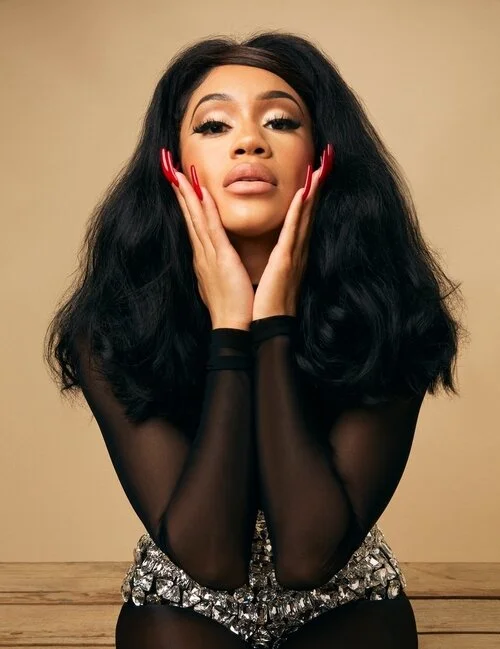
 PHOTO CREDIT: John Edmonds for W

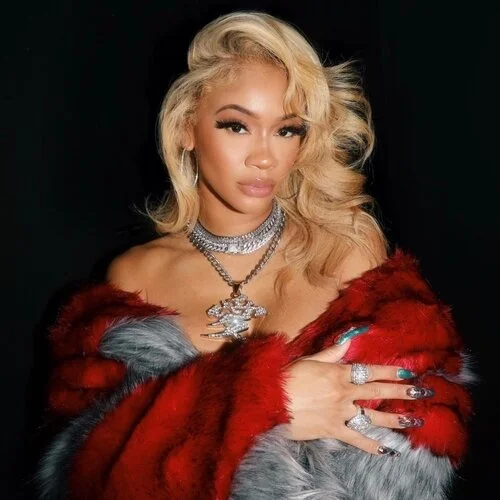
around the release of Pretty Bitch Music. The debut album from Saweetie, it has been delayed because she wants to reconstruct some songs. Because of that, the playlist I include at the end of the feature is not going to have as many songs as other artists I have featured in this series. Even though the twenty-eight-year-old Californian rapper is at her debut album stage, I reckon she will be a big artist who is going to inspire a lot of other people. In 2018, her debut E.P., High Maintenance, was released. I am going to source a few interviews that Saweetie has been involved with. Before then, AllMusic wrote a biography about the incredible talent:

“Inspired by similarly forthright rappers Lil' Kim, Trina, and Khia, as well as R&B artist Teedra Moses, Saweetie broke through with her gold-certified 2017 single "ICY GRL" and two years later scored a Top 40 pop hit with "My Type."

Born in Santa Clara, Diamonté Harper grew up in and around the Bay Area, primarily in the city of Hayward. Though she aspired to be a rapper in early childhood, she excelled academically, earned a full-ride college scholarship, and obtained a degree after attending San Diego State and the University of Southern California. Harper's interest in music intensified once she got some attention for short performance clips uploaded to Instagram. One set of nonchalantly celebratory rhymes, delivered over the instrumental of Khia's 2002 hit "My Neck, My Back," developed into "ICY GRL," her debut as Saweetie. The official video for the track, uploaded in October 2017, went viral and notched millions of views, and led to a major-label deal with Warner Bros.

Saweetie's first EP, High Maintenance, arrived in March 2018 and entered Billboard's R&B/hip-hop chart at number 32. Centerpiece "ICY GRL" was certified gold the following January. Almost exactly a year after the arrival of High Maintenance, the rapper returned with a second EP, ICY. Two tracks featured Quavo, but that August, the London on Da Track-produced solo cut "My Type" took Saweetie into the Top 40 of the Billboard Hot 100. A stand-alone track, "Tap In," arrived in June 2020, followed by "Back to the Streets" featuring Jhené Aiko that October. Another song, "Best Friend," featuring Doja Cat, appeared in January 2021”.
aa.jpg

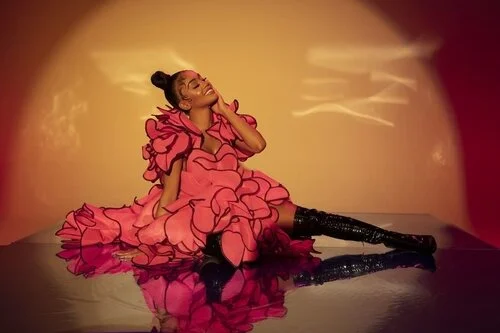
 PHOTO CREDIT: Dennis Leupold

The first interview I want to bring in is from Harper’s Bazaar. They spoke with her earlier in the year about running her own business and the release of her upcoming album (which has since been delayed):  

“The 27-year-old rapper—born Diamonté Harper—is also gearing up to release her debut album, Pretty Bitch Music. With singles like the “Best Friend” earworm featuring Doja Cat, the uplifting breakup anthem “Back to the Streets” with Jhené Aiko, the laid-back “Pretty Bitch Freestyle,” and the TikTok-approved “Tap In,” fans are clamoring for more. And she’s delivered: On April 16, Saweetie set the tone for the upcoming season with the release of her Pretty Summer Playlist: Season 1 EP featuring rising artists like Drakeo the Ruler and Bbyafricka.

Saweetie flourished during the ongoing pandemic, as she was able to completely focus on endeavors other than rap, whether it’s transforming her Instagram into a viral treasure trove or partnering with brands like Quay Australia.

“I think it just goes to show you that I was being overworked, and I didn't have the time that an artist requires when they're first emerging. Like, I literally dropped ‘Icy Girl’ [in 2017], and then was just on the road nonstop,” Saweetie tells BAZAAR.com. “I never had time to really sit down and breathe. So everything that I'm accomplishing right now in quarantine has just been on my wish list to do. So I'm really grateful for this time to just sit down, breathe, recharge, and kind of remap my career.”

Focused on becoming a mogul, Saweetie is not allowing naysayers (whom she calls “annoying cousins”) to deter her path. “I'm on my way to accomplishing so many greater things in life,” she explains. “That's why I try to motivate through my music, through my brand, through my YouTube courses or reality shows. I definitely think that this journey is bigger than me. Once I realized that, it became so much more fulfilling.”

Would you say your communications degree has helped you figure out how to present yourself online?

I don't think [University of Southern California] taught me that. For one, one of my good friends is named Sabrina. Our dads grew up together, and we went to college together. She's my content manager now. So the ideas come from our minds, and I've always had a wild mind ever since I was a little kid. She helps me manage and create this wonderful content. But what I will say is USC helped me with just a whole bunch of invaluable skills that I don't think I would have acquired in corporate America or the street.

It taught me how to deal with different people, how to have patience with business, how to properly manage my time, because I do run my own business. It just taught me responsibility and communication skills, the psychology of interacting with people and how to prosper—especially in such an intense industry like music. Everybody knows USC is such a prestigious school, either you sink or swim. There's no in between. Fortunately, I was blessed enough to get through it and graduate.

I see people who say, “Saweetie relies on samples too much. Where's her original sound?”

I think greatness makes people uncomfortable. And I think people try to come up with excuses to not like me and to make themselves feel better about their life. I don't get as offended as I used to, because there was a point in time where I was dragged for, like, two years on social media. I was trending on Twitter for some bullshit every other day. I never defended myself, because I'm not really a social media pop off-er—I'd rather just pop off in person. So overcoming those obstacles and those negative viral tweets was just to work super hard. I’m gonna sample for the rest of my life; it’s my specialty. Tons of people sample, but my samples just get the most recognition.

Now that you're into fashion and beauty more, what are some things that you’ve learned?

Something that really opened my eyes to the fashion world is quality. Even with my artist merch, there were a couple of tweets that went viral about, “Saweetie’s merch line is too expensive.” But the reason why is because it's cut-and-sew. The fabric is thicker. So this is not something where you're going to wash it in the washing machine, and then it fades or the picture disappears. I want my fans who are, like, 70 to have a T-shirt from 2021 and be like, “Dang, this looks really good. The quality really held up.” … I always make sure that the quality always matches the price point”.

I am going to stick with the themes of fashion and beauty, as I feel Saweetie is a bit of an icon who is influencing other artists – especially Black women in music. W chatted with her in May. She was asked about a difficult incident involving the rapper, Quavo. Saweetie also talked about committing to her own success:

“In her senior year, Saweetie began making videos of herself rapping in her car, which she shared on Instagram. “I was living in rooms that I found on Craigslist,” she said. “And that was a scary thing. I got tired of the lifestyle where my bank account was at zero. So I gave myself a year in L.A. to be discovered, and I decided that if I didn’t get discovered, I would go back to the Bay Area. In the ninth month, I was signed to Warner Records, and they released ‘Icy Girl’ in 2017.”

“Icy Girl” was a big hit, but, more important for Saweetie, the concept of “icy” became central to her mantra of success. “Icy means confident. Icy means strong. Icy means independent. Icy means you are in charge of your life in every way,” Saweetie said, as if she were giving a PowerPoint presentation. She paused. “I am icy.” The video for “Icy Girl,” in which a very blonde Saweetie raps the words while staring down the camera, was an instant sensation. “It caught like wildfire, and it was a lot to take in,” she said.

When they were first getting to know each other, Quavo wrote to Saweetie: “You an icy girl. You need a glacier boy.” She was definitely intrigued. Her 2019 song “My Type,” with its suggestive lyrics (“Eight-inch big, ooh, that’s good pipe... That’s my type”), was perceived as an ode to Quavo. Saweetie will not discuss their relationship or what went wrong, but a week after our conversation, TMZ unearthed a video that was shot in the elevator of her apartment building. In the clip, Saweetie and Quavo are tussling over an orange suitcase, and in the fight for control, Saweetie slips and falls to the floor. Quavo does nothing to help her. Eventually, the doors open, and Saweetie limps out.

According to statements put out by both Saweetie and Quavo, the incident took place last year and was not the reason for their breakup. Not surprisingly, given her forward-motion philosophy of life, Saweetie was not interested in dwelling on the past. “I have goals,” she told me repeatedly. “In quarantine, I did a lot of mood-boarding. I had mood boards for fashion, music, and lifestyle. Lifestyle would be, what kind of cars do I want to have? What kind of house? When do I want to have kids? If I want to be a fashion girl, how far do I go with that? If you want to be successful, you have to be detailed in life.” Saweetie paused and showed me her phone. The screen saver read “900 million.” “I want 900 million dollars,” Saweetie explained. “I look at Rihanna. I look at Kylie. I look at all the girls who are working in the worlds that I’m in. I kind of averaged out the money between all these women I admire, and 900 million is the number. So if I’m having a bad day, I’m just like, 900 million, girl! Go!”

As she turned and looked at her backside in the mirror, Saweetie started to pose. Her hair was styled into an elegant 1960s bouffant pageboy. “Maybe I should wear my hair like this on the cover,” she said, referring to her debut album, Pretty Bitch Music, which is set to be released in late summer. “The world is going to be shocked by my new music,” she said. “From now on, I think they’re going to be shocked by everything I do.” She smiled. “Shocked in a good way. Shocked in a way that makes the world pay attention”.

Penultimately, this interview with The Forty-Five caught my eye. They spotlighted her back in November. Saweetie was tight-lipped regarding the release date for Pretty Bitch Music, but she was eager to say how inspiring the songs will be:

“Saweetie remains tight-lipped today about a definite release date for her debut, ‘Pretty Bitch Music’, but speaks excitedly of how it’s “so many levels up” from her two mixtapes so far. The latest single from it is ‘Back To The Streets’, a brilliantly breezy slice of West Coast hip hop, featuring guest vocals from Jhené Aiko and production from Timbaland. As a lifelong Timbaland, Missy Elliott and Aaliyah fan, working with the legendary producer proved a huge thrill for Saweetie, and yet the collaboration speaks of the league she’s already ascended to at this young stage of her career.

“Expect some inspirational music,” she grins when asked what lies in store on the rest of the album. “Some boss bitch music. Some ratchet music. Some empowering, ‘I’m over you and yo shit’ music.” She laughs, before continuing, “It’s about everything that comes with being a woman. I feel like I touch on a lot of emotion too. I know I make party records, but [the album is] definitely well-rounded.”

The album title further feeds into that idea of inspiring others, with Saweetie aiming to reclaim the word ‘bitch’, transforming it from a slur into a badge of honour. “I love 2Pac and what he did with the phrase ‘thug life’, and that’s what I’m doing with ‘bitch.’ So ‘bitch’ stands for boss, independent, tough, creative and the h is hyphy [a Bay-area phrase] which means turn it up and have a good time.”

“All my music is empowering,” she continues. “It’s only right that I had a title that served some form of empowerment for my listeners, because empowerment is so important. I remember being a little girl listening to Destiny’s Child and other songs that empowered me and it can literally change your day. If I can make someone happy or make someone feel motivated then I feel like my job is done.”

Considering how committed she is to using her platform to inspire, I wonder how she squares that with social media’s propensity to mislead, pushing unattainable ideals and impossible standards on potentially vulnerable audiences. “I feel like there’s more pressure for me to get creative, rather than appear perfect,” she replies, thoughtfully. “I think the facade of being perfect is out the window, especially because nowadays the fans want to know exactly who they’re supporting.” The assertion rings true too because, for all the glossy photo shoots, and loved-up pictures of Saweetie with her long-term boyfriend Quavo, there’s plenty of humour and unfiltered-candour to be found on her Instagram grid too”.

This year, Saweetie was named as one of thirty people under thirty to watch: the most inspiring and influential people in the world. Forbes provided that honour and interviewed her. Before wrapping up, I want to bring in some sections of that interview:

“I want to be a global mogul,” says the Forbes Under 30 alum. “Eventually, I want to see my brand supersede Saweetie.”

Her brand, Icy, sells clothing inspired by her lyrics, like $100 terry cloth sweatpants emblazoned with the line “rich with no day job” from her breakout single, “Tap In.”

“I’m just really excited to take over,” she says. “What’s great about me dominating is that I’m very inclusive and love to share my light and help other people out.”

Born Diamonte Harper and nicknamed Saweetie by her grandmother, she began writing poems and setting them to music at 13. But she kept her hobby secret from family—even her grandfather, San Francisco 49’s linebacker Willie Harper, and uncle, MC Hammer—channeling her energy into academia and enrolling in San Diego State University at age 17 to study psychology, theater and communication, according to W. During her sophomore year, she transferred to the University of Southern California to study communications and business at the famed Annenberg School. As a senior, she started sharing videos of her rapping in her car  on Instagram because she couldn’t afford studio time. One of these videos, featuring her rapping over Khia’s “My Neck, My Back (Lick It),” caught the attention of Artistry Group CEO Max Gousse. Later that year, Warner Brothers signed her and dropped her first single, “Icy Girl,” on October 2, 2017.

Since then, “Icy Girl” has gone RIAA-certified Platinum. Her subsequent quarantine-era singles “My Type,” “Tap In” and “Best Friend” have been certified Gold and Platinum (the latter is currently number 37 on Spotify’s U.S. Top 50 chart.)

drf.jpg

Sternlicht: How has your family influenced the person you are today?

Saweetie: I don’t know what kind of woman I’d be without my family. They make me feel normal. I take the success day-by-day, but people look at me as a celebrity. I don’t feel like a celebrity, to be honest, but my family just makes me feel normal.

Sternlicht: If you weren't a rapper, what would you be?

Saweetie: I’d be Olivia Pope.

Sternlicht: You’re Black, Filipino and Chinese. How has your background shaped you?

Saweetie: At an early age, I struggled with identifying who I was, because it’s two different families, two different sets of rules, two different cultures. But respect is something that both of my families hold with pride. It gave me a bigger perspective of what to expect from the world.

Sternlicht: Has being in the spotlight affected your everyday life and relationships?

Saweetie: Honestly, fame is interesting. It’s a double-edged sword. I’m appreciative of all this fame; however, it’s like I’m under a microscope. It’s something I’m slowly gauging but I’m grateful for the love and support my fans give me so I try not to complain because I realize it comes with the territory.

Sternlicht: Speaking of fans, rising to prominence during the pandemic, you’ve not been able to have concerts and interact with fans face-to-face. What’s it like to emerge on the other side as a celebrity?

Saweetie: I’m a homebody. I flourish the most when I’m at home. Quarantine gave me the time to both think and execute before the world was able to take a breath. It gave me the chance to get back to my creative roots. Through content and creativity we were able to make the brand bigger.

Sternlicht: What is your mission with Icy?

Saweetie: My goal is to create a strong business foundation—not something that’s just for clout or publicity—but a working machine that will last for decades to come. I want my great grandkids running the Icy business”.

I shall leave it there. Ahead of the release of her highly-anticipated debut album, there is so much heat and love around Saweetie. She is one of the most compelling young artists in the world. I have no doubt that she will be one of the most important of her generation. I love her music and feel we will get many albums from her. As a businesswoman, artist and actress, she is such a talent! It has been great spending some time with…

A modern superstar.

FEATURE: Groovelines: Kylie Minogue – Can’t Get You Out of My Head

FEATURE:


Groovelines

aa.jpg

Kylie Minogue – Can’t Get You Out of My Head

___________

ALTHOUGH I am a big fan of the song…

aaaa.jpg

it is also coming up to its twentieth anniversary. Kylie Minogue’s Can’t Get You Out of My Head was the first single taken from her 2001 album, Fever. Can’t Get You Out of My Head was released on 8th September of that year. As it is approaching its twentieth anniversary, I want to shine a light on the number one hit. Written by Cathy Dennis and Rob Davis, Can’t Get You Out of My Head is one of Minogue’s best-regarded songs. It marked the continuation of a new phase of her career. 1997’s Impossible Princess is a great album, though some critics were a bit mixed. It marked Minogue moving from Pop and experimenting more with Electronica and Trip-Hop. It is an album that has been re-evaluated and reassessed since its release. 2000’s Light Years signalled a modern return to a ‘classic Kylie’ sound: catchy Pop music that got in the head and was distinctly her. Tracks such as Spinning Around marked the start of a new era. 2001’s Fever continued that. The album has many great songs – including Come Into My World and In Your Eyes -, though Can’t Get You Out of My Head is the one that stands out. I want to delve deeper into the track. I am going to bring in an article relating to the song. I am interested in the Wikipedia article regarding the writing of the track:

“In 2000, British singer-songwriter Cathy Dennis and English songwriter Rob Davis had been brought together by Universal Publishing to work on new music. The session for "Can't Get You Out of My Head" began with Davis generating a 125 bpm drum loop using the computer program Cubase. Dennis improvised with the line "I just can't get you out of my head", which later became the song's lyric. After three and a half hours, Davis and Dennis had recorded the demo for "Can't Get You Out of My Head" and the vocals were recorded the same day; the pair said the recording process was "very natural and fluid", and did not rely on heavy instrumentation.

Prior to pitching the song to Kylie Minogue, Davis and Dennis unsuccessfully offered it to S Club 7 and Sophie Ellis-Bextor. Davis then met with Minogue's A&R executive Jamie Nelson, who was impressed by the song's upbeat production and thought it would appeal to clubgoers. Nelson booked the song for Minogue to record. Although Davis thought the recording session would later be cancelled, Minogue wanted to record the song after hearing 20 seconds of the demo. The song was recorded at Davis's home studio in Surrey, England. The music, except the guitar part, was programmed using a Korg Triton workstation via a MIDI interface. Tim Orford was the mix engineer for the song. In a 2011 interview Dennis stated, "even though Kylie wasn't the first artist to be offered the song, I don't believe anyone else would have done the incredible job she did with it".

In 2001, Minogue embarked on the On a Night Like This tour to promote her seventh studio album Light Years (2000).[6] She premiered "Can't Get You Out of My Head" on stage during the tour. It was later chosen as the lead single from Minogue's eighth studio album Fever and Parlophone Records released it on 8 September 2001 in Australia and on 17 September in the United Kingdom and other European countries”.

There are many classic Kylie Minogue singles that people are attached to. Whether it is early material like I Should Be So Lucky, Hand on Your Heart or Step Back in Time, or the later tracks like All the Lovers, even the most casual fan will have their favourite – for me, Step Back in Time is her best track.

For many, Can’t Get You Out of My Head is the one they love the most. Whether they are entranced by the hypnotic video, the insanely catchy chorus or the fact that it arrived at a particular time. It is shocking to think that the single was released a few days before the terrorist attacks in the U.S. There is no relation (obviously), though songs like Can’t Get You Out of My Head mark a joyous period in Pop (the attacks, I think, affected artists and music after 11th September). The 1990s had the best Pop and music in general, though the quality continued after that. 2001 was a terrific year for music. I always though it was quite bold having Can’t Get You Out of My Head as the third track on Fever. It seems like a natural album opener. As it was, it followed More More More and Love at First Sight. In 2011, PRS published an article about the writing and creation of one of the decade’s best songs. Cathy Dennis and Rob Davis discussed their creation of Can’t Get You Out of My Head:

“Released in September 2001, Kylie Minogue’s Can't Get You Out of My Head went on to become the Australian Popstress' biggest hit and one of this century's most popular and influential hits.

Amazingly, the song was written by Cathy Dennis and Rob Davis during their first-ever songwriting session together. Can't Get You Out of My Head became the first song in UK radio history to have 3,000 radio plays in a single week, it went to number one in every European country bar Finland, it gave Minogue her first US top-ten single in more than a decade and has sold more than four million copies. The track won three Ivor Novello Awards for 2001.

M spoke to the award winning songwriters Cathy Dennis and Rob Davis about how they wrote this enduring pop hit.

‘We wrote the song at home, in my old house in the autumn of 2000. I think it was Simon Fuller who put us together via Universal Publishing,’ says Rob. ‘It was the second song I wrote with Cathy. We had two days together and on the second day we wrote Can’t Get You Out of My Head.’

‘It was a very natural and fluid process,’ remembers Cathy. ‘The whole thing - and it does annoy me, as it will annoy others - was written in about three and a half hours.

‘We know how hard we work sometimes to write songs and then spend months picking them to pieces, but this was the easiest process, the chemicals were all happy and working together.’

Rob explains that they started off using Cubase software on a Mac computer, running a 125 bpm drum loop and playing along with an acoustic guitar.  ‘Then Cathy started singing, “I just can’t get you out of my head” to a D-minor and we just built the track up as we went along. The demo was done in about three hours, the vocals all laid between about 12pm and 7pm.’

'Rob and his late wife were very hospitable during the session, with a near-constant stream of snacks served up', says Cathy. However, mental images of a sleek state-of-the-art studio environment are dispelled as Cathy reveals that they used ‘the most primitive set-up you could imagine! Different producers work in different ways. But it’s good to be reminded you don’t have to be reliant on equipment. A song is about melody and lyrics and being able to take something away in your memory that is going to haunt you.

qq.jpg

IN THIS PHOTO: Cathy Dennis/PHOTO CREDIT: Ben A. Pruchnie/Getty Images

‘We had the “can’t get you out of my head” bit and we had the bridge, but it needed another hook and that was the “la-la’s”. We knew it didn’t need another lyric, so I just went “la, la, la…”’

Can’t Get You Out of My Head revived the electro-pop style song, which had fallen out of vogue for about a decade. ‘Rob had an off-beat guitar idea and I had a drum production idea of something like Jason Nevins’ mix of Run DMC's It’s Like That. Then Rob came up with more chords and I had an idea which was kind of Kraftwerk-y and we just carried on like that,’ she adds.

Rob explains that Cathy sang the whole song on the demo, including harmony vocals, and some of her vocals were kept in for the Kylie version too. ‘The Kylie version is basically the demo, same key and everything. It wasn’t mixed and mastered but the parts were all there. I think I added a little bit of guitar and strings when we mixed it,’ he says.

‘None of the sections in the song conform to the typical verse-chorus structure,’ Cathy explains. ‘They’re misplaced sections that somehow work together, and that’s because we didn’t try to force any structure after the event. The seeds were watered and they very quickly sprouted into something bigger than any of us.’

‘It breaks a few rules,’ Rob agrees, ‘as it starts with a chorus and in comes the “la’s” – that is what confused my publisher when he first heard it.’

qq.jpg

Simon Fuller heard it and decided it wasn’t right for his group S Club 7. Then Sophie Ellis-Bextor turned it down, confides Rob. Shortly after he met Kylie’s A&R man Jamie Nelson and sent him a demo cassette. He loved it and wanted it for Kylie, and just a month later he had booked her in to record the vocals later that year. Rob was convinced the appointment wouldn’t be kept, but it was.

‘Even though Kylie wasn’t the first artist to be offered the song,’ admits Cathy, ‘I don’t believe it was meant to go to anyone other than Kylie, and I don’t believe anyone else would have done the incredible job she did with it, with the video, looking super-hot!’

After the pair had finished the song, Rob recalls: ‘We thought it was good, but obviously we didn’t think it would be as massive as it turned out to be.’

Watch Kylie's live performance of Can't Get You Out of My Head from Aphrodite Les Folies, Live in London”.

I wanted to publish a feature ahead of the twentieth anniversary of a song that is not only one of Kylie Minogue’s greatest moments; it also rans alongside the best Pop songs ever written. One can feel the confidence in Minogue’s performance. With incredible production from Cathy Dennis and Rob Davis, it is a song that I remember fondly. I was just about to start university. Having been a fan of Minogue since childhood, it was great to hear this song that was similar to the more mature and experimental sounds on Impossible Princess, yet it was more accessible, punchier and glossier. The irony of Can’t Get You Out of My Head is that the song, once heard, is almost impossible…

TO dislodge from the brain!

FEATURE: Symphony in You: Kate Bush and Producer Andrew Powell

FEATURE:


Symphony in You

rr.jpg

PHOTO CREDIT: Gered Mankowitz 

Kate Bush and Producer Andrew Powell

___________

I have been re-reading…

aaa.jpg

IN THIS PHOTO: Andrew Powell

the biography by Graeme Thomson, Under the Ivy: The Life & Music of Kate Bush, and I wonder whether she regards her first couple of albums with any real affection and fond memories. Certainly, when Bush headed into AIR Studios in the summer of 1977 to record and complete her debut album, The Kick Inside, she was excited and eager. Even if, fairly soon after releasing the album, she distanced herself and felt that she was not as involved with shaping the sound and direction and she would have liked, Bush definitely wanted to spend time in the studio seeing how everything came together. I feel one of the reasons why her first couple of albums, The Kick Inside and Lionheart, are so beautiful-sounding and memorable is the production of Andrew Powell. Bush assisted Powell on Lionheart – as she wanted more of a say -, but I think that his expertise and experience really made a difference. Although The Kick Inside was Powell’s first real experience of producing an album, he was a skilled musician with perfect pitch. A Cambridge graduate who was a friend of Pink Floyd’s David Gilmour (who helped discover Bush and made that connection between her and Powell), Bush produced her third album, Never for Ever, without Powell. That might suggest an unhappy working relationship or an artist who felt more free producing on her own.

Powell has worked in music relatively consistently since 1978. According to his Wikipedia page, his last project came four years ago:

“More recent work has included arranging and conducting Wouter Van Belle's work Wow & Flutter, as well as writing for brass bands including the Grimethorpe Colliery Band, Parc & Dare Band and Burry Port Town Band; and album Stockhausen: Michael's Farewell, etc with John Wallace.

Living Stones received its world premier at St Davids Cathedral, Wales, on 27 October 2007, and Glasiad y dydd dros Ben Dinas at the City of London Festival on 19 March 2008.

In 2017, after a break from film scoring of nearly thirty years, he wrote the original music for the sci-fi short movie Here We Go Again, Rubinot!, directed by Italian cinematographer Giuliano Tomassacci. The score was published the following year on Kronos Records in a limited edition CD release.

Powell is artistic director of BluestoneArts, a social enterprise company that promotes music, words and visual arts in north Pembrokeshire”.

I am going to bring in an article where we get to find out more about Andrew Powell’s role and relationship with Kate Bush. It would be nice, if The Kick Inside was reissued on its anniversary (either the completion of recording in 1977 or the release in 1978), to hear some words from Andrew Powell. He was a big part of Kate Bush’s debut album.!

When we think of Bush and her career, personnel like producers and musicians do not necessarily get as much attention and focus as her. They are all key to her sound and success. Although Andrew Powell produced Bush’s first two albums, he did arrange the strings, alongside Dave Lawson, for The Dreaming’s Houdini. Before coming to the article I was mentioning, the Kate Bush Encyclopaedia provided an interview exert of Powell discussing his earliest experiences with Bush:

“David Gilmour phoned me one day, and invited me for lunch at the Pink Floyd's office in Bond Street, London. When I arrived there, he introduced me to Kate Bush (or Cathy, as she was then known.) She was a very quiet, but obviously thoughtful, young girl. He played me some of her songs, and I was impressed by her vivid musical and lyrical imagination. We talked about which songs to do - I took a tape away, and we had a further discussion a few days later: we agreed on 3 songs to record, and David handed the project over to me. I booked some time at AIR London Studios in Oxford Circus with the renowned Geoff Emerick as engineer (who, to my great embarrassment, wasn't credited on the album), and booked a rhythm section consisting of Barry de Souza on drums, Bruce Lynch on bass, and Alan Parker and Paul Keogh on guitars. Kate would play piano (although I played both piano and electric piano on "Berlin"). We had another session a few days later with the orchestra, who played on "Berlin", and also played The Man with the Child in his Eyes - Kate played piano and sang live with the orchestra. If she was nervous, it didn't show - I still think this is one of the best vocals I have heard from her. Geoff, who was assisted by Peter Henderson, did great mixes of all 3 titles (the other one was called "Humming" - it was never released) and David took the tape to Bob Mercer at EMI, who signed her”.

Before wrapping things up, The Music Aficionado published a feature about Andrew Powell, where we got to learn more about his work with Kate Bush:

“The Kick Inside, Kate Bush’s debut album, was the first major project for Andrew Powell as a producer, and he is all over that album arranging the orchestral tracks, playing bass on Wuthering Heights and keyboards on other songs. The album is wonderful start to finish, but the hits are the real winners and represent some of Powell’s best work as arranger. The Man with the Child in His Eyes, written by Bush at the age of 13(!), features her playing the piano, accompanied by an orchestra arranged by Powell. The interplay between the piano, orchestra and her vocals is classic. Powell said of her singing on that song: “I still rate it as the best vocal sound I’ve ever heard from Kate“.

The album’s big hit was of course Wuthering Heights, the song that created history in British music – the first song composed and performed by a female singer to top the charts. Kate Bush on the song: “I wrote it in my flat, sitting at the upright piano one night in March at about midnight. There was a full moon and the curtains were open, and every time I looked up for ideas, I looked at the moon. Actually, it came quite easily. I couldn’t seem to get out of the chorus – it had a really circular feel to it, which is why it repeats. I had originally written something more complicated, but I couldn’t link it up, so I kept the first bit and repeated it.” Powell brought rookie engineer Jon Kelly, who was assistant engineer for Geoff Emerick at AIR studios in London. Like his mentor who got his break with the Beatles about 10 years earlier, Kelly could not hope for a better initiation as a principal engineer: “I give full credit to Andrew Powell and the great musicians, who were very supportive, while Kate herself was just fantastic. Looking back, she was incredible and such an inspiration, even though when she first walked in I probably thought she was just another new artist. Her openness, her enthusiasm, her obvious talent — I remember finishing that first day, having recorded two or three backing tracks, and thinking ‘My God, that’s it. I’ve peaked!'”

aa.jpg

The great musicians Kelly mentions were all very familiar to Andrew Powell. Bass player David Paton and guitarist Ian Bairnson were both in the band Pilot and later joined the Alan Parsons project. Paton worked extensively with the band Camel in the 1980s and 1990s. Bairnson had success with Paul McCartney’s Mull of Kintyre and played on additional Kate Bush albums. The drummer on Kate Bush’s debut was Stuart Elliott who was part of Cockney Rebel and later worked with Powell on Year of the Cat and many of the Alan Parsons Project albums. He continued to work with Kate Bush on four more albums and hits including Babooshka, Running Up That Hill, Hounds of Love and Cloudbusting. Elliott later recalled the recording sessions: “The album The Kick inside was not at all demanding in any sense. It is one of very few albums I have ever done where there was instant chemistry between the whole band in response to Kate’s brilliant music. Kate made it very easy for us in that she performed the songs live on piano and vocal during all takes so following her and adding our own interpretation to her songs was all that was needed. Thankfully it just fell together without any verbal guidance from either Andrew or Kate.”

Wuthering Heights is rather complex for a pop song, thus rarely covered over the years. The chorus has a rhythm that changes from 4/4 to 3/4, throwing off many unsuspecting listeners and musicians. Amazingly the vocals for the song were recorded in a single complete take without overdubs, a fit unheard of with today’s pop singers.

Andrew Powell produced one more album for Kate Bush, Lionheart, released later in 1978. For Powell it was somewhat a lesser achievement: “Kate hadn’t been allowed enough time off from promotion work to write new songs, so we ended up using some which had been short-listed for The Kick Inside. There were probably a couple of songs which, with hindsight, shouldn’t have made it onto the record.” Still, there are gems on that album and although it does not feature an orchestra as widely at the debut album, Powell’s services were needed on the energetic single Hammer Horror. Not as commercially successful as the previous hits, but a great song nonetheless”.

I wonder how Powell feels about The Kick Inside and those months working with Bush on that album and Lionheart. I feel he was the right producer for an album as important as her debut. If Bush feels that she was more of a participant and less of an architect, I think that this stems more from her being very ambitious or feeling that not enough control was given to her. Regardless of whether she was a bit frustrated or the working relationship was not perfect, Andrew Powell got something terrific out of her and the musicians. I love her first two albums – especially The Kick Inside. I can only imagine how productive, interesting and revealing it would have been being in the studio and hearing these phenomenal songs come together. For his role in her first couple of albums, Andrew Powell deserves…

MUCH more acclaim.

FEATURE: Vinyl Corner: Gram Parsons – GP

FEATURE:


Vinyl Corner

aaa.jpg

Gram Parsons – GP

___________

FOR this Vinyl Corner…

I am spending time with the debut album from the legendary Gram Parsons. GP was released in January 1973. Many might know Parsons as a member of The Byrds. He can be heard on their 1968 album, Sweetheart of the Rodeo. I really love Parsons’ debut solo album. He tragically died only eight months after the release of GP at the age of twenty-six. If you have not got GP on vinyl, I would recommend you get a copy. It is a beautiful album where Parsons demonstrates his incredible vocals. Although GP failed to reach the Billboard chart, it did receive critical acclaim. Streets of Baltimore and The New Soft Shoe are my two favourite tracks from the album. I don’t think there is a weak or wasted moment from GP. After Parsons was dismissed from the band, Flying Burrito Brothers, he took a new direction for his solo music. As opposed the Soul, Rock and Country mixture of Flying Burrito Brothers, Parsons went for something that was Country-heavy for his solo debut. The Young Folks looked back on GP in 2018. I have highlighted a few interesting sections from their detailed feature:

“By the time he had reached his early twenties, Gram Parsons had already completely revamped the sound of The Byrds with his love of twanged-out Americana and brought a country rock hybrid flavor to the masses as a pioneering member of both the International Submarine Band and The Flying Burrito Brothers. After being asked to leave the latter for his rampant drug use, Parsons was forced to reevaluate his life. Taking what he had learned from his close knit friendship with the Rolling Stones, he was ready to craft his first solo album, unleashing an unfiltered vehicle upon which to display what he had affectionately called “Cosmic American Music.”

While Parsons had birthed the lovechild of honky-tonk and rock and roll, with GP, he gave way to a smoother, more subdued sound. This is thanks in no small part to his blossoming musical partnership with Emmylou Harris, a roots folk singer Parsons was urged to check out by his former bandmates. Together, as seen on this seminal album, the pair would form one of the most cohesive and harmonious musical duos to ever grace the airwaves. Along with a band that included James Burton, the lead guitarist for Elvis Presley, GP drew from both Parsons’s songwriting idols and his inner demons, following a trail of breadcrumbs down to the Delta and crafting a record that is unabashedly American.

Cashing in on the old country music trick of romanticizing heartache, Parsons opens his debut with “Still Feeling Blue,” setting the scene in a smoky dive bar on the outskirts of a working class town. As he exposes turns of phrase and double meanings, he wastes no time demonstrating his abilities as a wordsmith that had gotten him admitted into Harvard. The song is also a deliberate homage to the whiskey-soaked Southern music Parsons was turned onto as a young man, rifling through the history of Americana by highlighting fiddle, pedal steel guitar, and even Alan Munde plucking away on the banjo.

The album comes to a close with “Big Mouth Blues,” another blues rock anthem that brings back the horn section, cranking up both the tempo and the volume. A real toe-tapper, the song calls to mind the fast-paced, bar brawl Americana that Bob Dylan was experimenting with at the same time. It’s a bouncy swamp tune that chronicles an inflated ego getting a smooth talker into trouble: “I wish there was a way that I knew to get even / Way to get a lick in /A ‘bobbin and a’weavin’ / And all the things besides goin’ and a’leavin’.”

In a self-fulfilling twist, Parsons fatally overdosed just eight months after the album’s release. Nevertheless, the legacy took root. Gram Parsons remains one of the most influential figures in the world of music to never find mainstream success. With GP, it’s not difficult to follow the trajectory of where his career was headed, had his life not been cut tragically short. Still, nearly half a century later, musicians and critics alike continue to benefit from the wit and humanity of his brief yet prolific catalog”.

Nearly fifty years after its release, and GP still sounds like nothing else. I think it is dominated by Parsons’ unique voice. One might hear the odd songs from the album on the radio now and then, though I do feel it is under-explored. In their review of the album, this is what AllMusic had to say:

“Given Gram Parsons' habit of taking control of the bands he played with (and his disinclination towards staying with them for very long), it was inevitable that he would eventually strike out on his own, and his first solo album, 1973's G.P., is probably the best realized expression of his musical personality. Working with a crack band of L.A. and Nashville's finest (including James Burton on guitar, Ronnie Tutt on drums, Byron Berline on fiddle, and Glen D. Hardin on piano), he drew from them a sound that merged breezy confidence with deeply felt Southern soul, and he in turn pulled off some of his most subtle and finely detailed vocal performances; "She" and "A Song for You," in particular, are masterful examples of passion finding balance with understatement. Parsons also discovered that rare artist with whom he can be said to have genuinely collaborated (rather than played beside), Emmylou Harris; Gram and Harris' spot-on harmonies and exchanged verses on "We'll Sweep out the Ashes in the Morning" and "That's All It Took" are achingly beautiful and instantly established her as one country music's most gifted vocalists.

On G.P., Parsons' ambitious vision encompassed hard-country weepers, wistful ballads, uptempo dance tunes, and even horn-driven rhythm and blues. He managed to make them all work, both as individual tunes and as a unified whole. If it falls just short of being his greatest work (an honor that goes to the Flying Burrito Brothers' The Gilded Palace of Sin) thanks to a couple songs that are a bit too oblique for their own good ("The New Soft Shoe" may be beautiful, but who knows just what it's supposed to be about), this album remains a haunting reminder of Parsons' talent and influence, and has only gotten better with the passing years”.

If you have not heard GP or wanted to know where to start when it comes to Gram Parsons, I feel that his 1973 solo debut is a good foundation. It is an album brimming with personality where Parsons gives life and something extraordinary to each of the eleven tracks. GP is an album that has received more acclaim and proper love years after it release. It is the case with many albums that they do not get too much attention when they come out. GP is a classic example. It is a shame that the world lost Gram Parsons at such a young age. There is no telling how far he could have gone and what impact he would have made on the music world. GP is a glimpse into his undeniable talent. With one of the greatest voices ever, one cannot help but immerse themselves in GP. It is a brilliant album that is well worth…

OWNING on vinyl.

FEATURE: Spotlight: The Linda Lindas

FEATURE:


Spotlight

zaa.jpg

The Linda Lindas

___________

ONE terrific group…

that I am excited about is The Linda Lindas. They are a great Punk Rock band hailing from Los Angeles. Consisting of Bela Salazar, Eloise Wong, Lucia de la Garza, and Mila de la Garza, their eponymous E.P. was released last year. They are a remarkably young, interesting and super-talented group that are set to be legends of the future. Before I bring in a few interviews with the band, their website provides some useful biography:

“Half Asian and half Latinx. Two sisters, a cousin, and their close friend. The Linda Lindas channel the spirit of original punk, power pop, and new wave through today's ears, eyes, and minds. Mila (10), Eloise (13), Lucia (14), and Bela (16) first played together as part of Kristin Kontrol’s pickup band of inexperienced kids for Girlschool LA in January 2018, where they were joined by Bobb and Bethany from Best Coast and Karen O. That summer, Bela asked Lucia, Eloise, and Mila to back her up on a few songs at a Hi-Hat gig, and the garage punk band was born.

They weren't called The Linda Lindas until they started playing Save Music in Chinatown benefit matinees in the fall, where they’ve shared the stage with punk lifers and legends including The Dils, The Gears, Alley Cats, and Phranc. They’ve also played with Alice Bag, joined Best Coast and Money Mark at a DIY political fund raiser, opened a sold-out record release show for Bleached, and were hand-picked by Riot Grrrl legends Bikini Kill to open up for them at one of their reunion shows at the Hollywood Palladium. They rounded out 2019 with performances at the Viva Pomona Festival and the Dia De Los Muertos Festival at Self-Help Graphics LA.

In 2020, The Linda Lindas wrote and performed an original song for The Claudia Kishi Club documentary, wrote a song and made a video with punk rock friends and legends to get out the vote in the presidential election, and self-released their eponymous debut EP, which features songs penned and sung by each member of the band. In 2021, they reached a wider audience by appearing in a key scene of the Amy Poehler film, Moxie, before performing their now-legendary set for the

Los Angeles Public Library that included “Racist, Sexist Boy.” Unexpectedly and organically, the clip went viral, expediting their pending deal with Epitaph Records and setting them up for more shows, more music, and more fun”.

I really love The Linda Lindas! They are a funny, fresh, spiky, tuneful, consistent, complex and effortlessly cool band that are delivering such compelling music. There is nobody in music right now quite like them, that is for sure!

There are a few recent interviews that are worth dropping in. SLATE recently featured the group and compared them to the iconic feminist bands of the past. They also talked about the success of the group’s single, Racist, Sexist Boy:

“Punk may be having a moment—from the punk aesthetics of the new Disney movie Cruella to the grunge influences of Olivia Rodrigo’s debut album. And if you’ve spent time on social media over the past few weeks, you’ve likely run into a more surprising member of the punk scene: a band of girls who have taken the whole country by storm with just one viral video.

The half-Asian, half-Latinx punk band is made up of sisters Mila and Lucia, their cousin Eloise, and their close friend Bela (each of whom is between the ages of 10 and 16). Together, the Linda Lindas—named after a classic Japanese punk song by the Blue Hearts—have been steadily rising in popularity, playing dozens of shows throughout the city’s major punk venues—from Chinatown to East L.A.—and making a name for themselves in local community music scenes.

Since forming in 2018, the girls have also played with several feminist punk legends, including riot grrrl band Bikini Kill, Karen O of the Yeah Yeah Yeahs (whom radio station KQED cites as a mentor for the band), and L.A.’s own “Violence Girl” Alice Bag of the Bags, a quintessential punk band that was instrumental in creating L.A.’s very first punk scenes, back in the late 1970s and early 1980s. In the past year alone, the Linda Lindas have even had their music featured in two films: the Amy Poehler–directed Netflix movie Moxie, where they cameo as a local middle school group and cover “Rebel Girl” by Bikini Kill & “Big Mouth” by the Muffs, and The Claudia Kishi Club, a short Netflix documentary about the Baby-Sitters Club character, for which they wrote an original song.

After a live performance of another original track, the punchy “Racist, Sexist Boy,” went viral  after it was posted on the Los Angeles Public Library’s Twitter account on May 20, the quartet suddenly landed both a new, larger fanbase and a record deal. The Linda Lindas signed to Epitaph Records, an independent punk record label known for signing prominent groups like Green Day, Bring Me the Horizon, Weezer, and L7.

When Mila, 10, and Eloise, 13, wrote “Racist, Sexist Boy,” they were responding to an experience Mila had in school at the beginning of the pandemic: A boy came up to her and said that his dad had warned him to stay away from Chinese people. “After I told him I was Chinese, he backed away from me,” Mila explains in the viral video, where the band performs the song at an AAPI heritage month celebration event held in a library in L.A..

“I actually talked to Mila right after that incident she had with that little boy,” Bag, who has known the Linda Linda girls for a couple of years now, told Slate. “And she was telling me about it … and she was saying, ‘I’m gonna write song about it.’ ”

“This [song] is about him and all the other racist, sexist boys in this world,” Eloise shouts at the start of the video. After a countdown from Mila, the drummer, the band breaks out into the sludgy, thumping track, with Eloise’s cutting vocals piercing through the empty library. In the tradition of the outspoken feminist punk bands that inspired them, the Linda Lindas’ “Racist, Sexist Boy” unabashedly calls out injustice amid crashing drums and power chords.

The Los Angeles Public Library’s video of the band’s performance has since garnered more than 4 million views on the platform. Soon, other, even bigger names caught wind of the group and started spreading the love too. Tweeting a video of the Linda Lindas’ “Rebel Girl” and “Big Mouth” covers, Paramore’s Hayley Williams wrote, “The Linda Linda’s have been one of my fav new punk bands since about the time they came out of the womb.” Rage Against the Machine guitarist Tom Morello also took to Twitter to praise the Linda Lindas and call “Racist, Sexist Boy” the song of the day.

“I think [their fearlessness] is very much in the tradition of some of the bands that came out of the Eastside in the early ’80s,” Betty Avila, the executive director of Self Help Graphics, a creative and mutual aid space dedicated to serving young people and people of color in East L.A., told Slate in a recent interview about the Linda Lindas’ seemingly sudden wave of success. Self Help’s space was also once the home of the Vex, an all-ages punk club and influential hub for young punk rockers of color, especially Latinx artists, since it opened in 1980; it closed in 1983. Avila has maintained the organization’s  connections to L.A.’s diverse punk scenes ever since. The punk culture at the Vex, built up by bands like Chicanx punk groups Los Illegals and the Zeros (nicknamed the “Mexican Ramones”), was widely influential and went on to attract a broader, more recognizable swath of artists: Prominent rock bands like Bad Religion (whose guitarist owns Epitaph), Meat Puppets, and the Red Hot Chili Peppers played the venue in the early ’80s”.

A few months ago, The Guardian interviewed the band. Not only did they explore their viral video performance from the L.A. Public Library; we also got to hear how the band formed and how Kathleen Hanna of Bikini Kill became a fan of theirs:

“The girls started playing together in 2018, as part of a pickup band for a Girlschool LA festival, where they connected with Bethany Cosentino from Best Coast and Karen O of the Yeah Yeah Yeahs. The girls’ families have ties to the industry: Mila and Lucia’s father is Carlos de la Garza, a Grammy award-winning mixer and engineer for Paramore and Best Coast. And Eloise’s dad is Martin Wong, who co-founded the Asian American pop culture magazine Giant Robot.

“We have cool parents,” said Lucia, seated in her LA backyard, which is also home to their father’s studio. (The parents, listening in on the interview from a distance, shouted their approval of this quote.)

“I grew up with the DIY culture of punk, going to punk shows, making mixtapes – with the idea that anyone can do whatever,” said Eloise, who is finishing seventh grade. “Punk is anything we want it to be. I like ‘do-it-yourself’ because it’s whatever you feel like. It doesn’t have to be a certain way.”

When they first started playing, only Bela could play rock and punk, though the three younger musicians had studied classical piano. They quickly overcame their inexperience and started booking gigs, playing Save Music in Chinatown benefits and then opening for LA punk legend Alice Bag. At one of their first shows, Mila had a broken thumb from a scooter accident, but that didn’t stop her; she played drums with one hand.

Kathleen Hanna of Bikini Kill fell in love with the band after they covered Rebel Girl, and the singer invited the Linda Lindas to open for them at a Hollywood Palladium reunion concert in 2019.

The Linda Lindas – whose name was inspired by a 2005 Japanese film, in which high school girls learn Linda Linda, a song by the Blue Hearts – went on to perform an original song for a Netflix documentary, The Claudia Kishi Club.

“We started three years ago and it was just a fun thing – and then we were like, ‘Woah, we just played the Hollywood Palladium!’ And then we were like, ‘Woah, we were just in a movie!’ And now we are viral,” said Lucia. “It’s bizarre”.

I am going to finish off with an interview from Pitchfork. The Linda Lindas are remarkable mature and composed in interviews - considering they are so young and relatively new to music. This levelheadedness bodes well for a very prosperous and exciting future. Among other questions, of course, they were asked about the library show:

“Who were you most excited to hear from?

Mila: Kathleen Hanna emailed us. During the library show, the others were wearing these shirts that are part of her project called Tees for Togo, which helps raise money for girls’ education and healthcare in Togo. She said that we helped her raise $4,000 in two days. I’m really glad we got to do that.

Lucia: Kathleen Hanna has done so much for us. She saw a video of us playing “Rebel Girl” at a benefit show for [L.A. school board member] Jackie Goldberg and then invited us to open for her at the Hollywood Palladium. Like, who does that? She also helped us get that part in Moxie, the Netflix movie.

What was it like opening for Bikini Kill?

Bela: That was our first real show!

Lucia: That was the biggest show we’ve ever played.

Eloise: When we heard that she had asked us to open for her, we were like, “what!!!”

Lucia: I’m a pessimist, I don’t believe things until they happen. My mom came up and showed me this email, and I was like, “We’re not actually going to open for her, she’s just saying that.” We had been in the band for less than a year at the time, and we were still working it out, playing only covers, getting the hang of our instruments. The opportunity came along, and we practiced almost every day. It was like, “We have homework? Just stay up until midnight doing that.” When we got on stage, it was half an hour but it flew by so fast. Eloise and Mila cartwheeled on stage.

What made you gravitate toward punk music?

Mila: We like it because it’s anything you want it to be.

Eloise: It’s just doing whatever’s fun for yourself.

And it must be fun to scream.

Mila: That’s right up Eloise’s alley.

Lucia: She’s the best at it, really. Whenever any of us try to do it, it just sounds like—

Mila: [yells mildly]

What were your upbringings like? Did they shape your decision to make music?

Eloise: Ever since I was little, I’ve always gotten to go to DIY events and punk shows. [Eloise’s dad is Martin Wong, co-founder of the culture magazine Giant Robot.] Since Chinatown has this history of punk shows, my parents put on shows to raise money for my elementary school music program with bands like Phranc, Alice Bag, and the Alley Cats.

Lucia: Our dad works in the music industry. I have played classical piano since I was in preschool, but I’ve always kind of been in awe of the guitars that our dad has, the drums and keyboards. It’s amazing that we now get to put music out into the world. We put out an EP last December and we’ve been writing so much. We want to put out more songs this summer.

Bela: My parents aren’t musicians, they’re more visual artist types. Basically I just decided I wanted to play guitar—everyone else had a lot more exposure.

Lucia: Bela was the only one who knew how to play her instrument going into this, though.

When did you start writing your own songs?

Lucia: Before the pandemic, we got an email asking for us to write a song for a short Netflix documentary about Claudia Kishi of the Baby-Sitters Club books. That gave us a real push to start actually writing original music, and then the pandemic really pushed us to start writing new songs. Eloise wrote a few about the pandemic.

Mila: The process is different for each one. Sometimes we write it on our own and then bring it to the group and see if they have any changes.

Lucia: Sometimes we have a riff, and we need help on it—we don’t know where we want it to go. That’s why it’s so helpful to have other people.

Mila: We have a voting song, and a song about her Bela’s cat.

Bela: My cat is just a mess. She’s crazy—[turns toward the others] is that a word I can use? No? She’s bizarre”.

I shall leave it there. I am not sure whether The Linda Lindas have an album coming out or whether, later in the year, there will be another E.P. On the evidence of what they have released so far, the group have a very exciting and popular sound that has resonated with a great many people. I am excited to see what comes next. Go and follow The Linda Lindas and check out their music. They are a wonderful band who have the skills and ingredients to…

GO very far.

______________

Follow The Linda Lindas

aaa.jpg

FEATURE: Deeper and Deeper: The Best Lesser-Known Cuts from Each of Madonna’s Studio Albums

FEATURE:


Deeper and Deeper

IN THIS PHOTO: Madonna in 1992 

The Best Lesser-Known Cuts from Each of Madonna’s Studio Albums

___________

BECAUSE it is Madonna’s birthday…

ff.jpeg

 IN THIS PHOTO: Madonna in 2005

tomorrow (16th August), I am doing a few features to mark that. Some may say that it is a bit overboard to do a run of features for a single artist on their birthday. To me, Madonna is one of the most interesting artists ever! There is so much to cover and investigate when it comes to her career. Today, I want to concentrate on a song from each of Madonna’s studio albums that are not as well known - though they are definitely worth investigation. There are several songs on all of her albums that do not get played; those deeper cuts that are really solid and warrant greater exposure. I am selecting what I consider to be the best ‘deep cut’ (non-singles) from her studio albums. I am not including soundtrack albums in my feature. To mark Madonna’s upcoming sixty-third birthday, here are a collection of fascinating songs that, whilst not single-worthy, are highlights from her fourteen studio albums that people should listen to. I hope that my choices allow you to gain a greater appreciation…

qqq.jpg

 IN THIS PHOTO: Madonna in a promotional image for 2019’s Madame X

OF Madonna’s amazing albums.

_______________

Madonna - Physical Attraction

aaa.jpg

Track Position on Album: 7

Album Release Date: 27th July, 1983

Buy: https://www.discogs.com/sell/list?master_id=5319&ev=mb

Labels: Sire/Warner Bros.

Producers: John ‘Jellybean’ Benitez/Mark Kamins/Reggie Lucas

Album’s US Billboard 200 Chart Position: 8

Standout Track Lyric: “Maybe we were meant to be together/Even though we never met before/We got to move before the sun is rising/And you'll be walking slowly out the door, out the door”.

Like a Virgin - Stay

w.jpg

Track Position on Album: 9

Album Release Date: 12th November, 1984

Buy: https://www.discogs.com/sell/list?master_id=18021&ev=mb

Labels: Sire/Warner Bros.

Producer: Nile Rogers

Album’s US Billboard 200 Chart Position: 1

Standout Track Lyric: “I know there's bound to be some hard times ahead/I'd be a fool to believe/But if you go, I'd rather think of dying instead/I'll never want you to leave”.

True Blue - White Heat

aa.jpg

Track Position on Album: 3

Album Release Date: 30th June, 1986

Buy: https://www.discogs.com/sell/list?master_id=67836&ev=mb

Labels: Sire/Warner Bros.

Producers: Madonna/Stephen Bray/Patrick Leonard

Album’s US Billboard 200 Chart Position: 1

Standout Track Lyric: “I can't let my heart/Put on a show/'Til you surrender baby/You've got to let it go”.

Like a Prayer - Act of Contrition

qq.jpg

Track Position on Album: 11

Album Release Date: 21st March, 1989

Buy: https://www.discogs.com/sell/list?master_id=34627&ev=mb

Labels: Sire/Warner Bros.

Producers: Madonna/Patrick Leonard/Stephen Bray/Prince

Album’s US Billboard 200 Chart Position: 1

Standout Track Lyric: “I firmly resolve with the help of Thy grace/To confess my sins, to do penance, to amend my life/And to avoid the temptations of evil/Oh my God, I am heartily sorry for having offended Thee”.

Erotica (PA Version) - Secret Garden

er.jpg

Track Position on Album: 14

Album Release Date: 20th October, 1992

Buy: https://www.discogs.com/sell/list?master_id=34414&ev=mb

Labels: Maverick/Sire/Warner Bros.

Producers: Madonna/Shep Pettibone/André Betts

Album’s US Billboard 200 Chart Position: 2

Standout Track Lyric: “A petal that isn't torn/A heart that will not harden/A place that I can be born/In my secret garden/A rose without a thorn/A lover without scorn”.

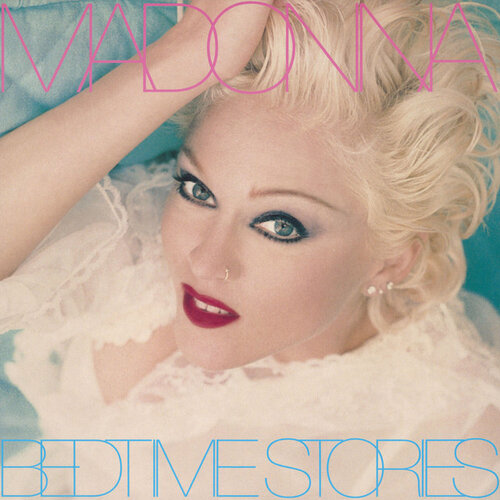
Bedtime Stories - Survival

a.jpg

Track Position on Album: 1

Album Release Date: 25th October, 1994

Buy: https://www.discogs.com/sell/list?master_id=34099&ev=mb

Labels: Maverick/Sire/Warner Bros.

Producers: Madonna/Dallas Austin/Babyface/Dave Hall/Nellee Hooper

Album’s US Billboard 200 Chart Position: 3

Standout Track Lyric: “Here's my question (my question)/Does your criticism/Have you caught up/In what you cannot see?/Well, if you give me respect/Then you'll know what to expect, a little”.

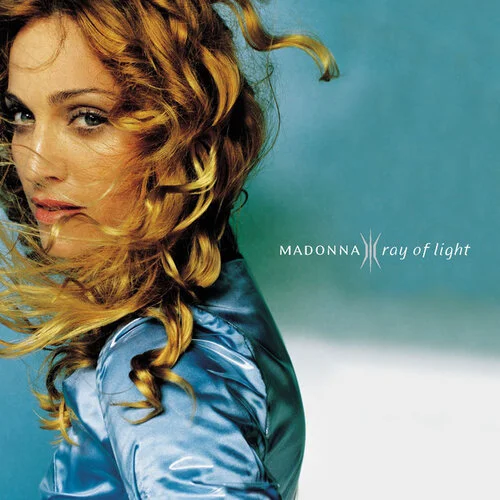
Ray of Light - Candy Perfume Girl

Track Position on Album: 4

Album Release Date: 22nd February, 1998

Buy: https://www.discogs.com/sell/list?master_id=67803&ev=mb

Labels: Maverick/Warner Bros.

Producers: Madonna/William Orbit/Patrick Leonard/Marius de Vries

Album’s US Billboard 200 Chart Position: 2

Standout Track Lyric: “Rush me ghost you see/Every center my home/Fever steam girl/Throb the oceans”.

Music - Runaway Lover

eww.jpg

Track Position on Album: 3

Album Release Date: 18th September, 2000

Buy: https://www.discogs.com/sell/list?master_id=34721&ev=mb

Labels: Maverick/Warner Bros.

Producers: Madonna/Mirwais Ahmadzaï/William Orbit/Guy Sigsworth/Mark ‘Spike’ Stent/Talvin Singh

Album’s US Billboard 200 Chart Position: 1

Standout Track Lyric: “You're set adrift with no direction/Just like a ship that's lost at sea/You don't care where you drop your anchor/Make sure it doesn't land on me”.

American Life - X-Static Process

www.jpg

Track Position on Album: 8

Album Release Date: 21st April, 2003

Buy: https://www.discogs.com/sell/list?master_id=33988&ev=mb

Labels: Maverick/Warner Bros.

Producers: Madonna/Mirwais Ahmadzaï/Mark ‘Spike’ Stent

Album’s US Billboard 200 Chart Position: 1

Standout Track Lyric: “I'm not myself when you go quiet/I'm not myself all alone at night/I'm not myself don't know who to call/I'm not myself at all”.

Confessions on a Dance Floor - Future Lovers

aa.jpg

Track Position on Album: 4

Album Release Date: 9th November, 2005

Buy: https://www.discogs.com/sell/list?master_id=34205&ev=mb

Label: Warner Bros.

Producers: Madonna/Stuart Price/Mirwais Ahmadzaï/Bloodshy & Avant

Album’s US Billboard 200 Chart Position: 1

Standout Track Lyric: “Connect to the sky/Future lovers ride their ambitions high, would you like to try?/Let me be your guide, cut inside your pride/Future lovers hide love inside their eyes”.

Hard Candy - Heartbeat

xx.jpg

Track Position on Album: 4

Album Release Date: 19th April, 2008

Buy: https://www.discogs.com/sell/list?master_id=18125&ev=mb

Label: Warner Bros.

Producers: Danja/The Neptunes/Timbaland/Justin Timberlake

Album’s US Billboard 200 Chart Position: 1

Standout Track Lyric: “On any given night, catch me on the floor/Working up a sweat, that's what music's for/I'd rather not explain, for me it's just usual”.

MDNA - I’m a Sinner

rewwe.jpg

Track Position on Album: 9

Album Release Date: 23rd March, 2012

Buy: https://www.discogs.com/sell/list?master_id=421537&ev=mb

Label: Interscope

Producers: Madonna/Alle Benassi/Benny Benassi/The Demolition Crew/Michael Malih/Hardy ‘Indiigo’ Muanza/William Orbit/Martin Solveig

Album’s US Billboard 200 Chart Position: 1

Standout Track Lyric: “Like a moon with no light of my own/Surfs the sky for a place to call home/I woke up with my hand in the fire/Get my kicks when I'm walking the wire”.

Rebel Heart - Body Shop

mnnm.jpg

Track Position on Album: 11

Album Release Date: 6th March, 2015

Buy: https://www.discogs.com/sell/list?master_id=805764&ev=mb

Label: Interscope

Producers: Madonna/Diplo/Ariel Rechtshaid/Avicii/Blood Diamonds/Billboard/Jason Evigan/Shelco Garcia & Teenwolf/Kanye West/Mike Dean/Toby Gad/AFSHeeN/Josh Cumbee/Salem Al Fakir/Symbolyc One/Magnus Lidehäll/Vincent Pontare/Astma & Rocwell/Carl Falk

Album’s US Billboard 200 Chart Position: 2

Standout Track Lyric: “Stuck to the seat, our body heat, what will you do with all of this ass?/Let's shift a gears, get outta here, we're steppin' on the gas/We gotta bounce, we're goin fast, let's let the seat go back/You take the wheel, I'll sit on top”.

Madame X (Deluxe) - Faz Gostoso

Track Position on Album: 11

Album Release Date: 14th June, 2019

Buy: https://www.discogs.com/sell/list?master_id=1563046&ev=mb

Label: Interscope

Producers: Madonna/Mirwais/Mike Dean/Diplo/Billboard/Jason Evigan/Jeff Bhasker/Pharrell Williams

Album’s US Billboard 200 Chart Position: 1

Standout Track Lyric: “But today he's saying, "no way"/Better throw that cachaça away/Boy, I think that you're losing your mind/You act like a fool, a fool all the time”.

FEATURE: Kate Bush, Accentuating the Positives: Returning to The Dreaming’s Divisive Title Track

FEATURE:

Kate Bush, Accentuating the Positives

ee.jpg

IN THIS PHOTO: Kate Bush in 1982 

Returning to The Dreaming’s Divisive Title Track

___________

I have written about…

eewe.jpg

The Dreaming in a feature where I also spotlighted There Goes a Tenner. These are two singles from 1982’s The Dreaming that did not fare well in the charts. Whilst the title track got to number forty-eight, There Goes a Tenner was Bush’s worst commercial performance for a single to that point. The Dreaming’s first single, Sat in Your Lap, reached eleven and was a good achievement. There would have been decisions and choices as to which single could be next. I can understand why the title track was selected. There are interviews of Bush promoting the song where there is this concern (from the interviewer) that, perhaps, it is not the most commercial/conventional single. I have had a difficult relationship with the song, where I have sort of overlooked it and not really given it time. The more I listen to, the stronger it gets. I can understand that some felt that the Australian twang is a little strong and, perhaps, a little bit dominant. Some saw Bush’s accent as cultural appropriation. Today, maybe people would see a song about the destruction of Aboriginal homelands by white Australians as virtue signalling. By 1980’s Never for Ever, political and social issues were a much bigger part of Bush’s work. She had come a long way since we heard the mostly romance/love-based songs of her first two albums, The Kick Inside and Lionheart – though, even in 1978, she was pushing boundaries!

The accent, from Bush’s perspective, I guess would cast her in the role of the villains (“Many an Aborigine's mistaken for a tree/'Til you near him on the motorway/And the tree begin to breathe”). I actually like her choice. It gives an authenticity to the song – even if some would say the accuracy of the accent is not quite there. It was a bold move from an artist who did not merely want to narrate a song. She wanted to embody it! The Kate Bush Encyclopaedia published an article about the song, where we get Bush’s story and background to her fourth studio album’s title track:

“We started with the drums, working to a basic Linn drum machine pattern, making them sound as tribal and deep as possible. This song had to try and convey the wide open bush, the Aborigines - it had to roll around in mud and dirt, try to become a part of the earth. "Earthy" was the word used most to explain the sounds. There was a flood of imagery sitting waiting to be painted into the song. The Aborigines move away as the digging machines move in, mining for ore and plutonium. Their sacred grounds are destroyed and their beliefs in Dreamtime grow blurred through the influence of civilization and alcohol. Beautiful people from a most ancient race are found lying in the roads and gutters. Thank God the young Australians can see what's happening.

fff.jpg

IN THIS PHOTO: Kate Bush in a promotional photo for The Dreaming/PHOTO CREDIT: Guido Harari 

The piano plays sparse chords, just to mark every few bars and the chord changes. With the help of one of Nick Launay's magic sounds, the piano became wide and deep, effected to the point of becoming voices in a choir. The wide open space is painted on the tape, and it's time to paint the sound that connects the humans to the earth, the dijeridu. The dijeridu took the place of the bass guitar and formed a constant drone, a hypnotic sound that seems to travel in circles.

None of us had met Rolf (Harris) before and we were very excited at the idea of working with him. He arrived with his daughter, a friend and an armful of dijeridus. He is a very warm man, full of smiles and interesting stories. I explained the subject matter of the song and we sat down and listened to the basic track a couple of times to get the feel. He picked up a dijeridu, placing one end of it right next to my ear and the other at his lips, and began to play.

I've never experienced a sound quite like it before. It was like a swarm of tiny velvet bees circling down the shaft of the dijeridu and dancing around in my ear. It made me laugh, but there was something very strange about it, something of an age a long, long time ago.

Women are never supposed to play a dijeridu, according to Aboriginal laws; in fact there is a dijeridu used for special ceremonies, and if this was ever looked upon by a woman before the ceremony could take place, she was taken away and killed, so it's not surprising that the laws were rarely disobeyed. After the ceremony, the instrument became worthless, its purpose over. (Kate Bush Club newsletter, October 1982)”.

In my view, The Dreaming (album) contains some of Bush’s most evocative and original lyrics. She has always been a phenomenal lyricist - through the images she provokes on The Dreaming’s title track are amazing. How many people have looked at the lyrics and the wordplay?! Another terrific section comes when she sings the following: “The civilised keep alive/The territorial war/"See the light ram through the gaps in the land."/Erase the race that claim the place/And say we dig for ore/Or dangle devils in a bottle/And push them from the/Pull of the bush”. The video had quite a cinematic feel, in the sense it was a wide shot that did not have a lot of quick cuts and constant camera movement. Not that this was the reason why the single did not fare too well. Perhaps The Dreaming is not the most commercial song she could have released. It is one of these songs that would work best as a deeper cut that people come to and spend time with – as the album’s title track, maybe she felt that it just had to be released as a single (though she did not release The Kick Inside’s title track as a single). Bush definitely had a concern for the Aboriginals. She saw their plight and did not want to remain silent. One wonders how else she could have delivered the track. By inhabiting an Australian accent, she embodies those who are causing this destruction, as opposed someone merely watching it from afar.

dd.jpg

 IN THIS PHOTO: Kate Bush at a record signing at Virgin Megastore on Oxford Street in London for The Dreaming on 14th September, 1982

The vocal work throughout the song is busy and interesting. Her production work is amazing. Perhaps there are songs on The Dreaming that sound fresher today or are easy to enjoy. So many people have dismissed the track or placed it low in their rankings of her best singles. Although not on the same level as Wuthering Heights, Running Up That Hill (A Deal with God) or Babooshka, The Dreaming is a song that warrants new inspection. With dense and immersive lyrics that are so unusual and interesting, I do wonder how much of an impact it made in Australia. It got to number ninety-one in the charts, compared with the number two position that Babooshka (Never for Ever) achieved a couple of years previous. Sat in Your Lap only got to ninety-three in Australia…so they preferred the title track slightly more! Although it is not a deep cut – as it is a single -, The Dreaming is one of the under-appreciated Kate Bush tracks that people should check out. It is one that I have not given too much time too. I like the direction of the video. Paul Henry directed it. His work is quite impactful and great-looking. EMI did not like the video themselves and ordered something more traditional and marketable for There Goes a Tenner (Henry returned to direct, but he definitely was told to keep things simpler!). The animal noises by the late Percy Edwards are brilliant! Rather than use sample or library sounds, Edwards gives the sounds a more human element.

With sound effects and a great composition, there is a lot to enjoy about The Dreaming. The only stain comes when we consider how Rolf Harris played the didgeridoo. Bush removed his parts from Aerial following his conviction for sexual assaults. Harris performed spoken parts for Aerial, so it is different when it comes to The Dreaming. Bush cannot remove the didgeridoo (as it is so pivotal); she could get someone else to play it and  re-release the song - but I don’t think that many people know about Rolf Harris’ involvement. That cannot detract from a song that is really impressive. I also like how the title came to her:

“The title actually came last. It always does. It's the most difficult thing to do. I tried to get a title that would somehow say what was in there. It was really bad. Then I found this book [Hands me huge tome on australian lore]. I'd written a song and hadn't really given it a proper name. I knew all about this time they call Dreamtime, when animals and humans take the same form. It's this big religious time when all these incredible things happen. The other word for it is The Dreaming. I looked at that written down and thought, ``Yeah!'' (Kris Needs, 'Dream Time In The Bush'. ZigZag (UK), 1982)”.

Bush put out the song, Dreamtime, as the B-side to The Dreaming – another song that people should hear. To me, The Dreaming is a far stronger and more interesting song than people have given it credit for. I have a lot of love for the album as a whole. I would urge people to buy Laura Shenton’s recent book about The Dreaming. One gets a sense of this growing and increasingly ambitious artist producing solo for the first time, creating these magnificent songs. A lot of the album does not get too much attention. The amazing title track certainly deserves…

NEW focus and respect.

FEATURE: Spotlight: Chubby and the Gang

FEATURE:


Spotlight

PHOTO CREDIT: Pooneh Ghana

Chubby and the Gang

___________

IT is high time that…

aaa.jpg

I put Chubby and the Gang in my Spotlight feature. The West London band are formed of Charlie ‘Chubby Charles’ Manning-Walker, guitarists Ethan Stahl and Tom ‘Razor’ Hardwick, bassist Maegan Brooks Mills and drummer Joe McMahon. Their album, Speed Kills, was released year; it ranks alongside the very best from 2020. It is a great debut album that you should own. Though, in a somewhat Spinal Tap manner, Chubby and the Gang have been dubbed one of the loudest bands around, that is not to say they lack hooks, a sense of emotional and sonic balance and nuance. Their lyrics are full of compelling lines and stories. The compositions are rich enough so that one explores songs multiple times to get to the bottom of that. However, they are a direct band that are punchy and physical. I am going to end with a review for Speed Kills. Before I get there, it is worth quoting a few interviews. It allows for a better sense of who the band are and where they are going. The West London-formed crew are heading for bigger things. Charlie Manning/Manning-Walker tends to do the interview talking, so we will be hearing from him. Last year, NME highlighted one of Britain’s most promising young bands. Manning explains how, even though Chubby and the Gang are quite intense, they are accessible and musical:

“The nickname ‘Chubby’ was initially thrust upon Charlie Manning by others, but by the time of recording his new band’s first single in 2019 he had learned to embrace it. The newly christened Chubby and The Gang went on to record their debut album over a manic two-day stretch last autumn, having barely mustered 10 rehearsals together as a band.

Not that you would know it, though. ‘Speed Kills’, originally released in January and now set for a remastered re-release on their new label Partisan [IDLES, Fontaines DC], is a thrilling white-knuckle ride through multiple flavours of hardcore punk. For Manning, it marks the culmination of well over a decade of putting in the hard yards in London’s tight-knit punk scene, although he also considers it something of a departure from the music that he has loved for so long.

I’m 30 now, and I’ve been in hardcore bands since I was 15,” he says. “I’m not bored of hardcore, but sometimes you just need to do something else that isn’t just angsty, you know what I mean? I wanted to do something musical: I wanted to have a record that had handclaps, organ and harmonica on it. I wanted it to be a more accessible record.”

The sonic diversity he describes is indeed on display on ‘Speed Kills’, although the pacing of the record, which crams 13 tracks into just 28 pummelling minutes, is practically breakneck. It’s a discipline that Manning honed during his time in bands such as Arms Race and Violent Reaction, members of the New Wave of British hardcore that emerged in the early 2010s. It was on that circuit that he got to know the other members of Chubby and The Gang, who themselves had been members of such Brighton hardcore bands as Vile Spirit.

Manning describes writing as a “constant nervous twitch” and he believes in the power of direct storytelling. “I think music now is steeped in metaphor, and that’s fine — but it’s not how my brain works,” he says. “I’d rather tell a story about a really specific event that happened rather than make a vague thing that anyone can interpret in their own different way. I’d rather just be like: ‘Look, I was here at this time in this place, and then this thing happened and it ended up like this’.”

“‘Speed Kills’ was done in two days, but this one was done in 10 days. Man, 10 days felt like two years to me: at the end of it I was really losing my fucking marbles,” Manning admits. “The usual recording process in the community of bands that I play in is to get in there, get it all out and that’s it. [On this album] I was overthinking everything, thinking: ‘Is this shit or is it good?’ But I’m proud of it, man. I think it’s a step up, definitely”.

Last year was not ideal for a band who wanted to come out of the traps with Speed Kills and tour it as widely as possible. I know that Chubby and the Gang have some gigs lined up soon. It is a welcome relief after quite a tough 2020. CLASH chatted with Charlie Manning late last year as he reflected on 2020:

“How has 2020 been for you so far? Have you held up alright?

We’ve recorded our second album during this pandemic so we’ve been busy as a band. We were a bit back and forth during the first lockdown, but then once that passed, we went up to Leeds and recorded the whole second thing and it’s getting mixed as we speak.

This year’s been a bit weird for us as a band because a lot of things have happened for us, but also fuck all has happened, you know what I mean? We signed a new deal, got all this press stuff, then the flipside is that we’re stuck in our rooms just staring at the walls.

Personally though, nothing much has changed. I’m still working doing my electrician stuff. I can’t complain really; I’ve not been ill, I’m eating healthier, exercising more, doing all that good shit.

I think there’s been a real shift in people as well. Especially in London where you’re working all the time, all the time, all the time, I think people have took the time to stop and think about it and realise how absurd the situation is, you know. Working forty, fifty hours a week or whatever non-stop, you realise this is a bit insane. You also have more time to lament on how shit the government is.

Has music always played an important part in your life?

Yeah, definitely. I know a lot of people come away with soft shit when they talk about ‘discovering’ music, but I do think that without music I would be in a much darker place. When I was a kid, I was a reckless little shit, and I think getting into punk music at an early age levelled me out a little bit.

Has London’s hardcore scene managed to stay connected without live performances this year?

I think the internet helps. People get to chat to each other over the internet and make shows, plan for shows when they come back and all that. There’s a big UK hardcore festival called ‘UK Hardcore Returns’ which is gonna happen as soon as they lift the lockdown basically which should be fun.

I tend not to be on the internet that much anyway but I think people using the internet to talk about what’s gonna happen when we all get back and stuff is a good thing. But, it’s difficult, man. I think when you’re involved in an underground scene, you’re doing what you’re doing for the love of it anyway. So, when you can’t do it, you’re not gonna go anywhere; you’re still gonna be there because you love it, you know what I mean?

How do you feel now that you’ve signed to Partisan Records?

Yeah man, big time. They approached us in March time, something like that, then we had a few zoom meetings and signed literally as lockdown was coming in. But they’ve been really sweet to us. We’ve recorded the new LP for them and they’ve been good at every turn really”.

Just before coming to a review for Speed Kills, Rolling Stone recently featured Chubby and the Gang. The band are making their music known in America. In the interview, we also hear from the producer of Speed Kills (and the band’s forthcoming album, The Mutt’s Nuts), Jonah Falco:

“Direct, demonstrative, restless, reckless, and wry — that’s what Manning Walker is, and that’s the kind of music Chubby and the Gang make. Speed Kills melded his deep punk and hardcore roots with a love of early rock & roll. The guitars grooved like buzzsaw teeth, the drums beat down in swinging blows, and Manning Walker roared tales of street brawls, speed binges, crooked cops, and systemic rot. The songs on the band’s second album, The Mutt’s Nuts, out August 27th, hit just as hard, but with a far more expansive sound that bolsters Manning Walker’s dispatches on work, heartbreak, racism, inequality, and the grace and grit of London.

“Speed Kills was like 2,000 mile-per-hour rock & roll, one ballad, one acoustic song,” says Jonah Falco, the drummer for Toronto hardcore heroes Fucked Up, who now lives in London and produced both Chubby albums. “The Mutt’s Nuts, there’s four or five stations of total musical relief. It’s like these rolling hills of taste, and it’s really great to see that flow going through.”

Though Chubby and the Gang demoed, developed, and fine-tuned The Mutt’s Nuts over several months, the songs still feel tied to Manning Walker’s flat. There’s a pervasive sense of being trapped — trapped in dead-end jobs, in an unfair criminal justice system, by longing, depression, and expectation, the illusion of meritocracy, and circumstances beyond one’s control that those in power have determined will seal your fate anyway.

On early single “Lightning Don’t Strike Twice,” Manning Walker fumes at the inequality of opportunity, capturing the way so many are screwed no matter what they do by mixing his metaphors:  “They say lightning don’t strike twice/But these still feel like loaded dice.” “Coming Up Tough” takes aim at the carceral state’s lack of interest in rehabilitation, inspired by a family member who, at a young age, got into a fight that went wrong, then spent 20 years in prison and re-entered a world that wanted nothing to do with him: “How can you prove them wrong/If no one even gives you a chance?” On “It’s Me Who’ll Pay,” one of a couple of anthems for this era of stagnant wages and crushing productivity demands, Manning Walker bellows what could be a Chubby and the Gang thesis statement: “Sell my soul to the fucking job? No way/If time is money then it’s me who’ll pay/And all the coppers and politicians keep it all in place.”

“Maybe I felt like the world was closing in,” Manning Walker says. “We’d just had Brexit — can’t leave an island now. Can’t leave my room because there’s Covid. It just felt like the world’s shrinking and I got a lot of time to reflect on things I don’t like, so I expressed my dismay by writing songs about that”.

qqqq.jpg

There are a couple of other interviews that I want to feature. PASTE had their say about the remarkable Speed Kills:

“Lead singer Charlie Manning-Walker (who apparently goes by Chubby Charles) has spent years in British straight-edge punk, so he’s got receipts, but there’s something especially snappy and satisfying about this project. What separates the Gang from their other bands is their discarding of discordant hardcore leanings for melodic fiery rock ‘n’ roll ones and occasional blues and surf undertones. “Trouble (You Were Always On My Mind)” incorporates ’60s doo-wop and surf-pop melodies while “Moscow” explodes into pit of flaming rhythm and blues. Much of the record is rooted in textbook riffs churned out at such a pace that they appear new and invigorated. It’s a reminder of why you fell in love with rock ‘n’ roll in the first place.

Their barrelling energy is the core of their appeal, and trying to nod along to their brisk rhythms for any period of time will probably give you neck pain. Luckily, the album clocks in at 25 minutes, so if you do have the courage, blood alcohol level or amphetamine buzz (the last of which is referenced in the album title) to move along to this album in its entirety, you won’t be in super rough shape the next day. Take album highlight “Pariah Radio” for example: Try listening to that blistering song without feeling a nagging urge to pogo or envisioning yourself accidentally pinching a nerve.

qqq.jpg

PHOTO CREDIT: Ellie Chaplin 

While cutting riffs and breakneck rhythms are their bread and butter, their lyrics are far from filler. They’ve got their eyes on the prize at all times—the preservation and well-being of the gang and its ethos—but it comes off as more lion-hearted devotion than a preachy stump speech. There’s hatred directed at “the boys in blue” for sure, but they don’t have a stick up their behind about it—there’s a jollyness to their music too. They couldn’t pull off lines like “I won’t be told what to do / Especially from the likes of you” unless it was barked with convincing viciousness and personality.

They also manage to rail against staunch, briefcase-equipped conservatism without sounding corny. Track one begins with retro, anti-juvenile delinquency spoken-word, which features a man talking about the evils of rock ‘n’ roll. The main source of such heresy according to this man is “the beat,” which couldn’t be more fitting given that the beat is what fuels Chubby and The Gang: Later on the album, they emphatically yell, “Can you feel the beat / It never went away / It’s always been out on the street!”

Speed Kills spray paints the spit, blood, sweat and tears of their working-class, misfit gang onto a wall of concrete. Its plain-spoken nature and ravishing charm is the perfect accompaniment to their absolute instrumental onslaught. Chubby and The Gang may be the first independent British hardcore punk band in a while to get this much attention, but as Speed Kills tries to hammer home: There’s an entire fringe scene back home that’s part of the gang and that helped shape Chubby’s ascent. It’s one for all, all for one”.

This is quite timely, I guess, as The Mutt’s Nuts is out on 27th August. The highly-anticipated follow-up to Speed Kills, go and pre-order the album. This is what Rough Trade had to write about the London band’s second studio album in as many years:

“West London five-piece Chubby and the Gang are balanced by two energies on The Mutt's Nuts 'a casual 'fuckit' on one side, an active 'fuck off' on the other. For every moment of punk imperfection, there's an intricate flurry of detail. For every enraged statement about modern life as war, there's a lyric like 'Hello heartbreak, my old friend' that catches you off guard. Made up of musicians from across the consistently thriving and criminally overlooked UK hardcore scene (ft. The Chisel, Big Cheese and more), Chubby and the Gang marinate its characteristic speed and sick-of-it-all energy in a mixture of 50s pop sounds. The result is a prickly take on the older, more melodic genres that punk derives from, chewing them up and spitting them out into something mangled but revitalized”.

After their second album comes out, there will be more dates and attention. Chubby and the Gang are one of the most important bands we have right now. I can notice small changes between albums; improvements and little tweaks that means they are growing and evolving – never keen to repeat themselves and cover the same ground. If you have not discovered the band then go and follow them on social media (as far as I can see, they do not have a Twitter account). They are a terrific band that produces…

A wonderful sound.

_____________

Follow Chubby and the Gang

sdf.jpg

FEATURE: Inspired By... Part Twenty-Four: Ms. Lauryn Hill

FEATURE:


Inspired By...

ff.jpg

Part Twenty-Four: Ms. Lauryn Hill

___________

SOME may question…

ff.jpg

whether an artist who has released one solo album has a big legacy and influence. Ms. Lauryn Hill put out The Miseducation of Lauryn Hill in 1998. She released two albums as part of the Fugees. Their second album, 1996’s The Score, is one of the greatest ever. That said, so is Ms. Lauryn Hill’s solo album! She is an incredible songwriter and artist who has compelled so many others. Before I come to a playlist with a selection of songs from artists who are inspired by Hill or have definitely been affected by her in some way, here is some biography from AllMusic:

“Lauryn Hill broke through with multi-platinum-selling, Grammy-winning group the Fugees, but with her 1998 solo debut The Miseducation of Lauryn Hill, the singer, songwriter, rapper, and producer established herself as a creative force on her own. She successfully integrated rap, soul, and reggae into a singular sound. Eclectic, uplifting, and empowering, the album was often cited by younger artists as a touchstone. Following its success, Hill was something of an enigma, her recorded output limited to a live set, scattered compilation appearances, and a handful of collaborations. Disenchantment with the entertainment industry, along with legal issues and erratic performances, did not lessen the impact of her '90s work.

Raised in South Orange, New Jersey, Hill spent her youth listening her parents' multi-genre, multi-generational record collection. She began singing at an early age and snagged minor roles on television (As the World Turns) and in film (Sister Act II: Back in the Habit). Her on-again/off-again membership in the Fugees began at the age of 13, but was often interrupted by both the acting gigs and her enrollment at Columbia University. After developing a following in the tri-state area, the group's first release -- the much-hyped but uneven 1994 album Blunted on Reality -- bombed, and almost caused a breakup. But with the multi-platinum 1996 release The Score, the Fugees became one of the most prominent rap acts on the strength of hit singles "Killing Me Softly," "Ready or Not," and "No Woman, No Cry."

Hill followed it in August 1998 with The Miseducation of Lauryn Hill, her first solo release. Apart from a cover of "Can't Take My Eyes Off You," popularized by Frankie Valli, each song was either written or co-written by Hill. She was also credited with the arrangement and production of the whole album, which was steeped in her old-school background, both musically (the Motown-esque singalong of "Doo Wop [That Thing]") and lyrically (the nostalgic "Every Ghetto, Every City"). As Miseducation began a long reign on the charts through most of the fall and winter of 1998, Hill became a national media icon, as magazines ranging from Time to Esquire to Teen People vied to put her on the cover. By the end of the year, as the album topped best-of lists, she was being credited for her part in assimilating hip-hop into the mainstream. The momentum culminated at the February 1999 Grammy Awards, during which Hill took home five trophies from her 11 nominations, including Album of the Year, Best New Artist, Best Female R&B Vocal Performance, Best R&B Song, and Best R&B Album -- the most ever for a woman. Shortly after, she launched a highly praised national tour with Atlanta rappers OutKast.

Hill continued shaping her solo career, though it hit some significant snags. She faced a lawsuit from musicians who claimed they were denied full credit for their work on Miseducation -- a matter that was eventually settled out of court. After some film projects fell through, she retreated from the music scene as she raised her family and partially attributed her hiatus to feeling too compromised. The double-disc MTV Unplugged No. 2.0 appeared in May 2002 and documented a raw, deeply personal performance. It debuted at number three but quickly slid off the Billboard 200. During the next several years, her recordings and performances were infrequent and erratic, highlighted by a Fugees reunion for Dave Chappelle's Block Party. In 2013, she spent almost three months in prison for tax evasion but was more active after her release. The following year, the English-language version of the Swedish documentary Concerning Violence was released with Hill as its narrator. She executive produced and recorded six songs for the 2015 release Nina Revisited: A Tribute to Nina Simone, including interpretations of "Feeling Good" and "Black Is the Color of My True Love's Hair”.

To celebrate the iconic Ms. Lauryn Hill, this ending playlist is an assortment of artists who owe something to her. As you will tell – like so many artists I include in this feature –, there is a broad range of songs and artists on display! There has been talk for years as to whether Ms. Lauryn Hill will release a second solo album. For the sake of the music world, let’s hope…

THAT she does.

FEATURE: Childhood Treasures: Albums That Impacted Me: Madonna – Ray of Light

FEATURE:


Childhood Treasures: Albums That Impacted Me

cdf.jpg

Madonna – Ray of Light

___________

AS Madonna…

fdd.jpg

celebrates her birthday on Monday (16th), the final feature I am writing about her to mark that concerns an album of hers that impacted me during childhood. This was a late-childhood love; an album that was released on 22nd February, 1998 – I was fourteen on that day. Ray of Light is Madonna’s seventh studio album. I think her work in the 1990s is up there with what she put out in the 1980s. Erotica of 1992 and 1994’s Bedtime Stories are two very different albums. Both are terrific and contain some of her best songs. Maybe Bedtime Stories was not the critical success she had hoped. Coming back four years later with this reinvention was a big surprise. I guess having producers like William Orbit on board helped take her music to new places. Mixing Electronic, Dance and Hip-Hop, this is a Madonna album like no other! Unusually, the first single from the album was Frozen. I really love the track and was hooked by this track that was dark yet hypnotic. Written with her old writing partner, Patrick Leonard (with production by Madonna, Leonard and William Orbit), it is the ninth track on the album. Many might have assumed the more upbeat and energetic title track would have been the lead single. Frozen got to number-one in the U.K. after its release on 23rd February (I am going by Wikipedia’s dates, so am not sure whether the first single came out a day after the album). I bought the single first and, I think, got the album the following weekend.

This was a period where I was going into my local town to buy albums and singles. I was a big Madonna fan then (and still am), so I was eager to check out this new single. After being hooked and loving it, I got the album. Still at high school, this was an album many people were talking about. Instantly, songs like Ray of Light, Nothing Really Matters, The Power of Good-Bye and Drowned World / Substitute for Love got under my skin. This is an album where you can go from the hyperspeed sway of Ray of Light, have something more introspective and emotional as The Power of Good-Bye and the beautiful Mer Girl. Shanti / Ashtangi is a step into Indian music and mantra. It is a direction that Madonna didn’t exploit and explore too much after that. Although she did get some stick for her supposed bond with Eastern music and Kabbalah, this was her embracing different styles and cultures. There are so many different sounds and genes fused on Ray of Light. It is an album that has so much going on! Sky Fits Heaven is one of my favourite songs. It has a Club beat, and manages to be quite sparse and minimal but really powerful and packed. To me, the defining song of the album might well be the title track. It was the first real burst of light and colour on the album (as the third track). Written by Madonna and William Orbit, the album has been credited for bringing Electronica music into global pop culture.

I loved Ray of Light when I heard it in 1998. It opened my ears to new sounds and possibilities. I thought I knew Madonna and what she was about then. Although one can hear some sharper, darker and more Electronic elements on Erotica and Bedtime Stories, Ray of Light was much more realised and adventurous. It sounds so complete and authentic! This is not a Pop artist dabbling in something to get commercial appeal. Here was an artist doing what she always did: evolving between albums and curious to see where she could head. Because of that, albums like Ray of Light sound so fresh and original. Today, you can pop on the record and get so much from it. I can tell, when Ray of Light arrived, that critics loved it. Many view Ray of Light as Madonna’s defining album. It is an album very special to me, as Madonna was one of the first artist I really bonded with. I am going to finish with a review for the album. This is Entertainment Weekly’s take on Ray of Light:

“Is Care Of The Soul sharing space with baby-care manuals on Madonna’s bookshelf? Ray of Light (Warner Bros.), Ms. Ciccone’s first pop album in nearly four years, is rife with references to the earth and ”the stars in the sky,” angels and heaven, not to mention unexpectedly respectful references to God and ”the Gospel.” In one song, she’s ”waiting for the time when earth shall be as one”; in another, enunciating in a voice made firm and clear by those Evita lessons, she gamely attempts to make a pop hook out of a yoga chant.

If these nods to spiritual reawakening seem suspiciously chic, you haven’t heard the other half of it. Working with British producer William Orbit, Madonna has dipped her latest collection of songs in a light batter of electronica. Throughout Ray of Light, the hissy, staccato pulsations of ambient techno and drum-and-bass flit in and around her like celestial seasonings. Computers burp and bray in the background, or imitate streaking asteroids or submerging submarines.

The blending of these philosophical and musical kernels would be unbearably trend conscious (even by Madonna’s own standards) if it weren’t for a simple fact: Ray of Light is some of the most alluring and captivating music she’s ever crafted. Should comparisons be made, they’re neither to straight techno discs by the Chemical Brothers or Underworld, nor to stilted attempts at the music by U2 or David Bowie, but to Paul Simon’s Graceland. On that milestone, Simon let South African pop buoy and revitalize his music. In much the same way, Madonna looks for — and finds — a middle ground between her now-old-school approach and the new club music. She dresses her music up with her electronic love.

Strictly speaking, Ray of Light isn’t 100 percent pure techno. After all, it features traditionally structured pop melodies, and the music reflects Orbit’s less-than-edgy background in ambient-based mood music. Only once, on the sirenlike techno-glitter-ball of the title track, does the album kick into beats-per-minute frenzy. Instead, what Madonna and Orbit have done — and brilliantly at that — is to use electronica components as sonic window dressing. Hard-step beats and synth washes make the romantic-physical yearnings (and hooks) of ”Skin” and ”Nothing Really Matters” even tauter; the juxtaposition of fuzzy beats and soundtrack-score strings lends ”’Drowned World’ aka ‘My Substitute for Love”’ and ”Frozen” a wuthering-beats melodrama that’s often breathtaking. Throbbing yet meditative, Ray of Light is an adult’s version of dance music, with the dark timbres of Madonna’s nearing-40 voice its resolute center”.

Over twenty-three years after its release, I am still discovering new things from Ray of Light. An album that would be in my top-ten, I was blown away when it came out. It was a real revelation for a fourteen-year-old. Although Madonna has released sensational albums since 1998 (Confessions on a Dance Floor of 2005 might be the best album since then), I don’t think she has reached the peaks of Ray of Light. It is a sensational work. It is a childhood album that impacted me hard. Ray of Light is an album that…

WILL always mean so much.

FEATURE: A Buyer's Guide: Part Sixty-Seven: Prefab Sprout

FEATURE:


A Buyer's Guide

Part Sixty-Seven: Prefab Sprout

___________

I have not yet included…

dd.jpg

Prefab Sprout in A Buyer’s Guide. They are one of my favourite bands and, with Paddy McAloon at the front and writing such beautiful and timeless songs, their work will be remembered and shared for years to come. The band are still together – although it is pretty much McAloon on his own now. I am going to recommend the essential work of Prefab Sprout. Before then, here is some biography about the legendary band from AllMusic:

“One of the most acclaimed British pop bands of the '80s and '90s, Prefab Sprout was the creative vehicle of vocalist, songwriter, and multi-instrumentalist Paddy McAloon, who has been regularly hailed as one of the greatest songwriters of his era. McAloon has often been compared favorably to Elvis Costello, Paul McCartney, and even Cole Porter, not just because of his lyrical and instrumental gifts but for the ambitious creative vision of his catalog. A notorious perfectionist who is also known for his shyness and his struggles with health problems, McAloon's body of work is relatively small (ten albums in three decades), but Prefab Sprout's music is beloved in the U.K., and they have a smaller but passionately loyal audience in the United States. Moving from the smart, beautifully crafted pop of 1984's Swoon and 1985's Steve McQueen (titled Two Wheels Good in the U.S.), Prefab Sprout would explore the influences of American music on 1988's From Langley Park to Memphis, embrace the sound and style of stage musicals on 1990's Jordan: The Comeback, use the Old West as a metaphor on the 2001 concept album The Gunman and Other Stories, and celebrated the power and energy of music on 2009's Let's Change the World with Music and 2013's Crimson/Red.

Prefab Sprout were formed in Newcastle, England, in 1977 by Paddy McAloon, who sings and plays guitar and piano, and his bass-playing younger brother, Martin. In the group's early days, McAloon spun several fanciful tales about the origin of their odd name (one favorite was that the young McAloon had misheard the line "hotter than a pepper sprout" in Nancy Sinatra & Lee Hazlewood's "Jackson"), but the truth is that an adolescent McAloon had devised the meaningless name in homage to the long-winded and equally silly band names of his late-'60s/early-'70s youth. With an early fan, Wendy Smith, drafted into the lineup to sing helium-register backing vocals, the trio released its first single, "Lions in My Own Garden (Exit Someone)," on its own Candle label in July 1982. Written for a girlfriend who had left Newcastle to study in Limoges, France (check the acronym of the title), the song was exceedingly clever but obviously heartfelt. The single's warm reception, including many plays on John Peel's radio show, led to the Sprout's signing to CBS subsidiary Kitchenware Records, which reissued the single in April 1983. Another single, "The Devil Has All the Best Tunes," followed later that year.

Prefab Sprout's first album, Swoon, was released in March 1984. Shortly after Swoon's release, drummer Neil Conti joined the group, and Thomas Dolby was tapped to produce the second Prefab Sprout album, 1985's Steve McQueen (retitled Two Wheels Good in the U.S. due to litigation from the late actor's estate). Dolby smoothed out the kinks a bit, and his keyboards helped enrich the album's sound. Prefab Sprout returned to the studio without Dolby in the summer of 1985 and quickly recorded an album's worth of material that was initially meant to be released in a limited edition as a tour souvenir. However, several months after Steve McQueen was released, its song "When Love Breaks Down" (which had been released as a single four different times in the U.K. without chart success) finally became a hit, and CBS feared a new album would hurt its predecessor's sales, so the project was shelved.

The "proper" follow-up to Steve McQueen was 1988's From Langley Park to Memphis. It became their biggest hit, thanks to the massive U.K. chart success of "The King of Rock and Roll" (about a one-hit wonder stuck performing his silly novelty song on the nostalgia circuit; ironically, it was Prefab Sprout's sole U.K. Top Ten hit and remains their best-known song) and the U.S. college radio success of the genial Bruce Springsteen parody "Cars and Girls." Following that chart action, CBS dusted off the shelved acoustic project from 1985 and released it (in the U.K. only) under the title Protest Songs in June 1989. Issued in 1990, Jordan: The Comeback, which McAloon describes as a concept album about Jesse James and Elvis Presley, was released to enormous critical acclaim in late 1990, but unfortunately, its ornate, lush production and suite-like structure doomed it to commercial failure in the U.S., though it was another big hit in the U.K. A fine but unimaginative best-of, A Life of Surprises, met similar respective fates in the summer of 1992.

Many thought Prefab Sprout disbanded at that point, and indeed, Conti did leave the band at some point in the '90s. However, McAloon had written (and in some cases, recorded) several albums' worth of material during the first half of the decade, abandoning them all before finally releasing the crystalline Andromeda Heights in 1997. The album wasn't even released in the U.S., but it was another deserved U.K. hit. An album of subtle beauty, Andromeda Heights showed how far McAloon had come as a songwriter and singer since Swoon.

A much-improved two-disc anthology, The 38 Carat Collection, was released by CBS in 1999 as the group was leaving the label. (Unexpectedly, the group’s U.S. label, Epic, belatedly reissued this set as The Collection in early 2001.) Wendy Smith left the group during this period, after the birth of her first child. Prefab Sprout, by this point consisting solely of the McAloon brothers, signed to EMI in late 2000 and delivered their Western-themed concept album, The Gunman and Other Stories, in early 2001. Unfortunately, the album’s release was delayed several months when Paddy McAloon was diagnosed with a medical disorder rendering him partially blind. As McAloon was homebound due to his health problems between 1999 and 2002, he wrote an album of music inspired by true life stories he recorded from radio broadcasts. Combining the radio recordings with orchestral arrangements of McAloon’s melodies, the mostly instrumental I Trawl the Megahertz became his first solo album when it was released in 2003.

After a six-year layoff, McAloon returned to recording as Prefab Sprout and released the self-produced, performed, and recorded Let’s Change the World with Music in 2009. This set’s songs and concept date to 1992 and were originally to be recorded as the follow-up album to Jordan: The Comeback; for various reasons, those sessions never happened. It was initially issued by Ministry of Sound and later in the year licensed by Sony/BMG in the U.K. In 2010, the independent Tompkins Square imprint issued the album in the United States. Both the album Crimson/Red and its lead single, “The Best Jewel Thief in the World,” were issued by the Icebreaker label in 2013. In March 2017, a video posted on the Internet featured a homemade solo acoustic clip of McAloon performing an original song, “America,” a protest against U.S. immigration policies under Donald Trump. In 2019, Sony reissued McAloon’s I Trawl the Megahertz under the Prefab Sprout banner”.

If you need some guidance about Prefab Sprout and which albums to get, I have suggested the four essential albums, the underrated gem in the pack and the latest album. I could not find a book about the band that is in print – for next week’s subject(s), I will make sure there is a book available. Here is my guide to the work of…

THE amazing Prefab Sprout.

____________

The Four Essential Albums


Steve McQueen

Release Date: 22nd June, 1985

Labels: Kitchenware/CBS

Producers: Thomas Dolby (except for track four, which was produced by Phil Thornalley)

Standout Tracks: Faron Young/Appetite/Desire As

Buy: https://www.roughtrade.com/gb/prefab-sprout/steve-mcqueen

Stream: https://open.spotify.com/album/07CZepJZT17AllXPFRvogL?si=ukyZYqIDRACCtZFdPXMIZw&dl_branch=1

Review:

“Smart, sophisticated and timelessly stylish, Two Wheels Good (titled Steve McQueen throughout the rest of the world) is a minor classic, a shimmering jazz-pop masterpiece sparked by Paddy McAloon's witty and inventive songwriting. McAloon is a wickedly cavalier composer, his songs exploring human weaknesses like regret ("Bonny"), lust ("Appetite") and infidelity ("Horsin' Around") with cynical insight and sarcastic flair; he's also remarkably adaptable, easily switching gears from the faux-country of "Faron" to the stately pop grace of "Moving the River." At times, perhaps, his pretensions get the better of him (as on "Desire As"), while at other times his lyrics are perhaps too trenchant for their own good; at those moments, however, what keeps Two Wheels Good afloat is Thomas Dolby's lush production, which makes even the loftiest and most biting moments as easily palatable as the airiest adult-contemporary confection” – AllMusic

Choice Cut: When Love Breaks Down

From Langley Park to Memphis

Release Date: 14th March, 1988

Label: Kitchenware

Producers: Thomas Dolby/Jon Kelly/Paddy McAloon/Andy Richards

Standout Tracks: Cars and Girls/Hey Manhattan!/The Venus of the Soup Kitchen

Buy: https://www.roughtrade.com/gb/prefab-sprout/from-langley-park-to-memphis/lp

Stream: https://open.spotify.com/album/2gYTh5OCAI8leP681bfpUH?si=GqeYCKeETmWGBQ6MqfJwvQ&dl_branch=1

Review:

“Prefab Sprout arrived in 1988 with two highly acclaimed albums already behind them. With their latest release, 'From Langley Park to Memphis' set to release in March, the band was anxious and in high hopes that the new record could fulfill the sonic aftermath left by the magnificent sophisti-pop odyssey that is 'Steve McQueen'. Thankfully, in my eyes and in the eyes of many others, it succeeded in this feat and then some.

It is perhaps best not to compare 'From Langley Park to Memphis' to 'Steve McQueen', because even though they both have a sound that is unmistakably Prefab Sprout hard at work crafting dreamscapes, they both differ quite a bit stylistically. Instead of creating a second 'Steve McQueen', Prefab Sprout focus on making a cinematic pop experience with production that is grandiose and sweeping. While the first track, "King of Rock and Roll" gives us a funky and wonky synthpop anthem, the rest of the album takes a much more laid back and refined approach, utilizing synths and strings to create dazzling environments.

Whether its the song "I Remember That" or "Nightingales" (which features amazing harmonica from Stevie Wonder), the entire album brings forth a gorgeous pop sound that seems to reside in a far off dream or memory. Although not dreampop as one would traditionally think of it, that may be the most appropriate description for the music on here. With both Paddy McAloon and Thomas Dolby producing these tracks, they simply exude perfect mixing techniques. This is definitively one of the best produced albums out there. "Hey Manhatten" is another classic track that really exemplifies the artistic standard this album sets for pop music: impossibly high.

The album ends with "The Venus of the Soup Kitchen", a song that almost sounds straight out of End of Evangelion and one that hit me right away with its strange and mesmerizing beauty that sounded all too familiar upon when I had first heard it. It crescendoes into a spiraling, angelic melody packed with rich lyricism and poetic contrast that highlights how one views life. Whether you're in Langley Park or in Memphis, you're always going to feel this need to be in the place that you are not; to go on an adventure. Only to find that home is always the place one wishes to return to time and time again” – Sputnikmusic

Choice Cut: The King of Rock 'N' Roll

Jordan: The Comeback

pp.jpg

Release Date: 7th September, 1990

Label: Kitchenware

Producer: Thomas Dolby

Standout Tracks: Wild Horses/We Let the Stars Go/All the World Loves Lovers

Buy: https://www.roughtrade.com/gb/prefab-sprout/jordan-the-comeback

Stream: https://open.spotify.com/album/3em3CQi7ZdbyJ6GDvwJwp6

Review:

“With few exceptions, highbrow pop music-making is a commercially treacherous occupation. Nonetheless, Newcastle’s Prefab Sprout — something of a British answer to Steely Dan — has done quite nicely, purveying evanescent music and frequently loopy subject matter. With Jordan: The Comeback, the quartet is poised to reach a wide American audience as well.

Produced with gentle grandeur by musician Thomas Dolby, the album offers a catalog of understated pop styles, all framed by the softly enunciated vocals of Wendy Smith and songwriter-guitarist Paddy McAloon. Occasionally couched in orchestral cotton wool, the 19 songs deftly incorporate such ingredients as salsa (”Carnival 2000”), wah-wah guitar (”Machine Gun Ibiza”), dance-rock (”Ice Maiden”), and streetcorner soul (”Doowop in Harlem”) without ever relinquishing the band’s lushly consistent character.

For all their fascinating intelligence, McAloon’s ironic lyrics can be difficult to pin down. Following the whimsical conception of ”Looking for Atlantis,” the arch iconography of ”Jesse James Symphony,” and the Presleyesque content of the beautiful title song (and others: Elvis is one of the album’s thematic threads), it’s hard to resist searching the sincere sentiments of ”All the World Loves Love” for a subtext that isn’t there. And just how seriously are we meant to take the voice of God in ”One of the Broken”? Those accustomed to musical junk food may find Jordan: The Comeback too subtle and complex at first, but this airy delicacy is a taste worth acquiring. B+” – Entertainment Weekly

Choice Cut: Looking for Atlantis

Let's Change the World with Music

qq.jpg

Release Date: 7th September, 2009

Label: Kitchenware

Producer: Paddy McAloon

Standout Tracks: I Love Music/Last of the Great Romantics/Sweet Gospel Music

Buy: https://thesoundofvinyl.com/*/Pre-Order-Vinyl/Let-s-Change-The-World-With-Music-2019-Remastered-Edition/6A3B0JXN000

Stream: https://open.spotify.com/album/0qWrBOrtAWsw2yPNl4TaBz?si=-kGBDyihRn28a5mxSfQsxQ&dl_branch=1

Review:

“For an album that was intended to be recorded over the summer of 1993, this has been a long time coming, so perhaps it’s best not to take the title seriously. Few artists talk up unreleased albums as prolifically as McAloon, which is arguably easy to do, but he probably underestimates his unheard oeuvre.

Here, his cynicism filter remains firmly switched off, with the album opening gleefully: the title track alone takes in early house, scratchy funk and gospel, and the hymn-like Ride celebrates returning to better days. Both capture that early 90s positivity, which is surely due for a revival after today’s 80s synthesisers have been powered down.

His thwarted vision, often blamed for not releasing material, is evident here. Never shy of understatement, Earth, The Story So Far (an unreleased concept album in its own right) is an example of Paddy falling short without his band, particularly backing singer Wendy Smith and producer Thomas Dolby, who defined their sound; its elegance never develops beyond a demo. He also sometimes alienates the listener with overly clever arrangements, such as on I Love Music, but with couplets such as “someone from heaven / put you through hell”, his lyrical skills remain as sharp as ever.

In common with other virtuoso songwriters, the songs and themes of this album unfurl with repeated hearing, although overuse of muted trumpet occasionally grates. If the closing song, a piano-led paen to death, is the last we hear from McAloon, then a more romantic last bow is hard to imagine.

Like motorway service stations halving the value of money, long-awaited albums often disappoint and this too feels like a slightly missed opportunity. Importantly however, you can’t imagine anyone else singing it. It’s good to have him back, no matter how temporarily” – BBC

Choice Cut: Let There Be Music

The Underrated Gem


Swoon

www.jpg

Release Date: March 1984

Label: Kitchenware

Producers: David Brewis/Prefab Sprout

Standout Tracks: Don't Sing/Here on the Eerie/Elegance

Buy: https://www.roughtrade.com/gb/prefab-sprout/swoon

Stream: https://open.spotify.com/album/6gsBvvfX2yItSa23rEblyF?si=AHF1_tCQTa2olwU94WlL2g&dl_branch=1

Review:

“At first, Paddy McAloon thought he had to invent his own chords to write songs. As a result, the earliest music by his band Prefab Sprout can sound comical and haywire, like a jazz band entertaining themselves at a cocktail party before the guests arrive. As McAloon continued refining his voice, he earned comparisons to Elvis Costello and Steely Dan, but his heroes were people like Michael Jackson and Prince, Stephen Sondheim and George Gershwin. He dreamed of writing songs that the whole world could sing along to—but he wanted to do it his own way.

Four new vinyl reissues offer a thrilling survey of his journey as a pop songwriter. The series comprises the band’s 1984 debut Swoon, 1988’s commercial peak From Langley Park to Memphis, 1990’s double album Jordan: The Comeback, and 1992’s The Best of Prefab Sprout: A Life of Surprises. These reissues—which feature subtly improved artwork and sharp remasters from McAloon and his brother Martin—leave out but orbit around Steve McQueen, their 1985 masterpiece that remains the ideal entry point to their catalog. It was a breakthrough for the band members, marking their first collaboration with producer Thomas Dolby, whose playful, surreal touch helped define their characteristic sound. Dolby even helped curate that album’s tracklist, choosing songs from a stockpile that McAloon had amassed since forming the band with Martin in County Durham, England in the late ’70s.

Several of those songs predated Swoon, their scrappy debut, whose post-punk edge would be abandoned for a smoother, more sophisticated sound. While Swoon was unrepresentative of the band that Prefab Sprout would become, it set the template for how they’d navigate the pop world. The brothers were joined by multi-instrumentalist and vocalist Wendy Smith, who accompanied McAloon for wordless refrains and non-sequitur exclamations that took pleasure in twisting expectations. McAloon was beginning to write eloquently about heartbreak and adulthood (“Cruel,” “Elegance”) but he was also having a blast addressing questions that most songwriters might find trivial: What is the life of a celebrity chessmaster? When was the last time you played basketball?” – Pitchfork

Choice Cut: Cruel

The Latest Album


I Trawl the Megahertz (Released as a Paddy McAloon solo album in 2003; reissued under the Prefab Sprout name in 2019)

qq.jpg

Release Date: 2019 (originally 27th May, 2003)

Label: Liberty Records

Producers: Paddy McAloon/Calum Malcolm

Standout Tracks: Fall from Grace/I'm 49/Sleeping Rough

Buy: https://www.roughtrade.com/gb/prefab-sprout/i-trawl-the-megahertz

Stream: https://open.spotify.com/album/3JtTs7tzD7uj6hpPb1apkT?si=C7-FYjMlSAilH1hjsicxcw&dl_branch=1

Review:

“I Trawl the Megahertz, Paddy McAloon's first solo album, is as likely to perplex and infuriate as it is likely to stun and spellbind. Grand, heavily orchestrated, predominantly instrumental, and not the type of thing you put on prior to going out or when you're in the mood for cleaning the house, the record is incredibly powerful -- almost too powerful -- even when held up against everything from Prefab Sprout's past. The most significant song is the opener; 22 minutes in length, it's nearly elegiac in it its mournful tones played out by a swaying string arrangement and a weeping trumpet. Throughout its duration, Yvonne Connors speaks matter-of-factly -- yet dramatically enough to be poignant -- as she rifles through fragments of her memory, the most disarming of which reads like this: "I said, 'Your daddy loves you very much; he just doesn't want to live with us anymore.'" Of the eight remaining songs, McAloon's voice is present on just one, which doesn't come along until near the end. This song, the particularly autumnal "Sleeping Rough," is almost as emblematic of the album as the opener, expressing a somewhat sorrowful but content coming to grips with the passage of time ("I'll grow a long and silver beard and let it reach my knees"). The album was conceived during and in the wake of McAloon's bout with an illness that temporarily took away his eyesight, but it's plain to hear that his vision remains” – AllMusic

Choice Cut: I Trawl the Megahertz

FEATURE: The Kate Bush Interview Archive: 2005: Iain Shedden (Weekend Australian)

FEATURE:


The Kate Bush Interview Archive

wwww.jpg

IN THIS PHOTO: Kate Bush in an alternate publicity shot for 2005’s Aerial/PHOTO CREDIT: Trevor Leighton 

2005: Iain Shedden (Weekend Australian)

___________

ONE of the most fascinating albums…

zzz.jpg

from Kate Bush arrived in the form of 2005’s Aerial. This was her first album since 1993’s The Red Shoes. There was this long speculation when she would release another album and whether would ever see material again from her. Gifting the world with the double album in 2005, there was, naturally, an explosion of press interviews! There are some print examples that are really interesting. The one I want to feature today is Iain Shedden’s with the Weekend Australian. I assume the interview was done by phone. Bush spent a bit of time in Australia early in her life. She has a lot of love for the country. There has always been this firm fanbase in Australia (and New Zealand). I am not going to source everything from the Weekend Australian interview. It is great hearing Bush speak about an album that meant an awful lot to her. A fairly new mother (her song, Albert, was born in 1998), one can feel this sense of new beginnings and an artist reborn. A much different artist to the one we hear on The Red Shoes, Aerial is one of Kate Bush’s masterpieces. Iain Shedden was keen to find out more about a beloved artist who returned to the spotlight after twelve years:  

“What we have is a 47-year-old singer and writer content with her lot, eager to discuss every aspect of her complex life and brimming with joy at the success of her renaissance album, Aerial, which has had critics -- some of whom were not born when she first took the world by surprise with Wuthering Heights 27 years ago -- gushing about her timeless art.

"Yes, I am happy," she says from her home outside London, where she lives with her partner, guitarist Danny McIntosh, and their son Bertie, 7.

Her tone is light-hearted, salt-of-the-earth friendly, occasionally mischievous and peppered with self-deprecating humour. If this is the Greta Garbo of pop, she has had a crash course in gregariousness.

"I'm in a privileged position to say that I'm very happy," she goes on. "I'm very lucky. I'm even happier now that the album has been received with such ..." She searches for the right phrase. "I have never been so surprised. It's extraordinary. I was really worried that people were going to forget me."

Well, they could hardly have been blamed for that, could they? Taking a 12-year break between albums is unusual. The fickle world of pop demands that you ride the wave of success until it dumps you unceremoniously on your backside.

Bush, on the other hand, decided after her 1993 album The Red Shoes that the music business could take a running jump. Enough with fame; she was going to have a life.

"I was working very hard trying to be an artist," she recalls of her heyday. "Somehow I just wasn't being seen as who I was. I was being mistranslated. It was very frustrating."

So, after 15 years, a handful of albums and with a string of hit singles including Them Heavy People, Sat in Your Lap and Breathing behind her, Bush said goodbye to the charts, the recording studio and the spotlight to devote herself to things that she believed were more real, such as cleaning the house and, eventually, having a child.

Both these subjects are addressed on Aerial. Bertie gets a few mentions and did the artwork that appears on Bush's recent single, King of the Mountain, while domesticity in the shape of a washing machine gets a full cycle on Mrs Bartolozzi.

It's no accident that these and other quality-of-life issues dominate the two CDs that make up Aerial. Bush wrote some of the material for it in the years immediately following her retirement, when she was looking for something more than artistic fulfillment.

It wasn't the writing that took so long, she explains, more the recording.

"I think a lot of people think I spend years writing stuff," she says. "I don't. It's shockingly quick."

WHAT took her so long to make a comeback was combining her home life with the recording process. She tackled the latter in her spare moments, which became less frequent after the birth of Bertie.

"A lot of my friends couldn't carry on working when they had a child," she says. "They either had to get child care or they had to stop working. I feel very privileged that I was able to do both [working and parenting], but I was also very tired.

"It's difficult to do both. I made a conscious decision early on that my son would come first."

Her record company, EMI, fretted as another year went by and Aerial remained a work in progress. Company executives went to visit, hoping to hear it at last, or at least some part of it. Most often they left, disappointed, after an earful of tea and cakes.

Early this year, however, their patience was rewarded. The headline on Kitty Empire's review in British newspaper The Observer was: "Admit it, guys, she's a genius". For Bush the album's release and the positive reaction to it have been a validation of her methods, but the proof came only after months of worrying about how the public would react.

"When I was most anxious was when there was this huge amount of anticipation starting to build about the record and I hadn't actually finished it," she says, laughing. "It's hard enough trying to keep that creative focus without feeling that everybody's banging on the door going, `Where is it?' Mind you, I've got good soundproofing." Now that it's done, she says, the relief is palpable. Hardly surprisingly, after that period of gestation she hasn't been able to listen to Aerial.

"I always put myself under a lot of pressure. It is not an enjoyable process spending 12 years making a record. Lots of it was fun but it wasn't something I intended to take 12 years to make.

"I'm so fed up listening to it, I can't tell you. The sense of relief at actually having it finished ... that was one of the greatest senses of elation, after all that time. There were so many points where I felt, almost in a religious sense, that I wasn't going to have the strength to carry on."

There is a hint of melodrama in her voice as she says this, but she calms herself when I suggest that she should be grateful for the freedom she has to work at her own pace.

"I have a lot of freedom, but I guess what gives me that freedom, what drives me, is to try and make something interesting musically. If I was driven by the desire to be famous and make lots of money, I would try and bring a record out every year."

BY the age of 16, Bush had written enough material to produce albums every year until she was in her 30s. Growing up in a musical family south of London, she devoted herself to music and in particular to composition. She taught herself piano, wrote 200 songs, then waited.

"I just love sitting at the piano," she says. "Just as some people sit with a piece of paper and doodle, I guess I was doing that at the piano. I used to write one song a day, sometimes two.

"But of course it's so much easier at that age. You have a lot less to do."

She jokes that she was so prolific in her teens because she knew she was going to slow down as she got older. In truth, she couldn't help herself. It was something she was born to do.

"Right from when I was quite little ... the first thing I really wanted to do was make a record. I'm quite lucky that that was my heart's desire. There is a reasonable amount of value in that."

An introduction to Pink Floyd's guitarist Dave Gilmour was the breakthrough. He played her songs to EMI and they signed her while she was still at school. She studied dancing and mime, building and cross-pollinating the skills that became apparent so quickly after the release of Wuthering Heights (and its landmark video) in 1978.

Her debut album, The Kick Inside, confirmed that her originality and talent were not confined to screaming "Heathcliff" in the middle of a field, and that underneath the quirky image lay a complex songwriter and performer for whom sex and sensuality were essential components. Girls wanted to be her. Boys wanted to be her really special friend.

She can look back on that pivotal moment of Wuthering Heights with some amusement, but she also recognizes that the song, so different from anything that was happening at the time, at the tail end of the British punk phase, opened the door to a lengthy career.

"It was something I was carried along by," she says. "Like a big wave picked me up."

Bush released an anthology and two more albums after Hounds of Love, but The Sensual World (1989) and The Red Shoes (1993) were relatively unsuccessful commercially. The latter dealt with issues such as the death of her mother, Hannah, and the break-up with her long-term partner, guitarist Del Palmer.

She revisits her mother's death on Aerial in the song A Coral Room, a piano ballad that seeps emotion from every pore.

"It wasn't difficult to write," she says of the piece. "The bit that was difficult was that I did consider not putting it on the record. I wasn't sure how I would feel having it on there."

Now that the album is out and in the charts, there will be some expectation, from her record company as well as her fans, of another one appearing before her 60th birthday. So will she make one?

"I hope so," she says. "It's not meant to be my last work. Of course I'd really like to make another one."

Nor is she ruling out performing again. She has even returned to dancing after a long break.

"This is the first time in years I've had time to do other things, so I've just started again recently. It's something I've always enjoyed, but it doesn't hold the same importance to me any more. That's the thing about dance, it's such a discipline. You can't have too many airs and graces because it's all about the fragility of the body. It's really hard work. Being a dancer for a living ... I've got so much respect for people like that, being so strong."

Bush has other strengths, however. She has withstood the pressures the music industry can impose on artists to do things their way and has made herself happy in the process.

"There were quite a few times where I found the way I was living my life was more ... I thought it had more value than someone who was living the life of a celebrity," she says”.

I really like the interview from the Weekend Australian. We all know that Kate Bush did return to performing. It would take until 2014 for her to come back to the stage for Before the Dawn. As it has almost been ten years since her last album, 2011’s 50 Words for Snow, there will be similar press fascination and questioning when she does release her eleventh studio album. I love all of Kate Bush’s work, though Aerial stands out as…

SUCH a magical album.

FEATURE: Second Spin: Dire Straits – Communiqué

FEATURE:


Second Spin

xxx.jpg

Dire Straits – Communiqué

___________

I have included Dire Straits…

ssl.jpg

 IN THIS PHOTO: Dire Straits in 1979/PHOTO CREDIT: Barry Schultz

a few times on my blog. I think a lot of the concentration has been on their fifth studio album: 1985’s Brothers in Arms. That is one of the more celebrated release from them. In terms of critical acclaim, perhaps 1980’s Making Movies is their highpoint. I am looking at the underrated second album, Communiqué. Their eponymous debut of 1978 is seen as a classic. It does contain the massive hit, Sultans of Swing. A year later, they followed it up with an album that was not as celebrated and successful. I feel that it is an album that has not received its dues. It is a really good listen. Lady Writer is the most well-known song from Communiqué, though the title track and Portobello Belle are excellent. With all songs written by their lead, Mark Knopfler, Dire Straits produced a really solid and enjoyable album with Communiqué. I feel that people need to give the album another spin. I am going to bring in a review for Communiqué that is a little mixed. Before then, in June, udiscovermusic. looked back on the album:

“All of the early groundwork that Dire Straits had put into cultivating their audience with tireless live work and a strong first album brought them a new reward in the summer of 1979. Their second LP Communiqué reached a second-week peak of No.5 in the UK and, at the same time, became the third-highest new entry on Billboard’s Top LPs and Tape chart.

It had been only in April that the previous year’s self-titled debut album, fuelled by the success of the reissued “Sultans Of Swing” single, rebounded in the UK and hit a new peak of No.5. When the sophomore release came along, again entirely written by Mark Knopfler, the first set sold alongside it and stayed on the chart clean through into October. The sophomore release was produced by esteemed record executive Jerry Wexler with Barry Beckett in the conducive surroundings of Muscle Shoals Sound in Sheffield, Alabama.

Communiqué had wasted no such time in reaching the band’s new fan base, with a UK peak at No.6. As it climbed one place the following week, Dire Straits was still selling well at No.21; its successor would spend nine weeks in the Top 20.

Knopfler and bandmate Pick Withers had spent May that year recording with Bob Dylan in Muscle Shoals, in sessions for his Slow Train Coming album. Then there was a UK tour for Dire Straits that ended with two nights at Hammersmith Odeon in London, and as Communique hit the record racks, another sellout set of British and European dates.

The album, released on June 15, made its first appearance on the US chart at No.53, a healthy debut third only to Wings’ Back To The Egg and the Cars’ Candy-O. Communiqué reached No.11 in the States in early August, as the band prepared for their second tour there in September.

Talking to Melody Maker as the album came out, Knopfler acknowledged that Communiqué was something of a reflection of how his, and the band’s, life had changed with the success of the first album. “Your lifestyle changes so dramatically that it’s bound to affect what you do. But the change in lifestyle hasn’t affected a change in sense of self at all,” he said.

“I seem to remember people saying things about the first record…they’re saying things about this record which are complimentary compared to what some of the people were saying about the first record when it came out. And I think that maybe a bit of time will change some of those people’s ideas about what they think they hear”.

I really like Communiqué, and I don’t feel that there are too many weak spots. Whilst nothing as immense as Sultans of Swing can be found, there is more than enough to enjoy! Few have rated the album too highly. This is what AllMusic wrote in their review:

“Rushed out less than nine months after the surprise success of Dire Straits' self-titled debut album, the group's sophomore effort, Communiqué, seemed little more than a carbon copy of its predecessor with less compelling material. Mark Knopfler and co. had established a sound (derived largely from J.J. Cale) of laid-back shuffles and intricate, bluesy guitar playing, and Communiqué provided more examples of it. But there was no track as focused as "Sultans of Swing," even if "Lady Writer" (a lesser singles chart entry on both sides of the Atlantic) nearly duplicated its sound. As a result, Communiqué sold immediately to Dire Straits' established audience, but no more, and it did not fare as well critically as its predecessor or its follow-up”.

It is a shame that so few have given Communiqué much of a positive approach. Even if you are not a fan of Dire Straits, I think that you will like the album. I don’t think the songs sound like they were rejected from Dire Straits and added onto a rushed album.

I want to end with this interesting article from 2015. In it, Tom Johnson sort of gives this defence to overlooked and worthy-of-investigation Communiqué:

“There’s something too iconic about the Brothers in Arms material, specifically the way overplayed “Money for Nothing,” complete with its “I want my MTV” tag — two elements that instantly drive me away from albums, if not bands. Overexposure is my enemy, having destroyed relationships with music I have loved but with which I shared a more fragile connection. There aren’t many songs that will survive this unfortunate side effect of a band achieving sudden, widespread fame, but once in a while I manage to not let it get to me.

The Shins, for example, may never be overexposed for me. I love their music and while Garden State threatened to topple the beautiful friendship we’d forged, what with the whole “they’ll change your life!” BS, I managed to ignore it. I simply put their two (at the time) albums away for a while and let it blow over.

It’s harder, however, to encounter something that had long ago reached icon status, such as Dire Strait’s aforementioned “Money for Nothing,” and not instantly stamp the entire band’s output with the feelings associated with that one song. It became a kind of soundtrack for exactly the opposite kind of crowd than the song was written for — the story of an “everyday joe” type dreaming of achieving fame and success — when the yuppie-types in the 1980s latched onto the song, if not the band, as somehow representative of themselves, and completely ignored the message behind the song.

So, when I crumbled to Mark Knopfler’s charms, it was via his then-new solo releases, not Dire Straits, whose music I continued to resist. It was stumbling upon “Sultans of Swing” that did it, however.

That familiar Knopfler twang rings out throughout the song and carries us through to one of the finest guitar solos I have ever heard — a real “goosebumps because it’s so powerful and emotional” kind of moment. Live at the BBC found its way into my collection, followed quickly by the self-titled first album, much of which is found on BBC. And then it was Making Movies, and then Communiqué, released on June 15, 1979.

Even so, Communiqué had to remain on the shelf for a little while, not because of a fear that the overexposed Dire Straits I used to fear would rear its head, but simply because music like this takes the right circumstances to come to life for a listener like me. Many albums I can hear and appreciate, but it takes that special moment, and a certain spontaneity, for some things to really click. Finally, that day arrived for Communiqué, a moment where I was able to hear it without the fog of expectation hanging over me, and it was able to reveal itself as an album full of the delicate subtleties that make Mark Knopfler shimmer — that deep tobacco-soaked voice, the quick, fluid guitar, and the wit behind many of his lyrics.

Knopfler possesses the too-often-ignored ability to understate just the right elements and come out with something that knocks attentive listeners on their asses. It’s a gift that has never been overly abundant in popular music, but when it’s discovered, it’s a rich, abundant source of beauty. Dire Straits’ Communiqué is precisely that kind of album. It has the reputation of being one of the lesser Dire Straits offerings, and yet, it seems, for the right listeners, this album ascends to status of “favorite.” I may start considering myself one of those listeners”.

I shall leave things there. Whilst not in my top-three Dire Straits albums, I have a lot of time and respect for Communiqué. Lady Writer is among the best songs the band recorded. The whole album is one that you can sit with and remember long after it has ended. With only a couple of weaker tracks and plenty of good moments throughout, Communiqué possesses more than enough to…

KEEP you invested.

FEATURE: The August Playlist: Vol. 2: Can’t Let Go of the Rumors

FEATURE:


The August Playlist

IN THIS PHOTO: Lizzo 

Vol. 2: Can’t Let Go of the Rumors

__________

THIS weekly Playlist…

 IN THIS PHOTO: Big Thief/PHOTO CREDIT: Josh Goleman

contains great new tracks from Lizzo (ft. Cardi B), Robert Plant & Alison Krauss, Big Thief, Jungle, Phoebe Bridgers, Courtney Barnett, Nao, The Cribs, The Lathums, and Alessia Cara. Also in the mix are tunes from Cherry Glazerr, Katy B, Kara Marni, Ladyhawke, Jade Bird, and Bessie Turner. It is a busy week so, if you need a boost to get you into the weekend, then check out this selection. It is a varied and interesting assortment that should get you going. The standard this week is pretty high. From the big-hitting artists through to slightly smaller acts, there is something in there for everyone. As the weekend is almost here, play these songs and they will give you…

 IN THIS PHOTO: Phoebe Bridgers/PHOTO CREDIT: Alexander Cody Nguyen

THE kick you need.   

ALL PHOTOS/IMAGES (unless credited otherwise): Artists

__________

Lizzo (ft. Cardi B) – Rumors

Robert Plant & Alison Krauss - Can't Let Go

Big Thief - Little Things

Jungle – All of the Time

Phoebe Bridgers – Nothing Else Matters

Julia Shapiro – Come with Me

PHOTO CREDIT: Mia Mala McDonald

Courtney Barnett - Before You Gotta Go

Nao – Wait

The Cribs - Swinging at Shadows

The Lathums – I’ll Get By

Alessia Cara – The Use in Trying

Stefflon Don, Ms Banks – Dip

Cherry Glazerr – Soft Drink

Katy B – Under My Skin

PHOTO CREDIT: Daniele Fummo

Art School Girlfriend - Is It Light Where You Are

Kara Marni – 2nd Nature

Liz Lawrence – Drive

Jade Bird – Candidate

Maisie Peters – You Signed Up for This

Bessie Turner - Rushing

Charlotte OC – Centre of the Universe

second thoughts - nicotine stains

Mathilda Homer - Something Sentimental

Blithe – Love Language

MarthaGunn – Minute of My Time

PHOTO CREDIT: Jade Sadler

spill tab (ft. Tommy Genesis) – Indecisive

Maude Latour – Clean

PHOTO CREDIT: Alexa Viscius

Tasha - Lake Superior

Chelsea Cutler – You Can Have It

Molly Payton – You Cut Me So Much Slack

Anna B Savage - Since We Broke Up

Before Breakfast – Wreck

Polly Money – Water

Leadley – Sinner

Billie Flynn - Someone's Daughter

Harrison Whitford – Salvation Army

Ladyhawke - Think About You

Dotter - Jealous

FEATURE: Modern Heroines: Part Sixty-Two: TORRES

FEATURE:


Modern Heroines

aa.jpg

PHOTO CREDIT: Michael Lavine c/o Pitch Perfect

Part Sixty-Two: TORRES

___________

APOLOGIES if I jump back and forth a bit…

fsd.jpg

 PHOTO CREDIT: Bella Newman

but, as I am including TORRES (Mackenzie Ruth Scott) in this Modern Heroines feature, there is a lot to cover. The Florida-born artist is one of my favourites of the moment and, in my view, she is going to go on to inspire so many others. I will bring things up to date with her new album, Thirstier (released on 30th July). I am going to source a review of that album. Before then, there are some interviews that are worth quoting. Her previous album, last year’s Silver Tongue, is where I discovered TORRES. It was the first album after a rather unfortunate and disappointing split with the 4AD label (she released Silver Tongue through Merge). In this interview with FADER, the move to a new label is mentioned. Whilst the label split was quite depressing, Silver Tongue is a warm and redemptive album:

“Silver Tongue, Scott’s fourth album, due out on January 31, is her first for the legendary North Carolina-based label Merge and first since a disappointing split from 4AD in the wake of Three Futures, the latter of which had her seriously contemplating a life away from music. “I wondered if I was just fooling myself about being able to actually have a career in this terrible industry,” she says. “My initial reaction was shock, fear of the unknown. Rejection is hard for anyone.”

When Scott did start writing again, she didn’t write about the depression and anxiety she felt in those first few weeks after the split, living alone in Manhattan with only her cat for company. Instead, Silver Tongue is a collection of love songs — still pockmarked by anger and jealousy at points and coiled around the wide-eyed mysticism she explored last time out, but easily her most welcoming album yet.

Scott is in love with her girlfriend, the artist Jenna Gribbon; she painted the cover of Silver Tongue, a radiant portrait of Scott with her hand inviting the listener in. And she’s now comfortable singing about being in love with a woman. From the start, Scott was saddled with the “confessional” tag that most young women with guitars have to lug around forever, but she was hardly an open book on her self-titled debut from 2013, instead tip-toeing around romantic attraction. Scott claims she doesn’t listen to any of her albums after they’re released, but she remembers the ash-light “Don’t Run Away, Emilie” — in which she sang, “I need you 'cause you see me / Somehow” — as a moment in which she walked right up to her point without fully expressing it.

“I thought that I was being really revealing, [but it] could be about anything now as far as I'm concerned,” she says. “I'm sure that it doesn’t sound like a love song to anyone, but it was about someone that I was in love with, and at the time that I wrote that my family didn't even know that I loved women. It was about protecting my family and maybe protecting myself from the world, too[...] There was fear involved — of not wanting to reveal exactly who I was, because I wanted to be accepted”.

I love Thirstier and feel that is might be her strongest album. Silver Tongue could have been a bit of a mess and an album that brimmed with anger and dissociation. Whilst there is some anger and anxiety, one gets so much warmth and passion from the album. In this MTV interview, TORRES discusses the transition from 2017’s Three Futures and (a then-new) Silver Tongue:

“These songs are very much me rather than the sort of characters I was playing on [Three Futures]," she says. She occupies herself, not fictionalized stand-ins, such as the "ass man" narrating "Righteous Woman" and the seemingly murderous titular character of the ferocious, demonic "Helen in the Woods." As such, she drifts toward contentment instead of melodrama — even though her current partner isn't the only person under the lens.

"The record is about two different people, one of them being [Jenna]," she begins before succinctly concluding, "and then one other person." In neither naming this person nor saying more about them, she hurls shade at a former lover without identifying how that relationship fell apart. She likewise keeps this figure at a distance throughout Silver Tongue, forgoing the rage she's long conjured in her music. Scott's calmer, more level-headed approach can be chalked up to a new lyrical approach: processing events as they happened rather than after.

 "When something has already happened, you have the luxury of saying whatever you want about it," Scott says. "We manipulate the narrative of things from the past to make them be what we wish they were. You can't do that with a relationship that you're in the middle of. You can't trick yourself."

Scott's unflinching honesty with herself dominates the back-to-back Silver Tongue highlights "Records of Your Tenderness" and "Two of Everything." The former depicts Scott first falling for Gribbon: "I can't get one word in front of the other... I can't believe you're coming over," she beckons over alien synth transmissions and heartbeat kicks. Her surprise is reasonable, as she wrote penultimate track "Gracious Day" to win Gribbon back after they nearly broke up.

Likewise, on "Two of Everything," a song about that unspoken other, when Scott sings, "What was it that made her think / She could have two of everything? / One of you and one of me?" over astral guitars and sauntering snares, she's not angry that she's caught in an open relationship, and she's not scorning her ex. She's digging through the wreckage without squinting, trying to discern why this person wanted to forgo monogamy.

"That song was almost called 'Polyagony,'" she quips. "It was really hard for me to write, but it needed to be written." The mental clarity she achieved while writing it empowered her, just as the song's lyrics might embolden listeners: "I decided to write exactly how I wanted to without [changing] things to be more universal," she says, noting that this method "is something I haven't done in the past."

Scott candidly centered her own artistic desires rather than those of others — made-up characters, fans, and music-industry pressures, the last of which dissipated after the 4AD controversy. "I think that that's best left where it sits," she says. Still, this twist of fate manifested in another crucial way: Silver Tongue is the first self-produced Torres record. With nobody standing between her ideas and her instruments, Scott had no trouble putting together her most unfiltered art to date.

"I wanted to do things exactly in the order I wanted and try all my weird ideas without having to bounce them off somebody else. ... I had the language and technical capabilities, and I felt confident," she says. That she self-produced her most lyrically sincere record is no coincidence: "I'm really able to own the way that I feel and where I am in my life." In other words, hiring a producer as "translator," as she says, isn't necessary for someone who's finally achieved an ongoing, unsparingly upfront internal dialogue with herself”.

dd.jpg

 PHOTO CREDIT: Shawn Brackbill

I am going to wrap up my Silver Tongue bits in a second.  Am focusing on this album as a lot of the most-recent press and interviews is from this year. Go and get TORRES’ music on vinyl and appreciate a truly magnificent artist. I’ll bring in one more interview, together with a review for Silver Tongue. Consequence chatted with TORRES last year. There was a definite sense of defeatism and struggle in TORRES’ heart prior to making Silver Tongue:

“Speaking over the phone, she isn’t talking about writing her forthcoming fourth record, Silver Tongue. Nor producing on her own for the first time. Nor even the label drama that happened between 2017’s Three Futures and this latest effort. No, Scott is talking about having to take a bartending job after sustaining herself with her music career ever since releasing her self-titled debut seven years ago.

A number of factors forced her back into the grind in order to “pay rent.” Sure, losing her label after just one record was discouraging, but so were the slowing ticket sales to her concerts and the general hardships of earning a living as a musician in the Streaming Era. There was a time when it was enough to make her consider, at least for a short while, leaving music permanently. It’s something many — even most — artists surely confront at some point. Thankfully, for Scott, it passed “really quickly.”

“I realized I just can’t really do anything else as well,” she explains. Still, the struggle remains real. “I don’t really know that it’s sustainable at this point to make a living playing music and just that. I’ve got to have more hands in more cookie jars. Ideally that would be within the umbrella that we consider music or entertainment and writing, performing. Music doesn’t really pay so much right now.”

Regardless of your opinion on the scene in general or Torres’ music in particular, that sort of grit is commendable. Knowing that things could go belly up at any moment only to go ahead as an artist anyway takes rare determination. Or as Scott herself puts it, perhaps it’s just being “dense and unrealistic.” Still, there’s nothing wrong with a little self-motivating naivete, and her faith in Torres is what has kept her producing such captivating art from the very start.

It takes more than sheer force of will to keep a career like this going, though it certainly doesn’t help when the industry seems to keep hitting the reset button on your trajectory. Scott has an equable conviction in her own work, and even a first listen to Silver Tongue will assure it’s not a meritless belief. She calls the LP “the most Torres-sounding record” she’s made yet, confident enough in the results that she quit her service job just a few weeks ago. Should she one day have to head back behind the bar, at least she’ll be comfortable in the knowledge that she’s delivered the finest collection of songs in her career. That in and of itself is significant and a validation of her unrelenting trust in her art”.

I am coming to Thirstier soon. Before that, PASTE wrote a really great and detailed review for Silver Tongue. It is worth sourcing and showing off:

“The album chronicles the narrative arc of a relationship, from the thrill and terror of chasing a suddenly obtainable crush (“Good Scare,” “Last Forest”), to the ensuing entanglement (“Records of Your Tenderness”), jealousy (“Two of Everything”) and post-breakup spiraling (“Good Grief”). In this regard, Silver Tongue is like a synth-pop cousin of Liz Phair’s similarly sequenced Whip-Smart, except that TORRES’ romantic vignettes are unmistakably queer. On “Two of Everything,” with its M83-worthy layers of overcast synths, an embittered Scott questions her ex-girlfriend’s new lover: “To the one sharing my lover’s bed / Do you hold her when she sleeps? / Does she also call you Baby?”

It’s a stark emotional centerpiece for the record, in part because Scott’s approach is imbued with far more empathy than, say, CeeLo Green’s “Fuck You.” (“I’m going to be the biggest thorn in your side,” she warns the object of her envy, yet she has the decency to feel bad about it in the next line.) The female pronouns make clear that she is not longing for a man. As the artist told an NPR interviewer, “I want people to understand that women can burn for each other.”

TORRES’ previous albums have addressed relationships plenty, but here she probes the subject—and her own anxieties—with surgical precision. Silver Tongue is full of keen one-liners and strange little insights into the darker side of desire and insecurity. “Good Scare,” which uses a flood of thumping ’80s drums to inject cinematic drama into Scott’s desires, captures the disorienting fluctuations in confidence that accompany a love interest’s possible reciprocation: “When you said you couldn’t swing it / You gave me a good scare for a minute there.” And “Dressing America” offers this poetic illustration of infatuation, set to an uneasy melding of synth sheen and pedal steel: “I tend to sleep with my boots on / Should I need to gallop over dark water to you.”

Musically, Silver Tongue feels far removed from TORRES’s early albums, yet its best track, “Good Grief,” offers a sleek update on the indie-rock crunch of 2015’s Sprinter. The song finds Scott brooding after the break-up, alone at the bar where she met her ex. The song’s chorus satirizes cultural fetishization of depression (“Good grief, baby / There’s no such thing”), while its climax deploys fuzzy power chords and a mangled guitar hook in the album’s one real rock-out moment.

That climax makes the spare vulnerability of “A Few Blue Flowers” and “Gracious Day” all the more striking. The latter hints at a reconciliation, with acoustic arpeggios undergirding a promise to “write you only love songs.” In appropriately meta fashion, this is one of TORRES’s purest love songs, and Silver Tongue’s biggest misstep is not letting such a strong closer end the album. “Silver Tongue,” the actual closer, feels tacked on: It’s the rare moment when the artist’s synth-pop production feels overly busy, overpowering the song and muffling the impact”.

Go and pre-order this cool vinyl of Thirstier. It is an album that, I think, ranks alongside the finest of the year so far. Here is what Rough Trade say about an exceptional work:

“Torres’ fifth album Thirstier pumps the miraculous into the mundane. It is in open revolt against the gray drag of time, a searing and life-affirming eruption of an album that wonders what could happen if we found a way to make our fantasies inexhaustible. What if we got whatever we wanted and still wanted it, endlessly, with no threat of boredom and no danger of depletion? What could we become if we let ourselves grow incandescent with eternally renewing desire?

Recorded in the fall of 2020 at Middle Farm Studios in Devon, UK, Thirstier marks a turn towards a bigger, more bombastic sound for Torres. The anxious hush that fell over much of Scott’s previous music gets turned inside-out in songs tailored for post-plague celebration. Scott co-produced the album with Rob Ellis and Peter Miles, drawing on her experience self-producing the acclaimed 2020 LP Silver Tongue to push her music onto an even broader scale. Guitar-driven walls of sound, reminiscent of producer Butch Vig’s work with Garbage and Nirvana, surge and dissipate like surf in high winds, carrying Scott’s commanding voice to the fore.

From the sparkling country romp of “Don’t Go Puttin Wishes in My Head” to the sour grunge bite of “Keep the Devil Out” and the unabashed, overflowing devotion of the album’s title track, Thirstier clasps together love songs from all angles. Romantic love, platonic love, familial love, self-love, and freeing spiritual love all commingle, all feeding one another and vaulting toward the horizon”.

The reviews for Thirstier have been largely positive. In their review, this is what NME had to say about one of TORRES’ most remarkable releases:

“Blending woozy waves of electronic with powerful, theatrical vocals, ‘Don’t Go Puttin’ Wishes In My Head’ combines ‘Silver Tongue’s thoughtful lyrical content (“If we’re calling off the funеral, then I’m calling for a hitching,” she booms over squalling guitars) with weightier sonics. Channeling the rawness of garage rock, ‘Hug From A Dinosaur’ is a pleasingly surreal song about the day-to-day joy of bringing her girlfriend lunch so that she can keep painting without taking a break.

Psychedelic imagery abounds, too: ‘Constant Tomorrowland’ is all twangling Dirty Projectors-style chamber pop, flowing rivers and magical forests, and is dedicated to the astrological “age of Aquarius” and its expansion of consciousness. Taking cues from dance music, ‘Kiss the Corners’ is hypnotically dreamy. But elsewhere, Torres crashes back down to earth again with a meaningful thud. “I am diabolically truthful,” she sings on ‘Big Leap’, “And I live beyond illusion”.

Torres has previously explored love in a cinematic fashion, but ‘Thirstier’ finds her more concerned with the everyday magic that comes afterwards, when the everyday rituals and shared memories set in. It’s admittedly not the most cohesive album, infatuated with various experimental threads, but it’s also hard to fault this restlessness album, which is punchy and gutsy enough to hold up Torres’ constantly intriguing ideas”.

I shall leave it there. I am a big fan of TORRES. Since her debut album of 2013 (TORRES), she has delivered such incredible music. Go and dig out her stuff if you like what you hear and read in this feature (I have put together a playlist of her tracks at the very end). The remarkable, original and amazing TORRES is definitely someone…

TO look up to.

FEATURE: Vinyl Corner: Fugazi - Repeater

FEATURE:


Vinyl Corner

ddd.jpg

Fugazi - Repeater

___________

I am not sure whether…

aaa.jpg

I have included Fugazi in any of my features before. They are a band I am aware of but have never spent a lot of time with. Because I have been listening to Repeater, I wanted to recommend it for this Vinyl Corner. The first full-length album from the Washington D.C. band, it was released in April 1990 (in May 1990, it was released on C.D., bundled with the 3 Songs E.P. as Repeater + 3 Songs). The album marked a shift for the band. By 1989, Fugazi were writing more as a unit (before, the tracks were written by lead/guitarist Ian MacKaye); they came back from touring and started to refine and work on songs for Repeater. Going from a band who were jamming tracks and performing live, they were in the studio from July-September 1989 working on their debut. You can get a vinyl copy of Repeater here (if there are stock shortages, it is worth checking it out on Discogs). I am going to bring in a couple of reviews for Repeater soon. Before that, this is what Rough Trade say about a classic debut:

“With its righteous disdain for capitalism and the almighty dollar, Repeater sounds like an angrier American update of Gang of Four's Solid Gold, which had been made ten years earlier. Lines/slogans like "When I need something/I reach out and grab it," "You are not what you own," "I was caught with my hand in the till," and "Everything is greed" bear this out. Though not lacking any sense of conviction, Repeater honestly gets a little stifling. It's not too difficult to see why the band was allegedly lacking a sense of humor at this stage. They could have been yelling about filing their taxes; the yelling begins to fade into a din after a while.

The title makes sense, if only by mistake. But -- and that's a big but -- Repeater nearly matches the Fugazi and Margin Walker EPs with its musical invention and skill, spewing out another group of completely invigorating songs, which makes the subject matter and finger-pointing a little easier to swallow. Few rhythm sections of the time had the great interplay of Joe Lally and Brendan Canty. Likewise, the guitar playing and interaction of Ian MacKaye and Guy Picciotto almost always get overlooked, thanks to all the other subjects brought up when the band is talked about. A guitar magazine even rated Repeater as one of the best guitar records of the '90s, and rightfully so. Anemic revs spiked by pig squeals (or is it a screeching train?) highlight the title track, one of the band's finest moments. (Don't miss MacKaye's vicious double-tracked vocals, either.) As always, MacKaye and Picciotto's noise-terrorism-as-guitar-joust avoids flashiness, used as much as rhythm as punctuation device. Sharp, angular, jagged, and precise. Other gnarling highlights include the preachy "Styrofoam," the late-breaking "Sieve-Fisted Find," and the somewhat ironic "Merchandise," which skewers Mr. Business Owner by asking, "What could a businessman ever want more/Than to have us sucking in his store?".

If you are not overly-aware of Fugazi or you think the music is not really your thing, Repeater is a good introduction. It is an album that most people can get something from. Whilst some prefer their second album, Steady Diet of Nothing, or 2001’s The Argument, I really like their incredible debut. Fugazi are a band who have hardly put a foot wrong in their career!

The first review I want to source is from Consequence. They looked at the album on its thirtieth anniversary last year. Despite the fact the album sort of bypassed the charts, it has sold massive amounts:  

“Yes, Repeater is officially Fugazi’s debut LP, but they already had a tough act to follow. The band’s aforementioned EPs were combined into 13 Songs on CD and released in late 1989 — in many ways forming an unofficial debut album. The cumulative tracklist of 13 Songs boasted such powerful tunes as “Waiting Room”, “Bad Mouth”, “Suggestion”, “Margin Walker”, “And the Same”, and more.

However, there was no outside forces breathing down Fugazi’s neck as they hit the studio to begin work on Repeater. The band released music through MacKaye’s own Dischord Records label, and were able to do what they wanted when they wanted. (Just a few years later, Fugazi would reject a multimillion dollar offer from Ahmet Ertegun to join Atlantic Records’ roster, instead remaining on Dischord throughout their career.)

On April 19th, 1990, Fugazi released Repeater, a post-hardcore tour de force from the get-go. The guitar riff on opening track “Turnover” is as anthemic as anything Fugazi ever laid to tape — a powerhouse song highlighted by Picciotto’s urgent wails. There’s no pause as “Turnover” moves right into the title track, with MacKaye handling lead vocals on top of dissonant guitar progressions that surely influenced a young Rage Against the Machine, who would release their debut two years later.

Further into the album, “Blueprint” serves as the centerpiece of Repeater. Musically, it’s driven by Canty’s thunderous drumming and a heavy guitar riff, but it’s the Picciotti-sung chorus (“Never mind what’s been selling / It’s what you’re buying”) that remains one of Fugazi’s most notable lyrics. The line serves as an anti-corporate call to arms, echoing Fugazi’s independent and DIY ethos.

Lally shines on the next track, “Sieve-Fisted Find”, providing a rolling bass line that powers the song under Piccioto’s punk vocals. Moving ahead, “Greed” brings in some gang hardcore vocals, and “Reprovisional” is another scorcher with its ringing guitars.

The album closes out with the experimental “Shut the Door”, foreshadowing some quieter melodic sounds that Fugazi would explore on later albums, while also bringing the heavy. MacKaye’s screams are powerful both in volume and in content, yelling, “She’s not breathing/ She’s not moving/ She’s not coming back, back, back”, as the famously straight-edge singer eerily documents the loss of a young woman by drug overdose.

The CD version of Repeater added Fugazi’s previously released 3 Songs EP to the tracklist for a total of 14 songs. Despite never appearing on the Billboard 200 chart, it is believed that Repeater has gone on to sell between 1 and 2 million copies worldwide”.

I am going to finish with a review from AllMusic. To me, Repeater is one of the standout albums from the early-1990s. For many, it introduced this incredible Post-Hardcore band who would go on to release a phenomenal body of work. This is what AllMusic note in their review:

“With its righteous disdain for capitalism and the almighty dollar, Repeater sounds like an angrier American update of Gang of Four's Solid Gold, which had been made ten years earlier. Lines/slogans like "When I need something/I reach out and grab it," "You are not what you own," "I was caught with my hand in the till," and "Everything is greed" bear this out. Though not lacking any sense of conviction, Repeater honestly gets a little stifling. It's not too difficult to see why the band was allegedly lacking a sense of humor at this stage. They could have been yelling about filing their taxes; the yelling begins to fade into a din after a while. The title makes sense, if only by mistake. But -- and that's a big but -- Repeater nearly matches the Fugazi and Margin Walker EPs with its musical invention and skill, spewing out another group of completely invigorating songs, which makes the subject matter and finger-pointing a little easier to swallow. Few rhythm sections of the time had the great interplay of Joe Lally and Brendan Canty. Likewise, the guitar playing and interaction of Ian MacKaye and Guy Picciotto almost always get overlooked, thanks to all the other subjects brought up when the band is talked about. A guitar magazine even rated Repeater as one of the best guitar records of the '90s, and rightfully so. Anemic revs spiked by pig squeals (or is it a screeching train?) highlight the title track, one of the band's finest moments. (Don't miss MacKaye's vicious double-tracked vocals, either.) As always, MacKaye and Picciotto's noise-terrorism-as-guitar-joust avoids flashiness, used as much as rhythm as punctuation device. Sharp, angular, jagged, and precise. Other gnarling highlights include the preachy "Styrofoam," the late-breaking "Sieve-Fisted Find," and the somewhat ironic "Merchandise," which skewers Mr. Business Owner by asking, "What could a businessman ever want more/Than to have us sucking in his store?" Plenty of fans had to suck in someone's store to get this record, after all. [The CD version of Repeater added the 3 Songs 7" as a bonus, titled as Repeater + 3 Songs.]”.

Go and check out Fugazi’s Repeater on vinyl if you can! It is a phenomenal album that I have been spending more time with lately. I have always known about it, yet I had not sat down and given it a good listen. It is, without any doubt, one hell…

OF an album!


FEATURE: The Lockdown Playlist: The Legendary David Crosby at Eighty

FEATURE:


The Lockdown Playlist

dd.jpg

The Legendary David Crosby at Eighty

___________

ONE of the greatest artists…

aa.jpg

 PHOTO CREDIT: Joel Bernstein/Sony Pictures Classics

who has ever lived turns eighty on 14th August. David Crosby is a songwriter whose genius has touched and enriched so many lives. He is a hugely important and influential musician. I am going to end with a playlist containing some of David Crosby’s best songs – both solo and with or Crosby, Stills, Nash & Young, The Byrds, and Crosby & Nash. Before getting to that, AllMusic wrote a detailed and enlightening biography about the iconic Crosby:

“Few figures in 20th Century American music had the pervasive influence as David Crosby. As a founding member of the Byrds, he shaped the ringing sound of 1960s folk-rock and pioneered trippy psychedelia yet his greatest fame came as part of Crosby, Stills & Nash, a supergroup he formed with Stephen Stills and Graham Nash that helped usher in the mature, reflective 1970s. Sometimes joined by Neil Young, Crosby, Stills & Nash were wildly successful but volatile, so the members cycled through solo projects and other permutations of their lineup during their salad days of the 1970s. Crosby released only one album during this period, the bruised 1971 LP If I Could Remember My Name, then paired with Nash for a few records while CSN were on hiatus. Personal problems plagued Crosby through the 1980s, an era that culminated in a sentence in a Texas prison in 1985, but he rebounded with Oh Yes I Can, the solo album he released 18 years after his solo debut. It took him another 20 years after the release of 1993's Thousand Roads before he started his solo career in earnest with 2014's Croz. Over the next decade, he worked steadily--between 2016 and 2018 he released an album every year--as he explored an elegant, jazzy folk-rock inspired by Steely Dan, Joni Mitchell and Snarky Puppy, a combination showcased on the smooth 2021 set For Free.

Crosby was born in Los Angeles on August 14, 1941; the son of Academy Award-winning cinematographer Floyd Crosby, he dropped out of drama school to pursue a career in music, touring the folk club circuit and recording as a member of the Les Baxter Balladeers. Under the auspices of producer Jim Dickson, Crosby cut his first solo session in late 1963; early the following year he formed the Jet Set with Jim McGuinn and Gene Clark, and with the additions of bassist Chris Hillman and drummer Michael Clarke, the group was rechristened the Byrds. Although McGuinn chiefly pioneered the Byrds' trademark 12-string guitar sound, Crosby was the architect of their shimmering harmonies; his interest in jazz and Indian music also influenced their subsequent excursions into psychedelia. However, creative differences plagued the group throughout its career, and in 1967 Crosby -- reportedly rankled by his bandmates' refusal to release his ménage à trois opus "Triad" -- left the Byrds in the wake of their appearance at the Monterey Pop Festival.

After producing Joni Mitchell's 1968 debut LP, Crosby cut a handful of solo recordings and began jamming with ex-Buffalo Springfield singer/guitarist Stephen Stills. In time, the duo was joined by ex-Hollies member Graham Nash; with its exquisitely beautiful three-part harmonies, strong individual songwriting contributions, and graceful folk-rock sound, Crosby, Stills & Nash's 1969 debut LP proved a pop landmark, launching all three members to greater fame than they'd experienced in any of their previous projects. The addition of Stills' former Buffalo Springfield bandmate Neil Young expanded the group to a four-piece, and in August of 1969 Crosby, Stills, Nash & Young (CSNY) made just their second live appearance to date at the Woodstock Festival; 1970's Déjà Vu arrived in stores with advance orders numbering over two million, and through the thought-provoking social and political messages of songs like "Woodstock" and "Ohio," they emerged as generational torch bearers of enormous musical and cultural influence.

Following a sold-out CSNY tour, the group went on hiatus, and Crosby resumed work on his long-delayed solo debut, releasing If I Could Only Remember My Name in 1971; the following year, he and Nash issued the first of several duo efforts, and he also took part in a short-lived Byrds reunion. Despite continued creative differences, CSNY re-formed for a 1974 tour; Crosby and Nash issued Wind on the Water a year later, and in 1977 Stills returned to the fold for the multi-platinum CSN. However, as Crosby's longstanding drug problem continued to worsen, he eventually fell out with both Stills and Nash, and a planned second solo album, Might as Well Have a Good Time, was rejected by Capitol in 1980. A series of arrests for cocaine possession and illegal weapons charges hampered him throughout the years to follow, even as he reunited with Stills and Nash in 1982 for the Top Ten hit Daylight Again. After completing the follow-up, 1983's Allies, the trio did not record together for another seven years.

In late 1985 Crosby was sentenced to prison after fleeing the drug rehabilitation clinic he'd entered in lieu of serving out a previous jail term; upon his release the following August, he'd finally conquered his demons, later chronicling the ugly details of his addiction in the fine autobiography Long Time Gone. In 1988 -- a full 18 years after the release of Déjà Vu -- Crosby reunited with Stills, Nash, and also Young for American Dream; his second solo effort, Oh Yes I Can, finally appeared the following year as well. After the 1990 release of CSN's Live It Up, Crosby continued to suffer personal misfortunes -- first he was severely injured in a motorcycle accident, and then in 1994 he lost his L.A. home as a result of massive earthquake damage. Months later, he returned to the headlines when it was announced he was diagnosed with hepatitis C and dying of liver failure, undergoing a successful organ transplant in 1995.

During the recovery period that followed, Crosby met James Raymond, the son he'd given up for adoption over three decades earlier and a professional musician as well; the two soon began writing songs together, and with guitarist Jeff Pevar they formed CPR, releasing a series of albums and touring regularly. In early 1997, Crosby, Stills & Nash were inducted into the Rock and Roll Hall of Fame; six years earlier, Crosby had first entered the Hall of Fame as a member of the Byrds. Young returned to the fold for 1999's Looking Forward, with the resulting millennial tour -- dubbed "CSNY2K" -- heralding the foursome's first joint road venture in a quarter century. Crosby was again the subject of tabloid headlines when in early 2000 it was revealed that he fathered the children of singer Melissa Etheridge and her partner Julie Cypher; that same year, he also published a second book, Stand and Be Counted, which assembled interviews with actors and musicians to explore the intersection of celebrity and social activism.

From 2001 onward, a Crosby, Stills & Nash tour became a regular and annual event, with Crosby finding safe haven and camaraderie on-stage alongside his musical compatriots of over four decades. In both 2002 and 2006, Neil Young completed the CSNY lineup for their live dates, and although the politically motivated 2006 Freedom of Speech tour was very much driven by Young's muse, Crosby's "Déjà Vu" was a cornerstone of the set and served as the title for the both the 2008 live album and film that documented the tour. Also in 2006, Crosby, along with Nash, accompanied Pink Floyd guitarist David Gilmour on sessions for his solo album, On an Island, and the pair went on to help him promote the record on tour.

The expansive, lavishly packaged three-disc retrospective Voyage was issued in 2007. Produced by Nash and archivist Joel Bernstein, the collection married two discs of classic material with a disc of unreleased recordings and set the template for both Nash's 2009 Reflections and Stills' 2013 Carry On. In summer 2013, Crosby began to talk about the sessions for his fourth solo album, his first in over 20 years. Produced in conjunction with his son Raymond and featuring contributions from Wynton Marsalis and Mark Knopfler, Croz appeared in late January 2014.

The singer/songwriter next collaborated with Snarky Puppy's Michael League. The pair wrote some songs together, and then debated how long it would take to record an album. League wanted two weeks; Crosby wanted a month. Working at Jackson Browne's Groove Master studios, it was completed in 12 days. The first single, "Things We Do for Love," was released in July of 2016; the full-length Lighthouse followed in October. Continuing this prolific late-career run, Crosby released another full-length record the following year. Released in September 2017, Sky Trails was again produced by Raymond, and included a cover of Joni Mitchell's "Amelia," from her 1976 album Hejira. He announced a coinciding fall tour of the U.S. to support the album. Crosby quickly followed Sky Trails in October 2018 with Here If You Listen, which once again featured the Michael League-anchored band that supported the singer/songwriter on Lighthouse.

Cameron Crowe produced the A.J. Eaton-directed documentary David Crosby: Remember My Name, which premiered at the 2019 Sundance Film Festival. Named after a Joni Mitchell song, Crosby's eighth solo album For Free appeared in July 2021; the record featured a cameo by Michael McDonald and a song by Donald Fagen”.

To mark the upcoming eightieth birthday of the peerless David Crosby, below are songs that demonstrate his incredible songwriting and talent. If you are not overly-aware of David Crosby’s music, then I hope the playlist below provides some guidance. A very happy birthday to…

A titan of music.

FEATURE: Thank You for the Music… Why Shaun Keaveny’s Final Broadcast on BBC Radio 6 Music Will Be Especially Sad

FEATURE:


Thank You for the Music…

cc.png

ALL PHOTOS: BBC

Why Shaun Keaveny’s Final Broadcast on BBC Radio 6 Music Will Be Especially Sad

___________

THAT title refers…

gg.jpg

to a famous ABBA song. Taken from their 1977 album, ABBA: The Album, I also think the song will be played at some point on Shaun Keaveny’s final show on BBC Radio 6 Music on 10th September. On his afternoon show at the moment, he is running a feature called Shaun’s Show Stopper. A listener calls up each day and asks a question. The idea is to guess which song will be the final one played on that last show. It will be interesting seeing what Keaveny chooses – he has said it is difficult and not an obvious track. Perhaps it will not be the well-known ABBA hit! Not to be too saccharine, but it is worth thanking Shaun Keaveny for the music! He has been with BBC Radio 6 Music for more than fourteen years. That is incredible service and dedication! BBC Radio 6 Music is one of those studios where broadcasters do not really leave. I don’t think anyone as long-serving and popular as Keaveny has departed the station since its inception in 2002. Craig Charles is taking over Keaveny’s show next month. He is an excellent broadcaster and much-loved figure at the station who will do an excellent job. Even though the afternoon show is in very safe hands, it will be very hard saying goodbye to a man who has been in our radio lives for a very long time. He has cultivated a family and loving clan of fans.

dd.jpg

 IN THIS PHOTO: Craig Charles will take over Shaun Keaveny’s slot on BBC Radio 6 Music from September

There is so much appreciation and respect for him out there! That final week is quite a stressful and busy one for me. I am moving to a new place in London after quite an unhappy time where I currently live. I will not catch all of the final week of Keaveny’s show. I will be in the office and listening in (in Fitzrovia) on that Friday, though. The Leigh-born broadcaster is going to have an emotional final show! I think that it will be one that also has cheer. I am sure there will be gifts; people popping by and a cake ready for him. No doubt there will be people outside the studio as he leaves on that final day to wish him well – though he may want to get home or grab a drink on his own. Working so close to the BBC Radio 6 Music studios, I will walk by and pay my respects on 10th September. Offering a salute or a wave! I know that, whether Keaveny goes to another station or takes a different route, those who love and listen to his show will follow him. It is interesting to see what he does next. Transition from over a decade on the breakfast show to afternoons, he has been an essential anchor and point of safety for so many listeners. For me and so many other listeners, there are particular reasons for loving Shaun Keaveny and his show.

He is someone who is very funny and has a lot of warmth. He is self-deprecating and gives us a bit of dead air from time to time! Hearing him get wound up or doing an impression of Paul McCartney, you get a definite brand and style with Keaveny. That skillset and routine is one that will be sorely missed. I hope that he gets a great send-off from his colleagues on his final day. The pandemic has made people rely on radio and the friendly and reliable voices for a very long time. It is credit to broadcasters like Shaun Keaveny that they have come in and produced their shows without disruption. As so many have been home-working and had their normality flipped, radio has been a source of sanctuary and strength. It is a loss for Keaveny as much as it is for the listener. I know that he will have been given great comfort from knowing that his listeners were so thankful for him. Not only is it the routine that we will miss. It is hard when we listen to a show for years and then things change. Now more than ever, we want things to stay the same on the radio; to know that those people that have helped us through a particularly tough time are still there. That sadness and sense of loss is going to take a while to get over. Rather than it being too depressing and bleak, it is nice to know that our favourite afternoon host will get some breathing room, time to reflect and moments with his family. Keaveny can choose what he does next and, I am sure, there will be no shortage of offers! I always wondered whether he would go to BBC Radio 2 – although that would see him staying in the same building but working on a different floor!

We have a month to go until there is this very emotional broadcast. It will be a moment where we can all listen in and give our thanks to a BBC Radio 6 Music legend. From his first broadcast all those years ago, to being on air when the news of David Bowie’s death broke in 2016, to the start of the pandemic, it has been quite a ride! There will be many colleagues particular upset to see Keaveny leave. From his long-time friend Lauren Laverne (who presents weekday breakfasts) to Mary Anne Hobbs, there will be some tears. In fact, Mary Anne Hobbs does a handover on her show, as she broadcasts just before Keaveny’s show. That last chat will be very charged and bittersweet. The person on the station that we associate with Shaun Keaveny is Matt Everitt. As he has presented the music news on Keaveny’s shows since the start, the two are almost like brothers. I am not sure whether Everitt is continuing and doing the music news on Craig Charles’ show – I have heard no news that he is moving on going elsewhere. The two have such a bond. Everitt does not usually present the music news on a Friday but, as the last show falls on that day, of course he will be there – maybe live in the studio to wish his friend all the best. The two will stay close and see each other a lot, though the chemistry they have forged through the years has been a source of joy!

Maybe some will say that it is a bit over the top calling a radio station a family; treating the broadcasters like they are family members. Consider how much time some of us listen to the radio and the fact that, actually, we hear the broadcasters’ voices more than anyone else’s during the day! They are the ones who are there to ease us into the day; taking us to the night and helping us to switch off. As so many have been working from home, radio has become so much more than music and some chat. Stations like BBC Radio 6 Music have been taken to heart by so many people. I, alongside all of his listeners, will be tuning in on 10th September at 1 p.m. to hear a beloved broadcaster sign off from a station that has been very lucky to have him! There is no doubting that Shaun Keaveny has brought so, so many people to BBC Radio 6 Music. I’d like to think there will be a row of listeners and BBC colleagues applauding as Keaveny leaves Wogan House for the final time (maybe for now). That said, it might be pissing it down with rain…so it might be a more ‘indoors’ farewell! For now, as the final broadcast is a few weeks off, let’s just enjoy this run of shows (Keaveny is off for a couple of weeks now but will be back for his last two weeks). It is almost like leaving high school and saying goodbye to your best friend or favourite teacher – knowing that you have to leave but being sad that you might not see them again. It is that loss of routine that will be very strange. I will end it on a positive note. We are getting Craig Charles in the afternoon slot. He is incredible! Shaun Keaveny, still in his forties, has years and years more in radio! He might put out a podcast or do a T.V. documentary. He has time to weight his options up. Whether he goes to another station or not, one can still find him on Twitter. He is still around, and we will see him again very soon! If you have not heard Shaun Keaveny’s show or have tuned out for a bit, then make sure that you are…

eee.jpg

 IN THIS PHOTO: Matt Everitt with Shaun Keaveny

WITH him on 10th September.

FEATURE: Sat (Quite Uncomfortably) in Your Lap: Is It the Time for an Ultimate Kate Bush Compendium?

FEATURE:


Sat (Quite Uncomfortably) in Your Lap

dd.jpg

IN THIS PHOTO: Kate Bush in 1979/PHOTO CREDIT: Gered Mankowitz

Is It the Time for an Ultimate Kate Bush Compendium?

___________

AS I have said many times…

ss.jpg

the past year has been a bumper one for Kate Bush literature! There have been album-specific books regarding her albums, The Kick Inside and The Dreaming, a couple of song-by-song guides and, later this year, there is an illustrated guide/book – I am looking forward to Finding Kate. I have written about this subject before, though I have not really covered the magnitude of Bush’s work and just what a literary volume can be dedicated to her career! I am a massive fan of The Beatles. A historian and expert on the band, Mark Lewisohn, has published Tune In - which is the first volume in his historical trilogy, The Beatles: All These Years. These books are massive and in-depth looks at The Beatles and the minutia of their career. It is a fascinating read. Whilst Kate Bush has not had quite the seismic and globe-straddling impact as The Beatles, her work is hugely important. One can trace her earliest recordings to the very early-1970s. Today, in 2021, she still holds so much intrigue. Granted that there is this potential fifty-year arc, there is enough ammunition and scope for a compendium. The books that are out and incoming are brilliant. Whether it is John Carder Bush’s KATE: Inside the Rainbow – her brother’s beautiful book is a selection of photos that he took from her early childhood to 2011 – or the essential biography by Graeme Thomson, Under the Ivy: The Life & Music of Kate Bush, there is a great selection out there. For any fan, I would encourage you to check them out. In my recent essay I wrote for Kate Bush’s birthday, I did go into depth about the books out there about her.

I think it would be a challenge to release three Kate Bush books that rival what Mark Lewisohn is attempting - and, as it takes him so many years to write one, any historian or fan willing to undergo the challenge has to dedicate a substantial chunk of their life to it! There are things from all of the books out in the market that compels me; that could be reworked into this incredible volume. I think a very detailed history and biography would be the narrative approach. It would expand on what Graeme Thomson has written and give us a glimpse into the early life, rise and legacy of one of music’s true originals. Alongside this would be a selection of photos. These would include ones from her brother, other photographers and the press. Of course, as it would be a hardback book, it would be quite a big and sturdy edition! This tome would not be published merely to capitalise on the continuing popularity of Kate Bush. With the biography, there could be these illustrations and pictures. Finding Kate will provide this illustrated look at Bush’s world and work. I also love the idea, as I have said before, of there being graphs and tables. Putting her chart positions and lyrics into illustrations and exploring her albums in colour. Of course, the detail and depth are important in terms of the words. Going deep into the life and work of Kate Bush. To accompany this, photos, graphs and incredible visuals would be welcomed. There are so many print interviews Bush has been involved in through the years.

Not that there would be separate chapters for her albums but, when we got to that point in the book – for instance, 1982 is when The Dreaming was released -, there could be this deep investigation into the production and songs. Maybe not as detailed as we see in Laura Shenton’s books about The Kick Inside and The Dreaming, there could be personnel listings, details about the songs and photos. Given everything that can be included in a book, there would be enough material for something that maybe rivalled Tune In. One can buy the books that are out there, yet I feel there is an opportunity for an authoritative and complete guide to the magnificent Bush. When, if such a thing were to exist, would it come out?! Bush turns sixty-five on 30th July, 2023. Maybe that would not allow enough time for the book to come out. Realistically, 2025 seems likes a ‘doable’ year for competition. By then, Hounds of Love would be forty; it would be fifty years since Bush recorded The Man with the Child in His Eyes (The Kick Inside). In that time, other books would come out. I feel there would be plenty of demand for a huge book that took us from Bush’s childhood to now. Maybe someone has started work on this! The volume of books and magazine articles about Bush these past couple of years provides there is this huge demand for her music and admiration for her legacy. As she is not yet done with her career – let us hope! -, there is going to be more chapters to write. Having this incredible book to hand would provide any Kate Bush fan with the best photos, the most detailed information, a complete and thorough look at her interviews, an expansive biography and so many extra details. Given everything that Kate Bush has given to the world (and continues to do so), a career-spanning compendium – not sure what the title would be -, is no less…

THAN she deserves.

FEATURE: Beyoncé at Forty: Formation: Ranking Her Solo Albums

FEATURE:


Beyoncé at Forty

derr.jpg

Formation: Ranking Her Solo Albums

___________

THERE are going to be a few features going out…

 PHOTO CREDIT: Andrew D. Bernstein/NBAE via Getty Images

that mark the upcoming fortieth birthday of a modern music legend. Beyoncé’s birthday is on 4th September. Ahead of that, I am doing a series of features that explores her work. As I often do with birthday features, I am starting off with a general overview. In future features, I will focus on various elements of her career – her business acumen, fashion, iconic videos and why she is so respected -, but I want to go a bit broad and rank her incredible solo albums. I will also include a feature about her time with Destiny’s Child (and something about her project with JAY-Z, The Carters). Before moving on, here is some Beyoncé biography:

“Born and raised in Houston, Texas, Beyoncé performed in various singing and dancing competitions as a child. She rose to fame in the late 1990s as the lead singer of Destiny's Child, one of the best-selling girl groups of all time. Their hiatus saw the release of her first solo album, Dangerously in Love (2003), which featured the US Billboard Hot 100 number-one singles "Crazy in Love" and "Baby Boy".

Following the 2006 disbandment of Destiny's Child, she released her second solo album, B'Day, which contained hit singles "Irreplaceable" and "Beautiful Liar". Beyoncé also starred in multiple films such as The Pink Panther (2006), Dreamgirls (2006), Obsessed (2009), and The Lion King (2019). Her marriage to Jay-Z and her portrayal of Etta James in Cadillac Records (2008) influenced her third album, I Am... Sasha Fierce (2008), which earned a record-setting six Grammy Awards in 2010. It spawned the successful singles "If I Were a Boy", "Single Ladies (Put a Ring on It)", and "Halo".

After splitting from her manager and father Mathew Knowles in 2010, Beyoncé released her musically diverse fourth album 4 in 2011. She later achieved universal acclaim for her sonically experimental visual albums, Beyoncé (2013) and Lemonade (2016), the latter of which was the world's best-selling album of 2016 and the most acclaimed album of her career, exploring themes of infidelity and womanism. In 2018, she released Everything Is Love, a collaborative album with her husband, Jay-Z, as the Carters. As a featured artist, Beyoncé topped the Billboard Hot 100 with the remixes of "Perfect" by Ed Sheeran in 2017 and "Savage" by Megan Thee Stallion in 2020. The same year, she released the musical film and visual album Black Is King to widespread acclaim.

Beyoncé is one of the world's best-selling recording artists, having sold 118 million records worldwide. She is the first artist to debut at number one on the Billboard 200 with their first six solo studio albums. Her success during the 2000s was recognized with the RIAA's Top Certified Artist of the Decade as well as Billboard's Top Female Artist of the Decade. Beyoncé's accolades include 28 Grammy Awards, 26 MTV Video Music Awards (including the Michael Jackson Video Vanguard Award in 2014), 24 NAACP Image Awards, 31 BET Awards, and 17 Soul Train Music Awards; all of which are more than any other singer. In 2014, Billboard named her the highest-earning black musician of all time, while in 2020, she was included on Time's list of 100 women who defined the last century”.

To celebrate an icon and look ahead to her fortieth birthday, below is my ordering of Beyoncé’s six studio albums. All of them are great, yet there are those that stand out from the pack. To salute the great Beyoncé, these are the albums that outline…

WHY she is so acclaimed and accomplished.

_______________

6. I Am... Sasha Fierce

www.jpg

Release Date: 12th November, 2008

Labels: Columbia/Music World

Producers: Bama Boyz/Bangladesh/D-Town/Darkchild/Ian Dench/Blac Elvis/Toby Gad/Sean Garrett/Amanda Ghost/Andrew Hey/Jim Jonsin/Beyoncé Knowles/Harold Lilly/Dave McCracken/Rico Love/Ramon ‘REO’ Owen/Stargate/Tricky Stewart/Ryan Tedder/The-Dream/Wayne Wilkins

Five-Song Mix: If I Were as Boy/Halo/Satellites/Diva/Video Phone

Choice Cut: Single Ladies (Put a Ring on It)

Buy: https://www.discogs.com/sell/list?master_id=41680&ev=mb

Review:

“The strength of I Am…Sasha Fierce, then, is its individual songs—not good enough to make for an album that’s greater than the sum of its parts, but a testament to Beyoncé as one of today’s most reliable singles artists. A savvy lead single in that it doesn’t attempt to clobber you over the head and drag you off to a cave like most Beyoncé hits, “If I Were a Boy” is one part “Irreplaceable,” one part “Big Girls Don’t Cry” (it was co-written and produced by that song’s Toby Gad), and one part Ciara’s “Like a Boy.” It’s definitely a grower but, like “Irreplaceable,” the kind that will no doubt circle back around to revulsion after hearing it on the radio for the nth time this holiday season. The album’s ballads are some of the strongest Beyoncé has recorded, and “Disappear” and “Satellites” are both surprisingly understated, but most of them are also shockingly conventional, no doubt influenced by the success of Leona Lewis (“Halo” was co-penned by “Bleeding Love” scribe Ryan Tedder).

I Am…Sasha Fierce is an admirable vie for artistic credibility (and for a last-ditch revival of the long-player format) but one that is muddled by the fact that the album is being offered in two configurations, a 16-track “deluxe” edition and an abbreviated “standard” edition, which reaches its vocal (if not emotional) climax within the first minute of its opening track and ends abruptly with a song about cellphone porn. The deluxe version makes for a more complete-sounding album (albeit with more filler), but there’s absolutely no reason why all of the songs couldn’t have been sequenced as one disc. And that’s the most dubious aspect of the double-album structure here: Beyoncé’s alter ego isn’t really any different from the artist we’ve come to know via songs like “Bootylicious,” “Crazy In Love” and “Irreplaceable”; the real disparity is her inability to reconcile the adult-contemporary schmaltz of I Am with the more modern, edgy sounds of Sasha Fierce.

Things we learn about Sasha: she’s a diva, she likes making kinky videos on her phone, and she’s in love with her stereo. The bouncy, school-yard chant-y and materialistically contradictory “Single Ladies (Put a Ring on It)” sounds like a B’Day leftover, but the deluxe version of the album allows Sasha to show her softer side: Like Beyoncé, she doesn’t want to be a broken-hearted girl (“Scared of Lonely,” impeccably produced by Rodney Jerkins), and more importantly, she’s got a penchant for Motown (“Ego”), a sound the rather vanilla first half of the album could have benefited from. The high point of both the standard and deluxe editions, however, is the frenetic “Radio”; with lyrics like “You’re the only one that Papa allowed in my room with the door closed/We’d be alone/And Mama never freaked out when she heard it go boom/’Cause she knew we were in the zone,” it’s the most convincing love song on the entire album” – SLANT

5. 4

ss.jpg

Release Date: 24th June, 2011

Labels: Parkwood/Columbia

Producers: Beyoncé Knowles/Antonio Dixon/Babyface/Brent Kutzle/Jeff Bhasker/Diplo/Kuk Harrell/Kanye West/Kaskade/Luke Steele/Los Da Mystro/Ryan Tedder/Shea Taylor/Skyz Muzik/Switch/Symbolyc One/The-Dream/Tricky Stewart

Five-Song Mix: I Care/Best Thing I Never Had/Party (ft. André 3000)/Countdown/Run the World (Girls)

Choice Cut: Love on Top

Buy: https://www.discogs.com/sell/list?master_id=347012&ev=mb

Review:

“Nearly 15 years into a career with all the indicators of a future lifetime-achievement award, Beyoncé is so sure of her place in pop’s ruling class that she waits until the final track of her new studio album to present “Run the World (Girls).” “My persuasion can build a nation,” she declares, relegating to postscript status a message most artists would position front and center. Then again, maybe Beyoncé relegated “Run the World” to last because it’s the worst song here, a lumpy redo of Major Lazer’s “Pon De Floor” that somehow manages to make the singer sound less powerful than she has in years. Beyoncé can do hectic just fine — see the appealingly overstuffed “Independent Women Part II,” from Destiny’s Child’s Survivor. But “Run the World” doesn’t marshal its electro-dancehall intensity in the service of anything. It’s all sound and no fury.

Happily, Sasha Fierce takes five elsewhere on this often-gorgeous collection of ballads and mid-tempo cuts rich with echoes of late-’70s/early-’80s pop-soul. (With its creamy keys and skyscraping vocals, “Love on Top” imagines a perfect genetic splice of Whitney Houston’s debut album and Michael Jackson’s Off the Wall.) The lack of in-your-face future-funk arrangements isn’t a sign that Beyoncé has lost her appetite for domination; indeed, as a singer’s showcase, 4 will probably end up bested this year only by Adele’s 21.

But in slow-to-bloom songs that are as preoccupied by love’s pleasure (“1+1,” “Rather Die Young”) as by its pain (“I Care,” “Best Thing I Never Had”), this one-time single lady seems hungry for a satisfaction deeper than conquest. That she finds it before stooping to the hollow provocations of “Run the World” should warm the heart of anyone who still believes in putting a ring on it” – SPIN

4. Dangerously in Love

b.jpg

Release Date: 17th June, 2003

Labels: Columbia/Music World

Producers: Beyoncé Knowles/Rich Harrison/Scott Storch/Bryce Wilson/Focus.../Missy Elliott/Andreao ‘Fanatic’ Heard/Sherrod Barnes/D-Roy/Mr. B/Nat Adderley, Jr./Errol ‘Poppi’ McCalla, Jr./Mark Batson

Five-Song Mix: Naughty Girl/Baby Boy (ft. Sean Paul)/Me, Myself and I/Speechless/The Closer I Get to You (with Luther Vandross)

Choice Cut: Crazy in Love (ft. JAY-Z)

Buy: https://www.discogs.com/sell/list?master_id=41127&ev=mb

Review:

“See, Beyoncé’s not really thinking ’bout those other honeys. Whether or not she got the credit, the slick-tongue style she per-fected on ”Say My Name” was a minirevolution in R&B. And Dangerously in Love, her solo debut, confirms her taste for innovation. ”Dangerously,” which the singer coproduced and almost entirely cowrote, is more about moving on from Destiny’s Child’s frothy aesthetic than competing with the current crop of singing sensations. Eschewing high-profile hitmakers like the Matrix and the Neptunes, Beyoncé collaborates with under-the-radar minds like Rich Harrison and Dr. Dre’s secret weapon, Scott Storch, exploring, albeit hesitantly, new directions in contemporary black music.

The results are not half bad — certainly not the first half. The disc opens with ”Crazy in Love,” coproduced by Harrison, who gave Mary J. Blige-ish upstart Amerie a hit single last year. Then Storch flirts with the increasingly familiar mingling of Eastern sounds and dancehall reggae, as Beyoncé portrays, not quite convincingly, a ”Naughty Girl.” The next cut, ”Baby Boy,” goes full-tilt Bollywood ‘n da hood, with Sean Paul ripping a pulsing tabla raga. Here, when Beyoncé coos, ”In our own little world, the music is the sun/The dance floor becomes the sea,” you kinda wish she’d launch into her old acrobatic scat tactics to challenge Sean Paul’s rude-boy chat. But this isn’t THAT Beyoncé.

This Beyoncé flexes a different kind of muscle on ”Hip Hop Star,” a distorted guitar-screeching foray into the rock-meets-funk-eats-hip-hop genre that’s more Neptunes than the Neptunes. Her racy, raspy ”undress me” refrain — a bit Kelis, a bit Marilyn Monroe — is shocking but not unwelcome. Guest Big Boi of OutKast sums it up nicely: ”Never can tell these days, everybody’s got a little Rick James in they veins.”

”Be With You” is a ballad with deliciously big drums that recalls Faith Evans’ ’95 single ”You Used to Love Me” and rips off a few other R&B classics you used to love. ”Me, Myself, and I” rides Storch’s signature gangsta guitar, mellowed for Beyoncé’s lovesick lament — a warm-up for the CD’s sweet spot: ”Yes,” a damn-near-Björk-like bit of trip-hop, that could, if we’re lucky, set off a new age of snap-crackle pop. The song’s staticky situation — Beyoncé defending her chastity ‘gainst some greedy boy — resembles ”Say My Name” in its specificity and earnestness.

Most of the disc’s missteps follow. The gimmicky, Missy Elliot-produced ”Signs” is soggy, synth-drenched cosmic slop. ”That’s How I Like It,” also featuring Jay-Z, is ”Jumpin’ Jumpin”’-era jive that only reminds you how fresh ”Crazy in Love” is. A remake of ”The Closer I Get to You” with Luther Vandross also sounds, sadly, a little dated. But for the most part, Ms. Knowles does more reinventing than revisiting — a dangerous prospect, but hey, that’s love” – Entertainment Weekly

3. B’Day

rr.jpg

Release Date: 1st September, 2006

Labels: Columbia/Music World/Sony Urban

Producers: Beyoncé Knowles/Rodney ‘Darkchild’ Jerkins/Sean Garrett/Rich Harrison/Walter Millsap III/Candice Nelson/The Neptunes/Rudy Pérez/Shaffer ‘Ne-Yo’ Smith/Stargate/Kasseem ‘Swizz Beatz’ Dean/Shea Taylor/The Underdogs/Cameron Wallace

Five-Song Mix: Déjà Vu (ft. JAY-Z)/Get Me Bodied/Kitty Kat/Green Light/Irreplaceable

Choice Cut: Ring the Alarm

Buy: https://www.discogs.com/sell/list?master_id=41244&ev=mb

Review:

“At least one tactic or event preceding the release of Beyoncé's second solo album inspired a bemused three-syllable exclamation from anyone who was paying attention. The lead single, the late-'70s-funk-inspired "Deja Vu," had the audacity to not be as monstrous as "Crazy in Love" -- its stay at the top of the charts was relatively brief, so clearly there was evidence of some drop-off there. This was quickly followed by "Ring the Alarm," an angered, atonal, and out-of-character song with an accompanying video that invited all kinds of perplexed analysis, along with debate on whether Beyoncé was being autobiographical or, as the singer claimed, channeling her Dreamgirls character. All of this gave the haters plenty of ammo when anything less than 100 percent polite, ladylike, and expected was bound to do the trick. Add to this an album title that can be pronounced just like "bidet," along with the advertisement that the album's ten songs were whipped up in two weeks, and you have yourself a career-killing train wreck. B'day isn't even close to that. While Beyoncé does sound like she's in a bit of a hurry throughout the album, and there are no songs with the smooth elegance of "Me, Myself and I" or "Be with You," it is lean in a beneficial way, propelled by just as many highlights as the overlong Dangerously in Love. Two collaborations with Rich Harrison swagger and preen: "Been locked up in the house way too long/It's time to get it, 'cause once again he's out doing wrong" (the blaring/marching "Freakum Dress"); "Don't give me no lip, let mama do it all" (the spectacularly layered "Suga Mama"). The Neptunes assist on "Green Light," an ambitious, fleet-footed number that continually switches tempos and sounds, as well as "Kitty Kat," a deceptively sweet, rainbow-colored track -- where what sounds like purrs are more like claws-out dismissals -- that could've been pulled from one of the first three Kelis albums. And even with an entirely bonkers line like "I can do for you what Martin did for the people," "Upgrade U" is the most potent track on the album, a low-slung Cameron Wallace production where Beyoncé wears and buys the pants while making her proposition sound more like empowerment than emasculation. If the circus surrounding this whole thing -- which could take up to ten pages to document -- was an elaborate ploy to transform Beyoncé into an underdog, there really is some kind of genius at play, but it's extremely unlikely that anyone in her camp could've predicted that the expectations and reactions would be less rational than any of Beyoncé's decisions and actions. There is nothing desperate or weak about this album” – AllMusic

2. Beyoncé

tt.jpg

Release Date: 13th December, 2013

Labels: Parkwood/Columbia

Producers: 40/Ammo/Beyoncé/Boots/Detail/Jerome Harmon/Caroline Polachek/Ryan Tedder/The-Dream/The Order/Timbaland/Justin Timberlake/Key Wane/Pharrell Williams

Five-Song Mix: Pretty Hurts/No Angel/Partition (contains hidden track, Yoncé)/Jealous/XO

Choice Cut: Drunk in Love (ft. JAY-Z)

Buy: https://www.discogs.com/sell/list?master_id=631282&ev=mb

Review:

“Beyoncé’s best songs often reject traditional pop structures in favor of atmosphere—she may have taken some cues from her sister Solange, who now leads a particular wave of collaborative, left-field R&B. The record, her darkest and lushest yet, has a tendency to echo, stop abruptly, or place two separate songs in the space of one. Its most bracing moments are also its toughest and weirdest, like "***Flawless", a two-part growler that makes feminist TED Talk fodder sound legitimately menacing. Timbaland and Justin Timberlake join The-Dream on "Partition" in service of the mean-mugging Yoncé, who snarls and bares her teeth as though the most revered rapper of all time is nobody but her little husband. At the center lies Beyoncé’s practically unfair abilities as a performer—you get the sense that Lady Gaga or Ciara could no sooner pull off the scale or quality of Beyoncé than you or I could pull off a suitable rendition of any of its songs in a karaoke bar.

Beyoncé has loosened up her delivery, too, in a way that highlights her elasticity and shows her pop-cultural antennae tuned to the right channels. Who could’ve predicted that some of the most infectious snippets of pop music in 2013 would not arrive by way of anthemic chorus or assembly-line arrangement, but in Beyoncé’s ad-libbing? You already know the ones: Surfbort, she grunts on “Drunk in Love”, slinging a hashtag like it’s the name of a line of Ikea chairs, the single word serving as both shorthand for woman-on-top and a neat summation of an entire era of trends in rap cadence. You’d also be hard-pressed to find an internet-savvy person in America who hasn’t been possessed by the idea that he or she woke up like this, brain emblazoned with Beyoncé’s half-second I’m so flawless I gave myself a seizure dance. She's achieved the rare feat of validating meme culture by capturing its sneaky potency and delight rather than falling into its cheap, dehumanizing traps. This is a “visual album,” sure, but it’s also a package of modern codes and discreet campaigns, a field of meaningful virtual dioramas. In this sense Beyoncé has a newfound spiritual ally in Drake (Worst! YOLO!),—he shows up on Beyoncé on the bruised "Mine"— her only peer to successfully streamline an internet-rooted mindset into a large-scale pop arena and seek profundity in the process.

Which is all to say that Beyoncé has delivered on the promise she inadvertently made by dropping an album and its expansive visual counterpart late on a Thursday night in December on iTunes, free of traditional fanfare. Call it a coup or just another victory for her mammoth PR apparatus, but consider the alternatives: The strategy probably would have failed if the quality wasn't there, and the album could not have achieved such an impact without its rogue—in spirit, at least—method of distribution. Beyoncé was unleashed upon the world in a way that could only succeed right now, with an aim to make the audience consume it the way it would have long ago. It’s a line that could be ripped straight from the mouth of an investment-drunk tech startup founder, but it’s true: Beyoncé seized the powers of a medium characterized by its short attention span to force the world to pay attention. Leave it to the posterchild of convention to brush convention aside and leave both sides feeling victorious” – Pitchfork

1. Lemonade

Release Date: 23rd April, 2016

Labels: Parkwood/Columbia

Producers: Beyoncé/Diplo/Kevin Garrett/Jeremy McDonald/Ezra Koenig/Jack White/MeLo-X/Diana Gordon/Boots/DannyBoyStyles/Ben Billions/Mike Dean/Vincent Berry II/James Blake/Jonathan Coffer/Just Blaze/Mike Will Made It

Five-Song Mix: Hold Up/Don’t Hurt Yourself (ft. Jack White)/Daddy Lessons/All Night/Formation

Choice Cut: Freedom (ft. Kendrick Lamar)

Buy: https://www.roughtrade.com/gb/beyonce/lemonade-5a2dfde2-bb82-4d5b-8afc-d849e09d90e1/lp-x2

Review:

“Beyoncé's sixth album loomed once "Formation" and its video were issued ahead of the superstar's Super Bowl 50 half-time performance. Two months and a couple weeks later, it appeared as a culturally seismic visual album. Loaded with layers of meaning and references, and experienced en masse through its televised premiere, Lemonade honored black sisterhood with the presence of Warsan Shire, Serena Williams, and the mothers of Trayvon Martin, Michael Brown, and Eric Garner. Subsequently given audio-only release, its title comes from a popular proverb given extra personal relevance by Beyoncé's grandmother-in-law, whose citation is heard here during a crucial moment in the sequence. Mrs. Knowles-Carter indeed turns her own lemons into Lemonade. She uses the platform to demand contrition from her adulterous partner, assert her excellence, reflect upon the bonds with the men in her life, and their relationships with other women, and wonders if her trust can be earned back. The cathartic and wounded moments here resonate in a manner matched by few, if any, of Beyoncé's contemporaries. She sometimes eclipses herself in terms of raw emotion, as on the throttling Jack White encounter "Don't Hurt Yourself." At the low-volume end, there's more power in the few seconds she chokes back tears while singing "Come back" -- timed with the backing vocal in Isaac Hayes' version of "Walk on By" -- than there is in most contemporary ballads. Romantic conflict is nothing new for her, but there is a degree of concentration and specificity, and an apparent disregard for appealing to commercial radio that makes Lemonade a distinct addition to her catalog. (Another distinguishing factor is the length of credits which, due to a vast assortment of collaborators and samples, exceeds that of the self-titled album.) Lemonade can also be heard as the dark flipside of Beyoncé. When "Dishes smashed on the counter" is bleakly observed, just before "Pictures snatched out the frame/Bitch, I scratched out your name and face" is delivered with seething wrath, it's hard to not flash back to "Drunk in Love," in which the presumably same couple were revelrous in the same room. After the first three-quarters play out in compelling if somewhat erratic fashion, Lemonade closes with a torrid stretch. "Freedom" is a marching anthem of resilience and preservation, produced by Just Blaze with a glowing guest verse from Kendrick Lamar. The loved-up "All Night" is a tangle of emotions and hints at reconciliation, facilitated by the horns from OutKast's "SpottieOttieDopaliscious." And then, at last, there's the strutting "Formation," simultaneously a tack-on and an ideal finale, where Beyoncé delights in her blackness, femininity, and Southern origin with supreme wordplay” – AllMusic