FEATURE: Vinyl Corner: Broadcast - The Noise Made by People

FEATURE:


Vinyl Corner

eeee.jpg

Broadcast - The Noise Made by People

___________

THIS Vinyl Corner…

ssssw.jpg

is all about an album that a lot of people might now know about. Broadcast were an Electronic band formed in Birmingham in 1995 by Trish Keenan (vocals, keyboards, guitar) and James Cargill (bass). The last album from the band, 2013’s Berberian Sound Studio, was a soundtrack for the 2012 film of the same name. Tragically, their lead, Trish Keenan, died in 2011. In terms of debuts, Broadcast’s The Noise Made by People (2000) is one of the best of that decade. That being said, it is an album that passed a lot of people by. Maybe more of a cult concern than a mainstream success. Released on 20th March, it is such a beautiful album that anyone can play and feel moved by. One does not need to know anything about Broadcast to love The Noise Made by People. Given the strength of the band and the incredible vocals of Keenan, I have been listening to The Noise Made by People on and off since its release. I am going to bring in a positive review of the album soon. Before that, Stereogum celebrated twenty years of a stunning debut:

“To look at Broadcast 20 years after their full-length debut The Noise Made By People is to confront the idea of what “psychedelic” meant at the end of the 20th century, both before and after they made their mark. Case in point: The first place you likely heard their music was coming across “The Book Lovers” on the soundtrack to 1997’s go-go spy spoof Austin Powers: International Man Of Mystery, and the last was almost assuredly the foley-room-nightmare score to 2012’s psychotronic existential thriller Berberian Sound Studio. How pop culture got from one of those points to the other is a process far more involved than just one band can encompass. But the fact that Broadcast was around for it all, from campy comedy to uncanny eeriness, means that even their first full-length album felt like a crucial step towards a more sophisticated, less caricatured notion of what psychedelia even meant for a new millennium.

The Noise Made By People is in an odd position itself: It’s such an accomplished debut album that it obscures the years-long struggle it took to come out, but it’s also considered more of a component of a body of work than a particularly definitive standout effort. It came at the peak of the idea of Broadcast as a singles band — between 1999 and 2000 they released three of them, plus the two Extended Play EPs — but the instrumental album-track abstractions that would be considered filler on another band’s records turned out to be just as crucial to Broadcast’s reputation in the future.

It’s easy to hear why they touched so many twisted nerves: There was a particular DIY appeal to a band with a background of self-taught musicianship that, in Keenan’s words to CMJ, translated their interest in “intricate music by people who really know their shit” into “this weird area where… you’re limited to your technique, and it comes out in a weird or unusual way.” Not with the adolescent, noisy bluntness of punk or garage rock, but something more immersively mysterious. Still, even in their early work, it’s impossible to listen to Keenan’s voice and come away with a sense of amateurishness. As someone whose ear for pop was as instinctual as it was adventurous, she was able to transmute that into one of the most graceful voices to front an indie-pop band, ever: melodies that sound like someone reacting to wonder for the first time and providing it for someone else in the process. Sophisticated and hinting at old-soul experience beyond her years, yet to-the-point enough to emphasize the evocative simplicity in her lyrics’ language, Keenan’s singing voice was the most immediately arresting component of a group hardly content to settle for workaday rocking out.

What kept The Noise Made By People from capitalizing quickly on that fast-building circa-’97 buzz, unfortunately, was a succession of misguided producers who thought rocking out was what would make them stars. After three strikes’ worth of dealing with wannabe auteurs attempting to steer them towards something more radio-ready — and replacing Pram-bound Perkins for new drummer Keith York — Broadcast capped off a nearly three-year album recording process by finishing all the production and engineering themselves (with a bit of a motivational assist from Squarepusher). While this earned them a rep for difficulty in the studio, The Noise Made By People seemed to arrive fully lived-in as a result, an unfiltered culmination of worried-over sounds that felt like they’d plugged a hole in a musical negative space that was waiting decades for them.

It’s a remarkable album just on a pure listening basis. Figuring out the specifics of their equipment is best left to the gearheads, and while it’s fun to speculate what kind of resurrected old analog synths, ring modulators, ribbon mics, and effects pedals might have been scrounged up and daisy-chained into operation, hearing the end result as this ineffable swirl of extrasensory stimuli is a hell of a lot more immersive. Losing track of where reverb ends and new chords begin, sinking into the blurred interplay of bass and keyboards, finding all the richness in the nuances of Keenan’s clear-toned enunciations — it’s enough to promote the idea that psychedelia doesn’t even need hallucinogenics to turn your mind around when insinuations of the out-there can sneak through the notes and inspire visions you never knew you had”.

If you like the sound of Broadcast’s debut album, I would recommend people buy it on vinyl. If you need some more convincing, this is what AllMusic wrote in their review for The Noise Made by People:

“After being mired in the studio for nearly three years, Broadcast returned with their first proper full-length album, The Noise Made by People, a collection of more shimmering, weightless pop that is nostalgic for yesterday's visions of the future but remains on the cutting edge of contemporary music. Where their early singles (collected on 1997's Work and Non-Work) painted small, quaint portraits of their retro-futurism, The Noise Made by People delivers their sound in widescreen, filmic grandeur. Richly layered yet airy pieces like the album bookends, "Long Was the Year" and "Dead the Long Year," seamlessly blend symphonic, electronic, and pop elements into smoky, evocative epics, while synth-based interludes such as "Minus One" and "The Tower of Our Tuning" present Broadcast's more detached, scientific side. Likewise, Trish Keenan's air-conditioned vocals sometime suggest a robotized Sandie Shaw or Cilla Black, but her humanity peeks out on "Come on Let's Go" and "Papercuts." "Echo's Answer" and "Until Then" are two of the other highlights from the album, which despite all of its chilly unearthliness, is a noise made by (very talented) people”.

I am going to leave it there. I think Come On Let's Go – the album’s second single – is the highlight…though other people might have their own impressions. The Noise Made by People is a sensational album that is so fascinating and strong (Pitchfork observed, in their review: “Though it's slightly disconcerting to hear sounds like this without being floored by a sense of daring and originality, it's a testament to the explosion of genre-bending music that was the underground's biggest artistic accomplishment in the 1990's. Broadcast one-ups the avant leanings of most of these juxtaposition-experimenting acts by making these advances work in the context of memorable pop songs). If you are not aware of The Noise Made by People, then go and get a copy and…

ABSORB the magic and mystery.

FEATURE: Childhood Treasures: Albums That Impacted Me: Soundgarden – Superunknown

FEATURE:


Childhood Treasures: Albums That Impacted Me

eeee.jpg

Soundgarden – Superunknown

___________

IT is not directly related…

ccc.jpg

 PHOTO CREDIT: A&M Records

but Metallica have announced they are releasing an album of Soundgarden covers. They are doing it as a tribute to the band’s leader, Chris Cornell, who sadly died in 2017. It is clear that there was a lot of love for Cornell and respect for what he did as a musician, singer and songwriter. The reason that I am bringing up Soundgarden is that their 1994 album, Superunknown, was a very important one for me during childhood. The first experience I had of the band Seattle band was seeing the video for Black Hole Sun. The third single from the album, it was released on 14th May, 1994. I was instantly struck by the weird imagery and darkness of the video! I love the song, of course, and then found my way to Superunknown. In 1994, Grunge had been around for a while. Nirvana released the iconic Nevermind in 1994. Of course, in 1994, Kurt Cobain died (on 5th April) One can hear some darkness and depression from that fact on Superunknown. The Nirvana’s frontman’s death rocked the world of music and definitely had an impact. Not that the Soundgarden masterpiece is synonymous with depression. I found out more about Nirvana and Grunge by listening to Soundgarden – I was aware of Nirvana in the early-1990s but I had not truly immersed myself. At seventy minutes and fifteen tracks, one might feel Superunknown is too long and would be unfocused.

There is so much variation and interesting songwriting throughout. Most tracks are written by Chris Cornell, though the rest of the band - Kim Thayil – lead guitar, Ben Shepherd – bass, drums and percussion, backing vocals, lead vocals and guitar and Matt Cameron – drums, percussion, Mellotron, pots and pans - contribute. The band are so compelling and astonishing throughout the album. No wonder it affected me! I was listening to some heavier music in 1994, though I was definitely more aware of Britpop and what was coming from the U.K. An album like Superunknown was something very different. It opened my eyes to new genres and avenues. I was a fan of Soundgarden the moment I heard their fourth studio album. For the band, it was definitely their most solid, ambitious and memorable outing to that point – and I am not sure they topped an album that is among the finest of the ‘90s. I am going to finish off by sourcing two positive reviews for the mighty Superunknown. This is what AllMusic wrote in their review:

“Soundgarden's finest hour, Superunknown is a sprawling, 70-minute magnum opus that pushes beyond any previous boundaries. Soundgarden had always loved replicating Led Zeppelin and Black Sabbath riffs, but Superunknown's debt is more to mid-period Zep's layered arrangements and sweeping epics. Their earlier punk influences are rarely detectable, replaced by surprisingly effective appropriations of pop and psychedelia. Badmotorfinger boasted more than its fair share of indelible riffs, but here the main hooks reside mostly in Chris Cornell's vocals; accordingly, he's mixed right up front, floating over the band instead of cutting through it.

The rest of the production is just as crisp, with the band achieving a huge, robust sound that makes even the heaviest songs sound deceptively bright. But the most important reason Superunknown is such a rich listen is twofold: the band's embrace of psychedelia, and their rapidly progressing mastery of songcraft. Soundgarden had always been a little mind-bending, but the full-on experiments with psychedelia give them a much wider sonic palette, paving the way for less metallic sounds and instruments, more detailed arrangements, and a bridge into pop (which made the eerie ballad "Black Hole Sun" an inescapable hit). That blossoming melodic skill is apparent on most of the record, not just the poppier songs and Cornell-penned hits; though a couple of drummer Matt Cameron's contributions are pretty undistinguished, they're easy to overlook, given the overall consistency. The focused songwriting allows the band to stretch material out for grander effect, without sinking into the pointlessly drawn-out muck that cluttered their early records. The dissonance and odd time signatures are still in force, though not as jarring or immediately obvious, which means that the album reveals more subtleties with each listen. It's obvious that Superunknown was consciously styled as a masterwork, and it fulfills every ambition”.

The second review is from Pitchfork. I don’t think there is anyone that can say a bad word about an album that is so impressive and full of highlights. From the big-hitters like The Day I Tried to Live, Fell on Black Days, Spoonman and Black Hole Sun to songs like Limo Wreck, 4th of July and My Wave, it is an astonishing album that really affected me aged eleven in 1994:

“Upon its release on March 8, 1994, Superunknown wasn’t just a highly anticipated album from a critically acclaimed rock band—its multi-platinum success and Grammy wins practically felt predestined. This was Soundgarden’s long overdue turn to come out on top. Though they were the first late-’80s Seattle-scene spawn to sign to a major label, and dutifully embarked upon traditional career-building exercises like opening stadium tours for Guns N' Roses, they would be soundly leapfrogged on the charts by their Emerald City peers in Nirvana and Pearl Jam; by comparison, Soundgarden’s metallic sonatas were seemingly too knotty (and naughty) to inspire the same magnitude of crossover success. Sure, 1991’s Badmotorfinger landed a bare-chested Chris Cornell on the cover of SPIN, and an MTV ban of the allegedly blasphemous “Jesus Christ Pose” video brought the band more attention than if the station had actually aired it, but Soundgarden appeared destined to be the perennial bronze medalists in the Grunger Games.

By early 1994, however, the playing field had changed considerably: Though Pearl Jam were still the most popular rock band in America, they were actively trying to be the least visible one, declaring a moratorium on videos and interviews in an orchestrated (and ultimately successful) campaign to kill their own hype. Nirvana, likewise, were in the midst of a similar retreat, and though their story had yet to reach its tragic conclusion, ominous warning signs were in the air. But as a band that enjoyed a steadier ascent than their flannelled friends—and whose records got progressively better after jumping to a major—Soundgarden didn’t seem so conflicted about success. Their response to the Seattle-scene media storm wasn’t to try to avoid it, but transcend it, and embrace the opportunity to, for a moment, become the biggest band in the land.

Usually, it’s a bad sign when the wild-child frontman of your favorite group cuts his hair and starts wearing shirts. But the clean-cut Cornell that emerged with Superunknown was emblematic of the album’s mission to deliver maximal effect with minimal histrionics. With its despairing worldview, gold-plated production, and CD-stuffing 71-minute running time, Superunknown is a quintessential ’90s artifact. But thanks to its still-formidable high-wire balance of hooks and heft, the album nonetheless represents, some 20 years later, the platonic ideal of what a mainstream hard rock record should be. And even if that’s an ideal to which few contemporary bands aspire (aside from, say, Queens of the Stone Age), Superunknown remains a useful model for any left-of-center artist hoping to achieve accessibility without sacrificing identity.

For Soundgarden, the push toward pop was the result of incremental evolutions rather than a spectacular leap. Where Badmotorfinger introduced flashes of psychedelia and paisley-patterned melody amid Kim Thayil’s pulverizing riffage, on Superunknown, these elements become featured attractions. The once-oblique John Lennon references gave way to unabashed homage—centerpiece power ballad “Black Hole Sun” is pretty much “Lucy in the Sky With Diamonds” turned upside down and dropped in a heap of soot and coal. That song counts as Superunknown’s most wanton act of subversion—setting its apocalyptic imagery to a tune so pretty, even Paul Anka can dig it—but if that element of surprise has been diluted by two decades of perpetual rock-radio rotation, the album boasts a wealth of less celebrated deep cuts (the queasy psych-folk of “Head Down,” the dread-ridden doom of “4th of July”) that retain a palpable sense of unease.

Even the album’s eternal fist-pump anthems—“The Day I Tried to Live”, “Fell on Black Days”, “My Wave”—are infected with misanthropy and malaise, making Superunknown the rare arena-rock album that makes just as much sense in blacked-out bedroom. (And yet, despite the junkie intimations of its title, “Spoonman” is really just about a man who plays with spoons.) That said, if you don’t hate the world now quite as much as did when you were 18, you may find yourself skipping over the leaden likes of “Mailman” and “Limo Wreck,” while developing a newfound appreciation for how bassist Ben Shepherd’s India-inspired oddity, “Half”, injects a welcome dose of absurdity into the mix”.

Twenty-seven years later, Superunknown is still one of my favourite albums. It is an amazing work that struck me hard when I was a teen. From Soundgarden, I explored Heavy Metal. Grunge and Alternative music a lot more. It is tragic that Chris Cornell is no longer with us to see how Superunknown continues to influence people. His genius runs right through the album. A lot of albums arrived in my childhood that were instrumental and shaped me. There is no doubting the fact that Soundgarden’s Superunknown is…

ONE of the most important.

FEATURE: Kate Bush: The World’s Greatest Shop Assistant: A Charitable Thirtieth Birthday with the Terrence Higgins Trust

FEATURE:


Kate Bush: The World’s Greatest Shop Assistant

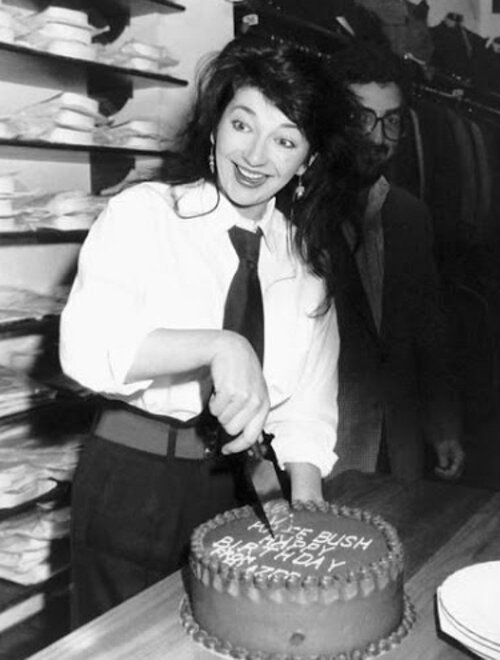
 IN THIS PHOTO: Kate Bush cuts her 30th birthday cake on 30th July, 1988 at Blazers Boutique, where she was raising money for AIDS victims on behalf of the Terrence Higgins Trust (celebrities appeared in shops at Covent Garden, London as shop assistants to sell T-shirts and raffles. The money generated from this, plus 5% of the shops' takings, were donated to the charity)/PHOTO CREDIT: Trinity Mirror/Mirrorpix/Alamy Stock Photo 

A Charitable Thirtieth Birthday with the Terrence Higgins Trust

___________

I sort of joked…

fff.jpg

recently that I would publish a trilogy of Kate Bush/charity-related articles - as she has been involved with a number of charities through her career. Although I have done a general feature on Kate Bush’s charity involvement before, I have been looking more closely at the years 1986-1988 and ways in which Bush was engaging with charity. I am not sure why this period was especially prolific in terms of her activity. Perhaps, between the release of Hounds of Love (1985) and The Sensual World (1989), she wanted to donate more of her time to worthy causes. The AIDS crisis of the 1980s was something that severely impacted the world. Not to make light but, on 30th July, 1988, Kate Bush became a shop assistant to help raise funds for the Terrence Higgins Trust. A brilliant charity still going today, I can only imagine how affected musicians were seeing the HIV/AIDS epidemic impact so many. Queen frontman Freddie Mercury was one high-profile musician who was affected – he died on 24th November, 1991 of bronchopneumonia (as a complication of AIDS). I shall keep this one brief. One of the most interesting and noble charity causes Kate Bush was involved in happened on her thirtieth birthday! The Kate Bush Encyclopaedia explains a bit more:

“Kate participated in a charity event July 30, 1988 called 'Shop Assistance' to benefit the Terrence Higgins trust to help people with HIV/AIDS. She helped out in a men's wear shop called Blazers in Covent Garden in London (UK), selling clothes and also signing autographs for fans. Other artists participating were Jeremy Irons, Boy George, Jayne Seymour, Jimi Sommerville, Lloyd Cole, Mandy Smith and Rick Astley”.

Although Bush has auctioned signed goods and done other charity things since 1988, it is fascinating that she gave so much time on an important day for her! Of course, she would have had time to mark her thirtieth birthday later that day. That said, she gave a lot of 30th July, 1988 to raise money for charity. That speaks volumes about her priorities! I do love that she was so selfless! She did get to cut some birthday cake whilst there, in addition to meeting a lot of her fans. Sometimes, you see artists called into charity things and they look quite awkward and out of place! Bush looked perfectly comfortable and happy being there. Whilst I love her because of the music, I have spent a few features zeroing in on a few very generous occasions when she put charity and others before herself. I can only imagine how exciting the Shop Assistance event must have been! Whilst it was launched to help people with HIV/AIDS – and raise money for the Terrence Higgins Trust -, the media were keen t get down to Covent Garden and report the news. Rather than it being an opportunity for musicians to raise their profile, it was them getting involved with a charity they wanted to help. As I said, the HIV/AIDS crisis of the 1980s was incredibly serious. Not many of us would spend a day as important as a thirtieth birthday helping others and not celebrating. It doesn’t surprise me that Kate Bush eschewed the festivities to meet fans and raise awareness for a very serious and worthy cause. Her incredible charitable nature is a facet that burns bright and remains strong…

ccc.jpg

 IN THIS PHOTO: Kate Bush in a still from the T.V. show, Rough Guide To London (The programme had a short report about the Shop Assistance charity event)

)TO this very day.

FEATURE: Inspired By… Part Twenty-Seven: Björk

FEATURE:


Inspired By…

ddd.jpg

PHOTO CREDIT: Hadi Karimi 

Part Twenty-Seven: Björk

___________

ALTHOUGH the amazing Björk…

 PHOTO CREDIT: Rex

is a singular artist who is very hard to compare with anyone else, I think there are a lot of artists who either cite her as important or have followed her. Definitely, when we think of those who have elements of Björk or embody some of her spirit, there is a long list! I will end with a playlist of some artists who are definitely influenced by her. Before then, as I do at this stage, I am dropping in some AllMusic biography.

“A visionary artist who effortlessly blends avant-garde and pop elements, Björk soon eclipsed the popularity of her former group the Sugarcubes when she launched her solo career after the group's demise in 1992. Instead of continuing the band's arty guitar rock pretensions, she immersed herself in dance and club culture, working with many of the biggest names in the genre, including Nellee Hooper, Underworld, and Tricky. Debut, her first solo effort (except for an Icelandic-only smash released when she was just 11 years old), not only established her new artistic direction, but it became an international hit, making her one of the most unlikely stars of the '90s. In the the decades that followed, she remained at the forefront of musical innovation with albums like 2004's vocal-based Medúlla and 2011's science-themed Biophilia.

Though the title of Debut implied that it was Björk's first-ever solo project, she had actually been a professional vocalist since she was a child. When she was in elementary school in Reykjavik, she studied classical piano and, eventually, her teachers submitted a tape of her singing Tina Charles' "I Love to Love" to Iceland's Radio One. After "I Love to Love" was aired, a record label called Falkkin offered Björk a record contract. At the age of 11, her eponymous first album was released; the record contained covers of several pop songs, including the Beatles' "Fool on the Hill," and boasted artwork from her mother and guitar work from her stepfather. Björk became a hit within Iceland and was not released in any other country.

Björk's musical tastes were changed by the punk revolution of the late '70s; in 1979, she formed a post-punk group called Exodus and, in the following year, she sang in Jam 80. In 1981, Björk and Exodus bassist Jakob Magnusson formed Tappi Tikarrass, which released an EP, Bitid Fast I Vitid, on Spor later that year; it was followed by the full-length Miranda in 1983. Following Tappi Tikarrass, she formed the goth-tinged post-punk group KUKL with Einar Orn Benediktsson. KUKL released two albums, The Eye (1984) and Holidays in Europe (1986), on Crass Records before the band metamorphosed into the Sugarcubes in the summer of 1986.

The Sugarcubes became one of the rare Icelandic bands to break out of their native country when their debut album, Life's Too Good, became a British and American hit in 1988. For the next four years, the group maintained a successful cult following in the U.K. and the U.S. while they were stars within Iceland. During 1990, Björk recorded a set of jazz standards and originals with an Icelandic bebop group called Trio Gudmundar Ingolfssonar. The album, Gling-Gló, was released only in Iceland. By 1992, tensions between Björk and Einar had grown substantially, which resulted in the band splitting apart.

Following the breakup of the group, Björk moved to London, where she began pursuing a dance-oriented solo career. The previous year, she had sung on 808 State's "Ooops," which sparked her interest in club and house music. Björk struck up a working relationship with Nellee Hooper, a producer who had formerly worked with Soul II Soul and Massive Attack. The first result of their partnership was "Human Behaviour," which was released in June of 1993. "Human Behaviour" became a Top 40 hit in the U.K., setting the stage for the surprising number three debut of the full-length album, Debut. Throughout 1993, Björk had hit U.K. singles -- including "Venus as a Boy," "Big Time Sensuality," and the non-LP "Play Dead," a collaboration with David Arnold taken from the film Young Americans -- as well as modern rock radio hits in the U.S., and in both countries she earned rave reviews. At the end of the year, NME magazine named Debut the album of the year, while she won International Female Solo Artist and Newcomer at the BRIT Awards; Debut went gold in the U.S. and platinum in the U.K.

During 1994, Björk was relatively quiet as she recorded her second album with Nellee Hooper, Tricky, 808 State's Graham Massey, and Howie B of Mo' Wax Records; she also released a remix EP, co-wrote Madonna's "Bedtime Stories," and performed on MTV Unplugged that same year. "Army of Me," the first single from Björk's forthcoming album, was released as a teaser single in the spring of 1995; it debuted at number ten in the U.K. and became a moderate alternative rock hit in the U.S. Post, her second album, was released in June of 1995 to positive reviews; it peaked at number two in the U.K. and number 32 in the U.S. Post matched its predecessor in terms of sales and praise, going gold in the U.S. and helping her earn her second BRIT Award for Best International Female Artist. Post yielded the British hit singles "Isobel" (number 23), "It's Oh So Quiet" (number four), and "Hyperballad" (number eight), yet her singles failed to make much headway on American radio or MTV. Late in 1996, Björk released Telegram, an album comprising radical remixes of the entire Post album, in the U.K.; Telegram was released in America in January 1997.

Homogenic, her most experimental studio effort to date, followed later that same year and spawned many remix releases in the next few years to follow. In the spring of 2000, she was named Best Actress by jurors at the Cannes Film Festival for her work in Lars Von Trier's Palme d'Or-winning Dancer in the Dark. Selmasongs, her score for the film, reunited Björk with her Homogenic collaborator Mark Bell and arrived in the fall of 2000, just in time for Dancer in the Dark's U.S. release. The full-length follow-up, Vespertine, was released one year later. She released a Greatest Hits collection and the Family Tree box set late in 2002. After performing a few dates in 2003, Björk geared up for a busy 2004, which included the release of her all-vocals and vocal samples-based album Medúlla and a performance of one of its songs, "Oceania," at the 2004 Summer Olympics in Athens, Greece.

The soundtrack to Drawing Restraint 9, a film by multimedia artist Matthew Barney, arrived in 2005 and also featured contributions from Will Oldham. Released in 2007, Volta returned to the more playful, percussive side of Björk's music and included collaborations with Timbaland, Toumani Diabaté, Antony Hegarty, and an all-female Icelandic choir. Her tour supporting the album was a lavish affair, as chronicled in the 2009 set Voltaic, which was released in sets ranging from a CD/DVD to limited multi-disc and vinyl editions.

While she was touring the world in support of Volta, Björk began work on her most ambitious project to date: Biophilia, an interactive exploration of humanity's relationships to sound and the universe that would also educate listeners/viewers about music theory and science. Initially envisioned as a musical house, then an IMAX film directed by Michel Gondry, Biophilia -- which took shape with the help of engineers, scientists, and video game designers -- was eventually released as a suite of apps for the iPad and iPhone. The album, which was also released on CD, arrived in October 2011. Bastards, a collection of Biophilia remixes, was released in Europe in late 2012 and in the U.S. in early 2013. Around that time, Björk launched a Kickstarter campaign to fund translating the Biophilia app for Android and Windows 8 platforms. Though the campaign was canceled after ten days, the app was translated to Android in July 2013. That month, she also appeared in When Björk Met Attenborough, a BBC Channel 4 documentary with Sir David Attenborough and scientist Oliver Sacks that related Biophilia to humanity's relationship with music.

In 2014, Björk contributed vocals to Death Grips' album Niggas on the Moon. She also continued the Biophilia project with a live concert film, Biophilia Live. Filmed at London's Alexandra Palace and featuring spectacular visuals, it was released theatrically and in DVD and Blu-ray sets that also included the live audio on CD. Late that year, it was announced that producers Arca and the Haxan Cloak collaborated on her upcoming album. Vulnicura, which traced the aftermath of Björk's relationship with Matthew Barney and harked back to the sounds of Vespertine and Homogenic, arrived in January 2015 after it was leaked ahead of its scheduled March release date. An acoustic version of the album, Vulnicura Strings, arrived at the end of 2015 and featured the viola organista, a keyboard-driven string instrument designed by Leonardo da Vinci. That year, Vulnicura Live, which featured Björk's favorite performances of the album's songs as well as some chosen from her other albums, was given a limited release; wider distribution followed in 2016. The following year, Björk once again teamed up with Arca for a follow-up to Vulnicura. The lighter but still complex Utopia, which featured Icelandic and Venezuelan birdsong, an all-female flute section, and lyrics inspired by science fiction and folklore, arrived in late 2017”.

To show how inspiring and important Björk is, below are a selection of songs from artists who I feel are either influenced by her or are seen as natural successors or similar artists – once again, AllMusic have been quite helpful in this sense. Here is a hearty salute to…

THE Icelandic icon.

FEATURE: On the Stage with David Gilmour: What Kate Bush Did For Amnesty International

FEATURE:


On the Stage with David Gilmour

IN THIS PHOTO: Kate Bush performing Running Up That Hill (A Deal with God) at The Secret Policeman's Third Ball in 1987 at the London Palladium

What Kate Bush Did For Amnesty International

___________

THIS is sort of…

a sister piece to the one I wrote regarding Bush’s involvement in the charity single, Let It Be. That was released in 1987 for Ferry Aid (Bush was among a number of artists who sang on The Beatles cover). On the unofficial 7” single, What Katie Did For Amnesty International, we hear Running Up That Hill (A Deal with God) and Let It Be. I was keen to look at Bush’s participation in The Secret Policeman’s Ball in 1987 - where she performed Running Up That Hill (A Deal with God) alongside David Gilmour. It was a star-jammed night raising money and awareness for Amnesty International and the work they do. Prior to coming to Bush’s involvement in 1987, here is some information as to The Secret Policeman’s Ball:

“The Secret Policeman's Ball is a series of benefit shows staged initially in the United Kingdom to raise funds for the human rights organisation Amnesty International. The shows started in 1976 featuring popular British comedians but later included leading musicians and actors. The Secret Policeman's Ball shows are credited by many prominent entertainers with having galvanised them to become involved with Amnesty and other social and political causes in succeeding years.

Co-founded by Monty Python member John Cleese, campaigner Peter Luff (Assistant Director Amnesty International 1974–1978), and entertainment industry executive Martin Lewis, there have been four distinct eras of the Amnesty benefit shows. The shows of the first era (1976–1981), featuring five members of Monty Python and newcomers such as Rowan Atkinson, yielded films, television specials, home-videos, and albums that have since been widely seen and heard internationally. The three subsequent eras (1987–1989, 1991–2001 and 2006 onwards) have primarily featured locally popular British performers – and spin-off products have been released mainly in the UK.

In March 2012, The Secret Policeman's Ball took place in the United States for the first time. The one-night show at New York's Radio City Music Hall on 4 March was part of Amnesty's 50th anniversary commemorations”.

I want to stay in 1987 because, as I said when discussing Ferry Aid, the couple of years following the release of Hounds of Love in 1985 was surprisingly busy! It would take Bush until 1989 to release The Sensual World…though she was keeping busy enough. Among the activities of 1986/1987 was a duet with Peter Gabriel on Don’t Give Up from his album, So (Gabriel also appeared at The Secret Policeman’s Third Ball performing Biko). On 4th, 5th and 6th April, 1986, Bush performed live for Comic Relief, singing Do Bears... ? This was a comedic duet with comedian Rowan Atkinson. She also performed a solo piano version of Breathing (from 1980’s Never for Ever). The performances were filmed for a special edition of the BBC programme Omnibus, which was broadcast on 25th April, 1986. I may write about that – complete a sort of ‘charity trilogy’! Bush was very busy regarding charity work in 1986 and 1987! For those who say that she disappeared/faded away between Hounds of Love and The Sensual World should consider the fact that she was pretty visible and out in the world! Kate was photographed cutting her 30th birthday (on 30th July, 1988) cake at Blazers Boutique where she was raising money for Aids. The Kate Bush Encyclopaedia provides details regarding Bush’s role in The Secret Policeman's Third Ball:

“The Secret Policeman's Ball is the name informally used for the long-running series of benefit shows staged initially in the United Kingdom to raise funds for the human rights organisation Amnesty International. The shows started in 1976 featuring popular British comedians but later included leading musicians and actors. The first two balls took place in 1976 ('A poke in the eye') and 1977 ('The Mermaid Frolics'). The name 'The Secret Policeman's Ball' was first used in 1979, then 'The Secret Policeman's Other Ball' followed in 1981.

Following the success of these shows, there was a substantial increase in the number of benefit shows and charity projects in the UK in the early to mid-1980s – for a wide variety of causes. Many of the shows were modelled on the format of the Secret Policeman's Ball shows. By 1982, Amnesty had lost the services of two key staff members, Peter Luff and Peter Walker, who had guided the first 4 benefit shows. Amnesty responded by taking a break from staging new benefit shows for six years. When it restarted the Secret Policeman's series in 1987 it scaled back from producing theatrical movies of its shows to making them into TV and home video specials.

The Secret Policeman's Third Ball took place at The London Palladium over four consecutive nights 26–29 March 1987. The show's format was retooled in an effort to take advantage of the growing number of rock musicians supporting Amnesty. Instead of it being primarily a comedy show with a few musical cameos, the event made a point of giving equal emphasis to comedy and music. The show's four nights were divided up into two nights of comedy and two nights of music.

Most of the comedic performers in the 1987 show were talents familiar primarily just to British audiences. This made the film of the show far less appealing to overseas audiences. Comedic performers included: Stephen Fry & Hugh Laurie, Mel Smith & Griff Rhys Jones, Dawn French & Jennifer Saunders, Ruby Wax, Hale and Pace, Lenny Henry, Rory Bremner, Robbie Coltrane, Ben Elton and the Spitting Image puppets.

The line-up of musicians included several who were already veterans of earlier Amnesty benefits in the UK and/or USA: Bob Geldof, Peter Gabriel, Jackson Browne and Lou Reed. Other performers included Mark Knopfler, Joan Armatrading, Chet Atkins, World Party and Duran Duran. Kate Bush appeared on stage together with David Gilmour to perform a live version of her hit single Running Up That Hill.

Two more editions of the Secret Policeman's Ball followed in 1988 and 1989. The phenomenon returned in 2006, 2008 and 2012”.

I wonder whether The Secret Policeman's Ball will return. It seems like there is an opportunity to raise funds for a charity like Amnesty International – at a time when human rights and liberties are being denied and destroyed in countries like Afghanistan. One of the highlights of Kate Bush’s Amnesty appearance was her performing Running Up That Hill (A Deal with God) alongside her mentor and friend, David Gilmour. A man that is credited with discovering her – he at least got her a major record deal and brought her music to the wider world -, the two performed one of Bush’s best song together about fifteen years or so since Bush and Gilmour came into each other’s world. Bush, a fan of Gilmour’s band, Pink Floyd, would have loved sharing the stage with him. Likewise, he would have been proud to play with Bush. Gilmour would go on to play guitar on Love and Anger and Rocket’s Tail on The Sensual World. I do love the fact that there is this whole charity side to Kate Bush that has run for some years (she made two Amnesty International appeals in 1990). Even though she has given her time, work and support to charities through the years, the fact that The Secret Policeman's Third Ball is so full of musical highlights means it is one that people will remember. Seeing Kate Bush smile and radiate from the stage shows the world…

WHAT it meant to her.

FEATURE: A Buyer’s Guide: Part Sixty-Nine: Mariah Carey

FEATURE:


A Buyer’s Guide

ccc.jpg

Part Sixty-Nine: Mariah Carey

___________

ONE of the most influential artists ever…

ddd.jpg

I have waited a while to include Mariah Carey in A Buyer’s Guide. I am rectifying that now. Before getting to her essential albums, I want to bring in AllMusic’s biography of a modern-day superstar:

“One of the best-selling female performers of all time, Mariah Carey rose to superstardom on the strength of her stunning five-octave voice. An elastic talent who has easily moved from glossy ballads to hip-hop-inspired dance-pop throughout her career, she earned early comparisons to Whitney Houston and Céline Dion, and did them both one better by co-writing almost all of her own material from the start. All four singles off her multi-platinum debut album, Mariah Carey (1990), topped the Billboard Hot 100, beginning with "Vision of Love," which also led to Grammy Awards for Best New Artist and Best Pop Vocal Performance, Female. Each one of her proper studio albums, including the diamond platinum releases Music Box (1993) and Daydream (1995), as well as the Grammy-winning The Emancipation of Mimi (2005), has peaked within the Top Five of the Billboard 200, promoted with smash-hit singles that either pushed or adapted to contemporary pop production trends with solid songwriting at the core. By the time she released her 15th album, Caution (2018), Carey was one of only six artists with two songs in the upper half of the Billboard Top 100's All-Time Hot 100 Songs (the record-breaking "One Sweet Day" and "We Belong Together"). Two years after that album, Carey celebrated the 30th anniversary of her debut with archival releases such as The Live Debut: 1990 and The Rarities.

Born in Huntington, New York, on March 27, 1970, Carey moved to New York City at the age of 17 -- just one day after graduating high school -- to pursue a music career. There she befriended keyboardist Ben Margulies, with whom she began writing songs. Her big break came as a backing vocalist on a studio session with dance-pop singer Brenda K. Starr, who handed Carey's demo tape to Columbia Records head Tommy Mottola at a party. According to legend, Mottola listened to the tape in his limo while driving home that evening, and was so immediately struck by Carey's talent that he doubled back to the party to track her down.

After signing to Columbia, Carey entered the studio to begin work on her 1990 self-titled debut LP. The heavily promoted album was a chart-topping smash, launching four number one singles: "Vision of Love," "Love Takes Time," "Someday," and "I Don't Wanna Cry." Overnight success and Grammy wins in the categories of Best New Artist and Best Pop Vocal Performance, Female (for "Vision of Love), made expectations high for the follow-up, 1991's Emotions. The album did not disappoint, as the title track reached number one -- a record fifth consecutive chart-topper -- while both "Can't Let Go" and "Make It Happen" landed in the Top Five. Carey's next release was 1992's MTV Unplugged EP, which generated a number one cover of the Jackson 5's "I'll Be There." Featured on the track was backup singer Trey Lorenz, whose appearance immediately helped him land a recording contract of his own.

In June 1993, Carey wed Mottola in a headline-grabbing ceremony. Months later, she released her third full-length effort, Music Box, which became her best-selling record to that point. Two more singles, "Dreamlover" and "Hero," reached the top spot on the Hot 100. After her first tour and a break, she resurfaced in 1994 with a holiday release titled Merry Christmas, scoring a seasonal smash with "All I Want for Christmas Is You." Released in 1995, Daydream reflected a new artistic maturity. The first single, "Fantasy," debuted at number one, making Carey the first female artist and just the second performer ever to accomplish the feat. The follow-up, "One Sweet Day" -- a collaboration with Boyz II Men -- repeated the trick, and remained lodged at the top of the Hot 100 for a record 16 weeks.

After separating from Mottola, Carey returned in 1997 with Butterfly, another staggering success and her most hip-hop-flavored recording to date. #1's -- a collection featuring her 13 previous chart-topping singles as well as "The Prince of Egypt (When You Believe)," a duet with Whitney Houston effectively pairing the two most successful female recording artists in pop history -- followed late the next year. With "Heartbreaker," the first single from her 1999 album, Rainbow, Carey became the first artist to top the Hot 100 in each year of a decade; the record also pushed her ahead of the Beatles as the artist with the most cumulative weeks spent atop that chart.

After signing an $80 million deal in 2001 with Virgin -- the biggest record contract ever -- she starred in her first film, Glitter, and made her label debut with its attendant soundtrack, which went platinum thanks to the single "Loverboy." Virgin and Carey parted ways early in 2002, with the label paying her $28 million. That spring, she found a new home with Island/Def Jam, where she set up her own label, MonarC Music. In December, she released her ninth album, Charmbracelet, her first proper studio album to go merely platinum rather than multi-platinum.

The Emancipation of Mimi, her most successful work in years, appeared in 2005. It climbed to multi-platinum status and earned Carey three Grammy Awards -- Best Contemporary R&B Album and, for the single "We Belong Together," Best Female R&B Vocal Performance and Best R&B Song -- thus restoring her status as a megastar. Two weeks before the release of her subsequent album, 2008's E=MC2, Carey scored her 18th number one hit with "Touch My Body," a feat that pushed her into second place (and past Elvis Presley) among all artists with the most chart-topping singles. That hit song, along with the late April news that she had married Nick Cannon, kept her in the spotlight that year.

Carey went back to work fairly quickly, and in 2009, Memoirs of an Imperfect Angel -- featuring collaborations with the-Dream, including the Top Ten hit "Obsessed" -- became her 12th studio album. The following year, Carey released her second Christmas album, Merry Christmas II You. She gave birth to twins in 2011, and within a year was performing again and judged the 12th season of American Idol. The Miguel collaboration "#Beautiful," the lead single to her next album, was released in 2013 and went platinum. Me. I Am Mariah: The Elusive Chanteuse, her first album for Def Jam, followed in 2014 and debuted at number three.

Between releases, Carey started a residency at The Colosseum at Caesars Palace in Las Vegas, which ran from January 2015 to July 2017 and showcased all 18 of her number one singles. She also made appearances on the small screen, directing a Hallmark Channel movie, A Christmas Melody, and guest starring on Empire. On the big screen, she lent her talents to 2017's animated The Lego Batman Movie and the hit comedy Girls Trip. After the conclusion of a summer co-headlining jaunt with Lionel Richie, she debuted a new Vegas residency, which commenced in July 2018.

Caution, an album featuring appearances from Slick Rick, Blood Orange, and Ty Dolla $ign, arrived five months later as her first release for Epic. A number five hit, the LP yielded the number seven adult contemporary single "With You," Carey's collaboration with DJ Mustard. Carey celebrated the 30th anniversary of her debut throughout 2020. She published her memoir, The Meaning of Mariah Carey, and issued a number of archival projects. Among these were digital reissues of her singles (including the remixes), The Live Debut: 1990 (a recording of a New York club performance), and The Rarities (previously unreleased material spanning her career). A streaming holiday program and soundtrack, Mariah Carey's Magical Christmas Special, premiered in December 2020 and found the singer performing with a variety of guests, including Ariana Grande, Tiffany Haddish, Jennifer Hudson, Jermaine Dupri, Snoop Dogg, and others. Included on the soundtrack was a re-recorded version of Carey's song "Oh Santa" featuring Grande and Hudson”.

To celebrate one of the greatest living artists, here are the essential four albums from Mariah Carey, an underrated gem, her latest studio album. I am also including a book about her that is worth reading. If you need some guidance regarding the best work from Mariah Carey, then hopefully the list below will…

HELP you out. 

 _____________

The Four Essential Albums


Emotions

Release Date: 17th September, 1991

Label: Columbia

Producers: Mariah Carey/Walter Afanasieff/David Cole/Robert Clivillés

Standout Tracks: Can't Let Go/Make It Happen/Till the End of Time

Buy: https://www.roughtrade.com/gb/mariah-carey/emotions

Stream: https://open.spotify.com/album/0SHpIbyBLUugMXsl3yNkUz?si=FJB3xTT3SwmGFHiJC97DDQ&dl_branch=1

Review:

“At the time of its release, Mariah Carey’s sophomore effort, Emotions, was considered a commercial disappointment, failing to reach the top of the charts and selling just half of what the singer’s blockbuster self-titled debut did. In his review of the album, Rolling Stone’s Rob Tannenbaum deemed Mariah’s singing “far more impressive than expressive,” a criticism ostensibly borne out by the album’s titular lead single, on which she proclaims that she’s been “feeling emotions.” Not to put too blunt a point on it, she then tells us, rather than shows us: “I feel good, I feel nice!”

Critics like Tannenbaum routinely griped about Mariah’s reliance on vocal acrobatics, which, they claimed, kept audiences at a remove from her actual songs. Like that of Whitney Houston, to whom she was often compared (and much to both women’s irritation), Mariah’s voice was indeed almost supernatural, a thing to marvel at from a distance. But the assertion that her music lacked expression, even at this early date in her career, is one that the songs themselves simply don’t bear out. The deliriously joyous “Emotions,” however broad its lyrics may seem, all but mandates a performance of the magnitude that Mariah delivers: Her object of desire has her feeling “intoxicated, flying high,” and though hers might be a literal vocal interpretation, it’s certainly an expressive one.

Mariah and her label, however, obviously got the very public memo, as the arguably gratuitous sustained whistle note at the end of “Can’t Let Go,” the album’s second single, was removed from the radio edit of the song, and her upper range was employed sparingly, and often only as background textures, throughout much of the remainder of the decade. Luckily, Emotions still exists as it was conceived, complete with Mariah’s unapologetic deployment of her powerful instrument, and free of the reproach of the same people who would, in just a few years’ time, lament its inevitable deterioration.

Beginning with a rumbling piano tremolo followed by what might be the lowest note Mariah has committed to tape, the bombastic “You’re So Cold” is a lesson in fabulous excess, a showcase for four of Mariah’s infamous five octaves. The first 60 seconds of the song make for a deceptive introduction, with the singer’s portentous, protracted opening invocation (“Lord only knows…why I love you so…”) giving way to a bouncy, horn-filled kiss-off to a cruel devil in disguise. Of course, whistled at a pitch where articulation is rendered secondary, the word “disguise” becomes as unintelligible as Mariah’s euphoric squeals throughout the title track.

There are, believe it or not, moments of subtlety and nuance on Emotions, the fact of which is perhaps key to understanding the frustrations some have regarding Mariah’s myriad vocal tics. “Can’t Let Go” is, in hindsight, one of her most understated hits, her downcast verses floating ephemerally atop the song’s pointillistic percussion, while the album’s penultimate track, “Till the End of Time,” finds Mariah taking her sweet time building from a barely audible whisper to a thundering belt over the span of five minutes.

Mariah’s albums hadn’t yet become venues for her karaoke-style covers of ‘80s power ballads, but Emotions was an early indicator of her penchant for musical quotation. Mimi’s fascination with appropriating hits from her youth manifested itself on “Can’t Let Go,” which swipes its opening keyboard riff from Keith Sweat’s “Make It Last Forever” (she would go on to more directly sample the 1987 R&B hit on a remix for 1999’s “Thank God I Found You”). More than on any other Mariah Carey album, though, disco is a clear influence here, thanks in part to her collaborations with Robert Clivillés and David Cole of C+C Music Factory. House music, the duo’s genre of choice, was still gloriously and inextricably bound to hip-hop in the early ‘90s, as both were built almost entirely on pastiche: “Emotions” is a shameless homage to “Best of My Love” (by none other than the Emotions), while “Make It Happen” makes a less overt nod to Alicia Myers’s 1981 single “I Want to Thank You.”

If Mariah’s struggle to locate her musical identity at this point in her career often resulted in her cribbing from the past, she was already exerting a sense of agency in her lyrics. Songs like the autographical “Make It Happen” and “The Wind,” the latter of which is the story of the death of a friend set to Russ Freeman’s instrumental jazz composition of the same name, hint at the inspirational anthems and confessional manifestos, respectively, that would come to be fixtures on Mariah’s future albums. “No proper shoes upon my feet/Sometimes I couldn’t even eat,” she sing-raps on “Make It Happen,” recounting her struggle from Long Island backup singer to multiplatinum superstar by the age of 20. Though her “struggle” ended before most people’s usually begin (“It just didn’t take that long for the girl with one shoe to acquire many,” Rich Juzwiak quipped in our 2005 retrospective of Mariah’s work), her performance is galvanizing and soulful.

Soul is a quality that’s impossible to quantify; either someone has it or they don’t. Mariah’s critics claimed it was an essential ingredient that her songs lacked. Her mixed racial heritage was widely publicized, and was even treated as a selling point, but her music was carefully calibrated for both pop (read: white) and R&B audiences. Songs like “And You Don’t Remember” draw on gospel and Motown, but render those influences in the most palatable way possible. On the other hand, “If It’s Over,” a collaboration with Carole King, doesn’t water down its R&B bona fides with synthesized strings and bass, instead bolstering Mariah’s vocals with brass, Hammond organ, gospel harmonies—an unbridled throwback to the pop-soul hits of the ‘60s and ‘70s.

From the clothes she wore to the songs she performed, Mariah and her music were marketed to be nonthreatening, and appeal to the widest possible audience. Though it would be a few more years before she would comment on the subject explicitly in her songs, it’s hard not to see the battles she would go on to fight to earn both her professional and personal freedom telegraphed in the album’s cover art. Her face is overexposed, but her body is bathed in shadow, creating the (likely unintentional, but nonetheless striking) impression that her skin is much darker than it is. Likewise, Mariah’s head is thrown back in ecstasy, her mouth open, while at the same time her hands can be seen demurely clutching her knees together, suggesting a struggle between chastity and sexual liberation, confinement and freedom.

Mariah wouldn’t completely liberate herself from the fetters of everything she believed was holding her back until 1997’s Butterfly, and has since strained to maintain an equilibrium in terms of both her music and image, often slipping into caricature. But on Emotions, at least musically, she managed to strike a balance of soul and pop that’s not just technically impressive, but filled with undeniable, honest-to-god feeling” – SLANT

Choice Cut: Emotions

Music Box

Release Date: 31st August, 1993

Label: Columbia

Producers: Mariah Carey/Dave Hall/Walter Afanasieff/David Cole/Robert Clivillés/Babyface/Daryl Simmons

Standout Tracks: Dreamlover/Anytime You Need a Friend/Never Forget You

Buy: https://www.roughtrade.com/gb/mariah-carey/music-box

Stream: https://open.spotify.com/album/2NKxb7pk04CuZab5udkGUl?si=X360fzDQRte4Q5_XJ4R6Hw&dl_branch=1

Review:

“Mariah Carey has been stung by critical charges that she's all vocal bombast and no subtlety, soul, or shading. Her solution was to make an album in which her celebrated octave-leaping voice would be downplayed and she could demonstrate her ability to sing softly and coolly. Well, she was partly successful; she trimmed the volume on Music Box. Unfortunately, she also cut the energy level; Carey sounds detached on several selections. She scored a couple of huge hits, "Hero" and "Dreamlover," where she did inject some personality and intensity into the leads. Most other times, Carey blended into the background and let the tracks guide her, instead of pushing and exploding through them. It was wise for Carey to display other elements of her approach, but sometimes excessive spirit is preferable to an absence of passion” – AllMusic

Choice Cut: Hero

Daydream

Release Date: 3rd October, 1995

Label: Columbia  

Producers: Mariah Carey/Walter Afanasieff/Dave Hall/Jermaine Dupri/Manuel Seal/David Morales

Standout Tracks: One Sweet Day (with Boyz II Men)/Always Be My Baby/Forever

Buy: https://www.roughtrade.com/gb/mariah-carey/daydream

Stream: https://open.spotify.com/album/1ibYM4abQtSVQFQWvDSo4J?si=jvytB6VbTyyKKSMtpcwmOg&dl_branch=1

Review:

“Daydream is still interesting when Carey isn’t breaking new stylistic ground. She may have been showing off a newfound versatility on “Long Ago” and “Melt Away,” but she was also still near the peak of her powers as an athletic vocalist, and she put that athleticism to work powering daring arrangements and stunning modulations. “One Sweet Day” may be built around a killer hook, but that’s not what sticks with you on repeated listens—it’s the song’s ecstatic second half, in which Carey and Boyz II Men use that sturdy chorus as the foundation for gymnastic riffs and clusters of harmony. It’s not just showmanship, it’s an expression of communal grief that transcends lyrics and musical structure. (Carey wanted to write a eulogy after the producer David Cole, a collaborator and close friend, passed away in early 1995.) Their performance transforms an elegy into something joyous, a celebration of life and whatever might unite us after it. And while no other song on Daydream can match the emotive power of “One Sweet Day,” Mariah’s performances are uniformly strong no matter the context. “I Am Free” is a gospel workout, complete with an organ and the support of a mini-Mariah choir; dewy weeper “When I Saw You” is rescued by her melismatic belting; Ariana Grande would eat her ponytail for a ’50s waltz as potent as “Forever.”

The only Daydream ballad that’s an unequivocal failure is Carey’s cover of “Open Arms,” and that’s in part because it lacked Mariah’s pen. Carey came into her own as a writer on Daydream: she showed off her fabled vocabulary without leaning on the self-aware quirk of her later work, and almost every song is bolstered by at least one stunning piece of imagery. “When I Saw You” opens with a description of a lover that takes on cosmic significance: “Soft, heavenly eyes gazed into me/Transcending space and time.” (She touches on the power of “dawn’s ribbon of light” in the second verse.) The bridge of “Melt Away” opens with a “cloud of reverie” and ends with Mariah “rhapsodizing.” And she describes the love she feels throughout “Underneath the Stars” as “so heady and sublime,” a phrase that also happens to describe Carey’s lyrical stylings.

Daydream wasn’t just transitional in a musical sense. We know now that it was the beginning of the end for Mariah’s innocence, a moment that has some gravity given we’re talking about a star who likes to refer to herself as “eternally 12.” Her marriage to former Sony Music chief Tommy Mottola was crumbling, and she would look back on their relationship later and reflect on how it was governed by abuse and control. She didn’t know it then, but her absolute commercial zenith would soon be in the rear-view mirror. The instability of Rainbow and the full-blown breakdown of Glitter weren’t far away. Only closer “Looking In” hints at the darkness looming on the horizon: “She smiles through a thousand tears/And harbors adolescent fears/She dreams of all that she can never be.” It’s a startling final statement, but you still leave Daydream with effervescence in mind—sweet, stirring, and dominant, a tour de force from one of the greats at the top of her game” – Pitchfork

Choice Cut: Fantasy

Butterfly

Release Date: 16th September, 1997

Label: Columbia

Producers: Mariah Carey/Walter Afanasieff/Sean ‘Puffy’ Combs/The Ummah/Stevie J/Trackmasters/Cory Rooney/David Morales

Standout Tracks: Honey/My All/Close My Eyes

Buy: https://www.roughtrade.com/gb/mariah-carey/butterfly

Stream: https://open.spotify.com/album/7aDBFWp72Pz4NZEtVBANi9?si=jRhbKdl_TzOfFliMS4MG5g&dl_branch=1

Review:

“Honey” and “Butterfly” together exemplify the abrupt gear shifting that appreciating Mariah the artist requires. Butterfly’s pop brilliance doesn’t always come easy, where detecting it depends on the audience’s newfound ability to apply Carey’s pop life to her pop music (the divorce shaded her in and put some real-life behind her on-record misery). Like very good camp, Butterfly requires work. Russ Meyer knew and Paul Verhoeven sometimes remembers that the most enthralling camp is that which doesn’t always announce itself as such (ahem, John Waters), but which alternately winks knowingly and blinks blindly at the consumers, awarding them the decision of what’s good, what’s bad, and what’s so-bad-it’s-good. Though Butterfly does a lot more blinking, there’s a similar mechanism at work that’s actually inherent to all of Carey’s music, since all unbearable sappiness, to varying degrees, counteracts with her extremely listenable, extraordinary voice. Butterfly heightens the effect as Carey swings wildly between emotional extremes (cool and, to use one of a few 10-cent words Carey drops throughout the album, fervid), between mushy subject matter and specificity. Carey’s means may not be as astute as those of Meyer and Verhoeven, but her end has the head-spinning effect that the aforementioned auteurs ideally achieve: entertainment by any means necessary.

Butterfly is too eager to please for it to merely settle into guilty pleasuredom. Yes, it’s incredibly slow and the flutter turns to a crawl during the album’s final third, which becomes audacious with a how-slow-can-you-go cover of Prince’s “The Beautiful Ones” with Dru Hill. But a moderate pace more often suits Carey, who’s less prone to running (thematically and vocally) to the bigger picture during Butterfly’s wonderful middle. Little more than yearning, kissing, and remembering happens during the course of “The Roof,” a rough-enough R&B revision of Mobb Deep’s “The Shook Ones.” But lyrically, Mariah the writer is vivid, sometimes shockingly clever (rhyming “liberated” with “Moet” is a stroke of genius).

Butterfly peaks exactly where it should, with its sixth track, “Breakdown.” It’s the song of Carey’s career, where the lyrical strokes are as broad and obvious as they are naked. The song’s central question, “So what do you do when/Somebody you’re so devoted to/Suddenly just stops loving you?” is so naïve and bare, it’s almost as devastating as a child asking hard questions about death. The song finds Carey paired with half of Bone Thugs-N-Harmony, Krayzie Bone and Wish Bone. Mariah the chanter flawlessly adapts to their singsong style, largely boxing her multi-octave range into a sly, hypnotic melody so that when she really wails at the end, you really feel it. As with “The Roof,” Carey lunges toward musical maturity by embracing, not shunning hip-hop. This is the height of her elegance—and maybe hip-hop-soul’s too.

The comedown after “Breakdown,” and the last in the album’s mid-game rally, is “Babydoll,” Carey’s sole stab at Timbaland-styled skitter balladry to date. No longer able to seem nonchalant about the breakup that surfaces repeatedly throughout the album, Carey wants to be smothered once again: “Wrap me up nice and tight/Love me all through the night.” And here Mariah the confessor explicitly reveals what post-“Honey” Butterfly lacks: “I wanna get intimate/But you’re not within my reach.”

A quiet storm album without the fucking, Butterfly is, above everything, idiosyncratic. Here, like never before, we’re asked to take Carey for what she is: unabashedly chaste but ultra femme, unrelentingly precious but undeniably vulnerable. It’s this perceived waffling that makes Carey such a divisive pop artist; certainly the girliness doesn’t help either, since femmephobia is perhaps the status quo’s least-questioned fear. And it’s Mariah the inconsistent that makes Butterfly so ultimately fascinating and endearing.

Viewing her character from a completely different angle on the album’s weepy last track, “Outside,” Carey observes that she’s “always somewhat out of place everywhere/Ambiguous/Without a sense of belonging to touch/Somewhere halfway/Feeling there’s no one completely the same.” Whether she’s talking about her mixed-race heritage, her career, or both, it’s the old Carey one-two, a seemingly unhappy ending fueled by the know-thyself philosophy that otherwise makes Butterfly joyous. As Carey’s most bizarre moment of self-celebration, it’s also a triumph, since it could only make sense coming from Mariah the person” – SLANT

Choice Cut: Butterfly

The Underrated Gem


The Emancipation of Mimi

Release Date: 12th April, 2005

Label: Island Def Jam

Producers: Mariah Carey/Jermaine Dupri/Manuel Seal, Jr./Bryan-Michael Cox/Swizz Beatz/LRoc/James ‘Big Jim’ Wright/The Neptunes/Kanye West/James Poyser/Rodney ‘Darkchild’ Jerkins

Standout Tracks: It’s Like That/Shake It Off/Mine Again

Buy: https://www.amazon.co.uk/Emancipation-Mimi-VINYL-Mariah-Carey/dp/B089M54T59

Stream: https://open.spotify.com/album/1GHogjt7IfGPiaap9zSsON?si=r6zYSlYuSGawM5IhEqO8Qg&dl_branch=1

Review:

“If such a stacking of the deck seems predictable, it gets the job done: Every song on Emancipation showcases Carey’s undeniable vocal strengths. Heavy on ballads and midtempo love songs, it always keeps at least one foot (more often both feet) planted firmly in comforting old-school diva soul. This is an R&B record for folks who think there hasn’t been any good R&B since Minnie Riperton died.

Even the rappers are on their best behavior, with Snoop playing an amiable around-the-way lothario on ”Say Somethin”’ and Twista motormouthing his way through ”One and Only” (”Twista and Mariah/Together like a grip on a tire,” he raps, and it must be admitted that Carey does a fair job of trying to keep up with him).

”It’s Like That” isn’t the old Run-DMC song, but it’s almost as cool, with Carey fantasizing about easing into a nightclub buzzed on Bacardi. ”No stress, no fights,” she sings, making it sound like a trip to a vacation spa. ”To the Floor” is another hooky dance-floor anthem that ought to get a party started (although it does sound like Nelly phoned his part in).

But the crux of the album is to be found in its heart-on-my-sleeve numbers. Perhaps the best of these is ”Fly Like a Bird,” a veritable prayer that explicitly references God. ”Sometimes this life can be so cold/I pray you’ll come and carry me home,” Carey sings melismatically. ”Carry me higher, higher, higher.” It’s so moving that we’ll resist the temptation to be crass and interpret the song as a plea for heightened record sales. Help from above is always welcome, but Emancipation sounds like it just might do fine all on its own” – Entertainment Weekly

Choice Cut: We Belong Together

The Latest Album

Caution

Release Date: 16th November, 2018

Label: Epic

Producers: Fred Ball/Mariah Carey/Dev Hynes/Angel Lopez/Lido/Daniel Moore II/Mustard/Nineteen85/No I.D./Luca Polizzi/Poo Bear/Skrillex/SLMN/The Stereotypes/Shea Taylor/Timbaland/WondaGurl

Standout Tracks: Caution/A No No/The Distance (ft. Ty Dolla Sign)

Buy: https://store.hmv.com/store/music/vinyl/caution?gclid=EAIaIQobChMI_6PAw6S68gIVkYTICh1FDAkrEAQYASABEgKokfD_BwE&gclsrc=aw.ds

Stream: https://open.spotify.com/album/64zK6tmksJw9gNZR0L4DVx?si=xgoo1S0mRDaRM_Z7mWJ31Q&dl_branch=1

Review:

“It’s mid-November, therefore, it’s almost expected that the only Mariah Carey track you’ll be hearing is ‘All I Want For Christmas Is You’, albeit prematurely. This year is different, however, due to the release of Carey’s 15th studio album ‘Caution’.

Mariah Carey is an icon. A legend even, and you don’t need to be part of the Lambily to acknowledge that. With an unknown birth year (either 1969 or 1970, depending on who you ask) and a penchant for some quite specific demands, from dog chauffeurs to white roses, Carey is enigmatic to say the least.

After a few viral live performances and personal matters that became tabloid fodder, it would be easy to write Carey off, however, ‘Caution’ puts her back in the driving seat, armed with that signature sultry Mariah sound and a ‘fuck you’ attitude.

This icon does things on her terms, as always, perhaps most evident on singles, ‘A No No’ and ‘GTFO’, both effectively calls to action for people romantically involved with trashy men. With the latter coupling perhaps one of the catchiest refrains of 2018 with cutting lyrics ("You took my love for granted/You left me lost and disenchanted/Bulldoze my heart as if you planned it/My prince was so unjustly handsome..."), Carey aptly taps into an experience that is unfortunately all too common for people in toxic relationships.

With tracks produced by Timbaland, Skrillex and DJ Mustard, Carey duly pays homage to the sounds prevalent at different stages of her career whilst remaining fresh and contemporary. Featuring guest vocals from serial featured artist Ty Dolla $ign, as well as Slick Rick and Blood Orange, a partnership that sounds odd in theory but works, this could be looked at as a new chapter for Mariah Carey.

With a critically acclaimed Las Vegas residency and a number of Christmas shows coming up, it’s safe to say that she’s back on top form” – CLASH

Choice Cut: With You

The Mariah Carey Book


The Meaning of Mariah Carey

Author: Mariah Carey (with Michaela Angela Davis)

Publication Date: 29th September, 2020

Publisher: Pan Macmillan

Synopsis:

“The pop megastar’s remarkable life in her own candid, searchingly honest words, The Meaning of Mariah Carey soars from troubled childhood to international fame.

It took me a lifetime to have the courage and the clarity to write my memoir. I want to tell the story of the moments - the ups and downs, the triumphs and traumas, the debacles and the dreams, that contributed to the person I am today. Though there have been countless stories about me throughout my career and very public personal life, it’s been impossible to communicate the complexities and depths of my experience in any single magazine article or a ten-minute television interview. And even then, my words were filtered through someone else’s lens, largely satisfying someone else’s assignment to define me.

This book is composed of my memories, my mishaps, my struggles, my survival and my songs. Unfiltered. I went deep into my childhood and gave the scared little girl inside of me a big voice. I let the abandoned and ambitious adolescent have her say, and the betrayed and triumphant woman I became tell her side.

Writing this memoir was incredibly hard, humbling and healing. My sincere hope is that you are moved to a new understanding, not only about me, but also about the resilience of the human spirit” – Waterstones

Order: https://www.waterstones.com/book/the-meaning-of-mariah-carey/mariah-carey/9781529038958

FEATURE: Modern Heroines: Part Sixty-Four: Camila Cabello

FEATURE:


Modern Heroines

sss.jpg

Part Sixty-Four: Camila Cabello

___________

ON this outing…

sss.jpg

 PHOTO CREDIT: Carolyn Cole/Los Angeles Times

I wanted to spend some time featuring Camila Cabello. I am including her in Modern Heroines, as I feel she is one of the most inspiring women in music right now. Her third album, Familia, is out soon. I will come to that soon. Born in 1997, Cabello is a Cuban-born American artist. She rose to prominence as a member of the girl group Fifth Harmony, formed on The X Factor USA in 2012. I feel her solo work is more prominent and impressive. Her 2018 debut album, Camila, was released to great acclaim. She followed that with Romance in 2019. I will bring in a review for that album before moving on to some interviews. I am looking forward to the release of Familia. Romance was a more expressive and expensive album compared with Camila. This is what AllMusic wrote in their review:

“Is there a name for the opposite of a break-up album? Because that's what Camila Cabello's sophomore effort Romance feels like: a record as bursting with ecstatic emotion and erotic desire as the exuberant delirium of having just fallen in love. It's a palpable vibe she put on display during her blush-inducing performance of the single "Señorita" with her duet partner (and rumored boyfriend) Shawn Mendes at the 2019 American Music Awards. The performance ended with Cabello and Mendes teasing a kiss, a bold move that left the audience excited for what the rest of Romance would hold. What Cabello does reveal on Romance is an artist continuing to refine her distinctive pop persona as she happens to be deep in the sway of love.

 Working with a respectable cadre of songwriters and producers including Andrew Watt, Finneas O'Connell, Justin Tranter, and others, Cabello digs deeper into her Cuban heritage with songs like the aforementioned "Señorita," the horn-accented "Liar," and the yearning "Used to This," that display her growing sense of maturity, balancing pop, reggae, and R&B flourishes with even more Latin embellishments. If 2018's Camila was about striking out on her own after leaving her former group Fifth Harmony, then Romance is about Cabello defining herself in the pop landscape and setting herself apart from contemporaries like Ariana Grande, Dua Lipa, and Taylor Swift. There is one break-up song on the album in "Should've Said It," a defiantly steamy anthem in which Cabello reclaims her independence from a former flame against the backdrop of a Santana-esque guitar hook. She strikes an equally swaggering, rock-inflected stance elsewhere, leaning into her throaty, scritch-scratch vocals on "Shameless" and showcasing her knack for soaring falsetto balladry on "Living Proof." Along with catchy hooks, what makes Romance particularly compelling is Cabello's candor and willingness to share her experiences and emotions in striking detail. On "Easy" she sings, "I never like my crooked teeth/You tell me they're your favorite thing/Anything else?/The stretch marks all around my thighs/Kiss 'em 'till I change my mind about everything else." If Romance is an album about Cabello feeling loved and seen by someone else, it's just as much about her seeing and understanding herself as an artist”.

I want to move on to an NME. Promoting Romance, Cabelllo discussed the changes on her second album. She also discussed what it was like being seen as a role model:

“At 22, the Cuban-American singer-songwriter has already put in seven years of service to pop music: in 2012, she auditioned for the short-lived American incarnation of The X Factor as a solo artist, but ended up being shoe-horned into a girl-group called Fifth Harmony. They had some absolute bangers, but never gelled as convincingly as their UK contemporaries Little Mix. Since going solo four years later, Cabello has shown herself to be a smart and playful operator – after some pop fans mocked her and Mendes for failing to kiss “properly” during their performance at this year’s VMAs, they posted an – ahem – tongue-in-cheek Instagram video in which they demonstrated how they “really kiss”.

The 13-track ‘Romance’ only has two featured artists: North Carolina rapper DaBaby cameos on ‘My Oh My’ and Mendes obviously shares vocal duties on ‘Señorita’. Cabello says the latter, which spent six weeks at Number One this summer, “is totally different” from much of the album because it “felt like it came about as a one-off”. At the same time, it had to make ‘Romance’’s final cut because it’s “become part of the story now”.

She doesn’t believe in collaborations for the sake of it, which is pretty refreshing at a time when the charts are packed with team-ups that seem designed to satisfy a Spotify algorithm. “I think you just know on a song-by-song basis,” Cabello says matter-of-factly. “Either a song just screams for somebody [to feature on it], or it doesn’t.

I suggest that the enormous success of ‘Señorita’ must come as kind of a relief. After all, her 2018 debut ‘Camila’ spawned ‘Havana’, which became Spotify’s most-streamed song of all time from a female artist. It confirmed Cabello as a legitimate solo star after her stint in Fifth Harmony, which ended when she quit the group in December 2016, around 18 months before the remaining band members decided to go on hiatus. Now Cabello also has ‘Señorita’ in her arsenal, no one can claim ‘Havana’ was just a one-off.

She also wanted to make ‘Romance’ more bombastic than ‘Camila’, which makes sense when you consider she’ll be touring the UK’s most cavernous arenas – including London’s 20,000-capacity O2 – next summer. “One of the things I was really conscious of when making this album was my live show,” she explains. “I wanted the songs to sonically fill up the room better because on my first album, I had a lot of songs that were quieter. So with this one, I wanted songs that worked really well for live performances.”

She says different tracks on the album have “different kinds of intensity”, which is completely accurate – the ska-flecked single ‘Liar’ even features a loping sample from Ace of Base‘s Eurodance banger ‘All That She Wants’. “But they all have this certain vibe, which is just how I am, which is very dramatic,” Cabello adds. “Because I am very dramatic!”

She’s also happy to be perceived as a role model – something many of us would baulk at, especially at the age of 22. “I feel like I am [one], and honestly, I want to be,” Cabello says earnestly. “I don’t really shy away from that term, and I think it’s because I have a little sister who’s 12. So I’m like, always thinking ‘I hope I’m making her proud and talking about the right things’. But I think it’s also very my personality, too. Whatever my values are, I hold onto them really strongly”.

dfd.jpg

 PHOTO CREDIT: Christine Hahn for Wonderland.

Sticking with 2019, there is a great interview from Wonderland., where we discover more about Cabello’s family, in addition to what Romance represents as a step forward:

“She’s also scaled back her use of social media, and started using her voice to speak out about the issues that mean the most to her, whether that be coming to the defence of her friend and former tour mate Taylor Swift after she lost the rights to her recordings, or sharing her family’s immigration story in the wake of President Trump’s proposed anti-immigration laws. “When it comes to those issues, I share my story because I feel like it humanises a lot of the political stuff,” she says. “Looking at it in black and white, you just see these big, vague terms, but when you see a person telling their story, you connect with the fact that they’re a human being just trying to take care of their kids… I think it’s easier to hate when you’re seeing it from far away.”

Cabello also credits her tight knit family — and specifically, her younger sister Sofia — with keeping her grounded and mindful. When asked if she thinks of herself as a role model, she’s quick to point out that she really just wants to set a good example for her only sibling. “I remember being [Sofia’s age] and how much Taylor [Swift] meant to me,” she says. “I definitely don’t feel like I have to super alter my personality to feel like I’m a good example for younger girls, but at the same time, I am conscious of it. I haven’t sworn in any of my songs because of my sister.”

Most importantly, though, Cabello is looking at this next phase as an opportunity to really get “in her feelings” and create songs that speak to all the many sides of Camila, from the teenager singing “Defying Gravity” at the top of her lungs in her bedroom to the self-possessed young woman she’s become. “There was this whole manifesto for the album and how I wanted it to make people feel. There were moods and tones and what I envisioned for it musically, and I read before every session to every producer,” she says. “But I feel like there’s never a neat little box that music can fit into. Once you’re done, it never turns out exactly the way you were thinking it would”.

Taking things up to date. Cabello was interviewed by Bustle earlier this month. Among other things, she talked about mental-health and how she responded to body shaming online:

“These days, Cabello has a new mantra: “Being at war with your body is so last season.” After photos surfaced of a day she spent on the beach with Mendes, Cabello was subject to a round of rampant body shaming. Though she doesn’t typically read the tabloids, Cabello accidentally stumbled upon the backlash while clicking around on social media. “‘This hurts so bad,’” she remembers thinking. “The whole day I felt insecure. I felt like it was changing how I was thinking about food and eating... really messing me up.” Another body shaming later, she decided to address the hate head-on in a now-viral TikTok. “I actually felt so liberated when I posted that. After that, I went to the airport and so many women were coming up to me like, ‘I saw that TikTok and it resonated with me so much,’” she says. “I actually feel my body insecurities went down after I posted that because I was like, ‘No matter what pictures come out or what people say, I’m now controlling the narrative.’”

Therapy has gotten her to a place where she’s realized, “You can work out a few hours a day and never eat carbs and whatever, but that’s just not a balanced life. That’s not what I want… I can’t change to fit that mold.” A lover of eclectic ensembles, Cabello also refuses to dress for her critics: “I’m going to wear whatever, and if there’s paparazzi around, that sucks, but I’m not going to completely reroute who I am for that.”

ddass.jpg

PHOTO CREDIT: Bustle 

It’s become the norm for celebrities to “open up” about their mental health, and like many of her peers, Cabello often talks in the therapy-speak of the moment, pointing fans to resources for handling childhood trauma and anxiety, exhorting them to “do the work.” But unlike other outspoken pop stars, Cabello doesn’t share the details of her own traumatic experiences, though she references them in passing. Instead, she says that she experienced “toxic stress for years” that impacted her mental health later on. “OCD and anxiety was really hard for me,” she explains. “So many times, I was like, ‘There must be something wrong with me. I must be inadequate in some way, because just functioning is hard for me right now.’”

For Cabello, 2020 ended up offering a respite. Instead of hunkering down at home the whole time, she spent months in the village of Iver Heath, England, filming a jukebox musical retelling of Cinderella. On Amazon next month, she stars as the titular character who the internet has been quick to deem the “Girlboss Cinderella.” In this iteration, she’s a fashion designer with her own “Dresses by Ella” label. She has Meghan Markle-like thoughts on the monarchy. (“I don’t want a life stuck waving from a royal box,” she declares in the trailer.) When her “Fab G” shows up — a modern reimagining of the “fairy godmother” played by none other than Billy Porter, for whom the part was written — he outfits her in a sheEO-worthy pantsuit for the ball. (“This is… different,” she says, clearly disappointed. Swapping out his inspired creation for a more traditional gown, Porter snaps, “You said you wanted to be a businesswoman.”)”.

I want to end with this article. Cabello, as we read, once more addressed recent body shaming. Also, she reveals a bit more as to what her upcoming album, Familia, might offer:  

“Camila has already confided that her next album will be called Familia and it will see the light very soon. The artist has assured on several occasions that she has been able to work a lot during the confinements derived from the pandemic. The result of this time is Don't go yet, a song that is shaping up to be Familia's first single and that opens, without a doubt, a new stage in Camila's career. One was introspective, of looking back, of not losing sight of the roots.

"There are other songs on the album that are only in Spanish and that have a completely different sound. Who I am as an artist and as a person is something that is always changing," the artist revealed. But above all there is the concept of Family in the broadest sense of the term. "I think that in this society where everything is focused on the individual, and the success of the individual, you experience more happiness when you are with other people; that is the message of the album ."

Camila continues to work and finalize the details of her new album, but she has already told us in advance that: "I would love to collaborate with Rosalía , I love it, I'm a super fan of hers. I send her DMs from time to time and so does she. She does. She knows that I adore and support her very much."

Self-acceptance and 'body positive'

In recent days, Camila's "pro real bodies" message went viral on social media and was widely applauded by women around the world. "I was running around the park thinking about my own things, trying to keep fit, stay healthy. And I am wearing a top that shows my belly button. And I was not putting my belly in because I was running and existing as a normal person who does not he sticks in the gut all the time. And I thought 'Wow' but then I reminded myself that being at war with your own body is out of date. "

I have gained weight during the pandemic. I love eating, cooking and all that, I had a bigger belly. I was running in the park, I saw a paparazzi and I said: oh, now those photos are going to be on the internet. And immediately I hear this voice in my head of insecurity. But then I thought: this is not my voice, but the voice of society, "says Camila Cabello." It is very toxic to think that women do not have wrinkles or cellulite. People have to get used to seeing real bodies".

I will end it there. Camila Cabello is a hugely inspiring artist who has grown as a performer and songwriter. Many people will be looking ahead to Familia. She is an amazing talent; someone whose messages of family, protecting your mental health and being proud of your body has, no doubt, given strength and support to many of her fans. At only twenty-four, we have an artist who is pretty much starting out. I know that there will be many more albums and career highlights. Cabello is someone who will become this superstar who moulds and inspires waves of other artists. There is no telling…

HOW far she can go.

FEATURE: Second Spin: The Veronicas - The Secret Life of...

FEATURE:


Second Spin

rr.jpg

 The Veronicas - The Secret Life of...

___________

ONE of the more underrated duos…

ww.jpg

in music are The Veronicas. The Queensland duo of sisters of Lisa and Jessica Origliasso, they released two albums this year: Godzilla and Human. Human is their fifth studio album. Whilst most of their albums have received large praise and acclaim, I feel the debut album, The Secret Life of..., is one that does not get too much attention. Released in 2005, it is a great album that introduced the world to the incredible duo. Songs like 4ever and Everything I’m Not are big songs that open the album. Maybe the controversy around ‘Dr. Luke’ (Lukasz Gottwald) in the intervening years has slightly tarnished perceptions of The Secret Life of... (he is one of the producers listed) To me, there is very little to fault about the album. Though some gave it a really positive review, there were a few that were more mixed. I have not heard many songs from The Secret Life of... played on the radio in a while. It is an album that we should revisit and cast in a fresh light. If you are not familiar with The Veronicas, I would advise that you start with their 2005 debut. It is a really solid album! Despite the fact there are a fair few producers in the mix, it is the performances of the Origliasso sisters that makes The Secret Life of... pop, shine and remain in the memory. Before wrapping up, there are a couple of contrasting reviews that I want to highlight.

This 2006 review from SLANT is a little mixed:

“From the opening notes of "4Ever," the snarling, riot grrl single that opens The Secret Life of the Veronicas, the Aussie exports tousle your hair, grin knowingly, and slam you against the wall. It's all guilty, trashy fun, but there's a small problem. Nothing on the Veronicas's debut breaks any ground that hasn't already been thoroughly plowed by more than one American artist—Avril Lavigne springs most readily to mind, but there are any number of equally acceptable answers. I'm not sure about you, but I've had about all I can take of precocious sexpots ripping off the Runaways—bratty pre-teens who master a few chords, swipe a few pages from their diaries, frame it all in a Lolita-lite package and watch the millions roll in. A thousand critical curses then upon twin sisters Jess and Lisa Origliasso for making these 12 cuts (11 originals and one cover, Tracy Bonham's "Mother Mother") so damned slick and irresistible. Such is the curse of professional chick-pop. There's a punky sassiness to most of the album (which features co-writing credits from Our Lady Peace's Raine Maida, Chantal Kreviazuk, pop-music anti-Christ Max Martin and Toby Gad), but, by and large, the Origliasso siblings are about as threatening as Jennifer Love Hewitt; "Everything I'm Not," the unexpectedly tart "Secret," "Revolution" and "Mouth Shut" all feel like the estrogenically inclined counterparts to the boy-toy confection that is the Click Five's Greetings From Imrie House. The Secret Life of the Veronicas won't ever be considered anything more than what it is: utterly disposable, shamefully enjoyable, and transparently unoriginal music that, in a just world, will spend its brief moment in the sun entertaining the 11 year olds who wouldn't dare miss an episode of That's So Raven”.

There were quite a few sources that were full of praise for The Veronicas’ debut. This is what AllMusic had to say in their review:

“The Veronicas sound like a marketer's dream: impossibly cute Australian twin sisters who sound as if Hilary Duff and Avril Lavigne formed a band. If image is everything, this duo has a look that rivals that of t.A.T.u., and it's far less sleazy, too. But good images don't necessarily make for good records, and that's the real surprise behind their debut album, The Secret Life Of...: it's a terrific little pop record. True, their bold, brightly colored pop may not be everybody's cup of tea, but for those who have found the teen pop of the mid-2000s to be a serious drag, The Secret Life Of... is an unexpected gift, a slick, tuneful set of pure sugarcoated fun. While the Veronicas don't exactly break from the post-Avril punky pop that's been the blueprint of teen pop from Ashlee Simpson to Good Charlotte, there's a greater sense of song and studio craft on their record, whether it's coming from veteran teen popster Max Martin (the man behind Britney Spears and the Backstreet Boys) or the sisters themselves. And make no mistake, for as polished as this album is, the Veronicas come across as a genuine band, not a prefabricated pop novelty. Not only do Jess and Lisa Orgliasso have a hand in writing eight of the 12 songs on The Secret Life Of..., but there's a kinetic chemistry to their performances that gives this album both a center of gravity and a broader appeal: like Kelly Clarkson, they don't seem like cookie-cutter pop tarts, they seem real.

Of course, they're packaged and presented as a creation, but that's why The Secret Life Of... is such a good record: it plays by the rules of punky teen pop, and by doing so, it reveals how dull and formulaic the rest of the genre is. Here, melody runs through both the verses and choruses, the hooks dig deeper, not just on the tracks helmed by Martin, but on the Orgliasso sisters' songs, too. The Veronicas are sassy and sexy, not trashy, and they show humor and heartbreak here, which helps elevate their debut to the top ranks of 2000s teen pop”.

I am going to wrap up in a second. The Veronicas’ sound has evolved since their 2005 debut. That was a really good year for Pop. Some saw the album as committee-designed and unremarkable. Others praised the personality, strength and diversity of The Secret Life of... By the end of 2005, the album was certified platinum. By 2006, it was made a further four times platinum with a shipment of 280,000 copies. The Veronicas followed their debut with Hook Me Up of 2007. The duo’s songwriting came more to the fore. It sounds like an album where they are the driving creative force. Even so, The Secret Life of... is a terrific album that should get some more love and airplay. With two great albums out this year, it has given me a chance to go back and look at…

THE Veronicas’ impressive debut.

FEATURE: Spotlight: Afflecks Palace

FEATURE:


Spotlight

ffgg.jpg

IN THIS PHOTO: Afflecks Palace (Peter Darling, Peter Redshaw, J. Fender and Dan Stapleton) 

Afflecks Palace

___________

I have included a few bands…

srerft.jpg

in this Spotlight feature. Today, I want to focus on Afflecks Palace. They are a band who have been gathering attention and momentum since the end of last year. With their music being championed by stations such as BBC Radio 6 Music, it will not be long until the rising northern band are selling out big venues. I am going to quote a couple of fairly recent interviews/features very soon. Before that, this site reviewed the band’s E.P., Everything Is an Attempt to Be Human, last year:

“Afflecks is a place in Manchester’s hip Northern Quarter with a history: in 1989 it joined the Hacienda as the city’s epicentre of the famous/infamous Second Summer Of Love, with tenants Eastern Bloc supplying the records and neighbours Identity keeping The Stone Roses in flares.

No prizes for guessing then where Afflecks Palace come from, and being dubbed by some as the ‘sound of nu-Madchester’ cements those associations. But these are some large bell bottoms to fill, the road back from Spike Island being littered with over-hyped cover bands and the ghosts of what feels like almost the last time it was OK to have a good time.

Formed in 2019, the quartet’s obvious retro-sheen is thankfully not just authentic but filled with blissed out melodies and a fluidity that underpins the old era’s two rules: first dance, and then be good to each other.

Their second EP, Everything Is An Attempt To Be Human, helps with both; opener Pink Skies is flecked with gentle wah-wah and peaceful psychedelic melodies, reminiscent for scene veterans of the briefly famous Mock Turtles, while the tumbling Ripley Jean…well, bangs the drums.

It’s not all trips and flips though; the title-track is just that little bit more fish-eye lensed, drowning in reverb and closer to rocks being thrown than rock n roll, as lyrically it strides through the tear gas and goes up against the man, while the best is saved ‘til last, It All Comes Around drifting in a parallel universe but with a chorus constantly looking for a rabble to rouse”.

A lot of people have been talking excitedly about Manchester’s Afflecks Palace. Their combination of easy hooks, nods to 1960s’ sounds and something distinctly their own makes them an interesting proposition. With two successful E.P.s under their belt, many are wondering whether an album will come later in the year. The Manchester Evening News spoke with the band back in June

“It was February last year, just weeks before the pandemic hit, that up-and-coming Manchester band Affleck's Palace played their first proper gig at a sold-out Band on the Wall.

Yet, in other ways, the timing was perfect.

The months since could well prove to have been the making of the band, who are taking the local music scene by storm but whose lead singer was, just a couple of years ago, driving tower cranes on building sites.

The four-piece, who have been dubbed as 'Nu Madchester' and who claim to be channeling the 'spirit of Spike Island', have seen their popularity and the buzz around them grow during a long year of lockdowns.

They have had thousands of online streams each month, and vinyl copies of their two EPs have sold out, as have tickets for a nationwide tour planned for this Autumn, whilst major radio stations have begun spinning their tracks ahead of the release of their debut album.

And, they say they are now proudly flying the flag for the city's music heritage as they look to make their big breakthrough.

The group say this has all been done 'organically' and 'from the ground up' without big industry support.

In fact the formation of the band itself was just as organic, coming about following a jamming session between frontman, singer, co-songwriter and producer James Fender (his real name, not a stage name) and guitarist Dan Stapleton.

"We'd been playing in cover bands for years really, just dossing around. It was for fun really" James, known as J, tells the Manchester Evening News .

We met through friends, friends of friends, and at gigs. And to be honest we never had any aspirations to form an original band.

"The guitarist and I were just jamming for a laugh.

"He played me the riff to one of our songs, Forever Young, and I said it was exceptional and I really wanted to write a song around it.

"His partner was pregnant and I thought it would be amazing if he could have a tune to play to his daughter in later life and say 'I wrote that.'

"So I went away and wrote the rest of the tune around his riff.

"We put it out on my label and didn't have any ambition to go beyond that, but when we did there was a massive reaction”.

Although there are quite a few promising young bands emerging at the moment, there is particular interest around Afflecks Palace. The sheer buzz the band have accumulated so far means that their upcoming gigs (check out their social media channels for details) will be very busy! I am keen to see just how far they can go.

Before wrapping up, I want to source from Louder than War. They were keen to explore a band who have a bit of old-skool Manchester bagginess at their heart:

“The band’s dreamy northern psychedelia sees them immersed  in the classic hallmarks of the city – even their name is taken from the heartbeat of the alternative shopping arcade where styles were forged and dreams were made in the city centre. They dress in classic baggy and even sport a bucket hat or two and their music is tripped out hooky jangle guitars and hazy stoned vocals and lysergic backwards guitars . It could be the Stone Roses in 1987 or The Smiths in 1984 but what is crucial is that they sound like Afflecks Palace 2021 and their beautiful melodies and slip sliding tripped out escapism works perfectly. It might be a sound that has been buried in the mainstream media but it’s eternally popular on the streets of Manchester and beyond when its done this well. They sound like they have been crate digging in the second hand record stores of Afflecks Palace itself and getting immersed in sixties west coast, early Creation Records and the kind of records that Alan McGee still swoons over.

Afflecks Palace have somehow made it work. They already sound classic and could well be shifting 40 000 tickets for Heaton park within 12 months. Every song is a sweet, slightly stoned anthem dripping with fragile beauty of imagination and a world to get lost in”.

Go and spend some time with one of Britain’s hottest propositions. They have an exciting sound and a determination that should see them continue to build their fanbase. I love what they are doing. If you have not found Afflecks Palace, then go and show some love…

AND seize the day.

____________

Follow Afflecks Palace

aaa.jpg

FEATURE: A Kind of Magic: Freddie Mercury at Seventy-Five: His Ten Finest Studio Vocal Performances

FEATURE:


A Kind of Magic

ccc.jpg

PHOTO CREDIT: Getty Images 

Freddie Mercury at Seventy-Five: His Ten Finest Studio Vocal Performances

___________

ON 5th September…

vgyj.jpg

 PHOTO CREDIT: Michael Putland/Getty Images

we will mark the seventy-fifth birthday of Freddie Mercury. On 24th November, it will be thirty years since he died. The legendary Queen lead is one of the greatest singers who has ever lived! A performer and lead with few equals, it is his towering vocals that define Queen’s music. I am doing a few features ahead of his seventy-fifth birthday. I wanted to put together ten vocal performances which showcase his staggering versatility and power (I have updated my thoughts from five years ago). Before then, this biography from AllMusic gives us some story and detail about the irreplaceable Freddie Mercury:

“Combining an outrageously flamboyant stage persona with an immense talent for writing catchy and complex songs -- in addition to possessing one of the greatest voices in modern music -- vocalist Freddie Mercury remains one of rock’s all-time greatest entertainers. Alongside Queen bandmates guitarist Brian May, bassist John Deacon, and drummer Roger Taylor, Mercury initially emerged as one of the most indelible rock artists of the 1970s. Working at first largely within the hard rock genre, Mercury embraced a wide array of sounds with Queen ranging from classical to music hall, from glitter to prog rock, eventually even making influential forays into funk and disco as the band progressed into the '80s. Mercury's albums with Queen are considered classics and spawned a large number of hits including "Killer Queen," "Bohemian Rhapsody," "We Are the Champions/We Will Rock You," and "Another One Bites the Dust." He continued this artistic exploration away from Queen, working with Giorgio Moroder on the 1979 single "Love Kills" and further delving into synth-based pop on his only proper solo album, 1985's Mr. Bad Guy. He also paired with opera diva Montserrat Caballe for their 1988 orchestral album Barcelona. Whether on his own or with Queen, Mercury's immense talent, unmistakable passion, and outsized persona continues to endure long after his death from AIDS in 1991.

Born Farrokh Bulsara on September 5, 1946, in Zanzibar to parents from the Parsi community in India (his father worked as a high court cashier for the British government), young Mercury was nicknamed Freddie by fellow classmates while attending an English boarding school, and embraced the moniker. He soon discovered his love for art and music, both subjects that he explored voraciously (he began taking piano lessons around this time), putting his newly found piano talent to use as he played in rock & roll bands with friends. Due to political upheaval in Zanzibar, Mercury and his family fled Zanzibar for England in 1964. There, he enrolled in the Ealing College of Art and fell under the spell of guitar wizard Jimi Hendrix. It was while attending Ealing that he befriended a fellow aspiring musician, bassist Tim Staffell, who was a member of a local band called Smile. Mercury soon began attending Smile's rehearsals and struck up a friendship with the group's other members, guitarist Brian May and drummer Roger Taylor. Inspired by his new friends, he began playing in bands himself (such as Ibex, Wreckage, and Sour Milk Sea, among others), but instead of just playing piano as he did back in Zanzibar, he began singing. To pay the bills, he opened up a stall on Piccadilly Circus with Taylor, selling clothing geared toward fellow rock musicians. By 1970, he had become frustrated that his music career had yet to blossom, and when he heard that Staffell had left Smile, he promptly took his place, finally uniting musically with May and Taylor.

Inspired by the heavy rock of Led Zeppelin/Hendrix as well as the vocal harmonies of the Beatles and the over the top look of the burgeoning glam rock movement (David Bowie and T. Rex), the new group decided to mix up all these influences in one big melting pot, resulting in the formation of Queen. Sensing that it was only natural that a soon-to-be rock star should have an equally grand name, Bulsara adopted a new last name, becoming Freddie Mercury. The new band honed their sound throughout the early '70s (ultimately signing with EMI in England and Elektra in the U.S.), and after going through a succession of bassists, finally found a permanent member, John Deacon, just prior to the recording of their first album. But just before the release of Queen's self-titled debut in 1973, Mercury issued the solo single "I Can Hear Music"/"Going Back" (with his Queen bandmates backing him) under the pseudonym Larry Lurex. The single sank from view shortly after release, while Queen's debut fared little better. It was during an early Queen show that Mercury's microphone stand accidentally snapped in half, and instead of replacing it, he carried on with the damaged stand, which ultimately became an on-stage trademark for the singer. Dressed in outrageous Zandra Rhodes-designed threads, dolled up in makeup and eyeliner, and wearing black nail polish on his right hand, he instantly stood out from the rest of the then-current rock pack. Although there was speculation about his sexuality throughout his career, Mercury refused to confirm or deny that he was bisexual during his lifetime.

Slowly but surely, Queen built up an enormous and dedicated worldwide following due to their bombastic stage show and such hit releases as 1974's Queen II and Sheer Heart Attack, but it was the Mercury-penned "Bohemian Rhapsody" off 1975's breakthrough A Night at the Opera that solidified Queen as one of rock's top bands. Further hit albums followed: 1976's A Day at the Races, 1977's News of the World, 1978's Jazz, and 1979's Live Killers, during which Mercury penned such hit songs (and eventual rock radio staples) as "Killer Queen," "Somebody to Love," "We Are the Champions," "Don't Stop Me Now," and "Crazy Little Thing Called Love." By the late '70s, he had become one of rock's leading frontmen as his image changed from his early glam rock look to one that was met with some consternation from fans: he cut his hair short and grew a mustache. In addition to his work with Queen, Mercury fulfilled a longtime dream by performing with the Royal Ballet in October of 1979.

The '80s would prove to be puzzling time for Queen, as they kicked off the new decade with their biggest album yet, The Game -- scoring one of 1980's biggest hits, the dancefloor anthem "Another One Bites the Dust" -- and most successful tour. But instead of treating the successful musical experiment as a brief detour, Queen decided to explore dance music more thoroughly on their follow-up, Hot Space, resulting in their worst-selling release since Queen II. While Queen were quickly able to recapture their following everywhere in the world on the strength of such solid releases as 1984's The Works and 1986's A Kind of Magic (and a show-stopping performance at the mammoth Live Aid benefit concert in 1985), the band's popularity in the U.S. dwindled considerably.

It was while on hiatus from Queen that Mercury issued his first solo album in 1985, Mr. Bad Guy, a more pop-oriented album than his previous work, it featured the driving synth anthem "I Was Born to Love You" and the ballad "Made in Heaven;" both of which were later reworked by Queen. By the late '80s, Mercury had also been diagnosed with AIDS, but decided to keep his condition under wraps as he focused on recording further albums with Queen (1989's The Miracle and 1991's Innuendo), as well as issuing sporadic solo singles ("The Great Pretender," "Time") and an opera-meets-pop album with Montserrat Caballé entitled Barcelona. But by 1991, Mercury's battle with AIDS had taken a turn for the worse, and on November 24, 1991 (just one day after deciding to go public with his ailment), Mercury died at his home in London. On April 20, 1992, the surviving members of Queen organized a star-studded tribute concert for Mercury at Wembley Stadium (with all proceeds going to the newly founded AIDS benefit group The Mercury Phoenix Trust) featuring such Queen/Mercury admirers as Elton John, Guns N' Roses, Seal, Metallica, David Bowie, Robert Plant, Roger Daltrey, George Michael, and Liza Minnelli, among others. Shortly thereafter, Queen regained their footing in the U.S. when Hollywood Records reissued their entire catalog and "Bohemian Rhapsody" (and two compilations: Classic Queen and Greatest Hits) rocketed up the charts due to the song's inclusion in the movie Wayne's World. Up until his death, Mercury continued to write music with Queen, and surviving bandmembers completed several unfinished tracks for the 1995 posthumous release Made in Heaven. The '90s also saw the arrival of a few Mercury solo compilations: in 1992 the U.K. received The Freddie Mercury Album while the U.S. got The Great Pretender (both included mostly similar track listings) and a year later, the six-track Remixes was issued in Europe only”.

To honour one of the greatest artists who has ever lived, here are my ten songs that define Freddie Mercury. Whether it is with Queen or outside of the band, there was nobody like him! It will be sad that, on 5th September, we will remember a musician and untouched singer who left us too soon. Below are a few examples of the marvellous Mercury…

IN full flight.

_________________

A Kind of Magic

ccc.jpg

From the Album: A Kind of Magic

Release Date: 2nd June, 1986

Producers: Queen/Mack/David Richards

Standout Vocal Moment: 2:10-2:17

Stream: https://open.spotify.com/album/0pEfDPZko6TnNOgrZMe5nn?si=5k8sjKAPQh6xwW4dTgyzVg&dl_branch=1

Love of My Life

ccc.jpg

From the Album: A Night at the Opera

Release Date: 21st November, 1975

Producers: Roy Thomas Baker/Queen

Standout Vocal Moment: 2:02-2:19

Stream: https://open.spotify.com/album/1GbtB4zTqAsyfZEsm1RZfx?si=W04xZypcTreYAc5RQqE8ZQ&dl_branch=1

Barcelona (ft. Montserrat Caballé)

sdd.jpg

From the Album: Barcelona (a collaborative album with Montserrat Caballé)

Release Date: 10th October, 1988

Producers: Freddie Mercury/Mike Moran/David Richards (2012 reissue produced and orchestrated by Stuart Morley)

Standout Vocal Moment: 3:36-3:57

Stream: https://open.spotify.com/album/3AxjUYdeVhSt9CDCXt3VG1?si=XZEG7t-GQMiW4oYIgjJq-g&dl_branch=1

Bicycle Race

From the Album: Jazz

Release Date: 10th November, 1978

Producers: Queen/Roy Thomas Baker

Standout Vocal Moment: 2:16-2:34

Stream: https://open.spotify.com/album/2yuTRGIackbcReLUXOYBqU?si=vb9oRE9iTBWgL7oIVKaQYA&dl_branch=1

Under Pressure (ft. David Bowie)

vvv.jpg

From the Album: Hot Space

Release Date: 21st May, 1982

Producers: Queen/Arif Mardin/Reinhold Mack/David Bowie

Standout Vocal Moment: 1:32-1:42

Stream: https://open.spotify.com/album/6reTSIf5MoBco62rk8T7Q1?si=mNZOFElpQ8ywAlpQf0roDA&dl_branch=1

Bohemian Rhapsody

From the Album: A Night at the Opera

Release Date: 21st November, 1975

Producers: Roy Thomas Baker/Queen

Standout Vocal Moment: 4:17-4:39

Stream: https://open.spotify.com/album/1GbtB4zTqAsyfZEsm1RZfx?si=JZNeA0cOS6iXvF0ZJHRJRw&dl_branch=1

Good Old-Fashioned Lover Boy

xxxx.jpg

From the Album: A Day at the Races

Release Date: 10th December, 1976

Producers: Queen

Standout Vocal Moment: 2:15-2:32

Stream: https://open.spotify.com/album/3hfcNo7WWy1Z1ie0nJ8PRy?si=vgIcuDE4SIaKtjsYm_1NvA&dl_branch=1

Hammer to Fall

From the Album: The Works

Release Date: 27th February, 1984

Producers: Queen/Reinhold Mack

Standout Vocal Moment: 1:57-2:04

Stream: https://open.spotify.com/album/5RS9xkMuDmeVISqGDBmnSa?si=eTL1yRVVQT6zmi3U8CXXlw&dl_branch=1

Somebody to Love

xxxx.jpg

From the Album: A Day at the Races

Release Date: 10th December, 1976

Producers: Queen

Standout Vocal Moment: 3:54-4:55

Stream: https://open.spotify.com/album/3hfcNo7WWy1Z1ie0nJ8PRy?si=qglvQGJTT2OP8cqkV5tCqw&dl_branch=1

The Show Must Go On

cf.jpg

From the Album: Innuendo

Release Date: 4th February, 1991

Producers: Queen/David Richards

Standout Vocal Moment: 3:42-3:58

Stream: https://open.spotify.com/album/5kffKW0sSLo6tkLg1veUGC?si=ZabH-QdmQiqps2HFf6baCA&dl_branch=1

FEATURE: Station to Station: Part Eighteen: Matt Everitt (BBC Radio 6 Music)

FEATURE:


Station to Station

dssd.jpg

Part Eighteen: Matt Everitt (BBC Radio 6 Music)

___________

I think the last edition…

www.jpg

of this feature I did was in July. I featured Georgie Rogers in Station to Station. I love her work on Soho Radio and BBC Radio 6 Music. Whilst I have featured a fair few broadcasters from BBC Radio 6 Music (including Lauren Laverne, Craig Charles and Shaun Keaveny), I wanted to spotlight Rogers’ music news colleague on the Shaun Keaveny afternoon slot, Matt Everitt. I have written about him several times – usually relating to Keaveny. As Keaveny is leaving the station after more than fourteen years, I wonder how that will impact Everitt. Whether he remains with BBC Radio 6 Music indefinitely or, in a while, looks at other projects and horizons. There are a lot of strings to his bow – which I shall focus on soon. Aside from being a former drummer with the bands, Menswear and The Montrose Avenue, he is an author, writer and podcast producer (his company, Cup & Nuzzle, are ones I am eyeing up to do a podcast in the future). It is his fabulous music news reporting on Keaveny’s show in addition to his excellent long-running series, The First Time with… that are especially noteworthy and relevant. Although we do not hear Everett spinning tunes and acting as a main presenter, I feel his contributions to stations like BBC Radio 6 Music are invaluable and incredible. Just before I move on, here is some biography from his management company:

“Matt is an integral part of the Shaun Keaveny Afternoon Show on BBC 6 Music, researching, writing and presenting The Music News and co-hosting with Shaun. He has been at 6 Music since 2007, and he presents its major series, The First Time, which he also devised and produces, interviewing major artists such as Kate Bush (her first interview for 5 years), Ringo Starr and Quentin Tarantino. Matt regularly crops up on Radios 1, 2 & 4 and on BBC News/Sky/MTV and he has become the go to interviewer for music related live events. He has a book deal with Laurence King Publishing and so far he has written and published The First Time and Where's My Welly. Prior to joining 6 Music, Matt worked at Xfm and was a music journalist. Before all this, he was the drummer in Menswear”.

In this feature, I am dropping in interviews and bits Everitt has been involved with. Aside from his incredible and must-hear music news reporting, he is an author that I hope we hear more from. I feel, as he is a lover of Glastonbury, he could write a book about it – maybe why it remains such an institution and hallowed festival? If you have not bought the book of his series, The First Time with…, then go and get a copy. Containing a selection of interviews with guest through the years, it is informative, illustrative and revealing. This website provided their take on Everitt’s book:

“Originally, a semi-regular documentary series on BBC Radio 6 Music, also hosted by Matt Everitt, within this new book release, Everitt interviews 40 stars about those seminal First Time moments in their lives such as their first gigs, first musical memories and the like.

Curated and interviewed by Everitt, the book is organised and laid out in a simple yet efficient fashion. Let’s take ex-Orange Juice lead singer and successful singer-songwriter, Edywn Collins as an example.

Each section begins with a specially commissioned piece of art featuring the interviewee set within a piece of colourful graphic art. After that is a brief introduction of a page or so and then there’s six or so pages of simple Q&A. Actually, there’s a bit less than that. Around half of the final page is occupied with that interviewee’s playlist, available on Spotify, of “songs that are discussed in the interviews.” Well, that’s not strictly true but it provides a flavour of the interviewee’s work and the music that person enjoys.

cfggh.jpg

 These lists can, in themselves, be enlightening. John Lydon’s includes tracks from Can, Miles Davis and Roxy Music but also Kenny Rogers, Hawkwind and Abba.

What is nice is the array of small vignettes that accompany each answer. So, Collins’ first remembered awareness of music was Donovan’s single Jennifer Juniper. A small picture image of the sleeve can then be seen adjacent, in the margin, adding a minor visual treat. The sleeve art is a regular visitor to each interview. Collins has 16 of them, Kelis has 13, Michael Stipe has 12 but each offers an insight into the interviewee.

But back to Collins, questions include: What was your first emotional connection in music, your first band, did you enjoy your first single success, first musical influence and the like (Answers: Bowie’s Ziggy Stardust, Onyx, yes and Creedence Clearwater Revival.)

Possibly my favourite is Ex-Specials/Fun Boy Three man, Terry Hall and his dry humour. As a child, his departing sister left him her record player and collection of David Cassidy and David Essex records, “…you can never go wrong with a David,” he said. Although Hall first immersed himself in Bowie, “…another David but different to David Cassidy. I remember reading an interview with David Cassidy in Blue Jeans or Jackie and refused to do a photo session because he had a spot. I thought that sounded a brilliant job. It’s like, ‘How do you get to do a job where you can refuse because you’ve got a spot?”

I am going to round off in a minute. Ahead of his birthday on 13th September, I wanted to spend some time saluting the great work of BBC Radio 6 Music’s Matt Everitt. As a broadcaster, journalist and interviewer, he has this style that is very much his own. It would take me too long to list all the legendary artists he has interviewed through the years (suffice to say, his great 2016 chat with Kate Bush is among my favourites!). It is sad that, soon, he will not be on the same show as Shaun Keaveny. The two have been working together for so many years, one can hear that bond and tightness. Matt Everitt will continue on and not only provide us with the music news; he is involved in some great podcast series and all sorts of other things. A multi-disciplined talent who seems to always be busy, you can follow him on Twitter and Instagram. I am a big fan of his work. In many ways, Everitt has inspired me to become more involved with music (the aim is to work for the BBC) and, hopefully soon, start up a podcast – no prizes for guessing who that will be about! One of the very best broadcasters around, many people will look forward to seeing what comes next for him. If you require music news and content delivered by a professional who, when interviewing musicians, brings out the very best in them, then Matt Everitt is…

THE one you tune into.

FEATURE: Ferry Aid 1987: Kate Bush, Speaking Words of Wisdom

FEATURE:


Ferry Aid 1987

bbb.jpg

 IN THIS PHOTO: Kate Bush performing her part on Let It Be for Ferry Aid 

Kate Bush, Speaking Words of Wisdom

___________

ALTHOUGH Ferry Aid…

fff.jpg

might seem like a benefit concert for Roxy Music’s Bryan Ferry, it was in fact a charity record for a noble cause. I normally wouldn’t mention anything involving The Sun. Although they are a newspaper one should avoid, Kate Bush did have a brief involvement with them in 1987. I am exploring Bush in 1986 and 1987, as they were the years between her bringing out Hounds of Love (1985) and her releasing The Sensual World (1989). The amount of attention that was aimed her way after Hounds of Love must have been similar to the first explosion in 1978. Rather than rush an album out, Bush did select her projects and next moves carefully. The greatest hits collection, The Whole Story, was released in 1986. A year later, she would appear on a song that went to number one (Bush’s only single that has gone to the top spot in the U.K. is her debut, Wuthering Heights). I have been thinking about charity singles. With the turmoil in Afghanistan, the ongoing climate crisis and other tragedies, I wonder when we might get a star-studded charity single. Kate Bush was no stranger to The Beatles! As a big fan, she had already performed cover versions of She’s Leaving Home, Come Together, The Long and Winding Road and Let It Be. After performing Let It Be in Japan in 1978, Bush would sing it as part of an ensemble eight years later.

cc.jpg

 PHOTO CREDIT: Dave Hogan/Hulton Archive/Getty Images

Maybe many Kate Bush fans do not know about the Ferry Aid single. The Kate Bush Encyclopaedia  provides more details:

“On March 6, 1987, the ferry Herald of Free Enterprise, leaving Zeebrugge port in Belgium, overturned, killing nearly 200 people. Among the passengers were many British people, using a special offer in tabloid newspaper The Sun, allowing them to make the crossing for just one UK pound.

The newspaper soon organised the recording of a single to benefit the Sun's Zeebrugge Disaster Fund, which was set up to raise money for victims of the disaster and relatives of the deceased. The performers of the chosen song, Let it be, were (in order of appearance):

Paul McCartney

Boy George

Keren Woodward

Nick Kamen

Paul King

Mark King (Level 42)

Jaki Graham

Taffy

Mark Knopfler (guitar solo)

Andy Bell

Pepsi & Shirlie

Mel & Kim

Gary Moore (guitar solo)

Kim Wilde

Nik Kershaw

Edwin Starr

Ben Volpierre-Pierrot (Curiosity Killed The Cat)

Ruby Turner

Kate Bush

The closing choruses of the song feature an ensemble choir featuring many of the above performers as well other recording artists. The back-up chorus consisted of: The Alarm, John Altman, Debee Ashby, Al Ashton, Rick Astley, Bananarama, Simon Bates, Alison Bettles, Jenny Blythe, Errol Brown, Miquel Brown, Bucks Fizz, Jay Carly, The Christians, Nick Conway, Linda Davidson, Hazell Dean, Anne Diamond, Difford and Tilbrook, Doctor and the Medics, The Drifters, Drum Theatre, Frankie Goes to Hollywood, Roy Gayle, Go West, Carol Hitchcock, Felix Howard, Gloria Hunniford, Imagination, Jenny Jay, Ellie Laine, Annabel Lamb, Stephanie Lawrence, Loose Ends, Linda Lusardi, Ruth Madoc, Bobby McVey, Suzanne Mizzi, The New Seekers, Sadie Nine, The Nolans, Hazel O'Connor, Mike Osman, Su Pollard, Tim Polley, Pamela Power, Maxi Priest, Princess, Jimmy Pursey, Suzi Quatro, Mike Read, Sally Sagoe, Nejdet Salih, Ray Shell, Mandy Smith, Neville Stapleton, Alvin Stardust, Steve Strange, Sylvia Tella, Terraplane, Bonnie Tyler, Maria Whittaker and Working Week.

The recordings took place on March 14, 15 and 16, 1987. Kate Bush appeared on March 16, 1987 to sing her part. There had been some confusion about whether she would be there for the recording or not. When she finally appeared on the Monday, she explained that she had been ill over the weekend. She was the first artist to have the studio cleared, and also the first to refuse all interview requests, saying "It's for the cause - It's not what I've got to say”.

There were a fair few people on that one track! Not that Bush was the biggest name in the cast – one could argue Paul McCartney was the leading light (and he was singing his own song!) -, though she would have been one of the most unexpected names to appear. If Bush’s take on Let It Be in Japan was not especially smooth or memorable, the 1987 version was a little more assured and professional. I would be interested to hear Bush do a solo recording of Let It Be now. It is clear she has an affection and attachment to that particular song (I would have loved the young Bush to have tackled The Beatles’ I Saw Her Standing There). Whilst there is no particular link between the lines of The Beatles’ track (which was Paul recounting a dream where his deceased mother visited him) and the Herald of Free Enterprise disaster, Bush’s involvement is an interesting chapter! Nowadays, bigger tragedies have happened. I doubt few artist would support a musical initiative by The Sun – even if it were for charity.

vvv.jpg

I have written about Kate Bush involvement with charity before. It is no surprise that she was part of Ferry Aid. Bush lent her song, This Woman’s Work, for the NSPCC’s campaign years ago. She has been part of Comic Relief and has supported charities such as Crisis through the years. Anything she can do to help a cause or charity that she believes in! I can understand why Bush did not want to record her vocals with a bunch of others. Think about Live Ad from 1985 and the Band Aid single, Do They Know It's Christmas?, of 1984. Those experiences would have been more collaborative and closer. Rather than Bush being detached or not wanting to speak with anyone, she wanted some space and did not ant to be crowded out. I forgot to also mention that, in 1987, Bush was part of an Amnesty International event at the London Palladium in March of that year. David Gilmour performed with Bush on her track, Running Up That Hill (A Deal with God). Maybe the success of Live Aid compelled Bush to become more involved in charity events and the Ferry Aid campaign. Whilst it is a footnote in her career, I am fascinated in the few years following Hounds of Love’s success and what Bush did next. Maybe the popularity of the album provoked Bush to do more; perhaps it was a period of the 1980s when there were a lot of appeals that she could not ignore. Aside from the association with The Sun, Ferry Aid was a great cause for a disaster that would have rocked the nation. Now, as we are seeing unsettling images from Afghanistan, perhaps it is fitting to record a charity single – whilst it does not solve the problem, it could raise funds and provide some humanitarian aid and shelter for those displaced and beleaguered. Although, were there a charity single, Kate Bush is unlikely to be involved, one can…

NEVER bet against it.

FEATURE: Beyoncé at Forty: The Influence and Cultural Impact of a Modern Superstar

FEATURE:


Beyoncé at Forty

cc.jpg

PHOTO CREDIT: Theo Wargo/Getty Images for TIDAL 

The Influence and Cultural Impact of a Modern Superstar

___________

AS the incredible Beyoncé…

www.jpg

 PHOTO CREDIT: Andrew White/Parkwood Entertainment and Disney+, via Associated Press

turns forty on 4th September, I am putting out a series of features exploring her work and impact. There is no denying that she is a hugely influential artist who has made an impression on so many others. It is not just the music that marks Beyoncé out as a superstar. I am going to source a few articles that highlight why she is such a phenomenon – from her fashion choices to the way she keeps things fresh and brings Black cultural and conversations to the forefront. No doubt, on 4th September, the world will mark the birthday of an artist whose previous album, 2016’s Lemonade, must rank among the best and most important of the past decade. In 2015, the BBC published an article stating why Beyoncé is the voice of a generation. There are a few sections that I want to spotlight:

“The woman that every woman aspires to be.” That’s how one of my university peers describes Beyoncé. And she speaks for many. Few musicians today have inspired a genuine cult of personality. But Beyoncé, the undisputed wearer of pop music’s crown, has done just that. “All hail Queen Bey!” cry her horde of devoted fans, who call themselves the BeyHive, an apt name for the followers of a star who generates such deafening buzz. When she dropped her self-titled album out of the blue in December 2013, I witnessed the spectacle of ‘Beyoncé syndrome’ first hand.

On a tense night during final exams, I watched in awe as my fellow students set aside term papers and study guides to get drunk – ‘drunk in love’, that is. Students swarmed to every computer in the library to watch Beyoncé gyrate across a beach and profess her love for her megastar husband Jay-Z. As an outside observer, I marveled at the new video album’s infectious effect and wondered about its cause. What makes Beyoncé so gripping? Why is her voice – in song, speech, and even silence – so resonant for so many, especially millennials?

Beyoncé is a true Renaissance woman: a musician, a business mogul, a feminist, a mother, and a brand whose cultural gravity seems to emanate not from any one of these talents but from all of them in concert.

The business behind the art

In an American corporate world disproportionately governed by men, Beyoncé distinguishes herself as the founder and CEO of her own record label and production company, Parkwood Entertainment. According to Forbes, her personal earnings more than double those of her husband. He is a shrewd entrepreneur in his own right who famously declared himself “not a businessman but a business, man.” Beyoncé’s self-titled album sold a staggering 617,000 copies in three days following its release, doing Kanye West the poetic justice of swiping an iTunes Store sales week record from Taylor Swift. That number is an almost unfathomable feat for a $16 (£10) record dropped at a time when the digital single is supposed to have supplanted the album in importance.

Beyoncé and Jay-Z have been dubbed the Barack and Michelle Obama of pop culture – but unlike the US president and his wife, they have no limit on their term. The scope of their power and influence was on display in December at the Barclays Center, where Prince William and Kate Middleton came to see the Brooklyn Nets, of which Jay-Z is a partial owner. To the tune of God Save the Queen, the royal couples met courtside.

A new feminist icon

In 2014 Forbes declared Beyoncé to be the world’s most powerful celebrity, and she has leveraged her global brand in support of gender equality through her influential charity, the #BeyGood Project. Her hit single Flawless samples from a TEDx Talk called We Should All Be Feminists by Nigerian author Chimamanda Ngozi Adichie. Beyoncé belts the anthem’s first verse and then cedes the floor to Adichie, who relays the definition of a ‘feminist’ as “the person who believes in the social, political, and economic equality of the sexes”.

Greater than the sum…

“She’s the fantasy woman for a generation that’s obsessed with having it all,” says Maerz. The central value that Beyoncé represents – across her art, entrepreneurship, activism, and family devotion – is boundless potential, a message particularly appealing to millennials. What can’t she do? Maybe there have been better albums released in recent years, people who have made more money, feminists more ardent and consistent and mothers whose sacrifice was greater. But can anyone else approach Beyoncé’s breadth across all of these realms? She’s the total package, a Renaissance woman with a cult so vast and devout it’s inescapable – but hardly unjustified”.

Some say that Beyoncé’s influence has been overstated. There are many who feel that her cultural significance is overstated. I would argue that. Whilst some of her albums are underrated, her body of work – as a solo artist, with Destiny’s Child and other projects – has been full of hugely moving and incredible work! The next feature that I want to introduce is from The Rider Online. Last year, they explained why Beyoncé’s cultural influence is huge:

“She then kicked off her solo career with her debut album Dangerously In Love, featuring her future spouse Jay-Z. The album featured many genres of music and showed off her musical variety. This debut album broke records and won the Grammy Award for Best Contemporary R&B Album and the Soul Train Music Award for Best R&B/Soul Album – Female.

From 1999 to the present, Beyoncé has continued to receive nominations and awards for her performances. Achieving Grammy Awards’ Best Urban Contemporary for Everything Is Love, Lemonade and record and song of the year in Formation. Beyoncé is the most Grammy-nominated female artist in history and has received at least one Grammy nomination every year except 2003 since 1999.

Beyoncé implements messages to the black community through her various works like her release of Formation. Not only did the music video and song cover female empowerment but also covered the “Black Lives Matter” movement. Her release of Lemonade highlighted the personal struggles of the artist herself and black women throughout history.

She then released a documentary named “Homecoming on Netflix,” also with a release of a surprise album with her feature as the first black woman to headline for the Coachella Festival. However, the documentary highlighted much more than the festival. She quoted and used audio from many famous leaders like Malcolm X and famous authors like Toni Morrison and Maya Angelou as a means to empower the black community and provide awareness of their struggle for equality.

“Homecoming’s” real message stood as a celebration of African American culture with education, specifically Historically Black Colleges and Universities. “Homecoming” displayed the beauty of black culture and gave the chance for the black community to celebrate the need for black education in a country where it has not been a focus.

Beyoncé also made her collage “This is Black History ” honoring black icons that don’t receive coverage in media and history for Black History Month. Her reason for the collage was to not only recognize and celebrate black history with famous icons but to also bring up people who are building the future of black history in America. Her message for this piece wasn’t to celebrate the past but to celebrate the future of the black community.

While we know her as an icon for pop and music, Beyoncé is truly an advocate for the advancement of the black community in America. The platform she built with her countless wins and appearances is used rightfully as a way for her to spread her messages of equality and strength. She invests a large majority of money into giving back to her community and the various charities and causes she’s invested in. Beyoncé uses her music to shed light on serious topics, self-empowerment and inspire hope for her fans and community”.

There are a few more articles that I feel will add weight as to why Beyoncé is so significant. Teen Vogue marked her thirty-fifth birthday in 2016. They underlined some reasons as to why Beyoncé is so important. I have selected a couple:

“With Destiny’s Child, she redefined what it meant to spearhead an all-girl pop group.

Destiny’s Child is one of the most memorable girl groups of all time — and Beyoncé is one of the most crucial reasons for their success. When their self-titled debut album was released in 1998, they shifted the meaning of what it means to be modern R&B female artists. Destiny’s Child’s discography was a refreshing mixture of empowering anthems, outspoken affirmations. and the occasional love ode. They also wrote their own songs and video treatments. In terms of aesthetics, Destiny’s Child made their own lane when it came to fashion. They garnered attention for their eclectic outfits, courtesy of Bey’s mother Tina Lawson. (When she accepted the CFDA Fashion Icon Award earlier this year, Beyoncé said it was because “high-end labels didn’t really want to dress four black country curvy girls.”) Even though she inevitably struck out on her own, Destiny’s Child laid the groundwork for the grandiosity with which Beyoncé has become synonymous.

2013’s Beyoncé ignited the release of the surprise album—and changed the way artists share their work.

Beyoncé released her eponymous fifth album without warning. There were no previously announced release dates, no promotional videos or singles, no reports that Beyoncé was even possibly working on an album. In addition, each song on Beyoncé was accompanied by a video, making it her first visual album. Until Adele's 25, it was the fastest selling record in the history of iTunes and incited the trend of artists dropping projects out of the blue. Two of the most prominent examples of this include Drake’s 2015 surprise mixtape If You’re Reading This, It’s Too Late and Kendrick Lamar’s untitled unmastered project that came out earlier this year.

Beyoncé is an unapologetic feminist and uses her platform to showcase intersectionality.

Although Bey has always been a feminist, she embraced the title most notably during her 2014 Mrs. Carter World Tour. During a performance of “Flawless” at the 2014 VMAs, the word (which is defined in the song via an iconic quote from author Chimamanda Ngozi Adichie) served as a larger-than-life flashing backdrop and has become a term that Beyoncé has become very vocal about using. In a recent interview, she proclaimed that “We need men and women to understand the double standards that still exist in this world, and we need to have a real conversation so we can begin to make changes.” As a black woman, Beyoncé refuses to adhere to stereotypes and uses each of her albums as tool for both evolution and reinvention. She owns her sexuality, culture, and heritage —concepts that are explored in depth on Lemonade especially. Not only is the album her magnum opus of sorts, it displays the complexity of black womanhood and it calls out our oppression. In essence, Lemonadeperfectly captures what we love about Beyoncé: her ability to showcase our unmitigated beauty, brilliance, and strength, while changing the game, and our conversations”.

Insider named Beyoncé as one of their artists of the decade in 2019. It is intriguing to read about how they see Beyoncé as having transitioned into a living icon:

“Beyoncé is one of the very few artists who doesn't need to care about sales

While Beyoncé's had fewer top 10 hits this decade than last — she's had six No. 1 singles in her career, but only one of them was released in the past 10 years (and it included Ed Sheeran) — part of that has to do with the fact that she stopped caring about sales.

She made this clear when she rapped on "Nice" from "Everything Is Love," her and husband Jay-Z's collaborative album: "If I gave two f----, two f---- about streaming numbers/ Would have put Lemonade up on Spotify/ F--- you, f--- you, you're cool, f--- you, I'm out (ah!)"

But the other part is that she stopped being her usual palatable, humble self, and leaned into her earned cockiness — unapologetically so.

Beyoncé has always been a talented artist, but over the past decade, she's become an entity, a living icon. Someone who people and other artists have come to both respect and envy. So in terms of accolades and chart-topping, she might not be No. 1, but when it comes to changing the culture and challenging others to catch up to what she's doing rather than keeping pace with everyone else, she reigns supreme. 

Over the past couple of weeks, people on social media have noticed that Beyoncé's been unusually quiet. She released the "Lion King" soundtrack in July and has attended events here and there, but other than that she's been MIA. Judging from her past breaks, that usually means something is in the works. 

And whether it's in the next month or the next year, one thing is for sure: The whole world will be listening when she's ready to make some noise again”.

ggg.jpg

The fashion side of things is interesting. Even in 2021, Beyoncé is setting fashion trends. Maybe she has not always been a trendsetter and fashion leader. As Allure wrote in 2016, she has definitely brought a number of incredible looks to the mainstream:

“Beyoncé isn't so much a trendsetter as a trend synthesizer. She may not originate, but she brilliantly reinterprets and popularizes—and makes it all look easy and fun. Her taste is impeccable. Case in point: She said in a television interview that the choreography in her most famous video, "Single Ladies," was inspired by an obscure Bob Fosse work called "Mexican Breakfast," performed by Gwen Verdon on The Ed Sullivan Show in 1969. Beyoncé, an accomplished and experienced dancer, selects the perfect moves—the hip popping, hand gestures, and yes, that unmistakable downward-punch strut—that are ripe for translation to a new decade. (Her videos' choreography makes for an enduring favorite at dance-fitness studios for women who want to try to acquire some of Beyoncé's swagger.) And more than 400 million YouTube "Single Ladies" views later, this cross-pollination is a proven recipe for success.

That same kind of alchemy is at work in Beyoncé's fashion and beauty choices. And in that realm, it's easier for legions of women, including some very famous ones, to check Instagram and follow her lead. "Beyoncé borrows from fashion, and then fashion borrows from her," says Joe Zee, the editor in chief of Yahoo Style, who has dressed Beyoncé for magazine covers and ad campaigns. "She picks up an idea and makes it more sexy, more feminine—desirable but also accessible."

Whether the trend is bronzed eyes, naked dresses, Flash Tattoos, or curly bobs, Beyoncé's version always rises to the top. So what gives her this special magic? The first answer, simply, is joy. The world has had its fill of sullen celebrities. Beyoncé doesn't scowl or complain. She smiles. Not just with her mouth but with her eyes—the kind of smile you can't fake. Riding a Jet Ski off of St. Barts, she has the expression of a five-year-old at her birthday party just as she catches a first glimpse of the cake”.

I will end things there. Ahead of Beyoncé’s fortieth birthday, I felt it was worthwhile exploring her cultural impact; how she has influenced the music world and why she is a modern icon. I know there is rumour she is releasing new music and we will not have to wait too long. It will be exciting what does come next and whether a forthcoming album reflects some of the turmoil and change that has occurred in America over the past few years. I hope that my feature has helped to show why Beyoncé is…

A modern great.

FEATURE: New Standards: The Reality for Women in Pop in 2021

FEATURE:


New Standards

IN THIS PHOTO: Self Esteem (Rebecca Lucy Taylor) 

The Reality for Women in Pop in 2021

___________

THIS is a rather general feature…

fff.jpg

 IN THIS PHOTO: Charli XCX

but I have seen some articles and interviews recently concerning several of the most influential and strongest women in Pop today. Before starting out, I should explain how I do not really love a lot of Pop today. By ‘Pop’, I mean more of a general sound/genre rather than what is deemed popular. Whereas Pop in the 1980s and 1990s (and a few years after) was defined by something warmer with hooks and great choruses, that is not necessarily the case today. There are some great Pop songs, though very little that will be remembered in years to come; nothing that has hooked me, and I need to repeat because it is so satisfying and hook-y. Not to be too down on Pop artists. I feel the lack of genre and the changing scene has led to music that, whilst inventive, personal and powerful is not particularly warming and addictive – the sort of tracks you know that you’ll be playing years on because they are so infectious. Maybe importance, power and something more urgent is preferred over Pop music that is more cliched and about the melody and catchiness as opposed experimentation and more important lyrics. I will save my evaluation of Pop music today versus the past for another day. Although I can sense that there is a world of different between the music decades ago to now, there are greater challenges regarding getting noticed and creating music that is personal and not being guided by the labels.

If past Pop music (or the best music around) was split between men and women, today, I think that women are releasing the strongest work – and has been the case for quite a few years now. I am going to come to another topic/aspect of modern Pop in a minute. I feel, for women in the industry, there are expectations of how they should present themselves and what they should sound like. Whether this is labels dictating that or the wider industry. Not to suggest that modern Pop is dour, angry and lacks requisite memorability. I am a big fan of Róisín Murphy, Jessie Ware and Billie Eilish. They are making incredible music that sticks in the mind. Lizzo is another artist who always delivers something fresh and huge. I will come to an article that discusses women in Pop in 2021. One reason why I am writing this feature is one artist who is intending to release a huge Pop album next year is Charli XCX. She has a new single coming out very soon. Although, as this NME article reports, things have been pretty tough for her during the pandemic, her upcoming album will subvert expectations and take Pop to new place:

“The pop star is currently preparing to release her new single ‘Good Ones’ on September 2, but made the most of her unexpected downtime during the last 18 months to speak to a professional therapist.

“I started therapy at the beginning of the pandemic,” she told Refinery29. “And that was sort of timely and very fortunate that I was able to do that; it’s been really helpful.”

XCX added that she had decided to take the lessons she was learning from therapy “into life when the world goes back to however it’s going to return to”.

“But I already feel it slipping away from me,” she said”.

According to XCX, the new album will be “very contrasting” from ‘how I’m feeling now’, the record that she made in lockdown in 2020. “I’m just very into making ultimate pop music,” she explained.

“I’m exploring what it means to be a pop star on a major label in a not very current way. And that’s really fun to me. There are a couple of songs that have stayed as a part of this new project. And to be honest, the meaning of them hasn’t changed. I mean, they were all kind of about sex. And that’s still been quite constant for me throughout the pandemic”.

Self Esteem (Rebecca Lucy Taylor) is another artist who is producing Pop music that is very different. Perhaps not overly-sweet or catchy, there is a directness and layered sound that is very much her own sound. Women are definitely leading when it comes to the best music – not just in Pop music, but right across the board. Self Esteem’s second studio album, Prioritise Pleasure, is out in October. Like Charli XCX and a lot of women in Pop today (one can apply this to any genre and sound), there is this feeling of being held back in the past. Whether that was because of expectation or the pandemic has changed things, I am not too sure. There are a couple of recent interviews with her that I want to source. I don’t think that male-driven Pop is especially affecting or memorable. Although I have bemoaned the lack of hooks and something akin to the best of the 1980s and 1990s, there is a great deal of authenticity and truth. A lot of the best Pop hides behind masks and is quite indirect. Artists like Charli XCX and Self Esteem are creating this very personal music – which, whilst not always super-fun, is definitely their own voice. Not being told what to write or succumbing to pre-conceived ideas of a woman in music/Pop should sound like. In an interview with The Guardian, Taylor discussed her 2019 debut album, Compliments Please, in addition to why she was keen to address topics such as submissiveness on Prioritise Pleasure:

“In a comedy sketch that was released to promote her 2019 debut Compliments Please, Rebecca Lucy Taylor is grilled about the imagined impact of the album 20 years on (it was so great, it “destroyed music as we know it”). With a transatlantic accent, impeded facial movement and wearing a tiara over a turban , she faces a hostile male interviewer who attempts to sum up her revolutionary sound: it is “melodic complaining”, “poor-me periodcore”, and “menstrual madness set to music”.


“That’s what it is!” cackles Taylor, two years on. “Can’t deny it!” It’s true that the 34-year-old – better known by her nom de disque, Self Esteem – makes music packed with warts-and-all honesty and, yes, a certain amount of justified complaining. Topics include toxic relationships and the insidious effects of the patriarchy. But her songs are also maximalist, danceable and infectiously fun – a wholesale rejection of the restrained indie-folk of her previous band Slow Club. “I’m trying to do a Trojan horse thing,” explains Taylor over a cup of coffee in her PR team’s dazzlingly white offices. “You think you’re getting this sugary injection of a pop song but it’s going to leave you with something more.”

Compliments Please did not have the seismic effect Taylor joked about, but it did establish Self Esteem as an exciting new pop star. Hers is not the kind of ruthlessly commercial pop that is machine-tooled for chart domination. Instead, it’s pop as an aesthetic and a mood – big-chorused but experimental too. “My friend said it’s art-pop,” recalls Taylor. “I was like: ‘Yes!’ It means there’s more layers to it.” One of those layers is camp – Taylor performed at Glastonbury 2019 in a minidress made of Boots Advantage cards – but there is also sincerity. Brilliant recent single I Do This All the Time chronicles the thought process behind not wanting to go to somebody’s birthday drinks in a droll sprechgesang over a hypnotic beat – think Arab Strap’s The First Big Weekend but fuelled by social anxiety instead of youthful hedonism.

That song is taken from Self Esteem’s forthcoming second album, Prioritise Pleasure. On its cover, she poses in a cowboy hat and extremely high-cut leotard. Its title is a rallying cry against a society that has convinced its female population they should put other people’s needs before their own. “We’ve been trained to be submissive and secondary and all I’m doing with this is going, what if we’re not?”.

There is going to be plenty of revelation and boldness through Prioritise Pleasure. Taylor/Self Esteem spoke with NME. Her brand of Pop is slow-burning at times. Whereas women in Pop, years ago, might have needed to sound a particular way or project an unrealistic image of themselves, Taylor is among many women today who are taking control. There is abrasiveness and sharper edges in her music. More width in terms of genres and sound.  Something that is very real and natural to who she is as an artist now:

“Though Self Esteem’s 2019 debut album ‘Compliments Please’ won Taylor plenty of fans with its barbed take on pop music, ‘I Do This All The Time’ represents her breakthrough moment ahead of ‘Prioritise Pleasure’. Her June rendition of the song on Later… with Jools Holland was one of the most powerful television performances of this year; as the lights burst into technicolour, Taylor throws her head back and beams with pure, undiluted glee. Though she initially set out to build a discography rather than one huge moment, she’s grateful for the steam it has gathered all the same.

“Mostly, I’m excited that the song isn’t a poppy sure-fire breakthrough,” she points out. “I still love that song; I think it’s the best thing I’ve ever made in my whole career.”

fff.jpg

PHOTO CREDIT: Eva Pentel for NME 

Many of ‘I Do This All The Time’’s lyrics refer to Taylor’s own experiences – the voice creepily calling her a “sturdy girl” is based on a real-life tour manager, while many of the reassurances – “don’t be intimidated by all the babies they have / Don’t be embarrassed that all you’ve had is fun” – answer to the pressures that Taylor still feels.

And, true to its title, ‘Prioritise Pleasure’ as a whole is an album that champions putting yourself first – even if it makes certain people uncomfortable. “I’ve done years of therapy, done plenty of work on myself, and read every fucking book you can fucking read about it, and it comes back down to true self-acceptance and self-love,” Taylor says. “It’s the answer to everything, but it’s still something that you’re meant to not do. I go down this road a lot, and I get quite upset. But then I think, no – just keep in my little part of the world, my group, accepting myself, loving myself, and then make my little silly songs and do my little silly dances. And if someone can learn from that and pass it forward, at least I’m doing something?”

This same boldness is also evident in ‘Prioritise Pleasure’’s sound, which often springs up from a particular kind of steamy, slower-burning pop, and warps it – and for every chipper nu-disco bass-line, there’s a left-field touch of abrasiveness. “Sexting you at the mental health talk feels counter-productive,” Self Esteem belts out on ‘Moody’, her sheer honesty jarring with a snappy alphabet-chant chorus”.

I shall move on and wrap up soon. I wanted to tie together a couple of features regarding two of the most popular women in Pop today. I have mentioned Billie Eilish and Lizzo. Lorde is another artist who has been in the press recently. She was promoting her new album, Solar Power. It has received a lot of positivity, though some have been harsh because they were comparing to her previous album, Melodrama. Perhaps not as upbeat or spirited as Melodrama, some critics have called Solar Power quite flat or boring. Would the same words be levied at a male artist? Is there this perception that female Pop artists have to stay the same or have to conform. Perhaps Pop music has reached a new age. Can we ever go back to the days of Madonna and the type of sound that defined the biggest hits of the day? The pressures of fame, toxicity and social media has made a big impact on some of our greatest female artists – from Charli XCX and Self Esteem to Billie Eilish. One cannot generalise and say that this is the case with all women in Pop. I want to end with an article Laura Snapes wrote for The Guardian.  She asks whether being a female Pop artist in 20121 has become unbearable:    

“The mechanisms of pop stardom have never been subject to as much scrutiny as they are now. Britney Spears’ conservatorship struggle exposed their potential for (alleged) abuse. Raye recently split from her major label, Polydor, after she reached breaking point and shared her frustrations about not being allowed to release her debut album despite signing in 2014 and helming numerous massive hit singles. Former X Factor winner Rebecca Ferguson has called for a parliamentary inquiry into alleged widespread music industry wrongdoing. That labels should root out exploitative and predatory behaviour and protect exposed young stars is a baseline requirement. But increasingly it seems that the existential state of pop stardom – particularly for young women, subject to greater scrutiny than their male peers and often held to contradictory standards – is intolerable beyond any level of protection.

IN THIS PHOTO: Lorde 

Lorde’s third album, Solar Power, released today, lingers on the damage that fame wreaked on the New Zealand star, who broke out at 16 and is still only 24. The lyrics describe her as a “teen millionaire having nightmares from the camera flash” and enduring panic attacks before performances of her “fistful of tunes that it’s painful to play”. She explains that she fled fame, with its “poison arrows aimed directly at my head”, as well as the expectation to be a generational voice, to retreat to her New Zealand home town for a more grounded kind of life.

“Things I once enjoyed just keep me employed now,” Billie Eilish sings on Getting Older, the first song on her recently released second album, Happier Than Ever. Five years younger than Lorde, she has reached the same conclusions one album sooner, forgoing the fantastical horror behind the lyrics of her debut album, When We All Fall Asleep, Where Do We Go?, to detail the depressingly humdrum bogeymen that now stalk her life: untrustworthy lovers, deranged obsessives, paparazzi and trolls waiting to pounce on the faintest hint of a wrong move. She can’t post a picture of herself goofing around with the female co-stars of a music video without being accused of queerbaiting, nor wear a tank top without becoming a lightning rod for debate about body image. None of it sounds fun, and not in the Drake “protesting too much” way.

fff.jpg

 Creative autonomy and speaking directly to fans via social media mean that Eilish has never had to conceal her antipathy to fame and how it has ruined elements of her life, unlike earlier generations of female pop star who had to sell a whole, shiny, aspirational product. That she doesn’t make her status sound desirable is paradoxically part of her gigantic appeal to authenticity-craving gen Z. And so privacy has become a vanishingly rare commodity, one she flaunts in the lyrics to her new album as if it were a coveted jewel; her current aspirations, she makes clear, are happiness and respect.

Another part of the problem is that Eilish and Lorde modelled a new type of teen pop stardom – songwriters first, extruded teen aesthetic beyond what any marketing exec could ever dream up – that nonetheless emerged into the old models of exposure and scrutiny. Both from evidently loving, artsy families, they arrived at fame via songs that blew up on SoundCloud and a media primed to fetishise anyone that chimes strongly with teenagers. (See, too, early YouTube phenom Clairo, whose recent second album, Sling, decried record industry execs staring down her top and how she warped herself to play the part of willing ingenue; it also paid musical homage to Carole King.)

Eilish and Lorde’s latest releases chime with a moment of societal refusal, firmly stating what they need in order to protect their mental health and mirroring a turn away from hustle culture towards more intimate forms of self-protection and fulfilment. Making lower-key music in the face of rabid expectation feels like applying aloe vera to a burn, and accepting a sales hit a potential way to establish a sustainable path forward long term – Lorde has said she isn’t worried that her environmentally friendly “music box” release, a replacement for the CD, won’t count towards the Billboard charts.

Perhaps we are on the brink of a watershed, definitively ending the 1.0 era of conquering pop behemoths (from Madonna to Katy Perry) that the New York Times tolled the bell for three years ago. But individual solutions can only go so far: labels will simply fill any roles vacated. Obsolescence is built into a system that works against survival”.

I will write a future feature about Pop music today and how the sound has changed – latching onto the feature from The New York Times mentioned in the article from The Guardian. Having read articles about women in Pop today and interviews with a few popular female artists, I have been thinking about how difficult it is and how there is this sense of needing to conform. Lorde, Self Esteem, Charli XCX and Billie Eilish have all recorded (are recording) albums that are very different from their previous work. Bolder, more personal and a reaction to personal and professional struggles. I am especially looking forward to Charli XCX’s single, Good Ones, as she has been posting pictures online that look a bit ‘80s; quite seductive and intriguing. Almost like she has created a new person or character. I can imagine it is harder being a woman in Pop now than at any other time. Once was the time when there was little variation and mainstream Pop especially was quite limited and formulaic. Now, for better or worse, there is a lot more importance of the lyrics and sonic broadness. I think one thing that unites many of the women mentioned in this feature is the taking back of control. A sense of making big changes or becoming more independent and honest to themselves. With album titles that mention pleasure, power, happiness and sunshine, one would assume that the sonics are lighter and warmer. That is not always the case. What we are hearing is new priorities and inspiring mantras. I don’t think things are as gloomy and unbearable as Laura Snapes suggested in her article. If the music is not overtly happy or always optimistic, it is definitely…

MORE personal and empowered.

FEATURE: The August Playlist: Vol. 4: One Night, For You Blue

FEATURE:


The August Playlist

fff.jpg

IN THIS PHOTO: Griff 

Vol. 4: One Night, For You Blue

__________

THIS week is bursting…

ss.jpg

PHOTO CREDIT: Apple Corps Ltd.

with great new tracks from some really big acts. Because Let It Be is being reissued with demos and extras, there is a track from The Beatles. We also have music from Griff, Halsey, Kacey Musgraves, Gorillaz (ft. AJ Tracey), Self Esteem, BANKS, Saint Etienne, Maisie Peters, Chubby and the Gang, and CHVRCHES. There are also cuts from Rina Sawayama, Django Django, CHAI, Poppy, and Sigrid. It is a very eclectic week where there should be something in the mix for everyone! If you need a boost to get you into the weekend, then the tracks below should sort you out. There is so much quality to be found this week. I am sure that the songs will definitely…

zzz.jpg

 IN THIS PHOTO: Kacey Musgraves

GET you moving.   

ALL PHOTOS/IMAGES (unless credited otherwise): Artists

__________

Griff – One Night

ddd.jpg

PHOTO CREDIT: Bruce McBroom/Apple Corps Ltd.

The Beatles - For You Blue (1969 Glyn Johns Mix)

ccc.jpg

Kacey Musgraves – justified

fff.jpg

Gorillaz (ft. AJ Tracey) - Jimmy Jimmy

gg.jpg

PHOTO CREDIT: Eva Pentel for NME 

Self Esteem - How Can I Help You

ccc.jpg

BANKS – Skinnydipped

aaa.jpg

Saint Etienne – Penlop

fff.jpg

Maisie Peters – Elvis Song

dffg.jpg

PHOTO CREDIT: Mike Palmer

Chubby and the Gang – White Rags

vv.jpg

Halsey – I am not a woman, I’m a god

lkl.jpg

CHVRCHES – Final Girl

ff.jpg

Rina Swayama - Enter Sandman (from The Metallica Blacklist)

sdddk.jpg

PHOTO CREDIT: Horacio Bolz

Django Django - Under Fire

xxx.jpg

PHOTO CREDIT: Kodai Ikemitsu

CHAI - miniskirt

ddds.jpg

Poppy - So Mean

dddd.jpg

Sigrid - Burning Bridges

dldkld.jpg

PHOTO/COLLAGE CREDIT: Graham Tolbert

Big Red Machine (ft. Taylor Swift) – Birch

fflkflkf.jpg

Amber Mark - Foreign Things

ddd.jpg

She Drew the Gun - Behave Myself

ddd.jpg

Twinnie – Cool

ssss.jpg

Kim Petras – Future Starts Now

ccc.jpg

Miles Kane - Don’t Let It Get You Down

dddd.jpg

Sleigh Bells - Justine Go Genesis

ff,l.jpg

Caribou - You Can Do It

ff.jpg

Joy Crookes - When You Were Mine

Glowie – Throwback

fff.jpg

RAY BLK – Mine

fgfrf.jpg

Orlando Weeks - Deep Down Way Out

ddsd.jpg

Feeder - Torpedo

difoiuf.jpg

Rudie Edwards – Worst Ways

dddd.jpg

RuthAnne – The Way I Love You

dd.jpg

Shannon Lay - A Thread to Find

vvv.jpg

Millie Turner – Luv Luv Luv

fff.jpg

PHOTO CREDIT: Jacob Boll

Hand Habits - No Difference

f.jpg

Claudia Valentina – C’est la vie

fhjf.jpg

Ashley Cooke – Gettin’ Somewhere

dff.jpg

Jenay Faith – Pull Up

fff.jpg

Japanese Breakfast - Glider (from “Sable” Original Video Game Soundtrack)

FEATURE: Vinyl Corner: Fairport Convention ‎- Liege & Lief

FEATURE:


Vinyl Corner

aaa.jpg

Fairport Convention ‎- Liege & Lief

___________

I have not included…

many Folk albums in Vinyl Corner. Today, I am inducting one of the most influential Folk albums ever. Fairport Convention’s Liege & Lief is the fourth album by the British Folk Rock band. It is the third album the group released in the U.K. during 1969. Each album prominently features Sandy Denny as lead female vocalist (she did not appear on the group's 1968 debut album). If you have not got a copy of this classic on vinyl, then go and get one. If some critics in 1969 felt there were few arresting and memorable songs, retrospective reviews have been kinder. Liege & Lief is now viewed as one of the most important British Folk albums. A massively influential album that is hugely strong and rich. I will put in a couple of reviews for the wonderful Liege & Lief. Before then, udiscovermusic. wrote about Fairport Convention’s fourth studio album earlier in the year:

“One of the great bastions of British folk music were in the midst of their pop chart phase in the first month of the 1970s. Fairport Convention had performed — miming, inevitably — on the British TV institution Top Of The Pops in August 1969, and come within one place of the Top 20, with “Si Tu Dois Partir,” their French version of Bob Dylan’s “If You Gotta Go, Go Now.”

That helped the Fairport album it came from, Unhalfbricking, climb to No.12 in the UK. Then, on January 17, 1970, they entered the bestsellers with a follow-up that, like its predecessor, has become a folk music cornerstone, Liege & Lief.

Fairport were in exalted company as they scored the highest new entry of that chart week at No.18. The Beatles were still at No.1 with Abbey Road, as the Motown Chartbusters Vol. 3 compilation climbed 3-2. The Rolling Stones were on the climb, both with Let It Bleed up 4-3 and the Through The Past Darkly (Big Hits Vol. 2) collection moving 18-7. The Moody Blues’ To Our Children’s Children’s Children and Led Zeppelin’s second album were both on the way up the top ten, and King Crimson re-entered at No.10 with In The Court Of The Crimson King”.

I am relatively new to the wonders of Fairport Convention. I have been listening to Liege & Lief, and I am working my way through their catalogue. The band are still going to today – albeit with a different line-up to that of 1969. Their twenty-ninth album, Shuffle and Go, was released last year. Many consider Liege & Lief to be the group’s finest hour. In their review, the BBC observed the following:

“After forty years of Fairport Convention, undoubtedly one of the most influential folk collectives to have ever existed, here we have the release of a deluxe version of perhaps their best but certainly their most emotive album to mark the occasion. Liege & Lief is the Fairport album steeped in tragedy – the first trip back to the studio following the deaths of drummer Martin Lamble and Jeannie Franklyn (the girlfriend of Richard Thompson) in a tragic car accident in May 1969, the album has the almost eerie quality of a band struggling to find a means of coping with their obvious anguish; at the same time they are a band desperate to break all social constraints and indulge in the most manic of folk rock which they do so unapologetically in “Matty Groves”.

Pioneers of the 1960s folk rock revolution (the band was awarded a Lifetime Achievement Award at the BBC Radio 2 Folk Awards in 2002), Fairport’s seminal album was voted the 'Most Influential Folk Album Of All Time' in 2006. And quite rightly so – it is the album that saw the band edge closer to its English folk roots, bravely combining folk traditions with electric instruments. The Oxfordshire group, who had always been mistakenly thought of as members of the American west coast folk scene, embraced music in all its raw Englishness becoming exponents of a genre that would not only define a moment in musical history, but which would change the face of folk forever.

It goes without saying that the Liege & Lief reissue is a must for all Fairport fans – the double disc has a collection of John Peel’s Top Gear recordings, the highlight of disc 2 being the unmatchable "Tam Lin" from the September 1967 show.

But while Fairport’s glory days are predominantly behind them, (a studio album Sense Of Occasion was however released in February this year), movements by former members including Richard Thompson whose album Sweet Warrior was released a few months ago, ensure the Fairport ghosts are never allowed to fade away. This important re-release will remind folk followers and music lovers alike why Fairport was one of the most important and pioneering folk collectives of all time”.

I forgot to mention that the BBC were reviewing a reissue. Although many of the eight cuts on Liege & Lief are traditional tracks rearranged by the band, they are wonderfully done. The album spent fifteen weeks in the U.K. album chart, reaching number seventeen.

I am going to round off with a review from AllMusic. In their review, they note how Fairport Convention took a new direction with Liege & Lief. The band took a fascinating look back at England’s musical past:

“In the decades since its original release, more than one writer has declared Fairport Convention's Liege & Lief the definitive British folk-rock album, a distinction it holds at least in part because it grants equal importance to all three parts of that formula. While Fairport had begun dipping their toes into British traditional folk with their stellar version of "A Sailor's Life" on Unhalfbricking, Liege & Lief found them diving head first into the possibilities of England's musical past, with Ashley Hutchings digging through the archives at the Cecil Sharp House in search of musical treasure, and the musicians (in particular vocalist Sandy Denny) eagerly embracing the dark mysteries of this music. (Only two of the album's eight songs were group originals, though "Crazy Man Michael" and "Come All Ye" hardly stand out from their antique counterparts.) Liege & Lief was also recorded after a tour bus crash claimed the lives of original Fairport drummer Martin Lamble and Richard Thompson's girlfriend, Jeannie Franklyn. As the members of the group worked to shake off the tragedy (and break in new drummer Dave Mattacks and full-time fiddler Dave Swarbrick), they became a stronger and more adventurous unit, less interested in the neo-Jefferson Airplane direction of their earlier work and firmly committed to fusing time-worn folk with electric instruments while honoring both. And while Liege & Lief was the most purely folk-oriented Fairport Convention album to date, it also rocked hard in a thoroughly original and uncompromising way; the "Lark in the Morning" medley swings unrelentingly, the group's crashing dynamics wring every last ounce of drama from "Tam Lin" and "Matty Groves," and Thompson and Swarbrick's soloing is dazzling throughout. Liege & Lief introduced a large new audience to the beauty of British folk, but Fairport Convention's interpretations spoke of the present as much as the past, and the result was timeless music in the best sense of the term”.

Many might not have heard of Fairport Convention. If you are a bit new to them, I would recommend you starting with Liege & Lief. It is a beautiful album that will linger long in the mind! Although the band are amazing, I think it is Sandy Denny’s vocals that are the real star. Such an amazing and evocative vocalist! The stunning Liege & Lief is, undoubtedly, one of the most important…

FOLK albums ever.

FEATURE: A Magical Nocturn… Marking Seven Years of Kate Bush’s Before the Dawn

FEATURE:

A Magical Nocturn…

fff.jpg

LIVE PHOTO CREDITS: Ken McKay/REX 

Marking Seven Years of Kate Bush’s Before the Dawn

___________

ON this day…

seven years ago, Kate Bush took to the stage for her first of twenty-two nights in Hammersmith for her Before the Dawn residency. On 26th August, 2014, the iconic artist undertook her most intensive live performances since 1979’s The Tour of Life. Engrossing and enrapturing crowds at the Eventim Apollo, the residency ran until 1st October. I have written quite a few features around Before the Dawn. I have talked about its impact and importance; how it is not available on streaming services, whether Kate Bush will follow it up with another residency or live event in the future, in addition to why one needs to buy it on vinyl. I am going to drop in a review of the live album and an interview Kate Bush conducted when promoting the live album of Before the Dawn – maybe I have sourced these before but, on its seventh anniversary, it is worth returning. As much as anything, it is the sense of wonder and scale that amazes me! Whilst I was not in the audience for any of the twenty-two dates – a fact that still rankles me greatly! -, I get a sense that Before the Dawn was this magical experience. That is what Bush created with her live shows: a sense of wonder and beguilement. Rather than her trotting out the hits – which people will still flock to see in their droves -, she is much more concerned with the experience rather than the brand recognition.

An artist, alongside her team and band, crafting something that is so rich and astonishing. After 1979, of course people always asked whether Bush would return to the stage in any big way. She performed live fairly steadily after that. Mainly for T.V. appearances, I think that her performing And So Is Love (from 1993’s The Red Shoes) on Top of the Pops in 1994 might have been one of the last T.V. slots. The more I think of it, the less likely it is we will see Kate Bush return to the stage. She would do a big production that would take a while to come together. That would take so much energy! I feel, when we do hear from her again, it is much more likely to be an album. Whilst the individual layers and technical aspects of Before the Dawn are amazing, it is the overall spectacle and sensation that made it such a success! This is what The Guardian’s Alexis Petridis noted in his review of Before the Dawn:

“The concert-goer who desires a stripped down rock and roll experience, devoid of theatrical folderol, is thus advised that Before the Dawn is probably not the show for them, but it is perhaps worth noting that even before Bush takes the stage with her dancers and props, a curious sense of unreality hangs over the crowd. It's an atmosphere noticeably different than at any other concert, but then again, this is a gig unlike any other, and not merely because the very idea of Bush returning to live performance was pretty unimaginable 12 months ago.

The staging might look excessive on paper, but onstage it works to astonishing effect, bolstering rather than overwhelming the emotional impact of the songs. The Ninth Wave is disturbing, funny and so immersive that the crowd temporarily forget to applaud everything Bush does. As each scene bleeds into another, they seem genuinely rapt: at the show's interval, people look a little stunned. A Sky of Honey is less obviously dramatic – nothing much happens over the course of its nine tracks – but the live performance underlines how beautiful the actual music is”.

It boggles the mind to think how much time and effort it took, not only to imagine what Before the Dawn would look like, but see it come to life so expertly! The beauty and power of the staging and set must have given Bush energy and this new lease. Bush, to me, has always seemed like an actor. Someone who could have had a parallel life as an actor or director. In some ways, Before the Dawn is a film. If she seemed confident and calm through her residency, perhaps that was not the reality of what she was actually feeling! When she spoke with FADER in 2016, she was asked about that very thing:

“There has always seemed to be such confidence in your performances. Is that true to how you're feeling inside?

Well, thank you! I'm very pleased that it comes across that way, because I don't think I do feel confident all the time. That's obviously how I want it to feel. When you watch a performer you want to feel that it’s comfortable [for them], and you're not seeing any sense of the technique behind it. Hopefully you just feel [the emotion]. It's very important to me to try and get a sense of emotion to come through the performance.

It might be a great compliment for performers to look as if they’re making it up as they go along, whereas as in fact it’s meticulously rehearsed.

I think that's true of great dancers, isn't it? It's the gift where they've trained extensively to get to that point, but what you see is this wonderful fluidity. I'm not saying that that's how it is with myself [laughs], but ideally as a performer, that's what you're trying to achieve. Obviously work has gone into what you're doing, but hopefully it feels very spontaneous.

Who to you is the greatest music performer?

I think probably the best stage entrance I ever saw was Tina Turner. I saw her a long time ago at some open air gig that she was doing. She was just fantastic, the way she burst on stage. She appeared at the top of a flight of stairs, shimmied the whole way down these steps, came straight to the front of stage, and went straight into the song. It was so exciting”.

It is strange to think that, seven years ago today, the first audience were nervously and excitedly waiting for Kate Bush to take to the stage. They had no idea of what to expect and what she would deliver! Unlike some artists, who might preview their show or give extensive details, few would have quite expected what they witnessed! A marvel for all the senses, a very happy seventh anniversary to Before the Dawn! That residency was the last original project Bush has put out. Since, she has released remastered versions of her studio albums - we are not sure whether new material will come in the near-future. Before closing up, I want to highlight Spectrum Culture’s review of the Before the Dawn album. Although it would have been impossible to replicate the live show on the album – there is, maybe, a sensation one can only get from watching the performances -, it is a phenomenal album that gives you tingles! This is what they noted:

“The expansiveness of the live shows makes Concord’s three-CD set an inevitably incomplete document of these shows. Though Bush filmed two shows for a video release, she decided to shelve the tapes indefinitely, meaning that Adrian Noble’s art direction, Jon Driscoll’s 3D projections, as well as a host of dancers, puppeteers and even an illusionist are lost to those of us who couldn’t make it to London. It’s a frustrating development, albeit one that does play into Bush’s long-running prioritization of the music over her carefully parceled-out image. If that was the plan, it worked: by tossing out the chance to see her, Bush forces you to consider her talent beyond whatever pithy or even subconscious judgments may be made about her age. Instead, you only get her voice, which long ago shed the occasionally wayward pitch shifts and wails and instead has developed into the kind of rich, thoroughly controlled instrument that can do whatever Bush wants. Even from the opening number, her voice is so fulsome that it makes one wish she recorded more often, not merely for the chance to hear more of her genius but to simply hear what she can do. No one this side of Bruce Dickinson has had their vocal cords age so majestically.

Divided into three acts, the show begins with a loose assembly of songs culled from Bush’s career. Opening with “Lily” from The Red Shoes, a prayer morphs into funky keyboard lines and lurching basslines before Bush kicks it all into the stratosphere. She brings the same energy straight through to “Hounds of Love,” which loses the claustrophobic erotic fear of the studio version as Bush’s voice and her rock orchestra bursts out of any containment. “Top of the City,” also off The Red Shoes, squares the circle of that album’s disparate pull between pure pop and obscure experimentation, producing a pop gospel number that threatens to evoke actual soul from this most arch of artists. The best of the first act may be not an extended version of “Running Up that Hill” but a rendition of Aerial cut “King of the Mountain.” Its stuttering guitar line occasionally opens up to bird’s eye views of the globe before divebombing into squealing riffs before floating back up on Bush’s rising vocals.

The subsequent two acts tackle Bush’s side-length suites, Hounds of Love’s “The Ninth Wave” and Aerial’s “A Taste of Honey.” Here is where the limitations of the audio-only format begin to weigh down the album. “The Ninth Wave,” about a drowning woman whose total displacement of space and time renders fear and hope through an almost Joycean fusion of the concrete and symbolic, is tailor-made for the stage. Unfortunately, the only thing that remains on CD is David Mitchell’s howlingly bad dialogue to script scenes of the character’s family back on shore, fretting over their missing wife and mother. Bush’s own son plays the woman’s child, and, whatever charm that would hold to see, hearing his stiff, functional delivery of one-sided telephone calls and too-contained domestic panic has no impact on disc. Thankfully, most of these scenes are divided out into their own tracks and can be helpfully sequenced out of existence.

But the music, oh, the music. For an artist so renowned for her thorough, perfectionist control over her work, Bush admirably hands off a great deal of time and attention to her backing band, which resembles something akin to Van Morrison’s classic Caledonia Soul Orchestra. Like that group, they fuse Celtic flourishes with fuzzy rock and blue-eyed, brassy soul. Anxious strings bring out the despair of “Under Ice,” while “Watching You Without Me” warms chilled bones with a rubbery, lethargic bassline, even as Bush’s voice recedes into the background as her disembodied spirit regards her family back home. “Jig of Life” reaches its fullest potential, the smorgasbord of Celtic folk tunes swirling into a driving push to live. “Hello Earth” retroactively becomes one of the best and most baffling power ballads of the ‘80s with this group, the constant escalations that suddenly, bracingly drop into Gregorian chants.

This esprit de corps carries over into the less dynamic, more elegant “A Taste of Honey.” “Prologue” is mostly just Bush and piano, but the ambient textures around her gain something for their live, not programmed, production. Omar Hakim’s skittering, gently polyrhythmic drumming on “An Architect’s Dream” suffuses jazzy tension into the legato guitar patterns and Bush’s unhurried vocals. The movements of this section are less distinctive, but when placed right after “The Ninth Wave,” the suite’s warmth and contentment gain additional power, clarifying it as a loose bookend for that earlier composition”.

Sven years after the first date of Before the Dawn, and we are still talking about the amazing twenty-two date residency. It is testament to Kate Bush’s enduring popularity and her undeniable gifts as a performer that means Before the Dawn will be dissected and remembered decades from now.

ss.jpg

There are many reviews for Before the Dawn. I want, actually, to end with a review that I have sourced before: Pete Paphides’ excellent and deep impressions of a mind-blowing show:

“Few musicians are more adept at conveying a sense that something good is going to happen than Kate Bush. We know what Nocturn sounds like on record, so a certain sense of expectation is unavoidable. On either side of the stage, we see arrows fired from bows into the firmament, where they turn into birds. For reasons I couldn’t honestly fathom, we see the painter’s model sacrificing a seagull to no discernible end. Over a rising funk that defies physical resistance, Bush makes a break for transcendence and effectively brings us with her: “We stand in the Atlantic/We become panoramic,” she sings, with arms aloft. Like the rest of the band, guitarist David Rhodes has donned bird mask. As Bush is presented with vast black wings, she and Rhodes circle elegantly around each other, before finally, briefly, she takes flight.

Just two songs by way of an encore — which, after what has preceded them, seems generous: Among Angels from 2011’s Fifty Words For Snow is performed solo at the piano, before the entire band return for Cloudbusting. Once again, we’re reminded that, almost uniquely among her peers, Kate Bush goes to extraordinary lengths in search of subjects that hold up that magic of living up to the light for just long enough to think that we can reach it. But, like the beaming 56 year-old mother singing, “The sun’s coming out”, that too dissipates into memory. And, after another 19 performances, what will happen? In another 35 years, Kate Bush will be 91. Even if she’s still here, we might not be. Perhaps that’s why tonight, she gave us everything she had. And somehow, either in spite or because of that, we still didn’t want to let her go”.

Whilst it is very unlikely Kate Bush will repeat Before the Dawn, those who were lucky enough to have seen her back in 2014 will never forgot what they saw. Perhaps Before the Dawn is the perfect way to sign off her live career! Whilst I am upset that I did not get to see any of the shows, I love reading about Before the Dawn and hearing from people who were there. They are still buzzing and recalling the highlights…

AFTER seven years!

FEATURE Pagan Poetry: Björk’s Vespertine at Twenty

FEATURE:


Pagan Poetry

xxx.jpg

Björk’s Vespertine at Twenty

___________

IT is a busy time for album anniversaries…

 IN THIS PHOTO: Björk in New York in 2001/PHOTO CREDIT: Joseph Cultice

and I almost overlooked Björk’s Vespertine. Released on 27th August, 2001, it is one of the best of her career. If some place it out of the top three, I think it is as strong as her previous album: 1997’s Homogenic. Maybe not as bombastic and pulsating as earlier albums, there is so much texture and beauty through Vespertine. I am going to bring in a couple of reviews in a minute. Even if you are not au fait with her work, I would urge people to buy Björk’s Vespertine. It is hard to believe that it is twenty tomorrow! I am not going to go into the whole recording process and how it differs from her previous albums. I guess there is a sense of Björk become more introspective and serene. Not that Vespertine lacks punch and songs that have a physicality to them. I suppose the songwriting direction is an evolution. To me, Vespertine is one of Björk’s classics; underrated and deserving of new praise on its twentieth anniversary. In 2001, there was so much terrific Hip-Hop, Pop, R&B and Rock. Vespertine could have got lost or overlooked. As it was, the reviews were tremendous. I will come to a coupe soon. Before then, I want to bring in an article from Classic Album Sundays . Last year, they stated why Vespertine is a forgotten treasure:

 “Despite its lack of high-profile singles, this sleeper hit is perhaps the most carefully considered and cohesive entry in Björk’s discography. It would come to be known as one of her most empowering and subversive albums, created at a point in her career where she found herself at the height of global fame and at odds with the allegedly abusive and controversial director Lars Von Trier, in whose film, Dancer in the Dark, she had recently starred. The experience of shooting this emotionally intense feature with the future Anti-Christ creator had been so traumatic for the singer that she declared her retirement from acting soon after its release. Whilst she fulfilled her duties recording the film’s soundtrack, Selma Songs, Björk worked on her own music to counterbalance the unpleasantries of her day-job. Her previous album, Homogenic, released in 1997, had introduced a bold new-direction to her artistry – a sonic leap of faith that combined lush orchestral string arrangements with electronic beats in a way that felt both refreshing and timely.

Björk enlisted the help of American experimental electronic producers Matmos to add the final polish to her finished songs. The pair used their technical expertise to continue the process of “taking something very tiny and magnifying it up to big”, constructing microcosmic beats made from footsteps in the snow, a deck of playing cards, and intricate glitchy patterns. The result foreshadows the emergence of what is today known as ASMR – Autonomous Sensory Meridian Response. This online phenomenon, popularised through websites such as YouTube, uses tactile sound to stimulate a paresthesia response: a tingling of the scalp, neck, and spine, which, for some, can lead to a state of “low-grade euphoria”. Recently, the rise of whisper-pop, spearheaded by teenage icon Billie Eilish, has taken this principle to the heart of mainstream culture with innovative results. The eighteen year-old’s nightmarish ‘Bury A Friend’ sounds like a gothic inversion of the forward-thinking ideas Björk was exploring on Vespertine.

This sensual kaleidoscope is the undercurrent to some of Björk’s most intimate expressions of love and desire. These unapologetically explicit depictions of female sexuality were influenced by her new relationship with the visual artist Matthew Barney, with whom she would later have a daughter. On songs such as ‘Cocoon’ the power of her desire is overwhelming, the lyrics describing sex in a “saintly trance” and with “miraculous sensitivity”, blurring the lines between carnal passion and divine intervention. The song’s minimalist yet strangely enveloping production wraps around her dynamic performance, which, whilst never raising much beyond a whisper, portrays a range of emotion that is as impressive as it is unique to Björk’s vocal register, breaking down into pure exhalation in its most exhilarating moments. Further explored on songs like ‘Sun In My Mouth’, Björk’s emphasis of the feminine sexual perspective on Vespertine marked her disregard for this cultural taboo, exposing its sexist undertones whilst demonstrating the beauty of allowing this viewpoint to flourish in mainstream works of art.

Björk enlisted the help of American experimental electronic producers Matmos to add the final polish to her finished songs. The pair used their technical expertise to continue the process of “taking something very tiny and magnifying it up to big”, constructing microcosmic beats made from footsteps in the snow, a deck of playing cards, and intricate glitchy patterns. The result foreshadows the emergence of what is today known as ASMR – Autonomous Sensory Meridian Response. This online phenomenon, popularised through websites such as YouTube, uses tactile sound to stimulate a paresthesia response: a tingling of the scalp, neck, and spine, which, for some, can lead to a state of “low-grade euphoria”. Recently, the rise of whisper-pop, spearheaded by teenage icon Billie Eilish, has taken this principle to the heart of mainstream culture with innovative results. The eighteen year-old’s nightmarish ‘Bury A Friend’ sounds like a gothic inversion of the forward-thinking ideas Björk was exploring on Vespertine.

This sensual kaleidoscope is the undercurrent to some of Björk’s most intimate expressions of love and desire. These unapologetically explicit depictions of female sexuality were influenced by her new relationship with the visual artist Matthew Barney, with whom she would later have a daughter. On songs such as ‘Cocoon’ the power of her desire is overwhelming, the lyrics describing sex in a “saintly trance” and with “miraculous sensitivity”, blurring the lines between carnal passion and divine intervention. The song’s minimalist yet strangely enveloping production wraps around her dynamic performance, which, whilst never raising much beyond a whisper, portrays a range of emotion that is as impressive as it is unique to Björk’s vocal register, breaking down into pure exhalation in its most exhilarating moments. Further explored on songs like ‘Sun In My Mouth’, Björk’s emphasis of the feminine sexual perspective on Vespertine marked her disregard for this cultural taboo, exposing its sexist undertones whilst demonstrating the beauty of allowing this viewpoint to flourish in mainstream works of art”.

Spend some time with the spectacular Vespertine. It is an album one can lose themselves in. I have always been blown away by Björk’s invention and how she constantly moves forward. Recorded across various studios, the album could have been disjointed. As it is, there is this beautiful sense of harmony. Björk wanted to make an album with an intimate, sound, breaking away from the feel of Homogenic (1997). Given the new popularity of Napster and music downloads, she decided to use instruments whose sounds would not be compromised when downloaded and played on a computer, including the harp, the celesta, clavichord, strings, and custom music boxes. The first review that I want to source is from AllMusic. This is their take on Vespertine:

“After cathartic statements like Homogenic, the role of Selma in Dancer in the Dark, and the film's somber companion piece, Selmasongs, it's not surprising that Björk's first album in four years is less emotionally wrenching. But Vespertine isn't so much a departure from her previous work as a culmination of the musical distance she's traveled; within songs like the subtly sensual "Hidden Place" and "Undo" are traces of Debut and Post's gentle loveliness, as well as Homogenic and Selmasongs' reflective, searching moments. Described by Björk as "about being on your own in your house with your laptop and whispering for a year and just writing a very peaceful song that tiptoes," Vespertine's vocals seldom rise above a whisper, the rhythms mimic heartbeats and breathing, and a pristine, music-box delicacy unites the album into a deceptively fragile, hypnotic whole. Even relatively immediate, accessible songs such as "It's Not Up to You," "Pagan Poetry," and "Unison" share a spacious serenity with the album's quietest moments. Indeed, the most intimate songs are among the most varied, from the seductively alien "Cocoon" to the dark, obsessive "An Echo, A Stain" to the fairy tale-like instrumental "Frosti." The beauty of Vespertine's subtlety may be lost on Björk fans demanding another leap like the one she made between Post and Homogenic, but like the rest of the album, its innovations are intimate and intricate. Collaborators like Matmos -- who, along with their own A Chance to Cut Is a Chance to Cure, appear on two of 2001's best works -- contribute appropriately restrained beats crafted from shuffled cards, cracking ice, and the snap-crackle-pop of Rice Krispies; harpist Zeena Parkins' melodic and rhythmic playing adds to the postmodernly angelic air. An album singing the praises of peace and quiet, Vespertine isn't merely lovely; it proves that in Björk's hands, intimacy can be just as compelling as louder emotions”.

For anyone who likes Vespertine, I would suggest further reading and exploration. It is such a brilliant album that proved Björk is in a league of her own. Just before rounding off, it is worth quoting the BBC’s assessment of a classic from 2001:

“No doubt the press flurries accompanying the release of this record will be full of references to 'bonkers Icelandic pixie Björk' or the like, but that would be a severe underestimation of what is after all a singular talent. Vespertine is Björk's most personal record, both in that she's had more to do with the music than ever before, and also that it continues with her apparent desire to write songs as confessionals. Whereas earlier songs like "Human Behaviour" and "Venus as a Boy" were observational, third person affairs, much of her subsequent writing has gravitated towards an intensely intimate self expression. Pretty much everything on Vespertine is written in the first person, to often quietly devastating emotional effect; there are moments that shock in their honesty, and much that would maybe come across as cliché in someone else's hands.

Like her last album, Homogenic, there's nothing much on the record that's immediate (save perhaps "Hidden Place" or "It's Not Up to You", both which have spine-meltingly gorgeous choruses); this is a record that reveals its secrets slowly. It's generally a more stripped down affair than previous records; muted beats like footsteps in the snow, whispers, clicks, and sighs open out occasionally into the widescreen lushness of Post and Homogenic; the songs have a mix of fragility and strength which is totally convincing.

As usual, Björk has chosen her collaborators with much care; UK electronica whiz Herbert, Californian avant laptop duo Matmos, harpist Zeena Parkins, as well as lifting a bit of e.e. cummings' poetry for "Sun in my Mouth". There are glacial, slow moving strings, glitchy electronics, blurry atmospherics and even the odd choir lurking in the background, but it's Björk's singing which steals the show, maybe because it fits so perfectly with the arrangements this time rather than sounding superimposed over them.

Though always an expressive instrument, her voice can still shatter the odd wineglass but here her phrasing seems looser, more plastic, sure enough of itself to sound small and broken at times. The effect throughout is unapologetically beautiful, totally immersive and often crushingly moving. It's difficult to pick out highlights from a record that really demands to be listened to in it's entirety, but "Cocoon" and "Undo" stand out (today, anyway). That Björk ? She's Venus as a Girl…”.

A very happy twentieth anniversary to Björk’s Vespertine. With songs like Pagan Poetry, Cocoon and Hidden Place, there are these amazingly powerful songs that have stood the test of time. There is an agelessness to Björk’s music that other artists do not necessarily possess. On its twentieth anniversary, I wanted to show my love and appreciation of one of Björk’s…

GREATEST releases.

FEATURE: Groovelines: Aaliyah – More Than a Woman

FEATURE:


Groovelines

ddd.jpg

Aaliyah – More Than a Woman

___________

BECAUSE 25th August…

ded.jpg

 IN THIS PHOTO: Aaliyah visiting Berlin on 14th May, 2000/PHOTO CREDIT: Mika Väisänen

marked twenty years since we lost Aaliyah, I wanted to include one of her finest songs in Groovelines. It is heartbreaking to think how far she could have gone had she lived – aged twenty-two, she was killed in a plane crash. My favourite song of hers is More Than a Woman. It was a posthumous chart-topper (released on 29th October, 2002) than showcased what could have come from the New York-born star. I am going to bring in an article that collates the critical reception of a magnificent song. Before then, Freaky Trigger dove deep into More Than a Woman back in 2016:

“Implicitly, it’s Static Major we have to thank for the song’s lushness, breaking off from Aaliyah’s two previous Timba-produced tracks, the playful “Try Again”, garlanded with acid squelches, and the bubbling, desperate paranoia of “We Need A Resolution”. Brilliant, but emotionally ugly and self-lacerating, that song had been only a modest hit. After finishing the vampire flick, Aaliyah shot a video in the Bahamas for a more conventional follow-up, gorgeous R&B sex jam “Rock The Boat”. She took a plane back to the States. It crashed on take-off. All nine aboard died.

Posthumous hits by rock stars tend to come under particular scrutiny – listened to a little harder with hindsight, whether for fatal signs (“Love Will Tear Us Apart”) or unbearable, poignant hope (“Just Like Starting Over”). Aaliyah escaped this: she died like Buddy Holly had, in a sudden, stupid accident, and with a similar sense of might-have-been. “Rock The Boat” was a big, deserved hit; there’s no darkness in it, and it can stand as a celebration of a remarkable woman.

But it was “More Than A Woman”, released months after her death, in the chill of winter, that performed better, in the UK at least. And even when you’ve filtered out tragic coincidence and cinematic pantomime, this song does contain a darkness.

It hides in the track’s opulence. While “Rock The Boat” is honestly and happily about the joy of sex, “More Than A Woman” is about its promise. The juddering bassline, the luscious swirl of the string sample, and more of Timbaland’s low-end blurts, make for a heady, overpowering combination even before Aaliyah starts singing. When she does, she adds to the sense of sensual derangement, with multi-tracked vocal lines first overlapping and echoing each other (“Tempt me (tempt me), drive me (drive me)”), then ad libbing around the chorus and pushing it to the background, and finally – after the “Do you wanna” middle eight – being back-masked into a series of spectral gasps which haunt the mix at the back of the final chorus.

This fusion of vocal and production effects isn’t exactly foreign to early 00s pop – it’s similar to what I’ve been praising about Britney Spears tracks. But here it works differently, because Aaliyah is such a poised, controlled singer. She sounds neither incorporated into the production machine (like Britney) or using it to amplify her force (like early Beyonce). Instead – like all their tracks together – she treats Timbaland’s production as a space to play in, curling vocal lines around the hooks and beats. It was a role that could showcase her emotional range without her ever needing to overplay her hand and belt the songs out. On the tracks with more overtly experimental production Aaliyah could work as an anchor, teaching you how to feel about the sound-world unfolding around you. On “More Than A Woman” she gets to be the source of the strangeness herself.

And of the darkness. As the song unfolds, the relationship becomes more clearly an obsessive one, intoxicating but illicit. The markers are there from the start – “morning massages / new bones in your closet”, in the lyric’s best moment – and they only rise. “Chase me, leave me / There’s still no separation” coos Aaliyah – a verse later and she’s comparing them to Bonnie and Clyde. Like the entwining and retwining vocal lines, the lyrics intensify “More Than A Woman”, hint at a core of the uncanny and unhealthy in the song”.

Recently, news emerged that Aaliyah’s albums will be available on Spotify (her debut, Age Ain’t Nothing But a Number, was already there). Her excellent second album, One in a Million, was available from 20th August. As we have just marked twenty years since her death, there is going to be a lot of new interest around her music. I wonder whether there will be reissues of her albums and anything in the way of posthumous inspection. Whilst there were some mixed reviews for More Than a Woman , many were very positive:

“James Poletti from Dotmusic gave the song a mixed review; he praised the song's production by saying it was one of Timbaland's finest productions but he felt that "More Than a Woman" was a lesser song compared to Aaliyah's previously released singles. Overall he felt that the song did justice to Aaliyah's legacy and that "It reminds us that Aaliyah was a truly contemporary soul performer and will be sorely missed". In a review of Aaliyah's eponymous album, Luke McManus from the Irish publication RTE compared "More Than a Woman" to the work of French electronic music duo Daft Punk and praised her voice on the song as well. When reviewing Aaliyah, British publication NME described "More Than a Woman" as being "grandiose".

ggg.jpg

Brad Cawn from Chicago Tribune felt that Aaliyah had matured content wise and he described the song as being a "Mid-tempo come-on". Sal Cinquemani from Slant Magazine felt that the song would make the perfect theme song for a cartoon. Cinquemani stated, "If the beyond-burgeoning actress was ever approached to play a cartoon superhero, the synth-heavy “More Than a Woman,” with its millennium-ready empowerment and sensitive vocals, would make the perfect theme song for the fictional vixen (“You go, I go/’Cause we share pillows”)". Joshua Clover from Spin praised the song saying, "'More Than a Woman' isn't the Bee Gees song but pushes the jumpy tune until, finally, it meets you in the doorway (or is that the dance floor or the bed room?)". Quentin B. Huff from PopMatters praised the production of the song saying, "The production bumps and jerks, contrasting a smooth groove with the spikes and dips of its loops and cadences". He also felt that "Aaliyah manages to croon over this mechanical bull of a beat, and the lyrics are appropriately terse and frugal, as if she only needs a few key phrases to remind her significant other that she is in fact "more than enough for you”.

I am going to wrap up in a minute. Whilst it is sad Aaliyah is no longer with us, we have her incredible music. More Than a Woman is just one of the many original and timeless songs that will influence artists and listeners years from now. Last year, The Guardian named it as their fifty-sixth-favourite U.K. number one single. It is an amazing and compelling track from an artist who is…


VERY much missed.

FEATURE: They Say, "No, No, It Won't Last Forever" Fifty Years of Kate Bush’s The Man with the Child in His Eyes

FEATURE:


They Say, "No, No, It Won't Last Forever"

qq.jpg

Fifty Years of Kate Bush’s The Man with the Child in His Eyes

___________

I am not sure as to…

the exact date the song was written, but Kate Bush’s The Man with the Child in His Eyes was completed when she was thirteen. As Bush turned sixty-three on 30th July, it allows me the chance to revisit one of her finest songs. Included on her 1978 debut album, The Kick Inside, it was recorded in 1975. Written when she was thirteen and recorded at the age of sixteen, it is scary when you listen to the song. It is such an accomplished and hugely mature thing! It goes to show the incredible writing gift she possessed at such an early stage in life. Fifty years since its creation, we are still listening to this masterful track! The second U.K. single from The Kick Inside, it reached six on the charts. I am going to come on to the inspiration behind the song because, as I have said before, perceived wisdom is incorrect – or I feel there is no specific person Bush was referring to. Before then, I want to bring in a great article from Far Out Magazine. They looked at Bush’s mini-symphony in July:

“When writers circle the adjective pool looking for appropriate words to describe the wonderfully talented Kate Bush, they usually end up labelling her something along the lines of eccentric, unique and dynamic. All of those words are wholly applicable to an artist who has kept the entire public waiting for the next drop of music, rarely to have never toured, and still managed to remain free from a commercial burden on her creativity. But the only word that really suits Bush to a tee is gifted.

Gifted like Picasso, Mozart and Godard are gifted. The kind of talent and prowess that emanates from her every move and has likely shone brightly since birth. Of course, there can be no doubt that Kate Bush worked hard for her success, but there’s a looming sense that no matter the discipline, the singer would have found a way to become the dynamic, unique and eccentric character she is. If you’re looking for proof, we have it in the shape of one of her first songs.

‘The Man With the Child in His Eyes’ was written by Bush when she was only 13-years-old. The singer had been leaning towards making music her life’s passion for some time, but this was the song that not only inwardly sealed her fate but would end up becoming one of the main reasons Pink Floyd guitarist David Gilmour would back Bush to emerge as a global superstar. However, as with everything she does, the song came straight from Bush’s soul.

“The inspiration for ‘The Man With the Child in His Eyes’ was really just a particular thing that happened when I went to the piano. The piano just started speaking to me,” Bush told an interviewer in 1978. “It was a theory that I had had for a while that I just observed in most of the men that I know: the fact that they just are little boys inside and how wonderful it is that they manage to retain this magic. I, myself, am attracted to older men, I guess, but I think that’s the same with every female. I think it’s a very natural, basic instinct that you look continually for your father for the rest of your life, as do men continually look for their mother in the women that they meet. I don’t think we’re all aware of it, but I think it is basically true. You look for that security that the opposite sex in your parenthood gave you as a child.”

In truth, the song was actually penned for Steve Blacknell, Bush’s older boyfriend at the time. “She had her heart set on becoming a global star, and I was going to be a flash DJ,” Blacknell explained. “One day, I would introduce her on Top Of The Pops. In the summer of 1975, I finally got my break and landed a job as a marketing assistant with Decca Records. It was then that I finally thought I was equipped to hear her music, and it was a day I’ll never forget. I went round to her house, and she led me to the room where the piano was. I thought, ‘Oh my God’. What I heard made my soul stand on end. I realised there and then that I was in love with a genius.”

He added: “As things hotted up for her, so our relationship cooled, and we drifted apart. But I’ve been told by those around her that I was indeed ‘The Man With The Child In His Eyes’, and I know that those words were given to me by someone very special.” It may have meant something to Blacknell, however, the song means a lot more to Bush. It would be the track that gave David Gilmour the impetus to ensure Bush would find herself a proper audience.

Kate Bush was only 16 when her demo was passed on to Gilmour. While there would undoubtedly have been some trepidation from any teen had they known Gilmour, who, at this time, was one of the most well-regarded musicians on earth, was listening to their demo tape. However, it turns out that Bush was relatively unaware of who Gilmour was actually was, outside of a family friend, that is. “I was not really aware of much contemporary rock music at that age,” recalled Bush in 1985. “I had heard of them but hadn’t actually heard their music. It wasn’t until later that I got to hear stuff like Dark Side of the Moon. And I just thought that was superb–I mean, they really did do some pretty profound stuff”.

ww.jpg

 PHOTO CREDIT: Getty Images

I do not think that Blacknell was the titular man with the child in his eyes. Even though he was an older man and Bush would have been enamoured of him, I feel the song is more about men in general. Those who have a sense of child-like wonder in their eyes. As this article from the Kate Bush Encyclopaedia explains (via a link to a 1979 interview from Swap Shop), Bush provided some clarity and truth regarding the focal point of The Man with the Child in His Eyes:

“Oh, well it's something that I feel about men generally. [Looks around at cameramen] Sorry about this folks. [Cameramen laugh] That a lot of men have got a child inside them, you know I think they are more or less just grown up kids. And that it's a... [Cameramen laugh] No, no, it's a very good quality, it's really good, because a lot of women go out and get far too responsible. And it's really nice to keep that delight in wonderful things that children have. And that's what I was trying to say. That this man could communicate with a younger girl, because he's on the same level. (Swap Shop, 1979)”.

I wonder if Kate Bush has thought about the song and the fact that it is fifty years old – or very close to it anyway! As a very young teenager, I would have loved to have been a fly on the wall when inspiration struck and she put pen to paper. It must have been such a magical moment!

I want to finish with a bit on the lyrics and the place the song holds in our hearts. Before then, I want to drop in some information from Dreams of Orgonon. In a feature from 2018, we get to learn more about the making of The Man with the Child in His Eyes. There are some sections that struck me:

“Musically, MWCIHE is Kate’s most significant accomplishment to date. It’s easy to see why Dave Gilmour wanted it released. It’s the first Kate song to really work melodically—it’s cleanly structured, gorgeous, organic, and uncanny. She manages to balance ethereality and hummable melodies while keeping her more experimental drive. She finally develops a memorable hook, an arpeggiated E minor chord (B-G-E-E). The song continues by displaying Kate’s propensity for unorthodox key changes. The first part of the verse (“I hear him before I go to sleep” through “when I turn the light off and turn over”) in E minor with a progression of i-III-VI-III-iv (E minor-G-C-A minor). The second half of the verse moves to E minor’s dominant key, B minor, before shifting to Bb major, doing some things in G, and shifting to a chorus in C. The song is not static—it’s organic, it breathes like a person.

Andrew Powell’s often hit-or-miss production works here. Usually he’s at his best when he takes a hands-off, simple approach, and that’s what he utilizes on this song. He arranges the orchestra himself, and no instruments are heard outside it apart from Kate’s piano, which leads the way (as it does in all her best early songs). For all Kate’s admitted terror at playing with an orchestra, she shines here, sounding perfectly confident and even outshining the gentle ensemble of strings accompanying her song.

It’s rare to find guts like that in a song by an older artist, which is perhaps why this song doesn’t work when sung by older artists. When Hue and Cry sing it, it’s too dour, and even Dusty Springfield doesn’t imbibe it with a new life. Kate sang it for the last time in 1979, when she plays the song for the last time on a BBC Christmas special. It’s a strong performance—Kate’s haunting and soulful voice had significantly evolved across four years, and it lends the song a fitting maturity. There’s a sense that this is the end of its tenure, that this is as far as it can go. It’s hard to imagine a hypothetical 80s Kate Bush concert where “The Man with the Child in His Eyes” would fit in a setlist alongside “Breathing,” “Suspended in Gaffa,” or even “The Big Sky,” which is an older adult’s song about being a child. It belongs to a moment. Kate may have already grown beyond it when it was released as a single after “Wuthering Heights.” It’s a 1975 song that detonated as a 1978 one. “The Man with the Child in His Eyes” is likely the last Cathy song, but maybe also the first Kate Bush song. It dwells in a liminal space on its own. “The Man with the Child in His Eyes” as a popular song was at a distance from its inception where its creation was a relatively distant memory. Art is a snapshot of a moment. Sometimes its creative gestation periods last a while. Kate Bush has mastered the slow burn. She didn’t hastily release this song—she set it free.

Recorded: June 1975 at London AIR Studios. Released on The Kick Inside 17 February 1978, and as a single on 26 May 1978. Personnel: Kate Bush-vocals, piano. Production and arrangement: Andrew Powell. Engineering: Geoff Emerick”.

 PHOTO CREDIT: The Northcliffe Collection

There are a couple of reasons as to why The Man with the Child in His Eyes is a genius song. Bush’s vocal is restrained and mature. In 1978, she was being labelled as a singer with a high voice. There was a degree of mockery and labelling. In reality, she was heightened and shifting her voice to suit the song. As we can hear on The Man with the Child in His Eyes (which she recorded two years before the rest of The Kick Inside), she was perfectly capable of a sensitive, sensual and graceful vocal without acrobatics and histrionics! The lyrics are what really stand out. I know that the original handwritten lyrics were auctioned a while ago. What any Kate Bush fan would do to own such a piece of music history! The song seems like a dream. There are elements of fantasy throughout. This feeling that the man is at sea or lost on some horizon, Bush herself presents a more grounded image of someone who is caring and very real. This balance of the intimate and domestic together with something more poetic and fictionalised, it is such an intriguing song! My favourite lyrics are the following: “Listening to a man I've never known before/Telling me about the sea/All his love, 'til eternity”. Those lines could have been lifted from classic poetry or a novel! Not to hark back to her age, but those are some incredible advanced and sophisticated lines from a thirteen-year-old! There is passion and longing together with regret and hesitation (“And here I am again, my girl/Wondering what on Earth I'm doing here”). Fifty years later, people are discovering this song written by a girl who, a few years later, would record this song at AIR Studios backed by an orchestra! It is a stunning and truly unmatched song that will survive…

FOR all of time.