FEATURE: Inspired By… Part Twenty-Eight: Britney Spears

FEATURE:


Inspired By…

cc.jpg

Part Twenty-Eight: Britney Spears

___________

ONE of the most important and iconic…

zzz.jpg

 PHOTO CREDIT: Getty Images

Pop artists of her generation, Britney Spears is someone I am always happy so spotlight. I have not included her in this feature. She has influenced so many other artists. Whether that is one of her song or her sound; maybe something else. There is no doubting that she is a huge icon to many. Given the ongoing legal issues around conservatorship and her finances, I do not think we will see new music for a little while. Let’s hope that we have not heard the last of Britney Spears. Before getting to a playlist of songs from artists who either have a bit of Spears to their music or have cited her as an influence, I will bring in biography from AllMusic:

Britney Spears is the defining figure of the Y2K pop era, the artist who shaped the sound and look of pop music in the first decade of the 21st century. Like Madonna before her, Spears melded her music to her image so thoroughly, it became impossible to separate the two: the title of "...Baby One More Time," her 1999 breakthrough hit, evokes the industrial Max Martin-produced hook and Spears' schoolgirl dance routine in equal measure. "...Baby One More Time" arrived in early 1999, months after the launch of MTV's Total Request Live and just as the pop charts were shaking off post-alternative doldrums in preparation for millennial bacchanalia that was just around the corner. Spears provided the soundtrack for that era as she moved from fizzy bubblegum like "(You Drive Me) Crazy" to the slinkier, sexier funk of "I'm a Slave 4 U." Hits were certainly central to Spears' appeal but she didn't reach the Billboard Top Ten with the same regularity as her fellow Mickey Mouse Club veterans Justin Timberlake, who fronted the boy band *NSYNC, and Christina Aguilera. Spears' stardom transcended the confines of the charts and even film, television, and the tabloids. Her cultural omnipresence in the 2000s elevated her to iconic status, turning her into the embodiment of all of that decade's glorious excesses. Spears' presence as a pop idol endured even after her personal problems led to her being placed in a conservatorship in 2008. In the years that followed, she continued to work, appearing as a judge on The X Factor, releasing singles that brought her back to the top of the charts and settling into a series of Las Vegas residencies.

Britney Jean Spears was born December 2, 1981, in the small town of Kentwood, Louisiana, and began singing and dancing at a young age. With a nationally televised appearance on Star Search already under her belt, Spears auditioned for the Disney Channel's The New Mickey Mouse Club at age eight. The producers turned her down as she was too young, but one of them took an interest and introduced her to an agent in New York. Spears spent the next three years studying at the Professional Performing Arts School, and also appeared in several television commercials and off-Broadway plays. At 11, she returned to The New Mickey Mouse Club for a second audition, and this time made the cut. Although her fellow Mouseketeers included an impressive array of future stars -- *NSYNC's Justin Timberlake and JC Chasez, Christina Aguilera, and Felicity actress Keri Russell -- the show was canceled after Spears' second season. She returned to New York at age 15 and set about auditioning for pop bands and recording demo tapes, one of which eventually landed her a deal with Jive Records.

Spears entered the studio with top writer/producers like Eric Foster White (Boyzone, Whitney Houston, Backstreet Boys) and Max Martin (Ace of Base, Backstreet Boys, *NSYNC). In late 1998, Jive released her debut single, the Martin-penned "...Baby One More Time." Powered by its video, in which Spears and a troupe of dancers were dressed as Catholic school jailbait, the single shot to the top of the Billboard charts. When Spears' debut album of the same title was released in early 1999, it entered the charts at number one and stayed there for six weeks. Once the ubiquitous lead single died down, the album kept spinning off hits: the Top Ten "(You Drive Me) Crazy," the near-Top 20 ballad "Sometimes," and the Top 20 "From the Bottom of My Broken Heart." By the end of 1999, ...Baby One More Time had sold ten million copies and went on to sell a good three-plus-million more on top of that. Its success touched off a wave of young pop divas who included Christina Aguilera, P!nk, Jessica Simpson, and Mandy Moore. Spears was a superstar.

By the time ...Baby One More Time finally started to lose steam on the singles and album charts, Spears was ready to release her follow-up. Oops!...I Did It Again appeared in the spring of 2000, and the title track was an instant smash, racing into the Top Ten. The album itself entered the charts at number one and sold over a million copies in its first week of release, setting a new record for single-week sales by a female artist. Follow-up singles included "Lucky," the gold-selling "Stronger," and "Don't Let Me Be the Last to Know," which was co-written by country diva Shania Twain and her producer Mutt Lange. A year after its release, Oops!...I Did It Again had sold over nine million copies. Rumors that Spears was dating *NSYNC heartthrob (and fellow ex-Mouseketeer) Justin Timberlake were eventually confirmed, which only added to the media attention lavished upon her.

For her next album, Spears looked ahead to a not-so-distant future when both she and much of her audience would be growing up. Released in late 2001, Britney tried to present the singer as a more mature young woman, and was accompanied by mild hints that her personal life wasn't always completely puritanical. It became her third straight album to debut at number one, although this time around the singles weren't as successful; "I'm a Slave 4 U," "I'm Not a Girl, Not Yet a Woman," and "Overprotected" all missed the Top Ten. In early 2002, Spears' feature-film debut, Crossroads, hit theaters, but its commercial performance was somewhat disappointing; moreover, her romance with Timberlake fizzled out not long after. Spears next made a cameo appearance in Mike Myers' Austin Powers: Goldmember, and contributed a remix of "Boys" to the soundtrack. Meanwhile, sales of Britney stalled at four million copies, perhaps in part because a new breed of teenage female singer/songwriters, like Michelle Branch and Avril Lavigne, was emerging as an alternative to the highly packaged teen queens. Spears took a break from recording and performing for several months, and began work on a new album in early 2003. The results, In the Zone, reflected a wish to be taken seriously as a mature (though still highly sexualized) adult. Predictably, it topped the charts and launched several singles into orbit, including the musically adventurous "Toxic," "Everytime," and "Me Against the Music."

In the Zone hit number one on the Billboard 200, and "Toxic" snagged a Grammy for Best Dance Recording, but in 2004 Britney's personal life started to hit the tabloids on a regular basis. She had a brief two-day marriage to childhood friend Jason Alexander, followed by the controversial Onyx Hotel tour, which was eventually canceled despite positive financial numbers. Soon, Britney revealed her relationship with her former backup dancer Kevin Federline. Spears and Federline married in September and were tabloid regulars in the months after the ceremony; some of this relationship was documented in Chaotic, a UPN reality show consisting mostly of their own home videos.

The year 2005 was no less eventful for Spears. She released Greatest Hits: My Prerogative that January, but it was the announcement of her pregnancy that really garnered the headlines. Her son Sean was born in September, and a bidding war ensued for first rights to the baby photos. As the hubbub surrounding Sean's birth continued, Britney released a remix album just in time for the holiday season. In 2006, Spears discovered she was pregnant again; shortly after the birth of her second son, Jayden, she divorced Federline. Following another headline-grabbing incident in early 2007 (in which Spears spontaneously shaved her head at a salon in Tarzana, California, much to the delight of nearby photographers), Spears sought help at Malibu's Promises Treatment Center. After leaving the facility, she began working on her comeback album and performed a few small shows at House of Blues locations in Los Angeles, San Diego, Anaheim, and Las Vegas that May. Despite ongoing turmoil in her life that summer and fall, Blackout arrived in October 2007. It proved to be her least successful album to date, charting three Top 40 hits but failing to achieve platinum certification within its first year of release.

Spears was dealt more blows in early 2008 when she lost custody of her children, made several court appearances, and was placed on involuntary psychiatric hold twice in one month. Blackout nevertheless won several MTV-sponsored awards, including Album of the Year from the Europe Music Awards in November 2008. That same fall, "Womanizer," the lead-off single from Spears' next record, became her first number one single in nearly a decade. The full-length Circus arrived in December, featuring a mix of syrupy ballads and uptempo dance numbers that were designed to fuel Spears' comeback. In 2009, the single "3" followed "Womanizer" to the top, and appeared on her career-spanning compilation The Singles Collection. In 2011, Spears returned with the studio album Femme Fatale, featuring the single "Hold It Against Me," which became her fourth single to top the Billboard Hot 100. The second single, the Ke$ha co-written "'Til the World Ends," didn't top the charts but it was a bigger hit, going double platinum in the U.S.

Britney supported Femme Fatale with an international tour that ran until the end of 2011; at the end of the year, the home video Live: The Femme Fatale Tour was released. Spears made a splashy return to television in 2012 when she signed to be one of the celebrity judges on the second season of the U.S. version of Simon Cowell's The X Factor. The show returned in the fall of 2012. Spears did not return to the show for its third season. Also in 2012, Britney appeared on will.i.am's track "Scream and Shout." This was the beginning of a greater partnership, as will.i.am wound up as the executive producer for her eighth studio album, Britney Jean. Preceded by the single "Work Bitch" -- along with a Britney cameo on Miley Cyrus' 2013 album Bangerz and the announcement of a two-year residency in Las Vegas -- Britney Jean appeared during the first week of December 2013. Although Britney Jean debuted in the Top Five on the Billboard 200, it would be her lowest-performing album to date. In the following years, she continued her Vegas residency and contributed to a pair of new tracks: "Pretty Girls" with Iggy Azalea and a cover of Suzanne Vega's "Tom's Diner" for Giorgio Moroder.

Spears released "Make Me," a midtempo track featuring rapper G-Eazy, in July 2016, with the full-length Glory appearing a month later. Glory peaked at three in the U.S., two in the U.K., and wound up generating only one other charting single, "Slumber Party," which peaked at 86. Spears supported Glory by taking her Vegas show on the road in 2017. Her Britney: Piece of Me production wrapped in Las Vegas at the end of 2017 and there were plans for another residency called Britney: Domination for February 2019, but it was canceled after her father suffered serious health problems. Spears entered an "indefinite work hiatus" that lasted into 2021, a period punctuated by a deluxe version of Glory in 2021”.

To celebrate the influence and popularity of Britney Spears, the playlist at the bottom contains artists who are certainly fans of hers. I know that Spears’ impact will resonate and continue for many years to come. She is a…

TRULY phenomenal artist.

FEATURE: The September Playlist: Vol. 1: We Always Had Faith in You

FEATURE:


The September Playlist

ddaa.jpg

IN THIS PHOTO: ABBA 

Vol. 1: We Always Had Faith in You

__________

THIS Playlist…

sdfhf.jpg

IN THIS PHOTO: Charli XCX

is led by new music from ABBA! Few people thought that we’d get an album announcement yesterday from the Swedish legends. Voyage is coming out on 5th November. They shared two tracks, I Still Have Faith in You and Don’t Shut Me Down – I have included the former. Also in the mix this week are Charli XCX, Little Simz (ft. Obongjayar), Diana Ross, Kanye West, Johnny Marr, Damon Albarn, Biffy Clyro and Pixey. Add in some Camila Cabello, Sting, Rosie Lowe, Baby Queen, Iron Maiden and Little Mix, and it is an eclectic and fantastic blend. It is such an interesting and huge week for music. Not only have ABBA graced us with new music; there is a plethora of wonderful sounds from all over the musical map! If you need a boost to get you into the weekend, then the tracks below should do the trick. Investigate the best of this week’s songs. They are certainly going to provide you with…

www.jpg

 IN THIS PHOTO: Kanye West

ENERGY and spirit.   

ALL PHOTOS/IMAGES (unless credited otherwise): Artists

__________

fff.jpg

ABBA I Still Have Faith in You

rrr.jpg

Charli XCX Good Ones

qqq.jpg

Little Simz (ft. Obongjayar) - Point and Kill

sidfhyf.jpg

Diana RossIf the World Just Danced

www.jpg

PHOTO CREDIT: Patrick Demarchelier

Kanye West Hurricane

zzz.jpg

Johnny Marr - Spirit, Power and Soul 

zz.jpg

Damon Albarn Particles

aaa.jpg

Biffy ClyroUnknown Male 01

www.jpg

PHOTO CREDIT: Blackksocks

Pixey – Life in Stereo 

ww.jpg

Camila Cabello - Million to One (from Amazon Original "Cinderella")

qqq.jpg

Sting If It’s Love

qq.jpg

Baby Queen Narcissist

aaa.jpg

Rosie Lowe – Freedom    

aaa.jpg

Anderson .Paak (ft. 88rising, NIKI, DJ Snake) Fire in the Sky

zzz.jpg

Little Mix Love (Sweet Love)

qq.jpg

Iron Maiden Days of Future Past

aaa.jpg

Kamasi Washington – My Friend of Misery (from The Metallica Blacklist)

qqq.jpg

Connie Constance Kids Like Us

rrrr.jpg

Matilda Mann Stranger (for now)

aaa.jpg

PHOTO CREDIT: Matsu

POND Human Touch  

k.jpg

PHOTO CREDIT: Malthe Milthers

Marie Dahlstrom – He Is 

aa.jpg

Mabes Fairground

dcdd.jpg

Tokischa x ROSALÍA Linda

qqq.jpg

PHOTO CREDIT: Colin Medley

Andy Shauf - Spanish on the Beach

ass.jpg

Priya RaguLockdown

aaa.jpg

SOFI TUKKER & John Summit - Sun Came Up

aaa.jpg

Ms Banks Go Low

ddd.jpg

FINNEASThe 90s

dd.jpg

Maya DelilahThank You

ss.jpg

Maya Jane Coles Night Creature

ee.jpg

Etta BondHow Could I Forget You

aaa.jpg

ZuzuThe Van Is Evil

aa.jpg

Maria Kelly - the sum of the in-between

sssd.jpg

Wet Clementine

sss.jpg

Lauren Alaina - Good Ole Boy

aaa.jpg

Chloe Lilac10 Things

eee.jpg

María Isabel - Baby…

rr.jpg

Alex Jayne - Hollywood

FEATURE: Living on My Own: Freddie Mercury at Seventy-Five: Will We Get a Biopic/Documentary About the Legend?

FEATURE:


Living on My Own

ccc.jpg

Freddie Mercury at Seventy-Five: Will We Get a Biopic/Documentary About the Legend?

___________

ON 5th September…

xxx.jpg

it will be the seventy-fifth birthday of Freddie Mercury. We lost the iconic lead of Queen in 1991. I have done a few features about his legacy and best performances. I wonder whether Mercury would still be recording were he still alive. Certainly, he would have enjoyed many more years with Queen. Maybe he would have recorded some solo albums and done some collaborations. One can read about Mercury and get a sense of the man. Many know that, whilst he was an extrovert and showman on stage and record, he was shier and quieter away from the spotlight. Many artists have this dichotomy. Like they are unleashed and become someone else when they are performing. I am interested regarding Mercury being portrayed on the screen. This Wikipedia article lists the posthumous screen representations:

 “The 2018 biographical film Bohemian Rhapsody was, at its release, the highest-grossing musical biographical film of all time. Mercury was portrayed by Rami Malek, who received the Academy Award, BAFTA Award, Golden Globe Award and Screen Actors Guild Award for Best Actor, for his performance. While the film received mixed reviews and contained historical inaccuracies, it won the Golden Globe for Best Motion Picture – Drama.

Mercury appeared as a supporting character in the BBC television drama Best Possible Taste: The Kenny Everett Story, first broadcast in October 2012. He was portrayed by actor James Floyd. He was played by actor John Blunt in The Freddie Mercury Story: Who Wants to Live Forever, first broadcast in the UK on Channel 5 in November 2016. Although the programme was criticised for focusing on Mercury's love life and sexuality, Blunt's performance and likeness to the singer did receive praise.

In 2018, David Avery portrayed Mercury in the Urban Myths comedy series in an episode focusing on the antics backstage at Live Aid, and Kayvan Novak portrayed Mercury in an episode titled "The Sex Pistols vs. Bill Grundy". He was also portrayed by Eric McCormack (as the character Will Truman) on Will & Grace in the October 2018 episode titled "Tex and the City".

Freddie Mercury has often been represented on stage and screen in the context of Queen. Whilst the Bohemian Rhapsody film provided an insight into the more private Mercury (and the relationship with his parents), there were some creative licenses and a sense of his private life being watered down a lot. Not to say that there should be something warts-and-all, though it would be good to watch a documentary where we get to learn about Mercury’s musical inspirations and what it was like growing up. I am fascinated about the early days with Queen and this very special and powerful lead captivating crowds. Most people associate Mercury with being a phenomenal singer. I think a lot of people underrate his songwriting ability. He could be touching, romantic, silly, fantastical or pompous. Compare a song like Love of My Life (from A Night at the Opera) or the delightfully whimsical Bicycle Race (from Jazz). Mercury has exceptional range! He was quite a complex figure and, whilst he was not free from drama, I feel there is so much to unearth and love. I would like to know more about his friendship with Kenny Everitt and what it was like recording his solo album, 1985’s Mr. Bad Guy (where the hit, Living on My Own, is from). As we look ahead to what would have been the master’s seventy-fifth birthday, I am sure there will be projects and plans. Maybe new books are being written. I am not sure whether a follow-up to Bohemian Rhapsody will happen any day soon. There is still this huge appreciation and fascination for one of the greatest artists who has ever lived. To me, there are few voices as incredible as Mercury’s. He was the ultimate frontman. Whilst some are not keen on Queen, I really like them and have always felt Mercury’s tracks (the ones he wrote) were the most exceptional (one could write an entire piece on the genius of Bohemian Rhapsody!). Even though this year marks thirty years since we lost Mercury, with the wonderful music out in the world, it is…

VERY much like he is still with us.

FEATURE: Stepping Towards The Fog: Highlighting Another Underrated Gem from Kate Bush’s The Sensual World

FEATURE:


Stepping Towards The Fog

gggggggg.jpg

IN THIS PHOTO: Kate Bush in 1989/PHOTO CREDIT: John Carder Bush 

Highlighting Another Underrated Gem from Kate Bush’s The Sensual World

___________

I know I have expended a lot of focus…

bvvb.jpg

on Kate Bush’s 1989 album, The Sensual World. It is one that received some great reviews, though some were disappointed it was not the same as Hounds of Love or quite as strong. Away from the obvious big songs from The Sensual WorldThe Sensual World, Deeper Understanding and This Woman’s Work – there are these great tracks one never hears. I have already spent time with Reaching Out, Heads We’re Dancing and Love and Anger. There are a couple of reasons why I wanted to arrive at The Fog. The third song from The Sensual World, there are so m any beautiful elements to it. Whistle is played by Davy Spillane; Jonathan Williams adds cello; Nigel Kennedy is on violin, whilst Alan Stivell plays the Celtic harp. Some beautiful orchestral arrangements from Michael Kamen means we have this evocative, beautiful and quite heartbreaking song. Dr. Bush (Kate’s father) appears on the song. There is that familial link. A song of letting go and learning to swim. Being let go to swim by yourself, but having your father there to support you. Bush’s has a fascination with water, as a literal and metaphorical device. The Fog has so many musical elements that blend beautifully. Dr. Bush’s speaking part is so affecting and touching (as he died a long time ago). I reckon Bush must listen to The Fog to hear her father’s voice). Given the sense of being alone, growing up and that attachment to fog and the water, this song could have fit on Hounds of Love’s The Ninth Wave – possibly between Waking the Witch and Watching You Without Me.

It is worth learning about the story behind The Fog. The Kate Bush Encyclopaedia sources interviews where Bush discussed one of The Sensual World’s best tracks:

It's about trying to grow up. Growing up for most people is just trying to stop escaping, looking at things inside yourself rather than outside. But I'm not sure if people ever grow up properly. It's a continual process, growing in a positive sense. (Len Brown, 'In The Realm Of The Senses'. NME (UK), 7 October 1989)

Again, it's quite a complex song, where it's very watery. It's meant to be the idea of a big expanse of water, and being in a relationship now and flashing back to being a child being taught how to swim, and using these two situations as the idea of learning to let go. When I was a child, my father used to take me out into the water, and he'd hold me by my hands and then let go and say "OK, now come on, you swim to me." As he'd say this, he'd be walking backwards so the gap would be getting bigger and bigger, and then I'd go [Splutters]. I thought that was such an interesting situation where you're scared because you think you're going to drown, but you know you won't because your father won't let you drown, and the same for him, he's kind of letting go, he's letting the child be alone in this situation. Everyone's learning and hopefully growing and the idea that the relationship is to be in this again, back there swimming and being taught to swim, but not by your father but by your partner, and the idea that it's OK because you are grown up now so you don't have to be frightened, because all you have to do is put your feet down and the bottom's there, the water isn't so deep that you'll drown. You put your feet down, you can stand up and it's only waist height. Look! What's the problem, what are you worried about? (Roger Scott, BBC Radio 1 (UK), 14 October 1989)

cccc.jpg

 That started at the Fairlight. We got these big chords of strings, and put this line over the top, and then I got this idea of these words - slipping into the fog. I thought wouldn't it be interesting to sort of really visualize that in a piece of music, with all these strings coming in that would actually be the fog. So I wrote a bit of music that went on the front of what I'd done, and extended it backwards with this bit on the front that was very simple and straightforward, but then went into the big orchestral bit, to get the sense of fog coming in.

Then we put a drummer on, and Nigel Kennedy, the violinist, came in and replaced the Fairlight violin, which changed the nature of it. He's great to work with - such a great musician. The times we work together we sort of write together. I'll say something like, "what about doing something a bit like Vaughan Williams?", and he'll know the whole repertoire, and he'll pick something, and maybe I'll change something. By doing that we came up with this different musical section that hadn't been on the Fairlight.

So when I got all this down it seemed to make sense story-wise. This new section became like a flashback area. And then I got the lyrics together about slipping into the fog, and relationships, trying to let go of people.

It sounded great with the Fairlight holding it together, but it just didn't have the sense of dimension I wanted. So we got hold of Michael Kamen, who orchestrated some of the last album, and we said we wanted this bit here with waves and flashbacks. He's really into this because he's always writing music for films, and he loves the idea of visual imagery. So we put his orchestra in on top of the Fairlight.

Again a very complicated process, and he was actually the last thing to go on. I don't know how anything comes out as one song, because sometimes it's such a bizarre process. It does seem to work together somehow. (Tony Horkins, 'What Katie Did Next'. International Musician, December 1989)”.

I love Dr. Bush’s dialogue on the song, though it is the lyrics that really stand out. I think one of my favourite passages from The Sensual World occurs on The Fog: “Just like a photograph/I pick you up/Just like a station on the radio/I pick you up/Just like a face in the crowd/I pick you up/Just like a feeling that you're sending out/I pick it up/But I can't let you go/If I let you go/You slip into the fog...”. It is a shame that The Fog was not released as a single, as it would have been great to see it realised and Dr. Bush appear alongside his daughter (one can see Bush’s mother in the video for Suspended in Gaffa). Also, seeing a song like The Fog realised in a live setting would have been extraordinary. I feel one of the great losses is the fact albums like The Sensual World have not really been explored by Bush live. So many of the album’s songs would look wonderful on the stage (The Fog, Heads We’re Dancing, This Woman’s Work and Deeper Understanding would have great visuals!). I shall end things there. I might come back to The Sensual World and another of the under-played songs. Whilst not quite as exceptional as Hounds of Love, there are some brilliant moments on The Sensual World. The Fog is an example of Kate Bush being one of the most fascinating songwriters who can pen tracks that are personal yet manage to resonate with the listener. The Fog struck me, as I can apply some of the lyrics to my feelings and personal feelings now. It is a shame the song is not played on the radio or known more widely. Let us not let The Fog

DISSAPEAR in the mists of time.

FEATURE: The Lockdown Playlist: The Best of Billy Preston

FEATURE:


The Lockdown Playlist

vvv.jpg

The Best of Billy Preston

___________

I think…

ccc.jpg

 IN THIS PHOTO: Billy Preston with The Beatles and Yoko Ono

Billy Preston is one of the more underrated musicians that does not get talked about as much as he should. Not only did he have a successful solo career; he worked quite a bit with The Beatles. That is not bad for a career! We sadly lost him in 2006. On 2nd September, it would have been Preston’s seventy-fifth birthday. I am going to end with a playlist of some awesome songs by/featuring him. Before then, AllMusic provide some biography:

It's advantageous to get an early start on your chosen career, but Billy Preston took the concept to extremes. By age ten he was playing keyboards with gospel diva Mahalia Jackson, and two years later, in 1958, he was featured in Hollywood's film bio of W.C. Handy, St. Louis Blues, as young Handy himself. Preston was a prodigy on organ and piano, recording during the early '60s for Vee-Jay and touring with Little Richard. He was a loose-limbed regular on the mid-'60s ABC TV series Shindig, proving his talent as both a vocalist and pianist, and he built an enviable reputation as a session musician, even backing the Beatles on their Let It Be album. That impressive Beatles connection led to Preston's big break as a solo artist with his own Apple album, but it was his early-'70s soul smashes "Outa-Space" and the high-flying vocal "Will It Go Round in Circles" for A&M that put Preston on the permanent musical map. Sporting a humongous Afro and an omnipresent gap-toothed grin, Preston showed that his enduring gospel roots were never far removed from his joyous approach. He continued to perform and record throughout the '80s, '90s, and 2000s, until he fell into a coma caused by pericarditis late in 2005; sadly, he never regained consciousness and passed away on June 6, 2006”.

To mark the upcoming seventy-fifth birthday of one awesome musician who made a huge impact, below is a collection of songs boasting the original and insane talent of Billy Preston. If you have not encountered the skills of Preston, then this playlist below should offer you…

INSIGHT into his genius.

FEATURE: Even In Its Youth: Is Nirvana’s Smells Like Teen Spirit the Most Important Song of the ‘90s?

FEATURE:


Even In Its Youth

PHOTO CREDIT: Everett 

Is Nirvana’s Smells Like Teen Spirit the Most Important Song of the ‘90s?

___________

TO be fair…

one can say that Nirvana’s track, Smells Like Teen Spirit, is one of the most important tracks ever. Released on 10th September, 1991, its thirtieth anniversary is very close. With B-sides like Drain You and Even in His Youth, it is an amazing single that not only took Nirvana closer to the mainstream. It also became a Generation X anthem that is among the most instant and powerful songs of a magnificent decade. I am going to end with information about the reaction to the song and its legacy. I think it is important to know more about its story. I listen to a lot of music from the 1990s, as it is the decade where I was a child and going into my teen years. Most of the music I listened to as a child was Pop or what was in the charts. I also liked Dance and Rock. I am not sure whether Grunge was a massive part of my life. Nirvana definitely helped me open the door to the genre. Their second studio album, Nevermind (where Smells Like Teen Spirit was taken from), is one of the best of the 1990s. If Kurt Cobain – the band’s lead songwriter and frontman – felt that Nevermind was too commercial or not the band’s true sound, I wonder whether he would feel differently were he alive today (he sadly took his own life at the age of twenty-seven in 1994). There are great albums and songs that helped define the 1990s. I reckon Oasis and Blur were pivotal. I also feel Pulp, with Common People, penned an anthem!

To me, Smells Like Teen Spirit is the most important track of the decade. Not only did it give a voice to so many people. It is a song that contains some iconic lines – “I feel stupid and contagious/Here we are now, entertain us!” among them. If Smells Like Teen Spirit was on an album that was average, then people might have called it a one-off. As it is, it was the lead single from Nirvana’s 1991 masterpiece. The album contains so many other wonderful tracks. Written by Cobain, Krist Novoselic, Dave Grohl – one of only a couple of songs on Nevermind not solely written by Cobain -, it is a statement of intent that few other artists have equalled! Ahead of its thirtieth anniversary, I wanted to dive deeper into one of the greatest songs ever. Before thinking about its enduring impact and popularity, I want to bring in an article from KERRANG! They wrote about the story behind Smells Like Teen Spirit:

Kurt Cobain said that when he sat down to pen Smells Like Teen Spirit, the track that secured Nirvana their unexpected crossover into the mainstream, he was trying to write ​“the ultimate pop song”.

Kurt​’s main influence had been The Pixies, telling Rolling Stone, ​“I connected with that band so heavily… We used their sense of dynamics, being soft and quiet and then loud and hard.” Indeed, Krist Novoselic worried that the song was too Pixies-ish, telling Kurt, ​“People are really going to nail us for it.”

PHOTO CREDIT: Frans Schellekens/Redferns 

Lyrically, Teen Spirit painted an ambivalent portrait of the indie-rock revolutionaries he’d lived alongside in Olympia, its title drawing upon memories of a night of uncivil disobedience with his friend Kathleen Hanna, who fronted Bikini Kill, her insurrectionary and brilliant riot grrl band with Tobi Vail.

Kathleen later recalled that, in August of 1990, fuelled by a bottle of Canadian Club whisky, the ​“angry young feminists… decided we’d do a little public service” and graffitied the exterior of a ​‘Teen Pregnancy Centre’ which had just opened in town, and was, in fact, ​“a front for a right-wing operation telling teenage girls they’d go to hell if they had abortions”.

She wrote ​‘Fake abortion clinic, everyone’ on the walls, while Kurt added, in six-foot-high red letters, ​‘God is gay.’ Mission accomplished, they continued drinking, and ended up at Kurt’s apartment, where Kathleen scrawled lots of graffiti on his walls, including the words, ​‘Kurt smells like teen spirit [a deodorant brand].’

“Kurt called me up six months later,” she added, ​“and he said, ​‘Hey, do you remember that night? There’s a thing you wrote on my wall… it’s actually quite cool, and I want to use it.’”

Smells Like Teen Spirit was one of the last songs written before Nirvana travelled to California to record Nevermind, Kurt sending producer Butch Vig a cassette of its demo a week ahead of the sessions.

 “It was a boombox recording of a rehearsal,” Butch remembered to Kerrang!. ​“Kurt introduced it by saying, ​‘Hey Butch, we got some new songs for you, and we also got Dave Grohl – he’s the best drummer in the world!’ Then they clicked into Teen Spirit, with the scratchy guitar at the start. It was so fucking distorted, I could barely hear anything. But underneath the fuzz, I could hear ​‘Hello, Hello’, melodies and chord structures. And even though the recording was terrible, I was super excited.”

Just before the recording session, Nirvana played through their songs at a nearby rehearsal space. ​“It blew me away,” Butch remembers. ​“It was the first time I heard Dave Grohl play live, and it sounded so amazing. I was floored when I heard it. I remember pacing around thinking, ​‘Oh my God, this sounds crazy intense.’”

To give Teen Spirit proper emphasis, Butch wanted to use some studio trickery, though Kurt was typically reluctant. ​“I said, ​‘Kurt, I want you to double-track the guitars and vocals, to really make this jump out of the speakers.’ He thought it was ​‘cheating’, especially with his vocals. So I had him do multiple vocal takes, and he sang them so consistently I could run them at the same time as a double track, and it really made the song sound powerful”.

Why did Smells Like Teen Spirit captivate a generation and become so popular? There are many reasons why a song like that ignited the imagination and wider consciousness. In 2000, NPR discussed how the song became an anthem:

Nevermind, the album that included "Smells Like Teen Spirit," reached the top of the charts. Most ironic is that the very demographic "Smells Like Teen Spirit" appeals to, the so-called slacker generation, is the subject of ridicule in the song. Singer Kurt Cobain observes his generation as "over-bored, self-assured." The refrain shouts, "Here we are now, entertain us."

Nirvana crafted a cynical video to accompany the track that showed the band playing background music for a truly spirited high-school cheerleading squad.

Almost instantly, the song was embraced as a crossover anthem. It appealed to the football players and cheerleaders just as much as it did to the angst-ridden teenage punks. You could interpret it as a generation's call to arms or a simple loud rock song. And despite massive commercial success, Nirvana managed to maintain its credibility by posing as anti-rock stars. The first time the band was featured on the cover of Rolling Stone magazine, Kurt Cobain wore a shirt that read, "Corporate rock mags still suck."

"There have been a lot of great and popular guitar-rock bands, but there was always a feeling or a suspicion that their careers were somehow manufactured," Poneman says. "Nirvana was the real deal.

"I mean, in a very short period of time, they went from playing for eight people at a small tavern in the Pioneer Square district of Seattle to playing the Coliseum, and they did it on their own terms."

And their own terms were simple: Nirvana was part of a movement that believed anyone could produce music. Neither money nor connections nor even talent were prerequisites. But for all the band's anti-corporate rock credentials, Nirvana's legacy would have a very corporate impact on alternative rock. With its success, record companies turned grunge into one of the most profitable and best-selling rock sub-genres. Years later, the acts that dominate the charts pose as anti-rock stars — and, at the same time, make a lot of money doing it”.

In 2019, American Songwriter wrote how Smells Like Teen Spirit is influencing young people who were not alive when the song was originally released:

The YouTube music video for “Smells Like Teen Spirit” has definitely stood up over time. As of today, the video has 988 million views, just short of one billion. Set in a dark and smoky high school auditorium, the music video features Nirvana bandmates, a janitor, cheerleaders and other students. It’s possible that Nirvana wanted the video to be as mysterious as the song, since there are a lot of scenes that aren’t easily interpreted.

Young people are dancing, playing air guitar, and being unconfined as Cobain and his band play and sing on the gym floor. The janitor at one point also lets loose and begins to dance, which could symbolize individuality and non conformance. The last scene in the video shows a man in the background wearing a dunce cap and suspenders while the janitor continues to sweep the floor.

Ultimately, “Smells Like Teen Spirit” set the foundation for Nirvana’s overall success and provided unity for young people who needed an outlet. Nirvana started a movement with this one song, and provided a voice for an angst-filled generation. It still remains one of the most notable rock songs in history, due not only to its lyrics, music video, guitar riffs, and drums, but to the influence it brought. Perhaps their producer Butch Vig said it best when he told The Daily Beast in a 2017 interview, “It was a zeitgeist moment, you know? It turned people’s heads. Those records don’t come along very often”.

 IN THIS PHOTO: Nirvana in London in 1991/PHOTO CREDIT: Richard Bellia

For the reason that a new generation have adopting this song means Smells Like Teen Spirit is more potent and influential than nearly any other song from the 1990s. Although it was released in 1991, it was not a song merely capturing a moment; something temporary that sounds dated and lacks punch and relevance now. This Wikipedia article details how Smells Like Teen Spirit has been celebrated through the years:

Dubbed an "anthem for apathetic kids" of Generation X, in the years following Cobain's 1994 suicide and Nirvana's breakup "Smells Like Teen Spirit" has continued to garner critical acclaim, and is often listed as one of the greatest songs of all time. It was inducted into the Rock and Roll Hall of Fame's list of "The Songs That Shaped Rock and Roll" in 1997. In 2000, VH1 rated the song at number forty-one on its "100 Greatest Rock Songs" list, while MTV and Rolling Stone ranked it third on their joint list of the "100 Greatest Pop Songs". The Recording Industry Association of America placed "Smells Like Teen Spirit" at number eighty on their 2001 "Songs of the Century" list. In 2002, NME awarded the song the number two spot on its list of "100 Greatest Singles of All Time", with Kerrang! ranking it at number one on its own list of the "100 Greatest Singles of All Time". VH1 placed "Smells Like Teen Spirit" at number one on its list of "100 Greatest Songs of the Past 25 Years" in 2003, while that same year, the song came third in a Q poll of the "1001 Best Songs Ever". In 2004, Rolling Stone ranked "Smells Like Teen Spirit" ninth on its list of "The 500 Greatest Songs of All Time", and described its impact as "a shock wave of big-amp purity", noting that "[it] wiped the lingering jive of the Eighties off the pop map overnight." The song was placed at number six in NME's "Global Best Song Ever Poll" in 2005.

In the 2006 VH1 UK poll The Nation's Favourite Lric, the line "I feel stupid and contagious / Here we are now, entertain us" was ranked the third-favorite lyric by over 13,000 voters. VH1 placed "Smells Like Teen Spirit" at number one on its list of the "100 Greatest Songs Of The '90s" in 2007, while Rolling Stone ranked it number ten on its list of "The 100 Greatest Guitar Songs of All Time". In 2009, the song was voted number one for the third time in a row on the Triple J Hottest 100 of All Time in Australia[(it was first place previously in 1991 and 1998). That year, VH1 ranked the song seventh on its list of the "100 Greatest Hard Rock Songs". Despite previously proposing in its 2006 entry for Nevermind on "The All-TIME 100 Albums" that "'Smells Like Teen Spirit' ... may be the album's worst song," Time magazine later included it on its list of "The All-TIME 100 Songs" in 2011. That same year, "Smells Like Teen Spirit" kept its number nine ranking on Rolling Stone's updated list of "The 500 Greatest Songs of All Time", while in 2019, the magazine ranked it at number one in its list of "50 Best Songs of the Nineties". NME placed the song at number two on its list of the "100 Best Tracks Of The '90s" in 2012, and at number one on its list of "The 500 Greatest Songs of All Time" in 2014. In 2015, the song was also named the most iconic song of all time according to a study by Goldsmith's College, which analysed various songs featured in numerous 'all-time best' lists, using analytical software to compare their key, BPM, chord variety, lyrical content, timbral variety, and sonic variance – the result of which designated the title to this song In 2017, it was inducted into the Grammy Hall of Fame”.

Ahead of its thirtieth anniversary, Smells Like Teen Spirit has lost none of its potent scent. It is a track that, once heard by anyone, can elicit so many emotions. The song will resonate for generations to come! Although Kurt Cobain is not around to see how such an important song has been taken to heart, he would have known in 1991 what an anthem Smells Like Teen Spirit was. From the indelible and instantly recognisable scratchy intro riff to the powerhouse band performance and the huge chorus, Smells Like Teen Spirit is the most important song from the 1990s. A song that defined the decade. It is clear that this track will cause ripples…

FOR the rest of time.

FEATURE: Love on Top? Beyoncé at Forty: Her Ten Greatest Solo Singles

FEATURE:


Love on Top?

ccc.jpg

IN THIS PHOTO: Beyoncé in 2018/PHOTO CREDIT: Tyler Mitchell for Vogue

Beyoncé at Forty: Her Ten Greatest Solo Singles

___________

ALTHOUGH I have compiled…

fff.jpg

PHOTO CREDIT: Robin Harper Invision for Parkwood Entertainment

a playlist of Beyoncé’s best tracks before, as she is forty on 4th September, I thought it would be best to collate her ten finest solo singles. I am not including her songs with Destiny’s Child or The Carters. Such is the quality and consistency of her solo material, there are quite a few awesome songs that are not going to make the list. Everyone will have their own opinions as to which Beyoncé tracks are the very best. Ahead of the fortieth birthday of an icon, here are ten slices of gold that show why she is so respected and loved. In terms of brilliant tracks, here is my view regarding…

ccc.jpg

THE best of Beyoncé.

______________

10. All Night

vvv.jpg

YouTube Views (as of 24th August, 2021): 108M

From the Album: Lemonade

Single Release Date: 2nd December, 2016

US Billboard Hot 100 Position: 38

Album Release Date: 23rd April, 2016

Single Producers: Diplo/Beyoncé/Henry Allen

Reception:

Entertainment Weekly listed "All Night" at number 15 on their list of best songs of the year, with the editor Leah Greenblat commenting "It makes sense that a sweet, tender lullaby of a love song would garner less attention in the immediate wake of Mrs. Carter's firebomb Lemonade revelations, but it would be a shame to miss this low-key stunner, one of the all-time finest odes to a subject pop music hardly ever deigns sexy enough to address: long-term monogamy." Consequence of Sound included the song at number 38 on their year-end ranking and USA Today, at number 3. The song would later be voted in Village Voice's Pazz & Jop the 46th best single of 2016” – Wikipedia

9. Hold Up

YouTube Views (as of 24th August, 2021): 202M

From the Album: Lemonade

Single Release Date: 27th May, 2016

US Billboard Hot 100 Position: 13

Album Release Date: 23rd April, 2016

Single Producers: Diplo/Beyoncé/Ezra Koenig

Reception:

Pitchfork Media's Ryan Dombal named "Hold Up" as "Best New Track", calling Beyoncé's vocals "emotive" and stating "The music has no weight, no place, no time—a calypso dream heard through walls and generations...When Beyoncé works in the pained refrain of Yeah Yeah Yeahs' "Maps," she makes it glorious while allowing our memories to hint at the anguish underneath."

Slant considered the song the 4th best one of 2016, while Pitchfork named it the 28th best. The song would later be voted in Village Voice's Pazz & Jop best in music in 2016, the 18th best single of the same period. Billboard ranked "Hold Up" at number 23 on their "100 Best Pop Songs of 2016" list: "Beyonce's Lemonade was designed for memes… and tweets… and gifs. But ask anyone the image that defines the album, and you're likely to see a shot from "Hold Up"."

"Hold Up" was named the greatest song of the decade (2010s) by Richard Walker for The National” – Wikipedia

8. Déjà Vu (ft. JAY-Z)

ccc.jpg

YouTube Views (as of 24th August, 2021): 97M

From the Album: B’Day

Single Release Date: 24th June, 2006

US Billboard Hot 100 Position: 4

Album Release Date: 1st September, 2006

Single Producers: Darkchild/808-Ray/Beyoncé Knowles

Reception:

Déjà Vu" debuted to mixed and positive reviews among critics. Mike Joseph of the international webzine PopMatters' believed that it was "fantastic to hear Beyoncé singing her lungs out over a full-bodied groove featuring live instruments". Spence D. of IGN Music, a multimedia news and reviews website, complimented Jerkins' bass-laden groove, writing that it brought the track to perfection.] Describing "Déjà Vu" as a magnificent song, Caroline Sullivan of The Guardian complimented Beyoncé and Jay-Z collaboration calling it "feverish as pre-watershed pop gets". She added that even though when Jay-Z is not physically present, he manages to bring out something formidable in Beyoncé that evokes "the young, feral Tina Turner". Bernard Zuel The Sydney Morning Herald praised the assertiveness with which Beyoncé delivers her lines and considered buying "Déjà Vu" as worthwhile.

Several other music critics have compared "Déjà Vu" to Beyoncé's 2003 single, "Crazy in Love", the lead single of her debut album. According to Gail Mitchell of Billboard magazine, the song is viewed by many as a sequel to "Crazy in Love". Jason King of the Vibe magazine deemed the song as "cloned from the DNA of the raucous 'Crazy in Love'" while Thomas Inskeep of Stylus Magazine referred to it as "'Crazy in Love' lite". Some reviewers, however, were negative to the parallels drawn between the two songs. Andy Kellman of AllMusic, an online music database, wrote that "['Déjà Vu'] "had the audacity to not be as monstrous as 'Crazy in Love'", referring to the commercial success the latter experienced in 2003. The internet-based publication Pitchfork's writer Ryan Dombal claimed that "this time [Beyoncé] out-bolds the beat" – Wikipedia

7. Drunk in Love (ft. JAY-Z)

dddd.png

YouTube Views (as of 24th August, 2021): 620M

From the Album: Beyoncé

Single Release Date: 17th December, 2013

US Billboard Hot 100 Position: 2

Album Release Date: 13th December, 2013

Single Producers: Detail/Beyoncé Knowles/Timbaland/J-Roc/Boots/Dre Moon/Brian Soko/Rascool Diaz

Reception:

Jody Rosen writing for Vulture described the song as an "appealing" record and one of the best collaborations between the duo throughout their careers. He concluded that "Jay's rap is goofy but not embarrassing." Nick Catucci of Entertainment Weekly termed Beyoncé's rap as "truculent" and noted that "Drunk in Love" is one of the few songs of the album that displays scale-busting. Kitty Empire of The Observer wrote that "Drunk in Love" finds Beyoncé "rapping lasciviously and making eyes at her husband. It's about 100 times better than that description allows for." Julia Leconte from Now praised the singer's "perfect" growling vocals. Chris Kelly of FACT magazine dubbed the song as the "requisite duet with Jay Z (whose Ike Turner-referencing verse caps off a year of cringeworthy efforts)". Pitchfork Media's Carrie Battan felt that the lines in which Beyoncé ad-libbed "surfboard" were "some of the most infectious snippets of pop music in 2013", elaborating "the single word serving as both shorthand for woman-on-top and a neat summation of an entire era of trends in rap cadence". Greg Kot of the Chicago Tribune described the track as a "frisky reverie". Likewise, Evan Rytlewski of The A.V. Club wrote:

The D'Angelo-indebted grind session 'Rocket' and frisky 'Drunk In Love' are similarly sexy, but they're not sexy like a glamour shot or a steamy video. They're sexy like an overeager, pre-shower quickie, or a hushed morning make-out session before the baby wakes up. These are the most unapologetically raunchy songs she's ever sung, and in many ways also the most romantic” – Wikipedia

6. Single Ladies (Put a Ring on It)

www.png

YouTube Views (as of 24th August, 2021): 832M

From the Album: I Am... Sasha Fierce

Single Release Date: 13th October, 2008

US Billboard Hot 100 Position: 1

Album Release Date: 12th November, 2008

Single Producers: Christopher ‘Tricky’ Stewart/Terius ‘The-Dream’ Nash/Nash/Beyoncé Knowles

Reception:

The song received critical acclaim. Nick Levine of Digital Spy particularly praised its beats, which according to him, "just don't quit". Michelangelo Matos of The A.V. Club wrote that the song is "fabulous, with glowing production, a humongous hook, and beats for weeks". Ann Powers of the Los Angeles Times was also impressed with the overall production of the song, specifically the chorus, adding "More than most female singers, Beyoncé understands the funky art of singing rhythmically, and this is a prime example." Fraser McAlpine of BBC Online considered "Single Ladies" to be the best song Beyoncé has attempted since "Ring the Alarm" (2006) and complimented the former's refrain, describing it as "so amazingly catchy that it provides a surprisingly solid foundation for the entire song". Alexis Petridis of The Guardian commended the threatening atmosphere that "Single Ladies" creates by using minor chords. Daniel Brockman of The Phoenix complimented the song's use of the word "it", and wrote that the technique "sums up her divided musical persona far more effectively than the [album's] two-disc split-personality gimmick."

Darryl Sterdan of Jam! called the song single-worthy, and wrote that it is "a tune that actually sounds like a Beyoncé number". Sarah Liss of CBC News wrote that "Single Ladies" represents Beyoncé at her best, describing it as "an instantly addictive [and] a bouncy featherweight dance-pop track". She further commented that it was pleasant to hear a voice which "changes timbre naturally, a voice with actual cracks and fissures (however slight)" in contrast to the "Auto-Tune epidemic that seems to be plaguing so many of her mainstream pop peers". Douglas Wolf of Time magazine added that "Single Ladies" is a sing-along which allows Beyoncé to demonstrate her virtuosity and "a focused, commanding display of individuality that speaks for every raised hand without a ring on it". Sasha Frere-Jones of The New Yorker wrote that the song combines a jumble of feelings and sounds that "don't resolve but also never become tiring". He concluded that "Single Ladies" was generally jubilant and that Beyoncé's vocals were pure and glimmering. Andy Kellman of AllMusic and Jessica Suarez of Paste magazine noted the song as one of the standouts from I Am... Sasha Fierce, and saw similarities to "Get Me Bodied” – Wikipedia

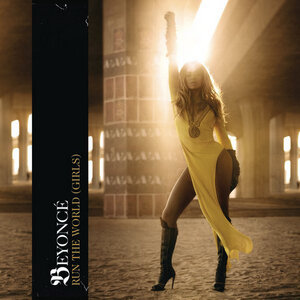
5. Run the World (Girls)

YouTube Views (as of 24th August, 2021): 517M

From the Album: 4

Single Release Date: 21st April, 2011

US Billboard Hot 100 Position: 29

Album Release Date: 24th June, 2011

Single Producers: Beyoncé Knowles/Switch ‘The-Dream’/Shea Taylor

Reception:

The video received general acclaim from critics. On the night of the video's premiere, Rap-Up complimented Beyoncé on starting a "dance revolution", her "heavily-choreographed visuals" and "menagerie of wild animals, outrageous fashion, and epic dance sequences". Eric Henderson of Slant Magazine wrote that Beyoncé comes off like "barely sentient" but added that she remains cohesive and rational as a human being in real life. He further wrote: "Her reserve of crazy is far from bottomless, and she seems to save it all for her music videos, and I love her for that [...] [The video is] awesome in distressingly fragmented ways." Gina Serpe of E! Online wrote that "for anyone still laboring under the illusion that Beyoncé does not mean business, well, just watch this video. Described by B[eyoncé] herself as 'futuristic', 'electronic' and 'African', the 29-year-old fused all that and more into a still remarkably cohesive music video." CBS News wrote the "smoking hot video [was] blowing up on the web". The Huffington Post wrote that Beyoncé largely brings back the elements that made "Single Ladies (Put a Ring on It)"'s video a hit, citing women's empowerment and a brand new dance. Jarett Wieselman of the New York Post complimented Beyoncé's wardrobe and dancing in the video, and wrote that the choreography ensures the lyrics, "my persuasion can build a nation" – Wikipedia

4. Ring the Alarm

ij.png

YouTube Views (as of 24th August, 2021): 56M

From the Album: B’Day

Single Release Date: 10th September, 2006

US Billboard Hot 100 Position: 11

Album Release Date: 1st September, 2006

Single Producers: Swizz Beatz/Beyoncé Knowles/Sean Garrett

Reception:

Ring the Alarm" received polarized responses from contemporary music critics, who noted that it was a marked departure from Knowles' previous material. Eb Haynes of AllHipHop wrote that the song is "emotionally high-powered. The Boston Globe's Sarah Rodman noted that it finds Knowles in "full hell-hath-no-fury mode", singing with grit and urgency that feel genuine. A critic of Billboard magazine viewed "Ring the Alarm" as a memorable release even though he wrote that it is not as good as Knowles' 2003 single "Crazy in Love". He praised her distorted vocals and the "ranting assault of a lyric", which she uses to convince her love interest. Jody Rosen of Entertainment Weekly called "Ring the Alarm" torrid, and wrote that Knowles "sounds positively horrified by the prospect of relinquishing the luxury goodies her boyfriend has bought her". Brian Hiatt of Rolling Stone stated that she sings with "enough frantic, quavering intensity to make you believe she really is crazy in love". Marcos Chin of Vibe magazine described "Ring the Alarm" as "both a sexual invitation and a threat". Darryl Sterdan of Jam! described "Ring the Alarm" as a "shrill tantrum of green-eyed monsterdom", and Kelefa Sanneh of The New York Times described it as a "canny display of emotional vulnerability". Tom Breihan of The Village Voice commented that "Ring the Alarm" may become Knowles' "You Oughta Know" – Wikipedia

3. Love on Top

YouTube Views (as of 24th August, 2021): 474M

From the Album: 4

Single Release Date: 12 September, 2011

US Billboard Hot 100 Position: 20

Album Release Date: 24th June, 2011

Single Producers: Shea Taylor/Beyoncé Knowles

Reception:

Love On Top" was highly acclaimed by critics. Rich Juzwiak of The Village Voice complimented its "easy listening/easier dancing boogie vibe". Genevieve Koski of The A.V. Club said "Love On Top" had an up-tempo nature, saying that it was possibly the only "first-listen earworm" on the album with its "breezy, retro-soul style." Matthew Horton of BBC joked about the climax of the song, stating that the album 4 "was named after the four key changes in the final, teetering chorus of 'Love on Top' to ram the point home." Greg Kot of the Chicago Tribune commended the song for putting a "bounce" in Beyoncé's step. Similarly, Matthew Perpetua of Rolling Stone named "Love On Top" "a blast" as Beyoncé creates a modern take on old-school Whitney Houston. Hamish MacBain of NME favored the song's up-tempo style, stating that it was much needed after the "ballad-heavy" first half of the album. Priya Elan of the same publication commented that it has "100 watt smile lyrics". Stating that "Love On Top" is reminiscent of 1980s R&B, Erika Ramirez of Billboard magazine complimented the song as a "Halcyon love song, perfect to be whisked away to". Spence D. of IGN commented that Beyoncé's "cheery disposition" and the "brash horns" will remind listeners of "damn good" mid-1980s R&B can be. While including the song as a "must hear" from the album, Andy Gill of The Independent named "Love On Top" as "a small footnote to Stevie Wonder's innovatory genius." Alexis Petridis of The Guardian praised Beyoncé's vocals and called "Love On Top" a "well-written" song” – Wikipedia

2. Crazy in Love (ft. Jay-Z)

YouTube Views (as of 24th August, 2021): 565M

From the Album: Dangerously in Love

Single Release Date: 14th May. 2003

US Billboard Hot 100 Position: 1

Album Release Date: 20th June, 2003

Single Producers: Rich Harrison/Beyoncé Knowles

Reception:

Crazy in Love" was lauded by contemporary music critics, who complimented the horn lines and the guest appearance of Jay-Z. Many of them called it the Summer Anthem of 2003. Tim Sendra of AllMusic described the song as a "stunning pop masterpiece", while Stephen Thomas Erlewine of the same website called it "deliriously catchy". Darryl Sterdan of Jam! noted the "Crazy in Love" is "instantly addictive horn lines". Anthony DeCurtis of Rolling Stone wrote: "'Crazy in Love' ... roars out of the speakers on the strength of a propulsive horn sample and the charged presence of her pal, Jay-Z." Ben Ratliff of Blender magazine called the song an "itchy [and] eager-to-please" one. Marc Anthony Neal of PopMatters called the "uh-oh, uh-oh" phrase catchy. MTV News considered "Crazy in Love" to be the "proudest moment" of Dangerously in Love. Similarly, Allison Stewart of The Washington Post called it the best song on the album, praising its instrumentation, harmonies, and the rap verse of Jay Z. This was echoed by Kelefa Sanneh of The New York Times who wrote that "Crazy in Love" is the best one on the album thanks to its "simplicity, irresistible combination of triumphant horns and a wicked hip-hop beat". She added that "[Beyoncé's] vocals – as deft and accurate as ever – convey none of the giddy rush that the lyrics describe.” Likewise, Sal Cinquemani of Slant Magazine wrote the lyrical arrangement, the music structure and the guest vocals by Jay Z all contributed in making "Crazy in Love" a wonderful resume for Beyoncé” – Wikipedia

1. Formation

ggg.png

YouTube Views (as of 24th August, 2021): 255M

From the Album: Lemonade

Single Release Date: 6th February, 2016

US Billboard Hot 100 Position: 10

Album Release Date: 23rd April, 2016

Single Producers: Mike Will Made It/Beyoncé

Reception:

Formation" received widespread critical acclaim upon release. Alexis Petridis, head rock and pop critic for The Guardian, characterized "Formation" as "a masterpiece", citing the "adventurous" music, Beyoncé's "perfect" vocal performance which switches "between playfulness and determination", and the lyrics that act as "a powerful statement of black resilience and a tribute to the fabulousness of Beyoncé". Pitchfork named the song "Best New Track", with Britt Julious describing it as one of Beyoncé's "most instrumentally-dense and trend-forward productions" which is made specifically for black women, "an audience that might not receive the sort of mainstream, visually and sonically-enticing wisdom that Bey has perfected". Julious added that "for Beyoncé (and for her listeners, too), the unapologetic embracing of one's blackness and the power one can harness when making a name, livelihood, and legacy can't ever be ignored or taken for granted." The New York Times' Jenna Wortham praised the expression of black identity in the song, writing that is "about the entirety of the black experience in America in 2016" encompassing topics such as beauty standards, police brutality, empowerment, and shared culture and history. Wortham also characterized the song as "an existential call to action", with Beyoncé telling black women to join her in formation, making "a power structure that doesn't rely on traditional institutions."

In The Lemonade Reader, Tamara Winfrey Harris described the song as "a radical act", with Beyoncé forgoing an image of blackness that appeases white Americans ("smiling, agreeable, passive, straight, and as close to white as possible") in favor of one that makes them uncomfortable ("Nappy Black, 'Bama Black, queer Black, sexual Black, militant Black"). Omise'eke Natasha Tinsley, a professor of African Studies at University of Texas at Austin, writes for Time that the song, which many called "political" because of its references, "differs radically from other post-Ferguson protests songs like Trip Lee's "Coulda Been Me" or Rihanna's "American Oxygen" video, which focuses on black men's deaths," calling African American women to stand side by side ("in formation"). Kevin Fallon of The Daily Beast called the song "a booming meditation on black identity, the validity and transience of a person's roots and history, and the crushing interplay between power and helplessness, agency, and victimization". A Rolling Stone journalist wrote that "in the era of #BlackLivesMatter, 'Formation' felt downright necessary" and further deemed it "a powerful statement of black Southern resilience". "Formation" was later placed at number one on the same magazine's "50 Best Songs of 2016" list by Rob Sheffield, with him commenting: ""Formation" was a song that kept hope alive in a bleak year – and it will be essential ammo for the struggles to come in the next” – Wikipedia

FEATURE: Never, Never Say Goodbye: Kate Bush’s Jig of Life

FEATURE:


Never, Never Say Goodbye

ccc.jpg

IN THIS PHOTO: Kate Bush in 1983/PHOTO CREDIT: Brian Griffin 

Kate Bush’s Jig of Life

___________

I know that I have given…

aaaa.jpg

Kate Bush’s fifth studio album, Hounds of Love, a pretty good going over. I have ranked its tracks and explored it from different angles. I have also written about the Irish roots of Bush and the Irish themes on some of her tracks. I do not think I have spotlighted Jig of Life and written about it in much detail. I have been re-reading Graeme Thomson’s excellent biography, Under the Ivy: The Life & Music of Kate Bush, and I was intrigued about his writing about Hounds of Love. He is especially impassioned about the second side, The Ninth Wave. Jig of Life is the fifth track on that seven-song suite. After Christmas 1983, sessions were moved to Ireland. Thomson notes that, after the success of The Dreaming’s Night of the Swallow – I assume he means Bush felt pleased with the song, as the track was unsuccessful when it was released as a single in Ireland only -, she was interesting in exploring Irish music more. By spring 1984, she travelled to Dublin for sessions at Windmill Lane, where pipes, fiddles and other Irish instrumentation was added to And Dream of Sheep and Hello Earth. The most obvious and intense nod to Ireland comes from Jig of Life. Donal Lunny has said how Bush was pretty exacting and intense when it came to the whistle note at the end of And Dream of Sheep – making him play it over and over for several hours until she got the sound she was searching for. She definitely had an idea of what she wanted her music to sound like and was not going to settle. That being said, she had a great bond and relationship with the musicians she worked alongside.

Bush finished writing Jig of Life at Bill Whelan’s house the day before heading into the studio – Whelan oversaw the Irish sessions and arrangements for The Dreaming and Hounds of Love. Recorded over a few days with some of Ireland’s best session musicians - fiddles, whistles: John Sheahan, bouzouki, bodhran: Donal Lunny, uillean pipes: Liam O'Flynn -, by all accounts, it sounds like the sessions were magical and productive! Del Palmer (bass) recalls how, when they were playing along with him and the rest of the musicians, it was so intense and wonderful! Having Irish family and roots, it was important to Bush to get this authentic sound from musicians who could provide something pure and strong. Jig of Life, to me, is one of the most important and impressive songs on Hounds of Love. It seems like the moment in The Ninth Wave where the heroine starts to sense hope and finds strength. The Ninth Wave is a woman who has been left at sea with only the light form her life jacket providing any guidance. It is a psychological odyssey where our protagonist wrestles with fear, doubt and delirium as she tries to stay awake and safe from whatever lurks beneath the dark ocean. Surviving through to the morning where she is eventually rescued, it is a masterful song suite that is akin to an opera or some huge production!

It is, doubtless, one of Kate Bush defining achievements. Jig of Life is such a spirited and intoxicatingly energetic track! In this piece from the Kate Bush Encyclopaedia, we discover where Jig of Life fits into The Ninth Wave’s story and chronology:

At this point in the story, it's the future self of this person coming to visit them to give them a bit of help here. I mean, it's about time they have a bit of help. So it's their future self saying, "look, don't give up, you've got to stay alive, 'cause if you don't stay alive, that means I don't." You know, "and I'm alive, I've had kids [laughs]. I've been through years and years of life, so you have to survive, you mustn't give up."

This was written in Ireland. At one point I did quite a lot of writing, you know, I mean lyrically, particularly. And again it was a tremendous sort of elemental dose I was getting, you know, all this beautiful countryside. Spending a lot of time outside and walking, so it had this tremendous sort of stimulus from the outside. And this was one of the tracks that the Irish musicians that we worked with was featured on.

There was a tune that my brother Paddy found which... he said "you've got to hear this, you'll love it." And he was right [laughs], he played it to me and I just thought, you know, "this would be fantastic somehow to incorporate here."

Was just sort of, pull this person up out of despair. (Richard Skinner, 'Classic Albums interview: Hounds Of Love. Radio 1 (UK), aired 26 January 1992)”.

xx.jpg

 IN THIS PHOTO: Kate Bush in 1985/PHOTO CREDIT: Guido Harari

I love how Jig of Life is this sort of dream or vision that gives the protagonist strength to keep going. Maybe, after the struggles and stresses to this point, this is the moment when things change. By the next track, Hello Earth, there seems to be this calm as the heroine floats above the world and looks down. The juxtaposition between the frenetic and rousing Jig of Life compared to the more serene and touching Hello Earth is marked. In terms of lyrics, Hounds of Love is Bush at the prime of her craft. The way she builds in imagery and dialogue is incredible! The opening lines and verses of Jig of Life showcase that: “Hello, old lady/I know your face well/I know it well/She says. "Ooh-na-na-na-na-na-na-na-na! I'll be sitting in your mirror/Now is the place where the crossroads meet/Will you look into the future? "Never, never say goodbye/ To my part of your life/ No, no, no, no, no!/Oh, oh, oh/"Let me live!”/She said "C'mon and let me live, girl!”/She said, "C'mon and let me live, girl!" ("C'mon and let me live!")”. At 4:04, Jig of Life seems like the perfect length. It allows for plenty of that incredible musicianship from Sheahan, Lunny and O’Flynn. Her lyrics are so full of poetry and beauty against the wild wind and spiritual energy of the music. The final words are among the most gorgeous and memorable from all of Hounds of Love: “Come over here to where When lingers/Waiting in this empty world/Waiting for Then, when the lifespray cools/For Now does ride in on the curl of the wave/And you will dance with me in the sunlit pools/We are of the going water and the gone/We are of water in the holy land of water/And all that's to come runs in/With the thrust on the strand”. Coming between the more settled and calming songs, Watching You Without Me and Hello Earth (which builds in drama nearer the end) is this burst of life that has a very different sonic palette. It is a magnificent track from The Ninth Wave where one can feel and hear Bush’s heart and soul throughout. In terms of the story and chapters on The Ninth Wave, Jig of Life appears at…

SUCH an important moment.

FEATURE: Higher Than the Sun: Primal Scream’s Iconic and Mind-Blowing Screamadelica at Thirty

FEATURE:


Higher Than the Sun

xxxx.jpg

Primal Scream’s Iconic and Mind-Blowing Screamadelica at Thirty

___________

THERE are a couple of reasons…

fkjfkj.jpg

why I am coming back to the exceptional third studio album of the Scottish band, Primal Scream. Screamadelica was first released on 23rd September, 1991. It won the first-ever Mercury Prize (or Mercury Music Prize as it would have been known) in 1992. The album features the legendary Manchester singer, Denise Johnson. She sadly died last year. It is amazing to hear what she delivers on the powerful, Don't Fight It, Feel It. Of course, Screamadelica is coming up for its thirtieth anniversary! I do like marking big anniversary for albums that have stood the test of time and are hugely influential. Even if you were not around in 1991, you can listen to Primal Scream’s opus and be transported. One of the album’s producers, the iconic Andrew Weatherall, died last year too. Not to make things too depressing, but it would have been great to have him and Denise Johnson around so they could see the impact Screamadelica still has – and the celebration it will receive on its thirtieth anniversary next month. I am going to source an article and a couple of reviews for Screamadelica. On 17th September, there is a nice package that Primal Scream fans will want to get hold of. As we read on the HMV website, Screamadelica: The 12" Singles is going to be very special:

'Screamadelica' is the third studio album by the Scottish rock band, originally released in 1991. It was Primal Scream's first album to become a commercial success and it pushed the band firmly into the limelight, winning them the Mercury Music Prize in 1992. This 12-inch singles box features nine replicas of the singles from the original campaign, all pressed on 180-gram heavyweight vinyl, as well as a tenth disc, which consists of a previously unheard remix (and accompanying instrumental) of 'Shine Like Stars' by the album's late and beloved producer Andrew Weatherall. The box also features three art prints by the album's cover artist Paul Cannell and a download code”.

There is no doubt that Screamadelica is one of the masterpieces of the 1990s! There are a few huge albums celebrating their thirtieth anniversary next month – including Pearl Jam’s awesome debut, Ten. Actually, there are a couple of articles worth dropping in. If you want the original album, you can get it on vinyl here. In 2018, LOUDER spoke with Bobby Gillespie about the making and impact of Screamadelica. I have selected some sections from the feature:

I honestly never thought it would be a commercial record,” Gillespie says. “I thought it was going to be just a really cool underground album, like Tago Mago by Can. But then it started getting amazing reviews and just kept selling and selling. I believe it’s sold a couple of million now.”

The success of Screamadelica – led off by two UK Top 30 hits in Loaded and Come Together – was as swift as it was unexpected. Emerging from Glasgow’s early-80s indie scene, Primal Scream had been formed by Gillespie and schoolmate Jim Beattie, fired by punk and the licentious rock’n’ruin of the Stooges and MC5. In fact Gillespie was the drummer for The Jesus And Mary Chain by the time of the Primals’ first official gig, in 1984.

There were a couple of unsteady PS singles, followed by the inclusion of Velocity Girl on the NME’s fabled C86 cassette, a compilation that celebrated the new jingle-jangle dawn of British indie bands. Primal Scream’s debut album, Sonic Flower Groove, in 1987, was an awkward conflation of Love, the Velvet Underground and the Byrds, recorded for McGee’s micro-label Elevation. It peaked at 62 on the UK chart.

Loaded was released as a single in March 1990, and reached made No.16 in the chart. It was Primal Scream’s first UK Top 40 hit, and one that had the curious effect of crowning this most rock’n’roll of bands as the new darlings of the rave scene. The success of Loaded led to Alan McGee putting the band on a weekly wage of £50.

“We were on the Enterprise Allowance Scheme just before that,” Gillespie recalls. “We were absolutely skint. He gave us an advance of a few thousand pounds, so we built a studio in Hackney, on Tudor Road. We rented an office and turned it into a writing studio. We wrote a lot of Screamadelica in there. We wrote a lot of the songs on keyboards, though I shouldn’t really be saying that in Classic Rock. I mean, we are a guitar band live, a high-energy rock’n’roll band.”

They were certainly living the life. Screamadelica was a filthy party animal of a record. It was a place where the tribal edicts of rock’n’roll were played out amid the glowstick rallies of rave. The album’s unbowed hedonism was typified by songs like Higher Than The Sun, Gillespie intoning to some imaginary Golden God: ‘I live just for today/Don’t care about tomorrow.’

“That’s exactly how I felt,” Gillespie says today. “I didn’t care if I died. I know that sounds dramatic, but it’s all there in the lyrics. We were out there taking ecstasy and speed. Speed was our main drug of choice, then people got more money and got into cocaine, then they got into heroin and it kind of fucked everything up. But I can’t really include heroin here, because while we were making the record it’d be speed and ecstasy. We’d never record on it though; you can’t play rock’n’roll on ecstasy.

“Acid house was similar to the LSD explosion of the sixties. The music was different, but I think it released a similar amount of energy and creativity in people who maybe hadn’t realised they had that inside them before. The energy in the clubs was intense. It reminded me of early rock’n’roll and punk. And that energy was extremely seductive. So we were up for days, living what it says in the songs. Being up for days meant we were exposed to a lot of great scenes and wild, strange, dangerous people. And fucking weird scenes with weird women. But we were a serious band when it came to recording and gigs. We may have partied at the weekends, but every week we were in the studio writing. At that point in your life you’re really out to prove to the world what you can do.

“We had a fucking great time, and that found its way into the music and the songs. I think it’s a very euphoric record. To me it’s ecstatic rock’n’roll. It’s what rock’n’roll should be: joyous and celebratory.”

So was Screamadelica ultimately a balancing act between guest producers and the Primals’ own artistic vision?

“With Andy Weatherall, I think we were both coming from the same place,” Gillespie offers. “I think we married a rock’n’roll attitude and sensibility and songwriting instinct to Andy’s knowledge of the dancefloor and contemporary rhythms. Also, Andy was a bit of a punk. He wasn’t a musician, but what he had was ideas in abundance. I think the best records are not just made by people with loads of technique, it’s about attitude and imagination. And between Andy and us – and The Orb and Jimmy Miller – we made a fantastic record. I’ve got to give those guys credit, but then they did what producers are supposed to do.

Producers are supposed to enhance your songs and suggest things. For example, I know the Stones struggled with the rhythm of Honky Tonk Women, then Jimmy Miller came up with the cowbell intro. Charlie Watts says that it was Jimmy’s riff. And that’s one of the most famous intros in the whole of rock’n’roll.”

True to their own wilful nature, Primal Scream refused to repeat Screamadelica. Give Out But Don’t Give Up, in ’94, was instead a return to the visceral charge of time-worn rock’n’roll. The music press largely bemoaned the fact that this was no Son Of Screamadelica, and duly waded in. True, the album may have been uneven, but there were more than a few choice moments.

“Even if we’d wanted to we couldn’t have made another Screamadelica,” reasons Gillespie. “We were in a different place, and so was Andy Weatherall. I know that he didn’t – and we didn’t – expect that success. And then we went away and toured the world. Some of the band got into heroin. My take on it is that the creativity seized up a little. It was a really strange period, then out of that came the …Don’t Give Up album. We could have made a better record than that, but maybe that record was as good as it could be. There are two songs from that that we play live every night: Rocks and Jailbird. At the time, the music press in Britain slagged it. But when we play Rocks at our gigs these days, younger and younger generations just love it and the place goes fucking nuts. To me it’s like School’s Out by Alice Cooper”.

I want to come to a couple of critical reviews for 1991’s Screamadelica. There is no doubt there will be new focus and attention ahead of its thirtieth anniversary – not just because of the timelessness of the album; the fact Andrew Weatherall and Denise Johnson are no longer here adds extra poignancy and importance. THE LIST published a feature back in 2011, breaking down the components of Screamadelica:

25% An Acid House Defining Sound

As described in the recent Creation Records rockumentary Upside DownScreamadelica’s story began in 1989 after Creation boss Alan McGee relocated from London to Manchester for a year to be at the epicentre of one of the biggest youth culture phenomena Britain had witnessed since punk – acid house, and the so-called second summer of love. He began preaching the gospel of E to Primal Scream singer and bezzie mate Bobby Gillespie, whose band were hitherto jangly indie also-rans that had failed to deliver Creation a single hit in six years. In a cauldron of pills, crossover experimentation and all-night raving, Screamadelica was cooked. Hailed as an instant classic upon its release in 1991, it won the inaugural Mercury Music Prize, framed the zeitgeist and enshrined rock’s enslavement to the beat.

5% Bobby Gillespie’s Swagger

The Primal Scream frontman has always been a divisive figure, with a personality veering from righteous groover to arrogant, lunkheaded prick over the years, depending on his mood and state of intoxication. But the cult of Screamadelica owed everything to his totemic presence, as did the fate of Creation. Screamadelica was Creation’s first in a clutch of epochal albums, and it turned the iconic label’s fortunes around in time for them to sign Oasis and sell tens of millions of records worldwide. ‘I couldn’t have done it without Gillespie,’ says Creation boss Alan McGee at the end of Upside Down of his old Glasgow schoolmate, a figure in whose footsteps Liam and Noel Gallagher promptly followed, swaggering.

35% Pills, Thrills and … more Pills

Nobody will be rubbing their hands together in greedy anticipation of Primal Scream’s Screamadelica performance more than Glasgow’s drug dealers. It’s the quintessential ecstasy album – the very sound of guys on pills making music to take pills to. Gillespie has described ecstasy as the drug that ‘opened everyone’s minds’ during recording sessions. Without it Screamadelica would probably have never existed. Or at least it would have sounded very different, as proven by its lackluster 1994 follow-up Give Out But Don’t Give Up, which was made after the band had developed such serious smack habits they actually thought they were The Rolling Stones.

10% Andrew Weatherall’s Production

The undersung hero of Screamadelica is producer Andrew Weatherall, the Windsor bricklayer turned DJ who was central to a London enclave of acid house centered around the Islington club night Shoom. He brought an inventive, eclectic cut’n’paste aesthetic to bear on the album. ‘Loaded’, for example, is simply a remix of Primal Scream’s ‘I’m Losing More Than I’ll Ever Have’ overlaid with a sampled bassline, bits of obscure movie dialogue and a Gillespie lyric borrowed from Robert Johnson’s ‘Terraplane Blues’. ‘I’m just glad I was part of something that resonates 20 years later,’ a modest Weatherall recently told The List.

20% Songs to Come Up To

As the oft-quoted sample from Peter Fonda B-movie The Wild Angels at the start of ‘Loaded’ (see below) concludes with the lines ‘We’re gonna have a good time, we’re gonna have a party,’ be sure that an SECC on MDMA will follow suit. From the Stonesy gospel of ‘Moving On Up’, through the soulful, psych-frazzled 10-minute epic ‘Come Together’ and the beatific dub of ‘Step Inside This House’, Screamadelica is an album that repeatedly lives up to the title of its standout track ‘Higher Than The Sun’.

5% Songs to Come Down To

While it’s best known as an album for enjoying on a high, Screamadelica is also a record sensitive to the lows too, both emotional and chemical, be it the broken-hearted bluesy wail of ‘Damaged’, or the dawn haze of the almost sea shanty-esque final come down ‘Shine Like Stars’, which sees the album wash out woozily to the sound of a wheezing harmonium and lapping waves”.

Before wrapping up, here are a couple of reviews for Screamadelica. I don’t think many who have approached the album have given it anything but glowing praise – maybe one or two were not sure how to perceive it in 1991 but have changed their opinions in the years since. This is what Entertainment Weekly offered in their 1991 review:

…The musical palette is a bit broader on Screamadelica, the first full U.S. release from Primal Scream. My personal favorite is the band’s cover of Roky Erickson’s ”Slip Inside This House”; with their wound-up house-music version, they pull off a nice aural pun. Elsewhere you get everything from thoroughly modernized Stones (”Movin’ On Up”) to a thoroughly rocked-up take on the percolating black pop of Soul II Soul (”Don’t Fight It, Feel It”). Ultimately, though, the pastiches backfire a bit; the dizzying array of styles keeps the band from developing a consistent personality….Screamadelica: B+”.

I am really looking forward to seeing and hearing what is said of Screamadelica on its thirtieth anniversary. I discovered the album when it came out in September 1991. It took a few years before I completely appreciated and understood the album, as I was eight when it was released. Now, it is this broad masterpiece; a real musical odyssey. I often wonder whether a short film could be constructed around the album’s songs - such is their power and vivid nature. One cannot put Screamadelica on in the background: it is an album that needs to be played loud and focused on!

zjashjde.jpg

Pitchfork investigated Screamadelica in 2016. This is what they had to say about a mind-blowing album that is among the most-acclaimed and revered in all of music:

If welding "dance" and "rock" was all it achieved, its 18-month gestation would have hurt Screamadelica. The album might have been a mere appendix to a briefly promising scene. Fortunately, Screamadelica's power isn’t in an abstract clash of two different genres, but in the marriage of two very similar sensibilities.

One is Bobby Gillespie’s. Primal Scream’s output has sometimes been dismissed as "record collection rock", their versatility no more than a procession of learned poses – the Byrds, rave, krautrock, post-punk. But Gillespie’s approach is less bandwagon-jumping and more a kind of aesthetic cosplay, where his fannish intensity of identification works to overcome the limitations of technique. The comedown blues of "Damaged" is Screamadelica’s weakest song, but Gillespie’s conviction makes it essential to the record.

The other is producer Andy Weatherall’s. Weatherall, along with Terry Farley who remixed the "Come Together" single, was part of the Boy’s Own DJ and fanzine collective in the earliest days of London Acid House. Boy’s Own loved big, uplifting records, played any genre they fancied, and everything they did, in print or on record, was touched with a cheeky swagger. The euphoric splash of Italo house piano at the climax of "Don’t Fight It, Feel It", Screamadelica’s most floor-ready track, is a great Weatherall moment.

The meeting of these approaches – unashamed, celebratory club music and rock star fandom – is what gives Screamadelica its particular mood, half strutting with confidence, half yearning for transcendence. One result is that the record is often better when Bobby Gillespie is a presiding spirit rather than an actual singer. Compare album centrepiece "Come Together" with its single version, where Gillespie enacts a loved-up Ecstasy high in winsome style. The LP drops his vocals, reshapes the track around the gospel backing singers, and it becomes something titanic. It’s a full-length manifesto not just for the brotherhood of clubbing but for the syncretic approach to rock Primal Scream were exploring. "All those are just labels", thunders a sampled Reverend Jesse Jackson, "We know that music is music." If you want to know how joyful – and how corny – pop’s discovery of rave could feel in 1991, this is where to start”.

I would suggest to anyone who has not heard Screamadelica to stream or buy the album. It is a revolutionary release. Whilst there are some associations between Screamadelica and drugs such as LSD and MDMA, it is the musical invention and the sheer power of the songs that is the most important aspect. It is hard to believe that it is almost thirty years old! A lot of albums from 1991 sound a bit tired or dated now. That is not true of Screamadelica. Primal Scream’s third studio album was not only a progression for them. It was a huge album full stop! One that, in many ways, few have been able to equal! Starting with the epic Movin' on Up, Screamadelica is an album without any……

WEAKNESSES or less-than-genius tracks.

FEATURE: Vinyl Corner: Broadcast - The Noise Made by People

FEATURE:


Vinyl Corner

eeee.jpg

Broadcast - The Noise Made by People

___________

THIS Vinyl Corner…

ssssw.jpg

is all about an album that a lot of people might now know about. Broadcast were an Electronic band formed in Birmingham in 1995 by Trish Keenan (vocals, keyboards, guitar) and James Cargill (bass). The last album from the band, 2013’s Berberian Sound Studio, was a soundtrack for the 2012 film of the same name. Tragically, their lead, Trish Keenan, died in 2011. In terms of debuts, Broadcast’s The Noise Made by People (2000) is one of the best of that decade. That being said, it is an album that passed a lot of people by. Maybe more of a cult concern than a mainstream success. Released on 20th March, it is such a beautiful album that anyone can play and feel moved by. One does not need to know anything about Broadcast to love The Noise Made by People. Given the strength of the band and the incredible vocals of Keenan, I have been listening to The Noise Made by People on and off since its release. I am going to bring in a positive review of the album soon. Before that, Stereogum celebrated twenty years of a stunning debut:

To look at Broadcast 20 years after their full-length debut The Noise Made By People is to confront the idea of what “psychedelic” meant at the end of the 20th century, both before and after they made their mark. Case in point: The first place you likely heard their music was coming across “The Book Lovers” on the soundtrack to 1997’s go-go spy spoof Austin Powers: International Man Of Mystery, and the last was almost assuredly the foley-room-nightmare score to 2012’s psychotronic existential thriller Berberian Sound Studio. How pop culture got from one of those points to the other is a process far more involved than just one band can encompass. But the fact that Broadcast was around for it all, from campy comedy to uncanny eeriness, means that even their first full-length album felt like a crucial step towards a more sophisticated, less caricatured notion of what psychedelia even meant for a new millennium.

The Noise Made By People is in an odd position itself: It’s such an accomplished debut album that it obscures the years-long struggle it took to come out, but it’s also considered more of a component of a body of work than a particularly definitive standout effort. It came at the peak of the idea of Broadcast as a singles band — between 1999 and 2000 they released three of them, plus the two Extended Play EPs — but the instrumental album-track abstractions that would be considered filler on another band’s records turned out to be just as crucial to Broadcast’s reputation in the future.

It’s easy to hear why they touched so many twisted nerves: There was a particular DIY appeal to a band with a background of self-taught musicianship that, in Keenan’s words to CMJ, translated their interest in “intricate music by people who really know their shit” into “this weird area where… you’re limited to your technique, and it comes out in a weird or unusual way.” Not with the adolescent, noisy bluntness of punk or garage rock, but something more immersively mysterious. Still, even in their early work, it’s impossible to listen to Keenan’s voice and come away with a sense of amateurishness. As someone whose ear for pop was as instinctual as it was adventurous, she was able to transmute that into one of the most graceful voices to front an indie-pop band, ever: melodies that sound like someone reacting to wonder for the first time and providing it for someone else in the process. Sophisticated and hinting at old-soul experience beyond her years, yet to-the-point enough to emphasize the evocative simplicity in her lyrics’ language, Keenan’s singing voice was the most immediately arresting component of a group hardly content to settle for workaday rocking out.

What kept The Noise Made By People from capitalizing quickly on that fast-building circa-’97 buzz, unfortunately, was a succession of misguided producers who thought rocking out was what would make them stars. After three strikes’ worth of dealing with wannabe auteurs attempting to steer them towards something more radio-ready — and replacing Pram-bound Perkins for new drummer Keith York — Broadcast capped off a nearly three-year album recording process by finishing all the production and engineering themselves (with a bit of a motivational assist from Squarepusher). While this earned them a rep for difficulty in the studio, The Noise Made By People seemed to arrive fully lived-in as a result, an unfiltered culmination of worried-over sounds that felt like they’d plugged a hole in a musical negative space that was waiting decades for them.

It’s a remarkable album just on a pure listening basis. Figuring out the specifics of their equipment is best left to the gearheads, and while it’s fun to speculate what kind of resurrected old analog synths, ring modulators, ribbon mics, and effects pedals might have been scrounged up and daisy-chained into operation, hearing the end result as this ineffable swirl of extrasensory stimuli is a hell of a lot more immersive. Losing track of where reverb ends and new chords begin, sinking into the blurred interplay of bass and keyboards, finding all the richness in the nuances of Keenan’s clear-toned enunciations — it’s enough to promote the idea that psychedelia doesn’t even need hallucinogenics to turn your mind around when insinuations of the out-there can sneak through the notes and inspire visions you never knew you had”.

If you like the sound of Broadcast’s debut album, I would recommend people buy it on vinyl. If you need some more convincing, this is what AllMusic wrote in their review for The Noise Made by People:

After being mired in the studio for nearly three years, Broadcast returned with their first proper full-length album, The Noise Made by People, a collection of more shimmering, weightless pop that is nostalgic for yesterday's visions of the future but remains on the cutting edge of contemporary music. Where their early singles (collected on 1997's Work and Non-Work) painted small, quaint portraits of their retro-futurism, The Noise Made by People delivers their sound in widescreen, filmic grandeur. Richly layered yet airy pieces like the album bookends, "Long Was the Year" and "Dead the Long Year," seamlessly blend symphonic, electronic, and pop elements into smoky, evocative epics, while synth-based interludes such as "Minus One" and "The Tower of Our Tuning" present Broadcast's more detached, scientific side. Likewise, Trish Keenan's air-conditioned vocals sometime suggest a robotized Sandie Shaw or Cilla Black, but her humanity peeks out on "Come on Let's Go" and "Papercuts." "Echo's Answer" and "Until Then" are two of the other highlights from the album, which despite all of its chilly unearthliness, is a noise made by (very talented) people”.

I am going to leave it there. I think Come On Let's Go – the album’s second single – is the highlight…though other people might have their own impressions. The Noise Made by People is a sensational album that is so fascinating and strong (Pitchfork observed, in their review: “Though it's slightly disconcerting to hear sounds like this without being floored by a sense of daring and originality, it's a testament to the explosion of genre-bending music that was the underground's biggest artistic accomplishment in the 1990's. Broadcast one-ups the avant leanings of most of these juxtaposition-experimenting acts by making these advances work in the context of memorable pop songs). If you are not aware of The Noise Made by People, then go and get a copy and…

ABSORB the magic and mystery.

FEATURE: Childhood Treasures: Albums That Impacted Me: Soundgarden – Superunknown

FEATURE:


Childhood Treasures: Albums That Impacted Me

eeee.jpg

Soundgarden – Superunknown

___________

IT is not directly related…

ccc.jpg

 PHOTO CREDIT: A&M Records

but Metallica have announced they are releasing an album of Soundgarden covers. They are doing it as a tribute to the band’s leader, Chris Cornell, who sadly died in 2017. It is clear that there was a lot of love for Cornell and respect for what he did as a musician, singer and songwriter. The reason that I am bringing up Soundgarden is that their 1994 album, Superunknown, was a very important one for me during childhood. The first experience I had of the band Seattle band was seeing the video for Black Hole Sun. The third single from the album, it was released on 14th May, 1994. I was instantly struck by the weird imagery and darkness of the video! I love the song, of course, and then found my way to Superunknown. In 1994, Grunge had been around for a while. Nirvana released the iconic Nevermind in 1994. Of course, in 1994, Kurt Cobain died (on 5th April) One can hear some darkness and depression from that fact on Superunknown. The Nirvana’s frontman’s death rocked the world of music and definitely had an impact. Not that the Soundgarden masterpiece is synonymous with depression. I found out more about Nirvana and Grunge by listening to Soundgarden – I was aware of Nirvana in the early-1990s but I had not truly immersed myself. At seventy minutes and fifteen tracks, one might feel Superunknown is too long and would be unfocused.

There is so much variation and interesting songwriting throughout. Most tracks are written by Chris Cornell, though the rest of the band - Kim Thayil – lead guitar, Ben Shepherd – bass, drums and percussion, backing vocals, lead vocals and guitar and Matt Cameron – drums, percussion, Mellotron, pots and pans - contribute. The band are so compelling and astonishing throughout the album. No wonder it affected me! I was listening to some heavier music in 1994, though I was definitely more aware of Britpop and what was coming from the U.K. An album like Superunknown was something very different. It opened my eyes to new genres and avenues. I was a fan of Soundgarden the moment I heard their fourth studio album. For the band, it was definitely their most solid, ambitious and memorable outing to that point – and I am not sure they topped an album that is among the finest of the ‘90s. I am going to finish off by sourcing two positive reviews for the mighty Superunknown. This is what AllMusic wrote in their review:

Soundgarden's finest hour, Superunknown is a sprawling, 70-minute magnum opus that pushes beyond any previous boundaries. Soundgarden had always loved replicating Led Zeppelin and Black Sabbath riffs, but Superunknown's debt is more to mid-period Zep's layered arrangements and sweeping epics. Their earlier punk influences are rarely detectable, replaced by surprisingly effective appropriations of pop and psychedelia. Badmotorfinger boasted more than its fair share of indelible riffs, but here the main hooks reside mostly in Chris Cornell's vocals; accordingly, he's mixed right up front, floating over the band instead of cutting through it.

The rest of the production is just as crisp, with the band achieving a huge, robust sound that makes even the heaviest songs sound deceptively bright. But the most important reason Superunknown is such a rich listen is twofold: the band's embrace of psychedelia, and their rapidly progressing mastery of songcraft. Soundgarden had always been a little mind-bending, but the full-on experiments with psychedelia give them a much wider sonic palette, paving the way for less metallic sounds and instruments, more detailed arrangements, and a bridge into pop (which made the eerie ballad "Black Hole Sun" an inescapable hit). That blossoming melodic skill is apparent on most of the record, not just the poppier songs and Cornell-penned hits; though a couple of drummer Matt Cameron's contributions are pretty undistinguished, they're easy to overlook, given the overall consistency. The focused songwriting allows the band to stretch material out for grander effect, without sinking into the pointlessly drawn-out muck that cluttered their early records. The dissonance and odd time signatures are still in force, though not as jarring or immediately obvious, which means that the album reveals more subtleties with each listen. It's obvious that Superunknown was consciously styled as a masterwork, and it fulfills every ambition”.

The second review is from Pitchfork. I don’t think there is anyone that can say a bad word about an album that is so impressive and full of highlights. From the big-hitters like The Day I Tried to Live, Fell on Black Days, Spoonman and Black Hole Sun to songs like Limo Wreck, 4th of July and My Wave, it is an astonishing album that really affected me aged eleven in 1994:

Upon its release on March 8, 1994, Superunknown wasn’t just a highly anticipated album from a critically acclaimed rock band—its multi-platinum success and Grammy wins practically felt predestined. This was Soundgarden’s long overdue turn to come out on top. Though they were the first late-’80s Seattle-scene spawn to sign to a major label, and dutifully embarked upon traditional career-building exercises like opening stadium tours for Guns N' Roses, they would be soundly leapfrogged on the charts by their Emerald City peers in Nirvana and Pearl Jam; by comparison, Soundgarden’s metallic sonatas were seemingly too knotty (and naughty) to inspire the same magnitude of crossover success. Sure, 1991’s Badmotorfinger landed a bare-chested Chris Cornell on the cover of SPIN, and an MTV ban of the allegedly blasphemous “Jesus Christ Pose” video brought the band more attention than if the station had actually aired it, but Soundgarden appeared destined to be the perennial bronze medalists in the Grunger Games.

By early 1994, however, the playing field had changed considerably: Though Pearl Jam were still the most popular rock band in America, they were actively trying to be the least visible one, declaring a moratorium on videos and interviews in an orchestrated (and ultimately successful) campaign to kill their own hype. Nirvana, likewise, were in the midst of a similar retreat, and though their story had yet to reach its tragic conclusion, ominous warning signs were in the air. But as a band that enjoyed a steadier ascent than their flannelled friends—and whose records got progressively better after jumping to a major—Soundgarden didn’t seem so conflicted about success. Their response to the Seattle-scene media storm wasn’t to try to avoid it, but transcend it, and embrace the opportunity to, for a moment, become the biggest band in the land.

Usually, it’s a bad sign when the wild-child frontman of your favorite group cuts his hair and starts wearing shirts. But the clean-cut Cornell that emerged with Superunknown was emblematic of the album’s mission to deliver maximal effect with minimal histrionics. With its despairing worldview, gold-plated production, and CD-stuffing 71-minute running time, Superunknown is a quintessential ’90s artifact. But thanks to its still-formidable high-wire balance of hooks and heft, the album nonetheless represents, some 20 years later, the platonic ideal of what a mainstream hard rock record should be. And even if that’s an ideal to which few contemporary bands aspire (aside from, say, Queens of the Stone Age), Superunknown remains a useful model for any left-of-center artist hoping to achieve accessibility without sacrificing identity.

For Soundgarden, the push toward pop was the result of incremental evolutions rather than a spectacular leap. Where Badmotorfinger introduced flashes of psychedelia and paisley-patterned melody amid Kim Thayil’s pulverizing riffage, on Superunknown, these elements become featured attractions. The once-oblique John Lennon references gave way to unabashed homage—centerpiece power ballad “Black Hole Sun” is pretty much “Lucy in the Sky With Diamonds” turned upside down and dropped in a heap of soot and coal. That song counts as Superunknown’s most wanton act of subversion—setting its apocalyptic imagery to a tune so pretty, even Paul Anka can dig it—but if that element of surprise has been diluted by two decades of perpetual rock-radio rotation, the album boasts a wealth of less celebrated deep cuts (the queasy psych-folk of “Head Down,” the dread-ridden doom of “4th of July”) that retain a palpable sense of unease.

Even the album’s eternal fist-pump anthems—“The Day I Tried to Live”, “Fell on Black Days”, “My Wave”—are infected with misanthropy and malaise, making Superunknown the rare arena-rock album that makes just as much sense in blacked-out bedroom. (And yet, despite the junkie intimations of its title, “Spoonman” is really just about a man who plays with spoons.) That said, if you don’t hate the world now quite as much as did when you were 18, you may find yourself skipping over the leaden likes of “Mailman” and “Limo Wreck,” while developing a newfound appreciation for how bassist Ben Shepherd’s India-inspired oddity, “Half”, injects a welcome dose of absurdity into the mix”.

Twenty-seven years later, Superunknown is still one of my favourite albums. It is an amazing work that struck me hard when I was a teen. From Soundgarden, I explored Heavy Metal. Grunge and Alternative music a lot more. It is tragic that Chris Cornell is no longer with us to see how Superunknown continues to influence people. His genius runs right through the album. A lot of albums arrived in my childhood that were instrumental and shaped me. There is no doubting the fact that Soundgarden’s Superunknown is…

ONE of the most important.

FEATURE: Kate Bush: The World’s Greatest Shop Assistant: A Charitable Thirtieth Birthday with the Terrence Higgins Trust

FEATURE:


Kate Bush: The World’s Greatest Shop Assistant

 IN THIS PHOTO: Kate Bush cuts her 30th birthday cake on 30th July, 1988 at Blazers Boutique, where she was raising money for AIDS victims on behalf of the Terrence Higgins Trust (celebrities appeared in shops at Covent Garden, London as shop assistants to sell T-shirts and raffles. The money generated from this, plus 5% of the shops' takings, were donated to the charity)/PHOTO CREDIT: Trinity Mirror/Mirrorpix/Alamy Stock Photo 

A Charitable Thirtieth Birthday with the Terrence Higgins Trust

___________

I sort of joked…

fff.jpg

recently that I would publish a trilogy of Kate Bush/charity-related articles - as she has been involved with a number of charities through her career. Although I have done a general feature on Kate Bush’s charity involvement before, I have been looking more closely at the years 1986-1988 and ways in which Bush was engaging with charity. I am not sure why this period was especially prolific in terms of her activity. Perhaps, between the release of Hounds of Love (1985) and The Sensual World (1989), she wanted to donate more of her time to worthy causes. The AIDS crisis of the 1980s was something that severely impacted the world. Not to make light but, on 30th July, 1988, Kate Bush became a shop assistant to help raise funds for the Terrence Higgins Trust. A brilliant charity still going today, I can only imagine how affected musicians were seeing the HIV/AIDS epidemic impact so many. Queen frontman Freddie Mercury was one high-profile musician who was affected – he died on 24th November, 1991 of bronchopneumonia (as a complication of AIDS). I shall keep this one brief. One of the most interesting and noble charity causes Kate Bush was involved in happened on her thirtieth birthday! The Kate Bush Encyclopaedia explains a bit more:

Kate participated in a charity event July 30, 1988 called 'Shop Assistance' to benefit the Terrence Higgins trust to help people with HIV/AIDS. She helped out in a men's wear shop called Blazers in Covent Garden in London (UK), selling clothes and also signing autographs for fans. Other artists participating were Jeremy Irons, Boy George, Jayne Seymour, Jimi Sommerville, Lloyd Cole, Mandy Smith and Rick Astley”.

Although Bush has auctioned signed goods and done other charity things since 1988, it is fascinating that she gave so much time on an important day for her! Of course, she would have had time to mark her thirtieth birthday later that day. That said, she gave a lot of 30th July, 1988 to raise money for charity. That speaks volumes about her priorities! I do love that she was so selfless! She did get to cut some birthday cake whilst there, in addition to meeting a lot of her fans. Sometimes, you see artists called into charity things and they look quite awkward and out of place! Bush looked perfectly comfortable and happy being there. Whilst I love her because of the music, I have spent a few features zeroing in on a few very generous occasions when she put charity and others before herself. I can only imagine how exciting the Shop Assistance event must have been! Whilst it was launched to help people with HIV/AIDS – and raise money for the Terrence Higgins Trust -, the media were keen t get down to Covent Garden and report the news. Rather than it being an opportunity for musicians to raise their profile, it was them getting involved with a charity they wanted to help. As I said, the HIV/AIDS crisis of the 1980s was incredibly serious. Not many of us would spend a day as important as a thirtieth birthday helping others and not celebrating. It doesn’t surprise me that Kate Bush eschewed the festivities to meet fans and raise awareness for a very serious and worthy cause. Her incredible charitable nature is a facet that burns bright and remains strong…

ccc.jpg

 IN THIS PHOTO: Kate Bush in a still from the T.V. show, Rough Guide To London (The programme had a short report about the Shop Assistance charity event)

)TO this very day.

FEATURE: Inspired By… Part Twenty-Seven: Björk

FEATURE:


Inspired By…

ddd.jpg

PHOTO CREDIT: Hadi Karimi 

Part Twenty-Seven: Björk

___________

ALTHOUGH the amazing Björk

 PHOTO CREDIT: Rex

is a singular artist who is very hard to compare with anyone else, I think there are a lot of artists who either cite her as important or have followed her. Definitely, when we think of those who have elements of Björk or embody some of her spirit, there is a long list! I will end with a playlist of some artists who are definitely influenced by her. Before then, as I do at this stage, I am dropping in some AllMusic biography.

A visionary artist who effortlessly blends avant-garde and pop elements, Björk soon eclipsed the popularity of her former group the Sugarcubes when she launched her solo career after the group's demise in 1992. Instead of continuing the band's arty guitar rock pretensions, she immersed herself in dance and club culture, working with many of the biggest names in the genre, including Nellee Hooper, Underworld, and Tricky. Debut, her first solo effort (except for an Icelandic-only smash released when she was just 11 years old), not only established her new artistic direction, but it became an international hit, making her one of the most unlikely stars of the '90s. In the the decades that followed, she remained at the forefront of musical innovation with albums like 2004's vocal-based Medúlla and 2011's science-themed Biophilia.

Though the title of Debut implied that it was Björk's first-ever solo project, she had actually been a professional vocalist since she was a child. When she was in elementary school in Reykjavik, she studied classical piano and, eventually, her teachers submitted a tape of her singing Tina Charles' "I Love to Love" to Iceland's Radio One. After "I Love to Love" was aired, a record label called Falkkin offered Björk a record contract. At the age of 11, her eponymous first album was released; the record contained covers of several pop songs, including the Beatles' "Fool on the Hill," and boasted artwork from her mother and guitar work from her stepfather. Björk became a hit within Iceland and was not released in any other country.

Björk's musical tastes were changed by the punk revolution of the late '70s; in 1979, she formed a post-punk group called Exodus and, in the following year, she sang in Jam 80. In 1981, Björk and Exodus bassist Jakob Magnusson formed Tappi Tikarrass, which released an EP, Bitid Fast I Vitid, on Spor later that year; it was followed by the full-length Miranda in 1983. Following Tappi Tikarrass, she formed the goth-tinged post-punk group KUKL with Einar Orn Benediktsson. KUKL released two albums, The Eye (1984) and Holidays in Europe (1986), on Crass Records before the band metamorphosed into the Sugarcubes in the summer of 1986.

The Sugarcubes became one of the rare Icelandic bands to break out of their native country when their debut album, Life's Too Good, became a British and American hit in 1988. For the next four years, the group maintained a successful cult following in the U.K. and the U.S. while they were stars within Iceland. During 1990, Björk recorded a set of jazz standards and originals with an Icelandic bebop group called Trio Gudmundar Ingolfssonar. The album, Gling-Gló, was released only in Iceland. By 1992, tensions between Björk and Einar had grown substantially, which resulted in the band splitting apart.

Following the breakup of the group, Björk moved to London, where she began pursuing a dance-oriented solo career. The previous year, she had sung on 808 State's "Ooops," which sparked her interest in club and house music. Björk struck up a working relationship with Nellee Hooper, a producer who had formerly worked with Soul II Soul and Massive Attack. The first result of their partnership was "Human Behaviour," which was released in June of 1993. "Human Behaviour" became a Top 40 hit in the U.K., setting the stage for the surprising number three debut of the full-length album, Debut. Throughout 1993, Björk had hit U.K. singles -- including "Venus as a Boy," "Big Time Sensuality," and the non-LP "Play Dead," a collaboration with David Arnold taken from the film Young Americans -- as well as modern rock radio hits in the U.S., and in both countries she earned rave reviews. At the end of the year, NME magazine named Debut the album of the year, while she won International Female Solo Artist and Newcomer at the BRIT Awards; Debut went gold in the U.S. and platinum in the U.K.

During 1994, Björk was relatively quiet as she recorded her second album with Nellee Hooper, Tricky, 808 State's Graham Massey, and Howie B of Mo' Wax Records; she also released a remix EP, co-wrote Madonna's "Bedtime Stories," and performed on MTV Unplugged that same year. "Army of Me," the first single from Björk's forthcoming album, was released as a teaser single in the spring of 1995; it debuted at number ten in the U.K. and became a moderate alternative rock hit in the U.S. Post, her second album, was released in June of 1995 to positive reviews; it peaked at number two in the U.K. and number 32 in the U.S. Post matched its predecessor in terms of sales and praise, going gold in the U.S. and helping her earn her second BRIT Award for Best International Female Artist. Post yielded the British hit singles "Isobel" (number 23), "It's Oh So Quiet" (number four), and "Hyperballad" (number eight), yet her singles failed to make much headway on American radio or MTV. Late in 1996, Björk released Telegram, an album comprising radical remixes of the entire Post album, in the U.K.; Telegram was released in America in January 1997.

Homogenic, her most experimental studio effort to date, followed later that same year and spawned many remix releases in the next few years to follow. In the spring of 2000, she was named Best Actress by jurors at the Cannes Film Festival for her work in Lars Von Trier's Palme d'Or-winning Dancer in the Dark. Selmasongs, her score for the film, reunited Björk with her Homogenic collaborator Mark Bell and arrived in the fall of 2000, just in time for Dancer in the Dark's U.S. release. The full-length follow-up, Vespertine, was released one year later. She released a Greatest Hits collection and the Family Tree box set late in 2002. After performing a few dates in 2003, Björk geared up for a busy 2004, which included the release of her all-vocals and vocal samples-based album Medúlla and a performance of one of its songs, "Oceania," at the 2004 Summer Olympics in Athens, Greece.

The soundtrack to Drawing Restraint 9, a film by multimedia artist Matthew Barney, arrived in 2005 and also featured contributions from Will Oldham. Released in 2007, Volta returned to the more playful, percussive side of Björk's music and included collaborations with Timbaland, Toumani Diabaté, Antony Hegarty, and an all-female Icelandic choir. Her tour supporting the album was a lavish affair, as chronicled in the 2009 set Voltaic, which was released in sets ranging from a CD/DVD to limited multi-disc and vinyl editions.

While she was touring the world in support of Volta, Björk began work on her most ambitious project to date: Biophilia, an interactive exploration of humanity's relationships to sound and the universe that would also educate listeners/viewers about music theory and science. Initially envisioned as a musical house, then an IMAX film directed by Michel Gondry, Biophilia -- which took shape with the help of engineers, scientists, and video game designers -- was eventually released as a suite of apps for the iPad and iPhone. The album, which was also released on CD, arrived in October 2011. Bastards, a collection of Biophilia remixes, was released in Europe in late 2012 and in the U.S. in early 2013. Around that time, Björk launched a Kickstarter campaign to fund translating the Biophilia app for Android and Windows 8 platforms. Though the campaign was canceled after ten days, the app was translated to Android in July 2013. That month, she also appeared in When Björk Met Attenborough, a BBC Channel 4 documentary with Sir David Attenborough and scientist Oliver Sacks that related Biophilia to humanity's relationship with music.

In 2014, Björk contributed vocals to Death Grips' album Niggas on the Moon. She also continued the Biophilia project with a live concert film, Biophilia Live. Filmed at London's Alexandra Palace and featuring spectacular visuals, it was released theatrically and in DVD and Blu-ray sets that also included the live audio on CD. Late that year, it was announced that producers Arca and the Haxan Cloak collaborated on her upcoming album. Vulnicura, which traced the aftermath of Björk's relationship with Matthew Barney and harked back to the sounds of Vespertine and Homogenic, arrived in January 2015 after it was leaked ahead of its scheduled March release date. An acoustic version of the album, Vulnicura Strings, arrived at the end of 2015 and featured the viola organista, a keyboard-driven string instrument designed by Leonardo da Vinci. That year, Vulnicura Live, which featured Björk's favorite performances of the album's songs as well as some chosen from her other albums, was given a limited release; wider distribution followed in 2016. The following year, Björk once again teamed up with Arca for a follow-up to Vulnicura. The lighter but still complex Utopia, which featured Icelandic and Venezuelan birdsong, an all-female flute section, and lyrics inspired by science fiction and folklore, arrived in late 2017”.

To show how inspiring and important Björk is, below are a selection of songs from artists who I feel are either influenced by her or are seen as natural successors or similar artists – once again, AllMusic have been quite helpful in this sense. Here is a hearty salute to…

THE Icelandic icon.

FEATURE: On the Stage with David Gilmour: What Kate Bush Did For Amnesty International

FEATURE:


On the Stage with David Gilmour

IN THIS PHOTO: Kate Bush performing Running Up That Hill (A Deal with God) at The Secret Policeman's Third Ball in 1987 at the London Palladium

What Kate Bush Did For Amnesty International

___________

THIS is sort of…

a sister piece to the one I wrote regarding Bush’s involvement in the charity single, Let It Be. That was released in 1987 for Ferry Aid (Bush was among a number of artists who sang on The Beatles cover). On the unofficial 7” single, What Katie Did For Amnesty International, we hear Running Up That Hill (A Deal with God) and Let It Be. I was keen to look at Bush’s participation in The Secret Policeman’s Ball in 1987 - where she performed Running Up That Hill (A Deal with God) alongside David Gilmour. It was a star-jammed night raising money and awareness for Amnesty International and the work they do. Prior to coming to Bush’s involvement in 1987, here is some information as to The Secret Policeman’s Ball:

The Secret Policeman's Ball is a series of benefit shows staged initially in the United Kingdom to raise funds for the human rights organisation Amnesty International. The shows started in 1976 featuring popular British comedians but later included leading musicians and actors. The Secret Policeman's Ball shows are credited by many prominent entertainers with having galvanised them to become involved with Amnesty and other social and political causes in succeeding years.

Co-founded by Monty Python member John Cleese, campaigner Peter Luff (Assistant Director Amnesty International 1974–1978), and entertainment industry executive Martin Lewis, there have been four distinct eras of the Amnesty benefit shows. The shows of the first era (1976–1981), featuring five members of Monty Python and newcomers such as Rowan Atkinson, yielded films, television specials, home-videos, and albums that have since been widely seen and heard internationally. The three subsequent eras (1987–1989, 1991–2001 and 2006 onwards) have primarily featured locally popular British performers – and spin-off products have been released mainly in the UK.

In March 2012, The Secret Policeman's Ball took place in the United States for the first time. The one-night show at New York's Radio City Music Hall on 4 March was part of Amnesty's 50th anniversary commemorations”.

I want to stay in 1987 because, as I said when discussing Ferry Aid, the couple of years following the release of Hounds of Love in 1985 was surprisingly busy! It would take Bush until 1989 to release The Sensual World…though she was keeping busy enough. Among the activities of 1986/1987 was a duet with Peter Gabriel on Don’t Give Up from his album, So (Gabriel also appeared at The Secret Policeman’s Third Ball performing Biko). On 4th, 5th and 6th April, 1986, Bush performed live for Comic Relief, singing Do Bears... ? This was a comedic duet with comedian Rowan Atkinson. She also performed a solo piano version of Breathing (from 1980’s Never for Ever). The performances were filmed for a special edition of the BBC programme Omnibus, which was broadcast on 25th April, 1986. I may write about that – complete a sort of ‘charity trilogy’! Bush was very busy regarding charity work in 1986 and 1987! For those who say that she disappeared/faded away between Hounds of Love and The Sensual World should consider the fact that she was pretty visible and out in the world! Kate was photographed cutting her 30th birthday (on 30th July, 1988) cake at Blazers Boutique where she was raising money for Aids. The Kate Bush Encyclopaedia provides details regarding Bush’s role in The Secret Policeman's Third Ball:

The Secret Policeman's Ball is the name informally used for the long-running series of benefit shows staged initially in the United Kingdom to raise funds for the human rights organisation Amnesty International. The shows started in 1976 featuring popular British comedians but later included leading musicians and actors. The first two balls took place in 1976 ('A poke in the eye') and 1977 ('The Mermaid Frolics'). The name 'The Secret Policeman's Ball' was first used in 1979, then 'The Secret Policeman's Other Ball' followed in 1981.

Following the success of these shows, there was a substantial increase in the number of benefit shows and charity projects in the UK in the early to mid-1980s – for a wide variety of causes. Many of the shows were modelled on the format of the Secret Policeman's Ball shows. By 1982, Amnesty had lost the services of two key staff members, Peter Luff and Peter Walker, who had guided the first 4 benefit shows. Amnesty responded by taking a break from staging new benefit shows for six years. When it restarted the Secret Policeman's series in 1987 it scaled back from producing theatrical movies of its shows to making them into TV and home video specials.

The Secret Policeman's Third Ball took place at The London Palladium over four consecutive nights 26–29 March 1987. The show's format was retooled in an effort to take advantage of the growing number of rock musicians supporting Amnesty. Instead of it being primarily a comedy show with a few musical cameos, the event made a point of giving equal emphasis to comedy and music. The show's four nights were divided up into two nights of comedy and two nights of music.

Most of the comedic performers in the 1987 show were talents familiar primarily just to British audiences. This made the film of the show far less appealing to overseas audiences. Comedic performers included: Stephen Fry & Hugh Laurie, Mel Smith & Griff Rhys Jones, Dawn French & Jennifer Saunders, Ruby Wax, Hale and Pace, Lenny Henry, Rory Bremner, Robbie Coltrane, Ben Elton and the Spitting Image puppets.

The line-up of musicians included several who were already veterans of earlier Amnesty benefits in the UK and/or USA: Bob Geldof, Peter Gabriel, Jackson Browne and Lou Reed. Other performers included Mark Knopfler, Joan Armatrading, Chet Atkins, World Party and Duran Duran. Kate Bush appeared on stage together with David Gilmour to perform a live version of her hit single Running Up That Hill.

Two more editions of the Secret Policeman's Ball followed in 1988 and 1989. The phenomenon returned in 2006, 2008 and 2012”.

I wonder whether The Secret Policeman's Ball will return. It seems like there is an opportunity to raise funds for a charity like Amnesty International – at a time when human rights and liberties are being denied and destroyed in countries like Afghanistan. One of the highlights of Kate Bush’s Amnesty appearance was her performing Running Up That Hill (A Deal with God) alongside her mentor and friend, David Gilmour. A man that is credited with discovering her – he at least got her a major record deal and brought her music to the wider world -, the two performed one of Bush’s best song together about fifteen years or so since Bush and Gilmour came into each other’s world. Bush, a fan of Gilmour’s band, Pink Floyd, would have loved sharing the stage with him. Likewise, he would have been proud to play with Bush. Gilmour would go on to play guitar on Love and Anger and Rocket’s Tail on The Sensual World. I do love the fact that there is this whole charity side to Kate Bush that has run for some years (she made two Amnesty International appeals in 1990). Even though she has given her time, work and support to charities through the years, the fact that The Secret Policeman's Third Ball is so full of musical highlights means it is one that people will remember. Seeing Kate Bush smile and radiate from the stage shows the world…

WHAT it meant to her.

FEATURE: A Buyer’s Guide: Part Sixty-Nine: Mariah Carey

FEATURE:


A Buyer’s Guide

ccc.jpg

Part Sixty-Nine: Mariah Carey

___________

ONE of the most influential artists ever…

ddd.jpg

I have waited a while to include Mariah Carey in A Buyer’s Guide. I am rectifying that now. Before getting to her essential albums, I want to bring in AllMusic’s biography of a modern-day superstar:

One of the best-selling female performers of all time, Mariah Carey rose to superstardom on the strength of her stunning five-octave voice. An elastic talent who has easily moved from glossy ballads to hip-hop-inspired dance-pop throughout her career, she earned early comparisons to Whitney Houston and Céline Dion, and did them both one better by co-writing almost all of her own material from the start. All four singles off her multi-platinum debut album, Mariah Carey (1990), topped the Billboard Hot 100, beginning with "Vision of Love," which also led to Grammy Awards for Best New Artist and Best Pop Vocal Performance, Female. Each one of her proper studio albums, including the diamond platinum releases Music Box (1993) and Daydream (1995), as well as the Grammy-winning The Emancipation of Mimi (2005), has peaked within the Top Five of the Billboard 200, promoted with smash-hit singles that either pushed or adapted to contemporary pop production trends with solid songwriting at the core. By the time she released her 15th album, Caution (2018), Carey was one of only six artists with two songs in the upper half of the Billboard Top 100's All-Time Hot 100 Songs (the record-breaking "One Sweet Day" and "We Belong Together"). Two years after that album, Carey celebrated the 30th anniversary of her debut with archival releases such as The Live Debut: 1990 and The Rarities.

Born in Huntington, New York, on March 27, 1970, Carey moved to New York City at the age of 17 -- just one day after graduating high school -- to pursue a music career. There she befriended keyboardist Ben Margulies, with whom she began writing songs. Her big break came as a backing vocalist on a studio session with dance-pop singer Brenda K. Starr, who handed Carey's demo tape to Columbia Records head Tommy Mottola at a party. According to legend, Mottola listened to the tape in his limo while driving home that evening, and was so immediately struck by Carey's talent that he doubled back to the party to track her down.

After signing to Columbia, Carey entered the studio to begin work on her 1990 self-titled debut LP. The heavily promoted album was a chart-topping smash, launching four number one singles: "Vision of Love," "Love Takes Time," "Someday," and "I Don't Wanna Cry." Overnight success and Grammy wins in the categories of Best New Artist and Best Pop Vocal Performance, Female (for "Vision of Love), made expectations high for the follow-up, 1991's Emotions. The album did not disappoint, as the title track reached number one -- a record fifth consecutive chart-topper -- while both "Can't Let Go" and "Make It Happen" landed in the Top Five. Carey's next release was 1992's MTV Unplugged EP, which generated a number one cover of the Jackson 5's "I'll Be There." Featured on the track was backup singer Trey Lorenz, whose appearance immediately helped him land a recording contract of his own.

In June 1993, Carey wed Mottola in a headline-grabbing ceremony. Months later, she released her third full-length effort, Music Box, which became her best-selling record to that point. Two more singles, "Dreamlover" and "Hero," reached the top spot on the Hot 100. After her first tour and a break, she resurfaced in 1994 with a holiday release titled Merry Christmas, scoring a seasonal smash with "All I Want for Christmas Is You." Released in 1995, Daydream reflected a new artistic maturity. The first single, "Fantasy," debuted at number one, making Carey the first female artist and just the second performer ever to accomplish the feat. The follow-up, "One Sweet Day" -- a collaboration with Boyz II Men -- repeated the trick, and remained lodged at the top of the Hot 100 for a record 16 weeks.

After separating from Mottola, Carey returned in 1997 with Butterfly, another staggering success and her most hip-hop-flavored recording to date. #1's -- a collection featuring her 13 previous chart-topping singles as well as "The Prince of Egypt (When You Believe)," a duet with Whitney Houston effectively pairing the two most successful female recording artists in pop history -- followed late the next year. With "Heartbreaker," the first single from her 1999 album, Rainbow, Carey became the first artist to top the Hot 100 in each year of a decade; the record also pushed her ahead of the Beatles as the artist with the most cumulative weeks spent atop that chart.

After signing an $80 million deal in 2001 with Virgin -- the biggest record contract ever -- she starred in her first film, Glitter, and made her label debut with its attendant soundtrack, which went platinum thanks to the single "Loverboy." Virgin and Carey parted ways early in 2002, with the label paying her $28 million. That spring, she found a new home with Island/Def Jam, where she set up her own label, MonarC Music. In December, she released her ninth album, Charmbracelet, her first proper studio album to go merely platinum rather than multi-platinum.

The Emancipation of Mimi, her most successful work in years, appeared in 2005. It climbed to multi-platinum status and earned Carey three Grammy Awards -- Best Contemporary R&B Album and, for the single "We Belong Together," Best Female R&B Vocal Performance and Best R&B Song -- thus restoring her status as a megastar. Two weeks before the release of her subsequent album, 2008's E=MC2, Carey scored her 18th number one hit with "Touch My Body," a feat that pushed her into second place (and past Elvis Presley) among all artists with the most chart-topping singles. That hit song, along with the late April news that she had married Nick Cannon, kept her in the spotlight that year.

Carey went back to work fairly quickly, and in 2009, Memoirs of an Imperfect Angel -- featuring collaborations with the-Dream, including the Top Ten hit "Obsessed" -- became her 12th studio album. The following year, Carey released her second Christmas album, Merry Christmas II You. She gave birth to twins in 2011, and within a year was performing again and judged the 12th season of American Idol. The Miguel collaboration "#Beautiful," the lead single to her next album, was released in 2013 and went platinum. Me. I Am Mariah: The Elusive Chanteuse, her first album for Def Jam, followed in 2014 and debuted at number three.

Between releases, Carey started a residency at The Colosseum at Caesars Palace in Las Vegas, which ran from January 2015 to July 2017 and showcased all 18 of her number one singles. She also made appearances on the small screen, directing a Hallmark Channel movie, A Christmas Melody, and guest starring on Empire. On the big screen, she lent her talents to 2017's animated The Lego Batman Movie and the hit comedy Girls Trip. After the conclusion of a summer co-headlining jaunt with Lionel Richie, she debuted a new Vegas residency, which commenced in July 2018.

Caution, an album featuring appearances from Slick Rick, Blood Orange, and Ty Dolla $ign, arrived five months later as her first release for Epic. A number five hit, the LP yielded the number seven adult contemporary single "With You," Carey's collaboration with DJ Mustard. Carey celebrated the 30th anniversary of her debut throughout 2020. She published her memoir, The Meaning of Mariah Carey, and issued a number of archival projects. Among these were digital reissues of her singles (including the remixes), The Live Debut: 1990 (a recording of a New York club performance), and The Rarities (previously unreleased material spanning her career). A streaming holiday program and soundtrack, Mariah Carey's Magical Christmas Special, premiered in December 2020 and found the singer performing with a variety of guests, including Ariana Grande, Tiffany Haddish, Jennifer Hudson, Jermaine Dupri, Snoop Dogg, and others. Included on the soundtrack was a re-recorded version of Carey's song "Oh Santa" featuring Grande and Hudson”.

To celebrate one of the greatest living artists, here are the essential four albums from Mariah Carey, an underrated gem, her latest studio album. I am also including a book about her that is worth reading. If you need some guidance regarding the best work from Mariah Carey, then hopefully the list below will…

HELP you out. 

 _____________

The Four Essential Albums


Emotions

Release Date: 17th September, 1991

Label: Columbia

Producers: Mariah Carey/Walter Afanasieff/David Cole/Robert Clivillés

Standout Tracks: Can't Let Go/Make It Happen/Till the End of Time

Buy: https://www.roughtrade.com/gb/mariah-carey/emotions

Stream: https://open.spotify.com/album/0SHpIbyBLUugMXsl3yNkUz?si=FJB3xTT3SwmGFHiJC97DDQ&dl_branch=1

Review:

At the time of its release, Mariah Carey’s sophomore effort, Emotions, was considered a commercial disappointment, failing to reach the top of the charts and selling just half of what the singer’s blockbuster self-titled debut did. In his review of the album, Rolling Stone’s Rob Tannenbaum deemed Mariah’s singing “far more impressive than expressive,” a criticism ostensibly borne out by the album’s titular lead single, on which she proclaims that she’s been “feeling emotions.” Not to put too blunt a point on it, she then tells us, rather than shows us: “I feel good, I feel nice!”

Critics like Tannenbaum routinely griped about Mariah’s reliance on vocal acrobatics, which, they claimed, kept audiences at a remove from her actual songs. Like that of Whitney Houston, to whom she was often compared (and much to both women’s irritation), Mariah’s voice was indeed almost supernatural, a thing to marvel at from a distance. But the assertion that her music lacked expression, even at this early date in her career, is one that the songs themselves simply don’t bear out. The deliriously joyous “Emotions,” however broad its lyrics may seem, all but mandates a performance of the magnitude that Mariah delivers: Her object of desire has her feeling “intoxicated, flying high,” and though hers might be a literal vocal interpretation, it’s certainly an expressive one.

Mariah and her label, however, obviously got the very public memo, as the arguably gratuitous sustained whistle note at the end of “Can’t Let Go,” the album’s second single, was removed from the radio edit of the song, and her upper range was employed sparingly, and often only as background textures, throughout much of the remainder of the decade. Luckily, Emotions still exists as it was conceived, complete with Mariah’s unapologetic deployment of her powerful instrument, and free of the reproach of the same people who would, in just a few years’ time, lament its inevitable deterioration.

Beginning with a rumbling piano tremolo followed by what might be the lowest note Mariah has committed to tape, the bombastic “You’re So Cold” is a lesson in fabulous excess, a showcase for four of Mariah’s infamous five octaves. The first 60 seconds of the song make for a deceptive introduction, with the singer’s portentous, protracted opening invocation (“Lord only knows…why I love you so…”) giving way to a bouncy, horn-filled kiss-off to a cruel devil in disguise. Of course, whistled at a pitch where articulation is rendered secondary, the word “disguise” becomes as unintelligible as Mariah’s euphoric squeals throughout the title track.

There are, believe it or not, moments of subtlety and nuance on Emotions, the fact of which is perhaps key to understanding the frustrations some have regarding Mariah’s myriad vocal tics. “Can’t Let Go” is, in hindsight, one of her most understated hits, her downcast verses floating ephemerally atop the song’s pointillistic percussion, while the album’s penultimate track, “Till the End of Time,” finds Mariah taking her sweet time building from a barely audible whisper to a thundering belt over the span of five minutes.

Mariah’s albums hadn’t yet become venues for her karaoke-style covers of ‘80s power ballads, but Emotions was an early indicator of her penchant for musical quotation. Mimi’s fascination with appropriating hits from her youth manifested itself on “Can’t Let Go,” which swipes its opening keyboard riff from Keith Sweat’s “Make It Last Forever” (she would go on to more directly sample the 1987 R&B hit on a remix for 1999’s “Thank God I Found You”). More than on any other Mariah Carey album, though, disco is a clear influence here, thanks in part to her collaborations with Robert Clivillés and David Cole of C+C Music Factory. House music, the duo’s genre of choice, was still gloriously and inextricably bound to hip-hop in the early ‘90s, as both were built almost entirely on pastiche: “Emotions” is a shameless homage to “Best of My Love” (by none other than the Emotions), while “Make It Happen” makes a less overt nod to Alicia Myers’s 1981 single “I Want to Thank You.”

If Mariah’s struggle to locate her musical identity at this point in her career often resulted in her cribbing from the past, she was already exerting a sense of agency in her lyrics. Songs like the autographical “Make It Happen” and “The Wind,” the latter of which is the story of the death of a friend set to Russ Freeman’s instrumental jazz composition of the same name, hint at the inspirational anthems and confessional manifestos, respectively, that would come to be fixtures on Mariah’s future albums. “No proper shoes upon my feet/Sometimes I couldn’t even eat,” she sing-raps on “Make It Happen,” recounting her struggle from Long Island backup singer to multiplatinum superstar by the age of 20. Though her “struggle” ended before most people’s usually begin (“It just didn’t take that long for the girl with one shoe to acquire many,” Rich Juzwiak quipped in our 2005 retrospective of Mariah’s work), her performance is galvanizing and soulful.

Soul is a quality that’s impossible to quantify; either someone has it or they don’t. Mariah’s critics claimed it was an essential ingredient that her songs lacked. Her mixed racial heritage was widely publicized, and was even treated as a selling point, but her music was carefully calibrated for both pop (read: white) and R&B audiences. Songs like “And You Don’t Remember” draw on gospel and Motown, but render those influences in the most palatable way possible. On the other hand, “If It’s Over,” a collaboration with Carole King, doesn’t water down its R&B bona fides with synthesized strings and bass, instead bolstering Mariah’s vocals with brass, Hammond organ, gospel harmonies—an unbridled throwback to the pop-soul hits of the ‘60s and ‘70s.

From the clothes she wore to the songs she performed, Mariah and her music were marketed to be nonthreatening, and appeal to the widest possible audience. Though it would be a few more years before she would comment on the subject explicitly in her songs, it’s hard not to see the battles she would go on to fight to earn both her professional and personal freedom telegraphed in the album’s cover art. Her face is overexposed, but her body is bathed in shadow, creating the (likely unintentional, but nonetheless striking) impression that her skin is much darker than it is. Likewise, Mariah’s head is thrown back in ecstasy, her mouth open, while at the same time her hands can be seen demurely clutching her knees together, suggesting a struggle between chastity and sexual liberation, confinement and freedom.

Mariah wouldn’t completely liberate herself from the fetters of everything she believed was holding her back until 1997’s Butterfly, and has since strained to maintain an equilibrium in terms of both her music and image, often slipping into caricature. But on Emotions, at least musically, she managed to strike a balance of soul and pop that’s not just technically impressive, but filled with undeniable, honest-to-god feeling” – SLANT

Choice Cut: Emotions

Music Box

Release Date: 31st August, 1993

Label: Columbia

Producers: Mariah Carey/Dave Hall/Walter Afanasieff/David Cole/Robert Clivillés/Babyface/Daryl Simmons

Standout Tracks: Dreamlover/Anytime You Need a Friend/Never Forget You

Buy: https://www.roughtrade.com/gb/mariah-carey/music-box

Stream: https://open.spotify.com/album/2NKxb7pk04CuZab5udkGUl?si=X360fzDQRte4Q5_XJ4R6Hw&dl_branch=1

Review:

Mariah Carey has been stung by critical charges that she's all vocal bombast and no subtlety, soul, or shading. Her solution was to make an album in which her celebrated octave-leaping voice would be downplayed and she could demonstrate her ability to sing softly and coolly. Well, she was partly successful; she trimmed the volume on Music Box. Unfortunately, she also cut the energy level; Carey sounds detached on several selections. She scored a couple of huge hits, "Hero" and "Dreamlover," where she did inject some personality and intensity into the leads. Most other times, Carey blended into the background and let the tracks guide her, instead of pushing and exploding through them. It was wise for Carey to display other elements of her approach, but sometimes excessive spirit is preferable to an absence of passion” – AllMusic

Choice Cut: Hero

Daydream

Release Date: 3rd October, 1995

Label: Columbia  

Producers: Mariah Carey/Walter Afanasieff/Dave Hall/Jermaine Dupri/Manuel Seal/David Morales

Standout Tracks: One Sweet Day (with Boyz II Men)/Always Be My Baby/Forever

Buy: https://www.roughtrade.com/gb/mariah-carey/daydream

Stream: https://open.spotify.com/album/1ibYM4abQtSVQFQWvDSo4J?si=jvytB6VbTyyKKSMtpcwmOg&dl_branch=1

Review:

Daydream is still interesting when Carey isn’t breaking new stylistic ground. She may have been showing off a newfound versatility on “Long Ago” and “Melt Away,” but she was also still near the peak of her powers as an athletic vocalist, and she put that athleticism to work powering daring arrangements and stunning modulations. “One Sweet Day” may be built around a killer hook, but that’s not what sticks with you on repeated listens—it’s the song’s ecstatic second half, in which Carey and Boyz II Men use that sturdy chorus as the foundation for gymnastic riffs and clusters of harmony. It’s not just showmanship, it’s an expression of communal grief that transcends lyrics and musical structure. (Carey wanted to write a eulogy after the producer David Cole, a collaborator and close friend, passed away in early 1995.) Their performance transforms an elegy into something joyous, a celebration of life and whatever might unite us after it. And while no other song on Daydream can match the emotive power of “One Sweet Day,” Mariah’s performances are uniformly strong no matter the context. “I Am Free” is a gospel workout, complete with an organ and the support of a mini-Mariah choir; dewy weeper “When I Saw You” is rescued by her melismatic belting; Ariana Grande would eat her ponytail for a ’50s waltz as potent as “Forever.”

The only Daydream ballad that’s an unequivocal failure is Carey’s cover of “Open Arms,” and that’s in part because it lacked Mariah’s pen. Carey came into her own as a writer on Daydream: she showed off her fabled vocabulary without leaning on the self-aware quirk of her later work, and almost every song is bolstered by at least one stunning piece of imagery. “When I Saw You” opens with a description of a lover that takes on cosmic significance: “Soft, heavenly eyes gazed into me/Transcending space and time.” (She touches on the power of “dawn’s ribbon of light” in the second verse.) The bridge of “Melt Away” opens with a “cloud of reverie” and ends with Mariah “rhapsodizing.” And she describes the love she feels throughout “Underneath the Stars” as “so heady and sublime,” a phrase that also happens to describe Carey’s lyrical stylings.

Daydream wasn’t just transitional in a musical sense. We know now that it was the beginning of the end for Mariah’s innocence, a moment that has some gravity given we’re talking about a star who likes to refer to herself as “eternally 12.” Her marriage to former Sony Music chief Tommy Mottola was crumbling, and she would look back on their relationship later and reflect on how it was governed by abuse and control. She didn’t know it then, but her absolute commercial zenith would soon be in the rear-view mirror. The instability of Rainbow and the full-blown breakdown of Glitter weren’t far away. Only closer “Looking In” hints at the darkness looming on the horizon: “She smiles through a thousand tears/And harbors adolescent fears/She dreams of all that she can never be.” It’s a startling final statement, but you still leave Daydream with effervescence in mind—sweet, stirring, and dominant, a tour de force from one of the greats at the top of her game” – Pitchfork

Choice Cut: Fantasy

Butterfly

Release Date: 16th September, 1997

Label: Columbia

Producers: Mariah Carey/Walter Afanasieff/Sean ‘Puffy’ Combs/The Ummah/Stevie J/Trackmasters/Cory Rooney/David Morales

Standout Tracks: Honey/My All/Close My Eyes

Buy: https://www.roughtrade.com/gb/mariah-carey/butterfly

Stream: https://open.spotify.com/album/7aDBFWp72Pz4NZEtVBANi9?si=jRhbKdl_TzOfFliMS4MG5g&dl_branch=1

Review:

Honey” and “Butterfly” together exemplify the abrupt gear shifting that appreciating Mariah the artist requires. Butterfly’s pop brilliance doesn’t always come easy, where detecting it depends on the audience’s newfound ability to apply Carey’s pop life to her pop music (the divorce shaded her in and put some real-life behind her on-record misery). Like very good camp, Butterfly requires work. Russ Meyer knew and Paul Verhoeven sometimes remembers that the most enthralling camp is that which doesn’t always announce itself as such (ahem, John Waters), but which alternately winks knowingly and blinks blindly at the consumers, awarding them the decision of what’s good, what’s bad, and what’s so-bad-it’s-good. Though Butterfly does a lot more blinking, there’s a similar mechanism at work that’s actually inherent to all of Carey’s music, since all unbearable sappiness, to varying degrees, counteracts with her extremely listenable, extraordinary voice. Butterfly heightens the effect as Carey swings wildly between emotional extremes (cool and, to use one of a few 10-cent words Carey drops throughout the album, fervid), between mushy subject matter and specificity. Carey’s means may not be as astute as those of Meyer and Verhoeven, but her end has the head-spinning effect that the aforementioned auteurs ideally achieve: entertainment by any means necessary.

Butterfly is too eager to please for it to merely settle into guilty pleasuredom. Yes, it’s incredibly slow and the flutter turns to a crawl during the album’s final third, which becomes audacious with a how-slow-can-you-go cover of Prince’s “The Beautiful Ones” with Dru Hill. But a moderate pace more often suits Carey, who’s less prone to running (thematically and vocally) to the bigger picture during Butterfly’s wonderful middle. Little more than yearning, kissing, and remembering happens during the course of “The Roof,” a rough-enough R&B revision of Mobb Deep’s “The Shook Ones.” But lyrically, Mariah the writer is vivid, sometimes shockingly clever (rhyming “liberated” with “Moet” is a stroke of genius).

Butterfly peaks exactly where it should, with its sixth track, “Breakdown.” It’s the song of Carey’s career, where the lyrical strokes are as broad and obvious as they are naked. The song’s central question, “So what do you do when/Somebody you’re so devoted to/Suddenly just stops loving you?” is so naïve and bare, it’s almost as devastating as a child asking hard questions about death. The song finds Carey paired with half of Bone Thugs-N-Harmony, Krayzie Bone and Wish Bone. Mariah the chanter flawlessly adapts to their singsong style, largely boxing her multi-octave range into a sly, hypnotic melody so that when she really wails at the end, you really feel it. As with “The Roof,” Carey lunges toward musical maturity by embracing, not shunning hip-hop. This is the height of her elegance—and maybe hip-hop-soul’s too.

The comedown after “Breakdown,” and the last in the album’s mid-game rally, is “Babydoll,” Carey’s sole stab at Timbaland-styled skitter balladry to date. No longer able to seem nonchalant about the breakup that surfaces repeatedly throughout the album, Carey wants to be smothered once again: “Wrap me up nice and tight/Love me all through the night.” And here Mariah the confessor explicitly reveals what post-“Honey” Butterfly lacks: “I wanna get intimate/But you’re not within my reach.”

A quiet storm album without the fucking, Butterfly is, above everything, idiosyncratic. Here, like never before, we’re asked to take Carey for what she is: unabashedly chaste but ultra femme, unrelentingly precious but undeniably vulnerable. It’s this perceived waffling that makes Carey such a divisive pop artist; certainly the girliness doesn’t help either, since femmephobia is perhaps the status quo’s least-questioned fear. And it’s Mariah the inconsistent that makes Butterfly so ultimately fascinating and endearing.

Viewing her character from a completely different angle on the album’s weepy last track, “Outside,” Carey observes that she’s “always somewhat out of place everywhere/Ambiguous/Without a sense of belonging to touch/Somewhere halfway/Feeling there’s no one completely the same.” Whether she’s talking about her mixed-race heritage, her career, or both, it’s the old Carey one-two, a seemingly unhappy ending fueled by the know-thyself philosophy that otherwise makes Butterfly joyous. As Carey’s most bizarre moment of self-celebration, it’s also a triumph, since it could only make sense coming from Mariah the person” – SLANT

Choice Cut: Butterfly

The Underrated Gem


The Emancipation of Mimi

Release Date: 12th April, 2005

Label: Island Def Jam

Producers: Mariah Carey/Jermaine Dupri/Manuel Seal, Jr./Bryan-Michael Cox/Swizz Beatz/LRoc/James ‘Big Jim’ Wright/The Neptunes/Kanye West/James Poyser/Rodney ‘Darkchild’ Jerkins

Standout Tracks: It’s Like That/Shake It Off/Mine Again

Buy: https://www.amazon.co.uk/Emancipation-Mimi-VINYL-Mariah-Carey/dp/B089M54T59

Stream: https://open.spotify.com/album/1GHogjt7IfGPiaap9zSsON?si=r6zYSlYuSGawM5IhEqO8Qg&dl_branch=1

Review:

If such a stacking of the deck seems predictable, it gets the job done: Every song on Emancipation showcases Carey’s undeniable vocal strengths. Heavy on ballads and midtempo love songs, it always keeps at least one foot (more often both feet) planted firmly in comforting old-school diva soul. This is an R&B record for folks who think there hasn’t been any good R&B since Minnie Riperton died.

Even the rappers are on their best behavior, with Snoop playing an amiable around-the-way lothario on ”Say Somethin”’ and Twista motormouthing his way through ”One and Only” (”Twista and Mariah/Together like a grip on a tire,” he raps, and it must be admitted that Carey does a fair job of trying to keep up with him).

”It’s Like That” isn’t the old Run-DMC song, but it’s almost as cool, with Carey fantasizing about easing into a nightclub buzzed on Bacardi. ”No stress, no fights,” she sings, making it sound like a trip to a vacation spa. ”To the Floor” is another hooky dance-floor anthem that ought to get a party started (although it does sound like Nelly phoned his part in).

But the crux of the album is to be found in its heart-on-my-sleeve numbers. Perhaps the best of these is ”Fly Like a Bird,” a veritable prayer that explicitly references God. ”Sometimes this life can be so cold/I pray you’ll come and carry me home,” Carey sings melismatically. ”Carry me higher, higher, higher.” It’s so moving that we’ll resist the temptation to be crass and interpret the song as a plea for heightened record sales. Help from above is always welcome, but Emancipation sounds like it just might do fine all on its own” – Entertainment Weekly

Choice Cut: We Belong Together

The Latest Album

Caution

Release Date: 16th November, 2018

Label: Epic

Producers: Fred Ball/Mariah Carey/Dev Hynes/Angel Lopez/Lido/Daniel Moore II/Mustard/Nineteen85/No I.D./Luca Polizzi/Poo Bear/Skrillex/SLMN/The Stereotypes/Shea Taylor/Timbaland/WondaGurl

Standout Tracks: Caution/A No No/The Distance (ft. Ty Dolla Sign)

Buy: https://store.hmv.com/store/music/vinyl/caution?gclid=EAIaIQobChMI_6PAw6S68gIVkYTICh1FDAkrEAQYASABEgKokfD_BwE&gclsrc=aw.ds

Stream: https://open.spotify.com/album/64zK6tmksJw9gNZR0L4DVx?si=xgoo1S0mRDaRM_Z7mWJ31Q&dl_branch=1

Review:

It’s mid-November, therefore, it’s almost expected that the only Mariah Carey track you’ll be hearing is ‘All I Want For Christmas Is You’, albeit prematurely. This year is different, however, due to the release of Carey’s 15th studio album ‘Caution’.

Mariah Carey is an icon. A legend even, and you don’t need to be part of the Lambily to acknowledge that. With an unknown birth year (either 1969 or 1970, depending on who you ask) and a penchant for some quite specific demands, from dog chauffeurs to white roses, Carey is enigmatic to say the least.

After a few viral live performances and personal matters that became tabloid fodder, it would be easy to write Carey off, however, ‘Caution’ puts her back in the driving seat, armed with that signature sultry Mariah sound and a ‘fuck you’ attitude.

This icon does things on her terms, as always, perhaps most evident on singles, ‘A No No’ and ‘GTFO’, both effectively calls to action for people romantically involved with trashy men. With the latter coupling perhaps one of the catchiest refrains of 2018 with cutting lyrics ("You took my love for granted/You left me lost and disenchanted/Bulldoze my heart as if you planned it/My prince was so unjustly handsome..."), Carey aptly taps into an experience that is unfortunately all too common for people in toxic relationships.

With tracks produced by Timbaland, Skrillex and DJ Mustard, Carey duly pays homage to the sounds prevalent at different stages of her career whilst remaining fresh and contemporary. Featuring guest vocals from serial featured artist Ty Dolla $ign, as well as Slick Rick and Blood Orange, a partnership that sounds odd in theory but works, this could be looked at as a new chapter for Mariah Carey.

With a critically acclaimed Las Vegas residency and a number of Christmas shows coming up, it’s safe to say that she’s back on top form” – CLASH

Choice Cut: With You

The Mariah Carey Book


The Meaning of Mariah Carey

Author: Mariah Carey (with Michaela Angela Davis)

Publication Date: 29th September, 2020

Publisher: Pan Macmillan

Synopsis:

The pop megastar’s remarkable life in her own candid, searchingly honest words, The Meaning of Mariah Carey soars from troubled childhood to international fame.

It took me a lifetime to have the courage and the clarity to write my memoir. I want to tell the story of the moments - the ups and downs, the triumphs and traumas, the debacles and the dreams, that contributed to the person I am today. Though there have been countless stories about me throughout my career and very public personal life, it’s been impossible to communicate the complexities and depths of my experience in any single magazine article or a ten-minute television interview. And even then, my words were filtered through someone else’s lens, largely satisfying someone else’s assignment to define me.

This book is composed of my memories, my mishaps, my struggles, my survival and my songs. Unfiltered. I went deep into my childhood and gave the scared little girl inside of me a big voice. I let the abandoned and ambitious adolescent have her say, and the betrayed and triumphant woman I became tell her side.

Writing this memoir was incredibly hard, humbling and healing. My sincere hope is that you are moved to a new understanding, not only about me, but also about the resilience of the human spirit” – Waterstones

Order: https://www.waterstones.com/book/the-meaning-of-mariah-carey/mariah-carey/9781529038958

FEATURE: Modern Heroines: Part Sixty-Four: Camila Cabello

FEATURE:


Modern Heroines

sss.jpg

Part Sixty-Four: Camila Cabello

___________

ON this outing…

sss.jpg

 PHOTO CREDIT: Carolyn Cole/Los Angeles Times

I wanted to spend some time featuring Camila Cabello. I am including her in Modern Heroines, as I feel she is one of the most inspiring women in music right now. Her third album, Familia, is out soon. I will come to that soon. Born in 1997, Cabello is a Cuban-born American artist. She rose to prominence as a member of the girl group Fifth Harmony, formed on The X Factor USA in 2012. I feel her solo work is more prominent and impressive. Her 2018 debut album, Camila, was released to great acclaim. She followed that with Romance in 2019. I will bring in a review for that album before moving on to some interviews. I am looking forward to the release of Familia. Romance was a more expressive and expensive album compared with Camila. This is what AllMusic wrote in their review:

Is there a name for the opposite of a break-up album? Because that's what Camila Cabello's sophomore effort Romance feels like: a record as bursting with ecstatic emotion and erotic desire as the exuberant delirium of having just fallen in love. It's a palpable vibe she put on display during her blush-inducing performance of the single "Señorita" with her duet partner (and rumored boyfriend) Shawn Mendes at the 2019 American Music Awards. The performance ended with Cabello and Mendes teasing a kiss, a bold move that left the audience excited for what the rest of Romance would hold. What Cabello does reveal on Romance is an artist continuing to refine her distinctive pop persona as she happens to be deep in the sway of love.

 Working with a respectable cadre of songwriters and producers including Andrew Watt, Finneas O'Connell, Justin Tranter, and others, Cabello digs deeper into her Cuban heritage with songs like the aforementioned "Señorita," the horn-accented "Liar," and the yearning "Used to This," that display her growing sense of maturity, balancing pop, reggae, and R&B flourishes with even more Latin embellishments. If 2018's Camila was about striking out on her own after leaving her former group Fifth Harmony, then Romance is about Cabello defining herself in the pop landscape and setting herself apart from contemporaries like Ariana Grande, Dua Lipa, and Taylor Swift. There is one break-up song on the album in "Should've Said It," a defiantly steamy anthem in which Cabello reclaims her independence from a former flame against the backdrop of a Santana-esque guitar hook. She strikes an equally swaggering, rock-inflected stance elsewhere, leaning into her throaty, scritch-scratch vocals on "Shameless" and showcasing her knack for soaring falsetto balladry on "Living Proof." Along with catchy hooks, what makes Romance particularly compelling is Cabello's candor and willingness to share her experiences and emotions in striking detail. On "Easy" she sings, "I never like my crooked teeth/You tell me they're your favorite thing/Anything else?/The stretch marks all around my thighs/Kiss 'em 'till I change my mind about everything else." If Romance is an album about Cabello feeling loved and seen by someone else, it's just as much about her seeing and understanding herself as an artist”.

I want to move on to an NME. Promoting Romance, Cabelllo discussed the changes on her second album. She also discussed what it was like being seen as a role model:

At 22, the Cuban-American singer-songwriter has already put in seven years of service to pop music: in 2012, she auditioned for the short-lived American incarnation of The X Factor as a solo artist, but ended up being shoe-horned into a girl-group called Fifth Harmony. They had some absolute bangers, but never gelled as convincingly as their UK contemporaries Little Mix. Since going solo four years later, Cabello has shown herself to be a smart and playful operator – after some pop fans mocked her and Mendes for failing to kiss “properly” during their performance at this year’s VMAs, they posted an – ahem – tongue-in-cheek Instagram video in which they demonstrated how they “really kiss”.

The 13-track ‘Romance’ only has two featured artists: North Carolina rapper DaBaby cameos on ‘My Oh My’ and Mendes obviously shares vocal duties on ‘Señorita’. Cabello says the latter, which spent six weeks at Number One this summer, “is totally different” from much of the album because it “felt like it came about as a one-off”. At the same time, it had to make ‘Romance’’s final cut because it’s “become part of the story now”.

She doesn’t believe in collaborations for the sake of it, which is pretty refreshing at a time when the charts are packed with team-ups that seem designed to satisfy a Spotify algorithm. “I think you just know on a song-by-song basis,” Cabello says matter-of-factly. “Either a song just screams for somebody [to feature on it], or it doesn’t.

I suggest that the enormous success of ‘Señorita’ must come as kind of a relief. After all, her 2018 debut ‘Camila’ spawned ‘Havana’, which became Spotify’s most-streamed song of all time from a female artist. It confirmed Cabello as a legitimate solo star after her stint in Fifth Harmony, which ended when she quit the group in December 2016, around 18 months before the remaining band members decided to go on hiatus. Now Cabello also has ‘Señorita’ in her arsenal, no one can claim ‘Havana’ was just a one-off.

She also wanted to make ‘Romance’ more bombastic than ‘Camila’, which makes sense when you consider she’ll be touring the UK’s most cavernous arenas – including London’s 20,000-capacity O2 – next summer. “One of the things I was really conscious of when making this album was my live show,” she explains. “I wanted the songs to sonically fill up the room better because on my first album, I had a lot of songs that were quieter. So with this one, I wanted songs that worked really well for live performances.”

She says different tracks on the album have “different kinds of intensity”, which is completely accurate – the ska-flecked single ‘Liar’ even features a loping sample from Ace of Base‘s Eurodance banger ‘All That She Wants’. “But they all have this certain vibe, which is just how I am, which is very dramatic,” Cabello adds. “Because I am very dramatic!”

She’s also happy to be perceived as a role model – something many of us would baulk at, especially at the age of 22. “I feel like I am [one], and honestly, I want to be,” Cabello says earnestly. “I don’t really shy away from that term, and I think it’s because I have a little sister who’s 12. So I’m like, always thinking ‘I hope I’m making her proud and talking about the right things’. But I think it’s also very my personality, too. Whatever my values are, I hold onto them really strongly”.

dfd.jpg

 PHOTO CREDIT: Christine Hahn for Wonderland.

Sticking with 2019, there is a great interview from Wonderland., where we discover more about Cabello’s family, in addition to what Romance represents as a step forward:

She’s also scaled back her use of social media, and started using her voice to speak out about the issues that mean the most to her, whether that be coming to the defence of her friend and former tour mate Taylor Swift after she lost the rights to her recordings, or sharing her family’s immigration story in the wake of President Trump’s proposed anti-immigration laws. “When it comes to those issues, I share my story because I feel like it humanises a lot of the political stuff,” she says. “Looking at it in black and white, you just see these big, vague terms, but when you see a person telling their story, you connect with the fact that they’re a human being just trying to take care of their kids… I think it’s easier to hate when you’re seeing it from far away.”

Cabello also credits her tight knit family — and specifically, her younger sister Sofia — with keeping her grounded and mindful. When asked if she thinks of herself as a role model, she’s quick to point out that she really just wants to set a good example for her only sibling. “I remember being [Sofia’s age] and how much Taylor [Swift] meant to me,” she says. “I definitely don’t feel like I have to super alter my personality to feel like I’m a good example for younger girls, but at the same time, I am conscious of it. I haven’t sworn in any of my songs because of my sister.”

Most importantly, though, Cabello is looking at this next phase as an opportunity to really get “in her feelings” and create songs that speak to all the many sides of Camila, from the teenager singing “Defying Gravity” at the top of her lungs in her bedroom to the self-possessed young woman she’s become. “There was this whole manifesto for the album and how I wanted it to make people feel. There were moods and tones and what I envisioned for it musically, and I read before every session to every producer,” she says. “But I feel like there’s never a neat little box that music can fit into. Once you’re done, it never turns out exactly the way you were thinking it would”.

Taking things up to date. Cabello was interviewed by Bustle earlier this month. Among other things, she talked about mental-health and how she responded to body shaming online:

These days, Cabello has a new mantra: “Being at war with your body is so last season.” After photos surfaced of a day she spent on the beach with Mendes, Cabello was subject to a round of rampant body shaming. Though she doesn’t typically read the tabloids, Cabello accidentally stumbled upon the backlash while clicking around on social media. “‘This hurts so bad,’” she remembers thinking. “The whole day I felt insecure. I felt like it was changing how I was thinking about food and eating... really messing me up.” Another body shaming later, she decided to address the hate head-on in a now-viral TikTok. “I actually felt so liberated when I posted that. After that, I went to the airport and so many women were coming up to me like, ‘I saw that TikTok and it resonated with me so much,’” she says. “I actually feel my body insecurities went down after I posted that because I was like, ‘No matter what pictures come out or what people say, I’m now controlling the narrative.’”

Therapy has gotten her to a place where she’s realized, “You can work out a few hours a day and never eat carbs and whatever, but that’s just not a balanced life. That’s not what I want… I can’t change to fit that mold.” A lover of eclectic ensembles, Cabello also refuses to dress for her critics: “I’m going to wear whatever, and if there’s paparazzi around, that sucks, but I’m not going to completely reroute who I am for that.”

ddass.jpg

PHOTO CREDIT: Bustle 

It’s become the norm for celebrities to “open up” about their mental health, and like many of her peers, Cabello often talks in the therapy-speak of the moment, pointing fans to resources for handling childhood trauma and anxiety, exhorting them to “do the work.” But unlike other outspoken pop stars, Cabello doesn’t share the details of her own traumatic experiences, though she references them in passing. Instead, she says that she experienced “toxic stress for years” that impacted her mental health later on. “OCD and anxiety was really hard for me,” she explains. “So many times, I was like, ‘There must be something wrong with me. I must be inadequate in some way, because just functioning is hard for me right now.’”

For Cabello, 2020 ended up offering a respite. Instead of hunkering down at home the whole time, she spent months in the village of Iver Heath, England, filming a jukebox musical retelling of Cinderella. On Amazon next month, she stars as the titular character who the internet has been quick to deem the “Girlboss Cinderella.” In this iteration, she’s a fashion designer with her own “Dresses by Ella” label. She has Meghan Markle-like thoughts on the monarchy. (“I don’t want a life stuck waving from a royal box,” she declares in the trailer.) When her “Fab G” shows up — a modern reimagining of the “fairy godmother” played by none other than Billy Porter, for whom the part was written — he outfits her in a sheEO-worthy pantsuit for the ball. (“This is… different,” she says, clearly disappointed. Swapping out his inspired creation for a more traditional gown, Porter snaps, “You said you wanted to be a businesswoman.”)”.

I want to end with this article. Cabello, as we read, once more addressed recent body shaming. Also, she reveals a bit more as to what her upcoming album, Familia, might offer:  

Camila has already confided that her next album will be called Familia and it will see the light very soon. The artist has assured on several occasions that she has been able to work a lot during the confinements derived from the pandemic. The result of this time is Don't go yet, a song that is shaping up to be Familia's first single and that opens, without a doubt, a new stage in Camila's career. One was introspective, of looking back, of not losing sight of the roots.

"There are other songs on the album that are only in Spanish and that have a completely different sound. Who I am as an artist and as a person is something that is always changing," the artist revealed. But above all there is the concept of Family in the broadest sense of the term. "I think that in this society where everything is focused on the individual, and the success of the individual, you experience more happiness when you are with other people; that is the message of the album ."

Camila continues to work and finalize the details of her new album, but she has already told us in advance that: "I would love to collaborate with Rosalía , I love it, I'm a super fan of hers. I send her DMs from time to time and so does she. She does. She knows that I adore and support her very much."

Self-acceptance and 'body positive'

In recent days, Camila's "pro real bodies" message went viral on social media and was widely applauded by women around the world. "I was running around the park thinking about my own things, trying to keep fit, stay healthy. And I am wearing a top that shows my belly button. And I was not putting my belly in because I was running and existing as a normal person who does not he sticks in the gut all the time. And I thought 'Wow' but then I reminded myself that being at war with your own body is out of date. "

I have gained weight during the pandemic. I love eating, cooking and all that, I had a bigger belly. I was running in the park, I saw a paparazzi and I said: oh, now those photos are going to be on the internet. And immediately I hear this voice in my head of insecurity. But then I thought: this is not my voice, but the voice of society, "says Camila Cabello." It is very toxic to think that women do not have wrinkles or cellulite. People have to get used to seeing real bodies".

I will end it there. Camila Cabello is a hugely inspiring artist who has grown as a performer and songwriter. Many people will be looking ahead to Familia. She is an amazing talent; someone whose messages of family, protecting your mental health and being proud of your body has, no doubt, given strength and support to many of her fans. At only twenty-four, we have an artist who is pretty much starting out. I know that there will be many more albums and career highlights. Cabello is someone who will become this superstar who moulds and inspires waves of other artists. There is no telling…

HOW far she can go.

FEATURE: Second Spin: The Veronicas - The Secret Life of...

FEATURE:


Second Spin

rr.jpg

 The Veronicas - The Secret Life of...

___________

ONE of the more underrated duos…

ww.jpg

in music are The Veronicas. The Queensland duo of sisters of Lisa and Jessica Origliasso, they released two albums this year: Godzilla and Human. Human is their fifth studio album. Whilst most of their albums have received large praise and acclaim, I feel the debut album, The Secret Life of..., is one that does not get too much attention. Released in 2005, it is a great album that introduced the world to the incredible duo. Songs like 4ever and Everything I’m Not are big songs that open the album. Maybe the controversy around ‘Dr. Luke’ (Lukasz Gottwald) in the intervening years has slightly tarnished perceptions of The Secret Life of... (he is one of the producers listed) To me, there is very little to fault about the album. Though some gave it a really positive review, there were a few that were more mixed. I have not heard many songs from The Secret Life of... played on the radio in a while. It is an album that we should revisit and cast in a fresh light. If you are not familiar with The Veronicas, I would advise that you start with their 2005 debut. It is a really solid album! Despite the fact there are a fair few producers in the mix, it is the performances of the Origliasso sisters that makes The Secret Life of... pop, shine and remain in the memory. Before wrapping up, there are a couple of contrasting reviews that I want to highlight.

This 2006 review from SLANT is a little mixed:

From the opening notes of "4Ever," the snarling, riot grrl single that opens The Secret Life of the Veronicas, the Aussie exports tousle your hair, grin knowingly, and slam you against the wall. It's all guilty, trashy fun, but there's a small problem. Nothing on the Veronicas's debut breaks any ground that hasn't already been thoroughly plowed by more than one American artist—Avril Lavigne springs most readily to mind, but there are any number of equally acceptable answers. I'm not sure about you, but I've had about all I can take of precocious sexpots ripping off the Runaways—bratty pre-teens who master a few chords, swipe a few pages from their diaries, frame it all in a Lolita-lite package and watch the millions roll in. A thousand critical curses then upon twin sisters Jess and Lisa Origliasso for making these 12 cuts (11 originals and one cover, Tracy Bonham's "Mother Mother") so damned slick and irresistible. Such is the curse of professional chick-pop. There's a punky sassiness to most of the album (which features co-writing credits from Our Lady Peace's Raine Maida, Chantal Kreviazuk, pop-music anti-Christ Max Martin and Toby Gad), but, by and large, the Origliasso siblings are about as threatening as Jennifer Love Hewitt; "Everything I'm Not," the unexpectedly tart "Secret," "Revolution" and "Mouth Shut" all feel like the estrogenically inclined counterparts to the boy-toy confection that is the Click Five's Greetings From Imrie House. The Secret Life of the Veronicas won't ever be considered anything more than what it is: utterly disposable, shamefully enjoyable, and transparently unoriginal music that, in a just world, will spend its brief moment in the sun entertaining the 11 year olds who wouldn't dare miss an episode of That's So Raven”.

There were quite a few sources that were full of praise for The Veronicas’ debut. This is what AllMusic had to say in their review:

The Veronicas sound like a marketer's dream: impossibly cute Australian twin sisters who sound as if Hilary Duff and Avril Lavigne formed a band. If image is everything, this duo has a look that rivals that of t.A.T.u., and it's far less sleazy, too. But good images don't necessarily make for good records, and that's the real surprise behind their debut album, The Secret Life Of...: it's a terrific little pop record. True, their bold, brightly colored pop may not be everybody's cup of tea, but for those who have found the teen pop of the mid-2000s to be a serious drag, The Secret Life Of... is an unexpected gift, a slick, tuneful set of pure sugarcoated fun. While the Veronicas don't exactly break from the post-Avril punky pop that's been the blueprint of teen pop from Ashlee Simpson to Good Charlotte, there's a greater sense of song and studio craft on their record, whether it's coming from veteran teen popster Max Martin (the man behind Britney Spears and the Backstreet Boys) or the sisters themselves. And make no mistake, for as polished as this album is, the Veronicas come across as a genuine band, not a prefabricated pop novelty. Not only do Jess and Lisa Orgliasso have a hand in writing eight of the 12 songs on The Secret Life Of..., but there's a kinetic chemistry to their performances that gives this album both a center of gravity and a broader appeal: like Kelly Clarkson, they don't seem like cookie-cutter pop tarts, they seem real.

Of course, they're packaged and presented as a creation, but that's why The Secret Life Of... is such a good record: it plays by the rules of punky teen pop, and by doing so, it reveals how dull and formulaic the rest of the genre is. Here, melody runs through both the verses and choruses, the hooks dig deeper, not just on the tracks helmed by Martin, but on the Orgliasso sisters' songs, too. The Veronicas are sassy and sexy, not trashy, and they show humor and heartbreak here, which helps elevate their debut to the top ranks of 2000s teen pop”.

I am going to wrap up in a second. The Veronicas’ sound has evolved since their 2005 debut. That was a really good year for Pop. Some saw the album as committee-designed and unremarkable. Others praised the personality, strength and diversity of The Secret Life of... By the end of 2005, the album was certified platinum. By 2006, it was made a further four times platinum with a shipment of 280,000 copies. The Veronicas followed their debut with Hook Me Up of 2007. The duo’s songwriting came more to the fore. It sounds like an album where they are the driving creative force. Even so, The Secret Life of... is a terrific album that should get some more love and airplay. With two great albums out this year, it has given me a chance to go back and look at…

THE Veronicas’ impressive debut.

FEATURE: Spotlight: Afflecks Palace

FEATURE:


Spotlight

ffgg.jpg

IN THIS PHOTO: Afflecks Palace (Peter Darling, Peter Redshaw, J. Fender and Dan Stapleton) 

Afflecks Palace

___________

I have included a few bands…

srerft.jpg

in this Spotlight feature. Today, I want to focus on Afflecks Palace. They are a band who have been gathering attention and momentum since the end of last year. With their music being championed by stations such as BBC Radio 6 Music, it will not be long until the rising northern band are selling out big venues. I am going to quote a couple of fairly recent interviews/features very soon. Before that, this site reviewed the band’s E.P., Everything Is an Attempt to Be Human, last year:

Afflecks is a place in Manchester’s hip Northern Quarter with a history: in 1989 it joined the Hacienda as the city’s epicentre of the famous/infamous Second Summer Of Love, with tenants Eastern Bloc supplying the records and neighbours Identity keeping The Stone Roses in flares.

No prizes for guessing then where Afflecks Palace come from, and being dubbed by some as the ‘sound of nu-Madchester’ cements those associations. But these are some large bell bottoms to fill, the road back from Spike Island being littered with over-hyped cover bands and the ghosts of what feels like almost the last time it was OK to have a good time.

Formed in 2019, the quartet’s obvious retro-sheen is thankfully not just authentic but filled with blissed out melodies and a fluidity that underpins the old era’s two rules: first dance, and then be good to each other.

Their second EP, Everything Is An Attempt To Be Human, helps with both; opener Pink Skies is flecked with gentle wah-wah and peaceful psychedelic melodies, reminiscent for scene veterans of the briefly famous Mock Turtles, while the tumbling Ripley Jean…well, bangs the drums.

It’s not all trips and flips though; the title-track is just that little bit more fish-eye lensed, drowning in reverb and closer to rocks being thrown than rock n roll, as lyrically it strides through the tear gas and goes up against the man, while the best is saved ‘til last, It All Comes Around drifting in a parallel universe but with a chorus constantly looking for a rabble to rouse”.

A lot of people have been talking excitedly about Manchester’s Afflecks Palace. Their combination of easy hooks, nods to 1960s’ sounds and something distinctly their own makes them an interesting proposition. With two successful E.P.s under their belt, many are wondering whether an album will come later in the year. The Manchester Evening News spoke with the band back in June

It was February last year, just weeks before the pandemic hit, that up-and-coming Manchester band Affleck's Palace played their first proper gig at a sold-out Band on the Wall.

Yet, in other ways, the timing was perfect.

The months since could well prove to have been the making of the band, who are taking the local music scene by storm but whose lead singer was, just a couple of years ago, driving tower cranes on building sites.

The four-piece, who have been dubbed as 'Nu Madchester' and who claim to be channeling the 'spirit of Spike Island', have seen their popularity and the buzz around them grow during a long year of lockdowns.

They have had thousands of online streams each month, and vinyl copies of their two EPs have sold out, as have tickets for a nationwide tour planned for this Autumn, whilst major radio stations have begun spinning their tracks ahead of the release of their debut album.

And, they say they are now proudly flying the flag for the city's music heritage as they look to make their big breakthrough.

The group say this has all been done 'organically' and 'from the ground up' without big industry support.

In fact the formation of the band itself was just as organic, coming about following a jamming session between frontman, singer, co-songwriter and producer James Fender (his real name, not a stage name) and guitarist Dan Stapleton.

"We'd been playing in cover bands for years really, just dossing around. It was for fun really" James, known as J, tells the Manchester Evening News .

We met through friends, friends of friends, and at gigs. And to be honest we never had any aspirations to form an original band.

"The guitarist and I were just jamming for a laugh.

"He played me the riff to one of our songs, Forever Young, and I said it was exceptional and I really wanted to write a song around it.

"His partner was pregnant and I thought it would be amazing if he could have a tune to play to his daughter in later life and say 'I wrote that.'

"So I went away and wrote the rest of the tune around his riff.

"We put it out on my label and didn't have any ambition to go beyond that, but when we did there was a massive reaction”.

Although there are quite a few promising young bands emerging at the moment, there is particular interest around Afflecks Palace. The sheer buzz the band have accumulated so far means that their upcoming gigs (check out their social media channels for details) will be very busy! I am keen to see just how far they can go.

Before wrapping up, I want to source from Louder than War. They were keen to explore a band who have a bit of old-skool Manchester bagginess at their heart:

The band’s dreamy northern psychedelia sees them immersed  in the classic hallmarks of the city – even their name is taken from the heartbeat of the alternative shopping arcade where styles were forged and dreams were made in the city centre. They dress in classic baggy and even sport a bucket hat or two and their music is tripped out hooky jangle guitars and hazy stoned vocals and lysergic backwards guitars . It could be the Stone Roses in 1987 or The Smiths in 1984 but what is crucial is that they sound like Afflecks Palace 2021 and their beautiful melodies and slip sliding tripped out escapism works perfectly. It might be a sound that has been buried in the mainstream media but it’s eternally popular on the streets of Manchester and beyond when its done this well. They sound like they have been crate digging in the second hand record stores of Afflecks Palace itself and getting immersed in sixties west coast, early Creation Records and the kind of records that Alan McGee still swoons over.

Afflecks Palace have somehow made it work. They already sound classic and could well be shifting 40 000 tickets for Heaton park within 12 months. Every song is a sweet, slightly stoned anthem dripping with fragile beauty of imagination and a world to get lost in”.

Go and spend some time with one of Britain’s hottest propositions. They have an exciting sound and a determination that should see them continue to build their fanbase. I love what they are doing. If you have not found Afflecks Palace, then go and show some love…

AND seize the day.

____________

Follow Afflecks Palace

aaa.jpg

FEATURE: A Kind of Magic: Freddie Mercury at Seventy-Five: His Ten Finest Studio Vocal Performances

FEATURE:


A Kind of Magic

ccc.jpg

PHOTO CREDIT: Getty Images 

Freddie Mercury at Seventy-Five: His Ten Finest Studio Vocal Performances

___________

ON 5th September…

vgyj.jpg

 PHOTO CREDIT: Michael Putland/Getty Images

we will mark the seventy-fifth birthday of Freddie Mercury. On 24th November, it will be thirty years since he died. The legendary Queen lead is one of the greatest singers who has ever lived! A performer and lead with few equals, it is his towering vocals that define Queen’s music. I am doing a few features ahead of his seventy-fifth birthday. I wanted to put together ten vocal performances which showcase his staggering versatility and power (I have updated my thoughts from five years ago). Before then, this biography from AllMusic gives us some story and detail about the irreplaceable Freddie Mercury:

Combining an outrageously flamboyant stage persona with an immense talent for writing catchy and complex songs -- in addition to possessing one of the greatest voices in modern music -- vocalist Freddie Mercury remains one of rock’s all-time greatest entertainers. Alongside Queen bandmates guitarist Brian May, bassist John Deacon, and drummer Roger Taylor, Mercury initially emerged as one of the most indelible rock artists of the 1970s. Working at first largely within the hard rock genre, Mercury embraced a wide array of sounds with Queen ranging from classical to music hall, from glitter to prog rock, eventually even making influential forays into funk and disco as the band progressed into the '80s. Mercury's albums with Queen are considered classics and spawned a large number of hits including "Killer Queen," "Bohemian Rhapsody," "We Are the Champions/We Will Rock You," and "Another One Bites the Dust." He continued this artistic exploration away from Queen, working with Giorgio Moroder on the 1979 single "Love Kills" and further delving into synth-based pop on his only proper solo album, 1985's Mr. Bad Guy. He also paired with opera diva Montserrat Caballe for their 1988 orchestral album Barcelona. Whether on his own or with Queen, Mercury's immense talent, unmistakable passion, and outsized persona continues to endure long after his death from AIDS in 1991.

Born Farrokh Bulsara on September 5, 1946, in Zanzibar to parents from the Parsi community in India (his father worked as a high court cashier for the British government), young Mercury was nicknamed Freddie by fellow classmates while attending an English boarding school, and embraced the moniker. He soon discovered his love for art and music, both subjects that he explored voraciously (he began taking piano lessons around this time), putting his newly found piano talent to use as he played in rock & roll bands with friends. Due to political upheaval in Zanzibar, Mercury and his family fled Zanzibar for England in 1964. There, he enrolled in the Ealing College of Art and fell under the spell of guitar wizard Jimi Hendrix. It was while attending Ealing that he befriended a fellow aspiring musician, bassist Tim Staffell, who was a member of a local band called Smile. Mercury soon began attending Smile's rehearsals and struck up a friendship with the group's other members, guitarist Brian May and drummer Roger Taylor. Inspired by his new friends, he began playing in bands himself (such as Ibex, Wreckage, and Sour Milk Sea, among others), but instead of just playing piano as he did back in Zanzibar, he began singing. To pay the bills, he opened up a stall on Piccadilly Circus with Taylor, selling clothing geared toward fellow rock musicians. By 1970, he had become frustrated that his music career had yet to blossom, and when he heard that Staffell had left Smile, he promptly took his place, finally uniting musically with May and Taylor.

Inspired by the heavy rock of Led Zeppelin/Hendrix as well as the vocal harmonies of the Beatles and the over the top look of the burgeoning glam rock movement (David Bowie and T. Rex), the new group decided to mix up all these influences in one big melting pot, resulting in the formation of Queen. Sensing that it was only natural that a soon-to-be rock star should have an equally grand name, Bulsara adopted a new last name, becoming Freddie Mercury. The new band honed their sound throughout the early '70s (ultimately signing with EMI in England and Elektra in the U.S.), and after going through a succession of bassists, finally found a permanent member, John Deacon, just prior to the recording of their first album. But just before the release of Queen's self-titled debut in 1973, Mercury issued the solo single "I Can Hear Music"/"Going Back" (with his Queen bandmates backing him) under the pseudonym Larry Lurex. The single sank from view shortly after release, while Queen's debut fared little better. It was during an early Queen show that Mercury's microphone stand accidentally snapped in half, and instead of replacing it, he carried on with the damaged stand, which ultimately became an on-stage trademark for the singer. Dressed in outrageous Zandra Rhodes-designed threads, dolled up in makeup and eyeliner, and wearing black nail polish on his right hand, he instantly stood out from the rest of the then-current rock pack. Although there was speculation about his sexuality throughout his career, Mercury refused to confirm or deny that he was bisexual during his lifetime.

Slowly but surely, Queen built up an enormous and dedicated worldwide following due to their bombastic stage show and such hit releases as 1974's Queen II and Sheer Heart Attack, but it was the Mercury-penned "Bohemian Rhapsody" off 1975's breakthrough A Night at the Opera that solidified Queen as one of rock's top bands. Further hit albums followed: 1976's A Day at the Races, 1977's News of the World, 1978's Jazz, and 1979's Live Killers, during which Mercury penned such hit songs (and eventual rock radio staples) as "Killer Queen," "Somebody to Love," "We Are the Champions," "Don't Stop Me Now," and "Crazy Little Thing Called Love." By the late '70s, he had become one of rock's leading frontmen as his image changed from his early glam rock look to one that was met with some consternation from fans: he cut his hair short and grew a mustache. In addition to his work with Queen, Mercury fulfilled a longtime dream by performing with the Royal Ballet in October of 1979.

The '80s would prove to be puzzling time for Queen, as they kicked off the new decade with their biggest album yet, The Game -- scoring one of 1980's biggest hits, the dancefloor anthem "Another One Bites the Dust" -- and most successful tour. But instead of treating the successful musical experiment as a brief detour, Queen decided to explore dance music more thoroughly on their follow-up, Hot Space, resulting in their worst-selling release since Queen II. While Queen were quickly able to recapture their following everywhere in the world on the strength of such solid releases as 1984's The Works and 1986's A Kind of Magic (and a show-stopping performance at the mammoth Live Aid benefit concert in 1985), the band's popularity in the U.S. dwindled considerably.

It was while on hiatus from Queen that Mercury issued his first solo album in 1985, Mr. Bad Guy, a more pop-oriented album than his previous work, it featured the driving synth anthem "I Was Born to Love You" and the ballad "Made in Heaven;" both of which were later reworked by Queen. By the late '80s, Mercury had also been diagnosed with AIDS, but decided to keep his condition under wraps as he focused on recording further albums with Queen (1989's The Miracle and 1991's Innuendo), as well as issuing sporadic solo singles ("The Great Pretender," "Time") and an opera-meets-pop album with Montserrat Caballé entitled Barcelona. But by 1991, Mercury's battle with AIDS had taken a turn for the worse, and on November 24, 1991 (just one day after deciding to go public with his ailment), Mercury died at his home in London. On April 20, 1992, the surviving members of Queen organized a star-studded tribute concert for Mercury at Wembley Stadium (with all proceeds going to the newly founded AIDS benefit group The Mercury Phoenix Trust) featuring such Queen/Mercury admirers as Elton John, Guns N' Roses, Seal, Metallica, David Bowie, Robert Plant, Roger Daltrey, George Michael, and Liza Minnelli, among others. Shortly thereafter, Queen regained their footing in the U.S. when Hollywood Records reissued their entire catalog and "Bohemian Rhapsody" (and two compilations: Classic Queen and Greatest Hits) rocketed up the charts due to the song's inclusion in the movie Wayne's World. Up until his death, Mercury continued to write music with Queen, and surviving bandmembers completed several unfinished tracks for the 1995 posthumous release Made in Heaven. The '90s also saw the arrival of a few Mercury solo compilations: in 1992 the U.K. received The Freddie Mercury Album while the U.S. got The Great Pretender (both included mostly similar track listings) and a year later, the six-track Remixes was issued in Europe only”.

To honour one of the greatest artists who has ever lived, here are my ten songs that define Freddie Mercury. Whether it is with Queen or outside of the band, there was nobody like him! It will be sad that, on 5th September, we will remember a musician and untouched singer who left us too soon. Below are a few examples of the marvellous Mercury…

IN full flight.

_________________

A Kind of Magic

ccc.jpg

From the Album: A Kind of Magic

Release Date: 2nd June, 1986

Producers: Queen/Mack/David Richards

Standout Vocal Moment: 2:10-2:17

Stream: https://open.spotify.com/album/0pEfDPZko6TnNOgrZMe5nn?si=5k8sjKAPQh6xwW4dTgyzVg&dl_branch=1

Love of My Life

ccc.jpg

From the Album: A Night at the Opera

Release Date: 21st November, 1975

Producers: Roy Thomas Baker/Queen

Standout Vocal Moment: 2:02-2:19

Stream: https://open.spotify.com/album/1GbtB4zTqAsyfZEsm1RZfx?si=W04xZypcTreYAc5RQqE8ZQ&dl_branch=1

Barcelona (ft. Montserrat Caballé)

sdd.jpg

From the Album: Barcelona (a collaborative album with Montserrat Caballé)

Release Date: 10th October, 1988

Producers: Freddie Mercury/Mike Moran/David Richards (2012 reissue produced and orchestrated by Stuart Morley)

Standout Vocal Moment: 3:36-3:57

Stream: https://open.spotify.com/album/3AxjUYdeVhSt9CDCXt3VG1?si=XZEG7t-GQMiW4oYIgjJq-g&dl_branch=1

Bicycle Race

From the Album: Jazz

Release Date: 10th November, 1978

Producers: Queen/Roy Thomas Baker

Standout Vocal Moment: 2:16-2:34

Stream: https://open.spotify.com/album/2yuTRGIackbcReLUXOYBqU?si=vb9oRE9iTBWgL7oIVKaQYA&dl_branch=1

Under Pressure (ft. David Bowie)

vvv.jpg

From the Album: Hot Space

Release Date: 21st May, 1982

Producers: Queen/Arif Mardin/Reinhold Mack/David Bowie

Standout Vocal Moment: 1:32-1:42

Stream: https://open.spotify.com/album/6reTSIf5MoBco62rk8T7Q1?si=mNZOFElpQ8ywAlpQf0roDA&dl_branch=1

Bohemian Rhapsody

From the Album: A Night at the Opera

Release Date: 21st November, 1975

Producers: Roy Thomas Baker/Queen

Standout Vocal Moment: 4:17-4:39

Stream: https://open.spotify.com/album/1GbtB4zTqAsyfZEsm1RZfx?si=JZNeA0cOS6iXvF0ZJHRJRw&dl_branch=1

Good Old-Fashioned Lover Boy

xxxx.jpg

From the Album: A Day at the Races

Release Date: 10th December, 1976

Producers: Queen

Standout Vocal Moment: 2:15-2:32

Stream: https://open.spotify.com/album/3hfcNo7WWy1Z1ie0nJ8PRy?si=vgIcuDE4SIaKtjsYm_1NvA&dl_branch=1

Hammer to Fall

From the Album: The Works

Release Date: 27th February, 1984

Producers: Queen/Reinhold Mack

Standout Vocal Moment: 1:57-2:04

Stream: https://open.spotify.com/album/5RS9xkMuDmeVISqGDBmnSa?si=eTL1yRVVQT6zmi3U8CXXlw&dl_branch=1

Somebody to Love

xxxx.jpg

From the Album: A Day at the Races

Release Date: 10th December, 1976

Producers: Queen

Standout Vocal Moment: 3:54-4:55

Stream: https://open.spotify.com/album/3hfcNo7WWy1Z1ie0nJ8PRy?si=qglvQGJTT2OP8cqkV5tCqw&dl_branch=1

The Show Must Go On

cf.jpg

From the Album: Innuendo

Release Date: 4th February, 1991

Producers: Queen/David Richards

Standout Vocal Moment: 3:42-3:58

Stream: https://open.spotify.com/album/5kffKW0sSLo6tkLg1veUGC?si=ZabH-QdmQiqps2HFf6baCA&dl_branch=1

FEATURE: Station to Station: Part Eighteen: Matt Everitt (BBC Radio 6 Music)

FEATURE:


Station to Station

dssd.jpg

Part Eighteen: Matt Everitt (BBC Radio 6 Music)

___________

I think the last edition…

www.jpg

of this feature I did was in July. I featured Georgie Rogers in Station to Station. I love her work on Soho Radio and BBC Radio 6 Music. Whilst I have featured a fair few broadcasters from BBC Radio 6 Music (including Lauren Laverne, Craig Charles and Shaun Keaveny), I wanted to spotlight Rogers’ music news colleague on the Shaun Keaveny afternoon slot, Matt Everitt. I have written about him several times – usually relating to Keaveny. As Keaveny is leaving the station after more than fourteen years, I wonder how that will impact Everitt. Whether he remains with BBC Radio 6 Music indefinitely or, in a while, looks at other projects and horizons. There are a lot of strings to his bow – which I shall focus on soon. Aside from being a former drummer with the bands, Menswear and The Montrose Avenue, he is an author, writer and podcast producer (his company, Cup & Nuzzle, are ones I am eyeing up to do a podcast in the future). It is his fabulous music news reporting on Keaveny’s show in addition to his excellent long-running series, The First Time with… that are especially noteworthy and relevant. Although we do not hear Everett spinning tunes and acting as a main presenter, I feel his contributions to stations like BBC Radio 6 Music are invaluable and incredible. Just before I move on, here is some biography from his management company:

Matt is an integral part of the Shaun Keaveny Afternoon Show on BBC 6 Music, researching, writing and presenting The Music News and co-hosting with Shaun. He has been at 6 Music since 2007, and he presents its major series, The First Time, which he also devised and produces, interviewing major artists such as Kate Bush (her first interview for 5 years), Ringo Starr and Quentin Tarantino. Matt regularly crops up on Radios 1, 2 & 4 and on BBC News/Sky/MTV and he has become the go to interviewer for music related live events. He has a book deal with Laurence King Publishing and so far he has written and published The First Time and Where's My Welly. Prior to joining 6 Music, Matt worked at Xfm and was a music journalist. Before all this, he was the drummer in Menswear”.

In this feature, I am dropping in interviews and bits Everitt has been involved with. Aside from his incredible and must-hear music news reporting, he is an author that I hope we hear more from. I feel, as he is a lover of Glastonbury, he could write a book about it – maybe why it remains such an institution and hallowed festival? If you have not bought the book of his series, The First Time with…, then go and get a copy. Containing a selection of interviews with guest through the years, it is informative, illustrative and revealing. This website provided their take on Everitt’s book:

Originally, a semi-regular documentary series on BBC Radio 6 Music, also hosted by Matt Everitt, within this new book release, Everitt interviews 40 stars about those seminal First Time moments in their lives such as their first gigs, first musical memories and the like.

Curated and interviewed by Everitt, the book is organised and laid out in a simple yet efficient fashion. Let’s take ex-Orange Juice lead singer and successful singer-songwriter, Edywn Collins as an example.

Each section begins with a specially commissioned piece of art featuring the interviewee set within a piece of colourful graphic art. After that is a brief introduction of a page or so and then there’s six or so pages of simple Q&A. Actually, there’s a bit less than that. Around half of the final page is occupied with that interviewee’s playlist, available on Spotify, of “songs that are discussed in the interviews.” Well, that’s not strictly true but it provides a flavour of the interviewee’s work and the music that person enjoys.

cfggh.jpg

 These lists can, in themselves, be enlightening. John Lydon’s includes tracks from Can, Miles Davis and Roxy Music but also Kenny Rogers, Hawkwind and Abba.

What is nice is the array of small vignettes that accompany each answer. So, Collins’ first remembered awareness of music was Donovan’s single Jennifer Juniper. A small picture image of the sleeve can then be seen adjacent, in the margin, adding a minor visual treat. The sleeve art is a regular visitor to each interview. Collins has 16 of them, Kelis has 13, Michael Stipe has 12 but each offers an insight into the interviewee.

But back to Collins, questions include: What was your first emotional connection in music, your first band, did you enjoy your first single success, first musical influence and the like (Answers: Bowie’s Ziggy Stardust, Onyx, yes and Creedence Clearwater Revival.)

Possibly my favourite is Ex-Specials/Fun Boy Three man, Terry Hall and his dry humour. As a child, his departing sister left him her record player and collection of David Cassidy and David Essex records, “…you can never go wrong with a David,” he said. Although Hall first immersed himself in Bowie, “…another David but different to David Cassidy. I remember reading an interview with David Cassidy in Blue Jeans or Jackie and refused to do a photo session because he had a spot. I thought that sounded a brilliant job. It’s like, ‘How do you get to do a job where you can refuse because you’ve got a spot?

I am going to round off in a minute. Ahead of his birthday on 13th September, I wanted to spend some time saluting the great work of BBC Radio 6 Music’s Matt Everitt. As a broadcaster, journalist and interviewer, he has this style that is very much his own. It would take me too long to list all the legendary artists he has interviewed through the years (suffice to say, his great 2016 chat with Kate Bush is among my favourites!). It is sad that, soon, he will not be on the same show as Shaun Keaveny. The two have been working together for so many years, one can hear that bond and tightness. Matt Everitt will continue on and not only provide us with the music news; he is involved in some great podcast series and all sorts of other things. A multi-disciplined talent who seems to always be busy, you can follow him on Twitter and Instagram. I am a big fan of his work. In many ways, Everitt has inspired me to become more involved with music (the aim is to work for the BBC) and, hopefully soon, start up a podcast – no prizes for guessing who that will be about! One of the very best broadcasters around, many people will look forward to seeing what comes next for him. If you require music news and content delivered by a professional who, when interviewing musicians, brings out the very best in them, then Matt Everitt is…

THE one you tune into.