FEATURE: A Buyer’s Guide: Part Seventy-One: Elbow

FEATURE:


A Buyer’s Guide
aa.jpg

Part Seventy-One: Elbow

___________

ONE band that I have overlooked until now…

qqq.jpg

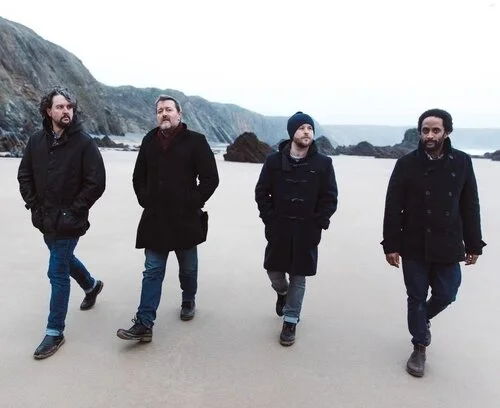
are the tremendous Elbow. The Bury-formed band are legends who have released so many great albums. I am going to select their essential albums, an underrated gem and their latest studio album. There is also an Elbow-related book that is worth getting. This is quite timely, as the band announced the forthcoming album, Flying Dream 1. Before then, I want to bring in some biography from AllMusic:

Cinematic British rock quintet Elbow rose to public consciousness with their acclaimed 2001 debut, Asleep in the Back. Boasting an orchestral sound, Elbow injected a wider range of emotions into their music than most of their guitar-based British peers at the time. While their first three outings established them as significant players on the U.K. scene, it was their sprawling fourth LP, The Seldom Seen Kid, that cemented their status, winning the 2008 Mercury Prize and setting a precedent within the band for self-production. It would inform their approach on subsequent albums, like 2011's Build a Rocket Boys! and 2014's The Take Off and Landing of Everything, the latter of which became their first U.K. chart-topper. Along the way, Elbow collected Brit and Ivor Novello awards, and their music was featured heavily in the 2012 London Olympic Games, where they performed during the closing ceremony. Released in 2017, their seventh album, Little Fictions, also reached number one in the U.K.

Vocalist Guy Garvey, drummer Richard Jupp, organist Craig Potter, guitarist Mark Potter, and bassist Pete Turner all met during the early '90s while attending college in Bury. After moving several miles south to Manchester proper, the band went through a couple of developmental stages before attracting the interest of Island Records, which signed the group in 1998. Island was bought out by Universal several months later, though, and Elbow found themselves dropped from the label as a result. After a partnership with EMI also dissolved, the guys linked up with local independent label Uglyman and released two EPs, Newborn and Any Day Now. The acclaimed EPs gained the band a contract with V2, which released 2001's equally tipped Asleep in the Back. The record was short-listed as a nominee for 2001's Mercury Prize and was issued in the States in early 2002.

Cast of Thousands, which appeared in 2004, proved to be a strong, critically acclaimed follow-up. Leaders of the Free World, inspired by political events and behavior in the media, was released in fall 2005, with The Seldom Seen Kid following in 2008. Although all three of Elbow's prior albums had enjoyed significant popularity in the U.K., The Seldom Seen Kid was the band's first album to go multi-platinum, eventually selling over one million copies and winning the 2008 Mercury Prize. Writing sessions for another album began in 2010, and Build a Rocket Boys! was released one year later, followed in 2012 by Dead in the Boot, a collection of B-sides and non-album cuts.

That summer, not only did the group's ambitious, specially written track "First Steps" serve as the theme to the BBC's coverage of the London Olympics, but Elbow also played two songs at the closing ceremony of the games, which helped to further bolster sales of their back catalog. Recording sessions for a sixth studio album -- eventually titled The Take Off and Landing of Everything -- took place at Peter Gabriel's Real World Studios in Wiltshire in late 2012 and were completed in their own Salford studio the next year. Following the January release of the single "New York Morning," the album appeared to strong reviews in March 2014 and became their first to debut at the top of the U.K. charts; it also became their highest-charting album in the U.S., peaking at 83.

Elbow released an EP called Lost Worker Bee in July 2015, after which the group took a brief hiatus. During this time off, Guy Garvey released a solo album entitled Courting the Squall in the autumn of 2015, and drummer Richard Jupp left the group in March of 2016. Elbow returned to action in February 2017 with the British chart-topping Little Fictions, which was, like every album since The Seldom Seen Kid, produced by Craig Potter. Two years later, the band returned with their eighth long-player, Giants of All Sizes, which featured guest appearences by Jesca Hoop, the Plumedores, and Chilli Chilton. The album debuted at number one on the U.K. charts”.

If you need a guide to the incredible Elbow, then the suggestions below should point you in the right direction. I have been a fan of the band for years. With every release, they offer something new. If you need suggestions as to which Elbow albums you should own, then I hope that the information below…

IS of use.

____________

The Four Essential Albums


Asleep in the Back

vvv.jpg

Release Date: 7th May, 2001

Label: V2

Producer: Steve Osborne/Ben Hillier/Danny Evans, Elbow

Standout Tracks: Red/Powder Blue/Coming Second

Buy: https://shop.elbow.co.uk/*/Vinyl/Asleep-In-The-Back-Vinyl-Reissue/6TJX13UA000

Stream: https://open.spotify.com/album/3T49xNB5QF2hZOCCGQ3Mra?si=IHMBZIaJShqJl909EhBMdQ&dl_branch=1

Review:

Inaccurately belittled elsewhere as a prog group, Elbow have instead done what so many groups struggle to achieve. They’ve made an album that works as one solid body. From the murmured Nowheresville desperation of 'Any Day Now' and its hypnotic organ grind through to the piano-rich nostalgia of the final 'Scattered Black And Whites', Elbow create an atmosphere of universal intensity.

To do this they use a lot of different techniques and a lot of different sounds, but this doesn’t make them prog. It’s simply that rarest of gifts: originality. You can hear this creativity at work as 'Bitten By The Tailfly'’s soft-focus atmospherics are blown apart by guitarist Mark Potter’s scratchy new wave hook. Or when singer Guy Garvey hails the gift of life on 'Presuming Ed (Rest Easy)' over the most regal and dreamlike of keyboard riffs, or when a saxophone suddenly joins 'Powder Blue'’s mournful procession of melody towards the song’s climax.

But if Elbow’s music soars in many directions to reach its conclusions, Garvey’s lyrics remain grounded. These are not songs that try to disguise their meaning with imagery. Every word is relayed plainly by Garvey’s monochrome delivery, each one an integral player in its own gritty drama: there are songs about watching someone being swallowed by substance abuse ('Red'); about the fear of love growing old ('New Born'); about drunken mating rituals ('Bitten By The Tailfly'); about the rage of the spurned ('Coming Second'); and about ambition and self-loathing ('Don’t Mix Your Drinks').

This may make ‘Asleep In The Back’ sound an overly melancholic and heavy album, but one leaves its company feeling strangely enriched – a sensation familiar from another source. Seems that after all the pale imitators, Radiohead finally have a competitor worthy of healthy comparison” – NME

Choice Cut: Newborn

Cast of Thousands

dd.jpg

Release Date: 18th August, 2003

Label: V2

Producers: Ben Hillier/Elbow

Standout Tracks: Fugitive Motel/Not a Job/Grace Under Pressure

Buy: https://shop.elbow.co.uk/*/Vinyl/Cast-Of-Thousands-Vinyl-Reissue/6MSW13UA000

Stream: https://open.spotify.com/album/46C5u3MKZ7aZPyhFIuPQP4?si=JGYdJUseQ0CkppA7ojzGEw&dl_branch=1

Review:

There doesn't appear to be an Elbow consensus: they are their own band; they are the Coldplay it's OK to like; they are the Talk Talk for people who've never heard Talk Talk (or Catherine Wheel); they are somewhere between Supertramp and Superchunk; they are part of a succession of over-introspective, twaddle-peddling British rock bands. They are most of these things -- the positive things, at least -- at various points. On Cast of Thousands, Elbow's second album, the group does deserve to take its rightful place as one of the most respectable rock bands going. What separates this album from the debut isn't all that apparent on the surface. Downcast songs about relationships remain the stock in trade, but the sound has made natural advancements and the quality control is less prone to malfunctioning. In other words, they have followed through on whatever promise Asleep in the Back held; you could sense this would happen, just as you could sense that, after Lazer Guided Melodies, Spiritualized would make an even better record the next time out. However predictable, the minor differences add up to a lot. More so than ever, Elbow's greatest asset is that the band is capable of making big sounds without being bombastic or flashy. And they've tempered the characteristics that got them tagged as sad sacks, although that fact is mostly apparent in the lyrics ("place" rhymes with "virgin mother what's-her-face"; the payoff line in opener "Ribcage" goes "I wanted to explode, to pull my ribs apart and let the sun inside"). The only setback? Gospel choirs. Hopefully, at some point before they make their next album, they'll realize that their songs don't need background vocals from an entire congregation in order to feel redemptive -- or powerful. [V2 issued the album in the U.S. five months after the original U.K. release” – AllMusic

Choice Cut: Fallen Angel

The Seldom Seen Kid

ee.jpg

Release Date: 17th March, 2008

Labels: Fiction/Polydor/Geffen

Producers: Craig Potter/Elbow

Standout Tracks: Starlings/Grounds for Divorce/One Day Like This

Buy: https://shop.elbow.co.uk/*/Vinyl/The-Seldom-Seen-Kid-LP/0KZ713UA000

Stream: https://open.spotify.com/album/25KJ3Be6nm3mvFOOKZU2TE?si=RopxGxpVTzKbD9xSVqbuag&dl_branch=1

Review:

Bury quintet Elbow seemed symbolic of the general fatigue. The name oozed drabness. So did the photos. They looked unprepossessing even by the standards of an era when Badly Drawn Boy was held to be suitable rock star material, despite having turned up dressed as Benny from Crossroads. Prog rock was mentioned in their interviews. Eight years on, Elbow embody almost every characteristic of the middle-ranking, makeweight alt-rock band: the albums that stall outside the Top 10, singer Guy Garvey's parallel career as a radio DJ (part of BBC 6Music's apparently inexhaustible supply of bluff north-western presenters). Incredibly, given the current climate, they've survived as a major label act for almost a decade: formerly of V2, they're now on Polydor's Fiction imprint. Perhaps the home of Snow Patrol found something comfortingly familiar about the adjectives frequently attached to Elbow - epic, melancholy - and think they can sell them to the Tesco Clubcard massive.

If so, it's tempting to wonder what the target market will make of their fourth album's opening track. Starlings is certainly epic and melancholy, but also wildly off-message. It seems rooted in the dreamy exotica of Martin Denny - the backing sounds like shimmering steel drums, there's a woozy, wordless vocal chorus - disrupted by startling blasts of brass. For anyone who's spent the past eight years studiously avoiding Elbow, perhaps fearing the band's dowdiness was contagious, Starlings offers another surprise: it's an unequivocally fantastic song. Its melody dances around the hypnotic, horizontal backing; Garvey's voice is exquisitely careworn, the opening line seems to wittily acknowledge Elbow's nearly-men status: "How dare the premier ignore my invitations?"

Those who have studiously avoided Elbow - a group that, eagle-eyed readers may have noticed, includes the present writer - should be further surprised to discover that the rest of The Seldom Seen Kid shares Starlings' virtues, if not its sound. You could argue that the Led Zepish single Grounds for Divorce aside, it all moves along at roughly the same pace, and that said pace is just shy of an articulated lorry on a fuel protest. But it finds diversity elsewhere. An Audience With the Pope is audibly under the sway of John Barry's 1960s soundtracks. The Loneliness of a Tower Crane Driver sweeps along, episodic and majestic. A duet with Richard Hawley called The Fix sounds like the final stages of a competition to find Britain's most charming northern singer. You keep expecting Stuart Maconie to pop up and call it a tie: racing pigeons are mentioned at one juncture, which is perhaps laying on the aye-up a bit thick, but the song is utterly enchanting regardless. Meanwhile, the melody of Weather to Fly is so indelible that, were it equipped with the requisite surging chorus, it might provide Elbow with a hit; displaying a certain winning cussedness, it is equipped instead with a brass band.

Only once do they set their sights firmly on the stadiums. One Day Like This comes complete with singalong coda and lyrics about it looking like a beautiful day, but the grand gesture doesn't really suit them. Elbow excel at fixing on small, telling details, as demonstrated by Friend of Ours, a tribute to the late Manchester musician Bryan Glancy. In nine lines, it manages to perfectly conjure up both the kind of omnipresent, luckless but beloved figure that every local music scene boasts and the halting gruffness of men expressing emotions. "So - gentle shoulder charge - love you, mate," sings Garvey. Guitars echo and strings swell behind him. As they do, Elbow sound beautifully understated rather than underwhelming, less underachieving than desperately undervalued” – The Guardian

Choice Cut: The Fix (ft. Richard Hawley)

build a rocket boys!

sss.jpg

Release Date: 4th March, 2011

Labels: Fiction/Polydor

Producers: Craig Potter/Elbow

Standout Tracks: neat little rows/open arms/dear friends

Buy: https://shop.elbow.co.uk/*/Vinyl/Build-a-Rocket-Boys-Limited-Edition-LP/3IHU13UA000

Stream: https://open.spotify.com/album/7f2e28BTOg0IQiwUG6trp6?si=3KsujbleQhu6hrFP2q-PbQ&dl_branch=1

Review:

Build A Rocket Boys! takes most of the misery out of the Elbow equation, which singer Guy Garvey explained had something to do with the band’s success—a Mercury Prize, a platinum record, etc. It’s a strange admission to make, but a refreshing one: Life’s been good, so the songs have cheered up. Strangely, though, Rocket doesn’t embrace the band’s poppier side. Instead, it stretches out further into more spacious arrangements and experimentation, starting with the eight-minute “The Birds,” which somehow touches on both Brit-pop and prog. (Yes, that means it owes something to Radiohead.)

Garvey remains as clever as ever within this expansive new sonic palate, offering lyrics both witty (“You’re not the man who fell to earth / You’re the man of La Mancha”) and touching. (“Did you trust your noble dreams and gentle expectations to the mercy of the night? / The night will always win.”) There’s aren’t many huge hooks or clap-along BPMs—only “High Ideals” really bumps along—but Elbow more than compensates with ballads dense with sounds and inventive tinkerings. In other words, it isn’t the type of album that will easily find its way into the hearts of those in need of a quicker, simpler fix. But a bit of patience—especially from those with a propensity for grand Brits—will be handsomely rewarded” – The A.V. Club

Choice Cut: lippy kids

The Underrated Gem


Leaders of the Free World

eee.jpg

Release Date: 12th September, 2005

Label: V2

Producers: Elbow

Standout Tracks: Picky Bugger/Forgot Myself/Mexican Standoff

Buy: https://shop.elbow.co.uk/*/Vinyl/Leaders-Of-The-Free-World-Vinyl-Reissue/6TJZ13UA000

Stream: https://open.spotify.com/album/7o4viKB5Rqod8h2xcE60Tw?si=a8lTuTnNQGK3oiXBfmQywg&dl_branch=1

Review:

When Doves headed to the studio for the recording of their third album, 2005's Some Cities, they returned home to Manchester. With that kind of scenic inspiration and emotional attachment, Some Cities resulted in Doves' best of their career at that moment. It is mere coincidence that their musical mates, Elbow, have done the same for their third album, Leaders of the Free World. Such a coincidence is a bit comforting in the respect that Elbow do not stray from what they have previously done. Despite being cast as a gloomy bunch on their first two albums -- 2001's Asleep in the Back and 2004's Cast of Thousands -- Elbow trudge on as an emotional band. Singer/songwriter Guy Garvey doesn't wallow in failed relationships as much as he enjoys being cynical and playful about the world around him. Sure, Elbow's more melodic, pensive moments such as "The Stops" and "The Everthere" are classic heartbreakers, with piano-driven melodies lush in melancholic acoustic guitars and Garvey's somber disposition. Leaders of the Free World really comes to life when Elbow give in, allowing these songs to grow into something glorious. Album opener "Station Approach" and "Forget Myself" are brilliant examples of this. "Forget Myself" metaphorically points fingers at a media-obsessed culture that is equally blasé about its own issues. Garvey throws his hands in the air, sighing to himself to "look for a plot where I can bury my broken heart." The album's title track also criticizes a very questionable political system, demanding, "I need to see the Commander in Chief and remind what was passed on to me" as a storm of electric guitars mirrors an anxious, waxing delivery by the band itself -- "Passing the gun from father to feckless son, we're climbing a landslide where only the good die young." Elbow are a great band regardless of what it takes for them to find their footing. Leaders of the Free World is a bit more rock & roll than not, with guts and heart, because Elbow have finally embraced their powerful, surrounding space this time out. [The U.S. version includes a limited-edition DVD of videos for each song on Leaders of the Free World.]” – AllMusic

Choice Cut: Leaders of the Free World

The Latest Album


Giants of All Sizes

eee.jpg

Release Date: 11th October, 2019

Label: Polydor

Producer: Craig Potter

Standout Tracks: Empires/White Noise White Heat/Weightless

Buy: https://shop.elbow.co.uk/*/Vinyl/Giants-Of-All-Sizes-Limited-Heavyweight-Clear-Vinyl-Store-Exclusive/67W413UA000

Stream: https://open.spotify.com/album/4EqYFNisfHX1IPA0IoaKI2?si=2DYCIS2yRWOxdxd-Xv8cBQ&dl_branch=1

Review:

You can hear the influence in the complex but tightly woven mesh of instruments on Empires and the opener Dexter & Sinister, which starts out driven by a distorted bass riff not a million miles removed from that on The Seldom Seen Kid’s Grounds for Divorce, but seems to turn into a different song entirely midway through. Moreover, if it never lacks melodies – Seven Veils and My Trouble are particularly lovely – Giants of All Sizes digs into prog’s more disruptive side, the wilful awkwardness expressed by its jarring time signatures, unpredictable shifts and knotty cramp-inducing riffs.

The result is what you might call a dislocated Elbow, noticeably light on songs that might cause festival crowds to hug each other and raise plastic pint pots aloft, big on taking their signature motifs and upending them. “All together now,” offers Garvey midway through Dexter & Sinister. What follows isn’t a singalong chorus, but a rambling piano solo. Guitar solos you expect to be soaring inducements to punch the air never quite achieve lift-off: they rasp too harshly, come sprinkled with moments of squeaky discord or are possessed of an ungainly, staggering gait. When the strings arrive on The Delayed 3:15, they don’t provide the usual stirring, epic swell: they follow a twitchy, scattered pattern played on a clarinet. The net result is as agitated and troubled as the song’s narrator, who’s watching the body of a suicide being extracted from beneath a train by “pale-faced kids in rubber gloves, dressed as cops”. Doldrums, meanwhile, features a very Elbow-ish lyrical sentiment – “all of this stuff in our veins is the same” – but it’s depicted as a sentiment only “desperate men” would suggest. The song’s climax repeats the line over and over again, but defies you to join in. One voice distractedly mutters it, another wheezes and pants the line between gulps of breath.

It’s debatable whether Elbow’s patent brand of warmth and optimism really is redundant in the current climate. One of the striking things about Nick Cave’s rapturously received Ghosteen was how empathetic and hopeful its songs sounded, potentiated by the fact that empathy and hope are two things in short supply at the moment. But the galvanising effect on Elbow’s sound isn’t really up for question. Musically, Giants of All Sizes is richer and stranger than anything they’ve released since their commercial breakthrough. Even when it finally settles back into more comfortable lyrical terrain – My Trouble’s hymning of cosy domesticity, On Deronda Street’s paean to parenthood – the music strays beyond their usual comfort zone: ragged and underpinned by glitchy electronic beats. It suits them out there” – The Guardian

Choice Cut: Dexter & Sinister

The Elbow Book


Reluctant Heroes: The Story of Elbow

ee.jpg

Author: Mark Middles

Publication Date: 30th September, 2009

Publisher: Omnibus Press

Synopsis:

When Elbow won the Mercury Prize in 2008 for their fourth studio album - "The Seldom Seen Kid" - the accolade followed a 17 year long career marked by four classic albums and a cult following that cast them in the role of Manchester's best kept music secret. Elbow started out at a time when great songs and evocative lyrics were not generally recognised. Their music transcended genre, age and image, eventually finding it's own distinctive global audience as Guy Garvey evolved into one of the most brilliant and intriguing lyricists of recent times. This book charts Elbow's long journey from humble roots through modest success to international recognition. It features interviews with the band and those close to them to form the most complete band history to date” – Amazon.co.uk

Order: https://www.amazon.co.uk/Reluctant-Heroes-Story-Mick-Middles/dp/184772860X/ref=sr_1_1?dchild=1&keywords=elbow&qid=1630305776&s=books&sr=1-1

FEATURE: Madness, Mystery and Magic: Kate Bush’s The Dreaming: One of Her Most Extraordinary and Influential Albums

FEATURE:


Madness, Mystery and Magic

xx.jpg

Kate Bush’s The Dreaming: One of Her Most Extraordinary and Influential Albums

___________

THERE are new reasons…

 IN THIS PHOTO: Kate Bush at a record signing for The Dreaming at Virgin Megastore on Oxford Street, London on 14th September, 1982

why I am spending a little time with Kate Bush’s fourth studio album, The Dreaming. It was released on 13th September, 1982. Ahead of its thirty-ninth anniversary, I wanted to look back at one of my favourite albums. A new article has been published about the album that really fascinated me. In 2021, The Dreaming still remains fairly underrated. I do feel there has been a shift in perception since its release in 1982. Then, there was a degree of bafflement and dismissal from critics. The album got to three in the U.K. In the U.S., it barely made an impression at all on the charts. Perhaps many were not ready for something as experimental and textured. Preferring, perhaps, something more accessible and Pop-based, The Dreaming is an album that has been re-examined and won new ears. Songwriters and fans have discovered it and spread the word. Even though not many songs from The Dreaming are played on the radio (aside from the first single, Sat in Your Lap), this is an album that one needs to listen to in full! The songs are so interesting and nuanced. Bush’s production and songwriting is mind-blowing! Before coming onto a review and the article I mentioned, the Kate Bush Encyclopaedia talked about its release and Bush’s impressions of the record:

Upon its release, 'The Dreaming' met with a mixed critical reception. Many were baffled by the dense soundscapes Bush had created. Record Mirror wrote: "Quaint, admirable, unclassified, Kate Bush goes her own sweet way... production hard to fault... ranges from the ethereal to the frankly unlistenable." Sounds added: "I'm drowning in a sea of vocal overdubs". Melody Maker said in a favourable review that the album was indeed baffling but also interesting, labelling 'Suspended in Gaffa' the only "vaguely conventional track", adding: "It's the sort of album that makes me want to kidnap the artist and demand the explanation behind each track".

Kate about 'The Dreaming'

After the last album, 'Never For Ever', I started writing some new songs. They were very different from anything I'd ever written before - they were much more rhythmic, and in a way, a completely new side to my music. I was using different instruments, and everything was changing; and I felt that really the best thing to do would be to make this album a real departure - make it completely different. And the only way to achieve this was to sever all the links I had had with the older stuff. The main link was engineer Jon Kelly. Everytime I was in the studio Jon was there helping me, so I felt that in order to make the stuff different enough I would have to stop working with Jon. He really wanted to keep working with me, but we discussed it and realised that it was for the best. ('The Dreaming'. Poppix (UK), Summer 1982)

Yes, it's very important for me to change. In fact, as soon as the songs began to be written, I knew that the album was going to be quite different. I'd hate it, especially now, if my albums became similar, because so much happens to me between each album - my views change quite drastically. What's nice about this album is that it's what I've always wanted to do. For instance, the Australian thing: well, I wanted to do that on the last album, but there was no time. There are quite a few ideas and things that I've had whizzing around in my head that just haven't been put down. I've always wanted to use more traditional influences and instruments, especially the Irish ones. I suppose subconsciously I've wanted to do all this for quite some time, but I've never really had the time until now. ('The Dreaming'. Poppix (UK), Summer 1982)”.

The Dreaming is such a fascinating record! One can pull apart the lyrics and stories of each track. Then there are the compositions and the production. So layered and stunning…I am glad that there is some sense of reinterpretation and respect for a 1982 masterpiece. Before coming to the new article, I want to source from The Quietus’ compelling and deep study of The Dreaming in 2012 (on its thirtieth anniversary):

The album was not without its obstacles. She talked of a terrible case of writer’s block. Initially she recruited Hugh Padgham, due to the Gabriel/Collins connection. While she praised the engineer, he seemed both unsympathetic to her madcap approach (and allegedly her then fondness for pot, according to Graeme Thomson’s excellent bio, Under the Ivy). Either way he was committed to working for The Police & recommended his assistant Nick Launay. The pair, bonded by their experimental curiosity and youth, proved to have a more productive simpatico. They mic’d up corrugated iron tunnels around drum kits in an attempt to mimic ‘canons’. The Dreaming melts the gap between pre- and post- punk, Launay having worked with both PiL and Phil Collins, shared Bush’s disregard for the old/wave divide. As early as 1980, Kris Needs noted her ability "to break down musical barriers and capture true emotion". On The Dreaming, proggy shifting time signatures and textures vie with a wild energy and the kind of poly-rhythms deployed on another Launay job, PIL’s Flowers Of Romance (1981). Another engineer, Paul Hardiman, had worked with both Rick Wakeman and on Wire’s seminal first three albums.

The Dreaming was the real game-changer. Back in 1982, it was regarded as a jarring rupture. "Very weird. She’s obviously trying to become less commercial," wrote Neil Tennant, the future Pet Shop Boy, still a scribe for Smash Hits. He echoed the sentiments of the record-buying public. Even though the album made it to number three, the singles, apart from 'Sat In Your Lap', which got to 11 a year before, tanked. The title track limped to number 48 while 'There Goes A Tenner' failed to chart at all. It was purportedly the closest her record label, EMI had come to returning an artist’s recording. Speaking in hindsight, Bush observed how this was her "she’s gone mad" album. But The Dreaming represents not just a major advance for Bush but art-rock in general. Its sonic assault contains a surfeit of musical ideas, all chiselled into a taut economy.

Bush had pirouetted into public consciousness to such an extent that in May 1981, she was asked to play the wicked witch in Wurzel Gummidge. Campy light entertainment was still knocking at the door, still smitten with her theatrical excesses. However, the following month, 'Sat In Your Lap' unveiled Bush’s new aesthetic. Inspired by attending a Stevie Wonder concert, it’s a violent assertion of creative control, a final nail in the coffin of the so-called elfin pop princess. Pounding pianos and tribal drums dominate, frazzled synth brass puffs steam as Bush’s vocals veer from clipped restraint to harnessed histrionics, at times rushing by with Doppler effect. The lyrics scratch their head in search of epistemological nirvana, a pursuit akin to the arduous process of making the album. "The fool on the hill, the king in his castle" goes searching for all human knowledge and the more he discovers, he realizes the less he knows.

The Dreaming’s disparate narratives frequently seem to be tropes for Bush’s quest for artistic autonomy and the anxieties that accompany it; the bungled heist in There Goes A Tenner, the ‘glimpse of God’ in 'Suspended In Gaffa', even the Vietnamese soldier pursuing his American prey for days in 'Pull Out The Pin'. "Sometimes it’s hard to know if I’m doing it right, can I have it all?" she sings in 'Suspended In Gaffa', a Gilbert and Sullivan-esque romp in 6/8, as reimagined by Luis Bunuel. (She was also asked during the album’s recording to appear in a production of The Pirates Of Penzance). A peculiar mix of self-doubt and pole-vaulting ambition characterizes many of the songs here.

Another serpentine shape-shifter, 'Night Of The Swallow' deals with flight and imprisonment, a pilot begs his lover to "let me go" on a journey carrying potentially dangerous cargo (terrorists?). The lexicon of The Dreaming is rife with a similar tension: "wings beat and bleed" at windows, protaganists lock up their bodies like houses and then "face the wind" or recall "rich, windy weather" when incarcerated. Escapoligists perish "bound and drowned". An interpretive stretch perhaps but woven into the lyrics is the thrill and the threat of change: a move away from the prison house of public perception that had plagued Bush in a lot of ways or confronting her own limitations. It could even be wrestling with the surrender to the discipline of rhythm. Its presence ebbs and flows, a rigid backbone that frequently crumbles, giving way to more free-flowing musical passages.

The proviso Bush had for The Dreaming was that everything was to "be cinematic and experimental". Movies inform The Dreaming as much as any musical influences. When describing 'Pull Out The Pin', she synaesthetically blurs the vocabulary of music with that of film, referring to wide shots and "trying to focus on the pictures" between the speakers. The song’s evocation of the Vietnam forest, "humid... and pulsating with life" is astonishing; all queasy protruding Danny Thompson double bass lines, musique concrete, Chinese drums and a distorted guitar sounding like a US soldier’s scratchy transistor. Much of these sounds were collated by drummer Preston Heyman in Bali. With its foliage of samples and cultures converging it nods to My Life In The Bush Of Ghosts, the landmark Byrne/Eno collaboration recorded in 79 but released in 81.

It remains a terribly sad record. A treatise on "how cruel people can be to one another, and the amount of loneliness people expose themselves to". Perhaps John Lennon’s murder and the dog-eat-dog ethos of Thatcherism had cast their shadow here. While the record was being made, the Falklands crisis escalated and unemployment rose. Many of The Dreaming’s characters seem to be caught in the vice grip of western ‘civilization’; the hapless robber in 'There Goes A Tenner', the aboriginal way of life on the brink of erosion on the title track, the Vietnamese soldier meeting his American nemesis on 'Pull Out The Pin'. They may symbolize the tightrope walk Bush felt she was embarking on with the record. But this dense and allusive stuff with twists and turns requiring as many footnotes as TS Eliot’s The Waste Land, shares that poem’s occidental disenchantment.

And like that modernist masterpiece, The Dreaming glimpses at a very metropolitan melancholy. Bush would never make an album in London again, a city she felt had an air of dread hanging over it’. 'All The Love', a forlorn musical sigh, features percussive sticks imitating Venetian blinds turning shut. It climaxes with messages from Bush’s actual malfunctioning answerphone: all very modern alienating devices, straight from the same world of Bowie’s 'Sound & Vision'. This was after all, the year Time magazine voted the computer as person of the year. Palmer’s ECM-like drowsy bass almost sobs with regret.

Throughout The Dreaming, sound speaks. 'All The Love' is subdued relief. But its constituent parts hover desolately in the mix, pitching a ‘lack of love’ song with a choirboy, somewhere between Joni Mitchell’s road trip jazz on 'Hejira' and the void of Nico’s 'The End'. Full of space & loneliness.

At the centre of this creative storm is Bush. The vocal performances are a multi-faceted assault on the singer’s sometimes squeaky, whimsical past. There are guttural, larynx-shredding exclamations juxtaposed with whispers, sometimes on even the softer songs. A master of counterpoint and vocal embroidery, which Bush attributed to her mother’s Irish ancestry, the singer layers the songs with kaleidoscopic variety. Even the mellifluous 'Suspended In Gaffa' has shrieking incisions. Her voice is largely deeper and thicker than before, the unbridled emotionalism now more potent, due to its stringent control. On 'Houdini', a pint of milk and two chocolate bars were consumed to give her voice the required "spit and gravel" ('Night Of The Swallow' and 'Pull Of The Pin' also have phlegmatic operatics)”.

sss.jpg

IN THIS PHOTO: Kate Bush in 1982/PHOTO CREDIT: Clive Arrowsmith 

Next year is the fortieth anniversary of The Dreaming. I feel there should be huge celebration then. Maybe we might get a reissue? Although Bush has dabbled in retrospection and reissues (she put out her albums in 2018 remastered), we have not seen extras and demos of the studio albums. I can only imagine what is in the vaults; the material Bush recorded for The Dreaming that was not used. Although Hounds of Love (the 1985 follow-up) is her most-acclaimed work, The Dreaming, to me, is as astonishing and accomplished. It is an album that means so much to different people. Ann Powers wrote a very personal and moving piece for NPR last month. I would encourage people to read the whole thing. I have selected some extracts that moved me:

There are so many ways that women in particular are made into monsters. As girls, they bleed too soon, or grow too fat, or remain too boyish. They have the wrong color skin in societies that have turned lies about race into law. Becoming pregnant, they cannot contain themselves, losing the baby, or losing their firm bodies after the birth. Failing to become pregnant, they find themselves marked as barren, bony, half. Women may be called monstrous simply for keeping to themselves, unkempt and unbeautiful, especially as they age. Or for the opposite — claiming space with too large a footprint. Women are identified as monsters for being, speaking, changing, being alive. Some are punished openly for these violations. Most carry the judgement within.

Occasionally, a woman – usually an artist — will make it her mission to speak as the monster others fear her to be. Living through abnormality, she sees something else in it. Potential to claim the ugliness, to refine it like blood turning into energy inside her body, until it lends strength. Shape-shifting can become shame-shifting. The voice of the monster says, I am here, mine enemies, I feel with every fiber of my being, I am wholly myself and have the right to be alive.

My Kate fandom grew rapidly and in isolation, like oleander in a terrarium. My roommates thought she was weird, removing her records from the shared stereo in our dingy living room to put on The Cure. The ode to her greatness I wrote for the balding, leather-jacketed editor who'd given me my first byline got killed. Too florid, he said. I piled up lines in my journals using green and purple ink. "I am Athena — I am Diana — I am my own answer," I wrote, quoting a Kate song about childbearing in the same paragraph. "There's 'Room For the Life' in my womb and in my soul. I am a mysterious and beautiful creature, glorying in the independent realization of my essence."

Throughout The Dreaming, a young woman expresses the pain and explores the potential of monstrous transformation. "With my ego in my gut, my babbling mouth would wash it up," Bush sings in the album's centerpiece, the drum-struck "Leave It Open." Her mouth issues moans and screams, sounds less and more than human. "Harm is in us, the power to arm," the backing vocalists, her consorts and twins, chant as she wails like a wind spirit. She will wrestle with unnamed forces within and without. By the end of the song she has found her statement of purpose, rendered in a complex layer of manipulated lines and backward tracks. "We let the weirdness in," she sings. She ingests the poison of others' perceptions and her own fears and transfigures.

I can still remember lowering the needle onto the vinyl in that junk-furnished living room, laying on the floor right beneath the turntable, turning up the volume until the speakers shook. The drums on The Dreaming announced it as something new. I knew next to nothing about African music at 18, but I could recognize syncopation, which brought the noise to Stravinsky's "Rite of Spring" (my verging-on-ex boyfriend, a classical cellist, had turned me on to that) and the swagger to the artist who ruled the speakers at arty kids' parties that year — Prince. "Sat in Your Lap," The Dreaming's first track, hit with a huge bass drum intermingled with something else. What was it? My ears tried to grab the song's moving parts. Kate screaming: "I must admit, just when I think I'm king, I just begin!" Bang, bang! Kate's brother Paddy huffing and ho-ho-hoing in the background, the keyboard bouncing like wheels on cobblestone, a child's shout surfacing deep in the mix. And her dragon call, bold, then beaten back, then hoisting itself up again.

The songs about Bush's own struggles were the ones that struck me the hardest. At their heart was a clanging rage, partly stemming from Bush's impatience with being objectified as either a nut case or a sex symbol. I felt trapped like that, for other reasons. Just starting to find my feet as a writer, covering the all-ages beat for Seattle's favorite rock rag, I felt like a lumpy alien among the sarcastic men and too-cool women who hung out in the office located over the Rendezvous bar. I'd dash in and out of my editor's office, hoping no one would try to talk to me. At school I was in over my head, trying to understand Joyce's Ulysses as taught by a Great Scholar who never addressed me beyond an occasional curt correction. Most of my brain space remained fixated on the two subjects I'd brought with me from Catholic high school: God, whom I was trying desperately to reinvent to accommodate my loosened morals, and boys, the main impetus for the loosening. "I don't understand why I, who am a decent, kind, and religious person, keep getting cheated out of happy romance by falling for jerks," I wrote in my journal. "I ought to go to a therapist."

I did not go to a therapist. Instead, I sank my whole monstrous body into The Dreaming and imagined myself shape shifting as Kate could. What made it seem possible was the struggle I could hear in every track. She was teaching herself how to be a new kind of musician; I needed to be a new kind of me. The fight inside me pitted my longing to become shameless — to own that punk attitude the prettier, thinner girls around me seemed to effortlessly adopt — against the shame I felt inside. Shame about being too fat, too loud, not the kind of girl the rock boys I wanted wanted back. Shame because I slept with those guys anyway and then they turned away from me. Shame because my mother still thought I was a virgin. Shame when I spoke too much in class and the male professors raised their eyebrows. Shame when I didn't speak up, standing in the kitchen at punk parties dominated by playful fistfights between the boys while the girls slinked off to smoke menthols on the porch. Shame because, since the day my seventh-grade classmates had scorned me for leaving period blood in a lavatory toilet, I'd known I was hideous”.

I have always been baffled how The Dreaming never got the respect it deserved. Bush threw herself into the album fully. Even if the material is not that commercial, it is so awe-inspiring and important! Bands and other artists who were producing similarly experimental music in the 1982 were not getting the same sort of dismissal. As I say, The Dreaming has found new love; people judging it as a whole, rather than on the singles – apart from Sat in Your Lap, it was not a great showing in terms of chart positions! After thirty-nine years, it remains this mind-bending and wonderous album from a musical genius. Every time I listen to it, The Dreaming elicits…

SO many moods and reactions.

FEATURE: (What's the Story) Morning Glory? The Zoe Ball Breakfast Show on BBC Radio 2

FEATURE:


(What's the Story) Morning Glory?

IMAGE CREDIT: BBC 

The Zoe Ball Breakfast Show on BBC Radio 2

___________

I have a bit of a quandary…

 PHOTO CREDIT: BBC/PA

when I listen to the radio weekday mornings! I am a massive fan of Lauren Laverne and always tune into her BBC Radio 6 Music breakfast show at 7:30 (although there is a schedule change from next month that will change the show time). Starting an hour earlier is Zoe Ball on BBC Radio 2. I have been listening to Ball for years. When she used to present children’s T.V. back in the day, I was a devoted viewer. She is a legend who is a phenomenal broadcaster! There is no anniversary or real significant reason for posting this feature. I have been writing a lot about BBC Radio 6 Music and how essential the station has been through such a hard past year or two. I have been listening to Zoe Ball a lot more (switching between her and Lauren Laverne) because she is this very warm and embracing person. Not insulting to say a mother-type figure, the combination of great music and the affection she has for her listeners and team – including Richie Anderson and newsreader Clare Runacres – has won me and millions of others. I don’t think that it is an age thing (I am thirty-eight). Many people my age listen to BBC Radio 2, so I think that radio in general has converted a lot of people. I have written about Lauren Laverne quite a bit, and my affection for her is limitless – she is someone who I have to listen to. Zoe Ball is an iconic broadcaster who delivers such essential listening weekday breakfasts.

She is a joyous voice that spins darn good tunes, plus she brings the listeners in and has a real rapport with everyone. This is a love letter I guess. I can only imagine how great it must be to work on the team and arrive at Wogan House, London to work alongside Ball – the getting up at silly-o-clock every weekday loses some of its sting! Although I listen to Laverne the most, I listen back to Zoe Ball’s breakfast shows on BBC Sounds a bit later sometimes. Although the format of the show has changed - so that guests and live performances are conducted remotely -, the show has lost none of its magic and energy! I know Ball will be looking forward to the day when she can see guests in the studio. If you are someone who feels that listening to BBC Radio 2 is for certain people/age groups, check out The Zoe Ball Breakfast Show. Since 14th January, 2019, Ball has been at the helm of one of the most prestigious shows on radio. I have dived into BBC Radio 2 more during the pandemic. I love listening to Sara Cox, Claudia Winkleman and Jo Whiley. Of course, Ken Bruce has been part of my radio listening life for years! I would love to work at the station one day, as you have all these fantastic broadcasters who have so much respect for one another – I like to think that they all used to hang out outside of work and will do so again when things improve!

I will finish up with an interview from back in June. Ball has not long celebrated five-hundred breakfast shows. At fifty, she has been in radio and broadcasting for a long time now. Even so, she still seems genuinely stunned by having this dream job and having listeners call up and interact. Someone who never takes her position for granted. The Guardian chatted with Zoe Ball about an incredible career that includes the phenomenal breakfast show:

Her job at Radio 2 took on particular significance during the worst of the pandemic, when her listeners, often key workers, contacted the show. She remembers “someone who was sat outside the hospital, about to go in for another shift. They were exhausted and they just sat for a minute to listen to the radio and fill themselves up with the strength to face it. So it was good to get those messages – but they had us in tears.”

She adds that, “The voice on the radio is a friend and is company,” and insists she needed it too, listening to her favourites Liza Tarbuck and Jo Whiley, and as much news as she could handle, which wasn’t much. “Bit of Emma Barnett, Adrian Chiles on Five Live, a bit of Evan [Davis] at PM. Just to hear some calm news, rather than the hysterical. And we had new listeners coming across from the current affairs space going, ‘Actually that’s quite harrowing, I just want to hear some Cher.’”

PHOTO CREDIT: Sophia Spring/The Observer 

As for the show, she and her team had just been getting into the swing of it before the pandemic altered what they could do. (The recording studio at Wogan House became skeletally staffed.) They were determined to turn around the reports saying that they had lost a million listeners since Chris Evans left, and the columnists crowing that Zoe wasn’t worth the money. Given what many people think about six-figure salaries, especially in relation to a public body, I wonder if Ball has ever felt able to thoroughly celebrate, to admit she’s smashed it.

“Er, no. I never think I’ve smashed it,” she says. “I don’t think you ever take any of it for granted at all. Erm, you know, honestly, I’ve never done what I do because of the money. I have worked for the BBC for a lot of my career and I kind of always did it for the love. People always go, ‘Oooh, well that’s nonsense,’ but it isn’t, I love my job, I love what I do. It’s great fun to try to entertain.”

I tell her that she will always be the woman who broke the BBC’s glass ceiling, that it’s a historic position to be in. “Well,” she says, slowly and carefully. “It did feel like a good, positive moment, that there was a big corporation willing to pay a woman about the same as what they had paid a man.” She relaxes a bit and lets out a laugh. “Sadly, for some, that story didn’t really seem to be that… And then suddenly you’ve got other headlines.”

 She is doing this interview because she has just done her 500th breakfast show on Radio 2, though on the day itself, when listeners phone in to congratulate, she says she can’t quite believe she’s still allowed to be in the job, and jokes that perhaps nobody has noticed. I do think she lives with the anxiety that it could all end. She says her dad taught her to go with the fear of live broadcasting and channel the anxiety into adrenalin, but she also clearly loves it. Really, truly loves it.

“I think there’s something quite lovely about coming to this sort of age and thinking, yeah! Do you know what? I mean, 30 years of working in telly and radio. I’ve had it pretty good”.

I will leave it there. I have always had the utmost love and respect for Zoe Ball! Like so many during the pandemic, her show has become even more important. There are moments of emotion and ‘reality’, though one also gets a lot of joy and laughter. It is a perfect mixture. As we head into the autumn, the weather will get worse and the days shorter. Having Zoe Ball and her team there from 6:30 of a morning definitely gives the day the kick and sunshine that one needs! I hope that Ball remains at BBC Radio 2 for many years to come. She has a family and lot of love there. That is extended by the loyal listeners that she has attracted. In terms of broadcasters, Zoe Ball is…

xxx.jpg

 PHOTO CREDIT: BBC

ONE of the all-time greats.

FEATURE: We’ve Only Just Begun… The Final Shaun Keaveny BBC Radio 6 Music Show

FEATURE:


We’ve Only Just Begun…

xxx.jpg

PHOTO CREDIT: Sean Adams

The Final Shaun Keaveny BBC Radio 6 Music Show

___________

THIS will be a fairly long review/tribute…

xx.jpg

PHOTO CREDIT: Charlotte Bond

but, as the irreplaceable and hugely loved Shaun Keaveny bade farewell to his loyal and passionate listening family yesterday on BBC Radio 6 Music, I wanted to reflect on the final show after fourteen years at the station. I also wanted to pay tribute to – not for the last time, I can assure you! – a broadcasting legend. I know Shaun looks up to the late broadcast master, Sir Terry Wogan. The love he has for the much-missed icon has been clear. Modestly, Shaun says that he can not measure up to Terry’s genius and legacy. I think, if you listened back to the show yesterday (it was between 1 and 4 p.m.), many would strongly disagree! In the weeks leading up to the final broadcast, Shaun ran a feature: Shaun’s Show Stopper. It was for a listener to guess which song would end the final show. I guess it would be ABBA’s Thank You for the Music (which was played yesterday). As it was, it was the Carpenters’ We’ve Only Just Begun. Listeners (incorrectly) guessed songs that it could be. Shaun kicked himself because he felt their ideas were better and made more sense. I don’t think he could have been further from the truth! The pitch and timing of such a memorable song was perfect. It was an emotional hit and a gentle song that we needed – if he went out on a big and loud track, then it would not have resonated as much.

The lyrics are especially relevant and true. Consider the lines “Before the risin' sun, we fly/So many roads to choose/We'll start out walkin' and learn to run/(And yes, we've just begun)”. Shaun has so many options ahead of him! Broadcasting companies and pretty much everyone will be bidding for his services. His adoring listeners and those who have supported him through the years will follow him with love wherever he goes. I am so sad that he is no longer at BBC Radio 6 Music – though I know that, very soon, we will hear him broadcasting again. I keep joking that he should get a BBC Radio 2 show, as he seems pretty comfortable on the station – though, as it also broadcasts out of Wogan House, London, it is sort of like returning to his old job but not (though many of us would kill to keep him in that building where he belongs!). I will round up by talking about his supporters and the people who turned out to celebrate his final show. The music chosen for the last show was wonderful. The first full-length song was Simple Minds’ Don't You (Forget About Me). There was a theme running in terms of titles – as we heard The Beatles’ Hello, Goodbye and The Sundays’ Here’s Where the Story Ends soon after. The tracks were so good and well-chosen. A mix of genres and time periods, it was almost a shame that he had to play songs from the BBC Radio 6 Music playlist and could not select a few more personal favourites – maybe some of The Wedding Present in the mix?

That is the thing with Shaun. Such a professional to the end. Dedicated to the listeners and the station, his last show featured some awesome music. Not only did him playing ABBA’s Thank You for the Music set most people off; by the time Crowded House’s Don't Dream It's Over was played near the end (the antepenultimate song), I think everyone listening was a mess! There were some special contributors on the show. Al Murray was on the line and read a beautiful poem about Shaun. Simon Pegg was also on hand (from the motorway!), where the two old friends shared some memories and had a great talk. It was emotional but not too sentimental. What shone from them as well as everyone who texted and emailed was the respect there is for Shaun! A broadcaster who, for years, has made us smile, laugh and feel like we have someone in our corner and taking care of us, that void will be felt far and wide! That is one of the saddest things about Shaun going. It is not that we cling to the routine and hate change even though it needs to happen sometimes. It is the presence and importance of that person that leaves. Even if it is a radio show, it means so much to so many people. To take that away after so many years is gutting. One of the main reasons why I have been tuning into BBC Radio 6 Music for so many years is because of Shaun. The cornerstone of the station, he is a broadcaster who brings humour, warmth and a unique style.

ss.jpg

 IMAGE CREDIT: Gus Hoyt (a.k.a. Gus from Bristol)

He is almost a classic type of broadcaster that does not exist anymore. Not that the station lacks great broadcasters…but Shaun is unmatched and an enormously popular figure. I hope that there is a way to preserve the last show Shaun delivered, as it is such an astonishingly powerful and beautiful three hours of radio! The playlist was wonderful and stirred so many emotions. He was his usual blend of funny, cheeky, witty and, well…Shaun Keaveny. The final link (the last couple of minutes) was tear-jerking, heart-breaking and shocking. Shaun paid tribute to everyone who has been there through the years. From, perhaps, one of his best friend, Matt Everitt (who was in the studio during the show, and you know the two will work together again soon) to producers Phil and Zhara (apologies if I have misspelled her name!), through to his wife and former colleagues. A beautifully-written and poetic farewell, those who were fortunate enough to work with Shaun and call him a friend should count themselves very lucky! Shaun said, in his speech, how radio is not ephemeral. It is so much more than that: it is a community. Shaun talked about (the show) this garden being sown and blossoming. The listeners who have supported him and listened through the years helped it come together and flourish. They were such beautiful and honest words! Radio, especially during the past eighteen months, has been so much more than something temporary. It has been a lifeline and a sanctuary. A comfort and safety. Having Shaun keep us lifted and loved was so appreciated and invaluable – and we all will miss that so much!

One of the revelations of his speech was the fact that he was told his show would not continue. We all felt that he made the decision himself and wanted to move on. Knowing this was not the case provoked anger on social media. It is so painful to know that he did not want to go (not now at least). I cannot understand the logic and rationale behind pushing aside someone who helped make the station what it is! Shaun was among the most vocal people to protest when BBC Radio 6 Music was threatened with closure years ago. He has stuck with them ever since and made us all so proud! Even after telling his listeners such a shocking fact, Shaun was pragmatic, dignified and strong. He did not accuse or swear. He did not get angry. Instead, he bravely explained how this (his departure) was part of the ebb and flow. Although we may never hear him back on BBC Radio 6 Music, he is always in our heart – and, as he said, the listeners will always be in his! The phenomenal love that was shown for him through his fourteen years goes to show what a human he is. Of course, there were so many tributes and tweets posted on his final day. Even today, ‘the morning after’ as it were, there are heartfelt posts and so much affection.

The legendary Craig Charles takes over the afternoon slot. He will do a sterling job, though it will be so strange not to hear Shaun on that slot. We will miss his impressions and his features. The way he leaves some dead air and then goes “Ha!”! – almost like a father putting his hands over his eyes and then going “Bo!” to make his baby laugh and know that he has not disappeared (or something more elegant!). I saw Shaun outside of BBC Broadcasting House a few times through the years before his shows. Even though we never met or spoke – but I was there at Maida Vale when he presented his last breakfast show in 2018 -, I felt like I did know him. Here is someone who delivered incredible radio year in year out. We will miss that. Not hearing him and Matt Everitt (who presents the music news) on the same show. Him and Georgie Rogers (who also presents the music news) in the studio together. Such losses! From producer Phil to Small Claims Court, to the always-incredible selection of tracks he plays and the way he supported so many upcoming artists (Self Esteem and Penelope Isles), Shaun’s departure will reverberate for a long time. Loved by musicians, actors, creatives and pretty much everyone from all walks of life, he built a community; a beautiful garden and verdant Paradise that we all felt connected in. It is such a shame that we no longer get to experience that. Shaun will continue and keep himself busy. I know that everyone who listened to him on BBC Radio 6 Music will follow with interest. He is on Twitter, so we cannot get rid of him that easily!

It was especially touching yesterday hearing how many of his listeners travelled down to London to toast him and get together. At a pub around the corner from Wogan House – not sure if it was The Stags Head? -, regular listeners and contributors including Charlotte (from Bristol), Matt from Consett and Beth were there. I was lucky myself, as I was working yesterday from Cleveland Street – it is mere metres from Wogan House, so I could have nipped for a drink without too much of a commute! The fact that his loving listeners made those journeys and came so far to lift a pint (or two!) was one of the most emotional moments of his final show. Shaun got to speak to them in The Open Arms (a fictional pub where he speaks with listeners and the caller gets to choose a drink and have something played on the jukebox). I know that Shaun got to drink with them after the show (as one of the first photos in this feature documents!) – going to prove how in touch he is with his fans and being so ego-less and brilliant. I am going to end (I hope he doesn’t mind) with a video from Matt from Consett that captures Shaun, Matt and producer Phil being carted/taxied down the street waving and looking pretty merry!

After the tears and cheers, there will be some sore heads today! His fan club, the Keavenettes (courtesy of Charlotte Bond) were there to salute a hero of theirs. I am not sure what direction the evening took, but I know there would have been so many people wanting to buy Shaun a pint and wishing him well. He was one of the people. He was one of us! I, personally, wanted to thank him for all the joy he has given me through the years (I hope our paths cross at some point down the line). BBC Radio 6 Music were so lucky to have Shaun Keaveny. He is a major reason as to why the station is so popular and must-hear. Even though the end of a fourteen-year run at BBC Radio 6 Music is so sad, the Leigh-born legend will be starting a new chapter today (make sure you subscribe to his new podcast, The Line-Up with Shaun Keaveny). To paraphrase the Carpenters’ song…

HE’S only just begun.

FEATURE: Spotlight: Samantha Crain

FEATURE:


Spotlight

PHOTO CREDIT: Lainey Conant 

Samantha Crain

___________

ONE of the most interesting artists…

on the scene today is Samantha Crain. She is a Choctaw songwriter, musician, producer, and singer from Shawnee, Oklahoma. I have not heard too many Choctaw artists. It is fascinating learning more about Crain’s heritage and hearing her sing in Choctaw. Crain  won 2 NAMMYs (Native American Music Awards) in 2009 for Folk Album of the Year and Songwriter of the Year. She also won the Indigenous Music Award for Best Rock Album in 2019. I am going to focus on her most-recent album, 2020’s A Small Death. In mid-2017, Crain was involved in three car accidents within three months. It left her in physical and mental pain and without use of her hands. Unable to write or play, she dictated voice memos to her phone. It is an amazing and harrowing story that led to one of the most memorable albums of last year! I can only imagine she must have been going through after her third car accident. Such a traumatic and terrible time where she might have wondered whether she would write and perform again! Although there is rumination, pain and sorrow through A Small Death, there is light and beauty. It is a naked and honest album that will blow you away. A Small Death is Crain’s sixth full-length release. I would advise everyone to check out her previous work. I am going to start by bringing in an interview from Secret Meeting. They spoke to her last year about A Smell Death and where the title came from:

The album title itself poses a curious sentiment. The image of a small death becomes almost oxymoronic – the idea of everything ending completely, but only by a fraction. ‘Through that traumatic moment in my life where I had lost feeling in my hands, and was really grappling with my identity as a person outside of being a musician, it occurred to me that everything is sort of always starting over again at various points in our life,’ Crain explains on the album title. ‘It’s just trying to convey those points in your life where you are hitting the restart button.’ The title is taken from Joey, a song literally centered within the tracklisting, allowing Crain to almost hit this restart button again and again through the record’s lifespan.

In the height of the trauma, Crain has been living through her difficulties, both mental and physical, which left her unable to write music. Her relationship to music, from how she plays guitar to what she searches for through her lyrics, has had to evolve, to adapt from this period of emotional and physical upheaval forced upon her. ‘I feel like this particular time in my life forced a new way into writing,’ she tells us. ‘Since I was shutting down, and becoming a forced convalescence, I was keeping audio diaries, more as a therapy tool; I never thought they would become songs.’ An introspective therapy tool, these audio diaries informed the lyrics on the record. This period of inertia has also played a dictating role in the ways Crain can play music. Eventually regaining the strength in her hands to pick up her guitar, she has had to make concessions in musical complexity, for the sake of being able to make music. ‘I’ve had to veer more into open-tunings, because I still struggle with my hands,’ she explains. It is an interesting move away from how I would traditionally write songs.’ This change against the tide of tradition has not hampered the record though. Rather, the lyrical depth is thrust to the front, confronting the listener as intently as Crain confronts herself.

cc.jpg

 ‘This record was really cathartic for me,’ she later explains. ‘I think different people create for different reasons. Some people create to process things while they’re happening, and some people create to move on from something after they’ve spent time processing it.’ Likening her cause to create to the latter, she seems grounded and reflective; ‘I’ve spent all this time processing these traumas, but now that I can create this record, I can move on from it.’ Developing these songs unknowingly, without the context of a record in the initial stages, has allowed Crain to beckon this sense of catharsis. ‘It freed me up to exist outside the normal context of what I would be comfortable including in songs in the past,’ she says. ‘It has let me dive into those deeper layers of the autobiographical, self-confessional aspects. I have always considered myself to write close to the heart, but because I didn’t have this [self-built] construct of how songs should be or how they have been in the past, it has lent itself to something that hits a little bit deeper.’

Not only is this depth of her self-confessional nuance present through her lyricism, it informs the record’s soundscape too, in its slow-moving climbs and sombre tones, at points creating a feeling akin to waking from slumber. Self-producing the record has allowed Crain to ensure this feeling is preserved throughout, likening it to the sense of being in a fever dream. ‘[It’s] like that feeling where you remember something, not innately, but you remember the memory of it. Like whenever there’s a story that’s been told in your family, for years and years, and it becomes part of the canon of your reality,’ she explains. ‘The reason why that was the feel I was trying to convey in the production of this record is because that’s how I feel about these two years in my life. I know I was the person who went through this heightened emotional and physical stress, but I don’t remember that innately, it feels very dream-like.’ This feeling is most clearly addressed on Pastime – created through a textured background vocals of chanting aums, creating for Crain the effect of this ‘trance-like, meditative feeling, where you can’t tell if you’ve been listening to a song for 30-seconds or 30-minutes. So that was the experiment – to bring that feeling into the record.’

The penultimate track on the record sees Crain singing in Choctaw – her ancestral language. Written in the mode of protest song, We Shall Overcome, When We Remain bears great significance to Crain, from rewriting stolen tradition, to cultivating and celebrating her heritage. ‘Writing in the Choctaw language, over the last few years, is something that has become really important to me,’ she says. ‘Mainly because I believe it is the one way, the most important way to hold on to the survival for those indigenous cultures and tribes.’ Continuing, Crain explains the importance of surviving indigenous languages in light of responses she has had to previous records – highlighting a widespread ignorance towards indigenous peoples. ‘I even ran into [this ignorance] reading reviews of my record, where it mentions my heritage isn’t apparent in my music, which just is not true,’ she tells us. ‘What that is doing is playing into the stereotype of what little knowledge people actually have of Native Americans; of what they do and how they live. It makes me think if I’m not playing a hand-drum or a flute, then I’m not making indigenous art. Which is really belittling. I think it’s really important that people understand that if I make anything, if I make a little drawing right now on a piece of paper, if I write a poem, if I cook a meal, those are Choctaw because I am Choctaw.’ A tool for rebuilding indigenous identity and culture that has been wrecked by land removal and genocide, Crain further highlights the importance of continuing these languages through contemporary music. ‘I think it is a really useful tool to say, “It’s not possible for me to learn the songs of my ancestors, because I can’t find them anymore. They were taken from us. But I can write my own new songs in our language, and those can be new traditions to us.” That’s why it is so important to me. It can be quite a powerful thing to get young, indigenous people in the mindset of creating new traditions’”.

A new Samantha Crain song, Pick Apart, arrived a couple of weeks ago. I will include that at the end of this feature. I am excited to see whether we might get another album from the amazing songwriter soon. Last year, Americana Highways spoke with Crain and asked her about the importance of singing in Choctaw:

Americana Highways: A number of the songs (“Reunion,” “Pastime,” “Joey”) on your new album seem to have you looking back at your past and assessing how it’s affected your present. After a half-dozen albums, what led to such intense self-reflection?

Samantha Crain: I couldn’t use my hands. I think any sort of check in with mortality will cause self-reflection. As I was in a time of reconstruction following these traumas in my life, I began to search for and learn about who I was as a person outside of my self-appointment and identification as the musician, Samantha Crain. Without the physical ability to play instruments at the time, I spent time talk-writing poetry into a voice recorder, reading, walking, talking to people, living a quiet life. I felt like I was getting to know myself from scratch, peeling off a costume that I was put in as a child and allowing myself, for the first time, to dress myself and fully lean into my curiosities and sensitivities.

AH: “When We Remain” is written and sung in Choctaw. How important is it to you to be able to sing a song of such perseverance in the language of your ancestors?

SC: For many indigenous Americans, the traditions and connections to our ancestors were stripped from us, generations of abuse and genocide and dislocation created a huge chasm for us to truely know the ways of our passed elders. Therefore, it is imperative that we as indigenous Americans can create our own traditions and become empowered in the fact that “if I make something–if i write a song, if i write a poem, if i paint a picture, if i cook a meal–it is Choctaw, because I am Choctaw…no matter if it matches the colonial idea and stereotype of what would be considered indigenous art or creation.” The language remembers, the language connects us over that chasm that was forced.

AH: Before recording A Small Death, you suffered through some pretty significant physical ailments, You weren’t able to play music, which you’ve described as a sort of loss of identity. Now, with not being able to tour or play shows due to COVID-19, are you experiencing anything similar, or is this different?

SC: It is very different. It wasn’t the loss of being able to tour or play shows that distressed me, it was the inability to have use of my hands, for basic things too, not just for playing music. That is a very different circumstance. As an artist, I am used to pivoting, I’m used to feast and famine, I’m used to having to get creative in order to pay my bills….the pandemic is uncomfortable and hard, yes, but it isn’t a loss of identity.

AH: Your previous albums, for the most part, seem to have been more singer-songwriter-ish – that is, a little quieter, with simpler arrangements, etc. A Small Death has, overall, a bigger, more expansive sound. Was it a change that you had in mind while writing the songs, or did it develop more in the studio?

SC: I never think about a project I’m working on in reference to another one of my records while I’m making it. All production and arrangement are simply in service to the song and I try to follow that gut feeling. Looking back, I actually feel like A Small Death is quite reserved in its production and arrangements compared to some of my other records. So I just feel like we’re on different pages on how we view these albums.  I feel like my last album You Had Me At Goodbye was a very expansive and out there record and then my first record Songs In the Night was a full rock band on every song. So it’s possible you’re referring to one particular album that is quieter but I’m not sure which one you’re referring to, probably Kid Face or Under Branch and Thorn and Tree”.

I am going to round up soon. The reviews for A Small Death were pretty impressive. It is an album that people responded to. In their review, this is what American Songwriter had to offer:

Acclaimed singer/songwriter Samantha Crain has released her first album in three years. It’s the first since recovering from a debilitating illness which created such severe physical pain she was bedridden and couldn’t play or perform. This disc’s title, her sixth, implies the issues she persevered over to craft these eleven tracks.

Opening “The Echo” with lyrics “But then became the summer when my hands appeared so useless/I felt like a little baby and my pride evaporated like the water in a skillet…” just scratches the surface of the intense feelings stirred up in these often harrowing but passionately played and sung pieces.

Musically, it’s not all gloomy. Crain takes over the producer’s chair from veteran John Vanderslice (who successfully helmed her previous three releases) bringing in such unlikely instruments as pedal steel, trumpet, clarinet, accordion and saxophone, all infusing subtle textures to songs that might otherwise buckle under their lyrical weight. “When We Remain”’s lyrics of “When we remain, we will be the flowers and the trees and the vines that overcome the forgotten city,” is sung in both Choctaw and English (Crain is of Native American descent).

There are more moments like those in the stark, slow, melancholy “High Horse” where she says “I know the shape of a great heartache/I know the weight of a big mistake/I know the sound of a warm crescendo falling away,” than there are somewhat lighter passages such as “Pastime”’s yearning “And it feels like… you were always there.”

Crain’s striking vocals wrap around her indie folk/rockers with requisite sensitivity and intensity. She sounds appropriately dreamy on “Holding to the Edge of Night” then shifts into a thrilling higher register on the chorus of “And it is so good around you” in “Garden Dove.” She delves into this often wincingly personal material with a passion and honesty that can only emerge from deep within. There are times when it seems like you’re spying on the artist as she sings her penetratingly intimate lyrics.  Tunes like “Tough for You” recount a story that is likely ripped from her past. Its words of “I bit through my top lip when I was a kid and a ball of scar’s still there/And I remember so clearly the blood everywhere/A quivering chin and a single tear” reflect that often dark approach.

Listening closely to A Small Death (pre-order/pre-save) all the way through is like watching a melodramatic foreign movie; spellbinding and deliberately paced with an ambiance that leaves you reflective but anticipating better times are (hopefully) ahead”.

Samantha Crain is a terrific artist who is one you should know about! Even though she has been releasing music for years now, there are people who might not know about. Go and check her out. I know that we are going to see even more outstanding music from the Shawnee-born artist. In Samantha Crain, we have a marvellous songwriter…

WITH few equals.

______________

Follow Samantha Crain

eee.jpg

FEATURE: Second Spin: N.E.R.D - Fly or Die

FEATURE:


Second Spin

ccc.jpg

N.E.R.D - Fly or Die

___________

IT is hard to beat…

aaaa.jpg

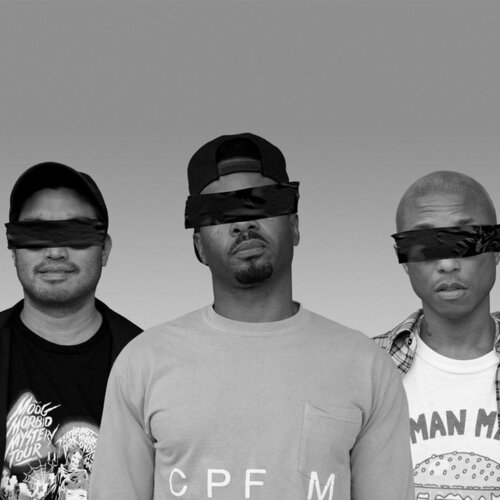
a debut album as flawless as In Search of... N.E.R.D Pharrell Williams, Chad Hugo and Shay Haley delivered a Hip-Hop masterclass in 2001. My favourite track from that, Rockstar, is one that I spin all of the time! Marrying great rapping and lines together with Rock guitars and big beats, it is both smooth and physically edgy. The album was released in Europe in 2001. On 12th March, 2002, In Search of... was released worldwide. The band recorded the second album, Fly or Die, during 2003. N.E.R.D taught themselves to play the instruments needed to perform the tunes live. It meant that they were more than singers, songwriters and producers – if that was not enough! Some feel that Fly or Die is a weak or less inspired version of the debut. Produced by The Neptunes (Pharrell Williams and Chad Hugo), there are some really strong songs on Fly or Die. The singles, She Wants to Move and Maybe are incredible! The album starts properly intently with Don’t Worry About It! The title track is awesome, whilst Drill Sergeant/Preservation is a fantastic way to end the album. Despite the odd weak track and nothing quite as electrifying as Rockstar, I think people should listen to Fly or Die. This was during a period where Alternative Rock and Rap Rock was, perhaps, not at its strongest and most prolific. They are genres that I associate with bands like Rage Against the Machine. Perhaps the last really suggest of great acts in these genres was when In Search of... was re-released in 2002.

2004 was an incredible year for albums. Alongside The Streets’ A Grand Don’t Come for Free and Kanye West’s The College Dropout, we had Green Day’s American Idiot and Eminem’s Encore. Perhaps Rap was a more prevalent and popular commodity - though Usher’s Confessions was an incredible R&B album. It is a shame that there were some mixed reviews for N.E.R.D’s Fly or Die. I will end with a positive review. This is what AllMusic noted in their assessment:

Unlike In Search Of..., originally made primarily on N.E.R.D.'s various machines and then reconfigured with assistance from funk-rock band Spymob, Fly or Die is kept almost entirely in-house. The ridiculous cover, along with first single "She Wants to Move" -- and its accompanying video, including a literal translation of the line "Her ass is a spaceship I want to ride" -- thankfully provide little indication of the album's true makeup. And the moments where the Star Trak hand sign gets flipped to a set of devil horns are mercifully fleeting, though "Backseat Love" is undoubtedly problematic -- it plays Dumberer to "She Wants to Move"'s Dumber. ("Lapdance" was Dumb.) The rest of the album isn't just noteworthy for subject matter that skips through child-parent relationship sketches, ecological reveries, and protest songs; the bright, bold Neptunes glaze that normally coats their chart-aimed singles of all stripes is applied to material that will leave many people baffled. The album sees N.E.R.D. rummaging through parts of their record collection that don't normally bubble to the surface in their production work.

Most disarming of all is "Wonderful Place," a seven-minute trip divided into halves. The first shows a chipper Pharrell striding through a sunny meadow, marveling at the natural wonders of the planet in spite of its troubles; with a horn-punched chorus ("My soul's in my smile/Don't frown, just get up get up") and other subtle splashes of Baroque pop elements, it owes equally to Burt Bacharach and the Left Banke. This dissolves into a fading whistle, only to give rise to a dramatic, synthetically orchestral and acoustic-folk tale about a near-fatal family fishing trip. Any parent of the past, present, or near future will be stirred, especially once Pharrell goes falsetto to emphasize the relief of the nearly drowned baby being rescued by his mother. Instead of pausing for effect, the album goosesteps into "Drill Sergeant," yet another two-parter. Half power pop bounce and half tumbling, doomsday pummel, the song pulls no punches with antiwar sentiments that target the government and media, and when a teeth-clenched Pharrell talks about his fear of blowing up, you know he's not talking about fame. Despite the heavy subject matter in a third of the songs, the album nonetheless carries a lighthearted, fun-loving lilt. At face value, Fly or Die is a rather straightforward rock record. To N.E.R.D.'s credit, no one else could've made this particular rock record. Ideas come by the bushel, hooks arrive when least expected, embedded jokes get discovered like Easter eggs. Nobody can tie all of these things together and make them glow quite like this. Apart from a ploy to get some rotation at your local mall's Hot Topic (Good Charlotte's Madden brothers make an appearance), they didn't appear to make this record for anyone but themselves. So while Fly or Die is one of the most creative and ambitious moments of the Neptunes' career, it might also be their least understood”.

 On Metacritic, Fly or Die holds a score of 68. There are some really positive reviews for the album, though some were on the fence. Wikipedia highlights a few reviews:

Rolling Stone (4/15/04, p. 147) - 3 stars out of 5 - "It's fascinating to hear these rap geniuses go undercover as a bar band you might hear rocking Journey covers in a bowling alley."

Entertainment Weekly (4/2/04, p. 62) - "Fly or Die is craftier and more multilayered than its predecessor....[A] set of clever, complex, studio-crafted pop--complete with musicianly, smooth-jazz licks--that doesn't owe allegiance to any one genre." - Rating: A-

Uncut (p. 91) - 5 stars out of 5 - "N*E*R*D can replicate machine hypersyncopation at the drop of a hi-hat. Prog-pop album of year."

Uncut (p. 74) - Ranked #18 in Uncut's "Best Albums of 2004" - "[A]n object lesson in eclectic art-rock....[T]his prog-pop classic reveal further depths of detail with every repeated play."

Mojo (p. 106) - 4 stars out of 5 - "This is an enthusiastic hymn to the terminally uncool, an un-ironic celebration of nerd-culture....They make a party you want to be invited to".

Perhaps people were expecting an album similar to N.E.R.D.’s debut on the follow-up. I cannot really point to many faults at all. Fly or Die is a really solid album that is packed with terrific music and reliably solid production from The Neptunes!

I will end with NME’s. They were a lot more positive and jazzed than many critics with regards N.E.R.D’s Fly or Die:

When Pharrell Williams once sang, "you can't be me, I'm a rock star" he seemed to be debunking the inherent ridiculousness and monomania that pop stardom brings, as much as he was celebrating it. Well, make no mistake about it - Pharrell is a capital-letters neon-lights Rock Star, quite possibly the finest, brashest, most balls-bared rock star we have at our disposal, and 'Fly Or Die' sees him trying on the title for size and finding that it fits just dandy.

This is still, more or less, a hip-hop record: the nuts and bolts are there, the hefty bass, the beats that thunder like rutting mastodons. But over and above the jeep beats, there is Williams and his wonderful world of whims and why-not?s, painting almost every track in glorious technicolour. He has clearly approached 'Fly Or Die' as the kind of project where the central aim is to show us all how clever he is, and as he flits from musical style to style like a hungry pop bee, you're pounded into submission because HE IS JUST SO GODDAMN GOOD AT EVERYTHING.

It starts as it means to go on - gigantically. 'Don't Worry About It' is truly awesome, a gigantic hard rock classic overladen with Williams' hysterical shrill funk vocals. Just as it reaches a full head of steam, it suddenly explodes into a rapturous, harmony-saturated break that Prince at his most Paisley Park would struggle to best.

‘Fly Or Die' is even more Big Rock, with the chaps slipping in sinuous G-funk breaks for good measure, but the fun really starts when 'Backseat Love' thunders into view. One part 'All Right Now' by Free, one part LL Cool J at his most swollen-bollocked, it is the best, by which we mean nastiest, slice of old skool lasciviousness allowable by law, and makes Har Mar Superstar sound like Cliff Richard. In fact, if Sir Cliff were ever to hear it, he'd cast off the V plates and fuck till his pods dried up. Allegedly.

The most amazing track on the album, though, is 'Drill Sergeant', for no other reason than that it is an absolutely fantastic guitar pop record. In fact, it sounds just like - I shit you not - the N.E.R.D at their most sunshined-up and effervescent and it WILL be a Number One. By way of a contrast, we then get the bludgeoning guitars of 'Preservation', the closest thing on here to 'Rock Star' with its monstrous slabs of fuzz and lyrical belligerence. Said guitar licks call to mind nobody more than everybody's favourite inquisitive smut bloodhound, Pete Townsend. And then by way of another contrast, we get 'Thrasher', which is the most straight-up hip-hop track on here with its unashamedly woofer-threatening thump-beats,were it not for the fact that it comes drenched with Sergeant Pepper-esque string arrangements. Elsewhere, Lenny Kravitz do ('Breakout', with its mosh-friendly chorus), a little more Prince, a little Curtis Mayfield…”.

I would advise everyone to listen to N.E.R.D’s music. If you have not heard Fly or Die, definitely give it a go. Songs She Wants to Move are played on the radio, though you do not really hear too much else from it. I love the album, and I feel it is a worthy follow-up to the remarkable In Search of… The fact Fly or Die reached the top-ten in the album charts in the U.S. and U.K. proves that there was demand for N.E.R.D’s brilliance. Seventeen years later, Fly or Die holds up. It is an album that you…

WILL want to play.

FEATURE: The September Playlist: Vol. 2: I’ll Say the Word

FEATURE:


The September Playlist

aa.jpg

Vol. 2: I’ll Say the Word

__________

THIS week’s Playlist…

zzzzzzz.jpg

 IN THIS PHOTO: Kacey Musgraves

has so many huge songs in the mix! Not only is there new stuff from Radiohead, Lana Del Rey, Kacey Musgraves, Chlöe, Sam Fender, MUNA (ft. Phoebe Bridgers), Ed Sheeran, and Glass Animals. There is music from Alicia Keys (ft. Swae Lee), Holly Humberstone, Tommy Genesis, and Hayden Thorpe. It is a packed and eclectic mix that should keep you occupied and energised! If you need a boost to get you into the weekend, then the songs below should do the job. It is a huge week for new music. I hope that this sort of quality and quantity continues to the end of 2021. Sit back and take in the very best of this week. It is another broad and quality-rich…

zzzzzzz.jpg

 IN THIS PHOTO: Lana Del Rey

SELECTION of tunes.   

ALL PHOTOS/IMAGES (unless credited otherwise): Artists

__________

xxx.jpg

Radiohead - If You Say the Word

qq.jpg

Lana Del Rey - Arcadia 

qqq.png

Kacey Musgarves simple times

xxx.jpg

Sam Fender - Get You Down 

aa.jpg

Chlöe - Have Mercy

aaa.jpg

MUNA (ft. Phoebe Bridgers) - Silk Chiffon  

ee.jpg

Ed Sheeran Shivers

aaa.jpg

Glass Animals - I Don't Wanna Talk (I Just Wanna Dance)

xxxx.jpg

Alicia Keys (ft. Swae Lee) - LALA (Unlocked)

aa.jpg

PHOTO CREDIT: Phoebe Fox

Holly Humberstone – Scarlett 

zzz.jpg

Tommy Genesis men

aaa.jpg

PHOTO CREDIT: Alma Rosaz

Remi Wolf – Guerrilla 

sss.jpg

Ms Banks – Go Low 

xxsd.jpg

PHOTO CREDIT: Jack Johnstone

Hayden Thorpe – Metafeeling  

ccc.jpg

Fickle Friends - Love You to Death 

zdf.jpg

Steps Wasted Tears

xxx.jpg

Amyl and The Sniffers Hertz

vvv.jpg

SZA - The Anonymous Ones (from Dear Evan Hansen Original Motion Picture Soundtrack)

bhh.jpg

Aaliyah Rock the Boat

opop.jpg

PHOTO CREDIT: Alexa Viscius

Big Thief – Certainty 

xxx.jpg

Yard Act The Overload

cvd.jpg

Kate Nash Horsie

ccc.jpg

Ari Lennox Pressure

xxx.jpg

Sabrina Carpenter - Skinny Dipping

gggf.jpg

Tirzah - Hive Mind 

zzzz.jpg

Josie Man - Stormy Skies (Diamonds)

xxx.jpg

Harrison Whitford – Meclizine 

ddd.jpg

PHOTO CREDIT: Nick Grennon

Yumi ZoumaGive It Hell

ccc.jpg

Charlotte OCMexico

fjfjkg.jpg

Foy VanceWe Can’t Be Tamed

PHOTO CREDIT: Adam Rosenbaum

 Hak Baker – Cool Kids 

xxx.jpg

screensaver – Skin 

fcff.jpg

PHOTO CREDIT: @andanotherwave

Harpy - Into the Dark

FEATURE: Childhood Treasures: Albums That Impacted Me: De La Soul - 3 Feet High and Rising

FEATURE:


Childhood Treasures: Albums That Impacted Me

jhhj.jpg

De La Soul - 3 Feet High and Rising

___________

THIS is another album that…

sss.jpg

 PHOTO CREDIT: Ebet Roberts/Redferns

I have featured before that I am revisiting now. Whereas before I have discussed the impact and importance of De La Soul’s debut album, 3 Feet High and Rising, on the wider world, today, this is very much about its personal relevance. Most albums I can include in features so that you can listen to it. That is not the case with 3 Feet High and Rising. Owing to a contractual stipulation implemented years ago, De La Soul’s music has not been available on streaming sites. There is some good news for fans of the New York Hip-Hop trio. As we can see here, their music is back in their hands:

De La Soul are back in control of their master recordings. Or so says Talib Kweli, who wrote in an Instagram post yesterday that he’d been told about this development by De La Soul member Maseo.

Kweli wrote: “Ladies and gentlemen, I spoke to Maseo from the legendary De La Soul today and it’s official… after years of being taken advantage [of] by the recording industry in the worst possible ways, De La Soul now owns all the rights to their masters and is in full control of the amazing music they have created”.

“Let’s salute Plugs 1, 2 and 3”, he added, “for sticking to their guns and showing us that we can all beat the system if we come together as a community. Let’s hear it for black ownership of black art! Congratulations fellas”.

The news follows the recent acquisition by Reservoir of the label that released most of De La Soul’s albums, that being Tommy Boy. At the time, many people wondered whether that deal could bring to an end the long running dispute between De La Soul and Tommy Boy which has meant that the group’s classic albums have been unavailable on the streaming services.

Following the deal, a rep for Reservoir told Variety: “We have already reached out to De La Soul and will work together to the bring the catalogue and the music back to the fans”. Meanwhile a post on the De La Soul Instagram around the same time read “woke up feeling a greater sense of peace of mind”.

It is good that such an iconic album might be available on streaming platforms soon. 3 Feet High and Rising was an album I remember coming to not long after it was released. Maybe it was the early-1990s. Before this, I had heard Hip-Hop and was aware of groups like Beastie Boys and Public Enemy. It seemed that New York in the 1980s was fostering so many hugely strong and vital bands who were taking Hip-Hop to the masses.

Some did criticise De La Soul, as 3 Feet High and Rising is flower power. It is a Daisy Age release that is more about jokes and the lighter side of life, as opposed political concerns, corruption and the experience of the Black community (although they do touch on that). Whereas diehard Hip-Hop fans and certain groups disliked their less-than-serious approach, most others have seen the genius of 1989’s 3 Feet High and Rising. One can compare De La Soul with Beastie Boys, in the sense that they blend myriad samples with songs that are witty and have an infectious charm. I am going to quote a couple of reviews for 3 Feet High and Rising, just to give a sense of what critics made of this debut masterpiece. As opposed some of the Pop and other styles of the 1980s, Hip-Hop has remained so relevant and fresh. One can listen to albums like 3 Feet High and Rising. One can get a perspective of the time in which it was made, though there is that sense of timelessness. Songs like Eye Know, The Magic Number and Buddy are classics. Throw into that mix Me Myself and I! Posdnuos, Trugoy and Maseo are so compelling and tight throughout the album. Writing alongside producer Prince Paul, we get a wonderful array of sounds and samples through the twenty-four tracks. It is quite hard to find 3 Feet High and Rising on vinyl. For that reason, many will welcome its arrival on streaming platforms soon!

Classic Album Sundays provided a detailed backstory and dive into a seismic Hip-Hop release. There are so many interesting revelations and interpretations:

Formed in the Amityvile area of Long Island, New York in 1988, De La Soul consists of Kelvin Mercer aka Posdnuos aka Plug One, Dave Jolicoeur aka Trugoy aka Plug Two and Vincent Mason aka Maseo aka Plug Three. The three formed the group known as De La Soul, directly translating to From The Soul, in high school and quickly caught the attention of producer Prince Paul with a demo tape of the song “Plug Tunin'”.

The group’s Long Island roots may help explain their unique, quirky, spacious and eclectic perspective. Once removed from the hustle of New York City, but close enough to be well familiar with the roots of hip hop culture and music, De La Soul expresses a side of the black hip-hop experience that may benefit from, and also be a benefit to, the space and distance they enjoyed to truly digest, re-interpret and create an evolutionary hip-hop sound based on playful wordplay, innovative sampling and, of course, their trademark wisdom laid out over positive and soulful grooves.

Despite their youthful exuberance and expression, moving through 3 Feet High and Rising quickly reveal that De La Soul possesses a wisdom and sensibility beyond their years. Perhaps this sensibility in no better expressed that through the consistent themes of love and respect for women, an issue that had until this time and continues to pervade hip-hop.

dddd.jpg

IN THIS PHOTO: De La Soul in Long Island, New York in 1989/PHOTO CREDIT: Janette Beckman 

Over a brilliantly wholesome musical composition that uses Steely Dan’s “Peg” and The Mad Lads “Make This Young Lady Mine” as a backbone, De La Soul offers an earnest and sincere love song aimed at wooing a target of their affection. Posdnuos summarizes his proposal, rapping “It’s I again and the song that I send / Is taking steps to reach your heart /Any moment you feel alone /I can fill up your empty part”.

Don’t get it twisted. De La Soul knows how to have a good time. And “Buddy” is one of the best examples of a De La track that shows the unbridled fun and camaraderie that De La Soul helped birth alongside their Native Tongues brethren.

Paraphrasing Angie Martinez from the 2011 A Tribe Called Quest documentary “Beats, Rhymes & Life”, Native Tongues was never about “Fight the Power” or “Fuck the Police”… we had other groups for that… Native Tongues was about expression and upliftment using the best tool out there: fun.

The Native Tongues is a collective of late 1980s and early 1990s hip-hop artists known for their positive-minded, good-natured Afrocentric lyrics, and for pioneering the use of eclectic sampling and later jazz-influenced beats. Its principal members are the Jungle Brothers, De La Soul, and A Tribe Called Quest. Built on the foundation of likeminded youngsters and support from hip-hop veterans DJ Red Alert, Afrika Bambaata and Prince Paul, Native Tongues stormed the gates of hip-hop in the late 80’s and early 90’s, with Jungle Brothers being the first to hit.

But next to hit was De La Soul. On 3 Feet High and Rising crew cut “Buddy”, De La layered samples from Commodores and Bo Diddley to create an era-defining party track with an accompanying music video featuring the entire posse. With contributions from the members of Jungle Brothers, Queen Latifah, Monie Love and Q-Tip, Posdnuos sums it up, rapping “Now when Tribe, the Jungle, and De La Soul / Is at the clubs our ritual unfolds / Grab our bones and start swingin’ our hands / Then Jenny starts flockin’ everywhere)”.

It’s likely no coincidence that De La Soul wraps up 3 Feet High and Rising with a simple message over a simple beat. The term D.A.I.S.Y. Age was coined by De La Soul: it stands for ‘DA Inner Sound Y’all’. This Daisy Age references and pays homage to the flower children of the 1960’s who pushed for social change while re-interpreting the ideas of social awareness and activism for a new age.  As one observer has written, “at a time when we had bands such as Public Enemy and N.W.A. penning these fired-up, political and vastly important songs, there was a movement emerging that took a more peace-and-love, pacifist approach; the need for us all to come together and create some love.” THIS is De La Soul’s legacy. More than legacy, it is their live that they live and share with us through their art.

Peace, love, justice, equality, fun, togetherness, self-expression and self-worth. Yep, De La Soul gave us the blueprint, assembly instructions included. And if we’re following De La’s blueprint, let’s all take a look at their May 27th, 2020 post on what we should be doing and thinking right now”.

I will end with snippets from Pitchfork’s extensive and fascinating investigation of 3 Feet High and Rising from 2018. Alongside the brilliance and innovation through the album, the trio received backlash and could not have anticipated the sort of reaction some gave them:

While he was still in high school in 1984, Prince Paul had been recruited into the Brooklyn crew, Stetsasonic, to serve as their showcase DJ. Stet sold itself as the first hip-hop band, a live act with studio chops, even predating the Roots. But as the scene evolved away from Old School showpeople toward New School bedroom lyricists and producers, Stetsasonic changed its style. Their 1988 album In Full Gear offered one path forward for hip-hop: a slick, high-def sound. Paul had become a key member of the production team, but he felt under-credited, and he also knew that the New York sound was shifting toward dusty sampler aesthetics. (Polish and sheen would not return to the forefront until Dr. Dre’s 1992 debut The Chronic.) He felt creatively stifled.

At the same time, Posdnous, Trugoy, and Mase were putting together “Plug Tunin’,” a song that had evolved out of a live routine the crew rocked over the “Impeach the President” break. But then Pos pulled from his father’s collection a rare doo-wop record by the Invitations called “Written on the Wall.” (Later, Tommy Boy stirred a small frenzy among the nascent crate-digging community when it offered $500 to the first person who could identify the sample. The prize went unclaimed for a long while, firmly establishing De La Soul and Prince Paul as beat-diggers par excellence.)

In the Long Island tradition of leaving no record unturned, “Written on the Wall” was on the B-side. Printed on the flip were helpful instructions for radio DJs needing to know what to play: “Plug Side.” From this odd detail, De La Soul developed an album concept: They were transmitting their music live from Mars through microphones—Pos on Plug One, Trugoy on Plug Two. It was an audacious step away from both Old School party-rocking and New School realism. Their lyrics didn’t lean too heavily on Five-Percenter cosmology or Afrocentric ideology for conceptual depth. They were striving for their own new rap language.

Armed with this obscure 45, a cassette deck, and a lo-fi Casio RZ-1, the crew slowed the routine to a toddler crawl and recorded it. They rocked head-scratching metaphors (Plug One: “Dazed at the sight of a method/Dive beneath the depth of a never-ending verse”) and odd riddles (Plug Two: “Vocal in doubt is an uplift/And real is the answer that I answer with”) in neatly matched cadences. When Paul heard the hissy demo, he knew he had found kin. He took them to re-record “Plug Tunin’” at the hip-hop hotspot, Calliope Studios, and they were on their way. Tommy Boy signed them to an album contract soon after and De La Soul began building their sonic world on a shoestring budget of $25,000. Over a two-month period, they learned how to work the expensive studio gear as they made the record.

The Black suburban imagination of Long Island rappers offered a distinctive kind of street romance and horror. Public Enemy rapped about cruising the boulevards in muscle cars, their adrenaline amping up their politics of provocation. De La Soul’s second single, “Potholes In My Lawn,” was a battle rhyme refracted through the brutal status consciousness of the ‘burbs. De La played the family on the block coming into success, only to be met with the envious rage of the Joneses next door. Trugoy complained, “I don’t ask for a barbed wire fence, B, but my dwellin’ is swellin’.” Meanwhile, imitating wannabes lurked in the bushes. These rhyme-biting rappers took the form of vermin leaving unsightly craters all over the front yard. The crew repatched the potholes with daisies. Individuality trumped suburban conformity.

But success threatened the group. On their first national tour, the crew seemed to recoil from their audiences. They trudged through low-energy sets anticipating the inevitable conclusion, having to perform “Me Myself & I,” as if their biggest hit had been their biggest mistake. Even later, long after they had become one of hip-hop’s best live acts, they would still introduce the record by asking the crowd to chant, “Say, ‘We hate this song!’”

Worse were the physical threats. From coast to coast, antagonistic fans and managers tried to roll them, believing their allusions to peace, love, and daisies made them soft hippie marks. Word soon got out that De La Soul was knuckling up and taking down heads from Rhode Island to Cincinnati to Denver.

De La Soul were making a point about the power of culture to mobilize people to action or immobilize them with fear. It was an idea they explored more explicitly on their fable, “Tread Water.” There were animals, squeaky organs, friendly humming—at the time, journalist Harry Allen called it the most African song he’d heard in hip-hop—but “Tread Water” also offered perhaps the most ambitious hope on the record, that De La’s music might help us all elevate our heads above the water. In this polar-cap-melting, politically disastrous age, the song feels prophetic.

Today’s debate over sampling is mostly mind-numbingly narrow, shaped largely by big-money concerns that are ahistorical, anti-cultural, and anti-creative. The current regime rewards the least creative class—lawyers and capitalists—while destroying cultural practices of passing on. Post-hip-hop intellectual property law rests on racialized ideas of originality, and preserves the vampire profits of publishing outfits like Bridgeport Music, that sue sampling producers while preventing artists like George Clinton from sharing their music with next-generation musicians, and large corporations like Warner Brothers that continue to disenfranchise Black genius.

By contrast, the processes of sampling and layering on 3 Feet High and Rising and other hip-hop classics of that era demonstrate the opposite: expansively, giddily democratic—Delacratic, even—values.

Pos’s production on “Eye Know” put Steely Dan into conversation with Otis Redding and the Mad Lads, his work on “Say No Go” Hall and Oates with the Detroit Emeralds. The musical chorus of “Potholes in My Lawn” pointed not only to Parliament’s 1970 debut Osmium, but to the African American roots of country and western music.

Together, the sampled sounds of the Jarmels, the Blackbyrds, the New Birth, and even white artists like Led Zeppelin, Bob Dorough, and Billy Joel, make a strong case that all of American pop is African-American pop, from which everyone has been borrowing. Sampling—De La Soul sampling Parliament, Obama sampling Lincoln, Melania sampling Michelle—is nothing less than the American pastime, the creative reuse of history amid the tension between erasure and emergence that is central to the struggle for the republic. No one can ever do it as big as De La Soul did”.

 PHOTO CREDIT: Michael Ochs Archives/Getty Images

I think I connected with 3 Feet High and Rising at a young age because of the assortment of sounds and the somewhat charming and child-like aspect of some tracks. Even though the album is jam-packed, it is accessible and it makes a big impact. Whilst not as direct and socially aware of what was being produced by other Hip-Hop acts of the 1980s, De La Soul offered messages of peace and unity. The fact is that 3 Feet High and Rising is now considered one of the best albums ever. A progressive Hip-Hop album that offered an alternative sound and lyrical core, it is one of the first (if not the first) psychedelic Hip-Hop albums. Rather than blacks, greys, and dark reds, there are bursting oranges, greens, yellows and pinks. A multifarious joyride where we get samples of Johnny Cash, Hall & Oates, and Steely Dan! It is a shame that so many people have not heard 3 Feet High and Rising because of its lack of availability on streaming platforms and the fact that vinyl copies are quite expensive. An album that I have loved for so many years, it is one I come back to if I need a lift. Thirty-two years after its release, 3 Feet High and Rising is still being talked about as a landmark album. All these years later, it is definitely…   

ONE of my very favourites.

FEATURE: Vinyl Corner: Sister Sledge - We Are Family

FEATURE:


Vinyl Corner

ddd.jpg

Sister Sledge - We Are Family

___________

ONE of the Disco classics from the 1970s…

eerr.jpg

 IN THIS PHOTO: Sister Sledge in the 1980s/PHOTO CREDIT: Gijsbert Hanekroot/Redfern

I wanted to put Sister Sledge’s We Are Family in Vinyl Corner. You can find vinyl copies - though I wonder whether there will be a reissue, as most of the copies are second-hand. If you can find a good copy, this is an album that sounds fantastic on the format! We Are Family is the third studio album by Sister Sledge, released on 22nd January, 1979 in the U.S. Written and produced by Nile Rodgers and Bernard Edwards, there are four huge hit singles: We Are Family, He's the Greatest Dancer, Lost in Music and Thinking of You. Those are such timeless songs. It is amazing to think how much gold there is on the album! If you love R&B and Disco of the ‘70s and are familiar with Sister Sledge, We Are Family is a perfect album to get. The collaboration between Chic (Rodgers and Edwards were members of the band) and Sister Sledge is interesting. Sister Sledge signed to Atlantic in 1973. The label’s boss, Jerry L. Greenberg, told Rodgers and Edwards about the band. They (Rodgers and Edwards) had never met. The content and brilliance all stemmed from that meeting. That is quite an achievement! Although there are only eight tracks on We Are Family, the songs are given time to expand and work their magic. The title track is over eight minutes, whilst He’s the Greatest Dancer is over six minutes. This is an album designed for dancefloors, where one could work up a proper sweat!

If you need more convincing as to why you need to own We Are Family on vinyl, there are a couple of reviews that provide a lot of praise and positivity. This is what AllMusic wrote when they sat down with the album:

Before 1979's We Are Family, Sister Sledge wasn't a huge name in the R&B/disco world. The group had enjoyed a small following and scored a few minor hits, including "Love, Don't You Go Through No Changes on Me" in 1974 and "Blockbuster Boy" in 1977. But it wasn't until We Are Family that the Philadelphia siblings finally exploded commercially, and the people they have to thank for their commercial success are Chic leaders Nile Rodgers and Bernard Edwards. The Rodgers/Edwards team handles all of the writing, producing, and arranging on this album; so not surprisingly, almost everything on We Are Family is very Chic-sounding. That is true of the sexy "He's the Greatest Dancer" and the anthemic, uplifting title song (both of which soared to #1 on the R&B charts), as well as excellent album tracks like the lush "Easier to Love," the perky "One More Time," and the addictive "Thinking of You." The least Chic-sounding tune on the album is the ballad "Somebody Loves Me," which favors a classic sweet soul approach and is the type of song one would have expected from Thom Bell, Gamble & Huff, or Holland-Dozier-Holland rather than Rodgers/Edwards. Meanwhile, the intoxicating "Lost in Music" (a #35 R&B hit) is about as Chic-sounding as it gets. When Rhino reissued We Are Family on CD in 1995, it added four bonus tracks, all of which are remixes of either the title song or "Lost in Music." These remixes are intriguing; it's interesting to hear late '70s classics turned into high-tech 1990s dance-pop. But they are less than essential, and the original versions are by far the best -- how can you improve on perfection? Both creatively and commercially, We Are Family is Sister Sledge's crowning achievement”.

One does not need to have been alive in 1979 to understand We Are Family. The songs are so fresh and infectious that any person can pick up the album and enjoy what they heard. The BBC reviewed the album in 2010 and observed the following:

Sister Sledge's We Are Family came at the summit of an amazing non-stop burst of creativity from Nile Rodgers and Bernard Edwards, aka The Chic Organization Ltd, in 1978.

Recorded simultaneously with Chic's own C'est Chic album, We Are Family was written and produced by Rodgers and Edwards, who had recently scored big with Everybody Dance and Dance, Dance, Dance. They were offered the cream of Atlantic’s roster to work with. Icons such as The Rolling Stones and Aretha Franklin were rejected in favour of Philadelphia quartet Sister Sledge. By taking this relatively blank canvas, who’d already released a duo of underperforming albums, expectations were low.

Disco myth suggests that Sister Sledge’s records prior to this were simply not very good, but both had some great moments. If you listen to Funky Family from 1977’s Together, you hear the template for We Are Family. However, it sounds like a cola commercial as opposed to the gargantuan groove produced by Rodgers and Edwards.

Rodgers observed the four Sledge girls huddling together in the studio. Inspired, he penned the album’s title-track, one of their greatest hits, a song of sisterly love that brought a sense of family and joy to the late 70s ‘me’ generation. He’s the Greatest Dancer catalogued the suburban dreams of local Travoltas everywhere, and Rodgers’ eloquence (“he looks like a still, that man is dressed to kill”) is married with the wide-eyed wonderment of lead vocalist Kathy Sledge.

Lost In Music – the code phrase that Rodgers and Edwards used when they didn’t want to be disturbed – evokes the rapture of being caught up in a song (and has the distinction of having a marvellous cover version of it by The Fall). And then, there’s Thinking of You, one of the best songs to capture the glory of love. Sweet and subtle, it never outstays its welcome.

With these four classics and a four similarly strong others, We Are Family still sounds alive, zesty and vibrant. It was especially taken to heart in the UK, and awarded Sister Sledge the disco diva status that they so rightly deserved. It remains the album on which their reputation rests”.

I am going to round up. Recorded at The Power Station, New York in 1978, there are few albums that define the Disco era as memorably than We Are Family. With Nile Rodgers on guitar and Bernard Edwards on bass, it is a close-knit album. The vocals from Kathy, Debbie, Joni and Kim Sledge are reliably amazing and full of soul and power! Go and seek out We Are Family, as it is such an uplifting record. If you require a tonic to banish the blues, then Sister Sledge’s We Are Family

WILL do that.

FEATURE: The Kate Bush Interview Archive: 1982: Company Magazine (Rosie Boycott)

FEATURE:


The Kate Bush Interview Archive

eee.jpg

IN THIS PHOTO: Kate Bush in 1982 

1982: Company Magazine (Rosie Boycott)

___________

AS Kate Bush’s fourth studio album…

fc.jpg

turns thirty-nine on 13th September, I want to feature an interview that was published before The Dreaming came out. I am looking at an interview from the start of 1982. It is exciting to hear Bush talk about the upcoming album. Bush spoke with Rosie Boycott of Company Magazine. It was rare for Bush to be interviewed by a woman. She has been interviewed by women through her career, though most of the print, radio and T.V. interviews up to 1982 were conducted by men (and that continues to this day). There is no particular reason for that. I find there is a more interesting approach and angle when Bush speaks with another woman. Perhaps you get a more sexist and reductive interview from male interviewers – not always the case but there were quite a few examples! The interview in Company Magazine is really interesting. The interview is really about Bush being this unassuming star who has risen to prominence despite not attending big parties or doing worldwide tours. I have selected some parts of the interview that caught my eye:

We all have preconceived notions of what superstars should be like. Larger than life on stage, we expect all these exaggerated qualities to be present in the person themselves. So I was not sure quite what to expect of Kate Bush. I had heard she is a terribly nice person; quiet, easy to talk to and family-minded. But I found it hard to associate this picture of Kate with her stage image: the blatantly sexual, pouting mouth; the high, almost freaky voice; the live body that twists and gyrates under the lights. Above all, could that enormous talent belong to someone who insists she is an ordinary home-loving girl? Which side was the facade?

ffff.jpg

IN THIS PHOTO: Kate Bush at her family home, East Wickham Farm in Welling, in 1978 

I went to talk to her at her parents' home in Kent. Her mother and father, a local GP, live in a beautiful old, white farmhouse. Now incongrously surrounded by a council estate, the house has a high wooden fence which surrounds an overgrown, jungly garden--the type of place that can easily feed a young girl's fantasy and imagination. Inside, the house is warm and homely: dogs flop by the fire, the phone rings incessantly, the atmosphere is very family-orientated--no sham here, the Bushes genuinely enjoy being together.

Wearing a knitted skirt and jumper, Kate sits beside me on the sofa, nursing a cold, complaining about the weather--it is raining heavily--and talking with ease and warmth. Meeting her has not made it any easier to understand how someone can be one person in the flesh and another on stage, but the fact that she is likeable and unaffected is certainly no publicity stunt.

Kate's arrival in the superstar ranks of the pop world was well timed. Not for her messing around at the lower end of the charts, waiting for the big break which would make her a household name. Her single, Wuthering Heights, entered the charts in early February 1978; and music lovers everywhere pricked up their ears to the entirely original, haunting, wailing sound of a nineteen-year-old girl, striking notes that seemed impossible and singing with a strength of feeling that was almost unnerving. Within six weeks, Wuthering Heights had ousted Abba and their hit, Take a Chance on Me, from the number one spot. Kate Bush had arrived.

The stories which began circulating about her were numerous; she was EMI's pet product, signed up as a schoolgirl at the age of sixteen, and kept under wraps until the time was deemed right to spring her on the world. She was reticent about giving interviews, carefully shielded by her family, and cossetted by the record company. Everyone was fascinated, but finding background information on this new star with the dynamic, sexy stage persona presented problems. Kate, for all her stardom, was--and still is--a very private person.

Twenty-three-year-old Kate Bush says publicity still makes her feel weird. "It comes," she says, "from seeing just how much I have done over the last three years. Sometimes I find it hard to understand people's interest in me. I hate it when I feel that someone is just after the scandalous details. The most important part of my life is my work." And with that we find ourselves discussing her new album, due out in February.

"At the moment it hasn't got a title," she says. "It has been very hard to produce because all the studios are so incredibly booked up, and becuase I wanted to use one engineer only. This is the first album that I have actually produced myself.

"Inevitably, this has meant a great deal more responsibility for me. But it is a responsibility I like; I think that as soon as you get your hands on the production, it becomes your baby. That's really exciting for me, because you do everything for your own child. And I have been forced to think harder about what is good and what is not so good."

I asked her if the vulnerability of that situation didn't worry her. "Yes, in a way--but it is a stronger position, too, though I find that I now rely much more on other people's feetback--especially when I lack confidence about a song."

In the past Kate says she used to find that her words and music came together with ease--now they take far more time. "I like to leave all my options open until the last minute so that I'm really sure--like about the title of an album, for instance. I'm taking a complete break from recording at the moment, going over songs, tightening up lyrics and tunes, not going near the studio. I've worked on this album so intensely for so long that I seemed to be losing sight of my direction. I really wasn't sure what to do next--and that has never happened to me before”.

Kate wants to dispel the notion that she is someone who writes about fantasy. "I think my lyrics have a far tougher edge to them now. I always thought that ultimately I would be super tough...presuming that as I gathered experiences I would learn to accept situations for what they are. That has worked in some ways, but in others I'm far more vulnerable."

One new song on her next album has Kate talking about herself and her new awareness of life, its goals and inevitable pressures. "The song is called Get Out of My House ," she says, "and it's all about the human as a house. The idea is that as more experiences actually get to you, you start learning how to defend yourself from them. The human can be seen as a house where you start putting up shutters at the windows and locking the doors--not letting in certain things. I think a lot of people are like this--they don't hear what they don't want to hear, don't see what they don't want to see. It is like a house, where the windows are the eyes and the ears, and you don't let people in. That's sad because as they grow older people should open up more. But they do the opposite because, I suppose, they do get bruised and cluttered. Which brings me back to myself; yes, I have had to decide what I will let in and what I'll have to exclude.

"While I was working on this album I was offered a part in a TV series. I've been offered other acting roles, but this was the first totally creative offer that has ever come my way. I had to turn it down--I was already committed to the album. Sadly, I don't think that offer will be made again, but you have to learn to let things go, not to hang on and get upset, or to try to do it and then end up making a mess of everything else. It's like wanting to dance in the studio when I'm recording--I want to but I know that I can't because it will just tire me. I wish I had the energy to do everything," she says, sighing at her limitations, "but at least I'm healthy and fit."

Kate is one of those lucky people who never puts on weight. <Well...> She's a slim, elf-like, five foot three and has been a vegetarian since sixteen because, she says, "I just couldn't stand the idea of eating meat--and I really do think that it has made me calmer." She smokes occasionally--though she admits she shouldn't--and hardly drinks. "Champagne, I love champagne...but I don't really call it alcohol!" She confesses that she doesn't do breathing exercises, though she is very aware of breath control when she is singing. She regards her voice as a "precious instrument: it can be affected by almost anything: my nerves, my mood, even the weather." On stage she's a bundle of energy--a complete contrast to the calm, mature, pretty girl who sits drinking coffee in the elegant farmhouse drawing room.

rrr.jpg

IN THIS PHOTO: Kate Bush in the ‘Hollywood’ shot in 1979/PHOTO CREDIT: Gered Mankowitz 

"My plans for the future..." she muses. "Well, I want to get into films. And I want to do more on stage. I love staging my own shows, working out the routines, designing the whole package, and using every aspect of my creativity." What kind of films would she like to make? "My favourite is Don't Look Now. I was incredibly impressed by the tension, the drive and the way that every loose end was tied up. I get so irritated by films which leave ideas hanging."

Singing, she says, will always be with her. So will songwriting. Never satisfied with her voice or with her work, she strives all the time towards some impossible goal of perfection. "But, I suppose," she says, "that if the day ever came when I was 100 per cent satisfied, that would be the day that I stopped growing and changing--my deatch knell”.

That period between 1980 and 1982 is really interesting. Bush released Never for Ever in 1980. Many might have assumed another tour would be on the cards (as The Tour of Life was in 1979), but one could tell that she was more interested in the studio and writing new material. Those who thought they knew Kate Bush as an artist were in for surprise when The Dreaming arrived. The fact that Rosie Boycott mentions Get Out of My House. This is one of the most physical and unusual songs Bush ever recorded. Listen to Never for Ever, and there is nothing like it to be heard! I will write about The Dreaming ahead of its anniversary on 13th September. Bush released the single, Sat in Your Lap, in 1981…so there were some indications that The Dreaming was going to be a different-sounding record to her previous releases. I guess the media would have thought that a star in the 1980s would be courting a celebrity life and chasing fame. Many got a surprise when they interviewed Kate Bush: someone very humble but focused on the music; not getting caught up in the emptiness that many of her peers did at that time. Bush proved, through interviews and her music, that she was…

A very rare and special talent.

FEATURE: Ahead of Tomorrow’s Ceremony… The Ten Best Mercury-Winning Albums Ever

FEATURE:


Ahead of Tomorrow’s Ceremony…

dd.jpg

IN THIS PHOTO: PJ Harvey in 2000 (she is the only person to have won the Mercury Prize/Mercury Music Prize twice: for Stories from the City, Stories from the Sea (2000; she won in 2001) and Let England Shake (2011) 

The Ten Best Mercury-Winning Albums Ever

___________

THIS year’s Hyundai Mercury Prize…

IN THIS PHOTO: Portishead

is a step back into normality, into the sense there will be live performances and something similar to ceremonies of the past. The shortlist this year is as strong as ever. The official Mercury Prize page provides the lowdown:

Arlo Parks  ‘Collapsed in Sunbeams‘

BERWYN  ‘DEMOTAPE/VEGA‘

Black Country, New Road  ‘For the First Time‘

Celeste  ‘Not Your Muse‘

Floating Points, Pharoah Sanders & The London Symphony Orchestra  ‘Promises‘

Ghetts  ‘Conflict of Interest‘

Hannah Peel  ‘Fir Wave‘

Laura Mvula  ‘Pink Noise‘

Mogwai  ‘As the Love Continues‘

Nubya Garcia  ‘SOURCE‘

SAULT  ‘Untitled (Rise)‘

Wolf Alice  ‘Blue Weekend‘

The Hyundai Mercury Prize ‘Albums of the Year’ celebrate and promote the best of British & Irish music recognising artistic achievement across a range of contemporary music gen-res. The shortlist was chosen by an independent judging panel and was revealed at a launch event, hosted by BBC Music’s Huw Stephens on 22 July 2021. The shortlist was also an-nounced live on air just after 11am on BBC Radio 6 Music, with a Mercury Prize special from midday presented by Huw Stephens.

The 2021 Hyundai Mercury Prize judges are: Anna Calvi – Musician & Songwriter; Annie Mac – Broadcaster & DJ; Danielle Perry – Broadcaster & Writer; Gemma Cairney – Broad-caster & DJ; Hazel Wilde (from Lanterns on the Lake) - Musician & Songwriter; Jamie Cullum - Musician & Broadcaster; Jeff Smith - Head of Music, 6 Music & Radio 2; Michael Kiwanuka - Musician & Songwriter; Mike Walsh - Music Consultant; Phil Alexander – Cre-ative Director, Kerrang!/Contributing Editor, Mojo; Tshepo Mokoena – Editorial Director, VICE.com; Will Hodgkinson - Chief Rock & Pop Critic, The Times. The Chair of the judg-ing panel is Jeff Smith.

The judges said ‘It is testament to the strength of British music that, during a year which saw musicians face the toughest challenges of their lives, so many remarkable albums came out nonetheless. There was an embarrassment of riches for this year’s Hyundai Mer-cury Prize judges to choose from, but the final twelve show how diverse, vibrant and far-reaching British music continues to be. Choosing one winner out of twelve albums that bring so much hope for the future will be a challenge indeed’.

The 2021 Awards Show will take place on Thursday 9 September at the Eventim Apollo, Hammersmith. The event will feature live performances from many of the shortlisted artists and the evening will culminate in the announcement of the overall winner of the 2021 Hyun-dai Mercury Prize for ‘Album of the Year’.  The Prize’s broadcast partner, BBC Music, will be providing coverage of the event across BBC TV, radio, online & social media.

Hyundai, the title sponsor of the Prize, is thrilled with the list this year. Out of the most challenging times has come the most extraordinary creativity and as a brand that likes to push the boundaries ourselves, we’re delighted to hear innovative music that breaks new ground and inspires a better world.

As part of its ongoing commitment to support UK recorded music, renowned British audio brand, Bowers & Wilkins, will continue as a partner of the Hyundai Mercury Prize, helping to celebrate the album format and the shortlisted artists’ creative achievements”.

Ahead of the ceremony tomorrow, I wanted to go back and select the ten albums from Mercury history I feel are strongest. The first album to win the prize was Primal Scream’s Screamadelica in 1992. Last year’s KIWANUKA by Michael Kiwanuka was a worthy winner. There are many British and Irish albums from the past year that missed out on the shortlist, though those nominated are superb. Below is my list of the…

TEN best Mercury-winning albums ever.

______________

Primal ScreamScreamadelica

Winning Year: 1992

Release Date: 23rd September, 1991

Labels: Creation/Sire

Producers: Andrew Weatherall/Hugo Nicolson/The Orb/Hypnotone/Jimmy Miller

Standout Tracks: Don't Fight It, Feel It/Come Together/Loaded

Buy: https://www.roughtrade.com/gb/primal-scream/screamadelica-45efb525-69b0-44ce-b27f-1ab4a95b4554

Review:

Autumn 1991 saw a wealth of excitement for the indie set. You had Nevermind quietly munching its way across the planet, Teenage Fanclub's defining Bandwagonesque, Saint Etienne launched Foxbase Alpha and My Bloody Valentine were about to be dropped after their colossal Loveless nearly bankrupts their label. Amongst all this, Primal Scream released Screamadelica and seemingly altered the musical landscape.

The first signs of the genesis of Screamadelica came in Spring 1990 when they released Loaded. Initially something of a dance/rock traitor excursion, Andrew Weatherall took a I'm Losing More Than I'll Ever Have from their previous album, slipped it a couple of bad things, threw on a Peter Fonda sample and transformed it into a masterpiece of the era. Loaded was the Primal's passport to Top Of The Pops and elevated Bobby Gillespie to Smash Hits poster-boy status. Subsequent singles Come Together (here in a remixed version), Higher Than The Sun (one of the most 'out there' singles to have graced the Top 40, here in both original and epic dub symphony in two parts) and the MC5 meets the rave-up italo sensation Don't Fight It Feel It. Kick off the album with the still-jubilant Movin' On Up, and the ingredients for something very special indeed were there.

Weatherall had loosened up the Scream, and they would never be the same again. A whole new menu of opportunities and sonic exploration was theirs, and allowed them out of the constraints of the 'rock outfit' set-up. That they followed it up with the slightly underwhelming Give Out But Don't Give Up is one for the history books, but proving it wasn't a one-off with the further adventures of Vanishing Point and the seminal Xtrmntr, showed that the Scream were almost chroniclers of the times.

Both of its time yet quintessentially timeless, Screamadelica still sounds like nothing else, yet all things at once. Digestable whether off your nut in a club, soundtracking a barbeque or even indie seduction. 18 years down the line, it's not too much to suggest that it's a solid gold classic” - BBC

Key Cut: Movin’ on Up

Portishead - Dummy

fc.jpg

Winning Year: 1995

Release Date: 22nd August, 1994

Labels: Go Beat!/London

Producers: Portishead/Adrian Utley

Standout Tracks: Sour Times/Numb/Roads

Buy: https://www.roughtrade.com/gb/portishead/dummy-bf2f8084-5399-4cde-852c-687d7af48f33

Review:

Portishead's album debut is a brilliant, surprisingly natural synthesis of claustrophobic spy soundtracks, dark breakbeats inspired by frontman Geoff Barrow's love of hip-hop, and a vocalist (Beth Gibbons) in the classic confessional singer/songwriter mold. Beginning with the otherworldly theremin and martial beats of "Mysterons," Dummy hits an early high with "Sour Times," a post-modern torch song driven by a Lalo Schifrin sample. The chilling atmospheres conjured by Adrian Utley's excellent guitar work and Barrow's turntables and keyboards prove the perfect foil for Gibbons, who balances sultriness and melancholia in equal measure. Occasionally reminiscent of a torchier version of Sade, Gibbons provides a clear focus for these songs, with Barrow and company behind her laying down one of the best full-length productions ever heard in the dance world. Where previous acts like Massive Attack had attracted dance heads in the main, Portishead crossed over to an American, alternative audience, connecting with the legion of angst-ridden indie fans as well. Better than any album before it, Dummy merged the pinpoint-precise productions of the dance world with pop hallmarks like great songwriting and excellent vocal performances” - AllMusic

Key Cut: Glory Box

PulpDifferent Class

Winning Year: 1996

Release Date: 30th October, 1995

Label: Island

Producer: Chris Thomas

Standout Tracks: Mis-Shapes/Common People/Sorted for E's & Wizz

Buy: https://www.roughtrade.com/gb/pulp/different-class-bd7678dd-9056-4be3-914d-6ed5cd083bf7

Review:

Although the band recorded its first album in 1983, Pulp didn’t find an audience until over a decade later, when the things that English pop stars do best — irony, sordid sexuality, self-importance — came back into vogue at home with Suede. Like that group’s Brett Anderson, Cocker can pose up a storm as he identifies with the underdog. Although Pulp’s His ‘n’ Hers nearly won the Mercury Prize (England’s top critical music honor), this lanky, unlikely lady-killer didn’t become a household name in his homeland until last summer’s “Common People,” a hilarious single about the upper class taking a holiday in other people’s misery; “I want to sleep with common people like you,” a rich new acquaintance sings to Cocker.

“Common People” isn’t the only great one on Different Class. Under the guidance of Roxy Music/Pretenders/Sex Pistols producer Chris Thomas, the other members of Pulp elevate themselves to a level more supportive of Cocker’s minutely detailed narratives and excessively theatrical delivery. The new-wave arrangements stay focused where they used to wander, the melodies grab with stickier hooks, and the heftier beats give Cocker’s bile a bouncy physicality. This band has quoted disco riffs before, but the way it alludes here to Laura Branigan’s “Gloria” approaches genius. There are songs about naughty infidelities, sexless marriages, grown-up teenage crushes, twisted revenge fantasies, obsessive voyeurism, and useless raves; songs that demand your full attention and deserve it. When was the last time you read along to a lyric sheet?” - SPIN

Key Cut: Disco  2000

GomezBring It On

asx.jpg

Winning Year: 1998

Release Date: 13th April, 1998

Label: Hut

Producers: Gomez

Standout Tracks: 78 Stone Wobble/Get Myself Arrested/Free to Run

Buy: https://www.roughtrade.com/gb/gomez/bring-it-on-20th-anniversary-edition

Review:

On their debut album, Bring It On, England's Gomez introduce their original take on bluesy roots rock. Unlike Jon Spencer Blues Explosion, this isn't amphetamine-fueled freak-out music but similar at times to Beck's acoustic-based work (One Foot in the Grave), with more going on vocally. The band has a total of three strong vocalists, who can switch from pretty harmonies to gutsy blues outpourings in the blink of an eye. The band manages to cover a lot of ground convincingly on Bring It On, which is unusual, since it commonly takes bands the course of a few releases to hone their sound. The three British singles released from the album are definite highlights -- "Get Myself Arrested," "Whippin' Piccadilly," and "78 Stone Wobble," the latter containing a beautifully haunting acoustic guitar riff similar to Nirvana's unplugged version of the Meat Puppets' "Plateau." All the praise that Gomez's debut received is definitely not hype. The album is consistently great, as proven by such tracks as "Tijuana Lady," "Love Is Better Than a Warm Trombone," and "Get Myself Arrested” - AllMusic

Key Cut: Whippin' Piccadilly

PJ HarveyStories from the City, Stories from the Sea

Winning Year: 2001

Release Date: 24th October, 2000

Label: Island

Producers: Rob Ellis/Mick Harvey/PJ Harvey

Standout Tracks: Big Exit/Good Fortune/This Is Love

Buy: https://www.roughtrade.com/gb/pj-harvey/stories-from-the-city-stories-from-the-sea

Review:

More pertinently, ‘Stories…’ is PJ Harvey’s best album since 1991’s ‘Dry’, a return to the feral intensity of that remarkable debut. For while it’s a cliché any frank woman singer-songwriter is ‘disturbed’ in some way, there’s no avoiding the fact Harvey’s last album, ‘Is This Desire?’, was unhappy; painfully-constructed third-person narratives buffeted by electro-industrial static.

‘Stories…’, however, is suffused with vitality. The clarity of the electric guitars played by Harvey, Rob Ellis and Mick Harvey is enough to make you fall in love with elemental rock all over again. When Thom Yorke adds his blustery yowl to ‘This Mess We’re In’, you wonder if it was the realisation he’d never write something as stark that prompted the itchy ambience of ‘Kid A’.

Harvey’s delighted at getting Yorke to sing, “Night and day I dream of making love to you now baby”, too. More than ever – check the snarling ‘Good Fortune’ and ‘You Said Something’ – she’s indebted to Patti Smith. Here, Harvey’s adopted her mentor’s positivity, so that the urban vignettes are filled with a lust for life. If the roar of ‘This Is Love’ represents the album’s sexual climax, the still moment in ‘One Line’ where she sings, “And I draw a line to your heart today, to your heart from mine/One line to keep us safe”, is its brilliant emotional fulcrum.

You could quibble Harvey has absolved her responsibilities by making an album earthed in the New York sound of 20 or 30 years ago. But when rock is so invigorating, so joyous about love, sex and living, all arguments are null and void. Hey, take a walk on her wild side” - NME

Key Cut: This Mess We’re In (ft. Thom Yorke)

Dizzee RascalBoy in da Corner

sflk.jpg

Winning Year: 2003

Release Date: 21st July, 2003

Label: XL

Producers: Dizzee Rascal/Chubby Dread/Moulders/Mr. Cage/Taz/Vanguard

Standout Tracks: I Luv U/Fix Up, Look Sharp/Do It!

Buy: https://www.roughtrade.com/gb/pj-harvey/stories-from-the-city-stories-from-the-sea

Review:

Before you get to the lyrics, however, there is the sound of the album to overcome. Mills allegedly honed his production style after being excluded from every school lesson other than music. Boy in da Corner certainly appears to have been born in isolation. It sounds like nothing else - which is surprising in a time when some people seem to think that rock and pop are trapped in a kind of terminal postmodernity, eternally doomed to borrow from the past.

Presumably, they haven't heard Boy in da Corner, which appears to borrow from nothing other than the terrifying sound inside Mills's head. Disjointed electronic pulses pass for rhythms. Above them lurch churning bass frequencies, disturbing choruses of muttering voices, clattering synthesisers that recall police sirens and arcade games, and, on forthcoming single Fix Up Look Sharp, bursts of rock guitar. In contrast to the macho swagger of most garage MCs, Mills delivers his rhymes in a frantic, panicked yelp. The overall effect is shocking and unsettling in the extreme.

Shocking and unsettling people may be the point. The lyrics of Boy in da Corner deal with teenage life on an east London council estate, a world of "blanks, skanks and street robbery... pregnant girls who ain't got no love, useless mans with no plans". There is much talk of stabbing and shooting - "We used to fight with kids from the other estates," says Mills on Brand New Day, "now eight millimetres settle debates" - and a distinctly queasy humour on display. I Luv U tackles the subject of underage sex with mordant wit: "Pregnant? What you talking about that for? 15? She's underage, that's raw."

Given that Mills himself was stabbed last week in garage holiday destination Ayia Napa, you suspect that Boy in da Corner is likely to send Kim Howells apoplectic with rage. If it does, however, he's not listening properly. So Solid Crew's lyrics are repugnant not because they talk about violence, but because they explicitly equate violence with success, threatening to "bring the gats" or "take you to the morgue" before bragging about their champagne lifestyle. By contrast, Boy in da Corner depicts a bleak world, devoid of aspiration: no one in their right minds would want to live there. When, on Hold Your Mouf, Mills delivers the album's most striking line - "I'm a problem for Anthony Blair" - it sounds less like thuggish boasting than a despairing statement of fact.

However, whether anybody will listen seems questionable. Both Dizzee Rascal's music and message are wildly unpalatable, and the British record-buying public is not currently renowned for wild risk-taking. If they ignore Boy in da Corner, however, they may well be ignoring the most original and exciting artist to emerge from dance music in a decade” - The Guardian

Key Cut: Jus' a Rascal (ft. Taz)

Arctic MonkeysWhatever People Say I Am, That's What I'm Not

aaa.jpg

Winning Year: 2006

Release Date: 23rd January, 2006

Label: Domino

Producer: Jim Abbiss

Standout Tracks: Fake Tales of San Francisco/Mardy Bum/When the Sun Goes Down

Buy: https://www.roughtrade.com/gb/arctic-monkeys/whatever-people-say-i-am-that-s-what-i-m-not

Review:

With hindsight, 2006’s Whatever People Say I Am, That’s What I’m Not lacks both the acerbic edge of its fairly immediate successor Favourite Worst Nightmare – released just 15 months later – and the sense of completeness conveyed by their most recent, Josh Homme-assisted affair, Humbug. But the same – that the debut doesn’t match its follow-up releases – could be said of many a domestic indie success: Radiohead’s Pablo Honey is an embarrassment placed beside the superlative structures of The Bends, and Pulp didn’t hit their stride until fourth effort, His ‘n’ Hers. Granted, Oasis have perhaps never bettered Definitely Maybe, but they’re the exception to what’s otherwise a fairly established rule.

Exuding the ramshackle character of their preceding (freely distributed) demo material, much of Whatever People Say… flows at a rambunctious pace, its players’ shortcomings at the time masked by an infectious energy – listening back, it’s the spirit of When the Sun Goes Down and I Bet You Look Good on the Dancefloor that nailed them to our hearts, not any particular compositional flair (Alex Turner’s John Cooper Clark-indebted lyricism aside). With their innocent faces but wicked tongues, the Arctics were always a commercial proposition in waiting; Domino’s success in signing them sped the process up, but it’s hard to imagine a world without these songs finding a sizeable audience, label assistance or not.

The album’s clearest hooks are broad enough to cover several sub-genre bases, while the spiky riffs appeal instantly to punk-minded indie kids after something with true bite – especially after the likes of Keane and (modern era) Snow Patrol took the torch passed by Radiohead et al and proceeded to dampen it down to a smouldering shadow of its former self. Today’s definition of what passes for an indie band has everything to do with this album: it redefined one’s musical lexicon, pinching from the past but resolutely contemporary with its tales, however faked, of young-adult-eye-level social minutiae. 

And it’s for its legacy, rather than actual content, that Whatever People Say… warrants categorising as a classic of its era. Its roots might not stretch deep, but branches continue to sprout forth from its frame” - BBC

Key Cut: I Bet You Look Good on the Dancefloor

ElbowThe Seldom Seen Kid

qaa.jpg

Winning Year: 2008

Release Date: 17th March, 2008

Labels: Fiction/Polydor/Geffen

Producers: Craig Potter/Elbow

Standout Tracks: Starlings/Grounds for Divorce/One Day Like This

Buy: https://www.roughtrade.com/gb/elbow/the-seldom-seen-kid

Review:

If 2005’s ‘Leaders Of The Free World’ was Elbow’s on-tour love letter to Manchester, this is the sound of them returning and re-evaluating their relationship with the city. Mancunians have a curiously tempestuous relationship with their hometown that renders them both partisan and pessimistic and it’s an emotional conflict that Guy Garvey wrestled with during the conception of this fourth Elbow record. It was a tumultuous two years that saw the band marooned without a record contract and dealing with the death of their friend Bryan Glancy, a local singer-songwriter and the ‘seldom seen kid’ of the album’s title.

“I’ve been working on a cocktail called grounds for divorce”, asserts Garvey of his hometown on the brilliant Zeppelin-ish lead single ‘Grounds For Divorce’ – and it’s this sense of emotional upheaval that permeates the entire album. A semi-comic duet with Richard Hawley (‘The Fix’) aside, it’s their darkest record in years – ‘Some Riot’, for example, is a return to the claustrophobia of 2001 debut ‘Asleep In The Back’ – but also one with euphoric peaks at every turn. Lush epics such as ‘Starlings’ and ‘Mirrorball’ dominate the landscape and none more so than ‘One Day Like This’ – a seven-minute gospel-tinged masterpiece built for a chorus of thousands at Glastonbury this summer.

‘The Loneliness Of A Tower Crane Driver’ is the jaw-dropping centrepiece, however: a majestic orchestral lollop that details the pitfalls of success and which sounds like a dinosaur learning to ice-skate. Like almost everything here it’s an awe-inspiring labour of love that both soothes and swells the soul.In spite of the turmoil of its conception, ‘The Seldom Seen Kid’ is a stunning record, a career-best from a band whose consistency has seldom been matched by any British indie band this decade” - NME

Key Cut: The Fix (ft. Richard Hawley)

Wolf AliceVisions of a Life

ss.jpg

Winning Year: 2018

Release Date: 29th September, 2017

Label: Dirty Hit

Producer: Justin Meldal-Johnsen

Standout Tracks: Yuk Foo/Sadboy/Visions of a Life

Buy: https://www.roughtrade.com/gb/wolf-alice/visions-of-a-life

Review:

Wolf Alice have transformed since their 2013 single, Fluffy. The four-piece from North London have unfurled from their musical chrysalis, spreading each wing into a different genre, and the similarities between this alt-rock album and a butterfly don’t stop there. While some tracks – such as the opening melody of St. Purple & Green and Ellie Rowsell’s vocal on Don’t Delete the Kisses – include moments of serenity, the trashing drums and riff on Yuk Foo will leave you all in a flutter.

Visions of a Life addresses each milestone of a relationship, from deep lust to extreme bitterness. The track order prevents the linearity of a classic love album and instead leaves you feeling caught up in an emotional whirlwind. Yuk Foo is brimming with resentment and should be prescribed to anyone suffering from excess teenage angst, while Beautifully Unconventional and Don’t Delete the Kisses are the perfect anthems for a developing crush.

Wolf Alice have always been masters at lulling you into a gentle melody then pulling you out without apology, and this album is no exception. The album caters for all – there are heavy tracks for hardcore fans and songs with a more approachable indie feel for those who need a gentle introduction to the ways of the Wolf. So sit back, relax and scream to your hearts content
” - The Skinny

Key Cut: Don’t Delete the Kisses

Michael KiwanukaKIWANUKA

sdfg.jpg

Winning Year: 2020

Release Date: 1st November, 2019

Labels: Polydor/Interscope

Producers: Danger Mouse/Inflo

Standout Tracks: You Ain't the Problem/Piano Joint (This Kind of Love)/Solid Ground

Buy: https://www.roughtrade.com/gb/michael-kiwanuka/kiwanuka/lp-x2-4f34a4e3-8b4a-4fe6-9b20-9391039bf559

Review:

No longer was he hiding behind that delicate soul sound of his debut. Instead, there were lush, sweeping string arrangements, church-choir sized backing vocals, songs clocked in at ten minutes, and at the centre of it all was Kiwanuka, now embracing being a “Black Man in a White World”. This wasn’t just standard, simple soul anymore, this was something much more than that; this was the very soul of Michael Kiwanuka himself, on resplendent display, like a newly patched together flag, blowing in the winds of triumphant self-discovery. Finally, he was feeling comfortable in his own skin.

And so, we come back to the name. Kiwanuka. If there was ever a time to fly it proudly, it was now. There’s a fierce identity flowing through this record. It’s immediately evident, from the eponymous title – the very surname that he was urged to ditch all those years ago – to the regal portrait of the man himself on the cover. It’s a striking statement, from an artist that’s always been more modest about who he is and what he stands for than anything else. But with vocal interludes that sample civil rights activists and leaders, and defiant claims like “I can’t deny myself” and “I won’t change my name / no matter what they call me”, Kiwanuka has uncovered as much of himself as he ever has, and he’s fully engaged and in tune with his own identity.

A boldness and strength comes with being so sure of who you are. It’s given Kiwanuka the bravery to take the grand, expansive sound on Love & Hate even further, into new, unexplored musical territory. “Rolling”’s Mayfield-esque shuffling grooves and biting guitar licks evaporate into the tranquil, spirit-lifting gospel of “I’ve Been Dazed”. The naked intimacy of “Piano Joint (This Kind Of Love) Main” is preceded by a shadowy, atmospheric intro, a swirl of pitch-shifted vocals and guitar squawks off in the distance. And later, the bustling, skittering breakbeat and airy backing vocals of “Final Days” carries you up into the clouds, then giving way to a dream-like sequence in “(Interlude) Loving The People” – all glimmering piano notes, misty voices, and fuzzy guitar – before you’re brought back down to earth again with “Solid Ground”’s pensive, dusky balladry. There are still moments where Kiwanuka feels he’s “lost [his] way”, and that he “could use a friend”, but come the end, “all of [his] fears are gone”, sent fizzling away by the radiant beams of album closer "Light".

Everything here feels like it exists as one unified, harmonious body, like the very current of Kiwanuka’s identity has come alive, flowing like a river containing multitudes; at times it babbles, at others it gushes, it’s choppy and serene, and it washes over you with a warm sense of purpose. Finding your identity and coming to grips with who you are, and not just accepting it but championing it, is what Kiwanuka embodies. This is an exceptionally compelling, absorbing, rich, and genuinely human piece of work” - The Line of Best Fit

Key Cut: Hero

FEATURE: Spotlight: Samm Henshaw

FEATURE:


Spotlight

fdfd.jpg

Samm Henshaw

___________

MAYBE you know about him already…

 PHOTO CREDIT: Jordy Bikila

but, as there has been rumours of a debut album, Untidy Soul, I thought it would be a good time to spotlight Samm Henshaw. He has been on the scene for a few years but, as there are so many great new artists, it is understandable that some might be aware of Henshaw. I am going to bring in a few interviews where we get to learn about his background and which artists/sounds have inspired him. I really like the warmth and soulfulness of his voice. The sound has changed and evolved over the past couple of years, though it is Henshaw’s vocal that, to me, is his strongest suit – few have one as distinctive as him. There are some 2019 interviews that are interesting. Then, Henshaw was relatively fresh and getting a lot of buzz. He spoke with GQ, where we got a sense of the artists he lauded growing up:

You might not immediately recognise Samm Henshaw, but chances are you’ve heard him. With a voice so warm and rich a synesthete would call it golden, the 24-year-old South Londoner makes the sort of timeless music you just can’t help but like. His two huge viral hits from last year, “How Does it Feel?” and “Broke”, already feel ever-present, like songs from a film soundtrack that you instantly recognise, but can’t put your finger on when or where you heard them.

Henshaw – full name Iniabasi Samuel Henshaw – grew up listening to Marvin Gaye and Stevie Wonder. The son of a reverend, this gospel artist's soulful style was honed at church, but his sound is still thoroughly "modern", with a definite London edge. Sunny, feel-good vibes are tempered with a thoughtful, engaging lyricism. It’s little wonder, then, that the powers that be sat up and listened to Henshaw – one of YouTube's Ones To Watch for 2019 – from the very start of his career. He has supported Chance The Rapper and James Bay on tour and has worked with the likes of Pharrell, Rag ‘N’ Bone Man, Wretch 32 and Maverick Sabre. Here, Henshaw talks to GQ about his formative firsts, from falling in love and feeling stage fright to making music and promoting student nights.

The first time you realised you wanted to be a musician...

"I’ve been into music my whole life but I don't think I’d ever considered it as a career until I was in university. That was like four or five years ago now."

The first time you made money out of being a musician...

"I was in a band called Ill Phunk and I think we did a show at 229 on Great Portland Street. That was my first payment. Either that or a wedding”.

It is intriguing discovering how young artists got their start and those experiences. It seems like the next couple of years are going to be transformative and successful for Henshaw, as his music finds more ears and a wider audience.

When Fred Perry spoke with Samm Henshaw, again, we got a look at his influences and musical heroes. It is clear that the church and soulful music has made a big impact on him:

If you could be on the line up with any two bands in history?

Damn maybe Queen, first, the Bohemian Rhapsody film despite its critics actually solidified for me just how many hits they had, they were actually geniuses!
Second, it’ll be Outkast, they were and are one of the best ever hip-hop group to exist (quietly hoping for a reunion), musically, creatively, the boundaries they pushed they sound-tracked so many people’s lives.

Which Subcultures have influenced you?

Definitely the Church as my Dad is a reverend, so was brought up in the Church, from the music, to the worship, to the style of playing, if definitely influenced my music heavily.

If you could spend an hour with anyone from history?

Ummm maybe Martin Luther King, I would love to know what motivated him but also if he knew his life would have such a massive impact on society after he passed.

Of all the venues you’ve been to, which is your favourite?

That’s a hard one! Possibly Brixton academy, I’ve played there a few times but also watched some great artists play there, James Bay, Chance the Rapper, Tori Kelly, it’s one of them London venues that always knows how to create the proper London vibe no matter who you see

The first track you played on repeat?

Michael Jackson - 'Beat It'
The whole song just blew my mind from start to end the energy, his vocal it just made me want to dance as a kid

A song that defines the teenage you?

Bashy - 'Black Boys'
During my teenage years I was into anything grime or grime related and Bashy alongside, Sketpa, Ghetts, Kano and Wiley just stood out for me. This song, in particular, felt like a little anthem for us growing up.

One record you would keep forever?

'Miseducation Of Lauryn Hill'
Over 20 years in and still going strong, imagine making one album and being able to tour off of it for over 20 years!! The proof is in the pudding, absolute monster of an album
”.

I am going to move on to some more recent interviews in a minute. Reading that interview above, it is clear that there was so much excellent and vibrant music being played in the Henshaw household. That has fed into the work he is producing now. I can hear elements of Lauryn Hill and shades of OutKast, perhaps. Henshaw is definitely original, though there are touches of his musical favourites through his songs.

 PHOTO CREDIT: YouTube Music/Dan Wong

The final 2019 interview I want to bring in is from Wonderland. Aside from, once more, chatting about his musical heroes, Henshaw was asked about his uplifting music and what he wants the listener to take away:

What do you think are the key differences between a studio and gospel album?

I think studio albums limit what you do a lot, but it’s understandable if you want to get on the radio. But then with a live setting, you can end up giving away too much of what you can do. I think the main difference is everything is a little more watered down in a studio setting.

What inspires your music?

Life experiences, the things that I’ve seen in myself or what’s going on in my life. I’m always just trying to tap into those things. There are some songs I’ve written that are about my relationships with my dad, mum, sisters, friends, girlfriends – stuff like that.

Your music is really happy and uptempo. How do you want people to feel after they’ve listened to you?

For me, I wanted to marry the juxtaposition of things sounding happy and uptempo, but also actually being able to say something. I remember Kanye used to do it, when you listen to his earlier records. I recently now am hearing the things that he was saying, songs that used to make me so happy, and then you realise he’s talking about real stuff. For me, that’s what I wanted to do. Grab these nice, warm sounds and really talk about something.

How do you feel about Kanye now?

I don’t pay too much attention to what he’s doing. I mean there’s things that he’s said that have definitely hurt people, but I don’t feel like that’s his intention. But who knows what’s going on in his mind. Hope he’s all right.

Who are your musical heroes?

Kanye. Mostly because of production and the stuff he worked on before his own album. I love the Common album, Be, and the early John Legend Get Lifted album – which I thought was wicked. Also Lauryn Hill”.

ddd.jpg

I am going to move things to 2021. Even during the pandemic, Samm Henshaw has been getting attention and new investigation. Songs such as Grow are among the best he has ever produced. I am looking forward to an album and what we might get from that. Flaunt talked to Henshaw earlier in the year about the then-new single, All Good:

Being from South London, what was the household growing up?

It was quite a packed house, I lived with a few people. My parents took in two of my older cousins. They were  a lot like my older sisters, my little sister didn't come along till later on. We lived in a really small flat in Camberwell. I remember everything being played from gospel to Spice Girls. It was cool being the youngest in that house because there were different tastes from everywhere. My parents were obviously into gospel, my dad loved jazz, country music, and a bunch of other vibes. My older cousins were listening to whatever was on MTV at the time or on the radio. Whatever commercial, mainstream vibes were going, then the hip-hop stuff. My older sister as well.

Everyone had their own vibe so there’s so much to take from growing up. I had an uncle that loved music, he DJ’d a lot and would make mixtapes for us. The music he’s providing us with was very versatile, it was a vibe to have that much music taste. As I got a bit older when I was in secondary school (or high school), it was more grime. I started falling more in love with soul music and wanting to be a bit more intentional about educating myself on that stuff. I grew up with a lot of it but the older I got, the more I’m like “let me become a student on these people.”

“All Good” out now. It’s such a vibe. What was that recording session like?

Like this, it was literally over Zoom. It was fun. It’s weird because the guys I wrote with, Josh Grant and Emma D. D., I’m used to being in a room with them. We'll goof around for 6 hours, work for 30 minutes, goof around for a few more hours then get back to work. It was hard not being able to do that in the same room, but it was still fun. It was a unique experience having to sit down and write a song based off a flow we’d been given. We’d been given a bunch of flows, we had to come up with a song around it. This is what we ended up with, which is fun and cool.

What does a record like this mean during this time? I feel like we’re all going through it.

It’s important. For me personally, I had a year where it started off pretty good, got crappy when Covid hit, then remained crappy for a while. I started speaking for myself and having more time with myself, feeling like “I need to make the most of this situation.” I need to figure out what I can do and what can be done within this time with this position I’m in. How do I figure stuff out? A lot of what we ended up writing was based off of conversations about how the year’s going. The thing that kept hitting me was gratitude. I kept looking at all the negative things that happened this year, I kept looking at the negative sides of this year. When I took time out to pray or speak about it with people, I’d say things and realize how grateful I was for the time I had this year and the parts I could be grateful for this year.

The song really was to make me or anyone to look at the situation and their circumstance this year, be able to try to look at the positive side of things. That really changed the perspective on how things have gone and how things are going. That’s not to take away from any of the negative things that happened. It’s the idea of the more I dwell on the negative things that happened, it's not going to change. It’s still going to remain very negative and that’s going to affect my mind, my body, my spirit, my soul. It became very important to give people hope, something to look at even if it’s a reminder. That doesn’t even apply to this year, that applies to life in general. If something bad has happened or I have a negative thought, I think to myself “it’s all good, it could be worse.”

Looking back, how does it feel to be where you are today?

It’s great, I’m grateful. It’s a big deal. I wasn’t the best type of human growing up. A lot of people who knew me thought that I wasn’t going to amount to anything and I felt that way about myself a lot of the time. To be doing something I love and to be doing it the way I love to do it, the experience I’ve had, the places I’ve been and the people I’ve met, I can only be grateful. It’s incredible.

Talk about the independent journey and wanting to start your own label.

I was with Columbia for the majority of my career, the easiest way of putting it is both of our visions for me were different. The way they perceived me, the way I perceived me, was very different. The things I wanted to accomplish and the things I ultimately cared about weren’t the same things they cared about. When it comes to labels, they're very much a one track way of doing everything. The more I’ve been in this industry, the more times have changed, I’m seeing there isn’t one route you need to take now. It’s about what you prioritize and what your end goals are. We were on two very different wavelengths. Ultimately that’d affect the creative side of everything, which I hated.

We parted ways and now, I'm happier than I've ever been. I’m really getting to use my brain and use the creative side of me with everything I do. Get to pick who I want around, run it how I want to run it. I get to learn from my mistakes. One of the things that pissed me off a lot about being with a label is someone else can make a mistake and it’s still my fault, because it’s my name on it all. It’s nice to be able to make decisions and choices and it all be down to me at the end of the day”.

Actually, I will leave things there. I would urge people to check out Henshaw’s music and follow him online (there are links below). We are going to see so much more fantastic and sumptuous music from him. One of the brightest young British talents, Samm Henshaw is definitely primed…

FOR big success.

_______________

Follow Samm Henshaw

ddd.jpg

FEATURE: Modern Heroines: Part Sixty-Five: Lucy Dacus

FEATURE:


Modern Heroines

vvvv.jpg

PHOTO CREDIT: Ebru Yıldız

 Part Sixty-Five: Lucy Dacus

___________

WHILST the incredible Lucy Dacus

 PHOTO CREDIT: Ebru Yıldız

has recorded two other studio albums and is in a group with Phoebe Bridgers and Julien Baker (boygenius), I am going to focus on her latest studio album, Home Video. The twenty-six-year-old released it back in June. It is one of the best albums from this year. Her previous solo albums, No Burden (2016) and Historian (2018), are fantastic. I feel she is producing her best work right now. Maybe it is the collaboration in boygenius that has added something to her solo work. I will end with a couple of reviews for Home Video. As someone who I think is a modern-day star who is going to influence a lot of other artists, I want to dive deep and feature a few interviews. We get to learn more about Dacus’ upbringing and the inspirations behind Home Video. If you do not own Home Video, then do make sure that you go and get a copy:

This new gift from Dacus, her third album, was built on an interrogation of her coming-of-age years in Richmond, VA. Many songs start the way a memoir might—“In the summer of ’07 I was sure I’d go to heaven, but I was hedging my bets at VBS”—and all of them have the compassion, humour, and honesty of the best autobiographical writing. Most importantly and mysteriously, this album displays Dacus’s ability to use the personal as portal into the universal. “I can’t hide behind generalizations or fiction anymore,” Dacus says, though talking about these songs, she admits, makes her ache.

xxx.jpg

PHOTO CREDIT: Ebru Yıldız 

That Home Video arrives at the end of this locked down, fearful era seems as preordained as the messages within. “I don’t necessarily think that I’m supposed to understand the songs just because I made them,” Dacus says, “I feel like there’s this person who has been in me my whole life and I’m doing my best to represent them.” After more than a year of being homebound, in a time when screens and video calls were sometimes our only form of contact, looking backward was a natural habit for many. If we haven’t learned it already, this album is a gorgeous example of the transformative power of vulnerability. Dacus’s voice, both audible and on the page, has a healer’s power to soothe and ground and reckon”.

It is a bit early to do the best-of lists in terms of 2021 albums. I would be shocked if Lucy Dacus’ Home Video was not in the higher spots. It is such a rich album where Dacus demonstrates one she is one of the finest songwriters of her generation. I am excited to see what comes next for her. I would love to hear more boygenius music (their eponymous E.P. arrived in 2018). She is an incredible talent that is going to provide the world with plenty more phenomenal music.

The first interview I want to introduce is from CLASH. In addition to discovering more about Home Video, we also learn about her home in Virginia:

The sleepy streets of Richmond were laced with recollections; her first kisses, falling outs and the childhood friends who have come and gone as the years pass by, and just like that she was lost, in a land that had such a strong grasp on her identity. The inspiration behind her highly anticipated third album ‘Home Video’, Lucy crafts an audible time machine from the ground up, diving head first into her hippocampus and delivering a hopeful, heartbreaking record that is both a love letter to her younger self, and a defiant statement that home will always be where the heart is.

“Being back here makes me feel hot in the face” she sings on opening track ‘Hot & Heavy’, and the pungent imagery of her lyrics relay an all too familiar feeling. A stiff knot in the stomach, blushed cheeks and fidgeting fingertips as she steps foot into Virginia once again, no longer Lucy the girl next door, but Lucy who has begun to make a name for herself, Lucy who gets recognised in the street. “The night I got back I broke up with my partner and hadn’t been there for so long,” she reveals. “Life was really different immediately. My social circle was different and everybody's opinion of me was different because of starting to be noticed, and it just hit me that ‘you can never go home again’ is a really true phrase”.

Pouring through stacks of her old diaries indented with scribblings of her life, Lucy found a solace in her unabashed teenage honesty that played a crucial part in the writing process. “I didn't want to reread them until it felt right. If I remembered a specific thing, I'd go back into the journal and try to find how I wrote about it in the moment to help get more details or context, but I actually began to read them during quarantine for the first time ever and type them up. I got up to age 16 and was like that’s enough for now! I can wait a few more years to unlock the rest”.

One of the most candid offerings on ‘Home Video’ is a track called ‘Triple Dog Dare’. Perfectly painting the moments she discovered that her emotions for a close friend tip-toed between platonic or further, she contemplates what could have been had she embraced those feelings, and how the decision to cloak her attraction came from not fear, but instead confusion. “I think the main person I was hiding from was myself. I didn’t even realise that was how I felt, I just had these intense feelings and thought they were unique to the situation and not an indication of my sexuality or anything that would affect my identity. I do still wonder how much attraction actually factors into identity because I feel like attraction is just about the involved parties and you have a choice whether you want to incorporate that into your identity, but for a long time I didn't. Now I'm more willing to do that. It took many many years to feel comfortable doing that”.

A natural storyteller, Lucy’s love for books has transcended from her infant years to adulthood. Proudly exhibiting her vast collection neatly stored into organised bookshelves, from fiction to fact and cookery to witchcraft, the ability to soak into a world other than her own would often be more than inviting. Whilst ‘Home Video’ is a proposed shedding of skin for the singer-songwriter, her past two releases were less about thematics, and more of a somewhat accident. “No Burden’ I thought nobody would hear, and I didn’t make it intending for anyone to hear it other than our guitarist Jacob's professor as it was a school project for him, so it was a big surprise” she laughs”.

One might feel that an album that nods to home and childhood was as a result of Dacus looking for sanctuary and a safer space during the pandemic. As we read in the interview conducted with The Forty-Five, Home Video has been in the works for a couple of years:

As easy as it would be to believe that this record of memories and reflection was a product of the pandemic, when ‘Home Video’ is released to everyone on June 25, it will be almost two years old: “The whole record was actually done and recorded before lockdown. Completely done. But I did double down in lockdown, looking into the past. I started typing up my old journals, starting at the top and reading which I had never done before. I like things that make me feel weird and the passage of time reliably makes me feel weird. So maybe there’s a chance that people will be able to relate now.”

She’s right to note a cultural appetite for revisiting the past to make sense of the future; a planet trying to hold onto muddled memories before they’re unceremoniously taped over. “I’ve been seeing a lot of people going back to the old detritus of their childhoods. That can be such a trippy experience,” she says. “Every time that you remember something, even neurologically, you’re kind of rewriting the memory. I heard somewhere that the people with the most pristine memories are people with dementia because they don’t actually recall the memories and technically, they’re the truest in their minds. I do a lot of remembering and I believe I get a lot of insight with distance but I also kind of wonder, ‘Am I getting farther from the truth by remembering so much?’”

ccc.jpg

PHOTO CREDIT: Natalie Piserchio for The Forty-Five 

Growing up in Richmond also meant growing up under the suffocating shelter of the Church. “When you’re a kid, they teach you about lovely things like forgiveness and patience and self control. Love, kindness and gratitude. I don’t regret that part of my upbringing.” It couldn’t stay that way forever. When she went to high school, “literally every single sermon was like ‘don’t have sex’,” so when Church shifted, so did she. The impact of those formative years is unambiguous now (“We’re coming home from a sermon / saying how bent on evil we are”), but for a while, her entire life was Church. Dacus doesn’t really believe in God anymore – “that’s the short answer”– but her belief “didn’t go from something to nothing. It went from something to something bigger.”

Did that faith double as a comfort blanket? “Oh my God, yeah,” Dacus says, irony not lost. “A comfort blanket and a crutch and an identity and a shell to inhabit and a community and a family and a reason. It was everything.”

“I think that my friends are worth the world. It’s their choice to settle for less and I can’t change their minds but I see it as my job to remind them that they could do better by themselves. It’s not their job to teach someone how to be kind. I want their kindness to be celebrated instead of drained.”

Dacus’ sense of duty shines brightest on ‘Thumbs’ – the first single and darkest moment on the record that debuted as a VHS tape sent to a select few fans. She’s there for a friend when they visit their abusive father but can barely contain her own blind rage – “I love your eyes / and he has them” so Dacus imagines her thumbs on his irises “pressing in / until they burst”. The process of revisiting all that anger felt “physically bad as an emotion” but she also considered it “good to be connected to an aspect of the human experience and to be able to understand violence a little more.”

For much of her youth, Dacus was a pacifist, a stance she considers a privileged one in many ways – it’s easy to reject all forms of violence when you’re rarely in a position that calls for it – that was also shaped by her womanhood, having never been taught to embrace anger. “I don’t feel like female anger is taken seriously or it is taken so seriously that it is disempowered all the time. Whether it’s overt or not, it makes sense that women would be mad. For many reasons, it would be totally justified. So if men feel threatened, they know it might be for a good reason. Particularly in ‘Thumbs’, that man probably knew that he deserved his comeuppance and rage against him. I’m just thankful to my friend for inviting me into her life in that way”.

Before coming to reviews of Home Video, there is one more interview that interested me. The Line of Best Fit caught up Dacus. One of the most interesting segments from the interview is when she is asked about the lyrical themes behind a couple of tracks:

A lot of the songs on Home Video were written and recorded before the pandemic. Do you find your understanding of the record has changed over the past 18 months? Have any tracks taken on new meaning?

I’m still finding out what the songs mean. I always think I know what they mean, and then something happens and I’m like, oh no, that’s actually what that’s about. I feel like I can never fully trust my own comprehension skills. “Cartwheel” I started writing in 2017, and even just as recently as a month ago – four years later ­– there’s a couple of lines in that that finally make sense.

On this record you explore religious themes on “VBS” and “Triple Dog Dare” – why do you think queer people are so drawn to religion in the art we make?

Religion sets you up to be a heteronormative person. I didn’t realise it was a barrier, but it was. If it wasn’t there, I probably would have come out to myself sooner. I really like people who are queer looking back at their religious experiences – I’m still doing that. I wrote these songs, but it doesn’t feel like it’s over. It doesn’t feel like I’ve fully been able to express to myself what these times meant. I’m just another step along the path of figuring that out.

“Triple Dog Dare” is about a relationship I had in high school, though I picture the characters in that song a little younger than that. My friend’s mother was Catholic and a psychic, and read my palm and told us we couldn’t hang out anymore. I think basically she saw what was going on before we did – saw there was romantic potential there and tried to keep us apart by any means possible.

In truth, that worked. We stopped being close friends, and it sucked. In the song, I wrote this alternate ending, where the characters leave their homes and run away together, and don’t listen to anybody. It felt good to write that for myself.

Recent single “Brando” reads as a very cutting riposte to toxic masculinity and the kind of poseur attitudes that so many men have towards both media and the women they date (or want to date). What was the inspiration for that song?

I didn’t really like “Brando” at first because it felt a little mean, and also a little cute – if those two things can coexist! I showed it to Colin [Pastore], Jacob [Blizard], and Jake [Finch], who I make records with, and they were like, this is the best one! This one’s just fun!

Having fun is really important, and you can say things that are honest in a playful way. I don’t think I’m being mean on that song, because I’m literally just saying stuff that happened. Maybe it’s a little mean to say “you’ll never be Brando,” but it’s also technically true. I was bothered by the fact that this person was trying to mould himself off of characters. That’s not even real, who are you? Why are you trying to be all these fake people, when there’s a real person that you could be getting to know in yourself – and also me! Why was he insisting that I be an accessory to his life, rather than a full-fledged person? Who’s to say.

Obviously you have worked a lot with Phoebe Bridgers and Julien Baker, the other boygenius members, over recent years, has working collaboratively influenced your style as a solo artist?

For sure! They feel really different, and they both feel great. I think that both benefit each other, because it takes the pressure off. I’ll write a song, sometimes, and be like, I don’t know if this is a me song, maybe it is a boygenius song. I don’t know if we’ll ever do that again, but I’ve been seeing things as having different places. I had a lot of fun writing with them, and I’ve been able to lasso that fun into the rest of my music.

From Phoebe and Julien, I understand that any idea that makes your eyes widen is a good idea, whether it’s funny, or dark, or anything. That feeling of intensity is something worth pursuing”.

To show the love that Home Video has received, there are two reviews that are worth exploring. As I said, the album is one of the very best of 2021. I am sure that Lucy Dacus is keen to get the album out to the people and see how the songs connect with her fans! This is what CLASH said in their review for Home Video:

Bible camp boyfriends, sneaking out of the house, beautiful friendships, terrible friendships, closeted queerness – this is Lucy Dacus re-examining her adolescence and she’s not shying away from the sad bits.

'Home Video' is the 26-year-old American’s third solo album and it’s an emotional exploration of her youth. Her cutting lyrics combine the vividness of teenage experiences with Dacus’ adult reflections on them. "You called me cerebral and I didn’t know what you meant / But now I do, would it have killed you to call me pretty instead?" she sings in ‘Brando’, a bop about a bad friendship. Her language is often playfully subversive: the title of the brilliant opening track ‘Hot & Heavy’ is not just sexual innuendo but refers to the emotional impacts of revisiting memories; meanwhile the childishly innocent titles of ‘Cartwheel’ and ‘Triple Dog Dare’ contrast their melancholic lyrics and grown-up perspectives.

Dacus’s album sifts through memories corroborated by the journals she has kept since she was seven. Christianity is a recurring theme – "in the summer of ’07 I was sure I’d go to heaven" Dacus sings in the opening lines of ‘VBS’, an acronym for ‘vacation bible school’. In ‘Christine’ she sings of "a sermon saying how bent and evil we are". Although it was a large part of Dacus’ adolescence, she is not religious now. Sometimes things need to stay in the past, Dacus suggests in ‘Thumbs’, a heart-breaking song about meeting a friend’s estranged father.

Dacus’ talent for crafting emotionally devastating rock songs has been undeniable since she opened her 2018 album Historian with the incredible ‘Night Shift’, but there are also some surprises on the album. In ‘Partner in Crime’, a song about lying about her age to date an older man, Dacus uses autotune because she was recovering from a vocal injury at the time of recording. It works perfectly – the slight artificiality of her voice complements the song’s subject.

Other surprises include cameos from Dacus’ boygenius bandmates, Julien Baker and Phoebe Bridgers, as well as singer-songwriter Mitski. In addition to their backing vocals in ‘Please Stay’, her friends’ laughs and voices can be heard at the end of ‘Going Going Gone’, a delightful acoustic campfire-style song.

'Home Video' concludes with the intense ‘Please Stay’ followed by the anthemic eight-minute ‘Triple Dog Dare’ which is full of nostalgia, longing and innocence. It’s a powerful ending to a powerful album, confirming Home Video as another exquisite offering from Lucy Dacus”.

xxx.jpg

I am going to return to Home Video, as I have not listened to the album for a little while. I am interested in Lucy Dacus as a creative person. I feel she is a very compelling artist who is going to go on to be one of the greats. Home Video is the sound of an artist near the top of her game. SLANT reviewed her third studio album and offered up some interesting observations:

Hot & Heavy,” for instance, toys with polyrhythms, featuring layered guitars that alternately sway and chug, its propulsive melody building steadily. “You used to be so sweet/Now you’re a firecracker on a crowded street,” Dacus belts, encapsulating the simultaneous discomfort and exhilaration tied to the memories she explores throughout the album.

Ultimately, it’s less the nuances of Dacus’s writing than her willingness to expose herself and her past so freely—even the most difficult parts—that make the strongest impression on Home Video. The spare, plaintive ballads pack just as much wallop as the rockers, as Dacus exposes the most vulnerable moments of her past, like when she grapples with unrequited love and a sudden maturity in the ambling “Cartwheel”: “When you told me ‘bout your first time/A soccer player at the senior high/I felt my body crumple to the floor/Betrayal like I’d never felt before.”

On the sweetly endearing “VBS,” Dacus looks back on meeting her first boyfriend at bible camp, reading his awful poetry, and taking an early stab at rebellion by snorting nutmeg with him. “While you’re going to sleep, your mind keeps you awake…Playing Slayer at full volume helps to drown it out,” she sings, just before a seconds-long blast of heavy, ultra-distorted guitar. It’s the kind of dorky nod that the teenage Dacus probably would’ve thought was cool, which is why its inclusion makes the song seem even more genuine.

Other songs delve into much thornier territory. “First Time” and “Triple Dog Dare” luridly tackle the stress of coming to terms with one’s adolescent sexuality while being raised Christian in the South. But they’re the epitome of politesse compared to the album centerpiece, “Thumbs.” Over nothing more than a low synth drone and a few whooshing sound effects, Dacus recounts an experience she had accompanying a friend to a bar to meet up with the latter’s deadbeat dad for the first time in years. “Honey, you sure look great/Do you get the checks I send on your birthday?” the dad asks flippantly as Dacus silently stews for her abandoned friend. “I would kill him if you let me,” she seethes with chilling stoicism. “I imagine my thumbs on the irises/Pressing in until they burst.”

It’s not easy to remain a sympathetic character once you’ve given a clinical explanation of how you plan to commit murder. “Thumbs” is the clearest distillation of why Dacus does, and it’s also what sets Home Video apart from standard confessional singer-songwriter fare, as the album isn’t actually about her. It’s about other people who have come and gone from her life and shaped her in the process, from old flames on “VBS” and “Going Going Gone,” to old friends on “Thumbs” and the disarmingly direct “Christine,” on which she mourns for a friend who stays in a safe relationship she knows won’t make her happy in the long run: “All in all nobody’s perfect/There may be better but you don’t feel worth it/That’s where we disagree.”

Even on “Brando,” written about someone whose pretentiousness and obsession with obsolescent pop culture drove him and Dacus apart, the song’s breeziness leaves the impression that she’s glad to have known him anyway. It takes profound empathy to write an entire album about your own past and have it turn out to be about your love for others instead”.

I shall end it there. Go and listen to Home Video if you have not discovered it. Follow Dacus on Twitter and keep an eye on a wonderful artist. Maybe she will release another solo album next; perhaps more work with boygenius. With excellent, near-career-best new albums from Bridgers (Punisher, 2020) and Julien Baker (Little Oblivions, 2021), there is no energy and creative flow in the group. Who knows! Lots of respect to the fantastic Lucy Dacus. She is truly…

A world-class talent.

FEATURE: A Classic Introduction Riff, the Iconic Video and Its Ongoing Popularity… Nirvana’s Smells Like Teen Spirit at Thirty

FEATURE:


A Classic Introduction Riff, the Iconic Video and Its Ongoing Popularity…

qqq.jpg

Nirvana’s Smells Like Teen Spirit at Thirty

___________

ALTHOUGH Nirvana are being sued…

ccc.jpg

because of the album cover of Nevermind (Spencer Elden claims the nude image of him as an infant on the band’s iconic album cover constitutes child pornography), there is going to be a big celebration on 24th September when the Seattle band’s second studio album turns thirty. Ahead of that, its lead single, Smells Like Teen Spirit, hits its thirtieth birthday. On 10th September, there is going to be a lot of attention for the track. I have seen various features about the song going up over the past few weeks. It is clear that this song means a lot to many people. Not only is it one of the 1990s’ best moments and a classic Grunge track. Smells Like Teen Spirit is one of the greatest songs ever written. Penned by band members Kurt Cobain, Krist Novoselic, Dave Grohl, it is the only track from Nevermind where all three band members contributed (Cobain wrote the rest of the album himself, save for a co-write on Territorial Pissings). I am going to get to the story of Smells Like Teen Spirit, information about its iconic video and a little about how the track has continued to grow in popularity. Reaching new generations and listeners, this is an anthem that will never lose its potency. There are so many reasons to worship Smells Like Teen Spirit. Whereas most bands would put a song like that lower down the tracklisting, Smells Like Teen Spirit is the first thing we hear on Nevermind!

That scratchy Cobain riff opens the album. One feels the build before is a thunderous riff, incredible bass and Dave Grohl’s biblical drumming. It is such a force of nature, one could forgive the rest of the album if it was overshadowed! As it is, the rest of the songs on Nevermind are so strong - so Smells Like Teen Spirit does not stand out like a sore thumb. There are few songs that start as memorably as Smells Like Teen Spirit. Rather than blow the speakers off or go straight in with a fiery riff, the tease and strum that leads to that firepower is terrific! The introduction to Smells Like Teen Spirit is one of the best ever! This article gives us the story of Smells Like Teen Spirit. The single was a massive and instant success – something that Kurt Cobain came to resent:

’Smells Like Teen Spirit’ was released on September 10 as the lead single from Nevermind, the band’s major label debut on DGC Records. The song did not initially chart, and it sold well only in regions of the United States with an established fanbase for the group. ‘Smells Like Teen Spirit’ was not expected to be a hit, for it was merely intended to be the base-building alternative rock cut from the album. It was anticipated that the follow-up single ‘Come as You Are’ would be the song that could cross over to mainstream formats.

Kurt Cobain said that “Smells Like Teen Spirit” – the opening track and lead single from the group’s second album Nevermind was an attempt to write a song in the style of the Pixies, a band he greatly admired.

IN THIS PHOTO: Dave Grohl, Kurt Coabin, Krist Novoselic in a posed group shot/PHOTO CREDIT: Paul Bergen/Redferns

Cobain didn’t begin to write ‘Spirit’ until a few weeks before recording started on Nirvana’s second album, Nevermind, in 1991. When he first presented the song to his bandmates, (just the main riff and the chorus vocal melody), bassist Krist Novoselic dismissed it at the time as “ridiculous.” In response, Cobain made the band play the riff over and over again until collectively the band members slowed the riff down so they had fast and slow sections. As a result, it became the only song on Nevermind to credit all three band members as joint composers.

Cobain came up with the song’s title when his friend Kathleen Hanna, (at the time the lead singer of the Riot Grrrl punk band Bikini Kill), spray painted “Kurt Smells Like Teen Spirit” on his wall. Since they had been discussing anarchism, punk rock, and similar topics, Cobain interpreted the slogan as having a revolutionary meaning. What Hanna actually meant, however, was that Cobain smelled like the deodorant Teen Spirit, which his then-girlfriend Tobi Vail wore. Cobain later claimed that he was unaware that it was a brand of deodorant until months after the single was released. (Sales rocketed of the deodorant and the grunge army were no longer smelly!).

The unexpected success of ‘Smells Like Teen Spirit’ in late 1991 propelled Nevermind to the top of the charts at the start of 1992, an event often marked as the point where alternative rock entered the mainstream. “Smells Like Teen Spirit” was Nirvana’s first and biggest hit, reaching number six on the Billboard Hot 100 and charting all over the planet in 1991 and 1992.

The video, which was based on the concept of a school concert which ends in anarchy and riot, won the group two MTV Video Music Awards music, which was in heavy rotation on music television and in 2000 the Guinness World Records named “Teen Spirit” the Most Played Video on MTV Europe. The video was shot at GMT Studios in Culver City, California and features real Nirvana fans as the audience.

A notable alternate performance of “Smells Like Teen Spirit” occurred on BBC’s Top of the Pops in 1991, during which the band refused to mime to the prerecorded backing track and Cobain sang in a deliberately low voice with hilarious result. Kurt also changed lyrics in the song (for example, “Load up on guns, bring your friends” became “Load up on drugs, kill your friends”). Cobain later said he was trying to sound like one of heroes – former Smiths frontman Morrissey.

Nirvana grew uncomfortable with the success and attention “Spirit” received as a result. In the years since Cobain’s death, listeners and critics have continued to praise “Smells Like Teen Spirit” as one of the greatest rock songs of all time. In the years following Cobain’s death, ‘Smells Like Teen Spirit’ has continued to garner critical acclaim. In 2000, MTV and Rolling Stone ranked the song third on their joint list of the 100 best pop songs, trailing only The Beatles’ ‘Yesterday‘ and The Rolling Stones’ ‘(I Can’t Get No) Satisfaction’”.

One cannot talk about the popularity and iconic status of Smells Like Teen Spirit without referencing the video. I can only imagine what it was like for the extras that featured in the video. Thirty years later, they are probably still talking about it! Ultimate Classic Rock take us inside that sensational video:

On Aug. 17, 1991, Nirvana assembled a group of fans to a sound stage in Culver City, Calif. What they shot that day would go in to become one of rock’s most iconic music videos.

By this point, the band had built a fanbase beyond Seattle. Nirvana’s debut LP, 1989’s Bleach, sold poorly but generated positive reviews and a strong word of mouth. As such, the group enjoyed an underground following across the country, largely made up of college students.

With their sophomore album, Nevermind, prepped for release, Nirvana played a show on Aug. 15, 1991, at the Roxy on West Hollywood’s famed Sunset Strip. “Smells Like Teen Spirit” was the third song on the set that night, and during the performance fans were handed flyers inviting them to be extras in the music video shoot.

“Nirvana needs YOU to appear in their upcoming music video, 'Smells Like Teen Spirit,'” the flyers proclaimed. “You should be 18 to 25 years old and adapt a high school persona, i.e. preppy, punk, nerd, jock…

As the casting call insinuated, the video was set in a high school. The idea was the brainchild of Kurt Cobain, taking inspiration from the films Over the Edge and the Ramones’ Rock ‘n’ Roll High School. Its basic concept was a “pep rally from hell,” with an apathetic student body eventually worked into a frenzy by Nirvana’s music.

 First time director Samuel Bayer would helm the project, and his personality bristled with the band. “He’s got a little Napoleon complex,” Cobain explained of Bayer in the book Come as You Are: The Story of Nirvana. “He was just so hyper, such a rocker guy. I couldn’t believe it. I couldn’t believe we actually submitted to that.”

Bayer was a disciplinarian on set, chiding extras, attempting to keep the band in check and generally coming across as overbearing. “It was just like we were in school,” Cobain recalled. “He was the mean teacher.”

Several aspects of the video would change due to Bayer’s input. For example, Cobain wanted “really ugly overweight cheerleaders” because he was “sickened by the stereotypical prom queen.” Instead, Bayer went with attractive women, recruited from local strip clubs.

“Kurt hated Sam Bayer,” Courtney Love recalled to New York Magazine in 2011. “For ‘Teen Spirit,’ Kurt wanted fat cheerleaders, he wanted black kids, he wanted to tell the world how fucked up high school was. But Sam put hot girls in the video. The crazy thing is, it still worked.”

“There were certain things we found to be really funny about videos—tits and ass and pyrotechnics, shit like that,” added drummer Dave Grohl, “and when we showed up at the shoot, we were like, ‘Wait a minute, those cheerleaders look like strippers’.”

For his part, Bayer “couldn’t understand why [Cobain] wanted to put unattractive women in the video.” “I think Kurt looked at me and saw himself selling out,” the director admitted. “But to me, these were nasty girls. They had rug burns on their knees. In my eyes, the whole video was dirty.”

The day of the shoot would be grueling for the band, crew and extras. Still, having the crowd made up of actual Nirvana fans -- rather than actors playing the part -- proved imperative.

“We did a couple of takes, and the audience just started destroying the stage,” Grohl recalled. “The director’s on a bullhorn screaming, ‘Stop! Cut!;’ And that’s when it started to make sense to me: This is like a Nirvana concert.”

Cobain convinced Bayer that the video needed to end with anarchy, the student body overtaking the school’s gym and running wild. It would be the final scene shot, and after a long day on the set -- including getting yelled at by the director -- the fans were anxious to let loose. Given the green light, the mob exploded into a massive mosh pit, breaking equipment and even taking some of the band’s instruments.

“Once the kids came out dancing they just said 'fuck you', because they were so tired of [Bayer’s] shit throughout the day," Cobain noted.

Ultimately, that explosion of energy helped make “Smells Like Teen Spirit” the legendary video it became. Cobain would edit Bayer’s original cut, removing footage that had focussed on some of the school teachers. He also added closeups of himself at the video’s end, giving viewers a clear image of the frontman’s intensity.

The “Smells Like Teen Spirit” music video would premiere on MTV's 120 Minutes on September 29, 1991. In October, it was added to the network’s “Buzz Bin,” a showcase for acts the network viewed as up-and-coming stars. Soon, Nirvana would find itself among the biggest bands in the world, and reluctant poster boys for the grunge revolution. Meanwhile, “Smells Like Teen Spirit” cemented its place as the defining music video of Generation X”.

A lot of the great songs gain respect and success when they are released. That does not mean the momentum continues and the tracks are taken to heart down the line. I am not sure why some songs translate and remain whereas others were at their peak when they were first released. Smells Like Teen Spirit is a song that has remained hugely popular ever since 1991. Such is its relevance and simplicity, legions of fans have kept the track ablaze! There is no telling how many bands were formed from that one song. Back in June, Nirvana’s Smells Like Teen Spirit joined an exclusive club: it surpassed a billion streams on Spotify. It had already gained more than one billion views on YouTube. NME report on the news that it ‘did the double’:

Nirvana‘s ‘Smells Like Teen Spirit’ has surpassed a huge one billion streams on Spotify, only months before the band’s game-changing 1991 album ‘Nevermind’ celebrates its 30th anniversary.

The iconic track appeared on Nirvana’s second album and helped usher in a new wave of grunge and alternative rock dominance .

It now joins more than 150 tracks that make up Spotify’s Billions Club, which is largely comprised of landmark hits such as Queen‘s ‘Bohemian Rhapsody’, ‘Another One Bites The Dust’ and ‘Don’t Stop Me Now’.

They’re closely followed by the likes of Guns N’ Roses’ ‘Sweet Child O’ Mine’, with roughly 975 million plays) and AC/DC’s ‘Back In Black’, which boasts more than 800 million plays.

The track’s impressive Spotify ranking comes after the ‘Smells Like Teen Spirit’ YouTube video scored over a billion views on YouTube in 2019”.

Ahead of its thirtieth anniversary on 10th September, I wanted to revisit a song that defined a decade. Nirvana’s most popular song is one that will be picked apart and studied for generations to come. It is a track that is not just for Grunge fans. The lyrics are not often studied. I love the first verse: “Load up on guns, bring your friends/It's fun to lose and to pretend/She's over-bored and self-assured/Oh no, I know a dirty word”. It is both oblique and somehow crystal clear! Kurt Cobain was one of the great wordsmiths of his day. He can blend words that mean nothing and mean everything into the chorus and manage to captivate millions: “With the lights out, it's less dangerous/Here we are now, entertain us/I feel stupid and contagious/Here we are now, entertain us/A mulatto, an albino, a mosquito, my libido/Yeah, hey”. The song’s title is never song; it is not even suggested. My favourite line is “I'm worse at what I do best”. I love how Cobain uses language and the images he summons. Krist Novoselic and Dave Grohl are stunning. Providing so much weight, power and rhythm, they help turn Smells Like Teen Spirit into a timeless anthem! On 10th September, make sure you put the song on, turn it up loud…

rtrr.png

 IN THIS PHOTO: Nirvana in Los Angeles, 1991/PHOTO CREDIT: Chris Cuffaro

AND lose yourself.

FEATURE: Blown Away: Kate Bush’s Never for Ever at Forty-One

FEATURE:


Blown Away

q.png

IN THIS PHOTO: Kate Bush at a record signing for Never for Ever in Glasgow on 9th September, 1980

Kate Bush’s Never for Ever at Forty-One

___________

IT may seem odd to mark…

dd.jpg

a forty-first anniversary, but there are three Kate Bush albums that were released in September that I am revisiting. Never for Ever was released on 8th September, 1980. As we read on her official website, it was a groundbreaking release:

Never For Ever is Kate's third studio album and was released in 1980.

Never For Ever was Kate's first no.1 album. It was also the first ever album by a British female solo artist to top the UK album chart, as well as being the first album by any female solo artist to enter the chart at no.1.

It has since been certified Gold by the British Phonographic Industry.

Kate co-produced the album with Jon Kelly”.

Rather than examine each song, I want to spotlight a couple and give an overall viewpoint of Never for Ever. I have already written how Kate Bush’s third studio album is underrated and did not get the reviews it deserved when it was released. It is still undervalued and not really discussed as one of her best. Co-producing with Jon Kelly – the first time Bush was in the production chair (though she did assist on Lionheart) -, this was her making music that was more truthful; where she had greater say and was breaking away from her first two albums (1978’s Never for Ever and Lionheart). As a huge fan, I can feel Bush sounds more in control and ambitious. The compositions on Never for Ever are much broader than those on her previous albums. Even though, in years following Never for Ever’s release, she was not entirely happy with her work until 1985’s Hounds of Love, she should be very proud. Never for Ever, forty-one years after its release, is finding new audiences.

Before exploring my two favourite songs from the album and dropping in a review, it is worth reading about Bush’s perspectives on the album. The Kate Bush Encyclopaedia is at hand to assist:

Each song has a very different personality, and so much of the production was allowing the songs to speak with their own voices - not for them to be used purely as objects to decorate with "buttons and bows". Choosing sounds is so like trying to be psychic, seeing into the future, looking in the "crystal ball of arrangements", "scattering a little bit of stardust", to quote the immortal words of the Troggs. Every time a musical vision comes true, it's like having my feet tickled. When it works, it helps me to feel a bit braver. Of course, it doesn't always work, but experiments and ideas in a studio are never wasted; they will always find a place sometime.

I never really felt like a producer, I just felt closer to my loves - felt good, free, although a little raw, and sometimes paranoia would pop up. But when working with emotion, which is what music is, really, it can be so unpredictable - the human element, that fire. But all my friends, the Jons, and now you will make all the pieces of the Never For Ever jigsaw slot together, and It will be born and It will begin Breathing. (Kate Bush Club newsletter, September 1980)

It's difficult to talk about the album without you actually hearing it, I suppose it's more like the first album, The Kick Inside, though, than the second, Lionheart, in that the songs are telling stories. I like to see things with a positive direction, because it makes it so much easier to communicate with the audience of listener. When you see people actually listening to the songs and getting into them, it makes you realise how important it is that they should actually be saying something. (...)

There are a lot of different songs. There's no specific theme, but they're saying a lot about freedom, which is very important to me. (Deanne Pearson, The Me Inside. Smash Hits (UK), May 1980)

For me, this was the first LP I'd made that I could sit back and listen to and really appreciate. I'm especially close to Never For Ever. It was the first step I'd taken in really controlling the sounds and being pleased with what was coming back. I was far more involved with the overall production, and so I had a lot more freedom and control, which was very rewarding. Favourite tracks? I guess I'd have to say 'Breathing' and 'The Infant Kiss'. (Women of Rock, 1984)”.

I like that last interview and the tracks Bush selects as her favourite. If she was asked today, I am sure she would change her mind. The two that I think showcases Bush at her very best are The Wedding List and Babooshka. The latter is a hit single that most people know about. It is such a great song because one can hear a vocal that sounds different to anything she delivered before. With a bit of the newly-discovered Fairlight CMI and a classic video, it is a confident songwriter very visibly and audibly entering a new phase of her career. The Wedding List is underplayed and a track that I think should have been a single. It has a great story. I will start by highlighting Babooshka. Again, it is to the Kate Bush Encyclopaedia for some useful information:

The music video depicts Bush beside a double bass (contrabass) which symbolises the husband, wearing a black bodysuit and a veil in her role as the embittered wife. This changes into an extravagant, mythlike and rather sparse "Russian" costume as her alter-ego, Babooshka. An illustration by Chris Achilleos was the basis for the costume.

It was really a theme that has fascinated me for some time. It's based on a theme that is often used in folk songs, which is where the wife of the husband begins to feel that perhaps he's not faithful. And there's no real strength in her feelings, it's just more or less paranoia suspicions, and so she starts thinking that she's going to test him, just to see if he's faithful. So what she does is she gets herself a pseudonym, which happens to be Babooshka, and she sends him a letter. And he responds very well to the letter, because as he reads it, he recognises the wife that he had a couple of years ago, who was happy, in the letter. And so he likes it, and she decides to take it even further and get a meeting together to see how he reacts to this Babooshka lady instead of her. When he meets her, again because she is so similar to his wife, the one that he loves, he's very attracted to her. Of course she is very annoyed and the break in the song is just throwing the restaurant at him...  (...) The whole idea of the song is really the futility and the stupidness of humans and how by our own thinking, spinning around in our own ideas we come up with completely paranoid facts. So in her situation she was in fact suspicious of a man who was doing nothing wrong, he loved her very much indeed. Through her own suspicions and evil thoughts she's really ruining the relationship. (Countdown Australia, 1980)”.

One demonstration of Bush’s strength as a unique and hugely inventive songwriting came with The Wedding List. I do love the story behind my favourite song on Never for Ever:

Song written by Kate Bush. The song was inspired by a François Truffaut's film called The Bride Wore Black ('La Mariée était en noir'). It tells of a groom who is accidentally murdered on the day of his wedding by a group of five people who shoot at him from a window. The bride succeeds in tracking down each one of the five and kills them in a row, including the last one who happens to be in jail.

Revenge is so powerful and futile in the situation in the song. Instead of just one person being killed, it's three: her husband, the guy who did it - who was right on top of the wedding list with the silver plates - and her, because when she's done it, there's nothing left. All her ambition and purpose has all gone into that one guy. She's dead, there's nothing there. (Kris Needs, 'Fire in the Bush'. Zigzag, 1980)

Revenge is a terrible power, and the idea is to show that it's so strong that even at such a tragic time it's all she can think about. I find the whole aggression of human beings fascinating - how we are suddenly whipped up to such an extent that we can't see anything except that. Did you see the film Deathwish, and the way the audience reacted every time a mugger got shot? Terrible - though I cheered, myself. (Mike Nicholls, 'Among The Bushes'. Record Mirror, 1980)”.

As a producer, Bush definitely changed things and started to make music in her own way. Feeling more of a leader and architect than an artist in the machine with others moulding her music. Whilst 1985’s Hounds of Love was the most realised and spectacular example of Bush’s production and songwriting brilliance, Never for Ever was the first sign. With some of her best songs – Babooshka, Breathing, Army Dreamers, The Wedding List, Delius (Song of Summer) and All We Ever Look For -, Never for Ever is a magnificent album! I want to end with an article from PopMatters. They celebrated forty years of Never for Ever last year:

Never for Ever was a commercial success, yielding three UK Top 20 hits (“Breathing”, “Army Dreamers”, and “Babooshka”) and topping the UK Albums chart. She produced the album, along with engineer Jon Kelly. For some artists, this achievement would be enough, and they’d be content to churn out variations on a theme year after year. But not so for Kate. On Never for Ever, we see her evolve lyrically, hear her expand sonically, and get a taste of what’s to come. Bush’s influences may be hard to map, but Never for Ever plots a course to the frenzied experimentation of The Dreaming, the triumph of Hounds of Love,, and indeed to the rest of her career. Hence, Never for Ever serves as a bridge between where she started and where she was going all along.

It is on these songs, in particular, that listeners catch a glimpse of what’s to come. Tracks like “Delius”, with its dreamy and capacious soundscapes, are intermixed with tracks like “The Wedding List”, a sort of companion piece to “Babooshka”. With its dastardly narrative building to a dramatic chorus, “The Wedding List” is a showy vaudevillian number. But it relies on the conventional instruments and string arrangements of Bush’s earlier LPs and would have been at home on either one.

ff.jpg

IN THIS PHOTO: Kate Bush performed Delius (Song of Summer) on The Russel Harty Show on 25th November, 1980/PHOTO CREDIT: John Carder Bush

“Blow Away” and “All We Ever Look For” are sweet, sentimental songs that could also fit in the pre-Fairlight era. I particularly enjoy Kate’s voice on the latter, but the Fairlight samples of a door opening, Hare Krishna chanting, and footsteps seem to have been an afterthought. The samples add a narrative layer to the song, but the sounds are not integral to the arrangement.

“The Infant Kiss” is one of the highlights of the album, though it, too, is more of a throwback to earlier compositions. The eerie song was inspired by the film The Innocents, which was in turn based on the Henry James novella The Turn of the Screw. Lyrically, the song is similar to the title track of The Kick Inside and “The Man With the Child in His Eyes” in its dealing with taboo sexuality. The song’s narrator is a governess torn between the love of an adult man and child who inhabit the same body. Or, as one critic called it, “the child with the man in his eyes.”

What sets this song apart is Bush’s production. Instead of overwrought orchestral arrangements of the earlier albums, Bush relies on restrained, baroque instrumentation to convey the song’s conflicted emotions. With Bush behind the boards, she begins to use the studio as an instrument unto itself. Her growing technical facility, combined with the expansive possibilities of the Fairlight and other synthesizers, allowed her to express her feelings through sound more fully.

“Breathing” is a full opera in five-and-a-half minutes, written, scored, arranged, and performed by an artist growing into herself and beginning to realize her full potential. It’s a fitting ending for Never for Ever, an album that sees Bush, only 23 years old at the time, leaving behind her ’70s juvenilia. At the turn of the 1980s, she was poised to scale new heights with her music, some of which would define the decade to come”.

Ahead of its forty-first anniversary, I wanted to return to Never for Ever. After the exhaustive The Tour of Life in 1979 (which was fulfilling and successful) and two years before she released her most experimental album to that point, The Dreaming, Never for Ever was a phase where Bush assumed more production control and delivered a more eclectic album. There are one or two tracks from the album that I do not always listen to…though that is only a minor slight. I love Never for Ever and think that we need to hear more from it. Such an interesting and strong album, go and listen to it in full. Forty-one years after its release, Never for Ever remains…

ddd.jpg

IN THIS PHOTO: Kate Bush performs Babooshka on French T.V. in 1980

A remarkable album.

FEATURE: Above Us Only Sky: John Lennon’s Imagine at Fifty

FEATURE:


Above Us Only Sky

rrr.jpg

John Lennon’s Imagine at Fifty

___________

THERE are albums turning fifty this year…

ddd.jpg

 IN THIS PHOTO: John Lennon, Imagine 1971 by The Vincent Vigil Collection

that are hugely important and have touched so many people. There are few albums from 1971, in my view, that are as vital as John Lennon’s Imagine. Of course, the title track is one of the finest releases ever. A song that is as beautiful and moving now as it has ever been. The Imagine album was released on 9th September, 1971. I am going to bring in a review for the album, in addition to a feature regarding its recording. First of all, here is some overview regarding Lennon’s Imagine:

Imagine is the second studio album by English musician John Lennon, released on 9 September 1971 by Apple Records. Co-produced by Lennon, his wife Yoko Ono and Phil Spector, the album's lush sound contrasts the basic, small-group arrangements of his first album, John Lennon/Plastic Ono Band (1970), while the opening title track is widely considered to be his signature song.

Lennon recorded the album from early to mid-1971 at Ascot Sound Studios, Abbey Road Studios and the Record Plant in New York City, with supporting musicians that included his ex-Beatles bandmate George Harrison, keyboardist Nicky Hopkins, bassist Klaus Voormann and drummers Alan White and Jim Keltner. Its lyrics reflect peace, love, politics, Lennon's experience with primal scream therapy, and, following a period of high personal tensions, an attack on his former writing partner Paul McCartney in "How Do You Sleep?" Extensive footage from the sessions was recorded for a scrapped documentary; parts were released on the documentary film Imagine: John Lennon (1988). The documentary John & Yoko: Above Us Only Sky, based on that footage, was released in 2018”.

I guess it would be unfair to call Imagine a John Lennon solo album, as Yoko Ono was such a big contributor. In fact, there is an Ultimate Collection that Ono was instrumental in bringing together. It provides outtakes and rarities that offers a greater insight into the making of one of the best albums ever. I will come to the positives of the album. I think that the fact there was bitterness between John Lennon and Paul McCartney in 1971 leads to some rather acidic moments. Some say that Jealous Guy is about McCartney (although many feel it is about Yoko Ono). The notorious song, How Do You Sleep?, is about McCartney for sure! One wonders what Imagine would have sounded like were there not the acrimony between the former Beatles members. George Harrison also appears on Imagine. Whilst there are a lot of sweeter songs on the album, there are some more pointed ones. Despite Lennon harbouring anger – not just towards McCartney -, Imagine is an album with very few weaknesses. Imagine, Jealous Guy and Gimme Some Truth are three of his greatest songs. The musicianship throughout is exceptional. Lennon and Yoko produced Imagine with Phil Spector. Whilst the late, disgraced producer helped to ruin The Beatles Let It Be in 1970, his production on Imagine is tasteful and decent. I wonder what Lennon would make of Imagine turning fifty were he still alive? I also wonder whether his former Beatles bandmates Paul McCartney and Ringo Starr will mark the anniversary.

I want to bring in an article that highlights an album where Lennon’s wit and gift for hooks was at its peak. To me, Imagine is John Lennon’s finest solo album:

Powerful, poignant, important and beautiful are all words that describe Imagine – both the title song and the LP that was John Lennon’s second solo album release, in the autumn of 1971. One song does not make a great album, even when it is as seminal and defining as Imagine… and make no mistake this is a great album, full of brilliant songs, with great hooks, but with John’s acerbic wit ever-present to avoid it from becoming the kind of music that John found irrelevant and meaningless.

“The concept of positive prayer … If you can imagine a world at peace, with no denominations of religion—not without religion but without this my God-is-bigger-than-your-God thing—then it can be true.” – John Lennon

John began work on the album that was to become Imagine a little over three months after finishing John Lennon/Plastic Ono Band. Recording his new album was done in three separate stages, the first between 11 and 16 February, followed by another from 24 to 28 May, before some final overdubs and mixing in New York over the 4th of July weekend. The earlier sessions were at Abbey Road and the May sessions were at the Lennon’s home studio at Tittenhurst Park, the New York sessions in July were at the Record Plant.

Imagine is a very different album from the one that went before it, as John told David Sheff in 1980, “The album Imagine was after Plastic Ono. I call it Plastic Ono with chocolate coating.” From the stark, but brilliant John Lennon/Plastic Ono Band this record is more instantly accessible, but let not that fool you into thinking John had gone soft. And like his previous album, Imagine has Yoko Ono’s influence all over it and no more so than in the brilliant title song.

Yoko’s poetry, included in her 1964 book Grapefruit, helped inspire John’s lyrics for ‘Imagine’, and also influenced the cover of the album. In Yoko’s poem, ‘Cloud Piece’ it includes “Imagine the clouds dripping, dig a hole in your garden to put them in.” John later said ‘Imagine’, “Should be credited to Lennon/Ono. A lot of it—the lyric and the concept—came from Yoko, but in those days I was a bit more selfish, a bit more macho, and I sort of omitted her contribution, but it was right out of Grapefruit.”

“The World Church called me once and asked, “Can we use the lyrics to ‘Imagine’ and just change it to ‘Imagine one religion’?” That showed [me] they didn’t understand it at all. It would defeat the whole purpose of the song, the whole idea.” – John Lennon

Just what is it that makes ‘Imagine’ such a perfect recording? From the opening bars of John playing the piano the song stakes its claim on our senses. The clever way the track is produced, to move the seemingly distant piano from the centre to the full stereo pan helps to accentuate John’s plaintive, and vulnerable, vocal. The subtly beautiful strings, scored by Torrie Zito, play their part in making this song the very creative peak of John and Yoko’s working together.

The earlier sessions, at Abbey Road, took place during the recording of the single, ‘Power To The People’ and because Ringo was unavailable, Jim Gordon from Derek and the Dominos was drafted in to play drums, along with Klaus Voormann on bass. ‘It’s So Hard’ and ‘I Don’t Want To Be A Soldier’, were begun at the February sessions, with King Curtis adding his saxophone to the former in New York in July, while the latter song was substantially reworked at the May sessions. At Abbey Road, they also recorded Yoko’s, ‘Open Your Box’ that became the b-side of ‘Power To The People’.

‘Jealous Guy’ has become one of John’s best-known songs, helped in no small part by it having been covered by Roxy Music in early 1981 and taken to No.1 on the UK charts. But it is a song that is ‘so John’, and its one that had its beginnings in India in 1968 before its full flowering when John rewrote its original lyrics that capture the feelings of a man in a love relationship or possibly it gives another view as to how John felt over the break up of the Beatles. Whatever, it is about, this is consummate songwriting as John tackles a subject that most of us would prefer to keep under wraps.

Acerbic and political, ‘Gimme Some Truth’ highlights John’s way with words and succinctly sums up so much of what made John tick. John, always ahead of his time tackles the question of political leadership – just as relevant today as in 1971 – and this song acts as the bridge to what would follow in John’s songwriting over the coming years”.

I am looking forward to seeing the reaction gets on Imagine’s fiftieth anniversary on 9th September. Before I wrap up, Classic Rock Review gave their take on the 1971 classic in 2011:

Imagine, the second full post-Beatles album by John Lennon, kicks off with an idyllic song envisioning a utopian world where there is no conflict and everyone agrees. Sounds pretty good on the surface, but this is where the art of making a album comes into play. The title song taken on it’s own may lead the listener to believe that this is how Lennon wished the world would be some day. But listening to the album as a whole completes the picture of how Lennon really seemed to view his world.

In many ways, the album was a musical continuation of Lennon’s 1970 debut John Lennon/Plastic Ono Band, which also featured Phil Spector as producer and a heavy presence by Klaus Voormann on the bass guitar. Many songs from Imagine (especially those on the “second side”) feel like they could have been left over from that previous album. However, there is a clear and distinct departure on Imagine towards a more cerebral and measured approach to these deep, inner subjects as opposed to the raw “primal scream” method on Plastic Ono Band”.

IN THIS PHOTO: John Lennon and Yoko Ono, N.Y.C., 1971/PHOTO CREDIT: Bob Gruen 

Gimme Some Truth” is the best song on this album. It is a rant expressing John’s frustration with the general bullshit of life and society. It features scathing lyrics delivered in a syncopated rhythm against a background heavy with bass and drums –

“I’m sick to death of seeing things from tight-lipped, condescending, mama’s little chauvinists All I want is the truth Just gimme some truth now I’ve had enough of watching scenes of schizophrenic, ego-centric, paranoiac, prima-donnas”

It is a precise statement about politicians lying and propagandizing – cut the crap and just tell the truth.

Although the album features Beatles band mate George Harrison as lead guitarist, he does not shine too brightly at any one moment. Pianist Nicky Hopkins, however, provides some great virtuoso and memorable playing, especially on “Crippled Inside”, “Jealous Guy”, and the upbeat pop song, “Oh Yoko!”. Alan White takes over for Ringo on drums and there are many guest musicians, including several members of the band Badfinger

On Imagine, John Lennon slides from themes of love, life, political idealism, to raw emotion. Honesty is an ongoing theme in his lyrics, especially after he descends from the polyanic vision of the theme song. It settles on the more realistic theme of life is not perfect, but if one lives honestly, loves fully and rises above the conflicts, it’s pretty close”.

Although some critics in 1971 (and many since) dismissed Imagine because it is quite commercial and it lacks the experimental nature of previous albums from John Lennon and Yoko Ono, I like that there are more tender moments – from a songwriter who rarely showed it during his time with The Beatles. There are sour and more angry moments. I think the only track to ignore is How Do You Sleep? Musically, it is a good track, though the lyrics really do put you off. Apart from that, the album is phenomenal. In 1971, Paul McCartney (with Linda McCartney) put out Ram.  In some ways, there was this war between the two. Whilst they did build bridges before Lennon’s death in 1980, one cannot help but feel the scars of The Beatles’ break-up on Imagine. Take that away, and what you have is one of the greatest albums of the 1970s. Possessing so many beautiful songs and some of John Lennon’s best lyrics, a happy fiftieth anniversary to…

THE stunning Imagine.

FEATURE: A Buyer’s Guide: Part Seventy: Deacon Blue

FEATURE:


A Buyer’s Guide

ff.jpg

Part Seventy: Deacon Blue

___________

FOR this A Buyer’s Guide…

ccc.jpg

I am featuring one of my favourite bands. Deacon Blue are a group that formed in Glasgow in 1985. I have been a fan of their since I was a child. As their album, 1991’s Fellow Hoodlums, celebrated a big anniversary recently, I wanted to include them here. There are so many great Deacon Blue albums – so drilling down to the essentials will be hard! Before that, here is some biography from AllMusic:

Taking their name from a Steely Dan song, Scotland's multi-platinum pop/rockers Deacon Blue emerged from the aftermath of the post-punk era to hit the mainstream during the mid-'80s, and after five years away during the '90s, they returned in the 21st century. Their clean, euphoric sound winds the lead vocals of husband-and-wife team Ricky Ross and Lorraine McIntosh across infectious hooks and sweeping melodies in a sophisticated meld of rock, pop, jazz, blues, Celtic soul, and folk music. Their debut album, 1987's Raintown, attained platinum status and spent a year-and-a-half on the charts. Their second, When the World Knows Your Name, topped the U.K. album charts and went multi-platinum inside of a month. Subsequent outings, including 1991's Fellow Hoodlums, and 1993's Whatever You Say, Say Nothing were also certified best-sellers and registered longstanding Top Five chart entries. The group split in 1994 but returned to touring in 1999. 2001's Homesick marked their part-time return to recording, and the band continued to exist for a few years on a part-time basis as Ross cut solo outings and wrote for other artists. In 2012 Deacon Blue issued The Hipsters. It rocketed to number two and signaled their full-time return to recording and touring. While 2014's A New House and 2016's Believers both went Top Five, 2020's City of Love topped the charts. In November of that year, Deacon Blue's 1987 single "Dignity" was voted "Scotland's Greatest Song" by a landslide.

Deacon Blue formed in 1985 after former educator, songwriter, and lead vocalist Ricky Ross relocated from Dundee to Glasgow. The band's original lineup consisted of Lorraine McIntosh (backing and lead vocals), James Prime (piano and keyboards), Dougie Vipond (drums), Ewen Vernal (bass), and Graeme Kelling (guitar). They performed their first concert opening for the Waterboys' premier show in England. With the expressive baritone vocals of singer/songwriter Ricky Ross and McIntosh's resonant alto, fronting pop-jazz and soul-inspired melodies, Deacon Blue's debut single, 1987's "Dignity," entered the U.K. Top Ten. Their Jon Kelly-produced full-length Raintown peaked at 14 on the charts and stayed inside the Top 100 for more than 18 months, going on to sell over a million copies. After a year of touring the U.K. and Europe, Deacon Blue re-entered the studio and emerged with When the World Knows Your Name. It went straight to number one in Scotland and the U.K., thanks to five Top 30 singles, including "Real Gone Kid," "Wages Day," and "Fergus Sings the Blues." The set was certified multi-platinum and remains their best-selling album to date.

The following year, Deacon Blue played to 250,000 fans at The Big Day, a free concert held to celebrate Glasgow being named that year's European City of Culture. The same year, "Real Gone Kid" was nominated for British Single of the Year. While on tour in 1989, the band issued the compilation Ooh Las Vegas which collected B-sides, demos, and soundtrack selections. It peaked at three on the U.K. albums chart. In 1990, McIntosh and Ross married.

In 1991, Deacon Blue released Fellow Hoodlums. Again enlisting Kelly as producer, the set peaked at number two on the U.K. albums chart and was certified platinum. They toured Europe and the States that year. While Deacon Blue became one of the biggest pop bands in the U.K., they made only a small industry impression in the U.S., but they couldn't have cared less.

With 1993's Whatever You Say, Say Nothing, the band changed producers and musical direction. They enlisted the team of Steve Osborne and Paul Oakenfold and deliberately moved toward a guitar-heavy alternative rock sound. Certified gold, the album peaked at number four on the U.K. album charts. After a pair of sold-out tours, the band returned to the studio to cut new songs for their greatest-hits compilation, Our Town. The chart-topping set contained three new tracks. First single "I Was Right and You Were Wrong" entered the Top 20 of the U.K. singles charts, as did a re-release of "Dignity." The other new songs were "Bound to Love" and "Still in the Mood," and the album was certified double-platinum. In 1994, drummer Dougie Vipond announced he was leaving the band to pursue a career in television. After some discussion, the band decided to split.

Ross, who had recorded a solo album before joining Deacon Blue, resumed his solo career. He issued What You Are in 1996. A radical departure from his former band's music, this set's session players included a who's-who of American studio aces including Jeff "Skunk" Baxter, Patrick Warren, and Joey Waronker. Ross shifted gears for 1997's New Album and pulled the plug on the edgy electric guitars of his previous outing. Produced by Love and Money keyboardist Paul McGeechan, the record wove acoustic guitars and pianos through 11 ambient soundscapes with vocals.

In 1999, Deacon Blue re-formed for a sold-out reunion gig with Vipond back in the fold. The gig went so well, they performed others and hit the studio to record Walking Back Home. It collected nine hits alongside eight new songs and a couple of covers. It sold quite respectably and landed inside the Top 40. Deacon Blue toured behind it and decided to re-form part-time. They returned to proper studio recording with 2001's Homesick on Chrysalis' short-lived Papillon label. It peaked at 13 on the U.K.'s Indie albums chart and at 59 on the U.K. albums list.

Ross signed a publishing deal with Warner Chappell in 2001, the same year that guitarist Graeme Kelling was diagnosed with the pancreatic cancer that would claim his life three years later. Ross issued the solo This Is the Life in 2002, and in 2005 followed with Pale Rider. As part of his publishing deal, Ross has penned a wealth of material for other artists including James Blunt, KT Tunstall, and Jamie Cullum.

In 2009, Ross and McIntosh released the co-billed Americana album The Great Lake on Cooking Vinyl. It was inspired, in part by the Roman Catholic couple making a faith retreat of the SpiritualExercises of St. Ignatius. That same year, Ross began a broadcast career with the BBC Scotland; his program, Another Country with Ricky Ross, continues to showcase modern and vintage country and Americana.

Deacon Blue continued to make intermittent festival appearances and release compilations. They played Manchester United's Old Trafford stadium as the pre-match entertainment for the Rugby league Super League Grand Final in October 2006, and did a full U.K. tour in November. They toured again in November 2007 and provided support for a Simple Minds tour in 2008. In 2009 they appeared at The Homecoming Live Final Fling Show at Glasgow's SECC, and headlined Glasgow's Hogmanay on New Year's Eve. After playing the Glastonbury Festival and Liverpool Echo, they re-entered the recording studio.

In 2012, they celebrated their 25th anniversary and released the Paul Savage-produced The Hipsters in September with Del Amtiri's Mick Slaven guesting on guitar. It peaked at 19 on the U.K. albums chart. They toured the U.K. and Europe. As part of the band's anniversary, their previous studio albums were remastered and reissued in deluxe editions by Edsel, along with the compilation The Rest.

In 2013, Ross released the solo outing Trouble Came Looking, and undertook an acoustic tour. Deacon Blue hit the studio almost immediately after he returned. Their seventh studio album, A New House, arrived in 2014. Produced by Savage, the album reached 19 on the U.K. albums chart and peaked at two on the indie albums list. It was the band's first album to feature guitarist Gregor Phillip.

The band re-teamed with Savage for the politically charged Believers. Issued in September 2016, it received universal critical acclaim and peaked at four on Scotland's album charts while hitting 13 on the U.K. albums survey. A European promotional tour culminated in a triumphant return to the Glasgow Barrowlands, the venue where they had played in 1994. The event was filmed and recorded for 2017's Live at the Glasgow Barrowlands. Ross followed with the solo Short Stories, Vol. 1 later that year. Among its new songs were covers of Deacon Blue's "Raintown" and "Wages Day."

The band issued City of Love in 2020. The anthemic collection was produced by Ross and mixed by Savage. Greeted with glowing reviews on both sides of the Atlantic, it topped Scotland's albums list and went to number four on the U.K. album charts. During a promotional tour that November, the band's 1987 debut single "Dignity" was voted "Scotland's Greatest Song."

With more touring planned for early 2021, the global COVID-19 pandemic put Deacon Blue's plans on hold. Undaunted, they took four leftover tracks from City of Love and cut four more Ross-penned songs while separated from one another in quarantine. The end result was the companion album Riding on the Tide of Love. It was released in February 2021

If you are new to the wonders of Deacon Blue, the guide below lists their very best albums, one that is an underrated gem, plus a book about them that is useful to have. Of course, dig out as much of their great music as you can! Over thirty-five years since they formed, the Glasgow band are still…

PRODUCING such exceptional music!

____________

The Four Essential Albums


Raintown

a.jpg

Release Date: 1st May, 1987 (U.K.)/February, 1988 (U.S.)

Label: Columbia

Producer: Jon Kelly

Standout Tracks: Loaded/When Will You (Make My Telephone Ring)/Chocolate Girl

Buy: https://www.roughtrade.com/gb/deacon-blue/raintown

Stream: https://open.spotify.com/album/7dN67Cy3jynzfNWROXxB7H?si=v05EePTOQS2SxaMqpjX--w&dl_branch=1

Review:

I missed the recent 30th anniversary of Raintown probably because I was surprised it was originally released as early as 1st May 1987.

A famous ‘sleeper’ record, it eventually crawled up to #14 in the UK album charts but remained in the top 100 for 18 months off the back of some re-released singles and constant touring.

Later on in Deacon Blue’s career, singer/lead songwriter Ricky Ross name-dropped Van Morrison and Springsteen, but on Raintown the big influence is surely Prefab Sprout.

They gave the game away a few years later, naming their collection of B-sides and outtakes Ooh Las Vegas. Nothing to do with Prefab’s ‘Hey Manhattan’, then… (To be fair, the influence may have worked the other way round too – Prefab employed Raintown producer Jon Kelly for some of From Langley Park To Memphis, and that album’s slick sheen bears an occasional resemblance to Raintown.)

Raintown is pop, not rock. The album positively sparkles. James Prime’s excellent keyboard playing is prominent (they didn’t really need a guitarist at this point) with his ‘mystery’ chord very recognisable (later also heard on ‘Real Gone Kid’ and ‘Love And Regret’).

Vocalist Lorraine McIntosh emerges as a kind of ‘bluesier’ version of Prefab’s Wendy Smith though she certainly divides opinion – she nearly ruins the title track and otherwise superb ‘Love’s Great Fears’ but is very effective when reining it in on ‘Loaded’ and ‘Dignity’.

There aren’t many more evocative ’80s album openers than the brief ‘Born In A Storm’, a gorgeous mood piece which sounds a bit like The Blue Nile with a few more chords.

‘Loaded’ is a classic song ‘about some of the people we’d met in the record business’, in Ross’s words. His gritty vocals really work on this – he sounds positively distraught by the last few choruses – and the modulation at 2:48 is one of the great moments of late-’80s pop.

‘When Will You Make My Phone Ring’ is also memorable, even if Ross struggles a little with the lead vocal and the whole thing is a little similar to the soul standard ‘If You Don’t Know Me By Now’.

The excellent ‘Chocolate Girl’ – influenced by Prefab’s ‘Cruel’ in its portrait of a modern relationship – features some gorgeous BJ Cole pedal steel and a few classic couplets including: ‘He calls her the chocolate girl/Cos he thinks she melts when he touches her’.

Finally, Raintown is a romantic album about work, home, love and nostalgia which probably gives a lot of people (including me) a warm glow when they hear it. I couldn’t get with the band’s later rockier direction but I’ll always have a soft spot for this one” – movingtheriver.com

Choice Cut: Dignity

When the World Knows Your Name

Release Date: 6th April, 1989

Label: Columbia

Producers: Warne Livesey/Deacon Blue/David Kahne

Standout Tracks: Queen of the New Year/Wages Day/Fergus Sings the Blues

Buy: https://www.discogs.com/sell/release/249581

Stream: https://open.spotify.com/album/2yBIZUvK09HBf6M7Tti3Wy?si=C__QMQDET9y46xk-NVLp_g&dl_branch=1

Review:

Fergus Sings The Blues follows this, and this track was the album’s third UK single, and it reached #14. From the off, there’s a great little bass and piano line. There’s almost an echo of disco here, but thankfully they keep themselves on the 80’s rock-pop mould side of it. There’s some great brass going on here – thanks to trumpets and trombone. Again, Lorraine’s here with some perfectly placed backing vocals. Mr 80’s Obligatory Saxophone gets to do a little sultry outtro.

Next up it’s The World Is Lit By Lightning – a great title. This track is laden with synths and is less rocky than some of their songs. Again, there’s plenty of piano, and some brass moments. Ricky is briefly joined by Lorraine for some vocal parts, but the vocals are a little quiet in comparison to the music. The use of contemporary keyboard sounds seems to dominate, leaving their vocals a bit buried.

Silhouette is quite a simple little track, seeing the return of the double bass, ‘woo hoo’ vocals, and a light sprinkling beat and guitar section for the chorus. This song really helps to show off Ricky’s vocals, but thankfully lets Lorraine take a lead at about 2mins.

This is followed by One Hundred Things, which really is quite a nice up-beat track. Vocally, musically and even lyrically (that ‘case of old photographs‘ is back again) feels like a companion track for Real Gone Kid. The track has a great musical and vocal pace to it – leaving it feel catchy and as if it should have been a single.

Up next is penultimate track Your Constant Heart, which brings the pace down again. This is definitely well in the 80’s stadium pop-rock genre. Musically it feels a bit busy with a lot of background layers going on, which includes guitar and harmonica. Ricky’s vocals vary from sounding like he’s singing on stage to singing in a cupboard.

The album closes with the brooding drums and piano of Orphans. This is almost lullaby-esque. Ricky’s vocals feel raw here, aided perfectly by the softer backing vocals of Lorraine and a swelling synth. I could easily imagine this being sung by Sinéad O’Connor instead. This is a wonderfully gentle ending to an album” – POP RESCUE

Choice Cut: Real Gone Kid

Fellow Hoodlums

ww.jpg

Release Date: 3rd June, 1991 (U.S.)/10th June, 1991 (U.K.)

Label: Columbia

Producer: Jon Kelly

Standout Tracks: James Joyce Soles/Your Swaying Arms/Cover from the Sky

Buy: https://www.roughtrade.com/gb/deacon-blue/fellow-hoodlums

Stream: https://open.spotify.com/album/7ueq3u8C3OXdkeUGfj8EHF?si=OOooIW2PTcm1KmxbERtxbA&dl_branch=1

Review:

Peaking at No.2 in the UK, Fellow Hoodlums is a more organic collection of songs than its predecessor, embodied by its second single (and Deacon Blue’s second Top 10 hit), Twist And Shout. Not to be confused with the song made famous by The Top Notes, The Isley Brothers and, of course, The Beatles, it fuses pop with Cajun zydeco. Ross and McIntosh are in sparkling form once again, particularly on One Day I’ll Go Walking, while McIntosh also gets a solo spot on the sublime Cover From The Sky.

Elsewhere, there’s much to admire in the weirdly wonderful title track, James Joyce Soles and The Day That Jackie Jumped The Jail.

Your Swaying Arms made No.6 in Ireland, the band’s seventh consecutive Top 10 single there” – CLASSIC POP

Choice Cut: Twist and Shout

The Hipsters

Release Date: 24th September, 2012

Labels: Demon/Edsel

Producer: Paul Savage

Standout Tracks: Stars/The Outsiders/Laura from Memory

Buy: https://www.discogs.com/sell/list?master_id=703449&ev=mb

Stream: https://open.spotify.com/album/5emVP9CzoLDdoKbVfrzTbu?si=ZpmK3kJOR1u0C_UnOetKlw&dl_branch=1

Review:

Eleven years since their last original release, with between-album pursuits ranging from actor to TV presenter to university lecturer, staple highlight-of-a-decade Deacon Blue have never fully gone off the radar. Members have sporadically dipped back into the band via best ofs, reunion tours and one-off events.

And the parallel careers are on hold once again, this time for a full studio album. But with The Hipsters, there’s a real feeling of commitment to the cause.

The lead single and title track provides the promise of optimistic, sunlit, indie-flecked arrangements, which does follow through for the most part. The rhythmic thump of The Rest and That’s What We Can Do prove to be perfect examples.

Beyond that, The Hipsters does sway briefly into gentler terrain, the sinuous balladry of She’ll Understand complementing the more upbeat numbers effectually. The back-and-forth vocal play between Ricky Ross and Lorraine McIntosh is as congruent as ever – no huge surprise given they’re a married couple – acting as an unpremeditated reminder of the magic of their 1988 benchmark Real Gone Kid.

The Hipsters proves that Deacon Blue are showing their age, in the most positive way – their tightly-defined chemistry, accomplished storytelling and knack for melodies have been finely honed over the past 25 years. And while the title lends itself to all manner of trend-conscious pretension, there are no such gimmicks present.

Instruments win out against any threat of desk over-twiddling, not a million miles from the safer moments of Snow Patrol or latter-day Take That, and something which would translate agreeably to the live stage.

This isn’t a band attempting to recapture their halcyon days – Deacon Blue are doing what they’ve always been able to do with aplomb, atop some well-considered, refined and timely production. There’s no huge statement to be made, no desperate clawing for another shot – merely a legitimate love for what they do. And on The Hipsters, that’s made very evident indeed” – BBC

Choice Cut: The Hipsters

The Underrated Gem


Whatever You Say, Say Nothing

qa.jpg

Release Date: 1st March, 1993

Label: Columbia

Producers: Steve Osborne/Paul Oakenfold

Standout Tracks: Only Tender Love/Hang Your Head/Will We Be Lovers

Buy: https://www.discogs.com/sell/list?master_id=152364&ev=mb

Stream: https://open.spotify.com/album/5J1QNo0QUyU8nxuis1sksy?si=ugxlbVY0SaidvronKeWG4g&dl_branch=1

Review:

Abandoning the folkish feel of earlier records, Ricky Ross took Deacon Blue in a more rocking direction on the band's fourth new studio album, Whatever You Say, Say Nothing. It was as if, having failed at becoming the next Van Morrison, Ross decided to become the next Bono. Songs like "Bethlehem's Gate" were paced by relentless, martial drumming and rhythmic instruments that played pulse patterns rather than complete chords. Meanwhile, Ross adopted a high, breathy singing voice with lots of echo. The lyrics Ross sang had less to do with his old Glasgow neighborhood than with "Peace & Jobs & Freedom" "All Over The World." Many of Deacon Blue's British fans were willing to follow, but America still wasn't listening” – AllMusic

Choice Cut: Your Town

The Latest Album


Riding on the Tide of Love

Release Date: 5th February, 2021

Label: Earmusic

Producers: Deacon Blue

Standout Tracks: Nothing's Changed/Not Gonna Be That Girl/It’s Still Early

Buy: https://www.roughtrade.com/gb/deacon-blue/riding-on-the-tide-of-love/lp-plus

Stream: https://open.spotify.com/album/6BUybrF9utRs1EMRwsEW4O?si=wRjR65zYTWugn-8BcB2t3Q&dl_branch=1

Review:

The first single and title track draws musical inspiration from Leonard Cohen's "Democracy" with a marching beat and simple two-chord vamp. Vocalists Ricky Ross and Lorraine McIntosh offer an apocalyptic yet redemptive lyric in chant-like unison. It references growing up during the atomic age, the fears and travails of adolescence, and the ultimate redemption that comes with embracing the complexities of life and love; they even use an episode from St. John of Patmos' Revelation story as signifier and metaphor. Possibility pours from McIntosh's full-throated delivery in the refrain amid a stinging single-note lead guitar line, swelling keyboards, and soaring strings to become one of Deacon Blue's signature pop anthems. "She Loved the Snow" is more pastoral, with Ross and McIntosh singing in glorious harmonic unison; it could easily have found its way onto 2009's duo project The Great Lakes. The shimmering organ in "Look Up" slyly references Curtis Mayfield's "People Get Ready" in homage. It's a moving, gospel- and soul-tinged exhortation to transcend fear amid the fleeting nature of life. The notion is underscored with the magisterial rock of "Time," which is fueled by thrumming tom-tom loops that affectionately recall Kate Bush's "Running Up That Hill." The gorgeous "Send a Note Out" uses a Steve Cropper-esque guitar vamp, B-3 organ, rubbery bass, and clapping drumsticks to surround Ross and McIntosh in Celtic soul as they testify to the power of responding to adversity with creativity and resolve. "Not Gonna Be That Girl" is a story of unconditional, romantic, redemptive love. It commences as a ballad but ends a swaying anthem complete with processional brass. Riding on the Tide of Love almost whispers to a close with the jazzy, romantic pop ballad "It's Still Early." These eight songs are a stellar thematic follow-up to The City of Love. That said, they stand on their own as a single, musically sophisticated, emotionally direct, remarkably cohesive document that desires to provide safe haven in a dark age -- especially given the piecemeal origins of these sessions” – AllMusic

Choice Cut: Riding on the Tide of Love

The Deacon Blue Book


Deacon Blue: To Be Here Someday

vvv.jpg

Author: Paul English

Publication Date: 14th October, 2021

Synopsis:

To Be Here Someday’ is Deacon Blue’s first official book and will feature extensive interviews with Deacon Blue as well as key members of their crew over the past 35 years along with fans’ memories of gigs, singles and albums.

The highly-collectable limited edition comes with a specially-curated hoard of previously-unreleased vinyl, with artwork, posters, replica tickets, a signed set list and a VIP laminate all selected by the band. It includes a new vinyl 7″ single, featuring never before released, demo recording of ‘Dignity’ that got the band signed, backed with one of the best live versions of ‘Dignity’, recorded in 2006 at the Hammersmith Apollo, released on vinyl for the first time.

Deacon Blue want fans to tell them your story of your connection to the band. We want this definitive book in the band’s history to include your recollection about what the band have meant to you. Tell us your memories of first gigs, singles and albums, the memorable moments and people tethered to songs, about the place the band have in your life, and the reason why.

Email your story to deaconbluebook@gmail.com

Authored and edited by journalist Paul English, ‘To Be Here Someday’ will be published in two editions: a standard hardback version, priced at £39.99; and a special edition box – limited to just 1,000 copies, each featuring an individually hand-numbered certificate – priced at £75.00.

The boxed set will also feature a poignant signed setlist from the band’s emotional swansong on 20 May 1994, with each member of the original lineup, including the late Graeme Kelling, dedicating a message to Ricky after what everyone thought would be the last-ever show.

It’ll also feature a special A3 poster, presented to the band on selling out their ‘To Be Here Someday’ 2018 UK tour, plus another from their ‘Extended Play’ tour of Spain in 1990” – Deacon Blue & Ricky Ross: The Official Site

Pre-Order: https://thisdayinmusicbooks.com/product/deacon-blue-to-be-here-someday/

FEATURE: Second Spin: The Beatles – Please Please Me

FEATURE:


Second Spin

ccc.jpg

The Beatles – Please Please Me

___________

EVEN though…

gg.jpg

I have played The Beatles’ 1963 debut album, Please Please Me, in Vinyl Corner, I think that it is an album that does not get played and discussed as much as it deserves. Maybe people think that the cover versions are not as strong as the original material, or that it is a promising debut but albums like Rubber Soul (1965), Revolver (1966) and Abbey Road (1969) are better. I do not hear many tracks from the album played on the radio. Not many Beatles fans list it among the finest from the group. I am a big fan of Please Please Me. I feel it is one of the most important albums ever. I Saw Her Standing There, Please Please Me, Love Me Do and P.S. I Love You are absolute classics! Although the reviews for the album are fantastic, how many people talk about Please Please Me as one of the best albums ever? It is amazing to consider the speed in which the album was recorded! The official site of The Beatles provides more insight:

The Beatles' Please Please Me album was rush-released by Parlophone on 22nd March, 1963 to capitalise on the enormous success of the title track which had been the group's second single and their first no. 1 in the majority of UK charts.

Ten of the album's fourteen tracks were recorded in just one day - 11th February, 1963. These included a mixture of stage favourites and "Lennon-McCartney originals". The four remaining songs had been committed to tape in 1962 having formed the B-side of their debut release and both sides of their second single. A slightly later recording of 'Love Me Do' to that previously released, was selected for the album. This version would also appear on a subsequent EP and later still on an American # 1 single in 1964.

The iconic front cover shot was taken at the then headquarters of EMI Limited at 20 Manchester Square in London's West End in early 1963 by Angus McBean. EMI remained in the building until 1995 before moving to West London taking the famous balcony railing with them.

Given that the UK album chart in those days tended to be dominated by more 'adult' tastes such as film soundtracks and easy listening vocalists, it was a surprise when Please Please Me hit the top of the chart in May 1963 and remained there for thirty weeks before being replaced by With The Beatles.

Please Please Me didn't receive an official US release until 1987 but "Introducing The Beatles" issued early in 1964 on the Vee-Jay label and "The Early Beatles" released by Capitol Records the following year later did contain many of the songs from the British release”.

Amazing to think that the boys (John Lennon, Paul McCartney. George Harrison and Ringo Starr) put down these tracks so quickly! Of course, the band would evolve and strength with every album. By the time Revolver arrived, The Beatles had entered a more experimental and psychedelic realm. I love the raw simplicity and urgency of Please Please Me. I wonder whether, as there has been with albums like Sgt. Pepper’s Lonely Hearts Club Band, there will be a reissue of Please Please Me - where we get outtakes, demos and extras. Maybe there wasn’t a lot left in the vaults, as producer George Martin wanted to get the album down as quickly as possible. It would be interesting to see if there is anything the world has not heard.

There is this divide between how Please Please Me has been reviewed and the sort of acclaim it gets now. I would put it in the top-five albums from The Beatles. There are one or two cover versions that are not overly-great. One can forgive that, as the rest of the material is so good. The band are on top form! The album has a live feel, yet they are such tight and professional performances. This is what AllMusic wrote in their review:

Once "Please Please Me" rocketed to number one, the Beatles rushed to deliver a debut album, bashing out Please Please Me in a day. Decades after its release, the album still sounds fresh, precisely because of its intense origins. As the songs rush past, it's easy to get wrapped up in the sound of the record itself without realizing how the album effectively summarizes the band's eclectic influences. Naturally, the influences shine through their covers, all of which are unconventional and illustrate the group's superior taste. There's a love of girl groups, vocal harmonies, sophisticated popcraft, schmaltz, R&B;, and hard-driving rock & roll, which is enough to make Please Please Me impressive, but what makes it astonishing is how these elements converge in the originals. "I Saw Here Standing There" is one of their best rockers, yet it has surprising harmonies and melodic progressions. "Misery" and "There's a Place" grow out of the girl group tradition without being tied to it. A few of their originals, such as "Do You Want to Know a Secret" and the pleasantly light "P.S. I Love You," have dated slightly, but endearingly so, since they're infused with cheerful innocence and enthusiasm. And there is an innocence to Please Please Me. The Beatles may have played notoriously rough dives in Hamburg, but the only way you could tell that on their first album was how the constant gigging turned the group into a tight, professional band that could run through their set list at the drop of a hat with boundless energy. It's no surprise that Lennon had shouted himself hoarse by the end of the session, barely getting through "Twist and Shout," the most famous single take in rock history. He simply got caught up in the music, just like generations of listeners did”.

Before wrapping up, I want to quote from Pitchfork’s assessment of Please Please Me. Anyone can listen to the record fresh and be blown away by the sheer joy and energy. It is such a varied and interesting album that deserves more focus today. This is what Pitchfork say:

The Beatles' life as a rock'n'roll band-- their fabled first acts in Hamburg clubs and Liverpool's Cavern-- is mostly lost to us. The party line on Please Please Me is that it's a raw, high-energy run-through of their live set, but to me this seems just a little disingenuous. It's not even that the album, by necessity, can't reflect the group's two-hour shows and the frenzy-baiting lengths they'd push setpiece songs to. It's that the disc was recorded on the back of a #1 single, and there was a big new audience to consider when selecting material. There's rawness here-- rawness they never quite captured again-- but a lot of sweetness too, particularly in Lennon-McCartney originals "P.S. I Love You" and "Do You Want to Know a Secret".

Rather than an accurate document of an evening with the pre-fame Beatles, Please Please Me works more like a DJ mix album-- a truncated, idealized teaser for their early live shows. More than any other of their records, Please Please Me is a dance music album. Almost everything on the record, even ballads like "Anna", has a swing and a kick born from the hard experience of making a small club move. And it starts and ends with "I Saw Her Standing There" and "Twist and Shout", the most kinetic, danceable tracks they ever made.

The "evening with the band" feel makes Please Please Me a more coherent experience than other cover-heavy Beatles albums: Here other peoples' songs work not just as filler, but as markers for styles and effects the band admired and might return to as songwriters. McCartney, for instance, would go on to write songs whose drama and emotional nuance would embarrass "A Taste of Honey", but for now he puts his all into its cornball melodrama, and the song fits.

Please Please Me also works as a unit because the group's vocals are so great. At least some of this is due to the remastering, which makes the Beatles' singing thrillingly up-close and immediate. I'd never really paid much attention to "Chains" and the Ringo-led "Boys", but the clearer vocals on each-- "Chains"' sarcastic snarls and the harmonies helping Ringo out-- make them far more compelling.

And as you'd imagine, making the voices more vivid means Lennon's kamikaze take on "Twist and Shout" sounds even more ferocious. Done in one cut at the session's end, it could have been an unusable wreck. Instead, it's one of the group's most famous triumphs. This sums up the Beatles for me. Rather than a band whose path to the top was ordained by their genius, they were a group with the luck to meet opportunities, the wit to recognize them, the drive to seize them, and the talent to fulfil them. Please Please Me is the sound of them doing all four”.

One can say that there are very few Beatles albums that are underrated. I would say their debut, Please Please Me, is one. Such a brilliant introduction from a band who would take over and change the world very soon! If this is a Beatles album that you have not heard in a while, then set aside some time and…

GIVE it a spin.

FEATURE: Running Up That Hill (with No Problem?): The Long-Overdue Commercial Success for Kate Bush in America Following the Release of 1985's Hounds of Love

FEATURE:


Running Up That Hill (with No Problem?)

ss.jpg

The Long-Overdue Commercial Success for Kate Bush in America Following the Release of 1985’s Hounds of Love

___________

AS September…

xxxx.jpg

IN THIS PHOTO: Kate Bush at Tower Records, New York in 1985 (where she was promoting Hounds of Love)

marks the anniversaries of three Kate Bush studio albums – 1980’s Never for Ever (7th), 1982’s The Dreaming (13th) and Hounds of Love (16th) -, I am writing pieces on those releases. I want to revisit Hounds of Love first. I have discussed how, perhaps, Kate Bush never really got recognition in America. It is true that, even after the releasee of The Dreaming, she was more of a cult concern. That album won some good reviews, though it didn’t make much of an impact in the charts there. There has been retrospective examination of The Dreaming. Hounds of Love was a different story. Maybe it was the most accessible Bush album. In 1985, the mainstream sound had changed dramatically. Perhaps audiences in the U.S., bonding with homegrown artists like Madonna, felt greater connection with the sounds on Hounds of Love. Even though the album’s second side, The Ninth Wave, is quite challenging and has some darker sounds, audiences were a lot more receptive. The album got to thirty in the U.S., as did the first single, Running Up That Hill (A Deal with God). If audiences and fans in the U.S. were kinder and helped ensure that Kate Bush was not completely overlooked in the country, it is strange to think that there was mixed critical reception:

In the US, reaction to the record was mixed. Awarding the record the title of "platter du jour" (i.e. album of the day), Spin observed that "with traces of classical, operatic, tribal and twisted pop styles, Kate creates music that observes no boundaries of musical structure or inner expression". The review noted "while her eclecticism is welcomed and rewarded in her homeland her genius is still ignored here – a situation that is truly a shame for an artist so adventurous and naturally theatrical", and hoped that "this album might gain her some well-deserved recognition from the American mainstream".

 However, Rolling Stone, in their first ever review of a Kate Bush record, was unimpressed: "The Mistress of Mysticism has woven another album that both dazzles and bores. Like the Beatles on their later albums, Bush is not concerned about having to perform the music live, and her orchestrations swell to the limits of technology. But unlike the Beatles, Bush often overdecorates her songs with exotica ... There's no arguing that Bush is extraordinarily talented, but as with Jonathan Richman, rock's other eternal kid, her vision will seem silly to those who believe children should be seen and not heard."The New York Times characterised the album's music as "slightly precious, calculated female art rock" and called Bush "a real master of instrumental textures", while The Independent called Hounds "a prog-pop masque of an album". Pitchfork gave the album a perfect score, noting that the album draws from synth-pop and progressive rock whilst remaining wholly distinct from either style.[20] Spin called it an "art-pop classic”.

I know that perception has changed since its release in 1985. It is a case of critics not being too sure but fans and buyers being a lot keener. It is clear that, as Bush did promotion in the U.S. (not the first of last time she did so there; she was back in 1993 promoting The Red Shoes), there was demand there.

Kate Bush appeared in the Tower Records in New York twice, to sign records for fans. On 17th November, 1985 she appeared in the shop (signing Hounds of Love) before recording appearances in the programmes Live at Five and Nightflight (which was an unfortunately disastrous interview thanks to the interviewer’s complete lack of research!). I have heard interviews with Bush pre-1985, and the majority are her chatting with people here in the U.K., Europe and Australia. Whilst there were U.S. print interviews, there was not really televisual exposure there. Bush was in front of the camera in America when Hounds of Love came out. She was not being talked down to; the album did not get dismissed. People were interested to learn what Hounds of Love was about. I love the fact that Kate Bush, to some extent, was being admired in America. One can debate that she only really has been taken to heart by critics in recent years – or after the release of The Red Shoes? America is a tough market to crack. Even though Hounds of Love is this masterpiece, critics in America were not completely on board! The success I am referring to is from the record-buying public. That is a different thing. Bush was not concerned with cracking America, though it is clear she was thrilled to promote Hounds of Love in the country. Events like her signing the album at Tower Records would have been a chance for her to connect with her fanbase there. In turn, they turned out in their droves! If some snobby critics wanted to marginalise her – even with an album as good as Hounds of Love under her belt! -, one noticed a more visible reaction and outpouring from fans compared to previous albums. Maybe greater exposure meant that more were aware of her work.

I am going to investigate more this month as it turns thirty-six. Changing tastes and the emergence of a more ‘commercial’ sound from Bush might have swayed the audience vote in America. Looking back at single releases, I guess the fact there were only two charting singles in the U.S. prior to Running Up That Hill (A Deal with God)Wuthering Heights got to 108, whereas The Man with the Child in His Eyes reached 85 -. Kept Bush underground. Her albums certainly fared better than the singles post-Hounds of Love. The Red Shoes went to 28; Aerial (Bush returning after twelve years) went top-fifty. I want to wrap up with a 2016 review for Hounds of Love from Pitchfork. Barry Walters, a U.S. journalist, discusses the reaction Bush received in America in 1985:  

As her sailor drifts in and out of consciousness, Bush floats between abstract composition and precise songcraft. Her character’s nebulous condition gives her melodies permission to unmoor from pop’s constrictions; her verses don’t necessarily return to catchy choruses, not until the relative normality of “The Morning Fog,” one of her sweetest songs. Instead, she’s free to exploit her Fairlight’s capacity for musique concrete. Spoken voices, Gregorian chant, Irish jigs, oceanic waves of digitized droning, and the culminating twittering of birds all collide in Bush’s synth-folk symphony. Like most of her lyrics, “The Ninth Wave” isn’t autobiographical, although its sink-or-swim scenario can be read as an extended metaphor for Hounds of Love’s protracted creation: Will she rise to deliver the masterstroke that guaranteed artistic autonomy for the rest of her long career and enabled her to live a happy home life with zero participation in the outside world for years on end, or will she drown under the weight of her colossal ambition?

By the time I became one of the few American journalists to have interviewed her in person in 1985, Bush had clinched her victory. She’d flown to New York to plug Hounds of Love, engaging in the kind of promotion she’d rarely do again. Because she thoroughly rejected the pop treadmill, the media had already begun to marginalize her as a space case, and have since painted her as a tragic, reclusive figure. Yet despite her mystical persona, she was disarmingly down-to-earth: That hammy public Kate was clearly this soft-spoken individual’s invention; an ever-changing role she played like Bowie in an era when even icons like Stevie Nicks and Donna Summer had a Lindsey Buckingham or a Giorgio Moroder calling many of the shots.

It was a response, perhaps, to the age-old quandary of commanding respect as  a woman in an overwhelmingly masculine field. Bush's navigation of this minefield was as natural as it was ingenious: She became the most musically serious and yet outwardly whimsical star of her time. She held onto her bucolic childhood and sustained her family’s support, feeding the wonder that’s never left her”.

Today, all around the world, people play and discuss Hounds of Love. It is the album of hers that gets the most focus and airplay. A new generation of American fans and critics have discovered the album and reappraised it. Even some who gave it a mixed review in 1985 have seen the error of their ways and looked at it with fresh ears. Fans in America ensured that the album got into the top thirty in 1985. Whilst not a massive influx of love, one can see photos of fans keen to meet Bush. The U.S. interviews from that time are really interesting and respectful. Although there was not a complete embrace from America in 1985, the success of Running Up That Hill (A Deal with God) and the Hounds of Love album meant that she was definitely on the radar. It is a sublime album that…

IS impossible to dislike.

FEATURE: Groovelines: Bronski Beat – Smalltown Boy

FEATURE:


Groovelines

Bronski Beat – Smalltown Boy

___________

WHEN we think of classics…

vv.jpg

 IN THIS PHOTO: Bronski Beat (Steve Bronski; Jimmy Somerville; Larry Steinbachek) in 1984/PHOTO CREDIT: Eric Watson

from the 1980s, surely Bronski Beat’s Smalltown Boy comes to mind?! It was released in 1984, the year after I was born. I like the fact that I was in the world when the song came out. I want to get to an interesting article from the Financial Times, who studied and explored the song in 2019 (to mark thirty-five years). The 1980s boasted some of the best Pop ever. Whilst some of it was not great, one cannot deny that Smalltown Boy is a classic. Not only for its hypnotic and instantly recognisable composition. The lyrics and Jimmy Somerville’s vocals are sensational! Here is a little overview about Smalltown Boy from Wikipedia:

Smalltown Boy" is the debut single by British synth-pop band Bronski Beat, released in June 1984. It is from their debut album, The Age of Consent, released in December 1984.

The song was a big commercial success, reaching number 3 in the band's native UK. It was also a number one hit in the Netherlands and Belgium, and hit the top 10 in Australia, Canada, France, Ireland, Italy and Switzerland. The track reached number 48 in the US pop chart and was a number one US dance hit.

The song was released again in December 2013 after featuring in a Christmas advertising campaign for Boots UK. Smalltown Boy was also re-recorded by Jimmy Somerville and released as Smalltown Boy Reprise (2014) for the 30th anniversary of its initial release”.

Although a lot of Pop songs rely on the trope of heartache and loss, there is something significant and groundbreaking about Smalltown Boy. As I said, the Financial Times looked at the significance and impact of Bronski Beat’s best-known track:

Rejection and heartbreak are recurring staples of pop music, but every now and then a song turns the stuff of sadness into an irresistible dancefloor filler. One such song, mining an upbeat theme of liberation from a downbeat tale of homophobia, is Bronski Beat’s 1984 hit “Smalltown Boy”.

It opens with an electro-pop pulse dipping into ominous, discordant notes — but then shifts gear, setting plaintive lyrics against the high-energy tempo of 1980s gay clubs. A few bars in, Jimmy Somerville’s soaring falsetto belts out an anguished lament, sustaining at length the word “cry”. Then to the nitty-gritty: the story of a young gay man being forced by bullying and ostracism to leave home:

You leave in the morning with everything you own in a little black case,

Alone on a platform, the wind and the rain on a sad and lonely face

Pushed around and kicked around, always a lonely boy,

You were the one that they’d talk about

Around town as they put you down

Somerville’s remarkable voice was “discovered” by musicians Steve Bronski and Larry Steinbachek after he sang the lyrics to a short film shown at a 1983 lesbian and gay arts festival. The trio formed Bronski Beat that year, and by summer 1984 “Smalltown Boy” had reached number three in the UK charts — quite a feat, given the attitudes of the time. Its success led to a contract for the band with London Records and their 1984 album The Age of Consent.

The video to “Smalltown Boy” is a near-literal visualisation of the song’s narrative in which Somerville plays the titular “smalltown boy”, culminating in an emotional farewell with his mother — while his father hands him some money but refuses to shake his hand.

This semi-autobiographical song flagged up the need for gay men to flee small-town intolerance and pursue reinvention in the big city. Leaving was a wrench, but a necessary liberation.

The song hit the charts in the summer that saw striking British miners locked in violent conflict with Margaret Thatcher’s Conservative government; and Thatcherism forms the political backdrop to a song that foreshadowed Thatcher’s Section 28 legislation (now repealed), aimed at banning any supposed “promotion” of homosexuality in schools and public libraries.

Age of Consent spoke to similar concerns in a community struggling for acceptance and about to be hit by Aids. The album’s title referred to the age at which gay men (the law made no mention of lesbians) could legally engage in consensual sex, then set at 21, rather than 16 for heterosexuals.

Somerville’s rendition remains definitive — yet cover versions of “Smalltown Boy” have proliferated, most of them little known in the Anglophone world. In 1992, Germany’s Plastic Noise Experience churned out something discordant and anarchic, while Canadian outfit The Nylons produced a more upbeat a cappella interpretation in 1996.

In 2007, Vanuatu group The Sunshiners brought a syncopated, reggae-like flavour to the song, while in the same year Argentine-Swedish singer José González delivered a brisker, airier rendition, accompanied only by his guitar. In 2010 Sharon Corr (of The Corrs) sang an Irish folk-inflected version with violin accompaniment.

None of these matched the original. In fact, it was a bearded, shaven-headed Somerville who most successfully reprised the song for a 30th anniversary release in 2014, his falsetto still intact, delivering a soulful interpretation with only a piano backing.

Somerville, who left Bronski Beat in 1985 to form The Communards with instrumentalist Richard Coles (now a clergyman and broadcaster), made a career out of distinctive covers. In 1986 his version with The Communards of the soul classic “Don’t Leave Me This Way” topped the UK charts for four weeks, while in 1989 he had a solo UK hit with “You Make Me Feel (Mighty Real)”, a cover of Sylvester’s 1970s disco classic.

Bronski Beat stood out for their heart-on-sleeve declaration of gay desire. This came at a time when singers such as George Michael, Elton John and Freddie Mercury were still plugging away with heterocentric lyrics — and would themselves take years to be more open about their homosexuality”.

I love the Scottish band. Although I cannot relate to the lyrics directly myself, it is a song that resonates and moves me. It is a shame that it did not get to number one. It definitely deserved to! There is another article that I want to bring in before rounding things off. A song with a big message that hits hard, there is that blend of emotional heft, yet there is this warmth that brings the listener in and gets you dancing. There are not many songs that can do that!

In 2013, the BBC’s Stuart Maconie presented The People’s Songs: the epic story of how modern Britain was fashioned and shaped, as told by the music, stories and memories of this nation's people. It was told across fifty episodes. We discover more as to why Smalltown Boy provoked debate:  

While we’d come a long way from the Victorian attitudes which still lingered post-WWII, the establishment’s attitude to homosexuality was holding back any progress. In what was termed the social transition in British society from homosexuality as "illegal-but-discussed", to "legal-but-not-always approved" only in 1967 was it made legal for two adults over 21 to engage in homosexual acts. By 1984 little had changed. Many western countries had reduced the age of consent to 16, but not Britain. Indeed Bronski Beat’s album was called ‘The Age of Consent’ in direct reference to this. And part of this regressive culture was the problem of young men and women feeling stigmatised by the inability of their peers to accept them as they were.

Smalltown Boy’ was a distinctive step in the right direction, with its lyrics about a young man forced to abandon his home town for fear of this disapproval. Not only did it highlight the plight and shared experiences of hundreds of thousands of gay people, but it also provoked serious debate over these issues.

There was still a way to go. The notorious ‘Section 28’ amendment of the local authority bill was introduced in 1988, stating that any local authority "shall not intentionally promote homosexuality or publish material with the intention of promoting homosexuality" or "promote the teaching in any maintained school of the acceptability of homosexuality as a pretended family relationship". It wasn’t repealed in England until 2003.

rrr.jpg

 The single reached number three in the UK charts but, as if in recognition of the song’s liberal and heartfelt message, it actually reached the number one spot in a country where attitudes to sexuality were more relaxed: Holland. In fact, it was a massive worldwide hit, signalling that not only Britain, but the rest of the (western) world was finally waking up to the facts. After ‘Smalltown Boy’, and other acts like The Pet Shop Boys, Marc Almond (who recorded with Bronski Beat) or The Communards, gay pop was finally accepted currency in the charts. Today it all seems like ancient history”.

Whilst Brosnki Beat’s Smalltown Boy is not celebrating an anniversary, I wanted to include it in Groovelines as it is such an important and popular song. I wonder how many younger listeners hear the song and know what it is about? Are they simply entranced by the quality of the music? For so many, the song offers a comforting voice, a sense of belonging and identity. One of the best songs that never reached number one in the U.K., the significance of Smalltown Boy will continue to be felt for years to come. It is an ‘80s classic. Released in a decade that gave us some of the finest Pop music ever, Smalltown Boy is definitely…

UP there with the best.