FEATURE: A New Podcast: Deeper Understanding: Examining Kate Bush’s Lesser-Known Tracks

FEATURE:


A New Podcast: Deeper Understanding

sss.jpg

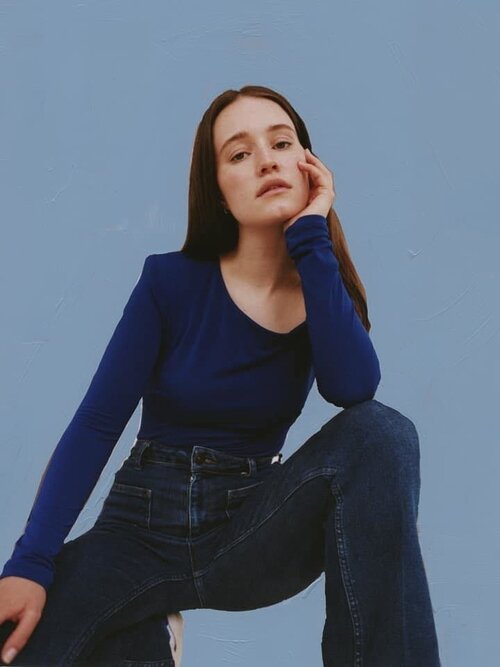
IN THIS PHOTO: Kate Bush in an outtake from the shoot for the Aspects of the Sensual World E.P. (1989)/PHOTO CREDIT: John Carder Bush

Examining Kate Bush’s Lesser-Known Tracks

___________

I realise that…
rrr.jpg

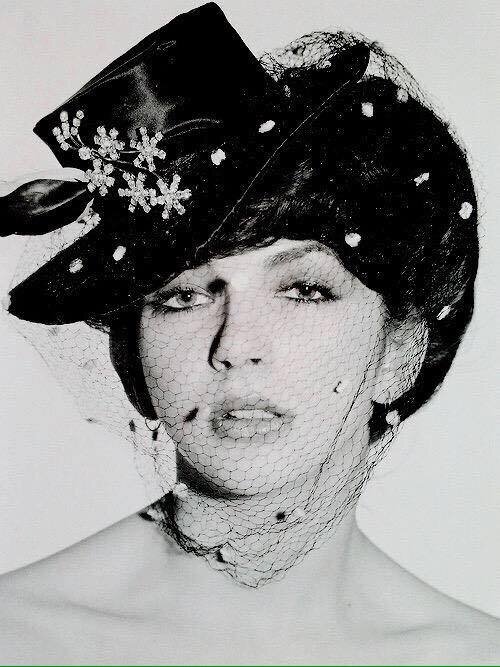
 IN THIS PHOTO: Kate Bush in 1979/PHOTO CREDIT: Gered Mankowitz

I have proposed another Kate Bush podcast, All the Love, before. I am intent on doing that down the line, though I am eager to mark the tenth anniversary of my blog (in November) with a limited-run podcast. Also in November, Bush’s 50 Words for Snow turns ten. To sort of dovetail the two anniversaries, I thought it was time to explore her lesser-known songs. As I keep saying, radio stations normally play the hits and bigger singles. Occasionally, you might hear something a little rarer – though this is an occasional revelation one would like to experience more. It is a shame that radio playlists are so limited when it comes to Kate Bush, as her albums are crammed full of wonderful songs. The idea behind Deeper Understanding is the examination of the album tracks. I thought it was clever to name the podcast after one of her songs, though Deeper Understanding (originally released on 1989’s The Sensual World, it was re-versioned in 2011 on Director’s Cut) has been released as a single. The single was the 2011 version. Whilst the title does not elude to a deep cut from Kate Bush, it does tie us to an album where most of the songs have not been played. Aside from the first half of Hounds of Love (1985), I don’t think that a lot of people know much about Bush’s albums and the wonderful moments. Rather than examine and dissect her career and albums in detail, Deeper Understanding would be guests choosing tracks from her albums that are lesser-known but worth listening to.

In terms of format and concept, I figured it would be a case of choosing an album per episode. Whilst I say the podcast would be a limited run, it would be ten episodes. I would like to cover nine of her ten studio albums (excluding Director’s Cut), in addition to having an episode that covers non-album tracks and anything else. In the course of discussing an album and the deeper cuts, it also allows discussion of the B-sides. There is so much gold in the ether, one needs to know more about Kate Bush’s complete body of work. Even on Hounds of Love, there are tracks on the second side, The Ninth Wave, that one does not hear too much about – including the brilliant The Morning Fog and Hello Earth. Even Mother Stands for Comfort on the first side does not get a lot of love and spins. It is important to celebrate the singles and the songs that are better known. They are as much a part of her legacy and genius as anything else. I feel one gets a better understanding of an artist if we go beyond the obvious. Not to say that every deep cut from Bush is great. There are songs that have potential and glimmers of greatness, but they are still worth discussing and playing. My plan for each episode is for two-three guests to talk about the album and why it means so much. They then take a couple of tracks each and explain why it is so good and why people need to listen to it.

Sort of a song examiner podcast, Deeper Understanding is a chance to revel in the beauty, weirdness, wonder and esteem of those tracks that are wonderful and somewhat undiscovered. I am going to do it chronologically, so that we start with 1978’s The Kick Inside. There are tracks recorded pre-1978 that could also be included. As this is my favourite album, I know that there are a lot of deeper cuts here. Even though Moving, Them Heavy People (in Japan) and Strange Phenomena (Brazil) were released as singles, I think I should exclude U.K. singles only – as there are songs released internationally that are not played a lot here. Going to 2011’s 50 Words for Snow, I guess six of the seven tracks (excluding the single, Wild Man) are  eligible for discussion. The songs on this album are quite long, so maybe two guests choose two songs each. Looking around, there are a couple of Kate Bush podcasts. The Kate Bush Fan Podcast is a U.K. podcast that does look at individual songs, in addition to events, anniversaries and so much more. There is a U.S. podcast, Strange Phenomena: The Music of Kate Bush. This is probably the closest in comparison. Each episode relates to a different song. The episodes are about thirty minutes. Not to repeat what they are saying, guests on Deeper Understanding would spend about five minutes discussing each track - then we would get to hear the song in full. I am aware it may be expensive to get permission to play her songs, but I will see how expensive it is. Although there are a lot of music podcasts around, there are very few dedicated to Kate Bush. I feel that Deeper Understanding would be a welcome addition where we get to know more…

ABOUT a hugely varied and astonishing artist.

FEATURE: Modern Heroines: Part Sixty-Seven: Sabrina Carpenter

FEATURE:


Modern Heroines

fff.jpg

PHOTO CREDIT: Sarah Carpenter for Teen Vogue 

Part Sixty-Seven: Sabrina Carpenter

___________

THERE are some tremendous women in the industry…

xx.jpg

who are putting out music that will be remembered years from now. Shining lights and leading artists who, whilst not superstars or hugely influential now, will definitely earn that status very soon. Sabrina Carpenter is someone who I have been following for a while. She is only twenty-two - so there are many years ahead of her. I am going to end with a playlist of her best work. Before that, there are a couple of interviews that allow us greater understanding concerning the American actor and musician. Wikipedia’s biography of her provides some nice overview:

“Sabrina Annlynn Carpenter (born May 11, 1999) is an American singer and actress. Carpenter made her acting debut with an appearance in the crime series Law & Order: Special Victims Unit and first received recognition for her recurring role as the young version of Chloe Goodwin in the television series The Goodwin Games. She then had her breakthrough starring as Maya Hart in the Disney Channel series Girl Meets World from 2014 to 2017. Carpenter has starred in the feature films Horns (2013) and The Hate U Give (2018) and starred as Jenny in the Disney Channel Original Movie Adventures in Babysitting (2016). As a voice actress, she had a recurring role as Princess Vivian in the Disney Channel animated series Sofia the First from 2013 to 2018, and she voiced Melissa Chase on the Disney XD animated series Milo Murphy's Law from 2016 to 2019.

In 2014, Carpenter was signed to Hollywood Records, and her debut EP, Can't Blame a Girl for Trying, and debut single of the same name were released in the same year. She released her debut album, Eyes Wide Open, in 2015 and has since released another three studio albums: Evolution (2016), Singular: Act I (2018), and Singular: Act II (2019). After departing from Hollywood Records, Carpenter was signed by Island Records, and she released her first song with the label, "Skin", on January 22, 2021”.

Her fantastic new single, Skinny Dipping, was released a couple of weeks ago. I am interested in young Pop artists; those who will mould the mainstream and define Pop in years to come. Carpenter might not be to everyone’s tastes, but I think that she is such an interesting talent with a great sound. Owing a little to Taylor Swift, songs like Skinny Dipping are full of light and sweetness. There is depth to the songwriting, combined with production that is polished but not too much so. The first interview that I want to source from is Cosmpolitan’s from last year. This was at a point in the pandemic when there was lockdown and uncertainty regarding when live music would return. The situation seemed as fraught in the U.S. as it did anywhere. Sabrina Carpenter comes across as a hugely engaging and mature person:

“Sabrina seems like the type of girl who’s always surrounded by people. Friends who come over to use that swing or sit with her and listen to those records or watch her create covers on the electric piano in the other corner. There is a friend in the corner, actually, sort of: a cardboard cutout of Sabrina’s friend and Work It costar Liza Koshy. Liza gave it to Sabrina for her birthday, because what every girl’s bedroom needs is a life-size replica of her best friend. Especially now, in the midst of this global pandemic, when entertaining is mostly just a memory.

Sabrina seems like the type of girl who’s always surrounded by people. Friends who come over to use that swing or sit with her and listen to those records or watch her create covers on the electric piano in the other corner. There is a friend in the corner, actually, sort of: a cardboard cutout of Sabrina’s friend and Work It costar Liza Koshy. Liza gave it to Sabrina for her birthday, because what every girl’s bedroom needs is a life-size replica of her best friend. Especially now, in the midst of this global pandemic, when entertaining is mostly just a memory.

And then there were all the other things that happened while she was dealing with the pandemic too. Her grandfather passed away in April, which meant her grandmother moved in with her and her family. She turned 21 in May, and celebrating a major milestone birthday in quarantine brought on its own wave of feelings. Then July marked the one-year anniversary of the death of her friend Cameron Boyce. So all the things that would have been incredibly hard to go through already got even harder when added to a global health crisis. Basically, she’s been going through a lot.

“It’s a crazy overwhelming feeling,” Sabrina says, slowly and with emphasis on each word. “It’s sort of like we have to go back to the basics right now, just the core things that make us feel loved and happy. We’re not distracted by all the things in the world and all the cool things that we can be doing. We’re very much forced to see the reality right now”.

hhh.jpg

 PHOTO CREDIT: Sarah Carpenter for Teen Vogue 

I am going to bring things relatively up to date and source a great Teen Vogue interview from earlier this year. I am not sure whether there are plans for an album soon. I think her newest tracks are the best we have heard from Carpenter. She is going to keep on developing as an artist. There are sections from the Teen Vogue interview that caught my eye:

“It’ll be a Wednesday when Sabrina Carpenter will hear her ex’s name and drink order at a coffee shop and look up. They’ll make cordial small talk, Sabrina will share a casual update on her sister: “Shannon’s being Shannon.” And suddenly, years after a tumultuous end, they’ll no longer be swimming on the edge of the cliff they’d soon spill over. Instead, they’ll just be existing among hindsight and therapy and time, splashing around in water under the bridge.

The moving image is from Sabrina’s newest single, “Skinny Dipping,” a first taste of her forthcoming album — which will also be her first on Island Records, a deal she signed in January of this year after four albums through Disney’s Hollywood Records. But “Skinny Dipping” is also a manifestation of sorts, a wish for future peace after a breakup.

“I didn’t feel in that moment that I was at a place where I could literally be skinny dipping in water under the bridge,” Sabrina tells Teen Vogue. “I didn’t feel like I was healed and fully out of a place where I didn’t hold any anger or resentment.” Instead, writing with collaborators Julia Michaels and JP Saxe, she dreamed up a scenario where she had worked through those feelings.

“This was when i first got to my apartment for the summer in New York, it had a fire escape which i was pretty excited about as you can see here.”

She explains all of this while sitting in a different café, Martha’s Country Bakery in the Williamsburg neighborhood of Brooklyn, where she’s spent most of her summer. It’s 11 a.m., and we’re splitting a piece of her cake of choice from the popular (though deserted in the morning) dessert destination. The slice is called the Napoleon, a pastry cake with layers of cream and fresh berries. Breakfast cake, we joke. She’s wearing a cropped t-shirt she cut herself, printed with the face of her friend and creative partner, the actress Danielle Fishel, as her character Topanga from Boy Meets World.

Sabrina starred in the Disney Channel spinoff Girl Meets World for three seasons as the confident, chaotic Maya Hart, best friend to Cory and Topanga’s daughter Riley Matthews (Rowan Blanchard). The show ran from 2014-2017 and was her breakout acting role, leading to more Disney parts and bigger films like The Hate U Give and Netflix’s 2020 dance comedy Work It. But music was the beginning.

As a homeschooled kid growing up in Lehigh Valley, Pennsylvania, she posted YouTube covers of pop songs; she told Marie Claire that her dad built her a purple recording studio in her childhood home at age 10. She released her first single “Fall Apart” when she was only 11, signed her first record deal at 12. Reflecting on that first song, she’s disbelieving, a bit self-deprecating. “You’ve seen those TikToks where people are talking to their 10 year old self? And they’re like, ‘Do we marry Justin Bieber? No, we find someone else,’” she laughs, before turning more introspective. “Listening to that song specifically — which I don’t recommend anyone does, but since you already have — I really don’t think at 10 years old I realized what songwriting would become to me, and how much it would bring me back to sanity.”

Each of her album eras — Eyes Wide Open, Evolution, Singular: Act 1 and Act II — has seen her wield more creative control as she searched for her own sound in a crowded pop landscape. Her next album is “as close” to total control as she can get, she says, without literally playing the drums. She backtracks — “Actually I do play the drums on one song, so that’s a lie.” Taking back that power has made her cognizant of what she gave up early on. “I signed with my first label when I was 12. Like I don’t know what the f*ck I’m doing at 12,” she says. “I was just like, I wanna make music, I wanna perform and be on stages. That’s all I knew. Then I found myself in a situation where it was very tricky to be who I wanted to be, and I didn’t realize I would be giving away a lot of that freedom at such a young age … If I could go back in time, I don’t know if I would have released an album [around age] 13, if I’m being honest with you.”

She recalls being sent to songwriting camps at age 17, in rooms where she was expected to say a few words to inspire writers and then duck out for lunch. “They didn’t realize I was the person that was gonna get there 30 minutes before everybody, and then not leave until an hour after, and be cutting vocals and backgrounds for hours,” she says. “Whatever it takes.”

The album she’s wrapping up now, her first since 2019, was created with just two producers, John Ryan (best known for working with One Direction) and Leroy Clampitt (Ashe, Phoebe Ryan, Justin Bieber). Her playlist while writing the album is stocked with songwriters: Stevie Nicks, Dolly Parton, The Beach Boys, Imogen Heap, Carole King, Taylor Swift, Joni Mitchell. She pulled in her friends Julia and JP — who she recently called her “musical mom ‘n dad” — as co-writers, handwriting a contract to make sure they made time to finish the album together in New York this past summer. It was a more intentional album-making experience. Previously, she’d collect songs scattered over days, weeks, months until an album came together. Now, there was time to take risks and hole up in the studio with delivery food and champagne, to take to the roof when they needed to look out at the city for inspiration”.

I will wrap it up there. I am keen for people to check out Sabrina Carpenter’s music and seek out what she has done so far. I think that there will be an album or something similar later in the year. A very talented young artist who is showing she has the potential to be a long-lasting and hugely influential person. If you have not discovered the music of Sabrina Carpenter, then go and allow some time…

TO make up for lost time.

FEATURE: Here, There and Somewhere in Between: The Role of Dan McIntosh on Kate Bush’s Albums

FEATURE:


Here, There and Somewhere in Between

ddd.jpg

IN THIS PHOTO: Kate Bush in 2005 in a promotional image for Aerial

The Role of Dan McIntosh on Kate Bush’s Albums

___________

IT is understandable that…

ssws.jpg

Kate Busk keeps her private life just that. We know she has a son, Bertie, but she does not choose to thrust him into the limelight or discuss him outside of music. Through the years, she has kept her romantic relationships personal – or she does not decide to discuss it and do magazine spreads! One of the reasons as to why I want to talk about Dan McIntosh is because of the role he plays on her albums (I could not find any images of McIntosh that were good quality, so the music will do the talking). Look at releases before The Red Shoes (1993) and one can highlighted various musicians who made multiple appearances. They include her brother, Paddy, and her engineer and former partner, Del Palmer. Bush and McIntosh became an item around 1993. They have been together ever since. Before sharing thoughts on McIntosh’s role in Bush’s music, there is an article where we learn more about McIntosh’s previous work and when he came into Bush’s life:

“Dan quickly became a guitarist with the bands "Bandit" and "The Quick." The talented guitarist also played guitar on albums by Dollar, Deniece Williams, and Amii Stewart throughout the 1980s, thereby making his mark on the entertainment scene.

The legendary guitarist received critical acclaim for his work with his famous wife. In 1993, he played the guitar on several of Kate's notable songs, including "Rubberband Girl," "The Red Shoes," "Constellation Of The Heart," "The Song Of Solomon," "Top Of The City," and "Lily."

Bush, who initially was romantically involved with Del Palmer, began a relationship with Dan in the early nineties, and the couple finally tied the knot in 1992.

After their marriage, the iconic guitarist continued to work with his famous wife. He featured in subsequent songs of the talented singer such as "Architect's Dream," "King Of The Mountain," "How To Be Invisible," "50 Words For Snow," amongst several others.

Dan McIntosh runs a record label called Independent and makes use of New Age Style Instrumental to create his musical sound. The guitarist has an album titled Dave, and has also recorded songs such as "Tough Times Right Now," "Give Me Warmth" and "Because That's Where I Find My Comfort."

The couple has a son together, Albert. He is now 21 years and has followed in the footsteps of his parents by building a career in music.

Also known as Bertie, the talented young artist was the main feature in the "Before the Dawn" concert series in 2014. Bertie has also worked with his mom, replacing Rolf Harris on vocals in the re-release of her album "Aerial" in 2018”.

Obviously, there is a massive connection and chemistry between Kate Bush and Dan McIntosh. Although The Red Shoes is not Bush’s best-regarded album, it is one with some really interesting songs. It was actually McIntosh who taught Bush to play electric guitar. I am not sure how extensive the tuition was but, accordingly, she took to it like a natural. One can hear her skills laid out on the album track, Big Stripey Lie. It is a performance with darkness, mystery and power. I am amazed that she never played electric guitar on record before then!

Maybe it was McIntosh’s presence and importance that led Bush to play electric guitar. On The Red Shoes, McIntosh plays fabulously on Rubberband Girl (you can see him in the video with blonde hair providing an excellent arpeggio). He also plays on The Song of Solomon, The Red Shoes, Lily, Constellation of the Heart and Top of the City. Having worked with a range of guitarists prior to 1993, I think that McIntosh really shines and stands out on The Red Shoes. It is small wonder he has such a big role on 2005’s Aerial. Ensuring that her family features on her albums, Dan McIntosh adds so much texture and story to songs like King of the Mountain, How to Be Invisible and An Architect's Dream (among others). If his playing on The Red Shoes was fairly intense and powerful, Aerial is a more subtle and layered album. He does not try to steal the spotlight, nor is he a player one can ignore. His contributions are incredible! I wonder what the atmosphere was like when Bush and McIntosh were playing together. I like to imagine that they plotted songs together and there was rehearsal between them before other players were in the mix. With Del Palmer and Paddy Bush appearing on the album, there were some long-time collaborators making Aerial such a wonder. McIntosh also played guitar (McIntosh has provided acoustic guitar parts) on 2011’s Director’s Cut, though I think that it is his performances on 50 Words for Snow (2011) that are especially amazing. Once more changing skin and performing guitar parts that were very different to anything that came before, 50 Words for Snow is another light album.

If Aerial is about nature and the dawning and completion of a warm day, the frostier and darker snow on 50 Words for Snow is no less magical. Aside from Lake Tahoe and Among Angels, McIntosh plays guitar on the other five tracks. As 50 Words for Snow compromises longer songs, one hears more of McIntosh’s touch. Many reviewers highlighted Steve Gadd’s drumming and Bush’s piano as the standouts in terms of instruments. I love the bass work through the album…though it is guitar work of McIntosh that adds these colours, light touches and wonderful moments. I know Bush would have been as tough/precise on McIntosh as the other musicians when it came to the execution of her concepts and designs. The relationship between Bush and Gadd is sensational, though McIntosh’s guitar is an essential and component. I wonder, if there is another Kate Bush album, who will appear on it. I am sure Del Palmer will be there in some form. I hope Paddy Bush also returns, as he did not appear on 50 Words for Snow. I feel, whatever is released, Dan McIntosh will play a big part. Having read biographies of Kate Bush, I know that McIntosh (from Aerial onwards) helped to taxi musicians and get people to and from the house. He was not in the studio as much as Bush. He would nip in and out, though I really like that he brings to her music. From the wonderful angles and flurries on The Red Shoes, to the beauty he brought to Aerial and 50 Words for Snow, Dan McIntosh has been integral! The legendary musician has worked with a number of different artists, though it is his work with Kate Bush, unarguably, that he treasures most. I look forward to another Kate Bush album so one can hear what Dan McIntosh…

SUMMONS up next.

FEATURE: Spotlight: Remi Wolf

FEATURE:


Spotlight

PHOTO CREDIT: Alma Rosaz 

Remi Wolf

___________

ONE of my favourite artists…

qq.jpg

 PHOTO CREDIT: Alma Rosaz

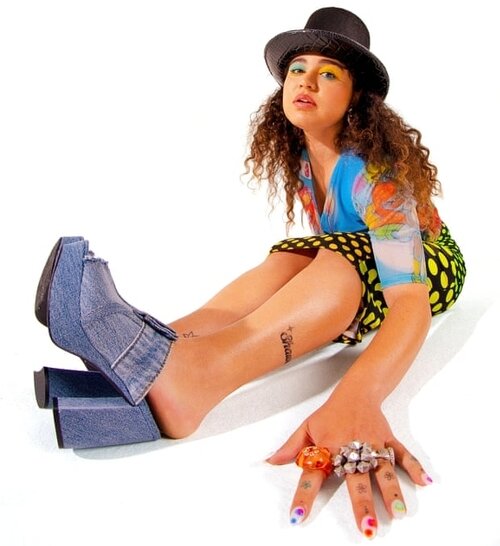
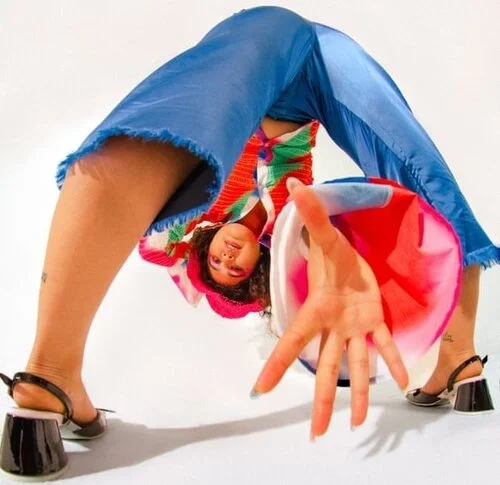
of the moment is Remi Wolf. I hope that people pre-order her debut album, Juno. She is creating music that is so catchy and fresh! It pops and sparks. I love the sounds she puts together and, unlike some artists, her songs really stay in the head. Such a bright and hot young talent, it is fascinating seeing the first steps from a great songwriter. I am going to bring in a couple of features/interviews from this year soon. Before that, I will go back last year. Wolf was getting a lot of buzz. DORK were eager to spotlight the Californian artist:

“There comes a moment in many a musician’s life when everything clicks, where the idea of going out and taking on the world feels suddenly very possible. That there can be more than just messing around in a bedroom and smiling between mates. Remi Wolf laughs at the thought, “I actually know the exact moment, the exact day where that happened!

“I was 15 and me and my friend, we knew a bunch of songs that we’d been learning and writing together, and one day we were like, ‘why don’t we street perform near this art festival?’ We parked on a corner, just to see if anyone gave a shit about us and we ended up making like $180 in two hours. I just thought, oh I can do this… this is the moment!”

It perfectly captures Remi Wolf and her near-fearless approach to music. A performer from the very start (“My parents say that I figured out I loved performing when I was 2”), her kaleidoscope world of huge pop energy, fizzing colours and sugar-packed punches rallies against grey skies. Whipsmart quips and instant doses of pop are the order of the day – exactly how a modern pop star should be. “I want my music to sound completely different to what everyone else is doing. I’m kinda striving for big sounds, unique sounds, unique flow, unique lyrics just… to be different!”

For anyone who’s glimpsed at Remi’s world, that should be clear. Latest EP ‘I’m Allergic To Dogs’ breathes with confidence and fun, an amalgamation of hip-hop, electronica and pop only possible in a world of flicking playlists. Remi Wolf is not about waiting around for people to shuffle in at the back, it’s about getting down the front and throwing yourself into that skittle-biting party spirit. “Performing was the first thing that I really fell in love with,” explains Remi. “There are just so many homemade videos of me performing magic shows or fashion shows or dance shows from when I was 8 or 9 upwards. A lot of me performing for my parents all the time, bossing my little brother around which is actually pretty embarrassing.”

Singing was a natural step. There were parties and backyard barbecue performances; showmanship going hand in hand with determination while soaking in the sounds of pop trailblazers. Conforming to the norm? The idea of that couldn’t be further from her mind. “The one artist that just really clicked with me from a super young age was MIA,” recalls Remi. “She had a huge influence on me just in terms of sounds and what pop music can be. Her song ‘Paper Planes’, when it came out, it was surrounded by a bunch of like soft-rock pop stuff, which I also liked, but she stood out so much in the sea that it had a huge impact on me.”

From the effortless personality of Prince and the impeccable musicianship of John Mayer, to Erykah Badu who “just changed something in my brain where I was like, woah!”, there’s a traceable line between those artists Remi first grew towards and where she stands today. Freedom. “I think all of them don’t listen to anybody, and don’t listen to what the market is trying to tell them to make. They’re just completely out on their own wave, completely independent and completely autonomous”.

I have been reading a lot of interviews Remi Wolf has been involved in. She is such a remarkable artist who has put out incredible music that will stand the test of time. Juno is going to be an album that will scoop so many positive reviews!

Before coming to this year, I am keen to include The Line of Best Fit. They marked her as a rising artist last year. Remi Wolf’s path into music took a big step when she was a teenager:

“At the age of seventeen, Wolf’s singing teacher put her forward to audition for American Idol. “It was very random but I got through a bunch of rounds, went to Hollywood week, did the whole shebang, and I think what I realised was, show business is crazy,” she explains with reticence. “The curtain was pulled back a little bit for me. I realised that it was not the way that I wanted to pursue music. I just knew that it wasn’t my thing.”

Instead of chasing post-reality show stardom, she decided to forge her own path. Perhaps partly inspired by the culture-shift in her hometown, or as a reaction to the faux-creativity of her TV experience, she felt the need for authenticity, however idiosyncratic it may be. “I’ve always had this urge to do something very different than what is going on,” she explains. “I don’t know how to explain it but I’ve always been like, I don’t want to dress like all these people, I don’t want to fucking do the same thing all these poeple are doing and if I am, I want to do it better. I’ve always had this urge to be individual and just seek my own truths.”

It’s evident in everything that Wolf does, from the mind-warping visuals to the sugar-pop melodies that coat lyrics like, “And the dentist always tellin’ me to floss my teeth, and I’m running out of Oxycontin.” Tracks like “Woo” and “Photo ID” have so many layers, sonically, lyrically and referentially, every listen should unearth a new discovery were it not all so utterly blinding.

“It’s all very natural,” she smiles. But it’s not just the music, Wolf’s world is a multimedia affair of clashing colours, post-tumblr memes, and mind-bending animation. “For my visuals, it’s all very intentional,” she counters.

Working with artist and director Agusta Yr the two pull on the surreal and wonderful thematics of movies like Spy Kids and Charlie and the Chocolate Factory. “I used to watch all these stupid, crazy kids TV shows because I’m the oldest of four,” explains Wolf. “So throughout my entire life there’s just always little baby shows playing on the television. I think that I unintentionally got really inspired by kids shows and I just like the silliness of them and the colours and just the absurdity of them.”

But when it comes to the lyrical content, the influence may be something a little more adult. “I really like to paint pictures and I think my mind just naturally goes to weirder images,” she starts. “For a lot of the music as well, I was smoking a lot of weed and doing mushrooms at times so I feel like maybe that plays into it a little bit because it kind of opens your brain and you see different things and you share different things”.

Last month, Laura Snapes of The Guardian caught up with Remi Wolf. Among the subjects discussed were conforming and meeting expectations, in addition to Wolf’s relationship with alcohol and addiction:

“Her largely freestyled lyrics collage fast food (“Orgy at Five Guys with five guys”), Hollywood royalty (she threatens to “Billy Bob and Angelina” an awol ex) and cult porn films (“What’s better than two girls? Two cups!”) into remarkably human and gleamingly catchy songs about the difficulty of staying connected to your feelings in a turbo-stimulated world. Her super-saturated videos conjure the sinister charm of deepfake kids TV; she is partial to an outsized feathery hat and not shy about dancing in the street in a thong swimsuit and green Crocs (albeit filmed side-on to avoid “full crack”). Her vivacious world feels true to life and also offers a portal out of this shabby one: famous fans such as Nile Rodgers, Beck and Camila Cabello have already taken refuge, and Wolf’s debut album, Juno, is one of autumn’s most anticipated releases.

“I don’t think I’ve ever felt a pressure to conform at all,” says Wolf, Zooming at a chin-first camera angle from her LA home, where Matisse and Frida Kahlo prints hang on the wall (“They’re fake,” she clarifies helpfully). “I never thought I was weird, I was always confused by the people around me.” She credits her attitude to her parents – her Sicilian mother and Russian-Persian father “are pretty weird and very confident” – and to the “chaotic” three-bedroom house where they lived in Palo Alto with her three younger siblings and two dogs. “I think I thrive in the chaos.”

When Wolf left rehab a year ago, she felt a newfound optimism. “But also I realised rehab didn’t fix me,” she says. “I went in thinking: ‘I’m going to be done with all this shit,’ but nobody’s ever fixed. Life’s a big journey of learning and healing and I don’t think I knew that before.” The change lessened her anxiety around collaborating (Kenny Beats and John Carroll Kirby contribute to the album) and raised the stakes of her craft as she wrote her debut album on various writing retreats, including a dairy farm. “I think I’ve always been pretty bold and vulnerable in my songwriting, but now it’s a more connected vulnerability.” Sobriety showed her how sensitive she was. “No wonder I was trying to numb out for so long.” (“I got eggshells around me,” she sings in one of the album’s best hooks. “Don’t step on ’em, don’t step on me!”)

Wolf named her debut album Juno after the French bulldog she adopted in quarantine (he is named for the Roland synth). Like Lorde, Clairo and Fiona Apple, she calls her dog a key part of the creative process. “He was my partner and my witness,” she says. He also softened living alone, which Wolf hates. “It gets really dark really fast. Having Juno let me focus on something else: a walk, making sure he has water. It got me out of my own way.”

The gleeful fantasias of Wolf’s music videos and her allergy to preciousness are aspirational for her, she says: the goal is to escape the spiral and be that breezy all the time. It takes a lot of work,” says Wolf. “I would love to live a very carefree life. I know it’s not gonna happen all the time. But that is the end goal”.

I will wrap things up in a minute. Before I get there, Harper’s Bazaar profiled and celebrated Remi Wolf. They announced that she is going to rewrite the rules of Pop music. Quite a big claim! There is definitely something different about Wolf’s music and approach that means she will leave her mark:

 “Speaking of new stuff, what can you tell us about putting your debut album together?

With every project I’ve done so far, it’s always been pretty piecemeal. I’ve never really been like, “All right, I’m going to camp out for six months in a studio and bang this out.” I’m way more sporadic. I’m floating, and then sometimes I’m like, “Okay, I want to make music today,” and then it’ll happen. So it kind of came together like that.

The first song that we started writing on the record, we started back in February, right before the pandemic hit. We had the bare bones of the structure. And then, from February onwards, it was a pandemic, so it was all when I went to rehab. I think we started really writing in November; that’s kind of when we got the bulk of the album out. From there, it started to take form a little bit. From January to April this year is when we started adding more tunes and doing all these one-offs. Songs just kept happening, and we just kept beating other songs that maybe we were going to throw on the record until we had an album.

aaa.jpg

PHOTO CREDIT: Sophie Hur 

A lot of the process was like, we had all these songs that were maybe 70 percent done. And something that I like doing is getting out of the space that I’m comfortable in. I like renting Airbnbs and camping up in the house. We finished a lot of the records that way.

How would you say this album follows up your I’m Allergic to Dogs EP? Is there some sort of evolution there that you see?

I think something that’s really important to me in my artistry is just constant experimentation. I think in all the past EPs, everything, every song has been its own experiment, and on this record, we just kept that same mentality all the way through. I want to push myself, I want to push my writing, and I want to push the soundscape and the sounds we’re able to use, the words I’m able to use, the vocal tone that I’m able to use. I think that I’m just constantly challenging myself and experimenting with that.

Experimentation is another through line for me, and I don’t ever think that it’s not going to be. It’s just a part of what I really value in art. I want to keep it alive; I want to be innovating. I want to constantly try to innovate the sound of pop music. My biggest dream for this album is that people consider this the new pop.

It’s like you’re rewriting the rules.

Yeah, exactly. Erase the rules of pop. It would be my dream if radio was like, “Wait, this is sick,” because it’s so different than everything that’s on the radio now. At the end of the day, I want everybody to like my music.

What would you say has been the biggest high from your career so far?

I think [releasing] “Liz,” because it’s a song that has such a different sound, production-wise, than all my other songs and I’m really singing my ass off. And for some reason, I was really, really scared to release it. I was, “Oh, my God, people are going to hate this. People are going to be so confused.” But I think the fact that it just got so much overwhelming, positive feedback gave me a lot of confidence going forward. I’m like, “Okay, well, I should just probably be fucking belting my ass off all the time.” The reaction to that song was really special”.

If you have not heard of Remi Wolf yet, then go and follow her and check her music out. Ahead of her debut album, Juno, coming out next month, she is going to come to the attention of new fans and supporters. A wonderful artist who will be around for years to come, go and wrap your ears around…

THE music of Remi Wolf.

_____________

Follow Remi Wolf

FEATURE: Second Spin: Christina Aguilera – Stripped

FEATURE:


Second Spin

qq.jpg

Christina Aguilera – Stripped

___________

THERE have been few…

qqq.jpg

PHOTO CREDIT: Getty Images

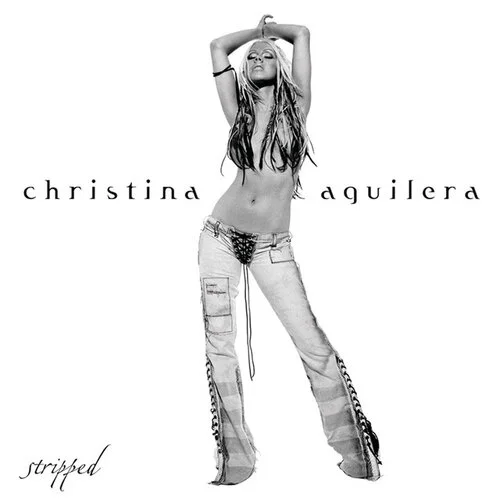
more drastic and noticeable transformation in Pop than Christina Aguilera’s change between 2001’s Just Be Free and 2002’s Stripped. From the clean-cut and casual look of the former, Stripped sees Aguilera provide a raunchier cover! The music changed between albums. Stripped is a much sexier, slicker, tougher and varied album than Just Be Free. The fourth studio album from Aguilera, it was released on 22nd October, 2002. Aguilera took creative control over Stripped - keen to move on from the teen image of her previous album. She established her alter ego, Xtina. As an executive producer, Aguilera enlisted many new collaborators for the album. I feel that a lot of the mixed and negative reviews for Stripped related to what else was happening in Pop. A raunchy, confident and fierce album, there is tenderness and consistency. It is an L.P. that should have got more respect. Almost two decades later, I feel Pop has become regressive and sanitised in a way. We do not have artists like Aguilera (in 2002) who produced music like we hear on Stripped. Maybe Charli XCX and Dua Lipa have elements of her bolder side, though it is quite pared-down and distilled. Aguilera actually recreated the Stripped cover recently. She has a lot of love for that album – as do her fans. Hitting number two in the U.S., it has been certified four-times platinum. It was a remarkable commercial success!

I wonder whether the critical reception of Stripped influenced the old-school Jazz and Soul inspirations behind 2004’s Back to Basics. Aguilera is still sexy and alluring, but it is a different sound, look and feel that we get compared to Stripped. I will come to a couple of articles that discuss the influence of Christina Aguilera’s 2002 album. I could not find many positive reviews of Stripped. This is what AllMusic wrote in their somewhat mixed review:

“According to Christina Aguilera, the title of her second album, Stripped, refers to her emotions and not her body, but the topless photograph of her on the cover suggests otherwise. Most things about Stripped suggest sex, actually, since Xtina -- as she calls herself in a handful of interviews accompanying the release of the album -- never hesitates to put her body, her piercings, and recently liberated sexual beliefs on display throughout her hyper-sexual, convoluted sophomore effort. Like any diva, Christina believes her trials and tribulations are inherently more fascinating than anybody else's and, like any diva, she has an inflated sense of self-importance, defiantly strutting on the "Stripped Intro" that she's "sorry you can't define me/sorry I break the mold." What she's referring to is anybody's guess, since she hasn't exactly defied expectations since her last album -- releasing a Christmas album and a Spanish-language record of your debut ain't exactly breaking the mold: it is the mold. Plus, Stripped clearly has its origins in the sound of two of Christina's teen pop contemporaries -- the teasing sexiness of Britney Spears and the wonderful, gonzo dance-rock confessionals of P!nk, who truly did break the mold with M!ssundaztood.

Since Aguilera spent so much time working on the album, tearing through a seemingly countless number of producers, she seems desperate to not just catch-up with these two, but surpass them in sex and confessions, breaking it down so they become the same thing, while adding a strong hip-hop undercurrent throughout all the songs. And the end result is utterly bizarre, surpassing Mariah Carey's Glitter as the modern-day standard for musical immolation while rivaling The Teaches of Peaches in its sheer carnality. Where Peaches is always in control of her sexuality, using it as a weapon and a joke in equal measures, Christina is overwhelmed by the reaction of others to her sexuality, putting it on equal ground with her voice, which remains a remarkably powerful instrument, especially since she's toned down the scale-running histrionics from her debut. If she's mastered her vocals, she's still desperately searching for her artistic voice, placing too much emphasis on club and street-level R&B, which fit her poorly (why "Dirrty," a non-song that requires less range, over the slinky sexiness of "I'm a Slave 4 U," the first single?), when she needs full-blown songs. There are some here, though, most notably the Linda Perry collaboration "Beautiful," which was rush-released as a second single, but the ceaseless 70-minute running time and seemingly endless 20 songs mean that individual moments are lost and the big picture remains. And that big picture is that of an artist who has grown up too fast, while the sound is that of an artist who's given too much freedom too early and hasn't yet figured out what to do with it”.

Stripped has inspired artists of today like Selena Gomez and Demi Lovato. One could see and feel artists following Aguilera post-2002: transitioning from a teen image and something quite bland with a more adult and appealing sound. In their feature from 2019, CRACK talked about the legacy of Stripped:

“The words “dirty”, “filthy” and “nasty” snarl like warnings from a guard dog over the image of a woman’s arse, barely covered by chaps and underwear emblazoned with an ‘X’. She straddles a motorbike and rips through an industrial building before being lowered, via a cage, into a wrestling ring. There are flashes of glossed lips, thick black eyeliner, a Medusa piercing, ratty black and blonde hair and an outfit the Fast & Furious franchise should probably be paying royalties to.

This was our re-introduction to Christina Aguilera on her own terms. After releasing four albums fresh out of The Mickey Mouse Club class of 94, this was an assertion of her own artistry. A statement of intent having switched management and wrestled creative control off RCA. Even though the reinvention had more in common with Britney Spears’ jump between Oops!… I Did It Again and Britney, this was essentially her “It’s Britney, bitch” moment. America’s pop sweetheart couldn’t come to the phone in 2002, so instead we got her alter ego: Xtina.

Dirrty is one of the most aggressive songs ever written about acting slutty in the club. From the lyrics to the choreography to the way she walks in the video as if she’s trying to pop a balloon with each step, everything about it exudes more bossery than the combined membership of The Wing.

As a result, it was instantly venerated by women and gays, and completely terrifying to straight men. It copped a lot of flack at the time for its sexualised imagery, but if you actually tried to shag to it, you’d probably kill the person. Dirrty isn’t representative of the sound of Stripped as a whole, but it is the perfect choice of lead single for an album whose theme, above all else, is defiance.

Listed as an executive producer, Stripped was the first project Aguilera had autonomy over. Previously fobbed off as another cookie-cutter pop star whose vocal style was overdone and lyrical content weightless, Aguilera pushed back with a broad album of full-bodied pop bangers, personal guitar ballads and soul songs centred on themes of feminism, self-respect and LGBTQ+ rights – going sextuple Platinum in the UK and being honoured at the GLAAD Media Awards in the process.

This newfound freedom led her to some unexpected places in terms of sound. While the singles – Dirrty, Can’t Hold Us Down, Beautiful, Fighter and The Voice Within – are the most modern sounding and ideologically blatant, the majority of Stripped strikes out in various other directions. There’s an affinity with the sprawling, auteur approach that’s become increasingly common in today’s market.

Think: Kesha’s Rainbow, Taylor Swift’s Reputation or Ariana Grande’s Sweetener – albums whose material may be scattershot but is always held together by the artist. Incidentally, a fighting spirit runs through all those albums as well. Stripped saw a virtuoso emerge from the confines of pop stardom; a move that has no doubt been influential on the artists who followed.

Stripped was met with mixed reviews, but that’s hardly surprising. After all, 2002 was a long way off legacy publications even entertaining the idea that mainstream pop music could have real value, and most critics chose to focus on her raunchy rebrand above anything else. Still, Stripped is best measured by its cultural impact on those it was always intended for – a mass audience of young people who, in the US and the UK at least, had spent much of the late 90s and early 00s being patronised by an industry that served them dynamic but spiritually void bubblegum pop washed down with empowerment slogans from the Spice Girls. Xtina coming through with an ambitious album that had no clear sound, a look that can best be described as “Boomtown: day four” and a thesis of sisterly empowerment akin to a drunk but supportive stranger in the women’s toilets, was, in hindsight, far more subversive than we gave it credit for”.

One of my favourite things about Stripped is the sheer variety of sounds! It is such a fascinating album that covers a huge amount of ground. I do not think that Stripped loses focus with so much packed together. Billboard revisited Stripped on its fifteenth anniversary in 2017. They were keen to explore its influence:

“One of the most fascinatingly jarring parts about Stripped wasn't the topless cover, but the wide range of music it covered. While Christina's rivals stuck to a signature sound (Britney Spears' dance-pop helped define an era) or awkwardly tried to hop genres (Jessica Simpson and Mandy Moore's flips from bubblegum to sultry pop felt more like a label push than artistic renaissance), Christina was set on showcasing her span of influences and sounds for Album No. 2 after firmly establishing herself in top 40 world. That range was consistent throughout the 20 tracks as she embraced elements of...and take a breath here...Latin-pop and flamenco ("Infatuation"), neo-soul ("Loving Me 4 Me"), jazz and funk ("Impossible," "Underappreciated"), rock ("Fighter"), gospel ("Soar," "Keep on Singing My Song") and beyond. And she sold each and every performance, bringing in the right guests like Linda Perry, Lil' Kim, Dave Navarro, Alicia Keys, Redman and more to help her vision.

Despite introducing the record with a turned-up club jam, Aguilera flipped everyone on their head by following up with a ballad as classic as they come with "Beautiful." Rihanna instantly comes to mind as another musical shapeshifter, able to seamlessly showcase all her different influences throughout albums. But Ariana Grande's latest LPs My Everything and Dangerous Woman also show a huge range of genres and influences (compare "Side to Side" to "Into You"), as did Miley Cyrus on Bangerz, which jumped from its sassy, Salt-N-Pepa-inspired title track to a gut-wrenching ballad, "Maybe You're Right."

With edgier makeup, outfits, and hair choices, Christina was visually marking her evolution, rocking jet-black hair for half her era, infamously using piercings as a way to cope with trauma, and taking more fashion risks than ever with bold dresses, cheeky pins and lots of see-through. Of recent, Rihanna may have most famously made this artistic jump during her Rated R era that saw her taking a noticeably darker turn (see the songs "Russian Roulette," "Mad House") and her look growing more provocative (with an asymmetrical pixie cut and showing lots more skin), and being more frank about who she was at the time (specifically requesting more somber music).

But today's stars have a much more sex-positive environment and won't have Saturday Night Live making a judgey (and unfortunately quite unfunny) skit, Entertainment Weekly calling them "desperate and shrill," Time referring to them as "hookers," or continuous hatred from other celebrities (did Kelly Osbourne really have a crush on Xtina?). Songs like "Get Mine, Get Yours" talk of Xtina's affinity for casual sex, while "Can't Hold Us Down" includes lines like, "The guy gets all the glory the more he can score / While the girl can do the same yet you call her a whore." Who else was talking like that and owning it with an equally open and sexually positive image in 2002?”.

Christina Aguilera’s Stripped is an album that is underrated and got some harsh press in 2002. In the years since, it has been re-evaluated, as many artists have taken influence from it. I would advise and urge anyone to listen to it. Alongside hits like Dirrty, Beautiful and Fighter are lesser-spun gems like Walk Away and Impossible. It is one song on the album whose title seems to sum up the reaction to Stripped…

AND that is Underappreciated.

FEATURE: On Guitar, Ms. Kate Bush: The Red Shoes' Big Stripey Lie

FEATURE:


On Guitar, Ms. Kate Bush

IN THIS PHOTO: Kate Bush in 1993/PHOTO CREDIT: Guido Harari 

The Red Shoes’ Big Stripey Lie

___________

I have been highlighting…

various Kate Bush songs. The reason for that is, this month, a few of her albums are celebrating anniversaries. The Red Shoes, however, was released in November 1993 – so we have a little way to go until that anniversary. One song that many may not be aware of is The Red Shoes’ Big Stripey Lie. The title alone is quite curious and interesting! The antepenultimate song from the album, perhaps that last three run of songs is not the strongest on The Red Shoes. That being said, Big Stripey Lie is an interesting song where Kate Bush picks up the guitar. I think it was Danny McIntosh (her other half) who showed her how to play. By all accounts, Bush took to it very quickly and was a natural! Originally released as the B-side of the single, Rubberband Girl, in the U.K., it is a song that, I feel, is most notable because of Bush’s playing. She also plays bass (she next played bass on Misty, from 2011’s 50 Words for Snow). I am not sure whether she wanted to play the guitar and bass part so that she could learn new instruments, or whether she felt that she would give the track something particular she was looking for. As the album’s producer, she would have been calling a lot of the shots. Sounding like nothing else on The Red Shoes, it is a song that would have sounded comfortable on her 1982 album, The Dreaming. I think Big Stripey Lie is quite Grunge and has this experimental and arty angle.

It is definitely not conventional. Quite an accomplished and intriguing performance from Bush, it is a song that, to me, is stronger than a B-side. Buried quite low in the track order, Big Stripey Lie is a gem from The Red Shoes that I have previously ignored or brushed off. I really like how the lyrics make you think and are not obvious. What does she mean when she sings “All young gentle dreams drowning/In life's grief/Can you hang onto me?”. Perhaps there was some relationship strife in her life at the time. She started dating McIntosh around 1993. Previously, Bush was dating Del Palmer (her engineer now, he played with Bush prior to The Kick Inside’s (1978) release). Perhaps there was some tremors there. Maybe Bush was feeling strain and like things were falling apart. The lyrics “Only want to help you/Never want to hurt you/I know I could be good for you” are so powerfully delivered! There is an article I want to grab from. One Week One Band spotlighted Big Stripey Lie a while back and stated why they love it:

“Who even makes music like this? Then, or now, or years from now? The Knife, possibly. Danielle Dax, perhaps. Tori, in her less piano-based moments; Peter Gabriel if Melt lasted forever; Katie Stelmanis, solo. “Nigel Kennedy mudwrestling with Neil Young.” Bush, during The Dreaming, if she’d gone even further. Bush in The Line, the Cross and the Curve, if it had some sort of Jekyll and Hyde confrontation scene or if Lily were far less kindly. You, and your neuroses, during insomnia, at night.

IN THIS PHOTO: Kate Bush in 1993 

A lot of people get “Big Stripey Lie” wrong. It’s hard to blame them. If the music didn’t scare you off, the lyrics close you off even more so; the title never even comes close to explaining itself. But if “The Song of Solomon” was secretly The Sensual World, this is secretly The Dreaming; where one plucks femininity from dudeliness, this plucks terror from obscurantism. It’s an incredibly human moment rendered as horror: caring for someone who’s succumbed to depression at best. It isn’t love yet – “I could be good for you” places the relationship far younger than that – and it’s arguably shading into, if not codependency, then desperation. She drags spirituality into it with a helpless shrug (“sometimes they blow trumpets”), It’s “Sat In Your Lap” again, from the other side; by the end of the track she’s facing down the storm, her words broken: “wanna help you – never hurt you – good for you!” When the track lets up, it’s not on a hopeful note”.

But that track! His name is being called by sacred things, and they’re thrashed by every instrument in the world. Percussion cold and clicking away, almost industrial against wails and roars, singing something but you don’t know what; guitars straining like violin bows (played by Bush, as she does throughout The Red Shoes; she should do it more), then actual violin, courtesy of Nigel Kennedy. I first encountered him on, of all places, a Sarah Brightman record, and from what I gather he was (and is) a bit of a tabloid figure, if not a joke. I never heard him that way; he’s got a very particular style, very yearning, almost like an elegy. (If Kennedy wasn’t available, I’d like to imagine Bush would have sung it herself; she pulls out at least three new voices here, so a legit soprano wouldn’t be too much of a stretch.)”.

One wonders why Big Stripey Lie was not reapproached for 2011’s Director’s Cut. That album was Bush reworking songs from 1989’s The Sensual World and The Red Shoes. She did do another run of Rubberband Girl – a song that she felt could have been left from the album; one that did not get too much attention -, so one could appreciate her re-examining Big Stripey Lie. It would be great to hear what she would have done with that song. I don’t think Bush was a big fan of the song. It is a shame, as Big Stripey Lie is a song that has many interesting elements. I wonder why Bush did not play guitar more on future albums. She had a flair for it and, when listening to her delivery on Big Stripey Lie, one gets the sense of someone who could have become a really original and inspiring player! I guess, as she has Danny McIntosh, there is not much need. From the striking and emotional lyrics to the playing, Big Stripey Lie is brilliant. Nigel Kennedy played violin on the track, whilst there is some cool percussion from Gaumont d'Oliveira. The second side of The Red Shoes gets ignored somewhat, as it features some of the slightly weaker numbers. I feel Big Stripey Lie warrants greater attention. It is a wonderful song that showcased a new sound and side to Kate Bush. If you have not heard it, then go and spin the song and immerse yourself in a treasure…

FROM The Red Shoes.

FEATURE: Groovelines: Estelle (ft. Kanye West) – American Boy

FEATURE:


Groovelines

qq.jpg

Estelle (ft. Kanye West) – American Boy

___________

I have said how there seems to be…

this cut-off point, where great, catchy songs sort of fizzled out by 2005 or 2006. I might stand corrected as I am highlighting a terrific 2008 song for Groovelines. British rapper Estelle put out American Boy that year. Featuring Kanye West, the song was written by Estelle, West, Ethan Hendrickson, will.i.am, John Legend, Josh Lopez, Caleb Speir, and Keith Harris. From her excellent 2008 album, Shine, I really love the song. It is played to this day. So many people who didn’t experience the song the first time around are falling for it now. Reaching number one in the U.K. and a top-ten hit in the U.S., there is no denying the quality and popularity of American Boy. I want to bring in a couple of interviews where Estelle discusses the creation of American Boy and working with John Legend and Kanye West. Before then, Wikipedia have a section where they collated critical reaction to the track:

“Mariel Concepcion of Billboard called "American Boy" "a charming duet with West". Andy Kellman of AllMusic, Luke Bainbridge of Observer Music Monthly and Sal Cinquemani of Slant Magazine named the song as a standout on its parent album. Bill Lamb of About.com gave the song a four star rating, listing the chemistry between Estelle and West, the song's beat and Estelle's vocals as the song's highlights. Lamb also added "This song is perfection for a slick, summery glide across the dance floor."

ccc.jpg

 Alex Fletcher of Digital Spy found "American Boy" to "boasts bags of self-confidence ("Don't like his baggy jeans but I like what's underneath 'em," she purrs at one point), a winning chorus and sultry, super-sleek production from Will.i.am and John Legend" while commenting "it shouldn't have taken a guest spot from the self-proclaimed King of Hip-Hop to make this tune a hit." Timothy Gabriele of PopMatters called the song "an essential piece of ebullient summer musical manna rained down from empyreal heights and granted to us passive listeners as one final gift before the world spirals off into an inescapable vortex of cyclones, earthquakes, economic collapse, and a doom-sealing Presidential race." Joshua Love of Pitchfork praised the song's hook and will.i.am's production work. while Omar Jenning of The Skinny was dismissive of West's rap interlude. Ben Hogwood of musicOMH lauded the song as an example of how "Estelle has added a large pinch of soul to take her music to the next level”.

I recall when American Boy came out in 2008. I don’t think I had heard of Estelle prior to that. I really took to the single. It is slinky, sexy, fun, catchy and sticks in the mind. Although Kanye West brings a certain gravitas, it is Estelle’s hypnotic and assured vocal performance that pushes the track over the top!

Maybe we get some crossover and repetition with these two articles. I think it is important to highlight both. Elle featured Estelle and American Boy in 2018. There are some great insights and revelations that provide greater depth and clarity:

 “Estelle turned hot guys into a hit song.

I was in Miami, finishing my very first US release. We put the record out and John Legend was like, "What do you want to write about?" I said, "Well, you know, I've been having a good time out here. You don't really have a huge amount of Cuban, Puerto Ricans, Dominican, Spanish men in the UK.'" They were hot! I'll say that categorically. They were fine. They were very fine. I was just like, "This is great." That was me just having a good time looking at these guys on the beach and enjoying my life. That was it!

Estelle met Kanye West and John Legend at a chicken restaurant.

I met him at Roscoe's Chicken and Waffles in L.A. He was sitting there on his phone. I did a thank you prayer to God because I'd been dying to meet him. I said, "You know, I'm a big fan, but I do want to meet John Legend" [who was signed to West's G.O.O.D. Music label]. I love John's voice—especially on a record he had called "Used to Love U," the original demo on the mix tape. And I was like, I have to work with this guy. He's incredible. I asked him to meet John and the rest is history, you know?

Him and John were sitting down eating, so he said, "Come to the studio later after we finish eating. We're in the middle of a record." I was like, "Cool."

PHOTO CREDIT: James Anthony

John Legend gives sexy musical advice.

Me and John wrote the lyrics together. I don't know how to explain it other than sounding corny, like, "Oh, it's poetry"—it's not really. I come to it from another standpoint; I essentially write raps that are turned into song. John comes in as a traditional songwriter, and he's an English major too. He would edit whatever I'd written and say things like, "Oh, you can say that sexy" or "Try this line instead."

We both have a really good grasp of the English language and we knew how to make it simple. We'd been recording for two years prior to that, so it wasn't a hard process. The words felt good coming out my mouth and they sounded good, so we just kept going with it. It took a couple hours—the good ones don't take long.

That often misheard line says "I'll show you to my bredrin"—not "my bedroom."

"My bredrin" is something that I call my friends to this day. It's West Indian/English slang for "friends." I used "bredrin" because it was a two-syllable word—it's something I would actually say, and "friends" is just one.

I'm a rapper first. This is how I speak, these are the things that come out of my mouth on a regular day. This is how I write, this is the kind of person I am. This is the kind of artist I am. I'm not gonna simplify things to the point where you lose all identity and all culture for the sake of making it okay for people to understand. As long as it feels and sounds sexy, you're good. As long as it feels and it sounds good coming out your mouth, it is what it is, you know?

Getting Kanye involved was a cinch.

He came and just did it. He was very gung ho, supporting John and signing me in the first place. He was like, "Yeah. You should work with her. I think she's great. I think you guys can make some good shit." It went from there.

All those hot guys in the video came from a cattle call.

We brought guys in. We called all our friends and all the people that I admired in New York and in London, and told them, "Come be in it." And they were like "What?" All my guy friends that are in it now are like, "Yo, I can't believe me you had me in the video mix."

Somewhere in Capri, there's a village band who only know one song: "American Boy."

I knew that people loved it. I felt that from every time I played it. I loved it. It would be that reaction from the executives down to regular people, like, "I don't know what this is but I feel like I know it." But the way it just went through the roof, that was unexpected.

I think it hit me when I went to Capri. This little village band knew that song and that song only. They just kept playing it over and over and over, for a whole day. They were like 70-year-old Italian men playing "American Boy." It just freaked me out. I thought it was hilarious.

I hear it in the club. It's crazy. I hear it in the club. I hear it in lounges. I hear it in bars. I hear it in restaurants. I hear it everywhere I go, and I'm grateful.

After the song came out, Estelle met her own real-life American Boy.

My life is an open book. All of my albums. They're on all the albums. I live true to my work. That's what takes me so long. Everyone's like "Where did you go?" And "How come it takes you so long?"

There are definite times when my team look at me like "How did you know?" And I'm like "I don't know. My instinct. Something told me." I do believe in the power of your words and writing things down and manifestation. My mum, my family, my friends, they all look at me like, "You're a little special with that." I don't know. I've always been like this”.

Bustle reported the history and story behind American Boy earlier this year. Estelle has affection and respect for a song that is thirteen:

“The duet, performed by West London singer-songwriter Estelle and rap superstar Kanye West, dropped in March 2008 as the second cut from Estelle’s sophomore album, Shine. With a thumping beat and verses packed full of U.S. to UK cultural references, the song depicts a romance between a British native and her flashy American admirer. It arrived in a music landscape dominated by Timbaland features, Lady Gaga’s electro-pop debut, and during the advent of the industry’s digital takeover. Music sales on iTunes had risen 27% in the U.S. compared to the year before.

It wasn’t long before “American Boy” had achieved international success, reaching the top spot on the Official UK Singles Chart and the top 10 of the Billboard Hot 100 in the United States. Just a year later, in 2009, the track had become the 25th best-selling downloaded song of all time in the UK, the Telegraph reported.

There was a slight bump in the road, however, when “American Boy” was temporarily removed from iTunes by Warner Records. Per NME, the decision was made to encourage the purchase of physical copies. Following a dramatic fall in sales and chart position, it was later reversed.

The chart success of “American Boy” also aligned with a largely positive critical response. One review from Digital Spy lauded the track’s “winning chorus and sultry, super-sleek production”; accolades including a Grammy Award for Best Rap/Sung Collaboration soon followed.

Today, the legacy of “American Boy” can be felt way beyond its late 2000s peak. The song has enjoyed pop culture resurgences via James Corden and Sheridan Smith’s Gavin & Stacey rendition, and multiple viral TikTok trends, including a Fornite parody that is fast approaching 25 million Youtube views at the time of writing.

To discover more about the curation of “American Boy”, I spoke to Estelle — who recently became host to Apple Music Hits’ The Estelle Show — who shares how the track came to life in the studio, what it was like work with Kanye West, and much more.

On Working With Kanye

We ran through all the different MCs and rappers when thinking about a potential feature on the song — it just always kept coming back to Kanye. People were telling me, “He’s gonna flow on this. He’s gonna say something wild.”

I first met him in 2003, and already knew him, so it wasn't weird. Eventually, he agreed in principle to get on the record, but it took a full year before he actually did it. When he arrived to start recording, he had just got back from London, which was perfect timing. He had all the lingo down. Although, he did ask me what people were drinking in London. I told him, “Not Grey Goose, everyone drinks Ribena.” I think he may have thought it was some special drink [Laughs].

In the studio, [Kanye] just came in and free-styled. He did it line for line, and bar for bar.

In the studio, he just came in and free-styled. He did it line for line, and bar for bar. Then we edited what we needed to edit, and kept the original vocal. He didn’t take too long. But at the end of the session, I was so happy. We were all so excited because the song sounded so good. Later that same day we all went to a club, I was in the middle of the dance-floor because they were not giving me VIP that night. But, of course, Kanye was in the VIP section. It was hilarious. I had just been in the studio with him like an hour before. It was wild.

On The Legacy Of “American Boy”

I thought the song was going to be successful, but I didn't know I was going to do all this. I just recently put together a full awards cabinet from that period, and I was like, holy crap. There are young kids telling me that they love “American Boy”, and I’m thinking, “This is nuts, you’re like seven. How do you know this record?” It turns out their mum used to play it in the car, or they heard it on TikTok. People are not forgetting the record, and I love it. It's a forever record, and I'm grateful to have at least one.

I remember the song being on Gavin & Stacey and it was wild. I actually met James Corden years later when I went on his show. He was so excited, and it was lovely to meet him because I remember the Gavin & Stacey version. People still reference that moment, but also reference the song in many different ways. There’s a resurgence every year – a couple of years back the kids on TikTok were doing a slowed-down version of the song. Then a remixed version got really big, and so did the Fortnite version.

It's beautiful to see. I will never complain. I love that everybody across the board, from your auntie to your mum, and even your smallest cousin is going to bop to my music. I’m with it, it’s good”.

A truly incredible song, American Boy still sounds phenomenal today! I have been listening to it since it was released, and I still sing along and get a thrill from it. A wonderful song that cemented Estelle as an extraordinary talent, it will be played, loved and picked over for years to come. If you have not heard American Boy for a while or cannot remember how it goes, then put it on and…

REMIND yourself how good it is.

FEATURE: A Buyer’s Guide: Part Seventy-Two: The Coral

FEATURE:


A Buyer’s Guide

qqq.jpg

Part Seventy-Two: The Coral

___________

FOR this A Buyer’s Guide…

qqa.jpg

I am highlighting the best albums from The Coral. The fabulous Merseyside band formed in 1996. Twenty-five years after they started out, they are still producing sensational ands hugely original music. Their tenth studio album, Coral Island, was released earlier this year. Before getting to the albums from The Coral that you should investigate, here is some biography from AllMusic:

“Since their debut in the early 2000s, the Coral proved to be one of the most consistent bands in the U.K. retro-rock scene thanks to their knack for crafting sneakily good hooks, the jangling interplay of the guitars, and James Skelly's powerful vocals. Their rambunctious sound deftly mixes together elements of '60s garage rock, psychedelic pop, and folk-rock, spicing it with bits of Merseybeat, Motown, vintage blues, and even sea shanties. The band's 2002 self-titled debut album topped the U.K. charts, and even as their sound changed over the years, taking detours to spooky folk on 2004's Nightfreak and the Sons of Becker, stripped-down indie pop on 2005's Portishead-produced The Invisible Invasion, and expansively heavy '70s rock on 2016's Distance Inbetween, they stayed popular and influential. 2021's Coral Island displays all their influences over a double-length concept album devoted to memories of English seaside resort towns.

Hailing from Hoylake, a town on the Wirral Peninsula just across the River Mersey from Liverpool, the band was formed in 1996 by school friends vocalist/guitarist James Skelly, guitarist Bill Ryder-Jones, drummer Ian Skelly, and bassist Paul Duffy, and were soon joined by another guitarist, Lee Southall. After a couple years of rehearsing and playing shows, they added keyboardist Nick Power to the lineup. Their vintage sound and mysterious songs piqued the interest of former Shack drummer Alan Willis, who launched the Deltasonic label specifically to release the Coral's music, beginning with a 2001 single and a pair of EPs that led up to their breakthrough 2002 self-titled debut LP. The album was an immediate success, reaching number five on the U.K. charts and garnering a Mercury Prize nomination the day after its release. Though the next year was filled with a hectic touring schedule, they were able to quickly write a batch of songs and headed to the studio with producer Ian Broudie, who had worked with one of the band's touchstones, Echo & the Bunnymen. Released in 2003, Magic and Medicine was a focused album, with more cohesive songs and a streamlined sound. It hit the top of the U.K. album charts, and the band expanded the scope of its touring by heading to the U.S., Europe, and Japan. While in the middle of all that, they repaired to a small shed in North Wales with Broudie to record what turned out to be a stopgap before their next album. The Nightfreak and the Sons of Becker mini-album explored darker territory than the previous album, and had a lo-fi and experimental sound in comparison.

Their next album took a completely different tack, as the group headed into the studio with Portishead's Geoff Barrow and Adrian Utley. Working together, they stripped the band's sound down to the spooky essentials to create a powerfully sparse setting for the band's most impressive songs yet. After the album's release, Ryder-Jones stepped down as a touring member of the band and was replaced by guitarist David McDonnell for the subsequent tour dates that included some with Arctic Monkeys. The band began work on another record, minus Ryder-Jones' participation, but abandoned the project before it could be completed. Instead, they welcomed Ryder-Jones back and began work on their fourth album with producers Broudie and Craig Silvey. The resulting folk-rock and sunshine pop-influenced Roots & Echoes was issued in 2007 and reached the Top Ten of the U.K. album charts. Soon after the record came out, Ryder-Jones left the band for good, citing agoraphobia, depression, and nervous anxiety brought on by being in the group as the reasons.

Regrouping as a five-piece, the Coral enlisted legendary producer John Leckie (who had worked with everyone from XTC to Radiohead) to work on their sixth album. Arriving in 2010, Butterfly House was the band's most modern-sounding work to date, with Leckie giving their sunny psych-pop sound a little extra studio gloss. Along with the album proper, the quartet also released an acoustic version, simply titled Butterfly House Acoustic, later in the year. Sessions with Leckie for the band's next album were started at Peter Gabriel's Real World Studio, and they got about halfway through before they decided to go on hiatus. The bandmembers felt like they were running out of gas creatively and wanted to work on other projects.

Ian Skelly's Cut from a Star came out quickly in 2012 and James Skelly's Love Undercover followed the next year on the brothers' own Skeleton Key label. Ian also formed the band Serpent Power with former Zutons member Paul Molloy and released a self-titled album in 2014. That same year, Skeleton Key released the album the Coral had nearly finished in 2006. Recorded on an eight-track tape machine, The Curse of Love had a lo-fi psychedelic folk sound and featured 12 songs that had never before seen the light of day. During the process of getting the release together, Skelly decided he had a batch of Coral songs ready to go and the band, minus Southall, reconvened to start making music again.

Inspired by the memory of their mentor Willis, who died in a cycling accident in 2014, and the sounds of Can and Hawkwind, the foursome quickly got some songs together. They were joined in the studio by producer Rich Turvey and guitarist Molloy, who added his Stooges-influenced guitar parts, and then stuck around to join the band officially. Distance Inbetween, which was heavier and more '70s-influenced than anything they had previously done, was their first album not to be released by Deltasonic. It came out in 2018 on Ignition Records instead. After a couple years spent playing shows, running Skeleton Key and Parr Street Studios in Liverpool, and, in James Skelly's case, producing the highly regarded indie group Blossoms, the band found time to record its ninth album, 2018's Move Through the Dawn. Working again with Turvey, the band took a step back from the heavy sound of the previous record in favor of something much poppier, inspired by Jeff Lynne's production and the rambling spirit of the Traveling Wilburys. After spending much of 2019 in the studio, working on a wide range of material, and at one point almost scrapping the project before turning it into a double album, the band were ready to release their tenth album when the global pandemic sent the band into lockdown with the rest of the world. They spent time tweaking the finished tracks and recorded and released an album of songs recorded during lockdown. A collection of Coral classics and covers done acoustically by James Skelly, The Lockdown Sessions was issued in May of 2020. Almost a full year later, Coral Island was released. Drawing from all the musical threads of their long career, the record is inspired by classic concept albums like Odgens Nut Gone Flake and Village Green Preservation Society; the first half plays like an imagined soundtrack to busy fairgrounds, while the latter, more somber section focuses on the out-of-season lives of its characters”.

To acknowledge and honour the terrific work from The Coral, I have recommended their four essential albums, an underrated gem and their latest studio album (I could not find a book specifically about the band to mention). If you are new to The Coral, then this guide below should…

HELP you out.

______________

The Four Essential Albums


The Coral

qa.jpg

Release Date: 29th July, 2020

Label: Deltasonic

Producers: Ian Broudie/Zion Egg (co.)

Standout Tracks: Shadows Fall/Simon Diamond/Skeleton Key

Buy: https://www.roughtrade.com/gb/the-coral/the-coral-5136bcc9-90db-4da6-bffa-087350a77380

Stream: https://open.spotify.com/album/6Fhnezpt7TKojq1ufkZ5qA?si=S9AhsLFDQDWVRq0ikf5csA&dl_branch=1

Review:

“Dunno how it happened. But thanks to a glitch in the time-space continuum, The Coral's brilliant, bizarre debut album arrives with us in mid-2002, fresh from the British beat boom of 1964. En route they've navigated their way via Country Joe & The Fish, Leadbelly, Motown, The Doors, Russian Cossack music, the (early) The Coral, The Action, Hawaiian instrumentals, WWF wrestling, Scouse luminaries The Stairs and Shack (former drummer Alan Wills, fittingly, is their manager) and, most probably, Captain Birdseye. It's so nautically-inclined you can almost smell the fishing nets. And all the work of six straggly youths from Hoylake, Merseyside - where else? - the eldest of whom, leather-lunged singer James Skelly, weighs in at a wizened 21. Too much.

In The Coral's company, the usual critical shorthand isn't so much made redundant as turned into hieroglyphics. Take 'Goodbye'. Stomping rhythm 'n' blues for two minutes, then suddenly the guitars flip into gonzo-punk overload and then whoooosh, it's turned into that dream sequence bit in 'Wayne's World 2' where Wayne meets Jim Morrison in the desert, before wriggling to a triumphant conclusion in four minutes flat.

Tunes so joyous you thought they only existed on dusty 45s in ancient pub jukeboxes appear regularly through the mist. 'Dreaming Of You' is two minutes and 19 seconds of yearning pop confusion ('I still need you but/I don't want you') to rival both Madness' 'When I Dream' and Frank Zappa' 'My Girl' (told you it was weird); 'Skeleton Key' is a deranged Coral tribute that morphs into a gothic mariachi shuffle and finally, sublime, slippery Grace Jones disco and 'Shadows Fall', as you know, features the first ever marriage of ragtime, Egyptian reggae and barbershop on record. All orchestrated by Joe Meek (sombrero's off, incidentally, to Ian Broudie for an impeccable production).

But The Coral display not the slightest trace of Gomez-ian worthiness, just an insane joy at being able to make an album that, as James has gone on record as saying, sounds 'timeless'. Only the Super Furriesand would dare show such disrespect for the rulebook, but even they, you suspect, would draw the line at skiffle-driven Gregorian sea shanties” – NME

Choice Cut: Dreaming of You

Magic and Medicine

frfgf.jpg

Release Date: 28th July, 2003

Label: Deltasonic

Producers: Ian Broudie/The Coral (co.)

Standout Tracks: Secret Kiss/Bill McCai/Confessions of A.D.D.D.

Buy: https://www.banquetrecords.com/the-coral/magic-and-medicine/MOVLP1889

Stream: https://open.spotify.com/album/3vd7xfTaPLTZZFIfSOzxLp?si=LvHLThsYR2-S5-oI3blxJg&dl_branch=1

Review:

“Mixing equal bits Merseybeat melody, ragged Nuggets energy, and pure rock nostalgia, the Coral create one of the 21st century's finest odes to 1960s and 1970s garage rock. Not since The La's has a band more convincingly aped an era, and like that album, there's not a cringe-worthy moment in sight. If the lads were accused of being too bombastic and experimental on their debut, here they rein in their influences and just stick with the program of creating rocking tunes. The songwriting, playing, and production are so subtle, one almost imagines that these 12 songs are lost sonic treats from the Animals, Love, or some forgotten band of psych-pop dreamers. While a number of the songs stick out as highlights, particularly the catchy U.K. singles "Don't Think You're the First" and "Pass It On," a majority of the songs work as growers. While the band has abandoned the rousing loony attitude of its debut, and filtered out any ska influence, jazz, blues, and Spanish guitar motifs keep things varied. Beyond the singles, every track works its own fine magic, but the spooky, chugging "Bill McCai" and the atmospheric ballad "Careless Hands" are particularly noteworthy. The album loses its bearings somewhat after "Pass It On," not because the final two songs are weak, but because they stray from the even tone of the previous ten songs. Remarkably authentic in recovering the vibes of early British rock, Magic and Medicine is a mature, solid throwback. Whether or not the Coral travel these same musical avenues in the future, for now they've definitely created an album that's a world unto itself, and one that's well worth repeat visits” – AllMusic

Choice Cut: Don't Think You're the First

The Invisible Invasion

zz.jpg

Release Date: 23rd May, 2005

Label: Deltasonic

Producers: Adrian Utley/Geoff Barrow

Standout Tracks: She Sings the Mourning/Something Inside of Me/Arabian Sand

Buy: https://www.amazon.co.uk/Invisible-Invasion-Coral/dp/B000808YY6

Stream: https://open.spotify.com/album/1PioHkWD8fyM5UhrzxMQkS?si=1buZbk5YSQuk4GCGdBFLyg&dl_branch=1

Review:

“Not content with just referencing the usual suspects (The Beatles et al), The Coral have a knack of revisiting more recent Merseyside luminaries such as Julian Cope and Ian McCulloch's back catalogue when constructing a tune, and here is no exception, with 'A Warning To The Curious' and 'Far From The Crowd' both casting a knowing glance towards The Teardrop Explodes' 'Sleeping Gas' and 'When I Dream' respectively, as Nick Power's Hammond crashes in and out of time with an opulent menace, orchestrated by the twin twanging of Bill Ryder-Jones and Lee Southall, with James Skelly swooning "If I never had you..." hauntingly punctuating the former, while a wall of reverb halts the latter on both take-off and mid-flight.

Sure enough, The Coral have always done simplistic songs with paramount ease, and 'So Long Ago' and 'Come Home' are no exception, both borrowing from the same guidebook as 'Dreaming Of You' and 'Pass It On' in that their charm lies in the initial feeling that they are so "throwaway" that anyone can write them, despite the fact that seldom few artists do with the aplomb of The Coral.

'Something Inside Of Me' meanwhile is what 'London Calling' would have sounded like if Strummer and Jones had spent the summer of 1978 holed up in Toxteth rather than Brixton, Skelly offering the couplet "The invisible invasion, it's like a stranger, strangled on the moor" that sets it's mushroom'n'opium cocktail apart from The Clash's ganj'n'rum infested r'n'b. Similarly 'The Operator' feels like it could have been lifted from Echo And The Bunnymen's timeless 'Crocodiles' album, as the Manzarek swirl of Power's organ wraps itself around a psychotic groove reminiscent of both the Cavern in the 60s and Erics in the late 70s whilst Skelly opines "they're coming to take me away...".

By far the most engaging track here though is 'Arabian Sand', a five minute blissed out stomp that owes as much to Julian Covey's Northern Soul epic 'A Little Bit Hurt' as it does Liverpool's music hall of fame, and also sees the Coral in (semi)vitriolic mood as they take out their frustration on "the madman in the desert".

Ending with the curtains drawn, time for bed ballad of 'Late Afternoon', it almost seems like The Coral may have burnt themselves out making this record. Let's hope not because 'The Invisible Invasion' is far from being a difficult third album, instead providing another shining example that the Grandsons of Invention have plenty more use for their test tubes and bunsen burners just yet” – Drowned in Sound

Choice Cut: In the Morning

Distance Inbetween

aaa.jpg

Release Date: 4th March, 2016

Label: Ignition Records

Producers: Richard Turvey/The Coral

Standout Tracks: White Bird/Chasing the Tail of a Dream/Holy Revelation

Buy: https://www.fiveriserecords.co.uk/product/coral-distance-inbetween/

Stream: https://open.spotify.com/album/6cw9U3LIFGGMbqqQPl2aXf?si=aluRpMbKT-2Ith7AgXkNEg&dl_branch=1

Review:

“Fourteen years have passed since The Coral’s self-titled debut catapulted them from the new act pub circuit to the Top Ten, back when such an achievement truly meant something, and it’s a rather different version of the band that pitches up with this heavier, fuzzier album. The wide-eyed, chemically enhanced euphoria of that first set has morphed over time into a sound that is more intense and less ephemeral.

They seemed to have lost their way a little after 2005’s third outing ‘The Invisible Invasion’, hunting for singles at the expense of their parent records. A case in point is ‘Jacqueline’, from ‘Roots & Echoes’, a truly magnificent song that starkly contrasts with its stodgily pleasant companions. When ‘lost’ 2006 recording ‘The Curse Of Love’ was quietly released in 2014, it served as a reminder that The Coral could be quite the album band, able to craft a coherent set that delivered a sustained and absorbing mood.

The reference points largely remain in the ‘60s, but a little later in that formative decade. The riffs are elongated and the quest for cheap thrills has long since faded. A slight chill is felt on several tracks as the sense that they are perilously close to a less hyperbolically testosterone-coated Kasabian emerges, but it can be largely overcome. For all the tinkering around the edges, the knack for melody married with James Skelly’s gloriously emotive voice has always been The Coral’s calling card and so it remains.

‘Distance Inbetween’ certainly possesses its own sonic landscape, fluctuating little across its duration but occupying the territory in confident, coherent fashion. ‘Connector’ buzzes like an alarm and makes for an arresting opening, while ‘White Bird’ commences a neat line in multi-tracked vocals that is used to fine effect on several occasions. The title track hinges on the mid-paced melancholia that is one of the band’s hallmarks, but no less beautiful for being ever so slightly familiar.

‘She Runs The River’ twinkles magically, multiple Skellys floating atop a spaced out soundscape. It’s an exercise in understatement that serves as a reminder of the intuitive interplay that has developed over the years. It is topped, however, by ‘Miss Fortune’, the album’s joyous highlight. With its Krautrock-tinged rhythm, backwards guitar and soaring chorus, it suggests that this rested and revitalised incarnation of The Coral still has plenty to offer. Having grown tired, their enthusiasm is audibly restored” – CLASH

Choice Cut: Miss Fortune

The Underrated Gem


Butterfly House

Release Date: 12th July, 2010

Label: Deltasonic

Producer: John Leckie

Standout Tracks: More than a Lover/Walking in the Winter/Butterfly House

Buy: https://www.discogs.com/sell/list?master_id=263927&ev=mb

Stream: https://open.spotify.com/album/58mxHA6d29lBNysgUDdvwZ?si=fpzD24dlT12nrG51T4ngww&dl_branch=1

Review:

“Five albums into their career -- or six, depending on whether or not you count the limited-edition Nightfreak and the Sons of Becker, which the band apparently doesn't -- the Coral find themselves as close as they've ever come to the "mainstream" with Butterfly House. The U.K. psych revivalists' first two albums are winningly quirky outings full of gloriously skewed pop sensibilities, but from 2005's The Invisible Invasion onward, the band has moved toward an increasingly more straightforward approach. It seems likely that the Coral would have continued in that direction even if guitarist Bill Ryder-Jones hadn't departed before the making of Butterfly House, but his exit may have pushed the band even further from the willful weirdness of its past. The trademark ‘60s influences are still present in no uncertain terms, but instead of drawing inspiration from the druggy, trippy side of that era's sounds, Butterfly House hones in on a more pop-savvy vibe, coming out closer to, say, the Association than Pink Floyd. In the process, the lads have made their most hook-laden and, yes, accessible album to date, full of infectious melodies and indelible riffs. Some champions of the band's early albums may consider this to be some kind of betrayal, but in fact it's simply part of an inevitable maturation process, and considering the results, a very welcome one indeed. And while the Coral's music will probably always have a strong connection to the past, Butterfly House turns out to be the band's most contemporary-sounding album to date, depending as it does on timeless pop values more than psychedelic spelunking” – AllMusic

Choice Cut: 1000 Years

The Latest Album


Coral Island

qqq.jpg

Release Date: 30th April, 2021

Labels: Run On/Modern Sky UK

Producers: The Coral/Chris Taylor

Standout Tracks: Vacancy/Faceless Angel/Take Me Back to the Summertime

Buy: https://sisterray.co.uk/products/the-coral-2022-reissue?variant=40043382210607&currency=GBP&utm_medium=product_sync&utm_source=google&utm_content=sag_organic&utm_campaign=sag_organic&gclid=CjwKCAjwvuGJBhB1EiwACU1AiRmZKDJnQeGvmVx4QkUoJkESMOrI5xY8NL-0LHv7C_Wo_5eQ6cE4sRoC8HEQAvD_BwE

Stream: https://open.spotify.com/album/3DsVPs2X3o6HJOrioFo4lx?si=VQCJinvuTjGH84kEdg9_cw&dl_branch=1

Review:

“The highlights are almost too many to mention. ‘Lover Undiscovered’ is a sublime tongue-twister; ‘Change Your Mind’ is blessed with quiet assurance, while ‘Mist On The River’ is dominated by a sense of uneasiness that goes beyond words.

A double album in the old-fashioned sense, ‘Coral Island’ will no doubt work particularly well on vinyl. The songs are fused together in natural groupings, while the break between placing the stylus on a fresh side of vinyl allows the narrative to seep into the unconscious, before the music begins once more.

‘Arcade Hallucinations’ is an unsettling, emphatically creative piece of off kilter psychedelia, it’s rattling charity shop percussive noises truly setting you on edge. The introspective pairing of ‘Autumn Has Come’ and ‘End Of The Pier’ pull at the heartstrings, while ‘Golden Age’ is a late-career high.

Held together by narration by Ian Murray – James and Ian Skelly’s grandad – ‘Coral Island’ has a natural flow, one that holds your attention even at the record’s most sonically obtuse moments. And there are certainly moments of experimentation – as much as ‘Coral Island’ revels in plaintive guitar pop classicism, the band certainly enjoyed thinking outside the box. There are shades of Joe Meek’s experimentation at work throughout, with Liverpool’s Parr Street Studios being turned into a mania of pedals, horns, and other effects.

Closing with the beautiful pairing of ‘The Calico Girl’ and ‘The Last Entertainer’, ‘Coral Island’ is huge in scope and ambition, while also remaining staggeringly consistent. The bar is set high from the off, and they never fail to reach it. A lazy comparison: it’s as creative as ‘The White Album’ and as unified as ‘Ogden’s Nut Gone Flake’. A truly superb experience, it feels as though The Coral have painted their masterpiece – a one way ticket to ‘Coral Island’ is a truly an offer you can’t turn down” – CLASH

Choice Cut: Lover Undiscovered

FEATURE: Radio XY: The Small Improvement Regarding Gender Disparity on Radio Playlists

FEATURE:


Radio XY 

jkkj.jpg

IN THIS PHOTO: Dua Lipa

The Small Improvement Regarding Gender Disparity on Radio Playlists

___________

IT seems like there is…

ccc.jpg

PHOTO CREDIT: Amr Taha/Unsplash

this yearly issue where we look at figures in the music industry that point at gender disparity. Whether it is the lack of female headliners at festivals or an unequal balance regarding those in executive positions, it always makes for depressing reading. Even though there has been some small improvement regarding the number of women played on radio, there has not been a big leap at all. A new report has highlighted how, despite a tiny jump, there is still inequality. It is not just women affected. Non-binary artists are also in the minority. As this article from The Guardian outlines, artists of colour are still fighting for recognition and equality. Some stations have improved the number of female artists on their playlists. Others are languishing behind. There are some interesting findings:

“The latest edition of the Gender Disparity Data report into UK radio airplay of British artists has revealed slight improvements on last year’s findings.

Between 1 January and 1 August 2021, 44% of the top 50 British artists played on UK radio were male, down 7% on last year. Women accounted for 20% – an increase of 1% – and non-binary artists, represented exclusively by Sam Smith, 2%. Mixed-gender collaborations represented 34% of airplay, up 4% from 2020.

The slight shift was also tangible behind the scenes. Male songwriters and composers created 76.4% of these radio hits, down 3.6%. Female songwriters and composers represented 23.2%, up significantly from 19% last year. Non-binary songwriters and composers slipped from 1% in 2020 to 0.4% this year.

BBC Radio 1 showed a sharp shift from favouring British male solo artists towards mixed-gender collaborations. Men made up 45% of this year’s airplay, compared with 85% in the previous 12 months. Collaborations were up from 5% to 45%. Solo female artists remained stuck at 10%.

British female artists were also disadvantaged by collaborations at BBC Radio 2: men held fast at 55%, women dropped from 40% to 25%, and mixed gender collaborations rose from 5% to 20%.

BBC Radio 6 Music showed the greatest improvement of any BBC station, with men dropping from 60% to 45%, women rising from 10% to 40%, and collaborations halving from 30% to 15%.

A BBC spokesperson told the GuardianL “BBC radio is committed to supporting and celebrating a diverse range of music across our pop platforms, from festival slots right through to the playlist, with an estimated 40% of playlisted songs featuring female artists.”

The rock-focused stations Absolute Radio (Bauer) and Radio X (Global) featured 0% British female artists in their airplay for the period, the same as 2020. Kerrang! (Bauer), which featured 0% women in the previous 12 months, showed an improvement, now with 10%.

A Bauer spokesperson told the Guardian: “We are improving female representation across our stations, not only in terms of our playlist but with on-air talent. Our stations have introduced more female-fronted programming this year, and are continuing to work with labels and the wider music industry to ensure the future of rock and indie is entirely inclusive”.

It does seem to be a bit of a mixed bag. Although there has been some visible improvement regarding playlists on some stations, on others there has been stagnation. I think we would all love to hear more women on playlists. Not just solo artists; collaborations featuring women and non-binary artists would be fantastic. One could say that there are genres where women are smaller in numbers, so some stations are going to struggle to make up the numbers. I would disagree. Although BBC Radio 1 is featuring more mixed-gender collaborations, there are so many great female artists breaking through that fit their demographic. I wonder why they are not being included. Also, for stations like Absolute Radio who have more of a Rock demographic, there are so many brilliant female Rock artists and female-led bands that they are overlooking. I assume that the findings take in new talent. In terms of legacy artists, there is an ocean of choice that stations can choose from! The report that has been published breaks down stations and the number of women/men/non-binary artists/artists of colour they play. It is there so that everyone can make improvements. It is quite poor that, at a time when so many artists are hit hard and look to royalties for sustainability, they are being denied. I guess there are positive signs. More women are being played. Though, as I always say, the best music is being made by them. The new statistics do not reflect this fact.

ddd.jpg

PHOTO CREDIT: @icons8/Unsplash

Going forward, I do think stations need to keep making strides. One only needs to look at the albums being released and websites tipping artists to watch. One will find plenty of women across all genres. I want to bring in another section from The Guardian’s article regarding the most-played songs on U.K. radio:

“Another side of the report focused on the top 20 songs played by British artists on UK radio stations over the period 1 August 2020-1 August 2021. The list was topped by Joel Corry and MNEK’s Head and Heart, followed by Dua Lipa (Levitating) and Sigala and James Arthur (Lasting Lover)”.

I am going to wrap up in a second. So many people have been lifted and comforted by radio during the pandemic. Not only is it the artists played that have given us strength. The broadcasters have been integral. Some stations have recruited more women to their presenting ranks, though one still hears more men. There is work to do. It does appear that, in some quarters, there has been movement in the right direction. Far from there being a lack of worthy and talented women in music (and non-binary artists/broadcasters), there is this reluctance from some to recognise them. It is a pity. Greater inclusion and mindfulness needs to happen on most of the big stations. If some have taken it upon themselves to make some real changes, others appear to have stalled. I hope that the Gender Disparity Data report spurs proactive reaction. It is evident that there is still work to be done as…

WE look ahead to 2022.

FEATURE: Past the Point of No Return: Kate Bush’s Pi

FEATURE:


Past the Point of No Return

qaa.jpg

IN THIS PHOTO: Kate Bush shot in 2005 as part of the Aerial sessions/PHOTO CREDIT: Trevor Leighton 

Kate Bush’s Pi

___________

I am not sure…

sss.jpg

whether I discussed Pi when marking the fifteenth anniversary of Kate Bush’s double album, Aerial, last year. If I did, then I want to return from a very unusual song from an artist who has never really walked on the conventional path! Aerial is such an ambitious and triumphant album. Much like Hounds of Love, there are conventional songs (as conventional as she could be, anyway!) and a conceptual suite. Recorded when her son, Bertie, was a small child, one can hear the warmth and his importance. Rather than it being a homely/soft album, there is a sense of peace, reflection and appreciation of nature and focusing on what is important. Looking at things Bush sang about prior to 2005, it should not have come as a surprise that she wanted to tackle a mathematical constant. As of 2019, π has been calculated to 31.4 trillion decimal places. It would have taken a while for her to get that far! Before quoting an interview where Bush spoke about the idea for writing Pi, an article from 2005 highlights a small error she made in her calculations:

“A great observation from Simon Singh's recent article in the Telegraph.

Chris McEvoy pointed out that Aerial, the new album from Kate Bush, has the mathematically flawed song "Pi". Although Bush seems to be singing the digits of Pi, McEvoy decided to check.

All was well for the first 78 decimal places, but suddenly disaster struck: "Then it went to hell in a handbasket," said McEvoy, "when she missed out the next 22 digits completely before finishing with a precise rendition of her final 37 digits."

He was right to point out Kate Bush's error, particularly as she seems to be trying to capture the essence of being a mathematician: "Sweet and gentle and sensitive man, With an obsessive nature and deep fascination for numbers, And a complete infatuation with the calculation of Pi".

I don’t suspect that Bush would lose too much sleep knowing about a minor error. The fact that she dedicated a song to π is amazing. It is the sort of thing one might hear from an experimental artist or in the underground. As one of the most popular and beloved artists ever, it was quite a risk! Ahead of Aerial turning sixteen in November, I am going to put together a few features about the album. This article from the Kate Bush Encyclopaedia highlights an interview I was not even aware of:

“I really like the challenge of singing numbers, as opposed to words because numbers are so unemotional as a lyric to sing and it was really fascinating singing that. Trying to sort of, put an emotional element into singing about...a seven...you know and you really care about that nine. I find numbers fascinating, the idea that nearly everything can be broken down into numbers, it is a fascinating thing; and i think also that we are completely surrounded by numbers now, in a way that we weren't you know even 20, 30 years ago we're all walking around with mobile phones and numbers on our foreheads almost; and it's like you know computers...

I suppose, um, I find it fascinating that there are people who actually spend their lives trying to formulate pi; so the idea of this number, that, in a way is possibly something that will go on to infinity and yet people are trying to pin it down and put their mark on and make it theirs in a way I guess also i think you know you get a bit a lot of connection with mathematism and music because of patterns and shapes... (Ken Bruce show, BBC Radio 2, 31 October 2005)”.

With her lyrics, Kate Bush tells fascinating stories and takes the listener somewhere special. That is true of Pi. This is my favourite passage: “Oh he love, he love, he love/He does love his numbers/And they run, they run, they run him/In a great big circle/In a circle of infinity/But he must, he must, he must/Put a number to it”. Coming straight after Aerial’s only single, King of the Mountain, I love the fact Bush put Pi as the second track! It is quite brave and bold sequencing. One might assume a song like How to Be Invisible or Joanni would be next. Pi is over six minutes - so it something people have to invest time in. Many fans might put it in the bottom three of their least-favourite tracks from Aerial, but I really like it! Such an engrossing and unusual song, one can definitely get lost in it. I will wrap up in a second. Aerial is such a wonderful (double) album that has these wonderful and individual songs on the first side – A Sea of Honey – that is followed by a suite set over the course of a single day – the magnificent A Sky of Honey. I might delve back into that second side in the next Aerial feature. Go and listen to Pi, and go and investigate to the other tracks on Aerial. A masterful ‘return’ (Bush’s previous album, The Red Shoes, was released in 1993) of 2005, I really love the sounds and songs of her eighth studio album. I think that Pi is an underrated and…

FASCINATING track.

FEATURE: Spotlight: TOKiMONSTA

FEATURE:


Spotlight

xxx.jpg

PHOTO CREDIT: Bethany Vargas 

TOKiMONSTA

___________

RATHER than…

aqq.jpg

quote any reviews, there are a few interviews with TOKiMONSTA that I want to source. Real name Jennifer Lee, she has had a remarkable life and career so far. Her latest album, 2020’s Oasis Nocturno (Instrumentals), is excellent. Although there are quite a few guest voices, I think TOKiMONSTA’s talent shines through. The first interview is from Pitchfork in 2017. TOKiMONSTA (Lee) discussed a potentially fatal brain disease that changed her life:

“For Jennifer Lee, the worst part of recovering from two brain surgeries wasn’t the loss of her ability to comprehend language. It wasn’t even the fact that she had to relearn how to walk, or the extreme anxiety she felt stepping outside after an extended recovery period spent immobile. The worst part was that Lee, who produces kinetic, psychedelic hip-hop beats as TOKiMONSTA, couldn’t make music anymore. She couldn’t even hear it as music. “All music just sounded like noise,” she tells me by phone recently. “I remember being like, ‘Ooh, this is weird! This is metallic, harsh nonsense to me.’”

The Los Angeles-based Lee, who was diagnosed with an extremely rare and potentially fatal brain disease called Moyamoya at the end of 2015, eventually regained her ability to comprehend music. Her forthcoming third album, Lune Rouge, consists entirely of songs she wrote after her recovery. Though its lyrics don’t address the specifics of her ordeal (and often arrive via guests like Joey Purp, MNDR, and Yuna), the music is embedded with Lee’s struggle to overcome the biggest challenge of her life. Lune Rouge tends more melancholy than the West Coast beatwork she’s produced in the past, which has included bold and bright collaborations with the likes of Anderson .Paak and Gavin Turek, but it also carries an undertone of hope, even exuberance. Sharp, clear instrumentals cut through airy vocals across 11 tracks that raise Lee’s music to new emotional heights.

“Moyamoya” is a Japanese word that means “a puff of smoke.” When your main arteries start shrinking, the blood still wants to reach your brain, so it starts taking these smaller, weaker collateral vessels. Usually you wouldn't be able to see those little veins, but because they’re taking more blood to compensate, it looks like a puff of smoke is coming from the base of your brain. If your arteries start to shut down and the blood starts to take these weaker vessels, you’re either going to have a stroke or an aneurysm or thrombosis. It just explodes, basically, because those veins are not meant to take on an artery’s worth of blood.

Without any treatment, most people don’t live past 40. Eventually your arteries shut off. I didn’t know how much time I had, and I was leaving on tour. You know how with medical stuff you have to usually get a referral and insurance and all sorts of crazy shit? It’s a really convoluted process to get treatment. But I was a ticking time bomb. I was really desperate and scared shitless. So I went online and found that the leading institute for this really rare condition was at Stanford, and I found an email address for the head nurse at the neurosurgery department. She replied to me, I sent them my paperwork, and they were like, “OK, come in.”

After the first surgery, I had a couple of childhood friends come visit. I was tired but fine—joking with them, playing dominos. It was looking good. The day after they left, I couldn’t talk or understand speech. I could still think thoughts, but all the words I knew were gone. I even tried texting people and my texts were complete gibberish. It was almost like suddenly I spoke a different language than everyone else. I’m a fairly chatty person, and to take that facility away was just a visceral pain. But the worst part was that I couldn’t understand any kind of music whatsoever. It didn’t sound right.

As time progressed, my language got better and better. On my birthday, January 26th, I had my last scan that said the surgery was successful and I got to go home. My speech was at about 70 percent. I could communicate, but I would have frequent brain farts. Also, because I basically had been sitting in bed 24 hours a day, I lost all the muscle tone in my body, so it was really difficult for me to walk.

The whole month of February [2016], I tried to acclimate myself to my life again. The most difficult thing was trying to work on music. I opened Ableton and I couldn’t understand what I was doing, even though at that point my speech was at 90 percent. I tried to make music and it was just garbage. The part of my brain that knew how to put sounds together was broken. I didn’t understand why it didn’t make sense anymore. When you make music, so much of it is intuitive and natural. I could always put sounds together, play a little ditty on the piano. I never had to think about doing it. And then I’m there in front of my computer going, “I don’t understand if this is a good sound or a bad sound. I don’t know if I’m playing a melody.” I didn’t want to pity myself, but it was a heart-wrenching pain”.

It is amazing looking at all of the E.P.s, singles and albums that TOKiMONSTA has put out since 2008’s E.P., Bedtime Lullabies. It is hard to define TOKiMONSTA’s music. It is Hip-Hop/Rap mixed with Electronic. It is a wonderful blend that any listener can pick up new and appreciate. Although there has been new music from TOKiMONSTA this year, I am not sure whether there are plans for another album or E.P. We shall see what comes next. Last year, DJ Booth chatted with TOKiMONSTA about her classical training and special blend of sounds:

“DJBooth: Growing up, what was your first experience with rap music?

TOKiMONSTA: The very first piece of music I purchased was Coolio’s “Gangsta’s Paradise,” which I bought as a single. I could’ve bought the album, but I guess I didn’t understand how purchasing music worked. I bought it at the same time I bought “Waterfalls” by TLC; those were the first two music purchases I ever made. Just imagine a very small Asian girl walking into Tower Records and buying those [singles]. And for whatever reason, I bought them on cassette. I carried them with me later on in life and remember asking myself why I bought the single version since it only had one song on it. Shortly after that, I started learning how to make mixtapes, so then it was cool. My mom and my sister bought me a boom box with a CD player and space for two cassettes. That’s when I started recording Westside Connection off the radio. But it was all thanks to Coolio; I’ve gotta thank him.

You’re classically trained in piano. How does that training translate to your beat making?

It had a pretty big impact in a unique way, especially considering the beat scene we had in LA during the 2010s era. Most of us, myself included, were making loops, so there were no transitions. The beat would play, and then the drums would come in, and that’s what we would play for each other. Because I had this classical background, I felt I needed to elaborate on it and turn it from just a beat to a song. It was important for me to not only have a beat looping; I wanted to sequence everything and arrange it like it was telling a story. To this day, it’s still an important part of my process. I want these songs to have a beginning, a middle, and an end with something to follow. I don’t want the beginning of the song to sound just like the end of the song.

Your music sits snugly in between the worlds of hip-hop, EDM, and dance music. What inspired you to move toward a more amorphous sound as your career has progressed?

Creative necessity and evolution as an artist. I can’t make the same things I made 10 years ago. Even if I wanted to make Midnight Menu again, I’m not in the same headspace. I’ll listen to that album and be impressed with certain things I did because I don’t think in those ways anymore. I appreciate that era of myself when I wasn’t equipped with the knowledge I have today, but it made me creative in a super-specific way. Now, I have so much knowledge, and I’m a much better engineer and songwriter. Not to say I wasn’t good at things then, but I didn’t know how to work with vocalists at the time. If I make music to satiate the needs of someone who liked my music from a certain era, then I’d be doing myself a disservice. Fortunately, I feel like my evolution has been natural. Every album is a little further down the road from the last one.

It’s been almost five years since your moyamoya diagnosis and subsequent surgeries. How have you been holding up since then? What about your life as a producer has changed post-moyamoya?

It almost goes back to what I was saying before. If tomorrow didn’t exist, would I be happy with my output? I almost died, and it was not chill. I had to write a will; I had to decide where all my stuff goes. No one’s living today and thinking about the possibility that they might die soon. Sometimes we do see it coming, and when you think about everything you’ve done in your life, the regrets start to settle in. I made it through, and after recovering, I thought about what tomorrow brings. You can’t predict what comes next. Make every day count”.

I am finishing off with this interview. One of the most interesting questions raised regards TOKiMONSTA being a trailblazing Asian-American artist. It is clear that she is a hugely inspiring and important artist:

“In the early MySpace days, TOKiMONSTA recalls hiding her gender, fearful that if someone thought they were listening to production by a young woman, they would hold preconceived notions about her talent. “I was very mysterious back then, I had no photos up,” she laughs. At the time, there were a few women who she could look up to – her personal favorites were Bjork and Missy Elliott – but no one she felt was exactly like her. Eventually, as her career grew, she came to understand the magnitude of her success and the impact it could have on others. “I know that just by existing and accomplishing things, it feeds fuel to the younger generation,” she says.

Since then, she has survived a devastating health crisis, become the first woman and Asian American to be nominated for a Grammy in electronic music, started her own label, and most recently curated the Twitch event Every Woman, sponsored by Native Instruments among others, to provide more visibility for women in different music industry roles. In the two-day event, TOKiMONSTA provided a spotlight for a diverse group of women, from all areas of the music business, to share their advice, discuss pertinent issues, and give live-streamed performances like the one above. Through Every Woman, TOKiMONSTA has created her own open community of women, sharing in the highs and lows of working in music and helping each other succeed. “I learned so much from this event,” she says.

You’ve often been seen as a trailblazer. For example, you were the first woman and first Asian American to be nominated for a Grammy in electronic music. Do you feel a lot of pressure to act as a role model?

It is and it isn’t. I think in the earlier days, it was a lot more pressure because I had to constantly prove myself. Everyone else making beats was a dude. I worried they wouldn’t believe me, or even if my music was good, I would be judged more harshly because of who I was. But by the time I had got the Grammy nomination, I was very much tenured. I knew I had been doing this long enough. I had staying ability, and I didn’t come out of nowhere as a gimmick. You can strip me of my identity, and I still make really good music, you know? And that’s what’s important for me. Being this trailblazer is not something I intended to do, I just wanted to be a really dope musician. And in the process of that, my identity ties back into everything. The early days, I actually didn’t even want to say I was a girl, because I didn’t want people to judge or to have these preconceived notions about me, but as the person I am now, I realized that representation is so important. And even though I never set out to be a trailblazer, I take the responsibility of being that person. I didn’t have anyone like me when I was growing up. I know that by existing and accomplishing things, it only feeds fuel to the younger generation.

se.jpg

 You’ve built such a sustainable career over the course of about 10 years in an industry known for burn out and high turnover. Do you have any advice for other young women hoping to have a career like yours?

The music industry is so fickle, but for me, the main thing is and always will be the fact that I love making music. I don’t care about fame, and I don’t care about anything else. I only care about the career because I need to make sure that I can survive off this and can continue to make the music. For a lot of people that are trying to get into the music industry, I think you have to really know why you want to do it. For a lot of the musicians I know that are really successful, a lot of them (even if they’re making a ton of money) don’t care about the money. They couldn’t care less, they just want to be able to make music and share it with the most amount of people possible. If you can stay true to your vision and not get caught up in a lot of the ancillary things, it’s possible to find success. It also takes a lot of self confidence to make it in music because you need to believe in your vision. I find it helps to have other friends that you make music with. I think, for me, a lot of my success comes from where I started, in my LA community of musicians.

You are involved in so many aspects of the music business. Beyond your work as a producer, you also have your own label and host your channel on Twitch. Why is it important to you to work in various aspects of the music industry?

I think it’s just the kind of person I am. I have so many interests. And the reason why I make music is because I love music. I love listening to music. There’s the music making side of me, and the music loving side of me. Through the label, I’m able to express my tastemaker side, and I get to pick these amazing artists and help them shine and share their music. I was always the kind of friend who would burn people CDs back in the day or send people random Spotify links to new music so that’s kind of my more professional way of doing the same thing. With the Every Woman event, I was thinking beyond myself, wondering what needs to happen right now. I knew I would really love to see something like this. I decided, if no one’s gonna do it, then I’m gonna do it. I’ve survived this long by being a go-getter. If I want to do something, I do it”.

Whilst TOKiMONSTA is not new and she has been around a while, her music has not been heard by everyone. With every release, we get new layers and elements. I love TOKiMONSTA’s music and think that everyone should hear it. Go and follow her on social media and experience one of the finest composers, artists and producers in the world. I will wrap up here. Go and investigate a wonderful talent who has many more…

SUCCESSFUL years ahead of her.

______________

Follow TOKiMONSTA

qqq.jpg

FEATURE: Childhood Treasure: Albums That Impacted Me: Traveling Wilburys – The Traveling Wilburys Vol. 1

FEATURE:


Childhood Treasure: Albums That Impacted Me

zzz.jpg

Traveling Wilburys – The Traveling Wilburys Vol. 1

___________

EVEN though…

xx.jpg

 IN THIS PHOTO: Traveling Wilburys in Encino, California in 1988

I have written about the Traveling Wilburys’ album, The Traveling Wilburys Vol. 1 before, I thought it would be worth coming back to it for this feature. There is no doubting that it is very important to me. Last year, I also highlighted the debut album by the supergroup consisting of George Harrison, Tom Petty, Bob Dylan, Roy Orbison and Jeff Lynne. The reason why The Traveling Wilburys Vol. 1 impacted me as a child is because it was played quite a lot on car journeys. It regularly soundtrack some very pleasant and carefree times. Not only is the album accessible and full of wonderful moments, you can really hear the connection and friendship between all of the members. Many supergroups don’t really gel, though the Traveling Wilburys were harmonious and on the same page. One would think such huge names would not fit together or there would be clashes. Conversely, they all bring out the best in each other. George Harrison and Jeff Lynne very much seem like the readers of the group. Roy Orbison is that incredible singer (who sadly died before the group recorded their second album, The Traveling Wilburys Vol. 3) that brought so emotion and power to proceedings. Tom Petty and Bob Dylan are these iconic songwriters and voices that add something essential to the blend. I don’t think that I will ever grow tired of an album where there is so much wit, warmth and truth. It is, essentially, a group of five middle-aged men having fun and reflecting on mortality!

Released in 1988, The Traveling Wilburys Vol. 1 got so many positive reviews. A lot of critics consider it to be one of the best albums of that decade. I would definitely agree with that! In terms of sheer positivity and pleasure, there are few other albums that deliver such a hit! I was struck by the album the first time that I heard it – possibly aged seven or eight -, and I keep coming back to it. The songwriting is so simple yet brilliant. Choruses lodge in the head. There is a great review from AllMusic that provides some history about how the Traveling Wilburys came together and why their debut album is so important:  

“There never was a supergroup more super than the Traveling Wilburys. They had Jeff Lynne, the leader of ELO; they had Roy Orbison, the best pop singer of the '60s; they had Tom Petty, the best roots rocker this side of Bruce Springsteen; they had a Beatle and Bob Dylan, for crying out loud! It's impossible to picture a supergroup with a stronger pedigree than that (all that's missing is a Rolling Stone), but in another sense it's hard to call the Wilburys a true supergroup, since they arrived nearly two decades after the all-star craze of the '70s peaked, and they never had the self-important air of nearly all the other supergroups. That, of course, was the key to their charm: they were a group of friends that fell together easily, almost effortlessly, to record a B-side for a single for George Harrison, then had such a good time they stuck around to record a full album, which became a hit upon its 1988 release.

The Traveling Wilburys was big enough to convince the group to record a second album, cheerfully and incongruously titled Vol. 3, two years later despite the death of Orbison. Like most sequels, the second didn't live up to expectations, and by the time it and its predecessor drifted out of print in the mid-'90s, with the rights reverting to Harrison, nobody much noticed. A few years later, though, it soon became apparent that the Wilburys records -- mainly, the debut, widely beloved thanks to its two hits, "Handle With Care" and "End of the Line" -- were out of print, and they soon became valuable items as the Harrison estate dragged its heels on a reissue. Finally, the two albums were bundled up as a two-CD set simply called The Traveling Wilburys and reissued with a DVD containing a documentary and all the videos in the summer of 2007 (there is also a deluxe edition containing a longer, lavish booklet).

Looking back via The Traveling Wilburys, the group's success seems all the more remarkable because the first album is surely, even proudly, not a major statement. Even under the direction of Lynne, who seems incapable of not polishing a record till it gleams, it's loose and funny, even goofy. It's clearly a lark, which makes the offhanded, casual virtuosity of some of the songs all the more affecting, particularly the two big hits, which are sunny and warm, partially because they wryly acknowledge the mileage on these rock & roll veterans. "Handle With Care" and "End of the Line" are the two masterworks here, although Roy's showcase, "Not Alone Anymore" -- more grand and moving than anything on the Lynne-produced Mystery Girl -- comes close in the stature, but its stylized melodrama is a ringer here: it, along with Dylan's offhand heartbreak tune "Congratulations," is the only slow thing here, and the rest of the album just overspills with good vibes, whether it's Tom Petty's lite reggae of "Last Night," Jeff Lynne's excellent Jerry Lee Lewis update "Rattled," or Dylan's very funny "Dirty World," which is only slightly overshadowed by his very, very funny Springsteen swipe "Tweeter and the Monkey Man." These high times keep The Traveling Wilburys fresh and fun years later, after Lynne's production becomes an emblem of the time instead of transcending it. (The album contains two bonus tracks in this reissue, the excellent Harrison song "Maxine" -- a low-key waltz that should have made the cut -- and "Like a Ship," a folky dirge that builds into ELO-esque pop which is pretty good but doesn't have the effervescence of the rest.)

The Traveling Wilburys built upon Harrison's comeback with Cloud Nine and helped revitalize everybody else's career, setting the stage for Dylan's 1989 comeback with Oh Mercy, Petty's first solo album, Full Moon Fever, produced by Lynne (sounding and feeling strikingly similar to this lark), and Orbison's Mystery Girl, which was released posthumously. Given the success of this record and how it boosted the creativity of the rest of the five, it's somewhat a shock that the second effort falls a little flat. In retrospect, Vol. 3 plays a little bit better than it did at the time -- it's the kind of thing to appreciate more in retrospect, since you'll never get another album like it -- but it still labors mightily to recapture what came so effortlessly the first time around, a problem that can't merely be chalked up to the absence of Orbison (who after all, didn't write much on the first and only took lead on one song). Where the humor flowed naturally and absurdly throughout the debut, it feels strained on Vol. 3 -- nowhere more so than on "Wilbury Twist," where Petty implores you to put your underwear on your head and get up and dance, the epitome of forced hilarity -- and the production is too polished and punchy to give it a joie de vivre similar to the debut. That polish is an indication that Lynne and Petty dominate this record, which only makes sense because they made it between Full Moon Fever and Into the Great Wide Open, but it's striking that this sounds like more like their work, even when Dylan takes the lead on "Inside Out" or the doo wop-styled "7 Deadly Sins."

Both of these are quite good songs and they have a few other companions here, like the quite wonderful country stomp "Poor House," but they're songs more notable for their craft than their impact -- nothing is as memorable as the throwaways on the debut -- and when combined with the precise production, it takes a bit for them to sink in. But give the record some time, and these subtle pleasures are discernible, even if they surely pale compared to the open-hearted fun of the debut. But when paired with the debut on this set, it's a worthy companion and helps support the notion that the Traveling Wilburys were a band that possesses a unique, almost innocent, charm that isn't diminished after all this time”.

AllMusic mention the second album from the group. Not as strong, there are a few great songs worth seeking out. I love The Traveling Wilburys Vol. 1 because one can feel the excitement of the group members. They are having so much fun in every moment! There are few albums as important to me as The Traveling Wilburys Vol. 1. It is a slice of my childhood that reminds me of simpler times. It may be a while until I cover The Traveling Wilburys Vol. 1 again. I wanted to include it in a feature which reveals albums that shaped and impacted my childhood. I have such strong memories associated with this album. If you have not heard The Traveling Wilburys Vol. 1, then go and check it out! One does not need to be a fan of Bob Dylan, Roy Orbison, Tom Petty, Jeff Lynne or George Harrison to enjoy the songs. It is a simply…

EXCEPTIONAL album.

FEATURE: The September Playlist: Vol. 3: To Beautiful James: THATS WHAT I WANT

FEATURE:


The September Playlist  

gyy.jpg

IN THIS PHOTO: Lil Nas X

Vol. 3: To Beautiful James: THATS WHAT I WANT

__________

THIS is another busy Playlist…

vsss.jpg

IN THIS PHOTO: Pillow Queens

where there is a range of tracks from artists all over the musical map. In this week’s rundown are new tracks from Lil Nas X, Placebo, Rod Stewart, Self Esteem, Pillow Queens, James Blake, GIRLI, Faithless, and FLOHIO. Also in the mix are Frank Turner, Foxes, Emeli Sandé, Liz Lawrence, and Hatchie. It is a packed and exciting week for new music. If you need a boost to get you into the weekend, then I think that the songs below will do the trick. There are all sorts of genres and moods covered! Play this week’s best loud and you are sure to get…

bvhh.jpg

IN THIS PHOTO: Foxes/PHOTO CREDIT: Zachary Chick

THE kick you need.   

ALL PHOTOS/IMAGES (unless credited otherwise): Artists

____________

ff.jpg

Lil Nas X - THATS WHAT I WANT

Placebo – Beautiful James  

mm.jpg

PHOTO CREDIT: Olivia Richardson

Self Esteem – Moody  

PHOTO CREDIT: Faolán Carey

Pillow Queens – Rats 

fcv.jpg

James Blake – Famous Last Words

Faithless – Everybody Everybody

GIRLI – Ruthless

ccc.jpg

FLOHIO – Whiplash

Rod Stewart – One More Time

vb.jpg

Magdalena Bay - You Lose! 

vvbv.jpg

Frank Turner - Haven’t Been Doing So Well 

vv.jpg

Liz Lawrence – The Avalanche

mmm.jpg

Foxes – Sister Ray 

gh.jpg

PHOTO CREDIT: Olivia Lifungula

Emeli Sandé – Family 

The War on Drugs (fr. Lucius) - I Don’t Live Here Anymore 

sdfgkjg.jpg

Metronomy x Sorry – Out of Touch 

ccc.jpg

Kehlani – Altar

bbb.jpg

PHOTO CREDIT: Ebru Yildiz

Marissa Nadler - If I Could Breathe Underwater

juj.jpg

JONES – Blue Sunshine

xdifuj.jpg

Hatchie - This Enchanted

ggg.jpg

MarthaGunn – Lost in the Moment

Adia Victoria – Troubled Mind

hh.jpg

Buena Vista Social Club – Chan Chan – 2021

bbkfkg.jpg

PHOTO CREDIT: Tina Tyrell

Snail Mail – Valentine

fdf.jpg

Carly Pearce – Diamondback

mm.jpg

PHOTO CREDIT: Joshua Atkins

Pa Salieu (ft. Obongjayar) - Style & Fashion

nhhj.jpg

Alana Springsteen – Girlfriend

PHOTO CREDIT: Jacob Boll

Hand Habits - Graves

PHOTO CREDIT: Eva Pentel

TV Priest – Lifesize

ggg.jpg

PHOTO CREDIT: Aaron Dees

Anna B Savage – A Girl Like You

Honeyglaze – Burglar  

xxdd.jpg

APRIL – Piece of Me 

bkgkh.jpg

Liv Grace Blue – Young, Wild & Free

FEATURE: Inspired By… Part Thirty: Mary J. Blige

FEATURE:


Inspired By…

qq.jpg

 Part Thirty: Mary J. Blige

___________

IN the thirtieth…

qqq.jpg

 PHOTO CREDIT: Ryan Pfluger for The New York Times

part of Inspired By…, I wanted to highlight the impact and importance of Mary J. Blige. In terms of her legacy, Blige has been referred to as the Queen of Hip-Hop Soul. She is credited with influencing the musical marriage of Hip-Hop and R&B. Before I come to a playlist of songs from artists inspired by Blige, I want to bring in some biography:

“When Mary J. Blige's debut album, What's the 411?, hit the streets in July 1992, critics and fans were floored by its powerful combination of modern soul and edgy hip-hop production that glanced off of the pain and grit of the singer's New York upbringing. Blige instantly became a distinct force in R&B, and throughout a three-decade career has put the full power of her voice behind her music, exorcizing her demons and consequently softening her style, yet never ceding her rank as "the Queen of Hip-Hop Soul." Each one of the singer's proper studio albums has debuted within the Top Ten of the Billboard 200, highlighted by a streak of five multi-platinum titles lasting through No More Drama (2001), and Best R&B Album Grammy awards for The Breakthrough (2005) and Growing Pains (2007). As she continued to add to her rich catalog in the 2010s, a new generation of artists cited her as an influence and sought her for collaborations. These included Kendrick Lamar's "Now or Never" and Disclosure's "F for You," just to name the Grammy-nominated recordings.

Born in the Bronx, Blige spent the first few years of her life in Savannah, Georgia before moving with her mother and older sister to the Schlobam housing projects in Yonkers, New York. Her rough life there produced more than a few scars, physical and otherwise, and Blige dropped out of high school during her junior year, instead spending time doing her friends' hair in her mother's apartment and hanging out. When she was at a local mall in White Plains, New York, she recorded herself singing Anita Baker's "Caught Up in the Rapture" into a karaoke machine. The resulting tape was passed by Blige's stepfather to Uptown Records CEO Andre Harrell. Harrell was impressed with Blige's voice and signed her to sing backup for local acts like Father MC. In 1991, however, Sean "Puffy" Combs took Blige under his wing and began working with her on What's the 411?, her debut album. Combs had a heavy hand in What's the 411?, as did producers Dave Hall, Mark Morales, and Mark Rooney, and the stylish touches that they added to Blige's unique vocal style created a stunning album that bridged the gap between R&B and hip-hop in a way that no singer had before. Uptown capitalized on the success by issuing What's the 411? Remix a year later.

Her 1995 follow-up, My Life, again featured Combs' handiwork, and if it stepped back stylistically from its urban roots by featuring less of a rap sound, it made up for it with its subject matter. My Life was full of street pathos, and Blige's personal pain shone through like a beacon. Her rocky relationship with fellow Uptown artist K-Ci Hailey likely contributed to the raw emotions on the album. The period following the recording of My Life was also a difficult time professionally for Blige, as she severed her ties with Combs and Uptown, hired Suge Knight as a financial advisor, and signed with MCA. However, she soon won her first (of several) Grammy awards: Best Rap Performance by a Duo or Group for "I'll Be There for You/You're All I Need to Get By," a duet with Method Man.

Released in 1997, Share My World marked the beginning of Blige's creative partnership with Jimmy Jam and Terry Lewis. The album was another hit for Blige and debuted at number one on the Billboard 200. By the time her next studio album, Mary, came out in 1999, the fullness and elegance of her relatively conventional sound seemed more developed, as Blige exuded a classic soul style aided by material from Elton John and Bernie Taupin, Stevie Wonder, and Lauryn Hill. Mary made it obvious that the street-grounded style and more confrontational aspects of her music were gone, while the emotive power still remained.

That power also helped carry the more modern-sounding 2001 release No More Drama, a deeply personal album that remained a collective effort musically yet reflected more of Blige's songwriting than any of her previous efforts. The Mary J. Blige on No More Drama seemed miles away from the flashy kid on What's the 411?, yet it was still possible to see the path through her music that produced an older, wiser, but still expressive artist. In 2003 she was reunited with P. Diddy, who produced the majority of that year's patchy Love and Life album. The Breakthrough followed two years later and was a tremendous success, spawning a handful of major singles. By the December 2006 release of Reflections (A Retrospective), The Breakthrough's lead single, "Be Without You," had spent nearly a year on the R&B chart, while the album's fifth single, "Take Me as I Am," had been on the same chart for over four months.

A year later, Blige came out with her eighth studio album, Growing Pains. It was her third consecutive studio album to top both the Billboard 200 and the R&B/Hip-Hop Albums charts. While on tour with Robin Thicke during 2008, Blige began working on Stronger with Each Tear, which was released near the end of the following year and came one spot short of topping the Billboard 200. My Life II...The Journey Continues (Act 1) followed in 2011 with appearances from Beyoncé, Drake, Rick Ross, and Busta Rhymes. Like her previous nine studio albums, it reached gold status. (Her first eight surpassed gold to reach either platinum or multi-platinum status.) Blige's next major move was a featured appearance on Kendrick Lamar's"Now or Never," off the deluxe edition of the Grammy-nominated Good Kid, M.A.A.D. City. A Mary Christmas, her first holiday album, stuffed stockings in 2013.

Early in 2014, Blige linked with Disclosure for an alternate version of the U.K. dance-production duo's single "F for You." A few months later, Blige -- supported by extensive assistance from the-Dream and Christopher "Tricky" Stewart, as well as a few other associates -- provided the soundtrack to the comedy Think Like a Man Too. It entered the Billboard Top 200 at number 30 and also reached the Top Ten on Billboard's R&B/Hip Hop Albums chart. Released on Epic, rather than on her home label, it didn't receive the typical level of promotion for a Blige album.

Inspired by Disclosure and other genre-blurring singer/songwriters and producers who were emerging from the U.K., she recorded her 13th album in London that summer with the likes of Sam Smith, Naughty Boy, and Emeli Sandé, as well as Disclosure once more. The London Sessions, her first album for Capitol, was released that November and placed two singles in the Top Ten of Billboard's Adult R&B chart. In late 2016 and early 2017, Blige released the first singles from her next proper studio album, including the Kanye West collaboration "Love Yourself." The parent full-length Strength of a Woman arrived in April 2017, and featured further guest spots from DJ Khaled, Missy Elliott, and Kaytranada. The album peaked at number three on the Billboard 200. Accolades soon piled up for her role in the period drama film Mudbound. Most prominently, she was nominated for two Academy Awards: Best Supporting Actress and Best Original Song (for "Mighty River"). Newly signed to Republic, Blige issued a handful of 2018-2019 singles, all of which hit the Adult R&B chart. Among them was the Nas collaboration "Thriving," a track that appeared ahead of the two artists' co-headlining summer 2019 tour”.

In order to show how many great artists cite Mary J. Blige as an inspiration, the playlist below features some serious talent. Her thirteenth studio album, Strength of a Woman, was released in 2017. I hope we hear more from her soon. The incredible Mary J. Blige is one of the greatest and…

MOST important artists ever.

FEATURE: Bring It Back to the Boil: The Changing Nature of Sex in Pop Today

FEATURE:


Bring It Back to the Boil

ww.jpg

PHOTO CREDIT: @vital1969/Unsplash 

The Changing Nature of Sex in Pop Today

___________

I have covered this before…

aa.jpg

but, having done a trawl of music Pop music from 2001 and 2002, I have noticed how there has been a change in terms of sex and explicitness. Today, there are artists who explore sexuality freely and confidentially – whether that is through promotional images or lyrical content -, though it seems rarer compared to years ago. Modern stars like Dua Lipa and Charli XCX inject a raciness and passion into the music that can be thrilling and alluring, though I don’t think there are that many artists today that are that raw and sexual. Perhaps it has been as result of new standards and Pop rules. Social media might have affected things. I don’t think that things have become more puritanical and cautious. I guess, with social media meaning artists can be blasted and trolled so easily, many hold back. Pop has become more experimental and sophisticated but, as it is still a genre that allows personal revelation and release, mentions of desire and sex have been pared-down and are less widespread. That said, I was watching the video for Holly Vallance 2002 single, Kiss Kiss. It is a cover version of a remake of the song, Şımarık, by Tarkan. It is catchy and has a great chorus hook, though the video leaves little to the imagination! At some points, Vallance appears to be naked (certain parts of her body covered by shafts of light). For a song that is not overly-explicit, I feel the content of the video was perhaps not that well-judged.

It seems like there was a push to promote sex rather than represent the song. This did happen a lot in the early-‘00s. It was not just Vallance who was culpable. Male artists were doing it too, though I think a lot of labels and directors were pushing female artists to be more explicit. Around 2001/2002, artists like Britney Spears and Christina Aguilera were hugely popular. Aguilera’s album, Stripped, came out in 2002. Songs like Dirrty are notable for the sexual nature of the video. Britney Spears track, I'm a Slave 4 U, was released in 2001 (it is from her 2001 album, Britney). Maybe it is the visual aspect that has become less sexual. Listening to Pop music from the past decade or so, there has been a slight change of emphasis. Maybe sex is less important or commercial. I do miss a certain sense of the risqué and the evocative. Of course, if the Pop songs are no good or lack any notable hook, then one has to wonder what the objective is. So much of the music of the early-mid-‘00s is really memorable and catchy. Not that Pop music is forgettable now, though we have lost a certain energy, fun, thrill and rawness. Even if Pop music lately has not had the same hooks and sense of uplift that defined the ‘90s and early-‘00s, there has been incredibly accomplished and original Pop made. We have some incredible artists taking genres like Pop in new directions; creating sub-genres and new sounds.

When did things change and why did the ‘rules’ alter? I think it is relevant today but, back in 2018, Laura Snapes wrote for The Guardian. In her feature, she discussed why Pop rules on sex have changed forever. There are sections that discuss how sensuality and a lack of obvious sexualisation has been co-opted. Other artists are talking about romance and chilling on the sofa, rather than putting it all out there and letting the sweat drip:

“That is not to say that sex has vanished from pop since the controversy. Jason Derulo and Bruno Mars are no strangers to objectification; ex-boybanders such as the former One Direction members are still breaking with their clean-cut pasts by letting you know in song exactly how much sex they’re having; while Brit awards nominee J Hus cackles in the face of good taste. In 2016, Ariana Grande released a classic of the form in the admirably brazen Side to Side, about the inability to walk straight after a long night at the coal face.

But pop’s portrayals of sexuality have been complicated – and muted – by an unusually eventful half-decade. Intimacy has been corrupted by technology and anxiety. Female artists are redefining sexuality. Would-be seducers must acknowledge conversations about consent and gender politics. Provocateurs who aren’t progressive are soon rumbled. R&B is grappling with what pleasure looks like when black bodies are under siege from police brutality and cultural fetishisation. And LGBTQ listeners are demanding more than rote heterosexual hook-ups. This immediacy is nothing new – pop has always either shaped or reflected the social and sexual mores of its era – but the outcomes are.

Ed Sheeran is far from a conventional pop Adonis, but, Powers tells me, that is what makes him a contemporary sex symbol. “Shape Of You, the biggest hit of 2017 by a long shot, is about sex. ‘Now my bedsheets smell like you’ sounds like a line from a Marvin Gaye or Joni Mitchell song.” She views Sheeran as, in some ways, the perfect Top 40 heartthrob for this era: “ He comes across as unthreatening, but he’s still sensual. In Sheeran’s song, the new couple goes out to eat, the girl eats a lot and he still wants to have sex with her. That is where anxiety about being “woke” is taking pop songwriters today.”

More significantly, listeners’ heightened awareness of pop’s gender politics began extending behind the scenes. In 2014, the singer Kesha filed a civil suit against her producer Dr Luke accusing him of sexual assault and battery. Dr Luke immediately countersued for defamation in a case that’s ongoing and Kesha’s claims were later thrown out by a judge. Regardless of the outcome, the case prompted debate about pop’s fraught power dynamics.

Rina Sawayama is a Japanese-born, London-raised DIY pop star tipped to break out this year. Her slick sound is influenced by mainstream music from the turn of the millennium, “when labels and A&Rs were actively promoting young sexuality through acts like Britney Spears and Christina Aguilera”, she says. But that is where the similarities end. “People are more sensitive to manufactured sexuality, especially from female artists.” she says. “If singers are going to talk about sex, then it has to come from the artist; authenticity is important.” She praises the “comfy erotica” of SZA and her track Drew Barrymore: “She talks about the TV show Narcos in the first verse; it’s a perfect Netflix-and-chill song. I think it echoes how millennials – and especially people of colour – want to spend our time, in a safe space with the people we love.”

The gold standard of empowered female pop sexuality is another holdover from 2013. On Beyoncé’s self-titled surprise album, she sang with explicit command about rediscovering her sexuality after the birth of her first child. “Beyoncé boldly proposes the idea that a woman’s prime – personal, professional, and especially sexual – can occur within a stable romantic partnership,” wrote Pitchfork’s Carrie Battan.

But Beyoncé’s next album represented another paradigm shift in how artists – and specifically black artists – address sexuality. Built around images of matriarchy and female solidarity, 2016’s Lemonade was assumed to confront longstanding rumours of husband Jay-Z’s affairs. “But the trauma of infidelity is about much more than matters of adulterous fucking in Lemonade,” wrote MTV News critic Doreen St Félix. “Black women in America are cheated out of spiritual and material things.” Lemonade confirmed the inseparable nature of structural injustice and interpersonal love, St Félix asserted.

This vision of sexual sanctuary will look intolerably bleak to some. So what should erotic pop look like in 2018? Tranter, who is gay, already sees the mainstream becoming more inclusive. Last Friday, he says, gay artists Troye Sivan and Hayley Kiyoko released new singles, both co-written with LGBTQ writers, “that were clearly queer, fully humanised and sexual while still being emotional, and not fetishising – so I’m pretty hopeful.” He is currently working with black trans singer Shea Diamond, determined to present a three-dimensional portrayal of her desires. “I’m fighting my hardest to make this future come soon,” he says”.

In the wake of Black Lives Matter and ongoing discussions about gender equality and how women are represented in music, maybe the sort of sexual freedom and lack of boundaries we heard almost two decades ago is not going to return. There needs to be quality and change. It would be great to see more L.G.B.T.Q.I.A.+ artists spotlighted and heard; for them to be given the same platform. Even so, there are great L.G.B.T.Q.I.A.+ artists (such as girl in red), who are writing songs that are erotic yet intelligent. For many reasons, there will not be a return to artists like Christina Aguilera, Justin Timberlake and their peers who were producing Pop that was red-hot and bold. Times have changed and attitudes to sex in music/videos has evolved. I do feel that, even though there have been improvements and conversations, things have gone in the opposite direction. I can appreciate how the pandemic might affected what Pop artists write about and what their priorities are. I do miss days when Pop was rich and varied enough so that we could hear wholesome and carefree songs sit alongside those with more tongue and tease. Pop is becoming even broader. With that, there has been a loss of an element that made it so thrilling and boundary-pushing. Perhaps things will change in years to come. I like Pop today, but there is something lacking beyond big choruses, hooks and a warmth that one requires. A heat has gradually gone out that has been replaced by ‘the new sexy’. I feel there can be a compromise between the type of the more sexual Pop of years past and a more mature nature. I have asked what ‘post-pandemic Pop’ will sound like and how a huge worldwide pandemic will affect artists and what they discuss. It is going to be interesting…

WHAT we will see.

FEATURE: Spotlight: Pip Blom

FEATURE:


Spotlight

trtt.jpg

 Pip Blom

___________

ALTHOUGH one cannot call…

qqq.png

Pip Blom a new act, the fact that a new album, Welcome Break, is out next month means I wanted to spotlight them. Led by Pip Blom, the Dutch Indie quartet with the same name are amazing. They released their acclaimed and exceptional debut album, Boat, in 2019. They are getting ready for follow-up. It will be released on Heavenly Recordings on 8th October. Here is a bit of biography about the amazing Dutch force:

“Pip Blom (born 1996) is a musician, singer and songwriter based in Amsterdam, The Netherlands. Pip Blom is also the name of her four-piece indie rock band.

"Never listen to people who want to change your music." With that advice from a fellow musician Amsterdam based Pip Blom (19, at the time) started writing songs. First with a three string Loog guitar, with the 14-track demo album Short Stories (2013) as a result.

Three years and an array of singles later, her sound had shifted into Courtney Barnett and The Breeders territory. The 'little girl with a guitar' had formed a fully-fledged indie rock band line-up. But it is still Pip.

Pip Blom's début full-length, Boat, was released in 2019 on Heavenly. The band performed at many festivals in The Netherlands, United Kingdom and beyond, from Lowlands to 'Glasto', and is now selling out venues as a headline act in the U.K.”.

I want to bring things up to date and look ahead to the release of Welcome Break. Most of the interviews online are from 2019. That is when Pip Blom sort of captured the most attention and were promoting their debut album. I will refer to Pip Blom as a band because, although the eponymous Blom leads the band, it is very much the music of a group. It must have been exciting for the band in 2019. They had so much energy and this buzz surrounding them. Of course, the pandemic slowed down some momentum last year and this. They must be excited to get back on the road! In 2019, NME featured them. It is interesting hearing how music runs through the Blom family:

“Dutch artist Pip Blom has already fulfilled much of her musical destiny. Form a band to breathe life into her solo bedroom recordings? Check. Sign a record deal with an indie label? Done. Play Glastonbury? It’s on the cards. The 22-year-old musician who fronts the indie quartet of her namesake will open the John Peel stage at Worthy Farm this month. She may have always had Glastonbury in her sights but the stage slot is a significance one: her father was pals with the late, great Peel himself.

Pip, with her younger brother Tender who plays guitar in her band, uphold a legacy together. Their father, Erwin Blom, was in a post-punk band called Eton Crop who Peel adored – so much so that he invited the Dutch group to perform five BBC Radio 1 sessions between 1983 and 1988. Eton Crop disbanded in the mid ‘90s but Erwin laid down something of a musical foundation for his children.

Tender is quick to downplay his father’s career, however. “I mean, not to talk trash about him but they didn’t achieve that much,” he says, sipping a beer in a sunny east London beer garden. “Aside from the John Peel sessions – that’s their claim to fame.” The 20-year-old gives off an air of belief that his band will trump his father’s accomplishments sooner rather than later.

‘Boat’, the group’s debut album, out now via cult label Heavenly Recordings (Manic Street Preachers, Saint Etienne) brims with melodic, college rock-indebted anthems. It follows 2016’s ‘Are We There Yet’ and 2018’s ‘Paycheck’: two EPs rammed with impossibly catchy lo-fi ditties. Basically, Pip Blom write songs that make you fall in love with guitars again.

The band are understandably “very excited” about opening the John Peel stage but in some ways the dream was never too distant nor too big for Pip. “It’s funny because around the period I started producing songs, I began a blog called ‘The road to Glastonbury’,” she says. “I asked lots of Dutch industry people if I could have a chat with them and then I turned it into an article. I wanted to play the festival once in my life. Lots of people were laughing and saying like, ‘Well, it’s quite an ambitious goal’, which it is, but I think it’s really important to aim very high.”

qaa.jpg

I shall bring it forward to now. Pip Blom are looking ahead to a new album. It is going to be one of this year’s best om my view. Before providing some album details, Pip Blom’s lead spoke to Mixed Mantra earlier this year about her start in music and what the band set out to achieve on Boat:

“Pip Blom, a 24-year-old singer-songwriter based in Amsterdam who fronts the indie pop band that bears her name, has made quite a splash both at home and internationally since she began recording and releasing her tunes in 2016. The band’s debut album Boat, released in 2019, was met with widespread critical acclaim (Rolling Stone called it an “instant classic.”).

Mixed Mantra recently chatted with Pip Blom to learn more about her origins as a musician, Amsterdam’s music scene and her group’s second album.

MIXED MANTRA: How did you first get into making music?

PIP BLOM: I first got into music because of my parents. My mom worked as a music journalist, and my dad played in a band. They talked about music a lot, mostly about tours with my dad’s band — my mom was their sound engineer — and they always told the wildest stories. I had taken some guitar lessons and some singing lessons, but nothing too serious. The real turning point was when I was at a gig — I think I was 14 or something — and I saw Parquet Courts play, and it was one of the coolest things I had ever seen. I immediately thought, “I want this too!”

MM: What did you set out to achieve with your debut album Boat? How has all of the critical acclaim for the album impacted your group or made you feel?

PB: I don’t think we ever decided on a certain goal. However, it has always been my personal goal to play the U.K. festival Glastonbury once, so once that happened I felt like we made it. We got so many good reviews and responses from people and press. It was just really nice.

MM: We’re really interested in songwriting processes. Can you walk us through how you wrote “Hours”?

PB: Here’s how it usually works: I start watching a documentary and play some stuff on my guitar, focusing on the documentary. Whenever I play something that sparks my interest, I stop watching, record it and start building the song. “Hours” is based around this one guitar loop and drum loop. I had just borrowed a very weird synth from a guy who said he didn’t really understand it and I loved the way it sounded, so I decided to play around with it, and that’s how the bridge happened. I work in blocks, so I work on the verse, finish it, start working on the chorus and so on, until the song is done.

eee.jpg

MM: What has been Pip Blom’s most memorable set so far?

PB: That’s a hard one. There are so many. Some because they were amazing — Glastonbury, Corona Capital in Mexico, our biggest sold-out show in London at the Scala — and others because they were terrible, ha.

MM: How has COVID-19 impacted your artistic process?

PB: It’s been a lot harder to find inspiration. However, we did manage to record and finish our second album, so we can’t really complain about it too much.

MM: What can you tell us about your new album? Release date?

PB: Yeah, it will hopefully appear somewhere this year. Hopefully, fingers crossed, we’ll also be able to play live shows again by that time, because we really, really miss that. But we will see!

MM: Is there anything else you’d like to add?

PB: Go check out Personal Trainer! They’re an awesome Dutch band with super catchy songs”.

Welcome Break is an album I am looking forward to. From what we have heard from the album so far, it is going to be incredible. Go and pre-order a copy. This is what Rough Trade wrote about the upcoming Welcome Break:

“Actively seeking out moments of creative-authenticity, be it via a slightly- out-of-tune guitar or proudly-fuzzed vocals, Pip Blom take us back full circle and introduce us to their Welcome Break- an eleven-track release which resonates with about as much decisive allure as it’s Boat precursor, but this time with a bit more contemporary chaos to boot. Where Boat reckoned as a fresh-faced, yet gloriously fearless game- changer, Welcome Break is the self-assured older sibling who, with an additional year or two behind themselves, isn’t afraid to speak out, take lead, and instigate a liberated revolution-come-bliss-out.

Following an extensive touring schedule which saw the Dutch 4-piece roam over field, oceans, and Glastonbury’s John Peel stage following the release of their debut record Boat, any such cool-cat would be forgiven for wanting to kick back, and indulge in some very appreciated, time off. As is often the way, such timely-abandon cannot be said for Pip Blom however, who immediately began to gather up all her soaked-up inspirations taken from the road, and manifest a re-energised sense of self, and ritualistic songwriting. It’s at this stage in our indie-fairy-tale that things start to get ever so 2020.

Whilst the world was suddenly put on hold as a result of Covid-19, Pip Blom, who’d made plans to return to their favourite ‘Big Jelly Studios’ in Ramsgate, England, were suddenly faced with a very sticky, kind of dilemma. “We’d scheduled to go into the studio in September but summer started moving and there were a couple of countries not allowed to go to the UK anymore... a week before we had to go, the Netherlands was one of those countries”- notes Pip.

In total, three weeks were spent recording what would become the groups sophomore release; a Al Harle engineered love-affair which was self- produced entirely by the band and culminated in a legally intimate, fully- seated album play-back, to six, of Ramsgate’s most chorus-savvy and ‘in- the-know’ residents. Getting out of their hometown and into an environment which removed all notions of “normality” or personal space, was an atmospheric godsend in terms of motivation; an act which encouraged Pip Blom to re-adjust and buckle down as a unit again, after spending so long in mandatory isolation”.

Perhaps a bit late to the game regarding Pip Blom, I think it is an important time to spotlight a band who are getting stronger and are making the best music of their career. I am looking forward to seeing where the band go and what comes next. Follow them on social media and go and get Welcome Break. I think that the next few years will be very exciting…

FOR the amazing Pip Blom.

______________

Follow Pip Blom

www.jpg

FEATURE: The Kate Bush Interview Archive: 2011: Sinéad Gleeson (The Irish Times)

FEATURE:


The Kate Bush Interview Archive

qqa.jpg

IN THIS PHOTO: Kate Bush in a promotional photo for 2011’s Director’s Cut

2011: Sinéad Gleeson (The Irish Times)

___________

I am going to spend some time…

zx.jpg

 PHOTO CREDIT: Sinéad Gleeson

with Kate Bush’s 2005 album, Aerial, as I am celebrating album anniversaries of hers. That album was released in November of that year. I am considering it, as Bush  returned after twelve years. Recently, ABBA announced their first album in forty years, Voyage! Not that Bush leaves that sort of gap between albums - though we were relieved when Aerial was announced! It has been ten years (almost) since Bush released her latest studio album, 50 Words for Snow. Earlier in 2011, Bush surprised everyone with Director’s Cut. Almost six years after Aerial’s release, it was wonderful having new Kate Bush material. Re-working tracks from her albums, The Sensual World (1989) and The Red Shoes (1993) – songs she felt dissatisfied with –, it is an album that we wouldn’t have expected from her. It is interesting hearing her reversion these songs all these years after they first appeared. Before that, Bush had not really engaged in retrospection like this. Therefore, interviews from that time are really interesting. In this part of my interview feature, I want to bring in Sinéad Gleeson’s interview for The Irish Times. I wanted to highlight this interview, as there are some great questions and answers. We get a sense of how motherhood (her son was born in 1998) has affected her work. Bush also talked about why she wanted to take on Director’s Cut:

“When we finally speak, Bush is late, and profusely apologetic. Her day has been taken up with a short film she has directed for Deeper Understanding. It’s the first single to be taken from Director’s Cut, a new album of reworked songs culled from The Sensual World and The Red Shoes. Six years after the release of her last album, Aerial, Bush had multiple motivations in going back to these songs. Technological and production limitations were a factor, but artistic doubt also lingered in the back of her mind.

“I’ve wanted to do this for a while, and I think some of my more interesting songs are on those two albums. You look back on your work and often feel there’s something wrong with all of it, but that’s just part of being a human being as much as an artist. I tried to make some of those songs sound like I’d want them to sound now, but this time I wanted it to be more about the songs than the production. I also approached them in a lower key, because my voice is lower now.”

Bush’s voice was just one of the unique things about her. Female singers who wrote their own songs were in a minority, as were ones who played piano, never mind ones who wrote about Brontë novels. Stylistic experiments have pushed her in various vocal directions, but age has added new textures and angles to her voice. It’s noticeably lower on songs such as Song of Solomon and Rubberband Girl. Elsewhere, she sounds as distinctive as she always has, and is comfortable with these changes.

“I really like other people’s voices as they age. I think singers’ voices get more interesting as they age. People like Frank Sinatra and Billie Holiday had wonderful voices when they were younger, but they sounded even better as they aged.”

Bush grew up in a musical family, and played piano from an early age. She absorbed all kinds of music, and she says that many of her early influences – not just her piano-playing father and musical brothers – were men. Like women in 1970s music, from Joan Jett and Ari-Up to Poly Styrene, Bush’s musical image is self-made, because of a dearth of role models. No one was doing what she was doing.

“There was Joni Mitchell and Carole King, but the people I was drawn to in my teens tended to be male. My greatest hero was Elton John, and part of that was because of what he does, but that he was also a singer who played piano. A lot of songwriting at the time was very guitar-based, but Elton stood out. He’s a brilliant pianist and I still love his work.”

On Director’s Cut, This Woman’s Work has been completely re-recorded. The song (and original video) deal with the idea of womanhood, especially in relation to being a mother. Bush wrote it long before she gave birth to Bertie, but on 2005’s Aerial, the sense of the domestic seeped in again, from the track named for her son, to Mrs Bartolozzi. Cyril Connolly warned of the dangers of the “the pram in hallway” for great art, but Bush thinks she has the balance, and her priorities, right.
“It’s quite an intense life when you’re trying to be a mother and work, but you have to get on with it.”

Has motherhood influenced her work? “Oh yes, I think so. I’ve had to learn to work differently, because I have a lot of commitments as a mother, and there are things I don’t want to bypass. I love spending time with my son. The way I set out to be a mother was that he came first and my work would fit around that. It means I don’t always get a lot of sleep , but I feel really privileged that I can do a lot of my work at home.”

When she’s not recording or writing, she admits she loves to watch films and read – no Kindles, mind – she believes in “the energy of a physical book, the smell of it”. She admits to being “immensely flattered” when people cover her work, and is indefatigably modest when asked about being an influence on artists such as Joanna Newsom, PJ Harvey and Alison Goldfrapp. At the moment she is working on new material, but is guarded about it.

“ Director’s Cut took a long time. It’s funny, every time I start a new album I say to myself ‘this one’s going to be really quick’, and of course it ends up going on and on. But it was great to go straight into the new songs, while I was still in focused, studio mentality. With Aerial and this new album I feel there’s a greater space. They’re a bit different to my other work, but then I feel that about everything when I start it, and I don’t want to keep making the same album all the time. It’s hard to talk about work when it’s in progress, because it’s always an evolving process.”

While there is no definite release date yet for the forthcoming album of brand new material, the singer’s return via Director’s Cut was bound to cause the issue of touring to resurface. Bush has famously toured just once – in 1979 – and legions of devotees would love to see her live. Few artists command the kind of fan loyalty she does, but then Bush is a one-off. A consummate artist and an original – the ne plus ultra of female musicians”.

I am fascinated by Bush in 2011. She released Director’s Cut in May, then followed it with 50 Words for Snow in November. She herself wouldn’t have felt she’d put out two albums in a year! No wonder she needed a break! Let’s hope that we do not have to wait too long before we here from her again. I love a lot of Kate Bush interviews. The one with Sinéad Gleeson of The Irish Times is especially compelling. It is great reading a legendary songwriter discuss…

SUCH a wonderful album.

FEATURE: Groovelines: Del Shannon - Runaway

FEATURE:


Groovelines

aaa.jpg

Del Shannon - Runaway

___________

FOR this Groovelines…

x.jpg

I am highlighting a song that is sixty years old – perhaps the oldest track I have included in this feature. Del Shannon’s Runaway is a song that I discovered as a child. Not only must have it been exciting and strange to hear a song like Runaway in 1961. I wonder what people make of it now when they hear it for the first time! I am not sure whether many people, say, under the age of forty listen to a lot of music from the early-1960s. Aside from bands like The Beatles, it can be quite hit and miss. Runaway is a slice of Rock and Roll gold that, unsurprisingly, got to number-one in the U.S. and U.K. There is a great article that goes into more depth regarding one of the defining songs from the time. Prior to that, this Wikipedia article discusses the origins of Runaway and how successful it became:

“Singer-guitarist Charles Westover and keyboard player Max Crook performed together as members of "Charlie Johnson and the Big Little Show Band" in Battle Creek, Michigan, before their group won a recording contract in 1960. Westover took the new stage name "Del Shannon", and Crook, who had invented his own clavioline-based electric keyboard called a Musitron, became "Maximilian".

After their first recording session for Big Top Records in New York City had ended in failure, their manager Ollie McLaughlin persuaded them to rewrite and re-record an earlier song they had written, "Little Runaway", to highlight Crook's unique instrumental sound. On January 21, 1961, they recorded "Runaway" at the Bell Sound recording studios, with Harry Balk as producer, Fred Weinberg as audio engineer and also session musicians on several sections: session musician Al Caiola on guitar, Moe Wechsler on piano, and Crook playing the central Musitron break.

Other musicians on the record included Al Casamenti and Bucky Pizzarelli on guitar, Milt Hinton on bass, and Joe Marshall on drums. Bill Ramall, who was the arranger for the session, also played baritone sax. After recording in A minor, producer Balk sped up the recording to pitch just below a B-flat minor. "Runaway" was released in February 1961 and was immediately successful. On April 10 of that year, Shannon appeared on Dick Clark's American Bandstand, helping to catapult it to the number one spot on the Billboard Hot 100, where it remained for four weeks. Two months later, it reached number one on the UK's Record Retailer chart, spending three weeks in that position. On Billboard's Hot R&B Sides, "Runaway" peaked at number three.

The song was ranked No. 5 on Billboard's end of year "Hot 100 for 1961 – Top Sides of the Year" and No. 9 on Cash Box's "Top 100 Chart Hits of 1961”.

I think that it is the simplicity of Del Shannon’s Runaway that makes it such effective and memorable! In 1961, it must have sounded quite advanced and different. Now, one can appreciate how it sticks in the head because it delivers so much in 2:17 (or thereabout). With a timeless chorus and passionate central vocal, it is no surprise that the song is so well-regarded!

It is worth knowing more about the song and how it came to be. Earlier this year, Medium marked sixty years of Runaway by delving deeper and providing some context. The combination of Del Shannon’s vocal and a new electronic keyboard, the Musitron, made Runaway an instant classic:

“Shannon was born Charles Westover in Grand Rapids, Michigan. By 1958, Shannon sold carpet by day and played guitar by night at a local club, where he met keyboardist Max Crook at a Battle of the Bands contest.

Crook, an electronics geek, recorded some of Shannon’s earliest songs and they began to write together. Shannon’s voice was paired with one of Crook’s inventions: the Musitron, an electric keyboard that pre-dated the Moog synthesizer by three years. The Musitron created one of rock’s most memorable instrumental breaks.

“We were playing at the Hi-Lo nightclub in Battle Creek, Michigan, a few nights a week and Del decided he was getting tired of the same-old, same-old blues progression songs. Let’s try something different, Del told me,” Crook recalled in Forbes magazine.

“So he started singing random words — some here, some there. Then he told me to play something for the musical bridge in the middle of the song. At that time, I had built a little instrument called the Musitron, and it was sitting alongside the keyboard of the piano. So when the time came to make the bridge, I just played what came out of my head. What you hear on the record is precisely what I came up with on the Musitron, with no changes whatsoever.”

xx.jpg

 Crook brought his Musitron from Grand Rapids to New York, where he set it up before skeptical engineers at Bell, then one of the first four-track studios in the world. Shannon’s website explains that when Balk returned to Detroit, he felt that Shannon’s singing was flat and should be re-recorded. Instead, Bell engineers sped up Shannon’s vocals to nearly one-and-a-half times its original speed.

When Shannon heard the way his voice was manipulated, Balk recalled, he was angry.

“He said, ‘Harry, that doesn’t even sound like me!’ I just remember saying, ‘Yeah, but Del, nobody knows what the hell you sound like!’ Two weeks after its release, forget it! It’s selling 50,000. It’s selling 60,000. Eventually, it topped off selling 80,000 records a day. After ‘Runaway’ became a million-seller, Del came in and thanked me for what I had done”.

I have loved Del Shannon’s Runaway since I was a child. I play it now and it evokes such strong memories. Sadly, Del Shannon (Charles Weedon Westover) took his own life in 1990. He left behind so much great music, though Runaway is his finest moment. Whilst the composition is spritely and dances from the speakers, the lyrics hide a real pain. The chorus is especially striking: “I'ma walkin' in the rain/Tears are fallin' and I feel the pain/Wishin' you were here by me/To end this misery”. A track that so many people can relate to, Runaway is…

AN all-time classic.

FEATURE: Vinyl Corner: Feist – The Reminder

FEATURE:


Vinyl Corner

eee.jpg

Feist – The Reminder

___________

I have not featured…

ddd.jpg

a Feist solo album in Vinyl Corner before. I want to induct The Reminder, as it is one of my favourites of hers. Released in April 2007, it contains one of her best-known own songs, 1234. The entire album is brilliant! One of the best albums of 2007, The Reminder debuted on the US Billboard 200 at number sixteen. It debuted at number two in Canada, selling just over 18,000 copies. I would encourage people to buy The Reminder on vinyl. Canadian-born Feist continues to produce stunning music. Her latest album, Pleasure (her fifth), was released on 2018. Although not her best-reviewed album, I think The Reminder is her most interesting. It did get a lot of acclaim when it was released. Her vocals are so extraordinary and beautiful. Her songwriting is unique and engrossing. Across thirteen track, The Reminder is a wonderful listen. I am going to bring together a couple of reviews for The Reminder. In their review, this is what Entertainment Weekly wrote in 2007:

“Like her 2005 breakthrough Let It Die, Leslie Feist’s latest shows how this critics’ darling also woos regular folks. She has a sexy, slyly powerful, charmingly imperfect voice. She crafts deliciously catchy, acoustic-based songs with motifs recalling ’80s radio hits (from Springsteen to Soft Cell) as much as the ’00s Toronto indie-rock scene she began in. And her simple lyrics both seduce (”On milky skin my tongue is sand”) and court singalongs (”1, 2, 3, 4/Tell me that you love me more”). In short: The Reminder is another multifaceted gem. A”.

I might actually quote a couple of other reviews, just to get different perspectives on the album. Before then, I wanted to focus on the huge track, 1234. In 2017, NPR interviewed Feist. She was asked about the reaction to the success of The Reminder and 1234:

“You achieved huge success in 2007 with your album The Reminder, but you've said your goal since then was to "descend the ladder with dignity and go back to the altitude that [you] can breathe at." Does that mean that you'd leave music altogether — or at least the way you've been doing it, the tours and the limelight?

No, I think it meant — before The Reminder sort of took on a life of its own, I had been playing for so long where I felt that any of my own effort would be — I could feel the response. Like, if I worked hard, then A, B or C; there would be a response that I could sense had come from me. And it made me feel like my hands were on the steering wheel.

"1234," off [The Reminder], kind of took on a life of its own. It sort of pulled me along with it. But I actually enjoy playing smaller venues, and I enjoy that rarefied air of a smaller group of people being in a room together and passing those two hours together. There's a synergy that can happen that can't happen at the Hollywood Bowl, for instance — or at least it can't happen for me, because I really enjoy and feel invested in the quieter side of things. So yeah, I basically just meant going back to a place that would be sustainable, that I can imagine enjoying when I'm 90”.

I have listened to The Reminder a lot. It is a great album from an artist who I think remains underrated. Maybe Feist is a bit more underground than some artists; not someone who yearns for the spotlight and fame. She is an artist that everyone should know about. This is what the BBC observed in their review:

“In nearly ten years, Feist has rarely paused for breath. That is until now. Holed up in a 19th century château on the outskirts of Paris in 2006, Feist set about recording this, her third full-length release. With Jamie Lidell, Dominic “Mocky” Salole, and Eirik Glambek Boe (Kings Of Convenience) all contributing, The Reminder was recorded in a two-week spell of concentrated creativity.

It shows, too. The Reminder is easily the most focused thing Feist has released to date. True, it isn't quite as eclectic as Let It Die, but in the first four tracks alone there's plenty to showcase the breadth of her talent. On gentle opener “So Sorry”, she lays graceful Joni Mitchell tones over an acoustic groove, before letting her hair down on the Rilo Kiley-esque “I Feel It All”, one of the album's many gems.

Piano-driven first single “My Moon My Man” struts along like a Goldfrapp number, showing off the singer's sassy side, while “The Park” takes things down to grass roots level, literally: it's a beautiful tale of London parklife, accompanied by the sound of birdsong. With her understated and melancholy folk strum, Feist comes across like the big sister of Conor Oberst, the song evoking Bright Eyes' drunken lullaby, “Lua”. Later, there's an infectious and spirited version of the rootsy classic “Sea Lion Woman”, with more than its fair share of hand claps (see also: “Past In Present”).

It's hard to choose, but “1 2 3 4” is probably the record's stand-out track, and it looks destined to be The Reminder's second single. It's three minutes of summery euphoria that will almost certainly be the soundtrack to an advert for mobile phones before long; after all, what else brings a bunch of terribly good-looking people together like the sound of a banjo?

In short: the girl done good, yet again. Do yourself a favour and buy this record; it's really rather lovely”.

I am going to round up with a review from Pitchfork (or some of it). Among other things, they discussed Feist’s songwriting and why she is a step above many of her peers:

“Unlike the half-covers/half-original split of Let It Die, every song but one was at least co-written by Feist on The Reminder. (And her buzzing take on the traditional playground sing-along "Sea Lion Woman" makes it distinctively Feist-ian anyway.) Whereas her last album's smoothed-out eclecticism could be both daunting and empty, The Reminder is equally diverse yet more full-blooded. From the indie pop of "I Feel It All" to the creeping electro-ballad "Honey Honey", the album ambles effortlessly; its musical palette is wide enough to stave off repetition yet innate enough to offer an intense cohesiveness. The record's keen combination of off-the-cuff production and no-fat songwriting is likely linked to its method: With several songs whittled down over years of performances, Feist-- aided by her usual one-named conspirators Gonzales and Mocky, along with Jamie Lidell and others-- recorded them in less than a week in a manor outside Paris. Fleeting touches from horns, glockenspiels, makeshift choirs, and other subtle accoutrements never announce themselves ostentatiously. Instead, the LP relies on a modest refinement that breaks with current singer-songwriter trends that promote infinite ambition in lieu of the basics-- melody, arrangement, feeling.

Hardly the first singer-songwriter to love, live, lose, and emote, Feist once again elevates herself above countless other diary-keeping tunesmiths with a voice that could make even Dick Cheney weep. Marked by specks of Dusty Springfield's soul, Björk's confrontational adventurousness, and Joni Mitchell's warmth, the singular allure of Feist's vocals is difficult to deny or overstate. You might hear her over cappuccino-machine hisses in Starbucks, but her direct-line moans easily cut through the biscotti muzak. And on The Reminder, her whisper-to-wail control-- exemplified by stark heart-tuggers "The Water" and "Intuition"-- is even more striking than before.

"With sadness so real that it populates the city and leaves you homeless again," coos Feist on "The Park", a desolate, lovelorn lament. The song-- with its references to a relationship torn by distance, omnipotent nature (a carefree bird can be heard mocking Feist's sadness in the background), and a hazy "past" that offers partly-forgotten flickers and flashes-- is a fitting summary of The Reminder's wounded pleas. Leery of a sixth sense, the songstress concludes "Intuition" with a question, "Did I miss out on you?"-- its insolubility packing more ache than a hundred clear-cut break-up songs. Such eternally spotty "what if?" queries needn't always strike such dour chords. On the shaggy, Broken Social Scene-esque romp "Past to Present", the refrain ("There's so much past inside my present") has the singer embracing yesteryear with a proud vitality. But no matter where she sits on love's teeter-totter-- down on the after-the-fact apology of "I'm Sorry" or aloft in heady infatuation on "Brandy Alexander"-- her philosophy-of-self is sound”.

Go and get Feist’s The Reminder on vinyl if you can. It is a wonderful album with so many standout songs. One of the very best albums of 2007, I think that every record lover should go and out and get themselves a copy…

OF The Reminder.

FEATURE: Modern Heroines: Part Sixty-Six: Sigrid

FEATURE:


Modern Heroines

ddd.jpg

Part Sixty-Six: Sigrid

___________

THIS feature concerns…

fff.jpg

 PHOTO CREDIT: Alex Sarda

women in music today who I feel are going to be hugely inspirational in the future. The artists who will leave a mark and do sensational things. Today, I want to spotlight Sigrid. She is someone who has been making music for a while now, though she is growing stronger and more intriguing with every release. Sigrid Solbakk Raabe is a Norwegian singer and songwriter. She released her debut E.P., Don’t Kill My Vibe, In 2017. She won the BBC Music Sound of 2018. In 2019, she released her debut studio album, Sucker Punch. It was a busy time for Sigrid. From being highlighted as a new artist to releasing an acclaimed debut album. Since 2019, she has grown in stature and popularity. She recently played Reading Festival. By all accounts, it was a hugely memorable performance. I am going to source a few Sigrid interviews in a bit. Before then, it is worth pulling in a review for Sucker Punch. There is going to be a lot of demand for a second album. I am not sure when that will arrive, though one feels it will not be too long. Sucker Punch was definitely one of the finest debuts of 2019. This is what The Line of Best Fit said in their review:

“Each and every new track here glitters, too. "Sight of You" is the sweetest take: an anthem about how, despite gruelling schedules, AWOL luggage and almost-permanent homesickness, Sigrid feels saved by the sea of adoration that awaits her on stage. 'Basic' conjures that first flush of romantic infatuation: Sigrid nails the lyric here ('Let's be real, I'm just saying, If you feel it, don't cage it, Ooh, I wanna be basic') before pulling out the catchy big guns with a brazen 'nah nah nah nah' refrain. And over the skipping '80s vibe of "Mine Right Now", we hear her talk herself out of sabotaging a new relationship by overthinking ('But I ruin the moment 'cause I picture the end, And I don’t wanna go there, So I tell myself that, Hey, it's alright if we don't end up together.')

With Sigrid's knack for finding that silver lining, genuinely sad songs are a rarity here. That said, "Never Mine" speaks to a place we've all been: the torment of a love who has moved on before you've had the chance. Here, as the synths part, we hear Sigrid's changling voice settle, briefly, in a broken place, repeating the song's titular lament – a performance that will make the breath catch in your throat.

On the technical side, Sigrid's arrangements surpass the genre she rode in on: there's a core of deftly-orchestrated electronic pop, sure, but more classical features abound too – the ringing electric guitar solo that lifts "Sucker Punch"'s final bars; the thunderous strings carrying "Sight of You"'s melody; the tender piano chords that transform "Basic"'s middle eight. With pop currently consumed with references to trap and dancehall – Scandi-pop being no different – hearing these delicious deviations is a thrill.

Again, it all comes back to Sigrid's character, and how her beaming confidence and candour gives her arrangements a stand-out flair and her stories an earthy relatableness. Aside from being a near-perfect collection of belting pop, Sucker Punch also carries a message of triumphant grace: if you can try to be your own best friend and love yourself a little more, wonderful things will happen”.

If you have not heard Sucker Punch, then go and check the album out. It announced Sigrid as a wonderful young Pop act. She has only just turned twenty-five. I know that we will see a lot of music through her career.

There have been a few interviews with Sigrid this year. I will come to those. There is one from 2019 that makes for interesting reading. The Skinny featured Sigrid. It is an illuminating and deep interview where we learn about her start. The Norwegian songwriter provides some useful tips and advice:

“I’m a college dropout!” Sigrid Solbakk Raabe (known mononymously as indie-pop singer Sigrid) exclaims, somewhat bemused that she’s been chosen as the cover star for The Skinny’s student guide. However, while she’s not been through the multi-year slog of coursework and last minute library sessions – it was only a few weeks into a Comparative Politics degree that she decided to devote herself to music – she’s certainly someone that any fresher, or any young person for that matter, could learn a thing or two from.

A fresh-faced 22-year-old, music journalists have been keen to stress her youth, painting her as some kind of Nordic ingénue plucked from obscurity. Yet, even over the course of our conversation, it’s clear that this narrative misses the mark. Yes, she’s remarkably young for what she’s achieved – she already has a debut album, a slew of charting singles and the BBC Music Sound of 2018 title under her belt – but there’s nothing wide-eyed about her.

ddd.jpg

 Perfectly courteous, with each statement from her mouth seeming so carefully considered and unabashedly serious, she’s professional to a fault – even when peppering her sentences with stateside slang or declaring her unbridled enthusiasm for Tame Impala. Initially it’s easy to think she has her guard up, that no 20-something is this together, but she assures us her personality has always been marked by precocity. “I’ve always been one of those kids who try to be a bit more grown up than they are,” she admits, with a laugh. However, she’s not shy to admit that music, and the various skills she was forced to develop as a DIY artist, was a crash course in the dark arts of “adulting”. “I was still in high school – I was only 16 – when I started to talk to labels,” she says. “I was sort of running my own music career. That was my introduction to email!”

Her journey, from first gaining attention in her native Norway to blowing up internationally with the slow-burn hit Don’t Kill My Vibe – a slice of zeitgeisty, empowered pop released at just the right time – to now embarking on her biggest ever tour across Europe and the US, it started in her teens and has taken her into her 20s. The emotional intensity of these years, when it can feel like your life is brimming with potential one minute and careening towards disaster the next, is tough for everyone, so it’s hard to imagine managing that while simultaneously forging a career in the limelight.

Yet Sigrid, in her own words, is “doing pretty well” – though she admits it’s not always plain sailing. “I’m 22 and you’re still figuring out stuff [at that age] so it’s strange that everything [I do] is on display if anyone wants to know. But maybe that’s what makes it really exciting too.” Her concerns, however, don’t seem too different from your average Gen Zer reared in a digital age where, thanks to social media, each life moment is searchable at the click of a button. She seems relatively unfazed at being in the business of playing festival main stages (at the time of our conversation, she’s fresh from a top-billed gig at Oslo’s Øya Festival) or touring globally. “In some ways you get used to the thought of people listening to your music from across the world,” she says, though there are some moments when things do still feel a bit surreal; “in other ways it still kind of blows my mind.”

What, then, has she learned from what’s admittedly quite a unique experience (even if she seems keen to downplay its significance)? “I think I’ve just grown more and more secure with who I am and what I want,” she says, after taking a moment to consider our question. “Obviously I still have doubts sometimes of what to do and how to do things but I still come back to my gut feeling.” We're struck at the easy confidence Sigrid has in her abilities and the faith she has in her own intuition. For most people, this self-assuredness only comes much later in life, after years of looking to others to work out who we should be.

ff.jpg

 It seems that she’s not found success to be a distraction from remaining in touch with her “authentic” self – quite the opposite, in fact. However she’s not overly attached to the person she once was and, rather, is keen to embrace the change and growth that comes with growing up, regardless of what your chosen career is. “Obviously I’m going to change a little bit because that’s what happens when you grow older: whether it’s studying or working, any experience will change you in some way, and I think that’s cool and exciting.”

Sigrid’s Top Tips

On being taken seriously as a young person:
"I can’t say that it’s always been easy being the youngest one but usually I feel very respected and it always goes back to the fact that I’m the artist. I’m the one that’s on the poster for everything – I’m the boss of my own career so I need to love everything I do because I’m going to promote it.”

On giving things your all:
“My luxury problem in school was that I didn’t know what I should be most focused on – it was kind of halfway school, halfway music. I was supposed to play some really cool gigs in Norway in my last year of school but I cancelled them. I wanted to go to these shows and really kill it if I was going to do it, so I took a year off music to focus on my grades”.

I think the last year or two has been the biggest for Sigrid. She has released a debut album but, since 2019, hype and popularity has built. The new material she has put out is her very best. Although she hasn’t performed live a lot lately, the sensational performance at Reading showed she has not lost any of her ability. In the process, she has shown herself to be one of the most compelled live performers in the world. I will finish with a few 2021 interviews.

In this i-D interview from May, Sigrid discusses a second album. It seems that, although there has not been a title announced, we will get music from her fairly soon:

“The problem with having a career that you love is that it becomes so intertwined with your identity that when life is put on pause, or things don’t work out quite the way they should, it can really hit you. “I think it’s the closest I’ve been to an identity crisis,” Sigrid says of the period. “But I’m on the other end of it now, so that feels good. You hear so often about not putting your self-worth into your job, but it’s so easy to say that. And I put every waking minute into my music! I think about it constantly! At one point, I felt like I was just floating around. I lost that sense of — and this sounds cheesy — but everyday purpose. Not knowing what I’d be doing in half a year, or even three weeks, kind of freaked me out.”

Luckily, summer brought with it salvation in the form of legal travel between Norway and Denmark. Sigrid spent much of July and August in Copenhagen, working with Danish producer Sly and his Norwegian songwriter girlfriend Caroline Ailin (a frequent collaborator of Dua Lipa). The two of them had also retreated from LA, where they’d worked with Sigrid on a number of songs, including her new single “Mirror”. “I’d stay by the harbour, it was quite serene,” she says of the creative process. “And it was different! For Sucker Punch, every song was written between tours where it was like: you have one day with this producer and you need to write a song. But this was totally chill. There was no rush, so we’d go swimming in the ocean between sessions. I was totally off the grid, in a sort of studio cave.” It was the steady, productive set up she’d long hoped for.

fff.jpg

PHOTO CREDIT: Zoe McConnell for NME 

It’s a topic Sigrid no doubt explores on her sophomore project, which she says she wrote with live performances in mind. “A big inspiration for all of the songs is big festival stages, probably because it’s where I feel the most secure about myself,” she says. “I miss it so, so much.” She notes how the fact that she’ll be performing these songs over and over for the next few years impacts her songwriting. “It needs to feel good to sing,” she says. “If I’m having a bad day but I know that the next song is going to be ‘Don’t Kill My Vibe’, it makes me feel a lot better. It’s probably the feeling I chase the most: going on stage and singing and feeling better. And doing it together with a lot of other people. Fuck, I miss touring!” Sigrid, usually the sensible one, has promised her band that she’ll party with them a lot more on their next tour. “I’m scared about what I’ve got myself into,” she laughs.

It sounds like she’s putting herself out there sonically too. “I think that the past year opened up some more experimental doors for me,” she says of her new work. “I really felt like I could do anything I wanted to. It’s quite playful but ambitious and it’s very me. It’s a pop record but it’s leaning in so many different directions.” As is the case with many isolated popstars, Sigrid has been anxious about having an audience to return to, but those fans are still there, as loud as ever. “That’s been a real light at the end of the tunnel,” she says. “Writing at home before Copenhagen, I was like: what am I doing? Who am I even writing for? Who’s going to listen to this?” In reality, she has nothing to worry about.

With the live music industry starting back up again and Sigrid on track to bless us with a body of work imbued with such positivity that it’ll undoubtedly carry us through the remainder of the pandemic unharmed, things are looking good. “It was as if someone just turned on a switch and everything went from 0 to 100 very quickly,” she says. “And I was like, ‘Woah, this is my real life.’ It’s quite daunting to go back to the whole circus but I absolutely love it. And, you know, there’s more music coming”.

I will actually bring in just one more interview. NME chatted with her last month. It seems that one Sigrid’s new track, Mirror (her most-recent, Burning Bridges, was released on 25th August), announces a new sound and personal attitude. It seems that her second album is going to be a lot of fun, too:

“But for ‘Mirror’, it’s all change. This time the Norwegian pop star stands tall astride atop a diving board in a flowing pink gown, hands on her hips but with comfort and confidence. It matches the song’s narrative flip, too; instead of grappling with other people’s putdowns, she’s in a celebratory mood. The chorus’s buoyant, direct message – “I love who I see looking at me” – is under-pinned by slick beats and party-starting piano stabs, a far cry from the brooding, skittish drums of ‘Don’t Kill My Vibe’.

“I needed to hear ‘Mirror’ when we wrote it,” she says on a break during her first NME cover shoot in a south-east London studio. “This is an industry of perfection and I want to do as well as I can, but I still need to hear that it’s OK to do your best and that is good enough. I get really paranoid and up in my own head about not being good at something straight away, then I remember ‘Mirror’’s message of: ‘Just love yourself – just have fun with it.’”

If Sigrid’s modesty had been misread as cynicism, ‘Mirror’ kicks off a new era that sees her shy away from nothing – even the challenge of following up hit singles. It is, perhaps, the only way to navigate the hellish standards currently set for pop stars, particularly women, who are forced to navigate criticism that they’re in a “flop era” if a song or album does not fly immediately. “That pressure to follow-up a hit is always there,” she says. ‘It’s hard to deal with and definitely gets to me sometimes, but it’s a pressure I put on myself as well.”

And ‘Mirror’ is a celebration of the incremental changes we make; rarely do we engage in wholesale makeovers, but full of subtle improvements and recalibrations. ‘Mirror’ is the sound of someone who knows that they belong and to enjoy it while it lasts.

“I was just trying to be honest with myself more than I’ve been before, I always worry about being perceived as ‘cocky’”, she says, air quotes around that final word. “Sometimes that can tip over a bit and that’s when you need to remind yourself that, like, ‘I am good at this’ – I wouldn’t have gotten this far if I didn’t know what I’m doing.”

irror’ and the remainder of the upcoming second album finds the 24-year-old on spectacularly liberating form. She leans into her love of stadium bands such as Muse and Coldplay, landing at the intersection of rock and pop; it’s decidedly Sigrid with sharp wordplay and tightly constructed songs, but there’s a looseness to her performance and the band she’s assembled to thrash out the songs.

It’s a reflective listen, unsurprisingly, given how she spent the last year. When the pandemic hit in early 2020, she was working in Los Angeles but raced home to spend most of lockdown with her parents and boyfriend in Ålesund, a port town. Initially that period meant that work didn’t seem like an attractive proposition for the first time in a little while, but it gave her time to consider her place in the world”.

I am going to wrap it up there. I believe that Sigrid is an artist who will be a massive inspiration on the next generation. In a busy music market, she is one of the most talented and interesting artists. Many will keep an ear out to see what her second album contains. It looks like it is shaping up to be pretty memorable. A tremendous young talent, I know that Sigrid will go on to…

WORLD superstardom.