FEATURE: Inspired By… Part Thirty-One: The Stooges

FEATURE:


Inspired By…
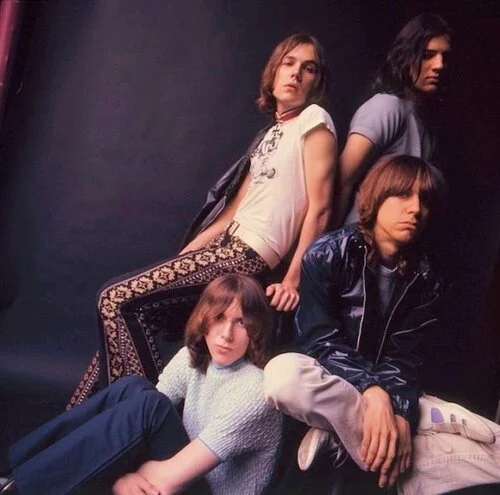
fswe.jpg

IN THIS PHOTO: The Stooges in 1969/PHOTO CREDIT: Joel Brodsky 

Part Thirty-One: The Stooges

___________

IN this edition of Inspired By…

ccc.jpg

I want to highlight one of the most influential bands ever. The Stooges, led by the incredible Iggy Pop, helped to herald in Punk and compelled a generation of artists. I can still hear their impact and D.N.A. in artists today. It is hardly surprising. I am ending with a playlist of artists influenced by the iconic Michigan band. Prior to that, here is some biography:

During the psychedelic haze of the late '60s, the grimy, noisy, and relentlessly bleak rock & roll of the Stooges was conspicuously out of place. Like the Velvet Underground, the Stooges revealed the underside of sex, drugs, and rock & roll, showing all the grime beneath the myth. The Stooges, however, weren't nearly as cerebral as the Velvets. Taking their cue from the over-amplified pounding of British blues, the primal raunch of American garage rock, and the psychedelic rock (as well as the audience-baiting) of the Doors, the Stooges were raw, immediate, and vulgar. Iggy Pop became notorious for performing smeared in blood or peanut butter and diving into the audience. Ron and Scott Asheton formed a ridiculously primitive rhythm section, pounding out chords with no finesse; in essence, the Stooges were the first rock & roll band completely stripped of the swinging beat that epitomized R&B and early rock & roll. During the late '60s and early '70s, the group was an underground sensation, yet the band was too weird, and too dangerous, to break into the mainstream. Following three albums, the Stooges disbanded, but the group's legacy grew over the next two decades as legions of underground bands used their sludgy grind as a foundation for a variety of indie rock styles, and as Iggy Pop became a pop culture icon.

After playing in several local bands in Ann Arbor, Michigan, including the blues band the Prime Movers and the Iguanas, Iggy Pop (born James Osterberg) formed the Stooges in 1967 after witnessing a Doors concert on the University of Michigan campus. Adopting the name Iggy Stooge, he rounded up brothers Ron and Scott Asheton (guitar and drums, respectively) and bassist Dave Alexander, and the group debuted at a house party in 1967. For the next year, they played the Midwest relentlessly, earning a reputation for wild, primitive performances, which were largely reviled. In particular, Iggy gained attention for his bizarre on-stage behavior. Performing shirtless, he would smear steaks and peanut butter on his body, cut himself with glass, and dive into the audience. The Stooges were infamous, not famous -- while they had a rabidly devoted core audience, even more people detested their shock tactics. Nevertheless, the group lucked into a major-label record contract in 1968 when an Elektra talent scout went to Detroit to see the MC5 and wound up signing their opening act, the Stooges, as well.

Produced by John Cale, the Stooges' primitive eponymous debut was released in 1969, and while it generated some attention in the underground press, it barely sold any copies. During the recording of the Stooges' second album, members of the band were introduced to heroin, which quickly took a heavy toll on them. As the Stooges prepared to release their sophomore album, every member sank deeper into substance abuse (except for Ron Asheton, who became increasingly frustrated with his bandmates as instruments and gear were pawned to pay for drugs), and their excess eventually surfaced in their concerts, not only by Iggy's antics, but also in the fact that the band could barely keep a simple, two-chord riff afloat. Fun House, an atonal barrage of avant-noise, appeared in 1970 and, if it was even noticed, earned generally negative reviews and sold even fewer copies than the debut, though it was belatedly hailed as a masterpiece. Following the commercial failure of Fun House, the Stooges essentially disintegrated as Iggy sank deep into heroin addiction. At first, he did try to keep the Stooges afloat. Dave Alexander was fired after a lackluster performance at the 1970 Goose Lake Rock Festival, and Zeke Zettner took his place. In 1971, a new lineup of the Stooges emerged, with Ron Asheton and Bill Cheatham sharing duties on guitar, Zettner on bass, Scott Asheton on drums, and Iggy on vocals. Several months later, Cheatham and Zettner quit the band, and James Williamson became the new Stooges guitarist, while Jimmy Recca joined as bassist. While live recordings exist of the Asheton/Williamson lineup, they never went into the studio, and for a spell the Stooges went dormant.

Early in 1972, Pop happened to run into David Bowie, then at the height of his Ziggy Stardust popularity and an avowed Stooges fan. Bowie made it his mission to resuscitate Iggy & the Stooges, as the band was then billed. Iggy and Williamson were signed to a management deal with MainMan, the firm guiding Bowie's career, and the new edition of the band scored a deal with Columbia Records. Temporarily based in London and unable to find a suitable rhythm section in the U.K., Iggy and Williamson invited the Asheton brothers to join the new group, with Scott on drums and Ron moved to bass. Iggy produced the third Stooges album, Raw Power, and Bowie handled the mix. Released in 1973 to surprisingly strong reviews, Raw Power had a weird, thin sound due to various technical problems. Although this would be the cause of much controversy later on -- many Stooges purists blamed Bowie for the brittle mix -- its razor-thin audio and fierce attack helped kick-start the punk revolution. At the time, however, Raw Power flopped, essentially bringing the Stooges' career to a halt, with the band's disastrous final gig in Detroit in February 1974 captured on the live album Metallic K.O.

In 1976, Bowie once again came to Iggy's rescue, helping him establish himself as a solo act by producing the albums The Idiot and Lust for Life, and playing keyboards in Iggy's road band. In time, Iggy established an international following as one of rock's great renegades, but the other Stooges didn't fare quite as well. Dave Alexander died of pneumonia in 1975, aggravated by an inflamed pancreas. James Williamson returned to Iggy's circle as a songwriter and producer on the albums New Values (1979) and Soldier (1980), but in the '80s he dropped out of music and began a successful career in electronics. Ron Asheton launched a band called the New Order (no relation to the successful British group), but it didn't fare well and soon split up. In 1981, Ron Asheton was recruited to join New Race, a short-lived side project formed by Radio Birdman guitarist Deniz Tek that also featured MC5 drummer Dennis Thompson and Radio Birdman alumni Rob Younger and Warwick Gilbert. However, the group (as intended) split after a single Australian tour and album. After returning to Michigan, Ron gigged periodically with Destroy All Monsters and Dark Carnival, acted in a handful of low-budget films, and in 1998 he recorded with the ad hoc band Wylde Ratttz, featuring Thurston Moore and Steve Shelley of Sonic Youth, Mark Arm from Mudhoney, and Mike Watt, ex-Minutemen and fIREHOSE. Wylde Ratttz's cover of "TV Eye" appeared on the soundtrack of the film Velvet Goldmine, but the group's album remained unreleased. Following the Stooges breakup, Scott Asheton played with a few local groups in Detroit before joining Sonic's Rendezvous Band in 1974, with Fred "Sonic" Smith of the MC5, Scott Morgan of the Rationals, and Gary Rasmussen of the Up; the band earned a potent reputation as a live act, but record labels were wary and the group slowly faded out by the end of the decade.

In 2002, Ron Asheton and Scott Asheton joined J Mascis + the Fog for a tour in which they performed a handful of Stooges classics from the group's first two albums. The shows were enthusiastically received, especially in Europe, and word got back to Iggy Pop, who had been talking with Ron Asheton on and off for several years about a possible Stooges reunion. In 2003, Iggy was recording the album Skull Ring, which featured contributions from a number of noteworthy bands, and he decided to add the Stooges to the roster; the Asheton brothers backed Iggy on four cuts (with Ron handling both guitar and bass), and on April 27, 2003, the Stooges played their first concert in 30 years at California's Coachella Festival, with Mike Watt sitting in for the late Dave Alexander. The reunited Stooges began hitting the road on a semi-regular basis for the next three years, playing major festivals in Europe and the United States, and in the fall of 2006 the group entered Electrical Audio Studio in Chicago, Illinois with engineer Steve Albini to record The Weirdness, an album culled from 22 new songs written by Pop and the Ashetons. The Weirdness was released in March 2007, followed by a major world tour.

The Weirdness was greeted with mixed reviews but the accompanying tour was warmly received. Sadly, Ron Asheton was found dead in his Ann Arbor home on January 6, 2009.


By May of that year, Iggy began talking about continuing the Stooges with Raw Power-era guitarist James Williamson replacing Ron. In November of 2009, this newly revamped Stooges debuted, and they kept going strong into the new millennium, beginning with their 2010 induction into the Rock & Roll Hall of Fame, running through a deluxe 2010 reissue of Raw Power, and continuing into 2013, when the Williamson-fueled Stooges released a new album called Ready to Die in April. Scott Asheton played on Ready to Die, but he soon dropped out of the Stooges' touring lineup due to health problems, with Toby Dammit (aka Larry Mullins) taking over on drums. Sadly, Ready to Die would be Scott Asheton's last hurrah; he died on March 15, 2014. 2020 brought a remarkable archaeological find for Stooges fans -- a stereo soundboard recording of the band's full set at the Goose Lake International Music Festival in 1970, performing the Fun House album in full. Third Man Records gave the recording an official release as Live at Goose Lake, August 8th, 1970”.

In honour of a hugely important band who helped change the course of music, I wanted to spotlight artists who either cite The Stooges as an influence or have clearly followed them in terms of their sound. If you are not sure just how many artists are beholden to The Stooges, then this playlist…

GIVES you some idea.
FEATURE: Modern Heroines: Part Sixty-Nine: Poppy

FEATURE:


Modern Heroines

xxx.jpg

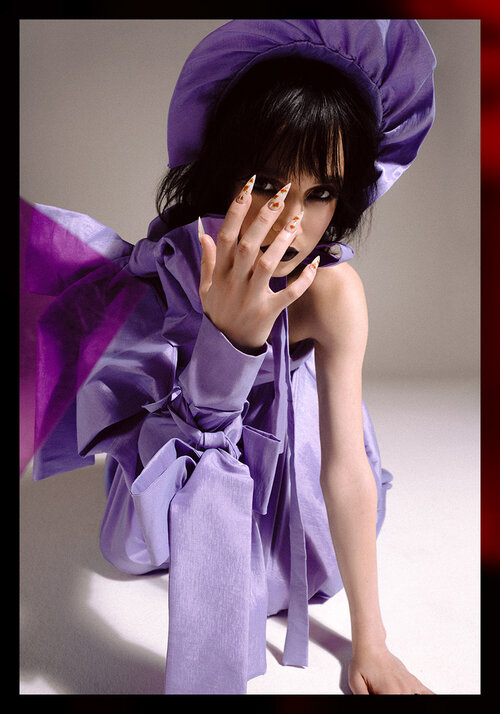
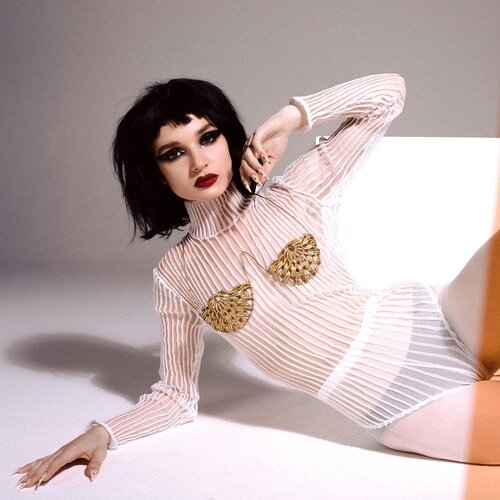
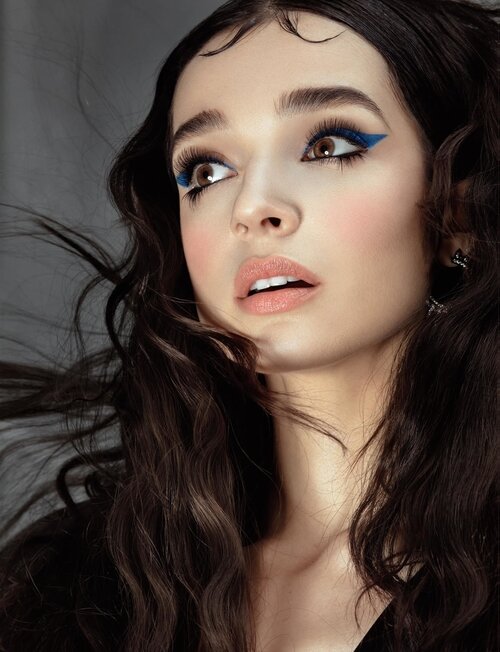
PHOTO CREDIT: Charlotte Rutherford for PAPER

Part Sixty-Nine: Poppy

___________

DESPITE the fact that…

lkkld.jpg

PHOTO CREDIT: Jenn Five for NME

her new album, Flux, is out now, I am writing this on 19th September (the album came out on Friday). It is a good time to focus on the brilliant Poppy. Go and get Flux on C.D. if you have not done so already. It is out on vinyl in November. Flux follows her third studio album, I Disagree (2020). I feel Poppy (Moriah Rose Pereira) is one of the most fascinating and exceptional women in music. She is someone who will go on to inspire so many others. I am going to drop in a review for last year’s I Disagree. There will be reviews online for Flux in the coming days, but I am a bit eager to write this feature, so many people would have already read what the press think. Poppy, is a Boston-born singer, songwriter, musician and YouTuber. In 2014, she began starring in performance art videos that presented her as an uncanny Valley-like android entity who commented on and satirised Internet culture and modern society. Jump to 2015, where she signed a recording contract with Island Records and released Bubblebath, her debut E.P., in 2016. I am going to skip ahead and focus on her recent work. Before bringing in a few interviews with Poppy, an NME review for I Disagree caught my eye:

The opening back-and-forth of ‘Concrete’ represents nu-metal for a new generation and sees her sing about wanting to kill off an older version of herself amid musical breakdowns, harmonies and a crowd chanting her name. Months after it was released as the first single from ‘I Disagree’, it’s still a joyful shock to the system.

The pop-metal title track sees Poppy stand her ground and refuse to settle for less than she deserves: “I disagree with the way you continue to pressure me / I disagree with the way you are failing to pleasure me.” Later she offers a hope for the world: “If only all of you could see the world I see / Then maybe everyone could live in harmony.” Skipping between fury and optimism, ‘I Disagree’ sees Poppy wrestle with destruction, new beginnings and how those two different visions fit together.

The Nine Inch Nails-inspired industrial rage of ‘BLOODMONEY’ is an abrasive push back at the industry Poppy finds herself surrounded by. “Never forget the excess of a man,” she roars, “because the grabbing hands always grab what they can.” This is followed by the surprisingly serene ‘Anything Like Me’, which finds menace in the quietest of places

In amongst the anger, the shock and the bubbling melting pot of influences, ‘I Disagree’ is a record about finding pride in who you are. It’s a journey Poppy knows all too well.

“I’ll never ask permission,” she promises on the dreamy escape of ‘Nothing I Need’. “You can be anyone you want to be,” she encourages on the Marilyn Manson-influenced ‘Fill The Crown’. Full of fizzing energy and delivered with clenched fists, closing epic ‘Don’t Go Outside’ sees Poppy wage war with the idea that we should be scared. We’re not doomed. We’re not hopeless. “Everything will be ok,” she argues, defiant and fearless.

Poppy is the living embodiment that change is a good thing. ‘I Disagree’ is her most accomplished record, full of daring theatre and snarling forward motion. While all our favourite rock bands are going pop, Poppy is unapologetically embracing her desire to go heavy. It might be inspired by the bands she grew up listening to, but there’s not a moment on ‘I Disagree’ that feels like a throwback. Try and keep up with her”.

I am going to put in some videos and songs through this feature. I will end with a playlist containing the best tracks from Poppy so far. Ahead of the release of Flux, I have been listening back to her work and noticing the changes and evolution. It is worth sourcing some recent interviews. Before that, I am going back to 2019. NME featured in an extensive interview. We discover more about Poppy’s ‘character’ and what her experience of growing up was like:

‘Am I A Girl?’ – and the preceding ‘Poppy.Computer’, from 2017 – were seemingly targeted at people who fetishise Japanese kawaii culture and futurism equally. Her forthcoming album, ‘I Disagree’, due on January 10 next year, promises to be a different beast: specifically, one with devil horns. It finds Poppy embracing the tinnitus-inducing thrash of heavy metal alongside those cute, catchy choruses.

It’s a stylistic shift that follows testing times, including a lawsuit, a high profile beef, and a second bad record deal – more of which later. This, then, is heavy metal as catharsis. “I try to channel all of my anger steam into my art and maintain some form of composure, even when I feel I want to end everything,” she says, troublingly. End herself or end the world? “The world.”

So you were feeling quite angry about some things? “Yeah, but I would say it feels natural too. When we were making ‘Am I A Girl?’ we were driving to the studio and listening to a lot of heavier music. I would go in and write a rainbows and butterflies song and I was like, ‘OK, there’s a disconnect here’…” 

PHOTO CREDIT: Jenn Five for NME

Previous interviewers – particularly the infamous US ‘shock-jock’ Howard Stern – have made a sport of trying to get Poppy to break character, or even simply to laugh. Even out of the public eye, Poppy carries herself with an air of almost supernatural composure. She sits bolt upright, doesn’t slouch, and speaks carefully and with great consideration in a soft, southern American accent. She’s fiercely intelligent and quietly assured. She drinks black coffee and frequently cracks her knuckles, which snap so loudly you wonder if there’s a metal skeleton in there after all.

An exaggeration of this emotionally guarded person is the one that Poppy’s fans have become obsessed with. In some of her YouTube videos, she asks endless questions of the viewer about their relationship with social media, and whether they validate themselves through followers. In others, she experiences crises about the nature of her own existence. In some, black goo oozes from her mouth. They’re videos that challenge the viewer in a number of ways: not much happens, it happens very slowly, and – though they’re absolutely PG rated – you probably wouldn’t want to be caught watching them at work. They’re much like the trend for ASMR videos, in which people whisper and click and generally make the viewer feel a bit strange in a way they can’t quite put their finger on.

When previous interviewers have asked where Poppy lives, the reply would be “the internet”. Actually, she confirms, she grew up in Nashville, Tennessee, and lives, not-quite-alone, in Los Angeles, California. “I have a Sphynx cat. He’s the demon man of my home. His name is Pi and he I think he was sent to ruin my life,” she says.

It’s easy to imagine Poppy being an outsider in Nashville, typically the home of country music and cowboys rather than robots, and a place she describes as having “that small town feeling”. It’s equally easy to see her being on the fringes in Hollywood. She describes her life there as feeling like “I’m in the middle of a lot of things, but with my journal out, just watching.” So you’re an anthropologist? “I guess so,” she says. “I think everybody would say that about me. When I’m in a room, I’m looking everywhere. I think I would be a spy if I wasn’t a singer.”

Though a keen dancer, Poppy spent much of her childhood alone in her bedroom. “I would intentionally isolate myself from a lot of things,” she says. She did half of her education in public school, where she was bullied, and completed her studies early in homeschool. “I didn’t have a positive experience [at public school],” says Poppy. “I barely said any words, so that kind of opened me up, in a way, to be the target of everyone’s teasing.”

For what things?

“Being skinny and quiet.”

Homeschool conjures images of a parent playing the teacher role. Actually, says Poppy, she did her studies alone in her bedroom, where “the internet was my teacher.” When you consider that image – a slight, quiet girl, sat alone in a room with only the internet for company, diligently racing through the curriculum – it’s not too difficult to join the dots to Poppy’s character on YouTube. “Yeah, it does actually make sense when you think about it,” she says, as if this might, improbably, be a fresh thought. “I like that. If I could just have that be my legacy – famous for being alone in a white room – I’d be happy with that”.

There is a bit more I want to highlight before wrapping up. In July of this year, The Forty-Five interviewed Poppy. It is clear that Poppy’s music and style has changed through the years. Flux seems like a new era for her:

Persona or not, we’re certainly in a very different era of Poppy these days –  last month saw the release of a grunge-flecked new single. While previous releases toyed playfully with rock influences and set them against crisp, glimmering pop melodies, ‘Her’ goes full pelt, and wouldn’t sound out of place on a Hole record. Produced by Justin Meldal-Johnsen – known for his work with Paramore, Wolf Alice and Nine Inch Nails, among others – the spiky comeback moment is accompanied by a dystopian stop-motion video in which robotic singers are cranked out of a production line and forced to perform. It’s the first glimpse of a forthcoming new album which takes influence from the heavier end of the sonic spectrum, and explores the idea of “accepting uncertainty in your life and not being afraid of the unknown.” Though there are no featured collaborations “there are people who have lent their skills to making some of the album,” Poppy hints cryptically.

Arguably, Poppy has always done a similar thing with her music – drawing listeners in with swathes of pastel candy floss, before gripping them with strange, blooping pop music. “Get up, put my makeup on, I know it’s time to go,” she sings on ‘Make A Video’ from her 2017 debut album ‘Poppy.Computer’, “sing along to a dumb pop song that they play on the radio”. The following year, ‘Am I A Girl?’ explored similar themes with a more menacing bite – while 2020’s ‘I Disagree’ pulled from heavier metal and alternative rock. On that record’s opener ‘Concrete’ Poppy appears to kill off her previous era atop overwrought, squalling guitar solos and flowery, orchestral interludes: “bury me six-foot deep,” she deadpans, “cover me in concrete”.  Though Poppy insists that this tension between lightness and darkness is instinctive – ”I don’t set out to be like ‘I’m going to do this’ she says – she admits that she’s drawn in these directions on a “subconscious” level. “I’m very aware of how I perceive or consume or digest things from other people, and I think subconsciously people that are attracted to my works view it similarly as well,” she says. 

PHOTO CREDIT: Frank W Ockenfels III

Poppy’s home state of Tennessee has the highest number of megachurches per capita in the entire US – these mammoth places of worship often have thousands in their congregations, and often broadcast their sermons on TV in a practice known as Televangelism. Growing up in a city woven with religious threads eventually led Poppy to found her own Poppy Church – a virtual world for fans.

“It’s always been a topic that has been multi-layered for me,” she says. “It’s never something that can be black and white, and it’s always something that I struggled finding my interpretation and meaning with. I always found it kind of ironic that some of the people who hurt me the most in my life were people that were extremely religious. It has always been a frustration – there’s something perverse about someone who portrays themselves as being pure, and the contradiction, the juxtaposition and the thought that there’s always something darker underneath something that looks so concise and pristine… that’s what I think about often.”

Poppy’s new album is also her first since parting ways with her former collaborator Titanic Sinclair – in a statement on social media, the artist claimed she was subjected to “manipulative patterns” of behaviour. Though she doesn’t refer to him by name during our conversation, she pointedly mentions the idea of breaking free from “people that have been like a ball and chain or a negative force,” and seems liberated by the freedom of this new chapter.

The visuals for new single ‘Her’ certainly seem to allude to these past events; a devilish figure sits on a throne and claps as a series of identikit puppets roll off a musical conveyor belt. “Give her a face, give her a name, that isn’t hers, then make her yours,” she snarls on the song. “It’s based on people’s perspective of how things were,” she says of the song. “Did I feel like I was controlled? Or did people perceive me as being controlled?”.

Two more interviews before closing this up. I want to bring together as much information about Poppy as possible, as she is such a compelling artist and person. Numéro interviewed her back in April. Among other subjects, the dangers of social media was discussed:

Have you been hurt by digital platforms and social media?

In the past, yes. I’ve felt upset by opinions published on social media. At the time, I wasn’t yet using those platforms to promote my music. A lot of people think that simply having an opinion is enough to allow them to share it with the whole world. I think you’ll agree it’s pretty frightening to see the consequences a simple Tweet can have. I’m not really sure if I trust my generation. As for the cultural industry, I’m not sure we can really talk about trust. Let’s look on the bright side: today we’re moving towards greater acceptance of otherness. Before, people were quickly put in boxes.

Are you frightened of ageing?

For a long time I was, yes. But I think those fears were related to an anxiety, that of not managing to be more fully what I really am. They’ve faded a bit with time, particularly when I realized that I was working hard every day to become what I really wanted to be. 

d.jpg

PHOTO CREDIT: Sofia Sanchez & Mauro Mongiello

Are there mistakes you’ve made since starting your music career?

Of course! Everyone makes mistakes. Mine include working with people who weren’t able to point me in the right direction, particularly when I was in the wrong and incapable of seeing it. But the word “mistake” is too strong, particularly in our business, because it’s very negative and doesn’t take into account the idea of experience. Paradoxically, keeping the wrong company can sometimes trigger a reaction that allows you to emancipate yourself. I don’t make decisions the way I used to anymore.

Journalists often class your music as “nu metal,” but I don’t think you agree with that categorization...

No, nu metal isn’t a genre I’d like to be assimilated with. [Laughs.] What’s more I never felt my music could be classed in any one category or another. Contemporary music has emancipated itself from the old classifications. Let’s say “contemporary metal” instead.

Rumour has it that metal fans are nicer and more open-minded, and yet it wasn’t until 2021 that a woman was nominated in the category at the Grammy Awards...

Metal fans are open-minded? No, I wouldn’t say that. [Laughs.] I think that those who make metal music are often very open-minded, adorable and extremely inspiring. They’ve given me a lot of advice and shown me a lot of love. But metal fans are the guardians of the creative temple, which they defend jealously, and they can sometimes be rather conservative. They’re definitely not as conciliatory as those they adulate! There are many women in the world of metal, so clearly it’s wonderful that I was nominated in that category”.

The last interview I am mentioning is from Vanity Fair . Although it is from 2020, it is a really interesting chat that I enjoyed reading. I have selected a few excerpts:

At the same time, the Poppy character itself began to feel like a straitjacket—creative anathema to someone with a constant need to move forward. “One of my biggest fears is regressing,” she said. “I don’t want to ever be moving backwards. I need to always be going forward. I even have a problem when I have a layover.” Not only that, but Poppy was realizing that the internet and social media, her chosen venue for artistic expression, was becoming an increasingly ugly and toxic place.

Poppy wrote I Disagree with Sinclair, but also, apparently unbeknownst to Sinclair himself, some of the record’s lyrics, she now says, were about him. It was a small but symbolic act of defiance. Of the whole period, Poppy said, “It just got to a point…when the air just felt very heavy. I felt like there was a shift coming.”

The shift happened, finally, at the end of last year. In December, she took to social media to announce the professional breakup with Sinclair, with then uncharacteristic candor. It was not an amicable split. “I was trapped in a mess that I needed to dig my way out of,” she wrote, “and like I always do, I figured out how to handle it. I encourage those of you who feel trapped in a situation whether it be similar to my previous one or not—to take the first step, because that is the most difficult one.” 

During our interview in February, Poppy did not mention Sinclair by name, instead referring to a “previous collaborative partner” and “certain people.”

Not long after the split, in May, Poppy released a statement in a since-deleted tweet saying that an unnamed ex-boyfriend had leaked photos of her sans makeup online, along with unreleased material. “This is an attempt to make me feel small, insecure and exposed,” she wrote. “Those tactics aren’t going to work.”

Recently given the opportunity to respond to the statement, Sinclair didn’t deny such accusations. “Poppy is a true living enigma,” he wrote in an email. “She was my best friend, my business partner, and my lover for half a decade and not once did I call her by her legal name.”

“I’m disappointed with how she decided to treat me in the end,” he added. “And I have to live with how I reacted to accepting (and ultimately respecting) why she did it in the first place.”

An hour after our interview back in February, Poppy, or a version of her at least, lay in a casket at Brooklyn Steel, her eyes closed, arms across her chest. Around her, a small gathering paid their respects, taking turns at saying a few words each. The funeral ceremony was Poppy’s characteristically twisted way of killing off her famed former self once and for all, closing a chapter and beginning a new one.

Poppy’s longtime fans—her “Poppy seeds”—remain devoted. She’s grateful for that, but also excited about reaching a whole new audience. As much as it was for the fans, the ceremony was for her too, a way of laying a version of herself to rest and letting go. She talked about her old persona, and what was known as the Poppy project, with an epitaphic finality. “She had her life.… I don’t think there’s a part of me that will miss it,” she said. “I feel like it served its purpose”.

With a new album out, there is a lot of eyes on Poppy. She is a sensational artist who will continue to make incredible music. Flux is her latest offering. An innovative, consistent and striking artist, Poppy is most definitely…

ONE of the absolute best.

FEATURE: The Line-Up with Shaun Keaveny: Building Your Own Dream Festival

FEATURE:


The Line-Up with Shaun Keaveny 

iuui.jpg

Building Your Own Dream Festival

___________

I was spending a lot of time…

qwqw.jpg

PHOTO CREDIT: Jade Masri/Unsplash

with podcasts during the pandemic. We are still in the pandemic though, when it first started, there was this sense that this thing will go on and we are not sure when it will get better. Now that there is a little bit of movement and a little less fear, I am still listening to podcasts a lot. As festivals are coming back, it has got me thinking about live music. So many artists have been living off hardly anything for over a year and a half. It will take a while before the live economy has been restored and we see the same amount of gigs as we did in 2019. It is good to see artists and fans come back to festivals. Scenes of revellers united is something we were unsure would return so soon. It is great that people can make plans in this area. It was a tragedy when Shaun Keaveny left BBC Radio 6 Music last month (or, as he said in his farewell speech, the decision was sort of taken out of his hands). He had been at the station for fourteen years and amassed legions of loyal listeners! It was an emotional day when he said goodbye to a station that he helped get to where it is today. Happily, he is keeping busy outside of radio – though we hope he gets his own show again very soon! Even though his podcast, The Line-Up with Shaun Keaveny, has been going for a few weeks now, I wanted to draw attention to it.

This Sony Music release explains more about what the podcast entails:

The Line-Up is a new podcast created in collaboration with Sony Music Commercial Group and Cup & Nuzzle, where music-loving guests get the chance to curate their very own dream festival alongside veteran broadcaster Shaun Keaveny.

Each episode will see Shaun and his guest discussing their favourite festival memories, who tops the bill on their dream line-up, their food and drink of choice and the all-important question – are they brave enough to face the infamous portaloos?

“The Line-Up is a chance for me to essentially play God to all manner of great guests and grant them their ultimate festival wishes,” said Shaun. “Whatever they do desire – be it Hendrix jamming with Taylor swift, or a helicopter on site delivering their favourite curry. All I ask for in return, like any god worth their salt, is total eternal devotion!”

With no anecdote off limits, The Line-Up will showcase each guest’s true passions and musical spirit. People in the hot seat include artists Manic Street Preachers and Tom Grennan, actor Jodie Whittaker and comedian Shaparak Khorsandi.

Shaun was an instrumental part of the BBC 6 Music family for nearly 15 years, interviewing the most prestigious names in the music industry and further afield. Later this month he is co-hosting live coverage of the Isle of Wight Festival 2021 for Sky Arts, and he recently announced he is joining Absolute Radio for their comedy show, Rockanory.

Produced by Natalie Jamieson, The Line-Up kicks off on 15th September with Imagine Dragons and will be available weekly across all podcast providers – subscribe here”.

I have loved the episodes so far. The guests have been really interesting and different. I hope that there are many more series of Keaveny’s podcast, as the idea is one that has a lot of room for expansion. The series has the legs to run for a long time. I love the fact that a guest can assemble their own music festival. This is something we have all dreamed of at some point. You can name it, say where it is to be located and what sort of vibe there will be – in terms of ambience, food and the general look/feel. Keaveny’s guests get to choose five acts, living or dead, that will be in the line-up. Going from the dawn through to the night, it is a tantalising opportunity to construct the best festivals ever. It has been interesting seeing which direction each guest goes in. I like the fact Imagine Dragons’ Dan Reynolds (in the first episode) chose Paul Simon and Alanis Morissette – though the former could only play Graceland, whilst the latter had to perform Jagged Little Pill. Joy Crookes explained how, as she has anxiety and likes being close to home, her festival would be in South London. She opted for Billie Holiday and Prince in her line-up (who, she said, would play the entire festival; seemingly shredding and gyrating for the whole day!). There is a long way to go for The Line-Up with Shaun Keaveny. I don’t recall hearing many podcasts like this.

a.jpg

IN THIS PHOTO: San Diego, U.S.A./PHOTO CREDIT: Ameer Basheer/Unsplash

Whilst anyone can set up their own music festival, the cost, logistics and sheer scale of demand would put many off. In this podcast, music lovers can construct their dream festival without having to worry about red tape and expenses. Keaveny, as the host, would handle all of that. Rather than this being me getting a chance to pitch my own dream line-up, it is a recommendation for people to catch the podcast. Also, have a think about how your festival would go. For me, I would have a festival set in California. It might put off some British and international acts, but the wide-ranging and ideal landscape would be perfect. Perhaps setting it in Pasadena or San Diego. Calling it The Love Below Festival (as I really like the name; The Love Below was part of an Outkast double album (with Speakerboxxx) in 2003). With some great backdrops and plenty of entertainment and good food on site, it would be quite a cool and original festival. For food and drink, it would mix summer drinks like milkshakes and cocktails with international cuisine. There would be something for everyone. I would hold it in August. There would be a Glastonbury-like vibe to the site. So many different stalls and forms of entertainment. It is quite hard when it comes to narrowing down to five acts. In The Line-Up with Shaun Keaveny, our host has this great rapport with the guests. He helps mould their festival and provide this tangible joy – like you are part of the crowd and are ready to see the acts!
qqq.jpg

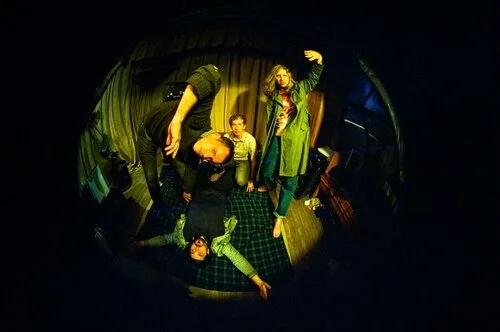
 IN THIS PHOTO: Paul McCartney/PHOTO CREDIT: Mary McCartney

I would have to open the festival with an artist who could do mellow and upbeat. Dan Reynolds has already picked The Beatles. I would have Paul McCartney open. I would get him to (as much as you force Macca to do anything!) play solo stuff, The Beatles and Wings tracks. There would be a moment when Ringo Starr would join him. Possibly at the very end, the drummer could hook up with his former bandmate for a great finale. Maybe they could play Paperback Writer (The Beatles) or Band of the Run (Wings). It would get plenty of people in early. I would probably keep my line-up quite classic. I like new artists, though one would go with their all-time favourites if there were no limits. I never got to see Freddie Mercury perform with Queen. To hear that in a live setting would be amazing. They would have free reign over which songs were played. I think this would be a nice boost as we head into the afternoon. Following Queen would be Madonna. Ideally, one would like to see a 1990-Madonna perform (when she was on her The Blond Ambition World Tour). In terms of her fame and energy levels, this would be a good period. Not to say she lacks something as a live performer now. One feels that she is winding down her touring days. Few artists have such an illustrious and famous back catalogue!

qq.jpg

 IN THIS PHOTO: Madonna/PHOTO CREDIT: Ilya S. Savenok/Getty Images for A+E

I would insist that she plays songs from her debut, Madonna (1983) to 2005’s Confessions on a Dance Floor. I don’t mind her work after that, but she has so many big hits that she would need to cram in! I guess there would be a lot of costume changes, so it might be quite a long set! Honourable mentions go to Radiohead, Michael Jackson, Björk and so many others that I could not include. The penultimate act would be Beyoncé. Again, I have not seen her perform live. She has headlined Glastonbury and turned in an iconic set at Coachella a few years back. I would have her perform with JAY-Z, her former Destiny’s Child group-mates (Michelle Williams and Kelly Rowland). I think that this would be a perfect way to get the crowd going and up as we head to the final act. Whilst it would never happen in any situation and she has never played a festival before (although she did briefly appear at a Japanese music festival in 1978), Kate Bush would close the festival (as you might expect I’d say!). Able to keep the energy going but also take us down as we head into the night, it would be a special closer! I would ask if she could put together a special set uniting her albums, Never for Ever (1980), The Dreaming (1982), The Sensual World (1989) and 50 Words for Snow (2011). These are albums that have either never been performed live or have only had a song or two played.

 IN THIS PHOTO: Beyoncé/PHOTO CREDIT: Getty Images

It would be a live set like no other. With great sets, costumes and effects, the icon would be playing tracks that she has never taken to the stage. Lasting about three hours, it would be an epic set that would definitely get the crowd crying and cheering! As she takes a bow and the set ends, there would be a visual display. Rather than fireworks (which are fuck*ng awful and noisy), there would be a spectacular display of lightning and visuals that would set people on their way. That is my desirable festival line-up. Every episode I hear of The Line-Up with Shaun Keaveny makes me wonder and imagine. I am sure, days from now, I will think of another artist that I would have at my festival – the temptation to move things around and fiddle! A great podcast series at a time when so many festivals are resuming (whilst others are planning their return next year), I hope that many more tune in and give it nice reviews. Although Shaun Keaveny is no longer at BBC Radio 6 Music, he is doing podcasts and other projects. He is definitely going to be kept busy for a long while yet! If you are a music lover who has always thought about what their dream festival line-up would be, then I can recommend you check out the excellent podcast from…

xxx.jpg

 IN THIS PHOTO: Kate Bush during her 2014 residency, Before the Dawn/PHOTO CREDIT: Ken McKay

THE inimitable Shaun Keaveny.

FEATURE: The September Playlist: Vol. 4: A Royal Morning Blue Tint in the Hall of Mirrors

FEATURE:


The September Playlist  

ccc.jpg

IN THIS PHOTO: Let’s Eat Grandma/PHOTO CREDIT: El Hardwick

Vol. 4: A Royal Morning Blue Tint in the Hall of Mirrors

__________

THIS week’s Playlist…

rrr.jpg

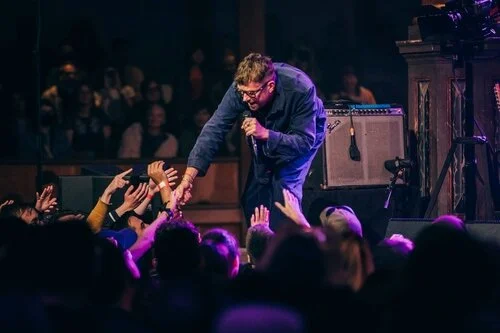
IN THIS PHOTO: Damon Albarn

is packed with great tunes. Alongside new material from Let’s Eat Grandma is Damon Albarn, Alessia Cara, Nao, Poppy, Guns N' Roses, The Lathums, Elton John/Charlie Puth, Little Boots, GRACEY, and L Devine. Joining them is Public Service Broadcasting (ft. Blixa Bargeld), Amber Mark, Bess Turner, Parquet Courts, and Eels. If you need a boost to get you into the weekend, make sure that you check out the songs below. It is another big and varied week that should give you the lift that you need. Sit back and enjoy some great tunes from…

IN THIS PHOTO: GRACEY

AN eclectic week.   

ALL PHOTOS/IMAGES (unless credited otherwise): Artists

__________

xxs.jpg

Let’s Eat GrandmaHall of Mirrors

qq.jpg

Damon Albarn - Royal Morning Blue 

Alessia Cara Best Days

fff.jpg

Nao Burn Out

Poppy As Strange As It Seems

Guns N' Roses - Hard Skool

x.jpg

The Lathums I Won’t Lie

Little Boots Silver Balloons

didurf.jpg

Elton John, Charlie Puth After All

PHOTO CREDIT: Chris Almeida

GRACEYthe internet

L Devine Die on the Dancefloor

PHOITO CREDIT: Sequoia Ziff

Bess Atwell How Do You Leave

Public Service Broadcasting (ft. Blixa Bargeld) - Der Rhythmus der Maschinen

v

Amber Mark What It Is

sss.jpg

Delilah Holliday - Dimension 

qq.jpg

PHOTO CREDIT: Lily Brown

Buzzard Buzzard Buzzard – You 

alt-j - U&ME 

ll.jpg

Pixey Take Me On

qqq.jpg

PHOTO CREDIT: Carlos Gonzalez

Kadhja Bonet – For You 

aa.jpg

Oh Wonder22 Break

mm.jpg

Porij Divine

qq.jpg

PHOTO CREDIT: Colin Medley

Andy Shauf – Jaywalker 

xx.jpg

PHOTO CREDIT: Pooneh Ghana

Parquet Courts - Black Widow Spider 

aa.jpg

PHOTO CREDIT: Cal McIntyre

Orlando Weeks - Look Who’s Talking Now 

aaa.jpg

Eels - Good Night on Earth 

Jaz Karis Motions

aaa.jpg

Nina Nesbitt - Life’s a Bitch (L.A.B)

aq.jpg

Erica Cody Queen

aaa.jpg

Carrie Baxter You

aa.jpg

M(h)aol – Gender Studies 

qq.jpg

PHOTO CREDIT: Alex de Brabant

LoticEmergency

zzz.jpg

PHOTO CREDIT: Cam Whaley

The OpheliasCrocus

qq.jpg

Eiza MurphyMovies

Amy AllenA Woman’s World

m.jpg

Georgia GreeneHave You Thought About Me with Someone Else

v

FEATURE: One for the Record Collection! Essential October Releases

FEATURE:


One for the Record Collection!

fff.jpg

IN THIS PHOTO: Lana De Rey

Essential October Releases

___________

WITH there being some seriously good albums…

vfgt.jpg

due next month, I am going to suggest the best that you will want to own. If you have some pennies set aside for records, I feel the suggestions below are for you. This year has seen so many terrific albums released. I think one or two due next month could rank alongside the very best of 2021. The first week is actually 1st October. There are a few big albums out that you will want to own. Brandi Carlile’s In These Silent Days is out on 1st October. It is an album that you need to pre-order. In this article from SPIN, we discover more about a much-anticipated album from the Washington-born songwriter:

Carlile crafted the 10 songs that comprise In These Silent Days with longtime co-conspirators Tim and Phil Hanseroth. The songs were written while Carlile was quarantined at home and chronicle acceptance, faith, loss and love.

Here’s what she had to say about the record:

Never before have the twins and I written an album during a time of such uncertainty and quiet solitude. I never imagined that I’d feel so exposed and weird as an artist without the armor of a costume, the thrill of an applause and the platform of the sacred stage.

Despite all this, the songs flowed through—pure and unperformed, loud and proud, joyful and mournful. Written in my barn during a time of deep and personal reckoning.

There’s plenty reflection…but mostly it’s a celebration.

This album is what drama mixed with joy sounds like. It’s resistance and gratitude, righteous anger and radical forgiveness.

It’s the sound of these silent days”.

Another album that is due on 1st October is Lady Gaga & Tony Bennett’s Love for Sale. Even if you are not a big fan of either artist, it is going to be such a beautiful album – you will want to grab a copy. Go and pre-order Love for Sale (“The follow up to 2014's Grammy Award-winning Cheek To Cheek, Bennett and Gaga's latest collaborative album is a celebration of the Cole Porter songbook and a testament to the pair's enduring friendship and love for one another”). Recently, Bennett and Lady Gaga performed together at Radio City Music Hall. This is what Vulture observed:

Though unused for the past 18 months, Radio City Music Hall’s 6,105 red velvet chairs will likely need a tune-up by the end of this week thanks to Tony Bennett, Lady Gaga, and the 27 standing ovations the pair received during their miraculous, magnificent concert there on Thursday night (August 5).

It was the second and final performance of “One Last Time: An Evening With Tony Bennett and Lady Gaga,” and the sold-out audience had come to pay their respects — and in their sequined, bedazzled best. Many dressed for the occasion in ball gowns, tuxedos, and gemstone-drenched smoking jackets; masks were sparse (though attendees were required to provide proof of vaccination or a negative COVID-19 test to enter the venue), but there were even a few rhinestone-studded face coverings spotted in Radio City’s teeming lobby beforehand.

When Gaga made her entrance just after 9 p.m., in a sparkling white ball gown, and struck a pose, the crowd — which included Hillary and Bill Clinton, who received a shout-out from the mistress of ceremonies — leapt to their feet and cheered. When the curtain rose an hour later to reveal Bennett for the first time, standing by the piano with his arms outstretched in elated greeting, they stood — clapping and waving, this time as if facing an old friend for the first time in years — until he picked up his microphone and began to sing. The vast majority of those present for Bennett’s final performance at Radio City Music Hall understood the assignment: We were here to watch a beloved New York icon say good-bye to the stage, with his decorated protégé giving him a proper send-off”.

I really love the collaborative work between Tony Bennett and Lady Gaga. They are such a perfect fit and, although Bennett is ninety-five, I hope that the two work together on a further album. I am definitely going to check out Love for Sale. I am excited to see what the album offers and what the highlights will be. Definitely, one of the biggest albums due next month!

Staying with 1st October, and the final album that I will recommend from this week is Tirzah’s Colourgrade. This is an album that every music fan should order. Rough Trade provide us some more details about an L.P. that is going to get a lot of love and focus. Tirzah is such a wonderful artist making music that is so resonant and instant:

Colourgrade follows on from 2018’s immediate cult classic LP, Devotion. It forms a subconscious snapshot from across a year when Tirzah was playing live regularly for the first time, in the depths of promoting Devotion and recorded soon after the birth of her first child and shortly before her second child was born. The album explores recovery, gratitude and new beginnings, presenting a singer having discovered the type of love that is shared between a mother and a child for the first time, whilst simultaneously working as an artist. Capturing both the great and the scary, the exhaustion and the recovery, Colourgrade is a listless amble through the innermost feelings, an intoxicating presentation of a full time mother and artist. As always, a Tirzah record is a family affair. That doesn’t just mean grandmum and granddad, but the extended CURL crew that includes long term collaborators, Mica Levi and Coby Sey, the younger brother of producer Kwes who mixes on Colourgrade. It’s this natural, collaborative energy that keeps Tirzah’s music fresh and progressive”.

As the rest of October is busy, I will move things to 8th. There is one album from this week that I want to source. It is Pip Blom’s Welcome Break. This is an album that I am really excited to hear. Do go and pre-order and album that is going to be among this year’s very finest:

Actively seeking out moments of creative-authenticity, be it via a slightly- out-of-tune guitar or proudly-fuzzed vocals, Pip Blom take us back full circle and introduce us to their Welcome Break- an eleven-track release which resonates with about as much decisive allure as it’s Boat precursor, but this time with a bit more contemporary chaos to boot. Where Boat reckoned as a fresh-faced, yet gloriously fearless game- changer, Welcome Break is the self-assured older sibling who, with an additional year or two behind themselves, isn’t afraid to speak out, take lead, and instigate a liberated revolution-come-bliss-out.

Following an extensive touring schedule which saw the Dutch 4-piece roam over field, oceans, and Glastonbury’s John Peel stage following the release of their debut record Boat, any such cool-cat would be forgiven for wanting to kick back, and indulge in some very appreciated, time off. As is often the way, such timely-abandon cannot be said for Pip Blom however, who immediately began to gather up all her soaked-up inspirations taken from the road, and manifest a re-energised sense of self, and ritualistic songwriting. It’s at this stage in our indie-fairy-tale that things start to get ever so 2020. Whilst the world was suddenly put on hold as a result of Covid-19, Pip Blom, who’d made plans to return to their favourite ‘Big Jelly Studios’ in Ramsgate, England, were suddenly faced with a very sticky, kind of dilemma. “We’d scheduled to go into the studio in September but summer started moving and there were a couple of countries not allowed to go to the UK anymore... a week before we had to go, the Netherlands was one of those countries”- notes Pip.

In total, three weeks were spent recording what would become the groups sophomore release; a Al Harle engineered love-affair which was self- produced entirely by the band and culminated in a legally intimate, fully- seated album play-back, to six, of Ramsgate’s most chorus-savvy and ‘in- the-know’ residents. Getting out of their hometown and into an environment which removed all notions of “normality” or personal space, was an atmospheric godsend in terms of motivation; an act which encouraged Pip Blom to re-adjust and buckle down as a unit again, after spending so long in mandatory isolation”.

The following week, 15th is a pretty packed one! I shall narrow it down to three albums from that week (as there are a few from 22nd and 29th that are also worth getting). The first I am going to suggest is Hayden Thorpe’s Moondust For My Diamond. The former Wild Beasts lead is one of my favourite artists. His second solo album is shaping up to be very special indeed. I would recommend that everyone set aside some money so that they can pre-order the album:

In contrast to Diviner, a record that very much favoured the inner world, Moondust For My Diamound sees Hayden Thorpe moving into a more natural visual and sonic palette, gazing outward on the world. Produced by Richard Formby and Nathan Jenkins (Bullion), Thorpe has made an album that is galvanising, reassuring, elegant, seductive: it oozes Big Cosmic Energy”.

Make sure that you invest in Thorpe’s upcoming album. He is someone that always provides such incredible music. I am going to move on and concentrate on 22nd in a minute. There are a couple of other albums due out on 15th October that I think are going to be worth checking out – October is an especially busy month, as it has five Fridays!

Johnny Marr’s Fever Dreams, Pt. 1 is another great album that you will want to go and get. The former legendary guitarist with The Smiths, Marr has proved himself to be one of the most consistently brilliant and astonishing artists. I love his solo work, so I am really keen to see what we get from Fever Dreams Pt. 1. It is going to be another wonderful and memorable album from the incredible Marr. It is an album that I can definitely recommend people go and get. Pre-order your copy to ensure that you do not miss out on one of the biggest releases from next month:

Informed by the kind of powerful, anthemic and direct approach to words instantly present in Spirit, Power And Soul, the songs on the ‘Fever Dreams Pt 1’ EP arrive with an emotional potency. Fusing the language of soul music with his roots as a “Mancunian glam rocker”, lyrics that could be simultaneously personal, universal, and subtly political, with a fantastically expansive sound. The new EP reflects Johnny’s multifaceted past, but takes his music somewhere startlingly new”.

Although there are a lot of other great albums out on 15th October, I am going to keep it quite simple and finish with another that I feel everyone should set aside some money for. Remi Wolf is a brilliant new artist everyone should know and investigate. Juno is an album I am excited about. I am not sure whether there is a vinyl release, but one can pre-order it on C.D. now. If you need a bit more insight into Juno, NME provided some news and further exploration recently:  

Remi Wolf is preparing to release Juno on 15th October. This is a new artist that is primed to become a huge success. I am going to follow her career to see where she heads. Wolf is someone that everyone needs to spend some time with.

“In a press release, Wolf described ‘Quiet On Set’ as “full on psycho”, saying that “as much as the song is silly and fun, it really does reflect my life and feelings at the time… overworked, manic, reckless, and childish”.

She noted that ‘Grumpy Old Man’ came from a more vulnerable place than she usually taps into with her songwriting, with the number inspired by “some of the most benign things [that] can make me irritated and defensive, which makes me feel old, fragile, and careless”.

Both tracks will appear on ‘Juno’, set for release on October 15 via Island. The LP will also feature last month’s single ‘Liquor Store’, and is named after her dog, which she adopted during lockdown.

“Creating my debut album ‘Juno’ was like a fever dream,” Wolf said. “So many changes were happening in my life while I was creating these songs and I think my album really reflects the feelings of tension and release that these changes provoked in me.

“Every song on this record is a vivid snapshot into what was going on in my life and mindset the day I wrote each one. I hope my Remjobs can hear my honesty and passion come through and, if not, I just hope they think each song is a banger!”

‘Juno’ comes as the follow-up to Wolf’s 2020 EP, ‘I’m Allergic To Dogs!’. NME declared the record one of the best releases of the year, with writer Charlotte Krol calling it “a flamboyant collage of pop that sticks together vignettes of her love life, hedonism and humdrum hindrances”.

There are a few albums out on 29th October I am keen to point people in the direction of. Before that, 22nd October is promising a lot of gold! I am going to narrow it down to five from that week. That might not sound like narrowing; there are a lot of great albums out that week! The first on the radar is Duran Duran’s FUTURE PAST. Go and pre-order your copy as I think the legendary band are producing some of their best music in years. The band spoke with The Guardian earlier in the year about FUTURE PAST:

The band are all far-flung now, with families, side projects, lives that span from Los Angeles to Chelsea. But they refer to an almost gravitational force that Simon Le Bon, sitting next to John Taylor in hoodie and blue jeans, says he felt right from his very first audition. The band started playing the track Sound of Thunder, and he stood up and invented a verse on the spot. “I thought: ‘God, this is the real thing, this is how it’s supposed to be,’” he remembers. “And I knew that I had to hold on to it as a job, and I had to hold on to those melodies, and I had to hold on to these guys because I knew there would never be anything in my life that was more creative and more immediate and more absolute than being in Duran Duran.”

“There was a certain inevitability about the new album,” John Taylor continues. “We get to the end of a touring cycle and we know we need time away from each other – but it’s like a chemical thing, it’s a pull that happens, almost like a mission; we have to go back!”

“I wasn’t into making a new album at all,” counters Le Bon. “I was like: ‘Let’s just do a single’, because I thought nobody’s going to listen to a whole album, people just listen to singles now. But I think I was on my own in that camp and it was a band decision. That’s how we work: four people and no leader.”

Arriving at the studio, “we show up with no ideas whatsoever and run up at it like a lump of clay in the middle of the room”, says John Taylor. Invisible began with a Le Bon lyric, “a personal thing about a relationship where one person is not listening, and the other person starts to think: maybe I’m just not here”. Soon it grew into something broader, “about being human, and realising there’s a lot of us and we don’t all get heard”. It is a year since it was recorded, but Taylor notes that in that time, as the world has weathered isolation, upheaval and political protest, the song has acquired new layers of meaning. “It’s become enormously resonant,” he says. “And I’m glad that we are not coming back with a party song. That would feel tone deaf”.

dds.jpg

Moving on to Elton John’s The Lockdown Sessions. Make sure you pre-order. As the title suggests, it is the icon recording songs with a range of artists through lockdown. Here are some more details:

Elton John releases a collaborations album The Lockdown Sessions. The singer's 32nd studio LP features tracks with Miley Cyrus, Lil Nas X, Gorillaz, Young Thug, Dua Lipa, Andrew Watt, Stevie Wonder and more.

1. Elton John and Dua Lipa – Cold Heart (PNAU Remix)

2. Elton John, Young Thug and Nicki Minaj – Always Love You

3. Surfaces feat. Elton John – Learn To Fly

4. Elton John and Charlie Puth – After All

5. Rina Sawayama and Elton John – Chosen Family

6. Gorillaz feat. Elton John and 6LACK – The Pink Phantom

7. Elton John and Years and Years – It's a sin (global reach mix)

8. Miley Cyrus feat. WATT, Elton John, Yo-Yo Ma, Robert Trujillo and Chad Smith – Nothing Else Matters

9. Elton John and SG Lewis – Orbit

10. Elton John and Brandi Carlile – Simple Things

11. Jimmie Allen and Elton John – Beauty In The Bones

12. Lil Nas X feat. Elton John – One Of Me

13. Elton John and Eddie Vedder – E-Ticket

14. Elton John and Stevie Wonder – Finish Line

15. Elton John and Stevie Nicks – Stolen Car

16. Glen Campbell and Elton John – I’m Not Gonna Miss You”.

Lana Del Rey’s Blue Banisters is another huge album next month that you will want to own. Go and pre-order another treasure from a modern great. So soon after Chemtrails Over the Country Club, it is great to have more music from her. This Pitchfork article provides more details:

Lana Del Rey has detailed her next studio album Blue Banisters, which finally arrives October 22. She has also shared the LP’s latest single. This one’s titled “Arcadia,” and Del Rey wrote and produced it with Drew Erickson. Watch Del Rey’s self-directed “Arcadia” video below.

“Arcadia” follows three other singles the singer-songwriter released together in May: “Blue Banisters,” “Wildflower Wildfire,” and “Text Book.” All three songs, as well as “Arcadia,” are featured on Blue Banisters. Find the album’s tracklist and artwork below.

Lana Del Rey announced Blue Banisters in late April and originally suggested it would come out July 4. She had also teased something called Rock Candy Sweet, but no other details followed.

Between 2019’s Norman Fucking Rockwell! and the more recent Chemtrails Over the Country Club, Lana Del Rey published Violet Bent Backwards Over the Grass, her first collection of poetry, along with an audiobook counterpart she produced with Antonoff.

01 Textbook

02 Blue Banisters

03 Arcadia

04 Interlude - The Trio

05 Black Bathing Suit

06 If You Lie Down With Me

07 Beautiful

08 Violets for Roses

09 Dealer

10 Thunder

11 Wildflower Wildfire

12 Nectar of the Gods

13 Living Legend

14 Cherry Blossom

15 Sweet Carolina”.

Parquet Courts’ Sympathy for Life is a great album you will want to own. This is the seventh album from the New York band. They always deliver such exceptional music. It will be intriguing to discover what Sympathy for Life contains:

Parquet Courts’ thought-provoking rock is dancing to a new tune. Sympathy For Life finds the Brooklyn band at both their most instinctive and electronic, spinning their bewitching, psychedelic storytelling into fresh territory, yet maintaining their unique identity.

Built largely from improvised jams, inspired by New York clubs, Primal Scream and Pink Floyd and produced in league with Rodaidh McDonald (The xx, Hot Chip, David Byrne), Sympathy For Life was always destined to be dancey. Unlike its globally adored predecessor, 2018’s Wide Awake! the focus fell on grooves rather than rhythm.

“Wide Awake! was a record you could put on at a party,” says co-frontman Austin Brown. “Sympathy For Life is influenced by the party itself. Historically, some amazing rock records been made from mingling in dance music culture – from Talking Heads to Screamadelica. Our goal was to bring that into our own music”.

The final album from 22nd October that you will want to own is Self Esteem’s Prioritise Pleasure. This is an album that many people are looking forward to. The work of Rebecca Lucy Taylor, she is going to scoop huge reviews for Prioritise Pleasure. Go and pre-order it:

The follow up to Self Esteem’s acclaimed 2019 debut album Compliments Please, Prioritise Pleasure is a record that reminds us all of the importance of being our unapologetic selves, putting your insecurities out there in the hope that it can be the first step towards healing them. Honest disclosure has always been Self Esteem’s forte, and so each track on Prioritise Pleasure handles difficult themes with nuanced perspective, comforted and counter-balanced with an array of rhythmic flourishes that speak to the eclecticism of her experience and influence.

Having allowed itself grace, Prioritise Pleasure is also a record of great joy. Working again with trusted producer Johan Karlberg [of afro-fusion trio The Very Best], it was stitched together throughout the pandemic in chunked sessions, the time between each batch encouraging Taylor to fully flesh out her ideas. With Prioritise Pleasure, Self Esteem comes one step closer to reminding listeners – and herself – that true success begins and ends with self-acceptance, telling your story in the way that only you can”.

There are four albums from 29th October that you will want to seek out and spend some time with. Lotic’s Water is the first one I would advise people to pre-order. It is shaping up to be a fantastic album you will not want to miss out on:

J’Kerian Morgan, the artist known as Lotic releases her new album Water. Water, for Houndstooth, is a stunning revelation; a tender meditation on love’s losses and lifeforce, timelines, bloodlines and resilience. Arriving at the end of a period Morgan recalls as, “having to be adaptable, while being dragged through the trenches,” Water adds the haunting quality of siren song to a career already marked by its engaging emotionality.

To arrive at Water meant to become like water. Lotic dedicated two years to a deep, intentional process of surrendering to softness, welcoming impermanence, embracing intimate relationships with her environment and self. Yet, to embrace vulnerability is to welcome its totality.

Water is the complete embodiment of Lotic’s dedicated praxis; one which unpicks a certain narrative about corrosive angst and outlier musicality. Compositions curve around the sub bass of an 808, with vibrations and hums superseding clarity and separation. Drums are softened to a powdery warmth, and each chapter unfolds as a symphonic sound poem. Heartful depictions of love relationships to others and the self, to ancestry and identity, are marked by stunning new expressions of ecstatic voices.

Water heals, and it harms. It can sharpen, scald or silently consume. Water is a conduit for human corruption, such as the wrenching cruelty of forced Middle Passage crossings, yet water remains a site of ritual and absolution, a source of constant renewal”.

Marissa Nadler’s The Path of the Clouds is one I am excited about. Many people might not know about her music. This is a stunning forthcoming album that I would encourage people to pre-order:

The Path of the Clouds, Marissa Nadler’s ninth solo album, is the most stylistically adventurous, lyrically transfixing, and melodically sophisticated collection of songs in her already rich discography. Gripped by wanderlust while suddenly housebound at the start of the pandemic in 2020, Nadler escaped into writing, and came back with a stunning set of songs about metamorphosis, love, mysticism, and murder. Blurring the line between reality and fantasy and moving freely between past and present, these 11 deeply personal, self-produced songs find Nadler exploring new landscapes, both sonic and emotional.

Nadler tracked the skeletons of the songs at home and then sent them to some choice collaborators, including experimental harpist Mary Lattimore and Simon Raymonde, the Cocteau Twins bassist and her Lost Horizons collaborator. Multi-instrumentalist Milky Burgess, having recently worked on the soundtrack to the film Mandy, adds intricate melodic power throughout the album. Jesse Chandler, Nadler’s piano teacher (as well as a member of Mercury Rev and Midlake), plays winding woodwinds and plaintive piano to luminous effect. Fellow singer-songwriter Emma Ruth Rundle contributes a slinky guitar solo on “Turned Into Air,” while Black Mountain’s Amber Webber steps in as a vocal foil to Nadler, a ghostly apparition in the distance of “Elegy.”

The Path of the Clouds showcases the power of an artist at the peak of her powers nearly 20 years into an acclaimed career as a songwriter and singer. Coming a long way from the spare dream folk of her earlier work, she has remained inspired and continues to evolve, open to new ideas and directions. The proof is right here, in Nadler’s most ambitious and complex album yet”.

vv.jpg

The War on Drugs’ I Don’t Live Here Anymore is an album that, again, I am looking ahead to. The first album in four years, you will want to pre-order it:

The War On Drugs first studio album in four years, I Don’t Live Here Anymore. Over the last 15 years, The War on Drugs have steadily emerged as one of this century’s great rock and roll synthesists, removing the gaps between the underground and the mainstream, between the obtuse and the anthemic, making records that wrestle a fractured past into a unified and engrossing present. The War On Drugs have never done that as well as they do with their fifth studio album, I Don’t Live Here Anymore, an uncommon rock album about one of our most common but daunting processes—resilience in the face of despair.

Just a month after The War On Drugs’ A Deeper Understanding received the 2018 Grammy for Best Rock Album, the core of Granduciel, bassist Dave Hartley, and multi-instrumentalist Anthony LaMarca retreated to upstate New York to jam and cut new demos, working outside of the predetermined roles each member plays in the live setting. These sessions proved highly productive, turning out early versions of some of the most immediate songs on I Don’t Live Here Anymore. It was the start of a dozen-plus session odyssey that spanned three years and seven studios, including some of rock’s greatest sonic workshops like Electric Lady in New York and Los Angeles’ Sound City. Band leader Adam Granduciel and trusted co-producer/engineer Shawn Everett spent untold hours peeling back every piece of these songs and rebuilding them.

One of the most memorable sessions occurred in May 2019 at Electro-Vox, in which the band’s entire line-up — rounded out by keyboardist Robbie Bennett, drummer Charlie Hall, and saxophonist Jon Natchez — convened to record the affecting album opener “Living Proof.” Typically, Granduciel assembles The War On Drugs records from reams of overdubs, like a kind of rock ‘n’ roll jigsaw puzzle. But for “Living Proof,” the track came together in real time, as the musicians drew on their chemistry as a live unit to summon some extemporaneous magic. The immediacy of the performance was appropriate for one of the most personal songs Granduciel has ever written.

The War On Drugs’ particular combination of intricacy and imagination animates the 10 songs of I Don’t Live Here Anymore, buttressing the feelings of Granduciel’s personal odyssey. It’s an expression of rock ’n’ roll’s power to translate our own experience into songs we can share and words that direct our gaze toward the possibility of what is to come”.

I am actually going to wrap it up there I think, as I have recommended quite a few albums and I am aware that most people will not have the budget for all of them! There are some options for the record buyer if they are looking for guides and tips for next month’s best. If you needed an insight into which October albums you should own, I hope that the above…

dfkjjkg.jpg

 IN THIS PHOTO: Self Esteem

IS of assistance.

FEATURE: A Missed Opportunity: Kate Bush: The Getty Files

FEATURE:


A Missed Opportunity

Embed from Getty Images

Kate Bush: The Getty Files

___________

I am excited…

Embed from Getty Images

that there is a new Kate Bush photobook out. Finding Kate is an illustrated history and look at her music and songs. We get her songs represented by unique and incredible illustrations. It is a book that every Kate Bush fan will want to own:

In 1978 a then totally unknown teenage girl topped the UK Singles Chart with her debut single Wuthering Heights and in doing so became the first female artist to achieve a UK number one hit with a self-penned song. In 1980, aged 20 she was also the first British female solo artist to to enter the album charts at number one with Never For Ever, her third studio album. Her career currently spans five decades and she has had twenty five UK Top 40 singles in that time. As a singer, songwriter, musician, dancer and record producer she has been a groundbreaking artist in the truest sense of the word, often laying bare her soul in her songwriting and she is someone who has never been afraid to take risks creatively.

Finding Kate is a large, beautifully produced coffee table book that sets out to visually and textually explore her eclectic and often experimental musical style, her unconventional lyrics and in doing so celebrate the genius of one of the true icons of British music – Ms. Kate Bush”.

Embed from Getty Images

I am going to keep this relatively short. I have been researching a lot recently for a possible Kate Bush podcast. In the course of reading, I have been looking at photos. There are a few from 1993 that are magnificent. There is a series by John Stoddart (search ‘Kate Bush 1993 John Stoddart’), and you will see these great shots. Bush looks gorgeous! They are quite simple, yet she looks such classy and enigmatic. 1993 was a year where she released The Red Shoes. I like a lot of the photos from that time. There are many others that have not been presented in features or made available in books as they are owned by Getty Images. This is a press agency that owns all these great photos of Kate Bush. One can buy them individually, though they are very expensive - you can use certain ones with the credit/watermark on. The seven shots I can see that were taken in October 1993 are among the best I have seen. There are also some great shots of Bush in 1985 when she was promoting Hounds of Love. Taken by Dave Hogan, Bush, again, looks wonderful! It is a shame that I cannot put any of these images into the feature without watermarks, though I have been able to embed them. I can understand how the photographers and Getty do not want the images used by anyone for free. The public would love to see these images that have not seen the light of day for many years. I especially love the 1993 images, though there are some from as early as 1978 that are hugely interesting. We have photobooks by the likes of John Carder Bush (her brother) that we can buy. These are his shots that are very personal. In contrast, the ones we see from Getty Images have been used in newspapers and magazines.

opo.jpg

Looking back after all of these years, they do provide snapshots of Bush at various points in her career. I am not sure how many are available, but looking at shots like this makes you wonder why they are not readily available. I hope that there is some way a book can be created and published so that Getty Images can be readily available so that the photographers earn a cut and they are credited. Fans can see the images online, though there is something about having them available in a book that makes it that much more special. So many great images that the public might not be aware of. Kate Bush fans would definitely buy the book! I do wonder where a lot of these Getty Images photos ended up. I guess some were for interviews, though many might have ended up not being used. One cannot say that there are too many photobooks of Kate Bush available. I think it is an area that should be exploited more. We have only really scratched the surface when it comes to all of the beautiful and really interesting photos of her out there. Maybe there would be too many legal issues though, seeing the Getty Images shots of her, it makes me feel there is a book in it. Some classic shots that will otherwise languish, it is a shame if they were only reserved for media use and did not get collected in a handsome volume. Even if a hardback book costed quite a bit, I do feel that it would…

Embed from Getty Images

BE well worth the money

FEATURE: The Lockdown Playlist: Nirvana’s Nevermind at Thirty: Songs from the Best Albums of 1991

FEATURE:


The Lockdown Playlist

c.jpg

IN THIS PHOTO: Nirvana (Kurt Cobain, Krist Novoselic and Dave Grohl) in 1991/PHOTO CREDIT: Anton Corbijn

Nirvana’s Nevermind at Thirty: Songs from the Best Albums of 1991

___________

SINCE I have already put out…

xx.jpg

a feature regarding the thirtieth anniversary of Nirvana’s Nevermind, I am going to approach the album from a different angle. The iconic second studio album from the Seattle band, Nevermind was released on 24th September, 1991. Produced by Butch Vig, it was Nirvana's first release to feature drummer Dave Grohl – who, to me, instantly transforms their sound and elevates the music significantly to what we heard on 1989’s Bleach. Nevermind is noted for a more polished, radio-friendly sound than the band's prior work. Some people say that, unlike Bleach and Nevermind’s follow-up, In Utero, Nevermind is less representative of the band and more commercial. Reaching number one on the U.S. album chart and kicking off with the decade-defining single, Smells Like Teen Spirit, Nevermind is a masterpiece. I am going to round this feature off by uniting songs from the best albums of 1991. Although Nevermind helped define the year and shook musical foundations, there were some other phenomenal albums released that year. I think I have done a 1991 playlist before but, as I am thinking of a legendary album from that year, I will do a deeper dive and combine deep cuts from year-ruling albums. First, I want to bring in a review of Nevermind from NME.

NIRVANA DO here what Sonic Youth did so emphatically with 'Goo' last year - making the move from cult indie to major label with not as much as a hiccup. In fact, just as the Sonics impressed and outstripped the sceptics' expectations, Nirvana have made an LP which is not only better than anything they've done before, it'll stand up as a new reference point for the future post-hardcore generation.

For starters, this makes a refreshing change from the recent crop of groups - both British and American - who've used the Dinosaur Jr/Husker Du sound as their base starting point. Nirvana's rawk, instead, draws upon their roots in Sub Pop grunge, but also takes in chunks of heavy '70s bass/guitars and ideology.

Normally, this would spell the sort of appalling disaster you'd usually associate with ITV's autumn schedules, but Nirvana, in their defence, have attacked rock and changed the format. This is monstrous in the sense of a good drama series, rather than a cheap US thriller. While various American grunge bands seem content to slosh around in their respective hardcore genres - albeit with some success and lucidity - Nirvana have opted out of the underground without wimping out of the creative process.

'Nevermind' is a record for people who'd like to like Metallica, but can't stomach their lack of melody; while on the other hand it takes some of the Pixies' nous with tunes, and gives the idea new muscle. A shock to the system. Tracks like the excellent 'In Bloom' and best of the lot, 'Come As You Are', show a dexterity that combines both a tension and a laid-back vibe that work off each other to produce some cool, constructed twists and turns.

'Come As You Are' has something eerie about it, while opening track (and forthcoming single) 'Smells Like Teen Spirit' has a 'Goo'ey feeling inherent in its lurching structure. At other times, the threesome lean into thrashier territory with the berserk 'Territorial Pissings' and screaming-pop of 'Breed'.

This is the natural progression from their debut LP 'Bleach', exploring different avenues. They are less specific lyrically than SY, sometimes annoyingly so, but yet they still produce these vivid moods with 'Drain You', 'Polly' and the closing, quieter 'Something In The Way'.

'Nevermind' is the big American alternative record of the autumn. But better still, it'll last well into next year”.

To mark thirty years of one of the best albums ever, the playlist below takes two deeper cuts from Nevermind, joined by tracks from the very best albums of 1991. One hell of a year for music, you can get a good sense of the sounds, bands and artists who defined 1991. Happy thirtieth to Nirvana’s Nevermind! It is an album that still resounds and influences many…

TO this day.

FEATURE: Love Is a Good Thing: Sheryl Crow at Twenty-Five

FEATURE:


Love Is a Good Thing

dd.jpg

Sheryl Crow at Twenty-Five

___________

I have put together…

dddddddddwert.jpg

quite a few album anniversary features recently, as there are these classics that are worth highlighting. Including records from Primal Scream, Nirvana and Red Hot Chili Peppers, it is a busy time for anniversaries! One album turning twenty-five on 24th September is Sheryl Crow’s eponymous release. Among the artists I followed and loved during the 1990s, Crow was near the very top. I love her music. Her debut, Tuesday Night Music Club of 1993, is one of my favourites. I think that Sheryl Crow is even stronger. It is more rounded and varied than her debut. Noticeably more confident as a singer and songwriter on Sheryl Crow, one can hear the differences. Sheryl Crow was a commercial success, being certified 3× platinum by the RIAA and 3× platinum by the BPI. It is one of these albums where the deeper cuts are as rich and rewarding as the singles. For anyone growing up in the 1990s, we would have heard singles from Sheryl Crow on the radio in 1996/1997. If It Makes You Happy, Everyday Is a Winding Road and A Change Would Do You Good are all-time classics. I also really like the innovation of her videos. She is an artist who put so much into her music. Whilst I have a particular soft spot for her third album, The Globe Sessions (1998), Sheryl Crow is still very dear in my heart. It is hard to believe that it is twenty-five! Such an important soundtrack during my childhood, I know there will be celebration and commemoration of an important album.

Before coming to a couple of reviews for Sheryl Crow, I am leaning on Wikipedia for some background regarding the recording. By all accounts, there was this period of tension following the release and success of Tuesday Night Music Club:

Sheryl Crow is the follow-up to Sheryl Crow's 1993 album Tuesday Night Music Club, which was written by a group of musicians known as the "Tuesday Music Club". The group existed as a casual collective formed by Crow and musicians Bill Bottrell, David Baerwald, Kevin Gilbert, Brian MacLeod, David Ricketts, and Dan Schwartz. The album was a commercial success and produced several hit singles, including "All I Wanna Do", "Strong Enough", and "Leaving Las Vegas". It was certified 7× Platinum in the United States and 2× Platinum in the United Kingdom. Crow was also awarded Best New Artist, Best Female Pop Vocal Performance, and Record of the Year at the 37th Annual Grammy Awards.

Tensions between Crow and other members of the group began to arise following Crow's performance of "Leaving Las Vegas" on the Late Show with David Letterman in March 1994. Crow offhandedly agreed with the host when she was asked if the track was autobiographical, even though it was primarily written by Baerwald and based on the book of the same name by his friend John O'Brien. As a result, several members of the Tuesday Music Club group felt betrayed, and O'Brien himself committed suicide three weeks later. Nevertheless, O'Brien's parents insisted that Crow had nothing to do with the tragedy, noting that he "was just mad about it [...] But the problems that drove him toward the end were – you know, that's a long, long bloody trip."

After Tuesday Night Music Club, Crow wanted to prove her authority as a musician. According to her, "My only objective on this record was to get under people's skin, because I was feeling like I had so much shit to hurl at the tape." Work on the new album began at Toad Hall in Pasadena, California, the same studio where Tuesday Night Music Club was recorded, but sessions were then relocated to New Orleans, Louisiana because Crow "was feeling ghosts in that room". Bottrell was designated to produce the record and co-wrote three songs that would appear on the album, but eventually left because he could not sort out his differences with Crow. As a result, Crow took over production duties and wrote most of the songs alone or with only one collaborator. She also played most of the instruments on the album, including bass and guitar work and nearly all the keyboard parts. Most of the album was recorded at Kingsway Studios in New Orleans, although Crow would later return to Los Angeles to complete work at The Sound Factory and Sunset Sound. Audio mastering took place at Gateway Mastering Studios in Portland, Maine”.

There is so much in the way of sound, texture and range through Sheryl Crow. It is such a broad and diverse album when it comes to genres and lyrical themes. Some critics have noted how the final third of the album is the weakest – it starts amazingly strong but loses momentum towards the end. I think Sheryl Crow is sequenced superbly. It is not the case of the singles all at the top. A Change Would Do You Good is track two; If It Makes You Happy is five; Everyday Is a Winding Road is eight. You get this nice distribution of the big songs alongside the rest of the album.

I feel there has been a lot of retrospective acclaim and respect for Sherly Crow. Maybe, in 1996, it was not seen as overly-hip or relevant. Having proven herself as a promising artist on Tuesday Night Music Club, Sheryl Crow is Crow as this accomplished and mature songwriter who delivered some of the best tracks of the decade. This is what AllMusic had to say in their review:

Hiring noted roots experimentalists Tchad Blake and Mitchell Froom as engineer and consultant, respectively, Sheryl Crow took a cue from their Latin Playboys project for her second album -- she kept her roots rock foundation and added all sorts of noises, weird instruments, percussion loops, and off-balance production to give Sheryl Crow a distinctly modern flavor. And, even with the Stonesy grind of "Sweet Rosalyn" or hippie spirits of "Love Is a Good Thing," it is an album that couldn't have been made any other time than the '90s. As strange as it may sound, Sheryl Crow is a postmodern masterpiece of sorts -- albeit a mainstream, post-alternative, postmodern masterpiece. It may not be as hip or innovative as, say, the Beastie Boys' Paul's Boutique, but it is as self-referential, pop culture obsessed, and musically eclectic. Throughout the record, Crow spins out wild, nearly incomprehensible stream-of-consciousness lyrics, dropping celebrity names and products every chance she gets ("drinking Falstaff beer/Mercedes Ruehl and a rented Leer"). Often, these litanies don't necessarily add up to anything specific, but they're a perfect match for the mess of rock, blues, alt-rock, country, folk, and lite hip-hop loops that dominate the record. At her core, she remains a traditionalist -- the songcraft behind the infectious "Change Would Do You Good," the bubbly "Everyday Is a Winding Road," and the weary "If It Makes You Happy" helped get the singles on the radio -- but the production and lyrics are often at odds with those instincts, creating for a fascinating and compelling (and occasionally humorous) listen and one of the most individual albums of its era”.

I will finish off soon. I was keen to mark twenty-five years of Sheryl Crow, as I believe it is one of these albums that is underrated. Maybe it will take a few years more before those who are unsure about it to come on board. The other review that I want to source is Entertainment Weekly. This is a review from 1996. It captures the feelings that many felt about Crow when her eponymous album was unveiled:

On her new album, Sheryl Crow, she continues the Clinton connection: She yearns to be all things to all people. In hard-luck stories like ”Sweet Rosalyn” and ”Oh Marie,” Crow’s an empathetic chronicler of the underbelly of American life — call her Tom Waitress. On ”Home,” a tenderhearted ballad that has the hushed intimacy of a phone call between lovers, she’s the lovelorn folkie. On funky boppers like ”A Change” and ”Superstar,” she’s a boho hipster, singing out of the side of her mouth and ready for a night with the guys at the town’s tawdriest pool hall. And in ”Love Is a Good Thing” and ”Redemption Day,” she’s a finger-pointing moralist, warning us against corrupt politicians and riots in the streets, and touting the ”train that’s heading straight to heaven’s gate.” Moralism, in fact, links many of these songs. From the strung-out has-beens in ”A Change” to the morning-after doubts in ”Home,” Crow suggests that any and all good times will be followed by personal or political payback. (Indeed, the heretofore untarnished pop star has taken a blow from retail giant Wal-Mart, which refuses to carry the new album because ”Love Is a Good Thing” contains the lyric ”Watch our children while they kill each other/With a gun they bought at Wal-Mart discount stores.”).

In more self-righteous hands, the results could have been insufferable. Yet Crow, who produced the album herself, and her half dozen co-songwriters (including Tuesday Night Music Club collaborator Bill Bottrell) never forget they’re making pop music, and they’ve concocted a loose, freewheeling yet remarkably robust album that tugs at your heart and feet — sometimes within the same tune. The songs chug along, often kick-started by slinky wah-wah guitars, scrappy, bump-in-the-night percussion, and pedal steel guitars that sound even more lonesome than they do in country music. If there’s such a thing as a professional lo-fi album, Sheryl Crow is it.

Singing more assuredly (and often louder) than on Tuesday Night Music Club, Crow invests clever lyrics like ”I thought you were singing your heart out to me/Your lips were synching and now I see” or ”Well, okay, I still get stoned/I’m not the kind of girl you’d take home” — yes, she has more than inhaled — with the knowingness of a reformed bad girl. Her bandwagon streak rears its curly head in ”Maybe Angels,” a cryptic ode to UFOs and government conspiracies that plays like an X-Files theme song. But she’s also shrewd enough to tuck the album’s two weakest tracks at the very end.

If Crow has a shortcoming, it’s her elusiveness. For all her craft, there’s still something undefined about her; she’s a confessional singer-songwriter who tends to hide behind her characters. Again, this might be a sign of the times. Crow’s soul-searching predecessors attracted fans eager to gobble up their every unguarded feeling. But in these more cynical days, that may no longer be the case — witness the backlash against neophyte Lisa Loeb in the wake of her heart-on-both-sleeves hit ”Stay.” Crow doesn’t expose that much of herself on Sheryl Crow — she’s an emotional centrist. But at the very least, she’s building a bridge to a lasting career. A-“.

There is no doubting the credentials of Sheryl Crow and the fact that it has polled high when it comes to the best albums ever (As Wikipedia outline: “In 1999, Rolling Stone selected Sheryl Crow as one of the essential albums of the decade. In 2002, the magazine also ranked it at number 44 in its list of Women in Rock: The 50 Essential Albums. In 2003, the album was featured in the Vital Pop: 50 Essential Pop Albums list by Slant Magazine. In 2008, Entertainment Weekly magazine placed the album at number 39 in their list of Top 100 Best Albums of the past 25 years. In 2020, Rolling Stone ranked Sheryl Crow at number 475 in its list of The 500 Greatest Albums of All Time). A happy twenty-fifth anniversary to an album from…

AN iconic songwriter and artist.

FEATURE: If You Have to Ask: Red Hot Chili Peppers’ Blood Sugar Sex Magik at Thirty

FEATURE:


If You Have to Ask

Red Hot Chili Peppers’ Blood Sugar Sex Magik at Thirty

___________

QUITE a few classic albums…

ccc.jpg

have a release date of 24th September. 1991 is a year where several arrived on that day. Among them is Red Hot Chili Peppers’ fifth studio album, Blood Sugar Sex Magik. With production by Rick Rubin, its musical style differed notably from the band's previous album, Mother's Milk (1989). The biggest differences are a software sound and greater songwriting input from guitarist John Frusciante. To me, Blood Sugar Sex Magik is the best album from the legendary Los Angeles band. It contains many of their greatest tracks – including Under the Bridge, Give It Away, Suck My Kiss, Breaking  the Girl and If You Have to Ask. Chili fans may argue as to where Blood Sugar Sex Magik ranks in their discography. I would put it at the top because it has the most memorable songs. I think the band are at their peak in terms of inspiration, chemistry and consistency. Thirty years from its release, Blood Sugar Sex Magik remains fascinating and utterly compelling. I am keen to drop in a couple of reviews for the 1991 album. So many critics have provided glowing commentary (though there are a few mixed reviews). Before I get there, CLASH wrote about Blood Sugar Sex Magik in 2016. I have selected a few passages. I am also interested knowing the inspiration behind my favourite song from the album, Under the Bridge:  

As founder of Def Jam Records, Rick Rubin was a producer that effortlessly and effectively straddled a broad spectrum of tastes, as competent with Public Enemy, Beastie Boys and Run-D.M.C. as he was with Slayer, The Cult and Danzig. His own predilection for musical amalgamation was most notably fulfilled in the pioneering fusion of rap and rock that saw the pairing of Run-D.M.C. and Aerosmith revitalise the latter’s career with an innovative reworking of their ‘Walk This Way’ hit. Having long been aware and a fan of the Chili Peppers - especially their shared musicianship - Rubin was keen to work with them, while the band themselves appreciated not only Rubin’s esteemed discography to date, but his instinctive working methods that suggested he could be the conducive and considerate conductor they were looking for. “If Baron von Münchhausen had ejaculated the four of us, being the Red Hot Chili Peppers, onto a chess board,” Anthony Kiedis would say during the recording of ‘BSSM’, “I think Rick Rubin would be the perfect chess player for that particular board.”

Though the songs themselves had been written during recent tours, Rick and the band gathered for preliminary sessions to focus the ideas for what would be destined for the next album; the impact of Rubin’s constructive role was immediately apparent in Flea’s economy of notes - playing for the song, rather than flaunting his four-string dexterity - and the growing confidence and advancing capabilities of Frusciante. “John really found himself as a musician during that era,” Kiedis told Clash. “He was always this kind of uncontained storm of intelligence and talent and desire. No one worked more hours in the day at practising their instrument and learning about music than John, but he was kind of undefined during ‘Mother’s Milk’, and I think that experience of working with a producer who wanted him to be a certain way, that wasn’t necessarily who he felt he was, drove him even deeper into wanting to express the true nature of his music. And I think that sort of blossomed deeply in ‘Blood Sugar Sex Magik’, where he just found his voice as a guitar player and a singer; he let it show.”

The band decamped with Rubin to a mansion in the Hollywood hills, which was turned into a giant live-in studio. Reportedly haunted, it’s also supposed to have housed The Beatles and Jimi Hendrix; a perfect setting, therefore, to channel the gods and create music in. “Where we recorded really relieved a lot of the tension that usually happens when you do a record,” Flea admitted in 1991. “When we recorded in this house we were also living together, which made for a really relaxed environment, and that was the key to the album. The key to being a great band or a great musician is to be able to relax enough so you can be aware of what’s going on around you and it can flow through you and you can pick up all the energy.”

It was in this familial atmosphere that the songs for ‘Blood Sugar Sex Magik’ were put to tape. Footage from the sessions, filmed by Flea’s brother-in-law, was eventually released as a short film (or “cockumentary,” as Kiedis once quipped) called Funky Monks. It reveals, in black and white, the evident camaraderie of the quartet (and crew), the individual contributions of each member to different tracks, their listening habits (including Led Zeppelin and The Velvet Underground) and the inner thoughts of each Pepper, courtesy of intimate interviews, which reveal their feelings throughout the whole creative process. “We’re making an amazing, ground-breaking, revolutionary, beautiful, artistically-heightened, incredible record,” John enthuses to camera, his positivity reflected by all throughout.

For over 30 days, the band ensconced themselves in the studio (with Chad opting to commute from home), putting together the songs that would fill the album. The 17 tracks that made the cut, borne from closeness and friendship, and enhanced by recent and relentless touring, convey every facet of the Chili Peppers’ musical and personal characters”.

“The tender admissions that became ‘Under The Bridge’ were never written with the intention of being recorded by the Chili Peppers; Anthony’s distressed ruminations were a private study of the solitude and despair he found himself immersed in during the period of sobriety, prompted by the death of Hillel, that curtailed his own persistent drug habit, and was considered too candid for public consumption.

Finding the poem in Anthony’s notebook, Rick Rubin urged him to develop it with the group, insisting he introduce it to the very people that were partly responsible for his feelings of isolation.

Abstaining completely from anything that might prove a temptation, Anthony withheld a “militant” stance about his friends refraining from indulging in his company and, given Flea and John’s closeness was enhanced by their predilection for getting stoned together, Anthony felt himself almost being ostracized from his most immediate group of friends. “One day I showed up to rehearsal,” Anthony recalled in Scar Tissue, “and Flea and John were blazing on pot and in a ‘Let’s ignore Anthony’ state of mind, and I experienced this melancholy sense of loss that John was no longer in my world. I could tell from the way he was looking at me that we weren’t really friends anymore, other than the fact that we were in a band together and respected each other on that level.”

Dejected and downcast, Anthony drove home from that rehearsal with his mind reeling through other relationships that were broken or ruined by his addiction, with one particular regret deepening his misery; that he’d neglected and taken for granted the keen affections of ex-girlfriend, Ione Skye. “[I] had this beautiful angel of a girl who was willing of give me all of her love, and instead of embracing that, I was downtown with fucking gangsters shooting speedballs under a bridge.”

“What I was referring to in the song,” he would reveal in Funky Monks, “was a point in my life about five years ago. All I had was this connection named Mario, who was Mexican mafia, ex-convict. And one particular afternoon, it was very hot in the middle of the summer, and I’d been up for days, and he and I found what we’d been looking for. We went to this bridge that was downtown in the middle of Los Angeles in this ghetto, this freeway bridge, and a little passageway you had to go through to get under the bridge, and only certain members of this Mexican gang were allowed to go in there. And we lied just so we could get in there and do what we wanted to do… And that’s always stuck in my brain as a low point in my life.”

Wallowing in this alienation, he sought solace in the comfort and company he found in Los Angeles, personifying the city to render it his best - and only - friend. “Even if I was a loner in my own band, at least I still felt the presence of the city I lived in,” he wrote, acknowledging these sentiments impeccably in the first verse: “Sometimes I feel like I don’t have a partner / Sometimes I feel like my only friend / Is the city I live in / The City of Angels / Lonely as I am / Together we cry.”

More than just a harrowing flashback, by recognising his rock bottom, Anthony turns ‘Under The Bridge’ into a determined statement of resolve to never again sink to depths of depravity that would endanger not only his own life, but affect the lives of his loved ones. “I don’t ever want to feel / Like I did that day,” he affirms.

Once presented to John, the guitarist attempted to apply a heartening major-chord sequence to counter and juxtapose the somber tone of the lyrics. The resulting intro, now considered a classic piece of guitar work in its own right, was inspired by David Bowie’s ‘Andy Warhol’, while the song’s pensive E-major-7th that rings off each verse was ripped off, quite appropriately, from ‘Rip Off’, by T-Rex. Here’s John revealing his sources:

John Frusciante on the guitar inspirations for ‘Under The Bridge’

Throughout ‘Under The Bridge’, each musician is respectful of the song’s introspective nature; Flea is understated yet warm and rounded, while Chad’s rimshots are gentle yet insistent. As the song reaches its climax, a choir - John’s mum and her friends - echo the chilling refrain, “Under the bridge downtown / Is where I drew some blood,” their heavenly sound punctuating Anthony’s spiritual awakening and suggesting salvation is close at hand”.

I have great affection for Blood Sugar Sex Magik. It is one of the greatest albums of the 1990s for sure. Although a few critics were a little mixed towards the album, most were very positive. With the weight and quality of material on the L.P., it is small wonder Blood Sugar Sex Magik is seen as a classic. This is what AllMusic said in their review:

The Red Hot Chili Peppers' best album, Blood Sugar Sex Magik benefits immensely from Rick Rubin's production -- John Frusciante's guitar is less overpoweringly noisy, leaving room for differing textures and clearer lines, while the band overall is more focused and less indulgent, even if some of the grooves drag on too long. Lyrically, Anthony Kiedis is as preoccupied with sex as ever, whether invoking it as his muse, begging for it, or boasting in great detail about his prowess, best showcased on the infectiously funky singles "Give It Away" and "Suck My Kiss." However, he tempers his testosterone with a more sensitive side, writing about the emotional side of failed relationships ("Breaking the Girl," "I Could Have Lied"), his drug addictions ("Under the Bridge" and an elegy for Hillel Slovak, "My Lovely Man"), and some hippie-ish calls for a peaceful utopia. Three of those last four songs (excluding "My Lovely Man") mark the band's first consistent embrace of lilting acoustic balladry, and while it's not what Kiedis does best as a vocalist, these are some of the album's finest moments, varying and expanding the group's musical and emotional range. Frusciante departed after the supporting tour, leaving Blood Sugar Sex Magik as probably the best album the Chili Peppers will ever make”.

Prior to rounding up, I want to highlight one more review. The BBC provided a detailed review of an album that, thirty years after its release, remains hugely important and impressive:

These days, admitting to liking the latest Red Hot Chili Peppers release is akin to holding your hands up and saying "Yes, I love the new Maroon 5 album, what of it?". Consider if you will their last album offering - 2006's Stadium Arcadium. The title alone should have been more than enough to put us off. But chuck a bunch of mediocre 'radio-friendly' tracks into the mix, and the whole affair is disappointingly average. In recent years then, it's been easy to forget just how flipping good the Chilis used to be.

But cast your minds back to 1991 and the release of the band's fifth album, Blood Sugar Sex Magik. The line up had changed prior to recording commenced following deaths and departures from the band, and Rick Rubin had been brought in on production duties. The result is an album that is frequently heralded as one of the defining albums of the 90s and one which far exceeds anything else the band have ever produced.

The funk/punk style and Keidis's 'rapping' that had permeated previous RHCP album's is most definitely still there, but mixed with it is a strong melodic feel which adds a different dimension to the tracks. There's a structure and thought process to the songs that hadn't existed before. And even at a just-about-fittable-onto-a-CDR duration, the quality of "Blood Sugar Sex Magik" doesn't waver for a single one of it’s 74 minutes.

The album is largely about sex - as the title might suggest. Tracks such as Suck My Kiss, Sir Psycho Sexy and Give It Away are dripping with not just innuendo, but out and out, unadulterated sexual imagery. And it's this raw, straight up, no holds barred sexuality that gives the album such impact and distinctiveness - more so than any of their subsequent works. OK, so maybe it would sound weird now to have a 45-year-old Keidis asking you to suck his kiss (although arguably, there are many who would still like to). But when he did it in 1991, it really did hold such an irresistible clout. And despite being cited as an inspiration to countless artists since its release, the brilliance of Blood Sugar Sex Magik is that no-one else has managed to do anything quite like it – and frankly, that’s just the way it should be”.

A happy thirtieth anniversary to Red Hot Chili Peppers’ Blood Sugar Sex Magik. Also on 24th September, 1991, Nirvana released Nevermind. It was a terrific day for music fans. Maybe there was something in the air, or it might have been a particular time when bands were summoning this timeless music! In terms of the gold from the 1990s, there is no denying that Red Hot Chili Peppers Blood Sugar Sex Magik of 1991 is one of the…

BEST of the decade.

FEATURE: Buggin’ Out: A Tribe Called Quest’s The Low End Theory at Thirty

FEATURE:


Buggin’ Out

ddd.jpg

A Tribe Called Quest’s The Low End Theory at Thirty

___________

I have been thinking about…

sss.jpg

whether there is a particular day in music history where the most classic albums have been released. In general, 24th September is important. In 1971, that was the date T. Rex released Electric Warrior. Twenty years later, three amazing albums arrived: Nirvana’s Nevermind, Red Hot Chili Peppers’ Blood Sugar Sex Magik and the mighty The Low End Theory from A Tribe Called Quest. What a day that was for music fans back in 1991! At least three staggering albums to choose from. One does not really have that same sort of (very good) dilemma today. I have already written about Nevermind – I may get around to Red Hot Chili Peppers’ greatest album too. I wanted to mark thirty years of The Low End Theory, as it is an album that was not overly-loved when it was released. In years since it came out, The Low End Theory is seen as one of the most important Hip-Hop albums ever. To illustrate that, there are a few articles that I am going to source. I will also end with a review of the album from AllMusic. The second studio album by the iconic group, it was a definitely change of direction from their debut, People's Instinctive Travels and the Paths of Rhythm (1990). Largely produced by group member Q-Tip, the rather minimalist combination of bass, drum breaks and Jazz samples is perfect. Like many of the classic Hip-Hop albums, The Low End Theory unites social commentary, humour and interplay between group members.

I am not sure why some critics were not sold in 1991. The Low End Theory changed the Rap game and broadened its sonic palette – a revolutionary album that inspired and compelled so many other artists. With the exception of peers such as Public Enemy, Jazz was not being incorporated into Rap and Hip-Hop – though Public Enemy did not do it much to be fair. A more mellow brand of Hip-Hop – similar to the Daisy Age breakthrough from De La Soul, 3 Feet High and Rising (1989) -, perhaps critics were seeking something more urgent and intense. A more nuanced, sophisticated and calm album, it took a while for critical minds to open and accept an album that challenged the macho and rather blunt Rap that was being made by some of their contemporaries. The first article that I want to spotlight is from GRAMMY. They explained how A Tribe Called Quest were part of the Daisy Age:

In 1991, hip-hop was in a state of flux, and A Tribe Called Quest were searching for balance. Their 1990 debut album, People's Instinctive Travels and the Paths of Rhythm, propelled the Queens, New York, group to new heights. Tribe tempered the growing gangster rap movement with their own breed of hip-hop, one full of humor, life, positivity and a more lighthearted approach to making music. Their style positioned them more as a group who loved being musicians over utilizing their rhymes to vent about the doom and gloom enveloping their environment.

Tribe, along with groups like De La Soul, Jungle Brothers and Leaders of the New School, were a part of the DAISY ("Da Inner Sound, Y'all") age of hip-hop. (De La Soul coined the term on their 1989 debut album, 3 Feet High and Rising, in which they chanted the phrase several times throughout the project.) DAISY artists donned brighter clothing, used literal daisy imagery in their artwork, music videos and album covers, and punctuated their positive messages with poignancies on Afrocentricity. Even de facto A Tribe Called Quest leader Kamaal Fareed went by MC Love Child before he was given the name Q-Tip.

Intertwined with this bohemian take on hip-hop music, several DAISY artists, including Jungle Brothers, De La Soul and A Tribe Called Quest, were also part of the Native Tongues collective, a loose network of East Coast hip-hop artists. But even if you weren't down with Native Tongues, if your music was the antithesis of the exploding gangster rap style of the time, you tangentially became a part of the DAISY Age”.

I do like how there was this evolution in Hip-Hop in the late-1980s and early-1990s where groups like A Tribe Called Quest were able to mix political and social commentary alongside compositions and performances that were more subtle, but possessed great intelligence, multiple layers and instant rewards. I think a lot of Hip-Hop artists today owe a debt to A Tribe Called Quest for opening doors!

In 2016, The New York Times discussed A Tribe Called Quest and The Low End Theory in the context of Afrocentrism (cultural and political movement whose mainly African American adherents regard themselves and all other Blacks as syncretic Africans and believe that their worldview should positively reflect traditional African values):

A Tribe Called Quest were mellow evangelists for Afrocentrism. They made it cool, without ever seeming pushy or preachy about it. And it wasn’t some marketing tool; they were genuinely interested in it. Although the Afrocentricity movement began decades earlier, they helped to make it more accessible. When I moved to Brooklyn in the mid-1990s, I saw Afrocentricity’s influence everywhere, from African-themed restaurants to the clothing designer Moshood to the bold Afros and long dreads and cowrie shells I saw every day on every block. This is the context in which A Tribe Called Quest emerged and flourished.

Black people embraced Afrocentrism because they needed it. For many, being unable to trace our lineage was and remains spiritually painful. In the journey to America, black people lost their connection to Africa and thus the link to their history. Afrocentrism sought to give that back. It inspired black people to travel to the continent, read about it, put on kente cloth, wear their hair natural and celebrate Kwanzaa.

Afrocentrism shaped my identity. It taught me to think of Africa as my homeland, and to feel a spiritual and familial connection among black and brown people throughout the world, the global diaspora. It taught me to be proud of Africa. It portrayed Africa as beautiful and inspirational, to counteract the images of Africa that Americans received from the media, which were usually tragic.

Afrocentrism was an African-American attempt to make sense of life in this country and merge a sense of Africanness into an American lifestyle. It was a major part of the hip-hop movement at a time when gangsta rap got all the headlines. Tribe’s embrace of its ideology helped to spread it. Getting to know Tribe ultimately meant getting to know myself.

In time, Afrocentrism was seized by Madison Avenue as a marketing tool and a gimmicky way of trying to sell things to black consumers, as if putting red, black and green on the bag makes the French fries inside more authentic. But for those like me who took Afrocentrism to heart, it mattered.

A Tribe Called Quest helped open the door to Afrocentrism for many, just as they helped open the door to hip-hop for me and many others. Lots of different sorts of people are able to succeed in hip-hop now: a superblerd (black nerd) like Questlove; a self-proclaimed Oreo like Childish Gambino; an intellectual like Talib Kweli; a tormented skater-punk like Tyler the Creator; a fashion designer/rapper like Kanye West. We can thank Phife and A Tribe Called Quest for helping to inspire them, and us”.

It is amazing to think of the Hip-Hop artists today who are performing and recording music because of A Tribe Called Quest. If they do not owe The Low End Theory all of the credit for their success, many artists today definitely have a degree of gratitude to offer the 1991 masterpiece.

Before getting to a review for the album, Albuism celebrated twenty-five years of The Low End Theory in 2016. Aside from incredible singles like Check the Rhime, The Low End Theory offers so many high moments and stunning songs:

The Low End Theory helped cement Tribe’s legacy. It was universally beloved when it dropped 25 years ago, and still is. It features three beloved singles, complete with three beloved videos. Personally, I have it in my top three of the greatest hip-hop albums ever made, which, for me, places it in the top three albums made in any musical genre. Period.

The Low End Theory served as the follow-up to the group’s great debut album, People's Instinctive Travels and the Paths Of Rhythm, an impressive statement for a group new to the hip-hop scene and unequivocally one of the best albums of 1990. It’s the type of album you would expect from a member of the Native Tongues collective: mellow, but with a goofy sense of humor. It eschewed hip-hop’s familiar subject matter and permeated with character.

Tribe was able to take the foundation they had created with People’s Instinctive Travels and build upon it, advancing their lyrical and musical techniques.  Staying true to the sound they had previously crafted and establishing a whole new standard of excellence with The Low End Theory was an extremely difficult feat. But Tribe made it all seem so natural and effortless.

Discussions of The Low End Theory begin with the beats. Production for the album was credited to the group as whole, with Skeff Anselm contributing to two tracks. It is one of the most expertly produced albums in hip-hop history, hailed for its innovative use of melodic jazz samples and its unparalleled synthesis of a unique vibe. It’s odd that The Low End Theory was released in the early fall, rather than the summer time. The album is the perfect soundtrack for enjoying the mellow moments in life, those times when you feel the clock pleasantly slowing to a crawl. It’s the type of album that seems like it was created to be enjoyed while working a grill in the park or in your backyard. Or on the porch, on a hot afternoon enjoying a glass of lemonade or cold brew. Or in the car, taking a slow ride to nowhere in particular.

The Low End Theory is also lauded for its, well, low end. The bass-lines for many of the tracks are the stuff of greatness, with much of them indebted to the crew working their sampladelic production magic. For the opening track “Excursions,” Q-Tip notably takes the bass-line from Art Blakey and the Jazz Messengers’ “A Chant For Bu,” recorded in 3/4 time, and re-freaks it into 4/4 time. For “Buggin’ Out,” the Abstract Poetic expertly chops the opening bass solo from Jack Dejohnette's Directions’ “Minya’s the Mooch” into one of hip-hop’s most recognizable bass-lines. Tribe enlisted jazz legend Ron Carter to play the live bass on “Verses From the Abstract” and it pays off. Carter’s finger-work perfectly complements the ethereal guitars and keys sampled from Heatwave’s “Star of the Story.”

Much has been made of Phife’s lyrical transformation between People’s Instinctive Travels and The Low End Theory. Phife had a few scattered verses on their first album, but only his performance on “Can I Kick It?” stood out as particularly memorable. Many cite Phife’s opening verse on the aforementioned “Buggin’ Out,” with its classic opening line “Yo! Microphone check one two, what is this!” as his re-introduction to hip-hop fans as a serious emcee. But the real funky re-introduction of Phife’s niceness was “Check the Rime,” Low End Theory’s lead single. Between giving the middle finger to all the punk emcees and promising to never promote any junk, it was clear that the 5-footer had stepped up his lyrical game. The beat itself is an exercise in the extremity of rhythm, as the spare, slow-rollin’ bass-line becomes an ideal track for Tip and Phife to conduct their old school call-and-response routines.

When it comes to “pass the mic back and forth” lyrical displays, Phife and Q-Tip are rarely mentioned among the greats. It’s an unfair oversight, because they were really good at it, particularly here on The Low End Theory. A big part of their success was their contrast in styles, obvious to any minimally discerning ear. To again reference Questlove, Q-Tip was indeed very smooth, while Phife was very hype, and their styles meshed and flowed together without creating major tonal shifts. Both rode the musical soundscapes effortlessly on tracks like “Jazz (We’ve Got)” and “Vibes and Stuff,” arguably the album’s best track. Over groovy and soulful vibraphones hits, along with crispy drums, Tip poetically expounds upon music’s transformative power and its potential to unify, while Phife describes the enjoyment of just being himself.

With as much attention as Phife has received for elevating his game on The Low End Theory, Q-Tip showed significant growth as an emcee as well, further refining his flow and sharpening his storytelling chops. He has five solo tracks on the album, and he sounds as comfortable ruminating on life’s complexities on “Excursions” as he does talking about a woman caught up with living through illegal means on “Everything is Fair.”

The Low End Theory reportedly took six to eight months to create. Much of that had to do with Q-Tip’s self-proclaimed perfectionism, but some of it was the result of re-writing and re-recording. The Skeff Anselm produced “Show Business,” a collaboration with Brand Nubian as well as rapper/producer Diamond D about the abundant shadiness of the recording industry, is another of the album’s highlights. However, it had previously been an incarnation of “Georgie Porgie,” a brutally homophobic song even by early ’90s standards. Tribe’s label Jive Records stepped in, thankfully objected to the track’s lyrical content, and the original version was never released”.

Although the classic Buggin’ Out is my favourite track from The Low End Theory, I really love the entire album. I must have heard it first in the 1990s…but my appreciation has grown in the years since. The Low End Theory is an album that has not aged at all. It sounds so fresh and engaging to this day. Thirty years after its release, I am still discovering gems and things that I missed before.

To end up, I think it is worth quoting a sample review. There has been retrospection and examination of an album not everyone loved in 1991. Regarded, not only as one of the best Hip-Hop albums ever, but one of the finest albums full stop, The Low End Theory is an undeniable classic! This is what AllMusic wrote in their review:

While most of the players in the jazz-rap movement never quite escaped the pasted-on qualities of their vintage samples, with The Low End Theory, A Tribe Called Quest created one of the closest and most brilliant fusions of jazz atmosphere and hip-hop attitude ever recorded. The rapping by Q-Tip and Phife Dawg could be the smoothest of any rap record ever heard; the pair are so in tune with each other, they sound like flip sides of the same personality, fluidly trading off on rhymes, with the former earning his nickname (the Abstract) and Phife concerning himself with the more concrete issues of being young, gifted, and black. The trio also takes on the rap game with a pair of hard-hitting tracks: "Rap Promoter" and "Show Business," the latter a lyrical soundclash with Q-Tip and Phife plus Brand Nubian's Diamond D, Lord Jamar, and Sadat X. The woman problem gets investigated as well, on two realistic yet sensitive tracks, "Butter" and "The Infamous Date Rape." The productions behind these tracks aren't quite skeletal, but they're certainly not complex. Instead, Tribe weaves little more than a stand-up bass (sampled or, on one track, jazz luminary Ron Carter) and crisp, live-sounding drum programs with a few deftly placed samples or electric keyboards. It's a tribute to their unerring production sense that, with just those few tools, Tribe produced one of the best hip-hop albums in history, a record that sounds better with each listen. The Low End Theory is an unqualified success, the perfect marriage of intelligent, flowing raps to nuanced, groove-centered productions”.

Ahead of its thirtieth anniversary, I wanted to salute and highlight one of the greatest albums. Even if The Low End Theory split some critics back in September 1991, there has been this huge change in opinion. Rightly, A Tribe Called Quest’s second studio album is  seen as…

A Hip-Hop masterpiece.

FEATURE: Spotlight: Deb Never

FEATURE:


Spotlight

xx.jpg

Deb Never

___________

THIS Spotlight feature…

qqq.jpg

concerns the magnificent Deb Never. Already known to many people, she is someone who is making remarkable music. Perhaps, one of the most influential artists in the world right now. There are so many people who want to work with her. I will come to a review of her new E.P., Where Have All the Flowers Gone?, in a bit. I want to source some interviews before then, so that we can get a clearer picture of a remarkable songwriter and artist. The Los Angeles-based wonder is someone primed for a long career and huge things. The first interview I want to bring in is from FADER. They spoke with her in 2019. We discover what her childhood and young life was like:

Growing up, Deb Never had such severe social anxiety that, in her words, she “couldn’t speak.” At McDonald’s, her Korean immigrant mother, who barely spoke English, would have to order for her. When teachers called on her at school, she would shake her head silently until they moved on to another student.

“I used to wear this green puffy jacket that was almost like my safety blanket, even in the summer,” the singer-songwriter tells me over a bowl of pho on a fall afternoon in Los Angeles’ Koreatown. “In class, I wouldn’t take it off because it would make noise, and I was scared that people would look at me. I looked like a South Park character.”

Looking at the Never seated across the table, it’s hard to believe I’m talking to the same person. Effortlessly cool in chunky silver jewelry and a loose grey crewneck that shows off the self-designed tattoos on her arms, Never is a fast talker with an infectious laugh. Talking to her feels like chatting a new friend at a party — not a Brockhampton collaborator and Dominic Fike tourmate who dropped one of this Summer’s best EPs, House on Wheels.

The daughter of a Korean Presbytarian pastor and a nurse, Never spent much of her childhood moving around the Pacific Northwest with her mother, who tried to make ends meet while her father did missionary work in East Asia. Never would sometimes join him — doing stints in China, Malaysia, and South Korea — she but only felt more isolated each time she returned to the U.S.

“Growing up poor and seeing my mom struggle and the way people treated her, and understanding why I had to stand in lines every Friday at a women's shelter, I felt at such a loss,” Never explains. “I was always super embarrassed. That's the one feeling that I really remember growing up.” As she entered her teens, the embarrassment turned to angst and frustration. “A lot of things just added up. I had a lot of bad influences around me,” she says, preferring not to go into more detail.

By the time she hit 15, Never needed a way to let her feelings out. She began writing songs at her mother’s home in Washington, having taught herself guitar on a stolen church band instrument in South Korea. “It was just a pivotal moment in my life where the only solution was just being in my bedroom,” Never explains. “That was the only way I could speak.”

Never started playing in bands and hanging around house shows in the suburbs of Spokane, but she always kept her personal work to herself. In search of a fresh start, she decamped to L.A., working day jobs and occasionally modeling while writing songs at home. It wasn’t until last year, at the behest of friends, that Never’s songs finally made their way from the makeshift recording studio she’d set up in her bedroom closet to SoundCloud”.

Creating bold, original, experimental and wonderful Pop music (if that is the right genre?!), Deb Never is forging her own path. It is no surprise that she has already amassed a dedicated and loyal fanbase. Her music is instantly arresting and stunning. I will come to an interview from TEETH that was conducted earlier in the year. Deb Never was asked whether London was influential regarding her new music:

What are you listening to right now?

I’m actually listening to a lot of nostalgic music lately, honing back on the younger days. Not that older songs are better, but when something is timeless there is something to learn from that. I hate saying this because it sounds cliche, but a lot of Radiohead. It’s just timeless. But it changes day-to-day, I’m also listening to some newer artists, there’s this artist Rahul I love his song “Anecdote”, and my friend Jaxxon D. Silva

Did you find music or did music find you?

It was all really organic, but looking back I think I always secretly and subconsciously wanted to make music. When I was little, my brother would play the violin and I’d take it into the closet and play it like a guitar. Even in first grade, when we were doing Blue’s Clues style art projects, I made a guitar with a tissue box, rubber bands, and a paper towel roll. Then growing up, I would look up music videos and watch them and really study them. I just thought I really enjoyed music but I think subconsciously, I really wanted to make music. It wasn’t until I first laid my hands on some instruments that it kind of came naturally. I made music, but never took it too seriously because I was scared, it was my own little secret. I was always naturally drawn to it.

Do you think London played a unique role in influencing your new music?

Yeah, definitely. I think the thing that cities bring in general, is energy. Beyond the environment, beyond weather, beyond the architecture of things, I really think it’s energy. I think when you go somewhere where people are creating things for no other reason other than to just make dope shit and come up with new things. There’s nothing to prove, it’s just so raw and I think that energy in London is something that I really drew a lot of inspiration from.

Anywhere that’s a contrast to where you normally live, anything that sparks being uncomfortable because you’re completely switched out of your element, to me is important to the creative process. That’s just how I like working, I think being uncomfortable brings out growth and fresh ideas because you force yourself to think outside of your comfort zone, use different sounds, you’re working with different people with completely different tastes. All of that accumulated is super inspiring. I need that sudden switch.

I feel like collaboration is central to a lot of your work, how has working with specific people and friends impacted your work?

That’s also why I got super lucky in London is that I had a friend out there, Michael Percy, who also worked on this track who I felt super comfortable with. I feel when you’re comfortable with someone and you have a good working relationship or have similar creative ideas, you can bring new things out of yourself and that was the thing with him, I felt comfortable enough to be able to try different things and dive into different sounds and learn. So I got lucky with that London experience with Lava, Michael, and Jam being there”.

I am keen to get to a review of Deb Never’s E.P., Where Have All The Flowers Gone? It is a wonderful work that has won some incredible reviews. There is another interview that is worth quoting from. NME spoke with Deb Never recently about her work on the new E.P. and the sort of lyrical themes that permeate the tracks:

Her first collection of music since 2020’s self-released ‘Intermission’ – the palette-cleanser she created during quarantine – this dreamy, eight-song set showcases Deb’s unique melodic nous, melding coruscating guitar lines with skittering, hip-hop-influenced beats. Though less lo-fi than 2019’s predecessor-proper ‘House On Wheels’, there’s still an intimate, almost homespun quality to the production, which was created with a team including Jam City (Kelela, Troye Sivan), Hoskins (Partynextdoor, Khalid) and Jim-E Stack (Bon Iver, Empress Of), as well as regular collaborators Michael Percy and Luke Wild. As Deb puts it: “I wanted to keep that seeming façade of simplicity, but to incorporate little sounds that made it feel bigger and more cinematic.”

Work on the record began last summer in London, with Deb eventually finishing up the EP in LA earlier this year. “There’s so much talent in London, and such a sick sound – it’s inspiring,” she smiles when summarising the three-week writing trip that wound up lasting five months. Spiritually, London felt like a good fit too: as well as being home to close pals like Lava and Jack Latham (Jam City), the British weather also transported Deb back to her upbringing in Olympia and Spokane, Washington.

On a broader level, the change of surroundings proved vital as a means of combating a particularly crippling case of writer’s block. “I went to London, came back here, went on a road trip,” she recalls of her struggle. “I tried not sleeping for days just to see if that delirium would pull something out of me. I’d smoke weed, and then go completely sober… Anything to stir myself up. Finally, the information just hit.“

This sense of unease permeates the EP’s lyrical focus, which frequently feels lovesick – most notably on songs like ‘Sorry’, ‘Someone Else’ and ‘Sweet & Spice’. “I’m a hopeless romantic,” Deb concedes with a laugh. “Though the feedback is I’m not a very expressive person in real life when it comes to love; it’s like there’s a wall there.” Why might that be, NME wonders? “I don’t know,” she grins. “That’s something that I’m gonna have to maybe unpack with a therapist.”

That sense of yearning is captured by the record’s title, which was originally inspired by the eerie stillness of lockdown life in LA. “I remember looking out the window, watching the streets empty in the sun. And it was like, ‘Oh my god, the world is so beautiful. So why do I feel so terrible?’”

At her lowest point Deb felt utterly unmoored emotionally, an experience she discusses on EP standout ‘Disassociate’. “That [habit] comes from the many times in life where I felt like I didn’t belong, so I was disassociating,” she explains. “There were no Asians around where I grew up and so I was like, ‘OK, obviously I look different’. On top of that, we spent a year in Korea when I was 11, and I didn’t fit in there either because I don’t speak Korean. And then add to that me being queer… there were so many things that I felt like worked against me; I felt like a fucking ghost.”

Growing up, music provided a much-needed means of escape, with the then-teenage Deb teaching herself guitar and immersing herself in hip-hop by big radio acts like Lil Wayne and the darker beats of Three 6 Mafia and Tommy Wright III. A career in music was never a serious option, however. “I grew up broke, so we come from a place where it’s about survival, you know? And so music is always gonna be a pipe dream.”

While creatively it’s been a steady ascent ever since, listening to a record as utterly filler-free as ‘Where Have All The Flowers Gone?’ does feel like Deb Never has shifted gears, and that we’re witnessing the arrival of a star in real time. So, to the great and good of the music industry currently clamouring to work with her: form an orderly queue – you could be waiting a while”.

Just before wrapping up, DIY sat down and reviewed Where Have All the Flowers Gone? I have listened to the E.P. a few times, and I keep finding myself amazed by the impact the songs have. Even someone who has never heard of Deb Never will be affected:

Continuing her ever-building buzz and expanding on her trademark sound of slightly moody lo-fi alt-pop, if you were unsure about Deb Never’s star quality, newest EP ‘Where Have All The Flowers Gone?’ Will push away any doubts. Building on the captivating emo-rap-esque sound evident on 2019 EP ‘House on Wheels’, this project feels bigger and bolder than before, with Deb feeling more confident and firm in her footing this time around. From her drawling vocals on soaring opener ‘Stupid’ which - like all the classic anthems - flows from an acoustic chilled beginning to a thunderous climax, it’s clear Deb means business, and she continues to dazzle across the eight tracks. More delicate moments like ‘Someone Else’ which seems crafted for a coming-of-age indie flick still pack a punch, but ‘Where Have All The Flowers Gone?’ blossoms in its vibe-fuelled moments. Jim-E Stack-featuring ‘Sweet & Spice’ glistens with its sun-soaked backing, while ‘Funky’ does what it says on the tin, and ‘Coca Cola’’s pulsing beat will have you instantly moving along. Propelled by Deb’s magnetically cool smooth vocals throughout ‘Where Have All The Flowers Gone?’ finds the LA artist in full bloom”.

Go and follow Deb Never if you are not aware of her. She is a remarkable talent that is going to go very far. I am excited to see how her career blossoms. With a new E.P./mini-album in the world, there is so much excitement and buzz around her. One of the most inventive and striking artists of the moment, the fantastic Deb Never is someone you…

REALLY must hear.

____________

Follow Deb Never

hhj.jpg

FEATURE: Vinyl Corner: Imelda May – Life. Love. Flesh. Blood

FEATURE:


Vinyl Corner

Imelda May – Life. Love. Flesh. Blood

___________

I don’t think that…

zzz.jpg

the music of Imelda May is known and played as much as it should be. The Dublin-born artist released her sixth studio album, 11 Past the Hour, back in April. It is another extraordinary album from an artist who is consistently brilliant and compelling. This is another case of a vinyl record being available but quite expensive. I would encourage people to check out Imelda May’s Life. Love. Flesh. Blood if they can afford to. With Soul, Jazz and Rock elements fusing together, it is a brilliant album. With exceptional production from  T Bone Burnett and wonderful songwriting from Imelda May, do go and get the album on vinyl. I have been a fan of Imelda May for a little bit, though it is only the last year or so where I have been going back and listening to her albums with real dedication and intent. Life. Love. Flesh. Blood is an album that got some positive reviews. I don’t think that it got the acclaim that it truly deserved. I am going to come to a positive review of Life. Love. Flesh. Blood, as it is especially deep and fascinating. Following up from 2014’s Tribal, Life. Love. Flesh. Blood was created in collaboration with American musician T Bone Burnett. Getting out of the stalls with the tracks, Call Me and Black Tears, Life Love Flesh Blood is a phenomenal album that starts so strong. The quality does not deteriorate as you get to the closing number, The Girl I Used to Be.

AllMusic wrote a fantastic review of Life. Love. Flesh. Blood. They note the sonic transformation and shift from her previous work. It is an amazing album that many did not (for some reason) rate as highly as AllMusic:

Following the end of her marriage to longtime collaborator and guitarist Darrel Higham in 2015, Irish vocalist Imelda May returns with her fifth studio album, 2017's dark-hued Life. Love. Flesh. Blood. Produced by acclaimed roots icon T-Bone Burnett, Life. Love. Flesh. Blood finds May transforming both her sound and image with a suitably haunting and soulful set of songs rife with heartache. Gone are her rockabilly-tinged grooves (and trademark pompadour), replaced with a ballad-heavy, reverb-soaked aesthetic and dark brown Chrissie Hynde-style shag, all of which befits her post-divorce attitude of mourn and move on. If her earlier albums matched '50s rock bounce with '80s new wave attitude, then Life. Love. Flesh. Blood is pure '60s songcraft, a Roy Orbison-esque combination of dusky Americana and vintage British soul. In that sense, it brings to mind similarly inclined albums by artists like Chris Isaak, Richard Hawley, and Elvis Costello. Burnett frames May's throaty, highly resonant croon with a Phil Spector-ish wall of sound punctuated by dreamy guitars (courtesy of Burnett and Marc Ribot), horns (Darrell Leonard), booming low-end bass (via Zach Dawes and Dennis Crouch), sparkling piano (Patrick Warren), B-3 organ (Carl Wheeler), and swirls of über-dramatic Motown-level drums (Jay Bellerose).

It's rootsy enough to sound familiar to longtime fans, but also enough of a departure from her heretofore pulpy, leopard-print-and-high-heels rock & roll vibe that some listeners may take a moment to wistfully mark the change. Helping aid the transition and lending their support are several guest performers, including legendary guitar virtuoso and longtime May champion Jeff Beck, who supplies his bluesy reassurance on the languid anthem "Black Tears." Similarly, TV host and former Squeeze pianist Jools Holland shows up on the gospel-infused "When It's My Time." That said, it's May's voice that sticks with you, along with the yearning pathos that she conveys throughout all of Life. Love. Flesh. Blood. Thankfully, rather than a complete downer, the album is peppered with moments of cathartic pop joy, as on the anthemic, Brill Building-worthy "Should've Been You" and the swaggering Pixies-do-Southern-soul number "Leave Me Lonely." Even the rambling acoustic folk closer, "The Girl I Used to Be," in which May draws parallels between her younger self and her daughter, strikes a tone of poignant, bittersweet joy. She sings "Now I'm grown with a child of my own/And I hope to god on high/That these are the days she thinks upon/As the best days of her life." It's a direct comment on her own troubles as a divorced parent, but also one imbued with poetry and a universally relatable theme of renewal. In fact, while most of the songs here do read explicitly like May weighing in on the end of her relationship, they never feel uncomfortably personal, and the overall album plays as a paean to heartache itself. Ultimately, while the album may not hit with the rockabilly wallop that marked the best of her previous work, Life. Love. Flesh. Blood is nonetheless a sophisticated and gorgeously rendered album”.

Go and get Life. Love. Flesh. Blood on vinyl if you can. It is a gorgeous and hugely nuanced album that you will find yourself coming back time and time again. It sounds remarkable on vinyl. I would also encourage people to listen to other Imelda May albums. She is one of our greatest singers and songwriters. An awesome talent who will keep on producing gold for years to come, Life. Love. Flesh. Blood is…

ONE of her greatest releases.

FEATURE: Station to Station: Part Nineteen: Anne Frankenstein (Jazz FM)

FEATURE:


Station to Station 

mnm.jpg

Part Nineteen: Anne Frankenstein (Jazz FM)

___________

WHILST there is another connection…

oo.jpg

with BBC Radio 6 Music (I have spotlighted many broadcasters from the station through the weeks, including Matt Everitt in the last instalment), Anne Frankenstein is primarily associated with Jazz FM. At the moment, she is filing in for Chris Hawkins on the early-breakfast/morning slot at BBC Radio 6 Music (he is covering the early-afternoon show until Craig Charles takes over). I have been loving her work on BBC Radio 6 Music! I would not be surprised if she were to be given her own show down the line. There is a good recent interview that I want to bring in. Before that, here is some biography from Frankenstein’s website:

At the heart of the best DJs craft is a commitment to digging – dusty-fingered dives in dingy basements and obsessively combing through every corner of the bargain bins. Anne Frankenstein’s restless search for the perfect beat enables her to interlace the most mind-blowing tracks to move people physically, emotionally and spiritually. At this point Anne’s breadth of knowledge and arsenal of secret weapons ranks her in the upper echelons of headsy selectors operating out of London, but it’s the vibe she creates in the mix that makes her so effective at bringing a get-down to life.

Whether on air to nearly 200,000 listeners a day or playing a heavyweight club session, Anne knows what she likes – her palette is broad but focused, with an emphasis on foundational disco, P-funk and soul, and the natural bedfellows of 80s boogie and early rap. The narrative she deftly weaves between those genres is as buttery smooth as the tunes themselves, and she’ll as likely drop a well-timed classic as a private press holy grail when the moment calls for it.

Growing up in Dublin, Anne was buying records from an early age and started DJing when she was just 15. Her career has been a consistent pursuit of exciting opportunities to share her favourite records with a crowd ready to get down. She’s spun at major festivals (Field Day, Green Man, Love Supreme) and sizzling hot club nights in NYC, and been called upon by MGMT and Beth Ditto to play after-parties for people who take their party music very seriously. She holds down residencies at vaunted London venues The Jazz Café, Spiritland, and The Social. Beyond her commitment to the club, she’s also a prolific broadcaster on Jazz FM, where she hosts a hugely popular daily lunchtime slot and the deep-cuts oriented evening show The Late Lab, featuring guest selectors like Stewart Lee and Nitin Sawhney.

Such an active life in music means Anne is always pushing herself forwards, discovering fresh sounds that fit into her formidable repertoire. It also means her selecting is imperiously tuned up and tuned in, drawing on a life immersed in digging culture to deliver unforgettable experiences where heart and soul, funk and groove move in perfect harmony across the floor.

Alongside her club and radio work, Anne has been part of the judging committee for the Brit Awards and hosted and compered many industry panels and events.

You might also hear Anne’s earthy Irish tones introducing programmes on BBC TV - she’s been part of the voiceover team there since 2019”.

It is a fascinating story and background. One can tell the passion Frankenstein has for music – and not just Jazz records. I have not listened to Jazz FM regularly, though I have made discoveries (of new and older music) because of her. Jazz, Funk, Soul, Disco and so much more, she has been such a helpful guide and excellent digger of the coolest and best music! Frankenstein does midmornings during the week (10-2), in addition to The Late Lab on Fridays (at midnight). Listening to her BBC Radio 6 Music show, one can hear the passion and drive she has! The excitement of playing great music, knowing that it is reaching a large audience. It would be nice, even if it was a weekend evening show, for Anne Frankenstein to get more of a foothold and residence on the station. I am thinking of a show similar to that of the one Gilles Peterson does. Frankenstein would be a big asset and welcomed addition! That said, she is pretty busy at the moment! In April, Occhimag profiled her. We got to find out where Frankenstein’s love of digging began:

Thank you for agreeing to catch up with Occhi Magazine. You’re originally from Ireland, a proud Dubliner no doubt, but what’s the history behind the German associated name?

People ask me all the time if it’s my real name, and it has become my real name to some extent, especially after Nile Rodgers told me it was ‘the coolest name on the planet.’ It’s more of a nickname really. And what can I say, the name Frankenstein somehow seems to suit me!

How and when did you first fall in love with music and digging?

Going way back, I give credit to my grandad who died on the day I was born. He was a sax player and a jazz lover who traveled across America playing music, settling in New Orleans for a while before going back to Dublin. Even though we never met I feel like my love of music started with him. I was always obsessed, always singing, always wanting to listen to the radio no matter what I was doing. Then I started taping songs off the radio and making tapes for the car, and then there was no stopping me. Loving music was one thing, forcing the music I loved onto other people felt like my true calling! I always wanted to explore older music and find weird or unfamiliar stuff to play, and growing up without the internet really the main resource for older music was record stores, so I started digging and collecting, which lead to DJing which I started doing when I was about 15. I was pretty useless in school but the music was the one subject I could commit to, I was a keen singer and guitarist too. After school, I came to London to study music at uni and I’ve been here ever since.

You’ve constantly performed at major music festivals and venues such as London’s Jazz café, and Spiritland. What is your most memorable gig and why?

There have been so many great ones – playing with Gossip and MGMT at Somerset House, playing in New York at Soul in the Horn for a room full of professional dancers, Friday at night at Love Supreme Festival is always fun too. But the most memorable ones are where you feel the greatest connection to the audience – that could be a mellow afternoon at Spiritland where everyone in the room just gets it, or the basement of a tiny sweaty pub playing New Orleans soul to a bunch of drunken students, or Jazz Café on a Saturday night when everyone loves the music as much as you do.

In contrast, are they any particular gigs you’re not proud of or would prefer to forget?

I was heading towards burnout before lockdown happened, playing 4-5 late-night gigs a week while broadcasting on Jazz FM every morning. That period is a bit of a fuzz but I definitely wasn’t enjoying playing very much and I lost my love for it slightly during that time.

I’m an avid listener of your Jazz FM slots (albeit via catch up half the time!) What made you decide to become a radio host?

In contrast to DJing in clubs, a radio show is your own little corner of musical airspace where you can do what you want and invite people to join you. You can share your love of the music, explain why you picked each track rather than shoulder the responsibility of keeping the vibe in the room going. I wanted my own little patch of musical earth, so I started presenting a show on this tiny community station, broadcasting from the basement of a pub to maybe ten listeners at a time. I was dreadful at chatting on the mic, it didn’t come naturally to me so I knew the only way to get better was to keep doing it. Any time anyone would compliment me I’d write their words down in a notebook to encourage myself. Eventually, I moved up to bigger and bigger stations until Jazz FM kindly gave me a shot.

The way we consume music has changed dramatically over the last decade, particularly with streaming channels and alternative methods of buying music. What are some of the challenges facing radio stations today?

I might have answered this question differently 18 months ago, but radio is in such a healthy state right now. Firstly, in a world where we’re so saturated with access to music, it’s important to have some curation, someone to introduce you to new things and pick out old favorites you might have forgotten about and having that shared experience of enjoyment, or maybe learning something new about what you’re listening to. Secondly, radio is a friend – it’s such an intimate source of company and entertainment, far more than TV. If I play a track I love and I’m trying to explain why I love it, I genuinely do feel like I’m speaking to just one person and connecting with them over the music. I think lockdown has really re-established radio’s important place in the world”.

You can go and follow Anne Frankenstein on Instagram. She has a little time left in her BBC Radio 6 Music position. You can feel how much of a good time she is having! Playing a perfect, eclectic selection on her midmorning show over on Jazz FM, it is the sort of music that gives you a lift and boost as you get into the day. As I say, I have discovered some great artists and tunes thanks to Anne Frankenstein. She is a warm, informative, knowledgeable and brilliant broadcaster who is among the very best around. Although she has her regular show on Jazz FM, let’s hope that BBC Radio 6 Music…

INVITE her back soon for more.

FEATURE: A New Podcast: Deeper Understanding: Examining Kate Bush’s Lesser-Known Tracks

FEATURE:


A New Podcast: Deeper Understanding

sss.jpg

IN THIS PHOTO: Kate Bush in an outtake from the shoot for the Aspects of the Sensual World E.P. (1989)/PHOTO CREDIT: John Carder Bush

Examining Kate Bush’s Lesser-Known Tracks

___________

I realise that…

rrr.jpg

 IN THIS PHOTO: Kate Bush in 1979/PHOTO CREDIT: Gered Mankowitz

I have proposed another Kate Bush podcast, All the Love, before. I am intent on doing that down the line, though I am eager to mark the tenth anniversary of my blog (in November) with a limited-run podcast. Also in November, Bush’s 50 Words for Snow turns ten. To sort of dovetail the two anniversaries, I thought it was time to explore her lesser-known songs. As I keep saying, radio stations normally play the hits and bigger singles. Occasionally, you might hear something a little rarer – though this is an occasional revelation one would like to experience more. It is a shame that radio playlists are so limited when it comes to Kate Bush, as her albums are crammed full of wonderful songs. The idea behind Deeper Understanding is the examination of the album tracks. I thought it was clever to name the podcast after one of her songs, though Deeper Understanding (originally released on 1989’s The Sensual World, it was re-versioned in 2011 on Director’s Cut) has been released as a single. The single was the 2011 version. Whilst the title does not elude to a deep cut from Kate Bush, it does tie us to an album where most of the songs have not been played. Aside from the first half of Hounds of Love (1985), I don’t think that a lot of people know much about Bush’s albums and the wonderful moments. Rather than examine and dissect her career and albums in detail, Deeper Understanding would be guests choosing tracks from her albums that are lesser-known but worth listening to.

In terms of format and concept, I figured it would be a case of choosing an album per episode. Whilst I say the podcast would be a limited run, it would be ten episodes. I would like to cover nine of her ten studio albums (excluding Director’s Cut), in addition to having an episode that covers non-album tracks and anything else. In the course of discussing an album and the deeper cuts, it also allows discussion of the B-sides. There is so much gold in the ether, one needs to know more about Kate Bush’s complete body of work. Even on Hounds of Love, there are tracks on the second side, The Ninth Wave, that one does not hear too much about – including the brilliant The Morning Fog and Hello Earth. Even Mother Stands for Comfort on the first side does not get a lot of love and spins. It is important to celebrate the singles and the songs that are better known. They are as much a part of her legacy and genius as anything else. I feel one gets a better understanding of an artist if we go beyond the obvious. Not to say that every deep cut from Bush is great. There are songs that have potential and glimmers of greatness, but they are still worth discussing and playing. My plan for each episode is for two-three guests to talk about the album and why it means so much. They then take a couple of tracks each and explain why it is so good and why people need to listen to it.

Sort of a song examiner podcast, Deeper Understanding is a chance to revel in the beauty, weirdness, wonder and esteem of those tracks that are wonderful and somewhat undiscovered. I am going to do it chronologically, so that we start with 1978’s The Kick Inside. There are tracks recorded pre-1978 that could also be included. As this is my favourite album, I know that there are a lot of deeper cuts here. Even though Moving, Them Heavy People (in Japan) and Strange Phenomena (Brazil) were released as singles, I think I should exclude U.K. singles only – as there are songs released internationally that are not played a lot here. Going to 2011’s 50 Words for Snow, I guess six of the seven tracks (excluding the single, Wild Man) are  eligible for discussion. The songs on this album are quite long, so maybe two guests choose two songs each. Looking around, there are a couple of Kate Bush podcasts. The Kate Bush Fan Podcast is a U.K. podcast that does look at individual songs, in addition to events, anniversaries and so much more. There is a U.S. podcast, Strange Phenomena: The Music of Kate Bush. This is probably the closest in comparison. Each episode relates to a different song. The episodes are about thirty minutes. Not to repeat what they are saying, guests on Deeper Understanding would spend about five minutes discussing each track - then we would get to hear the song in full. I am aware it may be expensive to get permission to play her songs, but I will see how expensive it is. Although there are a lot of music podcasts around, there are very few dedicated to Kate Bush. I feel that Deeper Understanding would be a welcome addition where we get to know more…

ABOUT a hugely varied and astonishing artist.

FEATURE: Modern Heroines: Part Sixty-Seven: Sabrina Carpenter

FEATURE:


Modern Heroines

fff.jpg

PHOTO CREDIT: Sarah Carpenter for Teen Vogue 

Part Sixty-Seven: Sabrina Carpenter

___________

THERE are some tremendous women in the industry…

xx.jpg

who are putting out music that will be remembered years from now. Shining lights and leading artists who, whilst not superstars or hugely influential now, will definitely earn that status very soon. Sabrina Carpenter is someone who I have been following for a while. She is only twenty-two - so there are many years ahead of her. I am going to end with a playlist of her best work. Before that, there are a couple of interviews that allow us greater understanding concerning the American actor and musician. Wikipedia’s biography of her provides some nice overview:

Sabrina Annlynn Carpenter (born May 11, 1999) is an American singer and actress. Carpenter made her acting debut with an appearance in the crime series Law & Order: Special Victims Unit and first received recognition for her recurring role as the young version of Chloe Goodwin in the television series The Goodwin Games. She then had her breakthrough starring as Maya Hart in the Disney Channel series Girl Meets World from 2014 to 2017. Carpenter has starred in the feature films Horns (2013) and The Hate U Give (2018) and starred as Jenny in the Disney Channel Original Movie Adventures in Babysitting (2016). As a voice actress, she had a recurring role as Princess Vivian in the Disney Channel animated series Sofia the First from 2013 to 2018, and she voiced Melissa Chase on the Disney XD animated series Milo Murphy's Law from 2016 to 2019.

In 2014, Carpenter was signed to Hollywood Records, and her debut EP, Can't Blame a Girl for Trying, and debut single of the same name were released in the same year. She released her debut album, Eyes Wide Open, in 2015 and has since released another three studio albums: Evolution (2016), Singular: Act I (2018), and Singular: Act II (2019). After departing from Hollywood Records, Carpenter was signed by Island Records, and she released her first song with the label, "Skin", on January 22, 2021”.

Her fantastic new single, Skinny Dipping, was released a couple of weeks ago. I am interested in young Pop artists; those who will mould the mainstream and define Pop in years to come. Carpenter might not be to everyone’s tastes, but I think that she is such an interesting talent with a great sound. Owing a little to Taylor Swift, songs like Skinny Dipping are full of light and sweetness. There is depth to the songwriting, combined with production that is polished but not too much so. The first interview that I want to source from is Cosmpolitan’s from last year. This was at a point in the pandemic when there was lockdown and uncertainty regarding when live music would return. The situation seemed as fraught in the U.S. as it did anywhere. Sabrina Carpenter comes across as a hugely engaging and mature person:

Sabrina seems like the type of girl who’s always surrounded by people. Friends who come over to use that swing or sit with her and listen to those records or watch her create covers on the electric piano in the other corner. There is a friend in the corner, actually, sort of: a cardboard cutout of Sabrina’s friend and Work It costar Liza Koshy. Liza gave it to Sabrina for her birthday, because what every girl’s bedroom needs is a life-size replica of her best friend. Especially now, in the midst of this global pandemic, when entertaining is mostly just a memory.

Sabrina seems like the type of girl who’s always surrounded by people. Friends who come over to use that swing or sit with her and listen to those records or watch her create covers on the electric piano in the other corner. There is a friend in the corner, actually, sort of: a cardboard cutout of Sabrina’s friend and Work It costar Liza Koshy. Liza gave it to Sabrina for her birthday, because what every girl’s bedroom needs is a life-size replica of her best friend. Especially now, in the midst of this global pandemic, when entertaining is mostly just a memory.

And then there were all the other things that happened while she was dealing with the pandemic too. Her grandfather passed away in April, which meant her grandmother moved in with her and her family. She turned 21 in May, and celebrating a major milestone birthday in quarantine brought on its own wave of feelings. Then July marked the one-year anniversary of the death of her friend Cameron Boyce. So all the things that would have been incredibly hard to go through already got even harder when added to a global health crisis. Basically, she’s been going through a lot.

“It’s a crazy overwhelming feeling,” Sabrina says, slowly and with emphasis on each word. “It’s sort of like we have to go back to the basics right now, just the core things that make us feel loved and happy. We’re not distracted by all the things in the world and all the cool things that we can be doing. We’re very much forced to see the reality right now”.

hhh.jpg

 PHOTO CREDIT: Sarah Carpenter for Teen Vogue 

I am going to bring things relatively up to date and source a great Teen Vogue interview from earlier this year. I am not sure whether there are plans for an album soon. I think her newest tracks are the best we have heard from Carpenter. She is going to keep on developing as an artist. There are sections from the Teen Vogue interview that caught my eye:

It’ll be a Wednesday when Sabrina Carpenter will hear her ex’s name and drink order at a coffee shop and look up. They’ll make cordial small talk, Sabrina will share a casual update on her sister: “Shannon’s being Shannon.” And suddenly, years after a tumultuous end, they’ll no longer be swimming on the edge of the cliff they’d soon spill over. Instead, they’ll just be existing among hindsight and therapy and time, splashing around in water under the bridge.

The moving image is from Sabrina’s newest single, “Skinny Dipping,” a first taste of her forthcoming album — which will also be her first on Island Records, a deal she signed in January of this year after four albums through Disney’s Hollywood Records. But “Skinny Dipping” is also a manifestation of sorts, a wish for future peace after a breakup.

“I didn’t feel in that moment that I was at a place where I could literally be skinny dipping in water under the bridge,” Sabrina tells Teen Vogue. “I didn’t feel like I was healed and fully out of a place where I didn’t hold any anger or resentment.” Instead, writing with collaborators Julia Michaels and JP Saxe, she dreamed up a scenario where she had worked through those feelings.

“This was when i first got to my apartment for the summer in New York, it had a fire escape which i was pretty excited about as you can see here.”

She explains all of this while sitting in a different café, Martha’s Country Bakery in the Williamsburg neighborhood of Brooklyn, where she’s spent most of her summer. It’s 11 a.m., and we’re splitting a piece of her cake of choice from the popular (though deserted in the morning) dessert destination. The slice is called the Napoleon, a pastry cake with layers of cream and fresh berries. Breakfast cake, we joke. She’s wearing a cropped t-shirt she cut herself, printed with the face of her friend and creative partner, the actress Danielle Fishel, as her character Topanga from Boy Meets World.

Sabrina starred in the Disney Channel spinoff Girl Meets World for three seasons as the confident, chaotic Maya Hart, best friend to Cory and Topanga’s daughter Riley Matthews (Rowan Blanchard). The show ran from 2014-2017 and was her breakout acting role, leading to more Disney parts and bigger films like The Hate U Give and Netflix’s 2020 dance comedy Work It. But music was the beginning.

As a homeschooled kid growing up in Lehigh Valley, Pennsylvania, she posted YouTube covers of pop songs; she told Marie Claire that her dad built her a purple recording studio in her childhood home at age 10. She released her first single “Fall Apart” when she was only 11, signed her first record deal at 12. Reflecting on that first song, she’s disbelieving, a bit self-deprecating. “You’ve seen those TikToks where people are talking to their 10 year old self? And they’re like, ‘Do we marry Justin Bieber? No, we find someone else,’” she laughs, before turning more introspective. “Listening to that song specifically — which I don’t recommend anyone does, but since you already have — I really don’t think at 10 years old I realized what songwriting would become to me, and how much it would bring me back to sanity.”

Each of her album eras — Eyes Wide Open, Evolution, Singular: Act 1 and Act II — has seen her wield more creative control as she searched for her own sound in a crowded pop landscape. Her next album is “as close” to total control as she can get, she says, without literally playing the drums. She backtracks — “Actually I do play the drums on one song, so that’s a lie.” Taking back that power has made her cognizant of what she gave up early on. “I signed with my first label when I was 12. Like I don’t know what the f*ck I’m doing at 12,” she says. “I was just like, I wanna make music, I wanna perform and be on stages. That’s all I knew. Then I found myself in a situation where it was very tricky to be who I wanted to be, and I didn’t realize I would be giving away a lot of that freedom at such a young age … If I could go back in time, I don’t know if I would have released an album [around age] 13, if I’m being honest with you.”

She recalls being sent to songwriting camps at age 17, in rooms where she was expected to say a few words to inspire writers and then duck out for lunch. “They didn’t realize I was the person that was gonna get there 30 minutes before everybody, and then not leave until an hour after, and be cutting vocals and backgrounds for hours,” she says. “Whatever it takes.”

The album she’s wrapping up now, her first since 2019, was created with just two producers, John Ryan (best known for working with One Direction) and Leroy Clampitt (Ashe, Phoebe Ryan, Justin Bieber). Her playlist while writing the album is stocked with songwriters: Stevie Nicks, Dolly Parton, The Beach Boys, Imogen Heap, Carole King, Taylor Swift, Joni Mitchell. She pulled in her friends Julia and JP — who she recently called her “musical mom ‘n dad” — as co-writers, handwriting a contract to make sure they made time to finish the album together in New York this past summer. It was a more intentional album-making experience. Previously, she’d collect songs scattered over days, weeks, months until an album came together. Now, there was time to take risks and hole up in the studio with delivery food and champagne, to take to the roof when they needed to look out at the city for inspiration”.

I will wrap it up there. I am keen for people to check out Sabrina Carpenter’s music and seek out what she has done so far. I think that there will be an album or something similar later in the year. A very talented young artist who is showing she has the potential to be a long-lasting and hugely influential person. If you have not discovered the music of Sabrina Carpenter, then go and allow some time…

TO make up for lost time.

FEATURE: Here, There and Somewhere in Between: The Role of Dan McIntosh on Kate Bush’s Albums

FEATURE:


Here, There and Somewhere in Between

ddd.jpg

IN THIS PHOTO: Kate Bush in 2005 in a promotional image for Aerial

The Role of Dan McIntosh on Kate Bush’s Albums

___________

IT is understandable that…

ssws.jpg

Kate Busk keeps her private life just that. We know she has a son, Bertie, but she does not choose to thrust him into the limelight or discuss him outside of music. Through the years, she has kept her romantic relationships personal – or she does not decide to discuss it and do magazine spreads! One of the reasons as to why I want to talk about Dan McIntosh is because of the role he plays on her albums (I could not find any images of McIntosh that were good quality, so the music will do the talking). Look at releases before The Red Shoes (1993) and one can highlighted various musicians who made multiple appearances. They include her brother, Paddy, and her engineer and former partner, Del Palmer. Bush and McIntosh became an item around 1993. They have been together ever since. Before sharing thoughts on McIntosh’s role in Bush’s music, there is an article where we learn more about McIntosh’s previous work and when he came into Bush’s life:

Dan quickly became a guitarist with the bands "Bandit" and "The Quick." The talented guitarist also played guitar on albums by Dollar, Deniece Williams, and Amii Stewart throughout the 1980s, thereby making his mark on the entertainment scene.

The legendary guitarist received critical acclaim for his work with his famous wife. In 1993, he played the guitar on several of Kate's notable songs, including "Rubberband Girl," "The Red Shoes," "Constellation Of The Heart," "The Song Of Solomon," "Top Of The City," and "Lily."

Bush, who initially was romantically involved with Del Palmer, began a relationship with Dan in the early nineties, and the couple finally tied the knot in 1992.

After their marriage, the iconic guitarist continued to work with his famous wife. He featured in subsequent songs of the talented singer such as "Architect's Dream," "King Of The Mountain," "How To Be Invisible," "50 Words For Snow," amongst several others.

Dan McIntosh runs a record label called Independent and makes use of New Age Style Instrumental to create his musical sound. The guitarist has an album titled Dave, and has also recorded songs such as "Tough Times Right Now," "Give Me Warmth" and "Because That's Where I Find My Comfort."

The couple has a son together, Albert. He is now 21 years and has followed in the footsteps of his parents by building a career in music.

Also known as Bertie, the talented young artist was the main feature in the "Before the Dawn" concert series in 2014. Bertie has also worked with his mom, replacing Rolf Harris on vocals in the re-release of her album "Aerial" in 2018”.

Obviously, there is a massive connection and chemistry between Kate Bush and Dan McIntosh. Although The Red Shoes is not Bush’s best-regarded album, it is one with some really interesting songs. It was actually McIntosh who taught Bush to play electric guitar. I am not sure how extensive the tuition was but, accordingly, she took to it like a natural. One can hear her skills laid out on the album track, Big Stripey Lie. It is a performance with darkness, mystery and power. I am amazed that she never played electric guitar on record before then!

Maybe it was McIntosh’s presence and importance that led Bush to play electric guitar. On The Red Shoes, McIntosh plays fabulously on Rubberband Girl (you can see him in the video with blonde hair providing an excellent arpeggio). He also plays on The Song of Solomon, The Red Shoes, Lily, Constellation of the Heart and Top of the City. Having worked with a range of guitarists prior to 1993, I think that McIntosh really shines and stands out on The Red Shoes. It is small wonder he has such a big role on 2005’s Aerial. Ensuring that her family features on her albums, Dan McIntosh adds so much texture and story to songs like King of the Mountain, How to Be Invisible and An Architect's Dream (among others). If his playing on The Red Shoes was fairly intense and powerful, Aerial is a more subtle and layered album. He does not try to steal the spotlight, nor is he a player one can ignore. His contributions are incredible! I wonder what the atmosphere was like when Bush and McIntosh were playing together. I like to imagine that they plotted songs together and there was rehearsal between them before other players were in the mix. With Del Palmer and Paddy Bush appearing on the album, there were some long-time collaborators making Aerial such a wonder. McIntosh also played guitar (McIntosh has provided acoustic guitar parts) on 2011’s Director’s Cut, though I think that it is his performances on 50 Words for Snow (2011) that are especially amazing. Once more changing skin and performing guitar parts that were very different to anything that came before, 50 Words for Snow is another light album.

If Aerial is about nature and the dawning and completion of a warm day, the frostier and darker snow on 50 Words for Snow is no less magical. Aside from Lake Tahoe and Among Angels, McIntosh plays guitar on the other five tracks. As 50 Words for Snow compromises longer songs, one hears more of McIntosh’s touch. Many reviewers highlighted Steve Gadd’s drumming and Bush’s piano as the standouts in terms of instruments. I love the bass work through the album…though it is guitar work of McIntosh that adds these colours, light touches and wonderful moments. I know Bush would have been as tough/precise on McIntosh as the other musicians when it came to the execution of her concepts and designs. The relationship between Bush and Gadd is sensational, though McIntosh’s guitar is an essential and component. I wonder, if there is another Kate Bush album, who will appear on it. I am sure Del Palmer will be there in some form. I hope Paddy Bush also returns, as he did not appear on 50 Words for Snow. I feel, whatever is released, Dan McIntosh will play a big part. Having read biographies of Kate Bush, I know that McIntosh (from Aerial onwards) helped to taxi musicians and get people to and from the house. He was not in the studio as much as Bush. He would nip in and out, though I really like that he brings to her music. From the wonderful angles and flurries on The Red Shoes, to the beauty he brought to Aerial and 50 Words for Snow, Dan McIntosh has been integral! The legendary musician has worked with a number of different artists, though it is his work with Kate Bush, unarguably, that he treasures most. I look forward to another Kate Bush album so one can hear what Dan McIntosh…

SUMMONS up next.

FEATURE: Spotlight: Remi Wolf

FEATURE:


Spotlight

PHOTO CREDIT: Alma Rosaz 

Remi Wolf

___________

ONE of my favourite artists…

qq.jpg

 PHOTO CREDIT: Alma Rosaz

of the moment is Remi Wolf. I hope that people pre-order her debut album, Juno. She is creating music that is so catchy and fresh! It pops and sparks. I love the sounds she puts together and, unlike some artists, her songs really stay in the head. Such a bright and hot young talent, it is fascinating seeing the first steps from a great songwriter. I am going to bring in a couple of features/interviews from this year soon. Before that, I will go back last year. Wolf was getting a lot of buzz. DORK were eager to spotlight the Californian artist:

There comes a moment in many a musician’s life when everything clicks, where the idea of going out and taking on the world feels suddenly very possible. That there can be more than just messing around in a bedroom and smiling between mates. Remi Wolf laughs at the thought, “I actually know the exact moment, the exact day where that happened!

“I was 15 and me and my friend, we knew a bunch of songs that we’d been learning and writing together, and one day we were like, ‘why don’t we street perform near this art festival?’ We parked on a corner, just to see if anyone gave a shit about us and we ended up making like $180 in two hours. I just thought, oh I can do this… this is the moment!”

It perfectly captures Remi Wolf and her near-fearless approach to music. A performer from the very start (“My parents say that I figured out I loved performing when I was 2”), her kaleidoscope world of huge pop energy, fizzing colours and sugar-packed punches rallies against grey skies. Whipsmart quips and instant doses of pop are the order of the day – exactly how a modern pop star should be. “I want my music to sound completely different to what everyone else is doing. I’m kinda striving for big sounds, unique sounds, unique flow, unique lyrics just… to be different!”

For anyone who’s glimpsed at Remi’s world, that should be clear. Latest EP ‘I’m Allergic To Dogs’ breathes with confidence and fun, an amalgamation of hip-hop, electronica and pop only possible in a world of flicking playlists. Remi Wolf is not about waiting around for people to shuffle in at the back, it’s about getting down the front and throwing yourself into that skittle-biting party spirit. “Performing was the first thing that I really fell in love with,” explains Remi. “There are just so many homemade videos of me performing magic shows or fashion shows or dance shows from when I was 8 or 9 upwards. A lot of me performing for my parents all the time, bossing my little brother around which is actually pretty embarrassing.”

Singing was a natural step. There were parties and backyard barbecue performances; showmanship going hand in hand with determination while soaking in the sounds of pop trailblazers. Conforming to the norm? The idea of that couldn’t be further from her mind. “The one artist that just really clicked with me from a super young age was MIA,” recalls Remi. “She had a huge influence on me just in terms of sounds and what pop music can be. Her song ‘Paper Planes’, when it came out, it was surrounded by a bunch of like soft-rock pop stuff, which I also liked, but she stood out so much in the sea that it had a huge impact on me.”

From the effortless personality of Prince and the impeccable musicianship of John Mayer, to Erykah Badu who “just changed something in my brain where I was like, woah!”, there’s a traceable line between those artists Remi first grew towards and where she stands today. Freedom. “I think all of them don’t listen to anybody, and don’t listen to what the market is trying to tell them to make. They’re just completely out on their own wave, completely independent and completely autonomous”.

I have been reading a lot of interviews Remi Wolf has been involved in. She is such a remarkable artist who has put out incredible music that will stand the test of time. Juno is going to be an album that will scoop so many positive reviews!

Before coming to this year, I am keen to include The Line of Best Fit. They marked her as a rising artist last year. Remi Wolf’s path into music took a big step when she was a teenager:

At the age of seventeen, Wolf’s singing teacher put her forward to audition for American Idol. “It was very random but I got through a bunch of rounds, went to Hollywood week, did the whole shebang, and I think what I realised was, show business is crazy,” she explains with reticence. “The curtain was pulled back a little bit for me. I realised that it was not the way that I wanted to pursue music. I just knew that it wasn’t my thing.”

Instead of chasing post-reality show stardom, she decided to forge her own path. Perhaps partly inspired by the culture-shift in her hometown, or as a reaction to the faux-creativity of her TV experience, she felt the need for authenticity, however idiosyncratic it may be. “I’ve always had this urge to do something very different than what is going on,” she explains. “I don’t know how to explain it but I’ve always been like, I don’t want to dress like all these people, I don’t want to fucking do the same thing all these poeple are doing and if I am, I want to do it better. I’ve always had this urge to be individual and just seek my own truths.”

It’s evident in everything that Wolf does, from the mind-warping visuals to the sugar-pop melodies that coat lyrics like, “And the dentist always tellin’ me to floss my teeth, and I’m running out of Oxycontin.” Tracks like “Woo” and “Photo ID” have so many layers, sonically, lyrically and referentially, every listen should unearth a new discovery were it not all so utterly blinding.

“It’s all very natural,” she smiles. But it’s not just the music, Wolf’s world is a multimedia affair of clashing colours, post-tumblr memes, and mind-bending animation. “For my visuals, it’s all very intentional,” she counters.

Working with artist and director Agusta Yr the two pull on the surreal and wonderful thematics of movies like Spy Kids and Charlie and the Chocolate Factory. “I used to watch all these stupid, crazy kids TV shows because I’m the oldest of four,” explains Wolf. “So throughout my entire life there’s just always little baby shows playing on the television. I think that I unintentionally got really inspired by kids shows and I just like the silliness of them and the colours and just the absurdity of them.”

But when it comes to the lyrical content, the influence may be something a little more adult. “I really like to paint pictures and I think my mind just naturally goes to weirder images,” she starts. “For a lot of the music as well, I was smoking a lot of weed and doing mushrooms at times so I feel like maybe that plays into it a little bit because it kind of opens your brain and you see different things and you share different things”.

Last month, Laura Snapes of The Guardian caught up with Remi Wolf. Among the subjects discussed were conforming and meeting expectations, in addition to Wolf’s relationship with alcohol and addiction:

Her largely freestyled lyrics collage fast food (“Orgy at Five Guys with five guys”), Hollywood royalty (she threatens to “Billy Bob and Angelina” an awol ex) and cult porn films (“What’s better than two girls? Two cups!”) into remarkably human and gleamingly catchy songs about the difficulty of staying connected to your feelings in a turbo-stimulated world. Her super-saturated videos conjure the sinister charm of deepfake kids TV; she is partial to an outsized feathery hat and not shy about dancing in the street in a thong swimsuit and green Crocs (albeit filmed side-on to avoid “full crack”). Her vivacious world feels true to life and also offers a portal out of this shabby one: famous fans such as Nile Rodgers, Beck and Camila Cabello have already taken refuge, and Wolf’s debut album, Juno, is one of autumn’s most anticipated releases.

“I don’t think I’ve ever felt a pressure to conform at all,” says Wolf, Zooming at a chin-first camera angle from her LA home, where Matisse and Frida Kahlo prints hang on the wall (“They’re fake,” she clarifies helpfully). “I never thought I was weird, I was always confused by the people around me.” She credits her attitude to her parents – her Sicilian mother and Russian-Persian father “are pretty weird and very confident” – and to the “chaotic” three-bedroom house where they lived in Palo Alto with her three younger siblings and two dogs. “I think I thrive in the chaos.”

When Wolf left rehab a year ago, she felt a newfound optimism. “But also I realised rehab didn’t fix me,” she says. “I went in thinking: ‘I’m going to be done with all this shit,’ but nobody’s ever fixed. Life’s a big journey of learning and healing and I don’t think I knew that before.” The change lessened her anxiety around collaborating (Kenny Beats and John Carroll Kirby contribute to the album) and raised the stakes of her craft as she wrote her debut album on various writing retreats, including a dairy farm. “I think I’ve always been pretty bold and vulnerable in my songwriting, but now it’s a more connected vulnerability.” Sobriety showed her how sensitive she was. “No wonder I was trying to numb out for so long.” (“I got eggshells around me,” she sings in one of the album’s best hooks. “Don’t step on ’em, don’t step on me!”)

Wolf named her debut album Juno after the French bulldog she adopted in quarantine (he is named for the Roland synth). Like Lorde, Clairo and Fiona Apple, she calls her dog a key part of the creative process. “He was my partner and my witness,” she says. He also softened living alone, which Wolf hates. “It gets really dark really fast. Having Juno let me focus on something else: a walk, making sure he has water. It got me out of my own way.”

The gleeful fantasias of Wolf’s music videos and her allergy to preciousness are aspirational for her, she says: the goal is to escape the spiral and be that breezy all the time. It takes a lot of work,” says Wolf. “I would love to live a very carefree life. I know it’s not gonna happen all the time. But that is the end goal”.

I will wrap things up in a minute. Before I get there, Harper’s Bazaar profiled and celebrated Remi Wolf. They announced that she is going to rewrite the rules of Pop music. Quite a big claim! There is definitely something different about Wolf’s music and approach that means she will leave her mark:

 “Speaking of new stuff, what can you tell us about putting your debut album together?

With every project I’ve done so far, it’s always been pretty piecemeal. I’ve never really been like, “All right, I’m going to camp out for six months in a studio and bang this out.” I’m way more sporadic. I’m floating, and then sometimes I’m like, “Okay, I want to make music today,” and then it’ll happen. So it kind of came together like that.

The first song that we started writing on the record, we started back in February, right before the pandemic hit. We had the bare bones of the structure. And then, from February onwards, it was a pandemic, so it was all when I went to rehab. I think we started really writing in November; that’s kind of when we got the bulk of the album out. From there, it started to take form a little bit. From January to April this year is when we started adding more tunes and doing all these one-offs. Songs just kept happening, and we just kept beating other songs that maybe we were going to throw on the record until we had an album.

aaa.jpg

PHOTO CREDIT: Sophie Hur 

A lot of the process was like, we had all these songs that were maybe 70 percent done. And something that I like doing is getting out of the space that I’m comfortable in. I like renting Airbnbs and camping up in the house. We finished a lot of the records that way.

How would you say this album follows up your I’m Allergic to Dogs EP? Is there some sort of evolution there that you see?

I think something that’s really important to me in my artistry is just constant experimentation. I think in all the past EPs, everything, every song has been its own experiment, and on this record, we just kept that same mentality all the way through. I want to push myself, I want to push my writing, and I want to push the soundscape and the sounds we’re able to use, the words I’m able to use, the vocal tone that I’m able to use. I think that I’m just constantly challenging myself and experimenting with that.

Experimentation is another through line for me, and I don’t ever think that it’s not going to be. It’s just a part of what I really value in art. I want to keep it alive; I want to be innovating. I want to constantly try to innovate the sound of pop music. My biggest dream for this album is that people consider this the new pop.

It’s like you’re rewriting the rules.

Yeah, exactly. Erase the rules of pop. It would be my dream if radio was like, “Wait, this is sick,” because it’s so different than everything that’s on the radio now. At the end of the day, I want everybody to like my music.

What would you say has been the biggest high from your career so far?

I think [releasing] “Liz,” because it’s a song that has such a different sound, production-wise, than all my other songs and I’m really singing my ass off. And for some reason, I was really, really scared to release it. I was, “Oh, my God, people are going to hate this. People are going to be so confused.” But I think the fact that it just got so much overwhelming, positive feedback gave me a lot of confidence going forward. I’m like, “Okay, well, I should just probably be fucking belting my ass off all the time.” The reaction to that song was really special”.

If you have not heard of Remi Wolf yet, then go and follow her and check her music out. Ahead of her debut album, Juno, coming out next month, she is going to come to the attention of new fans and supporters. A wonderful artist who will be around for years to come, go and wrap your ears around…

THE music of Remi Wolf.

_____________

Follow Remi Wolf

FEATURE: Second Spin: Christina Aguilera – Stripped

FEATURE:


Second Spin

qq.jpg

Christina Aguilera – Stripped

___________

THERE have been few…

qqq.jpg

PHOTO CREDIT: Getty Images

more drastic and noticeable transformation in Pop than Christina Aguilera’s change between 2001’s Just Be Free and 2002’s Stripped. From the clean-cut and casual look of the former, Stripped sees Aguilera provide a raunchier cover! The music changed between albums. Stripped is a much sexier, slicker, tougher and varied album than Just Be Free. The fourth studio album from Aguilera, it was released on 22nd October, 2002. Aguilera took creative control over Stripped - keen to move on from the teen image of her previous album. She established her alter ego, Xtina. As an executive producer, Aguilera enlisted many new collaborators for the album. I feel that a lot of the mixed and negative reviews for Stripped related to what else was happening in Pop. A raunchy, confident and fierce album, there is tenderness and consistency. It is an L.P. that should have got more respect. Almost two decades later, I feel Pop has become regressive and sanitised in a way. We do not have artists like Aguilera (in 2002) who produced music like we hear on Stripped. Maybe Charli XCX and Dua Lipa have elements of her bolder side, though it is quite pared-down and distilled. Aguilera actually recreated the Stripped cover recently. She has a lot of love for that album – as do her fans. Hitting number two in the U.S., it has been certified four-times platinum. It was a remarkable commercial success!

I wonder whether the critical reception of Stripped influenced the old-school Jazz and Soul inspirations behind 2004’s Back to Basics. Aguilera is still sexy and alluring, but it is a different sound, look and feel that we get compared to Stripped. I will come to a couple of articles that discuss the influence of Christina Aguilera’s 2002 album. I could not find many positive reviews of Stripped. This is what AllMusic wrote in their somewhat mixed review:

According to Christina Aguilera, the title of her second album, Stripped, refers to her emotions and not her body, but the topless photograph of her on the cover suggests otherwise. Most things about Stripped suggest sex, actually, since Xtina -- as she calls herself in a handful of interviews accompanying the release of the album -- never hesitates to put her body, her piercings, and recently liberated sexual beliefs on display throughout her hyper-sexual, convoluted sophomore effort. Like any diva, Christina believes her trials and tribulations are inherently more fascinating than anybody else's and, like any diva, she has an inflated sense of self-importance, defiantly strutting on the "Stripped Intro" that she's "sorry you can't define me/sorry I break the mold." What she's referring to is anybody's guess, since she hasn't exactly defied expectations since her last album -- releasing a Christmas album and a Spanish-language record of your debut ain't exactly breaking the mold: it is the mold. Plus, Stripped clearly has its origins in the sound of two of Christina's teen pop contemporaries -- the teasing sexiness of Britney Spears and the wonderful, gonzo dance-rock confessionals of P!nk, who truly did break the mold with M!ssundaztood.

Since Aguilera spent so much time working on the album, tearing through a seemingly countless number of producers, she seems desperate to not just catch-up with these two, but surpass them in sex and confessions, breaking it down so they become the same thing, while adding a strong hip-hop undercurrent throughout all the songs. And the end result is utterly bizarre, surpassing Mariah Carey's Glitter as the modern-day standard for musical immolation while rivaling The Teaches of Peaches in its sheer carnality. Where Peaches is always in control of her sexuality, using it as a weapon and a joke in equal measures, Christina is overwhelmed by the reaction of others to her sexuality, putting it on equal ground with her voice, which remains a remarkably powerful instrument, especially since she's toned down the scale-running histrionics from her debut. If she's mastered her vocals, she's still desperately searching for her artistic voice, placing too much emphasis on club and street-level R&B, which fit her poorly (why "Dirrty," a non-song that requires less range, over the slinky sexiness of "I'm a Slave 4 U," the first single?), when she needs full-blown songs. There are some here, though, most notably the Linda Perry collaboration "Beautiful," which was rush-released as a second single, but the ceaseless 70-minute running time and seemingly endless 20 songs mean that individual moments are lost and the big picture remains. And that big picture is that of an artist who has grown up too fast, while the sound is that of an artist who's given too much freedom too early and hasn't yet figured out what to do with it”.

Stripped has inspired artists of today like Selena Gomez and Demi Lovato. One could see and feel artists following Aguilera post-2002: transitioning from a teen image and something quite bland with a more adult and appealing sound. In their feature from 2019, CRACK talked about the legacy of Stripped:

The words “dirty”, “filthy” and “nasty” snarl like warnings from a guard dog over the image of a woman’s arse, barely covered by chaps and underwear emblazoned with an ‘X’. She straddles a motorbike and rips through an industrial building before being lowered, via a cage, into a wrestling ring. There are flashes of glossed lips, thick black eyeliner, a Medusa piercing, ratty black and blonde hair and an outfit the Fast & Furious franchise should probably be paying royalties to.

This was our re-introduction to Christina Aguilera on her own terms. After releasing four albums fresh out of The Mickey Mouse Club class of 94, this was an assertion of her own artistry. A statement of intent having switched management and wrestled creative control off RCA. Even though the reinvention had more in common with Britney Spears’ jump between Oops!… I Did It Again and Britney, this was essentially her “It’s Britney, bitch” moment. America’s pop sweetheart couldn’t come to the phone in 2002, so instead we got her alter ego: Xtina.

Dirrty is one of the most aggressive songs ever written about acting slutty in the club. From the lyrics to the choreography to the way she walks in the video as if she’s trying to pop a balloon with each step, everything about it exudes more bossery than the combined membership of The Wing.

As a result, it was instantly venerated by women and gays, and completely terrifying to straight men. It copped a lot of flack at the time for its sexualised imagery, but if you actually tried to shag to it, you’d probably kill the person. Dirrty isn’t representative of the sound of Stripped as a whole, but it is the perfect choice of lead single for an album whose theme, above all else, is defiance.

Listed as an executive producer, Stripped was the first project Aguilera had autonomy over. Previously fobbed off as another cookie-cutter pop star whose vocal style was overdone and lyrical content weightless, Aguilera pushed back with a broad album of full-bodied pop bangers, personal guitar ballads and soul songs centred on themes of feminism, self-respect and LGBTQ+ rights – going sextuple Platinum in the UK and being honoured at the GLAAD Media Awards in the process.

This newfound freedom led her to some unexpected places in terms of sound. While the singles – Dirrty, Can’t Hold Us Down, Beautiful, Fighter and The Voice Within – are the most modern sounding and ideologically blatant, the majority of Stripped strikes out in various other directions. There’s an affinity with the sprawling, auteur approach that’s become increasingly common in today’s market.

Think: Kesha’s Rainbow, Taylor Swift’s Reputation or Ariana Grande’s Sweetener – albums whose material may be scattershot but is always held together by the artist. Incidentally, a fighting spirit runs through all those albums as well. Stripped saw a virtuoso emerge from the confines of pop stardom; a move that has no doubt been influential on the artists who followed.

Stripped was met with mixed reviews, but that’s hardly surprising. After all, 2002 was a long way off legacy publications even entertaining the idea that mainstream pop music could have real value, and most critics chose to focus on her raunchy rebrand above anything else. Still, Stripped is best measured by its cultural impact on those it was always intended for – a mass audience of young people who, in the US and the UK at least, had spent much of the late 90s and early 00s being patronised by an industry that served them dynamic but spiritually void bubblegum pop washed down with empowerment slogans from the Spice Girls. Xtina coming through with an ambitious album that had no clear sound, a look that can best be described as “Boomtown: day four” and a thesis of sisterly empowerment akin to a drunk but supportive stranger in the women’s toilets, was, in hindsight, far more subversive than we gave it credit for”.

One of my favourite things about Stripped is the sheer variety of sounds! It is such a fascinating album that covers a huge amount of ground. I do not think that Stripped loses focus with so much packed together. Billboard revisited Stripped on its fifteenth anniversary in 2017. They were keen to explore its influence:

One of the most fascinatingly jarring parts about Stripped wasn't the topless cover, but the wide range of music it covered. While Christina's rivals stuck to a signature sound (Britney Spears' dance-pop helped define an era) or awkwardly tried to hop genres (Jessica Simpson and Mandy Moore's flips from bubblegum to sultry pop felt more like a label push than artistic renaissance), Christina was set on showcasing her span of influences and sounds for Album No. 2 after firmly establishing herself in top 40 world. That range was consistent throughout the 20 tracks as she embraced elements of...and take a breath here...Latin-pop and flamenco ("Infatuation"), neo-soul ("Loving Me 4 Me"), jazz and funk ("Impossible," "Underappreciated"), rock ("Fighter"), gospel ("Soar," "Keep on Singing My Song") and beyond. And she sold each and every performance, bringing in the right guests like Linda Perry, Lil' Kim, Dave Navarro, Alicia Keys, Redman and more to help her vision.

Despite introducing the record with a turned-up club jam, Aguilera flipped everyone on their head by following up with a ballad as classic as they come with "Beautiful." Rihanna instantly comes to mind as another musical shapeshifter, able to seamlessly showcase all her different influences throughout albums. But Ariana Grande's latest LPs My Everything and Dangerous Woman also show a huge range of genres and influences (compare "Side to Side" to "Into You"), as did Miley Cyrus on Bangerz, which jumped from its sassy, Salt-N-Pepa-inspired title track to a gut-wrenching ballad, "Maybe You're Right."

With edgier makeup, outfits, and hair choices, Christina was visually marking her evolution, rocking jet-black hair for half her era, infamously using piercings as a way to cope with trauma, and taking more fashion risks than ever with bold dresses, cheeky pins and lots of see-through. Of recent, Rihanna may have most famously made this artistic jump during her Rated R era that saw her taking a noticeably darker turn (see the songs "Russian Roulette," "Mad House") and her look growing more provocative (with an asymmetrical pixie cut and showing lots more skin), and being more frank about who she was at the time (specifically requesting more somber music).

But today's stars have a much more sex-positive environment and won't have Saturday Night Live making a judgey (and unfortunately quite unfunny) skit, Entertainment Weekly calling them "desperate and shrill," Time referring to them as "hookers," or continuous hatred from other celebrities (did Kelly Osbourne really have a crush on Xtina?). Songs like "Get Mine, Get Yours" talk of Xtina's affinity for casual sex, while "Can't Hold Us Down" includes lines like, "The guy gets all the glory the more he can score / While the girl can do the same yet you call her a whore." Who else was talking like that and owning it with an equally open and sexually positive image in 2002?”.

Christina Aguilera’s Stripped is an album that is underrated and got some harsh press in 2002. In the years since, it has been re-evaluated, as many artists have taken influence from it. I would advise and urge anyone to listen to it. Alongside hits like Dirrty, Beautiful and Fighter are lesser-spun gems like Walk Away and Impossible. It is one song on the album whose title seems to sum up the reaction to Stripped

AND that is Underappreciated.

FEATURE: On Guitar, Ms. Kate Bush: The Red Shoes' Big Stripey Lie

FEATURE:


On Guitar, Ms. Kate Bush

IN THIS PHOTO: Kate Bush in 1993/PHOTO CREDIT: Guido Harari 

The Red ShoesBig Stripey Lie

___________

I have been highlighting…

various Kate Bush songs. The reason for that is, this month, a few of her albums are celebrating anniversaries. The Red Shoes, however, was released in November 1993 – so we have a little way to go until that anniversary. One song that many may not be aware of is The Red ShoesBig Stripey Lie. The title alone is quite curious and interesting! The antepenultimate song from the album, perhaps that last three run of songs is not the strongest on The Red Shoes. That being said, Big Stripey Lie is an interesting song where Kate Bush picks up the guitar. I think it was Danny McIntosh (her other half) who showed her how to play. By all accounts, Bush took to it very quickly and was a natural! Originally released as the B-side of the single, Rubberband Girl, in the U.K., it is a song that, I feel, is most notable because of Bush’s playing. She also plays bass (she next played bass on Misty, from 2011’s 50 Words for Snow). I am not sure whether she wanted to play the guitar and bass part so that she could learn new instruments, or whether she felt that she would give the track something particular she was looking for. As the album’s producer, she would have been calling a lot of the shots. Sounding like nothing else on The Red Shoes, it is a song that would have sounded comfortable on her 1982 album, The Dreaming. I think Big Stripey Lie is quite Grunge and has this experimental and arty angle.

It is definitely not conventional. Quite an accomplished and intriguing performance from Bush, it is a song that, to me, is stronger than a B-side. Buried quite low in the track order, Big Stripey Lie is a gem from The Red Shoes that I have previously ignored or brushed off. I really like how the lyrics make you think and are not obvious. What does she mean when she sings “All young gentle dreams drowning/In life's grief/Can you hang onto me?”. Perhaps there was some relationship strife in her life at the time. She started dating McIntosh around 1993. Previously, Bush was dating Del Palmer (her engineer now, he played with Bush prior to The Kick Inside’s (1978) release). Perhaps there was some tremors there. Maybe Bush was feeling strain and like things were falling apart. The lyrics “Only want to help you/Never want to hurt you/I know I could be good for you” are so powerfully delivered! There is an article I want to grab from. One Week One Band spotlighted Big Stripey Lie a while back and stated why they love it:

Who even makes music like this? Then, or now, or years from now? The Knife, possibly. Danielle Dax, perhaps. Tori, in her less piano-based moments; Peter Gabriel if Melt lasted forever; Katie Stelmanis, solo. “Nigel Kennedy mudwrestling with Neil Young.” Bush, during The Dreaming, if she’d gone even further. Bush in The Line, the Cross and the Curve, if it had some sort of Jekyll and Hyde confrontation scene or if Lily were far less kindly. You, and your neuroses, during insomnia, at night.

IN THIS PHOTO: Kate Bush in 1993 

A lot of people get “Big Stripey Lie” wrong. It’s hard to blame them. If the music didn’t scare you off, the lyrics close you off even more so; the title never even comes close to explaining itself. But if “The Song of Solomon” was secretly The Sensual World, this is secretly The Dreaming; where one plucks femininity from dudeliness, this plucks terror from obscurantism. It’s an incredibly human moment rendered as horror: caring for someone who’s succumbed to depression at best. It isn’t love yet – “I could be good for you” places the relationship far younger than that – and it’s arguably shading into, if not codependency, then desperation. She drags spirituality into it with a helpless shrug (“sometimes they blow trumpets”), It’s “Sat In Your Lap” again, from the other side; by the end of the track she’s facing down the storm, her words broken: “wanna help you – never hurt you – good for you!” When the track lets up, it’s not on a hopeful note”.

But that track! His name is being called by sacred things, and they’re thrashed by every instrument in the world. Percussion cold and clicking away, almost industrial against wails and roars, singing something but you don’t know what; guitars straining like violin bows (played by Bush, as she does throughout The Red Shoes; she should do it more), then actual violin, courtesy of Nigel Kennedy. I first encountered him on, of all places, a Sarah Brightman record, and from what I gather he was (and is) a bit of a tabloid figure, if not a joke. I never heard him that way; he’s got a very particular style, very yearning, almost like an elegy. (If Kennedy wasn’t available, I’d like to imagine Bush would have sung it herself; she pulls out at least three new voices here, so a legit soprano wouldn’t be too much of a stretch.)”.

One wonders why Big Stripey Lie was not reapproached for 2011’s Director’s Cut. That album was Bush reworking songs from 1989’s The Sensual World and The Red Shoes. She did do another run of Rubberband Girl – a song that she felt could have been left from the album; one that did not get too much attention -, so one could appreciate her re-examining Big Stripey Lie. It would be great to hear what she would have done with that song. I don’t think Bush was a big fan of the song. It is a shame, as Big Stripey Lie is a song that has many interesting elements. I wonder why Bush did not play guitar more on future albums. She had a flair for it and, when listening to her delivery on Big Stripey Lie, one gets the sense of someone who could have become a really original and inspiring player! I guess, as she has Danny McIntosh, there is not much need. From the striking and emotional lyrics to the playing, Big Stripey Lie is brilliant. Nigel Kennedy played violin on the track, whilst there is some cool percussion from Gaumont d'Oliveira. The second side of The Red Shoes gets ignored somewhat, as it features some of the slightly weaker numbers. I feel Big Stripey Lie warrants greater attention. It is a wonderful song that showcased a new sound and side to Kate Bush. If you have not heard it, then go and spin the song and immerse yourself in a treasure…

FROM The Red Shoes.

FEATURE: Groovelines: Estelle (ft. Kanye West) – American Boy

FEATURE:


Groovelines

qq.jpg

Estelle (ft. Kanye West) – American Boy

___________

I have said how there seems to be…

this cut-off point, where great, catchy songs sort of fizzled out by 2005 or 2006. I might stand corrected as I am highlighting a terrific 2008 song for Groovelines. British rapper Estelle put out American Boy that year. Featuring Kanye West, the song was written by Estelle, West, Ethan Hendrickson, will.i.am, John Legend, Josh Lopez, Caleb Speir, and Keith Harris. From her excellent 2008 album, Shine, I really love the song. It is played to this day. So many people who didn’t experience the song the first time around are falling for it now. Reaching number one in the U.K. and a top-ten hit in the U.S., there is no denying the quality and popularity of American Boy. I want to bring in a couple of interviews where Estelle discusses the creation of American Boy and working with John Legend and Kanye West. Before then, Wikipedia have a section where they collated critical reaction to the track:

Mariel Concepcion of Billboard called "American Boy" "a charming duet with West". Andy Kellman of AllMusic, Luke Bainbridge of Observer Music Monthly and Sal Cinquemani of Slant Magazine named the song as a standout on its parent album. Bill Lamb of About.com gave the song a four star rating, listing the chemistry between Estelle and West, the song's beat and Estelle's vocals as the song's highlights. Lamb also added "This song is perfection for a slick, summery glide across the dance floor."

ccc.jpg

 Alex Fletcher of Digital Spy found "American Boy" to "boasts bags of self-confidence ("Don't like his baggy jeans but I like what's underneath 'em," she purrs at one point), a winning chorus and sultry, super-sleek production from Will.i.am and John Legend" while commenting "it shouldn't have taken a guest spot from the self-proclaimed King of Hip-Hop to make this tune a hit." Timothy Gabriele of PopMatters called the song "an essential piece of ebullient summer musical manna rained down from empyreal heights and granted to us passive listeners as one final gift before the world spirals off into an inescapable vortex of cyclones, earthquakes, economic collapse, and a doom-sealing Presidential race." Joshua Love of Pitchfork praised the song's hook and will.i.am's production work. while Omar Jenning of The Skinny was dismissive of West's rap interlude. Ben Hogwood of musicOMH lauded the song as an example of how "Estelle has added a large pinch of soul to take her music to the next level”.

I recall when American Boy came out in 2008. I don’t think I had heard of Estelle prior to that. I really took to the single. It is slinky, sexy, fun, catchy and sticks in the mind. Although Kanye West brings a certain gravitas, it is Estelle’s hypnotic and assured vocal performance that pushes the track over the top!

Maybe we get some crossover and repetition with these two articles. I think it is important to highlight both. Elle featured Estelle and American Boy in 2018. There are some great insights and revelations that provide greater depth and clarity:

 “Estelle turned hot guys into a hit song.

I was in Miami, finishing my very first US release. We put the record out and John Legend was like, "What do you want to write about?" I said, "Well, you know, I've been having a good time out here. You don't really have a huge amount of Cuban, Puerto Ricans, Dominican, Spanish men in the UK.'" They were hot! I'll say that categorically. They were fine. They were very fine. I was just like, "This is great." That was me just having a good time looking at these guys on the beach and enjoying my life. That was it!

Estelle met Kanye West and John Legend at a chicken restaurant.

I met him at Roscoe's Chicken and Waffles in L.A. He was sitting there on his phone. I did a thank you prayer to God because I'd been dying to meet him. I said, "You know, I'm a big fan, but I do want to meet John Legend" [who was signed to West's G.O.O.D. Music label]. I love John's voice—especially on a record he had called "Used to Love U," the original demo on the mix tape. And I was like, I have to work with this guy. He's incredible. I asked him to meet John and the rest is history, you know?

Him and John were sitting down eating, so he said, "Come to the studio later after we finish eating. We're in the middle of a record." I was like, "Cool."

PHOTO CREDIT: James Anthony

John Legend gives sexy musical advice.

Me and John wrote the lyrics together. I don't know how to explain it other than sounding corny, like, "Oh, it's poetry"—it's not really. I come to it from another standpoint; I essentially write raps that are turned into song. John comes in as a traditional songwriter, and he's an English major too. He would edit whatever I'd written and say things like, "Oh, you can say that sexy" or "Try this line instead."

We both have a really good grasp of the English language and we knew how to make it simple. We'd been recording for two years prior to that, so it wasn't a hard process. The words felt good coming out my mouth and they sounded good, so we just kept going with it. It took a couple hours—the good ones don't take long.

That often misheard line says "I'll show you to my bredrin"—not "my bedroom."

"My bredrin" is something that I call my friends to this day. It's West Indian/English slang for "friends." I used "bredrin" because it was a two-syllable word—it's something I would actually say, and "friends" is just one.

I'm a rapper first. This is how I speak, these are the things that come out of my mouth on a regular day. This is how I write, this is the kind of person I am. This is the kind of artist I am. I'm not gonna simplify things to the point where you lose all identity and all culture for the sake of making it okay for people to understand. As long as it feels and sounds sexy, you're good. As long as it feels and it sounds good coming out your mouth, it is what it is, you know?

Getting Kanye involved was a cinch.

He came and just did it. He was very gung ho, supporting John and signing me in the first place. He was like, "Yeah. You should work with her. I think she's great. I think you guys can make some good shit." It went from there.

All those hot guys in the video came from a cattle call.

We brought guys in. We called all our friends and all the people that I admired in New York and in London, and told them, "Come be in it." And they were like "What?" All my guy friends that are in it now are like, "Yo, I can't believe me you had me in the video mix."

Somewhere in Capri, there's a village band who only know one song: "American Boy."

I knew that people loved it. I felt that from every time I played it. I loved it. It would be that reaction from the executives down to regular people, like, "I don't know what this is but I feel like I know it." But the way it just went through the roof, that was unexpected.

I think it hit me when I went to Capri. This little village band knew that song and that song only. They just kept playing it over and over and over, for a whole day. They were like 70-year-old Italian men playing "American Boy." It just freaked me out. I thought it was hilarious.

I hear it in the club. It's crazy. I hear it in the club. I hear it in lounges. I hear it in bars. I hear it in restaurants. I hear it everywhere I go, and I'm grateful.

After the song came out, Estelle met her own real-life American Boy.

My life is an open book. All of my albums. They're on all the albums. I live true to my work. That's what takes me so long. Everyone's like "Where did you go?" And "How come it takes you so long?"

There are definite times when my team look at me like "How did you know?" And I'm like "I don't know. My instinct. Something told me." I do believe in the power of your words and writing things down and manifestation. My mum, my family, my friends, they all look at me like, "You're a little special with that." I don't know. I've always been like this”.

Bustle reported the history and story behind American Boy earlier this year. Estelle has affection and respect for a song that is thirteen:

The duet, performed by West London singer-songwriter Estelle and rap superstar Kanye West, dropped in March 2008 as the second cut from Estelle’s sophomore album, Shine. With a thumping beat and verses packed full of U.S. to UK cultural references, the song depicts a romance between a British native and her flashy American admirer. It arrived in a music landscape dominated by Timbaland features, Lady Gaga’s electro-pop debut, and during the advent of the industry’s digital takeover. Music sales on iTunes had risen 27% in the U.S. compared to the year before.

It wasn’t long before “American Boy” had achieved international success, reaching the top spot on the Official UK Singles Chart and the top 10 of the Billboard Hot 100 in the United States. Just a year later, in 2009, the track had become the 25th best-selling downloaded song of all time in the UK, the Telegraph reported.

There was a slight bump in the road, however, when “American Boy” was temporarily removed from iTunes by Warner Records. Per NME, the decision was made to encourage the purchase of physical copies. Following a dramatic fall in sales and chart position, it was later reversed.

The chart success of “American Boy” also aligned with a largely positive critical response. One review from Digital Spy lauded the track’s “winning chorus and sultry, super-sleek production”; accolades including a Grammy Award for Best Rap/Sung Collaboration soon followed.

Today, the legacy of “American Boy” can be felt way beyond its late 2000s peak. The song has enjoyed pop culture resurgences via James Corden and Sheridan Smith’s Gavin & Stacey rendition, and multiple viral TikTok trendsincluding a Fornite parody that is fast approaching 25 million Youtube views at the time of writing.

To discover more about the curation of “American Boy”, I spoke to Estelle — who recently became host to Apple Music Hits’ The Estelle Show — who shares how the track came to life in the studio, what it was like work with Kanye West, and much more.

On Working With Kanye

We ran through all the different MCs and rappers when thinking about a potential feature on the song — it just always kept coming back to Kanye. People were telling me, “He’s gonna flow on this. He’s gonna say something wild.”

I first met him in 2003, and already knew him, so it wasn't weird. Eventually, he agreed in principle to get on the record, but it took a full year before he actually did it. When he arrived to start recording, he had just got back from London, which was perfect timing. He had all the lingo down. Although, he did ask me what people were drinking in London. I told him, “Not Grey Goose, everyone drinks Ribena.” I think he may have thought it was some special drink [Laughs].

In the studio, [Kanye] just came in and free-styled. He did it line for line, and bar for bar.

In the studio, he just came in and free-styled. He did it line for line, and bar for bar. Then we edited what we needed to edit, and kept the original vocal. He didn’t take too long. But at the end of the session, I was so happy. We were all so excited because the song sounded so good. Later that same day we all went to a club, I was in the middle of the dance-floor because they were not giving me VIP that night. But, of course, Kanye was in the VIP section. It was hilarious. I had just been in the studio with him like an hour before. It was wild.

On The Legacy Of “American Boy”

I thought the song was going to be successful, but I didn't know I was going to do all this. I just recently put together a full awards cabinet from that period, and I was like, holy crap. There are young kids telling me that they love “American Boy”, and I’m thinking, “This is nuts, you’re like seven. How do you know this record?” It turns out their mum used to play it in the car, or they heard it on TikTok. People are not forgetting the record, and I love it. It's a forever record, and I'm grateful to have at least one.

I remember the song being on Gavin & Stacey and it was wild. I actually met James Corden years later when I went on his show. He was so excited, and it was lovely to meet him because I remember the Gavin & Stacey version. People still reference that moment, but also reference the song in many different ways. There’s a resurgence every year – a couple of years back the kids on TikTok were doing a slowed-down version of the song. Then a remixed version got really big, and so did the Fortnite version.

It's beautiful to see. I will never complain. I love that everybody across the board, from your auntie to your mum, and even your smallest cousin is going to bop to my music. I’m with it, it’s good”.

A truly incredible song, American Boy still sounds phenomenal today! I have been listening to it since it was released, and I still sing along and get a thrill from it. A wonderful song that cemented Estelle as an extraordinary talent, it will be played, loved and picked over for years to come. If you have not heard American Boy for a while or cannot remember how it goes, then put it on and…

REMIND yourself how good it is.