FEATURE: Sweet Child of Mine: Kate Bush’s Bertie from Aerial

FEATURE:


Sweet Child of Mine 

oo.jpg

PHOTO CREDIT: Trevor Leighton

Kate Bush’s Bertie from Aerial

___________

BECAUSE a few Kate Bush albums…

have anniversaries in November, I am exploring each of them from different angles. Aerial turns sixteen on 7th November. The first album since 1993’s The Red Shoes, there was a mix of interest, excitement and curiosity when the album was announced. Why now for an album? Where had Bush been all of this time? It was a massive relief that she was back with a terrific album – a very good double album at that! One of the reasons as to why there was a big gap between albums is her son, Bertie. Born in 1998, he was a very young child when she was recording the album. Understandably, one can feel his presence and influence on many of the songs through Aerial. That is most explicit on a song especially for him. Bertie is a paen to her new son. More than a child, it is almost a new lease on life. I think about Bush in 1993 and what was going on with her. The Red Shoes did not get that much positive press. Her short film, The Line, the Cross and the Curve, was also the recipient of some backlash. For the first time in her career, Bush was getting a fair bit of negativity. Throw in the break-up of a long-lasting relationship and the fairly recent death of her mother, one can understand why she would have wanted to retreat and spend some time not making music.

If one were to rank the tracks on Aerial, maybe Bertie would come quite low. In fact, I ranked it number six in a recent feature. I was ranking the seven songs that make up the brilliant first side of Aerial, A Sea of Honey. I ranked Pi last - though I have also done a feature about that. The only reason for ranking Pi so low was because, at its heart, it is Bush reciting numbers. There are other songs on that half/album that are fuller and more interesting. I have sort of changed my views about Bertie. It is undeniably sweet and loving. Many might see that as a reason to avoid. In fact, it is very tender and joyful. I am going to give further impressions. First, and thanks to the Kate Bush Encyclopaedia is Bush discussing the inspiration behind the song:

He's such a big part of my life so, you know, he's a very big part of my work. It's such a great thing, being able to spend as much time with him as I can. And, you know, he won't be young for very long. And already he's starting to grow up and I wanted to make sure I didn't miss out on that, that I spent as much time with his as I could.

So, the idea was that he would come first, and then the record would come next, which is also one reasons why it's taken a long time (laughs). It always takes me a long time anyway, but trying to fit that in around the edges that were left over from the time that I wanted to spend with him.

It's a wonderful thing, having such a lovely son. Really, you know with a song like that, you could never be special enough from my point of view, and I wanted to try and give it an arrangement that wasn't terribly obvious, so I went for the sort of early music... (Ken Bruce show, BBC Radio 2, 3 November 2005)”.

The lyrics are simple and heartfelt: “Here comes the sunshine/Here comes that son of mine/Here comes the everything/Here's a song and a song for him/Sweet kisses/Three wishes/Lovely Bertie/The most wilful/The most beautiful/The most truly fantastic smile/I've ever seen/Sweet kisses/Three wishes/Lovely Bertie/You bring me so much joy/And then you bring me/More joy”. I feel that, if Bush were to discuss the track today, she would feel the same. It is clear that her son was a massive ray of sunshine and remains so. It is strange to think, as we look ahead to Aerial turning sixteen, Bertie is twenty-three. It almost seems impossible! I wonder whether, in 1993, Kate Bush could have ever predicted where her life would head! Because of this new-found peace and purpose, we get a phenomenal album in Aerial. She has named it as her favourite. Many would agree with her. It is a beautiful album with some of her finest lyrics, compositions and vocal performances. For all its simplicity, Bertie is a very affecting song where one can feel the warmth and pride flow from Bush. In the years since, Bertie (Albert) has appeared on Director’s Cut and 50 Words for Snow (both 2011). He was instrumental in her stage return in 2014. Before the Dawn also features him as an actor. If there is more music from Kate Bush, maybe we will hear an adult Bertie in some form. I do love Aerial and its context. Bush as this relatively new mother who, for the first time in many years, seemed settled, calmer and less pulled and pushed by demand and the industry. Even though it is not as musically rich or as lyrically deep as some songs on Aerial, Bertie is a beautiful song to…

HER much-loved son.

FEATURE: Spotlight: Tirzah

FEATURE:


Spotlight

dddd.jpg

PHOTO CREDIT: Lillie Eiger 

Tirzah

___________

AS there are so many…

sss.jpg

interesting and different artists around, it gives me opportunity to feature them in my Spotlight feature. One artist I have been following for a little while is Tirzah. Based in Greater London, she is releasing her new album, Colourgrade, on 1st October. It is a release that I would encourage people to pre-order:

Colourgrade follows on from 2018’s immediate cult classic LP, Devotion. It forms a subconscious snapshot from across a year when Tirzah was playing live regularly for the first time, in the depths of promoting Devotion and recorded soon after the birth of her first child and shortly before her second child was born. The album explores recovery, gratitude and new beginnings, presenting a singer having discovered the type of love that is shared between a mother and a child for the first time, whilst simultaneously working as an artist”.

I am keen to explore and uncover a few interviews from this year. We get a better impression of who Tirzah is and what we can expect from Colourgrade. There have been quite a few interviews this year with Tirzah. She is turning heads and capturing a lot of attention ahead of the release of Colourgrade. It is about time that I get to some interviews, as Tirzah is someone that you will want to know more about.

ddd.jpg

Earlier in the year, Loud and Quiet spent time with Tirzah. We get to learn more about her personality, in addition to her long-time collaboration with producer Micachu:

The first line of the bio sent over by her record label reads, ‘Tirzah the artist is an idea that’s hard to hold on to.’ It’s a sentence that comes back to me as I listen to her debut album, ‘Devotion’ – a moody, melancholy collection of love songs with a distinctly British RnB flavour. There’s an ethereal, other-worldly energy to it; the musical equivalent of smoke. Thick and dreamy, a beautiful texture that’s not quite solid, drifting into nothing once it’s done. ‘I’ll be thinking of you when you’re gone,’ she sings over a soft electronic instrumental. ‘But what’s keeping me from holding on…’

Tirzah the human is hard to hold on to too. She speaks quietly, in drifting, smoky sentences. It’s difficult to tell whether she’s unassuming or distracted, or maybe just tired. Her daughter was born in November (“I’m knee deep in nappies!”) and Tirzah’s juggling the first months of motherhood with the release of this record, which follows in the wake of gradual recognition due to the success of 2013’s ‘No Dancing’, her 2014 EP ‘No Romance’, and sporadic Internet releases over the past few years. She hasn’t made any music since the baby was born, and she’s not quite sure how she’s going to adjust her working pattern to this seismic life change. “It’s going to challenge me to be more organised,” she laughs, “which is not something I’m really good at.”

Tirzah doesn’t laugh that often over the course of our conversation, which isn’t to say she’s rude. But there’s a hesitancy there. “I’m not the most social person,” she tells me. She’s speaking about her song writing process, really, which mostly takes place over regular catch-ups with her collaborator and childhood friend, the producer Micachu. They meet at one another’s houses and communicate mostly through music. It’s with Mica, Tirzah says, where she feels most able to express herself.

“I sort of feel like it’s more of a band or duo than a collaboration in a way. As in we hang out together as friends, and make music together – it was all one thing. So that became our relationship. So it’s kind of… It feels like a dual project in that sense as well. I’ve done the odd collaboration with other people but hardly any, and it’s a nice thing to do, but I feel most comfortable when I’m working with Mica. And I think that’s what I’m in it for – that’s what I find most enjoyable about it.”

The pair met at The Purcell, a school for young musicians near Watford on the outskirts of London, at the start of the Millennium. It was an environment seeped in music. “Everyone was playing music all around you,” remembers Tirzah. “Very much, that’s what’s going on. It was a very small school. Like, you’re in a class with, probably, 12 kids. And obviously everyone’s got that interest.”

dds.jpg

PHOTO CREDIT: Charlotte Patmore for Loud and Quiet

Tirzah joined Purcell at thirteen, after a music teacher suggested to her mother that it might be a good idea. Although she originally began her musical career as a harpist, the friendship with Mica, which started as “messing about on guitar” in class, writing “goofy songs”, developed when the school built a music tech room. “So she started working in there and we did songs over the music we’d made.

And now, sixteen years later, they’re releasing an album.

It’s almost a retro-move, to go from dropping experimental pop and stripped-back music videos online to creating an old-fashioned romance record. Eleven love songs. “I think it was just, we toyed with the idea of doing EPs, and it felt like something more creatively challenging to do an album and exciting therefore,” she shrugs. “And I always listen to music in albums. I don’t really flick through singles, so it didn’t feel like… it felt natural. Like I would want to do that, I would want to sit and be in someone else’s head for a while. So the process then was not really too dissimilar from the EPs but way harder to pick tracks, because we had so many singles over the years”.

I did not know that motherhood and family was a big influence on the album. As we find out in an interview with FADER, she started recording Colourgrade in 2019, shortly after the birth of her first child. That said, Tirzah does not consider the record to be overly-personal:

In filmmaking, color grading is the process of adding extra body, depth, and emotion to visuals. A camera can’t always capture the true colors the photographer saw; color grading is about adjusting the tones and shifting exposures to get back to the colors that were really seen. For Tirzah, naming the new record Colourgrade was about seeing the work through the framework of color.

“I suppose the way I like to link the songs together is textures and colors,” Tirzah says. “I know in the previous record, we had the sounds Meeks had done labelled as colors — green, purple — and I really loved that. It made sense to me, maybe because everyone learns things in different ways but I really respond to color and pattern and texture. And you can apply colour to loads of things. It doesn’t have to be literally color, you know, it can be moods and emotions. I really like how that could all tie together.”

Devotion comprised songs from a ten-year period of writing with Mica, who is perhaps now best known for their Oscar-nominated work scoring films like Pablo Larraín’s Jackie. Tirzah describes that album as “a collage” of love songs from the era — about her own relationships past and present, but also relationships she had observed around her. There was a striking rawness to the record, lines like “I need all your attention, sometimes I think that’s all I need / But most of all I want your comfort for me” and “I come to you with an open heart, ’cause the last thing I want to do is be apart from you” as clear and fragile as cellophane. But Tirzah balks at the suggestion that her debut was especially personal, laughing and covering her face with her hands when I mention a Guardian review that called the record “frighteningly intimate, lived-in as an unmade bed”.

“To me it doesn’t seem that personal, which I suppose is quite weird,” she says, laughing. “I suppose everyone has that whole palette of feelings and emotions. Sometimes I think we are all the same, with all the same emotions — which, now that I’ve said it, makes me think of that Sesame Street book I read to the bubbas: We’re Different, We’re The Same. I feel like I’ve been listening to love songs for time, really, and it’s all kind of the same to me. And also because it’s me putting myself in other people’s shoes, thinking about other people’s relationships, [Devotion was] not an unnervingly personal thing to me”.

Colourgrade was recorded in 2019, after the birth of Tirzah’s firstborn, with the “human deadline,” as Tirzah calls it, of knowing another baby was on the way. It’s an altogether more visceral record than Devotion, with a scuzzy, caustic dissonance occasionally cutting through. (Incidentally, Tirzah mentions that Kwake and Dean were recording in the studio around the same time, and says they unintentionally started “sharing” ideas and sounds.)

Unlike Devotion, these are all new songs, and Tirzah revels at the freshness of it. “Devotion was pulling together ten years of work, whereas Colourgrade was kind of more actively written,” she says. “In some senses making Devotion was more a process of editing and curating, and we had so much material we drew a line under. So coming into this we were writing completely new stuff, and there was no pressure of matching anything because this is completely new. There was that excitement in starting again. And we’re different people from ten years ago, so it’s gonna be different.”

awee.jpg

PHOTO CREDIT: Udoma Janssen for FADER

There are songs here about figuring out your role as a parent, about labor, even a soothing post-lullaby, where Tirzah mumbles: “My baby, ooh she’s sleeping tonight.” The track was recorded at night, Tirzah explains, back when she lived across the road from the studio, and could slip there to meet Mica after J had finally fallen asleep. In general, the album was created around the busy schedules of the trio — not least with Tirzah having a newborn child. “All of these things come into it,” says Mica, “The moods, the environment, the weather, all of that stuff has an impact [on how it sounds], especially when you’re leaving all that sort of thing in.”

Despite being initially cagey when I ask if Colourgrade speaks directly to her experiences of motherhood, Tirzah eventually concedes that, in some ways, it does. The artwork is a close-up of her torso, hands poring through what appears to be a colourful picture book. “One of the things I wanted to get across was the comedic value of new motherhood,” she says. “That whole spiritual side to becoming a parent is so huge, but there’s also such comedy and mundanity in what your life becomes — it’s literally just laundry and bums. And that all comes with the joy of it, because it’s so funny and nuts, but you know you’ll look back and think of those endless days of washing clothes and bottles.”

Family is threaded into Colourgrade in the way that romantic love was on Devotion. “I’ve got these new loves in my life that are in my thoughts all the time,” she says. Still, she’s resolute about not wanting to go too deep on the intimacies and intricacies of love for a child vs love for a partner. “I feel like I would have to write a book about that,” she eventually deflects with a laugh, replying via voice note after thinking about it for the day. “I think my answer is constantly evolving. And it’s almost too personal to answer I think. I feel like I’ve put it in the words, in the music, so I don’t want to talk about it”.

I am going to wrap up in a minute. There is another interview that I want to quote a short snippet from. Contrary to Tirzah’s feeling her music is not necessarily personal, this Stereogum interview highlights an intimacy and warmth in her music and speaking voice:

In a Guardian piece around the release of Devotion, Damien Morris called Tirzah’s work “frighteningly intimate, lived-in as an unmade bed.” She contested that notion in a recent Fader feature, arguing, “It doesn’t feel more personal than anything else.” But I continue to argue for Morris’ description of her music. It has always felt strikingly intimate, especially compared to the usual contextual anonymity of electronic music and techno. The discrepancy, I think, is that it feels intimate but not necessarily personal. She whispers, her voice trails off, she clears her throat, she hums, she murmurs off-mic. Her lyrics capture the diaristic poems she’s transposed into melodies, things she’s too shy to share even with Levi, her best friend and close collaborator. Even when her lyrics aren’t revealing, her voice feels like a cry of relief, always on the verge of cracking.

In the extended music video for “Hive Mind,” out today, this tendency expands beyond Tirzah herself. As the 10-minute film opens, Tirzah enters the room with a bouquet for a celebration; it looks like it’s someone’s birthday, and they are partying after-hours at a gallery. Tirzah hands the viewer a flower, moving slowly but not quite deliberately, taking her time, fumbling with the bouquet, and always laughing. Scenes of a house party are juxtaposed with a butterfly terrarium, with long walks through a park, swings on a playground, running around a studio, driving electric scooters through quiet London streets, images of young children; everyone is trying to make the baby laugh. It’s a loose juxtaposition between humans and insects, the animal world and her own, scurrying around and bumping into one another. Colourgrade is a meditation on where you end and someone else begins, on friendship, on love, and the profound experience of motherhood, bringing a baby into the world and watching them grow. How do you make a representation closer to life?”.

If you have not heard of Tirzah and her music, go and listen to what is online. Colourgrade is going to be a fantastic album that you will want to listen to. I think that she is going to go quite far. Her work gets stronger by the year, and what she is producing now is her very best. Colourgrade will be…

PROOF of that.

____________

Follow Tirzah

ddder.jpg

FEATURE: The October Playlist: Vol. 1: Take Me Back to the Beachland Ballroom

FEATURE:


The October Playlist

dd.jpg

IN THIS PHOTO: IDLES/PHOTO CREDIT: Tom Ham

Vol. 1: Take Me Back to the Beachland Ballroom

__________

THIS is a busy week…

www.jpg

 IN THIS PHOTO: Tori Amos

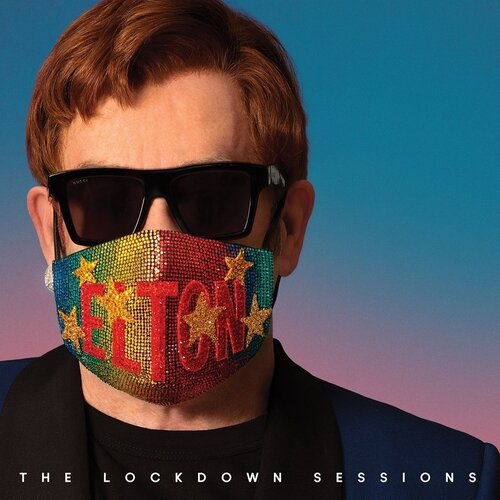
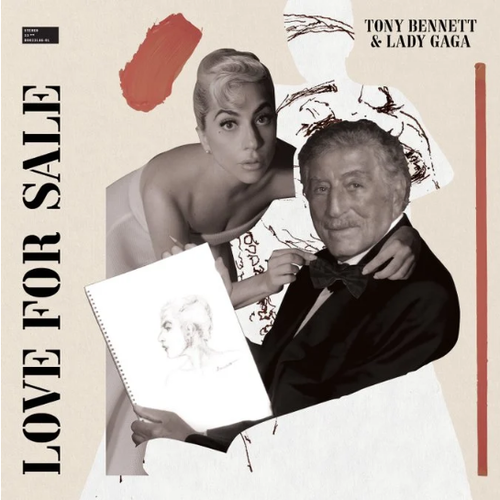
for new music. It is a big and eclectic week for tunes. Not only is there music from IDLES, there are fresh cuts from Wet Leg, Coach Party, Courtney Barnett, Tori Amos, Brandi Carlile, Elton John/Stevie Wonder, Remi Wolf, Tony Bennett & Lady Gaga, Sam Fender, and Years & Years. If you need a kick to get you into the weekend, then this Playlist should do the job! It is a fantastic selection of new songs that are kicking off October with plenty of quality. As the weather is a bit greyer, I reckon that these songs have what it takes to…

dd.jpg

 IN THIS PHOTO: Coach Party

BRING the sunshine.   

ALL PHOTOS/IMAGES (unless credited otherwise): Artists

__________

ff.jpg

PHOTO CREDIT: Tom Ham 

IDLES The Beachland Ballroom

bh.jpg

Wet Leg Wet Dream

ff.jpg

PHOTO CREDIT: Martyna Wisniewska

Coach Party - FLAG (Feel Like a Girl)

vv.jpg

PHOTO CREDIT: Mia Mala McDonald

Courtney Barnett - Write a List of Things to Look Forward To

zz.jpg

PHOTO CREDIT: Desmond Murray

Tori Amos - Speaking with Trees

deedr.jpg

Chelsea Cutler Devil on My Shoulder

sss.jpg

Brandi Carlile Broken Horses

ff.jpg

Elton John, Stevie Wonder Finish Line

ff.png

Tony Bennett & Lady Gaga I’ve Got You Under My Skin

cdd.jpg

Remi Wolf - Anthony Kiedis

ffkkf.jpg

Sam Fender Spit on You

sdoduid.jpg

Mahalia (ft. AJ Tracey) - Roadside

ss.jpg

Years & Years Crave

ss.jpg

PHOTO CREDIT: Fabrice Bourgelle

Ross from Friends Love Divide

dd.jpg

Headie One Cry

ffde.jpg

La Luz Oh, Blue

sss.jpg

Beth Keeping i thought this would be a love song

ddd.jpg

Jayli Wolf Lead Me

ff.jpg

Rudie Edwards All or Nothing

drt.jpg

PHOTO CREDIT: Flore Diamant

TusksFall in to You

zxxx.jpg

Leslie GraceBachatica

cc.jpg

Blithe Becoming You

zsass.jpg

Maya Jane Coles (ft. Claudia Kane) - True Love to the Grave

ddddi.jpg

Skip Marley (ft. Popcaan) - Vibe  

ddsd.jpg

Greta Isaac - 5’1

sss.jpg

PHOTO CREDIT: Daniel Harris

Palace Lover (Don’t Let Me Down)

dd.jpg

Molly PaytonJanuary Summers

wee.jpg

Gracie Abrams - Feels Like

dsfuiffg.jpg

PHOTO CREDIT: Nick Porter

PEAKES - Day & Age

ddeedre.jpg

Samm Henshaw Chicken Wings

fdfe.jpg

PHOTO CREDIT: Jess Gleeson

GRAACESentimental

qqq.jpg

Oh Wonder Don’t Let the Neighbour Hear

dedoorfio.jpg

Sody Bitch (I Said It)

dd.jpg

RaheavenTALK BACK

ddd.jpg

Jessie MurphSobriety

FEATURE: A Buyer’s Guide: Part Seventy-Four: Simple Minds

FEATURE:


A Buyer’s Guide

bb.jpg

Part Seventy-Four: Simple Minds

___________

ON this occasion…

for A Buyer’s Guide, I am recommending the best albums from Simple Minds. The Scottish legends have released some wonderful albums. Their eighteenth, 2018’s Walk Between Worlds, was very well-received. It is hard to narrow down to the very best – though that is what I am going to do. Before that, here is some biography about Simple Minds:

Best known in the U.S. for their 1985 number one hit "Don't You (Forget About Me)" from the film The Breakfast Club, Scotland's Simple Minds evolved from a post-punk art rock band influenced by Roxy Music into a grand, epic-sounding pop band along the lines of U2. The band grew out of a Glasgow punk group called Johnny and the Self-Abusers, which featured guitarist Charlie Burchill and lead singer Jim Kerr. The inaugural 1978 lineup of Simple Minds featured a rhythm section of Tony Donald on bass and Brian McGee on drums, plus keyboardist Mick McNeil; Donald was soon replaced by Derek Forbes.

Their early albums leaped from one style to another, with Life in a Day consisting mostly of dense, arty pop songs; critical acclaim followed the darker, more experimental art rock of Reel to Real Cacophony and the Euro-disco of Empires and Dance. The group began a transition to a more accessible pop style with the albums Sons and Fascination and Sister Feelings Call, originally issued together and subsequently split up. New Gold Dream (81-82-83-84) became their first chart album in the U.S., and the tour-shy McGee quit (owing to the group's burgeoning popularity), eventually being replaced by Mel Gaynor. Following the Steve Lillywhite-produced Sparkle in the Rain, Jim Kerr married Pretenders lead singer Chrissie Hynde (the two groups had toured together).

After Bryan Ferry rejected the opportunity to sing "Don't You (Forget About Me)," Simple Minds almost did so as well; Kerr was dissatisfied with the song's lyrics, which he regarded as formulaic. His change of heart gave Simple Minds their only American chart-topper, and the song later became an international hit as well; however, Kerr's feelings about the song remained ambivalent, and it did not appear on the follow-up album, Once Upon a Time. The album went gold and reached the U.S. Top Ten in spite of criticism for its bombastic, over the top approach. A live album and the uncompromisingly political Street Fighting Years squandered Simple Minds' commercial momentum, however. By the time the group returned to more personal themes and its straightforward, anthemic rock on 1991's Real Life, personnel changes and audience loss left the group's future viability in doubt.

They weren't totally deterred, however. Kerr and Burchill trudged on, releasing Good News from the Next World in 1995, while the single "She's a River" received moderate airplay. A short tour of North America soon followed, but Simple Minds' direction also quickly faded. They needed a break to clarify their own personal stance in music. Derek Forbes returned for 1998's Néapolis, but that, too, wasn't strong enough to sustain Simple Minds' newfound creativity. Their famed pop songs had been diluted a bit; however, the new millennium proved poignant. Jim Kerr and Charlie Burchill signed to Eagle Records in early 2001 and constructed their first covers album, Neon Lights, later that fall, paying tribute to Patti Smith, Neil Young, David Bowie, and others. In summer 2002, Kerr and Burchill issued Cry, Simple Minds' first batch of new material since 1995's Good News from the Next World. Our Secrets Are the Same, an album that was intended for release in 2000, saw official release in 2003.

An extensive reissue program and live recordings followed. Black & White, a new studio album, appeared in 2005, and the charting Graffiti Soul (which saw the return of original drummer Mel Gaynor to the fold) arrived in 2009. Simple Minds accepted a spot at London's iTunes Festival that year and issued a digital EP of their performance. After a global tour, Simple Minds returned with Big Music in 2014, an album that included two songs co-written with Chvrches' Iain Cook. A stripped-down set called Acoustic arrived in late 2016, featuring acoustic reworkings of many of the band's hits. In 2018, the band released its 18th studio long-player, Walk Between Worlds. Co-produced by the band with Andy Wright and Gavin Goldberg (both of whom had worked on Big Music), the album contained two distinct "sides": The first half revisited the glassy guitars and new wave dance grooves of the post-punk era that signified the band's earliest records, while the second explored more cinematic sounds reflected best in the title track and "Barrowland Star," which were both completely orchestrated at Abbey Road. Concert album Live in the City of Angels landed the following year alongside a comprehensive compilation of hits, The Best of 1979-2019, which included a cover of King Creosote's "For One Night Only”.

If you need guidance as to which Simple Minds albums are worth getting, I have highlighted the best four, one that is underrated, in addition to their latest studio album. I have also recommended a book about them that people should check out. Go and take a look below at my recommendations regarding…

THE mighty Simple Minds.

____________

The Four Essential Albums


Reel to Real Cacophony

vv.jpg

Release Date: 11th November, 1979

Labels: Zoom/Arista

Producer: John Leckie

Standout Tracks: Reel to Real/Cacophony/Premonition

Buy: https://www.discogs.com/sell/list?master_id=58898&ev=mb

Stream: https://open.spotify.com/album/0NZjDWHRqlvelT1qcLnFEQ?si=pIagubMIRAWDS5aBDRT1hw&dl_branch=1

Review:

To the delight of some open-minded post-punk fans -- fans who also had space for the relatively new, untraditional likes of Devo, Kraftwerk, and Eno in their record collections -- the relative simple-mindedness of Life in a Day was blown to bits and left for dead on the pub floor by Real to Real Cacophony, the wide-eyed carnival-like follow-up released only seven months after its predecessor. The artistic leap from Life in a Day to Real to Real has to be one of the most mesmerizing ones imaginable, an improvement that is even more impressive when the short time between release dates is considered. It's where Simple Minds ventured beyond the ability to mimic their influences and began to manipulate them, mercilessly pushing them around and shaping them into funny objects the way a child transforms a chunk of Play-Doh from an indefinable chunk of nothing into a definable chunk of something. Aside from a mercifully brief lapse into aimless murmuring and doodling that occurs during the middle of the record, Real to Real Cacophony is rife with countless bizarre joys. It knocks you on your back with pretentious artsy-fartsiness as instantly as New Gold Dream dazzles with its art pop pleasures, but its challenging melodicism through jerky time signatures and an endless supply of varied sounds and textures keeps you coming back for more. "Real to Real," a sinister rewrite of Kraftwerk's "Radio-Activity," is a good, quick point of reference. Guitars are employed less frequently and are replaced by burbling electronics and further use of keyboard shadings, though the absolute high point of the band's early years, "Changeling," benefits from plangent, angular jabs. The record is certainly as much of an achievement as New Gold Dream -- an achievement that's on a plane with other 1979 post-punk landmarks like Metal Box, 154, Entertainment, and Unknown Pleasures. No kidding” – AllMusic

Choice Cut: Changeling

New Gold Dream (81–82–83–84)

Release Date: 13th September, 1982

Label: Virgin

Producers: Peter Walsh

Standout Tracks: Someone Somewhere (In Summertime/Somebody Up There Likes You/Glittering Prize

Buy: https://www.discogs.com/sell/list?master_id=58825&ev=mb

Stream: https://open.spotify.com/album/6dn2O3un8SV0QZ421jDdEj?si=Eb5Xi1CTT_-Se1aQ29QlCA&dl_branch=1

Review:

Originally released in September 1982, New Gold Dream (81-82-83-84) was the album that saw Simple Minds move from being a well-respected cult to one of the biggest bands of the 80s and – remarkably for the time – doing so without once resorting to cliché. As Paul Morley said in NME on its release, “I am jarred by the constant beauty of this music.” Now with this five CD and DVD reappraisal, the beauty is extrapolated: the lightness of its touch, the weirdness of the lyrics and its otherworldly feel makes it adorable still.

Though appearing less than a year after their Virgin debut – Sons And Fascination/ Sister Feelings Call – New Gold Dream (81- 82-83-84) seemed to take forever to arrive. Promised You A Miracle, recorded ahead of the album in early 1982, stood alone, released in the March of that year. It sounded unlike anything the group had released before; commercial, airy and strange, it gave them their first UK Top 20 hit.

Emboldened by this, the group built their forthcoming album around their hit, and what an LP it was to be. Snatches were heard via BBC Radio 1 sessions for John Peel and ‘Kid’ Jensen; proof that they could still straddle the pop kids and the cognoscenti.

There is a key paragraph in Billy Sloan’s extensive liner notes, which explains it all. It regards the choice of producer Pete Walsh, who was only 20 at the time: “After working with Walsh on the remix of Sweat In Bullet, [guitarist Charlie] Burchill had enthused that the producer’s strength was not what he had put into their song – but what he had left out.” Jim Kerr said, “Charlie told me: ‘Pete’s taken a ton of stuff out… But don’t worry. It sounds amazing. You’ll love it.’” The album became a triumph of what was left out.

Like all the best albums, New Gold Dream (81-82-83-84) retains that indefinable “thing”; the whole band were playing at their peak; Mick McNeill’s shimmering keyboards and Derek Forbes’ beautiful bass provided a subtlety to the groove; allowing Burchill and Kerr’s musical ideas to flow. You’d never guess there are three different drummers on the album” – Record Collector

Choice Cut: Promised You a Miracle

Sparkle in the Rain 

Release Date: 6th February, 1984

Labels: Virgin (U.K.)/A&M (U/S.)

Producer: Steve Lillywhite

Standout Tracks: Up on the Catwalk/Waterfront/Street Hassle

Buy: https://www.discogs.com/sell/list?master_id=58922&ev=mb

Stream: https://open.spotify.com/album/2fuGLrZ4Ju22UpWqGg5cDW?si=oArD15mCQ5e_1FxdEwTC6Q&dl_branch=1

Review:

Their 1982 album New Gold Dream (81-82-83-84) was the album that put Simple Minds on a commercial par with the post-punk new pop vanguard (ABC, Human League, Associates et al).

But two years later it was their sixth album that launched them into the alt-rock superleague, putting them virtually on a par with U2, and with only Echo & The Bunnymen snapping at their heels. Sparkle In The Rain reached No.1 in February 1984 and went Top 20 around the world. Suddenly, there were not just coteries of hipsters but 50,000-strong crowds waiting in arenas to be entertained. Even Jim Kerr made the unashamed admission that “there’s just no room for subtlety”. In the wake of New Gold Dream’s lushness, Sparkle In The Rain came as something of a brash, rude awakening. Produced by Steve Lillywhite, it eschewed ornate grandeur for a simpler propulsion that could easily be mistaken for lumpen populism. Then again, the music had a new, muscular excitement, with less studio polish but more stadium punch. Waterfront, The Kick Inside Of Me and White Hot Day plodded somewhat, but Up On The Catwalk, ‘C’ Moon Cry Like A Baby and Speed Your Love To Me had a thrilling, throbbing momentum, while East At Easter proved that they could still do magisterial grace. Now Sparkle comes as a five-disc box set, in a full, unexpurgated version that well serves its clattering majesty. The original album has been newly remastered, and it comes packaged with a plethora of extras: a disc of single edits, B-sides and extended mixes, as well as two further CDs that include 13 tracks performed live at Glasgow’s Barrowlands in 1984 and a trio of BBC Radio 1 sessions from 1983. You also get a DVD featuring a brand new Steven Wilson 5.1 surround sound remix of the album, a new stereo mix and all three promo videos (for Waterfront, Speed Your Love To Me and Up On The Catwalk), as well as several TV appearances. Altogether now: ‘You will be there, you will be there…’” – Louder Sound

Choice Cut: Speed Your Love to Me

Once Upon a Time 

ff.jpg

Release Date: 21st October, 1985

Labels: Virgin/A&M (U.S.)

Producers: Jimmy Iovine/Bob Clearmountain

Standout Tracks: All the Things She Said/Ghostdancing/Sanctify Yourself

Buy: https://www.discogs.com/sell/list?master_id=58861&ev=mb

Stream: https://open.spotify.com/album/5Q74XTJr0l3sVQXprBeoT1?si=foC_dfCCSS-ArV7ZgRi12w&dl_branch=1

Review:

Riding the coattails of the John Hughes flick The Breakfast Club, Simple Minds finally broke into America with their theme song "Don't You Forget About Me," and their 1985 release Once Upon a Time captured the heart-wrenching excitement found in bands such as U2. They were now one of the biggest names in music, and Jim Kerr's thirsting vocals became the band's signature. Once Upon a Time, featuring producer Jimmy Iovine (U2, Stevie Nicks, Bruce Springsteen), showcased more of a guitar-driven sound. The band's heavy synth pop beats had relaxed a bit and Charlie Burchill's charming playing style was most noticeable. Also enlisting the choir-like beauty of Robin Clark, Simple Minds' popularity was expounded on songs such as "Alive & Kicking" and "Sanctify Yourself." This album was one of their best, most likely leading the pack in the band's album roster, because it exuded raw energy and solid composition not entirely captured on previous albums” – AllMusic

Choice Cut: Alive and Kicking

The Underrated Gem


Big Music

vv.jpg

Release Date: 31st October, 2014

Labels: Caroline International/Universal, Sony Music

Producers: Gavin Goldberg/Steve Osborne/Owen Parker/Simple Minds/Andy Wright

Standout Tracks: Midnight Walking/Honest Town/Big Music

Buy: https://www.discogs.com/sell/release/6274675

Stream: https://open.spotify.com/album/4s9M8e27eqKwsNt1rrk2ON?si=IVAfngjCRViTZMEz1OoltQ&dl_branch=1

Review:

Despite being 16 albums in, Simple Minds are surprisingly current in many ways. They’ve installed Chvrches man Iain Cook as a co-writer, while their overwrought production and heart-on-sleeve openness has been aped by the likes of recent indie stand-out Strand of Oaks and even Belle and Sebastian. On Big Music, their own sound has had a makeover, too, combining huge synth lines with similarly gargantuan drums. Opener Blindfolded sums up what they seem to be aiming for on Big Music: epic songwriting. Everything is over the top, from the name of the album and Kerr’s lyrics to a sonic palate that screams arena tour. The OTT approach works, as well, with the first three songs (Blindfolded, Midnight Walking, Honest Town) sounding like great pop. There are moments when the approach starts to wane – Kill or Cure sounds like it’s come straight from the 80s rather than 2014 – but by the time closer Spirited Away kicks in, the band have managed to craft an album of pop that’s both true to their sound and interesting enough to give it a contemporary edge” – The Guardian

Choice Cut: Let the Day Begin

The Latest Album


Walk Between Worlds

cc.jpg

Release Date: 2nd February, 2018

Label: BMG Rights Management

Producers: Simple Minds/Andy Wright/Gavin Goldberg

Standout Tracks: Summer/The Signal and the Noise/Sense of Discovery

Buy: https://www.discogs.com/sell/list?master_id=1306425&ev=mb

Stream: https://open.spotify.com/album/53wMq7klbk3UY7SOkrrmb6?si=bymYGIPeTFegGgYwoh2UZQ&dl_branch=1

Review:

That Simple Minds trade in instantly familiar methodology has, at times, left them sounding predictable.

Though 2014’s Big Music – with its great, big, you-can’t- miss-it signpost of a title – was welcomed in some quarters as a return to form, it still felt stiff and flabby, like a once svelte, now out-of-shape athlete recovering from their first long run after a holiday.

They’ve kept busy, however, with 2016 devoted to an acoustic album and related tours, and it appears they’re now approaching full fitness.

Guitars chime hypnotically and Jim Kerr still sings like a grown man seeing snow for the first time, letting rip uncontainable disbelief. On the U2-like Summer this excitement is almost poignant, the song’s forecast bellowed like news of his first-born son – “Here comes summer!/ Here comes rain!” – before Kerr ends up charmingly, naively tongue-tied: “Here comes lightning! I like the way it shoots!”

If his grammatically challenged over-stretching for rhymes might seem gauche – “Here comes all those fantasies/ Taking me to my roots” – it’s overshadowed by the song’s strapping melody and the revelation that finally someone might challenge fellow Scots Travis for pop’s meteorological crown.

Indeed, there’s climate talk all over the album, from the pumping opener Magic (“It breaks like a storm/ This is our kind of weather”) to Kerr’s insistence – on Sense Of Discovery, a solemn slowburner which borrows knowingly from Alive And Kicking, and one of the album’s two longest tracks – that: “The rage will dissolve like the wind”.

The calmly iridescent Utopia also points at “solar storms” and “falling snow”, while a heavy “freeze” bites on In Dreams, the full-bodied positivity of its choruses capitalising on Kerr’s glowering delivery elsewhere. Fortunately, Simple Minds don’t take the weather with them everywhere they go.

On Barrowland Star, the album’s swaggering highlight, they instead celebrate their career, allowing strings and Charlie Burchill’s extended – and we mean Andrex-long – guitar solo to provide the elemental sturm und drang.

Like everything on the otherwise trim, 42-minute Walk Between Worlds, it’s as familiar as April showers, but currently it’s the band’s glittering early-80s catalogue being mined for inspiration. The outlook remains bright, therefore, albeit with occasionally drab spells” –  Classic Pop

Choice Cut: Magic

The Simple Minds Book


The Simple Minds - Heart of the Crowd 

xxx.jpg

Author: Richard Houghton

Publication Date: 3rd December, 2020

Publisher: This Day in Music Books

Synopsis:

This official book is an oral history of Simple Minds, mixing over 350 fan anecdotes with a narrative written by founding members Jim Kerr and Charlie Burchill, The book also features never before seen photographs, collectable memorabilia and fans pictures capturing their live performances” – Waterstones.co.uk

Buy: https://www.waterstones.com/book/the-simple-minds-heart-of-the-crowd/richard-houghton/9781838078300  

FEATURE: End of a Century: High School Graduation: The 1999 Mixtape

FEATURE:


End of a Century

zzz.jpg

High School Graduation: The 1999 Mixtape

___________

THINKING back to September 1999…

cc.jpg

IN THIS IMAGE: The album cover for Blur’s 13

and that was when I graduated from high school. It was a transformative moment where I was saying goodbye to friends and leaving a school that I had been at for five years. Not only was it emotional on a personal level, it was saying farewell to a routine and way of life that I had got used to. Music was very important in 1999. From songs that scored the opening of my G.C.S.E. results to the tracks that were played during the leavers’ ball, I am being a bit self-indulgent and nostalgic. It does go to show, subjectiveness aside, how many great tracks came out in 1999. School days are very precious when it comes to music and the role in plays in your growth and development. That is especially true of 1999 and my final year at high school. Rather than limiting the track number to what would fit on an actual tape (about ten songs or so, I suppose), I have compiled a longer digital mixtape. This is the very best of 1999: a year that, for me, was a combination of…

mnmn.jpg

EXCITMENT and sadness

FEATURE: Spotlight: Mimi Webb

FEATURE:


Spotlight

ff.jpg

PHOTO CREDIT: Frank Fieber

Mimi Webb

___________

I am taking a slightly different direction…

PHOTO CREDIT: Parri Thomas for The Line of Best Fit

when it comes to this Spotlight. Mimi Webb is a rising Pop artist who is among the most distinct and hard-working around. There are some very different and interesting young Pop artists coming through. Next time, I am spotlighting another: Willow Kayne. Today, I am going to give as much information as I can regarding Mimi Webb. Apologies if they are not in chronological order. I have grabbed a few that caught my eye. Before that. Here is some biography regarding a bright young talent:

Originally hailing from Canterbury, pop singer and songwriter Mimi Webb turns up the volume on every emotion – with skyscraping runs and open-heart honesty.

Inspired by the likes of Amy Winehouse, Emelie Sandé and Sam Smith, she started writing songs of her own at 13 years old before eventually learning guitar. Around the same time, she enrolled in The BRIT School — known for alumni such as Adele, Amy Winehouse, Jessie J and more. Three years later, she left home, moved in with a host family and attended the prestigious BIMM [British Institute of Modern Music].

In 2019, she uploaded a handful of early compositions and collaborations online, landed management, and inked a deal with Epic Records in the US and RCA in the UK.

An impromptu a cappella performance from Mimi later that year exploded with over 20 million views on TikTok, paving the way for a string of original fan favourites such as ‘Before I Go’, ‘I’ll Break My Heart Again’, ‘Reasons’ and ‘Good Without’.

On 22nd October, Webb releases her E.P., Seven Shades of Heartbreak. It will definitely bring Webb’s music to a new audience. The first interview that I want to source is from The Line of Best Fit. They featured her back in June:

At sixteen she had a choice between going full-time at BRIT or moving to Brighton to attend BIMM. She chose the seaside music college, as it offered songwriting courses, as well as performance-based modules. Webb left home and moved in with a host family. “For those two years I really evolved and grew off of my own back,” she explains. “You’re out there in the world on your own. You're living and breathing the kind of atmosphere of music and the environment, so you’re really driven.”

Through BIMM and the opportunities her attendance created she met management company Best Friends - the same people behind Billie Eilish, Finneas and Ashe - and signed with Epic Records at eighteen. As they were readying her first single, she took a trip to New York for meetings where she was introduced to Charli D’Amelio. The two went for dinner and showed TikTok to Webb: “I was like, I don't know what I could do on it!” she laughs. “So we did a video together and I just sang one of my songs that I'd written a few months before. It kind of just went crazy from there, like the reaction it had. And I just thought, this is crazy that this app does that. Can actually connect to that many people.”

What Webb fails to mention is that in the clips (she also covered Adele) she’s singing acapella and acoustic in a busy restaurant, perfectly in key and with a tone that’s velvety and sonorous. It’s a striking performance and one that puts pay to her years of tuition and hard work.

Last spring, Webb was gearing up for a writing trip to LA and the release of her debut single “Before I Go” when the pandemic struck. As reality began to set in, she wasted no time. “I remember three days before they put the national lockdown in, I quickly went and bought myself a new laptop because I knew I needed storage for Logic, a new MIDI, a new mic. I was just preparing for the worst,” she explains. “I said to my team, right guys, I'm not having this. I've waited two years to release music. I've been in and out of the studio. Let's just go and do it. Drop these songs, video or no video, artwork or no artwork. I was like, we've got to go, it’s go time.”

Webb resolutely released “Before I Go” in April of that year. An expansive piano ballad with a strident vocal delivery, it left no doubt to her natural talent. A run of singles followed, each more confident and striking than the last. Recent release “Good Without You” went silver after spending ten weeks in the UK Top Twenty. An honest and impactful piece of pop storytelling, it’s instant and relatable in the same breath, its chorus a euphoric lift of self-affirmation. While on new single “Dumb Love”, Webb weaves a familar story with a fresh dynamism, her impressive range close to take off.

But Webb’s success isn’t simply down to the music, it’s also the intelligence, creativity and sheer drive that she brings to the project. Only twenty-one, in conversation she’s articulate and engaged, with a developed understanding of the industry she’s entered. “Every single week, every single day, I was in my little studio. I was in there every day recording, doing Zoom sessions, TikToks, covers, anything just to feel like I'm actually doing something, like moving it along,” she says of the past fifteen months. “My introduction to the industry was just full on Zoom in your room.”

Webb did have some trepidation about investing too much in TikTok, but with care and thought she successfully navigated the app. “There's so many different slots that you can be put into when it comes to using TikTok for your music,” she explains. “For me, it was very much like, right, let's do these videos, make it really organic with my family, be ourselves just to tease the songs. It’s so nice to see it work the way I really wanted it to, and be able to resonate through the app, but also off the app. I think that was something I was nervous about, just in case it didn't go like that. But I was really happy with the way that it’s translated. I think it depends on the content and making sure you're really sticking to your brand and the way you want to be viewed.”

And now as the world begins to slowly open again and we look up from our screens, Webb’s looking forward to experiencing her success in real life. “I'm excited just to actually, like, do more shows and meet more people and see the outcome of everything, compared to watching it all on my phone,” she smiles”.

There are a few other interviews that are worth exploring. One interesting one is from MTV. They were eager to spotlight an artist who, despite coming to prominence through TikTok, is one of the most talented and tireless artists around:

20-year-old singer songwriter Mimi Webb has her school piano teacher to thank for pushing her into a music career. Influenced by Adele and Amy Winehouse, Mimi says she was inspired by their originality and ability to stay true to themselves with their music.

You may recognize Mimi’s voice from her viral track ‘Before I Go’ on TikTok. Speaking about this she says it’s definitely been one of her career highlights, and seeing "Charli D’Amelio doing her thing to it and seeing people react the way they did" was amazing. To date, the song has been streamed over 5.6 million times on Spotify and Charli’s video has been viewed over 40.8 million times on TikTok!

Mimi’s vocals are beautiful and distinct, complimenting her euphoric ballads perfectly. On her live shows she says "I want it be an intimate atmosphere! I want to keep it slightly stripped back so I can get a really build a strong connection with the audience.  or certain songs there will be lots of lights and visuals but I want to make sure I can connect with the crowd and people can really get to know me through the performance."  It sounds like a perfect way to experience her songs live, and we can’t until we’re able to!

1) for those who don’t know about you and your music, tell us a little bit about who you are and where you’re from…

My name’s Mimi Webb and I am a singer and songwriter from Canterbury, Kent in the UK. I’m 20 years old and have been writing music for five years now. I’m super family orientated and love my friends, and I am constantly cracking jokes!

2) describe your sound in three words…

Moody, emotional, and fun.

3) who inspired you to start a career in music?

Definitely my piano teacher at school when I was 15. I already knew how to play ‘Someone Like You’ by Adele on the piano, so at my first ever lesson, I played it for him and he immediately told me that I needed to pursue music as a career and fight for it.

4) who are your biggest musical influences?

Definitely Adele and Amy Winehouse. I’ve always felt really inspired by them both, and the fact they never ‘followed the crowd’ and always created what they believed in”.

ffg.jpg

PHOTO CREDIT: Yoshitaka Kono for EUPHORIA.

One of Mimi Webb’s biggest and most-popular songs to date is Good Without. Released back in April, it is a memorable track with a terrific video! There is the mixture of emotional and raw with something long-lasting and catchy. It is a skill not all artists can master. EUPHORIA. spoke with Webb about the song’s success and her musical influences:

Following in the footsteps of Webb’s influences — Amy Winehouse, Adele, and Sam Smith — she knows how to write a heartfelt song that will contain a chorus that will be ingrained in your head. So far, her material has consisted of ballads about love and breakups. However, Webb informs us that fans can definitely expect more sounds and sides to her personality in the near future.

With another hit song under her belt and a completely sold-out tour across the UK and Ireland, it’s safe to say that Webb is living the dream and on her way to superstardom. EUPHORIA. got the chance to talk to Webb on Zoom to discuss the incredible year she’s been having while she was on her way to London. The talented songstress opened up about the overnight success of “Good Without,” her new single, “Dumb Love,” what listeners can expect next, and what she has planned for her upcoming live concerts.

Congratulations on “Good Without”! The song took off pretty instantly. Is the success it’s having taken you by surprise?

Oh my god, 100 percent! It was so crazy, especially being my fourth ever release. Seeing the reaction that it had, especially through TikTok and of the social media platforms I’ve used, it’s really taken me by surprise. I think as well the fact that we’ve been in a pandemic, you really don’t expect anything like that to happen.

What motivated you to write the song and how long had you been waiting to release it?

I wrote this song right at the start of the year, so it was the first song I wrote in 2021. I wrote it on Zoom with two of my friends and as soon as we wrote it, we knew it was definitely going to be a single. I hadn’t been able to write for such a long time; it was kind of that moment where everything came at once. It was inspired by a past situation I had been through and I felt like I hadn’t said all that I had wanted to say, so it was kind of like a chapter closure for me.

Where was the music video shot and how was that experience?

We rented out a building in London, there were so many dream rooms in there, very girly. I just loved it! I wanted to bring the whole girl power to it and the support system from your friends and the family that you have. The song is an emotional breakup song, but there is also that empowerment in the chorus of “I’m so good without” so I really wanted to capture that in the video.

Has there been any added pressure releasing a new single after “Good Without”? Or was the plan to always follow up the song with “Dumb Love”?

Yeah, there was definitely a worry of wanting to make sure it does super well, especially following up from “Good Without,” but we always knew it would be “Dumb Love” next. I’m SO happy with the reaction it’s had on its first week. I’ve always made sure to stay as chill and humble for each single to bring the positivity into each one. 

vvv.jpg

PHOTO CREDIT: Yoshitaka Kono for EUPHORIA.

There seems to be a Sam Smith influence on this one — would you agree?

Yes definitely, I’m so inspired by Sam Smith’s music and just love the goosebumps feeling I’ve always got from their music so I’ve definitely brought in my own twist on it”.

So far, your songs have been very cohesive. Is the EP going to be a continuation of that sound or can your fans expect you experimenting with more sounds?

Yeah, there are a few darker pop sounds. It will cover the different chapters of the heartbreak. It’s all very emotional and big and powerful but there will definitely be more elements of pop where it’s a little bit more fun or dark, depending on where I’m at in life.

Are there any collaborations in the works or are you happy just releasing on your own for now?

I’m just releasing songs by me at the moment. I’m loving just being able to have that time. I would love to do some collaborations, that would be amazing. It’s just making sure I do at the right time and right place.

Has there been anyone’s music that has helped you get through the pandemic? Who have you been listening to this past year?

Lots of Olivia Rodrigo, love her! Tate McRae, she’s completely smashed it in lockdown. She was definitely a massive inspiration, especially with TikTok, she’s absolutely smashed it on there”.


cc.jpg

PHOTO CREDIT: Talie Eigeland for NOTION

There are so many great songs from Webb. I will try and put in as many of them as I can. The interviews are really interesting. NOTION spoke with Webb back in May. They were keen to look back at her start and see how far she has come. The pandemic would have been a huge obstacle for someone who was building momentum early last year:

On the other hand, you only started releasing music last year (which I do not believe), but especially in a time of such chaos, did you ever think I might have to put music on pause or was it just full steam ahead?

I was not putting anything on pause. I remember at the start of the pandemic, I was like, right guys, I’m getting my setup, I’m learning how to do my vocals and how to record it all. We’re just not stopping like this because last year as well, 2020 was very much a year of right here we go. Let’s kick it all off. When we all went into the pandemic, I just thought to myself, no, not having it, I’m still going to do what I can do at home. It’s a very, full gun ahead, whatever the saying is full speed ahead – just very passionate about getting everything going. Every day I was up straight into work, I’ve got my little studio set up at home, and then it’s just back and forth.

At the time, still being new to the music scene and just finished Brighton Music College – was there any time you thought this could not go right, and as a rising artist within such a demanding music industry, how do you overcome those challenges?

There are those times where you end up getting a bit worried, releasing, the time span of how you’re going to do things and, there are so many amazing artists but, I think to believe in yourself and surround the whole thing with love and support for your peers and be happy and great – allowing the love of the industry in. I think that is where I learned, wow this is how it works. But there are definitely loads of times where you sit there and think, oh, and I think that happens with everyone, doesn’t it with anything you do. You’ve just got to be able to filter it all through and go with the things that make you feel good and happy.

As we speak about pursuing music, your first release was “Before I Go” – which caught the attention of millions. Did you ever see it going that far at, and what were those feelings running through your mind?

It’s so crazy to think back then, first of all, because it’s just nuts. I mean, I released that last year, April time and I remember that was my first music video. And I watched it yesterday because I’ve been quite unwell the last few days on my bed, looking through YouTube. It’s just crazy to think back to that. But “Before I Go” started kicking off on TikTok, and it was these influences and amazing people that were very into it. They were all wanting to do these videos and to see everyone’s reaction was insane. I couldn’t have wished for a better start for my first song. Then obviously, we went through to the next song, and every time I got better at knowing how to do it and what to do, and how to prepare for the release date – all that kind of stuff. “Before I Go” was the first lesson, and I’m grateful for the way that went. Because, like I said, being at the start of the pandemic, it was intense. At that point, I was thinking, Oh, God, what’s going to happen?

Following your debut, you also released “Reasons” and “I’ll Break My Heart Again” – both of which gained recognition from 4Music and Radio 1. What is it like to be recognised at such a big level nationally, and what is the next step you want to reach?

It’s crazy. I mean, I’ve been played on the radio, I’ve been getting DMS from people like you’re being played in Belgium right now, or you’re in Switzerland. It’s crazy because I’m like, wow, the fact I’m reaching all these different places is incredible for me. But I think the next chapter is very much releasing as much music as I can, people getting to know me, as much content I can do, and shows. Hopefully, a tour at some point, be able to get across to everyone and get everyone to see me in person. I think it’s going to be such an exciting time for that. And seeing that recognition, the way people react to that across the world is just incredible.

As an emerging artist who is continuously growing and exceeding expectations – do you believe there is pressure looming over you for this first project, and what advice would you give to someone who’s just starting music?

My advice would be organisation. I remember when I started, it’s quite a funny bit of advice. But when I was 16, I was at my music school. And that’s when I was like, I want to be an artist – this is where it starts for me. And every day, I write everything down – it might be the silliest little things, but I believe that if you feel on top of it, and you’re doing everything you can, that’s when you really can believe in yourself, and there’s hope there and, you feel like you’re moving towards something. I think if your brain feels you’re moving towards something, then that’s when it will happen. I’m such a believer in whatever you put in the universe; you’ll get back. Thinking about what you want to say, as an artist, what’s your message? What do you want to do for music? For me, I’ve always wanted to give people that goosebump feeling and connect with them and bring back that emotional music that sometimes can get hidden now and then, especially in the charts. Overall, I think it’s about what you want to say and fit in all the organisation as much as you can”.

ded.jpg

PHOTO CREDIT: Talie Eigeland for NOTION

I am going to finish off in a second. The final interview is from Women in Pop. They highlight how Webb is among a series of musicians who are making music in their bedroom and are not synonymous with big studios. In the interview from August, Webb looked ahead to her tour in October:

Your voice is just incredible. You're also a songwriter, and quite often songwriters go, 'oh, no, I just I write or I just play music' and but were you always aware that you had this magical bird living inside your body that needed to come out and sing to the world?

I've always had a really husky voice. My mum always knew that my voice was very husky. But I realised the last year or two that I like to go quite high [as well]. It was something new that I learned with my vocal coach and trying to get that in control was really fun.

What was it that made you want to learn the guitar, learn to sing, get onstage? Who were those artists that you pretended to be?

I loved Adele, I always got such goosebumps from her music. That was the reason I just always wanted to do music was having that goosebumps feeling - I wanted people to feel that from my music.

When you're writing, where do your inspirations come from?

It's definitely my stories. Something will happen and I'll create this big drama around it, and I'll just get in the studio and start jotting it down. It's all very much my personal experiences and what I go through. 

You are part of a new generation of musicians like Tate McRae and Griff that started creating music in their bedrooms and they're now being heard. What is the best advice that you've been given, that you would then give to aspiring artists such as yourself?

Take everything in, let it soak in, be very organised, and do your best. Don't let anything get to you, try and just be really focused. And be around your family and friends, all those important things that matter in your life. You've got to make sure you keep those close to you, because that's how you can be happy.

And on your journey, who are the amazing mentors that have helped you on your journey?

My creative director, Cassandra Gracey, is incredible. She's an amazing creative queen and she's been in the industry for so long. She's been with Ellie Goulding, Rita Ora and just really helped the image and artistry come through within their project. It's just amazing having incredible people on your team who are such great guides in the industry to help you really understand how it works,

Beautiful. And lastly, what is on the horizon for you?

I've got my tour in October, I'm so so excited. It's going to be my first tour, and it's going to be around the UK. And then next year, lots of exciting stuff. I've got really exciting new music coming by the end of the year, something very big coming. I'm very excited to just get it all going”.

There is no doubt that Mimi Webb has the quality and determination to go far! Follow her if you are not yet familiar with her music. Although it is still pretty early in her career and there are years ahead, she is showing every sign of being…

A big name.

_______________

Follow Mimi Webb 

vv.jpg

FEATURE: A Polish and Shine and All Will Be Fine: Revisiting Kate Bush’s The Red Shoes

FEATURE:


A Polish and Shine and All Will Be Fine

nnn.jpg

Revisiting Kate Bush’s The Red Shoes

___________

I have been wondering…

nn.jpg

IN THIS PHOTO: Kate Bush in 1993/PHOTO CREDIT: Guido Harari

about Kate Bush’s albums and wonder there will be reissues at all. Of course, the original albums can be purchased, though there are some that would benefit from extras, demos and a wider examination. That is especially true of albums like Lionheart and The Red Shoes: albums that are underrated and have been side-lined a bit. I have said how The Red Shoes is my least-favourite Kate Bush album. That is because of a few tracks that are not that strong. More than anything, it is the production sound that affects the music. Perhaps a little over-produced and lacking too much warmth, I would be fascinated to hear it a little stripped. Bush did re-explore songs from the album for 2011’s Director’s Cut, though it would be a case of de-mixing and remastering the original album. A lot of the tracks on The Red Shoes are great. Maybe it is the sound or production that takes something away. Apart from a few tracks at the end of the album, The Red Shoes is a lot more solid than people give it credit for. I am going to explore that notion more in a bit. First, this article from the Kate Bush Encyclopaedia gives us some background:

Seventh album by Kate Bush, released by EMI Records on 2 November 1993. The album was written, composed and produced by Kate.

The album was inspired by the 1948 film of the same name by Michael Powell and Emeric Pressburger. The film in turn was inspired by the fairy tale of the same name by Hans Christian Andersen. It concerns a dancer, possessed by her art, who cannot take off the eponymous shoes and find peace. Bush had suggested she would tour for the album and deliberately aimed for a "live band" feel, with less of the studio trickery that had typified her last three albums (which would be difficult to recreate on stage). However, the tour never happened in the end. A few months after the release of the album, Bush did release The Line, The Cross and the Curve, a movie incorporating six tracks from the album.

Most notably, The Red Shoes featured many more high-profile cameo appearances than her previous efforts. Comedian Lenny Henry provided guest vocals on Why Should I Love You, a track that also featured significant contributions from Prince. And So Is Love features guitar work by Eric Clapton and Jeff Beck. Gary Brooker (from the band Procol Harum) appears on two tracks as well.

Kate about 'The Red Shoes’

I've been very affected by these last two years. They've been incredibly intense years for me. Maybe not on a work level, but a lot has happened to me. I feel I've learnt a lot – and, yes, I think [my next album] is going to be quite different… I hope the people that are waiting for it feel it's worth the wait. (BBC Radio 1 interview, 14 December 1991)”.

In her personal life, Bush split from Del Palmer (a musician/engineer who has been in her life since the mid-1970s; she started dating Dan McIntosh, who plays on The Red Shoes), and she lost her mother in 1992. Although a lot of the songs were written before these events, maybe a certain mood infused the recordings. I never have considered The Red Shoes to be an unhappy album. Maybe it is quite edgy and lacks the sort of depth and warmth of The Sensual World (1989) or Hounds of Love (1985). Bush did not record another album in the 1990s. Perhaps it was a decade where she felt the need to embrace new technology - and, in an age where C.D.s were dominating, fill every nook and cranny with music. As a result, some of the songs are a little too long.

I am surprised there were so many mixed reviews for The Red Shoes. Maybe people were comparing it with her past and expecting an album in the same mould as Hounds of Love. Always moving forward and creating something new, there is plenty to enjoy on her 1993 album. The sheer range of moods through The Red Shoes is incredible! From the propulsion of Rubberbajnd Girl (my favourite track) to the excellent single, Moments of Pleasure,  The Red Shoes has so many layers and interesting cuts. Not all reviews were heavy in disappointment. Rolling Stone had their opinion on The Red Shoes in 1993:

On her first album since The Sensual World, in 1989, Kate Bush continues in the manner of that album's verbal directness while displaying a melodic sense that's in peak form – there are more hooks on The Red Shoes, both subtle and obvious, than on any of her releases since The Dreaming, in 1982. Bush seems content now to dress her songs in simpler – though still occasionally antic – colors. The result is offbeat pop that refines but doesn't sacrifice her signal eccentricity.

While the music has settled down somewhat, Bush herself remains rambunctious, and it's a saving grace. A sighing remembrance like "Moments of Pleasure" or the purple pleas of "Big Stripey Lie" could have the cloying aura of pressed flowers if they weren't put across with conviction and a tendency to really belt. "And So Is Love" is typical of Bush's aggressively sad torch songs, built of simple phrases theatrically enunciated and enhanced by dramatic support from guest Eric Clapton.

It's not all fainting hearts on Shoes, though. The mood ranges from the pure pop of "Rubberband Girl" to the exuberant reel of the title cut (an homage to the classic film), from the wistful verse and funky chorus of the Prince collaboration "Why Should I Love You?" to the West Indies-flavored "Eat the Music." The Red Shoes is a solid collection of well-crafted and seductively melodic showcases for Bush's hypercabaret style.

Canadian Jane Siberry has often been compared to Bush, partly due to the convenience of lumping together quirky female singer/songwriters but also as an acknowledgment that both are working in a personal subgenre of art rock. And there are similarities between Siberry's When I Was a Boy and Shoes – both display a preoccupation with the difficulty of separating pain and love; both evoke a questioning spirituality and a distinctly feminine earthiness.

But Siberry's album is as funereal and expansive as Bush's is tight and energized. Nothing Siberry has done in the past quite prepares the listener for this album's prevalent mood of spooky obsession, bewilderment and resignation, and deathbed reflections. Though there's occasionally a rumble in the reverie ("All the Candles in the World," for instance, is positively funky), the overall ambience is prayerful, abetted by a production that often creates a cathedral of silence between the low tones (husky viola or cello filigrees) and the spare front line (an acoustic piano or guitar). Though songs like "Temple" (co-produced by Siberry and Brian Eno) and "Candles" are immediately likable, long free-floating meditations like "Sweet Incarnadine" and "The Vigil (The Sea)" are the album's centerpieces, gradually unfolding songs about love and dying.

It would all be horribly pretentious – if not maudlin – in the hands of a lesser talent, but Siberry approaches her task with a fearless simplicity, resisting easy irony or cleverness. Like Bush she creates dramatic structure by using a variety of voices, from brimming-heart full tones to deadpan whispers. When I Was a Boy is a difficult disc to get into – the languidness at its center can be off-putting – but a little patience rewards you with a gem. (RS 670)”.

In November, The Red Shoes turns twenty-eight. I feel that, if a new poll were taken regarding the best Kate Bush albums, The Red Shoes would likely be bottom – maybe Lionheart or Director’s Cut would be close. Whilst it is not her absolute best, it is far stronger than many reviews would suggest. I think the tracklisting could do with sorting out. Below is my view of what the running order should be  - as the original order (at the very bottom) makes things too top-heavy. By doing that and stripping the production a bit or making it sound less cluttered would breathe life into the songs and give the album a more accessible and digestible sound. When an album has tracks like Lily, Moments of Pleasure, And So Is Love and Song of Solomon in its cast, one cannot call it a failure! There are a few weaker tracks; some of Bush’s lyrics lack the inspiration and strength of her earlier work. All that aside, The Red Shoes deserves fresh examination ahead of its anniversary in November. A fascinating glimpse into Kate Bush as a recording artist in the 1990s, The Red Shoes – as you’d come to expect – sounded like nothing around it at the time. 1993 was a year when bands like The Breeders, Nirvana and The Smashing Pumpkins were ruling. Take it out of that context and hear the album today and it definitely has sparks, promise and plenty to love. All the critical meh-ing and sense of disinterest paints The Red Shoes as a flop. To me and so many others, it is so…

MUCH finer than that.

FEATURE: Nobody Does It Better: My Five Favourite James Bond Themes

FEATURE:


Nobody Does It Better 

jjhj.jpg

IN THIS PHOTO: Billie Eilish recorded the theme for the new James Bond film, No Time to Die/PHOTO CREDIT: ICON

My Five Favourite James Bond Themes

___________

ON 30th September…

cjhfvhjfg.jpg

IN THIS PHOTO: Carly Simon recorded the classic Bond theme, Nobody Does It Better (from 1977’s The Spy Who Loved Me)

the twenty-fifth James Bond film, No Time to Die, will be released in cinemas. It has been delayed so much due to the pandemic. It is the last film of the franchise to feature Daniel Craig in the lead role. It will be a huge box office success. One of the defining aspects of any Bond film in the opening theme. Billie Eilish recorded the eponymous track for No Time to Die. It is a slower and more haunting take. Through the years, we have heard so many explosive and sultry songs. Eilish has added her own stamp. Many critics have listed No Time to Die among the best Bond themes ever. I have been thinking about the Bond themes that I like the most. Everyone has had their say regarding the classic themes and those that missed the mark. To honour the long-awaited final Bond outing for Daniel Craig, here are my five favourite themes. There might be one of two that people disagree with (various polls - including Curzon’s - and lists have placed some of my choices quite low), but that is the beauty of Bond: there are so many different sounds and angles regarding the themes. I think the below are…

jjj.jpg

IN THIS PHOTO: Daniel Craig in No Time to Die/PHOTO CREDIT: Nicola Dove/MGM

THE absolute best.

_______________

1. Paul McCartney & Wings Live and Let Die

xxx.jpg

From the Film: Live and Let Die

Year of Release: 1973

Songwriters: Paul McCartney/Linda McCartney

Producer: George Martin

What the Critics Say:

“I read it and thought it was pretty good. That afternoon I wrote the song and went in the next week and did it… It was a job of work for me in a way because writing a song around a title like that’s not the easiest thing going” said Paul McCartney after reading Ian Flemming’s novel.

Never one to shy away from putting in the work, McCartney picked up the book when the production team pursued him to work on the theme song. Never afraid of a challenge, even one as possibly treacherous as writing for Bond.

Co-written by his wife Linda, the British-American rock band Wings performed the song with McCartney on the lead vocals. The song bursts into a power-packed chorus after a slow start. Using a bit of reggae successfully creates a certain thrill that plays out perfectly in the film. Naturally, it’s expertly delivered by the former Beatle” – Far Out Magazine

2. Carly SimonNobody Does It Better 

cc.jpg

From the Film: The Spy Who Loved Me

Year of Release: 1977

Songwriters: Marvin Hamlisch/Carole Bayer Sager

Producer: Richard Perry

What the Critics Say:

Carly Simon's lust-drunk anthem to a mythic lover — which has since appeared in everything from Lost in Translation and Bridget Jones: The Edge of Reason to bridal showers across the world — might be a hotel lobby staple if not for the smuttiness of its lyrics. "There's some kind of magic inside you/That keeps me from runnin'/But just keep it comin.'" Hair metal bands who could learn a few things from this. Of all the odes to Bond's sexual prowess (and there were a lot of them), Simon's is the most satisfying” – Rolling Stone

3. Sheryl CrowTomorrow Never Dies 

vv.jpg

From the Film: Tomorrow Never Dies

Year of Release: 1997

Songwriters: Sheryl Crow/Mitchell Froom

Producer: Mitchell Froom

What the Critics Say:

Sheryl Crow is certainly an odd choice for a Bond song, especially since it doesn't really capture her general vibe as a solo artist (the dripping strings do, however, bring to mind Bobbie Genty's "Ode to Billie Joe," a song Crow later covered). But she nails the sultry vocals with a particularly '90s ennui. You get the sense that Crow doesn't really care either way what happens tomorrow” – Esquire

4. Billie Eilish No Time to Die 

From the Film: No Time to Die

Year of Release: 2021

Songwriters: Billie Eilish/Finneas O'Connell

Producers: Finneas O'Connell/Stephen Lipson

What the Critics Say:

Billie Eilish recorded the theme for the 25th Bond film, No Time to Die, at just 18 years old, making her the youngest artist ever to perform an original 007 theme tune. But while Eilish may still be a kid, she’s no amateur—as her 2020 Grammys sweep well proved. “No Time to Die” caps the Daniel Craig Bond era with a haunting slow burn of a ballad that melds Eilish’s signature vocals with classic Bond orchestration” – Esquire

5. Duran DuranA View to a Kill 

j.jpg

From the Film: A View to a Kill

Year of Release: 1985

Songwriters: Duran Duran/John Barry

Producers: Bernard Edwards/Jason Corsaro/Duran Duran

What the Critics Say:

“‘A View To A Kill’ marks a change not only in the fortunes of Bond theme songs but also the manner in which they were executed. Although John Barry remained deeply involved in the song, it is very much a Duran Duran composition through and through: Barry’s contributions, the signature stabs of brass, are used like ornaments rather than essential functions of the song (the band were in charge of the major songwriting elements, chord progressions etc), which is brazenly effective.

The result redefined what it meant to record a Bond theme: pop artists would now flock to the franchise, seeking to leave their own distinctive mark, rather than the franchise drafting yet another vocalist to interpret the material” – Classic FM

FEATURE: Spotlight: Hamish Hawk

FEATURE:


Spotlight

po.jpg

Hamish Hawk

___________

FOR this Spotlight…

ccc.jpg

I am focusing on a solo artist who has released one of the most accomplished albums of the year. Heavy Elevator is the new one from Hamish Hawk. The Edinburgh-based songwriter is an artist that you need to know about. With a lyrical style that is very much his own, Hawk has attracted the attention of radio stations like BBC Radio 6 Music. I am going to bring in a review for Heavy Elevator in a minute. Before that, there are a couple of interviews that are worth exploring. The Skinny spoke with Hawk about the abstract imagery that runs through Heavy Elevator:

A storyteller, subverting common misconceptions of pop; an architect, constantly polishing and redeveloping; music as an act of creation that can have no end. Hamish Hawk’s Heavy Elevator is comprised of a series of wittily dark character portraits that find themselves fleshed out in dramatic chamber pop fashion, elucidated by seemingly incoherent imagery and lyrical phrasing. Accompanying them, so far, are three equally dark and wittily performed videos, existing, if anything, to amplify this universe that is Hawk’s Heavy Elevator. In one, Hawk appears as a jester, channelling the fool from King Lear, in another he's playing badminton in Leith Theatre. What both set up, though, is that with this record, things are getting serious. 

cc.jpg

For Hawk, though, this outward performativity lends itself to a better sense of authenticity when it comes to translating this record, which stands as something much darker, more mature, than any previous projects. “It feels more real to me,” he says. “But in order to communicate that, you need to push yourself away a bit, and almost say to an audience ‘I’m not going to do much talking to you, and it might look like I’m in my own world, but it’s because I’m concentrating on communicating it to you in the appropriate way.’ So out of a desire to be authentic, it almost looks like more of a performance, where what I was doing before, to me, was way more of a performance.” Retaining this authenticity to his music, and by virtue of that, himself, Hawk’s communication and performance of Heavy Elevator stands to depart from anything he has done before.

This sense of change seeps further through the record, using pop music as a skeleton from which to structure a body of work that is darker and more aggressive, yet more fully-formed, and ultimately, enjoyable to hear. Take Caterpillar and its new-wave danceability, and consider the troubled voice that runs through it: ‘Kill me, kill me, kill me / Killer offer me relief’. “Caterpillar was the kind of song that I thought: my mum isn’t going to like this,” he says. Which does present a struggle, or conflict with this way of performing. If pop structures act as a vehicle through which you can bear yourself, you can emit darkness and dance away with it, how do you avoid taking things too far?

The answer would be Hawk’s esoteric lyrical vignettes. “I think really, if people are anything like me, they’re crying out for stuff that is something they don’t quite get. Something you don’t understand can be really exciting; it's the way to move forward,” he explains. “I love the idea of lyrics that are original thoughts. And what I’m trying to do with my music is have as many of those original thoughts as possible.” The result of this is a record with a plenitude to unpack. An example being The Mauritian Badminton Doubles Champion, 1973, which opens with lines that are easy to find yourself hung-up on, in their simultaneous complex simplicity: ‘To write a cathedral, I’ll need a ball-point pen / It’ll sound like Common People sung by Christopher Wren”.

His 2019 E.P., Laziest River, is a rewarding and rich listen. I think there is something even more astonishing and compelling in Heavy Elevator. It is clear how much time Hamish Hawk has spent on the record. It must have been tough putting it together through lockdown. The Strange Brew interviewed Hawk and asked that very question:

How did you record Heavy Elevator? Was it a quick process?

The band and I set up camp in Post Electric Studio, Edinburgh, for two weeks, which is by no means an exhaustive length of time in which to record an album, but it was the longest we had ever spent recording so it felt like a definite step-up. We were all so fiercely committed to the project; the recording time went by in a flash.

What led you to meeting and collaborating with Rod Jones of Idlewild?

Rod introduced himself when the band and I performed at the Iona Village Hall Music Festival on the Isle of Iona back in 2016. He said he was interested in recording some sessions with us, and we were all really keen. The rest is history really; chats about ‘the music’ became more and more in-depth, a few meetings were held, a few support slots with Idlewild were promptly snapped up, and here we are. His guidance and experience has been a huge benefit to us; I’m looking forward to continuing to collaborate in the future.

Your music videos are very distinctive, typified by ‘Calls to Tiree’. Who have you worked with on your latest videos?

The video for Calls to Tiree, in which a jester prances around on a desolate beach, was dreamed up by my friend and bandmate Andrew Pearson, and I owe him a real debt of gratitude for it. I couldn’t have imagined a more fitting visual accompaniment to the song. Quite often I struggle to achieve a certain distance from my songs, and from what I see as their defining features. Incorporating Andy’s take on the songs allows for an entirely new, and often leftfield visual language to establish itself, and it makes it really exciting for me. Ellen De Faux, who directed the Caterpillar video, achieved precisely the same thing. Both Andy and Ellen had an innate sense for would work; I was more than happy to sit back and watch it unfold.

How does Heavy Elevator compare with your previous material?

Heavy Elevator is the most fully formed album I’ve ever recorded. I think the songs are bigger, more daring, and probably more vulnerable too. There’s a maturity and a confidence in there that simply comes with the passage of time. But I think it’s clear we took the time to consider and reconsider what we were doing more so than we did on previous records. We worked really hard on it, and I think it shows.

Where are you from and where are you based now? What is the music scene like?

I’m from Edinburgh and have lived here most of my life. Writing and performing here for as long as I have, I’ve found I often have to offer some justification for why I haven’t relocated to Glasgow, or London, or any other city popularly considered to be more ‘hospitable’ to local music. Honestly I’ve found Edinburgh’s music scene suits me to a tee. There is no shortage of hugely dedicated musicians and venue owners here, and personally I’ve found the scene really nurturing. I think it’s only improving with time as well.

You play a brilliant version of Suzanne .What artists, including Leonard Cohen, have influenced you and why?

It goes without saying that Leonard Cohen has influenced my songwriting hugely; I think you’d struggle to find a lyricist who says otherwise. He’s one amongst many lyrical heroes of mine, though. Others include Stephin Merritt (of The Magnetic Fields), Randy Newman, Joni Mitchell, Bob Dylan, Nick Cave, Dory Previn, Vic Chesnutt. They tell their own stories their own way and spare little thought for how anyone might feel about that. I admire them all tremendously”.

vv.jpg

There is one more interview I want to spotlight before getting to a review. You Wanted a List quizzed Hawk about  (among other things) the artists that he admires and respects the most:

What albums would you recommend others listen to?

I have countless favourites, but there are definitely a handful of records that I think don’t get talked about enough. Mythical Kings & Iguanas by Dory Previn is one of them. Dory Previn is such a singular voice, and more often than not you end up discussing her and her work at length with whoever is there when you put on her records. She seemed to move very much in her own direction, which is no small feat considering the album was released in 1971. I’ll admit, there are moments in her canon where the music veers a little too far towards the soft and loungey for my tastes, but her lyrics are always superb. She is so honest, and there’s a wry humour in her work that inspires me a great deal.

The other side of the coin would be The White Stripes by The White Stripes. Their third, fourth and sixth albums tend to come up in conversation more often than their debut, but for me The White Stripes has always been the one. I could wax lyrical about it till the cows come home, and often do, but suffice to say you’d be hard pressed to find a band with a better sense of who they are, what they’re doing and where they’re hoping to go than The White Stripes on their debut. It is the most undeniable statement of intent from an impossibly influential band. When music critics use the word ‘raw’ in reviews, I often ask myself whether or not they’ve heard this record. Is it my favourite debut album ever? Absolutely. Is it my favourite album ever? Yeah, probably.

Which artists working today do you admire most?

The artists I admire the most tend to display qualities I doubt in myself. As far as songwriters go, I’m hugely inspired by Jack White, Nick Cave and Stephin Merritt, not only thanks to their songwriting talent, but because of their seemingly unshakeable work ethic. Each is very disciplined and dutiful when it comes to setting aside time to write. It doesn’t so much fly in the face of the ‘don’t force it’ attitude towards the artistic process as it does cast doubt on the ‘it’ll come eventually’ attitude.

I’m guilty of having treated songwriting like a magical process in the past, and as much as it can often feel like that, particularly when a complete song seems to spring out of nothing, it’s more often than not a matter of taking the time out to write, of getting into position to tease out new ideas. I’m a perfectionist to a fault, so I always try to remind myself of those who recognise failure as a crucial part of the process.

Outside of the world of music, I’m certainly inspired by David Hockney; he has a wonderful, almost child-like approach to his art, inasmuch as he sees himself as a perennial student. Now in his eighties, I’m inspired by how much his work continues to exhibit a sense of fun, and a willingness to experiment and be curious”.

There have been a lot of positive reviews for Heavy Elevator. The album marks Hawk as an artist with a bright and interesting future ahead. Secret Meeting were keen to have their say about an album that they were blown away by:

On an immaculate collection of songs that tether themselves to your memory, Hamish Hawk establishes himself as a songwriting heavyweight

Ah sweet romance. The crimsons and reds of racing blood, the salty lick of tears at the corner of lips, and the dazzling lights and siren of alarms. Heavy Elevator, the latest album from Edinburgh based, Hamish Hawk, is abound with it. It is there from the throbbing pulse of synth that traces through opener, Vivan Comma, and it is still present in the fading twinkle of optimistic notes that round out New Rhododendrons. But, residing a world away from the typical fare of romantic love, the romance found here is in the trembling lows and giddy elevations of a life thoroughly lived.

Continuing a long held relationship with Rod Jones of Idlewild and The Birthday Suit, who acts as Hawk’s manager and now producer, Heavy Elevator is a richly textured enclave of senses and sounds ranging from baroque pop to strutting pomp rock to grieving balladry. An erudite and highly literate individual, Hawk wields his words with an intriguing mix of heartfelt confession and scathingl sarcastic wit.

Flowing from the mundane to the absurd, his own memories are peppered throughout, and while the rose tinted glasses are occasionally crushed under the foot of heavy experience, there is a palatable ache of gratitude to his stories. His are words that ring out from the rafters – from the mouth of a songwriter happy to have these tales to share.

It is no stretch to say there is a bardic quality to his writing. Utilising a skilful matrimony of prose and lyricism, his lyrics hint at a bookshelf creaking with Gordon Mackay Brown and Norman MacCaig, and leads to enviable verses – (‘Time lifts an eyelid / Lilac kisses an iris / and I rise blinded / You take no notice’ – Your Ceremony).

There are no rough edges on Heavy Elevator. Hawk’s compositions and Jones’ production are immaculate. This does not, however, rob the record of a human connection. The care and attention to detail in its creation are what tether it to your memory. And the romance in which he wraps his own past is a lesson to all of us: to embrace life and love hard, regardless of the outcome, for it will all be over far too soon – ‘If you lose track of what you’ve loved in the past / There’s no going back’ – New Rhododendrons)”.

If you have not yet followed Hamish Hawk, go and do so. I have only recently found his work, but it is clear that there is plenty more music to come from the Scottish songwriter. Heavy Elevator is a fantastic album that everyone should seek out. Hamish Hawk is most certainly…

A terrific talent.

______________

Follow Hamish Hawk 

cfg.jpg

FEATURE: Vinyl Corner: Michael Jackson - Off the Wall

FEATURE:


Vinyl Corner 

Michael Jackson - Off the Wall

___________

ONE can argue…

ccc.jpg

IN THIS PHOTO: Michael Jackson in 1979/PHOTO CREDIT: Barry Schultz

which Michael Jackson is the best. Some would say it is 1982’s Thriller. I am a big fan of 1987’s Bad and 1991’s Dangerous. It is impossible to ignore the importance of 1979’s Off the Wall. One of the best-selling albums ever, it is also considered among the best albums ever. Not as commercially successful as Thriller, many critics have named Off the Wall as Michael Jackson’s defining album. It was Jackson's first album released through Epic Records, the label he recorded under until his death in 2009, and the first produced by Quincy Jones, whom he met while working on the 1978 film, The Wiz. The mix of sounds - Disco, Pop, Funk, R&B, Soft Rock and ballads – fuses with Its lyrical themes include escapism, liberation, loneliness, hedonism and romance. Off the Wall is the sound of Jackson breaking away from The Jackson 5. This is an artist liberated and striding out alone. With song contributions from the likes of Rod Temperton and Paul McCartney, there is not a weak or wasted moment on Off the Wall. Jackson wrote two of the album’s best tracks: Don't Stop 'Til You Get Enough and Workin’ Day and Night. If you do not own the album on vinyl, it is one that you should definitely buy. Off the Wall possesses so many terrific songs. Jackson is so committed and astonishing throughout. In 1979, there was praise for a breakthrough album by Jackson. I feel there were some who were not sold or did not give Off the Wall the huge acclaim it deserved. Retrospective reviews have boasted the album’s profile and recognised its freshness - and how it was this major Disco record that would go on to influence legions of other artists.

There are a couple of glowing reviews that I want to source. It shows how critics have reacted to the Michael Jackson masterpiece in the years after its release. This is AllMusic’s take on one of the finest albums of the 1970s:

Michael Jackson had recorded solo prior to the release of Off the Wall in 1979, but this was his breakthrough, the album that established him as an artist of astonishing talent and a bright star in his own right. This was a visionary album, a record that found a way to break disco wide open into a new world where the beat was undeniable, but not the primary focus -- it was part of a colorful tapestry of lush ballads and strings, smooth soul and pop, soft rock, and alluring funk. Its roots hearken back to the Jacksons' huge mid-'70s hit "Dancing Machine," but this is an enormously fresh record, one that remains vibrant and giddily exciting years after its release. This is certainly due to Jackson's emergence as a blindingly gifted vocalist, equally skilled with overwrought ballads as "She's Out of My Life" as driving dancefloor shakers as "Working Day and Night" and "Get on the Floor," where his asides are as gripping as his delivery on the verses. It's also due to the brilliant songwriting, an intoxicating blend of strong melodies, rhythmic hooks, and indelible construction. Most of all, its success is due to the sound constructed by Jackson and producer Quincy Jones, a dazzling array of disco beats, funk guitars, clean mainstream pop, and unashamed (and therefore affecting) schmaltz that is utterly thrilling in its utter joy. This is highly professional, highly crafted music, and its details are evident, but the overall effect is nothing but pure pleasure. Jackson and Jones expanded this approach on the blockbuster Thriller, often with equally stunning results, but they never bettered it”.

I am going to wrap up in a bit. Pitchfork examined Off the Wall in 2016. It is amazing to think of the Michael Jackson who created that album in the 1970s. Compare that to how his career would explode and how his life (tragically) would end:

Off the Wall is the sound of that liberation. And he knew exactly what he was doing. On November 6, 1979, just as the album was starting to take off, Michael wrote a note to himself on the back of a tour itinerary, a proclamation of self so ambitious it could make Kanye blush. "MJ will be my new name, no more Michael Jackson. I want a whole new character, a whole new look, I should be a totally different person. People should never think of me as the kid who sang ‘ABC’ [and] ‘I Want You Back,’" he jotted down. "I should be a new incredible actor singer dancer that will shock the world. I will do no interviews. I will be magic. I will be a perfectionist, a researcher, a trainer, a masterer… I will study and look back on the whole world of entertainment and perfect it. Take it steps further from where the greats left off."

Those words were eerily prescient in many ways, of course, but they also highlight one of Michael’s most important dualities: He wanted to be magical—to defy expectation and reality—but he knew that such skills could not materialize from thin air. He understood that exceptionalism took hard work. Growing up in the Motown system, he would often sit in on sessions, soaking up lessons from the greats: Diana Ross, Marvin Gaye, the Temptations. He studied the way James Brown, Sammy Davis Jr., and Fred Astaire moved their feet onstage, in movies, and on TV. At 17, he counted hallowed masters like Irving Berlin, George Gershwin, and Duke Ellington among his favorite songwriters. He had released four solo albums in the early ’70s, but Off the Wall, which came out when he was 21, finally allowed him to flex all those hours of research into something that was his.

It also marked a moment of idealism. Around the time of Off the Wall, Michael’s musical and physical changes felt natural—joyous extensions of the black American experience. Disco was overwhelmingly popular, breaking down color lines and radio formats while offering utopia on the dancefloor. Coming from the segregated, working-class city of Gary, Ind., Jackson's achievements and acceptance represented a rosy view of the country’s future. But 1979 was scarred by the beginning of the quasi-racist "disco sucks" backlash; Michael also got his first nose job that year, narrowing his nostrils. And though he would become even more successful in the '80s, those astronomical heights sometimes catered to white tastes—in both appearance and sound—in a way that could seem effortful, cynical, and sad.

So part of the reason why Off the Wall remains so unabashedly fun to return to involves that lack of baggage. For 41 minutes, we can live in the eternally young Neverland Michael longed for, a universe largely without consequence or death. This lasting affection is reiterated by a new Spike Lee documentary, Michael Jackson's Journey from Motown to Off the Wall, which is included in this CD/DVD reissue and finds Jackson family members and associates, along with more modern stars like the Weeknd’s Abel Tesfaye, ?uestlove, and Pharrell, paying tribute to Michael’s earliest incarnations. "Off the Wall was definitely the one that made me feel like I could sing," says Tesfaye in the doc, which was in part produced by executors of Michael’s estate and barely mentions anything about the artist’s life after Off the Wall.

The album was released toward the tail end of the disco era and it managed to encompass much of what made that style so infectious while also pushing out its edges. "Our underlying plan was to take disco out. That was the bottom line," the record’s producer, Quincy Jones, once said. "I admired disco, don’t get me wrong. I just thought it had gone far enough." Jones, a calm, jazzy Zen master who had worked with Dizzy Gillespie, Frank Sinatra, and Count Basie, helped Michael flesh out his own songs as well as tracks written by others, putting forth a record that is at once beautifully simple and sneakily complex”.

An enormously important album, there is no doubt that Off the Wall is one of the best ever. So many classic tracks and amazing production from Quincy Jones. Over forty years after its release, I don’t think there has been another album quite like it. From Don't Stop 'Til You Get Enough to Burn the Disco Down, Off the Wall is ten tracks of…

PURE perfection.

FEATURE: The Kate Bush Interview Archive: John Shearlaw (1979)

FEATURE:


The Kate Bush Interview Archive

dddu.jpg

IN THIS PHOTO: Kate Bush performing Kite during The Tour of Life/PHOTO CREDIT: Peter Still Photography

John Shearlaw (1979)

___________

WHEN thinking of which year to focus on…

ee.jpg

IN THIS PHOTO: Kate Bush during The Tour of Life/PHOTO CREDIT: Max Browne

for this part of the Kate Bush Interview Archive, I wanted to go back to 1979. This interview was conducted by John Shearlaw. It was ahead of Bush heading out to do her first (and only) tour. The Tour of Life was Bush hitting the road following two great albums: 1978’s The Kick Inside and Lionheart. A preview feature ahead of the tour, 1978 and 1979 are my favourite years of Bush’s career. It was when so much was happening. A lot of the media did not know what to make of her. Trying to grasp this unique music and a very special artist, the interviews from that time are very interesting! I am not going to source all of the interview conducted by Shearlaw. There are some segments that are particularly noteworthy:

For Kate, still only twenty years old, has found that what was at first a tentative (and very well planned) debut outing has swollen into a full-scale tour--now including five nights at the London Palladium, with Europe to follow.

While I've found (let's say a birdie told me!) that this spectacular initiation is likely to offer such treats as:

Two supporting dancers appearing with Kate (herself an accomplished dancer and mime artist);

What has loosely described as a "magician" (although, typically, the nature of the act is being kept a secret!).

A specially designed stage with opening mirrored ramps for Kate and the seven-piece band to disappear in and out of.

A variety of equipment--including a black carpet that will cover the entire stage area.

Mind-boggling set-pieces--one of which seems likely to be Kate suspended inside a giant, transparent egg (with only two handholds and two footholds) which will rotate as she sings.

As well as a completely new approach to the singer as the center of attention--perhaps one of the most interesting innovations! As well as using radio microphones (without leads), she'll also be wearing a wire head-piece (with a mike) for certain songs--thus making it easier to move, dance and sing...with no limitations.

Nor is all this dedication to presentation a mere attempt at technoflash. In fact, the whole production (which will travel with the tour and be adapted for each venue--with the full works being reserved for the largest stage: the London Palladium) isn't reckoned to be that expensive. (A figure of around 150,000 Pounds has been mentioned--almost peanuts in relation to full-scale ELO-like production packages).

Rather, if it works--and with all the effort that's gone into it, it looks like it will--it will be some way towards Kate's original stated ambition of "combining songs and dance in a slightly different way--a way that suits me."

Now you know, although you shouldn't! Prepare for something a little bit special--that's if Wuthering Heights didn't, or the incredible BBC TV video she recorded in Switzerland last month for Wow doesn't either. 

IN THIS PHOTO: Kate Bush during a performance of Room for the Life for The Tour of Life

Ms. Bush, whichever way you look at it, is about to break out in a big way. And not just out of an egg!

Yes, she has played live before--"in pubs and clubs, from when I was about fourteen," she remembers. "I was always happy to perform." And who can forget that it was Kate, as a squeaky and precocious sixteen-year-old, who first gained record company interest (and to certain people, also from record companies, who must now be kicking themselves with some force, abject scorn) by accompanying herself on piano at her doctor-father's house?

But, since the success of Wuthering Heights and her subsequent breakthrough as one of the most truly original voices of the decade (perfectly executed and illustrated on two albums) last year, there hasn't been what product-managers would call back-up. No live appearances; just videos in Japan and playbacks for Top of the Pops.

The reason being, yes..."a genuine lack of time."

"I think I survived all the digs I had last year," she says now. "I really wasn't deliberately keeping myself away from an audience to build up a reputation. It has simply taken all this time to stage things the way I want to. And to match up to the standard I've set myself.

"Which I haven't reached, and probably won't reach!" she laughs.

"But however it turns out, it's my concept--my concept, as much as the time, the budget and the presentation will allow.

"And it's for all the Lionhearts first!"

"It's also a concept, says Kate, that is the culmination of two years' planning, and--more realistically--six solid months of rehearsal, which began with the band long before Christmas, extended into lighting and effects work at a Home Counties film studio, and will culminate, for the rest of this month, with full run-throughs at a major London theatre.

"It does, however, make it somewhat understandable that the lady herself is reluctant to disclose any details of the surprises in store. Since Christmas she's lived with the hard-core reality of putting the show on--a development that has attracted so much rumour and speculation that someone less determined (and less in total control of her own projectction) might be tempted to begin her own publicity before the event. Not so.

Great, fantastic and incredible. How else would she put it?

"I'm really looking forward to it so much," she says. "I look at myself, and I'm not a public person. At least I don't see myself as a public person; I don't go out and go to parties. My friends" --her boyfriends "are "just good friends", she points out--"don't make front-page news! All that amazing show-business thing, you know.

"But," she continues, "you do have different faces. My different face is when I perform--it will be when I perform, I mean!

"When I'm on stage, I get possessed, really." Her eyes--still bigger-than-believable, away from the flash-guns--sparkle. "Away from it, I'm just normal and small...then, suddenly, I've got this really special thing. I'm really letting go.

sss.jpg

IN THIS PHOTO: Kate Bush performing Hammer Horror during The Tour of Life

"It's an amazing feeling, a great big rush."

She pauses and delivers a sentence that could have a malicious tease about it. Equally, it could be genuine. "It's almost like seeing God, man! Though it's not quite as simple as that...

"You're communicating, without talking, something that's inside you--your creation--and it's going out to people. It's fantastic when you see them accepting it."

And does she feel they do, or sorry, that they will? Or does she worry about projecting a conscious image to gain that acceptance?

In a word, no. "It's not a question of being sexy or anything. It's much more to do with the interpretation of each song. Each one you see differently and present differently," she says. "I've been very open to lots of influences up until now, or I wouldn't even be doing the things I am doing. Like if I hadn't worked with Lindsay Kemp, I wouldn't be moving around at all while I was singing! Can you imagine that?”.

We all know that The Tour of Life was a success. Bush was hailed by many critics. It was an exceptional set of shows that broke new ground and marked her as one of the most spectacular live performers in the world. I can imagine there was this mixture of excitement and nerves discussing The Tour of Life. It makes me wonder whether, ever, there will be a book of interviews Bush was involved with through the years. They are always so different and fascinating. The one above…

gdf.jpg

IN THIS PHOTO: Kate Bush performs Moving during The Tour of Life in 1979

IS simple proof of that.

FEATURE: Second Spin: Spandau Ballet - True

FEATURE:


Second Spin 

www.jpg

Spandau Ballet - True

___________

I have been thinking about…

vvg.jpg

albums released in the year I was born. That would be 1983. There were some classics released that year – including Madonna’s eponymous debut. I think that there were some albums released that year that are underrated. In 1983, we still had the New Romantic movement. Bands like Duran Duran and Spandau Ballet were ruling the charts. I have always had a soft spot for Spandau Ballet. I think True was the number-one single when I was born on 9th May, 1983. The True album is one that is far stronger than many have given it credit for. Aside from the iconic, chart-topping title track, it also has the unstoppable Gold. Some have dismissed the rest of the album as being weak in comparison to those two tracks. I feel True is well worth investigation. Maybe it seems dated in 2021 (it was released in March 1983) as we do not have any sounds like this today. Defining it as purely New Romantic is taking something away from an album that is incredible. With all eight tracks written by the band’s guitarist, Gary Kemp, there is much to enjoy through True. I particularly like Communication and Heaven Is a Secret. If their first couple of albums made them big names in the U.K. and Europe, the success of their third studio album elevated them to worldwide stars. I want to bring in a couple of reviews for True – to show what some critics have said about the album.

Before coming to them, I want to zero in on the album’s title cut. In 2012, Gary Kemp discussed the story behind the classic track:

On the most romantic day of the year, read the inside story on the classic eighties song True by its writer Gary Kemp.

True was one of the songs on our third album.  Spandau Ballet were quite established in Europe by this time but not at all in the US. We were kind of a cult band.

Our first two albums were electronic dance records, very much influenced by the New Romantic scene. The second was also in the club vein and we'd had about six hit singles but we were never going to remain a culty London band forever - we'd done Top of the Pops half a dozen times and for me there was a sense of 'do we just want to keep up with the dance scene or do we really want to sell records around the world', which is what I always wanted to do. I'd grown up on pop and it seemed to me that with True it was time to go back to what I'd been doing since I was 11; writing a song, as opposed to finding what the groove is and writing a song on top of that, which is what we'd been doing.

My three biggest influences were David Bowie, punk and soul music. I could play records by Chic and the Sex Pistols at the same sitting. True was trying to make an amalgam of all those influences.

At 22 I'd had two hit albums but I'm a working-class boy. Working class kids don't move out until they get married. The song was written at my parent's house off the Essex Road, sitting on my bed.

I had a passionate unrequited love for someone who will remain nameless... I was partly writing a song about her too.

I had a passionate unrequited love for someone who will remain nameless. I was a bit obsessed with her, and she with me, but nothing was ever going to happen. She also listened to a lot of Al Green and Marvin Gaye. I was partly writing a song about her too. The tune came from trying to write a song a bit like I'm Still In Love with You by Al Green. I loved the way he looped the 'I' around. There was another song by John Lennon - I was watching Let It Be and he sang ‘I'm so tired and I-I-I-I....’ I really wanted to do that. I ended up with ‘I know this much is true’, about how hard it is to be honest in a love song.  So the line came into my head ‘Why do I find it hard to write the next line, I want the truth to be said’.

The girl I was obsessed with had given me a copy of Lolita by Nabokov and I adapted two lines for the song, one was 'seaside arms', the other 'with a thrill in my head and a pill on my tongue' which I loved as soon as I read it; it was the story of our lives at the time. I wanted to mention Marvin Gaye, I kind of liked that because the song was a homage to different soul singers.

My first choice of producer was Trevor Horn, but I'm glad we ended up with Simon Jolley and Tony Swain, two white guys who did the Imagination records, understood the 12” record, understood the remix, but the song was there.

We said ‘we’re not making an English record, it’s an international record, we can’t make it in London’. The album was recorded at Compass Point in Nassau. I loved that whole Island Records, Chris Blackwell vibe. We hoped it would rub off on the record, and it did. We had a great new keyboard that gave us that chord sound on True, but the big thing was the backing vocal. We decided that the ‘I-I-I-I’ bit wasn’t something that Tony did. I recorded it and Tony put an effect on it.

I’ve got the video from Compass Point, and everyone is singing along in the mixing room and at that moment we knew this was the biggest record we’d ever made.

When the album was released, True started getting crazy radio plays and took on a life all of its own. In those days it wasn’t easy to get to Number one. It was there for four weeks. It got to number four in the US but its legacy is that it’s a black radio favourite, we’re up to four million airplays on the record”.

Although True has not received many all-out positive reviews, there are some who have pointed at highs and reasons to listen. Sputnikmusic reflected on True back in 2007:

Spandau Ballet is sort of a weird band in terms of popularity. At the forefront of the 80’s New Romantic movement, Spandau Ballet's success was a mixed bag. They entered the British charts in 1980 with the song ‘To Cut A Long Story Short’,(which was the only good song on their debut album, Journeys To Glory) only to have mixed results with their follow up Diamond which was a lot stronger as a whole, but didn’t deliver much success on the charts. Hence we come to True, which showed a stylistic change in the band’s sound and image, going for a sleek adult contemporary feel along the lines of Make it Big era Wham!. The album’s singles garnered international success, and was the last (and perhaps, only) album to get critical acclaim.

Like so many other 80’s pop albums, True was written with a specific goal in mind, to get singles on the charts. As an album as a whole, this makes for an unvaried batch of songs in terms of sound and composition, while not necessarily bad tracks on their own. All of these songs are essentially driven by synth sounds and bouncy basslines, which allows vocalist Tony Hadley to be put at the forefront of the mix. There is unfortunately so little variation amongst this sound combined with a strong dogma to follow traditional pop song structure that this album only works in doses.

That said, the band did manage to spew out two fantastic songs. ‘Gold’ more or less makes up for the repetitive songwriting, and showcases the best vocal performance on the album(although also some of the cheesiest back-up vocals you will ever hear). The band’s biggest hit, ‘True’ is essentially a tribute to the Marvin Gaye sound, and is a nice break as it has a somewhat different sound from the rest of the album as it’s very laid back.

The weaker songs like ‘Lifeline’ and ‘Foundation’ don’t work because of the faster, upbeat tempo the band wanted to give these songs and the annoying layered and/or backing vocals don’t help either. Though the band gets points for effort, they are simply much more effective when Hadly can sing his lungs out and sustain to his heart’s content. Though this is Spandau Ballet’s best studio album, casual fans of the band are better off buying Gold: The Best of Spandau Ballet, a greatest”.

Perhaps 1983 was a year of transition and change. One where Spandau Ballet were out of fashion or had to change their sound. With some incredible Pop emerging that year, the New Romantic scene was dying down. I think, it we take True out of 1983 and listen to it with fresh ears now, there are songs on the album that resonate. I think it is a very solid album. Critics have been a bit mixed in their views. This is AllMusic’s take:

By 1983, with the new romantic movement they'd sprung from a rapidly fading memory, the members of Spandau Ballet showed they had no intention of traveling the same path. Always ambitious, the British quintet really got down to business: Gone were the kilts, frilly shirts, and makeup -- as well as the sometimes chilly electronics of their first two albums. Instead, after recording at Compass Point Studios in the sun-soaked Bahamas, the group turned up in smartly tailored suits, with a sleek and mainstream sound to match. That came courtesy of producers Steve Jolley and Tony Swain, who gave Spandau the sort of pop-R&B sheen that had produced hits for clients like Imagination. And it also reflected the growing skill of guitarist Gary Kemp, the band's primary songwriter, who crafted a set of tunes aimed squarely at the charts.

The one that succeeded most spectacularly, of course, was the title cut, a glossily-updated Motown-style ballad that became one of the decade's biggest hits -- aided by a video that cast singer Tony Hadley as a young Frank Sinatra, crooning about the sound of his soul. But Kemp had more arrows in his quiver, as well; the catchy soft disco of "Communication" and "Lifeline" coyly suggests, rather than demands, listeners' presence on the dancefloor, while the suave, spy flick-inspired "Gold" finally gives Hadley an appropriately rich setting for his dramatic warble. Some listeners at the time called the album an MOR sellout, but its slick surfaces remain tough to resist, and while none of the cuts generate the excitement of past singles like "To Cut a Long Story Short" or "Chant No. 1," True remains Spandau Ballet's most consistent and best all-around album”.

With the band in great form and Tony Hadley delivering some of his finest vocals, True is an album that will definitely win you over. Whilst not every track is gold, there are plenty of fine cuts to keep people more than invested. I don’t think you need to have been around in the 1980s and loved Spandau Ballet to appreciate Gold. Many albums from the 1980s have dated and faded in the years since. I think that Gold is an album that…

HAS lost none of its currency.

FEATURE: Childhood Treasures: Albums That Impacted Me: Oasis – Be Here Now

FEATURE:


Childhood Treasures: Albums That Impacted Me 

iii.jpg

Oasis – Be Here Now

___________

THERE are a couple of albums from 1997…

ww.jpg

IN THIS PHOTO: Oasis in 1997/PHOTO CREDIT: Jill Furmanovsky

that I am going to feature in the coming weeks. The first is Oasis’ third studio album, Be Here Now. Whilst I was a big fan of their first two albums, by the time their third album arrived I was fourteen. I think that I was more aware of the wider music world and I was definitely buying more music. Be Here Now is one of the most fascinating albums ever. For me, it was a case of exploring an album from a band who were on top of the world. They were the biggest in the world and, as there was talk around school about Be Here Now, many of my friends got it. I can remember how people were queuing outside record shops to get the album when it came out on 21st August, 1997. The initial critical reaction was hugely positive. A lot of hyperbole was thrown around. People were reviewing Be Here Now based on Oasis’ reputation and expectation rather than how good the album actually was. I know that it is flawed, so it is not surprising that retrospective reviews have been more balanced. Many observe how it is quite bloated, overlong and in need of an edit. Some called it a ‘cocaine album’, in the sense there is braggadocio, bravado and this bold energy that runs wild. Perhaps lacking the depth, concision and anthems of 1994’s Definitely Maybe and 1995’s (What’s the Story) Morning Glory?, Be Here Now is still an album that has some gems.

I am going to bring in a couple of reviews for Be Here Now soon. One is from 1997, whilst the other is a more recent inspection. Maybe it was the hype and the sheer sense of anticipation around Be Here Now that means it is an album that is dear to me and encoded into my bloodstream. I recall getting the album and playing it over and over. My favourite track, Stand By Me, has a kick-ass chorus and is catchy. I like the swagger of the opener, D'You Know What I Mean?, and the brilliance of All Around the World. Listening to the album now, it is amazing how long the songs are! Maybe it was Noel Gallagher (the band’s songwriter) wanting to fill a C.D. or feeling that, because Oasis were so popular, he could get away with such lengthy songs. Maybe more suited for festival crowds, Be Here Now can be a little tiring as a listening experience. By the time you get to the closer, All Around the World (Reprise), one has listened to nearly an hour and ten minutes of music! That is double album length. If Oasis were to do the album again, I think they would shorten things and take away two or three tracks. The strengths of the album are the reliably hypnotic vocals of Liam Gallagher and the way Noel Gallagher can pen these huge tunes that get you singing along.

The band are committed and brilliant throughout. I have gone back and forth with Be Here Now in terms of opinion. I realise how vital it was in my childhood and 1997 – a year when I was struck by so many brilliant albums that have stood the test of time. By 1997, Britpop was over. Bands such as Blur were embracing new directions (their 1997 eponymous album is more indebted to bands like Pavement and U.S. guitar music than 1960s British Pop acts like The Beatles). I do like a Rock album that has plenty of confidence, though Be Here Now lacks a certain sense of focus and quality control. I knew this back in 1997. I was swept up by this album that was talked about almost like this awakening and world event. It was very exciting! I think Be Here Now stands up well enough and is a great album that should be heard. Soundtracking some of my best moments in 1997, it is a special album. This is what Rolling Stone said about Be Here Now in 1997:

Oasis are not, and have never been, a complex listening experience; in fact, they’ve basically made the same album thrice. Like 1994’s Definitely Maybe and 1995’s (What’s the Story) Morning Glory?, Be Here Now is ’60s and ’70s rock classcism writ large and loud, all broad strokes and bullish enthusiasm. As the band’s songwriter, co-producer and (for all intents and purposes) iron ruler, guitarist Noel Gallagher doesn’t spend any sweat on highbrow drama or intellectual pretense. He fires up sing-along hooks with industrial-strength glam-rock licks; he drapes his words and music in the reflected splendor of the Beatles at every available turn, mostly through song — and album-title references, and spit-shines the results with a kind of roughneck sentimentality, heard to most obvious effect in the Sunday-night-pub-chorale endings of “Magic Pie” and “All Around the World.”

It’s a formula that can go either way: brilliant, steel-plated consistency or vacuous, shopworn predictability. Gallagher and Oasis pull it off, in great part, because they do not concede any possibility of fucking up. A lot of Gallagher’s lyrics are catch-phrase cocktails of youthful optimism and hard-boy temperament: “Comin’ in out of nowhere/Singing rhapsody” (“Fade In-Out”); “Into my big mouth/You could fly a plane” (“My Big Mouth”). But the most contagious thing about buzz bombs like “My Big Mouth,” “I Hope, I Think, I Know” and “It’s Gettin’ Better (Man!!)” is the sheer physical confidence of the music, particularly in the tandem rock ribbed guitars of Gallagher and Bone-head (a k a Paul Arthurs), and the way singer Liam Gallagher literally assaults the songs written for him by his older brother.

Much has been made of the John Lennon factor in Liam’s nasally, brattish intonation. In fact, his voice is a flat, thin thing. What’s remarkable about it is its emphatic, almost fighting quality; Liam enunciates Noel’s lyrics with snappish irritation and grinds the vowels in words like fade and away into high-tension whines. By the time Liam gets done with the chorus in Noel’s Big Melodrama ballad, “Stand by Me” — “Stand by me-e-e/Nobody kno-woa-ahs/The way it’s gon-nah-h be-e-e” — it sounds full of portent, if not bona fide linear meaning.

The payoff in Noel’s writing is always in the choruses; all riffs, hooks and bridges lead there. So Noel feeds Liam words and phrases that, above all, sound good. While it’s hard to excuse jury-rigged verse like “A cold and frosty morning/There’s not a lot to say/About the things caught in my mind” (“Don’t Go Away”), sometimes in pop music, melody, muscle and mouthing off can be their own substantial reward.

But only for so long. Oasis can’t rely on this Abbey Road-meets-Never Mind the Bollocks routine forever. There are already signs of strain on Be Here Now. “Stand by Me” is a little too close to Morning Glory‘s “Don’t Look Back in Anger” for coincidence, and there is an overreliance on swollen “Hey Jude”-style finales in the ballads.

Which brings up the Beatles issue. Noel Gallagher’s love of the group is genuine. “Sing a song for me/One from Let It Be,” he writes in “Be Here Now” — a title cribbed from Lennon’s infamous quip to an interviewer who asked him about the deep, underlying philosophy of rock & roll. But Noel is starting to overplay his hand; dropping a line like “The fool on the hill and I feel fine” in the middle of “D’You Know What I Mean?” smacks of laziness more than fannish ardor.

Maybe if Oasis weren’t so ultra-mega-huge in England and smiled more onstage when they came here, it would be easier to accept them for what they are: a great pop band with a long memory. What will they, or their records, mean in 20 years’ time? Who cares? Be here now. History will take care of itself”.

I can understand why so many reviewers were glowing when Be Here Now came out. The year before, Oasis played two nights at Knebworth and were kings of the scene! It took a little for views to shift and people to reassess the value and reality of Be Here Now. When it was reissued in 2016, Drowned in Sound provided a more mixed reaction:

It is, for sure, a less good album than Definitely Maybe and (What's the Story) Morning Glory, being in large part the sound of a band who'd made their name writing three-to-four-minute-long indie rock songs now trying to write seven-to-nine-minute-long indie rock songs, with indie-rock not being a genre especially supportive of that sort of length, especially from a group that were hardly virtuoso musicians. It also mostly lacks the aspirational rock'n'roll swagger that had defined their early work.

The obvious exception to both these rules was the awesome lead single 'D'You Know What I Mean?', on which the gargantuan running time was justified by the fantastically bombastic deployment of FX - morse code! Backwards vocals! - and lyrics that (insofar as they meant anything) seemed to exist as monument to the scale of the band's success ("all my people right here right now, d'you know what I mean?" - millions of people did). But it's the peak of the album by a long shot, and the generally accepted wisdom is that fame and its attendant drugs had buggered up songwriter Noel Gallagher’s muse.

Though they would continue for another 12 years, Be Here Now essentially broke Oasis. While Pulp and Blur ran away from their Britpop-era success, Oasis never stopped trying to appease the multitudes that had bought their first two records. Though they would continue to be a big band, they would effectively become a nostalgia act from this point on - at their last ever gig, 12 of the 19 songs played were from the first two records and accompanying b-sides.

Nowadays this all feels like a distant tale from another age, and it should be easier to listen to the record with something like objectivity. But the truth is that it's hard to imagine it being made by a band not in their weird, impossible position. 'D'You Know What I Mean?' opens it in bombastically brilliant fashion. 'All Around the World' closes it interminably, a Beatles-y plodder far far far too enamoured of its expensive, cokey orchestra. In between there are definite moments, but the preponderance of very long songs makes it a slog to this day. That all accepted, it’s not like Noel had totally lost it: if you liked the early stuff, there’s no real reason why you’d have a problem with ‘Stand By Me’, ‘Don’t Go Away’, ‘The Girl in the Dirty Shirt’ et al, they just lack the romance of the early stuff”.

I don’t mind about the retrospection and how Be Here Now might be a case of hype over quality. To me, it is an album that provided so much joy and strength when I was in high school. It was an album that bonded me to people. I was swept away in the rush of songs like Stand By Me. With no shortage of confidence Oasis were definitely making songs to be played on big stages that got crowds united and singing along. If Be Here Now is lacking substance and the brilliance of their first two albums, it is definitely not a disaster. It received plenty of love in 1997. Many people I know who bought the album back then still listen to it now. When I was fourteen, I certainly played it an awful lot. For that reason, I will always have respect…

FOR Be Here Now.

FEATURE: Kate Bush’s The Whole Story at Thirty-Five: All We Ever Look For: Which Tracks Would a Modern-Day ‘Best of’ Collection Contain?

FEATURE:


Kate Bush’s The Whole Story at Thirty-Five 

ccc.jpg

All We Ever Look For: Which Tracks Would a Modern-Day ‘Best of’ Collection Contain?

___________

THERE are a couple of Kate Bush…

vvv.jpg

IN THIS PHOTO: Kate Bush in a still from the video for Experiment IV. A single written especially for the release of The Whole Story, Bush directed the video herself

anniversaries happening in November. By that, I mean big anniversaries. Her latest studio album, 50 Words for Snow, turns ten (on 21st). On 10th November, The Whole Story is thirty-five. This was the first real greatest hits collection. Released a year after Hounds of Love, the massive success of that album meant that EMI had good cause to release an album of Bush’s best tracks to that date – and she was getting a lot more press and attention in America. I have already written features about the album (including one where I imagine a new greatest hits collection, rather than a broader best of); I will write some more before the anniversary. I am amazed that there weren’t any comprehensive greatest hits albums prior to 1986. I guess Bush did not want to be seen as cashing-in. Maybe a greatest hits collection signals an artist who is ready to end their career. In fact, Bush has released five studio albums since The Whole Story came out. In the years since, there have been a few collections and greatest hits packages. Although I have asked whether we will get another greatest hits album at some point, I have not really taken it upon myself to decide what would be on that album. I guess her Remastered albums of 2018 included some rare tracks and hits. There was not really a single ‘best of’ album there. One has to go back to 1990 to find the last example of a genuine best of: This Woman's Work: Anthology 1978–1990. I will end by deciding upon, if such a thing were to be proposed, a modern-day best of album – it would be this rather than greatest hits, as it would allow for non-singles and chart successes; songs that still have this incredible quality and brilliance.

It is small wonder The Whole Story hit the top of the album charts upon its release in the U.K. It did well in Europe, though it only got to seventy-six in the U.S. Perhaps people there were familiar with Hounds of Love but were not too aware of albums prior to that. I think, with thirty-five years of discovery and room since The Whole Story, a best of album could be released. Prior to a new album – if there is going to be one -, it would be a great introduction to new fans, in addition to a great compilation for diehards. Maybe Bush, who now released her music under her label, Fish People, would not be too keen. EMI would be able to…though I think Bush owns the masters and rights to her albums from The Dreaming (1982) on. Unless there was complete cooperation and harmony, it might be a hassle! I do think, thirty-five years from The Whole Story and a decade from 50 Words for Snow, there is this opportunity. Before coming to my suggested double album (as we would need that sort of room to accommodate her very best work), The Kate Bush Encyclopaedia have this article about The Whole Story:

Formats

The album was released on LP, CD, tape and - in 1998 - on Minidisc. The LP came in a gatefold sleeve.

A 180 gram vinyl edition was released by Simply Vinyl on 30 October 2000.

In 2005, a so-called 'mini LP replica' version was released on CD in Japan.

There was also a video version of 'The Whole Story', released on VHS video and Laserdisc, containing the videos for all the tracks, plus one bonus video: The Big Sky. A Video CD version was released a few years later, entitled The Whole Story '94.

Critical reception

Roger Holland in Sounds (UK): "Over the last nine years and five albums, Kate Bush (...) has matured into quite the most sensual, expressive, and creative artist this country can now boast". Colin Irwin, Melody Maker (UK): "This glorious retrospective collection... she's playing a high-risk game, and more often than not her irrepressible flair, her instinct for a hook, and her gift for unusual and gripping arrangements carry her through." John McReady, NME (UK): "More useful and more enjoyable than the constipated jangling of a hundred and one little lads with big mouths and even bigger clothes allowances. Such people are not worth a carrot. Meat or no meat, Kate Bush is streets ahead." Andy Strickland, Record Mirror (UK): "A monumental tribute to this craziest, coziest girl-next-door. (...) One of the most refreshing compilation LPs it would be possible to put together."

Kate about 'The Whole Story'

Yes, I was [against the release of a compilation album] at first. I was concerned that it would be like a "K-tel" record, a cheapo-compo with little thought behind it. It was the record company's decision, and I didn't mind as long as it was well put together. We put a lot of work into the packaging, trying to make it look tasteful, and carefully thought out the running order. And the response has been phenomenal - I'm amazed! (Kate Bush Club newsletter, Issue 22, December 1987)

It wasn't chronological because we wanted to have a running time that was equal on both sides, otherwise you get a bad pressing. In America, where I'm not very well known, they didn't realise it was a compilation! ('Love, Trust and Hitler'. Tracks (UK), November 1989)”.

Rather than explain the rationale behind each of the tracks I have selected for the new best of, I wanted to put it into a playlist. I have done two, in fact: side one and two of the album. It would be, if this thing were to exist, available on vinyl (I guess, eight L.P.s? Maybe it would be expensive, though it could be sold for under £50), and it would be available to stream (the vinyl collection would have great linear notes, photos and extras. Whilst some songs would be repeated, there would be many others that have not been included. Being a best of, one cannot really put together many B-sides and rarities! That said, there are some deeper cuts that are too good to ignore! I have also included tracks that are non-singles which I feel are worthy. It total, there are thirty songs. Like The Whole Story, this compilation is not arranged chronologically. We mix albums together and get a blend of her earliest stuff with albums that followed. In terms of titles. I could go with something obvious. I thought that calling it Full House (the title of a track from 1978’s Lionheart). Instead, ironically naming it after a deep cut, I would name it All We Ever Look For. This is a beautiful track from 1980’s Never for Ever (not included in the compilation, I felt the title/track was perfect in this instance). November will be interesting. As we look ahead, not only to the anniversary of her most-current studio album, but her greatest hits collection, The Whole Story, many will wonder why such a gap has been left without revision and a new, expanded best of selection. Many fans, through the years, would have put together their own version of Kate Bush’s greatest hits. Here, in all its double album form, is my opinion as to which songs…

WOULD make the cut.

FEATURE: Second Spin: Brandy - Never Say Never

FEATURE:


Second Spin 

Brandy - Never Say Never

___________

WITH a raft of singles… 

gg.jpg

released between 1998 and 2000, it is clear that there was a big push behind Brandy’s second studio album, Never Say Never. I would say that, when it was released on 4th June, 1998, there was this fertile and exciting R&B scene. Together with a growing wave of Electronic and Trip-Hop albums, 1998 was a really interesting year for music. Following her promising debut, Brandy (1994), there must have been a lot of people wondering whether Brandy would return - four years between albums is quite a gap I guess. Brandy is still making music today. Her seventh studio album, B7, was released in 2020. It is a great work. I particularly love Never Say Never. It does not get the credit it deserves. Maybe the weight and attention its biggest single, The Boy Is Mine (a duet with Monica), means people take against the album. That, or people compare the other songs unfavourably. As I said, there were a lot of singles put out for the album. With a huge writing and production team behind the album (including contributions from Diane Warren and Bryan Adams among others), there are a lot of different voices on the album. It is a bit odd Brandy chose to cover Adams’ (Everything I Do) I Do It for You and end the album like that! That said, the singles are assorted so that Never Say Never is not top or bottom-heavy. Stunning songs like Angel in Disguise, Never Say Never and U Don't Know Me (Like U Used To) mean we get this brilliant album with so many highs. It is a shame that there was a lot of mixed reviews in 1998. There is a lot of energy and effusiveness from Brandy.

One cannot call Never Say Never a flat or boring album. Even though there are some more romantic and slushy-ish moments, the abiding feeling is this intense and uplifting album full of great vocal performances and hooks. Some reviews pitched Brandy between artists such as Mariah Carey and Mary J. Blige. Brandy possessed that mix of streetwise edge and sweetness. One gets this artist who has punch and cut - through there is plenty of warmth and heart. I think that Never Say Never is one of the more underrated albums from the 1990s. Again, this is a case of an album selling and charting well – though one where critics were not fully on board. Never Say Never made Brandy an international name. It debuted at number three on the US Billboard 200 chart, selling 160,000 copies in its first week. It peaked at number two the following week, remaining within the chart's top twenty for twenty-eight  weeks. It is amazing that eight of the album's sixteen songs were chosen as singles! Perhaps there was a sense of fatigue from some who were reviewing it after many of the singles were released.  Regardless, Never Say Never has been certified quintuple platinum by the Recording Industry Association of America (RIAA). It has gone on to sell in excess of sixteen million copies worldwide.

1998 was such an exciting and eclectic year for music. Alongside Madonna’s Ray of Light was Lauryn Hill’s The Miseducation of Lauryn Hill, Air’s Moon Safari and Massive Attacks Mezzanine, Brandy put Never Say Never into the world. There were so many different genres being elevated and experimented with. Despite Never Say Never being accessible and commercial, there is plenty of individuality and original moments that Brandy injects. She is not mimicking any other artist. Instead, even with a host of producers, she released an album that is very much her vision and D.N.A. It is bemusing there are very few out-and-out positive reviews. Most are fairly positive, with a mild undertow of disappointment. This is what AllMusic said in their review:

Shortly after the release of her eponymous debut in 1995, Brandy became a star. Not only did the album sell well, but she starred on UPN's Moesha and Disney's made-for-TV Cinderella, all before she released her second album, Never Say Never, in 1998. Needless to say, there was much more riding on the second record than the debut and, fortunately, she follows through with Never Say Never, delivering an album that rivals her first. Brandy wisely decides to find a middle ground between Mariah Carey and Mary J. Blige -- it's adult contemporary with a slight streetwise edge. As with most adult contemporary albums, the record is bogged down by some filler, but Brandy's delivery has improved and her subdued vocals can make mediocre material sound convincing. Still, what makes Never Say Never a winning record is the quality songs and production. The smooth Monica duet "The Boy Is Mine" and the tripped-out "Top of the World" (which features a rap from Mase) are two examples of what Brandy can achieve when everything's in the right place, and they help make Never Say Never a more adventurous record than her debut”.

This interview from the BBC is a little wamrwer and more in-depth. I can understand why Never Say Never sold so many copies. It definitely captured a mood at the time. It produced so many instantly memorable songs:

Selling more than 14 million albums worldwide, singer and actress Brandy Norwood’s second album established her as a late 90s superstar. Following up 1994’s eponymous debut, Never Say Never was a collection of smooth, mid-paced jams, which very much provide a snapshot of commercial RnB from the era.

Never Say Never is dominated by its second single, The Boy Is Mine, a duet with the then-white-hot soul diva Monica. Much was made of the duo having an alleged ‘beef’, whereas in reality they had never even met. It was thought appropriate to capitalise on their individual success and supposedly collective notoriety. With a more than knowing wink to Michael Jackson and Paul McCartney’s duet The Girl Is Mine from 1982, the track, like most of the album, sounds effortless. The single topped the US charts for an extraordinary 13 weeks in summer 1998.

Never Say Never could easily have been eclipsed by the scale of its lead single’s success, but its quality threshold, in the main, is set high. The title track is an exemplary piece of RnB, while the opener, Angel in Disguise, is minor-key, icy soul, rendered emotional by Brandy’s gospel-trained voice. The infectious UK number two single, Top of the World featuring Ma$e, highlights Brandy’s uniquely affecting yet somehow dispassionate style over its shuddering minimalist groove.

Working with session players the calibre of bassist Nathan East and David Foster on keyboards, Never Say Never was aimed at the widest audience possible. This was most evident on Have You Ever?, her second US number one. Written by Dianne Warren, the ballad sounds a little too formulaic and off-the-peg, aimed for the summit of the hit parade. The other strange choice is the verging-on-karaoke version of (Everything I Do) I Do It for You which, by closing the album, serves almost to undermine its triumph.

Ultimately, Never Say Never is the epitome of a mixed bag. However, given that a lot of RnB in the late 90s sounds like an ornate musical box revolving, the album is an intelligent brew that deviates sufficiently from that template and plays to Brandy and executive producer Rodney Jerkins’s considerable strengths”.

Blending Soul, Adult Contemporary, R&B and Pop into an album that is, at once white-hot and intense and the next moment seductive and cooler, there is plenty to enjoy. I do feel like we should give Brandy’s second studio album a second spin. One of the very best albums of 1998, one can immerse themselves in Never Say Never. Although The Boy Is Mine is the obvious highlight, I do feel there are other terrific tracks on the album (not necessarily singles) that you will come back to after the first listen. In any case, spend some time today with…

THE amazing Never Say Never.

FEATURE: Spotlight: Adia Victoria

FEATURE:


Spotlight 

PHOTO CREDIT: Joshua Asante

Adia Victoria

___________

ALTHOUGH I have interviewed…

xdxx.jpg

PHOTO CREDIT: Huy Nguyen

Adia Victoria before, I have not included her in my spotlight feature. I am highlighting her, as there are many who do not know about her music. Her album, A Southern Gothic, came out on 17th September. Showcasing her incredible ‘gothic blues’ style, she is one of the most fascinating artists in the world. The Nashville-based artist is amazing. I am going to come to a recent interview with Adia Victoria. Before then, there are a couple of 2019 interviews and a review of her previous album, Silences, that I want to include. The first interview is from Popmatters. In it, we get a sense of how Adia Victoria started out and what she aimed for on Silences:  

Adia Victoria always wanted to be heard. The problem was, no one seemed to be listening. Hence, the journey began for a young, black woman from the South who battled for truth, justice and a better American way of life.

She wanted to find a means to express herself, whether it required her voice or her pen. The exploration involving a kid raised by a religious family in South Carolina en route to becoming a blues musician living in Nashville — a city that’s seemingly less authentic than advertised during its heyday — has been a perilous one. But Victoria is a determined fighter, and is telling a personal story of survival ahead of Silences, her second full-length album, to be released on Friday, February 22.

The 12-song album, which she co-produced with Aaron Dessner (The National), is a remarkable achievement filled with lyrical and musical ambition while following the travails of a willful woman (“I like to do things my way / Or I don’t do ’em at all” is heard on “Heathen”) who takes on God and deals with the devil, getting worn down in the process. By “Get Lonely”, the tender ballad that serves as the final track, she’s just striving for that feeling of splendid isolation, as long as a lover is involved. It’s no coincidence that Victoria wrote all the words on the record, other than on “The City”, where she gets a co-writing credit.

The outspoken singer-songwriter-guitarist, who still tries to meet once a week in a poetry group with friends Caroline Randall Williams and Ciona Rouse, has already led a fascinating life during an endless search for belonging. Revealing many of her experiences during a phone interview from Williams’ home in Nashville on Valentine’s Day, she also was focused on the impending record release and the “Dope Queen Tour” that was about to begin, laughing that there was no time to celebrate the holiday with her boyfriend.

Asked what her expectations were for this album, her first full-length release since 2016’s Beyond the Bloodhounds, Victoria first joked about getting back on the road again, starting February 18 with six traveling companions. “I expect I’m gonna be in a van for a very long time. (laughs) I’m going to war. I’m preparing for battle.”

Victoria quickly took a seriously straightforward turn, though.

“I try not to put too many expectations on this experience these days because I want to be able, whatever it is that I come up against, that I meet and confront, I want to be appreciative of it,” she said. “I expect to put on a damn good show with my band. I expect us to have some very strange and interesting experiences out there on the road and I expect a lot of people to hear their own story on the album. Even parts of themselves that they don’t necessarily see spoken about in quote-unquote ‘polite society’. And that’s all I’ve ever wanted from this album was to kind of expand the conversation on things like mental health, the effects of capitalism on the human psyche, what it’s doing to us to constantly have to be on all the time”.

Prior to bringing in a review, another album around Silences provides more depth and detail about a fascinating artist. I think I recall hearing some of the songs from Silences a little bit before they appeared on the album. I was instantly hooked on Adia Victoria’s music. Red Line Roots spoke with her in 2019. She spoke about being influenced by the foremothers of Blues:

RLR: The songs on “Silences” have been out in the world for a while. Have there been textures or corners of the songs that you have discovered by bringing them out on the road?

AV: Right. So, you know, it’s just a completely different animal, recording an album and putting on a live show of it. Some of my favorite musicians, people who have had the biggest impact on me, they’ve allowed these songs to live and grow with them. My band, we’re seven human beings up on stage performing every night, so there’s going to be changes, it’s going to evolve, as it should. And that’s something we had the foresight to say, “We don’t want to play the same show every night.” So we’re open to new interpretations, new dynamics, and it just keeps things fresh, and keeps us engaged.

RLR: This album feels like a journey that you’re taking the listener on. It’s a record that rewards someone who listens to it in order. But that’s not how many people listen to music these days. Does that matter to you at all, or is that a distraction from just creating?

AV: There’s a certain part of me that idealizes how I would like to have my art received and engaged with by the audience, but I have also understood that’s part of my ego that can’t be satiated. I can’t control the way people engage with my art and I find it a lot more enjoyable when I don’t try to.

The album itself, it is a story, it’s a cohesive story of wandering outside of yourself and then what happens when you reach those boundaries of the self and let the world in. Failing that people listen to the whole album front-to-back, I wanted each song to be a kind of vignette of that process.

RLR: As you think about blues music, the devil looms large in both music and folklore and the devil is an explicit and implicit thread through this record. How do you think about those songs in conversation with each other and also with blues in general?

AV: I was very much influenced by the foremothers of the blues writing this record and also just living my life. I’ve been diving deeper into my blues scholarship; I just finished a book called Blues Legacies and Black Feminism, by Angela Davis, where she covers Bessie SmithMa Rainey, and Billie Holiday. She’s talking about the function of the blues as a political statement, of these women who were often one generation removed from slavery. And the first thing that they did with this little bit of autonomy is they completely severed themselves from the social norms and mores of white, capital, Christian, male hierarchy.

RLR: Can you say a bit more about the blues you’re thinking of?

AV: I think about it as a sort of juxtapositon to how we’re socialized in order for our system to work. Especially women, but not just women. All of us are inculcated with these restrictions of how to act, how to be, and how to be correct in this world. And often the end result of that is a profound sense of isolation from oneself. You come to an understanding from what you are taught as a child that there are parts of yourself and your psyche that are off-limits. In our society, it’s considered radical to be human. We’re raised to be something other than human: we’re raised to be good consumers, good worker bees; we’re raised to be subservient to power, and this is not our natural station. To me, that’s radical. There’s nothing more natural than allowing yourself to feel and to express that. But we don’t live in a world where we’re afforded that privilege”.

I think that Silences is one of the best albums from 2019. It is a terrific record that brought Adia Victoria’s music to new audiences. I think A Southern Gothic will help elevate and broaden her fanbase and reach. This is what AllMusic said when they reviewed Silences:

In following up 2016's excellent Beyond the Bloodhounds, Adia Victoria both deepens her arresting Southern poeticism and takes a significant sonic leap beyond her indie blues origins. On Silences, the singer/songwriter's sophomore set, the melting pot of swampy blues, folk, and garage punk that marked her debut has given way to a more exploratory and layered approach. Recording in Upstate New York with co-producer Aaron Dessner (the National), Victoria frames her 12 varied missives against a backdrop of subtle electronic noise, austere string and brass orchestrations, and tensely cinematic indie rock. While the blues are not absent from this set, they are transmuted to something more ephemeral and adapted to whatever climate or situation suits the artist's needs. A native of South Carolina who did stints in New York, Atlanta, and Europe before calling Nashville home, Victoria's prickly relationship with the South remains a throughline in her music, and she pulls no punches grappling with its deep-rooted influence. Whether slaying spiritual deities on the dramatic "Clean" or coming to terms with demons on the Fiona Apple-sque "Devil Is a Lie," she plays on her own mercurial nature, delivering a devastating emotional blow followed by a playful wink. Of Silences' more pop-driven arrangements, "The City" and "Get Lonely" reveal her aptitude for silvery synth-led fare, while the more organic swagger of songs like "Pacolet Road" and "Dope Queen Blues" build on her previously established strengths. Combative, defiant, and teeming with Victoria's distinctive mix of streetwise poeticism and literary depth, Silences is a strong and inventive follow-up”.

Knowing about Silences and its recording process, I was interested to learn how A Southern Gothic differed. With the pandemic causing issues for all artists, American Highways discovered more about the creation of a much-anticipated album:

Americana Highways: I would imagine with the pandemic, it’s a much longer process than you’re used to.

Adia Victoria: It’s funny – actually, in a way, it wasn’t. I guess the process of actually recording the songs was longer, but the writing period was just as long as my previous record. But what is time? Time’s a flat circle!

AH: Exactly! Now a lot of it was written and recorded pre-pandemic in France, correct?

AV: Yes. A few of the tracks were written while I was in Paris on a writing sojourn. I was there with one of my collaborators, Marcello Giuliani, and Stone Jack Jones – he’s a Southern folk artist. I’d say we did about four songs the month I was there. I was there from end of January 2020 to end of February 2020, so I got home just before everything shut down. So Paris is definitely a big part of this record. Which is great, because I love Paris.

AH: One thing I noticed is the title, A Southern Gothic, with the article “A” in front of it. It seems to me that, by saying it’s “A” Southern gothic, it’s specifying a part of the South that really hasn’t been talked about very much – a different perspective.

AV: Yeah, that’s exactly right. I think one of the things that pushed me to name it that  – I had recently gone into one of my favorite antique book stores here in Nashville, a place called Rhino Booksellers. I was looking at their Southern literature section. There was the usual names there – Eudora Welty, Faulkner, O’Connor – the people you’d usually expect to find in that section, and I realized that there were no Black Southern authors there. Then I went over, and I found Black Southern writers in the African-American section, because they’ve kind of been, in a way, just divided off and segregated away from what we think of when we talk about the South. And then I got to thinking about my own experience growing up in South Carolina and understanding that what I was necessarily feeling and perceiving in the world was not being reflected back to me. What was being reflected back to me – by my church, by society at large, by school, by teachers – was that I was not included in the South. I was this aberration. Naming it A Southern Gothic is kind of reclaiming what we think of when we think of “Southern,” and I think about my own experiences, and my ancestors’ experiences in South Carolina, and what could be more goth than the sh!t that they had to put up with. 

gg.jpg

AH: Did recording it in Paris, writing some and recording some there, allow you to have a wider view of things and consider stories in addition to your own?

AV: Yeah. yeah. Paris, to me, has always been my sweet spot of creativity. It’s a place I’ve been traveling to, often alone, with the express purpose of writing. I think there’s something about 1) of course, the distance – you’ve got a whole ocean between you and home and 2) even though I’m passively fluent in French, I still have to consider my words, I have to consider my thoughts. I have to listen closer and differently than I do when I’m back home, when you take communicating for granted, and you’re kind of on auto-pilot. In Paris, I find I’m a much more present, tuned-in being than I am here. And, of course, Paris is famous for walking and just pondering and being with oneself. It’s kind of like the perfect storm – all the ingredients for me, personally, to create. But when I do go to Paris, I do carry over with me Southern writers, Southern scholarship, Southern literary criticism, because I am over there with the distinct reason of looking back home, and seeing it differently, being so far removed.

AH: Listening to the album, for almost the entire time, there’s this kind of underlying sense of tension, like a lot of Southern gothic novels. Did that level of intensity take a lot of energy to tell stories that way?

AV: Yeah, it does. This was the first time that I felt I was writing for my life, and I was living through the story that I was trying to tell. In A Southern Gothic, you’re hearing about the story of a young girl  – right off the bat, you learn that her father’s a preacher, and that she is not at one with her community. She does not feel she belongs – she feels isolated and judged. And I was using this young girl to tell my own story through. So it wasn’t me literally, but it was feelings I’d had, it was friends that I’d known. And then the other songs on the record – it’s people singing ABOUT her and observing her behavior. So it kind of becomes a question of who’s the reliable narrator? There’s this tension that I wanted that record to have of, there are no epiphanies. She starts the record lost from South CArolina, and then she ends the record in New York City, and she’s, “BAM – I’m going home.” So there is no resolution. She never arrives anywhere, so we’re never sure what we should trust. Is it this woman who’s telling us what happened to her? Or is it the people around her saying, “This is who she is?” So I think that creates a tension, certainly.

AH: It seems like, over the past couple of years, there’s been a community of artists outside of the mainstream country genre that are really supportive of other artists, and some of them are on your album – Jason Isbell and Margo Price. It seems like certain folks really want to work with each other, and that enhances everybody’s music. Is that what you find?

AV: Maybe, sure. I just call up my girls and say, “Hey, y’all wanna make some art?” I think that’s a big part of the community that I’m blessed to be a part of here in Nashville. There’s so much talent here and so many kindred spirits and weirdos and freaks. It took me until a pandemic to actually really take advantage of the connections and the stories that are here and the talent that is here. For a lot of people, a lot of performers here in Nashville, we saw the uncertainties that swallowed up so much of the business. The business side of things was in absolute disarray last year. Touring was canceled, promotional cycles were canceled, called off, Everything shut down, so the business can’t keep making money. But we can keep creating, and that’s especially powerful for me. We’re taught so much, “Think about our careers! Think about money and the business and what makes sense as far as advancing.” And all of that is 1) make-believe, 2) based on nothing and 3) liable to disappear at the first sign of weakness. And that’s what happened – the business cratered. But what we were left with was why we got into music, why we picked up a guitar in the first place, or moved to Nashville. It was songs, it was writing, it was meeting up with friends and making art, and that’s internal. That doesn’t go away.

AH: Now that things are lifting a little bit, we hope, from an outsider’s perspective, it seems like artists, performers, musicians have a renewed sense of, maybe not purpose, but joy in what they’re doing. Is that something that you’ve felt or that you’ve seen?

AV: That’s a good question. I was at Newport [Folk Festival] last month. I wasn’t there to perform, I was there to do my podcast, “Call & Response” – we were doing a little special, “Live at Newport.” It was crazy, because that was the first national festival to come back, and no one really knew what to expect. A lot of performers didn’t have their full bands with them, they were doing stripped-down things. There wasn’t as much hustling going on. It was, “What am I even walking into?” It was the first time that I had even been around live music since the pandemic – a year and a half, right? And when I tell you that it felt like the most sacred event that I’ve been a part of as far as my work is concerned…there was this reverence for other people’s bodies, other people’s presence. Before, you’d take it for granted. I was at Newport in 2019, and you’re so busy (snapping fingers) trying to “catch the carrot” and hustle and make headlines and have a big moment – it’s so ego-driven. But there was this sense of grace that flowed from the top down. Jay Sweet, the [executive producer] of Newport, was very intentional about making sure that people felt space to feel and that people did not feel that they were “supposed” to feel a certain way, or put pressure on the performers – “We gotta make sure we come back strong.” No, this is new territory for ALL of us. I just felt so protected and held up in that moment, getting to perform with Allison Russell and the super-jam that she did with all the women, Chaka Khan – Once and Future Sounds – that was holy. It felt sacred. It felt like community, the way that community SHOULD feel. My prayer is that we are able to maintain that sense of grace moving forward, for ourselves and for each other and for the audience. Let’s be present for each other, let’s take care of one another, because, as we’ve learned over the past year, we’re all we have. If you ain’t got your people, you ain’t get nothin’.

ff.jpg

 AH: All through the album, you’re listing and discussing a lot of problems with the South. But at the very end, “South for the Winter” is almost a “no place like home” moment, realizing at the end, “Yeah, it’s a pain in the ass, but that’s where I want to be.” Was that what you intended?

AV: That song’s probably one of the most autobiographical songs on the record. I wrote that by going back and reading journals that I kept while living in New York City, 2005-2008. It was the first place I’d lived outside of my mom’s house in South Carolina, then moved to Brooklyn. And I just thought about a moment when I was with my underage friends – we were 19, and we were stumbling around 5th Avenue, just wasted, and trying to get downtown to party, and “Why? What am I doing here?” That was the place that I’d moved to to become a ghost. And then I realized that I kind of got abstracted into this mass culture up there – it’s very different than the mountains of South Carolina. And just wanting to get back home, to feeling something concrete, instead of chasing these big velvet lies that the world brainwashes you into thinking you want. That was another one that I wrote in Paris at Stone Jack Jones’ house, and I was, “Man, I wanna go home. Already. What is this feeling?” I feel like, with Southerners, that’s never really resolved. It’s such a conflicted territory, a conflicted land to grow up in and have ancestors there. It’s tearing you apart, but to leave it would break your heart”.

Go and follow Adia Victoria is you have not heard her music before. A Southern Gothic is a brilliant album that cements her reputation as an artist to watch closely. I think that we will see many more fantastic albums from her. A Southern Gothic, after one listen, is almost…

IMPOSSIBLE to forget.

_____________

Follow Adia Victoria  

vvv.jpg

FEATURE: Groovelines: Public Enemy - Fight the Power

FEATURE:


Groovelines

ffffffffffff.jpg

Public Enemy - Fight the Power

___________

ONE reason why… 

gggg.jpg

I am putting Public Enemy’s Fight the Power in Groovelines is because Rolling Stone recently ran a feature deciding the best five-hundred tracks ever. It was a revision of a list they last published in 2004. Coming in second was the Public Enemy classic. It is, perhaps, a song that means more now than it did in 2004. In fact, one can say it is more powerful than when it was released in 1989. This is what Rolling Stone said about their silver medal selection:

 “Chuck D once likened “Fight the Power” to Pete Seeger singing “We Shall Overcome.” “‘Fight the Power,'” he said, “points to the legacy of the strengths of standing up in music.” Filmmaker Spike Lee had originally asked Public Enemy to write an anthem for Do the Right Thing — a movie about confronting white supremacy — so Chuck and the group’s producers, the Bomb Squad, took inspiration from the Isley Brothers’ funky “Fight the Power” and used the title as a blueprint for a whole new war cry.

In just under five minutes of scuzzy breakbeats and clarion-call horn samples, Chuck D and his foil, Flavor Flav, present a manifesto for racial revolution and Black pride with koans like “Our freedom of speech is freedom of death,” and rallying cries to rethink the basics of American life itself in lines like “Most of my heroes don’t appear on no stamps.” The song was exactly what Lee’s movie needed, so it was played over and over again, anytime the character Radio Raheem showed up with his boombox, making it an instant classic.

“I think it was Public Enemy’s and Spike Lee’s defining moment because it had awoken the Black community to a revolution that was akin to the Sixties revolution, where you had Martin Luther King or Malcolm X,” the Bomb Squad’s Hank Shocklee once said. “It made the entire hip-hop community recognize its power. Then the real revolution began”.

As the closing track on 1990’s Fear of a Black Planet, I think Fight the Power makes a big statement and ends the album on a really provocative and moving note. It is one of the most popular and important songs in the Public Enemy catalogue. There are a few articles online that take inside the making of and background to Fight the Power. In 2019, the BBC argued as to why it is the most provocative song ever:

Chuck always wrote from the title down and he took this one from the Isley Brothers’ 1975 hit Fight the Power, which he remembered as the first time he had ever heard the word “bullshit” in a pop song. Ron Isley’s defence of the word – “It needed to be said” – was an apt sentiment for Public Enemy. Chuck wrote most of the lyrics in Europe, where Public Enemy were opening for Run-DMC. The tough work, he said, was compression, crunching his ideas down into a tight, hard grenade of information: “the rhymes designed to fill your mind”. He wanted the righteous immediacy of black talk-radio hosts like Gary Byrd and Mark Riley, who spoke out about the kind of racist outrages that inspired Lee’s movie. “I knew I had to step up to the plate and present an anthem that answered the questions from this film,” Chuck said.

Unfolding on a single block on a single day at the height of a heatwave, Do the Right Thing climaxes with a riot that begins with an argument about the absence of black faces on the wall of the local pizzeria. Chuck ran with the idea of building a pantheon of black icons (“Most of my heroes don’t appear on no stamps”), which meant taking down some white ones. In his 1980 single Blowfly’s Rapp, the funk prankster Clarence “Blowfly” Reid had a Ku Klux Klansman provoke him by saying, “Motherfuck you and Muhammad Ali.” This led Chuck to wonder which sacred cows would have a similar effect on a white American: “Elvis was a hero to most/ But he never meant shit to me/ Straight up racist that sucker was simple and plain/ Motherfuck him and John Wayne.” Even Shocklee was taken aback when he heard those lines.

Not every message in Fight the Power was that direct. “Swinging while I’m singing” alluded to Malcolm X’s famous 1964 dismissal of We Shall Overcome (“It’s time to stop singing and start swinging”), with the implication that Public Enemy could do both at the same time. Chuck knew his history. Whether by directly quoting the Black Panther slogan “Power to the people” and James Brown’s Say It Loud – I’m Black and I’m Proud or making veiled references to Bob Marley and Frederick Douglass, he was staking Public Enemy’s place in the long tradition of black pride and dissent and steeling listeners to join the fight: “What we need is awareness, we can’t get careless.”

Even as an a cappella, Fight the Power would have been thick with meaning – but the Bomb Squad’s audacious production added another dimension to its black history lesson. Sampling was still in its Wild West phase, when you could take whatever you wanted and copyright be damned: this was the year of De La Soul’s 3 Feet High and Rising and the Beastie Boys’ Paul’s Boutique. While those sample collages were vibrantly playful, the Bomb Squad aimed for an intense, overwhelming ‘hailstorm’ of sound, pushing their equipment to its limits by cramming in so many samples that even they couldn’t remember them all: “loops on top of loops on top of loops,” said Chuck.

The WhoSampled online database lists 21 and counting, including speeches by civil rights activists (Jesse Jackson, Thomas ‘TNT’ Todd), classic soul (Sly Stone, Wilson Pickett), reggae, electro, R&B and even Public Enemy’s own Yo! Bum Rush the Show. The clamorous central loop alone, which Shocklee compared to war drums, was constructed from 10 different samples. Lee managed to get his beloved jazz in there via saxophonist Branford Marsalis, whom Shocklee asked to perform three solos in different styles and then surprised by weaving all three into the mix to intensify the sense of a city at boiling point. “I wanted you to feel the concrete, the people walking by, the cars that are going by and the vrroom in the system,” the producer said. “I wanted that grittiness, the mugginess, the hot, sticky, no-air vibration of the city.”

Summer seemed a long way off when Spike Lee shot the song’s video on a cold, wet spring day in Brooklyn. Holding up portraits of black heroes, the band and hundreds of volunteers staged a ‘Young Person’s March to End Racial Violence’, ending up on the Bedford-Stuyvesant block where Do the Right Thing had been filmed. By opening with footage of Martin Luther King’s 1963 March on Washington, the video, like the song and the movie, created a provocative dialogue between the past and present of the African-American experience to challenge the mainstream narrative of progress. How much had the US really changed?

When Barack Obama and Michelle Robinson chose a movie for their first date, the first thing they saw was Rosie Perez dancing to Fight the Power

When Chuck first saw a rough cut of Do the Right Thing he was stunned by how many times the song appeared. As well as opening with it, Lee had made Fight the Power the theme tune of Bill Nunn’s character Radio Raheem, who blasted it from his boombox every time he appeared (“I don’t like nothin’ else”), thus making it the heartbeat of the movie. Marsalis called the song’s placement “the greatest marketing tool in the world”. When Barack Obama and Michelle Robinson chose a movie for their first date, the first thing they saw was Rosie Perez dancing to Fight the Power.

Public Enemy were unable to savour their big moment because between the video shoot and the single’s release date, antisemitic comments by their ‘Minister of Information’ Professor Griff plunged the band into an existential crisis that almost proved fatal. Torn between loyalty to his group and a blistering media backlash, Chuck himself agonised over how to do the right thing. Accused of inciting violence, the film itself was controversial enough to merit a round-table debate in the New York Times, during which a white judge from the Bronx complained that it was too negative: “Why can’t we fight for power, rather than fight the power?”

But the song, which sold half a million copies despite being shunned by mainstream radio, took on a life of its own, from the black students in Virginia Beach who chanted the chorus at police during riots that September to Serbia’s dissident radio station B92, which turned it into an anti-Milošević anthem in 1991, playing it on repeat when banned from broadcasting news during an armed crackdown by the regime. That first summer, it could not have been more relevant. In August, New York’s racial unease came to a head with the murder of 16-year-old Yusef Hawkins, which provoked a real-life march through Brooklyn and contributed to the election of David Dinkins, the city’s first black mayor. Time magazine claimed that Fight the Power, more than any other track, proved that hip hop was “more than entertainment – more, even, than an expression of [fans’] alienation and resentments. It is a major social force”.

fff.jpg

Maybe I should have put this up top, but I want to highlight the reception to Fight the Power. This Wikipedia article provides a snapshot of critical reaction to an incredibly influential song:

"Fight the Power" was well-received by music critics upon its release. Greg Sandow of Entertainment Weekly wrote that it is "perhaps the strongest pop single of 1989". "Fight the Power" was voted the best single of 1989 in The Village Voice's annual Pazz & Jop critics' poll. Robert Christgau, the poll's creator, ranked it as the sixth best on his own list. It was nominated for a Grammy Award for Best Rap Performance at the 1990 Grammy Awards.

The lyrics disparaging Elvis Presley and John Wayne were shocking and offensive to many listeners at the time. Chuck D reflected on the controversy surrounding these lyrics by stating that "I think it was the first time that every word in a rap song was being scrutinized word for word, and line for line”.

I am not surprised Rolling Stone placed Fight the Power at number two in their list of the five-hundred finest songs ever. It was a big and powerful single back in 1989. Over three decades later, Fight the Power grows in relevance and popularity. I wonder whether any Hip-Hop artists have released a song as vital and reactionary than this! Lauded as an anthem and rally cry for millions of youths, Fight the Power is…

A towering statement.

FEATURE: A Buyer’s Guide: Part Seventy-Three: Echo & the Bunnymen

FEATURE:


A Buyer’s Guide

ggg.jpg

Part Seventy-Three: Echo & the Bunnymen

___________

IT has taken me a while…

fff.jpg

 PHOTO CREDIT: David Hogan/Rex Features

to get around to Echo & the Bunnymen for A Buyer’s Guide. One of the defining bands of the 1980s,. they have released so many great albums. I am going to recommend the four essential ones, the underrated gem in the catalogue, in addition to highlighting their latest studio album. There is also a book about the band that I have mentioned. Before getting to that, here is some biography from AllMusic:

Echo & the Bunnymen's dark, swirling fusion of gloomy post-punk and Doors-inspired psychedelia brought the group a handful of British hits in the early '80s, while attracting a cult following in the United States. Driven by the majestic voice and outsized persona of singer Ian McCulloch and the frequently brilliant guitar work of Will Sergeant, the band started off as an angular post-punk group on their first album, 1980's Crocodiles, but by the time of 1984's Ocean Rain they had become cinematically baroque. After stripping their sound down to basics for 1987's self-titled album, which produced the deathless hit "Lips Like Sugar," the band ran into problems and experienced tragedy (like the death of drummer Pete de Freitas), but eventually McCulloch and Sergeant cemented a musical bond that cracked but never shattered over the course of two decades of albums -- some introspective gems like 1999's What Are You Going to Do with Your Life?, some like 2014's Meteorites that recaptured their dramatic spark -- and live dates.

The Bunnymen grew out of the Crucial Three, a late-'70s trio featuring vocalist Ian McCulloch, Pete Wylie, and Julian Cope. Cope and Wylie left the group by the end of 1977, forming the Teardrop Explodes and Wah!, respectively. McCulloch met guitarist Will Sergeant in the summer of 1978 and the pair began recording demos with a drum machine that the duo called "Echo." Adding bassist Les Pattinson, the band made its live debut at the Liverpool club Eric's at the end of 1978, calling itself Echo & the Bunnymen.

In March of 1979, the group released its first single, "Pictures on My Wall"/"Read It in Books," on the local Zoo record label. The single and their popular live performances led to a contract with Korova. After signing the contract, the group discarded the drum machine, adding drummer Pete de Freitas. Released in the summer of 1980, their debut album, Crocodiles, reached number 17 on the U.K. charts. Shine So Hard, an EP released in the fall, became their first record to crack the U.K. Top 40. With the more ambitious and atmospheric Heaven Up Here (1981), the group began to gain momentum, thanks to positive reviews; it became their first U.K. Top Ten album. Two years later, Porcupine appeared, becoming the band's biggest hit (peaking at number two on the U.K. charts) and launching the Top Ten single "The Cutter."

"The Killing Moon" became the group's second Top Ten hit at the beginning of 1984 and the album that followed in May, Ocean Rain, was released to great critical acclaim; peaking at number four in Britain, the record became the Bunnymen's first album to chart in the U.S. Top 100. The following year was a quiet one for the band as they released only one new song, "Bring on the Dancing Horses," which was included on the compilation Songs to Learn & Sing. De Freitas left the band at the start of 1986 and was replaced by former Haircut 100 drummer Mark Fox; by September, de Freitas rejoined the group.

Echo & the Bunnymen returned with new material in the summer of 1987, releasing the single "The Game" and a self-titled album. Echo & the Bunnymen became their biggest American hit, peaking at number 51; it was a success in England as well, reaching number four. However, the album indicated that the group was in a musical holding pattern. At the end of 1988, McCulloch left the band to pursue a solo career; the rest of the band decided to continue without the singer. Tragedy hit the band in the summer of 1989 when de Freitas was killed in an auto accident. McCulloch released his first solo album, Candleland, in the fall of 1989; it peaked at number 18 in the U.K. and number 159 in the U.S. Echo & the Bunnymen released Reverberation, their first album recorded without McCulloch, in 1990; it failed to make the charts. McCulloch released his second solo album, Mysterio, in 1992. Two years later, McCulloch and Sergeant formed Electrafixion, releasing their first album in 1995. In 1997, the duo re-teamed with Pattinson to re-form Echo & the Bunnymen, issuing the LP Evergreen. Two years later, they returned with What Are You Going to Do with Your Life?

The new millennium brought Echo & the Bunnymen back to the basics. The British press touted the band's storybook flair found on 1983's Ocean Rain and figured such spark would be found on their ninth album, Flowers. Issued in spring 2001, it reflected McCulloch's dark vocals and Sergeant's signature hooks. Live in Liverpool, a concert disc capturing the band's two gigs at the Liverpool Institute for Performing Arts while on tour in support of Flowers, followed a year later.

For 2005's Siberia, McCulloch and Sergeant joined producer Hugh Jones for the band's most classic effort since their 1997 comeback. A second proper live album, 2006's Me, I'm All Smiles, captured the Bunnymen's gig at Shepherd's Bush Empire while on tour in support of Siberia. In early 2008, the band announced that they would be releasing their next album, The Fountain, as well as playing a show at Radio City Music Hall to celebrate their 30th anniversary. Late 2010 also brought a short run of equally interesting U.K. shows, when the band played both Crocodiles and Heaven Up Here live in their entirety.

For the next few years they continued to remain active on the live circuit, most notably playing as the touring support act for a re-formed James in 2013. They weren't strangers to the studio either, working with producer Youth on their 12th album, Meteorites. The record recaptured the majesty and mystery of much earlier Echo albums and was released in 2014 by 429 Records. It was the first album by the band in many years to crack the U.K. Top 40 album chart, peaking at number 37. The band continued to tour and their success caught the attention of BMG, who offered the band a contract. The first fruit of the partnership was 2018's The Stars, the Oceans & the Moon, an album of old classics redone, some with orchestras, some in stripped-down fashion. It also featured two new songs written by McCulloch and Sergeant”.

To celebrate and spotlight the great work of Echo & the Bunnymen, below are the albums that you will want to own. If you are a bit new to the band or have not listened to them in a while, then I hope that the guide below…

HELPS you out.

___________

The Four Essential Albums


Crocodiles

ddd.jpg

Release Date: 18th July, 1980

Label: Korova

Producers: Bill Drummond/David Balfe/Ian Broudie

Standout Tracks: Going Up/Crocodiles/Rescue

Buy: https://www.discogs.com/sell/list?master_id=27552&ev=mb

Stream: https://open.spotify.com/album/0TXcd8jwKkHP3IamgFHeRJ?si=_tu4v0leQ8ui85UmpDpCZg&dl_branch=1

Review:

Inspired by psychedelia, sure. Bit of Jim Morrison in the vocals? OK, it's there. But for all the references and connections that can be drawn (and they can), one listen to Echo's brilliant, often harrowing debut album and it's clear when a unique, special band presents itself. Beginning with the dramatic, building climb of "Going Up," Crocodiles at once showcases four individual players sure of their own gifts and their ability to bring it all together to make things more than the sum of their parts. Will Sergeant in particular is a revelation -- arguably only Johnny Marr and Vini Reilly were better English guitarists from the '80s, eschewing typical guitar-wank overload showboating in favor of delicacy, shades, and inventive, unexpected melodies. More than many before or since, he plays the electric guitar as just that, electric not acoustic, dedicated to finding out what can be done with it while never using it as an excuse to bend frets. His highlights are legion, whether it's the hooky opening chime of "Rescue" or the exchanges of sound and silence in "Happy Death Men." Meanwhile, the Pattinson/De Freitas rhythm section stakes its own claim for greatness, the former's bass driving yet almost seductive, the latter's percussion constantly shifting rhythms and styles while never leaving the central beat of the song to die. "Pride" is one standout moment of many, Pattinson's high notes and De Freitas' interjections on what sound like chimes or blocks are inspired touches. Then there's McCulloch himself, and while the imagery can be cryptic, the delivery soars, even while his semi-wail conjures up, as on the nervy, edgy picture of addiction "Villiers Terrace," "People rolling round on the carpet/Mixing up the medicine." Brisk, wasting not a note, and burning with barely controlled energy, Crocodiles remains a deserved classic” – AllMusic

Choice Cut: Pictures on My Wall

Heaven Up Here

ddf.jpg

Release Date: 30th May, 1981

Label: Korova

Producers: Hugh Jones/The Bunnymen

Standout Tracks: Over the Wall/Heaven Up Here/All My Colours

Buy: https://www.roughtrade.com/gb/echo-and-the-bunnymen/heaven-up-here-rocktober-exclusive

Stream: https://open.spotify.com/album/2jnfTHz4rKiOXbpU88TpNS?si=MXqa8wVFRYe4tDRzCLiDmg&dl_branch=1

Review:

The most notable totem of Echo And The Bunnymen was the much-profiled frontman. Naturally, teenage me was fixated by Ian McCulloch. Here was a man who was so much more than a pop singer. He was an icon and a poet, a spokesman for a generation. Sure, he was dripping in confidence, brash, arrogant and absolutely certain of his genius, but aren’t your heroes supposed to be? You sensed that McCulloch had taken himself away and immersed himself in the works of Scott Walker and Baudelaire. For him, this was about so much more than pop music. It really mattered to him, it was life and death, and because of that we bought into it. He was our Jim Morrison, our Lou Reed. He truly believed that The Bunnymen were the greatest band on the planet and, for a few short years, he was absolutely correct. Ian McCulloch was everything that me and my kind always aspired to, but never actually believed we could be. His lyrics, mysteriously enigmatic, were pored over incessantly and, just like Dylan, much would be made of his words. I mean, who or what is “Zimbo” anyway? The music press leapt to the conclusion that because his words were hard to decipher, they must be drug-induced. They were described as “psychedelic”, with a knowing nod and wink. This infuriated McCulloch, who railed at the lazy journalism and informed the world that if the lyrics had a dream-like quality that was possibly down to the fact that he based them on his dreams. You know, the kind we all have.

As a frontman, he was peerless, exuding magnetism; all eyes on him. But musically, Echo And The Bunnymen were a band of equals. I’ve already mentioned de Freitas’s powerful drumming, providing a rolling and pounding foundation to the beautifully atmospheric All My Colours. Listen too to how he propels A Promise, driving it on relentlessly. To think they had initially tried to get the band off the ground with a drum machine (the famous Echo) in the seat ultimately taken by de Freitas. In absolute harmony with those beats, we had the incredibly underrated bass playing of Les Pattinson. His brilliance slaps you right in the face in the first five seconds when his bass line kicks into the opening track, Show Of Strength. And then again, immediately afterwards on With A Hip, when his riff coils around the entire song, transforming it into a glorious sliver of sheer funk. Together, de Freitas and Pattinson formed a rhythm section that were the nonpareil of their era.

However, brilliant as de Freitas and Pattinson are, stunning as McCulloch’s singing and lyrics are, the star of Heaven Up Here is guitarist Will Sergeant. There are certain guitarists who you know immediately, the second you hear them. Johnny Marr is one, Wilko Johnson another. Will Sergeant fits that epithet perfectly. Apparently, he substituted his plectrum for a pair of scissors at one point in recording. Imagine Salvador Dali had been a barber? There’s the sound. At other times he is incisive, like Errol Flynn with a rapier. Heaven Up Here is comprised of a plethora of sounds and textures that materialise from Sergeant’s six-string. There’s no question that his playing has evolved since their debut the previous year. He is no longer playing songs. Instead, he is creating vivid soundscapes out of complex layers. He soars in Show Of Strength and Over The Wall; manufactures gorgeously simple, yet memorable, solos like the one in With A Hip. He flits from the jangling treble of It Was A Pleasure to the distorted buzzsaw of the title track. Such incredible versatility. He is at his very best though when the distortion is minimised and he makes his notes ring out with the clarity of crystal. Do It Clean, Will.

Theoretically speaking, as a band, Echo And The Bunnymen were yet to peak. The follow-up to Heaven Up Here, Porcupine, is technically more accomplished. But despite many more highlights, and several hit singles, they never crafted an album quite like Heaven Up Here again. As great as Porcupine and 1997’s hugely underrated Evergreen are, they cannot match Heaven Up Here in terms of being such a coherent and impactful collection. That’s all down to the songs. With A Hip is as bold and innovative as anything the band ever did. The pop sensibility of A Promise is the equal of The Back Of Love or The Killing Moon and to this day I am astonished that it wasn’t as commercially successful. The intensely smouldering Over The Wall is pure melodrama, whilst All My Colours is unadulterated spiritual, handed down from the heavens on tablets of stone. We have the sublime, shimmering swagger of Turquoise Days and the brooding portentousness of Show Of Strength. In total, there are eleven songs. Eleven jewels in a sparkling crown. No filler.

For forty years, Heaven Up Here has been a constant companion. It’s an album that has lifted me up and laid me down again, so many times. Over the years, it has been relegated down the ranks in my ongoing mental league table of albums. Once dominant, from ’81 to ’86 when it was unrivalled, it became a top three album for about a decade. Today it has stabilised. Most of the time I would place it top six, comfortably. Somedays, another great album will challenge it, but it never drops out of the top ten. I doubt it ever will” – Louder Than War

Choice Cut: A Promise

Ocean Rain

Release Date: 4th May, 1984

Label: Korova

Producers: Echo & the Bunnymen/Gil Norton/Henri Loustau

Standout Tracks: Silver/Seven Seas/Ocean Rain

Buy: https://www.discogs.com/sell/list?master_id=27874&ev=mb

Stream: https://open.spotify.com/album/3V4j1tMdQqpq8nwW02UOiW?si=v0DoCc6yQIavqgb97IsABg&dl_branch=1

Review:

Following the commercial breakthrough of 1983's Porcupine, Ocean Rain was both a consolidation and point of disintegration for the Bunnymen: the point where the cracks began to show, but were masked with such beauty as to hardly matter. Here you sense a pull in two directions. McCullogh's theatrics beg for widescreen setting yet Will Sergeant's fierce, jagged guitar pays homage to every proto-psych garage band that appeared on the Pebbles and Nuggets compilations that wormed their way through the record collections of a myriad music geeks in the late 70s. As a result Ocean Rain represents Liverpudlian psych at its absolute peak.

Both the album and the wondrous live bonus disc - recorded at the Royal Albert Hall in 1983 - represent a glorious blend of vaulting ambition and limited ability. The Donny Darko-assisted ubiquity of The Killing Moon may have blunted its impact, but it's still a gorgeous sweeping romantic gesture. Likewise second single, Seven Seas. But Thorn Of Crowns, pushed the shamanic Jim Morrisonisms a little too far. And while the use of a 35-piece orchestra allows the songs like Nocturnal Me (brooding with Eastern European sang froid) and the title track to set sail, in other cases (The Yo Yo Man) songs can flounder under the weight of intrusive arrangements. Also the sheen obscures the thiness of opener, Silver; a song that, if closely examined, shows signs of the band covering old ground.

In retrospect it sounds as though their garage roots were withering in the harsh glare of success. Unlike, say U2, who could reinvent themselves as world citizens, the Bunnymen would always be a very English institution. Only Pete de Freitas, whose performance on the live disc is a testament to his place at the very heart of the band, sounds like an utterly confident world-beater” – BBC (Collector’s Edition review)

Choice Cut: The Killing Moon

What Are You Going to Do with Your Life?

Release Date: 5th April, 1999

Label: London

Producers: Echo & the Bunnymen/Alan Douglas

Standout Tracks: What Are You Going to Do with Your Life?/Get in the Car/Lost on You

Buy: https://www.discogs.com/sell/list?master_id=29155&ev=mb

Stream: https://open.spotify.com/album/5hY6V6zz940G2D8VVKkg6P?si=qn9HYww_RpuBA-D13gWJSA&dl_branch=1

Review:

Echo & the Bunnymen made a dignified return in 1997 with Evergreen, but that record displayed some hints of rustiness and a desire to stay hip -- two things notably absent from its superb sequel, What Are You Going to Do With Your Life? Trimmed to just the duo of Ian McCulloch and Will Sergeant, Echo has succeeded where many of their peers have failed -- they have matured without getting stodgy, they have deepened their signature sound without appearing self-conscious. Indeed, What Are You Going to Do With Your Life? feels of a piece with their earlier albums, not only sonically, but in terms of quality. Clocking in at just 38 minutes, the record is concise and dense with detail, finding the precise tone between the floating grandeur of early Echo and the timeless romanticism of classic torch songs. It's melancholy without ever being self-pitying and it never once sounds gloomy or depressing. The key is that McCulloch and Sergeant never push too hard. They never force themselves to play up-tempo, nor do they try to recapture their "edge" -- they settle into a sad groove and find all the possible variations in the sound, both sonically and emotionally. The perfect thing is, this is exactly the kind of record a post-punk band should be making as they reach their 20th anniversary -- it speaks to where they are now, and it speaks to their aging fans” – AllMusic

Choice Cut: Rust

The Underrated Gem


Meteorites

Release Date: 3rd June, 2014

Label: 429 Records

Producers: Youth/Andrea Wright

Standout Tracks: Meteorites/Is This a Breakdown?/Burn It Down

Buy: https://www.discogs.com/sell/list?master_id=691768&ev=mb

Stream: https://open.spotify.com/album/6TCkv0NigYev4MOpz8tyOo?si=TDqhXtZkRUuO-r6_uNbpfQ&dl_branch=1

Review:

After they reunited in the mid-'90s, Echo & the Bunnymen cranked out album after album of decent-to-good material, spotlighting Ian McCulloch's ageless vocals and the band's sure way with a dramatic hook. For 2014's Meteorites, the duo of McCulloch and guitarist Will Sergeant turned to legendary producer Youth to help guide the album, and came up with a record that compares favorably to the best work of their original run in the '80s. Where their previous effort, Fountain, was a big-sounding, very clean modern rock album that reduced the band to its essential core, this one aspires to more epic heights. Teeming with giant string arrangements, widescreen vocal production, and songs that hark back to the glory days of Ocean Rain, the album is a mysterious, murky, impressively nostalgic affair. With Sergeant providing his typically concise and perfectly complementary guitar lines and Mac digging deep to turn in one of his better vocal performances in a while, the duo give Youth a lot to work with and he spins it into some gauzy magic. Tracks like "Lovers on the Run" and "Holy Moses" have a dramatic intensity and sweeping power that their more focused and stripped-back songs of recent years have surely missed. When they go big, it works extremely well, like on the opening title track, a slowly unspooling epic with truly heart-rending string crescendos and some of Mac's most broken-sounding singing in a long time, or the huge-sounding "Market Town," which runs seven minutes, features a long Sergeant guitar solo, and doesn't flag at all. Even the simpler, more direct songs, like the quiet ballad "Grapes Upon the Vine," have a big sound, though not so big as to overwhelm the fragile emotions on display. Youth and the group walk the line between grandiose and epic throughout, never falling on the wrong side even once. Between the impressive set of songs, the totally invested performances, and Youth's brilliant production, Meteorites ends up as a late-in-the-game triumph for the band and a worthy successor to their finest album, Ocean Rain. It may be too late to really matter, and they may be doomed to be seen as a nostalgia act, but many of the bands in 2014 that are making neo-psychedelic albums would be well served to check with the Bunnymen to see how to go about things the correct way” – AllMusic

Choice Cut: Lovers on the Run

The Latest Album


The Stars, The Oceans & The Moon

Release Date: 5th October, 2018

Label: BMG RIGHTS MANAGEMENT GmbH

Producers: Echo & the Bunnymen/Andy Wright

Standout Tracks: Nothing Lasts Forever/Rescue/The Killing Moon

Buy: https://www.discogs.com/sell/list?master_id=1432666&ev=mb

Stream: https://open.spotify.com/album/194coQAsvAJhxlc8wdxewI?si=wGoRJxfHT2SiBsGccsX0dA&dl_branch=1

Review:

Again and again on the release, I was impressed with McCulloch and Sergeant’s respectful treatment of their classics. Throughout the release it is evident they put tremendous effort into getting it right. This is really apparent on the tracks Stars are Stars and Ocean Rain which made me want to go back and listen to the originals and fall in love with both originals and their reinterpretations.

Seven Seas is slowed down reflecting the maturity the band has gained. The track is simpler in ways but still loaded with yearning and just as evocative. I totally love the addition of the accordion. I didn’t think the song could get more earnest but Ian and Will pull it off and deliver a dénouement of sorts for their discography. I paused when I saw that the band was taking on a reinterpretation of The Cutter which is in the pantheon of classic Post Punk songs. This was going to be a highwire act over a shark tank. The song made Echo and the Bunnymen who they are in music history, giving them their legendary sonic fingerprint. The original uncontrolled hysteria is now better controlled. It is not as murky and delivers more of punch lyrically as again the production is brighter and cleaner.

The final two tracks are a great contrast of the new juxtaposed against one of Echo and the Bunnymen's’ most unforgettable songs. How Far? is a touching tribute to their career and reviews the path they have travelled. There are music references to prior songs, ideas and lyrics. The “We are all astronauts looking for heaven” lyric cleverly refers to the universal quest for the meaning of life that the band has always sought and to the title of this release. The final track, The Killing Moon utilizes a piano ballad with orchestral strings rather than the keening synths and guitars that characterized the original. This song is as beautiful as the original and takes on another life. It is a stunning way to end a transcendent album. Many times during the release McCulloch challenges himself. He takes on the original tracks and his younger self and miraculously comes out unscathed taking nothing away from the first renditions and only adds illumination. That is not easy to do and everyone involved deserves praises for pulling it off.

The Stars, The Oceans and the Moon is an outstanding release that in inspired in it's retranslating of the Echo and the Bunnymen canon. In many ways, the album performs the same task as Songs to Learn and Sing did in the mid-eighties giving a shorthand version of some of the band’s most powerful songs. It is an excellent gateway into the discography of Echo and the Bunnymen for younger listeners and will provide endless interest for hardcore fans. For those fans, there are no disappointments to be found on the album and take that as a ringing endorsement from me, a gal who once had a treasured poster of the cover of Songs to Learn and Sing in her dorm room. The two new tracks are worthy to be placed with these long-standing classics. As anniversary/tribute releases go, Echo and the Bunnymen have successfully walked the tightrope between refreshing their classics and honouring them beautifully” – XS NOIZE

Choice Cut: Lips Like Sugar

The Echo & the Bunnymen Book


Turquoise Days: The Weird World of Echo and The Bunnymen: The Weird World of "Echo and the Bunnymen"

ff.jpg

Author: Chris Adams

Publication Date: 1st July, 2002

Publisher: Soft Skull Press

Synopsis:

“Echo and the Bunnymen combine the rawness and venom of New York punk with the moody textures of groups like the Doors and the Velvet Underground. A major force in English post-punk, the band remains an enduring presence on the music scene thanks to Ian McCulloch and Will Sergeant’s exceptional songwriting skills and irresistible hooks. Turquoise Days covers the band’s entire career, from its inception in 1978 to the present. It documents in heady detail the forces that gave rise to the group, their early stumbles and successes, and the qualities that have kept them in the musical limelight. An exhaustive critical history and biography, this lavishly illustrated history, with 200 color and black-and-white photos, also includes the complete lyrics of Ian McCulloch; hundreds of quotes from the Bunnymen, their fans, and their critics; and numerous never-before-published photographs” – Amazon.co.uk

Order:  https://www.amazon.co.uk/Turquoise-Days-Weird-World-Bunnymen/dp/1887128891/ref=sr_1_3?dchild=1&keywords=echo+and+the+bunnymen&qid=1631692492&qsid=257-5146456-7682467&s=books&sr=1-3&sres=B07DYMMK26%2C0863595251%2C1887128891%2CB09BY84Y2P%2CB08NMMPD4T%2CB09BTCKGCG%2CB00EGPFH8U%2C1472135032%2C0711911215%2CB07D39F35S%2C1859095313%2CB0018KSORC%2CB089QPJ3K7%2CB001QOOONS%2CB002QAM1QI%2CB002P0UGUM

FEATURE: Modern Heroines: Part Sixty-Eight: Nova Twins

FEATURE:


Modern Heroines

zz.jpg

PHOTO CREDIT: Arthur René Walwin 

Part Sixty-Eight: Nova Twins

___________

THIS outing of Modern Heroines…

features a duo who are hugely inspiring and will be icons of the future. Nova Twins are an incredible force who everyone should know about. They are a Rock duo formed in London in 2014, consisting of vocalist/guitarist Amy Love and bassist Georgia South. In addition to bringing in a review of their debut album, Who Are the Girls?, it is worth collating some interviews so that we can learn more about a duo who are primed for a huge career and legacy. It is a little heartbreaking that Nova Twins’ rise started to happen just before the pandemic kicked in. I think they had a few huge tour dates in the book that had to be cancelled. I can only imagine how they felt knowing they would travel the world and had this moment to connect with fans, only for it to be halted! They will definitely make up for that. Even though Nova Twins have released one album, I am confident they are going to go very far and become legends. The first interview I want to illustrate is from Upset. They discuss the momentum of the duo, in addition to the quality and importance of Who Are the Girls?:

Nova Twins have been steadily gaining momentum on the underground circuit for a number of years. With an amorphous signature that fleets between gritty punk, riotous grime, and a sound that often is so raucous that it denies all definition, there's a sense of exploring the unknown which the flows through their naturally unhinged noise. Riotous bass lines that simultaneously soothe and assault the senses, blurred with ravaging vocals that oscillate between saccharine and murderous; Nova Twins are carving their own path in the music industry and since they're pretty much the first of their kind; they get to make the rules.

"When we first did music, we were doing it for ourselves simply because we wanted to make music together. Then when you realise how it can affect [people] and how it can be a political thing, you're suddenly more woke and aware of what you're doing. You feel more precious about things," vocalist and guitarist Amy Love explains of their inception.

After being introduced to their music by a member of Nothing But Thieves, producer Jim Abbiss (Arctic Monkeys, Catfish and the Bottlemen, Kasabian) got in touch with Nova Twins about whether they'd be up for working with him. The timing couldn't have been more spot-on, as they had just finished up writing songs with an album in mind.

Let it be said that 'Who Are The Girls?' is one hell of a debut. From the Tim Burton-esque 'Ivory Tower' to the industrial rave à la The Prodigy in 'Taxi'. Amy and Georgia are masters at what they do, and their high expectations bring along a kind of perfectionism to it all. So much so that ten minutes before having to submit the album, they were trying to make changes. Thematically, 'Who Are The Girls?' is an introduction to the world of Nova. It is about the pair delving into their craft and seeing how far they can go with conjuring up new sounds. "We're in our own bubble a lot of the time," says Amy of how serious they can be with their gear and the way that they do things. "It would definitely be interesting to show people the inner workings."

With a sound so unique, it would be nothing short of crazy not to be secretive about it. Both Amy and Georgia are very specific about the kind of gear they use since it makes up their signature colossal wall of noise. So, then. What is the secret ingredient to Nova? God loves a trier, but they're not giving it up that easily! Speaking of why she's so protective over her pedalboard Georgia says, "People at the beginning used to just take pictures of it. I'd get so annoyed, I felt like it was theft! You don't even know how many years I took to build it. It's like you can't just take it, buy it, and do it! So, somebody did that a few times and I just duct-taped the shit out of it."

It's this idea of reclaiming what is yours and not allowing somebody to step into your lane without permission that bleeds throughout the songs on the album. 'Bullet' is an unwavering, unapologetic response on behalf of all of the women who have been subject to catcalling, but there is also more depth to it as Amy explains: "'Bullet' was touching more onto sexuality. We know that women are under so much more scrutiny and everything; we're expected to get criticised 24/7, to be strong and just take it. It was just a hit back at saying we're taking our power back, and you know what? Fuck everyone else who has tried to come between that."

Nova Twins are flying the flag for anyone sick of having to change themselves to please the patriarchy. 'Not My Day' is in Amy's words, "about how sometimes you can have a really shitty day and you don't have to put on a brave face all the time. A little bit of vulnerability is sometimes a good thing. I think a problem we have in this society is, everyone is posting what they want everyone to think, and nothing is tangible or real anymore, and sometimes it's a case of aggression. Sometimes you act out, and it might not be appropriate, or it's appropriate for that moment, but then you get over it."

If you are a person of colour who feels like they have no faces to relate to in the music industry, then Nova Twins are part of a wave of musicians that are trying to create a sense of community for you to exist in. "The underground is starting to catch-up and being more open and more inclusive to the LGBT community, people of colour and everyone on that scene. The mainstream is not having it at all, so that's where we still have to keep fighting to push through. We haven't got there yet."

Looking back to four or five years ago when the underground scene was opening up and being more inclusive; while the progress was good, it was still biased. "If you sounded like The Slits, Bikini Kill or L7, and if you were blonde it was great because you could fit into that kind of market. We didn't fit into that, so we didn't start getting picked up until a couple of years in. It's amazing because you see people like Big Joanie and Fuck You, Pay Us coming through and Skinny Girl Diet who are like the main ones in the UK representing at that particular time, and it was kind of scarce for women of colour in live music in the rock world. [In] the rock world you've just got white skin, and there's no place for people like us, so we had to create our own lane”.

This interview from LOUDER from early last year focuses on Nova Twins before they immersed themselves in a wave of tour dates – well, that was the plan! Whilst it is sad many of the dates never came to fruition, hearing them speak about their friendship and their debut album is wonderfully illuminating:

Jim Abbiss – mastermind producer behind the big debut albums from Arctic Monkeys, Adele, and Kasabian – was so excited by the prospect of producing such an album that he jumped on board when the opportunity to work with the duo arose. Together, Abbiss, Love and South took time to play around with sounds from their pedalboards, finding glitches within different pedal and instruments to give tracks depth and an innovative, challenging sound.

Before they were ever thinking about their debut album, though, the duo frequented infamous London venues – Camden’s The Stables and the Amersham Arms in New Cross – playing to whoever was listening. Eventually, they started building a following around the live London scene.

The pair assert they couldn’t have started anywhere better: “Although it is quite savage at times, it was probably a great thing,” bassist South tells us. While it might have taken “resilience” to break such a tough scene, it clearly paid off.

From then on they started playing UK festivals, from 2000trees to the Great Escape, Brighton. It was here that they met Jean-Louis, a French promoter known for running Trans Musicales, a festival held once a year in Brittany, France. The festival is famous for showcasing ‘the next big thing’, with previous up-and-comers including Nirvana, Bjork, Daft Punk and Lenny Kravitz. Amy described the festival as nothing she had ever seen before: “It’s these huge massive warehouses in this industrial estate, four thousand capacity for each venue where there is so much world music," she told us.

“Jean-Louis invited us down and we didn’t realise how big it was going to be. When we arrived, there was a curtain behind the stage where you could see [into the crowd], so our first gig out in France ended up being at a 4000 capacity venue.”

From then on, the girls played all around the world, travelling from France, to New York, to Kazakhstan, playing a range of different venues to completely different audiences and supporting everyone from Prophets Of Rage to Little Simz. Fitting, considering their defiant approach to musical categorisation.

The pair are about to set off on their most important and extensive tour yet in support of their debut. But they don’t seem the slightest bit scared, which could be down to their tight bond and lifelong friendship. As South describes it: “We’re always together – it’s like a holiday instead of a tour.”

They also believe their friendship is the foundation of their music and success. “We move together and think the same way together." says South. "I think that’s the formula to our music. It’s got its own little quirks to it because our personalities work so well together, it’s really important.”

The duo’s DIY approach – their music consists of vocals, bass and guitar, as well as a drummer who joins them for live gigs – extends further than just their music. The pair make and direct their own music videos, as well as making their own sets and designing and creating their own clothes. It may seem a lot, but it’s clear how much they enjoy it.

Georgia claims even if they get more people in their team, they’ll always be a part of the behind the scenes process within the band. “It just might not be us always hand sewing each thing,” laughs South.

Before I come to a recent NME interview, it is time to highlight a review of Who Are the Girls? CLASH had some positive things to say about a hugely important debut from last year. If you have not checked out the album, then make sure that you do:

Nova Twins, perhaps more so than any of their peers, look well placed to kick this dull status quo right between the legs. Over the four years since the release of their ear-catching, if a little ropey, debut EP, the duo have been gathering their strength and honing their style, readying themselves for the release of their full-scale manifesto. Love has become infinitely more assured as a vocalist, her shit-talking snarl combining some of Little Simz’ commanding drawl, a hint of Brody Dalle’s roar, and a hefty dose of Luciana’s braggadocio from Bodyrox’s ‘Yeah Yeah’. It’s a voice that kicks down doors and takes names, never allowing itself to get lost behind the sonic wall built up by her guitar and South’s bass.

Nova Twins’ pedalboards have also grown exponentially since 2016, when their reputation for grotty, pitch-shifted assaults of distortion earned them the label ‘grime-punk’. It’s not an unfair description. South’s basslines are what supercharge the songs, leading from the bottom with a dirty, street-gutter rumble that attains absolute perfection on lead single ‘Taxi’. When paired with Love’s delivery, the music can resemble the heavier cuts from Skepta and Tempa T, but they just as often deviate into the realms of UK garage, or rave, or even dubstep.

Both ‘Play Fair’ and ‘Bullet’ end with full-on wub-a-dub freakouts that owe a debt to the likes of Caspa and Rusko, while ‘Undertaker’ genuinely sounds like it could have been painstakingly pieced together out of re-pitched Rage Against The Machine tracks by The Prodigy’s Liam Howlett.

While their peers are busy taking on board smooth-edged American influences and trying to become the next Imagine Dragons, Nova Twins’ sound remains 100% homegrown British beefiness. There are many people out there from across the rap-rock spectrum who will despise this album (for reasons both fair and foul), but there are many more who will appreciate the lack of compromise in this rollicking call to arms. You have never heard two women have this much fun with a metric fucktonne of distortion pedals, but if you do in the future, then the way will have been paved by Nova Twins”.

lkkl.jpg

Things have changed over the past year. Though Nova Twins couldn’t fulfil some of their touring commitments, they have played some really important gigs this year. They played Reading & Leeds recently. NME spoke with Nova Twins earlier this month. Love and South reflected on playing the festival, them being independent, in addition to looking ahead to their second album:

Love is a little older than South, and both are mixed-race – Love half-Nigerian and Iranian, South Jamaican-British – supporting each other through the awkward transition from being teenagers to their 20s. South cringes: “I remember having this massive afro emo fringe, and Amy would always be like, ‘Just get it out of your face!” She shakes out her enviably enormous mass of red curls. “I used to hate it because people would always pull it or touch it or try and put pins in it, but now I think the bigger the better, honestly.”

Though the pair gigged and worked relentlessly, the barriers of racial stereotype did come into play. Both recall feeling overlooked or discriminated against as a new band, and dismissed by those who couldn’t seem to understand why they weren’t performing straight hip-hop or R&B.

“We really noticed that when we first came on the scene there was this whole new wave of feminist punk,” says Love. “A lot of magazines were picking and choosing. NME actually did cover us when we first came out, but even though we were playing the same shows as a lot of our peers, we weren’t getting included or seen as riot grrrls. It was really strange. I’m not gonna mention names, but certain magazines would cover a full event day stage and they still wouldn’t write about us. It was almost like they couldn’t comprehend that two Black women could be seen as riot grrrls, you know? Or maybe the type of music we were doing was a little bit different.

“We don’t feel that isolation so much any more now the ball is starting to roll, but I do remember us thinking to ourselves, ‘What’s wrong with us?’”

“I’ve definitely seen the growth, recognising how many things we’ve achieved that we used to long for,” says South. “We always used to love watching award shows; the BRITS, the Mercury’s, the MTV awards. We’d watch them all, just being like ‘Wow, wouldn’t it be amazing to host an award?’ Tonight we’re doing it at the Heavy Music Awards, and we’re shitting it!”

Nova Twins don’t just talk a good game. Committed ambassadors for their scene, the duo can be frequently found getting properly stuck in, hanging out with fans after shows and – in the last year alone – working with Love Music Hate Racism and The Music Venue Trust; Dr Martens on the curation of an underrepresented POC playlist (which raised funds to The Black Curriculum); and volunteering as mentors for Rip It Up, a bursary programme that offers support for a new generation of diverse music talent.

South and Love are vocal about their racialized position in rock, but have never minded laying down their boundaries – see their very first 2016 single ‘Bassline Bitch’, which layers an interpolation of the iconic festival chant “Papa’s got a brand new pigbag”’ over a no-nonsense message of their arrival: “We’ll blow your mind with it / We’ll slap that look right off your face.”

qqq.jpg

PHOTO CREDIT: Nathan Roach for NME 

“There’s not many people in the alt-field that look like us, so we were just like, ‘God, we’re going to have to really go at this’,” says South. “Just think of more ways to be as powerful as possible and slay it in ways that other bands might not.”

There is also the small matter of a second Nova Twins album. Having entered a new partnership with Marshall Records, they are five songs into recording on a deal that will maintain their artistic rights with no possibility of, in Love’s words, “giving away album after album and getting stuck if something doesn’t work out”.

“We’ve always been independent; it was a necessity in the beginning, but now we’re at a point where we love it,” says Love. “We’re just trying to create positive change in the game… We’re just trying to fire as many bullets as we can.”

Whatever it sounds like, album two will adhere to the core Nova Twins manifesto: do it yourself and keep it simple. “We’re definitely experimenting with things, and it sounds more like us than ever, in a way,” says South. “All those little details and the scrappiness of things, that’s what feels ‘Nova’. To stay DIY but to keep progressing, it’s cool to send a message that anyone can do it… Just get grafting, and you can make magic.”

“Our thing has always been that if you can’t play it yourself on guitar, drums and bass, it’s not going on the record,” agrees Love. “We’re not saying that we’ll never go bigger, but for where we’re at with a second record, it’s nice to feel like it’s still a ‘come as you are’ kind of thing. We don’t want to say too much just yet, but trust us – when this album comes out, we feel like you’ll know about it!”.

A rising duo who are growing stronger and marking themselves as icons, I am looking forward to the second album from Nova Twins. With some big gigs and festivals under their belt, Amy Love and Georgia South are acquiring more and more fans. There is so much love out there for what they do. Go and check out Nova Twins’ work. They are a phenomenal duo who are…

LEGENDS of the future.

FEATURE: The Kate Bush Interview Archive: 1982: The Dreaming Interview from CBAK 4011 CD

FEATURE:


The Kate Bush Interview Archive 

ggg.jpg

IN THIS PHOTO: Kate Bush in album cover outtake for The Dreaming (1982)/PHOTO CREDIT: John Carder Bush

1982: The Dreaming Interview from CBAK 4011 CD

___________

THIS feature…

fff.jpg

IN THIS PHOTO: Kate Bush in a single cover outtake for Sat In Your Lap/PHOTO CREDIT: John Carder Bush

allows me to look back on interviews through Kate Bush’s career. Until now, they have been print interviews. I am going back to 1982, because The Dreaming Interview from CBAK 4011 CD (which has appeared in bootleg forms through the years) is interesting to read. Whilst some of the conversation has been transcribed with question marks and a lack of certainty in spots, I do really like the discussion. It is an interview where Bush and the interviewer were sitting down for a meal. I really like the interviews from 1982. This one caught my eye because of the connection between the interviewer and Bush. As this website explains about this particular case: “Originally transcribed by Stephen Thomas and edited by Jeffrey Burka. This edition is by Andrew Marvick [Second part transcribed by Ronald Hill. This contains more of the interview then was originally contained in the transcription, probably a different bootleg. In order to get a decent transcription, computer analysis was utilitized”:

I've just got back from Europe, and I only got back the day before yesterday and I spent yesterday catching up on all the stuff I got behind with when I was in Europe."

What were you doing there?

"TV's and a little bit of radio, but mainly TV's, and we did Italy and Germany."

And was that for the album?

"Yes. It was indirectly for the album because out there The Dreaming -- the single -- is still happening."

It has done better over there, has it?

"Well, it's only just starting to happen, so we're doing TV's to help it, and every show we did, we did The Dreaming." So, you know, been testing to see how it does. But it all helps the album, really, so I was into doing it from that point of view. It's great, it's just very busy, that's all."

I saw the video to the Dreaming -- they eventually did get it on TV --

"Yeah!

Very...up to scratch, should I say, you know?

"You liked it?"

Umm! [Possibly affirmative.]

"Oh, good."

It was similar to the stage set, you know--the dancers, but it had the benefit of all the people in the background. Where was it shot? "We shot it in [unintelligible], which is a video studio in Wandsworth."

Oh, that was a studio? [Surprised.]

"Yeah!"

Crikey!

"It was a very good set, wasn't it? Incredible set designers."

Where did you get the guys from?

"We actually found those set designers through the director I was using, through their production company."

Who did direct it?

"It was Golden Dawn Productions, a guy called Paul Henry."

And what's going to be the next single that you're working on?

"Well, we've done the video for the next one, which is There Goes a Tenner."

Sorry?

"There Goes a Tenner."

dd.jpg

What's that about? Is it about robbery?

"Yeah, yeah."

What, sort of pickpockets in the East End, et cetera?

"Yeah. It's about amateur robbers who have only done small things, and this is quite a big robbery that they've been planning for months, and when it actually starts happening, they start freaking out. They're really scared, and they're so aware of the fact that something could go wrong that they just freaked out, and paranoid and want to go home."

Do you think this one's going to be more successful than the last one?

"I don't know. I don't know what to think about the singles anymore."

Was it your idea for it to be a single?

"What, There Goes a Tenner? Yes. I think I was in full agreement with them. But I think I've reached a stage where, because The Dreaming didn't work, we all felt--especially from an airplay point of view--that in order to get airplay, which you need for a single to work, we should go for one that was more obvious, and there is no doubt that There Goes a Tenner is one of the more obvious songs."

Not that there are a lot on the album that are obvious."

"No, so we're just going for this and seeing what happens."

It's quite a bold move to go in that kind of direction, particularly when you've been out of the limelight for a year or two. How sensible do you think it is, to make? It's easily the least commercial step you've ever done, this album, at a time when perhaps you should have been doing the most."

"Yes. You see, from my point of view, although I've been out of the limelight, from the last album all I was planning to do was make another album as quickly as I could. But as soon as I wrote the songs I realized that it was very different, and all the time I do very much want to change my art, and I do actually think that the direction I'm going in is away from the commercial, well the obvious commercial. But I think from my point of view it wasn't so much because I was out of the limelight that I had to do something more commercial, because at that time I wasn't actually out of the limelight, I was just starting my next album, and I thought it was only going to take me a couple of months, but before I know it the whole thing has become much more involved, the songs are much more involved, and I know that it's going to take me at least six months to a year to get it the way I want. So by the time it's finished, I've been out of the public's eye for maybe...apart from Sat In Your Lap, of course."

So you've not really got a band, as such, any more, have you?

"No. That's actually quite a depressing thought."

Well, not really."

"Well, no, I suppose not, because it leaves me nice and open."

You see what Kevin Rowland's doing with Dexy's Midnight Runners?

"No...?"

He's got a central nucleus of about three, and the stage show incorporates about eleven, and he can't keep eleven people on wages, so he calls them up when he wants them."

"So he just keeps the three."

And I think that really how rock's going to move. And the people who aren't working with him, when they're not working with him, they've got a reputation from him to go on and do session work."

"You see, I think I'm a bit like that, in that right from the start I definitely carried two people with me all the way, or three I suppose, as Pad has always been with me."

He's your brother, though, isn't he?

"Yes, he is."

Is he a guitarist, or [does he] play accordion?

"No, he plays a lot of different instruments. Again, he really is the one who's allowed me to use unusual instruments because he happens to be able to play them, so it's great because Pad's got this real knack of being able to pick up nearly any instrument that's unusual and just have a feel for it."

Is he some kind of influence behind the dijeridu, for example?

"Yes, I do think Pad actually started the initial interest in me in unusual ethnic instruments, because for years he's been interested in them, and building them. Like you'll find an instrument that hasn't been made for hundreds of years, and he'll build one. That's very stimulating."

How old is Pad? Is he younger or older than you?

"No, he's older than me, yes, but I think he definitely has been a strong stimulus in that area. Especially with the instruments, because he's really brought to my notice a lot of instruments that I'd never heard of before, but he makes them familiar to me. I get to know the sound of them, and then maybe one day when I'm writing a song, I think 'Oh yeah, that sound that Pad had, that'd be great in there.'"

[Second part of the bootleg interview]

Are you doing some practice...?

"We're working for things , but we're not actually together as a unit. But the last thing about Del and Brian is that we've been together since the rock band that we had in the pubs, which is like, what, five years ago."

I'm sorry, which one is that?

"The KT Bush band, which is when we were going around the pubs."

And you've been with which one of the guys?

"With Brian Bath and Del Palmer, they've both been with me ever since. And they've maybe never played on all the albums, but they've been on each album for two or three tracks, and they were on the tour. And it's lovely because I feel that I would still want to use them in the future, which is great because in a way they are my traveling nucleus, just those three. But I would love to have a band, like a secure band, because I think that's a very good feeling. And even though you have a little personality problems, um, at least you're together... and they learn what you want. So eventually it must be so easy to communicate with them."

So Del's been with you, what, since post-Gilmour, EMI contract days or something.

"Yes, and so's Brian. Because before I actually started recording the album, the years when EMI was just sorta not doing anything, and I was more or less just doing things so that my time would be full, we got little three piece band together."

You are, you're into reincarnation a bit aren't you.

"Yes, I think so. I love the idea of a person during one lifetime actually having three or four lives."

Within the same lifetime?

"Yeah. You see I feel that reincarnation is perhaps just a continuation of that. Cause if you look at yourself or maybe other people, you can see little circles, that maybe they emit the..., say there's fifty or sixty, but these little circles have occurred each time, maybe in each phase of there life. You know, where they get into a rut, and come around to a very similar relationship to the one they had years ago, and it ends up in exactly the same way. They start again, exactly the same thing happens, and they end up where they are again. And its something ... maybe that little complete circle, and then break right away. And really, I mean, for myself, if I look at my life, in a way I feel I've led almost two lives. Because the first part of my life was so difficult, whereas the second part...

Which part?

"...the second stage..." 

gg.jpg

IN THIS PHOTO: Kate Bush in 1982, performing The Dreaming on the German T.V. show, Na Sowas

Staying at home all day, composing?

"Yes, I would say from my life up until 16 and then from 17 up until now have been two completely different stages. I mean I changed my christian name, become a vegetarian, left school, go into dance..." Really, what was your christian name?

"Well, it's just that I used to be called Cathy and I became Kate. And that was a very different stage for me."

Why would Kate...be more sorta tided into the vegetarian thing I suppose.

"I don't know, but it actually created..."

Did you lose lots of weight or something?

"No, no I didn't. I think just becoming called that name gave me a chance to break away from the person I'd been before. I mean there's no doubt that when people change their names, they actually do change”.

There is quite a lot of the interview there. I am interested in the conversation. Whilst the audio, apparently, is not too clear, one can get a sense of the vibe. There is a genuine curiosity and interest in Kate Bush and the songs on The Dreaming. We also get to find out about Bush and working with the musicians. I like the fact that, unlike print interviews, you get this casual conversational style. It is quite scattershot and punctuated with some pauses and misheard responses. With an album like The Dreaming under her belt, I can only imagine the sort of response and interest people felt – knowing Kate Bush and her music but noticing that The Dreaming was something very different for her. When it comes to the interviews with Kate Bush from 1982, the one above…

IS one of the most unusual and intriguing.