FEATURE: The Genius Paul Simon at Eighty: His Fifty Greatest Tracks

FEATURE:


The Genius Paul Simon at Eighty
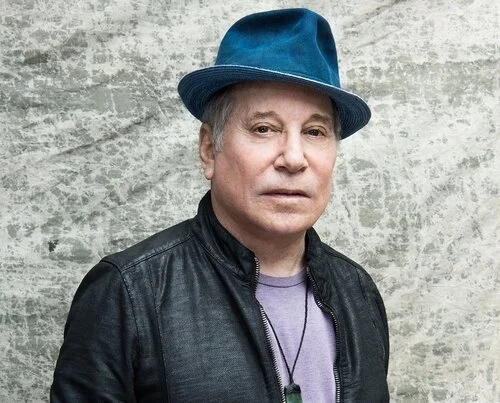
PHOTO CREDIT: Frank Ockenfels

His Fifty Greatest Tracks

___________

THOUGH many other people…

 IN THIS PHOTO: Simon & Garfunkel/PHOTO CREDIT: Michael Ochs Archives/Getty Images

know that Paul Simon turns eighty tomorrow (13th October), the penny has only just dropped today with me! I wanted to assemble a playlist of fifty key Simon songs (his work as part of Simon & Garfunkel and his solo work). I am going to end with a salute to the genius that is Paul Simon soon. Before then – trying not to repeat myself and bring in information I have done previously -, here is some biography about the great man:

“Paul Simon is one of the most successful and respected songwriters of the rock era. Being half of the legendary pop duo Simon & Garfunkel would be enough for most people, but Simon reaped just as much acclaim as a solo artist. In the 1970s, he was at the vanguard of the singer/songwriter movement, marrying smart, reflective lyrics with sophisticated pop music. His 1975 solo album Still Crazy After All These Years topped the charts, won the Grammy for Album of the Year, and included the number one hit "50 Ways to Leave Your Lover." In the '80s, he was one of the first pop artists to successfully combine world music into his sound, resulting in the South African flavor of the landmark Graceland, another Album of the Year Grammy winner.

Paul Frederic Simon was born in Newark, New Jersey on October 13, 1941. His father, Louis Simon, was an educator who also led a small jazz combo, while his mother, Belle Simon, taught English; when Paul was a few months old, they moved from Newark to Queens, New York. Paul grew up with a passion for baseball and music, particularly jazz and folk, and as he entered his teens, he developed a taste for the doo wop and R&B sounds that were a staple of Alan Freed's radio broadcasts, as well as first-generation rockabillies such as Elvis Presley, Jerry Lee Lewis, and Carl Perkins.

When Simon was 11 years old, he met Art Garfunkel, and the two became fast friends who discovered they shared an interest in music. Paul and Art formed a harmony duo in the style of their heroes the Everly Brothers, and made their stage debut at a junior-high talent show. By the time they were enrolled at Forest Hills High School, the two were calling themselves Tom & Jerry (Art was Tom Graph, Paul was Jerry Landis), and they filled their spare time playing teen dances and parties. In 1955, the two wrote a song together, "The Girl for Me," which Simon registered for copyright with the Library of Congress. In 1957, Tom & Jerry were cutting a demo acetate of Simon's song "Hey Schoolgirl" when the president of a small record company (ironically named Big Records) happened by the studio. The label head liked what he heard, and "Hey Schoolgirl" b/w "Dancin' Wild" was released in the fall of 1957. The record rose to number 52 on the Billboard pop singles charts, and scored Tom & Jerry an appearance on American Bandstand, but while they would cut a number of follow-up releases, "Hey Schoolgirl" was destined to be Tom & Jerry's only hit.

By March 1958, Simon was already looking toward a solo career, cutting a single, "True or False" b/w "Teen Age Fool," under the name True Taylor. Jerry Landis also landed his own record deal, releasing his debut single, "Anna Belle" b/w "Loneliness," in 1959, while Simon also worked with a studio group called the Cosines, who specialized in cutting demos for songwriters. (Another member of the combo was Carole Klein, who would soon enjoy a successful career of her own as Carole King.) By the end of the decade, Paul and Art were both enrolled in college, and Tom & Jerry took a back seat to academics, though Simon would record occasional sessions and wrote songs for others. In 1961, Simon teamed up with a handful of vocalists to form a group called Tico & the Triumphs; the group cut a single, "Motorcycle" b/w "I Don't Believe Them," which barely broke into the Billboard singles charts, making number 99 for one week, but received extensive airplay in Baltimore and became a local hit in the Charm City. "Motorcycle" was released by Amy Records, which soon turned to Simon to write and produce material for several of their artists, including Ritchie Cordell, the Fashions, Dottie Daniels, and Jay Walker & the Pedestrians. Simon also found time to cut another Jerry Landis single, and "The Lone Teen Ranger" spent three weeks on the Billboard charts in early 1963, peaking at number 97.

In the early '60s, the folk revival swept New York City, and a new breed of singers and songwriters introduced a new approach to the craft of creating tunes. Simon, who had been studying English literature, was influenced and encouraged by the new breed of folkies, and in 1963 he re-teamed with Art Garfunkel, this time using their real names and performing the more topical songs Simon was writing. Simon & Garfunkel started playing Greenwich Village folk clubs, and they scored a deal with Columbia Records, releasing their first album, Wednesday Morning, 3 AM, in the fall of 1964. The album was initially a flop, and Simon headed to England, where he made the rounds of folk clubs, recorded some BBC sessions, and even cut a solo album, The Paul Simon Songbook, which was released only in the U.K. Simon also co-wrote a few pop tunes with Bruce Woodley of the Seekers, one of which, "Red Rubber Ball," would become a big hit for the Cyrkle. In late 1965, Tom Wilson, who produced the Wednesday Morning, 3 AM album, learned that one of the songs from the LP, "The Sound of Silence," was getting scattered radio airplay, and he struck upon the idea of dubbing a rock & roll rhythm section over the acoustic track and issuing it as a single. The strategy worked: the new version of "The Sound of Silence" was a big hit, and Simon & Garfunkel quickly re-formed, cutting the album Sounds of Silence, which was released in 1966 and spawned the singles "I Am a Rock" and "Kathy's Song."

 Simon & Garfunkel would enjoy impressive success over the next several years, and were one of the few acts from the early-'60s folk revival that would enjoy success with acoustic-based music during the psychedelic era, thanks in large part to Simon's songwriting. But while 1970's Bridge Over Troubled Water was a massive commercial and critical success (and a superb reflection of the end-of-the-decade Zeitgeist of the day), long-simmering creative differences between Simon and Garfunkel came to a head while making the album, and a hiatus from collaborating became a proper breakup when Simon released his self-titled solo album in 1972. Paul Simon featured two hit singles, "Mother and Child Reunion" and "Me and Julio Down by the Schoolyard," and found Simon experimenting with reggae and Latin music, as well as polished soft rock.

Released in 1973, There Goes Rhymin' Simon was a more ambitious follow-up, sounding largely optimistic and dipping its toes into gospel and New Orleans jazz as well as R&B-based rock and pop. In 1975, Simon released Still Crazy After All These Years, an album informed by his divorce from his first wife, Peggy Harper. Still Crazy included the song "My Little Town," which reunited Simon with Art Garfunkel for the first time since Bridge Over Troubled Water. Simon's next project proved to have a long gestation period; he wrote a screenplay about a musician struggling to save his marriage and his career, and penned a set of songs to accompany it. Simon also starred in the subsequent film, and while One Trick Pony wasn't his first bit of film acting (he played a small but memorable role in Woody Allen's Annie Hall), he didn't fare well alongside a cast of seasoned professionals when the movie debuted in 1980. One Trick Pony's soundtrack album (his first album for Warner Bros. after a long working relationship with Columbia) spawned the hit single "Late in the Evening," but otherwise proved to be a disappointment in terms of sales.

In September 1981, Simon & Garfunkel played a massive reunion concert in New York's Central Park, which led to a brief reunion tour. The Central Park show was released as a live album that was a major commercial success, and the duo made plans to record a new album. But Simon and Garfunkel found themselves at odds in the studio, and Simon's next album, 1983's Hearts and Bones, featured no contributions from Garfunkel. The album sold poorly, and by Simon's own admission he was running short on inspiration when he heard an album of "township jive" by the South African group the Boyoyo Boys. Fascinated by the eclectic blend of creative elements, Simon began creating an album inspired by South African pop, recorded primarily in Johannesburg with a band of South African musicians. The result was 1986's Graceland, which became an unexpected smash hit, spawning several hit singles, introducing an international audience to South African rhythms, and prompting a renewed dialogue about the nation's repressive apartheid regime. (The album also generated a certain amount of controversy, as some believed the recording sessions violated a United Nations-led cultural boycott against South Africa; also, several members of the group Los Lobos, who appeared on the album, claimed Simon lifted their melody for the tune "All Around the World, or the Myth of Fingerprints" without giving them songwriting credit.) Simon turned to Brazilian music for inspiration on his next album, 1990's The Rhythm of the Saints, which also incorporated a number of the South African players who contributed to Graceland. If not as successful as Graceland, The Rhythm of the Saints still fared quite well with fans and critics, and the two albums reestablished Simon as a vital contemporary artist.

After releasing a live album from the tour in support of The Rhythm of the Saints, Simon retreated to work on another unusual project, a Broadway musical called The Capeman, which was based on the true story of Salvador Agron, a Latino gang member and convicted murderer turned poet and activist. Simon wrote the book for The Capeman in collaboration with Derek Walcott, and composed a set of new songs for the show. However, the production proved difficult and the play, which opened in 1998, received poor reviews and closed after just 68 performances due to slow ticket sales. (A revised version of the show was staged in 2010, and received significantly better notices.) An album of Simon's interpretations of the show's songs was issued, but was only a modest success; the original cast recording received a belated digital release in 2006.

Stung by the disappointing response to The Capeman, Simon returned to the studio in 2000 to record You're the One, an album that suggested a compromise between the African and Latin sounds he'd embraced and the more intimate approach of his early work. Two years later, Simon once again reunited with Art Garfunkel for a concert tour, and a live album, Old Friends: Live on Stage, was released in 2004. Simon returned in 2006 with Surprise, which found him working with an unlikely producer, Brian Eno. Released in 2011, So Beautiful or So What captured Simon returning to a more organic songwriting style than he'd employed since Graceland, though the tenor of the lyrics confirmed he was still keenly aware of the sounds and ideas of the present day. The album was also his first release for Hear Music; the same label released 2012's Live in New York City, taken from a special intimate hometown concert from the tour in support of So Beautiful. Simon returned in the summer of 2016 with Stranger to Stranger, an album co-produced by his longtime collaborator Roy Halee and released on Concord Records.

Simon embarked on a farewell tour in 2018, toward the end of which he released In the Blue Light, a collection of reinterpretations of songs he felt were overlooked when he'd written them”.

To mark the eightieth birthday of one of the finest songwriters the world will ever see, below are fifty tracks (not in chronological order; a few are co-writes) demonstrating Paul Simon’s songwritring brilliance, consistency and variety. The world will never see an artist like Paul Simon…

EVERY again.

FEATURE: Vinyl Corner: Neko Case - Middle Cyclone

FEATURE:


Vinyl Corner

kkjk.jpg

Neko Case - Middle Cyclone

___________

HAVING recently listened to…

iudue.jpg

her fifth studio album, Hell-On (2018), I have been looking back at other albums from Neko Case. I started to listen to 2009’s Middle Cyclone and was really blown away by it! A superb album from the Alternative Country singer-songwriter, it was her first album in three years. I love all of Case’s various projects – including case/lang viers and The New Pornographers. I feel her solo work is equally strong and potent. Middle Cyclone, as the title suggests, features images of tornadoes and nature. One of the best things about the album is the guess that feature on it. Including M. Ward, Garth Hudson, Sarah Harmer, members of The New Pornographers, Los Lobos, Calexico, The Sadies, Visqueen, Kurt Heasley of Lilys, and Giant Sand, it is an album that includes so many great musicians, singers and contributors. A sensational album that people should get on vinyl, do make sure that you check out Neko Case’s Middle Cyclone. Case’s gorgeous and hugely rich voice scores songs of heartache and beauty. There are lighter moments and a wide range of topics addressed. Before I wrap things up, I want to bring together a couple of reviews that praise Middle Cyclone. This is what AllMusic noted in their review:

“Neko Case looks formidable on the cover of Middle Cyclone, brandishing a sword in one hand while crouching low on the hood of a muscle car. It's mostly camp, of course -- the sort of superwoman image that Quentin Tarantino might have used for Death Proof's ad campaign -- but it also draws contrast with Case's past albums, two of which featured moody shots of the songwriter sprawled on the floor, ostensibly knocked out. Middle Cyclone isn't the polar opposite of Blacklisted's downcast Americana; there are still moments of heartbreak on this release, and Case channels the sad cowgirl blues with all the nuance of Patsy Cline.

Multiple years in the New Pornographers' lineup have brightened her outlook, though, and Middle Cyclone balances its melancholia with some of the most pop-influenced choruses of Case's career. "I'm a man-man-maneater," she sings on "People Got a Lotta Nerve," a snappy gem of vocal harmonies and jangled guitars. The mammal metaphors continue with "I'm an Animal," where a coed choir hums a wordless, hooky refrain. These songs are still filled with earth tones -- they may even pitch their tent closer to the folk camp than Carl Newman's power pop -- but their venture into brighter territory is a confident one.

Of course, Neko Case already explored the animal world with 2006's Fox Confessor Brings the Flood, and Middle Cyclone devotes more time to weather, nature, and the stormy atmospherics provided by her backup band. There are few voices as haunting as Case's alto, and she flaunts her vocal chops over a number of semi-ballads, from the cinematic "Prison Girls" (a country-noir love letter to someone with "long shadows and gunpowder eyes") to the sparse title track. She does a surprise duet with chirping birds during "Polar Nettles" -- a result of the pastoral recording sessions, which took place in a barn -- before tackling a cover of Sparks' "Never Turn Your Back on Mother Earth," whose title very well may be the album's mission statement. There's still room to tackle love from the perspective of different characters -- a man in "Vengeance Is Sleeping," a disbeliever in "The Next Time You Say Forever," a smitten wind vortex in "This Tornado Loves You" -- but nature remains at the forefront of Middle Cyclone, whose 14 songs conclude with a half-hour field recording of noisy crickets and frogs. Moody and engaging throughout, Cyclone is another tour de force from Neko Case, if not as immediately arresting as Fox Confessor”.

The second review that caught my eye is from The A.V. Club. They observe that, whilst Middle Cyclone is more fragmented than some of her other albums, it is a wonderful record – and its half-hour closer, Marais la Nuit, is especially brave and bold:

“While some musicians progress in leaps, Neko Case tends to move in increments. But she does move. Case’s albums have remained consistently strong over the years, even as she’s stepped away from her traditionalist alt-country roots and towards more idiosyncratic twangy pop. Her latest, Middle Cyclone, is in the same exploratory mode as 2006’s Fox Confessor Brings The Flood, as Case tries to discover what she can eke out of just a little shimmer, some elliptical lyrics, and her big, yelping voice. Middle Cyclone doesn’t sound substantially different from the album than what preceded it, yet it’s far removed from her 1997 debut, The Virginian.

In fact, it’s hard to imagine what the Case of 12 years ago would make of Middle Cyclone’s opener, “This Tornado Loves You,” which rushes along like a gust of wind that keeps changing direction. The song is about being tossed about by forces you can’t understand—but that understand you—and in a way, it’s a metaphor for how Case works these days. She’s more intuitive and less genre-bound.

Because of that intuitive approach, Middle Cyclone is more fragmented than Fox Confessor. The album takes its lead from the off-the-cuff methodology of Harry Nilsson, whose yearning, smart-ass ballad “Don’t Forget Me” Case covers beautifully here. Case feels untethered enough to close the record with 30 minutes of chirping crickets, and to defend the predatory nature of killer whales, and to perform a straight-faced version of Sparks’ the-ecology-can-ruin-you anthem “Never Turn Your Back On Mother Earth.” All of Middle Cyclone is reliably Case-like, in that it seems unpredictable, unless you’ve listened to Case long enough to understand what she understands: that following fleeting impulses can be as rewarding as it is dangerous”.

I would recommend that people buy a copy of Middle Cyclone if they do not own it. If not, go and stream the album. It is a reliably amazing and evocative album from one of the most consistent artists and songwriters in the world. I have listened to Middle Cyclone a few times recently and, each time I come back, I discover something new. It is a record that blossoms and unveils fresh discovery every time. If you are new to the wonders and brilliance of Neko Case, I can definitely recommend that you listen to…

THE brilliant Middle Cyclone.


FEATURE: At Her Experimental Best: Kate Bush’s The Dreaming

FEATURE:


At Her Experimental Best

Anton Corbijn, 1982.jpg

IN THIS PHOTO: Kate Bush shot in 1982 by Anton Corbijn 

Kate Bush’s The Dreaming

___________

THOUGH I have touched on this before…

www.jpg

I wanted to look at the experimental and broad canvas that is Kate Bush’s 1982 album, The Dreaming. I am going to source a review or two for the album – to show you how critics have reacted to such a stunning and original work. Whilst Kate Bush herself might not characterise her fourth studio album as experimental, one cannot deny that all the different sounds, sights and sources makes it far from commercial and conventional. I feel one reason why critics were a little mixed in 1982 is because The Dreaming was a radical departure from 1980’s Never for Ever. One cannot call that album ordinary or grounded - though heavier tracks like Breathing hinted at what was to come a couple of years later. In terms of vocal elements, Bush herself adds so many effects, characters and layers. More than any other album Bush released prior to The Dreaming, there are quite a few other vocalists in the mix…everyone from her brother, Paddy, to David Gilmour to Percy Edwards providing support. Edwards adds animal noises to The Dreaming’s title track, whereas Richard Thornton delivers a choirboy purity to All the Love. I have dissected the vocal elements on Bush’s albums before. There is the clash of light and dark on The Dreaming. Gordon Farrell and Del Palmer appear on Houdini, whilst Paul Hardiman and Esmail Sheikh are essential voices on Get Out of My House.

The Dreaming marries Folk instruments such as mandolins, uilleann pipes and didgeridoos. There are samples and unusual signatures. Song structures that are not traditional and are unexpected. Bush utilises vocal loops and odd effects to give her tracks unique resonance. As you’d expect, she takes from film, T.V. and literature on tracks that are among her very best. I have seen reviews and comments surrounding the experimental sound of The Dreaming as a negative. They want an album more like Hounds of Love in terms of its accessibility and commercial appeal. It was clear that, after Never for Ever, Kate Bush wanted to evolve and make a change. Producing on her own for the first time, there was a sense of her proving herself. One could feel a sense of disappointment from her surrounding the lack of production control she had on her first three albums (she assisted production on her second, Lionheart, and co-produced Never for Ever with Jon Kelly). I have discussed The Dreaming many times in terms of its songs and aspects such as the vocals - and how Bush’s production is exceptional and undervalued. I am trying to dispel the notion that the experimentation and, perhaps, lack of instant accessibility is a bad thing. The Dreaming is an album that unfolds over many listens.

Grabbing from the Kate Bush Encyclopaedia, we get interview snippets where Bush explained her motives and designs through The Dreaming:

“After the last album, 'Never For Ever', I started writing some new songs. They were very different from anything I'd ever written before - they were much more rhythmic, and in a way, a completely new side to my music. I was using different instruments, and everything was changing; and I felt that really the best thing to do would be to make this album a real departure - make it completely different. And the only way to achieve this was to sever all the links I had had with the older stuff. The main link was engineer Jon Kelly. Everytime I was in the studio Jon was there helping me, so I felt that in order to make the stuff different enough I would have to stop working with Jon. He really wanted to keep working with me, but we discussed it and realised that it was for the best. ('The Dreaming'. Poppix (UK), Summer 1982)

Yes, it's very important for me to change. In fact, as soon as the songs began to be written, I knew that the album was going to be quite different. I'd hate it, especially now, if my albums became similar, because so much happens to me between each album - my views change quite drastically. What's nice about this album is that it's what I've always wanted to do. For instance, the Australian thing: well, I wanted to do that on the last album, but there was no time. There are quite a few ideas and things that I've had whizzing around in my head that just haven't been put down. I've always wanted to use more traditional influences and instruments, especially the Irish ones. I suppose subconsciously I've wanted to do all this for quite some time, but I've never really had the time until now. ('The Dreaming'. Poppix (UK), Summer 1982)”.

There is a definite stubbornness and lack of understanding from many critics. I don’t think that the darker tones and madder moments mean The Dreaming is off-putting or lacks warmth. There is so much beauty and emotional heft that goes alongside the wonderfully eclectic sonic and vocal palette. The Dreaming is its own world! You are drawn in and mesmerised by its scope and impact. The fact Kate Bush, as producer, is responsible for such a magnificent feat of creativity and execution is to be applauded. In their review from 2019, this is what Pitchfork observed about The Dreaming:

“The Dreaming really is more a product of the 1970s—which actually sort of began in the late ’60s and extended through most of the ’80s—when prog rock musicians sold millions, had huge radio hits, and established fan bases still rabid today. But the album also came out in 1982, and it only cemented the sense of Bush as a spirited, contrarian of Baroque excess in a musical moment defined largely in reaction to prog’s excess. It’s exactly that audacity to be weird against the prevailing trends that made Kate Bush a great feminist icon who expanded the sonic (and business) possibilities for subsequent visionary singer-songwriters. While name-checking Emerson, Lake & Palmer or Yes is relatively unheard of in today’s hip hop, indie, or pop landscapes, Kate Bush’s name was and is still said with respect. Perhaps it’s because unlike all those prog dudes of yore, she’s legibly, audibly very queer, and very obviously loves pop music, kind of like her patron saint, David Bowie.

dd.jpg

IN THIS PHOTO: Kate Bush performing Suspended in Gaffa in 1982 

On The Dreaming, Bush’s self-proclaimed “mad” album, her mind works itself out through her mouth. Her cacophony of vocal sounds—at least four on each track—pushed boundaries of how white pop women could sing. Everything about it went against proper, pleasing femininity. Her voice was too high: a purposeful shrilling of the unthreatening girlish head voice; too many: voices doubled, layered, calling and responding to themselves, with the choruses full of creepy doubles, all of them her; too unruly: pitch-shifted, leaping in unexpected intervals, slipping registers until the idea of femme and masculine are clearly performances of the same sounding person; too ugly: more in the way cabaret singers inhabit darkness without bouncing back to beauty by the chorus in the way that female pop singers often must.

All this excess is her sound: a strongly held belief that unites all of the The Dreaming. Nearly half of the album is devoted to spiritual quests for knowledge and the strength to quell self-doubt. Frenetic opener “Sat in Your Lap” was the first song written for the album. Inspired by hearing Stevie Wonder live, it serves as meta-commentary of her step back from the banality of pop ascendancy that mocks shortcuts to knowledge. A similar track, “Suspended in Gaffa,” laments falling short of enlightenment through the metaphor of light bondage in black cloth stagehand tape. It is a pretty queer-femme way of thinking through the very prog-rock problem of being a real artist in a commercial theater form, which is probably why it’s a fan favorite”.

Dense and hugely nuanced, I argued in 2019 how The Dreaming is like a misunderstood child. Many albums that are given a shrug upon their release are picked up years later and reassessed. I don’t think this has happened with The Dreaming quite as we would have hoped and imagined. Given how different it is to her follow-up album, 1985’s Hounds of Love, might mean that people see it as a stepping stone or strange experiment Bush needed to get out of her system, to clear the way for the masterpiece that followed. It is clear Bush was expressing a degree of personal strain and struggle on the page. At times anxious and frightening, I feel she put her heart, soul, nerves, fears and desires through an album that is as accomplished, astonishing and memorable as anything that she ever recorded. I do hope there is proper reappraisal of The Dreaming ahead of its fortieth anniversary next year. To me, The Dreaming is right near Bush’s creative summit. Indeed, it is an experimental album – though I don’t consider that to me a negative. Such a rich array of instruments, vocal shades and fascinating stories, this was an artist establishing autonomy and control over her work for the first time. A truly remarkable listen, 1982’s The Dreaming is…

A distinct masterpiece.

FEATURE: The Lockdown Playlist: Daryl Hall at Seventy-Five: The Best of Hall & Oates

FEATURE:


The Lockdown Playlist

IN THIS PHOTO: Daryl Hall in 2011 

Daryl Hall at Seventy-Five: The Best of Hall & Oates

___________

I do enjoy…

poo.jpg

marking big birthdays on my site. As part of the Lockdown Playlist series, I get a chance to celebrate great artists. As tomorrow (11th October) is the seventy-fifth birthday of Daryl Hall, I wanted to assemble the best songs from the mighty Hall & Oates. Before I conclude with some golden Hall & Oates that showcase Daryl Hall’s terrific vocals, here is some AllMusic biography about the great man:

“Philadelphia-born Daryl Hall is best known for being part of the '70s and '80s duo Hall & Oates, responsible for such hits as "Maneater," "Rich Girl," and "I Can't Go for That (No Can Do)." Hall attended Philadelphia's Temple University, where he met future partner John Oates. They played together for a short time in the late '60s, until Oates decided to transfer schools. Hall did not let this discourage his musical career, though, and he began playing with the rock group Gulliver. The band produced one album on the Elektra label before disbanding. Hall then became a backup musician. Upon Oates' return to Philadelphia in 1972, the two got back together and formed the duo that would achieve fame later in the decade.

Hall & Oates initially performed folk-rock tunes, most of which placed on the musical charts. Tommy Mottola became their manager and got them a contract on the Atlantic record label. (Mottola was also responsible for signing Mariah Carey to Atlantic in the '80s.) The group's first album, Whole Oates, was released in 1972. The duo changed styles on the 1974 War Babies album to a harder rock sound, but ultimately disregarded that sound and returned to pop/rock.

Hall & Oates left Philadelphia for New York in 1976. They signed with RCA and produced their first Top Ten hit, "Sara Smile," in 1976. They achieved their first hit single, "Rich Girl," with the 1976 album Bigger Than the Both of Us. It was this recording that led Hall & Oates to achieve the success and fame they would continue to enjoy. Before recording further albums and hits, however, the two decided to refine their sound in the late '70s. Their songs began to sound more like rock, with more guitar solos.

It wasn't until 1980 that Hall & Oates produced another successful album -- Voices rendered such hits as "You Lost That Lovin' Feeling," "Kiss on My List," and "You Make My Dreams." That same year saw the release of Sacred Songs, a Daryl Hall solo album pairing the singer with unlikely collaborator Robert Fripp, who produced and played guitar (as well as Frippertronics) on the album; Hall also appeared on Fripp's solo album Exposure, released in 1979.

The '80s saw Hall & Oates issuing many albums, including Private Eyes and H2O, the latter of which became a double-platinum success for the duo. Because of all their hits, by 1984 Hall & Oates became the most chart-topping duo in history, topping the '60s popular folk-pop duo the Everly Brothers. Their 1984 album, Big Bam Boom, sold more than two million copies and produced four hit singles. Hall & Oates received the American Music Award for favorite pop group, also in 1984. Despite the outrageous success of the band, Hall & Oates disbanded. Both Daryl Hall and John Oates pursued solo careers -- with Hall issuing solo albums 3 Hearts in the Happy Ending Machine (1986), Soul Alone (1993), and Can't Stop Dreaming (a 1999 Japan-only release ultimately issued in altered form in the U.S. during 2003).

Hall & Oates did reunite in 1988 for the album Ooh Yeah!, but subsequently maintained a low profile, with intermittent touring and recording including 1997's Marigold Sky, an album that proved to be as successful as their first album. The 2000s saw renewed activity from the pair, with the release of Hall & Oates albums Do It for Love (2003), Our Kind of Soul (2004), Home for Christmas (2006), and Live at the Troubadour (2008).

Hall began a monthly Web television series called Live from Daryl's House in late 2007. The program, recorded in an out building on Hall's estate in the Catskills, features the performer jamming and collaborating with musicians from legendary (Smokey Robinson, Nick Lowe, Todd Rundgren) to relative newcomers (Sharon Jones & the Dap-Kings, Plain White T's, Chromeo, and Matt Nathanson). Feeling rejuvenated, Hall recorded Laughing Down Crying, his first solo album in 14 years, releasing it in the summer of 2011. He co-produced the album with Greg Bieck (Jennifer Lopez, Destiny’s Child, Ricky Martin) and Paul Pesco. The album's release was bittersweet, however, as it marked the end of a 30-year friendship and collaboration with the late producer T-Bone Wolk, who lent help on three tracks but passed away before the album was completed”.

A happy seventy-fifth birthday to Daryl Hall for tomorrow. I love Hall & Oates and feel they are one of the most important acts ever. Dominating the 1970s and 1980s with their incredible music, classics like Maneater, I Can’t Go for That (No Can Do), You Make My Dreams and Kiss on My List will live forever. To nod to one of the all-time best singers, here are some gems…

FROM the incredible Hall & Oates.

FEATURE: Kate Bush’s 50 Words for Snow: Almost Like Going Back to the Start

FEATURE:


Kate Bush’s 50 Words for Snow

jkkj.jpg

IN THIS PHOTO: Kate Bush in a publicity photo for 50 Words for Snow 

Almost Like Going Back to the Start

___________

COME 22nd November…

qq.jpg

it will be ten years since Kate Bush released her latest studio album, 50 Words for Snow. I am keen to highlight a couple of reviews for the album. It is one that I have grown to love even more than I did when it came out. When it arrived in 2011, I was unsure what sort of sound it would possess. Having heard Director’s Cut earlier that year (where Bush reworked songs from two of her previous albums, The Sensual World and The Red Shoes), I wondered if it might be similar in terms of production. 50 Words for Snow is a totally different experience. Bush had to do Director’s Cut to clear the path for new music. She was doing something retrospective but, unlike greatest hits packages, this was an artist who was revisiting songs she felt could have been recorded differently. A chance to have the original song sounding how they should have. 50 Words for Snow is a new phase. In an interview with John Wilson for BBC Radio 4’s Front Row in 2011, Bush was asked about this when promoting the album. I see similarities between her 2011 album and her 1978 debut, The Kick Inside. Thirty-two years after that album was released, Bush sort of returned to that sound and simplicity on 50 Words for Snow. Whilst The Kick Inside is much more about teenage lust and the sensual world of a young woman, 50 Words for Snow is (a record) where we hear an older woman.

There is a lot more than sex and love being discussed on The Kick Inside, though one feels this real sort of urge and curiosity spring from songs. On the 2011 album, there is still this same curiosity and passion. Whether it is the brief tryst of Misty – where the protagonist spends the night with a snowman, only for him to melt by the morning – or the search for a Yeti in Wild Man, here is a woman who is asking many of the same questions she did on her debut. What reminds me most of The Kick Inside on 50 Words for Snow is the instrumentation. Aerial (2005) had orchestration and, to me, it was pretty broad in terms of its sound and vision. At seven tracks, Bush kept things pretty simple. The tracks have longer to emerge and unfurl. She wanted these longer song structures so that she could tell a fuller story. That said, the piano is the central instrument. Though Steve Gadd’s drumming is key throughout, it is Kate Bush and her piano that is dominant. Not since The Kick Inside was there more of a simple and traditional band structure (drums, piano, guitar and bass). Some reviewers noted how there was this live band feel to 50 Words for Snow. Musicians playing together in a room, rather than it sounding like layers of instruments being assembled from various takes.

I am not sure whether the sound of 50 Words for Snow is going to be the sound going forward. It does seem that Director’s Cut, in its retrospection, was the start of a period of Bush, in some way, looking back. She remastered her studio albums in 2018. She also released a book of lyrics, How to Be Invisible, in 2018. Before the Dawn, her 2014 residency, was Bush performing songs from her older albums (though there was one track from 50 Words for Snow played). I will finish off with a couple of reviews for Kate Bush’s 2011 masterwork. Like The Kick Inside, there is so much packed into the album in terms of themes. One cannot define either album as being about a single thing. Both albums are ambitious and accomplished, though there are easily accessible too. This is what Pitchfork wrote in their review:

“On "Wild Man", the first single from Kate Bush's winterized 10th album, the singer tells of an expedition searching for the elusive Abominable Snowman. "They want to know you," she coos, "They will hunt you down, then they will kill you/ Run away, run away, run away." Of course, when it comes to modern popular figures-- who often court fame and adulation with an obsessiveness that can be fascinating or just plain sad-- Bush herself is something of a mythical beast. 50 Words for Snow is only her second album of original material in the last 17 years, and she hasn't performed a full concert since her groundbreaking and theatrical Tour of Life wrapped up its six-week run in 1979. So it's no surprise that she readily sympathizes with the misunderstood monster at the center of "Wild Man": "Lying in my tent, I can hear your cry echoing round the mountainside/ You sound lonely."

50 Words for Snow is teeming with classic Bush-ian characterizations and stories-- fantasies, personifications, ghosts, mysteries, angels, immortals. As quoted in Graeme Thomson's thorough, thoughtful recent biography Under the Ivy, she explained her attraction to such songwriting: "[Songs] are just like a little story: you are in a situation, you are this character. This is what happens. End. That's what human beings want desperately. We all love being read stories, and none of us get it anymore." She's onto something; in our postmodern era, the idea of a tale can seem quaint and simple.

But Bush continues to infuse her narratives with a beguiling complexity while retaining some old-school directness. Because while most of this album's songs can be easily summarized-- "Snowflake" chronicles the journey of a piece of snow falling to the ground; "Lake Tahoe" tells of a watery spirit searching for her dog; "Misty" is the one about the woman who sleeps with a lusty snowman (!)-- they contain wondrous multitudes thanks to the singer's still-expressive voice and knack for uncanny arrangements. And mood. There's an appealing creepiness that runs through this album, one that recalls the atmospheric and conceptual back half of her 1985 masterpiece Hounds of Love. Indeed, when considering this singular artist in 2011, it's difficult to think of worthy points of reference aside from Bush herself; her onetime art-rock compatriots David Bowie and Peter Gabriel are currently MIA and in rehash mode, respectively. And while current acts including Florence and the Machine are heavily inspired by Bush's early career and spiritual preoccupations, none are quite able to match their idol's particular brand of heart-on-sleeve mysticism. In an interview earlier this year, the 53-year-old Bush told me she doesn't listen to much new music, and after listening to the stunningly subtle and understated sounds on Snow, it's easy to believe her”.

I have enjoyed reading the reviews for 50 Words for Snow, as there is so much love and affection for Bush’s ten studio album. This is what AllMusic noted in their review:

“Kate Bush's 50 Words for Snow follows Director's Cut, a dramatically reworked collection of catalog material, by six months. This set is all new, her first such venture since 2005's Aerial. The are only seven songs here, but the album clocks in at an hour. Despite the length of the songs, and perhaps because of them, it is easily the most spacious, sparsely recorded offering in her catalog. Its most prominent sounds are Bush's voice, her acoustic piano, and Steve Gadd's gorgeous drumming -- though other instruments appear (as do some minimal classical orchestrations). With songs centered on winter, 50 Words for Snow engages the natural world and myth -- both Eastern and Western -- and fantasy. It is abstract, without being the least bit difficult to embrace. It commences with "Snowflake," with lead vocals handled by her son Bertie. Bush's piano, crystalline and shimmering in the lower middle register, establishes a harmonic pattern to carry the narrative: the journey of a snowflake from the heavens to a single human being's hand, and in its refrain (sung by Bush), the equal anticipation of the receiver. "Lake Tahoe" features choir singers Luke Roberts and Michael Wood in a Michael Nyman-esque arrangement, introducing Bush's slippery vocal as it relates the tale of a female who drowned in the icy lake and whose spirit now haunts it. Bush's piano and Gadd's kit are the only instruments. "Misty," the set's longest -- and strangest -- cut, is about a woman's very physical amorous tryst with, bizarrely, a snowman. Despite its unlikely premise, the grain of longing expressed in Bush's voice -- with bassist Danny Thompson underscoring it -- is convincing. Her jazz piano touches on Vince Guaraldi in its vamp. The subject is so possessed by the object of her desire, the morning's soaked but empty sheets propel her to a window ledge to seek her melted lover in the winter landscape.

"Wild Man," introduced by the sounds of whipping winds, is one of two uptempo tracks here, an electronically pulse-driven, synth-swept paean to the Tibetan Kangchenjunga Demon, or "Yeti." Assisted by the voice of Andy Fairweather Low, its protagonist relates fragments of expedition legends and alleged encounters with the elusive creature. Her subject possesses the gift of wildness itself; she seeks to protect it from the death wish of a world which, through its ignorance, fears it. On "Snowed in at Wheeler Street," Bush is joined in duet by Elton John. Together they deliver a compelling tale of would-be lovers encountering one other in various (re)incarnations through time, only to miss connection at the moment of, or just previous to, contact. Tasteful, elastic electronics and Gadd's tom-toms add texture and drama to the frustration in the singers' voices, creating twinned senses: of urgency and frustration. The title track -- the other uptempo number -- is orchestrated by loops, guitars, basses, and organic rhythms that push the irrepressible Stephen Fry to narrate 50 words associated with snow in various languages, urgently prodded by Bush. Whether it works as a "song" is an open question. The album closes with "Among Angels," a skeletal ballad populated only by Bush's syncopated piano and voice. 50 Words for Snow is such a strange pop record, it's all but impossible to find peers. While it shares sheer ambition with Scott Walker's The Drift and PJ Harvey's Let England Shake, it sounds like neither; Bush's album is equally startling because its will toward the mysterious and elliptical is balanced by its beguiling accessibility”.

On its tenth anniversary on 22nd November, I will listen to 50 Words for Snow in full. It is a remarkable album that reminds me so much of The Kick Inside. Not that Bush was trying to revisit the past or reset the clock. She has stripped back the instruments but, rather than that leading to a sparser album, there is a fullness and atmosphere that is wonderous. The Kick Inside has a live feel. I can close my eyes and get the sense of musicians being in the room together playing a single take together. Who knows what the future holds for Kate Bush. If there are more albums like 50 Words for Snow, then we will all…

BE so much richer.

FEATURE: Inspired By... Part Thirty-Three: Pixies

FEATURE:


Inspired By...

aaa.jpg

Part Thirty-Three: Pixies

___________

IT has been long-overdue…

 IN THIS PHOTO: Pixies at Pinkpop Festival, the Netherlands in 1989/PHOTO CREDIT: Gie Knaeps/Getty Images.

including this band in Influenced By… Pixies are among the most influential bands ever. They are an incredible group who formed in 1986 in Boston, Massachusetts. In the year of their thirty-fifth anniversary, Pixies are still playing and recording. Their most-recent album, Beneath the Eyrie, was released in 2019. Fronted by Black Francis, I am a big fan of Pixies. Classic albums like Doolittle are among my absolute favourites. I wanted to put together a playlist of songs from artists who are clearly inspired by Pixies – that or they have cited the band as an influence. Before that, AllMusic provide some detailed biography:

“Combining jagged, roaring guitars and stop-start dynamics with melodic pop hooks, intertwining male-female harmonies, and evocative, cryptic lyrics, Pixies are one of alternative rock's most influential bands. On albums such as 1988's Surfer Rosa and 1989's Doolittle, they turned conventions inside-out, melding punk and indie guitar rock, classic pop, surf rock, and stadium-sized riffs with singer/guitarist Black Francis' bizarre, fragmented lyrics about space, religion, sex, mutilation, and pop culture. His lyrics may have been impenetrable, but the music was direct, forceful, and laid the groundwork for the alternative explosion of the early '90s. From grunge to Brit-pop, Pixies' shadow loomed large; it's hard to imagine Nirvana without Pixies' signature loud-quiet-loud dynamics and lurching, noisy guitar solos. However, the band's commercial success didn't match its impact -- MTV was reluctant to play their videos, while modern rock radio didn't put their singles into regular rotation. By the time Nirvana broke the doors down for alternative rock in 1992, Pixies were effectively broken up. During the rest of the '90s and into the 2000s, they continued to inspire acts ranging from Weezer, Radiohead, and PJ Harvey to the Strokes and Arcade Fire. Pixies' 2004 reunion was as surprising as it was welcome, and the band's frequent tours led them to record albums including 2019's Beneath the Eyrie, which continued the sound of their groundbreaking early work.

Pixies were formed in Boston, Massachusetts in January 1986 by Charles Thompson and Joey Santiago, Thompson's suitemate while studying at the University of Massachusetts Amherst. Born in Massachusetts and constantly shuttling between there and California, Thompson began playing music as a teenager before he moved to the East Coast for good during high school. Following graduation, he became an anthropology major at the University of Massachusetts. Halfway through his studies there, he went to Puerto Rico to study Spanish, and after six months he decided to move back to the U.S. to form a band. Thompson dropped out of school and moved to Boston, managing to persuade Santiago to join him. Advertising in a music paper for a bassist who liked "Hüsker Dü and Peter, Paul and Mary," the duo recruited Kim Deal (who was billed as Mrs. John Murphy on the group's first two records), who had previously played with her twin sister Kelly in their band the Breeders in her hometown of Dayton, Ohio. On the advice of Deal, the group recruited drummer David Lovering. Inspired by Iggy Pop, Thompson picked the stage name Black Francis and the group named itself Pixies after Santiago randomly flipped through the dictionary.

After a few months, Pixies had played enough gigs to land a supporting slot for fellow Boston band Throwing Muses. At the Muses concert, Gary Smith, an artist manager and producer at Boston's Fort Apache studios, heard the group and offered to record them. In March 1987, Pixies recorded 18 songs over the course of three days. The demo, dubbed The Purple Tape, was given to key players within the Boston musical community and the international alternative scene, including Ivo Watts, the head of England's 4AD Records. On the advice of his girlfriend, Watts signed the band. After selecting eight of the demo's songs and remixing them slightly, 4AD released them as Come on Pilgrim in September 1987. Named for a lyric from a song by Christian rocker Larry Norman -- whose music Francis listened to while growing up -- the mini-album peaked at number five on the U.K. indie album chart.

In December 1987, Pixies began recording their first full-length album, Surfer Rosa, with Steve Albini at Boston's Q Division studio. Albini, who had pioneered the thin, abrasive indie guitar grind with Big Black, gave the band a harder-edged sound over the ten-day session, yet the group retained its melodic hooks. Released in March 1988, Surfer Rosa became a college radio hit in America (and was ultimately certified gold by the RIAA in 2005); in the U.K., the album reached number two on the Indie Chart and earned enthusiastic reviews from the British weekly music press. By the end of the year, Pixies' buzz was substantial, and the group signed to Elektra.

While touring in support of Surfer Rosa, Francis began writing songs for the band's second album, some of which appeared on their 1988 sessions for John Peel's radio show. That October, the band entered Downtown Studios in Boston with English producer Gil Norton, with whom they had recorded the single version of "Gigantic" in May. With a budget of $40,000 -- four times the amount Surfer Rosa cost -- and a month of initial recording sessions, Doolittle was Pixies' cleanest-sounding album yet. It received excellent reviews, leading to greater exposure in America. "Monkey Gone to Heaven" and "Here Comes Your Man" became Top Ten modern rock hits, clearing the way for Doolittle to peak at number 98 on the U.S. charts; meanwhile, it hit number eight on the U.K. Album Chart.

Throughout their career, Pixies were more popular in Britain and Europe than America, as evidenced by the success of the Sex and Death tour in support of Doolittle. The band became notorious for Black Francis' motionless performances, which were offset by Deal's charmingly earthy sense of humor. The tour itself became infamous for the band's in-jokes, such as playing their entire set list in alphabetical order. By the completion of their second American tour for Doolittle at the end of 1989, the bandmembers had begun to tire of each other and decided to take a hiatus.

During his time away from Pixies, Black Francis went on a brief solo tour. Meanwhile, Kim Deal re-formed the Breeders with Tanya Donelly from Throwing Muses and bassist Josephine Wiggs of Perfect Disaster. In January 1990, Francis, Santiago, and Lovering moved to Los Angeles to prepare for recording Pixies' third album, Bossanova, while Deal worked on the Breeders' debut album Pod in the U.K. with Albini; she joined the rest of the group in time to start recording in February. Working once again with Norton at Burbank, California's Master Control studio, the band wrote many of the album's songs in the studio. More atmospheric than its predecessors, and relying heavily on Francis' surf rock obsession, Bossanova was released in August of 1990; unlike Surfer Rosa or Doolittle, it contained no songs by Deal. Bossanova was greeted with mixed reviews, but the record became a college hit, generating the modern rock hits "Velouria" and "Dig for Fire" in the U.S. In Europe, the record expanded the group's popularity, hitting number three on the U.K. album charts and paving the way for their headlining appearance at the Reading Festival. Though the supporting tours for Bossanova were successful, tension continued to grow between Kim Deal and Black Francis -- at the conclusion of their English tour, Deal announced from the stage of the Brixton Academy that the concert was "our last show."

While they canceled their planned American tour due to exhaustion, Pixies reconvened in early 1991 to make their fourth album with Gil Norton, recording in studios in Burbank, Paris, and London. Hiring former Captain Beefheart and Pere Ubu keyboardist Eric Drew Feldman as an auxiliary member, the band moved back toward loud rock, claiming to be inspired by the presence of Ozzy Osbourne in a neighboring studio. Upon its fall release, Trompe le Monde was hailed by some as a welcome return to the sound of Surfer Rosa and Doolittle, but closer inspection revealed that it relied heavily on sonic detail and featured very few vocals by Deal and, as on Bossanova, none of her songs. The band embarked on another international tour, playing stadiums in Europe but theaters in America. Early in 1992, Pixies opened for U2 on the opening leg of the Zoo TV tour; upon its conclusion, the band went on another hiatus, with Deal returning to the Breeders, who released the EP Safari that April. Francis began working on a solo album.

As he was preparing to release his solo debut in January 1993, Francis gave an interview on BBC's Radio 5, announcing that Pixies were disbanding. He hadn't yet informed the other members; later that day, he called Santiago and faxed Deal and Lovering the news. Inverting his stage name to Frank Black, Francis released his eponymous debut that March. The Breeders released their second album, Last Splash, in August 1993. The album became a hit, going gold in the U.S. and spawning the hit single "Cannonball." Soon after, Deal also formed the Amps, who released their one (and only) album, Pacer, in 1995. Santiago and Lovering formed the Martinis in 1995 and appeared on the soundtrack to Empire Records. During the late '90s and early 2000s, 4AD issued archival Pixies releases, including Death to the Pixies 1987-1991, Pixies at the BBC, and Complete B-Sides.

After releasing The Cult of Ray for American in 1996, Black shuffled between different labels and ended up on spinART for 1999's Pistolero, and several subsequent solo albums. Deal and the rest of the Breeders, meanwhile, suffered from problems ranging from substance abuse to writer's block, and only surfaced intermittently, spending time in the studio but only having a cover of the Three Degrees' "Collage" on the soundtrack to 1999's The Mod Squad to show for their efforts until they released Title TK in 2002. David Lovering left the Martinis and became the touring drummer for Cracker, and also appeared on Donelly's Sliding and Diving, but found himself unemployed in the late '90s. Combining his studies in electronic engineering at Wentworth Institute of Technology and his years of performing experience, Lovering dubbed himself a "scientific phenomenalist," a cross between a scientist, performance artist, and magician, and warmed up the crowds at Frank Black, Breeders, Camper Van Beethoven, and Grant Lee Buffalo concerts. Santiago and his wife Linda Mallari continued the Martinis through the '90s, recording several demos and self-released albums. Santiago also began a career composing soundtracks and incidental music, beginning with the score for 2000's Crime & Punishment in Suburbia, to which Black also contributed a track.

Hopes that Pixies would re-form remained unfounded until 2003, when Black revealed in an interview that he had considered reuniting the band and that he, Deal, Santiago, and Lovering occasionally got together to jam. In 2004, Pixies reunited for U.S. tours, an appearance at that year's Coachella festival and gigs in Europe and the U.K. that summer, including performances at the T in the Park, Roskilde, Pinkpop, and V festivals. All 15 of the band's North American warm-up dates were recorded and released in limited editions of 1,000 copies, then sold online and at the shows. The week after the Pixies' Coachella appearance, the DVD retrospective Pixies and revamped best-of Wave of Mutilation: The Best of Pixies were released by 4AD. The band also released two songs, "Bam Thwok" and a cover of Warren Zevon's "Ain't That Pretty at All" in 2004.

Despite consistent touring throughout the 2000s and 2010s, no more new music appeared until 2013, when the group went into the studio with longtime producer Gil Norton. During those sessions, Deal officially left the group. Former Fall bassist Simon Archer, aka Dingo, replaced Deal in the studio, and the band hired the Muffs' Kim Shattuck for touring duties. "Bagboy," the first Pixies song in nine years, arrived in July 2013 and featured Bunnies vocalist Jeremy Dubs. That November, Shattuck was let go from the band; a few weeks later, Paz Lenchantin -- who also played with Zwan and A Perfect Circle -- was drafted as the Pixies' bassist. EP2 arrived in January 2014, and EP3 was issued that March. The EPs were compiled as the album Indie Cindy for that April's Record Store Day. It reached number 23 on the Billboard 200 albums chart, making it the band's highest-charting album in the U.S. to date. Pixies began work on their sixth album late in 2015, working with producer Tom Dalgety at London's RAK Studios. Released in September 2016, Head Carrier was the first album to include Lenchantin as a full-fledged member. The album peaked at number 72 on the Billboard 200, while the single "Classic Masher" debuted on the Adult Alternative Songs chart at number 30, marking Pixies' first appearance on a Billboard airplay chart since 1992. Late in 2018, the band reunited with Dalgety to record their seventh album at Dreamland Recordings in Woodstock, New York. Pixies documented the making of the album in a 12-episode podcast hosted by author Tony Fletcher that premiered in June 2019. That September, Beneath the Eyrie -- named for an eagle's nest discovered near the studio -- arrived on Infectious. The following year, the band issued demos for the album as well as the single "Hear Me Out”.

To show how influential Pixies are, the playlist below is a selection of tracks from artists who count them as important. Let’s hope that Pixies have no plans for calling time for many years more! With every new album, they offer something exciting and new. Kudos to a band who are among…

THE best we have ever seen.

FEATURE: A Buyer’s Guide: Part Seventy-Five: Rihanna

FEATURE:


A Buyer’s Guide

Part Seventy-Five: Rihanna

___________

IN this seventy-fifth A Buyer’s Guide…

qqq.png

 PHOTO CREDIT: Samir Hussein/Getty Images

I am recommending the essential albums from Rihanna. I think several of her albums are really underrated. Because of that, I am highlighting her music here. There is rumour that a ninth studio album has been completed and is almost ready for release. Before I get to recommending the best from the R&B superstar, here is some biography from Wikipedia:

“Robyn Rihanna Fenty (born February 20, 1988) is a Barbadian singer, actress, fashion designer, and businesswoman. Born in Saint Michael and raised in Bridgetown, Barbados, Rihanna was discovered by American record producer Evan Rogers who invited her to the United States to record demo tapes. After signing with Def Jam in 2005, she soon gained recognition with the release of her first two studio albums, Music of the Sun (2005) and A Girl like Me (2006), both of which were influenced by Caribbean music and peaked within the top ten of the US Billboard 200 chart.

Rihanna's third album, Good Girl Gone Bad (2007), incorporated elements of dance-pop and established her status as a sex symbol in the music industry. The chart-topping single "Umbrella" earned Rihanna her first Grammy Award and catapulted her to global stardom. She continued to mix pop, dance, and R&B genres on her next studio albums, Rated R (2009), Loud (2010), Talk That Talk (2011), and Unapologetic (2012), which became her first Billboard 200 number one. The albums spawned a string of chart-topping singles, including "Rude Boy", "Only Girl (In the World)", "What's My Name?", "S&M", "We Found Love", "Where Have You Been" and "Diamonds". Her eighth album, Anti (2016), showcased a new creative control following her departure from Def Jam. It became her second US number-one album and featured the chart-topping single "Work". During her musical career, Rihanna has collaborations with artists such as rappers Drake, Eminem, Jay-Z, and Kanye West and singers Adam Levine, Paul McCartney, Ne-Yo, and Shakira.

With sales of over 250 million records worldwide, Rihanna is one of the best-selling music artists of all time. She has earned 14 number-ones and 31 top-ten singles in the US and 30 top-ten entries in the UK. Her accolades include nine Grammy Awards, 13 American Music Awards, 12 Billboard Music Awards, and six Guinness World Records. Time named her one of the 100 most influential people in the world in 2012 and 2018. Forbes ranked her among the top ten highest-paid celebrities in 2012 and 2014. As of 2021, she is the wealthiest female musician, with an estimated net worth of $1.7 billion.

Aside from music, Rihanna is known for her involvement in humanitarian causes, entrepreneurial ventures, and the fashion industry. She is the founder of the nonprofit organisation Clara Lionel Foundation, cosmetics brand Fenty Beauty, and fashion house Fenty under LVMH; she is the first black woman to head a luxury brand for LVMH. Rihanna has also ventured into acting, appearing in major roles in Battleship (2012), Home (2015), Valerian and the City of a Thousand Planets (2017), and Ocean's 8 (2018). She was appointed as an ambassador of education, tourism, and investment by the Government of Barbados in 2018”.

If you are new to Rihanna or are not sure where to start when it comes to her catalogue, I hope that the below is of some use. Whilst the world awaits a ninth album, go and check out her work to date. There is no denying the fact that she is a sensational artist and…

HUGELY inspiring person.

____________

The Four Essential Albums


Good Girl Gone Bad

y.jpg

Release Date: 31st May, 2007

Labels: Def Jam/SRP

Producers: Carl Sturken/Evan Rogers/Neo Da Matrix/J.R. Rotem/Stargate/Christopher ‘Tricky’ Stewart/Shea Taylor/Timbaland

Standout Tracks: Don't Stop the Music/Shut Up and Drive/Rehab

Buy: https://www.discogs.com/sell/list?master_id=20387&ev=mb

Stream: https://open.spotify.com/album/3JSWZWeTHF4HDGt5Eozdy7?si=_8wavlnGRIuuvNpvTKcFBg&dl_branch=1

Review:

“When you've released a pair of albums containing a few monster singles and a considerable amount of unsteady, unassured material, why mess around the third time out? From beginning to end, Good Girl Gone Bad is as pop as pop gets in 2007, each one of its 12 songs a potential hit in some territory. Unlike Music of the Sun or A Girl Like Me, neither Caribbean flavorings nor ballad ODs are part of the script, and there isn't an attempt to make something as theatrical as "Unfaithful." There is, however, another '80s hit involved: just as "SOS" appropriated Soft Cell's version of "Tainted Love," "Shut Up and Drive" turns New Order's "Blue Monday" into a sleek, forthcoming proposition, one that is as undeniable and rocking as Sugababes' 2002 U.K. smash "Freak Like Me" (a cover of Adina Howard's 1995 hit that swiped from another '80s single, Gary Numan's "Are Friends Electric?"). "Shut Up and Drive" is part of an all-upbeat opening sequence that carries through five songs. Rihanna knows exactly what she wants and is in total control at all times, even when she's throwing things and proclaiming "I'm a fight a man" amid marching percussion and synthesizers set on "scare" during "Breakin' Dishes." The album's lead song and lead single, "Umbrella," is her best to date, delivering mammoth if spacious drums, a towering backdrop during the chorus, and vocals that are somehow totally convincing without sounding all that impassioned -- an ideal spot between trying too hard and boredom, like she might've been on her 20th take, which only adds to the song's charm. The album's second half is relatively varied and a little heavier on acoustic guitar use, but it's not lacking additional standouts. Three consecutive Timbaland productions, including one suited for a black college marching band and another that effectively pulls the romantically codependent heartstrings, enhance the album rather than make it more scattered” – AllMusic

Choice Cut: Umbrella (ft. JAY-Z)

Rated R

iouior.jpg

Release Date: 20th November, 2009

Labels: Def Jam/SRP

Producers: Chase & Status/Terius ‘The-Dream’ Nash/Chuck Harmony/Brian Kennedy/Stargate/C. Tricky Stewart/Rob Swire/will.i.am/The Y's

Standout Tracks: Stupid in Love/Russian Roulette/Te Amo

Buy: https://www.discogs.com/sell/list?master_id=206209&ev=mb

Stream: https://open.spotify.com/album/7uGmyYwDFJbSc1xs4hkEs2?si=n0mLDzBQQa6OPedYHf7Gkg&dl_branch=1

Review:

“Anyone who caught Ri’s interview with Diane Sawyer a few weeks back can empathize with or, at the very least, recognize what a fine line the still excruciatingly young star must walk at this precise moment. She firmly told Sawyer, “I am strong…This happened to me.” But she also admitted that her reasons for walking away from Chris Brown after refractory dalliances were in deference to the superego of pop culture, not because she fell immediately out of love with Brown. She didn’t want the death of some other little girl on her head, simply because her hypothetical forgiveness of Brown’s weak act could be construed as an endorsement. And thus, she’s put into the position of living outside of her own instincts. “F love,” she explained, as close to the verge of tears as she allowed herself to come. Rated R is the dissociative fallout of that decision. 

In short, Rihanna don’t feel much like dancing no more. Leave that sort of soft shoe to the defense. Twelve and a half tracks, and not one is likely to help those looking for a new groove with which to force their bridesmaids and groomsmen to one-two step their way down the aisle. She may not ever call Brown out by name or by act, but her promise that she’s “got my middle finger up/I don’t really give a fuck” is a calculated blow against his brand of sunny R&B-lite, as devastating in its own way as her telling Sawyer she’s “embarrassed” that she could fall in love with someone like him. Like a musical reenactment of Newton’s third law of (e)motion, Rated R is 100-percent grit and grind. “The lovers need to clear the road,” she warns in the galvanizing “Fire Bomb,” which distills Rihanna’s state of mind into a single violent image: Her, driving an out-of-control hot rod, already leaking flames and careening toward the front window of the man whose face she can’t wait to see as she crashes into it, killing both in a blaze of glory. That this sentiment comes attached to the closest musical approximation of triumph (sounding a little bit like “Umbrella” covered by Roxette) should give you a solid indication of how Rated R plays. Or doesn’t.

“Russian Roulette,” the morose leadoff single, is a little bit more abstruse in its you-or-me dialectic, and the initial reaction has been predictably confused. Backed by a spare piano-and-bass drone, embellished only by the sound of rolling dice, “Roulette” is the recalcitrant flipside to the finality of “Fire Bomb.” In the video, Rihanna at one point literally wears her heart on her sleeve—or thereabouts. And if the song’s wavering admissions of being “terrified” are conveyed vis-à-vis the ultimate in “out of my hands” metaphors, well, it may also be the song that cuts closest to the mark. Any objectors can take solace in the fact that the two songs are sequenced in satisfactory order on the album: first comes the guilt of “Russian Roulette,” then comes the retribution of “Fire Bomb.”

The first six full songs of Rated R (following the “Thriller”-nodding introductory “Mad House”) are grim and relentless. Even the token ballad in their midst concludes, “I may be dumb, but I’m not stupid in love.” And the rest are littered with snatches of rock guitar and sentiments like “I’m such a fucking lady.” This 25-minute opening salvo is so direct, it’s sort of disillusioning that the second half is, psychologically speaking, a total retrenchment, starting off with the ill-advised rough-sex jam “Rude Boy” and reaching a peak with “Te Amo,” an appraisal of one possible romantic alternative to men like Brown: women like Brown. Though Rihanna’s flirtation is touching, it’s also ultimately dead-ended. Far be it from me to force a sexual orientation on someone when it doesn’t fit, but at least when Janet brought a new deck to the table in Velvet Rope’s cover of Rod Stewart’s “Tonight’s the Night,” she let her fingers do the walking.

Again, though, it’s all symptomatic of the difference between the two albums. Velvet Rope craved for experience and a broadening of previously limited horizons, whereas Rated R just needs some time to think. Velvet Rope wanted desperately to be thought of as a brave album, while Rated R doesn’t really care what you think of it. When Janet’s album ended with the singer tagging it a “work in progress,” you wanted desperately to believe her. When Rated R ends on an unresolved chord, the sentiment carries over into Rihanna’s pop persona. Let’s hope that this doesn’t mean she’s about to back off and start working on her All for You” – SLANT

Choice Cut: Rude Boy

Loud

iooi.jpg

Release Date: 12th November, 2010

Labels: Def Jam/SRP

Producers: Alex da Kid/C. ‘Tricky’ Stewart/Ester Dean/Mel & Mus/Polow da Don/The Runners/Sandy Vee/Sham/Soundz/Stargate

Standout Tracks: What's My Name? (ft. Drake)/Only Girl (In the World)/Man Down

Buy: https://www.discogs.com/sell/list?master_id=288815&ev=mb

Stream: https://open.spotify.com/album/7vN82vd1Vq44fjlhjfvHJp?si=n6LPMr4WTd-L4Objyk-sMQ&dl_branch=1

Review:

“Rihanna may still have her umbrella (ella, ella), but all offers to stand under it are off. If 2007’s multiplatinum chart beast Good Girl Gone Bad was her gleaming pop opus, Rated R is a defiant middle finger to all that — a posttraumatic diary built on ? furious bravado, rampant profanity, and the bruising fallout from her February assault at the hands of then boyfriend Chris Brown.

Granted, the 21-year-old Barbadian star has spent the last five years shedding successive skins — first emerging as the blithe island princess of her 2005 debut, Music of the Sun, then remolded into the nascent urban Lolita of ’06’s A Girl Like Me and the increasingly provocative baby diva of Gone Bad. Here, the material is almost obsessively dark and mono-focused, from the not-difficult-to-parse metaphors in shuddering first single ”Russian Roulette” to the self-lacerating balladry of ”Stupid in Love.” 

Throughout, Rihanna dons hip-hop swagger like borrowed armor, leaning heavily on her Caribbean accent and unleashing a string of baddest-bitch boasts via dancehall-riddim’d bangers like ”Hard,” ”G4L,” and ”Wait Your Turn.” But R is also spiked with aggressive guitars, from the Slash-guesting ”Rockstar 101” to the shamelessly ”Purple Rain”-riffing coda, ”The Last Song.” A genuine moment of vulnerability plays stunningly on the meticulously layered ”Cold Case Love,” penned by Justin Timberlake. Still, Rated R rarely delivers Top 40 fodder. Instead, it’s a raw, often unsettling portrait of an artist who is, she insists, no longer a Girl at all” – Entertainment Weekly

Choice Cut: S&M

Unapologetic

iuuew.jpg

Release Date: 19th November, 2012

Labels: Def Jam/Roc Nation/SRP

Producers: Benny Blanco/Brian Kennedy/Carlos McKinney/Chase & Status/David Guetta/Elof Loe lv/Flippa123/Future/Giorgio Tuinfort/Justin Parker/Labrinth/Luney Tunez/Mex Menny/Mike Will Made-It/Mikey Mike/Mikky Ekko/Naughty Boy/Nicky Romero/No I.D./Oak/Parker Ighile/Andrew ‘Pop’ Wansel/Stargate/Terius ‘The-Dream’ Nash

Standout Tracks: Pour It Up/Jump/What Now

Buy: https://www.discogs.com/sell/list?master_id=493452&ev=mb

Stream: https://open.spotify.com/album/4XBfFj0WYyh5mBtU61EdyY?si=TRGRT-S1RL2rkEAWj88qlg&dl_branch=1

Review:

“A reaction from Rihanna to the endless tabloid concern over her “constant partying” would be enough for a few tunes, but her reunion with ex-boyfriend Chris Brown trumps that. ‘Unapologetic’ not only confirms that the rumours are true, but is a ‘fuck you’ to anyone who dares warn her off the 23-year-old after he beat her up in 2009. The singer has already reacted angrily to suggestions in the media that her actions are not those of a responsible role model. But aside from the album title, it’s there in the opening lines of gleaming lead single ‘Diamonds’: “I choose to be happy”.

Her take on the situation is tackled most brazenly on ‘Nobody’s Business’, effectively her and Brown’s ‘we’re back together’ letter sung over a swinging summer jam. This is the record’s pop centrepiece, even if Brown’s croak of “Let’s make out in this Lexus” underlines once again that there really is no accounting for taste. But while it’s a definite ‘fuck you I won’t do what you tweet me’, there’s more to ‘Unapologetic’ than that. The highlight, the gorgeous piano ballad ‘Stay’, puts a vulnerable spin on the Brown situation, repeating another theme of the album – failing to resist true love. Musically, ‘Unapologetic’ is one of Rihanna’s more successful creative statements. The great strength of the ongoing project of her as the world’s biggest pop star, is that operating at such a work rate (this is her seventh album in seven years) means each record has moved things on. It’s why, as fun as 2011’s Calvin Harris banger ‘We Found Love’ was, her last album ‘Talk That Talk’ floundered by following the EDM pack too slavishly. On ‘Unapologetic’, French overlord of the genre, David Guetta, is present, and his contributions on tracks like the opener ‘Phresh Off The Runway’ are largely box-ticking exercises to illustrate Rihanna’s commitment to making loads of money, but they’re at least subtle.

At its best, ‘Unapologetic’ trades in daring avant pop, and has an absence of straight-up bangers. The Eminem hook-up ‘Numb’ trades in the same broad strokes that their previous collab, 2010’s ‘Love The Way You Lie’, did; it’s based around a rave siren and sees Marshall Mathers pop up only briefly, and in cartoon mode. ‘Jump’ features Chase And Status’ dubstep wobbles in challenging style, ‘What Now’ is a bonkers marriage of pianos and bass-pop, and ‘No Love Allowed’ revisits the dancehall tales of murder from 2011 single ‘Man Down’, but this time surrounded by an oppressively murky fug. Perhaps best of all is ‘Love Without Tragedy’/‘Mother Mary’, a suite of Moog-y experimental electronica that morphs from love song to full-on confessional, moving Rihanna into a new sonic and emotional space. The mood is occasionally killed by moments of ‘In Da Club’ guff like ‘Pour It Up’, but perhaps that’s just how it has to be in the 2012’s world of Swag Pop. Say what you like about her judgment, but just as Rihanna never asked to be assaulted by Chris Brown, she also never asked for millions of Twitter followers determined to opine about her every decision. ‘Unapologetic’ makes a compelling case for Rihanna knowing what she’s doing. This most compelling of pop phenomena still has something new to offer” – NME

Choice Cut: Diamonds

The Underrated Gem


A Girl Like Me

siosios.jpg

Release Date: 10th April, 2006

Labels: Def Jam/SRP

Producers: The Conglomerate/Don Corleon/Mike City/Poke and Tone/Jonathan ‘J.R.’ Rotem/Evan Rogers/Stargate/Carl Sturken

Standout Tracks: Unfaithful/We Ride/A Girl Like Me

Buy: https://www.discogs.com/sell/list?master_id=20320&ev=mb

Stream: https://open.spotify.com/album/5pvFhFt1nzE8sCbm1wjNRv?si=V1W42aePSRmTEJnmWkwyog&dl_branch=1

Review:

“Versatile urban dance-pop singer Rihanna gracefully avoids the sophomore slump with A Girl Like Me, a less tropical-flavored, more urban effort than her sun-and-fun debut. Then again, it's hard to be an effervescent island goddess 24-7 when your love life has suffered a crushing blow, something inferred by the numerous heartbreaking ballads included, all of them elegant, mature, and displaying artistic growth. Fans of her brilliant single "Pon de Replay" need not worry, though, as the album kicks off with its equal. Bursting out of the speakers, "SOS" is a sexy club tune that bites the bleepy riff from Soft Cell's "Tainted Love" in a very modern, very exciting mash-up fashion. The crunchy reggae of "Kisses Don't Lie" offers a less revolutionary alternative to Damien Marley's "Welcome to Jamrock." Then the album gets bolder and seamlessly bounces from genre to genre. Attempting things that would make lesser artists crumble, Rihanna goes from a film noir song that elegantly uses murder as a metaphor for cheating ("Unfaithful") to an easy-flowing weekend cruiser ("We Ride"). Even more stunning is the jump from the 2006 prom-song candidate "Final Goodbye" to the totally juiced "Break It Off," where she gives guest star and dancehall king Sean Paul some serious competition. The good but not great redo of "If It's Lovin' That You Want" with Corey Gunz is the only track approaching filler, but it's clearly marked "bonus," so it's a wash. Executive produced by Jay-Z, A Girl Like Me is unsurprisingly polished, yet a richer experience than you'd expect from a singer responsible for the summer jam of 2005, arguably 2006” – AllMusic

Choice Cut: SOS

The Latest Album


ANTI

uwiuiw.jpg

Release Date: 28th January, 2016

Labels: Westbury Road/Roc Nation

Producers: Boi-1da/Brian Kennedy/Chad Sabo/Daniel Jones/DJ Mustard/Fade Majah/Fred Ball/Hit-Boy/Jeff Bhasker/Kevin Parker/Mick Schultz/Mitus/No I.D./Robert Shea Taylor/Scum/Timbaland

Standout Tracks: Kiss It Better/Work (ft. Drake)/Love on the Brain

Buy: https://www.discogs.com/sell/list?master_id=950545&ev=mb

Stream: https://open.spotify.com/album/48i37aZTC1prDr4EcpQeEa?si=u_Scr6TiRu664Ycs3WGc5g&dl_branch=1

Review:

“Anti is first and foremost an experience built on vibes. Where previous LPs were built around clear peaks, here the songs fit together into a fluid landscape of seamless transitions – check the flow on the excellent mid-album run of after-hours joints from “Desperado” to “Woo” to “Needed Me.” Every song sounds like our collective fantasy of Rihanna: a carefree island girl lounging in a cloud of smoke, asserting a brand of independence that’s wholly her own. On “James Joint,” she assures us that she’d “rather be/Smoking weed/Whenever we breathe/Every time you kiss me” in her most dulcet tones. “You been rollin’ around/Shit, I’m rollin’ up,” she asserts on the biting kiss-off track “Needed Me.” Clearly, the stoned party goddess we’ve seen on Instagram and Snapchat is pretty close to the real Rihanna.

Anti‘s beats are more muted than the flashier productions of her past work, which leaves room for the album’s biggest revelation: Rihanna’s show-stopping vocal performances. One year ago, on one-off single “FourFiveSeconds,” she belted in a raw, raspy tone that expressed levels of soul the previous decade of her career had only hinted at. Here, she follows through on that promise, singing powerfully and with a deeper emotional density than she’s revealed before. On the bluesy late-album highlight “Higher,” when she sings “This whiskey got me feelin’ pretty” over a dusty strings sample from producer No ID, she could be crooning in a smoky post-war jazz club.

Rihanna serves up a one-two punch of left-field choices in the album’s second half, giving doo-wop a modern spin with ease on “Love on the Brain” and ­finding a new hypnotic pull in a Tame Impala song on “Same Ol’ Mistakes,” Anti‘s most shocking track. It’s a faithful take on Australian psych-pop mastermind Kevin Parker’s 2015 tune, but Rihanna’s mellow vocals make it worlds more inviting and compelling.

At her core, though, she’s still a hitmaker. Single “Work” isn’t even her best collaboration with Drake – that would be 2011’s expansive house ballad Take Care” – but it’s an impeccably catchy glide across a subtle, syrupy dancehall beat. The sexy, deep synth-pop of “Desperado,” meanwhile, could easily make it a club hit by summer; and Rih has her Purple Rain moment on the shimmering, funky “Kiss It Better,” which serves as the album’s most direct pop moment by far.

Ultimately, Anti‘s sound is more than just another new costume for a singer who’s dabbled in everything from flirty teen-pop to aggressive trap over the last decade-plus. This is an album that forces us to question the boxes we’ve placed Rihanna in all along. Is she queen of the clubs or a break-up balladeer? Are her pop instincts sharper than her hip-hop ones? The answer, as provided here, is all of the above and more. After years as a singer largely defined by her production, it finally feels like Rihanna is in charge of her own sound, remaking pop on her own terms. As she puts it bluntly on the glitchy groove “Consideration,” which opens the LP: “I got to do things my own way, darling” – Rolling Stone

Choice Cut: Desperado

The Rihanna Book


Rihanna

wiowiow.jpg

Author: Rihanna

Publication Date: 24th October, 2019

Publisher: Phaidon Press Ltd

Synopsis:

“Rihanna invites you into her world with this stunning visual autobiography

"It's a piece of art that I am really proud of..." -Rihanna

From her Barbados childhood to her worldwide tours, from iconic fashion moments to private time with friends and family, the book showcases intimate photographs of her life as an artist, performer, designer, and entrepreneur. Many of these images have never before been published.

This large-format book is 504 pages with 1,050 color images on 3 paper stocks and 7 single- and double-page gatefolds, 9 bound-in booklets, 1 tip-in sheet, and a double-sided, removable poster” – Waterstones

Buy: https://www.waterstones.com/book/rihanna/rihanna/9780714878010

FEATURE: The Alternative Closer to The Sensual World: Kate Bush’s Walk Straight Down the Middle

FEATURE:


The Alternative Closer to The Sensual World

bbh.jpg

IN THIS PHOTO: The back cover of Kate Bush’s 1989 album, The Sensual World/PHOTO CREDIT: John Carder Bush 

Kate Bush’s Walk Straight Down the Middle

___________

WHEN ranking the tracks from…

dsuhd.jpg

 IN THIS PHOTO: Kate Bush in 1989/PHOTO CREDIT: Kevin Cummins

Kate Bush’s 1989 album, The Sensual World, recently, I put Walk Straight Down the Middle near the bottom. I think that it is great, though not quite as good as the other tracks. It is a song that was recorded very quickly but, that said, it is one that deserves more acclaim. I am doing some features around The Sensual World, as the album turns thirty-two on 17th October (though some sources say 16th October). Before carrying on, the Kate Bush Encyclopaedia provides some more information about Walk Straight Down the Middle:

“Song written by Kate Bush. Originally released as the B-side of the single The Sensual World. Also included as a bonus track on the tape and CD versions of the album The Sensual World. The track was based on an old backing track, originally intended as a B-side. Kate quickly wrote the lyrics and recorded the synth overdubs and vocals in a single day, using the next day for final overdubs and mixing. It was the last track to be finished for the album, created in just over 24 hours.

In 2013, 'Walk Straight Down The Middle' appeared on the B-side of the 10" single for Running Up That Hill 2012 Remix.

Cover versions

'Walk Straight Down The Middle' was covered by Matches.

Kate about 'Walk Straight Down The Middle'

It's a bit less worked on than the other tracks. It's about try not to get caught up in extremes. My mother was down the garden when the funny bits at the end were being played. She rushed in and said she'd heard some peacocks in the garden! How sweet! I can't take the song seriously now. ('Love Trust and Hitler'. Tracks (UK), November 1989)

I fancied being Captain Beefheart at that point, and it just came to me: standing out, calling for help in the middle. It just went, "BBRRRROOOOAAAAAAAAA''. It's the idea of how our fear are sometimes holding us back, and yet there's really no need to be frightened. Like 'The Fog', being scared because the water's deep, you could be drowned; but actually if you put your feet down the bottom's there and it's only waist high, so what's the problem? Just get on with it: that's what I'm trying to tell myself.

'Walk Straight Down The Middle' came together very quickly. It's about following either of two extremes, when you really want to plough this path straight down the middle. Rather than "WAAAARRRRGGGGHHHH": being thrown from one end of the spectrum to the other. I'd like to think of myself as holding the centre, whereas in fact I'm - "WAAARRRRGGGGHHHH" - taking off all the time. (Len Brown, 'In The Realm Of The Senses'. NME (UK), 7 October 1989)”.

fffj.jpg

 IN THIS PHOTO: Kate Bush in 1989/PHOTO CREDIT: Guido Harari

I really like Walk Straight Down the Middle. This Woman’s Work is a better album closer, though there is much to love about Walk Straight Down the Middle. The musicians on the track (drums: Charlie Morgan, bass: Eberhard Weber, synthesizer: Kate Bush) are amazing. It is a song that adds something extra to The Sensual World. Lyrically, there are so many lines that jump out. The first verse has an element of urgency and fear: “Can't move my arms/Can't move my legs/Can't say no/I can't say yes/Can't help myself/I need your help”. I think The Sensual World is an album where Bush’s lyrics are more emotional and personal than ever. Even though she has said she writes about characters more than about herself, it is hard to look beyond some of the lyrics – feeling that they are about someone else. There are some very moving lines: “But he thought he was gonna die/But he didn't/And she thought that she just couldn't cope/But she did/And we thought it would be so hard/But it wasn't, it wasn't easy, though”. Ahead of The Sensual World’s anniversary, I wanted to shed some light on a track that many Kate Bush fans might not be aware of. There is so much beauty and richness through The Sensual World. Like any Kate Bush album, the variety and depth is amazing!

wwwwwwwwwwwww.jpg

I am going to end by returning to that 1989 NME interview with Len Brown. I feel Walk Straight Down the Middle signifies a slight change of direction in terms of sound/lyrical themes. Although Hounds of Love had plenty of passion, the interview notes how there was a break away from the more erotic songs she was producing early in her career:  

“Having begun her career on The Kick Insider singing lines like, "Oh I need it oh oh feel it feel it my love" and "feeling of sticky love inside", and then gone on inLionheart to write a lyric like "the more I think of sex the better it gets", her reluctance to get too sensual, too fruity a decade later may seem a little strange.

But as Bush has increasingly gained control over the presentation of her music and her image during this period, stepping back from early marketing attempts to titillate (God, how they worked!) these reservations are understandable.

She claims The Sensual World contains the most "positive female energy" in her work to date and compositions like 'This Woman's Work' tend to enforce that idea.

"I think it's to do with me coming to terms with myself on different levels. In some ways, like on Hounds of Love, it was important for me to get across the sense of power in the songs that I'd associated with male energy and music. But I didn't feel that this time and I was very much wanting to express myself as a woman in my music rather than as a woman wanting to sound as powerful as a man”.

I shall end there. One of Bush’s hidden or more overlooked gems, there is so much to investigate and pour over regarding Walk Straight Down the Middle. It is a track that I have grown to love the more I hear it. It is a track that proves Kate Bush is…

ONE of the greatest songwriters ever.

FEATURE: Modern Heroines: Part Seventy-One: Adele

FEATURE:


Modern Heroines

zzz.jpg

PHOTO CREDIT: Alasdair McLellan for American Vogue

Part Seventy-One: Adele

___________

IN this feature…

sss.jpg

that spotlights great women in music who are going to be idols of the future, it may seem a bit late down the line to include Adele! Many will say she is already an idol. This is true…though I feel she is going to be a legend of the future. Because there is talk of her fourth studio album at the moment, I wanted to include Adele in this feature. Her last studio album, 2015’s 25, was well-received by critics. The new album is going to be called 30 – rumour has it. She shared a teaser clip of the first single from the album, Easy on Me. That is out on Friday (15th). To spotlight and highlight a modern-day treasure, I am going to quote heavily from an interview Adele conducted with British Vogue recently. She talks about her upcoming album as one of self-redemption. It will be interesting to hear! Before getting to that interview, Entertainment Weekly reviewed 25 in 2015. This is what they had to say:

“There’s only one artist whose return, after a nearly five-year absence, is powerful enough to tilt pop culture on its axis like this—which can make it hard to bring the expectations for her new third album, 25, back down to human scale. The singer herself has already said in numerous interviews that she would be crazy to try to match the astonishing success of 2011’s 21, the sophomore knockout that went on to sell more than 30 million copies and saturate airwaves so thoroughly that the final notes of “Someone Like You” are probably still ricocheting off the surface of some distant planet.

Instead, she’s made a record that feels both new and familiar—a beautiful if safe collection of panoramic ballads and prettily executed detours. The album opener and lead single, “Hello,” is one of the most 21-esque tracks here: a lush, skyscraping anthem with goosebumps in every note. (Unsurprisingly, it’s also a smash; no other song this year sold faster.) The one that follows, an airy little postcard to an ex called “Send My Love (To Your New Lover),” makes a sharp left turn, though the swerve is not nearly as outrageous as it could be considering that Swedish pop titan Max Martin is at the controls. Over a swooping refrain—“We’ve gotta let go of all our ghosts/We both know we ain’t kids no more”—and a hiccupy acoustic backbeat, she sounds glad to be in the business of forgiving, if not exactly forgetting.

The palatial piano ballads “Love in the Dark” and “All I Ask” feel much more expected: classic vehicles soaked in stately production and minor-key melancholy. But this isn’t the wronged woman of 21, pouring out the pain of her pulverized heart; it’s Adele at 27, a happily partnered young mom who can still access the most tender emotions—and knows too how much that catharsis means to her listeners—but is coming now from a calmer, more peaceful place. Her toddler son’s happy gurgles usher in the intro to “Sweetest Devotion,” and the voluptuous, slow-rolling “I Miss You” is as explicitly seductive as anything she’s ever done. (“Bring the floor up to my knees/Let me fall into your gravity/And kiss me back to life to see/Your body standing over me.”)

If anything, her sadness has transferred from lost love to lost time: The flamenco-guitar-kissed “Million Years Ago,” the Danger Mouse-helmed holy roller “River Lea,” and “When We Were Young,” penned with Canadian indie-rock wunderkind Tobias Jesso Jr., are all heavily steeped in nostalgia for the past. It’s easy to give her a hard time for that; is she even old enough to pine for anything further back than the hazy days of the early ‘00s? But she clearly means it sincerely, and the songs also happen to be three of the album’s best.

The hundreds of words already written here notwithstanding, there’s something about 25 that resists analyzing. Its lyrics and stylistic flourishes strive much more for simplicity than singularity, so in some ways it can be strange to watch such frenzied energy surround an artist who offers herself so transparently. Adele has always been a little bit of an anomaly, though: She’s an analog girl in a digital world, a pop colossus whose songs don’t conform to anything else on pop radio, an instantly recognizable star who prefers, most of the time, not to be seen. When she does appear in public, she’s a pro—funny and charming and toweringly glamorous. But unlike her peers (if you can call them that) she rejects almost all the perks and trappings of fame; her music is, for the most part, the only piece of her for sale, and even the songs themselves feel secondary to how she sings them. Her voice is a national monument, a ninth wonder; whatever she chooses to wrap it around is transformed and taken over. If that’s not the definition of a once-in-a-generation talent, what is?”.

Adele gave different interviews to U.S. and British Vogue. I am going to quote from the U.K. version. You can check out the U.S. edition. When speaking with British Vogue, she was asked about her new music. I have selected some portions of the (extensive) interview that caught my eye:

“She recorded it – like a lot of the album – for her son, she says, as, already a touch damp-eyed, I hand back her earbuds. “My son has had a lot of questions. Really good questions, really innocent questions, that I just don’t have an answer for.” Like? “‘Why can’t you still live together?’” She sighs. Gone are players and cads as song fodder (mostly). This is the deep sea of motherhood. “I just felt like I wanted to explain to him, through this record, when he’s in his twenties or thirties, who I am and why I voluntarily chose to dismantle his entire life in the pursuit of my own happiness. It made him really unhappy sometimes. And that’s a real wound for me that I don’t know if I’ll ever be able to heal.”

She exhibits that rare combination of confidence and shell shock; a person emerging from a long period of self-examination. “It’s not like anyone’s having a go at me,” she says, “but it’s like, I left the marriage. Be kind to me as well. It was the first song I wrote for the album and then I didn’t write anything else for six months after because I was like, ‘OK, well, I’ve said it all,’” she says. The opening vocal, she explains, came to her when she “was singing a cappella in the shower” one day in 2018… Hang on, 2018? The years are hard to tot up. For the uninitiated, the thinking is that Adele Adkins wed Simon Konecki (founder of the charity Drop4Drop, her long-term partner and the father of their now nearly nine-year-old son) at some point in 2016 (she called him “my husband” when picking up a Grammy in early 2017), and they split in 2019, finalising their divorce earlier this year. But as with almost everything we think we know about Adele’s life, the reality is altogether different.

xxx.jpg

PHOTO CREDIT: Alasdair McLellan for American Vogue 

She does love to keep us guessing. In February last year, she was filmed at her best friend’s wedding telling guests, “Expect my album in September!” “I know,” she cringes, her features settling into a what-am-I-like smile. “I was wasted. And I officiated the wedding…” News soon leaked she was ready, but then of course 2020 happened and everything was put on hold.

Image may contain Dance Pose Leisure Activities Human Person Adele Clothing and Apparel

Embellished silk-mix dress, and gold and diamond rings, Louis Vuitton. Poloneck body, Wolford. Tights, Falke. Studded patent-leather shoes, Valentino Garavani. STEVEN MEISEL

Yet the source material had already happened. “I assumed it would be about my divorce but it’s kind of not. Well,” she self-corrects, “that song obviously is.” (Over the course of our hours together, she will play me four more songs – they all sound pretty divorce-y to me.) She hands over the earbuds again and hits play on her phone. What follows is the discombobulating experience of listening to one of popular music’s greatest emoters singing an absolute belter of a relationship takedown while she watches for reactions.

Written about her first forays into dating post-marriage, the failings of men are writ large. Laziness, opaque emotions, remoteness, as she implores its subject to give her a bit more goddam respect. “No, but say what you really mean,” I laugh somewhat nervously when it’s over, and she looks pleased. “The chorus is like… with receipts!” she nods happily. “Can you imagine couples listening to it in the car? It’d be so awkward. I think a lot of women are going to be like, ‘I’m done.’

“That one is obviously about stuff that happened, but I wanted to put it on the album to show Angelo what I expect him to treat his partner like, whether it be a woman or a man or whatever. After going through a divorce, my requirements are sky-high. There’s a very big pair of shoes to fill.” Was the ending more drift than implosion? “Yeah,” she says, again carefully. “It just wasn’t… It just wasn’t right for me any more. I didn’t want to end up like a lot of other people I knew. I wasn’t miserable miserable, but I would have been miserable had I not put myself first. But, yeah, nothing bad happened or anything like that.”

And yet: “My anxiety was so terrible, I’d forget what I had or hadn’t said to Angelo about separating.” Her therapist at the time suggested she record voice notes of their conversations so she wouldn’t wake up scared in the mornings, wondering what she’d told him (a snippet of one will appear on an album track dedicated to him). “Obviously Simon and I never fought over him or anything like that,” she says. “Angelo’s just like, ‘I don’t get it.’” She sighs. “I don’t really get it either. There are rules that are made up in society of what happens and doesn’t happen in marriage and after marriage, but I’m a very complex person. I’ve always let him know how I’m feeling from a very young age because I felt quite frazzled as an adult.”

She saw the effect in her own childhood. “My parents were definitely frazzled,” she says. Her mum, Penny Adkins, and dad, Mark Evans (who died earlier this year), broke up shortly after she was born, and her relationship with her father was strained through the years, to put it mildly. It’s taken a fair chunk of her adulthood to process it – and she partly blames too much walking on eggshells. “It’s not bad decisions that f**k up our kids,” she says, referencing the modish self-help guru Glennon Doyle (a favourite of hers), “it’s indecisions.” I ask how her anxiety is now. “I definitely learnt a lot of tools in my therapy, but I also just go with it. I find the anxiety gets worse when you try and get rid of it.”

“But I was terrified,” she says, of her lowest patch. “People were everywhere, trying to get stories, and I just hated it. I was embarrassed. I was really embarrassed. That thing of not being able to make something work. We’ve been trained as women to keep trying, even by the movies we watched when we were little. At the time it broke my heart, but I actually find it so interesting now. How we’re told to suck it up.” She shrugs. “Well, f**k that. Shall we go in and see the show?”.

Clearly, there has been a professional evolution to match the personal one. Musically, the range on the new album – from her usual singer-songwriter gear to midnight chanteuse to chilled Balearic club at sundown – has never been more eclectic. As ever, she is proud of the secrecy around it and her plans for its roll-out. “I think I’m actually one of the most punk artists around,” she says, a minxy glint in her eye. “My music, absolutely not. But the way I move is very punk.”

xxx.jpg

PHOTO CREDIT: Steven Meisel for British Vogue 

She thinks back to the creation of her past smash hits. “I was drunk as a fart on 21; I really don’t remember much, I just remember being really sad. On 25, I was obviously sober as anything, because I was a new mum. That one, I was sort of more in tune with what I thought people might want or not want. With this one,” she says of the upcoming release, “I made the very conscious decision to be like, for the first time in my life, actually, ‘What do I want?’”

She gathered some of her closest collaborators: producer Greg Kurstin, who worked with her on 25; supreme pop hitmaker Max Martin; and her new favourite, Inflo, the London-based producer known for his work with Little Simz and Sault. She even pulled in Swedish composer and producer Ludwig Göransson, who won an Academy Award for his Black Panther score and has worked closely with Childish Gambino. Once again, however, for anyone out there waiting for that Beyoncé duet or Kendrick verse, there are no featured performers on the record. We may live in the era of the big-fish collaboration, but when you’re one of the biggest fish of all it seems it’s never quite worth it. “It’s not that I don’t want to,” she says, airily. “It’s not calculated. It’s just never been right for some reason.”

Ultimately, perhaps, the work is just too personal. Is pouring your life into your music the therapy it’s cracked up to be, I wonder? “I definitely feel like when my life is spiralling out of control I want to be in the studio because no one can get me,” she replies, staring at the road ahead. “I don’t have to deal with any issues, any problems. I think it’s less, ‘My world is falling apart, I need to go and write about it,’ it’s more just my safe space.”

Letting off steam sounds pretty crucial. The quintessential childhood show-off, Adele – born and, mostly, raised in London by a single mum, who worked restoring furniture and in adult-learning support – was brilliantly gifted from the get-go, leapfrogging from playing guitar in the park to music classes to The Brit School to a publishing deal and recording contract in a short span of her teens. By 20, she was famous, that exquisite voice making its way out of radios across the world. Soon she became a record-breaker with a clutch of Grammys, Brits and an Oscar. Today, Adele has sold more than 120 million records globally – a feat almost unthinkable in the modern era, especially off the back of only three albums.

ccc.jpg

PHOTO CREDIT: Alasdair McLellan for American Vogue

Some days, she says, she can still feel like that girl with a guitar in Brockwell Park. I tell her that I was sorry to read about her father’s death from cancer earlier this year. Theirs was a fraught relationship, characterised early on by absence and latterly by his habit of giving paid interviews about her to newspapers. “We actually got our peace, again contrary to reports,” says Adele. “I played him my album just a week before he passed, over Zoom. One thing that definitely happened in my divorce was that it humanised my parents for me. Big time. I went to hell and back!” she exclaims. “And in that I found the peace to forgive him. He was ready to go and he lasted a long time with it. So thank you.”

She feels deeply connected to London still. Her support for Grenfell United – the charity that works with survivors and bereaved relatives of the 2017 tower-block fire in west London – is well documented, although I hadn’t realised that she had been down there day after day at the beginning. “It was just absolute despair, and I’m telling you no one who should have been helping was helping. I just couldn’t believe there was a building on fire in the middle of central London and it didn’t cause more outrage.” Having lived in social housing as a kid, she couldn’t fathom the response. “There are still a lot of buildings clad in that material. Grenfell aren’t asking for money, they’re just asking for that to be taken off the walls. I haven’t seen people as resilient as them in my whole life.”

She’s quick to admit that she doesn’t always get things right. Who can forget Carnival-gate? On holiday in Jamaica last year, dreaming of being at the annual Notting Hill celebration (cancelled because of Covid), she posted a photograph of herself at an outdoor party wearing Bantu knots and a bikini top made out of Jamaican flags. “I could see comments being like, ‘the nerve to not take it down,’ which I totally get. But if I take it down, it’s me acting like it never happened,” she says. “And it did. I totally get why people felt like it was appropriating,” she says now. Her read had been, “If you don’t go dressed to celebrate the Jamaican culture – and in so many ways we’re so entwined in that part of London – then it’s a little bit like, ‘What you coming for, then?’” She pauses. “I didn’t read the f**king room.” Karma came for her anyway, she adds, drily. “I was wearing a hairstyle that is actually to protect Afro hair. Ruined mine, obviously”.

A salute to Adele ahead of the release of her highly-anticipated fourth studio album. She is certainly an artist who is an idol and will inspire many others soon enough! One of her our very best artists, I will end with a career-spanning playlist. She is gearing up an album that, by all account, is a change of direction. In the light of her divorce from Simon Konecki it is inevitable that this, in some form, will be included on the album. Judging by the short teaser clip she posted online for Easy on Me, it is going to be an interesting album. The impending and very interesting release of 30 is one many are…

EXCITED to hear.

FEATURE: Second Spin: Garbage - Beautiful Garbage

FEATURE:


Second Spin

cccc.jpg

Garbage - Beautiful Garbage

___________

ONE reason for looking at…

ttt.jpg

Garbage’s Beautiful Garbage for Second Spin is that a twentieth anniversary release has been announced and is available from 5th November. The original album celebrated twenty years on 1st October. The anniversary release looks fantastic. This is what Rough Trade say:

“2021 Remaster. Beautiful Garbage is the third studio album from Garbage, initially released on October 1, 2001. Marking a departure from the sound the band had established on their first two releases, Garbage and Version 2.0, the album was written and recorded over the course of a year, when lead singer Shirley Manson chronicled their efforts weekly online, becoming one of the first high-profile musicians to keep an Internet blog. The album expanded on the band's musical variety, with stronger melodies, more direct lyrics, and sounds mixing rock with electronica, new wave, hip hop, and girl groups.

This brand new edition featuring newly remastered audio by Billy Bush & Butch Vig across Deluxe, LP, CD and Digital formats. The Deluxe edition includes Beautiful Garbage on 2 x 180g Black Vinyl, as well as a 12” 180g of B-Sides and memorabilia. The two Double LP formats have been pressed on 180g Black and 180g white vinyl respectively. This reissue campaign also features a triple CD featuring, original album, b-sides, demos and remixes housed in a deluxe clamshell”.

If you are a Garbage fan, you will definitely want to check out that release. It is going to add extra layers and levels to one of their best albums. It is a shame that there was not more appreciation for Beautiful Garbage back in 2001.

A lot of fans did not like a new direction for the band. I have been listening to a couple of recent interviews where the band’s lead, Shirley Manson, has spoken so fondly about Beautiful Garbage. It seems like it was a happy time for the band. Their second album, 1998’s Version 2.0, was a huge success. Boasting singles like Push It and I Think I’m Paranoid, it is rightly garnered as one of the greatest albums of the 1990s. There would have been a lot of expectation for the follow-up. People assuming it would be a very similar album. Beautiful Garbage was released a few weeks after the terrorist attacks in America. It did not get that much promotion. It would have been strange to release an album at that time. I want to come back to Beautiful Garbage, as it contains so many great songs. Beautiful Garbage is a more expensive and diverse album than their earlier work. Though there were some positive reviews for Beautiful Garbage, there was a note of disappointment from some critics. Beautiful Garbage debuted at number thirteen on the US Billboard 200 with first-week sales of 73,000 copies. Singles Androgyny, Breaking Up the Girl and Shut Your Mouth are some of Garbage’s very best. I think that Beautiful Garbage has acquired better standing in the years since. Critics are revisiting it in the light of the albums that followed – and Garbage are still making music and going strong to this day.

There are a couple of conflicting reviews that I want to bring in. One is very positive, whilst the other is more mixed. Although there are some positive points to SLANT’s review, they only awarded Beautiful Garbage three stars:

“Just as the reception of Beck’s Midnite Vultures was influenced by the critical success of Odelay, Garbage’s Beautiful Garbage will be shrouded in the bias of its predecessors. The comparatively poppy follow-up to 1998’s Grammy-nominated Version 2.0, is no Version 3.0. Good or bad, relevant here or not, the influence of expectation is a product of modern criticism in a time of multimedia pop art. And Garbage is the quintessential pop art outfit, consistently blending rock and electronica in a fusion that is, ultimately and undeniably, just plain pop.

For the most part, Beautiful Garbage succeeds in its attempt at beauty, dressing up the band’s signature rock riffs with sugary melodies and a patently retro pop sensibility that recalls Like a Virgin-era Madonna. In 1984, Madonna shed her initial black-rooted club music for a more mainstream pop sound that, though deemed a defining artifact of ‘80s pop, was just as influenced as it was influential. Similarly, tracks like Garbage’s “Can’t Cry These Tears” and “Breaking Up the Girl” draw on more traditional pop forms; the former is even structured like an old ‘50s tune.

Frontwoman Shirley Manson chirps out a Britneyfied performance on the new wave-metabolized “Cherry Lips (Go Baby Go!),” but it’s far edgier than anything our current pop princess could ever sing (it tells the story of a sassy, trend-setting transvestite). Manson displays more vocal versatility than ever before, exuding a subdued, gentler side on the acoustic-based “Drive You Home” and “So Like a Rose”: “Sleeping with ghosts/It’s such a warming experience.” The meter-shifting “Silence Is Golden” finds her wailing as if she’s been forsaken by everything and everyone she holds dear (“Something was stolen/I have been broken!”) and subsequently sums up her despondency amid spooky trilling and splices of cinematic dementia on the standout “Cup of Coffee” (“I give myself to anyone who wants to take me home”).

With tracks like “Shut Your Mouth” and the existential “Parade,” the band sticks to more typical Garbage fare, mixing up turntable scratches, clangy guitars, and super-tight drum programming. The album’s first single, “Androgyny,” is a seemingly disposable, albeit infectious, rewrite of “Queer”; its exhortation that liberation can be found in abandoning sexual boundaries doesn’t seem very groundbreaking in 2001. Yet Beautiful Garbage isn’t so much about breaking ground as it is about coming down to it. Make no mistake though: Garbage makes music just above pop’s sea level and it’s beautiful indeed”.

HOT PRESS had some kinder things to say when they reviewed Beautiful Garbage back in 2001. They note how it is not the ‘difficult third album’ that it could have been:

“After the brilliance of their debut and the relative disappointment of the follow-up, Version 2.0, Shirley Manson and Co have clearly regrouped to their Madison, Wisconsin HQ to consider all their options. And consider they have...

With long-time collaborator Butch Vig at the controls once again Beautiful Garbage covers all the angles, embracing a welter of ideas and a leaving few stylistic stones unturned. The sheer variety of the material is breathtaking and brave, making it sound more like a compilation of a decade’s work rather than the “difficult” third album it could have been. It starts out on familiar enough ground with ‘Shut Your Mouth’ a standard rawk belter all the better for Manson’s tough street-wise vocal. The recent single ‘Androgyny’, is a catchy r’n’b/hip-hop number in parts not a million miles away from U2’s ‘Mysterious Ways’. Then things take an unexpected twist. Sounding like something crafted in the Brill Building for the Crystals or Ronnie Spector, ‘Can’t Cry These Tears’ is a big romantic ballad and a sure-fire char-topper should it see a single release.

Change tack with each track from here on in ‘Til The Day I Die’ recalls INXS at their riffing finest, ‘Cherry Lips (Go Baby Go’) mimics The Go-Go’s plastic power pop while closer to the jangly Americana currently in vogue ‘Breaking Up The Girl’ is another stand out “.

I really like Beautiful Garbage and think that it is an album that was unfairly maligned by some. Maybe there was this sense that Garbage were going to repeat their debut or second album. As it is, we got this incredible album where they expanded and moved into wonderful directions. Led by the inimitable Shirley Manson, the twentieth anniversary release will get the album into new hands. It will also get people looking at Beautiful Garbage in a new way. After all of these years, Garbage’s third studio album remains…

A stunning release.

FEATURE: Vinyl Corner: blink-182 - Enema of the State

FEATURE:


Vinyl Corner

fff.jpg

 blink-182 - Enema of the State

___________

I have been thinking about…

fff.jpg

blink-182, as their bass player, Mark Hoppus, declared that he is cancer-free. He was diagnosed with lymphoma diagnosis but, happily, he is free from it. The Californian band released their third studio album, Enema of the State, in 1999. It is an album that I recall fondly when it came out. I was in my final year of high school. I was not overly-aware of Pop-Punk aside from bands like Green Day. blink-182 shot into my world and made a big impression! A joyous album, I would advise people to buy it on vinyl. Released on 1st June, 1999 through MCA Records, I really love Enema of the State. blink-182 first achieved popularity on the Warped Tour and in Australia following the release of their second album, Dude Ranch (1997). Whilst All the Small Things is seen as the big hit from the album, I especially love What’s My Age Again? Some critics were not impressed in 1999. Perhaps put off by a certain lack of maturity from the band, others identified how the album not particularly deep or important. It is the energy and urgency of the album that gets you. Songs embed themselves in the head, and one cannot help but side with and support blink-182. I want to bring in a couple of reviews for Enema of the State, to support my claim that it is a great album that you should own.

Green Day faced criticism with their fans when they were seen as going a bit soft or selling out on albums such as Warning (2000). Some supporters of blink-182 reacted negatively to Enema of the State. Even so, the record proved very influential on the Pop-Punk genre. I guess what separated blink-182 from their peers such as Green Day was the polished production. Produced by Jerry Finn, perhaps it is more Pop than Punk. The catchiness of the songs is definitely among the biggest selling points. The band’s most-recent album, Nine, was released in 2019. I do hope that we get to enjoy blink-182’s music for many more years. There is an extensive feature from Billboard. They marked Enema of the State’s fifteenth anniversary in 2014 with a track-by-track dive:

“Five years after Green Day's "Dookie," punk purists had another platinum-selling trio to yell "Sellout!" at. But for everyone not taking themselves so seriously, there was another reason to rock out to teenaged angst (real or remembered), with three dudes in their late twenties who cracked jokes about humping dogs and phone sex.

When "Enema of the State" dropped via MCA in 1999, Blink-182 were nothing new. They'd been kicking around the San Diego punk scene since the early 90s and had already released two full-lengths, the most recent being 1997's major label debut "Dude Ranch." Although the Mark Trombino-produced album featured the band's first hit single ("Dammit"), its gritty sound wasn't too far removed from the indie releases of their early years. Enter producer Jerry Finn, known for his work with Green Day, whose expert touch brought a glistening pop sheen to the production of "Enema of the State." The fact that guitarist Tom DeLonge and bassist Mark Hoppus both sounded like they'd received considerable vocal training since "Dude Ranch" didn't hurt, either.

And then there was the arrival of drummer Travis Barker, truly making the band a power trio. The former Aquabats drummer makes his presence felt considerably on "Enema," with his breakneck-paced precision driving the catchiest batch of songs the band had ever written.

It's funny to think that today -- with a clothing line, reality show, and countless genre-hopping collaborations -- Blink's drummer might just be the band's biggest celebrity. But these days, the competition that existed after the band's 2005 hiatus has largely been put to rest. After reforming in 2009, Blink-182 released one more major label album (2011's "Neighborhoods") and then embarked on a self-releasing journey with 2012's "Dogs Eating Dogs" EP. Though they're not quite chasing mainstream success anymore, they're keeping their considerably large fan base happy. Undersell club gigs like last year's stop at Brooklyn's Music Hall of Williamsburg have kept fans curious about their next move.

"Enema of the State" remains Blink's biggest seller to date, having sold 4.54 million units to date in the U.S., according to Nielsen SoundScan. As June 1, 2014 marks the 15th anniversary of Mark, Tom and Travis' breakthrough album, Billboard takes a look back:

1. "Dumpweed": One of the best things about "Enema of the State" is how it doesn't begin by blowing through all its best songs. The album opens surely and steadily, with a couple introductory bursts of what's to come. Before we can get to "What's My Age Again?" and "All the Small Things," "Dumpweed" serves as scintillating sample of the bubblegum angst to come -- yelped hooks, pogo riffs and drums from Travis Barker that go off like popcorn in the microwave.

2. "Don't Leave Me": This one isn't Mark Hoppus' strongest song on the album, but it doesn't need to be. "Don't Leave Me" is the bassist's answer to DeLonge's "Dumpweed," keeping the momentum going into track three with a two-and-a-half minute pick-me-up breakup song, with catchy little post-chorus breakdowns and the sort of straight-ahead bass solo that happens when you let the bassist write the song.

3. "Aliens Exist": A lot of pop-punk bands could use a primer on writing songs that aren't about girls or hating authority. Blink-182 did plenty of both on this album, but they managed to break the mold of pop-punk lyrical tropes with this peppy song about aliens that sounds like it was written after watching a History Channel marathon on Roswell.

4. "Going Away to College": By 1999, few 27-year olds could relate to the emotions of an 18-year-old like Blink. This one has late-teens written all over it: a guy trying to keep things going with his high school girlfriend after leaving for college, with its chugging, stop-start verses and hooky chorus ("long time" and "valentine" just rhyme together so smoothly). The track captures the glory days of Blink, and its fadeout into the opening notes of "What's My Age Again?" is seamless.

5. "What's My Age Again?": For the pop audience, this was the Blink song that started it all. "Dammit," released two years prior, might've been a better introduction to the band, but "Enema's" first single is the quintessential Blink manifesto -- the story of a twenty-something who still acts like a child. There's a crudeness to it that one might regret when older and wiser (like the use of the word "bitch"), but alas, this is what happens when people look back on their younger, dumber selves. The Mark, Tom and Travis show seems reasonably well-adjusted now, and with the careers they forged since this song, they must look back on it fondly.

6. "Dysentery Gary": Speaking of crudeness, here's a song that clowns on a guy for "trying on his father's tights," calls his mom a whore and then makes a bestiality joke. At least its title probably gave medical lessons to kids who didn't play "Oregon Trail" growing up.

7. "Adam's Song": Just when you thought the Blink dudes couldn't even act 20 with 30 creeping up, here's a song -- and a hit single at that-- that hints at the emotional maturity they'd show on later releases, especially 2003's self-titled album. "Adam's Song" was inspired by a boy's suicide note and features some real downer lyrics, although the speaker ultimately decides to keep on living in the song's triumphant, driving chorus. Stylistically, it's also a Blink breakthrough: rather than putting their heads down and plowing through at breakneck speed, the band dials back the verses and interludes to let them breathe a bit. The resulting chorus achieves an arena-worthy feel not achieved anywhere else on "Enema of the State."

9. "The Party Song": Barker revs up his percussion to warp speed here, as 27-year-old Hoppus plays a protagonist who reluctantly visits a frat party (we can only hope he was reflecting on an experience several years prior). You probably had to read along to the lyrics in order to follow his rapid-fire narrative, although when it ends with the refrain of "some girls try too hard," it's clear the bassist had a pretty typical college experience.

10. "Mutt": A little bit of voyeuristic angst from our narrator Tom DeLonge: there's a loathsome couple who act like they're in constant audition for a porn flick, and he's sick of it. If the guy from "Dysentery Gary" and the girl from "The Party Song" got together, this would probably be them. "Mutt" is one of "Enema's" less memorable tracks, but it made it onto the soundtrack of the original "American Pie," which also included a cameo from the band watching Jason Biggs' sexual misfortunes over a webcam.

11. "Wendy Clear": "Wendy Clear" is one of Blink's most underrated songs. DeLonge's lead riff is pop-punk gold, Jerry Finn's production shimmers and Hoppus' vocal hook finishes the job. On a lesser pop-punk band's record, this could have been a lead single; on an album as deep as this, it's relegated to "deep cut" status.

12. "Anthem": Connecting to 16-year-olds angry about their curfews and lack of booze, Blink-182 nails it, and even justify themselves in calling this one "Anthem." In fact, they nailed it so well that they opened their next album, 2001's "Take Off Your Pants and Jacket," with a song called "Anthem Part Two".

There is so much to appreciate about blink-182’s Enema of the State. I don’t think it has aged that badly. Some Pop-Punk albums from that time/later do sound quite f their time or insipid. Enema of the State still pops with life, wit and colour! In their review, this is what AllMusic had to say:

“If the title Enema of the State didn't give it away, it should be clear from songs like "Dumpweed," "What's My Age Again?," and "Dysentery Gary" that moving to a major label isn't a sign of maturity for blink-182. "Dammit (Growing Up)," the first single from their third album, Dude Ranch, brought them a wider audience and the attention of major labels, which was just too tempting to resist. They signed with MCA, but the only sign that Enema of the State is a major-label effort is the somewhat cleaner production and the fact that they could afford porn superstar Janine -- all decked out as (surprise!) an enema nurse -- for the album cover. Of course, the lovely Janine is as much an indication as "Going Away to College," a catchy little number that pretty much repeats the narrative of "Dammit": blink-182 is not growing up, no way, no how, nowhere. And that's fine, because few of their peers are quite as blissfully stupid and effortlessly catchy as them. Sure, they might not show the emotional depth of Green Day, but they have good tunes and deliver them in a speedy, punchy fashion. Enema of the State isn't going to change anyone's life -- unless it's the first time a 13-year-old boy has seen Janine -- and it will likely irritate old codgers, but it's a fun record that's better than the average neo-punk release”.

If you are a fan of blink-182 and have not got Enema of the State, it is definitely worth snapping it on vinyl. For those new to the band, the album is a pretty good introduction to them. There is definitely a lot to grab your attention. Over twenty years since its release, Enema of the State…

STILL sounds awesome.

FEATURE: Could You See the Storm Rising? Kate Bush’s King of the Mountain and Her ‘Return’ with 2005’s Aerial

FEATURE:


Could You See the Storm Rising?

Kate Bush’s King of the Mountain and Her ‘Return’ with 2005’s Aerial

___________

I have covered Kate’s Bush’s King of the Mountain…

vvv.jpg

 IN THIS PHOTO: Kate Bush in 2005/PHOTO CREDIT: Trevor Leighton

in a feature from last year. I was reading an article The Guardian published in September 2005. They were reacting to the announcement that Kate Bush was releasing a new single, King of the Mountain, and a double album, Aerial (though I am not sure we knew it would be a double when the news was announced). It is a bit galling to read how Bush kept being referred to as a recluse or someone who was hiding away:

“She is one of the most reclusive figures in the music business, but next month Kate Bush will break more than a decade of silence by releasing a new single, followed by her first album for 12 years.

Bush, 47, will make up for lost time by unveiling a double album, Aerial, on November 7. Her single, King of the Mountain, was made available for download yesterday, but only in the US and Canada. Her record company, EMI, said it would be available online to British fans by the end of the week. The CD single is released in the shops on October 24.

Long gaps between albums are the stuff of legend in music. Stevie Wonder fans are waiting for A Time 2 Love, his first studio album in 10 years, while Guns N' Roses are still promising fans they will put out their new album next year, a mere 15 years after their last original recording.

Bush's long absence from the charts has only heightened the mystique surrounding the publicity-shy singer since her debut, Wuthering Heights, in 1978, the first solo No 1 hit written by a British woman. The silence since her last album, Red Shoes, in 1993, has even inspired a novel, Waiting for Kate Bush, by John Mendelssohn, about a fan postponing his suicide so he could hear her new record.

Bush, who lives on an island in the Thames in Berkshire and recently bought a clifftop home in south Devon, has been so protective of her privacy that the media did not know she had become a mother for 18 months. Her son, Bertie, now seven, provided the drawing of a king on a mountain for the sleeve of her new single.

"I don't really know why it took so long, other than she took a break, had her child and was getting on with life," an EMI spokesman said.

Bush has proved extremely influential for artists from Madonna to Björk, and even indie rock bands including the Futureheads, who this year had a hit with a cover version of Bush's Hounds of Love”.

I remember the excitement around when King of the Mountain was announced. For Kate Bush fans all around the world, it was an unexpected announcement! It is not quite the case (that Bush) had disappeared after 1993’s The Red Shoes. She was quite busy in 1994 and, until 2005, she was doing the odd thing here and there. The fact she was not releasing albums and promoting them led many to assume she was a recluse and had locked herself away. There is some cheekiness, I think, in making King of the Mountain that lead single. Lyrics about a millionaire hiding away and hoarding junk. Even though the song was, in part, about Elvis Presley, I get some of Bush in the song. Maybe how the media perceived her. I might be over-reading things, but I get this sense of a women (with tongue in cheek) sort of addressing the way she is viewed by some. King of the Mountain was released on 24th October, 2005 (it was the only single from Aerial). The song was first played on 21st September on BBC Radio 2. Written in 1995, I love the fact that the musicians involved had this close connection. Apart from Steve Sanger on drums, you have her former partner and long-time right-hand man Del Palmer on bass. Her then (and current) partner Dan McIntosh on guitar. Her brother, Paddy, provides some additional vocals.

I am going to end with a review for Aerial. There were a few interviews provided (by Bush) when Aerial was released. In pretty much all of them, there was this sense of some mystical creature emerging from the wild after all of these years! In fact, Bush had started a family (her son, Bertie – who inspired a lot of Aerial – was born in 1998) and was working on a double album. Technically, Aerial was a return. I suppose twelve years is a long time. That said, it has almost been a decade since she released 2011’s 50 Words for Snow. Bush never announced her retirement, so we always knew that she would be back at some point. The interviews from 2005 paint a picture of a relatively new mum enjoying domestic life and not missing some of the stress and expectation of the press commitments she had to endure earlier in her career. Coming back to The Guardian, and they were lucky enough to interview her for to promote Aerial:

 “Famously, Kate Bush hates interviews - the last was four years ago, the previous one seven years before that. So the prospect of this interrogation, the only one she has agreed to endure in support of Aerial, must fill her with dread. Around us there is evidence of a very regular, family-shaped existence - toys and kiddie books scattered everywhere, a Sony widescreen with a DVD of Shackleton sitting below it. Atop the fireplace hangs a painting called Fishermen by James Southall, a tableau of weather-beaten seadogs wrestling with a rowing boat; it is soon to be familiar as part of the inner artwork of Aerial. Balanced against a wall in the office next door is a replica of the Rosebud sledge burned at the dramatic conclusion of Citizen Kane, as commissioned for the video of Bush's comeback single, King of the Mountain, and brought home as a gift for her seven-year-old son Bertie.

Can she understand why people build these myths around her?

"No," she begins, apprehensively. "No, I can't. Pffff. I can't really."

You once said: "There is a figure that is adored, but I'd question very strongly that it's me."

There is silence. A stare. You did say it ...

"Well supposedly I said that. But in what context did I say it?"

Just talking about fans building up this image of you as some kind of goddess.

"Yes, but I'm not, am I?"

So, do the rumours bug you? That you're some fragile being who's hidden herself away?

"No," she replies. "A lot of the time it doesn't bother me. I suppose I do think I go out of my way to be a very normal person and I just find it frustrating that people think that I'm some kind of weirdo reclusive that never comes out into the world." Her voice notches up in volume. "Y'know, I'm a very strong person and I think that's why actually I find it really infuriating when I read, 'She had a nervous breakdown' or 'She's not very mentally stable, just a weak, frail little creature'."

If the completion of Aerial put paid to one set of anxieties for Bush, then its impending release has brought another - not least, a brace of newspaper stories keen to push the "rock's mystery recluse" angle. It seems the more she craves privacy, the more it is threatened. "For the last 12 years, I've felt really privileged to be living such a normal life," she explains. "It's so a part of who I am. It's so important to me to do the washing, do the Hoovering. Friends of mine in the business don't know how dishwashers work. For me, that's frightening. I want to be in a position where I can function as a human being. Even more so now where you've got this sort of truly silly preoccupation with celebrities. Just because somebody's been in an ad on TV, so what? Who gives a toss?”.

vv.jpg

 IN THIS PHOTO: Kate Bush in 2005/PHOTO CREDIT: Trevor Leighton

With the immediate, spooky, hypnotic, beautiful and typically Kate Bush King of the Mountain launched into the world, it was actually the last music video to feature her in it. The videos for Director’s Cut and 50 Words for Snow have either featured other actors or been animated. After twelve years out of the spotlight, the critical celebration that met Aerial put Kate Bush right back in the public consciousness. As we mark sixteen years of Aerial in November, I do wonder whether we will get the same sort of press perception if Bush releases another album. Aerial ranks alongside my favourite albums from her. I especially love its conceptual second disc, A Sky of Honey. Pleasingly, Aerial won a lot of five-star reviews. Rather than this being a reaction to an artist coming back after a long absence, it reflected the astounding quality and visions that run through a hugely compelling double album. This is what The Independent wrote in their review:

“As might be expected of an album which breaks a 12-year silence during which she began to raise a family, there's a core of contented domesticity to Kate Bush's Aerial. It's not just a case of parental bliss - although her affection for "lovely, lovely Bertie" spills over from the courtly song specifically about him, to wash all over the second of this double-album's discs, a song-cycle about creation, art, the natural world and the cycling passage of time.

It's there too in the childhood reminiscence of "A Coral Room", the almost autistic satisfaction of the obsessive-compulsive mathematician fascinated by "Pi" (which affords the opportunity to hear Bush slowly sing vast chunks of the number in question, several dozen digits long - which rather puts singing the telephone directory into the shade), and particularly "Mrs Bartolozzi", a wife, or maybe widow, seeking solace for her absent mate in the dance of their clothes in the washing machine. "I watched them going round and round/ My blouse wrapping itself round your trousers," she observes, slipping into the infantile - "Slooshy sloshy, slooshy sloshy, get that dirty shirty clean" - and alighting periodically upon the zen stillness of the murmured chorus, "washing machine".

The second disc takes us through a relaxing day's stroll in the sunshine, from the sequenced birdsong of the "Prelude", through a pavement artist's attempt to "find the song of the oil and the brush" through serendipity and skill ("That bit there, it was an accident/ But he's so pleased/ It's the best mistake he could make/ And it's my favourite piece"), through the gentle flamenco chamber-jazz "Sunset" and the Laura Veirs-style epiphanic night-time swim in "Nocturn", to her dawn duet with the waking birds that concludes the album with mesmeric waves of synthesiser perked up by brisk banjo runs.

There's a hypnotic undertow running throughout the album, from the gentle reggae lilt of the single "King of the Mountain" and the organ pulses of "Pi" to the minimalist waves of piano and synth in "Prologue". Though oddly, for all its consistency of mood and tone, Aerial is possibly Bush's most musically diverse album, with individual tracks involving, alongside the usual rock-band line-up, such curiosities as bowed viol and spinet, jazz bass, castanets, rhythmic cooing pigeons, and her bizarre attempt to achieve communion with the natural world by aping the dawn chorus. Despite the muttered commentary of Rolf Harris as The Painter, it's a marvellous, complex work which restores Kate Bush to the artistic stature she last possessed around the time of Hounds of Love”.

Ahead of its sixteenth anniversary next month, I wanted to focus on Aerial and its incredible single, King of the Mountain. Causing incredible interest and, frankly, relief in 2005, the thought of knowing Kate Bush was going to release an album was…
SUCH a thrill!

FEATURE: Groovelines: Pet Shop Boys – West End Girls

FEATURE:


Groovelines

dfrf.jpg

Pet Shop Boys – West End Girls

___________

I am going pretty big when it comes to…

ff.jpg

 IN THIS PHOTO: Pet Shop Boys (Chris Lowe and Neil Tennant) in 1984

the song for this Groovelines! I have been thinking about some of the most iconic and important songs through the years. In future pieces, I will include songs from female artists. Today, I wanted to highlight Pet Shop Boys’ West End Girls. Neil Tennant and Chris Lowe have recorded so many classics through their career. They do not come as big and seminal as West End Girls. Released twice as a single – the first time was in 1984 -, the lyrics pertain to inner-city pressure and the nature of class. I am bringing in a couple of articles that provide more story and detail regarding one of the greatest songs of the 1980s. I am a fan of Pet Shop Boys, but I would not say I am a meg-fan who knows their deep cuts and all of their albums. Whilst I love so many of their tracks, it is West End Girls that makes the biggest impression and stays in the mind the longest. The first feature I want to highlight is from Smooth Radio. In 2018, they saluted a truly astonishing song:

“'West End Girls' is one of the most iconic songs of its era.

Its dark mood and synthpop sound will forever make it one of the most memorable songs of the 1980s, and instantly catapulted the Pet Shop Boys into the limelight.

But what is the song about and how was it made? Here are all the facts you need to know: 

1.       'West End Girls' meaning and inspiration: What is the song about?

Neil Tennant started to write the song while staying at his cousin's house in Nottingham and watching a gangster film starring James Cagney.

Just when he was about to head to sleep, he came up with the lines: "Sometimes you're better off dead, there's a gun in your hand and it's pointing at your head". The lyrics were inspired by TS Eliot's poem 'The Waste Land', particularly its different narrative voices and mysterious references.

Tennant later said of 'The Waste Land': "What I like about it is, it's the different voices, almost a sort of collage. All the different voices and languages coming in and I've always found that very powerful. So on 'West End Girls' it's different voices. The line 'Just you wait till I get you home' is a direct quotation."

The song's lyrics are about class, and inner-city pressure. Tennant later said that some listeners thoughts the song was about prostitutes, but was actually, "about rough boys getting a bit of posh."

The lyric 'From Lake Geneva to the Finland Station', refers to the train route taken by Vladimir Lenin while being smuggled by the Germans to Russia during World War I. It is assumed that the lyric was inspired by the book To the Finland Station by Edmund Wilson.

ss.jpg

 2.       It originally sounded totally different

In 1983, Neil Tennant met producer Bobby Orlando, while working in New York to interview Sting for Smash Hits magazine.

After listening to some of their demos, Orlando offered to produce for the duo's debut album.

In 1983 to '84, the duo recorded 12 songs with Orlando in New York, including 'West End Girls'.

Orlando played most of the instruments on 'West End Girls', including the jazz riff at the end of the song. Chris Lowe played one chord and the bassline.

It also included a drum part taken from Michael Jackson's 'Billie Jean', and an arrangement which Tennant called "Barry White chords".

Orlando loved the song's production, and had hoped to make a rap record in a British accent.

3.       There was a forgotten lyric about Stalin

The Bobby Orlando-produced version of the single included another line: "All your stopping, stalling and starting/Who do you think you are, Joe Stalin?".

However, it was was removed for the more famous 1985 version.

4.       It wasn't a hit at first, and was totally reworked

In April 1984, 'West End Girls' was released, and become a club hit in Los Angeles and San Francisco, but was only available in the United Kingdom as a 12" import.

In March 1985, after long negotiations, Pet Shop Boys ended their deal with Orlando, and hired manager Tom Watkins, who signed them with EMI.

They then re-recorded 'West End Girls' with producer Stephen Hague, and re-released it in late 1985. It topping the charts in both the UK and the US”.

I want to finish with an interview from The Guardian Laura Snapes spoke with Neil Tennant last year after The Guardian names West End Girls as the best U.K. number one ever. Even though it is quite an honour, many would agree with that ranking:

“We named West End Girls the greatest ever UK No 1. Did we get it right?

Well, I would have chosen Good Vibrations. It’s obviously intensely subjective. I can see that West End Girls is quite a lot of records in one record. It’s a dance record. It was actually written to be a rap record, back in the day. It’s a moody soundscape. It’s about the city at night. It’s about boys and girls meeting to have fun and presumably to bond [laughs]. It’s about sex. It’s paranoid. At the same time, its message is sort of like Dancing in the Streets – it’s about escape into the city at night, which is emblematic of pleasure.

When you were writing it, did you have a sense that these elements were potent ingredients for a pop song?

Oh, it was completely instinctive. It was written in early 83. I used to get the records ’cause of being at Smash Hits: Grandmaster Flash, Afrika Bambaataa. One day I was at my cousin’s and we’d watched a Jimmy Cagney movie. Before going to bed, the opening lines came into my head and so I turned the light on and wrote them down. I got back to London and went with it and wrote a rap. These were the days when Chris [Lowe] and I used to make demos in a little studio off Camden Road. Chris was down from Liverpool University. We went into the studio, and I said to Chris and the guy whose studio it was: “I’ve written this rap!” Rather embarrassingly, I then performed it. Luckily, they were mildly impressed.

<center><iframe width="500" height="400" src="https://www.youtube.com/embed/gyWfEwEqpIU" title="YouTube video player" frameborder="0" allow="accelerometer; autoplay; clipboard-write; encrypted-media; gyroscope; picture-in-picture" allowfullscreen></iframe>

Chris and I wrote a piece of music for it, and then ages later we wrote an instrumental with this very beautiful chord change, G major 7th with an E bass. Chris came up with the bassline. When I got home, it occurred to me that when [the track] moved up, you could sing the bit about the West End girls, which had previously been spoken. Amazingly, the first time I ever displayed this to Chris was when we met Bobby O at his New York studio. Bobby O said [loud American voice]: “OK guys, let’s do it!” We played the instrumental live straight on to tape. Bobby goes, “OK, vocal!” And so I go to the microphone and do the whole thing for the very first time. The assistant engineer, a woman called Tracy, said: “Oh, your voice is so easy to listen to!” It sort of had something. And then Bobby O did a load of keyboard overdubs. And there we have it. We recorded three other songs in an hour and a half.

When I went back to Smash Hits, I played three of the four tracks but I didn’t play West End Girls because I was embarrassed about me rapping. David Bostock, the assistant designer, had a cassette-copying setup at his flat. He copied the cassette and he came in and said: “Wow, I like the rap one!” I said: “Do you? I think it’s a bit embarrassing.” He said: “No, it’s great!” So I always think, in making a record and particularly a hit pop record, there’s an enormous amount of luck and serendipity. The way this record came about is not like the making of any other of our records, it’s a total one-off. And I think the record itself is, really.

ff.jpg

IN THIS PHOTO: Neil Tennant 

Does West End Girls have a queer perspective or has that been retrospectively applied?

I don’t think it does. I think it has an outsider perspective. Ultimately, it’s a celebration of heterosexuality! [laughs] Some of the East End boys might be getting together with West End boys. The idea is really that opposites attract, the glamorous posh girls and the beautiful rough East End boys all meeting in the West End and going clubbing or something. This was a very exciting time for clubbing in the West End of London. You’d go to the Wag Club and see George Michael dancing, and we’d go to Heaven where you heard Bobby O records and hi-NRG. You’d go to the Camden Palace and be in the Star Bar chatting to Spandau Ballet, and of course I knew them all ’cause of Smash Hits. And so the excitement of all these clubs went into our song. I lived such a busy life. I had a job at Smash Hits. Chris and I used to go to the studio, and then we’d go out – I would go to bed at 2am, 3am and be at Smash Hits at 10am, five days a week. Chris and I felt we had a new thing – gay, hi-NRG dance music and hip-hop. I remember the record company people from Factory came into the office one day saying: “The next thing’s gonna be Manchester meets New York.” I immediately felt jealous because it’s what Chris and I wanted to do. [Laughs.]”.

I like the images of opposites colliding. Two different sides of London. The posher and classier West End mentioned alongside the grittier and less pretentious East End. West End Girls is a thrilling song one can lose themselves in! Since its original release, the song has reached new generations and been crowned among the best songs ever released. There is no doubt in my mind that the mighty West End Girls is…

ONE of the all-time great songs.

FEATURE: The October Playlist: Vol. 2: Midnight Snacks with the Boyz

FEATURE:


The October Playlist

ddd.jpg

IN THIS PHOTO: Kelis 

Vol. 2: Midnight Snacks with the Boyz

__________

THIS is a busy Playlist…

dd.jpg

 IN THIS PHOTO: Jesy Nelson

that features many great songs. Not only do we have new material from Kelis, Jesy Nelson (ft. Nicki Minaj), Kylie Minogue and Years & Years, Jarvis Cocker/Lætitia Sadier, Soft Cell, Tears for Fears, and Phoebe Green. There are also gems from Sam Fender, She Drew the Gun, Cat Power, Koffee, Mitski, Poppy Ajudha, and Warmduscher. It is a varied and packed week that should provide you enough stimulation to get you into the weekend. If you do need a boost and that extra push to get things started, I think that the tracks below should do the job! It is a great and strong assortment of songs that, once heard, will definitely give you…

frt5.jpg

 IN THIS PHOTO: Kylie Minogue and Olly Alexander (Years & Years)

A lot of motivation.   

ALL PHOTOS/IMAGES (unless credited otherwise): Artists

__________

Kelis – Midnight Snacks

ddd.jpg

Jesy Nelson (ft. Nicki Minaj) - Boyz

ff.jpg

Kylie Minogue and Years & Years - A Second to Midnight

qqq.jpg

Jarvis Cocker, Lætitia Sadier - Paroles Paroles

dd.jpg

Soft Cell – Bruises on My Illusions

dd.jpg

PHOTO CREDIT: Sara Carpentieri

Phoebe Green – So Grown Up

ss.jpg

PHOTO CREDIT: Ebru Yildiz

Marissa Nadler - Couldn't Have Done the Killing 

www.jpg

Tears for Fears - The Tipping Point 

gg.jpg

Sam Fender – Long Way Off

ff.jpg

Oh Wonder – Rollercoaster Baby

ff.jpg

PHOTO CREDIT: Mario Sorrenti

Cat Power - Bad Religion 

gg.jpg

She Drew the Gun - Panopticon

fff.jpg

PHOTO CREDIT: Hendrik Schneider

Alewya – Play 

ddd.jpg

Poppy Ajudha – Change Your Mind

www.jpg

Koffee – West Indies

ff.jpg

PHOTO CREDIT: Sheena Brobbey

Miraa May (ft. RAYE) - Go Girl   

22.jpg

PHOTO CREDIT: Ebru Yildiz

Mitski - Working for the Knife

ddd.jpg

Julia Shapiro – Wrong Time

ddd.jpg

PHOTO CREDIT: Ericka Clevenger and Kelsey Hart

Deap Vally – Magic Medicine

sdkjjk.jpg

Millie Turner – Make a Vow

fff.jpg

FLETCHER – girls girls girls

rrr.jpg

PHOTO CREDIT: Riccardo T. Castano

HONNE (ft. Griff) – BACK ON TOP

ddd.jpg

PHOTO CREDIT: Alexa Viscius

Big Thief – Change

fff.jpg

PHOTO CREDIT: Felipe Pagani

Warmduscher - Wild Flowers

vvv.jpg

Hak Baker - Irrelevant Elephant

ggg.jpg

Liv Dawson – Pretty

toto.jpg

The Mysterines – Hung Up

ddd.jpg

PHOTO CREDIT: Róisín Murphy O'Sullivan

Silverbacks – Archive Material

fff.jpg

PHOTO CREDIT: Robert Alleyne

Tiger Mimic - Silence of the Night

ggg.jpg

Ruby Francis – Procrastinate

ddd.jpg

Magdalena Bay - Hysterical Us

ff.jpg

Rachel Mae Hannon – Tell Me

fff.jpg

Tara Lily - 4 Years

gg.jpg

PHOTO CREDIT: Nicole Ngai

AVAWAVES - Sail Wave

FEATURE: Divided by Time and History: The Underrated Power and Beauty of Snowed in at Wheeler Street from Kate Bush’s 50 Words for Snow

FEATURE:


Divided by Time and History

vv.jpg

 IN THIS PHOTO: Kate Bush in a promotional photo for 50 Words for Snow

The Underrated Power and Beauty of Snowed in at Wheeler Street from Kate Bush’s 50 Words for Snow

___________

I will come to some reviews and interviews…

fgtgh.jpg

in a bit. I have previously explored the song, Snowed in at Wheeler Street. I talked about it last year. To me, it is an underrated song from a beautiful album, 50 Words for Snow. In terms of the best from Kate Bush’s most-recent album, people will mention Misty, Lake Tahoe, Among Angels and Snowflake. The seven-track album is gorgeous and so compelling. Longer songs that are much more widescreen and atmospheric than a lot of the music Bush produced earlier in her career, there is Art Rock, Jazz and Chamber Pop sounds. I will come to the song in question in a bit. I am going to mark ten years of 50 Words for Snow on 21st November. It is hard to believe that this is the date the album turns ten! Let’s hope there is more music from Kate Bush in the future. No wonder such a deep and stunning album won some incredible reviews! In their review, this is what The Guardian noted about 50 Words for Snow:

“But in one sense, these peculiarities aren't really that peculiar, given that this is an album by Bush. She has form in releasing Christmas records, thanks to 1980's December Will Be Magic Again, on which she imagined herself falling softly from the sky on a winter's evening. She does it again here on opener Snowflake, although anyone looking for evidence of her artistic development might note that 30 years ago she employed her bug-eyed Heeeath-CLIFF! voice and plonking lyrical references to Bing Crosby and "old St Nicholas up the chimney" to conjure the requisite sense of wonder. Today, she gets there far more successfully using only a gently insistent piano figure, soft flurries of strings and percussion and the voice of her son Bertie.

Meanwhile, Fry's is merely the latest unlikely guest appearance – Bush has previously employed Lenny Henry, Rolf Harris (twice) and the late animal imitator Percy Edwards, the latter to make sheep noises on the title track of 1982's The Dreaming. Equally, Fairweather Low is not the first person called upon to pretend to be someone else on a Bush album, although she usually takes that upon herself, doing impersonations to prove the point: Elvis on Aerial's King of the Mountain, a gorblimey bank robber on There Goes a Tenner. Finally, in song at least, Bush has always displayed a remarkably omnivorous sexual appetite: long before the Yeti and old Snow Balls showed up, her lustful gaze had variously fixed on Adolf Hitler, a baby and Harry Houdini.

No, the really peculiar thing is that 50 Words for Snow is the second album in little over six months from a woman who took six years to make its predecessor and 12 to make the one before that. If it's perhaps stretching it to say you can tell it's been made quickly – no one is ever going to call an album that features Lake Tahoe's operatic duet between a tenor and a counter-tenor a rough-and-ready lo-fi experience – it certainly feels more intuitive than, say, Aerial, on which a lot of time and effort had clearly been expended in the pursuit of effortlessness. For all the subtle beauty of the orchestrations, there's an organic, live feel, the sense of musicians huddled together in a room, not something that's happened on a Bush album before.

That aside, 50 Words for Snow is extraordinary business as usual for Bush, meaning it's packed with the kind of ideas you can't imagine anyone else in rock having. Taking notions that look entirely daft on paper and rendering them into astonishing music is very much Bush's signature move. There's something utterly inscrutable and unknowable about how she does it that has nothing to do with her famous aversion to publicity. Better not to worry, to just listen to an album that, like the weather it celebrates, gets under your skin and into your bones”.

In their take on one of Kate Bush’s finest albums, Pitchfork were suitably impressed and were keen to have their say:

“The album's shortest song, the gorgeous closing piano ballad "Among Angels", clocks in at almost seven minutes. "Misty" rolls out its brilliant, funny, and bizarrely touching tale across nearly a quarter of an hour. It's not one second too long. During the 12-year gap between 1993's The Red Shoes and 2005's Aerial when she was raising her son Bertie, Bush gained a new level of compositional patience. She's now allowing her songs to breathe more than ever-- a fact reinforced by this year's Director's Cut, which found her classing-up and often stretching out songs from 1989's The Sensual World and The Red Shoes via re-recordings. So while "Misty" is an eyebrow-raiser about getting very intimate with a cold and white being with a "crooked mouth full of dead leaves," it hardly calls attention to its own eccentricities. Propelled by Bush's languid piano and the jazzy, pitter-pattering drums of veteran stick man (but relatively new Bush recruit) Steve Gadd, the song is about as appealingly grown-up as a song about having sex with a snowman can possibly be. In her early career, Bush sometimes let her zaniness get the better of her, highlighting her tales of sexual taboo and bizarre yarns with look-at-me musical accompaniment and videos. Those days are long gone. And her heightened sophistication works wonders here. So when the song's titular being is nowhere to be found the following morning-- "the sheets are soaking," she sings-- there is nothing gimmicky about her desperation: "Oh please, can you help me?/ He must be somewhere."

ccc.jpg

The ending of that song brings up another common thread through Snow, aside from its blizzard-y climate. This is an album about trying, oftentimes futilely, to find connections-- between Bush and her characters, reality and surreality, love and death. "Snowflake" is a duet with her 13-year-old son, where he plays the small fleck of white falling down from the sky, his high-pitched, choir-boy voice hitting the kind of notes his mom was originally famous for. On the track, Bush encourages her son-- "The world is so loud/ Keep falling/ I'll find you"-- and yet the plaintive piano that steers things is seemingly aware that, once the flake arrives, it'll either melt or disappear among millions of other icy bits. Similarly, while the lake-bound ghost of "Lake Tahoe" is overjoyed to find her long-lost dog-- coincidentally named Snowflake-- at the end of the song, the reunion comes with its own specter of bittersweet afterlife. The same sort of disconnect defines "Snowed in at Wheeler Street", an eerie duet with Bush's teenage idol Elton John about a star-crossed pair who have "been in love forever"-- literally. The time-traveling track finds its leads going from ancient Rome to World War II to 9/11, always losing each other along the way. It acts as something of a sequel to Bush's "Running Up that Hill", another tale of pained co-dependence. There's no happy ending. "When we got to the top of the hill/ We saw Rome burning," sings Elton.

While much of 50 Words for Snow conjures a whited-out, dream-like state of disbelief, it's important to note that Bush does everything in her power to make all the shadowy phantoms here feel real. Her best music, this album included, has the effect of putting one in the kind of treasured, child-like space-- not so much innocent as open to imagination-- that never gets old. "I have a theory that there are parts of our mental worlds that are still based around the age between five and eight, and we just kind of pretend to be grown-up," she recently told The Independent. "Our essence is there in a much more powerful way when we're children, and if you're lucky enough to... hang onto who you are, you do have that at your core for the rest of your life." Snow isn't a blissful retreat to simpler times, though. It's fraught with endings, loss, quiet-- adult things. This is more than pure fantasy. When faced with her unlikely guest on "Misty", Bush pinches herself: "Should be a dream, but I'm not sleepy”.

ccdf.jpg

 IN THIS PHOTO: Kate Bush in a promotional photo for 50 Words for Snow/PHOTO CREDIT: Ken McKay

This takes me to the song itself. I suppose, when people were reviewing 50 Words for Snow, they were struck by the beauty and evocative nature of the compositions and moods. Maybe a duet between Kate Bush and Elton John was not as realised and as good as it could have been. I have been thinking about Elton John, as he has had to cancel his farewell tour due to injury. He is a massive fan of Kate Bush; she is a massive fan of him. He has credited her duet with Peter Gabriel., Don’t Give Up, with saving his life. She has professed her love and admiration of John. It was only a matter of time before the two worked alongside one another. I feel Snowed in at Wheeler Street is a gem from 50 Words for Snow. Some reviewers have commented how some of the lyrics are not that great. Others felt Elton John’s vocal was not as strong as it could have been - and the interplay between him and Bush lacks sparks and conviction. I think John’s vocal (in a deeper register) sounds wonderful. He and Kate Bush are magnetic together! The song is about these two souls who keep on meeting up in different periods of time. They meet in Ancient Rome and they meet again walking through time. They are pulled apart at every turn and meeting. In a 2011 interview with John Doran, Kate Bush was asked about the song:

“Now, ‘Snowed In At Wheeler Street’ features the vocal talents of Sir Elton John and I was wondering, was the track written with him in mind?

KB: Yes. Absolutely.

How long have you known him?

KB: Oooh. I’ve known him for a long time. He used to be one of my greatest musical heroes. He was such an inspiration to me when I was starting to write songs. I just adored him. I suppose at that time a lot of the well-known performers and writers were quite guitar based but he could play really hot piano. And I’ve always loved his stuff. I’ve always been a fan so I kind of wrote the song with him in mind. And I’m just blown away by his performance on it. Don’t you think it’s great?

Yeah, he really gives it his all.

KB: He sings with pure emotion.

It’s good to hear him belting it out. Back when you were 13 years old and practicing playing the organ in your parents’ house and just starting to write your own songs and lyrics, what was the Elton John album that inspired you?

KB: Well, I love them all and I worked my way through them but my absolute favourite was Madman Across The Water. I just loved that record. I loved the songs on it and the production. It’s a really beautiful album”.

cffl.jpg

 IN THIS PHOTO: Elton John/PHOTO CREDIT: Ben Gibson

A complex, gorgeous song, Far Out Magazine published a feature recently where they discussed Elton John’s opinions regarding working with Kate Bush and the intricacies of Snowed in at Wheeler Street:

“John and Bush are close friends and have the utmost respect for one another in an artistic sense. However, admiration doesn’t necessarily mean that working together will be easy. Bush is an ethereal talent, one who has etched out a career in a distinctive manner, making her impossible to compare to anyone else – as has Elton John.

If you put together the lengths of their careers, it adds up to the best part of a century, and when you’ve been engaged creatively for such an extensive period, you get used to working in a certain way. For Elton, he initially struggled to get on board with Bush’s madcap methods. However, the final result made the frustrations worthwhile.

“I did a duet with Kate Bush on this track for her last album,” he explained to The Guardian about her 2011 track ‘Snowed in at Wheeler Street’. “That session with her was hard, because she doesn’t write easy songs. She’s a complex songwriter and this is a weird song, but I love it so much. I’m so proud to be on a Kate Bush record; she’s always marched to the beat of her own drum. She was groundbreaking – a bit like a female equivalent of Freddie Mercury“.

fff.jpg

 IN THIS PHOTO: Kate Bush in a promotional photo for 50 Words for Snow

In an interview with Huff Post in 2011, Kate Bush was asked about working with one of her musical idols and what the experience was like:

“MR: That’s great. Speaking of beautiful voices, the album includes a track called “Snowed In At Wheeler Street” with Sir Elton John, right? What was it like working with him?

KB: It was fantastic. He is one of my great musical heroes, and when I wrote the song, I very much had him in mind and hoped that he would be interested enough to come and sing on the song. At the risk of sounding corny, it was like a dream come true having him come into the studio and sing so beautifully. I think his performance on the song is so fantastic; it’s so emotive. I love him singing in that lower key. I really couldn’t have been happier with what he brought to the track.

MR: It really is fantastic. His Elton John album is one of my favorites.

KB: I guess I love that album, but my very favorite album of his was Madman Across The Water. But I love everything Elton does”.

I do feel that many have given short shrift to Snowed in at Wheeler Street. One is engrossed by these two lovers who are divided and travel through history trying to connect and find one another. Both Bush and John deliver exceptional vocals. It is a definite highlight from 50 Words for Snow. I am going to write more features about the album ahead of its tenth anniversary in November. A remarkable collection of songs that ranks alongside her greatest works, there is not a weak moment to be found. Rather than Snowed in at Wheeler Street being a lesser cut from the record, I reckon it warrants…

FONDER appreciation and inspection.

FEATURE: Spotlight: Cathy Jain

FEATURE:


Spotlight

tt.jpg

Cathy Jain

___________

THIS is a rare case…

ggg.jpg

where I am spotlighting a new artists and there are very few images to include here. Though Cathy Jain is just starting out, one hopes that she organises some professional shoots and gets a lot more images out there. At the moment, it is a bit sketchy and sparse to say the least! No matter. I wanted to highlight her, as she is a very promising artist. Still in her teens, the music she is making right now sounds so assured and confident – like she has been on the scene years and is following up on previous albums. Before coming to some interviews, I think it is worth providing some biography:

“At just 17 years old, Cathy Jain has been described in the music press as a “prodigious young talent” and “an artist destined for incredible things”. In their June 2021 “Radar” feature, NME described her as “the coolest kid you know”.

Born in Salford but brought up in China and Australia before returning to the UK 4 years ago, her music also reflects her international experience. She has been writing and recording from her home in Cheshire in collaboration with producers in such exotic and far-flung places as Goa, Montreal, Paris and Guildford.

Cathy’s first release “cool kid” (Yala! Records) shows that she already possesses the voice and song craft of an artist on the cusp of a global breakthrough. It’s a hazy, sun-kissed daydream of R&B-tinged alt-pop that showcases her unique sound while echoing the modernist pop of Billie Eilish, the production flair of Frank Ocean’s more soothing moments, and Lana Del Rey’s nostalgia for the recent past.

 “cool kid” was the BBC Introducing Single of the Week from June 18th receiving plays from internationally renowned DJs across BBC Radio 1. It was Clash Magazine’s Track of the Day and was placed on many high-profile streaming playlists including Spotify’s New Music Friday, NME’s Best New Tracks and Apple Music’s Alt Pop Playlist.

Cathy was in the top 5 out of more than 10,000 entries in the BBC Radio 1 Live Lounge talent search and performed an amazing and exceptionally well-received set on the Lavish Lounge stage at the Latitude Music Festival in Suffolk. Performances at London’s Gold Dust and for the Close Encounters Club at Latitude have seen Cathy Jain become one of the most talked about up-and-coming artists of 2021.

Cathy’s skilled songwriting deftly captures the insecurities and uncertainties that people of her age feel, while simultaneously celebrating the feelings of confidence and hope that come as they learn more about who they are. Her observations of how people behave toward each other and how they see themselves in their private moments are expressed with authenticity, passion and tenderness, all the while retaining an uber-cool, chill vibe that will have you entranced from the first note”.

ff.jpg

 PHOTO CREDIT: Cathy Jain

I am going to keep it relatively short and mention two particular interviews. Earlier in the year, NME spoke with Cathy Jain about her excellent debut single, cool kid:

“The influence and support from her family is major. Jain might be working with producers in Goa and London, but her mum remains her best and harshest critic. “She will tell me straight if I don’t sing something right, but that also means that when she genuinely likes a song it’s such a relief!” Their close relationship also means that when things get personal for Jain in her lyrics – like on ‘Cool Kid’ – her mum will already know what really rings true. “I share everything with her every single day, so having someone who understands me both as a person and an artist feels so important.”

Jain’s circle is soon going to get a little bit bigger though, with her first major gig coming up next month in London. Right now, the biggest task is putting together a band – after reluctantly singing in one that exclusively played ‘70s dad rock at school – ahead of the big performance.

But with such widescreen determination, Jain is already thinking much further ahead than that. “I have so much content I feel almost a sense of urgency to get it out there, but I’m trying to learn not to rush things.” How much content? Five whole albums full, if you were wondering. “It’s constant!” she laughs. At just 17, Cathy Jain is still trying to navigate the push and pull of dreaming big and savouring each moment. Knowing when to fight hard like all of the other cool kids, and when to just sit and enjoy the warm summer breeze”.

I would suggest that you go and follow Cathy Jain (the links are at the bottom of this feature). There is an E.P. coming next month, Artificial. I am really looking forward to seeing what she offers. A fresh and engaging talent in a sea of competition, many people are going to train their eyes her way in November. Back in August, DIY asked Cathy Jain about her influences and earliest musical memories:

“Following the release of dreamy debut single ‘cool kid’, the 17-year-old YALA! Records signee has now unveiled R&B-tinged alt-pop track ‘artificial’, the title track of her upcoming debut EP due on 5th November.

“In a word my “artificial EP” is about authenticity.” explains Cathy Jain. “Together, the four tracks take a look at how we define what is really “real” when we spend so much of our time either in our own heads or in a virtual world online.

“With each song on the EP, I’ve tried to create a snapshot of a few moments in someone’s life where they are thinking about this. I think that people (especially those my age) stress a lot about their image and how their life and feelings match up to what other people expect of them, but these songs have a more light-hearted, observational, and kind of reassuring style.

“So, in the title track ‘artificial’, I’m picturing someone who feels like their life lacks authenticity but realises that their imagination and virtual life are all part of what makes up who they are”.

ckjg.jpg

What’s your earliest musical memory?

My earliest musical memory would probably be me dancing to the Shrek soundtrack. The Shrek movies are actual masterpieces and the soundtrack does not disappoint. I also remember being obsessed with Beauty and the Beast so I’d often combine my two favourite songs and sing: “Beauty and the Shrekkkkk” which for some reason I found unbelievably funny.
I don’t actually remember this but as I was being born, the song Pink Moon by Nick Drake was playing in the background. So technically my first ever exposure to music would be Nick Drake who I still listen to and love now.

Who were some artists that inspired you when you were just starting out (and why)?

I know I talk about her way too much and I’m one of maaany artists who are inspired by her but, Taylor Swift. I remember watching her live shows in my bedroom as a little girl and flipping my hair frantically back and forth to match her energy. Her stage presence, confidence, relatability and emotional lyrics instantly had me falling in love. Despite our musical differences I feel like a lot of my own storytelling is inspired by Taylor and as she releases new music like Folklore and Evermore I find myself evolving as an artist with her.
When I was little, my parents would always be playing music in the house so there was constant excitement and noise. The music ranged from Michael Jackson to ABBA to Bollywood music, so there was a huge variety of artists I grew up listening to. I specifically remember listening to Dragostea Din Tei (aka Numa Numa) by Moldovan Eurodance group O-Zone which I’d have on repeat 24/7.

 You’re from Cheshire, What do you think of the music scene there at the moment?

I live near Nantwich which is a small town in South Cheshire so obviously you can't compare it to Manchester & Liverpool (about an hour away), but for a small place the music scene is great. The local community radio station (The Cat 107.9) is very supportive of local artists and I’ve performed at their events with some really cool local acts like Oli Ng, Callum Wright and Megan Lee. The Nantwich Words & Music Festival runs every October and always brings some great headliners and support acts into the area.

If people could take away one thing from your music, what would it be?

Not to worry so much about stuff and try to take it easy. We’re all a bit insecure and often we think everyone else has got it all figured out. I hope that when you listen to my music you can realise that everyone’s a bit lost most of the time”.

It is early days, though it does seem that Cathy Jain is going to be someone we are hearing from years from now. She is an amazing talent who everyone should spend some time with. I was hooked when I heard cool kid. One feels, as she gets older and more experienced, the music is going to get even better. That is tantalising considering how good she is now! Get involved with Cathy Jain ahead of the release of…

 HER debut E.P. next month.

____________

Follow Cathy Jain

ffyh;l.jpg

FEATURE: The Lockdown Playlist: The Best of Toni Braxton

FEATURE:


The Lockdown Playlist

xxxxxxxxxxxx.jpg

The Best of Toni Braxton

___________

I am going to call this series…

wded.jpg

the Lockdown Series, in spite of the fact we do not have one in the U.K. at the moment. It kind of stuck and works well enough. It is a chance to include an artist and their amazing music. As Toni Braxton’s birthday is tomorrow (7th), I wanted to compile the best of an artist who is one of my favourites. Before I get to the playlist, here is some Wikipedia biography about the peerless Toni Braxton:

“Toni Michele Braxton (born October 7, 1967) is an American singer, songwriter, pianist, actress, and television personality. She has sold over 70 million records worldwide and is one of the best-selling female R&B artists in history. Braxton has won seven Grammy Awards, nine Billboard Music Awards, seven American Music Awards, and numerous other accolades. In 2011, Braxton was inducted into the Georgia Music Hall of Fame. In 2017 she was honored with the Legend Award at the Soul Train Music Awards.

In the late 1980s, Braxton began performing with her sisters in a music group known as The Braxtons; the group was signed to Arista Records. After attracting the attention of producers Antonio "L.A." Reid and Kenneth "Babyface" Edmonds and being signed to LaFace Records, Braxton released her self-titled debut studio album in 1993. The album reached number one on the Billboard 200 chart and sold 10 million copies worldwide. In addition, the singles "Another Sad Love Song" and "Breathe Again" became international successes. The album brought Braxton three Grammy Awards, including the Grammy for Best New Artist.

Braxton experienced continued success with the albums Secrets (1996), which included the U.S. #1 hit singles "You're Makin' Me High/Let It Flow" and "Un-Break My Heart"; and The Heat (2000), which opened at #2 on the Billboard 200 and included the U.S. #2 hit single "He Wasn't Man Enough". Braxton's subsequent studio albums, More Than a Woman (2002), Libra (2005) and Pulse (2010), were released amid contractual disputes and health issues. In 2014, Braxton and longtime collaborator Babyface released a duet album entitled Love, Marriage & Divorce that earned the duo a Grammy Award for Best R&B Album in 2015. Further label changes saw the release of Sex & Cigarettes (2018) under Def Jam/Universal and Spell My Name (2020) under Island.

Braxton is also a television executive producer and personality. She competed in the seventh season of the reality competition series Dancing with the Stars. She has executive produced and starred in Braxton Family Values, a reality television series that has aired on We TV since 2011. Braxton was also an executive producer of Tamar & Vince, a spinoff reality TV series starring her younger sister, Tamar”.

A very happy birthday to the amazing Toni Braxton. One of the greats of R&B, her music was really important to me when I was growing up. There is something about her delivery, personality and voice that stands above so many of her peers. There is no doubt Braxton is an icon. Over the span of her career, she has sold over seventy million records. Because of that, it is an honour to give a salute to…
THE amazing Toni Braxton.

FEATURE: Wow, Wow, Wow, Wow, Wow, Wow Unbelievable! Reappraising Kate Bush’s Early Work

FEATURE:


Wow, Wow, Wow, Wow, Wow, Wow

Unbelievable!

ii.jpg

IN THIS PHOTO: Kate Bush in Amsterdam in 1979/PHOTO CREDIT: Barry Schultz

Reappraising Kate Bush’s Early Work

___________

I want to add to a feature…

that I wrote a while back. I was also listening to Stuart Maconie on BBC Radio 6 Music on 25th September. He said that, when he interviewed Bush years ago, she was shocked that he liked her second album, Lionheart. Here is an excerpt from his 1993 interview with Bush:

“Which of your old songs make you wince?

"My God, loads. Absolutely loads. Either the lyric's not thought out properly or it's just crap or the performances weren't well executed. But you have to get it in context. You were doing it at the time and it was the best you could do then. You've got to live with it. Some of those early songs, though, you think, 'What was I *thinking* about? Did *I* write that?'"

Like what?

"I can't name one. There's not just one. There were too many to mention. But I was very young, so I can be gentle on myself for that. Having said that, I think some of my lyrics were just, well, mad, really. And why not! You've got to be prepared to fail and get a bit hurt or bruised along the way."

As someone who's written a very stirring song about England (Oh England My Lionheart), will you always be happiest here?

(Astonished:) "Do you like that one? That's one of the ones I meant. It makes me just want to die. There's just something about that time. It's such an old song. Ooh God, I haven't heard it for so long. Must have been on tour in 1979. Anyway, England, yeah, I am happiest here. We're a funny race, we give each other such a hard time, don't you think? One thing we take very, very seriously is this whole business of taking the piss, the whole stuff about irony. I think there's a real integrity about us under all the layers and our sense of humour is so strong. I've always felt pulled to Ireland because my mother was Irish, but whenever I've gone, I've never felt very at home. So I've played with the idea of staying there. I'm not sure I really could live anywhere else but here. But it might be interesting. For a while”.

I am going to bring together a few reviews. One each for her first three studio albums. I think that these albums are among her best. It seems that, in interviews after their release, Bush distanced herself and was not too convinced. Maybe she felt her music was not as developed as it could have been. She co-produced Never for Ever with Jon Kelly. I suppose, when she started producing and got more ambitious, the earliest work sounded a little simple - like she was part of the process and not leading it. I think that Bush saw herself as a very different artist on The Kick Inside (1978), Lionheart (1978) and Never for Ever (1980). I have said how it would be great to have reissues of her studio albums with demos and rarer tracks. I do feel that we need to reappraise the earliest albums. One does not hear too many of the songs on the radio. Maybe we’ll hear Wuthering Heights (The Kick Inside) or Wow (Lionheart). Although there has been some positive retrospection regarding her first three albums, the reviews are not entirely glowing. Drowned in Sound reconsidered Bush’s first four albums in 2018. I will source their review of The Kick Inside, Lionheart and Never for Ever. I think their interpretation is more balanced and fairer than many other reviews. This is what they say about The Kick Inside:

“In the beginning she was seen as a prodigy, not an enigma, but this would change as she gradually faded from view. The touring stopped first, the interviews became less frequent and less revealing; eventually, after 1993, she dropped out of sight altogether, only reconnecting with the world unexpectedly, at great intervals.

We are currently experiencing a minor reconnection. There is no new album, or live show, but there is, How to Be Invisible, a book of her lyrics, plus her albums remastered and reissued as three boxed sets.

Part of me frets this ordering of her legacy might be a coded retirement – would she do this if a new record was underway? The less tinfoil hat bit of me notes she has always tinkered with her back catalogue, and that there’s probably no higher meaning beyond some fairly typical pre-Christmas action from a heritage artist.

Anyway, whether by accident or design, Volume One binds the leotard years up as a distinct phase. The Kick Inside, (1978), released when she was just 19, and The Dreaming (1982), which came out when she was 24, are vastly different records, but they were marked by a relatively cohesive aesthetic that she’d largely leave behind afterwards.

I am banging on about leotards because again, it’s much easier to stick to mundane facts than actually explain Kate Bush. And ‘Wuthering Heights’, her debut single, most famous song, and sole number one, sounds borderline comical if you stick to the mundane facts.

You can call it a musical adaptation of Emily Brontë's sole novel, but is that really why it works? It’s easier to laugh it off as an eccentric endeavour than really interrogate its power, than admit the way she sings the word "window" is genuinely astonishing, than contemplate the fact she’s somehow drilled her way into deeper emotional chambers simply inaccessible by most artists. I think maybe the key to ‘Wuthering Heights’ - and most of her music - is that it goes too far: the voice, the dance, the subject matter; anybody else would have stopped way before; it’s Wagnerian in scale and intensity, only tangentially bound to the mortal form of a pop song. It’s beyond most artists’ imaginations to write this sort of stuff, and I think it’s beyond most writers’ imaginations to write about this sort of stuff.

I am absolutely including myself in that, btw. But her PR has sent me these lovely vinyls and I guess I need to pass critical comment, so here we are, maybe let’s not drag this out.

One funny thing about The Kick Inside is that from the atmospheric bleed in of ‘Moving’, it sounds like a Kate Bush-produced album - which of course it isn’t, the little-known Andrew Powell doing the honours.. There is a maturity to the songwriting that is matched by the musicianship: it doesn’t feel like there’s any attempt to patronise the teenager, or market her as such. I think it must have been a pretty extraordinary record to hear at the time. Peculiarly, though, The Kick Inside is almost dated by the strength of its fundamentals: in some respects it sounds like a less good version of what she’d do later, and I wonder if a less slick version of her debut might have stood up a bit better, historically. But detail and polish were always her thing, in a good way, and to say she'd bottled nothing of her youth would be wrong: both ‘Wuthering Heights’ and ‘The Man with the Child In His Eyes’ have a gorgeous gaucheness. At the end of the day it still just about nudges classic status, but it would be eclipsed soon enough (plus sue me but the ’86 ‘Wuthering Heights’ is way better). (8)”.

Lionheart has never got a lot of love or respect. Many who have reviewed it negatively compared it to The Kick Inside. Even if their assessment is not overly-glowing, Drowned in Sound did commend some moments on Lionheart. This is an album that I have battled for; one that we need to listen to more closely and respect:

“One of the funny things about The Before Time when you had to buy music to listen to it is that ropey critical reputations could really put you off ever listing to certain records, even by artists you loved. It took me years to get around to Lionheart. And you know, sure, it’s the weakest Kate Bush record but that doesn’t make it bad. If anything the fact it’s routinely dismissed as a rushed follow up to The Kick Inside means it doesn’t have the pressure to compete with the stronger later records. The luminous ‘Wow’ is obviously the best and most memorable song, but seriously, check out those elaborately layered vocals on opener ‘Symphony in Blue’. The songwriting is a bit hazy compared to the laser-definition of later albums, but musically and texturally it’s a really beautiful record - the only Kate Bush album that is content to be pretty and not ask you to commit to it, and there’s something to be said for that, I think. (7)”.

Even though they wrote Never for Ever incorrectly (they put it as Never Forever), there was some positivity from Drowned in Sound regarding an album that, to me, is among her most underrated:

“You listen to all of these records in sequence and good as The Kick Inside is, it’s just very apparent that the songwriting has gone up a gear with Never Forever. Strident, diverse, and intense Never Forever is the last Bush album with batshit mental prog art, the last album with an outside producer (though she co-produced with Jon Kelly), and the last record before she started using her beloved Fairlight synthesiser/sampler. It was also her third album in three years, that preempted the first meaningful gap in her career - you could point at the ways in which it predicts The Dreaming and call it a transitional album, but the truth is Never for Ever feels like the [apotheosis] of Leotard-era Kate Bush. The songs are just dazzlingly strong and distinctive. There are singles: ‘Babooska’ is a lot of fun, and the closing one-two of the eerie ‘Army Dreamers’ and the apocalyptic ‘Breathing’ is remarkable. But there’s a hell of a lot of little-remembered gold amongst the album tracks: the breakneck ‘Violin’ and tongue-in-cheek murder ballad ‘The Wedding List’ are really extraordinarily good pieces of songwriting. (8)”.

Kate Bush is unlikely to re-release her earliest albums or discuss them too much. I get the feeling she connects with Hounds of Love (1985) and feels like her music prior to that was inferior or not as good as it should have been. Music is subjective…though one can definitely hear brilliance on her first three albums. Her fourth, The Dreaming (1982), has got more acclaim - and I don’t think it is as overlooked as the albums it followed. Go and listen back to these albums, and I know that you will enjoy them. I have a special appreciation for The Kick Inside. There is a whiff – from critical reviews – of minor praise regarding that album. There has been some reappraisal, though many consider it a promising debut but not as wonderful as future albums. Lionheart is almost dismissed completely, whereas Never for Ever has got mixed reviews – in spite of the fact the songwriting is phenomenal and there is such a range of music and lyrical themes. It is a pity that Kate Bush herself is less enamoured of these albums than, say, Aerial (2005) or Hounds of Love. I will go in to bat for Lionheart again on a different day. For now, I wanted to get us to consider her first three albums and give them more love. If you listen to them and give them time, their beauty and quality…

WILL shine through.

FEATURE: Modern Heroines: Part Seventy: Lianne La Havas

FEATURE:


Modern Heroines

PHOTO CREDIT: WEA/Warner 

Part Seventy: Lianne La Havas

___________

THERE are a couple of reasons…

fgtgh.jpg

PHOTO CREDIT: WEA/Warner

why I am featuring Lianne La Havas in Modern Heroines. The London-born artist is a sensational talent who, I feel, is going to go on to inspire so many other artists. One can argue that she does so already. I am also featuring La Havas, as I have been listening back to her 2020 album, Lianne La Havas. I am going to source a review for that soon too. I think that her eponymous album was a step-up from 2015’s Blood. A broader and stronger listen – though Blood is superb! -, it is an album that ranks alongside the best of 2020. I am surprised it did not top more end-of-year lists when it came to the finest of last year. Regardless, it is an album that marked La Havas out as one of the most inspiring and awe-inspiring artists of our time. There are a few interviews that I want to bring in. Before I do that, AllMusic sat down with Lianne La Havas. This is what they noted:

 “Lianne La Havas' previous LP, Blood, almost topped the album chart in the U.K. and was up for a Grammy in the U.S. The singer/songwriter was dissatisfied -- not with its reception but with compromises that left her feeling that it wasn't a pure expression of herself. To name two of them, she had no hand in writing one of the songs, and it was chosen as the second single.

 Almost five years to the day Blood was released, La Havas offered this corrective move made with her inner circle -- her band and longtime creative partner Matt Hales -- and a few relative newcomers of her choosing, such as co-producer Beni Giles. Although it was written over the course of a few years, the set covers the trajectory of one relationship and was recorded in concentrated fashion, and it consequently plays out like a complete statement made by a self-contained crew. What's more, La Havas' lithe voice forms a tighter bond with the lyrics, and her gently ringing guitar rarely leaves her hands. The sequencing is nonlinear. It starts around the end, with La Havas waving goodbye and singing of rebirth, and abruptly flashes back to the peak with the rapturous and finely woven "Green Papaya." Down the line, there are moments of persuasion, trepidation, and hard-fought self-realization, from a prime Hi Records-style ballad ("Paper Thin"), to a nuanced hip-hop soul collaboration with Nick Hakim ("Please Don't Make Me Cry"), to a wholly illuminated finale ("Sour Flower"). La Havas makes it all flow and mesh by revisiting each moment like it's the present, using apt metaphors related to plant life and seasonal cycles, and most importantly, by not overselling a single emotion. She and her support don't really work up a sweat. When they almost break one, as on the intimate rustic disco of "Read My Mind" and the vibrating soul-MPB fusion of "Seven Times," they do so with a fluency that recalls Maxwell's BLACKsummers'night and blackSUMMERS'night, like they rehearsed to perfection and cut mostly live. Another highlight of relative intensity is an update of Radiohead's "Weird Fishes." While it might seem contradictory of La Havas to record a cover and place it in the middle of an album self-titled to stress total control, the song has long been in her set list. She seizes it with a more dynamic arrangement and a robust rhythmic overhaul that evokes OK Computer more than In Rainbows. The increasing sense of relief and joy in her voice as she repeats "Hit the bottom and escape" sounds as personal as anything she wrote”.

I am keen to get to some interviews. Last year, there was a lot of interest around La Havas and her extraordinary third studio album. Numéro caught up with her when, by all account, she was right in the middle of a busy period in her life:

“Numéro: You seem pretty busy at the moment, are you moving house?

Lianne La Havas: A guy came with a truck full of vinyl records heading to Germany. This is my new album. I've got to sign a thousand of them! I am just multitasking at the moment! [Laughs.]

Your new album Lianne La Havas was released on July 17th, five years after the sumptuous Blood (2015). Where were you during all that time?

I fell in love, then I had a massive breakup, I have moved house, I turned 30. A lot of things changed in my life and I have grown up. You can hear all of that in my new album. When I first turned 30, I felt the exact same in front of my birthday cake. Then, when I started to grow into it a bit more, I realised that I was really happy to be at this stage of my life. I have a better sense of who I am and what I want to achieve. I definitely got more focus.

Your stage name is made out of your first name Lianne and your father’s surname Vlahavas. Why did you choose to use your stage name as a title for your third album?

This album is the most representative of me now. With the previous ones, I had the feeling that I was developing as I was making them. This one is the result of that evolution. 

You have directed and produced Lianne La Havas alone. Why?

I had an amazing time doing my second album Blood, but at the end of it, I felt like I wanted to go deeper with expressing myself, with what I wanted to say and with how I wanted to do music. I love what I did before, but I also feel that I wasn’t completely satisfied. This feeling has inspired the making of my new album. It is very personal work, that I produced myself and create only with my friends and my own band.

Your album appears as a long ballad, with both extended tracks such as Sour Flower and Weird Fishes – the last one being inspired by Radiohead’s song – and moments of pause such as Out of Your Mind (interlude)…

I knew that I wanted ten songs on the album, but I didn’t know yet that I wanted it to be one story with a beginning, a middle and an end. That happened during the process of making it – I knew exactly where each song would come in the track listing and I wanted each song to embody a specific subject matter. For instance, the track Sour Flower deals with self-love and self-care. Therefore, I imagined a long ending with a positive sounding in order to represent the ongoing work that I have done on myself. The interlude marks the exact middle point of the album. It is meant to represent the unravelling from the happy first half to the difficult middle and second half. I also wanted to use my voice in different ways, to play with sounds and textures. 


How did you forge this captivating soul that is so peculiar to your music?

Well, I have been playing music since I was a child. I used to sit with my key board and just play. I have made my first song when I was 11, out of some basic chords and basic lyrics. It was called Little Things and it was something about the little things that you never throw away. It was really crappy! [Laughs.] It wasn’t until I turned 18 and learnt how to play the guitar, that I started to take song writing a bit more seriously. Lauryn Hill still remains a great inspiration – I still have her MTV Unplugged No. 2.0 (2002) album with me. I have also found many guitar players on YouTube when I was learning how to play, such as the jazz guitarist Emily Remler. She is the reason why I love to play. 

You also had a chance to meet and become friend with some of the greatest musicians. Amongst Prince and Stevie Wonder, which meeting was the most unexpected?

It is impossible to choose between Prince and Stevie Wonder! I had never imagined I would be able to sit with one or the other. Fortunately, I didn’t meet them at the same time, otherwise I would have probably fainted! [Laughs.] They surely are the greatest musicians that have ever lived. I was incredibly lucky to have known them, especially to have spent some much personal time with Prince. If they have one thing in common, it is the way they committed to their music. Both worked so hard to write the best songs they could ever write, sing and perform them to perfection. I never gave up on music thanks to them.

You started your career pretty young, at the age of 21, as you signed with Warner Record in 2010. An industry that wasn’t as diverse as today ten years ago. How did you evolve in that environment?

I don’t think I was the only non-white artist on my label, but I was definitely the only one my age. I didn’t meet the stereotypical traditional R’n’B singer: I was navigating between genres. Nobody knew where to place me because I was also playing the guitar and I had afro hair. I didn’t really realise it at the time, but as I went through my career, particularly making my second album, I noticed various things that were happening and that didn’t feel quite right”.

There is something sort of under the radar regarding Lianne La Havas. She is a tremendous and accomplished artist - though there are people who might not be aware of her. To me, she is a hugely powerful woman who, as I mentioned, will go on to influence so many others. Lianne La Havas is an album that everyone needs to be aware of. The Guardian spoke with La Havas last year. It has been a fascinating career rise for the thirty-two-year-old:

 “She’s sort of famous, La Havas: plenty of people won’t have heard of her; she hasn’t had a this-is-who-I-am smash hit. But within music, she’s seen as the real deal. Her first album, Is Your Love Big Enough?, went to No 4 in 2012 and was nominated for the Mercury prize. Her second, Blood, written in Jamaica (her mum is Jamaican, her dad, Greek) came out in 2015 and went to No 2. Big stars noticed her from the start. Stevie Wonder called her after going to see her play live and sang “Is Your Love Big Enough” on to her answer machine. After her debut appearance on BBC’s Later…, Bon Iver asked her to support them on tour, and after that, she supported Alicia Keys and Coldplay. Now, Erykah Badu responds to all her Instagram messages. Most notably, Prince became her friend after he saw her songs on the internet; in 2014, he decided to host a press conference and play live in La Havas’s actual house! (She made him tea. He took it with honey, no milk.)

But she also attracted less positive attention, in 2016, when she was 25, for a tweet she put out about the Brits. There was a hashtag, BritsSoWhite, objecting to the lack of nominations that year for artists of colour, and La Havas, with her mixed racial heritage, didn’t really agree with it. She tweeted: “Do not include me with this horrible horrible hashtag”, and then, when people questioned this, replied that she thought the hashtag was “racist and unfounded”. This caused a huge upset, and La Havas apologised and retreated.

Four-and-a-half years later – a couple of weeks ago – she issued a lengthy statement on Twitter and Instagram supporting the resurgent Black Lives Matter movement: “For those who had doubts about what side I’m on, no need to doubt, and for those who always knew… BLACK LIVES MATTER.” (“You love to see the growth” was one response.) She also mentioned that she’s reading Afua Hirsch’s book Brit(ish). When we talk about this, she says: “I was crying within the first few pages, and I’ve never cried at a book.” (Actually, I notice that she talks about crying quite a lot. One of her new songs is called Please Don’t Make Me Cry. La Havas might seem calm, but she’s brimful of emotion.)

La Havas is 30 now, and her third album, while not exactly world-weary, is not innocent. It’s called Lianne La Havas, and has more of a live feel than her previous two LPs. Her guitar is light and picky, tropicalia-style summery. The subject matter is, mostly, love (falling in it, falling out of it, finding love for yourself). Among the 10 tracks is an interesting cover of Radiohead’s Weird Fishes, which she’s been playing live; and one that, unusually for her, came all in a rush, in two days, Seven Times. (“That song just sounds like me, like what I want to sound like, and I love the chords and the sass and the attitude of it. It’s my favourite.”) Overall, it’s a gorgeous summer listen, a warm-night-with-the-windows-open mood with songs that tuck themselves inside you like almost-remembered dreams.

When she writes, whether on guitar by herself, or with others, using piano, the songs she keeps are those that don’t come too easily. “It’s like there’s something about a song that I can’t remember,” she says. “And I really want to remember, so I want to hear it more… You could write a song and you know the logical chords to go to, but it’s the ones where you think: ‘Oh, what was that thing I just did?’ Those are the ones I’m looking for.”

vv.jpg

PHOTO CREDIT: Hollie Fernando 

The album has taken her some time to make. The first release from the album, Bittersweet, was actually started in 2014, at the end of writing Blood (it’s a cool assessment of a previous relationship); and the second, Paper Thin, was begun in 2016. It was sparked by a FaceTime conversation she had with a different boyfriend (then new, now ex).

“It was a difficult conversation and I was just falling in love,” she says. “At the beginning, you definitely want to do it, but you’re getting to know the other person a bit more and then you see what gives them pain for the first time. And that basically happened on FaceTime. There are certain types of people that tend to keep their pain to themselves and try to defuse it with something else, like humour.”

At school, her group of friends “was a bit of a mixture. There were Indian girls, Jamaicans, Africans, white girls. We had a crew that was not quite anything. I was the only mixed one, interestingly. Also, they acknowledged me as mixed. And my mum was like: ‘You’re mixed.’ My mum is a dark-skinned black woman, so she was like: ‘You’re mixed because your dad is white.’ I was like: ‘OK, cool. Fact.’”

She did have a bit of trouble with her hair, she says: “It was a big old problem in my life.” Her mum’s family, being Jamaican, always wanted to straighten it; her dad had no idea how to look after it. Without siblings, La Havas herself didn’t know either, until she met another mixed-race girl, who explained what techniques and products to use. “And then I found YouTube,” she says. “God bless YouTube.”

She also learned guitar from YouTube, when she was 18. Before then, at seven, her dad bought her a keyboard and she started singing to herself and enjoying it. But it was a private joy, not for others. At 13, she sang in public and started acknowledging music as a force in her life. She had posters of the Red Hot Chili Peppers, Missy Elliott, Busta Rhymes, Eminem on her bedroom wall. She loved Jill Scott, India Arie. When she was 18, her dad introduced her to the guitar. He was a musician himself – his instrument was the accordion – and his brother was a classical guitarist. Her “cool jazz” friends from the Brit School showed her some chords. La Havas found the guitar opened up a new way for her to write songs”.

I am going to finish off soon. Before then, I want to mention a recent NME article. It does seem that Lianne La Havas is working on material for a fourth album. In terms of direction, she is taking her music to new places:

“Lianne La Havas has spoken about getting to work on her next album, which she says is already being characterised by a “fun” and “cheerful” vibe. Watch our video interview above.

The London artist was speaking to NME last night (May 11) on the red carpet at the BRIT Awards 2021, where she was nominated for British Female Solo Artist.

“I’m already starting to work on new stuff because my album came out like a year ago now,” she said about her plans. “So I’m there, mentally, now.”

Asked about what sort of musical direction her new material is taking, La Havas said: “All I can say is that it’s very fun at the moment. It’s turning out really cheerful, which I like. I feel like I got all of my angst out on this most recent album [‘Lianne La Havas’], and now it’s time to have a laugh”.

I shall leave it there. We will hear more from the remarkable Lianne La Havas in time. I feel her music will continue to evolve and change course. One of the finest singers and songwriters in the world, there is no doubt that La Havas is going to join the pantheon of legends very soon. It was a pleasure to include her…

IN this Modern Heroines feature.

FEATURE: Spotlight: Tems

FEATURE:


Spotlight

bb.jpg

Tems

___________

HERE is another artist I am spotlighting…

bbb.jpg

who has been on the scene a bit and has amassed an army of followers. That being said, many of us do not know about the amazing Tems. The Nigerian-born artist is one of the most amazing around. She has a sound like nobody else. I want to get to some interviews in a bit. A couple of weeks back, it was reported that she is working on a collaboration with Drake:

“A new collaboration between Tems and Drake is set to drop in 2022.

The New Gen: Spring 2021 artist shared confirmed the news in a recent interview with The Guardian, with the publication stating that the cut will most likely appear on her upcoming album. Tems called Drizzy “someone that I listened to since I was a teenager” and revealed “in a solid impersonation” that he once told her, “Bruuuh, how – why – are you so good?”

The pair worked for the track “Fountains” on Certified Lover Boy, which arrived just before her latest EP, If Orange Was a Place. “I think this one is more fun,” Tems shared, comparing the project to 2020’s For Broken Ears. “After I healed, I let everything go and I started to live, I started to enjoy life. And this is what that EP is. It’s like a sequel. After healing comes life, comes fun, comes vibes, comes dancing.”

Stay tuned for more info on the new collab”.

The amazing Tems (Temilade Openiyi) released the E.P., If Orange Was a Place, on 15th September. It is a stunning work that everyone needs to hear. I shall drop in a review of that in a bit. The first interview that I want to get to is from The Line of Best Fit. They recognised her as an artist on the rise earlier this year:  

“There were obstacles in her way to a career in music. Although she was disinclined to the idea, her family ensured that she made it to university, enrolling her in a course in South Africa. After her degree, she returned to Nigeria and found herself working an unchallenging office job as a digital marketer for an oil services company. After just six months, Tems knew that she wasn’t on the right path. “I wasn’t happy and I knew that music was all I wanted to do,” she says. One New Year’s Eve, she received a sign that change was coming: “I got a message on my devotional that said ‘Take a leap’, and I was just like ‘I’m quitting my job today’. So I quit it immediately.”

It meant abandoning the pre-ordained path expected of someone who goes to university in Nigeria: find a proper job, get married, and have children. “That’s not life. What kind of life is that?” Tems says firmly. “I was at a crossroads, to do what I really want to do or do what people were telling me to do either because they’re scared or have insecurities that they’re pushing onto me. I decided I don’t care what people think.” So she left behind her safe but staid existence to fully pursue music in 2018.

The speed of her rise in the resulting three years has been almost unfathomable: her first song “Mr Rebel” was followed by the massive “Try Me”, which earned over 12 million streaming plays and led to stellar guest spots with Khalid (“Know Your Worth”) and Wizkid (“Essence”). Soon after, she was chosen as one of Apple’s Rising Artists in Africa and became a key face of Nigeria's alté scene.

Tems is a triple threat – a singer, songwriter and producer. She took to production when she initially couldn’t find a good fit for her ambition and vision. “I couldn’t find anybody that understood my music,” she remembers. “Everyone was trying to do afrobeats at the time and I was exposed to much more than afrobeats. I just decided to produce myself since nobody understood me!” And her sound has helped her to forge a distinctive path in her home country. A potent mixture of alternative R&B and contemporary afrobeats, it’s the overarching atmosphere that especially distinguishes Tems: her mellow and melancholic touches are a contrast to the energy and upbeat of traditionally popular afrobeats. Where those songs favour lighter subjects like falling in love and partying, Tems is unfazed at being serious and introspective.

When I proffer that music today is increasingly becoming post-genre, it’s a landscape that Tems readily agrees suits her. “I didn’t know about genres when I started writing music,” she notes. “When I was much younger and writing songs, I didn’t know that music was called different things, that every song had different categories. I was just making music and then I found out the music I was making was R&B! I think the purpose should be just to create music. It doesn’t need a label.”

bbb.jpg

 When Tems speaks of her herself or her life, she is slightly reserved. But when I ask about the connection between her spirituality and her music, she comes alive. “You feel spirituality but you just don’t recognise what it is,” she ponders. “It’s when you feel things deeply when you’re overrun by emotions, when something touches you, something you feel so deeply and you can’t explain what it is. A lot of time, you’ve experienced things spiritually but you just didn’t recognise it and misdiagnosed it.”

“Music is spiritual. It’s coming from my spirit and people connect with it because they have that same spirit within them. You can listen to something and it’ll make you cry. Why are you crying exactly? What is that thing that is making you cry? If you really look deep into it, you would see that you’ve been experiencing things spiritually already.”

Sometimes when you interview a musician, a dichotomy can often be observed between their speaking and singing style – perhaps a soft-spoken shyness in conversation from an otherwise abrasive performer. But there is no such distinction with Tems. She’s as serious and sincere in conversation as she is in her songs; she’s pensive but forthcoming with her answers, self-assured in her delivery. It’s why a sense of destiny seems to exist around Tems: the artist who knew she belonged in music and not in the office, the woman who saw herself rising higher in the world.

Her profound self-belief never feels self-serving though. When Tems describes the real meaning of her music, it’s filtered through her connection with her listeners. “I believe that me singing is a gift from God and I felt at the time that I was meant to use my gift to reach someone, even if it was one person or ten,” she says. “I just wanted to share my story and my life with someone going through the same things I was going through”.

I have only recently discovered Tems. She is an artist who is building up this huge profile. Guaranteed to be a huge name very soon. If you have not heard her music, go and seek out her stuff and follow her online (links are at the bottom of this feature). Last year, FADER spent some time getting to know an incredible artist:

“Tell us about the beginning, how you grew up?

I was born in Nigeria. My dad is British so we moved to England after I was born for three years. My parents got divorced when I was about five.

And how did that affect you growing up?

I don’t know, it was cool I guess. By the time I was conscious, I already got used to being with my mum. I have a brother, we were both raised by my mum. We lived in Ilupeju when we first moved back, then to Lekki Phase 1, then Ajah. I liked to play as a kid, but I was really quiet. I didn’t have a lot of friends in high school so I used to go to the music room. I’ve always been into music since I saw Beyoncé on TV when I was seven watching Pepsi Countdown. 

I’ve always loved music and I tried to sing but I thought my voice was too heavy for a girl. I thought I sounded like a man so I used to sing with my falsetto and then I met my music teacher who helped train my voice and encouraged me to keep going.

cc.jpg

My mum wasn’t a player of music, she didn’t listen to music apart from Christian music. Then I grew older and started getting CDs for my Walkman. I had Destiny’s Child, Lil Wayne — he’s like my idol — and Aaliyah. The first song I learned how to properly sing is Alicia Keys, “If I ain’t Got You,” at 12. When I had more options of music I started listening to Burna Boy, Asa, Lauryn Hill, Adele — I didn’t even know she was white until she blew up. I could relate to her voice a lot, she had a song called “Hometown Glory.” It's one of my favorites.

When did you start taking the idea of being an artist more serious?

I always wanted to be an artist when I started training, working with my music teacher. I also joined the choir when I was 17. All that was in secret; my mum was the only person that knew. My brother plays the guitar and we used to have mini-concerts in his room. He liked rock type songs — Coldplay, Paramore— but it was great ‘cause it made me learn how to form songs to anything. He’d play and I’d just freestyle.

Did you know how you wanted your music to sound like early on?

No. I think when I knew I wanted to do music I had a couple of things I knew I didn’t want to do. I didn’t want to be fake, I didn’t want to sound like someone else. Why would you want to copy someone else when you could be original? It doesn’t make sense. You can never do your best by copying someone else, that means your second hand. To find my sound, I stopped listening to everybody when I was around 15 apart from the songs I made with my brother. I wanted to learn how to attack a song from what I was feeling, not what Beyoncé would do or anyone else.

When did you record your first song?

When I was in the choir I met someone who invited me to his studio. It was my first time going to a studio. We had a song which I can’t quite remember the name right now.

What happened next?

I tried to not go to school so I could pursue my career. That didn’t bang. But I did everything I could. When my mum applied to different universities and they would email me, I wouldn’t tell her till the deadline passes and I’ll be like, "Oh well the deadline passed, I might as well just stay home.” I tried that but she didn’t accept. She applied to a school in South Africa which had already started the session that year, but they allowed me to enroll. So I went like a week later.

How does it feel being part of the new generation of music artists coming out currently, being part of the select few of women right now?

I know there’s a reason why I have gone through everything I’ve gone through to make the kind of music that I make and reach the people that I'm reaching. I think everyone that I know is focusing on their individuality and being real, I think as a collective we’re definitely changing the way people see things. I feel good about it. I know God has good plans, I know it’ll be great. I know he’s opening doors, whether we know it or not. Right now, I don’t think it’s just ‘cause of the women, it’s a Nigerian thing. There’s a lot of focus on Nigeria right now, and the women are being highlighted which is very important because it’s opening doors and minds to women”.

I am going to end with a review of Tems’ latest E.P. A couple of weeks back, The Guardian featured her. We discover about her incredible rise, in addition to where she grew up and what her high school life was like:

“Essence, a melancholy yet feelgood anthem released last October by Wizkid, has belatedly emerged as one of the songs of 2021, gradually dominating global streaming charts – further aided by Justin Bieber’s patronage on a remix. But the track’s success is owed to a less familiar voice: the disarmingly immersive, coursing melodies of the chorus vocalist, the Nigerian singer, songwriter and producer Tems, AKA 26-year-old Temilade Openiyi.

Since 2018, local hits Mr Rebel, Try Me and the striking EP For Broken Ears have earned her prominence from within her country’s “alté” scene, an alternative music and fashion subculture that has both chafed against and flirted with the mainstream. Now, the stunning reach of Essence has been transformative. “I’m living in surprise – I just wake up and get surprised every day,” she says in a characteristically mellow voice on a video call from Lagos. The fandom of stars including Alicia Keys and Chris Brown on social media was topped only by bumping into Adele in LA. “She was singing Try Me and saying she’s heard me from Mr Rebel and I was like: what?”

Tems also appears on Certified Lover Boy, the Drake album that has topped the US and UK charts this month, on the song Fountains. “Insane, crazy,” she repeats in a loop, on her relationship with her countryman Wizkid, a “big brother” figure; and Drake, “someone that I listened to since I was a teenager. He was like, ‘Bruuuh, how – why – are you so good?’,” she says, in a solid impersonation. Another collaboration with him, likely on her forthcoming album, due next year, is in the works.

Amid the surprise of growing stardom, she is also circumspect. Her success has come on her own terms, resisting pressure to conform to the dominant, upbeat Afrobeats sound in Nigeria, or to recast herself in a more conventional light.

Openiyi was born in Lagos and moved to the UK with her British-Nigerian dad and Nigerian mum. After their divorce, she returned to Nigeria, where childhood in the sprawling commercial capital felt solitary, and writing songs and poems offered respite. “I used to write poems a lot – I’ll just sit down and write things I’m feeling, and it’ll come out so poetic, even if I’m just talking about breakfast,” she laughs. “So then I just started writing songs, at around 11. Some of them were about me not having friends, some of them were about my classmates saying I was weird. Some of it was just really sad. I didn’t really have much human interaction, but it helped me heal to be able to sing about what I was feeling.”

That sense of being an outcast continued into high school. “I just wasn’t popular; I cried a lot, I was very shy. I would cover my head with a blazer. I wouldn’t be able to talk – I just was a loner. And my only escape was the music room.” High school friendships blossomed later on, but the haven of the music room afforded hours to hone her sound, improvising songs from artists she loved – Kate Nash, Lauryn Hill, Lil’ Kim, Paramore, OutKast and Green Day – and driving a sense of boundlessness. That multiplicity is now heard in her songs, which layer various intonations of her own voice, creating a patchwork of self”.

vv.jpg

I will finish off with a review of If Orange Was a Place. It is a magnificent E.P. from one of modern music’s finest talents. Pitchfork reviewed the E.P. and had this to say:

“This time last year, rising Nigerian pop star Tems was just about to unleash her debut EP, For Broken Ears. From the project’s seven bubbling tracks, the trio of “Damages,” “Free Mind,” and “The Key” stood out, and lead single “Damages” became the top-played song on Nigerian radio. The following months alerted the rest of the world to the magic of Tems: She offered a captivating performance on Wi​​zKid’s “Essence,” which secured a spot on Billboard Hot 100; a Justin Bieber-featuring remix elevated it into the Top 20. A short clip of Adele meeting Tems and joyfully singing Tems’ own song “Try Me” to her circulated online, and Drake engaged her for “Fountains,” a slow-burning track on his recent Certified Lover Boy. Now—with looks from some of the biggest artists in the world—Tems returns with a follow-up EP, If Orange Was a Place.

Even before she soared to mainstream recognition, Tems was protective of her signature sound. Early on in her career, she faced pressure from industry professionals to tweak her approach in order to succeed within the Nigerian music climate, she said in a recent radio interview. Tems, however, stuck with the distinctly emotional approach that lit up For Broken Ears, a collection of songs that sounded as deeply personal and turbulent as handwritten letters. Coupled with her freewheeling delivery and emotional rawness, whatever doubt anyone had about her artistry was dispelled.

If Orange Was a Place takes on a different texture and mood. If there’s any element still resonant, it’s Tems’ unrestricted expression, which she makes evident from opener and lead single “Crazy Tings.” Over brooding melodies and groovy percussion, Tems cooly sings about an estranged lover’s faults and pleas for peace: “Give me time/I need space.” The uptempo vibes of “Crazy Tings” slows on the Brent Faiyaz-assisted “Found.” Musically, the track recalls the early version of Tems, who loved to display her vocal prowess over gently strummed guitar. Turbulent feelings still weigh heavy on her mind, and she isn’t done analyzing them, concluding, “Basically, I might not be weak.” But by comparison to the clear emotional snapshots of From Broken Ears, the songwriting feels hazy. Faiyaz, seemingly playing the role of a comforting presence, offers words of healing and reassurance: “If you had you’ll forgive the past.”

After the moody haze of “Found,” the EP jerks back to vibrancy with the heady, swirling melodies and crisp, jazzy horns of “Replay.” Tems is coasting, soaring comfortably as she revels in her own elusive power: “Oh, my voice is a mystery,” she declares. Towards the end, she taps into intriguing pockets of melodies to empty her stash of unhealthy emotions: loneliness, heartbreak, and an unfortunate recent experience in Uganda, where Tems and fellow Nigerian artist Omah Lay were arrested last year for allegedly flouting COVID-19 protocols.

The similarity that links this EP and its predecessor is Tems’ preference to air her worries and talk about the darkness residing within. Save for closer “Vibe Out,” many of the songs linger in a familiar headspace—ruminating on being taken for granted as a lover, or trying to free oneself from the remnants of toxic emotions. Though she ups the ante on “Replay” and “Crazy Tings,” the more usual fare on “Found” and “Vibe Out” sometimes overshadows the new ideas, clouding the project’s intentions. If Orange Was a Place might not provide the same instant gratification as her debut, but it’s a presentation of her vulnerable self”.

One awesome artist who is going to continue to build her fanbase and release so much more great music, make sure that you familiarise yourself with the incredible Tems. On the evidence so far, through her music, she is most certainly…

A sensational force.

______________

Follow Tems

gg.jpg