FEATURE: Inspired By… Part Thirty-Four: Tori Amos

FEATURE:


Inspired By…

xxxx.jpg

Part Thirty-Four: Tori Amos

___________

THIS time around…

cc.jpg

 PHOTO CREDIT: Desmond Murray

I am spending some time with a musical icon. I wanted to put together a playlist of songs from artists inspired by Tori Amos. She releases her sixteenth studio album, Ocean to Ocean, later this month. There is no doubt she has influenced so many other artists. Prior to getting to the playlist, here is some biography about the legend:  

American singer/songwriter Tori Amos was one of several female artists who combined the stark, lyrical attack of '90s alternative rock with a distinctly '70s musical approach, creating music that fell between the orchestrated meditations of Kate Bush and the stripped-down poetics of Joni Mitchell. In addition to reviving those singer/songwriter traditions of the '70s, she also reestablished the piano as a rock & roll instrument, commanding the keys with both intimacy and aggression. After a late '80s critical stumble with her glam-rock inspired project Y Kant Tori Read, she took pause to realign, following her instincts as she returned focus to piano-based compositions. The resulting album -- 1992's landmark classic Little Earthquakes -- set her on a path to a decades-spanning legacy that also established one of the most dedicated fan bases in popular music. Expanding on her debut's deep confessionals and unflinching, provocative perspective, she soon achieved platinum success with chart hits with the seminal Under the Pink (1994) and experimental Boys for Pele (1996). With each successive album, Amos and her piano remained at the core, even as she expanded her scope with forays into electronica on 1998's From the Choirgirl Hotel and 1999's To Venus and Back. Hopping from Atlantic to Epic, her albums began to swell in both length and storytelling, delving into concepts like American identity (2002's Scarlet's Walk and 2007's American Doll Posse) and life and death (2005's The Beekeeper). At the turn of the 2010s, she took a detour from pop with a holiday album (Midwinter Graces) and classical crossovers with Deutsche Grammophon (Night of Hunters and Gold Dust) before returning to her trademark style on 2014's Unrepentant Geraldines and 2017's Native Invader.

The daughter of a Methodist preacher, Myra Ellen Amos was born in North Carolina but raised in Maryland. She began singing and playing piano in the church choir at the age of four, and songwriting followed shortly afterward. Amos proved to be a quick learner, and her instrumental prowess earned her a scholarship to the preparatory school at Baltimore's Peabody Conservatory. While studying at Peabody, she became infatuated with rock & roll, particularly the music of Led Zeppelin. She lost her scholarship at the age of 11 -- quite possibly due to her interest in popular music -- but continued writing songs nevertheless, eventually moving to Los Angeles in her late teens to become a pop singer. Atlantic Records signed her in 1987, and Amos recorded a pop-metal album called Y Kant Tori Read the following year. The record was a failure, attracting no attention from radio or press and selling very few copies; nevertheless, she didn't lose her record contract. By 1990, Amos had adopted a new approach, singing spare, haunting, confessional piano ballads that were arranged like Kate Bush but had the melodies and lyrical approach of Joni Mitchell. Atlantic sponsored a trip to England in 1991, where she played a series of concerts in support of an EP, Me and a Gun. The harrowing "Me and a Gun" was an autobiographical song, telling the tale of Amos' own experience with rape. It gained positive reviews throughout the media, and both the EP and the supporting concerts sold well. Little Earthquakes, Amos' first album as a singer/songwriter, was released in 1992 and fared well in both the U.S. and the U.K. Earthquakes featured some of the most enduring songs in her catalog, including "Silent All These Years," "Precious Things," "Winter," and "Crucify." The same year, she released the Crucify EP, which featured cover songs like Nirvana's "Smells Like Teen Spirit" and Led Zeppelin's "Thank You."

Delivered in early 1994, Under the Pink -- the proper follow-up to Little Earthquakes -- was an even bigger hit, selling over a million copies and launching the iconic singles "God" and "Cornflake Girl." Pink also included a duet with Nine Inch Nails' Trent Reznor on "Past the Mission."

Two years later, Amos delivered her third album, Boys for Pele. The LP was her most ambitious and difficult record to date, adding harpsichord, gospel touches, and jazzy overtones to her piano-driven style. Pele debuted at number two and quickly went platinum. The Hey Jupiter EP arrived later that summer and featured live versions of B-sides "Honey" and "Sugar."

Amos spent much of 1997 dealing with personal matters, including a devastating miscarriage and a new marriage. These events would shape the entire tone of her fourth album, From the Choirgirl Hotel. Released in the spring of 1998, Choirgirl debuted in the Top Five and was certified platinum. After years of Amos flirting with the dance world -- she sang on BT's "Blue Skies" and hit number one on the dance chart with Armand van Helden's remix of "Professional Widow" -- Choirgirl was notable for the inclusion of dark electronic textures and synth programming. The album also provided the backdrop for her first tour backed by supporting musicians. The Plugged '98 trek featured Steve Caton on guitar, Jon Evans on bass, and Matt Chamberlain on drums. Selections from the journey were preserved on the two-disc To Venus and Back, which was released in September 1999. In addition to the transformed live versions of songs from her early era, Venus included a disc of new material like the Grammy-nominated single "Bliss." In 2001, Amos returned with the covers album Strange Little Girls, which featured her takes on songs by acts like Depeche Mode, Lou Reed, Slayer, Neil Young, the Beatles, and Eminem. The collection also marked her last release of new material for Atlantic.

The next year, she found a new label home with Epic and unveiled her sprawling conceptual post-9/11 epic, Scarlet's Walk. Home to hit single "A Sorta Fairytale," it was eventually certified gold i the U.S. A retrospective best-of collection, Tales of a Librarian, was issued on Atlantic in 2003. Librarian compiled notable hits and deep cuts from the first five albums of her solo career, as well as two new tracks and re-recorded B-sides.

Her eighth studio album, The Beekeeper, was released in 2005. Her fifth Top Ten debut, it was later certified gold. In conjunction with the LP release, Amos also published her first book, the New York Times best-selling autobiography Piece by Piece, written with Ann Powers. The massive five-disc Piano collection arrived in 2006, boasting a cornucopia of album cuts, B-sides, unedited and alternate versions, demos, and seven previously unissued tracks.

Amos issued the eclectic and hard-rocking American Doll Posse in 2007, a sprawling group of songs that found the artist assuming five archetypal personalities, all of whom were based on feminine gods in Greek and Roman mythology. As she toured in support of the album, Amos released live digital recordings of each concert as part of the Legs and Boots concert series, which grew to encompass 27 albums. Although each release was made available to fans, Amos also released a "best-of" Legs and Boots compilation in March 2009, creating its track list from various recordings during the tour.

Meanwhile, she also focused on writing new material during the tour. Those songs would find their way onto her tenth studio album, Abnormally Attracted to Sin. Released in May 2009, it was the first with Amos' new label, Universal Republic. It marked her seventh Top Ten debut on the charts. A holiday album, Midwinter Graces, followed closely behind, appearing before the end of 2009 and garnering warm reviews.

Afterward, Amos began a period in her career where she delved headlong into the world of classical music. In September 2011, she unveiled her 12th album, the classically based song cycle Night of Hunters, on Deutsche Grammophon. A conceptual work based on familiar motifs by composers like Satie, Chopin, Schubert, and Bach, Amos' recording centered on a couple torn apart by life's difficulties and monotonies, and the female protagonist's journey to find wholeness within herself. In addition to featuring her daughter Natashya Hawley and niece Kelsey Dobyns on vocals, Amos also collaborated with the string quartet Apollon Musagete, arranger John Philip Shenale, and clarinetist Ernst Ottensamer. While Night of Hunters only peaked at 24 on the Billboard 200, it helped Amos become the first female artist to simultaneously chart in the Top Ten on the rock, alternative, and classical charts. An instrumental version of the album -- Sin Palabras -- was also released that year.

Inspired by her classical foray, Amos' next move was to re-record some of her older songs, newly arranged by John Philip Shenale with the Metropole Orchestra. The resulting set, 2012's Gold Dust, appeared almost exactly a year after Night of Hunters; it debuted at 63 on the Billboard 200. Amos continued her creative exploration in 2013. After several years in gestation, the musical The Light Princess -- based on the fairy tale by Scottish fantasy writer George MacDonald and with music and lyrics by Amos -- premiered at the National Theatre in London to wild critical acclaim and was nominated for best musical in the prestigious Evening Standard Theatre Awards. The original cast recording would be released in 2015.

In May 2014, Amos announced her return to pop with her 14th studio album, Unrepentant Geraldines (Mercury Classics). Heavily inspired by her marriage and love of fine art, the album returned Amos to the Top Ten for the first time in five years. A world tour in support of Geraldines saw Amos return to performing solo on her piano without accompanying musicians. Deluxe reissues of the seminal Little Earthquakes and Under the Pink arrived in 2015, including a disc of the remastered album and a second that featured B-sides and other rarities. Boys for Pele received the same treatment for its 20th anniversary in 2016. The following year, Amos returned in September with the self-produced Native Invader. Her 15th full-length, Native Invader was heavily influenced by nature, the sociopolitical turmoil following the 2016 U.S. election, and her mother's failing health. The album included the singles "Reindeer King" and "Up the Creek," which once again featured her daughter on vocals.

Closing out the decade, Amos penned another memoir that was released in 2020. Resistance: A Songwriter's Story of Hope, Change, and Courage chronicled her own personal history through specific songs and their placement in American history. At the end of the year, she returned to holiday music with the seasonal EP Christmastide, which reunited her with her 2000s bandmates Matt Chamberlain and Jon Evans”.

A hearty salute to one of the most important musicians of our time. With new material coming soon, we are going to hear a lot more from Amos. An artist who has been producing stunning music since the 1990s, let’s hope that she continues…

FOR a very long time.

FEATURE: Childhood Treasures: Albums That Impacted Me: All Saints – All Saints

FEATURE:


Childhood Treasures: Albums That Impacted Me

ff.jpg

 All Saints – All Saints

___________

THIS will be one of the last…

gg.jpg

 IN THIS PHOTO: All Saints in 1997/PHOTO CREDIT: Tim Roney/Getty Images

albums in this feature, as I have covered most of the ones that were influential during my childhood. This may be s arrange choice, but All Saints’ All Saints of 1997 was key! Released in November, the first single was released in the August. The mighty I Know Where It's At was a radio staple and one of the best songs of the year. Although the U.S./U.K. girl group are still going today (their most-recent album, Testament, was released in 2018), their peak was at the start. It is testament to their stamina, popularity and closeness that they are still around. Not that many girl groups from the 1990s are operating so far down the line! I think that their debut album is their best. The hits on the album stand the test of time today – Never Ever and Bootie Call are my favourite. That said, 2000’s Saints & Sinners contained Pure Shores and Black Coffee! The reason All Saints was important when I was a child – I was fourteen when it came out – is because it scored some happy school days. I was well aware of girl groups before them. The Bangles, Spice Girls and TLC were all very much in my life, as were many others. All Saints offered a slightly tougher and more interesting alternative to Spice Girls and U.K. groups. It was a time when Britpop was dying, and the scene was shifting. I have said before how, maybe, All Saints arrived on the scene a year or two too late.

They debuted at a time when tasted had changed and the best albums of the year were worlds apart. In spite of that, the group produced a terrific debut album. It is one that remains underrated. You can hear the connection between Melanie Blatt, Shaznay Lewis, Nicole Appleton, Natalie Appleton. As Lewis was a great songwriter and co-wrote most of the tracks on the album, you get this sense of conviction and independence. Not like this is an album directed by-committee and lacks any of the group’s input. I think the original songs are the best. Two covers, Lady Marmalade and Under the Bridge, are not the strongest cuts. I feel the 1990s was a classic period for Pop and R&B. All Saints arrived and provided some incredible songs that lodged in the head. I was hooked when I first heard them, and I remember buying All Saints when it came out. Some reviews were a bit mixed, though there were some positive ones. In their review, this is what AllMusic said:

As the first group of consequence to be saddled with the "new Spice Girls" tag, it would be reasonable to expect that All Saints would be cut-rate dance-pop without the weirdly magical charisma that made the Spices international phenomenons. It is true that All Saints lack the personality of the Spices, but they make up for that with musical skills. All four members have better voices than the Spices, and they all have a hand in writing at least one of the songs on their eponymous debut, with Shaznay Lewis taking the most writing credits.

More importantly, they and their producers have a better sense of contemporary dance trends -- there are real hip-hop and club rhythms throughout the record, and samples of Audio Two, the Rampage, and (especially) Steely Dan are fresh and inventive. But what really makes the record are the songs. The singles are the standouts, with the party-ready, Steely Dan-fueled "I Know Where It's At" and the extraordinary gospel-tinged "Never Ever" leading the way, but the covers are well chosen (their take on "Under the Bridge" eclipses the Red Hot Chili Peppers', boasting a better arrangement and more convincing vocals) and the lesser songs are pleasantly melodic. Sure, there's some filler, but that should be expected on any dance-pop album. What counts is that the performances are fresh, the production is funky, and there is a handful of classic pop singles on the album, and you can't ask for much better than that from a dance-pop record, especially one from a group that almost beat the Spice Girls at their own game”.

I do feel that All Saints’ debut album was a bit overlooked. Infectious, fun and with ample variety, it was a really important album when I was a teenager. It is still an album that I can put on and get so much from. Cementing friendships and the soundtrack to some challenging (yet positive) days, I will always hold All Saints fondly.

It is a pity All Saints is not talked about more. I do hear the odd track from the album on the radio now and then. One of the more under-valued girl groups of the 1990s, I can hear songs from their 1997 debut and it takes me back. The infectiousness and spirit that runs through the album is incredible. One does not hear too many albums like All Saints these days. In the United Kingdom, the album debuted at number twelve for the week beginning 6th December 1997, before reaching a peak of number two on 17th January 1998. It spent a total of sixty-six weeks on the chart. Whereas some were not convinced by the musical directions of All Saints or sold by the quality of the songs, I would argue that the album is a lot stronger than that. For me, it is a reminder of a time where music of all kinds was entering my life. 1997 was especially eclectic and impactful. If you have not heard the album or remember All Saints briefly from the 1990s, I would recommend you spend some time with their eponymous debut album. It will definitely lift you. The range of sounds and styles they blend and conquer is impressive indeed. Though some passed All Saints by, the 1997 album was definitely…

NOT lost on me.

FEATURE: National Album Day 2021: The Best Albums of This Year Made by Women

FEATURE:


National Album Day 2021

aa.jpg

IN THIS PHOTO: Laura Mvula 

The Best Albums of This Year Made by Women

___________

THAT title might seem random…

ggg.jpg

 IN THIS PHOTO: Olivia Rodrigo

but, as this year’s National Album Day focuses on the best music made by women across the years, I wanted to put out a feature. Before going on, here is what’s happening with National Album Day today (16th October):

National Album Day returns for its fourth year on October 16th 2021, and this time the theme is 'Celebrating Women in Music'!

National Album Day will be teaming up broadcast partner BBC Sounds and audio partner Bowers & Wilkins to celebrate the album format and the incredible albums made by women from across the decades.

There are special products, events, and as always, some famous faces helping to promote National Album Day along the way.

National Album Day was first celebrated in 2018 to praise the album format. After all, we've enjoyed over 70 years of albums; classic, life-changing, first, influential and even the ones we couldn't live without. Albums mean different things to different people – but there is no denying the huge impact they’ve not only had on our lives but on British pop-culture as we know it”.

I was going to do a feature consisting of my favourite albums by women ever. I have put something similar out in the past. I am listening to a lot of great albums by women; many of them are from the 1970s-1990s. Instead, I want to look at this year and the phenomenal music put out by women. As with the past few years, the very best and most memorable albums have been released by women. To honour that, I have selected my favourite albums from 2021 released by women. In all cases, I would urge people to explore the albums – as they are very good and definitely differ from one another! To honour the aim and much-needed topic of discussion for National Album Day, here are some remarkable albums from this year…

 IN THIS PHOTO: St. Vincent/PHOTO CREDIT: Zackery Michael

MADE by brilliant women.

_________________

Billie Marten - Flora Fauna

ccc.jpg

Release Date: 21st May

Label: Fiction

Producer: Rich Cooper

Standout Tracks: Garden of Eden/Pigeon/Kill the Clown

Buy: https://www.roughtrade.com/gb/billie-marten/flora-fauna/lp-plus

Review:

Billie Marten’s second album, Feeding Seahorses by Hand, saw her take risks her debut had not foretold. Flora Fauna, her new full-length offering, raises the stakes even higher: Marten is more adventurous than ever, and she sounds more eager to step into the light.

If there was any doubt this moment was Marten’s to claim, the album quickly dissipates all of it with its opening salvo. “Garden of Eden” lets a hunger Marten’s first two records slowly built up towards resonate far and wide, calling attention to a charge of rolling drums led by hushed vocals and an enthralling bass line. “Look at me / I’m a flower in springtime,” Marten demands, ready to take center stage once and for all.

The collection of tracks display how adept at games of tension-and-release Marten has become. She pulls the listener close in songs like “Heaven”, “Ruin” and “Garden of Eden”, her voice immediately embracing the mike before arrangements brighten and relinquish their hold on the listener for oxymoronically spacious choruses.

Marten’s songwriting has matured beyond the trepidations of youth, building on Feeding Seahorses by Hand’s first hints of urgency. “Creature of Mine” opens with the grim “Old Mother Nature says it’s all getting worse”, echoing the songwriter’s long-standing concerns with our relationship with nature - one she cherishes so much she named her album after it. She also sings about the fear of being outside at night as a woman in the ominous “Human Replacement”, a track only made more potent by the tragic death of Sarah Everard in London in March and the subsequent national outpouring of grief and anger.

If album closer “Aquarium” and its sparse instrumentation, alludes to her bare-bones debut, most of Flora Fauna is devoted to entirely new musical ventures. Following Feeding Seahorses by Hand’s experimental variations of the folk music Marten roots her craft in, Rich Cooper - who also produced Writing of Blues and Yellows - and Marten are willing to take compositions one step further.

For one, there’s the alt-rock menace of “Human Replacement”, a strange beast whose production tricks bear resemblance to that of another Billie and her brother Finneas. From there we’re led into “Liquid Love”, a ticking bedroom pop lullaby that sounds inspired by the lethargic end of James Blake’s catalog, and then into an incredibly refreshing juxtaposition of oriental riffs, a buzzing electronic backdrop, and a melody that reminds of indie folk-rock superstar Sharon Van Etten’s recent work in “Heaven”.

Three albums deep into the game, Marten has grown into the artist she is today with more trial than error. Radiohead reminiscent standout “Kill The Clown” is the perfect case in point, weaving audible threads of improvisation that blur the line between jazz, folk, rock and pop. It’s a rich tapestry of sounds that comes straight from the heart. That might be Marten’s secret ingredient: no matter how left-field the compositions are, whether warming or breaking, there’s always a lot of heart in the music” – The Line of Best Fit

Key Cut: Human Replacement

Billie Eilish Happier Than Ever

ddd.jpg

Release Date: 30th July

Labels: Darkroom/Interscope

Producer: Finneas

Standout Tracks: My Future/Not My Responsibility/Happier Than Ever

Buy: https://www.roughtrade.com/gb/billie-eilish/happier-than-ever/lp-plus-x2

Review:

Take the killer one-two of previous singles ‘NDA’ and ‘Therefore I Am’, which segue seamlessly into each other here. The former pulses along, drip-feeding tidbits about Billie’s inner world (“Had a pretty boy over but he couldn’t stay / On his way out, made him sign an NDA”), while the latter - one of the record’s more swaggering bangers - is utterly cutthroat towards a pretender to her throne (“I don’t want press to put your name next to mine / We’re on different lines…”). They mark two frequent lyrical avenues in Eilish’s second: a celebratory embrace of her sexuality and a refusal to let her life be dictated by negative forces weighing in on her.

Opener ‘Getting Older’ sets out her stead for an album that never shies away from addressing the singer’s increasingly singular situation. The only people who could make a subtly whomping beat anything aside from an oxymoron, it immediately transports you back into Billie and Finneas’ sonic world, thematically noting that it’s not all roses before actively choosing joy: “I’m happier than ever, at least, that’s my endeavor / To keep myself together and prioritise my pleasure.” Then there’s ‘I Didn’t Change My Number’, the spiritual successor to ‘Bad Guy’ (“Maybe you should leave before I get too mean?”), that instead swaps hushed menace for a vocal tone that’s seductive and powerful.

Indeed, as a whole ‘Happier Than Ever’ is a far warmer, more tactile record than its predecessor. Where the aesthetics of her debut were steeped in the macabre, Billie’s second is softer - musically and visually. Single ‘my future’ is a heavenly thing, a heart-swellingly gorgeous piano offering that begs to be played in a low-lit jazz bar, while ‘Halley’s Comet’ rings with the same soaring sensibilities that made Lana Del Rey’s ‘The Greatest’ such a success. The familiar, Latin beat on ‘Billie Bossa Nova’, meanwhile, makes the hot-under-the-collar content of its lyrics even steamier.

Two of the album’s highlights come in starkly different packages. ‘Oxytocin’’s juddering beats and disorientating vocals are the kind of strange, prickly track that no-one else in the world could come up with right now: a combination that’s technically jarring, but that somehow coalesces into a banger that will absolutely kick off on the live stage. Album midpoint ‘Not My Responsibility’, meanwhile, is a spoken word rumination on the scrutiny Eilish faces daily - a stark, unadorned speech that forces the listener to look it in the eye.

‘Happier Than Ever’, then, is not just a triumph in progressing a signature sound into new territories, but a lesson in how to own your reality with confidence and class. Billie Eilish had already cemented herself as a once-in-a-generation young talent - turns out watching her grow is just as thrilling a journey” – DIY

Key Cut: Therefore I Am

Little Simz - Sometimes I Might Be Introvert

ccc.jpg

Release Date: 3rd September

Labels: Age 101/AWAL

Producers: Inflo/Jakwob/Miles James

Standout Tracks: I Love You, I Hate You/Rollin Stone/Protect My Energy

Buy: https://www.roughtrade.com/gb/little-simz/sometimes-i-might-be-introvert

Review:

Delivering yet another Album of the Week, Simbiatu Abisola Abiola Ajikawo is continuing her evolution. Spanning 15 epic tracks punctuated by four interludes and only three features (Cleo Sol and Obongjayar, alongside a spoken word contribution from Emma Corrin), Sometimes I Might Be Introvert is a bright example of both authenticity and creativity.

Calling Simz simply a ‘rapper’ would be to ignore the skills and abilities she exudes within art as a whole, including but not limited to: acting, directing, and writing. Granting a window into the true origins of hip-hop music jazz, blues, soul, funk, rock ’n’ roll and gospel, Sometimes I Might Be Introvert is a roulette board of sounds and imagery, surprising with every turn. Scored out of an immeasurable imagination, it centres her experiences as an artist with over a decade of experience and knowledge in the music world.

With Sometimes I Might Be Introvert, Little Simz has switched a dial on her TV set, going from black and white to technicolour. While her last outing - 2019’s GREY Area - pictured her in the dark and vulnerable, now we find her in the loudest of yellows holding herself on a wooden throne. Although Simz may represent so much confidence and bravado, the title reminds us that being an introvert and empath are her greatest allies.

Going by the two singles and accompanying visuals premiered in the last few months, Sometimes was always going to be a project bubbling with grand almost shocking musical power - and deliver it does. From the brass to the strings, Simz’s compositions - and production by Inflo - are so mighty that they would make a classical composer blush, and there’s none more powerful than the rallying war cry horns of “Introvert” - Simz’s call to arms.

As Sometimes progresses, while any past work of Little Simz's has been full of fighting talk, it becomes clear that this is an album made to properly showcase her versatility, voice and soul. Talking family, trauma, the industry and her peers, Sometimes I Might Be Introvert is tactical, theatrical, and is the product of 100,000 hours spent honing her craft resulting in a body of work with heart, and its head firmly on its shoulders” – The Line of Best Fit

Key Cut: Woman (ft. Cleo Sol)

Laura Mvula Pink Noise

ddd.jpg

Release Date: 2nd July

Label: Atlantic

Producers: Laura Mvula/Dann Hume

Standout Tracks: Safe Passage/Church Girl/Magical

Buy: https://www.roughtrade.com/gb/laura-mvula/pink-noise/lp

Review:

Getting dropped by a label is practically a rite of passage for an artist, but it's likely that Laura Mvula is the only one to receive the news by email after delivering a Top Ten U.K. debut and an Ivor Novello Award-winning follow-up, both of which were nominated for the Mercury Prize. That's where the singer, songwriter, and producer found herself in 2017. Four years later and with another major label, Atlantic instead of Sony, she rebounds with Pink Noise. It's a wounded if proud and defiant response that draws from vintage high-tech R&B and art pop -- the 1982-1987 era with greatest frequency -- with all sharp edges melted off. "Got Me" is all bounding romantic jubilance like Michael Jackson's "The Way You Make Me Feel." "Remedy" and "Pink Noise" work low-end cyclonic synthesizers recalling the System and Kashif. INXS-via-Chic guitar wriggles spring up in the latter and elsewhere. A soundtrack for a neon-rich film set in the mid-'80s would do well to feature "Safe Passage," an anthem of independence that gleams and pops, and the duet "What Matters," a tears-in-the-food-court love theme. Mvula's writing is typically to the contrary of what might otherwise sound like an escapist fantasy. The sting of rejection and betrayal, and regret over ceding control, are felt in many of the songs, though she's never so specific that the average listener can't relate. She laments "A provisional kindred soul/Another blow to the ego" in the prowling verses of "Conditional," confronts and teases a fraud in "Church Girl" with "How can you dance with the devil on your back," then delivers an unequivocal protest song with the urgent and scathing "Remedy." While all of those moments are remarkably powerful, Mvula finds another gear for "Golden Ashes," a pulsing and towering ballad that could fill a stadium. Born of dejection, it takes aim at "them scary power people" yet alludes to not just survival but immortality, her voice more robust than ever. "Lemons into lemonade" is an understatement” – AllMusic

Key Cut: Got Me

St. VincentDaddy’s Home

xxx.jpg

Release Date: 14th May

Label: Lorna Vista

Producers: Annie Clark/Jack Antonoff

Standout Tracks: Pay Your Way in Pain/Daddy's Home/My Baby Wants a Baby

Buy: https://www.roughtrade.com/gb/st-vincent/daddy-s-home

Review:

It’s all hugely impressive and striking, the familiar made subtly unfamiliar, Clark’s famously incendiary guitar playing spinning off at unexpected and occasionally atonal tangents, its effect simultaneously heady and disturbing. The implication seems to be that if Clark has been rifling through her father’s albums, they don’t sound the same to her as they once did: for whatever reason, the contents of his collection have taken on a warped, twisted quality.

The lyrics sound similarly unsettled, about everything from the prospect of parenthood – My Baby Wants a Baby wittily reworks the chorus of 9 to 5, Sheena Easton’s unironic 1980 paean to the pleasures of housewifery, slowing it to an agonised crawl in order to wrestle with the proverbial pram in the hall – to the very business of being St Vincent. For a decade now, Clark has invented a persona to inhabit on each new album: the “near-future cult leader” seated on a throne on the cover of 2014’s St Vincent, a latex-clad “dominatrix at a mental institution” for 2017’s Masseduction. There’s another on the cover of Daddy’s Home, in a blonde wig and stockings, the “benzo beauty queen” mentioned in the lyrics, who exudes such sleazy energy that, on opener Pay Your Way in Pain, parents feel impelled to shield their children from her (“the mothers saw my heels and they said I wasn’t welcome”).

But elsewhere, Clark seems conflicted about the whole business of playing with identity, flipping between songs projecting a character and songs that are clearly personal: not just the title track, but The Laughing Man’s eulogy for a late friend. On The Melting of the Sun, she lists a succession of soul-baring singer-songwriters and some of their most personal work – Tori Amos’s harrowing depiction of her rape, Me and a Gun; Nina Simone’s livid Mississippi Goddam; Joni Mitchell’s self-baiting exploration of musical “authenticity” Furry Sings the Blues – and finds herself wanting in their company: “Who am I trying to be? … I never cried / To tell the truth, I lied”.

Perhaps her confusion is linked to the fact that constructing a persona is what her father seems to have done: “You swore you had paid your dues then put a payday in your uniform,” she sings on the title track. Or perhaps the album’s fixation with the early 70s, a high-water mark era for pop stars gleefully reinventing themselves, cast a troubling shadow over the whole enterprise. David Bowie, Alice Cooper and Elton John are justly revered artists, but they’re also cautionary tales about the dangers of playing with identity: one of the reasons they ended up in deep trouble was an inability to square their real lives with the images they projected. Whatever her reasons, the sound of Clark’s confusion, and its wilfully warped musical backing, is significantly more gripping than the gossip” – The Guardian

Key Cut: The Melting of the Sun

Jazmine Sullivan - Heaux Tales

Release Date: 8th January

Label: RCA

Producers: Key Wane/DZL/Cardiak/Kevin ‘Wu10’ Wooten/Jairus ‘JMO’ Mozee/Dev Hynes/Dave ‘Pop’ Watson/Dilemma/Joe Logic/Gee/Uforo ‘Bongo ByTheWay’ Ebong

Standout Tracks: Pick Up Your Feelings/On It (ft Ari Lennox)/Girl Like Me (ft. H.E.R.)

Review:

For a moment there it looked as though we’d lost Jazmine Sullivan. The R&B icon has always had a love-hate relationship with the broader industry, rejecting the impositions placed upon her as a Black American woman in an often hostile environment.

Ending a five year hiatus in 2020, Jazmine’s return sparked bedlam from fans, with her name swiftly trending across North America. New album ‘Heaux Tales’ is her first since 2015’s ‘Reality Show’ and it arrives with palpable expectation, a thirst fuelled both by the peerless highs of her own catalogue and that mysterious disappearance from the public eye.

A divinely contoured, wonderfully precise experience, ‘Heaux Tales’ is an exquisite listen. Taken as individual elements, the songwriting her ranks among her finest to date, but there’s an over-arching sense of purpose which allows ‘Heaux Tales’ to search for its place as one of the finest modern R&B albums to emerge in the past decade.

Utilising spoken word segments to align each chapter within the album’s framework, Jazmine aims to explore “today’s women standing in their power...” Linking together sexual openness with a frank take on materialism, ‘Heaux Tales’ bristles with independence, from the opening words of ‘Bodies’ through to those closing notes.

The peaks have an Alpine quality. ‘Pick Up Your Feelings’ is sensational, while Ari Lennox features on the wonderfully infectious ‘On It’. A record that stakes a claim to its own pasture, ‘Heaux Tales’ dares to be different, with Jazmine’s perfectionist streak balanced against occasionally raw, intimate use of sonics.

As such, Anderson .Paak’s raucous appearance on ‘Pricetags’ is offset by moments of genuine tenderness, such as closing track – and previous single - ‘Girl Like Me’, a soothing meditation on femininity that allows Jazmine’s vocal styles to pirouette against H.E.R.

The spoken word segments act as much more than mere skits, with those prose elements illuminating key thematic aspects of her work. A record whose internal structure feels both delicate and immediately engaging, ‘Heaux Tales’ thrives through its proclamation of the unexpected, with Jazmine leading her assembled cast on to fresh ground.

Ending such a lengthy wait for new material was never going to be easy, but Jazmine Sullivan makes her Everest-like task look deceptively simple. A woman speaking her truth in poetic, soulful fashion, ‘Heaux Tales’ could be her defining chapter” – CLASH

Key Cut: Lost One

Julien BakerLittle Oblivions

Release Date: 26th February

Label: Matador

Producer: Julien Baker

Standout Tracks: Faith Healer/Crying Wolf/Favor

Buy: https://www.roughtrade.com/gb/julien-baker/little-oblivions-lrs-2021

Review:

The album’s opening track, “Hardline,” kicks off with an abrasive organ sound that brings to mind a B-horror flick. Despite this campy flourish, though, the song’s timbre quickly turns darker: “Start asking for forgiveness in advance/For all the future things I will destroy,” Baker sings. Around the two-minute mark, she all but eschews her folk roots, embracing an alt-anthemic instrumental mix à la PJ Harvey, Sharon Van Etten, or Angel Olsen, her voice more tonally defined—and defiant—than on her previous releases.

“Relative Fiction” is one of the album’s melodic high points, reminiscent of “Souvenir” from Boygenius, Baker’s 2018 collaborative EP with Phoebe Bridgers and Lucy Dacus. The track’s ethereally repetitive piano part is used to disorienting effect, as if to induce motion sickness, with Baker offering a grimly predictable and inauspicious mantra: “I don’t need your help/I need you to leave me alone.” On “Faith Healer,” she paints a vivid portrait of someone languishing with somatic symptom disorder (“Snake oil dealer/I’ll believe you if you make me feel something”), her voice paradoxically charged and disembodied.

A shuffling drum part on “Bloodshot” contrasts compellingly with Baker’s languorous vocal. In a striking couplet that references an unnamed trauma (“Five days out from the initial event/It takes two kinds of pills to unclench my fists”), the singer describes the effects of a “trigger,” the “initial event” in all likelihood reactivating an earlier and more psychologically foundational trauma. She then defaults to syndromic fatalism: “There’s no one around who can save me from myself,” echoing the fixation of the tragic romantic.

The textural “Favor” most resembles Baker’s prior work, the singer’s tormented voice compellingly contrasted with the song’s spry instrumentation—in this case, static-y percussion and jangly guitars. Bridgers and Dacus contribute backing vocals on the hook-y chorus, their distinct performances adding sonic range to Little Oblivions. As the album progresses, Baker fleshes out her Opheliac persona, mostly striking an authentic tone, though occasionally flirting with cliché, as with the masochism expressed in “Song in E”: “I wish you’d come over not to stay, just to tell me/That I was your biggest mistake.”

On the album-closing “Ziptie,” Baker achieves a potent confluence of vocal, melodic, verbal, and instrumental virtuosity, ending the track with the proclamation: “Good God, when’re you gonna call it off/Climb down off the cross and change your mind?” With these lines, she offers a transcendent prayer to a higher power or messianic figure, an impatient brush-off to a loyal lover, or gives herself permission to end her own perennial suffering. In the latter interpretation, these oblique lyrics can be regarded as tantamount to an oblique suicide note.

With Little Oblivions, Baker upgrades her erstwhile folk style to accommodate a harder rock approach, though lyrically she’s as vulnerable as ever. Like A.A. Williams, Snail Mail, and Soccer Mommy, she successfully translates her confessional tone and subject matter into melodically and atmospherically engaging songs, resulting in an album that represents a significant step for one of contemporary music’s most eloquent artists.” – SLANT

Key Cut: Hardline

Arlo Parks Collapsed in Sunbeams

Release Date: 29th January

Label: Transgressive

Producer: Gianluca Buccellati

Standout Tracks: Hurt/Hope/Black Dog

Buy: https://www.roughtrade.com/gb/arlo-parks/collapsed-in-sunbeams-e1ca16e9-971f-44e6-8a52-2b237161cd41

Review:

With each song shrouded in a mist of melancholia and coming-of-age confessions, Arlo’s breathy vocals soften, and make palatable, the often harsh and uncomfortable realities of life. The use of metaphors and images of nature, nourishment, filmography and friendship offer vignettes of reality that is so near-perfect, you can almost taste it.

From feel-good ’90s R&B which is used to disguise the reality of what it’s like being with someone who is in denial about how they feel about you (‘Too Good’) to the hazy neo-soul in ‘Bluish’ and a multitude lo-fi indie bangers that dive into the friction and dark side of companionship, and with a healthy dose of spoken word littered throughout, ‘Collapsed in Sunbeams’ is testament to Arlo’s mission statement of not pigeonholing herself so early on in her career.

As a debut, it is a sublime body of work from the kind of artist who is meticulous in all aspects of her craft. To put it simply — in the artist’s own words — she is “making rainbows out of something painful”, and we’re just so lucky enough that everything she touches turns to gold” – DORK

Key Cut: Caroline

Lana Del ReyChemtrails over the Country Club

Release Date: 19th March

Labels: Interscope/Polydor

Producers: Jack Antonoff/Lana Del Rey/Rick Nowels

Standout Tracks: Chemtrails over the Country Club/Tulsa Jesus Freak/Yosemite

Buy: https://www.roughtrade.com/gb/lana-del-rey/chemtrails-over-the-country-club/lp-plus

Review:

The LA-based musician’s last album, 2019’s ‘Norman Fucking Rockwell!’, saw her hit a career-high with a record that instantly cemented its place as an all-time great. Yet with ‘Chemtrails…’ Del Rey follows it with ease, riding that record’s creative high but looking further back into her past to tie her whole story together in one place.

On first listen – and especially after the more organic sounds of ‘NFR!’ – ‘Tulsa Jesus Freak’ might come as a shock. Del Rey’s voice is fed through Auto-Tune and vocal processors, aping the production of the mumble rappers she declared her love for on her last album cycle. Incorporating elements of hip-hop into her timeless pop is nothing new for Lana – she’s been doing it since her ‘Born To Die’ era – but it’s exciting to hear her invention and refusal to be restricted.

There are plenty of Easter eggs littered throughout the record, connecting it to past releases. On the title track, she sings, “You’re in the wind, I’m in the water”, harking back to ‘Brooklyn Baby’’s “I think we’re the wind and sea”. She repeats ‘Mariners Apartment Complex’’s assertion that she “ain’t no candle in the wind” on the quiet fingerpicked folk of ‘Yosemite’ and ‘Tulsa Jesus Freak’, while ‘Wild At Heart’ brings back the character of Joe, who previously appeared on ‘NFR!’’s ‘How To Disappear’ and her spoken-word poem ‘Never To Heaven’.

As well as paying tribute to herself, on ‘Chemtrails…’ Del Rey carves out space for her heroes and current favourites. ‘Breaking Up Slowly’ finds her swapping verses with country singer Nikki Lane. “I don’t wanna live with a life of regret / I don’t wanna end up like Tammy Wynette,” Lane sings at one point, before Del Rey references the vintage star’s third husband George Jones: “George got arrested out on the lawn / We might be breaking up after the song.”

The album ends with a poignant cover of Joni Mitchell’s ‘For Free’, which features Arizona rising singer-songwriter Zella Day and Weyes Blood’s Natalie Mering. On the penultimate track ‘Dance Til We Die’, Lana sings, “I’m covering Joni and I’m dancing with Joan / Stevie is calling on the telephone.” It’s a reminder that, more than just being influenced by the likes of Joan Baez and Stevie Nicks, she’s now on a par with them. Lana Del Rey is at the peak of her game – just don’t expect her to come down anytime soon” – NME

Key Cut: Let Me Love You Like a Woman

Lucy DacusHome Video

ddd.jpg

Release Date: 25th June

Label: Matador

Producers: Lucy Dacus/Colin Pastore/Jacob Blizard/Jake Finch

Standout Tracks: VBS/Cartwheel/Triple Dog Dare

Buy: https://www.roughtrade.com/gb/lucy-dacus/home-video/lp-plus

Review:

Home Video is an autobiographical return to the streets of her hometown in Richmond, Virginia. The centerpiece, “VBS,” is a deceptively bouncy ode to the sorts of teen summer camps where archery and canoeing jostle for scheduling space with bible study. It’s unclear if God was ever truly real for Dacus; she’s after tangible rewards more than spiritual ones. “A preacher in a t-shirt told me I could be a leader,” she sings, in the manner of someone who’s folded up a compliment and tucked it away for years of safekeeping. She’s enamored of a fellow camper in need of salvation, who blasts Slayer and recites bad poetry while she struggles not to laugh. When her friend tells her, “You showed me the light,” she’s not sure if she believes them: “All it did, in the end, was make the dark feel darker than before.”

In these songs, we hear Dacus, who would come out as bisexual in early adulthood, struggling to square her queerness with her faith. She’s worried that she doesn’t even need to say the words—that something in her demeanor, her bearing, the lines of her palms, will give her away. After a judgmental parent bars her from spending time with a crush, she stares at her own hands, wondering, “How did they betray me? What did I do?/I never touched you how I wanted to.” Her desire is pulsing, alive, and limited entirely to fantasy. She imagines traveling to the future to disrupt a friend’s wedding: “If you get married, I’d object/Throw my shoe at the altar and lose your respect.” Even her relationships with boys are defined by what doesn’t happen more than what does. A schoolyard flirtation culminates with a meeting on a park bench, the two afraid to even look at one another.

In the climactic “Thumbs,” Dacus imagines murdering a friend’s deadbeat father. The words are delivered not as a shocking aside but a calm insistence, repeated in each chorus, with virtually no instrumentation behind her voice. She makes this threat even as it’s clear that she is terrified. After meeting him, she and her friend “walk a mile in the wrong direction,” worried that he’s watching, that he might follow them home. These two young people are butterflies trapped under glass, and in this song, Dacus enacts a survivor’s fantasy of retribution: pulling the pins out of their abdomens, wielding the metal against the man who trapped them.

Though Dacus returns to places of isolation and despondency, it’s comforting to know she’s not making her journey alone. Her boygenius bandmates Phoebe Bridgers and Julien Baker make welcome contributions, providing gentle backing vocals in two songs. If the long list of collaborators credited on Home Video is any indication, Dacus belongs to a strong, supportive community of artists who’ve sharpened her arrows and strengthened her storytelling. The record’s only real misstep is Dacus’ decision to alter her voice with Auto-Tune on “Partner in Crime.” She says that she intended to channel the older man’s deceit with a sonic deception of her own, but in the otherwise cozy, acoustic world of this album, the effect is simply jarring.

Still, Home Video is a bold statement, a powerful post-adolescent text in its own right. Dacus looks to her past without judgment of her younger self, exploring years of rigidity and repression with empathy and care. Though she’s unsparing in her depiction of disturbing memories, she’s never caught in cycles of sorrow and regret. She gives her listeners permission to shake loose the beliefs they held as children and dive headfirst into the clean, cool waters of the future. Write your own moral code, she suggests; write your own worldly music” – Pitchfork

Key Cut: Hot & Heavy

girl in redif i could make you go quiet

xxx.jpg

Release Date: 30th April

Label: AWAL

Producers: girl in red/Matias Tellez/Finneas

Standout Tracks: Body and Mind/midnight love/Rue

Buy: https://www.roughtrade.com/gb/girl-in-red/if-i-could-make-it-go-quiet

Review:

girl in red - aka Norwegian artist Marie Ulven - has established herself impressively fast as a songwriter whose bedroom-based efforts are deeply confessional and awash with romance. On her debut LP she ramps up the production to create a neon, adolescent sprawl while remaining true to her heartfelt, lo-fi roots.

Akin to Billie Eilish’s ‘When We All Fall Asleep…’ and Lorde’s ‘Melodrama’ before, ‘if i could make it go quiet’ has all the qualities of a blockbuster pop record - incessant hooks, A-list producer credits - but hone in on each track and you’ll find intimate vignettes that are fully-formed in themselves. ‘Serotonin’ is a dazzling starting point that contradicts its subject matter - Marie addresses having OCD for the first time, as well as more general life anxieties - via an upbeat FINNEAS-produced arrangement. When she sings “I get intrusive thoughts like burning my hair off / Like hurting somebody I love” in its heady breakdown, she turns those violent sentiments into something positive, validating and dismissing them at the same time.

This sense of inclusive affirmation runs through ‘if i could make it go quiet’ as she captures the unruly gorgeousness and opposing confusion and grief of adolescence. “I cannot live like this no more,” she blares at the huge climax of ‘Body And Mind’, manifesting the intensity of those emotions through brilliant volume, while on the gentler, piano-led ‘Apartment 402’ she reflects the bleakness of depression in more sparse strokes.

Ultimately, though, girl in red’s charm lies in her overarching wide-eyed excitability, and it’s her optimism that brings this record to life. On ‘hornylovesickmess’ there’s not a shred of ego present when she sings about seeing her own face on a billboard in Times Square; it feels like a moment shared with a mate, in awe of their accomplishment - not her first, and certainly not her last, if this soaring debut is anything to go by” – DIY

Key Cut: Serotonin

CHAIWINK

ddd.jpg

Release Date: 21st May

Labels: Sub Pop/Otemayon

Producers: Dar Ishikawa/Mndsgn/YMCK

Standout Tracks: ACTION/It’s Vitamin C/Miracle

Buy: https://www.roughtrade.com/gb/chai/wink

Review:

Their music was a lively mix of pop, dance, and disco-punk. A kinetic mesh of punchy beats, fuzzy funk, and sparkling hooks, with chirpy, anime character-like vocals spreading messages of female empowerment, self-love and self-confidence. The Japanese four-piece have adopted a self-dubbed mentality of NEO-kawaii, in protest against the suffocating idea of kawaii – or “cute” – that women in their culture feel constant pressure to conform to. Positivity and joy sits at the heart of what they do, and with their 2019 album PUNK that took the form of an exuberant and dynamic sound, full of a hyperactive, uncontainable kind of energy. 

That’s still present on WINK. “PING PONG!” is a glitchy 8-bit dance number featuring Japanese chiptune group YMCK, and “ACTION” is an uplifting, body-moving shuffle, inspired by last year’s Black Lives Matter protests. But it’s opener “Donuts Mind If I Do” – a breezy, loungey number – that sets the tone for what’s to come on WINK. There’s an intriguing change in pace and style to CHAI’s usually go-go-go sound this time around, the group’s positivity wrapped up in dreamier, R&B-tinged grooves. “KARAAGE” is a breathy slow jam, comparing love to the caring process of making Japanese fried chicken, and “Maybe Chocolate Chips” is a laid-back serenade likening YUUKI’s moles to the titular sweet treats, while “IN PINK” is a down-tempo electro-funk ode to the colour of love. 

Read interviews with CHAI and you’ll see they continually insist that no singular sound or genre defines the group; their genre, their type of music, is whatever they’re currently into, whatever makes them feel good. Like the rest of the world, CHAI spent the past year in lockdown, which not only forced them to live life at a slower pace – for once – but to also seek out comfort during a turbulent and uncertain time. WINK is a direct result of that, an album full of calming energy, with vibes to soothe the soul and the mind, and put a smile on your face” – The Line of Best Fit

Key Cut: Donuts Mind If I Do

Olivia Rodrigo - SOUR

fedre.jpg

Release Date: 21st May

Label: Geffen

Producer: Dan Nigro

Standout Tracks: brutal/deja vu/enough for you

Buy: https://www.roughtrade.com/gb/olivia-rodrigo/sour/lp-plus

Review:

Olivia Rodrigo's debut album opens with swooping strings, indicating the sort of melodrama that made "Drivers License," her debut single, a TikTok staple and automatic chart-topper. Would Sour, the Disney star's entrée into pop music, lean into what worked so well over the winter? The answer comes about 14 seconds later, when the strings break and Rodrigo declares, "I want it to be, like, messy." Whew: Thrashy guitars careen into the mix, announcing the teen-angst tirade "Brutal" — and Rodrigo's desire to defy any pop expectations that have been placed upon her by fans, friends, executives, or exes.

Born in 2003, Rodrigo began her come-up through the Disney ranks in the mid-2010s, appearing in and singing the theme song for the vlogcom Bizaardvark until 2019. That year, she was also cast in High School Musical: The Musical: The Series, which turns the unstoppable 2000s franchise into its own high school musical. As Nini Salazar-Roberts, who goes on to play Vanessa Hudgens' Gabriella Montez in the show's show, Rodrigo co-wrote and performed "All I Want" in the series, a deeply felt, if slightly gloppy, showcase for her lithe voice and detailed lyric writing.

Then came "Drivers License," which Rodrigo teased snippets of on Instagram last summer and released in January. While its popularity was given a boost by the gossip-page chatter around it — was it about HSMTMTS co-star Joshua Bassett? Who was "that blonde girl who always made [Rodrigo] doubt"? — its power-ballad grandeur and ingenious production, starting from the way its beat blossomed from a car's open-door chime, propelled its appeal across demographic lines. "Drivers License" sat atop the American charts during the country's shortest, coldest days, and its raging against cosmic unfairness felt righteous. 

Sour could have been "Drivers License: The Maxi-Single," a cynical grab for curious streamers full of also-ran tracks from HSMTMTS' cutting-room floor. Instead, the album, which Rodrigo worked on with producer and co-writer Dan Nigro, announces the California native as a major player in the ever-shifting spheres of teen pop and adult pop. She's a singer who zeroes in on her lyrics' emotional core and a writer who's pushing past the noise of the outside world and listening intently to her truth — even if those realities seem ugly, or, as she sings on the serpentine "Jealousy, Jealousy," make her wonder, "I think too much." 

Like any "bad times" playlist worth its track listing, Sour embraces sonic variety; pop-punk, synthpop, dreampop, and good old power ballads all come into the mix, while Rodrigo's limber soprano is its guiding light. "Good 4 U" is punchy and snide, with Rodrigo gasping out its syllable-laden, salt-heavy verses over tense drums that explode into a manic, sarcastic chorus. "Déjà Vu" is a gauzy fantasia with a time-blackened heart, all pillowy synths propping up Rodrigo's venom-filled diatribe toward an ex who's moved on. There are ballads, too — "Traitor," which precedes "Drivers License," feels like a thematic prelude to that hit, its lyrics full of the post-grief anger and bargaining that precede aimless-driving depression. But any heaviness is leavened by Rodrigo's self-awareness and grace: "Hope Ur Ok," which closes the album, is a shimmering blessing to down-on-their-luck people Rodrigo has known, complete with a chorus that sounds like a benediction.

Rodrigo was three years old when Taylor Swift's self-titled album came out, and 10 when Lorde released Pure Heroine; those two artists' DNA is definitely part of Sour's genetic makeup, from the interpolation of Swift's reputation track "New Year's Day" on the regret-wracked "1 Step Forward, 3 Steps Back" to the spectral harmonies on the stripped-down "Favorite Crime" that recall the choirs accompanying Lorde on "Royals." But Sour doesn't try to be "the next" anyone; instead, Rodrigo distills her life and her listening habits into powerful, hooky pop that hints at an even brighter future.  A-” – Entertainment Weekly

Key Cut: drivers license

The Weather StationIgnorance

ff.jpg

Release Date: 5th February

Labels: Fat Possum/Next Door

Producers: Tamara Lindeman/Marcus Paquin

Standout Tracks: Tried to Tell You/Separated/Trust

Buy: https://www.roughtrade.com/gb/the-weather-station/ignorance/lp-plus-3

Review:

In the time since the Weather Station’s last album, Lindeman devoted herself to studying the climate crisis, attending town halls and leading panel discussions with fellow musicians and activists in Toronto. In a 2019 interview, she explained the similarities between these conversations and her work as a songwriter: The same way she noticed how her subtle, uncluttered music about intimate subjects could have a therapeutic effect on listeners, she sought to address what’s known as “climate grief” with a sense of compassion, discussing the severity of the facts without ignoring the emotional weight.

Throughout Ignorance, she suggests the first step is rejecting cynicism. It is a goal she shares with Weyes Blood’s Natalie Mering, whose 2019 album Titanic Rising found beauty in similarly heavy subject matter. But where Mering’s approach involved zooming out to address our problems on a cosmic scale, Lindeman takes the opposite perspective, burrowing into quiet scenes and passing feelings until they seem to hold universal significance. Plenty of us, for example, may have thoughts like the ones in “Atlantic” (“I should get all this dying off of my mind/I should know better than to read the headlines”). But generational exhaustion is not the point. Instead, Lindeman paints an idyllic portrait, full of wonder, with a glass of wine in her hand: “My god,” go the opening lines. “I thought, ‘What a sunset.’”

As if leading a guided meditation, Lindeman continually turns our focus to the natural world—but her findings aren’t always so picturesque. She has referred to “Parking Lot” as a “love song for a bird,” and, for the most part, that’s what it is. Standing outside a venue before a show, and on the verge of what sounds like a minor breakdown, she notices a small bird flying around the parking lot. And so she stops to admire it. “Is it alright if I don’t want to sing tonight?” she asks, as if sensing an omen. There’s a metaphor here: the helplessness, the aimlessness, the clash between subject and setting, the quiet singing against the droning traffic. Lindeman has spent her career pondering these connections, pausing in the moments when other people are restlessly pushing forward. Her writing throughout Ignorance can feel like the collected epiphanies from a lifetime of observing.

And sometimes, language fails her. In the last 90 seconds of the song, she gets hung up on the opening words of a sentence: “It kills me when I....” The band anticipates a climax: A string section summons a “Cloudbusting” sense of drama; a disco beat dances from hi-hat to snare with increasing intensity. I swear I hear a choir buried in the mix. Meanwhile, Lindeman takes another stab at the thought: “You know it just kills me when I…” Eventually, she finishes the sentence. Her mind returns to the bird, the band settles down, and life, as we know it, goes on: its constant hum of worry, a sea of cars, another show to play. But for that moment, it was all up in the air” – Pitchfork

Key Cut: Robber

FEATURE: The October Playlist: Vol. 3: Go Easy on Me for a Beautiful Life

FEATURE:


The October Playlist

cc.jpg

IN THIS PHOTO: Adele 

Vol. 3: Go Easy on Me for a Beautiful Life

__________

THIS is a big week for music…

eeee.jpg

as there is a new track from Adele. Easy on Me is the first track from her upcoming album, 30. Alongside her is music from Michael Kiwanuka, Baxter Dury, The Horrors, Remi Wolf, Cate Le Bon, and Hayden Thorpe. Throw into the mix Joy Crookes, Tiwa Savage (ft. Brandy), GRACEY, Sunflower Bean, and Demi Lovato. I think that it is a very broad and interesting week for new music. If you need a boost to get you into the swing of things, then I feel the blends of tracks below should do the trick. To get you properly into the weekend, go and check out…

gg.jpg

IN THIS PHOTO: GRACEY 

THE tracks below.   

ALL PHOTOS/IMAGES (unless credited otherwise): Artists

__________

ddd.jpg

AdeleEasy on Me

ddd.jpg

Michael KiwanukaBeautiful Life

ddd.jpg

PHOTO CREDIT: Steve Gullick

Baxter Dury D.O.A

The Horrors Against the Blade

ff.jpg

Remi Wolf Street You Live On

xkjdjkdf.jpg

PHOTO CREDIT: H Hawkline

Cate Le BonRunning Away

ddkjjkd.jpg

PHOTO CREDIT: Jack Johnstone

Hayden ThorpeGolden Ratio

fff.jpg

PHOTO CREDIT: Alex de Brabant

Lotic - Always You

fff.jpg

Suki Waterhouse Moves

dd.jpg

PHOTO CREDIT: Stevie and Sarah Gee

Band of Horses Crutch

ddjdhjd.jpg

Joy Crookes Trouble

dd.jpg

Tiwa Savage (ft. Brandy)Somebody’s Son

dd.jpg

Coldplay, Selena Gomez Let Someone Go

rrr.jpg

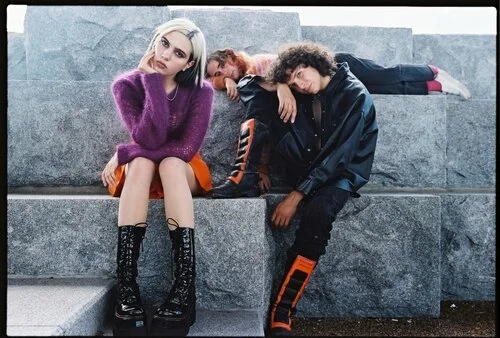
Sunflower Bean - Baby Don't Cry

dd.jpg

PHOTO CREDIT: Angelo Kritikos

Demi Lovato - Unforgettable (Tommy's Song)

fff.jpg

Sea Girls Again Again

ff.jpg

GRACEY Sad Song

ff.jpg

Charlotte OC Here Comes Another

fff.jpg

Maria Kelly nobody but me

dd.jpg

Snail MailBen Franklin

gg.jpg

PHOTO CREDIT: Zachary Chick

Foxes - Dance Magic

fff.jpg

PHOTO CREDIT: Culture City

The Deep BlueInside My Head

ff.jpg

PHOTO CREDIT: Isak Okkenhaug

AURORA - Giving in to the Love

ff.jpg

Rozi Plain - Silent Fan

ff.jpg

HARD FEELINGS - Sister Infinity

ff.jpg

Chelsea Cutler Forever

xx.jpg

PHOTO CREDIT: Hollywood

Sea PowerFolly

ff.jpg

Barrie Frankie

ff.jpg

PHOTO CREDIT: shotbynee

Deyah Genesis

ff.jpg

deep tan - tamu's yiffing refuge

ff.jpg

Dixie The Real Thing

ff.jpg

Karen HardingSweet Vibrations

dd.jpg

Lennon StellaFancy

ff.jpg

Gia LilySigns

ff.jpg

Allison Ponthier - Late Bloomer

ggg.jpg

SipprellMore Than We Are

ff.jpg

The Lottery Winners - Much Better

FEATURE: Spotlight: Maya Jane Coles

FEATURE:


Spotlight

fff.jpg

Maya Jane Coles

___________

I felt that…

ff.jpg

I needed to put Maya Jane Coles into Spotlight because her new album, Night Creature, is out on 28th October. One of House and Techno's most prized artists, it is going to be an incredible release. Before heading back and introducing you to Coles, CLASH reported news of her upcoming album recently:

A broad, ambitious work, the album makes room for some of Maya's most daring production moments yet, and vocal performances from Julia Stone, Lie Ning, Claudia Kane and Karin Park.

As for the title, Maya Jane Coles comments: “When it comes to my music making, I’ve pretty much always been a creature of the night. My creativity tends to work at its best during those peaceful hours when my surroundings are at a standstill and I feel completely in my own world. Then on the flip side, in the club, the night can shift into some of the most energetic and ecstatic moments in time.”

“For me, 'Night Creature' interweaves those moments, crossing over dark to light, melancholic to energetic, my favourite kind of music to make. The incredible guest vocalists totally elevate my music to a new level on this record and I’ve spent more time on it than any release I’ve ever worked on so I’m extremely excited to finally be able to share it with the world and hope that you all like it as much as I do! <3 Maya x”.

fff.jpg

There are a few interviews that I want to scatter in. Last year, beatportal provided a great introduction to Maya Jane Coles. She talked about her music, relationship with fans and rise.

Growing up in London, Maya was raised by parents she describes as “massive music heads,” and her formative years were soundtracked by an eclectic mix of dub, classical, punk, jazz, reggae, metal, blues and soul. She learned at least six instruments growing up — guitar, piano, saxophone, double bass, drums and cello. And when she started producing at around 15 years old, Maya would raid her parents’ vinyl collection, sampling old blues and jazz drums, which became the foundations of her initial forays into music making. It was a household devoid of any commercial or conventional pop music, and Maya’s “lack of knowledge when it comes to cheesy ‘80s music says it all really,” she says with a laugh.

Maya’s school years were spent immersed in ‘90s and ‘00s hip hop and R&B. In her early teens, shows by The Pharcyde, Jay Z and Jean Grae proved instrumental in her development, as well as Mary J. Blige and Alicia Keys. “And then the raving came,” she chuckles. Parties like DMZ and FWD>> showed her a world of dark, moody dubstep, and east London warehouse parties hosted by the likes of Secretsundaze first exposed her to house and techno. Maya now lives in Shoreditch, and that’s where we meet on a rainy January afternoon. As we talk about her introduction to electronic music, she’s quick to point out that she’s aware of the benefits of growing up in London, particularly as she was finding her feet. “You’re definitely spoiled here,” she says. “Places to go, different club nights, niche pockets and sub-genres, and a scene for everything. At that time, if you lived in a remote town somewhere, it was more difficult to access what was going on in the underground.”

Her home computer came installed with a demo of FruityLoops (known now as FL Studio). In her early teens, Maya would practice for hours on end, eventually learning to record her own loops, chopping them up and re-looping sounds over one another. Maya then began teaching herself Cubase on the computers at school, recording vocals with her friends for fun. As she turned 16, she knew she was going to pursue music. She switched to Logic around this time, and has used it ever since.

Finding the balance between the methodical workings of computer technology and a mind that thinks in colourful earworms and compositional layers, proved, at times, frustrating for Maya. “The technical side wasn’t as good as the musical ideas I was coming up with,” she says. Despite moments of frustration and clashes between composition and production, Maya found comfort in listening back to her work regularly, recognising how much her abilities were improving in a short space of time. “It gave me the confidence to keep at it,” she says. “I knew I was getting better and better.” The music she makes might be electronic and made with machines, but she approaches her music like a living, breathing, instrumental composition — not least in the way she uses her own voice.

Maya’s vocals are omnipresent in her music. Sometimes it’s a recognisable vocal line, but more often than not, her voice is heavily manipulated: filters, compresses, reverb, pitching up, pitching down. She uses it like a sample, and Logic is filled with saved vocal presets of her own. “I love making instrumental music,” she says, “but adding a hint of the human voice, that vocal element, takes the instrumental to another place, and gives it character.” Maya said last year that it should be the goal of a producer to create something utterly unique, something that cannot be replicated. She has achieved this in the way she uses her voice as an instrument. “It’s a signature thing for me that I’ve developed over time”, she explains. “You couldn’t replicate it, unless you managed to get ahold of an a capella on one of my tracks.”

She models herself after powerful, nonconformist women. Artists like Björk and Peaches, for their crazy performances, concepts, and for what they stand for; or Erykah Badu, for “being such a badass style icon.” For Maya, it’s not just the music, it’s the whole package — the videos, the art direction, the overall aesthetic, and most importantly, the mentality and ethos of the artist. Looking back, she wishes she’d had a female producer she could have looked up to as she was honing her craft. “I still can’t get my head around the fact that there were so few women producing records back then,” she says.

In a world that was dominated by men telling her what to do and how to do it, Maya Jane Coles has stayed true to herself. If she could go back to the beginning and give herself one piece of advice, it would be to believe in herself — to remind herself that the endless  graft and grind would be worth it. “It would have been good to have had somebody to tell me I should do it my way,” she admits. “I always felt as though I was fighting against what I was told.”

Difficult as that fight was, it ultimately led Maya where she is today. “I feel like the limits of my music are endless,” she says. “In my head I see it as this big galaxy that keeps going and going.” 

Through the highs and the lows, and the moments where she thought about giving up, Maya Jane Coles refused to conform. She’s done things her own way, shining bright, like a star in her vast musical galaxy”.

There are different sides to Maya Jane Coles. As Nocturnal Sunshine, she utilises and experiments with Hip-Hop productions. She has a huge love of the genre. In November 2019, Coles released her second Nocturnal Sunshine L.P., Full Circle. Billboard spoke to her about the album at the start of last year:

You've said that your first musical love is hip-hop. Give us your top three hip-hop albums.

Top three is difficult as that can totally change depending on my mood and depending on what kind style of hip-hop! But, right now I’d say Jean Grae, Attack of the Attacking Things, GZA & RZA, Liquid Swords and Mobb Deep's The Infamous.

How is your approach different when you're producing as Nocturnal Sunshine, if at all?

I don’t necessarily have a different approach when working under my alias, I tend to go at everything in the same way and things just come out differently when I’m in different mind states. Even if I wasn’t releasing music, I’d still be making it all the time as it’s my passion and I’m constantly making music that doesn’t even fit under any of my projects that I never end up releasing.

What do you consider the high points of your career so far?

There have been a lot of obvious milestones like being on big magazine covers, releasing albums, being in the charts, awards etc. But also lots of more personal milestones, like producing tracks for artists I used to listen to growing up as a kid, my music enabling me to buy my first home and build a studio space”.

I will bring things more up to date. Sticking with Nocturnal Sunshine, London in Stereo chatted with Maya Jane Coles in 2019 ahead of a big Sónar by Day set. It seems that having another guise allows the multi-talented producer and artist to broaden her horizon and create this flexibility:

Can you tell me about your formative experiences of music?

Hip hop was my first love for sure. Mainly US stuff. When I was a teenager I remember seeing  shows like The Pharcyde, Jean Grae and The Roots. I loved everything from old school hip hop, to the whole Memphis dirty south hip hop scene, and also all the amazing East Coast rappers — Nas, Mobb Deep, Wu Tang Clan. Then I also got into house, techno, some DnB and dubstep in my late teens. There were so many London raves I’d go to that exposed me to amazing electronic music.

Who do you think are your biggest influences musically?

Missy Elliott is one of my all time biggest inspirations. She was one of the first artists that taught me that you don’t have to play by the rules, always innovative and coming out with the freshest stuff. Timbaland’s productions were so futuristic. Supa Dupa Fly, Da Real World and Miss E… So Addictive are still classics to this day, and still sound like the future! I have a real appreciation for unconventional artists who just do their own thing and never try to conform.

You release all your music via your own label, can you talk about that release process a bit?

I’m very particular about what I release. I don’t want an A&R telling me what I should and shouldn’t put out. I want that control for myself. I started my label I/AM/ME as a platform to release all of my own projects and to have control over my own release schedules. It’s nice to be able to release what I want, when I want, and not have to answer to anybody or live up to someone else’s timelines.

What has been the most challenging aspect of your career to date?

I’d say the early years trying to make my career happen were the most difficult. It’s hard to try to not settle for a plan B. Plan A was the only way. From age 16 I knew what I wanted to do. But it wasn’t easy, and it definitely took a lot more work than people will ever know. From the outside it can easily look like things happen from out of nowhere when that really isn’t the case. Aside from that, the first few years where I toured relentlessly were hard. When it’s all new you have to take every gig that comes your way, and it’s not easy finding a balance. There are so many people you feel like you need to please. I feel like I have it great now though. I’m so happy with the current balance I’ve found between touring, studio time and my personal life. Things are pretty good!”.

I am going to finish with an interview GRAMMY conducted in April this year. They spoke with her following her Women's History Month Beatport residency the previous month:

Maya Jane Coles is an unstoppable creative force. If being an in-demand producer and globally headlining DJ wasn't impressive enough, she is able to translate her artistry across genres and mediums with ease and undeniable skill. As Maya Jane Coles, she delivers deep, moody, pulsing house tunes. As CAYAM, she brings unrelenting techno bangers. As Nocturnal Sunshine, she channels her long-time love of hip-hop and her hometown (London) grime scene with dirty, bass-pumped collabs.

The 33-year-old Japanese-British wunderkind also has an eye for visual art, and has designed many of her album covers with trippy illustrations. While her name(s) and music are almost universally known in the global house and techno community, her beats have made a massive impact in mainstream pop.

In celebration of her epic Women's History Month Beatport residency last month, GRAMMY.com caught up with Coles to learn more about the stellar lineup she curated for it, what new music she's been cooking up, her teenage hip-hop roots and much more.

How did you approach curating the Beatport Women's History Month residency?

I actually wasn't aware that the entire residency was going to be aired during Women's History Month when I was curating the lineups, so I didn't focus only on women except for the very last stream. My initial focus was to keep things as diverse as possible.

Each week was curated under a different alias of mine, which I hadn't done before, so I found it was a cool opportunity to give listeners a better understanding of what each project is about musically. MJC, CAYAM and Nocturnal Sunshine all represent such different sides of me as an artist. It's rare for me to DJ under my aliases, so I thought it would be fun to give everyone a taste of something a bit different.

Can you tell us a bit more about the artists you chose for the "Rising Stars" livestream?

For the "Rising Stars" stream, I was purely focusing specifically on East London-based talent—all incredible DJs (and also incredible people) that I had met in East London throughout various points in the last few years. It's always nice being able to include friends when possible, especially when I have so many talented people around me.

As for your DJ sets during the residency, what sort of energy and music did you strive to bring to those?

Honestly, I personally find DJ streams quite difficult to enjoy as it takes away the most important part of DJing for me, which is the connection with the audience and reading the crowd. Spontaneity is what makes a DJ set exciting, not knowing what's coming next or how you're going to feel during a set. This is why in the last year I kept it quite minimal and only chose to do a handful of sets, the Beatport Residency being a chunk of them.

I also stayed away from any huge production/green screen stuff, and just focused on the music. That's always the important part for me. As long as it sounds amazing, that's all that matters. Most of my time goes into digging, editing, remixing the tracks I'm going to play rather than prepping for how it's going to look.

You recently dropped the hard-hitting "Pull Up" and "Ridin' Solo" with Gangsta Boo under your Nocturnal Sunshine alias. What was it like working with her and how did ya'll approach those tracks?

I actually just hit up Lola (Gangsta Boo) on Insta, as I had been thinking about getting her on a track for a while. She got back to me right away and we started talking about the collab.

"Ridin' Solo" came first—we did everything remotely, London to L.A. I think the track ended up getting done in the space of couple days which was pretty incredible considering the time difference with the back and forth. I loved the outcome so much we ended up working on a second track, "Pull Up," which afterwards my label team ended up helping get Young M.A. to also feature on.

I still have Gangsta Boo's [1998] album Enquiring Minds, which I bought when I was 16, plus loads of old Three 6 Mafia which Gangsta Boo was a part of] stuff from back then, so it was a pretty special moment having her guest on my Nocturnal Sunshine stuff. I've got more hip-hop and also U.K. grime stuff coming under the alias soon.

And then last year, as CAYAM, you gave us the club-ready Pleasure EP to rave to at home. What was the inspiration for that release?

I was really starting to miss releasing tracks like my earlier club stuff. The MJC album stuff that I've released over the last few years has evolved a lot and I've developed so much as an artist on the compositional side, but I was also missing releasing the more instrumental club-based stuff like I did back in 2007 to 2011.

The CAYAM alias was something I started anonymously in 2014 but then didn't really continue with it. Last year, I thought why not pick it up again to put out some of the unreleased club tracks that I had lying around, plus use it as an outlet for the faster paced techno stuff that I had been making. I guess the focus for the Pleasure EP was picking back up the sound from my very early releases but with more of a current edge”.

I will end there. With a new album, Night Creature, out later this month, now is a perfect time to follow the incredible Maya Jane Coles. She is one of the hardest-working artists and producers around. If you are not aware of the tremendous Coles, then make sure that you rectify that now. She is one of this country’s…

FINEST talents.

________________

Follow Maya Jane Coles

ddd.jpg

FEATURE: The Kate Bush Interview Archive: Roger Scott: BBC Radio 1 (1989)

FEATURE:


The Kate Bush Interview Archive

eer.jpg

IN THIS PHOTO: Kate Bush in 1989/PHOTO CREDIT: Guido Harari  

Roger Scott: BBC Radio 1 (1989)

___________

BECAUSE The Sensual World

dd.jpg

turns thirty-two on Saturday (16th October), this part of the interview archive series takes us back to 1989. Gaffaweb have transcribed a BBC Radio 1 interview in promotion of The Sensual World. They transcribed most of the interview (they missed the start) but, as they say, it appears like Kate Bush enjoyed the chat. Roger Scott sounded like he was bonding with her. There are some segments from the chat that I want to bring in:

RS: This song, _The_Fog_ on here, featuring your father as himself...

KT: <laughs> ...My first feature film. <laughs>

RS: A family affair, this album. Tell me about that song. I haven't quite go the hang of it, it's something to do with childhood, it's something to do with childhood memories and growing up and having to stand on your own two feet. I think so anyway, but can you tell me what you were thinking?

KT: Yes, well that's jolly good.

RS: Totally wrong, but...

KT: No, it's not. Again, it's quite a complex song, where it's very watery. It's meant to be the idea of a big expanse of water, and being in a relationship now and flashing back to being a child being taught how to swim, and using these two situations as the idea of learning to let go. When I was a child, my father used to take me out into the water, and he'd hold me by my hands and then let go and say "OK, now come on, you swim to me." As he'd say this, he'd be walking backwards so the gap would be getting bigger and bigger, and then I'd go <splutters>. I thought that was such an interesting situation where you're scared because you think you're going to drown, but you know you won't because your father won't let you drown, and the same for him, he's kind of letting go, he's letting the child be alone in this situation. Everyone's learning and hopefully growing and the idea that the relationship is to be in this again, back there swimming and being taught to swim, but not by your father but by your partner, and the idea that it's OK because you are grown up now so you don't have to be frightened, because all you have to do is put your feet down and the bottom's there, the water isn't so deep that you'll drown. You put your feet down, you can stand up and it's only waist height. Look! What's the problem, what are you worried about?

RS: Kate Bush and The Fog from The Sensual World . I got to stick this question in at some point, because everyone's saying "When is he going to ask her?" I ask you this every time and it's, "Are you going to tour this?" --- are you going to take it out on the road and 'do it'?

KT: It's a very good question... <pause -- laughs>. Umm... <pause>... I really enjoyed touring and this is so ironic. Everyone presumed I hated touring and this is why we haven't since. I wanted to spend time being a songwriter and writing songs, not re-creating songs that were already written, in front of an audience. They're two very different experiences. Touring is very much about contact. Real contact with an audience; with people. It's really having a good time, and it's also quite exhausting. It's a big commitment and exhausting.

Now, music is completely different. It's very microscopic --- that thing of taking lots of little bits of time and putting them together: it's just not running in real time. It's very introverted and it is the actual process of creation from scratch, and that meant so much more to me over the last few years than that contact. And I think I've learnt a tremendous amount by being in the studio for such intense periods doing this. Not only have I learnt a lot about the process of writing and and working with music but I've learnt a lot about myself, I think. But I do miss the human contact of touring and it really scares me --- the idea of performing live --- because I haven't done it for so long and the odd times I have, I felt very uncomfortable.

I'd really like to tour again but I'm terrified of committing myself at this point, but I guess this is one of the first points for a long time I'm actually starting to think "...it could be fun!". So the answer, in a short way...

gg.jpg

IN THIS PHOTO: Kate Bush in 1989/PHOTO CREDIT: Guido Harari 

RS: ...is "maybe"

KT: ...is "I dunno"! <laughs>

RS: Only do it if it's going to be fun.

KT: Yes.

RS: Don't do it if it's going to be a nightmare.

KT: Yes, and I think another reason why I haven't is I haven't been sure about that. You're absolutely right.

RS: I must ask you this --- you must know what this one's about. It's called "Heads We're Dancing" and... I read the lyrics here --- well, no, I'm not going to read them out but you just tell me what gave you the idea for this song.

KT: This is the darkest song on the album and I think, in some ways, it's not a song I would write now. But I had a friend who went to this dinner, years ago. He was sitting next to this guy all evening and they were chatting --- they had some of the most incredible conversations: he was so impressed with this guy. He was so intellectual and charming; so well-read, you know. He just thought this guy was perfect --- the chemistry between them... wonderful! They talked all night. And the next day, he went up to his friend who had arranged the evening and he said, "Who was that guy I was sitting next to last night? He was fascinating!" And the guy said to him, "Oh, didn't you know? That was Oppenheimer!" And my friend's reaction was absolute horror, because he had no idea.

RS: Just to conclude, you said earlier that the making of this album and the years of work that have gone into this, that one thing that came out of it, you did learn a lot about yourself. What sort of things have you learnt about yourself over the past three or four years?

KT: Um, well that's a very "up front" question there, Roger! And I suppose, I don't think I would have said after the last album "this is just an album". That's a very important thing for me to have learnt: I am very obsessive about my work. I spend most of my time working, and I think this is something that I've really looked at in the last few years: there's a lot more to life than just working and just making an album. It is just an album, it's just a part of my life. It's not my Life. And I think it was, you know... making albums was my life and it doesn't feel like that is any more. And that's tremendous, the sense of freedom that that gives me. It's so good and I think it's really healthy and much better for me, to try and put these things into perspective, you know.

RS: Right. Let us conclude with Deeper Understanding here... just fill me in on that one.

KT: This is about people... well, about the modern situation, where more and more people are having less contact with human beings. We spend all day with machines; all night with machines. You know, all day, you're on the phone, all night you're watching telly. Press a button, this happens. You can get your shopping from the Ceefax! It's like this long chain of machines that actually stop you going out into the world. It's like more and more humans are becoming isolated and contained in their homes. And this is the idea of someone who spends all their time with their computer and, like a lot of people, they spend an obsessive amount of time with their computer. People really build up heavy relationships with their computers!”.

As we mark thirty-two years of The Sensual World, I have been interested by some of the interviews Kate Bush took part in through 1989. It must have been quite an intense promotional cycle. By 1989, she was one of the most popular artists in the world. Although some interviews trod familiar lines regarding questions, her experience on BBC Radio 1 seemed to be quite refreshing and pleasant. The Sensual World remains one of Kate Bush’s greatest albums. It is one I appreciate more every time I listen to it. Like many releases from Kate Bush, The Sensual World is…

A remarkable album.

FEATURE: Talking About a Revolution: The iPod at Twenty

FEATURE:


Talking About a Revolution

fff.jpg

The iPod at Twenty

___________

WHEN it comes to anniversaries…

dd.jpg

I normally focus on albums. There is an important music device that turns twenty this month. On 23rd October, 2001, the first iPod was introduced. I have discussed the history of the iPod before. I will go on to explain why it was so important for me and so many other people in 2001. Twenty years ago, our music listening capabilities were to be transformed. This article talks about the background of the iPod and the launch of he first model:

The Creation of the iPod

In the decade before the iPod, Apple had seen the failure of the Newton, a bet on portable computing.

The product took years of development and was delayed several times. When it was finally released, its software (especially its handwriting recognition) was error-prone and given lukewarm reviews.

When Steve Jobs returned to Apple as interim CEO, one of his first major decisions was to end development of the Newton.

Yet, just two years after Apple exited PDAs, a new opportunity emerged. In the late 1990s digital music exploded. MP3s fueled this rise as they significantly reduced the file size of music. Rather than a 4 GB hard drive being able to store 6 albums at their file size from compact discs, it could now house 1,000 MP3s.

At the time — thanks to software like Napster — piracy was rampant. In addition, most MP3 players were bulky, expensive, had poor users interfaces (UIs), and non-intuitive software.

dddddddddddddddddddddddd.jpg

Tony Fadell, a former executive at Phillips, was trying to create a software that would (legally) sell music and integrate with an MP3 player. He pitched the service to companies like Real Networks, which in late 1999 had soared to a market capitalization of more than $10 billion as investors bet on the growth of digital music.

After repeated rejections, Fadell was surprised to find Apple was very interested in his concept. He was hired in early 2001 by Jon Rubenstein (who also deserves immense credit for the creation of the iPod) and given a team of 30 employees to develop a portable music player.

Fadell’s big break came when he approached a company named PortalPlayer, which had reference designs for an advanced MP3 players and music software that was largely complete. PortalPlayer began working exclusively with Apple.

The First iPod is Released

Ben Knauss, who was senior manager at PortalPlayer, described the company’s reference designs as “80% complete” when the company began working with Apple.

With a short schedule until a planned release in late 2001, Fadell and his team at Apple began refining PortalPlayer’s hardware and software. Gone were the typical excess of buttons littered MP3 players in the era, and in their place was a scroll wheel that became the defining feature of the iPod.

After an initial prototypes were completed, Steve Jobs became increasingly interested in the project. Knauss described him as spending “100% of [his] time” on the project with daily software and design feedback.

Another major breakthrough came when Jobs went to Japan to give the keynote speech at the Tokyo Macworld conference. Apple employee Jon Rubenstein was meeting with Toshiba who told him they had a new hard drive that was the size of a silver dollar and could hold five gigabytes (~1,000 songs) of data.

This product solved one of the most difficult technological challenges to building an MP3 player and Jobs authorized Apple to sign up as the exclusive buyer of these new hard drives.

In total, it took Apple only about 8 months from the hiring of Tony Fadell to lead the iPod project to Steve Jobs revealing the product on October 23, 2001”.


It was hugely exciting when the first version was introduced. Although it would take until November 2001 until it could be bought, hearing about the iPod was life-changing. At that point, the Sony Discman was very much the go-to device. It was good, as one could buy a C.D. that day and listen to it on the Discman. That was a huge thing back then! I liked owning physical music and being able to move around and hear my favourite albums. It was a slight pain when C.D.s used to skip and there was that lack of reliability with the Discman. The Sony Walkman seemed sturdier and more reliable in that sense! Not only did the iPod offer a way of listening to a library of songs without carrying armfuls of C.D.s. There were cool functions and a great design that, whilst quaint and a little clunky today, was a massive step up from what we had with the Discman. I think the Discman has play, pause, stop; volume control and not much else. The iPod was definitely a technological step up. This Lifewire article outlines what we got with the original iPod:

Introduced: Oct. 2001

Released: Nov. 2001​

Discontinued: July 2002

The 1st generation iPod can be identified by its scroll wheel, surrounded by four buttons (clockwise from the top: menu, forward, play/pause, backward), and its center button for selecting items. When it was introduced, the iPod was a Mac-only product. It required Mac OS 9 or Mac OS X 10.1.

While it was not the first MP3 player, the original iPod was both smaller and easier to use than many of its competitors. As a result, it quickly attracted accolades and strong sales. The iTunes Store wasn't introduced until 2003, so users had to add music to their iPods from CDs or other online sources.

djkdjkd.jpg

 At the time of its introduction, Apple wasn't the powerhouse company it later became. The initial success of the iPod, and its successor products, were major factors in the company's explosive growth.

Capacity

5 GB (about 1,000 songs)

10 GB (about 2,000 songs) - released in March 2002

Mechanical hard drive used for storage”.

I do feel the iPod, though short-lived in its original state, was a breakthrough. The fact that new versions came out and it was being improved on meant that there was demand. Maybe not the biggest technology leap, it did foreshadow streaming in some ways. That ability to possess so many songs and do so without any physical music signalled a way forward. By copying and storing digital/Internet music rather than playing something physical. Whilst not the first MP3 player, it was a geme-changer for sure.


Streaming may be more dominant and used than devices like the iPod. One cannot argue against its importance. In 2008, WIRED wrote how the iPod remained impressive – some seven years after its release:

Mainly, the iPod allowed Apple to blow up the industry's CD-based business model, by making the downloading of singles both cheap and easy. Among other things, there was grumbling from music execs over the fact that people were able to rip their previously purchased CDs into their iTunes libraries without having to pay extra for the privilege.

As a result of this and the general advance of technology, the music industry is in the painful process of reinventing itself. Whatever emerges, iTunes, now easily the world's biggest music retailer, will have to be part of the equation.

Sales of the iPod peaked in early 2008, with more than 20 million of them clearing the shelves during Apple's first quarter. Not coincidentally, it was the most profitable quarter in company history.

Today, in all its variations, the iPod commands both the U.S. and foreign MP3 markets. It accounts for roughly three of every four digital music players sold in the United States”.

Ahead of its twentieth anniversary, I wanted to do some research and get an idea of how people view it and what role it played regarding music technology and the move away from physical music. Now, we have issues with streaming and how much artists are paid. In 2001, we were not aware of the conversations we would be having twenty years later. The iPod completely changed things for me and made me love music even more. I became a much more broad-minded listener. There was that social aspect where we would all look at what was on our friends’ iPods. Even though I could not afford one straight away, owning that first iPod was a transformative moment! It did change and update through the years and, to be fair, people don’t really own iPods. There is no denying, when Steve Jobs stood on a stage and announced the launch of the iPod on 23rd October, 2001, it was…


SUCH an important day.

FEATURE: The Lockdown Playlist: The SAY (Scottish Album of the Year) Award Shortlist

FEATURE:


The Lockdown Playlist

ff.jpg

IN THIS PHOTO: Lizzie Reid is shortlisted for The SAY (Scottish Album of the Year) Award for Cubicle

The SAY (Scottish Album of the Year) Award Shortlist

___________

ON 7th October…

ee.jpg

 IN THIS PHOTO: Arab Strap/PHOTO CREDIT: Kat Gollock

the ten shortlisted albums for 2021’s The SAY (Scottish Album of the Year) Award were announced. The longlist was announced recently. If you are unaware of the award ceremony, their official website offers more information:

20 outstanding Scottish albums have been announced as The SAY Award Longlist for 2021; whittled down from 327 Eligible Albums by 100 impartial music industry Nominators.

Each record is now in the running for the £20,000 prize, as well as the coveted title of Scottish Album of the Year. The winner will be announced on Saturday 23 October at a Ceremony taking place at Edinburgh’s Usher Hall.

For the first time in the award’s history, and part of its 10th year celebrations, music fans are able to purchase tickets to attend the event; one of the most highly anticipated and exciting nights in Scotland’s musical calendar”.

The shortlisted albums are AiiTee – Love Don’t Fall, Arab Strap – As Days Get Dark, Biffy Clyro – A Celebration of Endings, Joesef – Does It Make You Feel Good?, Lizzie Reid – Cubicle, Mogwai – As the Love Continues, Rachel Newton – To the Awe, Stanley Odd – STAY ODD, The Ninth Wave – Happy Days, and The Snuts – W.L. To celebrate ten diverse and exceptional Scottish albums, this Lockdown Playlist picks two songs from each. It showcases the sheer quality and breadth of talent that is coming out of Scotland. Most attention, still, goes to London when it comes to music. We need to shift focus to areas like Scotland the North-East of England. As you can hear from the shortlisted acts for The SAY (Scottish Album of the Year) Award albums, the best of Scotland are…

ddd.jpg

 LEADING the way.

FEATURE: Gimme! Gimme! Gimme! The Pull and Brilliance of Madonna’s Hung Up

FEATURE:


Gimme! Gimme! Gimme!

sss.jpg

IN THIS PHOTO: Madonna in 2005 

The Pull and Brilliance of Madonna’s Hung Up

___________

BECAUSE ABBA released a couple…

oopok.jpg

of new songs recently and have been very much in the news, I wanted to bring them into this feature about Madonna. On 17th October, it will be sixteen years since she released the first single from her Confessions on a Dance Floor album, Hung Up. It is one of her finest songs. After the slight disappointment of her 2003 album, American Life – the first where reviews where not largely positive -, Hung Up announced a revival and re-assertion that the Queen of Pop had lost none of her step! American Life was a more political album where, on the cover, Madonna assumed the look of a guerrilla fighter or world leader. I really like the album - though many were negative towards it or felt that it was a misstep. Confessions on a Dance Floor mixed Dance-Pop and Disco. It was sort of like Madonna returning to her 1983 eponymous album – but her 2005 album was glossier, punchier and more diverse than her debut (though I think Madonna is a stronger album overall). I love all of Madonna’s various guises, personas, incarnations and evolutions. On Confessions on a Dance Floor, she delivered one of her finest album. Hung Up is a fabulous single, in no small part because of the ABBA sample used. A single that announced a complete departure from American Life, Hung Up prominently features a sample from the instrumental introduction to ABBA's single Gimme! Gimme! Gimme! (A Man After Midnight).

Madonna personally sought (or begged, as some sources say) permission from the songwriters, Benny Andersson and Björn Ulvaeus. This was only the second time Andersson and Ulvaeus have given permission to sample one of their songs (following the Fugees song, Rumble in the Jungle, for the soundtrack of the film, When We Were Kings). Ahead of its sixteenth anniversary, I wanted to spend a bit of time with Hung Up. It is not just the ABBA sample that sends it over the top. Whilst the lyrics are quite simple and are about desire/being hung up on someone, the mesh of sounds and Madonna’s incredible vocal is much more interesting. Madonna imagined the song to be a cross between the music played at Danceteria - the New York City night club she frequented in her early days - and the music of ABBA. It is no surprise that Hung Up is regarded as one of Madonna’s best songs! This is what critics made of the first single released from Confessions on a Dance Floor:

Hung Up" received critical acclaim. Keith Caulfield from Billboard, while reviewing Confessions on a Dance Floor, called the song "a fluffier cut". Chris Tucker from Billboard explained that "Madonna returns with a song that will restore faith among her minions, fans of pop music and radio programmers". Jon Pareles of The New York Times said that Madonna kept her pop touch in "Hung Up" and called it a love song which is both happy as well as sad. Alan Light from Rolling Stone called the song candy coated. David Browne from Entertainment Weekly was impressed by the song and said "'Hung Up' shows how effortlessly she [Madonna] can tap into her petulant inner teen".

Sal Cinquemani of Slant Magazine compared the song to the remix of Gwen Stefani's 2004 single "What You Waiting For?". Ed Gonzalez from the same magazine called the song the biggest hit of her career. Margaret Moser from The Austin Chronicle said that the song strobes and pulses along with another album track "Forbidden Love". Peter Robinson from The Observer commented that "Hung Up" is Madonna's "most wonderfully commercial single since the mid Eighties". Alexis Petridis from The Guardian called the track a "joyous...single that could theoretically have been more camp, but only with the addition of Liza Minnelli on backing vocals and lyrics about Larry Grayson's friend Everard."

Ben Williams from New York magazine described the song as sounding both throbbing as well as wistful. Christian John Wikane from PopMatters called the song a propulsive track. Alan Braidwood of BBC Music noted of the track: "full-on dance, dark, disco, fun, big" and compared it to other Madonna songs like "Vogue", "Deeper and Deeper" and "Ray of Light". Tom Bishop from BBC Music commented that Madonna has either reinvigorated her career or she is "merely throwing one final dance party for her long-term fans before settling down to record more sedate material". Jason Shawhan from About.com commented that the song has "way too much Abba in it for its own good." He went on to elaborate that "[t]he only reason I can think of for this to be chosen as the first single was the Motorola ad campaign. It's not a bad song by far, it has pep and a sense of fun, but it's not even close to being one of the best songs on the record". Bill Lamb of About.com said that the ABBA sample sounded completely effortless like much of Madonna's best dance music.

He further elaborated that what "'Hung Up' amounts to is a big gushy love note to Madonna's core fans, those club kids who pack the floor every time they hear the pounding beats of a Madonna classic and the dj's who can't get enough of spinning her records. 'Hung Up' will send those fans into ecstasy, and it sounds good on the radio, too". Thomas Inskeep of Stylus Magazine declared that "Hung Up" and the next single "Sorry" might not have the same sleaze as Madonna's older songs like "Physical Attraction" or "Burning Up", but have the same modus operandi of being designed for "sweaty up-all-night dancing". Rob Harvilla from The Village Voice called the song a triumphant jazz exercise”.

Now that ABBA are back in the spotlight and have a new album coming next month, I wonder whether Madonna, on her next album, will once more channel the Swedish icons. Her last album, 2019’s Madame X, combined Trap, Latin and other genres. It is a harder-edged album compared to Confessions on a Dance Floor. I think that a return to the sound of Hung Up would be welcomed by fans. Everyone has their own opinions regarding the best Madonna songs. Few can argue about including Hung Up in the top twenty. It is such a powerful track that beautifully combines that ABBA sample together with one of Madonna’s best performances. Sixteen years after its release, it remains essential, hypnotic and…

OVERFLOWING with life and energy!

FEATURE: The Genius Paul Simon at Eighty: His Fifty Greatest Tracks

FEATURE:


The Genius Paul Simon at Eighty

PHOTO CREDIT: Frank Ockenfels

His Fifty Greatest Tracks

___________

THOUGH many other people…

 IN THIS PHOTO: Simon & Garfunkel/PHOTO CREDIT: Michael Ochs Archives/Getty Images

know that Paul Simon turns eighty tomorrow (13th October), the penny has only just dropped today with me! I wanted to assemble a playlist of fifty key Simon songs (his work as part of Simon & Garfunkel and his solo work). I am going to end with a salute to the genius that is Paul Simon soon. Before then – trying not to repeat myself and bring in information I have done previously -, here is some biography about the great man:

Paul Simon is one of the most successful and respected songwriters of the rock era. Being half of the legendary pop duo Simon & Garfunkel would be enough for most people, but Simon reaped just as much acclaim as a solo artist. In the 1970s, he was at the vanguard of the singer/songwriter movement, marrying smart, reflective lyrics with sophisticated pop music. His 1975 solo album Still Crazy After All These Years topped the charts, won the Grammy for Album of the Year, and included the number one hit "50 Ways to Leave Your Lover." In the '80s, he was one of the first pop artists to successfully combine world music into his sound, resulting in the South African flavor of the landmark Graceland, another Album of the Year Grammy winner.

Paul Frederic Simon was born in Newark, New Jersey on October 13, 1941. His father, Louis Simon, was an educator who also led a small jazz combo, while his mother, Belle Simon, taught English; when Paul was a few months old, they moved from Newark to Queens, New York. Paul grew up with a passion for baseball and music, particularly jazz and folk, and as he entered his teens, he developed a taste for the doo wop and R&B sounds that were a staple of Alan Freed's radio broadcasts, as well as first-generation rockabillies such as Elvis Presley, Jerry Lee Lewis, and Carl Perkins.

When Simon was 11 years old, he met Art Garfunkel, and the two became fast friends who discovered they shared an interest in music. Paul and Art formed a harmony duo in the style of their heroes the Everly Brothers, and made their stage debut at a junior-high talent show. By the time they were enrolled at Forest Hills High School, the two were calling themselves Tom & Jerry (Art was Tom Graph, Paul was Jerry Landis), and they filled their spare time playing teen dances and parties. In 1955, the two wrote a song together, "The Girl for Me," which Simon registered for copyright with the Library of Congress. In 1957, Tom & Jerry were cutting a demo acetate of Simon's song "Hey Schoolgirl" when the president of a small record company (ironically named Big Records) happened by the studio. The label head liked what he heard, and "Hey Schoolgirl" b/w "Dancin' Wild" was released in the fall of 1957. The record rose to number 52 on the Billboard pop singles charts, and scored Tom & Jerry an appearance on American Bandstand, but while they would cut a number of follow-up releases, "Hey Schoolgirl" was destined to be Tom & Jerry's only hit.

By March 1958, Simon was already looking toward a solo career, cutting a single, "True or False" b/w "Teen Age Fool," under the name True Taylor. Jerry Landis also landed his own record deal, releasing his debut single, "Anna Belle" b/w "Loneliness," in 1959, while Simon also worked with a studio group called the Cosines, who specialized in cutting demos for songwriters. (Another member of the combo was Carole Klein, who would soon enjoy a successful career of her own as Carole King.) By the end of the decade, Paul and Art were both enrolled in college, and Tom & Jerry took a back seat to academics, though Simon would record occasional sessions and wrote songs for others. In 1961, Simon teamed up with a handful of vocalists to form a group called Tico & the Triumphs; the group cut a single, "Motorcycle" b/w "I Don't Believe Them," which barely broke into the Billboard singles charts, making number 99 for one week, but received extensive airplay in Baltimore and became a local hit in the Charm City. "Motorcycle" was released by Amy Records, which soon turned to Simon to write and produce material for several of their artists, including Ritchie Cordell, the Fashions, Dottie Daniels, and Jay Walker & the Pedestrians. Simon also found time to cut another Jerry Landis single, and "The Lone Teen Ranger" spent three weeks on the Billboard charts in early 1963, peaking at number 97.

In the early '60s, the folk revival swept New York City, and a new breed of singers and songwriters introduced a new approach to the craft of creating tunes. Simon, who had been studying English literature, was influenced and encouraged by the new breed of folkies, and in 1963 he re-teamed with Art Garfunkel, this time using their real names and performing the more topical songs Simon was writing. Simon & Garfunkel started playing Greenwich Village folk clubs, and they scored a deal with Columbia Records, releasing their first album, Wednesday Morning, 3 AM, in the fall of 1964. The album was initially a flop, and Simon headed to England, where he made the rounds of folk clubs, recorded some BBC sessions, and even cut a solo album, The Paul Simon Songbook, which was released only in the U.K. Simon also co-wrote a few pop tunes with Bruce Woodley of the Seekers, one of which, "Red Rubber Ball," would become a big hit for the Cyrkle. In late 1965, Tom Wilson, who produced the Wednesday Morning, 3 AM album, learned that one of the songs from the LP, "The Sound of Silence," was getting scattered radio airplay, and he struck upon the idea of dubbing a rock & roll rhythm section over the acoustic track and issuing it as a single. The strategy worked: the new version of "The Sound of Silence" was a big hit, and Simon & Garfunkel quickly re-formed, cutting the album Sounds of Silence, which was released in 1966 and spawned the singles "I Am a Rock" and "Kathy's Song."

 Simon & Garfunkel would enjoy impressive success over the next several years, and were one of the few acts from the early-'60s folk revival that would enjoy success with acoustic-based music during the psychedelic era, thanks in large part to Simon's songwriting. But while 1970's Bridge Over Troubled Water was a massive commercial and critical success (and a superb reflection of the end-of-the-decade Zeitgeist of the day), long-simmering creative differences between Simon and Garfunkel came to a head while making the album, and a hiatus from collaborating became a proper breakup when Simon released his self-titled solo album in 1972. Paul Simon featured two hit singles, "Mother and Child Reunion" and "Me and Julio Down by the Schoolyard," and found Simon experimenting with reggae and Latin music, as well as polished soft rock.

Released in 1973, There Goes Rhymin' Simon was a more ambitious follow-up, sounding largely optimistic and dipping its toes into gospel and New Orleans jazz as well as R&B-based rock and pop. In 1975, Simon released Still Crazy After All These Years, an album informed by his divorce from his first wife, Peggy Harper. Still Crazy included the song "My Little Town," which reunited Simon with Art Garfunkel for the first time since Bridge Over Troubled Water. Simon's next project proved to have a long gestation period; he wrote a screenplay about a musician struggling to save his marriage and his career, and penned a set of songs to accompany it. Simon also starred in the subsequent film, and while One Trick Pony wasn't his first bit of film acting (he played a small but memorable role in Woody Allen's Annie Hall), he didn't fare well alongside a cast of seasoned professionals when the movie debuted in 1980. One Trick Pony's soundtrack album (his first album for Warner Bros. after a long working relationship with Columbia) spawned the hit single "Late in the Evening," but otherwise proved to be a disappointment in terms of sales.

In September 1981, Simon & Garfunkel played a massive reunion concert in New York's Central Park, which led to a brief reunion tour. The Central Park show was released as a live album that was a major commercial success, and the duo made plans to record a new album. But Simon and Garfunkel found themselves at odds in the studio, and Simon's next album, 1983's Hearts and Bones, featured no contributions from Garfunkel. The album sold poorly, and by Simon's own admission he was running short on inspiration when he heard an album of "township jive" by the South African group the Boyoyo Boys. Fascinated by the eclectic blend of creative elements, Simon began creating an album inspired by South African pop, recorded primarily in Johannesburg with a band of South African musicians. The result was 1986's Graceland, which became an unexpected smash hit, spawning several hit singles, introducing an international audience to South African rhythms, and prompting a renewed dialogue about the nation's repressive apartheid regime. (The album also generated a certain amount of controversy, as some believed the recording sessions violated a United Nations-led cultural boycott against South Africa; also, several members of the group Los Lobos, who appeared on the album, claimed Simon lifted their melody for the tune "All Around the World, or the Myth of Fingerprints" without giving them songwriting credit.) Simon turned to Brazilian music for inspiration on his next album, 1990's The Rhythm of the Saints, which also incorporated a number of the South African players who contributed to Graceland. If not as successful as Graceland, The Rhythm of the Saints still fared quite well with fans and critics, and the two albums reestablished Simon as a vital contemporary artist.

After releasing a live album from the tour in support of The Rhythm of the Saints, Simon retreated to work on another unusual project, a Broadway musical called The Capeman, which was based on the true story of Salvador Agron, a Latino gang member and convicted murderer turned poet and activist. Simon wrote the book for The Capeman in collaboration with Derek Walcott, and composed a set of new songs for the show. However, the production proved difficult and the play, which opened in 1998, received poor reviews and closed after just 68 performances due to slow ticket sales. (A revised version of the show was staged in 2010, and received significantly better notices.) An album of Simon's interpretations of the show's songs was issued, but was only a modest success; the original cast recording received a belated digital release in 2006.

Stung by the disappointing response to The Capeman, Simon returned to the studio in 2000 to record You're the One, an album that suggested a compromise between the African and Latin sounds he'd embraced and the more intimate approach of his early work. Two years later, Simon once again reunited with Art Garfunkel for a concert tour, and a live album, Old Friends: Live on Stage, was released in 2004. Simon returned in 2006 with Surprise, which found him working with an unlikely producer, Brian Eno. Released in 2011, So Beautiful or So What captured Simon returning to a more organic songwriting style than he'd employed since Graceland, though the tenor of the lyrics confirmed he was still keenly aware of the sounds and ideas of the present day. The album was also his first release for Hear Music; the same label released 2012's Live in New York City, taken from a special intimate hometown concert from the tour in support of So Beautiful. Simon returned in the summer of 2016 with Stranger to Stranger, an album co-produced by his longtime collaborator Roy Halee and released on Concord Records.

Simon embarked on a farewell tour in 2018, toward the end of which he released In the Blue Light, a collection of reinterpretations of songs he felt were overlooked when he'd written them”.

To mark the eightieth birthday of one of the finest songwriters the world will ever see, below are fifty tracks (not in chronological order; a few are co-writes) demonstrating Paul Simon’s songwritring brilliance, consistency and variety. The world will never see an artist like Paul Simon…

EVERY again.

FEATURE: Vinyl Corner: Neko Case - Middle Cyclone

FEATURE:


Vinyl Corner

kkjk.jpg

Neko Case - Middle Cyclone

___________

HAVING recently listened to…

iudue.jpg

her fifth studio album, Hell-On (2018), I have been looking back at other albums from Neko Case. I started to listen to 2009’s Middle Cyclone and was really blown away by it! A superb album from the Alternative Country singer-songwriter, it was her first album in three years. I love all of Case’s various projects – including case/lang viers and The New Pornographers. I feel her solo work is equally strong and potent. Middle Cyclone, as the title suggests, features images of tornadoes and nature. One of the best things about the album is the guess that feature on it. Including M. Ward, Garth Hudson, Sarah Harmer, members of The New Pornographers, Los Lobos, Calexico, The Sadies, Visqueen, Kurt Heasley of Lilys, and Giant Sand, it is an album that includes so many great musicians, singers and contributors. A sensational album that people should get on vinyl, do make sure that you check out Neko Case’s Middle Cyclone. Case’s gorgeous and hugely rich voice scores songs of heartache and beauty. There are lighter moments and a wide range of topics addressed. Before I wrap things up, I want to bring together a couple of reviews that praise Middle Cyclone. This is what AllMusic noted in their review:

Neko Case looks formidable on the cover of Middle Cyclone, brandishing a sword in one hand while crouching low on the hood of a muscle car. It's mostly camp, of course -- the sort of superwoman image that Quentin Tarantino might have used for Death Proof's ad campaign -- but it also draws contrast with Case's past albums, two of which featured moody shots of the songwriter sprawled on the floor, ostensibly knocked out. Middle Cyclone isn't the polar opposite of Blacklisted's downcast Americana; there are still moments of heartbreak on this release, and Case channels the sad cowgirl blues with all the nuance of Patsy Cline.

Multiple years in the New Pornographers' lineup have brightened her outlook, though, and Middle Cyclone balances its melancholia with some of the most pop-influenced choruses of Case's career. "I'm a man-man-maneater," she sings on "People Got a Lotta Nerve," a snappy gem of vocal harmonies and jangled guitars. The mammal metaphors continue with "I'm an Animal," where a coed choir hums a wordless, hooky refrain. These songs are still filled with earth tones -- they may even pitch their tent closer to the folk camp than Carl Newman's power pop -- but their venture into brighter territory is a confident one.

Of course, Neko Case already explored the animal world with 2006's Fox Confessor Brings the Flood, and Middle Cyclone devotes more time to weather, nature, and the stormy atmospherics provided by her backup band. There are few voices as haunting as Case's alto, and she flaunts her vocal chops over a number of semi-ballads, from the cinematic "Prison Girls" (a country-noir love letter to someone with "long shadows and gunpowder eyes") to the sparse title track. She does a surprise duet with chirping birds during "Polar Nettles" -- a result of the pastoral recording sessions, which took place in a barn -- before tackling a cover of Sparks' "Never Turn Your Back on Mother Earth," whose title very well may be the album's mission statement. There's still room to tackle love from the perspective of different characters -- a man in "Vengeance Is Sleeping," a disbeliever in "The Next Time You Say Forever," a smitten wind vortex in "This Tornado Loves You" -- but nature remains at the forefront of Middle Cyclone, whose 14 songs conclude with a half-hour field recording of noisy crickets and frogs. Moody and engaging throughout, Cyclone is another tour de force from Neko Case, if not as immediately arresting as Fox Confessor”.

The second review that caught my eye is from The A.V. Club. They observe that, whilst Middle Cyclone is more fragmented than some of her other albums, it is a wonderful record – and its half-hour closer, Marais la Nuit, is especially brave and bold:

While some musicians progress in leaps, Neko Case tends to move in increments. But she does move. Case’s albums have remained consistently strong over the years, even as she’s stepped away from her traditionalist alt-country roots and towards more idiosyncratic twangy pop. Her latest, Middle Cyclone, is in the same exploratory mode as 2006’s Fox Confessor Brings The Flood, as Case tries to discover what she can eke out of just a little shimmer, some elliptical lyrics, and her big, yelping voice. Middle Cyclone doesn’t sound substantially different from the album than what preceded it, yet it’s far removed from her 1997 debut, The Virginian.

In fact, it’s hard to imagine what the Case of 12 years ago would make of Middle Cyclone’s opener, “This Tornado Loves You,” which rushes along like a gust of wind that keeps changing direction. The song is about being tossed about by forces you can’t understand—but that understand you—and in a way, it’s a metaphor for how Case works these days. She’s more intuitive and less genre-bound.

Because of that intuitive approach, Middle Cyclone is more fragmented than Fox Confessor. The album takes its lead from the off-the-cuff methodology of Harry Nilsson, whose yearning, smart-ass ballad “Don’t Forget Me” Case covers beautifully here. Case feels untethered enough to close the record with 30 minutes of chirping crickets, and to defend the predatory nature of killer whales, and to perform a straight-faced version of Sparks’ the-ecology-can-ruin-you anthem “Never Turn Your Back On Mother Earth.” All of Middle Cyclone is reliably Case-like, in that it seems unpredictable, unless you’ve listened to Case long enough to understand what she understands: that following fleeting impulses can be as rewarding as it is dangerous”.

I would recommend that people buy a copy of Middle Cyclone if they do not own it. If not, go and stream the album. It is a reliably amazing and evocative album from one of the most consistent artists and songwriters in the world. I have listened to Middle Cyclone a few times recently and, each time I come back, I discover something new. It is a record that blossoms and unveils fresh discovery every time. If you are new to the wonders and brilliance of Neko Case, I can definitely recommend that you listen to…

THE brilliant Middle Cyclone.


FEATURE: At Her Experimental Best: Kate Bush’s The Dreaming

FEATURE:


At Her Experimental Best

Anton Corbijn, 1982.jpg

IN THIS PHOTO: Kate Bush shot in 1982 by Anton Corbijn 

Kate Bush’s The Dreaming

___________

THOUGH I have touched on this before…

www.jpg

I wanted to look at the experimental and broad canvas that is Kate Bush’s 1982 album, The Dreaming. I am going to source a review or two for the album – to show you how critics have reacted to such a stunning and original work. Whilst Kate Bush herself might not characterise her fourth studio album as experimental, one cannot deny that all the different sounds, sights and sources makes it far from commercial and conventional. I feel one reason why critics were a little mixed in 1982 is because The Dreaming was a radical departure from 1980’s Never for Ever. One cannot call that album ordinary or grounded - though heavier tracks like Breathing hinted at what was to come a couple of years later. In terms of vocal elements, Bush herself adds so many effects, characters and layers. More than any other album Bush released prior to The Dreaming, there are quite a few other vocalists in the mix…everyone from her brother, Paddy, to David Gilmour to Percy Edwards providing support. Edwards adds animal noises to The Dreaming’s title track, whereas Richard Thornton delivers a choirboy purity to All the Love. I have dissected the vocal elements on Bush’s albums before. There is the clash of light and dark on The Dreaming. Gordon Farrell and Del Palmer appear on Houdini, whilst Paul Hardiman and Esmail Sheikh are essential voices on Get Out of My House.

The Dreaming marries Folk instruments such as mandolins, uilleann pipes and didgeridoos. There are samples and unusual signatures. Song structures that are not traditional and are unexpected. Bush utilises vocal loops and odd effects to give her tracks unique resonance. As you’d expect, she takes from film, T.V. and literature on tracks that are among her very best. I have seen reviews and comments surrounding the experimental sound of The Dreaming as a negative. They want an album more like Hounds of Love in terms of its accessibility and commercial appeal. It was clear that, after Never for Ever, Kate Bush wanted to evolve and make a change. Producing on her own for the first time, there was a sense of her proving herself. One could feel a sense of disappointment from her surrounding the lack of production control she had on her first three albums (she assisted production on her second, Lionheart, and co-produced Never for Ever with Jon Kelly). I have discussed The Dreaming many times in terms of its songs and aspects such as the vocals - and how Bush’s production is exceptional and undervalued. I am trying to dispel the notion that the experimentation and, perhaps, lack of instant accessibility is a bad thing. The Dreaming is an album that unfolds over many listens.

Grabbing from the Kate Bush Encyclopaedia, we get interview snippets where Bush explained her motives and designs through The Dreaming:

After the last album, 'Never For Ever', I started writing some new songs. They were very different from anything I'd ever written before - they were much more rhythmic, and in a way, a completely new side to my music. I was using different instruments, and everything was changing; and I felt that really the best thing to do would be to make this album a real departure - make it completely different. And the only way to achieve this was to sever all the links I had had with the older stuff. The main link was engineer Jon Kelly. Everytime I was in the studio Jon was there helping me, so I felt that in order to make the stuff different enough I would have to stop working with Jon. He really wanted to keep working with me, but we discussed it and realised that it was for the best. ('The Dreaming'. Poppix (UK), Summer 1982)

Yes, it's very important for me to change. In fact, as soon as the songs began to be written, I knew that the album was going to be quite different. I'd hate it, especially now, if my albums became similar, because so much happens to me between each album - my views change quite drastically. What's nice about this album is that it's what I've always wanted to do. For instance, the Australian thing: well, I wanted to do that on the last album, but there was no time. There are quite a few ideas and things that I've had whizzing around in my head that just haven't been put down. I've always wanted to use more traditional influences and instruments, especially the Irish ones. I suppose subconsciously I've wanted to do all this for quite some time, but I've never really had the time until now. ('The Dreaming'. Poppix (UK), Summer 1982)”.

There is a definite stubbornness and lack of understanding from many critics. I don’t think that the darker tones and madder moments mean The Dreaming is off-putting or lacks warmth. There is so much beauty and emotional heft that goes alongside the wonderfully eclectic sonic and vocal palette. The Dreaming is its own world! You are drawn in and mesmerised by its scope and impact. The fact Kate Bush, as producer, is responsible for such a magnificent feat of creativity and execution is to be applauded. In their review from 2019, this is what Pitchfork observed about The Dreaming:

The Dreaming really is more a product of the 1970s—which actually sort of began in the late ’60s and extended through most of the ’80s—when prog rock musicians sold millions, had huge radio hits, and established fan bases still rabid today. But the album also came out in 1982, and it only cemented the sense of Bush as a spirited, contrarian of Baroque excess in a musical moment defined largely in reaction to prog’s excess. It’s exactly that audacity to be weird against the prevailing trends that made Kate Bush a great feminist icon who expanded the sonic (and business) possibilities for subsequent visionary singer-songwriters. While name-checking Emerson, Lake & Palmer or Yes is relatively unheard of in today’s hip hop, indie, or pop landscapes, Kate Bush’s name was and is still said with respect. Perhaps it’s because unlike all those prog dudes of yore, she’s legibly, audibly very queer, and very obviously loves pop music, kind of like her patron saint, David Bowie.

dd.jpg

IN THIS PHOTO: Kate Bush performing Suspended in Gaffa in 1982 

On The Dreaming, Bush’s self-proclaimed “mad” album, her mind works itself out through her mouth. Her cacophony of vocal sounds—at least four on each track—pushed boundaries of how white pop women could sing. Everything about it went against proper, pleasing femininity. Her voice was too high: a purposeful shrilling of the unthreatening girlish head voice; too many: voices doubled, layered, calling and responding to themselves, with the choruses full of creepy doubles, all of them her; too unruly: pitch-shifted, leaping in unexpected intervals, slipping registers until the idea of femme and masculine are clearly performances of the same sounding person; too ugly: more in the way cabaret singers inhabit darkness without bouncing back to beauty by the chorus in the way that female pop singers often must.

All this excess is her sound: a strongly held belief that unites all of the The Dreaming. Nearly half of the album is devoted to spiritual quests for knowledge and the strength to quell self-doubt. Frenetic opener “Sat in Your Lap” was the first song written for the album. Inspired by hearing Stevie Wonder live, it serves as meta-commentary of her step back from the banality of pop ascendancy that mocks shortcuts to knowledge. A similar track, “Suspended in Gaffa,” laments falling short of enlightenment through the metaphor of light bondage in black cloth stagehand tape. It is a pretty queer-femme way of thinking through the very prog-rock problem of being a real artist in a commercial theater form, which is probably why it’s a fan favorite”.

Dense and hugely nuanced, I argued in 2019 how The Dreaming is like a misunderstood child. Many albums that are given a shrug upon their release are picked up years later and reassessed. I don’t think this has happened with The Dreaming quite as we would have hoped and imagined. Given how different it is to her follow-up album, 1985’s Hounds of Love, might mean that people see it as a stepping stone or strange experiment Bush needed to get out of her system, to clear the way for the masterpiece that followed. It is clear Bush was expressing a degree of personal strain and struggle on the page. At times anxious and frightening, I feel she put her heart, soul, nerves, fears and desires through an album that is as accomplished, astonishing and memorable as anything that she ever recorded. I do hope there is proper reappraisal of The Dreaming ahead of its fortieth anniversary next year. To me, The Dreaming is right near Bush’s creative summit. Indeed, it is an experimental album – though I don’t consider that to me a negative. Such a rich array of instruments, vocal shades and fascinating stories, this was an artist establishing autonomy and control over her work for the first time. A truly remarkable listen, 1982’s The Dreaming is…

A distinct masterpiece.

FEATURE: The Lockdown Playlist: Daryl Hall at Seventy-Five: The Best of Hall & Oates

FEATURE:


The Lockdown Playlist

IN THIS PHOTO: Daryl Hall in 2011 

Daryl Hall at Seventy-Five: The Best of Hall & Oates

___________

I do enjoy…

poo.jpg

marking big birthdays on my site. As part of the Lockdown Playlist series, I get a chance to celebrate great artists. As tomorrow (11th October) is the seventy-fifth birthday of Daryl Hall, I wanted to assemble the best songs from the mighty Hall & Oates. Before I conclude with some golden Hall & Oates that showcase Daryl Hall’s terrific vocals, here is some AllMusic biography about the great man:

Philadelphia-born Daryl Hall is best known for being part of the '70s and '80s duo Hall & Oates, responsible for such hits as "Maneater," "Rich Girl," and "I Can't Go for That (No Can Do)." Hall attended Philadelphia's Temple University, where he met future partner John Oates. They played together for a short time in the late '60s, until Oates decided to transfer schools. Hall did not let this discourage his musical career, though, and he began playing with the rock group Gulliver. The band produced one album on the Elektra label before disbanding. Hall then became a backup musician. Upon Oates' return to Philadelphia in 1972, the two got back together and formed the duo that would achieve fame later in the decade.

Hall & Oates initially performed folk-rock tunes, most of which placed on the musical charts. Tommy Mottola became their manager and got them a contract on the Atlantic record label. (Mottola was also responsible for signing Mariah Carey to Atlantic in the '80s.) The group's first album, Whole Oates, was released in 1972. The duo changed styles on the 1974 War Babies album to a harder rock sound, but ultimately disregarded that sound and returned to pop/rock.

Hall & Oates left Philadelphia for New York in 1976. They signed with RCA and produced their first Top Ten hit, "Sara Smile," in 1976. They achieved their first hit single, "Rich Girl," with the 1976 album Bigger Than the Both of Us. It was this recording that led Hall & Oates to achieve the success and fame they would continue to enjoy. Before recording further albums and hits, however, the two decided to refine their sound in the late '70s. Their songs began to sound more like rock, with more guitar solos.

It wasn't until 1980 that Hall & Oates produced another successful album -- Voices rendered such hits as "You Lost That Lovin' Feeling," "Kiss on My List," and "You Make My Dreams." That same year saw the release of Sacred Songs, a Daryl Hall solo album pairing the singer with unlikely collaborator Robert Fripp, who produced and played guitar (as well as Frippertronics) on the album; Hall also appeared on Fripp's solo album Exposure, released in 1979.

The '80s saw Hall & Oates issuing many albums, including Private Eyes and H2O, the latter of which became a double-platinum success for the duo. Because of all their hits, by 1984 Hall & Oates became the most chart-topping duo in history, topping the '60s popular folk-pop duo the Everly Brothers. Their 1984 album, Big Bam Boom, sold more than two million copies and produced four hit singles. Hall & Oates received the American Music Award for favorite pop group, also in 1984. Despite the outrageous success of the band, Hall & Oates disbanded. Both Daryl Hall and John Oates pursued solo careers -- with Hall issuing solo albums 3 Hearts in the Happy Ending Machine (1986), Soul Alone (1993), and Can't Stop Dreaming (a 1999 Japan-only release ultimately issued in altered form in the U.S. during 2003).

Hall & Oates did reunite in 1988 for the album Ooh Yeah!, but subsequently maintained a low profile, with intermittent touring and recording including 1997's Marigold Sky, an album that proved to be as successful as their first album. The 2000s saw renewed activity from the pair, with the release of Hall & Oates albums Do It for Love (2003), Our Kind of Soul (2004), Home for Christmas (2006), and Live at the Troubadour (2008).

Hall began a monthly Web television series called Live from Daryl's House in late 2007. The program, recorded in an out building on Hall's estate in the Catskills, features the performer jamming and collaborating with musicians from legendary (Smokey Robinson, Nick Lowe, Todd Rundgren) to relative newcomers (Sharon Jones & the Dap-Kings, Plain White T's, Chromeo, and Matt Nathanson). Feeling rejuvenated, Hall recorded Laughing Down Crying, his first solo album in 14 years, releasing it in the summer of 2011. He co-produced the album with Greg Bieck (Jennifer Lopez, Destiny’s Child, Ricky Martin) and Paul Pesco. The album's release was bittersweet, however, as it marked the end of a 30-year friendship and collaboration with the late producer T-Bone Wolk, who lent help on three tracks but passed away before the album was completed”.

A happy seventy-fifth birthday to Daryl Hall for tomorrow. I love Hall & Oates and feel they are one of the most important acts ever. Dominating the 1970s and 1980s with their incredible music, classics like Maneater, I Can’t Go for That (No Can Do), You Make My Dreams and Kiss on My List will live forever. To nod to one of the all-time best singers, here are some gems…

FROM the incredible Hall & Oates.

FEATURE: Kate Bush’s 50 Words for Snow: Almost Like Going Back to the Start

FEATURE:


Kate Bush’s 50 Words for Snow

jkkj.jpg

IN THIS PHOTO: Kate Bush in a publicity photo for 50 Words for Snow 

Almost Like Going Back to the Start

___________

COME 22nd November…

qq.jpg

it will be ten years since Kate Bush released her latest studio album, 50 Words for Snow. I am keen to highlight a couple of reviews for the album. It is one that I have grown to love even more than I did when it came out. When it arrived in 2011, I was unsure what sort of sound it would possess. Having heard Director’s Cut earlier that year (where Bush reworked songs from two of her previous albums, The Sensual World and The Red Shoes), I wondered if it might be similar in terms of production. 50 Words for Snow is a totally different experience. Bush had to do Director’s Cut to clear the path for new music. She was doing something retrospective but, unlike greatest hits packages, this was an artist who was revisiting songs she felt could have been recorded differently. A chance to have the original song sounding how they should have. 50 Words for Snow is a new phase. In an interview with John Wilson for BBC Radio 4’s Front Row in 2011, Bush was asked about this when promoting the album. I see similarities between her 2011 album and her 1978 debut, The Kick Inside. Thirty-two years after that album was released, Bush sort of returned to that sound and simplicity on 50 Words for Snow. Whilst The Kick Inside is much more about teenage lust and the sensual world of a young woman, 50 Words for Snow is (a record) where we hear an older woman.

There is a lot more than sex and love being discussed on The Kick Inside, though one feels this real sort of urge and curiosity spring from songs. On the 2011 album, there is still this same curiosity and passion. Whether it is the brief tryst of Misty – where the protagonist spends the night with a snowman, only for him to melt by the morning – or the search for a Yeti in Wild Man, here is a woman who is asking many of the same questions she did on her debut. What reminds me most of The Kick Inside on 50 Words for Snow is the instrumentation. Aerial (2005) had orchestration and, to me, it was pretty broad in terms of its sound and vision. At seven tracks, Bush kept things pretty simple. The tracks have longer to emerge and unfurl. She wanted these longer song structures so that she could tell a fuller story. That said, the piano is the central instrument. Though Steve Gadd’s drumming is key throughout, it is Kate Bush and her piano that is dominant. Not since The Kick Inside was there more of a simple and traditional band structure (drums, piano, guitar and bass). Some reviewers noted how there was this live band feel to 50 Words for Snow. Musicians playing together in a room, rather than it sounding like layers of instruments being assembled from various takes.

I am not sure whether the sound of 50 Words for Snow is going to be the sound going forward. It does seem that Director’s Cut, in its retrospection, was the start of a period of Bush, in some way, looking back. She remastered her studio albums in 2018. She also released a book of lyrics, How to Be Invisible, in 2018. Before the Dawn, her 2014 residency, was Bush performing songs from her older albums (though there was one track from 50 Words for Snow played). I will finish off with a couple of reviews for Kate Bush’s 2011 masterwork. Like The Kick Inside, there is so much packed into the album in terms of themes. One cannot define either album as being about a single thing. Both albums are ambitious and accomplished, though there are easily accessible too. This is what Pitchfork wrote in their review:

On "Wild Man", the first single from Kate Bush's winterized 10th album, the singer tells of an expedition searching for the elusive Abominable Snowman. "They want to know you," she coos, "They will hunt you down, then they will kill you/ Run away, run away, run away." Of course, when it comes to modern popular figures-- who often court fame and adulation with an obsessiveness that can be fascinating or just plain sad-- Bush herself is something of a mythical beast. 50 Words for Snow is only her second album of original material in the last 17 years, and she hasn't performed a full concert since her groundbreaking and theatrical Tour of Life wrapped up its six-week run in 1979. So it's no surprise that she readily sympathizes with the misunderstood monster at the center of "Wild Man": "Lying in my tent, I can hear your cry echoing round the mountainside/ You sound lonely."

50 Words for Snow is teeming with classic Bush-ian characterizations and stories-- fantasies, personifications, ghosts, mysteries, angels, immortals. As quoted in Graeme Thomson's thorough, thoughtful recent biography Under the Ivy, she explained her attraction to such songwriting: "[Songs] are just like a little story: you are in a situation, you are this character. This is what happens. End. That's what human beings want desperately. We all love being read stories, and none of us get it anymore." She's onto something; in our postmodern era, the idea of a tale can seem quaint and simple.

But Bush continues to infuse her narratives with a beguiling complexity while retaining some old-school directness. Because while most of this album's songs can be easily summarized-- "Snowflake" chronicles the journey of a piece of snow falling to the ground; "Lake Tahoe" tells of a watery spirit searching for her dog; "Misty" is the one about the woman who sleeps with a lusty snowman (!)-- they contain wondrous multitudes thanks to the singer's still-expressive voice and knack for uncanny arrangements. And mood. There's an appealing creepiness that runs through this album, one that recalls the atmospheric and conceptual back half of her 1985 masterpiece Hounds of Love. Indeed, when considering this singular artist in 2011, it's difficult to think of worthy points of reference aside from Bush herself; her onetime art-rock compatriots David Bowie and Peter Gabriel are currently MIA and in rehash mode, respectively. And while current acts including Florence and the Machine are heavily inspired by Bush's early career and spiritual preoccupations, none are quite able to match their idol's particular brand of heart-on-sleeve mysticism. In an interview earlier this year, the 53-year-old Bush told me she doesn't listen to much new music, and after listening to the stunningly subtle and understated sounds on Snow, it's easy to believe her”.

I have enjoyed reading the reviews for 50 Words for Snow, as there is so much love and affection for Bush’s ten studio album. This is what AllMusic noted in their review:

Kate Bush's 50 Words for Snow follows Director's Cut, a dramatically reworked collection of catalog material, by six months. This set is all new, her first such venture since 2005's Aerial. The are only seven songs here, but the album clocks in at an hour. Despite the length of the songs, and perhaps because of them, it is easily the most spacious, sparsely recorded offering in her catalog. Its most prominent sounds are Bush's voice, her acoustic piano, and Steve Gadd's gorgeous drumming -- though other instruments appear (as do some minimal classical orchestrations). With songs centered on winter, 50 Words for Snow engages the natural world and myth -- both Eastern and Western -- and fantasy. It is abstract, without being the least bit difficult to embrace. It commences with "Snowflake," with lead vocals handled by her son Bertie. Bush's piano, crystalline and shimmering in the lower middle register, establishes a harmonic pattern to carry the narrative: the journey of a snowflake from the heavens to a single human being's hand, and in its refrain (sung by Bush), the equal anticipation of the receiver. "Lake Tahoe" features choir singers Luke Roberts and Michael Wood in a Michael Nyman-esque arrangement, introducing Bush's slippery vocal as it relates the tale of a female who drowned in the icy lake and whose spirit now haunts it. Bush's piano and Gadd's kit are the only instruments. "Misty," the set's longest -- and strangest -- cut, is about a woman's very physical amorous tryst with, bizarrely, a snowman. Despite its unlikely premise, the grain of longing expressed in Bush's voice -- with bassist Danny Thompson underscoring it -- is convincing. Her jazz piano touches on Vince Guaraldi in its vamp. The subject is so possessed by the object of her desire, the morning's soaked but empty sheets propel her to a window ledge to seek her melted lover in the winter landscape.

"Wild Man," introduced by the sounds of whipping winds, is one of two uptempo tracks here, an electronically pulse-driven, synth-swept paean to the Tibetan Kangchenjunga Demon, or "Yeti." Assisted by the voice of Andy Fairweather Low, its protagonist relates fragments of expedition legends and alleged encounters with the elusive creature. Her subject possesses the gift of wildness itself; she seeks to protect it from the death wish of a world which, through its ignorance, fears it. On "Snowed in at Wheeler Street," Bush is joined in duet by Elton John. Together they deliver a compelling tale of would-be lovers encountering one other in various (re)incarnations through time, only to miss connection at the moment of, or just previous to, contact. Tasteful, elastic electronics and Gadd's tom-toms add texture and drama to the frustration in the singers' voices, creating twinned senses: of urgency and frustration. The title track -- the other uptempo number -- is orchestrated by loops, guitars, basses, and organic rhythms that push the irrepressible Stephen Fry to narrate 50 words associated with snow in various languages, urgently prodded by Bush. Whether it works as a "song" is an open question. The album closes with "Among Angels," a skeletal ballad populated only by Bush's syncopated piano and voice. 50 Words for Snow is such a strange pop record, it's all but impossible to find peers. While it shares sheer ambition with Scott Walker's The Drift and PJ Harvey's Let England Shake, it sounds like neither; Bush's album is equally startling because its will toward the mysterious and elliptical is balanced by its beguiling accessibility”.

On its tenth anniversary on 22nd November, I will listen to 50 Words for Snow in full. It is a remarkable album that reminds me so much of The Kick Inside. Not that Bush was trying to revisit the past or reset the clock. She has stripped back the instruments but, rather than that leading to a sparser album, there is a fullness and atmosphere that is wonderous. The Kick Inside has a live feel. I can close my eyes and get the sense of musicians being in the room together playing a single take together. Who knows what the future holds for Kate Bush. If there are more albums like 50 Words for Snow, then we will all…

BE so much richer.

FEATURE: Inspired By... Part Thirty-Three: Pixies

FEATURE:


Inspired By...

aaa.jpg

Part Thirty-Three: Pixies

___________

IT has been long-overdue…

 IN THIS PHOTO: Pixies at Pinkpop Festival, the Netherlands in 1989/PHOTO CREDIT: Gie Knaeps/Getty Images.

including this band in Influenced By… Pixies are among the most influential bands ever. They are an incredible group who formed in 1986 in Boston, Massachusetts. In the year of their thirty-fifth anniversary, Pixies are still playing and recording. Their most-recent album, Beneath the Eyrie, was released in 2019. Fronted by Black Francis, I am a big fan of Pixies. Classic albums like Doolittle are among my absolute favourites. I wanted to put together a playlist of songs from artists who are clearly inspired by Pixies – that or they have cited the band as an influence. Before that, AllMusic provide some detailed biography:

Combining jagged, roaring guitars and stop-start dynamics with melodic pop hooks, intertwining male-female harmonies, and evocative, cryptic lyrics, Pixies are one of alternative rock's most influential bands. On albums such as 1988's Surfer Rosa and 1989's Doolittle, they turned conventions inside-out, melding punk and indie guitar rock, classic pop, surf rock, and stadium-sized riffs with singer/guitarist Black Francis' bizarre, fragmented lyrics about space, religion, sex, mutilation, and pop culture. His lyrics may have been impenetrable, but the music was direct, forceful, and laid the groundwork for the alternative explosion of the early '90s. From grunge to Brit-pop, Pixies' shadow loomed large; it's hard to imagine Nirvana without Pixies' signature loud-quiet-loud dynamics and lurching, noisy guitar solos. However, the band's commercial success didn't match its impact -- MTV was reluctant to play their videos, while modern rock radio didn't put their singles into regular rotation. By the time Nirvana broke the doors down for alternative rock in 1992, Pixies were effectively broken up. During the rest of the '90s and into the 2000s, they continued to inspire acts ranging from Weezer, Radiohead, and PJ Harvey to the Strokes and Arcade Fire. Pixies' 2004 reunion was as surprising as it was welcome, and the band's frequent tours led them to record albums including 2019's Beneath the Eyrie, which continued the sound of their groundbreaking early work.

Pixies were formed in Boston, Massachusetts in January 1986 by Charles Thompson and Joey Santiago, Thompson's suitemate while studying at the University of Massachusetts Amherst. Born in Massachusetts and constantly shuttling between there and California, Thompson began playing music as a teenager before he moved to the East Coast for good during high school. Following graduation, he became an anthropology major at the University of Massachusetts. Halfway through his studies there, he went to Puerto Rico to study Spanish, and after six months he decided to move back to the U.S. to form a band. Thompson dropped out of school and moved to Boston, managing to persuade Santiago to join him. Advertising in a music paper for a bassist who liked "Hüsker Dü and Peter, Paul and Mary," the duo recruited Kim Deal (who was billed as Mrs. John Murphy on the group's first two records), who had previously played with her twin sister Kelly in their band the Breeders in her hometown of Dayton, Ohio. On the advice of Deal, the group recruited drummer David Lovering. Inspired by Iggy Pop, Thompson picked the stage name Black Francis and the group named itself Pixies after Santiago randomly flipped through the dictionary.

After a few months, Pixies had played enough gigs to land a supporting slot for fellow Boston band Throwing Muses. At the Muses concert, Gary Smith, an artist manager and producer at Boston's Fort Apache studios, heard the group and offered to record them. In March 1987, Pixies recorded 18 songs over the course of three days. The demo, dubbed The Purple Tape, was given to key players within the Boston musical community and the international alternative scene, including Ivo Watts, the head of England's 4AD Records. On the advice of his girlfriend, Watts signed the band. After selecting eight of the demo's songs and remixing them slightly, 4AD released them as Come on Pilgrim in September 1987. Named for a lyric from a song by Christian rocker Larry Norman -- whose music Francis listened to while growing up -- the mini-album peaked at number five on the U.K. indie album chart.

In December 1987, Pixies began recording their first full-length album, Surfer Rosa, with Steve Albini at Boston's Q Division studio. Albini, who had pioneered the thin, abrasive indie guitar grind with Big Black, gave the band a harder-edged sound over the ten-day session, yet the group retained its melodic hooks. Released in March 1988, Surfer Rosa became a college radio hit in America (and was ultimately certified gold by the RIAA in 2005); in the U.K., the album reached number two on the Indie Chart and earned enthusiastic reviews from the British weekly music press. By the end of the year, Pixies' buzz was substantial, and the group signed to Elektra.

While touring in support of Surfer Rosa, Francis began writing songs for the band's second album, some of which appeared on their 1988 sessions for John Peel's radio show. That October, the band entered Downtown Studios in Boston with English producer Gil Norton, with whom they had recorded the single version of "Gigantic" in May. With a budget of $40,000 -- four times the amount Surfer Rosa cost -- and a month of initial recording sessions, Doolittle was Pixies' cleanest-sounding album yet. It received excellent reviews, leading to greater exposure in America. "Monkey Gone to Heaven" and "Here Comes Your Man" became Top Ten modern rock hits, clearing the way for Doolittle to peak at number 98 on the U.S. charts; meanwhile, it hit number eight on the U.K. Album Chart.

Throughout their career, Pixies were more popular in Britain and Europe than America, as evidenced by the success of the Sex and Death tour in support of Doolittle. The band became notorious for Black Francis' motionless performances, which were offset by Deal's charmingly earthy sense of humor. The tour itself became infamous for the band's in-jokes, such as playing their entire set list in alphabetical order. By the completion of their second American tour for Doolittle at the end of 1989, the bandmembers had begun to tire of each other and decided to take a hiatus.

During his time away from Pixies, Black Francis went on a brief solo tour. Meanwhile, Kim Deal re-formed the Breeders with Tanya Donelly from Throwing Muses and bassist Josephine Wiggs of Perfect Disaster. In January 1990, Francis, Santiago, and Lovering moved to Los Angeles to prepare for recording Pixies' third album, Bossanova, while Deal worked on the Breeders' debut album Pod in the U.K. with Albini; she joined the rest of the group in time to start recording in February. Working once again with Norton at Burbank, California's Master Control studio, the band wrote many of the album's songs in the studio. More atmospheric than its predecessors, and relying heavily on Francis' surf rock obsession, Bossanova was released in August of 1990; unlike Surfer Rosa or Doolittle, it contained no songs by Deal. Bossanova was greeted with mixed reviews, but the record became a college hit, generating the modern rock hits "Velouria" and "Dig for Fire" in the U.S. In Europe, the record expanded the group's popularity, hitting number three on the U.K. album charts and paving the way for their headlining appearance at the Reading Festival. Though the supporting tours for Bossanova were successful, tension continued to grow between Kim Deal and Black Francis -- at the conclusion of their English tour, Deal announced from the stage of the Brixton Academy that the concert was "our last show."

While they canceled their planned American tour due to exhaustion, Pixies reconvened in early 1991 to make their fourth album with Gil Norton, recording in studios in Burbank, Paris, and London. Hiring former Captain Beefheart and Pere Ubu keyboardist Eric Drew Feldman as an auxiliary member, the band moved back toward loud rock, claiming to be inspired by the presence of Ozzy Osbourne in a neighboring studio. Upon its fall release, Trompe le Monde was hailed by some as a welcome return to the sound of Surfer Rosa and Doolittle, but closer inspection revealed that it relied heavily on sonic detail and featured very few vocals by Deal and, as on Bossanova, none of her songs. The band embarked on another international tour, playing stadiums in Europe but theaters in America. Early in 1992, Pixies opened for U2 on the opening leg of the Zoo TV tour; upon its conclusion, the band went on another hiatus, with Deal returning to the Breeders, who released the EP Safari that April. Francis began working on a solo album.

As he was preparing to release his solo debut in January 1993, Francis gave an interview on BBC's Radio 5, announcing that Pixies were disbanding. He hadn't yet informed the other members; later that day, he called Santiago and faxed Deal and Lovering the news. Inverting his stage name to Frank Black, Francis released his eponymous debut that March. The Breeders released their second album, Last Splash, in August 1993. The album became a hit, going gold in the U.S. and spawning the hit single "Cannonball." Soon after, Deal also formed the Amps, who released their one (and only) album, Pacer, in 1995. Santiago and Lovering formed the Martinis in 1995 and appeared on the soundtrack to Empire Records. During the late '90s and early 2000s, 4AD issued archival Pixies releases, including Death to the Pixies 1987-1991, Pixies at the BBC, and Complete B-Sides.

After releasing The Cult of Ray for American in 1996, Black shuffled between different labels and ended up on spinART for 1999's Pistolero, and several subsequent solo albums. Deal and the rest of the Breeders, meanwhile, suffered from problems ranging from substance abuse to writer's block, and only surfaced intermittently, spending time in the studio but only having a cover of the Three Degrees' "Collage" on the soundtrack to 1999's The Mod Squad to show for their efforts until they released Title TK in 2002. David Lovering left the Martinis and became the touring drummer for Cracker, and also appeared on Donelly's Sliding and Diving, but found himself unemployed in the late '90s. Combining his studies in electronic engineering at Wentworth Institute of Technology and his years of performing experience, Lovering dubbed himself a "scientific phenomenalist," a cross between a scientist, performance artist, and magician, and warmed up the crowds at Frank Black, Breeders, Camper Van Beethoven, and Grant Lee Buffalo concerts. Santiago and his wife Linda Mallari continued the Martinis through the '90s, recording several demos and self-released albums. Santiago also began a career composing soundtracks and incidental music, beginning with the score for 2000's Crime & Punishment in Suburbia, to which Black also contributed a track.

Hopes that Pixies would re-form remained unfounded until 2003, when Black revealed in an interview that he had considered reuniting the band and that he, Deal, Santiago, and Lovering occasionally got together to jam. In 2004, Pixies reunited for U.S. tours, an appearance at that year's Coachella festival and gigs in Europe and the U.K. that summer, including performances at the T in the Park, Roskilde, Pinkpop, and V festivals. All 15 of the band's North American warm-up dates were recorded and released in limited editions of 1,000 copies, then sold online and at the shows. The week after the Pixies' Coachella appearance, the DVD retrospective Pixies and revamped best-of Wave of Mutilation: The Best of Pixies were released by 4AD. The band also released two songs, "Bam Thwok" and a cover of Warren Zevon's "Ain't That Pretty at All" in 2004.

Despite consistent touring throughout the 2000s and 2010s, no more new music appeared until 2013, when the group went into the studio with longtime producer Gil Norton. During those sessions, Deal officially left the group. Former Fall bassist Simon Archer, aka Dingo, replaced Deal in the studio, and the band hired the Muffs' Kim Shattuck for touring duties. "Bagboy," the first Pixies song in nine years, arrived in July 2013 and featured Bunnies vocalist Jeremy Dubs. That November, Shattuck was let go from the band; a few weeks later, Paz Lenchantin -- who also played with Zwan and A Perfect Circle -- was drafted as the Pixies' bassist. EP2 arrived in January 2014, and EP3 was issued that March. The EPs were compiled as the album Indie Cindy for that April's Record Store Day. It reached number 23 on the Billboard 200 albums chart, making it the band's highest-charting album in the U.S. to date. Pixies began work on their sixth album late in 2015, working with producer Tom Dalgety at London's RAK Studios. Released in September 2016, Head Carrier was the first album to include Lenchantin as a full-fledged member. The album peaked at number 72 on the Billboard 200, while the single "Classic Masher" debuted on the Adult Alternative Songs chart at number 30, marking Pixies' first appearance on a Billboard airplay chart since 1992. Late in 2018, the band reunited with Dalgety to record their seventh album at Dreamland Recordings in Woodstock, New York. Pixies documented the making of the album in a 12-episode podcast hosted by author Tony Fletcher that premiered in June 2019. That September, Beneath the Eyrie -- named for an eagle's nest discovered near the studio -- arrived on Infectious. The following year, the band issued demos for the album as well as the single "Hear Me Out”.

To show how influential Pixies are, the playlist below is a selection of tracks from artists who count them as important. Let’s hope that Pixies have no plans for calling time for many years more! With every new album, they offer something exciting and new. Kudos to a band who are among…

THE best we have ever seen.

FEATURE: A Buyer’s Guide: Part Seventy-Five: Rihanna

FEATURE:


A Buyer’s Guide

Part Seventy-Five: Rihanna

___________

IN this seventy-fifth A Buyer’s Guide…

qqq.png

 PHOTO CREDIT: Samir Hussein/Getty Images

I am recommending the essential albums from Rihanna. I think several of her albums are really underrated. Because of that, I am highlighting her music here. There is rumour that a ninth studio album has been completed and is almost ready for release. Before I get to recommending the best from the R&B superstar, here is some biography from Wikipedia:

Robyn Rihanna Fenty (born February 20, 1988) is a Barbadian singer, actress, fashion designer, and businesswoman. Born in Saint Michael and raised in Bridgetown, Barbados, Rihanna was discovered by American record producer Evan Rogers who invited her to the United States to record demo tapes. After signing with Def Jam in 2005, she soon gained recognition with the release of her first two studio albums, Music of the Sun (2005) and A Girl like Me (2006), both of which were influenced by Caribbean music and peaked within the top ten of the US Billboard 200 chart.

Rihanna's third album, Good Girl Gone Bad (2007), incorporated elements of dance-pop and established her status as a sex symbol in the music industry. The chart-topping single "Umbrella" earned Rihanna her first Grammy Award and catapulted her to global stardom. She continued to mix pop, dance, and R&B genres on her next studio albums, Rated R (2009), Loud (2010), Talk That Talk (2011), and Unapologetic (2012), which became her first Billboard 200 number one. The albums spawned a string of chart-topping singles, including "Rude Boy", "Only Girl (In the World)", "What's My Name?", "S&M", "We Found Love", "Where Have You Been" and "Diamonds". Her eighth album, Anti (2016), showcased a new creative control following her departure from Def Jam. It became her second US number-one album and featured the chart-topping single "Work". During her musical career, Rihanna has collaborations with artists such as rappers Drake, Eminem, Jay-Z, and Kanye West and singers Adam Levine, Paul McCartney, Ne-Yo, and Shakira.

With sales of over 250 million records worldwide, Rihanna is one of the best-selling music artists of all time. She has earned 14 number-ones and 31 top-ten singles in the US and 30 top-ten entries in the UK. Her accolades include nine Grammy Awards, 13 American Music Awards, 12 Billboard Music Awards, and six Guinness World Records. Time named her one of the 100 most influential people in the world in 2012 and 2018. Forbes ranked her among the top ten highest-paid celebrities in 2012 and 2014. As of 2021, she is the wealthiest female musician, with an estimated net worth of $1.7 billion.

Aside from music, Rihanna is known for her involvement in humanitarian causes, entrepreneurial ventures, and the fashion industry. She is the founder of the nonprofit organisation Clara Lionel Foundation, cosmetics brand Fenty Beauty, and fashion house Fenty under LVMH; she is the first black woman to head a luxury brand for LVMH. Rihanna has also ventured into acting, appearing in major roles in Battleship (2012), Home (2015), Valerian and the City of a Thousand Planets (2017), and Ocean's 8 (2018). She was appointed as an ambassador of education, tourism, and investment by the Government of Barbados in 2018”.

If you are new to Rihanna or are not sure where to start when it comes to her catalogue, I hope that the below is of some use. Whilst the world awaits a ninth album, go and check out her work to date. There is no denying the fact that she is a sensational artist and…

HUGELY inspiring person.

____________

The Four Essential Albums


Good Girl Gone Bad

y.jpg

Release Date: 31st May, 2007

Labels: Def Jam/SRP

Producers: Carl Sturken/Evan Rogers/Neo Da Matrix/J.R. Rotem/Stargate/Christopher ‘Tricky’ Stewart/Shea Taylor/Timbaland

Standout Tracks: Don't Stop the Music/Shut Up and Drive/Rehab

Buy: https://www.discogs.com/sell/list?master_id=20387&ev=mb

Stream: https://open.spotify.com/album/3JSWZWeTHF4HDGt5Eozdy7?si=_8wavlnGRIuuvNpvTKcFBg&dl_branch=1

Review:

When you've released a pair of albums containing a few monster singles and a considerable amount of unsteady, unassured material, why mess around the third time out? From beginning to end, Good Girl Gone Bad is as pop as pop gets in 2007, each one of its 12 songs a potential hit in some territory. Unlike Music of the Sun or A Girl Like Me, neither Caribbean flavorings nor ballad ODs are part of the script, and there isn't an attempt to make something as theatrical as "Unfaithful." There is, however, another '80s hit involved: just as "SOS" appropriated Soft Cell's version of "Tainted Love," "Shut Up and Drive" turns New Order's "Blue Monday" into a sleek, forthcoming proposition, one that is as undeniable and rocking as Sugababes' 2002 U.K. smash "Freak Like Me" (a cover of Adina Howard's 1995 hit that swiped from another '80s single, Gary Numan's "Are Friends Electric?"). "Shut Up and Drive" is part of an all-upbeat opening sequence that carries through five songs. Rihanna knows exactly what she wants and is in total control at all times, even when she's throwing things and proclaiming "I'm a fight a man" amid marching percussion and synthesizers set on "scare" during "Breakin' Dishes." The album's lead song and lead single, "Umbrella," is her best to date, delivering mammoth if spacious drums, a towering backdrop during the chorus, and vocals that are somehow totally convincing without sounding all that impassioned -- an ideal spot between trying too hard and boredom, like she might've been on her 20th take, which only adds to the song's charm. The album's second half is relatively varied and a little heavier on acoustic guitar use, but it's not lacking additional standouts. Three consecutive Timbaland productions, including one suited for a black college marching band and another that effectively pulls the romantically codependent heartstrings, enhance the album rather than make it more scattered” – AllMusic

Choice Cut: Umbrella (ft. JAY-Z)

Rated R

iouior.jpg

Release Date: 20th November, 2009

Labels: Def Jam/SRP

Producers: Chase & Status/Terius ‘The-Dream’ Nash/Chuck Harmony/Brian Kennedy/Stargate/C. Tricky Stewart/Rob Swire/will.i.am/The Y's

Standout Tracks: Stupid in Love/Russian Roulette/Te Amo

Buy: https://www.discogs.com/sell/list?master_id=206209&ev=mb

Stream: https://open.spotify.com/album/7uGmyYwDFJbSc1xs4hkEs2?si=n0mLDzBQQa6OPedYHf7Gkg&dl_branch=1

Review:

Anyone who caught Ri’s interview with Diane Sawyer a few weeks back can empathize with or, at the very least, recognize what a fine line the still excruciatingly young star must walk at this precise moment. She firmly told Sawyer, “I am strong…This happened to me.” But she also admitted that her reasons for walking away from Chris Brown after refractory dalliances were in deference to the superego of pop culture, not because she fell immediately out of love with Brown. She didn’t want the death of some other little girl on her head, simply because her hypothetical forgiveness of Brown’s weak act could be construed as an endorsement. And thus, she’s put into the position of living outside of her own instincts. “F love,” she explained, as close to the verge of tears as she allowed herself to come. Rated R is the dissociative fallout of that decision. 

In short, Rihanna don’t feel much like dancing no more. Leave that sort of soft shoe to the defense. Twelve and a half tracks, and not one is likely to help those looking for a new groove with which to force their bridesmaids and groomsmen to one-two step their way down the aisle. She may not ever call Brown out by name or by act, but her promise that she’s “got my middle finger up/I don’t really give a fuck” is a calculated blow against his brand of sunny R&B-lite, as devastating in its own way as her telling Sawyer she’s “embarrassed” that she could fall in love with someone like him. Like a musical reenactment of Newton’s third law of (e)motion, Rated R is 100-percent grit and grind. “The lovers need to clear the road,” she warns in the galvanizing “Fire Bomb,” which distills Rihanna’s state of mind into a single violent image: Her, driving an out-of-control hot rod, already leaking flames and careening toward the front window of the man whose face she can’t wait to see as she crashes into it, killing both in a blaze of glory. That this sentiment comes attached to the closest musical approximation of triumph (sounding a little bit like “Umbrella” covered by Roxette) should give you a solid indication of how Rated R plays. Or doesn’t.

“Russian Roulette,” the morose leadoff single, is a little bit more abstruse in its you-or-me dialectic, and the initial reaction has been predictably confused. Backed by a spare piano-and-bass drone, embellished only by the sound of rolling dice, “Roulette” is the recalcitrant flipside to the finality of “Fire Bomb.” In the video, Rihanna at one point literally wears her heart on her sleeve—or thereabouts. And if the song’s wavering admissions of being “terrified” are conveyed vis-à-vis the ultimate in “out of my hands” metaphors, well, it may also be the song that cuts closest to the mark. Any objectors can take solace in the fact that the two songs are sequenced in satisfactory order on the album: first comes the guilt of “Russian Roulette,” then comes the retribution of “Fire Bomb.”

The first six full songs of Rated R (following the “Thriller”-nodding introductory “Mad House”) are grim and relentless. Even the token ballad in their midst concludes, “I may be dumb, but I’m not stupid in love.” And the rest are littered with snatches of rock guitar and sentiments like “I’m such a fucking lady.” This 25-minute opening salvo is so direct, it’s sort of disillusioning that the second half is, psychologically speaking, a total retrenchment, starting off with the ill-advised rough-sex jam “Rude Boy” and reaching a peak with “Te Amo,” an appraisal of one possible romantic alternative to men like Brown: women like Brown. Though Rihanna’s flirtation is touching, it’s also ultimately dead-ended. Far be it from me to force a sexual orientation on someone when it doesn’t fit, but at least when Janet brought a new deck to the table in Velvet Rope’s cover of Rod Stewart’s “Tonight’s the Night,” she let her fingers do the walking.

Again, though, it’s all symptomatic of the difference between the two albums. Velvet Rope craved for experience and a broadening of previously limited horizons, whereas Rated R just needs some time to think. Velvet Rope wanted desperately to be thought of as a brave album, while Rated R doesn’t really care what you think of it. When Janet’s album ended with the singer tagging it a “work in progress,” you wanted desperately to believe her. When Rated R ends on an unresolved chord, the sentiment carries over into Rihanna’s pop persona. Let’s hope that this doesn’t mean she’s about to back off and start working on her All for You” – SLANT

Choice Cut: Rude Boy

Loud

iooi.jpg

Release Date: 12th November, 2010

Labels: Def Jam/SRP

Producers: Alex da Kid/C. ‘Tricky’ Stewart/Ester Dean/Mel & Mus/Polow da Don/The Runners/Sandy Vee/Sham/Soundz/Stargate

Standout Tracks: What's My Name? (ft. Drake)/Only Girl (In the World)/Man Down

Buy: https://www.discogs.com/sell/list?master_id=288815&ev=mb

Stream: https://open.spotify.com/album/7vN82vd1Vq44fjlhjfvHJp?si=n6LPMr4WTd-L4Objyk-sMQ&dl_branch=1

Review:

Rihanna may still have her umbrella (ella, ella), but all offers to stand under it are off. If 2007’s multiplatinum chart beast Good Girl Gone Bad was her gleaming pop opus, Rated R is a defiant middle finger to all that — a posttraumatic diary built on ? furious bravado, rampant profanity, and the bruising fallout from her February assault at the hands of then boyfriend Chris Brown.

Granted, the 21-year-old Barbadian star has spent the last five years shedding successive skins — first emerging as the blithe island princess of her 2005 debut, Music of the Sun, then remolded into the nascent urban Lolita of ’06’s A Girl Like Me and the increasingly provocative baby diva of Gone Bad. Here, the material is almost obsessively dark and mono-focused, from the not-difficult-to-parse metaphors in shuddering first single ”Russian Roulette” to the self-lacerating balladry of ”Stupid in Love.” 

Throughout, Rihanna dons hip-hop swagger like borrowed armor, leaning heavily on her Caribbean accent and unleashing a string of baddest-bitch boasts via dancehall-riddim’d bangers like ”Hard,” ”G4L,” and ”Wait Your Turn.” But R is also spiked with aggressive guitars, from the Slash-guesting ”Rockstar 101” to the shamelessly ”Purple Rain”-riffing coda, ”The Last Song.” A genuine moment of vulnerability plays stunningly on the meticulously layered ”Cold Case Love,” penned by Justin Timberlake. Still, Rated R rarely delivers Top 40 fodder. Instead, it’s a raw, often unsettling portrait of an artist who is, she insists, no longer a Girl at all” – Entertainment Weekly

Choice Cut: S&M

Unapologetic

iuuew.jpg

Release Date: 19th November, 2012

Labels: Def Jam/Roc Nation/SRP

Producers: Benny Blanco/Brian Kennedy/Carlos McKinney/Chase & Status/David Guetta/Elof Loe lv/Flippa123/Future/Giorgio Tuinfort/Justin Parker/Labrinth/Luney Tunez/Mex Menny/Mike Will Made-It/Mikey Mike/Mikky Ekko/Naughty Boy/Nicky Romero/No I.D./Oak/Parker Ighile/Andrew ‘Pop’ Wansel/Stargate/Terius ‘The-Dream’ Nash

Standout Tracks: Pour It Up/Jump/What Now

Buy: https://www.discogs.com/sell/list?master_id=493452&ev=mb

Stream: https://open.spotify.com/album/4XBfFj0WYyh5mBtU61EdyY?si=TRGRT-S1RL2rkEAWj88qlg&dl_branch=1

Review:

A reaction from Rihanna to the endless tabloid concern over her “constant partying” would be enough for a few tunes, but her reunion with ex-boyfriend Chris Brown trumps that. ‘Unapologetic’ not only confirms that the rumours are true, but is a ‘fuck you’ to anyone who dares warn her off the 23-year-old after he beat her up in 2009. The singer has already reacted angrily to suggestions in the media that her actions are not those of a responsible role model. But aside from the album title, it’s there in the opening lines of gleaming lead single ‘Diamonds’: “I choose to be happy”.

Her take on the situation is tackled most brazenly on ‘Nobody’s Business’, effectively her and Brown’s ‘we’re back together’ letter sung over a swinging summer jam. This is the record’s pop centrepiece, even if Brown’s croak of “Let’s make out in this Lexus” underlines once again that there really is no accounting for taste. But while it’s a definite ‘fuck you I won’t do what you tweet me’, there’s more to ‘Unapologetic’ than that. The highlight, the gorgeous piano ballad ‘Stay’, puts a vulnerable spin on the Brown situation, repeating another theme of the album – failing to resist true love. Musically, ‘Unapologetic’ is one of Rihanna’s more successful creative statements. The great strength of the ongoing project of her as the world’s biggest pop star, is that operating at such a work rate (this is her seventh album in seven years) means each record has moved things on. It’s why, as fun as 2011’s Calvin Harris banger ‘We Found Love’ was, her last album ‘Talk That Talk’ floundered by following the EDM pack too slavishly. On ‘Unapologetic’, French overlord of the genre, David Guetta, is present, and his contributions on tracks like the opener ‘Phresh Off The Runway’ are largely box-ticking exercises to illustrate Rihanna’s commitment to making loads of money, but they’re at least subtle.

At its best, ‘Unapologetic’ trades in daring avant pop, and has an absence of straight-up bangers. The Eminem hook-up ‘Numb’ trades in the same broad strokes that their previous collab, 2010’s ‘Love The Way You Lie’, did; it’s based around a rave siren and sees Marshall Mathers pop up only briefly, and in cartoon mode. ‘Jump’ features Chase And Status’ dubstep wobbles in challenging style, ‘What Now’ is a bonkers marriage of pianos and bass-pop, and ‘No Love Allowed’ revisits the dancehall tales of murder from 2011 single ‘Man Down’, but this time surrounded by an oppressively murky fug. Perhaps best of all is ‘Love Without Tragedy’/‘Mother Mary’, a suite of Moog-y experimental electronica that morphs from love song to full-on confessional, moving Rihanna into a new sonic and emotional space. The mood is occasionally killed by moments of ‘In Da Club’ guff like ‘Pour It Up’, but perhaps that’s just how it has to be in the 2012’s world of Swag Pop. Say what you like about her judgment, but just as Rihanna never asked to be assaulted by Chris Brown, she also never asked for millions of Twitter followers determined to opine about her every decision. ‘Unapologetic’ makes a compelling case for Rihanna knowing what she’s doing. This most compelling of pop phenomena still has something new to offer” – NME

Choice Cut: Diamonds

The Underrated Gem


A Girl Like Me

siosios.jpg

Release Date: 10th April, 2006

Labels: Def Jam/SRP

Producers: The Conglomerate/Don Corleon/Mike City/Poke and Tone/Jonathan ‘J.R.’ Rotem/Evan Rogers/Stargate/Carl Sturken

Standout Tracks: Unfaithful/We Ride/A Girl Like Me

Buy: https://www.discogs.com/sell/list?master_id=20320&ev=mb

Stream: https://open.spotify.com/album/5pvFhFt1nzE8sCbm1wjNRv?si=V1W42aePSRmTEJnmWkwyog&dl_branch=1

Review:

Versatile urban dance-pop singer Rihanna gracefully avoids the sophomore slump with A Girl Like Me, a less tropical-flavored, more urban effort than her sun-and-fun debut. Then again, it's hard to be an effervescent island goddess 24-7 when your love life has suffered a crushing blow, something inferred by the numerous heartbreaking ballads included, all of them elegant, mature, and displaying artistic growth. Fans of her brilliant single "Pon de Replay" need not worry, though, as the album kicks off with its equal. Bursting out of the speakers, "SOS" is a sexy club tune that bites the bleepy riff from Soft Cell's "Tainted Love" in a very modern, very exciting mash-up fashion. The crunchy reggae of "Kisses Don't Lie" offers a less revolutionary alternative to Damien Marley's "Welcome to Jamrock." Then the album gets bolder and seamlessly bounces from genre to genre. Attempting things that would make lesser artists crumble, Rihanna goes from a film noir song that elegantly uses murder as a metaphor for cheating ("Unfaithful") to an easy-flowing weekend cruiser ("We Ride"). Even more stunning is the jump from the 2006 prom-song candidate "Final Goodbye" to the totally juiced "Break It Off," where she gives guest star and dancehall king Sean Paul some serious competition. The good but not great redo of "If It's Lovin' That You Want" with Corey Gunz is the only track approaching filler, but it's clearly marked "bonus," so it's a wash. Executive produced by Jay-Z, A Girl Like Me is unsurprisingly polished, yet a richer experience than you'd expect from a singer responsible for the summer jam of 2005, arguably 2006” – AllMusic

Choice Cut: SOS

The Latest Album


ANTI

uwiuiw.jpg

Release Date: 28th January, 2016

Labels: Westbury Road/Roc Nation

Producers: Boi-1da/Brian Kennedy/Chad Sabo/Daniel Jones/DJ Mustard/Fade Majah/Fred Ball/Hit-Boy/Jeff Bhasker/Kevin Parker/Mick Schultz/Mitus/No I.D./Robert Shea Taylor/Scum/Timbaland

Standout Tracks: Kiss It Better/Work (ft. Drake)/Love on the Brain

Buy: https://www.discogs.com/sell/list?master_id=950545&ev=mb

Stream: https://open.spotify.com/album/48i37aZTC1prDr4EcpQeEa?si=u_Scr6TiRu664Ycs3WGc5g&dl_branch=1

Review:

Anti is first and foremost an experience built on vibes. Where previous LPs were built around clear peaks, here the songs fit together into a fluid landscape of seamless transitions – check the flow on the excellent mid-album run of after-hours joints from “Desperado” to “Woo” to “Needed Me.” Every song sounds like our collective fantasy of Rihanna: a carefree island girl lounging in a cloud of smoke, asserting a brand of independence that’s wholly her own. On “James Joint,” she assures us that she’d “rather be/Smoking weed/Whenever we breathe/Every time you kiss me” in her most dulcet tones. “You been rollin’ around/Shit, I’m rollin’ up,” she asserts on the biting kiss-off track “Needed Me.” Clearly, the stoned party goddess we’ve seen on Instagram and Snapchat is pretty close to the real Rihanna.

Anti‘s beats are more muted than the flashier productions of her past work, which leaves room for the album’s biggest revelation: Rihanna’s show-stopping vocal performances. One year ago, on one-off single “FourFiveSeconds,” she belted in a raw, raspy tone that expressed levels of soul the previous decade of her career had only hinted at. Here, she follows through on that promise, singing powerfully and with a deeper emotional density than she’s revealed before. On the bluesy late-album highlight “Higher,” when she sings “This whiskey got me feelin’ pretty” over a dusty strings sample from producer No ID, she could be crooning in a smoky post-war jazz club.

Rihanna serves up a one-two punch of left-field choices in the album’s second half, giving doo-wop a modern spin with ease on “Love on the Brain” and ­finding a new hypnotic pull in a Tame Impala song on “Same Ol’ Mistakes,” Anti‘s most shocking track. It’s a faithful take on Australian psych-pop mastermind Kevin Parker’s 2015 tune, but Rihanna’s mellow vocals make it worlds more inviting and compelling.

At her core, though, she’s still a hitmaker. Single “Work” isn’t even her best collaboration with Drake – that would be 2011’s expansive house ballad Take Care” – but it’s an impeccably catchy glide across a subtle, syrupy dancehall beat. The sexy, deep synth-pop of “Desperado,” meanwhile, could easily make it a club hit by summer; and Rih has her Purple Rain moment on the shimmering, funky “Kiss It Better,” which serves as the album’s most direct pop moment by far.

Ultimately, Anti‘s sound is more than just another new costume for a singer who’s dabbled in everything from flirty teen-pop to aggressive trap over the last decade-plus. This is an album that forces us to question the boxes we’ve placed Rihanna in all along. Is she queen of the clubs or a break-up balladeer? Are her pop instincts sharper than her hip-hop ones? The answer, as provided here, is all of the above and more. After years as a singer largely defined by her production, it finally feels like Rihanna is in charge of her own sound, remaking pop on her own terms. As she puts it bluntly on the glitchy groove “Consideration,” which opens the LP: “I got to do things my own way, darling” – Rolling Stone

Choice Cut: Desperado

The Rihanna Book


Rihanna

wiowiow.jpg

Author: Rihanna

Publication Date: 24th October, 2019

Publisher: Phaidon Press Ltd

Synopsis:

Rihanna invites you into her world with this stunning visual autobiography

"It's a piece of art that I am really proud of..." -Rihanna

From her Barbados childhood to her worldwide tours, from iconic fashion moments to private time with friends and family, the book showcases intimate photographs of her life as an artist, performer, designer, and entrepreneur. Many of these images have never before been published.

This large-format book is 504 pages with 1,050 color images on 3 paper stocks and 7 single- and double-page gatefolds, 9 bound-in booklets, 1 tip-in sheet, and a double-sided, removable poster” – Waterstones

Buy: https://www.waterstones.com/book/rihanna/rihanna/9780714878010

FEATURE: The Alternative Closer to The Sensual World: Kate Bush’s Walk Straight Down the Middle

FEATURE:


The Alternative Closer to The Sensual World

bbh.jpg

IN THIS PHOTO: The back cover of Kate Bush’s 1989 album, The Sensual World/PHOTO CREDIT: John Carder Bush 

Kate Bush’s Walk Straight Down the Middle

___________

WHEN ranking the tracks from…

dsuhd.jpg

 IN THIS PHOTO: Kate Bush in 1989/PHOTO CREDIT: Kevin Cummins

Kate Bush’s 1989 album, The Sensual World, recently, I put Walk Straight Down the Middle near the bottom. I think that it is great, though not quite as good as the other tracks. It is a song that was recorded very quickly but, that said, it is one that deserves more acclaim. I am doing some features around The Sensual World, as the album turns thirty-two on 17th October (though some sources say 16th October). Before carrying on, the Kate Bush Encyclopaedia provides some more information about Walk Straight Down the Middle:

Song written by Kate Bush. Originally released as the B-side of the single The Sensual World. Also included as a bonus track on the tape and CD versions of the album The Sensual World. The track was based on an old backing track, originally intended as a B-side. Kate quickly wrote the lyrics and recorded the synth overdubs and vocals in a single day, using the next day for final overdubs and mixing. It was the last track to be finished for the album, created in just over 24 hours.

In 2013, 'Walk Straight Down The Middle' appeared on the B-side of the 10" single for Running Up That Hill 2012 Remix.

Cover versions

'Walk Straight Down The Middle' was covered by Matches.

Kate about 'Walk Straight Down The Middle'

It's a bit less worked on than the other tracks. It's about try not to get caught up in extremes. My mother was down the garden when the funny bits at the end were being played. She rushed in and said she'd heard some peacocks in the garden! How sweet! I can't take the song seriously now. ('Love Trust and Hitler'. Tracks (UK), November 1989)

I fancied being Captain Beefheart at that point, and it just came to me: standing out, calling for help in the middle. It just went, "BBRRRROOOOAAAAAAAAA''. It's the idea of how our fear are sometimes holding us back, and yet there's really no need to be frightened. Like 'The Fog', being scared because the water's deep, you could be drowned; but actually if you put your feet down the bottom's there and it's only waist high, so what's the problem? Just get on with it: that's what I'm trying to tell myself.

'Walk Straight Down The Middle' came together very quickly. It's about following either of two extremes, when you really want to plough this path straight down the middle. Rather than "WAAAARRRRGGGGHHHH": being thrown from one end of the spectrum to the other. I'd like to think of myself as holding the centre, whereas in fact I'm - "WAAARRRRGGGGHHHH" - taking off all the time. (Len Brown, 'In The Realm Of The Senses'. NME (UK), 7 October 1989)”.

fffj.jpg

 IN THIS PHOTO: Kate Bush in 1989/PHOTO CREDIT: Guido Harari

I really like Walk Straight Down the Middle. This Woman’s Work is a better album closer, though there is much to love about Walk Straight Down the Middle. The musicians on the track (drums: Charlie Morgan, bass: Eberhard Weber, synthesizer: Kate Bush) are amazing. It is a song that adds something extra to The Sensual World. Lyrically, there are so many lines that jump out. The first verse has an element of urgency and fear: “Can't move my arms/Can't move my legs/Can't say no/I can't say yes/Can't help myself/I need your help”. I think The Sensual World is an album where Bush’s lyrics are more emotional and personal than ever. Even though she has said she writes about characters more than about herself, it is hard to look beyond some of the lyrics – feeling that they are about someone else. There are some very moving lines: “But he thought he was gonna die/But he didn't/And she thought that she just couldn't cope/But she did/And we thought it would be so hard/But it wasn't, it wasn't easy, though”. Ahead of The Sensual World’s anniversary, I wanted to shed some light on a track that many Kate Bush fans might not be aware of. There is so much beauty and richness through The Sensual World. Like any Kate Bush album, the variety and depth is amazing!

wwwwwwwwwwwww.jpg

I am going to end by returning to that 1989 NME interview with Len Brown. I feel Walk Straight Down the Middle signifies a slight change of direction in terms of sound/lyrical themes. Although Hounds of Love had plenty of passion, the interview notes how there was a break away from the more erotic songs she was producing early in her career:  

Having begun her career on The Kick Insider singing lines like, "Oh I need it oh oh feel it feel it my love" and "feeling of sticky love inside", and then gone on inLionheart to write a lyric like "the more I think of sex the better it gets", her reluctance to get too sensual, too fruity a decade later may seem a little strange.

But as Bush has increasingly gained control over the presentation of her music and her image during this period, stepping back from early marketing attempts to titillate (God, how they worked!) these reservations are understandable.

She claims The Sensual World contains the most "positive female energy" in her work to date and compositions like 'This Woman's Work' tend to enforce that idea.

"I think it's to do with me coming to terms with myself on different levels. In some ways, like on Hounds of Love, it was important for me to get across the sense of power in the songs that I'd associated with male energy and music. But I didn't feel that this time and I was very much wanting to express myself as a woman in my music rather than as a woman wanting to sound as powerful as a man”.

I shall end there. One of Bush’s hidden or more overlooked gems, there is so much to investigate and pour over regarding Walk Straight Down the Middle. It is a track that I have grown to love the more I hear it. It is a track that proves Kate Bush is…

ONE of the greatest songwriters ever.

FEATURE: Modern Heroines: Part Seventy-One: Adele

FEATURE:


Modern Heroines

zzz.jpg

PHOTO CREDIT: Alasdair McLellan for American Vogue

Part Seventy-One: Adele

___________

IN this feature…

sss.jpg

that spotlights great women in music who are going to be idols of the future, it may seem a bit late down the line to include Adele! Many will say she is already an idol. This is true…though I feel she is going to be a legend of the future. Because there is talk of her fourth studio album at the moment, I wanted to include Adele in this feature. Her last studio album, 2015’s 25, was well-received by critics. The new album is going to be called 30 – rumour has it. She shared a teaser clip of the first single from the album, Easy on Me. That is out on Friday (15th). To spotlight and highlight a modern-day treasure, I am going to quote heavily from an interview Adele conducted with British Vogue recently. She talks about her upcoming album as one of self-redemption. It will be interesting to hear! Before getting to that interview, Entertainment Weekly reviewed 25 in 2015. This is what they had to say:

There’s only one artist whose return, after a nearly five-year absence, is powerful enough to tilt pop culture on its axis like this—which can make it hard to bring the expectations for her new third album, 25, back down to human scale. The singer herself has already said in numerous interviews that she would be crazy to try to match the astonishing success of 2011’s 21, the sophomore knockout that went on to sell more than 30 million copies and saturate airwaves so thoroughly that the final notes of “Someone Like You” are probably still ricocheting off the surface of some distant planet.

Instead, she’s made a record that feels both new and familiar—a beautiful if safe collection of panoramic ballads and prettily executed detours. The album opener and lead single, “Hello,” is one of the most 21-esque tracks here: a lush, skyscraping anthem with goosebumps in every note. (Unsurprisingly, it’s also a smash; no other song this year sold faster.) The one that follows, an airy little postcard to an ex called “Send My Love (To Your New Lover),” makes a sharp left turn, though the swerve is not nearly as outrageous as it could be considering that Swedish pop titan Max Martin is at the controls. Over a swooping refrain—“We’ve gotta let go of all our ghosts/We both know we ain’t kids no more”—and a hiccupy acoustic backbeat, she sounds glad to be in the business of forgiving, if not exactly forgetting.

The palatial piano ballads “Love in the Dark” and “All I Ask” feel much more expected: classic vehicles soaked in stately production and minor-key melancholy. But this isn’t the wronged woman of 21, pouring out the pain of her pulverized heart; it’s Adele at 27, a happily partnered young mom who can still access the most tender emotions—and knows too how much that catharsis means to her listeners—but is coming now from a calmer, more peaceful place. Her toddler son’s happy gurgles usher in the intro to “Sweetest Devotion,” and the voluptuous, slow-rolling “I Miss You” is as explicitly seductive as anything she’s ever done. (“Bring the floor up to my knees/Let me fall into your gravity/And kiss me back to life to see/Your body standing over me.”)

If anything, her sadness has transferred from lost love to lost time: The flamenco-guitar-kissed “Million Years Ago,” the Danger Mouse-helmed holy roller “River Lea,” and “When We Were Young,” penned with Canadian indie-rock wunderkind Tobias Jesso Jr., are all heavily steeped in nostalgia for the past. It’s easy to give her a hard time for that; is she even old enough to pine for anything further back than the hazy days of the early ‘00s? But she clearly means it sincerely, and the songs also happen to be three of the album’s best.

The hundreds of words already written here notwithstanding, there’s something about 25 that resists analyzing. Its lyrics and stylistic flourishes strive much more for simplicity than singularity, so in some ways it can be strange to watch such frenzied energy surround an artist who offers herself so transparently. Adele has always been a little bit of an anomaly, though: She’s an analog girl in a digital world, a pop colossus whose songs don’t conform to anything else on pop radio, an instantly recognizable star who prefers, most of the time, not to be seen. When she does appear in public, she’s a pro—funny and charming and toweringly glamorous. But unlike her peers (if you can call them that) she rejects almost all the perks and trappings of fame; her music is, for the most part, the only piece of her for sale, and even the songs themselves feel secondary to how she sings them. Her voice is a national monument, a ninth wonder; whatever she chooses to wrap it around is transformed and taken over. If that’s not the definition of a once-in-a-generation talent, what is?”.

Adele gave different interviews to U.S. and British Vogue. I am going to quote from the U.K. version. You can check out the U.S. edition. When speaking with British Vogue, she was asked about her new music. I have selected some portions of the (extensive) interview that caught my eye:

She recorded it – like a lot of the album – for her son, she says, as, already a touch damp-eyed, I hand back her earbuds. “My son has had a lot of questions. Really good questions, really innocent questions, that I just don’t have an answer for.” Like? “‘Why can’t you still live together?’” She sighs. Gone are players and cads as song fodder (mostly). This is the deep sea of motherhood. “I just felt like I wanted to explain to him, through this record, when he’s in his twenties or thirties, who I am and why I voluntarily chose to dismantle his entire life in the pursuit of my own happiness. It made him really unhappy sometimes. And that’s a real wound for me that I don’t know if I’ll ever be able to heal.”

She exhibits that rare combination of confidence and shell shock; a person emerging from a long period of self-examination. “It’s not like anyone’s having a go at me,” she says, “but it’s like, I left the marriage. Be kind to me as well. It was the first song I wrote for the album and then I didn’t write anything else for six months after because I was like, ‘OK, well, I’ve said it all,’” she says. The opening vocal, she explains, came to her when she “was singing a cappella in the shower” one day in 2018… Hang on, 2018? The years are hard to tot up. For the uninitiated, the thinking is that Adele Adkins wed Simon Konecki (founder of the charity Drop4Drop, her long-term partner and the father of their now nearly nine-year-old son) at some point in 2016 (she called him “my husband” when picking up a Grammy in early 2017), and they split in 2019, finalising their divorce earlier this year. But as with almost everything we think we know about Adele’s life, the reality is altogether different.

xxx.jpg

PHOTO CREDIT: Alasdair McLellan for American Vogue 

She does love to keep us guessing. In February last year, she was filmed at her best friend’s wedding telling guests, “Expect my album in September!” “I know,” she cringes, her features settling into a what-am-I-like smile. “I was wasted. And I officiated the wedding…” News soon leaked she was ready, but then of course 2020 happened and everything was put on hold.

Image may contain Dance Pose Leisure Activities Human Person Adele Clothing and Apparel

Embellished silk-mix dress, and gold and diamond rings, Louis Vuitton. Poloneck body, Wolford. Tights, Falke. Studded patent-leather shoes, Valentino Garavani. STEVEN MEISEL

Yet the source material had already happened. “I assumed it would be about my divorce but it’s kind of not. Well,” she self-corrects, “that song obviously is.” (Over the course of our hours together, she will play me four more songs – they all sound pretty divorce-y to me.) She hands over the earbuds again and hits play on her phone. What follows is the discombobulating experience of listening to one of popular music’s greatest emoters singing an absolute belter of a relationship takedown while she watches for reactions.

Written about her first forays into dating post-marriage, the failings of men are writ large. Laziness, opaque emotions, remoteness, as she implores its subject to give her a bit more goddam respect. “No, but say what you really mean,” I laugh somewhat nervously when it’s over, and she looks pleased. “The chorus is like… with receipts!” she nods happily. “Can you imagine couples listening to it in the car? It’d be so awkward. I think a lot of women are going to be like, ‘I’m done.’

“That one is obviously about stuff that happened, but I wanted to put it on the album to show Angelo what I expect him to treat his partner like, whether it be a woman or a man or whatever. After going through a divorce, my requirements are sky-high. There’s a very big pair of shoes to fill.” Was the ending more drift than implosion? “Yeah,” she says, again carefully. “It just wasn’t… It just wasn’t right for me any more. I didn’t want to end up like a lot of other people I knew. I wasn’t miserable miserable, but I would have been miserable had I not put myself first. But, yeah, nothing bad happened or anything like that.”

And yet: “My anxiety was so terrible, I’d forget what I had or hadn’t said to Angelo about separating.” Her therapist at the time suggested she record voice notes of their conversations so she wouldn’t wake up scared in the mornings, wondering what she’d told him (a snippet of one will appear on an album track dedicated to him). “Obviously Simon and I never fought over him or anything like that,” she says. “Angelo’s just like, ‘I don’t get it.’” She sighs. “I don’t really get it either. There are rules that are made up in society of what happens and doesn’t happen in marriage and after marriage, but I’m a very complex person. I’ve always let him know how I’m feeling from a very young age because I felt quite frazzled as an adult.”

She saw the effect in her own childhood. “My parents were definitely frazzled,” she says. Her mum, Penny Adkins, and dad, Mark Evans (who died earlier this year), broke up shortly after she was born, and her relationship with her father was strained through the years, to put it mildly. It’s taken a fair chunk of her adulthood to process it – and she partly blames too much walking on eggshells. “It’s not bad decisions that f**k up our kids,” she says, referencing the modish self-help guru Glennon Doyle (a favourite of hers), “it’s indecisions.” I ask how her anxiety is now. “I definitely learnt a lot of tools in my therapy, but I also just go with it. I find the anxiety gets worse when you try and get rid of it.”

“But I was terrified,” she says, of her lowest patch. “People were everywhere, trying to get stories, and I just hated it. I was embarrassed. I was really embarrassed. That thing of not being able to make something work. We’ve been trained as women to keep trying, even by the movies we watched when we were little. At the time it broke my heart, but I actually find it so interesting now. How we’re told to suck it up.” She shrugs. “Well, f**k that. Shall we go in and see the show?”.

Clearly, there has been a professional evolution to match the personal one. Musically, the range on the new album – from her usual singer-songwriter gear to midnight chanteuse to chilled Balearic club at sundown – has never been more eclectic. As ever, she is proud of the secrecy around it and her plans for its roll-out. “I think I’m actually one of the most punk artists around,” she says, a minxy glint in her eye. “My music, absolutely not. But the way I move is very punk.”

xxx.jpg

PHOTO CREDIT: Steven Meisel for British Vogue 

She thinks back to the creation of her past smash hits. “I was drunk as a fart on 21; I really don’t remember much, I just remember being really sad. On 25, I was obviously sober as anything, because I was a new mum. That one, I was sort of more in tune with what I thought people might want or not want. With this one,” she says of the upcoming release, “I made the very conscious decision to be like, for the first time in my life, actually, ‘What do I want?’”

She gathered some of her closest collaborators: producer Greg Kurstin, who worked with her on 25; supreme pop hitmaker Max Martin; and her new favourite, Inflo, the London-based producer known for his work with Little Simz and Sault. She even pulled in Swedish composer and producer Ludwig Göransson, who won an Academy Award for his Black Panther score and has worked closely with Childish Gambino. Once again, however, for anyone out there waiting for that Beyoncé duet or Kendrick verse, there are no featured performers on the record. We may live in the era of the big-fish collaboration, but when you’re one of the biggest fish of all it seems it’s never quite worth it. “It’s not that I don’t want to,” she says, airily. “It’s not calculated. It’s just never been right for some reason.”

Ultimately, perhaps, the work is just too personal. Is pouring your life into your music the therapy it’s cracked up to be, I wonder? “I definitely feel like when my life is spiralling out of control I want to be in the studio because no one can get me,” she replies, staring at the road ahead. “I don’t have to deal with any issues, any problems. I think it’s less, ‘My world is falling apart, I need to go and write about it,’ it’s more just my safe space.”

Letting off steam sounds pretty crucial. The quintessential childhood show-off, Adele – born and, mostly, raised in London by a single mum, who worked restoring furniture and in adult-learning support – was brilliantly gifted from the get-go, leapfrogging from playing guitar in the park to music classes to The Brit School to a publishing deal and recording contract in a short span of her teens. By 20, she was famous, that exquisite voice making its way out of radios across the world. Soon she became a record-breaker with a clutch of Grammys, Brits and an Oscar. Today, Adele has sold more than 120 million records globally – a feat almost unthinkable in the modern era, especially off the back of only three albums.

ccc.jpg

PHOTO CREDIT: Alasdair McLellan for American Vogue

Some days, she says, she can still feel like that girl with a guitar in Brockwell Park. I tell her that I was sorry to read about her father’s death from cancer earlier this year. Theirs was a fraught relationship, characterised early on by absence and latterly by his habit of giving paid interviews about her to newspapers. “We actually got our peace, again contrary to reports,” says Adele. “I played him my album just a week before he passed, over Zoom. One thing that definitely happened in my divorce was that it humanised my parents for me. Big time. I went to hell and back!” she exclaims. “And in that I found the peace to forgive him. He was ready to go and he lasted a long time with it. So thank you.”
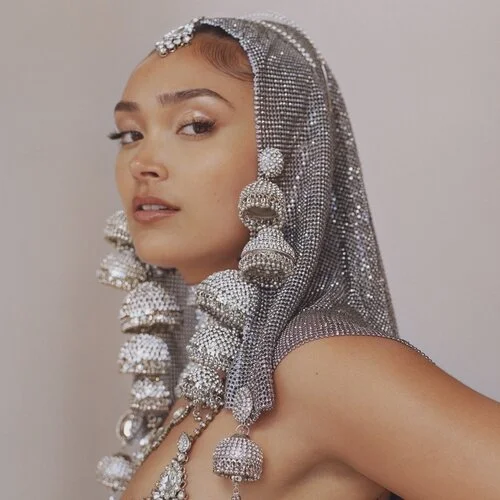
She feels deeply connected to London still. Her support for Grenfell United – the charity that works with survivors and bereaved relatives of the 2017 tower-block fire in west London – is well documented, although I hadn’t realised that she had been down there day after day at the beginning. “It was just absolute despair, and I’m telling you no one who should have been helping was helping. I just couldn’t believe there was a building on fire in the middle of central London and it didn’t cause more outrage.” Having lived in social housing as a kid, she couldn’t fathom the response. “There are still a lot of buildings clad in that material. Grenfell aren’t asking for money, they’re just asking for that to be taken off the walls. I haven’t seen people as resilient as them in my whole life.”

She’s quick to admit that she doesn’t always get things right. Who can forget Carnival-gate? On holiday in Jamaica last year, dreaming of being at the annual Notting Hill celebration (cancelled because of Covid), she posted a photograph of herself at an outdoor party wearing Bantu knots and a bikini top made out of Jamaican flags. “I could see comments being like, ‘the nerve to not take it down,’ which I totally get. But if I take it down, it’s me acting like it never happened,” she says. “And it did. I totally get why people felt like it was appropriating,” she says now. Her read had been, “If you don’t go dressed to celebrate the Jamaican culture – and in so many ways we’re so entwined in that part of London – then it’s a little bit like, ‘What you coming for, then?’” She pauses. “I didn’t read the f**king room.” Karma came for her anyway, she adds, drily. “I was wearing a hairstyle that is actually to protect Afro hair. Ruined mine, obviously”.

A salute to Adele ahead of the release of her highly-anticipated fourth studio album. She is certainly an artist who is an idol and will inspire many others soon enough! One of her our very best artists, I will end with a career-spanning playlist. She is gearing up an album that, by all account, is a change of direction. In the light of her divorce from Simon Konecki it is inevitable that this, in some form, will be included on the album. Judging by the short teaser clip she posted online for Easy on Me, it is going to be an interesting album. The impending and very interesting release of 30 is one many are…

EXCITED to hear.

FEATURE: Second Spin: Garbage - Beautiful Garbage

FEATURE:


Second Spin

cccc.jpg

Garbage - Beautiful Garbage

___________

ONE reason for looking at…

ttt.jpg

Garbage’s Beautiful Garbage for Second Spin is that a twentieth anniversary release has been announced and is available from 5th November. The original album celebrated twenty years on 1st October. The anniversary release looks fantastic. This is what Rough Trade say:

2021 Remaster. Beautiful Garbage is the third studio album from Garbage, initially released on October 1, 2001. Marking a departure from the sound the band had established on their first two releases, Garbage and Version 2.0, the album was written and recorded over the course of a year, when lead singer Shirley Manson chronicled their efforts weekly online, becoming one of the first high-profile musicians to keep an Internet blog. The album expanded on the band's musical variety, with stronger melodies, more direct lyrics, and sounds mixing rock with electronica, new wave, hip hop, and girl groups.

This brand new edition featuring newly remastered audio by Billy Bush & Butch Vig across Deluxe, LP, CD and Digital formats. The Deluxe edition includes Beautiful Garbage on 2 x 180g Black Vinyl, as well as a 12” 180g of B-Sides and memorabilia. The two Double LP formats have been pressed on 180g Black and 180g white vinyl respectively. This reissue campaign also features a triple CD featuring, original album, b-sides, demos and remixes housed in a deluxe clamshell”.

If you are a Garbage fan, you will definitely want to check out that release. It is going to add extra layers and levels to one of their best albums. It is a shame that there was not more appreciation for Beautiful Garbage back in 2001.

A lot of fans did not like a new direction for the band. I have been listening to a couple of recent interviews where the band’s lead, Shirley Manson, has spoken so fondly about Beautiful Garbage. It seems like it was a happy time for the band. Their second album, 1998’s Version 2.0, was a huge success. Boasting singles like Push It and I Think I’m Paranoid, it is rightly garnered as one of the greatest albums of the 1990s. There would have been a lot of expectation for the follow-up. People assuming it would be a very similar album. Beautiful Garbage was released a few weeks after the terrorist attacks in America. It did not get that much promotion. It would have been strange to release an album at that time. I want to come back to Beautiful Garbage, as it contains so many great songs. Beautiful Garbage is a more expensive and diverse album than their earlier work. Though there were some positive reviews for Beautiful Garbage, there was a note of disappointment from some critics. Beautiful Garbage debuted at number thirteen on the US Billboard 200 with first-week sales of 73,000 copies. Singles Androgyny, Breaking Up the Girl and Shut Your Mouth are some of Garbage’s very best. I think that Beautiful Garbage has acquired better standing in the years since. Critics are revisiting it in the light of the albums that followed – and Garbage are still making music and going strong to this day.

There are a couple of conflicting reviews that I want to bring in. One is very positive, whilst the other is more mixed. Although there are some positive points to SLANT’s review, they only awarded Beautiful Garbage three stars:

Just as the reception of Beck’s Midnite Vultures was influenced by the critical success of Odelay, Garbage’s Beautiful Garbage will be shrouded in the bias of its predecessors. The comparatively poppy follow-up to 1998’s Grammy-nominated Version 2.0, is no Version 3.0. Good or bad, relevant here or not, the influence of expectation is a product of modern criticism in a time of multimedia pop art. And Garbage is the quintessential pop art outfit, consistently blending rock and electronica in a fusion that is, ultimately and undeniably, just plain pop.

For the most part, Beautiful Garbage succeeds in its attempt at beauty, dressing up the band’s signature rock riffs with sugary melodies and a patently retro pop sensibility that recalls Like a Virgin-era Madonna. In 1984, Madonna shed her initial black-rooted club music for a more mainstream pop sound that, though deemed a defining artifact of ‘80s pop, was just as influenced as it was influential. Similarly, tracks like Garbage’s “Can’t Cry These Tears” and “Breaking Up the Girl” draw on more traditional pop forms; the former is even structured like an old ‘50s tune.

Frontwoman Shirley Manson chirps out a Britneyfied performance on the new wave-metabolized “Cherry Lips (Go Baby Go!),” but it’s far edgier than anything our current pop princess could ever sing (it tells the story of a sassy, trend-setting transvestite). Manson displays more vocal versatility than ever before, exuding a subdued, gentler side on the acoustic-based “Drive You Home” and “So Like a Rose”: “Sleeping with ghosts/It’s such a warming experience.” The meter-shifting “Silence Is Golden” finds her wailing as if she’s been forsaken by everything and everyone she holds dear (“Something was stolen/I have been broken!”) and subsequently sums up her despondency amid spooky trilling and splices of cinematic dementia on the standout “Cup of Coffee” (“I give myself to anyone who wants to take me home”).

With tracks like “Shut Your Mouth” and the existential “Parade,” the band sticks to more typical Garbage fare, mixing up turntable scratches, clangy guitars, and super-tight drum programming. The album’s first single, “Androgyny,” is a seemingly disposable, albeit infectious, rewrite of “Queer”; its exhortation that liberation can be found in abandoning sexual boundaries doesn’t seem very groundbreaking in 2001. Yet Beautiful Garbage isn’t so much about breaking ground as it is about coming down to it. Make no mistake though: Garbage makes music just above pop’s sea level and it’s beautiful indeed”.

HOT PRESS had some kinder things to say when they reviewed Beautiful Garbage back in 2001. They note how it is not the ‘difficult third album’ that it could have been:

After the brilliance of their debut and the relative disappointment of the follow-up, Version 2.0, Shirley Manson and Co have clearly regrouped to their Madison, Wisconsin HQ to consider all their options. And consider they have...

With long-time collaborator Butch Vig at the controls once again Beautiful Garbage covers all the angles, embracing a welter of ideas and a leaving few stylistic stones unturned. The sheer variety of the material is breathtaking and brave, making it sound more like a compilation of a decade’s work rather than the “difficult” third album it could have been. It starts out on familiar enough ground with ‘Shut Your Mouth’ a standard rawk belter all the better for Manson’s tough street-wise vocal. The recent single ‘Androgyny’, is a catchy r’n’b/hip-hop number in parts not a million miles away from U2’s ‘Mysterious Ways’. Then things take an unexpected twist. Sounding like something crafted in the Brill Building for the Crystals or Ronnie Spector, ‘Can’t Cry These Tears’ is a big romantic ballad and a sure-fire char-topper should it see a single release.

Change tack with each track from here on in ‘Til The Day I Die’ recalls INXS at their riffing finest, ‘Cherry Lips (Go Baby Go’) mimics The Go-Go’s plastic power pop while closer to the jangly Americana currently in vogue ‘Breaking Up The Girl’ is another stand out “.

I really like Beautiful Garbage and think that it is an album that was unfairly maligned by some. Maybe there was this sense that Garbage were going to repeat their debut or second album. As it is, we got this incredible album where they expanded and moved into wonderful directions. Led by the inimitable Shirley Manson, the twentieth anniversary release will get the album into new hands. It will also get people looking at Beautiful Garbage in a new way. After all of these years, Garbage’s third studio album remains…

A stunning release.

FEATURE: Vinyl Corner: blink-182 - Enema of the State

FEATURE:


Vinyl Corner

fff.jpg

 blink-182 - Enema of the State

___________

I have been thinking about…

fff.jpg

blink-182, as their bass player, Mark Hoppus, declared that he is cancer-free. He was diagnosed with lymphoma diagnosis but, happily, he is free from it. The Californian band released their third studio album, Enema of the State, in 1999. It is an album that I recall fondly when it came out. I was in my final year of high school. I was not overly-aware of Pop-Punk aside from bands like Green Day. blink-182 shot into my world and made a big impression! A joyous album, I would advise people to buy it on vinyl. Released on 1st June, 1999 through MCA Records, I really love Enema of the State. blink-182 first achieved popularity on the Warped Tour and in Australia following the release of their second album, Dude Ranch (1997). Whilst All the Small Things is seen as the big hit from the album, I especially love What’s My Age Again? Some critics were not impressed in 1999. Perhaps put off by a certain lack of maturity from the band, others identified how the album not particularly deep or important. It is the energy and urgency of the album that gets you. Songs embed themselves in the head, and one cannot help but side with and support blink-182. I want to bring in a couple of reviews for Enema of the State, to support my claim that it is a great album that you should own.

Green Day faced criticism with their fans when they were seen as going a bit soft or selling out on albums such as Warning (2000). Some supporters of blink-182 reacted negatively to Enema of the State. Even so, the record proved very influential on the Pop-Punk genre. I guess what separated blink-182 from their peers such as Green Day was the polished production. Produced by Jerry Finn, perhaps it is more Pop than Punk. The catchiness of the songs is definitely among the biggest selling points. The band’s most-recent album, Nine, was released in 2019. I do hope that we get to enjoy blink-182’s music for many more years. There is an extensive feature from Billboard. They marked Enema of the State’s fifteenth anniversary in 2014 with a track-by-track dive:

Five years after Green Day's "Dookie," punk purists had another platinum-selling trio to yell "Sellout!" at. But for everyone not taking themselves so seriously, there was another reason to rock out to teenaged angst (real or remembered), with three dudes in their late twenties who cracked jokes about humping dogs and phone sex.

When "Enema of the State" dropped via MCA in 1999, Blink-182 were nothing new. They'd been kicking around the San Diego punk scene since the early 90s and had already released two full-lengths, the most recent being 1997's major label debut "Dude Ranch." Although the Mark Trombino-produced album featured the band's first hit single ("Dammit"), its gritty sound wasn't too far removed from the indie releases of their early years. Enter producer Jerry Finn, known for his work with Green Day, whose expert touch brought a glistening pop sheen to the production of "Enema of the State." The fact that guitarist Tom DeLonge and bassist Mark Hoppus both sounded like they'd received considerable vocal training since "Dude Ranch" didn't hurt, either.

And then there was the arrival of drummer Travis Barker, truly making the band a power trio. The former Aquabats drummer makes his presence felt considerably on "Enema," with his breakneck-paced precision driving the catchiest batch of songs the band had ever written.

It's funny to think that today -- with a clothing line, reality show, and countless genre-hopping collaborations -- Blink's drummer might just be the band's biggest celebrity. But these days, the competition that existed after the band's 2005 hiatus has largely been put to rest. After reforming in 2009, Blink-182 released one more major label album (2011's "Neighborhoods") and then embarked on a self-releasing journey with 2012's "Dogs Eating Dogs" EP. Though they're not quite chasing mainstream success anymore, they're keeping their considerably large fan base happy. Undersell club gigs like last year's stop at Brooklyn's Music Hall of Williamsburg have kept fans curious about their next move.

"Enema of the State" remains Blink's biggest seller to date, having sold 4.54 million units to date in the U.S., according to Nielsen SoundScan. As June 1, 2014 marks the 15th anniversary of Mark, Tom and Travis' breakthrough album, Billboard takes a look back:

1. "Dumpweed": One of the best things about "Enema of the State" is how it doesn't begin by blowing through all its best songs. The album opens surely and steadily, with a couple introductory bursts of what's to come. Before we can get to "What's My Age Again?" and "All the Small Things," "Dumpweed" serves as scintillating sample of the bubblegum angst to come -- yelped hooks, pogo riffs and drums from Travis Barker that go off like popcorn in the microwave.

2. "Don't Leave Me": This one isn't Mark Hoppus' strongest song on the album, but it doesn't need to be. "Don't Leave Me" is the bassist's answer to DeLonge's "Dumpweed," keeping the momentum going into track three with a two-and-a-half minute pick-me-up breakup song, with catchy little post-chorus breakdowns and the sort of straight-ahead bass solo that happens when you let the bassist write the song.

3. "Aliens Exist": A lot of pop-punk bands could use a primer on writing songs that aren't about girls or hating authority. Blink-182 did plenty of both on this album, but they managed to break the mold of pop-punk lyrical tropes with this peppy song about aliens that sounds like it was written after watching a History Channel marathon on Roswell.

4. "Going Away to College": By 1999, few 27-year olds could relate to the emotions of an 18-year-old like Blink. This one has late-teens written all over it: a guy trying to keep things going with his high school girlfriend after leaving for college, with its chugging, stop-start verses and hooky chorus ("long time" and "valentine" just rhyme together so smoothly). The track captures the glory days of Blink, and its fadeout into the opening notes of "What's My Age Again?" is seamless.

5. "What's My Age Again?": For the pop audience, this was the Blink song that started it all. "Dammit," released two years prior, might've been a better introduction to the band, but "Enema's" first single is the quintessential Blink manifesto -- the story of a twenty-something who still acts like a child. There's a crudeness to it that one might regret when older and wiser (like the use of the word "bitch"), but alas, this is what happens when people look back on their younger, dumber selves. The Mark, Tom and Travis show seems reasonably well-adjusted now, and with the careers they forged since this song, they must look back on it fondly.

6. "Dysentery Gary": Speaking of crudeness, here's a song that clowns on a guy for "trying on his father's tights," calls his mom a whore and then makes a bestiality joke. At least its title probably gave medical lessons to kids who didn't play "Oregon Trail" growing up.

7. "Adam's Song": Just when you thought the Blink dudes couldn't even act 20 with 30 creeping up, here's a song -- and a hit single at that-- that hints at the emotional maturity they'd show on later releases, especially 2003's self-titled album. "Adam's Song" was inspired by a boy's suicide note and features some real downer lyrics, although the speaker ultimately decides to keep on living in the song's triumphant, driving chorus. Stylistically, it's also a Blink breakthrough: rather than putting their heads down and plowing through at breakneck speed, the band dials back the verses and interludes to let them breathe a bit. The resulting chorus achieves an arena-worthy feel not achieved anywhere else on "Enema of the State."

9. "The Party Song": Barker revs up his percussion to warp speed here, as 27-year-old Hoppus plays a protagonist who reluctantly visits a frat party (we can only hope he was reflecting on an experience several years prior). You probably had to read along to the lyrics in order to follow his rapid-fire narrative, although when it ends with the refrain of "some girls try too hard," it's clear the bassist had a pretty typical college experience.

10. "Mutt": A little bit of voyeuristic angst from our narrator Tom DeLonge: there's a loathsome couple who act like they're in constant audition for a porn flick, and he's sick of it. If the guy from "Dysentery Gary" and the girl from "The Party Song" got together, this would probably be them. "Mutt" is one of "Enema's" less memorable tracks, but it made it onto the soundtrack of the original "American Pie," which also included a cameo from the band watching Jason Biggs' sexual misfortunes over a webcam.

11. "Wendy Clear": "Wendy Clear" is one of Blink's most underrated songs. DeLonge's lead riff is pop-punk gold, Jerry Finn's production shimmers and Hoppus' vocal hook finishes the job. On a lesser pop-punk band's record, this could have been a lead single; on an album as deep as this, it's relegated to "deep cut" status.

12. "Anthem": Connecting to 16-year-olds angry about their curfews and lack of booze, Blink-182 nails it, and even justify themselves in calling this one "Anthem." In fact, they nailed it so well that they opened their next album, 2001's "Take Off Your Pants and Jacket," with a song called "Anthem Part Two".

There is so much to appreciate about blink-182’s Enema of the State. I don’t think it has aged that badly. Some Pop-Punk albums from that time/later do sound quite f their time or insipid. Enema of the State still pops with life, wit and colour! In their review, this is what AllMusic had to say:

If the title Enema of the State didn't give it away, it should be clear from songs like "Dumpweed," "What's My Age Again?," and "Dysentery Gary" that moving to a major label isn't a sign of maturity for blink-182. "Dammit (Growing Up)," the first single from their third album, Dude Ranch, brought them a wider audience and the attention of major labels, which was just too tempting to resist. They signed with MCA, but the only sign that Enema of the State is a major-label effort is the somewhat cleaner production and the fact that they could afford porn superstar Janine -- all decked out as (surprise!) an enema nurse -- for the album cover. Of course, the lovely Janine is as much an indication as "Going Away to College," a catchy little number that pretty much repeats the narrative of "Dammit": blink-182 is not growing up, no way, no how, nowhere. And that's fine, because few of their peers are quite as blissfully stupid and effortlessly catchy as them. Sure, they might not show the emotional depth of Green Day, but they have good tunes and deliver them in a speedy, punchy fashion. Enema of the State isn't going to change anyone's life -- unless it's the first time a 13-year-old boy has seen Janine -- and it will likely irritate old codgers, but it's a fun record that's better than the average neo-punk release”.

If you are a fan of blink-182 and have not got Enema of the State, it is definitely worth snapping it on vinyl. For those new to the band, the album is a pretty good introduction to them. There is definitely a lot to grab your attention. Over twenty years since its release, Enema of the State

STILL sounds awesome.