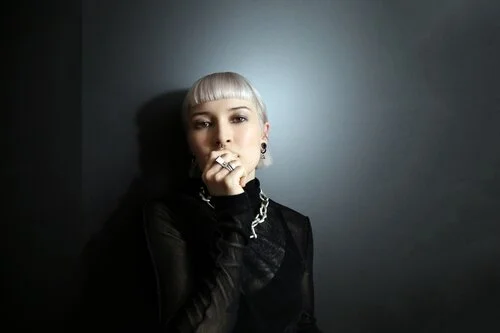
FEATURE: Spotlight: daine

FEATURE:


Spotlight

xxx.jpg

PHOTO CREDIT: Joe Brennan

daine

___________

ON this occasion…

zzz.jpg

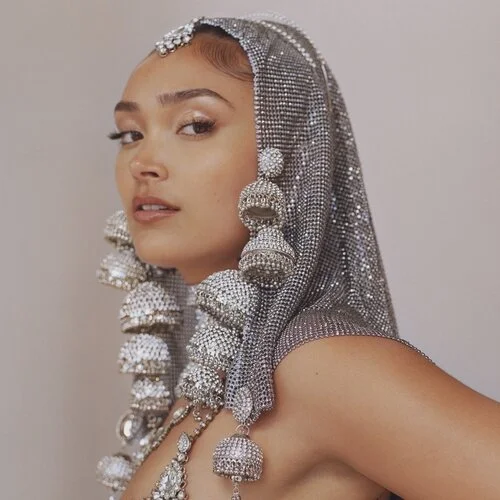
I am spotlighting the Filipino-Australian artist daine. She is a fantastic artist who had a big 2020 and has made some impressive moves in 2021. I have only recently come across her music. She is someone who is going to go a long way. A terrifically inventive and fascinating Pop artist, make sure that you follow her (links are at the bottom of this feature). I am going to bring some interviews in, so that we get a clearer picture of who daine is and where she has come from. Last year, The Line of Best Fit highlighted an artist on the rise. Daine remarked how the lack of support she got from fellow artists earlier on affected her:

“Recent single “Ascension” was in fact the first song daine ever wrote. Remembering the demo version she explains how it’s really slow and sad and that back then her voice sounded “so different.” With its melodies and lyrics intact, the first batch of music she produced came from a place of heartbreak.

“Everything’s old,” she says, explaining the origins of the handful of singles she’s dropped so far. “I wrote a shit tonne of music when I was heartbroken in Year 10… and that’s what my team wants to put out, so we’re re-jigging all of them.” Reworking the tracks, daine admits sometimes it gets weird “because a lot of the lyrics don’t make sense to me now.” Looking back at another demo she references the line “running ‘round the city high as fuck,” saying “I haven’t smoked weed since I was like 16, like there’s no way that I’m keeping this verse, it’s not me.”

Sharing her moody debut single “Picking Flowers” back in May this year daine says the initial lack of recognition she got from fellow artists “sucked over big time,” but as the track grew across social media and following the subsequent release of its follow-up “My Way Out” she began to see a new wave of fans jumping aboard. “People I never even thought I’d get to talk to are like ‘hey I love your music’,” she explains, “people I’m listening to a lot at the moment are following me and fucking with my music and asking to collab, it’s been crazy.”

It’s this peer-to-peer support daine has been craving ever since she began putting her demos on Soundcloud. “Before I had my team I had two songs out, I didn’t really care about music that much, I was super caught up with school,” daine divulges. Taking on music full time, as a career, meant she had all the time in the world to focus on it and in an instant she says “music became the centre of my universe.”

A place to channel the frustrations and experiences of her personal life, daine explains “I’ve had two long term relationships crash in the past three years… but it makes really good music and I feel like it helps me grow as a person.” The second of which is fuelling a new intensely creative period. “I wrote all this fucking anrgy music in two months and I’ve got heaps of it and I wanna drop it,” she reveals. “It’s all hyperpop, glitchcore and screaming in my bedroom, but I’m really excited about it and can’t wait until I’m allowed to put it out.”

Somewhere daine may or may not tease new music is through her online club night Nocturne. Hosting their inaugural event on Halloween this year, a guest appearance from Charli XCX made it the must-see online event of the night. It also happened to be daine’s debut live performance. Recorded in her bedroom, she laughs about the difficulties of setting up her own rig, but notes that working in her room has “been a fun learning curve” and given her a confidence boost on the more practical, tech side of production”.

xxx.jpg

The Forty-Five chatted with daine earlier this year. Among other things, they discussed Hyperpop and its perception – daine also revealed how what it has been like trying to carve her own path in the industry:

“‘Hyperpop’ itself has become a dirty word. It’s an umbrella term that melts anything experimental that happens to be online into the same sludge without acknowledging their nuances. “I think it makes me cringe a little bit — it makes everybody cringe,” says daine. “I feel like everyone’s like, ‘Oh, I hate hyperpop. I’m not hyperpop because it doesn’t really have a definition’ — but I feel like I was definitely part of the SoundCloud community. When emo-rap fizzled out, all the SoundCloud kids went towards this more intense sound. I think they are the same scene, but it had just evolved. I’d say, more than anything, I’m in the realm of internet kids.”

But hyperpop remains a closely guarded territory — not by the artists of the scene, but by the fans themselves. “I think there’s a lot of gatekeeping,” daine admits. It’s a feeling echoed by glaive, one of the scene’s essential artists (who also happens to only be in eleventh grade). “But they’re not gatekeeping my music — they’re gatekeeping to keep me out of it,” she says. “Everyone’s like, ‘Oh, you’re an industry plant! You don’t belong in this!’, saying my music sucks. Stuff like, ‘You’re the least original one here. All of this is fabricated. You’re not actually a part of the community that you make yourself out to be in!’ — which is hurtful. I’ve been doing this SoundCloud shit since I was fifteen, and while it has been slow, it’s not like I faked anything. But it would be cool if people were trying to gatekeep my music though! That’d be funny — that’s how I’d know people care.”

Everyone’s like ‘Oh, you’re an industry plant! You don’t belong in this!’ which is hurtful. I’ve been doing this SoundCloud shit since I was fifteen, and while it has been slow, it’s not like I faked anything

Trying to carve a space of her own, having to repeatedly insist on her integrity as an artist, has been taxing for daine. While her image graced the cover of Spotify’s hyperpop playlist, which is prime real estate for anyone in the scene with its 200,000 followers, down in the trenches of Reddit, daine’s presence has been met with resistance, from fans of Swedish SoundCloud rap collectives Sad Boys and Drain Gang whose members boast the likes of Yung Lean, Bladee and Ecco2k. Much of the discussion was about how the playlist is homogenised and reductive to artists who get lumped in with the genre for making anything remotely experimental. But some took shots at daine herself.

The kickback is something she finds not only embarrassing – but ironic. “There’s a huge misogynistic and sort of elitist attitude around Drain Gang fanbase”, she says, quick to point out that this is a culture very separate from the artists themselves. “They’re so mad that I’m doing this cringe hyperpop thing – but I think they’re just pissed off that a teenage girl is doing something that’s somewhat Drain-adjacent. Not even, though! I get why the hyperpop playlist is suggested next to Bladee.” She feels that Dylan Brady used a very Mechatok-sounding synth, a producer who has worked extensively with the Drain Gang rapper. “My jaw dropped when I saw the Reddit thing, because Bladee has listened to my demos. He likes my demos. Mechatok messaged me about the song and said he loved it. Like, oh my god, Drain Gang themselves fuck with the music, but the fans are like, ‘Oh, this is cringe!’, like I swear they don’t even know what Drain Gang is about!”

hdhdf.jpg

PHOTO CREDIT: Joe Brennan 

The hate is something daine confesses she doesn’t handle very well. Her mentor, Charli XCX, has been the best person to look to for guidance. They met at Melbourne’s Laneway Festival backstage and bonded over playing mini-golf together. “She’s just a great support and an iconic Leo woman in my life,” she says. “She’s got the quickest, smartest pop brain ever. She really knows how to work melodies and write catchy lyrics, so I think having her there for thoughts on music is great, but on a more personal level, she helps me deal with hate and criticism. When I was sixteen, I was really dragged through the fucking dirt, whether it’s online or not. So yeah, I appreciate her guidance.”

daine is rightfully protective of her identity as an artist, but even more so of her progress. She tells me she was at a car dealership the other day (she’s learning to drive, although she almost crashed the car in a lesson switching lanes), and her dad told the salesperson that his daughter was a singer. “The guy asked, ‘Oh, is she famous?’ and my dad was like, ‘Oh, no. She’s getting there!’. Like, I don’t know… if someone tries to say that, like I haven’t really grinded shit and made it somewhere, I will get defensive. It changes day to day. Sometimes I doubt myself, and then the next day I’ll be like, ‘I’m the fucking shit!’” she laughs.

Growing up, daine always felt very much like an outsider – “and I still do”, she says. “I don’t think I was accepted. There was always a lot of pushback from my teachers or my peers, or literally anyone. But I had always pushed back against authority… I know that sounds like really cringe punk-type bait, but I just really wanted to do my own thing. Music has made that possible for me. Now, my day to day life is on my own terms, and it’s great.”

Success, to daine, is simple. “I would say I’m successful, but I’m not rich,” she says. “I think success is about putting stuff out that you’re happy with, and feeling supported and cared for, which I already have, like, times a million. But at the same time, I want to keep working because I’ve got to have them thousands round my neck.” Already, she is calculating her next move, with two more singles lined up to complete the double A-side for ‘boys wanna txt’; she’s alighted on hyperpop for a moment, but it’s far from her final destination. “I feel like I’m only at like 2% of my potential,” she insists. “I know that there’s a lot more to come”.

I am going to wrap up soon enough. There are so many interesting articles and interviews where we get to learn so much about an arresting and hugely promising young talent. Upset spoke with daine in August. I have selected some sections from the interview that caught my eye:

“There's a dark pop majesty to the visuals that accompany daine's music, from the futuristic gauzy sci-fi desert hinterland of her debut track 'Picking Flowers' to the gothic synth-pop of 'Bloody Knees', with its dystopian neon cityscapes. But it's the playful horrorcore electronic nightmare of her last single 'boys wanna txt' which brings daine herself into the light of clear focus for the first time, as she gazes passively straight into the camera before the screen gets warped and mangled in a glitchy fever mirroring the tone of the track. There's the constant push and pull of sadness and isolation in her music, cleverly tempered with just the right hint to light to make her music truly disorienting and compelling.

The fascination with darker sounds goes back to her earliest musical loves. "I grew up going to a lot of hardcore shows," she says. "The Melbourne scene was really inspiring for me. I listened to a lot of the classic Midwest emo bands growing up, like Tigers Jaw and American Football, and that kind of made me a bit of a moody person," she laughs. "Maybe I was already a moody person, I don't know. I was quite melancholy. That translates in my sound. People don't believe me, but I'm actually a really happy person! I just like to sing sad songs because they pack more of an emotional punch. I try to sprinkle some hopeful lyrics in there."

ss.jpg

PHOTO CREDIT: Joe Brennan 

She laughs as she ponders her propensity to mention blood a lot in her songs as an example of creeping darkness."It's kind of grim, but it's such a visually stark concept. In my song 'Bloody Knees' where I say 'Look down and see dark red in the snow', the only time you're ever thinking of red-stained snow is blood." Her songs are filled with otherworldly imagery and ghostly apparitions. "I like spiritual motifs like angels, angel numbers, synchronicity and dreams. Leaving your body. I find concepts like that to be really visually engaging."

Summer 2021 marks an interesting pivot point in daine's musical career. Her earliest music was firmly rooted in that emo aesthetic, lo-fi and primarily composed on guitar. Gradually, she incorporated more of an experimental electronic edge to her music. She collaborated with different producers, including PC Music founder and all-around electronic pioneer Danny L Harle on the stunning dark pop electro ballad 'Angel Numbers'. This embracing of futuristic electronic sounds culminated in her last single, 'boys wanna txt', a full-blown hyperpop banger featuring key artist in the scene ericdoa, and produced by hyperpop figurehead, and one-half of 100 gecs, Dylan Brady. It's a striking pivot point in daine's career so far.

ddd.jpg

PHOTO CREDIT: Joe Brennan 

Rather than seeing herself as a hyperpop artist despite featuring in all the attendant playlists and the song having the playful, inventive hallmarks of the genre at its best, daine sees the track as more of a loving tribute and experiment to recognise a community that embraced her and shares some of her musical values. Rather than box herself in as a hyperpop artist, she instead sees it as a creative impulse that can influence her own music and different tastes in a positive way. "I'm not annoyed by it because I'm really connected to the hyperpop community," she explains. "That scene has been so supportive and welcoming to me. I love all the artists, like ericdoa, Ethel Cain and 8485. I'm not super angry at people comparing me to a sound that isn't really me. I think it's something that will easily pass me by. 'boys wanna txt' is the most recent, so people think that that's my defining sound, but I'm going to have songs that I'm going to release later that will surpass that, and then I'll be defined by that sound. It's ever-evolving." As she explains, it's just as much the passion of the people involved that drew her to the sound as much as the sonics. "I've always been drawn to a community whether it's like the hardcore scene growing up or the emo-rap SoundCloud scene as I got older, and now hyperpop is that group of people for me."

While the world was on pause for the last 18 months though, daine has established her own performing festival online, which acts as a safe space for like-minded and progressive artists to perform and express themselves. Community is everything for daine, and this was her way of giving back and representing a diverse and fluid community that may otherwise have been marginalised. Notable performers she has engaged have been future pop icons Charli and Hannah Diamond, as well as new wave hyperpop experimentalists like Brevin Kim, Harvest and 8485. She calls it Nocturne. "A lot of people in the hyperpop community or the SoundCloud community or the new wave of DIY electronica, a lot of these artists are queer or neurodivergent or have had rough upbringings and being able to make music and express yourself is something that connects everybody."

PHOTO CREDIT: Joe Brennan 

Within this community are people who will shape and define alternative pop culture for years to come. They represent a new way of working and a new attitude. Respectful to the icons who have gone before them but not content to rehash the past, they want to shape a new future, and daine is right at the heart of it. "Everyone is super talented and super creative and pushing boundaries for what we expect in music," she says passionately. "In recent years, people have been bored because there's been no innovation or no room for innovation in music," she continues. "Hyperpop is the response to that boredom. Why not make everything crazy, and in that way, it has been inspiring."

For daine, there's no better time for her to be making music than in 2021. "It's boring to do the same thing over and over again that's been done a million times before. A lot of people can have more complex sonic identities now. There are no rules. You can have a trap beat with a guitar. You couldn't have done that 20 years ago. I think the fact we can now is awesome, and we have all these incredible mini genres that you can't even describe”.

aaa.jpg

PHOTO CREDIT: Rosepure

COOL Accidents interviewed daine back in October last year. We got to find out about her family and whether music was an important part of her earlier life:

“I know you’re big on wellbeing and veganism and crystals and stuff, has that helped bring a sense of constancy to this turbulent year?

I think that grounds me through anything ever. Yeah, of course. It's definitely constancy like anything. Yeah, I guess just like waking up in the morning, having a green smoothie, going for a walk, listening to frequencies or whatever, it just makes you feel better. I think it's just like any other self-care habit. It's good.

So in this interview, I really wanted to go right back and learn about your story into music because I find your trap meets Midwest emo influence super interesting. I grew up a punk kid myself, so take me from the top – how did you get into these bands, how old were you?

The more I think about it, yeah, actually, it's kind of weird, but I think I was like 11 or 12? I saw State Champs live with Neck Deep, and I was like, ‘okay, this is it. This is my pop punk phase.’ But once I got to like, 13 I was like, ‘wait a minute, pop punk is kind of cringe. There’s more emo stuff that has like more layers and like, less annoying American accents.’ With pop punk, I still like, know every song that comes on, word for word! They get nostalgia points, it’s still good, but I won’t admit it!

What were you like in school? Were you in a band or take music as a subject; were your friends all music lovers?

I did take music as a subject and I wanted so badly to be in a band. But like, stylistically, I don't think anyone was into the same sort of stuff that I was. And I tried to start a band with like, two of my friends and it failed miserably. We had no idea what we were doing. And I was like, ‘you know what, this is just easier to do on my own.’ So I just started writing. It's like, I didn't even want to be a singer. I'd never wanted to be in that position. But it was like, ‘I can't make a band, so I guess I'm just gonna have to do it all myself.’ That's why I think maybe I'm lacking the confidence as a vocalist, because it is just sort of like a necessity rather than like, something I wanted to do.

Is your family musical too? I know you have a Filipino background and music is such a big part of the culture.

I wish! No, no, no one has like any idea about anything musical. But I guess it's kind of good, it’s my little world.

What’s the goal for you musically and career wise, is it to make this Midwest emo/trap fusion palatable to the masses, or do you wanna move into a more mainstream rap world eventually, or do you wanna front an emo trap band – have you thought that far?

I think I'm already sort of like, blending it into the mainstream. I don't know whether that was my intention. I think maybe it was, because I guess no one has really done the whole sort of like underground rap thing into the mainstream, except maybe like Juice WRLD or Lil Peep. And I was a determined, fiery, 15-year-old going, 'wait, a girl hasn't done this, like, I should do this.' But now I feel like my sound is becoming a little bit more pop-leaning and a little bit more mainstream. And everyone's saying, ‘I don't hear the emo influence, or I didn't even hear the trap influence. Like, this is just like sad pop music,’ and I'm like, oh, whatever. But yeah, I still think it's like, underground. I still think you know, when I'm writing with my guitar, it's heavily emo-influenced, so that's where it's coming from.

Who is an artist that we would be super surprised to know that you love?

All right, let's have a look at my recently saved Spotify. I love Darcy Baylis, we're definitely gonna work on something when he comes back to Melbourne. Okay, there’s some Rihanna which people wouldn’t think I’d pick, there’s multiple Rihannas. There’s some Britney Spears in here. City Girls, Chief Keef, Taylor Swift, it’s a mess!”.

fff.jpg

Prior to round off, I have an interview from NME that is worth sourcing. They tipped her as one of their artists to watch in 2021.In September, they caught up with a protegee of Charli XCX who is making big strides:

“Is your music deliberately escapist?

“I want Daine to represent a world to escape to, where people can go and not feel trapped in the horrible, capitalist machine that is real life. Writing music blocks everything out for me and I really hope I can be that coping mechanism for other people. I don’t want people to see me as this relatable person, though. We have so many people to relate to on the internet because everyone overshares everything. When they listen to my music, I want people to feel like they’re escaping to the future or this different realm.”

So, you’re not an “industry plant”, then?

“There’s nothing wrong with someone using pre-existing money and fame, as long as you own that. I get mad about being called an industry plant, though, because I don’t want people derailing my story. I didn’t have anything. I was at a horrible public school, crying every day.  Music was my lifeline to get out and I held onto that for dear life. I tried so hard to find a label and find the support to make music my job. There was no pre-existing clout. I’m signed to a major label and people ask how I can do that unless I’ve got connections, but nope, I just make good music.”

How has the lack of live shows affected your music?

“So much. I’ve had my first shows rescheduled five times now and it feels like a big chunk of what I do is missing. I find myself asking, ‘Am I a proper artist?’ or ‘Am I able to do this in a real-life setting, or am I just a niche internet person?’ There’s a little bit of imposter syndrome, but that’s a common theme with a lot of the kids who have launched their careers during COVID. It’s so crazy to see these pandemic babies whose first shows are massive gigs like Lollapalooza. I feel like I’m on that arc, so hopefully that imposter syndrome goes away. As soon as Australia opens up, I’m going to book way bigger venues and really push myself. I really need to go at it.”

How confident are you?

“When I’m recording and writing I have my moments, but I also have months where I am terrified of stepping up to the mic. In terms of creative direction, though, I’m super-confident. I know exactly how I want to push things forward. I think this project is going to be pretty massive. It might take a long time, but I’ve got a clear vision of where it will go”.

A tremendous teen artist who is someone everyone should be aware of, make sure that you investigate daine. I hope that she gets to tour in the U.K. and brings her music here. I can guarantee that you will like her material. Such is its power and potency, you will be hooked straight away. Her career might be relatively young, though it is clear that daine is here…

FOR the long run.

______________

Follow daine

zz.jpg

FEATURE: I Saw Them Standing There: When Brian Epstein Met The Beatles

FEATURE:


I Saw Them Standing There

yyyy.jpg

IN THIS PHOTO: The Beatles (George Harrison, Paul McCartney, Pete Best (who was replaced by Ringo Starr in 1962) and John Lennon at The Cavern Club, Liverpool in 1961

When Brian Epstein Met The Beatles

___________

I found an interesting article…

dd.jpg

 IN THIS PHOTO: The Beatles on 17th December, 1961 at their first photoshoot

that was published by The Beatles Daily website in 2018. It marked the first time Brian Epstein – who would soon become The Beatles’ manager – witnessed the aspiring and fascinating group for the first time. On 9th November, 1961, he had his eyes opened to a young, at that time, leather-clad group who would change the world soon enough. It is sixty years next month since Epstein and The Beatles were in The Cavern Club and a spark occurred. The article discusses how Epstein’s curiosity about The Beatles had grown prior to him seeing them at The Cavern:

“NOVEMBER 9, 1961 – Future band manager Brian Epstein saw The Beatles playing live for the first time during a lunchtime session at The Cavern Club in Liverpool.

Having seeing their name several times in Mersey Beat magazine, and on posters around Liverpool, Brian Epstein had become curious about The Beatles. He realized there was a buzz around the young group after a customer named Raymond Jones entered Epstein’s NEMS shop and asked for a copy of the My Bonnie single, recently recorded in Hamburg.

Epstein’s assistant Alistair Taylor later claimed that he had made up the name while ordering copies of the single for NEMS, after hearing requests from fans. Taylor’s tale was a fabrication, however, and Jones was indeed a genuine customer.

Epstein had grown curious about the group after hearing the mention of their name in several places, and Mersey Beat’s Bill Harry arranged for him and Taylor to see them perform in Liverpool.

hhj.jpg

 Epstein learnt that The Beatles were playing close to his shop in Whitechapel. He was intrigued to see what they were like and he phoned Bill Harry at Mersey Beat and asked him to smooth his entrance into the Cavern. Bill arranged this with Ray McFall and with Paddy Delaney on the door.

Liverpool architect David Blackhouse recalled the occasion “I was there when Brian Epstein came to the Cavern. He was a beautifully-suited, elegant man and he looked totally incongruous. I knew who he was, although I had never spoken to him.”

The Beatles performed a lunchtime concert at the Cavern Club. Epstein and Taylor were allowed in without queuing. Epstein was welcomed over the club’s PA system by resident DJ Bob Wooler who remembered “Brian took his PA, Alistair Taylor, along for support and they stood at the back of the crowd and heard John, Paul, George and Pete on stage, although they can’t have seen much. Nevertheless, Brian was bowled over by them. It was fortunate that Brian saw a good performance when he came down to the Cavern that lunchtime. He also liked how they behaved, and he found them very animalistic. They were unkempt, they didn’t comb their hair – and, most importantly, they were lithe and physically attractive.”

Epstein later recounted in his autobiography, ghost written by Derek Taylor, his first thoughts on seeing the group perform. “I was immediately struck by their music, their beat, and their sense of humour on stage – and, even afterwards, when I met them, I was struck again by their personal charm. And it was there that, really, it all started.”

hh.jpg

PHOTO CREDIT: Mirrorpix 

Epstein and Taylor entered the band’s dressing room, described by Epstein “as big as a broom cupboard” after the show. The Beatles recognized Epstein, with George Harrison opening the conversation by asking: “And what brings Mr Epstein here?”

Witness Paddy Delaney recalled: Epstein was well-groomed in a smart, dark suit and he looked out of place. When it was all over, he was still hanging about, so I approached him and said, ‘It’s all over now, sir.’ He said, ‘It’s all right, I’m going to meet The Beatles.'”

Ray Ennis, singer, Swinging Blue Jeans singer Ray Ennis was also at the afternoon show: “I’d met Brian Epstein before and I asked him what he was doing in the Cavern. He said, ‘I’ve come to watch The Beatles. I believe they are very good.’ He didn’t say anything about signing them.”

Epstein watched The Beatles at the Cavern Club a number of times over the next few weeks. On December 10th he suggested becoming the band’s manager. They signed a five-year management contract on January 24, 1962.

On the evening of November 9th, after their first meeting, The Beatles performed for the final time at Liverpool’s slightly down-at-heel Litherland Town Hall ballroom. They performed a total of 20 shows there, the first of which was a triumphant appearance on December 27, 1960, following their first trip to Hamburg”.


It is interesting that Epstein’s first saw The Beatles prior to Ringo Starr joining the band. One can only imagine how impressed he would have been if the classic line-up was together at this point! In any case, Epstein was hooked and saw something in the band. I have spoken about Brian Epstein before being this hugely important figure who helped turn The Beatles into what they would become. The success they would find and the sound they would hone. Although George Martin, as their producer, helped make their albums as wonderful as possible, it was Epstein’s instinct and business mind that was another key factor behind The Beatles’ rise and success. It is amazing to think that, almost sixty years ago, he caught they play a lunchtime show. Such a modest (yet iconic) setting! I have been thinking about The Beatles, as there is a lot of promotion and talk around the release of the Peter Jackson documentary, The Beatles: Get Back. That is out on 25th November on Disney+ A book tied to the documentary was released on 12th October. It has photos and fascinating insight into the recording of The Beatles' 1970 album, Let It Be (which had the working title of Get Back). The documentary will redress misconceptions about that recording. Many feel the band were falling apart and arguing all of the time. Conversely, there was a lot of bonding and laughter. It has made me think back to the start and those early Cavern performances in 1961 (when things were getting started and everything lay ahead). Before Ringo Starr joined The Beatles and history would be made, Brian Epstein saw the band at a comparatively intimate set. I would have loved to have been a fly on the wall in November 1961 when Epstein caught The Beatles and he…

vvv.jpg

 IN THIS PHOTO: The Beatles with Brian Epstein at London Airport on 22nd September, 1964, after a tour of the United States and Canada/PHOTO CREDIT: Keystone/Getty Images

WITNESSED a magical moment.

FEATURE: The Lockdown Playlist: Mark Morriss at Fifty

FEATURE:


The Lockdown Playlist

sss.jpg

Mark Morriss at Fifty

___________

I will keep this brief…

zzz.jpg

as I am keen to get to the playlist at the end. Today  (18th October) it is the fiftieth birthday of Mark Morriss. The lead of the incredible band, The Bluetones, and a successful solo artist, I have assembled a collection of his best tracks. Before getting to that, here is some biography about the great man:

“Mark James Morriss (born 18 October 1971) is an English singer and songwriter, best known as the frontman for The Bluetones. He is the older brother of bandmate and bass player/illustrator Scott Morriss, and is also pursuing a solo career.

His debut solo album, Memory Muscle, was released in May 2008. A folk-tinged record, it includes five re-recorded tracks which had previously been released under the name "Fi-Lo Beddow" as an EP in February 2006. The strings on the record were arranged by film composer David Arnold, who became a fan of Expecting to Fly whilst scoring Independence Day.

In 2014, Morriss released his second solo album, A Flash of Darkness, through Acid Jazz Records. This was followed by another Acid Jazz release in 2015, The Taste of Mark Morriss, an album of cover versions. Morriss has also recorded the theme music for all of the children's audiobooks written by David Walliams. Morriss is also currently a full member of Matt Berry's live band, The Maypoles, and regularly tours the UK with this outfit as a rhythm guitarist and backing vocalist.

In 2021, Morriss appeared as the vocalist for Billy Reeves' The Helicopter Of The Holy Ghost project, on the album Afters. Morriss joined former theaudience member Reeves on the album, which was co-produced by Richard Archer of Hard-Fi, with the album also featuring members of Cocteau Twins, Engineers and Gazpacho”.

A very happy fiftieth birthday to Mark Morriss. A phenomenal songwriter and the amazing lead of The Bluetones, it is worth celebrating his birthday. Here is a nod to an incredible musicians with a small assortment of some of…

HIS key tracks.

FEATURE: Childhood Treasures: Albums That Impacted Me: The Cardigans - Life

FEATURE:


Childhood Treasures: Albums That Impacted Me

 The Cardigans - Life

___________

EVEN though I featured The Cardigans recently…

ff.jpg

when I celebrated twenty-five years of their single, Lovefool, I am including them again. Lovefool was on the band’s 996 album, First Band on the Moon. Their album before that, 1995’s Life, is one that is very important to me. It brought the band into my life – and is an album that I still listen to today. There are various different versions of Life. Depending on which country it was released in determines the track listing. For the U.K. version, we got Pop gems like Carnival, Sick & Tired, and Rise & Shine. Many of the tracks appeared on the Swedish band’s debut, Emmerdale, which was released in 1994. It was not released in Europe until 1999. Though it sounds like a messy couple of years for The Cardigans, Life was well received by critics here. It is one of their best albums. With the melodic and inventive composition skills of Peter Svensson and the inimitable and stunning vocals of Nina Persson, it was no wonder I fell for The Cardigans! Even though it their 1998 album, Gran Turismo, that was a bigger social lubricant in my teenage years, I feel Life has more significance and has made a deeper impact. Gran Turismo was when The Cardigans shifted their sound to something darker and more Rock-based. Perhaps tired of the jollity and Pop sound of their earlier work, critics were divided. I really like the sunshine and happiness one gets through Life. That said, many of the lyrics do paint to negative and emotional themes. So much great Pop music marries anxiety and depression with compositions that are radiant and irresistible! The reviews for Life have been largely positive.

This is what AllMusic wrote in their review:

“With tongue firmly in cheek, the Cardigans decided to play up the candyfloss arrangements of their debut for second album Life. Where Emmerdale studied an introverted melancholy, Life is undiminished in both its independent-minded exuberance ("Hey! Get Out of My Way") and zest to enjoy life with others ("Daddy's Car," "Gordon's Gardenparty"). The incredible production and quality of arrangement from the debut are here also, even more strikingly crisp and spot-on. (Over 50 instruments were used on the 14 songs included on the Minty Fresh American release.) Though the Cardigans planned Life as something of a joke, it became one of the finest pop albums of the '90s”.

In another positive review, BBC were eager to highlight how Life has stood the test of time (the review was published in 2007):

“The second album by the Swedish pop/rock mavericks may have begun life as an in-joke, but it was the definitive statement that launched them as a truly international force as well. Here was an album that demonstrated that not only did they have the multi-faceted writing skills to put them in the charts, but also they had the studio smarts to back the songs up as well.

Formed by two heavy metal fans, Peter Svensson and Magnus Svengingsson, the band had already caught the attention of the European market with their debut, Emmerdale. Two things made them stand out: The singing by non-professional Nina Persson and the music theory and jazz background of Svensson. This allowed them to be one of the first truly 'ironic' pop acts that could turn out saccharine, sunshiney hits that still had enough intelligence to appeal to a broader audience.

By 1994 they'd toured the world and really gelled. Life was to be their most optimistic-sounding effort, filled to the brim with gems like "Hey! Get Out Of My Way" and "Daddy's Car" (they were always great at song titles). The former and "Carnival" were to be their entry points into the lower reaches of the UK charts. Major smash single territory was to wait until the follow-up's "Lovefool", but Life was a platinum-seller on its own merits. What's more, as a cheeky nod to their founders' pasts they even managed to include a popped-up version of Sabbath's "Sabbath Bloody Sabbath". Talk about dextrous.

The world's press of course then had the band tagged as popticians and nothing more. Subsequent, darker albums like Super Extra Gravity and Long Gone before Daylight would prove them to be far deeper than that. But Life remains a pop gem”.

Even though one can hear artists influenced by The Cardigans’ Life, there are not as many albums that take the sound to heart as there should be. The sheer warmth and catchiness of Life is reason enough for bands to study it and try to replicate it in their own way. A very special album in my early life (I was eleven when it came out), I bonded with this great band and their incredible songs stuck in my head. I followed The Cardigans until their final studio album, Super Extra Gravity (2005). For me and so many others, 1995’s Life was…

A magnificent revelation.

FEATURE: Vinyl Corner: Blondie – Parallel Lines

FEATURE:


Vinyl Corner

ff.jpg

 Blondie – Parallel Lines

___________

FOR the…

ss.jpg

 IN THIS PHOTO: Blondie in New York in 1978/PHOTO CREDIT: Lynn Goldsmith

thousandth edition of Tim’s Twitter Listening Party (created by The Charlatans’ Tim Burgess), they are covering Blondie’s Parallel Lines. The event takes place on Thursday, 28th October 10.30 p.m. (U.K. time)/5.30 p.m. (in New York). Among those taking part is the band’s lead, Debbie Harry (who will be joining via Zoom). It is a huge album that will be celebrated passionately! I have not included the album in Vinyl Corner yet (or not that I can see!). It is one of my favourite albums. It contains some of Blondie’s best tracks. With classics such as One Way or Another, Sunday Girl and Heart of Glass, few albums touch it for sheer quality! Released in 1978, it is one of the finest albums ever released. Blondie released Plastic Letters in 1977. Containing the single, Denis, I feel the band stepped up a gear on Parallel Lines. The New York City band are going today – I know they all hold Parallel Lines in high esteem. It is a flawless album that one can put on and completely lose themselves in. Beginning with the mighty trio of songs Hanging on the Telephone (The Nerves cover), One Way or Another and Picture This, few albums start that strongly! Led by Harry’s phenomenal vocals, Chris Stein on guitar, Clem Burke on drums, Jimmy Destri on electronic keyboards and Nigel Harrison on bass guitar, Parallel Lines is a sensational album that has lost none of its spark.

Parallel Lines was released in a year when Punk was still at the forefront, Blondie were welcoming in New Wave and Power Pop - sounds that would take over and become more dominant. I want to bring in a couple of reviews for Parallel Lines before wrapping up. When tackling the Deluxe Edition in 2008, this is what Pitchfork observed:

“Blondie is a band," read the group's initial press releases. The intent of this tagline was clear, as was the need for it: "This is an accomplished bunch of musicians, a tight, compact group versed in everything from surf to punk to girl group music to erstwhile new wave," it seemed to say, "but, oh-- I'm sure you couldn't help but focus on blonde frontwoman Debbie Harry." In America, however, people didn't notice the group quite so quickly. Their first two records-- a switchblade of a self-titled debut and its relatively weak follow-up Plastic Letters-- birthed a pair of top 10 hits in the UK but had been, at best, minor successes in the U.S.; the debut didn't chart, while Plastic scraped the top 75. Despite savvy marketing-- the group filmed videos for each of its singles, that now-iconic duochromatic cover photo-- the group's third and easily best album, Parallel Lines, didn't take off until they group released "Heart of Glass", a single that abandoned their CBGB roots for a turn in the Studio 54 spotlight. Though its subtle charms included a bubbling rhythm, lush motorik synths, and Harry's remarkably controlled and assured vocal, "Heart of Glass" started as a goof, a take-off on the upscale nightlife favored outside of Blondie's LES home turf.

The swift move from the fringes to the top of the charts tagged Blondie as a singles group-- no shame, and they did have one of the best runs of singles in pop history-- but it's helped Parallel Lines weirdly qualify as an undiscovered gem, a sparkling record half-full of recognized classics that, nevertheless, is hiding in plain sight. Landing a few years before MTV and the second British Invasion codified and popularized the look and sound of 1980s new wave, Parallel Lines' ringing guitar pop has entered our collective consciousness through compilations (built around "Heart" plus later #1s "Call Me", "Rapture", and "The Tide Is High"), ads, film trailers, and TV shows rather than the album's ubiquity. Time has been kind, however, to the record's top tier-- along with "Heart of Glass", Parallel boasts "Sunday Girl" and the incredible opening four-track run of "Picture This", "Hanging on the Telephone", "One Way or Another", and "Fade Away and Radiate". The songs that fill out the record ("11:59", "Will Anything Happen?", "I'm Gonna Love You Too", "Just Go Away", "Pretty Baby") are weak only by comparison, and could have been singles for many of Blondie's contemporaries, making this one of the most accomplished pop albums of its time.

In a sense, that time has long passed: Blondie-- like contemporaries such as the Cars and the UK's earliest New Pop artists-- specialized in whipsmart chart music created by and for adults, a trick that has all but vanished from the pop landscape. Parallel Lines, however, is practically a blueprint for the stuff: "Picture This" and "One Way or Another" are exuberant new wave, far looser than the stiff, herky-jerky tracks that would go on to characterize that sound in the 80s; "Will Anything Happen?" and the band's cover of the Nerves' "Hanging on the Telephone" are headstrong rock; "11:59" does run-for-the-horizon drama, while "Sunday Girl" conveys a sense of elegance. The record's closest thing to a ballad, the noirish "Fade Away and Radiate", owes a heavy debt to the art-pop of Roxy Music.

Harry herself was a mannered and complex frontwoman, possessed of a range of vocal tricks and affectations. She was as at home roaming around in the open spaces of "Radiate" or "Heart of Glass" as she was pouting and winking through "Picture This" and "Sunday Girl" or working out front of the group's more hard-charging tracks. That versatility and charm extended to her sexuality as well-- she had the sort of gamine, sophisticated look of a French new wave actress but always seemed supremely grounded and approachable, almost tomboyish. (That approachability was wisely played up in the band's choice of key covers throughout its career-- "Hanging on the Telephone", "Denis", and "The Tide Is High" each position Harry as a romantic pursuer with a depth and range of emotions rather than simply as an unattainable fantasy.)

Already into her thirties-- ancient by pop music standards-- when Blondie released its debut album, Harry (and many of her bandmates) had years of industry experience and music fandom; at the turn of the next decade, they would combine pop and art impulses like few bands before or since. The lush, shiny sound of Blondie still greatly informs European pop-- which pulls less from hip-hop and R&B than its American counterpart-- as evidenced by the Continent's best recent pop architects and artists (producers Richard X and Xenomania, plus Robyn, Girls Aloud, and Annie); in America, however, the group is oddly seems tied to the past, a product of its era. Even the release of this record is built on the tentative need to celebrate its 30th anniversary. (An opportunity not fully explored: This latest reissue of the record includes a new album cover, as well as a DVD with four videos of television performances and a quartet of mostly unneeded extras-- the 7" edit of "Heart of Glass", a French version of "Sunday Girl", and a pair of remixes.) In that sense, this isn't a record that needs to be re-purchased-- if you own it already, skip this. Sadly, I get the feeling not many people under a certain age do own the record, however, which justifies the reason for trying to re-introduce it to a new audience-- it's still as sparkling and three-dimensional as ever”.

Prior to rounding off, I want to highlight AllMusic’s take on 1978’s Parallel Lines. It is hard to find a review that is anything less than effusive for, arguably, Blondie’s best album:

“Blondie turned to British pop producer Mike Chapman for their third album, on which they abandoned any pretensions to new wave legitimacy (just in time, given the decline of the new wave) and emerged as a pure pop band. But it wasn't just Chapman that made Parallel Lines Blondie's best album; it was the band's own songwriting, including Deborah Harry, Chris Stein, and James Destri's "Picture This," and Harry and Stein's "Heart of Glass," and Harry and new bass player Nigel Harrison's "One Way or Another," plus two contributions from nonbandmember Jack Lee, "Will Anything Happen?" and "Hanging on the Telephone." That was enough to give Blondie a number one on both sides of the Atlantic with "Heart of Glass" and three more U.K. hits, but what impresses is the album's depth and consistency -- album tracks like "Fade Away and Radiate" and "Just Go Away" are as impressive as the songs pulled for singles. The result is state-of-the-art pop/rock circa 1978, with Harry's tough-girl glamour setting the pattern that would be exploited over the next decade by a host of successors led by Madonna”.

Ahead of Parallel Lines marking one-thousand episode of Tim Burgess hugely popular Twitter Listening Party, I wanted to spend some time with Blondie’s masterpiece. An album that you should get on vinyl. It is a spectacular record that proved Blondie were one of the best bands in the world – and they still are in my book. If you are new to Parallel Lines, go and get it on vinyl and experience…     

A truly wonderous album!

FEATURE: The Kate Bush Interview Archive: 2011: HuffPost (Mike Ragogna)

FEATURE:


The Kate Bush Interview Archive

xx.jpg

IN THIS PHOTO: Kate Bush in a promotional image for the 50 Words for Snow track, Misty

2011: HuffPost (Mike Ragogna)

___________

AS Kate Bush’s 50 Words for Snow…

mmnmn.jpg

IN THIS PHOTO: Kate Bush in a promotional image for the 50 Words for Snow track, Lake Tahoe

turns ten on 21st November, I am doing a few features around the album. I have already sourced an interview or two for this feature where Bush discusses the album. One that caught my eye this time was with Mike Ragogna of HuffPost. I cannot find too many American interviews promoting the album. Most of the press for the 2011 album was with U.K. journalists. It is interesting when Ragogna speaks with Bush about her success in the U.S. and some of the videos/singles that fared well. I am always keen to see what different journalists discuss when they feature an album. I like the chat between them. I have selected some sections that are particularly noteworthy:

 “MR: I already said, "Wow," right? Okay, getting to your new album 50 Words For Snow, can you tell us a little bit about what inspired it?

KB: Well, I guess originally, I thought I would try to make a kind of wintry album, then it quickly became all about snow as I began writing.

MR: And lyrically, it's like the songs emulate the complexity and uniqueness of each snowflake.

KB: Yeah. It's so fascinating to think about how each snowflake is completely individual -- there are millions and millions of them but each one is so unique. I think snow is so evocative and has such a powerful atmosphere. Here in the UK, we don't really get much snow, and I suppose that's why it's such a precious thing to us. What I was trying to do is create an atmosphere that was run throughout the album that somehow felt like there was a kind of snowy landscape, you know?

 MR: Absolutely, especially with songs like "Lake Tahoe."

KB: Yeah, absolutely. I mean, I don't think that that one is specifically all about snow, but I like to think that the atmosphere is still running from that first track.

MR: True. The song, to me, isn't even really about Lake Tahoe, per se. Would you agree?

KB: No, I agree. I mean, Lake Tahoe is such a large mountainous lake with incredibly cold water and so that's really why I chose that lake. It's a vehicle for the song, really. But it just happens to be a huge lake with ice-cold water.

MR: Nice. Could you go into some background on "Misty"?

KB: The thing about that song, aside from having sort of unusual subject matter, is that it's a very long song -- it's the longest song on the album. I think it runs about 14 minutes. It wasn't even that I set out to write a song that long, but I was trying to explore the idea of working with longer song structures and moving away from the more traditional form. I wanted to be able to tell the story through a much longer piece of time and so I was able to go through various elements of the story and, hopefully, make the song build. The subject matter is sort of just about a girl who builds a snowman, and later the snowman comes to visit her in her bedroom.

MR: Would you say that this album is maybe a continuation of the approaches you began with the albums Red Shoes and Sensual World?

KB: Yeah, I guess so. For me, each album is a sort of an evolving process; it's quite a natural progression to move from one album to the next. So, yes, there are a lot of connections with all of the albums. I guess the main thing is that I've started exploring much longer song structures on this album. I would say that that's what makes this one a little different than previous albums.

MR: Will there be any music videos associated with the album?

KB: Yeah, I think so. We're working on something at the moment, which is great fun and I hope people like it.

MR: That's great. I hope you know your status of being one of the great music video pioneers. There was a period of time on the USA Network where you couldn't get away from Kate Bush videos. (laughs)

KB: Oh, really? I'm so surprised. I didn't really think my videos got shown very much in the States at all. (laughs)

MR: Beautifully put. I have to ask, of the 50 actual words for snow, which is your favorite?

KB: (laughs) Well, my favorite is furloopingjumpala. (laughs) What's yours?

MR: I would have to say mine is shnamistafloppin. (laughs)

KB: Oh, yeah. That's a good one.

MR: How much fun was putting that list together?

KB: Well, it wasn't as much fun as getting Stephen Fry to say them. We had such a load of fun doing that -- he's a lovely man. It was really fun working with him. I have to say that the whole album was a lot of fun to make. It came together really quickly, it had a flow to it. It was like there was a kind of simplicity that ran through this album, although there was some complex structures and ideas going on. What I hoped that song allowed to happen was to have a bit of fun, you know? It's not meant to be taken seriously at all -- it's meant to have a bit of a sense of humor. Stephen Fry is very popular here; he's a lovely man and very talented actor, and very intelligent. He's the kind of person that whenever he says something, it's with such a sensible authority that people automatically assume that it's important. So, I thought that it would be great to get him to read the words because he still maintained that sense of authority. He also just has an extremely beautiful voice.

MR: That's great. Speaking of beautiful voices, the album includes a track called "Snowed In At Wheeler Street" with Sir Elton John, right? What was it like working with him?

KB: It was fantastic. He is one of my great musical heroes, and when I wrote the song, I very much had him in mind and hoped that he would be interested enough to come and sing on the song. At the risk of sounding corny, it was like a dream come true having him come into the studio and sing so beautifully. I think his performance on the song is so fantastic; it's so emotive. I love him singing in that lower key. I really couldn't have been happier with what he brought to the track”.

There is something odd about featuring Kate Bush interviews around the release of 50 Words for Snow. Though it is not the most recent album she has promoted – the live album for Before the Dawn arrived in 2016 -, it is almost ten years since Bush was widely on the promotional trail. I am not sure when (if at all) there will be another studio album, but I think people should spend more time with 50 Words for Snow. It is quite underrated in my opinion. Go and listen to the Kate Bush album that ranks as…

ONE of her very best.

FEATURE: Spotlight: Zsela

FEATURE:


Spotlight

fff.jpg

PHOTO CREDIT: Luke Abby 

Zsela

___________

THERE is quite a lot…

cc.jpg

that I need to pack into this feature about Zsela (Zsela Thompson). She is an artist I discovered recently who, by all accounts, had a busy 2020. It was not an ideal year to release a debut E.P., Ache of Victory - but it received a lot of attention and brought joy to so many people. I am going to get to a couple of reviews of that E.P. Before that, I want to quote a few interviews. The first interview if from The New York Times is from April of last year:

“Zsela has been in no rush to release her music. Her debut EP, “Ache of Victory,” is due on Friday, yet she has been tinkering with its five songs for years. It arrives not as a sampler of possibilities, but as a single-minded statement: a group of songs that are emotive yet elusive, slow but infused with undulating motion, at once earthy and otherworldly. Her voice clings to her melodies like liquefied amber, in a low, striking contralto range.

Zsela, 25, came only hesitantly to performing her songs, although she grew up surrounded by music and the arts. Her father is Marc Anthony Thompson, a songwriter who has been recording since the 1980s under his own name and as Chocolate Genius (and with whom Zsela has lately been singing live on Instagram); the actress Tessa Thompson is her half sister. Her mother, the fine art photographer Kate Sterlin, came up with Zsela’s name, which is pronounced ZHAY-lah; she took the first syllable from the glamorous-sounding Zsa Zsa Gabor. When Zsela asks her mother what it means, “It’s always changing,” she said. “It just is.”

gg.jpg

PHOTO CREDIT: Gioncarlo Valentine for The New York Times 

Zsela was a shy child who avoided singing in front of anyone, though she wrote songs with a guitar. Her parents urged her to go to college, and she attended SUNY Purchase, where she studied studio composition and production before deciding to drop out. She moved to New York City and started writing and recording songs, collaging snippets of words and music. “I have this whole bank of lyrics, and they’re from different times and they’re from different things,” she said. “So drawing from it is telling a story that’s not like linear time at all.”

For a while, she recalled, “I was not sharing them with anyone. None of my friends that I would hang out with knew that I could sing.”

Still, her secret slipped out. One friend sent her demos to her future manager, who arranged for Zsela to meet a producer, Daniel Aged, who has also worked with Frank Ocean and FKA twigs. She visited his home studio, he started noodling on a baritone guitar and “eventually she started to sing,” he said by phone from Los Angeles.

“I was immediately touched by the sound of her voice,” he said. “I heard a command, a certainty in her voice, a strength. Obviously she has an amazing tone, vocally and everything, but just the intention around the melodies and around the words is what really touched me. There’s certain singers, the tone of them — it feels good to my heart.”

cc.jpg

 They began the lengthy process of refining Zsela’s songs into recordings, painstakingly constructing them from the top down. Zsela and Aged sought out the harmonies and instrumentation to cradle her melodies and lyrics. “He was giving me the space to take control and find my voice,” she said. “Through the whole process it was like, ‘Oh God, this is what I wanted to do.’ But I still was like slow and steady with the music, ’cause I was like, ‘If I’ve waited this long before I put something out, I’ll just dig into this and have it be the best that I can make it.’”

The tracks they built rely on imperturbably sustained keyboards, layers of Zsela’s voice in unison and harmony, subdued electronic percussion and myriad near-subliminal sounds. They tried various tempos but eventually decided that the songs all worked best at an almost monolithically slow pace. In February 2019, they finally declared one finished, and released “Noise,” which contemplates “packing up the pieces of a broken love affair,” as a single and video.

Zsela had also started playing her music live: at clubs like Joe’s Pub and Baby’s All Right, at fashion events, and at art museums including the Whitney and MoMA P.S. 1. Onstage, she said, “I channel a different kind of confidence or something.” She interspersed her own developing songs with favorites from Nina Simone, Tim Buckley and Madonna; she would often begin her sets with a deep electronic drone, and end them singing a cappella to the audience that she had brought to hushed attention. In fall of 2019, she toured as the opening act for Cat Power, another languidly pensive songwriter.

 “When I first met Zsela I didn’t know what was coming, what she was capable of,” Chan Marshall, a.k.a. Cat Power, said via text message. “When I finally heard her soothing timeless voice, her depth of frequencies and vocal toning were a healing unchained vibrant triumph.”

Though it was by no means planned that way, “Ache of Victory” is fitting music for self-quarantine: a richly introspective, solitary reverie on connections made, lost and remembered. The music wells up around Zsela, mysteriously opening out from sparse beginnings to boundless depths, as her lyrics wander between the oblique and the starkly exposed: “I know how to lose/I taught myself when I found you,” she sings in “Earlier Days”.

I feel sorry for artists who released debut E.P.s and albums in 2020! It must have been strange trying to find a footing and get the work out there at a time when things were shut down. There were challenges for Zsela. She spoke with CLASH at the end of last year about the challenges of the pandemic:

“The pandemic has presented unique challenges for musicians at every level, but it’s been a particularly fraught time for new acts trying to figure out how to get their art into the world in a way that feels both true to them and appropriate for our surreal reality. New York singer-songwriter Zsela grappled with those issues around her debut EP, ‘Ache Of Victory’, but in deciding to go forward with it she gave us one of 2020’s more thoughtful, wondrous projects.

“This time is so crazy, we were wondering if we should put it off or wait, but I felt like I had a lot of security and since there’s so much up in the air with everything going on in the world,” she says. “Keeping the date just felt like something I could have and say, ‘Okay, this is a secure thing in my life right now that I have. I can release this thing that I have been working on forever.’”

On ‘Ache Of Victory’, Zsela touches on a wide variety of sounds and songwriting styles. From ‘Liza’, which is spacious and abstract (“When the quiet comes / And they don't know your name / In the houses where the money's made) to the hyperspecific, elegiac ‘Drinking’ (“I've been drinking again / I've been losing all my friends”). Zsela’s voice is expressive enough to portray a myriad of emotions.

The EP running the gamut of feelings is fitting given it was written over a period of several years by Zsela, alongside her producer and primary creative partner Daniel Aged (a Frank Ocean collaborator).

“It’s funny to have it span a few years of my life, but those few years I did so much work on myself and so many changes happened that it feels like these songs really spanned centuries for me,” she says.

The constant is her magnetizing voice, which forces a music writer to consider seriously using the dreaded adjective “ethereal,” due to the way it phases in and out of phrases like a ghost through a wall. That quality is put to stellar use on Zsela’s 2019 single ‘Noise’, which rightly showed why she’s gotten multiple Joni Mitchell comparisons, and the EP closer ‘Undone’, which was the only ‘Ache Of Victory’ track that really fell into her lap, creatively.

Being an independent artist meant Zsela mostly recorded on ‘Ache Of Victory’ in fits and starts when the people she was working with could carve out time. Despite that, the body of work that came from that more erratic process is remarkably fluid. The songs flow into one another like bleary recollections of long nights gone by.

“I was always on other people’s schedules due to the fact that this was a labour love on a lot of people’s parts,” she says. “It’s hard to call anything ‘done’ when it’s in your hands and you can keep tweaking away if you wanted to, but once we got ‘Drinking’ to a place where we were happy with it, everything else was pretty much there”.

I will stick on the subject of the pandemic and what it was like for Zsela. Although things are starting to open and get back to normal, last year was one where music played a huge role. I discovered Zsela fairly recently - but I have tried to make up for lost time and am digging everything she does. Office chatted with Zsela about her gorgeous E.P., Ache of Victory:

“Where are you holed up for quarantine?

 I live in New York, but I'm in California right now, staying with my family. I flew out to be closer to them and help them. As much as it's been hard with space and everything, it's been really beautiful to be close with them.

 Have you been keeping busy?

 I somehow always feel busy. I'm with my parents and little brother, and somehow there's always something we need. But personally, I have this EP coming out, so I've had to get creative. I want to do something for the day it comes out—some sort of live performance online, so I've been thinking about how to do that. I want to record a radio show, too, so I've been trying to get my dad to help me with that. We also have a game night every week that we do. My sister comes over; my brother MacGyvers a ping-pong table on our dining room table. We've gotten super into it. Everyone LOVES it. We've been playing until 1:00 a.m. I'm pretty steady—I'm trying to get better at those hard, slam dunk moves—but my dad and my brother are the best.

 Are you doing anything to celebrate the release of the EP?

 I feel lucky that I can have my sister come over, so maybe we'll do dinner or something. Daniel Aged, who I did the EP with—he's in LA too, and he's been quarantining for awhile, so it'd be great to have him over and do a performance. Even just having him will be a celebration, I think.

 How'd you get connected with Daniel?

 I met him, when was it? Two years ago? Through my manager, we met in LA. When we first started working together, we were still trying to find our footing. I think there was a lot of newness for both of us. He has produced for people, but I don't think he’s done a whole project with just one artist. It was mainly just me and him shaping it all. 

ff.jpg

PHOTO CREDIT: Gioncarlo Valentine for The New York Times 

You told The Cut that the best album ever made was one of your father's, called Truth vs. Beauty. You must have a lot of respect for him.

 I do. I really do. For his music, especially.

 What was it like growing up with a career musician as a father?

 Both of my parents are artists, and growing up in a home that was super supportive and fostering, a real creative environment—I feel very lucky to have had that. They were never pressuring me to pursue music as a career. They weren't trying to send me to law school or anything, but they weren't telling me I should do this. My dad, having a life in music, knows the hardships of it, the finances and inconsistency of it. He would always be supportive of my voice, and I would sing on stuff as a kid, but it always came to me to put that pressure on myself.

 Knowing that it's such a hard industry to be in, was he concerned at all when you began pursuing music full-time?

 I think he was reserved in a way. He wasn't wanting to put too much of an opinion on it. I think he wanted to see how I was going to go about it. It took me a minute to even be really confident and say this is what I wanted to do. I only started calling it my “career” like two years ago when I got a manager and met Daniel. If any of his concerns came through, it was when I wasn't that confident in it—which is probably fair.

 You've spent some time upstate at a SUNY school, but you left before you completed your degree. Why'd you feel compelled to leave?

 I really went to college very much to appease my parents. My mom never went to college; my dad never graduated. I was like, "Oh, I should do this." But I went in very undecided. I went from Hawthorne Valley Waldorf High School, which is on a farm with fifteen kids in my graduating class, to a huge SUNY school. I was just really unsure of what I was trying to do. But I made close friends, and then I was going to drop out, because a lot of them were graduating, but I thought, "You know what, let me just try to get into the music conservatory." So I applied, I got in, and they made this major for me. I was super excited about it. But, I don't know. At that time, I just started to get more excited about visiting the city. And then, I started recording in the city and ultimately dropped out, because I felt more inspired doing that.

ff.jpg

PHOTO CREDIT: Rob Kulisek for Office 

 You started by singing at a lot of fashion events. How'd you get connected with the fashion world?

 Mainly just through friends when I moved to the city. I was kinda in the downtown, art-kid scene, and people like doing non-traditional fashion shows.

 Do you find that performing at these events is different than performing on tour?

 Well, it all kind of hit me at the same time. I had no experience really performing anywhere else. I was at a lot of these really untraditional places, because with my music, we were trying to get creative with where it made sense. I would get hit up by friends who would say, "Oh, you should play at this party." But I'm not really singing party songs, you know? They don't make sense in a club setting. The first show I played at was this lounge bar in Bed-Stuy, and then there was MoMA PS-1. Those spaces made a lot more sense at the time. And when I got the tour—which was a dream tour for me; I love Cat Power—it also made a lot of sense for the music, because the venues were all these small, seated ballrooms. These coincided with the same level of intimacy that the art and fashion shows did. 

Your debut EP starts right off with a really poignant song about the effects of alcoholism. Is that a metaphor, or are you pulling from first-hand experiences?

 It's pretty specific; it's not really a metaphor. I mean, it was kind of a metaphor for the time I was in; I wrote it during a time when I was going through a lot of things, and a lot of friends around me were going through a lot of things. But it's also been a kind of theme in my life... with family members in my life. So... yeah. [Laughs]

 A lot of your music is quite personal. Do you ever find it hard to share it?

 In the beginning—well, actually every time I perform it, it's really intense for me. But I've also lived with these songs for a while now, and they're so much a part of me. So much of the EP is about moving on, learning from loss, learning from change, and finding your own success from something that was really toxic and challenging. So, every time I perform or put them out into the world, it feels like I'm exercising some sort of release. In a spiritual and emotional way, it feels like a release. It's wild—I've always made music in a super private way. Like I didn't think about what it means to let people inside of it, but now, I've finally gotten to this comfortable place of really wanting people to be inside of it.

 What are some things you've learned while making this EP?

 I've learned a lot of patience. I've learned that I need to take my time, and I've learned that that's okay. If I didn't take my time, I don't think I would've liked what these songs would have been. I took care to get them to a place that I feel good about. Also, I feel really good about letting myself get to a place where I'm ready to share with the world. I don't think I was before. So yeah, I guess I've learned a lot of patience, and that time is my friend. That's always something that my dad has said, but I finally figured that out on my own”.

Just before getting to a review of the E.P., there is another interview that caught my eye. W Magazine spotlighted Zsela back in May. She was asked about performing at fashion shows and some somewhat unique venue spaces:

“You released your debut EP, Ache of Victory, in April 2020, without being signed to a label. It’s a melancholic, five-track R&B project enriched by your deep vocals. Why was it important for you to release the album then, just as the pandemic was peaking?

I had the date before the pandemic. I was really doomsday about everything when it started—I was with my family, and we were just spiraling, going nuts, so I kept the date. I was thankful that I kept it, because if I can just communicate with people through my music, and hopefully provide any kind of stillness in this time, it can slow people down for a second.

The EP was produced by Daniel Aged, who is known for his work with Frank Ocean. What do you look for in a collaborator?

Passion and excitement. I’ve had a lot of egos in the studio in the past, and I’m not looking for that, because I feel that’s what has held me back from really finding my voice. With Daniel, there’s so much freedom, respect, and trust. He’s just down.

gg.jpg

PHOTO CREDIT: Louisa Meng for W Magazine

Who are your biggest musical influences?

Kate Bush. I’ve always been obsessed with her, but now I am in a new way. I’ve been reading this book that’s a collection of her lyrics. It’s challenged me to want to write more stories into my songs, because the people that I’m inspired by, like David Bowie, have real stories.

You’ve performed at fashion shows for Vaquera and Collina Strada. How did you get into that?

I’ve always loved fashion and its relation to music. Playing at fashion shows made sense at the time, because with my music it’s like, where do I play these? I would get hit up to play clubs or parties, but I’m not going to make people stop dancing for a ballad.

What do you do in your free time?

I’ve been going to estate sales a lot. I’m fixated on buying tablecloths and doilies. What else do you do in L.A.? You go for a hike. But we also got a piano, so I’ve been trying to write.

You’ve performed at MoMA PS1 and the Whitney Museum, and in theaters in New York. What’s an ideal performance venue for you in the future?

There’s a place in Santa Fe my stylist keeps talking about. It’s like an amphitheater. Or someplace crazy, wild, where no one has ever performed—put me in there”.

One review for Ache of Victory came from Pitchfork. I really love it as a piece of work. It hints at a very promising, bright and interesting future for the American artist. I cannot wait to see what comes next for Zsela:  

“Judging by this EP, she belongs to her generation’s modern R&B cohort, marrying the bedroom-pop idiosyncrasy of Okay Kaya with the intimacy of Moses Sumney. In the opener, a synth-backed piano ballad called “Drinking,” the singer admits that she’s been “drinking again,” perhaps a nod to the bluesy sentimental standard of the same name. Alternating between the melancholy and maniacal euphoria that comes with ruining your own life, the song charts the ambivalence of falling off the wagon. Zsela’s voice vacillates between sulking and sprightly: “I’ve been drinking again/I’ve been losing all my friends.” The lines are sung from the bottom of a bottle, then from on high in an angelic chorus, then from back down again, before the song ends abruptly mid-sentence, jolting the listener from their vicariously drunken stupor.

The strongest songs here remain the singles. “Earlier Days” shows Zsela singing breathlessly over gauzy ambient synths punctuated by laid back percussion. On “For Now,” Zsela is backed by synth arpeggios and slow-rolling drums. Her vocal range is astonishing; on the chorus, her voice dives to a bellow, then climbs into a weightless falsetto. When the drums are pared down, her layered vocals produce a stunning, Enya-like choral effect.

sss.jpg

PHOTO CREDIT: Rob Kulisek for The Face 

The album’s last two songs, though they use similar stylistic quirks, do so with less precision. “Liza,” a torch song backed by a lovely undulating synth, offers little lyrical complexity compared to the rest of the album, and relies a bit too heavily on Zsela’s peculiar voice and vocal layering to carry it. Like “Drinking,” it ends abruptly, but rather than adding to the dizzying quality, it just sounds like someone’s pulled the plug. “Undone,” the album’s most stripped-down song, feels like a return to the piercing simplicity of “Noise,” but it’s so short that it feels unfinished.

Perhaps the first cut is the deepest. Where singles like “Noise” reveal a distinct sound, the other material succumbs to generic, murmured any-R&B—imagine Rhye, the xx, and Aged’s project inc., all blended into autoplay monolith. But Zsela is too interesting to become a casualty of the “beats to chill/study to” playlist, and there are plenty of signs on this short, promising project that her formidable voice will enter the pantheon of greats in a matter of albums”.

If you have not discovered Zsela, then check out her beautiful music. I hope that, when she can tour internationally, she comes to the U.K. She is a remarkable talent who is going to be a huge name soon enough. Go and check out Ache of Victory and everything she has recorded so far. It will not take long until you are…

A fan of hers!

_____________

Follow Zsela

dd.jpg

FEATURE: A Buyer’s Guide: Part Seventy-Six: Suzanne Vega

FEATURE:


A Buyer’s Guide

ggg.jpg

PHOTO CREDIT: Faubel Christensen 

Part Seventy-Six: Suzanne Vega

___________

I am trying to include…

gg.jpg

more women in A Buyer’s Guide. One artists who I like very much and haven’t yet included is Suzanne Vega. The legendary Folk/Alternative Rock artist has produced more than her fair share of magnificent albums! I am going to whittle it down to the essential four, an underrated gem and her latest studio album. I could not see a book related to her, so I will focus on the music solely. Before coming to the recommendations, AllMusic provide some useful biography of a musical titan:

“Suzanne Vega was among the first major figures in the bumper crop of female singer/songwriters who rose to prominence during the late '80s and '90s. Her hushed, restrained folk-pop and highly literate lyrics (inspired chiefly by Leonard Cohen, as well as Lou Reed and Bob Dylan) laid the initial musical groundwork for what later became the trademark sound of Lilith Fair, a tour on which she was a regular. Moreover, her left-field hit singles "Luka" and "Tom's Diner" helped convince record companies that folk-styled singer/songwriters were not a thing of the past, paving the way for breakthroughs by Tracy Chapman, Michelle Shocked, Shawn Colvin, Edie Brickell, the Indigo Girls, and a host of others. Vega's early commercial success helped open doors for a wealth of talent, as she scored a platinum album with 1987's Solitude Standing, and she would maintain a strong and dedicated cult following. Her association with -- and marriage to -- experimental producer Mitchell Froom during the '90s resulted in two intriguing albums, 1992's 99.9 F and 1996's Nine Objects of Desire. Following their painful divorce, Vega returned in 2001 with her first album in five years, Songs in Red and Gray, which was greeted with her strongest reviews in a decade. She explored jazzy arrangements on 2007's Beauty and Crime, and wrote a musical one-woman show that was documented on the 2016 album Lover, Beloved: Songs from an Evening with Carson McCullers.

Suzanne Vega was born July 11, 1959, in Santa Monica, California; her parents divorced shortly thereafter, and after her mother (a jazz guitarist) remarried the Puerto Rican novelist Ed Vega, the family moved to Manhattan. A shy and quiet child, Vega nonetheless learned to take care of herself growing up in the tough neighborhoods of Spanish Harlem. Her parents often sang folk songs around the house, and when she began playing guitar at age 11, she found herself attracted to the poetry of singer/songwriter music (Dylan, Cohen), and found a refuge from New York's chaos in traditional folk (Woody Guthrie, Pete Seeger, Judy Collins, Joan Baez). At age 14, she made her first attempts at writing songs; however, when she attended the High School for the Performing Arts as a teenager, it was to study dance, not music. She subsequently enrolled at Barnard College as a literature major, and during this time, she began playing at coffee houses and folk festivals on the West Side and near Columbia University; she soon moved up to the Lower East Side/Greenwich Village folk clubs, including the famed Folk City club where Bob Dylan started out. In 1979, Vega attended a Lou Reed concert, and the effect was a revelation: here was an artist chronicling the harsh urban world Vega knew, with the detail and literacy of a folk artist. Vega discovered a new voice and sense of possibility for her original material, and her writing grew rapidly.

Vega graduated from college in 1982 and held down several low-level day jobs while quickly becoming the Greenwich Village folk scene's brightest hope. Record companies were reluctant to take a chance on a singer/songwriter steeped in folk music, however, since they saw little chance of any commercial returns. After three years of rejections, Vega and her managers Ron Fierstein and Steve Addabbo finally convinced A&M (which had turned her down twice) to give her a shot, and she signed a contract in 1983. Former Patti Smith Group guitarist Lenny Kaye was brought in to co-produce the debut with Addabbo and lend it a smoother, more contemporary flavor.

Titled simply Suzanne Vega, it was released in 1985 to much critical applause. Thanks in part to the single "Marlene on the Wall," the album was a genuine hit in Britain, where it eventually went platinum; while it didn't duplicate that success in America, the album's sales of 200,000 strong still came as a shock to A&M (and Vega). For the 1987 follow-up, Vega overcame writer's block to craft an eclectic batch of new material, and drew upon a backlog of songs that hadn't fit the debut. Again produced by Kaye and Addabbo, Solitude Standing was Vega's finest achievement; the richness and variety of its compositions were complemented by the lusher full-band arrangements and more accessible (albeit less folky) production. The album's lead single, "Luka," was a haunting first-person account of child abuse, whose terse (and fictional) lyrics struck a chord with American radio listeners. As a result, the album was an instant hit on both sides of the Atlantic; it debuted at number two in the U.K. and went gold within three months in the U.S., peaking at number 11 and eventually going platinum. "Luka" hit number three on the American pop charts -- unheard of for a singer/songwriter in the '80s prior to Vega -- and was nominated for three Grammys. As record companies rushed to fill a market niche they hadn't known existed (and uncovering some major talent in the process), Vega spent almost a year on the road touring in support of the record; exhausted, she returned to New York to take some time off, and also tracked down her biological father for the first time.

When the time came to record her third album in 1989, Vega decided to co-produce it herself with her keyboardist/boyfriend Anton Sanko (longtime bassist Michael Visceglia also had input). Vega began to experiment with her lyrics, pushing beyond the narrative story-songs that dominated her first two records, and had minimalist composer Philip Glass contribute a string arrangement. The result, Days of Open Hand, was released in 1990, but it didn't produce another hit single and was somewhat lost in the shuffle of new female singer/songwriters; though it did sell respectably, reviews were somewhat mixed. Even though the album didn't recapture Vega's 1987 popularity, she was still -- indirectly -- involved in one of '90s most bizarre hit singles. Two British dance producers working under the alias DNA took the a cappella Solitude Standing track "Tom's Diner" and set it to an electronic dance beat, releasing the result as a bootleg single called "Oh Suzanne." When A&M discovered the piracy, Vega decided to allow the single's official release under its original title, and it became a substantial hit in the U.S., U.K., and elsewhere. The following year, Vega gathered a number of other unsolicited versions of the song and compiled them as Tom's Album.

Intrigued by the success of "Tom's Diner," Vega began looking for ways to open up her musical approach. She hooked up with producer Mitchell Froom, best known for his work on '90s albums by Elvis Costello, Richard Thompson, and Crowded House. Froom applied his trademark approach -- dissonant arrangements, clanging percussion -- to Vega's 1992 album, and while 99.9 F° didn't reinvent her as a dance artist (as some expected), the synth-centered sound of the record was unlike any of her previous work. Froom and Vega began dating several months after the record's completion, and they wound up marrying; their daughter, Ruby, was born in 1994, and Vega naturally took some time off from music. She returned in 1996 with Nine Objects of Desire, again with Froom in the producer's chair, though his approach was somewhat less radical this time out; in terms of Vega's subject matter, there was a newfound physical sensuality borne of her marriage and childbirth experiences.

All was not well for long, however; Froom began seeing Ally McBeal singer Vonda Shepard, and he and Vega split up in August 1998. In 1999, Vega released the best-of retrospective Tried and True, taking stock of her past career (she had also split with longtime manager Ron Fierstein); she also published her first book, The Passionate Eye, a collection of poems, lyrics, essays, journalistic pieces, and the like. Vega began playing shows with bassist Michael Visceglia again, and worked on material addressing the breakup of her marriage. Songs in Red and Gray was released in the fall of 2001 and marked a return to the more direct sound of Suzanne Vega and Solitude Standing; it also garnered her the best reviews since those records. Retrospective: The Best of Suzanne Vega arrived in 2003, followed by the Live at Montreux 2004 DVD/CD in 2006 and the all-new Beauty & Crime in 2007. In 2010, Vega released Close Up, Vol. 1 and Close Up, Vol. 2 -- the first half of a proposed four-volume collection of re-recorded versions of songs from her catalog, all featuring stripped-down, unadorned arrangements that highlight the lyrics and melodies -- and followed the first two installments of the series with Close Up, Vol. 3 in 2011. The final release in the sequence, Close Up, Vol. 4: Songs of Family, appeared a year later in 2012 and included two previously unheard tracks -- "The Silver Lady" and "Brother Mine" -- which had been written by Vega over 30 years earlier. In early 2013 she demo'ed new material with the help of Gerry Leonard, her live musical director. This resulted in the album Tales from the Realm of the Queen of Pentacles, which was released in February 2014.

In 2011, Vega staged a one-woman theater piece in which she performed a song cycle about the life and work of novelist Carson McCullers, written in collaboration with Duncan Sheik. In 2016, as the show was being revived in Los Angeles, Vega released an album of its songs, Lover, Beloved: Songs from an Evening with Carson McCullers. The album was released through Vega's own label, Amanuensis Productions. In early 2019, she performed a residency at New York's Café Carlyle, singing a mix of originals and covers informed by life in New York City. A live album from the Café Carlyle engagement, An Evening of New York Songs and Stories, was slated for release in 2020”.

Below is my guide to the essential albums from the iconic Suzanne Vega. Let us hope that we hear more music from her soon. If you are new to her music, then the guide below should be of some assistance when it comes to…

THE albums to own.

______________

The Four Essential Albums


Suzanne Vega

ll.jpg

Release Date: 1st May, 1985

Label: A&M

Producers: Steve Addabbo/Lenny Kaye and Steven Miller (co-producer)

Standout Tracks: Freeze Tag/Small Blue Thing/Undertow

Buy: https://www.discogs.com/sell/list?master_id=31638&ev=mb

Stream: https://open.spotify.com/album/5cboZA5AxA9fc6F1gp818q?si=3kFt9stWRd2VcbYOa6RguQ&dl_branch=1

Review:

“Though early comparisons were made to Joni Mitchell, Suzanne Vega's true antecedents were Janis Ian and Leonard Cohen. Like Ian, she sings with a precise, frequently half-spoken phrasing that gives her lyrics an intensity that seems to suggest an unsteady control consciously held over emotional chaos. Like Cohen, Vega observes the world in poetic metaphor, her cold urban landscapes reflecting a troubled sense of love and loss. The key track is "Small Blue Thing," in which the singer pictures herself as an object "Like a marble/or an eye," "made of china/made of glass," "lost inside your pocket," and "turning in your hand." The sharply picked acoustic guitar and other isolated musical elements echo the closely observed scenes -- everything seems to be in tight close-up and sharp focus. Often, the singer seems to be using the songs to measure an emotional distance; sometimes, as in "Marlene on the Wall," she observes her own actions from a remove. In "Freeze Tag," she tells a companion, "I will be Dietrich/and you can be Dean"; in "Marlene," a poster of the aloof movie star "watches from the wall," observing the singer's succession of lovers, and she tries to emulate her heroine's persona, telling the current one, "Even if I am in love with you/all this to say, what's it to you?" The ten songs on Suzanne Vega constitute the self-analysis of a young woman who desires possession without offering commitment; no wonder that, upon its release, it was taken to heart by young women across the country and in Europe” – AllMusic

Choice Cut: Marlene on the Wall

Solitude Standing

ff.jpg

Release Date: 1st April, 1987

Label: A&M

Producers: Steve Addabbo/Lenny Kaye

Standout Tracks: Luka/Iron Bound / Fancy Poultry/Night Vision

Buy: https://www.discogs.com/sell/list?master_id=31648&ev=mb

Stream: https://open.spotify.com/album/5t4dbJ8zlmAKv5OuraAWrL?si=inPUi4E2R9i3u82fHxpwSw&dl_branch=1

Review:

“What makes Solitude Standing such an impressive entry into the rock canon is Vega’s ability to tell a story.  Whether fictional or not, many of the songs on this project can be relatable, comedic, or mature.  Vega has an acute sense of detail that has developed in the indie-rock genre for quite some time.  It feels almost poetic at certain points.  Her descriptive language used on the first single, “Tom’s Diner” is funny, light, and engaging.  Vega goes a cappella on this track, and many consider this to be her most well-known song of her career (or at least a version of it is: A dance remix by the DNA Disciples was a Top 5 hit around the world in 1990).  The rhythm that she uses with just her voice has lead to artists creating different remixes with instruments and electronic sounds for this track.  She sets the mood nicely here as well by starting the song with lyrics like, “I am sitting in the morning at the diner on the corner.”  It’s easy to sing along to, and there is some light and enjoyable comedy mixed in as well.

Because Vega likes to use storytelling as a device in her lyrics, she does an excellent job setting up not only the plot, but the characters as well.  For example, in one of her most mature songs, the hit single “Luka,” she addresses the topic of child abuse.  Vega got the inspiration from an actual boy playing in the park who seemed different to her, because he was separate from the other kids.  The contrast between the catchy instruments behind the mature lyrics creates something that people will really have to listen to a few times to understand. I

Vega creates this world on the album where her characters in each song want to break away from the depression or angst that they may be feeling.  Whether she does this through a certain point of view, or through a first person account, each track uniquely represents something different.  On “Iron Bound/Fancy Poultry, Vega sets this dark and depressing background showing the inner conflict that her main character possesses.  With a slow-tempo guitar riff behind the lyrics, this is considered another gem on the EP.  She uses a first person point of view on “In the Eye” where she has more catchy instrumentals to go along with her almost menacing voice.  Lyrics like, “If you were to kill me now I would still look you in the eye,” shows Vega’s insistence on making herself known through love.  She goes into more of a folk-style production on “Night Vision.”  This song almost reminds me of a Lord Huron song from their second album.  While the story in this track is fictional, it is still inspired by poetry and has a more belonging theme to it.

The title track, “Solitude Standing” is more alternative-based and pop influenced.  Vega incorporates solitude as a character here trying to set things straight with her personality.  Vega seems to be trying to find herself here on this song, leaving the impression that she has been fighting with solitude for awhile now.  “Calypso” is taken straight form the story of Odyssey, where Vega uses instances from that play to tell a heartbreaking love tale.  Much like in “Luka,” she has a lyric like “My name is Calypso” to set up the story from the beginning.  Very moving track.  On the song, “Gypsy”, Vega takes a storyline out of a book to put her own style in music form.  Over a slow-tempo guitar, she talks of belonging once again much like “Night Vision.”  Vega seems to be fighting with solitude as the album progresses on.

What ties this album together nicely is, the “Tom’s Diner” instrumentation at the end.  Vega just has a violin playing to the rhythm of her first song on the project, without lyrics.  It’s like the listener has to put the two together and envision it his/herself.  While Vega has not come out with anything as impactful preceding Solitude Standing, this album has still shown people that storytelling mixed in with a folk-like production can create something that is socially relevant.  Vega creates this world that people can relate to, and have their own perspective on.  Bands like Lord Huron will try to emulate her style, but the challenge will be difficult” – The Young Folks

Choice Cut: Tom’s Diner

Nine Objects of Desire

ff.jpg

Release Date: 10th September, 1996

Label: A&M

Producer: Mitchell Froom

Standout Tracks: Headshots/No Cheap Thrill/World Before Columbus

Buy: https://www.discogs.com/sell/list?master_id=31677&ev=mb

Stream: https://open.spotify.com/album/6yH1CnRs34R23OjFOdPlCI?si=QqMdbn4yRx2vt9-C6mJkqQ&dl_branch=1

Review:

“With "nine objects of desire," singer/songwriter Suzanne Vega's first album in four years, she deftly executes a difficult artistic maneuver: moving ahead by stepping back. The industrial-remix treatment by DNA of Vega's a cappella ditty "Tom's Diner" was an unexpected hit in 1990. But its success also pushed her so far into the icy world of machine pop – and away from the gently penetrating quality of early songs such as "Undertow," "Marlene on the Wall" and "Luka" – that by 1992's 99.9 F, Vega's words and melodies had gotten lost in an impressionistic blur of blips and bleeps. That album's critical and commercial failure proved that her modernist tack was just, as she called one of 99.9 F's typically obtuse tracks, bad wisdom.

Vega is now a wife (she is married to producer Mitchell Froom) and a mother (they have a daughter, Ruby), and Nine Objects of Desire reflects great changes in her lyrical and musical perspective. She addresses the anticipation of birth and death, respectively, in "Birth-day (Love Made Real)" and "Thin Man." There are the remembrances of past mistakes in "Headshots" and, in "Caramel," the fear of new ones. And Vega does all this with an impressive clarity (there's hardly an oblique word or thought here) and economy (no wasted ones, either) that recall her earliest work and are wonderfully displayed in the pointed reflection of "World Before Columbus" ("If your love were taken from me/Every color would be black and white/It would be as flat as the world before Columbus/That's the day that I lose half my sight").

Yet the music is surprisingly spare and buoyant. Against Froom's evocative production and keyboard backdrops, Vega confidently makes her way through the Eurocafe balladry of "My Favorite Plum," an Astrud Gilbertostyle samba; "Caramel"; the arty folk of "Honeymoon Suite"; and even a hint of techno rock in "Casual Match." In Nine Objects of Desire, she has made an album of change and adventure – and good wisdom” – Rolling Stone

Choice Cut: Caramel

Beauty & Crime

ggg.jpg

Release Date: 17th July, 2007

Label: Blue Note

Producer: Jimmy Hogarth

Standout Tracks: New York Is a Woman/Edith Wharton's Figurines/Unbound

Buy: https://www.discogs.com/sell/list?master_id=31716&ev=mb

Stream: https://open.spotify.com/album/3UPEugvO6SIc10gYad5IWg?si=H-RvT2f-SPO5vBMp-YWqeg&dl_branch=1

Review:

“Musically, this is easily her most adventurous record ever; yet it is also more accessible than any album since her debut. The craft and care put into the songs themselves and their articulation by Vega and producer Jimmy Hogarth are amazing. Here, emotions are laid bare in places whether in the first, second, or third persons, but they are always placed inside elegant yet spare lyrics that are taut, poetic, and evocative. The dreamy soundscape contains layers of guitars, percussion (organic, electronic and live, in one case) strings, reeds, brass, and backing singers (including daughter Ruby Froom who appears on a couple of cuts, and KT Tunstall who appears once). But it's the sound of Vega's acoustic guitar on all these songs that is unmistakably at the top and provides the album's anchor. It's important to note this, simply because it keeps these beautiful pop songs rooted in a new kind of contemporary folk that Vega was a pioneer of in the '80s. And it keeps her rooted to her own catalog, from the beginning to the present. In other words, as she has experimented in the past with all kinds of sounds, she has forever remained herself and never more so than here, whether it's the jazzy, faux bossa nova of "Pornographer's Dream" or its predecessor, the stunning "New York Is a Woman." "Frank and Ava," is a rocking pop tune whose electric and acoustic guitars entwine, seemingly kissing, wrapped around a bassline played by Tony Shanahan from the Patti Smith Group. The deliberate interweaving of strings and her guitar on "Edith Wharton's Figurines" offers a glimpse of the late author's studied cool and dignity as it speaks from the voices of her characters to a songwriter who can see not only herself, but the anonymous millions of others living in and around New York City. "Bound," whose title is attended by a glimpse of Vega's wedding to poet and lawyer Paul Mills (who waited for her for 26 years), along with "As You Are Now," about her daughter (which also contain a photograph of its subject) are among the most nakedly personal songs she has ever written. "Angel's Doorway" is as pointed a musical vignette as one is likely to hear in a pop song. With electric guitars, a seemingly cheesy synth line, droning bassline, and sparkling acoustic guitar with the flat thud of the percussion offers its tonalities of the various voices of those in the city who have been snuffed out but live inside the subject.

The final track, "Anniversary," written a year after 9/11, opens with Vega's guitar skeletally framing her melody. It is the contemplative sound of a city that's gone on, changed forever yet forever itself, despite it being "thick with ghosts, the wind whips 'round its circuitries...as they meet you on each corner/meet you on each street..." even as the residents are exhorted to "watch for daily braveries/notice newfound courtesies/finger sudden legacies..." The song isn't a eulogy, it's the sound that does not simply memorialize, but opens a new chapter. Artists have always helped the rest of us make sense of upheaval, tragedy, tumultuous change, confusion and the darkness that often accompanies history. On Beauty & Crime, Vega accomplishes this in spades, but without any ideologies or with empty, overly simplistic ruminations or platitudes. Her grief is personal and so is her sense of gratitude, dignity, and love -- especially when it's hard. The opening words to "Ludlow Street," way back on track two, sum it up directly and may be the credo of the entire album: "Love is the only thing that matters/Love is the only thing that's real/I know we hear this every day/It's still the hardest thing to feel." Beauty& Crime is, without reservation, the defining creative moment of Suzanne Vega's career thus far, and a morally and emotionally communicative recording that instructs even as it confesses from inside, and reports from the margins and becomes, in its graceful impurity, a vision that is singular and utterly direct” – AllMusic

Choice Cut: Frank & Ava

The Underrated Gem


99.9F°

fff.jpg

Release Date: 8th September, 1992

Label: A&M

Producer: Mitchell Froom

Standout Tracks: 99.9F/Blood Sings/When Heroes Go Down

Buy: https://www.discogs.com/sell/list?master_id=31672&ev=mb

Stream: https://open.spotify.com/album/03EEf4WnO2irH5NQvuY4Ul?si=3ZYa0YJkSFi1DU6564ZFsg&dl_branch=1

Review:

“The California born, New York City reared guitarist, vocalist and songwriter Suzanne Vega started off quietly, but intensely, in 1985 with her eponymous debut LP. Solitude Standing, home of the original version of “Tom's Diner,” followed in 1987 and Days of Open Hand in 1990. All three records reservedly combined pronounced guitar play with discreet keyboards and programming. So, it was something of a shock when DNA, a British production duo, borrowed “Tom's Diner” and put its coolly probing “slice of life” perspective over an insistent groove. After sussing out the business kinks between DNA and her label, A&M Records, Vega gave the green light for the single in the fall of 1990. With her lyrical poise and distinct vocal colliding with DNA's beat, fireworks erupted in the clubs, on the radio and on the charts.

Vega, whose biggest hit was “Luka” in 1987, found herself handling this unexpected smash in stride. She began to ponder how she could interpolate the energy of this exchange between herself and DNA into her own artistic matrix. Vega’s creative inquisitiveness led her to intersect with musician and producer Mitchell Froom. Froom was excited with Vega's avidity and agreed to produce her fourth album.

Appropriately titled, 99.9F° simmers in its experimentation. The album nearly defies its genre classifications of alternative pop and contemporary rock altogether. The compositions of the record are rich and funky, but its melodies aren't undercut by the urgency of the album's rhythms. More importantly, the LP retains a discernible fearlessness in its aural attitude that ensured that no snarky critic or lazy fan could level accusations of trend-hopping post-“Tom's Diner.” The live instrumentation on 99.9F°  is smart and slinky, paired with a range of kaleidoscopic loops and samples, such as the motorized whir-click of “Blood Makes Noise” or the carnivalesque “Fat Man & Dancing Girl.”

Vega's singing falls between graceful disinterest and curious examination, providing the charge for her musical prose. Her retelling of the Biblical tale of David and Goliath as “Rock in This Pocket (Song of David)” resets the story as an accessible allegory for the human experience. Much of the songwriting accomplishes this and nowhere is this more apparent than on the character studies of the gothic pop of “In Liverpool” and the coiling, jazz sizzle of the title track. In these songs, and others on 99.9F°, Vega sometimes is an active participant in the song scenarios or sometimes not at all. When it’s the former, she offers sophisticated tension on “If You Were In My Movie,” not your typical love song, but no less romantic” – Albumism

Choice Cut: Blood Makes Noise

The Latest Album


Lover, Beloved: Songs from an Evening with Carson McCullers

ff.jpg

Release Date: 14th October, 2016

Label: Amanuensis Productions

Producer: Gerry Leonard

Standout Tracks: Carson's Blues/Instant of the Hour After/Harper Lee

Buy: https://www.piccadillyrecords.com/counter/product.php?pid=111765

Stream: https://open.spotify.com/album/3N6KLqbqg6aVCbfKg8eLnG?si=qChvwHCHSryMwmUt6Ks7Aw&dl_branch=1

Review:

“Suzanne Vega has always been a songwriter with a literary sensibility, displaying a feel for character and wordplay that was noticeably more nuanced than her peers. It seems entirely fitting that Vega might wish to honor one of her influences as a writer, and with Lover, Beloved: Songs from an Evening with Carson McCullers, she's done just that. One of Vega's favorite authors is Carson McCullers, who enjoyed critical and popular success in the '40s with her novels The Heart is a Lonely Hunter, The Member of the Wedding, and Reflections in a Golden Eye. In 2011, Vega performed a one-woman show about McCullers' life and work, and five years later she's released Lover, Beloved, which features ten songs she wrote for the show. (Duncan Sheik co-wrote the music with Vega, except for two songs she wrote in collaboration with Michael Jefry Stevens.) The album often has a somewhat different feel than much of Vega's work, especially in the songs in which she takes on McCullers' persona and discusses her early days after leaving Georgia for New York City ("New York Is My Destination"), and dishes about fellow authors she sees as hopeless inferiors ("Harper Lee"). The vintage jazz accents on "Carson's Blues" and "Harper Lee" also take Vega's songs into musical territory that doesn't always seem comfortable to her. However, the less specifically biographical numbers are quite effective, as Vega takes up stories from McCullers' life and work and weaves them into her own creative sensibility. Vega's vocal performances are intelligent and skillful throughout, and the largely acoustic arrangements give this music a vintage sensibility without forcing the issue. Lover, Beloved isn't a radical shift from Suzanne Vega's usual body of work, but it does find her stretching a bit from her comfort zone, and she sails gracefully along on this smart and tuneful song cycle” – AllMusic

Choice Cut: New York Is My Destination

FEATURE: Second Spin: Liz Phair – Liz Phair

FEATURE:


Second Spin

dd.jpg

Liz Phair – Liz Phair

___________

THERE are few…

ss.jpg

  PHOTO CREDIT: Radka Leitmeritz

more impressive debut albums than Liz Phair’s Exile in Guyville of 1993. It scored incredible reviews and is seen as one of the greatest albums of the 1990s. Following it quickly, a year later, she released Whip-Smart. That is another tremendous album. By the time of her fourth studio album, Liz Phair, there was a shift in terms of her sound. It is shocking seeing how some received the 2003 album. I am going to come to a Pitchfork feature published recently where they reassessed albums they approached years ago. Some they have downgraded, whereas Liz Phair’s eponymous album has been given an upgrade – not hard, as they gave it a 0! Aged thirty-six when the album came out, some felt Phair’s move into Teen Pop was a little misjudged and peculiar. It was a time when there was great Pop from artists like Britney Spears. Maybe it was an effort to fit with the times or move her music away from the familiar. If the direction, to some, seemed unwise in 2003, I think the album deserves much better than it got! Considering some of the young artists who followed – including Carly Jae Jepsen – who were producing similar music, one can call Liz Phair an album ahead of its time. I am going to bring in a couple of reviews. One is more negative/mixed, whilst the other is positive.

In Pitchfork’s recent article, they approached an album they gave a monumental kicking to when it arrived:

“There really is nothing that can be said here that wasn’t already covered in Matt LeMay’s 2019 Twitter thread apologizing for this “condescending and cringey” review. So I’ll just quote him: “In 2019, it is almost inconceivable that there would be *any* controversy around an established indie musician working on a radio-friendly pop album with radio-friendly pop songwriters. To a smug 19-year-old Pitchfork writer (cough) in 2003, it was just as inconceivable that an established indie artist would try to—or want to—make a radio-friendly pop album in the first place. The idea that ‘indie rock’ and ‘radio pop’ are both cultural constructs? Languages to play with? Masks for an artist to try on? Yeah. I certainly did not get that. Liz Phair DID get that—way before many of us did.” –Amy Phillips”.

There were so many condescending and insulting reviewed aimed the way of Liz Phair in 2003. Whilst other female Pop artists suffered the same, there seemed to be something extra when it came to Phair (the revealing album cover, where she is near-naked except for a guitar, was highlighted (Avril Lavigne paid tribute to the shot for her 2019 album, Head Above Water). Maybe because she built a name and reputation as a Rock artist and had this particular sound. Critics feeling that she sold out or was dumbing herself down. It makes for uncomfortable reading! If any album deserves renewed respect and more acclaim, then it is Liz Phair.

In a negative review from 2003, The Guardian held little time and appreciation for an album that, even in 2003, sounded amazing and full of quality! It still sounds like a really strong album that is confident, sexy and powerful:

“Anybody who first tuned into Liz Phair during her indie period 10 years ago, when she was signed to Matador and recorded the much-admired Exile in Guyville, will listen to this new major-label offering and assume that Phair must have fallen under the influence of an evil svengali armed with personality-warping drugs. Where she used to be smart and provocative, Phair has become crass and bloated, her lyrics crude and her image apparently a grotesque exercise in self-parody.

Once renowned for barbed commentaries on the "women in rock" theme, her new songs are more like audio pornography, splattered messily with her thoughts on shagging, lust and underwear. In case you hadn't noticed the terrifying decline in her songwriting, the sleeve depicts Phair semi-naked with a guitar between her legs, and in the booklet she pouts and poses like a superannuated Lolita. Not a pretty sight. Or sound”.

I can only imagine what it would have been like for Liz Phair to read reviews like that when her eponymous album came out! Today, there would be much more judgement against Pitchfork and The Guardian for a reviews they published. As I said, Phair was ahead of the curve in 2003. She definitely inspired a new generation of Pop artists with her eponymous album.

In a more positive review, Entertainment Weekly were much kinder in 2003. Even though the sound is Pop and has a teenage vibe, Phair was not hiding the fact that she was older than a lot of her peers at the time:

“Phair’s self-titled fourth album is her Post-Divorce Record, but not exactly like Annie Lennox’s–more like a guy’s midlife-crisis Maserati, except Phair has bought the Matrix’s cowriting and production for four cravenly catchy anthems with big guitars and bigger choruses. Five tracks also survive from the more sober project she originally cut with Michael Penn. The resulting hybrid is an honestly fun summer disc with plenty of dark crevices, and a fascinating exercise in just what it means to act your annum in these age-unspecific times.

Phair’s commercial ambition will cost her plenty of old fans, but no one can accuse her of not being as up-front about her age and status as she is about lusting after a hit. The nearly lullaby-like “Little Digger” is surely among the few rock songs written in which a mom frets about the effect of sleepover suitors on her small fry. The closest comparison for “Rock Me,” a slice of bubblegum metal about having an Xbox-addicted b.f. a decade her junior, would be “Hey Nineteen,” but instead of name-checking Aretha, it’s “Your record collection don’t exist/You don’t even know who Liz Phair is”–and, unlike Steely Dan, she’s too horny to get bogged down in May/December angst”.

As Phair released her seventh studio album, Soberish, earlier this year, she is someone very much still at the forefront. The album garnered positive reviews. It came after years of her albums being underappreciated. Among her most undervalued albums is Liz Phair. I would urge people to check out and give time to an album that warranted…

SO much better.

FEATURE: Groovelines: DJ Jazzy Jeff & The Fresh Prince – Summertime

FEATURE:


Groovelines

ggg.jpg

DJ Jazzy Jeff & The Fresh Prince – Summertime

___________

NOT only is…

hh.jpg

Summertime from DJ Jazzy Jeff & The Fresh Prince one of the essential tracks of the ‘90s. I feel it is one of the all-time great tracks. Now that we are in autumn, I am looking back at summer jams. Songs that portray heart and relaxation; good times and chilled vibes. The Rap duo released Summertime in May 1991. The lead single from their fourth studio album, Homebase, the song  makes heavy use of Summer Madness by Kool & the Gang. It samples the song in its instrumentation. The song was produced by Chicago-based producers Hula and K. Fingers. It won a Grammy Award for Best Rap Performance by a Duo or Group at the 1992 Grammy Awards. Over thirty years after its release, Summertime still gets people moving, singing and smiling. It is such a cool and catchy song; it will be taken to heart for many years to come. Before coming onto an interesting article about the track, Wikipedia have a section about the critical reaction to the iconic track:

“Steve Huey from AllMusic said that "Summertime" "was a warm, breezy reminiscence about growing up in Philadelphia and attending barbecues where the whole community showed up to see and be seen." He added, "It had all the good vibes of a typical Fresh Prince number, but it was clearly a more mature effort, and that's Homebase in a nutshell." Larry Flick from Billboard magazine wrote, "Pop/rap duo returns with this steamy hip-hop jam that is sure to quickly heat up radio airwaves thanks to its catchy chorus and clever wordplay.” James Bernard from Entertainment Weekly described the song as "absolutely uplifting". People magazine stated that "the musical backing is more sophisticated", describing it as "a smooth Gershwin via Kool & the Gang version". Rolling Stone magazine placed it at number 9 in its 2013 "Best Summer Songs of All Time", saying, "Over a funky laid back beat, a young Will Smith does a fantastic Rakim impression over a sample of Kool & the Gang's "Summer Madness" and drops a sweet ode to hanging out and driving around his native Philly: "Honking at the honey in front of you with the light eyes/ She turn around to see what you beeping at/ It's like the summer's a natural aphrodisiac." It's still hip-hop's finest summer celebration”.

For many of us, Summertime was an anthem during childhood. The visions that were summoned in the song made us all dream! If our own experiences were not the same as Will Smith’s, we could at least appreciate the song on another level. It is the perfect combination of Jazzy Jeff’s production and musical talent, tied to Smith’s cool and confident narration that creates this incredible chemistry. One thing that really engrossed me about the song is how productive Smith is during the day! Sort of detailing his plans and itinerary whilst the weather is hot and the air is alive with possibility, one wondered whether he could have managed to fit everything in! The Ringer produced a wonderful feature in 2018 where they questioned Smith’s ability to tick everything off of the list he reveals:

“Here we have a number of conflicting statements. Will says he’s sitting with his friends, but I thought he had to hustle to the mall and then get changed again. Who can afford to be nostalgic when their social calendar is so packed that day?

For a song based around the premise that summertime should be used to sit “back and unwind,” the narrator has spent much of the day on the move. When he finally makes it to his family reunion, the old folks are dancing, which is nice. But as six o’clock rolls around, he informs us that he just finished wiping the car down. HOW IS THAT POSSIBLE? Was he wiping the car down during his family reunion? I had a cousin by marriage who used to do chores around the house to avoid interacting with the family at gatherings, so I suppose Will could have been treating the Nissan’s undercarriage while grandma rocked out on the dance floor.

At the least, it feels like he’d get a talking-to from his relatives for not being fully engaged in the celebration—especially because he flees the family festivities for the summertime hangout, where “everybody” has just arrived “fresh from the barbershop or fly from the beauty salon.” Everybody? Does that include Will, too? Between hitting the mall, getting changed, wiping his car down, attending the family gathering, and then scooting over to the hangout, when exactly did he fit in a fresh fade?

I’m beginning to fear that our fair Fresh Prince is not on the level.

Every moment frontin’ and maxin’

That would be exhausting. Think how tired Will would be simply from the nonstop frontin’, let alone combining that with unending maxin’ while simultaneously running all over the city to complete various chores and attend sundry gatherings. The man would not only have to be a top-tier multitasker with possible time-traveling/time-slowing capabilities, but he’d also have to possess a kind of superhero stamina and recovery. I’m sceptical”.

I guess one cannot take the lyrics too literally – though it is amusing reading the entire article and how exhausted our Fresh Prince must have been! The ultimate summer anthem, it is a song that, actually, sounds pretty engaging and incredible whatever the time of year. It is a song that I will never tire of. I do wonder whether we will ever get more music from DJ Jazzy Jeff & The Fresh Prince. Perhaps they had their time. Their final album together, Code Red, was released in 1993 (Smith continued to record music solo, whilst Jazzy Jeff (Jeffrey Townes) has released music steadily since). If you are stressed and need some sunshine, then put on Summertime and…

SIT back and unwind.

FEATURE: The Lockdown Playlist: Chuck Berry at Ninety-Five

FEATURE:


The Lockdown Playlist

Chuck Berry at Ninety-Five

___________

ONE of the biggest music losses…

PHOTO CREDIT: Michael Ochs Archives/Getty

of recent years was when Chuck Berry died in 2017. Nicknamed the ‘Father of Rock and Roll’, he would have been ninety-five on 18th October. To honour one of the most influential musicians there will ever be, I wanted to dedicate a playlist to him – with a selection of his greatest tracks. Before I get to that, here is some biography from the Chuck Berry website:

“Chuck Berry’s music has transcended generations. He earns respect to this day because he is truly an entertainer. Berry, also known as “The Father of Rock & Roll," gained success by watching the audience’s reaction and playing accordingly, putting his listeners’ amusement above all else. For this reason, tunes like “Johnny B. Goode,” “Maybellene” and “Memphis” have become anthems to an integrated American youth and popular culture. Berry is a musical icon who established rock and roll as a musical form and brought the worlds of black and white together in song. Born in St. Louis on October 18, 1926 Berry had many influences on his life that shaped his musical style. He emulated the smooth vocal clarity of his idol, Nat King Cole, while playing blues songs from bands like Muddy Waters. For his first stage performance, Berry chose to sing a Jay McShann song called “Confessin’ the Blues.” It was at his high school’s student musical performance, when the blues was well-liked but not considered appropriate for such an event. He got a thunderous applause for his daring choice, and from then on, Berry had to be onstage.

GUITAR LESSONS

Berry took up the guitar after that, inspired by his partner in the school production. He found that if he learned rhythm changes and blues chords, he could play most of the popular songs on the radio at the time. His friend, Ira Harris, showed him techniques on the guitar that would become the foundation of Berry’s original sound. Then in 1952, he began playing guitar and singing in a club band whose song list ranged from blues to ballads to calypso to country. Berry was becoming an accomplished showman, incorporating gestures and facial expressions to go with the lyrics.

It was in 1953 that Chuck Berry joined the Sir John’s Trio (eventually renamed the Chuck Berry Combo), which played the popular Cosmopolitan Club in St. Louis. Country-western music was big at the time, so Berry decided to use some of the riffs and create his own unique hillbilly sound. The black audience thought he was crazy at first, but couldn’t resist trying to dance along with it. Since country was popular with white people, they began to come to the shows, and the audience was at some points almost 40 percent white. Berry’s stage show antics were getting attention, but the other band members did their parts as well. In his own words: “I would slur my strings to make a passage that Johnnie (Johnson) could not produce with piano keys but the answer would be so close that he would get a tremendous ovation. His answer would sound similar to some that Jerry Lee Lewis’s fingers later began to flay.”

SOME GOOD ADVICE

Later in 1955, Berry went on a road trip to Chicago, where he chanced upon a club where his idol, Muddy Waters, was performing. He arrived late and only heard the last song, but when it was over he got the attention of Waters and asked him who to see about making a record. Waters replied, “Yeah, Leonard Chess. Yeah, Chess Records over on Forty-seventh and Cottage.” Berry went there on Monday and discovered it was a blues label where greats like Howlin’ Wolf and Bo Diddley recorded. He didn’t have any tapes to show, but Chess was willing to listen if he brought some back from St. Louis. So Berry went home and recorded some originals, including the would-be “Maybellene,” then called “Ida May,” and drove back to Chicago later that week to audition. Much to Berry’s surprise, it was that hillbilly number that caught Chess’ attention. Berry was signed to Chess Records and in the summer of 1955, “Maybellene” reached #5 on the Pop Charts and #1 on the R&B Charts. Through Chuck Berry, Chess Records moved from the R&B genre into the mainstream and Berry himself was on his way to stardom.

THE REST IS HISTORY

Berry continued his success with such hits as “Brown-Eyed Man,” “Too Much Monkey Business,” “Memphis,” “Roll Over, Beethoven!” and “Johnny B. Goode.” “Johnny B. Goode” is Berry’s masterpiece, as it brought together all the elements of Berry’s unique musical sound. It cemented his place in rock history and led to fame in the 1950s. His popularity garnered him television and movie appearances and he toured frequently.

Berry’s incredible success is due to his ability to articulate the concerns and attitudes of his audience in his music. At the height of his success, Berry was a 30-year-old black man singing to a mostly white, teenage audience. Dubbed the “Eternal Teenager,” Chuck Berry’s knowledge of the pop market made it possible for him to break color barriers and play to an integrated audience.

In the 1960s and 1970s, Berry’s music was the inspiration for such groups as the Beatles and the Rolling Stones. Berry had a number of comeback recordings and in 1972 had the first and only #1 Pop Chart hit of his career with “My Ding-A-Ling. 1986 fittingly saw him inducted into the Rock and Roll Hall of Fame as the very first inductee in history. As a tribute to his pervasiveness in the realm of rock, a clip of “Johnny B. Goode” was chosen played in the Voyager I spacecraft, proving Chuck Berry and his rock legacy are truly out of this world”.

To celebrate what would have been the ninety-fifth birthday of the iconic and pioneering Chuck Berry, below are some of his finest songs. One can listen to them and trace them to other legendary acts (such as The Beatles). Though he died four years ago, his influence and musical spirit will live on…

FOR many generations more.

FEATURE: Inspired By… Part Thirty-Four: Tori Amos

FEATURE:


Inspired By…

xxxx.jpg

Part Thirty-Four: Tori Amos

___________

THIS time around…

cc.jpg

 PHOTO CREDIT: Desmond Murray

I am spending some time with a musical icon. I wanted to put together a playlist of songs from artists inspired by Tori Amos. She releases her sixteenth studio album, Ocean to Ocean, later this month. There is no doubt she has influenced so many other artists. Prior to getting to the playlist, here is some biography about the legend:  

“American singer/songwriter Tori Amos was one of several female artists who combined the stark, lyrical attack of '90s alternative rock with a distinctly '70s musical approach, creating music that fell between the orchestrated meditations of Kate Bush and the stripped-down poetics of Joni Mitchell. In addition to reviving those singer/songwriter traditions of the '70s, she also reestablished the piano as a rock & roll instrument, commanding the keys with both intimacy and aggression. After a late '80s critical stumble with her glam-rock inspired project Y Kant Tori Read, she took pause to realign, following her instincts as she returned focus to piano-based compositions. The resulting album -- 1992's landmark classic Little Earthquakes -- set her on a path to a decades-spanning legacy that also established one of the most dedicated fan bases in popular music. Expanding on her debut's deep confessionals and unflinching, provocative perspective, she soon achieved platinum success with chart hits with the seminal Under the Pink (1994) and experimental Boys for Pele (1996). With each successive album, Amos and her piano remained at the core, even as she expanded her scope with forays into electronica on 1998's From the Choirgirl Hotel and 1999's To Venus and Back. Hopping from Atlantic to Epic, her albums began to swell in both length and storytelling, delving into concepts like American identity (2002's Scarlet's Walk and 2007's American Doll Posse) and life and death (2005's The Beekeeper). At the turn of the 2010s, she took a detour from pop with a holiday album (Midwinter Graces) and classical crossovers with Deutsche Grammophon (Night of Hunters and Gold Dust) before returning to her trademark style on 2014's Unrepentant Geraldines and 2017's Native Invader.

The daughter of a Methodist preacher, Myra Ellen Amos was born in North Carolina but raised in Maryland. She began singing and playing piano in the church choir at the age of four, and songwriting followed shortly afterward. Amos proved to be a quick learner, and her instrumental prowess earned her a scholarship to the preparatory school at Baltimore's Peabody Conservatory. While studying at Peabody, she became infatuated with rock & roll, particularly the music of Led Zeppelin. She lost her scholarship at the age of 11 -- quite possibly due to her interest in popular music -- but continued writing songs nevertheless, eventually moving to Los Angeles in her late teens to become a pop singer. Atlantic Records signed her in 1987, and Amos recorded a pop-metal album called Y Kant Tori Read the following year. The record was a failure, attracting no attention from radio or press and selling very few copies; nevertheless, she didn't lose her record contract. By 1990, Amos had adopted a new approach, singing spare, haunting, confessional piano ballads that were arranged like Kate Bush but had the melodies and lyrical approach of Joni Mitchell. Atlantic sponsored a trip to England in 1991, where she played a series of concerts in support of an EP, Me and a Gun. The harrowing "Me and a Gun" was an autobiographical song, telling the tale of Amos' own experience with rape. It gained positive reviews throughout the media, and both the EP and the supporting concerts sold well. Little Earthquakes, Amos' first album as a singer/songwriter, was released in 1992 and fared well in both the U.S. and the U.K. Earthquakes featured some of the most enduring songs in her catalog, including "Silent All These Years," "Precious Things," "Winter," and "Crucify." The same year, she released the Crucify EP, which featured cover songs like Nirvana's "Smells Like Teen Spirit" and Led Zeppelin's "Thank You."

Delivered in early 1994, Under the Pink -- the proper follow-up to Little Earthquakes -- was an even bigger hit, selling over a million copies and launching the iconic singles "God" and "Cornflake Girl." Pink also included a duet with Nine Inch Nails' Trent Reznor on "Past the Mission."

Two years later, Amos delivered her third album, Boys for Pele. The LP was her most ambitious and difficult record to date, adding harpsichord, gospel touches, and jazzy overtones to her piano-driven style. Pele debuted at number two and quickly went platinum. The Hey Jupiter EP arrived later that summer and featured live versions of B-sides "Honey" and "Sugar."

Amos spent much of 1997 dealing with personal matters, including a devastating miscarriage and a new marriage. These events would shape the entire tone of her fourth album, From the Choirgirl Hotel. Released in the spring of 1998, Choirgirl debuted in the Top Five and was certified platinum. After years of Amos flirting with the dance world -- she sang on BT's "Blue Skies" and hit number one on the dance chart with Armand van Helden's remix of "Professional Widow" -- Choirgirl was notable for the inclusion of dark electronic textures and synth programming. The album also provided the backdrop for her first tour backed by supporting musicians. The Plugged '98 trek featured Steve Caton on guitar, Jon Evans on bass, and Matt Chamberlain on drums. Selections from the journey were preserved on the two-disc To Venus and Back, which was released in September 1999. In addition to the transformed live versions of songs from her early era, Venus included a disc of new material like the Grammy-nominated single "Bliss." In 2001, Amos returned with the covers album Strange Little Girls, which featured her takes on songs by acts like Depeche Mode, Lou Reed, Slayer, Neil Young, the Beatles, and Eminem. The collection also marked her last release of new material for Atlantic.

The next year, she found a new label home with Epic and unveiled her sprawling conceptual post-9/11 epic, Scarlet's Walk. Home to hit single "A Sorta Fairytale," it was eventually certified gold i the U.S. A retrospective best-of collection, Tales of a Librarian, was issued on Atlantic in 2003. Librarian compiled notable hits and deep cuts from the first five albums of her solo career, as well as two new tracks and re-recorded B-sides.

Her eighth studio album, The Beekeeper, was released in 2005. Her fifth Top Ten debut, it was later certified gold. In conjunction with the LP release, Amos also published her first book, the New York Times best-selling autobiography Piece by Piece, written with Ann Powers. The massive five-disc Piano collection arrived in 2006, boasting a cornucopia of album cuts, B-sides, unedited and alternate versions, demos, and seven previously unissued tracks.

Amos issued the eclectic and hard-rocking American Doll Posse in 2007, a sprawling group of songs that found the artist assuming five archetypal personalities, all of whom were based on feminine gods in Greek and Roman mythology. As she toured in support of the album, Amos released live digital recordings of each concert as part of the Legs and Boots concert series, which grew to encompass 27 albums. Although each release was made available to fans, Amos also released a "best-of" Legs and Boots compilation in March 2009, creating its track list from various recordings during the tour.

Meanwhile, she also focused on writing new material during the tour. Those songs would find their way onto her tenth studio album, Abnormally Attracted to Sin. Released in May 2009, it was the first with Amos' new label, Universal Republic. It marked her seventh Top Ten debut on the charts. A holiday album, Midwinter Graces, followed closely behind, appearing before the end of 2009 and garnering warm reviews.

Afterward, Amos began a period in her career where she delved headlong into the world of classical music. In September 2011, she unveiled her 12th album, the classically based song cycle Night of Hunters, on Deutsche Grammophon. A conceptual work based on familiar motifs by composers like Satie, Chopin, Schubert, and Bach, Amos' recording centered on a couple torn apart by life's difficulties and monotonies, and the female protagonist's journey to find wholeness within herself. In addition to featuring her daughter Natashya Hawley and niece Kelsey Dobyns on vocals, Amos also collaborated with the string quartet Apollon Musagete, arranger John Philip Shenale, and clarinetist Ernst Ottensamer. While Night of Hunters only peaked at 24 on the Billboard 200, it helped Amos become the first female artist to simultaneously chart in the Top Ten on the rock, alternative, and classical charts. An instrumental version of the album -- Sin Palabras -- was also released that year.

Inspired by her classical foray, Amos' next move was to re-record some of her older songs, newly arranged by John Philip Shenale with the Metropole Orchestra. The resulting set, 2012's Gold Dust, appeared almost exactly a year after Night of Hunters; it debuted at 63 on the Billboard 200. Amos continued her creative exploration in 2013. After several years in gestation, the musical The Light Princess -- based on the fairy tale by Scottish fantasy writer George MacDonald and with music and lyrics by Amos -- premiered at the National Theatre in London to wild critical acclaim and was nominated for best musical in the prestigious Evening Standard Theatre Awards. The original cast recording would be released in 2015.

In May 2014, Amos announced her return to pop with her 14th studio album, Unrepentant Geraldines (Mercury Classics). Heavily inspired by her marriage and love of fine art, the album returned Amos to the Top Ten for the first time in five years. A world tour in support of Geraldines saw Amos return to performing solo on her piano without accompanying musicians. Deluxe reissues of the seminal Little Earthquakes and Under the Pink arrived in 2015, including a disc of the remastered album and a second that featured B-sides and other rarities. Boys for Pele received the same treatment for its 20th anniversary in 2016. The following year, Amos returned in September with the self-produced Native Invader. Her 15th full-length, Native Invader was heavily influenced by nature, the sociopolitical turmoil following the 2016 U.S. election, and her mother's failing health. The album included the singles "Reindeer King" and "Up the Creek," which once again featured her daughter on vocals.

Closing out the decade, Amos penned another memoir that was released in 2020. Resistance: A Songwriter's Story of Hope, Change, and Courage chronicled her own personal history through specific songs and their placement in American history. At the end of the year, she returned to holiday music with the seasonal EP Christmastide, which reunited her with her 2000s bandmates Matt Chamberlain and Jon Evans”.

A hearty salute to one of the most important musicians of our time. With new material coming soon, we are going to hear a lot more from Amos. An artist who has been producing stunning music since the 1990s, let’s hope that she continues…

FOR a very long time.

FEATURE: Childhood Treasures: Albums That Impacted Me: All Saints – All Saints

FEATURE:


Childhood Treasures: Albums That Impacted Me

ff.jpg

 All Saints – All Saints

___________

THIS will be one of the last…

gg.jpg

 IN THIS PHOTO: All Saints in 1997/PHOTO CREDIT: Tim Roney/Getty Images

albums in this feature, as I have covered most of the ones that were influential during my childhood. This may be s arrange choice, but All Saints’ All Saints of 1997 was key! Released in November, the first single was released in the August. The mighty I Know Where It's At was a radio staple and one of the best songs of the year. Although the U.S./U.K. girl group are still going today (their most-recent album, Testament, was released in 2018), their peak was at the start. It is testament to their stamina, popularity and closeness that they are still around. Not that many girl groups from the 1990s are operating so far down the line! I think that their debut album is their best. The hits on the album stand the test of time today – Never Ever and Bootie Call are my favourite. That said, 2000’s Saints & Sinners contained Pure Shores and Black Coffee! The reason All Saints was important when I was a child – I was fourteen when it came out – is because it scored some happy school days. I was well aware of girl groups before them. The Bangles, Spice Girls and TLC were all very much in my life, as were many others. All Saints offered a slightly tougher and more interesting alternative to Spice Girls and U.K. groups. It was a time when Britpop was dying, and the scene was shifting. I have said before how, maybe, All Saints arrived on the scene a year or two too late.

They debuted at a time when tasted had changed and the best albums of the year were worlds apart. In spite of that, the group produced a terrific debut album. It is one that remains underrated. You can hear the connection between Melanie Blatt, Shaznay Lewis, Nicole Appleton, Natalie Appleton. As Lewis was a great songwriter and co-wrote most of the tracks on the album, you get this sense of conviction and independence. Not like this is an album directed by-committee and lacks any of the group’s input. I think the original songs are the best. Two covers, Lady Marmalade and Under the Bridge, are not the strongest cuts. I feel the 1990s was a classic period for Pop and R&B. All Saints arrived and provided some incredible songs that lodged in the head. I was hooked when I first heard them, and I remember buying All Saints when it came out. Some reviews were a bit mixed, though there were some positive ones. In their review, this is what AllMusic said:

“As the first group of consequence to be saddled with the "new Spice Girls" tag, it would be reasonable to expect that All Saints would be cut-rate dance-pop without the weirdly magical charisma that made the Spices international phenomenons. It is true that All Saints lack the personality of the Spices, but they make up for that with musical skills. All four members have better voices than the Spices, and they all have a hand in writing at least one of the songs on their eponymous debut, with Shaznay Lewis taking the most writing credits.

More importantly, they and their producers have a better sense of contemporary dance trends -- there are real hip-hop and club rhythms throughout the record, and samples of Audio Two, the Rampage, and (especially) Steely Dan are fresh and inventive. But what really makes the record are the songs. The singles are the standouts, with the party-ready, Steely Dan-fueled "I Know Where It's At" and the extraordinary gospel-tinged "Never Ever" leading the way, but the covers are well chosen (their take on "Under the Bridge" eclipses the Red Hot Chili Peppers', boasting a better arrangement and more convincing vocals) and the lesser songs are pleasantly melodic. Sure, there's some filler, but that should be expected on any dance-pop album. What counts is that the performances are fresh, the production is funky, and there is a handful of classic pop singles on the album, and you can't ask for much better than that from a dance-pop record, especially one from a group that almost beat the Spice Girls at their own game”.

I do feel that All Saints’ debut album was a bit overlooked. Infectious, fun and with ample variety, it was a really important album when I was a teenager. It is still an album that I can put on and get so much from. Cementing friendships and the soundtrack to some challenging (yet positive) days, I will always hold All Saints fondly.

It is a pity All Saints is not talked about more. I do hear the odd track from the album on the radio now and then. One of the more under-valued girl groups of the 1990s, I can hear songs from their 1997 debut and it takes me back. The infectiousness and spirit that runs through the album is incredible. One does not hear too many albums like All Saints these days. In the United Kingdom, the album debuted at number twelve for the week beginning 6th December 1997, before reaching a peak of number two on 17th January 1998. It spent a total of sixty-six weeks on the chart. Whereas some were not convinced by the musical directions of All Saints or sold by the quality of the songs, I would argue that the album is a lot stronger than that. For me, it is a reminder of a time where music of all kinds was entering my life. 1997 was especially eclectic and impactful. If you have not heard the album or remember All Saints briefly from the 1990s, I would recommend you spend some time with their eponymous debut album. It will definitely lift you. The range of sounds and styles they blend and conquer is impressive indeed. Though some passed All Saints by, the 1997 album was definitely…

NOT lost on me.

FEATURE: National Album Day 2021: The Best Albums of This Year Made by Women

FEATURE:


National Album Day 2021

aa.jpg

IN THIS PHOTO: Laura Mvula 

The Best Albums of This Year Made by Women

___________

THAT title might seem random…

ggg.jpg

 IN THIS PHOTO: Olivia Rodrigo

but, as this year’s National Album Day focuses on the best music made by women across the years, I wanted to put out a feature. Before going on, here is what’s happening with National Album Day today (16th October):

“National Album Day returns for its fourth year on October 16th 2021, and this time the theme is 'Celebrating Women in Music'!

National Album Day will be teaming up broadcast partner BBC Sounds and audio partner Bowers & Wilkins to celebrate the album format and the incredible albums made by women from across the decades.

There are special products, events, and as always, some famous faces helping to promote National Album Day along the way.

National Album Day was first celebrated in 2018 to praise the album format. After all, we've enjoyed over 70 years of albums; classic, life-changing, first, influential and even the ones we couldn't live without. Albums mean different things to different people – but there is no denying the huge impact they’ve not only had on our lives but on British pop-culture as we know it”.

I was going to do a feature consisting of my favourite albums by women ever. I have put something similar out in the past. I am listening to a lot of great albums by women; many of them are from the 1970s-1990s. Instead, I want to look at this year and the phenomenal music put out by women. As with the past few years, the very best and most memorable albums have been released by women. To honour that, I have selected my favourite albums from 2021 released by women. In all cases, I would urge people to explore the albums – as they are very good and definitely differ from one another! To honour the aim and much-needed topic of discussion for National Album Day, here are some remarkable albums from this year…

 IN THIS PHOTO: St. Vincent/PHOTO CREDIT: Zackery Michael

MADE by brilliant women.

_________________

Billie Marten - Flora Fauna

ccc.jpg

Release Date: 21st May

Label: Fiction

Producer: Rich Cooper

Standout Tracks: Garden of Eden/Pigeon/Kill the Clown

Buy: https://www.roughtrade.com/gb/billie-marten/flora-fauna/lp-plus

Review:

“Billie Marten’s second album, Feeding Seahorses by Hand, saw her take risks her debut had not foretold. Flora Fauna, her new full-length offering, raises the stakes even higher: Marten is more adventurous than ever, and she sounds more eager to step into the light.

If there was any doubt this moment was Marten’s to claim, the album quickly dissipates all of it with its opening salvo. “Garden of Eden” lets a hunger Marten’s first two records slowly built up towards resonate far and wide, calling attention to a charge of rolling drums led by hushed vocals and an enthralling bass line. “Look at me / I’m a flower in springtime,” Marten demands, ready to take center stage once and for all.

The collection of tracks display how adept at games of tension-and-release Marten has become. She pulls the listener close in songs like “Heaven”, “Ruin” and “Garden of Eden”, her voice immediately embracing the mike before arrangements brighten and relinquish their hold on the listener for oxymoronically spacious choruses.

Marten’s songwriting has matured beyond the trepidations of youth, building on Feeding Seahorses by Hand’s first hints of urgency. “Creature of Mine” opens with the grim “Old Mother Nature says it’s all getting worse”, echoing the songwriter’s long-standing concerns with our relationship with nature - one she cherishes so much she named her album after it. She also sings about the fear of being outside at night as a woman in the ominous “Human Replacement”, a track only made more potent by the tragic death of Sarah Everard in London in March and the subsequent national outpouring of grief and anger.

If album closer “Aquarium” and its sparse instrumentation, alludes to her bare-bones debut, most of Flora Fauna is devoted to entirely new musical ventures. Following Feeding Seahorses by Hand’s experimental variations of the folk music Marten roots her craft in, Rich Cooper - who also produced Writing of Blues and Yellows - and Marten are willing to take compositions one step further.

For one, there’s the alt-rock menace of “Human Replacement”, a strange beast whose production tricks bear resemblance to that of another Billie and her brother Finneas. From there we’re led into “Liquid Love”, a ticking bedroom pop lullaby that sounds inspired by the lethargic end of James Blake’s catalog, and then into an incredibly refreshing juxtaposition of oriental riffs, a buzzing electronic backdrop, and a melody that reminds of indie folk-rock superstar Sharon Van Etten’s recent work in “Heaven”.

Three albums deep into the game, Marten has grown into the artist she is today with more trial than error. Radiohead reminiscent standout “Kill The Clown” is the perfect case in point, weaving audible threads of improvisation that blur the line between jazz, folk, rock and pop. It’s a rich tapestry of sounds that comes straight from the heart. That might be Marten’s secret ingredient: no matter how left-field the compositions are, whether warming or breaking, there’s always a lot of heart in the music” – The Line of Best Fit

Key Cut: Human Replacement

Billie Eilish – Happier Than Ever

ddd.jpg

Release Date: 30th July

Labels: Darkroom/Interscope

Producer: Finneas

Standout Tracks: My Future/Not My Responsibility/Happier Than Ever

Buy: https://www.roughtrade.com/gb/billie-eilish/happier-than-ever/lp-plus-x2

Review:

“Take the killer one-two of previous singles ‘NDA’ and ‘Therefore I Am’, which segue seamlessly into each other here. The former pulses along, drip-feeding tidbits about Billie’s inner world (“Had a pretty boy over but he couldn’t stay / On his way out, made him sign an NDA”), while the latter - one of the record’s more swaggering bangers - is utterly cutthroat towards a pretender to her throne (“I don’t want press to put your name next to mine / We’re on different lines…”). They mark two frequent lyrical avenues in Eilish’s second: a celebratory embrace of her sexuality and a refusal to let her life be dictated by negative forces weighing in on her.

Opener ‘Getting Older’ sets out her stead for an album that never shies away from addressing the singer’s increasingly singular situation. The only people who could make a subtly whomping beat anything aside from an oxymoron, it immediately transports you back into Billie and Finneas’ sonic world, thematically noting that it’s not all roses before actively choosing joy: “I’m happier than ever, at least, that’s my endeavor / To keep myself together and prioritise my pleasure.” Then there’s ‘I Didn’t Change My Number’, the spiritual successor to ‘Bad Guy’ (“Maybe you should leave before I get too mean?”), that instead swaps hushed menace for a vocal tone that’s seductive and powerful.

Indeed, as a whole ‘Happier Than Ever’ is a far warmer, more tactile record than its predecessor. Where the aesthetics of her debut were steeped in the macabre, Billie’s second is softer - musically and visually. Single ‘my future’ is a heavenly thing, a heart-swellingly gorgeous piano offering that begs to be played in a low-lit jazz bar, while ‘Halley’s Comet’ rings with the same soaring sensibilities that made Lana Del Rey’s ‘The Greatest’ such a success. The familiar, Latin beat on ‘Billie Bossa Nova’, meanwhile, makes the hot-under-the-collar content of its lyrics even steamier.

Two of the album’s highlights come in starkly different packages. ‘Oxytocin’’s juddering beats and disorientating vocals are the kind of strange, prickly track that no-one else in the world could come up with right now: a combination that’s technically jarring, but that somehow coalesces into a banger that will absolutely kick off on the live stage. Album midpoint ‘Not My Responsibility’, meanwhile, is a spoken word rumination on the scrutiny Eilish faces daily - a stark, unadorned speech that forces the listener to look it in the eye.

‘Happier Than Ever’, then, is not just a triumph in progressing a signature sound into new territories, but a lesson in how to own your reality with confidence and class. Billie Eilish had already cemented herself as a once-in-a-generation young talent - turns out watching her grow is just as thrilling a journey” – DIY

Key Cut: Therefore I Am

Little Simz - Sometimes I Might Be Introvert

ccc.jpg

Release Date: 3rd September

Labels: Age 101/AWAL

Producers: Inflo/Jakwob/Miles James

Standout Tracks: I Love You, I Hate You/Rollin Stone/Protect My Energy

Buy: https://www.roughtrade.com/gb/little-simz/sometimes-i-might-be-introvert

Review:

“Delivering yet another Album of the Week, Simbiatu Abisola Abiola Ajikawo is continuing her evolution. Spanning 15 epic tracks punctuated by four interludes and only three features (Cleo Sol and Obongjayar, alongside a spoken word contribution from Emma Corrin), Sometimes I Might Be Introvert is a bright example of both authenticity and creativity.

Calling Simz simply a ‘rapper’ would be to ignore the skills and abilities she exudes within art as a whole, including but not limited to: acting, directing, and writing. Granting a window into the true origins of hip-hop music jazz, blues, soul, funk, rock ’n’ roll and gospel, Sometimes I Might Be Introvert is a roulette board of sounds and imagery, surprising with every turn. Scored out of an immeasurable imagination, it centres her experiences as an artist with over a decade of experience and knowledge in the music world.

With Sometimes I Might Be Introvert, Little Simz has switched a dial on her TV set, going from black and white to technicolour. While her last outing - 2019’s GREY Area - pictured her in the dark and vulnerable, now we find her in the loudest of yellows holding herself on a wooden throne. Although Simz may represent so much confidence and bravado, the title reminds us that being an introvert and empath are her greatest allies.

Going by the two singles and accompanying visuals premiered in the last few months, Sometimes was always going to be a project bubbling with grand almost shocking musical power - and deliver it does. From the brass to the strings, Simz’s compositions - and production by Inflo - are so mighty that they would make a classical composer blush, and there’s none more powerful than the rallying war cry horns of “Introvert” - Simz’s call to arms.

As Sometimes progresses, while any past work of Little Simz's has been full of fighting talk, it becomes clear that this is an album made to properly showcase her versatility, voice and soul. Talking family, trauma, the industry and her peers, Sometimes I Might Be Introvert is tactical, theatrical, and is the product of 100,000 hours spent honing her craft resulting in a body of work with heart, and its head firmly on its shoulders” – The Line of Best Fit

Key Cut: Woman (ft. Cleo Sol)

Laura Mvula – Pink Noise

ddd.jpg

Release Date: 2nd July

Label: Atlantic

Producers: Laura Mvula/Dann Hume

Standout Tracks: Safe Passage/Church Girl/Magical

Buy: https://www.roughtrade.com/gb/laura-mvula/pink-noise/lp

Review:

“Getting dropped by a label is practically a rite of passage for an artist, but it's likely that Laura Mvula is the only one to receive the news by email after delivering a Top Ten U.K. debut and an Ivor Novello Award-winning follow-up, both of which were nominated for the Mercury Prize. That's where the singer, songwriter, and producer found herself in 2017. Four years later and with another major label, Atlantic instead of Sony, she rebounds with Pink Noise. It's a wounded if proud and defiant response that draws from vintage high-tech R&B and art pop -- the 1982-1987 era with greatest frequency -- with all sharp edges melted off. "Got Me" is all bounding romantic jubilance like Michael Jackson's "The Way You Make Me Feel." "Remedy" and "Pink Noise" work low-end cyclonic synthesizers recalling the System and Kashif. INXS-via-Chic guitar wriggles spring up in the latter and elsewhere. A soundtrack for a neon-rich film set in the mid-'80s would do well to feature "Safe Passage," an anthem of independence that gleams and pops, and the duet "What Matters," a tears-in-the-food-court love theme. Mvula's writing is typically to the contrary of what might otherwise sound like an escapist fantasy. The sting of rejection and betrayal, and regret over ceding control, are felt in many of the songs, though she's never so specific that the average listener can't relate. She laments "A provisional kindred soul/Another blow to the ego" in the prowling verses of "Conditional," confronts and teases a fraud in "Church Girl" with "How can you dance with the devil on your back," then delivers an unequivocal protest song with the urgent and scathing "Remedy." While all of those moments are remarkably powerful, Mvula finds another gear for "Golden Ashes," a pulsing and towering ballad that could fill a stadium. Born of dejection, it takes aim at "them scary power people" yet alludes to not just survival but immortality, her voice more robust than ever. "Lemons into lemonade" is an understatement” – AllMusic

Key Cut: Got Me

St. Vincent – Daddy’s Home

xxx.jpg

Release Date: 14th May

Label: Lorna Vista

Producers: Annie Clark/Jack Antonoff

Standout Tracks: Pay Your Way in Pain/Daddy's Home/My Baby Wants a Baby

Buy: https://www.roughtrade.com/gb/st-vincent/daddy-s-home

Review:

“It’s all hugely impressive and striking, the familiar made subtly unfamiliar, Clark’s famously incendiary guitar playing spinning off at unexpected and occasionally atonal tangents, its effect simultaneously heady and disturbing. The implication seems to be that if Clark has been rifling through her father’s albums, they don’t sound the same to her as they once did: for whatever reason, the contents of his collection have taken on a warped, twisted quality.

The lyrics sound similarly unsettled, about everything from the prospect of parenthood – My Baby Wants a Baby wittily reworks the chorus of 9 to 5, Sheena Easton’s unironic 1980 paean to the pleasures of housewifery, slowing it to an agonised crawl in order to wrestle with the proverbial pram in the hall – to the very business of being St Vincent. For a decade now, Clark has invented a persona to inhabit on each new album: the “near-future cult leader” seated on a throne on the cover of 2014’s St Vincent, a latex-clad “dominatrix at a mental institution” for 2017’s Masseduction. There’s another on the cover of Daddy’s Home, in a blonde wig and stockings, the “benzo beauty queen” mentioned in the lyrics, who exudes such sleazy energy that, on opener Pay Your Way in Pain, parents feel impelled to shield their children from her (“the mothers saw my heels and they said I wasn’t welcome”).

But elsewhere, Clark seems conflicted about the whole business of playing with identity, flipping between songs projecting a character and songs that are clearly personal: not just the title track, but The Laughing Man’s eulogy for a late friend. On The Melting of the Sun, she lists a succession of soul-baring singer-songwriters and some of their most personal work – Tori Amos’s harrowing depiction of her rape, Me and a Gun; Nina Simone’s livid Mississippi Goddam; Joni Mitchell’s self-baiting exploration of musical “authenticity” Furry Sings the Blues – and finds herself wanting in their company: “Who am I trying to be? … I never cried / To tell the truth, I lied”.

Perhaps her confusion is linked to the fact that constructing a persona is what her father seems to have done: “You swore you had paid your dues then put a payday in your uniform,” she sings on the title track. Or perhaps the album’s fixation with the early 70s, a high-water mark era for pop stars gleefully reinventing themselves, cast a troubling shadow over the whole enterprise. David Bowie, Alice Cooper and Elton John are justly revered artists, but they’re also cautionary tales about the dangers of playing with identity: one of the reasons they ended up in deep trouble was an inability to square their real lives with the images they projected. Whatever her reasons, the sound of Clark’s confusion, and its wilfully warped musical backing, is significantly more gripping than the gossip” – The Guardian

Key Cut: The Melting of the Sun

Jazmine Sullivan - Heaux Tales

Release Date: 8th January

Label: RCA

Producers: Key Wane/DZL/Cardiak/Kevin ‘Wu10’ Wooten/Jairus ‘JMO’ Mozee/Dev Hynes/Dave ‘Pop’ Watson/Dilemma/Joe Logic/Gee/Uforo ‘Bongo ByTheWay’ Ebong

Standout Tracks: Pick Up Your Feelings/On It (ft Ari Lennox)/Girl Like Me (ft. H.E.R.)

Review:

“For a moment there it looked as though we’d lost Jazmine Sullivan. The R&B icon has always had a love-hate relationship with the broader industry, rejecting the impositions placed upon her as a Black American woman in an often hostile environment.

Ending a five year hiatus in 2020, Jazmine’s return sparked bedlam from fans, with her name swiftly trending across North America. New album ‘Heaux Tales’ is her first since 2015’s ‘Reality Show’ and it arrives with palpable expectation, a thirst fuelled both by the peerless highs of her own catalogue and that mysterious disappearance from the public eye.

A divinely contoured, wonderfully precise experience, ‘Heaux Tales’ is an exquisite listen. Taken as individual elements, the songwriting her ranks among her finest to date, but there’s an over-arching sense of purpose which allows ‘Heaux Tales’ to search for its place as one of the finest modern R&B albums to emerge in the past decade.

Utilising spoken word segments to align each chapter within the album’s framework, Jazmine aims to explore “today’s women standing in their power...” Linking together sexual openness with a frank take on materialism, ‘Heaux Tales’ bristles with independence, from the opening words of ‘Bodies’ through to those closing notes.

The peaks have an Alpine quality. ‘Pick Up Your Feelings’ is sensational, while Ari Lennox features on the wonderfully infectious ‘On It’. A record that stakes a claim to its own pasture, ‘Heaux Tales’ dares to be different, with Jazmine’s perfectionist streak balanced against occasionally raw, intimate use of sonics.

As such, Anderson .Paak’s raucous appearance on ‘Pricetags’ is offset by moments of genuine tenderness, such as closing track – and previous single - ‘Girl Like Me’, a soothing meditation on femininity that allows Jazmine’s vocal styles to pirouette against H.E.R.

The spoken word segments act as much more than mere skits, with those prose elements illuminating key thematic aspects of her work. A record whose internal structure feels both delicate and immediately engaging, ‘Heaux Tales’ thrives through its proclamation of the unexpected, with Jazmine leading her assembled cast on to fresh ground.

Ending such a lengthy wait for new material was never going to be easy, but Jazmine Sullivan makes her Everest-like task look deceptively simple. A woman speaking her truth in poetic, soulful fashion, ‘Heaux Tales’ could be her defining chapter” – CLASH

Key Cut: Lost One

Julien Baker – Little Oblivions

Release Date: 26th February

Label: Matador

Producer: Julien Baker

Standout Tracks: Faith Healer/Crying Wolf/Favor

Buy: https://www.roughtrade.com/gb/julien-baker/little-oblivions-lrs-2021

Review:

“The album’s opening track, “Hardline,” kicks off with an abrasive organ sound that brings to mind a B-horror flick. Despite this campy flourish, though, the song’s timbre quickly turns darker: “Start asking for forgiveness in advance/For all the future things I will destroy,” Baker sings. Around the two-minute mark, she all but eschews her folk roots, embracing an alt-anthemic instrumental mix à la PJ Harvey, Sharon Van Etten, or Angel Olsen, her voice more tonally defined—and defiant—than on her previous releases.

“Relative Fiction” is one of the album’s melodic high points, reminiscent of “Souvenir” from Boygenius, Baker’s 2018 collaborative EP with Phoebe Bridgers and Lucy Dacus. The track’s ethereally repetitive piano part is used to disorienting effect, as if to induce motion sickness, with Baker offering a grimly predictable and inauspicious mantra: “I don’t need your help/I need you to leave me alone.” On “Faith Healer,” she paints a vivid portrait of someone languishing with somatic symptom disorder (“Snake oil dealer/I’ll believe you if you make me feel something”), her voice paradoxically charged and disembodied.

A shuffling drum part on “Bloodshot” contrasts compellingly with Baker’s languorous vocal. In a striking couplet that references an unnamed trauma (“Five days out from the initial event/It takes two kinds of pills to unclench my fists”), the singer describes the effects of a “trigger,” the “initial event” in all likelihood reactivating an earlier and more psychologically foundational trauma. She then defaults to syndromic fatalism: “There’s no one around who can save me from myself,” echoing the fixation of the tragic romantic.

The textural “Favor” most resembles Baker’s prior work, the singer’s tormented voice compellingly contrasted with the song’s spry instrumentation—in this case, static-y percussion and jangly guitars. Bridgers and Dacus contribute backing vocals on the hook-y chorus, their distinct performances adding sonic range to Little Oblivions. As the album progresses, Baker fleshes out her Opheliac persona, mostly striking an authentic tone, though occasionally flirting with cliché, as with the masochism expressed in “Song in E”: “I wish you’d come over not to stay, just to tell me/That I was your biggest mistake.”

On the album-closing “Ziptie,” Baker achieves a potent confluence of vocal, melodic, verbal, and instrumental virtuosity, ending the track with the proclamation: “Good God, when’re you gonna call it off/Climb down off the cross and change your mind?” With these lines, she offers a transcendent prayer to a higher power or messianic figure, an impatient brush-off to a loyal lover, or gives herself permission to end her own perennial suffering. In the latter interpretation, these oblique lyrics can be regarded as tantamount to an oblique suicide note.

With Little Oblivions, Baker upgrades her erstwhile folk style to accommodate a harder rock approach, though lyrically she’s as vulnerable as ever. Like A.A. Williams, Snail Mail, and Soccer Mommy, she successfully translates her confessional tone and subject matter into melodically and atmospherically engaging songs, resulting in an album that represents a significant step for one of contemporary music’s most eloquent artists.” – SLANT

Key Cut: Hardline

Arlo Parks – Collapsed in Sunbeams

Release Date: 29th January

Label: Transgressive

Producer: Gianluca Buccellati

Standout Tracks: Hurt/Hope/Black Dog

Buy: https://www.roughtrade.com/gb/arlo-parks/collapsed-in-sunbeams-e1ca16e9-971f-44e6-8a52-2b237161cd41

Review:

“With each song shrouded in a mist of melancholia and coming-of-age confessions, Arlo’s breathy vocals soften, and make palatable, the often harsh and uncomfortable realities of life. The use of metaphors and images of nature, nourishment, filmography and friendship offer vignettes of reality that is so near-perfect, you can almost taste it.

From feel-good ’90s R&B which is used to disguise the reality of what it’s like being with someone who is in denial about how they feel about you (‘Too Good’) to the hazy neo-soul in ‘Bluish’ and a multitude lo-fi indie bangers that dive into the friction and dark side of companionship, and with a healthy dose of spoken word littered throughout, ‘Collapsed in Sunbeams’ is testament to Arlo’s mission statement of not pigeonholing herself so early on in her career.

As a debut, it is a sublime body of work from the kind of artist who is meticulous in all aspects of her craft. To put it simply — in the artist’s own words — she is “making rainbows out of something painful”, and we’re just so lucky enough that everything she touches turns to gold” – DORK

Key Cut: Caroline

Lana Del Rey – Chemtrails over the Country Club

Release Date: 19th March

Labels: Interscope/Polydor

Producers: Jack Antonoff/Lana Del Rey/Rick Nowels

Standout Tracks: Chemtrails over the Country Club/Tulsa Jesus Freak/Yosemite

Buy: https://www.roughtrade.com/gb/lana-del-rey/chemtrails-over-the-country-club/lp-plus

Review:

“The LA-based musician’s last album, 2019’s ‘Norman Fucking Rockwell!’, saw her hit a career-high with a record that instantly cemented its place as an all-time great. Yet with ‘Chemtrails…’ Del Rey follows it with ease, riding that record’s creative high but looking further back into her past to tie her whole story together in one place.

On first listen – and especially after the more organic sounds of ‘NFR!’ – ‘Tulsa Jesus Freak’ might come as a shock. Del Rey’s voice is fed through Auto-Tune and vocal processors, aping the production of the mumble rappers she declared her love for on her last album cycle. Incorporating elements of hip-hop into her timeless pop is nothing new for Lana – she’s been doing it since her ‘Born To Die’ era – but it’s exciting to hear her invention and refusal to be restricted.

There are plenty of Easter eggs littered throughout the record, connecting it to past releases. On the title track, she sings, “You’re in the wind, I’m in the water”, harking back to ‘Brooklyn Baby’’s “I think we’re the wind and sea”. She repeats ‘Mariners Apartment Complex’’s assertion that she “ain’t no candle in the wind” on the quiet fingerpicked folk of ‘Yosemite’ and ‘Tulsa Jesus Freak’, while ‘Wild At Heart’ brings back the character of Joe, who previously appeared on ‘NFR!’’s ‘How To Disappear’ and her spoken-word poem ‘Never To Heaven’.

As well as paying tribute to herself, on ‘Chemtrails…’ Del Rey carves out space for her heroes and current favourites. ‘Breaking Up Slowly’ finds her swapping verses with country singer Nikki Lane. “I don’t wanna live with a life of regret / I don’t wanna end up like Tammy Wynette,” Lane sings at one point, before Del Rey references the vintage star’s third husband George Jones: “George got arrested out on the lawn / We might be breaking up after the song.”

The album ends with a poignant cover of Joni Mitchell’s ‘For Free’, which features Arizona rising singer-songwriter Zella Day and Weyes Blood’s Natalie Mering. On the penultimate track ‘Dance Til We Die’, Lana sings, “I’m covering Joni and I’m dancing with Joan / Stevie is calling on the telephone.” It’s a reminder that, more than just being influenced by the likes of Joan Baez and Stevie Nicks, she’s now on a par with them. Lana Del Rey is at the peak of her game – just don’t expect her to come down anytime soon” – NME

Key Cut: Let Me Love You Like a Woman

Lucy Dacus – Home Video

ddd.jpg

Release Date: 25th June

Label: Matador

Producers: Lucy Dacus/Colin Pastore/Jacob Blizard/Jake Finch

Standout Tracks: VBS/Cartwheel/Triple Dog Dare

Buy: https://www.roughtrade.com/gb/lucy-dacus/home-video/lp-plus

Review:

“Home Video is an autobiographical return to the streets of her hometown in Richmond, Virginia. The centerpiece, “VBS,” is a deceptively bouncy ode to the sorts of teen summer camps where archery and canoeing jostle for scheduling space with bible study. It’s unclear if God was ever truly real for Dacus; she’s after tangible rewards more than spiritual ones. “A preacher in a t-shirt told me I could be a leader,” she sings, in the manner of someone who’s folded up a compliment and tucked it away for years of safekeeping. She’s enamored of a fellow camper in need of salvation, who blasts Slayer and recites bad poetry while she struggles not to laugh. When her friend tells her, “You showed me the light,” she’s not sure if she believes them: “All it did, in the end, was make the dark feel darker than before.”

In these songs, we hear Dacus, who would come out as bisexual in early adulthood, struggling to square her queerness with her faith. She’s worried that she doesn’t even need to say the words—that something in her demeanor, her bearing, the lines of her palms, will give her away. After a judgmental parent bars her from spending time with a crush, she stares at her own hands, wondering, “How did they betray me? What did I do?/I never touched you how I wanted to.” Her desire is pulsing, alive, and limited entirely to fantasy. She imagines traveling to the future to disrupt a friend’s wedding: “If you get married, I’d object/Throw my shoe at the altar and lose your respect.” Even her relationships with boys are defined by what doesn’t happen more than what does. A schoolyard flirtation culminates with a meeting on a park bench, the two afraid to even look at one another.

In the climactic “Thumbs,” Dacus imagines murdering a friend’s deadbeat father. The words are delivered not as a shocking aside but a calm insistence, repeated in each chorus, with virtually no instrumentation behind her voice. She makes this threat even as it’s clear that she is terrified. After meeting him, she and her friend “walk a mile in the wrong direction,” worried that he’s watching, that he might follow them home. These two young people are butterflies trapped under glass, and in this song, Dacus enacts a survivor’s fantasy of retribution: pulling the pins out of their abdomens, wielding the metal against the man who trapped them.

Though Dacus returns to places of isolation and despondency, it’s comforting to know she’s not making her journey alone. Her boygenius bandmates Phoebe Bridgers and Julien Baker make welcome contributions, providing gentle backing vocals in two songs. If the long list of collaborators credited on Home Video is any indication, Dacus belongs to a strong, supportive community of artists who’ve sharpened her arrows and strengthened her storytelling. The record’s only real misstep is Dacus’ decision to alter her voice with Auto-Tune on “Partner in Crime.” She says that she intended to channel the older man’s deceit with a sonic deception of her own, but in the otherwise cozy, acoustic world of this album, the effect is simply jarring.

Still, Home Video is a bold statement, a powerful post-adolescent text in its own right. Dacus looks to her past without judgment of her younger self, exploring years of rigidity and repression with empathy and care. Though she’s unsparing in her depiction of disturbing memories, she’s never caught in cycles of sorrow and regret. She gives her listeners permission to shake loose the beliefs they held as children and dive headfirst into the clean, cool waters of the future. Write your own moral code, she suggests; write your own worldly music” – Pitchfork

Key Cut: Hot & Heavy

girl in red – if i could make you go quiet

xxx.jpg

Release Date: 30th April

Label: AWAL

Producers: girl in red/Matias Tellez/Finneas

Standout Tracks: Body and Mind/midnight love/Rue

Buy: https://www.roughtrade.com/gb/girl-in-red/if-i-could-make-it-go-quiet

Review:

“girl in red - aka Norwegian artist Marie Ulven - has established herself impressively fast as a songwriter whose bedroom-based efforts are deeply confessional and awash with romance. On her debut LP she ramps up the production to create a neon, adolescent sprawl while remaining true to her heartfelt, lo-fi roots.

Akin to Billie Eilish’s ‘When We All Fall Asleep…’ and Lorde’s ‘Melodrama’ before, ‘if i could make it go quiet’ has all the qualities of a blockbuster pop record - incessant hooks, A-list producer credits - but hone in on each track and you’ll find intimate vignettes that are fully-formed in themselves. ‘Serotonin’ is a dazzling starting point that contradicts its subject matter - Marie addresses having OCD for the first time, as well as more general life anxieties - via an upbeat FINNEAS-produced arrangement. When she sings “I get intrusive thoughts like burning my hair off / Like hurting somebody I love” in its heady breakdown, she turns those violent sentiments into something positive, validating and dismissing them at the same time.

This sense of inclusive affirmation runs through ‘if i could make it go quiet’ as she captures the unruly gorgeousness and opposing confusion and grief of adolescence. “I cannot live like this no more,” she blares at the huge climax of ‘Body And Mind’, manifesting the intensity of those emotions through brilliant volume, while on the gentler, piano-led ‘Apartment 402’ she reflects the bleakness of depression in more sparse strokes.

Ultimately, though, girl in red’s charm lies in her overarching wide-eyed excitability, and it’s her optimism that brings this record to life. On ‘hornylovesickmess’ there’s not a shred of ego present when she sings about seeing her own face on a billboard in Times Square; it feels like a moment shared with a mate, in awe of their accomplishment - not her first, and certainly not her last, if this soaring debut is anything to go by” – DIY

Key Cut: Serotonin

CHAI – WINK

ddd.jpg

Release Date: 21st May

Labels: Sub Pop/Otemayon

Producers: Dar Ishikawa/Mndsgn/YMCK

Standout Tracks: ACTION/It’s Vitamin C/Miracle

Buy: https://www.roughtrade.com/gb/chai/wink

Review:

“Their music was a lively mix of pop, dance, and disco-punk. A kinetic mesh of punchy beats, fuzzy funk, and sparkling hooks, with chirpy, anime character-like vocals spreading messages of female empowerment, self-love and self-confidence. The Japanese four-piece have adopted a self-dubbed mentality of NEO-kawaii, in protest against the suffocating idea of kawaii – or “cute” – that women in their culture feel constant pressure to conform to. Positivity and joy sits at the heart of what they do, and with their 2019 album PUNK that took the form of an exuberant and dynamic sound, full of a hyperactive, uncontainable kind of energy. 

That’s still present on WINK. “PING PONG!” is a glitchy 8-bit dance number featuring Japanese chiptune group YMCK, and “ACTION” is an uplifting, body-moving shuffle, inspired by last year’s Black Lives Matter protests. But it’s opener “Donuts Mind If I Do” – a breezy, loungey number – that sets the tone for what’s to come on WINK. There’s an intriguing change in pace and style to CHAI’s usually go-go-go sound this time around, the group’s positivity wrapped up in dreamier, R&B-tinged grooves. “KARAAGE” is a breathy slow jam, comparing love to the caring process of making Japanese fried chicken, and “Maybe Chocolate Chips” is a laid-back serenade likening YUUKI’s moles to the titular sweet treats, while “IN PINK” is a down-tempo electro-funk ode to the colour of love. 

Read interviews with CHAI and you’ll see they continually insist that no singular sound or genre defines the group; their genre, their type of music, is whatever they’re currently into, whatever makes them feel good. Like the rest of the world, CHAI spent the past year in lockdown, which not only forced them to live life at a slower pace – for once – but to also seek out comfort during a turbulent and uncertain time. WINK is a direct result of that, an album full of calming energy, with vibes to soothe the soul and the mind, and put a smile on your face” – The Line of Best Fit

Key Cut: Donuts Mind If I Do

Olivia Rodrigo - SOUR

fedre.jpg

Release Date: 21st May

Label: Geffen

Producer: Dan Nigro

Standout Tracks: brutal/deja vu/enough for you

Buy: https://www.roughtrade.com/gb/olivia-rodrigo/sour/lp-plus

Review:

“Olivia Rodrigo's debut album opens with swooping strings, indicating the sort of melodrama that made "Drivers License," her debut single, a TikTok staple and automatic chart-topper. Would Sour, the Disney star's entrée into pop music, lean into what worked so well over the winter? The answer comes about 14 seconds later, when the strings break and Rodrigo declares, "I want it to be, like, messy." Whew: Thrashy guitars careen into the mix, announcing the teen-angst tirade "Brutal" — and Rodrigo's desire to defy any pop expectations that have been placed upon her by fans, friends, executives, or exes.

Born in 2003, Rodrigo began her come-up through the Disney ranks in the mid-2010s, appearing in and singing the theme song for the vlogcom Bizaardvark until 2019. That year, she was also cast in High School Musical: The Musical: The Series, which turns the unstoppable 2000s franchise into its own high school musical. As Nini Salazar-Roberts, who goes on to play Vanessa Hudgens' Gabriella Montez in the show's show, Rodrigo co-wrote and performed "All I Want" in the series, a deeply felt, if slightly gloppy, showcase for her lithe voice and detailed lyric writing.

Then came "Drivers License," which Rodrigo teased snippets of on Instagram last summer and released in January. While its popularity was given a boost by the gossip-page chatter around it — was it about HSMTMTS co-star Joshua Bassett? Who was "that blonde girl who always made [Rodrigo] doubt"? — its power-ballad grandeur and ingenious production, starting from the way its beat blossomed from a car's open-door chime, propelled its appeal across demographic lines. "Drivers License" sat atop the American charts during the country's shortest, coldest days, and its raging against cosmic unfairness felt righteous. 

Sour could have been "Drivers License: The Maxi-Single," a cynical grab for curious streamers full of also-ran tracks from HSMTMTS' cutting-room floor. Instead, the album, which Rodrigo worked on with producer and co-writer Dan Nigro, announces the California native as a major player in the ever-shifting spheres of teen pop and adult pop. She's a singer who zeroes in on her lyrics' emotional core and a writer who's pushing past the noise of the outside world and listening intently to her truth — even if those realities seem ugly, or, as she sings on the serpentine "Jealousy, Jealousy," make her wonder, "I think too much." 

Like any "bad times" playlist worth its track listing, Sour embraces sonic variety; pop-punk, synthpop, dreampop, and good old power ballads all come into the mix, while Rodrigo's limber soprano is its guiding light. "Good 4 U" is punchy and snide, with Rodrigo gasping out its syllable-laden, salt-heavy verses over tense drums that explode into a manic, sarcastic chorus. "Déjà Vu" is a gauzy fantasia with a time-blackened heart, all pillowy synths propping up Rodrigo's venom-filled diatribe toward an ex who's moved on. There are ballads, too — "Traitor," which precedes "Drivers License," feels like a thematic prelude to that hit, its lyrics full of the post-grief anger and bargaining that precede aimless-driving depression. But any heaviness is leavened by Rodrigo's self-awareness and grace: "Hope Ur Ok," which closes the album, is a shimmering blessing to down-on-their-luck people Rodrigo has known, complete with a chorus that sounds like a benediction.

Rodrigo was three years old when Taylor Swift's self-titled album came out, and 10 when Lorde released Pure Heroine; those two artists' DNA is definitely part of Sour's genetic makeup, from the interpolation of Swift's reputation track "New Year's Day" on the regret-wracked "1 Step Forward, 3 Steps Back" to the spectral harmonies on the stripped-down "Favorite Crime" that recall the choirs accompanying Lorde on "Royals." But Sour doesn't try to be "the next" anyone; instead, Rodrigo distills her life and her listening habits into powerful, hooky pop that hints at an even brighter future.  A-” – Entertainment Weekly

Key Cut: drivers license

The Weather Station – Ignorance

ff.jpg

Release Date: 5th February

Labels: Fat Possum/Next Door

Producers: Tamara Lindeman/Marcus Paquin

Standout Tracks: Tried to Tell You/Separated/Trust

Buy: https://www.roughtrade.com/gb/the-weather-station/ignorance/lp-plus-3

Review:

“In the time since the Weather Station’s last album, Lindeman devoted herself to studying the climate crisis, attending town halls and leading panel discussions with fellow musicians and activists in Toronto. In a 2019 interview, she explained the similarities between these conversations and her work as a songwriter: The same way she noticed how her subtle, uncluttered music about intimate subjects could have a therapeutic effect on listeners, she sought to address what’s known as “climate grief” with a sense of compassion, discussing the severity of the facts without ignoring the emotional weight.

Throughout Ignorance, she suggests the first step is rejecting cynicism. It is a goal she shares with Weyes Blood’s Natalie Mering, whose 2019 album Titanic Rising found beauty in similarly heavy subject matter. But where Mering’s approach involved zooming out to address our problems on a cosmic scale, Lindeman takes the opposite perspective, burrowing into quiet scenes and passing feelings until they seem to hold universal significance. Plenty of us, for example, may have thoughts like the ones in “Atlantic” (“I should get all this dying off of my mind/I should know better than to read the headlines”). But generational exhaustion is not the point. Instead, Lindeman paints an idyllic portrait, full of wonder, with a glass of wine in her hand: “My god,” go the opening lines. “I thought, ‘What a sunset.’”

As if leading a guided meditation, Lindeman continually turns our focus to the natural world—but her findings aren’t always so picturesque. She has referred to “Parking Lot” as a “love song for a bird,” and, for the most part, that’s what it is. Standing outside a venue before a show, and on the verge of what sounds like a minor breakdown, she notices a small bird flying around the parking lot. And so she stops to admire it. “Is it alright if I don’t want to sing tonight?” she asks, as if sensing an omen. There’s a metaphor here: the helplessness, the aimlessness, the clash between subject and setting, the quiet singing against the droning traffic. Lindeman has spent her career pondering these connections, pausing in the moments when other people are restlessly pushing forward. Her writing throughout Ignorance can feel like the collected epiphanies from a lifetime of observing.

And sometimes, language fails her. In the last 90 seconds of the song, she gets hung up on the opening words of a sentence: “It kills me when I....” The band anticipates a climax: A string section summons a “Cloudbusting” sense of drama; a disco beat dances from hi-hat to snare with increasing intensity. I swear I hear a choir buried in the mix. Meanwhile, Lindeman takes another stab at the thought: “You know it just kills me when I…” Eventually, she finishes the sentence. Her mind returns to the bird, the band settles down, and life, as we know it, goes on: its constant hum of worry, a sea of cars, another show to play. But for that moment, it was all up in the air” – Pitchfork

Key Cut: Robber

FEATURE: The October Playlist: Vol. 3: Go Easy on Me for a Beautiful Life

FEATURE:


The October Playlist

cc.jpg

IN THIS PHOTO: Adele 

Vol. 3: Go Easy on Me for a Beautiful Life

__________

THIS is a big week for music…

eeee.jpg

as there is a new track from Adele. Easy on Me is the first track from her upcoming album, 30. Alongside her is music from Michael Kiwanuka, Baxter Dury, The Horrors, Remi Wolf, Cate Le Bon, and Hayden Thorpe. Throw into the mix Joy Crookes, Tiwa Savage (ft. Brandy), GRACEY, Sunflower Bean, and Demi Lovato. I think that it is a very broad and interesting week for new music. If you need a boost to get you into the swing of things, then I feel the blends of tracks below should do the trick. To get you properly into the weekend, go and check out…

gg.jpg

IN THIS PHOTO: GRACEY 

THE tracks below.   

ALL PHOTOS/IMAGES (unless credited otherwise): Artists

__________

ddd.jpg

Adele – Easy on Me

ddd.jpg

Michael Kiwanuka – Beautiful Life

ddd.jpg

PHOTO CREDIT: Steve Gullick

Baxter Dury – D.O.A

The Horrors – Against the Blade

ff.jpg

Remi Wolf – Street You Live On

xkjdjkdf.jpg

PHOTO CREDIT: H Hawkline

Cate Le Bon – Running Away

ddkjjkd.jpg

PHOTO CREDIT: Jack Johnstone

Hayden Thorpe – Golden Ratio

fff.jpg

PHOTO CREDIT: Alex de Brabant

Lotic - Always You

fff.jpg

Suki Waterhouse – Moves

dd.jpg

PHOTO CREDIT: Stevie and Sarah Gee

Band of Horses – Crutch

ddjdhjd.jpg

Joy Crookes – Trouble

dd.jpg

Tiwa Savage (ft. Brandy) – Somebody’s Son

dd.jpg

Coldplay, Selena Gomez – Let Someone Go

rrr.jpg

Sunflower Bean - Baby Don't Cry

dd.jpg

PHOTO CREDIT: Angelo Kritikos

Demi Lovato - Unforgettable (Tommy's Song)

fff.jpg

Sea Girls – Again Again

ff.jpg

GRACEY – Sad Song

ff.jpg

Charlotte OC – Here Comes Another

fff.jpg

Maria Kelly – nobody but me

dd.jpg

Snail Mail – Ben Franklin

gg.jpg

PHOTO CREDIT: Zachary Chick

Foxes - Dance Magic

fff.jpg

PHOTO CREDIT: Culture City

The Deep Blue – Inside My Head

ff.jpg

PHOTO CREDIT: Isak Okkenhaug

AURORA - Giving in to the Love

ff.jpg

Rozi Plain - Silent Fan

ff.jpg

HARD FEELINGS - Sister Infinity

ff.jpg

Chelsea Cutler – Forever

xx.jpg

PHOTO CREDIT: Hollywood

Sea Power – Folly

ff.jpg

Barrie – Frankie

ff.jpg

PHOTO CREDIT: shotbynee

Deyah – Genesis

ff.jpg

deep tan - tamu's yiffing refuge

ff.jpg

Dixie – The Real Thing

ff.jpg

Karen Harding – Sweet Vibrations

dd.jpg

Lennon Stella – Fancy

ff.jpg

Gia Lily – Signs

ff.jpg

Allison Ponthier - Late Bloomer

ggg.jpg

Sipprell – More Than We Are

ff.jpg

The Lottery Winners - Much Better

FEATURE: Spotlight: Maya Jane Coles

FEATURE:


Spotlight

fff.jpg

Maya Jane Coles

___________

I felt that…

ff.jpg

I needed to put Maya Jane Coles into Spotlight because her new album, Night Creature, is out on 28th October. One of House and Techno's most prized artists, it is going to be an incredible release. Before heading back and introducing you to Coles, CLASH reported news of her upcoming album recently:

“A broad, ambitious work, the album makes room for some of Maya's most daring production moments yet, and vocal performances from Julia Stone, Lie Ning, Claudia Kane and Karin Park.

As for the title, Maya Jane Coles comments: “When it comes to my music making, I’ve pretty much always been a creature of the night. My creativity tends to work at its best during those peaceful hours when my surroundings are at a standstill and I feel completely in my own world. Then on the flip side, in the club, the night can shift into some of the most energetic and ecstatic moments in time.”

“For me, 'Night Creature' interweaves those moments, crossing over dark to light, melancholic to energetic, my favourite kind of music to make. The incredible guest vocalists totally elevate my music to a new level on this record and I’ve spent more time on it than any release I’ve ever worked on so I’m extremely excited to finally be able to share it with the world and hope that you all like it as much as I do! <3 Maya x”.

fff.jpg

There are a few interviews that I want to scatter in. Last year, beatportal provided a great introduction to Maya Jane Coles. She talked about her music, relationship with fans and rise.

“Growing up in London, Maya was raised by parents she describes as “massive music heads,” and her formative years were soundtracked by an eclectic mix of dub, classical, punk, jazz, reggae, metal, blues and soul. She learned at least six instruments growing up — guitar, piano, saxophone, double bass, drums and cello. And when she started producing at around 15 years old, Maya would raid her parents’ vinyl collection, sampling old blues and jazz drums, which became the foundations of her initial forays into music making. It was a household devoid of any commercial or conventional pop music, and Maya’s “lack of knowledge when it comes to cheesy ‘80s music says it all really,” she says with a laugh.

Maya’s school years were spent immersed in ‘90s and ‘00s hip hop and R&B. In her early teens, shows by The Pharcyde, Jay Z and Jean Grae proved instrumental in her development, as well as Mary J. Blige and Alicia Keys. “And then the raving came,” she chuckles. Parties like DMZ and FWD>> showed her a world of dark, moody dubstep, and east London warehouse parties hosted by the likes of Secretsundaze first exposed her to house and techno. Maya now lives in Shoreditch, and that’s where we meet on a rainy January afternoon. As we talk about her introduction to electronic music, she’s quick to point out that she’s aware of the benefits of growing up in London, particularly as she was finding her feet. “You’re definitely spoiled here,” she says. “Places to go, different club nights, niche pockets and sub-genres, and a scene for everything. At that time, if you lived in a remote town somewhere, it was more difficult to access what was going on in the underground.”

Her home computer came installed with a demo of FruityLoops (known now as FL Studio). In her early teens, Maya would practice for hours on end, eventually learning to record her own loops, chopping them up and re-looping sounds over one another. Maya then began teaching herself Cubase on the computers at school, recording vocals with her friends for fun. As she turned 16, she knew she was going to pursue music. She switched to Logic around this time, and has used it ever since.

Finding the balance between the methodical workings of computer technology and a mind that thinks in colourful earworms and compositional layers, proved, at times, frustrating for Maya. “The technical side wasn’t as good as the musical ideas I was coming up with,” she says. Despite moments of frustration and clashes between composition and production, Maya found comfort in listening back to her work regularly, recognising how much her abilities were improving in a short space of time. “It gave me the confidence to keep at it,” she says. “I knew I was getting better and better.” The music she makes might be electronic and made with machines, but she approaches her music like a living, breathing, instrumental composition — not least in the way she uses her own voice.

Maya’s vocals are omnipresent in her music. Sometimes it’s a recognisable vocal line, but more often than not, her voice is heavily manipulated: filters, compresses, reverb, pitching up, pitching down. She uses it like a sample, and Logic is filled with saved vocal presets of her own. “I love making instrumental music,” she says, “but adding a hint of the human voice, that vocal element, takes the instrumental to another place, and gives it character.” Maya said last year that it should be the goal of a producer to create something utterly unique, something that cannot be replicated. She has achieved this in the way she uses her voice as an instrument. “It’s a signature thing for me that I’ve developed over time”, she explains. “You couldn’t replicate it, unless you managed to get ahold of an a capella on one of my tracks.”

She models herself after powerful, nonconformist women. Artists like Björk and Peaches, for their crazy performances, concepts, and for what they stand for; or Erykah Badu, for “being such a badass style icon.” For Maya, it’s not just the music, it’s the whole package — the videos, the art direction, the overall aesthetic, and most importantly, the mentality and ethos of the artist. Looking back, she wishes she’d had a female producer she could have looked up to as she was honing her craft. “I still can’t get my head around the fact that there were so few women producing records back then,” she says.

In a world that was dominated by men telling her what to do and how to do it, Maya Jane Coles has stayed true to herself. If she could go back to the beginning and give herself one piece of advice, it would be to believe in herself — to remind herself that the endless  graft and grind would be worth it. “It would have been good to have had somebody to tell me I should do it my way,” she admits. “I always felt as though I was fighting against what I was told.”

Difficult as that fight was, it ultimately led Maya where she is today. “I feel like the limits of my music are endless,” she says. “In my head I see it as this big galaxy that keeps going and going.” 

Through the highs and the lows, and the moments where she thought about giving up, Maya Jane Coles refused to conform. She’s done things her own way, shining bright, like a star in her vast musical galaxy”.

There are different sides to Maya Jane Coles. As Nocturnal Sunshine, she utilises and experiments with Hip-Hop productions. She has a huge love of the genre. In November 2019, Coles released her second Nocturnal Sunshine L.P., Full Circle. Billboard spoke to her about the album at the start of last year:

“You've said that your first musical love is hip-hop. Give us your top three hip-hop albums.

Top three is difficult as that can totally change depending on my mood and depending on what kind style of hip-hop! But, right now I’d say Jean Grae, Attack of the Attacking Things, GZA & RZA, Liquid Swords and Mobb Deep's The Infamous.

How is your approach different when you're producing as Nocturnal Sunshine, if at all?

I don’t necessarily have a different approach when working under my alias, I tend to go at everything in the same way and things just come out differently when I’m in different mind states. Even if I wasn’t releasing music, I’d still be making it all the time as it’s my passion and I’m constantly making music that doesn’t even fit under any of my projects that I never end up releasing.

What do you consider the high points of your career so far?

There have been a lot of obvious milestones like being on big magazine covers, releasing albums, being in the charts, awards etc. But also lots of more personal milestones, like producing tracks for artists I used to listen to growing up as a kid, my music enabling me to buy my first home and build a studio space”.

I will bring things more up to date. Sticking with Nocturnal Sunshine, London in Stereo chatted with Maya Jane Coles in 2019 ahead of a big Sónar by Day set. It seems that having another guise allows the multi-talented producer and artist to broaden her horizon and create this flexibility:

“Can you tell me about your formative experiences of music?

Hip hop was my first love for sure. Mainly US stuff. When I was a teenager I remember seeing  shows like The Pharcyde, Jean Grae and The Roots. I loved everything from old school hip hop, to the whole Memphis dirty south hip hop scene, and also all the amazing East Coast rappers — Nas, Mobb Deep, Wu Tang Clan. Then I also got into house, techno, some DnB and dubstep in my late teens. There were so many London raves I’d go to that exposed me to amazing electronic music.

Who do you think are your biggest influences musically?

Missy Elliott is one of my all time biggest inspirations. She was one of the first artists that taught me that you don’t have to play by the rules, always innovative and coming out with the freshest stuff. Timbaland’s productions were so futuristic. Supa Dupa Fly, Da Real World and Miss E… So Addictive are still classics to this day, and still sound like the future! I have a real appreciation for unconventional artists who just do their own thing and never try to conform.

You release all your music via your own label, can you talk about that release process a bit?

I’m very particular about what I release. I don’t want an A&R telling me what I should and shouldn’t put out. I want that control for myself. I started my label I/AM/ME as a platform to release all of my own projects and to have control over my own release schedules. It’s nice to be able to release what I want, when I want, and not have to answer to anybody or live up to someone else’s timelines.

What has been the most challenging aspect of your career to date?

I’d say the early years trying to make my career happen were the most difficult. It’s hard to try to not settle for a plan B. Plan A was the only way. From age 16 I knew what I wanted to do. But it wasn’t easy, and it definitely took a lot more work than people will ever know. From the outside it can easily look like things happen from out of nowhere when that really isn’t the case. Aside from that, the first few years where I toured relentlessly were hard. When it’s all new you have to take every gig that comes your way, and it’s not easy finding a balance. There are so many people you feel like you need to please. I feel like I have it great now though. I’m so happy with the current balance I’ve found between touring, studio time and my personal life. Things are pretty good!”.

I am going to finish with an interview GRAMMY conducted in April this year. They spoke with her following her Women's History Month Beatport residency the previous month:

“Maya Jane Coles is an unstoppable creative force. If being an in-demand producer and globally headlining DJ wasn't impressive enough, she is able to translate her artistry across genres and mediums with ease and undeniable skill. As Maya Jane Coles, she delivers deep, moody, pulsing house tunes. As CAYAM, she brings unrelenting techno bangers. As Nocturnal Sunshine, she channels her long-time love of hip-hop and her hometown (London) grime scene with dirty, bass-pumped collabs.

The 33-year-old Japanese-British wunderkind also has an eye for visual art, and has designed many of her album covers with trippy illustrations. While her name(s) and music are almost universally known in the global house and techno community, her beats have made a massive impact in mainstream pop.

In celebration of her epic Women's History Month Beatport residency last month, GRAMMY.com caught up with Coles to learn more about the stellar lineup she curated for it, what new music she's been cooking up, her teenage hip-hop roots and much more.

How did you approach curating the Beatport Women's History Month residency?

I actually wasn't aware that the entire residency was going to be aired during Women's History Month when I was curating the lineups, so I didn't focus only on women except for the very last stream. My initial focus was to keep things as diverse as possible.

Each week was curated under a different alias of mine, which I hadn't done before, so I found it was a cool opportunity to give listeners a better understanding of what each project is about musically. MJC, CAYAM and Nocturnal Sunshine all represent such different sides of me as an artist. It's rare for me to DJ under my aliases, so I thought it would be fun to give everyone a taste of something a bit different.

Can you tell us a bit more about the artists you chose for the "Rising Stars" livestream?

For the "Rising Stars" stream, I was purely focusing specifically on East London-based talent—all incredible DJs (and also incredible people) that I had met in East London throughout various points in the last few years. It's always nice being able to include friends when possible, especially when I have so many talented people around me.

As for your DJ sets during the residency, what sort of energy and music did you strive to bring to those?

Honestly, I personally find DJ streams quite difficult to enjoy as it takes away the most important part of DJing for me, which is the connection with the audience and reading the crowd. Spontaneity is what makes a DJ set exciting, not knowing what's coming next or how you're going to feel during a set. This is why in the last year I kept it quite minimal and only chose to do a handful of sets, the Beatport Residency being a chunk of them.

I also stayed away from any huge production/green screen stuff, and just focused on the music. That's always the important part for me. As long as it sounds amazing, that's all that matters. Most of my time goes into digging, editing, remixing the tracks I'm going to play rather than prepping for how it's going to look.

You recently dropped the hard-hitting "Pull Up" and "Ridin' Solo" with Gangsta Boo under your Nocturnal Sunshine alias. What was it like working with her and how did ya'll approach those tracks?

I actually just hit up Lola (Gangsta Boo) on Insta, as I had been thinking about getting her on a track for a while. She got back to me right away and we started talking about the collab.

"Ridin' Solo" came first—we did everything remotely, London to L.A. I think the track ended up getting done in the space of couple days which was pretty incredible considering the time difference with the back and forth. I loved the outcome so much we ended up working on a second track, "Pull Up," which afterwards my label team ended up helping get Young M.A. to also feature on.

I still have Gangsta Boo's [1998] album Enquiring Minds, which I bought when I was 16, plus loads of old Three 6 Mafia which Gangsta Boo was a part of] stuff from back then, so it was a pretty special moment having her guest on my Nocturnal Sunshine stuff. I've got more hip-hop and also U.K. grime stuff coming under the alias soon.

And then last year, as CAYAM, you gave us the club-ready Pleasure EP to rave to at home. What was the inspiration for that release?

I was really starting to miss releasing tracks like my earlier club stuff. The MJC album stuff that I've released over the last few years has evolved a lot and I've developed so much as an artist on the compositional side, but I was also missing releasing the more instrumental club-based stuff like I did back in 2007 to 2011.

The CAYAM alias was something I started anonymously in 2014 but then didn't really continue with it. Last year, I thought why not pick it up again to put out some of the unreleased club tracks that I had lying around, plus use it as an outlet for the faster paced techno stuff that I had been making. I guess the focus for the Pleasure EP was picking back up the sound from my very early releases but with more of a current edge”.

I will end there. With a new album, Night Creature, out later this month, now is a perfect time to follow the incredible Maya Jane Coles. She is one of the hardest-working artists and producers around. If you are not aware of the tremendous Coles, then make sure that you rectify that now. She is one of this country’s…

FINEST talents.

________________

Follow Maya Jane Coles

ddd.jpg

FEATURE: The Kate Bush Interview Archive: Roger Scott: BBC Radio 1 (1989)

FEATURE:


The Kate Bush Interview Archive

eer.jpg

IN THIS PHOTO: Kate Bush in 1989/PHOTO CREDIT: Guido Harari  

Roger Scott: BBC Radio 1 (1989)

___________

BECAUSE The Sensual World…

dd.jpg

turns thirty-two on Saturday (16th October), this part of the interview archive series takes us back to 1989. Gaffaweb have transcribed a BBC Radio 1 interview in promotion of The Sensual World. They transcribed most of the interview (they missed the start) but, as they say, it appears like Kate Bush enjoyed the chat. Roger Scott sounded like he was bonding with her. There are some segments from the chat that I want to bring in:

“RS: This song, _The_Fog_ on here, featuring your father as himself...

KT: <laughs> ...My first feature film. <laughs>

RS: A family affair, this album. Tell me about that song. I haven't quite go the hang of it, it's something to do with childhood, it's something to do with childhood memories and growing up and having to stand on your own two feet. I think so anyway, but can you tell me what you were thinking?

KT: Yes, well that's jolly good.

RS: Totally wrong, but...

KT: No, it's not. Again, it's quite a complex song, where it's very watery. It's meant to be the idea of a big expanse of water, and being in a relationship now and flashing back to being a child being taught how to swim, and using these two situations as the idea of learning to let go. When I was a child, my father used to take me out into the water, and he'd hold me by my hands and then let go and say "OK, now come on, you swim to me." As he'd say this, he'd be walking backwards so the gap would be getting bigger and bigger, and then I'd go <splutters>. I thought that was such an interesting situation where you're scared because you think you're going to drown, but you know you won't because your father won't let you drown, and the same for him, he's kind of letting go, he's letting the child be alone in this situation. Everyone's learning and hopefully growing and the idea that the relationship is to be in this again, back there swimming and being taught to swim, but not by your father but by your partner, and the idea that it's OK because you are grown up now so you don't have to be frightened, because all you have to do is put your feet down and the bottom's there, the water isn't so deep that you'll drown. You put your feet down, you can stand up and it's only waist height. Look! What's the problem, what are you worried about?

RS: Kate Bush and The Fog from The Sensual World . I got to stick this question in at some point, because everyone's saying "When is he going to ask her?" I ask you this every time and it's, "Are you going to tour this?" --- are you going to take it out on the road and 'do it'?

KT: It's a very good question... <pause -- laughs>. Umm... <pause>... I really enjoyed touring and this is so ironic. Everyone presumed I hated touring and this is why we haven't since. I wanted to spend time being a songwriter and writing songs, not re-creating songs that were already written, in front of an audience. They're two very different experiences. Touring is very much about contact. Real contact with an audience; with people. It's really having a good time, and it's also quite exhausting. It's a big commitment and exhausting.

Now, music is completely different. It's very microscopic --- that thing of taking lots of little bits of time and putting them together: it's just not running in real time. It's very introverted and it is the actual process of creation from scratch, and that meant so much more to me over the last few years than that contact. And I think I've learnt a tremendous amount by being in the studio for such intense periods doing this. Not only have I learnt a lot about the process of writing and and working with music but I've learnt a lot about myself, I think. But I do miss the human contact of touring and it really scares me --- the idea of performing live --- because I haven't done it for so long and the odd times I have, I felt very uncomfortable.

I'd really like to tour again but I'm terrified of committing myself at this point, but I guess this is one of the first points for a long time I'm actually starting to think "...it could be fun!". So the answer, in a short way...

gg.jpg

IN THIS PHOTO: Kate Bush in 1989/PHOTO CREDIT: Guido Harari 

RS: ...is "maybe"

KT: ...is "I dunno"! <laughs>

RS: Only do it if it's going to be fun.

KT: Yes.

RS: Don't do it if it's going to be a nightmare.

KT: Yes, and I think another reason why I haven't is I haven't been sure about that. You're absolutely right.

RS: I must ask you this --- you must know what this one's about. It's called "Heads We're Dancing" and... I read the lyrics here --- well, no, I'm not going to read them out but you just tell me what gave you the idea for this song.

KT: This is the darkest song on the album and I think, in some ways, it's not a song I would write now. But I had a friend who went to this dinner, years ago. He was sitting next to this guy all evening and they were chatting --- they had some of the most incredible conversations: he was so impressed with this guy. He was so intellectual and charming; so well-read, you know. He just thought this guy was perfect --- the chemistry between them... wonderful! They talked all night. And the next day, he went up to his friend who had arranged the evening and he said, "Who was that guy I was sitting next to last night? He was fascinating!" And the guy said to him, "Oh, didn't you know? That was Oppenheimer!" And my friend's reaction was absolute horror, because he had no idea.

RS: Just to conclude, you said earlier that the making of this album and the years of work that have gone into this, that one thing that came out of it, you did learn a lot about yourself. What sort of things have you learnt about yourself over the past three or four years?

KT: Um, well that's a very "up front" question there, Roger! And I suppose, I don't think I would have said after the last album "this is just an album". That's a very important thing for me to have learnt: I am very obsessive about my work. I spend most of my time working, and I think this is something that I've really looked at in the last few years: there's a lot more to life than just working and just making an album. It is just an album, it's just a part of my life. It's not my Life. And I think it was, you know... making albums was my life and it doesn't feel like that is any more. And that's tremendous, the sense of freedom that that gives me. It's so good and I think it's really healthy and much better for me, to try and put these things into perspective, you know.

RS: Right. Let us conclude with Deeper Understanding here... just fill me in on that one.

KT: This is about people... well, about the modern situation, where more and more people are having less contact with human beings. We spend all day with machines; all night with machines. You know, all day, you're on the phone, all night you're watching telly. Press a button, this happens. You can get your shopping from the Ceefax! It's like this long chain of machines that actually stop you going out into the world. It's like more and more humans are becoming isolated and contained in their homes. And this is the idea of someone who spends all their time with their computer and, like a lot of people, they spend an obsessive amount of time with their computer. People really build up heavy relationships with their computers!”.

As we mark thirty-two years of The Sensual World, I have been interested by some of the interviews Kate Bush took part in through 1989. It must have been quite an intense promotional cycle. By 1989, she was one of the most popular artists in the world. Although some interviews trod familiar lines regarding questions, her experience on BBC Radio 1 seemed to be quite refreshing and pleasant. The Sensual World remains one of Kate Bush’s greatest albums. It is one I appreciate more every time I listen to it. Like many releases from Kate Bush, The Sensual World is…

A remarkable album.

FEATURE: Talking About a Revolution: The iPod at Twenty

FEATURE:


Talking About a Revolution

fff.jpg

The iPod at Twenty

___________

WHEN it comes to anniversaries…

dd.jpg

I normally focus on albums. There is an important music device that turns twenty this month. On 23rd October, 2001, the first iPod was introduced. I have discussed the history of the iPod before. I will go on to explain why it was so important for me and so many other people in 2001. Twenty years ago, our music listening capabilities were to be transformed. This article talks about the background of the iPod and the launch of he first model:

“The Creation of the iPod

In the decade before the iPod, Apple had seen the failure of the Newton, a bet on portable computing.

The product took years of development and was delayed several times. When it was finally released, its software (especially its handwriting recognition) was error-prone and given lukewarm reviews.

When Steve Jobs returned to Apple as interim CEO, one of his first major decisions was to end development of the Newton.

Yet, just two years after Apple exited PDAs, a new opportunity emerged. In the late 1990s digital music exploded. MP3s fueled this rise as they significantly reduced the file size of music. Rather than a 4 GB hard drive being able to store 6 albums at their file size from compact discs, it could now house 1,000 MP3s.

At the time — thanks to software like Napster — piracy was rampant. In addition, most MP3 players were bulky, expensive, had poor users interfaces (UIs), and non-intuitive software.

dddddddddddddddddddddddd.jpg

Tony Fadell, a former executive at Phillips, was trying to create a software that would (legally) sell music and integrate with an MP3 player. He pitched the service to companies like Real Networks, which in late 1999 had soared to a market capitalization of more than $10 billion as investors bet on the growth of digital music.

After repeated rejections, Fadell was surprised to find Apple was very interested in his concept. He was hired in early 2001 by Jon Rubenstein (who also deserves immense credit for the creation of the iPod) and given a team of 30 employees to develop a portable music player.

Fadell’s big break came when he approached a company named PortalPlayer, which had reference designs for an advanced MP3 players and music software that was largely complete. PortalPlayer began working exclusively with Apple.

The First iPod is Released

Ben Knauss, who was senior manager at PortalPlayer, described the company’s reference designs as “80% complete” when the company began working with Apple.

With a short schedule until a planned release in late 2001, Fadell and his team at Apple began refining PortalPlayer’s hardware and software. Gone were the typical excess of buttons littered MP3 players in the era, and in their place was a scroll wheel that became the defining feature of the iPod.

After an initial prototypes were completed, Steve Jobs became increasingly interested in the project. Knauss described him as spending “100% of [his] time” on the project with daily software and design feedback.

Another major breakthrough came when Jobs went to Japan to give the keynote speech at the Tokyo Macworld conference. Apple employee Jon Rubenstein was meeting with Toshiba who told him they had a new hard drive that was the size of a silver dollar and could hold five gigabytes (~1,000 songs) of data.

This product solved one of the most difficult technological challenges to building an MP3 player and Jobs authorized Apple to sign up as the exclusive buyer of these new hard drives.

In total, it took Apple only about 8 months from the hiring of Tony Fadell to lead the iPod project to Steve Jobs revealing the product on October 23, 2001”.


It was hugely exciting when the first version was introduced. Although it would take until November 2001 until it could be bought, hearing about the iPod was life-changing. At that point, the Sony Discman was very much the go-to device. It was good, as one could buy a C.D. that day and listen to it on the Discman. That was a huge thing back then! I liked owning physical music and being able to move around and hear my favourite albums. It was a slight pain when C.D.s used to skip and there was that lack of reliability with the Discman. The Sony Walkman seemed sturdier and more reliable in that sense! Not only did the iPod offer a way of listening to a library of songs without carrying armfuls of C.D.s. There were cool functions and a great design that, whilst quaint and a little clunky today, was a massive step up from what we had with the Discman. I think the Discman has play, pause, stop; volume control and not much else. The iPod was definitely a technological step up. This Lifewire article outlines what we got with the original iPod:

“Introduced: Oct. 2001

Released: Nov. 2001​

Discontinued: July 2002

The 1st generation iPod can be identified by its scroll wheel, surrounded by four buttons (clockwise from the top: menu, forward, play/pause, backward), and its center button for selecting items. When it was introduced, the iPod was a Mac-only product. It required Mac OS 9 or Mac OS X 10.1.

While it was not the first MP3 player, the original iPod was both smaller and easier to use than many of its competitors. As a result, it quickly attracted accolades and strong sales. The iTunes Store wasn't introduced until 2003, so users had to add music to their iPods from CDs or other online sources.

djkdjkd.jpg

 At the time of its introduction, Apple wasn't the powerhouse company it later became. The initial success of the iPod, and its successor products, were major factors in the company's explosive growth.

Capacity

5 GB (about 1,000 songs)

10 GB (about 2,000 songs) - released in March 2002

Mechanical hard drive used for storage”.

I do feel the iPod, though short-lived in its original state, was a breakthrough. The fact that new versions came out and it was being improved on meant that there was demand. Maybe not the biggest technology leap, it did foreshadow streaming in some ways. That ability to possess so many songs and do so without any physical music signalled a way forward. By copying and storing digital/Internet music rather than playing something physical. Whilst not the first MP3 player, it was a geme-changer for sure.


Streaming may be more dominant and used than devices like the iPod. One cannot argue against its importance. In 2008, WIRED wrote how the iPod remained impressive – some seven years after its release:

“Mainly, the iPod allowed Apple to blow up the industry's CD-based business model, by making the downloading of singles both cheap and easy. Among other things, there was grumbling from music execs over the fact that people were able to rip their previously purchased CDs into their iTunes libraries without having to pay extra for the privilege.

As a result of this and the general advance of technology, the music industry is in the painful process of reinventing itself. Whatever emerges, iTunes, now easily the world's biggest music retailer, will have to be part of the equation.

Sales of the iPod peaked in early 2008, with more than 20 million of them clearing the shelves during Apple's first quarter. Not coincidentally, it was the most profitable quarter in company history.

Today, in all its variations, the iPod commands both the U.S. and foreign MP3 markets. It accounts for roughly three of every four digital music players sold in the United States”.

Ahead of its twentieth anniversary, I wanted to do some research and get an idea of how people view it and what role it played regarding music technology and the move away from physical music. Now, we have issues with streaming and how much artists are paid. In 2001, we were not aware of the conversations we would be having twenty years later. The iPod completely changed things for me and made me love music even more. I became a much more broad-minded listener. There was that social aspect where we would all look at what was on our friends’ iPods. Even though I could not afford one straight away, owning that first iPod was a transformative moment! It did change and update through the years and, to be fair, people don’t really own iPods. There is no denying, when Steve Jobs stood on a stage and announced the launch of the iPod on 23rd October, 2001, it was…


SUCH an important day.

FEATURE: The Lockdown Playlist: The SAY (Scottish Album of the Year) Award Shortlist

FEATURE:


The Lockdown Playlist

ff.jpg

IN THIS PHOTO: Lizzie Reid is shortlisted for The SAY (Scottish Album of the Year) Award for Cubicle

The SAY (Scottish Album of the Year) Award Shortlist

___________

ON 7th October…

ee.jpg

 IN THIS PHOTO: Arab Strap/PHOTO CREDIT: Kat Gollock

the ten shortlisted albums for 2021’s The SAY (Scottish Album of the Year) Award were announced. The longlist was announced recently. If you are unaware of the award ceremony, their official website offers more information:

“20 outstanding Scottish albums have been announced as The SAY Award Longlist for 2021; whittled down from 327 Eligible Albums by 100 impartial music industry Nominators.

Each record is now in the running for the £20,000 prize, as well as the coveted title of Scottish Album of the Year. The winner will be announced on Saturday 23 October at a Ceremony taking place at Edinburgh’s Usher Hall.

For the first time in the award’s history, and part of its 10th year celebrations, music fans are able to purchase tickets to attend the event; one of the most highly anticipated and exciting nights in Scotland’s musical calendar”.

The shortlisted albums are AiiTee – Love Don’t Fall, Arab Strap – As Days Get Dark, Biffy Clyro – A Celebration of Endings, Joesef – Does It Make You Feel Good?, Lizzie Reid – Cubicle, Mogwai – As the Love Continues, Rachel Newton – To the Awe, Stanley Odd – STAY ODD, The Ninth Wave – Happy Days, and The Snuts – W.L. To celebrate ten diverse and exceptional Scottish albums, this Lockdown Playlist picks two songs from each. It showcases the sheer quality and breadth of talent that is coming out of Scotland. Most attention, still, goes to London when it comes to music. We need to shift focus to areas like Scotland the North-East of England. As you can hear from the shortlisted acts for The SAY (Scottish Album of the Year) Award albums, the best of Scotland are…

ddd.jpg

 LEADING the way.

FEATURE: Gimme! Gimme! Gimme! The Pull and Brilliance of Madonna’s Hung Up

FEATURE:


Gimme! Gimme! Gimme!

sss.jpg

IN THIS PHOTO: Madonna in 2005 

The Pull and Brilliance of Madonna’s Hung Up

___________

BECAUSE ABBA released a couple…

oopok.jpg

of new songs recently and have been very much in the news, I wanted to bring them into this feature about Madonna. On 17th October, it will be sixteen years since she released the first single from her Confessions on a Dance Floor album, Hung Up. It is one of her finest songs. After the slight disappointment of her 2003 album, American Life – the first where reviews where not largely positive -, Hung Up announced a revival and re-assertion that the Queen of Pop had lost none of her step! American Life was a more political album where, on the cover, Madonna assumed the look of a guerrilla fighter or world leader. I really like the album - though many were negative towards it or felt that it was a misstep. Confessions on a Dance Floor mixed Dance-Pop and Disco. It was sort of like Madonna returning to her 1983 eponymous album – but her 2005 album was glossier, punchier and more diverse than her debut (though I think Madonna is a stronger album overall). I love all of Madonna’s various guises, personas, incarnations and evolutions. On Confessions on a Dance Floor, she delivered one of her finest album. Hung Up is a fabulous single, in no small part because of the ABBA sample used. A single that announced a complete departure from American Life, Hung Up prominently features a sample from the instrumental introduction to ABBA's single Gimme! Gimme! Gimme! (A Man After Midnight).

Madonna personally sought (or begged, as some sources say) permission from the songwriters, Benny Andersson and Björn Ulvaeus. This was only the second time Andersson and Ulvaeus have given permission to sample one of their songs (following the Fugees song, Rumble in the Jungle, for the soundtrack of the film, When We Were Kings). Ahead of its sixteenth anniversary, I wanted to spend a bit of time with Hung Up. It is not just the ABBA sample that sends it over the top. Whilst the lyrics are quite simple and are about desire/being hung up on someone, the mesh of sounds and Madonna’s incredible vocal is much more interesting. Madonna imagined the song to be a cross between the music played at Danceteria - the New York City night club she frequented in her early days - and the music of ABBA. It is no surprise that Hung Up is regarded as one of Madonna’s best songs! This is what critics made of the first single released from Confessions on a Dance Floor:

“Hung Up" received critical acclaim. Keith Caulfield from Billboard, while reviewing Confessions on a Dance Floor, called the song "a fluffier cut". Chris Tucker from Billboard explained that "Madonna returns with a song that will restore faith among her minions, fans of pop music and radio programmers". Jon Pareles of The New York Times said that Madonna kept her pop touch in "Hung Up" and called it a love song which is both happy as well as sad. Alan Light from Rolling Stone called the song candy coated. David Browne from Entertainment Weekly was impressed by the song and said "'Hung Up' shows how effortlessly she [Madonna] can tap into her petulant inner teen".

Sal Cinquemani of Slant Magazine compared the song to the remix of Gwen Stefani's 2004 single "What You Waiting For?". Ed Gonzalez from the same magazine called the song the biggest hit of her career. Margaret Moser from The Austin Chronicle said that the song strobes and pulses along with another album track "Forbidden Love". Peter Robinson from The Observer commented that "Hung Up" is Madonna's "most wonderfully commercial single since the mid Eighties". Alexis Petridis from The Guardian called the track a "joyous...single that could theoretically have been more camp, but only with the addition of Liza Minnelli on backing vocals and lyrics about Larry Grayson's friend Everard."

Ben Williams from New York magazine described the song as sounding both throbbing as well as wistful. Christian John Wikane from PopMatters called the song a propulsive track. Alan Braidwood of BBC Music noted of the track: "full-on dance, dark, disco, fun, big" and compared it to other Madonna songs like "Vogue", "Deeper and Deeper" and "Ray of Light". Tom Bishop from BBC Music commented that Madonna has either reinvigorated her career or she is "merely throwing one final dance party for her long-term fans before settling down to record more sedate material". Jason Shawhan from About.com commented that the song has "way too much Abba in it for its own good." He went on to elaborate that "[t]he only reason I can think of for this to be chosen as the first single was the Motorola ad campaign. It's not a bad song by far, it has pep and a sense of fun, but it's not even close to being one of the best songs on the record". Bill Lamb of About.com said that the ABBA sample sounded completely effortless like much of Madonna's best dance music.

He further elaborated that what "'Hung Up' amounts to is a big gushy love note to Madonna's core fans, those club kids who pack the floor every time they hear the pounding beats of a Madonna classic and the dj's who can't get enough of spinning her records. 'Hung Up' will send those fans into ecstasy, and it sounds good on the radio, too". Thomas Inskeep of Stylus Magazine declared that "Hung Up" and the next single "Sorry" might not have the same sleaze as Madonna's older songs like "Physical Attraction" or "Burning Up", but have the same modus operandi of being designed for "sweaty up-all-night dancing". Rob Harvilla from The Village Voice called the song a triumphant jazz exercise”.

Now that ABBA are back in the spotlight and have a new album coming next month, I wonder whether Madonna, on her next album, will once more channel the Swedish icons. Her last album, 2019’s Madame X, combined Trap, Latin and other genres. It is a harder-edged album compared to Confessions on a Dance Floor. I think that a return to the sound of Hung Up would be welcomed by fans. Everyone has their own opinions regarding the best Madonna songs. Few can argue about including Hung Up in the top twenty. It is such a powerful track that beautifully combines that ABBA sample together with one of Madonna’s best performances. Sixteen years after its release, it remains essential, hypnotic and…

OVERFLOWING with life and energy!