FEATURE: A Machine to Make It Rain: A Return to Kate Bush’s Cloudbusting

FEATURE:


A Machine to Make It Rain

fff.jpg

IN THIS PHOTO: Kate Bush on the set of Cloudbusting 

A Return to Kate Bush’s Cloudbusting

___________

I have written about Kate Bush’s

ggg.jpg

terrific single, Cloudbusting (from her 1985 album, Hounds of Love), a couple of times before. As it turned thirty-six a couple of weeks or so back, I wanted to come back to a very special song. There is not a weak moment on Hounds of Love. One reason why the album is so good is because of the variety throughout. The suite on the album’s second side, The Ninth Wave, is almost a symphony. The tracks that comprise the first half are all eclectic and have their own stories. Although The Big Sky (the fourth single released from Hounds of Love) is my favourite track, I feel Cloudbusting is marvellous. It is a song that succeeds and stuns on all levels. From a musical standpoint, it is graceful, emotional and stirring. Bush’s vocal performance carries so many emotions. The lyrics, which I shall touch on soon, are fascinating. Before I come to the reason why I want to revisit Cloudbusting, the Kate Bush Encyclopaedia provides details concerning what Bush said of the song:

This was inspired by a book that I first found on a shelf nearly nine years ago. It was just calling me from the shelf, and when I read it I was very moved by the magic of it. It's about a special relationship between a young son and his father. The book was written from a child's point of view. His father is everything to him; he is the magic in his life, and he teaches him everything, teaching him to be open-minded and not to build up barriers. His father has built a machine that can make it rain, a 'cloudbuster'; and the son and his father go out together cloudbusting. They point big pipes up into the sky, and they make it rain. The song is very much taking a comparison with a yo-yo that glowed in the dark and which was given to the boy by a best friend. It was really special to him; he loved it.
hh.gif

PHOTO CREDIT: John Carder Bush 

But his father believed in things having positive and negative energy, and that fluorescent light was a very negative energy - as was the material they used to make glow-in-the-dark toys then - and his father told him he had to get rid of it, he wasn't allowed to keep it. But the boy, rather than throwing it away, buried it in the garden, so that he would placate his father but could also go and dig it up occasionally and play with it. It's a parallel in some ways between how much he loved the yo-yo - how special it was - and yet how dangerous it was considered to be. He loved his father (who was perhaps considered dangerous by some people); and he loved how he could bury his yo-yo and retrieve it whenever he wanted to play with it. But there's nothing he can do about his father being taken away, he is completely helpless. But it's very much more to do with how the son does begin to cope with the whole loneliness and pain of being without his father. It is the magic moments of a relationship through a child's eyes, but told by a sad adult. (Kate Bush Club newsletter, 1985)

'Cloudbusting' is a track that was very much inspired by a book called A Book Of Dreams. This book is written through a child's eyes, looking at his father and how much his father means to him in his world - he's everything. his father has a machine that can make it rain, amongst many other things, and there's a wonderful sense of magic as he and his father make it rain together on this machine. The book is full of imagery of an innocent child and yet it's being written by a sad adult, which gives it a strange kind of personal intimacy and magic that is quite extraordinary. The song is really about how much that father meant to the son and how much he misses him now he's gone. (Conversation Disc Series, ABCD 012, 1985)”.

That did all fall apart over a period of about ten bars. And everything just started falling apart, 'cause it didn't end properly, and, you know, the drummer would stop and then the strings would just sorta start wiggling around and talking. And I felt it needed an ending, and I didn't really know what to do. And then I thought maybe decoy tactics were the way, and we covered the whole thing over with the sound of a steam engine slowing down so that you had the sense of the journey coming to an end. And it worked, it covered up all the falling apart and actually made it sound very complete in a way. And we had terrible trouble getting a sound effect of steam train so we actually made up the sound effect out of various sounds, and Del was the steam. (Laughs) And we got a whistle on the Fairlight for the "poo poop". (Richard Skinner, 'Classic Albums interview: Hounds Of Love'. BBC Radio 1, 26 January 1992)

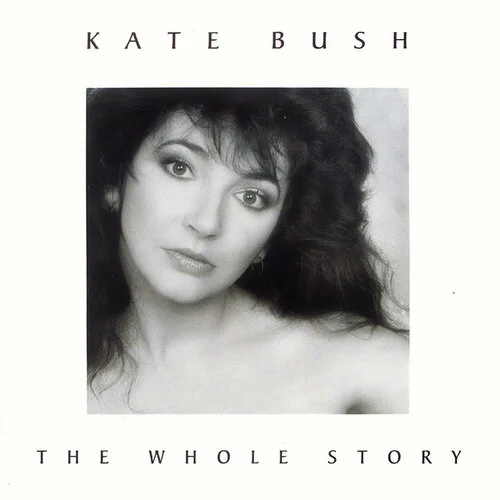
I love all the details about the song and what inspired it. I am eager to focus anew on Cloudbusting because of the amazing video. Because the greatest hits collection, The Whole Story, turns thirty-five on 10th November, I have been thinking about the visual side to Kate Bush. It is one of her clear strengths.

Not only does the Cloudbusting video star a famous actor in the form of Donald Sutherland; it also has the look of a film. The direction from Julian Doyle is amazing. I go back and forth regarding my favourite Kate Bush videos. Cloudbusting is definitely in the top five. It is a video that is, arguably, as strong as the song itself. There is no doubt that Kate Bush was becoming more ambitious regarding her videos by 1985. She has always wanted to direct and make films. In fact, she would the follow-up single to Cloudbusting, Hounds of Love. Maybe she was so affected by shooting Cloudbusting that she was inspired to direct! DAZED celebrated and spoke with some of the video’s key players to mark its thirtieth anniversary in 2015:

It sounds like fiction of the most fanciful kind, but in fact, the video – and book – are drawn entirely from life. Written by Peter Reich and published in 1973, A Book of Dreams is an extraordinarily touching account of a father, one Wilhelm Reich, as seen through the eyes of his doting son. Reich senior was a controversial figure in the field of psychoanalysis. On the one hand, his pioneering work laid the blueprint for the sexual revolution of the 1960s, attracting interest from Albert Einstein and Norman Mailer, among others. On the other, his ‘orgone accumulator’ invention – a metal box which Reich claimed harnessed the sexual energy of his patients for alleged benefits to their health – brought an injunction from the US authorities that would eventually land him in prison, where he died at the age of 60 in 1957. It’s the moment of his arrest that provides the book and the video with its heartbreaking focal point, as a child’s love for his father bumps up against the impassive forces of McCarthy-era moral panic.

“(My dad) was the father of body therapy and the sexual revolution,” says Reich of his father. “In Germany in the 1930s, he led a political movement that called for, among other things, the abolition of laws against abortion and homosexuality, free birth-control advice and contraceptives, health protection of mothers and children, nurseries in factories and in other large employment centres, the abolition of laws prohibiting sex education and home leave for prisoners.”

Another of Reich’s inventions, of course, was the Cloudbuster, the fantastical rainmaking machine that features in Kate Bush’s video. We pick up the story of the shoot, speaking to key contributors including Donald Sutherland, director Julian Doyle and editor Terry Gilliam, with additional insights from Peter Reich. Watch the video and get the story below.

Kate Bush (excerpt from a Kate Bush Club newsletter, 1985): “I was inspired by a book that I first found on a shelf nearly nine years ago. It was just calling me from the shelf, and when I read it I was very moved by the magic of it. It’s about a special relationship between a young son and his father. The book was written from a child’s point of view. His father is everything to him; he is the magic in his life, and he teaches him everything, teaching him to be open-minded and not to build up barriers... But there’s nothing he can do about his father being taken away, he is completely helpless. But it’s very much more to do with how the son does begin to cope with the whole loneliness and pain of being without his father. It is the magic moments of a relationship through a child's eyes, but told by a sad adult.”

ttoot.jpg

 Terry Gilliam: “Kate called me to direct the video and I said, ‘No, how about Julian (Doyle)?’ They had a great time shooting, but somewhere in the editing a conflict developed and I became the mediator. Kate knows exactly what she’s doing, she knows what she wants. She’s the sweetest person on the planet but she’s absolute steel inside!”

Julian Doyle: “Kate came to me with a storyboard, which I remember had the sun coming up with a face on it. She was a lovely lady, with a great smile that she gave generously. I understood her influences – like, I knew immediately where ‘It’s coming through the trees’ (film sample on ‘The Hounds of Love’) came from and things like that. I also knew about Wilhelm Reich, because there was interest in him among the new women’s movement which was exploring the female orgasm and I was close to the women involved.

Donald Sutherland: “Barry Richardson, who was the hairdresser on Nic Roeg’s Don’t Look Now, asked me if I’d do a music video with Kate Bush. I told him no and we went on to other conversations. A couple of days later there was a knock on my door. I lived in the Savoy Hotel (in London). On the river. Suite 312. I loved it there. So cosseted. So private. Only the floor butler rang the door. I opened it. There was no one there. I heard a voice saying hello and I looked down. Standing down there was a very small Kate Bush. Barry had told her where I lived. What can you do? 

ggg.jpg

 She wanted to explain what her video was about. I let her in. She sat down, said some stuff. All I heard was ‘Wilhelm Reich’. I’d taken an underground copy of his The Mass Psychology of Fascism with me when I went to film (Bernardo) Bertolucci’s Novecento in Parma. Reich’s work informed the psychological foundations of Attila Mellanchini, the character Bernardo had cast me to play. Everything about Reich echoed through me. He was there then and now he was here. Sitting across from me in the person of the very eloquent Kate Bush. Synchronicity. Perfect. She talked some more. I said OK and we made ‘Cloudbusting’. She’s wonderful, Kate Bush. Wonderful. I love that I did it. (What do I remember) about doing it? I remember being in the car and the hill and them taking me, taking Reich, away and looking back through the back window of the car and seeing her, seeing Reich’s son Peter, standing there. And I remember the first morning on set seeing her coming out of her trailer smoking a joint and I cautioned her, saying she shouldn’t smoke that, it’d affect her work, and she looked at me for a second and said she hadn’t been straight for nine years and I loved her”.

Just over thirty-six years after the world witnessed this remarkable song from a genius album, I wanted to spend some time with it. It sounds like Bush had a great time working with Sutherland and, as I suggested, picked up some invaluable experience regarding directing and film-making. She would adopt her own style and technique for videos she directed. The power and importance of songs like Cloudbusting reverberates to this day. A stunning track with one of the best videos Kate Bush’s career, it is sensational. With lyrics that are moving and striking (“I hid my yo-yo/In the garden/I can't hide you/From the government/Oh, God, Daddy/I won't forget”), one is powerless to resist the song’s wonder! A happy thirty-sixth anniversary to…

A sonic and visual masterpiece.

FEATURE: Modern Heroines: Part Seventy-Two: Tiwa Savage

FEATURE:


Modern Heroines

fff.jpg

PHOTO CREDIT: Lakin Ogunbanwo 

Part Seventy-Two: Tiwa Savage

___________

I am a big fan of Tiwa Savage

ff.jpg

 PHOTO CREDIT: TSE

so I wanted to include her in Modern Heroines. Even though she has been in the music business a while, I feel she is going to be a future icon. The  Nigerian singer, songwriter and actress was born in Isale Eko. Savage relocated to London at the age of eleven for her secondary education. Five years later, she began her music career doing backup vocals for artists such as George Michael and Mary J. Blige. Having released her amazing E.P., Water and Garri, in August, there are eyes on her. Rather than reflect and comment on recent news regarding Tiwa Savage and the fact that she is being blackmailed with a sex tape, I am focusing on the music and more about an artist who is among the finest out there. I want to bring in a few interviews where we learn more about the amazing Tiwa Savage and why she is such an incredible artist. I want to start with a COMPLEX interview that was conducted late last year. It is interesting learning about her early life, in addition to what she says about her new album, Celia:

One of the key players in helping to broaden the Afro sound globally, like true royalty, Tiwa has carried the Afrobeats scene with pure style and grace. Arguably the most popular woman within the scene, the Nigerian-born singer-songwriter sits comfortably next to fellow West African pop stars such as Wizkid and Davido. And it’s clear to see why: since emerging in the early 2010s, she has released countless hits like “Eminado”, “Ma Lo”, “Bad” and “Kele Kele Love”, to name just a few.

Migrating with her family to London at the age of 11, Savage fell in love with music early on, in school: she took extra music classes and played instruments at a serious level. But it was when she hit 15 that she found her voice. A year later, she would find herself singing background for the likes of George Michael, Ms. Dynamite, Mary J. Blige, and even Italian opera singer Andrea Bocelli. Trying her hand at the spotlight, Savage went on to appear on the UK version of The X Factor in 2006, but after not being all the way ready for the shine, she eventually found her feet in songwriting, signing a publishing deal with Sony/ATV out in the States and penning for R&B icons such as Monica, Babyface and Mya.

Savage soon caught the bug again, and in 2013 released her debut album, Once Upon A Time, to critical acclaim. In the seven years since, she’s returned to Nigeria and dropped two more albums: R.E.D., in 2012, and the recently-released Celia. The 40-years-young talent has also performed at international festivals, including Afro Nation, One Africa Music Fest: Dubai, Wireless, and Global Citizen, taking her hybrid sound of Afropop—in both Yoruba and English—R&B, dance and reggae (with a dose of classic afrobeat) around the world.

Featuring on last year’s Beyoncé-produced soundtrack, The Lion King: The Gift, Tiwa Savage has solidified her royal status many times over and she is happy where she is today. Celia, her third studio album, is a tribute to her mother and a love letter to Afrobeats. Tiwa’s aim was to create a album full of anthems to empower women and girls in the same way that artists like Brandy did for her and, naturally, she outdid herself.

xxx.jpg

 Tell us the stories behind those songs you just mentioned.

“Celia’s Song” is what I imagine when my mum is praying for me, always telling me to “never give up, always be thankful and give God the glory.” I would say that’s the story behind “Celia’s Song”. Another I didn’t mention is “Us”, the interlude, which is a song about the breakdown of my divorce.

How important is it to be true to yourself and be unapologetically strong as a woman?

Very important, but it’s not easy. First of all, it’s hard being a woman and then being a Black woman, it’s like you have to be even stronger. I think it’s extremely important to value yourself, but then I also understand it’s not that easy in the society we live in, where you’re influenced by magazine covers, Instagram, and the world seems to celebrate women that look the opposite from what we look like.

That is so true. With the rise of Black movements, colourism has also become the topic of discussion. How has this impacted your road to success?

I feel like women who look the opposite of what we look like seem to be celebrated more, and it’s not just in our community—it’s all around the world; this one-track idea of what a beautiful woman is. That’s why I want to try and encourage girls that are my complexion, and try to be part of the people that change the narrative to say that Black women are beautiful! That’s why I love the songs by Beyoncé and Wizkid’s “Brown Skin Girl”. I’ll be in the clubs screaming, like: “Yes!” I see other girls in the club singing and I’m like, “Sorry, but this isn’t for you. It’s for us!” [Laughs]

When did you fall in love with music?

Well, I was always surrounded by music, but I do remember when I first heard “I Wanna Be Down” by Brandy. At that point, I was like: “This is so great! This woman is amazing!” Her tone and her vibe was just wow. She was so young when she started and what she’s achieved is just incredible. I think I fell in love with R&B when I heard Brandy.

How has travelling and living in different parts of the world shaped you into the woman and artist you are today?

That’s a great question. Nigeria, I think that’s where I got my spiritual grounding because African parents are very spiritual. I also think I got my good manners from there [laughs]. London, I think that’s where I fell in love with music; that’s where I got into Aaliyah, Brandy and the Spice Girls. Yes, I’m a huge Spice Girls fan and I’m not ashamed [laughs]. In Nigeria, my dad would play Fela [Kuti] and King Sunny Ade, and when I got to London I was listening to more western music. Then when I got to the States—funnily enough, that’s when I appreciated being Black because, when I was in London, I was teased as an African. It wasn’t cool to be that. But when I went to America, I’d be like: “Hey, chocolate!” When you’re African, they’d ask things like: “What do you listen to? Fela Kuti?” My reply would always be: “Yeah, he’s my uncle… I’m just kidding!” [Laughs] I used to joke that my dad was a king in our village, or that everyone’s royalty in Nigeria. It just made me love who I am and just being a Black queen.

Many have crowned you the Queen of Afrobeats, and rightly so. Does having a title like this carry a lot of pressure?

Yeah, but it’s good pressure because I always just want to excel and make my fans feel great. You know, when someone gives you that kind of title, it's like I always want to impress them and do better than I did last time. I want them to be proud to say they’re Savage Soldiers or fans or supporters of Tiwa Savage.

What made you want to expand the Afrobeats scene back in Nigeria, rather than continuing your work in the States?

I didn’t, actually. My brother and a lot of people used to tell me that I needed to come back to Nigeria, and I would just be like, “No! I want to be an R&B singer in America. Like, hello!” When I was living in LA, I was songwriting, and I would go into different studios and they would ask me where I’m from and when I said Africa, they were always fascinated, asking me questions about what my names mean, about rhythms, and then I started listening more to what was coming out of Nigeria. So I was hearing a lot of P Square, D’banj, and 2Face. I was just like, “Woah! The music is growing.” But I didn’t see that many women, so I decided that I’d go back to Nigeria and give it a try. I wanted to try and fuse Afrobeats with R&B, two sounds that I love, and see if it works. I recorded my first song, “Kele Kele Love”, and when I put it out, all the girls were like, “Yes! Finally!” So it was great but, initially, I didn’t want to move back”.

Before continuing with interviews, it is worth dropping in a review for Celia. It is an amazing album from an artist who is so prolific and amazing. Her music transports you somewhere special. The Mantle were keen to have their say when it came to Celia’s brilliance:

On Celia, Tiwa boldly straddles and owns her multiple facets. She is commander, lover girl, mournful ex-wife, sexy showoff, and prayerful child of her mother.

Celia  also shines in its collaborations. Rather than grab for default big names, she sought artists to underscore the message and elevate the energy of each collaboration. Bringing Sam Smith, Stefflon Don, Davido, and others onto her album, Tiwa shows an intuition about her music.

She partnered with Sam Smith in ‘Temptation’, another love song that speaks to its name, and though both singers are well versed in pop, R&B, and soul, it is a unique joy to hear the British singer bring all his skill to an Afrobeats track. ‘Bombay’ is pure, sexy provocation, and Tiwa rightly brings in Stefflon Don to assert the virtues of a “bom-bom bigger than Bombay” that will make her love interest “fall like leaves inna autumn”. Dice Ailes is the cherry on top, as he drops witty Yoruba rhymes on this dancehall-influenced track that epitomize just how flexible the boundaries of musical genres can be. On ‘Pakalamisi’ Tiwa again gives us the soulful runs and harmonies that she stands out for, and brings on Hamzaa, East London-bred alt-soul singer.

The beats on ‘Ole’ and ‘Koroba’ are ones Afrobeats lovers know and have heard many times, but still Tiwa serves them hot. In ‘Ole’ she partners with Naira Marley, which post-album promotion suggests as a strategic play for support from Marley’s fans, who bring rabid enthusiasm to anything he does. The song rightly ends with a skit from popular culture that is a poignant and hilarious nod to how Nigerians have learned to cope with political leaders who often act shamelessly and senselessly. In ‘Koroba’, Tiwa challenges the way society judges young women who date older wealthy men. In these songs rather than just serve us the beats we know, she also tries to pass a deeper message to society.

In spite of these strengths, Celia  has a few lackluster offerings, including ‘FWMM (F*CK With My Mind)’ whose length and abrupt end make the song sound like it was cut short sound incomplete and ‘Us’, a mournful interlude that sounds out of sync with the Afrobeat vibe of the album, where she reflects on her divorce from her long-term business partner and promoter, TeeBillz. However, very little about this power-packed album doesn’t work, so we can hardly begrudge Tiwa her five minutes of navel gazing.

The album closes with the eponymous ‘Celia’s Song’, guaranteed to tug at heart strings and have listeners replaying it over and over. In the album notes, Tiwa calls it a prayer, and dedicates it to her mother, whom the album is named after. If you repeat the album, you will hear how well the closing track rounds things off and leads you right back into ‘Save My Life’.

Nigerian music is in a great moment where we have international influence, reach, and capacity for collaboration. Within this space, it is even greater to see artists like Tiwa Savage going beyond the zeitgeist towards longevity, full bodies of work, and corner pieces which will be relevant in decades to come”.

Changing directions slightly, Allure spoke with Tiwa Savage in the summer. She discussed her skin care and cosmetic regime. It is something that I feel is worth highlighting:

Every aspect of how she presents herself is intentional — from the natural hairstyles she wears in the majority of her music videos to how her melanin-rich skin is lit on camera. As a self-described “chocolate girl,” colorism and the insidious European beauty standard embedded into colonized nations are something she’s very cognizant of.

“I actually did try to bleach my skin when I was about, I think, 14, 15,” she recalls. “Even now, on my back I have patches... My mom, she was cleaning my room and saw the cream that I used to mix with lemons. She wasn’t even angry. It was more her disappointment. So I stopped, but I was always insecure about being dark.”

When Savage began gaining more attention, her perspective changed. “When I started my career I wasn’t embracing who I was fully yet because I was just trying to crack into the market,” she says. “My first two singles were very American and it wasn’t very African. But then, as time went on, I just started seeing how powerful my platform was and how mothers would say, ‘My little girl really looks up to you.’” So, she made an about-face.

mm.jpg

PHOTO CREDIT: Lakin Ogunbanwo 

On set, Savage makes sure she looks “as natural as I am in real life,” even going so far as to insist that blemishes are not edited out of her photos. She doesn’t feel pressure to appear to be something she is not. Actually, being inauthentic would probably be harder for someone as self-assured as she is. “I have a platform and I’m digging more into my responsibility for younger people,” she says. “And I feel like there’s so much pressure now and it’s going to get even worse with social media and there needs to be a balance. There needs to be some people that are not too perfect. I know we want to look good. I don’t want to be out there looking jacked up, but I also want to look relatable.”

Savage is honest, empathetic, and, at times, as giddy as a schoolgirl (she goes on and on about her crush on Korean movie star Lee Min-ho. “That’s your stepdad,” she told her son while watching The Legend of the Blue Sea). She spends her days reading her Bible, watching Korean movies on Netflix, meditating, and staying off social media (someone else runs her accounts for her). She’s also been thinking about ways to infuse serious topics into her music. In her next chapter, Savage wants to take fans on a journey that doesn’t involve a collection of “love songs and sweet, cute records.”

After a year riddled with police brutality, #EndSARS uprisings, and a massacre at the Lekki tollgate, not far from her home, Savage has refocused. She spent this past year watching the news and speaking out about issues in Nigeria, like the sexual abuse of young girls, with hope that after hashtags die the momentum to protect society’s most vulnerable will not. Her foundation, We Are Tired, was created to provide legal support and representation to sexual assault survivors in Nigeria. Savage’s work addressing corruption has sometimes been followed by backlash from politicians and religious leaders. Her stance: “I’m not trying to have the hottest song or club-banging hit or millions of streams,” she says. “I feel like the world is going through stuff and I need to play my part”.

Just before wrapping things up, there is an NME interview from last year that caught my attention. Tiwa Savage discussed the Afrobeat scene/charts. She also stated what she wants her legacy to be:

Having witnessed the industry from the inside out as a backing singer, she does miss the time when making music was “so magical and there’s no label trying to tell you to do this so you can get your Spotify or YouTube numbers up”. However, according to Tiwa, “slow success builds character but fast success builds ego.”

Tiwa is “indifferent” to the new Afrobeats Chart, which was criticised for lumping together disparate genre under the term. When asked whether afrobeats – a genre that’s been around forever without mainstream acclaim – will last, she insists that “it’s definitely here to stay”, adding: “I’m so proud of the whole spotlight on Africa. I only hope that this is not Africa’s 15 mins of fame or this whole afrobeats genre is a flash-in-the-pan moment.

So she takes her status as the ‘Queen of Afropop’ very seriously: “I put pressure on myself to do better than my last [album], but having that title… it’s sweet that there are fans who think that of me – although there’s not just one queen. There’s a load of kings and queens doing this.”

Knowing that her name holds a lot of weight, Tiwa Savage has been using her clout for good. She’s a philanthropist and activist, working to fight against sex trafficking and rape with the #WeAreTired movement, which gives Nigerian women a voice on sexual injustices. However, thanks to quarantine, she’s realised that she “wants to do more”, and says: “[As] celebrities we have a wider reach, sometimes, more than politicians and religious leaders because the youth would prefer to listen to a celebrity than another figure. They have more trust in their idols, therefore we’ve got to use our platform to be the voice of the voiceless.

Given her ability to bounce between different roles, Tiwa Savage is something of a Renaissance woman. When she’s not singing her heart out or preaching for change, you can see the star penning some of your favourite singer’s sleeper hits or even acting on MTV drama Shuga, a show which educates kids about safe sex. Yet Tiwa bats away the ‘Renaissance woman’ tag: “I see myself as that in an ideal world, but I know there’s a load of areas I want to work on. Acting in Shuga, I was so glad to help educate the youth about sexual education and how to practise safe sex. As a Nigerian, we don’t talk about that with kids. Even as teenagers, your parents don’t even want to know that you’re involved in those types of things. It’s a clever way to get the information out.

“I want my legacy to be way bigger than music, so I know I have to make time to do more things I want to do [to be called a Renaissance woman]”.

xxx.jpg

 PHOTO CREDIT: Stephen Tayo for The New York Times

Actually, just as I was saying I would finish up, I have found one more interview that is worth exploring. The New York Times interview is revealing and moving in places. There are a few sections I want to highlight:  

At times, Savage also seeks to provide consolation. “I feel like as a musician, I owe it to my listeners just to have that one song where they just want to cry or they want to just be in a room and know that everything will be all right,” she said.

Her first album, “Once Upon a Time,” was released in 2013, drawing nearly as much on American R&B as it did on Afrobeats. Her second, “R.E.D,” in 2015, was exuberantly pan-African, taking in rhythms from all around the continent and dipping into Jamaican reggae. She performed extensively, even when she was visibly pregnant.

But as her popularity rose, her marriage deteriorated. By spring 2016, she and her husband were separated and publicly at odds; eventually, they divorced. Near the midpoint of “Celia,” Savage sings “Us (Interlude),” which directly addresses the breakup: “I wasn’t enough/You weren’t enough/Love wasn’t enough,” she laments.

“It’s definitely the first time I’m being vulnerable,” she said, adding that it had taken years to come to terms with the breakup. “When we first started, it was just like, ‘Me and you, we’re going to conquer the world.’ And then it got to a point where the brand was getting big, and when I had to make a decision, it wasn’t just me and you,” she said.

Savage wrote and recorded “Celia” the way many Western pop stars make albums: She convened a songwriting camp. She booked eight rooms for 15 days at the Oriental Hotel in Lagos, where producers and musicians could come and go, bouncing ideas off one another as Savage supervised, selected tracks and came up with top lines. “Just put your heart into it, and let’s have fun,” she told them”.

For all the programming, planning, brand management and careful messaging that go into her music, Savage is determined to loosen up. She is trading pinpoint choreography for more spontaneous moves; she’s revealing her tomboy side as well as her glamorous one; she’s leaving bits of noise and imperfection in her songs. Her next album, which may arrive sometime next year, might dip into Brazilian music or other styles that have caught her ear.

“I’m never going to stop experimenting,” she said. “That’s just who I am. Get used to it”.

Let’s hope that the amazing Tiwa Savage never stops experimenting and putting out music of the highest calibre! She is, without a doubt, a modern-day treasure that is going to influence so many other artists. She has done so already. Even though her name has been in the news for reasons other than her music, I was keen to focus on the most important thing: her raw talent and amazing talent. If you are new to Tiwa Savage and need a bit of a guide, I have collated a playlist at the end. As you can hear, her music is so…

BEAUTIFUL and powerful.

FEATURE: Vinyl Corner: Anita Baker - Rapture

FEATURE:


Vinyl Corner

Anita Baker - Rapture

___________

ON this visit…

ddd.jpg

to Vinyl Corner, I am exploring Anita Baker’s 1986 album, Rapture. It is an album that I would urge people to get on vinyl. It houses classics such as Sweet Love and Caught Up in the Rapture. The album is considered to be one of the very best from the 1980s. I don’t think there is anyone in music like Anita Baker. The second studio album from the legend, Rapture became Baker's breakout – going on to sell over eight million copies worldwide. Rapture also earned her two Grammy Awards. I think that Baker’s vocals are more restrained and composed than a lot of her contemporaries. There is so much soul and beauty that runs through Rapture. Her latest album, 2005’s Christmas Fantasy, is a marvellous one. I do hope that Baker releases more material. I want to bring in a couple of reviews for Rapture – for anyone who is not convinced by the album or has not heard of Anita Baker. In their review, this is what AllMusic said:

Though Anita Baker got some airplay out of The Songstress, that promising solo debut didn't bring her financial security. In fact, Baker was earning her living as a legal secretary in her native Detroit when she signed with Elektra in the mid-'80s. Elektra gave her a strong promotional push, and the equally superb Rapture became the megahit that The Songstress should have been. To its credit, Elektra made her a major star by focusing on Baker's strong point -- romantic but gospel-influenced R&B/pop ballads and "slow jams," sometimes with jazz overtones -- and letting her be true to herself. Rapture gave Baker one moving hit after another, including "Sweet Love," "Caught up in the Rapture," "Same Ole Love," and "No One in This World." Praising Baker in a 1986 interview, veteran R&B critic Steve Ivory asserted, "To me, singers like Anita Baker and Frankie Beverly define what R&B or soul music is all about." Indeed, Rapture's tremendous success made it clear that there was still a sizeable market for adult-oriented, more traditional R&B singing”.

I think that Rapture is one of the greatest albums ever. In terms of showcasing a rare and untouched voice, Rapture is an album that demonstrates Anita Baker’s talents. In a separate review, Pitchfork offered up the following:

Rapture didn’t align with the electro-R&B that was de rigueur in 1986 pop or the increasingly mechanistic and sexually-unbridled explorations of the genre’s most prominent svengalis, Prince and Jimmy Jam and Terry Lewis. On its arrival, the album was dubbed retronuevo by the writer and critic Nelson George, who was trying to emphasize the older Black musical forms that Baker’s songs were rooted in. On the one hand, the emotions that rocketed through them felt enormous and electric enough to be gospel—hear the immensity with which Baker sings “myyyy joy” in “You Bring Me Joy.” But their expression was so controlled and stylized, painted in instrument by instrument, that it just as easily brought to mind the jazz, fusion, and soft R&B that preceded it.

Despite these traces of retro in the music, very little of Rapture sounded old by the standards of 1986. Its production is state of the art; if it were a sculpture it would be the kind where you couldn’t tell if hands had ever touched it. Each note touches down as an isolated unit of clarity, though the instruments are also steeped in enough reverb to sound like they recently walked out of a lake, their footfalls wrapped in wet echoes. The piano’s presence is so simultaneously thick and diffuse in the mix that hearing it feels like being embraced by a cloud of an ex-lover’s perfume. Every other instrument, whether percussion, bass, or guitar, acts as a texture, another beat in the riverlike rhythm, as on “Same Ole Love,” where the effect makes for a little perpetual motion machine of a love song. And though Baker expressed her own antipathy toward synthesizers around the time of Rapture’s release (“The sound is so thin,” she said), there are synths all over the album, and when they mix with the acoustic pianos they encase their tones in a layer of crystal.

Which is one of the reasons why Rapture as an R&B album doesn’t feel like an argument for nostalgia or authenticity as much as it does for continuity. It is not necessarily trying to emulate old soul music, even though it is certainly music with an old soul. Instead, styles from the past—soul music’s bottled feeling, funk’s unhurried step, disco and post-disco’s lush grooves, gospel’s power, jazz’s curiosity—are brought into the present and combined in such a way that one’s sense of time outside of the songs ceases to matter, creating a dream space where all of these displaced musical forms can blossom simultaneously and entangle with each other. Rapture is like a home Baker built, a hearth, a warm safe place where both the mystery of love and the history of Black music can be both explored and preserved.

Rapture’s agnosticism toward the contemporaneous intrigues of pop production made it oddly flexible across different formats and charts; it’s quiet storm trembled onto Adult Contemporary stations like a weather pattern itself, and the record eventually lodged itself in the Billboard Top 40. The presence of Baker’s voice in my childhood home was so constant as to verge on ambient, another piece of furniture in the house, or, in the period before I knew what furniture was, another murky voice cooing in the air above me.

Thirty years later, I saw Anita Baker perform at the New Orleans Jazz & Heritage Festival, one of the stops on her farewell tour in 2018. Her stage presence was surprisingly exuberant, more so than the narcotic pull of her voice would necessarily suggest. She swung her arms around, grasping handfuls of air or strumming it as if she were able to touch her own music as it streamed by. But when she opened her mouth to sing, time collapsed, and I was the same age I was the moment I first regarded Baker’s voice with awe, thinking she was like a magician pulling silk scarves from her mouth”.

I am going to wrap things up in a second. If you are not overly-aware of Anita Baker’s Rapture, you can get it on vinyl relatively inexpensively – failing that, you can stream it and listen that way. With so many amazing songs throughout, Rapture is an album everyone needs to own. It is an album from a stunning singer who…

HAS inspired so many.

FEATURE: Second Spin: Ellie Goulding - Delirium

FEATURE:


Second Spin

dddd.jpg

Ellie Goulding - Delirium

___________

WHEN thinking of an album…

dd.jpg

for this Second Spin, I arrived at the feet of Ellie Goulding. She is someone I listen to but would not consider myself to be a massive fan of. I feel that one or two of her album have been scored quite low and have not got the sort of exposure and acclaim as they should have. Delirium is definitely a case in point. It is an album where critics were split and there was a real divide. Some noted how Delirium is not the most original album – one that could been made by any other artist. In terms of its commercial performance, Delirium fared well. It debuted at number three on the UK Albums Chart and at number one on the UK Album Downloads Chart. In Australia, Delirium charted at number three, becoming her second album to end up within the top ten, and her highest-charting album in the country. Released on 6th November, 2015, one of the biggest problems with Delirium is the number of studios listed. Goulding seems to have recorded every song in a new studio! There are a lot of producers listed for Delirium too. It is a problem that afflicts genres like Pop and R&B. You get so many cooks in the kitchen; one wonders how much of Ellie Goulding is in there. Maybe that is what critics noted: other people moulding her and making some generic and commercial, rather than individual and brimming with original personality.

One cannot fault Delirium for a lack of energy and bangers. One reason why I feel it warrants a new spin is because it has some great tracks in the mix. The singles Something in the Way You Move and Love Me Like You Do are among her best releases. Goulding co-wrote most of the tracks on Delirium. One can certainly hear her hand and voice in the writing. One can feel a different look and sound on Delirium compared to 2013’s Halcyon Days. More Synth-Pop than anything that had come before, it is a necessary and welcomed evolution and transformation. For those who feel the lyrical scope is narrow and Goulding did not bring too much in the way of substance and surprise, I feel people need to give the album another listen. It has a few weak tracks, though most of them are pretty solid. I want to bring in a couple of different reviews. There is one that is fairly negative, whilst the other is more positive. This is what CLASH wrote in their review:

After winning the BBC Sound of 2010 poll, it quickly became clear that Ellie Goulding wasn't your typical popstar. Her songs sparkled and shimmered rather than bludgeoned you through the speakers, and she quickly won fans and plaudits.

However, as time has gone on, her idiosyncrasies have been stealthily expunged, and she's gradually morphed into just the kind of artist she initially seemed to be the welcome antidote to. Previous album, 'Halcyon', featured zeitgeist-chasing dance-pop in abundance, and then she went through the 2010s pop act rite of passage that is a guest vocal spot on a Calvin Harris club-friendly banger.

The main problem with this is that her voice is too wispy to hold its own versus the maximalist rave-pop of the day. Throughout 'Delirium', her vocals are often double-tracked in an attempt to circumvent this, but it largely fails, and the singing is forever fighting for attention amid a swamp of crashing beats and over-zealous synths.

On top of this, 'Delirium' just hasn't got the songs. If you like listening to fey exhaling over the same uninspiring backing track 16 times in a row, then you're in luck, but for the rest of us, it's a largely fruitless exercise. Put one of the singles on in a club at 2am when you've imbibed enough vodka to tranquilise a small horse and it's a sufficient distraction from the cruel realities of life. It's difficult to find anything else in 'Delirium' that'll make it worthy of your time though”.

I am going to wrap things up by sourcing from AllMusic. Whilst not entirely glowing, I feel that it is a little more balanced and fairer towards an album that has plenty of merit and positives:

British chanteuse Ellie Goulding returns with her highly anticipated third studio album, 2015's expertly produced Delirium. Goulding's previous effort, 2012's Halcyon, was a hypnotically ambient, lightly experimental album that balanced catchy pop hooks with textural electronic soundscapes. While Delirium isn't devoid of this electronic atmosphere, it's somewhat more mainstream in its tone, and finds Goulding expanding her sonic palette with a melodically catchy set of more R&B-infused songs. Helping Goulding to achieve this are a handful of uber-pop producer/songwriters, including Sweden's Max Martin (Britney Spears, Taylor Swift) and Carl Falk (One Direction, Nicki Minaj), Savan Kotecha (Ariana Grande, One Direction), Greg Kurstin (Sia, P!nk), and others. Halcyon also benefited from a similarly collaborative approach, but Delirium feels less distinctly personal, bigger in scope, and brimming with a pressurized commercial energy. But that's not necessarily a bad thing. Whereas Halcyon may have required several listens to grow on you, Delirium grabs you with immediately hooky, danceable tracks like "Something in the Way You Move," "Keep on Dancin'," and "Don't Need Nobody." Some of the more R&B-leaning cuts like the Police-meets-Rihanna single "On My Mind" seem at first like an odd fit for Goulding's highly resonant, throaty chirp of a voice.

That said, Goulding's voice has always fit well in the contemporary pop landscape and even when you get the sense that she's trying on someone else's sound, as in the CeeLo-esque "Around U" and the swoon-worthy "Codes" with its '90s Brandy-meets-M83 vibe, the sheer craftsmanship of the material alone keeps you listening. There are also enough passionately heartfelt EDM anthems, like the effusive "Army" and bubbly, Ibiza-ready "Devotion," to please longtime Goulding fans. Ultimately, it's the unexpectedly appealing combination of Goulding's distinctive voice and the melismatic R&B bent of the songs on Delirium that makes for such an ecstatic listen”.

With some positive reviews from some quarters and pretty big sales, Goulding’s Delirium is worthy of more investigation and airplay. I was aware of the album when it came out in 2015. I have got more into it this past week or two. One cannot listen to Delirium and remain motionless! It is an L.P. that compels you to move and raise your voice. Maybe there is not too much depth and enormous variation. It is Goulding’s performances and the way she commits to every songs that elevates Delirium from a merely promising album to a really good one. Even if you have not heard of Ellie Goulding, you can get a lot from Delirium. It would take her until 2020 to follow up Delirium. Brightest Blue gained positive reviews from critics. Many were impressed that she returned to the simplicity of her debut and 2012’s Halcyon. I feel Delirium is an album in her catalogue that maybe gets overlooked or is ignored. I would suggest people check out a…

VERY worthy album.

FEATURE: The October Playlist: Vol. 4: Prioritise Pleasure

FEATURE:


The October Playlist

IN THIS PHOTO: Self Esteem (Rebecca Lucy Taylor) 

Vol. 4: Prioritise Pleasure

___________

IN this week’s Playlist…

 IN THIS PHOTO: Jack White

there is new music from Self Esteem, ABBA, Jack White, Lana Del Rey, and Parquet Courts, Throw into the mix some Mimi Webb, Christina Aguilera/Becky G/Nicki Nicole (ft. Nathy Peluso), Biffy Clyro, Maya Jane Coles (ft. Julia Stone), GIRLI, and My Morning Jacket, and this is a pretty eclectic week. Although there are not as many massive artists as usual in the Playlist, there are still enough crackers to get the weekend off to a flyer. If you require a boost to get you through, then the tracks below should definitely sort you out. I hope there is something below that you like. With the sheer range of music out this week, there is bound to be something in there…

 IN THIS PHOTO: Lana Del Rey/PHOTO CREDIT: Interscope Records

TAKE your fancy.

____________

Self Esteem - You Forever

ABBA Just a Notion

Jack WhiteTaking Me Back (Gently)

Lana Del ReyBlue Banisters

PHOTO CREDIT: Pooneh Ghana

Parquet Courts Homo Sapien

Mimi WebbHalfway

Christina Aguilera, Becky G, Nicki Nicole (ft. Nathy Peluso) Pa Mis Muchachas

Biffy Clyro - Errors in the History of God

Maya Jane Coles (ft. Julia Stone) - Got Me

GIRLI I Don’t Like Myself

Carrie BaxterRose

PHOTO CREDIT: Moises Galvan

Bedouine It Wasn’t Me

Khalid Present

Animal Collective Prester John

My Morning JacketIn Color

Bonobo (ft. Jamila Woods) - Tides

Fetty Wap The Truth

PHOTO CREDIT: Jake Michaels

Real EstateDays

Tenille ArtsGrowing Old Young

Hope TalaTiptoeing

Gracie Abrams Rockland

Josef SalvatThe Drum

Charlotte CardinScorpio Season

ElkkaVoices

Jessica Winter – Do You Do You

Sarah Proctor Not for Me

Abby AndersonBad Posture

Jessie James DeckerThe Woman I’ve Become

FEATURE: Spotlight: Gabriels

FEATURE:


Spotlight

dhfr.jpg

PHOTO CREDIT: Jamie Parkhurst 

Gabriels

___________

THIS is a band…

ggg.jpg

that I am fairly new to. The incredible Gabriels are a stunning force who have won the support of, among others, Elton John! I love their music and was eager to feature them in Spotlight. I am going to bring a review in for their incredible E.P., Love and Hate in a Different Time, very soon. Before that, The Guardian spotlighted them back last year:

If Elton John is calling something “one of the most seminal records I’ve heard in the past 10 years”, odds are you should be paying attention. The song in question was Love and Hate in a Different Time, taken from a debut EP of the same name – a recent release from the LA-based group Gabriels.

The trio comprises gospel singer and choir director Jacob Lusk (possibly you’ll remember his astounding, tender voice from American Idol in 2011) alongside producers Ryan Hope and Ari Balouzian. The story goes that, back in 2016, Hope and Balouzian had been working on a film together (director and soundtrack respectively), and in searching for a choir for the project they came across Lusk. Via a few years of makeshift recordings in a rental property in LA, and experimenting with a range of sonics, they began to release music.

Together, they make warming songs that vibrate with feeling, careening between decades. They channel everything from Flamingos-era doo-wop to yearning jazz; glossy, swooning soul, classic R&B, vibrant gospel choirs with flourishes of airy electronics. One of their music videos features footage of Lusk singing Billie Holiday’s Strange Fruit through a megaphone at a Black Lives Matter protest last year, anchoring their sound in the searing present.

In many ways, Gabriels’ sound is one that runs the gamut of Black American music history, aching with love and loss, all while swelling with hope”.

If you have not discovered Gabriels, then go and check their music out (links are at the bottom of this feature). They are a band who are so different to anything out there! I feel that we will hear a lot more from them – or let’s hope that we do! NME interviewed the band recently. They were asked why it took five years from their first meeting to the release their debut E.P.:

The past, present and future are in lockstep in the music of Gabriels. The LA-based trio, who released their debut EP ‘Love and Hate in a Different Time’ in June, channel the uncompromising authenticity of gospel and 60’s R&B, but present it in a thrilling, contemporary context with tightly arranged production and sharp electronic flourishes. In a fast, oversaturated musical landscape, Gabriels demand that you drop everything and listen closely.

Comprising Sunderland-born producer Ryan Hope (the band is named after St. Gabriels Avenue, the street on which Hope grew up), Calfiornian producer and classically trained musician Ari Balouzian, and the stunning gospel vocals of Compton’s Jacob Lusk, they have quickly amassed an arsenal of famous fans, including Annie Mac, Gilles Peterson and Elton John, who described the debut EP’s title track as, “one of the most seminal records I’ve heard in the last ten years”. In other words, time is running out to be ahead of the game on this band.

As they prepare to release their second EP, ‘Blame’, on November 5, NME spoke to the band about how the project came to be, their upcoming run of live shows, and the spontaneous moment when Lusk electrified a Black Lives Matter march with an impromptu version of Billie Holliday’s ‘Strange Fruit’.

ff.jpg

  Ryan, it doesn’t take a British person to notice that you have a very different accent to the other two members of Gabriels. What took you from Sunderland to California?

Ryan: “I left Sunderland at 18 when I went to study Art at Leeds University. I met a woman in a bar that I was working in, and her daughter worked in the music video department at Ministry of Sound. I wrote a message on the back of a receipt to her daughter asking if I could do work experience – I was just trying to make shit happen. She rang me up and said she needed someone to help put a Christmas party together – and I was already on the train when she said it.

“At that Christmas party, I met a producer who asked me to work on Massive Attack’s ‘False Flags’ video, and I went into a directing career. I moved over [to California] ten years ago. I was making techno at the time. In the first week, I was directing a video for Pharrell and 2 Chainz, and a researcher played me a short film. The music was amazing and it was by Ari – and we’ve been working on tunes together ever since. Ari and I were scoring a commercial one day when Jacob came in for an audition and blew me away. I heavily stalked him for a bit.”

Jacob: “Literally! I didn’t even want to do the commercial, and I was being very difficult. A couple days later, they showed up at my church and set up a remote studio in the choir room and we just clicked – we’re very different, but we have these similarities with each other. We’re literally the best of friends, it’s the biggest blessing in my life.”

Five years passed between that first meeting and the release of your first EP. Why was it important for you to take your time?

Ryan: “A big part of what we’re doing is to go back to that era of, ‘Let’s wait until the work is really good before we put anything out, and make sure it’s really good’. We’ve tried to do that with our videos and with everything we’ve done, to keep that integrity and quality to it, and I think people have noticed and appreciated it.”

Did you imagine you would end up making music when you were growing up?

Jacob: “I grew up in a very religious home where I was not allowed to listen to the radio. Nat ‘King’ Cole I knew of, but I didn’t know Motown music. I knew Aretha Franklin and Whitney Houston because they did a little gospel, but that was all. So yeah, it was a dream I had, but I threw it away because I didn’t look at it as a possibility.

“And now, looking back, I know I always wanted to do something like this, but I didn’t know how. It’s amazing how you drop little seeds and they can turn into this. Some of our first gigs were on Jools Holland and Jimmy Kimmel – like, what the fuck?

Ari: “And that’s obviously partly to do with the pandemic, but yeah, it’s just weird. We haven’t even been able to play a full set yet.”

The response for your debut EP was so strong, and people are clearly connecting to the depth of feeling in your music. Could that suggest that those things are in short supply in music elsewhere at the moment?

Ryan: “I think it depends on where you get your music from. In general, it’s out there. But in short supply? I could see why somebody would think that, and I do agree.”

Ari: “It’s harder to get that good stuff out; it’s not fed to the public very much. Unless there’s some tower structure attached to it, it doesn’t seem like it has value. But there are a lot of really interesting musicians who are around that we love and are inspiring, but they are different to what the mainstream language of music is now”.

One of the best E.P.s came in the form of Love and Hate in a Different Time. It is a work that I have been listening to since it came out. I am amazed every time I visit it. Such a beautiful, powerful and original collection of songs. It is the vocal work of the group that I especially adore. Such a sensational sound! This review of Love and Hate in a Different Time highlights how, despite the fact Gabriels have been working on it for a while, it sounds authentic and pure:

Gabriels is a music project from Los Angeles that consists of singer Jacob Luk, who has been working for

Diana Ross or Beck sang, and producers Ari Balouzian and Ryan Hope consists. With their EP Love and Hate in a Different Time they made big waves in the streaming market despite releasing the EP without a label. There was a reason for this, because Gabriel’s music emanates a mysterious atmosphere that makes narrow genre descriptions impossible. Roughly you could say that the sound of the EP is influenced by soul, funk and gospel. However, that does not explain the futuristic interludes, effects and the partly experimental production that take the music into new dimensions.

The first song The blind is characterized by heavy piano chords, which are carried with accentuated drums and claps. Most important, however, is the vocal performance of Luk, who sings emotionally about lies and hiding. The arrangement with later resurgent strings and a choir make the piece opulent. The atmospheric production gives the feeling that a lot of detail has been worked on here. In the few descriptions of the project you can read that the trio has been working on their album for four years. This long time is audible: Everything is carefully placed and optimized without losing its authenticity. Sincere, modern soul with a mysterious twist.

The heart and title track of the EP is reminiscent of “I heard it through the Grapevine” in the verse, but develops completely differently in the chorus. Here, too, it’s the details, like the piano intro that continues with the lively beat that sets in, an effect-laden futuristic voice after the chorus or an experimental synth solo that squeaks and beeps. Gabriels fascinates precisely because of these elements – it always remains open what comes next and the mysterious aura of the music has a hypnotic effect. You just can’t listen away”.

Do go and follow the band now. I think that Gabriels are primed for very special things. It only takes a minute or so listening to their music before you are transfixed and seduced. Such is their talent and power. Make sure you do not miss out on…

FEATURE: Inspired By… Part Thirty-Five: Bob Marley

FEATURE:


Inspired By…

xx.jpg

PHOTO CREDIT: David Burnett 

Part Thirty-Five: Bob Marley

___________

FOR this Inspired By…

zzz.jpg

I am highlighting the legacy and enormous influence of Bob Marley. There is going to be some crossover to Bob Marley & The Wailers. There is no denying that a lot of artists have followed the sound and sensation of the legendary Bob Marley. I am going to end with a playlist of songs from artists that are inspired by Marley. Prior to that, here is some biography:

Reggae's most transcendent and iconic figure, Bob Marley was the first Jamaican artist to achieve international superstardom, in the process introducing the music of his native island nation to the far-flung corners of the globe. Marley's music gave voice to the day-to-day struggles of the Jamaican experience, vividly capturing not only the plight of the country's impoverished and oppressed but also the devout spirituality that remains their source of strength. His songs of faith, devotion, and revolution created a legacy that continues to live on not only through the music of his extended family but also through generations of artists the world over touched by his genius.

Robert Nesta Marley was born February 6, 1945, in rural St. Ann's Parish, Jamaica; the son of a middle-aged white father and teenaged Black mother, he left home at 14 to pursue a music career in Kingston, becoming a pupil of local singer and devout Rastafarian Joe Higgs. He cut his first single, "Judge Not," in 1962 for Leslie Kong, severing ties with the famed producer soon after over a monetary dispute. In 1963 Marley teamed with fellow singers Peter Tosh, Bunny Livingston, Junior Braithwaite, Beverly Kelso, and Cherry Smith to form the vocal group the Teenagers; later rechristened the Wailing Rudeboys and later simply the Wailers, they signed on with producer Coxsone Dodd's legendary Studio One and recorded their debut, "I'm Still Waiting." When Braithwaite and Smith exited the Wailers, Marley assumed lead vocal duties, and in early 1964 the group's follow-up, "Simmer Down," topped the Jamaican charts. A series of singles including "Let Him Go (Rude Boy Get Gail)," "Dancing Shoes," "Jerk in Time," "Who Feels It Knows It," and "What Am I to Do" followed, and in all, the Wailers recorded some 70 tracks for Dodd before disbanding in 1966. On February 10 of that year, Marley married Rita Anderson, a singer in the group the Soulettes; she later enjoyed success as a member of the vocal trio the I-Threes. Marley then spent the better part of the year working in a factory in Newark, Delaware, the home of his mother since 1963.

Upon returning to Jamaica that October, Marley re-formed the Wailers with Livingston and Tosh, releasing "Bend Down Low" on their own short-lived Wail 'N' Soul 'M label; at this time all three members began devoting themselves to the teachings of the Rastafari faith, a cornerstone of Marley's life and music until his death. Beginning in 1968, the Wailers recorded a wealth of new material for producer Danny Sims before teaming the following year with producer Lee "Scratch" Perry; backed by Perry's house band, the Upsetters, the trio cut a number of classics, including "My Cup," "Duppy Conqueror," "Soul Almighty," and "Small Axe," which fused powerful vocals, ingenious rhythms, and visionary production to lay the groundwork for much of the Jamaican music in their wake. Upsetters bassist Aston "Family Man" Barrett and his drummer brother Carlton soon joined the Wailers full-time, and in 1971 the group founded another independent label, Tuff Gong, releasing a handful of singles before signing to Chris Blackwell's Island Records a year later.

Catch a Fire, the Wailers' Island debut released in 1973, was the first of their albums released outside of Jamaica, and immediately earned worldwide acclaim; the follow-up, Burnin', launched the track "I Shot the Sheriff," a Top Ten hit for Eric Clapton in 1974. With the Wailers poised for stardom, however, both Livingston and Tosh quit the group to pursue solo careers; Marley then brought in the I-Threes, which in addition to Rita Marley consisted of singers Marcia Griffiths and Judy Mowatt. The new lineup proceeded to tour the world prior to releasing their 1975 breakthrough album, Natty Dread, scoring their first U.K. Top 40 hit with the classic "No Woman, No Cry." Sold-out shows at the London Lyceum, where Marley played to racially mixed crowds, yielded the superb Live! later that year, and with the success of 1976's Rastaman Vibration, which hit the Top Ten in the U.S., it became increasingly clear that his music had carved its own niche within the pop mainstream.

As great as Marley's fame had grown outside of Jamaica, at home he was viewed as a figure of almost mystical proportions, a poet and prophet whose every word had the nation's collective ear. His power was perceived as a threat in some quarters, and on December 3, 1976, he was wounded in an assassination attempt; the ordeal forced Marley to leave Jamaica for over a year. Released in 1977, Exodus was his biggest record to date, generating the hits "Jamming," "Waiting in Vain," and "One Love/People Get Ready"; Kaya was another smash, highlighted by the gorgeous "Is This Love" and "Satisfy My Soul." Another classic live date, Babylon by Bus, preceded the release of 1979's Survival. Kicked off by a concert in the newly liberated Zimbabwe, 1980 loomed as Marley's biggest year yet; a tour of the U.S. was announced, but he collapsed while jogging in New York's Central Park, and it was discovered he suffered from cancer that had spread to his brain, lungs, and liver. Uprising was the final album released in Marley's lifetime -- he died May 11, 1981, at age 36.

Posthumous efforts including 1983's Confrontation, the best-selling 1984 retrospective Legend, and the 2012 documentary Marley kept the man's music alive, and his renown continued to grow in the years following his death -- even decades after the fact, he remains synonymous with reggae's worldwide popularity. In the wake of her husband's passing, Rita Marley scored a solo hit with "One Draw," but despite the subsequent success of singles "Many Are Called" and "Play Play," she had largely withdrawn from performing by the mid-'80s to focus on raising her children. Oldest son David, better known as Ziggy, went on to score considerable pop success as the leader of the Melody Makers, a Marley family group comprising siblings Cedella, Stephen, and Sharon; their 1988 single "Tomorrow People" was a Top 40 U.S. hit, a feat even Bob himself never accomplished. Damian Marley, Bob's youngest son, embraced a musical style that integrated reggae, R&B, and hip-hop, and in 2005 he scored a major hit with the single "Welcome to Jamrock." Damian has also collaborated with the likes of Mariah Carey, Bruno Mars, and Sean Paul. Ky-Mani Marley, whose music also fuses elements of reggae and hip-hop, made his international breakthrough with the 2000 album The Journey and the single "Gotta Be Movin' on Up," a collaboration with the conscious hip-hop duo P.M. Dawn. And Damian and Ziggy's half brother Julian Marley (he grew up in England with his mother, Lucy Pounder) released his debut album, Lion in the Morning, in 1996, going on to earn a Grammy nomination for 2009's Awake”.

To celebrate and spotlight the influence of Bob Marley, the playlist below is songs from artists who definitely have an aspect of Bob Marley to their own music. As you can hear from the playlist below, there are some…

HUGE acts to be found.

FEATURE: Vinyl Corner: Simon & Garfunkel – Parsley, Sage, Rosemary and Thyme

FEATURE:


Vinyl Corner

qq.jpg

Simon & Garfunkel – Parsley, Sage, Rosemary and Thyme

___________

AFTER seeing a documentary

po.jpg

about Simon & Garfunkel, I have been listening back to their studio albums. Undoubtedly one of the greatest duos ever, the sensational vocal blends of Paul Simon and Art Garfunkel is sublime and timeless. With genius songwriting from Simon, it is no wonder the five studio albums from them are so good! Their third album, Parsley, Sage, Rosemary and Thyme, is one that you definitely should get on vinyl. Released on 24th October, 1966, Simon & Garfunkel regrouped after a time apart while Columbia issued their second album, a rushed collection titled Sounds of Silence. On Parsley, Sage, Rosemary and Thyme, they spent almost three months in the studio - for the first time, they employed a perfectionist nature both in terms of instrumentation and production. The album largely consists of songs that were mostly written during Paul Simon's period in England the previous year. It is a magnificent collection of songs that includes Scarborough Fair/Canticle, Homeward Bound and The 59th Street Bridge Song (Feelin' Groovy). It is hard to say which Simon & Garfunkel album is the best. In terms of the sheer breadth of sounds and lyrics, they do not come much better than Parsley, Sage, Rosemary and Thyme. I have been listening back over the past week or two. The 1966 album is coming up to its fifty-fifth anniversary.

It still sounds amazing and utterly compelling all these years later! Before I wrap it up, I am putting together a couple of reviews. Critics were keen – upon its release and in the years since – to praise the exceptional Parsley, Sage, Rosemary and Thyme. In an extensive and deep review, this is what AllMusic had to say:

Simon & Garfunkel's first masterpiece, Parsley, Sage, Rosemary and Thyme was also the first album on which the duo, in tandem with engineer Roy Halee, exerted total control from beginning to end, right down to the mixing, and it is an achievement akin to the Beatles' Revolver or the Beach Boys' Pet Sounds album, and just as personal and pointed as either of those records at their respective bests. After the frantic rush to put together an LP in just three weeks that characterized the Sounds of Silence album early in 1966, Parsley, Sage, Rosemary and Thyme came together over a longer gestation period of about three months, an uncommonly extended period of recording in those days, but it gave the duo a chance to develop and shape the songs the way they wanted them. The album opens with one of the last vestiges of Paul Simon's stay in England, "Scarborough Fair/Canticle" -- the latter was the duo's adaptation of a centuries-old English folk song in an arrangement that Simon had learned from Martin Carthy. The two transformed the song into a daunting achievement in the studio, however, incorporating myriad vocal overdubs and utilizing a harpsichord, among other instruments, to embellish it, and also wove into its structure Simon's "The Side of a Hill," a gentle antiwar song that he had previously recorded on The Paul Simon Songbook in England. The sonic results were startling on their face, a record that was every bit as challenging in its way as "Good Vibrations," but the subliminal effect was even more profound, mixing a hauntingly beautiful antique melody, and a song about love in a peaceful, domestic setting, with a message about war and death; Simon & Garfunkel were never as political as, say, Peter, Paul & Mary or Joan Baez, but on this record they did bring the Vietnam war home.

The rest of the album was less imposing but just as beguiling -- audiences could revel in the play of Simon's mind (and Simon & Garfunkel's arranging skills) and his sense of wonder (and frustration) on "Patterns," and appreciate the sneering rock & roll-based social commentary "The Big Bright Green Pleasure Machine." Two of the most beautiful songs ever written about the simple joys of living, the languid "Cloudy" and bouncy "The 59th Street Bridge Song (Feelin' Groovy)," were no less seductive, and the album also included "Homeward Bound," their Top Five hit follow-up to "The Sound of Silence," which had actually been recorded at the sessions for that LP. No Simon & Garfunkel song elicits more difference of opinion than "The Dangling Conversation," making its LP debut here -- one camp regards it as hopelessly pretentious and precious in its literary name-dropping and rich string orchestra accompaniment, while another holds it as a finely articulate account of a couple grown distant and disconnected through their intellectual pretensions; emotionally, it is definitely the precursor to the more highly regarded "Overs" off the next album, and it resonated well on college campuses at the time, evoking images of graduate school couples drifting apart, but for all the beauty of the singing and the arrangement, it also seemed far removed from the experience of teenagers or any listeners not living a life surrounded by literature ("couplets out of rhyme" indeed!), and understandably only made the Top 30 on AM radio. "For Emily, Whenever I May Find Her" was a romantic idyll that presented Art Garfunkel at his most vulnerable sounding, anticipating such solo releases of his as "All I Know," while "Flowers Never Bend With the Rainfall" was Simon at his most reflectively philosophical, dealing with age and its changes much as "Patterns" dealt with the struggle to change, with a dissonant note (literally) at the end that anticipated the style of the duo's next album.

"A Simple Desultory Philippic," which also started life in England more than a year earlier, was the team's Dylanesque fuzz tone-laden jape at folk-rock, and a statement of who they weren't, and remains, alongside Peter, Paul & Mary's "I Dig Rock & Roll Music," one of the best satires of its kind. And the last of Simon's English-period songs, "A Poem on the Underground Wall," seemed to sum up the tightrope walk that the duo did at almost every turn on this record at this point in their career -- built around a beautiful melody and gorgeous hooks, it was, nonetheless, a study in personal privation and desperation, the "sound of silence" heard from the inside out, a voice crying out. Brilliantly arranged in a sound that was as much rock as film music, but with the requisite acoustic guitars, and displaying a dazzling command and range of language, it could have ended the album. Instead, the duo offered "7 O'Clock News/Silent Night," a conceptual work that was a grim and ironic (and prophetic) comment on the state of the United States in 1966. In retrospect, it dated the album somewhat, but that final track, among the darkest album-closers of the 1960s, also proved that Simon & Garfunkel weren't afraid to get downbeat as well as serious for a purpose. Overall, Parsley, Sage, Rosemary and Thyme was the duo's album about youthful exuberance and alienation, and it proved perennially popular among older, more thoughtful high-school students and legions of college audiences across generations. [The August 2001 reissue offers not only the best sound ever heard on this album in any incarnation, but also a few bonuses -- a slightly extended mastering of "Cloudy" that gives the listener a high-harmony surprise in its fade; and, as actual bonus tracks, Simon's solo demos of "Patterns" and "A Poem on the Underground Wall." Raw and personal, they're startling in their intimacy and their directness, and offer a more intimate view of Paul Simon, the artist, than ever seen.]”.

There is so much history behind Parsley, Sage, Rosemary and Thyme. I was not aware of the relevance of the 1966 in the context of the Folk scene in the U.S. The BBC reflect on this in their review of the masterful album:

Forged in a crucible of dizzying change, Simon and Garfunkel’s second album reflected the social upheaval of the mid-60s while playing as substantial a part in folk rock’s evolution as Bob Dylan’s Highway 61 Revisited and Blonde on Blonde. Where Dylan was climbing into higher musical stratospheres to free himself from folk’s gravitational pull, Simon and Garfunkel were gently pulling it away from its finger-in-the-ear past, a less unpalatable option for traditionalist gatekeepers than Dylan’s electric revolution.

Not that the duo had any less to say about the modern world, with Parsley, Sage… marking Simon and Garfunkel out as counter-cultural spokesmen. Traditional opening track Scarborough Fair/Canticle, The Big Bright Green Pleasure Machine and The 59th Street Song (Feelin’ Groovy) may seem slight on the surface, but their joy at merely being alive reflected the optimism of youth in a time of crisis.

On the flipside, with the Vietnam War rapidly escalating and the civil rights movement boiling over into raging confrontation, closing track 7 O’Clock News/Silent Night’s juxtaposition of the Christmas peace hymn with an increasingly grim newscast – announcing the overdose of comedian Lenny Bruce, student demonstrations, Martin Luther King’s move into Chicago, Richard Nixon’s claim that anti-war sentiment was the biggest hindrance to winning quickly in ’Nam – made their thoughts on America’s woes implacable.

The Dylan-mocking A Simple Desultory Philippic (Or How I Was Robert McNamara’d Into Submission) is cheekily disingenuous but, like The Sound of Silence a year before it and The Boxer many after, the existential questing of Homeward Bound and its less celebrated companion Patterns adds to the album’s creeping unease: within Paul Simon’s homesickness and self-doubt is a tear for the loss of less confusing times.

While hardly a groovy influence to drop, Simon’s craft and care helped set a template for literate, thoughtful songwriting, with a direct emotional eloquence Dylan often eschewed in pursuit of more visceral obfuscation. Art Garfunkel, meanwhile, possesses one of the most achingly beautiful voices of any genre. The talents of both haven’t been lost on Elbow’s Guy Garvey.

Over 40 years on, while the albums of many contemporaries (Joan Baez, Donovan, The Lovin’ Spoonful) seem like museum pieces, the boldest themes of Parsley, Sage, Rosemary and Thyme are still worryingly pertinent today”.

I would encourage everyone to listen to Parsley, Sage, Rosemary and Thyme, as it is such a beautiful album where many of the songs and lyrics are pertinent today. Even though some of the songs made their way on the first Paul Simon solo album, I consider those tracks at their best on Parsley, Sage, Rosemary and Thyme. The more I listen to the Simon & Garfunkel album, the more that…

I love it.

FEATURE: They Told Us All They Wanted: Kate Bush's Experiment IV at Thirty-Five: Her Most Overlooked Single?

FEATURE:


They Told Us All They Wanted

ddd.jpg

Kate Bush’s Experiment IV at Thirty-Five: Her Most Overlooked Single?

___________

I have talked about…

hhh.jpg

the single, Experiment IV, beforehand. It was released to coincide with her greatest hits album, The Whole Story. The album came out on 10th November, 1986, whereas the single arrived that year on 27th October. The album came about, not only because she had not put out a greatest hits package, but because her 1985 album, Hounds of Love, was successful here and in the U.S. It was a moment when her career hit a new peak. Naturally, EMI were keen to keep the ball rolling and get out a greatest hits collection. Bush was not hesitant, as the label had been quite patient when it came to The Dreaming (1982) – they were less than happy it took two years to release after Never for Ever and the fact it was not a huge commercial success – and Bush producing Hounds of Love solo. Many artists include a new single for a greatest hits package. I always wonder why, as most of them have enough great songs they would not need new material. That said, it gives the buyer something extra. A song that might not have been ready for their last album. In the case of Experiment IV, one wonders whether it could have ever fitted on Hounds of Love. In terms of its production and sound, it does have that connection. Thematically, it is a track that could only have been on the first side of the album. Even then, there are enough awesome songs! I love the track and the video. I hardly ever hear Experiment IV played on the radio or talked about as one of Kate Bush’s best songs – which I feel it is.

Reaching twenty-three in the U.K., Bush performed Experiment IV on the BBC television programme, Wogan, on October 31st 1986. It is a lip-synched performance - though the set and choreography are tremendous! Maybe people have forgotten about the track or are not aware of it. Thanks to an article from the Kate Bush Encyclopaedia, here is what Bush said about Experiment IV in 2019:

This was written as an extra track for the compilation album The Whole Story and was released as the single. I was excited at the opportunity of directing the video and not having to appear in it other than in a minor role, especially as this song told a story that could be challenging to tell visually. I chose to film it in a very handsome old military hospital that was derelict at the time. It was a huge, labyrinthine hospital with incredibly long corridors, which was one reason for choosing it. Florence Nightingale had been involved in the design of the hospital. Not something she is well known for but she actually had a huge impact on hospital design that was pioneering and changed the way hospitals were designed from then on.

The video was an intense project and not a comfortable shoot, as you can imagine - a giant of a building, damp and full of shadows with no lighting or heating but it was like a dream to work with such a talented crew and cast with Dawn French, Hugh Laurie, Peter Vaughn and Richard Vernon in the starring roles. It was a strange and eerie feeling bringing parts of the hospital to life again. Not long after our work there it was converted into luxury apartments. I can imagine that some of those glamorous rooms have uninvited soldiers and nurses dropping by for a cup of tea and a Hobnob.

We had to create a recording studio for the video, so tape machines and outboard gear were recruited from my recording studio and the mixing console was very kindly lent to us by Abbey Road Studios. It was the desk the Beatles had used - me too, when we’d made the album Never For Ever in Studio Two. It was such a characterful desk that would’ve looked right at home in any vintage aircraft. Although it was a tough shoot it was a lot of fun and everyone worked so hard for such long hours. I was really pleased with the result. (KateBush.com, February 2019)”.

I feel Experiment IV is one of Bush’s most underrated singles. In terms of airplay, it ranks pretty low in the pecking order. It is a song that would have been good enough on Hounds of Love. The video is incredible and would have helped get the song quite high up the charts. The lyrics are frightening and vivid. One can really see themselves in the song (and immersed in the action). My favourite lines are: “They told us/All they wanted/Was a sound that could kill someone/From a distance/So we go ahead/And the meters are over in the red/It's a mistake in the making”. There is an interview from 1974 where David Bowie talked about similar things to what Bush covers in Experiment IV. With keyboards/synthesisers by Bush, Stuart Elliott on drums, guitar by Alan Murphy and violin from Nigel Kennedy, it is an incredible track that has this drive and intensity. A lost gem that few people discuss, I feel people should spin Experiment IV more. I am surprised it did not get higher in the singles chart. Maybe people had bought Hounds of Love and were going to buy The Whole Story – not feeling they needed to get the new single too. The last shot from the video – where Bush, in a cameo, climbs into a van and turns to camera putting her finger to her lips – is a popular GIF. I know that there is a band of Bush followers who really like Experiment IV. It is a song that has sort of been consigned to the past. Ahead of its thirty-fifth anniversary on 27th October, I wanted to highlight a fantastic single. I will do another feature about The Whole Story before its thirty-fifth on 10th November. If you have not heard the incredible Experiment IV, then play it now and absorb one of Kate Bush’s…

BEST singles.

FEATURE: Spotlight: daine

FEATURE:


Spotlight

xxx.jpg

PHOTO CREDIT: Joe Brennan

daine

___________

ON this occasion…

zzz.jpg

I am spotlighting the Filipino-Australian artist daine. She is a fantastic artist who had a big 2020 and has made some impressive moves in 2021. I have only recently come across her music. She is someone who is going to go a long way. A terrifically inventive and fascinating Pop artist, make sure that you follow her (links are at the bottom of this feature). I am going to bring some interviews in, so that we get a clearer picture of who daine is and where she has come from. Last year, The Line of Best Fit highlighted an artist on the rise. Daine remarked how the lack of support she got from fellow artists earlier on affected her:

Recent single “Ascension” was in fact the first song daine ever wrote. Remembering the demo version she explains how it’s really slow and sad and that back then her voice sounded “so different.” With its melodies and lyrics intact, the first batch of music she produced came from a place of heartbreak.

“Everything’s old,” she says, explaining the origins of the handful of singles she’s dropped so far. “I wrote a shit tonne of music when I was heartbroken in Year 10… and that’s what my team wants to put out, so we’re re-jigging all of them.” Reworking the tracks, daine admits sometimes it gets weird “because a lot of the lyrics don’t make sense to me now.” Looking back at another demo she references the line “running ‘round the city high as fuck,” saying “I haven’t smoked weed since I was like 16, like there’s no way that I’m keeping this verse, it’s not me.”

Sharing her moody debut single “Picking Flowers” back in May this year daine says the initial lack of recognition she got from fellow artists “sucked over big time,” but as the track grew across social media and following the subsequent release of its follow-up “My Way Out” she began to see a new wave of fans jumping aboard. “People I never even thought I’d get to talk to are like ‘hey I love your music’,” she explains, “people I’m listening to a lot at the moment are following me and fucking with my music and asking to collab, it’s been crazy.”

It’s this peer-to-peer support daine has been craving ever since she began putting her demos on Soundcloud. “Before I had my team I had two songs out, I didn’t really care about music that much, I was super caught up with school,” daine divulges. Taking on music full time, as a career, meant she had all the time in the world to focus on it and in an instant she says “music became the centre of my universe.”

A place to channel the frustrations and experiences of her personal life, daine explains “I’ve had two long term relationships crash in the past three years… but it makes really good music and I feel like it helps me grow as a person.” The second of which is fuelling a new intensely creative period. “I wrote all this fucking anrgy music in two months and I’ve got heaps of it and I wanna drop it,” she reveals. “It’s all hyperpop, glitchcore and screaming in my bedroom, but I’m really excited about it and can’t wait until I’m allowed to put it out.”

Somewhere daine may or may not tease new music is through her online club night Nocturne. Hosting their inaugural event on Halloween this year, a guest appearance from Charli XCX made it the must-see online event of the night. It also happened to be daine’s debut live performance. Recorded in her bedroom, she laughs about the difficulties of setting up her own rig, but notes that working in her room has “been a fun learning curve” and given her a confidence boost on the more practical, tech side of production”.

xxx.jpg

The Forty-Five chatted with daine earlier this year. Among other things, they discussed Hyperpop and its perception – daine also revealed how what it has been like trying to carve her own path in the industry:

‘Hyperpop’ itself has become a dirty word. It’s an umbrella term that melts anything experimental that happens to be online into the same sludge without acknowledging their nuances. “I think it makes me cringe a little bit — it makes everybody cringe,” says daine. “I feel like everyone’s like, ‘Oh, I hate hyperpop. I’m not hyperpop because it doesn’t really have a definition’ — but I feel like I was definitely part of the SoundCloud community. When emo-rap fizzled out, all the SoundCloud kids went towards this more intense sound. I think they are the same scene, but it had just evolved. I’d say, more than anything, I’m in the realm of internet kids.”

But hyperpop remains a closely guarded territory — not by the artists of the scene, but by the fans themselves. “I think there’s a lot of gatekeeping,” daine admits. It’s a feeling echoed by glaive, one of the scene’s essential artists (who also happens to only be in eleventh grade). “But they’re not gatekeeping my music — they’re gatekeeping to keep me out of it,” she says. “Everyone’s like, ‘Oh, you’re an industry plant! You don’t belong in this!’, saying my music sucks. Stuff like, ‘You’re the least original one here. All of this is fabricated. You’re not actually a part of the community that you make yourself out to be in!’ — which is hurtful. I’ve been doing this SoundCloud shit since I was fifteen, and while it has been slow, it’s not like I faked anything. But it would be cool if people were trying to gatekeep my music though! That’d be funny — that’s how I’d know people care.”

Everyone’s like ‘Oh, you’re an industry plant! You don’t belong in this!’ which is hurtful. I’ve been doing this SoundCloud shit since I was fifteen, and while it has been slow, it’s not like I faked anything

Trying to carve a space of her own, having to repeatedly insist on her integrity as an artist, has been taxing for daine. While her image graced the cover of Spotify’s hyperpop playlist, which is prime real estate for anyone in the scene with its 200,000 followers, down in the trenches of Reddit, daine’s presence has been met with resistance, from fans of Swedish SoundCloud rap collectives Sad Boys and Drain Gang whose members boast the likes of Yung Lean, Bladee and Ecco2k. Much of the discussion was about how the playlist is homogenised and reductive to artists who get lumped in with the genre for making anything remotely experimental. But some took shots at daine herself.

The kickback is something she finds not only embarrassing – but ironic. “There’s a huge misogynistic and sort of elitist attitude around Drain Gang fanbase”, she says, quick to point out that this is a culture very separate from the artists themselves. “They’re so mad that I’m doing this cringe hyperpop thing – but I think they’re just pissed off that a teenage girl is doing something that’s somewhat Drain-adjacent. Not even, though! I get why the hyperpop playlist is suggested next to Bladee.” She feels that Dylan Brady used a very Mechatok-sounding synth, a producer who has worked extensively with the Drain Gang rapper. “My jaw dropped when I saw the Reddit thing, because Bladee has listened to my demos. He likes my demos. Mechatok messaged me about the song and said he loved it. Like, oh my god, Drain Gang themselves fuck with the music, but the fans are like, ‘Oh, this is cringe!’, like I swear they don’t even know what Drain Gang is about!”

hdhdf.jpg

PHOTO CREDIT: Joe Brennan 

The hate is something daine confesses she doesn’t handle very well. Her mentor, Charli XCX, has been the best person to look to for guidance. They met at Melbourne’s Laneway Festival backstage and bonded over playing mini-golf together. “She’s just a great support and an iconic Leo woman in my life,” she says. “She’s got the quickest, smartest pop brain ever. She really knows how to work melodies and write catchy lyrics, so I think having her there for thoughts on music is great, but on a more personal level, she helps me deal with hate and criticism. When I was sixteen, I was really dragged through the fucking dirt, whether it’s online or not. So yeah, I appreciate her guidance.”

daine is rightfully protective of her identity as an artist, but even more so of her progress. She tells me she was at a car dealership the other day (she’s learning to drive, although she almost crashed the car in a lesson switching lanes), and her dad told the salesperson that his daughter was a singer. “The guy asked, ‘Oh, is she famous?’ and my dad was like, ‘Oh, no. She’s getting there!’. Like, I don’t know… if someone tries to say that, like I haven’t really grinded shit and made it somewhere, I will get defensive. It changes day to day. Sometimes I doubt myself, and then the next day I’ll be like, ‘I’m the fucking shit!’” she laughs.

Growing up, daine always felt very much like an outsider – “and I still do”, she says. “I don’t think I was accepted. There was always a lot of pushback from my teachers or my peers, or literally anyone. But I had always pushed back against authority… I know that sounds like really cringe punk-type bait, but I just really wanted to do my own thing. Music has made that possible for me. Now, my day to day life is on my own terms, and it’s great.”

Success, to daine, is simple. “I would say I’m successful, but I’m not rich,” she says. “I think success is about putting stuff out that you’re happy with, and feeling supported and cared for, which I already have, like, times a million. But at the same time, I want to keep working because I’ve got to have them thousands round my neck.” Already, she is calculating her next move, with two more singles lined up to complete the double A-side for ‘boys wanna txt’; she’s alighted on hyperpop for a moment, but it’s far from her final destination. “I feel like I’m only at like 2% of my potential,” she insists. “I know that there’s a lot more to come”.

I am going to wrap up soon enough. There are so many interesting articles and interviews where we get to learn so much about an arresting and hugely promising young talent. Upset spoke with daine in August. I have selected some sections from the interview that caught my eye:

There's a dark pop majesty to the visuals that accompany daine's music, from the futuristic gauzy sci-fi desert hinterland of her debut track 'Picking Flowers' to the gothic synth-pop of 'Bloody Knees', with its dystopian neon cityscapes. But it's the playful horrorcore electronic nightmare of her last single 'boys wanna txt' which brings daine herself into the light of clear focus for the first time, as she gazes passively straight into the camera before the screen gets warped and mangled in a glitchy fever mirroring the tone of the track. There's the constant push and pull of sadness and isolation in her music, cleverly tempered with just the right hint to light to make her music truly disorienting and compelling.

The fascination with darker sounds goes back to her earliest musical loves. "I grew up going to a lot of hardcore shows," she says. "The Melbourne scene was really inspiring for me. I listened to a lot of the classic Midwest emo bands growing up, like Tigers Jaw and American Football, and that kind of made me a bit of a moody person," she laughs. "Maybe I was already a moody person, I don't know. I was quite melancholy. That translates in my sound. People don't believe me, but I'm actually a really happy person! I just like to sing sad songs because they pack more of an emotional punch. I try to sprinkle some hopeful lyrics in there."

ss.jpg

PHOTO CREDIT: Joe Brennan 

She laughs as she ponders her propensity to mention blood a lot in her songs as an example of creeping darkness."It's kind of grim, but it's such a visually stark concept. In my song 'Bloody Knees' where I say 'Look down and see dark red in the snow', the only time you're ever thinking of red-stained snow is blood." Her songs are filled with otherworldly imagery and ghostly apparitions. "I like spiritual motifs like angels, angel numbers, synchronicity and dreams. Leaving your body. I find concepts like that to be really visually engaging."

Summer 2021 marks an interesting pivot point in daine's musical career. Her earliest music was firmly rooted in that emo aesthetic, lo-fi and primarily composed on guitar. Gradually, she incorporated more of an experimental electronic edge to her music. She collaborated with different producers, including PC Music founder and all-around electronic pioneer Danny L Harle on the stunning dark pop electro ballad 'Angel Numbers'. This embracing of futuristic electronic sounds culminated in her last single, 'boys wanna txt', a full-blown hyperpop banger featuring key artist in the scene ericdoa, and produced by hyperpop figurehead, and one-half of 100 gecs, Dylan Brady. It's a striking pivot point in daine's career so far.

ddd.jpg

PHOTO CREDIT: Joe Brennan 

Rather than seeing herself as a hyperpop artist despite featuring in all the attendant playlists and the song having the playful, inventive hallmarks of the genre at its best, daine sees the track as more of a loving tribute and experiment to recognise a community that embraced her and shares some of her musical values. Rather than box herself in as a hyperpop artist, she instead sees it as a creative impulse that can influence her own music and different tastes in a positive way. "I'm not annoyed by it because I'm really connected to the hyperpop community," she explains. "That scene has been so supportive and welcoming to me. I love all the artists, like ericdoa, Ethel Cain and 8485. I'm not super angry at people comparing me to a sound that isn't really me. I think it's something that will easily pass me by. 'boys wanna txt' is the most recent, so people think that that's my defining sound, but I'm going to have songs that I'm going to release later that will surpass that, and then I'll be defined by that sound. It's ever-evolving." As she explains, it's just as much the passion of the people involved that drew her to the sound as much as the sonics. "I've always been drawn to a community whether it's like the hardcore scene growing up or the emo-rap SoundCloud scene as I got older, and now hyperpop is that group of people for me."

While the world was on pause for the last 18 months though, daine has established her own performing festival online, which acts as a safe space for like-minded and progressive artists to perform and express themselves. Community is everything for daine, and this was her way of giving back and representing a diverse and fluid community that may otherwise have been marginalised. Notable performers she has engaged have been future pop icons Charli and Hannah Diamond, as well as new wave hyperpop experimentalists like Brevin Kim, Harvest and 8485. She calls it Nocturne. "A lot of people in the hyperpop community or the SoundCloud community or the new wave of DIY electronica, a lot of these artists are queer or neurodivergent or have had rough upbringings and being able to make music and express yourself is something that connects everybody."

PHOTO CREDIT: Joe Brennan 

Within this community are people who will shape and define alternative pop culture for years to come. They represent a new way of working and a new attitude. Respectful to the icons who have gone before them but not content to rehash the past, they want to shape a new future, and daine is right at the heart of it. "Everyone is super talented and super creative and pushing boundaries for what we expect in music," she says passionately. "In recent years, people have been bored because there's been no innovation or no room for innovation in music," she continues. "Hyperpop is the response to that boredom. Why not make everything crazy, and in that way, it has been inspiring."

For daine, there's no better time for her to be making music than in 2021. "It's boring to do the same thing over and over again that's been done a million times before. A lot of people can have more complex sonic identities now. There are no rules. You can have a trap beat with a guitar. You couldn't have done that 20 years ago. I think the fact we can now is awesome, and we have all these incredible mini genres that you can't even describe”.

aaa.jpg

PHOTO CREDIT: Rosepure

COOL Accidents interviewed daine back in October last year. We got to find out about her family and whether music was an important part of her earlier life:

I know you’re big on wellbeing and veganism and crystals and stuff, has that helped bring a sense of constancy to this turbulent year?

I think that grounds me through anything ever. Yeah, of course. It's definitely constancy like anything. Yeah, I guess just like waking up in the morning, having a green smoothie, going for a walk, listening to frequencies or whatever, it just makes you feel better. I think it's just like any other self-care habit. It's good.

So in this interview, I really wanted to go right back and learn about your story into music because I find your trap meets Midwest emo influence super interesting. I grew up a punk kid myself, so take me from the top – how did you get into these bands, how old were you?

The more I think about it, yeah, actually, it's kind of weird, but I think I was like 11 or 12? I saw State Champs live with Neck Deep, and I was like, ‘okay, this is it. This is my pop punk phase.’ But once I got to like, 13 I was like, ‘wait a minute, pop punk is kind of cringe. There’s more emo stuff that has like more layers and like, less annoying American accents.’ With pop punk, I still like, know every song that comes on, word for word! They get nostalgia points, it’s still good, but I won’t admit it!

What were you like in school? Were you in a band or take music as a subject; were your friends all music lovers?

I did take music as a subject and I wanted so badly to be in a band. But like, stylistically, I don't think anyone was into the same sort of stuff that I was. And I tried to start a band with like, two of my friends and it failed miserably. We had no idea what we were doing. And I was like, ‘you know what, this is just easier to do on my own.’ So I just started writing. It's like, I didn't even want to be a singer. I'd never wanted to be in that position. But it was like, ‘I can't make a band, so I guess I'm just gonna have to do it all myself.’ That's why I think maybe I'm lacking the confidence as a vocalist, because it is just sort of like a necessity rather than like, something I wanted to do.

Is your family musical too? I know you have a Filipino background and music is such a big part of the culture.

I wish! No, no, no one has like any idea about anything musical. But I guess it's kind of good, it’s my little world.

What’s the goal for you musically and career wise, is it to make this Midwest emo/trap fusion palatable to the masses, or do you wanna move into a more mainstream rap world eventually, or do you wanna front an emo trap band – have you thought that far?

I think I'm already sort of like, blending it into the mainstream. I don't know whether that was my intention. I think maybe it was, because I guess no one has really done the whole sort of like underground rap thing into the mainstream, except maybe like Juice WRLD or Lil Peep. And I was a determined, fiery, 15-year-old going, 'wait, a girl hasn't done this, like, I should do this.' But now I feel like my sound is becoming a little bit more pop-leaning and a little bit more mainstream. And everyone's saying, ‘I don't hear the emo influence, or I didn't even hear the trap influence. Like, this is just like sad pop music,’ and I'm like, oh, whatever. But yeah, I still think it's like, underground. I still think you know, when I'm writing with my guitar, it's heavily emo-influenced, so that's where it's coming from.

Who is an artist that we would be super surprised to know that you love?

All right, let's have a look at my recently saved Spotify. I love Darcy Baylis, we're definitely gonna work on something when he comes back to Melbourne. Okay, there’s some Rihanna which people wouldn’t think I’d pick, there’s multiple Rihannas. There’s some Britney Spears in here. City Girls, Chief Keef, Taylor Swift, it’s a mess!”.

fff.jpg

Prior to round off, I have an interview from NME that is worth sourcing. They tipped her as one of their artists to watch in 2021.In September, they caught up with a protegee of Charli XCX who is making big strides:

Is your music deliberately escapist?

“I want Daine to represent a world to escape to, where people can go and not feel trapped in the horrible, capitalist machine that is real life. Writing music blocks everything out for me and I really hope I can be that coping mechanism for other people. I don’t want people to see me as this relatable person, though. We have so many people to relate to on the internet because everyone overshares everything. When they listen to my music, I want people to feel like they’re escaping to the future or this different realm.”

So, you’re not an “industry plant”, then?

“There’s nothing wrong with someone using pre-existing money and fame, as long as you own that. I get mad about being called an industry plant, though, because I don’t want people derailing my story. I didn’t have anything. I was at a horrible public school, crying every day.  Music was my lifeline to get out and I held onto that for dear life. I tried so hard to find a label and find the support to make music my job. There was no pre-existing clout. I’m signed to a major label and people ask how I can do that unless I’ve got connections, but nope, I just make good music.”

How has the lack of live shows affected your music?

“So much. I’ve had my first shows rescheduled five times now and it feels like a big chunk of what I do is missing. I find myself asking, ‘Am I a proper artist?’ or ‘Am I able to do this in a real-life setting, or am I just a niche internet person?’ There’s a little bit of imposter syndrome, but that’s a common theme with a lot of the kids who have launched their careers during COVID. It’s so crazy to see these pandemic babies whose first shows are massive gigs like Lollapalooza. I feel like I’m on that arc, so hopefully that imposter syndrome goes away. As soon as Australia opens up, I’m going to book way bigger venues and really push myself. I really need to go at it.”

How confident are you?

“When I’m recording and writing I have my moments, but I also have months where I am terrified of stepping up to the mic. In terms of creative direction, though, I’m super-confident. I know exactly how I want to push things forward. I think this project is going to be pretty massive. It might take a long time, but I’ve got a clear vision of where it will go”.

A tremendous teen artist who is someone everyone should be aware of, make sure that you investigate daine. I hope that she gets to tour in the U.K. and brings her music here. I can guarantee that you will like her material. Such is its power and potency, you will be hooked straight away. Her career might be relatively young, though it is clear that daine is here…

FOR the long run.

______________

Follow daine

zz.jpg

FEATURE: I Saw Them Standing There: When Brian Epstein Met The Beatles

FEATURE:


I Saw Them Standing There

yyyy.jpg

IN THIS PHOTO: The Beatles (George Harrison, Paul McCartney, Pete Best (who was replaced by Ringo Starr in 1962) and John Lennon at The Cavern Club, Liverpool in 1961

When Brian Epstein Met The Beatles

___________

I found an interesting article…

dd.jpg

 IN THIS PHOTO: The Beatles on 17th December, 1961 at their first photoshoot

that was published by The Beatles Daily website in 2018. It marked the first time Brian Epstein – who would soon become The Beatles’ manager – witnessed the aspiring and fascinating group for the first time. On 9th November, 1961, he had his eyes opened to a young, at that time, leather-clad group who would change the world soon enough. It is sixty years next month since Epstein and The Beatles were in The Cavern Club and a spark occurred. The article discusses how Epstein’s curiosity about The Beatles had grown prior to him seeing them at The Cavern:

NOVEMBER 9, 1961 – Future band manager Brian Epstein saw The Beatles playing live for the first time during a lunchtime session at The Cavern Club in Liverpool.

Having seeing their name several times in Mersey Beat magazine, and on posters around Liverpool, Brian Epstein had become curious about The Beatles. He realized there was a buzz around the young group after a customer named Raymond Jones entered Epstein’s NEMS shop and asked for a copy of the My Bonnie single, recently recorded in Hamburg.

Epstein’s assistant Alistair Taylor later claimed that he had made up the name while ordering copies of the single for NEMS, after hearing requests from fans. Taylor’s tale was a fabrication, however, and Jones was indeed a genuine customer.

Epstein had grown curious about the group after hearing the mention of their name in several places, and Mersey Beat’s Bill Harry arranged for him and Taylor to see them perform in Liverpool.

hhj.jpg

 Epstein learnt that The Beatles were playing close to his shop in Whitechapel. He was intrigued to see what they were like and he phoned Bill Harry at Mersey Beat and asked him to smooth his entrance into the Cavern. Bill arranged this with Ray McFall and with Paddy Delaney on the door.

Liverpool architect David Blackhouse recalled the occasion “I was there when Brian Epstein came to the Cavern. He was a beautifully-suited, elegant man and he looked totally incongruous. I knew who he was, although I had never spoken to him.”

The Beatles performed a lunchtime concert at the Cavern Club. Epstein and Taylor were allowed in without queuing. Epstein was welcomed over the club’s PA system by resident DJ Bob Wooler who remembered “Brian took his PA, Alistair Taylor, along for support and they stood at the back of the crowd and heard John, Paul, George and Pete on stage, although they can’t have seen much. Nevertheless, Brian was bowled over by them. It was fortunate that Brian saw a good performance when he came down to the Cavern that lunchtime. He also liked how they behaved, and he found them very animalistic. They were unkempt, they didn’t comb their hair – and, most importantly, they were lithe and physically attractive.”

Epstein later recounted in his autobiography, ghost written by Derek Taylor, his first thoughts on seeing the group perform. “I was immediately struck by their music, their beat, and their sense of humour on stage – and, even afterwards, when I met them, I was struck again by their personal charm. And it was there that, really, it all started.”

hh.jpg

PHOTO CREDIT: Mirrorpix 

Epstein and Taylor entered the band’s dressing room, described by Epstein “as big as a broom cupboard” after the show. The Beatles recognized Epstein, with George Harrison opening the conversation by asking: “And what brings Mr Epstein here?”

Witness Paddy Delaney recalled: Epstein was well-groomed in a smart, dark suit and he looked out of place. When it was all over, he was still hanging about, so I approached him and said, ‘It’s all over now, sir.’ He said, ‘It’s all right, I’m going to meet The Beatles.'”

Ray Ennis, singer, Swinging Blue Jeans singer Ray Ennis was also at the afternoon show: “I’d met Brian Epstein before and I asked him what he was doing in the Cavern. He said, ‘I’ve come to watch The Beatles. I believe they are very good.’ He didn’t say anything about signing them.”

Epstein watched The Beatles at the Cavern Club a number of times over the next few weeks. On December 10th he suggested becoming the band’s manager. They signed a five-year management contract on January 24, 1962.

On the evening of November 9th, after their first meeting, The Beatles performed for the final time at Liverpool’s slightly down-at-heel Litherland Town Hall ballroom. They performed a total of 20 shows there, the first of which was a triumphant appearance on December 27, 1960, following their first trip to Hamburg”.


It is interesting that Epstein’s first saw The Beatles prior to Ringo Starr joining the band. One can only imagine how impressed he would have been if the classic line-up was together at this point! In any case, Epstein was hooked and saw something in the band. I have spoken about Brian Epstein before being this hugely important figure who helped turn The Beatles into what they would become. The success they would find and the sound they would hone. Although George Martin, as their producer, helped make their albums as wonderful as possible, it was Epstein’s instinct and business mind that was another key factor behind The Beatles’ rise and success. It is amazing to think that, almost sixty years ago, he caught they play a lunchtime show. Such a modest (yet iconic) setting! I have been thinking about The Beatles, as there is a lot of promotion and talk around the release of the Peter Jackson documentary, The Beatles: Get Back. That is out on 25th November on Disney+ A book tied to the documentary was released on 12th October. It has photos and fascinating insight into the recording of The Beatles' 1970 album, Let It Be (which had the working title of Get Back). The documentary will redress misconceptions about that recording. Many feel the band were falling apart and arguing all of the time. Conversely, there was a lot of bonding and laughter. It has made me think back to the start and those early Cavern performances in 1961 (when things were getting started and everything lay ahead). Before Ringo Starr joined The Beatles and history would be made, Brian Epstein saw the band at a comparatively intimate set. I would have loved to have been a fly on the wall in November 1961 when Epstein caught The Beatles and he…

vvv.jpg

 IN THIS PHOTO: The Beatles with Brian Epstein at London Airport on 22nd September, 1964, after a tour of the United States and Canada/PHOTO CREDIT: Keystone/Getty Images

WITNESSED a magical moment.

FEATURE: The Lockdown Playlist: Mark Morriss at Fifty

FEATURE:


The Lockdown Playlist

sss.jpg

Mark Morriss at Fifty

___________

I will keep this brief…

zzz.jpg

as I am keen to get to the playlist at the end. Today  (18th October) it is the fiftieth birthday of Mark Morriss. The lead of the incredible band, The Bluetones, and a successful solo artist, I have assembled a collection of his best tracks. Before getting to that, here is some biography about the great man:

Mark James Morriss (born 18 October 1971) is an English singer and songwriter, best known as the frontman for The Bluetones. He is the older brother of bandmate and bass player/illustrator Scott Morriss, and is also pursuing a solo career.

His debut solo album, Memory Muscle, was released in May 2008. A folk-tinged record, it includes five re-recorded tracks which had previously been released under the name "Fi-Lo Beddow" as an EP in February 2006. The strings on the record were arranged by film composer David Arnold, who became a fan of Expecting to Fly whilst scoring Independence Day.

In 2014, Morriss released his second solo album, A Flash of Darkness, through Acid Jazz Records. This was followed by another Acid Jazz release in 2015, The Taste of Mark Morriss, an album of cover versions. Morriss has also recorded the theme music for all of the children's audiobooks written by David Walliams. Morriss is also currently a full member of Matt Berry's live band, The Maypoles, and regularly tours the UK with this outfit as a rhythm guitarist and backing vocalist.

In 2021, Morriss appeared as the vocalist for Billy Reeves' The Helicopter Of The Holy Ghost project, on the album Afters. Morriss joined former theaudience member Reeves on the album, which was co-produced by Richard Archer of Hard-Fi, with the album also featuring members of Cocteau Twins, Engineers and Gazpacho”.

A very happy fiftieth birthday to Mark Morriss. A phenomenal songwriter and the amazing lead of The Bluetones, it is worth celebrating his birthday. Here is a nod to an incredible musicians with a small assortment of some of…

HIS key tracks.

FEATURE: Childhood Treasures: Albums That Impacted Me: The Cardigans - Life

FEATURE:


Childhood Treasures: Albums That Impacted Me

 The Cardigans - Life

___________

EVEN though I featured The Cardigans recently…

ff.jpg

when I celebrated twenty-five years of their single, Lovefool, I am including them again. Lovefool was on the band’s 996 album, First Band on the Moon. Their album before that, 1995’s Life, is one that is very important to me. It brought the band into my life – and is an album that I still listen to today. There are various different versions of Life. Depending on which country it was released in determines the track listing. For the U.K. version, we got Pop gems like Carnival, Sick & Tired, and Rise & Shine. Many of the tracks appeared on the Swedish band’s debut, Emmerdale, which was released in 1994. It was not released in Europe until 1999. Though it sounds like a messy couple of years for The Cardigans, Life was well received by critics here. It is one of their best albums. With the melodic and inventive composition skills of Peter Svensson and the inimitable and stunning vocals of Nina Persson, it was no wonder I fell for The Cardigans! Even though it their 1998 album, Gran Turismo, that was a bigger social lubricant in my teenage years, I feel Life has more significance and has made a deeper impact. Gran Turismo was when The Cardigans shifted their sound to something darker and more Rock-based. Perhaps tired of the jollity and Pop sound of their earlier work, critics were divided. I really like the sunshine and happiness one gets through Life. That said, many of the lyrics do paint to negative and emotional themes. So much great Pop music marries anxiety and depression with compositions that are radiant and irresistible! The reviews for Life have been largely positive.

This is what AllMusic wrote in their review:

With tongue firmly in cheek, the Cardigans decided to play up the candyfloss arrangements of their debut for second album Life. Where Emmerdale studied an introverted melancholy, Life is undiminished in both its independent-minded exuberance ("Hey! Get Out of My Way") and zest to enjoy life with others ("Daddy's Car," "Gordon's Gardenparty"). The incredible production and quality of arrangement from the debut are here also, even more strikingly crisp and spot-on. (Over 50 instruments were used on the 14 songs included on the Minty Fresh American release.) Though the Cardigans planned Life as something of a joke, it became one of the finest pop albums of the '90s”.

In another positive review, BBC were eager to highlight how Life has stood the test of time (the review was published in 2007):

The second album by the Swedish pop/rock mavericks may have begun life as an in-joke, but it was the definitive statement that launched them as a truly international force as well. Here was an album that demonstrated that not only did they have the multi-faceted writing skills to put them in the charts, but also they had the studio smarts to back the songs up as well.

Formed by two heavy metal fans, Peter Svensson and Magnus Svengingsson, the band had already caught the attention of the European market with their debut, Emmerdale. Two things made them stand out: The singing by non-professional Nina Persson and the music theory and jazz background of Svensson. This allowed them to be one of the first truly 'ironic' pop acts that could turn out saccharine, sunshiney hits that still had enough intelligence to appeal to a broader audience.

By 1994 they'd toured the world and really gelled. Life was to be their most optimistic-sounding effort, filled to the brim with gems like "Hey! Get Out Of My Way" and "Daddy's Car" (they were always great at song titles). The former and "Carnival" were to be their entry points into the lower reaches of the UK charts. Major smash single territory was to wait until the follow-up's "Lovefool", but Life was a platinum-seller on its own merits. What's more, as a cheeky nod to their founders' pasts they even managed to include a popped-up version of Sabbath's "Sabbath Bloody Sabbath". Talk about dextrous.

The world's press of course then had the band tagged as popticians and nothing more. Subsequent, darker albums like Super Extra Gravity and Long Gone before Daylight would prove them to be far deeper than that. But Life remains a pop gem”.

Even though one can hear artists influenced by The Cardigans’ Life, there are not as many albums that take the sound to heart as there should be. The sheer warmth and catchiness of Life is reason enough for bands to study it and try to replicate it in their own way. A very special album in my early life (I was eleven when it came out), I bonded with this great band and their incredible songs stuck in my head. I followed The Cardigans until their final studio album, Super Extra Gravity (2005). For me and so many others, 1995’s Life was…

A magnificent revelation.

FEATURE: Vinyl Corner: Blondie – Parallel Lines

FEATURE:


Vinyl Corner

ff.jpg

 Blondie – Parallel Lines

___________

FOR the…

ss.jpg

 IN THIS PHOTO: Blondie in New York in 1978/PHOTO CREDIT: Lynn Goldsmith

thousandth edition of Tim’s Twitter Listening Party (created by The Charlatans’ Tim Burgess), they are covering Blondie’s Parallel Lines. The event takes place on Thursday, 28th October 10.30 p.m. (U.K. time)/5.30 p.m. (in New York). Among those taking part is the band’s lead, Debbie Harry (who will be joining via Zoom). It is a huge album that will be celebrated passionately! I have not included the album in Vinyl Corner yet (or not that I can see!). It is one of my favourite albums. It contains some of Blondie’s best tracks. With classics such as One Way or Another, Sunday Girl and Heart of Glass, few albums touch it for sheer quality! Released in 1978, it is one of the finest albums ever released. Blondie released Plastic Letters in 1977. Containing the single, Denis, I feel the band stepped up a gear on Parallel Lines. The New York City band are going today – I know they all hold Parallel Lines in high esteem. It is a flawless album that one can put on and completely lose themselves in. Beginning with the mighty trio of songs Hanging on the Telephone (The Nerves cover), One Way or Another and Picture This, few albums start that strongly! Led by Harry’s phenomenal vocals, Chris Stein on guitar, Clem Burke on drums, Jimmy Destri on electronic keyboards and Nigel Harrison on bass guitar, Parallel Lines is a sensational album that has lost none of its spark.

Parallel Lines was released in a year when Punk was still at the forefront, Blondie were welcoming in New Wave and Power Pop - sounds that would take over and become more dominant. I want to bring in a couple of reviews for Parallel Lines before wrapping up. When tackling the Deluxe Edition in 2008, this is what Pitchfork observed:

Blondie is a band," read the group's initial press releases. The intent of this tagline was clear, as was the need for it: "This is an accomplished bunch of musicians, a tight, compact group versed in everything from surf to punk to girl group music to erstwhile new wave," it seemed to say, "but, oh-- I'm sure you couldn't help but focus on blonde frontwoman Debbie Harry." In America, however, people didn't notice the group quite so quickly. Their first two records-- a switchblade of a self-titled debut and its relatively weak follow-up Plastic Letters-- birthed a pair of top 10 hits in the UK but had been, at best, minor successes in the U.S.; the debut didn't chart, while Plastic scraped the top 75. Despite savvy marketing-- the group filmed videos for each of its singles, that now-iconic duochromatic cover photo-- the group's third and easily best album, Parallel Lines, didn't take off until they group released "Heart of Glass", a single that abandoned their CBGB roots for a turn in the Studio 54 spotlight. Though its subtle charms included a bubbling rhythm, lush motorik synths, and Harry's remarkably controlled and assured vocal, "Heart of Glass" started as a goof, a take-off on the upscale nightlife favored outside of Blondie's LES home turf.

The swift move from the fringes to the top of the charts tagged Blondie as a singles group-- no shame, and they did have one of the best runs of singles in pop history-- but it's helped Parallel Lines weirdly qualify as an undiscovered gem, a sparkling record half-full of recognized classics that, nevertheless, is hiding in plain sight. Landing a few years before MTV and the second British Invasion codified and popularized the look and sound of 1980s new wave, Parallel Lines' ringing guitar pop has entered our collective consciousness through compilations (built around "Heart" plus later #1s "Call Me", "Rapture", and "The Tide Is High"), ads, film trailers, and TV shows rather than the album's ubiquity. Time has been kind, however, to the record's top tier-- along with "Heart of Glass", Parallel boasts "Sunday Girl" and the incredible opening four-track run of "Picture This", "Hanging on the Telephone", "One Way or Another", and "Fade Away and Radiate". The songs that fill out the record ("11:59", "Will Anything Happen?", "I'm Gonna Love You Too", "Just Go Away", "Pretty Baby") are weak only by comparison, and could have been singles for many of Blondie's contemporaries, making this one of the most accomplished pop albums of its time.

In a sense, that time has long passed: Blondie-- like contemporaries such as the Cars and the UK's earliest New Pop artists-- specialized in whipsmart chart music created by and for adults, a trick that has all but vanished from the pop landscape. Parallel Lines, however, is practically a blueprint for the stuff: "Picture This" and "One Way or Another" are exuberant new wave, far looser than the stiff, herky-jerky tracks that would go on to characterize that sound in the 80s; "Will Anything Happen?" and the band's cover of the Nerves' "Hanging on the Telephone" are headstrong rock; "11:59" does run-for-the-horizon drama, while "Sunday Girl" conveys a sense of elegance. The record's closest thing to a ballad, the noirish "Fade Away and Radiate", owes a heavy debt to the art-pop of Roxy Music.

Harry herself was a mannered and complex frontwoman, possessed of a range of vocal tricks and affectations. She was as at home roaming around in the open spaces of "Radiate" or "Heart of Glass" as she was pouting and winking through "Picture This" and "Sunday Girl" or working out front of the group's more hard-charging tracks. That versatility and charm extended to her sexuality as well-- she had the sort of gamine, sophisticated look of a French new wave actress but always seemed supremely grounded and approachable, almost tomboyish. (That approachability was wisely played up in the band's choice of key covers throughout its career-- "Hanging on the Telephone", "Denis", and "The Tide Is High" each position Harry as a romantic pursuer with a depth and range of emotions rather than simply as an unattainable fantasy.)

Already into her thirties-- ancient by pop music standards-- when Blondie released its debut album, Harry (and many of her bandmates) had years of industry experience and music fandom; at the turn of the next decade, they would combine pop and art impulses like few bands before or since. The lush, shiny sound of Blondie still greatly informs European pop-- which pulls less from hip-hop and R&B than its American counterpart-- as evidenced by the Continent's best recent pop architects and artists (producers Richard X and Xenomania, plus Robyn, Girls Aloud, and Annie); in America, however, the group is oddly seems tied to the past, a product of its era. Even the release of this record is built on the tentative need to celebrate its 30th anniversary. (An opportunity not fully explored: This latest reissue of the record includes a new album cover, as well as a DVD with four videos of television performances and a quartet of mostly unneeded extras-- the 7" edit of "Heart of Glass", a French version of "Sunday Girl", and a pair of remixes.) In that sense, this isn't a record that needs to be re-purchased-- if you own it already, skip this. Sadly, I get the feeling not many people under a certain age do own the record, however, which justifies the reason for trying to re-introduce it to a new audience-- it's still as sparkling and three-dimensional as ever”.

Prior to rounding off, I want to highlight AllMusic’s take on 1978’s Parallel Lines. It is hard to find a review that is anything less than effusive for, arguably, Blondie’s best album:

Blondie turned to British pop producer Mike Chapman for their third album, on which they abandoned any pretensions to new wave legitimacy (just in time, given the decline of the new wave) and emerged as a pure pop band. But it wasn't just Chapman that made Parallel Lines Blondie's best album; it was the band's own songwriting, including Deborah Harry, Chris Stein, and James Destri's "Picture This," and Harry and Stein's "Heart of Glass," and Harry and new bass player Nigel Harrison's "One Way or Another," plus two contributions from nonbandmember Jack Lee, "Will Anything Happen?" and "Hanging on the Telephone." That was enough to give Blondie a number one on both sides of the Atlantic with "Heart of Glass" and three more U.K. hits, but what impresses is the album's depth and consistency -- album tracks like "Fade Away and Radiate" and "Just Go Away" are as impressive as the songs pulled for singles. The result is state-of-the-art pop/rock circa 1978, with Harry's tough-girl glamour setting the pattern that would be exploited over the next decade by a host of successors led by Madonna”.

Ahead of Parallel Lines marking one-thousand episode of Tim Burgess hugely popular Twitter Listening Party, I wanted to spend some time with Blondie’s masterpiece. An album that you should get on vinyl. It is a spectacular record that proved Blondie were one of the best bands in the world – and they still are in my book. If you are new to Parallel Lines, go and get it on vinyl and experience…     

A truly wonderous album!

FEATURE: The Kate Bush Interview Archive: 2011: HuffPost (Mike Ragogna)

FEATURE:


The Kate Bush Interview Archive

xx.jpg

IN THIS PHOTO: Kate Bush in a promotional image for the 50 Words for Snow track, Misty

2011: HuffPost (Mike Ragogna)

___________

AS Kate Bush’s 50 Words for Snow

mmnmn.jpg

IN THIS PHOTO: Kate Bush in a promotional image for the 50 Words for Snow track, Lake Tahoe

turns ten on 21st November, I am doing a few features around the album. I have already sourced an interview or two for this feature where Bush discusses the album. One that caught my eye this time was with Mike Ragogna of HuffPost. I cannot find too many American interviews promoting the album. Most of the press for the 2011 album was with U.K. journalists. It is interesting when Ragogna speaks with Bush about her success in the U.S. and some of the videos/singles that fared well. I am always keen to see what different journalists discuss when they feature an album. I like the chat between them. I have selected some sections that are particularly noteworthy:

 “MR: I already said, "Wow," right? Okay, getting to your new album 50 Words For Snow, can you tell us a little bit about what inspired it?

KB: Well, I guess originally, I thought I would try to make a kind of wintry album, then it quickly became all about snow as I began writing.

MR: And lyrically, it's like the songs emulate the complexity and uniqueness of each snowflake.

KB: Yeah. It's so fascinating to think about how each snowflake is completely individual -- there are millions and millions of them but each one is so unique. I think snow is so evocative and has such a powerful atmosphere. Here in the UK, we don't really get much snow, and I suppose that's why it's such a precious thing to us. What I was trying to do is create an atmosphere that was run throughout the album that somehow felt like there was a kind of snowy landscape, you know?

 MR: Absolutely, especially with songs like "Lake Tahoe."

KB: Yeah, absolutely. I mean, I don't think that that one is specifically all about snow, but I like to think that the atmosphere is still running from that first track.

MR: True. The song, to me, isn't even really about Lake Tahoe, per se. Would you agree?

KB: No, I agree. I mean, Lake Tahoe is such a large mountainous lake with incredibly cold water and so that's really why I chose that lake. It's a vehicle for the song, really. But it just happens to be a huge lake with ice-cold water.

MR: Nice. Could you go into some background on "Misty"?

KB: The thing about that song, aside from having sort of unusual subject matter, is that it's a very long song -- it's the longest song on the album. I think it runs about 14 minutes. It wasn't even that I set out to write a song that long, but I was trying to explore the idea of working with longer song structures and moving away from the more traditional form. I wanted to be able to tell the story through a much longer piece of time and so I was able to go through various elements of the story and, hopefully, make the song build. The subject matter is sort of just about a girl who builds a snowman, and later the snowman comes to visit her in her bedroom.

MR: Would you say that this album is maybe a continuation of the approaches you began with the albums Red Shoes and Sensual World?

KB: Yeah, I guess so. For me, each album is a sort of an evolving process; it's quite a natural progression to move from one album to the next. So, yes, there are a lot of connections with all of the albums. I guess the main thing is that I've started exploring much longer song structures on this album. I would say that that's what makes this one a little different than previous albums.

MR: Will there be any music videos associated with the album?

KB: Yeah, I think so. We're working on something at the moment, which is great fun and I hope people like it.

MR: That's great. I hope you know your status of being one of the great music video pioneers. There was a period of time on the USA Network where you couldn't get away from Kate Bush videos. (laughs)

KB: Oh, really? I'm so surprised. I didn't really think my videos got shown very much in the States at all. (laughs)

MR: Beautifully put. I have to ask, of the 50 actual words for snow, which is your favorite?

KB: (laughs) Well, my favorite is furloopingjumpala. (laughs) What's yours?

MR: I would have to say mine is shnamistafloppin. (laughs)

KB: Oh, yeah. That's a good one.
MR: How much fun was putting that list together?

KB: Well, it wasn't as much fun as getting Stephen Fry to say them. We had such a load of fun doing that -- he's a lovely man. It was really fun working with him. I have to say that the whole album was a lot of fun to make. It came together really quickly, it had a flow to it. It was like there was a kind of simplicity that ran through this album, although there was some complex structures and ideas going on. What I hoped that song allowed to happen was to have a bit of fun, you know? It's not meant to be taken seriously at all -- it's meant to have a bit of a sense of humor. Stephen Fry is very popular here; he's a lovely man and very talented actor, and very intelligent. He's the kind of person that whenever he says something, it's with such a sensible authority that people automatically assume that it's important. So, I thought that it would be great to get him to read the words because he still maintained that sense of authority. He also just has an extremely beautiful voice.

MR: That's great. Speaking of beautiful voices, the album includes a track called "Snowed In At Wheeler Street" with Sir Elton John, right? What was it like working with him?

KB: It was fantastic. He is one of my great musical heroes, and when I wrote the song, I very much had him in mind and hoped that he would be interested enough to come and sing on the song. At the risk of sounding corny, it was like a dream come true having him come into the studio and sing so beautifully. I think his performance on the song is so fantastic; it's so emotive. I love him singing in that lower key. I really couldn't have been happier with what he brought to the track”.

There is something odd about featuring Kate Bush interviews around the release of 50 Words for Snow. Though it is not the most recent album she has promoted – the live album for Before the Dawn arrived in 2016 -, it is almost ten years since Bush was widely on the promotional trail. I am not sure when (if at all) there will be another studio album, but I think people should spend more time with 50 Words for Snow. It is quite underrated in my opinion. Go and listen to the Kate Bush album that ranks as…

ONE of her very best.

FEATURE: Spotlight: Zsela

FEATURE:


Spotlight

fff.jpg

PHOTO CREDIT: Luke Abby 

Zsela

___________

THERE is quite a lot…

cc.jpg

that I need to pack into this feature about Zsela (Zsela Thompson). She is an artist I discovered recently who, by all accounts, had a busy 2020. It was not an ideal year to release a debut E.P., Ache of Victory - but it received a lot of attention and brought joy to so many people. I am going to get to a couple of reviews of that E.P. Before that, I want to quote a few interviews. The first interview if from The New York Times is from April of last year:

Zsela has been in no rush to release her music. Her debut EP, “Ache of Victory,” is due on Friday, yet she has been tinkering with its five songs for years. It arrives not as a sampler of possibilities, but as a single-minded statement: a group of songs that are emotive yet elusive, slow but infused with undulating motion, at once earthy and otherworldly. Her voice clings to her melodies like liquefied amber, in a low, striking contralto range.

Zsela, 25, came only hesitantly to performing her songs, although she grew up surrounded by music and the arts. Her father is Marc Anthony Thompson, a songwriter who has been recording since the 1980s under his own name and as Chocolate Genius (and with whom Zsela has lately been singing live on Instagram); the actress Tessa Thompson is her half sister. Her mother, the fine art photographer Kate Sterlin, came up with Zsela’s name, which is pronounced ZHAY-lah; she took the first syllable from the glamorous-sounding Zsa Zsa Gabor. When Zsela asks her mother what it means, “It’s always changing,” she said. “It just is.”

gg.jpg

PHOTO CREDIT: Gioncarlo Valentine for The New York Times 

Zsela was a shy child who avoided singing in front of anyone, though she wrote songs with a guitar. Her parents urged her to go to college, and she attended SUNY Purchase, where she studied studio composition and production before deciding to drop out. She moved to New York City and started writing and recording songs, collaging snippets of words and music. “I have this whole bank of lyrics, and they’re from different times and they’re from different things,” she said. “So drawing from it is telling a story that’s not like linear time at all.”

For a while, she recalled, “I was not sharing them with anyone. None of my friends that I would hang out with knew that I could sing.”

Still, her secret slipped out. One friend sent her demos to her future manager, who arranged for Zsela to meet a producer, Daniel Aged, who has also worked with Frank Ocean and FKA twigs. She visited his home studio, he started noodling on a baritone guitar and “eventually she started to sing,” he said by phone from Los Angeles.

“I was immediately touched by the sound of her voice,” he said. “I heard a command, a certainty in her voice, a strength. Obviously she has an amazing tone, vocally and everything, but just the intention around the melodies and around the words is what really touched me. There’s certain singers, the tone of them — it feels good to my heart.”

cc.jpg

 They began the lengthy process of refining Zsela’s songs into recordings, painstakingly constructing them from the top down. Zsela and Aged sought out the harmonies and instrumentation to cradle her melodies and lyrics. “He was giving me the space to take control and find my voice,” she said. “Through the whole process it was like, ‘Oh God, this is what I wanted to do.’ But I still was like slow and steady with the music, ’cause I was like, ‘If I’ve waited this long before I put something out, I’ll just dig into this and have it be the best that I can make it.’”

The tracks they built rely on imperturbably sustained keyboards, layers of Zsela’s voice in unison and harmony, subdued electronic percussion and myriad near-subliminal sounds. They tried various tempos but eventually decided that the songs all worked best at an almost monolithically slow pace. In February 2019, they finally declared one finished, and released “Noise,” which contemplates “packing up the pieces of a broken love affair,” as a single and video.

Zsela had also started playing her music live: at clubs like Joe’s Pub and Baby’s All Right, at fashion events, and at art museums including the Whitney and MoMA P.S. 1. Onstage, she said, “I channel a different kind of confidence or something.” She interspersed her own developing songs with favorites from Nina Simone, Tim Buckley and Madonna; she would often begin her sets with a deep electronic drone, and end them singing a cappella to the audience that she had brought to hushed attention. In fall of 2019, she toured as the opening act for Cat Power, another languidly pensive songwriter.

 “When I first met Zsela I didn’t know what was coming, what she was capable of,” Chan Marshall, a.k.a. Cat Power, said via text message. “When I finally heard her soothing timeless voice, her depth of frequencies and vocal toning were a healing unchained vibrant triumph.”

Though it was by no means planned that way, “Ache of Victory” is fitting music for self-quarantine: a richly introspective, solitary reverie on connections made, lost and remembered. The music wells up around Zsela, mysteriously opening out from sparse beginnings to boundless depths, as her lyrics wander between the oblique and the starkly exposed: “I know how to lose/I taught myself when I found you,” she sings in “Earlier Days”.

I feel sorry for artists who released debut E.P.s and albums in 2020! It must have been strange trying to find a footing and get the work out there at a time when things were shut down. There were challenges for Zsela. She spoke with CLASH at the end of last year about the challenges of the pandemic:

The pandemic has presented unique challenges for musicians at every level, but it’s been a particularly fraught time for new acts trying to figure out how to get their art into the world in a way that feels both true to them and appropriate for our surreal reality. New York singer-songwriter Zsela grappled with those issues around her debut EP, ‘Ache Of Victory’, but in deciding to go forward with it she gave us one of 2020’s more thoughtful, wondrous projects.

“This time is so crazy, we were wondering if we should put it off or wait, but I felt like I had a lot of security and since there’s so much up in the air with everything going on in the world,” she says. “Keeping the date just felt like something I could have and say, ‘Okay, this is a secure thing in my life right now that I have. I can release this thing that I have been working on forever.’”

On ‘Ache Of Victory’, Zsela touches on a wide variety of sounds and songwriting styles. From ‘Liza’, which is spacious and abstract (“When the quiet comes / And they don't know your name / In the houses where the money's made) to the hyperspecific, elegiac ‘Drinking’ (“I've been drinking again / I've been losing all my friends”). Zsela’s voice is expressive enough to portray a myriad of emotions.

The EP running the gamut of feelings is fitting given it was written over a period of several years by Zsela, alongside her producer and primary creative partner Daniel Aged (a Frank Ocean collaborator).

“It’s funny to have it span a few years of my life, but those few years I did so much work on myself and so many changes happened that it feels like these songs really spanned centuries for me,” she says.

The constant is her magnetizing voice, which forces a music writer to consider seriously using the dreaded adjective “ethereal,” due to the way it phases in and out of phrases like a ghost through a wall. That quality is put to stellar use on Zsela’s 2019 single ‘Noise’, which rightly showed why she’s gotten multiple Joni Mitchell comparisons, and the EP closer ‘Undone’, which was the only ‘Ache Of Victory’ track that really fell into her lap, creatively.

Being an independent artist meant Zsela mostly recorded on ‘Ache Of Victory’ in fits and starts when the people she was working with could carve out time. Despite that, the body of work that came from that more erratic process is remarkably fluid. The songs flow into one another like bleary recollections of long nights gone by.

“I was always on other people’s schedules due to the fact that this was a labour love on a lot of people’s parts,” she says. “It’s hard to call anything ‘done’ when it’s in your hands and you can keep tweaking away if you wanted to, but once we got ‘Drinking’ to a place where we were happy with it, everything else was pretty much there”.

I will stick on the subject of the pandemic and what it was like for Zsela. Although things are starting to open and get back to normal, last year was one where music played a huge role. I discovered Zsela fairly recently - but I have tried to make up for lost time and am digging everything she does. Office chatted with Zsela about her gorgeous E.P., Ache of Victory:

Where are you holed up for quarantine?

 I live in New York, but I'm in California right now, staying with my family. I flew out to be closer to them and help them. As much as it's been hard with space and everything, it's been really beautiful to be close with them.

 Have you been keeping busy?

 I somehow always feel busy. I'm with my parents and little brother, and somehow there's always something we need. But personally, I have this EP coming out, so I've had to get creative. I want to do something for the day it comes out—some sort of live performance online, so I've been thinking about how to do that. I want to record a radio show, too, so I've been trying to get my dad to help me with that. We also have a game night every week that we do. My sister comes over; my brother MacGyvers a ping-pong table on our dining room table. We've gotten super into it. Everyone LOVES it. We've been playing until 1:00 a.m. I'm pretty steady—I'm trying to get better at those hard, slam dunk moves—but my dad and my brother are the best.

 Are you doing anything to celebrate the release of the EP?

 I feel lucky that I can have my sister come over, so maybe we'll do dinner or something. Daniel Aged, who I did the EP with—he's in LA too, and he's been quarantining for awhile, so it'd be great to have him over and do a performance. Even just having him will be a celebration, I think.

 How'd you get connected with Daniel?

 I met him, when was it? Two years ago? Through my manager, we met in LA. When we first started working together, we were still trying to find our footing. I think there was a lot of newness for both of us. He has produced for people, but I don't think he’s done a whole project with just one artist. It was mainly just me and him shaping it all. 

ff.jpg

PHOTO CREDIT: Gioncarlo Valentine for The New York Times 

You told The Cut that the best album ever made was one of your father's, called Truth vs. Beauty. You must have a lot of respect for him.

 I do. I really do. For his music, especially.

 What was it like growing up with a career musician as a father?

 Both of my parents are artists, and growing up in a home that was super supportive and fostering, a real creative environment—I feel very lucky to have had that. They were never pressuring me to pursue music as a career. They weren't trying to send me to law school or anything, but they weren't telling me I should do this. My dad, having a life in music, knows the hardships of it, the finances and inconsistency of it. He would always be supportive of my voice, and I would sing on stuff as a kid, but it always came to me to put that pressure on myself.

 Knowing that it's such a hard industry to be in, was he concerned at all when you began pursuing music full-time?

 I think he was reserved in a way. He wasn't wanting to put too much of an opinion on it. I think he wanted to see how I was going to go about it. It took me a minute to even be really confident and say this is what I wanted to do. I only started calling it my “career” like two years ago when I got a manager and met Daniel. If any of his concerns came through, it was when I wasn't that confident in it—which is probably fair.

 You've spent some time upstate at a SUNY school, but you left before you completed your degree. Why'd you feel compelled to leave?

 I really went to college very much to appease my parents. My mom never went to college; my dad never graduated. I was like, "Oh, I should do this." But I went in very undecided. I went from Hawthorne Valley Waldorf High School, which is on a farm with fifteen kids in my graduating class, to a huge SUNY school. I was just really unsure of what I was trying to do. But I made close friends, and then I was going to drop out, because a lot of them were graduating, but I thought, "You know what, let me just try to get into the music conservatory." So I applied, I got in, and they made this major for me. I was super excited about it. But, I don't know. At that time, I just started to get more excited about visiting the city. And then, I started recording in the city and ultimately dropped out, because I felt more inspired doing that.

ff.jpg

PHOTO CREDIT: Rob Kulisek for Office 

 You started by singing at a lot of fashion events. How'd you get connected with the fashion world?

 Mainly just through friends when I moved to the city. I was kinda in the downtown, art-kid scene, and people like doing non-traditional fashion shows.

 Do you find that performing at these events is different than performing on tour?

 Well, it all kind of hit me at the same time. I had no experience really performing anywhere else. I was at a lot of these really untraditional places, because with my music, we were trying to get creative with where it made sense. I would get hit up by friends who would say, "Oh, you should play at this party." But I'm not really singing party songs, you know? They don't make sense in a club setting. The first show I played at was this lounge bar in Bed-Stuy, and then there was MoMA PS-1. Those spaces made a lot more sense at the time. And when I got the tour—which was a dream tour for me; I love Cat Power—it also made a lot of sense for the music, because the venues were all these small, seated ballrooms. These coincided with the same level of intimacy that the art and fashion shows did. 

Your debut EP starts right off with a really poignant song about the effects of alcoholism. Is that a metaphor, or are you pulling from first-hand experiences?

 It's pretty specific; it's not really a metaphor. I mean, it was kind of a metaphor for the time I was in; I wrote it during a time when I was going through a lot of things, and a lot of friends around me were going through a lot of things. But it's also been a kind of theme in my life... with family members in my life. So... yeah. [Laughs]

 A lot of your music is quite personal. Do you ever find it hard to share it?

 In the beginning—well, actually every time I perform it, it's really intense for me. But I've also lived with these songs for a while now, and they're so much a part of me. So much of the EP is about moving on, learning from loss, learning from change, and finding your own success from something that was really toxic and challenging. So, every time I perform or put them out into the world, it feels like I'm exercising some sort of release. In a spiritual and emotional way, it feels like a release. It's wild—I've always made music in a super private way. Like I didn't think about what it means to let people inside of it, but now, I've finally gotten to this comfortable place of really wanting people to be inside of it.

 What are some things you've learned while making this EP?

 I've learned a lot of patience. I've learned that I need to take my time, and I've learned that that's okay. If I didn't take my time, I don't think I would've liked what these songs would have been. I took care to get them to a place that I feel good about. Also, I feel really good about letting myself get to a place where I'm ready to share with the world. I don't think I was before. So yeah, I guess I've learned a lot of patience, and that time is my friend. That's always something that my dad has said, but I finally figured that out on my own”.

Just before getting to a review of the E.P., there is another interview that caught my eye. W Magazine spotlighted Zsela back in May. She was asked about performing at fashion shows and some somewhat unique venue spaces:

You released your debut EP, Ache of Victory, in April 2020, without being signed to a label. It’s a melancholic, five-track R&B project enriched by your deep vocals. Why was it important for you to release the album then, just as the pandemic was peaking?

I had the date before the pandemic. I was really doomsday about everything when it started—I was with my family, and we were just spiraling, going nuts, so I kept the date. I was thankful that I kept it, because if I can just communicate with people through my music, and hopefully provide any kind of stillness in this time, it can slow people down for a second.

The EP was produced by Daniel Aged, who is known for his work with Frank Ocean. What do you look for in a collaborator?

Passion and excitement. I’ve had a lot of egos in the studio in the past, and I’m not looking for that, because I feel that’s what has held me back from really finding my voice. With Daniel, there’s so much freedom, respect, and trust. He’s just down.

gg.jpg

PHOTO CREDIT: Louisa Meng for W Magazine

Who are your biggest musical influences?

Kate Bush. I’ve always been obsessed with her, but now I am in a new way. I’ve been reading this book that’s a collection of her lyrics. It’s challenged me to want to write more stories into my songs, because the people that I’m inspired by, like David Bowie, have real stories.

You’ve performed at fashion shows for Vaquera and Collina Strada. How did you get into that?

I’ve always loved fashion and its relation to music. Playing at fashion shows made sense at the time, because with my music it’s like, where do I play these? I would get hit up to play clubs or parties, but I’m not going to make people stop dancing for a ballad.

What do you do in your free time?

I’ve been going to estate sales a lot. I’m fixated on buying tablecloths and doilies. What else do you do in L.A.? You go for a hike. But we also got a piano, so I’ve been trying to write.

You’ve performed at MoMA PS1 and the Whitney Museum, and in theaters in New York. What’s an ideal performance venue for you in the future?

There’s a place in Santa Fe my stylist keeps talking about. It’s like an amphitheater. Or someplace crazy, wild, where no one has ever performed—put me in there”.

One review for Ache of Victory came from Pitchfork. I really love it as a piece of work. It hints at a very promising, bright and interesting future for the American artist. I cannot wait to see what comes next for Zsela:  

Judging by this EP, she belongs to her generation’s modern R&B cohort, marrying the bedroom-pop idiosyncrasy of Okay Kaya with the intimacy of Moses Sumney. In the opener, a synth-backed piano ballad called “Drinking,” the singer admits that she’s been “drinking again,” perhaps a nod to the bluesy sentimental standard of the same name. Alternating between the melancholy and maniacal euphoria that comes with ruining your own life, the song charts the ambivalence of falling off the wagon. Zsela’s voice vacillates between sulking and sprightly: “I’ve been drinking again/I’ve been losing all my friends.” The lines are sung from the bottom of a bottle, then from on high in an angelic chorus, then from back down again, before the song ends abruptly mid-sentence, jolting the listener from their vicariously drunken stupor.

The strongest songs here remain the singles. “Earlier Days” shows Zsela singing breathlessly over gauzy ambient synths punctuated by laid back percussion. On “For Now,” Zsela is backed by synth arpeggios and slow-rolling drums. Her vocal range is astonishing; on the chorus, her voice dives to a bellow, then climbs into a weightless falsetto. When the drums are pared down, her layered vocals produce a stunning, Enya-like choral effect.

sss.jpg

PHOTO CREDIT: Rob Kulisek for The Face 

The album’s last two songs, though they use similar stylistic quirks, do so with less precision. “Liza,” a torch song backed by a lovely undulating synth, offers little lyrical complexity compared to the rest of the album, and relies a bit too heavily on Zsela’s peculiar voice and vocal layering to carry it. Like “Drinking,” it ends abruptly, but rather than adding to the dizzying quality, it just sounds like someone’s pulled the plug. “Undone,” the album’s most stripped-down song, feels like a return to the piercing simplicity of “Noise,” but it’s so short that it feels unfinished.

Perhaps the first cut is the deepest. Where singles like “Noise” reveal a distinct sound, the other material succumbs to generic, murmured any-R&B—imagine Rhye, the xx, and Aged’s project inc., all blended into autoplay monolith. But Zsela is too interesting to become a casualty of the “beats to chill/study to” playlist, and there are plenty of signs on this short, promising project that her formidable voice will enter the pantheon of greats in a matter of albums”.

If you have not discovered Zsela, then check out her beautiful music. I hope that, when she can tour internationally, she comes to the U.K. She is a remarkable talent who is going to be a huge name soon enough. Go and check out Ache of Victory and everything she has recorded so far. It will not take long until you are…

A fan of hers!

_____________

Follow Zsela

dd.jpg

FEATURE: A Buyer’s Guide: Part Seventy-Six: Suzanne Vega

FEATURE:


A Buyer’s Guide

ggg.jpg

PHOTO CREDIT: Faubel Christensen 

Part Seventy-Six: Suzanne Vega

___________

I am trying to include…

gg.jpg

more women in A Buyer’s Guide. One artists who I like very much and haven’t yet included is Suzanne Vega. The legendary Folk/Alternative Rock artist has produced more than her fair share of magnificent albums! I am going to whittle it down to the essential four, an underrated gem and her latest studio album. I could not see a book related to her, so I will focus on the music solely. Before coming to the recommendations, AllMusic provide some useful biography of a musical titan:

Suzanne Vega was among the first major figures in the bumper crop of female singer/songwriters who rose to prominence during the late '80s and '90s. Her hushed, restrained folk-pop and highly literate lyrics (inspired chiefly by Leonard Cohen, as well as Lou Reed and Bob Dylan) laid the initial musical groundwork for what later became the trademark sound of Lilith Fair, a tour on which she was a regular. Moreover, her left-field hit singles "Luka" and "Tom's Diner" helped convince record companies that folk-styled singer/songwriters were not a thing of the past, paving the way for breakthroughs by Tracy Chapman, Michelle Shocked, Shawn Colvin, Edie Brickell, the Indigo Girls, and a host of others. Vega's early commercial success helped open doors for a wealth of talent, as she scored a platinum album with 1987's Solitude Standing, and she would maintain a strong and dedicated cult following. Her association with -- and marriage to -- experimental producer Mitchell Froom during the '90s resulted in two intriguing albums, 1992's 99.9 F and 1996's Nine Objects of Desire. Following their painful divorce, Vega returned in 2001 with her first album in five years, Songs in Red and Gray, which was greeted with her strongest reviews in a decade. She explored jazzy arrangements on 2007's Beauty and Crime, and wrote a musical one-woman show that was documented on the 2016 album Lover, Beloved: Songs from an Evening with Carson McCullers.

Suzanne Vega was born July 11, 1959, in Santa Monica, California; her parents divorced shortly thereafter, and after her mother (a jazz guitarist) remarried the Puerto Rican novelist Ed Vega, the family moved to Manhattan. A shy and quiet child, Vega nonetheless learned to take care of herself growing up in the tough neighborhoods of Spanish Harlem. Her parents often sang folk songs around the house, and when she began playing guitar at age 11, she found herself attracted to the poetry of singer/songwriter music (Dylan, Cohen), and found a refuge from New York's chaos in traditional folk (Woody Guthrie, Pete Seeger, Judy Collins, Joan Baez). At age 14, she made her first attempts at writing songs; however, when she attended the High School for the Performing Arts as a teenager, it was to study dance, not music. She subsequently enrolled at Barnard College as a literature major, and during this time, she began playing at coffee houses and folk festivals on the West Side and near Columbia University; she soon moved up to the Lower East Side/Greenwich Village folk clubs, including the famed Folk City club where Bob Dylan started out. In 1979, Vega attended a Lou Reed concert, and the effect was a revelation: here was an artist chronicling the harsh urban world Vega knew, with the detail and literacy of a folk artist. Vega discovered a new voice and sense of possibility for her original material, and her writing grew rapidly.

Vega graduated from college in 1982 and held down several low-level day jobs while quickly becoming the Greenwich Village folk scene's brightest hope. Record companies were reluctant to take a chance on a singer/songwriter steeped in folk music, however, since they saw little chance of any commercial returns. After three years of rejections, Vega and her managers Ron Fierstein and Steve Addabbo finally convinced A&M (which had turned her down twice) to give her a shot, and she signed a contract in 1983. Former Patti Smith Group guitarist Lenny Kaye was brought in to co-produce the debut with Addabbo and lend it a smoother, more contemporary flavor.

Titled simply Suzanne Vega, it was released in 1985 to much critical applause. Thanks in part to the single "Marlene on the Wall," the album was a genuine hit in Britain, where it eventually went platinum; while it didn't duplicate that success in America, the album's sales of 200,000 strong still came as a shock to A&M (and Vega). For the 1987 follow-up, Vega overcame writer's block to craft an eclectic batch of new material, and drew upon a backlog of songs that hadn't fit the debut. Again produced by Kaye and Addabbo, Solitude Standing was Vega's finest achievement; the richness and variety of its compositions were complemented by the lusher full-band arrangements and more accessible (albeit less folky) production. The album's lead single, "Luka," was a haunting first-person account of child abuse, whose terse (and fictional) lyrics struck a chord with American radio listeners. As a result, the album was an instant hit on both sides of the Atlantic; it debuted at number two in the U.K. and went gold within three months in the U.S., peaking at number 11 and eventually going platinum. "Luka" hit number three on the American pop charts -- unheard of for a singer/songwriter in the '80s prior to Vega -- and was nominated for three Grammys. As record companies rushed to fill a market niche they hadn't known existed (and uncovering some major talent in the process), Vega spent almost a year on the road touring in support of the record; exhausted, she returned to New York to take some time off, and also tracked down her biological father for the first time.

When the time came to record her third album in 1989, Vega decided to co-produce it herself with her keyboardist/boyfriend Anton Sanko (longtime bassist Michael Visceglia also had input). Vega began to experiment with her lyrics, pushing beyond the narrative story-songs that dominated her first two records, and had minimalist composer Philip Glass contribute a string arrangement. The result, Days of Open Hand, was released in 1990, but it didn't produce another hit single and was somewhat lost in the shuffle of new female singer/songwriters; though it did sell respectably, reviews were somewhat mixed. Even though the album didn't recapture Vega's 1987 popularity, she was still -- indirectly -- involved in one of '90s most bizarre hit singles. Two British dance producers working under the alias DNA took the a cappella Solitude Standing track "Tom's Diner" and set it to an electronic dance beat, releasing the result as a bootleg single called "Oh Suzanne." When A&M discovered the piracy, Vega decided to allow the single's official release under its original title, and it became a substantial hit in the U.S., U.K., and elsewhere. The following year, Vega gathered a number of other unsolicited versions of the song and compiled them as Tom's Album.

Intrigued by the success of "Tom's Diner," Vega began looking for ways to open up her musical approach. She hooked up with producer Mitchell Froom, best known for his work on '90s albums by Elvis Costello, Richard Thompson, and Crowded House. Froom applied his trademark approach -- dissonant arrangements, clanging percussion -- to Vega's 1992 album, and while 99.9 F° didn't reinvent her as a dance artist (as some expected), the synth-centered sound of the record was unlike any of her previous work. Froom and Vega began dating several months after the record's completion, and they wound up marrying; their daughter, Ruby, was born in 1994, and Vega naturally took some time off from music. She returned in 1996 with Nine Objects of Desire, again with Froom in the producer's chair, though his approach was somewhat less radical this time out; in terms of Vega's subject matter, there was a newfound physical sensuality borne of her marriage and childbirth experiences.

All was not well for long, however; Froom began seeing Ally McBeal singer Vonda Shepard, and he and Vega split up in August 1998. In 1999, Vega released the best-of retrospective Tried and True, taking stock of her past career (she had also split with longtime manager Ron Fierstein); she also published her first book, The Passionate Eye, a collection of poems, lyrics, essays, journalistic pieces, and the like. Vega began playing shows with bassist Michael Visceglia again, and worked on material addressing the breakup of her marriage. Songs in Red and Gray was released in the fall of 2001 and marked a return to the more direct sound of Suzanne Vega and Solitude Standing; it also garnered her the best reviews since those records. Retrospective: The Best of Suzanne Vega arrived in 2003, followed by the Live at Montreux 2004 DVD/CD in 2006 and the all-new Beauty & Crime in 2007. In 2010, Vega released Close Up, Vol. 1 and Close Up, Vol. 2 -- the first half of a proposed four-volume collection of re-recorded versions of songs from her catalog, all featuring stripped-down, unadorned arrangements that highlight the lyrics and melodies -- and followed the first two installments of the series with Close Up, Vol. 3 in 2011. The final release in the sequence, Close Up, Vol. 4: Songs of Family, appeared a year later in 2012 and included two previously unheard tracks -- "The Silver Lady" and "Brother Mine" -- which had been written by Vega over 30 years earlier. In early 2013 she demo'ed new material with the help of Gerry Leonard, her live musical director. This resulted in the album Tales from the Realm of the Queen of Pentacles, which was released in February 2014.

In 2011, Vega staged a one-woman theater piece in which she performed a song cycle about the life and work of novelist Carson McCullers, written in collaboration with Duncan Sheik. In 2016, as the show was being revived in Los Angeles, Vega released an album of its songs, Lover, Beloved: Songs from an Evening with Carson McCullers. The album was released through Vega's own label, Amanuensis Productions. In early 2019, she performed a residency at New York's Café Carlyle, singing a mix of originals and covers informed by life in New York City. A live album from the Café Carlyle engagement, An Evening of New York Songs and Stories, was slated for release in 2020”.

Below is my guide to the essential albums from the iconic Suzanne Vega. Let us hope that we hear more music from her soon. If you are new to her music, then the guide below should be of some assistance when it comes to…

THE albums to own.

______________

The Four Essential Albums


Suzanne Vega

ll.jpg

Release Date: 1st May, 1985

Label: A&M

Producers: Steve Addabbo/Lenny Kaye and Steven Miller (co-producer)

Standout Tracks: Freeze Tag/Small Blue Thing/Undertow

Buy: https://www.discogs.com/sell/list?master_id=31638&ev=mb

Stream: https://open.spotify.com/album/5cboZA5AxA9fc6F1gp818q?si=3kFt9stWRd2VcbYOa6RguQ&dl_branch=1

Review:

Though early comparisons were made to Joni Mitchell, Suzanne Vega's true antecedents were Janis Ian and Leonard Cohen. Like Ian, she sings with a precise, frequently half-spoken phrasing that gives her lyrics an intensity that seems to suggest an unsteady control consciously held over emotional chaos. Like Cohen, Vega observes the world in poetic metaphor, her cold urban landscapes reflecting a troubled sense of love and loss. The key track is "Small Blue Thing," in which the singer pictures herself as an object "Like a marble/or an eye," "made of china/made of glass," "lost inside your pocket," and "turning in your hand." The sharply picked acoustic guitar and other isolated musical elements echo the closely observed scenes -- everything seems to be in tight close-up and sharp focus. Often, the singer seems to be using the songs to measure an emotional distance; sometimes, as in "Marlene on the Wall," she observes her own actions from a remove. In "Freeze Tag," she tells a companion, "I will be Dietrich/and you can be Dean"; in "Marlene," a poster of the aloof movie star "watches from the wall," observing the singer's succession of lovers, and she tries to emulate her heroine's persona, telling the current one, "Even if I am in love with you/all this to say, what's it to you?" The ten songs on Suzanne Vega constitute the self-analysis of a young woman who desires possession without offering commitment; no wonder that, upon its release, it was taken to heart by young women across the country and in Europe” – AllMusic

Choice Cut: Marlene on the Wall

Solitude Standing

ff.jpg

Release Date: 1st April, 1987

Label: A&M

Producers: Steve Addabbo/Lenny Kaye

Standout Tracks: Luka/Iron Bound / Fancy Poultry/Night Vision

Buy: https://www.discogs.com/sell/list?master_id=31648&ev=mb

Stream: https://open.spotify.com/album/5t4dbJ8zlmAKv5OuraAWrL?si=inPUi4E2R9i3u82fHxpwSw&dl_branch=1

Review:

What makes Solitude Standing such an impressive entry into the rock canon is Vega’s ability to tell a story.  Whether fictional or not, many of the songs on this project can be relatable, comedic, or mature.  Vega has an acute sense of detail that has developed in the indie-rock genre for quite some time.  It feels almost poetic at certain points.  Her descriptive language used on the first single, “Tom’s Diner” is funny, light, and engaging.  Vega goes a cappella on this track, and many consider this to be her most well-known song of her career (or at least a version of it is: A dance remix by the DNA Disciples was a Top 5 hit around the world in 1990).  The rhythm that she uses with just her voice has lead to artists creating different remixes with instruments and electronic sounds for this track.  She sets the mood nicely here as well by starting the song with lyrics like, “I am sitting in the morning at the diner on the corner.”  It’s easy to sing along to, and there is some light and enjoyable comedy mixed in as well.

Because Vega likes to use storytelling as a device in her lyrics, she does an excellent job setting up not only the plot, but the characters as well.  For example, in one of her most mature songs, the hit single “Luka,” she addresses the topic of child abuse.  Vega got the inspiration from an actual boy playing in the park who seemed different to her, because he was separate from the other kids.  The contrast between the catchy instruments behind the mature lyrics creates something that people will really have to listen to a few times to understand. I

Vega creates this world on the album where her characters in each song want to break away from the depression or angst that they may be feeling.  Whether she does this through a certain point of view, or through a first person account, each track uniquely represents something different.  On “Iron Bound/Fancy Poultry, Vega sets this dark and depressing background showing the inner conflict that her main character possesses.  With a slow-tempo guitar riff behind the lyrics, this is considered another gem on the EP.  She uses a first person point of view on “In the Eye” where she has more catchy instrumentals to go along with her almost menacing voice.  Lyrics like, “If you were to kill me now I would still look you in the eye,” shows Vega’s insistence on making herself known through love.  She goes into more of a folk-style production on “Night Vision.”  This song almost reminds me of a Lord Huron song from their second album.  While the story in this track is fictional, it is still inspired by poetry and has a more belonging theme to it.

The title track, “Solitude Standing” is more alternative-based and pop influenced.  Vega incorporates solitude as a character here trying to set things straight with her personality.  Vega seems to be trying to find herself here on this song, leaving the impression that she has been fighting with solitude for awhile now.  “Calypso” is taken straight form the story of Odyssey, where Vega uses instances from that play to tell a heartbreaking love tale.  Much like in “Luka,” she has a lyric like “My name is Calypso” to set up the story from the beginning.  Very moving track.  On the song, “Gypsy”, Vega takes a storyline out of a book to put her own style in music form.  Over a slow-tempo guitar, she talks of belonging once again much like “Night Vision.”  Vega seems to be fighting with solitude as the album progresses on.

What ties this album together nicely is, the “Tom’s Diner” instrumentation at the end.  Vega just has a violin playing to the rhythm of her first song on the project, without lyrics.  It’s like the listener has to put the two together and envision it his/herself.  While Vega has not come out with anything as impactful preceding Solitude Standing, this album has still shown people that storytelling mixed in with a folk-like production can create something that is socially relevant.  Vega creates this world that people can relate to, and have their own perspective on.  Bands like Lord Huron will try to emulate her style, but the challenge will be difficult” – The Young Folks

Choice Cut: Tom’s Diner

Nine Objects of Desire

ff.jpg

Release Date: 10th September, 1996

Label: A&M

Producer: Mitchell Froom

Standout Tracks: Headshots/No Cheap Thrill/World Before Columbus

Buy: https://www.discogs.com/sell/list?master_id=31677&ev=mb

Stream: https://open.spotify.com/album/6yH1CnRs34R23OjFOdPlCI?si=QqMdbn4yRx2vt9-C6mJkqQ&dl_branch=1

Review:

With "nine objects of desire," singer/songwriter Suzanne Vega's first album in four years, she deftly executes a difficult artistic maneuver: moving ahead by stepping back. The industrial-remix treatment by DNA of Vega's a cappella ditty "Tom's Diner" was an unexpected hit in 1990. But its success also pushed her so far into the icy world of machine pop – and away from the gently penetrating quality of early songs such as "Undertow," "Marlene on the Wall" and "Luka" – that by 1992's 99.9 F, Vega's words and melodies had gotten lost in an impressionistic blur of blips and bleeps. That album's critical and commercial failure proved that her modernist tack was just, as she called one of 99.9 F's typically obtuse tracks, bad wisdom.

Vega is now a wife (she is married to producer Mitchell Froom) and a mother (they have a daughter, Ruby), and Nine Objects of Desire reflects great changes in her lyrical and musical perspective. She addresses the anticipation of birth and death, respectively, in "Birth-day (Love Made Real)" and "Thin Man." There are the remembrances of past mistakes in "Headshots" and, in "Caramel," the fear of new ones. And Vega does all this with an impressive clarity (there's hardly an oblique word or thought here) and economy (no wasted ones, either) that recall her earliest work and are wonderfully displayed in the pointed reflection of "World Before Columbus" ("If your love were taken from me/Every color would be black and white/It would be as flat as the world before Columbus/That's the day that I lose half my sight").

Yet the music is surprisingly spare and buoyant. Against Froom's evocative production and keyboard backdrops, Vega confidently makes her way through the Eurocafe balladry of "My Favorite Plum," an Astrud Gilbertostyle samba; "Caramel"; the arty folk of "Honeymoon Suite"; and even a hint of techno rock in "Casual Match." In Nine Objects of Desire, she has made an album of change and adventure – and good wisdom” – Rolling Stone

Choice Cut: Caramel

Beauty & Crime

ggg.jpg

Release Date: 17th July, 2007

Label: Blue Note

Producer: Jimmy Hogarth

Standout Tracks: New York Is a Woman/Edith Wharton's Figurines/Unbound

Buy: https://www.discogs.com/sell/list?master_id=31716&ev=mb

Stream: https://open.spotify.com/album/3UPEugvO6SIc10gYad5IWg?si=H-RvT2f-SPO5vBMp-YWqeg&dl_branch=1

Review:

Musically, this is easily her most adventurous record ever; yet it is also more accessible than any album since her debut. The craft and care put into the songs themselves and their articulation by Vega and producer Jimmy Hogarth are amazing. Here, emotions are laid bare in places whether in the first, second, or third persons, but they are always placed inside elegant yet spare lyrics that are taut, poetic, and evocative. The dreamy soundscape contains layers of guitars, percussion (organic, electronic and live, in one case) strings, reeds, brass, and backing singers (including daughter Ruby Froom who appears on a couple of cuts, and KT Tunstall who appears once). But it's the sound of Vega's acoustic guitar on all these songs that is unmistakably at the top and provides the album's anchor. It's important to note this, simply because it keeps these beautiful pop songs rooted in a new kind of contemporary folk that Vega was a pioneer of in the '80s. And it keeps her rooted to her own catalog, from the beginning to the present. In other words, as she has experimented in the past with all kinds of sounds, she has forever remained herself and never more so than here, whether it's the jazzy, faux bossa nova of "Pornographer's Dream" or its predecessor, the stunning "New York Is a Woman." "Frank and Ava," is a rocking pop tune whose electric and acoustic guitars entwine, seemingly kissing, wrapped around a bassline played by Tony Shanahan from the Patti Smith Group. The deliberate interweaving of strings and her guitar on "Edith Wharton's Figurines" offers a glimpse of the late author's studied cool and dignity as it speaks from the voices of her characters to a songwriter who can see not only herself, but the anonymous millions of others living in and around New York City. "Bound," whose title is attended by a glimpse of Vega's wedding to poet and lawyer Paul Mills (who waited for her for 26 years), along with "As You Are Now," about her daughter (which also contain a photograph of its subject) are among the most nakedly personal songs she has ever written. "Angel's Doorway" is as pointed a musical vignette as one is likely to hear in a pop song. With electric guitars, a seemingly cheesy synth line, droning bassline, and sparkling acoustic guitar with the flat thud of the percussion offers its tonalities of the various voices of those in the city who have been snuffed out but live inside the subject.

The final track, "Anniversary," written a year after 9/11, opens with Vega's guitar skeletally framing her melody. It is the contemplative sound of a city that's gone on, changed forever yet forever itself, despite it being "thick with ghosts, the wind whips 'round its circuitries...as they meet you on each corner/meet you on each street..." even as the residents are exhorted to "watch for daily braveries/notice newfound courtesies/finger sudden legacies..." The song isn't a eulogy, it's the sound that does not simply memorialize, but opens a new chapter. Artists have always helped the rest of us make sense of upheaval, tragedy, tumultuous change, confusion and the darkness that often accompanies history. On Beauty & Crime, Vega accomplishes this in spades, but without any ideologies or with empty, overly simplistic ruminations or platitudes. Her grief is personal and so is her sense of gratitude, dignity, and love -- especially when it's hard. The opening words to "Ludlow Street," way back on track two, sum it up directly and may be the credo of the entire album: "Love is the only thing that matters/Love is the only thing that's real/I know we hear this every day/It's still the hardest thing to feel." Beauty& Crime is, without reservation, the defining creative moment of Suzanne Vega's career thus far, and a morally and emotionally communicative recording that instructs even as it confesses from inside, and reports from the margins and becomes, in its graceful impurity, a vision that is singular and utterly direct” – AllMusic

Choice Cut: Frank & Ava

The Underrated Gem


99.9F°

fff.jpg

Release Date: 8th September, 1992

Label: A&M

Producer: Mitchell Froom

Standout Tracks: 99.9F/Blood Sings/When Heroes Go Down

Buy: https://www.discogs.com/sell/list?master_id=31672&ev=mb

Stream: https://open.spotify.com/album/03EEf4WnO2irH5NQvuY4Ul?si=3ZYa0YJkSFi1DU6564ZFsg&dl_branch=1

Review:

The California born, New York City reared guitarist, vocalist and songwriter Suzanne Vega started off quietly, but intensely, in 1985 with her eponymous debut LP. Solitude Standing, home of the original version of “Tom's Diner,” followed in 1987 and Days of Open Hand in 1990. All three records reservedly combined pronounced guitar play with discreet keyboards and programming. So, it was something of a shock when DNA, a British production duo, borrowed “Tom's Diner” and put its coolly probing “slice of life” perspective over an insistent groove. After sussing out the business kinks between DNA and her label, A&M Records, Vega gave the green light for the single in the fall of 1990. With her lyrical poise and distinct vocal colliding with DNA's beat, fireworks erupted in the clubs, on the radio and on the charts.

Vega, whose biggest hit was “Luka” in 1987, found herself handling this unexpected smash in stride. She began to ponder how she could interpolate the energy of this exchange between herself and DNA into her own artistic matrix. Vega’s creative inquisitiveness led her to intersect with musician and producer Mitchell Froom. Froom was excited with Vega's avidity and agreed to produce her fourth album.

Appropriately titled, 99.9F° simmers in its experimentation. The album nearly defies its genre classifications of alternative pop and contemporary rock altogether. The compositions of the record are rich and funky, but its melodies aren't undercut by the urgency of the album's rhythms. More importantly, the LP retains a discernible fearlessness in its aural attitude that ensured that no snarky critic or lazy fan could level accusations of trend-hopping post-“Tom's Diner.” The live instrumentation on 99.9F°  is smart and slinky, paired with a range of kaleidoscopic loops and samples, such as the motorized whir-click of “Blood Makes Noise” or the carnivalesque “Fat Man & Dancing Girl.”

Vega's singing falls between graceful disinterest and curious examination, providing the charge for her musical prose. Her retelling of the Biblical tale of David and Goliath as “Rock in This Pocket (Song of David)” resets the story as an accessible allegory for the human experience. Much of the songwriting accomplishes this and nowhere is this more apparent than on the character studies of the gothic pop of “In Liverpool” and the coiling, jazz sizzle of the title track. In these songs, and others on 99.9F°, Vega sometimes is an active participant in the song scenarios or sometimes not at all. When it’s the former, she offers sophisticated tension on “If You Were In My Movie,” not your typical love song, but no less romantic” – Albumism

Choice Cut: Blood Makes Noise

The Latest Album


Lover, Beloved: Songs from an Evening with Carson McCullers

ff.jpg

Release Date: 14th October, 2016

Label: Amanuensis Productions

Producer: Gerry Leonard

Standout Tracks: Carson's Blues/Instant of the Hour After/Harper Lee

Buy: https://www.piccadillyrecords.com/counter/product.php?pid=111765

Stream: https://open.spotify.com/album/3N6KLqbqg6aVCbfKg8eLnG?si=qChvwHCHSryMwmUt6Ks7Aw&dl_branch=1

Review:

Suzanne Vega has always been a songwriter with a literary sensibility, displaying a feel for character and wordplay that was noticeably more nuanced than her peers. It seems entirely fitting that Vega might wish to honor one of her influences as a writer, and with Lover, Beloved: Songs from an Evening with Carson McCullers, she's done just that. One of Vega's favorite authors is Carson McCullers, who enjoyed critical and popular success in the '40s with her novels The Heart is a Lonely Hunter, The Member of the Wedding, and Reflections in a Golden Eye. In 2011, Vega performed a one-woman show about McCullers' life and work, and five years later she's released Lover, Beloved, which features ten songs she wrote for the show. (Duncan Sheik co-wrote the music with Vega, except for two songs she wrote in collaboration with Michael Jefry Stevens.) The album often has a somewhat different feel than much of Vega's work, especially in the songs in which she takes on McCullers' persona and discusses her early days after leaving Georgia for New York City ("New York Is My Destination"), and dishes about fellow authors she sees as hopeless inferiors ("Harper Lee"). The vintage jazz accents on "Carson's Blues" and "Harper Lee" also take Vega's songs into musical territory that doesn't always seem comfortable to her. However, the less specifically biographical numbers are quite effective, as Vega takes up stories from McCullers' life and work and weaves them into her own creative sensibility. Vega's vocal performances are intelligent and skillful throughout, and the largely acoustic arrangements give this music a vintage sensibility without forcing the issue. Lover, Beloved isn't a radical shift from Suzanne Vega's usual body of work, but it does find her stretching a bit from her comfort zone, and she sails gracefully along on this smart and tuneful song cycle” – AllMusic

Choice Cut: New York Is My Destination

FEATURE: Second Spin: Liz Phair – Liz Phair

FEATURE:


Second Spin

dd.jpg

Liz Phair – Liz Phair

___________

THERE are few…

ss.jpg

  PHOTO CREDIT: Radka Leitmeritz

more impressive debut albums than Liz Phair’s Exile in Guyville of 1993. It scored incredible reviews and is seen as one of the greatest albums of the 1990s. Following it quickly, a year later, she released Whip-Smart. That is another tremendous album. By the time of her fourth studio album, Liz Phair, there was a shift in terms of her sound. It is shocking seeing how some received the 2003 album. I am going to come to a Pitchfork feature published recently where they reassessed albums they approached years ago. Some they have downgraded, whereas Liz Phair’s eponymous album has been given an upgrade – not hard, as they gave it a 0! Aged thirty-six when the album came out, some felt Phair’s move into Teen Pop was a little misjudged and peculiar. It was a time when there was great Pop from artists like Britney Spears. Maybe it was an effort to fit with the times or move her music away from the familiar. If the direction, to some, seemed unwise in 2003, I think the album deserves much better than it got! Considering some of the young artists who followed – including Carly Jae Jepsen – who were producing similar music, one can call Liz Phair an album ahead of its time. I am going to bring in a couple of reviews. One is more negative/mixed, whilst the other is positive.

In Pitchfork’s recent article, they approached an album they gave a monumental kicking to when it arrived:

There really is nothing that can be said here that wasn’t already covered in Matt LeMay’s 2019 Twitter thread apologizing for this “condescending and cringey” review. So I’ll just quote him: “In 2019, it is almost inconceivable that there would be *any* controversy around an established indie musician working on a radio-friendly pop album with radio-friendly pop songwriters. To a smug 19-year-old Pitchfork writer (cough) in 2003, it was just as inconceivable that an established indie artist would try to—or want to—make a radio-friendly pop album in the first place. The idea that ‘indie rock’ and ‘radio pop’ are both cultural constructs? Languages to play with? Masks for an artist to try on? Yeah. I certainly did not get that. Liz Phair DID get that—way before many of us did.” –Amy Phillips”.

There were so many condescending and insulting reviewed aimed the way of Liz Phair in 2003. Whilst other female Pop artists suffered the same, there seemed to be something extra when it came to Phair (the revealing album cover, where she is near-naked except for a guitar, was highlighted (Avril Lavigne paid tribute to the shot for her 2019 album, Head Above Water). Maybe because she built a name and reputation as a Rock artist and had this particular sound. Critics feeling that she sold out or was dumbing herself down. It makes for uncomfortable reading! If any album deserves renewed respect and more acclaim, then it is Liz Phair.

In a negative review from 2003, The Guardian held little time and appreciation for an album that, even in 2003, sounded amazing and full of quality! It still sounds like a really strong album that is confident, sexy and powerful:

Anybody who first tuned into Liz Phair during her indie period 10 years ago, when she was signed to Matador and recorded the much-admired Exile in Guyville, will listen to this new major-label offering and assume that Phair must have fallen under the influence of an evil svengali armed with personality-warping drugs. Where she used to be smart and provocative, Phair has become crass and bloated, her lyrics crude and her image apparently a grotesque exercise in self-parody.

Once renowned for barbed commentaries on the "women in rock" theme, her new songs are more like audio pornography, splattered messily with her thoughts on shagging, lust and underwear. In case you hadn't noticed the terrifying decline in her songwriting, the sleeve depicts Phair semi-naked with a guitar between her legs, and in the booklet she pouts and poses like a superannuated Lolita. Not a pretty sight. Or sound”.

I can only imagine what it would have been like for Liz Phair to read reviews like that when her eponymous album came out! Today, there would be much more judgement against Pitchfork and The Guardian for a reviews they published. As I said, Phair was ahead of the curve in 2003. She definitely inspired a new generation of Pop artists with her eponymous album.

In a more positive review, Entertainment Weekly were much kinder in 2003. Even though the sound is Pop and has a teenage vibe, Phair was not hiding the fact that she was older than a lot of her peers at the time:

Phair’s self-titled fourth album is her Post-Divorce Record, but not exactly like Annie Lennox’s–more like a guy’s midlife-crisis Maserati, except Phair has bought the Matrix’s cowriting and production for four cravenly catchy anthems with big guitars and bigger choruses. Five tracks also survive from the more sober project she originally cut with Michael Penn. The resulting hybrid is an honestly fun summer disc with plenty of dark crevices, and a fascinating exercise in just what it means to act your annum in these age-unspecific times.

Phair’s commercial ambition will cost her plenty of old fans, but no one can accuse her of not being as up-front about her age and status as she is about lusting after a hit. The nearly lullaby-like “Little Digger” is surely among the few rock songs written in which a mom frets about the effect of sleepover suitors on her small fry. The closest comparison for “Rock Me,” a slice of bubblegum metal about having an Xbox-addicted b.f. a decade her junior, would be “Hey Nineteen,” but instead of name-checking Aretha, it’s “Your record collection don’t exist/You don’t even know who Liz Phair is”–and, unlike Steely Dan, she’s too horny to get bogged down in May/December angst”.

As Phair released her seventh studio album, Soberish, earlier this year, she is someone very much still at the forefront. The album garnered positive reviews. It came after years of her albums being underappreciated. Among her most undervalued albums is Liz Phair. I would urge people to check out and give time to an album that warranted…

SO much better.

FEATURE: Groovelines: DJ Jazzy Jeff & The Fresh Prince – Summertime

FEATURE:


Groovelines

ggg.jpg

DJ Jazzy Jeff & The Fresh Prince – Summertime

___________

NOT only is…

hh.jpg

Summertime from DJ Jazzy Jeff & The Fresh Prince one of the essential tracks of the ‘90s. I feel it is one of the all-time great tracks. Now that we are in autumn, I am looking back at summer jams. Songs that portray heart and relaxation; good times and chilled vibes. The Rap duo released Summertime in May 1991. The lead single from their fourth studio album, Homebase, the song  makes heavy use of Summer Madness by Kool & the Gang. It samples the song in its instrumentation. The song was produced by Chicago-based producers Hula and K. Fingers. It won a Grammy Award for Best Rap Performance by a Duo or Group at the 1992 Grammy Awards. Over thirty years after its release, Summertime still gets people moving, singing and smiling. It is such a cool and catchy song; it will be taken to heart for many years to come. Before coming onto an interesting article about the track, Wikipedia have a section about the critical reaction to the iconic track:

Steve Huey from AllMusic said that "Summertime" "was a warm, breezy reminiscence about growing up in Philadelphia and attending barbecues where the whole community showed up to see and be seen." He added, "It had all the good vibes of a typical Fresh Prince number, but it was clearly a more mature effort, and that's Homebase in a nutshell." Larry Flick from Billboard magazine wrote, "Pop/rap duo returns with this steamy hip-hop jam that is sure to quickly heat up radio airwaves thanks to its catchy chorus and clever wordplay.” James Bernard from Entertainment Weekly described the song as "absolutely uplifting". People magazine stated that "the musical backing is more sophisticated", describing it as "a smooth Gershwin via Kool & the Gang version". Rolling Stone magazine placed it at number 9 in its 2013 "Best Summer Songs of All Time", saying, "Over a funky laid back beat, a young Will Smith does a fantastic Rakim impression over a sample of Kool & the Gang's "Summer Madness" and drops a sweet ode to hanging out and driving around his native Philly: "Honking at the honey in front of you with the light eyes/ She turn around to see what you beeping at/ It's like the summer's a natural aphrodisiac." It's still hip-hop's finest summer celebration”.

For many of us, Summertime was an anthem during childhood. The visions that were summoned in the song made us all dream! If our own experiences were not the same as Will Smith’s, we could at least appreciate the song on another level. It is the perfect combination of Jazzy Jeff’s production and musical talent, tied to Smith’s cool and confident narration that creates this incredible chemistry. One thing that really engrossed me about the song is how productive Smith is during the day! Sort of detailing his plans and itinerary whilst the weather is hot and the air is alive with possibility, one wondered whether he could have managed to fit everything in! The Ringer produced a wonderful feature in 2018 where they questioned Smith’s ability to tick everything off of the list he reveals:

Here we have a number of conflicting statements. Will says he’s sitting with his friends, but I thought he had to hustle to the mall and then get changed again. Who can afford to be nostalgic when their social calendar is so packed that day?

For a song based around the premise that summertime should be used to sit “back and unwind,” the narrator has spent much of the day on the move. When he finally makes it to his family reunion, the old folks are dancing, which is nice. But as six o’clock rolls around, he informs us that he just finished wiping the car down. HOW IS THAT POSSIBLE? Was he wiping the car down during his family reunion? I had a cousin by marriage who used to do chores around the house to avoid interacting with the family at gatherings, so I suppose Will could have been treating the Nissan’s undercarriage while grandma rocked out on the dance floor.

At the least, it feels like he’d get a talking-to from his relatives for not being fully engaged in the celebration—especially because he flees the family festivities for the summertime hangout, where “everybody” has just arrived “fresh from the barbershop or fly from the beauty salon.” Everybody? Does that include Will, too? Between hitting the mall, getting changed, wiping his car down, attending the family gathering, and then scooting over to the hangout, when exactly did he fit in a fresh fade?

I’m beginning to fear that our fair Fresh Prince is not on the level.

Every moment frontin’ and maxin’

That would be exhausting. Think how tired Will would be simply from the nonstop frontin’, let alone combining that with unending maxin’ while simultaneously running all over the city to complete various chores and attend sundry gatherings. The man would not only have to be a top-tier multitasker with possible time-traveling/time-slowing capabilities, but he’d also have to possess a kind of superhero stamina and recovery. I’m sceptical”.

I guess one cannot take the lyrics too literally – though it is amusing reading the entire article and how exhausted our Fresh Prince must have been! The ultimate summer anthem, it is a song that, actually, sounds pretty engaging and incredible whatever the time of year. It is a song that I will never tire of. I do wonder whether we will ever get more music from DJ Jazzy Jeff & The Fresh Prince. Perhaps they had their time. Their final album together, Code Red, was released in 1993 (Smith continued to record music solo, whilst Jazzy Jeff (Jeffrey Townes) has released music steadily since). If you are stressed and need some sunshine, then put on Summertime and…

SIT back and unwind.

FEATURE: The Lockdown Playlist: Chuck Berry at Ninety-Five

FEATURE:


The Lockdown Playlist

Chuck Berry at Ninety-Five

___________

ONE of the biggest music losses…

PHOTO CREDIT: Michael Ochs Archives/Getty

of recent years was when Chuck Berry died in 2017. Nicknamed the ‘Father of Rock and Roll’, he would have been ninety-five on 18th October. To honour one of the most influential musicians there will ever be, I wanted to dedicate a playlist to him – with a selection of his greatest tracks. Before I get to that, here is some biography from the Chuck Berry website:

Chuck Berry’s music has transcended generations. He earns respect to this day because he is truly an entertainer. Berry, also known as “The Father of Rock & Roll," gained success by watching the audience’s reaction and playing accordingly, putting his listeners’ amusement above all else. For this reason, tunes like “Johnny B. Goode,” “Maybellene” and “Memphis” have become anthems to an integrated American youth and popular culture. Berry is a musical icon who established rock and roll as a musical form and brought the worlds of black and white together in song. Born in St. Louis on October 18, 1926 Berry had many influences on his life that shaped his musical style. He emulated the smooth vocal clarity of his idol, Nat King Cole, while playing blues songs from bands like Muddy Waters. For his first stage performance, Berry chose to sing a Jay McShann song called “Confessin’ the Blues.” It was at his high school’s student musical performance, when the blues was well-liked but not considered appropriate for such an event. He got a thunderous applause for his daring choice, and from then on, Berry had to be onstage.

GUITAR LESSONS

Berry took up the guitar after that, inspired by his partner in the school production. He found that if he learned rhythm changes and blues chords, he could play most of the popular songs on the radio at the time. His friend, Ira Harris, showed him techniques on the guitar that would become the foundation of Berry’s original sound. Then in 1952, he began playing guitar and singing in a club band whose song list ranged from blues to ballads to calypso to country. Berry was becoming an accomplished showman, incorporating gestures and facial expressions to go with the lyrics.

It was in 1953 that Chuck Berry joined the Sir John’s Trio (eventually renamed the Chuck Berry Combo), which played the popular Cosmopolitan Club in St. Louis. Country-western music was big at the time, so Berry decided to use some of the riffs and create his own unique hillbilly sound. The black audience thought he was crazy at first, but couldn’t resist trying to dance along with it. Since country was popular with white people, they began to come to the shows, and the audience was at some points almost 40 percent white. Berry’s stage show antics were getting attention, but the other band members did their parts as well. In his own words: “I would slur my strings to make a passage that Johnnie (Johnson) could not produce with piano keys but the answer would be so close that he would get a tremendous ovation. His answer would sound similar to some that Jerry Lee Lewis’s fingers later began to flay.”

SOME GOOD ADVICE

Later in 1955, Berry went on a road trip to Chicago, where he chanced upon a club where his idol, Muddy Waters, was performing. He arrived late and only heard the last song, but when it was over he got the attention of Waters and asked him who to see about making a record. Waters replied, “Yeah, Leonard Chess. Yeah, Chess Records over on Forty-seventh and Cottage.” Berry went there on Monday and discovered it was a blues label where greats like Howlin’ Wolf and Bo Diddley recorded. He didn’t have any tapes to show, but Chess was willing to listen if he brought some back from St. Louis. So Berry went home and recorded some originals, including the would-be “Maybellene,” then called “Ida May,” and drove back to Chicago later that week to audition. Much to Berry’s surprise, it was that hillbilly number that caught Chess’ attention. Berry was signed to Chess Records and in the summer of 1955, “Maybellene” reached #5 on the Pop Charts and #1 on the R&B Charts. Through Chuck Berry, Chess Records moved from the R&B genre into the mainstream and Berry himself was on his way to stardom.

THE REST IS HISTORY

Berry continued his success with such hits as “Brown-Eyed Man,” “Too Much Monkey Business,” “Memphis,” “Roll Over, Beethoven!” and “Johnny B. Goode.” “Johnny B. Goode” is Berry’s masterpiece, as it brought together all the elements of Berry’s unique musical sound. It cemented his place in rock history and led to fame in the 1950s. His popularity garnered him television and movie appearances and he toured frequently.

Berry’s incredible success is due to his ability to articulate the concerns and attitudes of his audience in his music. At the height of his success, Berry was a 30-year-old black man singing to a mostly white, teenage audience. Dubbed the “Eternal Teenager,” Chuck Berry’s knowledge of the pop market made it possible for him to break color barriers and play to an integrated audience.

In the 1960s and 1970s, Berry’s music was the inspiration for such groups as the Beatles and the Rolling Stones. Berry had a number of comeback recordings and in 1972 had the first and only #1 Pop Chart hit of his career with “My Ding-A-Ling. 1986 fittingly saw him inducted into the Rock and Roll Hall of Fame as the very first inductee in history. As a tribute to his pervasiveness in the realm of rock, a clip of “Johnny B. Goode” was chosen played in the Voyager I spacecraft, proving Chuck Berry and his rock legacy are truly out of this world”.

To celebrate what would have been the ninety-fifth birthday of the iconic and pioneering Chuck Berry, below are some of his finest songs. One can listen to them and trace them to other legendary acts (such as The Beatles). Though he died four years ago, his influence and musical spirit will live on…

FOR many generations more.