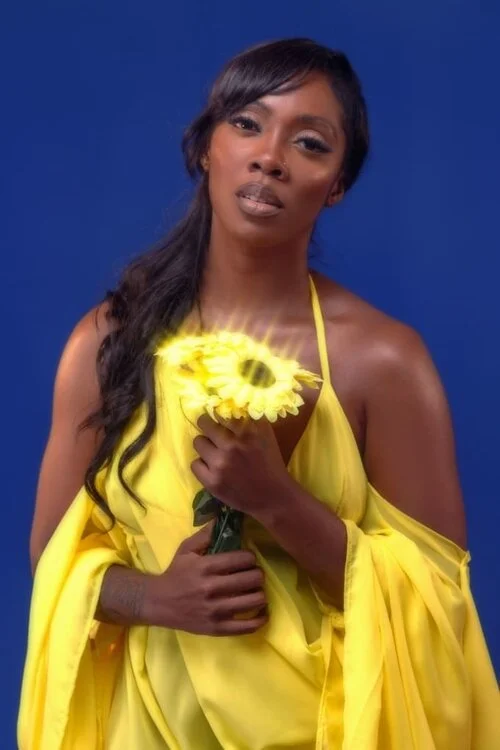
FEATURE: Spotlight: PinkPantheress

FEATURE:


Spotlight

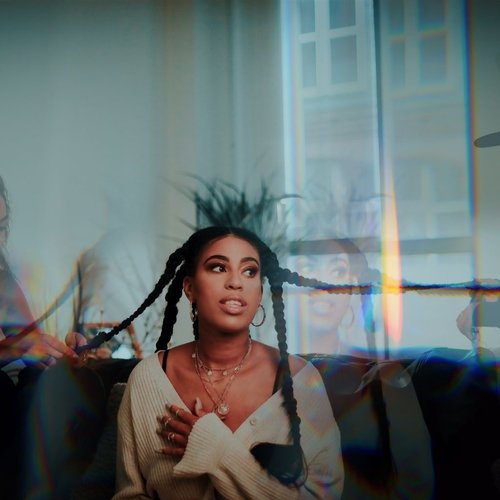
PHOTO CREDIT: Brent McKeever 

PinkPantheress

___________

ONE of the most talented…

zzz.jpg

 PHOTO CREDIT: Brent McKeever

and original artists in music right now, I am excited by PinkPantheress’ music. There is an air of nostalgia to it, yet it is distinctly fresh and forward-looking. I will come to a review of her extraordinary mixtape, to hell with it, in a minute. There is a lot to uncover and reveal when it comes to the British wonder. Although there are aspects of her personal life that she keeps private, her interviews do give one an insight into the music and creative process. The first interview I want to bring in is from The Guardian. Earlier this month they spotlighted an incredible young artist who is still balancing academic commitments with music:

“In December, a TikTok user in London named PinkPantheress started uploading clips of a song, intending to keep at it until “someone notices”. Ten months later, the social media platform named her song Just for Me its breakout track of the summer; it has more than 20m plays on Spotify and, after being sampled by the drill rapper Central Cee, went into the UK Top Five.

A flood of similarly fleeting tracks have followed: rarely lasting more than two minutes, they are mostly self-produced, lo-fi mash-ups of saccharine-sweet vocals and jungle and drum’n’bass beats. Gen Z adores her; Grimes and Charli XCX are fans; Lizzo and Charli d’Amelio, TikTok’s reigning queen, have used her music to soundtrack their own TikToks.

Her relative anonymity has accentuated the interest. She had more or less hidden her face on TikTok until recently. As we meet on a video call for one of her first on-camera interviews, her publicist sternly instructs me not to reveal her name. It is about convenience, says the 20-year-old film student.

“At the end of the day, I am still at uni and I enjoy my life outside of doing interviews,” she says. I expect her to be shy, but she is the opposite: self-deprecating and funny, shooting back thoughtful, intelligent answers deadpan. She clearly recognises her growing stardom, but isn’t flustered by it. “I am just an internet kid at the end of the day – always have been and always will be,” she says.

This week, she releases her debut mixtape, To Hell With It. Her first for the major label Parlophone, it features self-produced tracks alongside collaborations with Mura Masa. Her bubbly, high-spirited productions disguise melancholy lyrics (“We split in two, now you don’t want me,” she laments on Noticed I Cried). They are not inspired by her life, but rather tales of troubled teens in Jacqueline Wilson novels and TV shows such as Waterloo Road.

Born in Bath in 2000, PinkPantheress moved to Kent at five with her mother, a carer of Kenyan heritage, and her English father, an academic now based in the US. She fronted a band in her early teens, covering My Chemical Romance songs and taking inspiration from Paramore’s Hayley Williams; they made their debut performance at a school fete. “I had jeggings on and cut a hole in the knee to look more emo,” she says. “I’m a really nervous performer now, but I remember not caring about who was watching and how many people. I left the stage thinking I killed it, even though I was super off-key. I was too young to be nervous. Hopefully, I’ll get back to that point.”

In her later teenage years, she created songs on GarageBand, singing over sped-up old-school jungle and garage beats she found via YouTube and friends from the DJing and skateboarding scenes. She wanted to make music professionally, but found little success posting her music on SoundCloud, so she moved to London, where she is now based, to study film as a backup. “I thought every artist was an industry plant or something,” she says. “These people weren’t ever like me, not just a student or normal person. I was a bit naive, I think.”

She migrated to TikTok because of the platform’s openness to throwaway, imperfect content – and quickly went viral. “It took me until I was 19 to realise that there was a way of getting into music without having loads of industry connections,” she says. “If XXXTentacion can use SoundCloud and do it that way, then I feel like I can, too”.

Apologies for messing with chronology a bit in terms of interviews! There are a lot of great pieces that give us new information about PinkPantheress. This NME feature and interview from last month asks, among other things, why there used to be a sense of anonymity to PinkPantheress:

“For a good amount of time, you kept your identity hidden. Why?

“I think it’s down to how much you put out there. I wanted this to be more about the music than how I presented myself. It’s about how much you can control, and you can’t control everything, but I’ve decided that I can sometimes be incognito. It’s nice that people are interested, but also feel like, ‘Well, I can only give them what I want to give them’. I love the privacy I have as of right now.”

Did you think you’d ever be in this position?

“I’ve wanted to be an artist my whole life, but I kind of suppressed it because I thought that the chances of it actually happening were slim to none, and it also wasn’t really in keeping with what I was doing at the time. It’s been something that I have wanted to do since I was 10. When I was in school, I was leaning more towards a career in film. I’m still at university to do film – and I’m not planning to drop out. I’m going to stay here as long as I can, yet I do feel like film is a closed book for me. But it’s not fully closed because I still love it and I want to direct videos.”
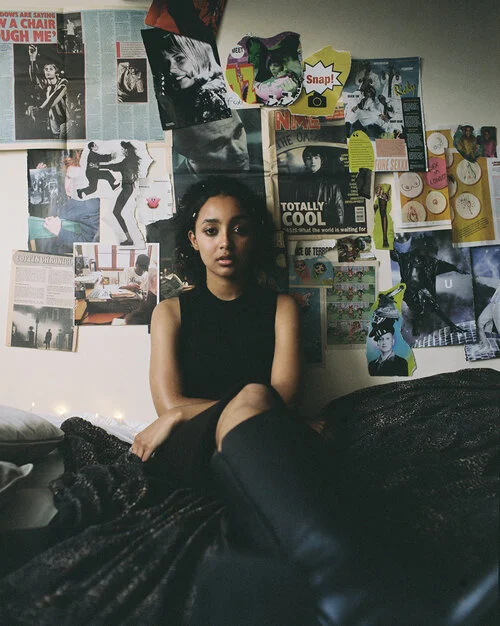
qqq.jpg

What was the moment in which you wanted to become PinkPantheress?

“I’d say it was when I saw Paramore live at Reading Festival when I was younger, and I saw Hayley Williams on stage. She was doing something that I wanted to do, so I thought I’d better start manifesting early so I can get there.

“Performer-wise, Hayley Williams is a big influence; she’s amazing and one of my favourites in this game. I have never seen someone have so much fun on stage and look so effortless while doing it. I was so jealous of her”.

Where does your love for the garage and drum and bass samples you use come from?

“If you’d listen to my music and think, ‘No one’s done that before’, then it’s probably because of my melodies. Typically the people who sample garage are rappers, which is super cool; artists take modern songs and make them garage hits, like AJ Tracey’s ‘Ladbroke Grove’. I’m a big fan of that.

“For me, what I want to do – because I’m super lazy – is to take a garage beat that I really, really like and chop it down a bit, make a loop out of it, and then sing on top of it. There’s no one in the UK that doesn’t like garage, so it’s that with a twist”.

The penultimate interview I want to bring in is from NRP. Apart from the great sonic innovation and memorability of PinkPantheress’ music, her tracks are quite short and to the point:

“Do you ever think about your music through the lens of K-pop?

I do, actually. One thing about Korean music that really drew me to it in the first place was the topline writing, because the topline writing is a lot more intricate than Western pop. Some of the melodies, they're just way more interesting, in my opinion, as well as the instrumentals. One of my earliest tracks as PinkPantheress was an instrumental from a K-pop group called EXID. I sample Korean rappers and I think it's just a great genre of music, if you can call it a genre. I mean, it's not really a genre. It's a great community.

"Pain" was your first song to really take off. What do you remember about recording that song?

When I posted "Pain" I was doing one song a day. I was really sure what I wanted to achieve through TikTok and it was obviously to get a bigger audience. I was like, I'm just going to try and do this as quick as I can, because I'm really impatient with everything. I kind of resorted to doing one song a day in order to speed up the process, which sounds bad. It sounds like I was fully rushing it, but it was also a challenge for myself. I was taking like an hour a day when I got back home from university to write a 20 second loop, which sounded like it could develop into something longer than 20 seconds. "Pain" just happened to be one of those.

You were talking about being impatient with how you make and release music. Does that partly explain your songs being on the short side?

That definitely comes into it. When it comes to my own personal writing, I get kind of tired of hearing the same melodies over and over. The way that a usual song is structured is you'd have two verses, two choruses, maybe a [post-chorus], then obviously a fade out. It feels awkward for me to write any more than I feel like I have to. That being said, I've never been opposed to writing longer than one minute. It's kind of like, I make a song and in my head, I'm like, this must be the three minute mark, and then somebody will tell me it's only come to like two minutes. [laughs]

I listen to the mixtape and it feels a lot longer than it actually is. I don't know why that is.

I try to jam pack my songs. I try and flesh out the song as much as I can given the short amount of time I've got. I'll sing the same melody once, then move to another melody, then another melody. It's like you're getting a few melodies in a minute. I don't blame people for being like, this could be a bit longer because this isn't developed enough. People just have different attention spans and sometimes it takes people longer to really immerse themselves in a song. And I think the only remedy for that when you're listening to me is just to replay it if you want, if you so wish.

Your music is often described as nostalgic. What do you think about the baggage of that word?

I think I get it. I don't personally really get that feeling when I listen to my stuff. I think I've actually kind of come up with a theory as to why a lot of people think it's nostalgic, and it's just because [of] the beats, because they're naturally from the 2000s. But I think the way that my melodies sit on the beat are probably the reason that people are like, "I've definitely heard this kind of thing before." It's like, nah, I think you're hearing a lot of things. You're hearing a lot of music that you used to listen to in one, at the same time. That's essentially why it feels nostalgic.

If you used to listen to Green Day when you were younger, I use some of the melodies that they use, because I use pop punk melodies. If you've heard the beat before and you feel like you've heard it somewhere, you probably have. Nostalgia for me is a positive word. I think it means that people feel more comfortable because it's like, I feel safe listening to music.

Are there any artists that you want to work with in the future?

Oh 100% I definitely want to work with Kaytranada. I literally bring him up honestly, every single interview because I'm just like, I love you. You are a genius.

How do you want fans to understand you after this mixtape?

The first and foremost thing is if you like breakbeats and you like DnB, you need to tap into the British classics. Get a vinyl, go onto YouTube, type in Shy FX, type in Adam F, type in Sunship. I think if there's one thing I want people to know about me, it's that my music only scratches the surface of what real DnB is. Please take the dive that you need to do if you enjoy it and properly. And don't worry about me. A lot of people worry about me and think I'm super sad all the time because all my lyrics are so sad. But...no. I'm happy. [laughs] I'm happy”.

The brief aspect of PinkPantheress’ songs is also raised in the Billboard interview from a week or so back. Among other things, she gives a shout-out to her supportive peers in the interview:

“Fans might be led to believe that the widely discussed brevity of her songs -- only three out of the 10 tracks on to hell with it extend past two minutes, with only one marginally over the 2:30-mark -- stems from the time constraint of TikTok videos, which were previously capped at 60 seconds, but, as of July 1, now have a three-minuted extended maximum.

"When I write a song, I kind of get bored very easily of the same melody over again, so I kind of just end up going, 'Yeah, I'm gonna end the song here.' And funny enough, when I'm ending the song, I'm like, 'This is like three minutes, right?'" she says with a laugh that in and of itself is noticeably clipped. "I'm surprised by how actually short it is myself, to be fair, because I'm not intending them necessarily to be that short."

Her peers certainly don't feel bored singing her melodies over and over again, as heard in Giveon's gut-wrenching ballad cover of "Just For Me" for BBC Radio 1xtra Live Lounge and in Central Cee's U.K. drill hit "Obsessed With You," which heavily samples the same song and went all the way to No. 4 on the U.K. Singles Chart (the original "Just For Me" peaked at No. 27).

"It's like being in school -- sounds really weird actually, I don't know why I'm using this analogy -- and I've got loads of classmates," she says of other artists' reactions to her music. "It's like Central Cee's like a year above and he's like, 'Wow, you're doing really good...' I think it makes me feel like a lot of things are actually truly achievable when it comes to music. I feel like before, even when I had 'Break It Off' and 'Pain' out, I still felt very distanced between myself and a lot of the musicians I look up to."

The school analogy PinkPantheress makes earlier about relating to other artists makes sense coming from a girl studying film at the University of the Arts London. But when asked if she's still attending, the singer-songwriter coyly replies, "I think so" with a chuckle. "I've yet to confirm that for sure”.

xxx.jpg

I am going to end with a review for her mixtape, to hell with it. Pitchfork were keen to have their say about an amazing release. There is no doubt that, with to hell with it, we have an incredibly promising artist in PinkPantheress. I wonder whether new success and attention means we will get to know more about the woman behind the moniker:

“But what sets PinkPantheress’ music firmly in the modern day is her voice, an ethereal, pixelated miasma that breaks from the earnest delivery of her British predecessors. Her pinched coos feel hyperreal, the edges of her syllables sharpened as if sung by a swooning voice-to-text machine. There are obvious comparisons to futuristic singers like Grimes and Poppy, but PinkPantheress’ strangely soothing vocals also recall the performative over-enunciation of “TikTok voice.” That intimate quality reflects the recording process for most of her early singles, which were tracked lying down in her college dorm room because she felt unable to sing standing up. The combination of retro samples and Clairo-esque bedroom pop delivery breaks the early-2000s spell: Sure, those songs were perhaps more “cringe,” but their vocals were overdubbed to the high heavens. PinkPantheress feels like she’s whispering in your ear.

While she’s clearly a passionate scholar of the early millennium, she also seems aware that this era of her career can only go so far. Most of her songs are maddeningly fleeting, as if a longer look would reveal cracks in the facade. But PinkPantheress is beginning to push beyond genre tropes; though to hell with it is essentially a collection of previously released singles, the tape’s new songs hint at broader palettes and bigger risks. Where earlier lyrics were almost all outward projections onto an anonymous crush, “Reason” and “Nineteen” reflect on her own life. The latter, with its crashing waves and drawn-out violins, is the closest the record gets to a ballad. “I wasn’t meant to be/This bored at 19,” she confesses, a grounding moment on an album saturated with post-party depression.

It’s a slow and sensual track underscored by a low bassline, and unlike the rest, it builds without cutting to a breakbeat drop. It still doesn’t exceed the maximum allotted time for a TikTok, but it’s constructed for private sentimentality, not internet virality.

PinkPantheress succeeds where cheaper imitations fail because her reference points feel lived-in rather than opportunistic. She adds an undeniably contemporary spin on her trove of samples, imbuing them with the intimacy and immediacy that comes from a childhood spent on self-confessional platforms like Tumblr and TikTok. On to hell with it, PinkPantheress sculpts a digital-age paradise that exists only in an invented memory of the past, setting the stage for a career set more firmly in the present”.

I shall leave it there. There is going to be a lot more great music from PinkPantheress. So far, we have this selection of amazing music that stands out from everything around it. On the strength of what she has produced so far, our very own PinkPantheress has…

A huge future ahead.

_______________

Follow PinkPantheress

xzz.jpg

FEATURE: Groovelines: David Bowie – Space Oddity

FEATURE:


Groovelines

pp.jpg

David Bowie – Space Oddity

___________

I have been thinking about space…

xxx.jpg

as, a couple of weeks back, William Shatner travelled into space. For some reason, it got me thinking about David Bowie’s Space Oddity. It is surprising that this track was not originally a success. It got to number one in he U.K. in 1975, though it was a slow burner. It was first released by as a single on 11th July, 1969 before appearing as the opening track of Bowie’s second album, David Bowie. Following the commercial failure of his eponymous debut album in 1967, Bowie's manager, Kenneth Pitt, commissioned Love You till Tuesday. This was a promotional film intended to introduce Bowie to a larger audience. For this film, Bowie wrote Space Oddity: a song about a fictional astronaut named Major Tom. I want to bring in a couple of articles relating to Space Oddity. It is a song that has quite a story and history. This article from July reveals how, even when the song was recorded, there was a feeling that this was something very special:

“David wrote ‘Space Oddity’ for the two of us to sing”

In February 1969, Bowie went to Morgan Sound Studios on Willesden High Road to record a 28-minute film called Love You Till Tuesday, the title of a song Bowie had recorded for Decca in 1967. The film had been suggested by Günther Schneider, producer of German TV show 4-3-2-1 Musik Für Junge Leute. The promotional film was an attempt by Pitt to bring Bowie to a wider audience.

Bowie was playing alongside Yorkshire-born guitarist John “Hutch” Hutchinson, who had been touring with Bowie as part of a duo called Feathers. Bowie had picked him out at an audition a couple of years before. “David wrote ‘Space Oddity’ for the two of us to sing. It is a duet song, ‘Ground control to Major Tom,’” Hutchinson later told oneandother.com, in an interview to promote his biography Hutch And Bowie. During the recording session, the guitarist sang the “ground control” sections while Bowie sang as Major Tom.

All did not go smoothly that day, however. As Bowie was rehearsing the final scene, where the astronaut is caressed by two space seductresses – played by Samantha Bond and the production assistant Suzanne Mercer – Pitt clashed with director Malcolm J. Thomson, who wanted to make the scenes considerably more risqué. In the end, the film was shelved and was only eventually publicly released as a video in 1984. This version of “Space Oddity” is owned by Decca Records, after Pitt sold the rights to Love You Till Tuesday to PolyGram that year. A DVD of the film was released in 2005.

“It was clear that he had composed something extraordinary”

Despite the disappointment over the film’s non-release, Pitt was convinced that the 22-year-old Bowie had created a truly special song about a fictional astronaut. “It was clear from this first ‘public’ outing of the song that David Bowie had composed something extraordinary,” said Pitt.

Bowie subsequently demoed further versions of the song in an attempt to secure a record deal, which led ultimately to the hit version that was recorded on June 20, 1969, made with Elton John’s producer Gus Dudgeon. The song was released on July 11th, just over a week before Neil Armstrong and Buzz Aldrin stepped foot on the Moon. The BBC played “Space Oddity” during their coverage of the Apollo 11 landing. “I’m sure they really weren’t listening to the lyric at all,” said Bowie later. “Of course, I was overjoyed that they did.”

“I have always dealt with alienation and isolation”

Bowie said that most people presumed the song was written about the space landing, without knowing the original inspiration of Kubrick’s film. He would later revisit his Major Tom character in the songs “Ashes To Ashes” and “Hallo Spaceboy,” and the music video for “★.”

“Thematically, I have always dealt with alienation and isolation. I have often put myself in situations where I am isolated so I can write about that,” said Bowie. “Space Oddity,” the atmospheric tale of an abandoned astronaut orbiting Earth, remains one of the most quirky and poignant songs of the late 60s. This masterpiece has continued to influence society into the 21st Century.

Cover versions have been recorded by artists as diverse as Sheryl Crow, Def Leppard, Tangerine Dream, and William Shatner. In May 2013, Canadian astronaut Chris Hadfield, commander of Expedition 35 to the International Space Station, recorded a version in space that went viral – dedicated to the “genius of David Bowie”.

It is amazing to think how Space Oddity has affected so many people and been taking to heart by many other artists. One of David Bowie’s most-popular songs, it is as moving now as it was years ago. After Space Oddity was originally released, it has taken on a new life through the decade. The Financial Times produced a feature that mentioned ways in which Space Oddity has been adapted and adopted after Bowie’s original release:

“In 1970, Bowie voiced a version with romantic Italian lyrics, “Ragazzo Solo, Ragazza Sola” (“Alone Boy, Alone Girl”). He issued a new acoustic interpretation of ‟Space Oddity” in 1980, and live recordings have surfaced down the decades, as have the spartan, atmospheric demos. Cover versions took some time to appear, probably because the song was strongly stamped with Bowie’s personality. Comedy group The Barron Knights snickered a feline parody in 1977 (“Birth control to Ginger Tom”), but from this point on, the song was treated reverentially. Most covers tightly followed the blueprint of the original, including Def Leppard’s, and versions by very different German bands, Helloween and Tangerine Dream. One exception to the Xerox treatment came from US jazz-fusion arranger Dave Matthews, whose 1977 take was at least different if not entirely convincing, breaking with convention by being sung by a woman, Googie Coppola. Natalie Merchant included the song on a live album in 1999.

Though ‟Space Oddity” cut Major Tom adrift, he enjoyed an impressive afterlife. Bowie revisited the character in “Ashes To Ashes” (1980), depicting the astronaut as a junkie, echoing his own troubles. 1995’s ‟Hallo Spaceboy” saw some of the lyrics rehashed at the prompting of collaborators Pet Shop Boys, and what is assumed to be Major Tom’s corpse took a grim curtain call in the video for ‟Blackstar” (2016).

In 1983 electro-popper Peter Schilling had a hit with “Major Tom (Coming Home)”, its hapless protagonist suffering another mishap. Canadian electronic artist K.I.A. offered ‟Mrs Major Tom” in 2002, with singer Larissa Gomes recounting the yarn from the wife’s point of view. This was covered by Sheryl Crow on William Shatner’s Seeking Major Tom, a 2011 album which also included the Star Trek actor’s clunky reading of ‟Space Oddity”.

Perhaps inevitably, the Major actually travelled into space when Canadian astronaut Chris Hadfield sang ‟Space Oddity” on the International Space Station in May 2013. Careful not to tempt fate, Commander Hadfield amended the lyrics so Major Tom finally made it home. Though the video caused consternation for lawyers (was a song performed in orbit subject to terrestrial copyright?), Bowie was delighted, declaring it ‟possibly the most poignant version”.

I am going to end it there. There are many David Bowie classics to unpick and dive inside…though there are few as timeless and important as Space Oddity. I wonder whether Bowie knew, when writing the first few words of the song, that it would turn into such a seismic release. As I said, listening to the song today, it has definitely lost…

NONE of its power.

FEATURE: Eternal Flame: An Ongoing and Endless Love for Susanna Hoffs

FEATURE:


Eternal Flame

 An Ongoing and Endless Love for Susanna Hoffs

___________

ASIDE from using a photo (below)…

that I featured in a 2019 article about Susanna Hoffs, I am also going to repeat some things I have said about the amazing musician. This is quite a short feature that is not tied to any anniversary or out there for any reason other than to celebrate an amazing person! There are particular women in music who I have endless love and respect for. Kate Bush and Madonna are examples. Susanna Hoffs is another. She is best known as a co-founder of The Bangles. She founded the group (originally called the Bangs) in 1981 with Debbi and Vicki Peterson. It is amazing to think that the iconic group were formed forty years ago! The Bangles released their first full album, All Over the Place, in 1984. Hoffs embarked upon a solo career after The Bangles disbanded in 1989. Her debut solo album, When You're a Boy, came out in 1991. She has also recorded music as part of Ming Tea (a faux 1960s British group with Mike Myers and Matthew Sweet) and recorded with Matthew Sweet. Hoffs is definitely one of the coolest people in music! I follow her on Twitter. Aside from posting videos of her performing, I love reading about her. She is so inspiring and compelling. She has put out some music the past year or two – including last year’s track, The Only Thing, with Travis -, and I hope that we hear more from her.

I have said this quite a few times before through the years. One of my earliest music memories is seeing the video for The Bangles’ Eternal Flame when I was five or six. I was watching through the banisters as my parents were playing VH1. That song was released in 1989. It features Hoffs on lead vocals. She has said that she actually sang the studio recording of the song completely naked after producer Davitt Sigerson pranked her by telling her Olivia Newton-John recorded nude in the same studio (later revealed to be a lie). Hoffs has said, because the studio was dark and she could not be seen, it was quite freeing – and, actually, she recorded a lot of her parts for the Everything album naked! Aside from that rather intriguing and wonderful fact, it is the sheer beauty and quality of Susanna Hoffs’ writing and vocals that I fell for as a child. Although I loved the other Bangles - Debbi Peterson, Vicki Peterson and Michael Steele -, it is Hoffs that has captivated me. Videos of her in Walk Like an Egyptian and Manic Monday solidified this! One of the most important groups of my early years, I followed her solo work and really love her albums. Her 1996 eponymous album is one that I regularly come back to. Still one of the most sensuous, varied and powerful voices in music, there is nobody out there like Susanne Hoffs!

There are a couple of interviews that I want to drop in before I finish. The first is from 2012, where Hoffs was promoting her album, Someday. Apart from discovering about songs on the album, Hoffs also spoke about The Bangles and her experiences in the group:

“Jeb: The songwriting on the new album is fabulous. How did you meet Andrew Brassell that you co-wrote with?

Susanna: That makes me feel so good. This kid, I met through my niece, moved out to California from Nashville. They were friends and he was playing in the Nashville scene for a long time. She is a big fan of his guitar playing and his songwriting, so he came out for a visit and she introduced him to the family.

His name is Andrew Brassel, but we all just call him Brassell. We all took to him instantly. He was checking out LA to see if he could make a start as a musician here. We welcomed him and showed him around. I had a show with The Bangles on Lilith Fair the weekend that he arrived, so I told him to come up and see the show. He met the girls and we sort of just adopted him.

I never thought we would end up writing songs together. He, eventually, decided to come to LA and I told him that he could stay in my guest room until he got sorted out and figured out where he wanted to live. He had a guitar glued to him the entire time he was here. It really inspired me to see someone who was playing music constantly. He was always making stuff up in the spur of the moment. I would be in the kitchen washing dishes and there would be this music he was playing and I would start hearing these melodies in my head. I would run in and say, “What is that? Is that a song?” He’d say, “I suppose it could be.”
He is one of those people who have a singular focus, which is the beauty of being in your mid-twenties. It is easier to be that way then, than it is for me now, at my age.

We sat down and started writing together and it was an instant click. Because he was a fixture in our household, it kind of forced me to pay attention. Once that creative spark in me got ignited, then it just flowed. It was really an unexpected joy to discover this unexpected writing relationship.

“Jeb: “Regret” is a great song.

Susanna: There were a lot of times when Brassell would observe me and my life and notice what I was going through. When we sat down to write this was all very fresh.

Giving him the opportunity to stay in our guest room allowed us to have very concentrated time focused on our songwriting. We would be sitting around having coffee and I would say, “I always wanted to write a song about regret.” I am talking bout trying to go back and fix things in your life even though it is not a very useful thing to do. We have all been there and done that. We try to get past these regrets. I think I was mentioning this problem about waking up in the middle of the night and thinking about things I had done and things that I wish I had done differently. It is on the darker side of the emotions on the album.

Jeb: Was “Raining” the song you did with Mike Campbell of Tom Petty’s band all those years ago? Where did that come from? Surely you were not saving that back for your next solo album all of this time.

Susanna: I have had that so many years it is ridiculous. I showed that song to The Bangles for Sweetheart of the Sun but they didn’t pick it. I found this box with these cassettes in it.

Part of the reason this solo album took so long was that I was writing for myself just as a creative outlet, clear back to 1989. I did a couple of solo albums where I collaborated with other people. Songs that I had just written got left in a shoebox up on a shelf. There were two Bangles records in the last ten years that were made. Things got busy and the song just stayed in the box. I’m so glad that song survived all of those years in the box.

I reconnected with both Mike Campbell and Mitchell Froom, oddly enough through Brassell. How weird is that? He wanted me to come with him to see a show by his friend in Largo, Caitlin Rose, who is a singer songwriter he has worked with over the years. She was playing a show opening for Ron Sexsmith. I had no idea Mitchell would be there. He was there to see Ron and I was there to see Caitlin.

Another time I was seeing another friend of his named Tristan, who is a great singer/songwriter. I went to the show and Benmont Tench, who played on the demo of “Raining” back in 1989, was there. He told me to call Mike. I was really shy. It took a lot of courage for me to call him. I sent him the song because he didn’t remember the song right then. He inspired me to do a rewrite on it and bring it up to date. We went back and worked on it and it has now seen the light of day.

 Jeb: You were young and cute when you were with The Bangles, you were, however, a songwriter, which differentiated you from the norm.

Susanna: When I started out it was all about songwriting. It was the opposite of American Idol. It was very garage rock. The Bangles were very much like that. We were kids who sat in their rooms writing songs and put a band together and rehearsed in the garage. We, then, made a cassette that we could take to club owners to get them to let us play in their club. It was very grassroots.

Jeb: Did you think that girls would look up to you or were you just being a musician?

Susanna: I was just being a musician. I was very inspired by the Go-Go’s. It was a fact that I downplayed during The Bangles because we were compared to them one hundred percent of the time. We started to not want to emphasize that. For me, in particular, maybe more so than the other girls in the band, I was very influenced by the Go-Go’s.

I had just graduated from The University of California at Berkeley in the Bay Area and had been smitten by the whole rock scene in the clubs that was going on. I saw the Sex Pistols, I saw Patti Smith. I was going to see all of the punk bands.

When I came back to LA, I was transformed and I wanted to do this. I went to see all of the great LA bands that were coming out in the late ‘70’s and early ‘80’s. I saw the Go-Go’s at the Whiskey A Go Go.

Jeb: Describe the scene to me.

Susanna: It brought it down from Stadium Rock, which seemed very inaccessible to kids playing music. It was very raw. It no longer seemed unattainable to be in a band. I was very heavily influenced by Bonnie Raitt and Joni Mitchell back when I was in high school, so I wanted to write songs. I was very influenced by Linda Ronstadt but I was more into the folky thing. I was also influenced by Patti Smith.

The bridge between Joni and Patti saw me go from playing acoustic guitar to electric guitar. I was seeing a lot of rock and roll live. When I saw Tina Weymouth playing with the Talking Heads I got very excited about playing in a band. I think the combination of seeing Tina and Patti and the Go-Go’s and a lot of other bands on the scene led me to start putting ads in The Recycler and that is how I ended up meeting the girls in The Bangles.

Jeb: When did you know you were good enough to make it?

Susanna: When we met, though that ad, Vicki [Peterson] and Debbi [Peterson] came over to my house; I was still living at home. We played in the garage and we became a band that night.

We had a friend of the family visiting us from New York, who was staying in our guest room and she heard us play and said it sounded like we had been together a long time. She was amazed. We really clicked. We played “White Rabbit” from Jefferson Airplane, which Vickie and Debbi taught me. It was just two chords and I was like, “Wow, I never realized that. It sounds so complicated.” We played that song and it sounded really good and I said, “Let’s do this.”

We got off to a quick start, but then we had to do what all garage bands do; we had to work on the set list and we had to play some parties and we had to get gigs in Hollywood. We would have to drag our gear to rehearsal studios and all of that. We were not an overnight success. We had a long time where we paid a lot of dues.

Jeb: You were very young. Your album came out and was a hit. How were you mature enough to handle the fame. How did you do it?

Susanna: it was hard. It was very scary. You go from the little bubble of your dreams of musical aspiration and all of this excitement and energy and creating your sound and finding your communal voice as a band to being in a business. You find out what your sonic quality is that you want to share with the world, which for us was jangly guitars and four part harmonies. Suddenly, you get signed and enter the business side of it. There are teams of people in suits, mostly men and they are staring at you and sizing you up and trying to figure out what to do with you and how to sell you. You realize that your little bubble of creativity is no longer a little bubble. You’re out in the world subject to a list of people’s opinions that you never thought you had to consider.

We were managed by Miles Copeland, who I love and who did a fantastic job as our manager. After some time, he started working with an all-girl band that he sort of cherry picked from other bands. I think Darryl Hanna may have been in that band; I don’t quite remember all of the details but they were a put together band and they were also incredibly gorgeous. I remember sitting there with The Bangles feeling kind of insecure. We were hit with this feeling of how are we going to deal with this.

We wondered why he was doing that. It was irrational, for sure. I have not even thought of this for years. We thought maybe we were lacking and that there was something missing in The Bangles. It didn’t turn out to be the case, but it is an example of how everyone was judging us and wanting us to deliver things and we were trying to do that.

All of these things come into play and I think that with all-girl bands, in particular, there is a feeling that it is a novelty. We had this pressure to explain ourselves. People would ask us how we came to play our instruments and why we were an all-girl band. It was like it was an odd concept for a girl to play drums or bass. It felt like nobody believed that there could be an authentic inspiration for us. It was bizarre and I never really understood that.

Jeb: What do you think it is about The Bangles that makes people still want to go see you today?

Susanna: I think there is a great nostalgia for the ‘80’s. It was a really fun time for music. We felt like we were drenched in our ‘60’s influence and that we really didn’t fit into the ‘80’s but, then again, “Walk Like an Egyptian” is an anthem for that time. “Eternal Flame” is also a big song for that era, in a music box sort of way. There is a nostalgia for that time period, just like I have nostalgia for ‘70’s music.

I think people want to see bands that are fun. People want a fun night and to see music that makes them feel happy. We are very lucky—very lucky that we are able to be doing this and for that connection that we made with our fans.

The last interview I am pulling from is from last year. Again, Hoffs discussed The Bangles and what the group represented. The fact that the group, as women, were pitted against another female band like The Go-Go’s is a sad reflection of the scene in the 1980s:

“While the decision to form an all-female band was intentional, the stereotypes that accompanied that choice seemed unavoidable. Constant comparisons to the Go-Gos, while not completely unwarranted (Hoffs has admitted their influence), dominated critical appraisals of the band, treating both bands almost as novelties rather than acknowledging their individual and autonomous contributions to the eighties musical soundscape.  Hoffs reflects: “There was definitely a funny fixation on…our gender….and if there’s two girl bands, ‘let’s make it a competition’ instead of ‘where are all the girls?’…’where are all the other women?’ I mean, we know they’re out there!”’

For Hoffs, the previous generations of female musicians had paved the way for her own development. In turn, as both a performer and a songwriter, Hoffs’ voice has influenced new generations of aspiring female musicians. “Eternal Flame,” which she wrote alongside Bill Steinberg and Tom Kelly, gave the Bangles an international number 1 hit, and has since become a favorite song for artists (of all genders) to cover.  She has put out three solo albums of original material, including the critically acclaimed Someday (2012), which American Songwriter gave 4.5 out of 5 stars and concluded that it was “easily and undeniably Hoffs’ most definitive musical statement to date.” Still, her role as an inspiration for girls ready to rock can still seem surreal. At the release of her last album, Hoffs told Goldmine: “I am very touched and flattered when people say that The Bangles, or I, have been an influence for them. I’m always surprised, because I don’t think of myself that way. It is so moving to me that I could influence somebody to do something positive or to make music.”

What’s next for this vivacious musician?

Hoffs is currently finishing up a new album, and revisiting her past, with the rediscovery of an unreleased album from 1999 that includes collaborations with an exciting line-up of musicians including Dan Schwartz, Bill Bottrell, Dillon O’Brien, and Charlotte Caffey. The future is full of music – new and old – from Hoffs, promising a continuation of the infectious enthusiasm and joy for the art of music making that has characterized her entire career.

This was just an excuse to write about one of my favourite artists. Actually, it is looking ahead to possible music (and, at the very end, there is a playlist featuring some of Hoffs’ key tracks). Go and follow her on Twitter and Instagram, as she is always fascinating! Check out her official website, where there is some bio and great detail that I have not included. Another salute to an amazing human and a musician who, through the decades, has brought so much joy to people. There are so many who are looking ahead to new music and what is coming from the Californian-born treasure. I was seduced by the amazing Susanna Hoffs when I was very young. This is an eternal flame (forgive the pun!) that will…

NEVER lose its heat.

FEATURE: The Kate Bush Interview Archive: Colin Irwin: Melody Maker (1980)

FEATURE:


The Kate Bush Interview Archive

ccc.jpg

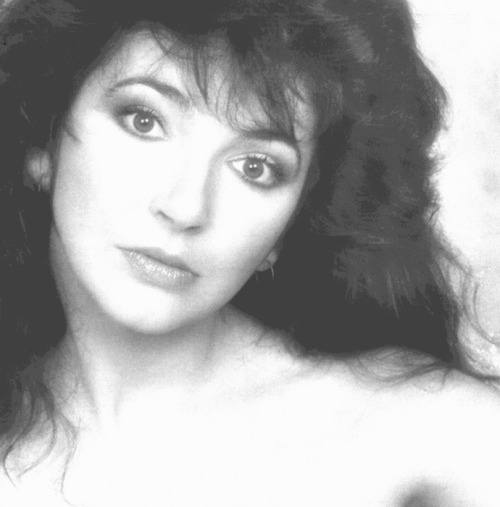
IN THIS PHOTO: Kate Bush in December 1980/PHOTO CREDIT: Patrick Lichfield 

Colin Irwin: Melody Maker (1980)

___________

I am heading back to 1980…

mmm.jpg

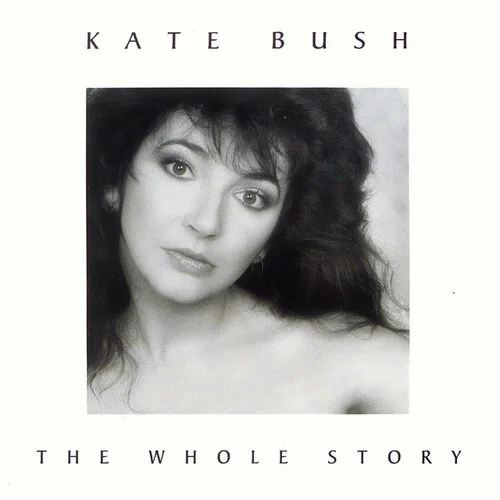
for this part of The Kate Bush Interview Archive. Thanks to this invaluable website for providing a huge resource regarding Kate Bush interviews. I have been thinking about Never for Ever (her third album which was released in 1980) and how it was a transformation in terms of her lyrics and sonic progression. It was, at that point, the biggest and most notable evolution in her music. Colin Irwin of Melody Maker interviewed Bush in Munich. Although there is talk about Bush’s sexuality and sensuality, there are some useful insights regarding the songwriting and characters in her songs. There are some sections from the promotional interview (of Never for Ever) that I want to include:

“I mean, no sweet, flippant family entertainer ever wrote a song as sexually explicit as Feel It. No surrogate Olivia Newton-John ever tackled a subject like incest (The Kick Inside). No cosseted girl-next-door would ever dare conduct a fantasy around a saxophone (Saxophone Song).

The lights suddenly pick out Kate on the other side of the studio, standing perfectly still, the bass standing phallically before her, her eyes wide and manic, staring at the camera.

The intro to Babooshka, the bottom portrudes, and she's away, jumping and thrusting, and utterly living the part. A bunch of photographers have been allowed in to the studio, and push and jostle each other for the best views.

As the song ends, several kids chase her for an autograph, but she's already gone, flitting away on her broomstick, or does she merely turn into a pumpkin?

Kate re-emerges, totally unrecognized, sitting alone at the side, observing, waiting for her next party-piece. She's dressed as a haggard washer-woman in dowdy clothes and headscarf.

It's a routine she's never tried before and she's been nervous it all day. The song is Army Dreamers, a track from Never For Ever and the next single, a simple but melancholy little song in which Kate appears as a weary mother reflecting on the death of her son, a soldier killed on duty.

"Should have been a rock star...But he didn't have the money for a guitar..." Three soldiers dressed in British army camoufflage uniforms appear, one carrying a mandolin, one a Tommy gun [played by Paddy Bush and Del Palmer respectively], another in the role of a sergeant barking orders.

"Should have been a politician...But he never had a proper education..." Kate shrivels and cringes behind the soldiers, her face crumpled and distraught. The soldiers march and prowl and stand at attention.

"Should have been a father...But he didn't even make it to his twenties..." The song is all the more striking for the pretty tune, and the genteel structure, the innocence of the lyric.

It end with the three soldiers cowering in a heap, Kate spreadeagled protectively above them. Purely as a piece of theater it's brilliant. RockPop has never seen anything like it, that's for sure.

Kate has an enormous number of relatives in Ireland, and she's fearful of the Irish reaction to Army Dreamers. Ireland isn't mentioned in the song, and she inserted a reference to BFPO to divert attention; but let's face it, the song's a contemporary one with its mention of rock 'n' and there ain't too many other places a young soldier is gonna get killed in action right now.

"It's the first song I've ever written in the studio," she ask her about it. "It's not specifically about Ireland, it's just putting the case of a mother in these circumstances, how incredibly sad it is for her. How she feels she should have been able to prevent it. If she'd bought him a guitar when he asked for one.

"Have you heard Roy's new album?" she says suddenly. Er, Roy? Oh, Harper, of course. They appear on each other's albums. He gets a dedication on the sleeve of Never For Ever: "Special thanks to Roy Harper for holding on to the poet in his music".

No, Kate, I haven't heard the album. "You should." Adrian Boot took it, took the sleeve photograph. "Actually" says Kate sweetly, "I didn' like the sleeve." Adrian looks hurt. "The photograph was great, I just didn't like the sleeve" she reassures him.

A flood of chatter follows. Did I know Dave & Toni Arthur/What are the Dransfields doing now/Do I like the Bothy Band? "I've a very strong folk music influence" she says.

"First songs I ever sang were dirty sea shanties. I'm very proud of it, I can't think of a nicer influence. Traditional music says a great deal about the country. English folk music is a lot different from Irish folk music, not only musically, but lyrically. I mean, that song She Moves Thro' the Fair: it sums up the Irish spirit. It's incredible, so moving."


Certainly her fascination for traditional ballads is the key to her more lurid story-lines. The Kick Inside was inspired by the richly colourful ballad Lucy Wan, in which a brother murders his sister when she becomes pregnant by him (though there are numerous variations). Kate's version has the sister committing suicide.

Babooshka is similarly based on a song called Sovay Sovay. I tell her I'll listen to Roy Harper's album if she'll listen to an album called Carolanne by Carol Pegg, which includes a similar embellishment on Lucy Wan.

My favourite track on the album is The Wedding List. "Oh, really?" she says bubbling, the little kid who's been given a puppy for Christmas.

"That was based on a film, a Jeanne Moreau film I once saw on the telly, when the bride's husband was killed and she sought revenge for those responsible." She spends the next 15 minutes relating the plot of the film, ending in a breathless flourish. "It was an amazing film. Can't remember what it was called, though." [The film, Truffaud's tribute to Alfred Hitchcock, is called La Mariee etait en noir, or The Bride Wore Black.]

Films and fiction, in fact, count for a prominent chunck of her inspiration. And whatever you feel about the histrionics and the wayward vocalising, you've got to concede that in a chart overflowing with grey music and tepid lyrics, the success of a colourful number like Babooshka, for example, has to be healthy.

She's reticent to agree [sic]..."Well, it does always amaze me how songs get in the charts that are--I won't say rubbish, because they're not -- but the sort of songs that so many people could write.

"I often find myself inspired by unusual, distorted, weird subjects, as opposed to things that are straightforward. It's a reflection of me, my liking for weirdness."

They don't come any weirder than The Infant Kiss. This, she explains patiently, was based on a film, The Innocents, which had itself come out of the Henry James book, The Turn of the Screw. A governess goes to stay with a man to look after his two children, who are possessed by the spirits of people who lived there before.

"Some people might think it's a song about...what's the word when older women fancy little boys?" Paedophilia? [Kate probably knows this word better than she lets on: she made a similar claim of ignorance of the word in the Hot Press interview, also included in this volume.] "Well, it's not actually that, and it would worry me if people mixed it up with that because that's exactly what worries her so much. I find that distortion very fascinating and quite sad. And frightening. The thought of someone old and evil being inside a young and pure shell, it's freaky."

But you really live out your roles and fantasies. Playing the mother in Army Dreamers.

"Yeah, I seem to link on to mothers rather well. As I've grown up a bit I've become very aware of observing my own mother trying to observe me. It's fascinating. When I was a kid I never really thought about her, about how she ticks.

"But I can be more objective now and I find it fascinating about mothers, that there's something in there, a kind of maternal passion which is there all the time, even when they're talking about cheese sandwiches. Sometimes it can be very possessive, sometimes it's very real."

Kate doesn't know when she'll be touring again. She enjoyed her one tour, and it gave her a thrill to choke the critics who'd suggested she'd be a disaster on stage, that she couldn't sing live. But it takes six months out of a year to rehearse and prepare for a tour the way she wants to do it, and will also cost her enormous amounts of money to stage.

"Not that I mind losing money on a tour--there are so many benefits from it--as long as we don't go bankrupt. We do want to tour again, we will tour again, because there are so many things we still want to do on stage, but we'll have to think about it very carefully because it will stop me doing a lot of other things."

On the plane back to London the next day I ask her about Peter Gabriel. They did, after all, record together on Games Without Frontiers, and I thought I'd detected a Gabriel influence on Never For Ever. I ask about Peter Gabriel and she talks about Pink Floyd.

 "That last album of his was fantastic, but I don't know if it was a direct influence on me. He may have opened up bits in me I hadn't thought of, but a more direct influence was The Wall.

"It got to the point when I heard it I thought there's no point in writing songs any more because they'd said it all. You know, when something really gets you, it hits your creative centre and stops you creating...and after a couple of weeks I realized that he hadn't done everything, there was lots he hadn't done.

"And after that it became an inspiration. Breathing was definitely inspired by the whole vibe I got from hearing that whole album, especially the third side. There's something about Floyd that's pretty atomic anyway."

We part at Heathrow, she to the next leg of the Never For Ever promotion There's a day of interviews ahead; personal appearances at record shops in Glasgow, Manchester, and London; various radio station interviews and a visit to a dealers' party in Birmingham, where she will personally meet the EMI employees who'll be flogging her new album. They in turn-cream themselves stupid and get their photographs taken with the great lady”.

It is really interesting reading the transcript of that Melody Maker interview. Even though the promotional duties for Never for Ever were quite intense, Bush was as enthusiastic - giving and warm as you could imagine. It is testament to her professionalism and engaging nature that she provided so many memorable interviews. The snippets of the interview above is a fascinating insight into…

ONE of her best albums.

FEATURE: The Lockdown Playlist: Women With the Most Billboard Hot 100 Entries

FEATURE:


The Lockdown Playlist

kjk.jpg

IN THIS PHOTO: Janet Jackson/PHOTO CREDIT: BMG 

Women With the Most Billboard Hot 100 Entries

___________

THIS Lockdown Playlist starts with three…

x.jpg

 IN THIS PHOTO: Taylor Swift/PHOTO CREDIT: Beth Garrabrant

rather important songs from female artists. On 25th October, 1986, for the first time in the history of the Billboard Hot 100, the top three spots were held by female solo acts. Cyndi Lauper's True Colors held down the number one position, followed by Tina Turner's Typical Male, and Janet Jackson's When I Think of You. To mark thirty-five years (on Monday) of history being made, I wanted to put together a Lockdown Playlist of women with the most Billboard Hot 100 entries (The Billboard Hot 100 is the music industry standard record chart in the United States for songs, published weekly by Billboard magazine. Chart rankings are based on sales, radio play, and online streaming in the United States). I am going to start with the three tracks that occupied the top three spots in 1986, but I will expand and include women who have made their impact on the U.S. chart. I am taking some of the artists from this Billboard article of 2018. Taylor Swift broke the record for the most Billboard Hot 100 entries among women (113) in 2020. I am featuring a selection of brilliant women who, through the years, have made their mark on the Billboard Hot 100 chart. From the historic occasion on 25th October, 1986 to Taylor Swift reaching a new peak last year, some truly amazing women have appeared frequently on…

kjkkjk.jpg

 IN THIS PHOTO: Katy Perry/PHOTO CREDIT: Cass Bird

THE Billboard Hot 100 chart.

FEATURE: Revisiting… Nadine Shah – Kitchen Sink

FEATURE:

Revisiting…

Nadine Shah – Kitchen Sink

___________

I am doing a short feature run…

where I am looking back at fairly recent albums. Rather than doing something like Second Spin – a feature that allows me to reassess an album that is underrated -, this is a chance to spotlight a great record that needs refreshing in the public consciousness. The one that I am starting with is Nadine Shah’s Kitchen Sink. Released in June last year through the Infectious label, it was definitely one of the best albums of the year. As it came out so soon during the pandemic, we got this musical treat that helped transition us into a scary period. There was nervousness from many artists when it came to releasing music at the start of the pandemic. I suspect that Shah would have preferred to have released Kitchen Sink when things were open and normal. I am surprised that her fourth studio did not get nominated for the Mercury Prize. Maybe it missed the boat in terms of cut-off date…though I feel it is more a case of it being overlooked. In any case, it is a remarkable record that proves Shah is one of the most distinct and consistent songwriters we have. Written alongside producer Ben Hillier (Ben Nicholls and Neill MacColl also have songwriting credits), it is an album that you should buy. Singles such as Ladies for Babies (Goats for Love) were played on the radio. I heard Club Cougar on BBC Radio 6 Music…though it is an album that warrants much wider exposure now. I wonder whether Shah is working on material for her next album. Kitchen Sink is a towering achievement with so many terrific songs!

Tracks such as Dillydally, Kite and Walk, I don’t think I have heard on the radio. I know that playlists are usually focused on singles rather than deeper cuts. Many people do not get to hear the full breadth and brilliance of an album. Nadine Shah’s Kitchen Sink is such a rich album that I have been dipping back into. There was a great rush of promotion and excitement around Kitchen Sink when it came out last year. To showcase what a fine and nuanced album it is, I want to show a few positive reviews for Kitchen Sink. The relevance, power and beauty of Kitchen Sink is as strong now as it was last year. In this review, CLASH noted the following:

“Nadine Shah’s last album, the Mercury-nominated ‘Holiday Destination’, was a searing response to the political turmoil caused by Brexit and Trump. This was a topic that Shah was perfectly suited to tackling, being an intelligent, outspoken and feminist songwriter, but it did often mean that her songs – while brilliant – were dark and brooding. Her new album, ‘Kitchen Sink’, is once again political, but is about women’s place in the world, the infinite different lives they lead, and the difficulties of being a strong female. While it goes to some dark places, Shah is able to have a lot more fun as she embodies all these different female experiences.

This is obvious right from the jump, as ‘Club Cougar’ places her out on the town, being chatted up by a young man whom she laughs off: “Your conversation makes me abhor ya.” Her band rises to match her sneering glee, providing swaggering brass fanfare to which she adds ironic catcalls – a truly superb opening to the record. This instrumental prowess remains through the majority of ‘Kitchen Sink’, the band revelling in the opportunity to be more expressive and outrageous in tandem with Shah’s stories.

‘Buckfast’ is a perfect example, as they back Shah’s story of a drunken man gaslighting his partner with a skronking and slightly lopsided jazz-rock, portraying his physical and mental instability. In ‘Trad’ Shah is embodying a woman who is desperate to please her man – “shave my legs / freeze my eggs” – and the band provide a lightly danceable rock bop, before the singer declares her readiness for holy matrimony in the chorus, the band giving the song a divine lift through a subtle layer of brass. ‘Walk’ has lightly dextrous percussion that puts us in the shoes of a woman who is simply out for a stroll, but finds herself “swerving perverts” and being watched by “prying eyes” – the rising discomfort and anger brilliantly reflected by buzzing synth textures, while flute animates her picking up the pace to get away.

Central to the whole album is the title track, where Shah takes up the traditional housewife role, bored of what her neighbours think – “Forget about the curtain twitchers / Gossiping boring bunch of bitches.” The band provide echoing jabs of guitar, like thoughts bouncing around her benumbed skull as she watches with pure apathy: “I just let them pass me by.”

The 11 tracks on ‘Kitchen Sink’ each take on an internal perspective of an entirely different life, made vivid through detailed instrumentation – and describing them in words is only scratching the surface. The very idea of a ‘kitchen sink drama’ is to reflect real life and offer some kind of understanding for the personalities within them. That’s exactly what Nadine Shah’s new album does, and the only way to earn that empathy for all the women she portrays is to invest some time in listening to it”.


Addressing subjects such as toxic relationships, ageing and motherhood, Kitchen Sink is an album full of important and striking themes. It is personal yet universal. Few artists were exploring these sort of themes around the time Kitchen Sink was released. Through the album, there is plenty of humour and musical invention. Few albums are as satisfying, educating and illuminating as Nadine Shah’s 2020 opus. DIY wrote this in their review:

“Nadine Shah has never been one afraid to make a point with her music. From delving into mental health with debut ‘Love Your Dum and Mad’ through to 2017’s incendiary ‘Holiday Destination’, which saw her shine a stark spotlight on the mistreatment of immigrants and the recent refugee crisis, she’s undoubtedly a vital voice. But she’s also not one to take herself too seriously; that duality is one of the joys of ‘Kitchen Sink’. A record which delves into the female experience from all angles - whether that be through the clock-ticking myth that looms large in ‘Trad’ or the toxic relationship that ‘Buckfast’ swirls around - it provides moments of poignancy while delivered with a sense of tongue-in-cheek flare. “I am aware of the passing of time,” she offers up in the chorus of ‘Dillydally’ - echoing what just about every woman around the age of 30 has wanted to scream - annunciating the phrase and owning it fully, almost audibly rolling her eyes in the process. Both playful and powerful in its delivery, ‘Kitchen Sink’ may be built around the challenges so many of us still face - and are angered by - on a near-daily basis, but it also offers a bit of light and - most importantly - liberating relief”.

I am going to finish by sourcing an interview Shah was involved with around the promotion of Kitchen Sink. In interviews, she is always candid, funny and herself. All these qualities come through in Kitchen Sink. The Line of Best Fit were among a multitude who had plenty of kind things to say about one of 2020s best albums:

“Intensity of purpose, of sound, of vision…everything about Nadine Shah screams intensity. Her humour is coal-black and morbid, her music is challenging and muscular, and her unique perspective on the human condition is incomparable. Nadine Shah is intensity, personified.

Her favourite artist of all time? Scott Walker. Her favourite Talking Heads album? Naked. The artists she’s frequently compared to? Nick Cave, PJ Harvey and other neo-noir hardboiled Goth-ites. These aren’t things one should take lightly, and although they’re clear indicators, these factoids can’t really prepare you for the onslaught Shah delivers on Kitchen Sink.

That Talking Heads album – frequently overlooked because of just how draining it is – informs the opening salvo, “Club Cougar”, with its blaring brass and thunderous rhythms. It’s the first sign that you need to strap yourself in, and Shah just increases the pressure relentlessly throughout this excellent record: the guitars throughout the album are aggressive and sharp-edged, the bass is consistently robust and roaring, and rhythms are serpentine and oppressive - barely a moment goes by that you aren’t feeling Shah’s own claustrophobia, the weight of her own aging bearing down on your shoulders.

The haunting, open-sky, Wild West terror of “Kite” is one such track that just oozes existential doom, from its ringing synths to its dizzying guitar – it’s like Alejandro Jodorowsky’s El Topo, reimagined by Cormac McCarthy and brought to life by a Geordie goth. The demons you meet there on the prairie are real.

“Buckfast” is a loose Berlin blues, with dead eyes, open mouth and a lurching gait – this is “Sister Midnight” as written by Sylvia Plath or Shirley Jackson. 1977 Iggy informs the swinging rhythm of “Trad”, but this time the slack-jawed, sweat-slicked Lust for Life speed demon. Elsewhere, the chiming indie rock of “Ukrainian Wine” carries hints of the Velvet Underground, and the steamy, rubbery grooves of “Dillydally” instantly evoke Can, and David Byrne and Brian Eno’s My Life in the Bush of Ghosts. All of these complementary flavours combine to a truly satisfying whole: this is Shah’s fourth, and best, album.

Earlier I said that intensity is the thing that comes to mind when you think about Nadine Shah, and in all seriousness, it’s probably just because she seems to feel things so intensely. Aging, and motherhood, and society, and femininity – all weaponised and handled with aggression and raw power. Shah isn’t angry, nor is she raging against anything in particular, but her clear-eyed sense of perception just skewers humanity, with all of our strengths, all of our flaws. Nadine Shah is an equal-opportunity misanthrope, and she’s coming for you, whether you like it or not”.

I have been a fan  of Nadine Shah’s music for years. 2017’s Holiday Destination is a remarkable album that brought her to wider attention. She continued this momentum with Kitchen Sink. I was interesting learning about the creation of her latest album and how it differed to her previous work. We discover more about this in a great interview from DIY:  

“Having released two relatively under-the-radar records in 2013 debut ‘Love Your Dum and Mad’ and 2015’s ‘Fast Food’, it was with 2017 third LP ‘Holiday Destination’ that the singer began to break through on a wider scale. Early critical acclaim then led to a Mercury Prize shortlisting; performing ‘Out The Way’ live on the BBC during the ceremony, its central themes around the treatment of immigrants soon turned her into a sought-after artistic voice whose perspective seemed to reflect a key political moment in time.

“I remember one really poignant moment during the performance, seeing my mother and father in the audience - especially my dad who is a first generation immigrant from Pakistan - and it meant so much to me. That sticks. That’s one of the ones I’ll bore me grandkids with,” she remembers. “Sometimes an album comes along and it soundtracks people’s frustrations at the time and I think that’s kind of what that album did; it was in the right place at the right time. I realised after making it that [speaking about its topics a lot] was a necessity and that was gonna come with it, but for a while people were just calling me a political artist and being very serious with me, so being more expressive about my own personality and feelings felt like an itch that needed scratching.”

Leaning in to every wicked and wonderful idea she had, ‘Kitchen Sink’ became an exercise in pushing herself further: riding a joke to its limit; wrangling with often conflicting emotions and letting both live side by side; making a musically bright record that was “almost slapstick in part”. “I really wanted there to be this playful nature in the music, the sonic version of going ‘ner ner ner ner ner’,” says Nadine, “a cross between Sesame Street and [experimental cult artist] Dr. John.

“There was always a perception [of seriousness] when people heard my music and hadn’t met me, but that illusion is immediately broken as soon as they do,” she laughs with a broad Geordie twang. “I definitely ruined that mystery a long time ago, and it’s a thing I started to regret because you look at someone like PJ Harvey and she’s so mysterious and classy, but there’s no going back now...”

“There was always a perception [of seriousness] when people hear my music and haven’t met me, but that illusion is immediately broken as soon as they do.”

Far from regret, however, Nadine’s fourth instead revels in this duality. It’s a record that looks weighty, sensitive ideas dead in the eye and addresses them head on with eloquence, empathy and a sense of humour: one that acknowledges the utter mindfuck of being alive, but then pours a large glass of red and gets on with it. The likes of recent single ‘Trad’ - simultaneously a refusal to pander to archaic ideas and a nod to their appeal - and ‘Dillydally’ with its central lyric “I am aware of the passing of time” are as socially conscious as anything from ‘Holiday Destination’, just this time it’s the personal that’s political.

“I re-read and re-read and revise things to make sure I’m saying things responsibly. Am I saying exactly what I want to say? Can I say this in a way that speaks to more people? Can I say this with more power? I am aware of being a part of this wave of change,” Nadine emphasises. “But there’s something so powerful to me about taking those subjects and laughing at them. It feels like there’s a real direct ownership there. And it’s not funny - I mean, the fact that sexism still exists in 2020? What the fuck?! But what I was trying to do was champion these people and these stories. There’s something empowering about [this album]. It feels empowering to perform”.

For the opening part of my new feature, Revisiting…, I was keen to put back in the spotlight an album that showcased the incredible talents of one of our very best artists. Nadine Shah will continue to grow stronger as an artist. Kitchen Sink got a lot of play last year, though I feel more of the songs should be spun and exposed this year. If you have not heard the album – or have not played it for a while – or know what it is about, then I would urge people to…

SEEK it out.

FEATURE: The Music Sounds Better with You: The Comfort and Brilliance of the Amazing Women in Radio

FEATURE:


The Music Sounds Better with You

IN THIS PHOTO: BBC Radio 1’s Clara Amfo/PHOTO CREDIT: David Titlow/The Observer 

The Comfort and Brilliance of the Amazing Women in Radio

___________

I am going to miss…

IN THIS PHOTO: BBC Radio 6 Music and BBC Radio 4’s Lauren Laverne/PHOTO CREDIT: Sophia Spring

a few names out that I will be kicking myself about later! There have been features written about radio and how it has been a blessing during the pandemic. This article from last April highlights how broadcasters such as Jane Garvey, Jo Whiley and Rylan have felt a closer bond and intimacy with listeners in an extraordinary time. Even now, as we have got ‘used’ to the pandemic, radio is still such a lifeline and source of comfort. I have written about it myself. One cannot underestimate and understate how pivotal and needed radio has been. From people like me who have been able to commute and be mobile, to those who are at home and have not had much social contact, the vitality and familial bosom of radio has given us so much strength. I am not writing this feature in regards gender equality in radio. That is a subject that I keep coming back to and will do in months to come. I guess it is in a way, only in the sense that the women I have listened to on radio have given me a degree of hope, pleasure, companionship and inspiration that their male peers have not. I listen to BBC Radio 6 Music and have a love of the male broadcasters like Chris Hawkins and Craig Charles. My favourite, Shaun Keaveny (who sadly left the station this year and was not treated too well by them), is an exception.

 IN THIS PHOTO: BBC Radio 1’s Sian Eleri

On BBC Radio 2, I listen to Ken Bruce and never miss Pop Master! I am not sure what it is, but I feel the sheer quality produced by female broadcasters has been exemplary! As I say, there are broadcasters who I do not mean to exclude. I am going to name-check those who I listen to on a fairly regular basis. It has been a very touch lockdown and pandemic for everyone. I was amazed at the dedication and passion all broadcasters put in and continue to do so. To travel in and make radio at such a strange and stressful time is something that must have been very hard to do. Even now, as we are teetering towards another lockdown and harsh winter, they will be there and providing their listeners with amazing company and familiarity. I want to mention some of the inspiratioinal women that I have been listening to. On BBC Radio 1, the awesome Arielle Free’s Early Breakfast is a breath of fresh air and someone whose passion, dedication and energy is something I admire greatly! She also presents Radio 1 Anthems - and she is someone who is among our finest broadcasters. Sian Eleri is another BBC Radio 1 broadcaster who, like Free, has a big future. After the legendary Annie Mac left the station this year, here was a huge voice and influencer whose absence will be felt for a long time to come. She was a big source of inspiration and warmth. Maybe those are the wrong words. Her sheer drive, dedication and knowledge, combined with a voice that lifted you and kept you safe, made her such a loved broadcaster. Like one of our friends or family members, let’s hope she broadcasts again in the future!

 IN THIS PHOTO: BBC Radio 1’s Victoria Jane

Sian Eleri presents Radio 1’s Chilliest Show, and she treats us to the Power Down Playlist. I really love her work and the sheer range of quality music I have discovered through her. A superb young broadcaster, I have spent more time with BBC Radio 1 because of her. Also on the station is the phenomenal Clara Amfo. Having taken over for Annie Mac presenting Radio 1’s Hottest Records of the Week and the excellent Future Sounds, I have so much love for what she does. A stellar and incredible broadcaster and music lover, again, who is sensational and has helped so many people during a tough time. I also love BBC Radio 1/11Xtra’s Tiffany Calver and her Rap Show. Charlie Hedges’ Dance Anthems is a must-listen. She is an amazing broadcaster and one of my absolute favourites. Radio 1’s Future Soul with Victoria Jane is a fountain and font of amazing music and the best new sounds. Bringing amazing R&B from around the world, I really love her show. I did not listened to BBC Radio 1 before the pandemic started. Because of the tension and uncertainty that has been around, I have tuned in more. As I say, there are male broadcasters that I love – though it has been the amazing women of the station that have stuck in my mind and keep me tuning in. Alice Levine left BBC Radio 1 last year, though she was a huge source of joy and support. She is a host, podcaster, filmmaker, and all-around amazing talent. I hope that she is on radio more (she was on BBC Radio 5 Live with Scott Mills yesterday, and I feel she will have another show very soon). I really like everything Levine has put her name to. She is a simply wonderful broadcaster!

 IN THIS PHOTO: BBC Radio 2’s Vanessa Feltz

Before getting to ‘non-BBC stations’, I want to go to BBC Radio 2. Again, like BBC Radio 1, perhaps a station that I did not hear as much as I should have pre-pandemic. On the station is the exceptional and iconic Zoe Ball. Her breakfast show is amazing. She is a joy and sunshine to wake up to. I know some grumbled when she took over from Chris Evans when he left the station. She has shown that nobody should have doubted her incredible talent and suitability. One of our national radio treasures, the same can also be said of the fantastic Vanessa Feltz. Her early-morning show is one I tune into. I have loved Feltz’s work for many a year. She is such a huge presence and hugely influential broadcaster. One of the greatest broadcasters on any station, many times I have tuned into her show and felt something akin to a warm huge and reassuring word. An amazing human! A shout-out to Ana Matronic and her sublime Dance Devotion show. Such exceptional music and incredible broadcasting, she is beyond amazing! Someone who I cannot and will not avoid! Also on a Saturday is the fantastic Claudia Winkleman. I love her show and the sheer infectiousness she brings to the airwaves! Again, I saw some people complain when she was appointed to her Saturday slot relatively recently. She is an incredible broadcaster and someone who has such an admiring following. The Strictly Come Dancing co-host is a broadcaster who has been essential to me during the pandemic. I can also say the same about the indefatigable and truly peerless Liza Tarbuck. Let’s hope that she never leaves radio! One of this nation’s absolute best, she brings something unique and utterly irresistible to BBC Radio 2. I also want to shout-out Sophie Ellis-Bextor and her Kitchen Disco series. An amazing musician and broadcaster. I hope that she has more time and shows on the station as the years go by!

 IN THIS PHOTO: BBC Radio 2 and BBC Radio 6 Music’s Cerys Matthews

I am going to get to BBC Radio 6 Music in a second. There are a few more amazing women on BBC Radio 2 that I cannot be without. Sara Cox’s weekday show is brilliant (the wonderful Anita Rani has been sitting in recently and done a wonderful job). Cox’s Half Wower is a solid selection of golden tunes that has helped me and so many other listeners feel restored and boosted! Long may her service on the station continue. Same goes for Jo Whiley’s show and her Shiny Happy Playlist. I am a big fan of Jo Whiley. Her experience and amazing music selections are another reason why I have been so lifted and soothed by radio. She is another titan who we (I hope) will hear for many more years. Another legend – who also broadcasts on BBC Radio 6 Music - is Cerys Matthews. Her BBC Radio 2 Blues Show is one that I love to listen to. Not only is Matthews a broadcaster who makes you feel enlightened and loved; her Blues exploration and expertise is something that has opened my eyes to so many artists and songs I was not aware of. Before moving onto BBC Radio 6 Music, a couple of broadcasters who have presented on BBC Radio 2 are Cat Deeley and Angela Scanlon. Deeley sat in for Rylan earlier in the year - and I do hope that she gets more time on the station. She is such an enthusiastic broadcaster and someone who I am compelled to listen to. Her bubbliness, warmth, incredible music guidance, friendliness and awesomeness is something we should bottle up! Scanlon has presented on BBC Radio 2. I do hope that she comes back and is allowed more airtime. She is a wonderful broadcaster who brings something very special to the air.

 IN THIS PHOTO: BBC Radio 6 Music and BBC Radio 1Xtra’s Jamz Supernova

Apart from curated mixes and the Artist in Residence series, there are some amazing women on BBC Radio 6 Music. My Saturdays have been made so much better by the fabulous Jamz Supernova. Kicking off the weekend in style, there are few broadcasters as good as her (she also presents on BBC Radio 1Xtra). Not to exclude the men, but it is amazing women like Jamz Supernova (and non-binary broadcasters) who have been a source of amazing strength and love during the pandemic. I also really love what The Blessed Madonna is putting out. Anne Frankenstein presents on Jazz FM, though it is her presenting on BBC Radio 6 Music that I have been listening to recently. She is an outstanding broadcaster - and, again, let’s hope that the station provides her with a bigger platform. Frankenstein has directed me to so much great music across multiple genres. I am a huge fan of her broadcasting and will follow her wherever she goes (radio-wise) in the future. Nemone and Gemma Cairney have been sitting in for Lauren Laverne. Laverne is, perhaps, my favourite woman in radio. It is hard to describe what she brings to BBC Radio 6 Music and radio in general (in addition to Desert Island Discs on BBC Radio 4). She has so many sides, facets and talents, she is a radio queen who I feel will rise the legendary and iconic ranks of the very best – I am thinking of broadcasters like Annie Nightingale. Laverne is someone I listen to weekday breakfasts (I tune into her and Zoe Ball’s show, as they are both so incredible!). Even though she is in her early-forties, Laverne has accomplished so much and we will hear her for decades more! Especially during the pandemic, her voice and guidance has reached and helped so many people. Mary Anne Hobbs follows Lauren Laverne. Another staggering broadcaster who is one of the very best around, Hobbs’ music discoveries, expert broadcasting and soothing voice are a few reasons (among many) why she is so loved. I love and respect the work of all the female broadcasters of BBC Radio 6 Music but, with limited time, I cannot listen to them all. Nemone’s Journeys in Sound is a enlightening, relaxing and a must-hear. She also occasionally steps into the breakfast show when Lauren Laverne is away. I love Nemone’s style and what she brings to the airwaves. The amazing women of BBC Radio 6 Music are a big reason why I listen to the station (although, again, the fact Shaun Keaveny is not at the station still bothers me!).

 IN THIS PHOTO: Soho Radio and BBC Radio 6 Music’s Georgie Rogers/PHOTO CREDIT: Georgie Rogers

Just before wrapping up, there are a few more women in broadcasting I wanted to mention. Georgie Rogers presents the music news occasionally on BBC Radio 6 Music. I feel she should get her own show on the station. Her shows on Soho Radio mark her as an incredible talent. Such an engaging and phenomenal broadcaster, I love every minute she is on the radio. One of the best voices on any radio station is from Sarah Champion on Absolute Radio. It is hard to put into words the affect her voice has. Her love of music and excellent shows on Absolute is another reason why I have tuned into a certain radio station. Champion is a stellar broadcaster and someone that has become a regular fixture in my life. Danielle Perry on Absolute is another amazing broadcaster whose Sunday Night Music Club is the perfect wind-down at the weekend. One of the very few women on Radio X, again, I listen to that station exclusively for the amazing Elspeth Pierce. She is someone I have been listening to for a while. I can imagine her being offered her own show on a BBC station very soon. She is someone who is a real gift to radio. In an unenviable timeslot on the station, her shows deserve a wider audience. Dotty’s The Dotty Show on Apple Music 1 has been a real find! She is a wonderful broadcaster whose goal on her show is to  bring Black music culture from around the world to life. I will end it there. This is a selection of the amazing female broadcasters who have not only been such a valuable guidance and comfort during the pandemic. They have also touched and fortified so many others. I will do other features later about gender inequality in radio. The imbalance has improved the past couple of years. That said, there is still male dominance. The women above are reason why there needs to be better equality and respect. Spend some time with these amazing broadcasters! They are a big reason why radio, during an incredible tough time, has been so important…

 IN THIS PHOTO: Apple Music 1’s Dotty/PHOTO CREDIT: BBC

TO so many people.

FEATURE: We Can Only Hold Her: Amy Winehouse’s Back to Black at Fifteen

FEATURE:


We Can Only Hold Her

Amy Winehouse’s Back to Black at Fifteen

___________

THERE is not much more…

fff.jpg

 IN THIS PHOTO: Amy Winehouse in 2006/PHOTO CREDIT: Dean Chalkley

that I can say about Amy Winehouse’s 2006 album, Back to Black. Her second album (she sadly died before we could get a third alumni) turns fifteen on 27th October. I have written about the album quite a bit. Because it is fifteen and we sadly lost the iconic singer in 2011, I wanted to pay tribute to one of the most moving, powerful and extraordinary albums from any artist of the past thirty years. Winehouse was this incredible talent that we will probably not see the likes of again! 2003’s Frank provides a stunning window into the talents of Winehouse. Combining Jazz, Soul and R&B, it is considered a promising lead-up to the masterpiece of Back to Black. I love Frank, and I feel that it is Winehouse happy and nodding to her musical heroines. Back to Black is a glossier, bigger and more important album - in the sense that the production and songwriting is very different to that of Frank. Heartache and romantic struggle are much more at the heart; perhaps a slightly heavier listen than Frank. Winehouse developed as a singer and songwriter between albums. Establishing herself as one of the greatest vocalists and scribes of her generation, Back to Black seemed to capture all of her talent, power and poise over the course of eleven songs. Winehouse predominantly based the album on her tumultuous relationship with then-ex-boyfriend and future-husband Blake Fielder-Civil.

Their short-lived separation spurred her to create an album that explores themes of guilt, grief, infidelity and heartbreak in a relationship. If some look at tracks like Rehab (which turned fifteen on 23rd October) as a portent of what would become of Winehouse and the course her life would take, I don’t think one should use Back to Black as this sort of unsettling prophecy; a window into how things would unravel. Back to Black is an album that has the girl group Pop and Soul sound of the 1960s very close to its core. With producers Salaam Remi and Mark Ronson offering different styles and strengths, there is this awesome blend of the modern and classical. Between 2005 and 2006, Amy Winehouse recorded the album's songs with Remi at Instrumental Zoo Studios in Miami. She then recorded with Ronson and the Dap-Kings (Sharon Jones’ band) at Chung King Studios and Daptone Records in New York. Not many records have reached the glory and stature of Back to Black. I heard the album in 2006 and, knowing Winehouse’s work, I could tell that she had hit her stride and was entering this exciting new phase. I thought there would be many more albums and she would become this globe-conquering act – sad to think what could have been if she had not passed at the age of twenty-seven. On its fifteenth anniversary, I wanted to return to one of the finest albums ever.

I am going to bring in a couple of reviews of Back to Black before closing things off. In their effusive review, this is what The A.V. Club had to say:

“Any singer can opt out of rehab (just ask Britney Spears), but it takes an especially gargantuan pair of what Stephen Colbert has indelibly (and indelicately) dubbed "lady balls" to transform a stubborn refusal to seek help into a hit song. British pop chanteuse Amy Winehouse accordingly exudes astonishing levels of chutzpah on Back To Black, her much-buzzed-about new disc. Naming her first two songs/singles "Rehab" (as in, they tried to make her go but she said "no, no, no") and "You Know I'm No Good" is only the beginning. Winehouse has perfected her bad-girl shtick on albums and in her frequent misadventures in the British tabloid press, but there's surprising substance behind all the sneering style.

Back To Black has a hook as simple as it is irresistible. Winehouse's boozy, brawling, self-destructive 'tude is hip-hop and contemporary, but her unashamedly retro sound hearkens giddily back to Motown and girl groups of the '50s and '60s. There's something beguilingly perverse about the incongruity between Winehouse's trifling lyrical concerns and Back To Black's wall-of-sound richness. Winehouse might sing about sketchy acquaintances smoking too much of her weed, or a beau who made her miss a Slick Rick concert, but the songcraft is as lush as anything Phil Spector has cooked up.

Back To Black's tight 11 tracks were produced entirely by Mark Ronson and Salaam Remi, two dependable hip-hop heads with impeccable pop instincts, and "You Know I'm No Good" originally hit the States as a Ronson-produced Ghostface track from More Fish, with Winehouse on the chorus. It takes one hell of a strong personality to take a track back from Ghostface, but Winehouse does it on the Ghostface-free version of "No Good" included here. Winehouse has the kind of smartass attitude and free-floating irreverence that'll take her far in the fickle, ephemeral world of British pop stardom. Thankfully, she has the kind of talent that'll take her even farther”.

If Frank didn’t get a huge amount of attention in the U.S., Back to Black corrected that. Frank got to thirty-three on the US Billboard 200; Back to Black reached number two. It was certified two times platinum in the U.S. (selling more than three-million copies) in 2015. An instant classic, Back to Black holds even more emotional potency today. The music still sounds phenomenal…though there is this sadness knowing Winehouse is not here to see how the album is impacted people. I am glad that her second studio album gained such glowing reviews! This is what Entertainment Weekly said in their assessment:

“What’s with all the offbeat, retro-minded British divas hitting our shores? Do the pop-reggae Lily Allen, the folky Corinne Bailey Rae, the classic-soul Joss Stone, and the nouveau-R&B Amy Winehouse represent a new vanguard? Or is it simply that, with domestic innovators like Erykah Badu off the radar, nature abhors a vacuum? Is it a bandwagon effect from Gnarls Barkley’s ”Crazy,” last year’s offbeat and retro-minded (albeit American-made) pop-soul smash?

Clearly there’s a trend here. Winehouse, a 23-year-old North London bad girl who resembles a tarted-up Sarah Silverman, is already a tabloid phenomenon at home, where Back To Black, her second CD, hit No. 1 on the pop charts in January. And by most any measure, she is the best of the bunch.

First there’s her vocal style, which bears traces of Billie Holiday and Dinah Washington in its jazzy phrasing and tonality. It was impressive on Frank, her 2003 debut, even if her melismata needed a shorter leash. But on the tougher, tighter Back To Black, her vocals are reined in and laser-focused.

Much of it is produced by Mark Ronson, a DJ and vintage-R&B fan who has also worked with Lily Allen. His ear for period detail is remarkable, and without leaning on old samples, he makes the disc sound like an oldies mixtape with hip-hop-minded beats. The Motownish single ”Rehab” chugs along on Wurlitzer organ, baritone sax, and hand claps. ”You Know I’m No Good” stokes a dreamy groove with old-school Memphis horns. ”Tears Dry On Their Own” borrows from the Marvin Gaye/Tammi Terrell classic ”Ain’t No Mountain High Enough.” And the title track conjures the Shangri-Las, despite a reference to the male anatomy that surely would’ve made the ’60s girl-group heroines blush.

It’s precisely Winehouse’s lyrics — smartass, aching, flirty, and often straight-up nasty — that raise this expertly crafted set into the realm of true, of-the-minute originality. There are moments when that originality flags with boilerplate lover’s bellyaching (”Love is a fate resigned/Memories mar my mind”). But Winehouse always surprises — dropping a sly reference to Sammy Davis Jr. on the doo-wop-flavored ”Me & Mr. Jones” or complaining to a girlfriend about the latter’s marijuana-grubbing boyfriend on ”Addicted” (a highlight of the U.K. release, inexplicably pulled from the American CD). All told, it’s a near-perfect set that declares not just the arrival of a fully formed talent, but possibly the first major salvo of a new British Invasion. A-“.

Spend some time with the amazing Back to Black. As it turns fifteen, not only can we remember a wonderful talent and amazing human being! We can appreciate music that is so soulful, emotional, resonant, memorable and exhilarating. Possessed of a voice that is like nothing else, we will be talking about Back to Black for decades to come! On its anniversary, we will listen to Amy Winehouse’s opus and we will…

REMEMBER what she gave to the world.

FEATURE: Ongoing Misconceptions and Ignorance: Why Do So Many People Assume That Women Cannot Be Producers?!

FEATURE:


Ongoing Misconceptions and Ignorance

IN THIS PHOTO: Jameela Jamil co-produced James Blake’s (her partner) recent album, Friends That Break Your Heart 

Why Do So Many People Assume That Women Cannot Be Producers?!

___________

I am going to react to…

 IN THIS PHOTO: Producer, recording and mix engineer, Olga FitzRoy (Fitzroy was named Recording Engineer of the Year at the Music Producers Guild (MPG) awards in 2016. She was recognised by the BBC on Woman's Hour Power List in 2018 for her campaign for shared parental leave and maternity allowance for self-employed and freelance staff. She won the 2019 Campaigner of the Year award at Music Week's Women in Music Awards)/PHOTO CREDIT: Music Producers Guild

and take from an article that appeared in The Big Issue (that I saw on their website) today (23rd October). When reviewing female artists and spotlighting great women of music, there are many who produce their own work. I publish features about Kate Bush regularly. From very early in her career to now, she has produced her own music. Some of my favourite albums ever were either produced by women or a female artist has produced/co-produced her own album. Whilst one does not see as many women credited as producers compared to men, I have always loved the production work of women/non-binary artists. From great producers and engineers such Catherine Marks, Catherine Anne Davies and Olga FitzRoy, they have put their name to some truly astonishing music. Davies, as The Anchoress, producers her own work. She has had to face people questioning whether a man produced her albums – the stunned sense that, in fact, she is a producer! In spite of there being many trailblazing women in production, the figures are quite shocking when you look at studios and the number of women producing. Last year, only 2% of women were credited on hit songs; a 2019 article provided some sobering realities. The situation has improved slightly the past few years, though there is still this imbalance. Maybe there is this culture that exists in studios when men are favoured or there is an environment that makes it hard for women to be accepted. Many women are discriminated against if they ask for maternity leave (the feeling that they will be less reliable). A sense still pervades of producing in studios being something that caters to men. I know there are studios not like this. The fact female producers are fighting to be heard and are not being recognised shows that there is a systemic issue. 

 IN THIS PHOTO: Catherine Marks has worked with the likes of Foals, Manchester Orchestra, The Killers, Local Natives, Wolf Alice, Beware of Darkness, The Big Moon, Frank Carter & The Rattlesnakes, The Amazons, Arno, Howling Bells, Sunset Sons and Eliza Shaddad (The MPG Full Member and previous MPG Award Winner is pictured giving her speech at the 2017 MPG Awards (she was the winner of UK Producer of the Year 2018 MPG Awards)

A lot of women (and non-binary artists) self-produce. Maybe this gets overlooked when albums come out. People assume that, naturally, a male producer put the music together! If a lot of the biggest and most popular albums have been produced by men, there are so many great women producing that have been marginalised or not provided the same opportunities (as men). It comes down to educational foundations. Music is being taken off of the curriculum. I wonder whether production courses at colleges, universities and music schools encourage girls/women to produce - or whether there is this great awareness and desire to affect change. I am going to come onto the feature from The Big Issue. It is alarming that many people assume that, if a woman is credited as a producer on an album/song, it is because they are in a relationship with the male artist or they have done very little. This is an attitude and misconception that has been aimed at so many women. Actor, campaigner and producer Jameela Jamil is someone who has had to handle lazy, sexist and insulting comments. She is dating musician James Blake. I have seen interviews where Blake has rhapsodised and praised the enormous role that Jamil plays in his music. To call her a ‘muse’ would be insulting and demeaning. She is someone who drives some of his most affecting and beautiful music. More than that, she has been a big part of his production and creative process.

I am going to source sections of The Big Issue’s piece. Olga FitzRoy makes a very important point (a slightly tongue-in-cheek remark became the headline of the article) about music production and engineering:

“When Jameela Jamil got a music producer credit on James Blake’s latest record, internet commentators were quick to judge.

“A lot of women insisting I couldn’t possibly have actually worked on my boyfriend’s music, and that he must have just credited me to be nice,” Jamil tweeted. “I was a DJ for 8 years, and studied music for 6 years before that. You are part of the problem of why women don’t pursue producing.”

Jamil said Blake had to actually fight her to take the credit because she was “so pre-emptively sick of the internet”.

“Yeah… people assume that she couldn’t possibly have done it, because apparently you need a penis to make a record,” sighs Olga Fitzroy, executive director of the Music Producers Guild (MPG).

A producer, mixer and engineer who operates out of Sir George Martin’s AIR Studios in London, Fitzroy has recorded with the likes of Coldplay, The Streets and Sophie Ellis-Bextor. No penis required”.

There are so many great female producers and female artists who are producing their work, yet there is this credit given to men. That, or there is a misconception that a woman could produce an album! Even in 2021, one would hope that there would be greater recognition, acceptance and understanding of women in music.

 IN THIS PHOTO: The Anchoress (Catherine Anne Davies) is one of our finest artists and producers/PHOTO CREDIT: Roberto Foddai

Yes, statistics do show that, in professional studios, fewer women are producers compared to men. That is not to say women are not producers or there are very few talented female/non-binary producers making amazing work:

“Yet Jamil’s comment that women don’t pursue music production as a career is based in fact. An analysis of the Top 100 UK radio airplay chart last year found a mere three per cent of tracks by British artists credited a female producer. In the US Billboard chart the proportion of female producers credited in 2020 was just two per cent. This makes music production one of the world’s the most gender-imbalanced careers.

“Jameela’s tweet definitely rang true with me as an experience that I’ve had in the past,” says respected producer Catherine Anne Davies – who also performs as The Anchoress. “I inadvertently ended up recording the first Anchoress record as an excuse to be in the studio, really. Unfortunately, the only way people wanted me there was as an artist.”

Internal bias

Though Davies is credited as the sole producer on her latest record, The Art of Losing, it was still tough to get recognition.

“The second line in the press release was ‘written and produced by Catherine Anne Davies’ and yet still, still – and this really pissed me off – the reviews would come back praising the production… by the guy that mixed it.

“I don’t think it’s always malicious. I don’t think people go around thinking that they’re misogynistic, or that they are assuming that women can’t do certain things. But I do think we have a lot of internal bias around what roles women tend to do in the industry. And the default, even amongst other women, is to assume that you sing”.

During lockdown and the past year or so, the nature of recording and production has changed. Many more artists are producing from home. This means, for female artists, they do not need to go into studios and be surrounded by men. There is a toxic culture in many studios where sexism and prejudice is rife. So many great female and non-binary artists have produced their own work remotely and not had to share credit. Perhaps the latest boom and changing nature contrasts the perception that male producers rule and that women are a silent minority. Although there are a lot of problems that need addressing, the digital revolution has allowed for progress when it comes to gender bias. I would urge people to read The Big Issue’s feature – and go and buy a copy preferably from your local vendor -, as it highlights a couple of things. There are issues that still need tackling; attitudes that are rife and require eradication. There is a more positive note: things are slowly changing in some areas; organisations like MPG and Hen Hoose lending a voice to women and non-binary producers. Lockdown has created this flourish and explosion of women producing from their offices and home. In spite of this, workplace harassment and sexism has caused this enormous and disturbing barrier:

“Freelance fears

“Sexual harassment in the workplace is an issue and Rebecca Ferguson has done great work in highlighting it,” says Fitzroy. “I think part of the problem is the freelance nature of the industry. People might not be aware of their rights, or might be unwilling to enforce their rights because of the fact that everybody’s connected.

“You’ve got a system of patronage where people are working for really important individuals so they don’t want to rock the boat. You have also often got quite informal working environments – people working late, people working on their own.

“All those things come together to make it harder to actually do anything about sexual harassment. That’s not an excuse, that’s just where we are. We need to do a lot better.”

Safety fears may put women off working in the male-dominated space of a studio, but the irony is that a better gender balance may be part of the answer to that problem. Though Fitzroy and Davies both emphasise that fixing these issues isn’t as simple as making sure there is always more than one woman in the room, they agree that a better gender balance would create a healthier environment both behind the mixing desk and for artists.

“I’m not saying that all women express their vulnerabilities and trauma in music, but often, that can be the case,” says Davies. “And obviously, you don’t really want to do that in a room full of guys.”

Fitzroy says she’s “lucky” that she’s never experienced “anything of a particularly serious nature” when it comes to sexual harassment, but her status as a freelancer did have an impact when she had a baby. Since only female freelancers are entitled to parental leave, she was forced to take time out of her career – and even when she came back, clients doubted her dedication and her commitment to put in the hours.

“I had to work really hard to combat those assumptions and get back to where I was before I had a baby,” she says. “That’s the biggest barrier I’ve faced.”

Under Fitzroy, the Music Producers Guild has been active in campaigning to make the industry a more welcoming place for women. Their board is now 60 per cent female and their membership has gone from being six per cent female in 2018 to 13 percent this year.

“She’s incredible,” says Davies of Fitzroy’s campaigning work. “She can take so much of the credit for really turning it around and making sure that it is representing a whole heap of people that have been overlooked for a long time”.

There are so many wonderful women (and non-binary persons) producing and creating music. From artists self-producing to people like Jameela Jamila and Olga FitzRoy, the industry really needs to go further and work harder to give women greater recognition. To ensure that studios are more equal and tolerant. In a larger sense, attitudes around sexism and ignorance need erasing. The thought that a woman producing is a novelty or rarity! From schools and educational facilities to big studios, I hope that there will be a change. Lockdown and a more remote way of producing and recording has started to open doors and change things. It is pity that artists like Catherine Anne Davies (The Anchoress) and many of her peers have to correct those who ignore her production work or sort of assume some else has done the hard work. In order to cultivate a more rich and interesting landscape, more and more women and non-binary producers are breaking barriers and getting their voices (and music) heard. Maybe there will be true equality in years from now. It takes the effort and commitment from all corners of the music industry to ensure that this happens. It is the least that can be done to honour and acknowledge the incredible producers whose innovative, passionate and phenomenal work is…

SO valuable and vital.

FEATURE: One for the Record Collection! Essential November Releases

FEATURE:


One for the Record Collection!

ggg.jpg

IN THIS PHOTO: IDLES/PHOTO CREDIT: Tom Ham 

Essential November Releases

___________

LOOKING ahead to albums out next month…

ggg.jpg

 IN THIS PHOTO: Snail Mail

that you will want to own, there are some great releases that I am going to direct you towards. I am going to start with the week ending 5th November. This is a week that sees the release of one of the most-anticipated albums ever: ABBA’s Voyage. There are few albums this year where there is such an excitement and degree of anticipation! For fans of ABBA and new converts, this is an album that you are definitely going to want to own! I would recommend people pre-order the first album from the Swedish legends in forty years:

“Voyage is ABBA’s first new studio album in 40 years. An incredible 40 years since their last studio album The Visitors, ABBA have not only recorded two new songs, ‘I Still Have Faith In You’ and ‘Don’t Shut Me Down’, that will both feature in the concert, but they have recorded and produced an entire new album. Recorded together at Benny’s studio Riksmixningsverket in Stockholm.

Abba will perform a revolutionary new concert that sees Agnetha, Björn, Benny and Anni-Frid performing digitally with a live 10-piece band, in a purpose-built arena in London”.

I am especially looking forward to hearing what we will get on Voyage. The new singles, I Still Have Faith in You and Don’t Shut Me Down, are classic ABBA! I feel we will get an album that is among heir very best. After such a past year or two, a new ABBA album is just what we need!

There are four other albums from this week that I want to recommend. The fantastic Aimee Mann prepares to release Queens of the Summer Hotel. It is an album that I would urge people to pre-order. Having recently released the first single, Suicide Is Murder, I am intrigued to find out what the rest of the album sounds like. This article provides further details:

“Queens of The Summer Hotel’, the new album from Aimee Mann, is set for release on November 5 via her own SuperEgo Records. Mann started developing the new music in 2018 when she agreed to write songs for a stage adaptation of ‘Girl, Interrupted’, Susannah Kaysen’s memoir about her psychiatric hospitalisation in the late 1960s. It was material that Mann understood well, having had her own struggles with mental illness. The album consists of a song cycle constructed from music that Mann wrote for the show, sung by Mann and orchestrated with her longtime collaborator Paul Bryan, using strings and woodwinds in a nod to the project’s theatrical origins.

In celebration of the forthcoming record, Mann is debuted the lead single, ‘Suicide Is Murder,‘ alongside an accompanying music video starring James Urbaniak, and directed and produced by Puloma Basu and Rob Hatch-Millerw which you can watch below.

“I started to write this song because I’ve known people who committed suicide and friends who’ve had loved ones die from suicide,” Mann notes. “I think the phrase ‘suicide is murder’ took on a meaning for me as it’s the worst thing to have to deal with in the aftermath. It’s just terrible. Because every person who knows the person who committed suicide will blame themselves in some way for not noticing or stepping in or doing something. They’ll till the end of their days, say, ‘was there something I could have done?’”

In many ways, ‘Queens of The Summer Hotel’ is the unintentional part two to Mann’s 2017’s album ‘Mental Illness’—both exploring themes of self-harm, depression and suicide. However, the new album was written more quickly than any of Mann’s previous records. The assignment to write songs for someone else’s project offered Mann “a sense of liberation, freeing her to enter another person’s consciousness and story—and a brand-new set of musical structures—through the lens of Kaysen’s own alienation. Although several different characters narrate the songs, they’re not strictly tied to any narrative. But together, they form a portrait of one woman’s crisis of disassociation as seen through another woman’s eyes.”

“I honestly felt almost possessed when I was writing this record as I’ve never written so fast and intensely,” recalls Mann. “I found the material very interesting and obviously really personal. I had specific ideas about what I thought the character’s backstory could be and incorporated a lot of shared experiences to flesh out specific characters discussed in the memoir”.

One of my favourite bands from the 1990s, Hanson, are releasing their new album, Against the World, on 5th November. More a project than a traditional album, Rough Trade explain what we can expect:

“Pop-rock trio Hanson are making 2021 all about new music with their seventh studio release, Against The World, set to premiere with seven consecutive monthly singles throughout 2021. “'Annalie' welcomes people into this music with an uplifting spirit while highlighting much deeper meaning in the lyrics and story, which is a call out for grace amidst the journey of life. We felt like it was a great song to begin this epic journey,” said Zac Hanson.

Over the next few months, fans can anticipate tracks across the spectrum of pop and rock, from the power-pop of 'Don’t Ever Change', featuring Rock & Roll Hall of Famer Rick Nielsen of Cheap Trick on lead guitar, to 'Fearless' which tips its hat to the symphonic work of the band’s previous project String Theory. “The common thread in these diverse songs is the perspective that many of them echo. They all reflect on seeking a way through challenges in different ways. That theme, and the camaraderie we’ve felt as a band and with our audience helped inspire the title Against The World,” said Taylor Hanson.

"Against The World is all about striving to be the best you can be, forging a path you believe in. No one else knows what you are capable of but you, and you define your place in the world,” added Isaac Hanson. Alongside the release of music throughout 2021, the concert series will take place from July-October at the legendary Cain's Ballroom in the band’s hometown of Tulsa, OK.

Penelope Isles’ Which Way to Happy is out on 5th November. The Brighton band are one of the brightest and most interesting around. Everyone should pre-order a copy. It is shaping up to be a terrific album:

“When you’re trying to make it through tough times, you need a little light to find your way. That light blazes brightly on the alchemical second album from Penelope Isles, an album forged amid emotional upheaval and band changes. Setting the uncertainties of twentysomething life to alt-rock and psychedelic songs brimming with life, colour and feeling, Which Way to Happy emerges as a luminous victory for Jack and Lily Wolter, the siblings whose bond holds the band tight at its core. Produced by Jack and mixed by US alt-rock legend Dave Fridmann, the result is an intoxicating leap forward for the Brighton-based band, following the calling-card DIY smarts of their 2019 debut, Until the Tide Creeps In. Sometimes it swoons, sometimes it soars. Sometimes it says it’s OK to not be OK. And sometimes it says it’s OK to look for the way to happy, too. Pitched between fertile coastal metaphors and winged melodies, intimate confessionals and expansive cosmic pop, deep sorrows and serene soul-pop pick-you-ups, it transforms “difficult second album” clichés into a thing of glorious contrasts: a second-album surge of up-close, heartfelt intimacies and expansive, experimental vision”.

Before moving on to 12th November, there is another album from 5th that is worth exploring. Snail Mail’s Valentine is one I am really looking forward to. The moniker of Lindsey Jordan, Snail Mail’s music is phenomenal! I am going to pre-order myself, because Valentine is an album that is impossible to ignore:

“One of the most anticipated follow-ups in indie-rock, Valentine was written and produced by Lindsey Jordan and co-produced by Brad Cook (Bon Iver, Waxahatchee). Written in 2019-2020 the album is filled with romance, heartbreak, blood, sweat and tears.

On Valentine, her sophomore album on Matador, Lindsey solidifies and defines this trajectory in a blaze of glory. In 10 songs, written over 2019-2020 by Jordan alone, we are taken on an adrenalizing odyssey of genuine originality in an era in which "indie" music has been reduced to gentle, homogenous pop composed mostly by ghost writers. Made with careful precision, Valentine shows an artist who has chosen to take her time. The reference points are broad and psychically stirring, while the lyrics build masterfully on the foundation set by Jordan’s first record to deliver a deeper understanding of heartbreak”.

ggg.jpg

I shall come onto 12th November. There are some really big releases this week. There are five albums from this week that I am going to highlight. The first album is Courtney Barnett’s Things Take Time, Take Time. The Australian artist is one of the most original and finest songwriters around. Go and pre-order your copy. Never one to compromise with short song titles, the single, Write a List of Things to Look Forward To, gives us a taste of what the album is about. This article from God Is in the TV gave a few words about the track:

“Courtney Barnett has shared new song ‘Write a List of Things to Look Forward to’ from her upcoming new album, Things Take Time, Take Time, due to be released on November 12th. The track is intended as a love letter to friends and focuses on the joys of friendship. “I found a deeper communication with people in my life – deeper conversations”, Barnett notes of this new phase. “And a new level of gratitude for friendships that had been there for so long that I had maybe taken for granted”. The song sees Barnett explore a deeper level of songwriting and the song title is inspired by a piece of advice given to her by a friend to help lift bouts of unhappiness”.

I am moving things on and it brings me to Damon Albarn’s The Nearer The Fountain, More Pure The Stream Flows. The hugely prolific and multi-talented songwriter is someone that never disappoints! Go and pre-order his new album.

“The Nearer The Fountain, More Pure The Stream Flows, the new studio album from Damon Albarn, will be released by new label homeTransgressive Records. The Nearer The Fountain, More Pure The Stream Flows was originally intended as an orchestral piece inspired by the landscapes of Iceland. This last year has seen Albarn return to the music in lockdown and develop the work to 11 tracks which further explore themes of fragility, loss, emergence

and rebirth. The result is a panoramic collection of songs with Albarn as storyteller. The album title is taken from a John Clare poem Love and Memory.

Albarn says “I have been on my own dark journey while making this record and it led me to believe that a pure source might still exist”.

I always love what Damon Albarn does and, compared to Blur, Gorillaz or anything else he does, his solo work has its own sound and direction. I will listen to the album a lot when it comes out. Do make sure that you order your copy and do not miss out.

Another big album comes from IDLES. Their latest, Crawler, appears to take a slightly different direction compared to their previous work. I am pumped to see what Crawler sounds like. The band are one of our greatest treasures. I know there will be big reviews and a lot of love for Crawler when it comes out on 12th November. Go and pre-order an album that is going to be among this year’s greatest:  

“Idles return with their new album Crawler – an album of reflection and healing amid a worldwide pandemic that stretched the planet’s collective mental and physical health to the breaking point.

Frontman Joe Talbot says, “We want people who’ve gone through trauma, heartbreak, and loss to feel like they’re not alone, and also how it is possible to reclaim joy from those experiences.” Idles albums have always been anchored by these overarching themes, but the ability of the band to juxtapose beauty and rage with humor and drama has never felt more satisfying than on Crawler.

These stories are vividly brought to life through Idles’ most soul-stirring music to date, recorded with co-producers Kenny Beats (Vince Staples, Freddie Gibbs) and Idles guitarist Mark Bowen. There are, of course, numerous moments that will inspire absolute mayhem in a packed concert venue, but there are also fresh textures and experiments that push Idles into thrilling new territory. “I don't really see us as a ‘rock band’ and working with Kenny [Beats] freed us of the idea of genre,” Talbot enthuses. “On this album, our dissolution of ego was helped by Kenny’s humble nature and willingness to learn. He has boundless passion for making the best song possible. Not the best ‘rock’ song — the best song possible.” He continues, “It was writing selfishly that helped make it possible. Reflecting. Telling my own story. Not trying to tell everyone else's story. Not trying to fix the world — just talking about how I am fixing mine”.

Coming after the departure of their long-time member Jesy Nelson, Little Mix are releasing Between Us on 12th November. The album is a combination of the existing and popular tracks from the trio and some brand-new material. Even if you are not a huge fan of Little Mix, I would still recommend you pre-order Between Us:

“The album is a celebration of a decade of global hits from a record-breaking pop band. Last month saw Little Mix celebrate 100 weeks in the Official UK Singles Chart Top 10, the most for a girl band in history. All of those Top 10 hits are featured on the album including their No.1 singles Wings, Black Magic, Shout Out To My Ex; and Sweet Melody, alongside major hits such as Touch, Move, Power, Salute; and their latest Top 3 smash Heartbreak Anthem. It also features five brand new sensational Little Mix songs that the trio have been working on over the last few months, bringing their decade of chart smashes bang up to date”.

It is clear that the new album is both a celebration and a new chapter from the group. I do wonder how they are going to progress after the release of Between Us. I have been following their music for a few years and have seen how they have developed. They are definitely one of the best British Pop acts.

Before finishing up with four albums from 19th November, there is one more from 12th that I want to spotlight Pip Blom’s Welcome Break is an album that people should know about. This is a band that I have been supporting for a while now. The upcoming release from the Dutch quartet is not to be missed! Go and pre-order a copy of an album that will certainly make an impression:

“Actively seeking out moments of creative-authenticity, be it via a slightly- out-of-tune guitar or proudly-fuzzed vocals, Pip Blom take us back full circle and introduce us to their Welcome Break- an eleven-track release which resonates with about as much decisive allure as it’s Boat precursor, but this time with a bit more contemporary chaos to boot. Where Boat reckoned as a fresh-faced, yet gloriously fearless game- changer, Welcome Break is the self-assured older sibling who, with an additional year or two behind themselves, isn’t afraid to speak out, take lead, and instigate a liberated revolution-come-bliss-out.

Following an extensive touring schedule which saw the Dutch 4-piece roam over field, oceans, and Glastonbury’s John Peel stage following the release of their debut record Boat, any such cool-cat would be forgiven for wanting to kick back, and indulge in some very appreciated, time off. As is often the way, such timely-abandon cannot be said for Pip Blom however, who immediately began to gather up all her soaked-up inspirations taken from the road, and manifest a re-energised sense of self, and ritualistic songwriting.

It’s at this stage in our indie-fairy-tale that things start to get ever so 2020. Whilst the world was suddenly put on hold as a result of Covid-19, Pip Blom, who’d made plans to return to their favourite ‘Big Jelly Studios’ in Ramsgate, England, were suddenly faced with a very sticky, kind of dilemma. “We’d scheduled to go into the studio in September but summer started moving and there were a couple of countries not allowed to go to the UK anymore... a week before we had to go, the Netherlands was one of those countries”- notes Pip.

In total, three weeks were spent recording what would become the groups sophomore release; a Al Harle engineered love-affair which was self- produced entirely by the band and culminated in a legally intimate, fully- seated album play-back, to six, of Ramsgate’s most chorus-savvy and ‘in- the-know’ residents. Getting out of their hometown and into an environment which removed all notions of “normality” or personal space, was an atmospheric godsend in terms of motivation; an act which encouraged Pip Blom to re-adjust and buckle down as a unit again, after spending so long in mandatory isolation”.

Whereas one superb act beginning with the letter ‘a’ is sure to make news with their album release, another beginning with the letter ‘a’ brings out a much-anticipated album near the end. Adele releases 30 on 19th November. Having put out the single, Easy on Me, on 15th October, the album will definitely reach new discoverers of her music. I am not certain whether she will release other singles between now and 19th November (I am writing this on 15th October). Fans of Adele will definitely want to get their copy. The sense of anticipation is palpable! Before moving on, I want to quote from an interview Adele gave with Vogue (she did one for British Vogue too). She spoke about how 30 is going to be different from her previous work:

“For this and other reasons, the new album is different from her previous albums. “I realized that I was the problem,” Adele says. “Cause all the other albums are like, You did this! You did that! Fuck you! Why can’t you arrive for me? Then I was like: Oh, shit, I’m the running theme, actually. Maybe it’s me!”

I ask if she revisited any iconic divorce albums in the process of writing hers—I am thinking of Sinéad O’Connor’s I Do Not Want What I Haven’t Got—and Adele responds that she didn’t know she was making a divorce album. She’s not sure it is one, in fact. “He’s not one of my exes. He’s the dad of my child.” If the new album is a divorce album, it’s a different kind of divorce album. “It was more me divorcing myself,” she says, exploding into a laugh that sounds like a balloon buzzing around a room as it deflates. “Just being like, Bitch, fuckin’ hot mess, get your fuckin’ shit together!”

sss.jpg

PHOTO CREDIT: Alasdair McLellan for Vogue

“It’s sensitive for me, this record, just in how much I love it,” Adele adds. “I always say that 21 doesn’t belong to me anymore. Everyone else took it into their hearts so much. I’m not letting go of this one. This is my album. I want to share myself with everyone, but I don’t think I’ll ever let this one go”.

I’m not sure I will survive another of Adele’s new songs, but as she plays four more, it becomes clear that they are mapping a progression. The next one is cathartic, a soulful promise of new love that has her repeating variations of: “I just want to love you for free / Everybody wants something from me / You just want me.” The fourth song is downright upbeat, meant to be a laugh-while-you’re-crying respite from the heaviness—“Otherwise we’d all kill ourselves, wouldn’t we?” Then comes a joyous anthem. Over gospelly organ she sings: “Let time be patient / Let pain be gracious.” Toward the end a chorus of her friends chimes in, chant-singing, “Just hold on, just hold on,” over and over. “The thing that they’re all singing is what my friends used to say to me,” Adele explains. “That’s why I wanted them to sing it, rather than an actual choir”.

One of my favourite bands, Elbow, are gearing up to release Flying Dream 1 on 19th November. This is one you will want to pre-order. I have been a fan of theirs for many years now. It has been hard for them – like it has been for all artists – to record how they are used to. It does seem like the creative process was an interesting one for the band:

“Elbow release their ninth studio album, Flying Dream 1. The band wrote Flying Dream 1 remotely in their home studios before coming together at the empty Brighton Theatre Royal to perfect, perform, and record the songs.

The album is produced by Craig Potter. Long term collaborator Alex Reeves returns on drums and percussion with Sarah Field on clarinets and saxophones. Backing vocalists were Wilson Atie, Adeleye Omotayo, and Marit Røkeberg from London Contemporary Voices and old friend and long-time collaborator Jesca Hoop”.

Elbow are one of these bands that are so consistent and always arresting. Each of their albums produces some killer tracks that really catch you off guard. I am looking forward to Flying Dream 1 and what the music sounds like. I would point people in the direction of their album if they are looking for a brilliant and memorable listen.

The final album I will mention for November is from two musical legends who sound prefect together. Robert Plant and Alison Krauss’ Raise the Roof comes fourteen years after the superb Raising Sand.  Again, this is an album that everyone needs to pre-order, as it is a magnificent listening experience when these two titans come together! This is an L.P. that is long-overdue:

 “Reunited after some fourteen years, following the historic success of their first collaboration Raising Sand (2007), which reached number 2 on the UK album chart, generated multi-platinum sales, and earned six Grammy Awards including Album and Record of the Year. Like its predecessor, Raise The Roof was produced by T Bone Burnett, who worked with Plant and Krauss to expand their collaboration in thrilling new directions, accompanied by drummer Jay Bellerose, guitarists Marc Ribot, David Hidalgo, Bill Frisell, and Buddy Miller, bassists Dennis Crouch and Viktor Krauss, alongwith pedal steel guitarist Russ Pahl among others.

The album features twelve new recordings of songs by legends and unsung heroes including Merle Haggard, Allen Toussaint, The Everly Brothers, Anne Briggs, Geeshie Wiley, Bert Jansch and more. Other highlights include a Plant-Burnett original High and Lonesome, and the Lucinda Williams classic Can’t Let Go”.

If you need some tips and guidance regarding the November albums worth pre-ordering , I hope that the above has helped out. It is an exciting month where a couple of massive artists – Adele and ABBA – are putting out new albums. I would encourage people to check out all of the November-due albums I have highlighted. It is expensive buying all of them. In each case, streaming the albums is an option. This year has been a really strong one for music. As we can see, there is no shortage of quality…

BEFORE the last month of 2021.

FEATURE: A Buyer’s Guide: Part Seventy-Seven: Moby

FEATURE:


A Buyer’s Guide

gg.jpg

Part Seventy-Seven: Moby

___________

IN this A Buyer’s Guide…

I am concentrating on the superb Moby. He is an artist who has enjoyed a long career and released so many great albums. Before I come to his essential work, I want to bring in some biography:  

" New York City singer/songwriter and producer Moby was one of the most important electronic dance music figures of the '90s, whose crossover success helped bring the sound into the mainstream and established him as a progenitor to the crop of superstar DJs that would define the next wave of popular electronic music. At the peak of his breakthrough visibility, he courted controversy for putting a public face to the notoriously anonymous electronic genre and attracting scorn from techno purists. Early on, Moby fused rapid disco beats with heavy distorted guitars, punk rhythms, and detailed productions that drew equally from pop, dance, and movie soundtracks. Not only did his music differ from both the cool surface textures of ambient music and the hedonistic world of house music, but so did his lifestyle; Moby was famous for his devout Christian beliefs, as well as his environmental and vegan activism. First breaking into the British Top Ten with the 1991 single "Go," he soon established himself in the U.S. as one of the scene's premier producers with 1995's critically acclaimed Everything Is Wrong. After a brief foray into punk rock introduced fans to his other sonic inspirations, Moby transitioned into a new role as a crossover pop star with 1999's seminal blockbuster Play. While his chart success would not reach the same heights again, he maintained his fan base with steady, reliable output, swapping between traditional house tracks and expansive ambient collections into the 2020s. Occasionally, he even dipped back into guitar-based, politicized anthems with side band the Void Pacific Choir. In 2021, he issued his 19th full-length, the reimagined retrospective Reprise.

Born Richard Melville Hall, Moby received his nickname as a child, derived from the fact that Herman Melville, the author of Moby Dick, is his great-great-granduncle. He was raised in Darien, Connecticut, where he played in a hardcore punk band called the Vatican Commandos as a teenager. Later, he briefly sang with Flipper while their singer was serving time in jail. He briefly attended college before he moved to New York City, where he began DJing in dance clubs. From the late '80s through 1990, he released a number of singles and EPs for the independent label Instinct. In 1991, he set the theme from David Lynch's television series Twin Peaks to an insistent house-derived rhythm while remixing his track "Go," the B-side to his debut single, "Mobility." The updated "Go" became a surprise British hit single, climbing into the Top Ten. Following its success, Moby was invited to remix a number of mainstream and underground acts, including Michael Jackson, Pet Shop Boys, Brian Eno, Depeche Mode, Erasure, the B-52s, and Orbital.

Moby continued performing at dances and raves throughout 1991 and 1992, culminating in a set at 1992's Mixmag awards, where he broke his keyboards at the end of his concert. Moby, his first full-length album, appeared in 1992, although it was released without Moby's involvement and contained tracks that were at least a year old at the time. In 1993, he released the double A-sided single "I Feel It"/"Thousand," which became a moderate U.K. hit. According to The Guinness Book of Records, "Thousand" is the fastest single ever, appropriately clocking in at 1,000 beats a minute. That same year, Moby signed a record contract with Mute in the U.K. and major-label Elektra in the U.S. His first release for both labels was the six-song EP Move. His previous American label, Instinct, continued releasing CD collections of his work against his wishes. These included Ambient, which compiled unissued material recorded between 1988 and 1991, and Early Underground, which collected tracks from several of his singles and EPs under different pseudonyms, including the original version of "Go." The Story So Far, a U.K. version of Moby with a different track listing, also appeared. In 1994, the single "Hymn" -- one of the first fusions of gospel, techno, and ambient music -- was released.

The song reappeared as the lead track to Everything Is Wrong, his first album released under his new record deals. The full-length appeared in the spring of 1995 to uniformly positive reviews, especially in the American press, which had previously ignored him. Despite the promotional push behind the album and his popular sets at the 1995 Lollapalooza festival, the album wasn't a commercial success. "Bring Back My Happiness," however, was a Top Ten hit on Billboard's club chart. The following year, Moby revisited his roots in heavy guitar-based music for 1996's Animal Rights, which featured a cover of Mission of Burma's "That's When I Reach for My Revolver" and received mixed reviews. He also released The End of Everything, an ambient techno album credited to his occasional pseudonym Voodoo Child, on Trophy Records, his own sublabel of Mute. One year later, Elektra collected his soundtrack highlights for I Like to Score, a compilation that included his remix of "The James Bond Theme" for Tomorrow Never Dies, as well as contributions to Cool World, Heat, and Scream.

Moby's fifth studio album, Play, appeared in 1999. Surpassing everyone's expectations, the record -- featuring numerous samples of Alan Lomax field recordings -- went double platinum in the U.S. and reached number one in the U.K. Aside from its hit singles, Play's success was assured when its tracks were licensed by dozens of advertisers and compilers. Always a restless producer, Moby followed Play with 18 (2002), a relatively reflective and restrained set dotted with an eclectic list of guest vocalists (including MC Lyte, Angie Stone, and Sinéad O'Connor). It debuted at number four on the U.S. Billboard 200 but didn't come close to catching Play in terms of sales.

The downward trend in mainstream appeal continued with Hotel (2005), a mixture of basic contemporary rock and downbeat electronica; early copies were bundled with an ambient disc worthy of separate release. On Last Night, seemingly unaware of contemporary trends in dance music, Moby made a return to club hedonism with some of his most creative -- if unapologetically nostalgic -- material. The austere and morose Wait for Me (2009), featuring a show-stealing appearance from soul singer Leela James, was just the opposite in tone. Destroyed (2011), recorded during late-night sessions in hotel rooms, offered a natural extension of Wait for Me's alienated feel. The companion piece Destroyed Remixed (2012) followed shortly thereafter; a limited double-disc compilation, it featured exclusive remixes by David Lynch, Holy Ghost!, and System Divine, as well as a previously unreleased 30-minute ambient piece by Moby himself.

After several appearances in early 2013, including DJ sets at the Coachella Festival, Moby released a single for Record Store Day entitled "The Lonely Night," which featured vocals from Mark Lanegan. The song was included on Innocents, a predominantly downcast album released that October. Other guest vocalists included Damien Jurado, the Flaming Lips' Wayne Coyne, and Skylar Grey. Three shows were performed in support of the album, all of which took place at Los Angeles' Fonda Theatre. A two-CD/two-DVD documentary, Almost Home, was released in March 2014. Late that year, Moby issued an expanded edition of Hotel Ambient, which was originally featured as a bonus disc on the limited-edition version of 2005's Hotel. An additional ambient collection, Long Ambients 1: Calm. Sleep., was later released as a free download.

During the latter half of 2015, Moby debuted Moby & the Void Pacific Choir. The first single, "The Light Is Clear in My Eyes," brought back some of the post-punk-inspired crunch from Animal Rights. The following May, he published Porcelain: A Memoir, which focused on his life in the '90s. The book was complemented by a two-disc collection that included Moby highlights from that decade and a selection of tracks by artists who influenced him, including the Jungle Brothers, 808 State, and A Tribe Called Quest. An album from Moby & the Void Pacific Choir, These Systems Are Failing, arrived later in the year. The second Void Pacific Choir effort, More Fast Songs About the Apocalypse, was issued in the summer of 2017. Moby returned the following year with Everything Was Beautiful, And Nothing Hurt. Taking its title from Kurt Vonnegut's book Slaughterhouse-Five, the album also saw him looking back to classic trip-hop for influence. In a charitable move, Moby announced that the proceeds from his 17th full-length, 2020's All Visible Objects, would be donated to a variety of charities with each track benefiting a different organization ranging from animal rights to environmental welfare. He capped the year with Live Ambients - Improvised Recordings Vol. 1.

For his 19th set, he recruited an impressive roster of guests for the career retrospective Reprise. Released in 2021 on Deutsche Grammophon, the album reimagined past tracks with orchestral and acoustic arrangements, pairing the likes of Gregory Porter and Amythyst Kiah for Play's "Natural Blues" and Kris Kristofferson and Mark Lanegan for "The Lonely Night." Moby also teamed with My Morning Jacket's Jim James for "Porcelain".

Below is my guide to the work of Moby that you need to own. He is a wonderfully inventive artist so, if you are not keen on one album, there are others that should be right for you. I am also ending up by recommending a Moby book that is worth seeking out. If you need a guide as to which Moby albums are best to get, then the recommendations below…

SHOULD be of assistance.

______________

The Four Essential Albums


Moby (U.S. Edition)

dddd.jpg

Release Date: 27th July, 1992

Label: Instinct

Producer: Moby

Standout Tracks: Drop a Beat/Next Is the E/Have You Seen My Baby?

Buy: https://www.discogs.com/sell/release/667

Stream: https://open.spotify.com/album/0KfKzsskBe8a8Cf3JheeSm?si=MdvCwK5yRnGdWiWPHAJg0A&dl_branch=1

Review:

“After recording a string of dance classics culminating with the pop hit "Go," Moby released his full-length debut balancing those songs with a few decidedly inventive album tracks. Moby's melodic sense developed much quicker than other early techno producers; despite the criticisms leveled at his later direction (or lack thereof), his first album is a masterpiece of challenging, unrepetitive, beautifully programmed rave-techno. Though the familiar tracks "Drop a Beat," "Next Is the E," and "Go" are the highlights here, the final two tracks, "Slight Return" and "Stream," are fine examples of early chill-out techno” – AllMusic

Choice Cut: Go

Everything Is Wrong

fff.jpg

Release Date: 14th March, 1995

Labels: Mute/Elektra

Producer: Moby

Standout Tracks: Hymn/Bring Back My Happiness/Into the Blue

Buy: https://www.discogs.com/sell/list?master_id=2972&ev=mb

Stream: https://open.spotify.com/album/4JgnH6sdkW0fv3jU4ZgcT0?si=W-oyE_qzQRWgAj6RCPM8Gg&dl_branch=1

Review:

“Señor Moby’s albums have always been a bit schizophrenic and his 1995 masterpiece, Everything Is Wrong, is no exception. Once again, Electronica’s pop ambassador calls on a multitude of sounds and a bevy of guest vocalists but this time it’s strung cohesively with techno-operatic ambition. From the quiet urgency of the album’s opening track, “Hymn,” to the aggressive tech-rock of “All That I Need Is to Be Loved” and “What Love” (it’s no coincidence that many ‘80s metalheads turned to techno in the ‘90s), it’s clear nothing was right in Moby’s world. It’s not until rave anthems like “Feeling So Real” and the piano-driven “Everytime You Touch Me” that he pumps up the celebratory BPMs. The album’s various textures are impeccably pieced together—elemental chord progressions are offset by Moby’s pristine production and flawless pacing. While ambient pieces like “God Moving Over the Face of the Waters” have become Moby’s trademark, “First Cool Hive” is the only track on Everything Is Wrong that directly hints at the cool, collected soul of his 1999 breakthrough, Play” – SLANT

Choice Cut: All That I Need Is to Be Loved

Play

ccc.jpg

Release Date: 17th May, 1999

Labels: Mute/V2

Producer: Moby

Standout Tracks: Porcelain/Why Does My Heart Feel So Bad?/Natural Blues

Buy: https://www.discogs.com/sell/list?master_id=82202&ev=mb

Stream: https://open.spotify.com/album/7yqSkf4TGPOHUtDKMVjhbD?si=QBY2uF1lQX-Or6Ebc-EVyQ&dl_branch=1

Review:

“After his less than convincing foray into industrial techno metal on 'Animal Rights', as white, inhuman and sexless a record as he could manage, and 1997's more accessible 'I Like To Score' soundtracks album, now he's delving into the roots of black music for inspiration. Crazy name, crazy guy. 'Play' encompasses hip-hop beats, funky grooves, samples of old blues hollering, big house emotionalism, and slow, smouldering soul. And for a man who always decried the navel-gazing, anti-dancing snobbery of 'intelligent' techno, it seems a much more natural habitat.

Witness natural born dancefloor grooves like 'Honey' and 'Find My Baby' and the old-skool hip-hop of 'Bodyrock'. Meanwhile, on 'Natural Blues' the old-school blues crooner sounds like he always had a live rave PA element to his music. This is when Moby's much-vaunted eclecticism works brilliantly, sounding more godlike than Jesus Jones-like.

None of which is likely to top the charts or endear him any further to the dance cognoscenti. But in ploughing a unique furrow in pop music, he demands your enjoyment as much as your respect” – NME

Choice Cut: Honey

Everything Was Beautiful, and Nothing Hurt

Release Date: 2nd March, 2018

Labels: Little Idiot/Mute

Producer: Moby

Standout Tracks: Mere Anarchy/Welcome to Hard Times/This Wild Darkness

Buy: https://www.discogs.com/sell/list?master_id=1321725&ev=mb

Stream: https://open.spotify.com/album/3oS8G5MUbVJ2gKZwce5xpx?si=Oj_0UqL9SrK8OlHSn8WMlA&dl_branch=1

Review:

“Following a pair of angsty punk blasts with the Void Pacific Choir, Moby dipped back into what he does best: soulful electronic soundscapes. If the VPC albums were Moby's outward displays of anger and frustration surrounding the 2016 U.S. presidential election, Everything Was Beautiful, And Nothing Hurt was his depressed and introverted response to the subsequent societal fallout. Despite the overwhelming melancholy that drenches the album, it remains a gorgeous collection that is mostly indebted to trip-hop and his pre-millennial output, with a few nods to the quieter moments on 2013's Innocents. The closest he comes to Play's most propulsive and upbeat moments is on "Like a Motherless Child," which features vocals by Raquel Rodriguez delivered as a rendition of the Southern black spiritual "Sometimes I Feel Like a Motherless Child." Otherwise, EWBANH leans in the direction of Play highlights like "Why Does My Heart Feel So Bad?" ("The Last of Goodbyes"), "My Weakness" ("The Ceremony of Innocence," "Falling Rain and Light"), and "Porcelain" ("The Tired and the Hurt," "Waste of Suns"). Such somber atmospherics reflect a mood and general air of uncertainty, casting a dour shadow over the majority of the album. "Welcome to Hard Times" rides a hypnotic groove, best experienced while enjoying a final drink before the world ends, while "The Sorrow Tree" pulses away, ramping up tension and anxiety. "The Middle Is Gone" -- a forlorn reflection on life and past mistakes -- is utterly hopeless, as Moby laments "I'll never be free/Always plagued by what I'll never be." Yet, beneath it all, there's a sense of warmth that offers a sliver of hope. The sweeping "This Wild Darkness" finds Moby searching for a reason to continue, following "The Middle Is Gone." As he intones over a lush backdrop, supporting vocalists sing "In this darkness/Please light my way." It's a beautiful way to usher out Everything Was Beautiful, And Nothing Hurt, as if Moby is offering a comforting sonic hug. After an album of such confessional, bittersweet sadness, he needs one too” – AllMusic

Choice Cut: Like a Motherless Child

The Underrated Gem


18

ggg.jpg

Release Date: 13th May, 2002

Labels: Mute/V2

Producer: Moby

Standout Tracks: We Are All Made of Stars/In This World/In My Heart

Buy: https://www.discogs.com/sell/list?master_id=39061&ev=mb

Stream: https://open.spotify.com/album/4nNRmcno83xJnzFWl8uYyJ?si=o2TIehIaTAuz9KKw1WVl-Q&dl_branch=1

Review:

“It’s difficult to recall, now that Moby’s bald head is as familiar a logo as the Nike swoosh, but his career was once nearly a joke. For a decade, he tried every style of music: rave, ambient, shouty punk, James Bond themes. The overall impression was not of joyous eclecticism, but of someone who had a recording contract and lots of talent, but didn’t quite know what to do with either. He found the deceptively simple answer on 1999’s Play: old blues and gospel vocals tacked onto modern beats. Play sold 10 million copies, aided by canny viral marketing: Every track on the album was licensed to a TV ad campaign. You could wave your copy of No Logo in dismay, but it was hard not to admire the strategy’s ruthless efficiency. Three years on, 18’s opening “We Are All Made of Stars,” the first single, suggests another of Moby’s deranged stylistic leaps is upon us. Tinnily charming new-wave pop, the song comes complete with a guitar riff eerily reminiscent of Bryan Adams’s “Run to You.” But Moby’s new Flock of Seagulls direction fails to last longer than this track. The rest sticks to Play’s blueprint of vocal samples, sighing synthesized strings, portentous piano tinkling and trundling breakbeats. For the most part, the formula still works fine. “One of These Mornings” and Sinéad O’Connor’s lip- quivering vocal on “Great Escape” tug at the heartstrings. 18 wafts along, a sample-driven equivalent of English post-Radiohead bands Coldplay and Starsailor: delicately inoffensive and suffused with a vague sense of melancholy. Listen carefully and you can hear scores of advertising executives pressing redial” – Blender

Choice Cut: Extreme Ways

The Latest Album


Reprise

Release Date: 28th May, 2021

Label: Deutsche Grammophon

Producer: Moby

Standout Tracks: Heroes (with Mindy Jones)/Why Does My Heart Feel So Bad? (with Apollo Jane and Deitrick Haddon)/The Great Escape (with Nataly Dawn, Alice Skye, and Luna Li)

Buy: https://www.amazon.co.uk/Reprise-Moby/dp/B08W7SQGKV/ref=asc_df_B08W7SQGKV/?tag=googshopuk-21&linkCode=df0&hvadid=499357711614&hvpos=&hvnetw=g&hvrand=1442141962313977077&hvpone=&hvptwo=&hvqmt=&hvdev=c&hvdvcmdl=&hvlocint=&hvlocphy=9045997&hvtargid=pla-1211349177019&psc=1

Stream: https://open.spotify.com/album/1bqeVjo54gj4BjjOH8dC97?si=l69KNDjkT5uU1nDOdoOZsg&dl_branch=1

Review:

“A reimagining of his 1991 rave calling-card ‘Go’ is perhaps the most radical symphonic makeover, transforming its club anthemics with dynamic tribal drumming which comes on like a fight between The Lion King and James Bond soundtracks. Best of all is ‘The Lonely Night’, which sees an overlooked folktronica track from his 2013 album ‘Innocents’ emerge as the record’s highlight, Kris Kristofferson joining original vocalist Mark Langdon for wizened vocal duties. On the flipside, there’s a ghastly slowed-down take on his late friend David Bowie’s ‘Heroes’ featuring the Luna Li, awash with breathiness and vocal fry, which sounds like it should be soundtracking a John Lewis Christmas advert – and serves to remind you that Moby was once known as ‘Mr. Advertising’ due to the marketing decision to licence every one of ‘Play’’s tracks for use on commercials.

One of the problems of ‘Reprise’ is it does have the chin-stroking feel of a BBC Last Night at the Proms/Manchester International Festival curio arts commission. There was a time when Moby couldn’t be more associated with middle-aged dinner party music without the track names being called ‘Their Dad Has The Kids This Weekend, Do You Have The Number For a Dealer?’ and ‘How DO You Get Your Lamb So Moist? Mine Usually Ends Up Claggy’, which led to the anodyne tag that dogged him for decades. By drilling down to the compositional basics of his songs and then divesting them of their interesting production flourishes, he perversely makes them feel more like aural wallpaper.

Overall, ‘Reprise’ is full of dignified reworkings that don’t offer too many surprises, which – given he’s still weathering the backlash that greeted his 2019 memoir Then It Fell Apart – is perhaps the point” – NME

Choice Cut: Natural Blues (with Gregory Porter and Amythyst Kiah)

The Moby Book


Then It Fell  Apart

qqq.jpg

Author: Moby

Publication Date: 3rd December, 2020

Publisher: Faber & Faber

Synopsis:

“*Featured in The Times' 'Best Books of the Year So Far'* What do you do when you realise you have everything you think you've ever wanted but still feel completely empty? What do you do when it all starts to fall apart? The second volume of Moby's extraordinary life story is a journey into the dark heart of fame and the demons that lurk just beneath the bling and bluster of the celebrity lifestyle. In summer 1999, Moby released the album that defined the millennium, PLAY. Like generation-defining albums before it, PLAY was ubiquitous, and catapulted Moby to superstardom. Suddenly he was hanging out with David Bowie and Lou Reed, Christina Ricci and Madonna, taking esctasy for breakfast (most days), drinking litres of vodka (every day), and sleeping with super models (infrequently). It was a diet that couldn't last. And then it fell apart. The second volume of Moby's memoir is a classic about the banality of fame. It is shocking, riotously entertaining, extreme, and unforgiving. It is unedifying, but you can never tear your eyes away from the page” – Waterstones

Order: https://www.waterstones.com/book/then-it-fell-apart/moby/9780571339419

FEATURE: A Machine to Make It Rain: A Return to Kate Bush’s Cloudbusting

FEATURE:


A Machine to Make It Rain

fff.jpg

IN THIS PHOTO: Kate Bush on the set of Cloudbusting 

A Return to Kate Bush’s Cloudbusting

___________

I have written about Kate Bush’s

ggg.jpg

terrific single, Cloudbusting (from her 1985 album, Hounds of Love), a couple of times before. As it turned thirty-six a couple of weeks or so back, I wanted to come back to a very special song. There is not a weak moment on Hounds of Love. One reason why the album is so good is because of the variety throughout. The suite on the album’s second side, The Ninth Wave, is almost a symphony. The tracks that comprise the first half are all eclectic and have their own stories. Although The Big Sky (the fourth single released from Hounds of Love) is my favourite track, I feel Cloudbusting is marvellous. It is a song that succeeds and stuns on all levels. From a musical standpoint, it is graceful, emotional and stirring. Bush’s vocal performance carries so many emotions. The lyrics, which I shall touch on soon, are fascinating. Before I come to the reason why I want to revisit Cloudbusting, the Kate Bush Encyclopaedia provides details concerning what Bush said of the song:

“This was inspired by a book that I first found on a shelf nearly nine years ago. It was just calling me from the shelf, and when I read it I was very moved by the magic of it. It's about a special relationship between a young son and his father. The book was written from a child's point of view. His father is everything to him; he is the magic in his life, and he teaches him everything, teaching him to be open-minded and not to build up barriers. His father has built a machine that can make it rain, a 'cloudbuster'; and the son and his father go out together cloudbusting. They point big pipes up into the sky, and they make it rain. The song is very much taking a comparison with a yo-yo that glowed in the dark and which was given to the boy by a best friend. It was really special to him; he loved it.

hh.gif

PHOTO CREDIT: John Carder Bush 

But his father believed in things having positive and negative energy, and that fluorescent light was a very negative energy - as was the material they used to make glow-in-the-dark toys then - and his father told him he had to get rid of it, he wasn't allowed to keep it. But the boy, rather than throwing it away, buried it in the garden, so that he would placate his father but could also go and dig it up occasionally and play with it. It's a parallel in some ways between how much he loved the yo-yo - how special it was - and yet how dangerous it was considered to be. He loved his father (who was perhaps considered dangerous by some people); and he loved how he could bury his yo-yo and retrieve it whenever he wanted to play with it. But there's nothing he can do about his father being taken away, he is completely helpless. But it's very much more to do with how the son does begin to cope with the whole loneliness and pain of being without his father. It is the magic moments of a relationship through a child's eyes, but told by a sad adult. (Kate Bush Club newsletter, 1985)

'Cloudbusting' is a track that was very much inspired by a book called A Book Of Dreams. This book is written through a child's eyes, looking at his father and how much his father means to him in his world - he's everything. his father has a machine that can make it rain, amongst many other things, and there's a wonderful sense of magic as he and his father make it rain together on this machine. The book is full of imagery of an innocent child and yet it's being written by a sad adult, which gives it a strange kind of personal intimacy and magic that is quite extraordinary. The song is really about how much that father meant to the son and how much he misses him now he's gone. (Conversation Disc Series, ABCD 012, 1985)”.

That did all fall apart over a period of about ten bars. And everything just started falling apart, 'cause it didn't end properly, and, you know, the drummer would stop and then the strings would just sorta start wiggling around and talking. And I felt it needed an ending, and I didn't really know what to do. And then I thought maybe decoy tactics were the way, and we covered the whole thing over with the sound of a steam engine slowing down so that you had the sense of the journey coming to an end. And it worked, it covered up all the falling apart and actually made it sound very complete in a way. And we had terrible trouble getting a sound effect of steam train so we actually made up the sound effect out of various sounds, and Del was the steam. (Laughs) And we got a whistle on the Fairlight for the "poo poop". (Richard Skinner, 'Classic Albums interview: Hounds Of Love'. BBC Radio 1, 26 January 1992)”

I love all the details about the song and what inspired it. I am eager to focus anew on Cloudbusting because of the amazing video. Because the greatest hits collection, The Whole Story, turns thirty-five on 10th November, I have been thinking about the visual side to Kate Bush. It is one of her clear strengths.

Not only does the Cloudbusting video star a famous actor in the form of Donald Sutherland; it also has the look of a film. The direction from Julian Doyle is amazing. I go back and forth regarding my favourite Kate Bush videos. Cloudbusting is definitely in the top five. It is a video that is, arguably, as strong as the song itself. There is no doubt that Kate Bush was becoming more ambitious regarding her videos by 1985. She has always wanted to direct and make films. In fact, she would the follow-up single to Cloudbusting, Hounds of Love. Maybe she was so affected by shooting Cloudbusting that she was inspired to direct! DAZED celebrated and spoke with some of the video’s key players to mark its thirtieth anniversary in 2015:

“It sounds like fiction of the most fanciful kind, but in fact, the video – and book – are drawn entirely from life. Written by Peter Reich and published in 1973, A Book of Dreams is an extraordinarily touching account of a father, one Wilhelm Reich, as seen through the eyes of his doting son. Reich senior was a controversial figure in the field of psychoanalysis. On the one hand, his pioneering work laid the blueprint for the sexual revolution of the 1960s, attracting interest from Albert Einstein and Norman Mailer, among others. On the other, his ‘orgone accumulator’ invention – a metal box which Reich claimed harnessed the sexual energy of his patients for alleged benefits to their health – brought an injunction from the US authorities that would eventually land him in prison, where he died at the age of 60 in 1957. It’s the moment of his arrest that provides the book and the video with its heartbreaking focal point, as a child’s love for his father bumps up against the impassive forces of McCarthy-era moral panic.

“(My dad) was the father of body therapy and the sexual revolution,” says Reich of his father. “In Germany in the 1930s, he led a political movement that called for, among other things, the abolition of laws against abortion and homosexuality, free birth-control advice and contraceptives, health protection of mothers and children, nurseries in factories and in other large employment centres, the abolition of laws prohibiting sex education and home leave for prisoners.”

Another of Reich’s inventions, of course, was the Cloudbuster, the fantastical rainmaking machine that features in Kate Bush’s video. We pick up the story of the shoot, speaking to key contributors including Donald Sutherland, director Julian Doyle and editor Terry Gilliam, with additional insights from Peter Reich. Watch the video and get the story below.

Kate Bush (excerpt from a Kate Bush Club newsletter, 1985): “I was inspired by a book that I first found on a shelf nearly nine years ago. It was just calling me from the shelf, and when I read it I was very moved by the magic of it. It’s about a special relationship between a young son and his father. The book was written from a child’s point of view. His father is everything to him; he is the magic in his life, and he teaches him everything, teaching him to be open-minded and not to build up barriers... But there’s nothing he can do about his father being taken away, he is completely helpless. But it’s very much more to do with how the son does begin to cope with the whole loneliness and pain of being without his father. It is the magic moments of a relationship through a child's eyes, but told by a sad adult.”

ttoot.jpg

 Terry Gilliam: “Kate called me to direct the video and I said, ‘No, how about Julian (Doyle)?’ They had a great time shooting, but somewhere in the editing a conflict developed and I became the mediator. Kate knows exactly what she’s doing, she knows what she wants. She’s the sweetest person on the planet but she’s absolute steel inside!”

Julian Doyle: “Kate came to me with a storyboard, which I remember had the sun coming up with a face on it. She was a lovely lady, with a great smile that she gave generously. I understood her influences – like, I knew immediately where ‘It’s coming through the trees’ (film sample on ‘The Hounds of Love’) came from and things like that. I also knew about Wilhelm Reich, because there was interest in him among the new women’s movement which was exploring the female orgasm and I was close to the women involved.

Donald Sutherland: “Barry Richardson, who was the hairdresser on Nic Roeg’s Don’t Look Now, asked me if I’d do a music video with Kate Bush. I told him no and we went on to other conversations. A couple of days later there was a knock on my door. I lived in the Savoy Hotel (in London). On the river. Suite 312. I loved it there. So cosseted. So private. Only the floor butler rang the door. I opened it. There was no one there. I heard a voice saying hello and I looked down. Standing down there was a very small Kate Bush. Barry had told her where I lived. What can you do? 

ggg.jpg

 She wanted to explain what her video was about. I let her in. She sat down, said some stuff. All I heard was ‘Wilhelm Reich’. I’d taken an underground copy of his The Mass Psychology of Fascism with me when I went to film (Bernardo) Bertolucci’s Novecento in Parma. Reich’s work informed the psychological foundations of Attila Mellanchini, the character Bernardo had cast me to play. Everything about Reich echoed through me. He was there then and now he was here. Sitting across from me in the person of the very eloquent Kate Bush. Synchronicity. Perfect. She talked some more. I said OK and we made ‘Cloudbusting’. She’s wonderful, Kate Bush. Wonderful. I love that I did it. (What do I remember) about doing it? I remember being in the car and the hill and them taking me, taking Reich, away and looking back through the back window of the car and seeing her, seeing Reich’s son Peter, standing there. And I remember the first morning on set seeing her coming out of her trailer smoking a joint and I cautioned her, saying she shouldn’t smoke that, it’d affect her work, and she looked at me for a second and said she hadn’t been straight for nine years and I loved her”.

Just over thirty-six years after the world witnessed this remarkable song from a genius album, I wanted to spend some time with it. It sounds like Bush had a great time working with Sutherland and, as I suggested, picked up some invaluable experience regarding directing and film-making. She would adopt her own style and technique for videos she directed. The power and importance of songs like Cloudbusting reverberates to this day. A stunning track with one of the best videos Kate Bush’s career, it is sensational. With lyrics that are moving and striking (“I hid my yo-yo/In the garden/I can't hide you/From the government/Oh, God, Daddy/I won't forget”), one is powerless to resist the song’s wonder! A happy thirty-sixth anniversary to…

A sonic and visual masterpiece.

FEATURE: Modern Heroines: Part Seventy-Two: Tiwa Savage

FEATURE:


Modern Heroines

fff.jpg

PHOTO CREDIT: Lakin Ogunbanwo 

Part Seventy-Two: Tiwa Savage

___________

I am a big fan of Tiwa Savage…

ff.jpg

 PHOTO CREDIT: TSE

so I wanted to include her in Modern Heroines. Even though she has been in the music business a while, I feel she is going to be a future icon. The  Nigerian singer, songwriter and actress was born in Isale Eko. Savage relocated to London at the age of eleven for her secondary education. Five years later, she began her music career doing backup vocals for artists such as George Michael and Mary J. Blige. Having released her amazing E.P., Water and Garri, in August, there are eyes on her. Rather than reflect and comment on recent news regarding Tiwa Savage and the fact that she is being blackmailed with a sex tape, I am focusing on the music and more about an artist who is among the finest out there. I want to bring in a few interviews where we learn more about the amazing Tiwa Savage and why she is such an incredible artist. I want to start with a COMPLEX interview that was conducted late last year. It is interesting learning about her early life, in addition to what she says about her new album, Celia:

“One of the key players in helping to broaden the Afro sound globally, like true royalty, Tiwa has carried the Afrobeats scene with pure style and grace. Arguably the most popular woman within the scene, the Nigerian-born singer-songwriter sits comfortably next to fellow West African pop stars such as Wizkid and Davido. And it’s clear to see why: since emerging in the early 2010s, she has released countless hits like “Eminado”, “Ma Lo”, “Bad” and “Kele Kele Love”, to name just a few.

Migrating with her family to London at the age of 11, Savage fell in love with music early on, in school: she took extra music classes and played instruments at a serious level. But it was when she hit 15 that she found her voice. A year later, she would find herself singing background for the likes of George Michael, Ms. Dynamite, Mary J. Blige, and even Italian opera singer Andrea Bocelli. Trying her hand at the spotlight, Savage went on to appear on the UK version of The X Factor in 2006, but after not being all the way ready for the shine, she eventually found her feet in songwriting, signing a publishing deal with Sony/ATV out in the States and penning for R&B icons such as Monica, Babyface and Mya.

Savage soon caught the bug again, and in 2013 released her debut album, Once Upon A Time, to critical acclaim. In the seven years since, she’s returned to Nigeria and dropped two more albums: R.E.D., in 2012, and the recently-released Celia. The 40-years-young talent has also performed at international festivals, including Afro Nation, One Africa Music Fest: Dubai, Wireless, and Global Citizen, taking her hybrid sound of Afropop—in both Yoruba and English—R&B, dance and reggae (with a dose of classic afrobeat) around the world.

Featuring on last year’s Beyoncé-produced soundtrack, The Lion King: The Gift, Tiwa Savage has solidified her royal status many times over and she is happy where she is today. Celia, her third studio album, is a tribute to her mother and a love letter to Afrobeats. Tiwa’s aim was to create a album full of anthems to empower women and girls in the same way that artists like Brandy did for her and, naturally, she outdid herself.

xxx.jpg

 Tell us the stories behind those songs you just mentioned.

“Celia’s Song” is what I imagine when my mum is praying for me, always telling me to “never give up, always be thankful and give God the glory.” I would say that’s the story behind “Celia’s Song”. Another I didn’t mention is “Us”, the interlude, which is a song about the breakdown of my divorce.

How important is it to be true to yourself and be unapologetically strong as a woman?

Very important, but it’s not easy. First of all, it’s hard being a woman and then being a Black woman, it’s like you have to be even stronger. I think it’s extremely important to value yourself, but then I also understand it’s not that easy in the society we live in, where you’re influenced by magazine covers, Instagram, and the world seems to celebrate women that look the opposite from what we look like.

That is so true. With the rise of Black movements, colourism has also become the topic of discussion. How has this impacted your road to success?

I feel like women who look the opposite of what we look like seem to be celebrated more, and it’s not just in our community—it’s all around the world; this one-track idea of what a beautiful woman is. That’s why I want to try and encourage girls that are my complexion, and try to be part of the people that change the narrative to say that Black women are beautiful! That’s why I love the songs by Beyoncé and Wizkid’s “Brown Skin Girl”. I’ll be in the clubs screaming, like: “Yes!” I see other girls in the club singing and I’m like, “Sorry, but this isn’t for you. It’s for us!” [Laughs]

When did you fall in love with music?

Well, I was always surrounded by music, but I do remember when I first heard “I Wanna Be Down” by Brandy. At that point, I was like: “This is so great! This woman is amazing!” Her tone and her vibe was just wow. She was so young when she started and what she’s achieved is just incredible. I think I fell in love with R&B when I heard Brandy.

How has travelling and living in different parts of the world shaped you into the woman and artist you are today?

That’s a great question. Nigeria, I think that’s where I got my spiritual grounding because African parents are very spiritual. I also think I got my good manners from there [laughs]. London, I think that’s where I fell in love with music; that’s where I got into Aaliyah, Brandy and the Spice Girls. Yes, I’m a huge Spice Girls fan and I’m not ashamed [laughs]. In Nigeria, my dad would play Fela [Kuti] and King Sunny Ade, and when I got to London I was listening to more western music. Then when I got to the States—funnily enough, that’s when I appreciated being Black because, when I was in London, I was teased as an African. It wasn’t cool to be that. But when I went to America, I’d be like: “Hey, chocolate!” When you’re African, they’d ask things like: “What do you listen to? Fela Kuti?” My reply would always be: “Yeah, he’s my uncle… I’m just kidding!” [Laughs] I used to joke that my dad was a king in our village, or that everyone’s royalty in Nigeria. It just made me love who I am and just being a Black queen.

Many have crowned you the Queen of Afrobeats, and rightly so. Does having a title like this carry a lot of pressure?

Yeah, but it’s good pressure because I always just want to excel and make my fans feel great. You know, when someone gives you that kind of title, it's like I always want to impress them and do better than I did last time. I want them to be proud to say they’re Savage Soldiers or fans or supporters of Tiwa Savage.

What made you want to expand the Afrobeats scene back in Nigeria, rather than continuing your work in the States?

I didn’t, actually. My brother and a lot of people used to tell me that I needed to come back to Nigeria, and I would just be like, “No! I want to be an R&B singer in America. Like, hello!” When I was living in LA, I was songwriting, and I would go into different studios and they would ask me where I’m from and when I said Africa, they were always fascinated, asking me questions about what my names mean, about rhythms, and then I started listening more to what was coming out of Nigeria. So I was hearing a lot of P Square, D’banj, and 2Face. I was just like, “Woah! The music is growing.” But I didn’t see that many women, so I decided that I’d go back to Nigeria and give it a try. I wanted to try and fuse Afrobeats with R&B, two sounds that I love, and see if it works. I recorded my first song, “Kele Kele Love”, and when I put it out, all the girls were like, “Yes! Finally!” So it was great but, initially, I didn’t want to move back”.

Before continuing with interviews, it is worth dropping in a review for Celia. It is an amazing album from an artist who is so prolific and amazing. Her music transports you somewhere special. The Mantle were keen to have their say when it came to Celia’s brilliance:

“On Celia, Tiwa boldly straddles and owns her multiple facets. She is commander, lover girl, mournful ex-wife, sexy showoff, and prayerful child of her mother.

Celia  also shines in its collaborations. Rather than grab for default big names, she sought artists to underscore the message and elevate the energy of each collaboration. Bringing Sam Smith, Stefflon Don, Davido, and others onto her album, Tiwa shows an intuition about her music.

She partnered with Sam Smith in ‘Temptation’, another love song that speaks to its name, and though both singers are well versed in pop, R&B, and soul, it is a unique joy to hear the British singer bring all his skill to an Afrobeats track. ‘Bombay’ is pure, sexy provocation, and Tiwa rightly brings in Stefflon Don to assert the virtues of a “bom-bom bigger than Bombay” that will make her love interest “fall like leaves inna autumn”. Dice Ailes is the cherry on top, as he drops witty Yoruba rhymes on this dancehall-influenced track that epitomize just how flexible the boundaries of musical genres can be. On ‘Pakalamisi’ Tiwa again gives us the soulful runs and harmonies that she stands out for, and brings on Hamzaa, East London-bred alt-soul singer.

The beats on ‘Ole’ and ‘Koroba’ are ones Afrobeats lovers know and have heard many times, but still Tiwa serves them hot. In ‘Ole’ she partners with Naira Marley, which post-album promotion suggests as a strategic play for support from Marley’s fans, who bring rabid enthusiasm to anything he does. The song rightly ends with a skit from popular culture that is a poignant and hilarious nod to how Nigerians have learned to cope with political leaders who often act shamelessly and senselessly. In ‘Koroba’, Tiwa challenges the way society judges young women who date older wealthy men. In these songs rather than just serve us the beats we know, she also tries to pass a deeper message to society.

In spite of these strengths, Celia  has a few lackluster offerings, including ‘FWMM (F*CK With My Mind)’ whose length and abrupt end make the song sound like it was cut short sound incomplete and ‘Us’, a mournful interlude that sounds out of sync with the Afrobeat vibe of the album, where she reflects on her divorce from her long-term business partner and promoter, TeeBillz. However, very little about this power-packed album doesn’t work, so we can hardly begrudge Tiwa her five minutes of navel gazing.

The album closes with the eponymous ‘Celia’s Song’, guaranteed to tug at heart strings and have listeners replaying it over and over. In the album notes, Tiwa calls it a prayer, and dedicates it to her mother, whom the album is named after. If you repeat the album, you will hear how well the closing track rounds things off and leads you right back into ‘Save My Life’.

Nigerian music is in a great moment where we have international influence, reach, and capacity for collaboration. Within this space, it is even greater to see artists like Tiwa Savage going beyond the zeitgeist towards longevity, full bodies of work, and corner pieces which will be relevant in decades to come”.

Changing directions slightly, Allure spoke with Tiwa Savage in the summer. She discussed her skin care and cosmetic regime. It is something that I feel is worth highlighting:

“Every aspect of how she presents herself is intentional — from the natural hairstyles she wears in the majority of her music videos to how her melanin-rich skin is lit on camera. As a self-described “chocolate girl,” colorism and the insidious European beauty standard embedded into colonized nations are something she’s very cognizant of.

“I actually did try to bleach my skin when I was about, I think, 14, 15,” she recalls. “Even now, on my back I have patches... My mom, she was cleaning my room and saw the cream that I used to mix with lemons. She wasn’t even angry. It was more her disappointment. So I stopped, but I was always insecure about being dark.”

When Savage began gaining more attention, her perspective changed. “When I started my career I wasn’t embracing who I was fully yet because I was just trying to crack into the market,” she says. “My first two singles were very American and it wasn’t very African. But then, as time went on, I just started seeing how powerful my platform was and how mothers would say, ‘My little girl really looks up to you.’” So, she made an about-face.

mm.jpg

PHOTO CREDIT: Lakin Ogunbanwo 

On set, Savage makes sure she looks “as natural as I am in real life,” even going so far as to insist that blemishes are not edited out of her photos. She doesn’t feel pressure to appear to be something she is not. Actually, being inauthentic would probably be harder for someone as self-assured as she is. “I have a platform and I’m digging more into my responsibility for younger people,” she says. “And I feel like there’s so much pressure now and it’s going to get even worse with social media and there needs to be a balance. There needs to be some people that are not too perfect. I know we want to look good. I don’t want to be out there looking jacked up, but I also want to look relatable.”

Savage is honest, empathetic, and, at times, as giddy as a schoolgirl (she goes on and on about her crush on Korean movie star Lee Min-ho. “That’s your stepdad,” she told her son while watching The Legend of the Blue Sea). She spends her days reading her Bible, watching Korean movies on Netflix, meditating, and staying off social media (someone else runs her accounts for her). She’s also been thinking about ways to infuse serious topics into her music. In her next chapter, Savage wants to take fans on a journey that doesn’t involve a collection of “love songs and sweet, cute records.”

After a year riddled with police brutality, #EndSARS uprisings, and a massacre at the Lekki tollgate, not far from her home, Savage has refocused. She spent this past year watching the news and speaking out about issues in Nigeria, like the sexual abuse of young girls, with hope that after hashtags die the momentum to protect society’s most vulnerable will not. Her foundation, We Are Tired, was created to provide legal support and representation to sexual assault survivors in Nigeria. Savage’s work addressing corruption has sometimes been followed by backlash from politicians and religious leaders. Her stance: “I’m not trying to have the hottest song or club-banging hit or millions of streams,” she says. “I feel like the world is going through stuff and I need to play my part”.

Just before wrapping things up, there is an NME interview from last year that caught my attention. Tiwa Savage discussed the Afrobeat scene/charts. She also stated what she wants her legacy to be:

“Having witnessed the industry from the inside out as a backing singer, she does miss the time when making music was “so magical and there’s no label trying to tell you to do this so you can get your Spotify or YouTube numbers up”. However, according to Tiwa, “slow success builds character but fast success builds ego.”

Tiwa is “indifferent” to the new Afrobeats Chart, which was criticised for lumping together disparate genre under the term. When asked whether afrobeats – a genre that’s been around forever without mainstream acclaim – will last, she insists that “it’s definitely here to stay”, adding: “I’m so proud of the whole spotlight on Africa. I only hope that this is not Africa’s 15 mins of fame or this whole afrobeats genre is a flash-in-the-pan moment.

So she takes her status as the ‘Queen of Afropop’ very seriously: “I put pressure on myself to do better than my last [album], but having that title… it’s sweet that there are fans who think that of me – although there’s not just one queen. There’s a load of kings and queens doing this.”

Knowing that her name holds a lot of weight, Tiwa Savage has been using her clout for good. She’s a philanthropist and activist, working to fight against sex trafficking and rape with the #WeAreTired movement, which gives Nigerian women a voice on sexual injustices. However, thanks to quarantine, she’s realised that she “wants to do more”, and says: “[As] celebrities we have a wider reach, sometimes, more than politicians and religious leaders because the youth would prefer to listen to a celebrity than another figure. They have more trust in their idols, therefore we’ve got to use our platform to be the voice of the voiceless.

Given her ability to bounce between different roles, Tiwa Savage is something of a Renaissance woman. When she’s not singing her heart out or preaching for change, you can see the star penning some of your favourite singer’s sleeper hits or even acting on MTV drama Shuga, a show which educates kids about safe sex. Yet Tiwa bats away the ‘Renaissance woman’ tag: “I see myself as that in an ideal world, but I know there’s a load of areas I want to work on. Acting in Shuga, I was so glad to help educate the youth about sexual education and how to practise safe sex. As a Nigerian, we don’t talk about that with kids. Even as teenagers, your parents don’t even want to know that you’re involved in those types of things. It’s a clever way to get the information out.

“I want my legacy to be way bigger than music, so I know I have to make time to do more things I want to do [to be called a Renaissance woman]”.

xxx.jpg

 PHOTO CREDIT: Stephen Tayo for The New York Times

Actually, just as I was saying I would finish up, I have found one more interview that is worth exploring. The New York Times interview is revealing and moving in places. There are a few sections I want to highlight:  

“At times, Savage also seeks to provide consolation. “I feel like as a musician, I owe it to my listeners just to have that one song where they just want to cry or they want to just be in a room and know that everything will be all right,” she said.

Her first album, “Once Upon a Time,” was released in 2013, drawing nearly as much on American R&B as it did on Afrobeats. Her second, “R.E.D,” in 2015, was exuberantly pan-African, taking in rhythms from all around the continent and dipping into Jamaican reggae. She performed extensively, even when she was visibly pregnant.

But as her popularity rose, her marriage deteriorated. By spring 2016, she and her husband were separated and publicly at odds; eventually, they divorced. Near the midpoint of “Celia,” Savage sings “Us (Interlude),” which directly addresses the breakup: “I wasn’t enough/You weren’t enough/Love wasn’t enough,” she laments.

“It’s definitely the first time I’m being vulnerable,” she said, adding that it had taken years to come to terms with the breakup. “When we first started, it was just like, ‘Me and you, we’re going to conquer the world.’ And then it got to a point where the brand was getting big, and when I had to make a decision, it wasn’t just me and you,” she said.

Savage wrote and recorded “Celia” the way many Western pop stars make albums: She convened a songwriting camp. She booked eight rooms for 15 days at the Oriental Hotel in Lagos, where producers and musicians could come and go, bouncing ideas off one another as Savage supervised, selected tracks and came up with top lines. “Just put your heart into it, and let’s have fun,” she told them”.

For all the programming, planning, brand management and careful messaging that go into her music, Savage is determined to loosen up. She is trading pinpoint choreography for more spontaneous moves; she’s revealing her tomboy side as well as her glamorous one; she’s leaving bits of noise and imperfection in her songs. Her next album, which may arrive sometime next year, might dip into Brazilian music or other styles that have caught her ear.

“I’m never going to stop experimenting,” she said. “That’s just who I am. Get used to it”.

Let’s hope that the amazing Tiwa Savage never stops experimenting and putting out music of the highest calibre! She is, without a doubt, a modern-day treasure that is going to influence so many other artists. She has done so already. Even though her name has been in the news for reasons other than her music, I was keen to focus on the most important thing: her raw talent and amazing talent. If you are new to Tiwa Savage and need a bit of a guide, I have collated a playlist at the end. As you can hear, her music is so…

BEAUTIFUL and powerful.

FEATURE: Vinyl Corner: Anita Baker - Rapture

FEATURE:


Vinyl Corner

Anita Baker - Rapture

___________

ON this visit…

ddd.jpg

to Vinyl Corner, I am exploring Anita Baker’s 1986 album, Rapture. It is an album that I would urge people to get on vinyl. It houses classics such as Sweet Love and Caught Up in the Rapture. The album is considered to be one of the very best from the 1980s. I don’t think there is anyone in music like Anita Baker. The second studio album from the legend, Rapture became Baker's breakout – going on to sell over eight million copies worldwide. Rapture also earned her two Grammy Awards. I think that Baker’s vocals are more restrained and composed than a lot of her contemporaries. There is so much soul and beauty that runs through Rapture. Her latest album, 2005’s Christmas Fantasy, is a marvellous one. I do hope that Baker releases more material. I want to bring in a couple of reviews for Rapture – for anyone who is not convinced by the album or has not heard of Anita Baker. In their review, this is what AllMusic said:

“Though Anita Baker got some airplay out of The Songstress, that promising solo debut didn't bring her financial security. In fact, Baker was earning her living as a legal secretary in her native Detroit when she signed with Elektra in the mid-'80s. Elektra gave her a strong promotional push, and the equally superb Rapture became the megahit that The Songstress should have been. To its credit, Elektra made her a major star by focusing on Baker's strong point -- romantic but gospel-influenced R&B/pop ballads and "slow jams," sometimes with jazz overtones -- and letting her be true to herself. Rapture gave Baker one moving hit after another, including "Sweet Love," "Caught up in the Rapture," "Same Ole Love," and "No One in This World." Praising Baker in a 1986 interview, veteran R&B critic Steve Ivory asserted, "To me, singers like Anita Baker and Frankie Beverly define what R&B or soul music is all about." Indeed, Rapture's tremendous success made it clear that there was still a sizeable market for adult-oriented, more traditional R&B singing”.

I think that Rapture is one of the greatest albums ever. In terms of showcasing a rare and untouched voice, Rapture is an album that demonstrates Anita Baker’s talents. In a separate review, Pitchfork offered up the following:

“Rapture didn’t align with the electro-R&B that was de rigueur in 1986 pop or the increasingly mechanistic and sexually-unbridled explorations of the genre’s most prominent svengalis, Prince and Jimmy Jam and Terry Lewis. On its arrival, the album was dubbed retronuevo by the writer and critic Nelson George, who was trying to emphasize the older Black musical forms that Baker’s songs were rooted in. On the one hand, the emotions that rocketed through them felt enormous and electric enough to be gospel—hear the immensity with which Baker sings “myyyy joy” in “You Bring Me Joy.” But their expression was so controlled and stylized, painted in instrument by instrument, that it just as easily brought to mind the jazz, fusion, and soft R&B that preceded it.

Despite these traces of retro in the music, very little of Rapture sounded old by the standards of 1986. Its production is state of the art; if it were a sculpture it would be the kind where you couldn’t tell if hands had ever touched it. Each note touches down as an isolated unit of clarity, though the instruments are also steeped in enough reverb to sound like they recently walked out of a lake, their footfalls wrapped in wet echoes. The piano’s presence is so simultaneously thick and diffuse in the mix that hearing it feels like being embraced by a cloud of an ex-lover’s perfume. Every other instrument, whether percussion, bass, or guitar, acts as a texture, another beat in the riverlike rhythm, as on “Same Ole Love,” where the effect makes for a little perpetual motion machine of a love song. And though Baker expressed her own antipathy toward synthesizers around the time of Rapture’s release (“The sound is so thin,” she said), there are synths all over the album, and when they mix with the acoustic pianos they encase their tones in a layer of crystal.

Which is one of the reasons why Rapture as an R&B album doesn’t feel like an argument for nostalgia or authenticity as much as it does for continuity. It is not necessarily trying to emulate old soul music, even though it is certainly music with an old soul. Instead, styles from the past—soul music’s bottled feeling, funk’s unhurried step, disco and post-disco’s lush grooves, gospel’s power, jazz’s curiosity—are brought into the present and combined in such a way that one’s sense of time outside of the songs ceases to matter, creating a dream space where all of these displaced musical forms can blossom simultaneously and entangle with each other. Rapture is like a home Baker built, a hearth, a warm safe place where both the mystery of love and the history of Black music can be both explored and preserved.

Rapture’s agnosticism toward the contemporaneous intrigues of pop production made it oddly flexible across different formats and charts; it’s quiet storm trembled onto Adult Contemporary stations like a weather pattern itself, and the record eventually lodged itself in the Billboard Top 40. The presence of Baker’s voice in my childhood home was so constant as to verge on ambient, another piece of furniture in the house, or, in the period before I knew what furniture was, another murky voice cooing in the air above me.

Thirty years later, I saw Anita Baker perform at the New Orleans Jazz & Heritage Festival, one of the stops on her farewell tour in 2018. Her stage presence was surprisingly exuberant, more so than the narcotic pull of her voice would necessarily suggest. She swung her arms around, grasping handfuls of air or strumming it as if she were able to touch her own music as it streamed by. But when she opened her mouth to sing, time collapsed, and I was the same age I was the moment I first regarded Baker’s voice with awe, thinking she was like a magician pulling silk scarves from her mouth”.

I am going to wrap things up in a second. If you are not overly-aware of Anita Baker’s Rapture, you can get it on vinyl relatively inexpensively – failing that, you can stream it and listen that way. With so many amazing songs throughout, Rapture is an album everyone needs to own. It is an album from a stunning singer who…

HAS inspired so many.

FEATURE: Second Spin: Ellie Goulding - Delirium

FEATURE:


Second Spin

dddd.jpg

Ellie Goulding - Delirium

___________

WHEN thinking of an album…

dd.jpg

for this Second Spin, I arrived at the feet of Ellie Goulding. She is someone I listen to but would not consider myself to be a massive fan of. I feel that one or two of her album have been scored quite low and have not got the sort of exposure and acclaim as they should have. Delirium is definitely a case in point. It is an album where critics were split and there was a real divide. Some noted how Delirium is not the most original album – one that could been made by any other artist. In terms of its commercial performance, Delirium fared well. It debuted at number three on the UK Albums Chart and at number one on the UK Album Downloads Chart. In Australia, Delirium charted at number three, becoming her second album to end up within the top ten, and her highest-charting album in the country. Released on 6th November, 2015, one of the biggest problems with Delirium is the number of studios listed. Goulding seems to have recorded every song in a new studio! There are a lot of producers listed for Delirium too. It is a problem that afflicts genres like Pop and R&B. You get so many cooks in the kitchen; one wonders how much of Ellie Goulding is in there. Maybe that is what critics noted: other people moulding her and making some generic and commercial, rather than individual and brimming with original personality.

One cannot fault Delirium for a lack of energy and bangers. One reason why I feel it warrants a new spin is because it has some great tracks in the mix. The singles Something in the Way You Move and Love Me Like You Do are among her best releases. Goulding co-wrote most of the tracks on Delirium. One can certainly hear her hand and voice in the writing. One can feel a different look and sound on Delirium compared to 2013’s Halcyon Days. More Synth-Pop than anything that had come before, it is a necessary and welcomed evolution and transformation. For those who feel the lyrical scope is narrow and Goulding did not bring too much in the way of substance and surprise, I feel people need to give the album another listen. It has a few weak tracks, though most of them are pretty solid. I want to bring in a couple of different reviews. There is one that is fairly negative, whilst the other is more positive. This is what CLASH wrote in their review:

“After winning the BBC Sound of 2010 poll, it quickly became clear that Ellie Goulding wasn't your typical popstar. Her songs sparkled and shimmered rather than bludgeoned you through the speakers, and she quickly won fans and plaudits.

However, as time has gone on, her idiosyncrasies have been stealthily expunged, and she's gradually morphed into just the kind of artist she initially seemed to be the welcome antidote to. Previous album, 'Halcyon', featured zeitgeist-chasing dance-pop in abundance, and then she went through the 2010s pop act rite of passage that is a guest vocal spot on a Calvin Harris club-friendly banger.

The main problem with this is that her voice is too wispy to hold its own versus the maximalist rave-pop of the day. Throughout 'Delirium', her vocals are often double-tracked in an attempt to circumvent this, but it largely fails, and the singing is forever fighting for attention amid a swamp of crashing beats and over-zealous synths.

On top of this, 'Delirium' just hasn't got the songs. If you like listening to fey exhaling over the same uninspiring backing track 16 times in a row, then you're in luck, but for the rest of us, it's a largely fruitless exercise. Put one of the singles on in a club at 2am when you've imbibed enough vodka to tranquilise a small horse and it's a sufficient distraction from the cruel realities of life. It's difficult to find anything else in 'Delirium' that'll make it worthy of your time though”.

I am going to wrap things up by sourcing from AllMusic. Whilst not entirely glowing, I feel that it is a little more balanced and fairer towards an album that has plenty of merit and positives:

“British chanteuse Ellie Goulding returns with her highly anticipated third studio album, 2015's expertly produced Delirium. Goulding's previous effort, 2012's Halcyon, was a hypnotically ambient, lightly experimental album that balanced catchy pop hooks with textural electronic soundscapes. While Delirium isn't devoid of this electronic atmosphere, it's somewhat more mainstream in its tone, and finds Goulding expanding her sonic palette with a melodically catchy set of more R&B-infused songs. Helping Goulding to achieve this are a handful of uber-pop producer/songwriters, including Sweden's Max Martin (Britney Spears, Taylor Swift) and Carl Falk (One Direction, Nicki Minaj), Savan Kotecha (Ariana Grande, One Direction), Greg Kurstin (Sia, P!nk), and others. Halcyon also benefited from a similarly collaborative approach, but Delirium feels less distinctly personal, bigger in scope, and brimming with a pressurized commercial energy. But that's not necessarily a bad thing. Whereas Halcyon may have required several listens to grow on you, Delirium grabs you with immediately hooky, danceable tracks like "Something in the Way You Move," "Keep on Dancin'," and "Don't Need Nobody." Some of the more R&B-leaning cuts like the Police-meets-Rihanna single "On My Mind" seem at first like an odd fit for Goulding's highly resonant, throaty chirp of a voice.

That said, Goulding's voice has always fit well in the contemporary pop landscape and even when you get the sense that she's trying on someone else's sound, as in the CeeLo-esque "Around U" and the swoon-worthy "Codes" with its '90s Brandy-meets-M83 vibe, the sheer craftsmanship of the material alone keeps you listening. There are also enough passionately heartfelt EDM anthems, like the effusive "Army" and bubbly, Ibiza-ready "Devotion," to please longtime Goulding fans. Ultimately, it's the unexpectedly appealing combination of Goulding's distinctive voice and the melismatic R&B bent of the songs on Delirium that makes for such an ecstatic listen”.

With some positive reviews from some quarters and pretty big sales, Goulding’s Delirium is worthy of more investigation and airplay. I was aware of the album when it came out in 2015. I have got more into it this past week or two. One cannot listen to Delirium and remain motionless! It is an L.P. that compels you to move and raise your voice. Maybe there is not too much depth and enormous variation. It is Goulding’s performances and the way she commits to every songs that elevates Delirium from a merely promising album to a really good one. Even if you have not heard of Ellie Goulding, you can get a lot from Delirium. It would take her until 2020 to follow up Delirium. Brightest Blue gained positive reviews from critics. Many were impressed that she returned to the simplicity of her debut and 2012’s Halcyon. I feel Delirium is an album in her catalogue that maybe gets overlooked or is ignored. I would suggest people check out a…

VERY worthy album.

FEATURE: The October Playlist: Vol. 4: Prioritise Pleasure

FEATURE:


The October Playlist

IN THIS PHOTO: Self Esteem (Rebecca Lucy Taylor) 

Vol. 4: Prioritise Pleasure

___________

IN this week’s Playlist…

 IN THIS PHOTO: Jack White

there is new music from Self Esteem, ABBA, Jack White, Lana Del Rey, and Parquet Courts, Throw into the mix some Mimi Webb, Christina Aguilera/Becky G/Nicki Nicole (ft. Nathy Peluso), Biffy Clyro, Maya Jane Coles (ft. Julia Stone), GIRLI, and My Morning Jacket, and this is a pretty eclectic week. Although there are not as many massive artists as usual in the Playlist, there are still enough crackers to get the weekend off to a flyer. If you require a boost to get you through, then the tracks below should definitely sort you out. I hope there is something below that you like. With the sheer range of music out this week, there is bound to be something in there…

 IN THIS PHOTO: Lana Del Rey/PHOTO CREDIT: Interscope Records

TAKE your fancy.

____________

Self Esteem - You Forever

ABBA – Just a Notion

Jack White – Taking Me Back (Gently)

Lana Del Rey – Blue Banisters

PHOTO CREDIT: Pooneh Ghana

Parquet Courts – Homo Sapien

Mimi Webb – Halfway

Christina Aguilera, Becky G, Nicki Nicole (ft. Nathy Peluso) – Pa Mis Muchachas

Biffy Clyro - Errors in the History of God

Maya Jane Coles (ft. Julia Stone) - Got Me

GIRLI – I Don’t Like Myself

Carrie Baxter – Rose

PHOTO CREDIT: Moises Galvan

Bedouine – It Wasn’t Me

Khalid – Present

Animal Collective – Prester John

My Morning Jacket – In Color

Bonobo (ft. Jamila Woods) - Tides

Fetty Wap – The Truth

PHOTO CREDIT: Jake Michaels

Real Estate – Days

Tenille Arts – Growing Old Young

Hope Tala – Tiptoeing

Gracie Abrams – Rockland

Josef Salvat – The Drum

Charlotte Cardin – Scorpio Season

Elkka – Voices

Jessica Winter – Do You Do You

Sarah Proctor – Not for Me

Abby Anderson – Bad Posture

Jessie James Decker – The Woman I’ve Become

FEATURE: Spotlight: Gabriels

FEATURE:


Spotlight

dhfr.jpg

PHOTO CREDIT: Jamie Parkhurst 

Gabriels

___________

THIS is a band…

ggg.jpg

that I am fairly new to. The incredible Gabriels are a stunning force who have won the support of, among others, Elton John! I love their music and was eager to feature them in Spotlight. I am going to bring a review in for their incredible E.P., Love and Hate in a Different Time, very soon. Before that, The Guardian spotlighted them back last year:

“If Elton John is calling something “one of the most seminal records I’ve heard in the past 10 years”, odds are you should be paying attention. The song in question was Love and Hate in a Different Time, taken from a debut EP of the same name – a recent release from the LA-based group Gabriels.

The trio comprises gospel singer and choir director Jacob Lusk (possibly you’ll remember his astounding, tender voice from American Idol in 2011) alongside producers Ryan Hope and Ari Balouzian. The story goes that, back in 2016, Hope and Balouzian had been working on a film together (director and soundtrack respectively), and in searching for a choir for the project they came across Lusk. Via a few years of makeshift recordings in a rental property in LA, and experimenting with a range of sonics, they began to release music.

Together, they make warming songs that vibrate with feeling, careening between decades. They channel everything from Flamingos-era doo-wop to yearning jazz; glossy, swooning soul, classic R&B, vibrant gospel choirs with flourishes of airy electronics. One of their music videos features footage of Lusk singing Billie Holiday’s Strange Fruit through a megaphone at a Black Lives Matter protest last year, anchoring their sound in the searing present.

In many ways, Gabriels’ sound is one that runs the gamut of Black American music history, aching with love and loss, all while swelling with hope”.

If you have not discovered Gabriels, then go and check their music out (links are at the bottom of this feature). They are a band who are so different to anything out there! I feel that we will hear a lot more from them – or let’s hope that we do! NME interviewed the band recently. They were asked why it took five years from their first meeting to the release their debut E.P.:

“The past, present and future are in lockstep in the music of Gabriels. The LA-based trio, who released their debut EP ‘Love and Hate in a Different Time’ in June, channel the uncompromising authenticity of gospel and 60’s R&B, but present it in a thrilling, contemporary context with tightly arranged production and sharp electronic flourishes. In a fast, oversaturated musical landscape, Gabriels demand that you drop everything and listen closely.

Comprising Sunderland-born producer Ryan Hope (the band is named after St. Gabriels Avenue, the street on which Hope grew up), Calfiornian producer and classically trained musician Ari Balouzian, and the stunning gospel vocals of Compton’s Jacob Lusk, they have quickly amassed an arsenal of famous fans, including Annie Mac, Gilles Peterson and Elton John, who described the debut EP’s title track as, “one of the most seminal records I’ve heard in the last ten years”. In other words, time is running out to be ahead of the game on this band.

As they prepare to release their second EP, ‘Blame’, on November 5, NME spoke to the band about how the project came to be, their upcoming run of live shows, and the spontaneous moment when Lusk electrified a Black Lives Matter march with an impromptu version of Billie Holliday’s ‘Strange Fruit’.

ff.jpg

  Ryan, it doesn’t take a British person to notice that you have a very different accent to the other two members of Gabriels. What took you from Sunderland to California?

Ryan: “I left Sunderland at 18 when I went to study Art at Leeds University. I met a woman in a bar that I was working in, and her daughter worked in the music video department at Ministry of Sound. I wrote a message on the back of a receipt to her daughter asking if I could do work experience – I was just trying to make shit happen. She rang me up and said she needed someone to help put a Christmas party together – and I was already on the train when she said it.

“At that Christmas party, I met a producer who asked me to work on Massive Attack’s ‘False Flags’ video, and I went into a directing career. I moved over [to California] ten years ago. I was making techno at the time. In the first week, I was directing a video for Pharrell and 2 Chainz, and a researcher played me a short film. The music was amazing and it was by Ari – and we’ve been working on tunes together ever since. Ari and I were scoring a commercial one day when Jacob came in for an audition and blew me away. I heavily stalked him for a bit.”

Jacob: “Literally! I didn’t even want to do the commercial, and I was being very difficult. A couple days later, they showed up at my church and set up a remote studio in the choir room and we just clicked – we’re very different, but we have these similarities with each other. We’re literally the best of friends, it’s the biggest blessing in my life.”

Five years passed between that first meeting and the release of your first EP. Why was it important for you to take your time?

Ryan: “A big part of what we’re doing is to go back to that era of, ‘Let’s wait until the work is really good before we put anything out, and make sure it’s really good’. We’ve tried to do that with our videos and with everything we’ve done, to keep that integrity and quality to it, and I think people have noticed and appreciated it.”

Did you imagine you would end up making music when you were growing up?

Jacob: “I grew up in a very religious home where I was not allowed to listen to the radio. Nat ‘King’ Cole I knew of, but I didn’t know Motown music. I knew Aretha Franklin and Whitney Houston because they did a little gospel, but that was all. So yeah, it was a dream I had, but I threw it away because I didn’t look at it as a possibility.

“And now, looking back, I know I always wanted to do something like this, but I didn’t know how. It’s amazing how you drop little seeds and they can turn into this. Some of our first gigs were on Jools Holland and Jimmy Kimmel – like, what the fuck?

Ari: “And that’s obviously partly to do with the pandemic, but yeah, it’s just weird. We haven’t even been able to play a full set yet.”

The response for your debut EP was so strong, and people are clearly connecting to the depth of feeling in your music. Could that suggest that those things are in short supply in music elsewhere at the moment?

Ryan: “I think it depends on where you get your music from. In general, it’s out there. But in short supply? I could see why somebody would think that, and I do agree.”

Ari: “It’s harder to get that good stuff out; it’s not fed to the public very much. Unless there’s some tower structure attached to it, it doesn’t seem like it has value. But there are a lot of really interesting musicians who are around that we love and are inspiring, but they are different to what the mainstream language of music is now”.

One of the best E.P.s came in the form of Love and Hate in a Different Time. It is a work that I have been listening to since it came out. I am amazed every time I visit it. Such a beautiful, powerful and original collection of songs. It is the vocal work of the group that I especially adore. Such a sensational sound! This review of Love and Hate in a Different Time highlights how, despite the fact Gabriels have been working on it for a while, it sounds authentic and pure:

“Gabriels is a music project from Los Angeles that consists of singer Jacob Luk, who has been working for

Diana Ross or Beck sang, and producers Ari Balouzian and Ryan Hope consists. With their EP Love and Hate in a Different Time they made big waves in the streaming market despite releasing the EP without a label. There was a reason for this, because Gabriel’s music emanates a mysterious atmosphere that makes narrow genre descriptions impossible. Roughly you could say that the sound of the EP is influenced by soul, funk and gospel. However, that does not explain the futuristic interludes, effects and the partly experimental production that take the music into new dimensions.

The first song The blind is characterized by heavy piano chords, which are carried with accentuated drums and claps. Most important, however, is the vocal performance of Luk, who sings emotionally about lies and hiding. The arrangement with later resurgent strings and a choir make the piece opulent. The atmospheric production gives the feeling that a lot of detail has been worked on here. In the few descriptions of the project you can read that the trio has been working on their album for four years. This long time is audible: Everything is carefully placed and optimized without losing its authenticity. Sincere, modern soul with a mysterious twist.

The heart and title track of the EP is reminiscent of “I heard it through the Grapevine” in the verse, but develops completely differently in the chorus. Here, too, it’s the details, like the piano intro that continues with the lively beat that sets in, an effect-laden futuristic voice after the chorus or an experimental synth solo that squeaks and beeps. Gabriels fascinates precisely because of these elements – it always remains open what comes next and the mysterious aura of the music has a hypnotic effect. You just can’t listen away”.

Do go and follow the band now. I think that Gabriels are primed for very special things. It only takes a minute or so listening to their music before you are transfixed and seduced. Such is their talent and power. Make sure you do not miss out on…

FEATURE: Inspired By… Part Thirty-Five: Bob Marley

FEATURE:


Inspired By…

xx.jpg

PHOTO CREDIT: David Burnett 

Part Thirty-Five: Bob Marley

___________

FOR this Inspired By…

zzz.jpg

I am highlighting the legacy and enormous influence of Bob Marley. There is going to be some crossover to Bob Marley & The Wailers. There is no denying that a lot of artists have followed the sound and sensation of the legendary Bob Marley. I am going to end with a playlist of songs from artists that are inspired by Marley. Prior to that, here is some biography:

“Reggae's most transcendent and iconic figure, Bob Marley was the first Jamaican artist to achieve international superstardom, in the process introducing the music of his native island nation to the far-flung corners of the globe. Marley's music gave voice to the day-to-day struggles of the Jamaican experience, vividly capturing not only the plight of the country's impoverished and oppressed but also the devout spirituality that remains their source of strength. His songs of faith, devotion, and revolution created a legacy that continues to live on not only through the music of his extended family but also through generations of artists the world over touched by his genius.

Robert Nesta Marley was born February 6, 1945, in rural St. Ann's Parish, Jamaica; the son of a middle-aged white father and teenaged Black mother, he left home at 14 to pursue a music career in Kingston, becoming a pupil of local singer and devout Rastafarian Joe Higgs. He cut his first single, "Judge Not," in 1962 for Leslie Kong, severing ties with the famed producer soon after over a monetary dispute. In 1963 Marley teamed with fellow singers Peter Tosh, Bunny Livingston, Junior Braithwaite, Beverly Kelso, and Cherry Smith to form the vocal group the Teenagers; later rechristened the Wailing Rudeboys and later simply the Wailers, they signed on with producer Coxsone Dodd's legendary Studio One and recorded their debut, "I'm Still Waiting." When Braithwaite and Smith exited the Wailers, Marley assumed lead vocal duties, and in early 1964 the group's follow-up, "Simmer Down," topped the Jamaican charts. A series of singles including "Let Him Go (Rude Boy Get Gail)," "Dancing Shoes," "Jerk in Time," "Who Feels It Knows It," and "What Am I to Do" followed, and in all, the Wailers recorded some 70 tracks for Dodd before disbanding in 1966. On February 10 of that year, Marley married Rita Anderson, a singer in the group the Soulettes; she later enjoyed success as a member of the vocal trio the I-Threes. Marley then spent the better part of the year working in a factory in Newark, Delaware, the home of his mother since 1963.

Upon returning to Jamaica that October, Marley re-formed the Wailers with Livingston and Tosh, releasing "Bend Down Low" on their own short-lived Wail 'N' Soul 'M label; at this time all three members began devoting themselves to the teachings of the Rastafari faith, a cornerstone of Marley's life and music until his death. Beginning in 1968, the Wailers recorded a wealth of new material for producer Danny Sims before teaming the following year with producer Lee "Scratch" Perry; backed by Perry's house band, the Upsetters, the trio cut a number of classics, including "My Cup," "Duppy Conqueror," "Soul Almighty," and "Small Axe," which fused powerful vocals, ingenious rhythms, and visionary production to lay the groundwork for much of the Jamaican music in their wake. Upsetters bassist Aston "Family Man" Barrett and his drummer brother Carlton soon joined the Wailers full-time, and in 1971 the group founded another independent label, Tuff Gong, releasing a handful of singles before signing to Chris Blackwell's Island Records a year later.

Catch a Fire, the Wailers' Island debut released in 1973, was the first of their albums released outside of Jamaica, and immediately earned worldwide acclaim; the follow-up, Burnin', launched the track "I Shot the Sheriff," a Top Ten hit for Eric Clapton in 1974. With the Wailers poised for stardom, however, both Livingston and Tosh quit the group to pursue solo careers; Marley then brought in the I-Threes, which in addition to Rita Marley consisted of singers Marcia Griffiths and Judy Mowatt. The new lineup proceeded to tour the world prior to releasing their 1975 breakthrough album, Natty Dread, scoring their first U.K. Top 40 hit with the classic "No Woman, No Cry." Sold-out shows at the London Lyceum, where Marley played to racially mixed crowds, yielded the superb Live! later that year, and with the success of 1976's Rastaman Vibration, which hit the Top Ten in the U.S., it became increasingly clear that his music had carved its own niche within the pop mainstream.

As great as Marley's fame had grown outside of Jamaica, at home he was viewed as a figure of almost mystical proportions, a poet and prophet whose every word had the nation's collective ear. His power was perceived as a threat in some quarters, and on December 3, 1976, he was wounded in an assassination attempt; the ordeal forced Marley to leave Jamaica for over a year. Released in 1977, Exodus was his biggest record to date, generating the hits "Jamming," "Waiting in Vain," and "One Love/People Get Ready"; Kaya was another smash, highlighted by the gorgeous "Is This Love" and "Satisfy My Soul." Another classic live date, Babylon by Bus, preceded the release of 1979's Survival. Kicked off by a concert in the newly liberated Zimbabwe, 1980 loomed as Marley's biggest year yet; a tour of the U.S. was announced, but he collapsed while jogging in New York's Central Park, and it was discovered he suffered from cancer that had spread to his brain, lungs, and liver. Uprising was the final album released in Marley's lifetime -- he died May 11, 1981, at age 36.

Posthumous efforts including 1983's Confrontation, the best-selling 1984 retrospective Legend, and the 2012 documentary Marley kept the man's music alive, and his renown continued to grow in the years following his death -- even decades after the fact, he remains synonymous with reggae's worldwide popularity. In the wake of her husband's passing, Rita Marley scored a solo hit with "One Draw," but despite the subsequent success of singles "Many Are Called" and "Play Play," she had largely withdrawn from performing by the mid-'80s to focus on raising her children. Oldest son David, better known as Ziggy, went on to score considerable pop success as the leader of the Melody Makers, a Marley family group comprising siblings Cedella, Stephen, and Sharon; their 1988 single "Tomorrow People" was a Top 40 U.S. hit, a feat even Bob himself never accomplished. Damian Marley, Bob's youngest son, embraced a musical style that integrated reggae, R&B, and hip-hop, and in 2005 he scored a major hit with the single "Welcome to Jamrock." Damian has also collaborated with the likes of Mariah Carey, Bruno Mars, and Sean Paul. Ky-Mani Marley, whose music also fuses elements of reggae and hip-hop, made his international breakthrough with the 2000 album The Journey and the single "Gotta Be Movin' on Up," a collaboration with the conscious hip-hop duo P.M. Dawn. And Damian and Ziggy's half brother Julian Marley (he grew up in England with his mother, Lucy Pounder) released his debut album, Lion in the Morning, in 1996, going on to earn a Grammy nomination for 2009's Awake”.

To celebrate and spotlight the influence of Bob Marley, the playlist below is songs from artists who definitely have an aspect of Bob Marley to their own music. As you can hear from the playlist below, there are some…

HUGE acts to be found.

FEATURE: Vinyl Corner: Simon & Garfunkel – Parsley, Sage, Rosemary and Thyme

FEATURE:


Vinyl Corner

qq.jpg

Simon & Garfunkel – Parsley, Sage, Rosemary and Thyme

___________

AFTER seeing a documentary…

po.jpg

about Simon & Garfunkel, I have been listening back to their studio albums. Undoubtedly one of the greatest duos ever, the sensational vocal blends of Paul Simon and Art Garfunkel is sublime and timeless. With genius songwriting from Simon, it is no wonder the five studio albums from them are so good! Their third album, Parsley, Sage, Rosemary and Thyme, is one that you definitely should get on vinyl. Released on 24th October, 1966, Simon & Garfunkel regrouped after a time apart while Columbia issued their second album, a rushed collection titled Sounds of Silence. On Parsley, Sage, Rosemary and Thyme, they spent almost three months in the studio - for the first time, they employed a perfectionist nature both in terms of instrumentation and production. The album largely consists of songs that were mostly written during Paul Simon's period in England the previous year. It is a magnificent collection of songs that includes Scarborough Fair/Canticle, Homeward Bound and The 59th Street Bridge Song (Feelin' Groovy). It is hard to say which Simon & Garfunkel album is the best. In terms of the sheer breadth of sounds and lyrics, they do not come much better than Parsley, Sage, Rosemary and Thyme. I have been listening back over the past week or two. The 1966 album is coming up to its fifty-fifth anniversary.

It still sounds amazing and utterly compelling all these years later! Before I wrap it up, I am putting together a couple of reviews. Critics were keen – upon its release and in the years since – to praise the exceptional Parsley, Sage, Rosemary and Thyme. In an extensive and deep review, this is what AllMusic had to say:

“Simon & Garfunkel's first masterpiece, Parsley, Sage, Rosemary and Thyme was also the first album on which the duo, in tandem with engineer Roy Halee, exerted total control from beginning to end, right down to the mixing, and it is an achievement akin to the Beatles' Revolver or the Beach Boys' Pet Sounds album, and just as personal and pointed as either of those records at their respective bests. After the frantic rush to put together an LP in just three weeks that characterized the Sounds of Silence album early in 1966, Parsley, Sage, Rosemary and Thyme came together over a longer gestation period of about three months, an uncommonly extended period of recording in those days, but it gave the duo a chance to develop and shape the songs the way they wanted them. The album opens with one of the last vestiges of Paul Simon's stay in England, "Scarborough Fair/Canticle" -- the latter was the duo's adaptation of a centuries-old English folk song in an arrangement that Simon had learned from Martin Carthy. The two transformed the song into a daunting achievement in the studio, however, incorporating myriad vocal overdubs and utilizing a harpsichord, among other instruments, to embellish it, and also wove into its structure Simon's "The Side of a Hill," a gentle antiwar song that he had previously recorded on The Paul Simon Songbook in England. The sonic results were startling on their face, a record that was every bit as challenging in its way as "Good Vibrations," but the subliminal effect was even more profound, mixing a hauntingly beautiful antique melody, and a song about love in a peaceful, domestic setting, with a message about war and death; Simon & Garfunkel were never as political as, say, Peter, Paul & Mary or Joan Baez, but on this record they did bring the Vietnam war home.

The rest of the album was less imposing but just as beguiling -- audiences could revel in the play of Simon's mind (and Simon & Garfunkel's arranging skills) and his sense of wonder (and frustration) on "Patterns," and appreciate the sneering rock & roll-based social commentary "The Big Bright Green Pleasure Machine." Two of the most beautiful songs ever written about the simple joys of living, the languid "Cloudy" and bouncy "The 59th Street Bridge Song (Feelin' Groovy)," were no less seductive, and the album also included "Homeward Bound," their Top Five hit follow-up to "The Sound of Silence," which had actually been recorded at the sessions for that LP. No Simon & Garfunkel song elicits more difference of opinion than "The Dangling Conversation," making its LP debut here -- one camp regards it as hopelessly pretentious and precious in its literary name-dropping and rich string orchestra accompaniment, while another holds it as a finely articulate account of a couple grown distant and disconnected through their intellectual pretensions; emotionally, it is definitely the precursor to the more highly regarded "Overs" off the next album, and it resonated well on college campuses at the time, evoking images of graduate school couples drifting apart, but for all the beauty of the singing and the arrangement, it also seemed far removed from the experience of teenagers or any listeners not living a life surrounded by literature ("couplets out of rhyme" indeed!), and understandably only made the Top 30 on AM radio. "For Emily, Whenever I May Find Her" was a romantic idyll that presented Art Garfunkel at his most vulnerable sounding, anticipating such solo releases of his as "All I Know," while "Flowers Never Bend With the Rainfall" was Simon at his most reflectively philosophical, dealing with age and its changes much as "Patterns" dealt with the struggle to change, with a dissonant note (literally) at the end that anticipated the style of the duo's next album.

"A Simple Desultory Philippic," which also started life in England more than a year earlier, was the team's Dylanesque fuzz tone-laden jape at folk-rock, and a statement of who they weren't, and remains, alongside Peter, Paul & Mary's "I Dig Rock & Roll Music," one of the best satires of its kind. And the last of Simon's English-period songs, "A Poem on the Underground Wall," seemed to sum up the tightrope walk that the duo did at almost every turn on this record at this point in their career -- built around a beautiful melody and gorgeous hooks, it was, nonetheless, a study in personal privation and desperation, the "sound of silence" heard from the inside out, a voice crying out. Brilliantly arranged in a sound that was as much rock as film music, but with the requisite acoustic guitars, and displaying a dazzling command and range of language, it could have ended the album. Instead, the duo offered "7 O'Clock News/Silent Night," a conceptual work that was a grim and ironic (and prophetic) comment on the state of the United States in 1966. In retrospect, it dated the album somewhat, but that final track, among the darkest album-closers of the 1960s, also proved that Simon & Garfunkel weren't afraid to get downbeat as well as serious for a purpose. Overall, Parsley, Sage, Rosemary and Thyme was the duo's album about youthful exuberance and alienation, and it proved perennially popular among older, more thoughtful high-school students and legions of college audiences across generations. [The August 2001 reissue offers not only the best sound ever heard on this album in any incarnation, but also a few bonuses -- a slightly extended mastering of "Cloudy" that gives the listener a high-harmony surprise in its fade; and, as actual bonus tracks, Simon's solo demos of "Patterns" and "A Poem on the Underground Wall." Raw and personal, they're startling in their intimacy and their directness, and offer a more intimate view of Paul Simon, the artist, than ever seen.]”.

There is so much history behind Parsley, Sage, Rosemary and Thyme. I was not aware of the relevance of the 1966 in the context of the Folk scene in the U.S. The BBC reflect on this in their review of the masterful album:

“Forged in a crucible of dizzying change, Simon and Garfunkel’s second album reflected the social upheaval of the mid-60s while playing as substantial a part in folk rock’s evolution as Bob Dylan’s Highway 61 Revisited and Blonde on Blonde. Where Dylan was climbing into higher musical stratospheres to free himself from folk’s gravitational pull, Simon and Garfunkel were gently pulling it away from its finger-in-the-ear past, a less unpalatable option for traditionalist gatekeepers than Dylan’s electric revolution.

Not that the duo had any less to say about the modern world, with Parsley, Sage… marking Simon and Garfunkel out as counter-cultural spokesmen. Traditional opening track Scarborough Fair/Canticle, The Big Bright Green Pleasure Machine and The 59th Street Song (Feelin’ Groovy) may seem slight on the surface, but their joy at merely being alive reflected the optimism of youth in a time of crisis.

On the flipside, with the Vietnam War rapidly escalating and the civil rights movement boiling over into raging confrontation, closing track 7 O’Clock News/Silent Night’s juxtaposition of the Christmas peace hymn with an increasingly grim newscast – announcing the overdose of comedian Lenny Bruce, student demonstrations, Martin Luther King’s move into Chicago, Richard Nixon’s claim that anti-war sentiment was the biggest hindrance to winning quickly in ’Nam – made their thoughts on America’s woes implacable.

The Dylan-mocking A Simple Desultory Philippic (Or How I Was Robert McNamara’d Into Submission) is cheekily disingenuous but, like The Sound of Silence a year before it and The Boxer many after, the existential questing of Homeward Bound and its less celebrated companion Patterns adds to the album’s creeping unease: within Paul Simon’s homesickness and self-doubt is a tear for the loss of less confusing times.

While hardly a groovy influence to drop, Simon’s craft and care helped set a template for literate, thoughtful songwriting, with a direct emotional eloquence Dylan often eschewed in pursuit of more visceral obfuscation. Art Garfunkel, meanwhile, possesses one of the most achingly beautiful voices of any genre. The talents of both haven’t been lost on Elbow’s Guy Garvey.

Over 40 years on, while the albums of many contemporaries (Joan Baez, Donovan, The Lovin’ Spoonful) seem like museum pieces, the boldest themes of Parsley, Sage, Rosemary and Thyme are still worryingly pertinent today”.

I would encourage everyone to listen to Parsley, Sage, Rosemary and Thyme, as it is such a beautiful album where many of the songs and lyrics are pertinent today. Even though some of the songs made their way on the first Paul Simon solo album, I consider those tracks at their best on Parsley, Sage, Rosemary and Thyme. The more I listen to the Simon & Garfunkel album, the more that…

I love it.

FEATURE: They Told Us All They Wanted: Kate Bush's Experiment IV at Thirty-Five: Her Most Overlooked Single?

FEATURE:


They Told Us All They Wanted

ddd.jpg

Kate Bush’s Experiment IV at Thirty-Five: Her Most Overlooked Single?

___________

I have talked about…

hhh.jpg

the single, Experiment IV, beforehand. It was released to coincide with her greatest hits album, The Whole Story. The album came out on 10th November, 1986, whereas the single arrived that year on 27th October. The album came about, not only because she had not put out a greatest hits package, but because her 1985 album, Hounds of Love, was successful here and in the U.S. It was a moment when her career hit a new peak. Naturally, EMI were keen to keep the ball rolling and get out a greatest hits collection. Bush was not hesitant, as the label had been quite patient when it came to The Dreaming (1982) – they were less than happy it took two years to release after Never for Ever and the fact it was not a huge commercial success – and Bush producing Hounds of Love solo. Many artists include a new single for a greatest hits package. I always wonder why, as most of them have enough great songs they would not need new material. That said, it gives the buyer something extra. A song that might not have been ready for their last album. In the case of Experiment IV, one wonders whether it could have ever fitted on Hounds of Love. In terms of its production and sound, it does have that connection. Thematically, it is a track that could only have been on the first side of the album. Even then, there are enough awesome songs! I love the track and the video. I hardly ever hear Experiment IV played on the radio or talked about as one of Kate Bush’s best songs – which I feel it is.

Reaching twenty-three in the U.K., Bush performed Experiment IV on the BBC television programme, Wogan, on October 31st 1986. It is a lip-synched performance - though the set and choreography are tremendous! Maybe people have forgotten about the track or are not aware of it. Thanks to an article from the Kate Bush Encyclopaedia, here is what Bush said about Experiment IV in 2019:

“This was written as an extra track for the compilation album The Whole Story and was released as the single. I was excited at the opportunity of directing the video and not having to appear in it other than in a minor role, especially as this song told a story that could be challenging to tell visually. I chose to film it in a very handsome old military hospital that was derelict at the time. It was a huge, labyrinthine hospital with incredibly long corridors, which was one reason for choosing it. Florence Nightingale had been involved in the design of the hospital. Not something she is well known for but she actually had a huge impact on hospital design that was pioneering and changed the way hospitals were designed from then on.

The video was an intense project and not a comfortable shoot, as you can imagine - a giant of a building, damp and full of shadows with no lighting or heating but it was like a dream to work with such a talented crew and cast with Dawn French, Hugh Laurie, Peter Vaughn and Richard Vernon in the starring roles. It was a strange and eerie feeling bringing parts of the hospital to life again. Not long after our work there it was converted into luxury apartments. I can imagine that some of those glamorous rooms have uninvited soldiers and nurses dropping by for a cup of tea and a Hobnob.

We had to create a recording studio for the video, so tape machines and outboard gear were recruited from my recording studio and the mixing console was very kindly lent to us by Abbey Road Studios. It was the desk the Beatles had used - me too, when we’d made the album Never For Ever in Studio Two. It was such a characterful desk that would’ve looked right at home in any vintage aircraft. Although it was a tough shoot it was a lot of fun and everyone worked so hard for such long hours. I was really pleased with the result. (KateBush.com, February 2019)”.

I feel Experiment IV is one of Bush’s most underrated singles. In terms of airplay, it ranks pretty low in the pecking order. It is a song that would have been good enough on Hounds of Love. The video is incredible and would have helped get the song quite high up the charts. The lyrics are frightening and vivid. One can really see themselves in the song (and immersed in the action). My favourite lines are: “They told us/All they wanted/Was a sound that could kill someone/From a distance/So we go ahead/And the meters are over in the red/It's a mistake in the making”. There is an interview from 1974 where David Bowie talked about similar things to what Bush covers in Experiment IV. With keyboards/synthesisers by Bush, Stuart Elliott on drums, guitar by Alan Murphy and violin from Nigel Kennedy, it is an incredible track that has this drive and intensity. A lost gem that few people discuss, I feel people should spin Experiment IV more. I am surprised it did not get higher in the singles chart. Maybe people had bought Hounds of Love and were going to buy The Whole Story – not feeling they needed to get the new single too. The last shot from the video – where Bush, in a cameo, climbs into a van and turns to camera putting her finger to her lips – is a popular GIF. I know that there is a band of Bush followers who really like Experiment IV. It is a song that has sort of been consigned to the past. Ahead of its thirty-fifth anniversary on 27th October, I wanted to highlight a fantastic single. I will do another feature about The Whole Story before its thirty-fifth on 10th November. If you have not heard the incredible Experiment IV, then play it now and absorb one of Kate Bush’s…

BEST singles.