FEATURE: A Buyer’s Guide: Part Seventy-Eight: Bananarama

FEATURE:

A Buyer’s Guide

Part Seventy-Eight: Bananarama

___________

A little complicated and different…

Bananarama are a group who have had some line-up changes through the years. Currently consisting of Sara Dallin and Keren Woodward, I remember when Siobhan Fahey was a member back in the 1980s. I am going to come to my recommendation of Bananarama’s essential four albums, the underrated gem and their latest studio album. I will end with a book about the group. Before then, AllMusic provide some biography:

Bananarama embodied so much of the bespangled excess of the '80s that they came to define at least a portion of the decade. At the outset of their career, the trio of Keren Woodward, Sarah Dallin, and Siobhan Fahey were post-punk renegades redefining the girl group sound for the new wave era. Early on, they received an assist from Terry Hall. The lanky, laconic Specials singer enlisted them as vocal support for "It Ain't What You Do (It's the Way That You Do It)" and "Really Saying Something," early hits for his group Fun Boy Three. Both covers went into the British Top Ten in 1982, laying the groundwork for Bananarama's own smash "Shy Boy." The trio cultivated a strong following in U.S. dance clubs, which helped their single "Cruel Summer" become a Top Ten hit in 1984 and laid the groundwork for the international blockbuster "Venus" in 1986. "Venus" strengthened Bananarama's dance connections, a reinforcement that not only gave them another huge worldwide hit in 1987 with "I Heard a Rumour," but kept the group alive over the decades. Fahey left the group in 1988, but Woodward and Dallin persevered, racking up an enormous number of hits in the U.K. and around the globe, earning a certification from the Guinness Book of World Records as the most successful female band worldwide.

The genesis of Bananarama lies in the relationship between Keren Woodward and Sarah Dallin, who were friends since childhood. While studying journalism at the London College of Fashion, Dallin met Siobhan Fahey. All three women were involved in London's punk and new wave scene, which is how Woodward and Dallin befriended Paul Cook, the drummer for the Sex Pistols. Cook produced a demo for Woodward, Dallin, and Fahey -- a cover Black Blood's "Aie a Mwana," which the indie Demon Records released as a single. "Aie a Mwana" became an indie hit, helping Bananarama land a deal at Decca while also earning the attention of Terry Hall, the former lead singer for the Specials, who had just formed Fun Boy Three.

Hall had Bananarama guest on "It Ain't What You Do (It's the Way That You Do It)," the second single by Fun Boy Three. "It Ain't What You Do" turned into a massive U.K. hit in 1982, peaking at number four in the charts and turning Bananarama into stars. "Really Saying Something" -- a single that flipped the credit of "It Ain't What You Do," being billed to Bananarama featuring Fun Boy Three -- quickly followed in 1982, reaching number five on the U.K. charts. "Shy Boy" gave the group another Top Ten hit in the U.K., providing an anchor for their 1983 debut, Deep Sea Skiving. The album produced another hit single in the form of a cover of Steam's "Na Na Hey Hey Kiss Him Goodbye."

Though Deep Sea Skiving and its accompanying singles performed well in Australia and Europe, Bananarama were still an underground act in America, receiving play on MTV and doing well on the dance charts, but not cracking pop radio. It was 1984's Bananarama that broke the trio in the United States. "Cruel Summer" was the vehicle for their Stateside stardom. "Robert DeNiro's Waiting…" arrived first, getting significant play on MTV but going no further than 95 on Billboard -- in Britain, it peaked at number three, their best position to date -- but "Cruel Summer" was timed for a summer release in 1984, nearly a year after the song reached number eight in the U.K. "Cruel Summer" came close to replicating that success in the U.S., reaching number nine. At the end of the year, Bananarama appeared on Band Aid's charity single, "Do They Know It's Christmas?"

"Do Not Disturb" gave the trio a modest hit in 1985, but they returned in 1986 with their third album, True Confessions. Its lead single, a Stock, Aitken & Waterman-produced cover of Shocking Blue's 1969 hit "Venus," gave Bananarama their first number one hit in the U.S.; it also topped Billboard's Dance chart, as well as charts in Australia, New Zealand, Switzerland, and the Netherlands, while reaching eight in the U.K. None of the other singles from True Confessions came close to replicating that success, but 1987's Wow! gave Bananarama another international smash in the form of "I Heard a Rumour." "Love in the First Degree" also became a Top Ten hit in the U.K., earning a silver certification.

Shortly after the release of Wow!, Fahey left Bananarama. Her last appearance with the group was at the February 1988 Brit Awards; she went on to form Shakespear's Sister with Marcella Detroit. Woodward and Dallin were joined by Jacquie O'Sullivan, who debuted with the group on a re-recorded version of "I Want You Back," which was initially featured on Wow!; this version reached number five in the U.K. Greatest Hits Collection arrived in 1988, accompanied by the new single "Love, Truth and Honesty," which peaked at number 23. By reaching the charts, "Love, Truth and Honesty" helped Bananarama become the female group with the most entries in the U.K. charts. During 1989, the trio supported the comedy troupe Lananeeneenoonoo on a cover of the Beatles' "Help!" which was cut for Comic Relief; it was a number three hit in the U.K.

Pop Life, Bananarama's first album with O'Sullivan, contained several collaborations with Youth, along with productions by Stock, Aitken & Waterman. The album gave them three modest hits in the U.K.: "Only Your Love," "Preacher Man," and "Long Train Running." O'Sullivan left the group after its release, and Dallin and Woodward soldiered on, making their debut as a duo with Please Yourself. The 1993 album added two hits to the group's canon: "Movin' On" and "More, More, More," which both peaked at 24.

Bananarama entered a fallow period in the mid-'90s. Their next album, I Found Love, only saw release in Japan; it appeared under the title Ultra Violet in North America, Europe, and Australia, but conspicuously never was released in the United Kingdom. The French label M6 Interactions released Exotica in 2001, but the album didn't appear anywhere else. During this time, Bananarama kept popping up on television in the U.K., along with playing the occasional show, but they didn't launch a proper comeback until 2005, when Drama became their first album to be released in the U.K. since 1993. "Move in My Direction," the first single from the album, peaked at 14, with "Look on the Floor (Hypnotic Tango)" reaching 26. Bananarama returned with Viva in 2009, which had the modest hit "Love Comes." The Now or Never EP appeared in 2012.

Fahey rejoined Bananarama for a reunion tour in 2017; this was documented on a live album and home video released in July 2018. Fahey left the group before Bananarama recorded In Stereo, the duo's first full-length album in a decade, released in April 2019”.

If you are completely new to Bananarama and their history, I would recommend you try the albums that I have suggested below. From the 1980s sound through to the modern-day vibe, Bananarama has changed a fair bit. Let’s hope that there are going to be more albums. One of my favourite groups from the 1980s, Sara Dallin and Keren Woodward are keeping the group strong. I look forward to hearing…

WHAT comes next from them.

___________

The Four Essential Albums


Deep Sea Skiving

Release Date: 7th March, 1983

Label: London

Producers: Barry Blue/Dave Jordan/Jolley & Swain/Little Paul Cook/Big John Martin/Sara Dallin

Standout Tracks: Shy Boy/Young at Heart/Na Na Hey Hey (Kiss Him Goodbye)

Buy: https://www.discogs.com/sell/list?master_id=46512&ev=mb

Stream: https://open.spotify.com/album/4v3E9sT3n9mz3MWlrtmtVw?si=qlw4Hwx8RqmCPOsBZo4Niw

Review:

Bananarama's first album is by far their best. Before they fell in with the lucrative but often boring Stock, Aitken & Waterman assembly line starting with 1986's True Confessions, Siobhan Fahey, Sarah Dallin, and Keren Woodward were unashamedly poppy, but they had enough artistic credibility to create a debut album that, barring a couple of small missteps, actually works as an album instead of a collection of singles with some filler. (They were even hip enough for their first single to be produced by ex-Sex Pistol Paul Cook.) Of course, the singles are terrific. There are four British chart hits in these 11 songs, and every one of them still sounds terrific, where later hits like "I Can't Help It" are terribly dated. The slinky "Shy Boy" and a rattling cover of the Marvelettes' "He Was Really Sayin' Somethin'" (co-starring the trio's early mentors Fun Boy Three) are classic girl group songs updated for the '80s, every bit as credible as any mid-level Spector or Motown singles. That Cook-produced debut single, "Aie a Mwana" (oddly left off the album's first U.S. edition), now sounds mostly like a curio of the brief tropical craze that hit the U.K. in 1981/1982, but "Cheers Then" is a heartbreaker, an absolutely lovely lost-love song that's possibly the best thing Bananarama ever did and certainly one of the top singles to come out of Great Britain in 1982. Surprisingly, though, Deep Sea Skiving has some album tracks that are the equal of the singles. A funky version of Paul Weller's "Doctor Love" (originally written for Weller's then-girlfriend Tracie Young, whose version came out in 1984) is a killer, as is the countrified "Young at Heart," written by the trio and Fahey's then-boyfriend, Robert Hodgens of the Bluebells (who did their own version on 1984's Sisters). Three more Dallin/Fahey/Woodward compositions present a well-rounded portrait of young girls on their own in the big city, with the bouncy, glammy "Hey Young London" like a night out on the town and the resentful "What a Shambles," a morning-after snit about an out-of-touch star from the point of view of three struggling working-class girls. It's the closing "Wish You Were Here," though, that caps the album's widely varied moods with a romantic wistfulness that's like the emotional flip side of "Cheers Then." Deep Sea Skiving is not perfect. "Boy Trouble" is awfully slight, and a cover of Steam's "Na Na Hey Hey Kiss Him Goodbye" is okay, but basically pointless. Still, it's Bananarama's finest album by far, and an underappreciated pop gem of its era” – AllMusic

Choice Cut: Really Sayin’ Something (with Fun Boy Three)

Bananarama

Release Date: 21st April, 1984

Label: London

Producers: Tony Swain/Steve Jolley

Standout Tracks: Rough Justice/Hot Line to Heaven/Roberto De Niro’s Waiting

Buy: https://www.discogs.com/sell/list?master_id=2869&ev=mb

Stream: https://open.spotify.com/album/4zHriUoFVrq0YZ2kIEOkIW?si=zMQbuIwlRoiOj2-YnkH9xA

Review:

Whether addressing the intersection of drug culture and youth culture on “Hotline to Heaven” or exploring societal anomie on “Rough Justice,” Dallin, Fahey and Woodward are insightful versus clumsy when broaching socially conscious themes. That former quality is especially true of “Robert De Niro’s Waiting,” a snappy takedown of “hero worship” as Woodward defined it in a 2012 interview when questioned about the song. However, many fans have speculated for decades that “Robert De Niro’s Waiting” subversively addressed rape with lines like, “A walk in the park can become a bad dream / People are staring and following me / This is my only escape from it all / Watching a film or a face on the wall…!”

On the opposite side of the tonal spectrum are entries such as “Dream Baby,” “State I’m In” and “The Wild Life” that bring in a touch of conventional pop sass to balance out Bananarama’s heavier sides. As an aside, “The Wild Life” wasn’t included on the first pressings of Bananarama, it was a soundtrack feature for the 1984 American teen film of the same name and was tacked on to secondary Bananarama pressings in that territory.

Musically, the arrangements of the album are as progressive as its songwriting. Throughout the long player a diverse range of sounds are at play, from the flavorful pop-soul of “Dream Baby” to the airy acoustic vibe of “Through a Child’s Eyes.” Bananarama have no sonics limits here.

The warm, expressive grooves of “Cruel Summer,” Rough Justice” and “King of the Jungle” are of particular notice, indebted to an immaculate fusion of expert synthesizer sequencing and live instrumentation that yields an exotic pop composite of world music and soul rhythms. “Link”—a crafty interlude used to indicate the end of Side A on the originating vinyl pressing that went unlisted on this format and found itself restored on the subsequent CD reissues—puts this method into action in lush cooperation with Bananarama’s unison vocal style. A major leap forward from Deep Sea Skiving, Bananarama saw Dallin, Fahey and Woodward vocally communicating with a more confident eloquence which gifted a deeper emotional potency to the music and words of the LP.

As 1984 wore on, Bananarama and its post-“Cruel Summer” singles—“Robert De Niro’s Waiting,” “Rough Justice,” “King of the Jungle,” “Hotline to Heaven” and “The Wild Life”—met mixed reviews and sales worldwide. While it was far and away from a chart misfire, it wasn’t exactly a triumph; larger commercial victories awaited Bananarama further into the 1980s with True Confessions (1986) and Wow! (1987)” – Albumism

Choice Cut: Cruel Summer

True Confessions

Release Date: 12th July, 1986

Label: London

Producers: Tony Swain/Steve Jolley/Stock Aitken Waterman

Standout Tracks: A Trick of the Night/Do Not Disturb/More Than Physical

Buy: https://www.discogs.com/sell/list?master_id=46805&ev=mb

Stream: https://open.spotify.com/album/6CVuruIUWoYViZM97wgq9h?si=jwwEqzvySSCPzamFVLwuvQ

Review:

After becoming one of the biggest girl groups in U.K. pop music history, and after scoring a Top Ten U.S. hit with "Cruel Summer," Bananarama reached the commercial pinnacle of their career with their third album, True Confessions. This album also marked an artistic change of pace for the trio because they began to utilize super hit producers Stock, Aitken & Waterman, who helped them turn the 1970 rock hit "Venus" into an unstoppable, unforgettable dance smash. In fact, their version was so huge that it became their only U.S. number one hit. The rest of the album, however, is a little darker than one might expect, with heavy lyrics and themes permeating the songs. Other highlights include the second single, "More Than Physical," which was also produced by Stock, Aitken & Waterman, the moody third single, "Trick of the Night," the saucy "Hooked on Love," the dance-pop of "Promised Land," and the seductive "Dance with a Stranger." To some, True Confessions was a departure of sorts from the post-punk, new wave girl group sound that made Bananarama so essential to early-'80s British alt-pop music. To others, it represents a shift to platinum success (which continued with their follow-up album, Wow!), and this album, along with the hit "Venus," are prime examples of classic '80s dance-pop music” – AllMusic

Choice Cut: Venus

Viva
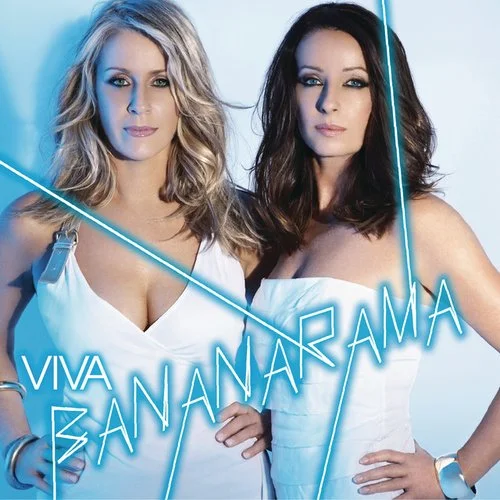
Release Date: 14th September, 2009

Label: Fascination

Producer: Ian Masterson

Standout Tracks: Love Don't Live Here/Rapture/S-S-S-Single Bed

Buy: https://www.discogs.com/sell/list?master_id=326002&ev=mb

Stream: https://open.spotify.com/album/1cfn3c5NlxrzWkLv40XGem?si=yqnRggl9TPmlP8XFGbY-Fw

Review:

In a post-Spice Girls pop world, where ‘Girl Power’ has been all too hastily supplemented by “How would you like us?”, it’s enormously satisfying to know that Bananarama never went away.

They may now be two middle-aged women and probably more intrinsically respectable than they ever imagined they might be, but they are the original UK girl group of the modern era – and the most successful – and serve to remind their spiritual spawn that there is an alternative, more independent-minded way to have a pop career.

They can do this because, and this is the most important thing about Bananarama and why everybody from Ms Dynamite to Girls Aloud to Lady Gaga should pay attention, they have never changed their approach to what they do. This may be their tenth album in their 30th year as a group and they may have acquired considerable sophistication along the way, but it still bristles with the sort of energy born out of total conviction that what they are doing is right for them. Regardless of what’s going on around them.

In this case it’s the hi-NRG-ish disco pop, which has served them well over time, with the producer here, Ian Masterton, not only getting the best out of the duo but making them sound a little bit contemporary by ushering in outside influences. As touches rather than fully-formed ideas, meaning the mix of self-penned tunes and covers – The Runner, S-S-S-Single Bed and Rapture – ploughs a pretty straightforward, synth-heavy path with not a great deal of tonal variation. That said, nobody knows their audience as well as this group – you wouldn’t survive for 30-odd years if you didn’t – and it’s not meant to be played as an album, but spun as one-offs in Europe’s most openly hedonistic discos.

Under those circumstances, the overblown dramas of the big keyboard explosions of Love Don’t Live Here and Tell Me Tomorrow or the relentlessly pumping Dum Dum Boy and Love Comes or the elastic groove in Seventeen will find a natural and enthusiastic home. Viva Bananarama, indeed” – BBC

Choice Cut: Love Comes

The Underrated Gem


WOW!

Release Date: 4th September, 1987

Label: London

Producers: Stock Aitken Waterman

Standout Tracks: I Can’t Help It/I Heard a Rumour/I Want You Back

Buy: https://www.discogs.com/sell/list?master_id=46781&ev=mb

Stream: https://open.spotify.com/album/4rf0QgMoJ4jVEjpX54GRH5?si=X9aiOS2eQeCNFXz7oFez-w

Review:

It might sound like a bizarre criticism, but the trouble with Bananarama is that by the time they released this album in 1987 they’d got too good. When they started out at the beginning of the decade, the main thrust of their appeal was a kind of shambling amateurishness, like three girls at the back

of the school bus singing

for themselves with little thought for harmonies and vocal counterpoints.

Wow! is an incredibly slick pop record, as one might expect from the Stock/Aitken/Waterman factory, with chart-conquering hits I Heard

A Rumour and I Want You Back (and a seriously sly and sexy take on The Supremes’ Nathan Jones) the epitome of perfection. It still sounds pretty good, but naggingly clinical and with an absence of charm or humanity. It would be the last album by the original line-up, as Jacquie O’Sullivan replaced Siobhan Fahey on 1991’s Pop Life, also reissued as a deluxe model this month. The songs are more pedestrian, save for a lively take on The Doobie Brothers’ Long Train Running, while the following year’s Please Yourself found Keren Woodward and Sarah Dallin working as a duo and suffering from a similar drought of good material” – Record Collector

Choice Cut: Love in the First Degree

The Latest Album


In Stereo

Release Date: 19th April, 2019

Label: In Synk

Producers: Ian Masterson/Richard X

Standout Tracks: Love in Stereo/Intoxicated/Stuff Like That

Buy: https://www.discogs.com/sell/list?master_id=1536243&ev=mb

Stream: https://open.spotify.com/album/1MBIMtEqRi2n4ox7m5SnV0?si=9QB-eTseTmyXPdSebHX4lw

Review:

No one expected Bananarama to reinvent themselves. Most likely, no one wanted them to either. One thing’s for sure, though: Sara Dallin and Keren Woodward aren’t going to mess with the formula. Instead, they’re going to distil it to its purest form.

Hiring producer Richard X  for opening track Love In Stereo is, therefore, a smart way to get people onside, its throbbing, Heart Of Glass synths underpinning an affectionate look at the way music revives powerful associations: “With you the music sounds better/ I can’t listen alone.” Better still, it cannily acknowledges their audience’s maturity, offering a sense of nostalgia with both its opening greeting – “Been a long time” – and its early reference to “a tape in the dashboard.”

What the title track does best, however, is fail to outstay its welcome. This is one of the greatest skills of all, and it’s one at which Bananarama often excel here.

As kickstarts go, then, Love In Stereo is pretty much immaculate, and that it’s followed by the summer disco fever of Dance Music – which borrows a trick or two from Kylie’s deathless Can’t Get You Out My Head – is another canny move.

The Venus-like Intoxicated delves into similar territory as well, the duo’s familiar unison voices breaking into harmonies before its chorus, and if that’s surprisingly restrained, it’s soon offset by Stuff Like That’s festive fireworks. There’s even a gentle comedown in the Morcheeba-like On Your Own.

Inevitably, though, some tracks are weaker: It’s Gonna Be Alright’s merely a pale shadow of Stuff Like That, Tonight’s chorus sounds like it’s deflating, and only the tense crescendo towards I’m On Fire’s climax redeems its formulaic overexcitement and trite sentiments.

In places, the duo also come across as surprisingly needy: Tonight’s “I need to feel you”, Gotta Get Away’s rather worrying “I wanna feel love so bad/ Like a heart attack”, Looking For Someone’s demanding “I don’t expect nothing but love” and It’s Going To Be Alright’s “I wanted a cowboy by my side/ I wanted a rodeo,” which is surely doomed to disappointment.

Still, whether or not they offer empowerment, who listens to lyrics when they’re dancing to Bananarama? After all, it ain’t what they do. It’s always been the way that they do it” – Classic Pop

Choice Cut: Looking for Someone

The Bananarama Book


Really Saying Something: Sara & Keren - Our Bananarama Story

Authors: Sara Dallin/Keren Woodward  

Publication Date: 29th October, 2020

Publisher: Cornerstone

Synopsis:

From the duo behind the all-conquering Bananarama, Really Saying Something is a sparkling, funny and sincere story of lifelong friendship and a journey through popular music.

_______________________________________
'This book is like something from a movie' DERMOT O'LEARY

'[A] brilliant autobiography' MARTIN KEMP

A Sunday Times Best Music Book of 2020
A HuffPo Book That Got Us Through 2020
A Daily Mail Best Showbiz Memoir
_______________________________________

MUSIC, FAME AND A LIFELONG FRIENDSHIP.

Sara Dallin and Keren Woodward met in the school playground when they were four. They became international stars, first as a trio, then, for almost three decades, as a duo. 

After finishing school, Sara studied journalism at the London College Of Fashion, while Keren worked at the BBC. They lived in the YWCA before moving into the semi-derelict former Sex Pistols rehearsal room and immersing themselves in Soho's thriving club scene. A year later they teamed up with Siobhan Fahey to form Bananarama. A string of worldwide hits followed, including 'Cruel Summer', 'I Heard a Rumour and 'Venus'. In a male-dominated industry, they were determined to succeed on their own terms and inspired a generation with their music, DIY-style and trailblazing attitudes. 

Narrated with humour and authenticity, and filled with never before seen photos Really Saying Something takes us from the early days to the world tours, to party games with George Michael, a close friendship with Prodigy's Keith Flint, hanging out with Andy Warhol in New York and a Guinness World Record for the most worldwide chart entries of any all-female group.

As well as the highs, Sara and Keren speak frankly about the flip side side of fame, revealing their personal struggles and the challenges of juggling family life with a demanding professional schedule. 

Really Saying Something is the story of two friends who continue to pursue their dreams their way - and have a great time doing it. It's a celebration of determination and a lifelong friendship, with an unbeatable soundtrack.
_______________________________________
'A wonderful, pantomime-like story of self-invention and continuous reinvention' LITERARY REVIEW

'Their friendship has seen them through their school years, adolescence, bad breakups, motherhood and comebacks, all of which is 
beautifully captured in their memoir Really Saying Something, which I devoured . . . what a nostalgia-fest' KATE THORNTON

'
Brilliant, of course, absolutely wonderful' EAMONN HOLMES

'This cheery memoir showed how luck and canny shoe choices propelled Bristol school friends Dallin and Woodward to megastardom' UNCUT” – Waterstones

Order: https://www.waterstones.com/book/really-saying-something/sara-dallin/keren-woodward/9781786332660

FEATURE: The October Playlist: Vol. 5: The Greatest Kiss of Life I Ever Had

FEATURE:


The October Playlist

IN THIS PHOTO: SASAMI 

Vol. 5: The Greatest Kiss of Life I Ever Had

__________

IT is back to busy business as usual…

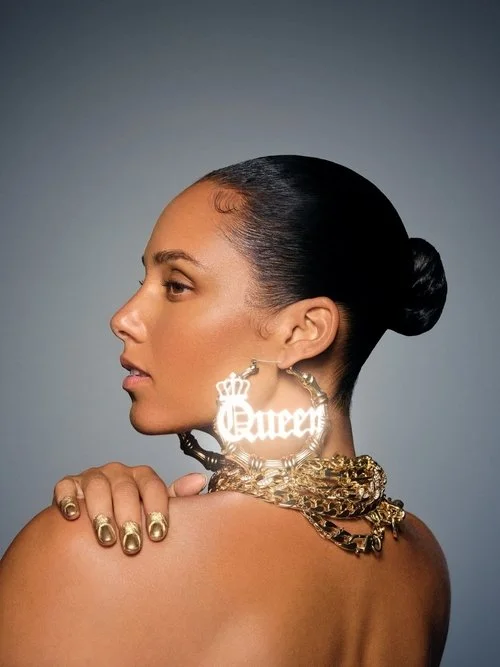
 IN THIS PHOTO: Alicia Keys

with this week’s Playlist. Last week was a little quiet in terms of big-hitting artists putting out music. No such problem this week! Alongside SASAMI is new music from Kylie Minogue & Jessie Ware, Kelly Lee Owens, BENEE, Blood Red Shoes, Alicia Keys, Lauran Hibberd, Kasabian, Alicia Keys, and Tori Amos. There is also music from Denise Chaila/MuRli, Lex Amor, Metronomy, Penelope Isles, and Anaïs Mitchell. If you need a boost to get you into the weekend, then I think the tuneage below should sort you out. It is going to be a wet weekend for many of us. Rather than brave the weather, put on these songs and they should help…

 IN THIS PHOTO: BENEE

MAKE things brighter!   

ALL PHOTOS/IMAGES (unless credited otherwise): Artists

__________

SASAMI The Greatest

Kylie Minogue & Jessie Ware - Kiss of Life

Kelly Lee Owens Unity (The Official FIFA Women’s World Cup 2023™ Theme) 

PHOTO CREDIT: Harry Were

BENEE – Doesn’t Matter 

Alicia Keys - Best of Me (Originals)

Blood Red Shoes – MORBID FASCINATION 

Lauran Hibberd – Charlie’s Car 

Kasabian ALYGATYR

Nova Twins Antagonist

Ed Sheeran Overpass Graffiti

Lex Amor – Rocks 

Tori AmosWater Metal Wood

Maddie & Tae - Madness

Denise Chaila, MuRli - Energy

Beach Bunny – Oxygen 

Koffee The Harder They Fall

PHOTO CREDIT: Parri Thomas

Penelope Isles Terrified

PHOTO CREDIT: Shawn Brackbill

The War on Drugs - Change

Maggie Lindemann She Knows It

Pixey Shine On

Strawberry Guy I’ll Be There

PHOTO CREDIT: Diana Krall

Elvis Costello, The Imposters Magnificent Hurt

Metronomy - It’s good to be back

Zuzu Queensway Tunnel

Ama Lou Trust Nobody

Larkins No Life

PHOTO CREDIT: Jay Sansone

Anaïs Mitchell Bright Star

PHOTO CREDIT: Tina Tyrell

Snail Mail Madonna

Charlotte Dos Santos Patience

Erica Cody Gratitude

PHOTO CREDIT: Trinity Ellis

Shygirl Cleo

PHOTO CREDIT: Joe Brennan

daine - cemetery dreams

Matilda Cole Halloween

WynonaReal World

The ParrotsAmigos

FEATURE: Inspired By… Part Thirty-Six: The Rolling Stones

FEATURE:


Inspired By…

IN THIS PHOTO: The Rolling Stones in 1964/PHOTO CREDIT: Terry O'Neill 

Part Thirty-Six: The Rolling Stones

___________

EXCUSE the long biography…

that is about to come but, for this part of Inspired By…, I am featuring one of the most influential bands ever. The Rolling Stones are legends who have made their mark on generations. Before I come to a playlist of songs from artists influenced by The Rolling Stones, here is some biography:

By the time the Rolling Stones began calling themselves the World's Greatest Rock & Roll Band in the late '60s, they had already staked out an impressive claim on the title. As the self-consciously dangerous alternative to the bouncy Merseybeat of the Beatles in the British Invasion, the Stones had pioneered the gritty, hard-driving blues-based rock & roll that came to define hard rock. With his preening machismo and latent maliciousness, Mick Jagger became the prototypical rock frontman, tempering his macho showmanship with a detached, campy irony while Keith Richards and Brian Jones wrote the blueprint for sinewy, interlocking rhythm guitars. Backed by the strong yet subtly swinging rhythm section of bassist Bill Wyman and drummer Charlie Watts, the Stones became the breakout band of the British blues scene, eclipsing such contemporaries as the Animals and Them. Over the course of their career, the Stones never really abandoned blues, but as soon as they gained popularity in the U.K., they began experimenting musically, incorporating the British pop of contemporaries like the Beatles, the Kinks, and the Who into their sound. After a brief dalliance with psychedelia, the Stones re-emerged in the late '60s as a jaded, blues-soaked hard rock quintet. They had always flirted with the seedy side of rock & roll, but as the hippie dream began to break apart, they exposed and reveled in the new rock culture. It wasn't without difficulty, of course. Shortly after he was fired from the group, Jones was found dead in a swimming pool, while at a 1969 free concert at Altamont, a concertgoer was brutally killed during a Stones show. But the Stones never stopped going. For the next 50-plus years, they continued to record and perform, and while their records weren't always blockbusters, they were never less than the most visible band of their era; certainly, none of their British peers continued to be as popular or productive as the Stones. And no band since has proven to have such a broad fan base or such far-reaching popularity, and it is impossible to hear any of the groups that followed them without detecting some sort of influence, whether it was musical or aesthetic.

Throughout their career, Mick Jagger (vocals) and Keith Richards (guitar, vocals) remained at the core of the Rolling Stones. The pair initially met as children at Dartford Maypole County Primary School. They drifted apart over the next ten years, eventually making each other's acquaintance again in 1960, when they met through a mutual friend, Dick Taylor, who was attending Sidcup Art School with Richards. At the time, Jagger was studying at the London School of Economics and playing with Taylor in the blues band Little Boy Blue & the Blue Boys. Shortly afterward, Richards joined the band. Within a year, they had met Brian Jones (guitar, vocals), a Cheltenham native who had dropped out of school to play saxophone and clarinet. By the time he became a fixture on the British blues scene, Jones already had a wild life. He ran away to Scandinavia when he was 16 and had already fathered two children. He returned to Cheltenham after a few months, where he began playing with the Ramrods. Shortly afterward, he moved to London, where he played in Alexis Korner's group, Blues Inc. Jones quickly decided he wanted to form his own group and advertised for members; among those he recruited was blues pianist Ian Stewart.

As he played with his group, Jones also moonlighted under the name Elmo Jones at the Ealing Blues Club. At the pub, he became reacquainted with Blues, Inc., which now featured drummer Charlie Watts, and, on occasion, cameos by Jagger and Richards. Jones became friends with Jagger and Richards, and they soon began playing together with Taylor and Stewart; during this time, Jagger was elevated to the status of Blues, Inc.'s lead singer. With the assistance of drummer Tony Chapman, the fledgling band recorded a demo tape. After it was rejected by EMI, Taylor left the band to attend the Royal College of Art; he would later form the Pretty Things. Before Taylor's departure, the group named itself the Rolling Stones, borrowing the moniker from a Muddy Waters song.

The Rolling Stones gave their first performance at the Marquee Club in London on July 12, 1962. At the time, the group consisted of Jagger, Richards, Jones, pianist Ian Stewart, drummer Mick Avory, and Dick Taylor, who had briefly returned to the fold. Weeks after the concert, Taylor left again and was replaced by Bill Wyman, formerly of the Cliftons. Avory also left the group -- he would later join the Kinks -- and the Stones hired Tony Chapman, who proved to be unsatisfactory. After a few months of persuasion, the band recruited Charlie Watts, who had quit Blues, Inc. to work at an advertising agency once that group's schedule became too hectic. By 1963, the band's lineup was set, and the Stones began an eight-month residency at the Crawdaddy Club, which proved to substantially increase their fan base. It also attracted the attention of Andrew Loog Oldham, who became the Stones' manager, signing them from underneath the Crawdaddy Club's Giorgio Gomelsky. Although Oldham didn't know much about music, he was gifted at promotion, and he latched upon the idea of fashioning the Stones as the bad-boy opposition to the clean-cut Beatles. At his insistence, the heavyset yet meek Stewart was forced out of the group, since his appearance contrasted with the rest of the bandmembers'. Stewart didn't disappear from the Stones, though; he became one of their key roadies and played on their albums and tours until his death in 1985.

With Oldham's help, the Rolling Stones signed with Decca Records, and that June released their debut single, a cover of Chuck Berry's "Come On." The single became a minor hit, reaching number 21, and the group supported it with appearances on festivals and package tours. At the end of the year, they released a version of Lennon-McCartney's "I Wanna Be Your Man" that soared into the Top 15. Early in 1964, they released a cover of Buddy Holly's "Not Fade Away," which shot to number three. "Not Fade Away" became their first American hit, reaching number 48 that spring. By that time, the Stones were notorious in their homeland. Considerably rougher and sexier than the Beatles, the Stones were the subject of numerous sensationalized articles in the British press, culminating in a story about them urinating in public. All of these stories cemented the group as a dangerous, rebellious band in the minds of the public, and had the effect of beginning a manufactured rivalry between them and the Beatles, which helped the group rocket to popularity in the U.S. In the spring of 1964, the Stones released their eponymous debut album, which was followed by "It's All Over Now," their first U.K. number one.

That summer, they toured America to riotous crowds, recording the Five by Five EP at Chess Records in Chicago in the midst of the tour. By the time it was over, they had another number one U.K. single with Howlin' Wolf's "Little Red Rooster." Although the Stones had achieved massive popularity, Oldham decided to push Jagger and Richards into composing their own songs, since they -- and his publishing company -- would receive more money that away. In June of 1964, the group released their first original single, "Tell Me (You're Coming Back)," which became their first American Top 40 hit. Shortly afterward, a version of Irma Thomas' "Time Is on My Side" became their first U.S. Top Ten. It was followed by "The Last Time" in early 1965, a number one U.K. and Top Ten U.S. hit that began a virtually uninterrupted string of Jagger-Richards hit singles. Still, it wasn't until the group released "(I Can't Get No) Satisfaction" in the summer of 1965 that they were elevated to superstars. Driven by a fuzz-guitar riff designed to replicate the sound of a horn section, "Satisfaction" signaled that Jagger and Richards had come into their own as songwriters, breaking away from their blues roots and developing a signature style of big, bluesy riffs and wry, sardonic lyrics. It stayed at number one for four weeks and began a string of Top Ten singles that ran for the next two years, including such classics as "Get Off My Cloud," "19th Nervous Breakdown," "As Tears Go By," and "Have You Seen Your Mother, Baby, Standing in the Shadow?"

By 1966, the Stones had decided to respond to the Beatles' increasingly complex albums with their first album of all-original material, Aftermath. Due to Brian Jones' increasingly exotic musical tastes, the record boasted a wide range of influences, from the sitar-drenched "Paint It, Black" to the Eastern drones of "I'm Going Home." These eclectic influences continued to blossom on Between the Buttons (1967), the most pop-oriented album the group ever made. Ironically, the album's release was bookended by two of the most notorious incidents in the band's history. Before the record was released, the Stones performed the suggestive "Let's Spend the Night Together," the B-side to the medieval ballad "Ruby Tuesday," on The Ed Sullivan Show, which forced Jagger to alter the song's title to an incomprehensible mumble, or else face being banned.

In February of 1967, Jagger and Richards were arrested for drug possession, and within three months, Jones was arrested on the same charge. All three were given suspended jail sentences, and the group backed away from the spotlight as the summer of love kicked into gear in 1967. Jagger, along with his then-girlfriend Marianne Faithfull, went with the Beatles to meet the Maharishi Mahesh Yogi; they were also prominent in the international broadcast of the Beatles' "All You Need Is Love." Appropriately, the Stones' next single, "Dandelion"/"We Love You," was a psychedelic pop effort, and it was followed by their response to Sgt. Pepper's, Their Satanic Majesties Request, which was greeted with lukewarm reviews.

The Stones' infatuation with psychedelia was brief. By early 1968, they had fired Andrew Loog Oldham and hired Allen Klein as their manager. The move coincided with their return to driving rock & roll, which happened to coincide with Richards' discovery of open tunings, a move that gave the Stones their distinctively fat, powerful sound. The revitalized Stones were showcased on the malevolent single "Jumpin' Jack Flash," which climbed to number three in May 1968. Their next album, Beggar's Banquet, was finally released in the fall, after being delayed for five months due its controversial cover art of a dirty, graffiti-laden restroom. An edgy record filled with detours into straight blues and campy country, Beggar's Banquet was hailed as a masterpiece among the fledgling rock press. Although it was seen as a return to form, few realized that while it opened a new chapter of the Stones' history, it was also the end of their time with Brian Jones. Throughout the recording of Beggar's Banquet, Jones was on the sidelines due to his deepening drug addiction and his resentment of the dominance of Jagger and Richards. Jones left the band on June 9, 1969, claiming to be suffering from artistic differences between himself and his bandmembers. On July 3, 1969 -- less than a month after his departure -- Jones was found dead in his swimming pool. The coroner ruled that it was "death by misadventure," yet his passing was the subject of countless rumors over the next two years.

By the time of his death, the Stones had already replaced Jones with Mick Taylor, a former guitarist for John Mayall's Bluesbreakers. He wasn't featured on "Honky Tonk Women," a number one single released days after Jones' funeral, and he contributed only a handful of leads on their next album, Let It Bleed. Released in the fall of 1969, Let It Bleed comprised sessions with Jones and Taylor, yet it continued the direction of Beggar's Banquet, signaling that a new era in the Stones' career had begun, one marked by ragged music and an increasingly wasted sensibility. Following Jagger's filming of Ned Kelly in Australia during the first part of 1969, the group launched its first American tour in three years. Throughout the tour -- the first where they were billed as the World's Greatest Rock & Roll Band -- the group broke attendance records, but it was given a sour note when they staged a free concert at Altamont Speedway. On the advice of the Grateful Dead, the Stones hired Hell's Angels as security, but that plan backfired tragically. The entire show was unorganized and in shambles, and it turned tragic when the Angels killed a young Black man, Meredith Hunter, during the Stones' performance. In the wake of the public outcry, the Stones again retreated from the spotlight and dropped "Sympathy for the Devil," which some critics ignorantly claimed incited the violence, from their set. As the group entered a hiatus, they released the live Get Yer Ya-Ya's Out! in the fall of 1970. It was their last album for Decca/London, and they formed Rolling Stones Records, which became a subsidiary of Atlantic.

During 1970, Jagger starred in Nicolas Roeg's cult film Performance and married Nicaragua model Bianca Perez Morena de Macias; the couple quickly entered high society. As Jagger was jet-setting, Richards was slumming, hanging out with country-rock pioneer Gram Parsons. Keith wound up having more musical influence on 1971's Sticky Fingers, the first album the Stones released through their new label. Following its release, the band retreated to France in tax exile, where they shared a house and recorded a double album, Exile on Main St. Upon its May 1972 release, Exile on Main St. was widely panned, but over time it came to be considered one of the group's defining moments.

Following Exile, the Stones began to splinter in two, as Jagger concentrated on being a celebrity and Richards sank into drug addiction. The band remained popular throughout the '70s, but their critical support waned. Goats Head Soup, released in 1973, reached number one, as did 1974's It's Only Rock 'n' Roll, but neither record was particularly well-received. Taylor left the band after It's Only Rock 'n' Roll, and the group recorded their next album as they auditioned new lead guitarists, including Jeff Beck. They finally settled on Ron Wood, former lead guitarist for the Faces and Rod Stewart, in 1976, the same year they released Black n' Blue, which only featured Wood on a handful of cuts. During the mid- and late '70s, all the Stones pursued side projects, with both Wyman and Wood releasing solo albums with regularity. Richards was arrested in Canada in 1977 with his common-law wife Anita Pallenberg for heroin possession. After his arrest, he cleaned up and was given a suspended sentence the following year.

The band reconvened in 1978 to record Some Girls, an energetic response to punk, new wave, and disco. The record and its first single, the thumping disco-rocker "Miss You," both reached number one, and the album restored the group's image. However, the band squandered that goodwill with the follow-up, Emotional Rescue, a number one record that nevertheless received lukewarm reviews upon its 1980 release. Tattoo You, released the following year, fared better both critically and commercially, as the singles "Start Me Up" and "Waiting on a Friend" helped the album spend nine weeks at number one. The Stones supported Tattoo You with an extensive stadium tour captured in Hal Ashby's movie Let's Spend the Night Together and the 1982 live album Still Life.

Tattoo You proved to be the last time the Stones completely dominated the charts and the stadiums. Although they continued to sell out concerts in the '80s and '90s, their records didn't sell as well as previous efforts, partially because the albums suffered due to Jagger and Richards' notorious mid-'80s feud. Starting with 1983's Undercover, the duo were conflicted about which way the band should go, with Jagger wanting the Stones to follow contemporary trends and Richards wanting them to stay true to their rock roots. As a result, Undercover was a mean-spirited, unfocused record that had relatively weak sales and mixed reviews. Released in 1986, Dirty Work suffered a worse fate, since Jagger was preoccupied with his fledgling solo career. Once Jagger decided that the Stones would not support Dirty Work with a tour, Richards decided to make his own solo record with 1988's Talk Is Cheap. Appearing a year after Jagger's failed second solo album, Talk Is Cheap received good reviews and went gold, prompting Jagger and Richards to reunite late in 1988.

The following year, the Stones released Steel Wheels, which was received with good reviews, but the record was overshadowed by its supporting tour, which grossed over 140 million dollars and broke many box office records. In 1991, the live album Flashpoint, which was culled from the Steel Wheels shows, was released. Following the release, Bill Wyman left the band; he published a memoir, Stone Alone, within a few years of leaving. The Stones didn't immediately replace Wyman, since they were all working on solo projects; this time, there was none of the animosity surrounding their mid-'80s projects.

The group reconvened in 1994 with bassist Darryl Jones, who had previously played with Miles Davis and Sting, to record and release the Don Was-produced Voodoo Lounge. The album received the band's strongest reviews in years, and its accompanying tour was even more successful than the Steel Wheels tour. On top of being more successful than its predecessor, Voodoo Lounge also won the Stones their first Grammy for Best Rock Album. Upon the completion of the Voodoo Lounge tour, the Stones released the live "unplugged" album Stripped in the fall of 1995. Similarly, after wrapping up their tour in support of 1997's Bridges to Babylon, the group issued yet another live set, No Security, the following year. A high-profile greatest-hits tour in 2002 was launched despite the lack of a studio album to support, and its album document, Live Licks, appeared in 2004. A year later, the group issued A Bigger Bang, their third effort with producer Don Was.

In 2006, Martin Scorsese filmed two of the group's performances at New York City's Beacon Theatre. The resulting Shine a Light, which included guest appearances from Buddy Guy, Jack White, and Christina Aguilera, was released in theaters in 2008. The accompanying soundtrack reached the number two spot on the U.K. charts. Following Shine a Light, the Stones turned their attention toward their legacy. For Keith Richards, this meant delving into writing his autobiography, Life -- the memoir was published to acclaim in the fall of 2010 and generated some controversy due to comments Keith made about Mick -- but the Stones in general spent time mining their archives, something they'd previously avoided. In 2010, they released a super-deluxe edition of Exile on Main St. that contained a bonus disc of rarities and outtakes, including a few newly finished songs like "Plundered My Soul." This was followed in 2011 by a super-deluxe edition of Some Girls that also contained unheard songs and outtakes. That same year, the Stones opened up their Rolling Stones Archive, which offered official digital releases of classic live bootlegs like 1973's The Brussels Affair.

All this was a prelude to their 50th anniversary in 2012, which the group celebrated with a hardcover book, a documentary called Crossfire Hurricane, and a new compilation called GRRR! The Stones also played a handful of star-studded concerts at the end of the year and in the first half of 2013, several of which featured guest spots from the long-departed Mick Taylor. These live shows culminated with a headlining spot at Glastonbury and two July 2013 concerts at Hyde Park; highlights from the Hyde Park shows were released that July and, later in the year, there was a home video/CD release of the concert called Sweet Summer Sun: Live in Hyde Park.

Over the next few years, the Stones played concerts regularly -- a highlight was a March 2016 concert in Havana, Cuba -- and slowly worked on an album that was teased in September 2016, the same week their Decca/London works were released as the box set The Rolling Stones in Mono. On December 2, 2016, the Stones released Blue & Lonesome, a collection of Chicago blues covers that was their first studio album in 11 years. The Stones had two major archival projects released in the last quarter of 2017: a 50th anniversary edition of Their Satanic Majesties Request and On Air, the first official release of their '60s BBC recordings. The band's 2018 No Filter tour of Europe spilled over into 2019 when they announced it would include a massive stadium tour of the U.S. The tour was delayed due to Jagger's need for emergency heart surgery -- he recovered successfully, and the band returned to the road -- but the release of the new compilation Honk was undisturbed. Concentrating on music made since 1971, Honk appeared in April 2019. Later that year came the arrival of the live LP/concert film Bridges to Bremen, which captured the group performing in the German city on September 2, 1998 in support of the Bridges to Babylon album. A 50th Anniversary edition of Let It Bleed also appeared in 2019. In April 2020, the Stones released the single "Living in a Ghost Town." It was their first new material since 2012, taken from sessions for a studio album that the band had been working toward since 2015. Later that year, they released a deluxe reissue of Goats Head Soup. On August 5, 2021, the Rolling Stones announced that Watts would be unable to appear with the band on an upcoming United States tour (already postponed because of the COVID-19 pandemic) due to health concerns, and that Steve Jordan (who had worked with Keith Richards on a number of projects) would be taking his place. Less than three weeks later, Charlie Watts died in a London hospital on August 24, 2021; he was 80 years old”.

Even though they have lost one of their key members, The Rolling Stones will continue to rock for many years to come. They have influenced so many artists (I won’t be able to include all of them here). Below is a selection of tracks from artists who owe a nod…

TO The Rolling Stones.

FEATURE: Modern Heroines: Part Seventy-Four: Self Esteem

FEATURE:


Modern Heroines

PHOTO CREDIT: Suzie Howell for The New York Times 

Part Seventy-Four: Self Esteem

___________

ALTHOUGH I have…

 PHOTO CREDIT: Eva Pentel for NME

featured Self Esteem (Rebecca Lucy Taylor) a few times recently, I have not included her in Modern Heroines. I wanted to wait until her new album, Prioritise Pleasure, was released. It has won some huge reviews and is being talked about as one of the best albums of this year. Following 2019’s Compliments Please, Prioritise Pleasure is an album that takes Self Esteem’s music to new levels. I am going to end with a playlist of her best tracks to date. One of our very best artists, it is worth starting out with a couple of reviews for Prioritise Pleasure. The album received widespread acclaim and garnered different observations and insights. This is how Loud and Quiet judged the record:

Indie-pop veteran Rebecca Taylor, aka Self Esteem, embodies the role of a pop star with joy and confidence. She nails the technical elements, of course: the larger-than-life persona, the earworm choruses, the vocal excellence – it’s all there. But what makes her truly special is her ability to take us all with her, centring the listener in each glorious ‘fuck you’ to those who have wronged her, and in each vulnerable acknowledgement of pain. Taylor views her approach to pop as a Trojan Horse – a vehicle for poised and memorable feminist statements. Sure, it’s calculated, but it’s also raw and dangerous. Taylor’s shocking lyrical honesty goes beyond what most pop stars can offer.

Prioritise Pleasure is a frank, uplifting look at feminine survival in the midst of male violence and toxic social pressure, finding communal strength in timeless group vocals and ecstatic choruses. Early single ‘I Do This All the Time’ uses undecorated spoken word to reassure us (“Getting married isn’t the biggest days of your life / All the days that you get to have are big”), while ‘How Can I Help You’ opts instead for pummelling Yeezus-era drum hits. As a young drummer, Taylor was criticised by the men around her for the way her body moved on the kit – a grimly common experience for female percussionists. Here, her drumming becomes confrontational under lines like “I’ll always be wet, always be up for it / Politely sit, but I don’t know shit, do I? / And that’s how you live with it”.

Rather than using pop polish to mask uncomfortable truths, Prioritise Pleasure hits so powerfully specifically because it uses the language of a pop record to state them frankly. It’s masterful”.

It is amazing to think of the huge reaction that Prioritise Pleasure has been afforded – though, when you hear it, it is not that surprising. Self Esteem has been doing promotional work for the album and, going forward, I know that she will want to tour widely and extensively. You can see where she is playing and whether you still have a chance to get a ticket. There are a few interviews I want to highlight before I finish off. Before that, this review from DIY provides some useful notes and impressions:

On her 2019 solo debut ‘Compliments Please’, Rebecca Lucy Taylor set out the stall for her project Self Esteem as an assertive but nuanced pop star. It’s with ‘Prioritise Pleasure’ that she’s upped the ante considerably. A powerful and potent look at - quite simply - the experience of being a woman in the present day, this is an album that encapsulates the fear, anger, dread and exhaustion that has become so commonplace in so many female lives. And yet, it’s a record that still offers comfort and levity; there’s a wittiness and dark humour that traverses the likes of ‘Moody’ - its opening line being the iconic “Sexting you at the mental health talk seems counter-productive” - and ‘Fucking Wizardry’, all the while remaining honest and raw, but free of judgement.

When the record’s opener ‘I’m Fine’ closes with a voice note of a woman in her early twenties explaining that - if approached by a group of men - her friends’ reaction is to begin barking like a dog - because “there is nothing that terrifies a man more than a woman who appears completely deranged” - Rebecca’s response is to begin howling herself.

It’s also an album that sees Rebecca continually pushing herself to explore new sonic avenues; eclectic instrumentation and bold sonics are the backbone of the record, with tracks switching from spoken-word manifestos (‘I Do This All The Time’) through to more traditional R&B pop formats (‘Still Reigning’) via gigantic gospel-backed offerings (‘Prioritise Pleasure’), and back again. Most importantly, though, this is a record that doesn’t compromise. An uncomfortable and unnerving listen at times - as any album dealing in this level of openness arguably should be - it’s also an absolutely necessary one. Through her own personal stories - and those of others - ‘Prioritise Pleasure’ manages to challenge accepted norms and help to exorcise long-buried demons; it’s powerful to the last drop”.

I am concentrating on Self Esteem’s most-recent album – though, with the playlist, I shall take songs from her debut album too. There has been a raft of interviews around Prioritise Pleasure. The album is a huge declaration of intent. It is also very honest and open. One of the hallmarks of Self Esteem’s music is her honesty. I think that is why so many people have connected with the album. In this NME interview, the artist’s honest nature is spotlighted:

Such honesty is typical of Self Esteem, the name of the solo project Taylor launched in 2017 after leaving the indie-pop duo Slow Club. Currently, the 34-year-old musician is gearing up to release her second album ‘Prioritise Pleasure’, and has been playing for her largest crowds yet thanks to the runaway success of her poppy and powerful recent single ‘I Do This All The Time’, which is now in regular rotation on 6 Music. It will no doubt receive a rapturous response at the upcoming Green Man festival in Wales’ Brecon Beacons, where she’ll play before headliners Teenage Fanclub on the weekend’s second-biggest second stage.

“It’s a big slot for me,” she says, explaining that the plan is to air more songs from the upcoming album, along with plenty of choreo party spirit. “With the live show that we’re doing, there are dance routines like Pussycat Dolls… because they’re fun to play on.” She adds: “I enjoy playing into really shiny pop tropes. What I want to do is to use the palatable nature of pop to Trojan horse in my agenda. While you think you’re listening to something sexy or fizzy and poppy, it’s actually me trying to school you about consent.”

While some artists tend to mull over their message carefully before serving up a stream of manicured, media-ready mission statements in interviews, Taylor rarely censors what’s on her mind – aside from an incredibly rare clarification about the nature of her relationship with Kermit – and views openness as an important quality.

Taylor formed Slow Club in Sheffield in 2006 with fellow instrumentalist Charles Watson. After just over a decade together, the duo parted ways. Though she remains proud of the songs she and Watson wrote together – and is clear she doesn’t blame anybody for making her feel this way – Taylor began to feel suffocated by a sense of duty to the band. “The amount of songs I had that couldn’t go through the Slow Club lens – that then had to just disappear – was quite debilitating artistically,” she says.

Though Taylor doesn’t dwell on her sexuality (“my Wikipedia page says that I’m bisexual, and I’m like, ‘Wow – that’s news?”), going solo has proved freeing in certain ways. Looking back, she recognises the “inherent masculinity” and straightness of the indie scene Slow Club moved in.

She says that breaking away to do her own thing has been “the greatest joy”, adding: “Everything about that world was like, ‘Ooh – we just happen to be playing our songs quietly, don’t look at me, don’t make any sort of spectacle out of me; I’m just sort of accidentally talented. That’s something I never enjoyed about it. I want to put on a show – I want it to be too much!

“As a little girl this is what my life was like. I used to just write plays and do dances. I had this character called the Babylon Sorceress – she had this long purple dress with big sleeves and red hair. A very Florence [and The Machine] vibe actually. I told Florence about her. She was this misunderstood sorceress that was very cool, and I was very enamoured. All my female leads were very isolated and alone, and now look! My life was this Freddie Mercury fucking show. For a decade of my life, that was the worst thing about me. Now, to celebrate it is just hilarious.”

And, true to its title, ‘Prioritise Pleasure’ as a whole is an album that champions putting yourself first – even if it makes certain people uncomfortable. “I’ve done years of therapy, done plenty of work on myself, and read every fucking book you can fucking read about it, and it comes back down to true self-acceptance and self-love,” Taylor says. “It’s the answer to everything, but it’s still something that you’re meant to not do. I go down this road a lot, and I get quite upset. But then I think, no – just keep in my little part of the world, my group, accepting myself, loving myself, and then make my little silly songs and do my little silly dances. And if someone can learn from that and pass it forward, at least I’m doing something?”.

 PHOTO CREDIT: Eva Pentel for NME

Before getting to a recent interview, I want to source from The Skinny’s chat with Self Esteem. The sense of size and scale on Prioritise Pleasure (compared to Compliments Please) is evident. Everything is turned up:

Prioritise Pleasure is the title of Taylor's new record as Self Esteem. Due on 22 October via Fiction Records, it's bigger in every aspect than its predecessor, from its supercharged instrumentation to the depth of emotion found in its lyricism and vocal layering. “I thought I would get loads more budget for the second album, and I did not,” she admits with a chuckle, “so it was like, 'Okay, so how do we turn everything up to 11 with exactly the same amount of money we had the first time around?' All the songs were just very there and clear to me, and Johan [Karlberg, producer] and I have now got a synergy that we didn't have on the first record so, weirdly, the only thing that was difficult was figuring out how to make an orchestra out of my mate Galps [Sophie Galpin] in Manchester on one violin,” she laughs.

“It's kind of fun in a way because the album is so big sounding and bombastic and widescreen and cinematic, which is what I wanted to do, but I still did it with fuck all… I'm so glad I haven't achieved what I want to achieve quite yet, because imagine if I had access to an orchestra or a full choir. That's what excites me about album three."

Before getting ahead of herself, she adds: "I said what I needed to with Compliments Please, but only just… and Compliments Please was 14 tracks but it could've been 20. I was like, let's just keep going, and the same's happened [on Prioritise Pleasure]. But I think it's because I've been a musician since I was 16/17, full-time doing it, and I had so many ideas I couldn't do. So many things I wanted to do, I've just parked, and I think I thought they were gone, but they weren't. So it feels like I'm extremely realised and it's all well thought out and unbelievably worked on, but it's just like the overflow car park's been opened.

“All it's been really, Self Esteem, is my manager has just listened to me and gone, ‘Okay.’ No pushback, barely any pushback ever. Even my label don't. And that's what happens when you just fucking listen to a woman and let her make what she wants to make."

But her incredible all-singing, all-dancing live band, and the support that in turn comes from them is also worth celebrating. “It’s unreal, I could cry even thinking about it,” Taylor says. “There's an extra layer I didn't realise was going to be there which is their personal gain from performing it, and what that does on the stage, there’s some sort of fucking mad chemistry that goes on where it feels bigger than playing it live. I want Self Esteem to be this multi-layered experience, not just an artist who you like the songs of and you go and see live, and there's something about, like, what a fucking evangelical moment we're having together that feeds into an audience.

“For many years I was like 'why am I even fucking doing this with my life? I’m skint, it's shit, I can't keep up with any relationships I've got, I'm the worst friend everyone's got because I'll never be at your wedding, I'll never be at your christening.' There's so many negatives, and the only positive was to create what I wanna make... there was always this negative self-talk of, ‘What's so important that you've got to say.’ And that's all dissipated now I've got this gang, that it's for them and then therefore it's for audiences and it does feel important to be doing it, which is what I always needed to feel”.

 PHOTO CREDIT: Suzie Howell for The New York Times 

The final interview that caught my eye sees Self Esteem being featured by the American press. She was profiled by The New York Times.. It shows that her music, and especially Prioritise Pleasure, has really made an impact and reached beyond the U.K. It means that there will be gig requests coming in from America soon enough:

I have felt very alone most of my life, like ‘What is wrong with me?’” Taylor said, pointing to expectations for women to settle down and have children. Her recent success “makes me feel this overwhelming relief that I’m not a total weirdo.”

If Taylor has a manifesto behind “Prioritise Pleasure,” it’s encouraging people to put themselves first without denying that they can also make mistakes. The “pleasure” mentioned in the album’s title can take many forms, she said, including what she was looking forward to doing that evening: going home, ordering take out and watching “Succession.”

Self Esteem’s rise comes at a time when new attention is being paid to violence against women in Britain following the deaths of Sarah Everard, who was kidnapped and murdered by a police officer while walking home in March, and Sabina Nessa, who was killed while walking through a park in September. This month, there have been reports of women being injected with syringes at nightclubs, a variation of “spiking,” when drugs are dropped into someone’s drink.

Jude Rogers, a music journalist who has written about “Prioritse Pleasure,” said Self Esteem’s music feels right for the moment. “We needed a woman to appear who was going to say, ‘Enough,’” Rogers said. Self Esteem is “expressing all the messiness, all the frustration and all the anger of being a woman,” in ambitious pop music,” she added.

Taylor said she’s been concerned about her safety since she was a teenager, “which I guess is like the zeitgeist now.” She started writing the album in 2019, and decided to process a sexual assault she had survived through her music. “As someone who lives very free, I like to be sexual, I like to do what I want,” she said. “But suddenly it was taken from me and I had a decision to never enjoy myself in that way again, to never be the person I like to be, or turn it all into defiant euphoria.”

The end of a toxic relationship also informed the album, but the record has a strong thread of empowerment, which Taylor said was a result of more positive experiences. “I finally hit this beautiful cross section of I’m older, the therapy’s kicked in a bit, and I care less,” she said. While making the record, she stopped worrying about other people’s expectations of her and her career.

“People like to say they’re being honest in their songs and interviews, but really they very rarely are,” he said. “Rebecca is in everything, and people relate to that.”

At her London concert last week, the relating was nearly deafening, as fans shouted along with their favorite lines (“Sexting you at the mental health club seems counterproductive” was particularly loud).

One fan, Cat Carrigan, 30, said she’s drawn to a danceable Self Esteem track called “Moody” that’s both a tale of a relationship collapsing and an attempt to reclaim a common insult used against woman. “I’ve been called a moody cow many times in my life,” Carrigan said. “It’s not going to affect me anymore”.

A terrific artist who is going to keep on producing sensational albums, Self Esteem’s Rebecca Lucy Taylor is a definite icon of the future. An inspirational artist who is already driving and influencing her peers, do make sure that you investigate…

HER current album.

FEATURE: Modern Heroines: Part Seventy-Three: Faye Webster

FEATURE:


Modern Heroines

Part Seventy-Three: Faye Webster

___________

ONE of the most interesting…

and influential young artists in music at the moment, Faye Webster is someone who will go on to inspire so many others. I feel she is one of the most distinct songwriters and voices around. I am keen to get to a few interviews. The twenty-four-year-old released one of this year’s best albums, I Know I'm Funny haha, back in June. Such a clever and original songwriter, this is what DIY said in their review:

By way of a thesis summary, Faye Webster’s confession on ‘Both All The Time’ takes the cake; “I’m loneliest at night / after my shower beer.” Capturing the modern dating experience in 11 well-crafted vignettes, ‘Funny..’ is an album that tracks the life-cycle of an ill-fated romance, with all the glorious highs and lows - trying to impress their family, sharing your deepest secrets and then scrabbling to find ways to piece yourself back together when it all goes tits up. Despite its tumultuous subject matter, Faye hasn’t abandoned the melodic Hawaii-Five-O charm of her earlier work, infusing it with just the right amount of bite. ‘Cheers’ drapes slinky, skippering guitars over a steely frame, while ’Sometimes’ is a SoCal Frank Ocean lullaby, dissolving its woes in a glass full of blissful piano. The music acts as a balm for the lyrical headspace; on ‘A Stranger’ she finds herself deep in self-pity, comparing herself to exes past through swooning spoken-word, while ‘A Dream with a Baseball Player’ beds its lyrical double-meaning in a swinging hip-hop bassline: “How did I fall in love with someone / I don’t know?” Maybe the entire relationship was a fiction? It’s difficult to tell, but it hardly matters. Endearing and relatable without ever lapsing into total fondue, Faye Webster knows exactly how to roll with life’s punches, how to find the humour in a vulnerable moment. She knows she’s funny, but we think she’s pretty smart”.

It is worth knowing more about the Atlanta, Georgia-based artist. In terms of her sound, I guess you could label Webster’s music as ‘Indie’ or ‘Alternative’. Apologies if I repeat anything when sourcing from a few interviews. There is a lot to uncover and discover regarding Webster! The first interview that I want to bring in is from Passion of the Weiss. In it, we learn about Webster’s early work – and how she has developed as an artist since then:

When Webster released her first album at 16, Run & Tell, her sound clearly paid homage to the twangy country of her youth. But as she grew more active in the arts scene in Atlanta, moonlighting as a hip-hop photographer (she shot Lil Yachty and Killer Mike among others), her aspirations shifted. After becoming friendly with Awful Records artists online and at shows, Webster signed a record deal with the left-of-center rap label known for their genre-defying vocal styles, sounds and aesthetics. Awful released her tightly-compact, self-titled LP in 2017, a precocious debut for a then-unknown 20-year-old. Shadowing Awful creatives allowed her the opportunity to observe and learn from some of Atlanta’s most experimental acts, including Father and Ethereal, whom Webster credits as major figures in her ascension.

This measured form of musical exploration gleaned from her time at Awful shined through on her 2019 Secretly Canadian debut, the swoon-worthy Atlanta Millionaires Club. The record reimagined the vintage folk of her youth in the form of dreamy, multi-instrumented soundscapes. The hazy, George Harrison-style guitar licks were still a fixture, but melancholic strings (“Jonny”) and somber brass sections (“Kingston”) gave the music more texture and depth.

You come from a family with deep musical roots, particularly in bluegrass and Americana. What are some of your earliest memories of music?

Faye Webster: I feel like the most influential early memories of music was just hearing my brother play guitar in the house. We had bedrooms that were sharing the same wall so I feel like I always heard him playing and I was like ‘I want to do that.

Your mother played the violin and your grandfather plays guitar as well. What did your family teach you about musicianship when you were getting started?

Faye Webster: I feel like the most influential early memories of music was just hearing my brother play guitar in the house. We had bedrooms that were sharing the same wall so I feel like I always heard him playing and I was like ‘I want to do that.

Your music style seems to carry on that familial folk and country feel to it, but also sounds modern with R&B and indie pop. How did that come about?

Faye Webster: I was always influenced by folk music especially like old country music because that’s what I grew up listening to. Being a young woman living in Atlanta I was slowly being influenced by other things, but I feel like I held on to this strong country root because that’s all I ever known. I think it just developed into my own thing.

PHOTO CREDIT: Pooneh Ghana 

Your first album, Run & Tell, dropped when you were 16. How do you think your sound has evolved since then?

Faye Webster: A lot. I really don’t relate to that record anymore. Just like in an artist sense, I feel like everyone grows and changes. I think as I’ve grown I’ve realized who I wanted to be and what I wanted to write about and what was meaningful to me. As a 16 year old I didn’t know any of those things. I think I’ve just spent more time figuring myself out.

What was it like growing up in a Hip-Hop juggernaut of a city like Atlanta?

Faye Webster: It was sick. I wouldn’t have wanted to change any part of my childhood. I think it was so cool to be put on to different shit so early in my life which I’ve really appreciated. I feel like I’ve learned so much sitting back and just watching people. Being around them in general. I have a very passionate love for this city. Everyone’s creative and it’s so diverse.

Where did the album title I know Im Funny haha come from?

Faye Webster: It was a lyric and I was like ok I’m done. This was all it was meant to be. Then when it came to the time of naming it I was looking through lyrics. I wanted to play off lyrics and was looking for this long extended title that no one would think you would name a record. This one was just the obvious answer no matter how hard I tried to avoid it.

Is this a phrase you’ve set either to yourself or others a lot?

Faye Webster: No never. I feel like when I’m writing songs I’m not thinking about writing a song, I’m just singing my thoughts out loud. I feel like that verse was such a random thing I was thinking about”.

Growing up in such a musical city like Atlanta, it must have been eye-opening and hugely exciting for Faye Webster! One can hear the influence of the city in her work…though I feel her childhood tastes and musical upbringing is also important. When she spoke with i-D back in June, the influence of Georgia, then and now, was raised and explored:

Faye grew up in Atlanta surrounded by music. Her influences were a mesh of the city’s thriving hip-hop scene and her parents’ preferences for country western music (her mom, from Texas, loved Elvis Presley). After she released her first album, she signed with Awful Records, an Atlanta-based label whose roster was made up mostly of rap and R&B artists. It was there she connected with Father, a rapper and the label’s founder who would later feature on the song “Flowers” off her breakthrough third album, Atlanta Millionaire’s Club.

The diversity and inclusivity of the music scene in Atlanta are essential elements of Faye’s songwriting style. “Everybody is doing something different, but at the same time, we all fuck with each other. We get inspired by each other, take roots from each other and then build our own things,” she says. “It’s cool. It doesn’t feel competitive. I don’t think I’ve really been able to find that anywhere else.”

She recorded I Know I’m Funny haha at a studio in the college town that is Athens, Georgia with producer Drew Vandenberg. Because of Covid, recording had to be planned well in advance and all at once, which is the opposite of how Faye is used to making music. “This time was way more stressful, and I didn’t last as long as I should have in the studio. I had this mental breakdown and then went home because I couldn’t do it,” she explains. “But it was a good learning experience for the future, when I’m not able to get my friends in the room the next day. I need to be prepared for an interruption.”

PHOTO CREDIT: Pooneh Ghana 

Faye prefers the fresh feeling of a first take, of writing and recording one song at a time so she can fully immerse herself in it. “It’s not until I’m sitting in the studio, about to record, that I share the demo [with the band]. I don’t share demos ahead of time because I don’t want them thinking about it too much, like plotting or over-analysing. It’s a more accurate representation of what the song is supposed to be when it’s just like: this is what it’s calling for.”

Growing up, Faye made all her music on Garageband from the comfort of her bedroom at her parents’ house. Now, even though she loves the collaborative atmosphere of the studio, she still prefers recording vocals alone in her room. Her whisper-soft, crystal clear production is a signature part of her sound, as if she’s singing right into your ear. It makes every listen feel immediate and new, no matter how many times you’ve heard the song before.

Lyrically, Faye has a knack for nuance. She’s able to express what everybody else is thinking but nobody has said. “It’s like I’ve got this fuck-it mentality,” she says of her writing process. “I struggled with it in the past. I’d be texting my brother, like, ‘is mom going to be offended if I say this?’ But now, since I’ve gotten comfortable being honest, I find myself writing about different things because I just have this mindset of, whatever I’m thinking, I’m saying. I don’t want to sugarcoat it”.

 When asked if she ever struggles to write lyrics, Faye says she had trouble with just one song on the album: “Overslept”. “I literally could not finish writing that song, and I think that’s why I decided to hand it off to somebody else.” Faye sent the song to mei ehara, a Japanese artist who she met online two years ago. “I was listening to Emerson Kitamura and I scrolled down to related artists, which I have legitimately never done before, and I found mei. Literally the first 30 seconds I was like, is this me? Did I just find my soulmate? I followed her, and she followed me back, and then we developed this friendship. She’s been so influential to me.”

“Overslept” is breezy and relaxing, the kind of song that makes you want to stop and stare at clouds while you sway to the beat. It’s got an effortless feel, particularly in Faye and mei’s harmonies, as if the two were meant to sing together. “I was thinking about Father on the last record, and how fitting it was for how important he was to me at the time,” Faye explains. “So I was trying to think, who would be the most representative of what I’ve been doing the past few years while making this record? And that’s when I decided I was going to ask mei”.

There are a few more interviews that I want to quote from before wrapping things up. Pitchfork’s interview goes into the humour ands smartness of Webster’s I Know I’m Funny haha. She revealed how she manages to balance a fun, normal life with that of an artist who is definitely rising to new heights:

Webster’s new album, I Know I’m Funny haha, which pairs her understated, often hilarious songwriting with her distinctive combination of pedal steel-soaked indie-pop, classic country, bittersweet R&B, and nimble lounge music. In her lyrics, Webster explores the subtle anxieties of a new relationship—when one partner falls asleep before the other, when one of their siblings forgets your name—and offers an acute window into her personal life. “There’s a very fine line,” she tells me the day after the show. “With my music, I want people who don’t know me to know every possible thing about how I feel.” She pauses. “But I also want privacy.”

As she navigates the awkwardness of indie stardom, Webster has found a delicate balance between savoring her life as a regular, fun-loving person—she gets particularly excited when talking about playing Animal Crossing: “This shit is fire! It’s fun to be a kid!”—and her more intense evolution as one of the most promising young songwriters working. For all her punchlines and casual asides, Webster’s stage presence is no joke. With her four-piece band’s tight, slow-motion grooves, she sings pitch-perfect, eyes closed in deep concentration, seeming more like a seasoned bandleader than a Gen Z homebody who would otherwise be yo-yoing and watching baseball.

“I’ve always been really chill,” she says, and indeed, during our conversation, her mood is proudly laid-back—giggling and riffing, suddenly slipping into a British accent or making sarcastic, meditative hand gestures as she delivers a particularly koan-like sentiment. “Something I talk to my therapist about is my fear of people not liking me,” she confesses. “And my therapist is like, ‘Well, what if they don’t like your music?’ But I don’t give a fuck! I’m so confident in my music because this is what I like to do. It’s all I know how to do, really. So if you don’t like it, I don’t care—because I do!”.

I was not even aware that Webster spent time in Nashville. In terms of its influence, it is a city that is not only home to some of the best Country artists. There is some great Pop and other sounds coming from the Tennessee city. FADER chatted with Webster in June. They ask about Nashville. They were also curious about how her new album differs from her previous release, Atlanta Millionaire's Club:

Do you think you would have stayed in Nashville? Do you think there's an alternate universe where you stayed and tried to make it in the Nashville songwriting machine?

Probably not. Maybe if I went earlier at a younger age where I didn't really know what I wanted, I feel like it would have been possible. But I feel like as a young adult, it was kind of like I'm finding myself, I'm finding my sound and who I want to be, who I'm happy with, and I don't think I would have ever stayed.

So you've expressed this sentiment of the stuff you got out of, I guess, working with Awful and stuff like that was this sense of community and I wonder how you hold onto something like that as your music becomes more successful and as you step into playing much biggest shows, working with much bigger labels, that kind of thing?

Yeah. I feel like it was such a beautiful learning experience for me just to be a part of a group that was just so close and it wasn't always about music. It felt like family first and then we'll do music together. But it was nice because I had really never worked on music with other people before. It was a new concept to me and I wasn't really comfortable doing it and I feel like just being around musicians every day in Atlanta, I really just opened a new door for me. But definitely overall, always thankful forever for that group.

PHOTO CREDIT: HIGHSNOBIETY/Bryan Luna 

Do you think you still make music in that way that you developed while you were making music with all those people?

Yeah, for sure. I feel like doing collabs or just always working with somebody else is important just because nobody's brain works the same way. So it's nice to, I guess, almost subconsciously learn from making music or doing what this other person also does that you do and just getting a different mindset of it and a different approach. And I feel like it was influential in ways that I will never know and can never explain, but will keep doing somehow.

So this album is on an emotional level, it's quite different from Atlanta Millionaire's Club. That record was a little, maybe lonely or something. This one focuses on this different set of trials, navigating the early parts of a relationship. At what point during the writing and recording did you step back and realize like, "Oh, this is the kind of record that I've made."

Yeah. It really wasn't till the end. I feel like when I'm recording, it's not like I'm making a record. It's okay here's songs that I wrote and I'm tracking them and eventually it'll be a whole. But it's not really till it's all done and you're looking at it as a group, hearing it as a group where I was like, "Dang, I'm mentally stable and happy now." And it really was just a more hopeful project from what I feel I was making in the past.

Yeah. So I love this track, "A Dream With A Baseball Player," which is about having a crush on a baseball player. And I'm interested how important is fantasy to your music or to your songwriting process?

I feel like not that important just because with my song writing, I've always been the type of person who has to write about personal experience. I know people who can read a book and just write a song about this book or some made up and I'm just like, I've never been able to do that. So I don't know. I feel like that song is very dreamlike and it is me living in a fantasy, but it's a personal fantasy that I had at the time. You know what I mean? It's still a very personal experience.

And I guess on the topic of baseball, when I read about you, I feel like there's always a mention of games. There's yo-yo, chess, Nintendo Switch, going to the batting cages, stuff like that. I was wondering, what do you love about games? All these various different kinds of games? What do you thinks led you to being, for lack of a better word, a hobbyist in this way?

I don't know. I just like feeling like a kid sometimes. Like dude, I feel like everything in life is taken so seriously that it makes games and just fun pastimes extra fun, literally fun. I don't know. It just makes me happy”.

I am going to finish with an interview from The Line of Best Fit. I feel there is more optimism and light on I Know I’m Funny haha than Faye Webster’s previous work. Whilst a sense of loneliness has not gone, it seems less common. She was asked about solitude and how she spent her lockdown. The Line of Best Fit also bring up how critics have been eager to label and easily categorise the work of an artist whose material is so rich and without boundaries:

Webster cites two clear influences on I Know I’m Funny haha. “I was listening to Hannah Cohen a lot,” she says. “She put out a record a while ago called Welcome Home and it’s become one of my favourite records of all time.” After discovering the Japanese artist Mei Ehara after trawling the related artists on Spotify for the first time, Webster became obsessed with her. “After listening to her for just 30 seconds I was like, ‘is this me?’ I even played her to my band in the tour van to make sure! I just fell in love with her instantly. (I listened to Ehara after the interview and she and Webster are indeed rather similar, their music both being built upon pillowy melodies and dulcet singing).” Ehara features on “Overslept” and the origins of the collaboration were endearingly innocent. “I followed her and then she followed me back,” Webster explains, visibly overjoyed by the memory. “We started messaging, emailing, basically being penpals. I decided to ask her to be on the record because she was so influential and she said yes right away.”

This is the thing: in the past it’s been almost comical to watch critics try and harang Webster into one genre. She’s been called an alt-country artist; she’s been noted as making R&B for homebodies; she’s even been lumped into hip-hop, presumably solely because Father was featured on Atlanta Millionaires Club. Her sound is really a distillation of all of these things and more, an artist both of Atlanta and not, who truly belongs after the obsolescence of strict genre categories. It’s impossible to restrict an album that contains the lithe pop flair of Ehara, the hip-hop influence of her Atlantan friends, and the swishing flourishes of country that come from a youth spent listening to her parents play country constantly in the house and car - her mum is from Texas and her dad is a bluegrass guitar player.

As this is a Faye Webster record, solitude is never fully gone. “There’s a difference between lonely and lonesome / But I’m both all the time,” she sighs in “Both All The Time”. Coming from the girl who told herself repeatedly “I should get out more” in Atlanta Millionaires Club’s “Room Temperature”, it feels like the timid acknowledgement that, perhaps, Webster will always be trapped within her introverted shell. What’s the difference between lonely and lonesome? “I think that ‘lonely’ is like, ‘dang, I don’t want to be alone right now, I want to be with somebody’, but ‘lonesome’ is when you just have no option. ‘Lonesome’ is when you feel alone forever and you can’t change it.” Indeed for the homebody Webster, nothing really changed during quarantine. “I feel like last year was easy for me, thankfully, because that’s what I’m like when I’m not touring anyway. I’m usually here (laughs while gesturing behind her). I guess I just enjoy being home and being in a safe space.”

It’s why one of her most passionate hobbies is the solo pastime of yo-yoing. She whiled away the empty hours of quarantine with her newfound love of yo-yoing, which started when she received a yo-yo in her Christmas stocking a couple of years ago. “I took the yo-yo on tour and went on social media looking for other yo-yo players and found the craziest community I’ve ever seen,” she says. “From there, I would link up with players on tour as we travelled to different cities. The more competitions I went to, the more people I met, I thought it was so sick. The community is so cool.” She might have had plenty of time for practice last year but it didn’t lead to any improvement. “It got pretty hard because my yo-yo friends would send me private YouTube links with videos of them trying to teach me something but it just wasn’t the same as being there with them! I need to see a yo-yo friend asap”.

I am going to finish off there. I will end with a playlist containing Webster’s best tracks. I feel, even with a number of albums under her belt, the best work is still ahead of her. A stunning modern artist who can go on and be a legend, make sure that you check out the music of the incredible artist. On I Know I'm Funny haha, Faye Webster has proven she is one of…

OUR very finest artists.

FEATURE: 50 Words for… Thinking About Kate Bush Album Listening Parties

FEATURE:


50 Words for…

oioio.jpg

Thinking About Kate Bush Album Listening Parties

___________

BECAUSE the success…

aaa.jpg

of Tim Burgess’ Tim’s Twitter Listening Party series continues unabated, I wanted to think about Kate Bush and her albums. None of hers have been featured in the listening events yet. Maybe it is because Bush would not tweet along and be involved with the listening parties. Because her latest studio album, 50 Words for Snow, turns ten on 21st November, it would be great to have her studio albums featured in listening parties. If it would not be possible in Burgess’ Twitter series, I feel there is a demand and possibility to do it separately. We could run up to 21st November and feature 50 Words for Snow on that date. In terms of the albums featured, it would be her ten studio albums; I would also include either the 1986 greatest hits collection, The Whole Story, or 2018’s Selections from the Other Sides (both feature the song, Experiment IV; I am keen to avoid repetition). It would not be exactly the same as Tim’s Twitter Listening Party. There, a musician or someone associated with an album would tweet about every song from an album played. People also tweet along and there is this community spirit. I think it would be great if there was a series of listening parties that runs up to the tenth anniversary of her latest album. With eleven albums in total, there could be one every day from 11th November.

It would run chronologically, except for, say, Selections from the Other Sides. The Kick Inside (11th), Lionheart (12th), Never for Ever (13th), The Dreaming (14th), Hounds of Love (15th), The Sensual World (16th), The Red Shoes (17th), Aerial (18th), Director’s Cut (19th), Selections from the Other Sides (20th), and 50 Words for Snow (21st) would be the order and plan. In terms of the listening parties, it would be nice if people involved with the albums took part. Whether it was Del Palmer (who played on many of Bush’s albums and has engineered her albums from the 1980s on), to musicians like Ian Bairnson, or contributors like Elton John (who was a guest vocalist on 50 Words for Snow, having some first-hand recollections would add a sense of authority and personal insight. It would be a celebration of an artist who, even ten years since she last released an album, has an adoring and massive fanbase. It would be a case of playing the studio albums in full. Whether it would be led by a musician/guest or there would be a moderator, listening and fans could join and share their experiences of the tracks. Perhaps it is too late to get things organised in time to end on the tenth anniversary of 50 Words for Snow. At the very least, having 50 Words for Snow or another one of her albums featured would be great. Having given so much to the world with her music through the years, getting the online community to share their memories and impressions would…

MAKE for quite a thing!

FEATURE: Songs in the Keys of Life: Keeping Music Media Alive

FEATURE:


Songs in the Keys of Life

PHOTO CREDIT: Markus Winkler/Unsplash 

Keeping Music Media Alive

___________

I have spent years…

PHOTO CREDIT:: Mateus Campos Felipe/Unsplash

putting out content and stuff for my music blog. It has been good to do, though I have also not received any money from it. I have been going back and forth through the years. I cannot afford to subscribe to every website I look at for music information. I can understand why websites put up paywalls. When you, like me, digest a lot of media, it can be difficult to afford to pay for everything you read. I have a few subscriptions for sites that I use a lot – The Guardian, The New York Times etc. -, but there is a bit of guilt when I go to other websites and do not pay anything! In order to ensure that we have music media for generations to come, sites and the printed press have to rely on financing. Whether that is through subscriptions or advertising, it is necessary given the competition out there. I have seen so many smaller blogs and sites close because they are struggling to provide content unless they can raise a lot more money. I personally prefer the subscription option as opposed the proliferation of adverts you find on websites. I think what puts off a lot of people is the cost of subscribing to every website and music magazine. If you research a lot or want a broad view of music, it can mount up quite a bit. One might say that, if you want to read content and be informed, then paying a small fee to everyone who you take from is only reasonable! I feel, like Spotify, journalists are not getting paid what they deserve.

PHOTO CREDIT: NeONBRAND/Unsplash

The survival of music media is essential. There are so many artists in the world now that all rely on promotion and exposure. Websites and magazines will always remain vital and required. Many argue that music media should be free. I am sort of split. I can survive as I am at the moment, as my costs are not too high. I am not going to gigs, travelling or incurring any real costs for my blog. Aside from a Squarespace subscription and the odd payment here and there, I can run my site for free. I am hoping to become more ambitious in 2022. I want to do a bit more in terms of videos and features. Whether that is a podcast or something filmed, it will require a larger budget. Because of that, I have been thinking about ways to get around that. I am not going to start putting adverts on the site. Many have emailed me to advertise on my site, but it is not something that I like. Many of the emails are from gambling companies and people I do not want to promote.  I feel the best solution is to offer a subscription service through Patreon. I have seen some blogs and sites do this. I subscribe to a couple. For that, you can tailor how much you pay per month and, for that, you get exclusive content. This not only gives subscribers a little extra; the website owner also gets a little bit of money in order to widen their horizons and keep their website going.

PHOTO CREDIT: Cody Board/Unsplash

I am keen to diversify and become a little bit more YouTube-friendly next year. I am conscious this will require a different outlay in terms of recording equipment and how much I spend each month. Whereas a paywall sort of forces people to pay to view content, subscriptions rely on generosity – perhaps yielding fewer offers and less money. There is always that downside, mind. If a journalist wants to do more and reach a larger audience, that means being a bit more wide-ranging regarding features and keeping things fresh. I have not done a podcast yet, and I am aware that I may need to hire a studio to produce those. Due to that, trying to get people to subscribe is a way of affording that. There will always be that personal battle regarding seeing music content online for free and paying various sites a monthly fee. I am appreciative of those who do not put up paywalls and allow free browsing. I barely use some of the websites I pay for some months – so it makes me wonder whether a fixed monthly fee is the best course. In any case, I feel we all need to keep music media alive and flourishing. With more musicians around now than at any other time (and with such diversity), music websites and magazines are highlighting the best new artists and most fascinating albums. If the pandemic has taught us anything, it is that music is so important to us all. The same goes for music media and what it can teach us (in terms of all the new artists and wonderful features). I think we all need to back it and keep it strong now…

 PHOTO CREDIT: Daniel Thomas

MORE than ever.

FEATURE: You Make a Good Case… The Overuse of UPPERCASE and lowercase Song and Album Titles in Pop Music

FEATURE

You Make a Good Case…

IN THIS PHOTO: Olivia Rodrigo/PHOTO CREDIT: Hanina Pinnick

The Overuse of UPPERCASE and lowercase Song and Album Titles in Pop Music

 IN THIS PHOTO: Lil Nas X

phenomenon or thing, but there is a proliferation of artists using lower and uppercase lettering in their song titles. One can go back a long way t see other artists doing this. Prince has done it a few times. He also liked to abbreviate and use the letter ‘u’ instead of writing ‘you’. In terms of using upper and lowercase, it is something that has become more pronounced in the past few years. I am not sure whether using bold casing or dropping it down is a form of emotional emphasis. I have spoken to people about this. Some say that it is artists expressing themselves. Why keep things conventional if you are trying to stand out?! Uppercase definitely emphasises a point. If you have your song with capital letters, that makes it seem more urgent. To me, the whole thing smacks of poor English. In a texting age, it seems like, rather than upper and lowercase being an artist statement, it is a sign of laziness. I feel artists should be original when it comes to song titles and how they present their music. The industry always needs to evolve. By having a song or album where all the lettering is lower or uppercase, it just seems messy and frustrating. Not that this generation will adopt similar habits when they write, but people will see song titles written out like this and it might affect the way they write – whether that is in school or something else. Some artists blend upper and lowercase lettering. They might have a song title where one word starts with a capital letter and the rest is in lowercase.

I am not sure which is most annoying. I do feel artists doing all lowercase is the most irritating. It is how I imagine most people text these days. Is it a chance to connect with a teenage audience? Does a song that looks like text-speak offer great connection with the target audience? Many might opinion how it is not a big deal, though I think it does represent a trend that is worrying. There are particular artists culpable of having their album and song titles all in capital letters. I feel this is a sense of declaration; the need to be heard. Rather than let the music do the talking, the titles are there is all their striking (and annoying) capitals. I want to refer to an article from The Washington Post that explored this phenomenon. From artists such as Taylor Swift and Billie Eilish, big artists are not immune from all-lowercase or all-uppercase:

It’s hard to pinpoint when the QWERTY became the most significant keyboard in contemporary music, but pop’s strange relationship with the shift key has mutated from a trend into a practice. Taylor Swift likes to type out her song titles in all lowercase letters, “like this.” Lil Nas X prefers them in all caps, “LIKE THIS.” On her latest album, Willow Smith — who performs as WILLOW, mononymously uppercased — is getting the space bar involved, too, which means that some of her song titles look “l i k e t h i s.”

If there’s a consensus explanation for why our playlists and pop charts now look as typographically gonzo as our messiest group texts, it’s generational: Today’s stars are 21st-century digital children who grew up expressing their multitudes by tweaking the keystrokes in their text messages, social media posts and more. And this isn’t exactly kid stuff anymore. All of the songs on Kendrick Lamar’s Pulitzer Prize-winning 2017 album “DAMN.,” were titled with single words, every letter capitalized with a period at the end of each word. By simply showing us the album’s track list, Lamar was framing his music as something declarative and decisive. Our eyes were listening before a sound touched our ears.

And yes, these stylizations may have seemed superficial and annoying at first, but now that we’ve stared at them long enough, our listening experience is beginning to change — and in ways that vary from artist to artist, song to song. For instance, Billie Eilish’s lowercase song titles might underscore the delicate intimacy of her singing, while Swift’s tiny letters telegraph modesty, humility and down-to-earthness. For the caps lock crowd, a sequence of big, blocky letter-shapes can feel triumphal, or boisterous, or rude, or needy.

Or, in the case of Lil Nas X’s debut album, “MONTERO,” all of the above. After the history-making success of “Old Town Road,” the Atlanta native is still learning how to close the gap between his massive persona and his developing songcraft, which means the big-lettered tunes on “MONTERO” run the gamut from totally anthemic (the title track) to somewhat anemic (“VOID”). But Lil Nas X obviously knows how to stand out in a digital crowd, so on the major streaming services, where all the fonts are uniform, his uppercase song titles perform a function: HEY, OVER HERE.

Before the streaming era, artists liked to pinch and twist the letters in their names, using their album covers to posit themselves as rebels, rule-breakers and typographic scofflaws. In the 1980s, k.d. lang emerged as the e.e. cummings of cowpunk. In the 1990s, OutKast had that capital “K” while Eminem and Korn occasionally reversed certain letters in their monikers for kicks. In the aughties, indie fans experienced an all-caps-no-vowels craze — MGMT, MSTRKRFT, SBTRKT — as well as the sadistic alt-capping of tUnE-yArDs, which, thankfully, was not communicable.

More recently, scores of rappers have taken stage names that seem like they were never meant to be uttered out loud in the first place. The most vexing in the lot — XXXTentacion, 6lack — felt more like screen names, or maybe even like echoes of Prince’s famously unpronounceable glyph, which, in hindsight, may have been the Artist’s attempt at stripping his identity of a vocalized sound. When we thought of Prince, he didn’t want us to hear the word “Prince” in our mind’s mouth. He wanted us to hear music.

Stylized song titles can help us better hear a song inside the silence of our own consciousness, too — as with Olivia Rodrigo’s debut album, “SOUR.” It’s the big, shiny, breakout pop record of 2021, and Rodrigo’s stylizations play their part, performing an artful little rope-a-dope: With the album’s title in all uppercase, but the song titles uncapitalized, Rodrigo urgently beckons us to come over and check out the tiny treasures she’s holding in the palm of her hand.

One of them is “drivers license,” a vroom-vroomy power ballad that spent eight consecutive weeks at No. 1 on the Billboard Hot 100 this year, its layered metaphors capturing the painful teenage sensation of not being able to control the direction of the road in front of you. In this song, and in most of the songs on “SOUR,” Rodrigo’s singing feels attentive, detailed and highly alert, communicating broad, chaotic, teenage emotions in an elegant, lowercase, teenage way.

Then there’s “t r a n s p a r e n t s o u l,” the opening track on WILLOW’s new album, “lately I feel EVERYTHING.” The song itself is a taut and propulsive rock-like thing with professional punk drumming services provided by Travis Barker of Blink-182. But throughout, WILLOW’s voice remains loose and yearning, like she’s trying to steady herself to that beat. Suddenly, those wishy-washy spaces in the song’s title reveal a surprise tension, like the letters are being pulled back together instead of drifting apart.

Like Rodrigo and WILLOW, Eilish does similar mixing-and-matching on her excellent new album, “Happier Than Ever.” Nearly everything on the track list adheres to the common rules of capitalization, save for one all-lowercase entry (“my future”), and two in all caps (“GOLDWING” and “NDA,” the latter of which is an acronym, so it doesn’t really count). And that’s a shift from Eilish’s 2019 debut, an album of all-lowercase songs that seemed eager to perform a terrific metaphysical trick, quietly drawing us into their whispery verses until we were so close, the music felt colossal. Her smallness became a closeness which became a bigness”.

Whether it is a case of artists copying others and wanting to stand out due to uppercase or lowercase, we do not really need song and album titles shouted out – nor do they need to be all lowercase so it is like the artists could not be bothered to turn on the caps lock button! There are also artists who put their name all in capitals or lowercase. I get what The Washington Post said, specifically when it comes to Billie Eilish – lowercase lettering for her songs on a quieter and whispered album, whilst her follow-up is bolder and more confident. I can appreciate how the casing can reflect the mood and tone of a song (or album). It seems unnecessary to reflect that with the lettering, whereas it was seldom needed years ago. Think back to the Pop or the 1990s and ‘00s. Some artists did dabble with all lower or uppercasing, though it was rarer. It seems there has been this real proliferation and influx. The Washington Post argued that having all lower or uppercase changes the way we listen to songs and how they impact us, I am not too sure myself. I could listen to the same songs with the titles written correctly and get the same effect. How many of us are actually looking at the song’s title when we are listening along? I envisage people listening on phones and not paying too much focus to what is on the screen. I don’t think Pop artists (though it affects other genres too) need to shout everything or have their titles low and whispered – or, worse, mixing the casing altogether and making the title look really odd. If the music is good and original, that is what keeps the listener invested and will make the difference. I do feel the wave of lower and UPPERCASE titles needs to end. The likes of Billie Eilish and Taylor Swift are successful because of their music and their innovation. I don’t think the connection between upper/lowercase lettering and its psychological connection…

MAKES much of a difference.

FEATURE: Vinyl Corner: Foals – Total Life Forever

FEATURE:


Vinyl Corner

xxxxxxx.jpg

Foals – Total Life Forever

___________

ON this occasion…

fff.jpg

 PHOTO CREDIT: Getty

I want to feature Foals’ second studio album, Total Life Forever, into Vinyl Corner. This is an album that is also quite underrated. Released on 10th May, 2010 through Transgressive Records, it is a fantastic record that I would urge people to see out on vinyl. There are some epic cuts from the album. Spanish Sahara and This Orient are possibly the best-known songs from Total Life Forever.  Some reviewers at the time noted how the album has contrasting moods and it is not as consistent as it could have been. There were some mixed reviews and a whiff of disappointment in many reviews. That being said, Total Life Forever was shortlisted for the 2010 Mercury Music Prize and has been named as one of the best albums of the 2010s by a few publications. It is a great record where one does not have to know about Foals and their history to enjoy. Quite different to their 23008 debut, Antidotes, Total Life Forever is a beautiful record that has so many highpoints. The reason I would select it for vinyl consideration is the quality of the production (from Luke Smith) and the immersive nature of the songs. Listening to Total Life Forever is quite an experience. There are a couple of reviews that I want to draw in.

One, from AllMusic, has positives to it – yet there is a sense that some fans might not be completely on board by the changes and developments between Antidotes and Total Life Forever:

After Foals scrapped the mix of their debut, Antidotes, by TV on the Radio’s Dave Sitek, it was clear that they were a band that was interested in creating their own sound. That sentiment may be why their follow-up, Total Life Forever, sounds more like a reaction to their first record than a continuation of it. Many of the elements that drove Foals into the spotlight in the first place are definitely still in place. There’s plenty of cascading, Minus the Bear-style guitar work and funky Talking Heads influence in their math-pop-meets-the-dancefloor rhythms. What’s missing is the edge. Total Life Forever is considerably more subdued than its predecessor, lacking much of the uptempo thump found on Antidotes. In its place is a mellower, more spacious sound. While this new sound is still danceable, it’s far more refined than the angular post-punk riffing that fans might be expecting. Right from the beginning, the album-opening, “Blue Blood” makes it clear that Foals are taking a different, more patient approach to songwriting, letting the song build and build on itself as it methodically works itself into a frenzy before leaving the way it came in. Because of the changes here, fans of the early, pre-Antidotes singles may find Total Life Forever to be too restrained, lacking the youthful vigor of their debut. Where some see restraint, others may very well see refinement, and those who appreciated Antidotes' more spacy passages will find that Foals' reinvention of their sound is a calculated risk that definitely pays off”.

I will finish with an NME review. There is a little more passion and positivity in their words. I feel Total Life Forever is an album that got mostly positive feedback in 2010. In years since, it has been re-envaulted and reappraised. It has definitely risen in value through time. This is what NME said in their review from 2010:

Pity Foals. All they ever wanted was a steady supply of Rizlas and to play weird music. Unfortunately they wrote a couple of songs some kids enjoyed dancing to, but then had the temerity to follow them with an excellent, underrated debut that sounded nothing like ‘Hummer’ and ‘Mathletics’. Then they decided one cult hero producer wasn’t the right fit and, understandably, looked elsewhere, but all anyone wanted to know was why they’d fucked off the guy from TV On The Radio. Meanwhile, they were selling out huge venues – huge for a band who can legitimately cite Don bloody Caballero as an influence – making countless young feet dance and quietly slipping onto major label Warner, but only now does their music feel… comfortable. Not in the easy-listening sense, but ‘Total Life Forever’ crawls and creeps like a tender portrait of their paranoid selves in the way that ‘Antidotes’ always threatened to: it is nervous, intense and quite brilliant.

It pivots on the staggering ‘Spanish Sahara’, by now familiar but still such a treat with its blossoming guitars and gently relentless momentum, and ‘Black Gold’, hooked around a Mike Tyson quote and tripping acrobatically between the stuttering disco-punk of their past and something teasingly expansive. Either side lie the title track and single ‘This Orient’, equally buoyed by Yannis Philippakis’ sparse vocals (he’s singing smoothly rather than barking this time, which is perhaps the biggest single change) and a new-found sense of freedom that means they can flick around from the staccato rhythms of the former to the eye-wateringly bright pop of the latter and still sound like the same band. It’s that playfulness that makes ‘Total Life Forever’ so much fun.

Witness ‘Miami’, one of the most extroverted songs Foals have ever made. It is that rarest of beasts – a colossal pop song that is clever enough to appear dumb, being as it is as much of a genre-splicing mash-up of hip-hop and post-punk as anything MIA could conceive. And ‘After Glow’ has something of a woozy 6am comedown about it, spreading out over six minutes before curling up in a corner after a flurry of beatsy percussion. ‘Blue Blood’ is the last remnant of that Afrobeat tag that has dogged them unnecessarily for years. All fundamentally different. All superbly consistent.

Thematically, ‘Total Life Forever’ is isolated, cold and worried about what’s to come: “I know a place where I can go when I’m low”, hums the title track; “Don’t forget everything we cared for”, pleads ‘After Glow’; ‘Black Gold’ warns “the future’s not what it used to be”. Emotions are hinted at and almost always obscured in a thick mist of imagery; whole songs turn on a sixpence. In the wrong hands such a wilfully oblique tone would be frustrating – further ammunition for the imagination-starved minceheads who claim Foals are too clinical to be worthy of love – but throughout the album the neuroses of its fathers are presented not only unflinchingly but in a winningly human way. If you’re reading this and are the parent of any particular Foal, phone them. Offer a hug. Sounds like they need it.

Sure, ‘Total Life Forever’ is flawed – it takes half a dozen listens before the quality of it really sinks in, and is so all over the place that only the most devoted won’t find it initially maddening. But throughout is a braveness and naive sense of wonder (through the perfect murk of Luke ‘Clor’ Smith’s production shines the will of a band who want to keep pressing buttons until something magical happens) that confirms what ‘Antidotes’ suggested: that Foals will never be anything other than Foals, and if we follow them into the fog then, well, visions of startling clarity await”.

Go and check out an album that, eleven years after its release, is still being played and praised. The second album from the Oxford band, I think that Total Life Forever might be their strongest work. If you have never listened to Total Life Forever, go and check it out. Owning the album on vinyl gives the songs and sound extra consideration. It provides a different listening experience compared to listening digitally. Even if some were not entirely convinced by Foals’ Total Life Forever in 2010, I think that it is…

A remarkable release from the band.

FEATURE: Spotlight: PinkPantheress

FEATURE:


Spotlight

PHOTO CREDIT: Brent McKeever 

PinkPantheress

___________

ONE of the most talented…

zzz.jpg

 PHOTO CREDIT: Brent McKeever

and original artists in music right now, I am excited by PinkPantheress’ music. There is an air of nostalgia to it, yet it is distinctly fresh and forward-looking. I will come to a review of her extraordinary mixtape, to hell with it, in a minute. There is a lot to uncover and reveal when it comes to the British wonder. Although there are aspects of her personal life that she keeps private, her interviews do give one an insight into the music and creative process. The first interview I want to bring in is from The Guardian. Earlier this month they spotlighted an incredible young artist who is still balancing academic commitments with music:

In December, a TikTok user in London named PinkPantheress started uploading clips of a song, intending to keep at it until “someone notices”. Ten months later, the social media platform named her song Just for Me its breakout track of the summer; it has more than 20m plays on Spotify and, after being sampled by the drill rapper Central Cee, went into the UK Top Five.

A flood of similarly fleeting tracks have followed: rarely lasting more than two minutes, they are mostly self-produced, lo-fi mash-ups of saccharine-sweet vocals and jungle and drum’n’bass beats. Gen Z adores her; Grimes and Charli XCX are fans; Lizzo and Charli d’Amelio, TikTok’s reigning queen, have used her music to soundtrack their own TikToks.

Her relative anonymity has accentuated the interest. She had more or less hidden her face on TikTok until recently. As we meet on a video call for one of her first on-camera interviews, her publicist sternly instructs me not to reveal her name. It is about convenience, says the 20-year-old film student.

“At the end of the day, I am still at uni and I enjoy my life outside of doing interviews,” she says. I expect her to be shy, but she is the opposite: self-deprecating and funny, shooting back thoughtful, intelligent answers deadpan. She clearly recognises her growing stardom, but isn’t flustered by it. “I am just an internet kid at the end of the day – always have been and always will be,” she says.

This week, she releases her debut mixtape, To Hell With It. Her first for the major label Parlophone, it features self-produced tracks alongside collaborations with Mura Masa. Her bubbly, high-spirited productions disguise melancholy lyrics (“We split in two, now you don’t want me,” she laments on Noticed I Cried). They are not inspired by her life, but rather tales of troubled teens in Jacqueline Wilson novels and TV shows such as Waterloo Road.

Born in Bath in 2000, PinkPantheress moved to Kent at five with her mother, a carer of Kenyan heritage, and her English father, an academic now based in the US. She fronted a band in her early teens, covering My Chemical Romance songs and taking inspiration from Paramore’s Hayley Williams; they made their debut performance at a school fete. “I had jeggings on and cut a hole in the knee to look more emo,” she says. “I’m a really nervous performer now, but I remember not caring about who was watching and how many people. I left the stage thinking I killed it, even though I was super off-key. I was too young to be nervous. Hopefully, I’ll get back to that point.”

In her later teenage years, she created songs on GarageBand, singing over sped-up old-school jungle and garage beats she found via YouTube and friends from the DJing and skateboarding scenes. She wanted to make music professionally, but found little success posting her music on SoundCloud, so she moved to London, where she is now based, to study film as a backup. “I thought every artist was an industry plant or something,” she says. “These people weren’t ever like me, not just a student or normal person. I was a bit naive, I think.”

She migrated to TikTok because of the platform’s openness to throwaway, imperfect content – and quickly went viral. “It took me until I was 19 to realise that there was a way of getting into music without having loads of industry connections,” she says. “If XXXTentacion can use SoundCloud and do it that way, then I feel like I can, too”.

Apologies for messing with chronology a bit in terms of interviews! There are a lot of great pieces that give us new information about PinkPantheress. This NME feature and interview from last month asks, among other things, why there used to be a sense of anonymity to PinkPantheress:

For a good amount of time, you kept your identity hidden. Why?

“I think it’s down to how much you put out there. I wanted this to be more about the music than how I presented myself. It’s about how much you can control, and you can’t control everything, but I’ve decided that I can sometimes be incognito. It’s nice that people are interested, but also feel like, ‘Well, I can only give them what I want to give them’. I love the privacy I have as of right now.”

Did you think you’d ever be in this position?

“I’ve wanted to be an artist my whole life, but I kind of suppressed it because I thought that the chances of it actually happening were slim to none, and it also wasn’t really in keeping with what I was doing at the time. It’s been something that I have wanted to do since I was 10. When I was in school, I was leaning more towards a career in film. I’m still at university to do film – and I’m not planning to drop out. I’m going to stay here as long as I can, yet I do feel like film is a closed book for me. But it’s not fully closed because I still love it and I want to direct videos.”

qqq.jpg

What was the moment in which you wanted to become PinkPantheress?

“I’d say it was when I saw Paramore live at Reading Festival when I was younger, and I saw Hayley Williams on stage. She was doing something that I wanted to do, so I thought I’d better start manifesting early so I can get there.

“Performer-wise, Hayley Williams is a big influence; she’s amazing and one of my favourites in this game. I have never seen someone have so much fun on stage and look so effortless while doing it. I was so jealous of her”.

Where does your love for the garage and drum and bass samples you use come from?

“If you’d listen to my music and think, ‘No one’s done that before’, then it’s probably because of my melodies. Typically the people who sample garage are rappers, which is super cool; artists take modern songs and make them garage hits, like AJ Tracey’s ‘Ladbroke Grove’. I’m a big fan of that.

“For me, what I want to do – because I’m super lazy – is to take a garage beat that I really, really like and chop it down a bit, make a loop out of it, and then sing on top of it. There’s no one in the UK that doesn’t like garage, so it’s that with a twist”.

The penultimate interview I want to bring in is from NRP. Apart from the great sonic innovation and memorability of PinkPantheress’ music, her tracks are quite short and to the point:

Do you ever think about your music through the lens of K-pop?

I do, actually. One thing about Korean music that really drew me to it in the first place was the topline writing, because the topline writing is a lot more intricate than Western pop. Some of the melodies, they're just way more interesting, in my opinion, as well as the instrumentals. One of my earliest tracks as PinkPantheress was an instrumental from a K-pop group called EXID. I sample Korean rappers and I think it's just a great genre of music, if you can call it a genre. I mean, it's not really a genre. It's a great community.

"Pain" was your first song to really take off. What do you remember about recording that song?

When I posted "Pain" I was doing one song a day. I was really sure what I wanted to achieve through TikTok and it was obviously to get a bigger audience. I was like, I'm just going to try and do this as quick as I can, because I'm really impatient with everything. I kind of resorted to doing one song a day in order to speed up the process, which sounds bad. It sounds like I was fully rushing it, but it was also a challenge for myself. I was taking like an hour a day when I got back home from university to write a 20 second loop, which sounded like it could develop into something longer than 20 seconds. "Pain" just happened to be one of those.

You were talking about being impatient with how you make and release music. Does that partly explain your songs being on the short side?

That definitely comes into it. When it comes to my own personal writing, I get kind of tired of hearing the same melodies over and over. The way that a usual song is structured is you'd have two verses, two choruses, maybe a [post-chorus], then obviously a fade out. It feels awkward for me to write any more than I feel like I have to. That being said, I've never been opposed to writing longer than one minute. It's kind of like, I make a song and in my head, I'm like, this must be the three minute mark, and then somebody will tell me it's only come to like two minutes. [laughs]

I listen to the mixtape and it feels a lot longer than it actually is. I don't know why that is.

I try to jam pack my songs. I try and flesh out the song as much as I can given the short amount of time I've got. I'll sing the same melody once, then move to another melody, then another melody. It's like you're getting a few melodies in a minute. I don't blame people for being like, this could be a bit longer because this isn't developed enough. People just have different attention spans and sometimes it takes people longer to really immerse themselves in a song. And I think the only remedy for that when you're listening to me is just to replay it if you want, if you so wish.

Your music is often described as nostalgic. What do you think about the baggage of that word?

I think I get it. I don't personally really get that feeling when I listen to my stuff. I think I've actually kind of come up with a theory as to why a lot of people think it's nostalgic, and it's just because [of] the beats, because they're naturally from the 2000s. But I think the way that my melodies sit on the beat are probably the reason that people are like, "I've definitely heard this kind of thing before." It's like, nah, I think you're hearing a lot of things. You're hearing a lot of music that you used to listen to in one, at the same time. That's essentially why it feels nostalgic.

If you used to listen to Green Day when you were younger, I use some of the melodies that they use, because I use pop punk melodies. If you've heard the beat before and you feel like you've heard it somewhere, you probably have. Nostalgia for me is a positive word. I think it means that people feel more comfortable because it's like, I feel safe listening to music.

Are there any artists that you want to work with in the future?

Oh 100% I definitely want to work with Kaytranada. I literally bring him up honestly, every single interview because I'm just like, I love you. You are a genius.

How do you want fans to understand you after this mixtape?

The first and foremost thing is if you like breakbeats and you like DnB, you need to tap into the British classics. Get a vinyl, go onto YouTube, type in Shy FX, type in Adam F, type in Sunship. I think if there's one thing I want people to know about me, it's that my music only scratches the surface of what real DnB is. Please take the dive that you need to do if you enjoy it and properly. And don't worry about me. A lot of people worry about me and think I'm super sad all the time because all my lyrics are so sad. But...no. I'm happy. [laughs] I'm happy”.

The brief aspect of PinkPantheress’ songs is also raised in the Billboard interview from a week or so back. Among other things, she gives a shout-out to her supportive peers in the interview:

Fans might be led to believe that the widely discussed brevity of her songs -- only three out of the 10 tracks on to hell with it extend past two minutes, with only one marginally over the 2:30-mark -- stems from the time constraint of TikTok videos, which were previously capped at 60 seconds, but, as of July 1, now have a three-minuted extended maximum.

"When I write a song, I kind of get bored very easily of the same melody over again, so I kind of just end up going, 'Yeah, I'm gonna end the song here.' And funny enough, when I'm ending the song, I'm like, 'This is like three minutes, right?'" she says with a laugh that in and of itself is noticeably clipped. "I'm surprised by how actually short it is myself, to be fair, because I'm not intending them necessarily to be that short."

Her peers certainly don't feel bored singing her melodies over and over again, as heard in Giveon's gut-wrenching ballad cover of "Just For Me" for BBC Radio 1xtra Live Lounge and in Central Cee's U.K. drill hit "Obsessed With You," which heavily samples the same song and went all the way to No. 4 on the U.K. Singles Chart (the original "Just For Me" peaked at No. 27).

"It's like being in school -- sounds really weird actually, I don't know why I'm using this analogy -- and I've got loads of classmates," she says of other artists' reactions to her music. "It's like Central Cee's like a year above and he's like, 'Wow, you're doing really good...' I think it makes me feel like a lot of things are actually truly achievable when it comes to music. I feel like before, even when I had 'Break It Off' and 'Pain' out, I still felt very distanced between myself and a lot of the musicians I look up to."

The school analogy PinkPantheress makes earlier about relating to other artists makes sense coming from a girl studying film at the University of the Arts London. But when asked if she's still attending, the singer-songwriter coyly replies, "I think so" with a chuckle. "I've yet to confirm that for sure”.

xxx.jpg

I am going to end with a review for her mixtape, to hell with it. Pitchfork were keen to have their say about an amazing release. There is no doubt that, with to hell with it, we have an incredibly promising artist in PinkPantheress. I wonder whether new success and attention means we will get to know more about the woman behind the moniker:

But what sets PinkPantheress’ music firmly in the modern day is her voice, an ethereal, pixelated miasma that breaks from the earnest delivery of her British predecessors. Her pinched coos feel hyperreal, the edges of her syllables sharpened as if sung by a swooning voice-to-text machine. There are obvious comparisons to futuristic singers like Grimes and Poppy, but PinkPantheress’ strangely soothing vocals also recall the performative over-enunciation of “TikTok voice.” That intimate quality reflects the recording process for most of her early singles, which were tracked lying down in her college dorm room because she felt unable to sing standing up. The combination of retro samples and Clairo-esque bedroom pop delivery breaks the early-2000s spell: Sure, those songs were perhaps more “cringe,” but their vocals were overdubbed to the high heavens. PinkPantheress feels like she’s whispering in your ear.

While she’s clearly a passionate scholar of the early millennium, she also seems aware that this era of her career can only go so far. Most of her songs are maddeningly fleeting, as if a longer look would reveal cracks in the facade. But PinkPantheress is beginning to push beyond genre tropes; though to hell with it is essentially a collection of previously released singles, the tape’s new songs hint at broader palettes and bigger risks. Where earlier lyrics were almost all outward projections onto an anonymous crush, “Reason” and “Nineteen” reflect on her own life. The latter, with its crashing waves and drawn-out violins, is the closest the record gets to a ballad. “I wasn’t meant to be/This bored at 19,” she confesses, a grounding moment on an album saturated with post-party depression.

It’s a slow and sensual track underscored by a low bassline, and unlike the rest, it builds without cutting to a breakbeat drop. It still doesn’t exceed the maximum allotted time for a TikTok, but it’s constructed for private sentimentality, not internet virality.

PinkPantheress succeeds where cheaper imitations fail because her reference points feel lived-in rather than opportunistic. She adds an undeniably contemporary spin on her trove of samples, imbuing them with the intimacy and immediacy that comes from a childhood spent on self-confessional platforms like Tumblr and TikTok. On to hell with it, PinkPantheress sculpts a digital-age paradise that exists only in an invented memory of the past, setting the stage for a career set more firmly in the present”.

I shall leave it there. There is going to be a lot more great music from PinkPantheress. So far, we have this selection of amazing music that stands out from everything around it. On the strength of what she has produced so far, our very own PinkPantheress has…

A huge future ahead.

_______________

Follow PinkPantheress

xzz.jpg

FEATURE: Groovelines: David Bowie – Space Oddity

FEATURE:


Groovelines

pp.jpg

David Bowie – Space Oddity

___________

I have been thinking about space…

xxx.jpg

as, a couple of weeks back, William Shatner travelled into space. For some reason, it got me thinking about David Bowie’s Space Oddity. It is surprising that this track was not originally a success. It got to number one in he U.K. in 1975, though it was a slow burner. It was first released by as a single on 11th July, 1969 before appearing as the opening track of Bowie’s second album, David Bowie. Following the commercial failure of his eponymous debut album in 1967, Bowie's manager, Kenneth Pitt, commissioned Love You till Tuesday. This was a promotional film intended to introduce Bowie to a larger audience. For this film, Bowie wrote Space Oddity: a song about a fictional astronaut named Major Tom. I want to bring in a couple of articles relating to Space Oddity. It is a song that has quite a story and history. This article from July reveals how, even when the song was recorded, there was a feeling that this was something very special:

David wrote ‘Space Oddity’ for the two of us to sing”

In February 1969, Bowie went to Morgan Sound Studios on Willesden High Road to record a 28-minute film called Love You Till Tuesday, the title of a song Bowie had recorded for Decca in 1967. The film had been suggested by Günther Schneider, producer of German TV show 4-3-2-1 Musik Für Junge Leute. The promotional film was an attempt by Pitt to bring Bowie to a wider audience.

Bowie was playing alongside Yorkshire-born guitarist John “Hutch” Hutchinson, who had been touring with Bowie as part of a duo called Feathers. Bowie had picked him out at an audition a couple of years before. “David wrote ‘Space Oddity’ for the two of us to sing. It is a duet song, ‘Ground control to Major Tom,’” Hutchinson later told oneandother.com, in an interview to promote his biography Hutch And Bowie. During the recording session, the guitarist sang the “ground control” sections while Bowie sang as Major Tom.

All did not go smoothly that day, however. As Bowie was rehearsing the final scene, where the astronaut is caressed by two space seductresses – played by Samantha Bond and the production assistant Suzanne Mercer – Pitt clashed with director Malcolm J. Thomson, who wanted to make the scenes considerably more risqué. In the end, the film was shelved and was only eventually publicly released as a video in 1984. This version of “Space Oddity” is owned by Decca Records, after Pitt sold the rights to Love You Till Tuesday to PolyGram that year. A DVD of the film was released in 2005.

“It was clear that he had composed something extraordinary”

Despite the disappointment over the film’s non-release, Pitt was convinced that the 22-year-old Bowie had created a truly special song about a fictional astronaut. “It was clear from this first ‘public’ outing of the song that David Bowie had composed something extraordinary,” said Pitt.

Bowie subsequently demoed further versions of the song in an attempt to secure a record deal, which led ultimately to the hit version that was recorded on June 20, 1969, made with Elton John’s producer Gus Dudgeon. The song was released on July 11th, just over a week before Neil Armstrong and Buzz Aldrin stepped foot on the Moon. The BBC played “Space Oddity” during their coverage of the Apollo 11 landing. “I’m sure they really weren’t listening to the lyric at all,” said Bowie later. “Of course, I was overjoyed that they did.”

“I have always dealt with alienation and isolation”

Bowie said that most people presumed the song was written about the space landing, without knowing the original inspiration of Kubrick’s film. He would later revisit his Major Tom character in the songs “Ashes To Ashes” and “Hallo Spaceboy,” and the music video for “★.”

“Thematically, I have always dealt with alienation and isolation. I have often put myself in situations where I am isolated so I can write about that,” said Bowie. “Space Oddity,” the atmospheric tale of an abandoned astronaut orbiting Earth, remains one of the most quirky and poignant songs of the late 60s. This masterpiece has continued to influence society into the 21st Century.

Cover versions have been recorded by artists as diverse as Sheryl CrowDef LeppardTangerine Dream, and William Shatner. In May 2013, Canadian astronaut Chris Hadfield, commander of Expedition 35 to the International Space Station, recorded a version in space that went viral – dedicated to the “genius of David Bowie”.

It is amazing to think how Space Oddity has affected so many people and been taking to heart by many other artists. One of David Bowie’s most-popular songs, it is as moving now as it was years ago. After Space Oddity was originally released, it has taken on a new life through the decade. The Financial Times produced a feature that mentioned ways in which Space Oddity has been adapted and adopted after Bowie’s original release:

In 1970, Bowie voiced a version with romantic Italian lyrics, “Ragazzo Solo, Ragazza Sola” (“Alone Boy, Alone Girl”). He issued a new acoustic interpretation of ‟Space Oddity” in 1980, and live recordings have surfaced down the decades, as have the spartan, atmospheric demos. Cover versions took some time to appear, probably because the song was strongly stamped with Bowie’s personality. Comedy group The Barron Knights snickered a feline parody in 1977 (“Birth control to Ginger Tom”), but from this point on, the song was treated reverentially. Most covers tightly followed the blueprint of the original, including Def Leppard’s, and versions by very different German bands, Helloween and Tangerine Dream. One exception to the Xerox treatment came from US jazz-fusion arranger Dave Matthews, whose 1977 take was at least different if not entirely convincing, breaking with convention by being sung by a woman, Googie Coppola. Natalie Merchant included the song on a live album in 1999.

Though ‟Space Oddity” cut Major Tom adrift, he enjoyed an impressive afterlife. Bowie revisited the character in “Ashes To Ashes” (1980), depicting the astronaut as a junkie, echoing his own troubles. 1995’s ‟Hallo Spaceboy” saw some of the lyrics rehashed at the prompting of collaborators Pet Shop Boys, and what is assumed to be Major Tom’s corpse took a grim curtain call in the video for ‟Blackstar” (2016).

In 1983 electro-popper Peter Schilling had a hit with “Major Tom (Coming Home)”, its hapless protagonist suffering another mishap. Canadian electronic artist K.I.A. offered ‟Mrs Major Tom” in 2002, with singer Larissa Gomes recounting the yarn from the wife’s point of view. This was covered by Sheryl Crow on William Shatner’s Seeking Major Tom, a 2011 album which also included the Star Trek actor’s clunky reading of ‟Space Oddity”.

Perhaps inevitably, the Major actually travelled into space when Canadian astronaut Chris Hadfield sang ‟Space Oddity” on the International Space Station in May 2013. Careful not to tempt fate, Commander Hadfield amended the lyrics so Major Tom finally made it home. Though the video caused consternation for lawyers (was a song performed in orbit subject to terrestrial copyright?), Bowie was delighted, declaring it ‟possibly the most poignant version”.

I am going to end it there. There are many David Bowie classics to unpick and dive inside…though there are few as timeless and important as Space Oddity. I wonder whether Bowie knew, when writing the first few words of the song, that it would turn into such a seismic release. As I said, listening to the song today, it has definitely lost…

NONE of its power.

FEATURE: Eternal Flame: An Ongoing and Endless Love for Susanna Hoffs

FEATURE:


Eternal Flame

 An Ongoing and Endless Love for Susanna Hoffs

___________

ASIDE from using a photo (below)…

that I featured in a 2019 article about Susanna Hoffs, I am also going to repeat some things I have said about the amazing musician. This is quite a short feature that is not tied to any anniversary or out there for any reason other than to celebrate an amazing person! There are particular women in music who I have endless love and respect for. Kate Bush and Madonna are examples. Susanna Hoffs is another. She is best known as a co-founder of The Bangles. She founded the group (originally called the Bangs) in 1981 with Debbi and Vicki Peterson. It is amazing to think that the iconic group were formed forty years ago! The Bangles released their first full album, All Over the Place, in 1984. Hoffs embarked upon a solo career after The Bangles disbanded in 1989. Her debut solo album, When You're a Boy, came out in 1991. She has also recorded music as part of Ming Tea (a faux 1960s British group with Mike Myers and Matthew Sweet) and recorded with Matthew Sweet. Hoffs is definitely one of the coolest people in music! I follow her on Twitter. Aside from posting videos of her performing, I love reading about her. She is so inspiring and compelling. She has put out some music the past year or two – including last year’s track, The Only Thing, with Travis -, and I hope that we hear more from her.

I have said this quite a few times before through the years. One of my earliest music memories is seeing the video for The Bangles’ Eternal Flame when I was five or six. I was watching through the banisters as my parents were playing VH1. That song was released in 1989. It features Hoffs on lead vocals. She has said that she actually sang the studio recording of the song completely naked after producer Davitt Sigerson pranked her by telling her Olivia Newton-John recorded nude in the same studio (later revealed to be a lie). Hoffs has said, because the studio was dark and she could not be seen, it was quite freeing – and, actually, she recorded a lot of her parts for the Everything album naked! Aside from that rather intriguing and wonderful fact, it is the sheer beauty and quality of Susanna Hoffs’ writing and vocals that I fell for as a child. Although I loved the other Bangles - Debbi Peterson, Vicki Peterson and Michael Steele -, it is Hoffs that has captivated me. Videos of her in Walk Like an Egyptian and Manic Monday solidified this! One of the most important groups of my early years, I followed her solo work and really love her albums. Her 1996 eponymous album is one that I regularly come back to. Still one of the most sensuous, varied and powerful voices in music, there is nobody out there like Susanne Hoffs!

There are a couple of interviews that I want to drop in before I finish. The first is from 2012, where Hoffs was promoting her album, Someday. Apart from discovering about songs on the album, Hoffs also spoke about The Bangles and her experiences in the group:

Jeb: The songwriting on the new album is fabulous. How did you meet Andrew Brassell that you co-wrote with?

Susanna: That makes me feel so good. This kid, I met through my niece, moved out to California from Nashville. They were friends and he was playing in the Nashville scene for a long time. She is a big fan of his guitar playing and his songwriting, so he came out for a visit and she introduced him to the family.

His name is Andrew Brassel, but we all just call him Brassell. We all took to him instantly. He was checking out LA to see if he could make a start as a musician here. We welcomed him and showed him around. I had a show with The Bangles on Lilith Fair the weekend that he arrived, so I told him to come up and see the show. He met the girls and we sort of just adopted him.

I never thought we would end up writing songs together. He, eventually, decided to come to LA and I told him that he could stay in my guest room until he got sorted out and figured out where he wanted to live. He had a guitar glued to him the entire time he was here. It really inspired me to see someone who was playing music constantly. He was always making stuff up in the spur of the moment. I would be in the kitchen washing dishes and there would be this music he was playing and I would start hearing these melodies in my head. I would run in and say, “What is that? Is that a song?” He’d say, “I suppose it could be.”
He is one of those people who have a singular focus, which is the beauty of being in your mid-twenties. It is easier to be that way then, than it is for me now, at my age.

We sat down and started writing together and it was an instant click. Because he was a fixture in our household, it kind of forced me to pay attention. Once that creative spark in me got ignited, then it just flowed. It was really an unexpected joy to discover this unexpected writing relationship.

Jeb: “Regret” is a great song.

Susanna: There were a lot of times when Brassell would observe me and my life and notice what I was going through. When we sat down to write this was all very fresh.

Giving him the opportunity to stay in our guest room allowed us to have very concentrated time focused on our songwriting. We would be sitting around having coffee and I would say, “I always wanted to write a song about regret.” I am talking bout trying to go back and fix things in your life even though it is not a very useful thing to do. We have all been there and done that. We try to get past these regrets. I think I was mentioning this problem about waking up in the middle of the night and thinking about things I had done and things that I wish I had done differently. It is on the darker side of the emotions on the album.

Jeb: Was “Raining” the song you did with Mike Campbell of Tom Petty’s band all those years ago? Where did that come from? Surely you were not saving that back for your next solo album all of this time.

Susanna: I have had that so many years it is ridiculous. I showed that song to The Bangles for Sweetheart of the Sun but they didn’t pick it. I found this box with these cassettes in it.

Part of the reason this solo album took so long was that I was writing for myself just as a creative outlet, clear back to 1989. I did a couple of solo albums where I collaborated with other people. Songs that I had just written got left in a shoebox up on a shelf. There were two Bangles records in the last ten years that were made. Things got busy and the song just stayed in the box. I’m so glad that song survived all of those years in the box.

I reconnected with both Mike Campbell and Mitchell Froom, oddly enough through Brassell. How weird is that? He wanted me to come with him to see a show by his friend in Largo, Caitlin Rose, who is a singer songwriter he has worked with over the years. She was playing a show opening for Ron Sexsmith. I had no idea Mitchell would be there. He was there to see Ron and I was there to see Caitlin.

Another time I was seeing another friend of his named Tristan, who is a great singer/songwriter. I went to the show and Benmont Tench, who played on the demo of “Raining” back in 1989, was there. He told me to call Mike. I was really shy. It took a lot of courage for me to call him. I sent him the song because he didn’t remember the song right then. He inspired me to do a rewrite on it and bring it up to date. We went back and worked on it and it has now seen the light of day.

 Jeb: You were young and cute when you were with The Bangles, you were, however, a songwriter, which differentiated you from the norm.

Susanna: When I started out it was all about songwriting. It was the opposite of American Idol. It was very garage rock. The Bangles were very much like that. We were kids who sat in their rooms writing songs and put a band together and rehearsed in the garage. We, then, made a cassette that we could take to club owners to get them to let us play in their club. It was very grassroots.

Jeb: Did you think that girls would look up to you or were you just being a musician?

Susanna: I was just being a musician. I was very inspired by the Go-Go’s. It was a fact that I downplayed during The Bangles because we were compared to them one hundred percent of the time. We started to not want to emphasize that. For me, in particular, maybe more so than the other girls in the band, I was very influenced by the Go-Go’s.

I had just graduated from The University of California at Berkeley in the Bay Area and had been smitten by the whole rock scene in the clubs that was going on. I saw the Sex Pistols, I saw Patti Smith. I was going to see all of the punk bands.

When I came back to LA, I was transformed and I wanted to do this. I went to see all of the great LA bands that were coming out in the late ‘70’s and early ‘80’s. I saw the Go-Go’s at the Whiskey A Go Go.

Jeb: Describe the scene to me.

Susanna: It brought it down from Stadium Rock, which seemed very inaccessible to kids playing music. It was very raw. It no longer seemed unattainable to be in a band. I was very heavily influenced by Bonnie Raitt and Joni Mitchell back when I was in high school, so I wanted to write songs. I was very influenced by Linda Ronstadt but I was more into the folky thing. I was also influenced by Patti Smith.

The bridge between Joni and Patti saw me go from playing acoustic guitar to electric guitar. I was seeing a lot of rock and roll live. When I saw Tina Weymouth playing with the Talking Heads I got very excited about playing in a band. I think the combination of seeing Tina and Patti and the Go-Go’s and a lot of other bands on the scene led me to start putting ads in The Recycler and that is how I ended up meeting the girls in The Bangles.

Jeb: When did you know you were good enough to make it?

Susanna: When we met, though that ad, Vicki [Peterson] and Debbi [Peterson] came over to my house; I was still living at home. We played in the garage and we became a band that night.

We had a friend of the family visiting us from New York, who was staying in our guest room and she heard us play and said it sounded like we had been together a long time. She was amazed. We really clicked. We played “White Rabbit” from Jefferson Airplane, which Vickie and Debbi taught me. It was just two chords and I was like, “Wow, I never realized that. It sounds so complicated.” We played that song and it sounded really good and I said, “Let’s do this.”

We got off to a quick start, but then we had to do what all garage bands do; we had to work on the set list and we had to play some parties and we had to get gigs in Hollywood. We would have to drag our gear to rehearsal studios and all of that. We were not an overnight success. We had a long time where we paid a lot of dues.

Jeb: You were very young. Your album came out and was a hit. How were you mature enough to handle the fame. How did you do it?

Susanna: it was hard. It was very scary. You go from the little bubble of your dreams of musical aspiration and all of this excitement and energy and creating your sound and finding your communal voice as a band to being in a business. You find out what your sonic quality is that you want to share with the world, which for us was jangly guitars and four part harmonies. Suddenly, you get signed and enter the business side of it. There are teams of people in suits, mostly men and they are staring at you and sizing you up and trying to figure out what to do with you and how to sell you. You realize that your little bubble of creativity is no longer a little bubble. You’re out in the world subject to a list of people’s opinions that you never thought you had to consider.

We were managed by Miles Copeland, who I love and who did a fantastic job as our manager. After some time, he started working with an all-girl band that he sort of cherry picked from other bands. I think Darryl Hanna may have been in that band; I don’t quite remember all of the details but they were a put together band and they were also incredibly gorgeous. I remember sitting there with The Bangles feeling kind of insecure. We were hit with this feeling of how are we going to deal with this.

We wondered why he was doing that. It was irrational, for sure. I have not even thought of this for years. We thought maybe we were lacking and that there was something missing in The Bangles. It didn’t turn out to be the case, but it is an example of how everyone was judging us and wanting us to deliver things and we were trying to do that.

All of these things come into play and I think that with all-girl bands, in particular, there is a feeling that it is a novelty. We had this pressure to explain ourselves. People would ask us how we came to play our instruments and why we were an all-girl band. It was like it was an odd concept for a girl to play drums or bass. It felt like nobody believed that there could be an authentic inspiration for us. It was bizarre and I never really understood that.

Jeb: What do you think it is about The Bangles that makes people still want to go see you today?

Susanna: I think there is a great nostalgia for the ‘80’s. It was a really fun time for music. We felt like we were drenched in our ‘60’s influence and that we really didn’t fit into the ‘80’s but, then again, “Walk Like an Egyptian” is an anthem for that time. “Eternal Flame” is also a big song for that era, in a music box sort of way. There is a nostalgia for that time period, just like I have nostalgia for ‘70’s music.

I think people want to see bands that are fun. People want a fun night and to see music that makes them feel happy. We are very lucky—very lucky that we are able to be doing this and for that connection that we made with our fans.

The last interview I am pulling from is from last year. Again, Hoffs discussed The Bangles and what the group represented. The fact that the group, as women, were pitted against another female band like The Go-Go’s is a sad reflection of the scene in the 1980s:

While the decision to form an all-female band was intentional, the stereotypes that accompanied that choice seemed unavoidable. Constant comparisons to the Go-Gos, while not completely unwarranted (Hoffs has admitted their influence), dominated critical appraisals of the band, treating both bands almost as novelties rather than acknowledging their individual and autonomous contributions to the eighties musical soundscape.  Hoffs reflects: “There was definitely a funny fixation on…our gender….and if there’s two girl bands, ‘let’s make it a competition’ instead of ‘where are all the girls?’…’where are all the other women?’ I mean, we know they’re out there!”’

For Hoffs, the previous generations of female musicians had paved the way for her own development. In turn, as both a performer and a songwriter, Hoffs’ voice has influenced new generations of aspiring female musicians. “Eternal Flame,” which she wrote alongside Bill Steinberg and Tom Kelly, gave the Bangles an international number 1 hit, and has since become a favorite song for artists (of all genders) to cover.  She has put out three solo albums of original material, including the critically acclaimed Someday (2012), which American Songwriter gave 4.5 out of 5 stars and concluded that it was “easily and undeniably Hoffs’ most definitive musical statement to date.” Still, her role as an inspiration for girls ready to rock can still seem surreal. At the release of her last album, Hoffs told Goldmine: “I am very touched and flattered when people say that The Bangles, or I, have been an influence for them. I’m always surprised, because I don’t think of myself that way. It is so moving to me that I could influence somebody to do something positive or to make music.”

What’s next for this vivacious musician?

Hoffs is currently finishing up a new album, and revisiting her past, with the rediscovery of an unreleased album from 1999 that includes collaborations with an exciting line-up of musicians including Dan Schwartz, Bill Bottrell, Dillon O’Brien, and Charlotte Caffey. The future is full of music – new and old – from Hoffs, promising a continuation of the infectious enthusiasm and joy for the art of music making that has characterized her entire career.

This was just an excuse to write about one of my favourite artists. Actually, it is looking ahead to possible music (and, at the very end, there is a playlist featuring some of Hoffs’ key tracks). Go and follow her on Twitter and Instagram, as she is always fascinating! Check out her official website, where there is some bio and great detail that I have not included. Another salute to an amazing human and a musician who, through the decades, has brought so much joy to people. There are so many who are looking ahead to new music and what is coming from the Californian-born treasure. I was seduced by the amazing Susanna Hoffs when I was very young. This is an eternal flame (forgive the pun!) that will…

NEVER lose its heat.

FEATURE: The Kate Bush Interview Archive: Colin Irwin: Melody Maker (1980)

FEATURE:


The Kate Bush Interview Archive

ccc.jpg

IN THIS PHOTO: Kate Bush in December 1980/PHOTO CREDIT: Patrick Lichfield 

Colin Irwin: Melody Maker (1980)

___________

I am heading back to 1980…

mmm.jpg

for this part of The Kate Bush Interview Archive. Thanks to this invaluable website for providing a huge resource regarding Kate Bush interviews. I have been thinking about Never for Ever (her third album which was released in 1980) and how it was a transformation in terms of her lyrics and sonic progression. It was, at that point, the biggest and most notable evolution in her music. Colin Irwin of Melody Maker interviewed Bush in Munich. Although there is talk about Bush’s sexuality and sensuality, there are some useful insights regarding the songwriting and characters in her songs. There are some sections from the promotional interview (of Never for Ever) that I want to include:

I mean, no sweet, flippant family entertainer ever wrote a song as sexually explicit as Feel It. No surrogate Olivia Newton-John ever tackled a subject like incest (The Kick Inside). No cosseted girl-next-door would ever dare conduct a fantasy around a saxophone (Saxophone Song).

The lights suddenly pick out Kate on the other side of the studio, standing perfectly still, the bass standing phallically before her, her eyes wide and manic, staring at the camera.

The intro to Babooshka, the bottom portrudes, and she's away, jumping and thrusting, and utterly living the part. A bunch of photographers have been allowed in to the studio, and push and jostle each other for the best views.

As the song ends, several kids chase her for an autograph, but she's already gone, flitting away on her broomstick, or does she merely turn into a pumpkin?

Kate re-emerges, totally unrecognized, sitting alone at the side, observing, waiting for her next party-piece. She's dressed as a haggard washer-woman in dowdy clothes and headscarf.

It's a routine she's never tried before and she's been nervous it all day. The song is Army Dreamers, a track from Never For Ever and the next single, a simple but melancholy little song in which Kate appears as a weary mother reflecting on the death of her son, a soldier killed on duty.

"Should have been a rock star...But he didn't have the money for a guitar..." Three soldiers dressed in British army camoufflage uniforms appear, one carrying a mandolin, one a Tommy gun [played by Paddy Bush and Del Palmer respectively], another in the role of a sergeant barking orders.

"Should have been a politician...But he never had a proper education..." Kate shrivels and cringes behind the soldiers, her face crumpled and distraught. The soldiers march and prowl and stand at attention.

"Should have been a father...But he didn't even make it to his twenties..." The song is all the more striking for the pretty tune, and the genteel structure, the innocence of the lyric.

It end with the three soldiers cowering in a heap, Kate spreadeagled protectively above them. Purely as a piece of theater it's brilliant. RockPop has never seen anything like it, that's for sure.

Kate has an enormous number of relatives in Ireland, and she's fearful of the Irish reaction to Army Dreamers. Ireland isn't mentioned in the song, and she inserted a reference to BFPO to divert attention; but let's face it, the song's a contemporary one with its mention of rock 'n' and there ain't too many other places a young soldier is gonna get killed in action right now.

"It's the first song I've ever written in the studio," she ask her about it. "It's not specifically about Ireland, it's just putting the case of a mother in these circumstances, how incredibly sad it is for her. How she feels she should have been able to prevent it. If she'd bought him a guitar when he asked for one.

"Have you heard Roy's new album?" she says suddenly. Er, Roy? Oh, Harper, of course. They appear on each other's albums. He gets a dedication on the sleeve of Never For Ever: "Special thanks to Roy Harper for holding on to the poet in his music".

No, Kate, I haven't heard the album. "You should." Adrian Boot took it, took the sleeve photograph. "Actually" says Kate sweetly, "I didn' like the sleeve." Adrian looks hurt. "The photograph was great, I just didn't like the sleeve" she reassures him.

A flood of chatter follows. Did I know Dave & Toni Arthur/What are the Dransfields doing now/Do I like the Bothy Band? "I've a very strong folk music influence" she says.

"First songs I ever sang were dirty sea shanties. I'm very proud of it, I can't think of a nicer influence. Traditional music says a great deal about the country. English folk music is a lot different from Irish folk music, not only musically, but lyrically. I mean, that song She Moves Thro' the Fair: it sums up the Irish spirit. It's incredible, so moving."


Certainly her fascination for traditional ballads is the key to her more lurid story-lines. The Kick Inside was inspired by the richly colourful ballad Lucy Wan, in which a brother murders his sister when she becomes pregnant by him (though there are numerous variations). Kate's version has the sister committing suicide.

Babooshka is similarly based on a song called Sovay Sovay. I tell her I'll listen to Roy Harper's album if she'll listen to an album called Carolanne by Carol Pegg, which includes a similar embellishment on Lucy Wan.

My favourite track on the album is The Wedding List. "Oh, really?" she says bubbling, the little kid who's been given a puppy for Christmas.

"That was based on a film, a Jeanne Moreau film I once saw on the telly, when the bride's husband was killed and she sought revenge for those responsible." She spends the next 15 minutes relating the plot of the film, ending in a breathless flourish. "It was an amazing film. Can't remember what it was called, though." [The film, Truffaud's tribute to Alfred Hitchcock, is called La Mariee etait en noir, or The Bride Wore Black.]

Films and fiction, in fact, count for a prominent chunck of her inspiration. And whatever you feel about the histrionics and the wayward vocalising, you've got to concede that in a chart overflowing with grey music and tepid lyrics, the success of a colourful number like Babooshka, for example, has to be healthy.

She's reticent to agree [sic]..."Well, it does always amaze me how songs get in the charts that are--I won't say rubbish, because they're not -- but the sort of songs that so many people could write.

"I often find myself inspired by unusual, distorted, weird subjects, as opposed to things that are straightforward. It's a reflection of me, my liking for weirdness."

They don't come any weirder than The Infant Kiss. This, she explains patiently, was based on a film, The Innocents, which had itself come out of the Henry James book, The Turn of the Screw. A governess goes to stay with a man to look after his two children, who are possessed by the spirits of people who lived there before.

"Some people might think it's a song about...what's the word when older women fancy little boys?" Paedophilia? [Kate probably knows this word better than she lets on: she made a similar claim of ignorance of the word in the Hot Press interview, also included in this volume.] "Well, it's not actually that, and it would worry me if people mixed it up with that because that's exactly what worries her so much. I find that distortion very fascinating and quite sad. And frightening. The thought of someone old and evil being inside a young and pure shell, it's freaky."

But you really live out your roles and fantasies. Playing the mother in Army Dreamers.

"Yeah, I seem to link on to mothers rather well. As I've grown up a bit I've become very aware of observing my own mother trying to observe me. It's fascinating. When I was a kid I never really thought about her, about how she ticks.

"But I can be more objective now and I find it fascinating about mothers, that there's something in there, a kind of maternal passion which is there all the time, even when they're talking about cheese sandwiches. Sometimes it can be very possessive, sometimes it's very real."

Kate doesn't know when she'll be touring again. She enjoyed her one tour, and it gave her a thrill to choke the critics who'd suggested she'd be a disaster on stage, that she couldn't sing live. But it takes six months out of a year to rehearse and prepare for a tour the way she wants to do it, and will also cost her enormous amounts of money to stage.

"Not that I mind losing money on a tour--there are so many benefits from it--as long as we don't go bankrupt. We do want to tour again, we will tour again, because there are so many things we still want to do on stage, but we'll have to think about it very carefully because it will stop me doing a lot of other things."

On the plane back to London the next day I ask her about Peter Gabriel. They did, after all, record together on Games Without Frontiers, and I thought I'd detected a Gabriel influence on Never For Ever. I ask about Peter Gabriel and she talks about Pink Floyd.

 "That last album of his was fantastic, but I don't know if it was a direct influence on me. He may have opened up bits in me I hadn't thought of, but a more direct influence was The Wall.

"It got to the point when I heard it I thought there's no point in writing songs any more because they'd said it all. You know, when something really gets you, it hits your creative centre and stops you creating...and after a couple of weeks I realized that he hadn't done everything, there was lots he hadn't done.

"And after that it became an inspiration. Breathing was definitely inspired by the whole vibe I got from hearing that whole album, especially the third side. There's something about Floyd that's pretty atomic anyway."

We part at Heathrow, she to the next leg of the Never For Ever promotion There's a day of interviews ahead; personal appearances at record shops in Glasgow, Manchester, and London; various radio station interviews and a visit to a dealers' party in Birmingham, where she will personally meet the EMI employees who'll be flogging her new album. They in turn-cream themselves stupid and get their photographs taken with the great lady”.

It is really interesting reading the transcript of that Melody Maker interview. Even though the promotional duties for Never for Ever were quite intense, Bush was as enthusiastic - giving and warm as you could imagine. It is testament to her professionalism and engaging nature that she provided so many memorable interviews. The snippets of the interview above is a fascinating insight into…

ONE of her best albums.

FEATURE: The Lockdown Playlist: Women With the Most Billboard Hot 100 Entries

FEATURE:


The Lockdown Playlist

kjk.jpg

IN THIS PHOTO: Janet Jackson/PHOTO CREDIT: BMG 

Women With the Most Billboard Hot 100 Entries

___________

THIS Lockdown Playlist starts with three…

x.jpg

 IN THIS PHOTO: Taylor Swift/PHOTO CREDIT: Beth Garrabrant

rather important songs from female artists. On 25th October, 1986, for the first time in the history of the Billboard Hot 100, the top three spots were held by female solo acts. Cyndi Lauper's True Colors held down the number one position, followed by Tina Turner's Typical Male, and Janet Jackson's When I Think of You. To mark thirty-five years (on Monday) of history being made, I wanted to put together a Lockdown Playlist of women with the most Billboard Hot 100 entries (The Billboard Hot 100 is the music industry standard record chart in the United States for songs, published weekly by Billboard magazine. Chart rankings are based on sales, radio play, and online streaming in the United States). I am going to start with the three tracks that occupied the top three spots in 1986, but I will expand and include women who have made their impact on the U.S. chart. I am taking some of the artists from this Billboard article of 2018. Taylor Swift broke the record for the most Billboard Hot 100 entries among women (113) in 2020. I am featuring a selection of brilliant women who, through the years, have made their mark on the Billboard Hot 100 chart. From the historic occasion on 25th October, 1986 to Taylor Swift reaching a new peak last year, some truly amazing women have appeared frequently on…

kjkkjk.jpg

 IN THIS PHOTO: Katy Perry/PHOTO CREDIT: Cass Bird

THE Billboard Hot 100 chart.

FEATURE: Revisiting… Nadine Shah – Kitchen Sink

FEATURE:

Revisiting…

Nadine Shah – Kitchen Sink

___________

I am doing a short feature run…

where I am looking back at fairly recent albums. Rather than doing something like Second Spin – a feature that allows me to reassess an album that is underrated -, this is a chance to spotlight a great record that needs refreshing in the public consciousness. The one that I am starting with is Nadine Shah’s Kitchen Sink. Released in June last year through the Infectious label, it was definitely one of the best albums of the year. As it came out so soon during the pandemic, we got this musical treat that helped transition us into a scary period. There was nervousness from many artists when it came to releasing music at the start of the pandemic. I suspect that Shah would have preferred to have released Kitchen Sink when things were open and normal. I am surprised that her fourth studio did not get nominated for the Mercury Prize. Maybe it missed the boat in terms of cut-off date…though I feel it is more a case of it being overlooked. In any case, it is a remarkable record that proves Shah is one of the most distinct and consistent songwriters we have. Written alongside producer Ben Hillier (Ben Nicholls and Neill MacColl also have songwriting credits), it is an album that you should buy. Singles such as Ladies for Babies (Goats for Love) were played on the radio. I heard Club Cougar on BBC Radio 6 Music…though it is an album that warrants much wider exposure now. I wonder whether Shah is working on material for her next album. Kitchen Sink is a towering achievement with so many terrific songs!

Tracks such as Dillydally, Kite and Walk, I don’t think I have heard on the radio. I know that playlists are usually focused on singles rather than deeper cuts. Many people do not get to hear the full breadth and brilliance of an album. Nadine Shah’s Kitchen Sink is such a rich album that I have been dipping back into. There was a great rush of promotion and excitement around Kitchen Sink when it came out last year. To showcase what a fine and nuanced album it is, I want to show a few positive reviews for Kitchen Sink. The relevance, power and beauty of Kitchen Sink is as strong now as it was last year. In this review, CLASH noted the following:

Nadine Shah’s last album, the Mercury-nominated ‘Holiday Destination’, was a searing response to the political turmoil caused by Brexit and Trump. This was a topic that Shah was perfectly suited to tackling, being an intelligent, outspoken and feminist songwriter, but it did often mean that her songs – while brilliant – were dark and brooding. Her new album, ‘Kitchen Sink’, is once again political, but is about women’s place in the world, the infinite different lives they lead, and the difficulties of being a strong female. While it goes to some dark places, Shah is able to have a lot more fun as she embodies all these different female experiences.

This is obvious right from the jump, as ‘Club Cougar’ places her out on the town, being chatted up by a young man whom she laughs off: “Your conversation makes me abhor ya.” Her band rises to match her sneering glee, providing swaggering brass fanfare to which she adds ironic catcalls – a truly superb opening to the record. This instrumental prowess remains through the majority of ‘Kitchen Sink’, the band revelling in the opportunity to be more expressive and outrageous in tandem with Shah’s stories.

‘Buckfast’ is a perfect example, as they back Shah’s story of a drunken man gaslighting his partner with a skronking and slightly lopsided jazz-rock, portraying his physical and mental instability. In ‘Trad’ Shah is embodying a woman who is desperate to please her man – “shave my legs / freeze my eggs” – and the band provide a lightly danceable rock bop, before the singer declares her readiness for holy matrimony in the chorus, the band giving the song a divine lift through a subtle layer of brass. ‘Walk’ has lightly dextrous percussion that puts us in the shoes of a woman who is simply out for a stroll, but finds herself “swerving perverts” and being watched by “prying eyes” – the rising discomfort and anger brilliantly reflected by buzzing synth textures, while flute animates her picking up the pace to get away.

Central to the whole album is the title track, where Shah takes up the traditional housewife role, bored of what her neighbours think – “Forget about the curtain twitchers / Gossiping boring bunch of bitches.” The band provide echoing jabs of guitar, like thoughts bouncing around her benumbed skull as she watches with pure apathy: “I just let them pass me by.”

The 11 tracks on ‘Kitchen Sink’ each take on an internal perspective of an entirely different life, made vivid through detailed instrumentation – and describing them in words is only scratching the surface. The very idea of a ‘kitchen sink drama’ is to reflect real life and offer some kind of understanding for the personalities within them. That’s exactly what Nadine Shah’s new album does, and the only way to earn that empathy for all the women she portrays is to invest some time in listening to it”.


Addressing subjects such as toxic relationships, ageing and motherhood, Kitchen Sink is an album full of important and striking themes. It is personal yet universal. Few artists were exploring these sort of themes around the time Kitchen Sink was released. Through the album, there is plenty of humour and musical invention. Few albums are as satisfying, educating and illuminating as Nadine Shah’s 2020 opus. DIY wrote this in their review:

Nadine Shah has never been one afraid to make a point with her music. From delving into mental health with debut ‘Love Your Dum and Mad’ through to 2017’s incendiary ‘Holiday Destination’, which saw her shine a stark spotlight on the mistreatment of immigrants and the recent refugee crisis, she’s undoubtedly a vital voice. But she’s also not one to take herself too seriously; that duality is one of the joys of ‘Kitchen Sink’. A record which delves into the female experience from all angles - whether that be through the clock-ticking myth that looms large in ‘Trad’ or the toxic relationship that ‘Buckfast’ swirls around - it provides moments of poignancy while delivered with a sense of tongue-in-cheek flare. “I am aware of the passing of time,” she offers up in the chorus of ‘Dillydally’ - echoing what just about every woman around the age of 30 has wanted to scream - annunciating the phrase and owning it fully, almost audibly rolling her eyes in the process. Both playful and powerful in its delivery, ‘Kitchen Sink’ may be built around the challenges so many of us still face - and are angered by - on a near-daily basis, but it also offers a bit of light and - most importantly - liberating relief”.

I am going to finish by sourcing an interview Shah was involved with around the promotion of Kitchen Sink. In interviews, she is always candid, funny and herself. All these qualities come through in Kitchen Sink. The Line of Best Fit were among a multitude who had plenty of kind things to say about one of 2020s best albums:

Intensity of purpose, of sound, of vision…everything about Nadine Shah screams intensity. Her humour is coal-black and morbid, her music is challenging and muscular, and her unique perspective on the human condition is incomparable. Nadine Shah is intensity, personified.

Her favourite artist of all time? Scott Walker. Her favourite Talking Heads album? Naked. The artists she’s frequently compared to? Nick Cave, PJ Harvey and other neo-noir hardboiled Goth-ites. These aren’t things one should take lightly, and although they’re clear indicators, these factoids can’t really prepare you for the onslaught Shah delivers on Kitchen Sink.

That Talking Heads album – frequently overlooked because of just how draining it is – informs the opening salvo, “Club Cougar”, with its blaring brass and thunderous rhythms. It’s the first sign that you need to strap yourself in, and Shah just increases the pressure relentlessly throughout this excellent record: the guitars throughout the album are aggressive and sharp-edged, the bass is consistently robust and roaring, and rhythms are serpentine and oppressive - barely a moment goes by that you aren’t feeling Shah’s own claustrophobia, the weight of her own aging bearing down on your shoulders.

The haunting, open-sky, Wild West terror of “Kite” is one such track that just oozes existential doom, from its ringing synths to its dizzying guitar – it’s like Alejandro Jodorowsky’s El Topo, reimagined by Cormac McCarthy and brought to life by a Geordie goth. The demons you meet there on the prairie are real.

“Buckfast” is a loose Berlin blues, with dead eyes, open mouth and a lurching gait – this is “Sister Midnight” as written by Sylvia Plath or Shirley Jackson. 1977 Iggy informs the swinging rhythm of “Trad”, but this time the slack-jawed, sweat-slicked Lust for Life speed demon. Elsewhere, the chiming indie rock of “Ukrainian Wine” carries hints of the Velvet Underground, and the steamy, rubbery grooves of “Dillydally” instantly evoke Can, and David Byrne and Brian Eno’s My Life in the Bush of Ghosts. All of these complementary flavours combine to a truly satisfying whole: this is Shah’s fourth, and best, album.

Earlier I said that intensity is the thing that comes to mind when you think about Nadine Shah, and in all seriousness, it’s probably just because she seems to feel things so intensely. Aging, and motherhood, and society, and femininity – all weaponised and handled with aggression and raw power. Shah isn’t angry, nor is she raging against anything in particular, but her clear-eyed sense of perception just skewers humanity, with all of our strengths, all of our flaws. Nadine Shah is an equal-opportunity misanthrope, and she’s coming for you, whether you like it or not”.

I have been a fan  of Nadine Shah’s music for years. 2017’s Holiday Destination is a remarkable album that brought her to wider attention. She continued this momentum with Kitchen Sink. I was interesting learning about the creation of her latest album and how it differed to her previous work. We discover more about this in a great interview from DIY:  

Having released two relatively under-the-radar records in 2013 debut ‘Love Your Dum and Mad’ and 2015’s ‘Fast Food’, it was with 2017 third LP ‘Holiday Destination’ that the singer began to break through on a wider scale. Early critical acclaim then led to a Mercury Prize shortlisting; performing ‘Out The Way’ live on the BBC during the ceremony, its central themes around the treatment of immigrants soon turned her into a sought-after artistic voice whose perspective seemed to reflect a key political moment in time.

“I remember one really poignant moment during the performance, seeing my mother and father in the audience - especially my dad who is a first generation immigrant from Pakistan - and it meant so much to me. That sticks. That’s one of the ones I’ll bore me grandkids with,” she remembers. “Sometimes an album comes along and it soundtracks people’s frustrations at the time and I think that’s kind of what that album did; it was in the right place at the right time. I realised after making it that [speaking about its topics a lot] was a necessity and that was gonna come with it, but for a while people were just calling me a political artist and being very serious with me, so being more expressive about my own personality and feelings felt like an itch that needed scratching.”

Leaning in to every wicked and wonderful idea she had, ‘Kitchen Sink’ became an exercise in pushing herself further: riding a joke to its limit; wrangling with often conflicting emotions and letting both live side by side; making a musically bright record that was “almost slapstick in part”. “I really wanted there to be this playful nature in the music, the sonic version of going ‘ner ner ner ner ner’,” says Nadine, “a cross between Sesame Street and [experimental cult artist] Dr. John.

“There was always a perception [of seriousness] when people heard my music and hadn’t met me, but that illusion is immediately broken as soon as they do,” she laughs with a broad Geordie twang. “I definitely ruined that mystery a long time ago, and it’s a thing I started to regret because you look at someone like PJ Harvey and she’s so mysterious and classy, but there’s no going back now...”

“There was always a perception [of seriousness] when people hear my music and haven’t met me, but that illusion is immediately broken as soon as they do.”

Far from regret, however, Nadine’s fourth instead revels in this duality. It’s a record that looks weighty, sensitive ideas dead in the eye and addresses them head on with eloquence, empathy and a sense of humour: one that acknowledges the utter mindfuck of being alive, but then pours a large glass of red and gets on with it. The likes of recent single ‘Trad’ - simultaneously a refusal to pander to archaic ideas and a nod to their appeal - and ‘Dillydally’ with its central lyric “I am aware of the passing of time” are as socially conscious as anything from ‘Holiday Destination’, just this time it’s the personal that’s political.

“I re-read and re-read and revise things to make sure I’m saying things responsibly. Am I saying exactly what I want to say? Can I say this in a way that speaks to more people? Can I say this with more power? I am aware of being a part of this wave of change,” Nadine emphasises. “But there’s something so powerful to me about taking those subjects and laughing at them. It feels like there’s a real direct ownership there. And it’s not funny - I mean, the fact that sexism still exists in 2020? What the fuck?! But what I was trying to do was champion these people and these stories. There’s something empowering about [this album]. It feels empowering to perform”.

For the opening part of my new feature, Revisiting…, I was keen to put back in the spotlight an album that showcased the incredible talents of one of our very best artists. Nadine Shah will continue to grow stronger as an artist. Kitchen Sink got a lot of play last year, though I feel more of the songs should be spun and exposed this year. If you have not heard the album – or have not played it for a while – or know what it is about, then I would urge people to…

SEEK it out.

FEATURE: The Music Sounds Better with You: The Comfort and Brilliance of the Amazing Women in Radio

FEATURE:


The Music Sounds Better with You

IN THIS PHOTO: BBC Radio 1’s Clara Amfo/PHOTO CREDIT: David Titlow/The Observer 

The Comfort and Brilliance of the Amazing Women in Radio

___________

I am going to miss…

IN THIS PHOTO: BBC Radio 6 Music and BBC Radio 4’s Lauren Laverne/PHOTO CREDIT: Sophia Spring

a few names out that I will be kicking myself about later! There have been features written about radio and how it has been a blessing during the pandemic. This article from last April highlights how broadcasters such as Jane Garvey, Jo Whiley and Rylan have felt a closer bond and intimacy with listeners in an extraordinary time. Even now, as we have got ‘used’ to the pandemic, radio is still such a lifeline and source of comfort. I have written about it myself. One cannot underestimate and understate how pivotal and needed radio has been. From people like me who have been able to commute and be mobile, to those who are at home and have not had much social contact, the vitality and familial bosom of radio has given us so much strength. I am not writing this feature in regards gender equality in radio. That is a subject that I keep coming back to and will do in months to come. I guess it is in a way, only in the sense that the women I have listened to on radio have given me a degree of hope, pleasure, companionship and inspiration that their male peers have not. I listen to BBC Radio 6 Music and have a love of the male broadcasters like Chris Hawkins and Craig Charles. My favourite, Shaun Keaveny (who sadly left the station this year and was not treated too well by them), is an exception.

 IN THIS PHOTO: BBC Radio 1’s Sian Eleri

On BBC Radio 2, I listen to Ken Bruce and never miss Pop Master! I am not sure what it is, but I feel the sheer quality produced by female broadcasters has been exemplary! As I say, there are broadcasters who I do not mean to exclude. I am going to name-check those who I listen to on a fairly regular basis. It has been a very touch lockdown and pandemic for everyone. I was amazed at the dedication and passion all broadcasters put in and continue to do so. To travel in and make radio at such a strange and stressful time is something that must have been very hard to do. Even now, as we are teetering towards another lockdown and harsh winter, they will be there and providing their listeners with amazing company and familiarity. I want to mention some of the inspiratioinal women that I have been listening to. On BBC Radio 1, the awesome Arielle Free’s Early Breakfast is a breath of fresh air and someone whose passion, dedication and energy is something I admire greatly! She also presents Radio 1 Anthems - and she is someone who is among our finest broadcasters. Sian Eleri is another BBC Radio 1 broadcaster who, like Free, has a big future. After the legendary Annie Mac left the station this year, here was a huge voice and influencer whose absence will be felt for a long time to come. She was a big source of inspiration and warmth. Maybe those are the wrong words. Her sheer drive, dedication and knowledge, combined with a voice that lifted you and kept you safe, made her such a loved broadcaster. Like one of our friends or family members, let’s hope she broadcasts again in the future!

 IN THIS PHOTO: BBC Radio 1’s Victoria Jane

Sian Eleri presents Radio 1’s Chilliest Show, and she treats us to the Power Down Playlist. I really love her work and the sheer range of quality music I have discovered through her. A superb young broadcaster, I have spent more time with BBC Radio 1 because of her. Also on the station is the phenomenal Clara Amfo. Having taken over for Annie Mac presenting Radio 1’s Hottest Records of the Week and the excellent Future Sounds, I have so much love for what she does. A stellar and incredible broadcaster and music lover, again, who is sensational and has helped so many people during a tough time. I also love BBC Radio 1/11Xtra’s Tiffany Calver and her Rap Show. Charlie HedgesDance Anthems is a must-listen. She is an amazing broadcaster and one of my absolute favourites. Radio 1’s Future Soul with Victoria Jane is a fountain and font of amazing music and the best new sounds. Bringing amazing R&B from around the world, I really love her show. I did not listened to BBC Radio 1 before the pandemic started. Because of the tension and uncertainty that has been around, I have tuned in more. As I say, there are male broadcasters that I love – though it has been the amazing women of the station that have stuck in my mind and keep me tuning in. Alice Levine left BBC Radio 1 last year, though she was a huge source of joy and support. She is a host, podcaster, filmmaker, and all-around amazing talent. I hope that she is on radio more (she was on BBC Radio 5 Live with Scott Mills yesterday, and I feel she will have another show very soon). I really like everything Levine has put her name to. She is a simply wonderful broadcaster!

 IN THIS PHOTO: BBC Radio 2’s Vanessa Feltz

Before getting to ‘non-BBC stations’, I want to go to BBC Radio 2. Again, like BBC Radio 1, perhaps a station that I did not hear as much as I should have pre-pandemic. On the station is the exceptional and iconic Zoe Ball. Her breakfast show is amazing. She is a joy and sunshine to wake up to. I know some grumbled when she took over from Chris Evans when he left the station. She has shown that nobody should have doubted her incredible talent and suitability. One of our national radio treasures, the same can also be said of the fantastic Vanessa Feltz. Her early-morning show is one I tune into. I have loved Feltz’s work for many a year. She is such a huge presence and hugely influential broadcaster. One of the greatest broadcasters on any station, many times I have tuned into her show and felt something akin to a warm huge and reassuring word. An amazing human! A shout-out to Ana Matronic and her sublime Dance Devotion show. Such exceptional music and incredible broadcasting, she is beyond amazing! Someone who I cannot and will not avoid! Also on a Saturday is the fantastic Claudia Winkleman. I love her show and the sheer infectiousness she brings to the airwaves! Again, I saw some people complain when she was appointed to her Saturday slot relatively recently. She is an incredible broadcaster and someone who has such an admiring following. The Strictly Come Dancing co-host is a broadcaster who has been essential to me during the pandemic. I can also say the same about the indefatigable and truly peerless Liza Tarbuck. Let’s hope that she never leaves radio! One of this nation’s absolute best, she brings something unique and utterly irresistible to BBC Radio 2. I also want to shout-out Sophie Ellis-Bextor and her Kitchen Disco series. An amazing musician and broadcaster. I hope that she has more time and shows on the station as the years go by!

 IN THIS PHOTO: BBC Radio 2 and BBC Radio 6 Music’s Cerys Matthews

I am going to get to BBC Radio 6 Music in a second. There are a few more amazing women on BBC Radio 2 that I cannot be without. Sara Cox’s weekday show is brilliant (the wonderful Anita Rani has been sitting in recently and done a wonderful job). Cox’s Half Wower is a solid selection of golden tunes that has helped me and so many other listeners feel restored and boosted! Long may her service on the station continue. Same goes for Jo Whiley’s show and her Shiny Happy Playlist. I am a big fan of Jo Whiley. Her experience and amazing music selections are another reason why I have been so lifted and soothed by radio. She is another titan who we (I hope) will hear for many more years. Another legend – who also broadcasts on BBC Radio 6 Music - is Cerys Matthews. Her BBC Radio 2 Blues Show is one that I love to listen to. Not only is Matthews a broadcaster who makes you feel enlightened and loved; her Blues exploration and expertise is something that has opened my eyes to so many artists and songs I was not aware of. Before moving onto BBC Radio 6 Music, a couple of broadcasters who have presented on BBC Radio 2 are Cat Deeley and Angela Scanlon. Deeley sat in for Rylan earlier in the year - and I do hope that she gets more time on the station. She is such an enthusiastic broadcaster and someone who I am compelled to listen to. Her bubbliness, warmth, incredible music guidance, friendliness and awesomeness is something we should bottle up! Scanlon has presented on BBC Radio 2. I do hope that she comes back and is allowed more airtime. She is a wonderful broadcaster who brings something very special to the air.

 IN THIS PHOTO: BBC Radio 6 Music and BBC Radio 1Xtra’s Jamz Supernova

Apart from curated mixes and the Artist in Residence series, there are some amazing women on BBC Radio 6 Music. My Saturdays have been made so much better by the fabulous Jamz Supernova. Kicking off the weekend in style, there are few broadcasters as good as her (she also presents on BBC Radio 1Xtra). Not to exclude the men, but it is amazing women like Jamz Supernova (and non-binary broadcasters) who have been a source of amazing strength and love during the pandemic. I also really love what The Blessed Madonna is putting out. Anne Frankenstein presents on Jazz FM, though it is her presenting on BBC Radio 6 Music that I have been listening to recently. She is an outstanding broadcaster - and, again, let’s hope that the station provides her with a bigger platform. Frankenstein has directed me to so much great music across multiple genres. I am a huge fan of her broadcasting and will follow her wherever she goes (radio-wise) in the future. Nemone and Gemma Cairney have been sitting in for Lauren Laverne. Laverne is, perhaps, my favourite woman in radio. It is hard to describe what she brings to BBC Radio 6 Music and radio in general (in addition to Desert Island Discs on BBC Radio 4). She has so many sides, facets and talents, she is a radio queen who I feel will rise the legendary and iconic ranks of the very best – I am thinking of broadcasters like Annie Nightingale. Laverne is someone I listen to weekday breakfasts (I tune into her and Zoe Ball’s show, as they are both so incredible!). Even though she is in her early-forties, Laverne has accomplished so much and we will hear her for decades more! Especially during the pandemic, her voice and guidance has reached and helped so many people. Mary Anne Hobbs follows Lauren Laverne. Another staggering broadcaster who is one of the very best around, Hobbs’ music discoveries, expert broadcasting and soothing voice are a few reasons (among many) why she is so loved. I love and respect the work of all the female broadcasters of BBC Radio 6 Music but, with limited time, I cannot listen to them all. Nemone’s Journeys in Sound is a enlightening, relaxing and a must-hear. She also occasionally steps into the breakfast show when Lauren Laverne is away. I love Nemone’s style and what she brings to the airwaves. The amazing women of BBC Radio 6 Music are a big reason why I listen to the station (although, again, the fact Shaun Keaveny is not at the station still bothers me!).

 IN THIS PHOTO: Soho Radio and BBC Radio 6 Music’s Georgie Rogers/PHOTO CREDIT: Georgie Rogers

Just before wrapping up, there are a few more women in broadcasting I wanted to mention. Georgie Rogers presents the music news occasionally on BBC Radio 6 Music. I feel she should get her own show on the station. Her shows on Soho Radio mark her as an incredible talent. Such an engaging and phenomenal broadcaster, I love every minute she is on the radio. One of the best voices on any radio station is from Sarah Champion on Absolute Radio. It is hard to put into words the affect her voice has. Her love of music and excellent shows on Absolute is another reason why I have tuned into a certain radio station. Champion is a stellar broadcaster and someone that has become a regular fixture in my life. Danielle Perry on Absolute is another amazing broadcaster whose Sunday Night Music Club is the perfect wind-down at the weekend. One of the very few women on Radio X, again, I listen to that station exclusively for the amazing Elspeth Pierce. She is someone I have been listening to for a while. I can imagine her being offered her own show on a BBC station very soon. She is someone who is a real gift to radio. In an unenviable timeslot on the station, her shows deserve a wider audience. Dotty’s The Dotty Show on Apple Music 1 has been a real find! She is a wonderful broadcaster whose goal on her show is to  bring Black music culture from around the world to life. I will end it there. This is a selection of the amazing female broadcasters who have not only been such a valuable guidance and comfort during the pandemic. They have also touched and fortified so many others. I will do other features later about gender inequality in radio. The imbalance has improved the past couple of years. That said, there is still male dominance. The women above are reason why there needs to be better equality and respect. Spend some time with these amazing broadcasters! They are a big reason why radio, during an incredible tough time, has been so important…

 IN THIS PHOTO: Apple Music 1’s Dotty/PHOTO CREDIT: BBC

TO so many people.

FEATURE: We Can Only Hold Her: Amy Winehouse’s Back to Black at Fifteen

FEATURE:


We Can Only Hold Her

Amy Winehouse’s Back to Black at Fifteen

___________

THERE is not much more…

fff.jpg

 IN THIS PHOTO: Amy Winehouse in 2006/PHOTO CREDIT: Dean Chalkley

that I can say about Amy Winehouse’s 2006 album, Back to Black. Her second album (she sadly died before we could get a third alumni) turns fifteen on 27th October. I have written about the album quite a bit. Because it is fifteen and we sadly lost the iconic singer in 2011, I wanted to pay tribute to one of the most moving, powerful and extraordinary albums from any artist of the past thirty years. Winehouse was this incredible talent that we will probably not see the likes of again! 2003’s Frank provides a stunning window into the talents of Winehouse. Combining Jazz, Soul and R&B, it is considered a promising lead-up to the masterpiece of Back to Black. I love Frank, and I feel that it is Winehouse happy and nodding to her musical heroines. Back to Black is a glossier, bigger and more important album - in the sense that the production and songwriting is very different to that of Frank. Heartache and romantic struggle are much more at the heart; perhaps a slightly heavier listen than Frank. Winehouse developed as a singer and songwriter between albums. Establishing herself as one of the greatest vocalists and scribes of her generation, Back to Black seemed to capture all of her talent, power and poise over the course of eleven songs. Winehouse predominantly based the album on her tumultuous relationship with then-ex-boyfriend and future-husband Blake Fielder-Civil.

Their short-lived separation spurred her to create an album that explores themes of guilt, grief, infidelity and heartbreak in a relationship. If some look at tracks like Rehab (which turned fifteen on 23rd October) as a portent of what would become of Winehouse and the course her life would take, I don’t think one should use Back to Black as this sort of unsettling prophecy; a window into how things would unravel. Back to Black is an album that has the girl group Pop and Soul sound of the 1960s very close to its core. With producers Salaam Remi and Mark Ronson offering different styles and strengths, there is this awesome blend of the modern and classical. Between 2005 and 2006, Amy Winehouse recorded the album's songs with Remi at Instrumental Zoo Studios in Miami. She then recorded with Ronson and the Dap-Kings (Sharon Jones’ band) at Chung King Studios and Daptone Records in New York. Not many records have reached the glory and stature of Back to Black. I heard the album in 2006 and, knowing Winehouse’s work, I could tell that she had hit her stride and was entering this exciting new phase. I thought there would be many more albums and she would become this globe-conquering act – sad to think what could have been if she had not passed at the age of twenty-seven. On its fifteenth anniversary, I wanted to return to one of the finest albums ever.

I am going to bring in a couple of reviews of Back to Black before closing things off. In their effusive review, this is what The A.V. Club had to say:

Any singer can opt out of rehab (just ask Britney Spears), but it takes an especially gargantuan pair of what Stephen Colbert has indelibly (and indelicately) dubbed "lady balls" to transform a stubborn refusal to seek help into a hit song. British pop chanteuse Amy Winehouse accordingly exudes astonishing levels of chutzpah on Back To Black, her much-buzzed-about new disc. Naming her first two songs/singles "Rehab" (as in, they tried to make her go but she said "no, no, no") and "You Know I'm No Good" is only the beginning. Winehouse has perfected her bad-girl shtick on albums and in her frequent misadventures in the British tabloid press, but there's surprising substance behind all the sneering style.

Back To Black has a hook as simple as it is irresistible. Winehouse's boozy, brawling, self-destructive 'tude is hip-hop and contemporary, but her unashamedly retro sound hearkens giddily back to Motown and girl groups of the '50s and '60s. There's something beguilingly perverse about the incongruity between Winehouse's trifling lyrical concerns and Back To Black's wall-of-sound richness. Winehouse might sing about sketchy acquaintances smoking too much of her weed, or a beau who made her miss a Slick Rick concert, but the songcraft is as lush as anything Phil Spector has cooked up.

Back To Black's tight 11 tracks were produced entirely by Mark Ronson and Salaam Remi, two dependable hip-hop heads with impeccable pop instincts, and "You Know I'm No Good" originally hit the States as a Ronson-produced Ghostface track from More Fish, with Winehouse on the chorus. It takes one hell of a strong personality to take a track back from Ghostface, but Winehouse does it on the Ghostface-free version of "No Good" included here. Winehouse has the kind of smartass attitude and free-floating irreverence that'll take her far in the fickle, ephemeral world of British pop stardom. Thankfully, she has the kind of talent that'll take her even farther”.

If Frank didn’t get a huge amount of attention in the U.S., Back to Black corrected that. Frank got to thirty-three on the US Billboard 200; Back to Black reached number two. It was certified two times platinum in the U.S. (selling more than three-million copies) in 2015. An instant classic, Back to Black holds even more emotional potency today. The music still sounds phenomenal…though there is this sadness knowing Winehouse is not here to see how the album is impacted people. I am glad that her second studio album gained such glowing reviews! This is what Entertainment Weekly said in their assessment:

What’s with all the offbeat, retro-minded British divas hitting our shores? Do the pop-reggae Lily Allen, the folky Corinne Bailey Rae, the classic-soul Joss Stone, and the nouveau-R&B Amy Winehouse represent a new vanguard? Or is it simply that, with domestic innovators like Erykah Badu off the radar, nature abhors a vacuum? Is it a bandwagon effect from Gnarls Barkley’s ”Crazy,” last year’s offbeat and retro-minded (albeit American-made) pop-soul smash?

Clearly there’s a trend here. Winehouse, a 23-year-old North London bad girl who resembles a tarted-up Sarah Silverman, is already a tabloid phenomenon at home, where Back To Black, her second CD, hit No. 1 on the pop charts in January. And by most any measure, she is the best of the bunch.

First there’s her vocal style, which bears traces of Billie Holiday and Dinah Washington in its jazzy phrasing and tonality. It was impressive on Frank, her 2003 debut, even if her melismata needed a shorter leash. But on the tougher, tighter Back To Black, her vocals are reined in and laser-focused.

Much of it is produced by Mark Ronson, a DJ and vintage-R&B fan who has also worked with Lily Allen. His ear for period detail is remarkable, and without leaning on old samples, he makes the disc sound like an oldies mixtape with hip-hop-minded beats. The Motownish single ”Rehab” chugs along on Wurlitzer organ, baritone sax, and hand claps. ”You Know I’m No Good” stokes a dreamy groove with old-school Memphis horns. ”Tears Dry On Their Own” borrows from the Marvin Gaye/Tammi Terrell classic ”Ain’t No Mountain High Enough.” And the title track conjures the Shangri-Las, despite a reference to the male anatomy that surely would’ve made the ’60s girl-group heroines blush.

It’s precisely Winehouse’s lyrics — smartass, aching, flirty, and often straight-up nasty — that raise this expertly crafted set into the realm of true, of-the-minute originality. There are moments when that originality flags with boilerplate lover’s bellyaching (”Love is a fate resigned/Memories mar my mind”). But Winehouse always surprises — dropping a sly reference to Sammy Davis Jr. on the doo-wop-flavored ”Me & Mr. Jones” or complaining to a girlfriend about the latter’s marijuana-grubbing boyfriend on ”Addicted” (a highlight of the U.K. release, inexplicably pulled from the American CD). All told, it’s a near-perfect set that declares not just the arrival of a fully formed talent, but possibly the first major salvo of a new British Invasion. A-“.

Spend some time with the amazing Back to Black. As it turns fifteen, not only can we remember a wonderful talent and amazing human being! We can appreciate music that is so soulful, emotional, resonant, memorable and exhilarating. Possessed of a voice that is like nothing else, we will be talking about Back to Black for decades to come! On its anniversary, we will listen to Amy Winehouse’s opus and we will…

REMEMBER what she gave to the world.

FEATURE: Ongoing Misconceptions and Ignorance: Why Do So Many People Assume That Women Cannot Be Producers?!

FEATURE:


Ongoing Misconceptions and Ignorance

IN THIS PHOTO: Jameela Jamil co-produced James Blake’s (her partner) recent album, Friends That Break Your Heart 

Why Do So Many People Assume That Women Cannot Be Producers?!

___________

I am going to react to…

 IN THIS PHOTO: Producer, recording and mix engineer, Olga FitzRoy (Fitzroy was named Recording Engineer of the Year at the Music Producers Guild (MPG) awards in 2016. She was recognised by the BBC on Woman's Hour Power List in 2018 for her campaign for shared parental leave and maternity allowance for self-employed and freelance staff. She won the 2019 Campaigner of the Year award at Music Week's Women in Music Awards)/PHOTO CREDIT: Music Producers Guild

and take from an article that appeared in The Big Issue (that I saw on their website) today (23rd October). When reviewing female artists and spotlighting great women of music, there are many who produce their own work. I publish features about Kate Bush regularly. From very early in her career to now, she has produced her own music. Some of my favourite albums ever were either produced by women or a female artist has produced/co-produced her own album. Whilst one does not see as many women credited as producers compared to men, I have always loved the production work of women/non-binary artists. From great producers and engineers such Catherine Marks, Catherine Anne Davies and Olga FitzRoy, they have put their name to some truly astonishing music. Davies, as The Anchoress, producers her own work. She has had to face people questioning whether a man produced her albums – the stunned sense that, in fact, she is a producer! In spite of there being many trailblazing women in production, the figures are quite shocking when you look at studios and the number of women producing. Last year, only 2% of women were credited on hit songs; a 2019 article provided some sobering realities. The situation has improved slightly the past few years, though there is still this imbalance. Maybe there is this culture that exists in studios when men are favoured or there is an environment that makes it hard for women to be accepted. Many women are discriminated against if they ask for maternity leave (the feeling that they will be less reliable). A sense still pervades of producing in studios being something that caters to men. I know there are studios not like this. The fact female producers are fighting to be heard and are not being recognised shows that there is a systemic issue. 

 IN THIS PHOTO: Catherine Marks has worked with the likes of Foals, Manchester Orchestra, The Killers, Local Natives, Wolf Alice, Beware of Darkness, The Big Moon, Frank Carter & The Rattlesnakes, The Amazons, Arno, Howling Bells, Sunset Sons and Eliza Shaddad (The MPG Full Member and previous MPG Award Winner is pictured giving her speech at the 2017 MPG Awards (she was the winner of UK Producer of the Year 2018 MPG Awards)

A lot of women (and non-binary artists) self-produce. Maybe this gets overlooked when albums come out. People assume that, naturally, a male producer put the music together! If a lot of the biggest and most popular albums have been produced by men, there are so many great women producing that have been marginalised or not provided the same opportunities (as men). It comes down to educational foundations. Music is being taken off of the curriculum. I wonder whether production courses at colleges, universities and music schools encourage girls/women to produce - or whether there is this great awareness and desire to affect change. I am going to come onto the feature from The Big Issue. It is alarming that many people assume that, if a woman is credited as a producer on an album/song, it is because they are in a relationship with the male artist or they have done very little. This is an attitude and misconception that has been aimed at so many women. Actor, campaigner and producer Jameela Jamil is someone who has had to handle lazy, sexist and insulting comments. She is dating musician James Blake. I have seen interviews where Blake has rhapsodised and praised the enormous role that Jamil plays in his music. To call her a ‘muse’ would be insulting and demeaning. She is someone who drives some of his most affecting and beautiful music. More than that, she has been a big part of his production and creative process.

I am going to source sections of The Big Issue’s piece. Olga FitzRoy makes a very important point (a slightly tongue-in-cheek remark became the headline of the article) about music production and engineering:

“When Jameela Jamil got a music producer credit on James Blake’s latest record, internet commentators were quick to judge.

“A lot of women insisting I couldn’t possibly have actually worked on my boyfriend’s music, and that he must have just credited me to be nice,” Jamil tweeted. “I was a DJ for 8 years, and studied music for 6 years before that. You are part of the problem of why women don’t pursue producing.”

Jamil said Blake had to actually fight her to take the credit because she was “so pre-emptively sick of the internet”.

“Yeah… people assume that she couldn’t possibly have done it, because apparently you need a penis to make a record,” sighs Olga Fitzroy, executive director of the Music Producers Guild (MPG).

A producer, mixer and engineer who operates out of Sir George Martin’s AIR Studios in London, Fitzroy has recorded with the likes of Coldplay, The Streets and Sophie Ellis-Bextor. No penis required”.

There are so many great female producers and female artists who are producing their work, yet there is this credit given to men. That, or there is a misconception that a woman could produce an album! Even in 2021, one would hope that there would be greater recognition, acceptance and understanding of women in music.

 IN THIS PHOTO: The Anchoress (Catherine Anne Davies) is one of our finest artists and producers/PHOTO CREDIT: Roberto Foddai

Yes, statistics do show that, in professional studios, fewer women are producers compared to men. That is not to say women are not producers or there are very few talented female/non-binary producers making amazing work:

Yet Jamil’s comment that women don’t pursue music production as a career is based in fact. An analysis of the Top 100 UK radio airplay chart last year found a mere three per cent of tracks by British artists credited a female producer. In the US Billboard chart the proportion of female producers credited in 2020 was just two per cent. This makes music production one of the world’s the most gender-imbalanced careers.

“Jameela’s tweet definitely rang true with me as an experience that I’ve had in the past,” says respected producer Catherine Anne Davies – who also performs as The Anchoress. “I inadvertently ended up recording the first Anchoress record as an excuse to be in the studio, really. Unfortunately, the only way people wanted me there was as an artist.”

Internal bias

Though Davies is credited as the sole producer on her latest record, The Art of Losing, it was still tough to get recognition.

“The second line in the press release was ‘written and produced by Catherine Anne Davies’ and yet still, still – and this really pissed me off – the reviews would come back praising the production… by the guy that mixed it.

“I don’t think it’s always malicious. I don’t think people go around thinking that they’re misogynistic, or that they are assuming that women can’t do certain things. But I do think we have a lot of internal bias around what roles women tend to do in the industry. And the default, even amongst other women, is to assume that you sing”.

During lockdown and the past year or so, the nature of recording and production has changed. Many more artists are producing from home. This means, for female artists, they do not need to go into studios and be surrounded by men. There is a toxic culture in many studios where sexism and prejudice is rife. So many great female and non-binary artists have produced their own work remotely and not had to share credit. Perhaps the latest boom and changing nature contrasts the perception that male producers rule and that women are a silent minority. Although there are a lot of problems that need addressing, the digital revolution has allowed for progress when it comes to gender bias. I would urge people to read The Big Issue’s feature – and go and buy a copy preferably from your local vendor -, as it highlights a couple of things. There are issues that still need tackling; attitudes that are rife and require eradication. There is a more positive note: things are slowly changing in some areas; organisations like MPG and Hen Hoose lending a voice to women and non-binary producers. Lockdown has created this flourish and explosion of women producing from their offices and home. In spite of this, workplace harassment and sexism has caused this enormous and disturbing barrier:

Freelance fears

“Sexual harassment in the workplace is an issue and Rebecca Ferguson has done great work in highlighting it,” says Fitzroy. “I think part of the problem is the freelance nature of the industry. People might not be aware of their rights, or might be unwilling to enforce their rights because of the fact that everybody’s connected.

“You’ve got a system of patronage where people are working for really important individuals so they don’t want to rock the boat. You have also often got quite informal working environments – people working late, people working on their own.

“All those things come together to make it harder to actually do anything about sexual harassment. That’s not an excuse, that’s just where we are. We need to do a lot better.”

Safety fears may put women off working in the male-dominated space of a studio, but the irony is that a better gender balance may be part of the answer to that problem. Though Fitzroy and Davies both emphasise that fixing these issues isn’t as simple as making sure there is always more than one woman in the room, they agree that a better gender balance would create a healthier environment both behind the mixing desk and for artists.

“I’m not saying that all women express their vulnerabilities and trauma in music, but often, that can be the case,” says Davies. “And obviously, you don’t really want to do that in a room full of guys.”

Fitzroy says she’s “lucky” that she’s never experienced “anything of a particularly serious nature” when it comes to sexual harassment, but her status as a freelancer did have an impact when she had a baby. Since only female freelancers are entitled to parental leave, she was forced to take time out of her career – and even when she came back, clients doubted her dedication and her commitment to put in the hours.

“I had to work really hard to combat those assumptions and get back to where I was before I had a baby,” she says. “That’s the biggest barrier I’ve faced.”

Under Fitzroy, the Music Producers Guild has been active in campaigning to make the industry a more welcoming place for women. Their board is now 60 per cent female and their membership has gone from being six per cent female in 2018 to 13 percent this year.

“She’s incredible,” says Davies of Fitzroy’s campaigning work. “She can take so much of the credit for really turning it around and making sure that it is representing a whole heap of people that have been overlooked for a long time”.

There are so many wonderful women (and non-binary persons) producing and creating music. From artists self-producing to people like Jameela Jamila and Olga FitzRoy, the industry really needs to go further and work harder to give women greater recognition. To ensure that studios are more equal and tolerant. In a larger sense, attitudes around sexism and ignorance need erasing. The thought that a woman producing is a novelty or rarity! From schools and educational facilities to big studios, I hope that there will be a change. Lockdown and a more remote way of producing and recording has started to open doors and change things. It is pity that artists like Catherine Anne Davies (The Anchoress) and many of her peers have to correct those who ignore her production work or sort of assume some else has done the hard work. In order to cultivate a more rich and interesting landscape, more and more women and non-binary producers are breaking barriers and getting their voices (and music) heard. Maybe there will be true equality in years from now. It takes the effort and commitment from all corners of the music industry to ensure that this happens. It is the least that can be done to honour and acknowledge the incredible producers whose innovative, passionate and phenomenal work is…

SO valuable and vital.

FEATURE: One for the Record Collection! Essential November Releases

FEATURE:


One for the Record Collection!

ggg.jpg

IN THIS PHOTO: IDLES/PHOTO CREDIT: Tom Ham 

Essential November Releases

___________

LOOKING ahead to albums out next month…

ggg.jpg

 IN THIS PHOTO: Snail Mail

that you will want to own, there are some great releases that I am going to direct you towards. I am going to start with the week ending 5th November. This is a week that sees the release of one of the most-anticipated albums ever: ABBA’s Voyage. There are few albums this year where there is such an excitement and degree of anticipation! For fans of ABBA and new converts, this is an album that you are definitely going to want to own! I would recommend people pre-order the first album from the Swedish legends in forty years:

Voyage is ABBA’s first new studio album in 40 years. An incredible 40 years since their last studio album The Visitors, ABBA have not only recorded two new songs, ‘I Still Have Faith In You’ and ‘Don’t Shut Me Down’, that will both feature in the concert, but they have recorded and produced an entire new album. Recorded together at Benny’s studio Riksmixningsverket in Stockholm.

Abba will perform a revolutionary new concert that sees Agnetha, Björn, Benny and Anni-Frid performing digitally with a live 10-piece band, in a purpose-built arena in London”.

I am especially looking forward to hearing what we will get on Voyage. The new singles, I Still Have Faith in You and Don’t Shut Me Down, are classic ABBA! I feel we will get an album that is among heir very best. After such a past year or two, a new ABBA album is just what we need!

There are four other albums from this week that I want to recommend. The fantastic Aimee Mann prepares to release Queens of the Summer Hotel. It is an album that I would urge people to pre-order. Having recently released the first single, Suicide Is Murder, I am intrigued to find out what the rest of the album sounds like. This article provides further details:

Queens of The Summer Hotel’, the new album from Aimee Mann, is set for release on November 5 via her own SuperEgo Records. Mann started developing the new music in 2018 when she agreed to write songs for a stage adaptation of ‘Girl, Interrupted’, Susannah Kaysen’s memoir about her psychiatric hospitalisation in the late 1960s. It was material that Mann understood well, having had her own struggles with mental illness. The album consists of a song cycle constructed from music that Mann wrote for the show, sung by Mann and orchestrated with her longtime collaborator Paul Bryan, using strings and woodwinds in a nod to the project’s theatrical origins.

In celebration of the forthcoming record, Mann is debuted the lead single, ‘Suicide Is Murder,‘ alongside an accompanying music video starring James Urbaniak, and directed and produced by Puloma Basu and Rob Hatch-Millerw which you can watch below.

“I started to write this song because I’ve known people who committed suicide and friends who’ve had loved ones die from suicide,” Mann notes. “I think the phrase ‘suicide is murder’ took on a meaning for me as it’s the worst thing to have to deal with in the aftermath. It’s just terrible. Because every person who knows the person who committed suicide will blame themselves in some way for not noticing or stepping in or doing something. They’ll till the end of their days, say, ‘was there something I could have done?’”

In many ways, ‘Queens of The Summer Hotel’ is the unintentional part two to Mann’s 2017’s album ‘Mental Illness’—both exploring themes of self-harm, depression and suicide. However, the new album was written more quickly than any of Mann’s previous records. The assignment to write songs for someone else’s project offered Mann “a sense of liberation, freeing her to enter another person’s consciousness and story—and a brand-new set of musical structures—through the lens of Kaysen’s own alienation. Although several different characters narrate the songs, they’re not strictly tied to any narrative. But together, they form a portrait of one woman’s crisis of disassociation as seen through another woman’s eyes.”

“I honestly felt almost possessed when I was writing this record as I’ve never written so fast and intensely,” recalls Mann. “I found the material very interesting and obviously really personal. I had specific ideas about what I thought the character’s backstory could be and incorporated a lot of shared experiences to flesh out specific characters discussed in the memoir”.

One of my favourite bands from the 1990s, Hanson, are releasing their new album, Against the World, on 5th November. More a project than a traditional album, Rough Trade explain what we can expect:

Pop-rock trio Hanson are making 2021 all about new music with their seventh studio release, Against The World, set to premiere with seven consecutive monthly singles throughout 2021. “'Annalie' welcomes people into this music with an uplifting spirit while highlighting much deeper meaning in the lyrics and story, which is a call out for grace amidst the journey of life. We felt like it was a great song to begin this epic journey,” said Zac Hanson.

Over the next few months, fans can anticipate tracks across the spectrum of pop and rock, from the power-pop of 'Don’t Ever Change', featuring Rock & Roll Hall of Famer Rick Nielsen of Cheap Trick on lead guitar, to 'Fearless' which tips its hat to the symphonic work of the band’s previous project String Theory. “The common thread in these diverse songs is the perspective that many of them echo. They all reflect on seeking a way through challenges in different ways. That theme, and the camaraderie we’ve felt as a band and with our audience helped inspire the title Against The World,” said Taylor Hanson.

"Against The World is all about striving to be the best you can be, forging a path you believe in. No one else knows what you are capable of but you, and you define your place in the world,” added Isaac Hanson. Alongside the release of music throughout 2021, the concert series will take place from July-October at the legendary Cain's Ballroom in the band’s hometown of Tulsa, OK.

Penelope Isles’ Which Way to Happy is out on 5th November. The Brighton band are one of the brightest and most interesting around. Everyone should pre-order a copy. It is shaping up to be a terrific album:

When you’re trying to make it through tough times, you need a little light to find your way. That light blazes brightly on the alchemical second album from Penelope Isles, an album forged amid emotional upheaval and band changes. Setting the uncertainties of twentysomething life to alt-rock and psychedelic songs brimming with life, colour and feeling, Which Way to Happy emerges as a luminous victory for Jack and Lily Wolter, the siblings whose bond holds the band tight at its core. Produced by Jack and mixed by US alt-rock legend Dave Fridmann, the result is an intoxicating leap forward for the Brighton-based band, following the calling-card DIY smarts of their 2019 debut, Until the Tide Creeps In. Sometimes it swoons, sometimes it soars. Sometimes it says it’s OK to not be OK. And sometimes it says it’s OK to look for the way to happy, too. Pitched between fertile coastal metaphors and winged melodies, intimate confessionals and expansive cosmic pop, deep sorrows and serene soul-pop pick-you-ups, it transforms “difficult second album” clichés into a thing of glorious contrasts: a second-album surge of up-close, heartfelt intimacies and expansive, experimental vision”.

Before moving on to 12th November, there is another album from 5th that is worth exploring. Snail Mail’s Valentine is one I am really looking forward to. The moniker of Lindsey Jordan, Snail Mail’s music is phenomenal! I am going to pre-order myself, because Valentine is an album that is impossible to ignore:

One of the most anticipated follow-ups in indie-rock, Valentine was written and produced by Lindsey Jordan and co-produced by Brad Cook (Bon Iver, Waxahatchee). Written in 2019-2020 the album is filled with romance, heartbreak, blood, sweat and tears.

On Valentine, her sophomore album on Matador, Lindsey solidifies and defines this trajectory in a blaze of glory. In 10 songs, written over 2019-2020 by Jordan alone, we are taken on an adrenalizing odyssey of genuine originality in an era in which "indie" music has been reduced to gentle, homogenous pop composed mostly by ghost writers. Made with careful precision, Valentine shows an artist who has chosen to take her time. The reference points are broad and psychically stirring, while the lyrics build masterfully on the foundation set by Jordan’s first record to deliver a deeper understanding of heartbreak”.

ggg.jpg

I shall come onto 12th November. There are some really big releases this week. There are five albums from this week that I am going to highlight. The first album is Courtney Barnett’s Things Take Time, Take Time. The Australian artist is one of the most original and finest songwriters around. Go and pre-order your copy. Never one to compromise with short song titles, the single, Write a List of Things to Look Forward To, gives us a taste of what the album is about. This article from God Is in the TV gave a few words about the track:

Courtney Barnett has shared new song ‘Write a List of Things to Look Forward to’ from her upcoming new album, Things Take Time, Take Time, due to be released on November 12th. The track is intended as a love letter to friends and focuses on the joys of friendship. “I found a deeper communication with people in my life – deeper conversations”, Barnett notes of this new phase. “And a new level of gratitude for friendships that had been there for so long that I had maybe taken for granted”. The song sees Barnett explore a deeper level of songwriting and the song title is inspired by a piece of advice given to her by a friend to help lift bouts of unhappiness”.

I am moving things on and it brings me to Damon Albarn’s The Nearer The Fountain, More Pure The Stream Flows. The hugely prolific and multi-talented songwriter is someone that never disappoints! Go and pre-order his new album.

The Nearer The Fountain, More Pure The Stream Flows, the new studio album from Damon Albarn, will be released by new label homeTransgressive Records. The Nearer The Fountain, More Pure The Stream Flows was originally intended as an orchestral piece inspired by the landscapes of Iceland. This last year has seen Albarn return to the music in lockdown and develop the work to 11 tracks which further explore themes of fragility, loss, emergence

and rebirth. The result is a panoramic collection of songs with Albarn as storyteller. The album title is taken from a John Clare poem Love and Memory.

Albarn says “I have been on my own dark journey while making this record and it led me to believe that a pure source might still exist”.

I always love what Damon Albarn does and, compared to Blur, Gorillaz or anything else he does, his solo work has its own sound and direction. I will listen to the album a lot when it comes out. Do make sure that you order your copy and do not miss out.

Another big album comes from IDLES. Their latest, Crawler, appears to take a slightly different direction compared to their previous work. I am pumped to see what Crawler sounds like. The band are one of our greatest treasures. I know there will be big reviews and a lot of love for Crawler when it comes out on 12th November. Go and pre-order an album that is going to be among this year’s greatest:  

Idles return with their new album Crawler – an album of reflection and healing amid a worldwide pandemic that stretched the planet’s collective mental and physical health to the breaking point.

Frontman Joe Talbot says, “We want people who’ve gone through trauma, heartbreak, and loss to feel like they’re not alone, and also how it is possible to reclaim joy from those experiences.” Idles albums have always been anchored by these overarching themes, but the ability of the band to juxtapose beauty and rage with humor and drama has never felt more satisfying than on Crawler.

These stories are vividly brought to life through Idles’ most soul-stirring music to date, recorded with co-producers Kenny Beats (Vince Staples, Freddie Gibbs) and Idles guitarist Mark Bowen. There are, of course, numerous moments that will inspire absolute mayhem in a packed concert venue, but there are also fresh textures and experiments that push Idles into thrilling new territory. “I don't really see us as a ‘rock band’ and working with Kenny [Beats] freed us of the idea of genre,” Talbot enthuses. “On this album, our dissolution of ego was helped by Kenny’s humble nature and willingness to learn. He has boundless passion for making the best song possible. Not the best ‘rock’ song — the best song possible.” He continues, “It was writing selfishly that helped make it possible. Reflecting. Telling my own story. Not trying to tell everyone else's story. Not trying to fix the world — just talking about how I am fixing mine”.

Coming after the departure of their long-time member Jesy Nelson, Little Mix are releasing Between Us on 12th November. The album is a combination of the existing and popular tracks from the trio and some brand-new material. Even if you are not a huge fan of Little Mix, I would still recommend you pre-order Between Us:

The album is a celebration of a decade of global hits from a record-breaking pop band. Last month saw Little Mix celebrate 100 weeks in the Official UK Singles Chart Top 10, the most for a girl band in history. All of those Top 10 hits are featured on the album including their No.1 singles Wings, Black Magic, Shout Out To My Ex; and Sweet Melody, alongside major hits such as Touch, Move, Power, Salute; and their latest Top 3 smash Heartbreak Anthem. It also features five brand new sensational Little Mix songs that the trio have been working on over the last few months, bringing their decade of chart smashes bang up to date”.

It is clear that the new album is both a celebration and a new chapter from the group. I do wonder how they are going to progress after the release of Between Us. I have been following their music for a few years and have seen how they have developed. They are definitely one of the best British Pop acts.

Before finishing up with four albums from 19th November, there is one more from 12th that I want to spotlight Pip Blom’s Welcome Break is an album that people should know about. This is a band that I have been supporting for a while now. The upcoming release from the Dutch quartet is not to be missed! Go and pre-order a copy of an album that will certainly make an impression:

Actively seeking out moments of creative-authenticity, be it via a slightly- out-of-tune guitar or proudly-fuzzed vocals, Pip Blom take us back full circle and introduce us to their Welcome Break- an eleven-track release which resonates with about as much decisive allure as it’s Boat precursor, but this time with a bit more contemporary chaos to boot. Where Boat reckoned as a fresh-faced, yet gloriously fearless game- changer, Welcome Break is the self-assured older sibling who, with an additional year or two behind themselves, isn’t afraid to speak out, take lead, and instigate a liberated revolution-come-bliss-out.

Following an extensive touring schedule which saw the Dutch 4-piece roam over field, oceans, and Glastonbury’s John Peel stage following the release of their debut record Boat, any such cool-cat would be forgiven for wanting to kick back, and indulge in some very appreciated, time off. As is often the way, such timely-abandon cannot be said for Pip Blom however, who immediately began to gather up all her soaked-up inspirations taken from the road, and manifest a re-energised sense of self, and ritualistic songwriting.

It’s at this stage in our indie-fairy-tale that things start to get ever so 2020. Whilst the world was suddenly put on hold as a result of Covid-19, Pip Blom, who’d made plans to return to their favourite ‘Big Jelly Studios’ in Ramsgate, England, were suddenly faced with a very sticky, kind of dilemma. “We’d scheduled to go into the studio in September but summer started moving and there were a couple of countries not allowed to go to the UK anymore... a week before we had to go, the Netherlands was one of those countries”- notes Pip.

In total, three weeks were spent recording what would become the groups sophomore release; a Al Harle engineered love-affair which was self- produced entirely by the band and culminated in a legally intimate, fully- seated album play-back, to six, of Ramsgate’s most chorus-savvy and ‘in- the-know’ residents. Getting out of their hometown and into an environment which removed all notions of “normality” or personal space, was an atmospheric godsend in terms of motivation; an act which encouraged Pip Blom to re-adjust and buckle down as a unit again, after spending so long in mandatory isolation”.

Whereas one superb act beginning with the letter ‘a’ is sure to make news with their album release, another beginning with the letter ‘a’ brings out a much-anticipated album near the end. Adele releases 30 on 19th November. Having put out the single, Easy on Me, on 15th October, the album will definitely reach new discoverers of her music. I am not certain whether she will release other singles between now and 19th November (I am writing this on 15th October). Fans of Adele will definitely want to get their copy. The sense of anticipation is palpable! Before moving on, I want to quote from an interview Adele gave with Vogue (she did one for British Vogue too). She spoke about how 30 is going to be different from her previous work:

For this and other reasons, the new album is different from her previous albums. “I realized that I was the problem,” Adele says. “Cause all the other albums are like, You did this! You did that! Fuck you! Why can’t you arrive for me? Then I was like: Oh, shit, I’m the running theme, actually. Maybe it’s me!”

I ask if she revisited any iconic divorce albums in the process of writing hers—I am thinking of Sinéad O’Connor’s I Do Not Want What I Haven’t Got—and Adele responds that she didn’t know she was making a divorce album. She’s not sure it is one, in fact. “He’s not one of my exes. He’s the dad of my child.” If the new album is a divorce album, it’s a different kind of divorce album. “It was more me divorcing myself,” she says, exploding into a laugh that sounds like a balloon buzzing around a room as it deflates. “Just being like, Bitch, fuckin’ hot mess, get your fuckin’ shit together!”

sss.jpg

PHOTO CREDIT: Alasdair McLellan for Vogue

“It’s sensitive for me, this record, just in how much I love it,” Adele adds. “I always say that 21 doesn’t belong to me anymore. Everyone else took it into their hearts so much. I’m not letting go of this one. This is my album. I want to share myself with everyone, but I don’t think I’ll ever let this one go”.

I’m not sure I will survive another of Adele’s new songs, but as she plays four more, it becomes clear that they are mapping a progression. The next one is cathartic, a soulful promise of new love that has her repeating variations of: “I just want to love you for free / Everybody wants something from me / You just want me.” The fourth song is downright upbeat, meant to be a laugh-while-you’re-crying respite from the heaviness—“Otherwise we’d all kill ourselves, wouldn’t we?” Then comes a joyous anthem. Over gospelly organ she sings: “Let time be patient / Let pain be gracious.” Toward the end a chorus of her friends chimes in, chant-singing, “Just hold on, just hold on,” over and over. “The thing that they’re all singing is what my friends used to say to me,” Adele explains. “That’s why I wanted them to sing it, rather than an actual choir”.

One of my favourite bands, Elbow, are gearing up to release Flying Dream 1 on 19th November. This is one you will want to pre-order. I have been a fan of theirs for many years now. It has been hard for them – like it has been for all artists – to record how they are used to. It does seem like the creative process was an interesting one for the band:

Elbow release their ninth studio album, Flying Dream 1. The band wrote Flying Dream 1 remotely in their home studios before coming together at the empty Brighton Theatre Royal to perfect, perform, and record the songs.

The album is produced by Craig Potter. Long term collaborator Alex Reeves returns on drums and percussion with Sarah Field on clarinets and saxophones. Backing vocalists were Wilson Atie, Adeleye Omotayo, and Marit Røkeberg from London Contemporary Voices and old friend and long-time collaborator Jesca Hoop”.

Elbow are one of these bands that are so consistent and always arresting. Each of their albums produces some killer tracks that really catch you off guard. I am looking forward to Flying Dream 1 and what the music sounds like. I would point people in the direction of their album if they are looking for a brilliant and memorable listen.

The final album I will mention for November is from two musical legends who sound prefect together. Robert Plant and Alison Krauss’ Raise the Roof comes fourteen years after the superb Raising Sand.  Again, this is an album that everyone needs to pre-order, as it is a magnificent listening experience when these two titans come together! This is an L.P. that is long-overdue:

 “Reunited after some fourteen years, following the historic success of their first collaboration Raising Sand (2007), which reached number 2 on the UK album chart, generated multi-platinum sales, and earned six Grammy Awards including Album and Record of the Year. Like its predecessor, Raise The Roof was produced by T Bone Burnett, who worked with Plant and Krauss to expand their collaboration in thrilling new directions, accompanied by drummer Jay Bellerose, guitarists Marc Ribot, David Hidalgo, Bill Frisell, and Buddy Miller, bassists Dennis Crouch and Viktor Krauss, alongwith pedal steel guitarist Russ Pahl among others.

The album features twelve new recordings of songs by legends and unsung heroes including Merle Haggard, Allen Toussaint, The Everly Brothers, Anne Briggs, Geeshie Wiley, Bert Jansch and more. Other highlights include a Plant-Burnett original High and Lonesome, and the Lucinda Williams classic Can’t Let Go”.

If you need some tips and guidance regarding the November albums worth pre-ordering , I hope that the above has helped out. It is an exciting month where a couple of massive artists – Adele and ABBA – are putting out new albums. I would encourage people to check out all of the November-due albums I have highlighted. It is expensive buying all of them. In each case, streaming the albums is an option. This year has been a really strong one for music. As we can see, there is no shortage of quality…

BEFORE the last month of 2021.

FEATURE: A Buyer’s Guide: Part Seventy-Seven: Moby

FEATURE:


A Buyer’s Guide

gg.jpg

Part Seventy-Seven: Moby

___________

IN this A Buyer’s Guide…

I am concentrating on the superb Moby. He is an artist who has enjoyed a long career and released so many great albums. Before I come to his essential work, I want to bring in some biography:  

" New York City singer/songwriter and producer Moby was one of the most important electronic dance music figures of the '90s, whose crossover success helped bring the sound into the mainstream and established him as a progenitor to the crop of superstar DJs that would define the next wave of popular electronic music. At the peak of his breakthrough visibility, he courted controversy for putting a public face to the notoriously anonymous electronic genre and attracting scorn from techno purists. Early on, Moby fused rapid disco beats with heavy distorted guitars, punk rhythms, and detailed productions that drew equally from pop, dance, and movie soundtracks. Not only did his music differ from both the cool surface textures of ambient music and the hedonistic world of house music, but so did his lifestyle; Moby was famous for his devout Christian beliefs, as well as his environmental and vegan activism. First breaking into the British Top Ten with the 1991 single "Go," he soon established himself in the U.S. as one of the scene's premier producers with 1995's critically acclaimed Everything Is Wrong. After a brief foray into punk rock introduced fans to his other sonic inspirations, Moby transitioned into a new role as a crossover pop star with 1999's seminal blockbuster Play. While his chart success would not reach the same heights again, he maintained his fan base with steady, reliable output, swapping between traditional house tracks and expansive ambient collections into the 2020s. Occasionally, he even dipped back into guitar-based, politicized anthems with side band the Void Pacific Choir. In 2021, he issued his 19th full-length, the reimagined retrospective Reprise.

Born Richard Melville Hall, Moby received his nickname as a child, derived from the fact that Herman Melville, the author of Moby Dick, is his great-great-granduncle. He was raised in Darien, Connecticut, where he played in a hardcore punk band called the Vatican Commandos as a teenager. Later, he briefly sang with Flipper while their singer was serving time in jail. He briefly attended college before he moved to New York City, where he began DJing in dance clubs. From the late '80s through 1990, he released a number of singles and EPs for the independent label Instinct. In 1991, he set the theme from David Lynch's television series Twin Peaks to an insistent house-derived rhythm while remixing his track "Go," the B-side to his debut single, "Mobility." The updated "Go" became a surprise British hit single, climbing into the Top Ten. Following its success, Moby was invited to remix a number of mainstream and underground acts, including Michael Jackson, Pet Shop Boys, Brian Eno, Depeche Mode, Erasure, the B-52s, and Orbital.

Moby continued performing at dances and raves throughout 1991 and 1992, culminating in a set at 1992's Mixmag awards, where he broke his keyboards at the end of his concert. Moby, his first full-length album, appeared in 1992, although it was released without Moby's involvement and contained tracks that were at least a year old at the time. In 1993, he released the double A-sided single "I Feel It"/"Thousand," which became a moderate U.K. hit. According to The Guinness Book of Records, "Thousand" is the fastest single ever, appropriately clocking in at 1,000 beats a minute. That same year, Moby signed a record contract with Mute in the U.K. and major-label Elektra in the U.S. His first release for both labels was the six-song EP Move. His previous American label, Instinct, continued releasing CD collections of his work against his wishes. These included Ambient, which compiled unissued material recorded between 1988 and 1991, and Early Underground, which collected tracks from several of his singles and EPs under different pseudonyms, including the original version of "Go." The Story So Far, a U.K. version of Moby with a different track listing, also appeared. In 1994, the single "Hymn" -- one of the first fusions of gospel, techno, and ambient music -- was released.

The song reappeared as the lead track to Everything Is Wrong, his first album released under his new record deals. The full-length appeared in the spring of 1995 to uniformly positive reviews, especially in the American press, which had previously ignored him. Despite the promotional push behind the album and his popular sets at the 1995 Lollapalooza festival, the album wasn't a commercial success. "Bring Back My Happiness," however, was a Top Ten hit on Billboard's club chart. The following year, Moby revisited his roots in heavy guitar-based music for 1996's Animal Rights, which featured a cover of Mission of Burma's "That's When I Reach for My Revolver" and received mixed reviews. He also released The End of Everything, an ambient techno album credited to his occasional pseudonym Voodoo Child, on Trophy Records, his own sublabel of Mute. One year later, Elektra collected his soundtrack highlights for I Like to Score, a compilation that included his remix of "The James Bond Theme" for Tomorrow Never Dies, as well as contributions to Cool World, Heat, and Scream.

Moby's fifth studio album, Play, appeared in 1999. Surpassing everyone's expectations, the record -- featuring numerous samples of Alan Lomax field recordings -- went double platinum in the U.S. and reached number one in the U.K. Aside from its hit singles, Play's success was assured when its tracks were licensed by dozens of advertisers and compilers. Always a restless producer, Moby followed Play with 18 (2002), a relatively reflective and restrained set dotted with an eclectic list of guest vocalists (including MC Lyte, Angie Stone, and Sinéad O'Connor). It debuted at number four on the U.S. Billboard 200 but didn't come close to catching Play in terms of sales.

The downward trend in mainstream appeal continued with Hotel (2005), a mixture of basic contemporary rock and downbeat electronica; early copies were bundled with an ambient disc worthy of separate release. On Last Night, seemingly unaware of contemporary trends in dance music, Moby made a return to club hedonism with some of his most creative -- if unapologetically nostalgic -- material. The austere and morose Wait for Me (2009), featuring a show-stealing appearance from soul singer Leela James, was just the opposite in tone. Destroyed (2011), recorded during late-night sessions in hotel rooms, offered a natural extension of Wait for Me's alienated feel. The companion piece Destroyed Remixed (2012) followed shortly thereafter; a limited double-disc compilation, it featured exclusive remixes by David Lynch, Holy Ghost!, and System Divine, as well as a previously unreleased 30-minute ambient piece by Moby himself.

After several appearances in early 2013, including DJ sets at the Coachella Festival, Moby released a single for Record Store Day entitled "The Lonely Night," which featured vocals from Mark Lanegan. The song was included on Innocents, a predominantly downcast album released that October. Other guest vocalists included Damien Jurado, the Flaming Lips' Wayne Coyne, and Skylar Grey. Three shows were performed in support of the album, all of which took place at Los Angeles' Fonda Theatre. A two-CD/two-DVD documentary, Almost Home, was released in March 2014. Late that year, Moby issued an expanded edition of Hotel Ambient, which was originally featured as a bonus disc on the limited-edition version of 2005's Hotel. An additional ambient collection, Long Ambients 1: Calm. Sleep., was later released as a free download.

During the latter half of 2015, Moby debuted Moby & the Void Pacific Choir. The first single, "The Light Is Clear in My Eyes," brought back some of the post-punk-inspired crunch from Animal Rights. The following May, he published Porcelain: A Memoir, which focused on his life in the '90s. The book was complemented by a two-disc collection that included Moby highlights from that decade and a selection of tracks by artists who influenced him, including the Jungle Brothers, 808 State, and A Tribe Called Quest. An album from Moby & the Void Pacific Choir, These Systems Are Failing, arrived later in the year. The second Void Pacific Choir effort, More Fast Songs About the Apocalypse, was issued in the summer of 2017. Moby returned the following year with Everything Was Beautiful, And Nothing Hurt. Taking its title from Kurt Vonnegut's book Slaughterhouse-Five, the album also saw him looking back to classic trip-hop for influence. In a charitable move, Moby announced that the proceeds from his 17th full-length, 2020's All Visible Objects, would be donated to a variety of charities with each track benefiting a different organization ranging from animal rights to environmental welfare. He capped the year with Live Ambients - Improvised Recordings Vol. 1.

For his 19th set, he recruited an impressive roster of guests for the career retrospective Reprise. Released in 2021 on Deutsche Grammophon, the album reimagined past tracks with orchestral and acoustic arrangements, pairing the likes of Gregory Porter and Amythyst Kiah for Play's "Natural Blues" and Kris Kristofferson and Mark Lanegan for "The Lonely Night." Moby also teamed with My Morning Jacket's Jim James for "Porcelain".

Below is my guide to the work of Moby that you need to own. He is a wonderfully inventive artist so, if you are not keen on one album, there are others that should be right for you. I am also ending up by recommending a Moby book that is worth seeking out. If you need a guide as to which Moby albums are best to get, then the recommendations below…

SHOULD be of assistance.

______________

The Four Essential Albums


Moby (U.S. Edition)

dddd.jpg

Release Date: 27th July, 1992

Label: Instinct

Producer: Moby

Standout Tracks: Drop a Beat/Next Is the E/Have You Seen My Baby?

Buy: https://www.discogs.com/sell/release/667

Stream: https://open.spotify.com/album/0KfKzsskBe8a8Cf3JheeSm?si=MdvCwK5yRnGdWiWPHAJg0A&dl_branch=1

Review:

After recording a string of dance classics culminating with the pop hit "Go," Moby released his full-length debut balancing those songs with a few decidedly inventive album tracks. Moby's melodic sense developed much quicker than other early techno producers; despite the criticisms leveled at his later direction (or lack thereof), his first album is a masterpiece of challenging, unrepetitive, beautifully programmed rave-techno. Though the familiar tracks "Drop a Beat," "Next Is the E," and "Go" are the highlights here, the final two tracks, "Slight Return" and "Stream," are fine examples of early chill-out techno” – AllMusic

Choice Cut: Go

Everything Is Wrong

fff.jpg

Release Date: 14th March, 1995

Labels: Mute/Elektra

Producer: Moby

Standout Tracks: Hymn/Bring Back My Happiness/Into the Blue

Buy: https://www.discogs.com/sell/list?master_id=2972&ev=mb

Stream: https://open.spotify.com/album/4JgnH6sdkW0fv3jU4ZgcT0?si=W-oyE_qzQRWgAj6RCPM8Gg&dl_branch=1

Review:

Señor Moby’s albums have always been a bit schizophrenic and his 1995 masterpiece, Everything Is Wrong, is no exception. Once again, Electronica’s pop ambassador calls on a multitude of sounds and a bevy of guest vocalists but this time it’s strung cohesively with techno-operatic ambition. From the quiet urgency of the album’s opening track, “Hymn,” to the aggressive tech-rock of “All That I Need Is to Be Loved” and “What Love” (it’s no coincidence that many ‘80s metalheads turned to techno in the ‘90s), it’s clear nothing was right in Moby’s world. It’s not until rave anthems like “Feeling So Real” and the piano-driven “Everytime You Touch Me” that he pumps up the celebratory BPMs. The album’s various textures are impeccably pieced together—elemental chord progressions are offset by Moby’s pristine production and flawless pacing. While ambient pieces like “God Moving Over the Face of the Waters” have become Moby’s trademark, “First Cool Hive” is the only track on Everything Is Wrong that directly hints at the cool, collected soul of his 1999 breakthrough, Play” – SLANT

Choice Cut: All That I Need Is to Be Loved

Play

ccc.jpg

Release Date: 17th May, 1999

Labels: Mute/V2

Producer: Moby

Standout Tracks: Porcelain/Why Does My Heart Feel So Bad?/Natural Blues

Buy: https://www.discogs.com/sell/list?master_id=82202&ev=mb

Stream: https://open.spotify.com/album/7yqSkf4TGPOHUtDKMVjhbD?si=QBY2uF1lQX-Or6Ebc-EVyQ&dl_branch=1

Review:

After his less than convincing foray into industrial techno metal on 'Animal Rights', as white, inhuman and sexless a record as he could manage, and 1997's more accessible 'I Like To Score' soundtracks album, now he's delving into the roots of black music for inspiration. Crazy name, crazy guy. 'Play' encompasses hip-hop beats, funky grooves, samples of old blues hollering, big house emotionalism, and slow, smouldering soul. And for a man who always decried the navel-gazing, anti-dancing snobbery of 'intelligent' techno, it seems a much more natural habitat.

Witness natural born dancefloor grooves like 'Honey' and 'Find My Baby' and the old-skool hip-hop of 'Bodyrock'. Meanwhile, on 'Natural Blues' the old-school blues crooner sounds like he always had a live rave PA element to his music. This is when Moby's much-vaunted eclecticism works brilliantly, sounding more godlike than Jesus Jones-like.

None of which is likely to top the charts or endear him any further to the dance cognoscenti. But in ploughing a unique furrow in pop music, he demands your enjoyment as much as your respect” – NME

Choice Cut: Honey

Everything Was Beautiful, and Nothing Hurt

Release Date: 2nd March, 2018

Labels: Little Idiot/Mute

Producer: Moby

Standout Tracks: Mere Anarchy/Welcome to Hard Times/This Wild Darkness

Buy: https://www.discogs.com/sell/list?master_id=1321725&ev=mb

Stream: https://open.spotify.com/album/3oS8G5MUbVJ2gKZwce5xpx?si=Oj_0UqL9SrK8OlHSn8WMlA&dl_branch=1

Review:

Following a pair of angsty punk blasts with the Void Pacific Choir, Moby dipped back into what he does best: soulful electronic soundscapes. If the VPC albums were Moby's outward displays of anger and frustration surrounding the 2016 U.S. presidential election, Everything Was Beautiful, And Nothing Hurt was his depressed and introverted response to the subsequent societal fallout. Despite the overwhelming melancholy that drenches the album, it remains a gorgeous collection that is mostly indebted to trip-hop and his pre-millennial output, with a few nods to the quieter moments on 2013's Innocents. The closest he comes to Play's most propulsive and upbeat moments is on "Like a Motherless Child," which features vocals by Raquel Rodriguez delivered as a rendition of the Southern black spiritual "Sometimes I Feel Like a Motherless Child." Otherwise, EWBANH leans in the direction of Play highlights like "Why Does My Heart Feel So Bad?" ("The Last of Goodbyes"), "My Weakness" ("The Ceremony of Innocence," "Falling Rain and Light"), and "Porcelain" ("The Tired and the Hurt," "Waste of Suns"). Such somber atmospherics reflect a mood and general air of uncertainty, casting a dour shadow over the majority of the album. "Welcome to Hard Times" rides a hypnotic groove, best experienced while enjoying a final drink before the world ends, while "The Sorrow Tree" pulses away, ramping up tension and anxiety. "The Middle Is Gone" -- a forlorn reflection on life and past mistakes -- is utterly hopeless, as Moby laments "I'll never be free/Always plagued by what I'll never be." Yet, beneath it all, there's a sense of warmth that offers a sliver of hope. The sweeping "This Wild Darkness" finds Moby searching for a reason to continue, following "The Middle Is Gone." As he intones over a lush backdrop, supporting vocalists sing "In this darkness/Please light my way." It's a beautiful way to usher out Everything Was Beautiful, And Nothing Hurt, as if Moby is offering a comforting sonic hug. After an album of such confessional, bittersweet sadness, he needs one too” – AllMusic

Choice Cut: Like a Motherless Child

The Underrated Gem


18

ggg.jpg

Release Date: 13th May, 2002

Labels: Mute/V2

Producer: Moby

Standout Tracks: We Are All Made of Stars/In This World/In My Heart

Buy: https://www.discogs.com/sell/list?master_id=39061&ev=mb

Stream: https://open.spotify.com/album/4nNRmcno83xJnzFWl8uYyJ?si=o2TIehIaTAuz9KKw1WVl-Q&dl_branch=1

Review:

It’s difficult to recall, now that Moby’s bald head is as familiar a logo as the Nike swoosh, but his career was once nearly a joke. For a decade, he tried every style of music: rave, ambient, shouty punk, James Bond themes. The overall impression was not of joyous eclecticism, but of someone who had a recording contract and lots of talent, but didn’t quite know what to do with either. He found the deceptively simple answer on 1999’s Play: old blues and gospel vocals tacked onto modern beats. Play sold 10 million copies, aided by canny viral marketing: Every track on the album was licensed to a TV ad campaign. You could wave your copy of No Logo in dismay, but it was hard not to admire the strategy’s ruthless efficiency. Three years on, 18’s opening “We Are All Made of Stars,” the first single, suggests another of Moby’s deranged stylistic leaps is upon us. Tinnily charming new-wave pop, the song comes complete with a guitar riff eerily reminiscent of Bryan Adams’s “Run to You.” But Moby’s new Flock of Seagulls direction fails to last longer than this track. The rest sticks to Play’s blueprint of vocal samples, sighing synthesized strings, portentous piano tinkling and trundling breakbeats. For the most part, the formula still works fine. “One of These Mornings” and Sinéad O’Connor’s lip- quivering vocal on “Great Escape” tug at the heartstrings. 18 wafts along, a sample-driven equivalent of English post-Radiohead bands Coldplay and Starsailor: delicately inoffensive and suffused with a vague sense of melancholy. Listen carefully and you can hear scores of advertising executives pressing redial” – Blender

Choice Cut: Extreme Ways

The Latest Album


Reprise

Release Date: 28th May, 2021

Label: Deutsche Grammophon

Producer: Moby

Standout Tracks: Heroes (with Mindy Jones)/Why Does My Heart Feel So Bad? (with Apollo Jane and Deitrick Haddon)/The Great Escape (with Nataly Dawn, Alice Skye, and Luna Li)

Buy: https://www.amazon.co.uk/Reprise-Moby/dp/B08W7SQGKV/ref=asc_df_B08W7SQGKV/?tag=googshopuk-21&linkCode=df0&hvadid=499357711614&hvpos=&hvnetw=g&hvrand=1442141962313977077&hvpone=&hvptwo=&hvqmt=&hvdev=c&hvdvcmdl=&hvlocint=&hvlocphy=9045997&hvtargid=pla-1211349177019&psc=1

Stream: https://open.spotify.com/album/1bqeVjo54gj4BjjOH8dC97?si=l69KNDjkT5uU1nDOdoOZsg&dl_branch=1

Review:

A reimagining of his 1991 rave calling-card ‘Go’ is perhaps the most radical symphonic makeover, transforming its club anthemics with dynamic tribal drumming which comes on like a fight between The Lion King and James Bond soundtracks. Best of all is ‘The Lonely Night’, which sees an overlooked folktronica track from his 2013 album ‘Innocents’ emerge as the record’s highlight, Kris Kristofferson joining original vocalist Mark Langdon for wizened vocal duties. On the flipside, there’s a ghastly slowed-down take on his late friend David Bowie’s ‘Heroes’ featuring the Luna Li, awash with breathiness and vocal fry, which sounds like it should be soundtracking a John Lewis Christmas advert – and serves to remind you that Moby was once known as ‘Mr. Advertising’ due to the marketing decision to licence every one of ‘Play’’s tracks for use on commercials.

One of the problems of ‘Reprise’ is it does have the chin-stroking feel of a BBC Last Night at the Proms/Manchester International Festival curio arts commission. There was a time when Moby couldn’t be more associated with middle-aged dinner party music without the track names being called ‘Their Dad Has The Kids This Weekend, Do You Have The Number For a Dealer?’ and ‘How DO You Get Your Lamb So Moist? Mine Usually Ends Up Claggy’, which led to the anodyne tag that dogged him for decades. By drilling down to the compositional basics of his songs and then divesting them of their interesting production flourishes, he perversely makes them feel more like aural wallpaper.

Overall, ‘Reprise’ is full of dignified reworkings that don’t offer too many surprises, which – given he’s still weathering the backlash that greeted his 2019 memoir Then It Fell Apart – is perhaps the point” – NME

Choice Cut: Natural Blues (with Gregory Porter and Amythyst Kiah)

The Moby Book


Then It Fell  Apart

qqq.jpg

Author: Moby

Publication Date: 3rd December, 2020

Publisher: Faber & Faber

Synopsis:

*Featured in The Times' 'Best Books of the Year So Far'* What do you do when you realise you have everything you think you've ever wanted but still feel completely empty? What do you do when it all starts to fall apart? The second volume of Moby's extraordinary life story is a journey into the dark heart of fame and the demons that lurk just beneath the bling and bluster of the celebrity lifestyle. In summer 1999, Moby released the album that defined the millennium, PLAY. Like generation-defining albums before it, PLAY was ubiquitous, and catapulted Moby to superstardom. Suddenly he was hanging out with David Bowie and Lou Reed, Christina Ricci and Madonna, taking esctasy for breakfast (most days), drinking litres of vodka (every day), and sleeping with super models (infrequently). It was a diet that couldn't last. And then it fell apart. The second volume of Moby's memoir is a classic about the banality of fame. It is shocking, riotously entertaining, extreme, and unforgiving. It is unedifying, but you can never tear your eyes away from the page” – Waterstones

Order: https://www.waterstones.com/book/then-it-fell-apart/moby/9780571339419