FEATURE: Crowdbusting: Kate Bush and Electronic Music

FEATURE:


Crowdbusting
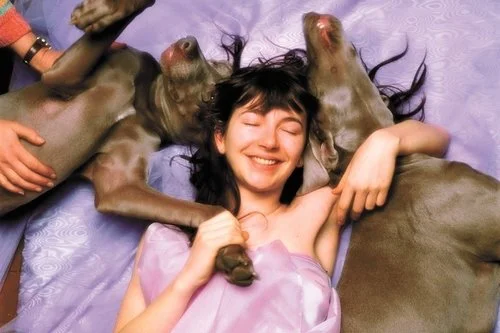
IN THIS PHOTO: Kate Bush in an outtake from the cover shoot for 1985’s Hounds of Love (with her dogs, Bonnie and Clyde)/PHOTO CREDIT: John Carder Bush 

Kate Bush and Electronic Music

___________

GIVEN the fact that…

 IN THIS PHOTO: Kate Bush with a Fairlight CMI in 1982

in the last few weeks, there have been excited news stories regarding cover versions of Kate Bush songs, it is unsurprising I am talking about her pioneering influence. Australian artist Tina Arena recently covered This Woman’s Work (from 1989’s The Sensual World) live; a Grunge cover of Wuthering Heights (from 1978’s The Kick Inside) has surfaced. New mediums like TikTok have brought her music to new ears and ages. I am returning to 1985’ss Hounds of Love again, as I came across a great article from DJ, where Ben Cardew discussed Bush’s influence on Electronic music and her adoption of that sound. He cited Hounds of Love as the first album where she experimented with the genre fully. I would say that The Dreaming (1982) has Electronic vibes. I guess, in the context of the time, Hounds of Love is the first album where she really explored a new direction. In future features, I want to discuss Bush’s musical impact; how she has influenced legions of musicians with particular albums and songs. The article states that, whilst we can hear synthesisers on earlier releases, Hounds of Love embraced new technology and trends:

“‘Hounds Of Love’ wasn’t the first album on which Kate Bush explored the world of electronic music. There were dashes of synthesizer on ‘Oh To Be In Love’ on her debut album ‘The Kick Inside’, with the synth also peeking through on three songs on her follow up, ‘Lionheart’. But Bush really opened up to the possibilities of electronic music on her third studio album, ‘Never For Ever,’ in which she rocketed away from the orchestral pop of her first two records in favor of something more eccentric, embracing electronic instruments such as the Fairlight, the Prophet 5 synth, and the Minimoog, after apparently being introduced to a wealth of new technology by Peter Gabriel. The Fairlight would feature heavily on Bush’s next record, 1982’s ‘The Dreaming’, a bewildering, maximalist gem that Bush would later call “mad.”

 But it was on ‘Hounds Of Love’, released in September 1985 after a lengthy gestation period, that Bush perfected the combination of music and technology, the avant and the popular, to create an album so perfect it seemed to fall from the sky. The genesis of ‘Hounds Of Love’ dates back to 1983, when Bush decided to build her own studio in the barn behind her family house.  She kitted it out with the most up-to-date equipment, including a LinnDrum machine and the Fairlight CMI, which she used to compose most of her new album. Working in her own studio gave Kate Bush freedom, with the recording of ‘Hounds Of Love’ taking place over two liberating years, allowing her to dream up a mind-boggling mixture of progressive pop, song cycles and unlikely instrumental choices, all presided over by her new sampling toy.

Even today, ‘Hounds Of Love’ remains one of the most perfectly poised electronic music records, an album where digital technology and acoustic instruments blend into an entirely seamless cyborg mix, with technology employed as a means to an end, rather than as a destination in itself. If ‘Hounds Of Love’ is overlooked as a pioneering electronic album, then maybe that’s the point: It flourishes as a beautiful whole, a gorgeous work of art that doesn’t call attention to its composite parts or the hard labor behind it.

‘Hounds Of Love’ is quite the opposite of many early electronic music records, where the electronics were designed to draw attention to their new glittery selves and show off the world of machine possibilities. On ‘Hounds Of Love’, everything is subsumed into the music. For Bush, the Fairlight was a new “tool” for writing and arranging, as she explained to Option magazine in 1990, “like the difference between writing a song on a piano or on a guitar.”

The use of the word ‘tool’ is critical: The Fairlight was important for what it did, not what it was. And what it did was to open up Bush’s world to a new range of sonic possibility, as she explained to Option like a proto-Matthew Herbert: “With a Fairlight, you’ve got everything: a tremendous range of things,” she said. “It completely opened me up to sounds and textures and I could experiment with these in a way I could never have done without it.”

What is perhaps most striking about ‘Hounds Of Love’ is that, rather than settling down into a new electronic habit, Bush used her new digital equipment in a number of different ways, depending on the song’s demands. ‘Running Up That Hill,’ the album’s gorgeous opening song, uses a subtly propulsive, rolling tom pattern on the LinnDrum (the work of Bush’s collaborator and then romantic partner Del Palmer) that lays alongside cello samples from the Fairlight, which Bush manipulated to create both the main riff and backing strings.

Music Radar called this one of the 40 greatest synth sounds of all time in April 2021 and it is hard to disagree, the synth both tender and idiosyncratic, while slightly lost in the ether, the perfect accompaniment to the song’s gorgeously dreamy melody. It’s a remarkable achievement that on a song that features one of Bush’s strongest vocal melodies, the synth line is equally iconic, a vital component in one of Kate Bush’s biggest hits. The well-named ‘Under Ice’ has another brilliant synth sound, its chilling tone strangely reminiscent of the glacial eskibeat tones that grime pioneer Wiley would favor two decades later.

Elsewhere, ‘And Dream Of Sheep,’ which kicks off the conceptual song cycle that takes up side two of the record (‘The Ninth Wave’), uses layers of sampled noise — notably gull cries and disconnected voices — to add an extra unsettling aspect to the music, while ‘Mother Stands For Comfort’ offsets samples of breaking glass against electronic notes that pulse like fading lunar distress signals, creating an atmosphere of creeping unease. ‘Hello Earth’ is even more baffling: Musician Michael Berkeley related in a 2005 piece for The Guardian how Bush wanted the song’s chorus to recreate the orthodox singing / chanting from the film Nosferatu, in a way that would both relate harmonically with the song and sound somehow collaged, the kind of bafflingly precise studio instruction that suggests a musician at the height of her invention.

Best of all, though, is ‘Cloudbusting,’ the second single to be released from ‘Hounds Of Love’ and a brilliant example of how electronic music technology — and particularly the Fairlight — enabled Bush to open up her sound, as the proto-sampler replaced the piano as Bush’s main compositional tool. “It [the Fairlight] gives me much more control over arrangements, particularly,” Bush told MTV in 1985. “And it effects so many different areas. As soon as I start writing now, I’m working with a sound that is sparking off a particular atmosphere.”

‘Cloudbusting’ is a song that bursts with melody, sound and atmosphere, a bewitching combination of sonic sources, including two drummers, a string sextet, four backing vocalists, treated vocal samples, synth riffs and the sound of a steam engine. It could have been an abject mess, but Bush — with the help of the Fairlight’s sequencing tools — creates a sound that is utterly pop in its execution and utterly un-pop in its make-up, a pop song put together by a melodic genius hopped up on the sonic possibilities that a sampler can bring. It seems incredible that still, after ‘Hounds Of Love’, people could dare to claim that the synthesizer would kill music, when the album proves so definitively that electronic music can hothouse musical inspiration into wonderful new possibilities.

The influence of Kate Bush on electronic musicians is there for everyone to see. Rave producers loved to sample Bush’s idiosyncratic melodics, and there is a whole generation of British ravers who will be forever unable to think of ‘Cloudbusting’ without imagining chart-troubling rave duo Utah Saints, who swiped its chorus for their UK hit ‘Something Good’.

Björk, Big Boi and Aphex Twin are some of Bush’s most high-profile musical fans — Big Boi once called her “my favorite artist of all time” — while pretty much anyone who was anyone in British music attended her live residency in London in 2014”.

The Fairlight CMI can be heard on 1980’s Never for Ever, though I feel it was from Hounds of Love where we more explicitly detect synths and Electronic sounds. Critics in the U.K. were blown away by Hounds of Love in 1985. The Dreaming is quite a dark and hard-going album in places. Although there is plenty of scope and ambition on Hounds of Love, Bush’s palette is different. It is a more accessible album in a lot of ways. Her astonishing production is key. Moving away from the piano more and embracing the new technology and kit she installed at her specially-built studio at home, this was an album that could easily fit into the 1980s, yet it sounds nothing like other Electronic artists at the time. Think of some of the Electronic albums of the mid-1980s or Pop from Madonna. That was not what Bush was doing sound-wise. Even though Hounds of Love was enormously impactful in 1985 and has been hugely inspiring on Electronic artists (and so many  others) since then, it is unique and original. Hounds of Love’s Art Rock elements also compelled many artists (St. Vincent has cited it as an album that made an impression on her at a young age). I think Kate Bush’s role in evolving Electronic music is undervalued. She is certainly one of the pioneers. Even though, as I say, The Dreaming saw her step into that world, Hounds of Love as a full exploitation and exploration. Thirty-six years after the album was released, artists are still being influenced by it. From the more commercial songs on the first side to the wild and epic suite of songs, The Ninth Wave, Bush’s mastery and production is exceptional! Thanks to the illuminating and fascinating DJ article for highlighting something that, until now, I sort of knew but did not fully appreciated. Through her career – but especially on 1985’s Hounds of Love -, Kate Bush took Electronic music…

TO new places.

FEATURE: The Lockdown Playlist: We Are Stardust, We Are Golden: Joni Mitchell Jewels

FEATURE:


The Lockdown Playlist

IN THIS PHOTO: Joni Mitchell in 1968/PHOTO CREDIT: Jack Robinson/Getty Images

We Are Stardust, We Are Golden: Joni Mitchell Jewels

___________

I may repeat myself…

 IN THIS PHOTO: Joni Mitchell in 2020/PHOTO CREDIT: Kevin Mazur/VF20/WireImage

when it comes to Joni Mitchell here. As her seventy-eighth birthday is today (7th November), I felt it was only right to put together an assortment of Mitchell’s best tracks. There are so many gems and jewels to choose from! I am going to select my favourite from her. Before that, and to provide some biography about one of the greatest songwriters ever, AllMusic have us sorted:

“Among the singer/songwriters who emerged in the wake of Bob Dylan in the 1960s, none were as adventurous, incisive, or influential as Joni Mitchell. A veteran of the folk music circuit of the '60s, Mitchell first came to prominence as a songwriter, composing the '60s standards "Chelsea Morning," "The Circle Game," and "Both Sides Now." By the time Judy Collins brought the latter into the Billboard Top Ten in 1968, Joni Mitchell signed with Reprise, partially upon the advocacy of ex-Byrd David Crosby, who would wind up producing her debut, Song to a Seagull. Mitchell wound up as part of Los Angeles' folk-rock scene but it often seemed as if she operated upon its fringes, working from a different musical and personal aesthetic, relying on a series of alternate guitar tunings and writing from a stark personal perspective. These qualities came into sharp relief when she started to produce herself on Clouds, a 1969 LP which won the Grammy for Best Folk Performance, setting the stage for her 1971 masterpiece Blue, an album that has served as the cornerstone of introspective singer/songwriter music since the '70s. Mitchell expanded her horizons quickly after she signed with Asylum for 1972's For the Roses, working with a collective of smooth L.A. studio musicians on Court and Spark, the 1974 album that turned into her commercial breakthrough thanks to the Top Ten single "Help Me" and its sequel "Free Man in Paris." From there, Mitchell embraced jazz fusion and worldbeat on such revered albums as The Hissing of Summer Lawns and Hejira. Mitchell's momentum slowed as she moved to Geffen in the early '80s but her restlessness didn't wane, as she reckoned with new wave on 1982's Wild Things Run Fast and 1985's Dog Eat Dog. Mitchell moved back to Reprise or 1994's Turbulent Indigo, which earned her a Grammy Award for Pop Album of the Year. Her musical output slowed considerably at this point -- almost ten years separated 1998's Taming the Tiger and 2007's Shine, her last two albums of original material -- but her legacy not only loomed large, it grew as listeners and artists caught up to the innovations she pioneered throughout her career.

Born Roberta Joan Anderson in Fort McLeod, Alberta, Canada, on November 7, 1943, she was stricken with polio at the age of nine; while recovering in a children's hospital, she began her performing career by singing to the other patients. After teaching herself to play guitar with the aid of a Pete Seeger instruction book, she went off to art college and became a fixture on the folk music scene around Alberta. After relocating to Toronto, she married folksinger Chuck Mitchell in 1965, and began performing under the name Joni Mitchell.

A year later the couple moved to Detroit, Michigan, but separated soon after; Joni remained in the Motor City, however, and won significant press acclaim for her burgeoning songwriting skills and smoky, distinctive vocals, leading to a string of high-profile performances in New York City. There she became a cause célèbre among the media and other performers; after she signed to Reprise in 1967, David Crosby offered to produce her debut record, a self-titled acoustic effort that appeared the following year. Her songs also found great success with other singers: in 1968, Judy Collins scored a major hit with the Mitchell-penned "Both Sides Now," while Fairport Convention covered "Eastern Rain" and Tom Rush recorded "The Circle Game."

Thanks to all of the outside exposure, Mitchell began to earn a strong cult following; her 1969 sophomore effort, Clouds, reached the Top 40, while 1970's Ladies of the Canyon sold even better on the strength of the single "Big Yellow Taxi." It also included her anthemic composition "Woodstock," a major hit for Crosby, Stills, Nash & Young. Still, the commercial and critical approval awarded her landmark 1971 record Blue was unprecedented: a luminous, starkly confessional set written primarily during a European vacation, the album firmly established Mitchell as one of pop music's most remarkable and insightful talents.

Predictably, she turned away from Blue's incandescent folk with 1972's For the Roses, the first of the many major stylistic turns she would take over the course of her daring career. Backed by rock-jazz performer Tom Scott, Mitchell's music began moving into more pop-oriented territory, a change typified by the single "You Turn Me on (I'm a Radio)," her first significant hit. The follow-up, 1974's classic Court and Spark, was her most commercially successful outing: a sparkling, jazz-accented set, it reached the number two spot on the U.S. album charts and launched three hit singles -- "Help Me," "Free Man in Paris," and "Raised on Robbery."

After the 1974 live collection Miles of Aisles, Mitchell emerged in 1975 with The Hissing of Summer Lawns, a bold, almost avant-garde record that housed her increasingly complex songs in experimental, jazz-inspired settings; "The Jungle Line" introduced the rhythms of African Burundi drums, placing her far ahead of the pop world's mid-'80s fascination with world music. 1976's Hejira, recorded with Weather Report bassist Jaco Pastorius, smoothed out the music's more difficult edges while employing minimalist techniques; Mitchell later performed the album's first single, "Coyote," at the Band's Last Waltz concert that Thanksgiving.

Her next effort, 1977's two-record set Don Juan's Reckless Daughter, was another ambitious move, a collection of long, largely improvisational pieces recorded with jazz players Larry Carlton and Wayne Shorter, Chaka Khan, and a battery of Latin percussionists. Shortly after the record's release, Mitchell was contacted by the legendary jazz bassist Charles Mingus, who invited her to work with him on a musical interpretation of T.S. Eliot's Four Quartets. Mingus, who was suffering from Lou Gehrig's disease, sketched out a series of melodies to which Mitchell added lyrics; however, Mingus died on January 5, 1979, before the record was completed. After Mitchell finished their collaboration on her own, she recorded the songs under the title Mingus, which was released the summer after the jazz titan's passing.

Following her second live collection, 1980's Shadows and Light, Mitchell returned to pop territory for 1982's Wild Things Run Fast; the first single, a cover of the Elvis Presley hit "(You're So Square) Baby I Don't Care," became her first chart single in eight years. Shortly after the album's release, she married bassist/sound engineer Larry Klein, who became a frequent collaborator on much of her subsequent material, including 1985's synth-driven Dog Eat Dog, co-produced by Thomas Dolby. Mitchell's move into electronics continued with 1988's Chalk Mark in a Rain Storm, featuring guests Peter Gabriel, Willie Nelson, Tom Petty, and Billy Idol.

Mitchell returned to her roots with 1991's Night Ride Home, a spare, stripped-down collection spotlighting little more than her voice and acoustic guitar. Prior to recording 1994's Turbulent Indigo, she and Klein separated, although he still co-produced the record, which was her most acclaimed work in years. In 1996, she compiled a pair of anthologies, Hits and Misses, which collected her chart successes as well as underappreciated favorites. A new studio album, Taming the Tiger, followed in 1998. Both Sides Now, a collection of standards, followed in early 2000.

Two years later, Mitchell resurfaced with the double-disc release Travelogue. She announced in October 2002 that this would be her last album ever -- she'd grown tired of the industry. She told W magazine that she intended to retire. She also claimed she would never sign another corporate label deal, and in Rolling Stone blasted the recording industry for being "a cesspool." By the time Travelogue appeared a month later, Mitchell had simmered down and her plans to call it quits had been axed. Numerous compilations and remasters appeared between 2002 and 2006, culminating in the release of the independent Shine in 2007. In 2014, Mitchell helped compile her first box set anthology, Love Has Many Faces: A Quartet, A Ballet, Waiting to Be Danced, which featured remastered versions of 53 songs from her back catalog, all dealing with some aspect of love and relationships. A box set of unreleased recordings chronicling her early folk years called Joni Mitchell Archives, Vol. 1: The Early Years (1963-1967) arrived in October 2020”.

To mark the approaching birthday of a true icon, this Lockdown Playlist is an assortment of phenomenal tracks from one of the finest artists the world has ever seen. Many happy returns to Joni Mitchell. Since the late-1960s, her music has influenced others and compelled so many of her peers – that will continue for generations more. Here is a playlist that highlights why Mitchell is…

A true genius.

FEATURE: Station to Station: Part Twenty-One: Charlie Hedges (BBC Radio 1)

FEATURE:


Station to Station

PHOTO CREDIT: @charliehedges 

Part Twenty-One: Charlie Hedges (BBC Radio 1)

___________

ONE of my favourite…

shows on BBC Radio 1 is Charlie Hedges’ Dance Anthems. Serving up some classic Dance cuts, it is essential listening! It is on at 01:00, so many people might not be able to tune in live. Listen to episodes on the Sounds apps. I love Hedges as a broadcaster, and I feel that her selections and knowledge of Dance is infectious. As she also presents BBC Radio 1’s Live Lounge with Rickie and Melvin, there is much to appreciate about a remarkable broadcaster (follow her on Instagram if you can). h She is someone who deserves more time and space on the station. There are a few older interviews with Hedges that I want to bring in – when she worked for other radio stations. A successful and celebrated club and international D.J., she is a world-class talent who, as I suggest, should get even more airtime on BBC Radio 1. She has had a successful career and worked for different stations. I am interested to see where her radio career goes. There are some reference articles that are worth highlighting first. Her Wikipedia page gives us a brief overview of Charlie Hedges’ career development and background:

“Hedges hosted the breakfast show at Kiss for ten years with Rickie Haywood-Williams and Melvin Odoom. The trio are known as Rickie, Melvin and Charlie. In November 2018, it was announced that they would move to BBC Radio 1 to replace Charlie Sloth in the mid-evening slot. Their new show debuted on 1 April 2019. On 20 April 2021, it was announced that the trio would be moving to the mid-morning slot prevuously occupied by Clara Amfo, who would takeover the early evening slot from Annie Mac.

In September 2020, it was announced that Hedges would replace MistaJam as the host of Radio 1's Dance Anthems on Saturday afternoons. Hedges took over the following month.

DJ

Hedges has performed DJ sets at various clubs and festivals. In 2014, Hedges released a single titled "Best Night OML" with vocals from JB Gill. In 2016, Hedges released a single titled "Kaleidoscope" on Armada Deep featuring vocalist Sonny Reeves”.

As we can tell from the P.R. company who represents her, Hedges’ role on BBC Radio 1 is much more than (her as) a Dance music host. She has been with the station for a couple of year. In that time, made a huge impression:

“In April 2019, Charlie joined Radio 1 with Rickie and Melvin for their brand-new evening show which features random conversations, hilarious phone-ins and interviews. She went on to host Dance Anthems, the biggest dance show in the UK. And now, two years after she joined the station, Charlie is transitioning to daytime as one of the hosts of  Radio 1’s Live Lounge. Kicking off in September 2021, Charlie, Rickie and Melvin will be bringing listeners a Live Lounge full of good vibes and good tunes every day.

Making such an impression at the station, Charlie has covered for both MistaJam and Scott Mills and featured alongside Greg James on the breakfast show’s emotional Festive Feeling segment, which saw her travel around the country to surprise listeners with money-can’t-buy gifts.

Charlie started her career at KISS in 2005 and her infectious energy soon saw her co-present the breakfast show. She became the UK’s youngest ever breakfast DJ and was there for a recording-breaking fifteen years, pulling in the station’s highest ever reach of listeners, making it the biggest commercial breakfast show in the UK at the time and winning a Gold Sony Radio Award.

On 28th February 2020, Charlie Hedges and Eddie Craig released a brand-new track, ‘You’re No Good For Me’, with dance label Spinnin’ Records. It’s already had plays on KISS FM, as well as Dance Anthems and Party Anthems on BBC Radio 1. In September 2021, Charlie will be releasing two remixes - Rudimental and Hardie Caprio’s ‘Ghost’ and Welshy’s ‘All For You’.

When she’s not on the radio or making music, you’ll find Charlie watching female boxing, researching the latest fashion trends and DJing at some of the biggest clubs, events and festivals including Boardmasters, Bradford Live Festival and The Loft in Newcastle.

Charlie is down-to-earth with a wicked sense of humour and a cracking laugh. She’s the sort of person you instantly feel at ease with. In fact, moments after meeting her you’ll find yourself laughing away like you’ve been best mates for years – just one of the many reasons we’re thrilled to be working with her”.

It is a very exciting time for a multi-talented D.J. and broadcaster who has so much passion and drive to offer! Charlie Hedges’ knowledge and curated mixes have drawn me to BBC Radio 1. I am a big fan of Club and Dance music, but I especially love the classics. If you need a dose of the best anthems from the genre, check out Hedges’ show!

There are a couple of old interviews that I need to source, to give a bit of background. It is interesting where Hedges came from and the sort of career she has enjoyed so far. EXPOSED featured Hedges back in 2015. They asked her about the sort of venues she has played as a D.J., in addition to what her inspirations are:

“You’ve got some incredible venues under your belt – Space, Ibiza; Gashoulder, Amsterdam; Ministry of Sound, London. What was the maddest crowd?

They were all great! But when I played at Space, Ibiza, for the opening party, you’ll usually have a DJ on the mic who will tell everyone to sit down and when the track drops, everyone gets up and jumps. I don’t even use a mic but the crowd arranged it between themselves in the middle of my set – it was insane!

In terms of other artists, who is your biggest inspiration?

I’ve got a few in terms of inspiration but someone who has really helped me out is Steve Aoki. I played with him at Pacha last year in Ibiza and I’ve met him loads of times now, so I consider him a friend, and he’s really helped me out a lot – if I need any advice then I’ll just go to him. As a performer, he is definitely up there, he’s not just a DJ, he knows how to bring the party, he’s got the whole package without a doubt. Michael Woods is up there as well.

When you aren’t performing or presenting, how do you chill out?

Eat everything. I love eating. I literally love my food. I do like going for a run when I can, and I should make more of an effort to go on runs really but I’m just too busy sometimes.

If you weren’t doing music/radio, what would you be doing?

I would be finding a way to do it. I studied for a journalism degree and that was my back up. If I couldn’t directly get into the music industry or radio, I thought I could maybe get in by writing. Even as a kid, there was nothing else I wanted to do, I don’t know what else I’d wanna do, except open a Mexican house music restaurant obviously!”.

Before wrapping up and letting you explore Charlie Hedges’ work, The Student Pocket Guide chatted with the D.J. back in 2016. At the time, she was working with Kiss FM. It is fascinating to learn how she worked her way through the ranks and got to where she was then:

“You’re currently DJing alongside presenting radio station Kiss FM. What made you decide to give DJing a go?

I’ve always wanted to be a club DJ from day one and I knew working in radio would give me an amazing platform and chance to get into the world of DJing and making music. I love talking (obviously!) and the radio side to my life is so much fun, I love them both!

How did you work your way up the ladder to land in the highly successful position you’re in now?

So, aged 13 I applied to be a freelance journalist/assistant for a local magazine called Naked Tongue in Essex, they gave me the job just for the cheek of asking as it was a magazine aimed at over 25’s. In my school lunch breaks I’d then make lists of celebrities I’d ideally like to interview and then I’d track down their PA’s online. Before I knew it I was interviewing some great people who were kind enough to give a 13-year-old a chance, my interviews were getting published in the magazine and one of the guest interviews was with a Kiss DJ at the time. How that came about is a great story too but I’ll keep it short, basically my Dad is a London black cab driver and picked one of the presenters up in his cab, Dad being Dad he talked them into letting me interview them and the rest leads on from there!

From that day onwards I kept in touch with the breakfast show presenters at Kiss and used to come up for work experience every few months. Timing-wise, it’s crazy how things happened as I finished college and a week before I started uni to study for a BA in Journalism at Harlow College I got a call from the presenters on the breakfast show at the time asking if I wanted a job as a runner/tea maker. I took the job – I used to get into Kiss at 4:00am, work on the breakfast show and watch and learn everything I could behind the scenes until the show finished at 9am,then I would drive to uni until 6/7pm and did this for 3 years until I graduated with my BA in Journalism. Like I mentioned, I’d always wanted to be a DJ and radio presenter but knew it would always be good to have a backup plan but in the same field, hence why I studied for the journalism degree. I loved to write too, still do today – I’ve still got a pen to paper daily diary haha!

After my degree I was offered a full time job at Kiss and in the background I taught myself to DJ. I’d practice at Kiss whenever a studio was free, using YouTube and Googling DJ tutorials to pick up on the basics and then I practiced every single day until the time came probably 6 months to a year later when I was ready to give a club a go. I can remember my first gig to this day, it was in a small bar in Bexleyheath Kent. Before I had a management team I’d get myself club bookings and gigs all over London and the outskirts, celebrity parties too by contacting promoters direct – to be honest, I had no real organisation going on so I was moving forward but not in a structured way; I had worked with a few management teams until people were recognising me as a DJ and not just the girl that presents the Kiss breakfast show.

Since starting with my current management team (Fresh Artistes) I am now organised, I have clear goals and I’m moving towards these goals at an incredible pace.I’ve got some amazing projects already on the go and there’s a whole heap of new ones on the way too; things are really coming together and for the first time ever I know I’m with the right people who are working with me because they 100% believe in me.You guys wouldn’t believe how much that means to me, I now have gigs all over the UK and around the world coming up over the next year, and this is where I am right now!

You’ve DJ’d in some major festivals, including V, Wireless, and the Isle of White Festival. What’s been your personal favourite?

I have honestly loved them all, it’s very hard as a DJ to pick your favourite as every gig comes with new and exciting memories and lessons too.But I have to say I did love playing Isle Of Wight Festival last year, I played in the Big Top Tent just before Paul Oakenfold and the tent was heaving, there was a heavy metal band on before me and so going from this to house music was a big change up, I’ve never been so proud seeing a tent the size of that fill up within 10 mins of me playing, I’ll remember that set forever.

Is it tough being a female DJ in a profession largely dominated by males?

I think it’s tough in any profession to be honest whether dominated mostly by males or not. Everybody in every job, in every office/workplace faces challenges in life, that’s what life is all about: being set challenges and having to overcome them. I’m not saying it’s been easy but then what fun would that have been if it was?
Tell us a secret about yourself.
I have a blanket that I had from the day I was born…I still have it haha
”.

I love Charlie Hedges’’ broadcasting work. She is an amazing D.J. and one of the biggest and most important names on BBC Radio 1. It would be great to think that she would have more shows and airtime on the station in 2022. Such a wonderful and authoritative talent, I have loved the Classic Dance Anthems show. Let’s hope that we hear the amazing Charlie Hedges on the radio…

FOR many more years.

FEATURE: A Buyer’s Guide: Part Seventy-Nine: Def Leppard

FEATURE:


A Buyer’s Guide

Part Seventy-Nine: Def Leppard

___________

IT is only recently…

that I have got into and started to explore the back catalogue of Def Leppard. The legendary Sheffield band formed in 1977. I was keen to highlight their best albums in this edition. Before getting there, AllMusic help out with some background and biography:

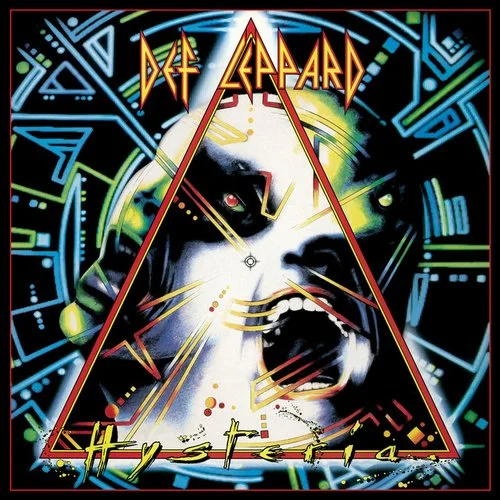
“In many ways, Def Leppard were the definitive hard rock band of the '80s. There were groups that rocked harder, but few captured the spirit of the times quite as well. Emerging in the late '70s as part of the New Wave of British Heavy Metal, Def Leppard gained a following outside of that scene by toning down their heavy riffs and emphasizing melody. After a couple of strong albums, they were poised for crossover success by the time of 1983's Pyromania, and skillfully used the fledgling MTV network to their advantage. They reached the pinnacle of their career with 1987's blockbuster Hysteria, then had another big hit, 1992's Adrenalize, that defied the mainstream turn toward grunge. After that, the band settled into a pattern of touring exhaustively and releasing an album every few years, maintaining a steady audience and occasionally surprising fans with an album, like 2008's Yeah!, that harked back to the sound of their glory days.

Def Leppard originated in a Sheffield-based group that teenagers Rick Savage (bass) and Pete Willis (guitar) formed in 1977. Vocalist Joe Elliott, a fanatical follower of Mott the Hoople and T. Rex, joined the band several months later, bringing the name Deaf Leopard with him. After a spelling change, the trio, augmented by a now-forgotten drummer, began playing local Sheffield pubs, and within a year the band had added guitarist Steve Clark to the lineup, as well as a new drummer. Later in 1978, they recorded their debut EP, Getcha Rocks Off, and released it on their own label, Bludgeon Riffola. The EP became a word-of-mouth success, earning airplay on the BBC.

Following the release of Getcha Rocks Off, 15-year-old Rick Allen was added as the band's permanent drummer, and Def Leppard quickly became the toast of the British music weeklies. They soon signed with AC/DC's manager, Peter Mensch, who helped them secure a contract with Mercury Records. On Through the Night, the band's full-length debut, was released in 1980 and instantly became a hit in the U.K., also earning significant airplay in the U.S., where it reached number 51 on the charts. Over the course of the year, Def Leppard relentlessly toured Britain and America, playing their own shows while also opening concerts for Ozzy Osbourne, Sammy Hagar, and Judas Priest. High 'n' Dry followed in 1981 and became the group's first platinum album in the U.S., thanks to MTV's strong rotation of "Bringin' on the Heartbreak."

As the band recorded the follow-up to High 'n' Dry with producer Mutt Lange, Pete Willis was fired from the group because of his alcoholism, and Phil Collen, a former guitarist for Girl, was hired to replace him. The resulting album, 1983's Pyromania, became an unexpected blockbuster, due not only to Def Leppard's skillful, melodic metal, but also to MTV's repeated airing of "Photograph" and "Rock of Ages." Pyromania went on to sell ten million copies, establishing Def Leppard as one of the most popular bands in the world. Despite their success, they were about to enter a trying time in their career. Following an extensive international tour, the group reentered the studio to record the follow-up, but producer Lange was unavailable, so they began sessions with Jim Steinman, the man responsible for Meat Loaf's Bat Out of Hell. The pairing turned out to be ill-advised, so the bandmembers turned to their former engineer, Nigel Green. One month into recording, Allen lost his left arm in a New Year's Eve car accident. The arm was reattached, but it had to be amputated once an infection set in.

Def Leppard's future looked cloudy without a drummer, but by the spring of 1985 -- just a few months after his accident -- Allen began learning to play a custom-made electronic kit assembled for him by Simmons. The band soon resumed recording, and within a few months, Lange was back on board; having judged all the existing tapes inferior, he ordered the band to begin work all over again. Recording sessions continued throughout 1986, and that summer, the group returned to the stage for the European Monsters of Rock tour. Def Leppard finally completed their fourth album, now titled Hysteria, early in 1987. The record was released that spring to lukewarm reviews, with many critics claiming that the album compromised Leppard's metal roots for sweet pop flourishes. Accordingly, Hysteria was slow out of the starting gates -- "Women," the first single, failed to really take hold -- but the release of "Animal" helped the album gather steam. The song became Def Leppard's first Top 40 hit in the U.K., but more importantly, it launched a string of six straight Top 20 hits in the U.S., which also included "Hysteria," "Pour Some Sugar on Me," "Love Bites," "Armageddon It," and "Rocket," the latter of which arrived in 1989, a full two years after the release of Hysteria. During those two years, Def Leppard's presence was unavoidable -- they were the kings of high school metal, ruling the pop charts and MTV, and teenagers and bands alike replicated their teased hair and ripped jeans, even when the grimy hard rock of Guns N' Roses took hold in 1988.

Hysteria proved to be the peak of Leppard's popularity, yet their follow-up remained eagerly awaited in the early '90s, as the band took a break from the road and set to work on a new record. During the recording process, however, Steve Clark died from an overdose of alcohol and drugs. Clark had historically battled alcohol, and following their Hysteria heyday, his bandmates forced him to take a sabbatical. Although he did enter rehab, Clark's habits continued, and his abuse was so crippling that Collen began recording the majority of the band's guitar leads. Following Clark's death, Def Leppard resolved to finish their forthcoming album as a quartet, releasing Adrenalize in the spring of 1992. Adrenalize was greeted with mixed reviews, and even though the album debuted at number one and contained several successful singles, including the Top 20 hits "Let's Get Rocked" and "Have You Ever Needed Someone So Bad," the record was a commercial disappointment in the wake of Pyromania and Hysteria. After its release, the group added former Whitesnake guitarist Vivian Campbell to the lineup, thus resuming Def Leppard's two-guitar attack.

In 1993, Def Leppard issued the rarities collection Retro Active, which yielded another Top 20 hit with the acoustic ballad "Two Steps Behind." Two years later, the group released the greatest-hits collection Vault while preparing for their sixth album. Slang arrived in the spring of 1996, and while it proved more adventurous than its predecessor, it was greeted with indifference, indicating that Leppard's heyday had indeed passed, and they were now simply a very popular cult band. Undaunted, Leppard soldiered on, returning to their patented pop-metal sound for Euphoria, which was released in June of 1999. Despite the success of "Promises," the record failed to produce any additional hits, resulting in a return to adult pop balladry on 2002's X. The two-disc Rock of Ages: The Definitive Collection arrived in 2005, followed in 2006 by Yeah!, a strong collection of covers.

In 2008, the guys released their ninth studio album, Songs from the Sparkle Lounge, which debuted at number five and was supported by a lucrative summer tour. Material from that tour helped make up the bulk of 2011's Mirror Ball: Live & More, a three-disc live album containing a full concert, three new studio recordings, and DVD footage. Another live album followed two years later: Viva! Hysteria found Def Leppard running through their 1987 blockbuster in its entirety on the first disc, and a collection of early, rarely played material on the second. In 2015, the band released Def Leppard, their 11th studio album and first collection of original music since 2008.

In February 2017, the group issued And There Will Be a Next Time, a live album culled from the Def Leppard supporting tour. Later that year, a Super Deluxe Edition of Hysteria came out in celebration of the record's 30th anniversary. Further repackagings continued in 2018 with a box set of their '80s albums titled The Collection, Vol. 1 and The Story So Far: The Best of Def Leppard, a multi-disc set that included the band's first four studio albums and various rarities. The next year saw the release of The Collection, Vol. 2, a set of their '90s records, and The Story So Far, Vol. 2: Hits & B-Sides, which picked up where the first volume left off with material from the band's '90s run and beyond. Def Leppard continued to tour on a regular basis and played a Las Vegas residency, then in 2020 issued a collection of their first two albums plus a live set and BBC sessions titled The Early Years 79-81”.

To acknowledge and salute the long and successful career of Def Leppard, here are are their four essential albums to seek out; one that is underrated and warrants more time, in addition to their latest studio album. I could not find a book to recommend (so I shall leave that bit out this week). If you are new to Def Leappard and need a guide, I hope that the suggestions below…

ARE of use.

________________

The Four Essential Albums


High 'N' Dry

Release Date: 6th July, 1981

Labels: Vertigo (U.K.)/Mercury (U.S.)

Producer: Robert John ‘Mutt’ Lange

Standout Tracks: High 'N’ Dry (Saturday Night)/Bringin’ on the Heartbreak/You Got Me Runnin'

Buy: https://www.amazon.co.uk/High-N-Dry-Remastered-VINYL/dp/B07Z76LPGJ

Stream: https://open.spotify.com/album/2FC50FeHFVmksOYX1cymxr?si=d9X48zjtRIulnPD7D-nLlQ

Review:

“During their formative years in the late 70s, Leppard – alongside Iron Maiden and Saxon – became one of the hottest properties to emerge from what Sounds journalist Geoff Barton dubbed the New Wave Of British Heavy Metal (aka NWOBHM): a new breed of grass-roots, UK hard rock outfits who loved the anthemic cut and thrust of classic 70s rock icons such as Thin Lizzy, Led Zeppelin, and UFO, but also the attitude and raw aggression of punk.

Inevitably, these influences fed into the DNA of Leppard’s On Through The Night: a no-nonsense studio capture of the live set they’d honed through 18 months of solid gigging, which they banged out with a Ramones-esque intensity with the help of Black Sabbath/Judas Priest producer Tom Allom.

A series of positive reviews (including one from Rolling Stone suggesting that “they not only respect their elders, they’ve taken cues from their new wave peers too”) confirmed Leppard were on the right track, but the band realized they still needed to step up a gear to connect on an international level.

Accordingly, the Sheffield quintet turned to a new producer, South African-born Robert John “Mutt” Lange, whose credits included The Boomtown Rats, The Motors, and, most recently, AC/DC’s influential, multi-platinum-selling Back In Black. Known for his meticulous approach to his craft, Lange’s input would soon have a significant effect on the course of Def Leppard’s career, but his disciplined methods initially forced his new charges to adapt quite dramatically.

“It was almost like army discipline, but he got great performances out of everyone that we’d never have got otherwise,” vocalist Joe Elliott recalled in 2014. “Mutt Lange was a great captain, a great leader. We were rudderless and he gave us a direction, which was what we desperately needed.”

During the course of the High’n’Dry sessions at London’s Battery Studios, the band and their new producer painstakingly dissected, rearranged, and even significantly re-wrote the material they’d prepared, but the resulting album was all the better for it.

Indeed, High’n’Dry proved to be the record where Def Leppard’s distinctive, arena-slaying sound first materialized. Their new-found confidence and verve was apparent, whether they were piling into high-octane anthems (“Let It Go,” “You Got Me Runnin’,” “On Through The Night”) or mastering complex set-pieces such as the edgy “Another Hit And Run” and the beautifully crafted, widescreen ballad “Bringin’ On The Heartbreak,” which segued into an ambitious “Layla”-esque instrumental coda, “Switch 625” – udiscoverrmusic.

Choice Cut: Let It Go

Pyromania

Release Date: 20th January, 1983

Labels: Vertigo (U.K. and Europe)/Mercury (U.S.)

Producer: Robert John ‘Mutt’ Lange

Standout Tracks: Rock Rock (Till You Drop)/Photograph/Too Late for Love

Buy: https://www.discogs.com/sell/release/393266

Stream: https://open.spotify.com/album/5ab6RIlAGwbVAacV1JIr2d?si=Yb4qu-aBQEmPvFizm-t43g

Review:

“While Def Leppard had obviously wanted to write big-sounding anthems on their previous records, Pyromania was where the band's vision coalesced and gelled into something more. More than ever before, the band's songs on Pyromania are driven by catchy, shiny melodic hooks instead of heavy guitar riffs, although the latter do pop up once in a while. But it wasn't just this newly intensified focus on melody and consistent songwriting (and heavy MTV exposure) that made Pyromania a massive success -- and the catalyst for the '80s pop-metal movement. Robert John "Mutt" Lange's buffed-to-a-sheen production -- polished drum and guitar sounds, multi-tracked layers of vocal harmonies, a general sanding of any and all musical rough edges, and a perfectionistic attention to detail -- set the style for much of the melodic hard rock that followed. It wasn't a raw or spontaneous sound, but the performances were still energetic and committed. Leppard's quest for huge, transcendent hard rock perfection on Pyromania was surprisingly successful; their reach never exceeded their grasp, which makes the album an enduring (and massively influential) classic” - AllMusic

Choice Cut: Rock of Ages

Hysteria

Release Date: 3rd August, 1987

Labels: Phonogram (Europe)/Mercury (U.S. and Japan)

Producer: Robert John ‘Mutt’ Lange

Standout Tracks: Women/Animal/Love Bites

Buy: https://www.discogs.com/sell/list?master_id=31048&ev=mb

Stream: https://open.spotify.com/album/1ja2qzCrh6bZykcojbZs82?si=ByCMAljTQuKXS9J-Pyr7xw

Review:

“Def Leppard did release their goal of seven singles from Hysteria and, in the American market, the first six went in the exact sequence of the album’s first side. The opener “Women” seems, in retrospect, a curious choice being it is not nearly as strong as some of the other tracks and that was reflected in its modest chart success. “Rocket” followed, as a lyrical sequence of old record titles, built on a strong drum shuffle rhythm. The arrangement was forged by lead vocalist Joe Elliot and included a quasi-psychedelic middle section laced with many sound effects and backwards masking.

“Animal” was the third single released and became the band’s first Top 10 hit on both sides of the Atlantic. In total, the song took over two and a half years to get right, the most difficult of their career. Like many songs on the album, “Animal” contains well produced layered guitar riffs by guitarists Steve Clark and Phil Collen and musically, it is the closest extension to Pyromania and signaled to many long-time fans that the band was truly back. Still, at this point album sales were lagging behind those of the predecessor and it looked like Hysteria may actually lose money.

Then came the huge, chart-topping hits. “Love Bites” was written by Lange as a near-country song and transformed to a power ballad for Def Leppard. It was the cross-over hit that the band had long wanted and opened them up to a pop audience like no song before. “Pour Some Sugar On Me” was written last, when much of the band (but not Lange) thought the album was completed. It originated from a hook by Elliot and was built like a rap song along with Lange. The ultimate success of “Pour Some Sugar on Me” sent sales of Hysteria through the roof as it sold nearly four million copies during the single’s run on the charts. The first side concludes with another charting single, “Armageddon It”. The tongue-in-cheek joke title came from a literal studio conversation when Lange asked Clark “Are you getting it?” To which Clark replied “I’m a-gettin’ it” – Classic Rock Review

Choice Cut: Pour Some Sugar on Me

Euphoria

Release Date: 6th June, 1999 (U.S.)

Label: Mercury

Producers: Pete Woodroffe/Def Leppard

Standout Tracks: Back in Your Face/Goodbye/Paper Sun

Buy: https://www.discogs.com/sell/list?master_id=31157&ev=mb

Stream: https://open.spotify.com/album/7EAgGLOZoYNm5P5rF5IjV2?si=JVFAjY3RSmytZvwC-avkQw

Review:

“Even though Slang successfully revitalized Def Leppard, it didn't become a huge hit, which was a disappointment, considering that the band adjusted their sound to fit the times. Taking that into account, Def Leppard set out to make a classic Def Leppard album with Slang's successor, Euphoria. And, surprisingly, that's exactly what they've delivered. From the outset, it's clear that Euphoria finds the band returning to the glam-inflected, unabashedly catchy, arena-ready pop-metal that made them stars -- and it's also clear that they're not concerned with having a hit, they just want to make a good record. For them, that means returning to the pop-metal formula that made Pyromania and Hysteria blockbusters, even if they must know that this signature sound no longer guarantees a hit at the close of the '90s. It is true that this approach means Euphoria sounds out of time in 1999, but it's a tight, attractive album with more than its share of big hooks, strong riffs, and memorable melodies. There are a couple of slow moments here and there, but no more than those on Hysteria, and the best songs (particularly the opening triptych of "Demoltion Man," "Promises," "Back in Your Face," plus the jangly Beatles-esque "21st Century Sha-La-La Girl") are worthy additions to an already strong catalog. But what's best about Euphoria is that it's utterly not self-conscious. Def Leppard feels free to try straight pop, appropriate Gary Glitter riffs, or play straight metal, without caring whether it's hip or commercial. That doesn't mean Euphoria is a classic, but it does mean that it's their most appealing effort in over a decade” – AllMusic

Choice Cut: Promises

The Underrated Gem


Yeah!

Release Date: 23rd May, 2006

Labels: Mercury/Island (U.S./Canada)

Producers: Def Leppard/Ronan McHugh

Standout Tracks: 20th Century Boy/Rock On/10538 Overture

Buy: https://www.discogs.com/sell/list?master_id=31180&ev=mb

Stream: https://open.spotify.com/album/2XWi9UGkoa4bnObVeMGn8K?si=N3GM1zIiRtq4uNbtqUbyeQ

Review:

“Def Leppard have a huge chip on their shoulder about being lumped in with the U.K. and U.S. hair-metal bands of the Eighties. To set the record straight, they’ve recorded this album of covers of songs by their real heroes: people like David Bowie, T.Rex and the Kinks, as well as lesser-known Seventies rockers such as Sweet and John Kongos. Happily, Yeah! is their most convincing album in fourteen years, which proves their point. Standout tracks include a straightforward cover of David Essex’s “”Rock On”” and an amped-up take on the Faces’ “”Stay With Me,”” in which Phil Collen seems to conjure Rod Stewart. The only real misstep is a flat rendition of Blondie’s “”Hanging on the Telephone”” (coincidentally the only American group on the album). None of the arrangements veer far from the originals, but they don’t need to — it’s good enough to just hear the band having fun and to see where all the Hysteria came from” – Rolling Stone

Choice Cut: No Matter What

The Latest Album


Def Leppard

Release Date: 30th October, 2015

Labels: Bludgeon Riffola/Mailboat (U.S.)/earMUSIC (Europe)

Producers: Ronan McHugh/Def Leppard

Standout Tracks: Let's Go/Man Enough/We Belong

Buy: https://www.discogs.com/sell/list?master_id=905339&ev=mb

Stream: https://open.spotify.com/album/68zsPqS53fVtv9jUU2GZPz?si=o3TlMakEQ82uZplJ8SWLDg

Review:

“A hard core turn comes next with “Man Enough” a song that taps into the band’s inner Queen and sounds nothing like they’ve ever done before. It’s got a great opening Rick Savage bass line that resonates throughout and after a few listens expect this to get stuck in your head.

If their ballads from the mid-1980s remain relevant today then add “We Belong” to the mix because this is exactly why the ladies come out in droves. You’re all that I am/You’re all that I see/The Keys to the kingdom waiting for me. Yeah, guys can step aside; the women will sop this one up. Add in vocal duties by guitarists Phil Collen and Vivian Campbell and Def Leppard just added another element to their repertoire.  Another ode to the ladies follows with “Invincible” but with a little more rock flare.

“Sea of Love” again changes the band’s direction and brings a little bit of everything. It’s got dynamic vocals from Elliott and some crushing guitar chords brought to you by Collen and Campbell who trade back and forth all album long just like they’ve done now for nearly 25 years. “Energized” marks the halfway point and is one of those songs that sounds like Def Leppard but it doesn’t.

Hard driving rock introduces “All Time High” before the song melts into a more modern rock persona and “Battle of my Own” starts off with the acoustics before the band opens up nearly two minutes in. “Broke ‘n’ Brokenhearted” finds the Def Leppard we all know and love with a classic chorus hook. “Forever Young” isn’t a bad song it just doesn’t stand out much and gets lost because the final three cuts bring the album home.

Certainly somewhere a father/daughter dance opened to a Def Leppard song but the country infused “Last Dance” is certain to be played at weddings in the future. It’s more ballad than ballad if you can believe that and might not please the hard rockers but is thoughtful and so well written musically and check out these pretty moving lyrics: Do you remember when we used to dance/Lighting up the universe, living life for what it’s worth/Took a chance.

“Wings of an Angel” puts an end to the slow stuff immediately with some slamming guitars at the front and competes with anything on radio today. Will it translate into a crossover from the band’s oft played 80s hits on classic rock radio? No, but their loss. Finally, “Blind Faith” keeps the modern rock touch with Elliott showing as much vocal range as he’s done on any album” – Drew’s Reviews

Choice Cut: Dangerous

FEATURE: Spotlight: Jessica Wilde

FEATURE:


Spotlight

Jessica Wilde

___________

IN this outing of Spotlight…

I want to focus on a remarkable young artist who has released singles for an upcoming conceptual album. Jessica Wilde is a London-based songwriter who, for the past few years, has built a following and established herself as an original and important talent. I am going to sort of go chronologically when it comes to interviews with her. I want to start by going back to 2019 and VENTS MAGAZINE. The stunning single, Out of my Ooo, as the focal point of the interview:

“Can you talk to us more about your latest single “Out of my Ooo”?

‘‘Out of my Ooo’ is one of my favourites songs from my current project and now it’s finally out in the world.. and the response has been awesome! Just to clarify, in case you’re wondering what an ‘Ooo’ is, only women have one.’

What was it like to work with Kizzo and how did that relationship develop?

‘Working with Kizzo was incredible, He pushed my vocals to a whole new level. He’d never heard me sing before I came into that studio session in LA, with my quirky clothes and South London accent. I went up to the mic, in the booth, I felt the pressure! but as soon as I sang, he was like ‘Ah K ah k!! I f**k wi that!!’… and then we wrote another 4 songs that week before I came back to the UK.’

How much did he get to influence your writing?

‘Kizzo is amazing at melodies. He’s an accomplished jazz pianist and all round musician as well as producer. So, working with him was daunting at first. I’d always started with lyrics previously, but Kizzo starts with melodies so I felt like I was writing backwards, but I grew to appreciate the process as a strong melody is very powerful. It hooks you in and stays in your head.’

What role does London play in your music?

‘London is such a multicultural city, it’s like a cooking pot of different sounds and influences from all over the world. I always love to combine different styles in my music, so this has definitely had a big part to play…

When you can Combine those different styles you get something unique and original as you make it your own…

Also, the area I grew up in lots of crazy stuff use to go down, those times have had a big inspiration on my writing for sure. It was a wild time and I learnt so much from those experiences and it’s helped shape the person and the artist I am today’”.

If one listens to the singles Wilde has released to date, they hang together as her work…yet they have their own skin and story. One of my favourite songs is BODY. It is a song that I heard a few weeks back and have had in my mind ever since. CLASH spotlighted the song back in April. It is sign and proof of an artist growing and building off of her earlier promise:

“Jessica Wilde speaks her truth.

The soulful UK riser uses music to connect with her feelings, to remove herself from the outside world and explore her inner depths.

A flurry of singles put her on the R&B map, with new release 'BODY' oozing confidence.

A song about self-love and self-empowerment, it finds Jessica shrugging off the attention of teasing men who only want something physical.

Aiming to locate something deeper on her own terms, 'BODY' is a seductive jewel from the R&B voice.

Jessica Wilde purrs: “If all you want is my body, then imma find somebody, who wants no body but me...”

If you have not heard Jessica Wilde yet, I would advise you check out all of her singles. I feel BODY is one of her very best. I predict that she will continue to grow stronger and more astonishing. Her music is the kind that gets into the imagination.

I want to source an interview that concentrated on the third single from Wilde’s upcoming album: Cruel. WORDPLAY also asked about the importance of London to Jessica Wilde. They also ask about her battle with addiction:

“The 3rd single taken from Jessica Wilde’s debut album, out later this year, ‘Cruel’ signals Wilde delving back into her first love, a toxic relationship that inspired a harnessing of her bisexual identity but also led her to addiction - a subject she’s tackling on her debut album.

On ‘Cruel’ Wilde collaborated with producer Jay Nebula and Grammy award winning producer Kiris Houston who have worked heavily with the likes of The Disciples and Little Mix. ‘Cruel’ has a nice lazy summer haze 90’s classic hip hop beat and r’n’b vibe where Jessica is at her most cutesy, sultry but equally dangerous as her lyrics offer a little sting in the tail as she questions, “Why you gotta be so cruel?” As she caresses every word and makes her ex-lover only dream about what could have been.

Jessica sat down with Wordplay Magazine to chat about her upcoming album and battle with addiction and overcoming it.

Taking it back to the beginning, what sparked your love for music?

Listening to Nina Simone and Billie Holiday blare out my front room speakers, watching my mum perform Jazz gigs, she was wild! My dad performing his one man shows about his crazy adventures round South America, sitting in my brother’s room listening to him and his friends DJ drum and bass and do MC battles. I was surrounded by music and art since I can remember. My first Cd was The Fugees, ’Killing me softly’ still gives me tingles when I listen to it now, ugh Lauryn Hill’s voice. Dizzee Rascal and Ms Dynamite made me wanna rap, Teedra Moses Complex Simplicity was the album of my teens.

Your project is dropping later this year. There’s a lot of deep messages in there, including the recent single Wasted, Fuck You I’m Sober Now. What made you decide to get so personal with it?

The album is dropping in December, this album means a lot to me because it’s about the big shifts I made in my life from drug addiction, depression and toxic relationships to building back my self-love, self-worth and going sober. The most deeply and exposing tunes are yet to come and honestly sometimes I feel absolutely terrified at the thought of sharing them but I performed them live a few times and the connection was crazy, the room fell silent and I had people message me saying how much it moved them, that made me feel like this message is something really worth getting out there, and well, I’m already deep in’it, so there’s no turning back now ha! I said to myself even if this only reaches one person f*ck it it’s worth it.

What struggles have you had to overcome whilst battling addiction?

I attempted to go sober a few times but kept falling back. It was that habitual cycle that was hard to break. I was also attached to the fun times, the freedom or more so the escapism of being high or drunk, it became my identity… I was wild, crazy Jess, so who the f*ck would I be sober?! For a while I felt isolated as I didn’t want to go out with certain friends anymore, I felt a social anxiety. Honestly though, getting over those fears and being sober at party’s has actually helped me gain way more confidence on a different kinda’ level.

Would you say your sound has changed since becoming sober?

My sound has always had soul, jazz and hip hop elements to it but now I’d say my lyrics are a lot more raw, especially as I’ve brought back spoken word and rap into my music. Going sober definitely inspired lyrical content, I mean I’ve written a whole album about the ride, starting with the lead tracks ‘Wasted/ f*ck U I’m sober now’. This project is an authentic delve back into my youth and south London roots. I come from a mixed race background and multi cultural area so I feel my music has always been a melting pot of sounds and influences but with this project I took that even further. My mum played a lot of jazz around the house but also Nirvana, who I looove! and Bowie. You can hear the more indie, punk rock vibes on ‘F*ck U I’m sober’ mixed with Ska guitars, reggae-ton drum beats and Hip hop, It’s a real combo and I love that.

Sticking with the power of music, are there any albums that you’ve currently got on heavy rotation?

At the moment I’m loving Green Tea Peng, Cleo Sol and Sault who also produced Cleo’s album. I feel a realness and authenticity coming through these artists, they’ve got something to say, and I love that! It’s a whole new wave. I also have my own playlist on repeat, well actually it’s my alter ego, pink wig Charlene’s Spotify playlist called ‘P*ssY PWR’, it includes all Charlene’s favourite female artists of the moment. The idea came to start the playlist after hearing a talk about the lack of representation for female artists, which was really eye opening, I had no idea there was such a disparity! Charlene weren’t havin’ none if it!! She’s putting female artists first! Check her out on my insta @iamjessicawilde

What do you like to do when you’re not making music?

I still love to party - sober of course! I love dancing and going to gigs, cooking food and eating it, lol, I’m very talented at the eating part. Good films, me, my mum and uncle have been watching a film every Sunday night during lockdown. I watched Concrete Cowboy the other day and would definitely say it’s worth a watch”.

I will finish off with this article that discussed Down to Earth. The latest cut to be included on her confessional concept album, Wilde has already gained the support of big stations and tastemakers:

“The album has so far gained support from tastemakers such as Jack Saunders on BBC Radio 1 and CLASH Magazine.

‘Down to Earth’ comes as the transition song, Wilde’s inner conversation amping herself to be in her new found strength, ready to bring it back down to earth when sh*t hits the fan, stay grounded in her power and authenticity, knowing when she stays true to herself she can handle anything life throws at her.

Produced by Callum George, this vibey track grooves textures of live feeling drums and bass layered with electronic undertones, carried by Wilde’s husky, distinct and sensual vocals.

Wilde’s exciting project and authentic artistry has seen her pick some serious heat across BBC Radio including BBCRadio 1 (Future Artist), ‘Record of the week’ on BBCR1xtra, BBC Radio London (Robert Elms show/Claira Hermet/Lionheart and Salma El-Wardany/Emelia Poamz) BBC6 Music, KISS FM (Rudekid), Hoxton Radio (Kerry Boyne), Reprezent Radio (Amika Eazer/Laughta), Radio 5 (Amsterdam) and many more.

 She was chosen for the official UK Spotify Pride Editorial Playlist, did a full interview with The Independent, featured in Clash Magazine, Wonderland, The Daily Star, WordPlay, Cool Hunting, Noctis Mag, SBTV (New Music Friday) and her story caught the attention of rising Podcast ‘Headliner’ and other Podcasts and influencers that focus on marginalized topics such as sexuality and addiction including ‘Mouth Off’, ‘Muso Muso’ and a recent live interview with sober blogger Katie McNicol.

Jessica’s sassy and comedic pink wing wearing alto-ego ‘Charlene’ has also been causing quite a stir on social media with her regular ‘P*ssY PWR’ playlists and IG Live events, featuring guest appearances from some of the best upcoming gals on the scene like Kenya Grace, Janset, Leanne Louise & Zoe Kypri. So much so that top UK music blog Fame Magazine have launched an awesome ethically produced ‘P*ssy PWR’ merch range”.

I will end it there. I am looking forward to Jessica Wilde’s album coming out. As we look ahead to 2022, I feel that she will keep evolving as an artist. On the basis of what she has produced so far, the future is going to very bright and prosperous. If you need a great new artist to follow, then I can point you…

THE way of Jessica Wilde.

_____________

Follow Jessica Wilde

FEATURE: My Five Favourite Albums of 2021: Laura Mvula – Pink Noise

FEATURE:


My Five Favourite Albums of 2021

Laura Mvula – Pink Noise

___________

I realise there are…

PHOTO CREDIT: Atlantic Records 

seven weeks or so until we get to the end of this year. When deciding upon the best albums of the year, maybe leaving it until mid-December is best. That is why, rather than ranking my five favourite albums of this year, I am not strictly doing that - merely listing my five favourite in no particular order. If there is an album between now and the end of December that makes the top-five, I should have time and opportunity to include it. I am not sure many will rival the albums that I have loved most from 2021. What I am doing for each of the five albums is putting in some information, reviews and interviews with that artist. In addition, I am going to out a link where you can buy the album. I am starting with an album that, actually, is my favourite from 2021. Laura Mvula’s stunning third studio album, Pink Noise, arrived in July. Released through Atlantic, it was produced by Laura Mvula and Dann Hume. Her debut, Sing to the Moon, was released in 2013; her follow-up, The Dreaming Room, came out in 2016. All of her albums have been nominated for the Mercury Prize. Thinking about it, I actually think Pink Noise should have won. Even though I precited (correctly) Arlo Parks; debut, Collapsed in Sunbeams, would win, Mvula’s brighter, bolder and more exciting album was just what we needed to win – an album that is addictive, personal, powerful, packed with fizz and energy!

Even though Mvula is based in London, she was born in Birmingham. The Mercury Prize has been going to London artists a lot over the past five years or so. I feel that it was definitely Mvula’s time to get recognition! I am not the only one to hold that opinion Even so, the 1980s-inspired Pink Noise was hugely praised by critics. In fact, it is one of the most highly-rated albums from any artist. Definitely go and get Pink Noise on pink vinyl. The blend of confessional lyrics and vibrant audio colours blends superbly. Many artists go for this mix and balance. Few succeed as effortlessly and impressively as Mvula. I thought it would be worth seeing what Mvula had to say in interviews conducted around the release of Pink Noise. The first, with NME reveals details about issues and struggles Laura Mvula has had with her label(s) prior to signing with Atlantic. With new management, impetus and guidance, we are seeing and hearing a more liberated and (hopefully) less anxious artist:  

“It’s like this: imagine if I was going out with some amateur boxer for ages,” Laura Mvula says a few minutes into our Zoom interview. “And then I was like, ‘I’m never dating a boxer again – they’re dickheads.’ But then Anthony Joshua comes along and asks me out. It was exactly like that! I was like, ‘Hmm – OK, let me check my calendar then…’”

According to Mvula, this playful analogy encapsulates why she signed with Atlantic Records in October 2018 – less than two years after another major label, Sony, had unceremoniously dropped her. She could have chosen to self-release her next album, but Atlantic won her over with a simple sales pitch: “You’re a good artist who writes good music. It’s just about helping people to see that.”

Fast-forward to July 2021 and it’s clear she made the right decision. Mvula’s new album ‘Pink Noise’ is a triumphant reinvention that streamlines her abundant vocal, songwriting and production gifts into a shiny, ’80s-inspired package. The delirious, Michael Jackson-channelling single ‘Got Me’ deserves to become one of the biggest hits of the summer – so let’s hope Love Island‘s music programmers are paying attention.

Mvula’s enthusiasm is heartwarming after the bruising few years she’s been through professionally. Her recording career began brightly in 2013 when  ‘Sing to the Moon’, a classy blend of soul and orchestral pop, went Gold and earned her a Mercury Prize nomination. During this period she was invariably described as “classically trained” because she had taken piano and violin lessons at school, then graduated from the Royal Birmingham Conservatoire with a degree in composition.

She’s since said she felt “trapped” by the label and takes delight today in saying she’s “broken out” of it. “I can’t call myself classically trained because that’s some bullshit, man,” she says firmly. “I took piano to Grade Eight level and violin to Grade Seven [because] I was too shit to play. I think it became this strange form of institutional racism where it was like: ‘Oh my God, the Negro plays the violin.'”

Today, Mvula believes she is still paying a price for speaking frankly about what happened. “I’ve heard that I’m ‘frowned upon’ within the industry,” she says. “Somebody said to me the other day that when I ‘outed’ Sony for dropping me; it wasn’t seen as good form.” Though none of us can know for certain what is said in record label boardrooms, it remains rare for an artist to call out industry gatekeepers in this way. Last week, the fiercely talented singer-songwriter Raye sent shockwaves through UK music by tweeting that her record label, Polydor, is essentially blocking her from releasing her debut album.

PHOTO CREDIT: Atlantic Records 

Today, she says having a new management team that fully understands her is really helping. “If I say, ‘I don’t want to do that’, or, ‘Can we do this differently next time?’, I don’t have to be worried about fulfilling the stereotype of ‘the scary Black woman’ who, as soon as she says something with any degree of assertiveness, gets called ‘threatening’ or a ‘diva’,” she says. “I can speak freely and I feel like everyone has a shared desire to make this thing go the furthest it can go.”

Still, artists are often complicated creatures, and Mvula says that while making ‘Pink Noise’ she actually thrived on the initial indifference of her co-producer Dann Hume, who’s worked with Wiz Khalifa and Troye Sivan. Because he “didn’t seem bothered” about working with her, she almost felt like she had to “woo him”. Before she bonded with Hume, a member of alt-rock band Evermore, Mvula spent 18 months going into songwriting sessions with various producers she had never worked with before. It was a new experience for an artist who considers herself “very self-sufficient” – and one she says she enjoyed – but an album concept stubbornly refused to emerge.

“I got so overwhelmed that I remember asking my manager, ‘What’s the protocol if I can’t deliver [the album] and have to break the contract?'” she admits.

The breakthrough came when she and Hume began working on ‘Safe Passage’, a glistening mid-tempo track from the album that begins with booming, Phil Collins-style drums. “I remember leaving the session and thinking, ‘This is it – this is the album,'” she says. Mvula had already made the “skeleton” of the song at home, but Hume helped her to elevate it. “I think it’s hard for any producer to work with me because I produce as well,” she says. “It’s about taking something that’s already there and making it shine even more. And I think that’s harder than giving a producer [a demo with] a vocal and a guitar and saying: ‘Make a whole musical world for me”.

I can’t get enough of the infectious Pink Noise! It takes its sonic guidance from a sensational decade for music. It is hard to believe that the 1980s still divides people. Maybe there are those who associate it with the naffer Pop end of things. The artists mass-produced where their songs were written by-committee. Look beyond that and one discovers and uncovers a rich decade whose sounds are being heard and incorporated by artists today. Mvula spoke with gal-dem recently. The subject of the ‘80s being divisive came up:

“I had, like, one date with this guy from Bumble. I remember when we were texting, and I was in the middle of the record – it was in lockdown, so we couldn’t meet. He was asking me about what the album vibe was and I said ‘1980s’, and he said, ‘I hate the 1980s’. And he’s not the first person.”

There is a pause as my personal shock and disgust are audible over the questionable quality of our Zoom call; after all, what heathen would profess to not love 1980s music? It is a sound that is newly synonymous with Laura Mvula who – in returning with her third consecutively Mercury-Prize-nominated album Pink Noise – has taken critics and fans by surprise with a record that is rich, bold and undeniably steeped in 1980s influence.

“I think it’s quite divisive as an era,” Laura continues. “There are quite a few people that passionately hate it. They hate synthesizers, they hate the buoyancy, the boldness – but for the same reason there are a lot of people that passionately love the same thing.”

Growing up in a family that adored the era meant that Laura held an innate affection for the time. Her father, particularly, was a massive fan of Earth, Wind and Fire whose sound she proclaimed she intended to emulate with Pink Noise (“I think I deliberately said things that seemed outrageous to me in order to give myself a goal and also just to silence people so I could get on with it”).

Laura recalls being referred to as “underrated” due to the unique sound of her first two albums. “I got used to all those taglines: ‘she’s in her own lane’, and ‘she’s created a genre that is new in itself’. But the moment I stepped into this nostalgia and these 1980s references that are very obvious, that takes a different kind of conviction and courage from me, which has meant that I am in turn much more confident and not so concerned anymore.”

One of the most left-field moments of Pink Noise comes from ‘What Matters’, her soft, comforting duet with Biffy Clyro’s Simon Neil that sprung from a bit of pushback when her label suggested the feature come from a rapper. “I was like, no, I’m not gonna do that thing, all because I’m Black you just wanna pair me with another Black person and just force into some false relationship. It’s weird”. She told her management that she was looking for a youthful yet seasoned rock voice reminiscent of Peter Gabriel, when someone suggested Neil. “I love the song so much. He was so kind. He was so awesome about it. [When] I got the file sent to me, I listened at home in my living room and cried”.

The surprise in public reaction to her change in sound on Pink Noise has also been interesting for Laura to witness but, she says, this present iteration is who she has always been – only this time around she’s shedding her exoskeleton and baring her authentic self for all to see. “I’m not scared of what will happen if you see who I am because you don’t hold the power. Journalists used to write the most sort of systemic racial shit,” she says, “They would say ‘classically-trained Mvula’, which is just a way of apologising for me being there. It’s like ‘it’s alright, she’s classically-trained, she has a right to be here’ – and I played up to it. I thought it was a thing, like ‘look, here’s this Blackie that plays violin’.”

This realisation that she was complicit in perpetuating those public perceptions of herself was a hard pill to swallow. “I had to do a lot of soul searching and be prepared to throw off that façade. I’m realising it’s a long road and Pink Noise has kind of been like a balm,” Laura adds. “It’s a healing thing that helps me in the struggle. I feel armed with it, and I feel ready. I definitely make no excuses anymore”.

I don’t think it is subjective to say Pink Noise is one of the best albums of this year. Critics agree with my fervent proclamation! I love Laura Mvula and everything she does. She is such an inspiring woman and amazing artist. Pink Noise is an album that will be played and celebrated for years. The single. Got Me, is my favourite track. It never fails to get under my skin and in my head! DIY were among the many who were keen to have their say about the amazing Pink Noise:

“Laura Mvula hasn’t had the easiest ride over the past few years. 2013 debut ‘Sing To The Moon’ captured praise for its stellar songwriting, orchestral flourishes and diamond-cut balladry, but peppy 2016 follow-up ‘The Dreaming Room’ arrived to muted fanfare despite the quality of its contents. Following this second effort she was suddenly dropped by her label (via email, pre-pandemic) which jump-started a few years off the mainstream grid. When listening to the sheer power of ‘Pink Noise’, it’s crazy to think Laura seriously considered the prospect of returning to teaching in this downtime. She directly channels recent setbacks into the heart of the LP: on ‘Conditional’ she sings of “another blow to the ego” among sludgy industrial synths and sudden maniacal bursts of saxophone runs. The record largely takes its cues from ‘80s synth-pop, an age of music frequently mined by artists but when it’s done well - as it most certainly is here - it can fashion some real showstoppers.

You can almost feel the dry ice submerging ‘Safe Passage’, a stark opener that lays down the laws of the land with its sparkling synth-play. ‘Magical’ is a chest-pounding love song that builds and soars, drawing back only at the point where it feels as if it’s about to genuinely pop; “Do you remember the time when we were together?” she howls as her voice lifts to the peak of its powers. It’s an album of varying moods, too. Vulnerability rears its head among the swelling brass notes of ‘Golden Ashes’ - “I lost my way again,” she sings before pleading the powers that be to stop her from drowning again. Almost every song here could pass as a single. The title track is catered with slices of tight funk guitar and slinky synths that Prince would be proud of, later ‘Got Me’ bops with its knowing nod to Michael Jackson. Simon Neil from Biffy Clyro guests on the slinky funk ballad ‘What Matters’ with his unmistakable delivery sparkling in the disco lights - a surprising, yet perfect casting. Punchy, fun and beautifully constructed, ‘Pink Noise’ is the triumphant sound of Laura Mvula finding her feet. A career-defining return that most artists can only dream of; pure synth-pop ecstasy”.

Before signing off, another review came to mind that I wanted to share. The Line of Best Fit awarded Pink Noise a solid 9/10 when they sat down with a truly magnificent and compelling album:

“It’s hard to believe she was close to ending her music career and returning to teaching but three years ago, but after dedicated time focusing on her craft, we’ve been blessed with an album inspired by the decade she was born in.

Pink Noise is an obvious departure for Mvula, as she sheds her stripped back, acoustic style and ascends into the world of keytars, smoke machines and shoulder pads to boot. However, the religious undertones and hints of gospel remain in her work, keeping the album rooted in her style and familiar to listeners as she ventures into new pastures.

Starting off with, literally, a bang; Pink Noise opens with “Safe Passage” – an '80s drum masterclass swathed in funky basslines and synths apt for the Stranger Things soundtrack, along with a choral backing harkening back to tracks like “She” from Sing To The Moon. These vocals are prominent in the final act of closing track “Before The Dawn” too, and work as a fitting bookend to the album - showcasing Mvula’s talent for incredibly moving choral arrangements, but also beckoning back to her previous work to not lose sight of where she’s come from.

The aforementioned religious undertones take centre stage in “Church Girl” and deliver the most heartfelt message on the Pink Noise (“How can you dance / with the devil on your back?”), along with arguably her strongest vocal performance on the album. It’s a shame then that the other somewhat evangelical track “Golden Ashes” doesn’t really meet the standard of the album and seems to lose its flow amongst the complex chords and melodies – trying to go somewhere it doesn’t quite reach.

Tracks such as “Remedy” and title track “Pink Noise” take the funk to the next level through ringing guitars and Prince-inspired riffs, basslines and spoken word moments that raise the sexiness of the track (“Give in / to the feeling”). Not to mention the wonderful “Got Me” that almost takes '80s to a tongue-in-cheek caricature of the style, using cliché instrumentation, a swung 6/8 time signature, and the attitude of a woman in a power suit swinging her keytar on stage in front of 50,000 people. It’s truly the high of the album.

All in all, Pink Noise is a roaring success for Mvula’s reinvention. It’s a joyous celebration of her past, her present, and all the success that is to come in her future. Laura Mvula is back, and she’s not going anywhere”.

I wonder where Laura Mvula will head next. Keep an eye out on Laura Mvula’s social media accounts to see when she is touring (go and follow Mvula on Instagram). Pink Noise is an album that will sound staggering on the stage! I feel, in terms of sound, she might keep a 1980s theme for her fourth album. Let’s hope that, when she does release another album, organisations like the Mercury Prize recognise her talent and potential! In a very tough, strange and struggling year, albums with as much lyrical depth and sonic multifariousness have really been a source of support and comfort. It leaves me to salute Pink Noise. It is a tremendous album that is among the very finest…

OF this year.

FEATURE: A Sea of Honey for the Mind and Soul: The Emotional Impact of Kate Bush’s Aerial

FEATURE:


A Sea of Honey for the Mind and Soul

The Emotional Impact of Kate Bush’s Aerial

___________

AS Kate Bush’s Aerial…

 IN THIS PHOTO: Kate Bush in an alternate publicity shot for 2005’s Aerial/PHOTO CREDIT: Trevor Leighton

turns sixteen on 7th November, I wanted to do another feature to mark its anniversary. This was, as many are aware, the album that followed 1993’s The Red Shoes. As we prepare to mark ten years since her current studio album, 50 Words for Snow, it makes me wonder whether we will see a gap of twelve years – that was the length of time between The Red Shoes and Aerial. On 7th November, 2005, we got an album that sounded unlike anything like Bush had recorded before. In the sense there is a conceptual arc to Aerial – on the second disc, A Sky of Honey -, one can compare it with Hounds of Love. Aerial is less propulsive and ‘physical’ as that album. I associate Hounds of Love with being quite a masculine, percussive and experimental album where Kate Bush was at her peak. A lot lighter and less anxious than The Dreaming (1982), Hounds of Love was Bush at her most content and pioneering. I think that Aerial saw her return to that sense of happiness and contentment. Not that The Red Shoes sounds difficult or lacking. I think that, by 1993, one can tell that she needed some time out – having worked tirelessly and really had chance to breathe since before her debut album! One of the defining aspects of Aerial is its emotional impact on the listener. For Bush as the creator, like Hounds of Love, we get a half/disc of conventional (or standalone tracks) songs and then a second half/disc of a suite of songs.

I guess the single, King of the Mountain, is the closest song we have to Hounds of Love and previous albums. It is quite driving and has an epic quality. It is a stirring and atmospheric song that perfectly opens a long-awaited album. Through the first side, one is moved by what Bush is singing. Bertie is a paen to her new song (who was born in 1998). Mrs. Bartolozzi is about a heroine who turns domestic duties into this fantastical and erotic thing! It is one of Bush’s finest vocal turns on the album and (the song) is filled with so many wonderful images. This is the song that stands out to me. It reminds me of a track that we might have received on early albums like The Kick Inside (her 1978 debut) and 1980’s Never for Ever. How to Be Invisible, Joanni and A Coral Room are packed with incredible views and emotions. A Coral Room showcases why Bush is one of the most distinct songwriters ever: “There were hundreds of people living here/Sails at the windows/And the planes came crashing down/And many a pilot drowned/And the speed boats flying above/Put your hand over the side of the boat/What do you feel?”. I listen to the songs on A Sea of Honey and I am affected each time I do. Bush’s vocals are so astounding and memorable. Even though it was twelve years since she released an album, she had lost none of her richness and diversity. In fact, her voice ageing gives the music new strength and nuance!

It is A Sky of Honey that produces the biggest hit on the heart and soul. The nine songs tack us on a trip through the course of a day. From Prelude to Aerial, we experience the sights, sounds and smells of nature and a beautiful day. I envisage the songs being written by Bush during a warm summer whilst she was sitting in her garden. Even though Aerial was released in November, one can transport themselves to a warmer and brighter plain when they hear the songs. One closes their eyes and is transported as they listen to the songs as a suite. Even though there is an option to select tracks individually and skip then, Bush wants people to listen to them as a whole. A 2010 digital release, An Endless Sky of Honey, did not distinguish tracks. One had this single piece. Unfortunately, given the fact Rolf Harris appears on a couple of tracks, Bush recruited her son, Bertie, to replace his vocal parts. The 2018 release put A Sky of Honey back to its original form. It is a shame that there cannot be a new release of An Endless Sky of Honey. Also, I have mooted the possibility of mounting A Sky of Honey. I know Bush performed this suite for Before the Dawn in 2014. From what the reviews say, the staging was a visual treat that did justice to the rich imagination that runs through the songs. It would be interesting to see a short film with the songs scoring an animation of filmed piece.

Sixteen years after it arrived, Aerial has lost none of its power and beauty. I will finish off by showing a couple of positive reviews for Aerial. The album received huge acclaim when it was released. This is what The Guardian had to say:

“In the gap since 1993's so-so The Red Shoes, the Kate Bush myth that began fomenting when she first appeared on Top of the Pops, waving her arms and shrilly announcing that Cath-ee had come home-uh, grew to quite staggering proportions. She was variously reported to have gone bonkers, become a recluse and offered her record company some home-made biscuits instead of a new album. In reality, she seems to have been doing nothing more peculiar than bringing up a son, moving house and watching while people made up nutty stories about her.

Aerial contains a song called How to Be Invisible. It features a spell for a chorus, precisely what you would expect from the batty Kate Bush of popular myth. The spell, however, gently mocks her more obsessive fans while espousing a life of domestic contentment: "Hem of anorak, stem of wallflower, hair of doormat."

Domestic contentment runs through Aerial's 90-minute duration. Recent Bush albums have been filled with songs in which the extraordinary happened: people snogged Hitler, or were arrested for building machines that controlled the weather. Aerial, however, is packed with songs that make commonplace events sound extraordinary. It calls upon Renaissance musicians to serenade her son. Viols are bowed, arcane stringed instruments plucked, Bush sings beatifically of smiles and kisses and "luvv-er-ly Bertie". You can't help feeling that this song is going to cause a lot of door slamming and shouts of "oh-God-mum-you're-so-embarrassing" when Bertie reaches the less luvv-er-ly age of 15, but it's still delightful.

The second CD is devoted to a concept piece called A Sky of Honey in which virtually nothing happens, albeit very beautifully, with delicious string arrangements, hymnal piano chords, joyous choruses and bursts of flamenco guitar: the sun comes up, birds sing, Bush watches a pavement artist at work, it rains, Bush has a moonlight swim and watches the sun come up again. The pavement artist is played by Rolf Harris. This casting demonstrates Bush's admirable disregard for accepted notions of cool, but it's tough on anyone who grew up watching him daubing away on Rolf's Cartoon Club. "A little bit lighter there, maybe with some accents," he mutters. You keep expecting him to ask if you can guess what it is yet.

Domestic contentment even gets into the staple Bush topic of sex. Ever since her debut, The Kick Inside, with its lyrics about incest and "sticky love", Bush has given good filth: striking, often disturbing songs that, excitingly, suggest a wildly inventive approach to having it off. Here, on the lovely and moving piano ballad Mrs Bartolozzi, she turns watching a washing machine into a thing of quivering erotic wonder. "My blouse wrapping around your trousers," she sings. "Oh, and the waves are going out/ my skirt floating up around my waist." Laundry day in the Bush household must be an absolute hoot”.

I am going to finish with The Times’ assessment of an album that ranks alongside Kate Bush’s absolute best:

“Twelve years is a long time in the pop world. In the period since Kate Bush’s last album, the somewhat underwhelming The Red Shoes, entire Brit-pop empires have risen and fallen, and a dance music revolution has exploded, fragmented and fizzled away. Somehow, though, Bush stands outside such temporal concerns in the strange soundworld of her own making. And now, finally, she’s back.

Ariel is a double album and, like most doubles, it has its ponderous moments. Thankfully, it also contains half-a-dozen tracks that are as good as anything she has done, and its closing triptych, Somewhere In Between, Nocturn and Ariel, represents the most joyous and euphoric finale to an album that you will hear all year.

If the recent single and opening track, King of the Mountain, hinted at a newfound maturity in her voice, it also confirmed the increased sophistication of her lyrics. Who else inhabits the kind of skewed terrain where Elvis morphs into Citizen Kane? And who else would have written a homage to pi? 3.1415, she coos over a rich bed of acoustic guitars. 926535, she continues fetchingly.

During her long period of exile, a friend phoned to tell me that he had seen her in the street, gleefully reporting that she’s starting to look like your favourite hippie aunt. She’s starting to sound like it, too. The second half of Ariel abounds with twittering birdscapes, melting suns and artists who morph into their paintings, the whole shebang culminating with that extraordinary trio of songs in which Kate seems to merge with the birdsong. There really is no one quite like her.

There are moments on Ariel when you wish she would cut loose with the arrangements which at times remain far too linear and rooted in a soundscape that she hasn’t tampered with significantly since the 1980s and collaborate with a Massive Attack or a Future Sound of London.

But all is forgiven the moment you hear a song such as Mrs Bartolozzi, in which a life of domestic drudgery is suddenly transformed into something magically sensual just by watching a blouse and a pair of trousers intertwining in a washing machine. Shine on you crazy Hotpoint-wielding diamond”.

A happy sixteenth anniversary to Aerial for 7th November. The album sold more than 90,000 copies in its first week of release and has now been certified as Platinum by the British Phonographic Industry. MOJO named Aerial their third-best album of 2005. The album received a BRIT Award nomination for Best British Album in 2006. Bush was also nominated for Best British Female in the same year. I remember listening to Aerial when it came out in 2005. It was such a relief to hear Bush had lost none of her genius. She sounds so inspired and refreshed throughout. It is a truly remarkable work that elicits so many emotional responses! A record that demands full attention, Aerial is an immense work that you should grab on vinyl. If you are a fan of Kate Bush (or not) and do not have it in your collection, then…

GO and buy a copy.

FEATURE: Station to Station: Part Twenty: AFRODEUTSCHE (BBC Radio 6 Music)

FEATURE:


Station to Station

 Part Twenty: AFRODEUTSCHE (BBC Radio 6 Music)

___________

PRIMARILY known as a D.J. and artist…

 PHOTO CREDIT: Bart Heemskerk

the amazing AFRODEUTSCHE (Henrietta Smith-Rolla) has recently launched The People’s Party on BBC Radio 6 Music. On Friday at 7 p.m., she acts as the listeners’ algorithm - with listeners' choices providing inspiration for this collective Friday night celebration; a place where people come together and let loose through a shared love of music. In this feature, I normally focus on those who are already broadcasters and have been in radio for a while. Not to focus too much on BBC Radio 6 Music but, as a new name, I am keen to explore her more. I think that AFRODEUTSCHE is a phenomenal broadcaster who deserves more airtime. Lately, BBC Radio 6 Music have brought in broadcasters like Anne Frankenstein – who I featured in this series last time; she has presented early-morning for Chris Hawkins – and The Blessed Madonna (who is a regular on the station). AFRODEUTSCHE is a guide who is making Friday evenings so much brighter, bolder and bigger. Bringing the people together, you can follow her on Instagram. Whereas the interviews I normally source for those included in Station to Station relate to broadcasting, AFRODEUTSCHE’s are more to do with her D.J. and performance work. I think, by having someone of her experience and calibre on the station, BBC Radio 6 Music have a name that warrants a longer run (let’s hope that The People’s Party gets a wider stay and is part of the station’s line-up for a very long time). I can see AFRODEUTSCHE getting a regular daytime show soon enough. Whether that is on BBC Radio 6 Music or another station, I am not too sure.

There are a few interviews with AFRODEUTSCHE that provide details and biography about an awesome talent; someone whose passion for music is endless. The first of three interviews I want to bring in comes from London in Stereo. They spoke with AFRODEUTSCHE in 2019 – a year where she was busy touring and bringing her sounds to the masses across Europe:

 “2019 marks another year of debuts for Afrodeutsche. This summer will see the Manchester-based producer, composer and DJ play her first shows at Dekmantel in Amsterdam and Sónar Barcelona, two festivals right at the forefront of electronic music. Afrodeutsche might be making waves, impressing further still with the adventurous sonic of her recent 90 minute Dekmantel Podcast, but she still gets those pre-show butterflies. “Don’t say that!” she squeaks nervously as I highlight the importance of both brands. “Honestly, I’m still in shock that they’ve even asked me to do it,” she says of her Dekmantel performance. “I’m going to bring all sorts of wonky stuff with me; lots of hardcore, gabber, jungle, rave”, she says, and I can hear her smiling through the phone, “I’m going to have a really, really nice time.”

Afrodeutsche has been busy touring of late, with recent shows taking her across Germany, Portugal and the UK. “I always miss it when I’m away,” she says of her beloved hometown Manchester. Fittingly, it’s a flurry of local names that spring to mind when I ask her about the music she’s feeling at the moment. Space Afrika’s live show gets a shout out, as does Anz and her brilliant recent EP Invitation 2 Dance, and then Croww, whose hybrid live/DJ sets that blend noise with gabber and 90s vocal samples, Smith-Rolla affectionately calls, on more than one occasion, “magical”.

I am interested, having discovered her BBC Radio 6 Music series, what music means to AFRODEUTSCHE and what sort of genres/sounds she holds dear. Listening to her selection on Friday evening, I was compelled to dig deep and check out interviews where AFRODEUTSCHE’s loves and passions come to the fore. METAL featured AFRODEUTSCHE a couple of years ago:

“Henrietta, you were born in Great Britain. Could you tell me where the name Afrodeutsche comes from?

Afrodeutsche translates into African-German. I started looking for my dad a few years back and found that he moved to Germany on a scholarship. He was an artist – a painter –, which made me very curious. What was a Ghanian artist doing on a scholarship in Germany in the late ‘50s? This led to more research into the connection between Germany and West Africa, where the word ‘afrodeutsche’ kept coming back. I just felt an innate connection to it.

Is this heritage reflected in your music, either consciously or subconsciously?

Definitely, it’s very intuitive to me. Being Ghanian and born in the United Kingdom is a big part of my identity and that expresses itself through music. It’s almost like a second way of speaking. It sounds really cheesy but that’s just how it works! It might be that people pick up on that influence, but it’s always been innate to me”.

 Do you remember your first encounter with electronic or club music?

I remember when I was about 9 growing up in Devon, I had a best friend who was a few years older. At the time, there were a lot of free parties happening in surrounding fields and hills, which my friend would attend. She’d bring me back all these flyers and mixtapes and I would listen to them thinking, ‘what is this, I want to be there!’ I also vividly remember taking my jungle compilation mixtape to church for show and tell, and somebody stole it! Luckily, I found one of the tracks recently and have been playing it a lot in sets.

Before, you mentioned your affinity with film scores and also wrote some yourself. What’s the difference between creating music for a film and producing for yourself, if any?

They’re very, very close. What I love about scoring is that you have to translate the visuals as well as a certain narrative and structure. There are technical elements to it, but the main part is translating that emotion into sound. You’re also working for someone else, so it’s a bit of going back and forth with different ideas until at some point you’ll just hit on something that fits perfectly. It’s great when you reach that moment when you help lift someone else’s work without words. The scoring helps with when I’m writing my own stuff as I’m using different techniques, sounds and samples that I learn during scoring. Ultimately, they feed back into each other.

A topic that has been mentioned in the electronic music industry a lot lately is the representation (or rather underrepresentation) of women. Do you have any personal experiences with this?

I can only go from my own experience, which has honestly been really positive. I’ve had such nurturing people around me, opening their homes and allowing me to experiment on their equipment. Of course, there are moments, not necessarily bad ones, which require you to have some understanding and empathy. I’ve worked alongside some older sound engineers for example, who will be very surprised that there’s a female live act showing up. But you have to understand that that’s unusual for them. In contrast, younger sound engineers won’t be surprised at all. And, of course, there will always be people that are dicks, but I don’t blame that on my gender. Men or woman, we all have bad days”.

To round off, I am going to bring in a more-recent interview. SHAPE conducted a rather interesting interview with AFRODEUTSCHE at the start of last year. This would have been pre-pandemic. For someone who is used to bringing music to clubs and crowds bonded together, it has not been easy for her. Luckily, with shows like her BBC Radio 6 Music slot, AFRODEUTSCHE is able to connect with an audience in a different way. Growing up, international success must have seemed far-fetched for her:

“You grew up in a rural area of the UK. Did you feel like you were searching for something else?

As I’ve got older, I’ve realised that it was very much about searching for my identity. Having never met my biological father, there was a huge part of my identity that I didn’t have any understanding of. While I was looking for my father, the word “Afrodeutsche” kept on coming up and I had an innate sense of connection to it. Through Afrodeutsche I’ve been able to get a hold of my own identity and I’ve realised it is a lot of other people’s identity as well. Having gone on this journey myself I’ve kind of almost facilitated other African Germans to find a way to their own identity even if they weren’t looking for it. I do believe it’s been an avenue for a lot of African Germans who listen to the type of music that I make and come to shows I play. I’ve met these three women of Ghanaian descent, born in Germany, who’ve been to three of my shows. It was almost like a reunion. We know we exist but we haven’t felt connected with each other. It’s not just me, it’s not just my music, it’s the reality of it. We exist.

These histories are often forgotten.

I had to be quite brave when I took on the name Afrodeutsche because I knew that it wasn’t mine. I couldn’t own this. It was meant to be for African Germans. I had to think about it and be brave about it because it’s an untold history. I wanted to talk about it with my music.

I guess there is also the connection with Detroit. The Afrofuturism of Drexciya, the Germanism of Dopplereffekt and the whole spirit of Underground Resistance that have influenced your work.

All of the 90s Detroit sonics very much spoke a language which I feel I understood. It’s very cosmic and I feel very connected to the music. It’s overwhelming how connected we are.

Do you have a hypothesis why this whole electronic music culture fascinated you even at that young age?

It was quite a mysterious thing to me. I’d go to my friend’s house and we’d pretend that we were having a sleepover. She’d leave the house and I’d stay up in the bedroom as if we were both there and then she’d come back the following day and have all these flyers and experiences and tell me how amazing the party was. It was this unobtainable world that audibly was just brilliant. Imagine listening to all these parties and MCs. There was something about the music that just got me. It wasn’t necessarily that I wanted to be there, I just had a connection to it. Not being classically trained, I used to emulate the stuff that I would listen to. Something that I realised was that a lot of the melodies and basslines were like one-fingered basslines. I would be emulating it on the piano and thinking how brilliant it was that I could actually follow and be part of it.

The world is not a happy place these days anyway.

There’s a lot going on for everyone. It has always been this way, but it’s also about whether or not people feel they can share how they feel or what they’re going through. People are starting to understand that it’s OK to share the dark side of their lives rather than it being a wonderful Instagram “great day”, “what I’ve seen, where I’ve been” kind of vibe. People appreciate and respond to honesty and vulnerability because it’s relatable.

Music can also be a way to decompress.

Music is so important. It’s the language that we all speak, especially instrumental music.

Do you feel that you’ve found what you set out to search for when you were growing up or would you still like to continue the search?

I don’t know what it was that I was looking for other than my father who I’ve not found yet. That search for him has kind of come to a halt at the moment. My brain and my emotions can’t handle it right now. I thought that was going to be the body of work that I was going to do for the live show. I thought it’s going to be much more about the search for my father, but actually it’s turned into something else. I think I’m always going to be searching for that thing. I don’t think I’ll ever arrive at any certain point with music because it’s always changing. I guess my motives will remain the same in that I can’t do anything else. I’ve tried every single job there is, from landscape gardening to working in bars to making clothes. I’ve really tried everything but the only thing I’m really fulfilled by is making music. I think it’s going to be an ongoing search. This piece of work will help me with that”.

If you need a pick-me-up and party on Friday evenings, go and check out AFRODEUTSCHE’s BBC Radio 6 Music show. It is full of terrific music and gems you might not have heard before. I am not sure whether The People’s Party is long-running and will keep going. I do hope that Henrietta Smith-Rolla gets more time on the airwaves. She is a fabulous D.J. and artist…and, as it turns out, a very natural and…

SUPERB broadcaster.

FEATURE: Revisiting... Thundercat - It Is What It Is

FEATURE:


Revisiting...

Thundercat - It Is What It Is

___________

I am looking back…

at some great albums from the past year or two in this feature. I am continuing with Thundercat’s fourth studio album, It Is What It Is. It is an excellent record that, whist celebrated, is not played all that much now. In terms of the songs one sees shared or played on the radio, it is a little limited. The album won Best Progressive R&B Album at the 63rd Annual Grammy Awards. It won a raft of positive reviews. With Thundercat (Stephen Lee Bruner) co-writing the tracks and bringing some great collaborators into the fold (including Steve Lacy and Childish Gambino), there is such a lot to appreciate with It Is What It Is. Black Qualls and Dragonball Durga were among my favourite singles from last year. It Is What It Is was released on 3rd April, 2020. It was very early in the pandemic, so it provided many of us with some much-needed musical nourishment and brilliance. In addition to putting some songs from the album into this feature, it is also worth quoting a couple of positive reviews. I wonder why more of It Is What It Is is not played on the radio. Thundercat is a terrific artists whose music is always fascinating and memorable. In their review, The Times observed the following about one of 2020’s finest albums:

“Hi, hello, is anybody there? Let me know if you can hear me,” asks Thundercat, aka 35-year-old jazz bassist turned pop eccentric Stephen Bruner, with the opening words of his fourth album. It proves a pertinent question. Bruner could not have known It Is What It Is would come out when much of the world is in lockdown, but its dreamlike mood, boredom-induced throwaway humour and general feeling of being the work of a man who spends too much time on his own is eerily appropriate.

Bruner is an unlikely success. A Los Angeles virtuoso with a signature six-stringed Ibanez bass guitar, he spent years as a session player for hip-hop and soul names including Kendrick Lamar and Erykah Badu while specialising in the kind of smooth, jolly, fiddly jazz funk last heard from 1970s bands such as Weather Report and Mahavishnu Orchestra. He makes music for people who get excited about complex time signatures, rather than the average integrated member of society. Then, in 2017, Bruner let his unusual character shine through on Drunk, an album about the hedonistic, alienating life of a touring musician, and suddenly the world of noodling jazz funk had something it generally wasn’t used to: a breakout star.

Now Bruner is in a position to get big names such as the actor/rapper Donald Glover (aka Childish Gambino) and the saxophonist Kamasi Washington to guest on his new album, and it continues where Drunk left off, with songs that reflect on aspects of black American life with a kind of gallows humour.

On Overseas Bruner attempts to seduce a woman during a transatlantic flight before a message from the captain — actually the comedian Zack Fox — interrupts the in-flight entertainment to warn the passengers: “There appears to be a shiny black man up there in first class. He’s got all his chains on and a durag . . . Is that Thundercat?” The premise sets up the next track, Dragonball Durag, on which Bruner promises to keep his manga-themed headscarf on as he makes love to a woman. It is like the musical equivalent of a Richard Pryor sketch.

Amid all this, and over 15 tracks that sometimes last for only a minute or so, Bruner displays his virtuosity in full, with ultra-fast bass runs and — naturally — complex time signatures. But there’s also tuneful prettiness, like the soulful Glover collaboration Black Qualls, and plenty of relatable emotion shining through, such as when Bruner grapples with feelings of despair on Existential Dread”.

I am always eager to celebre albums that have so many strong tracks on them. That is definitely the case with Thundercat’s It Is What It Is. If you have not heard the album, then you can pick up a copy or stream it. It is well worth spending some time with an exceptional album like this. I will round off by sourcing some of NME’s assessment of It Is What It Is:

“It Is What It Is’, however, arrives at the tail-end of a challenging period in Thundercat’s life. His label boss and co-producer Flying Lotus recently disclosed to Billboard that in making this “sombre record” his collaborator “took the darker path”, referring to the tragic death of Thundercat’s close friend Mac Miller in 2018. “I think the existential dread set in when Mac disappeared,” he told The New York Times recently. “I was faced with a choice — to either follow suit or figure it out. And I guess this is me trying to figure it out.”

The album’s stoic title aside, Thundercat’s lyrical reflections on grief, uncertainty and gradual healing are threaded through ‘It Is What It Is’. He movingly calls out “Hey, Mac!” at the title track’s ethereal outro, and on album opener ‘Lost In Space / Great Scott / 22-26’ he apprehensively exhales into the great void: “It feels so cold and so alone”.

‘Fair Chance’, which explicitly pays tribute to Miller, features Ty Dolla $ign lifting lyrics from the late rapper’s ‘Hurt Feelings’ (“Keep my head above water / My eyes gettin’ bigger / The world gettin’ smaller”) and Thundercat eulogising “bye-bye for now, I’ll keep holding it down for you” in his distinctive falsetto. There won’t be a dry eye in the house.

‘It Is What It Is’ isn’t entirely shrouded in mourning at every turn though: there’s ample fun and musical exuberance here. A Kamasi Washington sax solo squalls through the thunderous jazz fusion of ‘Innerstellar Love’ before the barmy yet brilliant ‘Dragonball Durag’ sees our narrator declare “I may be covered in cat hair, but I still smell good” to a presumably bemused love interest.

Flying Lotus’ frantic production style, meanwhile, takes hold on the brief ‘How Sway’ as Thundercat shows off his dexterous bass skills. That interlude, one of five on the record, is either impressive or mind-numbing, depending on your feelings about its attempt to ape vintage video game soundtracks.

‘It Is What It Is’’s magic moment comes as Thundercat links up with Steve Lacy, Childish Gambino and ‘80s funk hero Steve Arrington on ‘Black Qualls’; the disco-funk tune should be up for consideration as the best song of 2020. Its inclusion here gives a comforting indication that, for all of the album’s heavy rumination on life, death and healing, Thundercat can still kick back when required”.

A nod and celebration of a great album from last year. I felt it was worth revisiting it. For anyone who has not heard the album or is a bit fresh to Thundercat, I can definitely recommend It Is What It Is and his work in general. He is a fantastic artist who produces rich compositions, thought-provoking lyrics and some sensational moments. It Is What It Is overflows with…

SIMPLY brilliant music.

FEATURE: Second Spin: Beverley Knight - Music City Soul

FEATURE:


Second Spin

Beverley Knight - Music City Soul

___________

HERE is an album…

that was received quite well by critics when it came out but, to me, is still undervalued and definitely underplayed. Beverley Knight is one of our greatest artists and finest voices. She has had a long and illustrious career where she has established herself as one of our true treasures. Her fifth studio album, Music City Soul, was largely recorded very quickly. As the title suggests, it was recorded in Nashville. Most of it was recorded and produced over the course of five days, it seems like a live album. The performances are very organic, soulful and memorable. Using an array of different musicians across the album, each song has a different vibe and personality. I think Knight wanted to nod to her heroes and heroines of Soul through the album. One can hear the influence of Al Green, Aretha Franklin, Sam Cooke and others. Whilst Music City Soul did get some positive reviews, a few were a little mixed. The songwriting from Knight and co-writers like Martin Brammer is amazing! My personal favourite songs from the album are Every Time You See Me Smile and No Man’s Land. Alongside originals, Knight adds her own stamp to songs like Rock Steady (Aretha Franklin). I think that Music City Soul is one of the best of 2007. It is quite hard to find a vinyl copy of the album anywhere. As it turns fifteen next year, it would be great to have it reissued and widely available.

Maybe this is a reason one does not hear many of the songs played. Few articles are dedicated to a fascinating and hugely impressive album. I want to bring in a couple of three-star reviews. They praise Knight’s undeniable talent and commitment. That said, there is a slight undertone of disappointment in some reviews. This is what AllMusic said in their review:

“Recorded in just five days in the deep south of Nashville, Tennessee, Music City Soul sees one of Britain's most accomplished urban talents, Beverley Knight, return to her roots following the underperformance of 2004's highly commercial Affirmation. Despite its recording location, the Wolverhampton diva's fifth studio album hasn't gone all country, but instead focuses on the Southern soul sounds of the '60s that influenced her early career. Whether it's a knee-jerk response to the disappointing sales of her "all-bases-covered" predecessor, or a genuine affectionate homage to the likes of Al Green, Sam Cooke, and Aretha Franklin, its 15 tracks are undeniably and authentically old-school, thanks to Mark Nevers' organic production, Knight's full-throttled soulful vocals, and an inspired choice of collaborators and song choices. The Rolling Stones' Ronnie Wood lends his guitar skills to three tracks, including the bluesy feel-good opener "Every Time You See My Smile," and an impassioned gospel take on his own band's 1964 hit "Time on My Side”…

Robbie Williams' former songwriting partner Guy Chambers offers his trademark melodic sensibilities to both "Black Butta," a rip-roaring slice of rock & roll which owes more than a nod to Ike & Tina Turner's "Nutbush City Limits", and the Aerosmith-goes-funk of "Saviour," while the achingly gorgeous "No Man's Land," a languid but luscious ballad which showcases a rarely seen fragile side to Knight's usual blistering vocal presence, is the album's stand-out track, co-written with Adele and Joss Stone cohort Eg White. But suffering the same fate as many of her releases, Music City Soul can't sustain the same standard throughout, as she fails to make her mark on pedestrian cover versions of Homer Banks' "Ain't That a Lot of Love" and Aretha Franklin's "Rock Steady," while the likes of "Tell Me I'm Wrong" and "Trade It Up" seem more concerned with replicating the period's vintage sound than providing any memorable hooks or melodies. Music City Soul may be one of the more credible Southern soul pastiches, but by looking to the past instead of focusing on the future, Knight is now in danger of surrendering her Queen of U.K. soul crown”.

I feel Beverley Knight is an artist who has never quite got the kudos and respect that her work deserves. Normally reserved to a certain radio audience, her music can (and should) be enjoyed by everyone. Before I wrap up, there is another review that had some positives to offer. This is The Guardian’s take on Music City Soul:

“One of the true stalwarts of British pop, Beverley Knight has plugged away gamely for over a decade, producing a steady, solid stream of minor R&B hits. Her fifth album finds her delving into the genre's soul and gospel roots. Music City Soul was recorded in Nashville with a live band, and is impeccably produced: every bass lick and rhythmic detail sounds exquisite. The songs, though, are mixed. The faithful replication of a 40-year-old sound can seem dull and dusty in places. As with most revivalism, there are too many polished signifiers of an idea of "authentic soul" rather than tunes to back them up; consequently, the album is at times little more than a retro exercise. However, there are enough moments when Knight shakes off the inertia to make this a worthwhile project, letting her hair down in spectacular fashion. Black Butta and Saviour are two of the best songs of Knight's career, full-throated funk with thunderous rhythm sections that find her in lascivious mood, while on Queen of Starting Over and Tell Me I'm Wrong, the delectable arrangements come into their own behind luscious, heartbroken ballads”.

If you have not experienced the multiple joys of Beverley Knight’s Music City Soul, go and give the album a spin. It has some fabulous songs on it. As you’d expect, Knight’s voice is on peak form throughout! She does justice to her Soul idols throughout a rich and amazing album. That is why I was eager to salute it…

IN this feature.

FEATURE: The November Playlist: Vol. 1: New Shapes When You Danced with Me

FEATURE:


The November Playlist

IN THIS PHOTO: ABBA 

Vol. 1: New Shapes When You Danced with Me

__________

IT is a huge week…

 IN THIS PHOTO: Charli XCX

where ABBA have released their first album in forty years, Voyage. I have included a song from that album in this Playlist. Alongside them are Charli XCX (feat. Christine and the Queens and Caroline Polachek), FOALS, Radiohead, IDLES, Summer Walker (ft. SZA), Radiohead, Spiritualized, Little Mix, Katy B, Lorde, Robert Plant & Alison Krauss, Elbow, and Jenny Lewis. If you need a boost to get you into the weekend, then there is more than enough below to see you through. It is a big and solid week for new music where some enormous artists have put out tracks. If you do require a little bit of spark and energy to get you moving, then have a listen to…

 IN THIS PHOTO: IDLES

THE songs below.   

ALL PHOTOS/IMAGES (unless credited otherwise): Artists

__________

ABBA – When You Danced with Me

Charli XCX (feat. Christine and the Queens and Caroline Polachek) – New Shapes

PHOTO CREDIT: Edward Cooke

FOALS – Wake Me Up

Summer Walker (ft. SZA) – No Love

PHOTO CREDIT: Tom Ham

IDLES – CAR CRASH

Radiohead - Follow Me Around

Spiritualized - Always Together with You

Little Mix – Between Us

PHOTO CREDIT: Rosie Matheson

alt-J – Get Better

Wesley Gonzalez - A Taste of Something New

PHOTO CREDIT: David McClister

Robert Plant & Alison Krauss - It Don’t Bother Me

Katy B – Lay Low

Franz Ferdinand – Billy Goodbye

Lorde – Helen of Troy

PHOTO CREDIT: Lillie Eiger

Alfie Templeman – 3D Feelings

PHOTO CREDIT: Harper Smith

Silk Sonic - Smokin Out the Window

PHOTO CREDIT: Chloé Le Drezen

Sinead O’Brien – GIRLKIND

Elbow – Flying Dream 1

Foxes – Sky Love

Green Day - Holy Toledo!

Diana Ross – I Still Believe

Willow Kayne – Opinion

Snail Mail – Glory

PHOTO CREDIT: Rosie Foster

Black Country, New Road - Bread Song

PHOTO CREDIT: Bobbi Rich

Jenny Lewis - Puppy and a Truck

Frances Forever – Certified Fool

Travis Scott – MAFIA

Flo Milli – Ice Baby

shame – This Side of the Sun

Grace Carter – Dark Matter

Arca – Prada/Rakata

Kyla La Grange – Neverland

The Ninth Wave – What Makes You a Man

Lucy Deakin – how am i supposed to

VC Pines – Be Honest

PHOTO CREDIT: Eleanor Petry

Chastity Belt – Fear

PHOTO CREDIT: Matilda Hill-Jenkins

lilo – Beach (Real Love)

Lolo Zouaï – Scooter

FEATURE: Inspired By… Part Thirty-Seven: PJ Harvey

FEATURE:


Inspired By…

PHOTO CREDIT: Miles Aldridge

Part Thirty-Seven: PJ Harvey

___________

EVEN though I have featured…

PJ Harvey a fair few times on this site before, I have not included her in Inspired By… There are quite a few artists who have taken influence from the Dorset-born icon. Her ninth studio album, The Hope Six Demolition Project, was released in 2016. I hope that there is a tenth album sometime soon. Before I come to a playlist at the end of songs from artists who are influenced by PJ Harvey, here is some biography concerning a remarkable talent:

“Of the singer/songwriters who rose to prominence during the alternative rock explosion, few are as distinctive or as widely praised as Polly Jean Harvey. Over the course of her career, Harvey established herself as one of the most individual and influential songwriters of her era, exploring themes of sex, religion, and political issues with unnerving honesty, dark humor, and a twisted theatricality. At the outset, she led the trio PJ Harvey, who delivered her stark songs with bruisingly powerful, punk-like abandon, as on 1993's Rid of Me. Over time, however, Harvey's music became more nuanced and eclectic. Her 2001 album, Stories from the City, Stories from the Sea, featured a heady mix of trip-hop, guitar rock, and troubadourism, earning her the prestigious Mercury Prize. Harvey continually shifted gears as the years passed, moving from the ghostly Victoriana of 2007's White Chalk to the moody social commentary of 2011's Let England Shake (an album that made her the only artist to win a second Mercury Prize) and 2016's The Hope Six Demolition Project. As the 2010s became the 2020s, her scoring work and archival reissues added further depth to her impressive body of work.

Harvey grew up on a sheep farm in Yeovil, England, where she was raised by her quarryman father and her artist mother. As a child, she learned how to play guitar and saxophone, and when she was a teenager, she played in a variety of bands. In 1988, Harvey joined Automatic Dlamini, the Bristol-based project of John Parish. She played saxophone, guitar, and sang backing vocals as they toured throughout Europe in support of their debut album, The D Is for Drum. Harvey also appeared on the band's unreleased second album, Here Catch Shouted His Father. Though she left the group in early 1991 to start her own project, she continued to collaborate with Parish throughout her career. She formed the trio PJ Harvey with her former Automatic Dlamini bandmates, drummer Rob Ellis and bassist Ian Oliver; the latter soon returned to Automatic Dlamini and was replaced by Steve Vaughan. After making their live debut in April, in June the band moved to London, where they recorded demos and sent them to labels that included the experimental indie imprint Too Pure. In October 1991, the label released PJ Harvey's debut single, "Dress." It became an indie rock sensation, as did the next one, "Sheela-Na-Gig," with both singles receiving lavish praise in the U.K. music press.

In March 1992, Too Pure issued PJ Harvey's debut album, Dry. Recorded at Yeovil's Icehouse Studios for under $5,000, the album earned international acclaim and reached number 11 on the U.K. Albums Chart. The trio followed it with an extensive tour, culminating with an appearance at that summer's Reading Festival. Shortly after the tour, Harvey moved to London, where she nearly suffered a nervous breakdown due to the extraordinary pressure and expectations surrounding her second album. Later in 1992, PJ Harvey signed to Island Records, and that December the band worked with Steve Albini at Cannon Falls, Minnesota's Pachyderm Recording Studio to make their second album. Albini imposed his trademark noisy, guitar-heavy sound on the record, which mirrored its harder-edged themes. Arriving in May 1993, Rid of Me was a major critical success and expanded Harvey's cult greatly: it hit number three on the U.K. Albums Chart and was certified silver; in the U.S., it made the Top Ten of the Billboard Heatseekers Chart and peaked on the Billboard 200 at 158. She supported the album with a tour featuring herself in a fake leopard-skin coat and a feather boa, signaling her developing interest in theatricality.

After finishing the Rid of Me tour in August 1993, the trio disbanded. Harvey's first release as a solo artist was October's 4-Track Demos, a collection of her original versions of the songs on Rid of Me. Like that album, 4-Track Demos was a critical success that also made a commercial impression; it reached number 19 on the U.K. Albums Chart and number 10 on the Billboard Heatseekers Chart. To make her third album, she wrote songs in the Yeovil home she bought with the royalties from her first two albums and recorded with producer Flood, bassist Mick Harvey, guitarist Joe Gore, and former bandmate Parish. Harvey developed a richer, bluesier sound with the expanded band, and To Bring You My Love was hailed as a masterpiece by many critics upon its February 1995 release. Thanks to considerable press attention, as well as strong support from MTV and modern rock radio for the single "Down by the Water" (which reached number two on Billboard's Modern Rock chart), To Bring You My Love was a moderate hit. It entered the Billboard 200 at number 40, and in the U.K. it debuted at number 12, ultimately earning silver certification. Harvey spent all of 1995 touring the album. The following year, she contributed vocals to Nick Cave's Murder Ballads and collaborated with Parish on Dance Hall at Louse Point.

In 1997, Harvey began work on her fourth album, reuniting with Ellis and Flood on a set of introspective songs that that incorporated electronics into her music. The results were September 1998's Is This Desire?, which was nominated for a Grammy Award for Best Alternative Music Performance. The album peaked at 54 on the Billboard 200 and at 17 on the U.K. Albums Chart, and the single "A Perfect Day Elise" reached number 25 on the U.K. Singles Chart, her highest placing on that chart to date. Harvey also ventured into acting that year. In Hal Hartley's The Book of Life, she portrayed a modernized version of Mary Magdalene. She also appeared as a Playboy Bunny in Sarah Miles' short film A Bunny Girl's Tale, in which she performed the Is This Desire? outtake "Nina in Ecstasy." Two years later, Harvey reunited with Ellis and Mick Harvey for Stories from the City, Stories from the Sea. A more straightforward set of songs written in Dorset, Paris, and New York, it also featured several collaborations with Radiohead's Thom Yorke. Harvey's fifth album was one of her most commercially and critically successful: It hit number 23 on the U.K. Albums Chart, was eventually certified platinum, and won the Mercury Prize, making Harvey the first female solo artist to receive the award. It also earned a Grammy Award nomination for Best Rock Album; the single "This Is Love" was nominated for Best Female Rock Performance.

After extensive touring in support of Stories frothe City, Stories from the Sea, Harvey split her time over the next two years working on new material and collaborating with like-minded friends and contemporaries. She appeared on Gordon Gano's Hitting the Ground, Giant Sand's Cover Magazine, and John Parish's How Animals Move, but her most prominent collaboration was with the Queens of the Stone Age side project the Desert Sessions. She performed on more than half of 2003's Desert Sessions, Vols. 9-10, including on the single "Crawl Home." During this time, she recorded her sixth album. Handling production duties and playing every instrument except the drums (which were once again handled by Ellis), Harvey released Uh Huh Her, a fiery set reminiscent of some of her earliest work, in May 2004. The album reached number 12 on the U.K. Album Charts and was certified silver in her homeland soon after it appeared, while its lead track, "The Letter," hit number 28 on the U.K. Singles Chart. In the States, the album peaked at number 29 on the Billboard 200, making it Harvey's highest-placing release to date. Uh Huh Her's accolades included her sixth Brit Awards nomination and her fifth Grammy nomination for Best Alternative Music Performance. Two years later, the live DVD On Tour: Please Leave Quietly featured performances from Harvey's dates in support of Uh Huh Her.

In November 2006, Harvey began work on her seventh album. Collaborating with Flood, Parish, and Eric Drew Feldman in a West London studio, she went in another wildly different direction. Eschewing guitars in favor of ghostly, piano-based ballads, White Chalk arrived in September 2007 and reached number 11 in the U.K. and number 65 in the U.S. Following the tour for the album -- which found her adding autoharp to her repertoire of instruments -- she then resumed her partnership with Parish for A Woman a Man Walked By, which hit number 25 on the U.K. Albums Chart when it came out in March 2009. That year, she also scored director Ian Rickson's Broadway production of Henrik Ibsen's Hedda Gabler.

In 2010, Harvey, along with Flood, Parish, Mick Harvey, and drummer Jean-Marc Butty, began recording her eighth album in a church near Dorset. Let England Shake combined years' worth of poetry and lyrics Harvey wrote about World War I and the 21st century war in Iraq and Afghanistan with largely improvised recordings. Upon its arrival in February 2011, the album met with widespread acclaim, winning a Mercury Prize -- making her the only artist to win the award twice -- as well as Album of the Year at the 2012 Ivor Novello Awards. It also fared well on the charts, peaking at number eight on the U.K. Albums Chart and number 32 on the Billboard 200. Late that year, Let England Shake: 12 Short Films by Seamus Murphy collected the films that the photographer/director created for the album. Around that time, Harvey also composed some of the score for a production of Hamlet at the Young Vic. The following year, Harvey released "Shaker Aamer," a song about the Guantanamo Bay detainee who went on a hunger strike for four months. That December, she read her poetry in public for the first time at the British Library.

To create her ninth album, Harvey traveled to Kosovo, Afghanistan, and Washington, D.C., with Murphy in tow. Their collaboration became the 2015 book The Hollow of the Hand, which collected her poems and his photographs. Working once again with Flood and Parish, Harvey recorded parts of the album in public at the London cultural center Somerset House. The results were released as The Hope Six Demolition Project, which arrived in April 2016.

The album topped the U.K. Albums Chart and earned a Grammy Award Nomination for Best Alternative Music. In June 2017, Harvey issued "The Camp," a collaboration with Ramy Essam that benefitted children escaping from the Syrian Civil War. The following March, she and Parish worked together on "Sorry for Your Loss," a tribute to former Sparklehorse leader and Harvey collaborator Mark Linkous. Harvey's score for director Ivo van Hove's stage adaptation of All About Eve appeared in April 2019. The work borrowed from Franz Liszt's Liebesträume -- a musical touchstone in the original film -- and featured songs sung by the production's stars, Gillian Anderson and Lily James. That June, her score and the song "The Crowded Cell" appeared in director Shane Meadows' Channel 4 miniseries The Virtues. In November, Murphy's documentary about the making of The Hope Six Demolition Project, A Dog Called Money, was released.

In 2020, Harvey embarked on an ambitious reissue campaign of her work that included demo versions of each of her albums and new artwork. Dry was reissued that July, with Rid of Me and 4-Track Demos following in August and To Bring You My Love in September. The re-release of Is This Desire? appeared in January 2021, with Stories from the City, Stories from the Sea arriving the following month and Uh Huh Her surfacing in April”.

If you need any convincing as to how influential Harvey is, the selection of songs at the end should give you some insight! Across multiple genres and corners, Harvey has made her mark and stirred the creative spirit of so many of her peers. That is going to continue for years and decades to come. Here is a tribute to the incredible…

PJ Harvey.

FEATURE: Kate Bush’s The Whole Story at Thirty-Five: Is the Album the Best Starting Point for New Fans?

FEATURE:


Kate Bush’s The Whole Story at Thirty-Five

Is the Album the Best Starting Point for New Fans?

___________

THIS will be the final…

 PHOTO CREDIT: Gered Mankowitz

feature that I do about The Whole Story. The Kate Bush greatest hits collection of 1986, it is thirty-five on 10th November. I have written features before regarding the best starting place one should explore if they are new to Bush. I would say that, if you take her debut studio album, The Kick Inside (1978), and work your way forward, that is as good as any plan. If you want an album that brings together a variety of popular songs, The Whole Story is a nice introduction! Of course, as it was released in 1986, we do not get anything from The Sensual World (1989) forward. It renews my calls for another greatest hits collection. Consider everything she produced on the five studio albums since 1986! Even though this album is thirty-five, The Whole Story still acts as a superb representation of an artist without peers. In a review of the album, this is what AllMusic noted:

“The first compilation of highlights from Kate Bush's work is still one of the better ways of getting introduced to her music, even 20-plus years after its original release. Bush made a special effort on behalf of this collection -- originally an LP -- by re-recording and remixing her debut hit "Wuthering Heights"; she felt that her teenaged vocal didn't properly represent the song and, in fact, at one point thought to re-do the vocals on several other of the early numbers included. The collection is an excellent overview, presenting the many sides of her music, and bookending her whole career through 1984, from her debut to her then newest single, "Experiment IV"; nor is it confined exclusively to major hits, as important lesser-charting entries are also featured. As with Bush's other LP-era releases, American listeners thinking of buying this collection should be aware that the British CD edition was mastered from tapes that were at least one generation up on their American counterparts and, thus, sounds distinctly better than the U.S. version”.

I like the fact that, unlike some best ofs/greatest hits albums, The Whole Story is not chronological. That would have resulted in an uneven listen and bad pressing. EMI had to ensure that both sides were close to equal in terms of running times. You get a more varied and satisfying experience when the material is mixed. Taking songs from The Kick Inside (1978), Lionheart (1978), Never for Ever (1980), The Dreaming (1982) and Hounds of Love (1985), there was certainly no shortage of gold material for The Whole Story! As you’d expect, the label/Bush went for the singles rather than a few singles and some deeper cuts. It is subjective to say which Bush material is the best. In terms of greatest hits albums, it is about the commercial successes and what charted – rather than the songs unreleased that you might prefer. As we learn here, Bush was not completely happy to release a greatest hits album at first:  

“Yes, I was [against the release of a compilation album] at first. I was concerned that it would be like a "K-tel" record, a cheapo-compo with little thought behind it. It was the record company's decision, and I didn't mind as long as it was well put together. We put a lot of work into the packaging, trying to make it look tasteful, and carefully thought out the running order. And the response has been phenomenal - I'm amazed! (Kate Bush Club newsletter, Issue 22, December 1987)”.

It is nice that Bush was happy with the album and put so much thought into it. Some bands/artists have greatest hits albums released by the label without their consent or with very little effort. It can be seen as a way of cashing-in on success or the end of a group’s life. In the case of Kate Bush, 1986 was a year when her career was trending ever-upward. Hounds of Love (1985) took her to new heights internationally. Many might not have been aware of her earlier albums like Lionheart. I think that is a studio album under-served by The Whole Story. I suppose, as we are dealing with the singles here, EMI had to draw the line. There was only so much room. Aside from Wow (which reached fourteen in the U.K.), there was not a lot from the album released as a single. That said, there is so much on that album that is worthy of further exposure. The same can be said for Never for Ever. In that sense, you might say that The Whole Story is quite limited and imbalanced. I think the fact you get some nice cuts from each of her five studio albums (two from The Kick Inside, one from Lionheart, three from Never for Ever, two from The Dreaming and three from Hounds of Love (four if you include the fact The Big Sky was included in the VHS release) results in quite a varied record.

New listeners will not only hear great songs that showcase Bush at her finest. All the singles are very different. Even though there is eight years between the first and most-recent single on The Whole Story (1978’s Wuthering Heights and the new track, Experiment IV, of 1986), the sheer range of sounds is staggering! One cannot easily compare The Dreaming’s title track with Never for Ever’s Babooshka, even though the former was released in 1982 and the latter two years earlier! Consider Hounds of Love’s title track and Lionheart’s Wow. They are definitely the same artist, but they are so distinct as songs. I feel that a lot of greatest hits collections can be limiting in terms of sound and range. Even an album like the Madonna greatest hits record, The Immaculate Collection (1990) is not as varied and sonically-broad as The Whole Story. For that reason, I would urge anyone to start with this album. Though you can get it on vinyl, I don’t think it is as widely available as one would like. Might it be time to repress The Whole Story? There has not really been a follow-up accompaniment to The Whole Story that takes us from 1989’s The Sensual World to 2011’s 50 Words for Snow. Even though there have been compilations, we are awaiting another greatest hits album.

On its thirty-fifth anniversary, The Whole Story remains curious. It is a stunning album with some of the very best material from one of the very best artists ever. It is a flawless collection of songs. There is ongoing demand for a wider-ranging ‘best of’ that takes from all ten of Kate Bush’s studio albums whilst providing some deep cuts, covers and collaborations (imagine having her duet with Peter Gabriel, Don’t Give Up (also released in 1986) alongside 1991’s Rocket Man and The Wedding List from Never for Ever!). There are some people who might not be that familiar with Kate Bush. The Whole Story will give you a great taste and overview of her work. I would then suggest people investigate the studio albums and check out 2019’s The Other Sides. There, you will hear some of the lesser-known tracks, in addition to Bush’s ability to reinterpret songs and make them her own. I love The Whole Story, as the VHS introduced me to Kate Bush. Seeing the video for Wuthering Heights was my awakening (to her) as a child. Maybe it is also time to release The Whole Story on Blu-Ray/DVD – so that fans can see those glorious videos in crystal-clear splendour. If your Kate Bush knowledge is low and you are fairly fresh to her work then, with The Whole Story, you are…

IN for a treat.

FEATURE: Vinyl Corner: DJ Shadow - Endtroducing.....

FEATURE:


Vinyl Corner

 DJ Shadow - Endtroducing.....

___________

HAVING turned twenty-five…

last month, I wanted to feature an album in Vinyl Corner that has had a few reissues since its release. One of the most assured and astonishing debut albums ever, DJ Shadow’s Endtroducing..... was released on 16th September, 1996. An instrumental Hip-Hop work composed almost entirely of samples from vinyl records, DJ Shadow produced Endtroducing..... over two years using an Akai MPC60 sampler and other minimal equipment. He edited and layered samples to create new tracks of varying moods. I am not sure how many similar albums were around the time DJ Shadow launched this remarkable album. Here in the U.K., the album reached the top-twenty. It was certified Gold by the British Phonographic Industry. One can listen to Endtroducing..... fresh now and be blown away by it. I don’t think that it is dated at all or only made an impact in the 1990s. This is an album that everyone should get on vinyl. A twenty-fifth anniversary release is a perfect buy:

“A seminal, incredibly influential hip hop release (also regarded as pretty much the last word in instrumental ‘trip hop’, a term used a lot at the time), Endtroducing is simply one of the defining albums of the 90s. It is famously also the first record ever made entirely from samples of other people’s records – with a particularly broad array of sources used, many mined from the catacomb-like basement under the artist’s favourite record store in Sacramento, which has long since closed its doors. This is the store pictured by photographer B+ on the album cover and in many other shots included in the package.

To celebrate the 25th anniversary of the album UMC are proud to present this Abbey Road Half Speed Mastered edition. ‘Half-Speed Mastering’ is an elaborate process whereby the source is played back at half its’ normal speed and the turntable on the disc cutting lathe is running at 16 2/3 R.P.M. Because both the source and the cut were running at half their “normal” speeds everything plays back at the right speed when the record is played at home”.

One can hear the passion and sheer hard work that runs right through Endtroducing..... As a high school student, DJ Shadow spent a lot of time creating music from samples using a four-track recorder. He was inspired by sample-based music such as Public Enemy’s It Takes a Nation of Millions to Hold Us Back. Records like this are at their very best on vinyl. There are a couple of reviews that can be dropped in now, just to give a feeling of how critics have reacted to it. In 2005, Pitchfork reviewed a Deluxe Edition of the mighty Endtroducing.....:

“Endtroducing taps that inner-whatever better than most of the albums of its day, and it swims so easily that it established an entire genre of instrumental hip-hop-- count how many records come out every month and are dubbed "Shadowesque." Building the album from samples of lost funk classics and bad horror soundtracks, Shadow crossed the real with the ethereal, laying heavy, sure-handed beats under drifting, staticky textures, friendly ghost voices, and chords whose sustain evokes the vast hereafter. Even the "look at me" cuts like "The Number Song" didn't break the mood; the album was so perfect and the technique, so awesome that it's still definitive today, and Shadow has yet to top it. (Never mind that if Four Tet could swing a record as proficient as The Private Press, we would throw him a parade.)

For this Deluxe Edition, Endtroducing hasn't been enhanced or remastered, but it now comes with a bonus disc of remixes and singles, including Cut Chemist's fantastic "party mix" of "The Number Song" and Gift of Gab's rhymes on "Midnight in a Perfect World", as well as alternate versions that give a useful perspective on the album. For example, "Building Steam With a Grain of Salt" and "Mutual Slump" omit the overdubbed speech, and without it, the samples seem naked and duller-- which highlights one of the album's subtler strengths”.

Before I conclude, there is another review that I am keen to source. It is from the BBC in 2011. Through the years, Endtroducing..... has won so much love from critics and fans alike. It is a towering work that few have managed to get near (even DJ Shadow himself):

“It’s an uncomfortably common practice in the cult of music critique for writers to overstate the importance of particular albums. Subsequently, long-players by relative makeweights like the Longpigs are talked about amongst scribes of a certain age as lost classics, and the consumer can pick up a deluxe edition of almost any album released prior to 2004, replete with unnecessary ‘bonus’ content that’ll never get played. So allow me to undersell the significance of DJ Shadow’s Endtroducing… LP, the Californian producer’s debut of 1996. It’s alright. It’s got merit. Its influence is definitely noticeable. It can be heard today and sound just as fresh as it did nearly 15 years ago. It did change the face of hip hop, sample culture, and has impressed its presence on next-to-every electronic artist to have dropped a break since its release. Sorry, I tried: like I said, such hyperbole is a mainstay of articles like this.

But in this instance it’s absolutely deserved, as there wasn’t an album released before Endtroducing… that sounded the slightest bit like it. Alright, so actually there were many records issued before its emergence which sounded the slightest bit like it, from a prosaic perspective: as a collection constructed exclusively of samples, obviously clips had surfaced prior to Shadow’s co-opting of them. Among the acts whose material wound up on Endtroducing… are Björk (Possibly Maybe is used on Mutual Slump), Metallica (Orion, on The Number Song), and Marlena Shaw (California Soul, on the wonderful Midnight in a Perfect World). Hip hop had long been scouring record stores for obscurities (and mainstream-successful sorts) to sample – the Beastie Boys’ Dust Brothers-produced Paul’s Boutique is a masterpiece of this art – but never had an artist compiled such a diverse array of lifts in such a fashion that the listener was never once distracted by them. They were only ever absorbed by the album at hand, a standalone work. Endtroducing… remains an incredible achievement where sampling didn’t merely embellish but provide both solid foundations and fantastic frills, core structural elements and orbiting additions.

It’s this bafflingly well-realised approach to Shadow’s arranging – start with a grain of salt-sized snippet of something that appeals, and build an impossibly massive head of steam from it (to appropriate a title from this disc) – that ensures that Endtroducing… hasn’t aged a day. Released at a time when trip-hop was ruling glossy monthlies, via the then-fashionable stable Mo’Wax, it could so easily have collected dust in the fashion of Unkle’s Psysence Fiction (a collaborative affair that Shadow bailed out of after said debut LP); but instead, a play today reveals all the nuances and entrancing passages that hypnotised the listener back when. From the introspective ambience and jazz percussion of What Does Your Soul Look Like Part 1 and the Halloween funk of Organ Donor (brilliantly extended as a B side, and subsequently available on the 1998 compilation Preemptive Strike), to the bombast of The Number Song and the elegiac soul of Midnight in a Perfect World, this is a record that defies shifting trends and neatly sidesteps hindsight’s cruel hand”.

I am going to leave it there. One of the greatest albums ever released, if you do not own a vinyl copy of Endtroducing..... then rectify that now. With gorgeous hugely evocative songs like Building Steam with a Grain of Salt and Stem/Long Stem / Transmission 2 that take you to another world, Endtroducing..... is an album that nobody should be without. Go and grab a copy if you can and witness music…

THAT lifts the soul.

FEATURE: The Love You Take, Is Equal to the Love You Make: Abbey Road Studios at Ninety

FEATURE:


The Love You Take, Is Equal to the Love You Make

Abbey Road Studios at Ninety

___________

IT is impossible to do full justice…

to one of the most important anniversaries this year. Abbey Road Studios was opened on 12th November, 1931. I will end with a playlist featuring some songs recorded at the famous studios. I want to start by bringing in some information from the official website that shows how Abbey Road Studios has changed since it started life:

“Originally a nine-bedroom Georgian townhouse built in 1831, Number 3, Abbey Road was converted into studios in 1929 once the Gramophone Company obtained the premises. The property was in an ideal location; it came with large grounds and was close enough to traditional performance spaces of the time but distant enough from the noise and vibration of traffic. Thus, the foundations of the studios were laid at the rear of the main building. By 1931, following a merge with Columbia Graphophone Company to form Electric and Musical Industries, the studios became known as EMI Recording Studios.

Since its transformation, this once residential plot has become the venue for a host of the world's most celebrated recordings from artists including Oasis, Pink Floyd, Radiohead, Ed Sheeran, The Hollies, Adele, Ella Fitzgerald and of course, The Beatles. Not to mention the incredible cinematic soundtracks that have also been conducted here, from Harry Potter and Star Wars to Lord Of The Rings and Indiana Jones.

More importantly, it has been the home of some of the most important technological breakthroughs. Since EMI engineer Alan Blumlein patented stereo at Abbey Road in 1931, the studios have been famed for innovation in recording technology, largely developed by the Record Engineering Development Department (REDD) who were responding to the needs of the artists and producers using the rooms. Their innovations include the REDD and TG desks, as well as studio techniques such as Artificial Double Tracking (ADT), created by studio technician Ken Townsend, who went on to become the studios’ MD, as well as Vice President of EMI Studios Group.

IN THIS PHOTO: Amy Winehouse 

Studio One

The largest purpose-built recording studio in the world, this space can easily accommodate a 110 piece orchestra and 110 piece choir, its dimensions measuring 92x52 feet with a 40-foot high ceiling. During the first decades of the studios' existence, it was devoted largely to the recording of classical music. For the grand opening back in 1931, Sir Edward Elgar conducted the London Symphony Orchestra as they played Land Of Hope And Glory. Elgar addressed the orchestra prior to the performance with the words, "Good morning, gentlemen. Glad to see you all. Very light programme this morning. Please play this tune as though you've never heard it before", which would subsequently mark the first recording made at the studio.

Studio One's control room marked the biggest change to the space. Originally, in the 1930's the room was used to cut straight to disc and was a lot smaller in size. But, as technology advanced and recording sessions got a lot more complicated, a larger control room was built to accommodate more equipment. Today, this space boasts a 72 channel AMS Neve 88RS recording console, a 7.1 surround sound monitor section, a Neve SP2 scoring panel, a playback rig, record rig and video rig... to name just a few.

Studio Two

Arguably the most famous studio in the world, let alone within the Abbey Road complex, Studio Two is considered a mecca by many in the music business and music fans worldwide. Opening in 1931 as one of the original three studios at Abbey Road, Studio Two was made famous by The Beatles and Pink Floyd, but continues to operate at the heart of popular music, playing host to landmark recordings by Adele, Radiohead, Muse, Lady Gaga, Oasis, Kanye West, The Streets, George Ezra, Ed Sheeran, Kano and Noel Gallagher.
In its early years, the space was used largely by big bands playing jazz and swing and smaller chamber ensembles, with a lot of comedy recordings taking place throughout the 1950s. When rock ‘n’ roll became popular in the mid-1950s, artists such as 
Cliff Richard and The Shadows started to dominate the space and it became known as the Rock ‘n’ Roll Room. Then, in June 1962, The Beatles recorded their first demo with Sir George Martin, which marked the start of an iconic relationship and perhaps the most influential period in the studios’ history, with the band recording 90% of their material here”.

Usually, I would spend a feature talking about how The Beatles made Abbey Road Studios their own and are the most famous act to walk through the doors. Whilst that is true, over ninety years, so many incredible musicians have recorded there – including Adele, Kate Bush and Oasis. We will see so many incredible musicians lay down music at the St. John’s Wood-based studios. I have never visited myself, though it is something that is on my to-do list. There will be celebrations and events to celebrate the ninetieth anniversary, in addition to articles and features. I would advise people to check out the Abbey Road Studios website, as they have the hashtag #AbbeyRoad90. A series of musicians and professionals talk about their experience at Abbey Road Studios. The Grammy award-winning, senior engineer Simon Rhodes sees the studios as his home. To mark ninety years of the iconic space, Abbey Road Studios are holding their own festival. There are some interesting plans afoot:

“Abbey Road Studios has today announced further details of the celebrations for its upcoming 90th anniversary. Running across 11 & 12 November, Abbey Road will welcome some of the leading players in the UK music industry, including the likes of Island Records, Universal Music Publishing, Pitchfork, The Ivors Academy, Abbey Road Institute, Spotify, PRS for Music, The MMF, AIM, Sound On Sound and Mix With The Masters as part of an event entitled Abbey Road Amplify.

 Over 11 & 12 November, the Studios will open its doors to the next generation of artists, engineers and creatives for a free, two-day festival featuring masterclasses, interactive sessions, practical workshops, Q&As and live performances. Alongside the Abbey Road team, some of the music industry’s leading names will share career insights from their personal journeys, as well as advice for upcoming talent and a range of live performances and showcases. Participants will be able to attend for free by entering a ballot and the festival will also be livestreamed”.

I am excited to see what happens over the coming days. It is a strange time to celebrate such an important anniversary, what with the restrictions and uncertainty of the pandemic. At least we can guarantee the one-hundredth anniversary will be bigger and less tense! I might do other features in the run-up to the ninetieth anniversary on 12th November. If you get a chance to visit Abbey Road Studios, then do go. It must be quite an experience stepping inside the hallowed space! A happy ninetieth anniversary to…
THE world’s best studios.

FEATURE: Spotlight: Moonchild Sanelly

FEATURE:


Spotlight

 Moonchild Sanelly

___________

THIS is another case…

 PHOTO CREDIT: Phatstoki

of me featuring an artist in Spotlight that has been around for a little while and gathered quite a lot of success. Moonchild Sanelly is one of the most astonishing and fascinating artists of the moment. I am going to bring in a few interviews. The first piece that I want to bring in is from Loud and Quiet. The notion and idea of sex positivity – which is something the South African is keen to promote – was raised and explored:

“Now 32, Sanelly has lost none of her power to provoke, and has long been notorious in South Africa for her forthright attitude towards sex and female empowerment. When I ask if she’s out to stir controversy or simply to normalise such discussions, she laughs, “I’m out to be open about my experiences and what I believe in, and I just happen to be shocking.”

Her forthcoming EP Bashiri – set to be released in September via Transgressive – should elicit plenty of double takes. Sung in Xhosa, ‘Weh Mameh’ sets sex positivity to pounding beats, while the self-styled “future ghetto funk” of ‘Boys and Girls’ is a celebration of sexual fluidity. ‘F-Boyz’ finds Sanelly asserting her power over an irresistible amapiano groove. And then there’s ‘Where De Dee Kat?’, a glorious gqom/trap hybrid that more than delivers on the phonetic innuendo of its title, featuring Sanelly demanding, “Get it up man,” over the distant chant of “Penis, Penis, Penis.” It all feels doubly brave considering that only this year she was censored for much less.

As the mother of an 11 year-old, and seven-year-old twins, setting a positive example is clearly hugely important to Sanelly, and she does so by being authentically herself in the face of hypocrisy. On ‘Bashiri’ – the title track of the new EP – she attacks false prophets with a narrative sung from the perspective of a woman whose husband has been unfaithful. The song critiques a pastor figure who promises to repair the marriage by performing a miracle. When I ask Sanelly where she found inspiration for the song she guffaws, “Experience, girl!”.

“Let me tell you something! So my twins’ baby daddy is a staunch Christian and his mother-in-law doesn’t like me, because mother-in-laws generally do not like me because of my expression and how I’ve looked and whatever. So she brought this prophet from Zimbabwe to shower me in holy water to kick out the demon, and I’m like, ‘What demon?!’ And he was like, ‘You’re not going to get married because you’ve got a demon inside you, and it makes you wild.’ And I’m like, ‘Girl, look! I’m just Xhosa, and Xhosa people are actually very vocal in general.’”

Sanelly has often come under fire for this combination of confidence and determination. She recalls a specific incident at the beginning of her career, while recording at Red Bull Studios in Cape Town, back in 2013. “There was this white girl there who came to me and said, ‘You know what, your image makes me so confused, because you want everything.

You’re here, you’re there, you’re everywhere, and because you’re black you’re probably going to make it before me’. And I was like, ‘What did you say?! Is my drive offensive to you? You’re going to fault me for being ambitious when I’m being given this opportunity to go further? No!’ And actually, I’m here now and she’s not.”

When pressed about future collaborators, Sanelly cites Megan Thee Stallion, Cardi B, Pharrell, Doja Cat and Da Baby as being top of her wishlist. She tells me that last night she actually dreamt about meeting Pharrell, laughing, “So I know what I’m going to say now because I’ve already said it in the dream. I believe so much in the things I want to happen, and I know when I meet him I will feel like it’s happened before, because it’s already happened in my mind.”

Following the release of Bashiri, there are plans to re-issue her 2015 debut Rabulapha!, and she’s already begun work on the follow-up, which will feature contributions from Diplo and DJ Lunatic, and consolidate her love of ghom, amapiano and future ghetto funk with the myriad influences she’s absorbed travelling the world. “I mean, it’s going to be amazing,” she says with trademark enthusiasm. “I’m going for the Grammys. I want a Grammy. It’s going to be lit”.

I am dropping in songs throughout this feature that showcases what a vibrant, bold and brilliant artist Moonchild Sanelly is. I feel that we will see this amazing artist A role model for sexual expression and sex positivity, there are many artists out there that will take inspiration from her. Another facet of her music that I love is that Sanelly uses the Xhosa language in her songs. It is a blend that one cannot find with many other artists. I am keen to bring in a DIY interview. There is a focus on the remarkable E.P., Nüdes:

“Moonchild Sanelly has picked the perfect moment to grace the world with her good vibes. With external misery continuing to closeaa in, her debut international offering, the ‘Nüdes’ EP (released last month via Transgressive), offers the perfect escape - its jubilant ac brimming with body positivity, sex positivity and a determination to let nothing stand in the way of a good time.

The Johannesburg-based singer and rapper established herself on home turf some time ago, where she’s been hailed as the ‘Queen of Gqom’ - the style of minimal house that arose in South Africa during the 2010s. After immersing herself in the Durban poetry scene of the late 2000s (“Give me a word and I can tell you a story,” she says), Sanelly branched off into making her own music because she “wanted something more exciting, something that wasn’t already being done”.

Having grown up obsessed with kwaito, hip hop and jazz, she now has her own way of describing her sound. “I call my genre ‘future ghetto funk’,” she says. “It’s a blend of different things. What I bring to a song is not necessarily limited to a genre, but it is very distinct and you can definitely hear where I’m from. If you don’t understand the gqom, there’s something else that speaks to you; it’s really exciting to see people from different places a that.”

It’s not all they’re celebrating, either. Her track ‘Thunda Thighs’ recently inspired a TikTok dance challenge, acting as an entreaty for women to celebrate their bodies. “It’s a song that reminds women that they are awesome as they are,” she explains, although the South African radio authorities didn’t agree, banning it from the airwaves earlier this year. It didn’t stop the track from becoming an international viral smash, however, and many of the clips are set to feature in a forthcoming video for the song.

August’s ‘Where De Dee Kat’, meanwhile, is a paean to sex positivity, a full-throated anthem to female desire with its chorus of “penis, penis, penis”. “It’s like, man, we come from sex, let’s talk about it!” she says. “I get surprised how people fear talking about sex, and it’s like, why? Why are they scared of something they’ve enjoyed?”

It’s grimly predictable that the singer has had to deal with a measure of abuse as a result. “They associate it with being a slut, saying that you enjoy sex and talking about it,” she explains. “I get called all these names all the time on social media, but they’ll have to deal with it, because I’m not changing anything and I’m not going to not talk.” Does she secretly quite enjoy winding those people up? “Abso-motherfucking-lutely! It really does give me a kick,” she beams. Suck it up trolls, ‘Nüdes’ is clearly just the beginning for Moonchild Sanelly”.

I am going to finish off with a review from The Line of Best Fit. They investigated Nüdes and recognised a vivid and incredible work from an artist who can marry something minimal with the atmospheric, anthemic and electric:

“Across thirty effervescent minutes, Nüdes installs Sanelly as the breakout star of the contemporary South African music community - a blistering, technicolour blast from a country that has been crying out for recognition for too long. Sanelly raps and sings with whip-smart, bounding excitement; her lyrics – whether in English or Xhosa – designed as much to topple outmoded social conventions as they are to catalyse dancefloors. Body positivity; sex positivity; genre positivity; it all gushes from Sanelly and pity the poor fool that tries to stand in her way.

"Where De Dee Kat", for example, is a love letter to female libido, an unshameable celebration that is on the one hand playful (its winking title and its climactic chorus of “penis penis penis”) but on the other carries a sober social message (Sanelly recently said, “unless we talk about female desire, rape culture exists”). Of course, it is a track that could not have arrived in the world with any more timely grace, and in a just world it would ride the "WAP" coattails all the way to the top.

"Bashiri" and "Come Correct" are the record’s two most addictive tracks, both sparkling with the vibrancy of gqom, the style of minimal electronic beats that rose from the blend of kwaito and house in the Durban townships during the '10s. It is a more refined sound than the shangaan electro of Nozinja or DJ Khwaya that was the last South African scene to gain some intercontinental traction, but is nevertheless an earthier, more handmade alternative to mainstream contemporary Western house. Sanelly herself describes it as “future ghetto funk”, although she is also not afraid to bring the energy down at times, such as on the beautiful "Weh Mameh", where a textured, plaintive piano line repeats while Sanelly insistently repeats the title as a mantra, her words lapping like the incoming tide.

Sanelly's assertive, take-no-bullshit attitude may not be deliberately provocative but she has still fallen foul of the censors in her homeland, who banned a previous single from radio airplay in South Africa for the sexually explicit crime of listing body parts. The result is now the track "Thunda Thighs" and its accompanying Insta hashtag, a reminder that her sights are set far beyond the small-minded authorities that would hold her back. It hasn’t, for example, stopped her from working with Beyonce on the track "My Power" from Black is King, or appearing on Africa Express or Gorillaz records too. Evidently, Sanelly knows what she wants and she knows how to get it, so the rest of us had better get ready”.

If you have not checked out Moonchild Sanelly, go and follow her on social media (the links are below) and listen to as much of her music as possible. I feel that, as we look into 2022, there will be some new and exciting music from the South African artist. She has definitely established herself as one of the most inspiring and original artists on the scene. It is no surprise that her music has captivated so many and caught the ears of so many critics. It is going to be curious to see where Moonchild Sanelly goes…

AS we look to the future.

_______________

Follow Moonchild Sanelly

FEATURE: Groovelines: Spice Girls – Say You’ll Be There

FEATURE:


Groovelines

Spice Girls – Say You’ll Be There

___________

I normally wouldn’t…

return to the Spice Girls so soon after a previous feature or record them twice in Groovelines. I have looked at their debut single Wannabe, before. As their debut album, Spice, turns twenty-five on 4th November, I wanted to look at another song from the album. Say You’ll Be There is one of the best-loved songs from Spice Girls. Written by Spice Girls, Eliot Kennedy and Jon B., it was the second single from the album. Say You'll Be There was released in the U.K. when Wannabe’s popularity began to wane. There was gigantic expectation and anticipation around  the release of their second single. A week before the release, reports gave the single advanced sales of 334,000 copies - the highest Virgin Records had ever recorded for a single. I think that Say You’ll Be There is one of the key Spice Girls cuts. Many polls have placed it in the top-five songs from the five-piece. There are a few things that I want to say about a single from an album which is celebrating a big anniversary tomorrow (4th November). This Wikipedia article discusses and highlights the critical reception to Say You’ll Be There:

“The song received mixed reviews from music critics; many of whom praised "Say You'll Be There" for its catchiness, while others were critical of its production. Alan Jones from Music Week wrote, "After a tinkly cocktail bar piano intro, it moves through a Zapp-like phase right into Eternal territory. It's somewhat more sophisticated than Wannabe and is likely to further their career, though some who liked the quirkiness of the first hit may pass.” Dele Fadele of NME dubbed it as a "monstrously catchy tune", and lauded it as "state-of-the-art pop music for '96".

Time magazine's Christopher John Farley was mixed on the track, although he called the song's groove "penetrating", he believed that it resembled too close to the work of Earth, Wind and Fire. Richmond Times-Dispatch critic Melissa Ruggieri, considered the song "a harmless, mid-tempo foot-tapper" that was made for Top 40 radio. Edna Gundersen of the USA Today dismissed the group's debut as "assembly-line dance-pop", but singled out "Say You'll Be There" as one of the album's highlights.The Atlanta Journal-Constitution writer Steve Dollar criticized the song, describing it as "pure confection more sugar really than spice", he also noted influences of Stevie Wonder in the harmonica solo. Greg Kot of the Chicago Tribune was unimpressed with their debut album, he considered the song's "G-funk synth" as simply part of "a compendium of slick secondhand urban pop". When comparing the song to "Wannabe", Billboard's critic Larry Flick thought it was as "immediately infectious" but "not nearly as silly and novelty-driven". Barry Walters of The Village Voice also compared the two songs. He found "Say You'll Be There" to be "even catchier" than "Wannabe". Reviewing the single, David Browne of Entertainment Weekly rated it a B+, describing the melody as "delectably frothy", but was at the same time confused by the song's lyrical content. Ken Tucker from the same publication, was more negative calling its P-Funk production "a bid for street cred".

 Retrospective reviews from critics, have been generally positive. Reviewing their debut album Spice, Stephen Thomas Erlewine from AllMusic was surprised at how the song's "sultry soul" was "more than just a guilty pleasure", while Brian Grosz from Albumism called it a "a great disco track". In a review of the group's 2007 compilation album Greatest Hits, the NME said that it is a "fine song in any age".[66] Alexis Petridis of The Guardian felt it was more polished than "Wannabe" and described the melody as "instantly memorable". The Evening Standard reviewer Jessie Thompson deemed the song as one of the group's best, praising the song's lyrical content and the harmonica solo.[67] Writing for Billboard, Jason Lipshutz complimented the song's production, calling the hook "enormously catchy" and the instrumental arrangement "smart-but-simple". Anne T. Donahue of Vulture.com depicted it as "the perfect middle-ground" between the group's slower ballads and their upbeat singles, she added that "over 20 years later, we still remember the words to 'Say You'll Be There'". On a 2018 ranking of the group's songs, the NME writer El Hunt placed it at the top of the group's whole catalog, and characterized it as the "essence of everything that girl power stood for". Q magazine ranked "Say You'll Be There" at number 93 in their 2003 list of the "1001 Best Songs Ever". Time Out placed the song at number 39 on their 2015 list of "The 50 best '90s songs". Laura Richards felt that the song epitomized the group's musical style of blending pop with R&B, considering it "pure genius". On Billboard's 2017 list of the "100 Greatest Girl Group Songs of All Time", it ranked at number 25”.

I think one reason why Spice Girls stood out in 1996 and were such a sensation is their visual imagery and how they represented themselves in videos. Sporty, Posh, Ginger, Baby and Scary had their own personalities and traits. Wannabe showed them as cheeky, confident and fun! For Say You’ll Be There, the group adopted martial arts personas for a video that is bolder and more exotic than that for Wannabe. This interesting article salutes a fantastic video for one of the most important singles of the 1990s:

“Are you ready to feel old? “Say You’ll Be There” by the Spice Girls was released 20 years ago today. I know, I’ll let that sink in for a minute — how can it be possible that the best girl group ever has been spicing up our lives for a solid two decades now? Every ’90s child has their favorite Spice Girls song — maybe you’re strictly here for the classics like “Wannabe,” or perhaps you like some of their more soulful stuff, like “Something Kinda Funny,” but either way, these five ladies taught us all the importance of girl power and equalization between the sexes, and we’re forever indebted to them for it.

“Say You’ll Be There” quickly became one of their biggest hits upon its release back in October 1996, and was only their second single ever — yet it shot to the top of the charts in their native United Kingdom, before becoming a global hit in early 1997. The song itself is catchy as hell, of course, and in true Spice Girls fashion, the music video is the most badass, feminist video ever… even 20 years later.

It takes place in the Mojave Desert, and the ladies are rocking some seriously sexy outfits — can we please admire Victoria Beckham’s all-black leather ensemble and Geri Horner’s thigh high red leather boots? YAS, GURLS.

Plus, each girl has a ninja alter-ego and the fivesome they’re part of is on a mission — to take down a hapless dude who simply wouldn’t promise he would be there. Come on, now. These ladies don’t have time for that nonsense!”.

I am going to wrap up in a minute. There is a simplicity to Say You’ll Be There. In terms of its lyrics, it is about the unity within the group and what they have been though. They pledge that there’ll be there for each other. One can read it more widely as a song about romantic relationships and staying together. I think the big strength of the song is the infectious vocals and spirit. Spice Girls give it their all! They all get brief moments in the vocal spotlight, though I always associate the strongest turn with Mel C (Sporty). Maybe it is a song that is very much a product of the 1990s. It has aged quite well, but I always link Say You’ll Be There with the ‘90s. Before Spice turns twenty-five, I wanted to do a final feature around the album. It remains, to me, one of the most important debuts ever. That is in no small part due to singles like Say You’ll Be There. After twenty-five years, it remains so…

FUN and memorable.

FEATURE: To Whom All Things Return... Kate Bush’s The Red Shoes at Twenty-Eight: A Look at a Standout Track, Lily

FEATURE:


To Whom All Things Return…

 Kate Bush’s The Red Shoes at Twenty-Eight: A Look at a Standout Track, Lily

___________

RATHER than look at the whole album…

IN THIS PHOTO: Kate Bush in 1993

I want to spend a bit of time with one of the highlights from Kate Bush’s The Red Shoes. Her seventh studio album, it was released on 1st November, 1993. The album was accompanied by Bush’s short film, The Line, the Cross and the Curve. The album reached number two in the U.K. album chart and has been certified Platinum by the British Phonographic Industry for over 300,000 copies sold. The album also reached number twenty-eight in the U.S. album chart. I think that The Red Shoes is one of the underrated Bush albums. Far stronger than many give it credit for, I recently produced a feature where I stated, if the tracks were put in a different order, it might lead to a better and more consistent listening experience. Ahead of its twenty-eighth anniversary, I wanted to have a look at Lily. To me, this seems like a natural opening track. Though the bounce and urgency of the actual album opener, Rubberband Girl – my favourite song on The Red Shoes – is great, the slow fade-in and eventually rapture of Lily is a sublime way to open an album that has so many different moods and layers. I feel that, because of the production sound, it was only natural Bush wanted to rework some of the songs from The Red Shoes (and The Sensual World) for her 2011 album, Director’s Cut.

The Red Shoes is an album that definitely warrants more exposure. It has got some mixed reviews, though the fact that it did so well in the U.K. and U.S. is no fluke. 1993 was a busy and exciting year for music. Although the decade was not as hugely prolific one for Bush, she proved that she could adapt and bring her music into its third decade. Lily is a great song that you hear now and then on the radio. The Kate Bush Encyclopaedia gives some background about the song:

“Song written by Kate Bush. Originally released on her seventh album The Red Shoes. The song is devoted to Lily Cornford, a noted spiritual healer in London with whom Bush became close friends in the 1990s. “She was one of those very rare people who are intelligent, intuitive and kind,” Kate has said of Cornford, who believed in mental colour healing—a process whereby patients would be restored to health by seeing various hues. “I was really moved by Lily and impressed with her strength and knowledge, so it led to a song - which she thought was hilarious”.

I like the story’s behind Bush’s songs. You get a real sense of who Lily is through the lyrics. The fact that Cornford narrates gives the song an extra element of authenticity. Bush did not bring too many female voices into her music. The fact that Cornford also appears alongside the Trio Bulgarka (a Bulgarian Folk ensemble) is wonderful.

Whilst we do see a video for the song in The Line, the Cross and the Curve, I would really have loved to have seen the track performed live in 2014. Bush opened Before the Dawn with Lily. It shows that she has an attachment to the track and, as it kind of offers up a prayer, it was the right tone for the audience in 2014 – perfectly introducing them to what was about to unfold. I like the version that appears on Director’s Cut, though I think Lily sounds best on The Red Shoes. The lyrics are remarkable. Some of the words on The Red Shoes are not at Kate Bush’s normal peak. Lily is an exception. Such an evocative song: “Oh thou, who givest sustenance to the universe/From whom all things proceed/To whom all things return/Unveil to us the face of the true spiritual sun/Hidden by a disc of golden light/That we may know the truth/And do our whole duty/As we journey to thy sacred feet”. The bond and trust between Bush and her healer are clear. Bush feels affected and shocked: “Well I said/"Lily, Oh Lily I don't feel safe/I feel that life has blown a great big hole/Through me"/And she said/"Child, you must protect yourself/I'll show you how with fire". The two versions of Lily do not differ too much when it comes to composition. John Giblin is on bass, whilst Dan McIntosh is on guitar. The biggest difference is that Mica Paris provides some backing vocals on the 2011 version for Director’s Cut. Twenty-eight years after The Red Shoes was released, it is an album that I am growing to love more and more. It is thanks to songs like Lily that it remains such a great album. To me, Lily is one of Kate Bush’s…

BEST songs.

FEATURE: Labels Mates: Inside Phoebe Bridgers’ Saddest Factory Records

FEATURE:


Labels Mates

IN THIS PHOTO: Clockwise from left: Charlie Hickey, MUNA (framed), Phoebe Bridgers, Sloppy Jane (cardboard cutout), Scruffpuppie and Claud photographed on 12th October, 2021 at the Paramour Estate in Los Angeles/PHOTO CREDIT: Sami Drasin

Inside Phoebe Bridgers’ Saddest Factory Records

___________

MAYBE this will turn into…

 PHOTO CREDIT: Frank Ockenfels

a proper run of features, but I read an article on the Billboard website a couple of weeks back. I do wonder whether people look at labels and they are important at a time when we have Spotify and Bandcamp. I feel that a good label has its own identity and ethos. That is definitely true of Phoebe Bridgers’ Saddest Factory Records. I have left this a little while to cover. Similar to the way singer-songwriter Lucy Rose launched Real Kind Records last year, having an artist front a label means that you get that experience, expertise and affinity. Bridgers’ label seems to be a very special and interesting proposition:

“Just before the pandemic, when indie-pop singer-songwriter Claud got coffee with Phoebe Bridgers to discuss signing to Bridgers’ new label, they talked about Nickelodeon’s iCarly. In a 2008 episode of the show, about a teen girl with a popular web series, a high-powered network executive picks up her program and, little by little, changes it beyond recognition. Claud wanted to know: “Are you guys going to do that to me?”

Bridgers had little interest in that approach. The first time she listened to a Claud song, she was so taken with the music, she texted her manager to ask if Claud was signed before the track even finished. “The weirdest part about having a label is being like, ‘What you’re doing is so awesome that I want to mess it up! Let me fix something that’s not broken for you!’ ” jokes Bridgers. In the end, her pitch to Claud was simple: “I think I could amplify what you’re already doing.”

 That ethos underscores Saddest Factory Records, the label Bridgers unveiled in October 2020, with Claud as her first signee. A stand-alone label within Secretly Group — home to Secretly Canadian, Jagjaguwar and Dead Oceans, which signed Bridgers in 2017 — Saddest Factory marks a new chapter in the career of one of indie rock’s brightest rising stars and pandemic success stories. Since releasing her 2017 debut, Stranger in the Alps, the 27-year-old has steadily built word-of-mouth buzz thanks to her intimately detailed, quietly devastating songwriting that, following 2020’s Punisher, deeply resonated with a grim national mood — to the tune of four 2021 Grammy nominations and a February performance on Saturday Night Live.

Now, with her own label, Bridgers is offering artists a chance to similarly grow at their own pace, with little interference and all the resources of the Secretly Group team. “If I had put out my first record on a major label, I think I would’ve immediately gotten dropped,” she says. “Dead Oceans had to twiddle their thumbs until people gave a s--t about my music — and they weren’t going to give up on it. That’s how I would describe the deal [with Saddest Factory].”

The label’s roster — which also includes alt-pop trio MUNA, chamber-rock project Sloppy Jane (led by Haley Dahl) and singer-songwriters Scruffpuppie and Charlie Hickey — also benefits from Bridgers’ creative savvy, on display in her inventive, early-pandemic remote performances, during which she turned a skeleton onesie into a fashion staple, and tongue-in-cheek merchandise. (One sweatshirt features the hand gesture for a certain uncommon sex act.) “She’s a marketing genius,” says MUNA vocalist Katie Gavin, who compares Bridgers to Lil Nas X.

 And while Bridgers is in her element when helping artists with music videos or kooky promo ideas, she’s perhaps most vital when acting as a kind of artist-to-executive translator. “I don’t talk to [Secretly Group staff] that much,” says Claud. “I’m like, ‘How did they just know that’s what I was thinking and I didn’t even tell them?’ But now I realize it’s because Phoebe has been telling them.”

Bridgers talks about her leadership as almost haphazard — every signing was “weirdly serendipitous,” the roster’s large number of LGBTQ+ and nonbinary artists is “a total accident.” (“Queer people are making the coolest f--king music by leaps and bounds, to me,” says Bridgers, who is bisexual.) But her self-deprecating comments about not reading spreadsheets or understanding budgets bely the very intentional community she has created — a place where artists are free to be themselves and can focus primarily on making art.

Now, with Saddest Factory just over a year old, Bridgers is relieved to see all the effort start to pay off: Sloppy Jane and Scruffpuppie are readying new albums, while Hickey released an EP in February that will get a physical release in November; Claud is touring with Bleachers (frontman Jack Antonoff tweeted that they are “one of the best new artists”), and “Silk Chiffon” recently became MUNA’s first hit on Billboard’s Alternative Airplay chart”.

Having been around a while, the label has brought in some terrific and varied talent. Bridgers is an artist who take risks, but she also has a great ear for new talent and artists who are going to make a change in the music world. I may spotlight other artist-run labels in the future weeks. At the moment, I want to react to that Billboard article. That important relationship between Bridgers and the Secretly Canadian label is important. Bridgers is not just an artist who has set up a label and is randomly signing people she liked. She has crated and crafted an identity and tapestry that is unique and fascinating. With its own skin and some of the most promising artist around signed to her roster, I feel we will see Saddest Factory Records grow and become one of the most impressive and go-to labels around. Maybe labels are less impactful than they used to be though, for artists, signing to the right one is vital regarding their career. Phoebe Bridgers can offer her signees a stable where they are fostered and supported. It is good to see of the success already; her artists releasing some great work and building their own platform. Bridgers is looking forward to getting everyone together for a proper label party. One of the most inspiring and hardest-working musicians in the world, Phoebe Bridgers is so inspiring and pioneering. The magnificent and impressively-stocked Saddest Factory Records is a label that will continue…

TO grow and grow.

FEATURE: The Red Shoes at Twenty-Eight: Del Palmer’s 1993 Interview with Future Music

FEATURE:


The Red Shoes at Twenty-Eight

Del Palmer’s 1993 Interview with Future Music

___________

I am quoting an entire interview…

IN THIS PHOTO: Del Palmer in 1993

because, as The Red Shoes turns twenty-eight tomorrow (1st November), I am not featuring Kate Bush directly. Instead, I am featuring an interview with Future Music where Del Palmer (who played on the album, was her engineer, and was in a relationship with Bush until 1993) ran down the tracks and gave some insight. I have included various songs from The Red Shoes through the years. It is good to bring them together for this anniversary piece. An underrated and under-appreciated album, The Red Shoes deservers a proper listen on its twenty-eighth anniversary. Here is the chat Del Palmer had with Feature Music where we got a track-by-track spotlight:

“After a four-year silence, Kate Bush is back with a new album. Mark Jenkins quizzes producer Del Palmer on the ins and outs of her opus The Red Shoes.

KATE BUSH. One of the most original songwriters/musicians in the popular music world, and certainly the most distinctive British female star around. It's been four years since her last album The Sensual World - only Kraftwerk and Peter Gabriel seem quite as tardy in coming up with new material. Despite a few collaborations with The Comic Strip, Kate hardly seems to have been busy during this time. What has she been up to?

One reason for the silence has been a complete changeover in the set-up at her impressive personal recording studio, at which she started work on The Red Shoes using 48-track analogue techniques, but changed midway to digital recording - along with all the advanced editing possibilities that implies.

At the time of writing, Kate is busy working on videos for the new album, but FM has tracked down Del Palmer. He's worked on all of Kate's albums and engineered and produced Tbe Red Shoes.

He's undoubtedly the best man to supply us with background on the inspiration behind Kate's latest work, the recording techniques involved and to offer a blow-by-blow account of the genesis of each of the album's 12 tracks.

The Red Shoes is set for release on EMI Records on November 1.

Del tells what Katie Did

"ODDLY ENOUGH, the idea of this album," explains Del, "was to get it recorded quickly and get out on to the road with it." Kate's only previously played one short tour. "It didn't work out that way, but the idea did influence the way the album was put together. Because I wanted to concentrate on engineering and didn't want to be in the live band, I didn't play much bass on the album, and we used the same drummer and bassist - Stuart Elliott and John Giblin - almost throughout. A lot of the time we got them to play together live to create a consistent backing for a song, even if we had to go back and change that as the song developed.

Now, with plans for live performances of The Red Shoes shelved, listeners are left with an album which has a preponderance of tight, live-sounding tracks. Some of these will be aired in a 50-minute film which, like the album itself, is influenced by the tale of The Red Shoes filmed by Michael Powell in the 1950s. The film will feature Kate herself in an acting role as well as Miranda Richardson, choreography from Lindsay Kemp and work from Terry (Monty Python) Gilliam's animation studio.

Let's take a track-by-track look at how The Red Shoes came together.

Rubberband Girl

Chosen as first single from the album, Rubberband Girl is up-tempo and infectiously melodic. Originally, the first single was intended to be Eat The Music. but during the production of the film to accompany the album, Rubberband Girl seemed to be catching everyone's imagination, and has proved to be a substantial chart success.

Although the song has a relatively straightforward pop/rock feel, the vocals are multi-tracked and some of them seem incredibly low-pitched. "This song and And So Is Love are typical of the live band feel," explains Del. "We were trying to create a very accessible, live sound and the fastest way to record was to have at least two or three people playing together initially.

"On Rubberband Girl the bass, drums and basic keyboards were all done together, but we did change the whole track afterwards in the sense of editing it digitally rather than re-doing tracks. The bass and drum sound was important because we wanted to have them consistent throughout the album."

Although Stuart Elliot and John Giblin's performances tended to go on to tape 'live' at an early stage, this didn't avoid the need for subsequent changes. "When you put later tracks down, the earlier ones sometimes have to change because the whole feel of the piece changes. Sometimes we had to do the bass and drums three or four times, not because we were unhappy with the original performances, but because the feel of the song had altered as new tracks were added. Rubberband Girl is one of the few that worked first time - it just has a basic rock feel with a riffing guitar, the backing vocals went down first and then we tried various lyrics and lead vocal ideas.

"In most songs the lyrics change a lot during the recording process, although a basic seed remains solid. It often gets to the point of struggling over just one word which has to be returned to many times -there's never any pressure to write a song to fill a particular function, like acting as a single or being a very slow ballad, so the whole feel can often change,"

And So Is Love

Del says this is his favouritc track on album. "This one seems to have the most effective band sound to me; we had Gary Brooker (from Procul Harum) on Hammond organ and Eric Clapton on guitar, and that was just a couple of months after his son died. I admired him for doing that - he'd promised to do it and he wanted to stick to his commitment. Eric only really plays in one style, but he's a genius at what he does, so that was a highlight for me.

The track's original backing is a sequenced 4-bar Fairlight pattern which was played to the musicians to give them a feel for the piece.

"Usually we keep more of the Fairlight sound", says del, "but in this case it got scrubbed apart from the toms so it could all stay in strict tempo, so it could all be played live."

Kate's Series III Fairlight is pretty obsolete now, and most of its capabilities could be reproduced by a computer and a couple of Akai S1000s. However, she's got used to the machine over the years and has a lot of favourite sounds on it. "On this track there's a little flute/reed sound, but the Fender piano sound is a real one and the drums are Sl000 samples. We only have a very small room for acoustic recording and the sound of the room tends to get on to drum recordings, so we used a lot of S1000 drum samples triggered from Simmons pads plus real cymbals. Stuart Elliott knows that our drum recorcling can be a long and arduous process and he might get called back four or five times - not because we're unhappy with what he's done, but because the track changes as it develops."

Eat The Music

This track, laden with trummpets andl light percussion, has a very Latin American feel which actually stems from the music of Madagascar. "It uses a small guitar called a 'caboss' which is one of the instruments Paddy (Bush, Kate's brother) discovered and brought back with him. He's very into ethnic music of all kinds and has always contributed a lot of ideas to the albums - he helped bring in some authentic players and the track started off with bass guitar which was then replaced by an acoustic bass - but that sounded a bit too Latin. The horn section's real, of course."

The decision not to release this track as the first single from the album represents one of the few times Kate has been influenced by outside opinions in this respect -the interest in Rubberband Girl winning out in this case.

Moments of Pleasure

Like tracks on many of Kate's previous albums, this represents the piano and orchestra style of composition and was recorded largely at EMI's Abbey Road studios. Abbey Road's Studio 2 is equipped with the same SSL. automated mixing desk as Kate's own studio, and she has always recorded at least part of each album at Abbey Road. "There does seem to be at least one of this type of song on each album, although the vocals proved a struggle this time. It's inspired by a visit to the USA in 1989 which included a meeting with Michael Powell (director of the original film The Red Shoes) which took place in a flat in New York, and a lot of the lyric lines refer to that occasion."

The piano parts were actually recorded in Kate's studio using a Grotrian Steinweg -built by an offshoot of the Steinway company - while the orchestra was produced by Haydn Bendall. "I'm not too proud to say that he was the man for the job," acknowledges Del. "Abbey Road is the best studio in the world, and it's all down to the people there like Ken Townsend who will help with anything, including loans of equipment whenever we need something. They don't seemq to mind that we're taking business away from them by recording in our own studio as well."

Microphone technique for piano recording can be a case of trial and error. "It all depends on the player. A couple of Shure SM87s in the lid, with the lid propped up as high as possible, gives you about 18 inches of microphone spacing from the strings. They're usually above the iron section to give a slightly metallic sound, and then we have Massenberg equalisation units to tailor the sound. The equalisation on the SSL. desk is too violent and you can't get very specific, which is great for some things but not for the piano."

The Song of Solomon

Just as Kate used a section from .James Joyce's Ulysses on The Sensual World album, Song of Solomon uses biblical texts almost verbatim. "This is one of the first tracks we mixed and it's very simple. The sampled harp sound on the Fairlight alternates with the piano - the toms were originally played, but the final sounds are sampled from an Emu percussion unit but with a boomy bottom end added - the originals were more like tablas and they sounded too lightweight along with the ethereal harp and piano. The original tom sound is gated so that it just produces a short click, and the click is used to trigger the Fairlight. We had to advance the track on the digital multi-track to get the timing right, then move it back again with a digital delay so you've got a mixture of toms where some are on the beat and some are slightly off it. The good thing about the Fairlight is that it's stereo so you can sample a whole drum kit in one go."

Lily

This track opens with a voice recording of a simple prayer. "Lilly is a healer who helps Kate a lot and this is a little prayer she uses," reveals Del. "It just says that you have to have hope to be able to carry on. The track includes an instrument called a Fujara, played by Paddy, which comes from Yugoslavia - the very soft opening lulls you into a false sense of security, then you get what sounds like a drum loop, but in fact it's all played live. This is another track where the original bass and drums had to lie re-done at a later stage because the feel had changed almost to a hip-hop style." This very short track might seem an attempt to enter the indie rock field, but Kate would insist that there's no intention of confoming to specific styles in this way.

The Red Shoes

The album's title track seems to have an Irish folk music influence, with a big bass drum sound and an unusual legato bass part, but again this stems from the music of Madagascar. "It's fascinating how music from different parts of the world can have these similarities. All the mandarins and mandolas are played by Paddy, who has really gone into this sort of music, and he also plays all the various whistles and flutes on the track".

Top of the City

Again featuring .John Giblin's unusual high pitched bass line, this track has a very theatrical approach and emphasises the power of Kate's voice to deliver an emotional ballad. "The impression is of being high up in the clouds over a city, and originally there was more rhythm section, but a lot of it was taken off to emphasise the airiness of the track. That left the bass part very prominent so that was put through a delay to repeat it and emphasise its effect."

The track was one of the first recorded for the album, but changed an awful lot during the studio sessions. "Nigel Kennedy features on violin and his parts were recorded on analogue on 1990. There was a complete metamorphosis in the editing process and we lost a lot of the cymbals, which made the track sound quite sparse but a lot more powerful."

Constellation of the Heart

Reminiscent of nothing more than a Nile Rogers or Prince track as it opens, this one features a big American sound, lots of synth string chords, guitar processing and West Coast-style backing vocals. "This one staarted off as a 4-bar rhythm with this little chant going about turning telescopes inwards on ourselves. That turned into a sort of chanting, soul-style backing, and again it was a track that metamorphosed into something new and had to have the original bass and drums backing done again. Now it has a sort of Sly Stone feel to it..."

Big Stripey Lie

This track is fascinating in that the bass and guitar sounds which seem typical of dub specialist Jah Wobble and quirky American indie rock bands are in fact all played by Kate herself, who picked up a guitar during the recording sessions and within a couple of weeks was asking for Marshall valve guitar amps to be delivered so she could create screaming guitar solos. "It's a sort of stocking-filler track, the last one to be written, and has a sort of Captain Beefheart impersonation on the bass and guitar."

The bass sound is intentionally overdriven on the mixing desk, but also partly results from Kate's style of playing it - her energetic style overloads the compression on the desk without actually creating distortion due to high volume. Chirpy keyboard sounds on a Yamaha DX7 and an unexpected violin part combine to make this one of the most absorbing tracks on the album, despite the fact that it's untypical in its overall recording method - "this one was done quite quickly by the old method of putting down one track ata time, so it's not representative of the band-orientated approach on the rest of the album."

Why Should I Love You

This one actually was recorded in collaboration with Prince - Kate went to see him at a gig and was flattered to be asked to meet him after the show, when they discussed a collaboration. Unable to physically get together in the same room, they swapped multi-track tapes, with a slave reel returning from Prince's Paisley Park studio covered in vocals, guitar solos and keyboards. "The problem then was to put the track back together into something resembling its original form while retaining the best of what Prince had done. He hadn't added one of the vocal parts which would have been particularly good for him, so it basically took two years to put it back together. What's left is his lead guitar, some digital synths and some chorus vocals. Then Lenny Henry came in to do a vocal on the end - he's really got a great voice and ought to be doing a serious record of his own."

You're The One

Again featuring Hammond organ and Fender piano, this track also includes a rare synthesizer melody line and features Jeff Beck on guitar. "His style is completely different from Eric Clapton's - they're both great players but with very different aproaches.Jeff came in a couple of times to fix things up because he wasn't completely happy with them, and the end result is like classic '70's and 80's rock, with the Hammond from Gary Brooker again."

If you're deeply committed to pop of a particular persuasion, listening to The Red Shoes can be a very unsettling experience. Kate Bush has little regard for fashion, transitory musical tastes or transparently obvious lyrics.

If you're in the mood for a sonic experience which stretches the limits of style, vocal technique and compositional mixing and matching, this could be the album for you - and if initial response to the single release of Rubberband Girl is anything to go by, it seems abundantly clear that Kate Bush is back in a big way”.

It is interesting knowing more about the tracks. I think the album gets defined by songs like Moments of Pleasure. Not that many delve deeper and give it a proper spin. I would encourage people to spend time with the album tomorrow on its anniversary. The Red Shoes is a great album that has more than a few excellent tracks. I am a fan of a Kate Bush record that remains such…

AN interesting listen.