FEATURE: Revisiting... Mac Miller - Swimming

FEATURE:


Revisiting...

 Mac Miller - Swimming

___________

IN this feature…

I am looking back at albums from the past few years that are either not played as much as they should be, or they are worth reinvestigating. Whereas I re-evaluate an underrated album for Second Spin, this feature is a refresh of the great albums that were lauded at the time of release but are not discussed as much as they should. The late Mac Miller released Swimming in 2018. It gained mostly positive reviews and was the final album released during his life (he died in 2018; Circles was put out in 2020). Although critical reviews were stronger for Circles, Swimming is a phenomenal album that hinted at what could have been. It is a shame that we lost such a talent so young! I really love Swimming. It was my introduction to Mac Miller. It made it all the more heartbreaking when we learned of his premature death. Throughout Swimming, Miller’s break-up with Ariana Grande is documented. Rather than it being an attacking or negative album, there is a lot of realisation, self-love and recognition. Not just about his behaviour; the situation and loss was quite great. Critics noted how these themes were explored through his previous album, The Divine Feminine (2016). I really think we could have seen Miller growing as an artist and reaching a peak in years to come. One can hear so much promise and brilliance on Swimming. It is an album that newcomers can approach. One does not need to be affiliated and familiar with Miller’s work to appreciate Swimming.

Although there were a couple of mixed reviews and some positive ones (four-star) that hinted at some weaknesses, most of the reception for Miller’s 2018 album, Swimming, was positive. I remember when the album came out and hearing singles like Self Care. Not having heard too much about Miller’s music prior to that, I was compelled to explore more and dive into Swimming. In their review, NME wrote the following:

Opening with the lilting ‘Come Back To Earth’, Miller dives straight into a bold new sonic stratosphere. All gorgeous layered vocals accompanied by trickling piano lines and gauzy synthesised sounds, it’s a world away from the frat rap of his earliest releases. Instead it borrows from the shimmering instrumentals of his previous record, combining them with trippy beats. This new sound is pushed even further in the following track ‘Hurt Feelings’, a brutally honest response to the controversy surrounding the rapper over the past months. “I’m always saying I won’t change, but I ain’t the same / Everything is different, I can’t complain” he lackadaisically raps over sultry beats and restrained backing vocals. It’s reserved and relaxed.

Yes, the album sometimes merely ambles. The sluggish ‘Small Worlds’ drags on and ‘Wings’ is a sleepy, stumbling block midway through the album. But Miller also soars here. ‘What’s the Use’ is a funk infused banger, and the string laden ‘2009’ is a triumph. And then there’s ‘Ladders’, a buoyant radio ready bop, which sees his bars skitter across glorious brass lines and earworm riffs.

‘Swimming’ isn’t what you would have expected from Miller when he first started dropping mixtapes over a decade ago, but that doesn’t matter. This album shows his growth as both an artist, and as aa person who’s had to deal with the most private aspects of their life being publicly dissected. It’s a stellar – if somewhat overlong – artistic statement”.

I am going to finish off in a bit. There is one other review that I want to highlight. The Guardian point out how Miller had grown between album releases - and how he has adapted his music to reflect some criticism that it faced in the past:

It is not hard to imagine why Miller was in dire need of a reality check. Before he had turned 20, his first album, Blue Slide Park (2011), became the first independently distributed debut to top the Billboard charts since 1995. Clearly, popularity wasn’t a problem for the Pittsburgh native, but acclaim was a different story. Miller’s narratives didn’t venture far beyond the realm of dorm parties, and his fairly pejorative “frat rap” designation spoke not only to the demographics of his fanbase, but also to a much broader shift in hip-hop’s audience.

His marked creative improvement since then may have demonstrated an ability to learn from criticism, or maybe he just grew up; regardless, over the past five years, Miller’s music has become exponentially better, not to mention weirder. His rhymes got tighter and the beats trippier, often under his production alias, Larry Fisherman. He sang as much as he rapped on The Divine Feminine (2016), an intoxicating exploration of the ways we are transformed by love. He had never sounded more at ease with his place in the world – but, as he rapped a couple of years earlier, “the good times can be a trap”.

Swimming seems informed by a similar sentiment. Where The Divine Feminine probed the spaces between people, Swimming focuses on Miller. His fifth official album is an ambling 13-song journey towards self-acceptance, one that does not end in triumph. Instead, it embraces the possibility that he’ll never have it all figured out. And, mostly, Miller seems fine with that.

On the lead single, Self Care, co-written by Dev Hynes of Blood Orange, Miller’s loping sing-song sounds weary and unconvinced as he croaks, “Hell yeah, we gonna be all right” over watercolour synth washes. But halfway through, the beat switches to woozy space-funk, and light peeks through the clouds: “I got all the time in the world,” he proclaims. “Plus I know it’s a beautiful feeling, in oblivion.” He pulls at the word “oblivion” like chewing gum.

Swimming, as a whole, drifts by at the same leisurely pace – it is a patient record in sound and concept. Gentle orchestral arrangements occasionally forgo percussion, as on the swelling opener, Come Back to Earth, on which Miller elaborates on the album title: “I was drowning, now I’m swimming.” Those six words gesture towards an entire story, and Miller’s writing is at its best in this simple, suggestive mode. On Wings, a spacious neo-soul slow burner punctuated by the occasional sigh of a violin, Miller’s sung hook – “These are my wings” – feels all the more vast in its understatement.

Hints of The Divine Feminine’s warm mid-tempo funk surface throughout: What’s the Use glides along at a balmy stepper’s groove, and the standout track, Ladders, steadily climaxes into ecstatic horns – it’s the kind of song that could fill a wedding dancefloor. However, even the brightest moments on Swimming feel measured, informed less by outright happiness than by the lightness of being. Optimism coexists with regret and intoxication alternates with clarity: one moment Miller is radiating top-of-the-world confidence, and the next, he is accepting that the wise man knows that he knows nothing.

In other words, it’s an album that feels how getting older feels: relinquishing the ideal of perfection and learning how to live with yourself as you are. “Every day I wake up and breathe / I don’t have it all, but that’s all right with me,” Miller sings on 2009, accompanied by gorgeously sparse keys, delicate finger-snaps and the occasional downbeat clatter of snares.

There is no grand conclusion to be arrived at, no windfall of sudden self-actualisation. Instead, Swimming ends with a serene shrug: on So it Goes, over muted guitars and a spacey synth drone, Miller sings those three words like a mantra before being swallowed by a wall of sound. Somehow, it feels like a happy ending and an acceptance of whatever is to come”.

I will continue doing this Revisited…run for a couple of months more. There are some strong albums from 2018, 2019 and 2020 (and a few from this year) that I have been listening to where we do not hear much from them wider afield. Maybe Mac Miller’s Swimming is spun on some stations. The song and sound quality is such that it is broad and accessible. It is a shame if people missed this album because they assumed Miller was reserved for a particular audience or age demographic! Swimming is an album that ranks alongside the best of 2018. It is a reminder of the talent that the Pittsburgh-born rapper…

LEFT behind.

FEATURE: Kate Bush: The Iconic Shots: ‘The Pink Leotard Shot’, 1978 (Gered Mankowitz)

FEATURE:


Kate Bush: The Iconic Shots

PHOTO CREDIT: Gered Mankowitz 

‘The Pink Leotard Shot’, 1978 (Gered Mankowitz)

___________

THIS Kate Bush series…

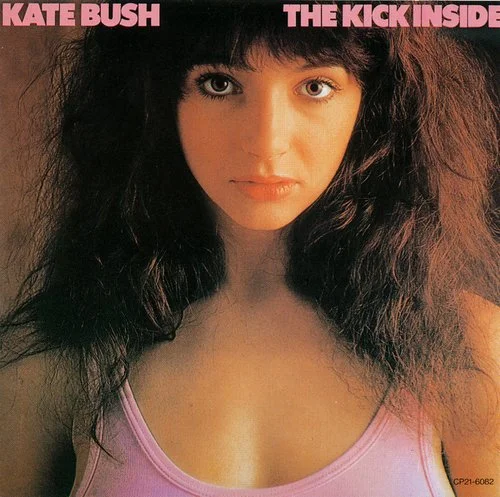
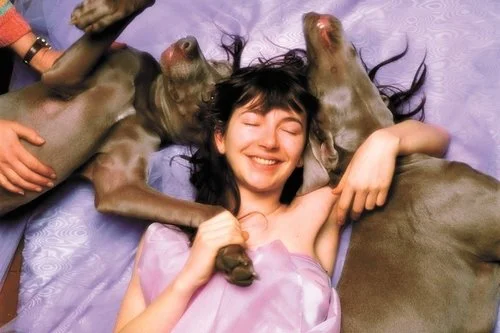
is less about me writing and more about the potency of various images. For the first of this series, I am looking at Gered Mankowitz’s work. His first session with Kate Bush was in January 1978. One of the most iconic shots of Kate Bush might very well be my favourite. I have called the shot at the very top ‘The Pink Leotard Shot’. There were a few shots of her in that leotard, but it the pose and composition above that is the most arresting. I love Mankowitz’s recollections of the sessions where Bush wore that pink leotard:

In those days I was working out of a studio in Great Windmill Street in the heart of London’s Soho.  For this first session with Kate I had decided to use a wonderful piece of distressed canvas as a background; it had once been used as the floor of a boxing ring in the gym below us, and its coarse texture seemed a perfect contrast to Kate’s youthful beauty.

I purchased some leotards, tights, leg-warmers and scarves, and placed them in our rather inadequate dressing room, which was actually a curtained-off corner in the studio. When Kate arrived, she disappeared behind the curtain with the make-up artists and stylist.

Kate emerged in the pink leotard.

She looked beautiful, and I knew that we were going to have a fantastic session. She settled in front of my Hasselblad camera without a care in the world. Kate did not have much experience of working with a professional photographer, and I felt that it was important to try and guide her through the process. She had a natural instinct and seemed to understand immediately how much the camera loved her.

After shooting several test Polaroids, I was happy with the lighting, and Kate was delighted with the look. We shot throughout the afternoon, with Kate in both the pink outfit and a green version. After about twenty rolls of film, the first shoot was over and I felt certain that we had achieved the objective and produced the portrait that would launch her”.

If one gets a copy of The Kick Inside (Bush’s debut album of 1978) from Japan, the cover features a photo from that session (it is similar to the photo I have highlighted but not the exact shot). It was going to be used as the cover for her debut single, Wuthering Heights, but was nixed. That is because the same image was circulated…though it showed Bush’s nipples. It could have been cropped and used, though the photo was out there and being displayed by the press and shown in public. It is a shame that there was that controversy and obsession (from some) on the wrong aspect of the image. I feel the pink leotard shot should have been used as the cover for the U.K. version of The Kick Inside. What could have been if this iconic photo was seen more widely. Mankowitz spoke with The Big Issue in 2014 and discussed that shoot and eye-catching image:

The one picture that in a way is inescapable is the pink leotard Wuthering Heights picture. It’s one of those pictures that become iconic and represents so much, and that doesn’t happen very often. It has a life of its own and it has energy. I think it’s a beautiful portrait of a very beautiful young woman.

The Big Issue: There has been discussion over the years whether her sexuality was being exploited – depending how it’s cropped, it’s quite graphic…

Gered: It didn’t occur to me at that time that [the nipples visible in the full-length shot] would be a problem. I know that it was pretty edgy for the late ’70s but it wasn’t sort of discussed or thought about a great deal. That was how she looked and I wasn’t going to say to her “I think you should cover up”.

She looked absolutely gorgeous. I’m looking at a cropped version of it now and it still has all the power that it did then. Her breasts might have been titillating to a few young boys but her beauty and her serenity, her stillness are what really make this a special photograph.

She used her sexuality throughout her performance

She certainly knew what she was doing, that’s how she came out of the dressing room, looking like that, and there was no attempt by anybody to make her look like that. That’s what she looked like and I don’t think it’s exploitative at all. I think it’s very, very beautiful.

I’m the photographer and I took that picture, and I don’t see how I could have exploited Kate Bush. She was in control of it.

But she used her sexuality throughout her performance – look at the Babooshka video or any of the records and promotional videos and stills, certainly in those first three or four years of her career she was a very sexual person and I think that came across in the way she moved, looked and the way she sang.

For me that makes any discussion or debate about whether the picture was ‘exploitative’ redundant. She wasn’t like Miley Cyrus trying to draw attention to herself through her sexuality. She’s a very strong woman and as a strong woman you know that she’s aware of everything that’s around her and I completely reject any possibility that the pictures were exploitative, it reflects her beauty and her power and serenity, and her comfortableness with it.

IN THIS PHOTO: Gered Mankowitz 

The Big Issue: It’s such a direct portrait, you feel like you know her, her face looks so open but she’s not giving anything away, it gives you chills still to look at it now.

Gered: It often is the case that in the beginning when an artist makes a really profound impact it’s often their first moments that are sort of welded into the public consciousness and that’s one of the most gratifying things. Going back to my favourite image, I’m incredibly proud and thrilled to have been associated with Kate Bush at this early stage. It’s fantastic to hear you say that [above] about it”.

To start off a run of features that highlights the very best photos of Kate Bush, I wanted to start with one from the very start of her career. Such an expressive, mysterious, nuanced and beautiful image,! Even though Gered Mankowitz is the one who got the shot, I feel Bush’s natural ability to project these great looks and expressions should be credited. As we can see in the 1978 shot that should have been used for Wuthering Heights, she looks…

SO natural and gorgeous.

FEATURE: Inspired By… Part Thirty-Nine: Alicia Keys

FEATURE:


Inspired By…

Part Thirty-Nine: Alicia Keys

___________

ON this occasion…

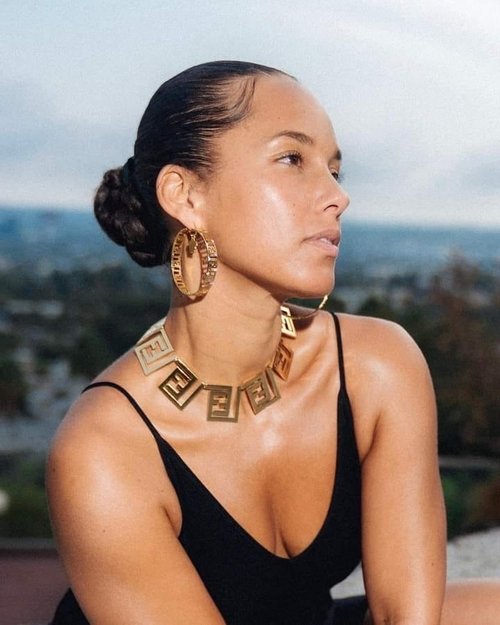
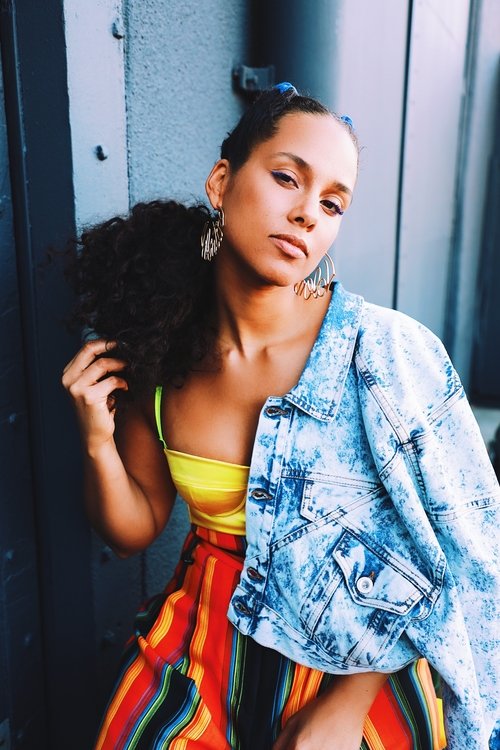
I wanted to include the amazing Alicia Keys in Inspired By… The U.S. icon is an artist who not only makes incredible music. She also influences so many others. Since her 2001 debut, Songs in A Minor, Keys has been at the top of her game. Her upcoming album, KEYS, is to be released next month. It is a double album. I wanted to mark that by producing a playlist of songs from artists who are influence by her. Before that, here is some biography about the amazing Keys:

Singer/songwriter and pianist Alicia Keys became an international star in the early 2000s with her sophisticated mix of classic and contemporary R&B. Behind the number one pop hit "Fallin'," her first album, Songs in A Minor (2001), sold more than 50,000 copies during its first day of availability and eventually moved over ten million units worldwide, thus setting the stage for the then-20-year-old's lengthy career. Since collecting five Grammys for her debut, Keys has continued to refine her signature sound, specializing in aching love ballads and feel-good motivational anthems, appealing to an audience far beyond her R&B base without being overtly pop. Her subsequent studio albums through the 2000s and 2010s, namely The Diary of Alicia Keys (2003), As I Am (2007), The Element of Freedom (2009), Girl on Fire (2012), and Here (2016), all reached number one or two on the Billboard 200 and produced crossover hits such as "You Don't Know My Name" and "No One." Moreover, she earned routine recognition from the Recording Academy with ten additional Grammy Awards. Keys started her third decade of activity with Alicia (2020), an LP that strengthened her reputation as a keen collaborator with Miguel, Ed Sheeran, and Khalid among the contributors.

Alicia Augello Cook was born in Hell's Kitchen in early 1981. Raised by her Italian-American mother, she enrolled in classical piano lessons at the age of seven and began writing songs four years later. An education at the Professional Performing Arts School helped develop her vocal skills, and at the age of 16 she graduated as the class valedictorian. Two Columbias loomed on the horizon: Columbia University and Columbia Records, both of which extended offers. Although she attempted to make both options work, Keys found it difficult to juggle academic and professional commitments and chose to focus exclusively on her music career. Assuming the stage name of Alicia Keys, she began working with Columbia and contributed a song to the Men in Black soundtrack, but disputes with the label resulted in her contract's termination.

Keys bounced back by aligning herself with Clive Davis, the president of Arista Records, but work on her debut album stalled when Davis was ousted from the company in 2000. Davis soon formed his own label, J Records, and welcomed Keys into the fold with an aggressive publicity campaign (including an appearance on The Oprah Winfrey Show). Driven by the number one pop hit "Fallin'," Songs in A Minor was released in June 2001, debuted at the top of the Billboard 200, and rose to platinum status in ten countries. It featured a second Top Ten hit, "A Woman's Worth," and netted Grammys for Best New Artist and Best R&B Album, plus Song of the Year, Best R&B Song, and Best Female R&B Vocal Performance, all for "Fallin'." Keys didn't experience a sophomore slump with her follow-up. The Diary of Alicia Keys arrived in December 2003, entered the Billboard 200 at the top, and yielded the Top Ten singles "If I Ain't Got You," "Diary," and "You Don't Know My Name." She again won Grammys for Best R&B Album, Best R&B Song (for "You Don't Know My Name"), and Best Female R&B Vocal Performance ("If I Ain't Got You"). Additionally, "My Boo," a chart-topping duet with headliner Usher, took the award for Best R&B Performance by a Duo or Group with Vocal. Keys subsequently published Tears for Water: Songbook of Poems and Lyrics.

A live CD/DVD package, Unplugged, was issued in 2005 and kept Keys' streak of number one releases intact. She then took on acting work, starring in both Smokin' Aces and The Nanny Diaries in 2007, before issuing As I Am that November. Her fourth consecutive number one project, it was highlighted by the chart-topping "No One," which won her two more Grammys in the R&B field. ("Superwoman," released late in the album's promotional campaign, won Best Female R&B Vocal Performance the next year.) As 2009 drew to a close, Keys returned to the top of the singles chart with the hook on Jay-Z's "Empire State of Mind" (which also won two Grammys in the rap field), and in December released her fourth studio album, The Element of Freedom. Although it narrowly missed the top of the Billboard 200, it went platinum like all of her previous full-lengths, while it became her first number one album in the U.K. "Try Sleeping with a Broken Heart" and the Drake collaboration "Un-Thinkable (I'm Ready)" went Top 40 in the U.S.

During the next two years, Keys married producer Swizz Beatz, gave birth to a son, collaborated with Eve on the single "Speechless," appeared on Kanye West's all-star track "All of the Lights," and went on a brief tour celebrating the tenth anniversary of her debut album. She also wrote and co-produced "Angel" for Jennifer Hudson. In 2012, she appeared on albums by Emeli Sandé (Our Version of Events) and Miguel (Kaleidoscope Dream) before she released Girl on Fire, her fifth studio album and first for RCA. Issued that November, it featured her husband, as well as Sandé, Salaam Remi, Jeff Bhasker, Frank Ocean, and John Legend, among the collaborators. In the U.S., it became her fifth number one album and went gold, and also won that year's Grammy for Best R&B Album. Her second live recording, VH1 Storytellers, was issued in June 2013. Keys' recorded activity during the next year involved a collaboration with Kendrick Lamar, as heard on the soundtrack of The Amazing Spider-Man 2, and a pair of socially conscious solo tracks, "We Are Here" and "We Gotta Pray."

After Keys and Swizz Beatz welcomed a second son, Keys released another single, "28 Thousand Days," and appeared in the second season of Empire, for which she recorded "Powerful" with series co-star Jussie Smollett. The following May, Keys released "In Common" as a prelude to her sixth studio album and made her third musical guest appearance on Saturday Night Live. A few months later, she began a stint as a coach on The Voice and contributed "Back to Life" to the soundtrack for Queen of Katwe. Here, led by the biographical single "Blended Family (What You Do for Love)," arrived in November 2016 and peaked at number two on the Billboard 200. In April of the following year, Keys quietly released an EP called Vault, Vol. 1, consisting of previously unreleased material and new versions of earlier songs.

In early 2019, in conjunction with her hosting duties for the 61st Grammy Awards, Keys issued the single "Raise a Man." This was followed by an appearance on a remix of Pedro Capó's multi-platinum hit "Calma," and additional singles such as "Show Me Love" (featuring Miguel) and "Underdog" (co-written by Ed Sheeran). After she hosted the 62nd Grammy Awards, Keys finished her seventh proper album, Alicia. Two more singles, "So Done" (featuring Khalid) and "A Beautiful Noise" (featuring Brandi Carlile) preceded its September 2020 arrival. The LP debuted at number four on the Billboard 200 and became Keys' eighth Top Ten record in the U.S.”.

In order to highlight the incredible and ongoing influence of Alicia Keys, the songs below are from artists who either cite her as important or, in some way, have a bit of Keys inside of them. As you can see from the songs, Keys has influenced…

SO many greats.

FEATURE: Modern Heroines: Part Seventy-Five: SZA

FEATURE:


 Modern Heroines

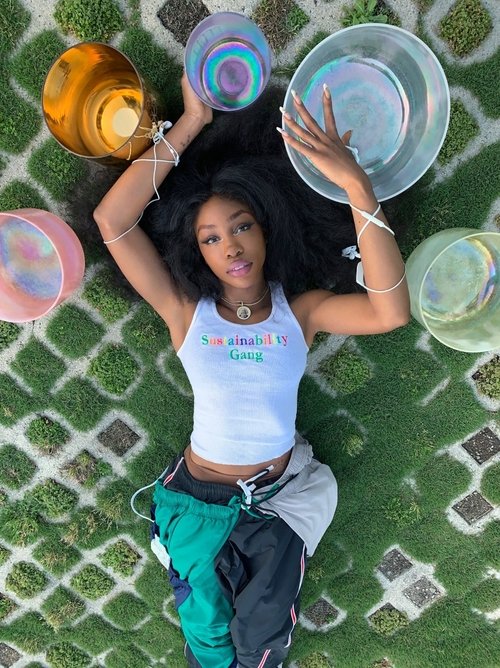
 PHOTO CREDIT: Nathaniel Goldberg/Trunk Archive

Part Seventy-Five: SZA

___________

BECAUSE there was a period…

 PHOTO CREDIT: Blair Caldwell

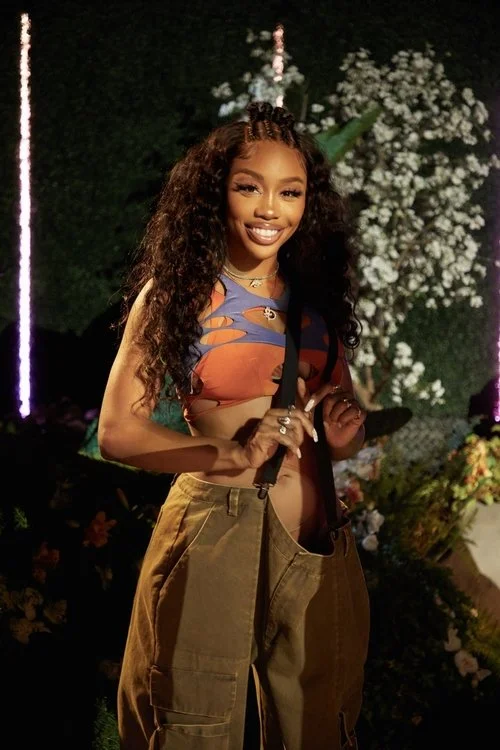
where SZA (Solána Imani Rowe) was not giving interviews, there is not as much current interview material than I would like. That said, there is plenty online that gives information about the incredible artist. Her sole studio album to date, Ctrl, was released in 2017. Arriving after several E.P.s, it is one of the greatest and most important albums of the past decade. I will drop in a couple of glowing reviews for that album in a minute. I think that SZA is already an artist who commands an enormous amount of respect. She will definitely go down in history as an icon; someone who has compelled and moved many people. Her phenomenal music proves she has the talent to be in the industry for decades. Before sourcing some interviews, I want to show some of the reviews for Ctrl. Listen to the album if you have not heard it before. AllMusic held a lot of love for a truly remarkable debut album:

Solana Rowe's proper debut album, due to its title, invites comparisons to Janet Jackson's 1986 personal and commercial breakout. It's an individual statement, however, one distinct from even the contemporary likes of Kehlani's SweetSexySavage. Placed beside only Z, its three-year-old prelude, Ctrl is the work of a considerably less-inhibited songwriter. Rowe likewise truly fronts these frank songs that wield power as they lament lonesomeness, insecurity, and inertia. She neither projects slight wisps nor obscures herself inside swirling synthesizers, yet she oversells not a single thought.

 On screen, a slight shrug from her would probably devastate an expectant admirer. In the slow-motion hip-hop soul of "Doves in the Wind," featuring a hectoring verse from fellow TDE artist Kendrick Lamar, Rowe schools inapt and inept male behavior, offering intimate counsel and acerbic derision in a uniquely offhanded style. As assured as she is in this mode, she's not too proud to test a partner ("Call me on my bullshit, lie to me and say my booty gettin' bigger even if it ain't"), express personal dissatisfaction ("All alone still, not a thing in my name"), or plainly grieve ("Do you even know I'm alive?"). The production crew here is almost completely different from the one involved on Z, with TDE regular Tyran Donaldson (aka Antydote and Scum) the lone holdover, present on seven tracks. For every overdone trap trick, there's a couple of sly wrinkles, like the thick, chiming groove in "Go Gina," where Rowe brilliantly illustrates a specific kind of fatigue ("Picking up a penny with a press-on is easier than holding you down") and the woozy, decayed synthesizer line in the Travis Scott-assisted single "Love Galore," ideal for a song about rekindling a dead-end affair. This is a marked improvement, a distinctive statement, and an indication of more great work to come”.

I think so many people are asking whether there will be another album soon simply because of the impact and brilliance of Ctrl. It is the creation from a woman who is a role model and hugely importance voice in music (and a wider political and social sphere). Consequence had the following to say about the mighty SZA’s Ctrl:

SZA’s lyrics across the slow-simmering album resonate well beyond the confines of a diary or a recording booth to remind scorned lovers who have considered suicide — okay maybe just arson or posting a few incriminating texts — when the sorry’s are no longer enough, to say all of the things that end up left unsaid at the demise of relationships. That post-YOLO approach to the creative process first surfaces on “Supermodel”, the smoldering Scum-produced revenge jam that conjures N.E.R.D.’s “Run to the Sun” and finds SZA speeding off of a cliff in a vehicle with no brakes by the opening statements: “I been secretly banging your homeboy/ Why you in Vegas all up on Valentine’s Day?/ Why am I so easy to forget like that?” If ever there were occasion to drop a bomb on an R&B track, this one might be it.

SZA dodges an ex lingering in her shadow on the Travis $cott-assisted second single, “Love Galore”. The Cam O’Bi-produced “Doves in the Wind” places the pussy on a pedestal and nearly reprises Kendrick Lamar’s “head is the answer” refrain from post-Butterfly gem “Untitled 4”. Pulling the cards of serially disrespectful men, the song — though clearly about the yams — is more a PSA to the scrubs of the world that still do not get how sacred the female body is. All of this is sewn up with a roundabout reference to Kendrick’s m.A.A.d. City as SZA riffs on the theme from ’90s sketch comedy show Mad TV. Doubling down on lead single “Drew Barrymore”, SZA takes listeners inside the female body to sing from the perspective of her perceived imperfections against a well-produced track that plays with a nod to early ’90s grunge. By “The Weekend” and “Go Gina”, SZA’s affection for the slow-burning body roll classics popularized by artists like Guy and Keith Sweat and perfected by R. Kelly is pretty clear. Once “Broken Clocks”, the criminally short James Fauntleroy feature “Wavy”, and “Pretty Little Birds” have run, SZA has put all of her cards on the table, taken a deep dive into a web of complicated feelings, and come up with a seamless release.

PHOTO CREDIT: Elizabeth Wirija 

Working with a dedicated team of producers, including Bekon, Antydote, and Carter Lang, SZA makes what may ultimately be the most important statement of the project with genre-bending, atmospheric production that openly challenges the music to evolve. To live indefinitely outside the lines, on the edge where artists do not play it safe and the academy’s categorical boxes no longer exist.

Concerned with elevating the genre to something that is completely her own, SZA trades in the kind of alchemical magic that can only be derived from the intersection of youthful indiscretion, sincerity, and naïveté in her approach to the stylistic pillars of R&B. Somewhere between the house built by Frank Ocean’s monotone and falsetto and Migos’ signature trap cadences, SZA’s unique manipulation of language in performance moves far afield of clever euphemisms and the temporary high of rap entendres or gospel runs to focus on the deliberate deconstruction of words. Her approach to song structure is one that accommodates bespoke production and the angsty weight of her statements. Practically sounding out her thoughts, she gives tangible shape to emotion and establishes a clear respect for the craft of delivery.

This approach elevates otherwise quirky, multi-tonal, sarcastic, and sometimes nasal observations about growing pains to polysyllabic works of art. Her statements are punctuated by the wise observations of her mother and grandmother, who act as spirit guides eager to dole out advice and look back upon the highs and lows of their youth.  With Ctrl, SZA proves that the cult following that ballooned with the release of her 2014 mixtape, Z, was not some flash in the pan, but a deserved wellspring of attention from an adoring fan base whose faith in what she had yet to produce helped to produce the project that could eventually stand as the best thing she has ever done”.

I am going to get into interviews. I love reading interviews with SZA. She is such a compelling and interesting person. I will start with one from Wonderland. from summer of last year. Among other things, SZA discussed working with her musical hero, Pharrell Williams:

Born in St. Louis, Missouri, and raised in Maplewood, New Jersey, Solána Imani Rowe is no stranger to the isolation many of us are facing during coronavirus social distancing measures around the world. “I didn’t have any siblings that lived with me, all my siblings are 10 years apart, and when you don’t have any friends or playmates there’s a lot of room to get weird,” says SZA.

“Sometimes I was taking up sculpture, or doing martial arts on my own, or going to the library by myself and looking up UFOs and séances, then coming home and summoning s**t in the basement. When I left my house and tried to talk to people in the regular world they were so off-put by me, like, ‘What’s wrong with you? Why you acting like this?’ I think it had to do with only child syndrome, plus being in a random suburb, and being one of the only black families in our five-block radius.”

Her self-confessed weirdness is partly what connected SZA to one of her biggest heroes: Pharrell Williams. From taking a 4am train to Manhattan “on a school day” to watch him arrive at the Good Morning America studios, to interning at his Billionaire Boys Club clothing company and ending up in N.E.R.D.’s 2009 video for “Everyone Nose”, SZA has been manifesting making music with Pharrell for years. And, on Super Bowl weekend in February 2020, it finally happened. “I wanna jump up and down every time I think about it,” says SZA.

PHOTO CREDIT: Blair Caldwell

However, this wasn’t actually her first experience with him in the studio. “The first time he was in the room with Rihanna and stunting for him is how I lost “Consideration”. Rihanna’s like, ‘B***h, I’m taking this song and there’s nothing you can do about it, but I’m gonna do it justice!’” she recalls. “Consideration” is, of course, on RiRi’s 2016 album, ANTI, with SZA featuring.

It would have made it on to Ctrl had she listened to the advice of Top Dawg Entertainment president, Punch. “Punch gave me strict instructions not to play anything from my album, but I wasn’t about to go in there, to a room with [him] and Rihanna, and play the flops. I’m playing “Drew Barrymore” and I’m playing “Consideration”. I’m playing everything I have!” she laughs. “But Punch says, ‘I’m telling you, do not do this,’ so we agreed that I wasn’t gonna do that. Then I walk in, Pharrell is sitting there drinking wine, and I guess my hands just slipped and I played my album. I played Ctrl.”

SZA thought that session, coupled with another for Ariana Grande that she felt she blew, had ruined her shot of working with the super-producer forever. Thankfully she was wrong and spent a week writing and recording with N.E.R.D. in Miami. “He asked me to do something on a beat, in front of everybody, and I normally record in a room by myself all the time. This was him, Chad [Hugo] and like five other people. So I go into the studio, I lay my crystals down on the floor in a grid and I just start f**king snapping. I’m snapping anything […] I was trying so hard, but not at the same time; it was weird. So then I go over to DJ Khaled’s house to record on the beat once our session’s over. Ty Dolla $ign randomly comes over and we’re making s**t, and then I play it for P and he’s just f**king with me the way I dreamed he would be f**king with me. He ended up extending the session for an extra three days and at the end I was just like, ‘You don’t know how much you mean to me in the realm of black, suburban, weird kids. You validated me in the world for thinking differently and dressing differently, and feeling differently, and that’s priceless.’ I’m damn about to cry right now just thinking about it.”

SZA spent her childhood listening to Justin’s old band, NSYNC, as well as other boy bands like LFO, Backstreet Boys and Hanson. “I don’t know why, but I was very much an “MMMBop” person,” she says. “I loved that boy band energy. It was intoxicating.” Her diverse musical tastes — including everyone from Ella Fitzgerald to Jamiroquai, Björk to Limp Bizkit — all play a part in SZA’s own unique sound, and why she doesn’t want to be categorised within the one genre of R&B. “Nobody does that to white people at all, ever. No one ever does that to Adele or Justin Bieber when they’re wholeheartedly singing R&B. Or Björk, where nobody’s sure what the f**k she’s singing, but it’s energy and nobody’s concerned.”

“It’s like the only genre that we’re allowed to own is R&B and soul, and even then you might get bumped outta that category by somebody with fairer skin and a better marketing team. But I can’t pretend it’s not exciting to see someone who isn’t black execute so exceptionally well. It’s mystifying; the soul is an energy. Like Nai Palm from Hiatus Kaiyote, she’s a f**king force to be reckoned with. She’s one of my favourite voices of soul right now, next to Ari Lennox. R&B is too fickle.

 I spent too much time growing up on just as much Imogen Heap, and listening to Comfort Eagle by Cake and vibing for people to call me a ‘queen of R&B’. Why can’t I just be a queen, period?”

As we wrap up our chat, talk turns back to our present way of quarantine living and the effect that it’s having on our mental health. Currently living with her best friend Amber, who was her college roommate, plus her dog and a bunny rabbit gifted to her by a former neighbour, SZA isn’t completely on her own — but she is learning how to be alone with herself.

“It’s definitely hard for me because I’m always with somebody and it’s crazy to not have the option to go out and do anything. But that’s when you have to get used to yourself. I realised I don’t enjoy spending time by myself, then I was like, ‘Do I not like myself?’ And I was like, ‘No b***h, you don’t like yourself for a host of reasons and you’re trying way too hard for people that are already your friends to like you because you don’t like yourself.’ So right now I’m learning how to spend time with myself… You can’t waste time pretending or trying too hard. Everyone who doesn’t like you wasn’t gonna like you anyway”.

Late last year, SZA released the magnificent single, Good Days. It was an exciting and much-celebrated song from her. It is definitely a song that is still in my mind. Billboard spoke to SZA around the release of that song. She was also asked about championed good mental-health. It is interesting learning how she keeps herself afloat and uplifted:

I know you're a huge advocate of mental health, especially for the Black community. How have you been able to protect your mental health during the pandemic as SZA, Solana and each persona that you are?

I don't separate myself, definitely. I just been outside. I'm definitely a good-natured, therapy kind of person. I hit the forest, or I hit the park, or I do a lot of walks, a lot of exercises. Sitting still and meditating is a component for me, but it's not my key component. I need to be outside amongst trees, and among anything nature-based. I'll drive really far to get there and I don't mind. I don't mind dragging whatever I have to drag.

I actually went with my parents on the Delaware River. We kayaked six miles. I did nine miles by myself. We never camped out as family before -- and you know as Black people, that's really important. Hella tree activity. [Laughs.]

Have you seen a spike in your creative activity, with you being outside as often as you have during the pandemic?

Absolutely. I just feel crunchy when I don't get outside, or even when I'm in heavy [traffic] areas -- like a fancy part of New York City -- and there's not enough trees in your area. I really had to go out of my way to find that moment, because it was bringing me down. It was super-weird, and making my music feel weird, because I was like, unsure of myself. You're really just bouncing yourself off an indoor wall all the time. It's just not normal.

You already can't bounce off of people because of COVID, so that has everything feeling crazy. Your music is super-eternal -- and the first time people hear it, it's when it's public, and that's super weird for me. That's never happened to me before. I don't know. It's super weird, but being outside helps. It breaks that monotony and that cycle. 

Do you have any positive affirmations you tell yourself on the daily to stay afloat mentally?

My granny used to tell me, "Just do your best, and when you do your best, that's all you can do." It's super simple, right? That's not enough, but usually, it kicks in when I've done something, and I'm asking myself, "Have I done this in a way that's adequate -- or did I actually do my best, and really try to put my foot in this s--t and take this as far as it can go?"

I fluctuate between "I'm filled with love and kindness," "I'm peaceful and at ease" and "I'm well and I'm happy," but I also do, "May I be filled with love and kindness," "May I be well," "May I be peaceful and at ease," and "May I be happy." I just keep it simple.  I guess speaking stuff out loud has strength that I've been trying to learn, 'cause I feel like I'm kind of negative on myself. So I've been trying to say more positive and random things aloud at random moments. 

CTRL has spent 191 weeks on the Billboard 200, and still remains inside the top 40. Have you sat back and thought back the impact this album has made on your life?

I just had no idea that anybody would like it this much, or that it would be anything like this. Because to me -- I wish I had more time to perfect it, or get it the right way. I never listen to my music. It's like, I'm listening to it back on the four-year anniversary for the first time -- 'cause I'm gonna listen to it, since I'm not on tour. It's very interesting. I just wonder how other people hear it, and I don't know.

I'm just grateful that God put me in a position to touch or be of service to other people even if I don't understand it. The ways I think I can be of service are not adequate, so this is a cool way that's really unbeknownst to me. I have no idea of the effects or how or why people connect to it the way they do. I'm just grateful to be around.

 Even after the success you've gotten with your new singles "Hit Different" and "Good Days," are you still critical of yourself musically as much as before?

No, definitely the same. It's the same, if not more. It's so interesting. With "Good Days," I had learned that it wasn't meant to be a single. It was a song that I threw at the end of "Hit Different," because I liked it. The fact that it became a single, or even that random TikTok thing, -- [it] was not a song that I was working on, it was a song that I posted mad long ago. It was a snippet of a bunch of stuff that I was working on with Rodney Jerkins and we ended up making a bunch of songs.

I don't know. It's like my trajectory is out of my hands. All I can do is stay creative, try to be honest, do work and not be lazy. So I'm trying to be my best. That's all I can do -- my literal best. If I hear a song, now I wanna make it the best song that it can be. I might be overanalyzing that, but we'll see when it comes out.

With the "Good Days" visual on the way, you think you can rank you top three favorite videos of yours?

I can't do it in order, but the "Supermodel" video had the little Black girls and the fairy energy. It was exactly what my mind was thinking conceptually. I love the "Love Galore" video, except when Travis [Scott] dies at the end. He was really mad at me for that. It wasn't my decision. It was supposed to be [based on] the movie Misery. I don't know. I would probably say "Hit Different / Good Days." Those three I really like.

Which female artists would you say you've been checking out as a fan on the hip-hop and R&B side during the pandemic?

I listen to a lot of stuff that's not just hip-hop and R&B. But in that specific spectrum, I love Tiana Major9. She's so crazy. Lots of vocalists. I love Fousheé. I love Jean Dawson. Dawson is a dude. Go look at his music video, it has like a s--t ton of views. It's on YouTube. He's Black, but it's also like some punk s--t. It's tight -- it's super tight.

You know, [I've also been listening to] a lot of rap. A lot of Don Toliver. I'm obsessed. I've been listening to all the girls. Of course, Summer [Walker], Kehlani, and Ari [Lennox]. Those are my favorites, but I love all these new ones coming out. I think it's a beautiful time for music. Kota [The Friend] is [dope] too”.

I am going to finish off by bringing things more up to date. Back in July, SZA was featured by Vogue. Last year, I think SZA said she was going to stop doing interviews. Luckily., she did come back with new music and has done some press too. At such a strange time, it is interesting to hear from her and what she is up to. SZA spoke about directing her music, climate change, in addition to how she keeps and open and focused mind when creating new music:

I use the anniversary of CTRL as an opportunity to cry and reflect every year,” says American singer-songwriter SZA, 30, of her four-time Grammy-nominated debut, which she released in 2017. “I never imagined I’d make it this far.” It’s this candour and vulnerability that fans love and, ultimately, it’s fuelled the Missouri-born, New Jersey-raised star’s musical growth and distinctive ethereal sound, keeping her high in the charts four years on.

The musical landscape irrefutably changed in 2020, ushering in a time when artists’ schedules ground to a halt. And in 2021, it’s safe to say that SZA’s making up for lost time. In between jumping on tracks with fellow superstars Doja Cat and Megan Thee Stallion, SZA placated her fans’ desperate pleas for new material by quietly dropping the video (that she also directed) for smash-hit single Hit Different. Featuring American singer Ty Dolla $ign and British musician Jacob Collier, it sent social media platforms into a tailspin and served as her first solo release since her highly acclaimed album. This was closely followed by Good Days, a global smash charged with a declaration of hopefulness — a message needed now more than ever. It quickly earned the musician a spot in the top 10 on the US Billboard Hot 100 Chart back in January.

How do you keep a clear and open mind when making new music?

“‘What the hell am I going to talk about now?’ [is what I first thought when making the new album]. I try to give the music what it needs, not what I want it to ‘try’ to be. That’s the only way to do a good job. And it’s not something that I’ve mastered a lot of the time. It’s about trying to detach and reattach to self and to sound.”

The videos for your singles Hit Different and Good Days gave the world a chance to see your directorial vision. What was the inspiration behind both and can we expect more of this?

“I’m a novice – I’m trying things I’ve always wanted to do as we did with the creative for the In Bloom virtual concert. I’m excited to shoot my next video and elevate each experience the more I learn.”

You started the year on a great note with the success of your latest singles. What are you focused on at the moment?

“I want to make music I love – that’s all I’m focused on immersing myself in right now. I’m trying to maximise my love of self because I know that’ll permeate into everything I do.”

Climate change and being kinder to the planet is something you’ve been vocal about, especially within Black and Brown communities. How would you encourage younger generations to get involved?

“If you’re unsure where to start, begin by helping these communities any way you can, such as sponsoring your local garden, planting trees, volunteering to clean or writing to your local officials. And try to work with grassroots organisations rather than large corporations.

“A lot of cities face redlining and difficult economic circumstances directly stemming from systemic and environmental racism. For example, the current water crises in Memphis, Tennessee, and Flint, Michigan, are preventable. Officials could take action right now and make the necessary safety adjustments. It’s all about urgency and attention. Just give back because the people are the planet, and we all need one another”.

An artist who I really love - and I feel she will go down as one of the all-time greats - SZA is a modern-day legend. I am looking forward to seeing what comes next in terms of an album. She has recently revealed that her November live dates will be her last before a new album. It is exciting that we might well get a new SZA record next year. Many people have been waiting to see what comes next for the modern icon. One can feel and sense a real evolution on Ctrl from her E.P.s. Since 2017, SZA has grown even stronger. Such a phenomenal and accomplished artist! If you need convincing as to how good she is, then the proof is…

IN the playlist below.

FEATURE: Vinyl Corner: John Coltrane - Blue Train

FEATURE:


Vinyl Corner

 John Coltrane - Blue Train

___________

IT is rare that…

I go back to the 1950s for Vinyl Corner. John Coltrane is one of the most influential and important Jazz artists and composers that ever lived. Whilst albums like A Love Supreme (1965) are more famous and talked-about, I wanted to spend time with 1958’s Blue Train. Even if you are not a Jazz fan or do not know the work of Coltrane, Blue Train is an album that I would recommend people get on vinyl. The album was recorded in the midst of Coltrane's residency at the Five Spot as a member of the Thelonious Monk quartet. The album’s personnel include Coltrane's Miles Davis bandmates, Paul Chambers on bass, and Philly Joe Jones on drums. Aside from I’m Old Fashioned, Coltrane wrote all of the compositions. Recorded in 1957 at Van Gelder Studio, Hackensack, Blue Train is set in the Hard Bop style of the time. Coltrane would break new ground with 1960’s (aptly-named) Giant Steps. Before concluding, it is worth putting in a couple of reviews that better contextualise Blue Train and explain its brilliance. AllMusic noted the following:

Although never formally signed, an oral agreement between John Coltrane and Blue Note Records founder Alfred Lion was indeed honored on Blue Train -- Coltrane's only collection of sides as a principal artist for the venerable label. The disc is packed solid with sonic evidence of Coltrane's innate leadership abilities. He not only addresses the tunes at hand, but also simultaneously reinvents himself as a multifaceted interpreter of both hard bop as well as sensitive balladry -- touching upon all forms in between.

The personnel on Blue Train is arguably as impressive as what they're playing. Joining Coltrane (tenor sax) are Lee Morgan (trumpet), Curtis Fuller (trombone), Kenny Drew (piano), Paul Chambers (bass), and Philly Joe Jones (drums). The triple horn arrangements incorporate an additional sonic density that remains a trademark unique to both this band and album. Of particular note is Fuller's even-toned trombone, which bops throughout the title track as well as the frenetic "Moments Notice." Other solos include Paul Chambers' subtly understated riffs on "Blue Train" as well as the high energy and impact from contributions by Lee Morgan and Kenny Drew during "Locomotion." The track likewise features some brief but vital contributions from Philly Joe Jones -- whose efforts throughout the record stand among his personal best. Of the five sides that comprise the original Blue Train, the Jerome Kern/Johnny Mercer ballad "I'm Old Fashioned" is the only standard; in terms of unadulterated sentiment, this version is arguably untouchable. Fuller's rich tones and Drew's tastefully executed solos cleanly wrap around Jones' steadily languid rhythms. Without reservation, Blue Train can easily be considered in and among the most important and influential entries not only of John Coltrane's career, but of the entire genre of jazz music as well”.

Before wrapping this up, this website wrote about the one hundred greatest Jazz albums. As someone who knows a little about John Coltrane but not a lot about the background to Blue Train, the review provided some useful insights:

Many people hear that in the music of "Blue Train"; the beauty that comes from an open hearted sharing of release; blues on the point of transcendence of the oppression of the world.

There was work with Thelionious Monk that exposed John Coltrane to the pianist's radical approach. Miles Davis was able to welcome him back into his quintet in December of that year; they were to go on to make the transition to modal music with "Milestones" and "Kind of Blue".

Experimenting with new harmonic ideas was exactly what was encouraged in the Miles Davis and Thelonious Monk environments, with Miles especially an encourager and mentor. It was Miles who bought John Coltrane a soprano saxophone as a gift and suggested he should work on playing it. It was visiting Blue Note to find recordings by the great clarinetist and soprano sax player of an earlier era, Sydney Bechet, that had brought John Coltrane into contact with Alfred Lion and the hatching of the idea of an album for Blue Note. And it was with Miles Davis that John Coltrane was encouraged to develop further musically. As he recalled, he found it "easy to apply the harmonic ideas I had... I started experimenting because I was striving for more individual development."

The title track, "Blue Train" is based around a short minor blues theme that shifts to major when John Coltrane opens up with his liberating eight chorus solo. It is not too simplistic to say that it captures that sense of the opening out to possibilities that his change in direction in life had brought. In an emblematic way it encapsulates everything that came to be felt about John Coltrane as a centre of black pride and optimism that oppression would be overcome; what led Miles Davis to say on John Coltrane's death in July 1967: "Trane's music…..represented, for many blacks, the fire and passion and rage and anger and rebellion and love that they felt, especially among the young black intellectuals and revolutionaries of that time…. It was that way for many intellectual and revolutionary whites and Asians as well… Trane' s death made me real sad because not only was he a great and beautiful musician, he was a kind and beautiful and spiritual person that I loved. I miss him, his spirit and his creative imagination……"*

Lee Morgan, just nineteen, plays an explosive trumpet solo, better than his somewhat disjointed efforts on the "Blue Train (additional take)" track. Curtis Fuller on trombone plays with bluesy intensity. Kenny Drew contributes a snakey, low down blues piano solo before the return to that unforgettable harmonized minor horn theme. It is a great start to a great album.

The next track, "Moment's Notice" is more uptempo yet continues the distinctive hamonization. And later, "Lazy Bird", said to be a variation on Tadd Dameron's "Lady Bird", is swinging and uptempo with space for fine solos by Lee Morgan, Curtis Fuller, John Coltrane and then Kenny Drew. These compositions are important since they are the first recorded example of one of John Coltrrane's greatest innovations, the experimental use of a cycle of thirds; the so called "Coltrane changes".

In the ii-V-I chord progression that is at the heart of jazz, the movement of the root notes is in minor or major seconds (a semitone or whole tone movement). John Coltrane discovered chord substitutions that gave root note movements of a major third (four semitones) or a minor third (three semitones), the so called "giant steps". There is speculation that he may have discovered this in the bridge to the Richard Rodgers and Lorentz Hart song "Have You Seen Miss Jones" where the sequence BbM7, GbM7, DM7, GbM7 occurs, the only known jazz standard to have this cycle of major thirds. John Coltrane would later expand on this idea in the compositions "Giant Steps" and "Countdown", a reworking of Miles Davis' "Tune Up". The long and short of this is that "Blue Train" is seminal in John Coltrane's development, the first time he had explored this most lasting of contributions to modern jazz.

"Locomotion" is high tempo upfront bop with charactersistic interspersed runs from John Coltrane.

The only ballad on the album, the Jerome Kern / Johnny Mercer standard "I'm Old Fashioned", is a place for John Coltrane's quieter, more conventional side to be showcased. What stands out is the complete control of his instrument and the wonderful timbre he had achieved by this time. None of this is accidental. He had worked long and hard to perfect this, working with the instrument makers Selmer to achieve exactly the sound he wanted. He was playing a Selmer Mark VI at this time, fitted with a 5-star medium metal Otto Link mouthpiece and a No. 4 Rico reed; a heavy combination that would have taken tremendous energy to blow successfully.

So, while there is little surprise in claiming "Blue Train" as a great jazz album, it is very clear that there is much more to its importance than its reputation as John Coltrane's 'only Blue Note'”.

For anyone who loves music that digs deep and provokes myriad emotions, Blue Train is a tremendous album. One of the greatest albums in any genre, go and check it out. Even if you can’t get the vinyl, it is well worth listening to. I think vinyl is the perfect form for the album. The beautiful, mighty, epic, stirring and amazing Blue Train is…

A wonderful thing.

FEATURE: Inspired By… Part Thirty-Eight: Sade

FEATURE:


Inspired By…

PHOTO CREDIT: Patrick Demarchelier

Part Thirty-Eight: Sade

___________

WHEN considering artists…

who have inspired others and have that legacy, some might not consider Sade to be among the most important. As an artist, she was very much in a league of her own. Even though her voice and talent cannot easily be matched, she has influenced other artists through the years. I am going to come to a playlist of artists who either cite her as an influence or one can tell that they incorporate some of her sound and essence into their own music. Before then, and as I normally do, AllMusic provide some background:

Since debuting with the Top Ten U.K. hit "Your Love Is King" (1984), Sade have remained, across four ensuing decades of intermittent activity, shrewd synthesists of classic jazz, cutting-edge R&B, and mature pop. Although they're known most for stylishly seductive ballads, including the international hits "Smooth Operator" (1984), "The Sweetest Taboo" (1985), "No Ordinary Love" (1992), and "By Your Side" (2000), they've also recorded poignant songs regarding slavery, immigration, parenthood out of wedlock, and everyday struggles, often through Sade Adu's third-person narratives. From Diamond Life (1984) through Soldier of Love (2010), breaks between Sade albums have increased in duration from a year-and-a-half to a decade, but each return has been warmly greeted. All six of Sade's albums have entered the U.K. Top 20, placed within the U.S. Top Ten, and in both countries have achieved platinum status. Additionally, Sade are four-time Grammy winners, having invalidated the Best New Artist curse with subsequent wins for "No Ordinary Love," Lovers Rock, and "Soldier of Love." Seven years after the latter took the award for Best R&B Performance, they returned with contributions to the soundtracks of A Wrinkle in Time and Widows.

Sade are named after singer and songwriter Helen Folasade Adu. Born in Ibadan, Oyo State, Nigeria, Adu moved with her mother and brother to southeast England outside Colchester at the age of four. A lover of early-'70s soul, Adu tentatively became involved with music after enrolling at Saint Martin's School of Art to study fashion, when friends asked her to help with their group's vocals. After she finished her course work in 1981, she joined the band Pride and into 1983 toured the U.K. with the act. Their gigs eventually featured a mini-set during which Adu was granted the spotlight, backed by some of her bandmates on intimate jazz-inspired material. These segments, specifically "Smooth Operator" -- composed by Adu and the band's Ray St. John -- drew attention from label representatives. Adu was pursued as a solo act, but she signed with Epic after demanding to bring along some of her partners in Pride: bassist Paul S. Denman, keyboardist Andrew Hale, and saxophonist and guitarist Stuart Matthewman.

The London-based quartet made their recorded debut in February 1984 with the controlled yet expressive ballad "Your Love Is King," which soon entered the U.K. singles chart and the following month peaked at number six. Another single, the down-but-not-out soul anthem "When Am I Going to Make a Living," preceded the July release of the full-length Diamond Life. Produced by Robin Millar, the album was written primarily by Adu and Matthewman in tandem, finished off with a cover of Timmy Thomas' 1972 hit "Why Can't We Live Together." Reinforced with the number 19 U.K. single "Smooth Operator," Diamond Life -- itself falling just short of the top spot on the U.K. albums chart -- became one of the biggest mid-'80s debuts. In the U.S., it was issued on Epic subsidiary Portrait in early 1985 and reached number five that June, with "Smooth Operator" doing most of the heavy lifting as a crossover smash that climbed to number five on the pop and R&B charts and topped the adult contemporary chart. Diamond Life eventually went quadruple platinum in the U.K. and U.S. and earned sales certifications in several other territories.

Sade continued to gradually refine and expand their cosmopolitan mix of jazz, R&B, and pop, and continuously decelerated their writing and recording process. Working again with Robin Millar, they started recording their second album around the time Diamond Life was distributed in the U.S., issuing it internationally that November as Promise. On its way to international multi-platinum success, Promise topped the U.K. and U.S. pop charts, led by "The Sweetest Taboo," which went Top 40 U.K. and peaked at number five in the U.S. the week after the band won Best New Artist at the 28th Annual Grammy Awards. Shortly thereafter, "Never as Good as the First Time" strengthened their hold on urban and adult contemporary radio.

Despite a gap of nearly two-and-a-half years between full-lengths, Sade remained a major commercial force with third album Stronger Than Pride. This time, production was handled by the band with help from Mike Pela and Ben Rogan, established Sade associates who played comparatively minor roles beforehand. Carrying some of the band's airiest arrangements and deepest rhythms -- exemplified respectively by the title song and "Paradise," two of its four singles -- the album climbed to the third spot on the U.K. and U.S. charts. A longer studio-release break ensued and was broken in October 1992 with Love Deluxe, produced by the band with Pela. More electronic and atmospheric than the band's previous albums, it entered the Top Ten in the U.K. and missed the top of the U.S. chart by two slots. "Feel No Pain," "Kiss of Life," and the pulsing trip-hop precursor "Cherish the Day" all charted, but the LP's biggest single was easily its first, "No Ordinary Love" -- it hit number 14 in the U.K. and U.S. and won another Grammy award, this time for Best R&B Performance by a Duo or Group with Vocal. The song had a lingering effect strong enough to keep the parent release on the Billboard 200 for almost two years.

The band responded in kind with their longest hiatus to that point. In 1996, Matthewman resurfaced as a co-writer and co-producer on Maxwell's Urban Hang Suite, thereby beginning a lasting close association with the album's maverick namesake. Later that year, Matthewman, Denman, and Hale released Sweetback, titled after the name of their new side project. Maxwell, Amel Larrieux, and Bahamadia were among the guests on the album, a stylistic successor to Love Deluxe that went a little farther out with no concern for hitmaking. Toward the end of the decade, Sade reconvened to record their fifth album, Lovers Rock. Distinguished by some dubwise rhythms and a greater emphasis on Matthewman's acoustic guitar, the LP cracked the U.K. Top 20 and was yet another number three U.S. hit upon its November 2000 arrival, supported with "By Your Side" (number 17 U.K. pop, number 75 U.S. pop). The Recording Academy awarded it Best Pop Vocal Album at the 44th Annual Grammy Awards. Following a customary album-promoting tour, the band appeased fans in February 2002 with Lovers Live. A second project from Sweetback, Stage [2], followed two years later.

In December 2009, "Soldier of Love" ended a period of silence during which Adu raised her daughter and was honored with an OBE (Order of the British Empire). The song's stark, swaggering theatricality made it feel like more of an event more than any other Sade re-entry. An album of the same title was released the following February, entering the U.K. chart at number four and the U.S. chart at the top. The song made the band Grammy winners for a fourth time, again taking the award for Best R&B Performance by a Duo or Group with Vocal. A 2011 catalog release, The Ultimate Collection, summarized the band's discography and included a handful of previously unreleased songs. Seven years passed before Sade released new recordings, both of which were made for soundtracks: "Flower of the Universe" for Disney's A Wrinkle in Time, and "The Big Unknown" for Widows”.

The amazing Sade has enjoyed her own successful career, though she has also made an impression on so many other artists. Below is a list of those who you can tell have been affected and inspired by her. It shows that, even though she has not released music for years, her influence and importance…

REMAINS so strong.

FEATURE: Remember the Time: Michael Jackson’s Dangerous at Thirty

FEATURE:


Remember the Time

Michael Jackson’s Dangerous at Thirty

___________

ON 26th November…

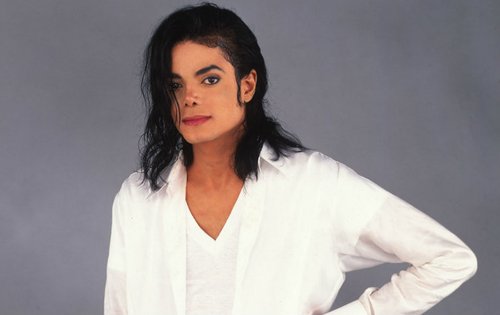
 Michael Jackson’s eighth studio album, Dangerous, turns thirty. In terms of his best-loved albums, Dangerous fares quite low. I feel Thriller (1982) and Off the Wall (1979) will always be the most respected. Bad (1987) comes close – though many critics felt it was a weak response to Thriller. Dangerous was the penultimate studio album from Michael Jackson. His final, Invisible, was released in 2001 (eight years before he died). I think one reason why some critics gave it a mixed review is because of the length. In an age where C.D.s were becoming more popular, artists were filling them up. It was a strange thing where they could not leave any space. Because of that, there were some over-long and unfocused albums. I don’t think that Jackson’s Dangerous suffers because of length. I feel the production is not as good under Bill Bottrell, Bruce Swedien, Michael Jackson and Teddy Riley. Quincy Jones’ production on albums like Thriller is a reason why it is so memorable. That said, Jackson was looking to take a new direction. His albums prior to that didn’t lack toughness and edge. They were quite focused on love. Even though he had explored paranoia and betrayal, Dangerous delves more into these themes. Perhaps that was motivated by press intrusion and his growing fame. More socially conscious – and exploring a broader range of themes -, Dangerous is grittier than anything he put out before. Still containing Pop hooks and big choruses, there are more underground sounds being brought to the fore.

Whether some critics took shots at Dangerous because of Jackson’s persona and ego or whether they disliked him breaking away from Pop and Disco, some of his best tracks are on Dangerous. Black or White and Remember the Time are classics of the 1990s. In all, nine (of the fourteen album tracks) different songs were released as singles. With Jackson co-writing most of the tracks, one can definitely hear his lyrical voice coming through. There has been reappraisal of Dangerous since its release. Many critics have named it as his best album. Personally revealing and with a social conscious, some have linked the album to stars like Lady Gaga and Nine Inch Nails – artists who, in their own way, were inspired by Dangerous. Whilst the album is top-heavy – the final six tracks on the album are among the weakest -, cuts lower in the order like Will You Be There and Dangerous are really interesting. To mark thirty years of Dangerous, I want to bring in a couple of reviews first. In fact, there is one feature from Pitchfork, published in 2016, that gives great depth regarding Dangerous and its history. I would recommend people read it in full. I have selected a few sections:

On the night of November 14, 1991, 500 million people scattered across 27 nations simultaneously watched Michael Jackson grab his crotch 17 times. He simulated masturbation, shattered car windows with crowbars, and unleashed the primal screams expected from a man who owned publishing rights to the Beatles catalogue. Then he turned into a black panther. The video ends with Bart Simpson striking a B-Boy pose in a Michael Jackson shirt, and ordering Homer to “chill out, homeboy.” It shattered all previous viewing records on Fox.

The $4 million, 11-minute unedited telecast of “Black or White” ranks among the Smithsonian-worthy artifacts of ’90s pop monoculture—up there with Nirvana trashing their instruments at the ’92 VMAs, the premiere of “Summertime” after The Fresh Prince of Bel-Air, and Hillary Clinton hitting the Macarena at the ’96 DNC. No one ever had more juice than Jackson did at the time, and it’s difficult to imagine that anyone ever will again.

With “Black or White,” Jackson lashed out at his public perception. In the interim since 1987’s Bad, he’d grappled with both outlandish rumors (buying the Elephant Man’s bones, sleeping in a hyperbaric chamber) and some that drew blood (allegations of bleaching his skin). The innocent popcorn-eating Michael of Thriller was gone, but calling him “Wacko Jacko” was slander. He wanted us to know he was a man, an eccentric sure, but an adult with deeply rooted beliefs.

Released only five months before the LA Riots, the Rodney King beating and murder of Latasha Harlins almost certainly factored into Jackson’s increasingly political slant. “Black or White” articulated a utopian vision of a post-racial future while acknowledging the sins of contemporary bigotry.  He demands equality, shouting that he “ain’t second to none.” He growls, “I ain’t scared of no sheets” (presumably Klansmen). Its hook offers his dream of a color-blind society, echoing Martin Luther King.

But this was Michael Jackson, not O’ Shea. Being King of Pop meant the need for mass appeal. The “Black or White” video exists as a microcosm of Dangerous itself. It potently affirms Jackson’s manhood, offers passionate screeds against racial strife, gang violence, and a parasitic American media. This is the album as multi-media spectacle, a precursor to Lemonade, with accusations of infidelity substituted for videos of Macaulay Culkin doing air guitar windmills to a Slash guitar solo and lip sync rapping about turf wars.

The lone #1 single from the 32-million selling Dangerous, “Black or White” spent seven weeks atop the Billboard charts. Directed by John Landis (“Thriller,” National Lampoon’s Animal House) the first quarter of its video reveals Jackson’s mischievous child-like streak, with Culkin towing out Spinal Tap-sized speakers, amplifying the volume to “ARE YOU NUTS!?!,” and shredding so hard that George Wendt gets ejected into the stratosphere screaming “Da Bears.”

It blends into his idealistic visionary side that wanted to heal the world through philanthropy and moonwalking. There is pop locking with Balinese dancers, rain dances with Native Americans, folk dances in front of the Kremlin, and the serenade of a Hindu goddess on a freeway. This is the magical Michael Jackson of our early memories—the man with the graceful dance moves and lithe falsetto that seemed celestially ordained (masking a notoriously intense perfectionist streak). Faces of all races harmoniously morph into one another, the most cutting edge FX that 1991 had to offer.

In the third section, boy becomes man: Jackson struts through a wall of flames, Henley shirt open, screaming at his enemies like a mad king. It gives way to Culkin rapping in shades and oversized gold chains, which is just as well considering that this is the man who actually spit the bars. Jackson’s embrace of hip-hop not only aligned him with the popular sound of black (and white) youth culture, it adds an aggressive masculinity unseen in his catalogue, and ultimately paved the way for the late period Biggie therapy session.

 Of course, in the final section, Jackson turns into a black panther. You understand that meaning. So did millions of parents in Tipper Gore America, who flooded Fox and its local affiliates with phone calls, forcing Jackson’s team to re-cut and sanitize the video.

A quarter century later, it seems absurd that Michael Jackson smashing a few windows before turning into a Jungle Book character could be cause for mass protest, but you have to remember how adored and family-friendly Michael Jackson was. My parents only owned two records: Thriller and *Bad. *So until I was 9 years old, I listened to those two almost every single day of my life, and honestly I didn’t really need anything else. Michael Jackson was my entire conception of music. Millions more could say the same thing.

So when he dropped “Black or White,” it was shocking. If he was previously pop’s Peter Pan figure, Jackson had suddenly adopted a more carnal streak, but even here it was cartoonish. If the adult world looked dull and stifling, Jackson’s imagination offered a hope that it was possible not to wind up like George Wendt, bloated on a couch with a bored housewife. You could hang out with Macaulay Culkin, dance on top of the Statue of Liberty, and if all else failed, you could transform into a panther and bounce.

Imagine being Teddy Riley in 1991. You’ve gone from humble origins in Harlem to inventing New Jack Swing; you've produced multiple hits for your own band Guy, Bobby Brown, and Keith Sweat (“I Want Her”). Then late one night, you get a phone call from Michael Jackson telling you that he needs you to produce his new album—in effect making you the new Quincy Jones. All before your 24th birthday.

Before Riley headed west, Jackson had labored on* Dangerous* for over a year to varying degrees of success. Something always seemed off. Bad might have been the last album before hip-hop became the de facto soundtrack of urban culture. 1988 changed everything. Public Enemy, Rakim, and Big Daddy Kane left the competition sounding effete and timid. Gang wars and the crack epidemic continued to inflame inner cities. Songs like “Smooth Criminal” seemed obsolete.

Meanwhile Jackson’s sister Janet had recently delivered a hard-stomping R&B-pop classic in 1989’s Rhythm Nation 1814. Its influence on her older brother was so great that he even asked Jimmy Jam & Terry Lewis to produce Dangerous. Out of loyalty to Janet, they turned him down. According to his engineer, Bruce Swedien, Michael was searching for something “very street that young people would be able to identify with.”

He wasn’t alone. His longtime competition Prince sought to re-connect in a similar fashion, forming the New Power Generation with rapper, Tony M. Released just one month before* Dangerous*, the purple one’s Diamonds and Pearls* *exists as a companion piece, documents of blurring eras. As ’80s pop gave way to ’90s hip-hop, they sought to find their place in the re-configured landscape. Except while Prince predictably constructed his own insular unit, Jackson looked outwards to Riley, the hottest producer of the moment.

If that seems obvious today, it wasn’t at the start of 1991. Many mainstream artists still saw hip-hop as a passing fad or stereotyped it as nihilistic and violent. Jackson needed to walk the fine line between disposable bubblegum rap like Vanilla Ice and MC Hammer, and alienating longtime disciples with something too radical.

After preparing grooves in Q-Tip’s Soundtrack Studio in Queens, Riley flew out to the Neverland Ranch to meet the master. There was a tour of the trophy room, the carousel, and the zoo, and then after they talked late into the night, Jackson put Riley on his personal helicopter and had him flown to the Universal City Hilton, a short distance from the San Fernando Valley studios where they recorded Dangerous. Riley began work the next day.

Jackson established nerve centers at Record One and Larrabee Studios, just a few miles down Ventura Blvd. The latter had the SSL mixing console that Riley needed to make the tracks slap, and despite his pop reputation, Jackson wanted his new songs as hard as humanly possible. Engineers remember Jackson demanding that they play the New Jack Swing songs so loud that your ears bled. He invariably blew up a pair of headphones each session.

Dangerous has its flaws. The ballads on the back (non-Riley) half of the album could pass for gospel renditions of Celine Dion schmaltz. Despite its noble message and Jackson’s statement that it was the song he was most proud of writing, “Heal the World” is essentially “We Are The World Pt. 2.” The theme from Free Willy, “Will You Be There” offers a sweet sentiment, but it’s not exactly “I Believe I Can Fly.” “Gone Too Soon” falls into that same category of beautifully intentioned crooning that ultimately sounds like a dentist office doxology, especially when contrasted with the brilliant funk of the first side.

If nothing else, they display the full range of his sharply targeted social consciousness, one that encompassed environmentalism, the AIDS pandemic, and every other affliction that still plagues the globe. In that sense, Dangerous might be Jackson’s most complete album, spanning dance music to dark nights of the soul. It’s a portrait of a persecuted genius, desperate to stay relevant, burdened with guilt and rage, lashing out at villains and offering inspiration to allies—always making it seem effortless.

In an interview given shortly after the release of Dangerous, Jackson said that his goal was to do “an album that was like Tchaikovsky’s ‘Nutcracker Suite.’ In a thousand years from now, people would still be listening to it…. Something that would live forever.” He’s been gone for over half a decade, but I still think about this quote every time I walk past that sound stage—considering the possibilities that Michael Jackson unlocked in every song, the infinite magic that he could create out of an empty room, the orphic visions of one of our final myths”.

Compared to the sound and excellence of Thriller and Off the Wall, I can see why there was some sense of blowback against Dangerous. It was so heavily promoted and hyped as this enormous album (and the album cover did Jackson no favours!). Maybe the sheer weight and sense of expectation caused some to grade down an album which, in actuality, has some of Jackson’s greatest moments. I actually want to source Rolling Stone. They reviewed Dangerous at the start of 1992:

The booklet for Dangerous begins with a short prose poem by Michael Jackson describing the release the singer feels while dancing: “Creator and creation merge into one wholeness of joy” until “there is only … the dance.” It is Jackson’s version of William Butler Yeats’s “How can you tell the dancer from the dance?” and a revealing introduction to the first album in four years from this generation’s best-known and bestselling superstar.

Dangerous might seem to be a chance to separate this dancer — the “eccentric” Michael of the chimps, the Elephant Man bones, the hyperbaric chamber — from his dancing and singing, which remain among the wonders of the performance world and, lest we forget, were the real reason we paid so much attention to Jackson in the first place. According to this plan, we must consider Dangerous on its own terms and listen without images of llamas and Macaulay Culkin dancing in our heads.

But of course this polarity between Jackson’s on- and off-stage lives is exactly what makes him so fascinating, and the triumph of Dangerous is that it doesn’t hide from the fears and contradictions of a lifetime spent under a spotlight. This edge of terror electrified Thriller‘s Jackson-penned break-through cuts “Billie Jean” and “Beat It” but was diverted into an unconvincing nastiness in 1987 on Bad. It also drove the “controversial” segment of the “Black or White” video, but this tension is presented much more effectively on the album itself.

Teddy Riley replaces. Quincy Jones as Jackson’s primary collaborator on Dangerous, an inspired selection that is the key to the album’s finest moments. Riley — the producer of groundbreaking tracks by Bobby Brown, Keith Sweat and his own combo, Guy — is the godfather of New Jack Swing, which merges hip-hop beats with soul crooning and has dominated the R&B charts in recent years. This choice clearly represents Jackson’s pursuit of a more contemporary sound, an attempt to come to grips with the changes that have swept pop music since Bad — most significantly, rap’s successful attack on the mainstream. Riley’s work on Dangerous is reminiscent of Jackson’s solo album Off the Wall (1979) and that record’s distillation of disco to its perfect pop essence. Riley’s tracks don’t offer the revolutionary genre-busting of Thriller, but they dramatically illustrate the versatility of his style. Instead of the cocksure strut of a New Jack classic like Bobby Brown’s “My Prerogative,” the stacked layers of keyboards on Dangerous shift and percolate, varying textures over insistent, thumping rhythm tracks.

The aggressive yet fluid dance grooves Riley helped construct — and his emphasis is on writing grooves, not traditional songs — prove a perfect match for Jackson’s clipped, breathy uptempo voice. The fit is especially striking on the songs dealing with women. Exactly half of Dangerous is concerned with affairs of the heart, and Jackson’s greatest fears are brought right up front — there’s not a single straightforward love song in the bunch. Instead we get betrayal in “Who Is It” and repressed lust in the titillatingly titled (and determinedly heterosexual) “In the Closet.” Even “Remember the Time,” the most lighthearted musical track on the album, tells of a blissful romance only to ask, “So why did it end?” The tense, stuttering beats mirror these anxieties compellingly Riley’s melodies may seem secondary, but he carefully plants unshakable hooks in the least likely places — a jittery rhythm track in “Can’t Let Her Get Away,” a snaky, unexpected bridge in “In the Closet.”

There’s nothing on Dangerous as anti-female as Bad‘s “Dirty Diana,” but Jackson’s persona is much more assertively sexual than the accused victim in “Billie Jean.” He stalks and preens in “She Drives Me Wild.” “Give In to Me” flirts with something more disturbing as Jackson sings, “Don’t try to understand me/Just simply do the things I say” in a grittier, throaty voice while Slash’s guitar whips and soars behind him. Neither this slow-burn solo nor the Stones-derived riff on “Black or White” offers the catharsis of Eddie Van Halen’s blazing break on “Beat It,” but they demonstrate that what seemed like a stunning crossover fusion in 1982 has now become an established part of the pop vocabulary.

Less impressive are the ballads on Dangerous, where Jackson turns to more global concerns. He has always had a weakness for sappiness, and over the years his delivery has grown increasingly constricted on slower numbers. “Heal the World” is a Hallmark-card knockoff of “We Are the World,” while the grandiose “Will You Be There” never catches fire. “Keep the Faith,” with its power-of-positive-thinking message, is looser and sets off fireworks with a call-and-response gospel coda. It’s easy to overlook, though, because it immediately follows “Will You Be There,” and both tracks feature the Andrae Crouch Singers; the sequencing of Dangerous often clusters similar songs in bunches when a more varied presentation would have been stronger.

“Jam,” the album’s opener, addresses. Jackson’s uneasy relationship to the world and reveals a canny self-awareness that carries the strongest message on Dangerous. “Jam” features a dense, swirling Riley track, propelled by horn samples and a subtle scratch effect, and includes a fleet rap by Riley favorite Heavy D. Though it initially sounds like a simple, funky dance vehicle, Jackson’s voice bites into each phrase with a desperation that urges us to look deeper. He is singing as “false prophets cry of doom” and exhorts us to “live each day like it’s the last.” The chorus declares that the miseries of the world “ain’t too much stuff” to stop us from jamming. To Jackson, who insists that he comes truly alive only onstage, the ability to “Jam” is the sole means to find “peace within myself,” and this hope rings more sincere than the childlike wishes found in the ballads”.

Ahead of its thirtieth anniversary on 26th November, I wanted to highlight an album that is among my favourites. Whilst Bad will always be my favourite because it was the first Michael Jackson album I heard as a child, I remember when Dangerous came out, as tracks like Black or White dominating music T.V. and radio. It was an exciting time. Thirty years since it came into the world, Dangerous still stands up. Even if the production sounds a little dated and there are one or two tracks that could have been cut, a fearless, hard-hitting, varied and tough album from Jackson in 1991 still resonates today. There is no denying that Dangerous is…

A fantastic album.

FEATURE: Revisiting... Jamila Woods - LEGACY! LEGACY!

FEATURE:


Revisiting...

 Jamila Woods - LEGACY! LEGACY!

___________

EACH song on…

 PHOTO CREDIT: Bradley Murray

Jamila Woods’ LEGACY! LEGACY! has such an interesting story and inspiration. You can find out about the tracks and what influenced them in this article. Unlike Second Spin, where I go back and pick an album that is underrated or was pushed aside, Revisiting… is specifically me looking at the last three years and albums that were played at the time but are not featured much now. It is a shame that an album as potent, important and astonishing as Jamila Woods’ second album is not in focus as much now as it should be. Following her incredible 2016 debut, Heavn, LEGACY! LEGACY! took her to new heights. To be fair, this was an album that received enormous and universal acclaim (but did not get spun much on radio). It is baffling why that was! The tracks are incredible and provide lessons and revelations. I hope that people pick up on LEGACY! LEGACY! and its sheer brilliance. Before I come to reviews in 20 19 that proves critics were absolutely awestruck by Woods’ masterpiece, this VICE interview featured Woods discussing the album and its themes. I have selected some portions of the interview where we discover more about LEGACY! LEGACY! and its intentions:

Much has been said about the ways gentrification threatens to erase the neighborhood's rich history, but according to the Chicago singer, her next album, LEGACY! LEGACY!, won't let that happen. "There's a way to celebrate Black artists the way Beyoncé is celebrated, and it starts with how that looks in education," she tells me. Woods has become a fixture in the Chicago R&B scene after collaborating with Chance the Rapper on both 2015's Surf, his collaborative experimental album, and his mixtape Coloring Book the following year. Macklemore even tapped the singer for the outro of "White Privilege II" where she closed the song singing: "Your silence is a luxury." By the time she recorded her debut album, HEAVN, Jamila Woods was known for using her words when the world is often speechless.

For a minute, we reflect on Nipsey Hussle (who was gunned down in Los Angeles's Hyde Park neighborhood two weeks prior to our lunch), and why it seems as though, for most, the legacy of Black artists only begins when their lives end. For the past few years, Woods has been wrestling with how to prevent the legacy of individuals like Nipsey from disappearing. To that end, she decided to pay homage to a different Black creator on each of the album's 13 tracks, summoning the energy of poets, musicians, and writers whose fingerprints can be found all over her stirring resistance songs. The track-list reads like a roll call, with names like "ZORA," "EARTHA," and "MILES" marking themselves present. It's an example of the magic that happens when the careers of Black people are given the grace of eternal life.

Woods's work often reads like a manifesto on Black life, and her background in poetry, which she started writing and reading while growing up in Chicago's Beverly neighborhood, is partly to thank for that. "I always wished I knew a second language, and this is it," she tells me. "I found it in poetry."

Though she's been busy readying her upcoming album for release, she still works part-time at Young Chicago Authors, an arts education program that nurtures local talent and counts Noname, Chance the Rapper, and Woods herself as notable alumni. She says LEGACY!'s theme originated out of a writing prompt she assigned to her poetry class: Each student was expected to write their own version of a well-known poem. Then she challenged herself to do the same.

"I wrote a cover of Nikki Giovanni's 'Ego Trippin,'" and then Kevin Coval, who's a poet I work with at YCA, asked me to do a cover of his poem about Muddy Waters," she tells me in between bites of cornbread. "That's how I wrote the Muddy song."

According to Woods, writing songs based on the work of your muses isn’t the difficult part—it's narrowing down the list. Woods had to let go of some of her heroes in order to create the 49-minute album. Literary giants like Toni Morrison and Lucille Clifton are absent, even though Woods attributes the directness of her songwriting to the way those writers use language.

She says the title of the album came to her at a dinner last year, where she encountered a collage inspired by a 2007 poem from Chicago museum co-founder Dr. Maragret Burroughs, and which included the words "LEGACY! LEGACY!"

"This is the prime moment for you to think / And get to work / And identify what you will leave as your legacy / For you to be remembered by."

Woods doesn’t limit her interpretation of the past to cultural icons. In fact, she spends much of LEGACY! exploring her own family lineage through the lens of her literary and musical heroes' ideas. "My mom is really into genealogy and piecing together our family tree," she says. "She's told us her great-great is a woman named Sarah who was a slave in South Carolina. We also took a DNA test that traced our family back to Cameroon." The harsh reality for most Black Americans is the erasure of their family tree because of the slave trade—or the complicated history the results do provide.

On LEGACY!, the singer references her "great-greats" a handful of times, using their stories as a reminder to stay strong and resilient in the present day. Woods centers her mother and grandmother on "GIOVANNI"'s hook, providing glimpses of the ways the Black women in her world armed her with tools to shield herself. "I’m protected / Joycetta prayed on me / Momma burned sage for me / None of that can take the energy away from me," she sings.

Growing up, Woods says she didn’t always think the reiki techniques her mother taught her were cool. But as she got older, her mom's rituals became a sanctuary when she felt out of place in predominantly white settings. "I talk about it on 'ZORA' too,” Woods says. "My mom would always say, 'Imagine white light around yourself.' It's like a bubble of protection."

Elsewhere, Woods debunks the trope of the "angry Black woman," berated for displaying any emotion besides a smile—while acknowledging that when you're navigating the world as a double minority, the anger you experience can often feel inherited. "It's like you want to be me / You trying to provoke me / This shit hereditary / The pressure rising in me," she sings on "BASQUIAT."

"Anger and stress has literally created high blood pressure in people throughout time," she says. She's talking about the correlation between discrimination and health conditions like diabetes and hypertension in the Black community—a phenomenon public health researcher and professor Arline Geronimus has described as "weathering."

Her rage is most obvious on "BASQUIAT" and "BALDWIN," their spurts of paranoid percussion and the skepticism in her voice marking a stark departure from the dreamy optimism of HEAVN. "BASQUIAT" is a deliberate provocation, with a hook that mimics a 1985 interview with the painter, captured in last year's Basquiat: Rags to Riches documentary. "Are you mad? / Yes I’m mad / What makes you mad? I don’t fucking know," she sings.

"[The interviewer] is like, 'What makes you angry?' and [Basquiat] pauses for a minute and says, 'I don’t remember,' Woods says. "It felt like in that moment, he was denying that annoying white dude's access to his interior emotional space, almost as if he didn’t want to be that vulnerable with him."

Woods's relationship with anger is one she still seems to be working through. "A lot of times people will say, 'Your music is political, but it's not angry'—like that's a compliment. It rubs me the wrong way that not being angry is a compliment to a Black woman. I have an aversion toward anger, but I feel it. I don’t think it looks or sounds the way people expect it to”.

One only needs to read a few reviews of LEGACY! LEGACY! to understand the impact it made back in 2019! I think that people need to explore it. So many of its magnificent tracks have not been played a lot or have passed people by. NME wrote a five-star review of one of 2019’s very best. This is what they offered:

 “The title and the track names are a celebration of the Chicago musician’s heroes; an ode to historical black artists that came before her. Jean-Michael Basquiat and novelist Octavia E Butler appear alongside critic and writer James Baldwin as well as Zora Neal Hurston, Sun Ra and Eartha Kitt. The free-spiritedness of the album is grounded by Woods’ lyrics, as she recites on ‘ZORA’: “Must be disconcerting how I discombob your mood / I’ve always been the only, every classroom, every home / Kiss of chocolate on the moon, collard greens and silver spoon / Little boxes on the hillside, little boxes you can’t stick unto me / My weaponry is my energy / I tenderly fill my enemies with white light.”

Fusing together alt-pop, progressive R&B, ‘60s Northern Soul, the album showcases an eclectic range of style. Over 13 joyful tracks that radiate happiness and double as protest music that’s cerebral and pensive, Woods’ words possess the most weight, soaring above the instruments, lithe and often jazzy. Her lyrics are evocative, cutting through the rhetoric with double entendres and metaphors that showcase her poetic skills. On ‘SONIA’, she sings, “My great, great granny was born a slave / She found liberation before the grave / Who You tellin’ how to behave? / Oooh, I’m trying to forgive but I can’t forget.”

Features are scarce on the album. Chicago contemporary SABA shines on ‘BASQUIAT’: his bars a reminder that he is one of the more exciting talents in hip-hop right now. New York rapper Nitty Scott steals the spotlight, though, with her visceral, feminist bars on ‘SONIA’ that ooze confidence: “My abuela ain’t survive several trips around the sun / So I could give it to somebody’s undeserving son / This pussy don’t pop for you, booty don’t bop for you / Never owe none, belong to no one.”

Like history repeating itself, the album closes with ‘BETTY (for Boogie)’, a re-worked house edit of the first track leaving us with an irresistible urge to dance. Quite frankly, ‘LEGACY! LEGACY!’ is one of the albums of the year. It’s a confident and self-assured project that affirms Woods’ own place alongside the historical greats she praises”.

To finish off, AllMusic were among the many who extolled the strength and incredible of an album that will stay with you. I cannot over-emphasise how good LEGACY! LEGACY! is!

Jamila Woods conceptualized her second solo album after an exercise she presented to her poetry class at Young Chicago Authors. The students were assigned to choose a poem and "cover" it, as Woods terms it, by putting their individual spin on it. Woods took part with Nikki Giovanni's "Ego Tripping (there may be a reason why)," and was then asked by YCA artistic director Kevin Coval to do the same with a piece he wrote about Muddy Waters. This evolved into LEGACY! LEGACY! The liner notes list "Ego Tripping" and a Waters interview with other texts, clips, documentaries, and a painting, all of which are either by or about the prominent artists and activists -- predominantly black and all of color -- Woods honors here. Each song is titled after its catalyzing figure and is brilliantly threaded with references, but Woods also connects their experiences to her own and those of her immediate bloodline. Racism and its side effects, from theft of culture and land to willful distortions and ignorance of black achievement, weigh heaviest on Woods' mind, yet her voice maintains a sweetness, unfurling like ribbon over the rhythms. Vulgar rebukes such as "Shuddup muthaf*cka, I don't take requests" are expressed with enough grace and melodicism to be as quotable and whistle-able as "I tenderly fill my enemies with white light" or "Take a picture if you want me quiet."

Just like HEAVN, Woods' debut, LEGACY! LEGACY! is a modern R&B album recorded in Chicago, mostly with Chicagoans. There's more from Saba and Nico Segal, HEAVN collaborators who respectively add a tailwind-generating guest verse and beaming horns. Three-quarters of the songs, plus a garage-flavored remix of "BETTY," are dynamic Slot-A productions, covering sci-fi electro-soul of numerous shades and chunky hip-hop with elements of post-bop jazz, sometimes with an electric quartet. There's evidence his work was custom built, like when the keyboards burble and blare out of "Miles," evoking the namesake trumpeter's early-'70s dates, and the moment a sampled Geoff Barrow/Adrian Utley one-off elbows its way into "MUDDY," resembling the grit of Electric Mud (an LP recorded in Chicago with Chicagoans). This galvanizing declaration of pride, support, and discontent will no doubt inspire covers itself. Every public library should have at least one copy”.

In other parts of this feature, I will look at great albums from last year, earlier this year, 2019 and late in 2018. It is because, at the time, certain albums get great reviews and are celebrated. Soon enough, they are either put aside or not as studied and kept aflame as they should. So far, I have featured Nadine Shah, Thundercat, and now Jamila Woods. Her world-class second album is as relevant now as it was upon its release on 10th May 2019. If you only do one thing today, then make sure it is to…

HEAR this album!

FEATURE: Rock and Roll: The Titanic Led Zeppelin IV at Fifty

FEATURE:


Rock and Roll

 The Titanic Led Zeppelin IV at Fifty

___________

ONE of the best albums…

of all time turns fifty on 8th November. I have written about Led Zeppelin IV before but, as it is coming up for that milestone, I wanted to step in one more time and talk about an album that is not only celebrated by fans and critics. In 1971, it was an album where Led Zeppelin shot back at doubting critics. It is one that I really love. I am a big Led Zeppelin fan and, whilst Led Zeppelin II might be my favourite of theirs, I hold a whole lotta love for the 1971 masterpiece. It was a golden period for the band. If you have the likes of Robert Plant, John Bonham, John Paul Jones and Jimmy Page in your ranks, when things click and come together, the results are magical! Their fourth studio album is sensational and filled with utterly amazing songs. It was produced by guitarist Jimmy Page and recorded between December 1970 and February 1971; mostly in the country house Headley Grange, Hampshire. Led Zeppelin IV is one of the biggest-selling albums ever. It is also one of the best-regarded and most-famous. To mark its fiftieth, there are a few articles/reviews that I wanted to drop in. In terms of the band performances, everyone is at their peak here. More consistent than later albums like Physical Graffiti (1975),l Led Zeppelin IV is both tough and nuanced. There are songs like Rock and Roll that are direct and insatiable, whereas we get tracks such as Misty Mountain Hop that are more pastoral and acoustic. The band switched from the mostly Rock and Blues sound of Led Zeppelin II in 1969 to incorporating more acoustic elements into Led Zeppelin III the following year - something that was met with disapproval from those who prefer Zep raw and ragged!

There are those who say, technically, the band’s fourth album is untitled. That is true. Whether you call it Led Zeppelin IV or prefer Untitled as a title, it was another stunning album in a year with more than its fair share (take Joni Mitchell’s Blue for example!). The album is sequenced so you get a balance of sounds and genres. No one side is too heavy or lacking in punch. Both sides end with epic songs. The first finishes with Led Zeppelin’s signature song, Stairway to Heaven. The album ends with When the Levee Breaks. There is so much intent and power running through these songs. Musicianship that beggars belief!  You can buy Led Zeppelin IV from HMV or Rough Trade. It is an album that had a fascinating history, story and recording process. Before I come to the reviews, there is an article from Louder Sound that takes us into the creation of one of the most acclaimed albums ever:

On a bitterly cold morning in January 1971, guitarist Jimmy Page, 26, singer Robert Plant, 22, bassist/ keyboardist John Paul Jones, 24, and drummer John Bonham, 22, arrived at Headley Grange, Hampshire, to find the Rolling Stones’ mobile studio already waiting for them in the driveway.

With them was a young engineer by the name of Andy Johns, brother of Glyn, who had worked on the first Zeppelin album, piano player Ian Stewart, formerly piano player and jack-of-all-trades for the Rolling Stones, and known to all and sundry as Stu, along with a small road crew.

Plant and Page, in the grip of an intense and productive creative union, fell into that group of artists whose muse was susceptible to their surroundings. The damp, cool manor, with its bleak history, surrounded by the bare winter trees, affected them quickly.

“Most of the mood for the fourth album was brought about in settings we had not been used to,” Plant later reflected. “We were living in this falling-down mansion in the country. It was incredible.”

In late October 1970 Page and Plant had returned to Bron-Yr-Aur, the idyllic cottage halfway up a mountain in south Snowdonia. It was here that earlier in the year they had conceived many of the songs for Led Zeppelin III. As before, they sat around the cottage hearth with a decent log fire burning and played and sang. They already had a backlog of half-finished songs and fragments of ideas. Among them was a lilting Neil Young-influenced piece titled Down By The Seaside and two semi-acoustic tunes, Hey, Hey What Can I Do and Poor Tom.

In December they booked initial studio sessions at Island Studios. The Basing Street location was becoming the most in-demand studio in London and they had recorded much of III there. Page, though, was also looking to record on location with The Rolling Stones’ new mobile recording unit.

“We started off doing some tracks at Island, then we went to Headley Grange,” he recalled. “We took the Stones’ mobile . It was ideal. As soon as we had an idea we put it down on tape.”

 The group began to settle in at Headley Grange, Page and Plant revelling in the atmosphere which was so different from the sterile surrounds of a normal studio. It was the idyll of the early 70s; gentleman rockers at large in the country, gear set up for extended jams, and some sedate – by Zeppelin’s Herculean standards, at any rate – recreation on hand.

The sessions for the fourth Zeppelin album continued to develop organically. They were still drawing liberally from Page and Plant’s blues influences and were increasingly drawn towards the folk sounds that had either enthralled, enraged or confused those listening to Led Zeppelin III.

John Paul Jones had used a mandolin on That’s The Way on III, and he brought it to the Grange. Page was sitting around downstairs late one night and, “These chords just came out. It was my first experiment with the mandolin. I suppose mandolin players would laugh, because it must be the standard thing to play those chords, but possibly not with that approach. It did sound a little like a ‘let’s dance around the Maypole number’ but it wasn’t purposely like that.”

Plant had written the lyric for The Battle Of Evermore after reading a book on the Scottish wars. But he felt the tune needed another vocalist to act as a foil and so the band called on ex-Fairport Convention singer Sandy Denny to provide a rare cameo.

“It’s really more of a playlet than a song,” says Plant. “After I wrote the lyrics I realised I needed another completely different voice as well to give the song full impact. So while I sang the events in the song, Sandy answered back as if she was the pulse of the people on the battlements. Denny was playing the town crier urging people to throw down their weapons.”

At Headley Grange, Plant sang a guide vocal, leaving the response lines for Denny to insert later. Denny noted Plant’s prowess as a vocalist on the session: “We started out soft but I was hoarse by the end, trying to keep up with him.”

The richness of the Bron-Yr-Aur sessions was also apparent. Although Page and Plant had written The Battle Of Evermore on the run at the Grange, other songs that took the same remit of acoustic guitar, mandolin and traditional influence had begun in Snowdonia. Going To California was written there and recorded later at the Grange. Other, more random factors were at work, too. Like the old black dog that used to hang around the Grange’s kitchen.

Bonham’s work on every track was superbly applied, and no more so than his dropping off the beat at 4 minutes 17 seconds into Misty Mountain Hop, the album’s nod to the medicinal properties of good, strong weed. Elsewhere on the album, Jones had an electric synth riff that the band were unable to nail until Bonham laid down a can of Double Diamond (much maligned and now forgotten workingman’s brew), picked up two drumsticks in each hand and, as Jimmy Page remembers, “just went for it. It was magic. We had tried different ways of approaching it. The idea was to get an abstract feeling. We tried it a few times and it didn’t come off until the day Bonzo did that.”

In a nod to John’s genius, the band decided to call the song Four Sticks. “It was a bastard to mix,” says Andy Johns.

More than any other Led Zeppelin album though, before or since, the fourth album, would become both glorified and then later vilified, before coming full-circle latterly to be glorified again for one track: Stairway To Heaven. Destined to become one of their two most famous songs (just ahead of Whole Lotta Love), we all know this one.

Still consistently voted one of, if not the, most popular and most widely known rock songs in history – kind of like Bridge Over Troubled Water and Bohemian Rhapsody all rolled into one – it has become the National Anthem of rock music”.

There are albums that receive near-perfect scores across the board. It is reserved for a special few. The Beatles’ Abbey Road might be one. Fleetwood Mac’s Rumours is another. Led Zeppelin IV can be added to the club! This is what the BBC wrote in their 2007 review:

Recorded at Headley Grange in Hampshire, Island Studios in London and Sunset Sound in Los Angeles, Led Zeppelin IV is the album that put Led Zeppelin into homes around the world, acting as a successful marriage of the hard rock from their second album with the folkier meanderings of their third. It is an album that demonstrates their subtlety and restraint as much as their stadium-filling grandstanding and it confirmed their superstar rock status.

The actually untitled album (it was also known as Four Symbols or The Runes Album), a chart-topper on both sides of the Atlantic, captures the group’s schizophrenia perfectly. On the one hand, they wallop away through genre-defining rock standards such as “Rock And Roll”, “Black Dog” and “Misty Mountain Hop”; yet on the other, they are gentle and restrained on the folk mysticism of “Going To California” and the Sandy Denny co-sung “The Battle Of Evermore.”

It is on their anthem, “Stairway To Heaven”, however, that both strands come together in perfect accord. Starting as a recorder-driven acoustic folk ballad, it culminates in its closing minutes as a full-on, much emulated rock classic, with Robert Plant’s vocals and Jimmy Page’s guitar both approaching career-bests. Led Zeppelin IV also demonstrates the singular talent that was drummer John Bonham – the blues driven “When The Levee Breaks” is one of the most heavily sampled drum tracks of all time.

With immaculate playing (multi-instrumentalist John Paul Jones’ contributions are not to be underestimated, either), a mystically obscure sleeve, and a remarkable range of tunes, Led Zeppelin IV, is still, for many, the best example of the group’s craft. Robert Plant thinks so himself. He has been quoted saying, simply: "the Fourth Album, that's it”.

To end things, I am going to source a review from AllMusic . They recognised the diversity and sheer quality of the 1971 classic from Led Zeppelin:

Encompassing heavy metal, folk, pure rock & roll, and blues, Led Zeppelin's untitled fourth album is a monolithic record, defining not only Led Zeppelin but the sound and style of '70s hard rock. Expanding on the breakthroughs of III, Zeppelin fuse their majestic hard rock with a mystical, rural English folk that gives the record an epic scope. Even at its most basic -- the muscular, traditionalist "Rock and Roll" -- the album has a grand sense of drama, which is only deepened by Robert Plant's burgeoning obsession with mythology, religion, and the occult. Plant's mysticism comes to a head on the eerie folk ballad "The Battle of Evermore," a mandolin-driven song with haunting vocals from Sandy Denny, and on the epic "Stairway to Heaven." Of all of Zeppelin's songs, "Stairway to Heaven" is the most famous, and not unjustly. Building from a simple fingerpicked acoustic guitar to a storming torrent of guitar riffs and solos, it encapsulates the entire album in one song. Which, of course, isn't discounting the rest of the album. "Going to California" is the group's best folk song, and the rockers are endlessly inventive, whether it's the complex, multi-layered "Black Dog," the pounding hippie satire "Misty Mountain Hop," or the funky riffs of "Four Sticks." But the closer, "When the Levee Breaks," is the one song truly equal to "Stairway," helping give IV the feeling of an epic. An apocalyptic slice of urban blues, "When the Levee Breaks" is as forceful and frightening as Zeppelin ever got, and its seismic rhythms and layered dynamics illustrate why none of their imitators could ever equal them.

[Led Zeppelin launched a massive, Jimmy Page-supervised reissue campaign in 2014, where each of their studio albums was remastered and then expanded with a bonus disc of alternate versions (in the case of the super deluxe editions, they were also supplemented by vinyl pressings and a massive hardcover book). The supplemental disc for Led Zeppelin IV is constructed as a mirror image of the finished album, comprised almost entirely of alternate mixes and instrumentals. "The Battle of Evermore" and "Going to California" belong to the latter category, consisting of nothing but the acoustic guitar and mandolin parts from the finished track, while the rest of the record is devoted to alternate mixes from various sources. Occasionally, a distinction leaps out -- there's a notable lack of swampy, cavernous echo on "When the Levee Breaks," perhaps a few more keyboards on the midsection of "Stairway to Heaven" -- but generally these mixes are leaner, tighter, and not all that different from the finished version. A song or two feels slightly different -- "Misty Mountain Hop" jumps a bit as it seems to groove a little bit stronger -- but by and large this disc shows that as a producer, Page not only knew where he wanted to go but he knew how to get it right the first time.]”.

A happy fiftieth anniversary to the magnificent Led Zeppelin IV. They would follow the album with 1973’s Houses of the Holy. Whilst not quite as strong, it is another wonderful album when the band were very much without competition (one could argue The Who and The Rolling Stones rivalled them, but I would disagree!). Fifty years in the world and Led Zeppelin IV remains this mind-blowing album that is played widely and adored. What better excuse do you need today…

TO spin a classic?!

FEATURE: Crowdbusting: Kate Bush and Electronic Music

FEATURE:


Crowdbusting

IN THIS PHOTO: Kate Bush in an outtake from the cover shoot for 1985’s Hounds of Love (with her dogs, Bonnie and Clyde)/PHOTO CREDIT: John Carder Bush 

Kate Bush and Electronic Music

___________

GIVEN the fact that…

 IN THIS PHOTO: Kate Bush with a Fairlight CMI in 1982

in the last few weeks, there have been excited news stories regarding cover versions of Kate Bush songs, it is unsurprising I am talking about her pioneering influence. Australian artist Tina Arena recently covered This Woman’s Work (from 1989’s The Sensual World) live; a Grunge cover of Wuthering Heights (from 1978’s The Kick Inside) has surfaced. New mediums like TikTok have brought her music to new ears and ages. I am returning to 1985’ss Hounds of Love again, as I came across a great article from DJ, where Ben Cardew discussed Bush’s influence on Electronic music and her adoption of that sound. He cited Hounds of Love as the first album where she experimented with the genre fully. I would say that The Dreaming (1982) has Electronic vibes. I guess, in the context of the time, Hounds of Love is the first album where she really explored a new direction. In future features, I want to discuss Bush’s musical impact; how she has influenced legions of musicians with particular albums and songs. The article states that, whilst we can hear synthesisers on earlier releases, Hounds of Love embraced new technology and trends:

“‘Hounds Of Love’ wasn’t the first album on which Kate Bush explored the world of electronic music. There were dashes of synthesizer on ‘Oh To Be In Love’ on her debut album ‘The Kick Inside’, with the synth also peeking through on three songs on her follow up, ‘Lionheart’. But Bush really opened up to the possibilities of electronic music on her third studio album, ‘Never For Ever,’ in which she rocketed away from the orchestral pop of her first two records in favor of something more eccentric, embracing electronic instruments such as the Fairlight, the Prophet 5 synth, and the Minimoog, after apparently being introduced to a wealth of new technology by Peter Gabriel. The Fairlight would feature heavily on Bush’s next record, 1982’s ‘The Dreaming’, a bewildering, maximalist gem that Bush would later call “mad.”

 But it was on ‘Hounds Of Love’, released in September 1985 after a lengthy gestation period, that Bush perfected the combination of music and technology, the avant and the popular, to create an album so perfect it seemed to fall from the sky. The genesis of ‘Hounds Of Love’ dates back to 1983, when Bush decided to build her own studio in the barn behind her family house.  She kitted it out with the most up-to-date equipment, including a LinnDrum machine and the Fairlight CMI, which she used to compose most of her new album. Working in her own studio gave Kate Bush freedom, with the recording of ‘Hounds Of Love’ taking place over two liberating years, allowing her to dream up a mind-boggling mixture of progressive pop, song cycles and unlikely instrumental choices, all presided over by her new sampling toy.

Even today, ‘Hounds Of Love’ remains one of the most perfectly poised electronic music records, an album where digital technology and acoustic instruments blend into an entirely seamless cyborg mix, with technology employed as a means to an end, rather than as a destination in itself. If ‘Hounds Of Love’ is overlooked as a pioneering electronic album, then maybe that’s the point: It flourishes as a beautiful whole, a gorgeous work of art that doesn’t call attention to its composite parts or the hard labor behind it.

‘Hounds Of Love’ is quite the opposite of many early electronic music records, where the electronics were designed to draw attention to their new glittery selves and show off the world of machine possibilities. On ‘Hounds Of Love’, everything is subsumed into the music. For Bush, the Fairlight was a new “tool” for writing and arranging, as she explained to Option magazine in 1990, “like the difference between writing a song on a piano or on a guitar.”

The use of the word ‘tool’ is critical: The Fairlight was important for what it did, not what it was. And what it did was to open up Bush’s world to a new range of sonic possibility, as she explained to Option like a proto-Matthew Herbert: “With a Fairlight, you’ve got everything: a tremendous range of things,” she said. “It completely opened me up to sounds and textures and I could experiment with these in a way I could never have done without it.”

What is perhaps most striking about ‘Hounds Of Love’ is that, rather than settling down into a new electronic habit, Bush used her new digital equipment in a number of different ways, depending on the song’s demands. ‘Running Up That Hill,’ the album’s gorgeous opening song, uses a subtly propulsive, rolling tom pattern on the LinnDrum (the work of Bush’s collaborator and then romantic partner Del Palmer) that lays alongside cello samples from the Fairlight, which Bush manipulated to create both the main riff and backing strings.

Music Radar called this one of the 40 greatest synth sounds of all time in April 2021 and it is hard to disagree, the synth both tender and idiosyncratic, while slightly lost in the ether, the perfect accompaniment to the song’s gorgeously dreamy melody. It’s a remarkable achievement that on a song that features one of Bush’s strongest vocal melodies, the synth line is equally iconic, a vital component in one of Kate Bush’s biggest hits. The well-named ‘Under Ice’ has another brilliant synth sound, its chilling tone strangely reminiscent of the glacial eskibeat tones that grime pioneer Wiley would favor two decades later.

Elsewhere, ‘And Dream Of Sheep,’ which kicks off the conceptual song cycle that takes up side two of the record (‘The Ninth Wave’), uses layers of sampled noise — notably gull cries and disconnected voices — to add an extra unsettling aspect to the music, while ‘Mother Stands For Comfort’ offsets samples of breaking glass against electronic notes that pulse like fading lunar distress signals, creating an atmosphere of creeping unease. ‘Hello Earth’ is even more baffling: Musician Michael Berkeley related in a 2005 piece for The Guardian how Bush wanted the song’s chorus to recreate the orthodox singing / chanting from the film Nosferatu, in a way that would both relate harmonically with the song and sound somehow collaged, the kind of bafflingly precise studio instruction that suggests a musician at the height of her invention.

Best of all, though, is ‘Cloudbusting,’ the second single to be released from ‘Hounds Of Love’ and a brilliant example of how electronic music technology — and particularly the Fairlight — enabled Bush to open up her sound, as the proto-sampler replaced the piano as Bush’s main compositional tool. “It [the Fairlight] gives me much more control over arrangements, particularly,” Bush told MTV in 1985. “And it effects so many different areas. As soon as I start writing now, I’m working with a sound that is sparking off a particular atmosphere.”

‘Cloudbusting’ is a song that bursts with melody, sound and atmosphere, a bewitching combination of sonic sources, including two drummers, a string sextet, four backing vocalists, treated vocal samples, synth riffs and the sound of a steam engine. It could have been an abject mess, but Bush — with the help of the Fairlight’s sequencing tools — creates a sound that is utterly pop in its execution and utterly un-pop in its make-up, a pop song put together by a melodic genius hopped up on the sonic possibilities that a sampler can bring. It seems incredible that still, after ‘Hounds Of Love’, people could dare to claim that the synthesizer would kill music, when the album proves so definitively that electronic music can hothouse musical inspiration into wonderful new possibilities.

The influence of Kate Bush on electronic musicians is there for everyone to see. Rave producers loved to sample Bush’s idiosyncratic melodics, and there is a whole generation of British ravers who will be forever unable to think of ‘Cloudbusting’ without imagining chart-troubling rave duo Utah Saints, who swiped its chorus for their UK hit ‘Something Good’.

Björk, Big Boi and Aphex Twin are some of Bush’s most high-profile musical fans — Big Boi once called her “my favorite artist of all time” — while pretty much anyone who was anyone in British music attended her live residency in London in 2014”.

The Fairlight CMI can be heard on 1980’s Never for Ever, though I feel it was from Hounds of Love where we more explicitly detect synths and Electronic sounds. Critics in the U.K. were blown away by Hounds of Love in 1985. The Dreaming is quite a dark and hard-going album in places. Although there is plenty of scope and ambition on Hounds of Love, Bush’s palette is different. It is a more accessible album in a lot of ways. Her astonishing production is key. Moving away from the piano more and embracing the new technology and kit she installed at her specially-built studio at home, this was an album that could easily fit into the 1980s, yet it sounds nothing like other Electronic artists at the time. Think of some of the Electronic albums of the mid-1980s or Pop from Madonna. That was not what Bush was doing sound-wise. Even though Hounds of Love was enormously impactful in 1985 and has been hugely inspiring on Electronic artists (and so many  others) since then, it is unique and original. Hounds of Love’s Art Rock elements also compelled many artists (St. Vincent has cited it as an album that made an impression on her at a young age). I think Kate Bush’s role in evolving Electronic music is undervalued. She is certainly one of the pioneers. Even though, as I say, The Dreaming saw her step into that world, Hounds of Love as a full exploitation and exploration. Thirty-six years after the album was released, artists are still being influenced by it. From the more commercial songs on the first side to the wild and epic suite of songs, The Ninth Wave, Bush’s mastery and production is exceptional! Thanks to the illuminating and fascinating DJ article for highlighting something that, until now, I sort of knew but did not fully appreciated. Through her career – but especially on 1985’s Hounds of Love -, Kate Bush took Electronic music…

TO new places.

FEATURE: The Lockdown Playlist: We Are Stardust, We Are Golden: Joni Mitchell Jewels

FEATURE:


The Lockdown Playlist

IN THIS PHOTO: Joni Mitchell in 1968/PHOTO CREDIT: Jack Robinson/Getty Images

We Are Stardust, We Are Golden: Joni Mitchell Jewels

___________

I may repeat myself…

 IN THIS PHOTO: Joni Mitchell in 2020/PHOTO CREDIT: Kevin Mazur/VF20/WireImage

when it comes to Joni Mitchell here. As her seventy-eighth birthday is today (7th November), I felt it was only right to put together an assortment of Mitchell’s best tracks. There are so many gems and jewels to choose from! I am going to select my favourite from her. Before that, and to provide some biography about one of the greatest songwriters ever, AllMusic have us sorted:

Among the singer/songwriters who emerged in the wake of Bob Dylan in the 1960s, none were as adventurous, incisive, or influential as Joni Mitchell. A veteran of the folk music circuit of the '60s, Mitchell first came to prominence as a songwriter, composing the '60s standards "Chelsea Morning," "The Circle Game," and "Both Sides Now." By the time Judy Collins brought the latter into the Billboard Top Ten in 1968, Joni Mitchell signed with Reprise, partially upon the advocacy of ex-Byrd David Crosby, who would wind up producing her debut, Song to a Seagull. Mitchell wound up as part of Los Angeles' folk-rock scene but it often seemed as if she operated upon its fringes, working from a different musical and personal aesthetic, relying on a series of alternate guitar tunings and writing from a stark personal perspective. These qualities came into sharp relief when she started to produce herself on Clouds, a 1969 LP which won the Grammy for Best Folk Performance, setting the stage for her 1971 masterpiece Blue, an album that has served as the cornerstone of introspective singer/songwriter music since the '70s. Mitchell expanded her horizons quickly after she signed with Asylum for 1972's For the Roses, working with a collective of smooth L.A. studio musicians on Court and Spark, the 1974 album that turned into her commercial breakthrough thanks to the Top Ten single "Help Me" and its sequel "Free Man in Paris." From there, Mitchell embraced jazz fusion and worldbeat on such revered albums as The Hissing of Summer Lawns and Hejira. Mitchell's momentum slowed as she moved to Geffen in the early '80s but her restlessness didn't wane, as she reckoned with new wave on 1982's Wild Things Run Fast and 1985's Dog Eat Dog. Mitchell moved back to Reprise or 1994's Turbulent Indigo, which earned her a Grammy Award for Pop Album of the Year. Her musical output slowed considerably at this point -- almost ten years separated 1998's Taming the Tiger and 2007's Shine, her last two albums of original material -- but her legacy not only loomed large, it grew as listeners and artists caught up to the innovations she pioneered throughout her career.

Born Roberta Joan Anderson in Fort McLeod, Alberta, Canada, on November 7, 1943, she was stricken with polio at the age of nine; while recovering in a children's hospital, she began her performing career by singing to the other patients. After teaching herself to play guitar with the aid of a Pete Seeger instruction book, she went off to art college and became a fixture on the folk music scene around Alberta. After relocating to Toronto, she married folksinger Chuck Mitchell in 1965, and began performing under the name Joni Mitchell.

A year later the couple moved to Detroit, Michigan, but separated soon after; Joni remained in the Motor City, however, and won significant press acclaim for her burgeoning songwriting skills and smoky, distinctive vocals, leading to a string of high-profile performances in New York City. There she became a cause célèbre among the media and other performers; after she signed to Reprise in 1967, David Crosby offered to produce her debut record, a self-titled acoustic effort that appeared the following year. Her songs also found great success with other singers: in 1968, Judy Collins scored a major hit with the Mitchell-penned "Both Sides Now," while Fairport Convention covered "Eastern Rain" and Tom Rush recorded "The Circle Game."

Thanks to all of the outside exposure, Mitchell began to earn a strong cult following; her 1969 sophomore effort, Clouds, reached the Top 40, while 1970's Ladies of the Canyon sold even better on the strength of the single "Big Yellow Taxi." It also included her anthemic composition "Woodstock," a major hit for Crosby, Stills, Nash & Young. Still, the commercial and critical approval awarded her landmark 1971 record Blue was unprecedented: a luminous, starkly confessional set written primarily during a European vacation, the album firmly established Mitchell as one of pop music's most remarkable and insightful talents.

Predictably, she turned away from Blue's incandescent folk with 1972's For the Roses, the first of the many major stylistic turns she would take over the course of her daring career. Backed by rock-jazz performer Tom Scott, Mitchell's music began moving into more pop-oriented territory, a change typified by the single "You Turn Me on (I'm a Radio)," her first significant hit. The follow-up, 1974's classic Court and Spark, was her most commercially successful outing: a sparkling, jazz-accented set, it reached the number two spot on the U.S. album charts and launched three hit singles -- "Help Me," "Free Man in Paris," and "Raised on Robbery."

After the 1974 live collection Miles of Aisles, Mitchell emerged in 1975 with The Hissing of Summer Lawns, a bold, almost avant-garde record that housed her increasingly complex songs in experimental, jazz-inspired settings; "The Jungle Line" introduced the rhythms of African Burundi drums, placing her far ahead of the pop world's mid-'80s fascination with world music. 1976's Hejira, recorded with Weather Report bassist Jaco Pastorius, smoothed out the music's more difficult edges while employing minimalist techniques; Mitchell later performed the album's first single, "Coyote," at the Band's Last Waltz concert that Thanksgiving.

Her next effort, 1977's two-record set Don Juan's Reckless Daughter, was another ambitious move, a collection of long, largely improvisational pieces recorded with jazz players Larry Carlton and Wayne Shorter, Chaka Khan, and a battery of Latin percussionists. Shortly after the record's release, Mitchell was contacted by the legendary jazz bassist Charles Mingus, who invited her to work with him on a musical interpretation of T.S. Eliot's Four Quartets. Mingus, who was suffering from Lou Gehrig's disease, sketched out a series of melodies to which Mitchell added lyrics; however, Mingus died on January 5, 1979, before the record was completed. After Mitchell finished their collaboration on her own, she recorded the songs under the title Mingus, which was released the summer after the jazz titan's passing.

Following her second live collection, 1980's Shadows and Light, Mitchell returned to pop territory for 1982's Wild Things Run Fast; the first single, a cover of the Elvis Presley hit "(You're So Square) Baby I Don't Care," became her first chart single in eight years. Shortly after the album's release, she married bassist/sound engineer Larry Klein, who became a frequent collaborator on much of her subsequent material, including 1985's synth-driven Dog Eat Dog, co-produced by Thomas Dolby. Mitchell's move into electronics continued with 1988's Chalk Mark in a Rain Storm, featuring guests Peter Gabriel, Willie Nelson, Tom Petty, and Billy Idol.

Mitchell returned to her roots with 1991's Night Ride Home, a spare, stripped-down collection spotlighting little more than her voice and acoustic guitar. Prior to recording 1994's Turbulent Indigo, she and Klein separated, although he still co-produced the record, which was her most acclaimed work in years. In 1996, she compiled a pair of anthologies, Hits and Misses, which collected her chart successes as well as underappreciated favorites. A new studio album, Taming the Tiger, followed in 1998. Both Sides Now, a collection of standards, followed in early 2000.

Two years later, Mitchell resurfaced with the double-disc release Travelogue. She announced in October 2002 that this would be her last album ever -- she'd grown tired of the industry. She told W magazine that she intended to retire. She also claimed she would never sign another corporate label deal, and in Rolling Stone blasted the recording industry for being "a cesspool." By the time Travelogue appeared a month later, Mitchell had simmered down and her plans to call it quits had been axed. Numerous compilations and remasters appeared between 2002 and 2006, culminating in the release of the independent Shine in 2007. In 2014, Mitchell helped compile her first box set anthology, Love Has Many Faces: A Quartet, A Ballet, Waiting to Be Danced, which featured remastered versions of 53 songs from her back catalog, all dealing with some aspect of love and relationships. A box set of unreleased recordings chronicling her early folk years called Joni Mitchell Archives, Vol. 1: The Early Years (1963-1967) arrived in October 2020”.

To mark the approaching birthday of a true icon, this Lockdown Playlist is an assortment of phenomenal tracks from one of the finest artists the world has ever seen. Many happy returns to Joni Mitchell. Since the late-1960s, her music has influenced others and compelled so many of her peers – that will continue for generations more. Here is a playlist that highlights why Mitchell is…

A true genius.

FEATURE: Station to Station: Part Twenty-One: Charlie Hedges (BBC Radio 1)

FEATURE:


Station to Station

PHOTO CREDIT: @charliehedges 

Part Twenty-One: Charlie Hedges (BBC Radio 1)

___________

ONE of my favourite…

shows on BBC Radio 1 is Charlie HedgesDance Anthems. Serving up some classic Dance cuts, it is essential listening! It is on at 01:00, so many people might not be able to tune in live. Listen to episodes on the Sounds apps. I love Hedges as a broadcaster, and I feel that her selections and knowledge of Dance is infectious. As she also presents BBC Radio 1’s Live Lounge with Rickie and Melvin, there is much to appreciate about a remarkable broadcaster (follow her on Instagram if you can). h She is someone who deserves more time and space on the station. There are a few older interviews with Hedges that I want to bring in – when she worked for other radio stations. A successful and celebrated club and international D.J., she is a world-class talent who, as I suggest, should get even more airtime on BBC Radio 1. She has had a successful career and worked for different stations. I am interested to see where her radio career goes. There are some reference articles that are worth highlighting first. Her Wikipedia page gives us a brief overview of Charlie Hedges’ career development and background:

Hedges hosted the breakfast show at Kiss for ten years with Rickie Haywood-Williams and Melvin Odoom. The trio are known as Rickie, Melvin and Charlie. In November 2018, it was announced that they would move to BBC Radio 1 to replace Charlie Sloth in the mid-evening slot. Their new show debuted on 1 April 2019. On 20 April 2021, it was announced that the trio would be moving to the mid-morning slot prevuously occupied by Clara Amfo, who would takeover the early evening slot from Annie Mac.

In September 2020, it was announced that Hedges would replace MistaJam as the host of Radio 1's Dance Anthems on Saturday afternoons. Hedges took over the following month.

DJ

Hedges has performed DJ sets at various clubs and festivals. In 2014, Hedges released a single titled "Best Night OML" with vocals from JB Gill. In 2016, Hedges released a single titled "Kaleidoscope" on Armada Deep featuring vocalist Sonny Reeves”.

As we can tell from the P.R. company who represents her, Hedges’ role on BBC Radio 1 is much more than (her as) a Dance music host. She has been with the station for a couple of year. In that time, made a huge impression:

In April 2019, Charlie joined Radio 1 with Rickie and Melvin for their brand-new evening show which features random conversations, hilarious phone-ins and interviews. She went on to host Dance Anthems, the biggest dance show in the UK. And now, two years after she joined the station, Charlie is transitioning to daytime as one of the hosts of  Radio 1’s Live Lounge. Kicking off in September 2021, Charlie, Rickie and Melvin will be bringing listeners a Live Lounge full of good vibes and good tunes every day.

Making such an impression at the station, Charlie has covered for both MistaJam and Scott Mills and featured alongside Greg James on the breakfast show’s emotional Festive Feeling segment, which saw her travel around the country to surprise listeners with money-can’t-buy gifts.

Charlie started her career at KISS in 2005 and her infectious energy soon saw her co-present the breakfast show. She became the UK’s youngest ever breakfast DJ and was there for a recording-breaking fifteen years, pulling in the station’s highest ever reach of listeners, making it the biggest commercial breakfast show in the UK at the time and winning a Gold Sony Radio Award.

On 28th February 2020, Charlie Hedges and Eddie Craig released a brand-new track, ‘You’re No Good For Me’, with dance label Spinnin’ Records. It’s already had plays on KISS FM, as well as Dance Anthems and Party Anthems on BBC Radio 1. In September 2021, Charlie will be releasing two remixes - Rudimental and Hardie Caprio’s ‘Ghost’ and Welshy’s ‘All For You’.

When she’s not on the radio or making music, you’ll find Charlie watching female boxing, researching the latest fashion trends and DJing at some of the biggest clubs, events and festivals including Boardmasters, Bradford Live Festival and The Loft in Newcastle.

Charlie is down-to-earth with a wicked sense of humour and a cracking laugh. She’s the sort of person you instantly feel at ease with. In fact, moments after meeting her you’ll find yourself laughing away like you’ve been best mates for years – just one of the many reasons we’re thrilled to be working with her”.

It is a very exciting time for a multi-talented D.J. and broadcaster who has so much passion and drive to offer! Charlie Hedges’ knowledge and curated mixes have drawn me to BBC Radio 1. I am a big fan of Club and Dance music, but I especially love the classics. If you need a dose of the best anthems from the genre, check out Hedges’ show!

There are a couple of old interviews that I need to source, to give a bit of background. It is interesting where Hedges came from and the sort of career she has enjoyed so far. EXPOSED featured Hedges back in 2015. They asked her about the sort of venues she has played as a D.J., in addition to what her inspirations are:

You’ve got some incredible venues under your belt – Space, Ibiza; Gashoulder, Amsterdam; Ministry of Sound, London. What was the maddest crowd?

They were all great! But when I played at Space, Ibiza, for the opening party, you’ll usually have a DJ on the mic who will tell everyone to sit down and when the track drops, everyone gets up and jumps. I don’t even use a mic but the crowd arranged it between themselves in the middle of my set – it was insane!

In terms of other artists, who is your biggest inspiration?

I’ve got a few in terms of inspiration but someone who has really helped me out is Steve Aoki. I played with him at Pacha last year in Ibiza and I’ve met him loads of times now, so I consider him a friend, and he’s really helped me out a lot – if I need any advice then I’ll just go to him. As a performer, he is definitely up there, he’s not just a DJ, he knows how to bring the party, he’s got the whole package without a doubt. Michael Woods is up there as well.

When you aren’t performing or presenting, how do you chill out?

Eat everything. I love eating. I literally love my food. I do like going for a run when I can, and I should make more of an effort to go on runs really but I’m just too busy sometimes.

If you weren’t doing music/radio, what would you be doing?

I would be finding a way to do it. I studied for a journalism degree and that was my back up. If I couldn’t directly get into the music industry or radio, I thought I could maybe get in by writing. Even as a kid, there was nothing else I wanted to do, I don’t know what else I’d wanna do, except open a Mexican house music restaurant obviously!”.

Before wrapping up and letting you explore Charlie Hedges’ work, The Student Pocket Guide chatted with the D.J. back in 2016. At the time, she was working with Kiss FM. It is fascinating to learn how she worked her way through the ranks and got to where she was then:

You’re currently DJing alongside presenting radio station Kiss FM. What made you decide to give DJing a go?

I’ve always wanted to be a club DJ from day one and I knew working in radio would give me an amazing platform and chance to get into the world of DJing and making music. I love talking (obviously!) and the radio side to my life is so much fun, I love them both!

How did you work your way up the ladder to land in the highly successful position you’re in now?

So, aged 13 I applied to be a freelance journalist/assistant for a local magazine called Naked Tongue in Essex, they gave me the job just for the cheek of asking as it was a magazine aimed at over 25’s. In my school lunch breaks I’d then make lists of celebrities I’d ideally like to interview and then I’d track down their PA’s online. Before I knew it I was interviewing some great people who were kind enough to give a 13-year-old a chance, my interviews were getting published in the magazine and one of the guest interviews was with a Kiss DJ at the time. How that came about is a great story too but I’ll keep it short, basically my Dad is a London black cab driver and picked one of the presenters up in his cab, Dad being Dad he talked them into letting me interview them and the rest leads on from there!

From that day onwards I kept in touch with the breakfast show presenters at Kiss and used to come up for work experience every few months. Timing-wise, it’s crazy how things happened as I finished college and a week before I started uni to study for a BA in Journalism at Harlow College I got a call from the presenters on the breakfast show at the time asking if I wanted a job as a runner/tea maker. I took the job – I used to get into Kiss at 4:00am, work on the breakfast show and watch and learn everything I could behind the scenes until the show finished at 9am,then I would drive to uni until 6/7pm and did this for 3 years until I graduated with my BA in Journalism. Like I mentioned, I’d always wanted to be a DJ and radio presenter but knew it would always be good to have a backup plan but in the same field, hence why I studied for the journalism degree. I loved to write too, still do today – I’ve still got a pen to paper daily diary haha!

After my degree I was offered a full time job at Kiss and in the background I taught myself to DJ. I’d practice at Kiss whenever a studio was free, using YouTube and Googling DJ tutorials to pick up on the basics and then I practiced every single day until the time came probably 6 months to a year later when I was ready to give a club a go. I can remember my first gig to this day, it was in a small bar in Bexleyheath Kent. Before I had a management team I’d get myself club bookings and gigs all over London and the outskirts, celebrity parties too by contacting promoters direct – to be honest, I had no real organisation going on so I was moving forward but not in a structured way; I had worked with a few management teams until people were recognising me as a DJ and not just the girl that presents the Kiss breakfast show.

Since starting with my current management team (Fresh Artistes) I am now organised, I have clear goals and I’m moving towards these goals at an incredible pace.I’ve got some amazing projects already on the go and there’s a whole heap of new ones on the way too; things are really coming together and for the first time ever I know I’m with the right people who are working with me because they 100% believe in me.You guys wouldn’t believe how much that means to me, I now have gigs all over the UK and around the world coming up over the next year, and this is where I am right now!

You’ve DJ’d in some major festivals, including V, Wireless, and the Isle of White Festival. What’s been your personal favourite?

I have honestly loved them all, it’s very hard as a DJ to pick your favourite as every gig comes with new and exciting memories and lessons too.But I have to say I did love playing Isle Of Wight Festival last year, I played in the Big Top Tent just before Paul Oakenfold and the tent was heaving, there was a heavy metal band on before me and so going from this to house music was a big change up, I’ve never been so proud seeing a tent the size of that fill up within 10 mins of me playing, I’ll remember that set forever.

Is it tough being a female DJ in a profession largely dominated by males?

I think it’s tough in any profession to be honest whether dominated mostly by males or not. Everybody in every job, in every office/workplace faces challenges in life, that’s what life is all about: being set challenges and having to overcome them. I’m not saying it’s been easy but then what fun would that have been if it was?
Tell us a secret about yourself.
I have a blanket that I had from the day I was born…I still have it haha
”.

I love Charlie Hedges’’ broadcasting work. She is an amazing D.J. and one of the biggest and most important names on BBC Radio 1. It would be great to think that she would have more shows and airtime on the station in 2022. Such a wonderful and authoritative talent, I have loved the Classic Dance Anthems show. Let’s hope that we hear the amazing Charlie Hedges on the radio…

FOR many more years.

FEATURE: A Buyer’s Guide: Part Seventy-Nine: Def Leppard

FEATURE:


A Buyer’s Guide

Part Seventy-Nine: Def Leppard

___________

IT is only recently…

that I have got into and started to explore the back catalogue of Def Leppard. The legendary Sheffield band formed in 1977. I was keen to highlight their best albums in this edition. Before getting there, AllMusic help out with some background and biography:

In many ways, Def Leppard were the definitive hard rock band of the '80s. There were groups that rocked harder, but few captured the spirit of the times quite as well. Emerging in the late '70s as part of the New Wave of British Heavy Metal, Def Leppard gained a following outside of that scene by toning down their heavy riffs and emphasizing melody. After a couple of strong albums, they were poised for crossover success by the time of 1983's Pyromania, and skillfully used the fledgling MTV network to their advantage. They reached the pinnacle of their career with 1987's blockbuster Hysteria, then had another big hit, 1992's Adrenalize, that defied the mainstream turn toward grunge. After that, the band settled into a pattern of touring exhaustively and releasing an album every few years, maintaining a steady audience and occasionally surprising fans with an album, like 2008's Yeah!, that harked back to the sound of their glory days.

Def Leppard originated in a Sheffield-based group that teenagers Rick Savage (bass) and Pete Willis (guitar) formed in 1977. Vocalist Joe Elliott, a fanatical follower of Mott the Hoople and T. Rex, joined the band several months later, bringing the name Deaf Leopard with him. After a spelling change, the trio, augmented by a now-forgotten drummer, began playing local Sheffield pubs, and within a year the band had added guitarist Steve Clark to the lineup, as well as a new drummer. Later in 1978, they recorded their debut EP, Getcha Rocks Off, and released it on their own label, Bludgeon Riffola. The EP became a word-of-mouth success, earning airplay on the BBC.

Following the release of Getcha Rocks Off, 15-year-old Rick Allen was added as the band's permanent drummer, and Def Leppard quickly became the toast of the British music weeklies. They soon signed with AC/DC's manager, Peter Mensch, who helped them secure a contract with Mercury Records. On Through the Night, the band's full-length debut, was released in 1980 and instantly became a hit in the U.K., also earning significant airplay in the U.S., where it reached number 51 on the charts. Over the course of the year, Def Leppard relentlessly toured Britain and America, playing their own shows while also opening concerts for Ozzy Osbourne, Sammy Hagar, and Judas Priest. High 'n' Dry followed in 1981 and became the group's first platinum album in the U.S., thanks to MTV's strong rotation of "Bringin' on the Heartbreak."

As the band recorded the follow-up to High 'n' Dry with producer Mutt Lange, Pete Willis was fired from the group because of his alcoholism, and Phil Collen, a former guitarist for Girl, was hired to replace him. The resulting album, 1983's Pyromania, became an unexpected blockbuster, due not only to Def Leppard's skillful, melodic metal, but also to MTV's repeated airing of "Photograph" and "Rock of Ages." Pyromania went on to sell ten million copies, establishing Def Leppard as one of the most popular bands in the world. Despite their success, they were about to enter a trying time in their career. Following an extensive international tour, the group reentered the studio to record the follow-up, but producer Lange was unavailable, so they began sessions with Jim Steinman, the man responsible for Meat Loaf's Bat Out of Hell. The pairing turned out to be ill-advised, so the bandmembers turned to their former engineer, Nigel Green. One month into recording, Allen lost his left arm in a New Year's Eve car accident. The arm was reattached, but it had to be amputated once an infection set in.

Def Leppard's future looked cloudy without a drummer, but by the spring of 1985 -- just a few months after his accident -- Allen began learning to play a custom-made electronic kit assembled for him by Simmons. The band soon resumed recording, and within a few months, Lange was back on board; having judged all the existing tapes inferior, he ordered the band to begin work all over again. Recording sessions continued throughout 1986, and that summer, the group returned to the stage for the European Monsters of Rock tour. Def Leppard finally completed their fourth album, now titled Hysteria, early in 1987. The record was released that spring to lukewarm reviews, with many critics claiming that the album compromised Leppard's metal roots for sweet pop flourishes. Accordingly, Hysteria was slow out of the starting gates -- "Women," the first single, failed to really take hold -- but the release of "Animal" helped the album gather steam. The song became Def Leppard's first Top 40 hit in the U.K., but more importantly, it launched a string of six straight Top 20 hits in the U.S., which also included "Hysteria," "Pour Some Sugar on Me," "Love Bites," "Armageddon It," and "Rocket," the latter of which arrived in 1989, a full two years after the release of Hysteria. During those two years, Def Leppard's presence was unavoidable -- they were the kings of high school metal, ruling the pop charts and MTV, and teenagers and bands alike replicated their teased hair and ripped jeans, even when the grimy hard rock of Guns N' Roses took hold in 1988.

Hysteria proved to be the peak of Leppard's popularity, yet their follow-up remained eagerly awaited in the early '90s, as the band took a break from the road and set to work on a new record. During the recording process, however, Steve Clark died from an overdose of alcohol and drugs. Clark had historically battled alcohol, and following their Hysteria heyday, his bandmates forced him to take a sabbatical. Although he did enter rehab, Clark's habits continued, and his abuse was so crippling that Collen began recording the majority of the band's guitar leads. Following Clark's death, Def Leppard resolved to finish their forthcoming album as a quartet, releasing Adrenalize in the spring of 1992. Adrenalize was greeted with mixed reviews, and even though the album debuted at number one and contained several successful singles, including the Top 20 hits "Let's Get Rocked" and "Have You Ever Needed Someone So Bad," the record was a commercial disappointment in the wake of Pyromania and Hysteria. After its release, the group added former Whitesnake guitarist Vivian Campbell to the lineup, thus resuming Def Leppard's two-guitar attack.

In 1993, Def Leppard issued the rarities collection Retro Active, which yielded another Top 20 hit with the acoustic ballad "Two Steps Behind." Two years later, the group released the greatest-hits collection Vault while preparing for their sixth album. Slang arrived in the spring of 1996, and while it proved more adventurous than its predecessor, it was greeted with indifference, indicating that Leppard's heyday had indeed passed, and they were now simply a very popular cult band. Undaunted, Leppard soldiered on, returning to their patented pop-metal sound for Euphoria, which was released in June of 1999. Despite the success of "Promises," the record failed to produce any additional hits, resulting in a return to adult pop balladry on 2002's X. The two-disc Rock of Ages: The Definitive Collection arrived in 2005, followed in 2006 by Yeah!, a strong collection of covers.

In 2008, the guys released their ninth studio album, Songs from the Sparkle Lounge, which debuted at number five and was supported by a lucrative summer tour. Material from that tour helped make up the bulk of 2011's Mirror Ball: Live & More, a three-disc live album containing a full concert, three new studio recordings, and DVD footage. Another live album followed two years later: Viva! Hysteria found Def Leppard running through their 1987 blockbuster in its entirety on the first disc, and a collection of early, rarely played material on the second. In 2015, the band released Def Leppard, their 11th studio album and first collection of original music since 2008.

In February 2017, the group issued And There Will Be a Next Time, a live album culled from the Def Leppard supporting tour. Later that year, a Super Deluxe Edition of Hysteria came out in celebration of the record's 30th anniversary. Further repackagings continued in 2018 with a box set of their '80s albums titled The Collection, Vol. 1 and The Story So Far: The Best of Def Leppard, a multi-disc set that included the band's first four studio albums and various rarities. The next year saw the release of The Collection, Vol. 2, a set of their '90s records, and The Story So Far, Vol. 2: Hits & B-Sides, which picked up where the first volume left off with material from the band's '90s run and beyond. Def Leppard continued to tour on a regular basis and played a Las Vegas residency, then in 2020 issued a collection of their first two albums plus a live set and BBC sessions titled The Early Years 79-81”.

To acknowledge and salute the long and successful career of Def Leppard, here are are their four essential albums to seek out; one that is underrated and warrants more time, in addition to their latest studio album. I could not find a book to recommend (so I shall leave that bit out this week). If you are new to Def Leappard and need a guide, I hope that the suggestions below…

ARE of use.

________________

The Four Essential Albums


High 'N' Dry

Release Date: 6th July, 1981

Labels: Vertigo (U.K.)/Mercury (U.S.)

Producer: Robert John ‘Mutt’ Lange

Standout Tracks: High 'N’ Dry (Saturday Night)/Bringin’ on the Heartbreak/You Got Me Runnin'

Buy: https://www.amazon.co.uk/High-N-Dry-Remastered-VINYL/dp/B07Z76LPGJ

Stream: https://open.spotify.com/album/2FC50FeHFVmksOYX1cymxr?si=d9X48zjtRIulnPD7D-nLlQ

Review:

During their formative years in the late 70s, Leppard – alongside Iron Maiden and Saxon – became one of the hottest properties to emerge from what Sounds journalist Geoff Barton dubbed the New Wave Of British Heavy Metal (aka NWOBHM): a new breed of grass-roots, UK hard rock outfits who loved the anthemic cut and thrust of classic 70s rock icons such as Thin Lizzy, Led Zeppelin, and UFO, but also the attitude and raw aggression of punk.

Inevitably, these influences fed into the DNA of Leppard’s On Through The Night: a no-nonsense studio capture of the live set they’d honed through 18 months of solid gigging, which they banged out with a Ramones-esque intensity with the help of Black Sabbath/Judas Priest producer Tom Allom.

A series of positive reviews (including one from Rolling Stone suggesting that “they not only respect their elders, they’ve taken cues from their new wave peers too”) confirmed Leppard were on the right track, but the band realized they still needed to step up a gear to connect on an international level.

Accordingly, the Sheffield quintet turned to a new producer, South African-born Robert John “Mutt” Lange, whose credits included The Boomtown Rats, The Motors, and, most recently, AC/DC’s influential, multi-platinum-selling Back In Black. Known for his meticulous approach to his craft, Lange’s input would soon have a significant effect on the course of Def Leppard’s career, but his disciplined methods initially forced his new charges to adapt quite dramatically.

“It was almost like army discipline, but he got great performances out of everyone that we’d never have got otherwise,” vocalist Joe Elliott recalled in 2014. “Mutt Lange was a great captain, a great leader. We were rudderless and he gave us a direction, which was what we desperately needed.”

During the course of the High’n’Dry sessions at London’s Battery Studios, the band and their new producer painstakingly dissected, rearranged, and even significantly re-wrote the material they’d prepared, but the resulting album was all the better for it.

Indeed, High’n’Dry proved to be the record where Def Leppard’s distinctive, arena-slaying sound first materialized. Their new-found confidence and verve was apparent, whether they were piling into high-octane anthems (“Let It Go,” “You Got Me Runnin’,” “On Through The Night”) or mastering complex set-pieces such as the edgy “Another Hit And Run” and the beautifully crafted, widescreen ballad “Bringin’ On The Heartbreak,” which segued into an ambitious “Layla”-esque instrumental coda, “Switch 625” – udiscoverrmusic.

Choice Cut: Let It Go

Pyromania

Release Date: 20th January, 1983

Labels: Vertigo (U.K. and Europe)/Mercury (U.S.)

Producer: Robert John ‘Mutt’ Lange

Standout Tracks: Rock Rock (Till You Drop)/Photograph/Too Late for Love

Buy: https://www.discogs.com/sell/release/393266

Stream: https://open.spotify.com/album/5ab6RIlAGwbVAacV1JIr2d?si=Yb4qu-aBQEmPvFizm-t43g

Review:

While Def Leppard had obviously wanted to write big-sounding anthems on their previous records, Pyromania was where the band's vision coalesced and gelled into something more. More than ever before, the band's songs on Pyromania are driven by catchy, shiny melodic hooks instead of heavy guitar riffs, although the latter do pop up once in a while. But it wasn't just this newly intensified focus on melody and consistent songwriting (and heavy MTV exposure) that made Pyromania a massive success -- and the catalyst for the '80s pop-metal movement. Robert John "Mutt" Lange's buffed-to-a-sheen production -- polished drum and guitar sounds, multi-tracked layers of vocal harmonies, a general sanding of any and all musical rough edges, and a perfectionistic attention to detail -- set the style for much of the melodic hard rock that followed. It wasn't a raw or spontaneous sound, but the performances were still energetic and committed. Leppard's quest for huge, transcendent hard rock perfection on Pyromania was surprisingly successful; their reach never exceeded their grasp, which makes the album an enduring (and massively influential) classic” - AllMusic

Choice Cut: Rock of Ages

Hysteria

Release Date: 3rd August, 1987

Labels: Phonogram (Europe)/Mercury (U.S. and Japan)

Producer: Robert John ‘Mutt’ Lange

Standout Tracks: Women/Animal/Love Bites

Buy: https://www.discogs.com/sell/list?master_id=31048&ev=mb

Stream: https://open.spotify.com/album/1ja2qzCrh6bZykcojbZs82?si=ByCMAljTQuKXS9J-Pyr7xw

Review:

Def Leppard did release their goal of seven singles from Hysteria and, in the American market, the first six went in the exact sequence of the album’s first side. The opener “Women” seems, in retrospect, a curious choice being it is not nearly as strong as some of the other tracks and that was reflected in its modest chart success. “Rocket” followed, as a lyrical sequence of old record titles, built on a strong drum shuffle rhythm. The arrangement was forged by lead vocalist Joe Elliot and included a quasi-psychedelic middle section laced with many sound effects and backwards masking.

“Animal” was the third single released and became the band’s first Top 10 hit on both sides of the Atlantic. In total, the song took over two and a half years to get right, the most difficult of their career. Like many songs on the album, “Animal” contains well produced layered guitar riffs by guitarists Steve Clark and Phil Collen and musically, it is the closest extension to Pyromania and signaled to many long-time fans that the band was truly back. Still, at this point album sales were lagging behind those of the predecessor and it looked like Hysteria may actually lose money.

Then came the huge, chart-topping hits. “Love Bites” was written by Lange as a near-country song and transformed to a power ballad for Def Leppard. It was the cross-over hit that the band had long wanted and opened them up to a pop audience like no song before. “Pour Some Sugar On Me” was written last, when much of the band (but not Lange) thought the album was completed. It originated from a hook by Elliot and was built like a rap song along with Lange. The ultimate success of “Pour Some Sugar on Me” sent sales of Hysteria through the roof as it sold nearly four million copies during the single’s run on the charts. The first side concludes with another charting single, “Armageddon It”. The tongue-in-cheek joke title came from a literal studio conversation when Lange asked Clark “Are you getting it?” To which Clark replied “I’m a-gettin’ it” – Classic Rock Review

Choice Cut: Pour Some Sugar on Me

Euphoria

Release Date: 6th June, 1999 (U.S.)

Label: Mercury

Producers: Pete Woodroffe/Def Leppard

Standout Tracks: Back in Your Face/Goodbye/Paper Sun

Buy: https://www.discogs.com/sell/list?master_id=31157&ev=mb

Stream: https://open.spotify.com/album/7EAgGLOZoYNm5P5rF5IjV2?si=JVFAjY3RSmytZvwC-avkQw

Review:

Even though Slang successfully revitalized Def Leppard, it didn't become a huge hit, which was a disappointment, considering that the band adjusted their sound to fit the times. Taking that into account, Def Leppard set out to make a classic Def Leppard album with Slang's successor, Euphoria. And, surprisingly, that's exactly what they've delivered. From the outset, it's clear that Euphoria finds the band returning to the glam-inflected, unabashedly catchy, arena-ready pop-metal that made them stars -- and it's also clear that they're not concerned with having a hit, they just want to make a good record. For them, that means returning to the pop-metal formula that made Pyromania and Hysteria blockbusters, even if they must know that this signature sound no longer guarantees a hit at the close of the '90s. It is true that this approach means Euphoria sounds out of time in 1999, but it's a tight, attractive album with more than its share of big hooks, strong riffs, and memorable melodies. There are a couple of slow moments here and there, but no more than those on Hysteria, and the best songs (particularly the opening triptych of "Demoltion Man," "Promises," "Back in Your Face," plus the jangly Beatles-esque "21st Century Sha-La-La Girl") are worthy additions to an already strong catalog. But what's best about Euphoria is that it's utterly not self-conscious. Def Leppard feels free to try straight pop, appropriate Gary Glitter riffs, or play straight metal, without caring whether it's hip or commercial. That doesn't mean Euphoria is a classic, but it does mean that it's their most appealing effort in over a decade” – AllMusic

Choice Cut: Promises

The Underrated Gem


Yeah!

Release Date: 23rd May, 2006

Labels: Mercury/Island (U.S./Canada)

Producers: Def Leppard/Ronan McHugh

Standout Tracks: 20th Century Boy/Rock On/10538 Overture

Buy: https://www.discogs.com/sell/list?master_id=31180&ev=mb

Stream: https://open.spotify.com/album/2XWi9UGkoa4bnObVeMGn8K?si=N3GM1zIiRtq4uNbtqUbyeQ

Review:

Def Leppard have a huge chip on their shoulder about being lumped in with the U.K. and U.S. hair-metal bands of the Eighties. To set the record straight, they’ve recorded this album of covers of songs by their real heroes: people like David Bowie, T.Rex and the Kinks, as well as lesser-known Seventies rockers such as Sweet and John Kongos. Happily, Yeah! is their most convincing album in fourteen years, which proves their point. Standout tracks include a straightforward cover of David Essex’s “”Rock On”” and an amped-up take on the Faces’ “”Stay With Me,”” in which Phil Collen seems to conjure Rod Stewart. The only real misstep is a flat rendition of Blondie’s “”Hanging on the Telephone”” (coincidentally the only American group on the album). None of the arrangements veer far from the originals, but they don’t need to — it’s good enough to just hear the band having fun and to see where all the Hysteria came from” – Rolling Stone

Choice Cut: No Matter What

The Latest Album


Def Leppard

Release Date: 30th October, 2015

Labels: Bludgeon Riffola/Mailboat (U.S.)/earMUSIC (Europe)

Producers: Ronan McHugh/Def Leppard

Standout Tracks: Let's Go/Man Enough/We Belong

Buy: https://www.discogs.com/sell/list?master_id=905339&ev=mb

Stream: https://open.spotify.com/album/68zsPqS53fVtv9jUU2GZPz?si=o3TlMakEQ82uZplJ8SWLDg

Review:

A hard core turn comes next with “Man Enough” a song that taps into the band’s inner Queen and sounds nothing like they’ve ever done before. It’s got a great opening Rick Savage bass line that resonates throughout and after a few listens expect this to get stuck in your head.

If their ballads from the mid-1980s remain relevant today then add “We Belong” to the mix because this is exactly why the ladies come out in droves. You’re all that I am/You’re all that I see/The Keys to the kingdom waiting for me. Yeah, guys can step aside; the women will sop this one up. Add in vocal duties by guitarists Phil Collen and Vivian Campbell and Def Leppard just added another element to their repertoire.  Another ode to the ladies follows with “Invincible” but with a little more rock flare.

“Sea of Love” again changes the band’s direction and brings a little bit of everything. It’s got dynamic vocals from Elliott and some crushing guitar chords brought to you by Collen and Campbell who trade back and forth all album long just like they’ve done now for nearly 25 years. “Energized” marks the halfway point and is one of those songs that sounds like Def Leppard but it doesn’t.

Hard driving rock introduces “All Time High” before the song melts into a more modern rock persona and “Battle of my Own” starts off with the acoustics before the band opens up nearly two minutes in. “Broke ‘n’ Brokenhearted” finds the Def Leppard we all know and love with a classic chorus hook. “Forever Young” isn’t a bad song it just doesn’t stand out much and gets lost because the final three cuts bring the album home.

Certainly somewhere a father/daughter dance opened to a Def Leppard song but the country infused “Last Dance” is certain to be played at weddings in the future. It’s more ballad than ballad if you can believe that and might not please the hard rockers but is thoughtful and so well written musically and check out these pretty moving lyrics: Do you remember when we used to dance/Lighting up the universe, living life for what it’s worth/Took a chance.

“Wings of an Angel” puts an end to the slow stuff immediately with some slamming guitars at the front and competes with anything on radio today. Will it translate into a crossover from the band’s oft played 80s hits on classic rock radio? No, but their loss. Finally, “Blind Faith” keeps the modern rock touch with Elliott showing as much vocal range as he’s done on any album” – Drew’s Reviews

Choice Cut: Dangerous

FEATURE: Spotlight: Jessica Wilde

FEATURE:


Spotlight

Jessica Wilde

___________

IN this outing of Spotlight…

I want to focus on a remarkable young artist who has released singles for an upcoming conceptual album. Jessica Wilde is a London-based songwriter who, for the past few years, has built a following and established herself as an original and important talent. I am going to sort of go chronologically when it comes to interviews with her. I want to start by going back to 2019 and VENTS MAGAZINE. The stunning single, Out of my Ooo, as the focal point of the interview:

Can you talk to us more about your latest single “Out of my Ooo”?

‘‘Out of my Ooo’ is one of my favourites songs from my current project and now it’s finally out in the world.. and the response has been awesome! Just to clarify, in case you’re wondering what an ‘Ooo’ is, only women have one.’

What was it like to work with Kizzo and how did that relationship develop?

‘Working with Kizzo was incredible, He pushed my vocals to a whole new level. He’d never heard me sing before I came into that studio session in LA, with my quirky clothes and South London accent. I went up to the mic, in the booth, I felt the pressure! but as soon as I sang, he was like ‘Ah K ah k!! I f**k wi that!!’… and then we wrote another 4 songs that week before I came back to the UK.’

How much did he get to influence your writing?

‘Kizzo is amazing at melodies. He’s an accomplished jazz pianist and all round musician as well as producer. So, working with him was daunting at first. I’d always started with lyrics previously, but Kizzo starts with melodies so I felt like I was writing backwards, but I grew to appreciate the process as a strong melody is very powerful. It hooks you in and stays in your head.’

What role does London play in your music?

‘London is such a multicultural city, it’s like a cooking pot of different sounds and influences from all over the world. I always love to combine different styles in my music, so this has definitely had a big part to play…

When you can Combine those different styles you get something unique and original as you make it your own…

Also, the area I grew up in lots of crazy stuff use to go down, those times have had a big inspiration on my writing for sure. It was a wild time and I learnt so much from those experiences and it’s helped shape the person and the artist I am today’”.

If one listens to the singles Wilde has released to date, they hang together as her work…yet they have their own skin and story. One of my favourite songs is BODY. It is a song that I heard a few weeks back and have had in my mind ever since. CLASH spotlighted the song back in April. It is sign and proof of an artist growing and building off of her earlier promise:

Jessica Wilde speaks her truth.

The soulful UK riser uses music to connect with her feelings, to remove herself from the outside world and explore her inner depths.

A flurry of singles put her on the R&B map, with new release 'BODY' oozing confidence.

A song about self-love and self-empowerment, it finds Jessica shrugging off the attention of teasing men who only want something physical.

Aiming to locate something deeper on her own terms, 'BODY' is a seductive jewel from the R&B voice.

Jessica Wilde purrs: “If all you want is my body, then imma find somebody, who wants no body but me...

If you have not heard Jessica Wilde yet, I would advise you check out all of her singles. I feel BODY is one of her very best. I predict that she will continue to grow stronger and more astonishing. Her music is the kind that gets into the imagination.

I want to source an interview that concentrated on the third single from Wilde’s upcoming album: Cruel. WORDPLAY also asked about the importance of London to Jessica Wilde. They also ask about her battle with addiction:

The 3rd single taken from Jessica Wilde’s debut album, out later this year, ‘Cruel’ signals Wilde delving back into her first love, a toxic relationship that inspired a harnessing of her bisexual identity but also led her to addiction - a subject she’s tackling on her debut album.

On ‘Cruel’ Wilde collaborated with producer Jay Nebula and Grammy award winning producer Kiris Houston who have worked heavily with the likes of The Disciples and Little Mix. ‘Cruel’ has a nice lazy summer haze 90’s classic hip hop beat and r’n’b vibe where Jessica is at her most cutesy, sultry but equally dangerous as her lyrics offer a little sting in the tail as she questions, “Why you gotta be so cruel?” As she caresses every word and makes her ex-lover only dream about what could have been.

Jessica sat down with Wordplay Magazine to chat about her upcoming album and battle with addiction and overcoming it.

Taking it back to the beginning, what sparked your love for music?

Listening to Nina Simone and Billie Holiday blare out my front room speakers, watching my mum perform Jazz gigs, she was wild! My dad performing his one man shows about his crazy adventures round South America, sitting in my brother’s room listening to him and his friends DJ drum and bass and do MC battles. I was surrounded by music and art since I can remember. My first Cd was The Fugees, ’Killing me softly’ still gives me tingles when I listen to it now, ugh Lauryn Hill’s voice. Dizzee Rascal and Ms Dynamite made me wanna rap, Teedra Moses Complex Simplicity was the album of my teens.

Your project is dropping later this year. There’s a lot of deep messages in there, including the recent single Wasted, Fuck You I’m Sober Now. What made you decide to get so personal with it?

The album is dropping in December, this album means a lot to me because it’s about the big shifts I made in my life from drug addiction, depression and toxic relationships to building back my self-love, self-worth and going sober. The most deeply and exposing tunes are yet to come and honestly sometimes I feel absolutely terrified at the thought of sharing them but I performed them live a few times and the connection was crazy, the room fell silent and I had people message me saying how much it moved them, that made me feel like this message is something really worth getting out there, and well, I’m already deep in’it, so there’s no turning back now ha! I said to myself even if this only reaches one person f*ck it it’s worth it.

What struggles have you had to overcome whilst battling addiction?

I attempted to go sober a few times but kept falling back. It was that habitual cycle that was hard to break. I was also attached to the fun times, the freedom or more so the escapism of being high or drunk, it became my identity… I was wild, crazy Jess, so who the f*ck would I be sober?! For a while I felt isolated as I didn’t want to go out with certain friends anymore, I felt a social anxiety. Honestly though, getting over those fears and being sober at party’s has actually helped me gain way more confidence on a different kinda’ level.

Would you say your sound has changed since becoming sober?

My sound has always had soul, jazz and hip hop elements to it but now I’d say my lyrics are a lot more raw, especially as I’ve brought back spoken word and rap into my music. Going sober definitely inspired lyrical content, I mean I’ve written a whole album about the ride, starting with the lead tracks ‘Wasted/ f*ck U I’m sober now’. This project is an authentic delve back into my youth and south London roots. I come from a mixed race background and multi cultural area so I feel my music has always been a melting pot of sounds and influences but with this project I took that even further. My mum played a lot of jazz around the house but also Nirvana, who I looove! and Bowie. You can hear the more indie, punk rock vibes on ‘F*ck U I’m sober’ mixed with Ska guitars, reggae-ton drum beats and Hip hop, It’s a real combo and I love that.

Sticking with the power of music, are there any albums that you’ve currently got on heavy rotation?

At the moment I’m loving Green Tea Peng, Cleo Sol and Sault who also produced Cleo’s album. I feel a realness and authenticity coming through these artists, they’ve got something to say, and I love that! It’s a whole new wave. I also have my own playlist on repeat, well actually it’s my alter ego, pink wig Charlene’s Spotify playlist called ‘P*ssY PWR’, it includes all Charlene’s favourite female artists of the moment. The idea came to start the playlist after hearing a talk about the lack of representation for female artists, which was really eye opening, I had no idea there was such a disparity! Charlene weren’t havin’ none if it!! She’s putting female artists first! Check her out on my insta @iamjessicawilde

What do you like to do when you’re not making music?

I still love to party - sober of course! I love dancing and going to gigs, cooking food and eating it, lol, I’m very talented at the eating part. Good films, me, my mum and uncle have been watching a film every Sunday night during lockdown. I watched Concrete Cowboy the other day and would definitely say it’s worth a watch”.

I will finish off with this article that discussed Down to Earth. The latest cut to be included on her confessional concept album, Wilde has already gained the support of big stations and tastemakers:

The album has so far gained support from tastemakers such as Jack Saunders on BBC Radio 1 and CLASH Magazine.

‘Down to Earth’ comes as the transition song, Wilde’s inner conversation amping herself to be in her new found strength, ready to bring it back down to earth when sh*t hits the fan, stay grounded in her power and authenticity, knowing when she stays true to herself she can handle anything life throws at her.

Produced by Callum George, this vibey track grooves textures of live feeling drums and bass layered with electronic undertones, carried by Wilde’s husky, distinct and sensual vocals.

Wilde’s exciting project and authentic artistry has seen her pick some serious heat across BBC Radio including BBCRadio 1 (Future Artist), ‘Record of the week’ on BBCR1xtra, BBC Radio London (Robert Elms show/Claira Hermet/Lionheart and Salma El-Wardany/Emelia Poamz) BBC6 Music, KISS FM (Rudekid), Hoxton Radio (Kerry Boyne), Reprezent Radio (Amika Eazer/Laughta), Radio 5 (Amsterdam) and many more.

 She was chosen for the official UK Spotify Pride Editorial Playlist, did a full interview with The Independent, featured in Clash Magazine, Wonderland, The Daily Star, WordPlay, Cool Hunting, Noctis Mag, SBTV (New Music Friday) and her story caught the attention of rising Podcast ‘Headliner’ and other Podcasts and influencers that focus on marginalized topics such as sexuality and addiction including ‘Mouth Off’, ‘Muso Muso’ and a recent live interview with sober blogger Katie McNicol.

Jessica’s sassy and comedic pink wing wearing alto-ego ‘Charlene’ has also been causing quite a stir on social media with her regular ‘P*ssY PWR’ playlists and IG Live events, featuring guest appearances from some of the best upcoming gals on the scene like Kenya Grace, Janset, Leanne Louise & Zoe Kypri. So much so that top UK music blog Fame Magazine have launched an awesome ethically produced ‘P*ssy PWR’ merch range”.

I will end it there. I am looking forward to Jessica Wilde’s album coming out. As we look ahead to 2022, I feel that she will keep evolving as an artist. On the basis of what she has produced so far, the future is going to very bright and prosperous. If you need a great new artist to follow, then I can point you…

THE way of Jessica Wilde.

_____________

Follow Jessica Wilde

FEATURE: My Five Favourite Albums of 2021: Laura Mvula – Pink Noise

FEATURE:


My Five Favourite Albums of 2021

Laura Mvula – Pink Noise

___________

I realise there are…

PHOTO CREDIT: Atlantic Records 

seven weeks or so until we get to the end of this year. When deciding upon the best albums of the year, maybe leaving it until mid-December is best. That is why, rather than ranking my five favourite albums of this year, I am not strictly doing that - merely listing my five favourite in no particular order. If there is an album between now and the end of December that makes the top-five, I should have time and opportunity to include it. I am not sure many will rival the albums that I have loved most from 2021. What I am doing for each of the five albums is putting in some information, reviews and interviews with that artist. In addition, I am going to out a link where you can buy the album. I am starting with an album that, actually, is my favourite from 2021. Laura Mvula’s stunning third studio album, Pink Noise, arrived in July. Released through Atlantic, it was produced by Laura Mvula and Dann Hume. Her debut, Sing to the Moon, was released in 2013; her follow-up, The Dreaming Room, came out in 2016. All of her albums have been nominated for the Mercury Prize. Thinking about it, I actually think Pink Noise should have won. Even though I precited (correctly) Arlo Parks; debut, Collapsed in Sunbeams, would win, Mvula’s brighter, bolder and more exciting album was just what we needed to win – an album that is addictive, personal, powerful, packed with fizz and energy!

Even though Mvula is based in London, she was born in Birmingham. The Mercury Prize has been going to London artists a lot over the past five years or so. I feel that it was definitely Mvula’s time to get recognition! I am not the only one to hold that opinion Even so, the 1980s-inspired Pink Noise was hugely praised by critics. In fact, it is one of the most highly-rated albums from any artist. Definitely go and get Pink Noise on pink vinyl. The blend of confessional lyrics and vibrant audio colours blends superbly. Many artists go for this mix and balance. Few succeed as effortlessly and impressively as Mvula. I thought it would be worth seeing what Mvula had to say in interviews conducted around the release of Pink Noise. The first, with NME reveals details about issues and struggles Laura Mvula has had with her label(s) prior to signing with Atlantic. With new management, impetus and guidance, we are seeing and hearing a more liberated and (hopefully) less anxious artist:  

It’s like this: imagine if I was going out with some amateur boxer for ages,” Laura Mvula says a few minutes into our Zoom interview. “And then I was like, ‘I’m never dating a boxer again – they’re dickheads.’ But then Anthony Joshua comes along and asks me out. It was exactly like that! I was like, ‘Hmm – OK, let me check my calendar then…’”

According to Mvula, this playful analogy encapsulates why she signed with Atlantic Records in October 2018 – less than two years after another major label, Sony, had unceremoniously dropped her. She could have chosen to self-release her next album, but Atlantic won her over with a simple sales pitch: “You’re a good artist who writes good music. It’s just about helping people to see that.”

Fast-forward to July 2021 and it’s clear she made the right decision. Mvula’s new album ‘Pink Noise’ is a triumphant reinvention that streamlines her abundant vocal, songwriting and production gifts into a shiny, ’80s-inspired package. The delirious, Michael Jackson-channelling single ‘Got Me’ deserves to become one of the biggest hits of the summer – so let’s hope Love Island‘s music programmers are paying attention.

Mvula’s enthusiasm is heartwarming after the bruising few years she’s been through professionally. Her recording career began brightly in 2013 when  ‘Sing to the Moon’, a classy blend of soul and orchestral pop, went Gold and earned her a Mercury Prize nomination. During this period she was invariably described as “classically trained” because she had taken piano and violin lessons at school, then graduated from the Royal Birmingham Conservatoire with a degree in composition.

She’s since said she felt “trapped” by the label and takes delight today in saying she’s “broken out” of it. “I can’t call myself classically trained because that’s some bullshit, man,” she says firmly. “I took piano to Grade Eight level and violin to Grade Seven [because] I was too shit to play. I think it became this strange form of institutional racism where it was like: ‘Oh my God, the Negro plays the violin.'”

Today, Mvula believes she is still paying a price for speaking frankly about what happened. “I’ve heard that I’m ‘frowned upon’ within the industry,” she says. “Somebody said to me the other day that when I ‘outed’ Sony for dropping me; it wasn’t seen as good form.” Though none of us can know for certain what is said in record label boardrooms, it remains rare for an artist to call out industry gatekeepers in this way. Last week, the fiercely talented singer-songwriter Raye sent shockwaves through UK music by tweeting that her record label, Polydor, is essentially blocking her from releasing her debut album.

PHOTO CREDIT: Atlantic Records 

Today, she says having a new management team that fully understands her is really helping. “If I say, ‘I don’t want to do that’, or, ‘Can we do this differently next time?’, I don’t have to be worried about fulfilling the stereotype of ‘the scary Black woman’ who, as soon as she says something with any degree of assertiveness, gets called ‘threatening’ or a ‘diva’,” she says. “I can speak freely and I feel like everyone has a shared desire to make this thing go the furthest it can go.”

Still, artists are often complicated creatures, and Mvula says that while making ‘Pink Noise’ she actually thrived on the initial indifference of her co-producer Dann Hume, who’s worked with Wiz Khalifa and Troye Sivan. Because he “didn’t seem bothered” about working with her, she almost felt like she had to “woo him”. Before she bonded with Hume, a member of alt-rock band Evermore, Mvula spent 18 months going into songwriting sessions with various producers she had never worked with before. It was a new experience for an artist who considers herself “very self-sufficient” – and one she says she enjoyed – but an album concept stubbornly refused to emerge.

“I got so overwhelmed that I remember asking my manager, ‘What’s the protocol if I can’t deliver [the album] and have to break the contract?'” she admits.

The breakthrough came when she and Hume began working on ‘Safe Passage’, a glistening mid-tempo track from the album that begins with booming, Phil Collins-style drums. “I remember leaving the session and thinking, ‘This is it – this is the album,'” she says. Mvula had already made the “skeleton” of the song at home, but Hume helped her to elevate it. “I think it’s hard for any producer to work with me because I produce as well,” she says. “It’s about taking something that’s already there and making it shine even more. And I think that’s harder than giving a producer [a demo with] a vocal and a guitar and saying: ‘Make a whole musical world for me”.

I can’t get enough of the infectious Pink Noise! It takes its sonic guidance from a sensational decade for music. It is hard to believe that the 1980s still divides people. Maybe there are those who associate it with the naffer Pop end of things. The artists mass-produced where their songs were written by-committee. Look beyond that and one discovers and uncovers a rich decade whose sounds are being heard and incorporated by artists today. Mvula spoke with gal-dem recently. The subject of the ‘80s being divisive came up:

I had, like, one date with this guy from Bumble. I remember when we were texting, and I was in the middle of the record – it was in lockdown, so we couldn’t meet. He was asking me about what the album vibe was and I said ‘1980s’, and he said, ‘I hate the 1980s’. And he’s not the first person.”

There is a pause as my personal shock and disgust are audible over the questionable quality of our Zoom call; after all, what heathen would profess to not love 1980s music? It is a sound that is newly synonymous with Laura Mvula who – in returning with her third consecutively Mercury-Prize-nominated album Pink Noise – has taken critics and fans by surprise with a record that is rich, bold and undeniably steeped in 1980s influence.

“I think it’s quite divisive as an era,” Laura continues. “There are quite a few people that passionately hate it. They hate synthesizers, they hate the buoyancy, the boldness – but for the same reason there are a lot of people that passionately love the same thing.”

Growing up in a family that adored the era meant that Laura held an innate affection for the time. Her father, particularly, was a massive fan of Earth, Wind and Fire whose sound she proclaimed she intended to emulate with Pink Noise (“I think I deliberately said things that seemed outrageous to me in order to give myself a goal and also just to silence people so I could get on with it”).

Laura recalls being referred to as “underrated” due to the unique sound of her first two albums. “I got used to all those taglines: ‘she’s in her own lane’, and ‘she’s created a genre that is new in itself’. But the moment I stepped into this nostalgia and these 1980s references that are very obvious, that takes a different kind of conviction and courage from me, which has meant that I am in turn much more confident and not so concerned anymore.”

One of the most left-field moments of Pink Noise comes from ‘What Matters’, her soft, comforting duet with Biffy Clyro’s Simon Neil that sprung from a bit of pushback when her label suggested the feature come from a rapper. “I was like, no, I’m not gonna do that thing, all because I’m Black you just wanna pair me with another Black person and just force into some false relationship. It’s weird”. She told her management that she was looking for a youthful yet seasoned rock voice reminiscent of Peter Gabriel, when someone suggested Neil. “I love the song so much. He was so kind. He was so awesome about it. [When] I got the file sent to me, I listened at home in my living room and cried”.

The surprise in public reaction to her change in sound on Pink Noise has also been interesting for Laura to witness but, she says, this present iteration is who she has always been – only this time around she’s shedding her exoskeleton and baring her authentic self for all to see. “I’m not scared of what will happen if you see who I am because you don’t hold the power. Journalists used to write the most sort of systemic racial shit,” she says, “They would say ‘classically-trained Mvula’, which is just a way of apologising for me being there. It’s like ‘it’s alright, she’s classically-trained, she has a right to be here’ – and I played up to it. I thought it was a thing, like ‘look, here’s this Blackie that plays violin’.”

This realisation that she was complicit in perpetuating those public perceptions of herself was a hard pill to swallow. “I had to do a lot of soul searching and be prepared to throw off that façade. I’m realising it’s a long road and Pink Noise has kind of been like a balm,” Laura adds. “It’s a healing thing that helps me in the struggle. I feel armed with it, and I feel ready. I definitely make no excuses anymore”.

I don’t think it is subjective to say Pink Noise is one of the best albums of this year. Critics agree with my fervent proclamation! I love Laura Mvula and everything she does. She is such an inspiring woman and amazing artist. Pink Noise is an album that will be played and celebrated for years. The single. Got Me, is my favourite track. It never fails to get under my skin and in my head! DIY were among the many who were keen to have their say about the amazing Pink Noise:

Laura Mvula hasn’t had the easiest ride over the past few years. 2013 debut ‘Sing To The Moon’ captured praise for its stellar songwriting, orchestral flourishes and diamond-cut balladry, but peppy 2016 follow-up ‘The Dreaming Room’ arrived to muted fanfare despite the quality of its contents. Following this second effort she was suddenly dropped by her label (via email, pre-pandemic) which jump-started a few years off the mainstream grid. When listening to the sheer power of ‘Pink Noise’, it’s crazy to think Laura seriously considered the prospect of returning to teaching in this downtime. She directly channels recent setbacks into the heart of the LP: on ‘Conditional’ she sings of “another blow to the ego” among sludgy industrial synths and sudden maniacal bursts of saxophone runs. The record largely takes its cues from ‘80s synth-pop, an age of music frequently mined by artists but when it’s done well - as it most certainly is here - it can fashion some real showstoppers.

You can almost feel the dry ice submerging ‘Safe Passage’, a stark opener that lays down the laws of the land with its sparkling synth-play. ‘Magical’ is a chest-pounding love song that builds and soars, drawing back only at the point where it feels as if it’s about to genuinely pop; “Do you remember the time when we were together?” she howls as her voice lifts to the peak of its powers. It’s an album of varying moods, too. Vulnerability rears its head among the swelling brass notes of ‘Golden Ashes’ - “I lost my way again,” she sings before pleading the powers that be to stop her from drowning again. Almost every song here could pass as a single. The title track is catered with slices of tight funk guitar and slinky synths that Prince would be proud of, later ‘Got Me’ bops with its knowing nod to Michael Jackson. Simon Neil from Biffy Clyro guests on the slinky funk ballad ‘What Matters’ with his unmistakable delivery sparkling in the disco lights - a surprising, yet perfect casting. Punchy, fun and beautifully constructed, ‘Pink Noise’ is the triumphant sound of Laura Mvula finding her feet. A career-defining return that most artists can only dream of; pure synth-pop ecstasy”.

Before signing off, another review came to mind that I wanted to share. The Line of Best Fit awarded Pink Noise a solid 9/10 when they sat down with a truly magnificent and compelling album:

It’s hard to believe she was close to ending her music career and returning to teaching but three years ago, but after dedicated time focusing on her craft, we’ve been blessed with an album inspired by the decade she was born in.

Pink Noise is an obvious departure for Mvula, as she sheds her stripped back, acoustic style and ascends into the world of keytars, smoke machines and shoulder pads to boot. However, the religious undertones and hints of gospel remain in her work, keeping the album rooted in her style and familiar to listeners as she ventures into new pastures.

Starting off with, literally, a bang; Pink Noise opens with “Safe Passage” – an '80s drum masterclass swathed in funky basslines and synths apt for the Stranger Things soundtrack, along with a choral backing harkening back to tracks like “She” from Sing To The Moon. These vocals are prominent in the final act of closing track “Before The Dawn” too, and work as a fitting bookend to the album - showcasing Mvula’s talent for incredibly moving choral arrangements, but also beckoning back to her previous work to not lose sight of where she’s come from.

The aforementioned religious undertones take centre stage in “Church Girl” and deliver the most heartfelt message on the Pink Noise (“How can you dance / with the devil on your back?”), along with arguably her strongest vocal performance on the album. It’s a shame then that the other somewhat evangelical track “Golden Ashes” doesn’t really meet the standard of the album and seems to lose its flow amongst the complex chords and melodies – trying to go somewhere it doesn’t quite reach.

Tracks such as “Remedy” and title track “Pink Noise” take the funk to the next level through ringing guitars and Prince-inspired riffs, basslines and spoken word moments that raise the sexiness of the track (“Give in / to the feeling”). Not to mention the wonderful “Got Me” that almost takes '80s to a tongue-in-cheek caricature of the style, using cliché instrumentation, a swung 6/8 time signature, and the attitude of a woman in a power suit swinging her keytar on stage in front of 50,000 people. It’s truly the high of the album.

All in all, Pink Noise is a roaring success for Mvula’s reinvention. It’s a joyous celebration of her past, her present, and all the success that is to come in her future. Laura Mvula is back, and she’s not going anywhere”.

I wonder where Laura Mvula will head next. Keep an eye out on Laura Mvula’s social media accounts to see when she is touring (go and follow Mvula on Instagram). Pink Noise is an album that will sound staggering on the stage! I feel, in terms of sound, she might keep a 1980s theme for her fourth album. Let’s hope that, when she does release another album, organisations like the Mercury Prize recognise her talent and potential! In a very tough, strange and struggling year, albums with as much lyrical depth and sonic multifariousness have really been a source of support and comfort. It leaves me to salute Pink Noise. It is a tremendous album that is among the very finest…

OF this year.

FEATURE: A Sea of Honey for the Mind and Soul: The Emotional Impact of Kate Bush’s Aerial

FEATURE:


A Sea of Honey for the Mind and Soul

The Emotional Impact of Kate Bush’s Aerial

___________

AS Kate Bush’s Aerial

 IN THIS PHOTO: Kate Bush in an alternate publicity shot for 2005’s Aerial/PHOTO CREDIT: Trevor Leighton

turns sixteen on 7th November, I wanted to do another feature to mark its anniversary. This was, as many are aware, the album that followed 1993’s The Red Shoes. As we prepare to mark ten years since her current studio album, 50 Words for Snow, it makes me wonder whether we will see a gap of twelve years – that was the length of time between The Red Shoes and Aerial. On 7th November, 2005, we got an album that sounded unlike anything like Bush had recorded before. In the sense there is a conceptual arc to Aerial – on the second disc, A Sky of Honey -, one can compare it with Hounds of Love. Aerial is less propulsive and ‘physical’ as that album. I associate Hounds of Love with being quite a masculine, percussive and experimental album where Kate Bush was at her peak. A lot lighter and less anxious than The Dreaming (1982), Hounds of Love was Bush at her most content and pioneering. I think that Aerial saw her return to that sense of happiness and contentment. Not that The Red Shoes sounds difficult or lacking. I think that, by 1993, one can tell that she needed some time out – having worked tirelessly and really had chance to breathe since before her debut album! One of the defining aspects of Aerial is its emotional impact on the listener. For Bush as the creator, like Hounds of Love, we get a half/disc of conventional (or standalone tracks) songs and then a second half/disc of a suite of songs.

I guess the single, King of the Mountain, is the closest song we have to Hounds of Love and previous albums. It is quite driving and has an epic quality. It is a stirring and atmospheric song that perfectly opens a long-awaited album. Through the first side, one is moved by what Bush is singing. Bertie is a paen to her new song (who was born in 1998). Mrs. Bartolozzi is about a heroine who turns domestic duties into this fantastical and erotic thing! It is one of Bush’s finest vocal turns on the album and (the song) is filled with so many wonderful images. This is the song that stands out to me. It reminds me of a track that we might have received on early albums like The Kick Inside (her 1978 debut) and 1980’s Never for Ever. How to Be Invisible, Joanni and A Coral Room are packed with incredible views and emotions. A Coral Room showcases why Bush is one of the most distinct songwriters ever: “There were hundreds of people living here/Sails at the windows/And the planes came crashing down/And many a pilot drowned/And the speed boats flying above/Put your hand over the side of the boat/What do you feel?”. I listen to the songs on A Sea of Honey and I am affected each time I do. Bush’s vocals are so astounding and memorable. Even though it was twelve years since she released an album, she had lost none of her richness and diversity. In fact, her voice ageing gives the music new strength and nuance!

It is A Sky of Honey that produces the biggest hit on the heart and soul. The nine songs tack us on a trip through the course of a day. From Prelude to Aerial, we experience the sights, sounds and smells of nature and a beautiful day. I envisage the songs being written by Bush during a warm summer whilst she was sitting in her garden. Even though Aerial was released in November, one can transport themselves to a warmer and brighter plain when they hear the songs. One closes their eyes and is transported as they listen to the songs as a suite. Even though there is an option to select tracks individually and skip then, Bush wants people to listen to them as a whole. A 2010 digital release, An Endless Sky of Honey, did not distinguish tracks. One had this single piece. Unfortunately, given the fact Rolf Harris appears on a couple of tracks, Bush recruited her son, Bertie, to replace his vocal parts. The 2018 release put A Sky of Honey back to its original form. It is a shame that there cannot be a new release of An Endless Sky of Honey. Also, I have mooted the possibility of mounting A Sky of Honey. I know Bush performed this suite for Before the Dawn in 2014. From what the reviews say, the staging was a visual treat that did justice to the rich imagination that runs through the songs. It would be interesting to see a short film with the songs scoring an animation of filmed piece.

Sixteen years after it arrived, Aerial has lost none of its power and beauty. I will finish off by showing a couple of positive reviews for Aerial. The album received huge acclaim when it was released. This is what The Guardian had to say:

In the gap since 1993's so-so The Red Shoes, the Kate Bush myth that began fomenting when she first appeared on Top of the Pops, waving her arms and shrilly announcing that Cath-ee had come home-uh, grew to quite staggering proportions. She was variously reported to have gone bonkers, become a recluse and offered her record company some home-made biscuits instead of a new album. In reality, she seems to have been doing nothing more peculiar than bringing up a son, moving house and watching while people made up nutty stories about her.

Aerial contains a song called How to Be Invisible. It features a spell for a chorus, precisely what you would expect from the batty Kate Bush of popular myth. The spell, however, gently mocks her more obsessive fans while espousing a life of domestic contentment: "Hem of anorak, stem of wallflower, hair of doormat."

Domestic contentment runs through Aerial's 90-minute duration. Recent Bush albums have been filled with songs in which the extraordinary happened: people snogged Hitler, or were arrested for building machines that controlled the weather. Aerial, however, is packed with songs that make commonplace events sound extraordinary. It calls upon Renaissance musicians to serenade her son. Viols are bowed, arcane stringed instruments plucked, Bush sings beatifically of smiles and kisses and "luvv-er-ly Bertie". You can't help feeling that this song is going to cause a lot of door slamming and shouts of "oh-God-mum-you're-so-embarrassing" when Bertie reaches the less luvv-er-ly age of 15, but it's still delightful.

The second CD is devoted to a concept piece called A Sky of Honey in which virtually nothing happens, albeit very beautifully, with delicious string arrangements, hymnal piano chords, joyous choruses and bursts of flamenco guitar: the sun comes up, birds sing, Bush watches a pavement artist at work, it rains, Bush has a moonlight swim and watches the sun come up again. The pavement artist is played by Rolf Harris. This casting demonstrates Bush's admirable disregard for accepted notions of cool, but it's tough on anyone who grew up watching him daubing away on Rolf's Cartoon Club. "A little bit lighter there, maybe with some accents," he mutters. You keep expecting him to ask if you can guess what it is yet.

Domestic contentment even gets into the staple Bush topic of sex. Ever since her debut, The Kick Inside, with its lyrics about incest and "sticky love", Bush has given good filth: striking, often disturbing songs that, excitingly, suggest a wildly inventive approach to having it off. Here, on the lovely and moving piano ballad Mrs Bartolozzi, she turns watching a washing machine into a thing of quivering erotic wonder. "My blouse wrapping around your trousers," she sings. "Oh, and the waves are going out/ my skirt floating up around my waist." Laundry day in the Bush household must be an absolute hoot”.

I am going to finish with The Times’ assessment of an album that ranks alongside Kate Bush’s absolute best:

Twelve years is a long time in the pop world. In the period since Kate Bush’s last album, the somewhat underwhelming The Red Shoes, entire Brit-pop empires have risen and fallen, and a dance music revolution has exploded, fragmented and fizzled away. Somehow, though, Bush stands outside such temporal concerns in the strange soundworld of her own making. And now, finally, she’s back.

Ariel is a double album and, like most doubles, it has its ponderous moments. Thankfully, it also contains half-a-dozen tracks that are as good as anything she has done, and its closing triptych, Somewhere In Between, Nocturn and Ariel, represents the most joyous and euphoric finale to an album that you will hear all year.

If the recent single and opening track, King of the Mountain, hinted at a newfound maturity in her voice, it also confirmed the increased sophistication of her lyrics. Who else inhabits the kind of skewed terrain where Elvis morphs into Citizen Kane? And who else would have written a homage to pi? 3.1415, she coos over a rich bed of acoustic guitars. 926535, she continues fetchingly.

During her long period of exile, a friend phoned to tell me that he had seen her in the street, gleefully reporting that she’s starting to look like your favourite hippie aunt. She’s starting to sound like it, too. The second half of Ariel abounds with twittering birdscapes, melting suns and artists who morph into their paintings, the whole shebang culminating with that extraordinary trio of songs in which Kate seems to merge with the birdsong. There really is no one quite like her.

There are moments on Ariel when you wish she would cut loose with the arrangements which at times remain far too linear and rooted in a soundscape that she hasn’t tampered with significantly since the 1980s and collaborate with a Massive Attack or a Future Sound of London.

But all is forgiven the moment you hear a song such as Mrs Bartolozzi, in which a life of domestic drudgery is suddenly transformed into something magically sensual just by watching a blouse and a pair of trousers intertwining in a washing machine. Shine on you crazy Hotpoint-wielding diamond”.

A happy sixteenth anniversary to Aerial for 7th November. The album sold more than 90,000 copies in its first week of release and has now been certified as Platinum by the British Phonographic Industry. MOJO named Aerial their third-best album of 2005. The album received a BRIT Award nomination for Best British Album in 2006. Bush was also nominated for Best British Female in the same year. I remember listening to Aerial when it came out in 2005. It was such a relief to hear Bush had lost none of her genius. She sounds so inspired and refreshed throughout. It is a truly remarkable work that elicits so many emotional responses! A record that demands full attention, Aerial is an immense work that you should grab on vinyl. If you are a fan of Kate Bush (or not) and do not have it in your collection, then…

GO and buy a copy.

FEATURE: Station to Station: Part Twenty: AFRODEUTSCHE (BBC Radio 6 Music)

FEATURE:


Station to Station

 Part Twenty: AFRODEUTSCHE (BBC Radio 6 Music)

___________

PRIMARILY known as a D.J. and artist…

 PHOTO CREDIT: Bart Heemskerk

the amazing AFRODEUTSCHE (Henrietta Smith-Rolla) has recently launched The People’s Party on BBC Radio 6 Music. On Friday at 7 p.m., she acts as the listeners’ algorithm - with listeners' choices providing inspiration for this collective Friday night celebration; a place where people come together and let loose through a shared love of music. In this feature, I normally focus on those who are already broadcasters and have been in radio for a while. Not to focus too much on BBC Radio 6 Music but, as a new name, I am keen to explore her more. I think that AFRODEUTSCHE is a phenomenal broadcaster who deserves more airtime. Lately, BBC Radio 6 Music have brought in broadcasters like Anne Frankenstein – who I featured in this series last time; she has presented early-morning for Chris Hawkins – and The Blessed Madonna (who is a regular on the station). AFRODEUTSCHE is a guide who is making Friday evenings so much brighter, bolder and bigger. Bringing the people together, you can follow her on Instagram. Whereas the interviews I normally source for those included in Station to Station relate to broadcasting, AFRODEUTSCHE’s are more to do with her D.J. and performance work. I think, by having someone of her experience and calibre on the station, BBC Radio 6 Music have a name that warrants a longer run (let’s hope that The People’s Party gets a wider stay and is part of the station’s line-up for a very long time). I can see AFRODEUTSCHE getting a regular daytime show soon enough. Whether that is on BBC Radio 6 Music or another station, I am not too sure.

There are a few interviews with AFRODEUTSCHE that provide details and biography about an awesome talent; someone whose passion for music is endless. The first of three interviews I want to bring in comes from London in Stereo. They spoke with AFRODEUTSCHE in 2019 – a year where she was busy touring and bringing her sounds to the masses across Europe:

 “2019 marks another year of debuts for Afrodeutsche. This summer will see the Manchester-based producer, composer and DJ play her first shows at Dekmantel in Amsterdam and Sónar Barcelona, two festivals right at the forefront of electronic music. Afrodeutsche might be making waves, impressing further still with the adventurous sonic of her recent 90 minute Dekmantel Podcast, but she still gets those pre-show butterflies. “Don’t say that!” she squeaks nervously as I highlight the importance of both brands. “Honestly, I’m still in shock that they’ve even asked me to do it,” she says of her Dekmantel performance. “I’m going to bring all sorts of wonky stuff with me; lots of hardcore, gabber, jungle, rave”, she says, and I can hear her smiling through the phone, “I’m going to have a really, really nice time.”

Afrodeutsche has been busy touring of late, with recent shows taking her across Germany, Portugal and the UK. “I always miss it when I’m away,” she says of her beloved hometown Manchester. Fittingly, it’s a flurry of local names that spring to mind when I ask her about the music she’s feeling at the moment. Space Afrika’s live show gets a shout out, as does Anz and her brilliant recent EP Invitation 2 Dance, and then Croww, whose hybrid live/DJ sets that blend noise with gabber and 90s vocal samples, Smith-Rolla affectionately calls, on more than one occasion, “magical”.

I am interested, having discovered her BBC Radio 6 Music series, what music means to AFRODEUTSCHE and what sort of genres/sounds she holds dear. Listening to her selection on Friday evening, I was compelled to dig deep and check out interviews where AFRODEUTSCHE’s loves and passions come to the fore. METAL featured AFRODEUTSCHE a couple of years ago:

Henrietta, you were born in Great Britain. Could you tell me where the name Afrodeutsche comes from?

Afrodeutsche translates into African-German. I started looking for my dad a few years back and found that he moved to Germany on a scholarship. He was an artist – a painter –, which made me very curious. What was a Ghanian artist doing on a scholarship in Germany in the late ‘50s? This led to more research into the connection between Germany and West Africa, where the word ‘afrodeutsche’ kept coming back. I just felt an innate connection to it.

Is this heritage reflected in your music, either consciously or subconsciously?

Definitely, it’s very intuitive to me. Being Ghanian and born in the United Kingdom is a big part of my identity and that expresses itself through music. It’s almost like a second way of speaking. It sounds really cheesy but that’s just how it works! It might be that people pick up on that influence, but it’s always been innate to me”.

 Do you remember your first encounter with electronic or club music?

I remember when I was about 9 growing up in Devon, I had a best friend who was a few years older. At the time, there were a lot of free parties happening in surrounding fields and hills, which my friend would attend. She’d bring me back all these flyers and mixtapes and I would listen to them thinking, ‘what is this, I want to be there!’ I also vividly remember taking my jungle compilation mixtape to church for show and tell, and somebody stole it! Luckily, I found one of the tracks recently and have been playing it a lot in sets.

Before, you mentioned your affinity with film scores and also wrote some yourself. What’s the difference between creating music for a film and producing for yourself, if any?

They’re very, very close. What I love about scoring is that you have to translate the visuals as well as a certain narrative and structure. There are technical elements to it, but the main part is translating that emotion into sound. You’re also working for someone else, so it’s a bit of going back and forth with different ideas until at some point you’ll just hit on something that fits perfectly. It’s great when you reach that moment when you help lift someone else’s work without words. The scoring helps with when I’m writing my own stuff as I’m using different techniques, sounds and samples that I learn during scoring. Ultimately, they feed back into each other.

A topic that has been mentioned in the electronic music industry a lot lately is the representation (or rather underrepresentation) of women. Do you have any personal experiences with this?

I can only go from my own experience, which has honestly been really positive. I’ve had such nurturing people around me, opening their homes and allowing me to experiment on their equipment. Of course, there are moments, not necessarily bad ones, which require you to have some understanding and empathy. I’ve worked alongside some older sound engineers for example, who will be very surprised that there’s a female live act showing up. But you have to understand that that’s unusual for them. In contrast, younger sound engineers won’t be surprised at all. And, of course, there will always be people that are dicks, but I don’t blame that on my gender. Men or woman, we all have bad days”.

To round off, I am going to bring in a more-recent interview. SHAPE conducted a rather interesting interview with AFRODEUTSCHE at the start of last year. This would have been pre-pandemic. For someone who is used to bringing music to clubs and crowds bonded together, it has not been easy for her. Luckily, with shows like her BBC Radio 6 Music slot, AFRODEUTSCHE is able to connect with an audience in a different way. Growing up, international success must have seemed far-fetched for her:

You grew up in a rural area of the UK. Did you feel like you were searching for something else?

As I’ve got older, I’ve realised that it was very much about searching for my identity. Having never met my biological father, there was a huge part of my identity that I didn’t have any understanding of. While I was looking for my father, the word “Afrodeutsche” kept on coming up and I had an innate sense of connection to it. Through Afrodeutsche I’ve been able to get a hold of my own identity and I’ve realised it is a lot of other people’s identity as well. Having gone on this journey myself I’ve kind of almost facilitated other African Germans to find a way to their own identity even if they weren’t looking for it. I do believe it’s been an avenue for a lot of African Germans who listen to the type of music that I make and come to shows I play. I’ve met these three women of Ghanaian descent, born in Germany, who’ve been to three of my shows. It was almost like a reunion. We know we exist but we haven’t felt connected with each other. It’s not just me, it’s not just my music, it’s the reality of it. We exist.

These histories are often forgotten.

I had to be quite brave when I took on the name Afrodeutsche because I knew that it wasn’t mine. I couldn’t own this. It was meant to be for African Germans. I had to think about it and be brave about it because it’s an untold history. I wanted to talk about it with my music.

I guess there is also the connection with Detroit. The Afrofuturism of Drexciya, the Germanism of Dopplereffekt and the whole spirit of Underground Resistance that have influenced your work.

All of the 90s Detroit sonics very much spoke a language which I feel I understood. It’s very cosmic and I feel very connected to the music. It’s overwhelming how connected we are.

Do you have a hypothesis why this whole electronic music culture fascinated you even at that young age?

It was quite a mysterious thing to me. I’d go to my friend’s house and we’d pretend that we were having a sleepover. She’d leave the house and I’d stay up in the bedroom as if we were both there and then she’d come back the following day and have all these flyers and experiences and tell me how amazing the party was. It was this unobtainable world that audibly was just brilliant. Imagine listening to all these parties and MCs. There was something about the music that just got me. It wasn’t necessarily that I wanted to be there, I just had a connection to it. Not being classically trained, I used to emulate the stuff that I would listen to. Something that I realised was that a lot of the melodies and basslines were like one-fingered basslines. I would be emulating it on the piano and thinking how brilliant it was that I could actually follow and be part of it.

The world is not a happy place these days anyway.

There’s a lot going on for everyone. It has always been this way, but it’s also about whether or not people feel they can share how they feel or what they’re going through. People are starting to understand that it’s OK to share the dark side of their lives rather than it being a wonderful Instagram “great day”, “what I’ve seen, where I’ve been” kind of vibe. People appreciate and respond to honesty and vulnerability because it’s relatable.

Music can also be a way to decompress.

Music is so important. It’s the language that we all speak, especially instrumental music.

Do you feel that you’ve found what you set out to search for when you were growing up or would you still like to continue the search?

I don’t know what it was that I was looking for other than my father who I’ve not found yet. That search for him has kind of come to a halt at the moment. My brain and my emotions can’t handle it right now. I thought that was going to be the body of work that I was going to do for the live show. I thought it’s going to be much more about the search for my father, but actually it’s turned into something else. I think I’m always going to be searching for that thing. I don’t think I’ll ever arrive at any certain point with music because it’s always changing. I guess my motives will remain the same in that I can’t do anything else. I’ve tried every single job there is, from landscape gardening to working in bars to making clothes. I’ve really tried everything but the only thing I’m really fulfilled by is making music. I think it’s going to be an ongoing search. This piece of work will help me with that”.

If you need a pick-me-up and party on Friday evenings, go and check out AFRODEUTSCHE’s BBC Radio 6 Music show. It is full of terrific music and gems you might not have heard before. I am not sure whether The People’s Party is long-running and will keep going. I do hope that Henrietta Smith-Rolla gets more time on the airwaves. She is a fabulous D.J. and artist…and, as it turns out, a very natural and…

SUPERB broadcaster.

FEATURE: Revisiting... Thundercat - It Is What It Is

FEATURE:


Revisiting...

Thundercat - It Is What It Is

___________

I am looking back…

at some great albums from the past year or two in this feature. I am continuing with Thundercat’s fourth studio album, It Is What It Is. It is an excellent record that, whist celebrated, is not played all that much now. In terms of the songs one sees shared or played on the radio, it is a little limited. The album won Best Progressive R&B Album at the 63rd Annual Grammy Awards. It won a raft of positive reviews. With Thundercat (Stephen Lee Bruner) co-writing the tracks and bringing some great collaborators into the fold (including Steve Lacy and Childish Gambino), there is such a lot to appreciate with It Is What It Is. Black Qualls and Dragonball Durga were among my favourite singles from last year. It Is What It Is was released on 3rd April, 2020. It was very early in the pandemic, so it provided many of us with some much-needed musical nourishment and brilliance. In addition to putting some songs from the album into this feature, it is also worth quoting a couple of positive reviews. I wonder why more of It Is What It Is is not played on the radio. Thundercat is a terrific artists whose music is always fascinating and memorable. In their review, The Times observed the following about one of 2020’s finest albums:

Hi, hello, is anybody there? Let me know if you can hear me,” asks Thundercat, aka 35-year-old jazz bassist turned pop eccentric Stephen Bruner, with the opening words of his fourth album. It proves a pertinent question. Bruner could not have known It Is What It Is would come out when much of the world is in lockdown, but its dreamlike mood, boredom-induced throwaway humour and general feeling of being the work of a man who spends too much time on his own is eerily appropriate.

Bruner is an unlikely success. A Los Angeles virtuoso with a signature six-stringed Ibanez bass guitar, he spent years as a session player for hip-hop and soul names including Kendrick Lamar and Erykah Badu while specialising in the kind of smooth, jolly, fiddly jazz funk last heard from 1970s bands such as Weather Report and Mahavishnu Orchestra. He makes music for people who get excited about complex time signatures, rather than the average integrated member of society. Then, in 2017, Bruner let his unusual character shine through on Drunk, an album about the hedonistic, alienating life of a touring musician, and suddenly the world of noodling jazz funk had something it generally wasn’t used to: a breakout star.

Now Bruner is in a position to get big names such as the actor/rapper Donald Glover (aka Childish Gambino) and the saxophonist Kamasi Washington to guest on his new album, and it continues where Drunk left off, with songs that reflect on aspects of black American life with a kind of gallows humour.

On Overseas Bruner attempts to seduce a woman during a transatlantic flight before a message from the captain — actually the comedian Zack Fox — interrupts the in-flight entertainment to warn the passengers: “There appears to be a shiny black man up there in first class. He’s got all his chains on and a durag . . . Is that Thundercat?” The premise sets up the next track, Dragonball Durag, on which Bruner promises to keep his manga-themed headscarf on as he makes love to a woman. It is like the musical equivalent of a Richard Pryor sketch.

Amid all this, and over 15 tracks that sometimes last for only a minute or so, Bruner displays his virtuosity in full, with ultra-fast bass runs and — naturally — complex time signatures. But there’s also tuneful prettiness, like the soulful Glover collaboration Black Qualls, and plenty of relatable emotion shining through, such as when Bruner grapples with feelings of despair on Existential Dread”.

I am always eager to celebre albums that have so many strong tracks on them. That is definitely the case with Thundercat’s It Is What It Is. If you have not heard the album, then you can pick up a copy or stream it. It is well worth spending some time with an exceptional album like this. I will round off by sourcing some of NME’s assessment of It Is What It Is:

It Is What It Is’, however, arrives at the tail-end of a challenging period in Thundercat’s life. His label boss and co-producer Flying Lotus recently disclosed to Billboard that in making this “sombre record” his collaborator “took the darker path”, referring to the tragic death of Thundercat’s close friend Mac Miller in 2018. “I think the existential dread set in when Mac disappeared,” he told The New York Times recently. “I was faced with a choice — to either follow suit or figure it out. And I guess this is me trying to figure it out.”

The album’s stoic title aside, Thundercat’s lyrical reflections on grief, uncertainty and gradual healing are threaded through ‘It Is What It Is’. He movingly calls out “Hey, Mac!” at the title track’s ethereal outro, and on album opener ‘Lost In Space / Great Scott / 22-26’ he apprehensively exhales into the great void: “It feels so cold and so alone”.

‘Fair Chance’, which explicitly pays tribute to Miller, features Ty Dolla $ign lifting lyrics from the late rapper’s ‘Hurt Feelings’ (“Keep my head above water / My eyes gettin’ bigger / The world gettin’ smaller”) and Thundercat eulogising “bye-bye for now, I’ll keep holding it down for you” in his distinctive falsetto. There won’t be a dry eye in the house.

‘It Is What It Is’ isn’t entirely shrouded in mourning at every turn though: there’s ample fun and musical exuberance here. A Kamasi Washington sax solo squalls through the thunderous jazz fusion of ‘Innerstellar Love’ before the barmy yet brilliant ‘Dragonball Durag’ sees our narrator declare “I may be covered in cat hair, but I still smell good” to a presumably bemused love interest.

Flying Lotus’ frantic production style, meanwhile, takes hold on the brief ‘How Sway’ as Thundercat shows off his dexterous bass skills. That interlude, one of five on the record, is either impressive or mind-numbing, depending on your feelings about its attempt to ape vintage video game soundtracks.

‘It Is What It Is’’s magic moment comes as Thundercat links up with Steve Lacy, Childish Gambino and ‘80s funk hero Steve Arrington on ‘Black Qualls’; the disco-funk tune should be up for consideration as the best song of 2020. Its inclusion here gives a comforting indication that, for all of the album’s heavy rumination on life, death and healing, Thundercat can still kick back when required”.

A nod and celebration of a great album from last year. I felt it was worth revisiting it. For anyone who has not heard the album or is a bit fresh to Thundercat, I can definitely recommend It Is What It Is and his work in general. He is a fantastic artist who produces rich compositions, thought-provoking lyrics and some sensational moments. It Is What It Is overflows with…

SIMPLY brilliant music.

FEATURE: Second Spin: Beverley Knight - Music City Soul

FEATURE:


Second Spin

Beverley Knight - Music City Soul

___________

HERE is an album…

that was received quite well by critics when it came out but, to me, is still undervalued and definitely underplayed. Beverley Knight is one of our greatest artists and finest voices. She has had a long and illustrious career where she has established herself as one of our true treasures. Her fifth studio album, Music City Soul, was largely recorded very quickly. As the title suggests, it was recorded in Nashville. Most of it was recorded and produced over the course of five days, it seems like a live album. The performances are very organic, soulful and memorable. Using an array of different musicians across the album, each song has a different vibe and personality. I think Knight wanted to nod to her heroes and heroines of Soul through the album. One can hear the influence of Al Green, Aretha Franklin, Sam Cooke and others. Whilst Music City Soul did get some positive reviews, a few were a little mixed. The songwriting from Knight and co-writers like Martin Brammer is amazing! My personal favourite songs from the album are Every Time You See Me Smile and No Man’s Land. Alongside originals, Knight adds her own stamp to songs like Rock Steady (Aretha Franklin). I think that Music City Soul is one of the best of 2007. It is quite hard to find a vinyl copy of the album anywhere. As it turns fifteen next year, it would be great to have it reissued and widely available.

Maybe this is a reason one does not hear many of the songs played. Few articles are dedicated to a fascinating and hugely impressive album. I want to bring in a couple of three-star reviews. They praise Knight’s undeniable talent and commitment. That said, there is a slight undertone of disappointment in some reviews. This is what AllMusic said in their review:

Recorded in just five days in the deep south of Nashville, Tennessee, Music City Soul sees one of Britain's most accomplished urban talents, Beverley Knight, return to her roots following the underperformance of 2004's highly commercial Affirmation. Despite its recording location, the Wolverhampton diva's fifth studio album hasn't gone all country, but instead focuses on the Southern soul sounds of the '60s that influenced her early career. Whether it's a knee-jerk response to the disappointing sales of her "all-bases-covered" predecessor, or a genuine affectionate homage to the likes of Al Green, Sam Cooke, and Aretha Franklin, its 15 tracks are undeniably and authentically old-school, thanks to Mark Nevers' organic production, Knight's full-throttled soulful vocals, and an inspired choice of collaborators and song choices. The Rolling Stones' Ronnie Wood lends his guitar skills to three tracks, including the bluesy feel-good opener "Every Time You See My Smile," and an impassioned gospel take on his own band's 1964 hit "Time on My Side”…

Robbie Williams' former songwriting partner Guy Chambers offers his trademark melodic sensibilities to both "Black Butta," a rip-roaring slice of rock & roll which owes more than a nod to Ike & Tina Turner's "Nutbush City Limits", and the Aerosmith-goes-funk of "Saviour," while the achingly gorgeous "No Man's Land," a languid but luscious ballad which showcases a rarely seen fragile side to Knight's usual blistering vocal presence, is the album's stand-out track, co-written with Adele and Joss Stone cohort Eg White. But suffering the same fate as many of her releases, Music City Soul can't sustain the same standard throughout, as she fails to make her mark on pedestrian cover versions of Homer Banks' "Ain't That a Lot of Love" and Aretha Franklin's "Rock Steady," while the likes of "Tell Me I'm Wrong" and "Trade It Up" seem more concerned with replicating the period's vintage sound than providing any memorable hooks or melodies. Music City Soul may be one of the more credible Southern soul pastiches, but by looking to the past instead of focusing on the future, Knight is now in danger of surrendering her Queen of U.K. soul crown”.

I feel Beverley Knight is an artist who has never quite got the kudos and respect that her work deserves. Normally reserved to a certain radio audience, her music can (and should) be enjoyed by everyone. Before I wrap up, there is another review that had some positives to offer. This is The Guardian’s take on Music City Soul:

One of the true stalwarts of British pop, Beverley Knight has plugged away gamely for over a decade, producing a steady, solid stream of minor R&B hits. Her fifth album finds her delving into the genre's soul and gospel roots. Music City Soul was recorded in Nashville with a live band, and is impeccably produced: every bass lick and rhythmic detail sounds exquisite. The songs, though, are mixed. The faithful replication of a 40-year-old sound can seem dull and dusty in places. As with most revivalism, there are too many polished signifiers of an idea of "authentic soul" rather than tunes to back them up; consequently, the album is at times little more than a retro exercise. However, there are enough moments when Knight shakes off the inertia to make this a worthwhile project, letting her hair down in spectacular fashion. Black Butta and Saviour are two of the best songs of Knight's career, full-throated funk with thunderous rhythm sections that find her in lascivious mood, while on Queen of Starting Over and Tell Me I'm Wrong, the delectable arrangements come into their own behind luscious, heartbroken ballads”.

If you have not experienced the multiple joys of Beverley Knight’s Music City Soul, go and give the album a spin. It has some fabulous songs on it. As you’d expect, Knight’s voice is on peak form throughout! She does justice to her Soul idols throughout a rich and amazing album. That is why I was eager to salute it…

IN this feature.

FEATURE: The November Playlist: Vol. 1: New Shapes When You Danced with Me

FEATURE:


The November Playlist

IN THIS PHOTO: ABBA 

Vol. 1: New Shapes When You Danced with Me

__________

IT is a huge week…

 IN THIS PHOTO: Charli XCX

where ABBA have released their first album in forty years, Voyage. I have included a song from that album in this Playlist. Alongside them are Charli XCX (feat. Christine and the Queens and Caroline Polachek), FOALS, Radiohead, IDLES, Summer Walker (ft. SZA), Radiohead, Spiritualized, Little Mix, Katy B, Lorde, Robert Plant & Alison Krauss, Elbow, and Jenny Lewis. If you need a boost to get you into the weekend, then there is more than enough below to see you through. It is a big and solid week for new music where some enormous artists have put out tracks. If you do require a little bit of spark and energy to get you moving, then have a listen to…

 IN THIS PHOTO: IDLES

THE songs below.   

ALL PHOTOS/IMAGES (unless credited otherwise): Artists

__________

ABBA When You Danced with Me

Charli XCX (feat. Christine and the Queens and Caroline Polachek) New Shapes

PHOTO CREDIT: Edward Cooke

FOALS Wake Me Up

Summer Walker (ft. SZA) No Love

PHOTO CREDIT: Tom Ham

IDLES CAR CRASH

Radiohead Follow Me Around

Spiritualized - Always Together with You

Little Mix Between Us

PHOTO CREDIT: Rosie Matheson

alt-J Get Better

Wesley Gonzalez - A Taste of Something New

PHOTO CREDIT: David McClister

Robert Plant & Alison Krauss - It Don’t Bother Me

Katy B Lay Low

Franz Ferdinand Billy Goodbye

Lorde Helen of Troy

PHOTO CREDIT: Lillie Eiger

Alfie Templeman3D Feelings

PHOTO CREDIT: Harper Smith

Silk Sonic - Smokin Out the Window

PHOTO CREDIT: Chloé Le Drezen

Sinead O’Brien GIRLKIND

Elbow Flying Dream 1

Foxes Sky Love

Green Day - Holy Toledo!

Diana RossI Still Believe

Willow Kayne Opinion

Snail MailGlory

PHOTO CREDIT: Rosie Foster

Black Country, New Road - Bread Song

PHOTO CREDIT: Bobbi Rich

Jenny Lewis - Puppy and a Truck

Frances Forever Certified Fool

Travis Scott MAFIA

Flo MilliIce Baby

shame This Side of the Sun

Grace CarterDark Matter

Arca Prada/Rakata

Kyla La GrangeNeverland

The Ninth Wave What Makes You a Man

Lucy Deakinhow am i supposed to

VC PinesBe Honest

PHOTO CREDIT: Eleanor Petry

Chastity BeltFear

PHOTO CREDIT: Matilda Hill-Jenkins

liloBeach (Real Love)

Lolo ZouaïScooter