FEATURE: Big News Travels Fast: What Can We Expect from the Collaboration from Kate Bush and the OutKast Legend?

FEATURE:


Big News Travels Fast

IN THIS PHOTO: In a recent conversation with Mark Ronson, the legendary Big Boi revealed he and Kate Bush have recorded a track together 

What Can We Expect from the Collaboration from Kate Bush and the OutKast Legend?

___________

THINGS are never quiet…

 PHOTO CREDIT: Araya Diaz/Getty/RB/Redferns/Gered Mankowitz

or boring when it comes to Kate Bush and news! Even though she is not putting out new music at the moment, there are anniversaries and bits of news here and there that keep us all interested. 50 Words for Snow – her most-recent studio album – is ten on 21st November. The last recorded vocals we heard from Bush was in 2014 for Before the Dawn. That live residency was one where Bush made a rare return to the stage. There was a song from that residency/live album, And Dream of Sheep (originally from 1985’s Hounds of Love), where Bush recorded herself singing the song in a huge flotation tank at Pinewood Studios. I think that this is the last ‘single’ – even though it wasn’t an official single – from her. That was back in 2014. Since then, there have been books released about her, magazine and newspaper articles, blog pieces…in addition to countless posts on social media. If you asked most music lovers which artist they’d like to see release an album in 2021, Kate Bush’s name would be near the top. Another name near the top of that list is OutKast. The iconic Hip-Hop duo of rappers André ‘300’ Benjamin (formerly known as Dré) and Antwan ‘Big Boi’ Patton get referred to in the past tense. I do not think we have heard the last from them! Patton/Big Boi’s love of Kate Bush is no secret.

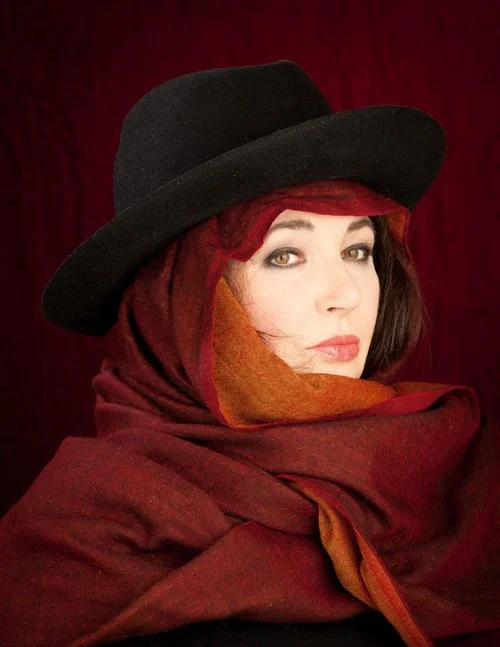
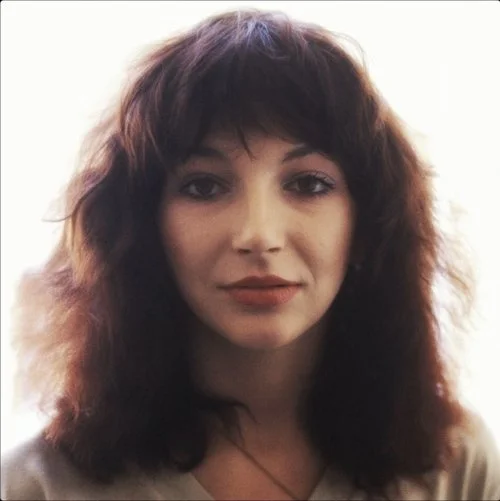
 IN THIS PHOTO: Kate Bush in a promotional photo for 2011’s Director’s Cut/PHOTO CREDIT: John Carder Bush

The two crossed paths and shared a drink (or two) in 2014. I guess, as Bush has always had her ear to the ground and is always looking to venture in different directions, one could never rule out a collaboration between her and Big Boi. There have been rumours and talks of them recording together for a long time. Earlier in the year, I wrote about how Big Boi was being coy and seemed to suggest that a song had already been recorded. Nothing came of that. This week, the rumours seem to have transformed into fact – well…it would seem odd if they were not true! Seemingly confirming that something has been put on tape, it has sent fans of Big Boi and Kate Bush (especially the latter) into a spin! FADER were among those to report the news:

Big Boi's love of Kate Bush is no secret, he likes to talk about her and her music at every available opportunity. He has also spent much of that time speaking about his dream of working with the elusive artist, who has largely retired from the public eye in recent years. However, in a new interview with Mark Ronson on The FADER Uncovered podcast, Big Boi confirms that he has been in the studio with his idol and that a "monster" collaboration is ready to be released.

Speaking to Ronson about his various collaborators throughout the years, Big Boi said: "I have a monster hit with Kate Bush that I'm just holding." Adding: "It's a dream come true and the people are going to fucking love it. It's fucking incredible."

Going into specific details, Big Boi explained that he met Bush in London when OutKast were on their 2014 reunion tour and Bush was staging her Before The Dawn residency in the city.

"I got tickets, me and my wife, and we went to go see her show that she had, played the live shows," he said. "And so from there, I get invited backstage, we have some wine and we talk. And her kid is there, he's about the same age as my kids, which is cool. And she signs an album for me and give me her number. So after that, about a year or so pass, and I told her I was coming back, I just said, "Hey, when can we do a song?" Just send her a text every now and then. I talked to her on the phone, "Hello. Hello. So lovely." And so I came back and she's like, "Let's go to dinner." So we went and she took me to dinner to this cool little pub place where I had almond cognac. And we was both throwing them back. It was the coolest experience."

"So we had dinner and then we're like okay. Her son was going off to college and she was just like, "Okay, I'm going to try to get to something when I get my studio set back up." And so my manager, being the great, great manager he is, he reached out to her manager a couple years ago and was like, "Hey, we need to make this happen."

IN THIS PHOTO: Mark Ronson/PHOTO CREDIT: Stephen Lovekin/WWD/Shutterstock 

And I just so happened to have the right song that is fucking phenomenal, and sent it to her. And it had the words on there and she just had to sing the words. And then I wrote my verse and my boy Go Dreamer wrote her parts and wrote the hook. And it is incredible. It's incredible."

Big Boi says he has no specific plan to release the collaboration, but that it will arrive "whenever I think they deserve it, I'm going to give it to them." He also added that he hopes to incorporate an NFT element to the release involving the artwork.

The FADER Uncovered, the podcast series in which host Mark Ronson talks with the world’s most impactful musicians. The second season is currently airing with recent guests including DJ Premier, Japanese Breakfast, and J. Balvin. Follow and subscribe to The FADER Uncovered here and check back for new episodes every Monday”.

It is interesting to think that the two of them have worked up something. I am not sure whether Big Boi was literally in the same studio as Kate Bush, or whether something was done remotely – or perhaps there was a combination of the two. In terms of release date, it could come out in the next few days…or it may be something that is held back and teased.

For me, any news of Bush remerging and putting something new into the world is exciting! I have spent so much time recently talking about 50 Words for Snow and how beautiful an album that is. There is this enormous demand and yearning for new Bush music. It would be great if there was a Bush solo album first and then, whenever it is planned, putting out the collaboration. Given how rare Bush music is – definitely the past decade -, one cannot be choosy or too demanding! I think, if a song is coming out this year, it will be instantly unleashed and not teased with videos and too much fuss. It would be awesome to think the two have recorded a Christmas track together! I would love to hear that! Realistically, I doubt it is going to be a duet akin to what Bush and Peter Gabriel did on 1986’s Don’t Give Up. I know Big Boi would like that – especially if he got to recreate the video -, though it is more likely the song is more similar to what Big Boi and OutKast have put out through the years. Maybe something OutKast-sounding would be far-fetched. Again, it would be amazing if they recreated something from the 2003 double album, Speakerboxxx/The Love Below. I have said multiple times how Bush can inhabit any sonic space and own it. She would ably be able to do a vocal with edge and Hip-Hop potency. Maybe her vocal would be a brief backing that adds an ethereal touch to Big Boi’s lead (imagine her Night Scented Stock from 1980’s Never for Ever or something from 50 Words for Snow).

 IN THIS PHOTO: Kate Bush during 2014’s Before the Dawn/PHOTO CREDIT: Ken McKay/Rex

In my opinion, there will be a fairly significant vocal offering from Bush. If you have the opportunity to record with her, you’re not going to reduce her to a few lines, are you?! In truth, predicting what two pioneering and unpredictable artists are going to do when joined together is impossible. I would say we’d get a combination of Kate Bush’s 50 Words for Snow – where she is on piano and her vocal is powerful-yet-softer -, and Big Boi would deliver a vocal that works around that. Not having heard a single second from any song between them, we also do not know what form it will come out on. I hope that it is available through streaming sites and people can access it easily. The fear is that it would be an NFT or there would be some sort of barrier or big cost involved. After almost a decade without a new Kate Bush studio album and so many people wondering whether OutKast will record again, there is this huge build and excitement about a partnership that, whilst unlikely on paper, makes perfect sense. These are two artists who respect one another and could deliver something magical! Let’s hope that something does come soon. I have said how I would prefer a Kate Bush album first. Though if she has no plans for one or it will not be until next year at the earliest, people are going to be more than eager for her and Big Boi to release something as soon as possible. When that song does arrive, the reaction across the music world and the Internet…

WILL be unbelievable!

FEATURE: Revisiting... Joy Oladokun - in defense of my own happiness (vol. 1)

FEATURE:


Revisiting...

Joy Oladokun - in defense of my own happiness (vol. 1)

___________

I am recommending people…

look back at a great album that was followed up pretty quickly. This feature is designed to highlight albums that got buzz when they were released but need to be picked up now. Today, I am looking at Joy Oladokun’s in defense of my own happiness (vol. 1) from last year. Also known as in defense of my own happiness (the beginnings), she followed it with in defense of my own happiness earlier this year. In a way, they are accompanying albums. I wanted to look at a gem from 2020. Before I get to interviews around that album and a review, I actually want to slide in biography concerning the incredible Arizona-born singer-songwriter – whose music spans the genres of Folk, R&B, Rock, and Pop; she is influenced by her identity as a Queer woman of color:

 “with a guitar in hand, baseball cap over her eyes, and hooded sweatshirt loose, a woman sings with all of the poetry, pain, passion, and power her soul can muster. she is a new kind of american troubadour. she is joy oladokun. the delaware-born, arizona-raised, and nashville-based nigerian-american singer, songwriter, and producer projects unfiltered spirit over stark piano and delicate guitar. after attracting acclaim from vogue, npr, and american songwriter, her words arrive at a time right when we need them the most.

“words are such a powerful tool,” she states. “i remember all of the best and worst things anyone has ever said to me. i love and respect the ability of words to touch on the physical realm. i’m very intentional with my words. i’m grateful and try to be as encouraging as i can, because i’ve been in situations where that has not been the case and it’s hurt me or others. people are traumatized by words or uplifted and encouraged to change their lives and careers by them.”

 the daughter of nigerian immigrants, she was the first in the family to be born in america. after some time in delaware, they moved to arizona. dad’s record collection included hundreds of titles, and he introduced joy to everyone from phil collins, peter gabriel, and king sunny adé to conway twitty and johnny cash. as mom and dad stressed academics, she wasn’t allowed to watch tv on weekdays. on saturday, they would “either rent a movie from blockbuster or watch the thousands of hours of concert and music video footage dad had recorded since coming to the states.” one afternoon, she witnessed tracy chapman pay homage to nelson mandela during his 70th birthday tribute at wembley arena.

it changed everything…

“i grew up in casa grande, which is in the middle of nowhere in arizona,” she goes on. “i was surrounded by images of white dudes with guitars. i was programmed to believe people around me listened if somebody had a guitar. as a shy kid and one of the only black children in town, i had a lot of social anxiety. seeing tracy chapman up there with a guitar in front of a full stadium was such an empowering moment. i ran into the next room and begged my parents to buy me a guitar for christmas—which was six months away,” she laughs.

with her new christmas gift, she went from crafting her first song about the lord of the rings to penning songs dedicated to her mother after rough days at work. eventually, the local church needed a guitar player, and she ended up working there full-time for almost six years.

after college in orange county, she relocated to los angeles where writing became a job…and she finally came out. “i quit the church and came out of the closet,” she recalls. “i got to a point where i was like, ‘if god exists, he does not care that i’m gay. with all of the things happening, he cannot give a shit’. i feel like it’s not an accident i’m a queer black woman writing and making music.”

she wrote and recorded countless songs alone in her los angeles apartment, even playing six instruments. her music and story galvanized a growing fan base as she completed a successful kickstarter campaign to release her independent debut, carry. her song “no turning back” soundtracked a viral baby announcement by ciara and russell wilson, opening up the floodgates. she landed a string of high-profile syncs, including nbc’s this is us, abc’s grey’s anatomy, and showtime’s the l word: generation q. around the same time, she settled in nashville, tn and continued to create at a feverish pace. on the heels of in defense of my own happiness (the beginnings), she garnered unanimous critical praise. billboard touted the album as one of the “top 10 best lgbtq albums of 2020,” while npr included “i see america" among the “100 best songs of 2020.” predicted as on the verge of a massive breakthrough, she emerged on various tastemaker lists, including spotify’s radar artists to watch 2021, youtube “black voices class of 2021,” npr’s 2021 “artists to watch,” and amazon music’s “artist to watch 2021.” not to mention, vogue crowned her #1 “lbtq+ musician to listen to.” she kicked off the new year by making her television debut on nbc’s the tonight show starring jimmy fallon with a stunning and stirring performance of “breathe again”.

The second album from Oladokun (following 2016’s Carry), in defense of my own happiness (vol. 1) is a perfect introduction to her talents and powerful lyrical voice. Nashville Scene spoke with her back in March. Not content with having released an album the previous year, the stream of songs that followed signalled the fact another album was on its way:

Releasing the widely praised, banger-packed full-length In Defense of My own Happiness (Vol. 1) over the summer just wasn’t enough of an accomplishment for Joy Oladokun, apparently. For the past several months, the folk-pop singer-songwriter has continued to produce a steady stream of new songs from her East Nashville home studio. Each one is its own timely and eloquent response to the upheaval that has plagued us all over the past year.

In September, for those struggling with the grief and isolation brought on by the pandemic, Oladokun released the encouraging R&B tune “If You Got a Problem.” It’s an optimistic number about comforting and finding comfort in those around you. Think of a less cartoony version of Randy Newman’s “You’ve Got a Friend in Me.” In October, to recognize her fellow Black Americans living in fear as the country’s streets churned with protests and police brutality, Oladokun shared “I See America,” an incisive anthem with a stirring chorus: “When I see you / I see love / I see America / I feel your pain / I share your blood / I see America.”

“Look Up,” released in November, is a poignant reminder that, as the singer wrote on Instagram, “There is freedom above us and beauty within us.” December brought us “Mighty Die Young,” a sparkling piano ballad haunted with the inevitability of death. Song after song, with every tortuous and unpredictable turn of what we will forever remember as the Lost Year, Oladokun was there offering comfort.

“It’s the Nina Simone quote, right?” Oladokun tells the Scene by phone from her Nashville home. “Like, artists are supposed to reflect the past. And if Nina had Ableton, had my laptop, had the little setup I have here, we would’ve been hearing from her all the time.

“And a fair record contract,” Oladokun continues with a laugh. “If she had all those things we would’ve been hearing from her all the time. And I think the reason I am at my current state of outputting so much is just because there’s a lot happening! Internally I’m doing a lot of work, and the world is changing, and fighting for change.”

The world is also starting to take notice of Oladokun. Though she’s been at it for years — she signed a publishing deal with L.A.’s Prescription Songs in 2016 — Oladokun has had something of a meteoric rise in recent months. In January she announced she was chosen as one of YouTube Music’s Black Voices for 2021, which earned her face a spot on a giant Times Square billboard. Her somber ballad “Breathe Again,” in which her warm, sweeping vocal range is on full display, was played for millions of viewers during a January episode of the popular NBC drama This Is Us. She made her daytime and late-night TV debuts too, appearing on Today and The Tonight Show Starring Jimmy Fallon in February

PHOTO CREDIT: Shannon Beveridge 

Making her new level of success even more enjoyable to watch is the fact that Oldaokun balances her talent and vulnerability with goofy humor and BFF vibes. On social media she discusses Boyz II Men jams with Jason Isbell, posts photos of her dog Joni, dunks on controversy magnet Morgan Wallen and shares selfies taken with well-rolled blunts — a hobby she has celebrated with a line of “sensitive stoner” merchandise.

“I think sometimes we get scared that if people learn more about us they won’t want to be around us,” she says. “My life in its current state is proof that the opposite is true. On Vol. 2 [of In Defense of My Own Happiness, scheduled for release later this year], there’s a song about my dad and what it was like to grow up with a dad that openly disliked queer people. That is vulnerable, but I also know that I am not the only person who has a dad who would say things about gay people that were awful, not realizing that their kid was gay.

“I do feel like a sense of calling and camaraderie for people who have also been through similar things or had events that evoke similar emotions of loneliness and stress,” she adds. “I feel a responsibility to serve the global community in that way. I think it has been really, really beautiful”.

I am ending with a review for in defense of my own happiness (vol. 1). Just before I get there, here are parts of an interview that Atwood Magazine conducted in July 2020. Oladokun talked about some of the new influences she brought to the album:

Since her 2016 folk-tinged debut, Carry Me, Oladokun has released a string of singles over the past few years. From the soulfully groovy break-up bop “Sober,” to the piano-led plea “Who Do I Turn To?,” about what it’s like to be Black and queer in today’s America, Oladokun has a knack for marrying the personal and relatable in her writing. And in defense of my own happiness (vol. 1) is no different, showcasing Oladokun’s token lyricism in a beautiful expression of self-examination steeped in the best of folk, soul, and hip-hop.

ATWOOD MAGAZINE: IN DEFENSE OF MY OWN HAPPINESS (VOL. 1) IS YOUR FIRST FULL ALBUM SINCE 2016’S CARRY ME. WERE THERE ANY BIG DIFFERENCES—WRITING-WISE OR LIFE-WISE—IN THE PROCESS OF THIS RECORD COMING TO LIFE?

Joy Oladokun: Yeah, it’s actually been a pretty big difference. Everything on Carry Me I wrote by myself and then sort of like hired a band to produce. Even though on in defense of my own happiness I did sort of take a production role, it’s a lot more collaborative. Like I wrote songs with other people, and I think it shows how expansive my sound has gotten. Not necessarily in terms of size or scale or anything, but just the influences that I draw from. I think it’s just grown tenfold since the last album. So I’m really excited for people to see what I’m into.

 YEAH, WHAT WOULD YOU SAY SOME OF THOSE NEWER INFLUENCES ARE?

Joy Oladokun:  I’ve always obviously drawn from folk and soul, and definitely like the 60s and 70s era. And with this record, I tried to keep that same energy, with that same lyricism and that same kind of urgency. But like, I work out to hip-hop music, and I’m sure a lot of people work out to hip-hop music; it’s become this cultural figure. So I just kind of let that influence what I [brought] in. I was sort of referencing everything that I have access to as a product of the generation that I grew up in and really clung to the things that I enjoy and just [threw] it all in there.

SO, YOU’RE FROM A SMALL TOWN IN ARIZONA, WHICH I’M SURE WAS QUITE DIFFERENT FROM LIVING IN L.A., AND NOW NASHVILLE. GROWING UP, DID YOU DREAM ABOUT PLAYING MUSIC AND LIVING IN A BIGGER CITY?

Joy Oladokun: I don’t know that I had a lot of dreams about growing up and playing music. I think I’ve always gravitated towards music as a means of self-expression, and any sharing it beyond that has been the product of some very special people in my life who said, “This is not just a thing that you can do for you, but also a good thing that you can do to help uplift other people.” And so, I don’t know that I had any crazy aspirations which I’m sure drives my team crazy at certain points.

But, yeah I think the nature of growing up with immigrant parents is that they were very clear as soon as I was old enough to get out, that I should. We traveled a lot growing up, and so I think it was kind of ingrained in me that when I go to college, I should try a different city or a different country, or I should take this trip. I’ve always had a little bit of wanderlust maybe, and I think it was instilled in me by my sweet parents.

SO, RELEASING MUSIC IN THE MIDST OF A PANDEMIC IS OBVIOUSLY A NEW EXPERIENCE FOR EVERYONE. DO YOU HAVE ANY SPECIFIC PLANS REGARDING THE RELEASE OF IN DEFENSE OF MY OWN HAPPINESS (VOL. 1)?

Joy Oladokun: Yeah, not anything crazy. I think the gift of me being the way I am, is that my manager knows that if I have my Nintendo and maybe a joint nearby, I will do any live stream, or video, or interview, and I think we’ve just been capitalizing on that. It’s been nice to just sit in the backyard and hop on a phone call and talk to people about my music. I feel like the biggest thing that I’ve enjoyed about having to sort of shift the game plan from touring around the release to sort of just being obnoxious on the internet about a release [laughs] is I feel like it opens people up to the many sides of me. Like it gives people a bigger picture of who I am not only as an artist but as a human.

Besides that, nothing really has changed. We’re in a really unique position. I mean the crazy thing about “Who Do I Turn To?” was that it was written and released within a week. I’m in this position as an artist where I can just release what I want when I want, and I think these next few albums are just going to be a celebration of that. And so that’s why we’re putting out like 12 singles a day. It’s a unique freedom and one we don’t take for granted”.

The review below is from The Line of Best Fit. in defense of my own happiness (vol. 1). Is a magnificent album that people should check out if they missed it last year. It was the first time that I had heard of Joy Oladokun. Here is what The Line of Best Fit wrote about one of last year’s best albums:

Following a string of accolades, the Nashville based singer songwriter has been making waves providing an honest and sincere voice to global listeners in times of uncertainty.

Using the time spent in isolation, Oladokun has revealed a striking new collection of songs. Her second album project renders positive vibes, hope and sincerity. Soothing, earthy and astute, this vibrant, but polished production represents currency and relevance. Having theorised on happiness and what it constitutes, before she knew it considerations on her own happiness began, and it made sense to consider if she thought of herself as being happy, and whether anything prevented her from experiencing it.

Take the bright, pure simplicity and upbeat rhythms of opening track “Smoke”. This is followed by the encounter between electro-pop and rockier vibes that makes “Sunday” stand out. With immense eclecticism it depicts the spirit of this record, smoothly looking to the next track. The honest, reflective mood of “Bad Blood” is a moment of sharp insight and introspection. A place where the sound of Tracy Chapman-like guitar lines, vocals and contemplative lyrics come together, “Precious like a diamond ring / I was wrapped up in you / You tore me like a paper thing / Stole my love and my youth”, the songwriter insists.

Equally impressive is a moment like “Lost”, just before the dramatic, political “Who Do I Turn To”. Written and realised in one week, it is an engaged response to the recent Black Lives Matter movement. Inspired by the police killing of George Floyd, it came out as a single, with proceeds going to Nashville Launch Pad. Despite its tranquil piano accompaniment and acute classic feel, the song is charged in message, tackling inner uncertainty, feelings of insecurity and the fear of being without support when no one is looking out for you.

Then “Mercy” featuring Tim Gent lifts the air with a display of pop sensibility and hip hop fusion. Piano and strings-led, “Breathe Again” bears a resemblance to Coldplay, contrary to the folky, more sensitive “Too High”, which starts with an intro that brings to mind The Beatles’ “Blackbird”.

The candour of this record is rare, and its captivation makes it a stand-alone moment of truth and emotion”.

Go and spin in defense of my own happiness (vol. 1). I am not sure how easy it is to buy a couple. Definitely stream the album and see why it was one of the most lauded of 2020. I am following Joy Oladokun to see where she goes next. Her music always leaves an impression. I listened back to her album from this year, and her 2016 debut, Comfort. With everything she does, she draws the listener in. in defense of my own happiness (vol. 1) is a perfect example of that power and pull. It is an album that I would recommend…

TO everyone.

FEATURE: On This Day in 2011… Music Musings & Such at Ten

FEATURE:


On This Day in 2011…

 Music Musings & Such at Ten

___________

I am going to keep this relatively short…

 PHOTO CREDIT: Max Herridge

because there are some playlists and an audio piece/podcast that I want to focus on (especially the latter). On 15th November, 2011, I tentatively launched my blog, Music Musings & Such (I am not too precious whether it is written with an ‘and’ or an ampersand), into the world. At the time, I was not sure where it would go and what it would consist of. After the introduction post, it was a little while before I followed it up with more content. In those days, the posts were quite primitive and basic (sort of like how The Simpsons looked when they appeared on The Tracy Ulman Show in the late-1980s!). There were a couple of reasons behind setting it up. The first was that I knew musicians who were either struggling to get their work heard, or they were looking for someone to review/interview them. In 2011, there were some music blogs around (though that number has grown significantly in the past decade). I did not have an audience or any plan when I began. I thought that, if I posted some articles and featured some artists, that would get people following me. That did happen after a while. It took a few years before I was truly getting into my stride. I would say that, actually, the past couple of years have been the busiest and most productive. The other reason why I wanted to start a blog was, from childhood, sharing music has been a passion. That is thanks to my parents and the sort of range and weight of music they introduced me to as young as I can remember. The first thing I am going to include in terms of anything audio are playlists I compiled a while back. They are sort of ‘electronic mix-tapes’ of songs that I discovered and loved as a child.

As a growing and curious music fan during childhood, I listened to what my parents were playing. They had - and they still do! - a vinyl cupboard containing albums from The Beatles, Steely Dan and many others. Among my friends, there was this bonding experience that came from sharing music. I would listen to cassettes through a boombox/cassette player that, though simple, opened my mind to the power of music! In my childhood and teenage years, I became more and more passionate about sharing music and ensuring that those  knew were turned onto the songs, albums and artists that were delighting my ears. Starting my own blog, in a sense, was a way of my being able to continue this practice and passion – albeit it in a very different form and medium. Music journalism was essential during my childhood. Pre-Internet, this was the way me and so many others discovered which singles and albums to get. I got a real thrill buying magazines like NME, Q and Melody Maker and reading the reviews. I would get the bus – on the strength of a single or album recommendations alone – into town and gleefully snap up a single, just because I heard it on the radio or it featured in a music magazine. All of these experiences stayed with me. Even though the Internet age has changed the way we discover and share music, a blog allowed me to talk about the crop of promising new artists emerging…in addition to dissecting and exposing all the great music that I grew up listening to. The audio below is me recorded at BBC’s Wogan House, London last month. With thanks to broadcasting legend Matt Everitt for showing me up there and helping me record the piece. I am not particularly au fait with audio editing or adding music in. So what you hear is me chatting about the blog and Kate Bush’s 50 Words for Snow without songs clips. I have imbedded the album too - so that one can listen along to that at the same time. I know that it is a long thing but, when listening back and editing, I wanted to keep as much in as possible. I have not done any audio stuff for my blog…so I figured it was a chance to make up for lost time!

The reason for talking about 50 Words for Snow is the fact that, for one, Bush is an artist that means an awful lot to me. I have written about her more than anyone else (in terms of living journalists; I’ll make that bold claim!). I cannot remember how many posts I have produced about her in the past decade…though it is in triple figures. The other reason for talking about 50 Words for Snow is that it turns ten on 21st November. There are so few podcasts about Bush and her albums. I am planning on doing one with guests from next year. In a way, the recording was a bit of a prototype or demo. I am not sure whether anyone will discuss 50 Words for Snow or go into depth on the day. Apologies for any factual slips (they were all correct on paper but, when recording, you read stuff wrong or slip now and then trying to get all the information out) or a lack of…slickness. I am pleased I got to thank people for following the blog, in addition to paying tribute to my favourite artist and a remarkable album that was released six days after my blog started its life! It was important to do something a little different for the tenth anniversary of Music Musings & Such. I hope, when I can find a place to record that is quiet, private and affordable, I can do it a lot more audio/podcast stuff through next year.

IN THIS PHOTO: Kate Bush in a promotional photo for 2011’s 50 Words for Snow

I love posting features about all areas of music. The most rewarding – apart from Kate Bush features! – are when I get to spotlight an artist; bring their music to people that might otherwise have missed them. Through my blog, I have been able to chart the way music has changed, evolved and grown the past decade. It makes me think of those artists that awakened the senses when I was young. The Beatles, obviously, were huge. Listening to their albums was almost a religious experience! They are my favourite band and, to me, beyond comparison or any criticism. Madonna was the most important Pop artist when I was a child. Watching her video for Material Girl in the 1980s was another eye-opening moment. She is someone whose music, style changes and different personas amaze me. A true icon! There are too many artists to name in terms of those who soundtracked important moments of my life. Even though I am older now, I still get the same sort of excitement happening upon an artist or sound that is very different to anything else. Being able to share that fascination on Music Musings & Such is a real thrill! Alongside music websites and magazines, radio is a big help for me. BBC Radio 6 Music is the station that provides the most leads and tips regarding new artists. I listen to Mary Anne Hobbs, Chris Hawkins and Lauren Laverne (I miss the great Shaun Keaveny so much, as he was hugely influential regarding new music!). Laverne is, perhaps, the biggest source of new music discovery influence. She has her ears to the ground and is always excellent when it comes to offering up artists that are right up my street! Matt Everitt (who has given me so much invaluable advice through the years) is a huge influence in terms of his broadcasting, podcast knowledge and general passion for music. His interviews are always so wonderful to listen to. His BBC Radio 6 Music colleague, Georgie Rogers, is another one of my favourite broadcasters and sources of influences (let’s hope that she is back on BBC Radio 6 Music soon). I love her work on Soho Radio.

  IN THIS PHOTO: The Beatles in 1967/PHOTO CREDIT: Getty Images

I shall leave it there. I forgot to count how many posts I have published in ten years. It is in the hundreds. Perhaps the high-hundreds! The word count might be closing in on seven figures too! In terms of where the blog goes next…I am not too sure really. As I said in the audio feature above, I hope to wind down in terms of the frequency of posts, and diversify in terms of video and audio. YouTube is a platform I have not used; doing a podcast or two has been on my list for a while. I am not sure whether I can sustain another ten years! That being noted, I will keep going for as long as I can. The written side of things might dwindle in the coming years, although I think that the podcast/audio side is one that could be more sustainable. Regardless, a huge thanks to everyone who has supported the blog and posted nice comments!  A big salute to all the artists I have featured over the past decade, in addition to anyone who has stumbled upon the blog and followed it! I think I have posted something from the blog every day for nearly six years. I am due a break at some point! It is the sheer wealth and weight of eclectic music, both old and new, that keeps me active, engaged and typing furiously! It leaves me to say thanks once more. Here is to…

 PHOTO CREDIT: Florian Klauer/Unsplash

THE next decade (or slightly less!).

FEATURE: My Five Favourite Albums of 2021: Billie Marten – Flora Fauna

FEATURE:


My Five Favourite Albums of 2021

Billie Marten – Flora Fauna

___________

RELEASED on 21st May…

 PHOTO CREDIT: Katie Silvester

Billie Marten’s third studio album, Flora Fauna, is one of my top five picks of this year. The final two choices of this feature will take us in different sonic directions. So far, my choices have been albums made by women. It has been another incredible year for female talent. I have said many times how Marten’s 2016 debut, Writing of Blues and Yellows, is my favourite album of the past decade. As I do with this feature, I am going to quote a couple of reviews for Flora Fauna, a couple of interviews where Marten spoke about the album. I am also going to post a link where you can buy the album. In fact, I will start with that. Here is where you can buy the excellent Flora Fauna. There are some really deep and interesting interviews that were published around the release of Flora Fauna. I am going to source a few. The first, with NBHAP started by highlighting the fact that Marten is a bolder artist (than she previously was):

Bold indeed, Flora Fauna, by means of staging the organic diversity of the world we all live in as opposed to the tiring and exploitative mechanisms our modern society has come to develop as essential elements of living, is a vital reminder of what is needed to stay alive. “We do just need very specific elements to thrive … without the need to move all the time and grow”, Billie emphasises, as she observes the pains of modern day progress. The new Billie Marten sound neatly clicks with that refreshing message, more daring, vital and yet with her mellow trademark right on display.

The record itself then is indeed spiked with vivid song material that does pure justice to the flashy visions of it all. Garden Of Eden, the record’s opener and one song that sparkles brightest with the need to thrive, about which Billie remarks that “it uses the idea and the metaphor of us physically being plant lives, which we kind of are”. Roaring bass lines mingle along her tender vocal performance, as the lyrics head right down into terrains of absolute vitality: “Eat the sun and water up / To be someone / Can’t get enough”, before the chorus kicks in with its yearning “I wanna feel alive / Garden of eternal sunshine”.

Flora Fauna sees Billie Marten breaking free from earlier inhibitions, both musically and lyrically and it is indeed no surprise, that the artist herself expresses her progression in these terms:

“I was very scared then and played very timidly. My fingers hadn’t developed to play something properly. I was much more aware of criticism and how to please everybody. That has kind of subsided now, to some relief. It was a lot more lyrical and I was into English literature and I was trying to get more of the poetic side out. Because it was kind of fashionable to me at the time. This album is more direct. I am speaking to you and this is what I want to say.”

In terms of her message, she has made a terrific step forward in that way: “I have always been quite vague and abstract with my writing”, she states. “I just got bored of doing that and I wanted to just write on a very immediate basis, and have my stream-of-consciousness running all the time”. Flora Fauna is the result of that evolution and stands as a shining beacon in these still uncertain times. One can only hope that its messages of “positive change” will endure the test of time and lead Billie Marten on all her future ventures”.

I love reading Marten discuss her albums and the process. She moved to London after the release of her debut album. One can hear influences of the city (good and bad) in her subsequent work. I wonder whether Marten will go back to Yorkshire (her parents live there) in the future. Nature and more rural climbs give Marten greater creativity and inspiration. NOTION chatted with her, where the topic of the contrast and clash of the city and country:

Being out of London has been instrumental in crafting the album, providing her with a different perspective and a certain sense of freedom to do what she wants. “It’s just much more of a freeing experience. There’s much less of an industry situation where you feel the entirety of London is looking over your shoulder. It feels more like a return to when I first started writing, being in the semi-rural area and having lots of time and space to think properly.”

That’s of course not to say that Marten doesn’t like the city – she lives there, after all. “Cities are a bit like a weird drug, especially London. The city’s great and a pillar of culture. Everything’s there at your feet all the time. You can buy fruit and veg at 4AM if you want to,” she jokes. “It’s accessible and there’s so many different people there. But it doesn’t have everything that I need, and I think I’m learning to be a bit more selfish about that,” she confesses. “I’ll always change my mind and there’s definite glimmers of amazing lights that come from London. You can forge a plan within 10 minutes and you’re incredibly ensconced in that big life living. But it’s most definitely not forever,” she adds with a smile.

PHOTO CREDIT: Jack Orton

Being selfish in figuring out what you want versus what you need, and prioritizing those needs is something that not everyone her age has figured out just yet. Marten, however, seems incredibly self-aware and at ease, surrounded by nature’s gentleness and its peace and quiet.  “I prefer a much slower pace. It’s a lifestyle that suits me. I’m really crap at nine-to-fives and I’m so bad at going to the studio every day. Maybe I’m kind of just entering retirement now, and I’m okay with it,” she grins. “I’m embracing it. I have the wild touring life and the industry schmoozing in London, and then here I have me planting my seeds and using my feet properly and having much better posture and lungs.”

In a sense, her new album reiterates what Marten reveals about her trial separation with London. She simply feels much more at home in the countryside than she does in the big city. “Everyone’s very tall and big and has huge personalities. I chameleon into them but not very well, which just means I’m still kind of hunched over and trying to protect myself. Music gives you terrible posture, but then as soon as you leave, everything’s lighter and clearer – it’s amazing!”

She is particular about the production, mirroring the maturity displayed on the record in her quest for more agency and ownership. Marten is carving out her own path – her own formula for flourishing as an artist. “I’d love to do more with it [production]. I’ve always been heavy on the co-producing aspect. It’s important to not let songs kind of fly away with another person, as you made them and they should sound the way you want them to sound. I’m just getting back to the more technical side of things. I have huge gaps of knowledge, probably due to having been so young when I started out in the industry and being surrounded by men. So I just didn’t ask enough questions, but I’m relearning how to do things, even just basic cabling.”

PHOTO CREDIT: Jack Orton 

Marten feels lucky that her new label trusted her to explore and experiment with her artistic identity. “I was very impressionable at the start, and a corporation as big as Sony – it’s so fickle and horrible, I hated it. Which is sad, because it puts such a downer on you as a person, cause you’re deflated and unenthusiastic and you feel very small. Now, I have a group of loving people that helped me feel a lot more comfortable expressing everything, to just be vulnerable. They completely trusted me to go in and do this album – even when they only had two songs to listen to when I signed. I was able to present it the way I wanted to present it, did my own visuals. I was left alone, but not neglected.”

It’s resulted in some of her proudest work yet. “There’s a song called Human Replacement, and I’m really scared about that one. I feel like it’s going to halve my listeners. It’s such a different sound, tonally speaking, that’s come out of me. No element is really melodic or floaty or pretty. I couldn’t talk about a long-lost love or Emily Bronte or something, it had to be toothy. But it’s so fun to play, and the subject matter is difficult. It’s all about not being able to go out at night as a woman, and we’ve really addressed that plainly in the video, so it’s just moments like that that I never could’ve anticipated.”

The album does eventually lean into a smaller sound towards the end of the tracklist. Marten explains it was important to her to cover both – as it’s part of who she is, too. “With every new song you put out, you’re adopting a new scripture almost – a new belief or personality. I wanted to make it clear that I’m not having a complete make-over. I’m not going to turn into a punk-rock princess all of a sudden”.

 PHOTO CREDIT: Katie Silvester

Before I come onto the reviews, there is a fascinating chat with American Songwriter that I want to highlight. It is curious to read how Marten has been labelled as very waif-like and softly-spoken. It reminds me of Kate Bush after her first couple of albums and how she was perceived. I think female artists get pigeonholed and labelled too readily:

Since day one, I’ve found that nature’s the easiest concept and subject matter to connect these metaphors with. Nature has very different, opposing personalities,” she further describes, “and that’s what I was experiencing at the time. This album is me understanding that I can have all those different personalities and still be one specific human.”

In previous musical lives, she’d frequently been “pinned as this bluebird, whispering waif person─of a girl really, I was never seen as an adult either─or I was not there at all,” she continues. “Quite often, I would get comments, especially meeting people after shows or in interviews, and they would say, ‘Oh, wow, you were not what I was expecting.’ Sometimes, the personality doesn’t align with the music you make. That’s really important to realize, especially for myself, and that meant I didn’t have to align with this prescription of who I was. Then, I had the freedom to make what I wanted.”’

Frequently, women are pigeonholed into particular categories as it relates to their work. “You’re either cutesy, folky, and odd-bally in a very happy joyful way or you’re severely depressed and tortured. Sometimes, you can be neither of those things and still be a lady with a guitar,” says Marten, a gentle scoff to her breath. Fellow UK artist James Blake, for example, wrote a revealing exposé in 2019, in which he stated how he would often “play down or skirt around how desperately sad I have been.” Marten can certainly relate, but makes an apt point: “I genuinely think that’s the only time a guy has had to address that.”

With Flora Fauna, Marten cues up sharper songwriting that’ll (hopefully) lay to rest expectations the media and her fans have forced upon her shoulders. As much as she has come to loathe the term, making the album was indeed quite “cathartic,” she says. “It was entirely necessary. I could feel it in my bones.”

Recorded over 10 days, alongside producer Rich Cooper, the record found Marten picking up the bass on a whim. She didn’t know how to play; in fact, she plucked its strings as she would an acoustic guitar. “I just decided to buy one. It came the next day, and I just really enjoyed making a different sound that wasn’t an acoustic guitar. Not knowing how to play meant my fingers were quite clunky, and I made very specific, rigid chords.These sort of slightly deranged bass riffs came out as the bed of every song”.

As with her previous two albums, Flora Fauna was met with positive reviews. Marten, even though her sound has evolved since her debut, has managed to remain hugely consistent and impressive. This is The Forty-Five’s take on one of last year’s finest albums:

Billie Marten was just 17 when she released her debut album, ‘Writing Of Blues And Yellows’ in 2016. Growing up in rural Yorkshire, the flora and fauna of the natural world framed much of her early writing. In fact, it was really all she had to go on, still at school and living at home – as if gazing out at the wider world from behind glass.

On ‘Aquarium’, the final song on her new, third album ‘Flora Fauna’, Marten is no longer the girl behind glass, but the artist in front of it, looking back at her younger self from a wiser, louder – and occasionally wistful – perspective. “I need friends and I want lovers,” she sings as she moves through the adult world.

As an English singer-songwriter with a folk lean and a thoughtful, literary outlook, comparisons to Laura Marling were rife during Marten’s first forays into music. For both artists, the natural world is more than an influence – it’s a language for emotion. But in the five years since, amid many global, political, and musical shifts, Marten left home for London, and her sound slowly followed.

Her second album, ‘Feeding Seahorses By Hand’, documented new life in the big city: books, political observations, customers she encountered in the pub where she pulled shifts. And London continues to play a part on ‘Flora Fauna’, from female street safety to pigeons. “I am sick of branding and one-legged pigeons,” she reflects during a Tube journey, confronted with the city’s grubbier side.

London’s presence also filters through the album’s sound – and Marten’s attempts to break out of the sweet folky box of her first record. Only a few songs are led by acoustic guitar – ‘Pigeon,’ ‘Kill The Clown’, ‘Aquarium’ – but they’re propelled by something more urgent, accompanied by vivid strings or brisk percussion.

To describe ‘Flora Fauna’, Marten uses words like “sunny”, “abundance”, “joy”, “a green bath”. These songs certainly come from a happier, self-assured place, from jangly ‘Heaven’ to pop jaunt ‘Ruin’, the latter recalling Angel Olsen’s sprightly ‘What It Is’. The whispery vocals of Marten’s earlier records linger, but the writing feels more improvised and immediate, like a lively chat on the phone rather than a long, laboured diary entry.

She’s clearly grown comfortable to throw a little caution, though it just makes you want her to throw a lot more. The trifecta of looped vocals, synths, and keys on ‘Liquid Love’ sound unlike anything she’s done before – and unlike anything else on the album, which at times clings too hard to a certain timbre.

But there’s a dark edge to the album’s sunshine. End-of-days basslines and flickering synth structure every song, many of which deal with tough, uncomfortable feelings. Lead single ‘Garden Of Eden’ opens the album not with lush hedonism but an ominous bass riff, as Marten contemplates burnout and self-neglect: how we’re all too busy competing to live to actually live, a criticism surely relevant to the pressures and pace of her industry. Meanwhile, on the growling ‘Human Replacement’, a girl walks home alone at night. Everybody knows how that story can end.

This is the urban Marten, worldly-wise and far less green, but processing her surroundings with the same magpie gleam she possessed as a rural schoolgirl. “I’ve been growing leaf by leaf / dying for the world to see / ready,” she sings at the beginning of ‘Flora Fauna’. Ready, too, to put down roots in new sounds, colouring her future promise with shades beyond blues and yellows”.

I am going to end with The Line of Best Fit’s review of the magnificent, must-listen to and much-nuanced Flora Fauna:

The collection of tracks display how adept at games of tension-and-release Marten has become. She pulls the listener close in songs like “Heaven”, “Ruin” and “Garden of Eden”, her voice immediately embracing the mike before arrangements brighten and relinquish their hold on the listener for oxymoronically spacious choruses.

Marten’s songwriting has matured beyond the trepidations of youth, building on Feeding Seahorses by Hand’s first hints of urgency. “Creature of Mine” opens with the grim “Old Mother Nature says it’s all getting worse”, echoing the songwriter’s long-standing concerns with our relationship with nature - one she cherishes so much she named her album after it. She also sings about the fear of being outside at night as a woman in the ominous “Human Replacement”, a track only made more potent by the tragic death of Sarah Everard in London in March and the subsequent national outpouring of grief and anger.

If album closer “Aquarium” and its sparse instrumentation, alludes to her bare-bones debut, most of Flora Fauna is devoted to entirely new musical ventures. Following Feeding Seahorses by Hand’s experimental variations of the folk music Marten roots her craft in, Rich Cooper - who also produced Writing of Blues and Yellows - and Marten are willing to take compositions one step further.

For one, there’s the alt-rock menace of “Human Replacement”, a strange beast whose production tricks bear resemblance to that of another Billie and her brother Finneas. From there we’re led into “Liquid Love”, a ticking bedroom pop lullaby that sounds inspired by the lethargic end of James Blake’s catalog, and then into an incredibly refreshing juxtaposition of oriental riffs, a buzzing electronic backdrop, and a melody that reminds of indie folk-rock superstar Sharon Van Etten’s recent work in “Heaven”.

Three albums deep into the game, Marten has grown into the artist she is today with more trial than error. Radiohead reminiscent standout “Kill The Clown” is the perfect case in point, weaving audible threads of improvisation that blur the line between jazz, folk, rock and pop. It’s a rich tapestry of sounds that comes straight from the heart. That might be Marten’s secret ingredient: no matter how left-field the compositions are, whether warming or breaking, there’s always a lot of heart in the music”.

One of my favourite albums from this year, Flora Fauna is the third from an artist I have been following and admiring since she started her career. I will follow Marten’s progress with huge interest. She is a phenomenal songwriter and one of the best lyricists in the country. Flora Fauna is the Yorkshire-born musician…

IN full bloom.

FEATURE: The Lockdown Playlist: A 1980s Pop Pleasure Mix

FEATURE:


The Lockdown Playlist

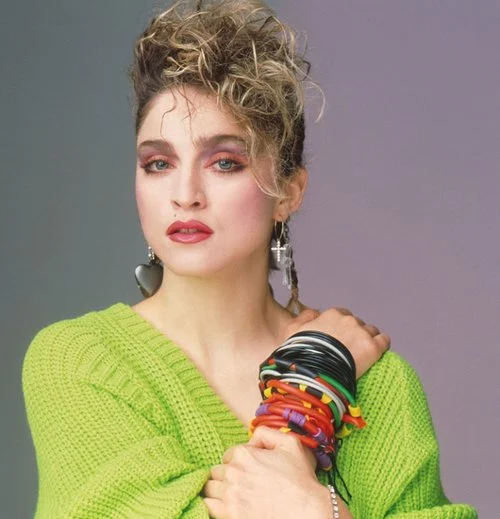
IN THIS PHOTO: Madonna shot by Eric Watson in 1984 

A 1980s Pop Pleasure Mix

___________

MY mind is back on the 1980s…

 IN THIS PHOTO: Prince

as there is a really great new documentary series on BBC that asks whether the 1980s was the greatest decade. I would argue that the 1990s owns that title. That said, one cannot debate that the Pop music of the decade was among the most fun, uplifting and interesting! From big artists like Madonna and Prince to those one-hit wonders and more serious Electronic acts that added something a bit more serious and experimental to Pop. To allude to the BBC’s The 80s - Music’s Greatest Decade?, below is a playlist that collates and unites some of the best Pop music from a hugely exciting decade. Of course, I could not include every Pop (by ‘Pop’, I am deeming music that was popular, rather than a genre-specific sound) gem from the 1980s. I have incorporated a collection of songs that, when played together, makes for a party soundtrack! I am a huge fan of ‘80s music, so it has been fun putting a playlist together. Whether you need as reminder of why the 1980s is such a remarkable decade, or you just need some solid Pop jams, the songs below should…

 IN THIS PHOTO: Wham!

DO the job.

FEATURE: Modern Heroines: Part Seventy-Seven: Snoh Aalegra

FEATURE:


Modern Heroines

PHOTO CREDIT: Emman Montalvan 

Part Seventy-Seven: Snoh Aalegra

___________

THERE are so many women…

that I want to include in this feature. Joy Crookes is among those that I am thinking of. One artist I have been following for several years now is Snoh Aalegra. The L.A.-based Swedish artist released her third studio album, TEMPORARY HIGHS IN THE VIOLET SKIES, in July. I have been a fan of Aalegra since her debut album, Feels, in 2017. In fact, I go back a couple of years before that. She is a tremendous artist who was mentored by the late Prince. There are not too many interviews with her from the last couple of years or so. I am going to quote a couple of reviews for TEMPORARY HIGHS IN THE VIOLET SKIES. A few of the interviews relate to her 2019 album, - Ugh, those feels again. I think that Snoh Aalegra’s latest album is her best work yet. A hugely powerful artist who has the likes of Tyler, the Creator in the mix, her music is funky, soulful, sexy and hugely memorable! The first interview that I want to source from is GOAT. They spoke with the rising and hugely talented Aalegra back in 2019. It is interesting discovering when her love for music was first struck:

 “I know that your real name is Snoh, but what inspired the stage name Snoh Aalegra?

It took me a while to decide on a stage name to go with Snoh. Eventually, I came across the name “allegra” which means “joyful” in Italian. I switched up the spelling to make it my own with the two a’s. I wanted to bring a positive energy to my name since I really believe words are powerful.

When did you discover your love for music?

I knew my calling at a very young age. I would say I was nine years old when I made my first attempt to write a song. It didn’t make any sense grammatically since English is my third language, and I wasn’t too good at it as a nine-year-old. But the passion was always there from the start. I have an otherworldly love for music, something I have a hard time describing with words. It’s a strong feeling.

A few years ago in an interview, you mentioned you were signed to Sony at the age of 14. Would you recommend committing to a label at such a young age?

Things have changed so much since then, and I would definitely not recommend that anyone jump at a label deal. I would advise taking your time and building an organic, grassroots foundation. Now with the internet, there are endless opportunities and countless other ways to reach people.

PHOTO CREDIT: Angella Choe 

You grew up in Uppsala, Sweden and also spent some time in the U.K. before moving to the U.S. and settling down in L.A. How do you view the difference between the U.K. music scene and music culture in the U.S.?

I really appreciate the music scene in the U.K. They have a great love for new artists and a great live music scene. I feel like they are always ahead of the game because they’re so much more open to new artists. The U.S. is tough. You’re always competing with what’s on the radio here, and I’m not really making the kind of music that is popular on the radio. But I can feel a slow switch happening. People are becoming more open to artists like myself. 

Are you familiar with some of the rising U.K. artists like Ella Mai and Jorja Smith? Could you see yourself collaborating with either of them?

Yes, of course. Both of those ladies are super dope, and I could see myself working with both of them. I’ve actually already been writing in the studio with Jorja. We have great chemistry.

There’s a stigma that women in the music industry today compete rather than collaborate with each other. Is this something you’ve experienced?

This is something I’m definitely in my feelings about. I have the dopest queens in the world in my DMs congratulating me, telling me they are fans. Most are, like, 10 times bigger than me and have a huge voice with major impact on their social channels. I feel beyond happy when they reach out, but I can’t help but wonder why they don’t support me in public. If I love a female artist in my own lane, I scream loud with support and would be so happy if they did as well. In my eyes, the more people who do well with a similar sound to mine, the easier it gets for me to break through. I love good music, and I don’t discriminate in my support of it. Also, you never know; I was told Rihanna once opened for Ciara. You never know who is going to be who in the future. If female artists would collaborate and merge their brands the way that male artists and rappers do, our voices together would be larger than life and an unstoppable force. Shoutout to the handful of goddesses who do support on the regular. Not all females are that way!”.

NR Magazine chatted with Snoh Aalegra in 2019 to promote her second studio album. An artist who stands out and will be making phenomenal music for years to come, one can hear influences like Prince, Michael Jackson and other icons. I was especially intrigued by the question regarding how she puts songs together – and whether she begins with lyrics or the music:

NR Magazine: First of all, it’s just been announced that you’ve signed with Jay-Z’s Roc Nation; how does that feel, and what does this mean for your music?

Snoh Aalegra: Yeah, I mean, I’m very happy about it all. Me and my team, we’ve been working our asses off, doing everything ourselves for so many years. And I have a really small team of like three people, and at some point, we were like, ‘Ok, it’s time to expand.’ I mean, we work around the clock and we needed to delegate some of this insane workload. Talking to labels was a natural next step in my journey, and our journey as a team. I think choosing Roc Nation was just the most organic way to go; there’s a pre-existing relationship and respect there already, you know. No I.D. [Snoh’s producer] is close with Jay-Z, TY TY, Jay Brown and everybody, and I feel like no matter how big their company gets, they still operate like one big family. And I think that’s something that’s very important to have for me, in contrast to other cutthroat, hype-driven labels. I look at Jay-Z, his close circle of people and see the insane careers they’ve built for themselves and the help they’ve given so many other artists. And as far as my creative process goes, that will stay the same. I mean, I always strive to evolve and learn, but I definitely have a particular way of how I like things to be done and that will probably never change.

NR: Something that interests a lot of people is that Prince was your mentor when he was alive; what do you think he’d say knowing where you’ve got to today?

SA: Yeah, it’s interesting cos he really told me to never sign with a major label, and when I met him, I was with a major label. He was like, ‘Get out of this deal!’ and I did; I went indie. But, funny enough, I know one person that he really respected and trusted, even with his own catalogue, was Jay-Z. So, I feel like I’ve made the right decision and he probably would have supported this too”.

NR: When it comes to the composition, where do you begin? Do you start with the lyrics, an idea or a sound?

SA: It really begins with me, walking into the room, knowing the mood – there’s always a mood. Sometimes, it’s just only me and an engineer, and I’m there writing the whole thing myself, either to a beat, or I make up melodies and lyrics – and then I have somebody come play for me. Sometimes I like to bounce off ideas with a co-writer or with a producer and work that way. I’m all for either ways. It’s really about myself and my life, so it’s super important that it’s all authentic to me. And if I bounce off with somebody, they need to know that it’s really personal to me. And that’s why I don’t really write with a lot of people. So, sometimes, I already have a lyric idea; sometimes it’s like, I’m jamming to a beat. My favourite is probably jamming to live music where I’m just jamming with live musicians. That’s probably my favourite way to work.

NR: Ugh, Those Feels Again was a year or so in the making: How do you know when something’s complete and ready to go?

SA: I think it’s just a feeling you have. Like, I’m ready to put this out; I’m ready for people to hear this. And it’s not always that it’s perfect, or that you feel like, ‘Oh I have a hit, I have this, I have that’. I had no idea how people would react to the album. All I knew was how it made me feel and that it was, you know, a good feeling. For me, it’s about what I want to have said on a project, and if I expressed these emotions. My projects are like time capsules of my life. So, this album that’s out right now, was the sum up of what happened after a break up and what I was going through – reminiscing back on why we broke up, how we broke up. Songs like Charleville 9200, Pt. II, songs like Love Live That and You, reflect on the break up. And then, I was single for a whole year making the album, experiencing new love or situations, so songs like Situationship and I Want You Around describe that feeling when you just met somebody new, and you want them to be around them, but you don’t really know where it’s gonna go. So, that’s a mix of a whole year for me.

NR: Being able to look back on the journey you’ve taken, is there anything you would have done differently – or something that you’ve really learned from that’s shaped who you are today?

SA: I’ve learned to not be a people pleaser; I used to be a people pleaser because, you know, I was signed for the first time when I was thirteen. And, I had a lot of respect for authority, listening to people telling me what to do, and what not to do. I didn’t have my own voice. Things were really different when I was thirteen, or even when I was eighteen, to being a teenager now. We’re way more educated, smarter, we have more access to information, to make music and to have a reach. When I was a growing up, there was no SoundCloud or Instagram. So, for me, I had to go through labels –that was the only option. I put a lot of trust in other people around me and I didn’t know what I was doing; I was a kid. So, I think yeah: that’s something I’ve learned – stop being a people pleaser. Do your own thing. Life’s too short to do something you don’t want to do. And, I stand up for myself more than ever and I don’t take things personal. It’s a whole big game for everybody in the industry; it’s not just about the artists – there’s a whole political game. For artists, nothing is set for us, basically. It’s crazy how it’s a whole world of politics, and artists get really affected by this. And now I work with family so I know that they would never fuck me over.

NR: Finally then, if you were to work on a film score of your own, what would be the ideal project for that

SA: James Bond. 007. That’s always something that’s been on the bucket list; if that were ever to happen, that would be super crazy. It’s been a goal of mine cos I’m a big fan of the James Bond soundtracks. License to Kill - Gladys Knight, Golden Eye - Tina Turner, or like, Gold Finger - Shirley Bassey: they’re some of my favourite songs and compositions. So yeah, that would be a dream cos I would want to make a song like that”.

Before coming to a couple of reviews for the fantastic TEMPORARY HIGHS IN THE VIOLET SKIES, there is a Stylist interview from 2019 that I want to include. It is more of a quick-fire conversation, where we get to discover about the firsts of a Swedish artist who is going to be iconic very soon:

 “The first album I bought…

Was Robyn’s debut Robyn Is Here. That was the first CD I bought myself, but I had a lot of cassettes at home. My mum would always play a lot of music in the house – Shirley Bassey and Whitney Houston. And I was part of the MTV generation; seeing music videos like Michael Jackson’s Thriller was a magical thing for a kid.

The first gig I went to…

Was a Backstreet Boys concert. It was kind of crazy, there were a lot of people fainting and pushing each other. It was kind of dangerous, to be honest.

The first time I knew music was my future…

Was at a very young age. I grew up admiring Michael Jackson, Prince, Stevie Wonder, Aretha Franklin. They are the people who made me want to make music. R&B and soul is why I make music.

The first thing I do in the morning…

Is check my phone, unfortunately.

 The first thing I do when I get home…

Is take my shoes off. I live in a small studio apartment in LA so there’s not much to do – I just come home, throw myself on the bed, take a few deep breaths and then take it from there.

The first thing I heard this morning…

Is one of my friend’s new songs, his name is Lou Val. He’s an artist from Toronto and I played his song Soul-catcher when I woke up.

The first thing I’ll spend money on…

Is probably make-up, I take all my make-up everywhere I go. I have a habit of drawing freckles on my face, I’ve been doing it since I was 14 but I’ve noticed it’s a trend now. Also good food – food over everything – and I’m into headphones and music gear too. I invest a lot in my music – as an independent artist you kind of have to.

The first person who inspired me…

Is Michael Jackson, he’s had the biggest impact on me. There was so much about him, he was so unique. His voice, his moves. And then there was so much in his artistry, so much he invented: the glove, the socks, the glitter. He’s my inspiration when I bring lots of glitz and glamour to the stage”.

I think that the next year or two is going to be pivotal for Snoh Aalegra. Having released three studio albums and with her profile rising, here is an artist that everyone needs to be aware of. Her latest studio album is a tremendously fun, fulsome and layered release where one will keep coming back. This is what NME said in their assessment:

That’s the effect that Aalegra has on her bright and searching third full-length effort, ‘Temporary Highs In The Violet Skies’. From the spacey 808s of ‘Taste’ to the delicately layered harmonies of ‘Tangerine Dream’, she shows off her voice at its rawest over impeccable production, and even flutes up to a gentle falsetto on ‘Just Like That’.

 ‘Lost You’, a slick ode to the importance of learning to let go, allows her tender and forgiving vocals to whirl around a lush R&B arrangement. But it’s on ‘Dying 4 Ur Love’ where she really enthralls: a woozy number that gently taps into G-funk’s laid-back vibe, the song is effortlessly held together by the way she rarely rises above a sultry hush.

Throughout the rest of the album, Aalegra leans into her hit-making potential. ‘Neon Peach’ employs California’s Tyler, The Creator for a typically exuberant verse, while ‘In Your Eyes’, with its cheeky whoops and booming bassline, sees her occasionally stretch into a rap-like cadence for a repeated, mantra-like refrain of “Just know I don’t need your attention!”. It’s one of Aalegra’s most commanding moments.

‘Temporary Highs In The Violet Skies’ doesn’t broaden Aalegra’s sound or lyrical content greatly, and there are certainly points where she could push things further forward. But in continuing to be so open and expressive about love, hope, and loss, she makes it feel possible for the rest of us

To conclude, there is an observant and interesting review from The Line of Best Fit that was impressed and hooked by what Snoh Aalegra put out with TEMPORARY HIGHS IN THE VIOLET SKIES:

Featuring a coveted features from superstar Tyler, The Creator, and James Fauntleroy, Aalegra’s third outing captivates and enigmatically draws attention with simple production that is complemented perfectly with dazzling vocals. Normally a sought-out feature artist, Aalegra solidifies herself as a formidable solo artist with TEMPORARY HIGHS - an addicting 46-minute listen that grows with consecutive approaches.

The addiction of this album draws from the intoxicating themes: the confusion of the loss of love and the resulting emotions, the temporary high that love leaves you with, and the disillusionment of a breakup and the resulting clarity. “IN YOUR EYES”, traverses through the heart-breaking notion that the love, for Aalegra, could be nothing more than a disguise in search of something more from her faulty lover: “If you seek, you will find/What was there, the whole time/Was love in disguise in your eyes?”

The accusations quickly escalate in “NEON PEACHES” with Tyler, The Creator – perhaps, the best song of the bunch. Speaking of a relationship that has gone far beyond its expiration date, the song is strengthened by two verses from the explosive feature artist. The expiration is quickly recognized in the first chorus: “It's the things that you do/ I know we've gone too far/ When I think about the things that we do” While the song is indeed upbeat, the lurking deeper meaning adeptly counters this.

Similar to the late ‘90s and early ‘00s Alicia Keys, Aalegra is comfortable with her vocals being the forefront while the production is meant as a complimentary facet. Aalegra sticks to her signature sound throughout the entire journey – and while that’s not bad – it can become repetitive unless you consciously and actively listen. Sonically, it's comparable to her 2019’s Ugh, those feels again. As a result, you could consider TEMPORARY HIGHS IN THE VIOLET SKIES a “safe” album, though safe isn’t meant as derogatory – just the opposite of exploratory and experimental”.

One of my favourite modern artists, I love the fact that her influences are Michael Jsckson and Prince. She brings their funkiness and magic to her music. She is soulful and smooth, too. A great writer with an incredible compositional and literal voice, we are going to hear a lot more Aalegra as time goes on. To me, she is going to be one of the biggest modern artists. An influential female artist who is a real marvel. Go and listen to the majestic music of…

THE Los Angeles-based heroine.

FEATURE: Vinyl Corner: Wu-Tang Clan - Enter the Wu-Tang (36 Chambers)

FEATURE:


Vinyl Corner

 Wu-Tang Clan - Enter the Wu-Tang (36 Chambers)

___________

IN this excursion into Vinyl Corner…

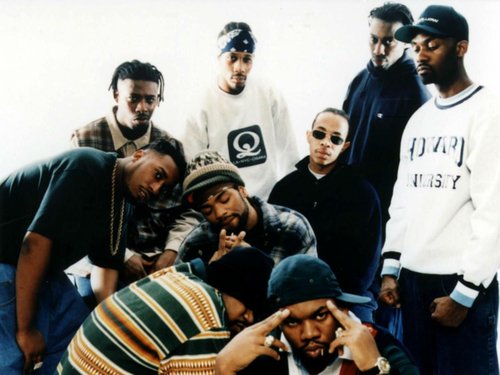
 IN THIS PHOTO: The Wu-Tang Clan. Clockwise from left: Ol' Dirty Bastard, the GZA, the RZA, Inspectah Deck, Masta Killa, Raekwon and Ghostface Killah. Center, from left, Method Man and U-God

I am featuring an album that I had never really thought of before. In many ways, Wu-Tang Clan’s 1993 debut, Enter the Wu-Tang (36 Chambers), is the perfect album to own on vinyl. So extraordinary, boundary-pushing and mesmeric is the music, you need to experience it on vinyl!!The group have actually launched an exclusive book (only thirty-six are available) that links to the classic album. 2017’s The Saga Continues is the moist-recent album from Wu-Tang Clan. I am not sure whether they are recording music still. Formed in 1992 in Staten Island, New York City, Its original members include RZA, GZA, Ol' Dirty Bastard, Method Man, Raekwon, Ghostface Killah, Inspectah Deck, U-God, and Masta Killa. There is no doubt that Enter the Wu-Tang (36 Chambers) ranks alongside the greatest Hip-Hop albums ever. You can grab a vinyl copy of the album via Rough Trade. This is what they say about the 1993 album:

Along with Dr. Dre's The Chronic, the Wu-Tang Clan's debut, Enter the Wu-Tang (36 Chambers), was one of the most influential rap albums of the '90s. Its spare yet atmospheric production - courtesy of RZA - mapped out the sonic blueprint that countless other hardcore rappers would follow for years to come. It laid the groundwork for the rebirth of New York hip-hop in the hardcore age, paving the way for everybody from Biggie and Jay-Z to Nas and Mobb Deep. Moreover, it introduced a colorful cast of hugely talented MCs, some of whom ranked among the best and most unique individual rappers of the decade. Some were outsized, theatrical personalities, others were cerebral storytellers and lyrical technicians, but each had his own distinctive style, which made for an album of tremendous variety and consistency.

Every track on Enter the Wu-Tang is packed with fresh, inventive rhymes, which are filled with martial arts metaphors, pop culture references (everything from Voltron to Lucky Charms cereal commercials to Barbra Streisand's The Way We Were), bizarre threats of violence, and a truly twisted sense of humour. Their off-kilter menace is really brought to life, however, by the eerie, lo-fi production, which helped bring the raw sound of the underground into mainstream hip-hop. Starting with a foundation of hard, gritty beats and dialogue samples from kung fu movies, RZA kept things minimalistic, but added just enough minor-key piano, strings, or muted horns to create a background ambience that works like the soundtrack to a surreal nightmare. There was nothing like it in the hip-hop world at the time, and even after years of imitation, Enter the Wu-Tang still sounds fresh and original. Subsequent group and solo projects would refine and deepen this template, but collectively, the Wu have never been quite this tight again”.

I am going to draw in the usual selection of reviews and features. If you are a bit wary of an album that is quite hardcore, then launching straight into the album might not be the best first step. I would advise sampling songs to see how they sound to you. I am not a massive fan of albums like this, though Enter the Wu-Tang (36 Chambers) is one that I cannot resist. It is hugely important too. It was a landmark release in the golden Hip-Hop age known as the East Coast Renaissance. The album helped pave the way way for several other East Coast rappers such as Nas, The Notorious B.I.G., Mobb Deep, and JAY-Z.

In 2018, Albusim provided a retrospective on an album that still reverberates to this day. RZA's production on Enter the Wu-Tang (36 Chambers) had a significant influence on subsequent Hip-Hop producers. The album helped create a blueprint for hardcore Hip-Hop in the mid-1990s:

The Wu-Tang Clan descended on the world of music like the proverbial swarm of killer bees. Or an invading horde of black-hooded, Timberland-footed ninjas. With their debut album, Enter the Wu-Tang (36 Chambers), released 25 years ago, they struck fast, hard and without mercy. Hip-Hop heads didn’t know what was coming until it was too late.

On one of the album’s skits, over low growling buzz and deep bassline (aptly sampled from New Birth’s “Honey Bee”), Robert “RZA” Diggs makes his presence known by repeatedly chanting, “WU-TANG KILLER BEES! WE ON A SWARM!” He lists off the crew’s core members, and then starts name-checking their affiliates, shouting out an army’s worth of Wu-Tang soldiers. He bellows, “Killa Bees all over your fucking planet! Thirty-six chambers of death! Three hundred and sixty degrees of perfected styles! Chopping off your motherfucking dome!” It drives things home: the Wu is coming through, and the outcome? Critical.

Wu-Tang Clan’s background is pretty well-known by now. They were a group of anywhere between eight to ten highly skilled emcees, most born and raised in the rougher parts of Staten Island, New York. They were spearheaded by The RZA and Gary “GZA” Grice, both of whom were industry vets and victims of lousy record deals from Tommy Boy and Cold Chillin’, respectively. They gathered up the most skilled crewmembers and recorded and released the “Protect Ya Neck” 12” independently. Soon thereafter, Wu-Tang as a group signed with Loud/RCA records, but had a provision placed into their contract allowing each member of the group the freedom to negotiate their own record deal with whomever they saw fit.  

Back then, the Wu was comprised of RZA, GZA, Clifford “Method Man” Smith, Corey “Raekwon” Woods, Dennis “Ghostface Killah” Coles, Russell “Ol’ Dirty Bastard” Jones, Jason “Inspectah Deck/Rebel INS” Hunter, and Lamont “U-God” Hawkins. Elgin “Masta Killa” Turner appeared on Enter the Wu-Tang but wasn’t a full-fledged member yet and Duane “Cappadonna” Hill, considered one of the best rappers in Staten Island growing up, was incarcerated when the album was recorded.

Regardless, Wu-Tang was unique in that for a collective of multiple emcees, each sounded distinctive. Each Clan member had their own style and identity: you could never confuse one for another on the mic. And all of them were dope in the own right. It would be very easy indeed to paper this tribute with wall-to-wall quotes from the Clan members on this album. Yet, even though each member was unique stylistically, they all perfectly coalesced around the rugged soundscapes to create something revolutionary.

Wu-Tang Clan was the music of the streets. It was the soundtrack to blighted street corners on bleak days and dark nights. Furthermore, it was infused with the essence of classic Kung Fu flicks from the ’70s and ’80s. All of Wu-Tang’s members were obsessed with the low budget, poorly dubbed movies of The Shaw Brothers, Gordon Liu, and others. As a result, the Clan’s rhymes were steeped in their slang and peppered with references to these films. Staten Island became Shaolin, and the Clan adopted the name after one of the grimiest crews featured in these films.

The musical side of Wu-Tang was equally important to its success. Enter the Wu-Tang was produced entirely by the RZA, who achieved a trademark dusty sound. He used samples that draw heavily from labels like Stax Records, music and soundbites from the aforementioned Kung Fu flicks.

“Protect Ya Neck” was the group’s opening salvo, a dark and sparse introduction to the group’s lyrical and musical stylings and a direct reminder to their peers to watch themselves when the Wu is in the area. It’s the only track on the album to feature all eight of the group’s core members at the time. Over fleeting piano notes and muted wails, each emcee delivers a potent 12 bars, giving the audience a relatively brief taste of what each member of the crew had to offer. Stand-out performances abound, whether it’s Raekwon vowing to “blow up your project, then take all your assets,” ODB threatening to “stick pins in your head like a fucking nurse,” or GZA tearing into his former “Cold Killin’” record label for “doing artists in like Cain did Abel / Now they money's getting stuck to the gum under the table.”

Though “Protect Ya Neck” may have been people’s first entrée into the Wu-Tang Clan, the group starts Enter the Wu-Tang proper with the appropriately raucous and dirge-like “Bring the Ruckus.” Ghostface’s first line, “GHOSTFACE! Feel the blast of a hype verse!” is one of the great album opening lines in hip-hop history, but the track is really held down by standout performances from Raekwon, Inspectah Deck (always the crew’s workhorse), and GZA.

The album finds its comfort zone in its faster tempo tracks, like “Shame On a N***a,” where Method Man, ODB, and Raekwon pass the mic back and forth over the horn-filled outro from Syl Johnson’s “Different Strokes.” “Wu-Tang Clan Ain’t Nuthin’ To Fuck Wit” has become an audience favorite over the past 25 years, as RZA, Deck and Meth also contribute memorable performances. The beat is also one of RZA’s best on the album, as he expertly chops the theme to Underdog and pairs it with the drums from Biz Markie’s “Nobody Beats the Biz.”

Enter the 36 does give some of the individual Clan members some time to shine. GZA, arguably the best pure lyricist in the crew both then and now, displays his expert verbal chops on “Clan In Da Front.” His previous album, Words From The Genius (1991), did a poor job of demonstrating just how good he was, as Cold Chillin’ pushed him to make a more accessible album. With the Wu-Tang Clan, he was free to keep it as raw as he likes, and he responded accordingly”.

I am going to source two reviews that pay tribute to one of the groundbreaking Hip-Hop releases. 1993 was towards the end of the golden age of Hip-Hop, I think. There was definitely a certain fatigue and decline., Enter the Wu-Tang (36 Chambers) reignited something. Even though its true impact would not be felt for a little bit, it was an album that changed the game. Consequence said this in their review of Enter the Wu-Tang (36 Chambers):

Enter the Wu-Tang (36 Chambers) has become such a standard — not only in hip-hop but in music, period — that imagining a world without it is nigh impossible. It’d be one where you don’t have Ol’ Dirty Bastard and Ghostface Killah as immediate points of comparison for Danny Brown and Action Bronson. It’s one where rap collectives have no golden standard to aspire to. It’s one where cream is relegated to being associated with Eric Clapton and dairy. It’s one without Wu-Tang Financial. It’s one where we’re deprived of one of the most important works of the 20th century, one which, even as it turns 25 years old, shows nary a wrinkle.

Knowing of 36 Chambers and Wu-Tang Clan’s legacy can make it easy to forget how unlikely its success was. Nine New York MCs, only a couple with any actual recorded material to their name, crammed into a studio to just spit absolute fire in all types of ways over beats with a cinematic quality unlike any other, with or without the kung fu film samples. RZA and the rest of the Clan weren’t matinee idols appearing in 70mm. They were the second part of the double feature, and if you found it unappealing or distasteful, the exit was thataway.

It could’ve ended up as a hugely influential album that launched the careers of some of the most important names in hip-hop (most notably RZA, GZA, Ghostface Killah, Method Man, Ol’ Dirty Bastard, and Raekwon) and contained a few classic singles while not being quite formed as an album that you want to hear all the way through very often. Finding cohesion with three MCs on a single track can be difficult enough, let alone nine on a single album. Not only does everyone in Wu-Tang earn their place on the album (Yes, even Masta Killa. What would 36 Chambers be without “We have an APB on an MC killer”?) but so does every single track.

In a genre that’s no stranger to bloat, even before streaming inflation, 36 Chambers moves like every track is a piece on a Grandmaster’s chessboard. It’s meticulous at every turn, not least of all on centerpiece “Da Mystery of Chessboxin’” with its introductory dialogue sample, comparing chess to a sword fight. From the moment Ghostface changes the course of hip-hop forever with the very first verse on “Bring Da Ruckus” (“I come rough, tough like an elephant tusk/ Your head rush, fly like Egyptian musk”) to when it cools down (in a sense) with “Wu-Tang: 7th Chamber—Part II”, Wu-Tang Clan make it clear that they “ain’t nuthing ta fuck wit,” whether in a battle of fists or a battle of wits”.

If you need more convincing to grab a copy of Enter the Wu-Tang (36 Chambers), this glowing review from AllMusic should provide the final push:

Along with Dr. Dre's The Chronic, the Wu-Tang Clan's debut, Enter the Wu-Tang (36 Chambers), was one of the most influential rap albums of the '90s. Its spare yet atmospheric production -- courtesy of RZA -- mapped out the sonic blueprint that countless other hardcore rappers would follow for years to come. It laid the groundwork for the rebirth of New York hip-hop in the hardcore age, paving the way for everybody from Biggie and Jay-Z to Nas and Mobb Deep. Moreover, it introduced a colorful cast of hugely talented MCs, some of whom ranked among the best and most unique individual rappers of the decade. Some were outsized, theatrical personalities, others were cerebral storytellers and lyrical technicians, but each had his own distinctive style, which made for an album of tremendous variety and consistency. Every track on Enter the Wu-Tang is packed with fresh, inventive rhymes, which are filled with martial arts metaphors, pop culture references (everything from Voltron to Lucky Charms cereal commercials to Barbra Streisand's "The Way We Were"), bizarre threats of violence, and a truly twisted sense of humor. Their off-kilter menace is really brought to life, however, by the eerie, lo-fi production, which helped bring the raw sound of the underground into mainstream hip-hop. Starting with a foundation of hard, gritty beats and dialogue samples from kung fu movies, RZA kept things minimalistic, but added just enough minor-key piano, strings, or muted horns to create a background ambience that works like the soundtrack to a surreal nightmare. There was nothing like it in the hip-hop world at the time, and even after years of imitation, Enter the Wu-Tang still sounds fresh and original. Subsequent group and solo projects would refine and deepen this template, but collectively, the Wu have never been quite this tight again”.

A Hip-Hop icon that is still shaping and influencing artists through the genre, Wu-Tang Clan’s remarkable 1993 debut, Enter the Wu-Tang (36 Chambers), is one to add to the record collection! Listening to the album is an emotional and moving experience. Enter the Wu-Tang (36 Chambers) is…

A mighty thing indeed.

FEATURE: Mná na hÉireann and Other Gems: Kate Bush and Her Gift of Interpretation

FEATURE:


Mná na hÉireann and Other Gems

PHOTO CREDIT: Phil Dent/Redferns 

Kate Bush and Her Gift of Interpretation

___________

I missed its twenty-fifth anniversary…

back in May, but the compilation, Common Ground: Voices of Modern Irish Music, is a worthy album that is important. The concept of this album, assembled by producer Donal Lunny, was to gather over a dozen Celtic and Rock musicians with Irish ancestry to perform Irish traditional music, or original compositions with an Irish traditional flavour. The album contains tracks by Maire Brennan, Paul Brady, Andy Irvine, Christy Moore, Elvis Costello and Kate Bush. Bush recorded an interpretation of the poem, Mná na hÉireann. 1996 was a relatively quiet one in terms of Bush’s career. It was three years after The Red Shoes came out. Few people realised at that point that it would be 2005 when we next got a studio album from her (Aerial). There is an excellent new book, Finding Kate, that visualises her songs. There are illustrations that accompany a selection of he tracks. I have been communicating with its author, Michael Byrne, about some of the songs he selected for inclusion. The subject of Mná na hÉireann came up. Byrne is Irish. I was interested hearing his insights into Bush and Mná na hÉireann. Bush’s mother was Irish, and she had a great familial connection to the country. I am going to go a little into detail about how Bush interprets other people’s songs, standards and poems. I have talked about her covering tracks and that gift for interpretation before. I have been thinking about Mná na hÉireann a lot.

 IN THIS PHOTO: Kate Bush perform on the set of French T.V. show, Formule 1, on 16th March, 1983/PHOTO CREDIT: Jean-Jacques Bernier

Bush has sung in different languages before. Whether it is French (on Peter Gabriel’s Games Without Frontiers or the French-language version of her single, The Infant Kiss (Un Baiser d'Enfant)) or adopting on Australian accent in The Dreaming’s title track, Bush’s command of other languages and dialects is supreme! It is no surprise that she sings in Gaelic so convincingly. The truth is that Bush worked hard to sing phonetically, though her love and attachment to Ireland meant she inhabited the song and language easier than most. Even though the reaction to her rendition of Mná na hÉireann was split, I really love the song. It is one of her non-album tracks that more people should hear. The Kate Bush Encyclopaedia provide more detail and depth:

Poem written by Ulster poet Peadar Ó Doirnín (1704–1796). It is most famous as a song, and especially set to an air composed by Seán Ó Riada (1931–1971). As a modern song, 'Mná na hÉireann' is usually placed in the category of Irish rebel music; as an eighteenth-century poem it belongs to the genre (related to the aisling) which imagines Ireland as a generous, beautiful woman suffering the depredations of an English master on her land, her cattle, or her self, and which demands Irishmen to defend her, or ponders why they fail to. The poem also seems to favor Ulster above the other Irish provinces.

Kate Bush recorded her rendition in 1995 for the 1996 compilation album Common Ground - Voices of Modern Irish Music. According to Donal Lunny, who contacted her for this contribution, 'She was very excited with the idea of singing the Irish in a way that Irish speakers would understand, and of conveying the meaning of the song through the sounds of the words. I helped as much as I could. She had Seán Ó Sé’s recording of Mná na hÉireann as reference. She was as faithful to the pronunciations as she could possibly be. It was with characteristic care and attention that she approached it. She did not stint one bit. Of course you’ll get people saying, `Oh, you’d know she doesn’t talk Irish straight off’. You wouldn’t know it straight off. I would defend her efforts as being totally sincere. No matter how perfect she gets it, she’s not an Irish speaker. This may rankle with some people.'

Critical reception

The track was reviewed as 'impressive' by Hot Press, saying that Kate’s 'fiery interpretation….may well prove to be among the most controversial cuts on Common Ground'. Indeed the Irish Times review of Common Ground singled out Kate as 'fumbling her way through' the song. NME was more positive about the track: "Since Lunny made a significant mark on her 'Sensual World' album, she repays him with a swooning version of 'Mná na hÉireann' (Women Of Ireland) that’s as good as anything she’s done this decade."

Kate about 'Mná na hÉireann'

It was fun and very challenging …..I will eagerly await comments from all Irish-speaking listeners in particular. I’m sure Ma gave me a helping hand! (Kate Bush Club Newsletter, December 1995)

Donal Lunny about 'Mná na hÉirann'

Not being an Irish speaker, she had to learn the words phonetically and took enormous pains over that. We exchanged, at the time I think it was faxes, of phonetic versions of it and spoke over the phone, went over the pronunciations, and eventually she got it pretty well. (Kate Bush sings as Gaeilge - Donal Lunny on working with a legend, RTÉ Radio 1 (Ireland), 4 September 2020)”.

Kate Bush has a gift for taking lesser-heard song and standards and making them her own. Whether she tackled Donavon’s Lord of the Reedy River, My Lagan Love (a song to a traditional Irish air collected in 1903 in northern Donegal) or her splendid version of George and Ira Gershwin’s The Man I Love, she could inhabit so many diverse landscapes and excel! A 21019 collection, The Other Sides, collates some of those lesser-known songs (Mná na hÉireann is on that album). In a career where Bush has recorded so many intriguing songs, I think Mná na hÉirann is among the absolute best and most beautiful. Her stunning rendition shows that there is…

 NO end to her talent!

FEATURE: My Five Favourite Albums of 2021: Joy Crookes – Skin

FEATURE:


My Five Favourite Albums of 2021

Joy Crookes – Skin

___________

RELEASED on 15th October…

 PHOTO CREDIT: Reuben W Deschamps

Joy Crookes’ debut album, Skin, is one of the later releases this year that challenges for the crown of the best album. It is one of my favourites from the year. The British-Irish-Bangladeshi singer-songwriter has crafted an album that is so impressive! I think that Skin will be nominated for awards. It is one that I feel will be shortlisted for the Mercury Prize next year. The new single, When You Were Mine, is one that has been in my head ever since I first heard it. With vocals reminiscent of Amy Winehouse, it is a gorgeous song that gets into the heart! Skin mixes Soul and Jazz together with sumptuous strong arrangements. Crookes has said how Skin is an autobiographical album about her heritage and identity, together with her experiences of young adulthood and heartbreak. Like I did with Laura Mvula’s album, Pink Noise, in the first part of this feature, I will end with a couple of reviews. Before then, I have been looking at interviews Joy Crookes was involved with whilst promoting Skin. Learning more about the album’s themes and influences has helped me appreciate and understand it better as a listener. i-D  spoke with Crookes prior to Skin’s release and got a tour around the shoot for the single, Feet Don’t Fail Me Now:

 “Joy's heritage, a mix of Irish, Bengali and Bangladeshi, is a large part of her life. But it has at times made her feel pigeonholed in a kind of global ambassador role she never asked for. Her forthcoming full-length debut, Skin, is a reflection of its pertinence. "Fundamentally, this is an album about identity," Joy says, "My aim with this album is to express that we should be able to be loud and use our voices to say what we want, whether that's about casual sex, or politics, or anything else. I just want to be me." A worthy cause indeed: Gemma Collins, for one, would be proud.

PHOTO CREDIT: Reuben W Deschamps 

How did you come to call your debut album Skin**?

**I've always been into one-word titles. I like the simplicity and the frankness of it. My plan always was for my first album to be honest and straight up, and not beating around the bush; strong but vulnerable at the same time, because vulnerability is a strength as well. I was trying to make all of those themes -- of strength and confusion and frustration and vulnerability and fear -- fit into one word, and I think that's what [Skin] does.

Your skin is meant to be the largest organ in your body. Biologically that's what it means, but I guess externally and socially, it can be a point of weakness or discrimination.

**I wanted to talk to you about the non-musical samples you have scattered throughout the album. What influenced you to include little messages to your grandmother alongside things like elevator announcements?

**The album is really intimate. Sometimes musicians will explain to the very core -- in interviews, like, for Genius -- what everything about their music means. I think by including voice memos, and by including basically every member of my family, it contextualises the songs without me having to say anything at all.

**'Feet Don't Fail Me Now' is a song about your frustrations with social media activism. Was there a particular situation that compelled you to write about that?

**It was the [Black Lives Matter] protests last year. I actually wanted to admit to my own defeat when it comes to that sort of thing. This character that I play in the song, we all have been her at one point or another, where we find it much easier to be complicit and hide amongst people without actually saying anything. It's so much easier to do that, assimilate and be complicit.

**Let's talk about the video, because that is cinema. What was the experience of putting it together like?

**Not loads of eating, getting a cherry tattoo on my arse, lots of pain, being quite unfiltered and thanking God that my director Taz [Tron Delix] was as collaborative as he was and that his producers were crazy enough to listen to what I wanted, and made it happen”.

I was intrigued seeing and finding out how Skin’s lyrics came together and how the album took shape. Lockdown and the pandemic must have affected the course and narrative of the album. CLASH interviewed Crookes in August. We get to find out the album’s statements and messages. As someone who battles anxiety, Crookes wrote a lot during lockdown to channel it:

To manage and control those anxious feelings, Joy committed to keeping a diary throughout lockdown, where she logged everything from waking up and exercising to seeing friends and sitting down at the piano. “Because if I didn't do that,” she adds, “I physically wouldn't think I had done anything and then that would spiral my anxiety into thinking I was useless and I was lazy and I was all these things that I love to call myself in my head. I knew exactly what I was doing with my days and it felt like I had control in a time where literally the whole world lost control.”

Despite her refreshing honesty about the effects of the pandemic on her own mental health, Joy also believes that it’s been a hugely transitional year, both musically and personally. She was nominated for the Brits’ Rising Star award last year and placed fourth in BBC’s Sound Of 2020 poll, both of which hint at what’s to come for the young singer-songwriter. She’s now readying herself for the release of her debut album, which is due later this year, and is a remarkable body of work from someone that is skilled as a vocalist and musician and has a profound lyricism that displays both vulnerability and maturity.

“I think the main statement of the album is that I just want to be me,” Joy explains. “The album is about identity, and it is as specific and as complex as that. So some of the stories are informed by people that I'm very close to in my life, and some of the stories are informed by my own experience. There's a longing and there's a bittersweet nature in the album. And there's celebration, and there's reality. It's a lived experience, it's my reality, and it's my identity. And it's me performing my identity.”

Joy is a South Londoner of Bangladeshi and Irish heritage, and this inevitably influences her sound and the nature of the storytelling throughout her music. You can hear numerous musical influences in her debut, from Nina Simone and Ella Fitzgerald to Amy Winehouse and Solange, but the album also contains a multitude of personal touches, and a very distinct sense of place that puts further emphasis on this theme of identity.

“London is always a backdrop for me because it's my home. I grew up with Portuguese people, with Caribbean people and people from West Africa – with people from all over the world. And you become a sponge, because you are just constantly surrounded by people from across the world.”

PHOTO CREDIT: Elliott Morgan 

The album is a clear expression of all the things Joy grew up around and so London, in a way, becomes a character in itself, highlighting her innate interest in people and their stories. “Things that seem very normal to you like taking your shoes off when you enter an auntie's house might be very alien to someone in a different part of the world. But you pick up these gestures, you pick up these expressions, you pick up a way of living and a way of carrying yourself that just becomes your identity.”

From 2018’s ‘Influence’ EP and brilliant singles like ‘Mother May I Sleep With Danger’ and ‘Early’ to ‘Feet Don’t Fail Me Now’ and her upcoming debut full-length, Joy’s warmth and sincerity continues to shine through with an added sense of self-assuredness. When asked about her ultimate goal with this album, she notes that she’s already achieved it.

“I'm proud of being able to speak about things I struggled to speak about on a daily basis. I just want people to know that it's me, and that's it. It is a massive career and personal milestone, and it's taken so long and it's taken so much heartbreak and self-doubt, and booking therapy sessions and not thinking I'd ever be able to write again or get to this point.

“I'm so proud,” Joy continues, “I've never been this proud of myself in my life. So I'm hopefully carrying that energy into whatever I do next, personally, or career wise. It's like, you've done it once and you can do it again”.

 PHOTO CREDIT: Elliott Morgan 

Before getting to some positive reviews for, in my view, the best debut album of this year, there is another interview that I want to source. DIY spent some time with Crookes last month. Having worked hard to get where she is now, it is clear that she is going to break barriers and not compromise in any way:

Skin’ is a record that blends this core of introspection with a timeless, jazz-infused vocal. It’s also one that gets by with a little help from its friends, recording at the legendary Abbey Road with production from Blue May (Kano, Shygirl) and Stint (NAO, MØ), and collaborating with Matt Maltese for a title track co-write. “I always wanted to have a certain quality of sound with this album, and I was working with someone [Blue] who is incredible and facilitated my madness. So, when we wanted strings, we both said it must happen at Abbey Road!” she laughs. “There was a slight level of ridiculousness that we tried to go for and were allowed to go for, so we took advantage of that. And that over-ambitiousness actually ended up being achievable.”

The result is a mesmerising soundscape of soul and jazz, with a palpable orchestral atmosphere that rubs up alongside Joy’s old-school inspirations, from Young Marble Giants to Nina Simone. It’s an eclectic melting pot of everything that’s at the centre of the 22-year-old’s curious and music obsessed sonic world.

At the centre, though, remains Joy, who speaks humbly and with generosity about the process that’s led to her long-awaited first record. “I think I come across as self-assured because I'm a DIY person; if I can't find someone else to do it, I'll do it myself. But for the first time, I found a family and a community who helped me feel safer - especially when I was going into my brain demons. They believed in me and came together to create this thing,” she says. “More importantly, I fucking stuck by myself when I needed it the most. And then I had my first album in my hands! The only way to describe the feeling of that is the biggest amount of euphoria. It was the first time I ever felt proud.”

It’s been a long voyage to get to this point - one of self and sonic discovery. And now, with a debut that comes good on all those early plaudits, Joy Crookes is determined to speak only truths and break every rule. “Everything’s just a big ‘fuck you’, really - like wearing a lehenga to the BRITs. I knew no one else would be doing it, which is a shame, but I was going to do it,” she beams. “I come from a lineage of Bangladeshi women who are naughty and fight back. And because of that, following rules is not cute to me. It’s not in my blood or in Bangladeshi blood. Rebellion is part of our fucking DNA!”.

Let’s get to some reviews. Skin was greeted with widespread acclaim. I love the album because it was my introduction to Joy Crookes. There are so many wonderful songs that hang together – yet they have their own sound and personality. Beautifully warm and soothing the one moment, Skin can offer striking lyrics and some sharper edges. It is a beguiling brew that results in this incredible sonic cocktail! CLASH noted the following in their review:

Joy Crookes radiates a self-confidence that defines herself in terms of who she isn’t. Transcending labels with her blend of neo-soul and R&B, she takes all the hooks, choruses, and high value associated with pop and packages them into something wiser. After all, calls to soul, jazz, and Motown are considered the province of generations past, right? Wrong. Spiced up with modern production and relatable reference points, 22-year-old Crookes is the real thing.

In the past two years alone, she has been nominated for the BRITs Rising Star Award, was due to support Harry Styles pre-pandemic, and has sold out her headline shows across the UK and Europe. She imbues her music with a genuine soulfulness, all the while touching on vulnerable topics including mental health, generational trauma, politics, and sex.

Honouring her Bangladeshi-Irish heritage, ‘Skin’ places this pertinence front and centre. The title track’s lyrics are evident: "Don’t you know the skin that you’re given was made to be lived in? You’ve got a life. You’ve got a life worth living". Crookes dispenses wider encouragement and, despite the pain, remains optimistically intimate with her featherlight tones as orchestral soul-jazz weaves around her. Later in the album, her skin becomes the subject of a political narrative in ‘Power’, where she makes an ode to the female figures in her life while exploring the misuse of authority in the current social climate.

The misty-eyed haze lifts on songs like ‘Kingdom’ and ‘Wild Jasmine’ which are filled with guitar riffs and experimental sonics. Crookes twists through narratives of both new beginnings and old flames, finding value in tumultuous times. Inviting listeners to daydream, ‘19th Floor’ laments on belonging. With a string arrangement that wouldn’t feel out of place on the discography of Portishead, Crookes vocal comparably reaches untold altitudes. Across ‘Skin’, the 13 smooth jams showcase Joy Crookes not only as a vocalist or candid writer but as the new face of British soul. While many artists chase nostalgia, Crookes offers a different way forward by disregarding the traditional boundaries of classicism”.

I’ll end it with a review from DIY. I could keep quoting positive reviews, as there were so many sources and sites that praised an album that announces Joy Crookes as one of this country’s brightest artists. Only just twenty-three, there is no telling how far she can go! This DIY’s take on the unforgettable Skin:

 “Nearly two years after receiving a BRITs Rising Star nomination and placing fourth in the BBC Sound of 2020 poll (a title that, in retrospect, she’s probably more than happy not to have been crowned with), South Londoner Joy Crookes’ debut arrives not as a rushed product of the hype machine but a rich, varied and considered body of work that audibly benefits from the time its had to breathe. Close and justified comparisons will obviously be drawn to Amy Winehouse, but it’s not just a similarity in old school warmth that Joy draws with her fellow Londoner; like Amy, there’s a timeless quality to ‘Skin’ that pulls equally from more nostalgic orchestral flourishes (‘When You Were Mine’) and slicker, more modern influences like the Massive Attack-echoing ‘19th Floor’. ‘Trouble’ slinks along on dub rhythms, previous single ‘Feet Don’t Fail Me Now’ pairs string flourishes with lyrics about retweeting, while the album’s title track - written alongside Matt Maltese - is a piano ballad as fittingly affective as you’d expect from the pairing. ‘Skin’ is an album worthy of elevating the singer into the realm of Britain’s classiest chart-bothering talents. It does everything a debut should, dipping into multiple pools but uniting them all with a consistent outlook and a clear voice. Joy Crookes, by rights, should be riding ‘Skin’ into the big leagues”.

I do think that people should buy Skin, as it is an album that is so rewarding and affecting. When critics’ lists of the best albums of 2021 come out in the next month or so, we are going to see Joy Crookes’ debut, Skin, appear near the top of most of them. In a year that has offered a lot of great music, Crookes stands out as one of the very best artists. The remarkable Skin is an album that…

FEW have managed to equal.

FEATURE: Dream Brother: The Much-Missed and Iconic Jeff Buckley at Fifty-Five

FEATURE:


Dream Brother

PHOTO CREDIT: Mikio Ariga 

The Much-Missed and Iconic Jeff Buckley at Fifty-Five

___________

BEFORE going on…

 PHOTO CREDIT: Hideo Oida

I would suggest that, even if you are a hardcore Jeff Buckley fan or not, listening to his music and getting books about him. In terms of music releases, go and get as much as you can on vinyl. There is a recent book where we get notes from his journals, and an insight into an artist who died far too young. There is a great biography that you can check out. The reason I am writing about Jeff Buckley is that, on 17th November, he would have been fifty-five. Since his death in 1997 at the age of thirty, there have been posthumous releases. There were plans for a biopic. I think that his mother, Mary Guibert, has signed off on one. He is this extraordinary artist who was shy and was instantly relatable and warm. Couple that with an insane live talent and a sense of the mysterious and troubled. Buckley was an artist who made people fall in love with him – he is someone so many artists cite as an influence. Rather than bring in a load of text and interview stuff, there are so many videos and audio bits I want to include. I think they better explain the titanic talent that was Jeff Buckley. I will conclude with what he means to me. There is one interview where I want to include some text. Buckley’s sole studio album, Grace, was released in 1994. It is one of the most important debuts ever – one of the finest albums of the 1990s in addition.

As a live performer, he brought so much passion and electricity to his sets. I have said before how the album, Live At Sin-É (Legacy Edition), is my favourite live album. That is recordings of him performing at a small coffee shop in New York in 1993. It is the polar opposite of the bombastic live album: Buckley, his guitar, a microphone and amp and a select group of enraptured café-goers. I know Buckley was working on a second album when he died on 29th May, 1997. His band were about to fly in when they were told that he had gone missing following a spontaneous and impulsive swim. There are those questions as to what could have been had he lived. Clearly, he was going to record a lot more. I wonder whether he would still be writing music now. I sense that fame was a burden. In 1996 and 1997, he was yearning for the relative simplicity of those café concerts – not wanting to be in the spotlight or courted by the media so much. A lot of the intrigue around Buckley was because of his late father, Tim Buckley. So many called Jeff Buckley his son, rather than an artist in his own right. That was a constant source of annoyance. A troubled relationship with his father’s memory and a short-lived career would not do justice to the endless and ongoing impact Buckley’s music has made on the world. I want to start by bringing in the entirety of the biography section from his official website:

Jeff Buckley was born in California’s Orange County in 1966 and died in a tragic drowning accident in Memphis on May 29, 1997. He had emerged in New York City’s avant-garde club scene in the 1990’s as one of the most remarkable musical artists of his generation, acclaimed by audiences, critics, and fellow musicians alike. His first commercial recording, the four-song EP Live At Sin-é, was released in December 1993 on Columbia Records. The EP captured Buckley, accompanying himself on electric guitar, in a tiny coffeehouse in New York’s East Village, the neighborhood he’d made his home.

By the time of the EP’s release during the fall of 1993, Buckley had already entered the studio with Mick Grondahl (bass), Matt Johnson (drummer), and producer Andy Wallace and recorded seven original songs (including “Grace” and “Last Goodbye”) and three covers (among them Leonard Cohen’s “Hallelujah”, Benjamin Britten’s “Corpus Christi Carol”) that comprised his debut album Grace. Guitarist Michael Tighe became a permanent member of Jeff Buckley’s ensemble and went on to co-write and perform on Grace’s “So Real” just prior to the release of the album.

In early 1994, not long after Live At Sin-é appeared in stores, Jeff Buckley toured clubs, lounges, and coffeehouses in North America as a solo artist from January 15-March 5 as well as in Europe from March 11-22. Following extensive rehearsals in April-May 1994, Buckley’s “Peyote Radio Theatre Tour” found him on the road with his band from June 2-August 16. His full-length full-band album, Grace, was released in the United States on August 23, 1994, the same day Buckley and band kicked off a European tour in Dublin, Ireland; the 1994 European Tour ran through September 22, with Buckley and Ensemble performing at the CMJ convention at New York’s Supper Club on September 24. The group headed back into America’s clublands for a Fall Tour lasting from October 19-December 18.

On New Year’s Eve 1994-95, Buckley returned to Sin-é to perform a solo set; on New Year’s Day, he read an original poem at the annual St. Mark’s Church Marathon Poetry Reading. Two weeks later, he and his band were back in Europe for gigs in Dublin, Bristol, and London before launching an extensive tour of Japan, France, Germany, Italy, Holland, Belgium, and the United Kingdom which lasted from January 29-March 5. On April 13 1995, it was announced that Jeff Buckley’s Grace had earned him France’s prestigious “Gran Prix International Du Disque — Academie Charles CROS — 1995”; an award given by a jury of producers, journalists, the president of France Culture, and music industry professionals, it had previously been given to Edith Piaf, Jacques Brel, Yves Montand, Georges Brassens, Bruce Springsteen, Leonard Cohen, Bob Dylan, Joan Baez, and Joni Mitchell, among other musical luminaries. France also awarded Buckley a gold record certification for Grace.

From March 5 through April 20 1995, Buckley and his band rehearsed for an American spring tour with gigs running from April 22-June 2. From June through August, Jeff and company toured the United Kingdom, France, Denmark, Belgium, Germany, the Netherlands, Italy, and Switzerland. The band took off for Down Under to play six Australian shows between August 28-September 6, 1995. In November 1995, Buckley played two unannounced solo shows at Sin-é. He performed songs including the new “Woke Up In A Strange Place” on Vin Scelsa’s “Idiot’s Delight” show on WXRK-FM on December 17 and celebrated New Year’s Eve 1995-96 with performances at New York’s Mercury Lounge and Sin-é.

Jeff Buckley and his touring ensemble went back to Australia, where Grace had earned a gold record certification, for the “Hard Luck Tour,” which ran from February 9-March 1 of 1996. Drummer Matt Johnson left the group after the final Australian show. The posthumous album Jeff Buckley-Mystery White Boy brings together some of the high points from Jeff’s 1995-1996 live performances. The DVD/home video release Jeff Buckley-Live In Chicago documents, in its entirety, Jeff’s concert at The Cabaret Metro in Chicago on May 13, 1995.

In May of ’96, Jeff played four gigs as a bass player with Mind Science of the Mind, a side-project of Buckley’s friend, Nathan Larson of Shudder To Think. In September ’96, Buckley played another unannounced solo gig at his old favorite haunt Sin-é. December of 1996 found Jeff Buckley embarking on his “phantom solo tour”; designed to experiment with new songs in a live setting (as in his Sin-é days), these unannounced solo gigs throughout the Northeast U.S. were played under a succession of aliases: the Crackrobats, Possessed By Elves, Father Demo, Smackrobiotic, the Halfspeeds, Crit Club, Topless America, Martha & the Nicotines, and A Puppet Show Named Julio.

At midnight on February 9, 1997, Jeff Buckley debuted his new drummer, Parker Kindred, in a show at Arlene Grocery on New York’s Lower East Side. He also played a couple of solo gigs in New York during the first months of 1997: a gig at the Daydream Cafe (featuring band members Mick Grondahl and Michael Tighe as “special guests”) and a solo performance February 4 as part of the Knitting Factory’s 10-Year Birthday Party.

Buckley and his band had recorded intermittently — with Tom Verlaine as producer — during Summer/Fall 1996 and early winter 1997 in New York and in February 1997 in Memphis. After the conclusion of those sessions, Jeff sent the band back to New York while, during March and April 1997, he remained in Memphis and continued to craft his work-in-progress, making various four-track home recordings of songs to present to his bandmates. Some of these were revisions of the songs recorded with Verlaine, some were brand new compositions, and some were surprising cover versions. The new lineup debuted Buckley’s new songs at Barrister’s in Memphis on February 12 and 13. Beginning March 31, Jeff began a series of regularly scheduled Monday night solo performances at Barrister’s. His last show there was on Monday, May 26, 1997. The night Buckley died, he was on his way to meet his band to begin three weeks of rehearsals for My Sweetheart, The Drunk; producer Andy Wallace, who’d helmed the boards on Grace, was to join them in Memphis in late June to record his new album.

In addition to his Columbia Records releases, Live At Sin-é and Grace, Jeff Buckley has appeared as a guest artist on several other recordings. He can be heard singing “Jolly Street,” a track on the Jazz Passengers 1994 album In Love. He contributed tenor vocals to “Taipan” and “D. Popylepis,” two recordings on John Zorn’s Cobra Live At The Knitting Factory (1995). On Rebecca Moore’s Admiral Charcoal’s Song, Buckley plays electric six-string bass on “If You Please Me,” “Outdoor Elevator,” and “Needle Men” (on which he also plays drums). He both plays guitar and sings backup vocals on Brenda Kahn’s “Faith Salons,” a key track on her Destination Anywhere album (released 1996). Patti Smith’s critically acclaimed Gone Again album features Buckley adding “voice” to the song “Beneath the Southern Cross” and essrage (a small fretless Indian stringed instrument) to “Fireflies.” On Kicks Joy Darkness, a various artists’ spoken word tribute to beat poet Jack Kerouac, Jeff Buckley performed on “Angel Mine”; Jeff plays guitar, sitar, and mouth sax (adding words at the poem’s conclusion) on the track. Buckley can be heard reading Edgar Allan Poe’s “Ulallume – A Ballad,” on Closed On Account Of Rabies (Poems & Tales by Edgar Allan Poe) on Mouth Almighty/Mercury Records. He sang “I Want Someone Badly” (Epic) for Shudder To Think’s soundtrack to First Love, Last Rites. Sandy Bell, a friend of Buckley’s during his L.A. days, released the resurrected track “Hollywould” in 2000, which she co-wrote and recorded with Buckley. Several bootleg recordings of Buckley’s exist, including “All Flowers In Time,” written and performed with his dear friend Elizabeth Fraser.

An ardent enthusiast for a myriad of musical forms, Jeff Buckley was an early champion among young American musicians for the work of Nusrat Fateh Ali Khan, the world’s foremost Qawwali (the music of the Sufis) singer. Buckley conducted an extensive interview with Nusrat in Interview magazine (January 1996) and wrote the liner notes Nusrat’s The Supreme Collection album, released on Mercator/Caroline records in August 1997. On May 9, 2000, Columbia Records released Jeff Buckley-Mystery White Boy, an album of live performances, and Jeff Buckley-Live In Chicago, a full-length concert (available on DVD or VHS) recorded live at The Cabaret Metro in Chicago on May 13, 1995, in the midst of Jeff’s “Mystery White Boy” tour.

As stated, following the release of Grace on August 23, 1994, Jeff and his group spent much of 1994-1996 performing around the world on the Unknown, Mystery White Boy, and Hard Luck tours. The May 2000 release of Jeff Buckley – Mystery White Boy brought together, for the first time, some of the high points of those shows. Produced by Michael Tighe and Mary Guibert (Jeff’s mother) and Mystery White Boy provides an evocative cross-section of Jeff’s repertoire: previously-unreleased Buckley compositions, electrifying live interpretations of songs from Grace, and obscure and marvelous cover choices. The recordings heard on Mystery White Boy have been hand-picked from scores of concert tapes by Mary Guibert and the members of Jeff’s band who played such a large role in helping Jeff realize his musical vision.

According to Mary, the tracks on Jeff Buckley-Mystery White Boy are “the individual performances that represented transcendent moments from each of the concerts we’d identified as being in the ‘overall outstanding’ category.”

“It was obvious which performances were contenders for the record,” concurs Michael Tighe, “and in some cases a performance would be so supreme and unpredictable that I knew it had to be brought to the public.”

————-

In the years since Buckley’s death, his legacy continues to grow. His fan base include rock legends, new artists, loyal followers, and an entirely new generation of music lovers. Jeff’s only studio album in his lifetime, Grace, endures.

In addition to Grace, 1998 saw the release of Jeff’s unfinished album from his Memphis days, Sketches (For My Sweetheart The Drunk). The 2000 release of Jeff Buckley – Mystery White Boy was joined by a release of a live DVD performance at Chicago’s Metro Theater. In 2003, Sony Legacy released Live at Sin-e Legacy Edition and 2004’s Grace Legacy Edition, both of which featured rare tracks and outtakes from live performances. In 2007, the album So Real: Songs From Jeff Buckley was released, featuring remastered tracks for hardcore fans and audiophiles. In 2009, we saw Jeff performing on his album tour in the Live DVD Grace – Around The World. In 2014, to mark the 20th anniversary of Grace, 2000 limited edition Lilac Swirl 180-gram vinyl albums were released. A new album of previously unheard material, You and I, was released in March 2015. 2019 marked the 25th Anniversary of Grace, and the year-long celebration included several releases from Jeff’s catalog moving to streaming platforms, including the previously unreleased, last known original Jeff Buckley composition, Sky Blue Skin. We hope to see more highly-anticipated releases in the coming years”.

There are a lot of great filmed and radio interviews one can listen to and get a sense of who Jeff Buckley was. I would urge people, ahead of his upcoming fifty-fifth birthday, to do some Buckley digging. From those interviews to his overlooked songs and unfinished demos for his planned second album, My Sweetheart the Drunk, there is so much to appreciate. I want to include and quote from a 1995 interview Buckley was involved with in Italy. It is fascinating to hear him speak:  

In 1995, while working for an Italian radio station, journalist Luisa Cotardo conducted a candid, soulful, and profound conversation with beloved musician Jeff Buckley (November 17, 1966–May 29, 1997). His only studio album, Grace — which includes Buckley’s now-iconic cover of Leonard Cohen’s “Hallelujah” — had been released a few months earlier and he had just performed in the town of Correggio in Northern Italy as part of his European tour. Less than two years later, at the age of thirty, he would drown by a tragedy of chance while swimming in Tennessee’s Wolf River during a tour. Rolling Stone later proclaimed him one of the 100 greatest singers of all time.

Cotardo has kindly shared with me her recording of this rare and remarkably rich interview, in which Buckley discusses with great openness and grace his philosophy on music and life. Transcribed highlights below.

On why he chose not to include lyrics in the album booklet, a deliberate effort to honor music as a deeply personal experience interpreted and inhabited differently by each listener:

So that instead of people being compelled to read through the blueprint of the songs — instead of them looking at the dance steps ahead of time, they would just go through the dance. So that they would let the songs happen to them. Later on, they will find out what the meaning is, but for now — I mean, you know, we’re just meeting for the first time and it’s better… It’s better to grab your own reality from it right now instead of like, you know, read.

On what he seeks to communicate with his music, echoing composer Aaron Copland’s conviction about the interplay of emotion and intellect in great music:

[What I want to communicate] doesn’t have a language with which I can communicate it. The things that I want to communicate are simply self-evident, emotional things. And the gifts of those things are that they bring both intellectual and emotional gifts — understanding. But I don’t really have a major message that I want to bring to the world through my music. The music can tell people everything they need to know about being human beings. It’s not my information, it’s not mine. I didn’t make it. I just discovered it.

On the problem with Western charity efforts like LiveAid:

I would like for the starvation and oppression to end in Africa. I like for money from concerned people to go there, you know, to go to Africa, to aid. But … the real solution will come from Africa ruling Africa and not Britain ruling Africa, not America ruling Africa — it’s the only real key. If Africa rules Africa, that’s the only way that pattern of oppression from the outside can be stopped — not money, not only money. Money is a tool and it can be, I don’t know, I really don’t… It’s great that Mandela came out and took office in Africa. I think that’s the real revolution.

On place and what constitutes home and belonging for a global nomad like himself:

I don’t know what belonging means… I can only use my brain and intellectualize. I really wouldn’t able to tell you from the heart what belonging means… My memories of that place are my link to the place — memories of your experience in a place is your link… All people belong to the world. There is no exclusivity in that… The soil from America can differ from the soil in Malaysia, but its soil, it’s still the same. And the color of people’s skin can differ from place to place but it’s still skin. And, in that regard, there is no difference. People must belong to the earth and a traveller must belong to world somehow and the world must belong to her or him somehow. But, you know, then there’s the social level — that’s just the archetypal level, people usually live in the social level.

Echoing what Jackson Pollock’s father so poetically told his son in 1928, Buckley parlays this into his humble yet wonderfully wise advice on being in the world:

I have no advice for anybody except to, you know, be awake enough to see where you are at any given time and how that is beautiful and has poetry inside, even in places you hate.

On one’s journey of self-actualization and the organic letting go of dreams that no longer fit that journey:

It’s part of maturity, to project upon your life goals and project upon your life realized dreams and a result that you want. It’s part of becoming whole … just like a childish game. It’s honest — it’s an honest game, because … you want your life to hold hope and possibility.

It’s just that, when you get to the real meat of life, is that life has its own rhythm and you cannot impose your own structure upon it — you have to listen to what it tells you, and you have to listen to what your path tells you. It’s not earth that you move with a tractor — life is not like that. Life is more like earth that you learn about and plant seeds in… It’s something you have to have a relationship with in order to experience — you can’t mold it — you can’t control it…

Before wrapping and giving my thoughts regarding Jeff Buckley and what he means to me, it is wise to get a sense of what people make of the masterful Grace. In 2011, the BBC reviewed an album that is still being referenced as one of the all-time greats:

While Jeff Buckley’s sole complete studio document has achieved two million sales worldwide since its mid-90s release, its impact at the time was far from impressive. And that’s from both critical and commercial perspectives, as although today it’s regularly held in high regard come top-albums lists, a mixed reception greeted it on its initial emergence.

Listening today, almost 17 years to the day after that first release, it’s easy to hear why reviewers weren’t universally moved by Grace. Its best-known track isn’t even one penned by Buckley, Hallelujah being a cover of Leonard Cohen’s haunting masterpiece. Nor is Corpus Christi Carol an original, Buckley interpreting the work of celebrated British composer Benjamin Britten via opera singer Janet Baker. One could argue that Buckley makes these pieces his own – and they certainly fit with the elegiac tone of what surrounds them. But for a fifth of such a posthumously acclaimed collection to be reinterpretations doesn’t allow it to sit all that easily in the pantheon of untouchable pop/rock canon classics.

The posthumous aspect of Grace’s continuing appeal is of key importance – if he hadn’t died, aged 30, in 1997, the chances are that Buckley would have taken the incredible promise showcased here and transformed it into material to place these efforts in the shade. Resultantly, Grace exists in a vacuum, with no material of particular note to trouble it as its maker’s definitive musical statement. Instrumentally, little is remarkable – surely Buckley would have explored new textures, bringing greater life to his music. But his vocal is mesmerising, and it’s this element of Buckley’s performance which has best stood the test of time. It is unique amongst artists, from the rock and pop spectrum and well beyond, defying prosaic pigeonholing. Hear it once, and it will stay with the listener forever.

As the son of Tim Buckley – who also died far too young – Jeff was always going to find it difficult to escape his father’s shadow and establish himself as a singular talent. Grace, though, was a remarkable first step – inconsistent certainly, but blessed with moments of arresting, beguiling beauty. It takes most of its compositional cues from fairly classic rock sources (Led Zeppelin, Pink Floyd), but Buckley’s vocals – committed, sincere, stop-you-in-your-tracks intense – marked him as an artist to follow intently. What a tragedy that he was never able to develop further the epic potential of this worthy debut

I was fourteen when Jeff Buckley died. I am not sure whether I was aware of him at the time - though it was not that long after when I connected with his music. I would have given anything to have been one at his gigs! Whilst Buckley might not have been prolific now and putting out a lot of music, you know he would be appearing here and there and lending his talents to another artist’s work. Rather than mourn his loss and speculate how far he could have gone; I think his upcoming fifty-fifth birthday (17th November) should be a chance to celebrate his work. An artist like no other, the great Jeff Buckley is…

AN angel that we all miss very much.

FEATURE: The New Style: Beastie Boys’ Stunning Debut Album, Licensed to Ill, at Thirty-Five

FEATURE:


The New Style

 Beastie Boys’ Stunning Debut Album, Licensed to Ill, at Thirty-Five

___________

APOLOGIES if I repeat myself…

when revisiting Beastie Boys’ amazing debut album, Licensed to Ill. Go and buy this Hip-Hop classic on vinyl if you do not have it in your collection already. A timeless and hugely important introduction from the New York trio (Michael ‘Mike D’ Diamond, Adam ‘MCA’ Yauch, and Adam ‘Ad-Rock’ Horovitz), there was a bit of controversy around the album upon its release. As the thirty-fifth anniversary of Licensed to Ill happens on 15th November, I wanted to re-explore one of my favourite albums from a legendary act. As I do when writing about albums, it is wise to drop some reviews in. I think the acclaim for Licensed to Ill has grown since it was released in 1986. There were some at the time that outlined some possible sexism, misogyny and homophobia in some of the songs. There has been re-evaluation since - not least by the Beastie Boys themselves! Whilst some of the lyrics are troublesome, the incredible creativity, humour, sonic exploration and confidence makes Licensed to Ill a cornerstone of Hip-Hop debuts. I am keen to outline articles that discuss the importance of the album and how it came together. That takes me, first, to this article from last year. They explain how the trio balance between frat boy stupidity and the sort of commentators who look down on that. To me, it is the range of samples used through Licensed to Ill that really opens the mind and stays with you long after you have listened to the album:

Lyrically, Beasties were also walking that tightrope between goofing on frat-boy culture and rock star clichés, and being the archetypes of their intended ridicule. Blurring those lines paid off commercially, enabling them to crossover into the rock world. The catalyst was “(You Gotta) Fight For Your Right (To Party!),” written by Yauch and his friend Tom Cushman. Essentially a hard rock song with a drum machine, “Fight For Your Right” may have tricked MTV viewers who weren’t in on the joke into thinking that Beastie Boys were the next Twisted Sister. “No Sleep Till Brooklyn” (featuring guitarist Kerry King from Def Jam labelmates Slayer) drove the gag home.

Ironically, the inspiration for these songs came from another hip-hop group – Run-DMC, whose “Rock Box” had combined rap and rock elements two years prior. Run-DMC was the template for Beastie Boys in so many ways: the loud drums and the shouted vocal delivery where bandmates would complete each other’s lines. And then, of course, there’s the fact that Run-DMC actually wrote pieces of Licensed To Ill, including “Slow And Low,” which they originally recorded (with Rubin producing) as a demo that never made it onto their own albums.

What might get overlooked in retrospect is how advanced Licensed To Ill sounds. Hip-hop was evolving fast, but nothing else by the end of ’86 had such complex structures, where songs would pause halfway through and go in entirely different directions, like “The New Style,” which was subsequently sampled on over 250 records. Beastie Boys proved themselves to be more than just another copycat rap act, but something else altogether, coming out with a unique and diverse musical palette.

The sample selection spread across the album’s 13 tracks (technically only 10 of which contain samples) are really an amalgam of four distinct cultures: hip-hop (The B-Boys, Joeski Love, Mantronix, Kurtis Blow, Doug E Fresh, Schoolly D, etc), old soul, disco and jazz records that hip-hop adopted as its own (Cerrone, The Jimmy Castor Bunch, Barry White, Bob James, Kool & The Gang), hard rock (Led Zeppelin, Black Sabbath, AC/DC) and punk (The Clash).

On March 7, 1987, Licensed To Ill topped the Billboard 200, the first hip-hop album ever to do so. It then stayed there for seven straight weeks, Bruce Hornsby And The Range, Genesis, and Janet Jackson be damned. We were well on our way to living in a hip-hop world. By 2015, Yauch, Horovitz, and Mike D were certified diamond, with 10 million in sales – an accomplishment shared by no other hip-hop record released in the 80s.

History has been kind to the album in this respect. By simultaneously appealing to the mainstream music fans, the upper echelon of music critics, and all echelons between, the masses were – and continue to be – enthralled by Beastie Boys”.

There is a lot to discuss and consider when we talk about Licensed to Ill. As it was a debut released in 1986, it arrived at a time when Hip-Hop was quite new. Many dismissed it as a fad or a scene that would fade. Dissimilar to the crop and core of the genre, maybe there was a feeling Beastie Boys were a joke or a novelty act. Also, though huge albums like Paul’s Boutique (their second album, released in 1989) are more popular and acclaimed, one cannot underestimate the relevance and stature of an amazing debut. Medium dove into Licensed to Ill back in 2016. They highlighted various points regarding some controversial lyrical content, the way Beastie Boys fitted into the Hip-Hop community, and how Licensed to Ill remains a popular and vital record. There are a few sections that I wanted to include from that piece:

This seems obvious, but it’s important to not underestimate that this is still one of the best selling rap albums of all time, even 30 years later. Considering that so many naysayers in 1986 dismissed hip-hop as a novelty genre, this is incredible.

Hip-hop had been constantly increasing in popularity since its humble beginnings in the mid-70s, but it was Licensed to Ill that really shook up the culture and catapulted rap music to new levels of acceptance. It’s easy to group the Beastie Boys in with the rest of the closely-knit, Def Jam and Rush-affiliated artists like LL Cool J and Run-DMC. But at the time, Licensed to Ill stood out completely from the rest of rap music as a cultural phenomenon in itself. Of course, we must not ignore the obvious racial implications here — after years of critics dismissing hip-hop as being “too black” for mainstream America, it was three obnoxious Jewish boys who helped bring hip-hop to the masses.

The industry waited for years for another hip-hop album to do as well as Licensed to Ill, but no other album came close. In fact, it remained the best selling rap album until MC Hammer’s breakthrough in 1990. And if we’re only counting critically respected hip-hop artists — sorry, Hammer — it wasn’t until 1992’s The Chronic that a rap album made the kind of legitimate mark that Licensed to Ill made. For all the well-deserved love and adoration that the Golden Era gets, it’s important that we don’t forget that for hip-hop’s first 20 years, Licensed to Ill and The Chronic stand out as the two records that made the biggest impact in hip-hop becoming a mainstream cultural force.

PHOTO CREDIT: Lynn Goldsmith/Getty Images 

I was 7 years old when I bought Licensed to Ill and — like everyone else who got into music in the 80s and 90s — I was immediately obsessed with it. That obsession wasn’t just because “Fight For Your Right” and “No Sleep Til’ Brooklyn” were really catchy. The Beastie Boys themselves were extremely charismatic and it was their personalities as much as anything that made them into superstars.

But when we look back at them now, we see that they were actually pretty insufferable. They were great at upsetting out-of-touch parents and cultural authority figures; as a matter of fact, their parody of MTV’s hair-metal obsession in the “No Sleep Til” Brooklyn” video is one of the all-time best disses of pop culture’s gatekeepers. Even though they tried to play off their frat boy stereotype schtick as just having a good time, looking back at the group during this era is like revisiting your favorite John Hughes movies. We begin to realize that so much of 80s pop culture was really offensive.

PHOTO CREDIT: Lynn Goldsmith/Getty Images 

The Beastie Boys grew up in the burgeoning New York hardcore scene and as writer David Anthony points out, Licensed to Ill begins to make a lot more sense when viewed in that context. They combined the tough guy antics of the Cro-Mags with the drunken party anthems of Murphy’s Law and presented it in a hip-hop fashion. But before their dive into rap music, they were just another generic hardcore/punk band. It wasn’t until they put out the novelty rap record “Cookie Puss” in 1983 that they decided to completely drop the hardcore bit and go all in as rappers. Within three years they would become the biggest hip-hop group in the world.

Considering how new they were to hip-hop, it’s pretty incredible how they were universally embraced by the hip-hop community. In an underground scene like that of the early 80s, there’s usually a lot of bitterness for acts that blow up without paying major dues. And for it to be three Jewish kids that pretended to be gangsta rappers, it’s shocking that they weren’t shunned as culture vultures, especially after the incident at the Apollo when they were opening for Run DMC and Ad Rock jokingly shouted, “all you ni**ers, wave your hands in the air!”

And yet almost all the major players in New York hip-hop — everyone from Chuck D to Big Daddy Kane to DJ Red Alert — embraced them as one of their own. And they all give the same reason for why they were so beloved: they were true to themselves. They were three obnoxious Jewish boys and that’s how they personified hip-hop.

Again, I find this to be a little strange and not just because of the aforementioned tough guy, gun talk. Just looking at old pictures, it’s pretty clear that they very often copied the b-boy look again and again.

But despite what to me seems like the group obviously trying to fit in, we still praise them as bold trendsetters — just check out Chuck D and LL Cool J’s Rock and Roll Hall of Fame induction speeches for the group. The way they gleefully talk about how the group broke down barriers while remaining true to their own spin on hip-hop makes me think I must be judging the group too harshly.

PHOTO CREDIT: Ebet Roberts/Getty Images 

Whenever people talk about how important Licensed to Ill was, it seems to have less to do with the music itself. Instead, everyone focuses on the group’s personalities and their commercial appeal. And so far I’ve done the same thing. But because of the hype and popularity, this album doesn’t get its due when placed next to their later material.

To many fans and critics, Licensed to Ill was the debut that, despite being a commercial sensation, is really just a product of its time. It’s a fun — yet dated — mid-80s Def Jam record. Then out of nowhere, they split from Def Jam’s control and matured into true artists by dropping their frat boy schtick and hooking up with the Dust Brothers to create a wildly creative masterpiece in Paul’s Boutique. And as the story goes, the band would continue experimenting for the rest of their career, never to return to the generic and immature style of Licensed to Ill.

Although MCA died in 2012 (and the group disbanded thereafter), the two surviving members of Beastie Boys talk about their work and have been keeping busy. I wonder whether we will hear much from Mike-D and Ad-Rock on the thirty-fifth anniversary of Licensed to Ill on 15th November? It is an important milestone where fans will mark an incredible introduction from one of Hip-Hops most influential and inspiring acts. I will finish off with a couple of reviews for an album that, though liked in 1986, has gained even more popularity and approval in the years since its release. This is what AllMusic said in a retrospective review:

Perhaps Licensed to Ill was inevitable -- a white group blending rock and rap, giving them the first number one album in hip-hop history. But that reading of the album's history gives short shrift to the Beastie Boys; producer Rick Rubin, and his label, Def Jam, and this remarkable record, since mixing metal and hip-hop isn't necessarily an easy thing to do. Just sampling and scratching Sabbath and Zeppelin to hip-hop beats does not make for an automatically good record, though there is a visceral thrill to hearing those muscular riffs put into overdrive with scratching. But, much of that is due to the producing skills of Rick Rubin, a metalhead who formed Def Jam Records with Russell Simmons and had previously flirted with this sound on Run-D.M.C.'s Raising Hell, not to mention a few singles and one-offs with the Beasties prior to this record.

He made rap rock, but to give him lone credit for Licensed to Ill (as some have) is misleading, since that very same combination would not have been as powerful, nor would it have aged so well -- aged into a rock classic -- if it weren't for the Beastie Boys, who fuel this record through their passion for subcultures, pop culture, jokes, and the intoxicating power of wordplay. At the time, it wasn't immediately apparent that their obnoxious patter was part of a persona (a fate that would later plague Eminem), but the years have clarified that this was a joke -- although, listening to the cajoling rhymes, filled with clear parodies and absurdities, it's hard to imagine the offense that some took at the time. Which, naturally, is the credit of not just the music -- they don't call it the devil's music for nothing -- but the wild imagination of the Beasties, whose rhymes sear into consciousness through their gonzo humor and gleeful delivery. There hasn't been a funnier, more infectious record in pop music than this, and it's not because the group is mocking rappers (in all honesty, the truly twisted barbs are hurled at frat boys and lager lads), but because they've already created their own universe and points of reference, where it's as funny to spit out absurdist rhymes and pound out "Fight for Your Right (To Party)" as it is to send up street corner doo wop with "Girls." Then, there is the overpowering loudness of the record -- operating from the axis of where metal, punk, and rap meet, there never has been a record this heavy and nimble, drunk on its own power yet giddy with what they're getting away with. There is a sense of genuine discovery, of creating new music, that remains years later, after countless plays, countless misinterpretations, countless rip-off acts, even countless apologies from the Beasties, who seemed guilty by how intoxicating the sound of it is, how it makes beer-soaked hedonism sound like the apogee of human experience. And maybe it is, maybe it isn't, but in either case, Licensed to Ill reigns tall among the greatest records of its time”.

One can definitely not explain away or ignore misogyny and sexism on the album. Even though Beastie Boys would correct their approach and mature greatly on future albums, that is one of the things that dogs many people’s opinions of Licensed to Ill. The silliness and juvenile attitude on some songs still rankles. Even so, it is a magnificent album that has aw3esome tracks like The New Style, No Sleep Till Brooklyn and Brass Monkey. Revisiting the album in 2016, Albuism outlined the highs and lows of a hugely interesting and discussion-worthy debut:

Licensed to Ill certainly starts off on the hard rock note with “Rhymin & Stealin.” Backed by thunderous drums of Zeppelin’s “When the Levee Breaks” and the blistering guitars lifted from Black Sabbath’s “Sweet Leaf,” the three start the album shouting their lyrics with reckless abandon. They throw themselves into their roles as b-boy pirates by “snatching gold chains and vicking pieces of eight” and “skirt chasing, free-basing, killing every village” while drinking, robbing, and pillaging. However, given the pirate/high seas theme that runs through the track, the “ALI BABA AND FORTY THIEVES!” refrain that appears midway through the song never made much sense.

The album progresses into “The New Style,” the best track on the album. Like many of the album’s finest moments, the Beasties take a straight-forward “beats and lyrics” approach to the music, all three emcees trading short verses and ill routines back and forth over solid breaks and electric guitars stabs. Mike D’s lines, “If I played guitar I’d be Jimmy Page / The girlies I like are underage” remains one of the group’s most clever lyrics, even if it’s a bit ill-advised in hindsight. When the tempo flips towards the end of the track, after Ad-Rock’s infamous “Kick it over here, Baby Pop!” interlude, it makes the track feel even more epic. Songs like “Posse In Effect,” the Latin-music influenced “Slow Ride,” and the album’s closer “Time to Get Ill,” all showcase a similar approach, demonstrating that the Beastie Boys were all excellent at structuring a straight-forward, no gimmicks hip-hop song.

One of the reasons that the Beastie Boys wore their Run-DMC influences on their sleeves is because the venerated crew wrote and conceptualized a pair of tracks on Licensed to Ill. One is “Slow and Low,” which was originally recorded by the Hollis, Queens legends during their King of Rock sessions. The demo version of Run-DMC’s track features the same rhymes, thumping drums, and cowbell/percussion patterns. Rubin added blaring guitars courtesy of AC/DC’s “Flick of the Switch,” and added some distortion to the Beasties’ vocals on the chorus. The revised product unsurprisingly sounds like a Beastie Boys version of a Run-DMC song, but an iconic one.

Run-DMC also came up with one of the most beloved tracks on Licensed to Ill, “Paul Revere.” It’s a ridiculous tale of the Beasties as outlaws riding horseback on the high plains, low on beer and on the run from a posse due to committing unnatural acts with the sheriff’s daughter, with a wiffle ball bat no less. All three eventually unite at a dusty saloon, decide to rob the place, and make off with gold, women, and cold beer. For all of its goofiness, “Paul Revere” still maintains its magnetic charm after three decades. It’s the type of song that made me, as a sixth grader, immediately know that I was going to commit myself to learning and memorizing the lyrics. It’s a song that probably inspired hundreds, if not thousands, of bad junior high school plays.  And listening to it 30 years later, it’s the type of song that still puts a smile on your face.

“Hold It Now, Hit It” was the first single from the album and another of the LP’s dopest tracks. It was huge in legendary NY clubs like Latin Quarter and got major airplay on the venerated NYC mix shows on the radio. Its success helped put Def Jam on the map as a label. It’s the most straight-ahead rap track on the album, with all three members continuously dropping one to two bars, then passing the mic. The continuous flow of lines over the bouncy conga beat gives the track an infectious groove, punctuated by the breakdown featuring drums from Trouble Funk, scratches from Kurtis Blow, and Slick Rick vocals. “Hold It Now…” was also the source of possibly the first sample clearance lawsuit, as Jimmy Castor sued the Beasties and Def Jam for using large elements of his “Return of Leroy” record without his permission. The group settled out of court, and agreed to give Castor some percentage of the profits from Licensed to Ill.

When most people speak of Licensed To Ill’s more juvenile nature, they’re usually referring to “Girls” and “Fight for Your Right to Party,” the final two tracks on side A (tracks 6 and 7 for those of you out there who only know this album from the CD or iTunes/Spotify versions).

They are probably the two worst tracks on the album, but both decently enjoyable. “Girls” is the more light-hearted of the two, and probably the sparsest track on the album. The track, which is essentially an Ad-Rock solo track, features just a drum machine, xylophone, and background vocals by MCA and Mike D. The rhymes are pretty immature, but the whole two minute and thirty second song is so slight it can barely be taken seriously”.

Ahead of the thirty-fifth anniversary of Licensed to Ill, I have been listening back to it. I can only imagine what it would have been like witnessing a group like Beastie Boys exploding through in 1986! Apart from some minor criticisms, there is much to love and respect about a debut album that is being played and dissected to this day. Beastie Boys, arguably, would create greater, more acclaimed and respected records. Licensed to Ill is an important album to me. I discovered it when I was a child. I was struck instantly by their rhymes, flows and humour. (You Gotta) Fight For Your Right (To Party) remains one of Beastie Boys’ anthems and most-loved songs. Licensed to Ill is an album that, after thirty-five years, still has the capacity to thrill, inspire…

AND surprise.

FEATURE: Modern Heroines: Part Seventy-Six: Maliibu Miitch

FEATURE:


Modern Heroines

PHOTO CREDIT: Cassie Zhang 

Part Seventy-Six: Maliibu Miitch

___________

IT is unusual…

that I feature an artist in Modern Heroines who has released relatively little music. As I want to celebrate tremendous women in music, I think that Maliibu Miitch fits the bill perfectly. She actually debuted back in 2011 – so marking a decade of her music and immense presence in music is right! Whilst she has not been on the scene a long time, I do think that, in years to come, we will be looking back at the music and influence of Maliibu Miitch. I am going to end with a selection of some of her best cuts. Until then, it is worth. Born Jennifer Jade Roberts (4th March, 1991), she is an American rapper, songwriter, and entertainer of African-American , Vietnamese, and Filipino descent. Born in Charlotte, North Carolina, and raised in the South Bronx since the age of three. It seems like she was born to perform and hear her voice and words experienced by a worldwide audience. Even though her E.P., Hood Foreign, came out in 2013 and there has been no word of an album since, she put out a single with, Bree Runway in the form of GUCCI. (and other cuts have arrived since 2013) I think that 2022 will be a year where Maliibu Miitch breaks through again and releases the best music of her career. What she has put out so far is amazing and original. She is an artist who owes a debt to nobody. Despite that, the rapper cites her Rihanna, 50 Cent, JAY-Z, Nicki Minaj, Foxy Brown and Jadakiss. She also wants to work with Drake.

There are not many interviews with her from the past couple of years. Instead, there are some interviews from 2018 and 2019 that are interesting. We get to know more about a compelling, hugely aspirational and strong artist who, as I say, will be far better known soon. She is going to be a future legend. I want to start with i-D’s chat with a rising star who is among the finest artists around:

There are two sides to the Bronx-raised rapper Maliibu Miitch. There’s the audacious, husky-voiced, Paid In Full-inspired Miitch, who storms onto tracks like The Count, Give Her Some Money, and Double Up with an impenetrable flow – one that’s prompted comparisons to Foxy Brown. Then there’s a sweeter, more spirited Maliibu, responsible for catchy hooks (remember 2017's Gwapamole?) and wide-mouthed grins. But what you might not know is that it took Maliibu Miitch years to find her voice.

The fire spitter is no stranger to the music industry – she signed deals with Ruff Ryders and Island Def Jam before finding a home with Atlantic in late 2017. Today, eight years into her career, Maliibu Miitch is confident as ever, delivering an authentic expression of her duality and empowering listeners to challenge their expectations of how women and rappers should act and sound. Over the phone from her home in the Bronx, Maliibu Miitch tells us why she’s vocal about her industry experience, the most important lessons she's learned over the years and what exactly she’s cooking up next.

 So tell me about your childhood in the Bronx. What kind of music did you grow up around?

I used to get into a lot of trouble. I used to fight and I was in and out of gangs, but it made me the wonderful person that I am today. It informed my music, period. When I was mad young, like eight, I was listening to Spice Girls, Backstreet Boys, NSYNC. When I got older, I started listening to 50 Cent. He changed my whole entire life. In Da Club was the first video I saw. I wanted to be just like him.

When did you start rapping?

It actually was because of a high school best friend. One day she called me and she was rapping over Gucci Mane’s Wasted. It was so fire. I was like, “I want to try it!” I wrote something and an hour later I called her back and she gassed me up. From there, I just kept at it. Then one day, I was in Vietnam Projects in the Bronx and it was the Fourth of July and we were all drinking. All the guys were in the middle just rapping and I swear they were all trash. It was so hilarious. I told my best friend, “I’m going to go over there and rap,” and she didn’t believe me. So I got up and I started spitting. They were all like “Oh shit. You lit. You lit.” So yeah, it was the attention they gave me.

You were signed to Ruff Ryders and then Island Def Jam. Can you talk about those experiences?

Each experience is a learning experience. There’s no sense in being in something and not learning anything from it. Ruff Ryders taught me what I didn't want, as well as how to act like an actual artist. They had somebody trying to write my stuff and that’s not what I wanted. Then, I was in a group with Island Def Jam. They had me with this singer who was completely the opposite to me, so it taught me a lot of patience and dealing with other people. I had to chill. I had to be relaxed, so that’s what being with Island taught me. That and song structure. The A&R on my project, Sam Watters, was actually one of the artists in Color Me Badd, so he taught me how to structure songs better, how to write hooks and stuff like that.

You’re so vocal about the deals you’ve had in the past and how they didn’t pan out in the way that you wanted. Most artists would shy away from talking about things like that.

I’m so open about it because I talk to a lot of artists and hear them tell me stuff about their situation that’s not right. Things I never would’ve known about it didn’t share my experiences with them. I feel like as artists that’s our one job – to express ourselves. Who’s to say that we have to keep our mouths shut? There’s other artists that look up to us that want to be vocal about it, but they feel like nobody is going to support them, nobody is going to understand. It’s always good to let people know that, ‘Yo, my back was up against a wall mad times. I got mad doors slammed in my face, but like, I kept chugging.’

Have you always felt like you had these two parts of yourself, Maliibu and Miitch?

I rap about hood shit and that’s what I want my message to get across. That’s what I want you to feel about where I’m coming from. I always felt very gritty and I used to fight when I was younger. That’s Miitch. And then with Maliibu, I’m very fun, like this is the “lit mami” side of me. I like to make mad jokes and I’m mad goofy. I always want to showcase that in my music. On my verses you’ll hear Miitch with all the tongue, just spitting at you, wanting you to hear everything she’s saying. Then Maliibu will come through on the hook to lighten it up and give it a fun feeling”.

One of the most interesting aspects of Maliibu Miitch’s career is how she has changed labels a few times. It seems that, until fairly recently, she had not found her right home and label she was comfortable with. This is explored in an interview with NYLON from 2019:

With Top 5 and your own music like “Give Her Some Money,” it seems pretty clear that you’re all about female empowerment.

I really wanna see other people win. I know how it took me so long to get popping, and I felt like it was always because I really didn’t have no support from no other females. And I just know that us females are better off sticking together. We’ll have more success if we stick together and support each other.

Before recently signing with Atlantic, you were signed with Ruff Ryders and Island Def Jam. What went wrong?

They just wanted my personality to be all bubbly all of the time. I’m not like that 24/7. I’m a Pisces, so I go through my feelings. I am from the South Bronx, I grew up there my whole entire life. I wanted to rap about things that I love doing and what I went through, you know? I’m just super-excited about being with Atlantic. There’s nothing like someone accepting you for being yourself instead of trying to change you. Everything is just so good now.

Before getting to the final interview, there is one from 2019 that I want to bring in. Not to quote questions and answers that provide the same information. When she spoke with Inked, Maliibu Miitch was asked how the game and industry has changed for female rappers:

 “It’s taken a couple years for your career in music to start taking off. What made you decide to keep pushing for this dream?

I think it’s always going to be that way with whatever job you have. But I always kept going because this is the only thing I feel like I’m actually good at. A lot of people don’t know that this has helped build my confidence, writing all of the time, spitting, and people hearing my music. Overall, I think that it’s helped me.

And how would you describe your sound now?

I’m going to say that it’s very New York. Before, I didn’t know what I was doing so I would just go into the studio and do whatever. Now, I want to say that it’s very New York—very gritty, in your face, and unapologetic.

How has the music industry changed over the years in regard to the opportunities given to female rappers?

I'm happy about it, because other females are coming out and I'm really big on that. Before, it was so male driven and it was up to the guys to dictate which one or two females could come out rapping. And around that time, a lot of the girls coming up weren't so nice and they had this idea in their head that only one female could succeed. They couldn't be cool or cordial with other female rappers, but everybody now isn't about that. It's girl power and the more females get in, the more we bring each other up.

 These guys won't be able to do half the things that they've done to us behind closed doors, trying to write for us and co-sign us. That was a big thing for female rappers to get over, that male co-sign. Back in the day, Lil Kim was co-signed by Biggie, Foxy was co-signed by Jay-Z. But we've gotten away from that and I'm happy about it.

Another song that you've put out in the last years is "Get Her Some Money." Let's talk about that one.

Oh my God, that was my little strip club anthem. I just wanted people to have fun, you know? Everybody thinks the song is about giving head, but when I say head good I mean that she's got her head on right. She's got bills paid and everything out of the way, then she goes to have fun. Give that girl some money”.

It has been great knowing more about an artist whose music I have loved for years. There is a wave of women in Rap like Maliibu Miitch and Bree Runway who are going to follow their heroines very soon. The strength and impact of their music is so strong and notable. I am excited to see where Maliibu Miitch goes next. I am going to wrap with an interview from last year. Galore spoke with Maliibu Miitch about obstacles that have been placed in her way – in addition to the relevance of New York to her image and musical identity:

Blasian Bronxnite, Maliibu Miitch is not your quintessential rapper. Her sound is a raw blend of, “No Plan B,” mixed with a plethora of crass unwavering relentless that one would expect from a person who raps rhymes for a living. She is society’s stereotype of a rapper on full blast. Tats. Loud. Vulgar. Unclothed. Filled with clever word play. Off, but on delivery and honesty that is what sets her music apart from artist twice her senior. Maliibu Miitch is a rapper’s rapper, just with model looks, great comedic timing an a presence that is straight from the cosmos.

How do you overcome the roadblocks as a woman in the music industry?
I always believed in standing my ground and speaking my mind. I always applied what I learned in the streets to my career because just like the streets if you’re not on point you’ll get taking advantage of especially if you’re a woman.

What elements of New York influence you, and how do you nuance it in your music and represent it in your image?
I love embracing my city! I take great pride in being from the South Bronx, HipHop’s birth place. Some of the elements that influence me the most from New York is our raw unfiltered bluntness; it allows me to be my unapologetic self in my music.

What is your contribution to rap music? What do you want for your audience to take away?

My contribution to rap is bringing back a more authentic old school sound that everyone can vibe with, I love when people older then me tell me they love my music because it reminds them of the rappers they grew up listening to. I want my audience to go through every type of emotion with me like 90s and early 2000s music did for me”.

A stunning and inspiring artist who many are looking to see where she goes next, I know that next year will be a busy one for the South Bronx-raised rapper. From her beginnings a decade ago (in terms of her professional career) through to newer cuts like Let's Be Honest and GUCCI, Maliibu Miitch is growing stronger and more compelling. Listen to the playlist below to see why Maliibu Miitch is…

SUCH a remarkable artist.

FEATURE: Spotlight: The Lazy Eyes

FEATURE:


Spotlight

 The Lazy Eyes

___________

THERE is quite a lot to get through…

 PHOTO CREDIT: Jack Moran

when converting the great young band, The Lazy Eyes. The Australian group might not be a name that you recognise. You are going to want to check them out. I am going to put in a few interviews with the band, so that we can get a clearer picture and impression. Despite the lack of imagination when it came to naming their two E.P.s so far – EP1 and EP2 -, the music on them is extraordinary! Before getting to the interviews, the band’s official website provides some biography:

EP2 BIO The Lazy Eyes have cemented their position as a key emerging act in the golden age of Australian psychedelic music. Hailing from Sydney, the band are frontman Harvey Geraghty, guitarist Itay Sasha, bassist Leon Karagic and drummer Noah Martin.

Their sophomore EP, EP2 follows what under traditional circumstances would have been a breakout year for The Lazy Eyes, spent showcasing at a would-be SXSW (US), The Great Escape (UK) and Splendour In The Grass (AUS). Instead, they regrouped to Lindfield Studios, revitalised and focused on bringing their recordings to life.

The new single, ‘The Island’ was written about an imaginary utopia and acts as a sequel to ‘The Seaside’ (EP1). The mysterious Island embodies the escapism the band so often draw their inspiration from. ‘Where’s My Brain???’ is their most distorted release to date, with hypnotic drums and bass and countless polymetric duelling guitar solos on top. 'Nobody Taught Me' was written about Harvey’s trips to visit his grandparents in England and the friends he made while living there as a young boy.

The Lazy Eyes met at a performing arts high school at the tender age of 15. In the time since, they have built a cult following with their magnetic live set. Their debut EP, EP1 saw the band sell out headline shows, amass millions of streams and receive praise from the BBC’s Jack Saunders, Apple Music’s Matt Wilkinson, Bandcamp, NME, triple j, DIY Mag, The Line of Best Fit, i-D, Clash and many more”.

Before I get to more recent interviews and a look at EP2, I want to source Atwood Magazine’s interview with The Lazy Eyes. Back in April last year, they were asked how they were dealing with the quarantine situation:

Tangerine” opens with a simple, yet driving bass line that stands on its own until the rest of the band pops in. At this point, the song highlights a tight bond between the rhythm section while a springy guitar mimics the vocal line highlighting the band’s eye for melody and structural balance. While this approach frames the first verse and chorus of the song, a motif that generally sticks around for the entire first half of the song, the second verse shows the band expanding their sound further. Where once there was a guitar that sounded like a spring being flicked back and forth, the band opts for the shimmering tones of a glockenspiel while the bass takes on a notably thicker, and fuzzier tone sounding something like sub-sonic Velcro being pulled apart.

As the song approaches the final leg, the rhythm section takes over once again, droning only momentarily on repetition until the drums turn the groove and the lead guitar enters with a bursting solo. From here on out is a collage of tight grooves, bombastic drums, and fuzzed guitars phasing in and out across the mix. “Tangerine” is a composite of sounds and ideas that work well right from the start, never sounding out of place or questionable.

Though times are a bit uncertain, The Lazy Eyes are certainly heading in the right direction and Atwood Magazine is excited to see what’s down the line for them. Stream “Tangerine” exclusively on Atwood Magazine, and dive deeper into the Australian band in our interview below!

HOW ARE YOU DEALING WITH THE CURRENT QUARANTINE SITUATION, WHAT’S IT LIKE BY YOU? 

Blake: It’s not too bad, I guess. I mean, our stats of patients and people suffering from it is pretty low so we’re still going pretty good but, it is still a crazy time.

Harvey: Seems like other places have it a lot more severe, but yeah, I think we’re all just quarantining. Obviously a lot of our friends have lost their jobs and stuff which sucks, but luckily me and Blake teach guitar and piano, We’re keeping the work coming.

GIVEN THE ZOOM AND SKYPE BOOM OF 2020 ARE YOU ALL STILL ABLE TO WRITE AND RECORD OVER THE INTERNET? HOW HAS YOUR PROCESS BEEN AFFECTED?

Itay: Well, usually the writing process is like pretty solo anyway. Me and Harvey write the songs and sometimes we write together but, like what we’re doing these days, we have a lot of material written, so we’re just chipping through and recording it. Til a couple days ago, because the recording process is also me and Harvey, just in our home studio kind of layering stuff one by one. Hopefully, we can still continue to do that, I think there’s a restriction of two people if it’s for work. That’s what we’re doing.

Harvey: The lag is too much if you want to record over Zoom. You have to play a beat ahead to get in time. 

SOMETHING THAT I’VE REALLY LIKED ABOUT THESE TWO SONGS, “TANGERINES” AND YOUR OTHER SINGLE, “CHEESY LOVE SONG” IS THE ATTENTION TO DETAIL AND SOUND. ALL THE EXTRA STUFF THAT’S COLORING IN THE SONG. HOW DO YOU GO ABOUT ADDING THOSE DETAILS IN? 

Harvey: Like Itay said before, the way we approach recording is we lay down the drum track and then just one-by-one record each next layer. That really lets us keep listening through and lets us hear if a certain part needs a certain layer, know what I mean? It really lets us take our time within each section.

Itay: I think in terms of our recordings, there’s definitely two ways bands approach recording: from a live setting or from a stacking process. For us, it’s me and Harvey just layering lots of stuff. The recordings we like have a lot of those extra sprinkles and that’s what gets the attention. That’s what we try and aim for.

Blake: I think each recording takes a long time, but for good reason. A lot of the time is taken to just listen through and to give time before we change things or add another layer because the more you listen the more you might like it. It’s a long process for each song, it’s not a matter of just smashing it out. Like, I think we just want to make sure that it’s the best it can possibly be because when it’s out, it’s out forever. We want to give it the attention it deserves, I guess”.

There is a lot to discover and explore when it comes to The Lazy Eyes. They are such an interesting band with a sound that is hard to resist! Far Out Magazine spoke with the band back in February. They noted how there is a small group of Psychedelic bands coming out of their native Australia:

The Lazy Eyes are the latest enchanting psychedelic band to emerge from Australia and are a group that needs to immediately be on your radar. Last year was both positive and negative for the group. On the one hand, they released EP1 in June. This debut was a statement of intent from The Lazy Eyes. They suddenly found an international fanbase who devoured the mesmerising sounds that bleed out of every pore of their first EP. On the other hand, there was a global pandemic that obliterated all of their touring plans.

The spine-tingling four-piece met when they were 16-years-old, and all were attending the same performing arts high school. This breeding ground allowed them to cut their teeth, and soon enough, they became one of the leading lights in the Sydney music scene with their jaw-dropping live shows.

Although 2020 wasn’t the perfect way they would have envisioned their ‘breakout year, as gigs were nearly impossible and the fans they were accruing internationally had no chance of seeing their new favourite band as the pandemic struck. The Aussies still used this time wisely to get their heads down and hone their craft even further, with their latest single, ‘Where’s My Brain?’.

 The track is hypnotic and leaves you pining to hear more from the band, who look sure to endure an unforgettable year. Gigs are now back up and running in Australia, their EP2 is on the horizon, and things are looking up for The Lazy Eyes.

“It’s had its ups and downs, that’s for sure,” guitarist Itay Shachar says, reflecting to Far Out about their last twelve months. “We’ve been able to find the silver lining in it though, since it’s given us time to chip away at our recordings which we haven’t been able to get to for a long time. We had some exciting overseas travel lined up for last year, hopefully we’ll be able to tick off some of those bucket list moments in the near future.

“We’re really excited to get it out there,” Shachar optimistically notes about the upcoming release. “Kinda like the first EP, it’s been sitting around for a while. We definitely improved our mixing and producing skills when we were working on this EP. I remember that we did the bulk of it just as Covid first hit, so we had all the time in the world to focus, and so Harvey and I worked together for a month or two on it pretty tirelessly. That was our process, the two of us sat in my little home studio in Lindfield and layered parts on one by one. It gives some songs the feeling of a tapestry.”

Those months spent tirelessly working on the upcoming release have allowed The Lazy Eyes to develop their sound even further from their first release. Having nothing else to do apart from being in the studio has only helped enhance their sound. It’s not just a new EP that they’ve got lined-up, however. Next month sees the band headline the inaugural, Lazyfest at Sydney’s Mary’s Underground on March 27th.

“It’s surreal being able to play shows again,” Shachar says about returning to the stage. “It’s definitely a weird vibe playing to a seated audience too, because that’s what we enjoyed the most about playing in the past, the sweating and the moshing! We’re really grateful to be able to take our music back onto the road and get the ball rolling again. Lazyfest is a mini-fest we are hosting with the help of the ‘Play The City’ music grant. Basically, we are trying to create something that would get our past-selves really excited. It’s all-ages friendly and we’re gonna rock out with our friends Stevan and MAY-A.”

Australia’s psychedelic heritage is genuinely second to none, with groups like Pond, Tame Impala, King Gizzard and The Lizard Wizard and The Psychedelic Porn Crumpets all having a decade to remember in the 2010s. Shachar says the reason why the country goes hand in hand with the genre so fittingly is that “we feel isolated from the rest of the world down here, or because of the subconscious influence of the beautiful nature, we’ll never know! We are always inspired by those great psychedelic acts that have come from Australia”.

In a little musical/technical detour, I am interested in the guitar sound The Lazy Eyes summon and weave. I found an interview with Guitar. The group revealed details about their set-up and gear:

Tell us about your current guitar and pedal set up…

“Our current setups have been worked through a million renditions over the course of a few years. We’ve had the same setup for quite a while now, and we get everything we need. We’re not necessarily the type to dish out money and buy the newest, coolest pedal just ‘because’. Most of our purchases, both instrument and pedal-wise, are to fulfil a very specific niche that we hear in our heads or to recreate from the recordings. The three pedalboards between us were very much a collaborative endeavour.”

Of all the music you have released so far, do you have any standout guitar moments?

“At the end of Cheesy Love Song, there’s a bit where the guitar ascends into the sky like a raging siren or a motorbike zooming past in slow motion. We’re proud of that moment and enjoy that the end of that song in general sounds like it has nothing at all to do with the start. Halfway through the take we twist the knobs on the pedal to make the ascending line rush by even faster. In a live sense, we love ripping into the Brain solos. If the vibrations are right and our muscles relax, it can really feel like we’re really playing together… Sometimes, definitely not! In the next part of that song there’s a Shepard tone which plays underneath this slowly ascending and descending ostinato.

Tell us about your most interesting piece of gear…

“We really enjoy nerding out about weird gear. It would probably have to be one of my pedals, called a Maestro Phaser. There was a period where my favourite pastime would be jumping on YouTube and exploring videos of bizarre and wonderful guitar pedals. One night, I stumbled across this pedal and its sound was so beautiful and open. We’re really picky with the way phasers sound, we like when the range is really full, and it can sound wonky if you need it to. Harvey has a vintage pearl phaser on his board, too. But the coolest thing about the Maestro is its functionality. You have to kick the entire front face to turn the thing on and there are huge circular knobs placed on either side of the box so you can roll them under your feet like tennis balls to adjust the settings on the fly”.

I am going to finish with a positive review of EP2. Before that, NME spoke with the guys in the summer. It seems that they put out their second E.P. very quickly. Keen to make up for lost time where they were static in the pandemic:

By comparison, their second EP (out July 16) is being released at breakneck speed. It offers a more confident, expansive take on the psychedelic rock of ‘Cheesy Love Song’ or the hip-shaking groove of ‘Tangerine’, so it’s not a stretch to assume ‘EP2’ was created following the global attention that ‘EP1’ earned. Besides an outpouring of local support, the band were booked at taste-making festivals like SXSW in America and England’s The Great Escape. “We didn’t feel worthy,” says Geraghty.

Turns out ‘EP2’ was also written years ago while the band were still in school, and their upcoming but unfinished debut album was written around the same time as well. “It’s almost done,” beams Geraghty – though maybe take that with a pinch of salt. “Personally, something that I’ve taken away from this band is how shit always changes,” chimes in guitarist Itay Shachar.

“They’re all good songs,” says drummer Noah Martin of their decision to still release those early tracks, even though they haven’t stopped writing in the three years since graduation. “It makes sense to let them see the light of day. Eventually we’ll get to the stuff we’re writing now.” The leap in quality, they say, comes from the band upgrading their production toolkit from Garageband to Ableton. “We just got the hang of how to record things. We know how to get what we want onto the tracks,” says Shachar.

“We don’t want the songs to ever fall on deaf ears. There’s not really any rush anyway,” he adds. “It doesn’t feel like we’re taking our time. We just want to do things right”.

It has been a strange yet busy last year or so for The Lazy Eyes. They emerged and captured attention before being tipped as a band to watch. The pandemic was a blow for a band located in a country remote and detached from nations like the U.K. and U.S. SPIN spotlighted them. The band were asked about their recent success and rise to critical focus:  

What does your typical songwriting/production process look like? Is there a set formula or does it consistently evolve and shape-shift along with your ideas?

Harvey and I write the songs for the band, sometimes together sometimes separately. The recording process really changes up based on the song, we used to do all the layers just Harvey and I, now we’re experimenting with live band recording which has been so fun and rewarding. In any sense, playing the songs live gives fertile ground for each of us to speak our own musical voice through our instruments and let that seep into the arrangement. Usually over time things just mutate until they reach their final form.

How do you define and perceive success? What’s your journey been like this year in the pursuit towards it?

Yeah, it’s been super confusing this year! It’s hard to gauge your own success when suddenly a lot of the things that you thought would lead you there are no longer a viable option. I guess you just have to find happiness in other places. For us, lockdown has brought us really close as friends and with our close team, too. It’s super lucky to always feel like you have someone to talk to who’s in your boat, and in a little way, isn’t cultivating that feeling with another person already the biggest success of them all?

 You’ve just released your second EP, EP2, which presents a collection of pure psych-rock/pop singles – what track challenged you the most to record? Which one was the most enjoyable? Which had the most to say?

Thank you! I think EP2 centres around the recording of ‘The Island’. It’s the first track Harvey and I started producing when we went into the project. We really wanted to challenge ourselves to be really creatively open to any ideas or sounds that we thought would work in a recording, so it ended up sounding a bit like a tapestry where one thing could come in for a few bars and then vanish forever, or the scenery would suddenly change. ‘Bon Voyage’ by Melody’s Echo Chamber really influenced us to think that way. ‘Nobody Taught Me’ was the most straight ahead to get down, just a simple little Grandaddy-esque rock number! ‘Where’s My Brain???’ on the other hand, was not, haha! We really struggled to capture the bashy yet precise feel of the guitar solos. So we ended up recording them together in the room and head banging to nail the vibe down.

Psychedelic music and the psychedelia/counter-culture movement can be known as an era of exploring existential curiosities – what are some existential questions you think about? Have any been explored in your music?

Oh man, now that’s a question! Lemme get my bong out real quick, just joking. To be really honest, we’re just like any other friend group of young guys going through this weird world. We deal with the same existential doubts as everyone else! “Will I find true love?”, “Will the band make it?”, “Will I ever be able to smooth out the air bubble I trapped under my phone’s screen protector?” The truth is, nobody knows the answer to these questions, and that is the beautiful thing, that at least we’re all in awe together.

Definitely I think that there are a lot of themes of love that come out in Harvey and my songs, and we chat about the occasional Tinder swipes and stuff in practice. It’s just natural to vent about, right?

Just before ending the feature, it is worth highlighting a review for the fantastic EP2. Another fantastically inventive and memorable release from the Australian crew, there were some positive reviews a-plenty. This is what ALT CITIZEN wrote in their review of EP2:

EP2 opens with the chugging sci-fi psych anthem “Where’s My Brain???,” a motorik driven headtrip of nonstop forward momentum bristling with nervous energy and borderline unhinged mania. Spiky guitar peaks up amongst the rhythm, trading places with spacey synth in a psychedelic call-and-answer that refuses to let up over the track’s nearly seven-minute runtime. The only reprieve takes the form of a guitar riff that shines as bright as a polished chrome bumper on a vintage VW bus, pitted with tiny pockmarks of rust from warm saline ocean breezes for the perfect amount of timeworn patina.

“Nobody Taught Me” sports some of the most intricate and truly personal lyrics on EP2, pivoting away from ambiguous psychedelic motifs to focus on genuine feelings of loneliness with clear-eyed sobriety that serves as a welcome palate cleanser between the swirling double vision quests that bookend this release. The relative instrumental simplicity allows the lyrics to take center stage. The standout rhyme “there was nothing more fun than that, and as sure as that, now I really want it back. Please don’t go, go home” is delivered with a dynamic cadence that flirts with radio-ready pop, adapting the band’s established sonic palette into adjacent forms that underscore the secret of The Lazy Eyes’ wide-ranging appeal.

“The Island” opens with lilting motif that feels lifted almost wholesale from some forgotten mid-1960s British invasion band, gentle acoustic guitar lulling the listener into a false sense of easy complacency before abruptly shifting focus, dropping into a slinky groove that underpins the remainder of the track. Bass and drums undulate and flex with rubbery dynamism as a thick layer of guitar-forward Innerspeaker-era Tame Impala is slathered on top like psychedelic jam on hearty Britpop toast.

The simple, childlike lyrics are delivered with a remarkable air of nursery rhyme innocence, describing the features and topography of an idyllic island refuge replete with casual intrigue. The lyrics serve as connective tissue between sonic vignettes that interpret the core musical theme in varying shades of wonder and anxiety, ebbing and flowing against white sand beaches with the frothy unpredictability and hypnotic rhythm of surf tinted golden in the sunset. As the sun sets behind the horizon line shadows begin to stretch across the final minute dropping “The Island” into a brief but disorienting gloaming, summoning amorphous phantoms with a rat-tat-tat to dance among the palms before snapping out of existence as the track ends, swallowed by the night.

Stylized under a heavy layer of sepia tinted film grain accented with perfectly executed lens flares, the video for “The Island” follows the band as they venture from the coast deep into the jungles of the mind, indulging in forbidden fruit and stalked by mysterious masked figures lurking amongst the fronds. As the long, strange trip progresses the band begin to lose their grip on reality, ultimately joining their masked stalkers in a Lord Of The Flies inspired ceremony in the dead of night, human eyes flashing behind grotesque visages. The skillful juxtaposition of marvelous innocence and spellbinding paranoia are the heart of darkness buried deep within “The Island,” a potent combination that stands as The Lazy Eyes’ most compelling quality”.

A great band that should be on your radar, ensure you listen to the amazing The Lazy Eyes! With things opening up, they can take their music internationally. I feel we will get more music from them next year. With everything they record, they get more assured and outstanding. With clear vision and a building fanbase, The Lazy Eyes are…

A band on the rise.

 ______________

Follow The Lazy Eyes

FEATURE: Second Spin: Little Boots - Working Girl

FEATURE:


Second Spin

 Little Boots - Working Girl

___________

AS a fan of…

the Blackpool-born Little Boots (Victoria Hesketh), I really like her three studio albums to date. I think that we will get a fourth soon enough. Her 2009 debut, Hands, is remarkable. As is 2013’s Nocturnes. In terms of critical acclaim it is her third, 2015’s Working Girl, that divided some critics. I am going to bring in a positive review alongside a more mixed one. Despite the fact there are a fair few producers on Working Girl, the writing, vocals from Little Boots and the overall sound is brilliant. It might be my favourite album of hers. One can feel a real sense of shift and evolution from her debut album to where she was on Working Girl. With strong tracks like Working Girl and No Pressure making sure the album gets off to a flying start, there are not that many dips in terms of quality. Maybe the second half is a little less strong than the first – though both are pretty balanced and have some really good songs on them. There is not a lot of biographical information regarding the themes of the album and the background. Instead, I found a 2015 interview from SPIN, where Little Boots spoke about the album. She explains how, on Working Girl, she sort of came full circle:

 “For years, Little Boots has chased total independence. Following a stifling creative relationship with her record label (they wanted the British Lady Gaga, she didn’t), the U.K. singer abandoned her deal with Atlantic Records midway through the making of her second LP, 2013’s Nocturnes. Now, Little Boots controls her own image and output — a perk of forming her own label, On Repeat Records, on which she’ll release her upcoming third album, Working Girl (in conjunction with Dim Mak in North America).

“I kind of got that feeling back like when you first start out,” she says over the phone from London. “I’ve come full circle and there’s no boundaries or rules I can break. It’s quite exciting and liberating.”

Born Victoria Hesketh, Little Boots has released two full length albums, both of which presented boundary-pushing ideas of what modern pop and dance music could be. Hands, released in 2009, preceded the wave of festival-tent EDM that eventually engulfed Top 40; follow-up Nocturnes repurposed fast-paced thumping melodies from electronica’s past, presaging present-day dance’s streak of ’90s-informed nostalgia. Working Girl feels like her most comprehensive self-portrait to date, a series of keyboard-pounding, strobing songs built around a common theme — what it’s like to be a woman in the workforce, as its title suggests — that Hesketh made totally on her own terms.

With total autonomy, the singer maintains that her mission remains the same: bridging the gap between accessibility and avant-garde. “I want to make up the most poppy music in the most weird way I can, so I’m just constantly trying to marry these two worlds of pop and rock,” she says. “You’re in this iffy place the minute you start making records thinking about pleasing others. That’s your downfall, that means something’s going wrong.] I’ve really learned to ignore all that outside noise.”

Little Boots does acknowledge, though, that while she’s going it alone now, she didn’t actually create Working Girl by herself. The album sports production from New York synth-wave artist Com Truise and suddenly in-demand Grammy winner Ariel Rechtshaid, their chime-heavy melodies providing billowing support for her controlled, breathy sighs. “I’m not very good at working on my own,” she says with a chuckle. “I need people, I need sounding boards. Go and look up all the best pop songs, all your favorite pop songs. I bet you there’ll be one in one hundred that was written by one person. Very few people absolutely do the whole entire things themselves, because you go crazy. You’ve got no cheerleader, no person who’s going to throw out the rubbish.”

Working Girl is undeniably a dance record — there are synthesizers ripped straight from the Depeche Mode’s finest moments, staggering hooks, C+C floor-filling drum machines, and truncated, stuttering xylophones all throughout its 13 tracks — and Little Boots admits that pulling all of the tracks together to tell a story proved difficult. “It’s all over the place, but it’s just reflective of me as a person,” she says. “I had this idea for a character of the working girl, and a world revolving for her or around her or about her. Sometimes it was me, and sometimes it wasn’t really, and I think maybe that got the songs to hang together production-wise. It’s quite a big job really”.

I think that Working Girl is a fantastic and satisfying album where Little Boots shows why she is one of our very best artists. I am looking forward to seeing if a fourth studio album does arrive. Before concluding, I want to balance reviews. The reason why I think Working Girl warrants a new spin is because some were more mixed. For example, this is what Drowned in Sound observed when they sat down with the album:

Victoria Hesketh’s metamorphosis from lead singer of indie-poppers Dead Disco to wry electro solo act Little Boots may not have changed the face of music as we know it, but it was pretty savvy: a low key bellwether for the end of indie’s Noughties dominance, and the beginning of a decade where producer-led digital pop has pretty much been the only game in the charts.

But if Hesketh was the prophet for this new world, she didn’t exactly reap its rewards. Debut album Hands and attendant hit single ‘Remedy’ certainly did a hell of a lot more business than anything put out by the band she’d been in just a year before. But it wasn’t enough to make her a household name. She parted with Atlantic, and four years later the more sophisticated, less endearingly wonky Nocturnes failed to replicate its predecessor’s success, despite going some way to anticipate the revival of Nineties house on the top 40.

Like Nocturnes, third album Working Girl is far from tuneless. But it seems to have slightly unusual priorities. It is a pop nerd’s album, worked on by a bunch of interesting producers (Ariel Rechtshaid, Chris Carmouche, Grades, Com Truise, Jeppe Laursen, Jas Shaw) and clearly within the dance-pop oeuvre. But can it really be described as ‘pop music’ in its purest terms when it’s unwilling to seriously make a play for your endorphins, and its best moments are in fact the least poppy?

The wonky playfulness of yore is long gone; there's now an underlying coldness to Little Boots’ music, and the best stuff here is when she embraces that and doesn’t try and sound like a modern pop star at all. ‘Get Things Done’ rides in on a walloping, frisky bassline and has a strangely menacing chorus refrain – “we know how to get things done” – that vaguely recollects The Pet Shop Boys at their most imperious. ‘Taste It’ has a nervy, unsettling minimalism and almost feels like it could have slid onto the last Knife album if they’d been fractionally more welcoming about things.

The record, by-the-by, comes saddled with a concept. Working Girl is named after the 1989 Melanie Griffiths film of the same name, and the lyrics deal with the work and the work life. There is a lot of stuff in the artwork referencing late Eighties/early Nineties business fashion. There is certainly something interesting about it, but it’s also a bit hard to embrace wholeheartedly. Is it meant to be a kitsch joke? A nod to an increasingly revered era of music? It sounds in principal like it should be a fun wheeze, but this is not especially fun music.

One suspects that working with six different producers doesn’t help in making a coherent concept album, but the frustration is that Hesketh rarely grabs her own record by the scruff of the neck, doesn’t have the strength of personality to really sell whatever she’s selling to the listener. With her smooth, light vocals and classy but never ostentatious tunes, she feels like a distillation of a thesis about what good, intelligent pop should be without quite being it.

Housey tracks like ‘Real Girl’ and ‘No Pressure’ don’t want for hooks or sense of contemporaneity, but Hesketh’s cold, thin vocal never delivers them with great conviction - they do sound like hits, but hits for another singer. Little Boots is closer to her element when left of centre – the icy intensity of ‘Business Pleasure’ works immaculately, but it’s not in any way a future smash.

She hits enough gold to not seem like an irrelevance, but her goals are murky – a prophet whose predictions all came true, and is now unsure what’s left for her”.

To shift the focus towards the positive, I think AllMusic’s review is closer to getting to the heart of Working Girl. With so much quality on display, it is an album that offers so much:

With a title inspired in part by the 1988 comedy-drama of the same name, Little Boots' third full-length album, 2015's Working Girl, showcases her trademark atmospheric '70s disco and '80s house-infused pop with ever increasing aplomb. A concept album, Working Girl revolves around Victoria Hesketh's (aka Little Boots') own journey from major-label fame with Atlantic Records in 2009 to independent success after founding On Repeat Records in 2013. The album follows Hesketh's equally conceptually minded 2014 EP Business Pleasure (all four tracks are included here) and finds her expanding upon that album's dual themes of creative transformation and professional empowerment. Working with a bevy of arty dancefloor-familiar producers including Simian Mobile Disco's Jas Shaw, Com Truise, and Chris Carmouche (Janelle Monáe, Major Lazer), Hesketh has constructed album of arch, laser-like sophistication, punctuated by moments of euphoric passion. Cuts like the title track, "Taste It," and "Real Girl" are languid, exotic anthems that balance Hesketh's thoughtful D.I.Y. feminist point of view with subtle cheekiness and a winking sense of camp. Whether she's singing about taking control of her creative process, her career, or even her sexuality, Hesketh imbues Working Girl with a confident swagger.

It's as if she's reimagined her herself as an '80s power suit-wearing heroine in a film about her life; a cinematic ice queen CEO commanding the boardroom in stilettos. As she defiantly coos on "Business Pleasure, "I'm not your girl in the machine/I won't give up on my daydream." Which isn't to say there aren't moments of red-hot passion on Working Girl. On the contrary, cuts like "Get Things Done" and the sparkling club anthem "Desire," are whip-crack funky and utterly infectious, bringing to mind Vogue-era Madonna. Ultimately, Working Girl plays like Little Boots' own biopic, a cinematic feminist synth-pop manifesto set to a pulsing Giorgio Moroder-esque soundtrack”.

Go and listen to the album if you have not already. Whilst it won some great press, it is a shame that some did not see the true strength and nuance of Working Girl. Despite the number of producers credited, the overall sound and consistency is good. It is definitely Little Boots’ voice and personality that comes to the fore. Working Girl debuted at number sixty-seven on the U.K. chart, selling 1,425 copies in its first week. With some new music out in the world (the track, Silver Balloons, came out a month or so ago), I have been listening back to her previous work. In a strong and fascinating career, I was compelled to re-explore Working Girl. To me, it is an underrated and solid album that deserves some…

FRESH respect

FEATURE: Groovelines: The Notorious B.I.G. - Juicy

FEATURE:


Groovelines

 The Notorious B.I.G. - Juicy

___________

ONE of the most promising…

and finest rappers of his time, New York king The Notorious B.I.G. (Biggie Smalls) was killed in 1997 at the age of twenty-four. Tragic as his death was, we have some great and timeless music from him. Few debut albums are as strong and seismic as 1994’s Ready to Die. It is quite a haunting and (unfortunately) prophetic title. It is clear of the confidence and sheer size of The Notorious B.I.G.’s talent. His first single, Juicy, is a classic Hip-Hop tracks. On an album with genius cuts and some of the most moving and captivating music you will hear, Juicy is a highlight. There are some articles pertaining to this song that I want to utilise. In 2018, Rhino paid tribute to a hugely important song:

24 years ago this week, The Notorious B.I.G. released the first single from his debut studio album, kicking off his career in – no pun intended – a big way.

Credited to Christopher Wallace (a.k.a. Biggie), Hunter McIntosh, Sean Combs, Pete Rock, Jean-Claude Olivier, and Samuel Barnes, “Juicy” was a song which effectively served as an introduction to the Notorious B.I.G., taking listeners through his life up to that point, including his struggles with poverty, his stint as a drug dealer, and his eventual rise to success.

Produced by Pete Rock, who was a little annoyed that he didn’t get the credit for coming up with the beat for the track, “Juicy” wasn’t just a big hit at the time, it continues to be viewed as a highly influential rap song. Indeed, it can be found on best-of lists compiled by Rolling Stone, Blender, Q, Pitchfork Media, and VH-1, so when you hear someone referring to “Juicy” as one of the greatest hip-hop songs ever, there’s no hyperbole involved. It really is”.

The story behind Juicy is an interesting one. Despite the fact it is a track from The Notorious B.I.G., there are a series of writers who helped put it together (including Sean Combs (Puff Daddy). This article provides more detail regarding the classic Juicy:

Juicy” is one of iconic American rapper “The Notorious B.I.G.”’s (real name Christopher Wallace) most famous tracks. Available on the rapper’s debut studio album: “Ready to Die”, which was released in September 1994 by Bad Boy Records and Artista Records. It was written by a multitude of writers, one being Sean ‘Diddy’ Combs, who is known by his rap name “Puff Daddy” or “P. Diddy”.

The track consists of Biggie’s rise to fame, detailing his impoverished childhood and his lifelong dream of making it in the music industry as a rapper. Biggie opens up the track with these lines: “Yeah, this album is dedicated / To all the teachers that told me I’d never amount to nothin’ / To all the people that lived above the buildings that I was hustlin’ in front of”. The song seems to be Biggie’s message to all those who doubted him, and urges listeners that “you know very well / who you are”, which is sung in the chorus by an uncredited female singer.

There was, however, controversy in regards to the production of the track, with producer Pete Rock claiming that P. Diddy stole his idea for the song’s original beat after he heard during a visit. In an interview with American music magazine “Wax Poetics” in 2012, Rock explained the situation with the production of the track:

“I did the original version, didn’t get credit for it. They came to my house, heard the beat going on the drum machine, it’s the same story. You come downstairs at my crib, you hear music. He heard that shit and the next thing you know it comes out. They had me do a remix, but I tell people, and I will fight it to the end, that I did the original version of that. I’m not mad at anybody, I just want the correct credit.” In the recent years, Rock has recently stated in a podcast that he no longer has any hard feelings towards the situation, but just wished that he was credited.

The music video was uploaded to YouTube in September 2011, but was originally released in 1994. Directed by P. Diddy, and has over 214 hundred million views as of May 2019. It follows the story line of the song, featuring Biggie singing the track, a child actor playing him in his childhood while he hung posters in his room, at pool parties surrounded by men and women as well as singing on a rooftop. The video also has over 1.1 million likes”.

Prior to rounding off, there is a 2015 article from Medium. From humble and hard beginnings, Juicy is a declaration of intent. A message from a king-in-the-making to his peers and competition. Twenty-seven years since its release, Juicy still sounds so emphatic and mesmeric:

Biggie Smalls is a hip hop legend, born and raised in Brooklyn, New york. He became one of the most influential figures in the East Coast hip hop scene in the early 90's. However, Biggie’s rise to fame was not an easy one. Christopher Wallace was a high school dropout who got involved with dealing drugs as early as 12 years old. His arrest record includes distribution of crack cocaine as well as weapon charges and other crimes. Yet, despite his rough childhood, he was still able to make a name for himself in the hip hop community through his stylistic rhymes and rap flow. Biggie’s song “Juicy” gives a description of his struggle to the top. He shares with the audience how thing’s can change when you move from the ghetto to the spotlight.

From the beginning you are able to tell he is sending a message to those who doubted his potential. He starts the song off by dedicating it to all the teachers who said he would never amount to anything. Following this he begins to name some of the artists who inspired him to follow his passion. “It was all a dream, I used to read Word Up magazine. Salt N’ Pepa and Heavy D up in the limousine”. He saw the life these artist’s had made for themselves through hip hop and became determined to do the same himself.

Biggie then proceeds to compare his new lavish lifestyle to that of his former. Which gives the listeners an idea of the dramatic change that has taken place in his life. “Born sinner, the opposite of a winner. Remember when I used to eat sardines for dinner”. This is an example of Biggie explaining that he remembers where he came from and the struggle he went through. Moving on to examples of where he progressed to, he uses rhymes such as, “I made the change from a common thief. To up close and personal with Robin Leach”. Robin Leach being famous for his show “Lifestyles of the Rich and Famous”. He uses more examples, like rhymes stating, “Lunches, brunches, interviews by the pool. Considered a fool ‘cause I dropped out of high school. Stereotypes of a black male misunderstood, and it’s still all good.” This is not only a statement about his change in lifestyle, but a message to the underprivileged black community.

The reason Biggie is describing his life from rags to riches is to inspire others who may be in the same situation to follow his example. “You know very well who you are. Don’t let ‘em hold you down, reach for the stars. You had a goal but not that many. ‘Cause you’re the only one, I’ll give you good and plenty”. He furthers this message by explaining the benefits of being able to give back to those who supported you through the hard times. “And my whole crew is loungin’. Celebratin’ every day, no more public housin’. Thinkin’ back on my one-room shack. Now my mom pimps Ac’s with minks on her back”.

One of the greatest Hip-Hop songs of all-time, the debut single from The Notorious B.I.G. will live on for generations. The Ready to Die album reinvented East Coast Rap. Celebrated and recognised as one of the greatest rags-to-riches songs we have ever heard, its impact, relevance and power will sustain and influence for so many more years. Even if you listen to it fresh now, Juicy is a song that leaves an instant impression! When it comes to the legendary and historic tracks of Hip-Hop and Rap, there is no doubt that Juicy stacks up…

ALONGSIDE the very best.

FEATURE: The Kate Bush Interview Archive: 1984: Richard Laermer (Pulse!)

FEATURE:


The Kate Bush Interview Archive

PHOTO CREDIT: Denis Oregan 

1984: Richard Laermer (Pulse!)

___________

I am winding this feature up…

pretty soon, as I feel I have included most of the best print interviews Kate Bush has been involved in through the years. American audiences became aware of Kate Bush when her debut, The Kick Inside, was released in 1978. It hardly did anything there. A single like Wuthering Heights was not embraced or understood. Perhaps too out-there or strange for American tastes, maybe there was an idea Bush would break America with The Kick Inside. The fact the album was not successful there explains why her albums were not released in the U.S. Buyers could get them on import but, in terms of her discography, America got very little from Kate Bush. Perhaps seen as ‘too British’ for America, things started to change by 1984/1985. 1985’s Hounds of Love brought Bush’s music to new American audiences and fans. Though the album did not receive huge acclaim from critics there, it did sell well, and she did visit the U.S. to do promotional duties. The interview I wanted to include is from Pulse! (it  was a tabloid magazine published by Tower Records which contained record reviews, interviews and advertising) in 1984. Chatting with Richard Laermer, Bush speaks about her records in America. This was a year before Hounds of Love came out. The Dreaming (1982) is a totally different album. I am surprised that it did pretty well in America. I have selected sections from the interview with Pulse! that are especially interesting:

 “Only two of my records have actually been released in America," Kate notes from her studio in Great Britain. "I was really pleased that there were so many people trying to get hold of the albums on import."

This sentiment is from a 25-year old lady who began writing songs at age 11. She says, "I didn't think I was going to do it for a profession. It was fun, something I really enjoyed. I spent most of my time create scenarios for songs. At 16 I had gotten to the point where my songs were presentable. That was after five years of writing ballads and slow songs like 'The Man With The Child In His Eyes.'"

Kate started recording her songs at that young age with the help of close friend David Gilmour [actually they weren't and aren't "close friends"], lead singer of Pink Floyd. Gilmour was so impressed with his pal's burgeoning talent that when she was 16 he introduced Kate and her vast collection of music to EMI.

"I signed a recording contract at 16. The hardest thing," Kate admits modestly, "was choosing the songs." Having stockpiled much more than an album's worth of songs, she was able to choose from the cream of the crop.

"Wuthering Heights," the first single, was a huge it in several European countries. "The story in 'Wuthering Heights' had been bugging me for about a month," Kate recalls, pondering on the lives on Emily Bronte's doomed lovers. "At the time I was recording the album, I began to down my thoughts on Cathy and Heathcliff and their incredible relationship. I really enjoyed the energy between those two."

And so did single buyers in England, pushing Kate Bush to superstar status her first time out. She toured the continent and Japan - where The Kick Inside still reigns as a national favorite - and returned six months later to record Lionheart, a quickly-produced recording that Kate now things [sic: thinks] harshly about: "I had only a week after we got back from Japan to prepare for the album. I was lucky to get it together so quickly. But the songs seem to me, now, to be somewhat overproduced. I didn't put enough time into them." She gave more time, and thought, to her 1980 release, Never For Ever, her first self-produced effort which, surprisingly enough, sported her first released single ("Babooshka") in the states and a big selling cult single in several American cities (the import "Army Dreamers").

The U.S. record buyer, however, ignored Kate until '82 when the rocker LP The Dreaming came out stateside in large quantities and suddenly the anonymity of a singer from Kent, England was reversed. That albums' hard sound proved to be her American kick-off, and due to the newfound saleability of Kate Bush, EMI quickly followed The Dreaming with a 1983 EP featuring some of her best material from the pervious four releases (called Kate Bush). Available only in the United States and Canada, this limited edition, with Kate dramatically poised in brass armor, was EMI's intended mode of bringing U.S. attention to Britain's singer elite.

Strength was her one motive when commencing work on The Dreaming, she says, explaining how for the first time she relied "on the power of the music" rather than sultry tunes and serene lyrics prominent in her previous albums. And the power in Kate Bush's music was an evolutionary process that is traced in the Kate Bush EP, fusing the new Bush force with those beautifics utilized in the earlier records.

"I was trying, in The Dreaming, to get myself up to the point I knew I was capable of," kate says of the search for power. "the Dreaming was my emotional image and I am thankful that I had good people to help with the dynamics."

In The Dreaming, she lends a topical theme to many cuts. "Sat In Your Lap," a punk influenced homage to pop Brit culture circa 1982, shows off Kate's feelings on knowledge and education: "Knowledge is something sat in your lap/something that you never have," because, in the singer's eyes, "the more you realize, the more you need to learn." But other parts of the record present a more maudlin view of things: The crazed "Get Out Of My House" was inspired by the horrors in Steven Kings The Shining and utilized several overlapping tracks that simulate madness. Kate sings about a house that takes over, a house possessed by devilish innards.

"When I'm writing a particular song," she says excitedly, "I can feel a character so strongly that perhaps I'm feeling the same." Well aware that her songs provide listeners with some extreme characterizations, she finds it "terribly important ... to make the person I am writing about come alive. Unless I can somehow live the experience I don't feel that I've achieved what I want to as a writer."

Kate is busy these days putting the pre-studio finishing touches on her fifth record. "I've been writing material for my new album - the songs are almost complete now," she said. "I hope to start recording in a couple of months when I've finished writing and tightening up the lyrics." As for the direction the record's music will take, she hasn't decided yet. She will venture to the U.S. later this year to promote it but not to tour. "It's a shame, but for now I don't see the possibility of a tour," she says with a sigh. "We can't afford to do it the way I'd want to." The way she wants to do it is right. For now she will wait and see the reaction to her newest product, and in the meantime hope that her American success continues to grow. About America, Kate is glad that video has made it to the forefront of entertainment. Having produced a clip for each single to date, on of her problems in not catching on here, she is well aware, has been the lack of video venues. These days most musically inclined cable channels carry Kate's work, both past and present. (According to ABC's 20/20, Kate was one of the ground-breakers in video production - years before MTV.)

On the twentieth anniversary of the Beatles' invasion, Kate said she only became "very interested in the Beatles about four years ago. I'd always liked their singles but only really started listening to their albums a little while ago. I think they are a great influence on any writer," she noted, "the quality of their work is something, I feel, every composer aspires to."

Specific songs have left their mark on Kate Bush: "So many records have left great impressions on me. It is always hard to just call them all to mind so quickly but to mention a few - "No. 9 Dream" by John Lennon: "I Am The Walrus" by The Beatles: "He's My Man" by Billie Holiday: "Best of Both Worlds" by Robert Palmer: "Really Good Time" by Roxy Music: "Tropical Hot Dog Night" by Captain Beefheart: "Montana" by Frank Zappa: music by Eberhard Weber, and "the Wall" by Pink Floyd (and pal David Gilmour)."

The first record this lady of music ever purchased was "They're Coming To Take Me Away, Ha-Ha" by Napoleon XIV. She was very young. Pondering the subject of when she got into music, said that, "I've always been into music. I was a child then and I think all children embrace music."

These days Kate finds she's too busy to get involved in pop culture. "Since I've been in the business I've had a lot less time to keep up with what's happening," she said regretfully. "I don't feel I have to 'keep up' as such, but I always love to hear good music and see new interesting bands."

But most of what she listens to these days is classical. "Very little contemporary - mostly old favorite records and Radio 4." Britain's quiet one on the dial”.

I love that last part where Bush talks about some of the music she listens to. It doesn’t surprise me that she was a big fan of BBC Radio 4 – though one might not have guessed by listening to The Dreaming! Though Bush has never received massive acclaim and acceptance in America, reading interviews where she was on the cusp of it is quite exciting! I don’t think she was every truly bothered about cracking America, though exposure in the country was definitely important. Perhaps now, as she was seen then, Kate Bush was a little too British…

TO resonate in America.

FEATURE: A Buyer’s Guide: Part Eighty: Marissa Nadler

FEATURE:


A Buyer’s Guide

Part Eighty: Marissa Nadler

___________

LIKE last time out with Def Leppard…

I cannot find a book relating to Marissa Nadler. Even so, I am recommending the four essential albums from the Massachusetts-based artist. With music that spans traditional Folk, Gothic Americana, and Dream Pop, there are also elements of Black Metal. It is a rare and original blend that is captivating! Before getting to those albums, an underrated gem and her latest studio album, here is some biography from AllMusic:

American singer/songwriter Marissa Nadler blends traditional folk, Gothic Americana, dreamy pop, and noir-ish rock into an original musical framework. Her music is idiosyncratic, bearing a unique and imposing signature for its sparseness and interiority, yet it opens onto haunted vistas embraced by fans of genres ranging from indie folk to black metal. While her first two albums were celebrated for their skeletal instrumentation, it was 2007's Songs III: Bird on the Water that put her on the global map and drew the attention of musicians ranging from black metallers Xasthur to indie rockers Xiu Xiu. Her 2016 album Strangers represented an expansion of her songwriting as it moved away from primarily first-person confessional narratives to character-driven, episodic tomes. Meanwhile, she further tipped the balance from acoustic to more electric components including guitars and atmospheric synths for 2021's self-produced The Path of the Clouds, which included contributions from members of Mercury Rev, Black Mountain, and Lost Horizons.

Raised in a small town in Massachusetts, Nadler took to painting first, a passion she continues to indulge, but her love of music drove her to become a proficient guitarist and songwriter. Her first two albums, Ballads of Living and Dying (2004, Eclipse) and The Saga of Mayflower May (2005, Eclipse) were largely acoustic affairs that featured her mezzo-soprano voice and guitar accompanied by banjo, bells, and penny whistle. On Songs III: Bird on the Water (2007, Peacefrog, Kemado), synthesizers were used for the first time, as were strings and harp. With 2009's Little Hells, the songwriter began opening up her sound to include percussion, pianos, Wurlitzer, and standard rock instrumentation. She toured almost constantly and garnered global acclaim for her recordings and performing. In 2010, she threw fans a curveball by appearing as the vocal chorus on Portal of Sorrow, from one-man black metal band Xasthur. Surprisingly, she was dropped by Kemado/Mexican Summer. Undaunted, she launched a successful crowd-funding campaign for her next recording.

In the early spring of 2011, Nadler released "Baby I Will Leave You in the Morning," the first single and video from the fan-funded, self-titled album; it was released in June on her Box of Cedar Records. Nadler issued a follow-up to her critically lauded eponymous album, The Sister, in May of 2012. Its arrangements dovetailed with those of its predecessor. Signing with Sacred Bones (distributed by Bella Union), Nadler issued the album July in February 2014, marking her first collaboration with engineer/producer Randall Dunn. It featured studio appearances from Eyvind Kang, Phil Wandscher, among others, and hit the Top 20 of the Billboard folk and Heatseekers charts.

She and Dunn then collaborated again on Strangers. Here, Nadler stepped out from writing mostly autobiographical songs and penned more character-driven narratives. The finished album appeared in May 2016. Throughout her 2017 tour of America, Nadler began writing numerous tracks centered on the tension that distance creates in relationships; although she penned three times the amount needed for a new record, most of the demos never came to light. Instead, she opted to write more concise tracks on the same theme, all in the week before heading into the studio. During her time at the House of Lux studio in Laurel Canyon, Nadler chose to work with accomplished female musicians -- bar one male saxophonist -- throughout the recording process, including such notable guests as Sharon Van Etten, Angel Olsen, and harpist Mary Lattimore. The resulting album, For My Crimes, arrived in September 2018 and hit number 24 on Billboard's Top Heatseekers Albums chart. Nadler returned in April 2019 with Droneflower, a collaboration with singer/songwriter Stephen Brodsky.

Following a third covers album, a set of demos (Unearthed), and an ambient album (moons), all self-released in 2020, her next solo album, the collaborative The Path of the Clouds, arrived on Sacred Bones in October 2021. Self-produced, it vastly increased the presence of electric components including distorted guitars and synths. Among its contributors were Lattimore, Bella Union label-runner Simon Raymonde (Cocteau Twins, Lost Horizons), Jesse Chandler (Mercury Rev, Midlake), and Amber Webber (Black Mountain, Lightning Dust)”.

In order to emphasis the brilliance of Marissa Nadler, I have narrowed down her discography to four essential albums you’ll want to own, an underrated record of hers, in addition to her latest release. If you need a guide to the spectacular Nadler, I hope my guides…

STEERS you right.

______________

The Four Essential Albums


Ballads of Living and Dying

 Release Date: 2004

Label: Eclipse

Producer: Myles Baer

Standout Tracks: Hay Tantos Muertos/Undertaker/Days of Rum

Buy: https://www.discogs.com/sell/list?master_id=67608&ev=mb

Stream: https://open.spotify.com/album/1yPt3ErRIeD7dAqKIRzAUA?si=bFcqZyOSQFScoJAsFo0fBg

Review:

Nadler is clearly savvy enough in her material to know that a true collection of ballads must include a body count, and the most obviously successful auld school example here is her arrangement of Edgar Allen Poe's poem "Annabelle Lee". As you might recall from junior high English, this is a classic tale of ill-starred love with a stretched-by-your-grave finale that fits the ballad form to perfection, and Nadler's melodic rendition here is flawless. And poor Annabelle Lee is not this album's only casualty; there's also "Virginia", which respectfully chronicles the death of Virginia Woolf, as well as dreamier, more ambiguous songs like "Undertaker" and "Box of Cedar" which certainly contain whispers of foreboding for their subjects.

Each song on the album comes lightly-dressed, usually borne along by little more than Nadler's voice, her fingerpicked guitars, and ornamental flourishes from the occasional accordion, autoharp, or blurry wisp of feedback. On "Hay Tantos Muertos", one the album's loveliest tracks, Nadler branches out from the strict balladic format, quoting lines from Pablo Neruda's haunting "No Hay Olvido" ("There Is No Forgetting") in a manner resembling a traditional Portuguese fado, and on "Days of Rum" she busts out a banjo and takes an enchanting turn at a Dock Boggs-style country blues.

It's worth noting that, aside from the Poe and Neruda quotes, all of these songs are original compositions rather than the traditional works they appear. Throughout the album Nadler writes and performs with a weathered maturity that belies her young age. In fact, several tracks ("Mayflower May", "Days of Rum", "Fifty-Five Falls") seem to be narrated from the perspective of older women looking back upon the adventures and mistakes of their youth. Also an accomplished visual artist, Nadler's lyrics showcase a perceptive eye and a genuine empathy for her creations; and when coupled with that intoxicating voice the resulting landscape is one you may want to get lost in for a century or two” – Pitchfork

Choice Cut: Annabelle Lee

Songs III: Bird on the Water

Release Date: 12th March, 2007 (Europe)/12th August, 2007 (U.S.)

Labels: Peacefrog Records/Kemado Records

Producers: Greg Weeks/Marissa Nadler

Standout Tracks: Diamond Heart/Silvia/Feathers

Buy: https://www.discogs.com/sell/list?master_id=67615&ev=mb

Stream: https://open.spotify.com/album/5Hij7PrKCR3aqxyhuYjFAI?si=UvpCMJlbSniEsJ879RLxZw

Review:

On Song III, Nadler ups the ante. These songs may have been written in her bedsit, but they are executed on this disc with the kind tiny grandeur they deserve. In some ways, listening to Nadler is akin to listening to Tom Rapp of Pearls Before Swine (she covered a track of theirs on a compilation disc a while back). There is a directness to her delivery and she never flinches from her material, yet she sounds out of this time and space at the same moment. Recorded by Greg Weeks in Philadelphia, Nadler surrounds herself with a small group of very attentive and sympathetic musicians. Weeks plays synth and distorted lead guitar parts; Helena Espvall sits at the cello; Orion Rigel Dommisse appears on mandolin and harp; and Otto Hauser lends a hand on percussion. At the center of every song is Nadler's guitar playing: fingerpicked, rhythmic, and full of a kind of forward movement that sometimes stands at delightful odds with the timelessness of her lyrics and singing voice.

On this 11-song set, ten are originals, and the lone cover is daunting: Leonard Cohen's "Famous Blue Raincoat," which adds new meaning to the songwriter's words and even Jennifer Warnes' excellent interpretation. The standout tracks -- though all are excellent, deeply moving and emotionally taut -- are "Feathers," "Diamond Heart," "Silvia," and "Mexican Summer." They talk of loss, death, grief, the brokenness in love, transgression, and the appearance of being able to move freely among these very strong emotions while becoming so informed by them: her world view and her heart's view are not only informed by them, but inseparable from them. Nadler has written a song suite here that fully articulates her strongest gifts: she never has to reach for notes, only to open her mouth and they pour like honey, slowly, purposefully, and look at the smaller entrances where her imaginative narratives enter the human being and root themselves there for lifetimes. There are no seams in this album, and to quote her lyric poetry out of the context from the music would be an injustice.

Song III is not to be compared with any of the recordings of her contemporaries. She falls for none of the traps, she communicates with a kind of gentle candor that is unsettling, elegant, and utterly graceful. This is music that is violent in its ability to shift the listener's attention toward it, but it is delivered gently, slowly, and purposefully. For those who have been seduced by the works of Buffy Sainte-Marie's Illuminations album, Tom Rapp's later solo work, the recordings of Bill Fay, late Current 93, Antony, Michael Cashmore, Leonard Cohen's early material, or the middle period records of Pearls Before Swine, this is certainly for you. For anyone looking for early Joni Mitchell or Joanna Newsom, search elsewhere. Disturbing, beautiful and unforgettable, Song III: Bird on the Water is among the most arresting recordings of 2007 thus far and sets a new high-water mark for this seemingly limitless songwriter. [The purchase of the CD comes with a coupon for an Internet download -- in 192 kps, MP3, or FLAC -- for an additional four-song EP which includes a stunning reading of Neil Young's "Cortez the Killer."]” – AllMusic

Choice Cut: Mexican Summer

Marissa Nadler

Release Date: 14th June, 2011

Label: Box of Cedar

Producer: Brian McTear

Standout Tracks: Alabaster Queen/Baby I Will Leave You in the Morning/Wedding

Buy: https://www.discogs.com/sell/list?master_id=340734&ev=mb

Stream: https://open.spotify.com/album/0KlPu0R6HPLeApYeX6iMfP?si=V15zX_sJSQyBUR3KCrDpRA

Review:

Puppet Master", the sixth song on the new album by Marissa Nadler, opens as a lonely country shuffle. Over a muted beat and a quiet circular guitar line, Nadler again pines for a lover who's left, something she's done about as well as any young American songwriter during the last decade. "Cobalt and sea, come back to me," she sings, her loneliness delivered like a ghost's whisper. "I'll never do you wrong." But 90 seconds in, "Puppet Master" takes an unexpected turn, adding vibraphone and transitioning to a near-waltz that suggests the Ronnettes, just slowed and simplified. Nadler's experience sublimates into a puppet's innocence: "Lately, all I want is you," she offers, sweetly and almost cheerily. "Puppet master, see me through."

Nadler volleys between mourning and flirting on "Puppet Master", the centerpiece of her first album for own label, Box of Cedar. It's a telling move, too: Her looks at love have grown increasingly intricate, subtle and-- most importantly-- realistic since her 2004 debut. Her songs are now much too considered to be only elegiac, too complex to be simply sad. That idea translates musically as well. Just like "Puppet Master", the best songs here make slight and unexpected detours. With the help of producer Brian McTear, the songs fit together naturally; whether above synthesizers or acoustic guitar, Nadler never sounds forced. "In Your Lair, Bear", for instance, is an opening masterstroke, a bold six-minute move that patiently rises over its duration. Drums, strings, electric guitars, and harmonies enter and exit in turn; Nadler's two characters use each other, seasonally wearing one another like amulets or accessories. "I took you home, and I crashed you," she sings at the end, subverting her general role as the one demolished by love. She assumes the power just to admit she's abused it.

Nadler's songs are frank, careful examinations of all the ways a relationship can grow cold. Her music sounds as somber as ever here, and her distant air remains one of the most absolutely haunting things you're likely to find anywhere near indie rock. But she's grown past solipsism to become more of a reporter on the battles she's seen. During "Alabaster Queen", she admits giving over to a someone who is nothing but trouble, excusing the "women wistful wanting" with a deliberateness that foretells how badly this will all end. For the emotional minefield "Baby I Will Leave You in the Morning", Nadler's protagonist preemptively asks for forgiveness before she hits the road, where she'll drink to sleep-- most likely, with another lover. She doesn't blame the despair of the gorgeously pained "Wind Up Doll" on the dead husband, and she doesn't badmouth the lover who doesn't reciprocate her eternal, exhausting feelings during "Wedding". She just shares those stories in songs that are as gorgeous as they are elliptical and intriguing.

Nadler's diligently expanded her reach as a writer and arranger during the past decade, culminating so far in the expansive sounds of 2009's Little Hells and the subtly twisting forms of this new eponymous album. But she's part of that caste of American songwriters who don't make music grand enough to be Joanna Newsom or Bon Iver, brazen enough to be Fleet Foxes. Rather, her contemporaries might be considered Richard Buckner, Doug Paisley, Alela Diane, and Bill Callahan-- really good songwriters who can get lost in the current indie climate, or, as Mike Powell wrote about Callahan earlier this year, folks who might "have nothing to add to the general conversation about music in 2011." These are writers sitting on terrific strings of records, yet remaining relatively unnoticed. Once again, though, Nadler has maintained and etched out yet another album of cold, stony truths about the ways we love, or fail to” – Pitchfork

Choice Cut: Puppet Master

July

Release Date: 10th February, 2014

Labels: Bella Union/Sacred Bones Records

Producer: Randall Dunn

Standout Tracks: 1923/We Are Coming Back/Desire

Buy: https://www.discogs.com/sell/list?master_id=649338&ev=mb

Stream: https://open.spotify.com/album/329OjHQcoqyK6v8z5XeEMw?si=MYkxQqyeT2-jVRnUir3F7g

Review:

Breakup albums aren’t typically joyful affairs. Add the always melancholy Marissa Nadler to the equation and you have a pity party waiting to happen.

That’s not to undermine the sheer eerie beauty of these sad songs. Her singing is so honest, restrained and touching, it’s impossible to imagine she recorded them without shedding a few tears. Hearing her forlorn soprano repeat “baby come back to me” against solemn strings, ghostly percussion and barely strummed guitar on “1923” is an emotionally draining but somehow cathartic experience.

As is the entire album. It digs into a moody blue groove early and rides that for 45 minutes of languid, blissful music, based in folk, but with strains of atmospheric country, sighing pop and an approach that combines the most ethereal aspects of the Cowboy Junkies and Mazzy Star. Nadler titles a song “Was it a Dream” which is what you’ll be wondering after this eleven track set winds its way to an end. Initially the tunes seem to melt into each other, but repeated spins reveal individual melodies that are wistful yet haunted and stick with you long after the final track is over.

Gloomy yet never glum, Nadler often overdubs her bittersweet voice, adding to the stark piano and guitar that underscore these heartbreaking and occasionally angry tunes. Those who need a soundtrack for a rainy night alone can take comfort in the pure reflective intimacy of this alluring and frequently enchanting album” – American Songwriter

Choice Cut: Was It a Dream

The Underrated Gem


For My Crimes

Release Date: 28th September, 2018

Labels: Sacred Bones (U.S.)/Bella Union (U.K.)

Producers: Marissa Nadler/Justin Raisen/Lawrence Rothman

Standout Tracks: For My Crimes/Blue Vapor/Flame Thrower

Buy: https://www.roughtrade.com/gb/marissa-nadler/for-my-crimes  

Stream: https://open.spotify.com/album/6ypJE6tqKXC2kkgGbrVjo1?si=2aHnLka2TWOMbLCy7JBTrg   

Review:

For My Crimes is a folk album, but it sees her bend the idiom to her will almost totally, to the point that ‘country’ or ‘folk’ feel like fairly abstract terms - there is just Marissa Nadler. If it lacks some of the obvious sonic punch of her other records then there’s subtler recompense. There are richly sepia strings artfully performed and arranged by Janel Leppin. There is immaculate production from Nadler, Lawrence Rothman and Justin Raisen that gives most songs and elegiac, wintry lustre but is also versatile enough to sees a close mic’d acoustic take on a metallic intensity on ‘Blue Vapor’, which builds to a thunderous full-band crescendo. And there’s a few celebrity friends on backing vocals. Angel Olsen, Sharon van Etten and Kristin Kontrol all pop up, albeit in fairly discrete form – everything feels subsumed by Nadler (you hear a backing vocal, odds are it’s a famous person). And a lot of hooks: ‘I Can’t Listen To Gene Clark Anymore’, ‘Blue Vapour’, ‘Dream Dream Big in the Sky’ and ‘You’re Only Harmless When You Dream’ all have huge, dreamy, ’50s sorta melodies.

Perhaps ‘For My Crimes’s real signature is the lyrics. I’m always going to have a softer spot for Nadler singing gothy songs about people dying. But there is a real impressive growth and maturity to her lyrical depictions here of doomed, mutually dependent, mutually destructive relationships (or perhaps it’s a concept album about a single relationship – the possibility is left open).

She borrows a fair amount from country: ‘Interlocking’ sees her talking about how "trouble's been followin’ me"; focus on the words and ‘All Out of Catastrophes’ is quite jovial, an almost funny song about the failure of a relationship ("In your sleep you called me Natalie - it was the nicest thing you said"), but she sounds almost nothing like the musicians she’s nodding to: they’re totally subverted by her wraithlike earnestness and the glistening dark spaces between the notes

And some time she just nails it with a perfectly lyric - in context, "you’re only harmless when you sleep" feel less about an abusive relationship than a painful one, but the chorus feels remarkably weighted with painful meaning.

This is not the best Marissa Nadler record, but it kind of feels like her most perfect, potentially the resolution of a subtle identity crisis that’s run through her music over the years. It’s almost hard to imagine what she’ll do next having arrived here. But the next destination is her problem – for now we have another immaculately dark stop upon the journey” – Drowned in Sound

Choice Cut: I Can't Listen to Gene Clark Anymore (ft. Sharon Van Etten)

The Latest Album


The Path of the Clouds

Release Date: 29th October, 2021

Label: Sacred Bones Records

Standout Tracks: Bessie Did You Make It?/The Path of the Clouds/Lemon Queen

Buy: https://www.roughtrade.com/gb/marissa-nadler/the-path-of-the-clouds

Stream: https://open.spotify.com/album/5fIdNvEpra5JdAAIEEJRPz?si=x69-66W9TPW0da8eSqMLdQ

Review:

As a child, Marissa Nadler was obsessed with Unsolved Mysteries. From 1987, the documentary series originally ran for almost 20 years and 600 episodes, focusing on strange cases of sudden disappearances. Those stories, of forgotten people and lives cut short, found their way back into Nadler’s life during the last 18 months – stuck at home during the pandemic, she dove headfirst into these other worlds that offered an escape from her own.

The result is the prolific singer-songwriter’s ninth album ‘The Path of the Clouds’, a record at once expansive and surprising lyrically and melodically. She nods to 1928 wilderness explorers Bessie and Glen Hyde on transportive opener ‘Bessie Did You Make It’, and pays homage to 1971 plane hijacker D.B. Cooper on the title track – yet there’s no twitchy interrogation of what he did or did not do; she uses the space instead to offer a salient meditation on what it means to take control of your own destiny.

Yet fiction doesn’t swallow us whole, with Nadler’s forthright vision for her own evolution as an artist still ambitious – all 11 tracks here are self-produced, and she’s enlisted collaborators including cosmic harp player Mary Lattimore, Mercury Rev member Jesse Chandler and multi-instrumentalist Milky Burgess (a recent contributor on the atmospheric score for Panos Cosmatos’ psychedelic horror Mandy).

There’s a determination with her new collaborators to move beyond the “ethereal” and “haunting” epithets that have followed Nadler for the last two decades, particularly felt here in the seductive bassline of ‘If I Could Breath Underwater’ and in defiant, menacing chords (yet it wouldn’t be Nadler at her best without delicate fingerpicking elsewhere too) on ‘Couldn’t Have Done The Killing’.

‘Elegy’ stands out for its quiet devastation, with Lattimore’s work elevating the ghostly into something altogether spellbinding, while the romance of ‘Lemon Queen’ swells with a distinct lack of reverb on Nadler’s voice and the warm twang of shimmering strings closing the album on a cinematic, mournful note. “Taller and taller / Over you,” she sings, leaving the question hanging in the air as to whether or not the person she’s speaking to is still in a place to hear this” – NME

Choice Cut: Elegy

FEATURE: The November Playlist: Vol. 2: Friendly Fire from The Only Heartbreaker

FEATURE:


The November Playlist

IN THIS PHOTO: Mitski 

Vol. 2: Friendly Fire from The Only Heartbreaker

__________

IN this weekly Playlist…

 IN THIS PHOTO: Holly Humberstone

there are new tracks from Mitski, Holly Humberstone, IDLES, Courtney Barnett, Confidence Man, Damon Albarn, Let's Eat Grandma, Kylie Minogue & Gloria Gaynor, Placebo, Little Mix, Beyoncé, Little Boots, Taylor Swift, and Avril Lavigne. If you need a boost to get you into the weekend, then I think that the songs below should help you out! It is a jam-packed week for music. Such a variety of new sounds, tones and flavours, there is something in there for everyone. In order to get your weekend off to a flyer, go and listen to the tracks listed below. They will definitely help to lift the mood and ensure that you end Friday with a real high and…

 IN THIS PHOTO: IDLES

SENSE of uplift.   

ALL PHOTOS/IMAGES (unless credited otherwise): Artists

__________

Mitski - The Only Heartbreaker

Holly Humberstone Friendly Fire

IDLES CRAWL!

PHOTO CREDIT: Jamie Heath

Confidence Man - Holiday

Let's Eat Grandma Two Ribbons

Kylie Minogue & Gloria Gaynor - Can't Stop Writing Songs About You

Taylor Swift All Too Well (10 Minute Version)

Placebo - Surrounded by Spies

Avril Lavigne Bite Me

Gracie Abrams The Bottom

Beyoncé - Be Alive (Original Song from the Motion Picture "King Richard")

Zuzu Never Again

PHOTO CREDIT: Jenny Berger Myhre

Jenny Hval Jupiter

Little Mix No

Brad Pitt

Baby Queen Wannabe

PHOTO CREDIT: Mia Mala McDonald

Courtney Barnett - If I Don’t Hear from You Tonight

Little Boots Landline

Kojey Radical Gangsta

Damon Albarn Darkness to Light

PHOTO CREDIT: David Belisle

Beach House Superstar

BERWYN MIA

Marissa Nadler Lemon Queen

Tate McRae Feel Like Shit

Riton Presents Gucci Soundsystem  (Feat. Jarvis Cocker) - Let's Stick Around

Katelyn Tarver - Year from Now

Nilüfer Yanya  - stabilise

Laura-Mary Carter Ceremony

PHOTO CREDIT: Audrey Steimer

Kate Bollinger - Yards / Gardens

Joss Stone Never Forget My Love

Blithe Experiment

Amber MarkSoftly

PHOTO CREDIT: Lily Brown

Buzzard Buzzard Buzzard - Yourself

Annalise Azadian Deep Down

ShamirCisgender

Blu DeTigerBlondes

FEATURE: Spotlight: Sarah Kinsley

FEATURE:


Spotlight

Sarah Kinsley

___________

THERE is a fair bit to discuss…

when it comes to New York artist Sarah Kinsley. Her E.P., The Fall, came out last year; The King arrived earlier this year. They are exceptional works that highlight an amazingly talented artist whose sound and vision is like nobody else’s. I would advise everyone to check out but of those E.P.s – in addition to the rest of Kinsley’s work. There are some articles I want to bring in to give us more information about the amazing Kinsley. I will also drop in a review for The King. First, DIY introduced her back in June:

Hailing from NYC, she recently released her alt-pop-gem fuelled new EP ‘The King’, so we sent her over some qs to find out even more about her…

Describe your music to us in the form of a Tinder bio.
Free. Growing. Changing. Looking for another to be vulnerable with.

What’s your earliest musical memory?
Driving with my cheeks pressed against the windows of my dad's old car, alternating between my parents’ CDs and mine. That, or when I had just started learning the piano and would yearn to play more than just scales up and down everyday.

Who were some artists that inspired you when you were just starting out (and why)?
I think my music was an odd sort of synergy of a lot of artists and genres. I go through phases of music sometimes, but at the beginning, I was pulling elements from all sorts of inspirations. Carole King, and the way she became one with the piano. Ella Fitzgerald, in the ways her voice could just pour every drop of emotion out of you. 
Beach House, those synths, those goddamn synths! Cocteau Twins, that feeling of transporting to another world. Kate Bush, the goddess of production. At the start, I was pulled by all of these artists, in all directions. And I'd like to think that there's hints and specks of all of them somewhere in my music.

You live in New York! What do you think of the music scene there at the moment?
The music scene is slowly but surely coming alive again. It's an exciting time to be here. I think like the rest of the city and the people here, there's a wide sense of reawakening that's occurring all around in terms of music and entertainment and being able to experience live shows with strangers once again.

Are there any other artists breaking through at the same time as you that you take inspiration from?
I don't know if I can say we're breaking through simultaneously, but there are a great deal of underrated artists in my eyes whose music really deserves to be at the forefront of pop, or indie, or alternative. Lately, my musical heart belongs to 
Orla Gartland. I love everything about her recent music and the way she lets me scream and run and dance. I've been a follower of Yenkee for a while. Arlo Parks is so so incredible, although she's getting quite big now.. Nick Leng, Fenne LilyOkay Kaya

If people could take away one thing from your music, what would it be?
I'd hope people take away a feeling. A true, genuine, individual feeling. My biggest wish when I'm making music is that a record evokes something in you, it strikes something in your core, in your soul. That feeling is divine when it happens, it's like we're speaking directly to each other. And then suddenly the music is more than just me, it's more than an artist and an audience, it's a language, it's our little secret. So I really hope it just makes you feel something
”.

There has (rightly) been a lot of excitement around Sarah Kinsley and her music. EUPHORIA.. spoke to her earlier in the year. In addition to highlighting the track, Karma, they also delved into her production talents and her use of the social media platform, TikTok:

What’s the story behind “Karma”?

I like to think it’s a story of two worlds revealing themselves to me. The song was born out of a moment of frustrating writer’s block. Hardly unique, I think, just another voice memo of repetitive rhymes, things that have already been said. But there’s a moment where I finally reach this odd realization, where I’m combing through these two worlds. One of superstition, one of intuition. I was questioning big notions, fate, destiny, chances, choices. Wondering what our place is in any of it, or if there’s no control left to us, if everything’s meant to happen, if it’s all been decided already. And that inability to know, the terrifying truth behind superstitions, as scary as it was, was something I just wanted to dance to. Something I wanted to scream and cry to and move to. That’s what “Karma” was born out of.

Do you find that lyrics or melodies come to you easier when songwriting?

It’s funny whenever I approach this question. I seem to answer it differently every time. It depends on the moment. Sometimes there’s a story that’s yearning to be told. Some sort of experience, an epiphany that can only be contextualized through language. But sometimes that same feeling, that epiphany, has the opposite sort of arrival. The emotion is so strong that it can only be appropriately born through melody, through the limitless possibilities that melody gives us. So I guess, both.

 What do you think is the biggest lesson you learned when creating your EP, The Fall?

The EP in its creation was an entire act of learning how to fall. Of being vulnerable with myself in silence and in music. It was exhausting at times, really, and endlessly frustrating. Vulnerability is such a fleeting moment. It’s incredibly hard to capture, let alone fully submerge yourself into. Writing with the intent to be vulnerable was definitely something I learned, although I’m not sure if I can say it’s a lesson I’ve fully learned quite yet. It’s something that has to be nourished, I think, and lived with. I don’t know if I’ll ever know it fully, but I think I’m on the path to getting there. That’s something that’s really stuck since the EP. I’ve been trying to keep it with me ever since then and it’s undeniably a part of “Karma” and new music on the way. Falling into myself and my thoughts is an endless love, as fleeting as it may feel.

Who are some artists that influence you that we might hear in your future music?

Fleetwood Mac. Cocteau Twins. ABBA. Arlo Parks. Carole King. Kate Bush. Beach House. Recently I’ve been told there are many hints of Maggie Rogers or Chloe x Halle, Mitski, Phoebe Bridgers. My idols. They’re all just absolute geniuses in my eyes”.

Prior to coming to a review for the incredible E.P., The King, I wanted to source an interview where Kinsley discusses it. Guitar Girl Magazine featured a stunning Alt-Pop artist who explored her E.P. more and was asked if there was a particular song from The King that meant the most:

You recently released a new EP, The King. Share with us a little about the album — inspiration, songwriting and recording process, and what fans can expect?

It’s the ultimate tribute to youth. The EP was a storm of lyrics and harmonies that came out right before and after I turned 20 last July. I was terrified of the new decade, THE decade of a lifetime, to let go of the past peripheral of innocence and blissful teenage ignorance. Everything was spinning and changing and I needed to create something for myself, or rather, for the essence of myself I was leaving behind.

The songwriting process came as it always does for me: in bursts and blossoms of inspiration. I’d be sitting by my window, driving in fields, feeling my feet in the sand, staying up to watch the sun, dancing in the rain. Lyrics came and went, and the ones that were the truest seemed to stick with me. I think the process really began to weave itself together across songs as I continued to live life up to that day of turning 20.

The recording process was the greatest thing I’ve ever done. Four of the songs were produced right here in my bedroom, either at my parent’s home or here in New York. “Karma,” sparkling synths in the summer, came so freely. That song was so perfectly simple and delicate and had such potential to grow beyond just indie pop. “Over + Under,” as I hit my furniture and cups on my table. That was the most exciting song to produce — I was creating sounds that were entirely my own. No one could recreate exactly what or how I had done it. “I’m Not A Mountain” was days spent in front of a microphone, layer after layer of improvising the violin and viola parts as I was recording. “Caught Up In A Dream,” elegant and raw, just me, a mic, and a grand piano. “The King” was an incredible experience that I was lucky to have with producer Jake Aron. Two days, ten hours each, in his studio in Brooklyn, experimenting with sounds, doubling vocals, and bouncing ideas off of one another as the song grew and grew and only got bigger. I loved every bit of the process of making this EP.

Is there a particular single that speaks to you?

It would be sacrilegious to choose just one. They all speak for me, these singles on the EP. They collectively tell this journey, this path to becoming the King. I love the way each track is aligned and placed on the record, especially “I’m Not A Mountain.” She lies at the middle of the album, undoubtedly at the centerpiece of the whole. That song is probably the most raw, most intimate I’ve ever been in music. It’s a cry of release, of accepting doubt and pain and flaw and selfishness and everything that makes me not a mountain, but human. I really love having that song placed in the center of the EP.

What message do you want to convey to listeners through your music?

My biggest wish when I’m making music is that a record evokes something in you, it strikes something in your core, in your soul. That feeling is divine when it happens, it’s like we’re speaking directly to each other. And then suddenly the music is more than just me, it’s more than an artist and an audience, it’s a language, it’s our little secret. The thing is though, I’m not sure what that message exactly is. I think that’s the beauty of it. We listen to this music and live our lives to it, and interpret it as we choose to. Maybe that’s the message – that the music makes us truly alive, it lets us come into that exact nature and core of who we want to be”.

There is a final interview that I am keen to include. Prior to that, NME’s review of The King is worth quoting. Even though it is quite a short work, there is so much intimacy, emotional and impact throughout the five songs:

It’s an emotionally affecting reality that the New York-based Sarah Kinsley confronts on ‘The King’ EP, an immersive collection of indie-pop songs that evoke how momentous it feels to stand at the edge of adulthood. The sublime title track – which the singer-songwriter and producer has previously said captures “everything about what it means to turn 20” – draws from the exact moment where fear turns to clarity: as she sings of ageing and irreversible change, her crushingly beautiful voice warmly hugs the lilting melody, as though she is comforting herself. But the optimistic pre-chorus – “So tell me/Before we get older/Let’s do everything” – suggests hope, not self-pity.

The rest of the EP’s songs share a similar kind of generous intimacy. Kinsley is direct and visceral in her storytelling, she unearths quiet revelations that are threaded together by her own crisp production. ‘Over + Under’ is a personal disclosure of desire: “I think of you as the wind catches onto the breeze/Pulling me/You are the ocean of endless possibility”. As she delivers, her vocal shifts between a whisper and a gentle timbre, swirling and multiplying into layered harmonies, indulging in its own malleability.

Hypnotising and majestic, the piano-led ‘I Am Not A Mountain’ is elevated by ripples of dramatic strings, while Kinsley’s delicate playing is filled with cinematic swells and classical inflections. But it’s on the flickering ‘Karma’, the EP’s most upbeat cut, where the music gets more idiosyncratic; lyrically, Kinsley wonders if she’s ever going to figure things out, and she finds ways to make her home studio set-up – here, she makes sounds from inanimate objects such as light switches and glasses – sound swaggering and enormous. It’s an offering of casual magic.

‘The King’ is a brief effort that clocks in at little over 20 minutes long, but it’s meticulously crafted and, at times, oddly euphoric. Kinsley morphs the EP’s short timespan into a genuinely moving reminder that, even in times of uncertainty and confusion, a new beginning is something to be cherished”.

Just prior to wrapping up, there is an interview from The Forty-Five that adds new layers and dimensions when it comes to explaining and spotlighting the music of Sarah Kinsley. She is both modern and classic. Someone who embraces TikTok and new Pop artists, Kinsley also has a love of Classical music and its disciplines:

In an age where producers at any age can access the sonic equivalent of the Library of Alexandria from the comfort of their bedroom, Kinsley found renewed pleasure in sampling organic sounds: “I got obsessed with the fact that no one else could make that sound. You can hit your table or you could hit my table, but the way that you hit it isn’t the same. This sound is completely mine.”

Hitting a table is a deceptively simple way of describing Sarah Kinsley’s music, when she produces polyrhythmic tapestries driven by feeling, with lush textures that gently unfurl. There are clear influences and comparisons – a Fleetwood Mac-style drum fill opens ‘Karma’ and ‘Over + Under’ swoons among synth beds like Maggie Rogers, with the raw vocal power of Sharon Van Etten – but Kinsley manipulates sound to the point where it’s completely hers; in one instance, sampling her voice until it glides just like a violin. Her new EP, ‘The King’, doesn’t stick to one style but the songs remain connected through subtle threads, with a stadium-ready heart on their sleeve.

It’s where the rigour of classical music and theory meets an unabashed love of pop music. Raised on her parents’ U2 and Abba cassettes, Taylor Swift, and the odd Hannah Montana CD – “I honestly think a lot of indie-pop has taken inspiration from those!” – Kinsley used her classical piano training to compose huge orchestral pieces, alongside an occasional Natasha Bedingfield cover. There were years of “failing miserably”, enduring hours of “incredibly boring music theory” but it only made her fall harder: “Having so much passion to love and hate certain parts of something, drew me to it even more.”

Kinsley doesn’t hide this passion out of false modesty. Using TikTok as her virtual venue, she dances to her latest tracks, imbued with an infectious and refreshing excitement for her own creation. “I’m glad that it feels refreshing and not so weird to see me going through an out-of-body experience on my phone!” she says in relief. “I get embarrassed when friends watch my videos in front of me but when I made ‘Over + Under’, I just couldn’t stop moving to it – like it was touching different parts of my mind. Why would people release music that they’re not head over heels in love with?!”

The sweeping period pieces share the same sensibility as Kinsley’s music, intricate narratives vigorously yearning for something in the “oceans of endless possibility”. Just like these particular sentiments only communicated via film, Kinsley has feelings that can only be expressed through music: “I was writing this song where I was mad at someone and jealous that they could live such an easy life, while I was stuck with all the hurt they’d given me. I talked about it with people but I didn’t feel like that conversation was really done until it became music,” she says. “Until it was expressed as something independent from me”.

Go and follow the sensational Sarah Kinsley. With some remarkable work under her belt and a growing fanbase, she is an artist to look out for. Even though it is early days in terms of her career, things look very bright. The N.Y.C. artist is someone who is going to be…

A big star of the future.

_____________

Follow Sarah Kinsley

FEATURE: The Lockdown Playlist: MOBO Awards 2021 Nominees

FEATURE:


The Lockdown Playlist

IN THIS PHOTO: Cleo Sol is nominated in several categories, including Best Female Act

MOBO Awards 2021 Nominees

___________

EARLIER today…

 IN THIS PHOTO: Dave has been nominated in multiple categories, including Album of the Year for We’re All Alone in This Together

the nominees for this year’s MOBO Awards were announced. It is a fantastic line-up of incredible Black talent. I am going to finish off with a Lockdown Playlist that includes material from the artists nominated. In addition to providing a rundown of which artists are nominated in each category, The Guardian gave a summary and overview of some of the talking points from the shortlisted names:  

Dave, the rapper who topped the charts this year with his emotionally rich sophomore album We’re All Alone in This Together, leads the nominations at the 2021 Mobo awards, which acknowledge the best Black music in the UK, Africa, the Caribbean and beyond.

Dave is nominated for album, song and video of the year, plus best male act and best hip-hop act. Drill rapper Central Cee has four nominations, capping a breakthrough year in which he released two Top 10 hits, Commitment Issues and Obsessed With You.

Four artists score three nominations each: rappers Ghetts and Little Simz, soul singer Cleo Sol, and Arlo Parks, the singer-songwriter who won this year’s Mercury prize and the Brit award for breakthrough artist.

The UK’s rap scene is represented strongly elsewhere, with the best male act nominees all rappers – AJ Tracey, Central Cee, Ghetts, Headie One and Potter Payper join Dave – and Shaybo and rapper-singer Bree Runway appearing alongside Little Simz in the best female act category, alongside singers Sol, Parks and Tiana Major9.

For the first time there is a separate category celebrating drill rap alongside grime and hip-hop, in the year the genre scored its first UK No 1 single – the remix of Tion Wayne and Russ Millions’ Body, which is nominated for song of the year.

The event will also celebrate the best of African music, reggae, jazz, gospel and R&B/soul in distinct categories, plus actors, media personalities, producers and international acts. The ceremony will take place on Sunday 5 December”.

To acknowledge and nod to the incredible acts who are in the running for MOBOs on 5th December, below is a selection of songs from the nominees. I am excited to see who wins Album of the Year and Song of the Year; such is the calibre of the music included! What I know, from looking at the award categories, is that, within, we have some artists who are going to be…

 IN THIS PHOTO: As one of Britain’s greatest young artists, Little Simz is predicted to win big at the MOBO Awards/PHOTO CREDIT: Vicki King

FUTURE legends.