FEATURE: The Shape I'm In: Remembering The Band’s The Last Waltz on Its Forty-Fifth Anniversary

FEATURE:


The Shape I'm In

Remembering The Band’s The Last Waltz on Its Forty-Fifth Anniversary

___________

IF you can get a copy…

 IN THIS PHOTO: Rick Danko and Robbie Robertson on stage with Bob Dylan - who famously tapped The Band to serve as his first electric backing band in 1966 - on stage at the Winterland/PHOTO CREDIT: Neal Preston/Morrison Hotel Gallery

of The Last Waltz on vinyl, I would advise you do. I wanted to mark a hugely important concert that turns forty-five on 25th November. Even though the documentary film was released in 1978, the concert itself happened a couple of years prior. The documentary made about it is often viewed as one of the best ever made. There is an interesting story behind the famous concert itself, in addition to the concert film. If you have not heard The Last Waltz, then this Wikipedia article explains a bit more:

The Last Waltz was a concert by the Canadian-American rock group The Band, held on American Thanksgiving Day, November 25, 1976, at Winterland Ballroom in San Francisco. The Last Waltz was advertised as The Band's "farewell concert appearance", and the concert saw The Band joined by more than a dozen special guests, including their previous employers Ronnie Hawkins and Bob Dylan as well as Paul Butterfield, Bobby Charles, Eric Clapton, Neil Diamond, Dr. John, Joni Mitchell, Van Morrison, Ringo Starr, Muddy Waters, Ronnie Wood, and Neil Young. The musical director for the concert was The Band's original record producer, John Simon.

The concert was produced and managed by Bill Graham and was filmed by director Martin Scorsese, who made it into a documentary of the same title, released in 1978. Jonathan Taplin, who was The Band's tour manager from 1969 to 1972 and later produced Scorsese's film Mean Streets, suggested that Scorsese would be the ideal director for the project and introduced Robbie Robertson and Scorsese. Taplin served as executive producer. The film features concert performances, intermittent song renditions shot on a studio soundstage, and interviews by Scorsese with members of The Band. The soundtrack and DVD were later released.

The Last Waltz is hailed as one of the greatest documentary concert films ever made. In 2019, the film was selected by the Library of Congress for preservation in the National Film Registry for being "culturally, historically, or aesthetically significant”.

It is insane to think of the calibre of musicians that joined The Band for the farewell! Of course, one-time member Bob Dylan was there. Though it was such a star-studded and incredible line-up, one cannot help but to marvel! I want to bring in an article from Rolling Stone. They discussed (among other aspects) how the concert came together, and how a Martin Scorsese came to be direct the concert film:

Over 40 years ago, The Band gave their final concert in their original lineup, a massive swan song that these Canadian troubadours turned into an all-star spectacle. Calling the event “The Last Waltz,” the group’s de facto leader Robertson – who’d grown tired of being a rock & roll road warrior – and San Francisco promoter Bill Graham staged a no-expense-spared adieu that started with a Thanksgiving feast and ended with everyone from Neil Diamond to Neil Young accompanying the quintet. As far as farewells go, this one was major, and it might have been relegated to the you-had-to-like-have-been-there-man history books had a bearded, jittery Martin Scorsese not decided to ditch some responsibilities and call in some favors. The idea was to simply record the evening for posterity, though the then-35-year-old filmmaker had a few ideas of his own to add in to the mix. What he ended up with was the definitive document of these American-music scholars, an epitaph to a specific era of rock history, and the single greatest concert movie of all time.

Though it didn’t hit theaters until April 1978, The Last Waltz is the time capsule that we talk about when we talk about that marathon bicentennial show; for some fans who never saw the Band in their blissed-out, buzzed-out-of-their-skull heyday, it’s usually the first thing that comes to mind. More than Ronnie Hawkins’ bar-band commandos, Dylan’s basement buddies and electric-folk enablers, or even the guys who gave us the game-changing Music From Big Pink, they’re the guys on that Winterland stage, tearing through gutbucket blues runs, New Orleans rave-ups and hillbilly-holler ballads. Next to the iconic black-and-white picture of the group standing in a field that graces the left inner panel of the Pink LP, it’s their main visual representation, and the difference between these two documents speaks volumes. That 1968 photo positions these five musicians as old-timey outlaws going against the hippie grain – the rock group as Dalton Gang. The guys in 1976, dressed in everything from Robertson’s Italian gigolo duds to Manuel’s plaid suit (“something W.C. Fields would wear to a wedding” Robertson remarks in his new memoir, Testimony), are the B-side versions headed for a burnout. After 16 years on the road, the Band are no longer musicians who seem beamed in from another time. They’re men running out of time.

So when Robertson decided that he’d had enough and wanted the Band to call it a day as a live act, he pitched the idea of one last gig to Graham, since San Francisco was where they first played under that name. The guitarist was also thinking about the possibility of filming their final bow; the original Woodstock pioneers joined the longhairs who’d flooded their new home for an era-defining concert, only to witness themselves cut out of the narrative when their performance was left out of the iconic accompanying doc. (Most folks don’t even know that the Band played those three days of peace and music.) He remembered seeing a screening of Mean Streets, which had been produced by the group’s tour manager, Jonathan Taplin – and he remembered the movie’s director, a live-wire Italian-American who’d helped shoot Woodstock and loved rock & roll. A lot.

Martin Scorsese was neck-deep in finishing New York, New York, his ill-fated attempt to fuse Old Hollywood musicals and New Hollywood revisionism, when Robertson and Taplin approached him. The last thing he wanted to do, or was allowed to do by his producers, was take on another project before he delivered a final cut. But the notion of being present at something symbolizing the sun setting on rock’s unruly early adulthood, and with a guest list that read like a who’s who of modern popular music, was an offer he could not refuse. “I don’t have a choice,” Robertson quotes him as saying in the oral history Bill Graham Presents. “I must do it”.

I cannot really think of a modern-day equivalent where you would have this band put on a final concert with so many other big artists alongside them. I guess, if a band like The Rolling Stone decided to bow out, they might put on something similar. We have not really seen anything like The Last Waltz since 1976. On the forty-fifth anniversary of the concert, it is important to mark its significance. I have the DVD of the concert, and I would recommend everyone to get a copy, just so they can see and experience what happened and the reaction The Band (plus guests) received! In this article, we discover how, despite some sonic imperfections and cracks here and there, the documentary film and concert itself are spellbinding and captivating:

Despite the disagreements, The Band did all commit to The Last Waltz album and film. “I talked with Levon, Garth, Richard and Rick individually about this experiment we were embarking on,” said Robertson in Testimony. “None of us truly understood where we were headed, but we knew change was inevitable. Levon said, in a quiet, brotherly tone: ‘Maybe if we can have one last stand, it will give us a good look at tomorrow. I’m ready to give it my best shot, so you can damn well count on me’.”

Rehearsals began in earnest at Shangri-La, The Band’s studio and ‘clubhouse’, which was situated off the Pacific Coast Highway, across from their Zuma Beach base in California. Joni Mitchell, Neil Young and Bob Dylan all attended these rehearsals, while Van Morrison and Eric Clapton ran through their material in San Francisco, days before the event.

On the day of the concert, the Winterland Ballroom had never looked grander. An elaborately designed lighting system included three giant onstage chandeliers and a set borrowed from the San Francisco Opera’s production of La Traviata created a warm, homey atmosphere. The 5,000 invited audience members were treated to a lavish Thanksgiving Day banquet and ballroom dancing to orchestral accompaniment.

Anticipation was high. Scorsese was backstage looking anxious but ready, Robbie Robertson recalled in his autobiography, while in the dressing room, The Band were in a huddle. Robertson remembered their spirits soaring, but with a “focused calmness”; Danko looking “pumped – ready and raring”; Richard Manuel held out a hand to show he wasn’t shaking too badly, and Helm reminded Robertson to look over to him for certain breaks and endings in the set.

“Gentlemen, are we ready?” asked promoter Bill Graham before they stepped out on the stage in complete darkness. “When the cameras were rolling, I signalled Levon, and he said over his mic through the darkness, ‘Good evening,’” recalled Robertson. “The crowd erupted, and we kicked into Up On Cripple Creek. The lights came up – warm, natural and cinematic, nothing like a regular rock show. The sound on the stage felt powerful and clear. Levon’s vocal was strong and authentic. I looked over at Rick and Richard, and they were both in the zone. This was it…”

Four decades on from its release, it’s easy to lionise The Last Waltz as a peerless work, but it’s not. Some of the performances are lacklustre, and the various sonic tweaks and edits have rendered any sense of audience participation obsolete. But as a document of The Band at their finest, it enthralls.

Despite the roll call of household names who stepped up to the mic that Thanksgiving Day back in 1976, it’s the performances by The Band themselves that really stand the test of time. Here was a group like no other, writing songs that were timeless before their albums even hit the shelves. The Last Waltz captured the essence of what made them great. As journalist Jack Hamilton observed, writing in The Atlantic magazine in 2012: “They wrote songs so great they sounded like they’d existed for centuries. But they played them in ways that no one had played songs before”.

The Band are one of these groups that you here on the radio, though they are not spoken about as one of the all-time great acts. I think they were. Definitely, when you listen to albums like Music from Big Pink and The Band (their first two albums), there is nothing quite like it! In the final article I want to draw from, the Los Angeles Times spotlighted The Last Waltz back in 2002. In a sense, the concert and film marked the end of an era. The closing of a chapter of music. A time when music was an essential part of modern life and conversation. Now, perhaps, there is a sense of novelty or the throwaway:

On nights when the group was in “the zone” on stage, as Robertson would say, it was hard not to feel this was the best rock ‘n’ roll band in the world--the Beatles, Rolling Stones or you-name-it notwithstanding.

In guitarist Robertson, bassist-singer Rick Danko, drummer-singer Levon Helm, pianist-singer Richard Manuel and keyboard whiz Garth Hudson, the Band was blessed with five master musicians, three superb singers and a storehouse of songs (mostly by Robertson) about family, community and tradition that were so finely crafted they felt as if they had been carefully handed down for generations.

The blend of country, blues, gospel and folk seemed as pure as rich Delta soil. The Band’s first two albums--1968’s “Music From Big Pink” and 1969’s “The Band"--are classics of American pop culture.

Robertson isn’t big on looking back, but he is proud of the Band’s legacy and the way it was captured in “The Last Waltz.” That’s why he spent six months upgrading the sound for various “Last Waltz” projects, including film’s current re-release and the DVD, which is due in stores May 7. The DVD includes two commentary tracks and other features. The boxed set, from Warner Bros./Rhino, supplements the 30 tracks from the original soundtrack album with 24 other performances from the concert and rehearsals.

In the restored film, which will be shown on VH1 on May 11, the Band is joined by some of the most respected musical figures of the era, including Bob Dylan, Neil Young, Joni Mitchell, Van Morrison and Eric Clapton. Scorsese focuses closely on the interaction between the musicians, offering an intimacy and power that have been rarely captured on film. Above all, it’s an eloquent toast to the glories of American rock ‘n’ roll, especially those ‘60s musicians who turned the raw energy of the rock pioneers into an art form.

“I remember sitting around back then with Joni [Mitchell], Bob [Dylan] and Neil [Young] and we would talk about Hank Williams and Billie Holiday the way people now talk about the people on stage with us in San Francisco--and I wanted the film to be as presentable as possible,” Robertson says, as on the TV monitor the Band goes into the playful “Up on Cripple Creek,” one of its most popular numbers.

“I wanted the sound and picture to be as [sharp] as possible so younger generations could see where some of the sounds they hear today came from. I didn’t want people to look at it and say it’s kind of faded now, it’s not up to par with what we are used to hearing these days

Robertson isn’t interested in playing “what if?,” partially because the Band’s post-"Last Waltz” history has its share of darkness. The group--minus Robertson--hit the road again in 1983, but the shows had little impact. Manuel, who long battled alcoholism, hanged himself in a Florida motel bathroom in 1986. Danko, who also had substance abuse problems at various points in his career, died in his sleep at his home near Woodstock in 1999.

 In his 1993 autobiography, “This Wheel’s on Fire,” Helm complained that Robertson tried to control the group and eventually forced it to break up. Robertson declines to reflect on his relationship with the Band members, other than to praise them for their musical gifts.

Some observers paint “The Last Waltz” as the end of an era, a time when artistic impulses were more valued than the novelty flash that surrounds so many hit acts today. You can feel the Band’s influence on lots of critical favorites, including just about everyone who’s played on the Americana radio format. But the mainstream pop airwaves have little connection to the music of the Band or the other stars who stroll through “The Last Waltz.”

“The big difference to me is these people in this movie and at that time were like the voice of that generation,” he says when asked about the difference between the music scenes then and now. “The music wasn’t just background. It played a pivotal part in everyday life. They wore these records out. Today, the music [on the radio] isn’t the voice of a generation. It’s entertainment. It’s hard to find complete artists. I find it to be more to be individual cuts than full albums.

“But that doesn’t mean there aren’t things worth finding and supporting now. A lot of my friends think everything today is [worthless], but I don’t. I really appreciate a lot of it, and I’m enjoying this process at DreamWorks, working with a bunch of young artists I want to help groom”.

Forty-five years since the incredible farewell, The Last Waltz, took to the stage, I wanted to spotlight an occasion that some people might not be aware of. If that is the case, it is well worth reading about it and watching the documentary. Check out the album and you can feel a semblance of what it would have been like to be there back in 1976. Even though it is forty-five years old, the amazing The Last Waltz is still in…

PRETTY good shape.

FEATURE: A Christmas Special: Kate Bush: Live at the BBC

FEATURE:


A Christmas Special

Kate Bush: Live at the BBC

___________

I have covered this a bit…

in a forthcoming feature where I was discussing Kate Bush T.V. appearances through the years. Having watched BBC Two’s Paul McCartney night on Saturday, I was especially struck by the show focusing on his performances at the BBC. I have been thinking how, given Kate Bush’s latest studio album, 50 Words for Snow, was released ten years ago yesterday, that anniversary should be marked. I am not sure whether there has been an equivalent to the trio of BBC shows about McCartney for Kate Bush. The BBC did broadcast a special some time ago of Bush’s appearances on the Beeb through the years:

Wuthering Heights (Top Of The Pops, 23 March 1978)

Them Heavy People (Saturday Night At The Mill, 25 February 1978)

Moving (Saturday Night At The Mill, 25 February 1978)

Don't Push Your Foot On The Heartbrake (Sounds Like Friday: Leo Sayer, 17 November 1978)

Wow (Abba Easter Special, 21 April 1979)

Hammer Horror (Nationwide, 3 March 1979)

The Wedding List (Kate, 28 December 1979)

The Man With The Child In His Eyes (Kate, 28 December 1979)

Babooshka (Dr. Hook, 20 March 1980)

Running Up That Hill (Wogan, 5 August 1985)

Hounds Of Love (Top of the Pops, 6 March 1986)

Experiment IV (Wogan, 31 October 1986)

The Sensual World (music video, 1989)

This Woman's Work (Wogan, 6 December 1989)

Rocket Man (Wogan, 16 December 1991)

And So Is Love (Top of the Pops, 17 November 1994)”.

Because The Beatles’ documentary-film, The Beatles: Get Back, is on Disney+ on 25th, 26th and 27th November, I can understand why there was a Paul McCartney special. That and the fact he released his book of lyrics recently. Because there are a couple of Kate Bush anniversaries – her latest studio album at ten; the live album of Before the Dawn is five on 25th November -, it would be good to have a night on BBC Two where Kate Bush at the BBC was first. Like McCartney’s gig at The Cavern in 2018 was shown in full, maybe a broadcast of Kate Bush’s The Tour of Life in 1979? There is a lot to choose from. There have been a few documentaries about her through the years, so mixing them together with the BBC’s 2014 documentary would be awesome. Kate Bush’s 1993 film, The Line, the Cross and the Curve has not been seen much - so there would be a spot for that. The third part of the McCartney trilogy was his chat with Idris Elba from last year. There has not been anything like that with Kate Bush. There have been some extensive interviews so, whereas it would be hard to organise a special interview, fans would love to either see an interview compilation or a collection of her best music videos.


I have written a lot about how there has not been much representation of Kate Bush on T.V. through the years. No new documentaries or shows. She was interviewed a lot at the BBC and performed on many BBC shows too. I think that it would be very fitting having a three-show special night. Many fans would definitely be behind that! Ten years after her most-recent studio album, 50 Words for Snow, we have not heard anything in the way of new music. There have been books and articles written about her, but there is this hole regarding television. Maybe there is something in the works. Thinking about it, in 1979, Bush’s Christmas Special was broadcast. That is a really great broadcast where she performed her studio album songs (and other tracks). Peter Gabriel was a guest. Maybe that, if there was a broadcast at Christmas, it could be included. I know it might be a bit late to organise anything that would be shown at Christmas this late in the year. There is this archive and fascinating assortment of interviews and live performances that would bring in new Kate Bush fans. I feel there would be just as strong a wave of appreciation and fascination as there was with the Paul McCartney night. The closer we get to Christmas, the more I would love to watch a heart-warming and wonderful selection of Bush treasures! I am not sure whether the BBC have any plans, though many people would love if they could…

MAKE it happen.

FEATURE: The Lockdown Playlist: Feelgood Vibes

FEATURE:


The Lockdown Playlist

PHOTO CREDIT: Ivana Cajina/Unsplash 

Feelgood Vibes

___________

I have put together some…

PHOTO CREDIT: Priscilla Du Preez/Unsplash

Lockdown Playlists that were intended to raise the spirits and make you feel better. I think, as the weather is getting colder, wetter and generally more horrid, it is time for another selection of awesomely motivating and radiant songs. I have tried to include some different ones to previous Lockdown Playlists. If you need a bit of sunshine or are somewhere where the conditions are not great, then the tracks below should sort you out. For most of us, it is a difficult part of the year where we cope with the approaching winter and what it brings. Music is helpful when it comes to elevating the mood and busting clouds. For those who are in need of a bit of a boost and kick going, check out the songs below and…

 PHOTO CREDIT: Shawnee D/Unsplash

PUT them on loud.

FEATURE: My Five Favourite Tracks of 2021: Gabriels - Blame

FEATURE:


My Five Favourite Tracks of 2021

 Gabriels - Blame

___________

WHEREAS it might be a little premature…

to list my favourite five albums of the year by November (I have seen a list of the album arriving before the end of the year and am confident in my selections; in a case a surprise album drops, I will make a change), some might feel deciding upon the best tracks of this year before the end of December is hasty. I am leaving it until December to name the fifth single that makes the list, but my favourite of the year, Gabriels’ Blame, is not going to be shifted! Separate from their E.P. release earlier in the year, Love and Hate in a Different Time, we got this gift of a single (they also released another great single, Bloodline, a few weeks back). Blame is a song that hit me the first time that I heard it. With elements of Gospel and Soul, it seems like some of the vocals could have been taken from a recording in the 1930s or 1940s. It has modern production, yet there is something vintage about Blame. An arresting, spellbinding and utterly engrossing song, it was my introduction to Los Angeles group, Gabriels. I will end with my thoughts. Before then, I want to introduce articles where other sites reacted to the news and arrival of the year-owning track, Blame. This is what CLASH said when they reported about the song in September:

LA group Gabriels return with new single 'Blame'.

The group seemed to strike a chord in 2020, with their magnificent 'Love And Hate In A Different Time' becoming a cult phenomenon.

Hitting the UK for a London residency, Gabriels will play three long since sold out nights at The Social next month (October 12th, 15th, and 17th).

New single 'Blame' continues their rise, with its soulful appeal touching on the timeless while staring intently at the future.

Gabriels have something to their sound that is impossible to replicate, and it imbues 'Blame' with this gilded charm.

Say the group: “When examining our life’s problems, we hastily assign blame. 'This happened because of this…' Our song ‘Blame’ seeks to examine the construct of not only fault and shame, but take a deep dive into the world of addiction, and indulgence”.

I have been hearing the song a lot on BBC Radio 6 Music. I feel that it is worthy of a wider audience. A peal of a song that many people might miss out on, Gabriels are a band that I am determined to keep an eye on. Blame took me by surprise in a sense! The Line of Best Fit wrote extensively about the song when they heard it:

There’s something inherently spiritual about Jacob Lusk’s vocals; formerly of American Idol fame, the singer’s upbringing through the church has allowed him to lead congregations across the city and lend vocal arrangements to Diana Ross and Gladys Knight, amongst others.

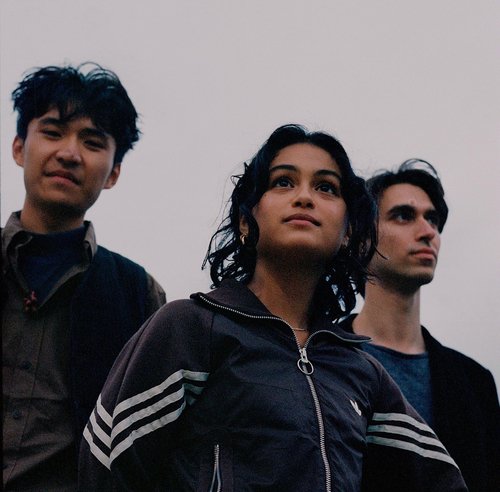
Naturally, Lusk is a major force amongst the gospel community, and a well-respected artist in the musical infrastructure of California. The celestial talent forefronts Gabriels, a trio backed by two remarkable producers in Ryan Hope (originally from Sunderland) and Ari Balouzian. Across their catalogue, they harness a quality rarely seen in today’s musical landscape, with subtle nods to jazz, R&B, funk, soul and gospel, while innately staying true to their identity. Classically trained, it is no wonder their collective uniqueness as a vintage-filtered soul outfit feels like a genuine continuation of – rather than a cheap homage to – the greats that came before them.

Suitably mysterious, the group only have a handful of material and one live show to their name, yet have created enough fanfare to sell out three consecutive London dates at their upcoming residency at London’s The Social, and to be nabbed by Celeste to support on her upcoming tour.

 The trio’s latest offering, “Blame”, accentuates Lusk’s delicate yet irrepressible vocals, and highlights Hope and Balouzian’s cinematic sonics. The result is a piece of music that reverberates through the consciousness as if you were sitting in a smokey 1960s jazz bar; the sparse building percussion bubbling up and away to a frenzied crescendo, before fading away elegantly behind the textured production.

Opening with a haunting looped piano, an experimental string arrangement and a heavy brooding bass, it’s a blend which is soundtrack-esque in nature, and naturally fitting of a film score. It wouldn’t be hard to see this being used as a backdrop to every gripping drama over the coming year.

Brought into the global consciousness with the phenomenal “Love and Hate in a Different Time,” which garnered acclaim from Elton John, Gilles Peterson and Virgil Abloh, Gabriels continue to build on the strength of their foundations with this truly stunning and atmospheric single.

Explaining the meaning behind the track, Lusk says, “When examining our life’s problems, we hastily assign blame – ‘This happened because of this…’ Our song ‘Blame’ seeks to examine the construct of not only fault and shame, but take a deep dive into the world of addiction, and indulgence.”

It isn’t too far-fetched to see the resemblance to the likes of Etta James and Nina Simone, as this gifted trio embody the same core characteristics which cemented those icons into American musical history: distinct voices, subtle production, and mighty power layered with elements of gracefulness.

Much like the Motown greats of yesteryear, Gabriels create songs with meaning, songs which affect changes in people. “Blame” continues to do that with infectious, thought-provoking vigour”.

Even though it is technically not about Blame, there is an interview from NME where we are introduced to Gabriels. The group spoke about the reaction that their debut E.P. has been afforded:

The past, present and future are in lockstep in the music of Gabriels. The LA-based trio, who released their debut EP ‘Love and Hate in a Different Time’ in June, channel the uncompromising authenticity of gospel and 60’s R&B, but present it in a thrilling, contemporary context with tightly arranged production and sharp electronic flourishes. In a fast, oversaturated musical landscape, Gabriels demand that you drop everything and listen closely.

Comprising Sunderland-born producer Ryan Hope (the band is named after St. Gabriels Avenue, the street on which Hope grew up), Calfiornian producer and classically trained musician Ari Balouzian, and the stunning gospel vocals of Compton’s Jacob Lusk, they have quickly amassed an arsenal of famous fans, including Annie Mac, Gilles Peterson and Elton John, who described the debut EP’s title track as, “one of the most seminal records I’ve heard in the last ten years”. In other words, time is running out to be ahead of the game on this band.

The response for your debut EP was so strong, and people are clearly connecting to the depth of feeling in your music. Could that suggest that those things are in short supply in music elsewhere at the moment?

Ryan: “I think it depends on where you get your music from. In general, it’s out there. But in short supply? I could see why somebody would think that, and I do agree.”

Ari: “It’s harder to get that good stuff out; it’s not fed to the public very much. Unless there’s some tower structure attached to it, it doesn’t seem like it has value. But there are a lot of really interesting musicians who are around that we love and are inspiring, but they are different to what the mainstream language of music is now”.

An absolutely astonishing track that cannot fail to move the senses, it will take something rather special and unexpected to dislodge Blame from the top of my list of the five best tracks of this year. In a very varied and strong year for new music, something with a slightly old-fashioned, vintage and otherworldly sound has made the biggest impact on me! In my mind, we should all hail…

THE angels Gabriels.

FEATURE: There Must Be More to Life Than This: Thirty Years Since the Passing of the Immense Freddie Mercury

FEATURE:


There Must Be More to Life Than This

PHOTO CREDIT: Getty Images

Thirty Years Since the Passing of the Immense Freddie Mercury

___________

I am going to end with a playlist…

 PHOTO CREDIT: Dave Hogan/Getty Images

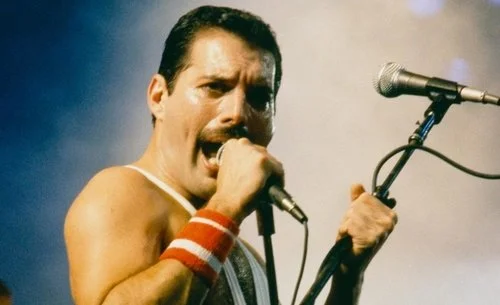
containing some of the best songs from the amazing Freddie Mercury. Whether as the frontman of Queen or a solo artist, he made such an impact on the music world! On 24th November, it will be thirty years since we lost one of the greatest singers ever. A genius songwriter, incredibly charismatic and compelling frontman and staggering voice, there has been nobody like him since! There are a few articles that I want to mention, as they give us more depth and revelation about a showman and incredible artist who lived a very different life on stage and in private. Undoubtedly the most electric frontman who has ever lived, the man behind the scenes was very different. I want to start with the Los Angeles Times who, in 2019 wrote how Mercury changed the world:

Freddie Mercury, a musical prodigy, was the lead singer for the band Queen, and arguably one of the most talented musicians of all time. Despite facing controversies for things such as homosexuality through his career, he thrived because of an uncanny passion for music, never letting anyone break him down. Furthermore, he was never afraid of anything, only revealing his severe condition of AIDS to fans one day before he died. Queen’s popular mix of glam-rock, opera, cabaret, and hard rock cemented its spot in music history, while Mercury’s onstage presence was the stuff of legends and his dedication to the craft vibrant until the very end.

Mercury was the son of a British diplomat with real name Farrokh Bulsara. He lived much of his early life in India and returned to England for his university studies. His family often looked down upon his late night outings and homosexuality. However, he fully embraced his differences, changing his legal name to create the prodigal musician known today as Freddie Mercury.

The band itself began in late night clubs and pubs, when all the band members were still in college together. After their lead singer quit, Freddie Mercury stepped in to take on the role. His immense vocal range and employment of harmonics deemed him the title of being one of the greatest vocalists of all time. Freddie Mercury also came alive on stage, and engaged the audience with his enigmatic personality and mysterious charm.

Particularly well-known for his flamboyant stage performance and extensive vocal range, Mercury sparked waves in the music industry as Queen’s frontman through embracing femininity and dispelling any and all preconceived notions about rock music, like hyper-masculinity. He began working diligently with his band in the 1970s towards creating albums and soundtracks that forever changed the face of rock music. Even people who hate rock music cannot deny the catchy tune of songs such as “Another One Bites The Dust,” “Don’t Stop Me Now,” and “Bohemian Rhapsody.”

Released throughout the 1970s, Queen attracted some of the largest crowds, selling out entire stadiums and always leaving fans begging for more. Freddie Mercury was even able to engage the audience with songs like “We Will Rock You,” creating the famed stomp-stomp-clap routine, where the entire crowd would repeat this motion and chant “We will, we will rock you!” He even included the vocal improvisation of “Ay-Oh,” which many audience members always repeated back to the band.

One of their final performances together was at Live Aid, dual-venue benefit concert held on Saturday 13 July 1985, and an ongoing music-based fundraising initiative. Here, they performed some of their most well-known songs like “Bohemian Rhapsody”, “Radio Ga”, “We Will Rock You,” “Crazy Little Thing Called Love,” and “We are The Champions.” Overall, Queen will forever be remembered for their legendary impact upon the face of rock music”.

I am going to have a playlist at the end that demonstrates the immense talent of the wonderful Freddie Mercury! I feel one of the most intriguing and discussed aspect of his life is how he never really hid his sexuality, though it was not common for a queer artist to be open and expressive. It is clear that Mercury is a national treasure. A complex and hugely magnetic person who brought so much to Queen’s records and their performances. The BBC asked, in 2019, who the ‘real’ Freddie Mercury was:

Mercury’s approach to reconciling his private life with his public persona as the frontman of a rock band with a sizeable straight, male fanbase was playful and sophisticated. Because he never responded to rumours about his sexuality, it was easy for this fanbase to interpret his super-flamboyant and theatrical performing style as what Aston calls “a camp laugh” rather than something evincing queerness. Mercury’s solo song Living on My Own, originally released in 1985, but which reached number one in the UK two years after his death after getting a club-friendly remix, is a catchy expression of loneliness that paints Mercury as a bachelor, but not necessarily a “confirmed bachelor” in the now somewhat dated euphemistic sense. “He was so outrageously camp, it was almost like a double bluff,” Aston adds. Ryan Butcher goes further, describing Mercury as “almost a covert agent for the LGBT community, dropping these little seeds of queer culture into the heterosexual mindset”.

PHOTO CREDIT: Getty Images 

In the ‘80s, Mercury was known for his tight white vests and moustache – his take on the Castro Clone look that originated in San Francisco’s queer Castro district and became popular in the gay underground, but which was less familiar to mainstream music fans. It could be argued that Mercury was effectively hiding in plain sight. Certainly, he didn’t let his massive fame stop him from visiting popular London gay venues like Heaven and the Royal Vauxhall Tavern. Actress Cleo Rocos wrote in her 2013 memoir that she, Mercury and comedian Kenny Everett even managed to sneak Princess Diana into the latter venue by disguising her in drag.

Perhaps one of the most daring ways in which Mercury expressed his natural campness was in Queen’s 1984 video for the single I Want to Break Free, in which he and his Queen bandmates dressed as female characters from the British soap opera Coronation Street, a decision which damaged their career in the US. Brian May recalled in 2017: “I remember being on the promo tour in the Midwest of America and people’s faces turning ashen and they would say, ‘No, we can’t play this. We can’t possibly play this. You know, it looks homosexual.’”

In Queen’s music, meanwhile, there were always clues about Mercury’s private life for fans who wanted – and had the knowledge of the gay scene – to spot them. On Queen’s 1978 hit Don’t Stop Me Now, Mercury sings that he wants “to make a supersonic woman of you” and “a supersonic man out of you”. In the video, he wears a T-shirt from Mineshaft, a popular New York BDSM gay bar of the time. Even the band’s name, Queen, can be seen as a winking allusion to its frontman’s identity. “It’s so obvious what ‘Queen’ is getting at,” says Kalyan, “but when I told my mum a few years ago, she couldn’t believe it. She said she’d always thought that ‘Queen’ just meant regal or majestic.”

In a similar way, Kalyan says Mercury’s music contains signifiers of his South Asian heritage, citing the use of the Arabic word ‘Bismillah’ in Bohemian Rhapsody. “Only a person with an awareness of Islamic culture would have known that word, which is the first word in the Koran [meaning In the Name of God], and put it into a song like Bohemian Rhapsody,” he says. Kalyan adds that among the South Asian community, “it’s very common knowledge that Freddie was Indian and had been massively inspired by Bollywood singers like Lata Mangeshkar, who is known for having an incredible vocal range like Freddie”.

But when it came to both his sexuality and his ethnicity, Mercury favoured privacy over direct proclamations until the end of his life. As Kalyan points out, “he didn’t talk about going to school in India or his love for Lata Mangeshkar. That wasn’t part of his narrative”. Nor was his sexuality: on 22 November 1991, following what he called “enormous conjecture” in the press, Mercury finally released a statement confirming that he had been tested HIV positive, and had Aids, but made no mention of his relationship with Jim Hutton. Around 24 hours later, he died. “Think about the immediacy of that – one of the biggest stars on the planet announces he has Aids, then dies of the disease,” says Ryan Butcher, who calls it “a culture shock that seems almost unfathomable today”. Privately, Mercury had been diagnosed as HIV positive four years earlier, and Butcher suggests, speculatively, that his friendship with the late Diana, Princess of Wales while living with HIV and Aids could have been a contributing factor in her decision to promote better awareness of the disease. But this, like so much with Mercury, is something we’ll probably never know for certain.

Nearly 28 years after his death, the real Freddie Mercury remains cherished. “At this stage, he’s not just an icon, but a British national treasure,” says Aston. Kalyan calls him “a massive queer icon” and “a brown South Asian icon in western music”. Whether Mercury would have liked these terms or not, it’s hard not to respect what he achieved in his lifetime. In an era when homophobia and racism were far more prevalent than they are today, Freddie Mercury was the queer, South Asian frontman of the band who released one of rock's most iconic singles, Bohemian Rhapsody, and the best-selling album in UK chart history, Queen's Greatest Hits. However it’s also arguable that the mystique he cultivated around his identity, whether he felt forced into that or not, has only burnished his status as one of pop’s most captivating enigmas”.

Just before rounding up, there is one more article that I want to mention. The idea behind this feature is to celebrate Freddie Mercury, learn more about the man himself, in addition to remember his legacy thirty years after his death. On 24th November, the world will remember an artist and public figure with no equal:

Following his interests

After his family moved to the UK in the 60s, Mercury went to Ealing Art School, in London, where he earned a diploma in graphics. At first, he tried to pursue a career in that field and sought to use his education for work. “I got my diploma and then I thought I’d chance it as a freelance artist. I did it for a couple of months but then I thought, My God, I’ve done enough. The interest just wasn’t there,” said Mercury. “And the music thing just grew and grew. I realized music was the biggest thing in my life and I decided to try and make my living from it. It’s as simple as that. I’m one of those people who believes in doing things that interest you.”

Coping with the obstacle race of the music business

After spending time in some small bands, including Sour Milk Sea and Ibex, Mercury eventually hooked up with students Brian May, Roger Taylor, and John Deacon – and they decided to form the band Queen. Mercury has always been honest about the difficulties that faced them – in common with all young bands in the early 70s – when trying to start out in the music business. He called it an obstacle race.

“The moment we made a demo [in 1971] we were aware of the sharks in the business… once you are successful, all the baddies move in and that is when you’ve got to be really strong and try and sift them out – and that is a test of survival, really. You can’t afford to let anyone get away with anything. It’s like playing dodgems; it’s rock’n’roll dodgems.” Mercury later turned some of these experiences into the song “Death On Two Legs.”

  Overcoming the traumatic experience of being a support act

One of the key experiences near the start of Queen’s career was their American tour in 1973, when they were the warmup band for Mott The Hoople. “Being the support act was one of the most traumatic experiences of my life,” said Mercury. “When you support another artist on tour, there are so many restrictions. You don’t get your own light show, your playing time, your effects. There’s no way you can show the public what you can do, unless you headline, and then you know the people have come to see you. The first time we went to America was as support to Mott The Hoople, and it acted as a ‘breaking the ice’ tour. We got a taste of America and so we knew what would be needed the next time we went.”

Pushing musical boundaries

Mercury admitted he was “a forceful character” and said he always had the feeling that “everything’s got to be new.” He said this spirit played a part in helping make Queen such a bold band in the 70s, as they pushed the limits on six albums, including 1975’s A Night At The Opera, which featured the rock masterpiece “Bohemian Rhapsody”. “We went a bit overboard on every album, actually, but that’s the way Queen is,” said Mercury. “It’s what keeps us fresh. A Night At The Opera featured every sound, from a tuba to a comb. Nothing was out of bounds. As soon as we made it, we knew there were no longer any limits on what we could do.”

Mastering world tours

When Queen played Bedford College in January 1972, there were reportedly only six people in the audience. Within 13 years they would be playing a single gig to more than 250,000 fans in Rio De Janeiro, by which time they had become the undisputed masters of stadium rock. Mercury believed that after a slow build across 1973 (they started the year playing the university circuit and ended it with sell-out gigs at the Hammersmith Odeon), the turning point was a global tour in 1974 that included Australia and the United States. “The successful worldwide tour, which we’d never done before, taught us a lot,” said Mercury. “It taught us how to behave on stage and come to grips with the music.” He said that by the time they went to Japan in 1975, “We were a different band… our playing ability was better. We also tend to work well under pressure.”

Coping with overzealous fans

Mercury interacted with his fans and loved the adulation he received on stage. There were only a couple of unfortunate incidents that stuck out. In Seattle, in 1975, a young fan got into his hotel room and “pilfered my jewels and bracelets.” He confronted the thief and wrestled the jewels from her. “Then, a year later, my very promising pop career nearly came to an untimely end when two young girls outside the theatre decided to claim my scarf as a souvenir,” added Mercury. “They quite forgot it was wrapped around my neck at the time, and nearly strangled me.”

Becoming a superstar showman

“I’d like the whole world to listen to my music and I’d like everybody to listen to me and look at me when I’m playing on stage,” Mercury said in the 70s. He always wanted to make his audience walk away from a Queen concert “feeling fully entertained.” “I have to make sure that I win them over and make them feel that they’ve had a good time… I know it’s a cliché to say, ‘Oh, you have them eating out of the palm of your hand,’ but I just feel that the quicker I do that, the better, because it’s all to do with me feeling in control. Then I know that it’s all going well.”

He brought all this to bear at Live Aid, at Wembley Stadium in July 1985, when he had 72,000 fans in London, and an estimated 1.9 billion people watching on television from 130 countries around the world, eating out of the palm of his hand with a stunning 21-minute performance.

Going solo and taking ballet to the masses

“I had a lot of ideas bursting to get out and there were a lot of musical territories I wanted to explore which I really couldn’t do within Queen,” said Mercury, talking about his 1985 solo album, Mr. Bad Guy. The album gave him the chance, he said, to be his “own boss.” “I find that when I’m my own boss completely, it’s easier for me. I make all the decisions.” One ambition the solo album enabled him to fulfill was showcasing his love for ballet, putting it into the videos he made to promote Mr Bad Guy. Arlene Phillips, who was the choreographer for his 1985 video “I Was Born To Love You,” said Mercury wanted “to take ballet to the masses.”

Never being afraid to take risks

One of the words that cropped up time and again in Mercury’s interviews was “risk.” “A risk element is always involved, and that’s the way I like it,” said Mercury. “That’s what makes good music. Queen have always taken risks.” Mercury described the song “Bohemian Rhapsody” as “a risk” – the same term he used for the “I Want To Break Free” video – and called Queen’s experimental 1982 album, Hot Space, “a big risk.”

Mercury took another big risk in 1988 when he began working with the world-famous operatic soprano Montserrat Caballé, collaborating on the album Barcelona. “I knew I was taking a big chance doing something like that,” said Mercury, who was so proud of his successful combination of rock and opera. “I didn’t think I was capable of writing operatic pieces that would suit a world-renowned prima donna,” he said. “I really didn’t know I was capable of things such as that. I thought, What else is there left for me to do? I mean, I defy any other”.

A man who, as the lead of Queen and solo, caught the world alight. I was alive when Queen played Live Aid in 1985 - though I was too young to remember it. I have watched their performance since and, every time I see it, I get goosebumps. Even though the 2018 film, Bohemian Rhapsody, was about the life and loves of Mercury, I feel there is a documentary that has yet to be made that gets to the truth of who he was (the film was accused of not really addressing his sexuality and wilder side, and not having all the facts in straight). Such a phenomenally inspiring artist, we will be cherishing his memory and music for decades more! Even though it is thirty years since the world lost his immeasurable presence, we will always remember and talk about Freddie Mercury. With such a huge personality, giant voice and enormous talent, Mercury’s name and music…

WILL reverberate forever.

FEATURE: Modern Heroines: Part Seventy-Nine: GIRLI

FEATURE:


Modern Heroines

 PHOTO CREDIT: Hugh Finnerty 

Part Seventy-Nine: GIRLI

___________

IN this part…

 PHOTO CREDIT: Rory James

of a feature that focuses on strong and inspiring women in music, I am speaking about GIRLI today. Milly Toomey is an English singer, songwriter and rapper based in London. Fun, accessible and memorable, her music and lyrics tackle subjects such as feminism, sexuality, Queer culture, and mental health. Whilst these themes are fairly common now, GIRLI puts her stamp on those subjects. Her sound is incredible. I have been following GIRLI since about 2016. She is someone who is going to far. Having released a few E.P.s and a great debut album, 2019’s Odd One Out, her career is well and truly underway. That said, I think we have yet to hear from the amazing GIRLI. I love the moniker. It reminds me of Australia; what an Australian might call a female friend. I shall come to an interview where Tooney explains the reason for that name. I am also going to source a couple of reviews for her incredible new E.P., Damsel in Distress. I want to start out with an interview from 2019, where GIRLI was asked about her debut album. As she said in the chat with The Line of Best Fit, Odd One Out was a reintroduction; a more mature her:

Toomey has lived in London her whole life, and moved out from her parents’ house in North London at 18, just as her musical career was taking off. She didn’t go to university, and hated school, leaving as soon as possible to pursue music at college. Prior to taking up music she was part of the local youth parliament, and “cared so much about everything” – a symptom of her OCD. “I think when I was a teenager I was just trying to escape from school if I’m honest, just trying to do loads of shit outside of school because I just dreaded it," she tells me. "Y’know it wasn’t all bad, I liked my teachers and my classes, but the social element of it just freaked me out. I was the girl at lunch time who was like ‘fuck where am I gonna eat my lunch’, so I definitely didn’t breeze through school. It was difficult and I think that’s why I turned to music, because I just needed something to do to get this frustration feeling out.

"I just remember being so restless, like I cannot fucking wait for this to be over, all this school bullshit, as soon as I was 16 I was like, right I’m gonna go to music college and I’m gonna do music and I don’t care!

“When I was a teenager I was very self-conscious and anxious. When I went into secondary school, I have OCD and it started to show, like the transition from primary to secondary school just like fucked me up, and I think I just freaked out. Primary school was like a little home, like a warm hug, and then secondary school, I went into the school of like 2500 students and it was pretty rough.”

As Toomey talks about her teen-hood, it’s not hard to see why she’s titled her debut record Odd One Out. She’s spent most of her life as an outsider – not in a cool, wallflower, ‘people don’t get me’ way, but in the way that took its toll on her mental health, social relationships, and trust in others. “I got bullied in year seven and eight. It was just really nasty people, and the jump between friendship groups. All of that made me quite an anxious person, although I didn’t really see it as anxiety at the time, I just really cared about certain things, and I think it’s part of how the OCD expressed itself in my personality and still does. I get very obsessed with things.

"I really cared about school work, I really cared about doing as much as possible. I wanted to go do that club and then that instrument, and get A grades. I put so much pressure on myself.

“I have a little sister who’s 16, and she’s having this crazy fun: she goes to parties every week, and she’s been doing that since she was 14. When I was 14 and in the youth parliament, I was going home every night and watching TV with my mum and doing homework. I really didn’t have a great social life, and I think I was quite lonely to be honest.

"I had a best friend who I spent a lot of time with and she really introduced me to things like music...but I kind of jumped from friendship groups a lot, so I think I lost a certain level of trust in people at school. I didn't know whether people were real, because I didn’t have that one friend from when I was like seven years old to now, where I think a lot of people I meet have those childhood friends...”

Toomey turned to music at fifteen as an outlet for her frustrations. After being in choirs in her earlier years and playing trumpet, guitar and piano in school, she wrote short stories that soon turned into writing lyrics. “I went onto a website called JoinMyBand.com and found two bandmates - two girls, a drummer and a bassist - and we just started making music after school and every weekend. We'd do gigs that I’d find at random pubs - like this - and that was kind of my escape really. It’s weird because I was fifteen and they were both like eighteen, so they were a lot older than me and I was kind of the boss. After a year they were like: 'okay we’re fucking done with this 15-year-old bossing us around' because I’m such a control freak when it comes to my music, and also because I was the kind of person who wanted to do gigs every week."

Toomey's cousin encouraged her to go it alone, and that became the start of Girli.

Her debut album has been a long time coming and wasn’t really meant to be an album at first. The tracks came about as a result of various writing sessions in LA with Mark Ronson-collaborators MNDR and Peter Wade, and former-Dirty Pretty Things member (and co-writer of Gaga/Cooper-hit "Shallow") Anthony Rossomando. Sticking with the same writers on every song was what she needed to feel more comfortable doing “proper pop writing sessions”.

“We were just making songs together, us three, and then [with] these guys called Fast Friends who are this awesome trio. I’d gone to LA before and I’d done the whole ‘lets do pop writing sessions’, had some good ones and had some terrible ones where it was like I feel like a product right now, this isn’t creative, this isn’t fun, so I went back and I just worked with these two people and it was so fun.

"I worked with a few other people as well but the main songs on the album come from these two groups of people. So I went back in may for another month and wrote most of the songs on the album.

“It’s definitely a more mature me,” she says. “I think what I did when I started Girli was I had this very narrow minded idea of who I wanted to be, I was like ‘I only wanna wear these kinds of things, I only wanna write this kind of music’, and I think in the past year I’ve really opened up more to kind of taking in more influences and trying out new things. I think that’s just a natural progression of entering your 20s, to just start thinking ‘who actually am I?’ In your teens you always wanna have this set way about you and you’re like ‘this is me, I’m not changing’. I was limiting myself before, even just the fact that I wore all pink, I was limiting myself in that way too”.

I am going to bring things more up to date. GIGWISE spotlighted GIRLI. Damsel in Distress seems like another new direction for an artist who is always pushing forward and exploring different avenues. I think that the E.P. is one of her most personal efforts yet:

2021 marks a new era for GIRLI. Titled Damsel in Distress and encompassing a new direction, a new collection of songs and a recently-announced new tour, it's to be the most unapologetic yet euphoric direction the internet’s original e-girl has ever set out on.

“A lot of bands will go into the studio for like three weeks and make an album that all kind of links together and was made at the same time. To me, I write music whenever it comes to me. It's always a bit jumbled together with loads of different feelings all in the space of a couple of months," she explains.

"With Damsel in Distress, I have these five songs that felt like they fit together. [‘More Than A Friend’] is about unrequited love, also figuring out the frustrations of being queer and not knowing if your crush is queer. ‘Dysmorphia’ is about body dysmorphia and body image, and then [latest single] ‘Ricochet’ is about hurting yourself by chasing after people who are bad for you. I was thinking: all of these songs are distressing. They're all about times while I was freaking out about something and trying to figure something out. I was really struggling with it.”

As well as her musical candidness, it is GIRLI's proud queerness that has lead her to a fanbase of like-minded and sweet individuals. “Being queer is such a big part of my life," she enthuses. "I definitely think that queer artists shouldn’t feel any pressure - they can talk about it if they want to [and] they don't have to if they don't want to. I think that straight artists should be uplifting queer people, and be talking about it, like how white people should be uplifting people of colour.

"I think that straight artists need to definitely use their privilege in that sense. I feel so passionate about it, and proud, and it's always been a big part of my artist project. I also think it's kind of a cool way of attracting the right people. I don't really want any homophobes listening to my music.”

Speaking further about the Damsel in Distress project she says “It's kind of like going into a war in a way, like a mental war. With all of these topics and emotions that the songs are about, I was like this princess but like having vengeance on the kingdom. Coming back and being like: I'm not a damsel. I was thinking about that phrase damsel in distress and it really applied to me. Even though these songs are all about doubting myself, they're not necessarily light hearted, happy clappy songs, [but] to me it's really badass and really empowering. Releasing the songs now, I feel so empowered, and so powerful”.

There are a couple of reviews I am keen to get to. Before that, two more interviews are worth illustrating. BN1 Magazine spoke with GIRLI a couple of weeks back – ahead of her appearing in Brighton for a gig at the Hope and Ruin:

Is being in the music industry like you imagined?

No, it’s more savage. When I was 15 and started my first band I thought everything was gonna be butterflies and sunshine being a musician. When I signed my first record deal, I kinda thought “that’s it, I’ve done it”. But sadly I had to learn the hard way that not everyone is gonna have your back, and a lot of people are gonna have opinions on how you should do things, especially when you’re a woman. You have to fight to do things your way.

What has the recording of the last two EPs taught you about yourself?

That I’m an emotional bean! These songs have been a big part of my healing from the topics I’m singing about. They’re my diary entries, and fans listening and following my journey are reading the chapters of my life book basically. These EPs have also taught me that as an artist, I am very multi-faceted. I don’t fit into one genre, one “sound”, I carry my stories and messages through the music in a sort of genre-traversing way. I find it hard to stick to one thing.

Do you feel the need for immediate self-identification, or are we all complex and dynamic individuals?

Definitely the second one. But I think everyone’s choices for self-identification are so valid and important and it’s up to the individual to decide what makes them the happiest.

The title Damsel in Distress appears quite loaded, in several respects. Is it open to a variety of interpretations, rather than a simple plea to be ‘saved’?

It’s a very tongue-in-cheek title. I decided to take the old and sexist term of ‘Damsel in Distress’, an old character trope of a woman needing saving by a man, and turn it on its head. Yes, I’m struggling with some stuff and yes I need help, but I’m gonna save myself. Each song represents something different I’ve battled; body dysmorphia, mental health issues, unrequited and difficult love, bad friendships. These are the distresses; I am the damsel who’s fighting them.

Do you ever worry about being misunderstood? Or does good art demand nuance instead of absolutes?

I love that there’s multiple meanings to art depending on the person taking it in. I like that people can listen to my lyrics and relate them to experiences they’ve had, even if their experience is totally different to the one I was singing about. Once a song is out there, it belongs to the listeners.

Are you thinking about producing another album? Does undertaking something of that scale bring a new set of challenges? (Apart from needing to compose 10+ songs, obvs…)

Yes, I am, and I’m really excited to make a big project again. The only challenges are good challenges; I have a lot of figuring out to do about myself as an artist and where I wanna go next with my sound. I’m excited”.

This is an interview that I also wanted to mention. The questions around GIRLI identifying as Queer and urging people to feel comfortable in their own skin struck me. There is one artist, Björk, who she is keen to work with in the future (which I think would be an interesting collaboration!):

How important is your identity as a feminist and queer artist?

Feminism is the core of everything I do. Feeling empowered as a woman and my journey as a woman and calling out sexist bullshit is a big part of my music. Being queer and proud is also a big inspiration for me in my songs, my videos, my artistic expression. I love being a part of the LGBTQIA+ community and a lot of my fan base is part of that community too, so it plays a huge role in my life.

You have always been very supportive about people feeling comfortable in their own skin. Do you feel responsible towards your fans? Is it also a way of express your thoughts about society and what’s happening in the world right now?

I feel responsible to learn and grow and correct myself when I make mistakes, but I don’t feel pressure to be a good or bad influence on my fans. The majority of them are young teens growing up in a digital world and they are super aware and woke, and often teach me things rather than the other way around. My music is a diary entry from my life and what goes on in my head. I’m so happy that people can relate to that.

Can you tell me three artists that you would love to work with?

070 Shake, Janelle Monae, Bjork”.

As Damsel in Distress is the most recent E.P. from GIRLI, it is worth dropping in a couple of reviews. Although I feel that GIRLI will get even stronger and more astonishing as an artist, Damsel in Distress is a brilliant E.P. with some career-high moments. This is what GIGWISE said in their review:

GIRLI is stronger now. That’s the sense on Damsel In Distress, each of its tracks venting a personal battle the London-born singer is valiantly fighting through. In her follow up to Ex Talk, GIRLI is unafraid to over-share, immersing the listener in brutal truths about body dysmorphia, unrequited love and toxic relationships. It’s a filter-free glimpse into her brain that puts a mirror up to your own insecurities and says 'me too'.

Rich in electronic texture, opening track ‘More Than A Friend’ is an immediate plunge into GIRLI’s current state of mind. Over synthetic arrangements, she articulates the complexities of unrequited queer love, yearning for more from a crush who’s sexuality she can’t determine.

‘Ricochet’ is a similar commentary on modern love, painting a portrait of a dysfunctional relationship that is as frustrating as it is alluring. The electro-pop soundscape and shifting vocal styles mirror the chaos of life at the hands of a lover who “only wants to touch me after liquor and a mixer”. ‘Ruthless’ details further toxicity, criticising a partner with the power to fundamentally alter the very core of her personality.

Newly an independent artist, GIRLI is at her most vulnerable throughout Damsel In Distress. She admits self-hatred on ‘Dysmorphia’ and ‘I Don’t Like Myself’ — an internal monologue littered with heart wrenching confessions of an insecurity that infiltrates every waking moment. No longer revelling in youth on the dancefloor, we’re with GIRLI beneath the gritty yellow light of the bathroom, gazing in the mirror and over-analysing each feature as she delivers an overwhelming yet simple sentiment: “I just want to like myself”.

Never one to shy from excess, Damsel In Distress is dripping in heartbreak-enhancing autotune and computer generated drum beats that punctuate some of her most honest and revealing lyricism to date. We’re immersed in her world that despite fun, polished beats, is dark and difficult to bear, akin to the era of its creation. Though dulling the sparkle and optimism of her debut, there remains a deep layer of hope, given the imagery of GIRLI continuing to fight despite the sheer number of aggregators.

Re-defining what it means to be a Damsel In Distress, GIRLI isn’t waiting to be rescued. She’s battling her demons head on. And, unlike the trope from which the EP is named, GIRLI emerges victorious, more sure of who she is alone”.

I am going to finish off with a review from When the Whistle Blows. They talk about the brutal honesty of the lyrics of GIRLI:

More Than A Friend starts us off. with a sparse instrumentation. Sooner than later we’re hit with buzzing synths and layered vocals that hit you side to side, almost creating this kind of pathetic fallacy with the back and forth confusion expressed within the lyrics. There’s a yearning to the vocals and that refrain. It’s absolutely my idea of perfect pop in 2021.

Second track Dysmorphia makes it clear that Girli is unafraid of both being brutally honest lyrically and being big pop musically. Between the pulsing chorus and thrumming verses there’s a strong set of lyrics, laying out in detail Girli’s relationship with her inner saboteur and feelings of body dysmorphia. Ricochet follows, seeing Girli slip more into the rap side of her vocal stylings. Tense verses snap into choruses that would shake the rafters of almost any building you played it in.

Ruthless was the forth single off of Damsel in Distress and it’s clear to me why. Verses outline a desire to return to a simpler time. Then the pre chorus with it’s swooning vocals, offset by the lyrics outlining various dysfunctions within a relationship, leads into a chorus that breaks towards hyperpop. A busy beat, processed vocals and a variety of textures flitting about it.

I Don’t Like Myself rounds the release out and it’s a fairly open book lyrically. It is what it says on the tin but Girli’s straight forward lyrics and almost deadpan speak singing present these familiar feelings in a way that really resonates. Then there’s the chorus that comes around and presents the duality of a negative self view in such an accurate way. The track ends the EP addressing similar themes to the songs before it but in a more open, optimistic way.

If you’re a fan of pop that’s slightly more alternative in it’s aesthetics and themes then Girli is absolutely for you. Her songs on this release do such a good job of balancing the banger with the emotion. The songs have clear themes and meanings you can tap into while still being the sort of songs that you just want to see live. There’s a great opportunity to do just that too with Girli touring throughout November and December”.

A tremendous artist who is going to keep on releasing wonderful music, I shall end with a playlist containing some of GIRLI’s best tracks. She is someone that I have loved for years - so I am very keen to see what comes next. With two E.P.s released this year (Ex Talk and Damsel in Distress), she is top and prolific form! Given the quality of her music, long may…

THIS continue.

FEATURE: Will We Ever See the DVD? Kate Bush’s Majestic Before the Dawn Live Album at Five

FEATURE:


Will We Ever See the DVD?

 Kate Bush’s Majestic Before the Dawn Live Album at Five

___________

IT might seem odd to mark…

the fifth anniversary of an album but, as it is Kate Bush – and we do not get that many albums from her -, I want to celebrate the great live album, Before the Dawn, and ask an important question. This is one of those rare occasions where I can include audio from the album when discussing it. Even though one can buy Before the Dawn on vinyl and C.D., it is not available on streaming services. One can get it on Apple Music and preview tracks from the album there (and buy the whole thing). So, whilst it is available digitally to own, one cannot stream the album if they are on Spotify. It is a shame that Before the Dawn is not available to stream. That is tangential to the points I want to make (and I am going to drop in a few tracks from Apple Music in preview form). Before getting to Bush’s reaction to the live spectacle that was Before the Dawn, here is some background to the residency and album:

Before the dawn" was recorded during the incredible run of 22 sold-out shows performed by Kate at London's Hammersmith Apollo in 2014.

In March 2014 Kate announced plans to perform 15 shows in London in August and September that year, her first live shows since 1979. The shows sold out so quickly that a further 7 were immediately added, with all shows selling out in 15 minutes. This very website crashed with the demand.

The first night of the shows prompted a complete media frenzy with the Evening Standard declaring that the show was "an extraordinary mix of magical ideas, stunning visuals, attention to detail and remarkable music – she was so obviously, so unambiguously brilliant, it made last night something to tell the grandchildren about."

Later that year the show won the special Editor’s award at the highly prestigious London Theatre Awards, the only contemporary music show to do so.

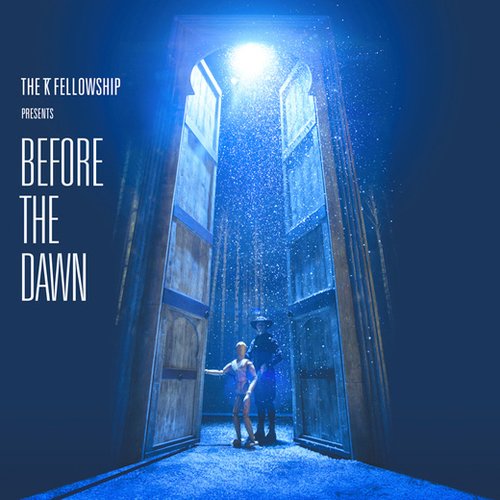
On November 25 2016 the live album "Before The Dawn" was released on CD (3 CDs) and vinyl (4 vinyl) and digital download. The conceptual heart of the show is reflected in the CD format, which is split over 3 discs centred around the two integral pieces – 'The Ninth Wave' and 'A Sky Of Honey'.

CD1 ends with the pivotal track 'King Of The Mountain' which bridges into 'The Ninth Wave' suite of songs on CD2.

The album was produced by Kate Bush. Nothing on the record was re-recorded or overdubbed”.

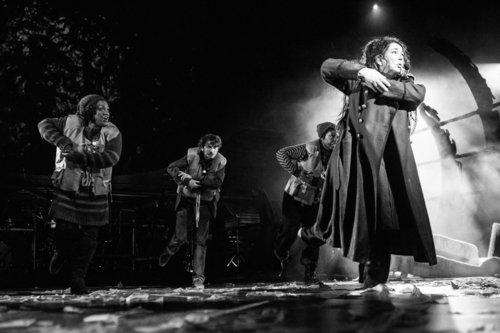
 IN THIS PHOTO: Kate Bush’s Before the Dawn at the Hammersmith Apollo, London, in 2014/PHOTO CREDIT: Ken McKay/Rex Features

I am eager to source a review from Pitchfork, who talk extensively and passionately about the album. The last part of this feature sees me revisit a question that I and many people have asked. In fact, when reviews were out for the live album, many marked it down because there were no plans to release a DVD. The sense that the spectacle is lost if one cannot see the crowd and the show taking place. I would disagree. On the Kate Bush Encyclopaedia, we get to read the linear notes for Before the Dawn:

It was an extraordinary experience putting the show together. It was a huge amount of work, a lot of fun and an enormous privilege to work with such an incredibly talented team. This is the audio document. I hope that this can stand alone as a piece of music in its own right and that it can be enjoyed by people who knew nothing about the shows as well as those who were there.

I never expected the overwhelming response of the audiences, every night filling the show with life and excitement. They are there in every beat of the recorded music. Even when you can’t hear them, you can feel them. Nothing at all has been re-recorded or overdubbed on this live album, just two or three sound FX added to help with the atmosphere.

On the first disc the track, Never Be Mine, is the only take that exists, and was recorded when the show was being filmed without an audience. It was cut because the show was too long but is now back in its original position. Everything else runs as was, with only a few edits to help the flow of the music.

On stage, the main feature of The Ninth Wave was a woman lost at sea, floating in the water, projected onto a large oval screen - the idea being that this pre-recorded film was reality. The lead vocals for these sequences were sung live at the time of filming in a deep water tank at Pinewood. A lot of research went into how to mic this vocal. As far as we know it had never been done before. I hoped that the vocals would sound more realistic and emotive by being sung in this difficult environment. (You can see the boom mic in the photo on the back of the booklet. This had to be painted out of every shot in post-production although very little of the boom mic recording was used. The main mic was on the life jacket disguised as an inflator tube!) The rest of the lead vocals on this disc were sung live on stage as part of the dream sequences. The only way to make this story work as an audio piece was to present it more like a radio play and subdue the applause until the last track when the story is over and we are all back in the theatre again with the audience response.

Unlike The Ninth Wave which was about the struggle to stay alive in a dark, terrifying ocean, A Sky Of Honey is about the passing of a summer’s day. The original idea behind this piece was to explore the connection between birdsong and light, and why the light triggers the birds to sing. It begins with a lovely afternoon in golden sunlight, surrounded by birdsong. As night falls, the music slowly builds until the break of dawn.

This show was one of the most exciting things I’ve ever been involved in. Thank you to everyone who made it happen and who embraced the process of allowing it to continually evolve. (Album liner notes)”.

The tracklisting of the album is incredible! We get three distinct acts where Bush mixes some of her best-known songs - alongside those which many might not guess would ever come to the stage (Act I: Lily, Hounds of Love, Joanni, Top of the City, Never Be Mine, Running Up That Hill, King of the Mountain; Act II: Astronomer's Call, And Dream of Sheep, Under Ice, Waking the Witch, Watching Them Without Her (dialogue), Watching You Without Me, Little Light, Jig of Life, Hello Earth, The Morning Fog; Act III: Prelude, Prologue, An Architect's Dream, The Painter's Link, Sunset, Aerial Tal, Somewhere In Between, Tawny Moon (lead vocals by Albert McIntosh), Nocturn, Aerial, Among Angels, Cloudbusting). To be there on one of those twenty-two nights in Hammersmith must have been something! (The reviews are especially glowing). I was not fortunate enough to get a ticket, and I regret that I missed out. I think the live album gives the listener the chance to experience the show and get a sense of the magic that Bush, her band and team created. The KT Fellowship executed this awe-inspiring show that showed why she is one of the most celebrated live performers ever (even though her 2014 residency was only her second tour/residency). The reviews for Before the Dawn were largely positive. This is what Pitchfork said:

 “Kate Bush always exploited technological advancement. In 1979, from just coathangers and Blu-Tack, the trailblazing British pop auteur pioneered the head mic for her vanguard Tour of Life. Her subsequent albums made her one of the earliest adopters of the Fairlight synthesizer that would define the ’80s. Before the Dawn, then, is a surprising throwback: the unexpurgated live album, a document of her 2014 live shows, her first in 35 years. There are no retakes or overdubs bar a few atmospheric FX. No apps, no virtual reality, no interactivity. She’s also said there won’t be a DVD, which is surprising given the show’s spectacular theatrics, conceived by the former artistic director of the Royal Shakespeare Company and a host of designers, puppeteers, and illusionists. The show, and this release, aren’t credited to Kate Bush but the KT Fellowship, in recognition of the vast ensemble effort. Yet in shucking off half the production, this hefty 155-minute, three-disc set (one per “act”) is also the best way that Before the Dawn could have been preserved, allowing it to tell its own story uninhibited by the busy staging.

I went to a show towards the end of the 22-date run, and was overwhelmed by how physically moving it was to see Bush in real life, since for most of mine she’s only existed in videos and BBC clip-show documentaries. The staging didn’t always have the same impact. The sublime Act One, as close to a greatest hits as we got, was stripped back—just Bush at the piano backed by her crack band.

In Act Two, Bush realized her long-held desire to dramatize “The Ninth Wave,” the conceptual B-side of 1985’s Hounds of Love, which documents a woman’s dark night of the soul as she fights for life while lost at sea. While her “husband” and real-life son Bertie McIntosh blithely carried on with domestic life inside a tiny, sloping living room set, a video depicted Bush stranded in dark, choppy waters (now released as the “And Dream of Sheep” video). Moments later, the real Bush reappeared on stage to fight sinister “fish people” who carried her body off through the aisles. The whirring blades and desperate search lights of a rescue helicopter descended from the Hammersmith Apollo’s ceiling, illuminating and buffeting the crowd. Despite some hammy dialogue, it was staggering, and in sharp contrast to Act Three, which focused on Aerial’s second side, “A Sky of Honey.” McIntosh played a landscape painter from ye olden times while a life-size marionette of a jointed-doll simpered around the stage, embracing Bush, who looked on in raptures. At 75 minutes long, it was a sickly, trying accompaniment to one of the subtler achievements in her catalogue.

With the visuals stripped away, some confusing vestiges of the live show remain on the record—mostly the stilted dialogue (McIntosh’s lines as the painter are cringeworthy). But otherwise it flows remarkably well: the prog grooves and piano ballads of the first act setting up the gothic tumult of “The Ninth Wave,” which comes down into the sun-dappled ambience of “A Sky of Honey.” The sound is rich and warm, but rough, too: imperfectly mic’d and properly live-sounding. The arrangements are largely faithful, even down to the synth presets, though sometimes the veteran session musicians form an overwhelming battalion. “Lily” comes out sounding a bit like Christian goth rock, and “King of the Mountain” is a victim of breadth over depth, its dynamics drowned out by every band member playing at once. It’s a shame that the terror of “Hounds of Love” gets swapped for sentimental optimism, but the band recreate that album’s second half to sound as avant-garde and bracing as any current young outsider.

Live albums are meant to capture performers at their rawest and least inhibited, which doesn’t really apply to Before the Dawn. Bush is a noted perfectionist best known for her synthesizer experiments and love of obscure Bulgarian choirs, but her recent work has skewed towards traditional setups that reunite her with the prog community that fostered her early career. With marks to hit and tableaux to paint, the 2014 shows were more War of the Worlds (or an extension of 2011’s Director’s Cut) than Live at Leeds. But never mind balls-out revamps of Bush’s best known songs; with the exception of tracks from Hounds of Love, none of the rest of the setlist had ever been done live—not even on TV, which became Bush’s primary stage after she initially retired from touring. These songs weren’t written to be performed, but internalized. Occupying Bush’s imagination for an hour, and letting it fuse with your own, formed the entirety of the experience. Hearing this aspic-preserved material come to life feels like going to sleep and waking up decades later to see how the world has changed.

PHOTO CREDIT: Ken McKay/Rex Features 

“Jig of Life” is the midpoint of Before the Dawn, and its crux. It forms the part in “The Ninth Wave” where Bush’s character is exhausted of fighting against drowning, and decides to succumb to death. A vision of her future self appears, and convinces her to stay alive. “Now is the place where the crossroads meet,” she chants, just as her (then) 56-year-old voice channels her 27-year-old one. Despite her alleged taste for burning one, Bush’s voice has gained in power rather than faded with age. It’s deeper now, and some of the songs’ keys shift to match, but it’s alive and incalculably moving, still capable of agile whoops and tender eroticism, and possesses a newfound authority. When she roars lustily through opener “Lily” and its declaration that “life has blown a great big hole through me,” she sets up the stakes of Before the Dawn’s quest for peace. In Act One, she’s running from the prospect of love on “Hounds of Love” and “Never Be Mine,” and from fame on “King of the Mountain,” where she searches for Elvis with sensual anticipation. She asks for Joan of Arc’s protection on “Joanni,” matching the French visionary’s fearlessness with her own funky diva roar, and sounds as if she could raze the world as she looks down from “Top of the City.”

Rather than deliver a copper-bottomed greatest hits set, Bush reckons with her legacy through what might initially seem like an obscure choice of material. Both Acts Two and Three take place in transcendent thresholds: “The Ninth Wave”’s drowning woman is beset by anxiety and untold pressures, with no idea of where to turn, mirroring the limbo that Bush experienced after 1982’s The Dreaming. That suite’s last song, the cheery “The Morning Fog,” transitions into Aerial’s “Prelude,” all beatific bird call and dawn-light piano. The euphoric, tender “A Sky of Honey” is meant to represent a perfect day from start to finish, filled with family and beautiful imperfections. “Somewhere in Between” finds them atop “the highest hill,” looking out onto a stilling view, and Bush’s eerie jazz ensemble anticipates the liminal peace of Bowie’s Blackstar. “Not one of us would dare to break the silence,” she sings. “Oh how we have longed for something that would make us feel so… somewhere in between.”

Purgatory has become heaven, and in the narrative Bush constructs through her setlist, “A Sky of Honey” represents the grown-up, domestic happiness that staves off the youthful fears explored on Hounds of Love. For her final song, she closes with a rendition of “Cloudbusting,” a song about living with the memory of a forbidden love, which is even more glorious for all the hope that it’s accumulated in the past 30-odd years. Bush’s recent life as a “reclusive” mother is often used to undermine her, to “prove” she was the kook that sexist critics had pegged her as all along. These performances and this record are a generous reveal of why she’s chosen to retreat, where Bush shows she won’t disturb her hard-won peace to sustain the myth of the troubled artistic genius. Between the dangerous waters of “The Ninth Wave” and the celestial heavens of “A Sky of Honey,” Before the Dawn demystifies what we’ve fetishized in her absence. Without draining her magic, it lets Bush exist back down on Earth”.

I don’t think that we will ever see a DVD release. Bush herself has said that she has no plans. There is film of the residency, though I am not sure whether it was ever filmed with multiple cameras or has the editing and appearance of a modern Pop concert. Maybe the look and sound of a DVD would do a disservice to the time and effort that everyone put into the show. The sound quality on the live album is incredible. You get the crowd reaction and the feeling that you are in Hammersmith watching along. One of the biggest draws about seeing Before the Dawn was the incredible set designs and lighting. Whilst the sense of the epic and beautiful was recounted by adoring reviews and gig-goers, I suppose that is something the listener has to miss out on. One wonders whether a DVD could ever get you inside the show and feel what so many did. Also, is it fair for people to see the show on DVD when there was a paying audience at the twenty-two dates? Nearly five years after the release of the live album (25th November), there are still those asking whether the film of Before the Dawn will be seen. It seems less and less likely as the years pass. I do think that owning it physically is the ultimate listening experience. However, as it is available to buy on Apple Music, I wonder what the reasoning behind leaving it off of Spotify is. You can also get the album on Amazon Music if you have membership (it costs slightly less than on Apple Music). There are options to hear Before the Dawn, yet there is little in the way of visuals (apart from press photos taken during one/a few of the shows). Maybe that is okay. The moving experience one gets from listening to the album is magnificent! In terms of a DVD, we will never really know what many people saw. To me, I think that Before the Dawn’s images and movements are…  

BEST left to the imagination.

FEATURE: Spotlight: Powfu

FEATURE:


Spotlight

Powfu

___________

AN artist who broke through last year…

and was someone who COVID-19, strangely, suited, Canadian lo-fi pioneer Powfu is someone you should know about. The pandemic has not been good for any artist but, able to make music from his bedroom and post it to the world, he became a bit of a role model or inspiration for many others – at a moment when the usual method of recording and promoting music was put on hold. I am going to bring in a few interviews where we get to know more about the incredible Powfu. Before getting to interviews, Sony Music give us a short overview of an artist on the rise:

After several years of studying and contributing to the lo-fi hip-hop scene on YouTube, emotive songwriter and artist Powfu has emerged from a small town outside of Vancouver and has established himself as an important player in bringing the lo-fi genre into the mainstream.

The 21-year-old artist (born Isaiah Faber) grew up in a musical household and started recording and releasing music in the basement of his home while still in high school. After identifying his image and sound, Powfu steadily released new tracks over the next three years and started drawing millions of streams across multiple platforms.

Throughout his journey, he has connected and collaborated with many other lo-fi artists on the rise such as Rxseboy, Guardin, and Snøw, building an impressive catalogue that now boasts over 60 tracks on Soundcloud that bounce between chill-lo-fi and hype-punk. His unique genre-melding sound stems from”.

Most of the interviews with Powfu are from 2020. There are some from  this year but, by and large, most of the press surrounding him came last year. Last month, Powfu released the stunning E.P., tell me your feelings and i won’t tell you mine. In fact, he has been busy with E.P.s this year. In June, he put out drinking under the streetlights. His debut E.P., poems of the past, arrived last year – that was highly anticipated and got a lot of people talking. Last year, The Forty-Five spotlighted a breakout star who was one of the newest stars to find success on TikTok:

At age 21, Canadian artist Powfu has already firmly grasped the title of one of 2020’s breakout stars, his lo-fi hip-hop tracks hitting over 20 million monthly streams on Spotify. What started out as a bedroom project has become a marker of the importance of social media platforms like TikTok in determining an artist’s success. After sampling Beabadoobee’s bedroom track ‘Coffee’, on his breakout single ‘Death Bed’ (a song about a dying man saying goodbye to his girlfriend) Powfu became the latest artist to find success on TikTok.

To say ‘Death Bed’ went viral would be an understatement – at the time of writing, it has become the soundtrack to over six million videos on the platform. The music video also has over 160 million views on YouTube, it’s certified platinum in five countries, gold in four and a dance challenge has even been created, to a remixed version of the track.

He was surrounded by music from an early age. “I was about 12 when I started writing songs, but that was kinda just for fun. I started taking it seriously when I was 17,” he says. His father, David Faber, is the lead vocalist of “successful Canadian punk band, Faber Drive”, who were first signed to Chad Kroeger’s (of Nickelback) label, 604 Records. It’s no surprise then, that Powfu was heavily influenced by Canadian and American rock growing up, genres that can be heard on his more recent releases, including ‘17 Again’, listening to the likes of Simple Plan and Yellowcard.

Artists such as B.O.B, Eminem and Mac Miller, however, introduced him to what a career in hip-hop could look like, although he also cites Nicholas Sparks movies as an influence too. He achieved the perfect blend of the worlds of American rock and lo-fi hip-hop when Blink-182 agreed to remix ‘Death Bed’. “I’ve been listening to them a lot the past couple years. Not much as a kid,” he says, “I told my label they were the number one people I wanted to work with and they made it happen”.

With success came transitioning to a bigger playing field – he signed with Columbia Records earlier this year, rereleasing ‘Death Bed’ on the label, having independently released his previous tracks. It’s marked an important, welcome change in his career so far, which is still in its infancy. “It’s pretty cool… overall it’s been a good change” he says. “It’s been cool being able to see both sides of it and I’m thankful for everything that’s happening”.

There is a very relaxed attitude to Powfu, in spite of the fact that his music has been hugely praised and he has accrued enormous popularity. That is evident when DORK spoke with him in June last year. I guess, when the pandemic started, many were looking to music for comfort. For that reason, he was able to find a willing and loyal audience:

Even if you might not have realised you’ll definitely have heard Powfu’s music at some point in the last year. Whether it’s on the smash hit Beabadoobee featuring viral banger ‘Death Bed’, or in the wildly creative online ether of Youtube or TikTok, his very modern hybrid sound has been everywhere. As he speaks to us from his lockdown bedroom retreat in his native Canada, “hanging out with my girlfriend and just playing video games,” Powfu is taking his rise very much in his stride. “I want to have another song blow up like ‘Death Bed’ did, but I don’t feel any pressure,” says the man born Isaiah Faber. “I’m not nervous about it. I’m just chilling and making music like I always do.”

The way he’s always been making music was born from an early introduction. “My dad was in a punk rock band called Faber Drive,” he explains. “So, when I was 2 years old, he taught me to play the drums, and I would practice every day for half an hour. That was my introduction. When I was 11, I got sick of the drums, and I started playing guitar more. About 16 or 17, I started making my own music on the computer. I would just write stupid songs. They were mostly garbage, but I kept working on it and started releasing stuff on SoundCloud, and it went from there.”

Powfu has come up in a time when it’s never been easier for all manner of different artists to find an audience and use different platforms to forge a community. In this case, Youtube and Soundcloud have allowed Powfu to experiment and hone his craft and his sound while growing a hugely loyal audience. The music that he makes fits the homegrown nature of this operation. “I make lo-fi hip hop with a punkish element,” he says. “I’m mixing punk music with hip-hop. Lately, I’ve been listening to a lot of punk rock – Simple Plan, Yellowcard, Blink 182. Those are my two favourite genres. I’m blessed to be able to do that. I just try and do whatever sounds good. I just think if I were to listen to this, I would hope other people would listen to it.”

His approach is a magpie-like sensibility to spot a beat or a sound or a melody and run with it, forging it into something beautifully simple but hugely effective. That’s what he did with ‘Death Bed’. A song that was around a long time before he found the Beabadoobee sample, which became the secret sauce to take it to the next level. “It’s pretty crazy to me. It’s awesome seeing it blow up,” he says. The song is so different from what most other people are making and it’s kind of the definition of lo-fi hip-hop for me. It’s cool seeing it blow up because more people are going to listen to lo-fi. It’s an intro to the genre. It’s inspiring”.

I found a review of the poems of the past E.P. from The New York Times. Even though most (of the EP.’s) songs talk about fractured relationships, he can do so in a varied and really interesting way:

Mostly he writes about fractured relationships, or ones that get fractured before they can even form. He has said “A World of Chaos” is based on his parents’ relationship struggles, and the desire to persevere through challenges. (In one interview, he said he watches Nicholas Sparks movies for inspiration.) There are echoes of the early years of Slug, of the foundational emo-rap outfit Atmosphere, and maybe even more directly, a piercing, sighing vocal tone that recalls Dashboard Confessional’s Chris Carrabba and Saves the Day’s Chris Conley.

That’s especially true on “Im Used to It,” which begins with a harmony of coos and oohs and zzzzs, and unfolds into a lovelorn tale about not feeling good enough about yourself except for when one special person pays attention. “I didn’t want to ask you out, ’cause I’m not who you talk about,” Powfu raps just before the chorus, at which point he turns to pained nasal singing: “Your boyfriend’s a douche that thinks he’s cool/And doesn’t deserve a girl like you.”

That dynamic also shapes “Popular Girl, Typical Boy,” which is a “You Belong With Me” for socially reluctant e-boys. The song begins with an off-kilter ukulele-esque figure that’s slow and wobbly, adding to the awkward tentativeness with which Powfu talk-raps his anxieties: “Quiet kid but when I see you do my best to misbehave/Yeah, because I saw once in a movie/These hot girls thought the mean guys were groovy.”

And then there’s “Death Bed,” a seamless blend of melancholy and certainty. What’s most absorbing is how the verses and choruses function in tension with each other — singing the hook, Beabadoobee (the Dido to his Eminem here) sounds reluctant and a little distant, but the lyrics teem with sweetness.

Rapping the verses, Powfu is confident and steady, but his lyrics are somewhere beyond worrisome, as if he’s rapping to his love from death’s doorstep: “I hope I go to heaven so I see you once again/My life was kinda short, but I got so many blessings/Happy you were mine, it sucks that it’s all ending”.

Prior to getting to the final interview, there is a review from DARKUS for the exceptional drinking under the streetlights. It is another amazing release from an artist who is among the most consistent and inventive around:

Continuing his consistent music releases, lo-fi hit-maker Powfu has released his brand-new EP drinking under the streetlights today. With the release, he has also dropped the official video for “future diary” ft. Jomie and Skinny Atlas, which is Powfu’s personal favorite track on the EP. Also included on the new 4-track collection is new single “mario kart” ft. Travis Barker, who previously collaborated with Powfu on the “death bed” remix. Stay tuned for more from them soon.

The new EP comes hot on the heels of Powfu winning Best New Alt/Rock Artist at the iHeartRadio Music Awards last week. He’s also been nominated for Breakthrough Artist of the Year at Canada’s Juno Awards which take place this weekend.

drinking under the streetlights arrives as the follow up to his November 2020 EP some boring love stories pt. 5 and his May 2020 EP poems of the past, which The New York Times named to their Best Albums of 2020. Each new release showcases Powfu’s evolving sonic palate and stays true to the signature relatable storytelling of his lyrics. His massive double Platinum hit song “death bed (coffee for your head)” continues to stream around the world with over 2 Billion streams to date. The addictive song blasted Powfu to the forefront of the music scene last year, positioning him as one of the pioneers bringing the lo-fi genre to the mainstream”.

I am going to close up with an interview from somewhere. They asked some quick-fire questions this year that, I feel, give us more details and insights into the Canadian artist:  

How have you been doing during these past couple of months?

Really good. Started couples counselling and filming lots

Do you think that the pandemic had a positive or negative influence on your creativity?

Bit of both I guess. It sucked to not see people but it was also a cool experience to live through something so crazy

Could you introduce Powfu to our audience?

Hi im Powfu and I write songs and jesus loves u

You’re just releasing a new single, could you tell us more about it?

Its a mix of hiphop and punk music and sounds friggin epic. its about leaving a relationship cuz you feel like your dragging the other person down.

How would you describe your music?

Relatable, chill, lyrical, lofi

When you’re making your songs, do you listen to other music? Have you discovered any exciting musicians recently?

Sometimes. If there’s a new sound im chasing ill listen to songs sometimes to get inspired but usually I don’t”.

Follow and support Powfu if you have not already done so. Someone who is putting out so much great work, he may well have E.P.s lined up for this/next year. It is definitely worth keeping an eye out and seeing what arrives next. I am not sure if he is planning anything live or is going to travel outside of Canada. He has a fanbase here in the U.K., so let’s hope that he…

COMES over here soon.

____________

Follow Powfu

FEATURE: My Five Favourite Albums of 2021: Sleaford Mods - Spare Ribs

FEATURE:


My Five Favourite Albums of 2021

Sleaford Mods - Spare Ribs

___________

IT is unusual that…

all of my favourite albums of a year are from British artist. My final inclusion is from an American artist, though my first four are British. Sleaford Mods are the only group included in my top five (though, technically, they are a duo). One of the most consistent acts in the world, Spare Ribs ranks alongside their very best work. Released back in January, the eleventh album from the duo sees Jason Williamson on fine form as singer and lyricist. There is typically excellent production work from Andrew Fearn. Spare Ribs features guest appearances from Amy Taylor and Billy Nomates. I am going to come onto a couple of reviews for the album, as it received huge praise. It is one of my favourite albums of this year, as the production and musical invention is at Sleaford Mods’ peak. The lyrics are assuredly acerbic, funny and honest. Spare Ribs is sign that Sleaford Mods seem to grow better and more popular with age. I am also eager to explore a couple of interviews published around the time of the album’s release. Released on the Rough Trade label, get a copy of an amazing album. Here is what Rough Trade observe about Spare Ribs:

Poised to blow the cobwebs off life and unleash some much-needed wit and charm upon us, Sleaford Mods are back with their astonishing 6th studio album, entitled Spare Ribs.

Recorded in lockdown in a furious three-week studio blitz at JT Soar in July, the polemical Jason Williamson and dexterous producer Andrew Fearn kick against the pricks with unrivalled bite, railing against hypocrisy, inequality and apathy with their inimitable, scabrous sense of humour. And Spare Ribs, featuring Amy Taylor of Melbourne punks Amyl and the Sniffers and the British newcomer Billy Nomates, finds the duo charged with ire at the UK Government’s sense of entitlement, epitomized by its devil-may-care approach to the coronavirus crisis.

Commenting on the new album Jason says, “'Our lives are expendable under most governments, secondary under a system of monetary rule. We are stock if you like, parts on a shelf for the purposes of profit, discarded at any moment if fabricated or non-fabricated crisis threatens productivity. This is constant, obviously and notably in the current pandemic. The masses cannot be present in the minds of ill-fitting leaders, surely? Or else the realisation of their catastrophic management would cripple their minds. Much like the human body can still survive without a full set of ribs we are all 'spare ribs’, preservation for capitalism, through ignorance and remote rule, available for parts”.

I guess, as they are now, Sleaford Mods have released seven albums. Andrew Fearn joined in 2012. He has brought something to the table that distinguishes the Nottingham twosome from anyone else. In this interview with Aquarium Drunkard, Jason Williamson talks about (among other things) the weirdness of the pandemic, in addition to working with two incredible female artists on Spare Ribs:

Since 2012 when beatmaker Andrew Fearn joined, the Sleaford Mods have made seven albums, combining raw poetry with brutal beats. The spareness and political edge of the lyrics links the band to punk rock—Iggy Pop and the late Mark E. Smith were both fans—but the emphasis on beats rather than live music puts them somewhere adjacent to rap. Wherever they fall, no other band working currently is as adept at channeling acid disdain into working class poetry. Spare Ribs refines and enlarges their sound, bringing in female artists like Billy Nomates and Amy Taylor of Amyl and the Sniffers to guest on two tracks.

As we talk the pandemic is still reverberating through Williamson’s personal and professional lives. We’d been scheduled to connect a week earlier, but a bump in COVID cases at his daughter’s school had forced a cancellation and he couldn’t make the call. Though no one in his immediate family had been sick, Williamson is still clearly processing a year from hell. “Out There” encapsulates 2020’s shapeless dread in the line, “Just stared out into a cold month with no people near it.”

“That’s how it was in April and even into May. It was going for your allotted walk every day, and it just seemed very barren. Deserted. You know what I mean?” says Williamson, explaining that he and Andrew Fearn and guest artist Billy Nomates had tracked some of Spare Ribs in January. Then the Mods left for Australia. By the time they got back, the virus had set in. He spent nearly all of 2020 in Nottingham in a house with his partner and children.

Sleaford Mods draw a very male crowd; their aggression and political outspoken-ness speaks to an older generation raised on hardcore punk and post-punk. Yet the band has always wanted to be inclusive, communicating to a multi-racial, multi-cultural Britain where, as “Out There” puts it, “I wanna tell the bloke that’s drinking near the shop/That it ain’t the foreigners and it ain’t the fuckin’ Cov/But he don’t care.”

Likewise, Williamson says, they’ve always wanted to make women welcome at their shows and among their fan base and, with this album, they bring the female presence right into the studio with three collaborations with female artists. “We wanted to represent women more, we wanted to represent the female presence, because there’s a lot of it,” says Williamson. We’ve always been affiliated with that, but we wanted to make it work even more.”

Billy Nomates, who sings a verse and chorus in “Mork ‘N Mindy,” first appeared on the Mods radar when she started sending Fearn Instagram video of her home-taped recordings. “And eventually Andrew started sending them to me and we started watching them and it became clear that she had something. There was something there,” says Williamson. “So, we started talking to her. We got to know her, and she released her own album on Spotify, so we started listening to that a lot, and it became clear that she was really, really good.”

Amy Taylor’s cameo on “Nudge It” is tough and blistering. Her disdain for artists that don’t work hard enough matches something in essential in Williamsons’ art. But working her verse into the song took longer, because it happened after lockdown and had to be accomplished with file transfers. “Amy went into the studio and did a take and she sent it over. I thought it was great, but everybody else was a little bit unsure where it was going. She sent some more stuff over, and we finally nailed it around July of last year,” says Williamson.

Nomates and Taylor are both punk rockers, a natural fit for the Sleaford Mods’ twitchy, hyper-articulate composition. Dr. Lisa McKenzie who wrote the intro to “Top Room” (“All them skills, all that sewing, all that making Marks & Spencer’s knickers”) is an academic and activist, but Williamson explains how she aligns with his work. “I’ve known Lisa for years. She’s a working class academic, thoroughly steeped in working class history, culture, and she surrounds herself with it,” he says. “But Lisa is really into the history of it, and really into the way the working class move forward as civilization for want of a better word progresses. I always liked her viewpoint. I find it interesting. So, I thought that part of a spoken word intro would be really powerful”.

Taking things to September of this year, NME spoke to Williamson, as Sleaford Mods played the End of the Road festival. It seems that, even though Spare Ribs is such a good album, the duo had no idea that it would be successful and see them reach a new audience:

Before you released ‘Spare Ribs’, did you have an inkling that this would be the album that kicked Mods up a notch?

“No! Fucking no chance. I remember writing ‘Mork n Mindy’; we did an early demo and got Tor [aka future-punk Billy Nomates] to do her bits – it took her about 20 minutes – and we were like, ‘This fits so well’. It needed work, but we knew that tune was gonna be really good. When we did ‘Nudge It’ [featuring Amyl and the Sniffers’ Amy Taylor], we knew that one was gonna be good. So we knew the two singles would elevate it. Everything else around it was good, but I didn’t think it would take off the way it did. I’ll be honest with you: I thought after [2017 album] ‘English Tapas’, we were gonna do a series of integral albums, but it would just remain [at one level]. But it’s gone up!”

Why do you think that is?

“I think it’s the lockdown. With people being caged up and really starting to connect to the hopelessness of that, I think that fed through the songs and connected with people. The songs are good as well!”

Do you think people can truly move classes?

“I think you do status-wise. If you move to a middle-class area, you can’t really say you’re working-class any more. You’re simply not – you’ve moved up. I wouldn’t say I’m working-class now – definitely not – but I still talk the same way I always have and have that same mentality. I look at things and react to them in the way that I would 25 years ago. I don’t think that leaves you in a lot of respects. You can educate yourself, of course, but generally speaking…”

So moving up in the world doesn’t affect Mods’ righteous anger?

“The only thing that’s difficult is keeping it interesting. My own personal class identity, I don’t struggle with. I perhaps did a few years back, when we started getting big. People are accusing you of selling out and all this bullshit. It’s like, ‘Try touring for two years mate!’”

What’s next for the Mods, then?

“We’ve started writing. We’ve got 10 songs. The lyrics talk about the isolation and the paranoia, things that kept creeping up and – especially in the second lockdown – your relationship with your partner. Not so much that it deteriorated, because it didn’t, but we got sick of each other, so that takes you into a new consciousness of that relationship. I explored that a little bit. [Most of] these [new] songs won’t hold up. They’re not very good! So it’s just a case of trawling through the shit to get to the gold again”.

Apart from DIY not being overly-keen on Spare Ribs (not sure why!), the reviews for Spare Ribs were hugely positive. Maybe the lyrics resonated at a particularly bleak time for the U.K. and world at large. The partnership between Williamson and Fearn and the way they can fuse brilliant lyrics with lo-fi production genius means they are always evolving and releasing such amazing music. CLASH definitely got to the bottom of why Spare Ribs is one of this year’s very best albums:

Nottingham punk duo Sleaford Mods are a relentless tour de force when it comes to attacking a range of unpleasantries in British life.

This time they depict the value of human lives, addressing their expendability in the view of government and the elite, critical comparisons are made between lives and ‘spare ribs’ in capitalism. Sonically, connections are adjusted to the theme. It is the strong, self-assured and grounded sound of two people who understand their role as musicians and take responsibility for it.

Confidently hinting at what the next phase in their music partnership might be, the featured guest appearances from Amy Taylor of Melbourne punk rockers Amyl and The Sniffers and Bristol-based Billy Nomates add finesse and energy to this record.

A raw snapshot perfectly designed to capture the ugliest sides of Britain, it’s obvious that the duo is happy to knock at our doors once again. There’s an ongoing need for this portrayal of relevant topics, and their sharpness and humour are as strong as ever.

Brexit, immigration, lockdown and the fight for the independent venues, it’s all in there. Never before has there been a greater need for the full Sleaford Mods treatment than there is now, and the goods are delivered with crisp urgency and precision”.

I am coming back to NME for a review of Spare Ribs. They gave it a five-star thumbs-up when they sat down with it. It makes me wonder whether Sleaford Mods can get even better and keep releasing albums of this calibre:

Instrumentalist Andrew Fearn’s work is often erroneously described as ‘minimalist’, his work badly underrated. In fact, he creates intricate and immersive grooves that most rhythm sections would envy – these are perfect backbone jams for his partner’s kitchen sink horrorshow lyricism. Look no further than the cyclical, bassy flow of recent single ‘Shortcummings’, with Williamson predicting the downfall of Boris Johnson’s former Barnard Castle-bothering Gollum-in-chief Dominic Cummings: “He’s gonna mess himself so much, but it’s all gonna come down hard”.

Call it ‘pared-back’ if you will, but there’s a lot going on here. There’s gnarly danciness to the title track that recalls LCD Soundsystem’s debut album, while ‘Nudge It’ marries an attack on dull, vulturous class tourists “stood outside a high-rise / Trying to act like a gangster” with jagged post-punk riffs, bouncing hip-hop loops and snarling bravado courtesy of guest vocalist Amy Taylor of Aussie punks Amyl & The Sniffers.

Taylor breathes a new life into the Mods’ world, as does another rare guest turn from fellow East Midlander Billy Nomates (aka Tor Maries), who lends her cool-as-fuck laissez faire drawl to ‘Mork N Mindy”s gothic, electro tale of boredom and alienation in beige suburbia, wryly noting: “You’re not from round here, crashed landed about a week ago / Yeah, I feel for you, I do”.

Williamson’s gallows humour is on top form throughout ‘Spare Ribs’. The Prodigy-inspired ‘I Don’t Rate You’ is gleefully bilious (“I hate what you do / And I don’t like you”), while on the bouncy ‘Elocution’ he feigns Received Pronunciation to tear down posh fair-weather bands “secretly hoping that by agreeing to talk about the importance of independent venues”, they’ll never have to play them again. And then comes the sledgehammer putdown chorus: “I wish I had the time to be a wanker just like you”. Ouch.

Lockdown stress spills over on the anxious and claustrophobic ‘Top Room’ and eerie album centrepiece ‘Out There’. The latter is a perfectly tragicomic painting of our Plague Island, occupied by children crying into their cereal and COVID-conspiracy racists boozing outside the shops, with Williamson’s catchy new slogan “let’s get Brexit fucked by a horse’s penis”. Put that on the side of the bus.

‘Spare Ribs’ is driven by what comedian Stewart Lee – a friend of the band – recently described to NME as Williamson’s “powerless rage”, but there’s still space for a little beauty. ‘Fishcakes’ closes the record with heart and tenderness as the frontman looks back on making the most of the simple things as a kid: “And when it mattered – and it always did – at least we lived”. ‘Spare Ribs’ is the first truly great album of the year, and the best of the Mods’ career. How many acts could say that of their 11th record (if we’re counting those deep cuts)? The Fall, arguably? It’s some achievement.

Williamson and Fearn unflinchingly show you life – particularly the shittier corners of it, while flashing a swift middle finger at those who create them. Here’s your prescribed dose of reality with an unmistakable and intoxicating Sleaford Mods flavour. The extraordinary ‘Spare Ribs’ is graffiti on a concrete wall; there’s no manifesto, no easy answers and nowhere to hide”.

One of my top picks for albums of 2021, Sleaford Mods delivered the goods with the exceptional Spare Ribs. Consistently engaging and innovative, the fertile minds of Jason Williamson and Andrew Fearn are at their peak. I can imagine, given everything that has happened in politics since Spare Ribs, the guys have ammunition for a new album. Receiving new music from Sleaford Mods is…

ALWAYS a real treat.

FEATURE: Spotlight: Amaarae

FEATURE:


Spotlight

Amaarae

___________

FOR today…

I want to spend a moment proffering the incredible music of Amaarae. A Ghanaian-American singer, songwriter, producer, and engineer known for her work around representation of gender and race in music, Amaarae is a hugely inspiring artist. Last year, she put out the amazing album, THE ANGEL YOU DON’T KNOW. I will come to that. There are some interviews that I want to bring together. It is fascinating learning about Amaare’s heritage, culture and where she is heading. One of the most electric talents we have right now, for sure, I am hopeful that she will put out many more albums! The Line of Best Fit featured and spotlighted the amazing Amaarae last year:

Everything in Ghana is DIY whether you like it or not, because the systems here don’t always work.” A lack of resources ironically made music-making seem more accessible to her: “When I went to school in the US, the students weren’t as adventurous as they were when I came back to Ghana. But here, they were always curious and saying ‘Oh, what can we experiment with, what can we try next, do next?’” They parlayed broken keyboards and classroom computers into equipment. “When I saw that there are resources that we can use to help us get our creative ideas out - I was blown away and I was like ‘Absolutely, I have to try this.’”

She started rapping aged 15 and would invite friends over for makeshift studio sessions. “I had this software called Mixcraft, and what I would do – at the time I didn’t know it – but I would write my verse and everybody else’s, and I would write the hook, and then they would record it.” By 17, she was interning at a recording studio, before university, where she DJed and took vocal lessons on the side.

Amaarae’s go-getting attitude doesn’t just stem from her peers: “My mom is an interesting parent,” she laughs. “I think the best thing that my mom did for me was helping me to understand that I’m creative and that’s great, but how do you take this talent and monetise it?”

One way was to appoint her as her ‘momager’. “It’s one hell of a crazy ride”, according to Amaarae. “Personally, if I wasn’t an artist, I would never manage one, cause oh my god, we are difficult to deal with.” Generational differences are the primary source of disputes between the two. “I could Tweet the wildest shit in the world, and to me and you, it’s not a big deal because people Tweet crazy shit all the time. But my mom will see it and be floored. She’s like, ‘how can you take this thought that’s in your mind and put it on the internet for everyone to see?’”

At the relationship’s heart, however, is mutual respect, and her mum’s business advice has paid off. “I never make a product, or a song, and wonder why isn’t anyone listening to it? When I make a record, I know exactly what I need to do to get it to people’s ears.”

She’s not avaricious, but Amaarae’s candid on the link between making money and producing her best work: “You have to look at your art as a commodity, and you have to understand how the world of commerce works. Otherwise, it can leave a bitter taste in your mouth, and leave you quite disillusioned.”

There’s much duality when it comes to Amaarae though, and her serious approach to her craft is offset by breeze and buoyancy. As 2020 presents its endless stream of challenges she’s “watching hella cartoons”. When she’s not making music, she’s happiest in bed: “Give me a good 8 hours sleep – Woah.” And the best way to listen to her new project is to “drop some LSD, drop some acid, and just trip out”.

There’s duality too in her gender expression. Amaarae's most recent video for flirtatious single "Fancy" sees her in an embelished leather dress and matching balaklava, in contrast to the sharp paisley suit she wears in "Like It". Since childhood, she says she has been unconcerned with binary norms: “I would wear like baggy shorts, but then have my hair braided really cute, with like pink baubles in them. That’s always just been me.”

A passion for bringing West African music to new fans around the world drives Amaarae: “It’s the most important thing in the world to me.” The global appetite in recent years for Afrobeats has seen acts like Burna Boy and Wizkid front and centre of an international stage, with both Universal Group and Sony opening Lagos headquarters. Alongside these major signing lies Nigeria’s flourishing Alté (alternative) movement, led by artists and Amaarae collaborators like Odunsi (The Engine) and Zamir.

Working closely with the scene’s key players means Amaarae is generally seen as part of the movement. For her, this is in error: “Ultimately Alté is a very specific sound and has a very specific bounce and movement. I wouldn’t call myself an Alté artist. My sound is really Afrofusion.” However, the hive of activity within the region provides a ripe creative environment. “Once we come together and take African music to the forefront, we can fuse our sound with like, Hispanic, hip-hop, with country artists, whatever. Just being able to cross those thresholds, I think, is the next frontier.”

Her upcoming 12-track project The Angel You Don’t Know is the latest tool in her arsenal. It symbolises a fresh chapter, following her 2017 debut EP Passionfruit Summers. “I just decided to say, ‘fuck it’”.

I am a new convert to Amaarae, so I was not aware of the hype and buzz that was around last year. It seems that this promise has been fulfilled! I think there is a marriage of music/sounds from Ghana and something a little more ‘conventional’. She is an artist you cannot really attach a genre to. The music is unique and free from simple definition. I want to quote a similar interview to that one from The Line of Best Fit. Pitchfork were also eager to know more about a wonderfully compelling and impressive artist and person:

Pitchfork: Throughout your life, you’ve darted across the United States and between the U.S. and Ghana. Why did you move so much?

Amaarae: My mom always wanted to push herself to take new risks. We moved [to Atlanta] when I was 8 because my mom went to get her MBA. She got a job shortly after that, working in New York City, so we moved to New Jersey so she could be closer. I think my mom is a very forward-thinking person. After two or three years in Jersey, she was like, “Look, I can either stay here and work my way up in my job, or I can take all the experience, all the opportunities and the networks that I’ve built, go back to Ghana, and build something completely new for myself.”

What was it like to go back to Ghana after spending several formative years in America?

It was such an enriching experience. I was ignorant at the time because I thought, Oh, I’ve grown up in America. I’m going back and I know so much; I’m taking all these experiences with me. Can [Ghanaian kids] relate? I came back and the kids were better traveled than I was, had more of an understanding of how the world works than I did, were less sheltered, and much more adventurous.

It seems like your mom’s fearlessness has taken you around the world. How do you think that’s influenced you as an artist?

I think I have the same sort of fearlessness when it comes to my art, especially given the fact that I’m doing it from Ghana. A lot of people keep saying to me, “Why are you here doing the kind of music that you make?” It’s still considerably alternative in comparison to traditional, homegrown Afrobeats. I still continue to get shut out in my own country by radio, television, and overall media. International platforms are way more willing to give me a shot. In spite of that, I continue to persevere and do my art in the way that I want to do it.

What Missy Elliott and Kelis did for me is the reason I can be so expressive now. I know that there are young girls, in this country especially, that need to know that outside of the kind of girls that you’re seeing on TV, there’s somebody out here that’s doing some different shit. And you could get into some different shit, too. It doesn’t even necessarily have to be music. Like you might want to code. You might want to be an aeronautical engineer. Whatever! They just have to know that you don’t have to be boxed in. I have to be fearless in my messaging and in my journey because [Ghana] is oppressive as shit towards women—especially women who might not have access to the opportunities that I have.

You’re often discussed as part of the alté scene pioneered in Nigeria: young West African artists experimenting with fashion and sounds that would be considered nontraditional where you are. You’ve described yourself and some of your peers like Nigerian artists Cruel Santino and Odunsi (The Engine) as “punk rock.” What does that mean to you?

I think punk is just a state of mind. It’s the state of mind I entered once I got into the space where I was like, “You know what, I’m just going to try everything that I possibly can. I’m going to do it with no shame, no fear—just this relentless feeling in my heart that no matter what, I’m gonna fucking make it.” To me, my mom is punk rock as fuck. She’s super prim and proper, but her mentality to always conquer is really some trailblazing shit”.

Prior to wrapping up, there is a review for THE ANGEL YOU DON’T KNOW, in addition to a new feature. Before that, The Guardian’s conversation from this January makes for interesting reading. One of the most intriguing aspects of the interview is reading what Amaarae hoped to achieve with her album:

She is frustrated at the rest of the world for failing to catch up with Africa’s dynamism – this limited perspective jeopardises the careers of West African artists who fail to meet preconceived stereotypes. “They haven’t found ways to compartmentalise African music genres,” she says of the mainstream music industry. “They’re really not giving way for artists to progress globally.” Change is happening slowly, with British labels investing in the African music industry, but it’s cultural disruptors such as Amaarae and her collaborators Santi and Odunsi (The Engine) who are leading the way.

She is challenging values at home, too. The Angel You Don’t Know is dedicated to those who don’t meet society’s narrow definition of normality, and Amaarae’s lyricism also challenges West African views on gender, opening the track Fancy by dominantly exclaiming: “I like it when you call me zaddy / Won’t you sit up in my big fat caddy?” Talking about the project, Amaarae says: “It’s about emancipation, womanhood and sexuality. It’s about boldness. It presents the black woman as a deity, a god!” Tracks such as Trust Fund Baby and Dazed and Abused in Beverly Hills are explicitly hedonistic, money-hungry and sexually charged. “I’m just reflecting the thoughts of quintessential African women!” she says with a giggle.

Her album reflects the growth she has made on her musical journey. “One of the greatest mental barriers I overcame was letting people into my process and creative space,” she says. “I used to think if you were a true artist all your music, words and expressions had to come from you.” Working on this project made her appreciate the art of collaboration. “This record is so much more than just my expression but it’s also the belief others instilled in me creatively.” The Angel You Don’t Know “is about confidence,” she says. “It’s about swag, it’s about fearlessness”.

Just before I get to a new piece from NME, it is time to highlight a critical review for THE ANGEL YOU DON’T KNOW. In order to do that, it is back to Pitchfork. They have supported Amaarae’s work for a long time…and they keenly highlighted the brilliance of a wonderful album:

 “Amaarae describes The Angel You Don’t Know as “non stop affirmations and incantations 4 bad bitches.” Her tongue-in-cheek side brings dazzle to the record’s light-hearted moments, particularly on Afropop anthem “Sad Girlz Luv Money” (featuring Moliy), a waist-winding anthem about securing the “mooh-la-la” that’s far more joyous than its title suggests. More imaginative still is “Dazed and Abused in Beverly Hills,” 68 seconds of indie soul that enjoyably parodies (and one-ups) the SZA knockoffs making Shazam-bait for cable-TV syncs. Another track is punctuated by a ringtone and a scream, and the album is bookended by thrilling snippets of hardcore punk, with shredding by L.A. artist Gothic Tropic.

Amaarae is private about her sexuality, but she dropped hints to her romantic life on the 2017 single “Fluid,” from that year’s R&B-leaning Passionfruit Summers EP, and featured drag queen pole dancers in another of her videos. These days she’s even more upfront, and rightfully heedless of gender norms. “I like it when you call me zaddy,” she purrs over 808s on “Fancy,” sounding like a soft butch poster girl looking for fresh meat. The video is a collagist tribute to seductive hits and her punk favorites, from JLo’s proto-OnlyFans camming to a Dream Wife body horror to the bright wigs and office furniture of City Girls’ “Pussy Talk.” It’s the rare moment in Amaarae’s world that doesn’t feel wholly self-created; even then, her authorial voice is clear. In one set-up referencing Missy Elliot’s “She’s a Bitch,” Amaarae wears a black leather bodysuit dotted with cowrie shells, the pre-colonial West African currency that is central to Yoruba rituals, pairing pop imagery with a touch of the divine.

But even bad bitches get the blues. On the purple-hued album closer “Party Sad Face,” she’s stuck at a predictable party and fed up. “Whole lotta gang shit/Peng tings looking out of sight,” she whisper-sings, sounding helpless and sad. She fucks to fill the void, with alté star Odunsi (The Engine) breaking his usual charmer routine for an unsettling turn as an abusive hook-up. “I’m down,” she sings numbly, ambiguously. “Down for the night.” Amaarae said that she left the darkest songs off this album, but—unless she went full Diamanda Galás elsewhere—it’s hard to imagine a more vivid descent into emotional oblivion.

Beyond her chameleonic roleplay, Amaarae’s humble roots are obvious—she dreams of the day she can buy her mom a Bentley. On the dancehall-leaning “Leave Me Alone,” she affirms her own worth with the calm of a zen master, singing, among bright and balmy guitars, “All the diamonds in the world don’t outshine me.” Her polyphonic approach to experimental pop brings to mind author and DJ Jace Clayton’s description of pan-global music in the digital age as a “memory palace with room for everybody inside.” Amaarae puts metabolized sounds through a distinctive prism, hitting on an insight: There’s room in the palace for her”.

 PHOTO CREDIT: Yussif AlJabaar

I am going to finish soon. NME chatted with Amaarae earlier this month. They pointed out the fact that she linked up with Kali Uchis recently; Amaarae is enjoying a renewed interest in her debut album following a TikTok breakthrough

Would you say your sound is aligned with the Nigerian Alté scene?

“I wouldn’t say that it was Alté, per se. I don’t even think I could categorise [my music] because there are just so many different types of genres and energies that I’ve tapped into. There’s one song on [the album] that I can say is Alté, for sure. But, in general, it was everything, from afrobeat to progressive house to baile funk to pop or trap. [My sound is] not always Afrocentric.”

Have you always been able to sing in a high register?

“No! It’s interesting: the other day I was looking back at my mixtapes that I did when I was in high school, and I used to sing in a much deeper voice. I think what happened was that by using my head voice, there’s a vulnerability and a sensitivity that you’re able to communicate in a way that is also very potent and cuts through. I could be saying the wildest shit – you know, like the most inappropriate shit – but whenever I say it in the softer voice and the high register, people just gravitate towards it. What you’re saying is an afterthought, so when it finally does click, it’s like, ‘Oh my God, that’s a bad motherfucker!’”

Stylistically, you’re always pushing boundaries. How important is self-expression to you?

“I don’t know if it’s about representation as much as it is about expression. I just want girls and boys like me — you know, young Africans — to be able to express themselves freely. We really come from a community and a society that oppressed expression, probably up until the last five years where the internet and Instagram started to become a thing and our cultural values shifted. It’s always about what I am doing to help the next generation of young people.

“Being an artist is a big thing because, for the longest time, it was taboo for young women to make music in Africa. My grandmother tells me all the time that you were looked at as some type of loose girl. She told me, ‘I get to live vicariously through you. To see you with pink and purple hair: these are things that I wish I could have done’. I want people to know that creativity can be a commodity through which you can earn money, and there is no shame in that. Creativity truly is the key to the world, and this is about helping African parents and young Africans to really understand that and embrace it.”

What does the future look like for Amaarae?

“I’m working on my next project, so it’s an exciting time. I’m thankful to have the fans that I do, because ‘THE ANGEL YOU DON’T KNOW’ was so well received – it’s given me the confidence to experiment and push my sound further. I really hope to be some type of light for young African women to just come in and kill the game. Whether it’s in music, tech, the business sector, aerospace, engineering… whatever! I just want them to be absolute rockstars in whatever they choose to do”.

Go and discover the essential music of Amaarae. She is someone who has a lot more to say. After a highly-acclaimed debut album, THE ANGEL YOU DON’T KNOW, of last year, I wonder what will come next. There are legions of fans who want to see her perform. Let’s hope that she gets to see as many people as possible! If you have not experienced the music of Amaarae, take some time to witness her…

INCREDIBLE sound.

_____________

Follow Amaarae

FEATURE: Revisiting... Kylie Minogue - DISCO

FEATURE:


Revisiting...

Kylie Minogue - DISCO

___________

EVEN though the album was only released…

in November last year, Kylie Minogue’s fifteenth studio album, DISCO, is one that I feel was hugely acclaimed but underplayed. I heard a couple of the tracks played on BBC Radio 2, though I think a lot of stations missed out on it. Minogue has said that she is moving back to Australia, so I wonder how often we will see her in the U.K. DISCO gained Minogue the best reviews she has had in a decade. In fact, I would we might have to go back to 2000 or 2001 when she was enjoyed a real purple patch with Light Years and Fever (released in 2000 and 2001 respectively). Maybe DISCO was a bit of a return to those albums in terms of the sound. Blending aspects of those albums with elements of her late-1980s/early-1990s records, DISCO was not a nostalgia trip or a chance to recapture the past. The production is very of-the-moment; Minogue keeping things modern, though there is that nod to Disco of the 1970s and some 1980s Pop sounds in the blend. An album that, I feel, deserves wider listenership and play, DISCO is one of last year’s finest albums. With modern artists like Dua Lipa sort of picking up Minogue’s mantle and following her influence, it is good t see that the ‘original’ is at the top of her game! I do feel that people should go and listen to the marvellous DISCO. Reaching number one in the U.K., DISCO is an album packed with gems.

I am going to quote a couple of review before I round off and conclude. CLASH gave the album a 9/10 when they investigated it back in November of last year:

“‘DISCO’ wears her influences on its sleeve. Hell, it’s there in the title – this is sheer, unashamed, upbeat disco, a fusion of vintage and modern flavours, one that would feel equally at home with the glitz and the glam of Studio 54 and South London dress-to-sweat dugout Horse Meat Disco.

‘Magic’ is an effervescent opener, its gentle pulse peeling you away from the raw pessimism of 2020’s ongoing dystopia. ‘Miss A Thing’ moves the tempo up a notch, adding a dash of Daft Punk’s retro-fetishism for good measure. ‘Real Groove’ more than delivers on its title, with Kylie channelling house abandon against those lush keys. - ‘Monday Blues’ dials back the disco elements in favour of summery pop, its slight Mediterranean flavour providing the perfect dose of escapism. ‘Supernova’ meanwhile is an absolute Giorgio Moroder style onslaught, its slinky Euro-centric perversions adding a dose of strings to her lyrical double entendres.

‘Say Something’ leans once more on those bubbling electronics, recalling Robyn’s ‘Honey’ is its cutting edge digi-pop. The catalogue of Nile Rodgers permeates the Chic-style beat that drives ‘Last Chance’, something that ‘I Love It’ amplifies in its symphonic, orchestral glamour.

‘Where Does The DJ Go?’ is perhaps a prescient question with lockdown part deux now upon us, while stylistically its a homage to the twilight reinvention that frames ‘Saturday Night Fever’. ‘Dance Floor Darling’ offers up raw 80s chart sonics with its buzzsaw guitar chords, a slo-mo transition piece that knocks at the door of club bumper ‘Unstoppable’.

Closing with the unashamed pop of ‘Celebrate You’, ‘DISCO’ is the sound of Kylie Minogue re-connecting with her roots. 2018’s ‘Golden’ was a country-pop crossover marked by matters personal, the lyrics delving into highly personal areas of her life. ‘DISCO’ by way of contrast is sheer escapism from start to finish, an exit point from the darkness that has fallen over 2020.

It’s not subtle – at some points the references may as well be put up in fluorescent lights – but that’s OK, since the aim is to be direct, to move people, and to entertain. As an ode to the pleasures of the dancefloor, Kylie has delivered her most unashamedly fun record in almost a decade”.

I might source a couple of interviews before ending with another review. DISCO is a very different album to 2018’s Golden. Both albums have seen Minogue embark on new creative and sonic phases. This was addressed in an interview with Elle from last November:

Two years since the release of her country-tinged pop project Golden, Minogue once again enters a new phase with Disco, her latest studio album. Joining the 2020 pop disco revival started by Dua Lipa and Jessie Ware, Minogue has crafted a bevy of contemplative, dance floor-ready tracks that recall her retro-imbued albums Light Years (2000) and Fever (2001). With lead single “Say Something,” Minogue provides a balm for the lonely days of quarantine: “We're a million miles apart, in a thousand ways / Baby, you could light up the dark, like a solar scape,” she sings with a candy-coated lilt.

Disco delivers exactly the kind of optimism people need in 2020. “I think a lot of my songs and a lot of the songs on Disco are about togetherness, and that dream of good times, acknowledging they're not all great times,” Minogue says. Phoning in from her home in London, she speaks with ELLE.com about how quarantine affected the making of the album, the new wave of disco pop, and her dream future collaborators.

Why was it important to mix wistfulness with hope on the record?

I think that's one of my happy places. "All The Lovers" is like that, which is from 2011. In "Can't Get You Out of My Head," there's a longing and a plaintive cool within that. It's enough to drive me crazy: You can't shake the idea of this person. That, to me, is a no-brainer. That's a place I like to go to, to try to illustrate that, especially lyrically within a song. There's other songs on the album [where] really it's like, we're just having a good time. There's really no storyline other than "this is the dance we're doing." I'm not afraid to do that.

I heard you made part of the record before COVID-19 and the rest of it during quarantine

I started on the album last year and carried on early this year. My last gig was in São Paolo and the date is etched in my brain, March 6, because the weeks leading up to that, I was speaking to my management every day saying, "Is this still on? Is this still happening?" It did happen, and it was fantastic, but that was it. That was the last gig I did. Then I was back in various studios and hit my stride with different writers and producers: We think we've got this disco thing. We know the lane we're supposed to be in. I was going all day, every day, and then lockdown happened.

What was that transition like for you when quarantine hit?

I thought, how can we keep doing this? I took baby steps using GarageBand, which I'd never used before. Then thought, okay, I've got to get serious: auditing all the equipment, setting up a home studio, and learning the basics of Logic to at least be able to record my vocals and do remote recording sessions. It took some getting used to. Everyone being in their houses, all my collaborators, some of them with children, they'd say, "Well, I could do 1:30 p.m. to 3:30 p.m. Then I've got to put the kids down." Someone would have a Wi-Fi problem, there'd be buffering issues. There'd be challenges, but every day one of us would say, "We are so thankful to be able to do this, stay creative, keep working."

How did you approach making Disco differently than Golden?

Oh, quite differently. Golden was about songwriting and going back to basics. I think having a piece of country was delving into that world and finding a way to have that make sense with my pop sensibility.

It meant so much to me to try to understand the past couple of years. I had a breakup, and it's not about him, it's about me. It was that age-old story of trying to understand what happened and how I felt about it. So, on that level with songwriting, there were themes that are universal. I definitely haven't forgotten any of the lessons. And by osmosis, going to Nashville and learning more about songwriting, something changes [in you]. Everybody talks about it when they've been to Nashville. I've joined the fan club because my time there was incredible.

This year, we've been seeing a disco revival in pop with Lady Gaga, Jessie Ware, and Róisín Murphy, to name a few. Dua Lipa has referenced your older work as well. What do you think accounts for the shift to disco liberation in pop?

I'm asking the same question because it's in the air. I think Dua started her album last year. I started mine last year. I don't know that anyone knew that anyone else was doing disco or going down that path, yet we have to talk about it this year. So, why is it happening? Why is it so relevant? I don't entirely know the answer to that. Firstly, it's got to be that pop is cyclic. The music we hear veers toward something else in time. There's a moment in the world now where people want or are enjoying some escapism. I have my own personal reasons for how I ended up having disco as the thing for this album, but it had nothing to do with 2020. It's just ideas and actualities colliding.

Why do you think there's so much power in pop music, especially this year? We've gotten some really incredible pop albums.

Maybe people are more receptive to it at the moment, or the desire for music and to appreciate. I think we're appreciating the day, whether it's a beautiful, sunny day or in London today, the weather has just turned. I can't speak for everybody, but it seems that collectively, if I can generalize, we're grateful for much smaller things that we would have taken for granted before. We haven't been through this before. It certainly feels like music is one of the things that can connect and unite people, as it always has been, but this year is a year like no other for us”.

In an interview with Music Week, it was interesting to read Minogue being asked about the streaming age and what it is like being on the BMG label:  

Golden was so successful, and moved you into a new world musically, many people would have stuck with that sound…

“Well, the lessons that I learned in Nashville [where Golden was largely recorded] have stayed with me and I don’t think they will ever leave. Writing for this album, it might not sound like it, but it’s in me now and I really love that. And I will always love singing Dancing. I would love to go to Nashville again and just write or see what Nashville could bring to another style. It was so different to recording in LA or wherever. They would say, ‘Oh, let me give you numbers, let me give you the best cafes and restaurants’. You really felt welcomed long before you got there. And there are all sorts of writers there and music is everywhere. I absolutely loved it.”

How does it feel to have made 15 albums?

“On the one hand I go, ‘Wow, 15 albums’. And on the other I go, ‘That’s not so many!’ It’s weird. I got off to a good start – PWL was one every year, so I managed to get some pace in early…”

Very few people actually get to make that many records though…

“I definitely have to remind myself of that and be grateful for the opportunity. I’d be so sad if I didn’t have the opportunity to make records now, when I’ve collected all these nuggets of experience and I want to use them.”

How is it being on BMG?

“I first worked with Jamie [Nelson] in 1999. I met him and Miles Leonard at Parlophone and they were great, heady days – that was my full-on launch back into pop with Spinning Around. Jamie would not let go of Spinning Around until it was right – and he was right. He’s a fantastic A&R. He went elsewhere, I went elsewhere but we’ve come back together on this – he was really pivotal. And Alistair, Gemma and the team, they have a really nice way about them.”

You started off in the CD/cassette era. How do you feel about streaming?

“It seemed much simpler back then. I have a friend who used to work in a record store in Australia and she said she fudged the chart each week to [help] the band she absolutely loved. So it wasn’t foolproof! But at least there was a transaction at the till, there was a physical product… I listen to streaming, so I love it as a consumer. But where it puts me chart-wise and to understand who you’re reaching, that’s tricky. I know BMG are really making an effort to get more streaming for me but my audience is probably a bit like me, with one foot in the old world and one foot in the new world. So I’m doing as best as I can to move with the times. But if someone asks me to explain how it all works, I’d have to just get the cheque and leave the room! Once you get into algorithms… I’ll just sing the song, how about that?”

Is it strange to not have hit singles in the same way any more?

“Yeah, I’ve had to recalibrate my understanding of success in that way. You’re just able to let go and let the song do what it’s going to do – you’re never quite sure what it’s going to do, although you have your hopes for it. Success to me right now is being on playlists, being played on radio and just reaching people. I’ve got to just remember that and focus around the album”.

I want to introduce AllMusic’s take on DISCO. They gave it one of the most positive and complete reviews. It is amazing to think that, for such a celebrated album, it is not played all too much now – and when it came out, it was only reserved to certain stations:

Following a relatively lackluster decade that included 2018's countrified diversion Golden, DISCO is a welcome return to the club-friendly dance-pop that defined Australian diva Kylie Minogue's early 21st century rebirth. Hitting the same highs as her triumphant 2000s stretch -- namely Light Years, Fever, X, and Aphrodite -- this glittery, feel-good set is nothing short of euphoric, a dozen near-perfect gems that pay respect to the album's namesake era while updating the production with thrilling results. Channeling icons like Gloria Gaynor, Donna Summer, and Chic, Minogue puts her stamp on the genre with expert finesse. While it's no surprise that she can pull this off -- she's nailed the disco sound at various points in her long career -- hearing an unbroken stretch of Kylie-branded dancefloor throwbacks is a rapturous experience. Mostly written and recorded on her own at her London home during the COVID-19 lockdown, DISCO also marks the first time Minogue has taken control of the engineering, resulting in a totally cohesive aesthetic and sonic experience. Hopping into a time machine set for Studio 54's '70s heyday, she resurrects the famed club's ecstatic highs without the hedonistic excess, a non-stop escapist trip complete with elastic bass, bell-bottomed struts, dramatic strings, and a flood of hand claps.

After the mirror ball descends in the opening notes of the twinkling single "Magic," the groove locks in with "Miss A Thing," an evocative dose of bliss to hustle the night away. Lead single "Say Something" is not only a peak on DISCO, it's also one of Minogue's best songs to date, a rapturous anthem that unifies with its urgent plea of "Love is love/It never ends/Can we all be as one again?" On an album already packed with such treasures, other standouts include the intergalactic frenzy "Supernova"; the feverish, Bee Gees-indebted throbber "Last Chance"; and the talk box rush of "Dance Floor Darling." Even the relatively subdued closer "Celebrate You" is a welcome highlight, a moving ode that features Minogue's strongest vocal performance and songwriting on the album. Fifteen albums into her illustrious career, the pop chameleon shows no signs of slowing down, rebooting her catalog once again with what she does best: delivering joy and inspiration through the power of dance”.

I would urge everyone to listen to DISCO if they have not heard it. Even if you are not a massive Kylie Minogue fan, there is so much to enjoy through her 2020 album. It is one I was keen to revisit. If you need a boost or want to hear an album that mixes classic Disco sounds with modern Pop, then Kylie Minogue’s fifteenth studio album…

IS the one for you.

FEATURE: A Buyer’s Guide: Part Eighty-One: R.E.M.

FEATURE:


A Buyer’s Guide

Part Eighty-One: R.E.M.

___________

ON this outing of A Buyer’s Guide…

 PHOTO CREDIT: Paul Natkin/Getty Images

I am featuring a band who I have not included yet. I have checked, but it does seem they have been an omission until now! Formed in Athens, Georgia, R.E.M. sadly split in 2011. I wanted to include them in A Buyer’s Guide, as they have released so many fantastic albums. I am going to drill it down to their four essential records, one that is underrated, in addition to their final studio album. I will also recommend a book about the band that is worth exploring. First, here is some biographical information from AllMusic:

“R.E.M. marked the point when post-punk turned into alternative rock. When their first single, "Radio Free Europe," was released in 1981, it sparked a back-to-the-garage movement in the American underground. While there were a number of hardcore and punk bands in the U.S. during the early '80s, R.E.M. brought guitar pop back into the underground lexicon. Combining ringing guitar hooks with mumbled, cryptic lyrics and a D.I.Y. aesthetic borrowed from post-punk, the band simultaneously sounded traditional and modern. Though there were no overt innovations in their music, R.E.M. had an identity and sense of purpose that transformed the American underground. Throughout the '80s, they worked relentlessly, releasing records every year and touring constantly, playing both theaters and backwoods dives. Along the way, they inspired countless bands, from the legions of jangle pop groups in the mid-'80s to scores of alternative pop groups in the '90s, who admired their slow climb to stardom.

It did take R.E.M. several years to break into the top of the charts, but they gained a cult following after the release of their debut EP, Chronic Town, in 1982. Chronic Town established the haunting folk and garage rock that became the band's signature sound, and over the next five years, they continued to expand their music with a series of critically acclaimed albums. By the late '80s, the group's fan base had grown large enough to guarantee strong sales, but the Top Ten success in 1987 of Document and "The One I Love" was unexpected, especially since R.E.M. had only altered their sound slightly. Following Document, R.E.M. slowly became one of the world's most popular bands. After an exhaustive international tour supporting 1988's Green, the band retired from touring for six years and retreated into the studio to produce their most popular records, Out of Time (1991) and Automatic for the People (1992). By the time they returned to performing with the Monster tour in 1995, the band had been acknowledged by critics and musicians as one of the forefathers of the thriving alternative rock movement, and they were rewarded with the most lucrative tour of their career. Toward the late '90s, R.E.M. were an institution, as their influence was felt in new generations of bands.

Though R.E.M. formed in Athens, Georgia in 1980, Mike Mills (born December 17, 1958) and Bill Berry (born July 31, 1958) were the only Southerners in the group. Both had attended high school together in Macon, playing in a number of bands during their teens. Michael Stipe (born January 4, 1960) was a military brat, moving throughout the country during his childhood. By his teens, he had discovered punk rock through Patti Smith, Television, and Wire, and began playing in cover bands in St. Louis. By 1978, he had begun studying art at the University of Georgia in Athens, where he began frequenting the Wuxtry record store. Peter Buck (born December 6, 1956), a native of California, was a clerk at Wuxtry. Buck had been a fanatical record collector, consuming everything from classic rock to punk and free jazz, and was just beginning to learn how to play guitar. Discovering they had similar tastes, Buck and Stipe began working together, eventually meeting Berry and Mills through a mutual friend. In April of 1980, the band formed to play a party for their friend, rehearsing a number of garage, psychedelic bubblegum, and punk covers in a converted Episcopalian church. At the time, the group played under the name the Twisted Kites. By the summer, the band had settled on the name R.E.M. after flipping randomly through the dictionary, and had met Jefferson Holt, who became their manager after witnessing the group's first out-of-state concert in North Carolina.

Over the next year-and-a-half, R.E.M. toured throughout the South, playing a variety of garage rock covers and folk-rock originals. At the time, the bandmembers were still learning how to play, as Buck began to develop his distinctive, arpeggiated jangle and Stipe ironed out his cryptic lyrics. During the summer of 1981, R.E.M. recorded their first single, "Radio Free Europe," at Mitch Easter's Drive-In Studios. Released on the local indie label Hib-Tone, "Radio Free Europe" was pressed in a run of only 1,000 copies, but most of those singles fell into the right hands. Due to strong word of mouth, the single became a hit on college radio and topped The Village Voice's year-end poll of Best Independent Singles. The single also earned the attention of larger independent labels, and by the beginning of 1982, the band had signed to I.R.S. Records, releasing the EP Chronic Town in the spring. Like the single, Chronic Town was well-received, paving the way for the group's full-length debut album, 1983's Murmur. With its subdued, haunting atmosphere and understated production, Murmur was noticeably different than Chronic Town and was welcomed with enthusiastic reviews upon its spring release; Rolling Stone named it the best album of 1983, beating out Michael Jackson's Thriller and the Police's Synchronicity. Murmur also expanded the group's cult significantly, breaking into the American Top 40.

The band returned to a rougher-edged sound on 1984's Reckoning, which featured the college hit "So. Central Rain (I'm Sorry)." By the time R.E.M. hit the road to support Reckoning, they had become well known in the American underground for their constant touring, aversion to videos, support of college radio, Stipe's mumbled vocals and detached stage presence, Buck's ringing guitar, and their purposely enigmatic artwork. Bands that imitated these very things ran rampant throughout the American underground, and R.E.M. threw their support toward these bands, having them open at shows and mentioning them in interviews. By 1985, the American underground was awash with R.E.M. soundalikes and bands like Game Theory and the Rain Parade, which shared similar aesthetics and sounds.

Just as the signature R.E.M. sound dominated the underground, the band entered darker territory with its third album, 1985's Fables of the Reconstruction. Recorded in London with producer Joe Boyd (Richard Thompson, Fairport Convention, Nick Drake), Fables of the Reconstruction was made at a difficult period in R.E.M.'s history, as the band was fraught with tension produced by endless touring. The album reflected the group's dark moods, as well as its obsession with the rural South, and both of these fascinations popped up on the supporting tour. Stipe, whose on-stage behavior was always slightly strange, entered his most bizarre phase, as he put on weight, dyed his hair bleached blonde, and wore countless layers of clothing. None of the new quirks in R.E.M.'s persona prevented Fables of the Reconstruction from becoming their most successful album to date, selling nearly 300,000 copies in the U.S. R.E.M. decided to record their next album with Don Gehman, who had previously worked with John Mellencamp. Gehman had the band clean up its sound and Stipe enunciate his vocals, making Lifes Rich Pageant their most accessible record to date. Upon its late summer release in 1986, Lifes Rich Pageant was greeted with the positive reviews that had become customary with each new R.E.M. album, and it outstripped the sales of its predecessor. Several months after Lifes Rich Pageant, the group released the B-sides and rarities collection Dead Letter Office in the spring of 1987.

R.E.M. had laid the groundwork for mainstream success, but they had never explicitly courted widespread fame. Nevertheless, their audience had grown quite large, and it wasn't that surprising that the group's fifth album, Document, became a hit shortly after its fall 1987 release. Produced by Scott Litt -- who would produce all of their records over the course of the next decade -- Document climbed into the U.S. Top Ten and went platinum on the strength of the single "The One I Love," which also went into the Top Ten; it also became their biggest U.K. hit to date, reaching the British Top 40. The following year, the band left I.R.S. Records, signing with Warner Bros. for a reported six million dollars. The first album under the new contract was Green, which was released on U.S. Election Day 1988. Green continued the success of Document, going double platinum and generating the Top Ten single "Stand." R.E.M. supported Green with an exhaustive international tour, in which they played their first stadium dates in the U.S. Though they had graduated to stadiums in America, they continued to play clubs throughout Europe.

The Green tour proved to be draining for the group, and they took an extended rest upon its completion in 1989. During the break, each member pursued side projects, and Hindu Love Gods, an album Buck, Berry, and Mills recorded with Warren Zevon in 1986, was released. R.E.M. reconvened during 1990 to record their seventh album, Out of Time, which was released in the spring of 1991. Entering the U.S. and U.K. charts at number one, Out of Time was a lush pop and folk album, boasting a wider array of sounds than the group's previous efforts; its lead single, "Losing My Religion," became the group's biggest single, reaching number four in the U.S. Since the bandmembers were exhausted from the Green tour, they chose to stay off the road. Nevertheless, Out of Time became the group's biggest album, selling over four million copies in the U.S. and spending two weeks at the top of the charts. R.E.M. released the dark, meditative Automatic for the People in the fall of 1992. Though the band had promised a rock album after the softer textures of Out of Time, Automatic for the People was slow, quiet, and reflective, with many songs being graced by string arrangements by Led Zeppelin bassist John Paul Jones. Like its predecessor, Automatic for the People was a quadruple platinum success, generating the Top 40 hit singles "Drive," "Man on the Moon," and "Everybody Hurts."

After piecing together two albums in the studio, R.E.M. decided to return to being a rock band with 1994's Monster. Though the record was conceived as a back-to-basics album, the recording of Monster was difficult and plagued with tension. Nevertheless, the album was a huge hit upon its fall release, entering the U.S. and U.K. charts at number one; furthermore, the album received accolades from a number of old-school critics who had been reluctant to praise the band, since they didn't "rock" in conventional terms. Experiencing some of the strongest sales and reviews of their career, R.E.M. began their first tour since Green early in 1995. Two months into the tour, Bill Berry suffered a brain aneurysm while performing; he had surgery immediately and had fully recovered within a month. R.E.M. resumed their tour two months after Berry's aneurysm, but his illness was only the beginning of a series of problems that plagued the Monster tour. Mills had to undergo abdominal surgery to remove an intestinal tumor in July; a month later, Stipe had to have an emergency surgery for a hernia. Despite all the problems, the tour was an enormous financial success, and the group recorded the bulk of a new album. Before the record was released in the fall of 1996, R.E.M. parted ways with their longtime manager Jefferson Holt, allegedly due to sexual harassment charges levied against him; the group's lawyer, Bertis Downs, assumed managerial duties.

New Adventures in Hi-Fi was released in September 1996, just before it was announced that the band had re-signed with Warner Bros., reportedly for a record-breaking sum of 80 million dollars. In light of such a huge figure, the commercial failure of New Adventures in Hi-Fi was ironic. Though it received strong reviews and debuted at number two in the U.S. and number one in the U.K., the album failed to generate a hit single, and it only went platinum where its three predecessors went quadruple platinum. By early 1997, the album had already begun its descent down the charts. However, the members of R.E.M. were already pursuing new projects, as Stipe worked with his film company, Single Cell Pictures, and Buck co-wrote songs with Mark Eitzel and worked with a free jazz group, Tuatara.

In October of 1997, R.E.M. shocked fans and the media with the announcement that Berry was amicably exiting the group to retire to life on his farm; the remaining members continued on as a three-piece, soon convening in Hawaii to begin preliminary work on their next LP. Replacing Berry with a drum machine, the sessions resulted in 1998's Up, widely touted as the band's most experimental recording in years. It was only a brief change of direction, since R.E.M.'s next album, 2001's Reveal, marked a return to their classic sound. Around the Sun followed in 2004. A worldwide tour convened in 2005, which included an appearance at the London branch of Live 8. In 2007, R.E.M. were inducted into the Rock and Roll Hall of Fame and began work on their next album, Accelerate, which was released in 2008. The album sported a faster, more guitar-driven sound than Around the Sun, which had received lukewarm reviews and sold poorly, particularly in America. It earned rave reviews and topped charts around the world (although it halted at number two in America).

For 2011's Collapse Into Now, the band favored a more expansive sound, one that combined Accelerate's rock songs with slower ballads and moody atmospherics. Reviews were mostly positive, and it debuted in the Top Five in America. Unexpectedly, in September 2011, R.E.M. announced their amicable breakup after 31 years together. Immediately after the split, the band issued a double-disc compilation entitled Part Lies Part Heart Part Truth Part Garbage: 1982-2011, covering their years at both I.R.S. and Warner. In 2015 the band signed a deal with Concord Bicycle to distribute their Warner recordings, and the first fruits of this partnership surfaced in 2016, when a 25th Anniversary Edition of Out of Time appeared in November of that year. The next installment in this reissue campaign was a 25th Anniversary Deluxe Edition of Automatic for the People in November 2017. A year later, the group released R.E.M. at the BBC, a box set containing eight CDs and a DVD chronicling all their live work for the British Broadcasting Company. A 25th Anniversary edition of Monster appeared in 2019”.

Ten years after R.E.M. split, their music is still being discovered and shared. It reflects the band’s strength, consistency and legacy. R.E.M. are a group who will be poured over and celebrated for generations more. If you need a guide as to which albums from the band are worth buying, then I hope that the below…

HELPS out.

______________

The Four Essential Albums


Murmur

Release Date: 12th April, 1983

Label: I.R.S.

Producers: Don Dixon/Mitch Easter

Standout Tracks: Pilgrimage/Talk About the Passion/Perfect Circle

Buy: https://www.discogs.com/sell/release/1368817

Stream: https://open.spotify.com/album/24O8MuUe4K4qtH9BXJ3Ijf?si=E2bNIetoQpqfpKPk845-AA

Review:

Leaving behind the garagey jangle pop of their first recordings, R.E.M. developed a strangely subdued variation of their trademark sound for their full-length debut album, Murmur. Heightening the enigmatic tendencies of Chronic Town by de-emphasizing the backbeat and accentuating the ambience of the ringing guitar, R.E.M. created a distinctive sound for the album -- one that sounds eerily timeless. Even though it is firmly in the tradition of American folk-rock, post-punk, and garage rock, Murmur sounds as if it appeared out of nowhere, without any ties to the past, present, or future. Part of the distinctiveness lies in the atmospheric production, which exudes a detached sense of mystery, but it also comes from the remarkably accomplished songwriting. The songs on Murmur sound as if they've existed forever, yet they subvert folk and pop conventions by taking unpredictable twists and turns into melodic, evocative territory, whether it's the measured riffs of "Pilgrimage," the melancholic "Talk About the Passion," or the winding guitars and pianos of "Perfect Circle." R.E.M. may have made albums as good as Murmur in the years following its release, but they never again made anything that sounded quite like it” – AllMusic

Choice Cut: Radio Free Europe

Reckoning

Release Date: 9th April, 1984

Label: I.R.S.

Producers: Don Dixon/Mitch Easter

Standout Tracks: 7 Chinese Bros./Pretty Persuasion/So. Central Rain

Buy: https://www.discogs.com/sell/list?master_id=14562&ev=mb

Stream: https://open.spotify.com/album/2tCxbYgt56pq18tpISvSoR?si=Z91VRbuNSu6o9XVViMidDA

Review:

How confident in their abilities were REM as the mid-80s ticked over? An answer comes with the July 1984 live recording that accompanies this remastered edition of their second album: they open their set with a lovely, lambent reading of the Velvet Underground's Femme Fatale, as if to say: "We are already sure our work bears comparison with the best-loved alternative group in pop history, and we will not be overshadowed." That self-assurance is apparent on Reckoning, too. Although never quite the equal of its mysterious predecessor, Murmur, it is the sound of a band refusing to rest - "a waste of time, sitting still," as one of the songs has it. Opener Harborcoat demonstrates a growing mastery of the studio - Peter Buck's almost formal playing on the verses giving way to sheets of harmonies and guitars on the chorus; So. Central Rain demonstrates an ability to make an emotional connection, even as Michael Stipe happily obfuscates at the same time. Wonderful stuff, and even better was yet to come” – The Guardian

Choice Cut: (Don't Go Back To) Rockville

Green

Release Date: 7th November, 1988

Label: Warner Bros.

Producers: Scott Litt/R.E.M.

Standout Tracks: Get Up/Stand/Turn Your Inside-Out

Buy: https://www.discogs.com/sell/list?master_id=57809&ev=mb

Stream: https://open.spotify.com/album/7rfKAiPs9ToZP9zEJDBqBH?si=mYziMLedTrKFWWVJwU3HMA

Review:

Green is an album of experiments. Freed from their usual roles, the band members tinkered with sugary pop, martial arena punk, fluttering folk rock, country flourishes, and dramatic dirges. Especially on the second side (referred to by the band as the “metal” side, referring not to the genre but to the element), these experiments collide for a set of songs as strong and as diverse as any sequence on previous albums. Stipe’s vocals overlap eerily on “The Wrong Child” to create an unsettlingly spectral roundelay. Against the military stomp of “Orange Crush” he sings through a megaphone that lends his vocals a corroded quality appropriate to the subject matter (namely, the degenerative effects of Agent Orange on U.S. soldiers). Foretelling the glam-rock attack of Monster, “Turn You Inside-Out” is a scabrous examination of the entertainer/audience relationship, while “I Remember California” grows so darkly ominous that it threatens to sink the Golden State in the Pacific.

Whereas Document, their final release for I.R.S. Records, sounded grimly solemn, Green is often positively giddy as the band try out new tricks and as Stipe grows more confident and charismatic as a frontman. The album contains some of the jauntiest and most upbeat tunes they had ever recorded, revealing a self-deflating sense of humor as well as a sophisticated self-awareness. “Pop Song ‘89” is a pop song about pop songs, with Stipe introducing himself (“Hi! Hi! Hi!”) before wondering, “Should we talk about the weather?/... Should we talk about the government?” Both subjects had figured prominently into his lyrics on previous albums, and R.E.M. were trying to figure out what to sing about next” – Pitchfork (Deluxe Edition)

Choice Cut: Orange Crush

Automatic for the People

Release Date: 5th October, 1992

Label: Warner Bros.

Producers: Scott Litt/R.E.M.

Standout Tracks: The Sidewinder Sleeps Tonite/Man on the Moon/Nightswimming

Buy: https://www.discogs.com/sell/list?master_id=57830&ev=mb

Stream: https://open.spotify.com/album/0BiNb8HYR4JvuxUa31Z58Q?si=s7hiQMeXS1uk9sAO-ooLhA

Review:

By the time they released this album in 1992, REM had already made the transition from cult college rock band to a rather unlikely stadium act. After the ‘shiny happy’ pop of their breakthrough Out Of Time, the ruminative Automatic For the People turned them into one of the biggest bands on the planet for a while, selling a whopping 15 million copies. Singer Michael Stipe’s words had long since emerged from the deliberately foggy lo-fi production of their early years ­ but the appeal of REM had always hinged on the hummability of their tunes, and there were more anthemic songs here than on any of their discs before or since. Perhaps surprisingly, though, it’s a more understated record than Out Of Time, leaning strongly towards an acoustic sound, with a third of the tracks even featuring orchestral arrangements by former Led Zeppelin bassist, John Paul Jones.

As usual, the lyrics are rather cryptic, and the way that “Sweetness Follows” rhymes ‘wonder’ with ‘thunder’ seems to suggest they’re sung for sonic effect as much as content. Perhaps the fact that “Man On The Moon” name checks glam rockers Mott The Hoople is a clue in that respect. Nonetheless, the sense of vulnerability and compassion evident in “Everybody Hurts” (and also “Sweetness Follows”) struck a chord with many.

The halting “Drive” is an unusual but effective opener and the title of “The Sidewinder Sleeps Tonite” acknowledges its melodic debt to the much-covered “The Lion Sleeps Tonight”. If there’s one downside to the wealth of familiar hits, it’s the way the album sags in its third quarter, from the plodding and incomprehensible “Monty Got A Raw Deal” and the rowdy “Ignoreland” to the rather slight “Star Me Kitten”. “Man On The Moon” comes to the rescue just in time with a sure-fire chorus, and Stipe’s Elvis impersonation provides a rare flash of humour, after which the closing hush of “Nightswimming” and “Find The River” make for an impressively cathartic dénouement. As long as you like that voice.” – BBC

Choice Cut: Everybody Hurts

The Underrated Gem


Reveal

Release Date: 14th May, 2001

Label: Warner Bros.

Producers: Patrick McCarthy and R.E.M.

Standout Tracks: All the Way to Reno (You're Gonna Be a Star)/Disappear/I’ll Take the Rain

Buy: https://www.discogs.com/sell/list?master_id=57878&ev=mb

Stream: https://open.spotify.com/album/43goi7G5yXOoI7bLaowtpy?si=icZMWd9JTtGJo2lSvjS_Tg

Review:

Give 'em credit for realizing that Up was a dead end, an avenue paved with forced experimentalism that signified nothing. Dock them points for harboring the desire to wander down that path, choosing to indulge in fuzzy details that add texture but not character. These two impulses balance each other as R.E.M. delivered Reveal, an album that feels like their stab at All That You Can't Leave Behind -- a conscious return to their classic sound. Since they're fiercely protective of their anointed position of underground pioneers, they're not content to sit still and spin their wheels, turning out a record that apes Automatic for the People. So, they return to the lushness of Out of Time, melding it with the song-oriented Automatic -- and undercutting it all with the sober sonic trickery of Up and New Adventures in Hi-Fi. Because Reveal is song-oriented, it initially plays more accessibly than Up, but these songs are cloaked in the same kind of deliberate studiocraft that made Up feel stilted. It's not as overt, of course -- the drum machines and loops have taken a backseat -- but it's still possible to hear the clipped Pro Tools effects on "Summer Turns to High," for instance, and most tracks are a little fussy in their aural coloring. This prevents Reveal from being an album to wholeheartedly embrace, even if it attempts to be as rich as Automatic and even if it succeeds on occasion. There are some very good pop songs here -- windswept and sun-bleached beauties like "Imitation of Life," the dusty "All the Way to Reno (You're Gonna Be a Star)," and "Beachball," the one time their Beach Boys obsessions click. Still, none of these moments shine as brilliantly as the best moments of New Adventures and ultimately they're weighed down by the album's aesthetic, which emphasizes sonic construction over the songs. This is mood music, not music that creates a mood, which becomes evident as the record stagnates during its second half. Reveal winds up sharing the same strangely distant feel of Up, even if it's a tighter, better record. When R.E.M. weren't trying as hard, when they weren't meticulously crafting their sound, they made records that were as moody, evocative, and bracing as Reveal intends to be. Here, it's just all a bit too studied to ring true” – AllMusic

Choice Cut: Imitation of Life

The Final Album


Collapse into Now

Release Date: 7th March, 2011

Label: Warner Bros.

Producers: Jacknife Lee and R.E.M.

Standout Tracks: Discoverer/Überlin/Oh My Heart

Buy: https://www.discogs.com/sell/list?master_id=316096&ev=mb

Stream: https://open.spotify.com/album/2QfGdHHkWY0zBlwnMtoj9H?si=czez75mjTziZjZ6VxQt3LA

Review:

Comeback records are all well and good, but what comes after the comeback? With 2008’s Accelerate, R.E.M. recalled its rock ’n’ roll roots and made its most honestly aggressive album ever—even moreso than 1994’s noisy Monster, a record guitarist Peter Buck once described as “rock in quotation marks.” The post-comeback Collapse Into Now isn’t as breathless as its predecessor; it has a more spacious sound, akin to the Monster follow-up New Adventures In Hi-Fi. But the album is still clearly the work of a band that’s become belatedly comfortable with what it does best. Heck, Buck even breaks out his mandolin.

Working again with producer Jacknife Lee—one of the architects of Snow Patrol’s biggest hits—R.E.M. opens Collapse Into Now with the jangly, echoing “Discoverer,” which features Michael Stipe in full “hey baby” mode, painting himself as a centered, self-aware swinger. From there, the album is split between jet-fueled guitar-pop anthems like “All The Best” and “That Someone Is You” and catchy acoustic numbers like “Überlin” and “Walk It Back.” Generally speaking, Collapse’s songs are more fully formed than Accelerate’s, trading some of the latter’s immediacy for durability.

A few of the new songs find R.E.M. treading old ground, right down to the Out Of Time-like goofiness of the terribly titled “Mine Smell Like Honey” and the Patti Smith guest vocal on the “E-Bow The Letter”-like “Blue.” But just as it was a kick to hear an energetic, engaged R.E.M. again on Accelerate, so it’s reassuring to hear Stipe get back to thoughtfully contemplating hero-worship and identity, as on the plaintive ballad “Me, Marlon Brando, Marlon Brando And I.” Collapse Into Now isn’t the from-left-field treat that Accelerate was; it’s better. It’s another very good album from a band that’s getting back into the habit of making them” – The A.V. Club

Choice Cut: Mine Smells Like Honey

The R.E.M. Book


R.E.M.'s Murmur (33 1/3)

FEATURE: Second Spin: Sky Ferreira - Night Time, My Time

FEATURE:


Second Spin

 Sky Ferreira - Night Time, My Time

___________

BECAUSE new music is being teased…

 PHOTO CREDIT: Sandy Kim

from Sky Ferreira, I thought that it was a good time to explore her amazing and acclaimed debut album, Night Time, My Time, of 2013. The Los Angeles-born artist released an album that was incredibly well-received. Having put out a couple of E.P.s before her debut, plenty of people knew about the brilliance of Ferreira. As an actor (she has done a lot more acting since her debut came out), I feel she puts more emotion and conviction into her songs that most. That shows on a very nuanced and powerful album. I am going to come to a couple of reviews. There was plenty of positivity, though I am not sure whether a lot of people listen to Night Time, My Time now. I do not hear many of the songs on the radio. It is an amazing album that deserves greater focus and play. If you have not heard it, then go and set aside some time to check it out. I know many are looking ahead to early next year when we will get long-awaited music from a modern-day Pop idol. As we can see from this article in 2013, there was expectation that Night Time, My Time, would be released sooner. Ferreira explained the delay:

Since being discovered on Myspace just shy of her 15th birthday by Swedish production duo Bloodshy & Avant, the Los Angeles-born Ferreira has seen her profile steadily increase.

 Still, label troubles ("I kind of got the short end of the stick," she said. "It keeps happening to me") and a perfectionist streak have resulted in her not yet releasing her long-anticipated debut album, I Will. Though, to tide over her fans—many of whom got behind her thanks to last fall's stunning Ghost EP—Ferreira plans to release a new EP this September. She said the new collection contains many songs she's been performing live in recent months.

"I could release the [full-length] album in September and just have it come out and nothing really properly set up," she admitted. Instead, Ferreira chose to wait until next year to release her full-length LP, largely because she had the last-minute opportunity to work with certain people that she "couldn't believe had the time to do it." She declined to tell us who, but seeing as she's already worked with the likes of Garbage's Shirley Manson and iconic songwriter Linda Perry, chances are the collaborators are significant. "It was an opportunity I could not miss."

Ferreira said her full-length album has "more electronic stuff" than in the past and is indicative of her ever-evolving musical style. "I feel like I'm in between [pop and indie]," she offered. "I'm in a very hazy place. But I think it's a good thing. It's bought me more time to try and discover myself”.

Maybe a slight tangent but, before getting to reviews for a 2013 gem, there is a 2019 Pitchfork interview, where Ferreira discusses the success of her debut and following it up. I was interesting learning more about her roots. She is someone who, at a young age, had a connection with Michael Jackson:

Little Sky Tonia Ferreira hummed along to the radio before she could talk. Raised around Los Angeles, mostly Venice Beach, her young parents split when she was a baby. Her dad tended bar, sometimes with her in tow, and when his roommates got cable, she devoured MTV. “I always hung out with a lot of adults,” she says. “I was, like, one of those kids.”

Being one of those kids meant she didn’t know how to talk to the kids who knew how to talk with each other. She was bullied constantly. She also had trouble with numbers and spelling—she suspects she’s dyslexic, but never got tested—and for a while, was so unhappy, she stopped talking altogether. “I had really long hair, didn’t speak, and had dark circles around my eyes,” she says, describing herself as a child. “I looked kinda feral.”

As the story goes, Sky’s first-grade classmates didn’t know she could talk until she sang “Over the Rainbow” in school. “As long as I can remember, I’ve felt the most like myself when I was singing,” she says. (Roughly 18 years later, she covered the Wizard of Oz ballad at David Lynch’s Festival of Disruption, and the director still raves about her version, telling me, “It was incredible. So beautiful.”)

She lived with her grandmother, who worked as a hairdresser. One time when Sky was around 7, she sang for one of her grandmother’s clients. Impressed, the man suggested she join a gospel choir. The man was Michael Jackson. So she did. Jackson also gave a 9-year-old Sky some grown-up advice that’s shaped her approach to art and music ever since: “He was like, ‘Don’t focus on things that are just around you—you need to look back to the history of music.’ And that’s what I did.”

Yes, Sky went to the Neverland Ranch—“a lot.” She also went to Jackson’s other houses. No, she didn’t witness anything untoward. “It wasn’t just because I was a girl,” she tells me, a few days before the controversial HBO documentary Leaving Neverland aired. “I was around a lot of kids.”

Yes, she’s grown hesitant to talk about her grandmother’s larger-than-life client—for all the reasons you’d expect, along with a few you might not. Like, that it’s difficult for people to wrap their minds around the fact that the King of Pop could be a formative elder acquaintance in the casually anodyne way of, say, a dancing-school teacher or a little-league coach—someone whose small encouragements could be so big. “I was really quiet, but when someone sees something in you...” she says of Jackson, before abandoning the thought. “I had a connection to him, but I’m not, like, his family”.

There was plenty of love out there for Night Time, My Time. The aforementioned Pitchfork were eager to lend their thoughts to one of the most anticipated Pop debuts of the past decade:

About 17 and a half minutes into her debut album, Sky Ferreira prods you to consider how strange it is that you’re listening to it at all. “I just want you to realize I blame myself,” she sings, “for my reputation.” The last word there is the slippery one: It’s difficult to pinpoint what exactly Ferreira’s reputation is at this point, or whom she might be shifting blame from. Maybe she has in mind her young parents, who put her upbringing in the hands of her grandmother. Or perhaps she’s talking to the A&R team at Capitol Records, who signed her at age 15 in the hopes that she’d become the next Britney. The label orchestrated some minor singles for her (“One” and "Obsession”), only to let her planned full-length sputter and die along with her recording budget.

It’s also possible she’s addressing the horde of fashion-world supporters who helped her become a raccoon-eyed ingenue better known for looking cool on Terry Richardson’s Tumblr and modeling Hedi Slimane’s Saint Laurent pieces than making music. More plausible still, her followers at large for being seduced by the socialite component while failing to invest in her musical aspirations. And what of her boyfriend, Zachary Cole Smith of bedroom-rock band DIIV, the guy carrying a bunch of heroin when the two were arrested together in upstate New York this fall? At barely 21, Ferreira’s had a musical career burdened—and bolstered—by so many warring external forces and unconventional zig-zagging that the sheer existence of her debut album is a minor miracle.

So it’s both a relief and a bit of a shock that Night Time*, My Time* is not only here, but that it’s one of the most pleasingly conventional and cohesive pieces of pop-rock to come along this year. Particularly given last year’s uneven Ghost EP, which rode the success of “Everything Is Embarrassing” and used big-name collaborators to dabble in a sometimes-confusing assortment of styles—Shirley Manson-stamped grunge, singer-songwritery folk, electro-pop. Night Time*, My Time* finds Ferreira navigating her tastes more gracefully, bridging the gaps between 80s pop sparkle and full-bodied 90s grunge in a streamlined way. Her primary collaborator this time is producer Ariel Rechtshaid (Solange, Haim, Charli XCX, Vampire Weekend, Usher), a guy known for adding both big-league pop polish to smaller acts and fine-tuning to bigger ones.

Night Time, My Time resists the self-serious instinct to position Ferreira as an artist artist— which might have been an especially powerful temptation considering she's a young woman in the music industry who’s spoken about coming into her own sense of agency. She examines emotional neglect (“Nobody Asked Me (If I Was Okay)”) and self-loathing, but also sings clever songs about lifestyle posturing—“Stabbin’ pens in my hand/ But I’m never workin’, just spending/ A giant comedy with museums and shopping with Kristine,” she sings on “Kristine”, a giddily odd track with ska undertones. She’s does her glummest Chan Marshall impersonation (“Night Time, My Time”), but she also refers to the men in her life as simply boys and isn’t afraid to address them in a purposefully grade-school tone: “Boys, they’re a dime a dozen,” she mutters. “Boys, they just make me mad.” Night Time, My Time isn’t the reactionarily somber anti-pop drag it could have been—instead, it’s a smart Kelly Kapowski hair-whip and loud bubblegum-crack of a record that lends itself to compulsive listening”.

Prior to winding it up, I want to use AllMusic’s review for Night Time, My Time. I go to them a lot, as they seem to have insight and a special connection with a lot of albums. At  the very least, they can definitely get to the core of an album:

When Sky Ferreira's debut album, Night Time, My Time, finally arrived in October 2013 after a slew of EPs and delayed release dates, it confirmed her status as pop music's dark horse. Financed by Ferreira with money she earned from modeling gigs, it's a truly independent album from an outspoken artist; the scornful hooks on "Ain't Your Right" feel like they're aimed at everyone who got between her and her dream. While Night Time, My Time's most outrageous touches -- the equally alluring and disturbing nude album cover shot by controversial film director Gaspar Noé, the Suicide-goes-Top 40 track "Omanko," named after the Japanese slang for a woman's genitals -- are designed to raise eyebrows, the most shocking thing about the album might be how consistently good it is. Working with producers Justin Raisen and Ariel Rechtshaid, Ferreira balances her pop and indie leanings in surprising, creative, and always catchy ways. On the opening track "Boys" alone, she combines shades of girl group romanticism, grunge disillusionment, and synth pop cool into a sound that's resolutely hers.

Just how much range she shows on Night Time, My Time is impressive. "24 Hours" and "I Blame Myself" are built on classic pop structures (even if Ferreira sings about "the hounds of hell" on the latter track); later, she flirts with new wave on "Love in Stereo" and makes the mix of hard-hitting beats and big guitars on "I Will" sound perfectly natural. She blends seemingly contradictory emotions just as effortlessly on songs such as "Nobody Asked Me (If I Was OK)" and "You're Not the One," where she sounds pissed-off, world-weary, and ecstatic at the same time. However, the album's biggest shock -- and one of its biggest successes -- comes at its end: Driven by simmering strings and industrial drums, the album's hallucinatory title track shows that Ferreira can match Cat Power or Charlotte Gainsbourg when it comes to dead-of-the-night drama. Night Time, My Time is a stunning introduction to an artist who excels at blurring and breaking boundaries to be true to herself and her music”.

A fantastic album that the world has been loving since its 2013 release, eyes are on Sky Ferreira ahead of the planned release of her second album next year. Night Time, My Time is a cracking album that definitely should be played and shared more. Let’s hope that there is renewed investment in Ferreira in the coming weeks. I really like the album. It introduced me to an amazing artist. Even when I play Night Time, My Time today, it gets under the skin and…

CUTS quite deep.

FEATURE: Modern Heroines: Part Seventy-Eight: Summer Walker

FEATURE:


Modern Heroines

PHOTO CREDIT: Ro.Lexx 

Part Seventy-Eight: Summer Walker

___________

THE 2019 debut album…

from Summer Walker, Over It, was one of my favourites of that year. She has just put out the remarkable follow-up, Still Over It. The artist, born in Atlanta, Georgia, is someone who I feel is going to be a hugely influential artist in the future. With two incredible albums under her belt, she is already establishing herself as one of the most incredible and promising artists. I am going to end with a couple of positive reviews for Still Over It. It is one of the most remarkable albums you will hear this year! Whilst there are some interviews bits to promote Still Over It, the majority of interviews with Summer Walker are from 2019. It is well worth exploring them. The first one is from THE FACE. They spoke to the then-twenty-three-year-old, who was (debatably) the biggest artist on the planet:

It’s unsurprising that people ask her for selfies. 23-year-old Walker’s debut album Over It, released this October, is the biggest R&B debut of the last 10 years. It charted straight into the UK top 10 at No.7 and No.2 in the US, and the remix of her song Girls Need Love featuring Drake has racked up over 90 million streams on Spotify. We meet on the afternoon before her show at east London venue The Troxy (3,100 capacity) – which was added to the tour schedule after tickets for her other two gigs in the city quickly sold out.

It hasn’t all been welcomed. For Walker, it feels like a teeth-clenching grind that she calls ​“kinda irritating”. Today, it’s only discussing the ​“fruity candy” scent of cleaning product Fabuloso that initially excites her, after I mention her Insta stories that show Walker fastidiously cleaning the nooks and crannies of her tour bus. Before our interview, there are a few murmurs of her reluctance to do interviews from other journalists that have spoken to her but its not 100% clear just how much. Now, as you’re reading this, it’s common knowledge that Walker has spoken of her crippling social anxiety and the fact that she’s no fan of interviews. She’s only doing a handful on this promo run, and to get through this one, she’s holding Rose quartz (“for love”), tourmaline (“for protection”) and amethyst (“for calming”) crystals in her hand as we speak.

An Instagram post on the 3rd November perhaps sums up Walker’s current disposition best: ​“Fuck the interviews, photo shoots, videos, & really the shows too.” This week she took to Instagram to inform her fans that she appreciates those who purchase meet and greets, but that she’s an empath and ​“that transference of energy from that many people each day would literally KILL me”. She has also cancelled 20 dates of her tour, citing anxiety issues and the need to look after her health.

Walker grew up in Atlanta, but it’s Las Vegas, the place she now calls home, that she feels homesick for. It makes sense really – finding solace in sprawling desert that from the outside, seems like a glamorous, bustling strip. She’s quick to debunk that: ​“It’s actually not that populated – it’s like 600,000 people. If you go on the strip its dense but there’s loads of other places to go where there’s no traffic. Whereas Atlanta, NY, California [are] really crowded. People think Vegas is really busy but it’s not. I love it. My ma says it looks like a ghost town.” The more you get to know Walker, the more you realise that finding a home in a ghost town might just be a perfect fit.

As a teen, she recalls attending a predominantly white school at which she was a self-confessed introvert. ​“I didn’t really talk to people like that,” she mumbles from under her hood. ​“People thought I was weird. They called me weird all the time.” She found herself by going home and playing guitar, listening to Musiq Soulchild and classical, courtesy of her piano teacher, and went on to study audio engineering at college. She started uploading music to her YouTube in secret – ​“none of my classmates knew I even did music,” she smiles. I ask how she overcame her anxiety of showing people her videos online and she responds, matter of factly: ​“It’s online so it doesn’t bother me. There isn’t any people in my face. Even now, you just turn off your notifications, block who you want to block.”

Her other interests include reading books on ​“geometry, dimensions, science, meditation” and diving head first into a number of conspiracy theories, including Planet X and CERN. (“They’re like, opening portals and shit. But don’t you think it’s so annoying because like, humans are always trying to recreate something that they have no business recreating and it’s like, ​‘you’re going to fuck something up?’”) But she’s most fascinated by the Moors (black Muslim inhabitants of the Maghreb, who some believe bought white Europeans out of the dark ages thanks to their enlightened knowledge of history, mathematics, astronomy and art). The fact that the black history and mythology of the Moors captures her imagination so much, is an insight to the kind of quiet power of black excellence that Walker respects. ​“I like their independence,” she says with a shrug.

I ask Walker whether she might be underestimating the impact she’s had on certain fans’ lives and she exhales into her ATL drawl. ​“Yeah, but people have the attention span of like, kids. They get all hyped up and then the next minute they on to the next thing. Somebody else will come out and do their thing.” The honesty, and awareness of the cycle is heartening and depressing, and it’s hard not to admire anyone able to centre their needs over the expectations of an industry that’s got a history of punishing artists that tell it to go fuck itself.

It also flags up questions of entitlement of what fans expect from artists. Not all artists have to be relatable and available, and it’s telling that Walker saying no is so newsworthy in a social media climate in which anyone with profile is less and less permitted to be invisible.

“I spent most of my time on instagram and on TikTok,” Walker tells me. ​“There’s this one lady … I can’t remember who, did this video on being an introvert and hows it’s ok. And how like, a lot of extroverts have a lot of narcissistic traits, like you don’t have to be loud. They make you feel like if you’re not loud there’s something wrong with you or something.”

When asked a question about politics her decision to dismiss it is refreshing. ​“I don’t stand for shit,” she shrugs. In the saccharine celebrity world of watery wokeness we live in, it’s good to hear someone say it how it is. Walker is not a slick, articulate speaker, nor a cutesy affected ​“I’m a weirdo!” fabrication. She just is. And while others might read it as precocious when she shrugs that she just does live shows to make money (“I’m just doing this all for money, that’s it”), rather than as a creative or spiritual gift to her fans, you wonder if she really means it. What’s clear is that her talent is undeniable.

It’s hard not to marvel at a young artist turning the standard media industy complex run of events haywire – announcing the end before its really even begun (her tour is titled: The First and Last Tour), refusing press, answering questions with shrugs, and then later doing a show with so much charisma and seemingly effortless talent that you can’t help but feel drawn to her”.

What strikes me hardest about Summer Walker is a lack of ego! She makes the music she wants to and does not have this superstar attitude. She wants to be able to record how she wants - and she is not really interested in being famous. I think there is something quite grounded and relatable around albums like Over It and Still Over It. Yet, there is this astonishing talent that puts her well above the majority of her peers. It is clear that, from a young age, Summer Walker has yearned to tell her story and convey her emotions through music. American Songwriter interviewed Walker back in 2019:

Atlanta-based artist, Summer Walker, is all about the process of making music. Attention from journalists? Eh, whatever. Accolades and fame? Sure. She’ll take it if she has to, but she doesn’t strive for it. Instead, what Walker wants is the freedom to continue to make more music, to invest in the muse and simply write. Which is why her 2019 LP, Over It, is so aptly titled. Walker, who’s worked many odd jobs to support herself (including stripper, while also teaching herself guitar in off hours), has put in the time and made the sacrifices. Walker has also seen what a life without music at its center may lead to and she wants none of it for herself. Instead, she’ll continue to coyly and expertly write her songs, perform on massive stages (digitally and in-person, when allowed) and grow her passion. We caught up with the creative mind to ask her how she came to love music, how she found her band mates and why she always seems so in-charge.

When did you first find music as a young person?

It has always been in my life. My mom used to play old school music all the time when I was growing up – it was everywhere. That’s when I fell in love with how music made me feel. I connected to it deeply from a very early age. Just hearing music throughout my childhood just spoke to me.

What about it stuck, made you want to invest energy into it?

Soul music really did something for my spirit and made me feel good inside. How could you not be moved? Listening to what great soul singers had to say and how they sang it. To be so in touch with emotion. It gave me something to relate to and helped me express myself. It gave me confidence and understanding that I too could express myself through music and through my writing along with my musicianship.

When would you write and how did that lead to your eventual discovery?

I would write music whenever I was sad. That was my outlet. I wasn’t planning on calling myself an artist. I just felt compelled to write my thoughts down and they became songs. It just happened over time. Writing is my way of capturing my emotion. It’s a safe place for reflection for me and my way of expressing my sadness. I realized, over time, that other people connected with what I was saying. It was a natural progression for me. Every time I would write or perform, becoming a full-time artist became real”.

 The way you sing and perform is often low-key. But it’s also in-charge. Is that a dynamic you’re thinking about – or, how do you think about your style, cadence, energy?

I’m pretty much just a chill person so that follows me onto the stage, as well. Not much changes. I stay true to who I am. I always want to express myself by just being myself, I don’t feel the need to be someone I’m not. I feel very fortunate to have a team of people around me who respect that about me. They believe in my ability to create and share my emotions. So, every time I sing or when I’m on stage, it’s about feeling for me. I let the words come out the way they need to be in that moment and make a connection with my soul. So, I’m in-charge because I say what I feel. I put it out there.

You’re a very versatile artist – musically, visually. To what do you attribute that ability to shift or fit multiple places?

Thank you for your kind words! I don’t know. I don’t think I’m that versatile, but now that you say that, I think I just lean into who I am. I am an artist after all. So, it’s: how am I feeling today? Who do I want to be?  I’m singing about heartbreak and relationships. I’m just moving through life and receiving the energy as it passes through me. I appreciate the sentiment!

How did you find your band mates and develop the creative bond with them?

I met them over time off of apps. Now, they’re my friends and I love them. I just wanted to make sure they all came from a Baptist Church so we could really capture that soulful sound. Not just anyone can do that. They help make me feel the music on stage. That deep soul where we can communicate without saying a word. It’s a feeling. It’s a deep friendship. You have to have that with your band. A soulful sound.

What was the process of writing and putting together Over It – exorcising relationships, past attentions?

A lot of the songs I already had written from past experiences. I collected those songs over time. The postproduction process involved me trusting [my producer] London to help put it together and do what he felt like would help elevate the sound. Writing, for me, is so personal. It’s who I am. It’s a solitary thing. The music and the words have to move through me. So, Over It is just a culmination of so many past experiences”.

Before coming to reviews for Still Over It, there is a bit of interesting press from Shine My Crown. Not only did Walker talk about her style and how she stands out. She also expressed dissatisfaction at how many of her important and serious songs are overlooked compared to more superficial ones:

Summer Walker is a hottie with an edge. While she may adorn the curves we see many of today’s celebrities rocking on the Gram — it cannot be denied that Walker’s style is somewhat alternative.

This week, the singer reflected on her style — which she says was more radical back in high school.

She questions why everybody wants to look the same.

“I wish I could find my old pics from high school, I had a shaved head, Mohawk, Afro, every colour wig, blonde Bantu knots, shaved eye brows with 2 stripes of paint under my eyes like I was going to war,” she wrote via her Galactawh-re account.

“I had it all cause I didn’t care to be MYSELF, and I still don’t. Don’t be mad at me cause you to P—-y to step outside of societal norms.”

She continued in the caption of her throwback pic: “Imagine not doing/wearing what you want until you have approval from the rest of your peers…Save your opinions cause I’m a keep being ME regardless despite the insecurities/envy/projection you have towards me,” she adds. “If I was white no one would give af, for some reason black people ain’t allowed to be goth emo or alternative but that’s a different conversation.”

Walker feels the same way about the music industry.

Last year, in an interview with Billboard, Walker expressed her disappointment that her more heartfelt songs didn’t chart as well as her more superficial tracks.

“I do see something that irritates me a little when it comes to radio,” said Walker. “It seems the only songs from me that do super good on the radio are those that are more upbeat. I’ll also hear other songs from us and others that are slower, very heartfelt, and a lot of people will f–k with them. But it seems like [with radio], if you can’t shake your a— to the song, then it won’t do what it should do”.

After releasing the incredible Still Over It earlier in the month, it is understandable that Summer Walker is being talked about as one of the greatest artists on the planet. I can definitely understand that point of view! CLASH provided a really positive review for Walker’s second studio album. This is what they had to say:

As the twenty-track production begins, it’s clear to the imagination that this is going to be something special. As the romantic R&B vibes kick in, this writer immediately falls in love with ‘No Love’ featuring SZA. The soft, yet addictive vocals on this beautifully put together track allows for both artists to swim in harmony with each other. It’s simply magnificent.

As the personal lyricism kicks in and head starts bobbing away, one thing is apparent throughout the body of work. Whether it be ‘Circus’, ‘No Love’ or ‘Unloyal’, each track is sown with deeply personal aspects of Summer Walker’s life. Discussions of if a man lost interest in her because of her body, mentality or fame are a tug at the heart as the listeners can really feel for the talented artist in the different tracks. Apart from the fame part, many readers and listeners can fully relate to it.

That is what makes this album one of her best yet. The relatability that also throws in fun and home truths. ‘Unloyal’ features Ari Lennox who is more than happy to show what happens if you hurt or disappoint her with lyrics that cut to the core of any hurt and pain.

Tracks such as ‘Closure’ and ‘Broken Promises’ are prime examples of how good Summer Walker is on her own. The silky vocals mixed with clean-cut production is just perfect for any listener who needs to get into their feelings.

As the evening comes to a close for this writer, this album serves up Summer Walker’s best work yet. It’s brutal, yet romantic, it’s fun, yet flirty, it’s everything any listener could be wanting. A rollercoaster of emotions and she’s not even finished yet”.

The last thing that I want to quote is NME’s review. They, like CLASH, had plenty of good things to say from an artist who is on the form of her life:

The 25-year-old enlists her A-list friends to rally around her on the new record, with Pharrell, SZA and Lil Durk all contributing guest features. Cardi B even kicks things off by narrating the opening track ‘Bitter’ and telling Walker: “Don’t let bitches feel like they have a one-up by destroying your moment.” Ciara, meanwhile, rounds things off by narrating ‘Ciara’s Prayer’.

But the best team-up comes on ‘Unloyal’, a duet with Walker’s best bud and rising R&B soul sister Ari Lennox. Walker takes on an India Arie-esque vibe during this smoky, soulful song, and it’s a true delight. “You think that I need you, boy, you funny / Got my own money,” Walker sings in a high register before Lennox, ever the supportive best friend, bowls in: “I said you can come and pick up your shit / Acting like you paying for shit / In yo bow wow du-rag / Outside with yo doggie bag.” Despite their differing styles, the two singers combine perfectly here.

While Walker understandably vents about her highly public break-up on the record, sonically she goes to places that she’s never explored before. In addition to the aforementioned ‘Unloyal’, ‘Throw It Away’ takes influence from the Timbaland–Missy Elliot dream team on the late Aaliyah’s never-aging 2001 self-titled album. But it’s ‘Insane’ that provides the perfect amount of alt-R&B as siren-like electric guitar notes whirl around, adding a steeliness to Walker’s haunting lyrics (“Now what you in a rush for?/What, you trying to meet your maker, darling?“). Walker increasingly sounds like she’s having fun and finding her confidence in performing. Playing around with her vocal delivery, the smoky, jagged vocals on ‘Insane’ will drive you, well, insane – in a good way.

While ‘Over It’ featured a number of slow, mushy and loved-up songs, Walker’s second record sees her make a conscious effort to not solely depend on the same nostalgic ‘00s R&B vibe that helped her rise to fame. A certain darkness has descended on the once-pink fluffiness that memorably featured on ‘Over It’s album cover, with ‘Still Over It’ instead displaying a whirlwind of emotions. Walker has a song here for every feeling following a crushing break-up, from confusion to anger to outright pettiness – and it’s the kind of unwavering quality that we all love her for.

While this album might not immediately click with those who loved ‘Over It’s R&B pop hits, it’s worth remembering that ‘Still Over It’ is primarily for Summer Walker. In her time of need, she turned to her only safe haven, music, to find the closure she so desired”.

I have no hesitation in saying Summer Walker is going to be an idol and hugely influential artist soon. Her music is so affecting. She has such a beautiful voice… and yet her lyrics can be very striking and hard-hitting. I love what she is doing and will watch her career unfold with keen interest. A sensational talent that will continue to blossom and explore, the music world has a real star…

WITH Summer Walker

FEATURE: Groovelines: Lady Gaga - Bad Romance

FEATURE:


Groovelines

 Lady Gaga - Bad Romance

___________

ONE of the biggest songs of 2009…

I am spotlighting Lady Gaga’s Bad Romance in this Groovelines. Taken from her third E.P./album, The Fame Monster, Bad Romance is a huge song that was written and produced by Nadir ‘RedOne’ Khayat and Lady Gaga. In terms of its themes and lyrical inspirations, it relates to Gaga's attraction to individuals with whom romance never works. Documenting the lonely relationships she goes through on tour, Bad Romance reached number two in the U.S. and one in the U.K. There are a couple of articles that I want to bring in that explore Bad Romance in more depth. Before that, and going to Wikipedia, this is what critics said about one of Gaga’s best-known songs:

The video received general acclaim from critics and fans. It was the first video to reach 200 million views on May 9, 2010 and in doing so became the most-viewed video on YouTube, until it was surpassed by Justin Bieber's "Baby" on July 16, 2010. On December 31, 2018, "Bad Romance" surpassed 1 billion views, and as of December 2020, it has received over 1.3 billion views.

Tim Stack from Entertainment Weekly called the video "amazing" and added, "I don't think Gaga has ever looked prettier than in the close-ups where she's more stripped down." Jennifer Cady of E! was also impressed by the video and commented, "This music video really makes us appreciate everything Gaga actually brings to pop music. She's exciting to watch, plain and simple. ... We need someone like Gaga to really bring it. To put actual thought and care into her product so that it feels alive". Issie Lapowsky of New York Daily News thought Gaga laid the "theatrics on thick" in the video but complimented her for wearing minimal makeup, calling it "refreshingly normal". Todd Martens of the Los Angeles Times said that the video brought back his faith in performance art, and that "Gaga brings enough [drama] on her own, thank you very much.” He also thought the set for the video was "worthy of a feature-length film". Daniel Kreps from Rolling Stone felt that the scenes from the music video were reminiscent of the work of Stanley Kubrick. He added that in "Bad Romance", Gaga portrays her craziest ideas yet.

Jocelyn Vena from MTV believed that the video was symbolic and portrayed how "the old Gaga is over, here's the brand-new Gaga: the one who seems to delight in pushing the boundaries and exploring all manner of sexual proclivities". She further believed that the video was a testament to Gaga's brilliance "as an artist that uses the video art form as the jump-off point for the next leg of their career". In 2011, Claire Suddath of Time said that although later Gaga videos were more elaborate, "Bad Romance" was Gaga at her best. In Lady Gaga: Behind the Fame, Emily Herbert drew comparisons between the underlying theme of the video and the theme of The Fame Monster—the relationship with fame. She wrote, "Was this the price that Gaga had to pay for the fame she so desired? Did she feel as if she'd had to prostitute herself in some way? The themes were all based around sex, decadence, and corruption; alcohol and even cigarettes, twenty-first century society's biggest no-no, were present, and so by implication ... drugs." The Wall Street Journal noted Gaga as one of the few pop stars of the present time who really understood spectacle, fashion, shock, choreography—all the things that Madonna and Michael Jackson were masters of in the 1980s”.

I think that Bad Romance is a song that had an impact on the Pop world. There are articles that discuss the importance of the video, in addition to how various sounds and aspects of Bad Romance shook Pop and changed the game back in 2009. Before coming to them, Huffington Post provided ten interesting facts about Bad Romance. I have selected some that stand out to me:

There are three Alfred Hitchcock film titles hidden in the lyrics

Gaga name checks three of the iconic British director’s most famous films (Psycho, Vertigo, and Rear Window) in the second verse, with the lyrics “I want your psycho, your vertigo shtick/Want you in my rear window, baby you’re sick”, referencing his films’ fascination with the relationship between sexuality and violence.

Gaga set a UK chart record when she eventually reached number one

After Bad Romance eventually hit the UK top spot, Gaga became the first solo female artist to have three chart-toppers in a calendar year, with Just Dance and Poker Face also reaching #1 in 2009.

Bad Romance claimed the top spot nearly a month after its release, but was knocked off by Rage Against The Machine’s Killing In The Name after only one  week due to a campaign to keep the X Factor winner off the Christmas number one spot.

Joe McElderry’s The Climb claimed the first number one of 2010, with Bad Romance returning to the top spot the week after, where it stayed for another week.

Gaga wrote the song while in Norway on her tour bus

She penned it with long-time collaborator and producer RedOne. “I remember me and Gaga in a bus doing Bad Romance,” he said in a BBC interview in 2010. “We did it on a bus, with two pairs of headphones. And as soon as I heard that ‘woah-oh-oh-oh-oaahhh’ from the intro, I could just see a whole stadium singing it”.

 IN THIS PHOTO: Lady Gaga in September 2010 after accepting an award at the MTV Video Music Awards for Bad Romance/PHOTO CREDIT: Chris Pizzello/Associated Press

NME featured Bad Romance in 2019, explaining and exploring how Lady Gaga’s anthem changed things. The video alone had an enormous impact – and it has inspired artists all these years later:

She’s also keen on simple, high-impact lyrics that revolve around a song’s title: on ‘Bad Romance’ she uses the title a whopping 28 times (well, actually 29 times if we’re counting the one line where she swaps to French).

Some artists just have a magical immediacy that thwacks you around the chops the minute their song comes on the radio – it’s clear it’s by a particular person in the first few seconds. ‘Bad Romance’ is a song that does just that. It has Lady Gaga’s playful pen written all over it, and this is arguably the song that elevated her into the titan she is in 2019.

The pounding repetition of German techno? Sure, chuck it into the mix. Alfred Hitchcock film titles? Namecheck three of them in a row (Psycho, Vertigo, and Rear Window) in the space of a single verse! ‘Bad Romance’ is a restless juggernaut of a song that blends together the harshest house with theatrical euro-disco – while skewering the toxic trappings of fame, and strutting down the catwalk with a cry of “Walk, walk, fashion, baby”. Gaga’s massive ambition (there’s a film’s worth of plot material in that video alone) was staggering, not to mention the fact that she set up her own creative team – Haus of Gaga – to help execute everything from the meat-dress to ‘Bad Romance’s infamous pyrotechnic bra (more on that very shortly)”.

The last thing that I am going to source comes from i-D. Like NME, they wanted to mark a decade of a modern-day Pop classic. Lady Gaga’s high fashion and increasingly outlandish and eye-capturing fashions helped turn the Bad Romance video into something iconic:

 “Notions of her weirdness, however, were encouraged by increasingly outlandish outfits, gasp-inducing hats made of lilac hair and even a refusal to acknowledge entirely inappropriate rumours of intersexism that briefly followed her. Likewise, with every single release she upped the ante, pushing against the era’s anodyne club-set music videos in favour for weird high fashion takes on the complexities of fame, foreshadowing her next step. Then in September 2009, she stopped teasing the extent of her pop art and bled to death onstage in front of Beyoncé (and the rest of the world) while singing “Paparazzi” full-throated at the MTV Video Music Awards, as if to say: you’ve barely scratched the surface.

Barely a month later, “Bad Romance” arrived and it felt like her artistic vision was finally realised. With the 90s German techno and house-inspired track, produced by RedOne, she delivered a fully formed spectacle that utilised high fashion as costume to make a defiant statement that is arguably better understood in today’s post-#MeToo culture.

To appreciate the magnitude of the single’s impact, it’s important to understand the role haute couture played in its success. After sending late designer Alexander McQueen an early version of “Bad Romance” to debut during his final runway show, he sent Gaga the collection to wear in the music video before anyone else. The collection -- which included the armadillo boots Sarah Mower hailed “grotesque” following its presentation at Paris Fashion Week -- exaggerated the strength that she wanted the song and video to convey. Visually, pop at the time had become imprisoned by formulaic visuals and easily attainable aesthetics (think the Pussycat Dolls or “Party In The USA”) to which Gaga rejected in favour of extremes and extravagance. In marrying her musical artistry with McQueen’s vision, two revolutionaries united to transform the pop landscape into something thrillingly theatrical.

“I was really excited to make the opening scene [of the video] a fashion ad that was slightly moving but bizarre,” she said in a 2015 interview. “Alexander McQueen had sent us all his clothes from “Plato’s Atlantis” [his final runway show] and they were all so beautiful. We couldn’t believe that he’d sent them to us so that was also a very strong dictator in this video.”

Although designers sending musicians their collections was not a novelty 10 years ago, Gaga recognised this gesture as the honour of a pioneer who was actively revolutionising the fashion industry and embraced it to similarly transform music. Thus, the closing look of his show was worn in the video as the song builds to the nerve-shatteringly euphoric final chorus - those legendary armadillo boots included. “I just remember that when I wore that outfit, I just kept saying to everyone on set, ‘We can’t wear anything else by any other designers except for young kids and everything must look good with McQueen’s clothes and anything else cannot be used’,” she later said.

But “Bad Romance” and The Fame Monster also shook the music industry. The latter took inspiration from horror tropes and explored “the dark side” of the themes her debut album was centred around. Instead of being a standard album reissue that tacked a new single on for Christmas sales, she pushed for it to be a standalone project that flipped her debut on its head. Where The Fame divulged in the excesses of wealth, glamour and lust, its follow-up explored the toxicity of obsession, objectification and overindulgence. It wasn’t dismissive of the earlier optimism, but simply more reflective, with Gaga describing them as “yin and yang” in interviews. The heavier, gothic material initiated the industrial sounds she would pursue later on Born This Way, while the 180 degree reboot proved that new artists could reinvent themselves during their debut. Without it, Lana Del Rey may not have taken us to Paradise so soon, while Rihanna’s annual reinventions -- when she was actually a popstar -- may have been more spaced out.

The song itself also reintroduced her as an entirely different artist to the one many had met just nine months prior, one who was creating on a different level -- and at a different speed -- than her peers. The lyric “I’m a free bitch, baby” was more of a mission statement for the entire release, as she delivered her most unrestrained, almost demented, vocal performance with a music video that played out more like a fashion show and feature-length movie hybrid. Each performance peered through another window of the Haus of Gaga from the golden-clad bathroom on The X Factor to the smokey piano room at The Ellen Show. Whether it was a family talent show or daytime fodder, every opportunity was a moment to push her creativity and narrative forward. For this same reason, she redesigned her debut arena tour with weeks to go to complement the new twisted addition to her album”.

I think that Lady Gaga’s Bad Romance is a song that is hard to dislike. Such is its energy and infectiousness; it is a song that lodges in the head! It is clear that it is a hugely important song. Gaga continues to put out incredible music - and, in my view, there is nobody that makes Pop like her. For that reason (and several others), I had to include 2009’s Bad Romance

IN this feature.

FEATURE: Hunter's Dream: Kate Bush’s 50 Words for Snow at Ten

FEATURE:


Hunter's Dream

 Kate Bush’s 50 Words for Snow at Ten

___________

THIS is a bit of a round-up feature…

where I am talking generally about Kate Bush’s 50 Words for Snow, with a great review and interview included. I have written about the album quite a bit this year. It turns ten on 21st November. It is her most-recent studio album. On its anniversary, I know there will be fans wondering whether the coming year will see Bush re-emerge with an eleventh studio album. There is never any rush, though the quality and impact of 50 Words for Snow definitely fuels desire! It is a stunning album with some of her most beautiful compositions, lyrics and vocal performances. Earlier in 2011, Bush released Director’s Cut - an album where she reworked songs from The Sensual World (1989) and The Red Shoes (1993). She wanted to re-version and record songs that she felt were not as good-sounding as they could be. That album sort of cleared the path for her to record new music. Going straight from one album to the next, one can feel this sense of freedom and renewed inspiration right through 50 Words for Snow. With seven beautiful tracks that each inhabit their own world, they are tied together by the theme of snow (expect for the final track, Among Angels, which was written before the other songs but has a place on the album). With vocal guests including Andy Fairweather Low, Albert McIntosh (her son), Elton John and Stephen Fry, it is real treat!

Every Kate Bush album that celebrates a big anniversary is something to get excited about. Given the fact 50 Words for Snow is her latest album makes it bittersweet. As I have said before, the album is magnificent, and yet there is that wondering as to whether we will ever hear music from her – or whether there is going to be a longer wait for a follow-up. 50 Words for Snow is one of the best-reviewed albums of Bush’s career. It is up there with Hounds of Love, The Sensual World and Aerial in terms of universal acclaim. I want to return to an interview I have sourced from a bit when it comes to 50 Words for Snow. The Quietus’ chat with her in 2011 is joyful to read! John Doran spoke with Bush about her then-new album. There are some exchanges from that interview that I want to highlight now:

 “So Aerial is full of images of clear skies, still water, warm days and it’s full of the bustle of family life and an easy domesticity. 50 Words For Snow is a similarly beautiful album but there is a chill to it - it lacks the warmth of its predecessor. I wondered if it represented another switch from an autobiographical to a narrative song writing approach?

KB: Yeah, I think it’s much more a kind of narrative story-telling piece. I think one of the things I was playing with on the first three tracks was trying to allow the song structure to evolve the story telling process itself; so that it’s not just squashed into three or four minutes, so I could just let the story unfold.

I’ve only heard the album today so I can’t say I’m completely aware of every nuance but I have picked out a few narrative strands. Would it be fair enough to say that it starts with a birth and ends with a death?

KB: No, not at all. Not to my mind anyway. It may start with a birth but it’s the birth of a snowflake which takes its journey from the clouds to the ground or to this person’s hand. But it’s not really a conceptual piece; it’s more that the songs are loosely held together with this thread of snow.

Fair play. Now some of your fans may have been dismayed to read that there were only seven songs on the album but they should be reassured at this point that the album is 65 minutes long, which makes for fairly long tracks. How long did it take you to write these songs and in the course of writing them did you discard a lot of material?

KB: This has been quite an easy record to make actually and it’s been quite a quick process. And it’s been a lot of fun to make because the process was uninterrupted. What was really nice for me was I did it straight off the back of Director’s Cut, which was a really intense record to make. When I finished it I went straight into making this so I was very much still in that focussed space; still in that kind of studio mentality. And also there was a sense of elation that suddenly I was working from scratch and writing songs from scratch and the freedom that comes with that.

Now, ‘Snowed In At Wheeler Street’ features the vocal talents of Sir Elton John and I was wondering, was the track written with him in mind?

KB: Yes. Absolutely.

How long have you known him?

KB: Oooh. I’ve known him for a long time. He used to be one of my greatest musical heroes. He was such an inspiration to me when I was starting to write songs. I just adored him. I suppose at that time a lot of the well-known performers and writers were quite guitar based but he could play really hot piano. And I’ve always loved his stuff. I’ve always been a fan so I kind of wrote the song with him in mind. And I’m just blown away by his performance on it. Don’t you think it’s great?

Yeah, he really gives it his all.

KB: He sings with pure emotion.

I love the way out of the fifty words that you come up with for snow, without a bit of digging round I wouldn’t have been able to tell you which words were real, which were made up, which were partially true and which were obscure, archaic or foreign. I know that the whole idea of Eskimos having 50 words for snow is false but at the same time I do know that the Sami people of Lapland do actually have hundreds of words for snow. But from your point of view where did the idea for such a beautiful and weird song come from?

KB: Well, I’m really pleased you like it. Years ago I think I must have heard this idea that there were 50 words for snow in this, ah, Eskimo Land! And I just thought it was such a great idea to have so many words about one thing. It is a myth - although, as you say it may hold true in a different language - but it was just a play on the idea, that if they had that many words for snow, did we? If you start actually thinking about snow in all of its forms you can imagine that there are an awful lot of words about it. Just in our immediate language we have words like hail, slush, sleet, settling… So this was a way to try and take it into a more imaginative world. And I really wanted Stephen to read this because I wanted to have someone who had an incredibly beautiful voice but also someone with a real sense of authority when he said things. So the idea was that the words would get progressively more silly really but even when they were silly there was this idea that they would have been important, to still carry weight. And I really, really wanted him to do it and it was fantastic that he could do it”.

 PHOTO CREDIT: John Carder Bush

There will be a lot of love fort 50 Words for Snow on 21st November. It is one of Kate Bush’s most interesting, extraordinary and immersive albums. I have been listening to it for a decade. I get something new every time I experience it. It is a true experience! Something that will stay with you. This is what The Independent wrote about Bush’s 2011 triumph:

On Kate Bush's first album of new material since Aerial, she takes the more relaxed, discursive style she used on that album and eases it out further, so that despite containing just seven tracks, 50 Words For Snow lasts longer than an hour.

It's something of an exercise in musical evocation too, the individual tracks seeming to coalesce gently, like snow gathering in drifts: most consist of simple, unhurried piano parts, underscored by ambient synth pads, strings, and occasionally a touch of jazzy reeds, or Oriental-sounding twang. The result is a lush, immersive work which is sonically more homogeneous than her earlier albums, reflecting the conceptual solidity of its wintry theme, in which fantastical, mythic narratives are allowed to take shape under the cover of its snowy blanket.

On the opening "Snowflake", it's her son, Bertie, that takes most of the vocals, bringing echoes of the plaintive innocence of Aled Jones's "Walking in the Air" to the song of a snowflake yearning for human contact: "I was born in a cloud/Now I am falling/I want you to catch me." In "Lake Tahoe", Bush's oozing, jazzy delivery, combined with subtle reed textures, strings and an intriguing polyphony of classical backing vocals, lends a monochrome, film noir-ish quality to the ghostly murder mystery. Elsewhere, songs are populated by yetis, time-travellers and sentient snowmen, all half-hidden among the silent clouds of snow, like characters in snow-globes.

At 14 minutes, "Misty" is the longest track, with Steve Gadd's jazzy drumming swirling around the fairy-tale love-tryst between a woman and a snowman, whose inevitable dissolution is evoked in watery slide-guitar akin to a valiha. The empathy between human and non-human extends further in "Wild Man", where the search for a yeti is sketched with the geographical accuracy of an actual Himalayan expedition, Bush's softly voiced verses punctuated by more urgent refrains urging the beast's escape – its capture would mean death for the abominable snowman of myth and legend, now reduced to mere flesh and bone.

Elton John duets on "Snowed in at Wheeler Street", in which a pair of immortal, time-travelling lovers snatch a momentary erotic interlude under the cover of a blizzard, already regretting their inevitable separation as they each track their way through history: "Come with me, I've got some rope, I'll tie us together," sings Bush, as if they were emotional mountaineers. "I don't want to lose you, I don't want to walk into the crowd again."

But it's "50 Words for Snow" itself which offers the most engaging, genial development of the album's wintry theme, its scudding groove assailed by chilly wind as Stephen Fry enunciates the terms – mostly made-up by Bush herself – with quiet relish: "Eiderfalls... Wenceslasair... Vanillaswarm... Icyskidski...", while she stands on the sideline, occasionally jumping in to cajole him, like a coach boosting her player's morale. It's a fitting climax to a seasonal offering that manages to evoke the essential spirit of winter while avoiding all the dog-eared clichés of Christmas albums – or indeed, any overt mention of that particular fairy story. Which is some achievement”.

A happy tenth anniversary to a truly remarkable album that everyone should go and play in full now! I heard 50 Words for Snow in 2011, and I felt that Kate Bush had this new creative lease and direction. Although she returned to the stage in 2014 for Before the Dawn, and she remastered her back catalogue in 2018 (and brought out her first book of lyrics), there have been no new original songs. Let us hope that 2022 offers a bit of hope in that sense. When she releases an album like 50 Words for Snow into the world, then absolutely…

NOBODY can equal her.

FEATURE: The November Playlist: Vol. 3: The Measure of a Man vs. The Life of the Party

FEATURE:


The November Playlist

IN THIS PHOTO: FKA twigs 

Vol. 3: The Measure of a Man vs. The Life of the Party

__________

THERE are some big tunes…

 IN THIS PHOTO: Rico Nasty

in the pack for this week’s Playlist. Alongside FKA twigs (ft. Central Cee) is Kanye West (with André 3000), Rico Nasty (feat. Flo Milli), Christina Aguilera, Kacey Musgraves, and Jennifer Lopez. Add into the blend Adele, Cate Le Bon, Eddie Vedder, Leon Bridges (ft. Jazmine Sullivan), Robert Plant & Alison Krauss, Elbow, and Saweetie, and it is another typically packed and eclectic selection! If you require a bit of a push to get you into the weekend, then make sure that you check out the tracks here. There is something in there for everyone. A rich and interesting combination of hot new cuts, in order to get the weekend off to a good start, go and investigate the…

 IN THIS PHOTO: Leon Bridges

TUNES below.   

ALL PHOTOS/IMAGES (unless credited otherwise): Artists

__________

FKA twigs (ft. Central Cee) - Measure of a Man

PHOTO CREDIT: Dominique Charriau/WireImages

Kanye West (with André 3000) Life of the Party

Rico Nasty (feat. Flo Milli) - Money

Christina Aguilera - Somos Nada

Jennifer Lopez - On My Way (Marry Me)

Kacey Musgraves Fix You

Mattiel - Jeff Goldblum

PHOTO CREDIT: Huw Evans

Cate Le Bon Moderation

FLETCHER (feat. Hayley Kiyoko) - Cherry

PHOTO CREDIT: Charles Reagan

Eddie Vedder The Haves

PHOTO CREDIT: Justin Hardiman

Leon Bridges (ft. Jazmine Sullivan) Summer Rain

PHOTO CREDIT: Raven B. Varona

Adele Oh My God

Elbow Is It a Bird

PHOTO CREDIT: Alysse Gafkjen/The Guardian

Robert Plant & Alison Krauss The Price of Love

Saweetie Icy Chain

PHOTO CREDIT: Rafael Pavarotti

Ibeyi (feat. Pa Salieu) - Made of Gold

Leona Lewis If I Can’t Have You

Michael Bublé' - The Christmas Sweater

Sting For Her Love

Tanya TagaqColonizer

Alewya Ethiopia

Alice Glass BABY TEETH

PHOTO CREDIT: Megan Doherty

Just MustardI Am You

Wallice Wisdom Tooth

Tamera New Hobby

Prima Queen - Chew My Cheeks

Elkka Music to Heal To

Chasing AbbeyClose to You

HoneyglazeCreative Jealousy

Emma McGannTeary Eyed

PHOTO CREDIT: Cooper Winterson

Momma Medicine

MadelineNice

Wu-Lu - Broken Homes

salem ilese - hey siri

GRAACE - Half Awake

PHOTO CREDIT: Jennifer Medina

Julianna Barwick - Star Ray

PHOTO CREDIT: Realest Photographer Ever

Earl Sweatshirt - 2010

PHOTO CREDIT: Maxwell Granger

Jockstrap - 50/50

Kelli-Leigh - Underneath the Tree

FEATURE: Second Spin: Imagine Dragons - Smoke + Mirrors

FEATURE:


Second Spin

Imagine Dragons - Smoke + Mirrors

___________

A band who have never…

really got the respect and critical backing they deserve are Imagine Dragons. The Las Vegas band consist of lead singer Dan Reynolds, guitarist Wayne Sermon, bassist Ben McKee, and drummer Daniel Platzman. Their debut album, Night Visions, was released in 2012. I think that the follow-up, Smoke + Mirrors, has some great music on it that means people should give it a second spin. Not that critics all mauled the album. It is that Smoke + Mirrors got mixed reaction. I love the two opening tracks, Shots and Gold. I get swept up in the infectious spirit of the single, I Bet My Life. Aside from a couple of weaker tracks in the middle of the album, there is enough solidity and quality on Smoke + Mirrors to tempt people in – and make sure that they are invested. Maybe not everyone’s cup of tea, I feel Imagine Dragons are a band who can write simple and great songs. More Rock-driven and stripped compared to their debut album, Smoke + Mirrors is an album that performed very well commercially: it went to number one on the Billboard 200 in the United States, shifting more than 172,000 units; also debuting at number one on the UK Albums Chart and the Canadian Albums Chart. It is a pity that very few critics gave the 2015 album a positive review. There are some terrific tracks to be found. Smoke + Mirrors is another album that sold very well and was a chart success, yet the critical reaction was less enthused and glowing.

I shall point to some examples of what critics were saying about Smoke + Mirrors. Rolling Stone wrote this in their review:

Let’s give Imagine Dragons credit where it’s due. On their multiplatinum 2012 debut, Night Visions, the Las Vegas act found a way to reheat old-fashioned arena-rock catharsis for the segmented pop world of the 2010s — fusing Coldplay’s heart-hugging balladry, Arcade Fire’s darkly heroic surge, neon Killers synths and elements of hip-hop, folk and EDM into something new. Their biggest hit, “Radioactive,” was a dour moaner that sounded like Chris Martin trying to write an Eminem ballad about the end of the world. In concert, they hammered away at massive drums, an annoying theatrical gambit that might be a portent of where mainstream “rock” is heading. Every time a Dragon bangs a floor tom, a member of Nickelback sheds a tear.

But being mildly inventive isn’t the same as being good, and Imagine Dragons hone all that eclectic energy into dreary anthems that aren’t much better than the flaming turds Creed used to light up on our collective doorstep back in the Nineties. Smoke + Mirrors builds on its predecessor’s multifaceted bombast. Like Night Visions, it’s overseen by producer Alex Da Kid, who usually works with stars like Rihanna and Nicki Minaj. Throughout the album, the genre mash-ups come fast and furious — from the New Wave-tinged dance-rock of “Shots” to “Friction,” a whirl of Eastern strings, art-metal yammering, R&B Auto-Tune and electronic knock-hockey. There are moments of lithe prettiness like “Summer” and descents into desolation like the goth slog “Dream.” There’s even straight-up rock on the Black Keys-indebted garage-blues grinder “I’m So Sorry.”

All this finds a focal point in singer Dan Reynolds, a 27-year-old family man with a sad, stout heart the size of Utah. Success hasn’t done much to pick up his afflicted mood. “Who can you trust when everything you touch turns to gold?” he sings over the glowering synths and grim drums of “Gold,” sounding a little like Drake’s pale shadow. “It Comes Back to You” has a pleasantly skipping tune with a Talking Heads guitar line that suggests sunny vibes — but nope: Instead he finds himself pondering “all the things that I could be/I think I learned in therapy.”

Reynolds’ background as a practicing Mormon plays a big role in his music. He never goes Full Jesus, but spiritual overtones come through all over the place as he lunges through the darkness in search of redemption. On the title track, Edge-y guitars shimmer and strings slam as he entreats “I wanna believe” to an unspecified “dream-maker/life-taker.”

The combination of self-pity, grandiosity and leaden spirituality can get trying. And all those attempts at musical worldliness can feel like stylistic tourism. “I’ve told a million lies, but now I’ll tell a single truth,” Reynolds sings on “I Bet My Life,” a gospel-sampling, foot-stomping anthem that serves as the album’s 72-ounce Big Gulp of arms-aloft hope-folk. He wants so badly to travel the righteous path, and his soul may one day bask in the glow of eternal wisdom. But his music has a long way to go”.

Prior to wrapping things up, there is another review I want to highlight. AllMusic is a site I rely on quite a bit when it comes to reviews and information. This is their take on Imagine Dragons’ second album:

Conspicuously absent from the laundry list of influences the Imagine Dragons so often cite is the Killers, the only other Las Vegas rock band of note. Imagine Dragons downplay the glamour the Killers found so alluring but they share a taste for the overblown, something that comes to full fruition on their second album, Smoke + Mirrors. Bigger and bolder than 2012's Night Visions, Smoke + Mirrors captures a band so intoxicated with their sudden surprise success that they've decided to indulge in every excess. They ratchet up their signature stomp -- it's there on "I Bet My Life," the first single and a song that's meant to reassure fans that they're not going to get something different the second time around -- but they've also wisely decided to broaden their horizons, seizing the possibilities offered by fellow arena rockers Coldplay and Black Keys. Despite the bloozy bluster of "I'm So Sorry" -- a Black Keys number stripped of any sense of R&B groove -- the group usually favors the sky-scraping sentiment of Coldplay, but where Chris Martin's crew often seems pious, there's a genial bros-next-door quality to Imagine Dragons that deflates their grandiosity.

Certainly, Smoke + Mirrors is rock so large it's cavernous -- the reverb nearly functions as a fifth instrument in the band -- but the group's straight-faced commitment to the patently ridiculous has its charm, particularly because they possess no sense of pretension. This separates ID from the Killers, who never met a big idea they didn't like. Imagine Dragons like big sounds and big emotions -- and, if they can muster it, big hooks -- and the commitment to style over substance gives them ingratiating charm, particularly when they decide to thread in slight elements of EDM on "Shots" (something that surfaces on the title track as well), or Vampire Weekend's worldbeat flirtations on "Summer." Imagine Dragons purposefully cobble their sound together from these heavy-hitters of alt-rock, straightening them into something easily digestible for the masses but, like so many commercially minded combos, how they assemble these familiar pieces often results in pleasingly odd combinations. These guys are shameless and that's what makes them more fun than your average arena rockers”.

Even though I am not completely hooked by Smoke + Mirrors, it is an album that has merit and some excellent music. I do wonder whether many critics who reviewed the album in 2015 would change their scores and opinions if they approached it again now. Smoke + Mirrors is a perfectly decent album that you should check out. A band that attempts to reach and appeal to as many people as possible, there is something for everyone on Smoke + Mirror. If you have not heard it until now, then it is a good and pleasurable way…

TO spend fifty minutes.

FEATURE: Spotlight: Matthew E. White

FEATURE:


Spotlight

 Matthew E. White

___________

IT may seem unusual…

featuring an artist in Spotlight who has been around for years. Even though Matthew E. White is a seasoned artist whose debut solo album, Big Inner, was released in 2012, he is someone who has not reached every listener. I feel he is a musician whose fanbase is large, yet there is a whole audience who has not discovered him. I am going to finish with some reviews for his excellent album of this year, K Bay. Before that, I want to introduce some 2021 interviews White has conducted. Actually, prior to that, Domino provide some biography about an exceptional talent:

Matthew E. White never expected to see his name in the bright lights. By the time White released his solo debut, Big Inner, in 2012, he was already a decade deep into the tightly knit creative orbit of Richmond, Virginia. He had cofounded a series of polyglot bands with his closest pals and jumped at any compelling collaborative invitation; Big Inner wasn’t a lark, per se, but it felt at first like a new thread within an already rich tapestry. But the album was rightly lauded as a triumph, a modern reappraisal of classic American songcraft that unified gospel, jazz, and incandescent Brill Building pop in seven rapturous tunes. At 30, White inched toward stardom, while Spacebomb, the production house and label he founded, emerged as a mighty new imprimatur.

K Bay, White’s first album in six years, is the astounding record he has forever aspired to make. A bold reclamation of independence and identity, K Bay establishes White as one of his era’s most imaginative and audacious songwriters, composers, and bandleaders. These 11 pieces are retro-futurist magic tricks that feel instantly classic and contemporary, the product of a musical mind that has internalized the lessons of his idols and used them to build a brilliant world of his own. You will immediately recognize White here, singing softly of his big-hearted cosmography of love and wisdom and botanical metaphors; you will be stunned, though, by the dazzling density and relentless wonder of his ideas. K Bay moves with the absolute freedom and force of a debut thrillride; it exudes the sophistication and subtlety of a revivified veteran who knows exactly what he wants to hear and just how to get it”.

The thirty-nine-year-old from Virginia is one of my favourite artists of the moment. Despite his experience as a solo act and the fact he has released two collaborative albums, Gentlewoman, Ruby Man with Flo Morrissey, and Broken Mirror: A Selfie Reflection with Lonnie Holley, he is someone who is going to release a lot more material. The first interview is from 15 Questions. They  asked him about his start in music and whether he still faces challenges:

When did you start writing/producing music?

When I was 11.

What or who were your early passions and influences?

The Beach Boys and Chuck Berry
What was it about music and/or sound that drew you to it?

Impossible to say, you don't think about these things as a 5 year old. It put a smile on my face.

For most artists, originality is preceded by a phase of learning and, often, emulating others. What was this like for you: How would you describe your own development as an artist and the transition towards your own voice?

A work in progress.

How do you feel your sense of identity influences your creativity?

Tremendously I’m sure. But almost completely subconsciously - I'm not thinking of identity at all when I’m working.

What were your main creative challenges in the beginning and how have they changed over time?

Finding your own style, which is essentially the way you solve problems - that’s been the challenge from the beginning and has essentially remained the same.

As creative goals and technical abilities change, so does the need for different tools of expression, be it instruments, software tools or recording equipment. Can you describe this path for you, starting from your first instrument?

Things change, and remain unchanged unrelated to one's creative goals or technical proficiency all the time - so I find this a flawed question.
I started playing drums and putting a tape deck on the floor. Now, I play a lot more things, and record them in a lot of different ways. For me to describe the space in between those places is impossible in this format.

What supports this ideal state of mind and what are distractions?

Trying everyday, and putting your phone away.

Are there strategies to enter into this state more easily?

Developing the muscle memory of work ethic. But also to make sure and stay having fun.

Music and sounds can heal, but they can also hurt. Do you personally have experiences with either or both of these?

One time I listened to only Trenchtown Rock for a month after a breakup. Live at The Roxy.

Where do you personally see the biggest need and potential for music as a tool for healing?

I don’t think about music like this. It’s a tool for everyone to use differently, who am I to say how someone should use music.  

There is a fine line between cultural exchange and appropriation. What are your thoughts on the limits of copying, using cultural signs and symbols and the cultural/social/gender specificity of art?

There’s a lot of important longform work about this, I certainly can't get to the nuance of this in this format. Be sensitive to both how you make things, and to where your blindspots are. There’s a lot to learn, keep on learning, approach this ground with a genuine heart”.

It seems like K Bay is the album that Matthew E. White has always wanted to make. That means, in a way, it is the perfect reason to spotlight an artist who is entering a new phase of discovery and fulfilment. American Songwriter spoke with White about the making of one of this year’s best albums:

Songs start from dust and end somewhere else,” Matthew E. White tells American Songwriter. “I chase songs and, sometimes, I find one. I wrote these ones for myself. I want a listener to listen for themselves and take away whatever they need.”

For the Virginia-based singer-songwriter, coming to a place where he could write a new batch of songs for himself has been a journey six years in the making. In 2013, he put out his debut solo record, Big Inner, which became a niche hit. Essentially overwhelmed by the success, he admits now that he “rushed” his follow-up LP. After that, he stepped away from his solo work to find a new level of fulfillment and creativity through working with others, like Natalie Prass, The Mountain Goats, Flo Morrisey, and more.

But now, the 39-year-old virtuoso is back—his third album, K Bay, is due September 10 via Domino. On June 1, he put out the first single from this new era: “Genuine Hesitation,” a driving indie rock exploration of finding contentment with life. On July 19, he followed that up with “Electric,” a musing on working-class existence clad with an arrangement that’s almost like a lo-fi Steely Dan or a modern R. Stevie Moore.

Then, on August 17, White unveiled his latest single: “Nested,” a laid-back indie track complete with rhythmic guitars, a fuzzed-out bass, crisp vocal layering, and splashes of irresistibly cool riffage. Above it all, White delivers an intimate and revealing performance, with some of his favorite lyrics he’s written to date.

“‘Nested’ is one of the most personal songs I’ve written,” White said. “A song about whatever the opposite of coming-of-age is. It was recorded after two intense, transformative days of rehearsal, in one magic take that showcases the distilled, in-the-moment, sledgehammer power of the band.”

Pieces of that recording process were captured on camera by Shawn Brackbill in the vibey, nostalgic music video for “Nested,” which came out alongside the single. Showing off White’s troop of collaborators doing their thing, you really can feel the raw magnetism of the band in action. Conveying the joy of the studio process and speaking to the intimacy of K Bay as a whole, “Nested” and its video are the perfect final peek into the new period of White’s artistry”.

I am going to get to some reviews for K Bay. Loud and Quiet provided their take on an album that, in my opinion, takes the extraordinary music of White to new heights:

I’ve always had the concentration you needed to get it right,” affirms Matthew E. White on the opening track of his first solo record since 2015. It may have been six years, but don’t let that dampen your confidence in the Virginia-born songwriter and producer’s attention span. Scarcely six months have passed since Broken Mirror: A Selfie Reflection, his brilliant collaboration with Lonnie Holley, landed. Furthermore, in that intervening period, he’s been busy recording with Flo Morrissey, producing for Natalie Prass, running his Spacebomb label, and building K Bay – the home studio which lends its name to his third full-length offering.

On K Bay, White focuses on pristine production across these 11 songs, many of which exceed five minutes in length. Throughout, the percussion is unrelenting (the sheer intensity behind every beat is enough to make you sweat), while the correlation between fat bass riffs and dexterous guitar licks on ‘Nested’ and ‘Genuine Hesitation’, in particular, are obnoxiously groovy. The sonic audacity characterising this LP works because White wholeheartedly embraces excess – in emotion as well as instrumentation.

In creating the multifaceted arrangements, White recorded the tracks twice. Once in a conventional band set-up performing the various parts, and then again with a larger band improvising along to the first take, using the tempo as a guide. The marriage between these styles of play, more often than not, brings out the best in each other in the final piece. ‘Felt Like An Ax’ and the sprawling ‘Only In America / When the Curtains of the Night are Peeled Back’ are resplendent examples of how White stitched fabrics of varying tones and textures to make a perfectly balanced patchwork of sound.

At the core of the record is the revival of 1970s funk that has influenced so many artists in recent years, but White doesn’t rely entirely on this resurgence. There are tender moments on the Kinks-like acoustic ballad ‘Shine A Light For Me’, and disco hooks erupting on ‘Judy’. In all, an impressive display of dynamism from Matthew E. White”.

To end, I will source Pitchfork’s view of Matthew E. White’s K Bay. I know that he will keep on making music and evolving his sound. K Bay is White at his most assured and natural. It is a wonderful album that I would urge anyone to check out:

K Bay reunites White with many of the textures from his previous release, a collaboration with Lonnie Holley. A kaleidoscopic palette of strings, winds, harp, xylophone, electric piano, and analog synthesizer leaves no hue unshaded. White’s slightly louche vocal style resembles Matthew Dear, or even, when backed by the mottled cool jazz of “Fell Like an Ax,” of the usually incomparable King Krule. White’s newfound boldness as a singer is but one way that K Bay diverges from his prior records, where his reverence for his musical heroes was such that sometimes you could barely hear him. Compared to his lambent debut, Big Inner, which was softened by gospel and country strains, the grooves are heavy, decked out in deep-pocket basses and agile palm-muted guitars. They also pry White’s capacious purview even wider, making inroads into new-wave pop (The Cars loom especially large), no-wave dance-punk, and krautrock.

Though almost every song is captivating in its own way, one commands special attention. On a record otherwise pervaded by vague musings on personal matters, “Only in America/When the Curtains of the Night Are Peeled Back” is White’s attempt to address racial injustice. It’s a beautiful, complicated song that rotates on at least two axes, as chamber-pop melts into jazz and Randy Newman shades into Bon Iver. White’s perspective on the subject might evoke different responses in different listeners, or in the same listener at different times. For me, the bridge between his windy verses and the invocations of names like Philando Castile is too far to bear the moral weight. The song shows White to be a sensitive Virginian, but cropping up on this apolitical record, it comes across as thunder borrowed rather than earned.

“Only in America” arrives a little more than halfway through K Bay, and while the album swiftly corrects course, it never again quite reaches the heights of the first half. But even the slighter tracks would be standouts on a lesser record. If White’s gambits start to repeat, they do so in high style with “Never Had It Better,” a big-water wave of eddying piano and surging strings, and the drag-racing beach-jazz of “Judy.” The sound of K Bay is so good—so plump, so crisp, so tapered and whooshed—that White can seem like a studio hermit whose talent keeps thwarting his solitude. Spacebomb, the label and studio he operates with vintage gear and house musicians, became a lightning rod over the past decade, and eventually, he had to build a second studio to get away from it all. That home studio, Kensington Bay, has given both life and a name to this record: It illustrates how White thrives at the center of his own musical cosmology”.

If you are not familiar with Matthew E. White, then go and follow him. Such a great musician and creative spirit who has produced one of 20201’s best albums with K Bay. That is one big reason why I wanted to highlight him here. His fans will look on with interest to see what White comes up with next. Whatever it is, it will be pretty special. When it comes to Matthew E. White and music, he is…

ALWAYS top of the class.

_______________

Follow Matthew E. White

FEATURE: Kate Bush: The Iconic Shots: ‘The Trampoline Shot’, 1993 (Guido Harari)

FEATURE:


Kate Bush: The Iconic Shots

IN THIS PHOTO: Kate Bush during the filming of the 1993 short film, The Line, the Cross and the Curve/PHOTO CREDIT: Guido Harari

‘The Trampoline Shot’, 1993 (Guido Harari)

___________

IT is only a matter of time…

 IN THIS PHOTO: Guido Harari, Kate Bush and Lindsay Kemp during the filming of The Line, the Cross and the Curve/PHOTO CREDIT: Guido Harari

before I include a photo in this series from Kate Bush’s brother, John Carder Bush. Not only did he have the most intimate relationship with her (as a photographer); he snapped his sister from her childhood right through to 2011. There are prominent photographers who worked with Bush a number of times. Guido Harari is one of them. I love his shots of Bush around the time of The Sensual World (1989), through to 1993 when she recorded The Red Shoes and released the short film, The Line, the Cross and the Curve (Harari actually shot her between 1982 and 1993). To be honest, there are half a dozen other shots I could have included as a prime example of his skill – and the trusting and productive relationship between he and Kate Bush. One photograph that I really love was from 1993. Bush was bouncing on a trampoline and rehearsing for The Line, the Cross and the Curve. She would appear on a trampoline in the U.K. video for Rubberband Girl (from The Red Shoes). The composition of the shot you can see at the top of this feature is sublime! I love Bush’s expression and the people in the background – nonchalantly looking on; unaware that they would be seen by countless people all of these years later. Harari had a way of bringing something extra-special and deep from Kate Bush. Capturing her mid-air whilst she seemed so happy and carefree is one of my all-time favourite snaps of her. I may include other shots that Guido Harari took of Kate Bush.

 IN THIS PHOTO: Kate Bush relaxed in the make-up chair whilst filming for The Line, the Cross and the Curve/PHOTO CREDIT: Guido Harari

I wanted to start with such an eye-catching and smile-inducing shot. The child-like wonder of Bush as she is flightless, rehearsing is joyful! Maybe she had been on that trampoline for a while, or she may just have got on. I am not too sure. In 2016, Guido Harari was interviewed by Amateur Photographer about meeting Kate Bush and working with her:

You worked for a while with the mime artist and choreographer Lindsay Kemp – how did that come about?

In 1979 Lindsay became really huge in Italy. I had been working as a photographer for about seven years then, and was intrigued by theatre and knew about his work with Bowie and Kate Bush. I thought I’d go and see his performances and bring the camera along. I started taking pictures of him for an Italian magazine and there were so many images to choose from, Lindsay suggested that we could start working on a book.

I started travelling on and off with the company and photographing the productions, shooting backstage, candid photos, travelling shots: really in-depth reportage. In 1982 our book was published in Italy: that was Lindsay’s first major book and it was also my first major book.

How did you end up collaborating with Kate Bush?

I had a chance to meet Kate when she was promoting The Dreaming, her fourth album, while she was in Italy. I showed her the book and she was very excited by it and agreed to be photographed. So that book started the whole collaboration, which I had with her for ten years.

What was Kate like to work with?

When she called me up in 1985 to do her official promo photos for Hounds of Love, I was surprised to find that she didn’t want to explore any major concepts. She was very impressed with the photos I’d taken of Lindsay, which were very natural photos, not contrived or too posey, so she wanted me to capture something authentic; she didn’t want me to turn her again into a diva or icon, she wanted me to find a different approach.

She would come to the studio, just with her make-up artist and a bunch of clothes and no major briefing, nobody around like managers or agents, so it was really like shooting a friend. Not much conversation – total concentration. Her focus was incredible. We would shoot for 12 or 15 hours straight. It was amazing.

Kate Bush is famous for being obsessive about having full control of everything that she does, but I had the feeling she would let me go as far as I wanted to go.

So a lot of the photographs were unplanned beforehand?

Yes, that’s basically how it was. She would just bring clothes that she felt comfortable in, you know, a kimono, some casual clothes, some very colourful things that had a nice texture, and it was very much improvised. It was very much ‘let’s use these key elements and see how far we can go’. That happened on the 1985 shoot for Hounds of Love and in 1989 for The Sensual World, and then the last shoot from that period was in 1993 on the set of the film The Line, the Cross & the Curve.

What was it like being on the set of her film?

That was the most memorable opportunity I had with her, as she had stopped performing live during her first tour in ’79, so to be on the set of her film gave me chance to take performance shots and also to do some reportage, like I had done with Lindsay.

Again, she didn’t restrict me in any way. I was able to shoot everything I saw, which was very unusual for her, and in the end we had an impressive amount of photos. That part of my archives of Kate has never been seen, as she retired for 12 years just after that, so the images became instantly became passé in a way.

What kind of director was she?

I have been on sets with Italian directors and unless you are the official photographer, you are always in the way of somebody so you feel like you have to beg to get pictures, but with Kate it was like, OK, you are free to do whatever you want.

I could sit very close to her with a wideangle and she would rarely look at the camera unless I asked her to, she was really natural. She was totally absorbed in her work because she was also not just acting in the movie but also directing. She had just two weeks to complete the filming. Then she wanted to edit it very quickly in order to bring the film to the London Film Festival, so there was a lot of pressure on that side.

But at the same time she had the ability to gather a group of collaborators around her, that she felt very comfortable with, so there was really no tension having to finish quickly, it was really free flowing.

What made you decide to publish your new book of your photoshoots with Kate?

The idea of the book came about twoyears ago when she announced new concerts for the first time in 35 years. We had a first show in London at the Snap gallery, with mine and Gered Mankowitz’s photos, who had shot the first two album covers.

There was a lot of interest in my work from the fans. We had published a small catalogue for the exhibition, but it was soon very clear that fans wanted more.

I thought I would use all the pictures from all the shoots and present them in a sequence to give people an idea of how a shoot can start very slowly, and then peak and go down, because we get tired, and then we’ll have another peak of creative energy and then it dies down. It’s a dynamic that you rarely get to see because photographers will offer their hero shots and forget about everything else.

It is also intersecting to see in a sequence of pictures how Kate would go from a laugh to a joke and then get her diva expression, and then all of a sudden crack up again with a joke and so you see moments that usually get discarded when you edit a photoshoot because they don’t promote the artist, but do make interesting events in the book”.

 IN THIS PHOTO: Kate Bush in a goofy moment whilst filming The Line, the Cross and the Curve/PHOTO CREDIT: Guido Harari

Although I have included other photos in this feature to flesh out and illustrate the bond and working relationship between Kate Bush and Guido Harari, it is that one shot that sticks in my mind. As Bush was photographed a lot through her career, there are so many photos available. Many were press photos or shoots that seemed to be quite simple or unimaginative. When she worked with photographers like Gered Mankjowitz or Guido Harari (or her brother), something potentially routine was elevated into art. Whether it was a shot of her looking natural or caught unaware or something orchestrated or posed, she gave something to these photographers that has resonated through the years! One reason why I love ‘the trampoline shot’ (it is not its official name; just what I am calling it!) is because it captures a very care-free and playful moment. Yet it is shot so beautifully! One is arrested by the composition and the expressions. If it were in colour or black-and-white, perhaps it would not be as striking or beautiful. Even though it was taken in 1993, it looks like it could have been from the 1960s! The Guardian produced some other photos from the time. Harari was asked to be stills photographer on-set of The Line, the Cross and the Curve, and he caught some wonderfully memorable off-duty moments, “which never saw the light of day, as Bush considered the film a flop”. I think those photos show the silliness and light-hearted nature of Kate Bush – shooting a film which seemed quite full-on and intense! The trampoline shot, to me, is the magnificent Kate Bush…

SHOT to perfection.