FEATURE: My Five Favourite Tracks of 2021: Leon Bridges - Why Don't You Touch Me  

FEATURE:


My Five Favourite Tracks of 2021

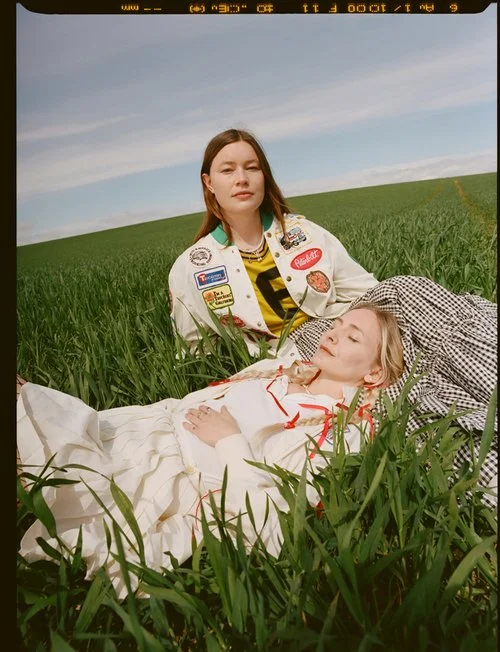
PHOTO CREDIT: Justin Hardiman

 Leon Bridges - Why Don't You Touch Me  

___________

I am being a bit cautious…

 PHOTO CREDIT: Justin Hardiman

when it comes to the five best tracks of this year. As there is still enough time for a song to steal in there, I am pretty sure about my first few selections. I especially love Leon Bridges’ Why Don’t You Touch Me. A typically stunning release from the Texan artist, it is taken from his new album, Gold-Diggers Sound. That was released back in July. That album ranks alongside the best of this year. I love Why Don’t You Touch Me, as it is the best track on the album. It is also a song where its visuals were split into two. You can see the effort that Bridges and his team put into making the videos as stunning as possible. At a time where I don’t think videos are as detailed and original as they could be, Why Don’t You Touch Me looks amazing! This is what Revolt said about the two-part video earlier in the year:

Leon Bridges is steadily prepping fans for the release of his July project Gold-Diggers Sound. First up was his “Motorbike” single, and now he returns with his “Why Don’t You Touch Me” offering, which arrives with visuals that are split into two parts. On the song, Leon sings about coming to terms with when two lovers may be losing their fire:

I‘ve been feeling way too undesired, before the flaming out, all around, this was all on fire/ I can feel the distance go for miles/ But cold is all you are and it’s causing chills, what’s with all this? You won’t even talk about it

Can you be honest, is you just running out of thrills?/ ’Cause every time you put me second, yeah/ Girl, make me feel wanted, don’t leave me out here unfulfilled/ ’Cause we’re slowly gettin’ disconnected, yeah

In October of last year, Leon Bridges tapped in with one of R&B’s favorites Lucky Daye for their “All About You” collab. He also shared a few words about how it came about. “For this song, we set out to bring back the energy of some of the ‘90s R&B greats we grew up listening to,” Bridges said about the song via press release. “The way [collaborator] Lucky [Daye] and I met was completely organic. One night when I was out on the town in LA, I ran into a friend of Lucky’s who suggested that we should collaborate.”

Leon Bridges’ last full-length release was Good Thing back in 2018, and he has released a slew of singles since then like this year’s “Sweeter” featuring Terrace Martin, and also his four-track collaboration project Texas Sun with Khruangbin”.

With the single released on 17th June, it was a nice mid-year treat for us all. I have been a fan of Leon Bridges since he released his debut album, Coming Home, in 2015. He delivered an assuredly sublime and remarkable song with Why Don’t You Touch Me. One of the very best songs from Gold-Diggers Sound, go and listen to the song if you have not done so already. I have been playing it a lot since it came out. I also reviewed the track and was amazed by its video (I reviewed the song and included the first of the two videos).

I will finish off with a snippet of an interview from The Guardian, where we get a sense of what it was like recording Gold-Diggers Sound. The album, as noted, is Bridges at his most vulnerable:

After finishing Good Thing, Bridges, Grammy-winning producer Ricky Reed (Halsey, Lizzo) and guitarist Nate Mercereau decided to make a third record that better reflected the broad range of Bridges’ influences – everything from Ginuwine’s irrepressibly sexual R&B to Townes Van Zandt’s despondent country. Moreover, Bridges hoped that in doing so, he would challenge some people’s myopic notions about the kind of music he should be making.

One thing I’ve noticed is that fans tend to want to put boundaries on Black expression. If I wear a grill or dance to some hip-hop with my homies, people are in the comments like, ‘What happened to …?’ ‘I wish you were …’ They want me to play it safe,” Bridges says. “I can get down on some Marvin Gaye shit and some Young Thug shit, and it’s all us. This is our culture.”

To make the record, he, Reed and Mercereau drank tequila in the afternoon and coffee at night, piecing together songs from extensive jam sessions. Reed pushed Bridges to reveal more of his personal life on record. “Our sessions were like noon to five,” the producer explains. “Then every night Leon goes out, does his thing, and comes back the next day: ‘Ah, it was crazy, man. We started here, then went there, and had dinner with so-and-so.’ And I’m like: can I get that guy in the studio? Can we get night-time Leon on record?”

Gold-Diggers Sound offers sides of “night-time Leon” – the aforementioned Magnolias or the southern blues-soul-gospel hybrid Sho Nuff – but it also shows Leon at his most vulnerable and political. Sweeter finds Bridges yearning for peace for Black people, an escape from “those judging eyes”. Though the pandemic stalled his plans to release Gold-Diggers Sound in 2020, Bridges released Sweeter at the height of last year’s protests against police brutality. He couldn’t remain silent”.

One of the truly great tracks of this year (I am including singles as opposed album tracks), Why Don’t You Touch Me is a pearl. I know that Leon Bridges will continue to make sensational music for years to come. Tracks like Why Don’t You Touch Me are proof of his…

IMMENSE talent!

FEATURE: To Hear Your Footsteps Saying… Kate Bush’s December Will Be Magic Again and Home for Christmas

FEATURE:


To Hear Your Footsteps Saying…

Kate Bush’s December Will Be Magic Again and Home for Christmas

___________

I wrote about…

the Kate Bush Christmas single, December Will Be Magic Again, a while back. I think her two Christmas tracks are very underrated. Home for Christmas is also a very good song. I know it may be a bit early to talk about Christmas, but these are songs that are so warming and beautiful! There is more information about December Will Be Magic Again, so I will work my way up to that. Home for Christmas originally appeared in on The Comic Strip Presents film, Wild Turkey. That was screened on 24th December, 1992. I love the music Bush recorded between 1991 and 1993. Maybe not the most celebrated period of her career, she covered Elton John’s Rocket Man in 1991. She released The Red Shoes in 1993. This Christmas track in the middle is a delight that really evokes the spirit of the season! In the song, Bush projects this sweetness and child-like hope: “You know that I'll be waiting/To hear your footsteps saying/That you'll be coming home for Christmas/Please say you won't forget me/That every moment's empty/But only 'til you're coming home for Christmas”. There is this longing and sense of desire that runs through quite a few Christmas songs. Rather than wanting anything material or commercial, it is the hope of bring with someone. Like Mariah Carey’s All I Want for Christmas Is You – though Bush is less impassioned and radiant; more sensual and smoky -, Bush has her eyes and desires on someone special. To be with them, in spite of everything.

Whereas Carey wanted to eschew presents just to be with one person, Bush is battling against the weather and distance. Home for Christmas was released as the B-side to the U.K. single, of Moments of Pleasure; also as the B-side to the U.S. single, Rubberband Girl. The vocal on Home for Christmas reminds me of the turn she would produce on The Man I Love in 1994. That was for a tribute album to George & Ira Gershwin, The Glory of Gershwin. In that song, Bush provides such a soulful, sexy and shivering vocal that is among her very best. Maybe Home for Christmas’ vocal inspired her a couple of years later. Although the lyrics are simple, they are picturesque and evocative: “If I only had wings/Then I would fly to you/Through all the snowy weather/We'd be together/No one makes me feel the way you do”. I wonder whether Bush has thought about a Christmas songs in the years since 1992. The song was included in the 2018 album, Section from The Other Sides, and 2019’s The Other Sides. That is a treasure trove of B-sides and rarities. Even her less-exposed and known songs have something special and original about them. I don’t think I have heard Home for Christmas played on the radio. That is a shame, as it is a really beautiful song that is worthy of some airplay this time of year!

The better-known Bush Christmas song, December Will Be Magic Again, was released as a standalone single on 17th November, 1980. I missed marking the forty-second anniversary. It is being played on radio now and, as we head through December, I guess it will be played even more – given how its title sort of suggests that this is the month it is suited for. Bush originally recorded the song in 1979 and premiered it during the Christmas Special in December 1979. December Will Be Magic Again was issued as the follow-up to Army Dreamers (a single from 1980’s Never for Ever). I wanted to hold off doing a feature about December Will Be Magic Again until after its anniversary, just so it was closer to Christmas and December itself. It is one of the great ‘lost’ singles that is low on critics’ list of her best releases. Even though one would (or would expect to) hear it in November and December, it is a beautiful track that should not be written off as a mere novelty. During the period where she recorded Never for Ever (September 1979 – May 1980), we got this one-off track that was not on that album.  I am not sure whether there was demand from EMI for her to release her first Christmas single, or whether Bush herself felt that it was time. She has always had this child-like fascination with the wonder and magic of life. On 2011’s 50 Words for Snow, even though it is not a Christmas album, one can feel her immersed in winter and the highs and lows of snow. I almost expected to hear a Christmas song on that album!

December Will Be Magic Again reached thirteen in Ireland and twenty-nine in the U.K. That is surprisingly low. Army Dreamers got to number sixteen in the U.K., whilst the follow-up single from a studio album, Sat in Your Lap (from 1982’s The Dreaming) came out in June 1981, and it got to number eleven. This was, maybe, a period where people were waiting for a new Kate Bush album and she wasn’t as in the spotlight as much as she was prior to Never for Ever and The Dreaming. That said, December Will Be Magic Again came out only a couple of months after Never for Ever. Whatever the reason for a slightly low chart performance, it is a song that I really love! So many people have posted on social media the past week or two about how they enjoy hearing December Will Be Magic Again. I love how there was her Christmas Special, where Bush got to perform a selection of songs. In 1979 – when the show aired – she had come off the back of The Tour of Life. Ahead of Never for Ever, she still had enough material under her belt. With her first two albums, 1978’s The Kick Inside and Lionheart, together with some other material, it was a brilliant (if curiously un-Christmas-like) T.V. special. Last December, this article came out that discussed Bush’s 1979 Special. December Will Be Magic Again was the only Christmas-related song on the bill:

But then there’s the Kate Bush Christmas Special, “titled simply Kate on-screen,” writes Christine Pallon. The program, which “aired on the BBC on December 28th, 1979,” followed on the heels of the Tour of Life, the whirlwind debut concert series that promised, but did not deliver, so many more. “The Christmas special’s choreography borrows heavily from that tour. But where she sang live on the Tour of Life, she lip-syncs to pre-recorded tracks here and incorporates pre-recorded video segments. As a result, the Christmas special plays out more like a crazy, longform music video than a traditional stage show.”

Does Kate Bush sing Christmas songs? Does she sit on Santa’s lap? Does she mime, arms akimbo, before the yule log?

Does she lounge on a piano next to a Golden Age crooner?

C’mon…

Okay, she sings one Christmas song, “December Will Be Magic Again,” an original released as a UK single that year. The song pays earnest homage to traditional Christmas figures like Bing Crosby, Saint Nick, and Oscar Wilde before Kate turns into some kind of strange Santa-like being who drops down on “the white city” in a parachute to “cover the lovers.”

Otherwise, the Christmas Special draws on Bush’s first three albums. In addition to her entourage of dancers and backup lip-syncers, she also invites a special guest—Peter Gabriel, of course (who might just as well be called the male Kate Bush)—to sing his “Here Comes the Flood” and duet with her on the extremely downbeat “Another Day.”

Christmas spirit? Who needs it? This is Kate, answering the age-old question, Pallon writes, “what would happen if the BBC gave a Christmas special to an incredibly ambitious 21-year-old art rocker who also smokes a ton of weed?” See the full tracklist, with timestamps, just below. Enjoy, and Happy Kate Bush Christmas Special Day!

Kate Bush – Christmas Special Tracklist:

(Intro) 00:00
Violin 
00:29
(Gymnopédie No.1 – composed by Erik Satie) 
03:44
Symphony In Blue 
04:44
Them Heavy People 
08:20
(Intro for Peter Gabriel) 
12:52
Here Comes The Flood (Peter Gabriel) 
13:22
Ran Tan Waltz 
17:02
December Will Be Magic Again 
19:43
The Wedding List 
23:35
Another Day (with Peter Gabriel) 
28:05
Egypt 
31:41
The Man With The Child In His Eyes 
36:21
Don’t Push Your Foot On The Heartbreak 
39:24”.

I love both of Kate Bush’s Christmas songs. It is the time of year where we are hearing a lot of Christmas tracks. I have heard December Will Be Magic Again played a few times. As we are now in December, it is the time to play the song loud! Both Home for Christmas and December Will Be Magic Again are beautiful tracks that convey and relate to that special time of year in different ways. The former is more sensual, lustful and deeper-sounding, whereas December Will Be Magic Again is more child-like and wide-eyed. With these two dreamy and underrated Christmas tracks out in the world, I hope that they get plenty of airtime! Whilst minor songs in the Kate Bush cannon, they are both too good…

TO be ignored.

FEATURE: My Five Favourite Tracks of 2021: Wet Leg – Chaise Longue

FEATURE:


My Five Favourite Tracks of 2021

Wet Leg – Chaise Longue

___________

I am at the three-fifths stage…

of a feature where I decide my favourites of the year. I could not ignore the debut single from the Isle of Wight duo, Wet Leg. Rhian Teasdale and Hester Chambers formed the group and, this year, have seen their music take them to huge radio stations and festivals. If you have not heard their track, Chaise Longue, then give it a listen. I am going to quote a couple of articles where the duo looks ahead (as they released a second single. Wet Dream, not too long ago). It does seem we will get an album spring next year. Before then, Under the Radar Mag give us some Wet Leg background in their interview - in addition to the duo discussing their noted and celebrated debut single:

The Isle of Wight, located in the English Channel just a few miles off the south coast of the UK, has certainly been punching above its weight, musically speaking of late. Post-punk duo Wet Leg is the latest buzz band to emerge from the Isle, comprising of friends Rhian Teasdale and Hester Chambers. They’ve also recently signed to Domino Records and released their debut single “Chaise Longue” to universal acclaim.

Teasdale and Chambers met at music college and initially played in other bands before coming together to form Wet Leg. “It wasn’t until a few years after we met that we started playing together. I played the guitar on some of Rhian’s solo work and she’d play the piano on some of my stuff,” explains Chambers. “It was great fun but ultimately we decided we wanted to take a different tack, do something that was a little bit more fun and we also wanted to ‘rock out’ a bit more.”

The band name encapsulates their playfulness and irreverent sense of fun. “Wet Leg” has no coded meaning, nor was it borne out of an existential crisis. “It doesn’t really mean anything,” laughs Chambers. “It was just a couple of words that we kept coming back to. It’s quite funny when people ask us what it means and we can’t explain it. Ultimately it can mean whatever you want it to mean.”

Wet Leg’s tongue in cheek humor abounds on their hypnotic debut single, “Chaise Longue.” Fittingly the track was inspired by Chambers’ grandfather’s chaise longue. “I kind of inherited it,” she explains, “and it now lives in my flat. When Rhian stays over it’s also where she sleeps. She actually wrote all the lyrics to ‘Chaise Longue’ whilst sitting on the chaise longue (all day long).”

It only took a few demos to convince Domino Records to sign Wet Leg. “Given we’d formed pretty much at the start of the pandemic and Domino hadn’t really seen us live,” reveals Chambers. “It’s so great that they have put their faith in us.”

Chambers is also delighted, albeit somewhat taken aback, about how “Chaise Longue” has resonated with people. At the time of this writing its video has over 800,000 views on YouTube, with comments such as “This has got to be the greatest debut single in years,” “Finally something fucking different, that does something new,” and “This is going to skyrocket, and if it doesn’t, it’ll be one of the coolest gems in music history.”

“It’s been a lovely surprise,” she says, “we wrote it in one an evening, just writing for fun and being silly and we had no clue at the time that it would connect with so many people”.

NME interviewed Wet Leg earlier in the year following their successful debut single. It has taken on a life of its own:

In June, debut single ‘Chaise Longue’, a barnstormer stuffed with impatient, overdriven riffs and deadpan one-liners (“Would you like us to assign someone to butter your muffin?”), went unexpectedly viral – a feat so astonishing that it’s practically unheard of for guitar bands in their position. It is instantly quotable, almost painstakingly addictive, and has now been played over 2 million times on Spotify alone, helping Wet Leg find an international audience eager for their provocative lyrics and Violent Femmes-inspired grooves. This memorable introduction certainly got people talking (perhaps “a little too much”, suggests a still-bewildered Chambers), but above all else, it begged the question: when was the last time that guitar music felt this goddamn exciting?

“We could have never predicted this,” says Chambers over Zoom, pondering why the duo’s music has been received so eagerly. “We do feel really lucky – but we still have no idea what’s happening.” She looks over to Teasdale halfway through her sentences, almost as if to check that they are both on the same wavelength. “I think we’re just going to live in the moment as much as we can. I just can’t imagine things ever getting better than they are now”.

It is definitely not the case that Wet Leg are one-hit wonders! As they discussed with The Forty-Five in a great interview, there is the tantalising prospect of an album in a matter of months:

They managed to record ‘Chaise Longue’ just before lockdown hit and in June 2021, Domino Records (Arctic Monkeys, Cat Power, Georgia) came a-knocking, taking a punt and signing them off the back of not very much at all. A week later, ‘Chaise Longue’ was released and everything blew up. The video now boasts 1.3 million views on YouTube and the song has been streamed close to four million times on Spotify. Not bad for a debut track.

By their own admission, Wet Leg are a classic introvert/extrovert pairing, Hester being the quiet one, sweet and softly spoken to frontwoman Rhian’s slightly more confident exterior. Their overall vibe – as reflected in their lyrics and oddball videos – is surrealist cottagecore post-punk. Think killer riffs, sassy one-liners, prairie dresses and the occasional giant lobster claw thrown in for good measure. They’ve been compared to the likes of Karen O, The Breeders and Le Tigre, names that feel weighty but not ill-fitting”.

But there’s not much chance of that. With so much momentum and a chaise longue full of good songs, it’s no surprise that a debut LP is already in the works.

“We’re hoping to release an album next spring or summer,” Rhian says, looking somewhat incredulous.

The pair have been working with Speedy Wunderground super-producer Dan Carey (Goat Girl, Fontaines DC, Squid) but as to whether Carey is producing the whole album? “We’re not sure if we can divulge that information”, Rhian says, squirming in her seat a little”.

 PHOTO CREDIT: Holly Whitaker

I will wrap up by linking to Chaise Longue by sourcing a DIY interview from September. Stamping their mark on the scene with that debut single, many might wonder, sonically, whether Wet Leg will remain on the same course, or whether there will be surprised. It seems that, already, they have at least one famous fan:

“With the music world waiting on tenterhooks for their next moves (and a second single out later this month), Wet Leg are remaining coy about exactly what else they’ve got up their sleeves but explain, via cheery giggles, that the band offers them an outlet for their naughtier sides. “I guess sometimes it’s nice being able to lyrically say all the things you wanna say but wouldn’t because they’re not necessarily the kindest things,” Rhian hesitantly offers.

For example? “Well, there’s one called ‘Piece of Shit’ which is about a past relationship,” she chuckles. “I know it’s the old cliche of writing songs being cathartic, but that was a good one. It’s SASSY,” she declares, with a wiggle of the shoulders.

And it’s a recipe that’s already paying dividends. Don’t believe us and every other music source vehemently proclaiming Wet Leg’s status as the definitive ones to watch? Just ask Paramore’s Hayley Williams. “She DMed us and I DIED. We all just DIED,” squeaks Hester.

“It was just beyond our capabilities to think that the song would be listened to by anyone, so the fact that people are really excited has blown our minds,” she continues with a grin. “I sound so gushy, but if I told 17-year-old me that we’d be here right now she’d say, ‘No way’. But now this band is all I think about”.

I am going to wrap up now. One of 2021’s clear standouts, Wet Leg’s Chaise Longue is a song that is still being talked about! A terrifically quirky and urgent song from Rhian Teasdale and Hester Chambers, Wet Leg are going to have a very busy and successful 2022. There are so many people wondering what is next…

FOR the incredible duo.

FEATURE: Second Spin: Bryan Adams - Waking Up the Neighbours

FEATURE:


Second Spin

 Bryan Adams - Waking Up the Neighbours

___________

I feel Bryan Adams…

is one of those artists that gets a bit of a bad rap. Maybe he is seen as a bit reserved for a particular audience, or that his music is not that cool. I grew up listening to his music. One of my favourite albums of his, Waking Up the Neighbours, was released in 1991. My favourite track from the album, Can’t Stop This Thing We Started, got to number two in the U.S. One of the issues with Waking Up the Neighbourhood was that there was some controversy in Canada concerning the system of Canadian Content. Even though Adams was one of Canada's biggest artists at the time, the specific nature of his collaboration with non-Canadians, combined with his decision to primarily record the album outside Canada, meant that the album and all its songs were not considered Canadian content for purposes of Canadian radio airplay. Even so, the album reached number one in Canada, in addition to the U.K. and other nations. I feel it is one that gets played on certain radio stations now - and yet there are many who overlook it. It is definitely worth fonder and more extensive appreciation. I want to bring in a couple of reviews. The second is positive, whereas the one here is a little more mixed:

Although not as good as Reckless, Bryan Adams' 1991 album, Waking up the Neighbours, signaled his commercial apex. Bridging the time gap between '80s arena rock and '90s angst-ridden grunge, the album also ushered in an era in which Adams became more known for his sweeping power ballads than his straight-ahead rock tunes. This album, filled with nearly 75 minutes of showstopping arena rockers and mid-tempo ballads, churned out no less than five hit singles, the most notable being the Robin Hood Prince of Thieves theme "(Everything I Do) I Do It for You."

That ballad spent seven weeks atop the U.S. pop charts, becoming the longest-reigning American chart-topper since Prince's "When Doves Cry" seven years earlier. The song also became a phenomenon in Europe, becoming Adams' biggest hit ever. Other singles which followed included the joyous rocker "Can't Stop This Thing We Started," which became a number two hit, the mid-tempo ballads "Do I Have to Say the Words" and "Thought I'd Died and Gone to Heaven," and the fun, straight-ahead rocker "There Will Never Be Another Tonight." Waking up the Neighbours was co-produced by Robert Jon "Mutt" Lange, and as a result, many of these songs sound as though they could have easily been Def Leppard recordings, especially "All I Want Is You," which sounds like "Pour Some Sugar on Me" part two. Nonetheless, Waking up the Neighbours is a fun album and perfect for those who expect nothing more than an old-fashioned good time from their rock & roll”.

I can see what the review says about some of the songs (on the album) sound like they were made by other artists. I think that Waking Up the Neighbours was a great follow-up to the slightly underwhelming Into the Fire. Even though the record was recorded between at a couple of studios - Battery Studios in London, and The Warehouse Studio in Vancouver – it does sound cohesive and together. Away from the string of singles from the album, many of the deeper cuts are strong and warrant a closer look.

Rolling Stone reviewed Waking Up the Neighbours when it was released in 1991. I think that their review is a little fairer when it comes to the qualities and merits of Bryan Adams’ sixth studio album:

Waking up the Neighbours' will, with no sweat, reestablish Bryan Adams as the radio's hoarse purveyor of energy and fun. A scrupulously careful yet adamantly alive piece of work, this collaboration between the Canadian singer-guitarist and the Midas-touch songwriter-producer Robert John "Mutt" Lange alternates half-tamed sonic raunch like "Is Your Mama Gonna Miss Ya?" and "Hey Honey – I'm Packin' You In!" with eloquent mall ballads such as "(Everything I Do) I Do It for You," Adams's current planet-wide phenomenon, and the even moodier "Do I Have to Say the Words?" For further balance there is fairly soulful midtempo rock ("Depend on Me") and an oddly toned state-of-the-world finale called "Don't Drop That Bomb on Me."

Like most capable pop craftsmen hellbent on seizing the airwaves, Adams and Lange walk a fine line between familiarity and derivativeness, between the blazingly immediate and the outright stale. So some tunes on Waking Up the Neighbours have turned out too broad for anyone's taste. "House Arrest" doesn't convey much of the atmosphere of "justa havin' a ball," and the hectoring sing-along "There Will Never Be Another Tonight" collapses into silliness in no time flat. More often, however, all Adams and Lange's high-impact verses and choruses and bridges and subbridges work like charms. The arrangements are only faintly dressed up with well-chosen bits of keyboard and percussion, and Bob Clearmountain's mix emphasizes Adams's vocals and Keith Scott's memorable guitar hooks – not, as per current market fashion, the rhythm section.

Bryan Adams became a superstar on the basis of Reckless, from 1984, an album released just as Bruce Springsteen's Born in the U.S.A. was beginning to exert its enormous influence over how guitar-defined popsters should think, sound and wear their denim. Three years later, with his dull Into the Fire, Adams let his always believable passion for melody and crunch lead him into attempts at the sort of topical, introspective songwriting that Springsteen and John Cougar Mellencamp sometimes can pull off. But between 1987 and right now, the Traveling Wilburys restored humor and the Black Crowes embraced vulgarity. However you may feel about this turn of events in the evolution of nonmetal, bestselling guitar pop, one thing seems certain: It's coaxed Bryan Adams back toward his natural calling”.

Adams’ fifteenth studio album, So Happy It Hurts, is out next year. Over forty years since the release of his debut album, 1980’s Bryan Adams, the Canadian legend is releasing great music still. I feel Waking Up the Neighbours ranks alongside his best albums. I don’t think that a lot of people have heard it or have spun it for a while. I really like it. Alongside the big hits like (Everything I Do) I Do It for You and All I Want Is You, there is a lot to enjoy on the 1991 smash. Waking Up the Neighbours is an album people should…

SPEND some time with.

FEATURE: Stronger: The Amazing Britney Spears at Forty: Her Greatest Tracks

FEATURE:


Stronger

The Amazing Britney Spears at Forty: Her Greatest Tracks

___________

THIS year has been…

 PHOTO CREDIT: WireImage

a real rollercoaster for Britney Spears. After being emancipated and released from a rancorous conservatorship run by her father, she is now a free artist. It has been an emotionally stressful and hard year for her. In fact, if one looks back, Spears has been controlled for so many years. Before coming to some biography, this article looks at how Spears reacted to her friend, Christina Aguilera’s reaction to Spears’ victory and freedom:

Britney Spears has voiced her upset after Christina Aguilera’s reaction to a question about the Piece Of Me singer’s conservatorship during a red carpet interview.

On Friday night, Britney posted footage of Christina on the red carpet of the Latin Grammys on her Instagram story, with the latter being asked by reporters: “Have you had any communication… have you guys had any communication? Have you been able to celebrate?”

As Christina looked over to her publicist, he interjected, stating: “No, we’re not doing that. Sorry. Thank you, no. Bye.”

“I can’t,” Christina then said, before adding: “But I’m happy for her!”

Reacting to the footage, Britney wrote: “I love and adore everyone who supported me… but refusing to speak when you know the truth, is equivalent to a lie!!! 13 years being in a corrupt abusive system yet why is it such a hard topic for people to talk about??? I’m the one who went through it!!! All the supporters who spoke up and supported me, thank you… yes I do matter!”

Britney then posted a clip of Lady Gaga, who was asked a similar question while promoting her new film House Of Gucci.

“The way that she was treated in this business was really wrong,” Gaga said. “The way that women are treated in the music industry is something that I wish would change. I think that she will forever be an inspiration to women”.

As the iconic and hugely inspiration Britney Spears is forty on 2nd December, I wanted to mark that with a selection of her best and biggest tracks. Prior to that – so that I can include some interviews and music videos -, here is some biography that details the life and work of one of music’s greatest Pop artists:

Britney Spears is the defining figure of the Y2K pop era, the artist who shaped the sound and look of pop music in the first decade of the 21st century. Like Madonna before her, Spears melded her music to her image so thoroughly, it became impossible to separate the two: the title of "...Baby One More Time," her 1999 breakthrough hit, evokes the industrial Max Martin-produced hook and Spears' schoolgirl dance routine in equal measure. "...Baby One More Time" arrived in early 1999, months after the launch of MTV's Total Request Live and just as the pop charts were shaking off post-alternative doldrums in preparation for millennial bacchanalia that was just around the corner. Spears provided the soundtrack for that era as she moved from fizzy bubblegum like "(You Drive Me) Crazy" to the slinkier, sexier funk of "I'm a Slave 4 U." Hits were certainly central to Spears' appeal but she didn't reach the Billboard Top Ten with the same regularity as her fellow Mickey Mouse Club veterans Justin Timberlake, who fronted the boy band *NSYNC, and Christina Aguilera. Spears' stardom transcended the confines of the charts and even film, television, and the tabloids. Her cultural omnipresence in the 2000s elevated her to iconic status, turning her into the embodiment of all of that decade's glorious excesses. Spears' presence as a pop idol endured even after her personal problems led to her being placed in a conservatorship in 2008. In the years that followed, she continued to work, appearing as a judge on The X Factor, releasing singles that brought her back to the top of the charts and settling into a series of Las Vegas residencies.

Britney Jean Spears was born December 2, 1981, in the small town of Kentwood, Louisiana, and began singing and dancing at a young age. With a nationally televised appearance on Star Search already under her belt, Spears auditioned for the Disney Channel's The New Mickey Mouse Club at age eight. The producers turned her down as she was too young, but one of them took an interest and introduced her to an agent in New York. Spears spent the next three years studying at the Professional Performing Arts School, and also appeared in several television commercials and off-Broadway plays. At 11, she returned to The New Mickey Mouse Club for a second audition, and this time made the cut. Although her fellow Mouseketeers included an impressive array of future stars -- *NSYNC's Justin Timberlake and JC Chasez, Christina Aguilera, and Felicity actress Keri Russell -- the show was canceled after Spears' second season. She returned to New York at age 15 and set about auditioning for pop bands and recording demo tapes, one of which eventually landed her a deal with Jive Records.

Spears entered the studio with top writer/producers like Eric Foster White (Boyzone, Whitney Houston, Backstreet Boys) and Max Martin (Ace of Base, Backstreet Boys, *NSYNC). In late 1998, Jive released her debut single, the Martin-penned "...Baby One More Time." Powered by its video, in which Spears and a troupe of dancers were dressed as Catholic school jailbait, the single shot to the top of the Billboard charts. When Spears' debut album of the same title was released in early 1999, it entered the charts at number one and stayed there for six weeks. Once the ubiquitous lead single died down, the album kept spinning off hits: the Top Ten "(You Drive Me) Crazy," the near-Top 20 ballad "Sometimes," and the Top 20 "From the Bottom of My Broken Heart." By the end of 1999, ...Baby One More Time had sold ten million copies and went on to sell a good three-plus-million more on top of that. Its success touched off a wave of young pop divas who included Christina Aguilera, P!nk, Jessica Simpson, and Mandy Moore. Spears was a superstar.

By the time ...Baby One More Time finally started to lose steam on the singles and album charts, Spears was ready to release her follow-up. Oops!...I Did It Again appeared in the spring of 2000, and the title track was an instant smash, racing into the Top Ten. The album itself entered the charts at number one and sold over a million copies in its first week of release, setting a new record for single-week sales by a female artist. Follow-up singles included "Lucky," the gold-selling "Stronger," and "Don't Let Me Be the Last to Know," which was co-written by country diva Shania Twain and her producer Mutt Lange. A year after its release, Oops!...I Did It Again had sold over nine million copies. Rumors that Spears was dating *NSYNC heartthrob (and fellow ex-Mouseketeer) Justin Timberlake were eventually confirmed, which only added to the media attention lavished upon her.

For her next album, Spears looked ahead to a not-so-distant future when both she and much of her audience would be growing up. Released in late 2001, Britney tried to present the singer as a more mature young woman, and was accompanied by mild hints that her personal life wasn't always completely puritanical. It became her third straight album to debut at number one, although this time around the singles weren't as successful; "I'm a Slave 4 U," "I'm Not a Girl, Not Yet a Woman," and "Overprotected" all missed the Top Ten. In early 2002, Spears' feature-film debut, Crossroads, hit theaters, but its commercial performance was somewhat disappointing; moreover, her romance with Timberlake fizzled out not long after. Spears next made a cameo appearance in Mike Myers' Austin Powers: Goldmember, and contributed a remix of "Boys" to the soundtrack. Meanwhile, sales of Britney stalled at four million copies, perhaps in part because a new breed of teenage female singer/songwriters, like Michelle Branch and Avril Lavigne, was emerging as an alternative to the highly packaged teen queens. Spears took a break from recording and performing for several months, and began work on a new album in early 2003. The results, In the Zone, reflected a wish to be taken seriously as a mature (though still highly sexualized) adult. Predictably, it topped the charts and launched several singles into orbit, including the musically adventurous "Toxic," "Everytime," and "Me Against the Music."

In the Zone hit number one on the Billboard 200, and "Toxic" snagged a Grammy for Best Dance Recording, but in 2004 Britney's personal life started to hit the tabloids on a regular basis. She had a brief two-day marriage to childhood friend Jason Alexander, followed by the controversial Onyx Hotel tour, which was eventually canceled despite positive financial numbers. Soon, Britney revealed her relationship with her former backup dancer Kevin Federline. Spears and Federline married in September and were tabloid regulars in the months after the ceremony; some of this relationship was documented in Chaotic, a UPN reality show consisting mostly of their own home videos.

The year 2005 was no less eventful for Spears. She released Greatest Hits: My Prerogative that January, but it was the announcement of her pregnancy that really garnered the headlines. Her son Sean was born in September, and a bidding war ensued for first rights to the baby photos. As the hubbub surrounding Sean's birth continued, Britney released a remix album just in time for the holiday season. In 2006, Spears discovered she was pregnant again; shortly after the birth of her second son, Jayden, she divorced Federline. Following another headline-grabbing incident in early 2007 (in which Spears spontaneously shaved her head at a salon in Tarzana, California, much to the delight of nearby photographers), Spears sought help at Malibu's Promises Treatment Center. After leaving the facility, she began working on her comeback album and performed a few small shows at House of Blues locations in Los Angeles, San Diego, Anaheim, and Las Vegas that May. Despite ongoing turmoil in her life that summer and fall, Blackout arrived in October 2007. It proved to be her least successful album to date, charting three Top 40 hits but failing to achieve platinum certification within its first year of release.

Spears was dealt more blows in early 2008 when she lost custody of her children, made several court appearances, and was placed on involuntary psychiatric hold twice in one month. Blackout nevertheless won several MTV-sponsored awards, including Album of the Year from the Europe Music Awards in November 2008. That same fall, "Womanizer," the lead-off single from Spears' next record, became her first number one single in nearly a decade. The full-length Circus arrived in December, featuring a mix of syrupy ballads and uptempo dance numbers that were designed to fuel Spears' comeback. In 2009, the single "3" followed "Womanizer" to the top, and appeared on her career-spanning compilation The Singles Collection. In 2011, Spears returned with the studio album Femme Fatale, featuring the single "Hold It Against Me," which became her fourth single to top the Billboard Hot 100. The second single, the Ke$ha co-written "'Til the World Ends," didn't top the charts but it was a bigger hit, going double platinum in the U.S.

Britney supported Femme Fatale with an international tour that ran until the end of 2011; at the end of the year, the home video Live: The Femme Fatale Tour was released. Spears made a splashy return to television in 2012 when she signed to be one of the celebrity judges on the second season of the U.S. version of Simon Cowell's The X Factor. The show returned in the fall of 2012. Spears did not return to the show for its third season. Also in 2012, Britney appeared on will.i.am's track "Scream and Shout." This was the beginning of a greater partnership, as will.i.am wound up as the executive producer for her eighth studio album, Britney Jean. Preceded by the single "Work Bitch" -- along with a Britney cameo on Miley Cyrus' 2013 album Bangerz and the announcement of a two-year residency in Las Vegas -- Britney Jean appeared during the first week of December 2013. Although Britney Jean debuted in the Top Five on the Billboard 200, it would be her lowest-performing album to date. In the following years, she continued her Vegas residency and contributed to a pair of new tracks: "Pretty Girls" with Iggy Azalea and a cover of Suzanne Vega's "Tom's Diner" for Giorgio Moroder.

Spears released "Make Me," a midtempo track featuring rapper G-Eazy, in July 2016, with the full-length Glory appearing a month later. Glory peaked at three in the U.S., two in the U.K., and wound up generating only one other charting single, "Slumber Party," which peaked at 86. Spears supported Glory by taking her Vegas show on the road in 2017. Her Britney: Piece of Me production wrapped in Las Vegas at the end of 2017 and there were plans for another residency called Britney: Domination for February 2019, but it was canceled after her father suffered serious health problems. Spears entered an "indefinite work hiatus" that lasted into 2021, a period punctuated by a deluxe version of Glory in 2020”.

Because Spears is now, let’s hope, in a position where she can take stock and continue her career how she sees fit. I am not sure whether there will be another album in the next year or two. It would be interesting to see what Spears comes out with. She is an artist that I first heard when she put her debut album out in 1999. One of the most the most important artists of her generation, let’s all hope that Spears is happy and settled. I hope that she performs and releases music…

FOR a long time yet.

FEATURE: When All Is (Almost) Said and Done: ABBA’s The Visitors at Forty

FEATURE:


When All Is (Almost) Said and Done

 ABBA’s The Visitors at Forty

___________

A matter of weeks after ABBA…

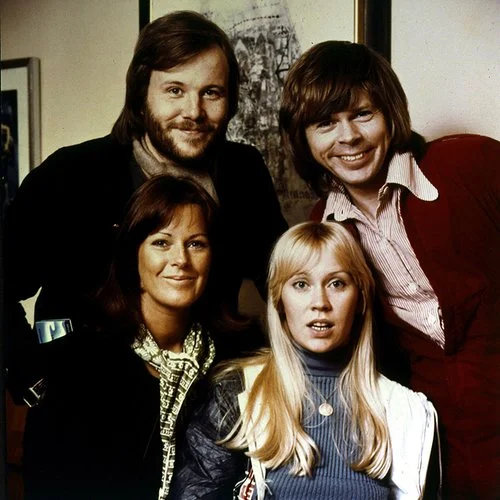
put out their latest album, Voyage, we are about to mark the fortieth anniversary of the album that preceded it. The Visitors was the last album from ABBA - or that was what people assumed at the time. Released on 30th November, 1981, many would have guessed, after such a gap, that the Swedish icons were not going to come back with any more music. Going out on a real high, a lot of bands do not release such fantastic music when they are near the end. ABBA were, seemingly, in peak musical condition in 1981. There were tensions between Björn Ulvaeus and Agnetha Fältskog and Benny Andersson and Anni-Frid Lyngstad. The couples were either divorced or finalising the process. Because of that, the music on The Visitors has a darker tone than previous ABBA work. With such emotional damage and strain within the ranks, it is amazing that The Visitors sounds so complete, worked-through and consistent. It is not like they went into the studio, recorded the songs very quickly and left it at that! Even with ABBA at the point of breaking, the production and performances are amazing. I wanted to source an article that looks into the album’s recording and the differences between The Visitors and the previous release, Super Trouper:

On November 30, 1981, ABBA’s final studio LP, The Visitors, was released in Sweden. The album was the sound of a group coming to terms with their marital splits and the prospect of life after ABBA. In this feature we take a look at the making of the group’s most controversial piece of work.

On March 16, 1981, Björn, Benny and their four trusted backing musicians – Lasse Wellander, guitar, Rutger Gunnarsson, bass, Ola Brunkert, drums and Åke Sundqvist, percussion -– entered Polar Music Studios together with engineer Michael B. Tretow to start work on the first batch of backing tracks for ABBA’s eighth studio album. Only five months had elapsed since they completed work on their previous LP, Super Trouper, but ABBA was no longer the same group. Just four weeks before these initial recording sessions, Benny and Frida had announced their decision to go their separate ways, just like Agnetha and Björn had done in 1979. Thus, the group that had once consisted of two couples was now made up of four colleagues, sharing a sense of respect for the professional capacities of each member, but not socialising very much outside the recording studio.

Frida in the video for When All Is Said And Done. Although ABBA often wanted to avoid making their private feelings public in their music, at least in an overtly literal way, the past few years had seen a change in attitude in that respect. Two of the songs recorded during the initial sessions for the new album were certainly coloured by recent events within the group. ’When All Is Said And Done’ dealt expressly with the split between Benny and Frida, exploring the inevitability of their separation. Frida handled the lead vocals, and Björn, who wrote the lyrics, made sure that she felt okay with the subject matter. Frida assured him that she was only eager to get this chance to express her true feelings. ”All my sadness was captured in that song,” she later recalled.

But Björn didn’t stop at exploring the feelings of his fellow band members at this time, he also did some private soul-searching. The lyrics for ’Slipping Through My Fingers’, also recorded during the first sessions for the new album, pondered the conflicting feelings of parenthood. The direct inspiration was seeing his seven-year-old daughter Linda walk off to school one day. ”I thought, ’Now she has taken that step, she’s going away – what have I missed out on through all these years?’” No doubt, his feelings acquired another level of depth, considering the fact that Linda and her younger brother Christian no longer were living under one roof with both their parents. The lead vocalist on the song was, of course, Linda’s mother, Agnetha.

Kicking off the sessions with feelings of sorrow and regret certainly put its mark on much of the album. There were exceptions: the bizarre story of a man answering an ad in the personal column, placed by a girl and her mother, as depicted in ’Two For The Price Of One’, performed by Björn himself, was one. The other was ’Head Over Heels’, the story of a high-society lady dragging her exhausted husband to parties and in and out of boutiques, sung by Agnetha. Although it was eventually issued as a single, it was one of ABBA’s least successful seven-inch releases since their breakthrough, perhaps proving that the group were now only truly convincing when they explored darker territories.

One Of Us was the major hit single from The Visitors; here is Agnetha in the video.The album sleeve was photographed at the studio of artist Julius Kronberg. The first single off the album was the Agnetha-led ’One Of Us’ – ABBA’s final major worldwide hit – which dealt with a woman wishing that she could patch up a dead relationship, a divorce story that paralleled ’When All Is Said And Done’. Elsewhere on the album, darker subjects such as cold-war era threats of world destruction were explored in Agnetha’s ’Soldiers’, while the Frida-sung title track, ’The Visitors’, dealt with the fate of dissidents in the Soviet Union of the time. The closing selection, ’Like An Angel Passing Through My Room’, was a woman’s solitary musings, featuring only Frida’s voice accompanied by a very bare synthesizer arrangement. Bleak, indeed.

Sessions concluded with a mixing session for ’Soldiers’ on November 14, but by then the concept for the album had already been created. As usual, ABBA’s trusted sleeve designer, Rune Söderqvist, was the man behind the artwork. After giving the matter some thought, Rune came up with an ”angel” concept. The ”visitors” of the album title might very well be angels, he thought, and besides, the album included a track entitled ’Like An Angel Passing Through My Room’. The next step was to develop that concept into an idea for the album cover. ”I knew that the painter Julius Kronberg had painted a lot of angels in his time,” Rune recalled, ”so I located his studio – at the Skansen park [in Stockholm] – which contained several of his paintings.”

The album sleeve was photographed at the studio of artist Julius Kronberg.Together with photographer Lasse Larsson – who also shot the Super Trouper album cover –Rune Söderqvist assembled the group in the cold, unheated studio, and arranged a picture of them with a giant painting of an angel as backdrop. For the first time on an album cover, the members were depicted as separate individuals rather than a close-knit group. The physically chilly environment and the general sense of fatigue at being ABBA no doubt contributed to the mood at the photo session. ”We might not go on working with this forever,” Björn remarked at the time. ”We’ve emptied ourselves of everything we’ve got to give.” Indeed, the following year the group released only two further singles of newly recorded music before going their separate ways.

For Björn and Benny it was no longer creatively challenging to go on working within the ABBA concept. One track on The Visitors underlined their ambitions for the future: ’I Let The Music Speak’, with vocals by Frida, was structured very much like a theatrical number. Björn and Benny had long been thinking about writing a full-length musical, and during 1981 those thoughts were closer to being realised than ever before. The Visitors was released on November 30, 1981 and just two weeks later, Andersson and Ulvaeus had a meeting in Stockholm with lyricist Tim Rice – famous for his work with Andrew Lloyd Webber – discussing a potential collaboration. These initial talks eventually resulted in the musical Chess. ”If ABBA hadn’t recorded ’I Let The Music Speak’, I guess we would have used it in Chess,” Björn reflected later”.

When some bands change directions and release music that has a very different sound and feel, critics can go off them or hark back to the older days. The Visitors reached the number one spot in Sweden and the U.K. It also performed really well across Europe (hitting the top spot, among other nations, Belgium and Germany). This is what AllMusic observed in their retrospective review;

ABBA's final album was recorded during a period of major personal shakeups, principally in the decision by Benny Andersson and Frida to follow the same route to divorce that had already been taken by Björn Ulvaeus and Agnetha Faltskog. Both male members of the group would soon remarry, but at the time, despite all of these changes in their circumstances, The Visitors was never intended as ABBA's swan song -- they were to go on recording together. That may explain why, rather than a threadbare, thrown-together feel, The Visitors is a beautifully made, very sophisticated album, filled with serious but never downbeat songs, all beautifully sung and showing off some of the bold songwriting efforts. The title track is a topical song about Soviet dissidents that also manages to be very catchy, while "I Let the Music Speak" sounds like a Broadway number (and a very good one, at that) in search of a musical to be part of, and "When All Is Said and Done" is a serious, achingly beautiful ballad with a lot to say about their personal situations -- even "Two for the Price of One," a lighthearted song sung by Björn Ulvaeus about answering a personal advertisement, offered several catchy hooks and beautiful backup singing. "Like an Angel Passing Through My Room" ended the original album on a hauntingly ethereal note, but not as any kind of larger statement about the quartet's fate. The intention was to keep working together, but Andersson and Ulvaeus' growing involvement with their stage project, Chess, prevented any further work together by the group beyond three songs, "The Day Before You Came," "Cassandra," and "Under Attack" -- they're all present as bonus tracks on the 2001 remastered edition (in gatefold packaging), along with the orphaned B-side "Should I Laugh or Cry" from the same sessions as The Visitors, and only add to the appeal of the original album”.

Prior to wind things up, there is a Pitchfork review that I wanted to put in. I cannot find a bad review for The Visitors! It is an album that so many people have connected with:

ABBA's music on The Visitors is more pristine and ambitious than it had ever been, its themes darker, its personal politics more tangled. Both of the band's couples had divorced, but the men were still writing lyrics for the women to sing-- meaning it's easy to see a cruel edge in tracks like "One of Us", in which a woman regrets her new independence over a typically gorgeous melody. All of this has made The Visitors a perennial critic's favorite. It's the record on which the wintry melancholy of "late ABBA"-- whose sadness had bubbled under their music almost from the start-- could finally dominate.

But things are never quite so simple. The original nine tracks that make up The Visitors are no less uneven than any ABBA full-length; in fact, the weakest songs are a snapshot of their foibles as a group. They had a long dalliance with musical theatre-- the pomp-pop fantasia "I Let the Music Speak" is their last and most bloated attempt. "Two for the Price of One"-- a hokey story of a failed threesome-- calls back to their earliest, goofiest records. "Slipping Through My Fingers", about the impotence of watching your kids grow up, is a great example of how the group had come to pitch records at adults, but in execution it's pure schmaltz.

The highs, though, are astonishing. The title track is a snapshot of life in a totalitarian state, full of justified paranoia and exhausted fatalism: "I hear the doorbell ring" it begins matter-of-factly "and suddenly the panic takes me." The music lurches between seasick synth-pop and nervous disco flourishes, with Frida Lyngstad's raga-infuenced vocals rolling uneasily on top. It's five years and a musical lifetime since this band sung "Dum Dum Diddle", but for all its distance from ABBA's traditional sound, "The Visitors" never gives up on catchiness. This is grown-up, risk-taking pop, but always pop nonetheless”.

Forty years after the release of The Visitors, we still do not know whether ABBA will record any further music, or whether they have ended things with Voyage. I guess many people felt that back in 1981. It goes to show, when it comes to the Swedish band, you can never predict…

WHAT they will do next.

FEATURE: Ripe Fruit on the July Tree: Paul Thomas Anderson’s Licorice Pizza and an Incredible Soundtrack

FEATURE:


Ripe Fruit on the July Tree

 Paul Thomas Anderson’s Licorice Pizza and an Incredible Soundtrack

                                                                                  ___________

EVEN though it has been out for…

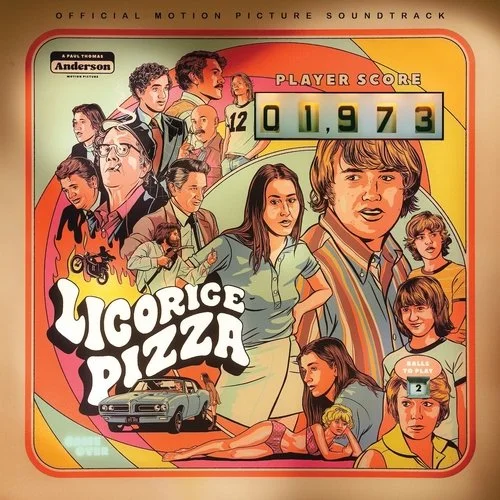
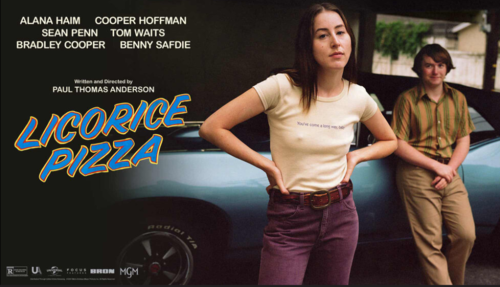
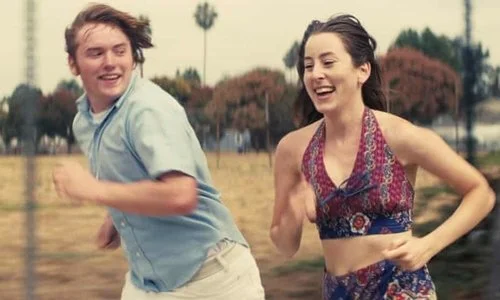
a little bit now, I wanted to discuss the new film from Paul Thomas Anderson. Licorice Pizza, I think, refers to a vinyl record. There is a record shop in the U.S. called Licorice Pizza, so I wonder whether Anderson got the title from that. With the likes of Sean Penn and Tom Waits featuring in the film (which features Alana Haim and Cooper Hoffman in the lead roles), I especially love the soundtrack and the songs featured. The plot is this: In 1973 San Fernando Valley, teenager Gary Valentine meets Alana Kane, a photographer's assistant in her 20s, at his high school on picture day. They become friends, start a waterbed company together, audition for films, and get involved with Joel Wachs' mayoral campaign. They navigate a changing time politically and culturally while also dealing with a gas crisis. Valentine and Kane's journey leads to them interacting with figures of both Old and New Hollywood, including Jon Peters and Jack Holden. The film was released on 26th November in the U.S. It has already received some hugely positive reviews. I will come to a couple of them, as it gives context to the film and the songs included. You can buy the soundtrack here. Early this month, Pitchfork announced details of the soundtrack:

Republic Records has revealed the tracklist and release date for the Licorice Pizza soundtrack. The album features songs by David Bowie, Nina Simone, and Paul McCartney and Wings, Donovan, Sonny & Cher, Gordon Lightfoot, and more. Additionally, it features the new song “Licorice Pizza,” made by frequent Paul Thomas Anderson collaborator Jonny Greenwood. Find the tracklist for the Licorice Pizza soundtrack below.

Licorice Pizza (Original Motion Picture Soundtrack) is out November 26. The movie, Paul Thomas Anderson’s first since Phantom Thread, hits theaters on Christmas Day. Licorice Pizza is set in the San Fernando Valley in 1973 and stars Alana Haim and Cooper Hoffman, as well as Sean Penn, Tom Waits, Bradley Cooper, and Benny Safdie

Given the name of the film, I think that is why Anderson’s musical choices are especially considered. Featuring tracks such as David Bowie’s Life on Mars?, Sonny & Cher’s But You're Mine, and Nina Simone’s July Tree, there is a bounty of fascinating and eclectic songs. I guess one needs to see the film to understand how the music pairs with various scenes, though I have been compelled to watch the film and seek it out on the strength of the soundtrack. Before talking more about it, here are a couple of reviews for Paul Thomas Anderson’s latest film. This is The A.V. Club’s reaction:

The spark is lit in the opening scene, as 15-year-old child actor Gary Valentine (Cooper Hoffman, son of Anderson’s late muse, Philip Seymour Hoffman) first lays eyes on 25-year-old Alana Kane (Alana Haim, one of the three sisters of the rock band Haim) outside a photo studio. He’s a teenager and she’s not—a fact she repeats repeatedly, if only to remind herself—but there’s an undeniable chemistry detectable in the spaces between her jabs and amused rebukes. “I met the girl I’m going to marry one day,” waxes the teen to his kid brother later that night. We wonder if he’s right.

One might think of that other Anderson. There is, after all, a touch of Max Fischer in Gary, who’s pantomiming a life of adult sophistication and privilege—ordering Coca-Colas in his white suit at nightclubs, flanked by an entourage of comically pubescent friends. Gary, we learn, is rapidly aging out of whatever modest celebrity he’s achieved; his career is over before it’s begun. Yet he has the swagger of a young Hollywood somebody. And though Alana, who works at the photo studio, talks to him like the kid brother she never had (she actually has two sisters, played by Haim’s real sisters and bandmates), she’s plainly attracted, at the very least, to his proximity to fame. And so she’s pulled into the orbit of his teenage hustles, and even ends up working for him, an arrangement that echoes the thrust of Phantom Thread.

The plot is a crazy-quilt time capsule, pulling in the waterbed craze, the oil embargo of ’73, the pinball ban, a tight L.A. political race, and the amorous shit-kicking of New Hollywood. Anderson’s structure is borderline associative, his screenplay daisy-chaining the ephemera that may well have colored his own childhood in the Valley. Early on, the director—who shot the movie himself, with an assist from Michael Bauman—tracks his camera across the floor of a teen business expo, soaking in every gleaming shag detail of his early-’70s production design. In its loving mirage of a bygone Los Angeles, Licorice Pizza is like a gemini twin to Once Upon A Time... In Hollywood, the last movie from fellow ’90s hotshot turned indiewood royalty Quentin Tarantino.

The cast is stacked with familiar faces and scions, the fathers of famous men and the daughters of famous directors, brought in for walk-ons or to steal a single scene. We get Sean Penn, skin rough like leather, as an aging man’s man who’s William Holden in all but Christian name. Elsewhere, Anderson doesn’t even bother to slightly rename his supporting players from history, casting Uncut Gems director Benny Safdie as the closeted L.A. politician Joel Wachs. And the film’s extended comic highlight involves the famed producer Jon Peters, pricelessly played by Bradley Cooper as a rich-dick lothario teetering, in his unfiltered asides, on the edge of danger; a waterbed installation at his swanky house in the hills becomes a gauntlet of close calls and mishaps, culminating with a van rolling perilously through traffic.

It’s a great scene. And there are plenty more, especially in the freewheeling first hour of the movie, animated by the electric currents of Gary’s and Alana’s dovetailing experiences. Yet as a story, Licorice Pizza barely hangs together. Anderson, high on his own nostalgic supply (and on the FM reverie of his all-star soundtrack of Doors, Donovan, and more), stumbles through an endless series of oddball peripheral characters and comic situations, some funnier than others. (There’s one strange recurring bit with John Michael Higgins as a restaurateur doing an outrageous Japanese accent that feels like it could have been plucked out of a bad ’70s comedy.) The director has made a blissed-out flashback portrait of his hometown that’s all incident, very little shape. He’s just riffing here, to sporadically satisfying effect”.

I will include one more review. I am interested in the various takes critics have had. As this review details, Anderson was very committed to authenticity when it came to the feel of the film – ensuring that, right down to the camera lenses, there was this sense of being right in the 1970s:

Working as his own cinematographer, Anderson reportedly used camera lenses that Gordon Willis (cinematographer of The Godfather) had back in the 1970s. They give the entire film a slight softness that reminds you of Bad News Bears, Meatballs and Little Darlings, an almost subliminal callback to an era and a style that’s long gone but many viewers instinctually remember, whether on celluloid or in real life. There’s a sequence in this film with a moving truck as it navigates canyon roads that feels like William Friedkin’s Sorcerer, but more tense because a couple of teenagers are behind the wheel.

But he utilizes these set pieces to highlight how young lovers — even ones resisting inevitable attraction — become bonded through acts of adversity, such as a run-in with the law, or in other cases see their life and their choices in relief with the momentary fun they might share. Whether or not Gary and Alana are healthy together, they are right for each other, providing what they can’t get anywhere from anyone else, even if they might never possess the language (much less self-awareness) to say what that is out loud.

Ultimately, if its title fails to fully or precisely capture the energy of the film (except as another reference to a San Fernando institution only a handful of privileged individuals will recognize), the director's latest is nevertheless an invigorating delight; lived in and yet spontaneous; thrilling but also gorgeously understated.

Like a number of Anderson's earlier works, Licorice Pizza is as in love with the medium in which it was made as the story and characters within it. Even if its throwback cinematic style proves to be slightly too eccentric for your tastes, if there’s one thing Paul Thomas Anderson has demonstrated that he’s capable of it’s he can tell a love story you will absolutely believe in, whether or not you personally want to be a part of it”.

Because of the setting, you get this soundtrack with amazing songs from that decade (and tracks that are outside of the 1970s). I love how there is an inclusion of Henry VIII’s Greensleeves. Not many soundtracks can go from that to Donovan’s Barabajagal! Maybe the best soundtrack of the year, I think that the film and album will introduce a lot of younger listeners to some of the tracks from the 1970s. Although not every cut from the soundtrack features in the film, you will get a good taste of what is featured in the film. With The Doors sitting alongside Gordon Lightfoot, I wonder how highly we regard film soundtracks. They can obviously enhance a film and give it new context and layers. Whether you hear the Licorice Pizza soundtrack solo or watch the film and then go and hear the album, I think that a great soundtrack can do so much more than accompany a film’s release. We do have compilation albums still but, at a time when so many of us are making our own playlists and most albums are studio releases, a soundtrack is a preservation of the past. With the ability to cast his net far and wide, Anderson and those responsible for compiling the songs and deciding what was included had a hard choice. Looking down the tracklisting, and Licorice Pizza’s soundtrack ranks alongside the very best from the past few years. As I said, it has intrigued me enough to want to see the film, just to see where the songs fit in and how they score particular moments. Even if you plan on seeing the film or not, the soundtrack for Licorice Pizza is…

 PHOTO CREDIT: Metro Goldwyn Mayer Pictures Inc./MGM

A must-own for all music fans.

FEATURE: She Packed My Bags Last Night Pre-Flight: Kate Bush's Reading of Elton John’s Rocket Man at Thirty

FEATURE:


She Packed My Bags Last Night Pre-Flight

Kate Bush’s Reading of Elton John’s Rocket Man at Thirty

___________

I have talked about…

this song before but, as it turns thirty on 2nd December (though some sources say 25th November), I wanted to return to Kate Bush’s version of Rocket Man. I have heard other female singers cover Elton John’s 1972 classic. I feel Bush’s 1991 rendition (for the album, Two Rooms: Celebrating the Songs of Elton John & Bernie Taupin), was one of the first. It is no surprise that Bush chose this song to record (the B-side of the single was another Elton John song, Candle in the Wind). Not only did it give her a chance to role-reverse and put a different spin on another song. Her arrangement gives the song new angles, depth and resonance. I love the Elton John original, though Bush’s more Reggae/Calypso version is beautiful! The addition of Davy Spillane’s uilleann pipes gives the song a nice Irish flavour. Whilst not as atmospheric and epic as John’s rendition, Bush adds jauntiness and lightness to the track. Ahead of its thirtieth on 2nd December, I would advise those who have not heard the song to dig it out. Before going on, the Kate Bush Encyclopaedia provide information about the song. Hearing Bush’s reasons behind covering this particular song are interesting. The Two Rooms: Celebrating the Songs of Elton John & Bernie Taupin album was a variety of acts picking a John/Taupin song to cover. Bush’s Rocket Man, to me, is the highlight of the album:

I was really knocked out to be asked to be involved with this project, because I was such a big fan of Elton's when I was little. I really loved his stuff. It's like he's my biggest hero, really. And when I was just starting to write songs, he was the only songwriter I knew of that played the piano and sang and wrote songs. So he was very much my idol, and one of my favourite songs of his was 'Rocket Man'. Now, if I had known then that I would have been asked to be involved in this project, I would have just died… They basically said, 'Would we like to be involved?' I could choose which track I wanted…

'Rocket Man' was my favourite. And I hoped it hadn't gone, actually – I hoped no one else was going to do it… I actually haven't heard the original for a very long time. 'A long, long time' (laughs). It was just that I wanted to do it differently. I do think that if you cover records, you should try and make them different. It's like remaking movies: you've got to try and give it something that makes it worth re-releasing. And the reggae treatment just seemed to happen, really. I just tried to put the chords together on the piano, and it just seemed to want to take off in the choruses. So we gave it the reggae treatment. It's even more extraordinary (that the song was a hit) because we actually recorded the track over two years ago. Probably just after my last telly appearance. We were quite astounded when they wanted to release it as a single just recently. (BBC Radio 1 interview, 14 December 1991)

I remember buying this when it came out as a single by Elton John. I couldn’t stop playing it - I loved it so much. Most artists in the mid seventies played guitar but Elton played piano and I dreamed of being able to play like him. Years later in 1989, Elton and Bernie Taupin were putting together an album called Two Rooms, which was a collection of cover versions of their songs, each featuring a different singer. To my delight they asked me to be involved and I chose Rocket Man. They gave me complete creative control and although it was a bit daunting to be let loose on one of my favourite tracks ever, it was really exciting. I wanted to make it different from the original and thought it could be fun to turn it into a reggae version. It meant a great deal to me that they chose it to be the first single release from the album.

That meant I also had the chance to direct the video which I loved doing - making it a performance video, shot on black and white film, featuring all the musicians and... the Moon!

Alan Murphy played guitars on the track. He was a truly special musician and a very dear friend. Tragically, he died just before we made the video so he wasn’t able to be there with us but you’ll see his guitar was placed on an empty chair to show he was there in spirit. (KateBush.com, February 2019)”.

One of the great aspects of Kate Bush’s career is her cover versions. An artist who took from a wide spectrum of the musical landscape, she has reinterpreted songs from Elton John, George and Ira Gershwin and Donavon. She also provided her take on traditional songs. I feel this not only made her stronger and more curious as a songwriter. It also showed new sides to her voice. On Rocket Man, we hear emotions and colours that were not present on her 1989 album, The Sensual World. On 1993’s The Red Shoes, I feel her covering Rocket Man led to some revelations and new vocal tones. Eat the Music and Rubberband Girl, I feel, can be traced back to Rocket Man. Reaching number two in Australia (a country that has always supported and loved Kate Bush), and number twelve in the U.K., the public threw their weight behind the song. There has been some division in the music press as to whether Bush’s Rocket Man ranks alongside the best cover versions or the worse. I think it is a great version, and it is a shame she has not taken on more Elton John songs. I could see her doing marvellous versions of Madman Across the Water, Don’t Go Breaking My Heart, Song for Guy, I’m Still Standing or Goodbye Yellow Brick Road. She has a great affection for John (he was a featured vocalist on Snowed in at Wheeler Street from Bush’s 2011 album, 50 Words for Snow). Kate Bush’s respectful, inventive, passionate and interesting version of Rocket Man is…

ONE of her greatest moments.

FEATURE: Revisiting... Jessie Ware - What's Your Pleasure?

FEATURE:


Revisiting...

 Jessie Ware - What's Your Pleasure?

___________

IN the next part…

of this feature, I am looking at an underrated album from 2018. The aim of Revisiting… is to explore albums released over the past few years that are either not played that much or are timely now. I do Second Spin: this is a feature that evaluates albums from any time that are under-played and under-appreciated. Today, one of last year’s best albums is in my thoughts. Jessie Ware’s What’s Your Pleasure? got some huge reviews. She recently recorded a song with Kylie Minogue, Kiss of Life. Ware is hitting the road after a long time away from the spotlight. Creating music that needs to be heard from the stage, I spent some time with her fourth studio album when it was released. Aside from recommending people get the album on vinyl, I am going to put in a couple of reviews for What’s Your Pleasure? Before that, I wanted to explore a couple of interviews where Jessie Ware talked about the album. Very different from her 2017 album, Glasshouse, What’s Your Pleasure? was one of the most important releases of 2020. A hugely enjoyable and impressive album, I think that it is Ware’s best work. The reason for including it here is that the album does not get a lot of coverage at the moment. It got love last year and was widely shared, though I think What’s Your Pleasure? is a record that deserves more time and focus now.

Ware spoke with Under the Radar about an album that was like a new phase for her. You get this sense of someone who has been rejuvenated and reconnected with her love of music:

I’ve said it before but it made me feel like a new artist again,” Ware says of the reaction, speaking from her study in London on a dreary winter’s evening. “As an artist who’s on their fourth album and as a 35-year-old woman in music, the buzz starts to dwindle,” she adds. “It felt like this new injection that was really amazing, especially because it was fully on my terms.”

When Ware first emerged in the early 2010s, her debut album Devotion found a sweet spot between critical acclaim and commercial accessibility—cool enough to be nominated for the UK’s prestigious Mercury Prize while also securing recognition from the pop-focused BRIT Awards. However, that balancing act proved hard to maintain and by her third album (the underrated Glasshouse), she found herself losing favor with both critics and the record-buying public. Her response, in her words, was to lock herself away from her label and to tune out the “noise” from the music industry. What’s Your Pleasure?, produced with musician and friend James Ford, was to be a record for her—a committed exploration of a love of dance music that had long been present in the background of her career.

Ware says the album was produced in almost complete contrast with the nights of excess and romance portrayed in its songs. “It was James and I very much on a 10-4 basis—we both have families so we’d dip into the studio and work in the daytime,” she says. There, they dreamed up escapist fantasies inspired by the queer dancefloors of ’80s New York, the camp disco of Fern Kinney, and the effortless cool of Róisín Murphy. When the album was finally released in the middle of a pandemic, its timing was a mixed blessing—appearing at a time when most dancefloors around the world were closed but in the middle of a surprise disco revival.

Ware describes the similarities between her record and those by pop heavyweights like Dua Lipa and Lady Gaga as “weird serendipity” rather than a planned approach. “It did kind of feel like we were all huddled in a boardroom meeting talking about each other like ‘she’ll take a more French disco-house approach…,’” she jokes. “I wish that had been the case because I would have been in a room with Lady Gaga and Róisín and Dua and Kylie [Minogue].” In fact, Ware admits that she even considered trying to get Minogue on the album’s sultry title track. “Kylie has those moments like ‘Slow’ and ‘Confide In Me’ where you just want to make love to her…she just oozes that sex,” she says, adding that the two of them have discussed the possibility of recording a new song together.

The current state of the music industry may be deeply uncertain at the moment—with scaled back release schedules as labels wait for a more opportune environment for new albums—but Ware suggests that her fans may be hearing from her again sooner rather than later. The six months following the release of What’s Your Pleasure? would have been spent on tour in normal circumstances. Instead, Ware has had time to consider a follow-up. She describes the new album, which is apparently halfway done, in vague terms—“more live,” “upbeat,” “more pace”—and notes that many of the same collaborators have returned, including Ford, Metronomy’s Joe Mount, and songwriters Alexandra Govere and Daniel Parker.

“What’s Your Pleasure? awakened a confidence which has been so incredible for me as a songwriter and an artist and a mother and a woman and all of that,” Ware says. “I think we can keep on going and the fact that we’ve been having to do the majority of sessions over Zoom and it’s working—that’s really interesting”.

I was interested to discover why What’s Your Pleasure? was such a shift for Ware. Exploring Disco and Dance in such a vivid and varied way was not something we had heard before from her. It was almost like Ware returned to the start of her career. Bold and enormously memorable, Ware spoke with Elle last year:

Why this album, and why now?

I needed to kickstart a love affair with music [again]. I came off tour and thought, “I need something more in my live shows.” I needed to listen to my fans. I’d made this slow, confessional record, but maybe people wanted something else from me. And that’s fine! I wanted to do that too. I needed to do something different, to test myself. And I needed to enjoy making the music again.

How did you find that pleasure again?

It was about being with the right people and departing from the wrong people. I never knew how much management could change your life. I’d lost my confidence, and I didn’t understand it because my podcast [Table Manners] was taking off and people were really buying into this thing that was a pure accident. I was losing my voice. This is not me saying I don’t believe in the last two records, but I was seeking approval from people whose opinions I didn’t value. It became this imbalance that wasn’t right and wasn’t nurturing and wasn’t good for me.

I’m the breadwinner. I was getting to the point where music was having to be like bread and butter [and] I was going to potentially have to make decisions I didn’t wanna make, which would jeopardize and discredit both the music I was making and my artistry. Everything had to implode a little bit for it all to work out. With this record [it was all about] new management, a new label, one executive producer, a very small amount of people working on it, and intimacy. I needed everything to feel less intimidating and pressurized.

This content is imported from YouTube. You may be able to find the same content in another format, or you may be able to find more information, at their web site.

It’s been fascinating to watch you intentionally untether yourself from the traditional “album, rest, album, rest” cycle when you started releasing one-off singles last year. How did that rollout change your mind about music as a passion again?

Subconsciously, it was a way of testing the waters to see if people were gonna dig this direction. I enjoyed that freedom of being like, “Here’s a song, I hope you like it. If you don’t, it doesn’t fucking matter, because I’ve got some more tunes.” I also knew that I was gonna have a baby, so I didn’t want to have to “hide myself away as a pregnant woman.” It felt ridiculous. So I was just like, “Right, more music, here you go.”

The former president of Virgin, Ted Cockle, said, “The world has changed since you put your last record out. You’re making dance music—that’s what you want to make. Put it out like a DJ. People don’t care about this big buildup for an album anymore. They just wanna fucking hear your music!”

Was part of the fun of making this record a result of you setting your own expectations for once?

I didn’t want people telling me what they thought. I wanted to know what I felt—and much respect to my label for letting me do that and not being overbearing. I think they knew I needed to get back into the groove of enjoying myself, to take some ownership and control back. I didn’t know how much I needed it until I was doing it. I realized I was making this amazing music nobody knew about! At the time, I was presenting Later… with Jools Holland. Everyone thought, “Oh, so she’s gone from podcasting to presenting a music show…what is going on? I hope Jessie’s ok!” And I’m like, “I’ve got this diamond record happening! This is fun!”

What feels different for you now?

I feel like a new artist again. There’s a real demand and interest in this record, which I haven’t felt since the first. Maybe because people have bought into the podcast, they feel like they wanna hear what I’ve got to say, even though they can hear it every bloody week. [Laughs] I feel like I’m getting opportunities I never would’ve gotten if the podcast hadn’t happened, like the TV shows I’m getting booked on. The confidence I’m showing in the delivery of these things, I feel like I’ve really grown. I’m proud of myself.

That confidence feels so apparent, especially in watching you pepper your performances with choreography all of a sudden.

I would never have done that! I got so tired of apologizing for being in the room. It wears you down and you believe you don’t deserve to be there. I finally feel like I do deserve to be there. I suit being a 35-year-old woman. I feel comfortable in my skin and with the music I’m making. I don’t want to complain because I know lots of people don’t get to a fourth album. I know I’ve got so much to appreciate. I just got disillusioned. I’ve always been in my own lane, musically, but people wanted me to get into the commercial lane, which I don’t think suits me. I made this record out of feeling and groove instead.

Has your relationship with “up tempo” songs changed?

I wanted to do a record that was driven by music and less by lyrics. The lyrics are always important, but it was very much about a beat dictating where we went. It felt fun and freeing. You’d be like, “How’re we going to navigate a Jessie Ware song around this beat?” I liked the challenge”.

To round off, I wanted to highlight some reviews. There are more than enough positive reviews to choose from. I am going to start with NME’s take on What’s Your Pleasure?

But on her fourth album – ‘What’s Your Pleasure?’ – Ware rediscovers her strut, on a record filled with euphoric disco, funk and groove. Produced by Simian Mobile Disco‘s James Ford, Ware also assembled a crack team of co-writers and collaborators including synth-pop extraordinaire Kindness, trendy composer Jules Buckley (who did the orchestral arrangements and strings) and Metronomy‘s Joseph Mount. The result is a collection of exhilarating floor-fillers that fuse future-facing production with heady ‘80s sounds.

‘Ooh La La’ – with its swaggering bassline and flirty lyrics – is a slinky slice of filthy funk, and ‘In Your Eyes’ a woozy amalgam of rippling synths and smoky strings. ‘Step Into My Life’ meanwhile is a shimmering, new-wave laced smasher that evokes images of the New York disco scene. Despite borrowing heavily from the past, there’s an element of timelessness that threads through the album, particularly on songs like ‘Mirage’ (a tropical treat that borrows from Bananarama, and wouldn’t feel out of place on Robyn‘s ‘Honey’) and ‘Soul Control’ (an effervescent radio ready hit that could easily fit on Dua Lipa’s ‘Future Nostalgia’). And although there are a few lulling moments (the icy ‘The Kill’, minimalistic ‘Adore You’), for the most part ‘What’s Your Pleasure?’ is filled with nostalgia-laced treats.

An intoxicating cocktail of seductive beats, exhilarating choruses and sleek production, ‘What’s Your Pleasure?’ is pure escapism. Moving away from the wistful melancholy that permeated her last record, here Jessie Ware takes to the dancefloor – and you’ll want to join her”.

To round off, Pitchfork posted a glowing review of an amazing album. I have been listening to it ever since it was released. I d hope that Jessie Ware continues along the same Disco lines that we heard on her current record:

On her new album, Jessie Ware sounds like the host of the kind of party you heard about in ‘70s Manhattan—velvet banquettes and powdery surfaces, mink coats and cigarette holders, and club names that were enigmatic numbers, or—post-gay liberation and pre-AIDS—sincerely promised sanctuary, paradise. You can imagine Ware taking a scene newcomer under her wing, detailing the venue’s clandestine corners, advising which watered-down liquor to avoid—and anyway, don’t you deserve champagne?

Disco has been a shared obsession of late for both chart juggernauts and Ware’s own peers, but her reverence for the era may be the most literal, down to her flash-lit portrait on the album cover, the spitting image of Warhol’s iconic polaroid of Bianca Jagger. Here, Ware is a lycanthropic party girl, coming alive under the mirrorball with breathy flirtations over disco-funk and vibrant Hi-NRG, recreated deftly by chief producer James Ford. Her wonderland is, to quote Fran Leibowitz’s one-time description of Studio 54, made for “sex and dancing.” (Ware says as much of the record herself.)

Over the Italo disco daydream of a title track, Ware presents a dessert trolley of options for, ahem, “dancing sideways.” “Come on now push/Press/More/Less,” she sighs over neon-streaked synths. “Step Into My Life,” co-produced by Ford and Kindness, is a masterclass of orchestral funk, with Ware insisting “I don’t wanna talk, no conversation.” “Save A Kiss,” an outlier, extends the album’s palette to kinetic electropop, which Ware’s voice floods with romantic yearning.

In a recent interview, Ware described What’s Your Pleasure? as a celebration of her flourishing confidence. It has less of the soul-searching of Ware’s previous album Glasshouse, yet zooms in on a lighter facet of her personality, and is threaded with a camp sense of humor that reflects disco’s frivolity as well as the cheekiness that is all over Ware’s Table Manners podcast but has been largely missing from her recorded music. Her airy vocals feel like secrets whispered, confidences offered, recalling Diana Ross’s supple quiver over Nile Rogers and Bernard Edwards’ beats and, in “Mirage (Don’t Stop),” coming close to Donna Summer’s orgasmic rapture. The strutting chorus of “Read My Lips” doubles down on the song’s oral innuendo with kissy sound effects, bringing to mind Anita Ward’s disco classic “Ring My Bell.” The rubberized bass jam “Ooh La La” is a riot of saucy ad libs and tooting car horns, and the frothy, Jellybean-esque “Soul Control” centers on the delightful frippery “We touch and it feels like: Woo!” It is a joy to hear Ware sounding so relaxed.

Disco music never liked to consider what happens when the music stops, but Ware allows a little of her signature psychodrama to creep into the nocturnal escapades she describes, and the flecks of ennui make the highs even higher. Over the darkly pulsing synths of “In Your Eyes,” Ware is racked with insecurities. “Would you follow me, with no guarantee?” she asks, before allowing herself a rare belting vocal. “Adore You,” produced by Metronomy’s Joseph Mount, commits what on paper might seem like a cardinal sin: it Auto-Tunes Ware’s pristine voice to a robotic murmur, the kind that could soundtrack a lonely android searching the cosmos. But her intonations (“Lean in...move slow”; “don’t go”) reshape the song’s mood with every syllable, in a nuance that makes the smallest shifts feel seismic”.

An incredible album from last year, I think we should all revisit What’s Your Pleasure? It is such a rich and satisfying experience. You can put it on at any time and feel uplifted and improved. That is testament to the passion and commitment that Ware displays throughout. If you have not spun What’s Your Pleasure? for a while, then I think now is a good time…

TO play it again.

FEATURE: My Five Favourite Tracks of 2021: Lorde – Solar Power

FEATURE:


My Five Favourite Tracks of 2021

Lorde – Solar Power

___________

I was not aware until recently…

 PHOTO CREDIT: Ophelia Mikkelson Jones

that Clairo and Phoebe Bridgers provided backing vocals on Lorde’s Solar Power. The title track from her recent third solo album, it is one of my favourite songs of the year. The album itself divided critics. Some felt that the songs had the same tempo and there wasn’t the same sort of variation and quality that we found on 2017’s Melodrama. Even though some were not convinced by Lorde’s much-anticipated album, I really like it. It is a different album from Melodrama, and it definitely has a sense of the New Zealand artist moving on. Ella Marija Lani Yelich-O'Connor delivered a brilliant album with Solar Power. Its title track is impossibly uplifting! With some vocal harmonies that put one in mind Primal Scream’s Loaded, it is a song that nods to the past. Sunny, breezy and radiant, there is a lot to admire about the single. Others have compared Solar Power to George Michael Freedom! '90. That is not to say that there is anything unoriginal or derivative about the track. It is one with some nostalgic edges, though Lorde’s voice and lyrics comes through. Before rounding off, there are a couple of articles relating to Solar Power. Stereogum published an article in June where Lorde talked about working on the track alongside producer Jack Antonoff:

The first song, also called SOLAR POWER and written and produced by myself and Jack, is the first of the rays. It’s about that infectious, flirtatious summer energy that takes hold of us all, come June (or December, if you’re a Southern Hemisphere baby like me but I know that’s literally IMPOSSIBLE for you all to wrap your little heads around so don’t worry about it!!).

I made everything with friends here in New Zealand. My best mate Ophelia took the cover photo, lying on the sand as I leapt over her, both of us laughing. The director who made my first ever music video, Joel, helped me create the videos, building an entire cinematic universe that I can’t wait for you to see. I made something that encapsulates where I’m from — my family, my girlfriends, my outdoors, my constant ruminations, and my unending search for the divine.

There’s SO much more detail to come — a truly comical amount of detail, honestly. You can look to the natural calendar for clues. I’m trying to listen to what’s out there more, and the vibe I got was that you’re ready for this, that you need it. I want this album to be your summer companion, the one you pump on the drive to the beach. The one that lingers on your skin like a tan as the months get cooler again”.

I can remember the excitement when Lorde announced the first single and we were going to get this album. A perfect summer anthem, Solar Power paints some vivid and arresting images: “My cheeks in high color, overripe peaches/No shirt, no shoes, only my features/My boy behind me, he's taking pictures/Lead the boys and girls onto the beaches/Come one, come all, I'll tell you my secrets/I'm kinda like a prettier Jesus”.

This Wikipedia article relates to the critical reaction to Solar Power. Many noted how instantly summery and warming it was:

Writing for Pitchfork, Anna Gaca called the song a "soft-touch anthem for the [summer] season's simple pleasures", and remarked that it "flipped the script" when compared to the sound of Lorde's 2017 album Melodrama. Rhian Daly of NME gave the song five out of five stars, labelling it a "sun-kissed ode to starting anew", and drew musical comparisons to the Primal Scream album Screamadelica, Joni Mitchell, and Wolf Alice's sound since Visions of a Life. Writers for New Zealand magazine The Spinoff generally praised "Solar Power", with Toby Manhire calling the song an "instant classic", and Stewart Sowman-Lund calling the song "so perfectly summery that it makes me want to drive straight to Devonport (or wherever people swim in Auckland)".

Sal Cinquemani of Slant Magazine stated that the track "boasts a breezy, psychedelic quality that's perfectly paired for summer drives and beach trips, and an optimistic outlook", while lacking "the urgency of her best songs". Writers for Vulture received the song well, with Justin Curto describing it as "a sunny, acoustic-driven song about a good day on the beach, as the cover art teases" and noted that its bridge is reminiscent of George Michael's "Freedom! '90", and Craig Jenkins called it "slight and fun", though it felt "more like a carefree vacation update than the blockbuster comeback we've been anticipating since the simpler times", while noting similarities to "the psychedelic dance-rock of early '90s UK rave kings like Happy Mondays and Primal Scream".

In a Billboard piece, Jason Lipshutz wrote that "Lorde's new single 'Solar Power' is a playful splash of salt water onto our faces in time for the summer", calling it "deceptively simple", noting the saxophone and trumpet in the mix, and asserted that "Lorde remains one of the best at filling the corners of her songs with personalized knickknacks". In a five star review, Rachel Brodsky of The Independent praised Lorde for "finding a new way to express a universal feeling", comparing it to the Beach Boys' song "Kokomo". Consequence named it "Song of the Week", describing it as "light, bouncy, and nonchalant", emphasising its departure from Lorde's previous works”.

Despite some feeling a little underwhelmed by Solar Power’s title single, it is one of my absolute top choices from 2021. It was the kind of song that we needed Lorde to deliver. I have been listening to it ever since it was released! Able to provide a nice rush of energy and summer vibes, it is one of the highlights from the Solar Power album. It makes me wonder where Lorde is going to go from here. After Solar Power got a mix of reviews, maybe we will hear a new direction and energy from her fourth studio album. Reaching number seventeen in the U.K. single chart, Solar Power is…

A wonderful track.

FEATURE: Time and Time Again, Line and Line Again: Kate Bush and the Gravitas of Her Television Appearances

FEATURE:


Time and Time Again, Line and Line Again

IN THIS PHOTO: Kate Bush performs Running Up That Hill (A Deal with God) on the German T.V. program. Peter's Pop Show, in 1985/PHOTO CREDIT: ZIK Images/United Archives via Getty Images 

Kate Bush and the Gravitas of Her Television Appearances

___________

THE reason for going down this avenue…

is that, a couple of weeks back, there was this T.V. special about ABBA. As part of the special, a clip played of Kate Bush being introduced by Benny and Björn from the group. She was performing the single, Wow (from her 1978 album, Lionheart). It is a wonderful captivating performance that, the more you watch it, the more you are stunned by it! Whether it was miming a song or singing a live vocal, Bush always amazed people with her T.V. performances. I think the last time she did sing on T.V. would have been around 1994. From 1978 until then, she appeared on a number of different shows. I may go into a bit more depth and detail. Especially in the first couple of years of her career, Bush was on a variety of T.V. shows around the world. In 1979, she embarked on her first extensive tour experience with The Tour of Life. I think, before then, T.V. slots was her live experience; a chance to sing her songs in front of an audience and work out a routine. As good as they sound on the albums, I guess Bush was always thinking how her songs could be translated and come to life in a more physical and visual way. I have seen various videos of Bush performing in 1978 and 1979.

Because of the success of her debut single, Wuthering Heights, she was on Top of the Pops several times. She had to perform minus a band, as show rules meant a solo artist had to perform with their house band. Having to sing to an awful recorded track, Bush had a nightmare the first time she was on the show on 16th February, 1978. That bad first experience did affect the regularity she performed on the show (16th February, 1978: Kate performs Wuthering Heights. Kate described it as "a bloody awful performance". 9th March, 1978: Kate performs Wuthering Heights for the second time, dressed in a white nightgown. 16th March, 1978: Kate performs Wuthering Heights for the third time, seated at the piano. 23rd  March, 1978: Kate performs Wuthering Heights for the fourth time, wearing a long black dress. 30th March, 1978: Kate performs Wuthering Heights for the fifth time. 22nd March, 1979: Kate performs Wow. 22nd August, 1985: Kate performs Running Up That Hill (A Deal with God). 6th March, 1986: Kate performs Hounds of Love. 17th November, 1994: Kate does a lip-synch performance of And So Is Love, dressed in black, together with two female backing singers). I think some of her Top of the Pops performances rank alongside some of the best ever. She is always so entrancing and beguiling!

I am going to come to some other T.V. performances that I especially like. I found a great article that spotlighted Bush’s T.V appetences between 1978-1982. A hectic and itinerant stage of her career, it is amazing to watch her delivering various songs on some very strange and memorable shows:  

Unlike virtually everyone else, Kate Bush has achieved success and impact without doing many live shows. The enigmatic artist performed just one concert tour in 1979 before taking an extended hiatus from playing live until 2014. The few concerts she did perform were enormous undertakings combining music, choreography, extensive costume and set changes, and cutting edge technology to an extent that made maintaining her singular vision difficult.

Luckily, while these performances were few and far between, a wealth of promotional television appearances exist online for fans to dive into the wonderful world of Kate Bush. Here are a few of our favorites:

Wuthering Heights (1978)

Let’s start with Kate’s debut single filmed for the Dutch TV program TOPPOP. This video captures Kate at her most expressive with some interesting set design.

Moving (1978)

This was filmed during an exhaustive six month promotional campaign to back The Kick Inside. Bush was met with open arms in Japan and this performance marked her first in front of a large audience. 11,000 watched this beautiful performance of “Moving” with over 33 million viewers on television. “Moving” would become a huge hit for Bush in Japan.

Them Heavy People (1978)

Another performance from Bush’s first trip to Japan and a very strange one at that. This rendition for a TV program called Sound in S was recorded variety show style with television personalities taking over vocal duties and Kate jumping in at the end to dance… Bush probably had very little control over this performance, but it’s pretty fun to watch.

Kashka from Baghdad (1978)

This live performance taken from the children’s television program Ask Aspel sees Bush at her most intimate and direct with just solo piano and voice. There’s somehow still a certain magical quality to this performance even without the costumes and sets.

Looking good feeling fit (1981)

Kate breaks down her fitness tips and explains her love for dance while we watch her practice her routine for Sat on Your Lap on a BBC show about exercise and nutrition.

The Dreaming (1982)

Taken from Na sowas! a German TV show. The producers strangely decided to superimpose a live image of an iguana into the background of the performance, bringing a very odd but also very great spin on the performance. This version is hilariously known as the “Giant Lizard” version”.

Prior to looking ahead, Far Out Magazine published an article last year where they looked back at Kate Bush’s very first T.V. appearance:

In the rain-soaked months of February 1978, Kate Bush—at the time a fresh-faced 19-year-old with a hit single under her belt—made her first television appearance to perform the wondrous hit single ‘Wuthering Heights’ on German TV show Bios Bahnhof.

The performance was a mark of not only the artist’s incredible talent but the huge journey she’d been on, even at 19, to get to where she was. A consummate performer at such a young age she effortlessly delivers a spellbinding performance of one of the most brilliant alternative pop songs ever written.

Her appearance on the show coincided with the show’s first ever episode. Filmed in Cologne, Germany at an old train depot, the show was hosted by classical music and opera fan Alfred Biolek. It was he who when he found himself on the lookout for acts at the EMI offices caught the unmistakable sound of Bush’s ‘Wuthering Heights’ playing through the speaker. He stopped in his tracks and enquired about the artist behind such a song. That artist was Kate Bush.

She set about recording her debut LP in August 1977 with a possible release date of the chosen single from the album ‘Wuthering Heights’ slated for November 4th 1977. But EMI got cold feet, fearing that it would be lost in the Christmas flurry and delayed the release until 20th January 1978.

As was the way in the seventies, by now the radio station like Capital Radio in London had the promo record and, against the will of EMI, they played it on air. They played it as much as they could, in fact. The people listening almost instantly fell in love with Kate Bush, besotted by her unique literary charm. Her single would go on to become the first record written and performed entirely by a woman to reach number 1 in the UK charts, an astounding feat for such a young artist.

So with radio play under her belt, interviews with the biggest magazines in the industry on the way, Kate Bush made her way to Germany to appear on Bio’s Bahnhof to perform a and b sides of her now well-established single. ‘Wuthering Heights’ and ‘Kite’ are performed to an incredibly gorgeous level with Bush displaying all of the credentials that would see her become one of music’s most essential artists.

While radio shows and the odd interview were great for Bush in a media sense they lacked the opportunity for her to make a visual impact as well as through her music. It was on television and in front of an audience that she could do her best work, and she knew it.

It meant when this opportunity arose for Bush’s first performance on television arose she jumped at the chance with a theatrically charged rendition of what would become her most legendary hit. As she cleverly performed her new hit single in the same red dress which would feature in her notorious video, it was clear; from here on out, Kate Bush was an icon”.

Apologies if this is a little scattershot in terms of chronology! I am remembering articles and performances as I go along! As Far Out Magazine said, Bush was already an icon because of that first T.V. live appearance. The fact that she got a chance to perform to a large audience and articulate a song like Wuthering Heights for T.V. meant that she reached a lot of new people. Her choreography and routines were always so spellbinding. The gravitas with which she performed is undeniable – in the sense she is completely in control and draws you in! Keeping with Far Out Magazine, and they spotlighted Bush’s performance on SNL in the U.S. in 1978. A year which saw her performance in the U.K., Europe and the U.S., she managed to shoulder jetlag and unimaginable tiredness with these staggering performances. America would not have known what hit them!

The wondrous talent of Kate Bush has a worldwide fandom but it started very deeply in British culture. It meant that taking the leap across the pond was a risky and ultimately successful chance to take. Even recently one half of rap group Outkast, the rapper Big Boi, confirmed that his favourite ‘verse’ wasn’t from Jay-Z or Tupac Shakur but none other than Kate Bush.

It’s odd, then, that the only TV appearance Bush has made across the pond comes from 1978 when she appeared on the acclaimed TV show Saturday Night Live and delivered perhaps one of her most outstanding performances. SNL, as it is more affectionately known, has been a stalwart of late-night television ever since the show broadcast in 1975 and Bush turned it on when she arrived on stage.

IN THIS PHOTO: Kate Bush performing The Man with the Child in His Eyes on SNL in 1978

The episode with Bush was hosted by none other than Monty Python’s Eric Idle and as is customary, the comedian gave an intro for the singer’s first performance. While the vast majority of these intros are pleasant and warm, Idle added a little extra sparkle into his introduction and perhaps hinted that he, as much of the rest of Britain, was proud but protective of Kate. “This is her first time on American television, she’s very wonderful. Will you please welcome Kate Bush!”

He needn’t have worried as what transpired was a typically theatrical performance from Bush, who not only commanded the stage but also expressed her song and delivered a showstopping physical showing of her expression.

Somehow, Bush managed to soften the audience with every breath she took. As soon as the camera panned toward the singer delivering the second single from her debut LP, ‘The Man With The Child In His Eyes’, a proverbial crack developed across the United States. She performed the song atop an all-black piano in a sparkling gold jumpsuit, Bush was making a statement.

It was a bit of a mad whirlwind for those first few career years at least! Things did quiet in terms of T.V. appetences after 1982. NME produced a guide containing videos of Bush performing on T.V. I forgot to mention that she performed in Australia in 1978. Her routine of Hammer Horror (from Lionheart) on 17th October is sensational!

On 21st December, Bush’s Christmas Special of 1979 was one of the biggest televisual moments. Not necessarily promoting an album, this was her playing a selection of her songs. With special guest Peter Gabriel, though not as extravagant, sensational and high-concept as The Tour of Life, there are some interesting routines and wonderful vocals. The Wedding List (from 1980’s Never for Ever) got an especially epic routine (complete with her brother, Paddy, playing the part of a vicar and a gunman that she hunts down and shoots!). Other highlights include Bush going back to Germany (NME: “September 23 1982, Bush travels to Munich to sing ‘The Dreaming’ on German TV, in a performance that went down in infamy as “the giant iguana version”) and her performing Elton John’s Rocket Man (“July 28 1991, Bush covers Elton John’s ‘Rocket Man’ on BBC’s Wogan in her last truly live performance. Till August 2014, that is…”). I think one of my favourite T.V. performances of hers was on 22nd August, 1985. She was on the BBC’s Wogan and Top of the Pops performing Running Up That Hill (A Deal with God). That ABBA-introduced performance of Wow is definitely one of the best. I love her 1980 performance on the Dutch show, Veronica Totaal. Even more spectacular is her 1978 special on Dutch T.V. from the newly-opened amusement park, The Efteling.

Every time she performed on T.V., the watching public got something completely new. I have seen her perform Them Heavy People a few times. Each routine is different. The same goes for Wuthering Heights on Top of the Pops. It is a shame there were not more T.V. appetences between, say, 1985 and 1994. After her studio album, The Red Shoes, came out in 1993, Bush wound down T.V. publicity significantly. She has released three albums since then without any T.V. performances. Luckily, people did get to see her perform many of her tracks live during the 2014 Before the Dawn residency in Hammersmith. Maybe T.V. interviews and live appearances became wearisome. I can only imagine how brutal the touring schedule was for her! 1978 was particularly busy - though the success of Hounds of Love in 1985 and The Sensual World in 1989 (this performance of This Woman’s Work on Wogan is gorgeous!) meant Bush did feature on a variety of T.V. shows. Iconic, unusual, gorgeous, physical, theatrical and memorable, Kate Bush’s live performances on T.V. shows around the world really do stand out! In spite of some grainy videos on YouTube, you can tell how good she was! It was not only her dancing and vocals that were sensational. Her mannerisms, facial expressions and the way she commanded the stage and audience was also so brilliant! Every time she was before a T.V. camera performing one of her songs, Kate Bush (and her band) was…

ALWAYS so stunning and unique.

FEATURE: Groovelines: The Human League - Don’t You Want Me

FEATURE:


Groovelines


The Human League - Don’t You Want Me

___________

I am going to go into more depth…

regarding one of the most iconic tracks of the 1980s. Before that, this Wikipedia article gives us some impressive statistics about The Human League’s Don’t You Want Me – a song that is coming up to its fortieth anniversary:

Don't You Want Me" is a single by British synthpop group the Human League (credited on the cover as The Human League 100). It was released on 27 November 1981 as the fourth single from their third studio album Dare (1981). The band's best known and most commercially successful song, it was the biggest selling UK single of 1981, that year's Christmas number one, and has since sold over 1,560,000 copies in the UK, making it the 23rd-most successful single in UK Singles Chart history. It topped the Billboard Hot 100 in the US on 3 July 1982, where it stayed for three weeks.

In November 1983, Rolling Stone named it the "breakthrough song" of the Second British Invasion of the US. In 2015, the song was voted by the British public as the nation's seventh-favourite 1980s number one in a poll for ITV”.

Even though Don’t You Want Me is a celebrated and hugely popular moment in music history, its narrator is painting some quite grim and cruel scenes! A sense of control and intimidation is met with quite jaunty vocals and incredible synthesisers. It is hard to pinpoint what the very best aspect of Don’t You Want Me is. I especially love Philip Oakey’s lead vocal. There is so much to love a song that took The Human League by surprise. Don’t You Want Me song entered the U.K. singles chart at number nine, before hitting the top spot a week later. It remained there over the Christmas period for a total of five weeks. The track became the biggest-selling single to be released in 1981; the fifth-biggest-selling single of the entire decade.

There are a couple of articles about Don’t You Want Me that I want to bring in. The first is sort of a review. Freaky Trigger assessed the highs and lows of one of the defining songs of the 1980s:  

It’s almost a shame that after three years making records concerning sericulture, medieval time-slips, singles-as-singularities, assassinations, Judge Dredd, Dr Who and whatever the hell “Crow And A Baby” was about, the Human League get to #1 with a straightforward song of embittered romance. They maybe felt the same: “Don’t You Want Me” was the fourth single off Dare, released at the insistence of the label. Who of course were quite right.

Their cosmic imagination was only part of what made the League’s records good, though. They made their synthesisers slam together in an awkward but still addictive dance, and they had Phil Oakey’s marvellously rigid voice. Which you might not have thought was suitable for a song as directly emotional as “Don’t You Want Me”, but no – its limited range and perpetual tetchiness are ideal for a record about a man who simply won’t or can’t acknowledge the reality of the situation. Nobody else could have made the chorus sound quite so honestly uncomprehending.

For all that the guy in “Don’t You Want Me” is obviously a bit of a shit – “and I can put you back down too” – there’s something so hangdog about Oakey’s delivery that you feel sorry for him, like you might feel sorry for Alan Partridge or David Brent. Susanne Sulley’s polite and pitying dismantling of his perspective – blankness masking obvious irritation – leaves you in no doubt whatsoever that this is indeed a full stop.

As with “Tainted Love”, this is not a record I expect to stop meeting any time soon. I don’t think it’s as good as “Love Action” or “Sound Of The Crowd” – to be honest by now I’d even prefer to hear “The Lebanon” if I’m out of an evening. But it’s also easy to hear why it did so well: even beyond the all-too-yellable chorus, its clear-sighted outline of a whole romantic history makes it one of the most complete number ones”.

I want to source an article that goes into detail about the story and success of Don’t You Want Me. The song was also a massive success in America. One of those tracks that translated across the globe and seemed to capture the imagination of the record-buying public in 1981. Despite a rather detached and monotone vocal from Oakley, there was a magic and pull that was impossible to resist:

In 1979, the Human League signed to Virgin Records, and their first two albums are cold, unforgiving sci-fi bloopiness. Those albums have a few bangers, like “Being Boiled,” but they did not sell. Soon enough, the Human League became art-school punchlines. Northern Irish punks the Undertones clowned the Human League by name on their 1980 single “My Perfect Cousin,” which became a top-10 UK hit. Since none of the Human League’s own singles had come anywhere near the top 10, that had to sting.

That same year, the Human League effectively broke up. Ware and Marsh had argued bitterly with Oakey, who wanted to make pop music, not icy synth provocations. Finally, Ware and Marsh left the band, splitting off to form a new group called Heaven 17. (Heaven 17’s highest-charting US single — at least until Bill Gates singlehandedly spearheads the Heaven 17 revival — is 1982’s “Let Me Go,” which peaked at #32.) Perhaps ironically, Heaven 17 ended up making pop music that also worked as icy synth provocation. So did the Human League.

Oakey kept the Human League name, but this, at least at first, was more of a burden than a boon. The Human League had been booked for a UK tour before Ware and Marsh left, and Oakey had to get a new band together quickly. He learned to play keyboards, and so did Philip Adrian Wright, who’d been a Human League member even though he’d only previously been responsible for the visuals of their live shows. (On Dare, the Human League’s breakout third album, Wright is still credited with “slides.”)

Oakey wanted a female backup singer who could sing the high parts that Ware had previously sung, and he wound up with two. Oakey headed out to a new wave night at a Sheffield club called Crazy Daisy, and he found two teenage best friends, Joanne Catherall and Susan Ann Sulley. Like Oakey himself, Catherall and Sulley had absolutely no previous musical experience, but they looked cool and moved well. (These are probably still the best qualifications for any prospective pop star.) Catherall and Sulley already had tickets to see the Human League on that upcoming tour. Instead, they became members of the band. When the Human League recorded the 1981 album Dare, Catherall and Sulley were still in high school, and they had to take the bus from Sheffield to the recording studio in Reading.

For Dare, the Human League were a whole new group. The final addition was keyboardist Jo Callis, a former guitarist for the punk band the Rezillos. (Callis, recruited for songwriting purposes, didn’t know how to play keyboard before he joined the Human League.) Virgin paired the group up with producer Martin Rushent, who’d mostly worked with punk bands like the Buzzcocks and the Stranglers but who knew how to layer up synth sounds. The group’s new sound kept the frozen synth textures of the early Human League records, but it added a melodic brightness that they’d never had before. It clicked right away. The album’s first single, “The Sound Of The Crowd,” peaked at #12 in the UK. The next two, “Love Action (I Believe In Love)” and “Open Your Heart,” both went top-10. Suddenly, the Human League were new wave stars. And then came “Don’t You Want Me.”

Phil Oakey’s “Don’t You Want Me” lyrics had been inspired by a photo story in a women’s magazine and by A Star Is Born. He wrote the song as a dialogue. Oakey’s character is some kind of aging power-broker type, despondent and heartbroken after being dumped by a woman who he’d found working as a waitress in a cock-taiiil bar. Susan Ann Sulley, who up to that point had only sung backup to Oakey, took the lead as the girl, who tries to let the guy down easy but who clearly wants to get the fuck away from him immediately. (The #1 song in America on the date of Sulley’s birth: The Four Seasons’ “Walk Like A Man.”) In real life, Oakey had started dating Joanne Catherall; they’d remain together until 1990.

On the first verse of “Don’t You Want Me,” Oakey sounds stern and commanding — as if he can’t believe that this girl would have the nerve to think that she could move on from him. “Success has been so easy for you,” he sings, implying that maybe it hasn’t been so easy for him. When he straight-up threatens her — “I can put you back down, too” — we start to get the idea that he’s wounded and shattered and powerless. On the chorus, he confirms it, his naked need increasing with every syllable: “You’d better change it back or we will both! Be! Sor! Ry!” He starts out sounding bored, and he winds up desperate.

As for Sulley, she remains bored throughout. She lets Oakey know, right away, that he wasn’t responsible for her success, that he was just a vector for it: “Even then, I knew I’d find a much better place, either with or without you.” She says that their five years together have been “such good times,” and it sounds like a dismissal. Her “I still love you” is totally perfunctory, a mechanical nothing that doesn’t come off the least bit sincere. Sulley’s lack of experience is part of what makes it great; it lends a conversational ease to the way she brushes Oakey off. All he can do in response is sing the chorus a bunch more times. When Sulley joins in, she sounds like she’s humoring him. The song presents a tangled mess of feeling, and it tells a story of what happens when a power dynamic is reversed.

It also slaps. “Don’t You Want Me” is the first hit song ever to be powered by Linn’s LM-1 drum machine. This doohickey, which would become one of Prince’s favorite instruments, samples real drum sounds rather than electronic ones, which gives some dimension to what’s unmistakably a programmed track. The keyboard lines push up against each other, mirroring the struggle of the song’s two characters. The song is spare and elegant. It foregrounds its singers and the drama that they weave, but it keeps pulsing out hooks underneath them. It’s pop magic.

Phil Oakey didn’t think it was pop magic. The initial version of “Don’t You Want Me” was chilly and confrontational art-pop, which was how he’d envisioned it. But Martin Rushent remixed the song, layering up the synths and making it sound like candy. Oakey hated this. “Don’t You Want Me” is the last song on Dare, and Oakey thought it was just filler, the worst song on the album. (When Oakey talks about “Don’t You Want Me” now, it sounds like he still hates it.) But Virgin A&R exec Simon Draper loved the song, and he overruled Oakey, demanding that the Human League release it as the fourth single from Dare.

Draper even approved an expensive music video from the Irish director Steve Barron, who will turn out to be hugely important figure to this column. (Barron also directed the 1990 movie Teenage Mutant Ninja Turtles, which rules.) The clip is a neat bit of old-school Hollywood iconography that draws attention, again and again, to layers of its own artificiality. It was perfect for MTV. “Don’t You Want Me” blew up in the UK, topping the singles chart for five weeks and becoming the 1981 Christmas #1. In the summer of 1982, as MTV gained in influence, “Don’t You Want Me” was nearly as successful in the US.

The Human League had already been huge in the UK before the song hit, but “Don’t You Want Me” was the first Human League single to chart in America. It might be the first true MTV-era #1, the hit that established how the new medium was changing the rules for pop success.

The new British synthpop stars, covered in makeup and cloaked in layers of irony, were built for a visual medium like the music video. American soft-rock studio-musician types, who’d been making a lot of hits in the very early ’80s, could not hope to compete. In 1983, Rolling Stone proclaimed that the pouty synth kids made up a “Second British Invasion,” and the magazine claimed that “Don’t You Want Me” had been the “breakthrough song” for this new wave.

“Don’t You Want Me” wasn’t really the first synthpop song to hit #1 in the US; M’s similarly detached “Pop Muzik” had landed two and a half years earlier. And “Don’t You Want Me” didn’t singlehandedly alter the shape of the charts. UK synthpop was still at least a year away from commercial dominance in America. (This was changing, though. Soft Cell’s stark take on Gloria Jones’ “Tainted Love,” peaked at #8 behind “Don’t You Want Me.” “Tainted Love” is a 9.) But “Don’t You Want Me” still stands as a monument to preening, bleepy melodrama. It was a hard act to follow, but the Human League will be in this column again”.

Forty years after its release, The Human League’s Don’t You Want Me remains a song that inspires people. So many generations have adored and listened to a song that, whilst not overly-positive in the lyrics, has this ability to make people sing along and dance. Not only one of the best songs of the 1980s; Don’t You Want Me is one of the all-time great tracks. I wanted to explore its meaning and backstory a bit more. Having learned a lot about the Sheffield band’s most-famous song, I cannot help but to put it on and…

PLAY it loud  

FEATURE: Spotlight: Babeheaven

FEATURE:


Spotlight

 Babeheaven

___________

THERE is quite a lot of information…

that I want to put in prior to getting to a review of Babeheaven. Home for Now was one of the best and more under-reviewed albums of last year. I am going to end with a review for The Line of Best Fit. This interview introduces us to a hugely promising and innovative band (whilst they are billed as a duo, I think they now play as a four-piece):

The new generation of trip-hop has a name: Babeheaven. Through this unique artistic project, the two Londoners, Nancy Andersen and Jamie Travis, have managed to seduce us, in just a few tracks, with their melancholic groove and a definite gift for conveying strong emotions that give us goose bumps! A few days before the release of their first album, Home For Now (Awal), the duo gave us an exclusive interview.

La Vague Parallèle : Hi Babeheaven! For those who are not lucky enough to know you yet, could you introduce yourself in a few words (name, role, and even zodiac sign!)?

Jamie: My name is Jamie TravisNance and I write the songs in Babeheaven and I play keys live. My sign is Sagittarius, Virgo rising. The opposite to Nancy’s!

Nancy: My name is Nancy– I am the singer in Babeheaven and a Virgo.

LVP: How would you describe your music?

Nancy: We make “post-rave” music. The music you put on in the car ride back from a party, or at 6 a.m. when you’ve been up all night and are feeling a little fragile. It’s mellow but heavy!

LVP: What are the secrets of your creative process for composing?

Nancy: When we write normally, Jamie will start with a beat and we will find something we both like, then play some chords. We work through till we find something that evokes a feeling. Then I write melodies and hum parts I think will work whilst writing lyrics. The rest is history.

LVP: If you were told tomorrow that you could collaborate with any artist in the blink of an eye, who would it be and why?

Jamie: I think maybe Fatboy Slim, as I’ve always wanted to make a song like Praise You. Something that is played at a party and makes everyone dance. It’s been a dream of mine! So maybe the collab could make that dream come true. But there’s soo many people I’d love to collaborate with.

Nancy: I think I would choose James Blake. I like the way he writes hypnotic vocals parts that pull you in and builds up around them. It’s so simple but amazing.

LVP: Your album is a journey to the heart of the things that define us as human beings. For you, what does it mean to be human in 2020?

Nancy: Being human in 2020 is the same as it has always been for me. It’s staying in touch and not losing touch.

LVP: It’s difficult not to talk about the health crisis at the moment. How has it impacted / is it impacting your life as an artist?

Jamie: The positive for us during this crisis, is that it gave us the time to solely work on music without any distractions. We would meet up and work most days, and that led to us getting a lot done, and being able to move forward with an album sooner than if this had not happened. The album might not have come out till next year, for example. However the negatives are huge, like many artists we were supposed to play SXSW festival and then go on a 2 months tour of the USA. Financially we have lost a lot from the crisis stopping our touring, as well as the experience we would have had as people”.

There is a lot to love and explore when it comes to Babeheaven. Apart from one having to be a bit careful when Googling their name (!), their interviews and music are extraordinary. The Forty-Five spoke with the group last year. The group have been growing in various areas since their formation:

The last five years have seen the band grow and develop both personally and sonically. While Jamie has been honing his production skills, Nancy, has been battling to overcome on stage anxiety.

“For our first shows, I would get so nervous and freak out,” she admits. “If I get overexcited, I get a migraine and I throw up – it’s really weird. That still happens sometimes if it’s a big show. But now I’ve figured out that I’ve got to go for a walk around the block, not talk to anyone for twenty minutes, try to not shout at anyone… I can be really mean sometimes! I get so in my head about performing.”

The support unit of the band has helped Nancy move past her early fears, knowing they are there with her at every show. “If it was just me by myself and I didn’t have them – Game Over.”

Musically, Babeheaven have been growing, too. When they started out, making music and performing for friends at house parties it was all a bit of a laugh. As time went on, they realised they had a shot at being a Proper Band, and started to aspire to bigger and better things.

“Access to more and more studios makes the sound develop.” Jamie tells us of the perks of hard work and getting noticed. “At the beginning, it was just my laptop.”

“Once you’ve hit that first target then you keep moving it up and up and want more and more. I’m greedy now!”, jokes Nancy. “That’s the main thing that’s changed.”

So now the album is out in the world – something that they were both really nervous about – what is next for the band?

“I think now we’ve got the first album out, then it’ll feel way easier to do the next one”, Nancy says optimistically. “But the first one – for some reason, I’ve just been like ‘No! I’m not doing that.’ But now that we’ve done it, I’m super excited to get started on the next one.”

“It would be great to tour all over the world with it – go to places we’ve never been and play, which would allow us to make the next record and keep growing”, adds Jamie.

“I want to go to festivals!”, says Nancy. “At the beginning, I was like “this is fine” but now I’m really starting to miss it.”

Listening to ‘Home For Now’, you can imagine it would be the perfect sunny afternoon soundtrack to a glorious day down on Worthy Farm, slightly woozy from a couple of 4pm ciders or a puff on something medicinal. Jamie agrees: “Playing Glastonbury would be so cool.”

Babeheaven might be home for now, but with a vaccine imminent, expect to see them fly the nest very soon”.

There are a few more bits I want to include before I wrap up. I have put social media links up for Babeheaven. They are definitely worth following. The Line of Best Fit spoke with Nancy Andersen about the much-anticipated debut album:

It’s nice to be back,” beams Nancy Andersen as our conversation draws to a close. “It’s nice to talk to people about the music again. It hasn’t felt so exciting in a while to discuss stuff, and have a full body of work… It feels amazing because it’s got the first song we ever wrote, up to the newest song we’ve written, and it feels very special to be able to have that moment of my life in a box on my shelf — literally — in a record.”

Andersen is speaking about the debut album that was recently released by her dreamy alt-pop band Babeheaven. As she sits beneath an azure blue poster of celestial bodies that feature on the album cover for Home For Now, she is a flurry of excitement — operating in effervescent bursts and going on tangent after tangent. Whilst the album itself is by no means centred around the after-effects of lockdown, it is deeply rooted in a sense of introspection and self-discovery. There’s a vulnerability in the music which lies in direct contrast to the person who sits in front of me today.

Serendipitous are the beginnings of Babeheaven — vocalist Andersen met her musical collaborator Jamie Travis at football classes that her father used to coach when they were both just kids. Whilst they’d wax and wane out of each other’s lives, over the years, their friendship was eventually cemented when coincidentally working on the same street as adults. Though, how much can they really owe to coincidence? Once their musical endeavours got underway, and became more than just two friends killing time, there was always the idea of creating an album in mind. It wasn’t until they were afforded the luxury of time, this year, that the ball truly got rolling.

Soothing trip-hop melodies and use of organic field recordings create a lush soundscape for the listener to find solace in. As a new layer of vulnerability is uncovered in each listen, you feel closely connected to Andersen’s stories and the timeless relatability of the human condition. As such, Home For Now also takes on serendipitous meaning. Home is a transient place for both Andersen and Travis — it is an amalgamation of memories and cyclic happenstances that have brought the duo together, time after time.

BEST FIT: Congratulations on the release of your debut album — it's been a very long time coming. How has the reaction been? Would you say that it is scarier to have released it under the circumstances of a global pandemic?

ANDERSEN: I think it's less scary than I anticipated. I had a lot of pressure in my head about what I thought putting an album out would be, so it's kind of nice that it is done. Under the circumstances, it's a bit lame. I feel like we normally would be touring [and doing] that kind of stuff which is actually the fun of being in a band — not being able to do that, I’ve found quite difficult. In terms of making the album, it was kind of perfect because I couldn't do anything else. It was the right timing for that.

Luckily, Simon, one of the producers we mostly worked with on this album, was very much like: “If you've seen people, just tell me and then we can go from there” and was very open to working with us through the whole of the first lockdown. He was like: “I just want to be cautious.” I really appreciated that. It made everything work and run really well because we just had time. There wasn't pressure and there wasn't so much on our shoulders. It feels good! I read one horrible — really horrible — review of it, but I actually quite enjoyed it. You can't read all good stuff! They were like: “Even the name Babeheaven is bad…This is the epitome of coffee shop music for a new trendy coffee shop”, and I was like, I'm not upset, that's fine. Everyone can have an opinion! But it's been really nice, it's been really well received.

As someone who grew up around music, and had been singing for years, what was the decision behind taking your first singing lesson just before the first lockdown?

I'm lucky because I've never had to sing take a singing lesson, and that's amazing, but before lockdown, we've gone on tour, and I've had the same thing that always happens — stage fright. We were on tour with Rosie Lowe, and my manager was like, “She has an amazing singing teacher. It's not to teach you how to do scales or anything like that, it's more so you can feel comfortable on stage.” So, I went with a very open mind, and it was almost like therapy. He watched me sing for five minutes and was like, “You know that you haven't really breathed the whole way through this?” And I was like, what?! He told me to just walk around the room, and I was so uptight, I was stood by a piano and he was like: “Just walk around the room and sing what you see in the room.” Because I'm so obsessed with hitting the right notes and making sure everything sounds perfect, I kind of lose the joy of it, so it was nice to try and figure out how to find joy in performing and singing. I know I have it and I would enjoy doing it, but in the moment, I won't breathe. So, that was really interesting, and I really liked it a lot — here's the thing — it was like having therapy! It's kind of crazy.

The album was created during lockdown, and as you said earlier, it's a blessing to be afforded that much time to do exactly what you want. Was it stressful to share and record your ideas whilst being cautious of the lockdown rules?

We weren't planning on the album; it kind of came in response to lockdown. We were supposed to be on tour in America and doing lots of shows when our manager called us halfway through like: “You're just wasting time if we don’t do this now, so let's just do it”. We'd done a couple of sessions just before lockdown started — I find it really hard writing when I’m not in the room with everyone — I think most people find it really easy, but I like to be there. “In My Arms” was the first song we wrote at the very beginning of lockdown, and it took us to the very end of lockdown to write it because we started writing and sending things back and forth between each other. I mean, we didn't write all together straight away, we waited quite a while as we were super cautious. Three-quarters of the way through we're like, “Let's just get back in the studio!” Also, Jamie has always lived about a five-minute walk away from me, so I know if he's locked in his house and I’m locked in my house, we can go and see each other. I mean, I was very careful about the rules.

We did a little bit of back and forth but I find it so hard. That song was like a proper journey. I think it’s the longest we took writing songs. We wrote the first verse then changed everything; all the beats, all the backing track. Everything just got changed over and over again — even the guitar solo. It was like a week before the whole album was meant to mixed and we wanted to put a guitar solo in, and Simon was like: “I cannot add anything else. There's got to be a point where we stop!” That was [during] the biggest lockdown. It was like a relay race where we were passing everyone stuff all round. It was really a lot.

Topically, it definitely doesn't seem like a lockdown album even though it’s quite introspective and retrospective; diving into love from many different angles whilst dealing with anxiety and self-love...

Like you say, I didn't think it was good to write a lockdown album. Van Morrison’s written a bunch of lockdown songs and it’s so crazy but we didn't want to write any of those. I think I'm just quite introspective anyway so the first lockdown didn’t bother me that much —actually, I had an amazing time. The weather was good, I live in a very nice house, and I was watching really great films and listening to great music. You know, I did all the banana breads and sourdoughs – I didn’t really do that stuff – but I had a good time! I don’t think it affects the music, it just meant that we had time and space.

I feel like because the album is called Home For Now, people thought it's about lockdown, but actually, the name is completely irrelevant to that. It's kind of just how I felt; I think both how me and Jamie felt at that moment where we had to name the album. I was just thinking about words that I wanted to put together and Home For Now seems like it's just quite like us actually. The album cover — which we were trying to figure out the same time — I was just thinking about putting things together so it's like a box which opens. Inside the box, in all those cubby holes, there's all things that we've had and have carried with us when moving from home to home. So, the whole cover and title was all inspired by that.

 You’ve spoken about coming to terms with being a person of colour and performer in an alternative band, and learning how to be comfortable with occupying that space. In light of the BLM movement that was going on over the past few months, would you be comfortable talking about whether there was any of these struggles in your upbringing, and how the past few months have helped you go through that process of accepting this.

I grew up in West London — my mum passed away when I was young — but she's the black side of my family. I felt quite isolated from that side of my family and kind of had to come to terms of being who I am quite a lot later in my life. Because I didn't have that figure teaching me who I was and how to be in the world; how I should act or what I should be doing — which is kind of quite liberating when you're young. When you get older and start realising things, it kind of changes and you start realising that things might be a little bit different for me. I think in terms of being in a band and being the front woman — having the backing band as all white guys — I think people didn't really understand what it was, how we want to be seen, and what we were trying to make.

It's kind of made things quite confusing, because everyone always wants to put us in a [category]. You want to categorise music when you hear it, and when you see it, even more. I never thought of it as a hold back but then one day I kind of woke up and I was like, maybe it would be easier if I was just like a white girl or white guy standing in the front of this band? People would completely understand what it that we were doing, and it's so boring, but that's how people look at stuff. They see it and want to look at me and be like, “She makes R&B. She's curvy; she's brown — that's an R&B girl.” And I'm like, No, not at all. Not that I'm not interested in that, I love it, but I don't want to be completely categorised and put in that space”.

Just before coming to a review, there is an interview from Fizzy Mag that really interested me. I like how there is a question about the importance of album sequencing:

Some of your songs have been about loving pizza, others have been about loving people and are more personal. Do you find that writing one is easier than the other & is there anything that you won’t write about?

N: Hahaha, funnily enough, I didn’t write the pizza lyrics, Jamie did. He really loves pizza a lot. I find it easiest to write from the heart; it’s the only place I know to write from... so generally I write about my own experiences small or big. I don’t think anything is off-limits but I guess one day I’ll find out.

Jamie, you compiled a lot of sound recordings that you’ve made over some years from your life and put them into the album. Can you give us some examples of what you included?

J: There are things like walking early in the morning and the sounds of birds in the street, being with friends, and little snippets of conversations. There are also some beach sounds with waves, and I recorded in France and also the Ganges in India. At the end of "Craziest Things", you can hear some seagulls.

Did you look to any producers for a lil bit of inspiration for the album?

J: Geoff Barrow is a big source of inspiration for me, reading interviews and trying to take little ideas from him has been fun on this album. Also, Derek Ali, who did the Kendrick Lamar albums was a good source for tips and tricks for producing stuff. There are soo many though, too many to mention, but you try and listen and learn from what they have done and replicate and put a spin on it in your own way.

I feel like the importance of sequencing tracks in albums- so they tell a bit of a story- has been lost in a lot of modern music with streaming. Was the sequencing of the tracks in the album important to you? Also, some earlier songs like "Friday Sky" made it in, how did you decide which ones made the cut?

J: It was quite important to us, we sat down with Simon Byrtt who helped produce the record, and went through and sequenced it. We made little subtle transitions in between some songs and timed how long we wanted there to be a break between each song or if we wanted it to come straight in. Little things like that we did spend some time on. We decided what stayed in by listening to it as a whole thing and seeing what made the most sense to us.

Has making something as personal as music together ever affected your relationship, or is your friendship one of the reasons you’re able to write together so well?

N: I think our friendship is the reason we write so well. It’s hard to be so open with someone you don’t know, it is also very embarrassing trying to sing really personal things to a stranger.

What were your top 5, 2020 artists in Spotify unwrapped?

J: Just checked, they were Bill Evans, Okay Kaya, Boards of Canada, Johnny Greenwood, and Laura Marling. Apparently, I was in Johnny Greenwood's top 0.5% of listeners.  I listen to a lot of his scores, especially when I’m reading etc, the same with Bill Evans. Laura Marling's album was incredible and I listened to that a lot and I think I listened to Okay Kaya while I was traveling somewhere.

Apparently, Paul McCartney likes to have 6 leafy plants in his dressing room before a show, what would your dream backstage set up be? (+ snacks)

N: Lots of tea, water, whisky, and comfy chairs.

J: I think I’d like to have like 15 types of drinks - tea, coffee, orange juice, apple juice, kombucha, whiskey, beer. I can’t think of any others right now but I’m sticking by 15. Some plants would be nice as Paul says, a really comfy sofa made of towels would be nice also. Nice lighting is also pretty essential as a lot of places just have supermarket strip lights and that can make you feel pretty horrific. I’d appreciate some nice lamps. Maybe a lot of big pillows on the floor to layout on. A painting of the band on a wall above a fireplace would be good. A bathroom that has a sauna and a nice shower could be cool for a little pre-gig refreshment. Maybe a projector to watch a film on as after soundcheck you normally have like 7 hours until the show. I could go on but I’ll stop there”.

I am excited to see where Babeheaven head next. The Forty-Five had their say on Home for Now. It is an album that deserves a lot of time and appreciation:

You’re in the back of a car, you’re tipsy, it’s dark, and city lights flicker past the window, bright and brief and fuzzy at the edges. Babeheaven’s debut album sounds a lot like the way this feels: a steady stream of barely rendered impressions that might, should you slow down and exit the car, sharpen into real scenes. There’s more to ‘Home For Now’ than first meets the ear: the record places as much weight on the physical experience of listening as the music itself. “I’m getting closer to the bones of you,” Nancy Andersen croons, and you feel like you could tell her everything.

Babeheaven are long-time friends. Nancy – vocalist – and Jamie Travis, instrumentalist and producer. The London pair have been piecing together a full album since the runaway success of their 2016 single ‘Friday Sky’ – playing headline shows and support slots for Cigarettes After Sex, Nilüfer Yanya, and Loyle Carner in between – but lockdown compelled them to finish the project, signing off with a title that sums up the year’s conditions.

If you listen hard to ‘Home For Now’, amid beats last heard on a Dido album, and traces of Tirzah, Portishead, and Massive Attack, you’ll also catch a range of found sounds – birds, water, alarms, laughter, camera clicks – that help to create full soundscapes. ‘Through The Night’ opens like the twin to Massive Attack’s ‘Teardrop’ but casts that aside for fleeting birdsong in a landscape of fluid, driving synth. Stand-out tracks ‘In My Arms’ and ‘Jalisco’ similarly up the pace, but these moments are easily lost to the overall swirl. Though many of the tracks are already singles, ‘Home For Now’ works best consumed whole, as if it were a mixtape. Yet there’s a touch of the lo-fi hip-hop or ‘mallsoft’ playlist about it, an enveloping lull that risks dazing its audience entirely.

Being immersive is not a total crime, however, when the songs are spacious enough for Nancy’s voice to flit between disaffection and sultry intimacy. Emotion passes like a baton between her vocals and Jamie’s production. She’s aloof on ‘Cassette Beat’, where a swell of instrumentation contains the real feeling. But on ‘In My Arms’ her voice vibrates with intensity as she asks, “What’s inside your heart? I really want to know…”

It’s as if Babeheaven find strands of swoony fifties pop lyrics floating on the breeze from a radio, and let them settle them in a new, smoother context. Bald, ambiguous lines like “every time I fall / how do I get back up for more” echo around the tracks: each song a skeleton sketch you colour with your own experiences, from the early crush of ‘Friday Sky’ to a tired, painful resolution on ‘November’. Babeheaven seem to encourage personal analogy, as if they’re the real listeners here, giving you space to fill with your own stories.

Never once breaking its unruffled countenance, ‘Home For Now’ is almost too sedate. The record goes easy on its listeners – but without being easy listening. Babeheaven don’t force you to take part in their spaced-out world, they just subtly enfold you in it – and when the moments of high emotion arrive, you’re either too dazed to notice, or you feel them intensely, as listener and participant. ‘Home For Now’ is not an obvious album – it emerges gently, as Babeheaven continue to perfect their sound, getting closer to the bones of their groove”.

I am fairly recent to Babeheaven. I am sure they will go a long way. With such a great debut under their belt, I feel the group will grow even stronger and more accomplished. So many people are looking forward to Babeheaven putting out…

A lot of great new music.

_____________

Follow Babeheaven

FEATURE: My Five Favourite Albums of 2021: Wolf Alice – Blue Weekend

FEATURE:


My Five Favourite Albums of 2021

Wolf Alice – Blue Weekend

___________

ALL of my favourite five albums…

from this year have been made by British artists. I had Billie Eilish’s (who is American) Happier Than Ever in the top ten, though it is an all-British top five. I know we are not at the end of the year yet, but I was struck by Wolf Alice’s Blue Weekend. I reviewed a track from it, The Last Man on Earth, earlier in the year. I was blown away by it! Although I had listened to the previous two albums from the London-based band, Blue Weekend was one where I really sat down and listened hard. Released on 4th June, I would advise people to buy the album. This year has been such a strong one for music. Although most of my favourite albums are from solo artists, Wolf Alice are a band who are hitting their stride. Blue Weekend is their most rounded and incredible album to date (and it was also nominated for the Mercury Prize earlier in he year). Led by the awesome Ellie Rowsell, Blue Weekend is an astonishing album! Before coming to a couple of reviews for Blue Weekend, there are a couple of interviews that give us some background and context. For Women in Pop, Rowsell discussed how the creative process has changed for the band:

Hi Ellie. So lovely to speak with you. Can I just congratulate you on Blue Weekend? It’s so beautiful. The sound is still very distinctively Wolf Alice but it's also strengthened and softened at the same time on this album. What were your initial desires behind this creature as a whole?

I don't really know if I had an incentive or anything, you know? Because with this album, we didn't go away and ‘write it’. it was just more that eventually we had enough songs to be like ‘okay let's put together an album’. Someone told me the other day that they had asked me what do you want to do after Visions of a Life and I had said ‘I want to write a really fun album’. So I must have at one point had an idea of what I wanted to do but it never works out like that. The songs just come to you rather than you decide to make a certain concept.

On that can you talk me through the creative and recording process for the album?

When we came off tour for Visions of a Life, we had been touring for a few years. I remember coming off tour and being ‘shit i haven't written any songs’. And I didn't even really want to write any songs because I really just wanted a break from music. After about six months off, I was like ‘shit, we really need to think about what we're going to do next’. So we booked an Airbnb and just went away together, no pressure, just to see if we write anything. I actually had a couple of demos but I was afraid of showing people something that was worse than what we'd already put out, do you know what I mean? It was a confidence thing, I just said to myself I don't have anything. But it was really nice because the guys were like ‘these are really good’ and we figured out that we did have some stuff and that we weren't going to have to completely start with nothing. So we built upon those demos until we felt ready to go away and record with a producer.

On that note, your lyrics are incredible. I feel they're standalone prose, they walk this fine line between being very personal to you while at the same time being quite broad so the listener doesn't feel like they're watching in. They can reflect it themselves which is a tricky thing to do. When it comes to writing, have you always leaned towards the poetry or the melody first?

It's not poetry that I lean to but it's just the words. Poetry is so different from lyrics even though you would think that it would be quite similar, it's really not. I've tried poetry and it's just a real different ballgame. The thing that I always feel proud of if I’ve done a good job is the words. maybe because i find it really hard as well. So for me it comes first.

PHOTO CREDIT: Jordan Hemingway 

Where do you think the power of music lies? Is it in that melody or is it in the sentiment? Is it in the words? Or for you, is it a combination of both?

There's no right answer to that. Obviously the music that connects the most is going to be one that puts equal effort into both. There are songs that don't have any words that make me feel something and there are songs where the words without the music are going to make me feel the most There are songs that we've written before where I’m like I love this, the music is great, but the lyrics aren’t great or the other way around. It's really hard to always get both to a level that you are satisfied with. You are super lucky if you are happy with both.

How do you feel you've changed or grown both as an artist and as a collective band, but also as a song writer across your three albums?

This album for me, I just wrote things that I knew because I enjoyed it rather than trying to write things that I felt was expected of me or, it's ridiculous to say, trying to be cool. I really wrote things that I knew that I would enjoy playing or singing. I always quote this thing that [singer and producer] St Vincent said, you spend your whole life trying to outdo yourself in song writing and trying to be clever and write something that no one's written before or won't expect of you and then eventually you just want to write songs that will be the songs that will be your favourite songs. Songs that are played at people's weddings or funerals and stuff like that. When I was younger I would try to avoid writing songs like that, and it is actually now what i quite enjoy doing. Simple things that I felt were embarrassing to write before, now I don't really care. Basically I’m not embarrassed anymore. I just do what I enjoy without being embarrassed”.

That need to move on and do something different was reinforced when the band chatted with Under the Radar. A step on from their previous album, 2017’s Visions of a Life, what we hear is a band renewed and reborn. Blue Weekend is an inspired album:

We got to a point when we were a bit sick of everything we were doing,” frontwoman Ellie Rowsell explains. “We needed to go away and remember who we were as individuals. You know, living out of suitcases and having destroyed all our other relationships, it was important to go back and sort that shit out.” Some six months later, they reconvened at a rehearsal studio complex in north London—“a hollowed-out shipping container” in the words of bassist Theo Ellis—during the summer of 2019 to begin work on what would become their third album: Blue Weekend.

We’re speaking in the middle of February as Wolf Alice are preparing to announce their comeback, with the campaign so fresh that the band members are not even entirely sure when the album is coming out. Ellis jokes that it feels as though the album was finally finished just two days ago. “It’s like Chinese Democracy this album,” he adds, referring to the long gestation of Guns N’ Roses’ 2008 album.

As with much of the music of 2021, Blue Weekend was put together under the cloud of COVID-19, with delays and restrictions prolonging the recording process. The band members found themselves working in Brussels as the world ground to a halt during the first weeks of the pandemic, bringing an added intensity to the sessions. “There was nothing to take your mind off it,” guitarist Joff Oddie says, to which Ellis agrees. “The studio itself is residential and all encompassing—you eat there, you do everything there—so you’re already in a kind of isolation,” he says. “You’ve created that form of isolation because that’s what you seek out to try to focus on the record. So there’s a weird thing where you’re already in that space and then suddenly the whole world is there too.”

Like its predecessor, Blue Weekend pays little attention to the idea that a band should have a signature sound, as it veers from bratty punk ragers (“Play the Greatest Hits”) to festival-ready anthems (“How Can I Make It OK?”) and grand ballads (“The Last Man on Earth”). Yet this time, the eclecticism feels more natural and refined. “I feel like on previous Wolf Alice albums, people have always struggled to join up the dots between some songs,” Ellis says. “That’s maybe because we’re not necessarily a band that has set out to sound like a communal favorite band of ours in the first place.”

Instead, the four-piece work towards making music that matches the emotional needs of Rowsell’s writing—which has grown more personal and direct, building on the tenderness of their most popular singles. “I always protect myself maybe by putting a certain ambiguity onto everything,” Rowsell admits. “I tried to do that less because I’d seen other people do it and really admired it in some ways.”

That does not mean though that Blue Weekend is a completely open book. There is still an air of mystery around these songs, which reveal themselves slowly and have a stormy, elemental atmosphere. And there is room too for a little ambiguity, not least with the album’s title—which remains an unsolved puzzle for the band themselves. “We came about it because we were in a cab and I said to Joel [Amey, drummer] and Theo: ‘Next blue weekend we should go to the forest which is on the outskirts of Brussels,’” Rowsell says. “And Joel was like ‘blue weekend…that’s an album name’... I still don’t know if a blue weekend is a good one or a bad one.” That’s when Amey cuts in: “I think Belgium went into lockdown one day later…”.

The first review for Blue Weekend that I want to introduce is from The Guardian. It seems that the pandemic and its limitations forced something bigger from the band:

On the face of it, they seem like a very 2020s kind of band, built for a pop world in which relatability and mild aspiration is more important than glamour and the selling of dreams. For all the attention from Vogue – “Here’s How An It Brit Does Glastonbury Style” – Rowsell seems noticeably more “older sister’s famously cool mate” than “rock star blessed with otherworldly charisma”. Her lyrics tend to deal in the everyday frustrations of twentysomething life; whether in character or not, it comes as a mild shock to hear her singing about accepting any drugs she’s offered in Los Angeles on Blue Weekend’s Delicious Things.

Nor are they a band who have bought into time-honoured rock mythology suggesting a life more glamorous, weird, transgressive and exciting than your own. The 2017 tour documentary On the Road made being in Wolf Alice look like a job, a monotonous, gruelling round of faintly underwhelming experiences that director Michael Winterbottom compared to “a horrific form of camping”. Equally, their most obvious musical references points – shoegazing and grunge, a touch of Elastica about their punkier moments – largely date from the early 90s. Their influences are deftly applied, but audible enough to attract an audience who recall this stuff first time around. There’s something there for the 16-year-olds and the BBC Radio 6 Music listeners who remember when the O2 Forum was called the Town and Country Club.

It’s a recipe for a certain level of success, but Blue Weekend is fairly obviously a lunge for something bigger. The producer’s chair is occupied by Markus Dravs, whose CV – Coldplay, Arcade Fire, Florence + the Machine – suggests that he’s very much the kind of guy you phone if you find your ambitions extending a little further than your present status. It’s a move compounded by circumstance: trapped in a residential recording studio by the Covid pandemic, the band opted to spend their time polishing an album they had previously thought was virtually finished”.

To finish off, I wanted to quote DIY’s review for Blue Weekend. They noted how confident the band sound right throughout their third studio album (which is something that struck me when listening to it):

It’s easy to shower superlatives on a band you’re really rooting for. When Wolf Alice’s 2015 debut ‘My Love Is Cool’ landed, its impressive breadth and fizzing, excitable energy prompted all kinds of ‘best new group’ mutterings; when 2017’s ‘Visions of a Life’ won the Mercury Prize, the industry gave it a definitive crowning itself. But with their third album, the London quartet have made something so undeniably brilliant, it’s impossible not to speak of it in the sort of lofty terms only reserved for the truly top tier: ‘Blue Weekend’ isn’t just Wolf Alice’s best record by a country mile, it’s an album that will be around for a long time - a history book-cementing document of a band at the peak of their powers. If the grand, introductory swell of ‘The Beach’, with its Macbeth-quoting opening line, sets the tone for an album unafraid to lean into the Big Moments, then it’s ‘Delicious Things’ that ups their own bar by several notches. A cheeky tale of finding yourself a long, long way from home, its shuffling basslines and seesawing vocal patterns - half-spoken rhymes that teeter between nervousness and wide-eyed wonder - have no discernible modern reference point; if it’s historically easy for a guitar/bass/drums quartet to fall into obvious lanes, across the record Wolf Alice defiantly create their own.

This is clever, clever songwriting that never takes the obvious path, instead picking confidently between lush, finger-picked acoustics (‘Safe From Heartbreak (if you never fall in love)’), bratty, brilliant thrashes (‘Play The Greatest Hits’) and sultry, spacious drama (‘Feeling Myself’) in the space of the same ten minutes.

It’s this sense of confident, high stakes emotion that rings throughout. Whether in ‘The Last Man on Earth’’s gorgeous, slow-building piano and choral goosebumps or ‘Smile’ - the kind of frustrated outpouring (“I am what I am and I’m good at it/ And you don’t like me well that isn’t fucking relevant”) that a million women will be worshipping at Rowsell’s altar for - ‘Blue Weekend’ is an album that revels in its feelings. The dynamics are constantly shifting, often moving from tender sparsity to luxurious sonic opulence in the same song, but everything feels like the absolute peak of what it could be; the highs soar higher, the riffs are gnarlier and by closer ‘The Beach II’ you’re left with an album that’s audibly chosen never to shy away from any second of potential. Majestic”.

I am going to finish off there. Maybe some of my choices for the best five albums of the year are quite obvious. There were some others that were battling for a spot but, to me, the five are all very different and have their own sound. Finishing off with Wolf Alice’s Blue Weekend, it showcases a very high standard! It just leaves me to wonder…

WHAT 2022 will bring.


FEATURE: Second Spin: Stereophonics - Performance and Cocktails

FEATURE:


Second Spin

Stereophonics - Performance and Cocktails

___________

AS the Welsh wonders that…

are Stereophonics are releasing a new album in March, I wanted to revisited an album of theirs that I feel is underrated and did not get the acclaim it deserved when it was released. Performance and Cocktails is the second album from the band. Released on 8th March, 1999, I think that it is a really solid album with some great tracks. There are a couple of Stereophonics classics on Performance and Cocktails. The Bartender and the Thief and Just Looking are great. In fact, throw into the mix Pick a Part That’s New and Hurry Up and Wait! It does have a couple of weaker tracks. I think the album sort of sags towards the end and is a little top-heavy. Even so, it is brilliant album that does not rely on you being around when it was released. One can pick it up today and appreciate it. I am going to come to a couple of reviews for Performance and Cocktails. Prior to that, Wikipedia have a section on the striking album cover:

The cover photograph was taken by Scarlet Page in autumn 1998 at a football pitch under the Westway in London, and was inspired by an earlier Annie Leibovitz photograph of a couple kissing outside a prison. The British journalist Tony Barrell did extensive research in 2007 to find the female model in the foreground. In the Sunday Times on 11 November 2007, he revealed the previously unknown identity of the model as 27-year-old mother-of-two Lucy Joplin. In an interview with Barrell, Joplin explained that the "faraway look" in her eyes was the result of an evening consuming absinthe and opium, and that she was paid just £75 in cash for the shoot. The name of the then 23-year-old male model is Kipp Burns on loan from Mannique models, King's Road”.

It is a pity that there was not more respect for Stereophonics’ excellent second studio album. I remember buying it as a teen and really getting into the songs. Maybe some felt that the band slipped since their 1997 debut, Word Gets Around. This is what NME observed in their review:

This second album exemplifies many fine things about Stereophonics - their gut-level understanding of pop metal, the power-trio visceral impact of their sound, and most of all, Kelly Jones' lyrics. Because that's the one area in which they're not scared of their older brothers belting them around the head for creatively stating something more than the obvious. Kelly Jones dares to tell stories, which is something his impressionistic contemporaries could learn from. He deals in the beauty, sadness and bad craziness of commonplace things everyone else thinks aren't worth a second glance. Witness the angry refusal of 'Hurry Up And Wait' to take what you're given, or the soured-dreams vignette of 'She Takes Her Clothes Off'.

But elsewhere, the signifiers of mediocrity are all too evident - the pseudo-profundity of meaningless song titles like 'Half The Lies You Tell Ain't True', the pedestrian rhythm, and the tendency towards ooompah-chucka folkish jaunts. All those songs need now is Kirsty MacColl on backing vocals and a Number 24 hit is theirs for the taking. Stereophonics will doubtless carry on making really quite good records and filling flag-waving summer gigs for the next few years. But whether they have the courage, the vision, the charisma or the originality to be more than that is a question only they can answer”.

I am going to conclude soon enough. I want to draw in AllMusic’s response to an album that I think ranks alongside the very best from 1999. It was a year where we received top albums from Beck, The Roots and The Chemical Brothers:

In December 1998, the Stereophonics released the single "The Bartender and the Thief," which became an unexpected explosion on the charts, peaking at number three in the U.K. In March 1999, the band's sophomore effort, Performance and Cocktails, was released to impressive sales -- it was reportedly outselling Blur's 13 when that album was released. A second single, "Just Looking," also peaked within the U.K. Top Ten, making the first half of 1999 a very unexpectedly busy time for the Stereophonics. Never a favorite to become a hugely successful Brit-pop band, their noisy, raw hard rock came into favor after the more produced and calculated sound of Brit-pop had become passe. Unfortunately, however, this disc isn't quite as consistent as the debut. Part of the reason why Word Gets Around was so appealing is that there was a sense of urgency that, on this release, seems to have disappeared. There are more ballads than before, and some of the rockers don't burn with the intensity that they did on the last album. This doesn't make Performance and Cocktails a bad album, though; fans will be very pleased that the Stereophonics have released another slab of indie-flavored hard rock. Some highlights include "T Shirt Sun Tan," the acoustic "She Takes Her Clothes Off," and the poppy "Pick a Part That's New." (Japanese versions of this album include three live tracks, but the quality is mediocre and the performances are unspectacular, making this version of the release for hardcore fans only.)”.

If you are a fan of Stereophonics and have not heard Performance and Cocktails in a while, then definitely check it out. If you are not familiar with the band, I think that this album is a good starting point. Arguably, they would release more critically acclaimed work, yet I feel that their sophomore album is worth spinning. It got a little bit of a kicking from some, though there were some good reviews. I love the album’s first half. The second is a little bit patchier, but there are still some gems to be found (A Minute Longer is a great track). I would encourage everyone to spend a bit of time immersing themselves in the wonder of Kelly Jones (vocals, guitar), Richard Jones (bass guitar) and Stuart Cable (drums). I shall wrap it there. One of my favourite albums from the late-1990s, I am still digging the anthems on Cocktails and Performance. With some of Stereophonics’ best songs all in one place, this is an album that you…

NEED to hear.

FEATURE: Twenty Years Later: Remembering a Musical Genius: The George Harrison Playlist

FEATURE:


Twenty Years Later: Remembering a Musical Genius

The George Harrison Playlist

___________

I will end with a playlist…

 IN THIS PHOTO: The Beatles in 1963

featuring songs sung or written by a true musical great. It is hard to know where to begin with George Harrison. One quarter of the greatest and most influential band ever, The Beatles, he also had an amazingly successful solo career. He was a member of the ultimate supergroup, Traveling Wilburys (alongside Jeff Lynne, Bob Dylan, Roy Orbison and Tom Petty). We lost the legend on 29th November, 2001. Almost twenty years ago, it was a bleak day for the world. The second Beatle to die (John Lennon was killed in 1980), for millions who had followed and grown up with the group, it felt like a member of the family being taken away. After his death from cancer at the age of fifty-eight, fans and musicians from around the world paid tribute to someone who helped change everything. It would be unfair to think of him merely as a part of The Beatles. As a member of the band, he was a stunning songwriter who blossomed towards the end of the band’s career. His solo work allowed him more freedom as a writer and performer. Look back at his career in all guises, one can hear this amazing musician and songwriter who had a voice and style like no-one else. I am keen to get to a playlist that showcases the musical brilliance of George Harrison. From his earliest days in The Beatles as a teenager to his final album, 2002’s Brainwashed, we were lucky to have had his music in the world!

As the documentary film, The Beatles: Get Back, runs on 25th, 26th and 27th November, we get to see Harrison with The Beatles when recording Let It Be. Whilst Abbey Road was when we would hear his masterpieces like Something and Here Comes the Sun, the film will show that there was more harmony and togetherness in the group than most people realise. Prior to coming to his musical best, it is worth bringing in some biography about his Beatles and solo work:

Largely referred to as the "quiet Beatle" Harrison took a backseat to McCartney, Lennon and, to a certain extent, Starr. Still, he could be quick-witted, even edgy. During the middle of one American tour, the group members were asked how they slept at night with long hair. "How do you sleep with your arms and legs still attached?" Harrison fired back.

From the start, the Beatles were a Lennon-McCartney driven band and brand. But while the two took up much of the group's songwriting responsibilities, Harrison had shown an early interest in contributing his own work. In the summer of 1963, he spearheaded his first song, "Don't Bother Me," which made its way on to the group's second album, With the Beatles. From there on out, Harrison's songs were a staple of all Beatles records. In fact, some of the group's more memorable songs, such as While My Guitar Gently Weeps and Something—the latter of which was recorded by more than 150 other artists, including Frank Sinatra—were penned by Harrison.

But his influence on the group and pop music in general extended beyond just singles. In 1965, while on the set of the Beatles' second film, Help! Harrison took an interest in some of the Eastern instruments and their musical arrangements that were being used in the movie, and he soon developed a deep interest in Indian music. Harrison taught himself the sitar, introducing the instrument to many Western ears on Lennon's song, "Norwegian Wood." He also cultivated a close relationship with renowned sitar player Ravi Shankar. Soon other rock groups, including the Rolling Stones, began incorporating the sitar into their work as well. It could also be argued that Harrison's experimentation with different kinds of instrumentation helped pave the way for such groundbreaking Beatles albums as Revolver and Sgt. Pepper's Lonely Hearts Club Band.

Over time, Harrison's interest in Indian music extended into a yearning to learn more about Eastern spiritual practices. In 1968, he led the Beatles on a journey to northern India to study transcendental meditation under Maharishi Mahesh Yogi. (The trip was cut short after allegations arose that the Maharishi, an avowed celibate, had engaged in sexual improprieties.)

All of which proved to be a great boon to Harrison. He immediately assembled a studio band consisting of Starr, guitarist Eric Clapton, keyboardist Billy Preston and others to record all of the songs that had never made it on to the Beatles catalog. The result was 1970's three-disc album, All Things Must Pass. While one of its signature songs, "My Sweet Lord," was later deemed too similar in style to the the Chiffons earlier hit "He's So Fine," forcing the guitarist to cough up nearly $600,000, the album as a whole remains Harrison's most acclaimed record.

Not long after the album's release, Harrison brandished his charitable leanings and continued passion for the East when he put together a series of groundbreaking benefit concerts held at New York City's Madison Square Garden to raise money for refugees in Bangladesh. Known as the Concert for Bangladesh, the shows, which featured Bob Dylan, Starr, Clapton, Leon Russell, Badfinger and Shankar, would go on to raise some $15 million for UNICEF. They also produced a Grammy Award–winning album, and lay the groundwork for future benefit shows such as Live Aid and Farm Aid.

But not everything about post-Beatles life went smoothly for Harrison. In 1974, his marriage to Pattie Boyd, whom he'd married eight years before, ended when she left him for Clapton. His studio work struggled, too. Living in the Material World (1973), Extra Texture (1975) and Thirty-Three & 1/3 (1976) all failed to meet sales expectations.

Following the release of that last album, Harrison took a short break from music, winding down his self-started label, Dark Horse, which had produced works for a number of other bands, and started his own movie production company, HandMade Films. The outfit underwrote Monty Python's Life of Brian and the cult classic Withnail and I and would go on to release 25 other movies before Harrison sold his interest in the company in 1994.

Life After the Beatles

In 1978, Harrison, newly married to Olivia Arias and the father of a young son, Dhani, returned to the studio to record his eighth solo album, George Harrison, which was released the following year. It was followed two years later with Somewhere in England, which was still being worked on at the time of Lennon's assassination on December 8, 1980. The record eventually included the Lennon tribute track, "All Those Years Ago," a song that incorporated contributions from McCartney and Starr.

While the song was a hit, the album, its predecessor, and its successor, Gone Troppo (1982), weren't. For Harrison, the lack of commercial appeal and the constant battles with music executives proved draining, and they prompted another studio hiatus.

But a comeback of sorts arrived in 1987, with the release of his album Cloud Nine. The record featured a pair of hits and led to Harrison linking up with Jeff Lynne, Roy Orbison, Tom Petty and Dylan to form what was dubbed a "super group" in the form of the Traveling Wilburys. Encouraged by the commercial success of the Wilburys two studio albums, Harrison took to the road in 1992, embarking on his first solo tour in 18 years.

Not long after, Harrison reunited with Starr and McCartney for the creation of an exhaustive three-part release of The Beatles Anthology, which featured alternate takes, rare tracks and a previously unreleased Lennon demo. Originally recorded by Lennon in 1977, the demo, titled "Free as a Bird," was completed in the studio by the three surviving Beatles. The song went on to become the group's 34th Top 10 single”.

Twenty years after George Harrison died, his music is still bring played. Even though everyone, naturally, will see him as a Beatle, his amazing work away from the band stands up as works of sheer brilliance on its own. 1970’s All Things Must Pass ranks as one of the best albums ever! The playlist below marks the memory of a musical genius, and it shows us what the great man…

GAVE the world of music.

FEATURE: Kate Bush: The Iconic Shots: The Hounds of Love Cover, 1985 (John Carder Bush)

FEATURE:


Kate Bush: The Iconic Shots

 PHOTO CREDIT: John Carder Bush 

The Hounds of Love Cover, 1985 (John Carder Bush)

___________

WHEN it comes to Kate Bush…

and photographers, there is this holy trinity that I associate with her. Those who had a long relationship and great creative bond. Resulting in some stunning photographs. I have already named two of those photographers: Gered Mankowitz and Guido Harari. Taken images from 1978 and 1993 respectively, I am sort of going in the middle for this part. I might extend this feature and include another seven photos. I just had to feature John Carder Bush’s cover shot for her 1985 album, Hounds of Love. It is hard not to double up when it comes to iconic images and the three photographers I have named. It is unsurprising that her brother had the deepest connection and could get the best shots. I think that, as he had been photographing her since she was a child, by the time it came to Hounds of Love, he had this decades-long experience and knowledge of what his sister was like and how to get the best shot. Even though, as I will show with an outtake, it was not easy to get the hugely memorable shot of Kate Bush and the two dogs, Bonnie and Clyde, the final image is spectacular! Carder Bush is responsible for more than one Kate Bush album cover. My other favourite is the image from the cover of The Dreaming. Bush, playing Houdini’s wife (Del Palmer plays Houdini), has a gold key in her mouth that she is going to pass to her escapologist husband.

It relates to the song, Houdini, from the album, and it is a wonderful shot. Like Gered Mankowitz did with Bush in 1978 during their first session where she was in a pink leotard and gave a very mature, thoughtful and intriguingly beautiful expression…forward seven years later and a more grown-up and elegant-looking artist is captured similarly thoughtful. In this case, Bush’s face is happier. I think that recording Hounds of Love marked a moment when things did improve in terms of stress levels and creative happiness. One gets a sense of home and the embrace of family pets. Aside from that, there is something elegant, classical and humorous about the photo. I can only imagine how tough it was to get two large dogs (who would been excitable) to lay still so that the photo could be taken! An image from the Hounds of Love cover shoot can seen on the cover of John Carder Bush’s photobook, KATE: Inside the Rainbow. He clearly has a lot of affection for that shoot and capturing his sister at that time. She was happy. I can imagine he was happy for her. It could have been easy to conceive a literal interpretation of the album’s title and do something memorable or misguided. Instead, Carder Bush seems to capture everything about the album in that single shot!  The colour choice of purples is very apt. It is quite warming and striking.

If you were to assign colours to represent moods and tones of albums, purples and golds can be applied to Hounds of Love. Even though there are dark and stormy moments, there is this feeling of hope, passion and rebirth. Bush, as an artist, I always see as the protagonist of the album’s second side, The Ninth Wave. That heroine is adrift at sea and struggles to stay sane and alive before she is eventually rescued. In terms of metaphors, I see that as Bush pushing herself professionally and attempting to get back to a former life and security. Hounds of Love is like Bush being rescued and having this new lease of life. I am going to end with an interview from Attitude. They spoke with John Carder Bush about the book, KATE: Inside the Rainbow, and snapping his sister through the years. It is interesting what he said about her approach to being photographed – and what the Hounds of Love era was like:  

One thing that strikes me, looking through the book, is her willingness to try different things - poses, props, costumes etc - in the pursuit of a great shot. Did either of you take the lead in those situations, or was it quite a 50/50 partnership? I think this is dictated by two different things. With album and single shots, there is a very specific intention to project a persona that matches the songs; with promotional shots, variety becomes very important otherwise every session would have looked the same. With album and single sessions, Kate always had a very definite idea of what she wanted before she stepped in front of the camera and it was a question of trying to realise that in a photographic context.

PHOTO CREDIT: John Carder Bush 

In the book, you mention Hounds of Love being a favourite record - it’s the album with perhaps the most iconic artwork of Kate’s career. What is it for you that makes that album / period a particular favourite?  Hounds of Love seems to me to demonstrate the perfect combination of Kate’s power and ability to be able to operate successfully in the world of popular music, and at the same time create something iconic like The Ninth Wave that transcends the throwaway nature of the charts. I also had a lot more involvement with that album executively and creatively, and writing and performing the poetry section on the song Jig of Life meant that I had many happy memories of that time”.

Even though John Carder Bush photographed his sister from the 1960s through to the 2010s, I think he would still hold the mid-1980s as his favourite time. Seeing his siter being recognised around the world and making some of the best music of her career would have given him so much inspiration. The shoot for the Hounds of Love cover would have been quite long; it was a game of patience. Looking at some of the outtakes, you can see that there was a lot of fun there too! Among all of the great and iconic shots taken of Kate Bush, the 1985 shot that appears on Hounds of Love’s cover ranks alongside the absolute best. The captivating and beautiful photo that we see on the cover of Hounds of Love is…

AN image that says so much.

FEATURE: Vinyl Corner: KT Tunstall – Tiger Suit

FEATURE:


Vinyl Corner

KT Tunstall – Tiger Suit

___________

I am going to be looking at…

the original 2010 release but, as the Untamed Edition was released in October, it is a good time to feature KT Tunstall’s incredible third studio album, Tiger Suit. You can get the original here, whilst the newer version can be bought here (which includes previously unheard demos of tracks from the album). I really love Tiger Suit. It is an album that took Tunstall’s music to a new level. Before that, she won critical acclaim, but I think Tiger Suit was her best-received album to that point. I am going to source a couple of positive reviews in a bit. Push That Knot Away and Fade Like a Shadow are two of my all-time favourite KT Tunstall songs. I think Tiger Suit marked a slightly new sonic and dynamic approach to Tunstall. It was a bit of a shift from 2007’s Drastic Fantastic. I was checking the Wikipedia entry for the album and was interesting discovering the background to Tiger Suit:

On 11 February 2010 reported that, "KT Tunstall has recorded her new album in Berlin's famous Hansa studio. The studio, beside the site of the Berlin Wall, was used to make legendary albums including David Bowie's Heroes and U2's Achtung Baby. KT said: "I had an amazing three weeks recording in Hansa in Berlin in January and am finishing it all off in London." The Scots singer, who has been quiet of late, reassured fans she has been busy. She added: "I am still very much alive and have every music-making limb and muscle working in my laboratory of fierce-new-album-ness."

Before her album comes out, KT played a stripped-down set at the Haiti fundraising gig at the Roundhouse in Camden on Thursday 25 February. She hoped to jump up with her old pal Seasick Steve for a song or two. Kt added: "My shizzle will feature some new faces and definitely some new songs, so come and have a listen and chuck some dough at a good cause.""

She stated down the line from a promo stop in Minneapolis that she doesn't write on tour, "so it was essential that I took time out from her previous album Drastic Fantastic". She had started her time off by travelling through the Arctic, South America and India, so she had locked into a very primal, indigenous spirit by the time it came to recording”.

An inventive album that strengthened Tunstall’s songwriting, Tiger Suit is a remarkable work from the Edinburgh-born artist. Reaching number-five in the U.K., there was a lot of support and love for the album. AllMusic noted how Tiger Suit was Tunstall’s strongest set of songs to that point:

Drastic Fantastic -- the spangly attempt at pop stardom consolidation -- didn’t catch on like it should have, but KT Tunstall doesn’t quite beat a retreat on its 2010 sequel, Tiger Suit. Sure, she’s reverted to contemplative photographs for her album art, but Tiger Suit isn’t a hermetically sealed sensitive singer/songwriter record, all quivering sincerity and strummed guitars. Fittingly for an album recorded at Berlin’s Hansa studio, where Achtung Baby and Heroes were cut, it is produced, polished, and textured, an album with movement and progression. Once the ominous opening chords to “Uummannaq Song” drift away, the song settles into a tight art-funk groove accentuated with folk shout-alongs, following no straight path to its conclusion. Tunstall takes no direct routes on Tiger Suit -- not when she slows tempos down, not when she recycles the “Black Horse and the Cherry Tree” rhythm for “Come on, Get In” -- but the twists that take her into the fuzzy glam-stomp of “Madame Trudeaux,” the whistled hook of “Glamour Puss,” the tight swirling circles of “Difficulty,” or the languid European blues of “Golden Frames” aren’t self-conscious stylizations, they’re lively and unexpected, colorful enough to grab upon first listen and rich enough to reveal layers upon repeats. As sonically pleasing as it is, Tiger Suit isn’t a mere vehicle for sound; it’s built upon Tunstall’s strongest set of songs yet, and it’s no coincidence that they’re her most ambitious, either: she may be firmly within the mainstream but she’s taking risks as a composer and record-maker, never settling into the role of the earnest earthbound folkie, winding up with an excellent album that satisfies as pure sound and as songwriting sustenance”.

I think KT Tunstall is an artist who many people know about, and yet her music is not played as widely as it should be. She is an artist who has developed and evolved through the years. 2018’s WAX (her sixth studio album) ranks alongside her best work. The BBC wrote the following in their review of 2010:

It looks like a shapeless stripy jumper on the album cover, but KT Tunstall's Tiger Suit is her protection against the world, a clawed insurance in the face of critical brickbats and the pressures of having to go out there and be a star. It's served her well. Three albums in, Tunstall appears undamaged, an ordinary girl you'd want to spend time with and an honest performer it's hard to dislike.

What sounds like faint praise is more charitably cast as recognition that Tunstall has settled into a familiar groove. Years of busking and almost wilful avoidance of the spotlight meant that by the time the Mercury-nominated Eye to the Telescope turned up in 2004, Tunstall was fully formed as an artist, equipped with an effects pedal and songs that sat just on the edgy side of AOR. Second album Drastic Fantastic barely tinkered with the formula, but suffered from a relatively short gestation.

So Tiger Suit stands at a crossroads, an ideal opportunity to take a few risks. This, according to KT, manifests itself in a dancier feel to the songs. It's true that producer Jim Abbiss – who put the laddish funk into Kasabian – brings a dusting of sequenced beats to the clattering, bolshy Uummannaq Song and the flirty Glamour Puss, but it's a toe in the water. More striking is the almost ravey building intensity of Difficulty: intriguing electro-rock that wouldn't sound out of place on U2's Zooropa, in a good way. Even so, these end up rare deviations from the KT template.

The sort of old-school, heavily rhythmic rock’n’roll that characterised earlier hits Suddenly I See and Hold On is still very much in evidence. Push That Knot Away is Bat for Lashes gone high-velocity blues; Golden Frames is sinister vampire bluegrass; and the brash Come On, Get In is standard tribal KT, hollering and stamping. It’s all no end of fun, without pushing any envelopes.

More surprising is (Still A) Weirdo, a quirky slice of Beatley clever-pop that recalls Elliott Smith – and the squeezy, dirty grind of Madame Trudeaux, where Tunstall manages to rhyme "repertoire" and "admire" in a terribly posh English accent. It shares a sexy charisma with Glamour Puss, and is just the ticket, respite from some of the more coasting material. A bit of "grrr" does Tiger Suit no harm”.

A fantastic album that should be snapped up on vinyl, make sure you get a copy. I heard songs from the album back in 2010, yet it is the last few days or so when I have been reconnecting with the album. As a complete work, it is a wonderful listen. If you have not discovered and listened to Tiger Suit, then take some time aside to enjoy…

A great record.

FEATURE: Harlem Shuffle: Are Spotify Prioritising the Right Thing – and Should They Be Listening More to Smaller Artists?

FEATURE:


Harlem Shuffle

Are Spotify Prioritising the Right Thing – and Should They Be Listening More to Smaller Artists?

___________

ALTHOUGH there has been…

 IN THIS PHOTO: Adele/PHOTO CREDIT: Rolling Stone

some development when it comes to Spotify and the commitment to look at royalty distribution and how much they pay artist per stream, one feels that this should be top of their priority list. Even though Adele’s new music and her album, 30, have caused millions to access her music via the streaming service, her request/demand to disable the album shuffle feature should be very low down the priorities list! I can appreciate that being able to shuffle an album’s tracks is not great when artists expend so much thought regarding sequencing. I feel users and listeners should be able to listen to an album in any order they feel fit. One can hear the original as the artist intended, or they can mix things up. The Guardian had some thoughts on Adele’s successful request:

 “Spotify has removed the shuffle button from album pages after Adele commented that the order tracks were placed in was supposed to “tell a story”.

The singer thanked the streaming service after it made it less straightforward for users to listen to the songs of her new album, 30, in a random order.

She tweeted: “We don’t create albums with so much care and thought into our track listing for no reason. Our art tells a story and our stories should be listened to as we intended. Thank you Spotify for listening.”

Spotify replied: “Anything for you”.

The shuffle option, signified by two crisscrossing arrows, was removed from the album play button but is still available when a user clicks to view the album tracks.

Adele made her big comeback with the single Easy On Me, her first new song in six years, which is No 1 in the UK singles chart, according to the Official Charts Company. It became the most streamed song in one day on Spotify and Amazon’s Alexa device when it was released on 15 October.

Other tracks from the album, including My Little Love, Oh My God, I Drink Wine and Hold On, have been praised by fans and critics for their sense of vulnerability and old-fashioned sound recalling the golden age of Hollywood.

30 was released on Friday and is her fourth studio album, which she had been reportedly working on since 2018. It details the breakdown of her marriage to the charity boss Simon Konecki, with whom she has a son, Angelo.

According to Spotify, the album accrued 60.7m streams globally in the first day it was available, making it one of the most-streamed albums on its release. The record is 90.8m, set by Taylor Swift just a week earlier”.

 IN THIS PHOTO: Wet Leg/PHOTO CREDIT: Hollie Fernando

If a smaller artist had requested something like this, it would not have been addressed or made the news. Does this mean that, if you have the success and acclaim of Adele, you can ask for anything you want and get it?! If she, say, had asked Spotify to accelerate a pledge to pay artists more fairly, then would they have done that?! If you have a platform like hers, one feels that asking for something more important should be on her mind. It is not only Adele. I think major artists represent the gulf that exists between them and everyone else in music. They can command millions of streams and make quite a bit of money from sites like Spotify alone. Even if you are a breakthrough and popular smaller act like Wet Leg (a new duo whose song, Chaise Longue, is one of the biggest of this year), you are not making that much money – I think they have reached the millions when it comes to their streaming figures. It is very rare for even the most interesting and talented artists to make anything. There are so many musicians earning very little post-pandemic (even though we are still very much in the midst of it). Many will give up, and the industry will lose a lot of talented and valuable resource! Not that it is all on streaming platforms like Spotify but, as gigs have not fully kicked back into gear and we may well go into lockdown in the future, there is still uncertainty. Also, as very few artists performed earlier this year or last year, venues are being booked up now – and many have put their name down for late next year. That means that there is a huge wave of artists unable to gig and get revenue and support that way.

 PHOTO CREDIT: Ervo Rocks

Next year will be very important when it comes to changes on streaming sites. One cannot begrudge Spotify for bowing to Adele’s request – as it has already been done -, but they are sort of allowing this V.I.P. access where the major artists can ask, and they will receive. There is a great worry that, as we start to come back to some sort of normality, the industry is different now to what it was in 2019. What I mean is that many artists have quit, or many feel their music being on streaming services is reaping no reward. Let us hope that there is impassioned and committed improvement from the likes of Spotify when it comes to their priorities. I think that they have a chance to focus on an issue and debate that has been present and raging for years now. Aside from some somewhat insignificant problems like the album shuffle feature on their site, so many artists are struggling to survive at a time when gigs are gradually coming back. As the very biggest artists can earn quite a lot from streaming, the reality is very different for the vast majority. After a nightmare twenty months or so for so many artists, 2022 looks set to have some light at the end of its tunnel. Streaming platforms like Spotify are essential when it comes (for artists) to gathering fans, exposure and some small revenue. All of us who love music and want to see the scene grow and thrive hope that Spotify focuses on…

 PHOTO CREDIT: Imtiyaz Ali/Unsplash

WHAT is truly important.

FEATURE: A Buyer’s Guide: Part Eighty-Two: The Charlatans

FEATURE:


A Buyer’s Guide

 Part Eighty-Two: The Charlatans

___________

ONE of the greatest British bands ever…

I am going to spend some time recommending the essential work of The Charlatans. Fronted by the amazing and inspiring Tim Burgess, the 1988-formed legends have released some amazing music through their career. The band’s most-recent album, Different Days, came out in 2017. I hope we hear more from them. Prior to highlighting their four best albums, the underrated gem, the latest studio album and a book associated with them/Burgess, I want to drop in their biography. It is to AllMusic for that task:

For many years, the Charlatans were perceived as the also-rans of Madchester, the group who didn't capture the Zeitgeist like the Stone Roses or the mad genre-bending of Happy Mondays. Of course, they were more traditional than either of their peers. Working from a Stonesy foundation, the Charlatans added dance-oriented rhythms and layers of swirling organs straight out of '60s psychedelia. At first, the group had great promise, and their initial singles, including "The Only One I Know," were hits, but as Madchester and "baggy" faded away, the band began to look like a relic. It was commonly assumed that their third album, 1994's Up to Our Hips, was the end of the line. However, the Charlatans made a remarkable comeback in 1995 with their eponymous fourth album, which found them embracing not only the flourishing Brit-pop movement, but also underground dance and techno, as well as their mainstay of classic rock. The Charlatans debuted at number one, and the guys were hailed as survivors. Unfortunately, few knew how literal that term was -- as they were recording their follow-up album in 1996, organist Rob Collins, who had defined the band's sound, died in a car crash. The Charlatans decided to continue as a quartet, and their subsequent album, Tellin' Stories, debuted at number one in the U.K. upon its 1997 release. They consolidated this success with 1999's Us and Us Only and 2001's Wonderland -- both of which reached number two -- proving they had become one of the great British journeyman bands of the new millennium.

At the time of their formation in the West Midlands in 1988, it appeared that the Charlatans were all about transience. Inspired by the emergence of the Stone Roses, Rob Collins (keyboards), Jon Baker (guitar), Martin Blunt (bass), and Jon Brookes (drums) formed the Charlatans, rehearsing with a variety of vocalists before Salford-born Tim Burgess joined as their singer, after the band's relocation to Northwich, Cheshire. The group attempted to land a record contract with no success, so they formed Dead Dead Good Records and released their debut 12" single, "Indian Rope," in January 1990. Collins' dynamic, sweeping Hammond organ distinguished the group from their Madchester scene peers, and the single became a number one hit on the indie charts. By the spring, they'd signed with Beggars Banquet, releasing "The Only One I Know" a few months later. Borrowing heavily from the Stones, jangle pop, and funk, "The Only One I Know" became a monster hit, climbing into the pop Top Ten and becoming the group's signature single. Following another hit single, "Then," the band's debut album, Some Friendly, was released in the fall, debuting at number one.

It was a remarkable beginning to their career, so perhaps it was inevitable that bad luck hit early in 1991. As they launched their first American tour, the Charlatans were forced to add "U.K." to their name since a San Francisco garage rock band from the '60s already had a claim on the name. The group returned to Britain, where they played a concert at the Royal Albert Hall. Following the gig, Baker announced he was leaving the band. He was replaced by Mark Collins (no relation) yet the group was sidetracked further by Blunt's bout with severe depression. By the time they finally released their second album, Between 10th and 11th, Madchester had become passé, and the album was ignored by the public and earned mixed reviews.

Despite their declining popularity, the Charlatans soldiered on, yet hit their biggest setback in late 1992, when Rob Collins was arrested as an accessory to armed robbery. The situation had been entirely accidental -- Collins had been drinking with an old friend and wound up following him into a liquor store -- but he was sentenced to eight months imprisonment. Before he went into jail, he laid down the tracks for the band's third album, which was released in early 1994, once he had left prison. Up to Our Hips received stronger reviews than its predecessor, and its single, "Can't Get Out of Bed," was a bigger hit than anything on Between 10th and 11th. It was the beginning of a comeback that culminated in the summer of 1995.

Prior to the release of the group's eponymous third album, Tim Burgess sang on the Chemical Brothers' "Life Is Sweet," which re-established his hip indie credentials and gave him, and the Charlatans, credibility in electronica circles. Appropriately, The Charlatans demonstrated a deeper dance sensibility, as well as more concise tunes, and it unexpectedly entered the British charts at number one. Following the release of the album, the Charlatans re-entered the front rank of British rock bands and were at the peak of their popularity, as well as critical acclaim. The group was still unable to crack the American market -- initially, they were barred from touring the country due to Collins' arrest -- yet they remained popular throughout Europe and Asia.

As the band was recording its follow-up to The Charlatans, Collins was killed in a drunk-driving accident as he headed to the studio. Although Collins was pivotal to the band's signature sound, they carried on without him, completing their fifth album, Tellin' Stories, with the assistance of Primal Scream's keyboardist, Martin Duffy. Tellin' Stories was released in the U.K. in the spring of 1997 to generally strong reviews, and it entered the charts at number one. Two years later, Us and Us Only came out, followed in 2001 by the dance-inspired Wonderland. The next year saw two releases, Live It Like You Love It, recorded live in the band's hometown in December 2001, and Songs from the Other Side, a collection of B-sides from 1990 to 1997. The Charlatans' eighth studio album, Up at the Lake, was issued in 2004, and two years later, Simpatico hit the shelves. In 2008, the group released You Cross My Path on the Cooking Vinyl label.

In 2010, the band marked the 20th anniversary of the release of Some Friendly by performing the album at Barcelona's Primavera Sound Festival. Their 11th studio album, Who We Touch, was slated for release in September of 2010. During the supporting tour for Who We Touch, drummer Jon Brookes was diagnosed with a brain tumor; Peter Salisbury helped finish off the tour, but Brookes showed up at year-end gigs with the band. Burgess and Collins did a brief acoustic tour on their own in 2011 before Burgess began work on a solo album. He returned to the Charlatans in 2012, with the group starting a new album and playing their 1997 album Tellin' Stories in its entirety at two separate shows that summer; the June 8 show at HMV Hammersmith Apollo, London was released as a live album that August.

However, after several operations and ongoing treatment for his brain tumor, Brookes died in hospital on August 13, 2013 at the age of 44. The Charlatans reconvened in 2014 to record their twelfth studio album. Entitled Modern Nature, the record appeared on BMG in January 2015; it debuted at number seven in the U.K., making it the band's highest-charting album since 2006's Simpatico. Two years later, the Charlatans followed up with Different Days, a record sporting cameos from Paul Weller and Johnny Marr.

The Charlatans spent the next few years quietly, reissuing portions of their catalog -- including an expanded version of Between 10th & 11th in 2020 -- while Tim Burgess resumed his solo career. During this period, Burgess also conceived and popularized the notion of online listening parties. He began by marshalling a look back at Some Friendly in March 2020, and within 12 months he'd organized over 700 such events. Next, borrowing a line from 1996's "One to Another" -- their highest-charting U.K. single -- the band issued A Head Full of Ideas, a lavishly packaged and thorough retrospective celebrating their 30th year as recording artists”.

To showcase the brilliance and inventiveness of an iconic band, below are the records from The Charlatans that you need to own. I would urge people to check out their music if they are not already familiar. They are a band that I have loved since I first heard them in the 1990s. Even though they have been around for years, let’s hope they keep on recording albums…

FOR some time.

_____________

The Four Essential Albums


Some Friendly

Release Date: 8th October, 1990

Labels: Dead Dead Good/Situation Two/Beggars Banquet

Producer: Chris Naggle

Standout Tracks: Opportunity/Then/Flower

Buy: https://www.discogs.com/sell/release/635541

Stream: https://open.spotify.com/album/6Bb253vXd4mFULDwLhNf7u?si=ecqDLOoERFaPJa5yI9xGEg

Review:

Emerging out of semi-nowhere -- well, Northwich -- the Charlatans were saddled with a name that lent itself to jibes about their quality, perceived bandwagon jumping and the burden of being a one-hit wonder with "The Only One I Know." Then Some Friendly, the group's debut, planted itself at the top of the UK charts; while the rest of the '90s were up-and-down for the band, this album set the band on its way. Drawing on Blunt's background in mod and psych outfits, Collins' outrageously funky keyboards and Burgess' unexpected star quality -- even if his voice wasn't the strongest -- Some Friendly is just that, a friendly and fun vibe. Some of the lyrics betray Burgess' sharp-tongued punk background -- "You're Not Very Well," the opener, expresses anything but sunny sentiments -- but otherwise Some Friendly delivers everything from '60s beat groove to Madchester bagginess with verve. True, the group was still following in the Roses/Mondays slipstream -- "Fool's Gold" was the blueprint for much of the album -- but the individual delights of the slow trance "Opportunity," "Polar Bear"'s upfront rhythms and "Flower"'s slightly ominous funk all show the band's abilities well. "The Only One I Know" remains the best-known cut, Blunt's crisp bass and Collins' Deep Purple-inspired keyboards providing its charge. But Some Friendly's hidden masterpiece comes at the very end -- "Sproston Green," a monster jam based on Collins' supreme keyboard work, with Burgess' soaring lyric matching the massive surge of the music. It remains the concluding number of the band's sets to this day for good reason” – AllMusic

Choice Cut: The Only One I Know (not included on original L.P. versions)

The Charlatans

Release Date: 28th August, 1995

Label: Beggars Banquet

Producers: The Charlatans/Dave Charles/Ric Peet (with Steve Hillage)

Standout Tracks: Just Lookin'/Crashin' In/Bullet Comes

Buy: https://www.discogs.com/sell/list?master_id=70890&ev=mb

Stream: https://open.spotify.com/album/3w929DsUH49KkQ8FNLo2wE?si=0SoeZAItQw-DucnrxwdNcg

Review:

The Charlatans first came in as a part of the madchester scene, and were considered second rate in the genre, putting out solid but ultimately unimpressive albums throughout until the scene died. The Charlatans carried on however and truly hit their stride with thier self titled fourth album. It opens with some wierd chant that seems out of place along with some of the funkiest organ playing Ive heard in the largely instrumental opener "Nine Acre Court."

After this questionable start the album picks up a bit with "Feeling Holy" but doesnt kick off untill the incredibly catchy "Just Lookin" which perfectly sums up the bands sound on the album. The album takes the brashness and crunch of Oasis' Definitely Maybe and mixes it in with the shoegaze formula they already had down solid. "Crashin In" is very similar to "Just Lookin" but manages to keep its own identity. "Bullet Comes" adds some piano and gives the album a little lighter sound, as though to let the listener relax for their next song, "Here Comes A Soul Saver" which is a top notch tune which could be The Charlatans attempt at "Live Forever." It falls short of that goal, but is impressive nonetheless.

"Just When Your Thinking Things Over" continues the streak of excellent songs with an upbeat relaxed groove that gracefully carries you through the ride, throwing some great melodies at you along the way. Unfortunately "Tell Everyone" is where the album starts to tail off. Despite a subdued catchy chorus the verses are entirely forgettable, which cuts the albums momentum off. Perhaps if placed in a different spot this song would be a great fit, but it leads into three entirely forgettable mediocre songs.

Fortunately, the instrumental closer "Thank You" brings the band to form with an excellent, very Verve-esque instrumental jam that reminds you a little too much of "Gravity Grave." Despite the similarities the song is saved by the consistently unique organ playing Rob Collins. All in all a solid finish to an excellent album” – Sputnikmusic

Choice Cut: Just When You're Thinkin' Things Over

Tellin' Stories

Release Date: 21st April, 1997

Label: Beggars Banquet

Producers: The Charlatans/Dave Charles/Ric Peet

Standout Tracks: Tellin' Stories/One to Another/How High

Buy: https://www.discogs.com/sell/list?master_id=70885&ev=mb

Stream: https://open.spotify.com/album/3bP20RC8ELescgvnbTEbM9?si=Szn7c-jETcihOtOwm4dkeA

Review:

Vanishing Point obliterates that notion, right along with logic, structure and sanity. An abstract, truly psychedelic record, it rages woozily across the cranial dance floor, pinballing between mind fucks, genre hops and drug trips even as it acknowledges tradition with an obligatory Stonesy junk nod ("Medication") and a techno-punk cover of "Motorhead." Violence and revolution dominate "Kowalski," a noisy, urban anthem that is impenetrable on first listen but ends up ultracatchy, thanks to Mani's (ex-Stone Roses) pummeling bass lines and a creepy, whispered chorus of "I'm Kowalski/In Vanishing Point" (referring to the '70s car-chase movie). There's also futuristic dub (the sinister, Tricky-esque "Stuka"), sweet space rock ("Out of the Void") and the tranquil "Star," a civil-rights tribute that sets the Memphis Horns and Augustus Pablo's melodica against Gillespie's fragile croon. The band's Trainspotting theme is here, too, still a perfectly sleepy evocation of dread vs. bliss.

Dance music also shapes the Charlatans UK, an original "Madchester" band that now favors hard, tuneful gutbucket groove rock – they're the Stones to Oasis' Beatles. Tellin' Stories boasts a trio of rhythm tracks from Chemical Brother Tom Rowlands (payback for singer Tim Burgess' guest vocals on the Chemicals' "Life Is Sweet"). The opener, "With No Shoes," is all hungrily exuberant vocals over whimsical guitar crunch and turntable scratching; both that and the joyous "North Country Boy" stand in poignant contrast to the reallife circumstances of the making of Tellin' Stories: Keyboardist Rob Collins, the band's primary sonic architect, was killed in a car crash during its recording (Primal Scream's Martin Duffy finished Collins' parts). While the noirish, understated "Rob's Theme" serves as the record's coda, Collins' real epitaph is the Ray Manzarek-cum-Jimmy Smith organ grease on "Area 51," another instrumental and the record's trippiest, most clubworthy track.

The Charlatans scramble up industrial hip-hop soul with spirited, melodic '60s-rock influences, but they never let their postmodernism detract from the base simplicity of well-crafted songs and unabashed rockin'. Combine that with the out-there eclecticism of Vanishing Point and you'd have the record U2's Pop wanted to be. (RS 764/765)” – Rolling Stone

Choice Cut: North Country Boy

Up at the Lake

Release Date: 17th May, 2004

Label: Island

Producers: The Charlatans/James Spencer

Standout Tracks: Up at the Lake/High Up Your Tree/Try Again Today

Buy: https://www.discogs.com/sell/list?master_id=70897&ev=mb

Stream: https://open.spotify.com/album/7tU0lwdqAdFGNNCcTLIHsh?si=-GtggONPRtSazMiDyqV65w

Review:

The British love an underdog, which may explain why the Charlatans have made it to their eighth album despite a death, an imprisonment, a bout of testicular cancer, a swindling accountant and a bassist who, following a nervous breakdown, came to rehearsals clutching carrier-bags of dog food.

However, their success has been equally based around the indefinable joie de vivre that vocalist Tim Burgess brings to even their most ostensibly melancholy songs. Sensibly, Burgess has abandoned the curious falsetto of 2001's Wonderland in favour of his trademark (or Ian Brown's trademark) nasal whine, while the band have responded with some of their finest rollicking grooves.

High Up In Your Tree boasts a super-sweet melody; elsewhere they rampage through everything from country rock to Carly Simon. By the time keyboardist Tony Rogers takes lead vocals on the sublime Loving You Is Easy, it seems that even Burgess's demise in a gardening accident would be unlikely to stop them” – The Guardian

Choice Cut: Loving You Is Easy

The Underrated Gem


Wonderland

Release Date: 10th September, 2001

Label: Universal

Producers: The Charlatans/Danny Saber/James Spencer

Standout Tracks: Love Is the Key/A Man Needs to Be Told/The Bell and the Butterfly

Buy: https://www.discogs.com/sell/list?master_id=70909&ev=mb

Stream: https://open.spotify.com/album/4GmXnmWGndjONOi5mWhEHf?si=PnMnBpRDRLG5X6V5bOla6g

Review:

Nearly as obvious a choice for a single is "I Just Can't Get Over Losing You," which creeps in slowly before kicking into another one of the band's infectious grooves. Burgess exhorts you to get down, and it's pretty likely that you won't have any problem complying. Guitarist Mark Collins weaves dozens of little stuttering passages through the mix, vying with Rogers for control of the harmonic and countermelodic space. This is followed by the instrumental "The Bell and the Butterfly," a four-minute bass- and drum-dominated rave-up that opens with a bombastic, fuzzed-out bass riff, then completely recontextualizes the riff with programmed, almost junglist beats. Brookes joins the programmed percussion on his kit as Blunt briefly reprises the bassline from "Love Is the Key" before launching off on an impressive lead tangent.

Tracks like "The Bell and the Butterfly" are one of the reasons I love the Charlatans as much as I do. In an era when it's cool for rock bands to be ashamed of being rock bands, the Charlatans aren't. No matter how much programming they incorporate or how many other elements color their sound, they're a rock band at heart, unafraid to rock out just for the sake of it. And there's plenty of subtle programming to be found on Wonderland-- little artificial hi-hat flourishes color the edges of the beat in "And If I Fall," which just might contain one of the best choruses the band has ever written.

Elsewhere, "A Man Needs to Be Told" most closely resembles Us & Us Only's rootsy vibe, employing none other than Daniel Lanois on the pedal steel. It's amazing how well the faux-country sound suits the band. Burgess' falsetto feels more at home surrounded by the keening guitars and extra percussion (provided by Jim Keltner, who's played with absolutely everybody, including Bob Dylan, Elvis Costello, Ry Cooder, George Harrison, and John Lennon). "Wake Up" runs in a slightly similar vein, breaking into a melodic ballad after a guitar intro that you could pretty easily mistake for a mid-80s King Crimson track. Soon afterward, though, the guitar is dripping in Leslie and wah pedals. Burgess presides over the song with some uncharacteristically aggressive lyrics, including the catchy couplet, "Sayin' something, saying nothing/ You'll be a little quieter with a gun in your mouth."

This is followed by the mellotron- and piano-drenched "Is It in You?," which, for all its gripping atmosphere, is one of the few songs on the album that doesn't really hang onto your ear after grabbing it. The closing "Ballad of the Band" doesn't really do much to lift things, either, and the album unfortunately ends on a somewhat lackluster note.

Regardless of the ending, though, the Charlatans have managed to release yet another immensely satisfying album. The deft synthesis of all of the band's past incarnations speaks to the fact that their best work may indeed lie ahead of them. If you're looking for a starting place for the Charlatans, I'd probably recommend Tellin' Stories or Us & Us Only first, but Wonderland is a worthy entry from one of Britain's most underappreciated bands” – Pitchfork

Choice Cut: You're So Pretty – We're So Pretty

The Latest Album


Different Days

Release Date: 26th May, 2017

Label: BMG

Producers: The Charlatans/Jim Spencer

Standout Tracks: Plastic Machinery/Not Forgotten/Over Again

Buy: https://www.discogs.com/sell/list?master_id=1186476&ev=mb

Stream: https://open.spotify.com/album/3kSjmsheSS3A7A0jcF6U9X?si=Co7QGvkUQJCOW1PtBamZUA

Review:

After the tragic loss of their long-time drummer Jon Brookes in 2013, a cloud of doubt began to cast over The Charlatans. It's never easy for a band to lose a key member, especially one who has been there since the beginning. However this didn't quell The Charlatans' spirits and they returned in 2015 with the fantastic 'Modern Nature'.

Now two years later, with guests ranging from Johnny Marr to Stephen Morris, The Charlatans arrive back once again with 'Different Days'. But how does it fare next to its 2015 counterpart?

From the offset, 'Different Days' is an album drenched in colour. Opener 'Hey Sunshine' bursts with lavish kaleidoscopic synths, whilst The War On Drugs-esque follow up 'Solutions' drives with zealous passion. Elsewhere on the LP, 'Let's Go Together' and 'Not Forgotten' are the record's most anthemic moments and see The Charlatans rising in a concoction of electric organs and Madchester swagger.

The orchestral led-single 'Plastic Machinery' is an energetic thrill and is matched by the groove-filled title-track 'Different Days'. Closing on the down-tempo and string infused 'Spinning Out', frontman Tim Burgess sounds better than ever as he croons his way to the end of this chapter of the band.

The Charlatans may have gone through some rough times over the years but, unlike many of their peers, they've continued to deliver musically and 'Different Days' is no exception. A fun and colourful indie album full of pop sensibilities, 'Different Days' is a joy from start to finish and is further indication that Tim Burgess and co. show no sign of stopping” – CLASH

Choice Cut: Different Days

The Charlatans Book


One, Two, Another: Line By Line: Lyrics from The Charlatans, Solo and Beyond

Author: Tim Burgess

Publication Date: 14th November, 2019

Publisher: Constable

Synopsis:

'From lists to experiences and stories, there are no rules. A good song is a good song whoever writes it and however the writing happens.'

Over the past three decades, Tim Burgess has cultivated a lyrical style that is equal parts searing, elusive and raw. Brimming with nods to an eclectic array of influences, from French chanson to East Coast rap, his words provide vivid snapshots of modern life, its highs and lows, and the things we do to get by.

For the first time Tim's collected lyrics are accompanied by his revealing commentary, featuring backstage anecdotes, advice on how to conjure up the music muse, poignant reflections - and insight into a very idiosyncratic songwriting process.

One Two Another chronicles the evolution of Tim's songwriting and reveals the method behind the madness.

'Tim Burgess is a crusader and vinyl's epic voyager. He knows why pop's art, a culture and a cure. Learn and listen. He knows good things' Johnny Marr

'You can't feel blue around Tim. He makes you feel happy, not just about music but about life. Even the most cynical of souls (mine) become infected by his gorgeous energy. Plus he gives good vinyl' Sharon Horgan” – Waterstones.co.uk

Order: https://www.waterstones.com/book/one-two-another/tim-burgess/9781408715437