FEATURE: Golden Years: Songs from Albums Turning Twenty-Five in 2022

FEATURE:


Golden Years

 Songs from Albums Turning Twenty-Five in 2022

___________

IN early-January of each year…

I like to put together a series of playlist with songs from albums celebrating big anniversaries. I am going back twenty-five years to 1997. That is a year that saw more than its fair share of classics released into the world. A track from the very best that 1997 had to offer, we will celebrate twenty-five years of these superb albums very soon. The playlist below is a collection of awesome songs from albums released…

TWENTY-FIVE years ago.

FEATURE: It's Been Such a Long Week: Kate Bush’s In Search of Peter Pan

FEATURE:


It's Been Such a Long Week

IN THIS PHOTO: Kate Bush during a trip to Japan in 1978/PHOTO CREDIT: Koh Hasebe/Shinko Music/Getty Images 

Kate Bush’s In Search of Peter Pan

___________

I have used various features…

to explore and examine underrated Kate Bush songs. I wanted to look at a track that is from, perhaps, her most underrated album. Lionheart was released late in 1978, mere months after her debut album, The Kick Inside. I love Lionheart, and there are songs from the album that hardly ever get played. In Search of Peter Pan is one such example. I am going to come to an article that looks closely at In Search of Peter Pan. I feel it is an undervalued track that is far stronger than it has been given credit for. Before moving on, the Kate Bush Encyclopaedia provides us a quote from Bush about In Search of Peter Pan:

There's a song on [Lionheart] called 'In Search Of Peter Pan' and it's sorta about childhood. And the book itself is an absolutely amazing observation on paternal attitudes and the relationships between the parents - how it's reflected on the children. And I think it's a really heavy subject, you know, how a young innocence mind can be just controlled, manipulated, and they don't necessarily want it to happen that way. And it's really just a song about that. (Lionheart promo cassette, EMI Canada, 1978)”.

Apart from singles like Wow, I am not sure how many people are conscious of Lionheart. The Kick Inside gets defined by its singles; the same is true of Lionheart. Bush’s second studio album has many fine moments. I especially love the opening lyrics: “It's been such a long week/So much crying/I no longer see a future/I've been told when I get older/That I'll understand it all/But I'm not sure if I want to/Running into her arms/At the school gates/She whispers that I'm a poor kid/And Granny takes me on her knee/She tells me I'm too sensitive/She makes me sad/She makes me feel like an old man/She makes me feel like an old man”. This article analyses In Search of Peter Pan. Whilst there are criticisms, there are some interesting observations:

Of course we have to talk about the song’s titular character. Peter Pan is effectively popular culture’s favorite anthropomorphization of adolescence. As he will never grow up, he embodies childhood as an endless state which actively revolts against growing up. Given that Bush had been writing fairly adolescent songs not too far back, it’s clear to see why she’d use Pan as a touchstone. Yet her path differs from Pan’s: in the chorus, she declares her desire to grow up and “find Peter Pan” (perhaps as some kind of star sailor) and escape from the trap of adult life.

The departure from Peter Pan is that Bush states that she will become an adult instead of just flying to Neverland. Part of being an adult to Bush is being able to enjoy childlike things. More pertinently, as a child you believe you will hold onto childish things forever, and as an adult she holds onto this belief. The culture of children is an important part of Bush’s ethos — it presents an alternative to the tedium of adulthood. She’s never let go of childhood as an ideal, letting it play a role in her work as late as Aerial.

“In Search of Peter Pan” has no shortage of adolescent agony. At the start of the song, Bush has given up and declared that she “no longer see[s]” a future. Throughout the song she sings about a child whose life has been derailed by adult interference, taking the game right out of it. Modes of escape are flights of fancy, whether it be the singer’s friend Dennis who fancies himself beautiful (a queer part of the song) or flying away to be Peter Pan. Fantasy is a refuge for Bush: when in doubt, remember your inner fantasist”.

I have a lot of love for In Search of Peter Pan. The second track on Lionheart – after the majestic Symphony in Blue -, the song has the unenviable job of being sandwiched between the two best tracks on the album (Wow is the third track). Never a B-side or a song that gets discussed too much that positively, it is definitely worth spending time with a great cut. I love the innocence and child-like nature of the lyrics, in addition to the closing words from Pinocchio: “When you wish upon a star/Makes no difference who you are/When you wish upon a star/Your dreams come true”. One of the gems from the brilliant Lionheart, In Search of Peter Pan is a track that…

DESERVES much more love.

FEATURE: Seismic Tremors: Tori Amos’ Little Earthquakes at Thirty

FEATURE:


Seismic Tremors

 Tori Amos’ Little Earthquakes at Thirty

___________

RELEASED on 6th January…

 IN THIS PHOTO: Tori Amos in 1992/PHOTO CREDIT: Jay Blakesberg

(although some sites say 13th January) in the U.K in 1992, Tori Amos’ debut album, Little Earthquakes, is about to turn thirty. It is one of the great debuts, in my view. Such an honest, hard-hitting and beautiful album from the then-twenty-eight-year-old. Considered one of the great albums and, no doubt, one of the very best ever, it features the staggering singles Silent All These Years, China, Winter and Crucify. After Atlantic Records rejected the first version of the album, Amos began working on a second version with then-boyfriend Eric Rosse. Prior to coming to a couple of reviews for Little Earthquakes, Bustle spoke with Amos at the end of last year about her new album, Ocean to Ocean. They also asked about her incredible debut of 1992:

In 1988, Tori Amos made a promise to the muses: Help me write this music, and I promise I will always be honest in my lyrics, always use my art for good. At that point in her career, things were not exactly off to a raucous start. Her synth-pop project, Y Kant Tori Read, had just bombed, and her debut album had been rejected by her record company. Amos had once been the youngest person accepted to Johns Hopkins University Peabody Institute at 5 years old, but after a decade of playing in piano bars, she was wondering if she’d ever fulfill the promise of her early success. Thankfully, the muses came through, and in 1992, a 28-year-old Amos released her extremely successful debut album, Little Earthquakes. Immediately, it cemented Amos’ place in the pantheon of greats.

It wasn’t your standard singer-songwriter fare. Little Earthquakes was radically vulnerable, filled with reflections on Amos’ religious upbringing, sexual experiences, and innermost vulnerabilities; the lead single, “Me and a Gun,” detailed her rape. Amos wasn’t sure how it would be received. “I didn't know how people would respond because the piano was not cool at that time,” the 58-year-old singer tells Bustle. “But people started coming up to me after the shows, they would line up and talk to me about their experiences and how this record reflected what they had been through. It was as if I hadn’t realized just how many people had gone through trauma in their life.”

Sixteen studio albums later, Amos continues to give people permission to feel and talk about their trauma, both as a musician and as the first national spokesperson for RAINN (Rape, Abuse and Incest National Network). She’s never been afraid to write about what scares her most. The candor goes hand in hand with her searing voice, which sounds like a mash-up of Kate Bush and Siouxsie Sioux, if they were screaming into an ancient cave. When you hear Amos sing — particularly on her famed Live at Montreux album, recorded in 1991 and 1992 — it feels otherworldly, as if she rose from the sea one day, shook the salt off her bright red hair, and sat down at a piano.

What was your life like at 28, in 1991?

In 1991, I had a single come out, a little EP with “Me and a Gun” and “Silent All These Years.” After having just seen Anita Hill on television say “I could not keep silent” — that was on October 11, 1991, and then “Silent All These Years” came out soon after that. [I had] no idea she was going to say that [testifying against Clarence Thomas]. She had great courage to speak up and speak out, and I think that was a real testament of the time — almost an underscoring of what was to come, with women finding their voice over the next year, and years, really.

Little Earthquakes was such an intimate debut album, covering everything from your childhood to your violent assault. How did it feel to bear your soul at 28?

Well, I didn’t know what was coming. I don't think anything can prepare you for it, because honestly, I had no idea that there was going to be a response. I wasn’t thought of as a commercial-type artist; I wasn’t a pop princess. I didn’t know what to expect. I just knew I had to play these songs because it was what I had been through. I was shocked, I was totally shocked that people would come stand in line. [That] they would buy a ticket to hear my songs after playing piano bars since I was 13 years old where people would spill beer all over the piano and me, playing everybody else's songs. It was quite something that people would actually pay to get a ticket and come hear my own songs.

What was the process of making Little Earthquakes like?

The record was written in different stages because it was rejected when I first turned it in. I needed to go add some songs to it, so we took a road trip. We were in California and we went to the Southwest and we went up to Colorado and came back through Utah. Songs like “Precious Things” were inspired by that trip. I guess I have been applying that idea over the years, which is to take a pilgrimage, to go to a different place to get inspiration to break your routine. We would do that we would go to the desert and do that and come back. I’ve been doing that ever since really, trying to take a pilgrimage.

I hear so much that writing is all about routine, about waking up and sitting at your desk every day. But that doesn’t seem like your process at all.

Yeah, I don’t do that. I have total respect for people that do that, [but] my thing is researching, intake, taking in thoughts, stories, documentaries, reading books, and even hearing music — especially music someone will play me that I haven't heard before. There is a point when the muses arrive, and I cannot tell you when that is going to be, and that drives everyone insane. If I am on a deadline, especially, I think, “Okay, can’t you just show up? Björk’s fine, leave her back in frickin’ Iceland, she is absolutely fine without you, where are you anyway?” (I say that with an absolute affinity for Björk.)

I can’t tell you when they are going to show up but I know when they are not here, because the music doesn't have the same ... it’s not the same. So I can sit there and put some tunes together, but it is not the same thing as when the muses pop in. It has been happening forever, since I was little. When they don't show up, I get a little anxious, especially if it's been a little while.

After it came out, Little Earthquakes charted quickly and then you immediately embarked on a world tour. How did you take care of yourself and adjust to life on the road?

I had played at a piano bar for so long, it helped give me stamina in order to do these shows, three on, one off, six shows a week. I guess I was in the peak of my physicality at that time, but I had worked up to it for many years. My mom came out on the road with me and she would hang out with me and visit, and it was such a fun exchange that we had. I treasured that.

I am not sure whether I heard the entirety of Little Earthquakes in 1992. I definitely heard Winter and Crucify. These songs opened my eyes and moved me. Amos was (and is) such a powerful, potent and amazing force. I got the same sort of tingle and shivers hearing her sing as I did when I heard Kate Bush for the first time when I was about four or five. Although Tori Amos has released so many exceptional and timeless albums, I think that her debut remains her best work. There are some great features about the album. In 2012, NME (who reckoned the album was released on 13th January, 1992; though I am sure it is 6th January) marked twenty years of a classic debut:

Reeling from the failure of her Y Kant Tori Readsoft-rock band (dodgy barnet alert!), Amos had recorded most of the tracks for ‘Little Earthquakes’ already, giving Atlantic Records a demo in 1990. The label agonised over the final tracklisting and choice of singles. The singer was shunted between Bangles producer Davitt Sigerson in LA, Tears For Fears producer Ian Stanley in London, and finally then-boyfriend Eric Rosse.

The version that was finally released incorporated all these versions, but you can’t tell that by listening to it. It doesn’t sound stitched together. It stands as a complete whole, revealing itself like an autobiography.

It opens with ‘Crucify’, a bitter recollection of a childhood brought up under the cloud of Catholic guilt. The lyrics stuck the boot in (“I’ve been raising up my hands, drop another nail in. Just what God needs/One more victim“) to organised religion, but Amos also upbraided herself for remaining under its power (“My heart is sick of being in chains.”

The idea of “chains” is one that’s explored obsessively on the album. In the next track ‘Girl’, Amos casts herself as the heroine of Sylvia Plath’s The Bell Jar, balancing the expectations of society with her own (“She’s been everybody else’s girl/Maybe one day she’ll be her own”).

Similarly, in ‘Silent All These Years’, she’s searching through the clamour of everyone else’s voices for her own. The double header of ‘Winter’ and ‘Mother’ find her alternatively running into the arms of her parents and bristling against their ideals of who she should be (“I walked into your dream/And now I’ve forgotten how to dream my own dream/You are the clever one aren’t you”).

But perhaps ‘Little Earthquakes’ most stunning moment was ‘Me And A Gun’, a revelatory song of unflinching honesty. Singing acapella about a rape she suffered, we’re driven to exactly that place, time and feeling. The stream-of-consciousness intensity she summons during this song almost feels like a piece of guerrilla theatre, but perhaps that is because it’s so shockingly real.

Amos’ piano confessionals and theatrical sensibility made many cite her as Kate Bush’s natural successor. That didn’t quite come to pass. Post-‘Little Earthquakes’, she followed a slightly different path. You can, however, draw a line between ‘Little Earthquakes’ and the likes of Alanis Morrisette and Fiona Apple, but also the punkier likes of Hole and riot grrrl.

She would never top ‘Little Earthquakes’ but she didn’t need to. It’s a monumental confessional masterpiece”.

Prior to finishing things off, I want to source two different reviews of Little Earthquakes. This is what AllMusic offered when they sat down to review the masterful debut from Tori Amos:

With her haunting solo debut Little Earthquakes, Tori Amos carved the template for the female singer/songwriter movement of the '90s. Amos' delicate, prog rock piano work and confessional, poetically quirky lyrics invited close emotional connection, giving her a fanatical cult following and setting the stage for the Lilith Fair legions. But Little Earthquakes is no mere style-setter or feminine stereotype -- its intimacy is uncompromising, intense, and often far from comforting. Amos' musings on major personal issues -- religion, relationships, gender, childhood -- were just as likely to encompass rage, sarcasm, and defiant independence as pain or tenderness; sometimes, it all happened in the same song. The apex of that intimacy is the harrowing "Me and a Gun," where Amos strips away all the music, save for her own voice, and confronts the listener with the story of her own real-life rape; the free-associative lyrics come off as a heart-wrenching attempt to block out the ordeal. Little Earthquakes isn't always so stomach-churning, but it never seems less than deeply cathartic; it's the sound of a young woman (like the protagonist of "Silent All These Years") finally learning to use her own voice -- sort of the musical equivalent of Mary Pipher's Reviving Ophelia. That's why Amos draws strength from her relentless vulnerability, and that's why the constantly shifting emotions of the material never seem illogical -- Amos simply delights in the frankness of her own responses, whatever they might be. Though her subsequent albums were often very strong, Amos would never bare her soul quite so directly (or comprehensibly) as she did here, nor with such consistently focused results. Little Earthquakes is the most accessible work in Amos' catalog, and it's also the most influential and rewarding”.

In a matter of days, Tori Amos’ acclaimed debut, Little Earthquakes, turns thirty (there is quibble as to whether it came out in the U.K. on 6th or 13th January). It is an album that resonates to this day. It seems that Amos is very proud of that time, even though it presented its challenges. I want to end with the BBC’s review of Little Earthquakes:

Cathartic, confessional and wilfully contrary, Tori Amos’ debut set the template for 90s female singer-songwriters; a look in the mirror before leaps like Lilith Fair.

Now if there are two things that tend to land a reviewer in trouble, they are lumping female singer-songwriters together and ‘lazily’ comparing a leading light of the genre to Kate Bush. Yet there can be little argument that Amos influenced scores of followers and that this, in 1992, sounded very much like a candid, original voice who happened to love Bush’s first two, piano-and-voice-based albums.

For all the tinselly keyboards that could have been Rick Wakeman on a 1970s session, Amos’ use of imagery and flayed soul-baring meant that Little Earthquakes was a ubiquitous bed-sit favourite. Blokes either took it seriously or never got to talk to a woman again.

And it took itself seriously. Classically-trained Amos, now a major international star, was then playing tiny clubs. She was brought to London from Maryland by a major label who’d been patient with the sessions but figured the Brits would be kinder to her eccentricity. Poetic, often anguished songs about religion, sex and identity were rendered strangely accessible by her rippling melodies and steel-dressed-as-sugar voice. Silent All These Years and Winter became unlikely hit singles, with Amos performing with quiet subversion on mainstream TV shows. Her cult grew and grew.

Crucify, Precious Things, Leather and Mother all touch on various aspects of her preoccupations: the big, Freudian themes. It was Me and a Gun which raised the most eyebrows, her voice alone narrating her own trauma as a rape victim. It sometimes sounds like she’s striving to blank out the ordeal by leavening it; at other times it’s unbearably frank. It drew praise and opprobrium in equal measure, yet confirmed that this was a genuine artist with loftier aims than transient popularity.

Musically one hears also early Cat Stevens, Laura Nyro, and Joni Mitchell’s lyricism of course. Yet Amos had arrived on her own commendably idiosyncratic terms. The album’s title resonated: she was causing mighty tremors with tender tiptoes”.

A staggering and hugely moving debut album from an artist who is still creating music of the highest order, spend some time listening to the mesmeric Little Earthquakes. It is definitely one of my favourite albums ever. A very happy anniversary to…

A seismic debut.

FEATURE: Burn Baby Burn: Thinking Ahead to BBC Radio 6 Music’s Twentieth Anniversary

FEATURE:


Burn Baby Burn

IN THIS PHOTO: Chris Hawkins/PHOTO CREDITS: BBC

Thinking Ahead to BBC Radio 6 Music’s Twentieth Anniversary

___________

I am a couple of months early here…

 IN THIS PHOTO: Lauren Laverne

when it comes to marking the twentieth birthday of BBC Radio 6 Music. On 11th March, 2002, Burn Baby Burn by Ash was the first song that beckoned in this exciting new station (Phill Jupitus played it on his breakfast show). BBC 6 Music was the first national music radio station to be launched by the BBC in thirty-two years. Although the line-up of presenters has changed through the years, at the heart of BBC Radio 6 Music is this sense of community and family. Although I was hugely upset that Shaun Keaveny left the station this year (after he was told his afternoon show would not continue), I am glad there have been some positive changes in terms of new blood. Exciting relatively new faces to the station such as Jamz Supernova, Anne Frankenstein, The Blessed Madonna and AFRODEUTSCHE, sit alongside long-standing presenters such as Craig Charles (who took over Keaveny’s afternoon show), Tom Ravenscroft, Marc Riley, Gideon Coe, Chris Hawkins, Lauren Laverne, and Mary Anne Hobbs. I listen to Steve Lamacq and Tom Robinson (the BBC Introducing Mixtape is a must-listen) when it comes to looking for new music tips. There is such a range of different broadcasters at the station (the roster is completed by in Amy Lamé, Radcliffe and Maconie, Cerys Matthews, Guy Garvey, Matt Everitt’s The First Time with…, Iggy Pop, Don Letts, Radcliffe and Maconie, Huey Morgan, and Gilles Peterson!). BBC Radio 6 Music do an Artist in Residence: where artists get to stand in as presenters and play music that means a lot to them. At the moment, IDLES are in the chair. My listening day starts with Chris Hawkins on early breakfast. He has been with the station since the first day…and I love how hard-working he is (he worked over Christmas and also did a shift on BBC Radio 2). His passion and commitment to the station is inspiring!

I then stay tuned and hear Lauren Laverne on weekday breakfasts. Another hugely important person to the station, she is someone whose audience figures have kept growing. I stay with the station and catch Craig Charles and Steve Lamacq. Legends like Marc Riley and Huey Morgan are presenters I tune into. There is Radcliffe and Maconie at the weekend alongside Amy Lamé. Even though there have been some changes in 2021, I think this year allows further flexibility regarding presenters and new names. I would love to hear Georgie Rogers, Matt Everitt, Siobhán McAndrew and Claire Crane back on the station more doing music news; Anne Frankenstein getting her own slot, in addition to a broadcaster from another station coming in. Not to say there is staleness but, as the station have made changes in 2021 – apart from the rather ridiculous one to help oust Shaun Keaveny -, it has brought some fresh direction and energy. Ahead of their twentieth anniversary, I do wonder what other changes will occur. Last year, Music Week spoke with the station’s head, Samantha Moy, about the station’s growth and what changes are planned going forward:

How have you evolved 6 Music in the past year?

“6 Music is still 6 Music. We are a radio station made by music lovers, for music lovers. A year ago I said that I wanted 6 Music to have even more meaning and more relevance to more music fans - representing an even greater variety of musical genres and communities. I feel we’ve come some way in achieving that. On Saturdays, you can now find Jamz Supernova (1pm-3pm) and The Blessed Madonna (9pm-12am) – both are DJs and broadcasters who bring considerable curatorial strength and a defining legacy in club culture to 6 Music and our audience.

 “We’ve renamed 6 Music Recommends, our new music strand, to New Music Fix and whilst the format of the show hasn’t changed, we have seen an increase in on-demand listens since the launch of the new title in July. In November last year, we introduced 6 Music’s Artist in Residence, where we welcomed artists into our world, to share some of their favourite music directly with listeners. So far we’ve had fantastic series from Loyle Carner, Arlo ParksPhoebe BridgersSt. Vincent, Mykki Blanco, Beabadoobee and Wolf Alice. Other new formats and commissions include Lose Yourself With… presented by Nabihah Iqbal, Honey Dijon, Rostam and more, our Loud and Proud season marking Pride Month in June and our recent All Day Raves celebrating the club culture of the 80s, 90s and 00s. We have also just curated our own stage at All Points East festival for the first time. We’re still 6 Music, we’ve just expanded and tried new things and I’m very proud of that.”

Is 6 Music still an alternative station?

“Yes. We are alternative to the mainstream. 82% of the music on our playlist last year was from independent labels. Alternative – as in indie? Yes we are, as well as a myriad of other genres, scenes and specialisms. Truly, we love music of all kinds and we love artists who push boundaries, develop and hone their craft. The last 18 months have been difficult for artists and our audience too - there might have been moments when we are the only voice a listener might hear, so it’s been so important to be the thread which ties us together through our love of music. And in those dark wintry months, we’ve brought a little sunshine through the speakers – celebrating our cut of pop and revelling in nostalgia as we did with 6 Music Goes Pop and 6 Music Goes Back To.”

IN THIS PHOTO: Jamz Supernova 

What are your plans and ambitions for the station in the months and years ahead?

“To build on what we’ve achieved so far. We’ll always keep the schedule and our plans alive with brilliant commissions, guests and presenters – and of course music. But one thing that I can’t wait for is getting the gang back together - it’s been a long time since we've all been in the same space. I’m looking forward to the return of the 6 Music Festival – with all our presenters and as many of our listeners we can get there. I love those moments when you see Mark Radcliffe and Marc Riley having a chat, or Mary Anne and Steve Lamacq in a studio together, Tom Robinson darting about to as many shows as possible in one weekend or Gideon Coe crate digging for records. It’ll be wonderful to get back to sharing our love of live music together in person.”

Toby L, co-founder, Transgressive Records

“6 Music has become an essential staple for innovative, progressive artists around the world, servicing career-focused acts with a platform that presents their message unfiltered and with unrivalled knowledge and passion. Everybody involved, from presenters to producers, lives and breathes art and music. Every time we see a Transgressive song playlisted, the uplift across streaming, sales and tickets for an artist hits new peaks. And this is true for both brand new artists or returning acts - the engagement and interaction from listeners is consistently immense. The way that the material is contextualised and presented on air is heartfelt, informed and passionate - which is to mirror the beating heart of any defiantly independent artist or music company. It’s undeniable that 6 Music has become part of the fabric of modern British music culture, and the country is all the better for it, too.”

Fred Gillham, UK MD, Concord 

“6 Music is an important station for many of our artists. The audience listens to 6 because they simply love music and are looking to the station to introduce them to great artists, regardless of any genre labelling. It’s such a unique platform to have in the UK, there really aren’t any equivalents. That approach is naturally more likely to align with the independent sector and for labels like ours we should celebrate the fact we have such a platform to be able to showcase the diverse and amazing artists we work with. Their support for Nubya Garcia is testament to that and undoubtedly has played a part in introducing a broader audience to her great talent”.

From live sessions and their updated monthly playlists to the great new tracks and the broad scope of sounds, BBC Radio 6 Music remains an essential portal of support, guidance and embrace. Through the pandemic, the presenters have acted like family or friends. They have been there to help us through such a tough time! The station goes from strength to strength. By 2018, BBC Radio 6 Music was the most listened-to digital-only radio station, with an average weekly audience of 2.53 million. I know that we have two months to go, but 11th March marks twenty years since BBC Radio 6 Music took to the air (the station was known as BBC 6 Music until 2011). It was once accused of being dedicated to Indie and guitar music, but the station has broadened massively and diversified through the years. Whilst it is not a perfect station and there is room for improvement, the fact that so many of the presenters remains there after so many years shows how important BBC Radio 6 Music is! My favourite weekday presenters are Lauren Laverne and Chris Hawkins. I love each broadcaster’s style and voice, and I particularly admire how the station does a special day – like their all-day rave or a decade-specific special. I think they are planning an all 1990s day very soon (they are heading back to the 1980s all day on Thursday, 6th January).

 IN THIS PHOTO: Mary Anne Hobbs

I do wonder what they have planned for their anniverssary. One hopes that gigs will be back and venues can remain open. BBC Radio 6 Music did not do their annual festival in its usual format last year or 2020. It would be nice to think they could assemble a line-up and do a special festival on their twentieth anniversary year. It is clear that there will be something planned for 11th March. I wonder whether it will be an all-request day or something where the listeners are in charge. For such an important birthday, I hope there is a proper celebration where big musicians do live sets, we get some bespoke shows and archive clips. Only a couple of years into the new millennium, this new and rather unsure station shot onto the air. Although it was almost closed down over a decade back, it has survived and proved itself to be an essential part of the BBC radio family! I feel that we will see BBC Radio 6 Music thrive, conquer and expand in the years to come. I wanted to get in there first and wish the station a happy twentieth anniversary. Many will be looking forward to announcements regarding anniversary events. I do hope that a 2022 BBC Radio 6 Music festival will go ahead. Above all, the presenters and producers who have kept the station going and helped so many people through the years should be congratulated and commended. They have been a foundation of strength and solidity. If you are new to BBC Radio 6 Music and will be settling in shortly before their twentieth anniversary, I would say this is a station…

WORTH sticking with.

FEATURE: The Man Who Fell to Earth: David Bowie at Seventy-Five

FEATURE:


The Man Who Fell to Earth

PHOTO CREDIT: Collection Christophel - Photothèque Lecoeuvre 

David Bowie at Seventy-Five

___________

I am going to slot in…

 PHOTO CREDIT: Stephen Shapiro

a couple of playlists, as the legendary David Bowie turns seventy-five on 8th January (of course, he sadly died on 10th January, 2016). I am going to pop in a few features, rather than concentrate on anything specific such as one of his albums or another aspect. I have written about bowie’s innovation, his fashion and the impact he has had on other artists. I did not want to pass his seventy-fifth birthday by without writing something. Before going on, this month, the BFI are presenting Bowie: Starman and the Silver Screen: a series of films featuring Bowie or about him, showing how magnetic he was on the screen.

He was just a very disarming man with such power... a kind of charismatic power, a beauty and extraordinary talent and genius at what he did”

Martin Scorsese

As a performer David Bowie was magnetic on screen, and as a composer, innovator and artist his fascination for film fed an insatiable creative drive, write season co-programmers Rhidian Davis and Leïla Taleb TV made Bowie a star in 1972 when his glam-rock alter-ego Ziggy Stardust beamed alien sex-magic directly into Britain’s living rooms via Top of the Pops. His engagement with film, theatre and design forged his high-concept approach to pop stardom and supercharged the evolution of music video. Bowie’s big-screen acting ambitions were first realised in 1967, but it was in 1976 that brilliant casting made him The Man Who Fell to Earth. He was drawn to learn from great directors, and worked with Nic Roeg, Martin Scorsese, Nagisa Oshima, David Lynch and Alan Clarke. It can be hard to look beyond Bowie ‘the star’ to appreciate the characters he portrayed, but he was always more interested in personas than in the craft of naturalism. Five years on from his passing, Bowie’s star still sparkles brightly”.

Despite the fact I have discussed Bowie’s legacy before, it is worth mentioning it again ahead of what would have been his seventy-fifth birthday. Classic Rock History give  us an idea and impression of Bowie’s influence and huge impact:

Born David Robert Jones in January of 1947, Bowie’s legacy impacted countless people, spawning movements and genres of all kinds. He and Marc Bolan are credited with creating Glam Rock while Bowie was simultaneously inspiring the earliest incarnations of the punk scene. As the punk rockers rose to stardom, Bowie shifted, spurring his record company to adopt the slogan, “There is old wave, there is new wave, and there is Bowie”.

Sticking with music his influence can be felt in nearly every genre out there. Take hip-hop for example. Bowie’s music has been sampled by more artists and producers than you’d care to count. Names like Ice Cube, Public Enemy, Dr. Dre, Tribe Called Quest, P. Diddy, and Jay Z. are just the tip of the iceberg when it comes to performers who have used Bowie’s work in their own. In fact, just after Bowie’s death Kanye West tweeted that “David Bowie was one of my most important inspirations, so fearless, so creative, he gave us magic for a lifetime”.

David Bowie was the first concert Madonna ever attended. He was a collaborator of the Rolling Stones and Iggy Pop. He produced Lou Reed and sang with Bing Crosby. He sang with Queen and composed for The Flaming Lips. In fact, the list of artists Bowie has collaborated with in some form or fashion is hundreds of entries long. It’s a staggering body of work.

Moving away from music though, Bowie is considered a fashion icon and David Bowie’s influence is still being felt. Clothes fit him well and his constantly changing persona allowed him to wear whatever caught his fancy but his style was his own, no matter how many times it changed. People noticed and their work was influenced by him. Go to any fashion show, be it the work of Dries Van Noten, Jean Paul Gaultier, or Emilio Pucci, and you’re bound to see some piece that oozes with Bowie’s style and stature.

Here’s a strange one. Video games. Bowie’s influence is all over the gaming world and in not so subtle ways. Hideo Kojima is known as the creator of Metal Gear Solid, one of the most popular games ever made but most people don’t know that Kojima’s game is a virtual tribute to Mr. Bowie. Levels are named after his songs. Plot lines are developed around Bowie-esque characters. An entire mercenary unit in the game is named the Diamond Dogs after Bowie’s hit song. In fact, Kojima’s claims that pretty much every character in the game is styled after a different Bowie persona. It wasn’t just Metal Gear either. Bowie himself appeared in the game Omikron: The Nomad Soul and the game Xenosaga’s main character is named Ziggy.

Bowie’s influence on our social mores is notable as well. Bowie was a gender bender at a time when homosexuality was not only uncool, it was still illegal. Bowie’s fluid sexuality and openly bisexual behavior made him a target but it also made homosexuality cooler and more acceptable to the mainstream. Thousands of young people struggling with their identities looked up to him as a beacon of hope and change. Bowie, the ultimate outsider, made them feel accepted.

Bowie influenced art as well, both as a performer and a visual artist. His appearances always walked the line between a musical concert and a performance art piece featuring pink poodles with TV’s imbedded in their bellies or giant puppet costumes just to name a few. As an artist himself his work has gained quite a bit of attention. His show “David Bowie Is” shattered attendance records at the Chicago Museum of Contemporary Art.

Even the topic of death has not escaped David Bowie’s influence. His final album, Blackstar, was recorded as a good-bye, a final sign off by a man who knew he was losing a battle with liver cancer. The lyrics of the first single, Lazarus, are a haunting letter from the grave as David Bowie manages to turn his own passing into an art piece.

Suffice to say the world is a very different place because of David Bowie’s influence. I think the most poignant thing I’ve heard about his passing was in the form of a quote from actor and comedian, Simon Pegg, who said, “If you’re sad today just remember, the world is over 4 billion years old and you somehow managed to exist at the same time as David Bowie”.

Prior to finish up, I want to spend some time with Bowie’s eleventh studio album, Low. That turns forty-five on 14th January. There is debate as to which Bowie albums are the best. I think that Low should appear in everyone’s top ten of his (it is in my top five favourite Bowie albums). Prior to that, Far Out Magazine published an article a year ago that highlighted the best eight Bowie interviews. I have selected a few:

Calling out MTV

Many videos circle the internet with Bowie offering a piece of advice or heralding a moment of the future his interviewers have yet to realise was possible. However, in this footage shared by MTV themselves, the iconic Starman takes aim at the network’s lack of diversity and asks VJ Goodman to explain on their behalf.

Bowie was in full promotion of his album Let’s Dance when he sat across from Goodman in 1983. The bottle blonde Bowie is sat with ease and comfort and perhaps suggested that Goodman had your run of the mill press junket answers already in the can. Bowie decided that now would be a good time to take on the newly formed network.

“Having watched MTV over the past few months, it’s a solid enterprise with a lot going for it,” Bowie said. “I’m just floored that by the fact that there’s so few black artists featured on it. Why is that?” It’s a stunning question to fire back at an interviewer and perhaps more impressively during the promotion of your new pop record.

It’s a tight spot for Goodman to get out of but he tries to defend those who write the cheques nevertheless: “I think we’re trying to move in that direction,” he said. The conversation continues as Goodman suggests that black artists wouldn’t be as welcomed in all of the states MTV can be viewed in and that an artist like “Prince” may not do well in a Mid-west state. “I’ll tell you what, maybe the Isley Brothers or Marvin Gaye means something to a black 17-year-old,” Bowie replied.

“And surely he’s part of America as well. Do you not find that it’s a frightening predicament to be in? Is it not possible it should be a conviction of the station to be fair? It does seem to be rampant through American media. Should it not be a challenge to make the media far more integrated?” The situation then seems to deteriorate with Goodman clearly on the ropes. The VJ continues to try and explain away the question posed and somehow ends up suggesting that white kids won’t want to listen to black music in 1983 as they did in 1967. It’s an unfathomably obtuse retort and places Goodman as ignorant at best. Cooly and calmly, knowing that Goodman has done his own damage, Bowie smirks and says: “Interesting. Thank you very much…I understand your point of view”.

When Bowie predicted the internet

During his lifetime, David Bowie very rarely looked backwards and he never dwelled on his success. Every new invention or addition to his life was greeted with the same fascinated curiosity and willingness to embed it into his life. The same can be said for the introduction of that wondrous web of ugliness, otherwise known as the internet.

Bowie was an actor, a musician and a performer but, as well as all that, he was also a pioneer of all things online. BowieNet, launched on September 1st, 1998, was the Starman’s very own Internet Service Provider. The singer, with his expert vision, saw the blossoming of the internet as something precious and powerful at the same time. Considering he’d set up his own BowieNet as a private ISP the previous year, he was well placed to offer a clear opinion on the new-fangled technology.

In this clip from 1999, the Thin White Duke talks about the internet within the music industry and suggests: “The potential of what the Internet is going to do to society, both good and bad, is unimaginable.” He continues with his vision of the future saying that rock ‘n’ roll had died and, “The internet is now, it carries the flag of being subversive and possibly rebellious. Chaotic, nihilistic,” as Bowie’s interrupted by a snort of derision from his interviewer, the singer puts him right, “Oh yes it is!”. During the interview, Bowie also talks about the “demystification between the audience and the artist” which he thinks is one of the internet’s most powerful tools.

 Bowie suggests the “vocabulary of rock is too well known” and that it no longer acts as a conveyor of rebellion, Bowie also suggests the internet has taken its place, “I find that a terribly exciting area. So from my standpoint, being an artist, I like to see what the new construction is between artist and audience. There is a breakdown, personified I think by the rave culture of the last few years—where the audience is at least as important as whoever is playing. It’s almost like the artist is to accompany the audience.”

As Paxman continues to suggest the claims made around the internet are being wildly exaggerated, Bowie makes the respected journalist look a little silly with his responses. “I don’t think we’ve even seen the tip of the iceberg. I think the potential of what the Internet is going to do to society, both good and bad, is unimaginable. I think we’re actually on the cusp of something exhilarating and terrifying”.

Introducing Ziggy Stardust

In one of Bowie’s little known interviews, he let slip the mask of pop production and accidentally gave a preview of his new creation, Ziggy Stardust, to an unwitting American radio host. “Could you explain a little more in-depth about the album that’s coming out—Ziggy?” the interviewer asks, likely thinking he would be given a fob-off response. But artists weren’t as media-trained back then and Bowie is happy to provide a preview of the star in waiting. “I’ll try very hard. It’s a little difficult,” began the singer, “but it originally started as a concept album, but it kind of got broken up, because I found other songs I wanted to put in the album which wouldn’t have fitted into the story of Ziggy, so at the moment it’s a little fractured and a little fragmented.

“So anyway, what you have there on that album when it does finally come out,” he continues, laying out the blueprint for one of his most treasured creations, “is a story which doesn’t really take place, it’s just a few little scenes from the life of a band called Ziggy Stardust and the Spiders From Mars, who could feasibly be the last band on Earth—it could be within the last five years of Earth.” Bowie is still bubbling with the creativity of the project and finds it somewhat difficult to piece it all together “I’m not at all sure. Because I wrote it in such a way that I just dropped the numbers into the album in any order that they cropped up. It depends in which state you listen to it in.”

Thinking about the meaning behind the album and the songs on it, Bowie is again a little unwilling to commit to a certain understanding: “The times that I’ve listened to it, I’ve had a number of meanings out of the album, but I always do. Once I’ve written an album, my interpretations of the numbers in that album are totally different afterwards than the time when I wrote them and I find that I learn a lot from my own albums about me”.

Whereas others will focus on different things concerning Bowie’s seventy-fifth birthday, I wanted to select specific things to discuss. Low is an album that many do not consider an absolute classic. I think that it features some of Bowie’s best songs. Sound and Vision is the biggest cut from the album, though songs such as Speed of Life and Art Decade are superb. This interesting article looks closer at a magnificent release that is forty-five on 14th January:

On January 14th, 1977, David Bowie released his 11th studio album Low, the followup to 1976’s Station to Station. Low, whose working title was New Music Night and Day, was originally penned as the soundtrack for Bowie’s 1976 film, The Man Who Fell to Earth. Bowie’s proposed soundtrack was rejected by director Nicolas Roeg, who favored a more pastoral, folky sound. Despite this, Roeg would later describe Bowie’s rejected soundtrack as “haunting and beautiful.” As with Station to Station, the cover features a still from the film.

The album represents a stark contrast from the bombast and excess of Bowie’s career to date, featuring an A-side of paranoid pop gems and a B-side of deliciously moving instrumentals and mood pieces. The album title is a play on both Bowie’s mood and demeanor during the sessions, as well as an interest in keeping a more isolated profile, eager to distance himself from a flurry of negative press and to kick his destructive cocaine habit.

The album marks the beginning of a fruitful three-album collaboration with Roxy Music keyboardist-turned-avant-garde-ambient-pioneer Brian Eno, which would include “Heroes” (1977), and Lodger (1979). Despite kicking off the “Berlin Trilogy,” much of Low was recorded in France at Château d’Hérouville, with final sessions tracked at the Hansa Studio by the Wall in West Berlin. The record’s A-side features the incredible talents of his soul-era band, including guitarist Carlos Alomar, drummer Dennis Davis, bassist George Murray, and keyboardist Roy Young, who balance the fractured pop experiments with short bursts of crystallized funk, many of which, like the surreal, yet catchy “Breaking Glass,” fade soon after taking flight. Low’s A-side also features two instrumentals, the short-yet-sweet “Speed of Life” and the nostalgic “A New Career in a New Town,” a homage to “Groovin’ With Mr. Bloe” that evokes more with harmonica than most can express with words. It’s impossible to neglect both the icy “Always Crashing in the Same Car,” (this writer’s favorite song on this side of the dividing line) and “Be My Wife,” a disjointed love song with more than just romanticism bubbling underneath its catchy surface.

While the later albums in the Berlin Trilogy featured high-profile guest collaborations, there are only two to be found on Low: backing vocals by Iggy Pop on the jittery “What In the World,” and lead guitar by Ricky Gardiner, who also would perform on Iggy’s Lust For Life, recorded shortly after Low‘s release.

Low‘s highly influential B-side was composed entirely by Bowie and Eno, utilizing an array of synthesizers and electronic instruments, as well as a set of Oblique Strategies, a small deck of cards featuring cryptic remarks to help guide the creative process. Influenced heavily by both Kraftwerk’s pioneering electronic experiments as well as Bowie’s interest in Polish folk music and fantasies of Eastern European decay, Low‘s B-side is often imitated and very seldom topped, and is a religious experience when listened to as a stand-alone piece of music. It’s also worthy to note that while Eno provided much of the creative spark and tools for experimentation on both sides of Low and beyond, he is often erroneously credited as producer. Instead, Bowie’s long-term producer Tony Visconti would again sit at the mixing desk, shaping the sessions into the gorgeous soundscapes we all know and love.

While the album was extremely polarizing upon its release, it has since earned critical acclaim as a pioneering and influential record. At the time of its release, the album alienated many of Bowie’s glam-rock devotees and new American fans, yet it gave birth to a new era of disenfranchised punks, who followed Bowie down the rabbit hole to find salvation in the album’s experimental shades. Low (as well as its sister record “Heroes”) helped pave the way for much of post-punk’s bleak, futuristic outlook. U2’s Bono would emulate much of Bowie’s Berlin-era arc, recording at Hansa studios with Brian Eno for Achtung Baby and Zooropa. Even more notoriously, Joy Division’s scrappy punk beginnings pulled their name from the apex of Low‘s B-side, the evocative and powerful “Warszawa,” which Bowie penned after a short train overlay in war-ravaged Poland.

Upon Bowie’s death, Joy Division/New Order drummer Stephen Morris spoke with The Quietus and shared a brief memory of the band’s early days, asking the producer of An Ideal for Living to make his drums sound like “Sound and Vision,” the chilly-yet-euphoric gem that’s since become one of Bowie’s most celebrated numbers. Nine Inch Nails’ Trent Reznor also expressed his admiration for Low during the creation of The Downward Spiral, and performed  “Subterraneans” with Bowie on stage for much of their 1995 tour. Robert Smith of The Cure has also revealed his love for the album, and claimed that the record changed the way he saw sound.

Meanwhile, Low‘s influence could be noticeably heard across most key records in the blossoming post-punk landscape, including Ultravox’s Systems of Romance, The Sound’s Jeopardy, The Human League’s Reproduction, Magazine’s Secondhand Daylight, Orchestral Manoeuvres in the Dark’s Organisation, and early Simple Minds, just to name a handful”.

There will be a lot of mixed emotions as we mark what would have been David Bowie’s seventy-fifth birthday on 8th January. He died only two days after his fifty-ninth birthday in 2016. The world was not expecting such devastating news! The master’s influence and genius will never wane. From his amazing film appearances to classic albums and his incredible interviews, there is so much to be thankful for. David Bowie’s wonderful spirit, huge legacy and incomparable talent…

CAN never die.

FEATURE: Golden Years: Songs from Albums Turning Thirty in 2022

FEATURE:


Golden Years

Songs from Albums Turning Thirty in 2022

___________

IN early-January of each year…

I like to put together a series of playlist with songs from albums celebrating big anniversaries. I am going back thirty years to 1992. That is a year that saw more than its fair share of classics released into the world. A track from the very best that 1992 had to offer, we will celebrate thirty years of these superb albums very soon. The playlist below is a collection of awesome songs from albums released…

THIRTY years ago.

FEATURE: Golden Years: Songs from Albums Turning Thirty-Five in 2022

FEATURE:


Golden Years

Songs from Albums Turning Thirty-Five in 2022

___________

IN early-January of each year…

I like to put together a series of playlist with songs from albums celebrating big anniversaries. I am going back thirty-five years to 1987. That is a year that saw more than its fair share of classics released into the world. A track from the very best that 1987 had to offer, we will celebrate thirty-five years of these superb albums very soon. The playlist below is a collection of awesome songs from albums released…

THIRTY-FIVE years ago.

FEATURE: Golden Years: Songs from Albums Turning Forty in 2022

FEATURE:


Golden Years

Songs from Albums Turning Forty in 2022

___________

IN early-January of each year…

I like to put together a series of playlist with songs from albums celebrating big anniversaries. I am going back forty years to 1982. That is a year that saw more than its fair share of classics released into the world. A track from the very best that 1982 had to offer, we will celebrate forty years of these superb albums very soon. The playlist below is a collection of awesome songs from albums released…

 FORTY years ago.

FEATURE: Golden Years: Songs from Albums Turning Forty-Five in 2022

FEATURE:


Golden Years

Songs from Albums Turning Forty-Five in 2022

___________

IN early-January of each year…

I like to put together a series of playlist with songs from albums celebrating big anniversaries. I am going back forty-five years to 1977. That is a year that saw more than its fair share of classics released into the world. A track from the very best that 1977 had to offer, we will celebrate forty-five years of these superb albums very soon. The playlist below is a collection of awesome songs from albums released…

FORTY-FIVE years ago.

FEATURE: Light My Fire: The Doors’ Legendary Eponymous Debut Album at Fifty-Five

FEATURE:


Light My Fire

The Doors’ Legendary Eponymous Debut Album at Fifty-Five

___________

WITH a few classic albums…

 IN THIS PHOTO: The Doors in New York in 1967/PHOTO CREDIT: Joel Brodsky

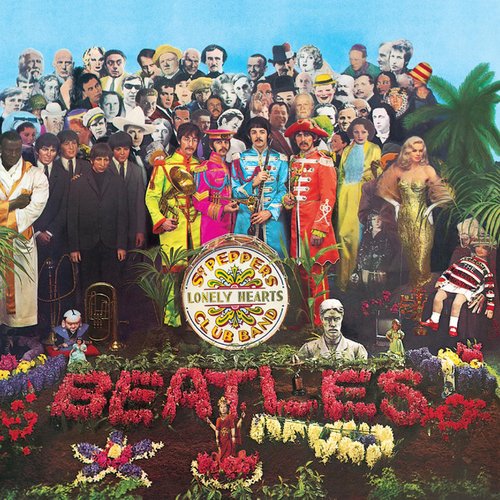
celebrating big anniversaries in January, I am going to write about a couple of the biggest. The Doors’ sensational debut album was released on 4th January, 1967. Ahead of its fifty-fifth anniversary, I wanted to go deeper into an album that ranks alongside the best ever released. Recorded between 19th and 24th August, 1966, The Doors contains some of the band’s very best material. Break On Through (To the Other Side), The Crystal Ship, Alabama Song (Whisky Bar), Light My Fire, Back Door Man, and The End can be found here. Jim Morrison, Ray Manzarek, Robby Krieger and John Densmore are sensational and so powerful right through The Doors. Although some have criticised Jim Morrison’s lyrics as being somewhat lacking, shallow or pretentious, I feel that his writing and vocals are wonderful. Paul McCartney claimed that, following the album's release, he wanted The Beatles to capitalise on The Doors’ musical style for their upcoming album, Sgt. Pepper's Lonely Hearts Club Band. Considered to be one of the all-time great albums, I know that there will be commemoration and investigation on its anniverssary. Before coming to a couple of reviews for The Doors, there is an article from 2017 where Albumism marked fifty years of a brilliant album:

The Doors as a concept, band, or debut album, should have never existed. There is no father to their style, and so far, there have been no legitimate sons. These four men, along with their first and best work, continue to be an army of one.

The Doors unveiled their debut album fifty years ago today. It is a 44-minute song suite that still sounds, in equal parts, groundbreaking, exhilarating, and deeply disturbing to this day, a half century later.

1967 was the year that the rock “album,” as we know it, truly began. Sgt. Pepper’s Lonely Hearts Club Band. The Velvet Underground & Nico. Are You Experienced?!? Axis: Bold as Love. Piper at The Gates of Dawn. Disraeli Gears. They all dropped in this single, very special year. Unique, not only for the rock album’s evolution, but for the entirety of popular culture as well. In film, it was the year that ushered in the “auteur era” in filmmaking, with Bonnie & Clyde and Easy Rider striking the match that would burn on through the seventies, into Apocalypse Now and Raging Bull at the dawn of the Reagan era. It was the “Summer of Love.” It was the “Season of The Witch.” You had to pick up, every stich. Meanwhile, the spool this time period unraveled, produced a string we’ve been looking to gather up, ever since.

Let’s get back to what we’re really here for: The Doors. This was a debut album, brought to you by a four-piece band, from the land of sun. The guitarist, Robbie Krieger, had only spent six months playing his instrument by the time the group was signed. Their drummer, John Densmore, was principally trained in jazz. Their keyboardist, the late great Ray Manzarek, was a maestro in multiple disciplines, who proved himself proficient on both the Hammond B-3, and Fender Rhodes.

The Doors were also a band, inexplicably, without a bass player. You need bottom? If you were The Doors, you didn’t. While if you were the type of listener who felt them, the bottom was already the environment you and The Doors occupied. The Doors were the darkest dream gone bad you ever had. In the brightest, sunniest spot you could find. When you get back, we’ll drop a line.

Fifty years ago, The Doors dropped a mind-blowing piece of work, in the form of their self-titled debut, which still stands the test of time. If you try to tell me that there’s a rock album made in the last twenty years that can say the same, I will tell you that you’re lying. Never mind the bollocks. Don’t let any recent skinny-jean scene, hyped by Pitchfork, fool you. The Doors, was and still is, some true-blue voodoo.

Unlike many of the rock records prior to 1967, this was an album that existed for purposes far beyond just its two singles. For my money, “Soul Kitchen,” with its three-and-a-half minutes of organ-stabbing groove, coupled with flirtatious guitar tickle-riffing and carousing lyrical deliverance, is this entire album’s most undeniable cut. The Doors, who famously lifted their name from Aldous Huxley’s 1954 autobiographical essay The Doors of Perception, take Huxley’s inspiration back to its original source material, legendary poet William Blake, deploying Blake’s beautifully apocalyptically Dionysian verbiage on the haunting lilt of “End of The Night.”

Morrison sells Willie Dixon’s blues classic “Back Door Man” in a way that none of the British Invasion blues-rock fetishists, like Clapton or Plant, ever could. He does so not by adoringly imitating a style he could never fully capture, but by using his own unbridled, youthful swaggering menace, plus his urgent bark to the proceedings. The hot, soon-to-be-dead guy is something the men might not know, but the little girls understand.

If we wanted to nitpick The Doors, we could probably quibble a bit over some of its less transcendent tunes. Once you get past its time-period-beholden, sardonic reversal of fellow LA rock band The Byrds’ “Turn, Turn, Turn,” “Take It As It Comes” is disposable. “I Looked At You” borders on being better suited for cleaner-cut LA-based acts like The Mamas & The Papas, or even The Monkees. Neither relative hiccup, is enough to distort nor distinguish this album’s flame at all.

And then….there’s “The End,” the album’s conclusion, both literally, and figuratively. This song, is damn near twelve minutes of madness, which encapsulates the best of what this band and its singer could do, as well as the best of what their medium has to offer”.

Even though we associate The Doors with the big hits, I think that the lesser-heard songs are worth fond listening. Twentieth Century Fox and I Looked to You are incredible. A complete and varied album with plenty of passion and wild alongside more nuanced Blues, the Californian band followed up their debut quickly with Strange Days in 1967 – a mere eight months after their debut arrived in the world. AllMusic said this when they reviewed The Doors:

A tremendous debut album, and indeed one of the best first-time outings in rock history, introducing the band's fusion of rock, blues, classical, jazz, and poetry with a knockout punch. The lean, spidery guitar and organ riffs interweave with a hypnotic menace, providing a seductive backdrop for Jim Morrison's captivating vocals and probing prose. "Light My Fire" was the cut that topped the charts and established the group as stars, but most of the rest of the album is just as impressive, including some of their best songs: the propulsive "Break on Through" (their first single), the beguiling mystery of "The Crystal Ship," the mysterious "End of the Night," "Take It as It Comes" (one of several tunes besides "Light My Fire" that also had hit potential), and the stomping rock of "Soul Kitchen" and "Twentieth Century Fox." The 11-minute Oedipal drama "The End" was the group at its most daring and, some would contend, overambitious. It was nonetheless a haunting cap to an album whose nonstop melodicism and dynamic tension would never be equaled by the group again, let alone bettered”.

Before finishing off, I want to quote a review from Rolling Stone. I like how there are comparisons with The Beatles’ Sgt. Pepper's Lonely Hearts Club Band. The Doors definitely stirred something inside of Paul McCartney and the band:

The Doors arrived in 1967, the same year as Sgt. Pepper's Lonely Hearts Club Band; both were psychedelic touchstones and among the first major rock discs that truly stood as albums, rather than collections of songs. But whereas the Beatles took a basically sunny view of humanity, the Doors' debut offered the dark side of the moon. Their sound was minor-keyed and subterranean, bluesy and spacey, and their subject matter — like that of many of rock's great albums — was sex, death and getting high. On "End of the Night," the band invited you to "take a journey to the bright midnight."

The key to the band's appeal was the tension between singer Jim Morrison's Dionysian persona and the band's crisp, melodic playing. Keyboardist Ray Manzarek and guitarist Robby Krieger's extended solos on the album version of "Light My Fire" carried one to the brink of euphoria, while the eleven-minute epic "The End" journeyed to a harrowing psychological state. Scattered among these lengthier tracks are such nuggets as "Soul Kitchen" ("learn to forget") and Morrison's acid-drenched takes on the blues ("Back Door Man") and Kurt Weill ("Alabama Song"). Though great albums followed, The Doors stands as the L.A. foursome's most successful marriage of rock poetics with classically tempered hard rock — a stoned, immaculate classic”.

A happy fifty-fifth anniverssary to the inspiring, enduring and mesmeric The Doors. The album and Light My Fire were inducted into the GRAMMY Hall of Fame. In 2015, the Library of Congress selected The Doors for inclusion in the National Recording Registry based on its cultural, artistic or historical significance. It is no wonder The Doors has received such high acclaim and accolade! It is an L.P. that I love as much now as I did when I was a child. Take some time out today to listen to this almighty debut…

TO the end.

FEATURE: Golden Years: Songs from Albums Turning Fifty in 2022

FEATURE:


Golden Years

 Songs from Albums Turning Fifty in 2022

___________

IN early-January of each year…

I like to put together a series of playlist with songs from albums celebrating big anniversaries. I am going back fifty years to 1972. That is a year that saw more than its fair share of classics released into the world. A track from the very best that 1972 had to offer, we will celebrate fifty years of these superb albums very soon. The playlist below is a collection of awesome songs from albums released…

FIFTY years ago.

FEATURE: Golden Years: Songs from Albums Turning Fifty-Five in 2022

FEATURE:


Golden Years

Songs from Albums Turning Fifty-Five in 2022

___________

IN early-January of each year…

I like to put together a series of playlist with songs from albums celebrating big anniversaries. I am going back fifty-five years to 1967. That is a year that saw more than its fair share of classics released into the world. A track from the very best that 1967 had to offer, we will celebrate fifty-five years of these superb albums very soon. The playlist below is a collection of awesome songs from albums released…

FIFTY-FIVE years ago.

FEATURE: Future Classics: Songs from the Highest-Rated Albums of 2021 on Metacritic

FEATURE:


Future Classics

Songs from the Highest-Rated Albums of 2021 on Metacritic

___________

FROM tomorrow…

I am publishing features made up of playlists that contain songs from albums celebrating big anniversaries. It is a good way of looking back at classic albums that we can explore in more detail. Before doing that, I wanted to look back at the best-reviewed and highest-rated albums from this year. I am going by Metacritic’s scoring (where they collate a series of reviews) to determine the best of the best from the year. There is only one album not available on Spotify: SAULT’s NINE (which was placed at number twenty-one). I am featuring songs from the remaining twenty-nine best albums of the year. Prior to me casting a look back at acclaimed albums celebrating significant anniversaries, here is a selection of songs from the…

 GREATEST albums of 2021.

FEATURE: Kate Bush: The Iconic Shots: ‘Symphony in Blue’, 1981 (Clive Arrowsmith)

FEATURE:


Kate Bush: The Iconic Shots

PHOTO CREDIT: Clive Arrowsmith 

‘Symphony in Blue’, 1981 (Clive Arrowsmith)

___________

THERE are actually two…

 IN THIS PHOTO: Clive Arrowsmith

iconic and marvellous Clive Arrowsmith shots that I could have included here. The one I have chosen is one of the most beautifully-shot and composed photos. It is a brilliant shot with a fascinating background. I will pop in the second photo before the end. A veritable symphony in blue, I love how Bush looks in the photo. The expression on her face is a little glum. As Arrowsmith recalls on his website, there was a reason for that:

Kate Bush came the famous Holborn Studios in London for a shoot for Hearst Magazines who had asked me to take  cover photograph for their new magazine Company. Kate was very definitely the woman of the moment at that time and her career was going from strength to strength all over the world.

She said very little when  she arrived and looked a little sad. Not everyone enjoys promoting their music be doing shoots and I appreciate that. Most performers love it but some find it a necessary evil. I was immediately struck by her striking looks. I sent  the stylist out to get strong theatrical gauze, in different colours, while Kate’s make up was being done, and I asked for some strands of Ivy (more on that in a moment).

Kate was very easy to work with and a calm silence pervaded her while we all worked, after hair and make, I got the stylist to help me by fiddling around with the shape of the blue gauze which I wanted to surround her face.  I set up a blue light behind her, to surround her in blue and to enhance the blue gauze, which contrasted with the red of her lips and her hazel. She was not animated in front of the camera, hardly varying her facial expression while I was shooting, maybe it was me, or she genuinely found it difficult being in front of the camera. I felt as if she was  just enduring the shoot, or that she must have something sad thing on her mind.

PHOTO CREDIT: Clive Arrowsmith 

She spoke very little, and then in quite voice and just obey my request that she move this of that way.  After the blue image my team and myself hung the Ivy from a boom  over her head   I directed  the hairdresser from my camera viewfinder to refine the ivy strand arrangement. I asked  Kate to hold the pose and we got the shot below.

I asked the Magazine Editor why she was so silent and contemplative, she told me later she was upset by something that had happen that morning before she came to the studio. We never found out what it was and I don’t suppose it matters, but you do feel an etherial sadness in these pictures which to this day I find totally captivating. When you are shooting portraits you have to take people as you find them in that moment so I did try and reflect the wistful and ethereal feeling I got from her.  I had been very excited to meet her and had been listening to her music the evening before. Kate is a totally genuine musical artist and these images also capture that very serious aspect of her talent. Although these could be seen as fashion or beauty images Kate’s presence adds such a depth of feeling that they have become an artwork in themselves. Even though I spent that time with her I still feel she is a complete enigma and that I know, no more or less than I did from listening to her music”.

There are so many great photos of Kate Bush. I think that Clive Arrowsmith’s shot captured Bush on a hard day, but it is actually quite mysterious – as we do not know why she was sad. Looking elegant, gorgeous and wide-eyed, it is one of the very best. What Arrowsmith produced in 1981 is…

SUCH a magnificent photo.

FEATURE: Spotlight: Thomas Headon

FEATURE:


Spotlight

PHOTO CREDIT: Kai Giraulo 

Thomas Headon

___________

WHEN thinking about different artists…

who will occupy their space and raise their profiles in 2022, I have been casting my net quite wide. I think I am too rigid with my listening tastes. Today, I wanted to spotlight Thomas Headon: an artist who has already been gaining traction regarding the ‘ones to watch 2022’ lists. I am new to his work and, whilst his style is not something I normally would pick up on, I have been intrigued by his rise and music. I am going to get to a few interviews. There are not a whole lot from last year, but the ones from 2020 are illuminating, informative and useful. We do get a sense of this bright young talent who definitely wants to ensure and stand out. I want to start with NOTION and their interview from November 2020. This was conducted to coincide around the release of The Goodbye EP:

Congratulations on the release of ‘The Goodbye EP’. What is the message behind this EP and do you have a favourite track and why?

Ahhhh thank you thank you. This EP was written over the course of like a whole year, during that time I did a lot of thinking and writing about people. It’s very “people’s attention” based. Whether it be my attention to others, their attention to me, craving attention, giving attention, you get the idea. I had just moved to the UK, was meeting lots of new people and creating experiences and moments with a lot of them too. In my opinion I think that’s where it all came from and I think the songs reflect that nicely. Favourite track is probably ‘UrbanAngel1999’, it’s so left and different to something I would usually create… but I love that about it. I think I’ve got that song out of my system and I probably won’t create something similar again, but I wouldn’t change it for the world.

PHOTO CREDIT: Kai Giraulo  

How has the pandemic influenced your work and creative process?

Influenced it kinda positively and negatively. Creatively I was terrible… I think because nothing new was happening I just stopped writing, stopped singing, playing, the whole lot. I often joke about how I went through multiple crises’ while we were in lockdown, but I actually did lmao. I’ve only really gotten back into trying to be creative every day recently. I’m writing a lot more, wanting to work with more people, do different things… all in all, I think now that life is somewhat getting back to normal here in London my mental health is just so much better and I’m a lot more willing to explore being creative every day. In another sense of ‘work’ though I think it forced me to stay active and online as much as possible, I did this thing where I went live every day for like 2 weeks which was great fun. As well as just connecting with fans a lot more. A part of me misses that time. I should do that more often.

Melbourne or London?

Melbourne. By far. Like I’m biased but there is a reason that city was the most liveable city on the planet for so long. Don’t get me wrong I love London a lot. I have a lot of friends here now, I love feeling like I’m in a city where so much is happening and also I planning on living here for the foreseeable future… but I think London only really thrives in the summer, which you get for like 1-2 months of the year. Melbourne even though its weather is so on and off I think just has something so amazing about it dude. I’m definitely biased. Anyway, Melbourne. Melbourne is still and always will be home.

Who are your top 3 artists of all time?

This is actually HARD. I can’t do 3 that’s too little. Nor can I actually put them in an order of favourites. But a few very notable ones are Coldplay, The 1975, Tyler The Creator, Rex Orange County aaaaand nowadays probably Easy Life. Admire them all in such different ways. I feel like I could also name at least 5 more that take similar positions. But all of them keep me going… whether that be musically or just purely because I enjoy listening to them.

Who would your dream collaboration be with?

Great question that I don’t think I’ll ever have an answer to. Collaboration wise I think I’m much more interested in being on tracks with like my friends and artists who are just doing their own cool shit right now, rather than heavily established artists or bands that I grew up listening to for example. There’s heaps of people who I’ve been inspired by forever that I’d love to write with though. People like Tom Fletcher from McFly, Elton John, Harry (of course), Matty Healy… the list goes on man. I usually often hate writing in sessions but I think it’d be so interesting to see how they all approach songs.

How do you measure success with your music?

Damn. I could go on about this question forever. Recently I really think my answer to this has drastically changed. As much as I joke about having the year 10 maths award, I’m very much a numbers driven / statistical person… I really like concrete data and figures. Because of that I think I used to measure my success based on my numbers, which is completely fair and an accurate way to do so, but little do they teach you in year 10 that that’ll actually drive you insane lol. Makes you compare yourself to everyone, puts so much pressure on you, dude it’s not healthy. Since finishing my second EP I’ve finally had the time to just focus on songwriting and making music again, and now I think my opinion on what success is with my music has changed. I wanna make music that means something to me, is something that I’m proud of and I can say “I did my absolute best on that”. Along with all the other things that come with making music I wanna do the same thing, content, work ethic yada yada you get what I mean. That’s a very long and spiritual answer but I think that was a deep question. Thank you for asking I liked that one”.

There are a couple of other great interviews that I am interested in sourcing. DIY interviewed Headon late in 2020; an artist definitely capturing a lot of love and interest from multiple sources and a big wave of new fans. I am a big fan of the Melbourne music scene, so reading Headon’s passion for it was quite touching:

What was the Melbourne music scene like for you when you were starting out?

Melbourne’s sick, the music scene reminds me a lot of London. It’s such a creative and inspiring city just to be in - whether that be culturally or in the fact that art is everywhere all the time in so many different forms. The music scene in Melbourne is cool because it’s so alive, and it has the same feel as this playlist really: everyone knows each other and hangs out with each other, there’s no hierarchy, and everyone helps each other out.

How have your more recent experiences in London differed?

It’s more the city itself rather than the music scene. When you’re a new artist in Melbourne, you’re a small fish in a medium to large pond, whereas in London you’re a small fish in the middle of the ocean. But I still feel like, even though you’re a small artist, you have complete access and even the bigger fish are still friendly.

 What have been the key influences for you so far?

My influences are all over the place. I’m a huge Coldplay fan - their early stuff is so good. Tyler, the Creator taught me a lot about how you don’t have to make music that even sounds like music - you can just make sick sounds, and then I love The 1975. I’m into artists and bands who do their own thing and just make what they want to make. You wouldn’t call it indie pop, or bedroom pop, or hip hop or pop; they just do their own thing. People like Rex Orange County, Clairo and The 1975 are all artists where you can’t really put them in genres but it all still works well together. They’re the artists that inspire me nowadays.

Do you feel like it’s quite a liberating time to be an artist?

Definitely, and I think there are bigger artists that are showing that as well, who don’t shy away from anything they think is cool. The 1975’s most recent album has about a hundred different genres on it. I think it’s great - you have less pressure to make an album with one definitive sound, you can do whatever you want”.

I am going to round off with an interview from Cool Accidents. They spoke with Thomas Headon late last year. It was a busy and quite productive year, in spite of the obvious limitations. The fact that Headon has been tipped as an act to watch this year shows that he has kept momentum going strong:

 “UK/Australian singer Thomas Headon has lived a couple of different lives. He was born in London, before growing up in regional Victoria. In 2019, he made a move back to London to chase a career in music, and released a couple of EPs along the way - 2019's The Greatest Hits and 2020's The Goodbye EP. If you're fans of artists like The 1975, Harry Styles or Rex Orange County, then chances are that you'll dig Thomas' music.

While 2021 has been a rough one for artists everywhere, he's seen some highlights. Thomas has spent parts of 2021 playing shows in both Australia and the UK, and is set to tour the US and the UK in October and November respectively. He's just released the upbeat Nobody Has To Know, and it's a joyous about a love explored in the shadows. To celebrate the track's release, we spoke to Thomas (or Disco Tony, as he's known to his fans) about his musical journey to date, as well as just how much he loves The Kid LAROI.

Firstly, I wanted to start by asking about your 2021 – how has your year been to date?

I mean after 2020 I’m pretty sure I could be hit by a bus and it’d still be a better year. But it’s not been too bad! I’ve played some shows, some festivals, seen 2 summers, am finally releasing music again and I’ve moved house! It makes me very excited for 2022 now as well.  

You were raised in Melbourne, before moving to London – and you’ve spent some time in both cities recently. Can you tell me how the two cities differ from each other musically?

Like most of Australia, Melbourne has this insane scene of incredible alternative bands, whereas London being a somewhat music capital of the world has mega popstars everywhere. Both are such great cities, I think my music taste and the kind of music I create has been massively influenced by Melbourne’s ‘band’ energy, and also just how creative the city is and how much it embraces arts. However, it’s good to be in London. Feels like I’m connected to the whole world here.  

Your single, Bored, speaks a lot about boredom (obviously) – what things do you do to try and break up the day when you are feeling like things are dragging a bit?

Lmao recently it’s just been go live. To be perfectly honest I actually really struggle with boredom, it stresses me out. I don’t like not having something to do or look forward to. I’m not really into watching movies or TV shows. I mean I play games, but I feel like I’m wasting time when doing that and that stresses me out even more lol.

You began life as a busker – how do you think you’d react if you encountered a busker covering one of your songs, and has that happened already?

Hasn’t happened! That would be such a nice full-circle moment though. I don’t know if I’d talk to them. I’d probably be too nervous, and also I’ve seen videos where other artists do that. I think it’s a bit cringy lol. I did get to talk to a really nice busker when I was in Melbourne at the start of the year though! We followed each other on Instagram and she said she loved my music and wants to write more of her own music, gave my first speech like “KEEP GOING BECAUSE I STARTED IN THE EXACT SAME SPOT YOU WERE IN TODAY”. It was so wholesome”.

I am looking forward to hearing what comes next from Thomas Headon. He is someone I am relatively new to, though I have liked what he has released so far, and I feel he will have a pretty successful career. If you have not discovered his music yet, go and follow him and check out his stuff. Whilst the past couple of years have been strange and quite disruptive, let’s hope that this one allows him to…

SPREAD his wings.

______________

Follow Thomas Headon

FEATURE: Station to Station: Part Twenty-Two: Sian Eleri (BBC Radio 1)

FEATURE:


Station to Station

Part Twenty-Two: Sian Eleri (BBC Radio 1)

___________

FROM her Power Down Playlist

to presenting the Chillest Show, Sian Eleri is a huge name at BBC Radio 1. Eleri covered Phil Taggart's Chillest Show on BBC Radio 1 during Christmas 2019. In November 2020, it was announced that Eleri would take over Phil Taggart's show following his departure from the station. On 20th April, 2021, further timetable changes were announced as it was revealed Annie Mac would leave the station. Eleri will continue presenting on Sunday nights but will also present the Powerdown Playlist from 10 to 11 p.m., Monday to Wednesday. That is some Wikipedia information I have grabbed. I wanted to go deeper regarding an incredible broadcaster who, I think, will occupy even more time and space on BBC Radio 1 in 2022. One of the finest young voices on radio, Eleri is someone with a massive and busy future! Go and follow her on Instagram and Twitter. The Welsh-born broadcaster is a major talent who I can see producing her own podcasts and playing music around clubs throughout the world next year. If you want some background regarding the awesome Eleri, here is some information:

Sian Eleri is one of the newest faces to BBC Radio 1. After being selected as part of Radio 1’s Christmas Presenter Search in 2019, she now hosts Radio 1’s Chillest Show every Sunday 7-9pm fulfilling a long-held dream to reach out and share her love of music with others. In 2020 an additional top class chill brand was added to her repertoire and was appointed the host of Radio 1’s Power Down Playlist which is it’s own show Mon-Wed at 10pm.

Sian has covered Annie Mac’s Future Sounds, hosting the London Grammar Listening Party for Radio 1 in conjunction with the release of their 3rd album, and presented at Radio 1’s Big Weekend 2021. Sian has interviewed the likes of Griff, Joe Lycett, Ashnikko, serpent with feet, Jordan Stephens & more; and these achievements within her first 4 months of appointment are testament to her passion, drive and love for her presenting work.

From radio to TV Sian will be hosting this years BIFA Awards red carpet and backstage highlights, talking to the best and brightest names in British independent film.

Hailing from Caernarfon, Sian is a proud Welsh speaker and regularly presents on BBC Radio Cymru. She currently hosts a Tuesday night music show and regularly covers for the likes of Huw Stephens. From 2018-2021 she also presented a weekly feature for Huw Stephens’ evening show, where she highlighted new releases from around the globe and guided listeners to music sites to explore and discover for themselves.

Sian is passionate about showcasing talent in the creative industries from Wales and beyond. She’s been a judge for the Welsh Music Prize 2019 & 2020, the British Podcast Awards 2020 & 2021, and curated a zine ‘Merched yn Gwneud Miwsig’ highlighting creative womxn in Wales across the arts. She’ll be judging at the AIM Awards in 2021.

Sian is an enthusiastic VO artist – with her warm, dulcet tones being heard representing clients like the BBC Archives, the Six Nations Championship, National Prison Radio, and British Council’s Selector Radio. She’s also voiced BBC podcast ‘Story of Miwsig’, and currently voices the All Day Chill mix on BBC Sounds.

The presenter also has experience in production – being a member of the teams behind Selector Radio with Jamz Supernova, BBC Introducing on Radio 1, and Radio 2’s Swing & Big Band Show with Clare Teal. A music podcast Sian produced called ‘Undertones’ is scheduled for release this year. She also produced and presented a BBC Radio Cymru 7-part series showcasing people’s unique and often difficult experiences of working on the pandemic’s frontline.

Sian studied Broadcast Journalism at the University of Leeds, becoming the valedictorian in the Media & Communication department and was awarded Best Female Newcomer at Leeds Student Radio. She went on to Goldsmiths to complete an MA in Sociocultural Linguistics, researching the intricacies and complexities of bilingualism, culture and identity.

Sian is great fun and a tastemaker for the future of music. She is enthusiastic, competitive, principled, and adventurous. Her interests span competitive swimming, design, environmental issues and sustainability”.

I really love Eleri’s work. As one of the new stars at BBC Radio 1, who knows just how far she can go! There are not that many interviews with Eleri online. I would love to know more about her favourite albums, childhood memories of music and, indeed, what she wants to achieve…not only next year, but throughout her career. We do get some useful insights and answers in a Music Week profile and interview from September:

Sian Eleri presents The Chillest Show on BBC Radio 1. Here, the DJ reveals how she got into the station and talks opportunity, on-air lessons and the value of radio...

Are there enough opportunities for young DJs and presenters from all backgrounds in the UK?

“I feel there’s a real gear-shift at the moment. It’s a notoriously difficult industry to crack – it’s taken me six years to get my foot in the door! But I’ve got an inclusive scheme to thank for my job at Radio 1. It’s true that hearing people who sound like you, or come from a similar background, make you feel like you could belong in that world – so voices like Huw Stephens’ on a national station made me feel like being a presenter wasn’t completely out of reach, despite being from opposite ends of Wales. I’m looking forward to seeing and hearing more accents, dialects and regional voices in the coming years, and having more broadcasters from marginalised communities can only be a good thing. A big shout-out to my wonderful colleague Jaguar, too, who’s created the free Future1000 scheme, promoting and educating young budding DJs from all corners of the country. Schemes like these are a positive force for change.

How do you want to impact Radio 1?

“I count my lucky stars that I present what’s been my favourite Radio 1 show for several years [The Chillest Show]. In part, because it encourages looking after ourselves and looking out for each other. In September, I’ll be taking over from Annie Mac as the host of Power Down Playlist with a new timeslot, so having the opportunity to share more mellow music in a calm space with focus on wellbeing is so special. I’m also keen to support more music outside the English language.”

Why is radio still valuable to the music industry?

“Radio is intimate. Being someone’s friend on air is a privilege. There’s no other medium quite like it. It’s a pleasure to champion artists for the benefit of the listener but the creator too; from finding someone’s new favourite obsession, to playing unsigned emerging artists with the potential of it leading to fantastic opportunities for them. It’s a win-win. Also, as a massive radio fan, I’m desperate to know who some of my favourite DJs are listening to. I hung on to Zane Lowe’s every word as a teen because I wanted to be as cool as him!”

What’s the biggest on-air lesson you’ve learned so far?

“Honestly, not being so hard on myself! I’m still learning, but I definitely don’t get as rattled if I do a messy link. I met Nick Grimshaw before my first show, I was a bag of nerves and he said, ‘If you make a mistake, it’s charming!’ I’ll always love him for that.”

You’re running the music business for a day. What do you change?

“I feel really strongly about fairness and expanding opportunities for everyone. From artists getting fair pay, to womxn and non-binary musicians being fairly represented on festival line-ups and labels expanding horizons supporting artists from outside London”.

I am going to finish up in a second. Sian Eleri is someone who champions diversity and inclusion. I feel she will go on to present a big show for BBC Radio 1. Maybe it will champion new artists - but she is definitely to keep growing and move up. As I said, I would love to hear podcasts and more bits from the amazing broadcaster and D.J. Her music tastes and choices are sublime. Hearing a Eleri D.J. set or a show where she simply plays her favourite tracks would be amazing. As she told Music Week, she wants to play more non-English acts. Eleri has taken over two great shows (one formerly hosted by Annie Mac), and it is clear she is very happy and excited to be at BBC Radio 1. Although these are early days, I believe Eleri will be a huge pioneer, champion and name who will make space for artists otherwise resigned to the side-lines. With many years and decades to come, this is a radio career that will blossom! Beyond radio, I also believe that Eleri will do T.V. and she will expand her career. It is very interesting when you encounter such a promising and passionate broadcasters and D.J. I (and so many other people) know that Sian Eleri is…

GOING to go a very long way.

FEATURE: The Lockdown Playlist: Amazon Music’s Artists to Watch 2022

FEATURE:


The Lockdown Playlist

IN THIS PHOTO: Jaz Karis 

Amazon Music’s Artists to Watch 2022

___________

MAYBE I am a bit late to this…

 IN THIS PHOTO: The Mysterines

but I wanted to put together a playlist of songs with artists to watch in 2022. Amazon Music announced their ones to watch last month. There are some great artists in the pack who are going to do some incredible things this year:

Amazon Music has announced its Artists To Watch 2022 list, highlighting UK talent on the rise who will be supported by Amazon Music over the next 12 months.

The 25 artists, who were handpicked by Amazon Music’s programming team, include a wide range of genres and musical styles.

The artists featured on the list are: Amaria BB, Anz, BandoKay, Chrissi, Cian Ducrot, Cristale, Emily Nash, Etaoin, Ewan McVicar, French The Kid, Gracey, HYYTS, Jasper Tygner, Jaz Karis, Kali Claire, Lola Young, Nova Twins, PinkPantheress, Priya Ragu, Police Car Collective, Tadhg Daly, Tems, The Mysterines, Thomas Headon and Wet Leg.

The support provided by Amazon Music includes video and audio content, global marketing, increased visibility across Amazon Music’s playlists, programming and high-profile Amazon Original tracks available only on Amazon Music.

The Artists To Watch 2022 artists will be supported through placements across Amazon Music’s playlists and stations throughout the year, alongside an additional focus on new releases and partnership opportunities which will be announced next year.

Previous artists who have featured on the Artists to Watch list since its inception include well-known names such as Billie Eilish, AJ Tracey, Dave, Ray Blk, The Amazons, Jorja Smith, Mabel, Sam Fender, Bugzy Malone, Slowthai and L Devine, and more recent artists such as Olivia Dean, Berwyn, Baby Queen, Holly Humberstone and Pa Salieu.

Amazon Music also celebrates UK artists across the globe through curated playlists like +44, the brand which is dedicated to spotlighting and celebrating UK rap, R&B, grime, drill and Afrobeats”.

To mark Amazon Music’s list of who they think will be big this year, the Lockdown Playlist below is a song from the artists named. It is an eclectic selection of songs from promising and diverse artists who are sure to be…
 IN THIS PHOTO: Wet Leg/PHOTO CREDIT: Frances Beach

BIG in 2022.

FEATURE: Inspired By… Part Forty-Three: Blondie

FEATURE:


Inspired By…

Part Forty-Three: Blondie

___________

I have not featured that many bands…

 PHOTO CREDIT: S. Savenok/Getty Images for Tribeca Film Festival

in this series. Led by the incredible Debbie Harry, I wanted to include Blondie in Inspired By… They are a hugely important and influential band who have seen so many other artists follow their lead and sound. Before coming to the playlist, AllMusic give us some information about the iconic band:

Embracing a broad range of pop music that encompassed British Invasion rock, garage rock, disco, reggae, Latin rhythms, and hip-hop, Blondie was the most commercially successful band to emerge from the New York punk/new wave community of the late '70s. The group was formed in New York City in August 1974 by singer Deborah Harry (b. July 1, 1945, Miami, Florida), formerly of the folk-pop group Wind in the Willows, and guitarist Chris Stein (b. January 5, 1950, Brooklyn, New York) out of the remnants of Harry's previous group, the Stilettos. The lineup fluctuated over the next year; drummer Clement Burke (b. November 24, 1955, New York) joined in May 1975, and bassist Gary Valentine signed on in August, while keyboard player James Destri (b. April 13, 1954) came on board in October, completing the initial permanent lineup. One of the first bands on the CBGB scene to score a record deal, Blondie released their first album, Blondie, on Private Stock Records in December 1976. In July 1977, Valentine was replaced by Frank Infante.

In August 1977, Chrysalis Records bought Blondie's contract from Private Stock and in October released their second album, Plastic Letters. (Chrysalis also reissued the debut LP.) Blondie expanded to a sextet in November with the addition of bassist Nigel Harrison (born in Princes Risborough, Buckinghamshire, England), as Infante switched to guitar. Blondie broke commercially in the U.K. in March 1978, when their cover of Randy & the Rainbows' 1963 hit "Denise," renamed "Denis," became a Top Ten hit, as did Plastic Letters, followed by a second U.K. Top Ten, "(I'm Always Touched by Your) Presence, Dear." Blondie turned to U.K. producer/songwriter Mike Chapman for their third album, Parallel Lines, which was released in September 1978 and eventually broke them worldwide. "Picture This" became a U.K. Top 40 hit, and "Hanging on the Telephone" made the U.K. Top Ten, but it was the album's third single, the disco-influenced "Heart of Glass," that took Blondie to number one in both the U.K. and the U.S. "Sunday Girl" hit number one in the U.K. in May, and "One Way or Another" hit the U.S. Top 40 in August. Blondie followed with their fourth album, Eat to the Beat, in October. Its first single, "Dreaming," went Top Ten in the U.K., Top 40 in the U.S. The second U.K. single, "Union City Blue," went Top 40. In March 1980, the third U.K. single from Eat to the Beat, "Atomic," became the group's third British number one. (It later made the U.S. Top 40.)

Meanwhile, Harry was collaborating with German disco producer Giorgio Moroder on "Call Me," the theme from the movie American Gigolo. It became Blondie's second transatlantic chart-topper. Blondie's fifth album, Autoamerican, was released in November 1980, and its first single was the reggae-ish tune "The Tide Is High," which went to number one in the U.S. and U.K. The second single was the rap-oriented "Rapture," which topped the U.S. pop charts and went Top Ten in the U.K. But the band's eclectic style reflected a diminished participation by its members: Infante sued, charging that he wasn't being used on the records, though he settled and stayed in the lineup. In 1981, the members of Blondie worked on individual projects, notably Harry's gold-selling solo album, KooKoo. The Best of Blondie was released in the fall of the year. The Hunter, Blondie's sixth album, was released in May 1982, preceded by the single "Island of Lost Souls," a Top 40 hit in the U.S. and U.K. "War Child" also became a Top 40 hit in the U.K., but The Hunter was a commercial disappointment, as was the concert tour that followed.

By the time The Hunter was completed, Stein became seriously ill with the genetic disease pemphigus. As a result, Blondie quietly broke up in October 1982, with Debbie Harry launching a part-time solo career while caring for Stein, who eventually recovered. In 1998, a new Blondie lineup anchored by Harry, Stein, Destri, and Burke united to tour Europe, their first series of dates in 16 years; a new LP, No Exit, followed early the next year. After more touring, another studio set, The Curse of Blondie, followed in 2003, and a DVD of the Live by Request program from A&E was released in 2004. In 2006, Blondie celebrated their 30th anniversary with their induction into the Rock & Roll Hall of Fame and the release of Greatest Hits: Sound & Vision, a best-of collection that contained all their classic videos as well. Blondie got back to work on original material in October 2009, decamping to upstate New York to start recording a new studio album. Additional sessions were held in Hoboken, and the resulting Panic of Girls was released in July 2011. In 2013, Blondie set out on a concert tour with another iconic female-fronted band, X, and returned to the recording studio to work on a new studio set, which was released in 2014 as Ghosts of Download. Three years later, Blondie teamed with producer John Congleton for Pollinator, which featured songs and cameos from the likes of Charli XCX, Nick Valensi of the Strokes, Sia Fuller, Blood Orange, Dave Sitek, and Johnny Marr”.

To show the wide influence and relevance of Blondie, the playlist below collects songs from artists who are either influenced by the band, or they have been compared in some way. Here are some great tracks from those who are influenced by…

THE legendary New York band.

FEATURE: Kate Bush: The Iconic Shots: ‘Christmas Time’, 1978 (Bernard Fallon)

FEATURE:


Kate Bush: The Iconic Shots

PHOTO CREDIT: Bernard Fallon 

‘Christmas Time’, 1978 (Bernard Fallon)

___________

I am a few days late here…
 PHOTO CREDIT: Bernard Fallon 

but, to salvage the remnants of Christmas to keep the spirit going for a little longer, this part of the series where I explore iconic photos of Kate Bush takes us back to Christmas. Some might quibble as to whether the photo at the top is ‘iconic’. I think it is, in the sense it is such an eye-catching and memorable photo. One might not even know about the series of shots Bernard Fallon took in 1978. Because I am soon marking the forty-fourth anniversary of her debut album, The Kick Inside (which celebrates that anniversary in February), I am interested in 1978 and everything Bush got up to that year. Many know that The Beatles had a packed 1967, though one can look at Kate Bush in 1978 and also wonder how the hell she managed to release two albums, promote her music around the world and still be able to have any energy or impetus to look ahead! I also want to bring in the article that went along with the photos. For Tune-In, Jan Etherington published a feature called Tales of Christmas Past. Bush was asked about her childhood Christmas experience, in addition to her career so far and what goes next. I am going to quote from that interview, before giving  more of my thoughts about the photo I have selected as the very best from Bernard Fallon:

IT'S a great compliment in a business where comparisons are a way of life and most things are derivative, that Kate Bush has emerged as an original. Her extraordinary first single "Wuthering Heights," which she wrote after watching the film on television, enabled Kate to move into the Number One spot for such an astonishing length of time that she practically bought the freehold. She'd barely vacated the premises when her second single "The Man With the Child In His Eyes," a haunting look at adolescent fantasy which she wrote four years ago, plus an album of her own songs, The Kick Inside, won her a gold record, proving that Kate Bush. far from being a one-hit wonder was definitely - something.

PHOTO CREDIT: Bernard Fallon 

Still only 20, music has always been a part of her life. She began writing songs when she was 11 and grew up in a loving, caring family always ready with help, advice and encouragement. Her father, a doctor, plays well and one of her brothers, Paddy, makes and plays musical instruments and appears on Kate's albums. Her other brother, John, is a poet and writer and is married with two sons.

Only the slightest excuse is needed by Kate and her brothers for a family get-together and Christmas in the Bush household tends to be a Dickensian affair.

"I've always loved Christmas,"- she says. "It's a very special time. It has it's own special vibe. It's marvelous now, with my two nephews, seeing Christmas through a child's eyes. I remember getting a toy from my brother, Paddy, one year-- a little cooker. He broke it. He didn't mean to, but it's so heartbreaking when you're a kid. "We all get together as family for Christmas Eve, Christmas Day and Boxing Day and because we're all so close, we have a terrific time. One thing I really love is the tree. It's wonderful to have a real tree in the house, the smell and colour is so beautiful. I really look forward to Christmas at home."

But for Kate, one thing's missing. Turkey is out. For four years she's been a vegetarian.

Kate's arrival on the pop scene came after a long period of waiting in the wings. EMI put her under contract three years ago after hearing a demo tape prepared by David Gilmour of Pink Floyd. Very impressed, they felt, however, that Kate should spend some time writing before she was launched.

Kate found it a strange period of limbo.

"Once I got the contract I presumed things would happen. I didn't go on holiday in case they called me to do some recording. But nothing happened. Finally I decided to study dance because I felt at least that would be something progressive."

It was a wise move. Her classes in dance and mime with Arlene Phillips and Lindsay Kemp have added enormously to Kate's impact as a visual performer, although Kate found the lessons no easy task.

"There's an awful lot of dance training in mime and I found it very difficult because I'd never danced before. A lot of the other people in the classes were good and I was useless. I looked an idiot for months and I used to get so depressed and frustrated because I couldn't do it but challenge is very important to me and I was really tough with myself to carry on and stop looking a fool. If you don't dare a little you won't progress."

Her continuous movement on stage is one literal way in which she manifests her horror of remaining static as a musician and a writer. She had four years to get together the songs which gave her the initial impact”.

Success has given her many things. but it's taken away her time to herself.

"Sometimes I get really worried because I'm not sure if I can ever write another song. but that's often because I've not had enough time to get the flow going. It's very inspiring sometimes to write under pressure because you're in a very extreme emotional state and enjoying new experiences.

What I do find a problem, is actually being left alone to put it on paper. I can't remember the last time I was alone for any length of time, even a day. It must be well over a year. I miss being by myself very, very much but it's very difficult because you can't just ask people to leave, they don't understand.

When I was studying dance and writing songs I was alone a lot, but I was being so creative and I got so much done. I think it was probably one of the best times of my life: I was really happy."

Not that she's unhappy at the moment but she realises that one album doth not a legend make, even if it was a gold one, and her new album Lionheart will be very important. She's very happy with it, she feels it's a major progression.

PHOTO CREDIT: Bernard Fallon  

"Writing songs is what I'm good at and I really do feel it's what I'm meant to do. What I'm here for. I can't think of anything else that would be as fullfilling and I would be happy to be just a songwriter, full stop. But there are always new beginnings. As soon as you climb one wall, there's another wall to climb. The first album was a showcase, a foot in the door if you like, and it's very important for me to change and improve. I think I can be reasonably objective about my own work and I was lucky to get the songs together for Lionheart. There are no special themes because I always treat each song as a separate entity and work on them one at a time but I think many other songs are much more up-tempo. I love rock songs but normally they're just three chords and I don't believe in that sort of writing. I like a really strong melody line and that was a technique to learn but l seem to have cracked it. It's pleased me, anyway."

She's confident enough to know when she's done a good job and appears to have all the necessary ingredients for survival and sanity in the music business. She also has all the strong characteristics of her Leo birthsign. It was she, for instance, as a young unknown, who over-ruled EMl's first choice and insisted that they release "Wuthering Heights" as her debut single.

"For me "Wuthering Heights" was the only single and I felt very strongly about it. Eventually they agreed, but it would have been terrible if it had failed after all the effort I had put into it”.

I really love the festivity of the photos taken by Bernard Fallon. There are a lot of great photos from 1978, though none that match the fun of the Christmas shots. Bush looked relaxed and in a good spirits. She was not even at the end of an enormously busy year. I can only imagine how much she was looking forward to Christmas that year! A chance to spend time with family and have some time off. 1979 was another busy year where she went from two studio albums to her huge The Tour of Life (that took her around Europe). Capturing Kate Bush in a relaxed and upbeat mood, the range of photos Fallon took are really incredible and memorable. I especially love that photo of her by the mantelpiece with a card in her hand. You get a few different angles of Kate Bush at Christmas. From smarter and more elegant clothing to her more comfortable and causal, it is one of the great photoshoots! I may return to these photos when I discuss The Kick Inside, ahead of its forty-fourth anniverssary. I will do a few more parts of this feature that explores iconic photos of Kate Bush. For this one, I wanted to go back to 1978 and highlight…  

A late slice of Christmas.

FEATURE: Ask the Angels: The Legendary Patti Smith at Seventy-Five

FEATURE:


Ask the Angels

PHOTO CREDIT: Gasper Tringle 

The Legendary Patti Smith at Seventy-Five

___________

ON Thursday (30th)…

 PHOTO CREDIT: Judy Linn

the genius that is Patti Smith celebrates her seventy-fifth birthday. Similar to my Inspired By… and A Buyer’s Guide features, I am going to source an extensive biography from AllMusic. I wanted to use this occasion to put together a playlist containing some of Smith’s best tracks. Ahead of a milestone birthday of one of music’s greatest artists and voices, here is some information about the iconic Patti Smith:

Punk rock's poet laureate Patti Smith ranks among the most ambitious, unconventional, and challenging rock & rollers of all time. When she emerged in the '70s, Smith's music was hailed as the most exciting fusion of rock and poetry since Bob Dylan's heyday. With her androgynous, visual presentation echoing her unabashedly intellectual and uncompromising songwriting, Smith followed her muse wherever it took her, from structured rock songs to free-form experimentalism. Her most avant-garde outings, such as 1975's Horses and the following year's Radio Ethiopia, borrowed improvisation and interplay from free jazz, but remained firmly rooted in primal three-chord rock & roll. A regular at CBGB's during New York punk's early days, the artiness and the raw musicianship of her work had a major impact on the movement among contemporaries and followers alike. As boundary-pushing as her music could be, Smith nevertheless scored a hit in the Bruce Springsteen collaboration "Because the Night" from 1978's Easter, which, like 1979's Wave, offered a slightly more polished version of her sound. When she returned to music following a lengthy hiatus and the death of her husband, Fred "Sonic" Smith, her work was sometimes subtler and more meditative, as on 1996's Gone Again, but rock was still a fiery, vital part of albums like 2000's Grammy-nominated Gung Ho and 2012's Banga. Her other projects in the 2010s and 2020s, such as her National Book Award-winning memoir Just Kids and her work with Soundwalk Collective on albums like 2020's Peradam, proved her expression was as boundless as ever.

Smith was born in Chicago on December 30, 1946. Her parents moved to Philadelphia when she was three, and then to the nearby, less urban town of Woodbury, New Jersey, when she was nine. Something of an outcast in high school, she found salvation in the poetry of Arthur Rimbaud, the writings of the Beat poets, and the music of soul and rock artists like James Brown, the Rolling Stones, the Doors, and especially Bob Dylan. She attended Glassboro State Teachers College, but dropped out due to an unplanned pregnancy. She gave the baby up for adoption and took a job on a factory assembly line, thus saving enough money to move to New York City in 1967. She worked in a bookstore and met art student/future photographer Robert Mapplethorpe, who became her lover despite living most of his adult life as a gay man. In 1969, Smith went to Paris with her sister, busking on the streets as a performance artist. Upon her return, she moved into the Chelsea Hotel with Mapplethorpe for a brief period, then became involved with underground theater.

With playwright and partner Sam Shepard, she co-authored and co-starred with him in the somewhat autobiographical play Cowboy Mouth in 1971. During this time, she was also working on her poetry as a member of the St. Mark's Poetry Project, and met guitarist Lenny Kaye, also a Bleecker Street record store clerk and rock critic. Kaye had written a magazine essay on doo wop that impressed Smith, and the two found that they shared a love of early and obscure rock & roll. When Smith gave a public poetry reading at St. Mark's Church in February 1971, she invited Kaye to accompany her on the electric guitar for three pieces. Over the next two years, Smith continued to perform in plays and poetry readings; she also wrote for Rolling Stone and Creem, published two volumes of her poems, and contributed lyrics to the literary-minded metal band Blue Öyster Cult.

Smith and Kaye performed again in late 1973, and their partnership grew into a much more regular occurrence. The following year, they added pianist/keyboardist Richard Sohl, and their performances grew into unique blends of Beat-influenced poetry, improvised spoken word with equally spontaneous musical backing, and covers of rock & roll oldies. Regular gigs around New York cemented their growing reputation, and in June 1974, with Mapplethorpe paying for studio time, the band cut a groundbreaking independent single, "Hey Joe" b/w "Piss Factory." The former added a monologue about Patty Hearst, while the latter recounted Smith's stint as an assembly line worker in vivid detail, incorporating lyrical snippets from the rock records in which she took solace. Both songs featured Television guitarist Tom Verlaine, and along with Television's own "Little Johnny Jewel," the single helped kick-start the independent, D.I.Y. aesthetic that remains punk rock's hallmark.

In late 1974, Smith and her band played a few gigs on the West Coast. When they returned, they added guitarist/bassist Ivan Kral to flesh out their sound, and joined Television as part of the emerging new rock scene at CBGB's, a dive bar in the Bowery. Their two-month stand in early 1975 sometimes featured drummer Jay Dee Daugherty, who became a regular member, and attracted the notice of Arista Records president Clive Davis, who offered Smith a record deal. She entered the studio with ex-Velvet Underground member John Cale serving as producer, and in late 1975 released her debut album, Horses, which was essentially the first art-punk album. Rapturously received by most critics, Horses offered unorthodox covers of party rock tunes like "Gloria" and "Land of 1000 Dances" (Smith opened the former with the declaration "Jesus died for someone's sins, but not mine"), as well as a mix of original songs and lengthy, improv-driven spoken word pieces; it sold well enough to climb into the Top 50.

The 1976 follow-up, Radio Ethiopia, was credited to the Patti Smith Group, and placed some of Smith's most straightforward rock songs ("Ask the Angels," "Pumping [My Heart]") directly alongside some of her most experimental, free-form pieces (the title track). In early 1977, Smith was performing in Tampa, Florida, when she twirled herself right off the stage; she broke two vertebrae in her neck and was forced to take some time off to recuperate. During that period, she wrote a book of poetry titled Babel. She returned to recording in 1978 with Easter, a more accessible nod in the direction of album rock radio, which featured her writing collaboration with Bruce Springsteen, "Because the Night." The ballad climbed to number 13 on the pop charts and sent Easter into the Top 20.

Smith's sound became increasingly polished on 1979's Wave, thanks in part to new producer Todd Rundgren. Two of the album's tracks, "Dancing Barefoot" and "Frederick," were dedicated to MC5/Sonic's Rendezvous Band guitarist Fred "Sonic" Smith, and the couple married in 1980. She retired to a life of domesticity near Detroit, raising two children with her husband. In 1988, Smith re-emerged with Dream of Life, on which Fred co-wrote all the material and also played guitar, with backing by Smith Group members Sohl and Daugherty. Following its release, Smith disappeared from music again but continued to write, completing a poetry collection called Woolgathering (among other projects), and gave occasional readings.

As the '80s became the '90s, Smith lost some of those closest to her. Longtime friend and album-cover photographer Mapplethorpe died in 1989, followed a year later by pianist Richard Sohl. At the end of 1994, both her husband and her brother Todd died of heart failure within a month of one another. Smith returned to performing as a means of therapy, and re-formed the Patti Smith Group -- with Kaye, Daugherty, and new bassist Tony Shanahan -- for a few small-scale tours including a December 1995 excursion with Bob Dylan that R.E.M.'s Michael Stipe documented in the book Two Times Intro.

The following year, Smith moved back to New York. She and the group then headed into the studio to record Gone Again, which featured a new second guitarist in Oliver Ray and guest spots from Tom Verlaine, John Cale, and Jeff Buckley. Gone Again took a stronger, more optimistic tone than might have been expected, and was well-received by many critics. That year, Smith also appeared on "E-Bow the Letter" from R.E.M.'s New Adventures in Hi-Fi, and published The Coral Sea, a book of poetry inspired by Mapplethorpe. Following closely on Gone Again's heels, Peace and Noise appeared in 1997 and earned a Grammy nomination for the track "1959"; a much darker affair than its predecessor, it took into account the deaths of two more of Smith's inspirations, Allen Ginsberg and William S. Burroughs. Smith returned in 2000 with Gung Ho, the most aggressive-sounding and socially conscious album of her comeback; the song "Glitter in Their Eyes" earned her a second Grammy nomination.

Smith and Arista parted ways in 2002, with the label issuing Land (1975-2002), a double-disc compilation of hits and rarities, as a wrap-up. Her first album for Columbia, Trampin', appeared in 2004 and included songs about the loss of her mother. The following year, Smith celebrated the 30th anniversary of Horses' release with the first live performance of the album in its entirety at London's Meltdown Festival, which she curated. Arista also reissued the album in a deluxe two-CD 30th Anniversary Legacy Edition. Also in 2005, the French Ministry of Culture named Smith a Commander of the Ordre des Arts et des Lettres. The following year, she performed at CBGB's final concert. On March 12, 2007, Smith was inducted into the Rock & Roll Hall of Fame alongside Van Halen, the Ronettes, Grandmaster Flash & the Furious Five, and R.E.M. She released an album of typically eclectic covers, Twelve, that same year. In 2008, she issued The Coral Sea as a live album pairing readings from the book with music by Kevin Shields, and was the subject of Stephen Sebring's acclaimed documentary Patti Smith: Dream of Life.

Smith's creative streak continued during the 2010s. Her 2010 memoir about her life with Mapplethorpe, Just Kids,

won the National Book Award for Non-Fiction for that year. In 2011, Sony Legacy released a single-disc, career-spanning compilation, Outside Society, featuring recordings from her Arista and Columbia catalogs. Just after the recording was released, Smith, along with the Kronos Quartet, won Sweden's prestigious Polar Prize for "devoting her life to art in all its forms." Smith also contributed both a 12" x 12" original print and an audio track to the ultra-limited-edition, multi-artist Legacy box set 15 Minutes: Homage to Andy Warhol. That year, she also exhibited her first collection of photography, Camera Solo, at the Wadsworth Atheneum Museum of Art, and contributed songs to the Buddy Holly tribute Rave on Buddy Holly and the soundtrack to The Hunger Games: Catching Fire. Smith released Banga, her 11th studio album, in 2012. Along with her regular band, guests included her two children, Jackson and Jessi, Tom Verlaine, and Jack Petruzzelli. After meeting Stephen Crasneanscki of Soundwalk Collective in Paris, she became a frequent collaborator with the field-recording, globe-trotting group. Their first collaboration was Killer Road, an homage to Nico that chronicled her final days in Ibiza. Featuring the sounds of the island as well as poetry and vocals by Smith and her daughter Jesse, Killer Road was staged in New York City and Berlin in 2014 and released as an album that combined live and studio recordings two years later.

In 2015, Smith, her children, and her band recorded "Aqua Teen Dream" for the series finale of the Adult Swim cartoon Aqua Teen Hunger Force, one of her favorite shows. Among her other projects, Smith appeared in Terrence Malick's 2017 documentary Song to Song, while the concert/documentary film Horses: Patti Smith and Her Band appeared in 2018. The following year, she reunited with Soundwalk Collective for The Perfect Vision, a trilogy of albums about French poets. First up was that May's The Peyote Dance, a work inspired by Antonin Artaud's time with the Rarámuri, an indigenous people of Mexico's Sierra Tarahumara region. That November's Mummer Love also featured Philip Glass and Mulatu Astatke as it explored Arthur Rimbaud's spiritual journey to Harar, Ethiopia. The final volume of the project, September 2020's Peradam, was inspired by the metaphysical voyage in René Daumal's novel Mount Analogue. Along with Smith's poems and vocalizations, it included contributions from Charlotte Gainsbourg, Tenzin Choegyal, and Anoushka Shankar, as well as field recordings captured in the Himalayas and the Indian cities of Rishikesh and Varanasi”.

The songs below show what an enduring and unique talent Patti Smith is. It is almost ten years since his latest studio album, Banga, came out. I wonder whether we will get any more material from her (let us hope so!). This playlist is a salute and nod to a phenomenal artist. It is left for me to wish Patti Smith…

A happy seventy-fifth birthday.