FEATURE: Groovelines: Sophie B. Hawkins – Damn I Wish I Was Your Lover

FEATURE:


Groovelines

Sophie B. Hawkins – Damn I Wish I Was Your Lover

___________

AMONG some of the more overlooked…
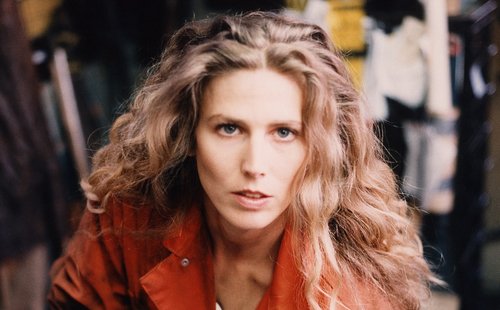
and inspiring women in music during the 1990s, Sophie B. Hawkins deserves more retrospective acclaim. On 31st March, her epic and iconic song, Damn I Wish I Was Your Lover, turns thirty. It was taken from her amazing debut album, Tongues and Tails. Considered one of the best singles of the 1990s, it has won acclaim through the decades. I will source an article that takes us into the song and the story behind it. A hit around the world, I think that Hawkins’ Damn I Wish I Was Your Lover is a song that sounds timeless and will be heard and enjoyed for decades more. It is a terrific track that opens with such a captivating and image-rich line: “That old dog has chained you up all right”. Although Hawkins never repeated the success and quality of her debut album, her most-recent album, 2012’s The Crossing, is an interesting release. Thirty years ago, the world received this amazing song that is instantly appealing, memorable and quotable. I heard it first when I was at middle school, and it is a track that I kept hearing on radio regular for a few years after 1992. Even now, I can listen to Damn I Wish I Was Your Lover and find new layers and things to admire. Marking herself out as a distinct and engaging songwriter with a unique lyrical voice, I am sure there are songwriters around today that have taken something from Sophie B. Hawkins.

I want to heavily quote from an article American Songwriter published last year. They provided some great background to a track that is considered a classic today:

It’s as intense an expression of desire as ever has graced the pop charts, so intense, in fact, that it needed a mild expletive just to drive the point home. But, as it turns out, “Damn I Wish I Was Your Lover” was less about Sophie B. Hawkins striving for some sort of physical connection than it was about her finding her own self as a singer-songwriter.

As Hawkins told American Songwriter in an extensive interview, the sequence of events leading up to her writing the 1992 Top 5 single helped, in many ways, to berth the song. At the time, Hawkins was thinking of a life in music as a percussionist, but her brief stint as a marimba and vibraphone player in Bryan Ferry’s band convinced her of a different career path.

“I was breaking into what could have been the dream gig for a drummer/percussionist, and then I got fired,” Hawkins says. “I had worked so many hours for so many days for so long, that I could’ve been upset about it. But I thought it was a ticket to my freedom. I thought, ‘You don’t really want to be a sideman and go on tour with these people. As wonderful as they are, that’s not who you are.’”

Thus, Hawkins willed herself into becoming a songwriter, with “Damn I Wish I Was Your Lover” one of the first fruits of this transformation. “I started writing the lyrics on my wall,” she remembers. “I didn’t know they were lyrics. They were just things on the wall. And I played those piano chords, (sings) ‘Baa-baah,’ with the G as the base. Which was a mistake, of course, because the best things happen from mistakes. I was so tired from playing over and over again that my hand didn’t move from the G chord, and it was just so beautiful, the A and D over a G, and I had never heard it before.”

“And I thought that was really something big. It was this feeling inside of me: Something big is about to happen to you, Sophie. And it was the first big thing that had ever happened in my life, because I had never had that feeling before. Because I was a total loser, D student, nothing ever really happened the way I wanted it to happen. I thought, ‘Something is coming out of you that you know is in there. And if you can just get it out, if you can just be here, this will happen.’”

As Hawkins continued writing, she came up with the idea of changing the emphasis in the chorus, a decision that would pay off huge dividends. “I remember playing with the chorus,” she says. “And it wasn’t DAMN! It was more like ‘Damn, I wish I was your lover’ (sings it softly). It was very soft. When you listen to it, there is a low voice that is actually the melody. And I loved it but I thought that no one is going to see this as a chorus.”

Hence, came the idea to shout out the word “Damn”, the passion of it mirroring both her longing for a new way of life and her exultation of realizing that she knew she needed one. “I wasn’t in any relationship that was as sophisticated as the song,” Hawkins says of the misconception that she had someone specific in mind as the object of her affection. “But I had been triggered by a lot of emotional events to bring the song out of me. There are times when you write a song and you think that it’s OK and it’s fun to play, people like it, whatever. But then there are the times when a song comes out where you feel like it’s almost ugly. It’s almost excruciatingly uncomfortable to listen to but yet you’re compelled. Those are the good songs.”

“It was so strong because I was at a point of so much loss, but with the potential to break out of my chains. That’s why I think loss is so important and failure is so important. Not because failure always leads to success or because you learn from your mistakes. Because actually you’re only failing at being who you really aren’t. Then you get to say, ‘Who could I be?’ And that’s ‘Damn I Wish Was Your Lover.’ The feeling and the sensuality and the depth of the story is my life story.”

Hawkins instinctively realized that the song, which would appear as the leadoff single to her 1992 debut Tongues And Tails, was something special. But she thought it might be too personal or too strange for public consumption. “I thought ‘Damn’ was cumbersome,” she remembers. “It was so real for me and so me. But I also thought it was so layered. I mean, ‘That old dog has chained you up all right.’ I thought, ‘Who’s going to get that?’ But it turns out a lot of people got it on a lot of different levels.

“Knowing is the curse of all art. Lots of people have said that. The magic of any great thing is the originality and the unwieldy sense that it almost doesn’t work. It just barely works. And that’s the thing about ‘Damn.’ It just works. It could have gone off the rails.”

Still, Hawkins didn’t have high expectations. “Before the record even came out, I was sure Sony was going to drop me when they realized how bad of a songwriter I was. And then when the record came out, I was almost apologetically on tour because I didn’t really believe that people were going to like it. Because I knew that I liked it and that already meant that it was weird. My expectations were that I would be dropped and that I would go back to being obscure.”

Those fears were allayed as “Damn I Wish I Was Your Lover” gained attention from music fans who knew something fresh and different when they heard it. As Hawkins hoped, people were drawn to the rawness and vulnerability of both the song and her performance. And, as years have gone by, the song has evolved into a fixture within pop culture. After all, that chorus sums up unrequited feelings better than any exposition could ever hope to do.

Hawkins at least had an inkling this end result was possible, and it’s something that can’t be taken away from her. “It may have been more successful if I had let Sony tamper with it,” she muses. “They’ve proven time and time again that they can make something an even more massive hit. But I think the longevity is because of the uniqueness of it.”

“They can say in so many ways, I make bad decisions about business or whatever, because I have these really strong beliefs and I stick to them. But I always knew that this song, if it made it, was the big classic. Me as an artist, I thought I’d be thrown away in two seconds. But I thought the song had legs”.

I was minded to look back at Sophie B. Hawkins’, Damn I Wish I Was Your Lover, as I have been collating playlists of songs celebrating big anniversaries this year. At the end of March, her best-known track turns thirty. It is such a great track that, whilst it has a dark and troubled story and message, is uplifting and strengthening at the same time. No doubt one of the defining songs of the 1990s, this is one we will be sharing and spinning for generations. As I have said, it is so instantly appealing. You can come to it for the first time and, when you hear it again, that chorus will be lodged in your head! I am very pleased I have got to cover…

A powerhouse classic.

FEATURE: A Buyer’s Guide: Part Eighty-Seven: The Smashing Pumpkins

FEATURE:


A Buyer’s Guide

Part Eighty-Seven: The Smashing Pumpkins

___________

IN this A Buyer’s Guide…

 PHOTO CREDIT: Paul Natkin/Getty Images

I am recommending the essential albums from a band who formed in Chicago in 1988. The Smashing Pumpkins released their eleventh studio album, CYR, in 2020. I am sure that we have not heard the last album from the group. Before coming to the albums you need to own, here is some biography concerning the incredible The Smashing Pumpkins:

Although they emerged alongside grunge acts like Nirvana and Pearl Jam, the Smashing Pumpkins were the group least influenced by traditional underground rock. Headed by principal songwriter and frontman Billy Corgan, their sound was an amalgam of progressive rock, heavy metal, goth, psychedelia, and dream pop, a layered, powerful style driven by swirling, distorted guitars that churned beneath Corgan's angst-ridden lyrics. One of the most visible alternative rock bands of the early '90s, the Smashing Pumpkins achieved mainstream success over the decade with classic releases Siamese Dream and Mellon Collie and the Infinite Sadness, then entered an uneven and often tumultuous chapter that carried them into the 2000s. After a misunderstood foray into electronic rock on Adore, Corgan issued a final pair of efforts before putting the group to sleep for an extended early-2000s hiatus that ended with 2007's Zeitgeist. Along with an ever-changing lineup, he continued to churn out albums under the Pumpkins moniker before reconvening with most of the original lineup for a 2018 reunion tour and albums such as 2020's synth-heavy Cyr.

The son of a jazz guitarist, William Patrick Corgan grew up in a Chicago suburb, leaving home at the age of 19 to move to Florida with his fledgling goth metal band, the Marked. After the band failed down South he returned to Chicago around 1988, where he began working at a used-record store. At the shop he met James Iha (guitar), a graphic arts student at Loyola University, and the two began collaborating, performing, and recording songs with a drum machine. Corgan met D'Arcy Wretzky at a club show; after arguing about the merits of the Dan Reed Network, the two became friends and she joined the group as a bassist. Soon, the bandmembers, who named themselves the Smashing Pumpkins, had gained a dedicated local following, which included the head of a local club who booked them to open for Jane's Addiction. Before the pivotal concert, the band hired Jimmy Chamberlin, a former jazz musician, as their full-time drummer.

In 1990, the Smashing Pumpkins released their debut single, "I Am One," on the local Chicago label Limited Potential. The single quickly sold out, and in December the band released "Tristessa" on Sub Pop. By this point, the Smashing Pumpkins had become the subject of a hot bidding war, and the group latched onto a clever way to move to a major label without losing indie credibility. They signed to Virgin Records, yet it was decided that the group's debut would be released on the Virgin subsidiary Caroline, and then the band would move to the majors. The strategy worked; Gish, a majestic mix of Black Sabbath and dream pop produced by Butch Vig, became a huge college and modern rock hit upon its spring 1991 release. The Pumpkins embarked on an extensive supporting tour for Gish, which lasted over a year and included opening slots for Red Hot Chili Peppers and Pearl Jam. During the Gish tour, tensions between bandmembers began to escalate, as former couple Iha and Wretzky went through a messy breakup, Chamberlin became addicted to drugs and alcohol, and Corgan entered a heavy depression. These tensions weren't resolved by the time the group entered the studio with Vig to record their second album.

Toward the beginning of the sessions, the Pumpkins were given significant exposure through the inclusion of "Drown" on the Singles soundtrack in the summer of 1992. As the sessions progressed, Corgan relieved himself of his depression by working heavily -- not only did he write a surplus of songs, he played nearly all of the guitars and bass on each recording, which meant that its release was delayed several times. The resulting album, Siamese Dream, was an immaculate production and was embraced by critics upon its July 1993 release. It was their first blockbuster, debuting at number ten on the charts and establishing the Smashing Pumpkins as stars. "Cherub Rock," the first single, was a modern rock hit, yet it was "Today" and the acoustic "Disarm" that sent the album into the stratosphere. The Smashing Pumpkins became the headliners of Lollapalooza 1994, and following the tour's completion, the band went back into the studio to record a new album that Corgan had already claimed would be a double-disc set. To tide fans over until then, the Pumpkins released the B-sides and rarities album Pisces Iscariot in October 1994.

Working with producers Flood and Alan Moulder, the Smashing Pumpkins recorded as a full band for their third album, the double-disc set Mellon Collie and the Infinite Sadness, which became an even bigger hit than Siamese Dream, debuting at number one on the charts. On the strength of the singles "Bullet with Butterfly Wings," "1979," "Zero," and "Tonight, Tonight," it sold over four million copies in the U.S., eventually being certified platinum over eight times. The Pumpkins had graduated to stadium shows for the Mellon Collie tour, and the band was at the peak of its popularity when things began to spiral. On July 12, prior to two shows at Madison Square Garden, the group's touring keyboardist, Jonathan Melvoin, died from a heroin overdose; he was with Chamberlin, who survived his own overdose. In the wake of the tragedy, the remaining Pumpkins fired Chamberlin and spent two months on hiatus as they recovered and searched for a new drummer. Early in August, they announced that Filter member Matt Walker would be their touring drummer and Dennis Flemion, a member of the Frogs, would be their touring keyboardist for the remainder of the year. They returned to the stage at the end of August and spent the next five months on tour.

In spring, the Smashing Pumpkins recorded two songs for the soundtracks for Batman & Robin (the Grammy-winning "The End Is the Beginning Is the End") and Lost Highway ("Eye"). The latter track hinted at the direction of their next album, which took a surprise turn into subdued electronics. Shrouded by the death of Corgan's mother and a divorce, Adore followed a few months later. Despite topping international charts and peaking at number two on the Billboard 200, the effort's sales and reviews were disappointing, with many critics confused by their new direction. The band embarked on a tour, contributing 100-percent of the earnings to charity, and returned to the studio.

Prior to the release of their fifth album, Chamberlin returned to the group and Wretzky made her exit, replaced by Hole bassist Melissa Auf der Maur. Bringing the band back to its early rock roots, MACHINA: The Machines of God landed in early 2000. Peaking at number three, MACHINA included the singles "Stand Inside Your Love" and "The Everlasting Gaze." In the midst of album promotion, Corgan announced his intention to dissolve the band that year with a farewell tour. Fans received one last treat when Corgan and company finished tracks that were left over from the MACHINA sessions. Surprisingly, Virgin Records balked at the idea of releasing the 25-track set so close to the release of their previous album, so the band put the entire album (going by the official title of Machina II: The Friends and Enemies of Modern Music) on the Internet for fans to download for free. On December 2, 2000, the Pumpkins played a mammoth show at Chicago's Metro (also the venue at which the group played its first show back in 1988). Booked as a final farewell, it would actually just be their first official hiatus, the start of an uneven period for Corgan when the Pumpkins would become known as much for lineup and status changes as the music itself.

During the break, former members of the band didn't wait long before carrying on with other projects. Corgan spent the summer of 2001 playing guitar with New Order on select concert dates, and later in the year unveiled his new band, Zwan, which included Chamberlin on drums (as well as former Chavez guitarist Matt Sweeney and bassist David "Skullfisher" Pajo). He also released a book of poetry. The other two former Pumpkins, Iha and Auf der Maur, began putting together an alt-rock supergroup dubbed the Virgins. Iha also began playing with A Perfect Circle. A pair of postmortem Pumpkins collections were also issued as a double-disc/DVD, both called Greatest Hits (aka Rotten Apples). Corgan released his first solo album, The Future Embrace, in 2005, and on the day it came out, he took out a full-page ad in The Chicago Tribune to announce that the Smashing Pumpkins were reuniting just five years after splitting. However, he hadn't informed any of his past bandmates, and only Chamberlin joined for the ride. The resulting album, Zeitgeist (Reprise Records), was issued in 2007. Although it peaked at number two, the effort continued the band's late-era decline in sales and critical acclaim. The new lineup -- which added guitarist Jeff Schroeder, bassist Ginger Reyes, and keyboardist Lisa Harriton -- embarked on a successful international tour, despite lukewarm reception to Zeitgeist.

Corgan and Chamberlin released an EP, American Gothic, at the start of 2008, before Corgan shook things up once again by announcing that the group would no longer record albums and would instead only issue singles. Chamberlin parted ways with the band once again in March 2009 and Corgan was joined by Schroeder, bassist Nicole Fiorentino, and drummer Mike Byrne. Once the dust settled, Corgan followed through on his promise to issue only short-form releases, putting out the track "A Song for a Son" in December of 2009. Scattered songs from the band's Teargarden by Kaleidyscope concept were released over the next two years as free downloads, with physical collections of the tracks released in 2010 by way of the EP box sets Songs for a Sailor and The Solstice Bare.

In 2012, Corgan decided to take a break from the single-centric concept and released Oceania, the Smashing Pumpkins' official eighth studio album. A live companion, Oceania: Live in NYC, was released the following year. In 2014, Corgan announced that he would be releasing two albums the following year under a new deal with BMG, which would tie up the Teargarden concept; these would be titled Monuments to an Elegy and Day for Night. By this point, Fiorentino and Byrne had left the band, and drums on Monuments to an Elegy were played by Tommy Lee of Mötley Crüe. Monuments was released on December 9, 2014 and debuted in the Top 40 of the Billboard 200, making it their lowest-charting effort since their debut. Chamberlin returned to the band for a 2015 tour, although the promised Day for Night failed to materialize on schedule.

In early 2016, Iha reunited with Corgan and Chamberlin for a performance in Los Angeles, their first show together in almost two decades. Subsequent live shows followed, leading to an eventual reunion of the original lineup (sans Wretzky) for a 2018 tour. The Shiny and Oh So Bright Tour featured the three founding members and bassist Jack Bates (son of Peter Hook). To coincide with the summertime trek, the Pumpkins released "Solara," the first single from their reunion album Shiny and Oh So Bright, Vol. 1/LP: No Past. No Future. No Sun. Produced by Rick Rubin, Shiny and Oh So Bright appeared in November 2018. Iha and Chamberlin were also on board for the group's 11th studio album, 2020's Cyr. Produced by Corgan in Chicago, the double LP also featured contributions by longtime guitarist Schroeder and included the songs "Cyr" and "The Colour of Love." The album was released in November of 2020 in conjunction with a five-part animated sci-fi series, In Ashes”.

To mark and spotlight the influence of The Smashing Pumpkins, I have recommended the four albums of theirs to buy, the underrated gem, the latest studio album. I have also highlighted a The Smashing Pumpkins book that is worth investigating. Here are The Smashing Pumpkins albums that you…

NEED to get.

_____________

The Four Essential Albums


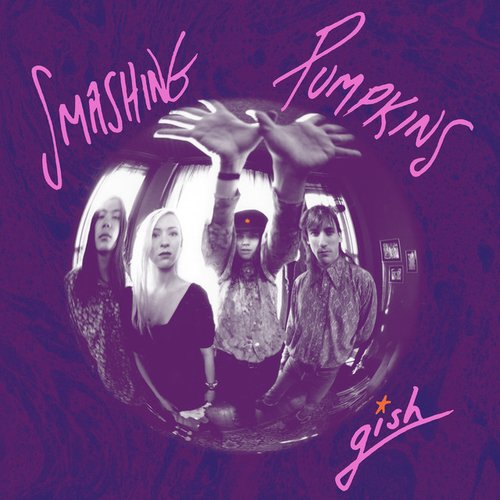
Gish

Release Date: 28th May, 1991

Labels: Caroline/Hut

Producers: Butch Vig/Billy Corgan

Standout Tracks: I Am One/Rhinoceros/Bury Me

Buy: https://www.discogs.com/sell/release/1953228?ev=rb

Stream: https://open.spotify.com/album/14gI3ml0wxlgVrX1ve8zyJ?si=0eKKMAD4Tv2jIh7FlLUZtA

Review:

Arriving several months before Nirvana's Nevermind, the Smashing Pumpkins' debut album, Gish, which was also produced by Butch Vig, was the first shot of the alternative revolution that transformed the rock & roll landscape of the '90s. While Nirvana was a punk band, the Smashing Pumpkins and guitarist/vocalist Billy Corgan are arena rockers, co-opting their metallic riffs and epic art rock song structures with self-absorbed lyrical confessions. Though Corgan's lyrics fall apart upon close analysis, there's no denying his gift for arrangements. Like Brian May and Jimmy Page, he knows how to layer guitars for maximum effect, whether it's on the pounding, sub-Sabbath rush of "I Am One" or the shimmering, psychedelic dream pop surfaces of "Rhinoceros." Such musical moments like these, as well as the rushing "Siva" and the folky "Daydream," which features D'Arcy on lead vocals, demonstrate the Smashing Pumpkins' potential, but the rest of Gish falls prey to undistinguished songwriting and showy instrumentation” – AllMusic

Choice Cut: Siva

Siamese Dream

Release Date: 27th July, 1993

Label: Virgin

Producers: Butch Vig/Billy Corgan

Standout Tracks: Cherub Rock/Disarm/Soma

Buy: https://www.discogs.com/sell/list?master_id=48681&ev=mb

Stream: https://open.spotify.com/album/2Qs2SpclDToB087fLolhCN?si=xe14Y7CsSP2jzQoqn82imA

Review:

Pity the Smashing Pumpkins: If anyone will be burdened with the dreaded mantle of ”next Nirvana,” it’ll be this Chicago band. Together since 1988, the Pumpkins released their first album, Gish, three years later. With its crunch of guitars and the ennui-drenched singing of singer-songwriter-guitarist Billy Corgan, the album became a college-radio staple. Now, like Nirvana, the Pumpkins have crossed over to the big leagues. Their major-label debut, Siamese Dream (Virgin), was, like Gish, coproduced by Butch Vig — the same studio wiz whose name adorns the credits of, yes, Nirvana’s Nevermind.

Not surprisingly, Siamese Dream has all the alternative-rock trademarks we’ve come to know, love, and occasionally fall asleep to — but with a twist. Like many of his peers, Corgan has a wispy voice that’s rough around the edges, and he writes songs with enigmatic lyrics — ”The killer in me is the killer in you,” ”Cool enough to not quite see it/dumb enough to always feel it,” and ”I miss everything I’ll never be.” Then the band buries them beneath a big, fuzzy feedback-driven roar. And quite a roar it is: The guitars resemble vacuum cleaners plugged into megawatt amps.

What matters, though, is what the Pumpkins do with those clichés. Like Nevermind, Siamese Dream represents the great lost link between alternative, pop, and metal. In a song like ”Today” — where Corgan actually sounds somewhat happy — the music drifts from a dreamy, acoustic-guitar folkiness to a full-bore electric bludgeoning, and the shift is so effortless and artful you barely notice it. The album is crammed with that sort of subtle attention to detail — wistful love songs with spooky, unearthly string sections, touches of dreamy psychedelia that don’t sound at all dated, and songs like ”Cherub Rock” that have the collar-grabbing power of (last Nirvana reference, we promise) ”Smells Like Teen Spirit.” In aiming for more than just another alternative guitar record, Smashing Pumpkins may have stumbled upon a whole new stance: slackers with a vision. B” – Entertainment Weekly

Choice Cut: Today

Mellon Collie and the Infinite Sadness

Release Date: 24th October, 1995

Label: Virgin

Producers: Alan Moulder/Billy Corgan/Flood

Standout Tracks: Tonight, Tonight/Zero/Muzzle

Buy: https://www.discogs.com/sell/list?master_id=48721&ev=mb

Stream: https://open.spotify.com/album/55RhFRyQFihIyGf61MgcfV?si=gJWMvDRxQyas-AzGfWSm2Q

Review:

This is perhaps the only Smashing Pumpkins record where they acted like an actual band rather than Corgan and his resentful charges. It's hard to pinpoint where the influence of James Iha or D'Arcy came into play (not so with the phenomenal drumming of Jimmy Chamberlin), but with the oversight of producers Flood and Alan Moulder, Mellon Collie was developed through protracted jam sessions and personal interplay. Siamese Dream, for all of its symphonic grandeur, was a fairly standard rock album and a solitary one-- nearly all of the guitar and bass parts were rumored to have been performed by Corgan himself. Meanwhile, Mellon Collie indulges in styles more associated with hermetic artists-- ornate chamber-pop ("Cupid De Locke"), mumbly acoustic confessionals ("Stumbleine"), and synthesized nocturnes (mostly everything after "X.Y.U."). And it does so while feeling like the work of four people in a room.

Mellon Collie's remarkable breadth is the best indication of Corgan's ability to let loose. You could pick five songs at random and still end up with a diverse batch of singles that would make a case for Smashing Pumpkins being the most stylistically malleable multi-platinum act of the 90s. Maybe it wouldn't sell as many copies, but picture an alternate universe where heavy rotation met the joyous, mechanized grind of "Love", "In the Arms of Sleep"'s unabashed antiquated romanticism, the Prince-like electro-ballad "Beautiful", "Muzzle"'s stadium-status affirmations, or the throttling metal of "Bodies".

The ubiquity of the five songs that did become singles overshadows just how idiosyncratic and distinct they were in the scope of 1995. Has there been anything like "Tonight, Tonight" since? Orchestral strings typically signify weepy balladry or compositional pretension in rock music, not wonderful, lovestruck propulsion. While "Tonight, Tonight" is now inseparable from its Le Voyage dans la lune-inspired video, that the music existed without its guidance only stresses the Pumpkins' sonic creativity. "Thirty-Three" was the final and least heralded of the singles-- where on alt-rock radio was there room for a slowpoke, time-signature shifting country song with phased slide guitars and shuffling drum machines?” – Pitchfork

Choice Cut: Bullet with Butterfly Wings

Oceania

Release Date: 19th June, 2012

Label: Martha’s Music

Producers: Billy Corgan/Bjorn Thorsrud

Standout Tracks: Quasar/Panopticon/Oceania

Buy: https://www.discogs.com/sell/list?master_id=445105&ev=mb

Stream: https://open.spotify.com/album/3QqIpBZ7rQ9cBUwy6p0rIn?si=bckqtsenSKW-vh-Pmtv0aA

Review:

What’s in a name? Depends who you ask. Since Corgan revived the Smashing Pumpkins in 2006 a lot of words have gone back and forth between fans over whether or not this qualifies as the real SP. It’s certainly been no secret that even with James Iha, Darcy Wretsky and Jimmy Chamberlain filling the roles in the ‘classic’ line-up SP has been Corgan’s baby. Even going back as far as 1993’s Siamese Dream, there were stories of Corgan taking control of all musical matters (whether it be through necessity or otherwise) and even reports of him pushing band members out of chairs in order to record parts. You could argue that the aforementioned three were hired hands, much like the situation SP find themselves in today. Is it any coincidence that this album shares a name with Orwell’s totalitarian nation-state from Nineteen Eighty-Four? Probably, but it’s a fun theory to espouse upon anyway.

Since 2006, we’ve had the much-maligned and patchy Zeitgeist as well as the sprawling and just a tad confused Teargarden By Kaleidyscope series. Corgan’s usual prolific output was there, but the quality was lacking. It gave rise to the notions put forth by naysayers that Corgan had lost it, ruining his legacy in the process.

Really, it’s a shame that Oceania is not the first comeback record, because it’s a fine collection of music that both anchors itself in that classic Pumpkins sound whilst managing to deploy a number of new tricks. Opener “Quasar” is a rambunctious, wailing beast of a song with a number of different speeds and moods. Following immediately after is “Panopticon”, a song in a similar vein to its predecessor; waves of guitar backed by Mike Byrne’s tight drumming and Corgan’s trademark (for better or worse) voice singing about suns and moons and Lord knows what else.

What sets Oceania apart from its reformation predecessors is its strong production. Whereas Zeitgeist was a brash and messy guitar-driven record that stalled as a result of questionable mixing, the new record is a cleaner, more clinical effort. Each musician is given the necessary time and space to utilise and make known their talents, in turn contributing to a more complete and beneficial set of song structures. For instance, Nicole Fiorentino’s bass playing comes to the fore on tracks like “The Celestials” and “Pale Horse”, flitting between a reedier, harmonious sound to a deep, rounded rumble at will. The guitar playing follows a similar course, and we are given a demonstration of just how versatile both Corgan and fellow guitarist Jeff Schroeder are. From the classic rock-style harmonising of “The Chimera”, the adventurous solos on “Inkless” and to the myriad methods of playing on the album’s eponymous centrepiece track, the record is a boon those who enjoy well-crafted guitar work. Mike Byrne is an excellent successor to the throne once so ably occupied by Chamberlain. Provided that Byrne, at only 22 years of age, stays in the group, then he can only get even better from here on out.

Corgan and his group should be praised. Instead of relying upon the old classics, touring the same old stuff, he and SP have forged ahead to create a record that could well be the catalyst of a stellar second era for one of rock’s more interesting groups” – Sputnikmusic

Choice Cut: The Celestials

The Underrated Gem


Monuments to an Elegy

Release Date: 9th December, 2014

Label: Martha’s Music

Producers: Billy Corgan/Howard Willing/Jeff Schroeder

Standout Tracks: Being Beige/Run2me/Drum + Fife

Buy: https://www.discogs.com/sell/list?master_id=766846&ev=mb

Stream: https://open.spotify.com/album/06Z1pfDp7Ujg6MkK7dKbnh?si=hyaascQeR-yFEwRPZfjDPQ

Review:

The much-trumpeted Smashing Pumpkins “reunion” never happened. Guitarist James Iha and bassist D’Arcy Wretzky quickly announced that they would not be involved, while the 2009 departure of drummer Jimmy Chamberlin left Billy Corgan as the only remaining original member. This hasn’t stopped him picking up from where they left off in the 90s. Like 2012’s Oceania, Monuments to An Elegy returns to the trademark Pumpkins sound. Lashings of alt-rock guitars and subtle classic rock references abound, although there are lovely tinkly keyboards on Tiberius and Being Beige chugs along on a drum machine. The standout Dorian turns up the synthesisers with a melody distantly related to the classic 1979. If the songs don’t all match the Pumpkins’ early glories, Corgan is still carrying what he once called “the infinite sadness”, investing uplifting sounds with an undercurrent of melancholy. As he puts it in the particularly affecting Drum + Fife: “I will bang this drum ’til my dying day” – The Guardian

Choice Cut: One and All (We Are)

The Latest Album


CYR

Release Date: 27th November, 2020

Label: Sumerian

Producer: Billy Corgan

Standout Tracks: Confessions of a Dopamine Addict/Cyr/Birch Grove

Buy: https://www.discogs.com/sell/list?master_id=1845929&ev=mb

Stream: https://open.spotify.com/album/6jyVmM4JOjBSzJqSa4fRaI?si=IR89eiaCQkqG7gxqP2cD4w

Review:

The Pumpkins’ new album, CYR, is no exception. By turns arched, ambitious, intriguing and expressive this sprawling 20 song set recalls the band’s earlier epics with melodies that boast the same elevated intensity that’s driven their signature sound from early on. This time around, fellow founding members Jimmy Chamberlin and James Iha are back on board, given an assist from guitarist Jeff Schroeder, whose late arrival to the line-up dates back to 2016. The absence of bassist D’arcy Wretzy is notable of course, but hardly surprising considering her fractious relationship she’s maintained with Corgan throughout the group’s career. Nevertheless, it hardly seems to matter. CYR is a solid effort all the way through, one that finds quality equal to its quantity.

That said, no Smashing Pumpkins album would be complete without an ample blend of pomp and pretense, and here, those qualities flourish in abundance. That’s evident in Corgan’s dissertation on the theme itself, as included in a press release accompanying the album’s release.

“CYR represents, at least symbolically, the makings of a dissociative life, which best as we can tell IS modern life: as presented through a variety of sources; past, present, and future. Where even our own story as a band is often represented as something more grotesque and glorious than we actually experienced it. Which, it should be noted, is fine. Because we’ve never fought the dream as a collective, or it’s prickly twin (hence the snazzy title of one of our earliest records). So in CYR you get 20 pieces of fractured ideology, neither here nor there but that’s sort of the point. To ape that which in the post-technology age is not so easily defined and pinned down, but can be shown in a lithe, restless melody.”

Ummmmm,… alrighty then. Is that all clear? If not, no worries. We’re a bit baffled ourselves. Fortunately, the concept doesn’t distract from the substance of the songs, all of which are effortlessly exhilarating and vary only in terms of their kinetic crush. The sonic sweep range from the seismic surge of the album opener “The Colour of Love,” the propulsive and pulsating “Birch Grove” and the pounding, percussive title track, to the passionate plea of “Ramona,” the unlikely love song “Purple Blood” and the percolating pace of “Telegenix” and “Rath.” It’s high drama at its most effusive, told through from the perspective of an individual seemingly in search of his soul.

Somehow though, it still manages to work, and indeed, on a song such as “Wyttch,” which sounds like something spawned from a fusion of Led Zeppelin and Black Sabbath, or a daring diatribe like “Anno Sattana” one has to wonder if perhaps Corgan isn’t simply playing to the diehards and simply seeing how far his dark demeanor will take them. Still, who’s gonna complain? The music is consistently compelling, unceasingly effusive and decidedly driven, the essence of a genuine Corgan catharsis.

In addition, brace yourself for what’s to come. The band promises a wealth of releases in 2021, including a 33-track sequel to the Mellon Collie and the Infinite Sadness album and a forthcoming opus titled Machina, which is beingbilled as “the third in a trilogy of expansive and conceptual works.”

Given that Corgan is prone towards creativity, the Pumpkins’ profile appears certain to remain as elevated as ever” – American Songwriter

Choice Cut: The Colour of Love

The Smashing Pumpkins Book


Smashing Pumpkins: Mellon Collie and the Infinite Sadness

FEATURE: Picture This: Imagining a Long-Overdue Blondie Biopic

FEATURE:


Picture This

IN THIS PHOTO: Debbie Harry/PHOTO CREDIT: Chris Stein, via Face It 

Imagining a Long-Overdue Blondie Biopic

___________

THERE are a few music biopics…

 IN THIS PHOTO: Margot Robbie/PHOTO CREDIT: Steven Pan

in production and announced for this year. I know that we will see one about Boy George. Madonna is also directing her own biopic. In addition, there are various rumours and things that are announced but not yet filmed. The pandemic has made it difficult for a lot of production houses to put out films. I think that this year will see more music biopics come to the screen. A successful and well-judged one can score huge reviews, clean up at the box office and earn its fair share of awards. One that I have been hoping would make its way to the screen is a Rumours-era Fleetwood Mac story. One that looks at the relationships in the band and how, even though there was in-fighting and tension, they released one of the greatest albums ever. That would be fascinating. As far as I know, there have been no announcements or plans regarding this period of Fleetwood Mac’s career. The title of this feature is a song from Blondie’s most-famous album, Parallel Lines. This is something that I punted last year. I thought that Margot Robbie would be perfect in the role of Debbie Harry. She is a fan of Harry as a style icon and a fiercely independent woman who is one of the most inspiring artists of all time. Harry herself mooted the idea of a Blondie film back in 2014. She also suggested an actress who she would like to play her.

This is the music biopic that I think would gather a lot of interest and big box office receipts. For one, Harry and Blondie are perennial favourites. They are always popular and cool. A biopic would tell their story and help bring their music and story to new generations. There are a couple of different avenues that a biopic could take. One could focus entirely on Debbie Harry. Based on her memoir, Face It, it would be pretty faithful to the narrative:

As a musician, an actor, a muse, an icon, the breadth of Debbie Harry’s impact on our culture has been matched by her almost Sphinx-like reticence about her inner life. Through it all – while being acclaimed as one of the most beautiful women in the world, prized by a galaxy of leading photographers and fashion designers, beloved by legions of fans for her relentless, high-octane performances, selling 50 million albums or being painted by Andy Warhol – Debbie Harry has infused her perennial Blondie persona with a heady mix of raw sexuality and sophisticated punk cool.

In Face It, Debbie Harry invites us into the complexity of who she is and how her life and career have played out over the last seven decades. Upending the standard music memoir, with a cutting-edge style keeping with the distinctive qualities of her multi-disciplined artistry, Face It includes a thoughtful introduction by Chris Stein, rare personal photos, original illustrations, fan artwork installations and more.

Peppered with colourful characters, Face It features everyone from bands Blondie came up with on the 1970s music scene – The Ramones, Television, Talking Heads, Iggy Pop and David Bowie – to artists like Jean-Michel Basquiat, Marina AbramoviÄ and H.R. Giger of Alien fame. It explores her successful acting career (she has starred in over 30 film roles, including David Cronenberg’s Videodrome and John Waters’s Hairspray), her weekends with William S. Burroughs and her attempted abduction by serial killer Ted Bundy. Ranging from the hardscrabble grit and grime of the early New York City years to times of glorious commercial success, interrupted by a plunge into heroin addiction, the near-death of partner Chris Stein, a heart-wrenching bankruptcy and Blondie’s break-up as a band, an amazing solo career and then a stunning return with Blondie, this is a cinematic story of an artist who has always set her own path. Inspirational, entertaining, shocking, humorous and eye-opening, Face It is a memoir as dynamic as its subject”.

 IN THIS PHOTO: Blondie in 1979. From left: guitarist Frank Infante, guitarist Chris Stein, bass player Nigel Harrison, Debbie Harry, keyboard player Jimmy Destri and drummer Clem Burke/PHOTO CREDIT: Getty Images

Alternately, it could focus a bit on Harry as a pioneer and hugely talented female lead in New York at a time when there were few musicians like her. Beginning with the co-founding of Blondie by Debbie Harry and guitarist Chris Stein, the biopic could tell of the band as a pioneer force in the New Wave scene of the mid-1970s in New York. It would look at the scene around Blondie, scored by the band’s music, songs from the time and the sights and sounds of New York. The film would take us to the point where the band’s third studio album, Parallel Lines, sees Blondie elevated to new heights in 1978. Rather than it being a chronological film about the band starting out and finding success, we would look at the way Debbie Harry had to face sexism and those who, at first, refused to take her seriously. In both scenarios, it would be hugely enjoyable and informative. Even if you are a huge fan of Blondie, a biopic would provide new information and revelations. Although Margot Robbie now is thirty-one – older than Harry was when she formed Blondie -, it would not be a huge sticking point. Also, Robbie is taller than Debbie Harry. Apart from that, she would be a fantastic fit. There have not been that many music biopics set in the mid to late-1970s. Blondie are one of the most popular and important bands ever, yet there has not been a big screen look at the band’s formation and rise to success.

It would be fascinating seeing New York in this period and the clash between Punk and New Wave. A compelling and powerful figure like Debbie Harry arriving on the music scene as the lead of the amazing Blondie. So many people would love to see that. If the biopic had the sign-off of the band – and they were involved in the creative process -, then I think that it would be a triumph. I am not sure whether there are any plans afoot for a Blondie film, though there definitely should be. Their story and success is hugely compelling and inspiring. I am not sure what the biopic would be called, but it would probably be based around one of their songs or albums. I have suggested Margot Robbie as Debbie Harry, yet there are other actors who could fit the bill. Above all, the amazing music the band have made would make the biopic so watchable and addictive! Maybe it will not happen this year, but a 2023 biopic of the stunning Blondie is something that would translate to the big screen so easily. It would be good to see it happen…  

ONE way or another.

FEATURE: Kate Bush: The Iconic Shots: ‘Hat’, 1985 (Guido Harari)

FEATURE:


Kate Bush: The Iconic Shots

PHOTO CREDIT: Guido Harari 

‘Hat’, 1985 (Guido Harari)

___________

THIS is going to be the last…

 IN THIS PHOTO: Guido Harari

in my series where I highlight iconic photos of Kate Bush. To be fair, there are others that I have not covered, but I wanted to keep it fairly concise. Guido Harari is a photographer who shot Bush a lot until 1993. Whilst many of his best photos of Bush happened in 1989 and 1993, I really love this shot above. Kate Bush sporting a beautiful hat, the 1985 image is a particularly strong and striking one. Before providing further thoughts, HUFFPOST ran a feature in 2016 where they highlighted a new book containing photos Guido Harari took of Kate Bush through the years:

In 1985, Bush invited Harari to her studio and home in Kent to take the official promotional photos for her album “Hounds of Love.” Harari readily agreed. “I love to work with Guido,” Bush said in a statement. “He makes you feel special without even saying anything.”

Harari served as Bush’s official photographer until 1993, scoring what has to be one of the single best gigs of all time. Along with “The Dreaming” and “Hounds of Love,” Harari captured Kate Bush as she created “The Sensual World” and “The Red Shoes.” The two clearly vibe, with Harari perfectly capturing Bush’s otherworldly presence, ninja warrior fierceness and goofy mischievousness.

The limited edition book The Kate Inside, Kate Bush photographed by Guido Harari 1982-1993, available Sept. 1, features over 300 photos of Bush throughout her career, around 200 of which have never before been seen by the public. The book will also feature outtakes, contact sheets and personal notes from the Queen Bush herself. An exhibition accompanying the book will be on view Art Bermonsdey Project Space in London from Sept. 13 to Sept. 30, 2016”.

I have included a 1993 photo from Harari before. I wanted to mention this 1985 one, as there is so much about the composition that I love. I wonder where the hat is from and whether it has a cultural link. Bush’s look is thoughtful and deep. I love her make-up and clothes. The ensemble leads to this photo which captures the eyes and leaves you lingering and looking! There are so many layers and elements to the shots that showed Bush and Harari had this comfortable and trusting working relationship. Through the years, Harari photographed Bush in a number of interesting settings. From his 1985 photos through to promotion around The Sensual World era, through to sublime photos taken on the set of the 1993 short film, The Line, the Cross and the Curve, there are so many wonderful images. He is so important in the career of Kate Bush. The arresting and gorgeous colour scheme helps make the ‘hat’ photo one of the classics. As I sign off this feature, I am leaving it with one of the best and most iconic shots of Kate Bush. She was, in so many ways, a perfect photographic subject. Whilst some artists were not overly-comfortable being photographed, one gets the sense that Kate Bush was happy to collaborate with a range of photographers. In terms of who got the best out of her, few did it better and more regularly…

PHOTO CREDIT: Guido Harari 

THAN Guido Harari. 

FEATURE: Revisiting… Penelope Isles -  Until the Tide Creeps In

FEATURE:


Revisiting…

Penelope Isles -  Until the Tide Creeps In

___________

WHILST their second album…

Which Way to Happy was released back in November, I wanted to use this feature to look at Penelope Isles’ debut album, Until the Tide Creeps In. A terrific album that should be played more, it is one that I would encourage people to seek out. It sounded like the album was quite eventful and, as band member Jack said, it was quite a rollercoaster ride. Led by the amazing Jack and Lily Wolter, I was excited when their debut album arrived in 2019. The core duo of the band, I hope that Penelope Isles get to tour a bit though this year. With two amazing and distinct albums under their belt, they definitely have a growing and admiring fanbase. Whilst there were some positive reviews for Until the Tide Creeps In, it is not an album you hear played too much on radio. BBC Radio 6 Music supported Penelope Isles when the album arrived, though I feel that not that many people are sharing and spinning Until the Tide Creeps In. It is a wonderful album that ranked alongside the very best of 2019. Released through Bella Union, it signalled huge promise from the Brighton-based Penelope Isles. I wanted to draw in a couple of positive reviews for an impressive debut. This is what PASTE wrote about Until the Tide Creeps In:

Brother-sister songwriting duo Jack and Lily Wolter spent six years apart when the former left home to attend university. The break appears to have had a profound impact on them; absence pushed them both to develop their respective musical talents on their own, before reuniting in Brighton, leading to the birth of their indie rock collaboration Penelope Isles. Time gave them a chance to grow up and become the people they are today. As an added bonus, it gave them a ton of material for compositional inspiration.

Their change in scenery probably helps, too. The Wolters grew up on the Isle of Man, a remote island between England and Northern Ireland; sizewise, it’s about as big as a small neighborhood in New York City. Until the Tide Creeps In argues that Brighton made fertile ground for Jack and Lily to develop an aesthetic and carve out an identity as musicians alongside their bandmates, Becky Redford and Jack Sowton. Logistically, Until the Tide Creeps In probably wouldn’t have happened without the locale shift, but it definitely wouldn’t have happened without the time they spent away from each other.

Penelope Isles’ style ranges from psych pop to art rock, ringing with influences like Radiohead, The Hives, Grizzly Bear, Tame Impala, and maybe a pinch of the Flaming Lips. “Underwater Record Store,” the album’s fourth track, does sound like the kind of title Wayne Coyne would come up with for one of his own songs, after all; the image is evocatively bizarre, classic Lips, except it’s personal to the Wolter’s experience—it’s the only song on the record to make mention of their father. It isn’t the first time the record references him, though: The cover boasts a picture of their dad building a sandcastle, taken when he met Jack and Lily’s mother, which reinforces the familial bonds woven throughout Until the Tide Creeps In.

“Underwater Record Store” is the Wolters’ sweet, ethereal ode to dad, Lily’s account of a childhood incident on a beach or perhaps, simply a dream. Given the plaintive and astral quality of the music, maybe it’s a bit of both, a yarn about the time she built a sandcastle and sat helplessly to witness the iniquity of passerby trampling her work. “My Dad took me to a real castle / To make me see that nobody’s got me down,” she sings in reflective appreciation of the lesson, of Dad, of the memory. Like so much of Until the Tide Creeps In, “Underwater Record Store” is space the Wolters have created to examine together their individual and joint pasts. It’s music to reminisce to.

In keeping with the familial element, the Wolters present “Gnarbone”: a seven minute, uptempo track that, to the ear, reads like a journey through the gap in time and in age that divided them leading up to Penelope Isles’ formation. Taking turns on verse and chorus (“Did I see you fall apart / Left in dust and made of dirt / Did I see you fall in love / Kept in dust and made of dirt”), Jack and Lily invoke recollections of newborn days (“You never learnt to crawl / You didn’t have to”) and flash forward all the way up to their Brighton days (“And in the city where things are pretty / You find a new game / What a crying shame”). The music tinkles to start before giving way to fuzzier, distorted tones halfway through, ultimately looping back to the sound of Jack and Lily’s twinkling ruminations to finish. Like their lives together, the song is a cycle.

“Through the Garden,” Until the Tide Creeps In’s parting shot, closes out the record’s overriding focal point while putting a bow on its secondary motif: It’s a tribute to Mama Wolter by way of a separation. “Mother I love you but we must go,” Lily sings in exhortation to mom before repeating the chorus to close the track: “I walked home through the garden / Throw myself in the pillows / Could stay but I already know / My head would fall into a hole.” The raw heartache feels like it’s straight out of a break-up record, but Until the Tide Creeps In isn’t that; nor is it a mawkish trip down memory lane. Instead, it’s an album of reconciliation, an opportunity for Jack and Lily to make sense of their youth spanning into their adulthood”.

To round things off, NEW NOISE sat down with an album from a band who, by their own admission, are underrated and worthy of more ears and love:

The summer of 2019 is quickly proving to be a real treasure trove of new music from underrated players in the scene, and through the mix of all of these new bands, some really unique and interesting artists have come to the surface. One of those bands is fronted by siblings Jack and Lily Wolter, of the Brighton, UK group, Penelope Isles. For those unfamiliar with the band, you may want to grow accustomed to them as they just released their debut album Until The Tide Creeps In, on July 12 via Bella Union and it’s really, really good (yes, we had to add another ‘really’ to emphasize just how good this record is…)

Until The Tide Creeps In is a collection of 10 lo-fi beachy pop anthems that’s the perfect addition to any summer playlist or occasion. The album features a cohesive and solid mixture of tracks that showcase their indie-pop harmonies, hazy instrumentals and intimately painted lyrics. With such an impressive mix of talents and a mesmerizing delivery of each song, it’s a little bewildering that this band is only on their debut release. The record feels like something from a group that’s on their fourth or fifth release as it has such a specifically mastered sound that holds up during each new track.

Every song on this album is something new and interesting as they each come in with a depth that give off a dizzyingly paced, yet, melodic story from each of the siblings’ perspective; which really brings this album to life. It’s clear that Penelope Isles knows what they’re doing, and they know how to do it well. From the start of the record to the very end, “Until The Tide Creeps In” pulls you in with its light, and oftentimes whimsical tracks, and it doesn’t let you go long after the last song plays”.

If you have not heard the amazing debut album from Penelope Isles, then do spend some time with Until the Tide Creeps In. With a second album out in the ether, they have gained more traction and are sure to make big waves in 2022. I know that the Jack and Lily Wolter-helmed force will be…

RECORDING for many years to come.

FEATURE: The Lockdown Playlist: Aaliyah at Forty-Three: Her Finest Songs

FEATURE:


The Lockdown Playlist

PHOTO CREDIT: Sal Idriss/Redferns/Getty 

Aaliyah at Forty-Three: Her Finest Songs

___________

ON 16th January…

fans of Aaliyah will mark her forty-third birthday. We sadly lost the incredible artist in 2001 at the age of twenty-two. It is tragic that she died so young. Her eponymous album was released shortly before she died. There is a posthumous album, Unstoppable, coming soon. The three studio album that she left with us are full of incredible songs! Ahead of her forty-third birthday, I am including an assortment of her best tracks. Prior to that, it is useful dropping some Wikipedia biography about the much-loved and iconic Aaliyah:

Aaliyah Dana Haughton (/ɑːˈliːə/; January 16, 1979 – August 25, 2001), known mononymously as Aaliyah, was an American singer, actress, dancer, and model. She has been credited for helping to redefine contemporary R&B, pop and hip hop, earning her the nicknames the "Princess of R&B" and "Queen of Urban Pop".

Born in Brooklyn and raised in Detroit, she first gained recognition at the age of 10, when she appeared on the television show Star Search and performed in concert alongside Gladys Knight. At the age of 12, Aaliyah signed with Jive Records and her uncle Barry Hankerson's Blackground Records. Hankerson introduced her to R. Kelly, who became her mentor, as well as lead songwriter and producer of her debut album, Age Ain't Nothing but a Number. The album sold three million copies in the United States and was certified double platinum by the Recording Industry Association of America (RIAA). After facing allegations of an illegal marriage with Kelly, Aaliyah ended her contract with Jive and signed with Atlantic Records.

Aaliyah worked with record producers Timbaland and Missy Elliott for her second album, One in a Million, which sold three million copies in the United States and more than eight million copies worldwide. In 2000, Aaliyah appeared in her first film, Romeo Must Die. She contributed to the film's soundtrack, which spawned the single "Try Again". The song topped the Billboard Hot 100 solely on airplay, making Aaliyah the first artist in Billboard history to achieve this goal. After completing Romeo Must Die, Aaliyah filmed her role in Queen of the Damned, and released, in 2001, her self-titled third and final studio album, which topped the Billboard 200.

On August 25, 2001, Aaliyah died at the age of 22 in an airplane accident in the Bahamas, when the badly overloaded aircraft she was traveling in crashed shortly after takeoff, killing all nine on board. The pilot was later found to have traces of cocaine and alcohol in his body, and was not qualified to fly the aircraft designated for the flight. Aaliyah's family later filed a wrongful death lawsuit against the aircraft's operator, Blackhawk International Airways, which was settled out of court. In the decades since her death, Aaliyah's music has continued to achieve commercial success, aided by several posthumous releases, and she has sold an estimated 24 to 32 million albums worldwide. Her accolades include three American Music Awards and two MTV VMAs, along with five Grammy Award nominations. Billboard lists her as the tenth most successful female R&B artist of the past 25 years, and the 27th most successful in history”.

I wanted to both celebrate Aaliyah’s music and pay tribute to an artist who left us way too soon - though her legacy and impact is huge. Maybe we will get some ‘new’ music from her this year. Before her forty-third birthday, this Lockdown Playlist is a collection of ace tracks from the Princess of R&B. Here are some untouchable songs that show what…

A genius Aaliyah was.

FEATURE: Spotlight: Wallice

FEATURE:


Spotlight

PHOTO CREDIT: Carlos Jaramillo for The New York Times 

Wallice

___________

IN a series of Spotlight features…

 PHOTO CREDIT: Elaine Torres

I am looking at artists who are tipped for great things this year. One artist I have known for a while and followed is Wallice. The amazing American musician released the E.P., Off the Rail, last year. With incredible singles like Wisdom Tooth capturing a lot of love and attention, I feel 2022 will be the time when Wallice is marked out as an international superstar-in-the-making. There are some really interesting and immersive interviews that were conducted last year. I am going to pull in a few of them. Ahead of the release of her exciting and wonderful debut E.P., CLASH chatted with Wallice.

About to release her first EP ‘Off The Rails’ (on June 4th, no less), she's crafted a collection of songs which weaves personal light-hearted fun and pop culture with familiar testing circumstances. We sat down with Wallice to learn more about her beginnings and the elements which motivated guidance upon the six tracks.

Speaking to Clash, it seems that there was a defining moment in Wallice’s life which drove her towards a career in music. When hearing Lana Del Rey’s ‘Video Games’ she fell in love with the sound and aesthetic. Although not her biggest fan anymore, it is what initially sparked the fire. The cultivated songstress grew up in Topanga, LA, a creative, hippy-occupied town. This artistic energy must have impacted the young multi-instrumentalist, as she tells us: "In public elementary school I learnt to play the recorder and trumpet. When I was nine, I started playing cello, I played that for 10 years."

Though she didn’t harbour her passions through a home based-influence, commenting: "I didn’t grow up with a piano in the house and my parents playing. But I was always very drawn to it."

Wallice emphasises a gratitude for her parents' ongoing support. "My mum never said ‘maybe you should get a degree in accounting just in case’ she always said ‘do what makes you happy’. Even my dad, who is a very Japanese businessman in his outlook would say ‘life is short, do what you want to do’." Only recently has music become a career for her, it has been a journey. With this in mind Wallice provides a strong message for her audience: "If you just don’t give up and it is what you love, it will happen eventually!"

This is a signifier she conveys through her music. "In the lyrics I am very self-deprecating, and I make a lot of jokes," she explains. "But I think it is in a way that says don’t take yourself so seriously because life is so short, we are all going to make mistakes." This is definitely evident in '23' and ‘Hey Michael’, perfect pieces of exuberant hands in the air, jangly guitar pop. Wallice highlights: "It is OK to be young and dumb as long as you try to grow. I think that goes along with the life is short, do what makes you happy, message."

Her parents instilled a diverse range of culture in her from a young age which naturally manifests itself in her music. Japanese 80s pop has been on Wallice’s radar, she correspondingly mentions the jazz scene there. "When I went to Japan there were a lot of jazz clubs... Japanese culture still really likes jazz which I think is very lost in most of America except for New York. But even then, it’s a dying art form."

Wallice’s roots hold great significance to her. "My mom grew up in northern California but she lived in Japan from when she was 18-21 and learnt Japanese," she comments. Amazingly her parents met in the US although her dad is originally from Tokyo. Growing up, her mom would make her Japanese dishes and her dad would speak to her in Japanese. Though she grew up in America, she draws from Japanese culture and places it into her life. Her coming EP cover is inspired by 80s Japanese movie posters and album covers.

Ever since she attended a performing arts high school most of her life has been based around music. She later studied vocal jazz at college but decided it was not the right pathway ‘I personally went there to become a better vocalist in general because jazz is such a technical genre that once you get a grasp of that you can do almost any genre." At the college there was a divide between instrumentalists and vocalists which is why Wallice was not wholly enthused by the landscape. "The instrumentalists were more across the board. I kind of wish I went for guitar, not that I’m good enough!" she chuckles modestly. We know this is not the case as we can hear beautifully jazz-influenced guitar playing across the EP.

Making the bold decision to drop out of college, she reminisces about her short but sweet time in New York. In track ‘23’ a fake ID is mentioned and in the music video you can spot Wallice’s very own. She importantly emphasises: "I didn’t drink when I lived in New York but I had this ID so I could go to my friends' shows at bars!" Wallice connected with some cool faces who had mutual taste. The New York music scene was bustling around her, she references studio Figure 8 in Brooklyn which had the likes of Big Thief and Buck Meek recording there. She clarifies that her friends in New York "have more of a Saddle Creek records sound which doesn’t really come out of LA".

PHOTO CREDIT: Lily Craigen

I am quoting big chunks of interviews, as I think Wallice is a really intriguing interviewee. Someone who has this amazing passion, personality and drive, she is super-talented but modest at the same time. It is no wonder Off the Rails was well-received and won some positive reviews. The songs are in the Pop mould, yet they do not sound like anything else. Hard to pin down and define, Wallice is an artist who stands on her own. Still Listening spoke with Wallice last year and asked her about plans going forward:  

We really love all the singles from this EP! Are you particularly proud of any specific songs?

I am really excited for ‘Headache’ to come out. It’s the closing track of the EP, I’m not releasing it as a single. I can’t choose a favourite of the singles though, because they all mean so much to me. ‘Punching Bag’ is the song that started it all and brought a lot of new listeners and fans to me, then ’23’ is so autobiographical and close to home and will always mean so much to me. ‘Hey Michael’ is just so fun and lighthearted and the video was so fun to make. ‘Off the Rails’ is similar — I love that video too and the song is important because it is the title track to the EP. I love the guitars in that song so much. I guess it’s hard to choose!

We love your new music video for 'Off the Rails'. How involved in the creative process are you?

It is really important to me to be heavily involved in the creative process. Jerry Maestas directed the video and he came up with the “Life is a Simulation” concept, but I styled the shoot and helped develop the overall creative direction. Jerry and I worked really collaboratively on all aspects of the video.

What do you hate right now?

Feet, little dogs that bark too much, having to change the sheets on a bed!

What do you love right now?

Sushi, looking at expensive homes for sale online, plants, and cowboy gear!

Is there any new music from 2021 that you’re enjoying?

Today I listened to this song, ‘Back of my Hand’ by Bachelor (a band made up of Jay Som and Palehound), and I really like it. I also have been listening to the new artist Q – the new Japanese Breakfast tracks from her upcoming album – and all my friends have some killer music.

What else can we expect from you in 2021? Any more releases planned?

I’m starting to write songs that will probably end up on my second EP. I don’t have any specifics right now; I’m mostly excited for this first EP to finally be out in the world soon!

Do you have any final life lessons or tips for our readers?

I think it’s really important to do what you love in life. I’ve had a lot of people look down on me for pursuing music with no backup plan, but I know I wouldn’t be happy studying nursing or accounting or something that’s considered a “real job.” Even though I am young, I’ve worked hard on my music for years (even though I’m considered a newcomer), and I feel like hopefully the work is starting to pay off. I am reaching more listeners and getting better at writing music and playing so this can be a “real job” soon!”.

I want to bring in an interview from NYLON. We learn more about Wallice’s musical path and the evolution of her sound. Lockdown and the pandemic has been strange for all artists regarding the way they work and promote their music. Wallice spoke about this, in addition to creating an original dynamic and aesthetic in her music videos:

Whether her face is smashed into a birthday cake or recoiling at a hit from a boxing glove, Los Angeles’ Wallice can make you hang on her every word. The 22-year-old singer and multi-instrumentalist may have just a handful of songs out, but she’s established herself as a keen lyricist with a knack for pop culture references and shrewd observations about the surreality of young adulthood.

I know you’ve been making music and playing instruments for years now, but when did you find the sound that you’re currently delving into as Wallice?

I wrote so many songs from 17 to 21 that were all more indie pop. I really loved Lana Del Rey; her and Lorde were the main influences on me. That music was just on SoundCloud before. I had a couple people who loved that music, especially my mom. Back in October, I released “Punching Bag.” That one’s still pretty indie pop, but leaning towards where “23” and “Hey Michael” have gone in the indie rock world. For so long, I grew up listening to Radiohead and Weezer and Dr. Dog. Those are all more alternative rock, and I wanted to make songs that sounded like that.

How has it been to be gaining career momentum during this period of quarantine? Has there been any silver lining to spending more time writing and shooting videos, or has it been frustrating?

I would say silver lining. I’ve never been on a tour, but I have some friends who are tour musicians and I know it’s so tiring and exhausting. I can’t wait to do it, but I think this last year has been really nice in that I would go to my grandparents’ house in Utah when they weren’t there with my producer and my boyfriend, who plays guitar well, and we would be there for a week and write three new songs. Then we went for another week a few months later and finished those songs.

Looking at the videos you’ve done for “Punching Bag” and “23,” there’s a surreal aesthetic to them. They’re DIY-ish, but not overly so. Have you always been the type of person to think about how visuals can enhance your records?

I’ve always been very visually creative and have a very strong opinion on what the visuals to the music should be. When I start writing a song, I usually have some sort of concept already popping in my head of what the video should be or what the art should look like. I like to be very involved. For the “Punching Bag” and “23” videos, I bought the tablecloths from Jo-Ann’s the morning before.

Do you find that critics writing about your music have correctly gotten what you are trying to portray with your songs?

Every time I see even a tiny blog tag me on Twitter, I’m like, “Oh my gosh. It’s so exciting.” It’s so new that I haven’t seen anything and been like, “That’s incorrect.” The only thing that was funny is a couple blogs said “L.A. newcomer Wallice,” which I know they mean a newcomer in the industry, but I’m like, “I was born here!” [laughs] But I knew what they meant”.

There are a couple of other interviews that I want to put here. 2021 was such a busy one for Wallice. Her debut E.P. garnered a lot of interest and praise. Her latest single, Wisdom Tooth, was not part of Off the Rails. It makes me wonder whether there will be another E.P. or album this year. NOTION asked Wallice about what comes next, and what it was like (recently) signing to Dirty Hit:

Wisdom Tooth” has just dropped – a coming-of-age tale that was written the day before your wisdom teeth came out. But the song also has a double meaning about how growing apart from someone can be a necessary form of growth. A lot of your music centres around themes of friendship and growing up – did you always intend to make your music relatable or were these topics you needed to get off your chest for your own personal sake?

I have been with my boyfriend since we were 16 and he is really wonderful– I don’t have too many love life complaints. I do however turn my tumultuous friendships into songs that sound very romantic, like “Punching Bag” and now “Wisdom Tooth”. I wrote this song the day before I got my wisdom teeth out because I was so nervous. The doctor called me in the middle of my writing session and said I would have to get a bone graft because the hole my teeth would be leaving was too big. He didn’t think my jaw would be able to fill it naturally, so they filled the holes with other peoples bone powder which sounded pretty gnarly. I don’t think I set out to necessarily make relatable songs, but I usually make a song based off of a real feeling and expand upon that. I’m so happy that my songs are considered relatable though I think that’s what many lyricists always want.

Before you started releasing music and using writing as a form of catharsis, how did you tend to process emotions and experiences?

I’ve been writing music since I was 13. It started with a boy who didn’t like me back in middle school. I’ve played various instruments since I was six, and I think even instrumental music is so expressive and has that same catharsis that comes with writing lyrics and songwriting in general. I don’t necessarily remember a time where I wish I had an outlet for my emotions because I’ve always had music in my life. I also always grew up with my mom being a hobby painter or ceramicist, so art was in my house from a young age. I’ll always be grateful for that upbringing”.

You’ve recently signed to Dirty Hit – that must have been such a big bucket list goal ticked off! How did you know Dirty Hit was the right home for your music and for you as an artist?

I think every artist has the dream of signing to a label when they are young/first realize that they want to be a musician – maybe before they even know what “signing a record deal” means. The music industry is very hard to break into because there’s not one specific path that guarantees success, and every working artist has reach their success in a different way. Approaching being an artist can seem daunting and it’s hard to know where to start. I’m so grateful to have found Dirty Hit as my home – I had quite a few meetings with some wonderful people at different labels, but everyone I met at Dirty Hit was so cool and everything they stand for as a label aligns with my own business values. They are an indie label that I feel really puts their artists first. I also have loved the artists that they work with for years now, so it’s so exciting to be a part of their team.

You’re playing at The Great Escape next year in Brighton. What can people expect from your set and what kind of energy do you like to bring to your gigs?

I’m so excited to play The Great Escape! I just played my first festival this month, and I would say it was my best show yet. I try to bring a lot of energy onstage even though it leaves me out of breath singing by the last song. I’m currently working on my second EP which is almost done, and I’m so excited to play these songs live. They have so much energy and are my favourite songs I’ve made so far. My bandmates are some of my best friends, and it’s so fun performing with them on stage. I hope that energy translates to the crowd. I also just recently went to England for the first time and I had an amazing time – I can’t wait to go back next year!!

Which artists shaped your sound back then? Who are you most influenced by now?

I feel like my music taste hasn’t changed much since I was in high school. I listened to mostly Dr. Dog, Radiohead, and a lot of jazz standards and bossa nova. Slightly more recent additions and big influences on me are Japanese Breakfast, The Drums, Big Thief, Sam Evian, and Mitski.

What’s next? Are you working on an album or EP at the moment?

Currently working on my second EP with marinelli which we’re finishing up by the time I go on tour in January! I’m so excited for this new EP, I think it has so much energy. There’s one song in particular I can’t wait to release and make a video for. It’s my favorite song I’ve ever written”.

PHOTO CREDIT: Lily Craigen

It does seem, as an artist, things have come together pretty naturally and quickly for Wallice. Her songs on Off the Rails sound like they come from an artist who has been writing and recording for a lot longer. The most important thing for every artist is performing live and connecting with the fans in the flesh. This is something that was raised in an interview with The Forty-Five from late last year:

Aside from that traumatic tooth extraction, Wallice’s 23rd year has had its other trials – including getting used to the unpredictable nature of life on the road. Given the pause on live music over the last couple of years, she only just played her debut shows last month, supporting Chloe Moriondo at five dates in California and Arizona. “It was so fun, but at the first show in San Francisco, I finished my set and got off the stage and just wanted to cry because I felt terrible,” she says, citing bad sound and feeling like she could have performed better as reasons behind her dissatisfaction. “But after so many people came up to me who didn’t know me and had come to see Chloe and were like, ‘That was so good!’”

Playing live has given Wallice the chance to envision the fanbase she’s been building recently in real life for the first time: “I see graphs and numbers and Spotify data and I can’t even imagine seeing those numbers [in front of me] – I feel like they wouldn’t even fill a room, but then my managers are like, ‘It literally would fill this venue’. I’m just like, ‘No, that’s crazy!’ But at my last show in Phoenix, the whole front row was singing along – I was like, ‘How do they even know who I am?!’”

 Songwriting might take a little more brainpower to get right, but Wallice isn’t exactly struggling when it comes to making great songs you want to dance around and shout along to. ‘Off The Rails’ proved she had the Midas touch when it comes to encapsulating young adulthood in rushing earworms, while her second EP – which will arrive next year – will add more strings to her bow.

“Not that I have reached fame at all, but it’s [about] acting like you’re a big shot and checking your ego and stuff,” she says of the themes that run through the songs she’s written for it so far. “One of them is my favourite song I’ve ever written, called ‘Funeral’. It’s talking about being at your own funeral. One of the lines is ‘The crowd’s gonna lose control’ – it’s like you’re playing a show at your own funeral. A lot of the songs go along with that [theme] of feeling more important than you are.”

Although she seems destined to actually be quite important indeed, Wallice is too grounded to get carried away with the praise and attention that comes with being a certified rising star. Her main focus for the next few years is making sure everything she puts out is something she’s proud of, rather than trying to capitalise on momentum or chase trends. “The word ‘authentic’ is really cringe, but it has to be used here,” she says with a self-deprecating eye roll. “It’s so pretentious, but I just wanna stay authentic to my craft”.

An artist that I have a lot of respect for, Wallice is going to have another massive year. I hope that she is able to tour and bring her music to the U.K. After a 2021 which saw a debut E.P. and some excellent singles, a lot of new fans have come her way. Given the popularity Wallice has accrued and the natural talent she has, we are going to hear music from her for…

A lot longer yet.

_____________

Follow Wallice

FEATURE: Directors’ Cuts: Kate Bush, Suspense and Alfred Hitchcock

FEATURE:


Directors’ Cuts

IN THIS IMAGE: Kate Bush in the Hammer Horror video/IMAGE CREDIT: iniminiemoo 

Kate Bush, Suspense and Alfred Hitchcock

___________

I know that I have used this title…

 IN THIS PHOTO: Kate Bush directing the Hounds of Love video/PHOTO CREDIT: John Carder Bush

in a couple of features but, as I am thinking about Kate Bush directing and an interview where she name-checked Alfred Hitchcock as an influence, it is appropriate to use it once again. The video that I have embedded below was conducted after the release of 1989’s The Sensual World. It is one of my favourite video interviews with her. I have explored Bush’s relationship and love of horror. She has brought macabre and darker elements into her tracks and videos. From Never for Ever’s The Wedding List, to Lionheart’s Hammer Horror and even Wuthering Heights from The Kick Inside, there is something tense and ghostly about these songs. Indeed, Get Out of My House from The Dreaming (inspired by the Stephen King novel, The Shining) is perhaps her most overt explosion of terror and anxiety. I am not sure how many people discuss Kate Bush as someone who provides suspense and terror in her music. Indeed, were one to think of one word to describe Bush’s music, they might use ‘eccentric’ or ‘beautiful’. From her debut hit, Wuthering Heights, through to some of the material on 2011’s 50 Words for Snow (especially Lake Tahoe), there has been this sonic world that has some darker and windier elements. I love the fact Bush is inspired by Alfred Hitchcock. Hounds of Love’s title track had a video directed by Bush. The concept and look was partly inspired by Alfred Hitchcock's film, The 39 Steps.

It is fascinating hearing an interview where Bush talks about directing and masters of suspense such as Alfred Hitchcock. One of things I notice about the videos Bush directed is that there is an element of the classic. In terms of the costumes and colours, I get a sense of her nodding to classic suspense films. This comes to the fore in Experiment IV (1986), Kate Bush: Eider Falls at Lake Tahoe (2012), and even The Sensual World (1989). Bush’s choice of shots, camera angles and her casting is always superb. I feel she is one of the more underrated directors. It is not something she had opportunity to do early in her career, yet I wonder what she would have done with the videos for Wuthering Heights or Wow. I feel she would have added something Hitchcock-esque to them! Whilst, in previous features, I have talked about how Bush was offered film roles, including horror parts. Seeing Kate Bush in a horror or suspense film is one of those great missed opportunities. As it is, one can feel elements of Alfred Hitchcock and horror right through her songs and live performances. An artist who wanted to go beyond the conventional and introduce something edgier and more challenging than what was around her, one can feel suspense, drama and horror run through her albums. In fact, Scary Studies gave us some examples in their article from December:
Bush enjoyed a great deal of commercial and critical success after Wuthering Heights and her accompanying debut record, The Kick Inside. Following that, things started to get weirder. By 1980, her songwriting was taking even darker turns. 1980’s Never for Ever had The Infant Kiss, a disturbing ballad based on The Innocents.

But in 1982, Kate Bush released The Dreaming, an album full of songs that were stranger and more frightening than ever before. Her vocal performances in particular started to become lower and more grisly; songs like Pull Out the Pin and Houdini featured her nearly growling to set tense scenes about war, love, and (of course) ghosts.

It’s an exhausting album, and the finisher acts as the ultimate climax of the entire ordeal. Get Out of My House is, in many ways, solely a work of horror. While it still maintains certain aspects of pop songwriting, all of the brightness is gone.

For the most part, the song follows a narrative that most horror fans should be quite familiar with. At its simplest, it’s the story of a woman who has locked herself in her house while some unknown force tries to fight its way in. Often pegged as being inspired by The Shining, it’s unclear whether the protagonist has gone mad from some sort of cabin fever or if they are truly being haunted by some malevolent presence. Like all great scary stories, that uncertainty is what keeps you up at night.

And make no mistake: this is a truly terrifying song. Musically, it’s characterized by a pounding drum beat that lies somewhere between an uneven heartbeat and a violent knocking upon the door of a house.

Dissonance rules here, and Kate’s vocals reach a fever pitch unheard in any of her other work. Throughout the entire song is Bush screaming, “Get out of my house!” It’s built into the skeleton of the song as if the entire house is shaking back and forth and bellowing for the stranger to leave.

Indeed, Bush swaps between narrating from the perspective of someone clearly in the house (“This house knows all I have done!”) and the house itself (“No stranger’s feet shall enter me”). This ambiguity further links the house with a feeling of insanity. Just like in The Shining, it feels like whatever violence inhabits the structure has leaked into those inhabiting it.

But it’s the peak of the song that leaves listeners wide-eyed. About halfway through, Kate’s screams break into a subtle guitar riff that sounds like a twisted lullaby. After crazily pleading for the force to get out of her house, a male voice begins to speak. The narrator (or perhaps the house itself) begins to speak back, and the two enter a conversation.

It’s a negotiation of sorts, with the force outside the house threatening to “bring in the Devil dreams” while the narrator fights back by changing into other forms. She first changes into a bird, and when that doesn’t work, she turns into a mule. Bush then gives one of the most unique vocal performances of her career: she begins braying like a donkey before her voice fades out, overtaken by the outside force.

There are many ways to interpret this song, but I personally like to simply listen to it as a horror story. While Kate’s friends (and undoubtedly many modern listeners) supposedly found her donkey noises to be humorous, I can’t help but feel truly frightened every time I hear them. In the context of the narrative, it feels like a moment of true madness and transformation. The energy with which this moment is portrayed only heightens it.

Much of Bush’s music since The Dreaming has been quite unsettling as well. The second half of Hounds of Love is uniquely dark, and even her latest album features the disturbing Misty, a song about a woman who creates a snowman and then makes love to it. It certainly makes for an interesting example of a Kate Bush music video.

Her oeuvre, whether it’s her music or the idiosyncratic Kate Bush music videos, shows someone committed to exploring pop beyond what is comfortable. That discomfort is a defining feature of her work, and she remains one of the only musical artists so deeply connected to horror”.

Bush has said how she is an emotionally based person. Her music often addresses love, hope, fantasy and sex, yet there is this thread of something more harrowing and strange. From the tense and heart-aching scenes she directed for the This Woman’s Work video to the sheer drama and suspense that runs through Hounds of Love’s The Ninth Wave (which was spectacularly brought to the stage in 2014), you feel Bush, like a director such as Alfred Hitchcock, is creating suspense, subverting expectations and taking her music and videos to the deep recesses of the mind. A masterful composer and visionary, listen back to her albums and pick up the references to horror and suspense – whether they are obvious or mixed with subtlety into the music. Her videos (like the 2011 version of Deeper Understanding or Hounds of Love) have this blend of darkness, gorgeous moments and scenes of fear that one can draw to the horror genre and Hitchcock. Not to get too fixated on him but, after watching again the wonderful interview Bush gave after The Sensual World came out (it features the video for Love and Anger, so it would have been in 1990 or later), I was minded to explore Bush’s music in the context of suspense, horror, drama and darker tones. Whether it is a song like The Infant Kiss, Get Out of My House or the video for Experiment IV, Bush projects this power and pull that one is…

HELPLESS to resist.

FEATURE: Raise the Roof: Public Enemy's Yo! Bum Rush the Show at Thirty-Five

FEATURE:


Raise the Roof

 Public Enemy's Yo! Bum Rush the Show at Thirty-Five

___________

LOOKING ahead to 10th February…

 IN THIS PHOTO: Public Enemy in Hyde Park in 1987/PHOTO CREDIT: David Corio

I am excited by the approaching thirty-fifth anniversary of Public Enemy’s revolutionary and hugely influential debut, Yo! Bum Rush the Show. Not only one of the great Hip-Hop albums, the Long Island-formed group exploded onto the scene with an album that definitely shock the foundations and got people’s attention! Yo! Bum Rush the Show became one of the fastest-selling Hip-Hop records. As one would expect from Public Enemy, their honest and bold lyrics proved a sticking point. Their debut album was controversial among radio stations and critics, in part due to their lead, Chuck D's, Black nationalist politics. If that worried some of the more conservative quarters and meant that Yo! Bum Rush the Show did not get as much airplay as it deserved, the fact that the album got a lot of positive reviews and compelled a generation is the main thing. With Chuck D and Flavor Flav trading vocals in with their own styles, and Terminator X proving a potent force as the lead scratch, there are few albums as urgent, explosive, intelligent and powerful as Public Enemy’s 1987 debut, Yo! Bum Rush the Show. Just over a year after its release, the group put out the even more acclaimed and successful It Takes a Nation of Millions to Hold Us Back. To many, that remains their finest and most important album, though one cannot underestimate the strength of Yo! Bum Rush the Show. In a year where albums from Prince, The Smiths, U2, Guns N’ Roses, George Michael, INXS and Michael Jackson would rule and sell by the bucket-load, there were not many albums like Yo! Bum Rush the Show.

Maybe this was still early in the golden era of Hip-Hop. By 1988 and 1989, artists like Beastie Boys and De La Soul would join a small but indestructible army of Hip-Hop artists releasing some of the best albums ever. In a way, Yo! Bum Rush the Show paved the way and provided a breakthrough for so many other artists. I am keen, ahead of its thirty-fifth anniversary, to showcase some reviews for Yo! Bum Rush the Show. It is important to know about the story and impact of Public Enemy’s extraordinary debut album. Udiscovermusic gave us some detail behind the album in February 2021:

Yo! Bum Rush The Show didn’t arrive out of thin air. Public Enemy had risen from Spectrum City, a group that released the single “Lies” in 1984 and featured the rapper who’d become known as Chuck D, along with future control-room maestros the Shocklee brothers. Flavor Flav, a rapper and hype man, joined too, bringing a massive stage presence and deeply underrated ability to spit rhymes. Another arrival was Terminator X, the DJ who communicated via his decks. Professor Griff and Eric “Vietnam” Sadler were associates from Spectrum City; in PE, Griff became “Minister Of Information” and handled interactions with the media, and Sadler was part of The Bomb Squad production team along with Chuck (as Carl Ryder) and the Shocklees.

While the group was basically Chuck, Flav, and Griff, all had a major part to play in shaping PE’s sound, attitude, and politics, as did Def Jam Records’ Bill Stephney, who was searching for a rap act that could deliver a desperately needed dose of reality to an increasingly pressured ghetto audience. The Bomb Squad got busy while PE was getting itself together, creating waves among the hip-hop hardcore with True Mathematics, a talented MC from the Public Enemy heartland of Hempstead, Long Island, and another “Strong Island” group, Kings Of Pressure, among others. So they knew the ropes.

Controversial lyrics

You can still hear echoes of the full crew’s previous work in Yo! Bum Rush The Show. These days some of its tracks sound more old school than you might have expected, but in ’87 this album was heading for revolutionary, though still reflecting the hip-hop heard on the street. The samples and cuts pile up, the beats are chopped and diced and used to add light and shade – and furious heaviness – to a complex and deeply funky attitude. That’s apparent from the opening “You’re Gonna Get Yours,” in which PE’s Oldsmobile 98 is refuge, symbol, and metaphorical weapon.

The raw metallic guitar which drives “Sophisticated Bitch” sounds like a sample, though it’s Vernon Reid of Living Colour who’s playing it; there are shades of Run-DMC and Eddie Martinez and Joe Perry here, where rock and 80s rap collide. The song’s lyrics were attacked for misogyny, marking the album’s first controversial moment, as Chuck passes judgment on a black woman who rejected a brother in favor of a “devil” in a suit and tie. Her fate in the final stanza is literally hard-hitting.

Chuck said they were observing, not delivering, but the lyrics made for uncomfortable listening, even more so in today’s current social and political climate. It meant that, from the start, PE were under fire, and this sense of being beyond mainstream mores and preset thinking helped them live up to their name. It also put them on a level with potential rivals on the West Coast, like Ice-T and his celebrations of outlaw lifestyles, a gangsta groove which would soon explode with NWA’s rapid rise in 1988. PE and the gangstas shocked polite society equally. It was surely no coincidence that NWA star Ice Cube would soon turn to The Bomb Squad to supervise his first solo album.

A classic sample

The standard form of defense in late 80s hip-hop was attack: rising stars knew they’d get dissed and were ready to come out fighting, and that attitude appears in “You’re Gonna Get Yours” and “Timebomb,” which kicks off with Flav warning that PE faced skepticism, setting up Chuck to let rip with an unarguable statement about why they are the real deal. Flav gets the whole of “Too Much Posse” to explain how PE could not be beaten. “Public Enemy No.1,” the debut single from Yo! Bum Rush The Show, sees Chuck fight off detractors over little more than a beat and the distinctive buzzing synth lines from Fred Wesley’s “Blow Your Head” – the fashion for Moog lines heard in hip-hop’s G-Funk era can be partially traced back to here. It was a tour de force from Chuck and Flav – but Public Enemy were just starting to roll.

Revolutionary lyrics

“Rightstarter (Message To A Black Man)” is Chuck’s declaration that the revolution has started, and whatever the reaction to his words, he won’t shut up. This wasn’t the first song to (approximately) quote the title of Nation Of Islam leader Elijah Muhammad’s 1965 religious, political, and biographical book Message To The Blackman In America, but The Temptations’/Spinners “Message From A Black Man,” first released in 1970, was by no means as hard-hitting as Chuck’s black nationalism. “MPE” drops the tempo, the lyrics floating over the most basic funk backing. The album’s title track is almost as minimal, but the approach is different, bringing the noise behind Chuck D’s story of busting in after being refused entry to a nightclub – and wider society.

“Raise The Roof” starts like a call to a musical event, explains a touch of PE lifestyle, then grows criminal-minded before Chuck declares himself a terrorist and drops the line that would feed PE’s undisputed classic: “it takes a nation of millions to hold me back.” By the end, Chuck is razing crack houses, an attitude explained by “Megablast,” a grim tale of falling into a pit of rock cocaine, brilliantly carried off on the mic by Chuck and Flav, who sounds truly desperate when his voice is thrown into reverse gear – showing the confusion this lifestyle brings. (His regrettable problems in this realm were yet to arrive.) The album closes by giving the DJ some with “Terminator X Speaks With His Hands,” a glorious exhibition of mixcraft as we knew it then: raw funk.

Released on February 10, 1987, Yo! Bum Rush The Show was a big success despite being considered too rough for airplay; black fans felt it was a necessary development in hip-hop, saying what had to be said; white fans felt how real it was. But it was just the start. Public Enemy would soon hit bigger highs, drawing in a mass audience barely able to believe what they had the guts to say”.

Prior to me finishing off, here are a couple of glowing reviews for an album that still causes waves and tremors. Such is the brilliance of You're Gonna Get Yours, Timebomb, Public Enemy No. 1 and Raise the Roof, Yo! Bum Rush the Show will inspire and stir generations to come. This is AllMusic’s opinion about one of 1987’s most incredible albums:

Sometimes, debut albums present an artist in full bloom, with an assured grasp on their sound and message. Sometimes, debut albums are nothing but promise, pointing toward what the artist could do. Public Enemy's gripping first album, Yo! Bum Rush the Show, manages to fill both categories: it's an expert, fully realized record of extraordinary power, but it pales in comparison with what came merely a year later. This is very much a Rick Rubin-directed production, kicking heavy guitars toward the front, honing the loops, rhythms, and samples into a roar with as much in common with rock as rap. The Bomb Squad are apparent, but they're in nascent stage -- certain sounds and ideas that would later become trademarks bubble underneath the surface. And the same thing could be said for Chuck D, whose searing, structured rhymes and revolutionary ideas are still being formed. This is still the sound of a group comfortable rocking the neighborhood, but not yet ready to enter the larger national stage. But, damn if they don't sound like they've already conquered the world! Already, there is a tangible, physical excitement to the music, something that hits the gut with relentless force, as the mind races to keep up with Chuck's relentless rhymes or Flavor Flav's spastic outbursts. And if there doesn't seem to be as many classics here -- "You're Gonna Get Yours," "Miuzi Weighs a Ton," "Public Enemy No. 1" -- that's only in comparison to what came later, since by any other artist an album this furious, visceral, and exciting would unquestionably be heralded as a classic. From Public Enemy, this is simply a shade under classic status”.

The final piece that I want to source is from We Plug Good Music. They ran through the amazing and incendiary tracks on the iconic and legendary Yo! Bum Rush the Show:

Firing off the starting blocks is “You’re Gonna Get Yours”, which opens with urgent, badass guitar before Flavor Flav heralds the first Chuck D verse. “Suckers to the side I know you hate/My ninety eight” is then heralded by emphatic, funky bass for the chorus. Scratching, courtesy of Terminator X, reminds the listener that, rocking as it is, you’re dealing with a hip-hop track.

They then deplore that certain “Sophisticated B*tch”, next. This one’s also got some fairly dominant guitar on the track, both flourishes and a doomy hard rock and heavy metal type vibe going on. This one basically decries gold diggers of the female variety, turning their noses at regular guys like the Public Enemy boys.

“Never kept a name, never seen a face/She could pass ’em in the street like it never took place” really conveying the two faced nature of some of those of the opposite sex. Wailing guitar lines convey, perhaps in equal measure, both contempt and lust for this very sophisticated lady. “And still to this day people wonder why/Did he beat the b*tch down ’til she almost died?” ends it bluntly.

Weapons drawn, they tell you “Miuzi Weighs A Ton”, which’s chopped up in typical Public Enemy fashion.

“’Cos it’s plain to see, it’s a strain to be/Number one in the public eye enemy/’cos I’m wanted in fifty, almost fifty-one/States where the posse got me on the run/It’s a big wonder why I haven’t gone under/Dodgin’ all types of microphone thunder/A fugitive missin’ all types of hell/All this because I talk so well” a string of lyrical gold before heralding the chorus: “Get up, get down/Miuzi weighs a ton”.

It’s an absolute assault of noise, like the discovery of the electric guitar all over again. That ring of piano really the only real semblance of melody, but mostly deployed for its rhythmic nuances. The first instance of the pre chorus only a small sample of how Chuck races to the finish line for the chorus, stringing, as said, lyrical gold.

Run for cover from the “Timebomb”. It’s a funky one, more tuneful than maybe all preceding it. That wah-wah guitar helps the listener to harness lines like, “And hear my jam, with a funky piano”. The aforementioned a real sample of hip-hop history, sampled by the similarly legendary EPMD (“Funky Piano”). He goes hell for leather, right until the track’s very end. Hunger akin to classic era LL Cool J.

“Too Much Posse” is really where Flavor Flav is given some breathing space. “Either join the crew or get beat down” really putting across his point that Public Enemy are the posse. “Too, too, too much posse” emphatically hardcore, indeed. This like a statement of intent, how the group intended to take over the industry.

There’s a moral in “Rightstarter (Message To A Black Man)”, with that, “Mind over matter, mouth in motion, can’t defy it/’cos I’ll never be quiet” which’s absolutely ferocious. Horns, intermittent between sizeable scratches, make the backdrop loud and triumphant, the perfect foundation to lace big, bold raps.

“Mind revolution/Our solution/Mind over matter, mouth in motion/Corners don’t sell it, no you can’t buy it/Can’t defy it cause I’ll never be quiet/Let’s start this right” another line spat with sizeable venom. “As the world turns, it’s a terrible waste/To see the stupid look stuck on your face/Timebomb alarm for the world, just try it/Known to all zones as the one man riot” really enforcing you’re listening to the mind of a rebel in Chuck.

The self-referencing “Public Enemy No. 1” starts squidgy, Flavor heckling Chuck to spit that hook to the ensuing song. This rings out, the vocals reverberating as the backdrop drones mostly atonally.

“I’m not a law obeyer, so you can tell your mayor/I’m a non-stop, rhythm rock, poetry sayer/I’m the rhyme player, the ozone layer/A battle what? Here’s a bible, so start your prayer” really tells, bearing in mind hip-hop as the mainstream knew it was still in its infancy, that this is an art form.

It’s a real earworm, that monotonous drone making you absorb all you hear, whether the lyrics or the beat itself. Dramatic hits of cymbal snap you out this trance, brainwashed for the new subversive generation.

“M.P.E” is another sonic assault, via Terminator X and The Bomb Squad, sounding like, and it’s hard to verbalise, construction apparatus, like a crane or some sort of digger locked in construction site war. “My car is movin’, fast like a train/Never skid off the road, even in the rain” a good dose of braggadocio, witty and never put off course.


Title track, “Yo! Bum Rush The Show”, is chopped up with intermittent bass and crashing piano keys; the letter akin to, another construction analogy, a ton of bricks being dropped from height onto concrete streets. A whistle heralds the chorus, hardcore and almost shouted.

Scratching, expertly rhythmic, heralds drop after drop of brick load crashing onto roads below. “Get that sucker who shot that gun/Whip his monkey ass till it ain’t no fun” maybe a surprising attitude to criminality soon to ensue through the genre.

They urge you to “Raise The Roof”, and it’s perhaps more indicative of the oldschool than a fair slice of tracks on this album. Particular braggadocio, again, resurfaces, with the chorus a countdown to raise the roof. “I’ll quench your desire and raise the roof” perhaps indicative of this.

Intermittent and bassy, it rings out; blaring like a public address system for the streets and urban youth. “And for real it’s the deal and the actual fact/It takes a nation of millions to hold me back” emphasising a swagger that would carry onto the title for their equally seminal follow up, It Takes A Nation Of Millions To Hold Us Back.

Then comes the “Megablast”, with lines, “Ya couldn’t make the money cause ya smoked up the product/Walkin’ round the town, skeptalepsy illaroduct/Can’t be trusted cause you’re living in the past/Ya should have kept yo ass away from that blast”.

Then “Oh, please, oh, please, oh please, just give me one more hit” another a real sample of hip-hop history, sampled by the similarly legendary Ice Cube (“Who Got The Camera”). The track features a peculiar vocal sample played in reverse, maybe akin to the nonsense blurted by drug addicts suffering from the megablast?

It’s farewell to the album with “Terminator X Speaks With His Hands”. It’s really an opportunity, “bass for your face”, for the resident super deejay to stretch his skills. Construction site wars recommence, cranes warring with diggers, and so on. “Yeah, that’s right. Kick it!” sees another, perhaps, overlooked member on this album, Flavor Flav, get the final word.

There are so many highlights on this album; you’d be aswell just stating the two tracks that don’t quite reach those peaks, “Sophisticated B*tch” and “Raise The Roof”.

Public Enemy really hit the ground running with this debut, and in some respects their first is largely overlooked when set against the likes of It Takes A Nation Of Millions To Hold Us Back and Fear Of A Black Planet. What they maybe lack in political conscience compared to the above, they make up for with sheer energy and verve. Public Enemy’s Yo! Bush Rush The Show can be bought on iTunes here”.

On 10th February, we mark thirty-five years of Public Enemy’s debut. One of the cornerstones of the golden age of Hip-Hop, it announced this group to the world who would go on to release some of the most important albums ever. Their fifteenth studio album, What You Gonna Do When the Grid Goes Down?, was released in 2020. There is no doubting the fact that Public Enemy’s Yo! Bush Rush the Show ranks…

AMONG the greatest albums ever.

FEATURE: Vinyl Corner: The White Stripes – Icky Thump

FEATURE:


Vinyl Corner

 The White Stripes – Icky Thump

___________

THERE are several reasons…

 PHOTO CREDIT: Autumn De Wilde

why The White Stripes are in this Vinyl Corner. Happily, three of their studio albums are available again on vinyl. Alongside Elephant and Get Behind Me Satan, their final studio album, Icky Thump, is available to own on the format. The fantastic Detroit duo, Jack and Meg White, started life as The White Stripes in 1997. It is twenty-five years since they came onto the scene. On 15th June, it will be fifteen years since Icky Thump was released. I also think Icky Thump is an underrated album. Not put alongside Elephant and White Blood Cells as the best album from The White Stripes, Icky Thump was a fitting farewell. If you have not got Icky Thump on vinyl, now is the perfect time to get a copy! 2005’s Get Behind Me Satan is a phenomenal album but, as it was different to 2003’s Elephant, some fans and critics were not on board. Elephant was recorded in London and has a raw and lo-fi quality. Get Behind Me Satan has a slightly different sound palette (the marimba makes an appearance, for instance) and is not quite as ragged and memorable as Elephant. Get Behind Me Satan sort of harked back to Elephant but, this being The White Stripes, it was another step forward and like nothing they had recorded before. Icky Thump entered the U.K. album chart at number one and debuted at number two on the Billboard 200 with 223,000 copies sold.

Marrying Some of their heaviest songs yet (Little Cream Soda), with Scottish-indebted tracks, Prickly Thorn, but Sweetly Worn and St. Andrew (This Battle Is in the Air), together with the spike and kick of the title track and 300 M.P.H. Torrential Outpour Blues, Icky Thump is an eclectic, consistent and fantastic. With incredible production from Jack White, Icky Thump still sounds so alive and nuanced. Critics were impressed by The White Stripes’ quality and back-to-basics approach. Even though their 2007 album is more layered than say, The White Stripes or De Stijl, at its core is great hooks, phenomenal percussion and the kinetic and raw energy of Jack and Meg White at their peak. This is what The A.V. Club said about Icky Thump:

We now return you to your regularly scheduled White Stripes. After the stylistic detour of Get Behind Me Satan—a good record, if a bit too stubbornly one-note—Jack and Meg White return to form on Icky Thump, an album of crushing riffs and winking bad-boy patter, steeped in blues, country, and the arena-filling mythology of Led Zeppelin. The key to The White Stripes has always been Jack White's persona: part hypester put-on, part sincere shilling for the ecstatic, liberating effect of roots music. Icky Thump adds some wheedling psychedelic organ on the title track, and mystical-sounding bagpipes on the mini-suite "Prickly Thorn, But Sweetly Worn"/"St Andrew (The Battle Is In The Air)," but the album's real gimmick is Jack White, revisiting the playful goof familiar to fans of White Stripes songs like "Astro" and "You're Pretty Good Looking (For A Girl)."

There's a lot more chatter on Icky Thump, from Meg White's haunted monologue on "St. Andrew" to Jack's resigned rant on "Little Cream Soda" to the duo's comic give-and-take on the junkman sketch "Rag And Bone." And that swagger extends to the music, with its spontaneous tempo shifts and loud-quiet dynamics, demonstrating The White Stripes' interest in the transient qualities of performance. The heart of this album is in the little fillips at the end of a guitar solo, and Jack White's carnival-barker growl.

The band's in-the-moment approach doesn't always pan out: Icky Thump is marred by a couple of mid-song instrumental vamps that go nowhere, and by a succession of dirge-y songs toward the end. But it's hard not to be just a little in love with an album that includes songs as entertaining as the flamenco-core workout "Conquest" and the cheerfully pissy Faces-style shuffle "Effect And Cause." If nothing else, this record is fun”.

There are more than enough great reviews to select from. I want to include Pitchfork’s take on an album that, sadly, was to be the last from the much-loved The White Stripes:  

The leadoff title track declares this territory nicely, alternating an overdriven, tortured organ with savage guitar jabs, and already proving a better integration of keys and frets than Satan's marimba experiments. "I'm Slowly Turning Into You" blends Wurlitzer verses with fuzz-guitar choruses almost seamlessly; "St. Andrew (The Battle Is in the Air)" finds White facing off against bagpipes (yes, bagpipes) with chainsaw seizures; and on "Conquest", he trades shrieking Casio tones with a trumpeter.

Yet, Icky Thump also treats us to a band that once again seems comfortable with its broken-in sounds, from the reverb-thud hammer of "Little Cream Soda" and the British Invasion 12-bar of "300 MPH Torrential Outpour Blues" to the back-porch ditty of "Effect & Cause". Perennially dismissed, Meg White once again puts the lie to the theory that John Bonham like totally made Led Zeppelin bro, squeezing the most from her limited repertoire and unsteady tempo when locking in with Jack on classic Stripes-stomp breakdowns like the one in "You Don't Know What Love Is (You Just Do As You're Told)", where raw talent takes a backseat to chemistry. The duo's effortless dynamic on "Bone Broke" dismisses the garage-rock trend starting to tiresomely re-bubble yet again amongst the indie dregs, showing that world tours haven't taken them too far away from sweaty suburban Detroit house parties.

But unlike most other 10th-time-around blues-rock revivalists, the Stripes don't settle for endlessly rewriting "96 Tears", as the record's two weirdest (and maybe best) cuts prove. "Conquest", with its theatrical vocal and faux-mariachi fanfares, teases a promising revved-up early Scott Walker direction until you realize that it's a meticulous recreation of the Patti Page original. "Rag & Bone" with its spoken-word verses, is practically a thesis statement for a band that loves to write songs about itself, casting Jack and Meg as junk collectors with a way-creepy relationship, prone to amphetamine rambles and big, chunky rock choruses.

If there's a complaint to be registered about Icky Thump, it's that certain aspects of the Stripes' early character appear to have been annexed off: The sweet pop of "You're Pretty Good Lookin' (For a Girl)" would probably be Raconteurs property nowadays, and White's country dalliances (i.e. "Hotel Yorba") are totally absent. Revisiting old territory also carries with it the hazard of backward comparison, and the highest highs of Icky can't quite reach the altitude of the band's breakthrough singles, but some of that inadequacy is tempered by the group's more robust sound-- De Stijl now feels anorexic in a side-by-side taste-test. Whether it was remembering their own advice from "Little Room" or the freedom to write in another mode with the Raconteurs, White's strategy worked its rejuvenating magic, allowing the Stripes to roll back the stone on Icky Thump”.

Coming back on vinyl, go and get a copy of the terrific Icky Thump. An album that still sounds so immediate and full of colour, I have been a fan of it for fifteen years. Jack and Meg always summoned up the very best albums. On Icky Thump, they concoct and deliver…

A holy riot.

FEATURE: Spotlight: Nia Archives

FEATURE:


Spotlight

Nia Archives

___________

IT is the time of the year…

 PHOTO CREDIT: Keiran Davies

where artists are planning their new albums and there is a lot of buzz around new artists. In terms of the ones to watch this year, Nia Archives should be on everyone’s radar. Included in NME’s prestigious list of the one-hundred artists to look out for, it seems that 2022 is a time when Nia Archives is going to come to the big stages and the attention of a wider audience. I am going to explore a few other artists on NME’s 2022 radar. I have known about Nia Archives’ work for a while. Her story and career arc is fascinating. I love her music. It is exciting to imagine how far she can go. NME were full of praise for her (“Raised on a steady diet of reggae, rocksteady and old-school jungle, Nia Archives’ dancefloor-ready nu-jazz packs in every one of her diverse influences. The resulting belters, like the spectacular single ‘Forbidden Feelings’, make for a fresh and vibrant new sound”). I wanted to combine some interviews with Nia Archives. It gives us a chance to discover more about such an interesting and inventive young artist. Before coming to deeper interview, she chatted with Fred Perry a while ago. It is a question-and-answer about her music favourites, firsts and tastes:

Name, where are you from?

Nia Archives - Manchester, but I’m currently living in East London.

Describe your style in three words?

Casual, reworked, retro.

Which subcultures have influenced you?

Black British culture has shaped me both culturally and musically as an individual. Growing up with a mixed heritage; I have always been proud of my British and Jamaican roots. From young, I was exposed to so many different types of music like reggae, gospel, soul and jungle. Being a northerner has also played a part. Originally I’m from West Yorkshire, but I moved to Manchester in my teens and really experienced that true northern soul there. Equally coming down to London, I find inspiration from just being in the city. The UK rave culture has had a big influence on me and my music, I love raving and the history that surrounds the underground scene.

Your greatest unsung hero or heroine in music?

I absolutely adore Jennifer Lara, her tunes are so real; I just love her vibe. I am inspired by Kemistry, DJ Flight and Sherelle, they are all wicked. What they represent is massive, and it is great to see black women taking up space. Also, shout out Zsa Zsar, she is crucial to the scene and the loveliest person you will meet.

A song lyric that has inspired you?

"Don't you know, talkin' bout a revolution sounds like a whisper..."

From 'Talkin' Bout A Revolution' by Tracy Chapman.

The song that would get you straight on the dance floor?

'Rodent' by Burial.

A song you wished you had written?

'He Can Only Hold Her' by Amy Winehouse.

Best song to turn up loud?

'Keep The Fire Burning' by The House Crew.

A song people wouldn’t expect you to like?

'This Must Be The Place' by Talking Heads.

Best song to end an all-nighter on?

'New Forms' by Roni Size”.

In May last year, UKF wanted to know more about the amazing Nia Archives. Although she is an experimental artist, there is something hugely accomplished and multifaceted about her. A professionalism and sense of structure one can hear and see in her music – and will ensure that she is a legend of the future:

Producer, singer, songwriter, filmmaker – you name it, Nia could be considered any of them. You may have heard her dreamy neo soul vocals flittering on top of hectic breakbeats, or you could have caught a glimpse of her nostalgic rave-style videos as you scroll through your Instagram feed. Either way, once you experience what Nia is about you’ll more than likely be hooked.

Brought through last year by the awesome EQ50 mentorship helping womxn to progress in jungle and drum and bass, Nia has since been developing into an artist with a real understanding behind her music. With a heritage founded on Caribbean sound system culture, combined with her teenage years spent writing albums worth of music for fun, it feels like music has always been the destined path for Nia – a dream she is finally living.

As rubbish as lockdown has been, it seems like it has launched your career…

It’s mad. Sometimes I think about it and I’m like – wow… During lockdown I’ve been focusing on making music and creating. I don’t think anyone will ever have this much time again, so I’ve tried to make the most of it. I’ve been able to create lots of little videos to go alongside my music too.

That was one of the first things to catch my attention – the archive rave-style videos of you going around London.

I started doing it for fun a couple of years ago. I got this Sony Handycam and began filming everything. My memory is really bad, so I like to capture moments on video. I’ve loved making videos since I was a kid. I started adding my own music onto the videos and that allowed me to show everyone what I’ve been producing. That’s how I got the archives name. I love ‘90s VHS and rave documentaries, so I was trying to emulate that.

It’s that whole sense of rave nostalgia we’re all clinging onto right now!

Definitely. It’s a nostalgia of something I never experienced, but I feel like I’ve always been a part of. I also love the idea of documenting what my mates and I are doing in life. It’s funny because my friend Ann-Lucille is in most of my videos, and when I first met her at the start of uni I was documenting everything. Two years later, it’s so nice to look back over the footage and what has happened. It’s good to have those memories on tape.

You strike me as someone who is just experimenting and having fun with your music.

It’s all about experimenting and having fun. If you’re not enjoying your music then what are you doing? I see making beats like playing a video game where I’m trying to get all these little sounds to match. It’s like going through levels. Especially with the way I make my drums, I have this formula I do to create the sound I want.

It was a mega debut EP! The reaction has been great.

I’m still processing that too… I’m glad people are vibing to it. I’m happy it’s released because now I can start making new music. Releasing music is a physical process, but it’s also a mental / emotional process getting it out there so that I can move on.

So rolling back the years, where do your musical influences originate from? I see you’ve got a Jamaica flag behind you!

I’m half Jamaican, so that heritage has been a big part of my life. I went to Pentecostal Church as a kid, so I’ve grown up listening to gospel. Reggae was always on in my house too alongside hip-hop, lovers rock and bashment. Even jungle was. My Nanna loves jungle, so our family parties would go from lovers rock to jungle… Back then I was around all this music, but I didn’t really know what it was. I’ve always had those cultural influences. Moving from the north to London has been a big influence for me too. I get a lot of my sound inspiration from being in the city.

Awesome. Looking ahead, what’s next for you?

I’ve got a couple of remixes coming up and I’m working on my next EP. After that, I’d love to start looking towards an album. Next year, I want to really delve into gigging and continue creating. I’ve got so much music in the archives ready to go, it’s just a case of working out how I want to present it. I see each music project like an art piece. It’s not just the music, it’s also the visuals complimenting it.

I’d also love to start DJing vinyl. I want to start collecting loads of sick jungle records as I think it would be a great experience. I don’t think a USB slaps the same as holding a vinyl. If I play on vinyl I can get a little effects pedal too”.

I am going to end with a great feature and interview from Mixmag. Last month, they spent some time with Nia Archives. This is a hugely creative person who is making opportunities, reaching out and working tirelessly:

 “Alongside forging her own sound, Nia Archives has made her own way in the industry. “I was working with and reaching out to producers and stuff but they weren’t getting back to me, so I thought I’d stop waiting around and just start making beats myself”, she explains. She watched YouTube tutorials and started her production journey by making boom bap, eventually adding her array of other influences to create a style of jungle that merges the hard-hitting foundations with dreamy melodies and neo-soul vocals.

Her debut EP ‘Headz Gone West’ dropped in April this year, with the blend of upbeat drum patterns and signature sombre lyrics winning her many admirers among fans and industry peers. Lead single ‘Sober Feels’ caught fire, racking up more than two million streams to date, and soon she was working alongside jungle great Congo Natty, aka Rebel MC, with a remix of Lava La Rue’s ‘Magpie’. Nia has also been mentored by DJ Flight as part of the EQ50 mentorship programme, worked with the likes of Redlight, IZCO, Jakwob and V Recordings, and played DJ sets at events and festivals such as Alchemy, Manchester International Festival and City Splash.

She’s moved away from the “depressing” tracks she was making when she started out that had “quite deep [lyrics], but on slow beats”, deciding to “double time it and go from boom bap tempo to jungle tempo”. This created a whole new sound which has now become her staple. “It’s like emotional music, but also you're raving, you're dancing, because it's so fast and high tempo”, she describes.

 “Making beats is fun, it’s like a video game to me,” Nia says of her anything goes approach. “I draw inspiration from a lot of the original jungle producers like Roni Size, Reprazent, Remarc and Lemon D,” and that can be heard across the ‘Headz Gone West’ EP. All of the tracks have the signature choppy drum patterns synonymous with the 1990s, a musical feature Nia is impressed by because “[it’s cool] that they were able to make sonic masterpieces on such rudimental hardware.”

A new EP titled ‘Forbidden Feelingz’ is set to arrive in February, which she describes as a representation of her life in its current state. The forthcoming record will be “different to the last one”, with more of an emphasis on the production than the lyrics. Her growth as a producer is audible on recent singles ‘Forbidden Feelingz’ and ‘18 and Over’, which retain hooks and singing, but subtly fuse the rap and soul-influenced flows into the melodies rather than have them take centre stage. “I think my last project was a lot more songs, and this one's a lot more like beats,” she says.

Nia Archives is keen to make her mark as a young Black woman in the jungle scene, which has been gentrified and often erases the pioneers who led the genre into existence, and set an example in the industry. “I'm trying to push more Black women producers into light and hope to see more of them,” she says.

Ultimately, Nia wants to be remembered. “Not in an ego way, but when I listen to some of my tracks, I just feel like these will be classics in around 10 years. They’ll make people feel something”, she says. This is what she means by ‘future-classic’, a term she proudly holds to herself. “I feel like my music has got lots of references to the old skool sound and the vision, but is also still very new and contemporary”.

Among the wave of artists coming through that are set to define this year in music, Nia Archives is somebody that you should be aware of. With new work coming very soon, there are a lot of eyes cast her way. A unique and hugely impressive artist, the incredible Nia Archives is…

PRIMED for great things.

______________

Follow Nia Archives

FEATURE: Spotlight: Jensen McRae

FEATURE:


Spotlight

 Jensen McRae

___________

THERE are so many artists…

who are going to make big impressions through this year. Across all genres, it is interesting seeing the artists being promoted and highlighted. One musician who I am excited about is Jensen McRae. The Californian poet and songwriter came to prominence because of her debut singles, White Boy (2019) and Wolves (2020). Last year, she released the incredible E.P., Who Hurt You?. I think this year is the one when she puts out her much-anticipated debut album. As a Black artist in Folk music, McRae has spoken out against the lack of recognition and representation of Black women – not only in that genre but right across music. I am going to end by sourcing from a review/feature about her new E.P. First, it is worth getting some background and biography regarding an amazingly talented and promising young artist. W spoke with McRae last year around the launch of Who Hurt You?. In addition to explaining when she decided she wanted to become a musician, McRae also talks about her influences:

Despite the newfound attention, McRae wasn’t exactly new to the music industry: the singer-songwriter and poet, born and raised in Los Angeles in a biracial Black and Jewish family, had “no conscious memory of wanting to be anything else” beyond a musician. Growing up, McRae’s parents enrolled her in piano lessons and encouraged her to participate in musical theater to help her overcome her shyness; she subsequently fell in love with songwriting and playing pop music. By 16, McRae attended Grammy camp, a 10-day intensive at the University of Southern California, which cemented her own desire to attend college there. (And she did, studying popular music performance as an undergrad.)

During college, McRae released two EPs Lighter and Milkshake, but it wasn’t until right after graduating in 2019 that she shared her proper debut single “White Boy.” Inspired by a party she attended, McRae processes racist microaggressions and being ignored as a woman of color by a potential romantic encounter. While she claims it’s not the song she’s known for, she says, Black and Brown people of all genders have reached out and told her that they “have a white boy.” “I spent a long time thinking it was too niche of an experience and that no one would ever relate,” recalls McRae. “I was obviously very wrong about that.” What followed was her 2020 single “Wolves,” a haunting series of vignettes about sexual assault and harassment. (Bon Iver’s Justin Vernon was a “wonderful champion” of the song in its early days.) “[‘White Boy’ and ‘Wolves’] were songs that I had inklings of many times over the years, at least thematically, but I never sat down to write them because I wasn’t emotionally ready until I was in my early twenties,” the singer says.

Building on the momentum McRae garnered in 2021, the singer-songwriter released her new EP Who Hurt You? in late June featuring her socially conscious lyrics, tender vocals, and her unwavering sense of vulnerability. “There’s a lot of room in communities of color to talk more about mental health and therapy, so to be a Black woman singing about depression and anxiety is important for a lot of people,” McRae notes. Throughout the six-song EP, which covers everything from race and gender to mental illness and unrequited love, you can hear trappings of Michelle Branch, Joni Mitchell, and Tracy Chapman—along with McRae’s affinity for the rich, low registers of Adele and Alicia Keys.

Although the uniqueness of McRae’s voice can’t quite be defined by comparisons to other artists, she sees the value in them. At the very least, listeners who haven’t heard her music “know what they’re getting into.” “I don't have any delusions about being the most groundbreaking person,” she says. “I know I'm part of a long and honored tradition of female folk writers and pop writers [with] maybe a little country and a little R&B thrown in there.” Her influences speak to her wide-ranging dream collaborations—everyone from Bridgers and Vernon to Sara Bareilles and Kendrick Lamar.

But as a mixed-race folk artist, McRae used to find herself misidentified when it came to genre. “People are still surprised by the genre that I worked in, and I think, even to a greater extent, I’m often still one of very few Black artists represented in those spaces on playlists or in conversations about who’s making folk music.” While she says it’s “a lifelong journey” to be seen in that space, surrounded by artists like Arlo Parks, Joy Oladokun, and the more pop-leaning Olivia Rodrigo, she feels “lucky” to be on the rise “at a time when the landscape is hospitable.” “I feel like Brown girls with guitars are having their moment,” McRae explains. “The 2000s were white men with guitars and then the 2010s were white women with guitars, and now, it’s Brown women with guitars”.

 PHOTO CREDIT: Jerritt Clark/Getty Images for Culture Creator

I am interested knowing about the earliest memories and experiences with music for McRae. It is clear, as we learn from this interview with NYLON, that McRae loves discussing her lyrics, and she appreciates when people make new comparisons when hearing the music – as it shows that the person has been listening carefully and deeply:

If you had to pinpoint where your passion in music first came from, where would that be?

It’s hard to say, because it’s been my whole conscious life that I’ve wanted to be a musician, since I was a child. But I guess it really was being exposed to Alicia Keys. My mom played me a lot of Alicia Keys when I was a kid. A lot of it was very cosmetic: she was a mixed girl with braids, I was a mixed girl with braids. I was like, “I want to do that!” [laughs] I was so inspired by her and I knew I wanted to do exactly what she was doing and I never looked back.

When you started writing music, at what point did you hit on the way your work sounds now?

I started playing piano when I was 7, but I didn’t learn guitar until I was 18. That was a big turning point for me, and honestly, it was largely out of convenience. Keyboards are very heavy and a lot of venues don’t have pianos there, so I was already at a disadvantage. When I started playing guitar, I was like, “This will make playing gigs way easier. I’d better get good at this.” Also, as I was writing, I realized that so much of what I loved, like The Mountain Goats, Phoebe Bridgers, Joni Mitchell, [were] more guitar-based things and that was probably better-suited for the kind of storytelling I was doing. The more competent I became at guitar, the more I realized that my sound really lies in that space.

You stress that you’re a folk artist, despite sometimes being mischaracterized as an R&B or soul singer. Why do you think it’s important to make it clear that music that sounds like yours and tackles the subjects that you do is folk?

A big part of it is that I think it’s important for people to know what they’re getting into. I like to talk about my music with labels, because then people can know what to expect when they’re listening to it. I like making my music more inviting in that way.

And then, from a demographic political standpoint, it’s really important for me as a Black woman to claim those genres that historically have closed out people like me. When I say, “I make folk pop music, I’m explicitly not making soul or R&B,” it's a way of inviting more people of color into the genre and the space, and to assert that the music I make belongs where I think it belongs.

I get excited when people come up with new comparisons that I haven’t heard before. To me, that’s a mark of really educated and close listening, to draw a comparison that even the artist didn’t see before. I don’t think that’s a bad thing at all.

How do you feel about the way your music has been covered? Do you think it’s getting to the heart of what you’re trying to express?

I get most excited when people do deep dives into my lyrics. That’s my favorite thing to talk about. I love when I do Instagram Lives and fans ask me really specific questions about my lyrics. Or in song premieres or articles when they quote direct lines and talk about what they mean. That’s my favorite thing, as a kid who loved English class. There’s this incredible blog, Indie Happy Hour, that has been covering me since 2017. The guy who runs it is an English teacher and he’s talked about how he’s had his class analyze the lyrics to “White Boy.” That was one of my favorite things I’d ever heard. To me, that’s the highest compliment, if a bunch of middle schoolers have to analyze my words”.

Before coming to a little piece about Who Hurt You?. When DIY spoke with Jensen McRae back in July, she discussed the representation of Black women across music. I was also intrigued by McRae’s maturity and strength. She is a huge ambassador and voice who is making space for other Black women in music and society:

When we were talking about releasing an EP ahead of [the album], I didn’t want to at first, as I didn’t want to break apart this very large, cohesive body of work,” Jensen explains. “But I’d always wanted to have a project called ‘Who Hurt You?’ - that title came to me a long time ago for something - and I thought I could use it for this.” From ‘Wolves’, her raw and arresting track about sexual assault, through to ‘White Boy’, a vulnerable exploration of racial injustice, via ‘Immune’, a Phoebe Bridgers parody track about love in the pandemic that quickly went viral, the EP is a multi-faceted response to the title.

“One of the things I’m always trying to do in my work is to provide as broad a portrait of my experience as possible,” she nods, on what kind of songwriter she hopes to be, “because I feel like the representation for Black women - especially in folk music, but really across all genres of music - is really limited,” she explains. “I want to acknowledge every single aspect of my personhood: sometimes that’s political, sometimes that’s about love, sometimes it’s about mental illness, or gender, or gender violence.

“Coming of age is a really important theme to me as well, and I wanted to make sure that the music that I put out at least touches on all of those things. It’s a tall order, but I realise that, for better or for worse, I am an ambassador for my entire demographic,” she says, with a profound but light touch. “I want to make sure I’m providing as much variety as possible in terms of subject matter, because a lot of people genuinely do not think about the inner lives of Black women in that way, and I really want them to”.

Who Hurt You? is an exceptional E.P. that points to a very long career from an artist who we should all know about. This article looked at McRae’s E.P. when the second song from it, Wolves, was released. Each track from Jensen McRae is this hugely captivating experience:

Emotive indie rock artist Jensen McRae bares her soul in a new EP Who Hurt You?. Each soft, passionate tune touches on introspective themes of breaking barriers and romantic salvation. Fusing captivating indie-folk with delicate dream pop, there is fragility within the release while also oozing fierceness and power.

The second song off the EP “Wolves” draws us in with vivid, detailed storytelling. With just the simple strum of an acoustic guitar, it allows her stunning, gentle vocals to shine. With “Little Red Riding Hood” vibes she narrates the tale of meeting those people that seem innocent enough until their true colors are revealed. Each deceiving encounter, is a lesson learned and now she vows never to make that mistake again. McRae’s cunning single “Immune” all started with a joking tweet. The funny tweet read, “In 2023, Phoebe Bridgers is gonna drop her third album & the opening track will be about hooking up in the car while waiting in line to get vaccinated at Dodger Stadium and it’s gonna make me cry.” The post went viral. Not long after she shared a video clip of her preforming the song, and it even caught the eye of Bridgers herself. This parody perfectly describes the current state we are in. Concluding with “Adam’s Ribs” the poignant offering tugs at your heart with striking strings and an impressive vocal range.

The Los Angeles native collaborated with partner and executive producer Rahki (Eminem, Kendrick Lamar) on the songs for the EP. McRae first made her splash onto the music scene with her single “White Boy”. That was followed by her expressive releases ”Wolves” and ”The Plague.” Who Hurt You? is a beautiful body of work and we look forward to seeing more from the talent in the future”.

Definitely one of this year’s artists to watch closely, we are going to hear a lot more from the magnificent Jensen McRae. She is someone I am fairly new to though, having listened to quite a few of her songs, I am a confirmed fan! McRae is definitely going to go a very long way. Go and follow her on social media and support her music. There is no doubting the fact that she is going to be…

A huge artist very soon.

____________

Follow Jensen McRae

FEATURE: The Lockdown Playlist: David Bowie’s Low at Forty-Five: Songs Featuring the Word ‘Low’

FEATURE:


The Lockdown Playlist

David Bowie’s Low at Forty-Five: Songs Featuring the Word ‘Low’

___________

FRIDAY will see…

 IN THIS PHOTO: David Bowie in 1977 for a “Heroes” session/PHOTO CREDIT: Masayoshi Sukita

a lot of people celebrate the forty-fifth anniverssary of David Bowie’s eleventh studio albums, Low. Considered to be one of his best, it is definitely in my top five of his. I have written about Bowie recently (as he would have been seventy-five on 8th January), so I did not want to do an anniversary feature about it. There are articles and features out that explore one of Bowie’s greatest albums forty-five years on. Instead, this Lockdown Playlist takes the word, ‘low’, and makes up a theme. All the songs below contain that word. Also, I am including a couple of tracks from David Bowie’s Low. A happy forty-fifth anniversary to a 1977 masterpiece from one of the greatest artists who ever lived. In a salute to a majestic album from the much-missed Bowie, the songs in this Lockdown Playlist…

ARE all related to that three-letter word.

FEATURE: Second Spin: Madonna - MDNA

FEATURE:


Second Spin

Madonna - MDNA

___________

I have included Madonna’s music…

in Second Spin before. I have written loads of features about her. Oner reason is because she is such a compelling and long-running artist. Many think that her golden period ran until 2005’s Confessions on a Dance Floor. In terms of her albums post-2005, most would say that Madame X (released in 2019) would be the best album of her more recent career. There are a few albums or hers that did not get great reviews and, as such, are not seen as valid by many. Following 2008’s Hardy Candy (perhaps her weakest album), MDNA had a different look and feel. I think that it is an underrated album that is well worth another spin. As the album turns ten in March, I wanted to spotlight one of her overlooked works. Whilst there are a couple of filler tracks on MDNA, cuts such as Turn Up the Radio and Superstar are worthy of a place in her top forty songs. Madonna started the recording of MDNA in July 2011 and worked with a variety of producers such as Alle Benassi, Benny Benassi, Demolition Crew, Free School, Michael Malih, Indiigo, William Orbit, and Martin Solveig (the last two serving as primary producers of the record). A few of Madonna’s albums have featured a range of guests. MDNA features, among others, M.I.A. and Nicki Minaj. Selling huge numbers and going to the top of the album charts in the U.S. and U.K., MDNA was definitely a success.

It is an album that was hugely successfully commercial, though it did not do that well with critics. Many felt that, whilst her sense of invention and ambition was high, the results were a little spotty. I think, in the case of Madonna, all of her albums get compared to her classic work. In 2015, she released Rebel Heart. Again, it was a commercial success, though it did get a mix of positive reviews and more mixed one. There is no doubting how busy Madonna was in the run-up to MDNA’s recording! After Hard Candy came out, Madonna her third greatest-hits album, Celebration (2009). She rolled out introduced her Material Girl clothing line. She also opened Hard Candy Fitness centres across the world, unveiled fashion brand, Truth or Dare by Madonna (which included perfumes, footwear, underclothing, and accessories). If that was not enough, Madonna directed her second feature film, W.E., a biographical piece about the affair between King Edward VIII and Wallis Simpson. I think all of her ventures and projects culminated in this creative energy that is MDNA. I love a lot of the songs on the album, and I feel that more of the songs should be played on the radio. Maybe one of the problems with MDNA is that it is quite top-heavy. I think the range of producers help Madonna explore multiple sounds and genres, though I am not sure how effective it was having multiple writers. The lyrics are not as strong on MDNA as previous albums.

I want to bring together a couple of reviews that point to positives, yet they seem to echo sentiments from a lot of critical reviews: there are promising aspects and songs, but there are some weaknesses and room for improvement. This is what SPIN offered when they reviewed MDNA:

One pill makes you larger, and one pill makes you small. And the pill Madonna wants you to associate with her 12th studio album, MDNA — the imaginary, Ecstasy-like drug that Beverly Hills, 90210 adorably called “Euphoria” — will make you feel just that… until it doesn’t. The comedown is a teeth-gnashing, serotonin-sloughing, damn-the-daylight free-fall. It sucks. So does going through an ugly public divorce, seeing your efforts to build schools in Africa go to shit, and watching pop stars half your age strip-mine your career for inspiration.

Staring down the unique triad of crapitude that’s been her reality since releasing 2008’s Hard Candy and finishing its record-breaking Sticky & Sweet support tour, Madonna kicks off MDNA guzzling from the Fountain of Youth, cooing about how “girls, they just wanna have some fun” over a four-on-the-floor Eurodisco tsunami from Italian electro-house maestro Benny Benassi. For five additional tracks, Madonna twirls around the club with her face in the bottom of a glass, and it’s all good. She bops back to the ’60s, fashioning herself a Nancy Sinatra-esque revenge fantasy on thumper “Gang Bang,” and partying with M.I.A. and Nicki Minaj on bouncy hip-swiveler “Give Me All Your Luvin’.” She channels the gooey pleasure of cranking up the radio and hitting the road on the playful, Martin Solveig-produced “Turn Up the Radio.” She tumbles well past the rabbit hole on swirling synth concoction “I’m Addicted.” And she bobs and weaves over crunchy banger “Some Girls,” helmed by longtime collaborator William Orbit and Robyn’s secret weapon Klas Åhlund.

Then the real dance-floor confessions arrive. MDNA isn’t Madonna’s true breakup album — she did most of her emotional heavy lifting on Hard Candy‘s “Miles Away” and “She’s Not Me,” as her relationship with British filmmaker Guy Ritchie fizzled before our eyes. But the second half of this album is far more earnest; and in related news, far less fun. She breaks out her cache of clichés to gush about a new man on “Superstar,” and fills “Love Spent” with painful comparisons between marriage and money. She goes into Evita mode for “Masterpiece,” the orchestrated ballad that appeared in her feature-length directorial debut, W.E. She slips into an “American Life” flashback for “I Don’t Give A,” a breathless bitch-fest about her hectic life, only rescued by another Minaj cameo and some glitchy production work by Solveig.

But if there’s one producer who knows how to pluck Madonna’s heartstrings, it’s Ray of Light‘s Orbit. He lifts up this sagging second half with “I’m a Sinner,” a mod, “Beautiful Stranger”-like romp that combines two of Madonna’s most reliable tropes — Catholic guilt and hedonistic glee — and gives her a pretty outlet for her woe on mournful closer “Falling Free.” Singing in a vulnerable, resigned soprano, Madonna sinks into the tune’s soothingly repetitive melody like a warm bath and admits there’s a chink in her armor: “Deep and pure our hearts align / And then I’m free, I’m free of mine.”

Beneath the fishnets and chiseled arms, Madonna is a 53-year-old divorced mother of four, and despite what you think you saw in her “Girl Gone Wild” video, this is the most naked she’s been in years. Love, like club anthems, public opinion, and luck, does cycle through your system like a drug. Whatever Madonna was on has worn off by now, but a star this ferociously focused on what’s next can always pop another”.

One has to commend Madonna’s endurance, constant sense of energy and innovation. Not many of her 1980s peers were able to boast records in 2012! MDNA is a solid album that has some incredible songs to enjoy. SLANT explored different observations and findings in their review:

In the past three years, two of the three biggest pop superstars of the ‘80s have died tragically. But unlike Michael Jackson and Whitney Houston, Madonna wasn’t thrust into the spotlight by way of an enterprising family or the kind of prodigious talent that, with or without its owner’s consent, begs to be hoisted up and exalted by the masses. That Madonna was forced to compensate for her perceived lack of natural “talent” with, in addition to unbridled creativity, supreme self-control and focus is probably what’s helped keep her from succumbing to the demons that have plagued many of her contemporaries. It’s also, perhaps, the thing that makes her a somewhat unsympathetic character, an attractive target for ridicule among even those who claim to love her.

Everyone is afraid of death. But how that fear manifests itself when you’re one of the most famous women on the planet and how it’s compounded when you reach middle age in an industry that increasingly values youth and beauty were revealed, respectively, in Madonna’s largely graceful quest for answers to life’s most universal questions on Ray of Light and her often awkward, misguided attempts to reconcile those lessons with a habitual desire to preserve her status in the years that have followed. Social, cultural, and political impact aside, Madonna’s career has been a demonstration of endurance.

To that end, while Madonna was accused of running out of ideas long before she actually did, her recent propensity to rehash her own canon seems deliberate—not to mention cynical. Last month, she told The Advocate that while she “never left” her gay audience, she’s “back.” (Back from where is unclear, though her estranged brother’s claim that ex-hubby Guy Ritchie is a homophobe offers a clue.) The video for “Girl Gone Wild,” the second single from her first album in four years, MDNA, is like “Human Nature” redux, seemingly tailor-made to snatch the title of Most Played Video Artist at Gay Bars from Lady Gaga.

But while “Human Nature” was an intentional sendup of Madonna’s Erotica period, the seemingly straight-faced Catholic Girl Gone Bad shtick of “Girl Gone Wild” is just—you guessed it—reductive. Even though Madonna’s dressed up like her, the feisty pop singer who went on Nightline in 1990 and clumsily but zealously called out the media for its hypocrisy and sexism is missing here. Madonna pilfers the title of one of her earliest rivals’ songs during the hook of “Girl Gone Wild,” only to defang it of its feminist bent: Just like Madonna’s own “Material Girl” was meant to be ironic, the point of Cyndi Lauper’s signature anthem is that girls want to have fun, but that’s not all they want to do.

The song’s intro, during which Madonna recites an act of contrition over canned disco strings, is just a ruse; the rest of MDNA is reminiscent of neither Like a Prayer nor Confessions on a Dance Floor. It’s unclear what Madonna’s motivations were for reuniting with William Orbit after more than a decade; a smarter move would have been to call on longtime collaborator Patrick Leonard to help her excavate and examine the remains of her second marriage. But while the album is no Ray of Light either, MDNA is surprisingly cohesive despite its seven-plus producers (most notably, Martin Solveig, the man behind the regrettable lead single “Give Me All Your Luvin’”), and it’s obvious Madge and Billy Bubbles can still create magic together. “I’m a Sinner” harks back to the pair’s most ecstatically joyous work—not just sonically, but vocally. Something about recording with Orbit again has inspired Madonna to abandon her recent insistence on singing like she’s wearing a clothespin on her nose.

Likewise, her performance on “Love Spent” is confident enough to transcend Orbit’s superfluous vocal effects. It’s not just the most melodically sophisticated song on the album, it’s also the most revealing, rather poignantly alluding to the tens of millions Ritchie received in the couple’s divorce settlement: “I want you to take me like you took your money,” she longs. What makes the lyrical faux pas of songs like “Girl Gone Wild” and “Superstar” so frustrating is the pop mastery of tracks like this and the Italo-disco “I’m Addicted,” a meditation on the power of language that’s both profound (“All of the letters push to the front of my mouth/And saying your name is somewhere between a prayer and a shout”) and tongue-in-cheek (“I’m a dick-, I’m a dick-, I’m addicted to your love”). When she’s not rapping about child custody and prenups on “I Don’t Give A,” she admits: “I tried to be a good girl/I tried to be your wife/Diminished myself/And I swallowed my light.”

But in case the title of that song didn’t tip you off, the Madonna of MDNA is more defiant than heartbroken. Ritchie’s impact on the singer’s personal life is obvious, but his influence on her work is just as apparent: He bought her a guitar when they met, changing her approach to songwriting, and he was responsible for the introduction of violence, often seemingly gratuitous, into her videos and stage performances, starting with his clip for her 2001 single “What It Feels Like for a Girl.” So, in that sense, it’s disappointing to see guns and violence continue to play such a prominent role here. But the twisted “Gang Bang,” a standout cut in which Madonna quite convincingly portrays a jilted bride turned femme fatale in the vein of Beatrix Kiddo, plays more like a piss take of Ritchie’s gangster fetish than a glorification of it”.

If you are going to listen to MDNA, I would suggest the Deluxe Edition. It is more expansive and does not suffer from being quite long. Even if some consider Madonna’s albums post-Music (2000) or Confessions on a Dance Floor to be weak compared to her earliest music, then I think we need to re-evaluate and reconsider. MDNA, despite some flaws and slight tracks, packs plenty of punch and promise. It is an album that everyone should…

SPEND some more time with.

FEATURE: Kate Bush: The Iconic Shots: ‘Walking the Crocodile’, Claude Vanheye (1979)

FEATURE:


Kate Bush: The Iconic Shots

PHOTO CREDIT: Claude Vanheye

‘Walking the Crocodile’, Claude Vanheye (1979)

___________

THERE are a few great photos…

 PHOTO CREDIT: Claude Vanheye

of Kate Bush that were taken in 1979. Barry Schultz took a few of Bush walking around the city. The photo of her in a shop doorway is one that sticks in the mind. Bush was performing The Tour of Life in 1979, and she was in the Netherlands’ capital on 29th April of that year. Nearing the middle of a run of European dates (before she headed back to the U.K.), I wonder how the audience took to her performance. She has a lot of Dutch fans, and it appears that Bush was pretty relaxed and happy in the country. I imagine Amsterdam being a city she was rather comfortable and familiar with. Although I love Schultz’s shots, there is one photograph that sticks in the imagination. Shot by Dutch photographer Claude Vanheye in a parking garage in 1979, the photo of Kate Bush seemingly taking a crocodile for a walk is fantastic! It is playful and elegant at the same time. In a yellow dress looking like she was running or dancing out of the garage, it is humorous and weird. I have never seen a photo quite like it! It is typical of Kate Bush that she would do something different and interesting. A lot of artists might have balked at the concept of walking around with a crocodile (albeit a fake one), though Bush seemed to be in playful and accommodating mood.

His 1979 photo session (some have said it was in 1978, though I am pretty sure it was the following year) with Bush was scheduled for thirty minutes, yet she sent away her entourage and stayed for six hours, with props like a fake dolphin and dresses by Fong Leng. Vanheye’s photos of Bush were used on the Japanese 7" single for Symphony in Blue and in the unofficial box set, Never Forever. At such a busy and tiring time, it is testament to Bush’s friendliness and professionalism that she gave this photographer so much time and herself. I love the shots her took of her in the yellow dress. I have featured his shot of Bush riding a dolphin before. A more surreal sense of imagination, this is something that Bush seemingly clicked with. Almost childlike in its whimsy and wonder, it is a pity more people do not know of his photos. I always feel that his crocodile shot could have been used in Never for Ever as one of the insert photos. There is a rumour that, when Vanheye brought tears from Bush when he proposed the shoot of her with a dolphin, as she had dreamed about a desire to swim with dolphins (something she later alluded to in a 1994 interview). Whilst some dislike the angle of the crocodile shot – as they feel it is cruel (even though it is not real!) -, I think that it is an ingenious idea. No animals were harmed, and Bush obviously was on board (as a vegetarian and animal lover, she was perfectly fine with it).

Not sexualised like many of the photos from 1978 and 1979, instead we get the more eccentric and out-there side to her. Perhaps, being in Amsterdam, something wackier and more trippy was appropriate! I could not imagine a London photographer suggesting she go for a stroll with a crocodile! I still cannot believe she had the time and energy to allow six hours for photographs in one of her most hectic and restless years. Such a giving person, we see Bush so at ease and involved with Vanheye’s visions. The crocodile shot is his finest work, as it seems to bring so many aspects and sides of Bush out. Not that her photographs would get more conventional, though the 1978-1980 sessions are very different to anything that came after. Maybe some are quite juvenile or basic, but I feel the photographs got more serious at a certain point. I like Kate Bush when she is in a cheeky or playful frame. You get something unique from her. Other artists might have worked with someone like Claude Vanheye and phoned it in or not have given much of themselves. In the case of Kate Bush in 1979, she was very much at her peak. As we know when it comes to her and everything she does: she is…

ALWAYS delivers the goods.

FEATURE: Second Spin: Jamelia – Thank You

FEATURE:


Second Spin

Jamelia – Thank You

___________

THIS is a case…

of an album being popular back in the day, but not being discussed and explored much now. In Second Spin, I revisit albums that are either underrated or underplayed. I think that Jamelia’s second studio album, Thank You, is underplayed. An exceptional and hugely enjoyable album that still sounds fresh and engaging in 2022, more radio stations should play the lesser-heard cuts from the album. One might hear the big hit, Superstar, played, though not many of the other tracks are. Thank You was shortlisted for the Mercury Prize in 2004. It is Jamelia's best-selling album to date, with sales of over three million copies shipped worldwide. Aside from a few tracks, Jamelia co-wrote all of Thank You. Her vocals and performances are stronger than on her debut, Drama. This is an artist that I feel could deliver a brilliant fourth studio album (her third and most-recent, Walk With Me, was released in 2006). One of the finest British talents of R&B, let’s hope that we get more music from Jamelia. Thank You is one of 2003’s best albums and one that more people should know about. The vibes and reaction Thank You were largely positive. AllMusic wrote this about an incredibly assured album:

The music industry isn't exactly known for its patience. A flop single, an underperforming album, or a lackluster comeback is sometimes all it takes for an artist to be dropped and never heard from again. Birmingham-born Jamelia has had all three during her short four-year career (three of her seven singles have failed to reach the U.K. Top 30 and debut album Drama sank without a trace), and yet somehow she's still here. The faith invested in her by her record company is admirable in this fickle day and age, but with her second album, Thank You, it's been totally justified. Taking two years off to raise her daughter, the MOBO Award winner has obviously used the time well, raising her game to produce a record bursting with potential singles.

While partly influenced by the U.S. production sound of the moment, Thank You, unlike countless other U.K. R&B albums, never forgets its roots, either. So the Neptunes-alike production of the title track, a female empowerment anthem about domestic violence, sits comfortably alongside "Off da Endz," a frenetic grime duet with So Solid Crew's Asher D, as does "Cutie," featuring a Kanye West-style helium-voiced chorus, next to the grinding dirty basslines of "Taxi," written by Alisha's Attic's Karen Poole. Indeed, the best track here is quintessentially British and a masterstroke in fusing R&B with the modern rock establishment. "See It in a Boy's Eyes," written by Coldplay's Chris Martin, is a beautiful, slinky piano-driven ode to understanding the opposite sex. It's one of the best things Martin has done, but it's also the most blatant indication of how Jamelia has matured as an artist. She's just as at ease when she moves outside her comfort zone. "Superstar," the single that rescued her career, was originally a hit for Denmark's Christine Milton, but Jamelia makes it her own to produce a simple but effective pop classic, while final track "Antidote," a haunting, quirky ballad smothered in a glossy electronica production, promises a bolder, different direction for the future. Overall, Thank You is a confident, imaginative record that oozes with personality and should be a lesson to record companies everywhere that patience can sometimes reap the biggest rewards”.

I do not think that, like some of her peers, Jamelia is or was confined to a certain market or radio station. Her music is mature, yet there is this youthfulness and vigour that means anyone of any age can appreciate it. Thank You boasts some simply amazing tracks! Antidote is a deep cut that I would love to hear played more and championed. Such a phenomenal artist, Thank You rightly won praise. This is the BBC’s view (they reviewed the re-released version, which had a couple of extra tracks) on an album that built on the foundations and promise of her 2000 debut:

Jamelia may be widely regarded as the best UK R&B singer in years, but - like most interesting artists - she wears her genre lightly. Although her debut album Drama stole its sound and attitude wholesale from the US, Thank You sees the vocalist take bold steps onto new musical ground.

Indeed, Thank You is at its weakest when it is most generic. First single, "Bout", was hardly a promising introduction, its heavy handed, booming production sounding much like Christina Aguilera's "Dirrty", but without the vocal range and the raw charisma. It tries too hard to achieve too little, as does the embarrassing "Bitch", in which Jamelia tries Pink's attitude on for size but finds it doesn't fit at all.

Jamelia is far more comfortable at the poppier end of the R&B spectrum, where her limited but sultry vocal style flourishes. At certain times in the last few months Capital FM could have been renamed "Superstar" FM, but despite its airplay dominance this champagne pop song still sounds fresh and irresistible. Almost as catchy is the frivolous "Cutie", which nods in the direction of Jamaican dancehall with its giddy, drunken rhythm.

But its on the two slowest numbers that Jamelia triumphs. "See It In A Boys Eyes", a collaboration with Coldplay's Chris Martin, is as beguiling as it is unclassifiable. Built on one of Martin's loveliest ever piano riffs, it's a slinky, haunting hymn to understanding the opposite sex. A perfect partner to Prince's "If I Was Your Girlfriend".

And then there's "Thank You", the album's focal point and a blistering put-down to an abusive former partner. In the hands of a white boy guitar band, the song would likely have become a squeal of anger, but Jamelia handles it with a grace and wisdom that belie her youth - "You messed up my dreams, made me strong/ Thank you." It's that rare beast, a true pop classic which will be played for years to come.

Given the success she is now enjoying, it seems likely that Jamelia's confidence and willingness to experiment can only grow. Her third album should be quite something”.

I first heard Thank You in 2003 and, as a fan of Jamelia, I wondered whether I would be invested in the album beyond the singles. I was. It is such a fine album that only gets its singles played. So much more than its big-hitting tracks, there is a lot to explore on Thank You. If you have not heard this album for a while, then it is one that you can put on now and enjoy…

OVER and over again.

FEATURE: Spotlight: Lucy Blue

FEATURE:


Spotlight

Lucy Blue

___________

ONE upcoming artist…

I would love to interview this year is Lucy Blue. I have fallen for her music quite hard. It is a striking and great sound that I really love! There aren’t a huge number of interviews online. The emerging and hugely promising Pop artist is someone that everyone needs to keep a watch out for through this year. She released the magnificent Fishbowl E.P. last year. Hailing from Dublin, I am always interested what the city is producing. I don’t think people pay as much attention to areas outside of England and the U.S. The E.I.R.E capital has always spawned fantastic artists. Lucy Blue is someone who is going to make Dublin proud! Every year seems to see more and more terrific and original artists come through. 2022 has taken that to new heights already! NME recently named Lucy Blue as one of their one-hundred artists that will define and rule 2022:

Gentle and wise indie-pop confessions full of both tricks and treats

From: Dublin, Ireland

For fans of: Daughter, Phoebe Bridgers

Why you’re going to love them: Dreaming of all the people she could be to impress the person she wants to be noticed by, Lucy Blue crafts soft, shapeshifting stories with butter-smooth vocals and stripped-back, twinkling production. Well, that’s what you get half the time – before she switches gears with distorted beats and harmonies on earthier, rock-inflected coming-of-age love songs too. Unpredictable and spellbinding in constantly changing ways.

Key track: ‘See You Later’ EK”.

Despite the fact she has not been releasing music all that long, she has gained some great media coverage. Ears and eyes are definitely tuned the way of the sensational Lucy Blue. I feel that she will get chance to play a live a lot this year and put out some incredible music. Before coming to another feature, we get some helpful and informative biography from Lucy Blue’s official website:  

Lucy Blue is a 19-year-old singer, songwriter and producer from Dublin, Ireland, who builds unique musical worlds from wide ranging influences covering the likes of Frank Ocean, PJ Harvey and iconic skate bible Thrasher Magazine. With mature observational lyrics about lost love, overwhelming angst and the lives of childhood friends – in a way not dissimilar to the early work of her cinematic idol Harmony Korine – Lucy’s ambitious, coming-of-age pop revels in the outsider spirit and vulnerability of being a teenager finding her way in the world.

Lucy is also an incredibly visual person. For every song the Irish singer, songwriter and producer creates, she sees a space in which it exists. Sometimes it’s a room (a karaoke bar in Tokyo, her mum’s living room), sometimes a night-time bike ride, sometimes even an ominous dark place full of lily pads floating in water. With her soft Dublin accent Lucy explains how these images take over as she writes her music; how they usually come right at the start, shaping the session and the resulting song completely. “It just helps me so much with music,” Lucy says. “I need to tie what I’m hearing to an image. It helps my brain.”

With a predisposition for taking on the emotional stories of her peers and a talent for processing them into something positive, Lucy Blue is an essential young voice in music: just a girl from Dublin fated to soundtrack our lives”.

Music Week highlighted Lucy Blue’s incredible Pop music in March last year. They included her as one of their ‘artists making waves’. Nearly a year later, it is clear that she has definitely and consistently lived up to the promise:

What impact do you want to make?

“I want to make just one kid feel the way my musical heroes made me feel about music. I don’t know what the best thing about my music is, that’s for others to decide.”

Who are your biggest influences?

“Some of my biggest influences musically would have to be Van Morrison, Cocteau Twins, Prince and Joni Mitchell. Also, I just want to be like Gwen Stefani during No Doubt. I’m so inspired by film as well, it’s so intertwined with music for me. Visual artists like Harmony Korine and Davide Sorrenti inspire me a lot.”

Tell us about your debut single...

“See You Later is a song I wrote two years ago after leaving school. It’s about loss and watching someone die.”

How do your songs come to life, what’s the process like?

“My musical process can differ a lot of the time, but I would say I’m a songwriter before a singer, so lyrics are always my favourite part. I wrote the majority of my debut EP in my bedroom when I was 16 and 17. I made demos at home and that’s when I first started getting into producing, it was just a really good creative outlet that I needed. The songs just show how or what I was feeling at that time in my life. I guess they’re the purest form of songwriting I’ll ever have.”

Do you have big plans for 2021?

“My EP is coming out this year, which I’m so excited about. I’m really passionate about this project as it’s songs I’ve been writing since I was 16, so I can’t wait for the world to hear it”.

There are a couple of other bits I want to put in here before wrapping up. CLASH wrote about her track, See You Later, back at the start of last year (sorry to hop around with the chronology!). Although she is young and has her best musical years ahead, there are touches of musical greats in her DNA:

Lucy Blue is something to behold.

An independent spirit, the Irish born artist grew up flicking through old issues of Thrasher Magazine and downloading Frank Ocean deep cuts, gradually finding her way in live.

Leaving home and travelling to London, music has become a form of journal, an intimate space where she can truly express herself.

We're hearing elements of classic songwriting - Joni Mitchell, for one - against lush production, lyrical maturity, and a desire to face towards the future.

New single 'See You Later' is simply exquisite, an astonishingly beautiful piece of songwriting that is so suggestive, so alluring in its cinematic sweep.

There's a hushed intimacy to the production, as though you could hear a pin drop behind Lucy Blue's vocal.

She comments...

I think this song may sound like a love song but it wasn’t really what I intended at the time. Not that I have anything against love songs they’re the best. I was thinking about people who had lost someone who they love. Thinking about what they must’ve felt like looking at or holding some knowing they were dying.

I like the idea of people interpreting the song in whatever way they want though. That’s the beauty of songs it means whatever you want it to mean, I’m not protective about things like that”.

The last thing I want to highlight is a little interview from MTV. They spoke with Lucy Blue back in August. As the creator of such beautiful and accomplished music, it is great knowing as much as possible about someone like her. Although I am bringing in some information and details we know already, it is great reading Lucy Blue discuss her influences and how she started out:

for those who don’t know about you and your music, tell us a little bit about who you are and where you’re from...

I’m Lucy Blue, I’m 19 from Dublin, Ireland and I make songs. I’ve been writing and producing for the last few years and my debut EP Fishbowl came out this year! It’s a super personal project to me and a self expression of a time in my life. My favourite things to do really are making music and visual art.

 who are your biggest musical influences?

I would say my biggest musical influences are Cocteau Twins and Van Morrison. There's so many more like PJ Harvey, Joni, The Blue Nile.

tell us about the writing and recording process of your new release…

'Taxi Driver' actually came about really quickly. I wrote it with an artist called Matt Maltese and it was just a weird idea we had that felt funny but we ended up loving the song. We wrote and recorded the finished vocals that day which is not always the case. It just felt like a really nice process.

what has been your biggest career highlight so far?

I got to play my first ever festival at Latitude last week which was so sick. But to be honest releasing Fishbowl felt like a really personal highlight for me. It had been a part of me for so long so letting it go felt cathartic in a way. Being able to share the music with people and affecting them in anyway means more than anything”.

A very bright young artist who is rightfully being tipped as someone who is going to make big impressions this year, go and follow her on social media. I love what she has achieved so far and, still a teen (unless she has turned twenty recently), it is impressive how matured and developed her music sounds! She has a lyrical and singing voice that has age, wisdom and something very special about it. I am very confident in saying Lucy Blue is someone that…

WILL go stratospheric!

____________

Follow Lucy Blue

FEATURE: Halfway Down 52nd Street: Approaching Forty Years of the CD: Its Rise and Decline

FEATURE:


Halfway Down 52nd Street

PHOTO CREDIT: Brett Jordan/Unsplash 

Approaching Forty Years of the CD: Its Rise and Decline

___________

IT is amazing that…

we celebrate the fortieth anniversary of the compact disc later in the year. Although the technology was invented in 1981, the first album to be released onto CD for the mass market was Billy Joel’s 52nd Street. This is a format that would grow in popularity. Right through the 1980s and 1990s, the compact disc was being bought in its droves. With the introduction of the CD player and the portability of music – even if the Sony Discman was flawed -, there was this move towards the more compact and accessible CDs and cassettes rather than vinyl. I think a lot of my very earliest listening was via cassettes. I feel I got my first albums on CD around about the early-1990s. Even so, I think I preferred them to cassettes. CDs, even though they could be scratched, seemed more robust and solid than a cassette. Many was the time I would have to pull a cassette out of a tape machine or boombox, as the spooling has become caught. Also, in terms of skipping tracks or moving back and forth through an album, a CD is much easier in that sense. I do love storing cassettes and having them in a rack through, with its slimmer casing and shape, there are few things more satisfying then a big CD rack full of albums! In a way, even vinyl does not provide that kind of thrill.

 PHOTO CREDIT: Denissa Devy/Unsplash

It is a shame that the CD is declining as a format but, leading up to forty years of the introduction of CDs to the wider market, I wanted to chart the history of the humble-yet-reliable technology. Even if the past few years have seen compact disc sales decline, a new report showed that they have risen as of late. This illuminating article provides more information regarding the history and launch of the compact disc:

" In 1976 Phillips and Sony developed the compact disc (CD), an optical disc used to store and playback digital data. It was originally developed to store and playback sound recordings exclusively. CDs can hold up to 700 megabytes. This equates to up to 80 minutes of uncompressed audio.  By 2007 200 billion CDs were sold worldwide.

Philips publicly demonstrated a prototype of an optical digital audio disc at a press conference called "Philips Introduce Compact Disc" in Eindhoven, The Netherlands on March 8, 1979. Three years earlier, Sony first publicly demonstrated an optical digital audio disc in September 1976. In September 1978, they demonstrated an optical digital audio disc with a 150 minute playing time, and with specifications of 44,056 Hz sampling rate, 16-bit linear resolution, cross-interleaved error correction code, that were similar to those of the Compact Disc introduced in 1982. Technical details of Sony's digital audio disc were presented during the 62nd AES Convention, held on March 13-16, 1979 in Brussels.

PHOTO CREDIT: Brett Jordan/Unsplash

"The first test CD was pressed in Hannover, Germany by the Polydor Pressing Operations plant in 1981. The disc contained a recording of Richard Strauss's Eine Alpensinfonie, played by the Berlin Philharmonic and conducted by Herbert von Karajan. The first public demonstration was on the BBC TV show Tomorrow's World when The Bee Gees' 1981 album Living Eyes was played. In August 1982 the real pressing was ready to begin in the new factory, not far from the place where Emil Berliner had produced his first gramophone record 93 years earlier. By now, Deutsche Grammophon, Berliner's company and the publisher of the Strauss recording, had become a part of PolyGram. The first CD to be manufactured at the new factory was The Visitors by ABBA. The first album to be released on CD was Billy Joel's 52nd Street, that reached the market alongside Sony's CD player CDP-101 on October 1, 1982 in Japan. Early the following year on March 2, 1983 CD players and discs (16 titles from CBS Records) were released in the United States and other markets. This event is often seen as the "Big Bang" of the digital audio revolution. The new audio disc was enthusiastically received, especially in the early-adopting classical music and audiophile communities and its handling quality received particular praise. As the price of players sank rapidly, the CD began to gain popularity in the larger popular and rock music markets. The first artist to sell a million copies on CD was Dire Straits, with its 1985 album Brothers in Arms. The first major artist to have his entire catalogue converted to CD was David Bowie, whose 15 studio albums were made available by RCA Records in February 1985, along with four Greatest Hits albums. In 1988, 400 million CDs were manufactured by 50 pressing plants around the world. To date, the biggest selling CD (as opposed to the biggest selling title) is Beatles "1", released in November 2000, with worldwide sales of 30 million discs" (Wikipedia article on Compact Disc, assessed 01-17-2010)”.

 PHOTO CREDIT: Mick Haupt/Unsplash

There was good news late last year, where we learned that vinyl sales continue to soar. Cassettes, too, are doing quite well. The Guardian were among those who reported the development:

For many people, placing a record on the turntable will always be the quintessential musical experience.

Sliding a shiny black disc out of a gatefold sleeve and dust jacket, laying it on the turntable platter, then the unmistakable crackle and the low, almost imperceptible analogue rumble as the needle slides into the groove.

Before the digital revolution, vinyl was the premier choice for listening to music. But the format’s resurgence in popularity over the past few years shows no signs of letting up, with new figures predicted to show sales growing to their highest level in more than three decades.

According to the British Phonographic Industry (BPI), more than 5m vinyl albums have been bought in the UK over the past 12 months, up 8% on sales in 2020 and the 14th consecutive year of growth since 2007.

By the end of the year, vinyl will have accounted for almost one in four album purchases – the highest proportion since 1990 – according to BPI estimates.

But why? There are tactile, sensuous and theatrical qualities to vinyl that made it a unique format, said Andy Kerr, the director of product marketing and communications for Bowers & Wilkins, a British audiophile speaker maker”. 

PHOTO CREDIT: Zyanya BMO/Unsplash

The CD, for me and so many others, was this social thing. I would often take the bus into town to buy a single or album. CDs would be shared, and there was this desirability and pleasure in taking a CD home and playing it on a Discman or a stereo. I still have a CD player in my car. I think that, as many people do not play CDs in cars and hi-fis are less common, maybe we will see CD numbers fall keep stable and rise this year. Cassettes are still being bought, through I think that is more of a retro thing. I wonder whether many people actually can play a cassette. Some say that vinyl is more of a collector thing. I believe that most people buying vinyl are playing that album, rather than it being a piece of art. There will be mixed emotions ahead of the fortieth anniversary of the CD. Many of us will cast our minds back to childhood and the albums that we owned on CD. It was the way that many of us gained a wider knowledge of music. Radio was useful, though it was these albums and singles that were much more important and communal. In 2022, is the CD more of a sign of the past? Is it a relic or something seen as old-fashioned?

I firmly believe that the CD will never die altogether, but there is no good reason why it should be allowed to wither. Devices that play CDs are available still and, compared to vinyl, albums are cheaper on this format. Environmentally, plastic cases are not idea. Another material could be formulated (or you could have CDs in a carboard sleeve). One of the most worrying things is whether there will be this hand-down culture in years to come. From vinyl and CDs through to cassettes, I inherited and heard many interesting albums this way. My parents and friends would give me these CDs that I own to this day. I can look through my collection now and there are memories attached to each CD! I will continue to play these CDs and get enjoyment from them for many years. I love vinyl, though I feel one needs to dedicate their time to the whole album. With a CD, I can select a few tracks or listen in stages. How many people would have thought, in 1982, that the CD would be something we are discussing nearly forty years later?! Never changing its shape and design, it has managed to enjoy this regency and golden period. Whilst streaming has its advantages, there will be no legacy. People aren’t handing down Spotify playlists. Sure, vinyl will still be shared, yet CDs were for me, and so many others, the gateway to music’s past. This interesting article raises a good point regarding the decline of physical music like CDs:

If you buy an album in digital form today, do you expect to still own it in twenty years? If so, you are banking on some pretty unlikely events. You need to hope that in twenty years there is still some program or service that plays whatever format your music is stored in.

You’re going to have to hope whatever technology you are storing it on remains viable, intact, and free of viruses, and that you remember to back everything up correctly and transfer it over each time you change computers or devices.

If you are storing your music online or in the cloud, you need to depend on those services being around in twenty years, and you need to hope they don’t have some kind of problem or disappear overnight. You are going to have to hope that, if something bad does happen, there is still some version of your music out there for you to replace your lost copy.

To be clear, digital music technology is a good thing. It’s good for new bands, it’s good for established bands and it’s good for the consumer. It makes things easier for everybody, and if you are an unsigned band there has never been a time in history when it is more possible to get your music out to more people.

But it lacks a sturdy vessel, and that’s a big problem. We can’t rely on hard drives and the ubiquitous “cloud storage” to protect our music and culture for years or decades to come. Unless this changes, in twenty years there will be a lot of music you remember from years past that you simply will not have access to anymore. It may exist somewhere, in the digital vault of some record company, but as far as the public is concerned it is gone”.

 PHOTO CREDIT: Nicholas Nguyen/Unsplash

In spite of lower-than-hoped sales of CDs over the past few years and the boom of vinyl, there is no doubting the fact CDs have a huge role in the history of physical music. Whilst there will be features published in October, I wanted to write something today to coincide with news about the continuing growth of vinyl. It is great that physical music is still in good health, though I hope that more people buy CDs and build their collection. When it comes to passing on music and handing it down to the next generation, we need physical formats to flourish and sustain. Without that, you do fear that a lot of people will miss out on so much. Having inspired and thrilled generations for forty years, I wanted to salute the CD. They have created countless memories for people all around the world. It would be nice to think that, on its fifty anniversary a decade from now, CDs are still being bought (even if new albums by huge artists account for the visibility of CDs). Maybe less relevant than they were in the 1980s and 1990s, letting the format become extinct would be a massive mistake! Even though a lot of my older CDs are not being played often, I have no desire to get rid of the collection. As I said, each album holds a memory and is part of a larger tapestry. To me, they are…

 PHOTO CREDIT: Mick Haupt/Unsplash

SO precious to own.

FEATURE: Spotlight: Laura-Mary Carter

FEATURE:


Spotlight

Laura-Mary Carter

___________

ONE of the things with half of a duo…

going solo, is that their new endeavour often gets compared with their duo work. A bit like Jack White following The White Stripes, Laura-Mary Carter is always going to be tied to her duo, Blood Red Shoes. To be fair, the Brighton twosome are still going strong (and they have a new album, Ghosts of Tape, out on 14th January). I think that the work of Blood Red Shoes sharpens and expands because Carter stepped solo and produced this incredible debut album. More of a mini-album, Town Called Nothing, is one you need to get. Although it won some positive reviews, I think that it was underrated and deserved a lot more praise than it got. An exceptional composer and artist, I think that Laura-Mary Carter will keep releasing solo material and expand. Despite the fact Blood Red Shoes have been together for years, I am spotlighting Laura-Mary Carter, as her solo career is relatively new. Among the absolute best and brightest of 2022, I am excited to see what comes next from Carter. A remarkable musician and inspiring human, I feel that Town Called Nothing is just the start of a glittering solo career. Rather than spreading herself thin, as I said, Blood Red Shoes’ music benefits from Carter working solo. Also, her solo material is more assured and strong because of her experience with Steven Ansell.  

I am going to mention and include a couple of positive reviews for Town Called Nothing. Before that, there is a recent interview from Louder Than War, where Carter talked about her mini-album debut:

Laura-Mary Carter, one half of the mighty Blood Red Shoes, is set to release her solo debut album “Town Called Nothing” on 3rd December.

Andy Von Pip had a chat with Laura- Mary about going solo, Jimi Hendrix’s bedroom, starting a podcast, and returning to touring with Blood Red Shoes.

After 17 years alongside bandmate Steven Ansell as part of acclaimed duo Blood Red Shoes, Laura-Mary Carter is releasing a mini debut album “Town Called Nothing.” To be clear this is not a collaboration, this is very much all Carter’s work and it’s a beautiful album tinged with a wistful sense of melancholy. The stirring title track also encapsulates the sense of displacement that runs throughout the album. “To be honest I’d written these tracks before lockdown” explains Carter. “But with all our gigs cancelled it gave me time to work on them and record them”. The title track certainly demonstrates Carter’s vocal range and shows a softer side which isn’t perhaps apparent when singing and shredding as part of Blood Red Shoes. It was also the first track she wrote for the album, “ I suppose it does capture the essence of the album, a sense of abandonment of heartbreak and restlessness. I seem to have an inability to stay in one place, and I guess the songs do reflect my true self. ”

Carter’s nomadic lifestyle was influenced by her Irish family when she was a child. They moved around to the extent that she was the only one of three siblings to be born in the UK. As a teenager, a Tarot card reader once predicted Carter’s wanderlust. “I mean I know a lot of that stuff can be nonsense” she laughs “but that tarot reader really did say a lot of things that made sense later. Like saying that I’d travel lots but only stay in places for a day, which is very weird as that basically is my life on tour.” Carter has performed well over 1000 shows all over the world and sometimes can spend more than 250 days a year away from home.

After taking a break from Blood Red Shoes Carter moved to L.A. but even there she was constantly on the move exploring new environments. She eventually paused at one place which had a battered acoustic guitar hanging on the wall, with a couple of missing strings. Unable to tune it properly she started writing. “It was strange that the music I wrote at that stage came out sounding like it did because I’d never previously considered myself to be an Americana fan.” She reflects “ However since writing the album I’ve discovered lots of things I do love about the genre. So it will be interesting to see what my next album will sound like.” Despite the Americana flourishes and country leanings, there are still moments that recall Blood Red Shoes such as on one of the album’s standout tracks the cinematic “The City We Live In.”  “I guess it’s bound to seep in somewhere” reasons Carter “but I did try to approach this album in a different way than I would do writing for Blood Red Shoes. I also wanted to explore my voice and use it as more of an instrument. I mean I’ve always been in a band as part of a duo with Steve since my teens, and I’m certainly the more reserved one. So I wanted to break away,  to find that voice, but not break from my band because I love Blood Red Shoes. But it’s important as you progress as an artist to have another creative outlet. When I write for Blood Red Shoes we both know what we want it to sound like, but outside of that Steve and I like very different music. He’s brilliant at electronic production whereas I love singer-songwriter stuff like Elliot Smith”.

As well as releasing her solo album, Carter is back with Blood Red Shoes next year who are releasing a new album “Ghosts On Tape” on Velveteen Records. The band have previously released records via their own label which they started  for a variety of reasons and Carter admits “we are a bit control freaky and if you’ve been around awhile the industry can write you off. They are obsessed with new, new, new all the time so we just thought, “who else is going to do it?” We always found that when working with people in the industry, they just didn’t care as much as we did. I find it different in the States, but in the UK it’s the negativity that bothers me. The default response seems to be “no, you can’t possibly do that!” Nobody has the drive to do stuff.”

And as you might expect Carter has also missed performing live and touring “I arrived back in the UK last year and it’s the longest I’ve been in one place for ages, so touring with Blood Red Shoes in 2022 should help assuage my restless spirit. I’d also love to play some shows in support of my own album.”  For her solo work, Carter put together a band composed of Seb Rochford (Polar Bear, Electric Ladyland, Patti Smith), Jack Flanagan (The Mystery Jets) and Patrick Walden (Babyshambles). During Lockdown they recorded a live session at Jimmy Hendrix’s flat in Bond Street London. “We were all like wow this bedroom has such a vibe. It’s been restored to exactly how it was when he lived there. I’d previously visited it with a friend who is much louder than me and she was saying “you should play here, you never push yourself.” So she went and asked the people who run it. The original intention was to do a small gig there but Covid happened so we did this live session instead. It would be great if I could keep that band together for a few shows in the future. And then I’ll make another album.  “Town Called Nothing” is essentially a mini-album, but I’ve plenty more songs written so hopefully, I’ll be recording them later in 2022”.

 A remarkably interesting and nuanced mini-album, I do think that some critics were a little short-sighted when it came to Town Called Nothing. It is among the best debut works of 2021. This is what The Skinny observed in their review:

For long-standing followers of Laura-Mary Carter’s work, there shouldn’t be anything too surprising about the direction she’s taken with this first proper solo release (too long to be an EP, too short to be an album). We already know that hooks and melody have always been at the heart of her band, Blood Red Shoes; they are disciples of Nirvana, in that they’ve spent the past 15 years perfecting the art of cloaking smartly-constructed pop songs in riffs, reverb and sheer volume.

The slow-burning atmospherics of the band’s softer moments – from When We Wake to Beverly via Slip Into Blue and Stranger – have already shown us that Carter is a multi-faceted songwriter (as, for that matter, has the power-pop of another of her offshoots, Shit Girlfriend). Yet the six tracks of Town Called Nothing still feel disarming; the countrified breeze of the title track, the woozy almost-folk of opener Blue’s Not My Colour, the softly epic reflection of Better On My Own. Only closer Ceremony really nudges towards Carter’s grungy rock bread-and-butter; on every other track, she’s taken ambitious stylistic risks, and they pay off handsomely. This is a hugely accomplished solo debut”.

Laura-Mary Carter’s incredibly rich and layered songwriting is all over Town Called Nothing. Go and give it a spin and deep listen if you are not aware of it. An artist who is going to keep releasing brilliant music through this year, she is someone to watch and celebrate. To end, there is one more review that I wanted to introduce:

Laura-Mary Carter is, perhaps, more familiar to At The Barrier regulars as one half of Brighton alt-rock duo Blood Red Shoes.  In her Blood Red Shoes guise with band partner Steven Ansell, Laura-Mary has been touring the world for the past 17 years and the duo have, in the process, released five albums, with a sixth, Ghosts On Tape, scheduled for January 2022.  Town Called Nothing is, however, Laura-Mary’s solo debut, and it will come as quite a surprise to anyone expecting more of the loud, guitar-led, almost punky sound that they’ve come to expect from Blood Red Shoes.

The inspiration for Town Called Nothing came during a between-tours sojourn in Los Angeles, during which Laura-Mary indulged her twin passions for songwriting and incessant travel.  Taking the advice of a tarot reader in Venice Beach, she headed out into the wilds of Arizona to “find her heart,” and came across a ghost town with the memorable name of ‘Nothing.’  “It was simply fate,” says Laura-Mary.

Laura-Mary takes up the story of the journey that inspired her album: “It started in the real town called Nothing and then it became a sort of obsession, because it’s a completely abandoned town and I kept going back and wanting to find more of these places.  Someone once told me I am a love addict and this felt the same – feeling pulled back to places, even though you know there is really nothing there.”  And those sentiments are echoed repeatedly throughout Town Called Nothing, as Laura Mary sings, using varied moods of mysticism, detachment and desperation, of love, desolation and abandonment – just as she found in that old, abandoned, town that inspired her to write.

The music takes in doses of folk, alt-country, indie rock and electronica and the sound is sparse and even quite other-worldly.  Laura-Mary’s vocals are emotional, ethereal and often ghostly and are, with a couple of startlingly intimate exceptions, fairly low in producer Ed Harcourt’s mix, and the overall impact recalls, as much as anything, Kate Bush in her Hounds Of Love heyday.

Blues Not My Colour gets this six-track mini-album underway; it’s a song with a nice country feel, intimate vocals, a tapping rhythm and the bass right upfront in the mix – a device that Ed H utilizes pretty consistently throughout the album.  And Blues Not My Colour establishes the theme of break-up that Laura-Mary returns again and again…

The dreamy Signs is, perhaps, the album’s most other-worldly track.  Synths and a loping bassline provide the background for Laura-Mary’s expression of abandonment – an emotional outburst that ends with the stoic conclusion of “Well that’s the way it goes, I suppose…”  As a complete contrast, Town Called Nothing, the album’s title track is instant and upbeat, peppered with jangly reverb guitars as it tells the story of the town’s discovery and the irresistable pull that it exerted on Laura-Mary.  Town Called Nothing is, probably, my favourite track on the album and I particularly like the song’s closing line: “Get in my car, let’s drive to nowhere,” which Laura sings in the most blissful of laid-back voices.

The jangly, indie feel is retained for Better on My Own, yet another break-up song, with Laura-Mary’s desire for freedom expressed in the ghostliest of voices, as if her words are swirling around inside the head of her jilted partner.  The anguished, haunting, The City You Live carries the theme of separation forward, before the album is closed by the ominous Ceremony, the song on which Laura-Mary gets closest to the spirit of Kate Bush.  Over a spooky bassline and a soft drumbeat, Laura-Mary sings of betrayal and regret.  Her voice is distant and anguished, as if she’s singing from the very eye of a violent storm, and the song’s long, slow fade-out, drenched in howling guitar notes and quivering string effects, is positively unnerving”.

One of my favourite songwriters and musicians, the amazing Laura-Mary Carter has a busy year ahead with a new Blood Red Shoes album, touring the album and, perhaps, some solo gigs too! I am excited to see how she follows Town Called Nothing. If you are hunting for exceptional and promising talent, then make sure that you keep Laura-Mary Carter…

FIRMLY on your radar.

_____________

Follow Laura-Mary Carter

FEATURE: Spotlight: Brittney Spencer

FEATURE:


Spotlight

PHOTO CREDIT: kt sura. 

Brittney Spencer

___________

THERE are some great artists…

that I feel are going to make a big impression this year. Brittney Spencer is a phenomenal Country artist who everyone should know. Her 2020 E.P., Compassion, is a phenomenal release. Last year, Spencer released the single, Sober & Skinny. She is a fantastic artist who I don’t feel is as widely-known in the U.K. as her native U.S. There are some features/interviews that I want to include, so that we can get to know more about Spencer. Country Now named her as one of the fifteen artists to watch this year:

One of the fastest-rising artists of 2021, Brittney Spencer launched her first-ever headlining tour at the end of the year. It was the culmination of a lifetime of hard work and string of recent successes: The singer-songwriter began performing in her church choir at age three, and she spent years posting cover songs by some of her favorite artists on social media. One of those — a rendition of The Highwomen’s “Crowded Table” — earned her recognition from the artists themselves, with Highwomen band mates Maren Morris and Amanda Shires retweeting Spencer’s version and ultimately inviting her to perform with the band.

She’s gone on to become an in-demand collaborator in the country genre, also releasing a bevy of her own solo work, including her 2020 debut EP Compassion. A powerful performer who blends soul and pop influences into her country roots, Spencer is also among those leading the charge of making space for Black women in country music. In one particularly memorable performance, she joined Mickey Guyton and Madeline Edwards on the stage of the 2021 CMA Awards, performing a visually stunning rendition of Guyton’s “Love My Hair” in a segment introduced by Faith Fennidy, the young girl who inspired the song”.

The first interview is the first of two from Holler. Earlier in the year, they spoke to her after the release of Compassion. I was especially interested in Spencer’s earliest musical memories and her being accepted into arts school:

When Maren Morris was named Female Vocalist of the Year at last year’s Country Music Association Awards, she used her time in the television spotlight to call attention to trailblazing Black female country artists, including Linda Martell, Yola, Mickey Guyton, Rissi Palmer, and Rhiannon Giddens.

Another name Morris mentioned belonged to newcomer Brittney Spencer, a Baltimore native who has worked as a background vocalist for artists including Carrie Underwood, and moved to Nashville in 2013 to pursue her own career in country music.

Spencer’s elegant, powerful voice first caught the attention of Morris and her Highwomen bandmate Amanda Shires in October of last year, after Spencer posted a cover of The Highwomen’s ‘Crowded Table’. Shires retweeted Spencer’s video, writing, “This is beautiful, Highwoman. Some day, we will play again—and when we do, we’d be honored if you’d come sing this with us.” Morris added her own sentiments, saying, “Brilliant. Come sing with us.”

Possessing more than just a compelling voice, Spencer is a storyteller in her own right, following in the tradition of artists like Morris, Shires, Loretta Lynn, Miranda Lambert, Eric Church, and others with singular perspectives and styles of song craft. In December, she released her EP Compassion, pleading for a society with more empathy on its searing title track, taking on the role of the heartbreaker in ‘Sorrys Don’t Work No More’, and championing individuality and self-assurance on ‘Damn Right, You’re Wrong’.

Here, Spencer discusses the formation of her new EP, her journey to Nashville, and the uphill battle that female artists face at country radio.

You recently released your EP Compassion. Were you surprised at all by the reaction to the project?

If I’m honest, I didn’t think people would really listen to this EP. I didn’t expect the support and love that I’ve gotten, because it wasn’t just a bunch of songs about trucks. Don’t get me wrong, I have songs - I mean, I don’t have any songs about trucks - but I do have party songs. I have songs that talk about other things that aren’t such heavy topics, but I wanted this EP to do a couple of things. I wanted it to show that I am a songwriter who knows how to vocally communicate the ideas in the lyrics. I wanted to show that I am an artist, a songwriter, and I’m about my shit. There are things I care about.

What are your early memories of being involved in music?

I grew up in church and there is just talent everywhere. The best singer in the church is the receptionist, or the best musician in town is a teacher. While growing up and listening to gospel music and singing in church, I was also being classically trained all through middle and high school. I did classical music competitions, opera, jazz standards, just being exposed to as much music as I could. When I was 14 or 15, I was introduced to the music of the Chicks — then they were called the Dixie Chicks — and it opened my world to another style of songwriting. And their harmonies felt like church to me; it sounded like a quartet.

In middle school, I got accepted into an arts school. It was beautiful, just being around creative people all day. I went to school for music and studied voice, but I was also around people who studied dance, culinary arts, business, visual arts. In a way it prepared me for Nashville. Being in an industry town is challenging, but just being around other creatives is rewarding.

You moved to Nashville in 2013. What do you recall about first moving to Music City?

My first year in town, I didn’t sing anywhere; I just went around town and listened. I taught myself how to play guitar and started busking downtown. I approached it like marketing research. I wanted to figure out what made people stop and listen. What people give me $2 instead of $1? Or $10 instead of $2? I didn’t have the money to attend songwriting workshops or publishing events, so I would volunteer at them. I just wanted to learn. I noticed students are afforded a lot of opportunities, so that sparked my interest in going back to school. The session work I did in Baltimore really opened my eyes to just how ignorant I was about the industry; I had no idea about royalties or payouts; I didn’t know the business side of it and that bothered me. So that fueled my decision to study Public Relations with a concentration in Music Business at Middle Tennessee State University.

You’ve built relationships with established artists like Maren and Amanda, but also with other newcomers. I saw a video of you, Reyna Roberts and Kären McCormick harmonizing on a cover of Little Big Town’s ‘Better Man.’ What has it meant for to you to have that kind of camaraderie?

Kären and Reyna are some of the most special people I’ve ever met in my life. We realized we were being mentioned in the same articles and we all just reached out to each other. It’s really beautiful to have them in my corner and for me to be in their corner as well. We face a unique set of challenges as Black women who are artists. It’s nice to be able to do life where you can talk about those challenges and you can also not talk about those challenges. You can just be with people who get you. We are very aware of what this moment means for Black women and Black artists in country music, but we are also doing a good job of not taking ourselves so seriously. When we posted the video, we weren’t thinking, “Oh this is going to make a statement. This is three Black women in country music.” We just thought, “This is fun. Let’s do this.” I would love to keep that mentality”.

There is another Holler. interview that I want to come to before finishing. First, it is worth getting some reaction to the Compassion E.P. This is what Atwood Magazine wrote about an exceptional release from one of Country music’s breakout stars and major young talents:

Country singer Brittney Spencer takes Atticus’ call for empathy and threads it through her four-track EP Compassion. It ranges from the political to the personal and back again, all the while asking us to step out of our bubble—and into someone else’s.

Born and raised in Baltimore, Spencer made the move to Nashville in 2013 to write and perform country music after being inspired by The Chicks. In an interview with Baltimore Magazine she said, “It sounded like church to me. It sounded like a quartet. But they were telling a different story.” Faith and music are incredibly important to Spencer to the extent that she is a central figure in Common Hymnal, which, “involves building a virtual library to facilitate a vital and ongoing exchange of songs, stories and ideas between communities in this space.” A recurring theme for Common Hymnal is Praise and Protest.

Like many other black country artists in Nashville, Spencer ran smack into the racism that permeates country music but which the overwhelmingly white country music establishment continually fails to confront and expunge. Country music is quite happy to pillage black music and black culture (see bro-country), but when it comes to elevating and working with black country artists, no thanks. Spencer isn’t the only black country artist to experience this prejudice. A recent New York Times article interviewed Spencer along with Grammy Nominated Mickey Guyton, Reyna Roberts, Miko Marks and Rissi Palmer, all of whom have similar stories to tell.

In light of Black Lives Matter, a number of black female country artists are refusing to bend anymore. In Spencer’s words, “You thought you had me figured out / Oh well, guess you were wrong/ Damn right, you’re wrong”. Spencer has tried appeasement and catering to ignorant values and has decided that all she can do is be herself.

I’ve been working real hard at people pleasing
Pageant dreams at the parlor reaching
For crowns
I don’t need another sad whiskey anthem
My self esteem don’t move with this crowd

‘Damn Right, You’re Wrong’ has that heavy twang, bounce and fuck you attitude that the best country kiss-off songs have. Think the confidence and swagger of Maren Morris and the acidic wordplay of Kacey Musgraves.

It’s never worth faking my song
Tryna be cool
Tryna prove I belong
That I belong
You made a box to make me feel small
I couldn’t to fit in
So I guess you were wrong
Guess you were wrong
Damn right you’re wrong

‘Sorrys Don’t Work No More’ was written after Spencer found out her boyfriend had been unfaithful. She decided, like Atticus suggests, to step into her boyfriend’s skin. The result is a song from the other side and Spencer saying, perhaps, all the things she wished her boyfriend had said to her.

I try, I try, I try
I try to apologize
But I can’t seem to find the words
I called up you in August
Hoping I could be honest
But you never let me speak”

To round off, it is back to Holler. I was interested in the albums that she names as being important and influential to her. From  Beyoncé to Sade, some remarkable artists and icons have moved and inspired the amazing Brittney Spencer:

For Brittney Spencer, the albums that have proved most influential are those that taught her versatility. Some of her favorites exemplify sonic diversity, like Shania Twain’s genre-defying Up! or Keith Urban’s blend of dazzling guitar work and pop-tinged commercial country. In other cases, the most important albums to Spencer are the ones that present different directions to get to a common musical destination.

For example, she highlights two albums by British singer-songwriter Sade, which taught her that protest songs don’t have to sound a certain way or fit a certain genre. “Music and art, in general, offer a lot of opportunity to walk in someone else’s shoes,” Spencer tells Holler. “To show you what their life looks like or give you a glimpse into their story. For me, that’s the power of music, being able to increase our capacity for empathy.”

Then, there are other songs and albums that showed her how to lead with raw lyricism. She cites Miranda Lambert’s Four the Record album as a project that defies genre lines, stepping effortlessly between the commercial country she’s best known for and a more Americana-based sound, such as in her cover of Gillian Welch’s ‘Look at Miss Ohio’. The emphasis, both in that song and the originals throughout Four the Record’s tracklist, is on lyrical precision and poetry.

“The likes of Miranda Lambert, Taylor Swift, Cam - they write such incredible poetry in everything, which makes me feel at home,” Spencer explains. “I’ve always been a literary person, paying attention to words. The rawness is what I love. I hope I embody that in my new song, ‘Sober & Skinny’, when I say 'When you get sober, I’ll get skinny.’”

‘Sober & Skinny’ explores the pitfalls of picking at another person’s faults, especially in a loving relationship. Spencer wrote it with singer-songwriter Nelly Joy and Jason Reeves - who are also a married couple - as a reflection on the hypocrisy of comparing flaws, in an effort to find better ways to communicate.

“I'm trying to find a loving way to sort problems in a relationship, because it’s so easy to fuss, yell and fight,” she remarks. “It’s just a metaphor for, ‘Stop pointing at my flaws.’ Or, ‘Be willing to change your issues if you’re willing to point at mine.’”

For Cuts The Deepest, Spencer reflected on just a small selection of the albums that have inspired her – the five discussed highlighted as particularly powerful influences on who she is as an artist. “I could’ve kept going!” she adds with a laugh, before launching into her choices.

Sade - Lovers Rock or Lovers Deluxe

I can’t decide between these two. The music is just so beautiful - sonically, it has such a universal sound. It was incredible storytelling presented in a way that reached beyond genre lines. I thought it was brilliant the way that Sade would present protest songs because it wasn’t preachy. She just told the story of a person. She did that on her Love Deluxe album with a song called ‘Pearls’, describing a person’s pain by saying “It hurts like brand-new shoes”. I just thought that was brilliant and it really influenced me. I think you can kinda hear it in my song ‘Compassion’.

PHOTO CREDIT: Jason Meyers 

Shania Twain - Up!

I think the biggest takeaway I got from that album was that it was two-sided. One side had all the country music songs, and then the other side was all pop. I thought that was genius; a wonderful way to show that a good song can be translated any way you want. It gave Shania the opportunity to express herself artistically and reach different audiences; it allowed her to branch out. I really do think that album paved the way for so much of what we’re seeing right now in terms of country-pop music and cross-genre collaborations. I’m just so here for that album, it’s beautiful in every way.

Miranda Lambert - Four the Record

It’s so sonically versatile, you know? There are disparate ideas everywhere; it’s not all about the same thing. I love that there were songs she wrote herself like ‘Dear Diamond’, but also ones she cut written by other writers, like ‘Mama’s Broken Heart’. She had Chris Stapleton [‘Nobody’s Fool’] and Charles Kelley [‘Better in the Long Run’] both write on it as well. I just thought it was an incredible display of her artistry; especially as a songwriter who can write by themselves. She probably didn’t really need co-writers, but you can tell that she enjoys collaboration. I think that’s easy to tell on this album, even if you’re not like me, a nerd looking at the liners.

Beyoncé - Lemonade

I remember when I first heard ‘Daddy Lessons’ and watched Beyoncé perform it with the Chicks at the CMA Awards. I was in college walking to my car from class when we found out she was in town. My friend said, “Oh my God, Beyoncé’s in Nashville”, and I just fell on the ground. There are pictures of me just lying on the ground. ‘Daddy Lessons’ is so Black, is so country, and it just totally opened my mind. I was already pursuing country music in Nashville when that song dropped, but when I heard it in the context of all the other styles on her album, I thought, “This is exactly how I’ve always listened to music”. She goes through so many different sounds - ‘Pray You Catch Me’ is really kind of alternative, ‘Hold Up’ is a Caribbean-themed song, 'Daddy Lessons' is a country song, and then you get to the song with Jack White and it’s a rock song! But that’s the way I’ve always consumed music, and this record just meant so fucking much to me. In my mind, it forecast the future of music in general.

India Arie - Testimony Vol. 1, Life & Relationships

I love that album. It fused so many folk, country and R&B elements. It was also the first time I heard an R&B singer with a country band - she did ‘Summer’ with Rascal Flatts. I had never heard that before, so it just blew my mind; I didn’t know that sort of thing happened. It was incredible. That album taught me so much, because I didn’t grow up with country music. As a kid I didn’t have country music, but instead, I had India Arie - and honestly, it’s just as good.

An artist who is going to go even further in 2022, go and follow Brittney Spencer. I hope that her music reaches a lot of people in the U.K. I also hope that radio stations here play her music more. She is a tremendous artist who is going to inspire so many other young artists. The music she has released so far is incredible! Spencer shows immense promise. This year is one where she will…

SHINE even brighter.

________________

Follow Brittney Spencer